Live

Skin deep

1

arts@sfbg.com

FILM A 1779 painting commissioned by the First Earl of Mansfield (and now owned by the present one) portrays two young women near a lake. One faces us formally, composedly, suggesting the posture held over hours of sitting in the (unknown) artist’s studio; but the other, whose arm she grasps, is tilted forward in motion, wears an exotic feathered turban and plunging neckline, with one hand rakishly cradling a cheek. The contrast is all the more striking because the former lady is white and the latter black, yet the image lacks any typical indicator that their relationship was a master-servant one. Indeed, they give every appearance of simply being friends.

Without that canvas, history might have entirely forgotten Dido Elizabeth Belle, who’d been born 18 years earlier in the West Indies to Sir John Lindsay, an admiral of the British Navy, and Maria Belle — who may have been an African slave captured from the Spanish in Havana. At some early point Dido was deposited in England, to the care of Lindsay’s childless aunt and uncle. Little is known about the decades she spent in their household, during which time her father passed away. But interestingly, the great-uncle she was primarily raised by was also Lord Chief Justice at a time when there was increasing public pressure for the Empire to end its participation in the lucrative global slave trade. He eventually made court decisions that at least began turning the English legal tide against that cruel institution.

His life is much better chronicled than that of illegitimate ward Dido, so in focusing on her experience, the new costume drama Belle is by necessity largely an imaginative fiction. This handsome piece directed by former actress Amma Asante and written by Misan Sagay offers all the conventional satisfactions of Masterpiece Theatre-type cinema, involving as it does well-dressed aristocratic intrigue in fabulous settings. But while Belle is just a thoroughly satisfying rather than truly inspired example of the genre, it benefits from having more on its mind than romance and royalty: Taking place in an almost absurdly rarefied, privileged circumstance, particularly as compared to the institutionalized brutality shown in something like 2013’s 12 Years a Slave, it nonetheless also makes us confront the injustice of rating one class of person beneath another.

Entrusted with all naive good intentions by dashing, kind Lindsay (Matthew Goode) to previously unmet relatives after her mother’s death, young Dido (Lauren Julien-Box) suffers the inevitable culture shock. But she’s not half as shocked as her new minders, who sputter “But … she’s black!” before dad promptly sails off again. Nonetheless, Lord Mansfield (Tom Willkinson), Lady Mansfield (Emily Watson) and live-in spinster sibling Lady Murray (Penelope Wilton) endeavor to raise this child as they would any other — like Elizabeth (Cara Jenkins), another illegitimate family offspring they’ve been stuck with. The two girls become inseparable, and so long as they stay within the enormous estate’s bounds, they are equals.

But once they reach marriageable age, their differently disabled social statuses become hard to ignore. Both are beautiful and well-bred, yes. But quiet, intelligent Dido (Gugu Mbatha-Raw) is heiress to a fortune, one that might tempt suitors even as her skin color makes her very existence a sordid scandal for some. Meanwhile, Elizabeth (Sarah Gadon) is blonde, vivacious, and penniless, which makes her pretty well useless in this milieu where blue blood is prized, yet in reality held less valuable than cash money. Undesirable to their alleged peers, and barred by propriety from marrying “beneath” them, they seemingly cannot marry at all — and what other role is left them in this era, besides the unhappy spinster-housekeeper one Lady Murray endures? Among those dangling possible solutions — albeit sometimes treacherously — are two bachelor sons (James Norton, Harry Potter villain Tom Felton) of the icy Lady Ashford (Miranda Richardson), and a more humbly born legal apprentice (Sam Reid) who hopes to sway Judge Mansfield toward the abolitionist cause.

Belle does indeed sometimes commit the sin of forcing post-Civil Rights morality and other very modern mindsets on characters who would hardly be so advanced in the late 1700s. But that seems forgivable in this context, given that a movie that fully internalized Dido’s perceived racial inferiority would be too bleak to provide any of this one’s Jane Austen-esque pleasures. (Besides, there is some admittedly sketchy evidence that the real Dido was educated and otherwise treated as an equal within her immediate family circle, not to mention unthinkingly obeyed by their servants.)

There’s a fairy-tale appeal to the lovely, deft leads, a familiar satisfying dastardliness to their foes, and of course no end of scene-stealing from the support-cast veterans. Unlike a movie such as 1999’s Mansfield Park or the awful Reese Witherspoon Vanity Fair (2004), the weightier external historical issues aren’t clumsily shoehorned into existing texts. Belle gets to address both fancy-dress love stuff and the grotesque injustice of a “civilized” world built on slavery because, in this stranger-than-fiction instance, the two are more or less evenly relevant. Which makes this a guilt-free teacake of its type, one you can have and eat, too. *


BELLE opens Fri/9 in San Francisco.

The fight for a higher minimum wage: SF vs. Seattle

On May Day, Seattle Mayor Ed Murray proposed raising the city’s minimum wage to $15 an hour.

As a point of comparison, this proposal would put Seattle minimum-wage earners in the position of only having to devote 46 percent of their total pre-tax income toward rent (based on median monthly rental prices) instead of 63 percent.

Here in San Francisco, the Coalition for a Fair Economy is also seeking to raise the municipal minimum wage, by filing for a measure for the November ballot. The proposal would raise the minimum wage from the current $10.74 per hour to $15 an hour, increasing minimum wage earners’ annual salaries from $22,339 per year to $31,200.

“With the growing national movement to lift up wages in our poorest communities, now is the time to be fighting for a $15 minimum wage in San Francisco,” said Political Action Chair Alysabeth Alexander of SEIU 1021, the service workers’ union that is backing the measure. “I am especially fueled by stories of my co-workers facing homelessness despite working full-time jobs as service providers housing the homeless.”

Median rent in Seattle is $1,190. Median rent in San Francisco is $3,200.

Returning again to these median rental price listings, this $15 an hour proposal on the San Francisco ballot would make it so that San Francisco minimum wage earners would only have to work 1.23 minimum-wage jobs to in order to devote 100 percent of their pre-tax income toward rent, versus 1.7 minimum wage jobs under the current rate.

Er, wait. In order to pay for frills (like food), they would probably have to pick up a second job after all. That does sound a bit exhausting, doesn’t it?

Now the Seattle mayor’s propsal is pretty damn complicated, and socialist City Councilmember Kshama Sawant, whose successful campaign was based on the idea of raising the minimum wage to $15, is working with a group to gather signatures for an initiative to pass an immediate increase to $15 for the November ballot. But it’s worth noting that when Murray floated his $15 an hour proposal, he identified the growing gap between the rich and poor as a major societal problem, saying this increase would “improve the lives of workers who can barely afford to live” in Seattle.

While San Francisco Mayor Ed Lee has expressed support for a minimum wage increase, he’s not backing the idea of a $15 per hour minimum wage per se.

“I said I was open to up to $15 an hour,” Lee said in a recent interview on KQED’s Forum to clarify his stance, “and I didn’t state a number at the beginning.”

Instead, Lee has convened a task force with groups such as the San Francisco Chamber of Commerce, small business, nonprofits, and others to discuss a minimum wage increase. Calls to the SFCOC, to find out what other (presumably lower) hourly wage amounts are being discussed, haven’t yet been returned. But stay tuned as we continue to follow the issue.

When Krasny asked Lee about whether he would invite SEIU 1021 to the table, Lee responded, “They’re invited! They’re the ones who actually put a number out and then told everybody to catch up with it. I don’t think that’s the way to get it done.”

Alerts: May 7 – 13, 2014

0

THURSDAY 8


12th Annual Human Rights Awards

Palace of Fine Arts, 3301 Lyon, SF. www.humanrightsaward.org. 6-8:30pm, $115. Each year, the Human Rights Awards honors the inspiring individuals and organizations who create radical change and real democracy. This year, we are honoring the 50 year anniversary of the Freedom Schools, anti-GMO activist María Estela Barco Huerta, and the Cuban Five, Cuban intelligence agents arrested in the United States while infiltrating anti-Castro organizations openly plotting attacks against the Cuban people. The evening will feature dining, dancing, and a presentation of the awards.


Wise Latinas: Writers on Higher Education

Modern Times Bookstore, 2919 24th St., SF. www.moderntimesbookstore.com. 7-9pm, free. For some Latinas, college, where they are vastly underrepresented, is the first time they are immersed in American culture outside their homes—and where the values of two cultures often clash. Wise Latinas: Writers on Higher Education is an anthology exploring this experience. This event will feature four Bay Area based contributors to anthology — Blanca Torres, Ingrid Rojas Contreras, Erika Martinez and Yalitza Ferreras. Join us to hear more about the anthology and a discussion.


FRIDAY 9


Dirty Energy, Clean Solutions: Climate Conference 2014

Unitarian Universalist Church, 1187 Franklin, SF. www.350bayarea.org. 7-9:30pm, $30 or $23 for students. Friday night will be the kick-off event for a three day interactive conference that will feature activists and leading scientists addressing technical and political climate topics in the Bay Area and beyond. Topics to be addressed include fracking, fossil fuels, and clean energy solutions, plus workshops and training sessions on how to live green. Expert scientists and activists will present cutting-edge information that will significantly raise our effectiveness as climate activists.


SATURDAY 10


Public Update and Open House on Ocean Beach Projects

County Fair Building, 1199 9th Ave., SF. www.spur.org. 9am-12pm, free. The Ocean Beach Master Plan, a vision for San Francisco’s western coast, recommends ways to improve coastal access, restore ecological function and protect critical infrastructure in the face of chronic erosion and sea level rise. Three projects — addressing coastal management, transportation, and open space — are currently underway to carry those recommendations forward. The project teams will be on hand to discuss their work and get your ideas and feedback.


TUESDAY 13

Examining Racial Equity in SF Education

California Historical Society, 678 Mission, SF. brownvboardat60.eventbrite.com. 5-8pm, free. Join the San Francisco Human Rights Commission, the Lawyers’ Committee for Civil Rights, the University of San Francisco School of Education and Coleman Advocates for Children and Youth for a conversation honoring the 60th Anniversary of the Brown v. Board of Education court decision. The event will focus on the continuing legacy of Brown v. Board of Education and the successes and continued challenges of achieving racial equity in the San Francisco schools. The evening will include historical context, student reflections, and an interactive panel discussion.

Chiu for Assembly

106

OPINION

San Francisco is at a crossroads. While some residents benefit from prosperity, an affordable housing crisis coupled with income inequality make this a time of struggle for other San Franciscans.

Our inclusive, diverse culture that has historically made San Francisco a haven for artists, immigrants, and innovators is at stake. Given this, effective progressive leadership is critical to ensuring that our city remains a place where all San Franciscans can afford to live and prosper. That’s why I urge you to vote for my friend, President of the Board of Supervisors David Chiu, to represent San Francisco in the California State Assembly.

As president, David has demonstrated an inclusive, unifying leadership style that has had a transformative impact at City Hall. He really listens to everyone, and brings people together to address our city’s most critical challenges. He combines rock solid progressive values with a fervent drive to do more than talk — to actually get the big stuff done.

The proof is in the pudding: he’s passed more pieces of legislation than any other current supervisor in every major policy arena, and his colleagues have elected him president three times.

David has delivered consistently on our city’s most critical issue: affordable housing. A tenant in San Francisco himself for the past 18 years, David has fought to protect and expand affordable housing across the city, leading efforts to build more housing for homeless veterans, transitional age youth, and seniors.

He supported rebuilding dilapidated public housing projects that have been in total disrepair. He has supported the strengthening of habitability standards in housing across the board. He led the charge to create a 10-year moratorium on condo conversions and to prioritize victims of Ellis Act evictions for our city’s affordable housing opportunities.

After multiple failed attempts by supervisors over two decades, he passed legislation to finally legalize in-law units, preserving one of our city’s largest existing stocks of affordable housing. David will continue to work to stem San Francisco’s affordable housing crisis in the Assembly, including pushing hard to reform the Ellis Act.

David has been a leader on a host of other important issues. An avid biker who doesn’t own a car, David has spearheaded groundbreaking environmental legislation, banning the sale of plastic water bottles on city property, expanding urban agriculture, and prohibiting the delivery of unwanted Yellow Pages. He’s increased funding for community arts, an issue close to my heart as an artist. He has championed language access for our city’s immigrants, and fought for the reunification of LGBT immigrant families.

Under his leadership, San Francisco is the first city in the country to establish the right to civil counsel for low-income residents being denied basic human rights such as housing, as well as to give workers the right to request flexible and predictable working arrangements to take care of their families. He passed progressive business tax reform that will bring $300 million of new revenues over the next decade.

When it comes down to it, we have two Assembly candidates, David Chiu and David Campos, who share the strongly held progressive values of the Guardian’s readers. I am a longtime supporter of the Guardian and have valued its endorsement in my previous races. The difference lies in style and effectiveness.

I know how urgently San Francisco needs a leader in the Assembly who can bring people together to get significant things done. The challenges and opportunities our city faces demand it. I know David Chiu can do this because he has done it, over and over again, in five and a half remarkably effective years of progressive leadership on the Board of Supervisors.

Please join me in supporting David Chiu for State Assembly.

Debra Walker is an artist who serves on the Building Inspection Commission, recently reappointed to that seat by David Chiu.

Waiting for transit

21

joe@sfbg.com

Transit options for wheelchair users and people with disabilities are under threat in the Bay Area, and riders are losing ground on multiple transit fronts.

In late April and early May, hundreds of advocates for those with disabilities took to the streets, protesting BART’s Fleet of the Future, a touring mockup of a new BART trains slated to roll out in 2017.

The trains are a step backward in wheelchair accessibility, among other issues, advocates said.

Just last month, advocates for senior and those with disabilities stormed a San Francisco Municipal Transportation Agency Board of Directors meeting, asking for free Muni for the most economically disadvantaged among them. They were denied based on dollar amounts, while drivers were given an $11 million giveback restoring free Sunday parking meters.

The SFMTA promised to revisit the issue in January. Meanwhile, San Francisco’s wheelchair accessible taxi fleet has seen its drivers flee to so-called “rideshare” companies — whose cars aren’t equipped to carry wheelchairs — causing what officials say is a record low number of wheelchair accessible taxi trips.

Compounding that decision was the SFMTA’s March adoption of its Transit Effectiveness Project, which the agency billed as expanding service by 12 percent and improving the system’s efficiency, but some advocates for seniors and the disabled noted it removed some bus stops, requiring longer walks by those who have a hard time getting around.

The transit troubles cover most of the transportation options available to San Franciscans with disabilities, and that’s the problem.

“We’re one of the most transit-dependent populations,” Peter Mendoza, a community organizer with the Independent Living Resource Center, told the Guardian. He also uses a wheelchair. “Everything we do in our everyday life, we mostly do with public transportation.”

Their needs are simple: getting groceries, seeing a movie, picking up their kids from school. People with disabilities are now in a multi-pronged fight for their right to everyday mobility, and to do so with dignity.


BART’S FLAWED NEW FLEET

A walking tour of BART’s Fleet of the Future shows much is new: computer screens with live GPS updates of the train’s location, triple-bike racks, and redesigned seats. BART Vehicle Systems Engineer Brian Bentley proudly showed us the new touch screens in the driver’s cockpit.

For people with disabilities, the Fleet of the Future is a step backward. Their first beef with BART’s new trains is a simple one: there’s a pole in the way of the door.

Hundreds of disability advocates protested BART’s public tour of its newly redesigned trains just last week, with more protests planned for the future. All they want is the damned pole moved.

The handhold in question features a triple-pronged design: what begins as one vertical metal column branches into three partway off the ground.

“Where the pole is now is in the path of travel for the accessible seating area,” Mendoza said. “People holding onto the poles and the power wheelchairs will be in a sense be trying to occupy the same space.”

BART’s Fleet of the Future will arrive in limited numbers in 2015, and fully roll out by 2017, according to the BART website. BART plans to use the new trains for decades. So will BART move the pole to a different location in the car before then?

“It’s too soon to say,” BART spokesperson Alicia Trost told the Guardian. “That’s why we’re doing outreach.”

Trost told us BART did its due diligence by garnering feedback from the BART Disability Task Force. But the DTF, a volunteer body serving like a consistent focus group, informed BART of the pole-problem years ago.

“From day one, they identified the pole as being a problem,” BART Access Coordinator Ike Nnaji told us. Now, he said, “the pole has been moved slightly.”

The triple column handhold has also been raised since the initial outcry. But advocates say the changes still haven’t solved mobility problems. And lack of BART access would be especially poignant, as the trains are now one of the most seamless public transit trips a wheelchair rider can take, advocates told us.

Unlike a Muni or AC Transit bus, no one needs to strap in a wheelchair user on a BART train. After an elevator ride to the train platform (assuming they’re working), they easily roll onto the train: no muss, no fuss.

“On BART, I can be a regular customer,” longtime disability rights activist Corbett O’Toole told the Guardian. “I can ride it with dignity.”

The wheelchair-using community isn’t the only one with BART concerns. Emergency intercoms have long been an issue with the deaf community, O’Toole told us. The BART train’s new video screen would be a natural place to integrate visual emergency communication, she said.

Trost told us BART is trying to balance the needs of many communities, from bicyclists to folks not tall enough to reach the handholds.

“It’s public transit, you try to help everyone,” she said. But people with disabilities are a group with federal law mandating consideration of their access, Mendoza said.

We asked BART if the agency had specific employees (besides the DTF) in charge of ensuring American with Disabilities Act compliance. BART spokesperson Luna Salaver told us the agency doesn’t have an ADA compliance officer, but its engineering staff and consultants are well-versed in ADA compliance issues.

BART’s board may take a direct vote on disability access modifications to the Fleet of the Future at its May 22 meeting, but that may be subject to change.

While the wheelchair accessibility of the Fleet of the Future is hotly contested, the future of rideshare disability access remains a mystery to most.


RIDESHARE TROUBLES

Regulations task the taxi industry with providing wheelchair accessible cabs, something the rideshares don’t do, at least not yet. And as taxi drivers flee to the more profitable rideshare industry, fewer and fewer wheelchair accessible taxis are being driven in San Francisco.

Worryingly, the newest numbers from the SFMTA paint a portrait of hundreds of stranded wheelchair users. In January 2013, there were 1,379 wheelchair trips via taxi cab, according to numbers provided by the SFMTA, which regulates taxis. This January, that number plummeted to nearly half that.

The drivers just weren’t there. The SFMTA Board of Directors voted in January to offer a $10-per-trip cash incentive for drivers that pick up wheelchair users. But it was like a bandage on a gaping wound: the number of taxis picking up wheelchair users in San Francisco has not yet increased.

And Uber, Lyft, and Sidecar aren’t yet equipped to pick up wheelchair users.

As we’ve previously reported, Lyft, Sidecar, and Uber were recently required to file disability access plans with the California Public Utilities Commission. Some mention researching wheelchair access in the future, but most of the one-page plans tout their apps’ ability to speak to visually impaired users. None promise wheelchair-accessible cars.

The SFMTA is trying to lure taxi drivers back from these Transportation Network Companies through waived permit fees. Deputy Director of Taxi Services Christiane Hayashi said, “the total cost to the public of the TNC phenomenon is over $3 million and counting.”

Despite the stark numbers offered by the SFMTA, the CPUC doesn’t see the situation as a crisis. At a hearing on accessible transit, Marzia Zafar, the director of policy and planning division at the CPUC, told the Guardian there isn’t enough data at this point to say why the disabled community isn’t riding taxis as often as they did before.

“The commission will step in once we have information, verifiable information, that there’s a divide between the disabled and abled communities,” she said. “If there is such discrimination (on part of the TNCs), we will step in and bridge that divide.”

The CPUC could require TNCs to provide access, BART may modify its Fleet of the Future, and the SFMTA can still provide free Muni for seniors and people with disabilities in January.

And in the meanwhile, people with disabilities are waiting for a ride which may or may not ever arrive.

Happy Hour: The week in music

0

— The 2014 Music Video Race, the competition that pairs local bands with filmmakers for the 48-hour speed-creation of music video magic, is now accepting applications from musicians and filmmakers. The filmmaking weekend is July 11-13, and the screening/party, due to popular demand, has been upgraded to The Independent on July 20. Yours truly will be one of the judges, so, er, make this tough for me.

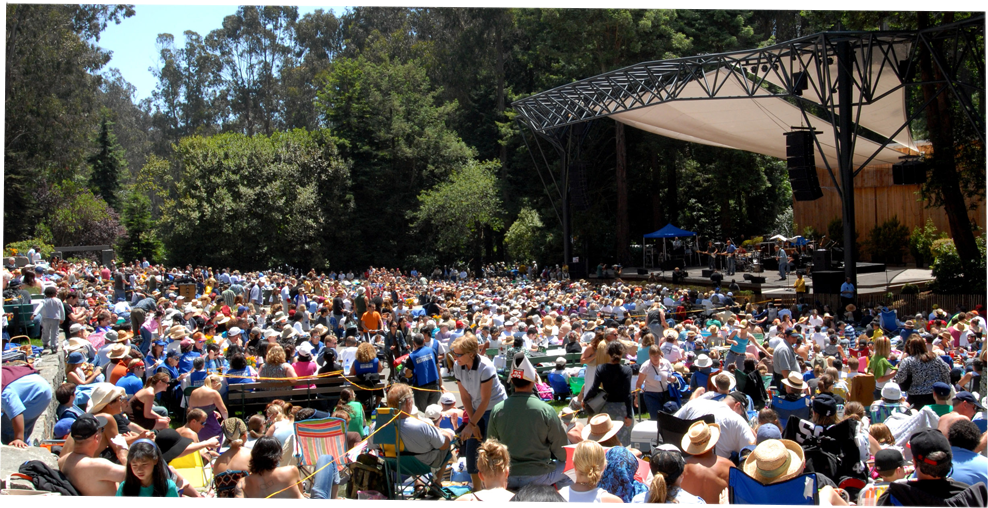
— The Stern Grove Festival, AKA one of the few summer festivals that delivers killer live performances without killing your hopes of ever sending your unborn kids to college, announced this year’s lineup of Sunday afternoon shows. For the low price of zero dollars, you’ll get such heavy hitters as Smokey Robinson, Rufus Wainwright, Andrew Bird, Darlene Love, Allen Stone, and plenty of other local stars, like LoCura, Vetiver, and, of course, the SF Symphony. Pack a picnic, bring a jacket (this is summer in San Francisco, after all) and get there early if you actually want to see the stage.

— Here is an insane new video from A Million Billion Dying Suns:

— The women of Warpaint stuck their feet in their pretty mouths, calling out Beyoncé and Rihanna for dressing like “sluts,” then they apologized. Some people had some smart things to say about it.

— Best rap feud ever.

Live review: Mastodon at the Fox Theater

0

They still exist: big metal bands that go on old-fashioned tours, rather than exclusively playing festivals or headlining package tours (aka shows that start at 4pm and are comprised of two bands you actually want to see and five others the label shoehorns in because that’s the only way they’ll get exposure). Also still in existence: a band that will tour between albums, in fact hitting the road less than two months before a new album drops, and play a set that contains two new songs (to give fans a taste of what’s to come), but is mostly composed of familiar back-catalogue tunes. 

Not, however, still around: actual Mastodons.

No worries, dudes — Mastodon the band shows no sign of going anywhere, and based on what drummer Brann Dailor said at the end of last night’s show at Oakland’s Fox Theater, they’ll soon be back in the Bay Area, pumping their sixth studio release, Once More ‘Round the Sun, which arrives in late June. Based on the two new songs heard last night (“Chimes at Midnight” and “High Road;” stream the latter via the band’s Soundcloud page, or check out the “Audio Visualizer” below the jump), your sludgy summer soundtrack awaits.

https://www.youtube.com/watch?v=L4PztrhXkXo

This between-albums tour was slightly more stripped-down than, say, shows supporting 2009’s Crack the Skye, which boasted a hypnotic visual component built heavily around the album’s astral-projection-meets-Rasputin-themes (in other words, it went well with the funny-smelling smoke that tends to waft around during Mastodon shows). Here, we just got a backdrop of a pair of psychedelic eyes, plus a light show with occasional Laser Floyd flourishes. But Mastodon is not a band that needs bells and whistles to enhance its crushing riffs. Nor does it spend a lot of time chatting up the crowd between songs, though it’s clear this is a band that appreciates its fans, evidenced by the huge array of t-shirt designs and other merch available in the Fox lobby. (Personal favorites: a shirt inspired by the “Come and play with us, Danny!” scene from The Shining, and a pair of gym shorts with “Asstodon” emblazoned on the booty. Perfect attire for the Bay Area’s recent heat wave, no?)

Opening the show for the Atlanta, Ga. foursome were a pair of heavy-hitting European imports: Kvelertaka personal favorite of the Prince of Norway — and Gojira (“We are Gojira from France!”, as the Bayonne-based band is fond of saying). The latter summed up the feeling of the crowd with its enthusiastic performance, and singer-guitarist Joe Duplantier’s frequent declarations of how fuckin’ stoked he was to be on tour with the mighty Mastodon. Us too, bro. Us too.  

This Week’s Picks: April 30 – May 6, 2014

0

May the fourth be with you

THURSDAY 1


Carletta Sue Kay

Randy Walker has been active in the San Francisco music scene for over 15 years, singing in various bands and working at our beloved Amoeba records, but it was only when he adopted the female persona befitting of his songwriting that he began gaining recognition. For his alter ego, Walker adopted the name of his cousin, an ex-con who served time for domestic terrorism and threatening to blow up her boyfriend with a pipe bomb. As Carletta Sue Kay, Walker is a sight to behold, wig askew, makeup smeared, and dress disheveled. But what comes out of Carletta’s mouth is anything but messy. Ranging from torch songs to pure rock and roll, Walker’s voice soars clearly and beautifully, singing of love and heartbreak in a truly touching way. (Haley Zaremba)

With the Young Lovers, Moon Honey, Queen Crescent

8pm, $10

The Rickshaw Stop

155 Fell, SF

(415) 861-2011

www.rickshawstop.com


Astonishing Animation

If you have yet to experience the mystical and beautiful worlds built by Hayao Miyazaki, your inner child is missing out. From the lush countryside where a magical Totoro roams, to an ethereal castle that floats high in the clouds, to a bustling bathhouse filled with both good and bad spirits, Miyazaki’s films bring together stunning animation and sublime storytelling that’s entertaining for both children and adults. This week, the Yerba Buena Center for the Arts begins its monthlong tribute to Japanese animation with a retrospective of the most influential films by Studio Ghibli and its founder. After 50 years in animation — and a well-deserved Oscar — the Japanese animator and director announced his retirement (for the third time) last month on the eve of the US release of his The Wind Rises. While the films are crucial to Japanese culture, with countless references to Japanese mythology, they also serve as social commentary on the environment, technology, and gender roles. Explore the astonishing realms and characters that have captivated audiences for centuries, beginning with Miyazaki’s debut film, Nausicaä of the Valley of the Wind. (Laura B. Childs)

7:30pm, $10

Check YBCA’s website for additional showtimes

Yerba Buena Center for the Arts

701 Mission, SF

(415) 978 2787

www.ybca.org


San Francisco Ballet

This is San Francisco Ballet’s last program of the season, and one that illustrates why some of us still love ballet the way we do. The intellectual rigor and deep musicality of George Balanchine’s Agon remains as breathtaking as it was when premiered in 1957. In 1983, Jerome Robbins — who has been called the greatest American-born choreographer — also took the music of his time and made it his own. In Glass Pieces, named after its composer but perhaps also for its luminous transparency, you see the music come to life by giving it a swing that is quintessentially Robbins. In between the two, Artistic Director Helgi Tomasson programmed Mr. B’s Brahms-Schoenberg Quartet. The work is musically intriguing, and gorgeously choreographed. You need first-class dancers to make it work. SFB has them. (Rita Felciano)

May 1, 3, 6, 9, 8pm; May 3 and 11, 2pm; May 7, 7:30pm; $15-$340

War Memorial Opera House, SF

(415) 865-2000

www.sfballet.org


FRIDAY 2


Marcus Shelby: The Legacy of Duke Ellington: 50 Years of Swing!

Put up your dukes: Shakespeare’s got them, and so does jazz. They come together in this glorious tribute to Edward Kennedy “Duke” Ellington by Marcus Shelby and his 16-piece jazz orchestra. The two-part program begins with selections from the incomparable composer’s full half-century of music making, featuring guest appearances by singer Faye Carol and violinist Mathew Szemela. Then, in the second half,Shelby and his orchestra join forces with members of the California Shakespeare Theater, performing Such Sweet Thunder, Ellington and celebrated collaborator Billy Strayhorn’s 12-part musical suite inspired by the woks of the Bard. (Robert Avila)

May 2, 8pm, $22 and up

Zellerbach Hall, UC Berkeley

(510) 642-9988

www.calperformances.org


SATURDAY 3


Cinco de Mayo Block Party

It’s that time of year again when the United States celebrates a Mexican holiday that Mexico doesn’t celebrate. Where Americans see the date as a sort of Mexican Fourth of July, Mexican-Americans observe Cinco de Mayo to honor their heritage. In their 152 years, the Cinco de Mayo festivities have continuously brought together Americans and Mexicans from a variety of communities and backgrounds. This year’s celebration will take place in the heart of the Mission District on Valencia Street between 21st and 24th streets. The block party will include yummy Latino foods, exotic music and dance as well as colorful artistry for purchase. Enjoy the sunny Sunday with this vibrant community that has shaped our city’s culture. (Childs)

10am-6pm, free

Valencia between 21st and 24th streets, SF

(415) 206-7752

www.sfcincodemayo.com


Trainwreck Cabaret

One part comedy show, one part burlesque night, one part off-color magic showcase, Trainwreck Cabaret bills itself as “San Francisco’s most unusual variety show,” a wild, woolly mashup of singers, dancers, and all kinds of other performers from the city’s creative underground; the idea is to take the vibe of old vaudeville and give it a dark (darker?) modern twist. Hire a babysitter, grab an early drink nearby, and enter the charmingly divey Dark Room Theater with zero expectations — this monthly showcase is the place to be for a good, weird time. Who says the Mission’s all yuppies these days? (Emma Silvers)

10pm, $20

Dark Room Theater

2263 Mission, SF

www.darkroomsf.com


SUNDAY 4


Yerba Buena Gardens Festival

If you tire of the Powell and Market street performers — no disrespect, that dude on the buckets is no joke — ’tis the season to wiggle over a few blocks and check out the impressive talent on display at this year’s Yerba Buena Gardens festival. Today’s kick-off concert features a 10-time Grammy winner, Latin jazz pianist Eddie Palmieri, and his Salsa Orchestra; Palmieri is 77 years young and has been putting out records since 1962. The rest of the fest, which runs through Oct. 26, includes a wide array of performers, with the next few weeks bringing San Jose Taiko, Pacific Mambo Orchestra, Ensemble Mik Nawooj, André Thieffy and Zydeco Magic, John Santos Sextet, and more to the stage. Pack a lunch and soak up the sounds. (Cheryl Eddy)

1pm, free

Yerba Buena Gardens

760 Howard, SF

www.ybgfestival.org


Urban Air Market

Hayes Valley welcomes the Urban Air Market for the first time this year. Explore over 100 booths selling sustainable men’s, women’s, and children’s apparel, eco-friendly art and home decor, and organic beauty and health products. What’s more, in celebration of its 10th anniversary, the sustainable marketplace will have live music and creative performances, DIY demos and “re-fashion” workshops. Whether you’re on the hunt for a special Mother’s Day gift, looking for a unique gift for yourself, or just in need of an outdoor stroll, this urban block party is the perfect lazy Sunday afternoon affair. (Childs)

11am-6pm, free

Octavia at Hayes, SF

www.urbanairmarket.com


How Weird Street Faire

This street fair, an electronic music dance party that has long been one of our favorite events in San Francisco, returns for its 15th annual incarnation, bigger and better than ever. With a tip of its space helmet to the date it landed on this year — “May the Fourth be with you,” the unofficial Star Wars Day — the theme for this year is How Weird in Outer Space. So come as your favorite alien or space cadet, or come in good old-fashioned raver ware, but just come — because this is a seven-stage dance party not to be missed. (Steven T. Jones)

Noon-8pm, $10 requested donation (gets you a Magic Sticker good for reduced-price drinks)

Howard at 2nd St, SF

www.howweird.org


MONDAY 5


Ingrid Michaelson

Picking up the piano at age four and attending private music schools throughout her upbringing, Ingrid Michaelson’s entire life has revolved around music. Now, at 34, it shows. Michaelson has perfected the art of the pop hook and disarming lyricism. After she worked tirelessly to self-record, self-promote, and even co-release all her own work, Michaelson’s DIY ethic finally got her noticed on the Internet in 2006. Thanks to her insanely catchy and cleverly tender “The Way I Am,” Michaelson found her way to the spotlight and continues to churn out charming sing-alongs that are impossible to dislike. Her songs have been featured in virtually every popular TV show, and you may be surprised at just how many of her songs you’re familiar with. Her charged, confident live act is not to be missed. (Zaremba)

With Storyman, The Alternate Routes

7:30pm, $29.50

Fox Theater

1807 Telegraph, Oakland

(510) 302-2250

www.thefoxoakland.com


TUESDAY 6


The Pains of Being Pure at Heart

With a name like The Pains of Being Pure at Heart, it’s difficult not to regress into your angsty 16-year-old self. The band was born in the time of MySpace, putting out songs with longer titles than length, making them relatable and, better yet, quotable — perfect for scribbling in notebook margins or typing into AIM away messages. The Pains have grown from an awkward trio playing drum beats on an iPod into a solid indie foursome since Kip Berman and Alex Naidus formed the band based on a mutual reverence for Smashing Pumpkins and Nirvana. Fun fact: Keyboard and backup vocalist Peggy Wang doubles as one of the pioneering editors at BuzzFeed. The indie band veers into shoegaze with its lulling boy-girl vocals. The Pains are playing at the Independent just a week before the release of Days of Abandon, so expect several songs from the band’s upcoming third album. (Childs)

8pm, $15

The Independent

628 Divisadero, SF

(415) 771-1421

www.theindependentsf.com


Atomic Bomb! The Music of William Onyeabor with David Byrne

Having recently been re-issued via Luaka Bop, featured from NPR to Vice, and championed by Damon Albarn, now is the opportune time for Nigerian musician William Onyeabor to rise from (near hoax-like) obscurity and revel in belated fame. [See: Rodriguez.] Just one problem: a born-again Christian, Onyeabor has cast out and disowned the synthesizer-driven (and occasionally politically minded) Afro-funk dance tracks he created in the ’70s and ’80s. But to celebrate the music, a cover band featuring David Byrne, Hot Chip’s Alexis Taylor, Bloc Party’s Kele Okereke, and LCD Soundsystem drummer Pat Mahoney should do it justice. (Ryan Prendiville)

With The Lijadu Sisters, Joshua Redman, Sinkane, Money Mark, and more

8pm, $32.50-45

The Warfield

982 Market, SF

(415) 345-0900

www.thewarfieldtheatre.com


The Guardian listings deadline is two weeks prior to our Wednesday publication date. To submit an item for consideration, please include the title of the event, a brief description of the event, date and time, venue name, street address (listing cross streets only isn’t sufficient), city, telephone number readers can call for more information, telephone number for media, and admission costs. Send information to Listings, the Guardian, 225 Bush, 17th Flr., SF, CA 94105; or e-mail (paste press release into e-mail body — no attachments, please) to listings@sfbg.com. Digital photos may be submitted in jpeg format; the image must be at least 240 dpi and four inches by six inches in size. We regret we cannot accept listings over the phone.

Theater Listings: April 30 – May 6, 2014

0

Stage listings are compiled by Guardian staff. Performance times may change; call venues to confirm. Reviewers are Robert Avila, Rita Felciano, and Nicole Gluckstern. Submit items for the listings at listings@sfbg.com.

THEATER

OPENING

“Des Voix: Found in Translation Biennial 2014” Various venues, SF; www.desvoixfestival.com. Prices vary. May 1-25. In addition to Communiqué N°10 (listed in Ongoing, below), this festival of contemporary French playwrights and cinema includes four new play translations, a “New Play Nightclub,” film screenings, and more. Presented by Playwrights Foundation, Tides Theatre, Cutting Ball Theater, French International School, and the French Consulate of San Francisco.

“DIVAfest” Exit Theatre, 156 Eddy, SF; www.divafest.info. Prices and showtimes vary. May 1-24. This 13th annual festival celebrates the work of women artists, with performances including the premiere of Rat Girl (adapted from the memoir by rocker Kristin Hersh), Margery Fairchild’s ballet comedy The Pas De Quatre, a reading by acclaimed poet Diane di Prima, and more.

Dracula Shelton Theater, 533 Sutter, SF; sfdracula.blogspot.com. $35. Opens Thu/1, 8pm. Runs Thu-Sat, 8pm. Through May 31. Kellerson Productions presents a new adaptation of the Bram Stoker classic.

Du Barry Was a Lady Eureka Theatre, 215 Jackson, SF; www.42ndstmoon.org. $25-75. Previews Wed/30-Thu/1, 7pm; Fri/2, 8pm. Opens Sat/3, 6pm. Runs Wed-Thu, 7pm; Fri, 8pm; Sat, 6pm (also May 10 and 17, 1pm); Sun, 3pm. Through May 18. 42nd Street Moon presents Cole Porter’s saucy musical comedy, with comedian and writer Bruce Vilanch starring.

Romeo and Juliet Phoenix Theatre, 414 Mason, Ste 601, SF; www.eventbrite.com. $20. Previews Thu/1, 8pm. Opens Fri/2, 8pm. Runs Thu-Sat, 8pm; May 11 and 24, 3pm. Through May 24. Ninjaz of Drama performs Shakespeare’s tragic romance.

Seminar San Francisco Playhouse, 450 Post, Second Flr, SF; www.sfplayhouse.org. $20-100. Previews Wed/30-Fri/2, 8pm. Opens Sat/3, 8pm. Runs Tue-Thu, 7pm; Fri-Sat, 8pm (also Sat, 3pm); May 18 and June 1 and 8, 2pm. Through June 14. San Francisco Playhouse performs Theresa Rebeck’s biting comedy.

Waxing West Brava Theater Center, 2781 24th St, SF; www.brava.org. $20. Opens Thu/1, 8pm. Runs Thu-Sat, 8pm (Sat/3, show at 3pm); Sun, 3pm. Through May 18. Brava! For Women in the Arts and RasaNova Theater present the West Coast premiere of Saviana Stanescu’s tale of a Romanian mail-order bride haunted by her country’s past.

BAY AREA

Nantucket Marsh Berkeley MainStage, 2120 Allston, Berk; www.themarsh.org. $25-100 (all tickets include a picnic dinner). Opens Sat/3, 7pm. Runs Thu and Sat, 7pm. Through June 14. Acclaimed solo perfomer Mark Kenward presents his “haunting yet hilarious” autobiographical show about growing up on Nantucket.

ONGOING

Communiqué N°10 Exit on Taylor, 277 Taylor, SF; www.cuttingball.com. $10-50. Opens Thu/1, 7:30pm. Runs Thu, 7:30; Fri-Sat, 8pm (also Sat, 2pm); Sun, 5pm. Through May 25. Cutting Ball Theater closes its 15th season with the American premiere of Samuel Gallet’s drama inspired by recent racial tensions in France.

E-i-E-i-OY! In Bed with the Farmer’s Daughter NOHSpace, 2840 Mariposa, SF; www.vivienstraus.com. $20. Fri-Sat, 8pm. Through May 10. Vivien Straus performs her autobiographical solo show.

Feisty Old Jew Marsh San Francisco Main Stage, 1062 Valencia, SF; www.themarsh.org. $25-100. Sat, 8pm; Sun, 7pm. Starting May 17, performance schedule changes to Sat-Sun, 5pm. Extended through July 13. Charlie Varon performs his latest solo show, a fictional comedy about “a 20th century man living in a 21st century city.”

Foodies! The Musical Shelton Theater, 533 Sutter, SF; www.foodiesthemusical.com. $32-34. Fri-Sat, 8pm. Open-ended. AWAT Productions presents Morris Bobrow’s musical comedy revue all about food.

Pearls Over Shanghai Hypnodrome Theatre, 575 10th St, SF; www.thrillpeddlers.com. $30-35. Thu-Sat, 8pm. Through May 31. Five years ago, Thrillpeddlers breathed new life into a glitter-dusted piece of Sixties flotsam, beautifully reimagining the Cockettes’ raunchy mock-operetta Pearls Over Shanghai (in collaboration with several surviving members of San Francisco’s storied acid-drag troupe) and running it for a whopping 22 months. Written by Cockette Link Martin as a carefree interpretation of a 1926 Broadway play, the baldly stereotyped Shanghai Gesture, it was the perfectly lurid vehicle for irreverence in all directions. It’s back in this revival, once again helmed by artistic director Russell Blackwood with musical direction by Cockette and local favorite Scrumbly Koldewyn. But despite the frisson of featuring some original-original cast members — including “Sweet Pam” Tent (who with Koldewyn also contributes some new dialogue) and Rumi Missabu (regally reprising the role of Madam Gin Sling) — there’s less fire the second time around as the production straddles the line between carefully slick and appropriately sloppy. Nevertheless, there are some fine musical numbers and moments throughout. Among these, Zelda Koznofsky, Birdie-Bob Watt, and Jesse Cortez consistently hit high notes as the singing Andrews Sisters-like trio of Americans thrown into white slavery; Bonni Suval’s Lottie Wu is a fierce vixen; and Noah Haydon (as the sultry Petrushka) is a class act. Koldewyn’s musical direction and piano accompaniment, meanwhile, provide strong and sure momentum as well as exquisite atmosphere. (Avila)

The Provoked Wife Fort Mason Center, Southside Theater, SF; www.generationtheatre.com. $15-35. Thu/1-Sat/3, 8pm; Sun/4, 3pm. Generation Theatre performs Sir John Vanbrugh’s Restoration comedy.

Shit & Champagne Rebel, 1772 Market, SF; shitandchampagne.eventbrite.com. $25. Fri-Sat, 8pm. Open-ended. D’Arcy Drollinger is Champagne White, bodacious blond innocent with a wicked left hook in this cross-dressing ’70s-style white-sploitation flick, played out live on Rebel’s intimate but action-packed barroom stage. Written by Drollinger and co-directed with Laurie Bushman (with high-flying choreography by John Paolillo, Drollinger, and Matthew Martin), this high-octane camp send-up of a favored formula comes dependably stocked with stock characters and delightfully protracted by a convoluted plot (involving, among other things, a certain street drug that’s triggered an epidemic of poopy pants) — all of it played to the hilt by an excellent cast that includes Martin as Dixie Stampede, an evil corporate dominatrix at the head of some sinister front for world domination called Mal*Wart; Alex Brown as Detective Jack Hammer, rough-hewn cop on the case and ambivalent love interest; Rotimi Agbabiaka as Sergio, gay Puerto Rican impresario and confidante; Steven Lemay as Brandy, high-end calf model and Champagne’s (much) beloved roommate; and Nancy French as Rod, Champagne’s doomed fiancé. Sprawling often literally across two buxom acts, the show maintains admirable consistency: The energy never flags and the brow stays decidedly low. (Avila)

Sleeping Cutie: A Fractured Fairy Tale Musical Thick House, 1695 18th St, SF; sleepingcutiemusical.tix.com. $30-40. Thu-Sat, 8pm; Sun, 2pm. Though May 11. Off a Cliff Productions and PlayGround present Diane Sampson and Doug Katsaros’ world-premiere musical.

The Speakeasy Undisclosed location (ticket buyers receive a text with directions), SF; www.thespeakeasysf.com. $70 (gambling chips, $5-10 extra; after-hours admission, $10). Thu-Sat, 7:40, 7:50, and 8pm admittance times. Extended through May 24. Boxcar Theater’s most ambitious project to date is also one of the more involved and impressively orchestrated theatrical experiences on any Bay Area stage just now. An immersive time-tripping environmental work, The Speakeasy takes place in an “undisclosed location” (in fact, a wonderfully redesigned version of the company’s Hyde Street theater complex) amid a period-specific cocktail lounge, cabaret, and gambling den inhabited by dozens of Prohibition-era characters and scenarios that unfold around an audience ultimately invited to wander around at will. At one level, this is an invitation to pure dress-up social entertainment. But there are artistic aims here too. Intentionally designed (by co-director and creator Nick A. Olivero with co-director Peter Ruocco) as a fractured super-narrative — in which audiences perceive snatches of overheard stories rather than complete arcs, and can follow those of their own choosing — there’s a way the piece becomes specifically and ever more subtly about time itself. This is most pointedly demonstrated in the opening vignettes in the cocktail lounge, where even the ticking of Joe’s Clock Shop (the “cover” storefront for the illicit 1920s den inside) can be heard underscoring conversations (deeply ironic in historical hindsight) about war, loss, and regained hope for the future. For a San Francisco currently gripped by a kind of historical double-recurrence of the roaring Twenties and dire Thirties at once, The Speakeasy is not a bad place to sit and ponder the simulacra of our elusive moment. (Avila)

The Suit ACT’s Geary Theater, 415 Geary, SF; www.act-sf.org. $20-120. Opens Wed/30, 8pm. Runs Wed-Sat, 8pm (also Sat and May 7 and 14, 2pm); Sun, 2pm (May 18, show at 1pm); Tue, 7pm (May 13, show at 8pm). Through May 18. ACT performs Peter Brook, Marie Hélène Estienne, and Franck Krawcyzk’s music-infused drama about betrayal and resentment adapted from the short story by South African author Can Themba.

Tipped & Tipsy Marsh Studio Theater, 1062 Valencia, SF; www.themarsh.org. $20-50. Sat, 5pm; Sun, 7pm. Extended through May 17. Last fall’s San Francisco Fringe Festival began on a high note with Jill Vice’s witty and deft solo, Tipped & Tipsy, and the Best of Fringe winner is now enjoying another round at solo theater outpost the Marsh. Without set or costume changes, Vice (who developed the piece with Dave Dennison and David Ford) brings the querulous regulars of a skid-row bar to life both vividly and with real quasi-Depression-Era charm. She’s a protean physical performer, seamlessly inhabiting the series of oddball outcasts lined up each day at Happy’s before bartender Candy — two names as loaded as the clientele. After some hilarious expert summarizing of the dos and don’ts of bar culture, a story unfolds around a battered former boxer and his avuncular relationship with Candy, who tries to cut him off in light of his clearly deteriorating health. Her stance causes much consternation, and even fear, in his barfly associates, while provoking a dangerous showdown with the bar’s self-aggrandizing sleazeball owner, Rico. With a love of the underdog and strong writing and acting at its core, Tipsy breezes by, leaving a superlative buzz. (Avila)

The World’s Funniest Bubble Show Marsh San Francisco, 1062 Valencia, SF; www.themarsh.org. $8-11. Sun, 11am. Extended through May 25. The popular, kid-friendly show by Louis Pearl (aka “The Amazing Bubble Man”) returns to the Marsh.

BAY AREA

Fences Marin Theatre Company, 397 Miller, Mill Valley; www.marintheatre.org. $37-58. Tue and Thu-Sat, 8pm (also Sat/3 and May 10, 2pm); Wed, 7:30pm; Sun, 2 and 7pm. Through May 11. Marin Theatre Company performs August Wilson’s Pulitzer- and Tony-winning drama, with an all-star cast of Bay Area talent: Carl Lumbly, Steven Anthony Jones, and Margo Hall.

The Letters Harry’s UpStage, Aurora Theatre Company, 2081 Addison, Berk; www.auroratheatre.org. $28-32. Wed-Sat, 8pm; Sun, 2pm. Through June 1. Aurora Theatre Company showcases its new second-stage performance space with John W. Lowell’s suspenseful thriller.

Not a Genuine Black Man Osher Studio, 2055 Center, Berk; www.berkeleyrep.org. $30-45. Wed, 7pm (no shows May 14, 21, or 28); Thu-Sat, 8pm (no shows Sat/3 or May 9-10). Through May 31. Brian Copeland brings his acclaimed, long-running solo show to Berkeley Rep for a 10th anniversary limited run.

Smash Dragon Theatre, 2120 Broadway, Redwood City; www.dragonproductions.net. $30. Thu/1-Sat/3, 8pm; Sun/4, 2pm. Dragon Theatre performs Jeffrey Hatcher’s political comedy.

Tribes Berkeley Repertory Theatre, Roda Theatre, 2015 Addison, Berk; www.berkeleyrep.org. $29-99. Tue and Thu-Sat, 8pm (also Sat, 2pm); Wed and Sun, 7pm (also Sun, 2pm; no 2pm show May 18). Through May 18. Berkeley Rep performs Nina Raine’s family drama about a young deaf man who comes of age.

The 25th Annual Putnam County Spelling Bee Julia Morgan Theater, 2640 College, Berk; www.berkeleyplayhouse.org. $18-60. Thu/1-Fri/2, 7pm; Sat/3, 1 and 6pm; Sun/4, noon and 5pm. Berkeley Playhouse performs the Tony-winning musical comedy.

Wittenberg Aurora Theatre, 2081 Addison, Berk; www.auroratheatre.org. $32-60. Tue, 7pm; Wed-Sat, 8pm; Sun, 2 and 7pm. Extended through May 11. Aurora Theatre Company performs David Davalos’ comedy about reason versus faith.

PERFORMANCE/DANCE

“Acting Out: For the Health of It” Brava Theater Center, 2781 24th St, SF; bcation.org/actingout2014. Thu/1, VIP reception 6-7pm; show 7:15-9pm. $35-75. Breast Cancer Action benefits from this variety show featuring author Peggy Orenstein, the Sarah Bush Dance Project, comedian Irene Tu, bluegrass band Beauty Operators, and host Tania Katan.

“Baile en la Calle: The Mural Dances” Precita Eyes Mural Center, 2981 24th St, and Balmy Alley, SF; www.brava.org. Sun/4, tours at 11am, noon, 1pm, and 2pm. Free. Epiphany Productions, CuicacallDance Company, Cuicacalli Escuela de Danza, and Loco Bloco offer dance interpretations of the murals along the Mission’s historic Balmy Alley.

“Bay Area National Dance Week” Various locations; www.bayareadance.org. Wed/30-Sun/4. Free. This year’s theme is “iconic dance moves from pop culture,” and includes film screenings, free classes, outdoor dance performances, and more.

Caroline Lugo and Carolé Acuña’s Ballet Flamenco Peña Pachamama, 1630 Powell, SF; www.carolinalugo.com. Sun/4, May 10, 17, and 25, 6:15pm; May 11, 1pm. $15-19. Flamenco performance by the mother-daughter dance company, featuring live musicians.

Company C Contemporary Ballet ODC Theater, 3153 17th St, SF; www.odcdance.org. Thu/1-Sat/3, 8pm. $25-48. Also May 8-10, 8pm; May 11, 2pm, $25-48, Lesher Center for the Arts, 1601 Civic, Walnut Creek; www.lesherartscenter.org. With two world premieres by Maurice Causey and Charles Moulton.

“Dancing on the Edge of the World” Dance Mission, 3316 24th St, SF; www.dancemission.com. Fri/2, 8pm; Sat/3-Sun/4, 3pm (also Sun/4, 7pm). $15-20. Grrrl Brigade performs an homage to Howard Zinn’s A People’s History of the United States.

“Dirty Little Ditties” Phoenix Theatre, 414 Mason, SF; www.brownpapertickets.com. Fri/2-Sat/3, 8pm. $20. Miss Jane Aquilina and Miss Robusta Capp perform a show that promises to be “not your mother’s cabaret.”

“The Eye of Horus” Jessie Square, 736 Mission, SF; www.dancersgroup.org. Wed/30 and Sat/3, 12:30pm. Free. Dancers’ Group and Yerba Buena Gardens Festival present a new, site-specific work by Sara Shelton Mann.

Feinstein’s at the Nikko 222 Mason, SF; www.feinsteinssf.com. This week: Jeremy Jordan, Thu/1-Fri/2, 8pm; Sat/3-Sun/4, 7pm, $45-60.

“Five Funny Females” Great Star Theater, 636 Jackson, SF; 5funnyfemales.eventbrite.com. Fri/2-Sat/3, 8 and 10pm. $20. A different bill of five female comedians at each show.

“Leonard Cohen Love Fest” Mechanics’ Institute Library and Chess Room, 57 Post, SF; www.milibrary.org. Wed/30, 7pm. $10-20. A capella choir Conspiracy of Beards and author-musician Sylvie Simmons pay tribute to the music of Leonard Cohen.

“The Lusty Month of May” Martuni’s, 4 Valencia, SF; www.tomshawtrio.com. Sat/3, 7pm. $10. Vocalist Karen Hirst salures spring, the Great American Songbook, and more, with singer-pianist Tom Shaw, drummer Roberta Drake, and violinist Donny Lobree.

“Magic at the Rex” Hotel Rex, 562 Sutter, SF; www.magicattherex.com. Sat, 8pm. Ongoing. $25. Magic and mystery with Adam Sachs and mentalist Sebastian Boswell III.

“Out of Line Improv” Stage Werx, 446 Valencia, SF; outoflineimprov.brownpapertickets.com. Sat, 10:30pm. $12. Ongoing. A new, completely improvised show every week.

“Purple: A Circus Tribute to Prince” Circus Center, 755 Frederick, SF; purpleshow.eventbrite.com. Sat/3, 7:30pm. $15-20. Circus acts set to Prince hits like “1999” and “Raspberry Beret.”

“Rotunda Dance Series” San Francisco City Hall, 1 Carlton B. Goodlett Place, SF; www.dancersgroup.org. Fri/2, noon. Free. This month: La Tania Baile Flamenco performs dances from Spain.

“San Francisco Comedy College” Purple Onion at Kells, 530 Jackson, SF; www.purpleonionatkells.com. $5-10. “New Talent Show,” Wed-Thu, 7. Ongoing. “The Cellar Dwellers,” stand-up comedy, Wed-Thu, 8:15pm and Fri-Sat, 7:30pm. Ongoing.

“Shiner” Mojo Theater, 2940 16th St, SF; www.faultlinetheater.com. Thu/1-Sat/3, 8pm; Sun/4, 7pm. $10-20. FaultLine Theater performs Christian Durso’s grunge-era drama.

“Terminator Too: Judgment Play” DNA Lounge, 373 11th St, SF; www.dnalounge.com. Thu/1, 9pm. $25-50. The creators of Point Break Live! take on James Cameron’s 1991 sci-fi classic, with an audience member picked on the night of the show to embody Schwarzenegger’s iconic role.

“Yerba Buena Gardens Festival” Yerba Buena Gardens, 760 Howard, SF; www.ybgfestival.org. Sun/4, 1pm. Free. Eddie Palmieri Salsa Orchestra kicks off the annual outdoor performance festival, which runs through Oct 26.

BAY AREA

“Cinderella” Lesher Center for the Arts, Margaret Lesher Theatre, 1601 Civic, Walnut Creek; www.fantasyforum.org. Thu/1-Fri/2, 9:30 and 11am (also Fri/1, 7pm); Sat/3, 10am, noon, 2pm, and 4pm; Sun/4, 11am and 1pm. $14. Fantasy Forum Actors Ensemble performs a family-friendly musical based on the fairy tale, with audience participation encouraged.

“Dance on Center” Osher Studio, 2055 Center, Berk; www.dlkdance.com. Sat/3, 8pm. $15-25. Kathryn Roszak’s Danse Lumiere kicks off a new series with dance works by Lissa Resnick, Dalia Rawson, and Kathryn Roszak, plus a film by Amy Seiwert.

“Doapcoev: A Town Where Dancing Was Not Allowed” Malonga Casquelourd Center for the Arts, 1428 Alice, Oakl; www.brownpapertickets.com. Sun/4, 3pm. $15-25. Dimensions Dance Theater and Rites of Passage present this dance performance inspired by Footloose.

“The Fifth String: Ziryab’s Passage to Cordoba” Islamic Cultural Center of Northern California, 1433 Madison, Oakl; www.goldenthread.org. Fri/2-Sat/3, 7pm; Sun/4, 3pm. $15-22. Also May 15-17, 8pm; May 18, 3pm, Brava Theatre Center, 2781 24th St, SF. Golden Thread continues its “Islam 101” performance series with this family-friendly play with live music.

“Lilith, The Night Demon in One Lewd Act” Hoytt Theater, Osher Marin JCC, 200 N. San Pedro, San Rafael; www.marinjcc.org. Thu/1, 7:30pm. $39-49. Also Sat/3, 8pm, $30-35, JCC of the East Bay, 1414 Walnut, Berk; www.jcceastbay.org. Also Sun/4, 3pm, $39-49, Menlo-Atherton High School, 555 Middlefield, Atherton; www.thecenteratma.org. “The bawdy alternate Jewish story of creation,” presented in folk-opera form.

“MarshJam Improv Comedy Show” Marsh Berkeley, 2120 Allston, Berk; www.themarsh.org. Fri, 8pm. Ongoing. $10. Improv comedy with local legends and drop-in guests.

“Pele Ma” Hamilton Amphitheater Park, Hamilton Parkway, Novato; www.hulaon.org. Sat/3, 1-3pm. $10. Hula performance directed by Kumu Hula Shawna Alapa’i and featuring the students of Halau Hula Na Pua O Ka La’akea.

“Piñata Dance Ritual” Shawl Anderson Dance Center, 2704 Alcatraz, Berk; www.lizboubion.org. Sun/4, 4pm. $5-50. Piñata Dance Collective presents this performance to benefit artistic director Liz Boubion’s 350 Xochi Quetzal Artist Residency. *


Events: April 30 – May 6, 2014

0

Listings are compiled by Guardian staff. Submit items for the listings at listings@sfbg.com. For further information on how to submit items for the listings, see Selector.

WEDNESDAY 30

“Saving the California Condor” Zimmer Auditorium, Oakland Zoo, 9777 Golf Links Rd, Oakl; www.oaklandzoo.org. 6:30-9:30pm, $12-20. Oakland Zoo’s Conservation Speaker Series presents biologist Joe Burnett of the Ventana Wildlife Society and Oakland Zoo veterinarian Dr. Andrea Goodnight.

THURSDAY 1

“Eating Cultures” SOMArts Cultural Center, 934 Brannan, SF; www.aawaa.net. Opening reception, 6-9pm. Free. Exhibit runs Tue-Fri, noon-7pm; Sat, noon-5pm. Through May 30. As part of the Asian Pacific Islander Cultural Center’s United States of Asian America Festival, the Asian American Women Artists Association presents a juried art exhibition featuring work inspired by food and food traditions.

“Jackpot NightLife” California Academy of Sciences, 55 Music Concourse, SF; www.calacademy.org. 6-10pm, $12. 21 and over. NightLife studies the statistics of luck, with visual FX wizards from Tippett Studio (Cosmos), Rat Pack-era tunes by DJ Tanoa, casino games, and more.

Ben Ross Green Arcade, 1680 Market, SF; www.thegreenarcade.com. 7pm, free. The author discusses Dead End: Suburban Sprawl and the Rebirth of American Urbanism.

FRIDAY 2

“Artwear” de Young Museum, Golden Gate Park, 50 Hagiwara Tea Garden, SF; www.famsf.org. 9:30am-8:30pm. Also Sat/3, 9:30am-4:30pm. Free. Shop wearable art by 16 local textile and jewelry artisans and designers.

Jo Becker Book Passage, 1 Ferry Building, SF; www.bookpassage.com. 12:30pm, free. The Pulitzer-winning journalist reads from Forcing the Spring: Inside the Fight for Marriage Equality.

SATURDAY 3

“Bikes to Books Rides Again!” Meet at Jack London Alley, near South Park and Second St, SF; www.burritojustice.com. 12:45pm, free. Burrito Justice and the San Francisco Bicycle Coalition host this seven-mile bike tour celebrating the literary history of San Francisco. Tips from the organizers: “Bring bikes with gears, snacks, and enthusiasm.”

“California Bookstore Day” Various locations; www.cabookstoreday.com. Nearly 100 bookstores across the state participate in this celebration with parties, author readings, in-store events, and exclusive day-of merch. Check website for local events.

“A La Carte and Art” Castro between Church and Evelyn, Mtn View; www.miramarevents.com. 10am-6pm. Free. Through Sun/4. This two-day festival features live music, a juried arts and crafts show, a classic car show, a farmers market, and more.

“Pegapalooza” Pegasus Downtown, 2349 Shattuck, Berk; Pegasus Oakland, 5560 College, Oakl; and Pegasus on Solano, 1855 Solano, Berk; www.pegasusbookstore.com. May 3-10. The bookstore marks its 45th anniversary with a full slate of festivities; tonight’s kick-off, in honor of California Bookstore Day, is a conversation between Dave Eggers and Malcolm Margolin at the Shattuck location (7:30pm, free).

Jenni Pulos Book Passage, 1 Ferry Building, SF; www.bookpassage.com. 11am, free. The Bravo star (Flipping Out) reads from her new memoir-advice tome, Grin and Bear It.

Shipyard Artists Spring Open Studios Hunters Point Shipyard, Innes at Donahue, SF; Islais Creek Studios, 1 Rankin, SF; www.shipyardartists.com/sos. 11am-6pm. Also Sat/4. Free. More than 125 artists participate in this 25th anniversary open studios event.

SUNDAY 4

“Poetry Unbound #4” Art House Gallery, 2905 Shattuck, Berk; berkeleyarthouse.wordpress.com. 5:15pm, $5. Readings by Deborah Fruchey, Blanca Torres, and Carol Hogan, followed by an open mic.

Urban Air Market Hayes Valley Octavia and Hayes, SF; www.urbanairmarket.com. 11am-6pm, free. Sustainable shopping (clothing, jewelry, home décor, body products, etc.) covers Hayes Valley at this open-air event.

MONDAY 5

“Cinco de Mayo at Habitot Children’s Museum” Habitot Children’s Museum, 2065 Kittredge, Berk; www.habitot.org. 9:30am-12:30pm, $8-10. Celebrate Mexican culture with special craft projects.

“The Cosmic Cocktail: Three Parts Dark Matter” Morrison Planetarium, California Academy of Sciences, 55 Music Concourse, SF; www.calacademy.org. 7:30pm, $8-12. University of Michigan physics professor Katherine Freese discusses the hunt for dark matter.

“Reclaiming Cinco de Mayo” San Francisco Living Wage Coalition, 2940 16th St, SF; www.livingwage-sf.org. 6-10pm, $5-25. Independent art and literature gala benefiting the SF Living Wage Coalition and its sister organization, Las Hormigas, in Ciudad Juarez.

TUESDAY 6

“An Evening with Benjamin Jealous and Belva Davis” Yerba Buena Center for the Arts, 701 Mission, SF; www.ybca.org. 7pm, $20-25. The former NAACP president and the pioneering journalist meet for an onstage conversation.

“Israel’s 66th Independence Day” Justin Herman Plaza, Embarcadero at Market, SF; www.sfjcsf.org. Noon-1:30pm, free. With live Israeli music, falafel vendors, community leaders, and more. *


Manscape

0

arts@sfbg.com

FILM It’s no wonder John Turturro’s Fading Gigolo is already shaping up as one of the year’s few indie hits so far — like many such before it, it offers a titillating surface premise belied by the reassuring confirmation of a staid moral outlook beneath. The writer-director plays Fioravante, a middle aged native Brooklynite whose working hours as a florist are shrinking; meanwhile older friend Murray (Woody Allen) faces closing the bookstore his family has operated for three generations. The latter hits upon an unlikely moneymaking scheme when his female dermatologist mentions she and her best friend would pay for the first-time novelty of a three-way. Murray proposes Fioravante provide the meat in their sandwich, and despite all initial resistance, he consents to a trial one-on-one with the client — played by Sharon Stone, so it’s not exactly a huge sacrifice. This goes well, as do appointments with her BFF Sofia Vergara, another socialite bombshell in unlikely need of professional erotic assistance.

It’s with the addition of a third customer that things get complicated: Fioravante gets referred to Avigal (Vanessa Paradis), whose status as widow of an older Hasidic rabbi requires a suffocating level of propriety. Starved for affection, she lets Fioravante (passing himself off as a Sephardic Jew) touch her ostensibly aching back, which is just as bad as a five-alarm coital orgasm so far as her community elders are concerned. Their clandestine meetings do not escape the vigilant notice of an officious neighborhood patroller (Liev Schreiber) already smitten with Avigal, and whose suspicions of criminal activity are enflamed by jealousy.

It’s ironic that while most screen depictions of heterosexual prostitution feature nothing but young, beautiful women servicing men of more realistically variable attractiveness, this ostensible role-reversal keeps the gender inequity just so. Fioravante is a not-so-young, not-particularly handsome man (albeit one made attractive by Turturro’s air of gentlemanly gravity here) who gets only hot numbers as Janes — it’s still a male fantasy, only now the guy is getting paid. Fading Gigolo‘s general affability lets it get away with a boatload of cultural and casting stereotypes, not least Vergara as a fiery Latina who might as well have muy caliente tattooed on her voluptuous flesh. For “plain,” virtuous contrast we get a glammed-down Paradis, the model-singer-actor who’s been France’s leading pop pinup for about a quarter-century. Then there’s Sharon Stone, playing Sharon Stone, which is to say archly channeling two things: a) Aren’t I hotter than ever? and b) I am smarter than the rest of you combined (and hotter too).

There are no unattractive women here — in fact Brooklyn itself seems to have been airbrushed free of clutter, human and otherwise. Even Allen, doing his usual dithery standup shtick, gets a spouse (Tunisian singer M’Barka Ben Taleb) half his age, and who further extends the film’s gloss of multiculturalism as harmless exotica. (It wasn’t clear to me whether the dark-skinned kids running around were their kids, or grandkids — while Avigal’s six children are kept conveniently off screen, lest they spoil the mood of desire.)

Fading Gigolo goes down very easily, even if on his fifth feature behind the camera Turturro remains a sometimes stilted director and careless scenarist. Taking a leaf from Allen’s notebook, this romantic fantasy is shot in warm, soft tones, draped in cool jazz, and takes place in an idealized New York City that’s part nostalgia, part pure imagination. The scented-bath atmosphere allows you to overlook the clumsier, poorly developed bits. And the film’s sometimes naive good nature almost lets it get away with being an entirely narcissistic male daydream of what women really want: an average (but secretly exceptional) guy whom beauties throw themselves at because he alone understands they want to be wooed.

Another guy performing a sort of perfected masculinity for the benefit of needy others is Tom Hardy’s titular character in Steven Knight’s Locke. This virtual solo show has the actor as Ivan Locke, a 40-ish construction manager driving to London on the eve of “the biggest cement pour” ever attempted in Europe. But he’s driving away from that, to the shrill indignation of superiors who expect his reliable on-site supervision, and the increasingly drunken panic of the flunky (voice of Andrew Scott) he’s deputized to take his place. The reason for this unprecedented dereliction of responsibility is that Ivan is committed to another responsibility, to “take care of my fuckup.”

As we gradually realize during his 85-minute drive, that means showing up for the premature birth of the baby he’s sired by a fragile, rather hysterical-sounding woman (Olivia Colman) in the brief sole detour from marital infidelity he’s ever taken. Doing so may well end his career, as well as his long-standing marriage to the mother of his sons. But our protagonist is determined at any cost not to become his own late father (with whom he has imaginary conversations), a wastrel who never made good on his obligations to family or anyone else.

Shot repeatedly in real time with multiple cameras over 12 nights (the actors voicing Bluetooth callers also performed “live” in conference-call fashion), then assembled from 16 full-length takes, Locke is a striking experiment that never quite escapes an air of theatrical stunt. In retrospect you realize most of its tension derives not from the core emotional crises, but from narrative red herrings — primarily our terror that anyone multitasking this recklessly behind the wheel is an accident waiting to happen. But the chameleonic Hardy, playing a rather square, middle-class, essentially humorless type unlike any he’s done before, makes this effortfully “decent” man so compelling you can’t look away. If there’s anything this actor can’t do, he hasn’t tried it yet. *


FADING GIGOLO and LOCKE open Fri/2 in SF.

Two views of the waterfront

31

rebecca@sfbg.com

The Golden State Warriors’ announcement that its planned 18,000-seat basketball arena would be moved off the San Francisco waterfront was fresh in everyone’s mind when former San Francisco Mayor Art Agnos visited the Bay Guardian office on April 23, and he was electrified by the win.

“I resent anyone suggesting that this is not a genuine people-powered victory — again,” Agnos said. “Because that’s what it was, bottom line.”

The former mayor has traveled up and down the city in recent months promoting Proposition B, an initiative on the June 3 ballot that may well have cleared the Warriors Arena from its proposed waterfront perch at Piers 30-32 had the team not announced that it would be taking that step independently.

If it passes, Prop. B will require voter approval for any development project along city-owned waterfront property that exceeds height limits set by the Waterfront Land Use Plan approved in 1997. Such a rule would have squarely targeted the Warriors’ proposal.

The sports arena had been slated for a 13-acre parcel a stone’s throw from the Bay Bridge that is now a parking lot, where it would have hovered above the water like a floating spacecraft. Across the street, at a site known as Seawall Lot 330, the Warriors had proposed installing shops, parking, a condo tower, and a hotel.

Agnos and the backers of Prop. B hadn’t anticipated the Warriors’ announcement that its waterfront venue would be moved to private property, a 12-acre lot in Mission Bay purchased from tech giant Salesforce.com.

“We thought, because people at the top of this city’s government told us so, they would prevail,” Agnos said of Mayor Ed Lee and others championing the waterfront arena. “They didn’t.”

Agnos and his allies say it was the prospect of voters having to sign off on a proposal that was hatched behind closed doors that caused the Warriors to choose a more appropriate location.

“We helped them go to a different place where we now support what they’re doing — because it makes more sense for this city, and for our bay, as well as our waterfront. That’s what the issue is,” Agnos told us. “The spin doctors had their ass handed to ’em … had their ass handed to ’em, by a low-income group of allies, over their $20,000–$30,000, gold-plated contracts per month. And so now, they understand.”

They understand that the waterfront of San Francisco is a battleground and the people are willing to fight to ensure the public interest trumps private profits.

pier70

A rendering of proposed development at Pier 70, envisioning tech offices and housing.

PRECIOUS PARCELS

A historic map hanging in a corridor at the Port of San Francisco building, in a rehabbed terminal at Pier 1 along The Embarcadero, traces the original curve of a coastline that once separated the city from San Francisco Bay.

The existing waterfront juts out considerably from where its natural edge once fell, and today’s urban landscape features a mix of entire neighborhoods, tall buildings, parks, restaurants, merchant corridors, and transport terminals, all perched atop fill covered by layers of concrete.

Its shipping days long gone, much of San Francisco’s human-constructed waterfront now serves as a draw for visitors, the iconic subject of countless tourist photographs. But at other locations along the shoreline, vacant waterfront parcels are hotly contested land-use battlefronts.

“We’re clearly in a period of significant controversy,” the Port’s Special Project Manager Brad Benson told us. The Warriors Arena, Benson said, had been an opportunity for the Port to rehabilitate and generate revenue from Piers 30-32, which originated as two finger piers constructed in 1912, joined by a concrete slab in the 1950s.

Despite being in control of some of the most valuable real estate along the West Coast, the Port of San Francisco remains in a perpetual financial pinch, due to its need to fix up crumbling piers and aging infrastructure. The Port is governed by a Waterfront Land Use Plan, outlining possible uses for each parcel, and it also conducted a survey to identify properties that could be developed to help generate revenue.

“The Port has a big capital need,” Benson said, noting that many of the “piers and buildings were beyond their useful life when they were transferred to the city” from the state in 1968. Facing nearly $2 billion in capital needs, the Port’s modus operandi is to seek out private developers to partner with on development projects for parcels under its ownership, in order to secure funding that would go toward backlogged improvements.

That didn’t happen with the Warriors, however — the sports team approached the city out of the blue, and the project quickly won the fervent backing of Mayor Lee, who has appointment power over the five-member commission that governs the Port. At one point, Lee even claimed that this flashy sports arena would be his “legacy project.”

To longtime grassroots activists who are deeply involved in how land-use decisions are made on valuable waterfront parcels, it looked to be yet another example of what Prop. B supporter Jennifer Clary called “kneejerk development” — out of sync with carefully thought out shoreline planning efforts.

“The Port gets jerked around by every mayor,” said Clary, president of San Francisco Tomorrow, part of the coalition backing Prop. B. “Every mayor comes up with some stupid project.” She ticked off a list of failed waterfront developments (such as Mills Mall, proposed for Piers 27-31; and a 50-story U.S. Steel Building that would have towered over the Ferry Building), only to have them voted down or halted by grassroots neighborhood activists who viewed them as inappropriate designs fueled by greed and greased by political connections.

Behind the objection to Prop. B, Clary added, “is that the mayor will have to think a little more” before backing projects of this nature.

Whether opponents of the Warriors Arena plan looked at it and saw a traffic nightmare, an inappropriate use of public land, or a bad financial deal for a city needing to contend with ever-growing pressures on its critical infrastructure, members of the coalition that’s backing Prop. B feared the public would have little sway when it came to the final decision-making. A bid to restore that balance, by arming voters with veto power under the law, was the impetus behind Prop. B.

City Hall has ignored the will of regular folks who collectively own Port land along the shoreline, said Agnos, campaign consultant Jon Golinger, and Prop. B proponent and Sierra Club volunteer Becky Evans — listening only to the Mayor’s Office and deep-pocketed developers who stand to make millions by building on extremely valuable land that’s held in the public trust under California law.

“The people are putting the developers in touch with the values of this city, and what we want in this city,” Agnos said, thumping his index finger on the table to emphasize the point. “Prop. B puts people in the room who have not been there, and now [developers] have to pay attention.”

The task of developing Piers 30-32 would have required expensive substructure modification, requiring the involvement of bureaucratic agencies such as the US Army Corps of Engineers, the Bay Conservation Development Commission, and the State Lands Commission. The Warriors estimated that it would invest $120 million in improvements such as seismic upgrades and an elevation grade to deal with the looming problem of sea-level rise, but the threat of having to win voter approval represented yet another hoop to jump through. So when a new option opened up offering greater certainty, the Warriors pulled the plug on Piers 30-32.

Even though Lee’s “legacy project,” the main physical target of Prop. B, is no longer a factor in the June election, backers of the initiative say the measure is still important to restore democratic balance in a development process that freezes out ordinary citizens. Opponents, meanwhile, say the initiative threatens to undermine a complex planning process that engages the public and needn’t be tampered with.


IN THE PIPELINE

Prop. B would prohibit city officials from approving taller buildings than are currently allowed under zoning for Port-owned waterfront parcels, unless voters give those height increases a green light at the ballot box.

Since many of the properties in question are already built out, or preserved by historic landmark designation, Prop. B would impact only a handful of waterfront lots that remain in play as potential sites for new development. Among them are Piers 30-32 and Seawall Lot 351, the site of the 8 Washington luxury condo tower that the electorate flushed down the tubes in a decisive ballot referendum vote last fall, despite Board of Supervisors’ approval.

The same group that opposed 8 Washington launched Prop. B. Last year’s ballot referendum — also named Prop. B, and buoyed by the campaign slogan No Wall on the Waterfront — asked voters whether they favored increasing building heights above the zoning limit at the waterfront site where the luxury condo project would have gone.

San Francisco voters, in no mood to support a high rise for the superrich at a time when anger over skyrocketing rents was bubbling over and droves of low-income residents were being edged out by eviction, shot it down. Many political observers took the outcome as a signal that City Hall politicians are out of touch with voters.

Simon Snellgrove, the developer of the failed 8 Washington project, is reportedly working on a new building design. But since any new plans for 8 Washington are embryonic at best, and the fate of Piers 30-32 is anyone’s guess, the Prop. B ballot measure has immediate implications for two waterfront developments in particular.

One, on and around Pier 48, is being pushed by the San Francisco Giants. The other lies farther south, at Pier 70, a sprawling strip of waterfront that runs behind Illinois Street, from The Ramp restaurant at Mariposa to the old Potrero Power Plant.

giantsdev

The Giants’ planned development would be a short distance from AT&T Park. 

During World War II, some 18,500 workers built ships at Pier 70 for the war effort, in brick and metal warehouses that still stand vacant and dilapidated. The site also housed a coal-fired power plant that was later converted to natural gas, leaving behind toxic residue that is up to Pacific Gas and Electric Co. to remediate. Farther north along Pier 70, BAE Systems conducts ship repair, a task that has been performed at the site since 1868.

Today, a 28-acre parcel of Pier 70 that is proposed for development by Forest City is home to nothing more than pigeons, feral cats, and the occasional hawk that swoops into a cavernous metal-roofed structure that stands near the waterfront and dates back to 1941, barely visible from the street. Someday in the not-so-distant future, developers imagine it will be populated with tech office workers (Google is used as an example of an anchor tenant in slides presented to the city), makers and small vendors, and thousands of residents who would call the place home.

The site is zoned with a 40-foot height limit, but developers are considering plans with a range of building heights that would be on a similar scale to Mission Bay. Part of the improvements to the property will require raising the elevation grade to deal with sea-level rise. Forest City has planned for a minimum of around 1,000 residential units — the majority market-rate, but with a mix of affordable housing as well.

Representatives from Forest City said that if Prop. B passes, “We’ll be prepared to seek voter approval with a dynamic project guided by … a community-based master plan,” and had not taken an official stance on the ballot measure. If voters were to reject an increase of the 40-foot height limit at the site, which is zoned for heavy industry, the project would no longer be financially feasible.


GIANT TOWER SCRUTINIZED

At Seawall Lot 337, a parcel near the Giants’ stadium which is primarily used as a parking lot during baseball games, the team is backing a project that would include 3.5 million square feet of new residential, office, and retail development, possibly including a 380-foot tower. Across the way at Pier 48 would be a new Anchor Steam brewery, and about five acres of open space.

The Giants plan resulted from the Port’s request for potential development partners to submit bids for that property, which went out in 2007.

“They very quietly have been pushing a plan that Prop. B made public,” Golinger said of the Giants’ plans. “They screamed at everyone involved in our coalition during the signature drive to get us to drop it. They funded a lawsuit … to get it kicked off the ballot.”

The Guardian independently confirmed that the team is part of the group that has challenged Prop. B in court. That legal challenge was unsuccessful in getting the initiative struck from the June ballot, but a judge could take up the question again if Prop. B is approved.

The parcel where the Giants have pitched a rental housing, office, and retail complex with a maximum height limit of 380 feet is zoned with a height limit of zero, zoned for open space in city plans. Nevertheless, “The [Port’s request for qualifications] called for developing up to 300 feet,” Benson explained, calling the current zoning “a remnant of the old Mission Bay plan,” which envisioned a park with wetlands and open space. The Port’s request for proposals went out after a subcommittee was formed, and public hearings were held on the design plans.

Asked why the Port would bake such a tall height limit into its RFQ, Benson responded, “There was a desire to avoid replicating the heights at Mission Bay,” the nearby redevelopment area characterized by lower, boxy buildings that seem to be universally regarded as ugly and lacking charm.

Few people are as intimately familiar with Mission Bay as Corinne Woods, whose houseboat is enveloped on either side by the sprawling development. When Woods first claimed a berth at Mission Creek for her floating home in 1985, “it was surrounded by open empty fields, abandoned warehouses, and lots of fennel,” she said. “We had wonderful parties.”

Outside her dock just off Channel Street is a community garden, a strip of green space shaded by willow and eucalyptus trees where night herons take refuge. Just beyond that is the Mission Bay South redevelopment area, a sprawling construction site that’s ushered in building cranes, swirling dust, pile drivers, and more recently, a five-alarm blaze that required the entire Fire Department to extinguish.

The fledgling neighborhood that now occupies the already-built part of Mission Bay might as well have dropped out of the sky, and the building profiles are wide and flat. “I would rather see slim, articulated towers, with more open space,” Woods admitted.

In the years between 1985 and today, Woods has fought the Port on behalf of her live-aboard community to be allowed to remain floating in place, becoming an unlikely expert on the byzantine process of waterfront planning along the way.

As a key member of half-dozen or so community advisory groups formed to weigh in on major waterfront developments, Woods has ardent faith in the civic engagement aspect of the planning process. She fears Prop. B could upset years of careful neighborhood negotiations by limiting the discussion to nothing more than a conversation about height limits.

houseboat

Corinne Woods opposes Prop. B.

Woods is a plaintiff in the lawsuit the Giants are funding to challenge Prop. B, aligned with developer-friendly housing activist Tim Colen and building trades head Michael Theriault on the side that opposes Prop. B. But despite the millions of dollars that are on the line, Woods insists she has no dog in this fight. “I can’t even get free tickets to Giants games,” she said.

She does hope for the five-acre park that the Giants plan would install as part of the Seawall 337 / Pier 48 plan, a short walk from her houseboat. But she says her opposition to Prop. B is rooted in her experience of a traditional planning process that rewards neighbors who have the patience to sit through hours of grueling advisory group meetings with negotiating power vis-à-vis developers. Asked directly what the problem is with letting voters weigh in, Woods responded, “Because they don’t know what the fuck they’re talking about!”

But that leave-it-to-the-experts attitude is just the thing that Prop. B’s backers say is dangerous for waterfront planning, since it places final decision-making in the hands of profit-seeking real estate interests, a public agency in dire need of funding, and a mayor with political ties to developers.


THE HOUSING QUESTION

Given that the thrust of Prop. B is to democratize the planning process, few are in a hurry to align themselves with the formal No on B campaign — most of the opposition money seems to have been funneled into the Giants’ lawsuit, even though the Giants have officially taken a neutral stance on Prop. B. However, the message from opponents of Prop. B is that the initiative would kill sorely needed housing.

The Port of San Francisco, which is legally barred from taking a position on the initiative, reported in a February analysis to the Department of Elections that it could have the effect of leaving between 1,990 and 3,690 new housing units “delayed, reduced, or abandoned,” including between 268 and 596 affordable units. Those figures are based on early project proposals brought by the Warriors, the Giants, and Forest City, assuming those planning proposals would be “delayed by a need for a vote, or rejected by the voters” under a Prop. B regime.

A nonbinding Giants term sheet notes that the team would build rental housing, 15-20 percent of those units affordable, while Forest City’s Pier 70 proposal includes 1,000 new housing units with on-site affordable that would exceed the 12 percent required under city law.

Targeting housing “is a scary message,” campaign consultant Golinger said, charging the opposition with preying on voters’ fears to encourage people to vote down a measure that would democratize waterfront planning.

“This myth that we’re trying to stop housing is just that,” Agnos chimed in. “It’s just a political ploy by those who want to build high-end, high-rise, luxury condos — a la 8 Washington, a la Giants — on public property.”

The housing question is key. At a time when so many people are facing eviction or being priced out, the refrain that building more housing is the only solution to relieve pressure is oft-repeated, particularly by developers. However, these projects would introduce far more market-rate units than affordable projects, plopping down well-to-do neighborhoods in spaces that have sat on the margins in recent history, further changing the social character of the city. And proponents of Prop. B question whether the waterfront is really the right place to add new affordable units.

Meanwhile, the affordable housing community seems to be aligned in its support of Prop. B. The San Francisco Tenants Union, the Affordable Housing Alliance, the AIDS Housing Alliance of San Francisco, and other organizations that have aligned to push for stronger tenants’ rights and promote affordable housing have all endorsed the measure.

WHO DECIDES?

Given the popularity of a measure that fundamentally seeks to democratize the planning process, all development teams with skin in the game have declined to take a position on the measure. So have Mayor Lee and Board of Supervisors President David Chiu, who each played significant roles in recent waterfront battles, with Lee championing the Warriors Arena and Chiu opposing 8 Washington and assisting with the signature-gathering effort to stop it.

Sup. David Campos, in contrast with Chiu and Lee, has taken a stance on Prop. B. In a recent interview, he outlined his reasons for supporting it.

“I think that something has happened in City Hall, where I think the approval process is such that it has led to certain projects being approved that don’t really reflect the reality of what this city needs, and that have truly left the public out of the process in a meaningful way,” Campos told us. “And 8 Washington passed 8-3 at the Board of Supervisors, with a supermajority. The fact that the voters overwhelmingly rejected that project tells you that there has been a disconnect between what the board and folks in City Hall are doing, and where the public actually is.” To correct that imbalance and allow more San Franciscans to shape the city’s waterfront, Campos said, “I think it’s appropriate for us to go to the ballot and let the voters decide.”

Guardian Intelligence: April 30 – May 6, 2014

0

ONE FOR THE BOOKS

Polish your reading glasses: Sat/3 marks this first ever California Bookstore Day, a party featuring readings, author and artist appearances, and one-day-only, limited-edition book releases, taking place simultaneously at some 90 bookstores up and down the state. It’s modeled on the mega-successful Record Store Day, natch. A dozen bookstores in San Francisco have signed on, including Green Apple, City Lights, Booksmith, Books Inc., and Borderlands. Check www.cabookstoreday.com to find the celebration closest to you. Because hey, what kind of party has Amazon thrown for you lately?

ANOTHER ONE BITES THE DUST

The Attic, the dank 24th Street dive bar known for its decrepit vinyl booths, a pervasive questionable smell, and, somehow, boatloads of charm, closed its doors for good last week. Those in the know say owner Roger Howell (a former owner of Mad Dog in the Fog) will be using his liquor license at the schmancy new Gashead Tavern on Mission. No word yet on whether there will be DJs at that establishment who play nothing but the Clash if you ask them, or bartenders who give you endless bowls of Goldfish crackers, or a welcoming gang of hard-drinking regulars who cheer when you find your phone still at the bar after leaving it there the night before. RIP.

AIRBNB REG SHIT SHOW

Last year, when we at the Guardian were the only ones shouting about Airbnb‘s tax evasion and illegal short-term rentals, is was a lonely struggle. Then other journalists caught onto the story, Sup. David Chiu introduced his regulatory legislation a couple weeks ago, and the issue began to heat up. This week it all became a full-blown shit show, with rival rallies at City Hall on April 29. Opponents of the legislation are threatening a fall ballot measure that would reinforce the short-term rental ban in residential areas and give rewards to people who rat out their Airbnb-using neighbors. Perhaps we should be careful what we wish for.

MANY HAPPY RETURNS

It’s alive! The UC Theatre — the 1,460-seat Berkeley landmark, once beloved for its killer repertory film programming, but closed since 2001 — will undergo an eight-month renovation starting this summer and re-open as a nonprofit live music venue in 2015. According to a press release sent out by its new directors, Berkeley Music Group, the venue will present “approximately 75 to 100 shows a year, featuring a culturally diverse range of local, national, and international artists performing music genres ranging from Americana to zydeco and everything in between.” Located just two blocks from the Downtown Berkeley BART station, it will feature both touring and local bands and musicians, as well as comedy shows, a speaker series, and (yesss!) film screenings. Bonus: a full-service restaurant and bar, too. Bookmark www.theuctheatre.org to stay posted on the latest.

GLOBAL ECO-ACTIVISTS HONORED

Six winners of the Goldman Environmental Prize were awarded this week in San Francisco. The prestigious awards were given to Desmond D’Sa of South Africa, who organized a campaign to shut down a toxic waste dump; Ramesh Agrawal of India, who led disenfranchised communities in a successful effort to seek information on industrial activities and shut down a proposed coal mine; Suren Gazaryan of Russia, who helped expose the illegal use of federally protected forestland; Rudi Putra of Indonesia, who is targeting palm oil plantations that have triggered massive deforestation; Helen Slottje of New York, who provided pro-bono legal assistance to help pass bans on fracking; and Ruth Buendía Mestoquiari who led indigenous people of Peru in a fight against large-scale dams that would have displaced them.

WESTERN HIPNESS

Missionites and other east-side San Franciscans are always bashing the Outer Richmond and the Outer Sunset. Dubbed the Outerlands, its too foggy, too far, too quiet, or too-blah to make the visit worthwhile. You know what? The Outerlands doesn’t need you anymore, Mission! They’ve got a brand new parklet at Simple Pleasures Cafe on 35th avenue. Soon they’ll have overpriced coffee, Google buses, and white-washed ethnic food too! Avenues, represent.

TECH HEAD GOES FREE

San Francisco-based RaidumOne CEO Gurbaksh Chalal allegedly beat his girlfriend 117 times, but the man will not go to jail. A jury found Chalal guilty of misdemeanor violence and battery charges, and will serve three years probation, spend 52 weeks in a domestic violence program and perform 25 hours of community service. The court through out video evidence of the incident that police had seized from Chalal’s home as inadmissible. Chalal wrote on his blog, “This was all overblown drama because it generates huge volumes of page views for the media given what I have accomplished in the valley.” He then invoked the “American Dream” and lamented the cost to his soon-to-go-public company. Silicon Valley doesn’t have an entitlement problem. Nope.

FLAPPING FANCY

The Guardian’s Roaring ’20s-themed “Feathers and Fedoras” party last Friday at the de Young Museum drew a huge crowd of vintage-lovers. Zincalo Trio performed old-time favorites and gypsy jazz, the flapper-attired Decobelles dance troupe did a mean Charleston, and the de Young’s dazzling “Georgia O’Keefe and Lake George” exhibit provided a perfect artistic backdrop.

NOW READ THESE

The 2014 Northern California Independent Book Awards were announced last week, and must-read winners include Anthony Marra’s A Constellation of Vital Phenomena (fiction), George Albon’s Fire Break (poetry), Mary Roach’s Gulp: Adventures on the Alimentary Canal (nonfiction), Amy Stewart’s The Drunken Botanist (food writing) and Al Capone Does My Homework by Gennifer Choldenko (middle-grade readers). The NCIBA winners were determined by a coalition of independent bookstores, see more at www.nciba.com

CLIPPERS OWNER RACISM

How did people react to the racist comments allegedly made by Los Angeles Clippers owner Don Sterling? Clippers players: Removed their warmup shirts in a silent protest so that Clippers team logos would not be displayed. Magic Johnson: “He shouldn’t own a team any more. And he should stand up and say, ‘I don’t want to own a team any more.'”

President Barack Obama: “When ignorant folks want to advertise their ignorance, you don’t really have to do anything, you just let ’em talk.”

Snoop Dogg (in an online video addressing Sterling directly): “Fuck you, your mama, and everything connected to you, you racist piece of shit.”


Guardian endorsements

139

OUR CLEAN SLATE VOTERS GUIDE TO TAKE TO THE POLLS IS HERE.


Editor’s Note: Election endorsements have been a long and proud part of the Guardian’s 48-year history of covering politics in San Francisco, the greater Bay Area, and at the state level. In low-turnout elections like the one we’re expecting in June, your vote counts more than usual, and we hope our endorsements and explanations help you make the best decisions.


GOVERNOR: JERRY BROWN

There is much for progressives to criticize in Jerry Brown’s latest stint as governor of California. He has stubbornly resisted complying with federal court orders to substantially reduce the state’s prison population, as well as shielding the system from needed journalistic scrutiny and reforms of solitary confinement policies that amount to torture. Brown has also refused to ban or limit fracking in California, despite the danger it poses to groundwater and climate change, irritating environmentalists and fellow Democrats. Even Brown’s great accomplishment of winning passage for the Prop. 30 tax package, which eased the state back from financial collapse, sunsets too early and shouldn’t have included a regressive sales tax increase. Much more needs to be done to address growing wealth disparities and restore economic and educational opportunity for all Californians.

For these reasons and others, it’s tempting to endorse one of Brown’s progressive challenges: Green Party candidate Luis Rodriguez or Peace and Freedom Party candidate Cindy Sheehan (see “Left out,” April 23). We were particularly impressed by Rodriguez, an inspiring leader who is seeking to bring more Latinos and other marginalized constituencies into the progressive fold, a goal we share and want to support however we can.

But on balance, we decided to give Brown our endorsement in recognition of his role in quickly turning around this troubled state after the disastrous administration of Arnold Schwarzenegger — and in the hope that his strong leadership will lead to even greater improvement over his next term. While we don’t agree with all of his stands, we admire the courage, independence, and vision that Brown brings to this important office. Whether he is supporting the California High-Speed Rail Project against various attacks, calling for state residents to live in greater harmony with the natural world during the current drought, or refusing to shrink from the challenges posed by global warming, Jerry Brown is the leader that California needs at this critical time.


LIEUTENANT GOVERNOR: GAVIN NEWSOM

Gavin Newsom was mayor of San Francisco before he ascended to the position of Lieutenant Governor, and we at the Bay Guardian had a strained relationship with his administration, to put it mildly. We disagreed with his fiscally conservative policies and tendency to align himself with corporate power brokers over neighborhood coalitions. As lieutenant governor, Newsom is tasked with little — besides stepping into the role of governor, should he be called upon to do so — but has nevertheless made some worthwhile contributions.

Consider his stance on drug policy reform: “Once and for all, it’s time we realize that the war on drugs is nothing more than a war on communities of color and on the poor,” he recently told a crowd at the Democratic Party convention in Los Angeles. “It is fundamentally time for drug policies that recognize and respect the full dignity of human beings. We can’t wait.” In his capacity as a member of the UC Board of Regents, Newsom recently voted against a higher executive compensation package for a top-level administrator, breaking from the pack to align with financially pinched university students. In Sacramento, Newsom seems to come off as more “San Francisco” than in his mayoral days, and we’re endorsing him against a weak field of challengers.


SECRETARY OF STATE: DEREK CRESSMAN

Although the latest Field Poll shows that he has only single-digit support and is unlikely to make the November runoff, we’re endorsing Derek Cressman for Secretary of State. As a longtime advocate for removing the corrupting influence of money from politics through his work with Common Cause, Cressman has identified campaign finance reform as the important first step toward making the political system more responsive to people’s needs. As Secretary of State, Cressman would be in a position to ensure greater transparency in our political system.

We also like Alex Padilla, a liberal Democrat who has been an effective member of the California Senate. We’ll be happy to endorse Padilla in November if he ends up in a runoff with Republican Pete Peterson, as the current polling seems to indicate is likely. But for now, we’re endorsing Cressman — and the idea that campaign finance reform needs to be a top issue in a state and country that are letting wealthy individuals and corporations have disproportionate influence over what is supposed to be a democracy.


CONTROLLER: BETTY YEE

The pay-to-play politics of Leland Yee and two other California Democrats has smeared the Assembly. Amid the growls of impropriety, a report by the Center for Investigative Reporting has painted Speaker of the Assembly John Perez, a leading candidate for Controller, with a similar brush. CIR revealed Perez raised money from special interest groups to charities his lover favored, a lover later sued for racketeering and fraud.

Betty Yee represents an opportunity for a fresh start. On the state’s Board of Equalization she turned down campaign donations from tobacco interests, a possible conflict of interest. She also fought for tax equity between same-sex couples. The Controller is tasked with keeping watch on and disbursing state funds, a position we trust much more to Yee’s careful approach than Perez’s questionable history. Vote for Yee.


TREASURER: JOHN CHIANG

While serving as California’s elected Controller, John Chiang displayed his courage and independence by refusing to sign off on budgetary tricks used by then-Gov. Arnold Schwarzenegger and some legislative leaders, insisting on a level of honesty that protected current and future Californians. During those difficult years — as California teetered on the brink of bankruptcy, paralyzed by partisan brinksmanship each budget season, written off as a failed state by the national media — Chiang and retiring Treasurer Bill Lockyer were somehow able to keep the state functioning and paying its bills.

While many politicians claim they’ll help balance the budget by identifying waste and corruption, Chiang actually did so, identifying $6 billion by his estimate that was made available for more productive purposes. Now, Chiang wants to continue bringing fiscal stability to this volatile state and he has our support.


ATTORNEY GENERAL: KAMALA HARRIS

Kamala Harris has kept the promise she made four years ago to bring San Francisco values into the Attorney General’s Office, focusing on the interests of everyday Californians over powerful vested interests. That includes strengthening consumer and privacy protections, pushing social programs to reduce criminal recidivism rather than the tough-on-crime approach that has ballooned our prison population, reaching an $18 billion settlement with the big banks and mortgage lenders to help keep people in their homes, and helping to implement the Affordable Care Act and the legalization of same-sex marriage in the state.

Harris has maintained her opposition to the death penalty even though that has hurt her in the statewide race, and she brings to the office an important perspective as the first woman and first African American ever to serve as the state’s top law enforcement officer. While there is much more work to be done in countering the power of wealthy individuals and corporations and giving the average Californian a stronger voice in our legal system, Harris has our support.


INSURANCE COMMISSIONER: DAVE JONES

We’ve been following Dave Jones’s legislative career since his days on the Sacramento City Council and through his terms in the California Legislature, and we’ve always appreciated his autonomy and progressive values. He launched into his role as Insurance Commissioner four years ago with an emergency regulation requiring health insurance companies to use no more than 20 percent of premiums on profits and administrative costs, and he has continued to do what he can to hold down health insurance rates, including implementing the various components of the Affordable Care Act.

More recently, Jones held hearings looking at whether Uber, Lyft, and other transportation network companies are adequately insured to protect both their drivers and the general public, concluding that these companies need to self-insure or otherwise expand the coverage over their business. It was a bold and important move to regulate a wealthy and prosperous new industry. Jones deserves credit for taking on the issue and he has earned our endorsement.


SUPERINTENDENT OF SCHOOLS: TOM TORLAKSON

This race is a critical one, as incumbent Tom Torlakson faces a strong challenge from the charter school cheerleader Marshall Tuck. An investment banker and Harvard alum, Tuck is backed by well-heeled business and technology interests pushing for the privatization of our schools. Tech and entertainment companies are pushing charter schools heavily as they wait in the wings for lucrative education supply contracts, for which charter schools may open the doors. And don’t let Waiting for Superman fool you, charter schools’ successful test score numbers are often achieved by pushing out underperforming special needs and economically disadvantaged students.

As national education advocate Diane Ravitch wrote in her blog, “If Tuck wins, the privatization movement will gain a major stronghold.” California ranks 48th in the nation in education spending, a situation we can thank Prop. 13 for. We’d like to see Torlakson advocate for more K-12 school dollars, but for now, he’s the best choice.


BOARD OF EQUALIZATION: FIONA MA

Fiona Ma was never our favorite member of the San Francisco Board of Supervisors, and in the California Legislature, she has seemed more interested in party politics and leadership than moving legislation that is important to San Francisco. There are a few exceptions, such as her attempts last year to require more employers to offer paid sick days and to limit prescription drug co-payments. But she also notoriously tried to ban raves at public venues in 2010, a reactionary bill that was rejected as overly broad.

But the California Board of Equalization might just be a better fit for Ma than the Legislature. She’s a certified public accountant and would bring that financial expertise to the state’s main taxing body, and we hope she continues in the tradition of her BOE predecessor Betty Yee in ensuring the state remains fair but tough in how it collects taxes.


ASSEMBLY, DISTRICT 17: DAVID CAMPOS

The race to replace progressive hero Tom Ammiano in the California Assembly is helping to define this important political moment in San Francisco. It’s a contest between the pragmatic neoliberal politics of Board of Supervisors President David Chiu and the populist progressive politics of Sup. David Campos, whom Ammiano endorsed to succeed him.

It’s a fight for the soul of San Francisco, a struggle to define the values we want to project into the world, and, for us at the Bay Guardian, the choice is clear. David Campos is the candidate that we trust to uphold San Francisco’s progressive values in a state that desperately needs that principled influence.

Chiu emphasizes how the two candidates have agreed on about 98 percent of their votes, and he argues that his effectiveness at moving big legislation and forging compromises makes him the most qualified to represent us in Sacramento. Indeed, Chiu is a skilled legislator with a sharp mind, and if “getting things done” — the prime directive espoused by both Chiu and Mayor Ed Lee — was our main criterion, he would probably get our endorsement.

But when you look at the agenda that Chiu and his allies at City Hall have pursued since he came to power — elected as a progressive before pivoting to become a pro-business moderate — we wish that he had been a little less effective. The landlords, tech titans, Realtors, and Chamber of Commerce have been calling the shots in this city, overheating the local economy in a way that has caused rapid displacement and gentrification.

“Effective for whom? That’s what’s important,” Campos told us during his endorsement interview, noting that, “Most people in San Francisco have been left behind and out of that prosperity.”

Campos has been a clear and consistent supporter of tenants, workers, immigrants, small businesses, environmentalists — the vast majority of San Franciscans, despite their lack of power in City Hall. Chiu will sometimes do right by these groups, but usually only after being pushed to do so by grassroots organizing and lobbying efforts.

Campos correctly points out that such lobbying is more difficult in Sacramento, with its higher stakes and wider range of competing interests, than it is on the local level. Chiu’s focus on always trying to find a compromise often plays into the hands of wealthy interests, who sometimes just need to be fought and stopped.

We have faith in Campos and his progressive values, and we believe he will skillfully carry on the work of Ammiano — who is both an uncompromising progressive and an effective legislator — in representing San Francisco’s values in Sacramento.


ASSEMBLY, DISTRICT 19: PHIL TING

Incumbent Phil Ting doesn’t have any challengers in this election, but he probably would have won our support anyway. After proving himself as San Francisco’s Assessor, taking a strong stance against corporate landowners and even the Catholic Church on property assessments, Ting won a tough race against conservative businessman Michael Breyer to win his Assembly seat.

Since then, he’s been a reliable vote for legislation supported by most San Franciscans, and he’s sponsoring some good bills that break new ground, including his current AB 1193, which would make it easier to build cycletracks, or bike lanes physically separated from cars, all over the state. He also called a much-needed Assembly committee hearing in November calling out BART for its lax safety culture, and we hope he continues to push for reforms at that agency.


PROPOSITION 41: YES

Over a decade ago, Californians voted to use hundreds of millions of our dollars to create the CalVet Home and Farm Loan Program to help veterans purchase housing. But a reduction in federal home loan dollars, the housing crisis, and a plummeting economy hurt the program.

Prop. 41 would repurpose $600 million of those bond funds and raise new money to create affordable housing rental units for some of California’s 15,000 homeless veterans. This would cost Californians $50 million a year, which, as proponents remind us, is one-tenth of 1 percent of the state budget. Why let hundreds of millions of dollars languish unused? We need to reprioritize this money to make good on our unfulfilled promises to homeless veterans.


PROPOSITION 42: YES

This one’s important. Last year, Gov. Jerry Brown sought to gut the California Public Records Act by making it optional for government agencies to comply with many of the requirements built into this important transparency law. The CPRA and the Ralph M. Brown Act require government agencies to make records of their activities available for public scrutiny, and to provide for adequate notice of public meetings. Had the bill weakening these laws not been defeated, it would have removed an important defense against shadowy government dealings, leaving ordinary citizens and journalists in the dark.

Prop. 42 is a bid to eliminate any future threats against California’s important government transparency laws, by expressly requiring local government agencies — including cities, counties, and school districts — to comply with all aspects of the CPRA and the Brown Act. It also seeks to prevent local agencies from denying public records requests based on cost, by eliminating the state’s responsibility to reimburse local agencies for cost compliance (the state has repeatedly failed to do so, and local bureaucracies have used this as an excuse not to comply).


SF’S PROPOSITION A: YES

Prop. A is a $400 million general obligation bond measure that would cover seismic retrofits and improvements to the city’s emergency infrastructure, including upgrades to the city’s Emergency Firefighting Water System, neighborhood police and fire stations, a new facility for the Medical Examiner, and seismically secure new structures to house the police crime lab and motorcycle unit.

The Board of Supervisors voted unanimously to place Prop. A on the ballot, and a two-thirds majority vote is needed for it to pass. Given that San Franciscans can expect to be hit by a major earthquake in the years to come, upgrading emergency infrastructure, especially the high-pressure water system that will aid the Fire Department in the event of a major blaze, is a high priority.


SF’S PROPOSITION B: YES

As we report in this issue (see “Two views of the waterfront”), San Francisco’s waterfront is a valuable place targeted by some ambitious development schemes. That’s a good thing, particularly given the need that the Port of San Francisco has for money to renovate or remove crumbling piers, but it needs to be carefully regulated to maximize public benefits and minimize private profit-taking.

Unfortunately, the Mayor’s Office and its appointees at the Port of San Francisco have proven themselves unwilling to be tough negotiators on behalf of the people. That has caused deep-pocketed, politically connected developers to ignore the Waterfront Land Use Plan and propose projects that are out-of-scale for the waterfront, property that San Francisco is entrusted to manage for the benefit of all Californians.

All Prop. B does is require voter approval when projects exceed existing height limits. It doesn’t kill those projects, it just forces developers to justify new towers on the waterfront by providing ample public benefits, restoring a balance that has been lost. San Francisco’s waterfront is prime real estate, and there are only a few big parcels left that can be leveraged to meet the needs of the Port and the city. Requiring the biggest ones to be approved by voters is the best way to ensure the city — all its residents, not just the politicians and power brokers — is getting the best deals possible.


SF SUPERIOR COURT JUDGE: DANIEL FLORES

Daniel Flores has an impressive list of endorsers, including the Democratic, Republican, and Green parties of San Francisco — a rare trifecta of political party support. But don’t hold the GOP nod against Flores, who was raised in the Excelsior by parents who immigrated from El Salvador and who interned with La Raza Centro Legal while going to McGeorge School of Law. And he did serve in the Marines for six years, which could explain the broad range of support for him.

Flores is a courtroom litigator with experience in big firms and his own practice, representing clients ranging from business people to tenants fighting against their landlords. Flores told us that he wants to ensure those without much money are treated fairly in court, an important goal we support. We also liked Kimberly Williams and hope she ends up on the bench someday, but in this race, Flores is the clear choice.


CONGRESS, DISTRICT 12: NANCY PELOSI

This was a hard decision for us this year. Everyone knows that Pelosi will win this race handily, but in past races we’ve endorsed third party challengers or even refused to endorse anyone more often than we’ve given Pelosi our support. While Pelosi gets vilified by conservatives as the quintessential San Francisco liberal, she’s actually way too moderate for our tastes.

Over her 21 years in Congress, she has presided over economic policies that have consolidated wealth in ever fewer hands and dismantled the social safety net, environmental policies that have ignored global warming and fed our over-reliance on the private automobile, and military policies that expanded the war machine and overreaching surveillance state, despite her insider’s role on the House Intelligence Committee.

Three of her opponents — Democrat David Peterson, Green Barry Hermanson, and fiery local progressive activist Frank Lara of the Peace and Freedom Party — are all much better on the issues that we care about, and we urge our readers to consider voting for one of them if they just can’t stomach casting a ballot for Pelosi. In particular, Hermanson has raised important criticisms of just how out of whack our federal budget priorities are. We also respect the work Lara has done on antiwar and transit justice issues in San Francisco, and we think he could have a bright political future.

But we’ve decided to endorse Pelosi in this election for one main reason: We want the Democrats to retake the House of Representatives this year and for Pelosi to once again become Speaker of the House. The Republican Party in this country, particularly the Tea Party loyalists in the House, is practicing a dangerous and disgusting brand of political extremism that needs to be stopped and repudiated. They would rather shut the government down or keep it hopelessly hobbled by low tax rates than help it become an effective tool for helping us address the urgent problems that our country faces. Pelosi and the Democrats aren’t perfect, but at least they’re reasonable grown-ups and we’d love to see what they’d do if they were returned to power. So Nancy Pelosi has our support in 2014.


CONGRESS, DISTRICT 13: BARBARA LEE

Barbara Lee has been one of our heroes since 2001, when she was the only member of Congress to vote against the Authorization for the Use of Military Force Against Terrorists, braving the flag-waving nationalism that followed the 9/11 attacks on the World Trade Center and Pentagon to warn that such an overly broad declaration of war was dangerous to our national interests. She endured death threats and harsh condemnation for that principled stand, but she was both courageous and correct, with our military overreach still causing problems for this country, both practical and moral.

Lee has been a clear and consistent voice for progressive values in the Congress for 16 years, chairing both the Congressional Black Caucus and Congressional Progressive Caucus, taking stands against capital punishment and the Iraq War, supporting access to abortions and tougher regulation of Wall Street, and generally representing Oakland and the greater Bay Area well in Washington DC. She has our enthusiastic support.


CONGRESS, DISTRICT 14: JACKIE SPEIER

Jackie Speier has given her life to public service — almost literally in 1978 when she was an aide to then-Rep. Leo Ryan and survived the airstrip shootings that triggered the massacre at Jonestown — and she has earned our ongoing support. Speier has continued the consumer protection work she started in the California Legislature, sponsoring bills in Congress aimed at protecting online privacy. She has also been a strong advocate for increasing federal funding to public transit in the Bay Area, particularly to Muni and for the electricification of Caltrain, an important prelude to the California High-Speed Rail Project. In the wake of the deadly natural gas explosion in San Bruno, Speier has pushed for tough penalties on Pacific Gas & Electric and expanded pipeline safety programs. She has been a strong advocate of women’s issues, including highlighting the epidemic of sexual assault on college campuses and in the military, seeking greater protections, institutional accountability, and recourse for victims. More recently, Speier has become a key ally in the fight to save City College of San Francisco, taking on the federal accreditation process and seeking reforms. Speier is a courageous public servant who deserves your vote.

José James on Ice-T, moving forward, and stone-cold jazz

0

By Micah Dubreuil

You might not be alone if you do a double-take when hearing José James’ new single for the first time. The song, “EveryLittleThing,” off the singer’s forthcoming album on Blue Note Records (While You Were Sleeping, out June 10), recalls a grinding club hit more than the effortless mix of jazz and neo-soul that made him famous. It is a surprise, to say the least — the driving, electric sound is nothing like the mellow and easy cool of his previous record, No Beginning No End, released in 2013.

And that’s just fine with James. The 36-year-old singer is a perpetual denier of expectations. He was born and raised in Minneapolis, maybe not the first city that comes to mind when you think of jazz. After appearing as a finalist in the prestigious Thelonious Monk International Vocal Competition in 2004, James released two albums with a heavy influence of electronic house music, produced by British DJ Giles Peterson. His third album was a duo set of jazz standards with pianist Jef Neve, but it wasn’t until he recorded the groove-based single for No Beginning No End that he was signed to the legendary Blue Note Records.

That album and platform brought him to a broader audience worldwide, compelling listeners with its sophisticated grooves and his rich tenor voice. The presence of some of the modern messiahs of cool (the band included Grammy-winning keyboardist Robert Glasper and bassist Pino Palladino — the later revered for his work on D’Angelo’s Voodoo), cemented James’ place at the forefront of the hip young jazz and soul scene.

But even on that album there were hints of a broader agenda. Landing right in the middle of the record was a track that could only be described as guitar-driven acoustic pop, a left turn in a career of left turns. Perhaps the defining trait of his generation is the habitual rejection of genre boundaries, and James has no intention of letting up. As part of his tour to promote the new record, James will hit The Independent Saturday, April 26. We spoke over the phone while he was in Chicago.

San Francisco Bay Guardian You’re on tour previewing your new album which, based on the single “EveryLittleThing,” has a very different sound from your previous work. What was the inspiration to go in this direction?

José James A lot of people don’t understand the lifespan of a project. It was three years from the start of writing No Beginning No End to the last tour. By that point we had gotten really comfortable with the material. I wanted more energy. I love neo-soul and R&B, but I wanted to go back to how I used to feel about music as a teenager, when it was all about the Beastie Boys, A Tribe Called Quest, and Nirvana.

SFBG For this album you’ve started writing on guitar. What sparked that decision?

JJ The guitar came back into my life when I was recording the song “Sword + Gun” in Paris with Hindi Zahra (off No Beginning) because we didn’t have a band at that session. It’s how we came up with the initial riff. From that moment on I thought: “I should play guitar again.”

SFBG What’s different about the band on this tour?

JJ No horns, just keys, bass, drums and guitars. Almost everybody is doubling. If they’re not alternating on two instruments they’re singing as well. It really feels like a band now, instead of just a jazz band.

SFBG Every album you make sounds really different. Is this an intentional decision or product of musical exploration?

JJ I think it’s both. I would never be happy just doing the same thing. Whatever I release an album I have to tour it for a year, maybe two, which is a long time. Coming from a jazz background I really need things to be fresh night after night, so it has to be material that can grow.

After working on No Beginning No End for three years, I had explored every option in a hip-hop/groove/neo-soul/jazz project that I wanted to do. It was the same with Miles and Coltrane: they would exhaust all the possibilities of a certain style, so moving on wasn’t really a choice. It’s not like I’m sitting there thinking “I’m going to mess up people’s heads with the next one” — it just kind of happens like that. For me it’s such a natural progression, but when you release a single or album it takes people by surprise, especially if they haven’t been with you for the journey.


SFBG How has the response been so far?

JJ It’s been really great. I think people are surprised by the sound and hearing me in that sound on Blue Note Records. It was cool of them to drop “EveryLittleThing” as a single. People are curious when they hear it — it makes them more interested in what the album’s going to sound like. I think honestly it’s the best album I’ve ever made. The songwriting and production are way above anything I’ve ever done, so I’m super excited.

SFBG So Blue Note has been supportive of your decision to make this kind of music?

JJ There are a lot of people who work at Blue Note. Don Was is super supportive and he’s the president, so that energy flows from the top down. There are definitely some stone-cold jazz people, both at the label and in the community, but honestly Blue Note hasn’t been a stone-cold jazz label for a long time. I think the single took everybody by surprise, especially because they were so in love with “No Beginning No End,” which is an easy album to fall in love with.

SFBG There’s a young generation of Blue Note musicians (yourself, Robert Glasper, Derrick Hodge, Takuya Kuroda, etc.) that are redefining the terms of modern jazz. Do you feel like you guys are part of a community, in terms of exploring and expanding what jazz can be today?

JJ Yeah, absolutely, we all help each other along. It’s just a generational shift. It’s not such a huge deal for us; I don’t even know if it’s expansion. Hodge and Glasper play with Maxwell, and they play with Mos Def, and then they play their own stuff. It’s just the normal reality of musicians of that level now. We just want to play music. It’s different for me, because I’m not an instrumentalist, so it always comes under my name and that brings a little bit of pressure, you know what I mean? But it’s a cool scene and I can’t wait to see what they come up with next.

SFBG Do you expect to reach a wider audience with the new sound?

JJ I mean, that’s always the goal for anything, really. I think there’s a core José James fan who understands I’m going to do something different on every album. With each album I definitely hope to bring in different people. When I did Blackmagic, I connected with Flying Lotus and other DJs and producers. It’s not necessarily a conscious effort but the music takes it in different directions. We’re still playing some jazz clubs in the US — which is kind of funny, hearing a song like “EveryLittleThing” in a jazz club. You’d be surprised: we played at a jazz club in Boston two nights ago and people loved it. It’s all in the presentation. I don’t start with that song. I lead people to it so they understand it musically.

SFBG What shows did you go see when you were growing up?

JJ Mostly I would see any hip-hop show I could get to, like Das EFX or De La Soul or basically anybody who came through Minneapolis. It was a good music city to grow up in; First Avenue was still pretty fresh and Prince had a club downtown where he would play sometimes. I remember seeing Ice-T perform “Colors,” and he came out for the second set and did the Body Count stuff. It was cool to see Ice-T do heavy metal. I think people forget about that because now it’s so straight-laced: bands just do one thing. But back then people were really mixing it up in cool ways. I remember Digable Planets touring with horn players.


SFBG Did you listen to jazz?

JJ I didn’t see jazz live, but once I discovered the archives – Blue Note, Prestige, impulse! – I turned into a crazy record-buyer. I bought everything I could and became obsessed with getting the whole catalogue. It was something that nobody else knew about at my school, and I thought I was that much cooler because I was checking out all the music that Q-Tip and those guys were sampling.

SFBG What do you think about the future of jazz?

JJ Jazz is a at place where it’s going to be firmly museum-music, and there’s something to be said that as much as people can hate on new music, it’s music that people like. It speaks to them. This is the point where jazz artists need to decide whether we are going to be keepers of the flames or we’re going to stay current. I know that people like Herbie Hancock or Quincy Jones were able to take their jazz skills and make amazing music. Anytime I listen to “Off The Wall” or any of the Al Green stuff I think to myself: a jazz mind is responsible for this.

SFBG Do you have any influences that might surprise people?

JJ Kurt Cobain. I know it’s the anniversary of his death, but he’s one of the artists who really had an impact on me at an early age. His influence is like a John Coltrane or a Marvin Gaye. I think the unplugged album that Nirvana made shows what a great band they were and what a great songwriter he was.That’s what I’m focusing on right now. More so than a sound I really want to write great songs that have meaning and really mark a time and place.

José James
With Moonchild
9pm, $18
The Independent
628 Divisadero, SF
www.theindependentsf.com

Piketty discusses Capital and inequality in San Francisco

24

French economist Thomas Piketty got a warm welcome in San Francisco last night [Tues/22] when nearly 200 people turned out to hear him discuss what is fast-becoming the defining book of this new Gilded Era of escalating disparities in wealth: Capital in the 21st Century.

“The book has been so popular that Harvard University Press has run out,” The Green Arcade owner Patrick Marks said in introducing Piketty at an event held across Market Street from the bookstore, in the McRoskey Mattress Company, in order to accommodate the large crowd.

Indeed, Capital has recently been lauded by a string of influential publications, ranging from The Nation through The New York Times to the Wall Street Journal, all acknowledging this as perhaps the most exhaustive study on wealth data ever collected — and a clear-eyed warning that capitalism isn’t the self-correcting system that its biggest boosters claim it is.

Piketty’s work shows how when the return on capital is greater than the annual growth rate of the overall economy, which is usually the case (except when interrupted temporarily by the major wars of the 20th Century, or the 90 percent tax rate on the highest US incomes after World War II), that dynamic consolidates wealth in ever-fewer hands, which is bad for the health of the economic system.

The only real cure, Piketty concludes, is a progressive global tax on wealth. Yet Piketty tries to avoid being too prescriptive, choosing to let his research speak for itself. “All I’m trying to do is present this book so everyone can make up his own mind,” Piketty told the gathering. In fact, he thinks the cure he outlines at the end of his book is less important than what comes before it: “You can disagree with everything in Part IV and still find interest in Parts I, II, and III.”

Piketty is critical of his economics profession for focusing too much on abstract theories and mathematical modeling while avoiding the real world calculations of how wealth is distributed and its implications, which he says should be the central question for economists.

He says wealth is more important than income to gauging how we live, which is why he has culled and analyzed most available gauges of global wealth distribution going back to the French Revolution of 1789. “The book is trying to shift the discussion from the study of income to the study of wealth,” he said.

That analyis is particularly illuminating for the United States, which is now experiencing one of the most rapid and extreme consolidations of wealth in history. “It is clear the rise of inequality in the US has been much more spectacular than in Europe,” he said.

Yet Piketty can’t bring himself to criticize capitalism itself, even as his work makes clear this inherent flaw in the system. Indeed, he writes critically of the “lazy rhetoric of anticapitalism” and declares in the book’s introduction, “I have no interest in denouncing inequality or capitalism per se.”

I asked Piketty about that point and about why he’s unwilling to support calls for a more fundamental transformation of the global economic system. He repeated points made in his book about coming of age during the fall of communism in 1989, feeling no sympathy for autocratic leftist regimes, and accepting private property as a basis for the economic system.

I pressed him with follow-up questions about how global warming and other externalities of capitalism seem to be call for new economic models, but he resisted going anywhere that might be seen as ideological. That didn’t play well with the San Francisco audience — indeed, about a dozen people came up to me afterward to compliment my line of questioning — but it has probably helped innoculate Piketty against criticisms that might undermine the impact of his work.

In fact, Capital in the 21st Century seems to destroy many of the faith-based economic fallacies that drive much of the political discourse in the US, from our persistent belief in trickle-down economics to the obsession with our national debt, which conservatives use to promote austerity measures that punish the poor.

Such austerity agendas don’t make sense to Piketty, who says they won’t work now any better than the did in 19th Century Great Britain, which funded its wars with public debt rather than higher taxes, thus devoting too much of the national income to paying interest to the wealthy bond holders.

“A progressive tax on public wealth is a better way to reduce public debt at a faster pace,” Piketty said in the same matter-of-fact style that he uses to apply data-driven analysis to controversial political realms. “I believe in progressive taxation of wealth, but that requires coordination among countries.”

Similarly, Piketty says he is not daunted by the political difficulties in implementing a global tax on wealth, which seems all but impossible to most political observers.

“I’m not terribly impress by people who say this can’t happen,” Piketty said of his proposed global tax on wealth, noting how the conventional thinking used to be that a progressive income tax, like the one adopted in the US in 1913, could never happen. “I am not as pessimistic as a lot of people seem to believe.”

Lawsuits go after SF landlords doing illegal short-term apartment rentals

20

The San Francisco City Attorney’s Office today filed a pair of lawsuits against local landlords who illegally rent out apartments on a short-term basis, units that had been cleared of tenants using the Ellis Act. Meanwhile, the San Francisco Tenants Unions has hired attorney Joseph Tobener to file more such lawsuits, and he is preparing to file at least seven lawsuits involving 20 units.

The lawsuits are the latest actions in a fast-moving crackdown on Airbnb and other online companies that facilitate short-term apartment rentals that violate city laws against converting apartments into de facto hotel rooms, including VRBO.com and Homeaway.com.

Board of Supervisors President David Chiu recently introduced legalization that would legalize, limit, and regulate such rentals, a measure that will be considered this summer. That legislation comes on the heels of Airbnb’s decision to stop stonewalling the city (and us at the Guardian, which has been raising these issues for the last two years) by agreeing to start paying the transient occupancy taxes it owes to the city for its transactions and creating new terms of service that acknowledge its business model may violate local laws in San Francisco and elsewhere.

As we’ve reported, City Attorney Dennis Herrera has been working with tenant groups and others on a legal action aimed at curtailing the growing practice of landlords using online rental services to skirt rent control laws and othet tenant protection, removing units from the permanent housing market while still renting them out at a profit.   

“In the midst of a housing crisis of historic proportions, illegal short-term rental conversions of our scarce residential housing stock risks becoming a major contributing factor,” Herrera said in a public statement. “The cases I’ve filed today target two egregious offenders. These defendants didn’t just flout state and local law to conduct their illegal businesses, they evicted disabled tenants in order to do so. Today’s cases are the first among several housing-related matters under investigation by my office, and we intend to crack down hard on unlawful conduct that’s exacerbating—and in many cases profiting from—San Francisco’s alarming lack of affordable housing.”

The lawsuits allege violations of the city’s Planning and Administrative codes, as well as the state’s Unfair Competition Law, targetting 3073-3075 Clay Street, owned by defendants Darren and Valerie Lee; and 734 and 790 Bay Street, which is owned or managed by defendants Lev, Tamara and Tatyana Yurovsky (founder of SRT Consultants).

Guardian calls to both parties were not immediately returned, but we’ll update this post if and when we hear back. Tobener tells the Guardian that the San Francisco Tenants Union hired him to discourage local landlords from removing units from the market.

“The San Francisco Tenants Union is just fed up with the loss of affordable housing,” Tobener told us. “It’s not about the money, it’s about getting these units back on the market.”

The San Francisco Apartment Conversion Ordinance prescribes penalties of $1,000 per day for units rented out for less than 30 days. That now applies to buildings with four or more units, although Chiu’s legislation would lower that to buildings with two or more units while legalizing such rentals and requiring host to register with the city and live in the units for at least 275 days per year, meaning rentals would be limited to 90 days per year.

Tobener’s lawsuits list 210 violations in the 20 units it targets, seeking fines totaling $210,000. But he emphasized that money is not the issue: “The San Francisco Tenants Union doesn’t care about the penalties, they just want to put the message out that we’re going after landlords who do this and we want those units returned to the market.”

Juana Molina on the value of repetition and how music is like cooking with an audience

0

By Rob Goszkowski

In the past, Argentinean singer-songwriter Juana Molina took her time to craft carefully looped and layered beatscapes before her audiences. Her approach has changed, per the artistic demands of her most recent release, Wed 21. The songs are more condensed, but the aesthetic is the same.

There is a primal quality to her music, like she is tapping into a great heartbeat and proceeds to drape the sounds of whatever instrument has ahold of her attention at that moment. Her experimental pop has gained acclaim from world music fans and critics at prominent publications alike. The performer, who is still known for her successful career in comedy back home as well as her music, will be at The Independent with her band tomorrow night, Thu/24. We caught up with her before the show.

San Francisco Bay Guardian I understand that Wed 21 was recorded only by you in your apartment. Are you self-taught on all of these instruments that appear on the album?

Juana Molina Yes, I suppose. But let me make a little clarification: All of my records were done on my own at home. There is some misunderstanding there because everybody is asking me the same thing! When I’m recording and I find a new sound, figuring out what to do with it is the key. I’m not looking for or seeking anything. There is something that happens between the sounds and me.

SFBG As a listener, it is easy to go into a kind of trance while hearing your music, you can get lost in it.

JM That’s exactly what happens to me! It’s true! I just get lost and I let the sound take me for a ride. I just do whatever the sound tells me to do and I follow. Sometimes it’s so long — and I hate it a little bit. Because I think, “Oh, I can’t have a 45-minute song that does the exact same thing the entire time.” But I’m so into it when I get there. That’s probably why some people, like you in this case, get the same effect. It is the sound that is leading the ride.

SFBG You have talked about the value of repetition, of playing something over and over again. What is that about?

JM I think the answer comes from the idea that I loop things in my recordings, which is something that I don’t do. I very much enjoy playing the same thing over and over. Because I am taken by it. So I make very long recordings because sometimes, even if it sounds like the same thing — it is not the same thing. If you put one on top of the other, you hear the difference. When it’s really nice and I want to keep it, I need to go through it part by part, step by step, because everything needs to fit with what was played at that time. Putting it together can become a nightmare because sometimes I play for hours and hours.

SFBG Does this approach make playing before an audience with a limited amount of time difficult?

JM No. Because the process of putting sounds together for a live show is a completely different process. You know what the song is about, because you worked on it for months. And then what you need to do is to figure out sounds are essential to it, what makes the song a song. This record was especially hard to put together live because of the dynamics. For previous records, where I built up layers up layers on to layers — that was easy to do in the live show. The dynamics are so different on this one that it took me forever to translate it for the live show. Now that we’ve managed to put it together, we don’t understand why it took us so long. Now it is easy, it’s obvious.

SFBG So you and the band had a breakthrough.

JM It seems so easy now. When we compare this tour to our previous one in Europe, we can’t believe the difference. Now it’s so tight — and I say this now when it risks making the next show a mess — but there’s confidence we have gained over the months. The previous record had very long songs. I would play one loop and add layers upon layers. It was like cooking for the people, in front of the people. Waiting for the onions to be a little more brown, now I add a little bit of salt, then let’s go with tomatoes — mmm, tomatoes! What else to add? And at the end of the song, we have the dish ready. But these songs are so short, that they need to be ready as soon as you start them. The energy must be completely different, it has to be there from the beginning. That is something I had to learn.

With Emily Jane White

8pm, $15
The Independent
628 Divisadero, SF
www.theindependentsf.com