Live

Larry Ellison, “city family” therapist

0

If billionaire yachtsman and Oracle CEO Larry Ellison rejects San Francisco’s bid for the America’s Cup, the whole ordeal might conclude with the kind of sappy ending that used to punctuate every episode of the sitcom Full House. The moral of the story would go something like this: It was never about the $1.2 billion in economic activity generated by the Cup, San Francisco, but something far more precious — coming together as a “city family.”

I didn’t count how many times the phrase “city family” was uttered at yesterday’s Dec. 14 Board of Supervisors meeting, but it was repeated in so many glowing remarks that I half-expected all 11 supervisors to join hands and start swaying and singing Kumbaya. Board President David Chiu made an analogy of all the crew members having to work together to win a sailing race, and then he took that yachting reference one step further, saying, “I want to thank everyone on the starboard and port side of the Board of Supervisors.”

Even Sup. Chris Daly, who opposed the first plan, threw his support behind the new deal, making for a rare unanimous vote of the Board of Supervisors.

Shortly after, during a ceremony called by Mayor Gavin Newsom to sign the America’s Cup bid, the mayor — who’s often at odds with Board progressives — praised Sup. Ross Mirkarimi and Board President David Chiu, saying, “This process was made better because of their leadership and stewardship.” Newsom also remarked on the unusual spirit of collaboration, saying, “I have rarely been part of something that brought more people of diverse backgrounds together.”

Even Chronicle columnist C.W. Nevius jumped on the big-happy-family bandwagon with a nod to Daly, who’s typically on the receiving end of his rants. In a column published Dec. 14, advising the city to stick to its guns and approve the better deal, Nevius included this astounding assertion: “I will have to say (gulp) I agree with Supervisor Chris Daly.”
 
Although Ellison hasn’t yet selected San Francisco for the Cup, he’s already accomplished a feat that probably no one else — neither shaman nor top-dollar family therapist — could manage. He infused San Francisco City Hall with a sense of harmony. He put forward a deal that was so outrageous, yet with an economic benefit so immense, that the supervisors, the port, the mayor, and the economic advisors were forced to put their differences aside, rise to the challenge, and craft a compromise that everyone (except maybe Ellison) could live with.
 
We knew he was good at winning boat races and lawsuits, but who ever imagined that Ellison’s hidden talent could ever bring such warm holiday cheer to City Hall?

Steven T. Jones contributed to reporting for this piece.

Music Listings

0

Music listings are compiled by Cheryl Eddy. Since club life is unpredictable, it’s a good idea to call ahead to confirm bookings and hours. Prices are listed when provided to us. Submit items for the listings at listings@sfbg.com. For further information on how to submit items for the listings, see Picks.

WEDNESDAY 15

ROCK/BLUES/HIP-HOP

Will Billy Rite Spot Café, 2099 Folsom, SF; www.ritespotcafe.net. 9pm, free.

Black Crowes Fillmore. 8pm, $60.

Blammos, Young n’ Tender, Brown Dwarf El Rio. 8pm, $5.

*Buzzov-en, Brainoil, Neurotoxicity, No Statik, K. Lloyd DNA Lounge. 8pm, $16.

Del the Funky Homosapien Yoshi’s San Francisco. 8pm, $30.

Dregs One and Equipto, Z-Man, L*Roneous, Spank Pops, DJ Beats Me, DJ Chill Elbo Room. 9pm, $10.

John Grant, Jessica Pratt Swedish American Hall (upstairs from Café Du Nord). 8pm, $13-15.

Grouch, Brother Ali, Eligh, Los Rakas Independent. 8pm, $22.

Bob Margolin Biscuits and Blues. 8 and 10pm, $20.

Montra, Lens, Greg Ashley Knockout. 8:30pm, $7.

Kenseth Thibideau, Moholy-Nagy, Radius Hemlock Tavern. 9pm, $6.

DANCE CLUBS

“Babes in Toyland: A Christmas Cabaret” Bottom of the Hill. 9pm, $12. With DJ KidHack.

Booty Call Q-Bar, 456 Castro, SF; www.bootycallwednesdays.com. 9pm. Juanita Moore hosts this dance party, featuring DJ Robot Hustle.

Breezin Koko Cocktails, 1060 Geary, SF; (415) 885-4788. 9:30pm, free. With DJs Amy A and Brynnie Mac spinning yacht rock od smooth 70s.

Cannonball Beauty Bar. 10pm, free. Rock, indie, and nu-disco with DJ White Mike.

Hands Down! Bar on Church. 9pm, free. With DJs Claksaarb, Mykill, and guests spinning indie, electro, house, and bangers.

Jam Fresh Wednesdays Vessel, 85 Campton, SF; (415) 433-8585. 9:30pm, free. With DJs Slick D, Chris Clouse, Rich Era, Don Lynch, and more spinning top40, mashups, hip hop, and remixes. Mary-Go-Round Lookout, 3600 16th St, SF; (415) 431-0306. 10pm, $5. A weekly drag show with hosts Cookie Dough, Pollo Del Mar, and Suppositori Spelling.

Red Wine Social Triple Crown. 5:30-9:30pm, free. DJ TophOne and guests spin outernational funk and get drunk.

Respect Wednesdays End Up. 10pm, $5. Rotating DJs Daddy Rolo, Young Fyah, Irie Dole, I-Vier, Sake One, Serg, and more spinning reggae, dancehall, roots, lovers rock, and mash ups.

Synchronize Il Pirata, 2007 16th St, SF; (415) 626-2626. 10pm, free. Psychedelic dance music with DJs Helios, Gatto Matto, Psy Lotus, Intergalactoid, and guests.

THURSDAY 16

ROCK/BLUES/HIP-HOP

Bang Data, Manicato, Dogman Joe, La Gente, Surreal Mezzanine. 9pm, $15.

Sara Bareilles, Raining Jane Warfield. 8pm, $27.50-37.

Del the Funky Homosapien Yoshi’s San Francisco. 8pm, $30.

Frail, Music for Animals, Fans of Jimmy Century, Return to Mono, DJ Eli Slim’s. 8pm, $13.

Hank IV, Dead Meat, Civil War Rust Thee Parkside. 9pm, $8.

Lydia and the Projects, Andre Thierry and Zydeco Magic Knockout. 9:30pm, $7.

Rolando Morales Biscuits and Blues. 8 and 10pm, $15.

*Om, Lichens, Barn Owl, DJ Britt Govea Independent. 8pm, $16.

Picture Atlantic, Ghost and the City, Stomacher Bottom of the Hill. 9pm, $10.

Puce Moment, Bronze, Sam Flax Keener and Higher Color, Lair Eagle Tavern. 9pm, $5.

Adam Schlesinger and Mike Viola, Corner Laughers Café Du Nord. 9pm, $20.

Screamin’ Yeehaws, Flexx Bronco Hemlock Tavern. 9pm, free.

Sweet Honey in the Rock Palace of Fine Arts Theatre, 3301 Lyon, SF; www.palaceoffinearts.org. 8pm, $25-100.

JAZZ/NEW MUSIC

Dime Store Dandy Rite Spot Café, 2099 Folsom, SF; www.ritespotcafe.net. 9pm, free.

Gentleman Band Revolution Café, 3248 22nd St, SF; (415) 642-0474. 8:45pm, free.

Natalie Lyons Socha Café, 3235 Mission, SF; (415) 643-6848. 8pm, free.

FOLK/WORLD/COUNTRY

JimBo Trout and the Fishpeople Atlas Café. 8-10pm, free.

Shut Ins, Misisipi Rider Night Time Honkey Tonk Band Amnesia. 9pm, $5.

Tanaóra Coda. 9pm, $10.

DANCE CLUBS

Afrolicious Elbo Room. 9:30pm, $10. DJs Pleasuremaker and Señor Oz spin Afrobeat, tropicália, electro, samba, and funk.

Caribbean Connection Little Baobab, 3388 19th St, SF; (415) 643-3558. 10pm, $3. DJ Stevie B and guests spin reggae, soca, zouk, reggaetón, and more.

Club Jammies Edinburgh Castle. 10pm, free. DJs EBERrad and White Mice spinning reggae, punk, dub, and post punk.

Dirty Dishes Lookout, 3600 16th St., SF; (415) 431-0306. 9pm, $10. With food carts and DJs B-Haul, Gordon Gartrell, and Special K spinning indie electro, dirty house, and future bass.

Drop the Pressure Underground SF. 6-10pm, free. Electro, house, and datafunk highlight this weekly happy hour.

Good Foot Som., 2925 16th St, SF; (415) 558-8521. 10pm, free. With DJs spinning R&B, Hip hop, classics, and soul.

Guilty Pleasures Gestalt, 3159 16th St, SF; (415) 560-0137. 9:30pm, free. DJ TophZilla, Rob Metal, DJ Stef, and Disco-D spin punk, metal, electro-funk, and 80s.

Jivin’ Dirty Disco Butter, 354 11th St., SF; (415) 863-5964. 8pm, free. With DJs spinning disco, funk, and classics.

Koko Puffs Koko Cocktails, 1060 Geary, SF; (415) 885-4788. 10pm, free. Dubby roots reggae and Jamaican funk from rotating DJs.

Mestiza Bollywood Café, 3376 19th St, SF; (415) 970-0362. 10pm, free. Showcasing progressive Latin and global beats with DJ Juan Data.

Nightvision Harlot, 46 Minna, SF; (415) 777-1077. 9:30pm, $10. DJs Danny Daze, Franky Boissy, and more spinning house, electro, hip hop, funk, and more.

Peaches Skylark, 10pm, free. With an all female DJ line up featuring Deeandroid, Lady Fingaz, That Girl, and Umami spinning hip hop.

Popscene 330 Ritch. 10pm. With MNDR.

FRIDAY 17

ROCK/BLUES/HIP-HOP

Agent Ribbons, Social Studies, Amores Vigilantes Buritt Room at Crescent Hotel, 417 Stockton, SF; (415) 400-0500. 9pm, free.

Black Crowes Fillmore. 9pm, $60.

Curtis Bumpy Coda. 7pm, $10.

Devin the Dude, Ise Lyfe Mezzanine. 9pm, $25.

*Giant Squid, Bottom, Hazzard’s Cure Thee Parkside. 9pm, $8.

Killing Joke, Lumerians Regency Ballroom. 9pm, $28.

“Hut at the Hut X” Independent. 9pm, $25. Benefit for the Blue Bear School of Music and D.A. Taylor Charitable Foundation.

Mighty Mo Rodgers Biscuits and Blues. 8 and 10pm, $20.

Mother Hips, Blank Tapes, Neal Casal Great American Music Hall. 9pm, $20.

Peaches with Chilly Gonzales Herbst Theatre, 401 Van Ness, SF; www.ticketmaster.com. 8pm, $20. Performing Peaches Christ Superstar.

San Cha with DJ Moxy, Violent Vickie, Valient Steed Brainwash, 1122 Folsom, SF; www.brainwash.com. 8pm, free.

Silian Rail, Summer Darling, Honeycomb Hemlock Tavern. 9:30pm, $7.

Sweet Honey in the Rock Palace of Fine Arts Theatre, 3301 Lyon, SF; www.palaceoffinearts.org. 8pm, $25-100.

Those Darn Accordions Red Devil Lounge. 7:30pm, $10.

“Vandals Christmas Formal” Slim’s. 9pm, $16. With Assorted Jellybeans and Goodbye Gadget.

JAZZ/NEW MUSIC

Emily Anne’s Delights Revolution Café, 3248 22nd St, SF; (415) 642-0474. 8:45pm, free.

Equinox Trio Rite Spot Café, 2099 Folsom, SF; www.ritespotcafe.net. 9pm, free.

Amber Gougis Socha Café, 3235 Mission, SF; (415) 643-6848. 8pm, free.

Hiroshima Holiday Show Yoshi’s San Francisco. 8 and 10pm, $22-28.

FOLK/WORLD/COUNTRY

Brass Menazeri, DJ Zeljko, Kef Bottom of the Hill. 10pm, $12.

Savannah Blue, Bay Island Ramblers Plough and Stars. 9pm, $6-10.

DANCE CLUBS

Alcoholocaust Presents Riptide Tavern. 9pm, free. DJ What’s His Fuck spins old school punk rock and other gems.

Anon Salon Alchemistletoe Holiday Party 103 Harriet, SF; www.1015.com. 9pm, $15-20. World fusion.

Dirty Rotten Dance Party Madrone Art Bar. 9pm, $5. With DJs Morale, Kap10 Harris, and Shane King spinning electro, bootybass, crunk, swampy breaks, hyphy, rap, and party classics.

Eclectic Method, Justin Paul Rickshaw Stop. 9pm, $12.

Exhale, Fridays Project One Gallery, 251 Rhode Island, SF; (415) 465-2129. 5pm, $5. Happy hour with art, fine food, and music with Vin Sol, King Most, DJ Centipede, and Shane King.

Fat Stack Fridays Koko Cocktails, 1060 Geary, SF; (415) 885-4788. 10pm, free. With rotating DJs B-Cause, Vinnie Esparza, Mr. Robinson, Toph One, and Slopoke.

Fubar Fridays Butter, 354 11th St., SF; (415) 863-5964. 6pm, $5. With DJs spinning retro mashup remixes.

Good Life Fridays Apartment 24, 440 Broadway, SF; (415) 989-3434. 10pm, $10. With DJ Brian spinning hip hop, mashups, and top 40.

Gurp Fest 2010 Club 6. 9pm, $10. Hip-hop with TOPR and DJ Quest, Trunk Trunk featuring Z-Man, Rec League, and more.

Hot Chocolate Milk. 9pm, $5. With DJs Big Fat Frog, Chardmo, DuseRock, and more spinning old and new school funk.

“Hubba Hubba Revue: Christmas-Hanukkah Spectacular” DNA Lounge. 9pm, $10-15. Burlesque performers with Meshugga Beach Party.

Nickel Bag of Funk Elbo Room. 10pm, $5. Hip-hop with DJs Ant-One, Sean G, and Jah Yzer.

Oldies Night Knockout. 9pm, $2-4. Doo-wop, one-hit wonders, and soul with DJs Primo, Daniel, and Lost Cat.

Rockabilly Fridays Jay N Bee Club, 2736 20th St, SF; (415) 824-4190. 9pm, free. With DJs Rockin’ Raul, Oakie Oran, Sergio Iglesias, and Tanoa “Samoa Boy” spinning 50s and 60s Doo Wop, Rockabilly, Bop, Jive, and more.

Singapore 60s Happy Hour Knockout. 5:30pm, free. DJ Sid Presley spins rare pop, garage, and freakbeat from SE Asia, circa 1964-72.

Some Thing The Stud. 10pm, $7. VivvyAnne Forevermore, Glamamore, and DJ Down-E give you fierce drag shows and afterhours dancing.

Vintage Orson, 508 Fourth St, SF; (415) 777-1508. 5:30-11pm, free. DJ TophOne and guest spin jazzy beats for cocktalians.

SATURDAY 18

ROCK/BLUES/HIP-HOP

Elvin Bishop Biscuits and Blues. 8 and 10pm, $35.

Black Crowes Fillmore. 9pm, $60.

Civil Wars Café Du Nord. 7:30pm, $12-15.

Crux, Addie Liechty El Rio. 6pm, free.

Cyndi Lauper, Ferocious Few Independent. 9pm, $65.

“Monsters of Accordion 2010” Slim’s. 9pm, $16. With Jason Webley, Corn Mo, Renee de la Prade, Petrojvic Blasting Co., and Duckmandu.

Mother Hips, Or the Whale, Conspiracy of Venus Great American Music Hall. 9pm, $20.

Schande, Bam!Bam!, Kera and the Lesbians Hemlock Tavern. 9:30pm, $7.

Soul Revue Revolution Café, 3248 22nd St, SF; (415) 642-0474. 8:45pm, free.

TurbonegrA, Compton SF, Get Dead, Mission Saints Bottom of the Hill. 9pm, $10.

Unauthorized Rolling Stones, Rudy Colombini Band Café Du Nord. 9:30pm, $20.

White Buffalo, Foolproof Four Hotel Utah. 9pm, $12.

Wizards and Stars: A Book Release Party and Todd Rundgren Tribute” Make-Out Room. 7:30pm, $8. With Scott Miller and friends.

JAZZ/NEW MUSIC

George Cole Quintet Red Poppy Art House. 8pm, $12-15.

Giovenco Project Coda. 7 and 10pm, $5-12.

Hiroshima Holiday Show Yoshi’s San Francisco. 8 and 10pm, $28.

FOLK/WORLD/COUNTRY

Jeff Landau Socha Café, 3235 Mission, SF; (415) 643-6848. 8pm, free.

Octomutt and friends Rite Spot Café, 2099 Folsom, SF; www.ritespotcafe.net. 9pm, free.

DANCE CLUBS

Bootie DNA Lounge. 9pm, $6-12. Mash-ups with BishopeMagnetic, Adrian, and Mysterious D.

Booty Bassment Knockout. 10pm, $5. Hip-hop with DJs Ryan Poulsen and Dimitri Dickenson.

Cock Fight Underground SF. 9pm, $7. Gay locker room antics galore with electro-spinning DJ Earworm, MyKill, and Dcnstrct.

Fire Corner Koko Cocktails, 1060 Geary, SF; (415) 885-4788. 9:30pm, free. Rare and outrageous ska, rocksteady, and reggae vinyl with Revival Sound System and guests.

Fringe Madrone Art Bar. 9pm, $5. With DJs Blondie K and subOctave spinning indie music videos.

Full House Gravity, 3505 Scott, SF; (415) 776-1928. 9pm, $10. With DJs Roost Uno and Pony P spinning dirty hip hop.

HYP Club Eight, 1151 Folsom, SF; www.eightsf.com. 10pm, free. Gay and lesbian hip hop party, featuring DJs spinning the newest in the top 40s hip hop and hyphy.

Non Stop Bhangra Rickshaw Stop. 9pm, $15. Bhangra DJs and live dhol players.

Prince vs. Michael Madrone Art Bar. 8pm, $5. With DJs Dave Paul and Jeff Harris battling it out on the turntables with album cuts, remixes, rare tracks, and classics.

Rock City Butter, 354 11th St., SF; (415) 863-5964. 6pm, $5 after 10pm. With DJs spinning party rock.

Saturday Night Soul Party Elbo Room. 10pm, $10. Soul with DJs Lucky, Phengren Oswald, and Paul Paul.

Spirit Fingers Sessions 330 Ritch. 9pm, free. With DJ Morse Code and live guest performances.

SUNDAY 19

ROCK/BLUES/HIP-HOP

Black Crowes Fillmore. 8pm, $60.

Colossal Yes, Coconut Rite Spot Café, 2099 Folsom, SF; www.ritespotcafe.net. 8pm, free.

Lloyd Gregory Biscuits and Blues. 8 and 10pm, $15.

It’s Radiant Light Knockout. 9pm.

Pleasure Kills, Shangorillas, Paper Bags Hemlock Tavern. 9pm, $6.

JAZZ/NEW MUSIC

Hiroshima Holiday Show Yoshi’s San Francisco. 5 and 7pm, $5-28.

Kenny Washington, Larry Vuckovich, Jeff Chambers Bliss Bar, 4026 24th St, SF; (415) 826-6200. 4:30pm, $10.

FOLK/WORLD/COUNTRY

Flashes of Light Revolution Café, 3248 22nd St, SF; (415) 642-0474. 8:45pm, free.

Kitchen Fire, Silver Threads, Patsy-Chords Thee Parkside. 4pm, free.

DANCE CLUBS

Call In Sick Skylark. 9pm, free. DJs Animal and I Will spin danceable hip-hop.

DiscoFunk Mashups Cat Club. 10pm, free. House and 70’s music.

Dub Mission Elbo Room. 9pm, $7. Dub, dubstep, roots, and dancehall with Maga Bo, DJ Sep, and Maneesh the Twister.

Gloss Sundays Trigger, 2344 Market, SF; (415) 551-CLUB. 7pm. With DJ Hawthorne spinning house, funk, soul, retro, and disco.

Honey Soundsystem Paradise Lounge. 8pm-2am. “Dance floor for dancers – sound system for lovers.” Got that?

Kick It Bar on Church. 9pm. Hip-hop with DJ Zax.

Pachanga! Coda. 7pm, $10. Salsa with Conjunto Karabali.

Religion Bar on Church. 3pm. With DJ Nikita.

Swing Out Sundays Rock-It Room. 7pm, free (dance lessons $15). DJ BeBop Burnie spins 20s through 50s swing, jive, and more.

MONDAY 20

ROCK/BLUES/HIP-HOP

Michael Burns Rite Spot Café, 2099 Folsom, SF; www.ritespotcafe.net. 9pm, free.

Halsted, High Pilots, Poor Bailey Rickshaw Stop. 8pm, $10.

Billy Idol Fillmore. 8pm, $59.50.

“Smile! Christmas Extravaganza” Knockout. 9pm, $7. With Bart Davenport, Young Elders, Sean Smith, and more.

Thee Swank Bastards Elbo Room. 9pm, $7.

DANCE CLUBS

Black Gold Koko Cocktails, 1060 Geary, SF; (415) 885-4788. 10pm-2am, free. Senator Soul spins Detroit soul, Motown, New Orleans R&B, and more — all on 45.

Death Guild DNA Lounge. 9:30pm, $3-5. Gothic, industrial, and synthpop with Joe Radio, Decay, and Melting Girl.

Krazy Mondays Beauty Bar. 10pm, free. With DJs Ant-1, $ir-Tipp, Ruby Red I, Lo, and Gelo spinning hip hop.

M.O.M. Madrone Art Bar. 6pm, free. With DJ Gordo Cabeza and guests playing all Motown every Monday.

Manic Mondays Bar on Church. 9pm. Drink 80-cent cosmos with Djs Mark Andrus and Dangerous Dan.

Musik for Your Teeth Revolution Café, 3248 22nd St., SF; (415) 642-0474. 5pm, free. Soul cookin’ happy hour tunes with DJ Antonino Musco.

Network Mondays Azul Lounge, One Tillman Pl, SF; www.inhousetalent.com. 9pm, $5. Hip-hop, R&B, and spoken word open mic, plus featured performers.

Skylarking Skylark. 10pm, free. With resident DJs I & I Vibration, Beatnok, and Mr. Lucky and weekly guest DJs.

TUESDAY 21

ROCK/BLUES/HIP-HOP

Fat Tuesday Band Biscuits and Blues. 8 and 10pm, $15.

Billy Idol Fillmore. 8pm, $59.50.

Struts, Karina Denike, Bang Bottom of the Hill. 9pm, $10.

Tricky Independent. 9pm, $30.

Waterlaso, North Fork, Bleached Palms, Night Genes Hemlock Tavern. 8pm, $6.

DANCE CLUBS

Alcoholocaust Presents Argus Lounge. 9pm, free. With DJ D-Runk and DJ What’s His Fuck.

Brazilian Wax Elbo Room. 9pm, $7. With Forro Brazuca, Tropicali, and DJs Carioca and P-Shot.

Eclectic Company Skylark, 9pm, free. DJs Tones and Jaybee spin old school hip hop, bass, dub, glitch, and electro.

Extra Classic DJ Night Little Baobab, 3388 19th St, SF; www.bissipbaobab.com. 10pm. Dub, roots, rockers, and reggae from the 60s, 70s, and 80s.

Rock Out Karaoke! Amnesia. 7:30pm. With Glenny Kravitz.

Share the Love Trigger, 2344 Market, SF; (415) 551-CLUB. 5pm, free. With DJ Pam Hubbuck spinning house.


Our weekly Picks: December 15-21, 2010

0

WEDNESDAY 15

MUSIC

Buzzov*en

Legendary sludge metal band Buzzov?en has been wandering the wilderness since the early ’90s, its members ping-ponging between different down-tuned, drugged-out projects. Sludge, an ugly-sounding offshoot of stoner metal, can be traced back to the Melvins, and it was relatively big business in 1994 when Buzzov?en’s second album, Sore, was picked up by Roadrunner Records. That honeymoon was over quickly, and the band’s career has been peripatetic since. Famous for the violence of its live shows and squalling, pummeling riffs, the band is likely to incite a frenzy wherever its brand-new tour may take them. (Ben Richardson)

With Brainoil, Neurotoxicity, No Statik, K. Lloyd

8:30 p.m., $16

DNA Lounge

375 11th St., SF

(415) 626-1409

www.dnalounge.com


MUSIC

John Grant

After the decade he spent fronting dreamy indie-pop group the Czars, John Grant has since gone on record saying he never really felt all that satisfied with the band’s albums. As crazy as that might sound to Czars fans, Queen of Denmark, his new solo album backed by Texas folk-rockers Midlake, is indeed a markedly personal album — and perhaps the type he wanted to make all along. Grant’s 1970s soft rock-inspired arrangements and rich baritone vocals are excellent; but it’s the emotional vulnerability and snarky humor of his lyrics that really define him as a songwriter who is very much deserving of some more attention. (Landon Moblad)

With Jessica Pratt

8 p.m., $15

Swedish American Hall

2170 Market, SF

(415) 861-5016

www.cafedunord.com


MUSIC

Del the Funky Homosapien

The Bay Area’s ambassador of hip-hop, not to the planet but the galaxy and beyond, Del the Funky Homosapien came out of Oakland’s Hieroglyphics crew before lending his unmistakable voice to projects of a stranger variety. A fetish for ginormous words and out-of-this-world concepts culminated in the future blap of 2000’s space jamming album Deltron 3030. A follow-up is supposedly in the can, reportedly ready for release in 2010. At this intimate event, fans will have the opportunity to remind Del that it is mid-December. (Ryan Prendiville)

 With Simple Citizens

Wed/15–Thurs/16, 8 p.m., $30

Yoshi’s San Francisco

1330 Fillmore, SF

(415) 655-5600

www.yoshis.com


THURSDAY 16

DANCE

“DANCEfirst! Modernity/Humanity: The Nzoto Installation

Often the very act of preserving an artifact distances it from its daily meanings. The “Art/Object: Recontextualizing African Art” exhibit now gracing the halls of the Museum of the African Diaspora seeks to right this wrong, inserting ancient costumes, tools, and accessories back into the flourishes of life they once accentuated. The integration of ritual and modernity is also the theme of an upcoming MoAD dance performance, The Nzoto Installation, presented by dance-community bridge-building organization see.think.dance, and featuring international performance artist Byb Chanel Bibene using the nzoto (“the body” in Bantu) of dancer groups to meld abstract thought and tradition with motion and emotion you can feel, now. (Caitlin Donohue)

6–9 p.m., free with admission ($5–>$15)

Museum of the African Diaspora

685 Mission, SF

(415) 358-7200

www.moadsf.org MUSIC


MUSIC

Om

The demise of Sleep marked a sad day for metal fans, but from the resin-soaked ashes of that vaunted South Bay trio emerged two bands that have done much to cheer them up. The success of Matt Pike and High on Fire is a topic to be considered elsewhere; Om is the order of the day. Founded by Sleep’s bassist and drummer, Al Cisneros and Chris Haikus, the meditative metal outfit has taken advantage of the former’s mellifluous playing to craft songs that are at once crushingly heavy and fuzzily embracing. Cisneros is now paired with new drummer Emil Amos, and they’re prepared to rock you into reverie. (Richardson)

With Lichens, Barn Owl, DJ Britt Govea

8 p.m., $16

Independent

628 Divisadero, SF

(415) 771-1422

www.independentsf.com.


FRIDAY 17

THEATER

Mr. Yoowho’s Holiday

In conjunction with Noh Space, Moshe Cohen presents Mr. Yoowho’s Holiday, a story fusing the spirit of adventure with the warmth of the season. Mr. Yoowho embarks on an international journey across geographical borders as well as the borders of the imagination. He meets Taro-kaja, the prototypical spirited trickster hero of Japanese Kyogen Theater, as well as encountering elements of the European circus and Yiddish absurdism. Drawing on aspects of traditional Japanese Noh Theater and Kyogen Theater, Cohen returns to SF after touring extensively through Europe to meld humor, poetry, and absurdity in this heartwarming tale. (Emmaly Wiederholt)

Through Jan. 2, 2011

Preview tonight, 8 p.m., $10

Fri.–Sat., 8 p.m., Sun., 3 p.m., $10–$18

Theatre of Yugen

2840 Mariposa, SF

1-800-838-3006

www.theatreofyugen.org


EVENT

“Hubba Hubba Revue’s Christmas Hanukkah Spectacular”

Who will be the next mayor? What will the new year bring? Which corporate Death Star will the WikiLeaks cabal take down next? The Guardian doesn’t have all the answers to these quandaries of the abyss yet — but we sure as sugar have the inside skinny on who will be taking off their clothes at Hubba Hubba Revue’s holiday burlesque spectacular (you’re welcome). To wit: the winner of “best variety act” at Las Vegas’ Burlesque Hall of Fame, Chicago’s Amazing Bendable Poseable Dolls of Doom, and boylesque troupe the Stage-Door Johnnies. Also, don’t miss (yes!) Hubba’s annual visit from the hang-10 Hasids themselves, Jewish surf band Meshugga Beach Party. (Donohue)

9 p.m., $10–$15

DNA Lounge

375 11th St., SF

(415) 626-1409

www.dnalounge.com


THEATER

Sweet Can Productions

Combining aerial silks, acrobatics, juggling, contortion, hula hoops, traditional circus, physical theater, dance, and live music, Sweet Can Production’s newest show Candid takes its audience into a charming topsy-turvy world where anything can happen. The limits of human imagination are stretched as mundane objects and everyday life transform into a breathtaking circus. Directed by Joanna Haigood and Wendy Parkman with new music by Eric Oberthaler, lighting designed by Tad Shannon, and performances by Beth Clarke, Natasha Kaluza, Kerri Kresinski, and Matt White, Candid aims to reveal the magic inherent in the ordinary. (Wiederholt)

Through Jan. 9, 2011

Schedule varies (opens tonight, 7 and 9 p.m.)

$15–$60

Dance Mission Theater

3316 24th St., SF

www.sweetcanproductions.com


MUSIC

Sub Swara

Bay Area dubstep freaks sometimes forget that the gateway to their bass addiction was a curious mutation of global funk — one that came to prominence in the mid-late ’00’s and mixed Jamaican dread, glitchy electronics, and bhangra flourishes into a heady, invigorating stew. Ground zero for this sound was the excellent Surya Dub party, much missed since its players went off to conquer the world. With a happy rumble, the Surya Dub crew is reuniting at Public Works, teaming up with Bay woofer-killers Slayers Club to bring in New York City duo Sub Swara, keepers of the international bass flame (with a cosmic-funky twist on their latest CD, Triggers). It’ll be a global-eared rumble that reunites seminal Bay influences while leaving you quaking in your Timberlands. (Marke B.)

10 p.m., $10

Public Works

161 Erie, SF

(415) 932-0955

www.publicsf.com


MUSIC

“Monsters of Accordion 2010”

The accordion: for many, it’s the runner-up for most annoying musical instrument (after bagpipes). When used outside of polka, zydeco, cumbia, and other “traditional genres” (read: mainstream pop), it has an attention-drawing, anachronistic quality. To rock it, a player must possess a superhuman degree of cool, like They Might Be Giants and, of course, Weird Al Yankovic. To that list add Jason Webley, the howling one-man band and mind behind Monsters of Accordion, known above all for his ability to convert nonbelievers to the squeezebox. (Prendiville)

With Corn Mo, Renee de la Prade, Petrojvic Blasting Co., and Duckmandu

9 p.m., $14

Slim’s

333 11th St., SF

(415) 255-0333

www.slims-sf.com


SATURDAY 18

MUSIC

Cyndi Lauper

With her string of recent successes, one could say that new wave chanteuse Cyndi Lauper is back. But that really wouldn’t be accurate — the independent firebrand never really went away. Starting with her smash breakthrough 1983 album She’s So Unusual and the string of hit singles that followed, including “Girls Just Want To Have Fun,” “She Bop,” and “Time After Time,” Lauper has continued to release a variety of music, along with appearing in films and being involved with human rights causes. She comes to the city tonight for an intimate club gig — here’s to hoping she can be persuaded to play “The Goonies ‘R’ Good Enough”! (Sean McCourt)

9 p.m., $65

Independent

628 Divisadero, SF

(415) 771-1422

www.independentsf.com


DANCE

Labayen Dance

It’s fun to watch artists who consistently surprise. Enrico Labayen is one of them. For a while, he dropped off the radar — turns out he went home to the Philippines to study native mythologies. When he returned, his first major endeavor became an ambitious Carmina Burana. Now he is taking on the Greeks. Icarus at the Edge of Recession promises to offer a fresh perspective on Daedalus as a CEO and Icarus as a young trader. He is showing this parable of a father sacrificing his son for his own ambition as a work in progress during what he calls a “holiday fun(d)raising event.” (Rita Felciano)

8 p.m., $20 (with pre-show party, 7 p.m., $25)

Garage

975 Howard, SF

(415) 509-3129

www.brownpapertickets.com


TUESDAY 21

MUSIC

Danny B. Harvey

Guitar slinger extraordinaire Danny B. Harvey has played with everyone from the Rockats, Nancy Sinatra, and Wanda Jackson to Bow Wow Wow and the Head Cat. This current tour stop finds him teaming up with his friend and “Rockabilly Filly” Rosie Flores. Harvey’s frantic finger-picking and tasty solos are truly a sight to behold live — especially when you look up from watching his fingers dancing on the fret board and see his expression — he often looks as if he’s enjoying a Jack and Coke at the bar, a big grin on his face and giving almost no indication of the difficulty of making the incredible sounds coming out of his guitar. (McCourt)

With Rosie Flores

9 p.m., $12–$15

Hotel Utah

500 Fourth St., SF

(415) 546-6300

www.thehotelutahsaloon.com

The Guardian listings deadline is two weeks prior to our Wednesday publication date. To submit an item for consideration, please include the title of the event, a brief description of the event, date and time, venue name, street address (listing cross streets only isn’t sufficient), city, telephone number readers can call for more information, telephone number for media, and admission costs. Send information to Listings, the Guardian Building, 135 Mississippi St., SF, CA 94107; fax to (415) 487-2506; or e-mail (paste press release into e-mail body — no text attachments, please) to listings@sfbg.com. Digital photos may be submitted in jpeg format; the image must be at least 240 dpi and four inches by six inches in size. We regret we cannot accept listings over the phone.

Headbanging history

0

arts@sfbg.com

YEAR IN MUSIC Sometimes it appears that metal is aging backward in time, like a jean-jacketed, beer-swilling Benjamin Button. A cannibalistic hunger for old tropes sends budding musicians traveling deeper and deeper into the past for inspiration. By the beginning of 2010, the corpse of thrash metal was well and truly picked over, and as a legion of teenage “retro-thrashers” began to wear holes in their all-white high-tops, a new reverence emerged, one that looked beyond the aggression and speed of the middle 1980s, hearkening back to an earlier, heavier time.

This appetite for headbanging history was nurtured by 2010’s profusion of reunion tours. Emboldened by the music’s broadening audience, aging musicians the world over have been emerging from seclusion (voluntary or otherwise) and honing in on ticket territory that recently belonged to their younger colleagues.

Traditional doom metal was robustly resurrected; cult late-1970s acts St. Vitus and Pentagram both graced the stage at DNA Lounge, with mixed results. Considering the promise evinced by its summer 2009 appearance at the same venue, Pentagram was disappointing, though a last-minute lineup change was made the scapegoat. St. Vitus was another matter, thundering forth on the strength of guitarist Dave Chandler’s dive-bombing psychedelia and singer Scott “Wino” Weinrich’s booming baritone. The renewed vigor of the legendary L.A. outfit made the recent death of original drummer Armando Acosta especially poignant, though he had not played with the band for some time.

Metal was robbed of another sainted figure this year: Ronnie James Dio, whose inimitable voice and boundless energy made him one of the best-liked musicians in the business. His performances remained impeccable almost to the bitter end, which exacerbates the sense of loss. Fans can take comfort in the fact that he died during 2010, a year that witnessed a veritable renaissance of exactly the kind of late-1970s metal Dio did so much to popularize.

The fervor for classic, “traditional” metal was on display this past summer at Tidal Wave, a free concert in McClaren Park that featured three reinvigorated acts as its second-day capstone, each interpreting genre-progenitors Iron Maiden and Judas Priest in its own particular way. Anvil Chorus was formed during the dawn of the Reagan administration, and “Blondes in Black” and “Deadly Weapons” served as catchy centerpieces to an expertly-played set. Bay Area treasures Stone Vengeance, an all-African American trio from Hunter’s Point, showed why it has been able to survive for more than three-decades, combining engaging enthusiasm, unimpeachable technique, and a deep-seated sense of humor. U.K. legend Raven was the headliner, belying its advanced years thanks to rapid tempos, vertiginous falsetto, and captivating NWOBHM licks.

Elsewhere, German legend Accept released a new album and set out on the road, and long-running S.F. veterans Slough Feg returned this year with The Animal Spirits, a potent full-length. And yet a love of melody, guitar harmony, sung vocals, and galloping drums is no longer limited to hoary veterans. This year also witnessed a crop of new bands that drew heavily on late-1970s and early-1980s inspiration to craft a compelling crop of fiery LPs.

Sweden’s Enforcer (Diamonds) and Steelwing (Lord of the Wasteland) and L.A.’s Holy Grail (Crisis in Utopia) all took advantage of their klaxon-throated singers to release albums that draw heavily on classic Judas Priest, with a particular focus on high-register vocal melody and a bevy of shredding. Breakout Olympia, Wash., group Christian Mistress took a slightly different approach. The group’s EP Agony & Opium leavens influential British outfit Diamond Head with the unique, melancholy delivery of singer Christine Davis.

If metal spends 2011 in this same archaeological mind-set, the Blue Cheer comparisons will start to fly fast and thick. But while some may decry the stultification that accompanies veneration of the retro, they cannot deny its curatorial power. Like Dio himself, the metal of the past is destined to live again, in the overburdened eardrums of the present.

Thank you later

0

arts@sfbg.com

YEAR IN MUSIC The past year brought dozens of excellent albums, and hip-hop sounds topped the list. This wasn’t inevitable. Please recall 2009, when critics cited precious little rap in their favorites, save for Raekwon’s Only Built 4 Cuban Linx … Part 2 and Mos Def’s The Ecstatic. But in 2010, both rockists and heads reserved space for Kanye West’s My Beautiful Dark Twisted Fantasy, Big Boi’s Sir Lucious Left Foot: Son of Chico Dusty, the Roots’ How I Got Over, Drake’s Thank Me Later, and Flying Lotus’ Cosmogramma. And let’s not forget minor but important recordings such as Curren$y’s Pilot Talk and Yelawolf’s Trunk Muzik 0-60.

This winning slate confirmed that major label-backed rap is undergoing a renaissance. Nearly every artist made an impact by keeping their eye on the mainstream, from security guard-turned-bad actor Rick Ross recruiting Erykah Badu and Cee-Lo Green for his Teflon Don, to Bun B allowing Canadian teen idol Drake to call himself an “honorary member of UGK” on the former’s Trill O.G. Some complained that these rappers focused too much on claiming the hearts of soccer mama grizzlies and teens raised on Bratz dolls. But after years of boorish thugs peddling D-boy anthems and R&B gimmicks, this new pop sensibility sounded refreshing. (The sole exception may be Ludacris, who found success with Battle of the Sexes by offering a slick and familiar mix of strip club anthems and babymaker suites.)

B.o.B’s The Adventures of Bobby Ray was the most extreme product of these pop mirages. The Atlanta rapper scored two No. 1 hits (“Nothin’ but You” and “Airplanes”), but divided critics and fans by recruiting emo-rock burnout Rivers Cuomo and Hot Topic heroine Hayley Williams for his collection of gooey ballads. At its best, The Adventures of Bobby Ray had a charming innocence; at worst, it sounded like pandering. But at least it offered well-written tunes. In contrast, Nicki Minaj’s grating Pink Friday mashed bad 1980s John Hughes-approved synth-pop and soaring Rihanna choruses into a barely coherent mess. It proved that despite Nicki’s talent for ear-catching stunts, from her star turn as the bisexual chick who’ll do you and your man on Usher’s “Lil’ Freak” to her cipher-destroying rhymes on Kanye West’s “Monster” and Ludacris’ “My Chick Bad,” she was still a disappointingly underdeveloped songwriter.

Lost in the intense debate over the rap major domo was the demise of Definitive Jux. Once the mighty inheritor to the Fondle ‘Em tradition of B-boy nonconformity, and the source of key early-2000s works by Cannibal Ox, Aesop Rock, and Mr. Lif, it sagged under the weight of subpar and underpromoted releases before label head El-P mercifully pulled the plug last February. The news lit up the Internet for a day or two and then was seemingly forgotten. When Noz from cocaineblunts.com asked Yelawolf if he was “heartbroken” over Definitive Jux’s demise, the Alabama rapper answered: “I didn’t even know it ended. Well … I’m not heartbroken about it.” How ironic that Yelawolf was once a lyrical-minded backpacker too, before switching to gritty tales of deep South meth dealers.

There were other disturbing signs that Definitive Jux’s indie-rap scene was no longer ground zero for fledging MCs, from conscious rap advocates Little Brother breaking up, to Minneapolis freestyle ace Michael “Eyedea” Larsen dying at the tragically young age of 28. “Underground rap is dead,” noted Sean Fennessey in a Pitchfork essay hyping Los Angeles collective Odd Future. “In its stead, a different brand of homespun rappers have taken hold. Consider Lil B and Soulja Boy, who have been prolifically working the Web … to achieve their own kind of teenage heroism.”

Underground rap is not dead. It thrives with Bay Area imprints such as Interdependent Media (Truthlive’s Patience) and national players such as Duck Down Records (Skyzoo & Illmind’s Live from the Tape Deck) and Alpha Pup Records (Nocando’s Jimmy The Lock). Some of these labels subsist on scattershot independent distribution. Others recruit majors to achieve wider market penetration, including Stones Throw and EMI Label Services (Guilty Simpson’s OJ Simpson and Aloe Blacc’s retro-soul gem Good Things), and Decon and E1 Music (Black Milk’s Album of the Year). And who can blame them? These days, labels need all the help they can get. However, the principal philosophy of economic and artistic independence as an end unto itself has been forgotten.

In Robin D.G. Kelley’s 2002 book Freedom Dreams, a rapturous appreciation of 20th century black intellectualism, he writes, “Unfortunately, too often our standards for evaluating social movements pivot around whether or not they ‘succeeded’ in realizing their visions rather than on the merits or power of the visions themselves. … And yet it is precisely these alternative visions and dreams that inspire new generations.” Kelley could have referred to the many critics that marked Little Brother as hopelessly elitist for insisting that hip-hop should address more than the spoils of drug wars; dismissed the late Eyedea, Sage Francis, and others as silly white boys for addressing suburban middle-class concerns; and buried Definitive Jux as a repository of uncool, impossibly dense super-scientific lyricism.

By many measures, the indie-rap scene has been a failure. Unlike the network of homespun labels built by punks in the 1980s, the indie-rap scene didn’t create a thriving community without considerable financing from youth-targeting corporations, lifestyle brands, and advertising firms. And perhaps its denizens wrongly castigated dirty South rappers as ignorant, claimed that mainstream superstars like Jay-Z and Diddy were sell-outs, and turned the underground movement into a kind of purity test — all past conflicts that continue to bedevil it today. Yet these dreamers courageously imagined hip-hop culture as not only a way to entertain people and make money, but as a transformative experience that can help instill positive growth and change lives. They built a culture that holds key lessons for future rap generations.

The blog-rap generation doesn’t hold any illusions of being alternative, unless it’s manufacturing limp blasphemy like Odd Future’s use of Nazi imagery. (As Anti-Defamation League spokesman Abraham Foxman told The New York Times in a story on the Holocaust documentary Shoah, “To most kids growing up today, Hitler could be Genghis Khan.”) They’ll use any trope to be successful, from falsely claiming that they’re coke barons to bragging about their limited-edition sneaker collection and how much weed they smoke. There’s a gleeful egalitarianism in their digital miscellany. The beats bang but are same-y and indistinct, and the voices are barely distinguishable. As Wiz Khalifa simply said on his breakout single, “Black & Yellow”: “You can do it big.”

Some critics separated wheat from chaff with technical criteria such as internal rhyme schemes and double-time flow, as if MCs were ice skaters or guitar wankers. But the best artists simply illuminated their money hunger by any means necessary, effortlessly adding interesting twists to tired rap clichés. When Drake crooned on Thank Me Later, “I want this shit forever, man,” he evoked a poor man’s Nat King Cole. And when Curren$y ranted, “A gee is what I am, a jet is what I be” like a Southern Popeye on Pilot Talk II, he was insistent enough that you almost believed him.

And then there was Kanye West and My Beautiful Dark Twisted Fantasy. He created a spectacle out of an hour-long justification for his obnoxiousness, invited the genre’s biggest stars to support his meanderings on chauvinism and virility (or “my black balls”) and, most provocatively, continued a public call-and-response with Gil Scott-Heron. The conversation began with West’s sampling of Scott-Heron’s melancholy “Home Is Where the Hatred Is” for his 2005 album Graduation. Then Scott-Heron replied by using West’s “Flashing Lights” melody for “On Coming from a Broken Home,” the bittersweet coming-of age tale from Scott-Heron’s valiant yet muddled comeback, I’m New Here.

West ended Fantasy by sampling a large section from Scott-Heron’s 1970 spoken-word performance “Comment #1,” and retitling it “Who Will Survive in America?” The poem originally captured the COINTELPRO era and the U.S. government’s eradication of black radicals, but West seemed to use it for a different point. Perhaps he’s saying that fame serves as a protective armor against systemic racism and how “at the airport they check all through my bag and tell me that it’s random.” Or maybe he’s making a wry comment on celebrity culture as the only way to survive in America. Fantasy‘s cryptic epilogue perfectly summarized this year’s rap dreamers, lost in the pop Matrix.

UM alert!

1

le.chicken.farmer@gmail.com

CHEAP EATS While we waited for our tacos, I crammed pickled jalapeños, carrots, and onions into a cup to take to the bar with us. Coach was riffling through the pile of rolled up complimentary calendars on the shelf above, muttering, “Hot babes hot babes hot babes.”

“What are you doing?” I said.

“Do you need a calendar?”

I thought: new year new year new year. “Yes,” I said. More than ever, I needed a calendar. You only get one picture with this kind; that’s why they’re free. I didn’t care about the pic. It was the new number I wanted, 2011, and all those clean, square, tear-away one-through-31s.

“Well,” Coach said, “do you want a hot babe, or the Virgin Mary?”

The ease with which I made my decision surprised me. I mean, 365 days is a lot of days to look at a picture. Albeit I intend to do other things as well, next year. “Virgin Mary,” I said.

And that was that. Well, when I got home four hours later, not so much drunk as oniony, and unrolled my Taqueria Virgin on the kitchen table, I was surprised to find that the Mother of God looked mighty fine in her own right. She wasn’t by any stretch a hot babe, like many of the angels surrounding and adoring her. But she seemed a little bored, bemused, and all-in-all like someone I might like to kiss.

Whether this makes me Catholic or a lesbian I don’t know, but anyway this ends the first part of the story.

The second part takes place next afternoon. I had four hours to kill between gigs, and thought I would spend at least most of that time contemplating barbecue. There’s this new one in Alameda, see, not so awfully far from where Boink and Popeye live.

It was the meat of the afternoon, and I wasn’t particularly hungry except that I’m always pretty hungry. So instead of erring on the side of lunch, I erred on the side of dinner. Check it out: $13-fucking-75 for pulled pork, comes with two sides and cornbread. I figured I would probably end up taking half of it home, making two meals out of it, or — dare I dream — three.

I had a book. It’s a pretty comfortable place, not crowded at all, midafternoon on a weekday, two TVs showing sports talk and highlights. Sweet tea refills. I took off my coat and scarf and made myself comfortable.

The sweet tea came. It was barely sweet at all.

Then the food. “I hope you’re hungry!” the waitressperson said on her way to my table. She said this with a knowing smile, which I took at first to be in my best interest.

“Oh, I’m hungry all right,” I said. “I might need a takeout container,” I added, for the sake of realism, “but I’m hungry.”

“Good,” she said, proudly sliding my plate before me.

For a moment I just stared. My brain went fuzzy, and then I wanted to cry. “Um,” I managed to sort of say. Then, when I found my vocabulary again, “What is this on my pork?”

First of all, it was the smallest portion of pork I have ever seen. Most place have sandwiches with twice as much meat on them as this dinner did. More urgently, however … what little meat there was snowcapped in an entirely creepy, pinkish creamy thing.

Now I’ve given a lot of benefits of a lot of doubts to a lot of restaurants in my day, but, as you may know, there is one thing I can neither tolerate nor forgive, and that is um … well, it’s UM: Unannounced Mayonnaise. You learn to ask, with sandwiches, salads, and even sushi. But … barbecue?

Sure enough, that’s what it was, a mixture of barbecue sauce and (gag, puke, spit) mayo, thus the pink. Oh, they remade my plate for me, but it came back with even less pork than before. The greens were okay, the fried okra was good, and their barbecue sauces were great, but the cornbread muffin was inedibly dry from either overcooking or staleness, or both.

I couldn’t fathom, let alone eat, the cornbread, but otherwise cleaned my plate. Counting tea and tip, it was a $20 snack. At my new least-favorite restaurant. *

BONNIE’S SOUTHERN STYLE BBQ

Mon.–Thu. 11 a.m.–9 p.m.; Fri. 11 a.m.–10 p.m.;

Sat. 9 a.m.–10 p.m.; Sun. 9 a.m.–9 p.m.

1513 Park., Alameda

(510) 523-7227

MC,V

No alcohol

Hiring at home

1

sarah@sfbg.com

The lame duck Board of Supervisors made history Dec. 7 when it voted 8-3 to approve mandatory local hire legislation for city-funded construction projects. The measure ends a decade-long effort to reach 50 percent local hiring goals through good-faith efforts.

“That’s a sea change in our local hiring discussion,” said Sup. John Avalos, who launched the legislation in October as part of the LOCAL-SF (Local Opportunities for Communities and Labor) campaign, which seeks to strengthen local hiring, address high unemployment rates, and boost the local economy.

The veto-proof passage of Avalos’ measure comes in the wake of a city-commissioned study indicating that San Francisco has failed to meet good-faith local hiring goals for public works projects even as unemployment levels rise in the local construction industry and several local neighborhoods face concentrated poverty.

Although Cleveland also has a local-hire law, the Avalos measure will be the strongest in the nation. Avalos’ legislative aide Raquel Redondiez told the Guardian that Cleveland’s 2003 legislation requires 20 percent local hire.

“This legislation doesn’t just have a mandated 50 percent goal,” Avalos explained, noting that San Francisco will require that each trade achieve a mandated rate and that 50 percent of apprentices be residents.

“This will ensure that our tax dollars get recycled back into the local economy, and that San Franciscans who are ready to work are provided the opportunity to do so,” Avalos said.

Avalos’ groundbreaking legislation phases in mandatory requirements that a portion of San Francisco public works jobs go to city residents and includes additional targets for hiring disadvantaged workers.


WHO GETS $25 BILLION?

The legislation replaces the city’s First Source program, under which contractors were required only to make good faith efforts to hire 50 percent local residents on publicly-funded projects. But the measure begins slowly by mandating levels some contractors are already reaching. According to a study commissioned by the city’s Office of Employment and Workforce Development and released in October, 20 percent of work hours on publicly-funded construction projects are going to San Francisco residents.

Avalos’ legislation, which is supported by a broad coalition of labor and community groups including PODER, the Filipino Community Center, Southeast Jobs Coalition, Kwan Wo Ironworks Inc., Rubecon, and Chinese for Affirmative Action, comes at a critical moment for the recession-battered construction industry.

Under the city’s capital plan, more than $25 billion will be spent on public works and other construction projects in the next decade — and two-thirds of this money will be spent over the next five years.

The measure has environmental benefits too. Transportation still accounts for more greenhouse gas emissions generated in the Bay Area than any other source, and San Francisco residents are more likely to take transit, walk, or bike to work than residents of other Bay Area counties. “When local citizens are able to work locally, there are fewer cars on the road and less air pollution,” Avalos said.

Sup. Ross Mirkarimi said that Avalos’ legislation is “just a start.”

“People have talked a good game about local hiring,” observed Mirkarimi, whose district includes the high unemployment-affected Western Addition.

“We are going to have to go beyond construction and start thinking about delving into the private sector,” Mirkarimi continued, pointing to the need to build 100,000 housing units over the next 25 years if the city is to keep up with a projected population increase. “Who is going to build that housing?” he asked.

Sup. Eric Mar noted that “the Sierra Club endorsed the measure early on because of the environmental benefits of having people work close to where they live.”

Sup. David Campos, whose district includes the Mission, said the measure was one of the most significant pieces of legislation to emerge from the board in recent years. “In the past, a lot of obstacles got in the way, including some legal challenges,” said Campos, who credited Avalos for navigating a complicated legal structure. “At the end of the day, I think this is going to benefit everyone.”

Mike Theriault, secretary-treasurer for the San Francisco Building Trades Council, told the Guardian he remains opposed to the legislation because the union presers to allocate jobs based on seniority, not residency. But he said the amendments make the measure “less harmful and more survivable in the short-term.”


THE ECONOMIC GAP

Termed-out Sup. Sophie Maxwell, who represents the city’s economically distressed southeast sector, has often noted that the construction industry provides a path to the middle class for people without advanced degrees or facing barriers to employment. She thanked Avalos for pushing legislation that promises to provides opportunities for “growing the middle class instead of importing it.”

“This industry closes the economic gap,” she said.

Board President David Chiu and termed-out Sups. Chris Daly and Bevan Dufty also supported Avalos legislation. But Dufty, who is running in the 2011 mayoral race, cast the eighth vote, which gave the measure a veto-proof majority.

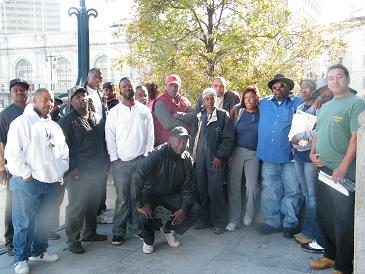
The board’s Dec. 7 vote came a few hours after Bayview-based Aboriginal Blacks United founder James Richards and a score of unemployed local residents rallied at City Hall in the hopes of securing Dufty’s vote.

ABU has recently been protesting at UCSF’s Mission Bay hospital buildings site on 16th and Third streets. Its members also triggered a shut down at the Sunset Reservoir last month after a court ruled that locals promised jobs installing solar panels at the plant be replaced by higher-skilled engineers,

“It’s been too long that we have been protesting and fighting this good faith effort,” Richards told the Guardian. “We need a mandatory policy.”

Dufty is also hoping the Avalos measure could spread to other cities and benefit workers nationwide. “At a certain point I looked at labor and said, ‘Yes, I’m going for this legislation. But not just for San Francisco — you want to take this concept to other cities,’ ” Dufty said, as he made good on his promise to Richards to vote to support Avalos’ law.

Dufty seemed hopeful that Mayor Gavin Newsom would get behind the legislation. “But I respect that there may be a little bit of coming together between now and the second reading.”

Newsom spokesman Tony Winniker told the Guardian that the mayor has 10 days to review Avalos’ legislation after its Dec. 14 second reading. “He supports stronger local hire requirements but does want to review the many amendments that were added before deciding,” Winnicker said.

But will Newsom, who is scheduled to be sworn in as California’s next lieutenant governor Jan. 3, issue a veto on or before Christmas Eve on legislation that has been amended to address the stated concerns of the building trades?

That would be ironic since the amended legislation appears to match recommendations that the Mayor’s Taskforce on African American Outmigration published in 2009. The California Department of Finance projected that San Francisco’s black population would continue to decline from 6.5 percent (according to 2005 census data) to 4.6 percent of the city’s total population by 2050 — in part because of a lack of good jobs.


WILL NEWSOM VETO?

Avalos originally proposed to start at 30 percent and reach 50 percent over three years. But after the building trades complained that these levels were unworkable, Avalos amended the legislation to require an initial mandatory participation level of 20 percent of all project work-hours within each trade performed by local residents, with no less than 10 percent of all project work-hours within each trade to be performed by disadvantaged workers.

He also amended his legislation to require that this mandatory level be increased annually over seven years in 5 percent increments up to 50 percent, with no less than 25 percent within each trade to be performed by disadvantaged workers in the legislation’s sixth year.

A Dec. 1 report from city economist Ted Egan estimated that the local hire legislation would create 350 jobs and cost the city $9 million annually. But Egan clarified for the Guardian that this cost equals only 1 percent of the city’s spending on public works in any given year.

Vincent Pan of Chinese Affirmative Action, which supports Avalos’ local hiring policy, suggested that the mayor “check the temperature.”

“It would be leadership on the part of the mayor not to veto legislation that’s about San Francisco,” Pan said.

And Mindy Kener, an organizing member of the Southeast Jobs Coalition breathed a deep sigh of relief when Dufty’s vote made the law veto-proof. “It’s gonna go across the country,” Kener said. “We just made history.”

Local hiring — and purchasing

1

EDITORIAL The local hire ordinance that the Board of Supervisors approved last week once again puts the city on the cutting edge of progressive policy. San Francisco’s law, sponsored by Sup. John Avalos, is the strongest in the country, and ultimately will mandate that 50 percent of all the people hired on public works projects live in the city.

The politics of the bill were tricky; the local building trades unions opposed it on the grounds that many of their members live out of town and that hiring decisions should be based on seniority, not on residence. But eight supervisors recognized that a local hire law not only benefits the large numbers of unemployed San Franciscans; it’s also good economic policy for the city.

Numerous studies have shown that money paid out to local residents gets spent in town, and circulates in town, and creates more economic activity. That translates into fewer social and economic costs for the city and increased tax revenue.

There are costs to the law. Someone has to monitor compliance, and that requires additional city spending. Training local workers for union jobs may raise the price of some projects. But in the end, the studies all show that keeping money in the community is worth the price.

Avalos deserves tremendous credit for negotiating with labor and other interested parties, accepting compromises that don’t damage the impact of the measure and lining up eight votes to pass it, so even if Mayor Gavin Newsom vetoes it, the board can override the veto.

Now the board ought to apply the same principle to a local purchase law.

One of the major complaints small businesses have in San Francisco is their inability to get city contracts. The qualifying process is complicated and expensive — and when big out of town corporations with plenty of resources to put together bids can also offer lower prices, locals get left out.

The city spends vast sums of money, hundreds of millions of dollars a year, buying goods and services. Every dollar that leaves town translates into far more than a dollar lost to the local economy.

In fact, a 2007 study by Civic Economics showed that 38 percent of the money spent on locally based retailers in Phoenix, Ariz., remained in town and recirculated in the local economy; only 11 percent of the money spent at chain stores stayed in town.

That’s a huge difference, and would translate into many millions of dollars for the San Francisco economy. (Over time, the impact of local hire and local purchasing laws would be much greater than the one-time burst of income expected from the America’s Cup race.)

There are complications with any local purchase law. Not everything the city needs can be bought locally. Nobody in San Francisco, for example, makes train cars or fire engines. But on everything from office supplies and cars to uniforms and consulting contracts, there are (or could be) local companies handling the city’s business.

As with the Avalos law, there would be costs. Some small local suppliers would be unable to match the price that big chains offer. But the overall economic benefits to the city would greatly exceed those price differentials.

San Francisco currently gives a modest preference in bidding to local firms. But if the supervisors applied the Avalos principle and mandated that, within five years, a certain percentage of everything the city buys would have to go to local firms, city officials would be forced to do what they ought to do anyway: look local first.

Every year during the holiday season, the mayor and business leaders urge residents to shop locally. When the new Board of Supervisors takes over in January, the members should start looking beyond rhetoric and start working on legislation that would keep the city’s money in the city.

Alerts

0

steve@sfbg.com

WEDNESDAY, DEC. 15


Women’s Holiday Party

Come support and celebrate the holidays with San Francisco’s most politically active women. This annual party is thrown by the San Francisco Women’s Political Committee, and this year it’s being cohosted by NARAL Pro-Choice California, Good Ol Girls, Emerge California, and Planned Parenthood Shasta Pacific. The first 100 women to arrive receive a free glass of champagne, and the first 200 people get a free drink ticket.

6–9 p.m., free

Carnelian By The Bay

1 Ferry Plaza, SF

www.sfwpc.org

Jaynry@sfwpc.org


The Green Party party

The San Francisco Green Party is throwing a Green Holiday Hoopla. “Spread the word and come out to support a true progressive alternative to the scandalous, corporate-controlled duopoly that screws us over year after year,” reads the invitation, in true SF Green fashion. Cosmic Selector and other DJs will rock the party, Phantom Power and Ryan Hayes perform live, and speakers Mark Sanchez, John-Marc Chandonia, and Laura Well drop the truth.

7 p.m., free

Public Works

161 Erie, SF

www.sfgreenparty.org


D5 Democratic Club Kickoff

If you want to see who’s lining up to play a lead role in choosing Sup. Ross Mirkarimi’s successor in District 5 (Western Addition and the Haight) — or if you want to be in the group — stop by the District 5 Democratic Club’s Inaugural Fundraiser and Holiday Party. This is a qualifying membership for the newly reactivated D5DC, which only D5 residents may join. Mirkarimi hosts the event.

6:30–9 p.m., $30 (includes one-year membership) or $10 for hardship membership

Café Divis

359 Divisadero, SF

d5demclub@gmail.com


Bay Area Anarchist Salon

The Bay Area Anarchist Salon and Potluck is a monthly facilitated conversation by and for anarchists. This month, it poses the question: “In the spirit of the holiday season, what present-day gift-economy practices by anarchists and others point toward life after capitalism?” Bring a vegetarian item to share. The event is hosted by Station 40 Events Collective, which is trying to raise funds for new video projector.

7–10 p.m. $2–$5

Station 40

3030B 16th St, SF

SATURDAY, DEC. 18


Sidewalks are still for people

In the months leading up to the Nov. 2 election, Sidewalks Are For People held a series of events on sidewalks around San Francisco as part of its campaign against Prop. L, which makes it illegal to sit or stand on the sidewalks of San Francisco. Now that the measure passed, the group is taking to the sidewalks again for a similar event, this time in defiance of the new law. Stop by some of the events scattered around the city or create your own and register it at sidewalksareforpeople.org/december-18th-events/#register.

All day, free

Citywide

www.sidewalksareforpeople.org

EDITORIAL: Local hiring, and purchasing

1

Tomorrow’s Guardian editorial:

The local hire ordinance that the Board of Supervisors approved last week once again puts the city on the cutting edge of progressive policy. San Francisco’s law, sponsored by Sup. John Avalos, is the strongest in the country, and ultimately will mandate that 50 percent of all the people hired on public works projects live in the city.

The politics of the bill were tricky; the local building trades unions opposed it on the grounds that many of their members live out of town and that hiring decisions should be based on seniority, not on residence. But eight supervisors recognized that a local hire law not only benefits the large numbers of unemployed San Franciscans; it’s also good economic policy for the city.

Numerous studies have shown that money paid out to local residents gets spent in town, and circulates in town, and creates more economic activity. That translates into fewer social and economic costs for the city and increased tax revenue.

There are costs to the law. Someone has to monitor compliance, and that requires additional city spending. Training local workers for union jobs may raise the price of some projects. But in the end, the studies all show that keeping money in the community is worth the price.

Avalos deserves tremendous credit for negotiating with labor and other interested parties, accepting compromises that don’t damage the impact of the measure and lining up eight votes to pass it, so even if Mayor Gavin Newsom vetoes it, the board can override the veto.

Now the board ought to apply the same principle to a local purchase law.

One of the major complaints small businesses have in San Francisco is their inability to get city contracts. The qualifying process is complicated and expensive — and when big out of town corporations with plenty of resources to put together bids can also offer lower prices, locals get left out.

The city spends vast sums of money, hundreds of millions of dollars a year, buying goods and services. Every dollar that leaves town translates into far more than a dollar lost to the local economy.

In fact, a 2007 study by Civic Economics showed that 38 percent of the money spent on locally based retailers in Phoenix, Ariz., remained in town and recirculated in the local economy; only 11 percent of the money spent at chain stores stayed in town.

That’s a huge difference, and would translate into many millions of dollars for the San Francisco economy. (Over time, the impact of local hire and local purchasing laws would be much greater than the one-time burst of income expected from the America’s Cup race.)

There are complications with any local purchase law. Not everything the city needs can be bought locally. Nobody in San Francisco, for example, makes train cars or fire engines. But on everything from office supplies and cars to uniforms and consulting contracts, there are (or could be) local companies handling the city’s business.

As with the Avalos law, there would be costs. Some small local suppliers would be unable to match the price that big chains offer. But the overall economic benefits to the city would greatly exceed those price differentials.

San Francisco currently gives a modest preference in bidding to local firms. But if the supervisors applied the Avalos principle and mandated that, within five years, a certain percentage of everything the city buys would have to go to local firms, city officials would be forced to do what they ought to do anyway: look local first.

Every year during the holiday season, the mayor and business leaders urge residents to shop locally. When the new Board of Supervisors takes over in January, the members should start looking beyond rhetoric and start working on legislation that would keep the city’s money in the city.

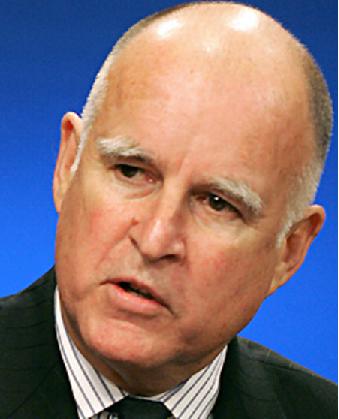
Brown’s education summit gives me hope

0

Most of what’s going on is just really, really disturbing — Brown is doing a good job of explaining just how bad the economy is, just how awful things are for education — and what that means for students. But he made one comment that struck me as critical (and that might, maybe, make Brown a great governor) came about an hour into the presentation.


Brown was talking about how the nation got into this crisis — about how people were forced to live on borrowing, and when the real estate market collapsed America became de-leveraged — when he took a slight sidetrack to say:


“Income redistribution upward from the middle class is comparable to the 1920s … it’s a societal crisis. We have to exercise discipline, but also fairness.”


A few points on this:


1. The incoming governor of California actually mentioned the words “income redistribution.” That’s a term almost entirely missing from the current debate. And he made it clear that part of the budget problem — part of the reason the state and the nation are in this crisis — is that the rich have gotten a larger and larger share of the pie.


2. Brown seems to think this is actually a problem, a “societal crisis.” Again: Obama doesn’t talk about that. Other than Bernie Sanders, most politicians in Washington are afraid of it. Just talking about wealth and income inequality (particularly in the context of education funding) is a huge step.


3. Brown talked about “fairness and discipline” together. Yes, we have to understand that resources right now are limited; but we also have to understand that part of the budget debate ought to be about the larger social issue of unfair distribution of wealth.


I know none of this seems like such a huge deal — it’s basic reality. But it’s so unusual that it’s refreshing.


The true cost of local hire

12

Chronicle columnists Phillip Matier and Andy Ross are claiming it will cost $2.2 million annually to carry out Sup. John Avalos’ newly approved legislation that mandates local hire rates on city-funded construction projects,

And Human Rights Commission director Theresa Sparks is claiming it will actually cost $3 million to run the program.

Neither Sparks nor Matier and Ross are talking about the savings the program will create in terms of the need for less law enforcement, if more local residents are hired. Nor do they mention the economic benefit of tax payer dollars being funneled into the local economy, if more San Francisco residents are hired on city-funded construction projects.

As a result, their conversation sounds like an attack on local hire legislation that Sparks says she supports.

“Matier & Ross are about a million dollars off,” Sparks told the Guardian in a voice mail message three days after I first called asking if it was true that HRC was pissed that the Office of Economic and Workforce Development was being charged with monitoring Avalos’ newly approved program.

‘We tried to get them to leave it with us,” Sparks said, noting that HRC already has contract compliance officers overseeing every city contract.

“This will cost $2-3 million more, and it’s unnecessary,” Sparks continued, noting that during her (ultimately unsuccessful) D6 campaign she talked about “inefficiency in government” and here was yet another example of that very same wasteful phenomenon.

‘Rather than approve a project, the agency that creates a program wants to hire its own people and create a whole new infrastructure, “ Sparks said. “We tried to participate in the local hire ordinance, but we were excluded from all the meetings.”

Sup. John Avalos’ legislative aide Raquel Redondiez disagrees that Sparks was omitted from the discussion. And Redondiez has the emails to prove it.

In an Oct. 21 email sent to Redevelopment director Fred Blackwell, Rhonda Simmons in the Office of Economic and Workforce Development, and Sparks at HRC, six weeks before Avalos’ legislation passed on its first reading, Redondiez wrote that Avalos would like to meet with Blackwell, Simmons and Sparks.

“Supervisor Avalos would like to meet with your offices to learn about how current contracts are now tracked for local hiring, lbe [local business enterprises], and union hours,” Redondiez wrote. “As we move forward with the local hiring legislation, we would like to have a deeper understanding of the current tracking practices and possibilities.Please let us know when we can meet in the next 10 days.”

Redondiez email thread shows she got a reply from Guillermo Rodriguez in the Mayor’s Office the same day. But there was no reply from Sparks. Blackwell and Simmons attended local hire hearings at City Hall in November and December. This reporter does not remember Sparks at those hearings, but community advocates say they saw her outside at least one hearing, in November.

So, does this add up to HRC being deliberately excluded from the discussion about how best to monitor local hire, or something entirely different?

Community and worker advocates, who support the legislation, say they tried to reach out to Sparks, but got mixed messages. They say Sparks said she was supportive of the legislation, but that they were left with the impression that HRC wasn’t interested in monitoring the program.

Michael Theriault, Secretary-Treasurer of the Building Trades, which opposes Avalos’ legislation because it believes the measure will pit workers who live here against workers who don’t, didn’t sound like he was advocating to put HRC in charge of monitoring compliance with the mandatory local hire ordinance.
“There is a sense that HRC is about small business advocacy,” Theriault said.

Sparks hasn’t returned my latest call, but I’ll be sure to post her comments here. So stay tuned as we follow the latest twist in the local hire debate. And don’tforget to tune in to tomorrow’s Board meeting (Dec. 14, 2 p.m. at City Hall), when the local hire legislation has its second reading.

Libidinous literature with Naked Girls Reading

1

I had asked Lady Monster, over a pair of red wine glasses and the pleasant buzz of nearby patrons at Revolution Cafe, to tell me what story she’d read at the Halloween installation of her Naked Girls Reading literary series. We were chatting in anticipation of her International Day to End Violence Against Sex Workers edition of NGR (Fri/17) which will take place at the Center for Sex and Culture after the day’s City Hall vigil and march.

The curvaceous redhead is quite the story teller, even clothed. “I did the elevator scene from The Shining,” she told me, launching into a brief summary of the Torrance family’s elevator travails. By the end of it I had the crap scared out of me – and she was fully clothed! Imagine what this lady can get done in the buff – surely, a live literary luminary not to be trifled with.

Lady Monster first heard of the Naked Girls Reading series circa its Chicago inception by burlesque showgirl Michelle L’Amour in 2009. The series sits down sex-positive female role models (SF’s chapter features sexologist Carol Queen, sex activists, and burlesque beauty Dottie Lux among others) for a theme night of literary lustiness. The event struck a chord (books and boobies yay!), and not just among Chicago pervs – the series has been featured on the Carson Daly show and has spread to nine other cities. “Like wild blazes,” says Monster.

“Almost immediately Michelle had people wanting to franchise the series,” she continues. Naked girls getting brainy? Lady Monster had an inkling that her own San Francisco community would gag for a NGR chapter of their own. She scheduled NGR’s SF breakout in May of this year and the show’s played to packed houses every two months since – and will score a regular monthly gig at Viracocha come the new year. “It’s so much fun, so silly. It’s all about being comfortable in your own skin,” Monster asserts.

That’s something that she’s had little trouble with – even growing up on an Ohio farm, Monster started hosting her (initially PG-13 rated) play parties in fifth grade. “I’d have all my friends over and make sure everyone was coupled off. Then we’d go into my room and close the door. At first we’d all just make out, but as we got older it got more serious. I was my own sexually liberated role model!” With a little help from some open-minded parents, of course. “They didn’t bother us, they let us have our time together.”

From grade school groping, Monster graduated to more advanced expressions of sexuality. She worked the graveyard shift at a phone sex line and loved the intimacy and honesty she could find in horny men just getting home from last call. “I wanted to hear their secrets all the time,” she confesses. But she wanted it to happen face to face, so she tripped her way into a job doing “legal escort work.” Private peep show stuff, for which Monster would strip or faux-masturbate for a paying customer. 

Only it wasn’t legal, a fact that her employer neglected to tell her. And even though she was getting face to face time, the sexual intimacy she’d felt with men on the other end of the phone line was gone. “There was no talking! Yeah, the money was a lot better but I had to get out of there.” All the way to San Francisco, in fact – where Monster has put her open sexuality to work in service to SF Sex Information and pens sex stories and erotic poetry. She’s also a long time performer in the burlesque scene – she’s been known to create her own astronomically-inspired LED-lit costumes and accesorize with glitter-dipped viking axes. Oh, and she toured with Ministry.

Like NGR, The International Day to End Violence Against Sex Workers was created by an empowered sexual superstar and has grown into a far-reaching event, marked by vigils in cities around the globe and marches of men and women carrying red umbrellas (the adopted symbol of the movement). It was started by the Bay’s own feminist porn star Annie Sprinkle, an ex-sex worker who Monster counts amongst her role models: “she’s not really a mother figure, more like a respected aunt,” Monster says.

“Sex workers need protection,” she continues, noting that Sprinkle started the annual day of memorial after reading a serial killer’s confession that he killed over 40 prostitutes because he knew they were less likely to be reported missing or inspire dedicated police investigations.

Lady Monster’s convinced that sex worker safety is an issue that carries particular import this year for a variety of reasons. First: shitty profits. “Business is definitely being affected by the economy,” she says. “And on top of that the market’s flooded,” with all the men and women out of work in other industries. Lack of work can make it harder to avoid risky working situations that put sex workers at risk of withheld wages, assault, or rape. The shut-down of Craigslist’s casual encounters listings has made it more difficult to find clients in the first place, and in the midst of all of this, SFPD has adopted an evidenciary policy that discourages condom usage: if cops find a rubber on a suspected prostitute, they’ll use it as evidence of intent to have sex for money. 

That’s why Monster’s event Friday (which follows a vigil and march from City Hall that starts at 4 p.m.) will give voice to those that often go unheard in our society. Monster, her regular NGR cast, and Sprinkle will all read from literature penned by sex workers, including Jillian Lauren’s memoir of her time in the prince of Brunei’s harem and Scarlet Harlot’s account of becoming a radical prostitute, Unrepentant Whore.

“This is such a great opportunity for feminism and art,” Monster says. Undeniably, giving naked women a stage on which to talk about reclamation of body and sex issues is a unique approach. NGR, sex worker edition: sure to be a hot night, but also a reflection of the power of corpus woman when framing its own literary discourse. 


Naked Girls Reading: International Day to End Violence Against Sex Workers 

Fri/17 9 p.m., $15-20

Center for Sex and Culture

1519 Mission, SF

(415) 255-1155

www.nakedgirlsreading.com


Live Shots: Roger Waters’ epic “The Wall,” HP Pavilion, 12/08/2010

4

In the minutes before Pink Floyd mastermind Roger Waters took to the stage at HP Pavilion earlier this week to perform the band’s epic 1979 double album The Wall, the playlist coming through the house speakers gave way to Billie Holiday’s “Strange Fruit,” a song that seemed well-matched for the impending performance. For an artist that is commonly known for romantic jazz ballads, Holiday’s “Strange Fruit” was a defining moment in her career, a point in which she ascended beyond the simplest manifestations of her identity and delved into the  darkest corners of her times.

In a similar sense, there is no easy way around The Wall. Pink Floyd’s last album during their monumental run in the ’70s — Dark Side of the Moon, Wish You Were Here, Animals — was not only their most artistically ambitious, but a lingering challenge to the nature of the band’s legacy. Longview attempts to define Pink Floyd in the realm of blacklight posters, spacey sounds, or a Dazed and Confused mindset, will inevitably get stuck at The Wall: a dark and confrontational album that is ultimately the most emblematic of Pink Floyd’s greatest characteristics.

So, with Waters (at age 67) suggesting that this will be his last tour, it is appropriate that he would finish with his masterpiece. And make no mistake – this was a concert for the ages.

Playing before an enthralled sold-out crowd, Waters put on a spectacle of acid-casualty-inflicting-potential that seemed peerless on numerous fronts. Musically, the material was as dynamic as it was seamless, deftly rendered by a world-class band of musicians over a juggernaut of a sound system. Visually, the staging seemed calibrated past “entertain” and set on “assault”, showcasing a sensory barrage of giant puppets, crashing airplanes, and flying pigs all amidst the construction (and eventual toppling) of a 40ft wall that also served as a towering projection screen for a dizzying array of images and video.

Yet the most notable aspect of the performance was the sheer relevance of the material. This was really an amazing feature, considering that Waters wrote The Wall in the run up to the Reagan-Thatcher era and was now performing it in the aftermath of Bush-Cheney. In this regard, Waters delved deeply into the confrontational aspect of the album’s material, challenging the audience with all-too-timely themes of war, ideology, government surveillance, and the general estrangement of modern human relations. During “Run Like Hell” the projections on the wall at one point showed the Wikileaks-released video of the 2007 Apache Helicopter massacre in Baghdad; not exactly light viewing material to accompany one of Floyd’s classic radio hits.

Waters looked and sounded formidable throughout the concert, stalking the stage with good-humored authority as the wall was erected in front of the band throughout the beginning half of the album. This first set was packed with striking moments, such as the ominous acoustic beauty of “Goodbye Blue Sky” beset by visuals of bomber planes dropping their payloads of -isms  (dollar signs, religious symbols, and corporate logos) on those below. “Another Brick in the Wall (Part 2),” with its re-occurring mantra – “We Don’t Need No Education” – was already a staggering spectacle as a three-story marionette school teacher with laser eyes dwarfed the musicians below, only to then be embellished by a choir of  local school kids filling the stage to sing the later verses.

However, the most poignant moment of the show came during the second set as Waters – who had lost his father as a boy during World War II – performed “Vera” and “Bring the Boys Back Home” beneath video spots of children reuniting with their fathers returning home from war. The final clip – of a young girl going from surprise to gut-wrenching emotion as she first sees her father – left audience members wiping back tears as Water’s sang the line, “Does anybody else in here/feel the way I do?”

The wall came toppling down after the more theatrical rock-opera moments of the second album, culminating with “The Trial” performed  beneath Gerald Scarfe’s hallucinatory animation from the 1982 film adaptation of the album. Waters and company finished the concert amongst the rubble, playing a wonderfully serene and hopeful version of “Outside the Wall.”

Much has been made of the fact that the original staging of this album was a logistical debacle when it was performed in only four cities some 30 years ago, and that the evolution of technology has now made it feasible. Yet, in a similar sense, the album’s material has matured in its own way in this time. Writing during a time of personal crisis in the late 70s, Waters conceived the album as an exploration of human relationships and the many obstacles that hinder them. The timeliness of these themes then — especially after a decade marred by war and a divided population – makes this tour less of a nostalgic throwback and more of manifested vision. Pink Floyd had always been far ahead their time, so there is a fitting logic that it would take three decades for The Wall to be properly realized in concert.

Of course, it’ll be interesting to see if this tour is in fact the last call on an original Pink Floyd experience. Altough the surviving band members are getting on in years (keyboardist Richard Wright died in 2008), they have made some steps at amends recently, and even expressed interest in collaborating again. Perhaps then, there is still time for those walls to come down. After all….when it comes to Pink Floyd, it’s well known that pigs will fly

Jackie Beat: “Hung Puerto Rican elves only”

0

Generously talented and fantastically energetic (we’re talking 8-bit chipmunk here) LA drag entertainer Jackie Beat is in town with her new show “Jackie Beat’s All-You-Can-Eat Christmas,” Fri/10 and Sat/11 and Brava Theater. It sounds like a real festive hoot. The long-time cabaret circuit favorite, underground club hostess, and member of scandalous electro-revival band Dirty Sanchez pulled out her giant fork and dug into a little interview with us about ambrosia salad, abortion, AM schlock .. and that’s just the beginning. Go pay some money to see her!

SFBG: OK I’m dying over the concept for All-You-Can-Eat Christmas — it’s so refreshing to hear a drag queen talk about eating! What are some of your favorite foods? And do you do a lot of cooking?

Jackie Beat: Well, I was referring more to huge portions of talent, but I do love to eat! The ironic thing is that I have actually lost 100 pounds since my last holiday show, so people may think the title is actually “All-You-Can-Eat (And Then Throw Up!) Christmas,” but I promise it’s not! I still love to eat, I just eat less. My favorite holiday food has to be good old-fashioned Ambrosia Salad.  It’s a big mess of pineapple chunks, pecans, shredded coconut, mandarin orange segments in heavy syrup, mini marshmallow, sour cream and Cool Whip. You can eat a huge bowl of it and then honestly tell people, “All I had was salad!”

SFBG: I love that you sing live — what kind of music is part of the new show?

JB: Most of the new material is in my amazing new outfit — yards and yards of it! Seriously, it gets harder every year to come up with new stuff. I have done thousands of song parodies, including every holiday song ever written! This year, I am doing a Country Christmas Medley, a great medley of horrible old AM radio classics — the type of crap you hear at wedding receptions — but sung with the original lyrics that were too shocking at the time. You know, so all these sweet nostalgic old songs are now about fisting and abortion. Good times! I am also doing a new song about getting a full-cavity search at the TSA and there are plenty of classics like “Santa’s Baby” and “Do Some Blow!”

http://www.youtube.com/watch?v=ZThrYCy9Zzo

SFBG: Who’s your favorite Santa’s reindeer?

JB: Grumpy? Oh wait, that was one of the Seven Dwarves, right? Um, Jan? No, she was in The Brady Bunch, sorry. Um, Rudolph of course! Because he’s the fucking star — like me!

SFBG:  If you had an elf of your own, what would you make him or her do for you?

JB: First he would be Puerto Rican and hung like a horse.  And I think you can figure out the rest!  Oh, and after THAT — he would clean the fucking house!

SFBG: Can you tell me a bit about how the show came about?

JB: Um, I had bills to pay and I don’t know how to do anything else, so…

SFBG: I bet you’ve been pretty busy in general — what have you been doing lately? Any Dirty Sanchez news? You guys just performed here, yes?

JB: We did Folsom Street Fair last year, but we are all so busy with our own lives that we seldom perform together these days.  Hopefully we will be working on some new music soon!

SFBG: You’re in San Francisco pretty regularly — what are some of your favorite things about the city?

JB: The PAYING customers, of course!  Times are tough and like I said, I don’t know how to do anything else.

SFBG: Unfortunately Christmas can’t last forever — what’s next for Jackie Beat?

JB: Quite possibly dropping dead right after this grueling, brutal holiday tour — so come see me now while I am still alive, bitches!

JACKIE BEAT’S ALL YOU CAN EAT CHRISTMAS

Fri/10 and Sat/11, 10:30 p.m., $20–$40. Brava Theater, 2781 24th St., SF. www.brownpapertickets.com

Violence please!

0

Christmas is here early, horror geeks: not only is a brand-new print of 1980’s Maniac playing the Castro Theatre, but director William Lustig will be in attendance. After the big-screen experience, make sure Santa knows you want the extras-packed 30th anniversary DVD, released by Lustig’s own Blue Underground label, wrapped in bloody butcher paper under the tree.

For the uninitiated, Maniac — the tale of a mommy-haunted New York City creep who stalks and kills women, using their body parts to accessorize his mannequin collection — features a tour de force performance by the late Joe Spinell, who co-wrote the screenplay. Spinell was a grindhouse favorite who also appeared in the first two Rocky movies, the first two Godfather movies, and Taxi Driver (1976). Lustig directed Spinell in 1983’s Vigilante; he also helmed the Maniac Cop series. He hasn’t directed a feature since 1997’s horror comedy Uncle Sam (“I want you … DEAD!”), but he’s still very much involved in the world of genre films. Since I’m a Maniac maniac, I gave him a call at his New York City office to talk about exploding heads and other topics.

SFBG How long have you been planning Maniac‘s 30th anniversary celebration?

William Lustig About 18 months ago, the idea popped into my head that it was time to freshen up the movie. Six months ago, somebody came up with the idea of testing it as a theatrical release. We started playing it in Seattle, New York, and Los Angeles, and it’s done quite well, so we’re going to be rolling it out over the next three or four months in about 50 cities throughout North America.

SFBG Are most audiences already familiar with the movie, or are you getting some first-timers?

WL People who have seen it on video make up a good portion of the audience, but the other portion are seeing it for the first time. It’s amazing — you know, when you make a movie like this, I guess it’s like somebody who makes a comedy. After a while, you don’t find it funny anymore. As a person who made a horrific movie, I can’t imagine anybody finding it scary, and yet people do. They still respond as strongly as people did 30 years ago. It feels great!

SFBG Are you surprised that Maniac became such a cult favorite?

WL Somebody recently asked me, when did I realize it was a classic? I guess it must have been about 18 months ago when I realized that this movie continues to sell, continues to intrigue people. I think a portion of it is the mystique of its star, Joe Spinell, who’s become kind of a cult figure for people who are rediscovering movies from the ’70s. But Maniac is not a film that was lost and now it’s been found — it’s been around and it continues to attract audiences and to please them.

SFBG What was Joe Spinell like in real life?

WL Like any great actor, there was a part of Joe in every role he played. Joe was a loner, and he was an insomiac. He would roam the streets of New York and be at bars until all hours. He was a troubled soul, but at the same time, he was one of the most brilliant people I ever met. He had a charisma that would attract beautiful women even though he wasn’t a classically handsome guy. He had a magic about him. So when you see Maniac, there are aspects of his personality in there.

SFBG Maniac was quite controversial when it was released. Did that surprise you?

WL You know, when you’re making a movie and you’re throwing ketchup around, it’s almost kind of comical. It’s not intended to be serious — you intend it to be a kind of roller-coaster ride for an audience. And when people take a movie like that so seriously, and look at it as being a political statement, and look at it as being some kind an outcry for violence against women and things like that, it kind of takes you aback. When I made the film, I was 24 years old and I was just trying to survive the experience. I wasn’t thinking about the wider implications of what we were doing. And I think we’ve gone beyond that in the world today. I think we kind of look at it as being make-believe.

SFBG I have to ask you about the famous exploding head, courtesy of effects wizard Tom Savini. Did you realize that would be Maniac‘s defining moment?

WL I think after we made the movie, we realized it had a tremendous impact. But when we were doing it, we were like burglars in the night. First off, there is no permit in existence, in any part of New York City, or I would imagine in any part of the country, that allows to you fire a live gun on a movie set and on public streets. Which is what we did — we actually filmed that in that parking lot, under the Verrazano Bridge, with a live shotgun, double-loaded. That was our major concern: would we get busted? It wasn’t until later, when we saw the dailies, that we realized, “Holy shit! It actually turned out to be something!” We rigged up three cameras and we just went for it.

SFBG You’re the owner of Blue Underground, which has released top-notch DVDs and Blu-rays of Maniac and other grindhouse movies. Why did you become such a champion of these films?

WL It was kind of satisfying my own need. I always loved having people over to my house, showing them these obscure grindhouse movies that I had seen on 42nd Street in the late ’60s and early ’70s, and I would see their [enthusiastic] reactions. One of the things that bothered me back in the ’80s and the ’90s was that these movies were never really treated with any respect. So it was my intention to treat grindhouse movies the same way Criterion treats its Fellini movies.

MIDNITES FOR MANIACS: PUSH IT TO THE LIMIT TRIPLE FEATURE

Just One of the Guys (1985), Fri., 7:30 p.m.; Point Break (1991), Fri., 9:30 p.m.;

Maniac: The Restored Director’s Cut (1980), Fri., midnight, $12

Castro Theatre

429 Castro, SF

(415) 621-6120 www.castrotheatre.com

‘Nutcracker’ and beyond

0

You don’t have to be into winter solstice, Christmas, Hanukkah, or Kwanzaa celebrations to realize that there’s something about December — the end of another decade this time around, the darkest part of the year — that calls out for treats either for yourself or a friend or two. Here are a few dance-related suggestions between now and the end of the year that won’t bust your budget.

Born in Imperial Russia, The Nutcracker has become a peculiarly American institution. Almost against my will, it pulls me in every time. Though bifurcated, the masterful music — no matter its commercialization — pulls together the story of a brave little girl and her adventures. Reasonably priced options exist. San Francisco Ballet’s (through Dec. 27; War Memorial Opera House, SF) starts at $32. Take binoculars, you’ll be fine. The Oakland Ballet Company’s highly acclaimed version by new Artistic Director Graham Lustig (Dec. 23-26; Paramount Theater, Oakl.) starts at $15. Berkeley Ballet Theater’s (Dec. 10-12 and 17-19; Julia Morgan Theater, Berk.) has a one-price ticket for $26. After 20 years, this will be former ODC dancer Brian Fisher’s last Fritz.

If you like your Nutcracker to have sharp edges, the Dance Brigade’s mashup of politics and fun, The Revolutionary Nutcracker Sweetie (Dec. 11-12; Brava Theater, SF; $15–$17), has been reimagined by another generation of grrrl dancers and friends. The Dance Along Nutcracker (Dec. 11-12; Yerba Buena Center for the Arts, SF; $16–$50) was a hoot the first time around and continues to be a splendid mix of circus, dress-up, and community celebration. This year the revelers have invited the Twilight Vixen Revue. The SF Lesbian/Gay Freedom Band does the musical honors — fabulously.

Stepping outside of Nutcracker territory into original holiday fare, Kirstin E. Williams’ all-female Strong Pulse company hooks up with CCSF students for Be Cool, (Dec. 10-11; CCSF Performance Theater, SF; $10–$15) a jazz/ modern dance/hip-hop concert that is guaranteed to resonate all over the Phelan Avenue campus.

If you have never seen ShaSha Higby work her magic with phantasmagoric concoctions of human-made and natural materials, be prepared to being pulled into a world as dreamlike as it is tangible. In Folds of Gold (through Dec. 10-11; Noh Space, SF; $12-20) examines deep winter issues surrounding life, death, and rebirth.

The circus-based Sweet Can Productions newest show, Candid (Dec. 17-Jan. 9; Dance Mission Theater, SF; $15–$60), is sweet but not saccharine-sweet. These performers juggle and subvert cherished concepts as well as objects — brooms, dinner plates, hula hoops — to stretch credulity and the imagination. It’s what happens when life meets art.

With Lo Clásico, (Dec. 17-19; Cowell Theater, SF; $15–$35), Caminos Flamencos — 22 dancers and musicians — are performing Spain’s two major historical dance forms. There is, of course, flamenco, including Yaelisa’s breathtaking Soleares, but also examples of lesser-known Spanish classical dance choreographed to Ravel and de Falla.

WestWave Dance (Dec. 13; Cowell Theater, SF; $22–$68) closes its season with another quintet of new choreography by Pam Gonzales (from L.A.), Alyce Finwall, Christy Funsch, Carolé Acuna, and Ingrid Graham. The festival curates promising work by artists who can’t on their own afford the professional production values WestWave offers.

How about insight into dancers’ thought processes? For free? Chime Live (Dec. 11; Margaret Jenkins Dance Lab, SF; free) offers conversations and showings of work from Margaret Jenkins Dance Lab’s mentoring program. In the monthly program “2nd Sundays” (Dec. 12; CounterPULSE, SF; free), artists show pieces-in-progress and invite feedback. “Dancemaker’s Forum” (Dec. 19; SF Conservatory of Dance, SF; free) workshops new choreography by Manuelito Biag.

Contact improvisation has become a valued tool for choreographers, but it’s also a glorious performance art that redefines the concept of being “in the moment.” One of its originators, the masterful Nancy Stark Smith (Dec. 18; Eighth Street Studios, Berk.; $10–$20) is in town to connect with local and guest practitioners.

The connection between the Odette and Odile characters has puzzled Swan Lake lovers forever; the roles used to be danced by two different performers. SF Ballet’s recent production hinted at one interpretation. For another take, you might want to go to the movies and see Natalie Portman in Darren Aronofsky’s Black Swan (now playing; Bay Area theaters; prices vary).

Elizabeth Edwards, breast cancer and the battle for a cure

2

When the news hit that Elizabeth Edwards had died at 61, I was sitting in the press box at San Francisco City Hall listening to the supervisors debate the merits of local hire legislation. In fact, I only became aware that Edwards had passed away, because Sup. Michela Alioto-Pier, who was sitting in front of me, was surfing the Internet on her laptop and I happened to see the headline.

The news immediately reminded me, all too powerfully, of the brave fight that my sister-in-law Leila, 47, lost last year after a six-year battle with the disease. She left behind a husband and two young sons, and I always feel a mix of pride at how hard she fought and desperation at how she still wasn’t able to win, whenever I remember her long slide towards death last fall.

“I have so much to live for,” Leila often told me, reflecting on how much she loved her husband and sons, how she wanted to finish her novel (which she managed to wrap up in the last months of her life) and how she still wanted to visit so many places and people in the world.

An avid advocate for peace, especially in the Middle East, where her father’s family came from, Leila was not one to give up on a cause, once she had it in her crosshairs. She attacked breast cancer with that same dogged determination. She read everything she could on the topic, changing her diet, modifying her lifestyle, going through chemo and the inevitable loss of her beautiful hair, and, at the end, taking a chance with experimental drugs.

I will never forget her telling me, one gut-wrenching afternoon last September, that the doctors had told her there was nothing more they could do. The disease had gone to her liver, and that she was beginning to feel panic and fear. It wasn’t easy to hear that admission, it must have been even harder for her to share it, and it left me hoping that one day, no other woman would ever have to go through this painful battle again.

I wanted Leila to live to see her sons grow up, to enjoy the company of her husband, to write, travel and work for her goal of world peace. But eventually, it became clear that she was not going to make it. When her death finally came, last October, I felt relief that she was no longer suffering, even as I shed tears for her, her family, and all the folks in the world who are going through similar battles.

So, when I got home last night, I immediately went online and wallowed in the huge wave of grief that Edwards’ death evoked as a symbol of the millions of women who live with and die from cancer worldwide.

Some noted that Edwards had not been conducting regular check ups when she found a lump in her breast (an uncomfortable reminder to all of us who haven’t got a check up recently). Others observed that her diagnosis likely fueled her passion for universal health care and helped the passage of Obamacare (a more welcome reminder that despite all the criticisms of Obama, he has pushed through monumental reforms that many will benefit from).

Some wrote about the ever-present fear for survivors that the cancer could come back, and how this awareness had  served to make them more fully appreciate every moment that they do have. Others pointed to the grim reality that even with access to great doctors, advanced treatment options and money, Edwards still could not prevail, because a cure has still not been found.

I’ll end this tribute to Edwards, my sister-in-law, and all the women who have struggled with this terrible disease with a message that landed in my inbox Dec. 7 from California’s First Lady Maria Shriver:

“I was deeply saddened to learn of the passing of my dear friend, Elizabeth Edwards,” Shriver wrote. “My heart goes out to her loving family. Elizabeth was a mighty warrior, and I’ve long admired her courage, her compassion and her personal quest for truth. She was a public servant, a dedicated mother, a tireless advocate and a loyal friend. She showed up to speak at The Women’s Conference every time I asked, and our audience was always moved by the open and honest way she would share the struggles she faced along her journey. I hope her children know their mother was an inspiration to women everywhere — a truly great woman.”

And I’ll add my hope that this nation will intensify its search for a cure for a disease that is the second leading cause of cancer deaths in women today (after lung cancer) and the most common cancer among women, excluding nonmelanoma skin cancers. According to the American Cancer Society, 1.3 million women will be diagnosed with breast cancer annually worldwide, 465,000 will die from the disease, and about 1 in 35 women die from breast cancer in the U.S. Scary? Yes. Curable? Hell, yeah (I hope and pray). Let’s just make sure it remains a national priority.

Hot sexy events: December 8-14

1

So how’s this for weird: rich folks get freaky too! Yes indeed, according to our friends at the Bay Citizen, upon the launch of an investigation into her and her husband’s possible involvement in an inside trading ring (don’t they just always want to get into those things?) Pac Heights lady-who-lunches Annabel McClellan was discovered to be working on the gosh darn kinkiest iPhone app we’ve ever heard of: My Nookie. 

The app allows users to dish down to the nitty-gritty about their super hot hookups, right down to the positions, location of consummation, and partner used and abused. Share the info with your friends and even send de-personalized My Nookie messages to potential partners with purple anonymous avatars performing the sex event you’d like to try with them. Says McClellan (whose lawyer denies her involvement with the app)’s business partner Milly Hanley to the Bay Citizen, “we are housewives, our kids are older now. We were looking for something to do.” Consider your wealth-induced ennui assuaged, ladies! Now onto the sex events.

Women’s Community Clinic benefit

What’s really, really sexy? A capable, respectful place to nurture your reproductive health, that’s what. Join the women of Pin Up Clinic for live tunes and readings by Carol Queen, Lorelei Lee, and Tina Horn, plus a chance to get your 2011 copy of their frisky sexy lady calendar. All proceeds go to the Women’s Community Clinic, a place that’s more than worthy of your oooh’s and aaah’s. 

Wed/8 6-8 p.m., free

Good Vibrations

1620 Polk, SF

(415) 345-0500

www.goodvibes.com


Little Minksy’s Burlesque

For six years, Douglas Good has been holding an SF burlesque show every week – do you know how many pasties that is? His event, Little Minksy’s (named after the banned shows that rocked NYC at the turn of the 20th century) features this week talent from Alotta Boutte, Dottie Lux, Kentucky Fried Woman, Bitter Waitress, and more. It packs Club Deluxe every time – so get there early for a good shot of these lady lumps and attentive bar service. 

Thurs/9 9 p.m.-2 a.m., $5

Club Deluxe

1511 Haight, SF

(415) 552-6949

www.sfclubdeluxe.com


Kinky Holiday Fantasia

Just your typical holiday party here folks, nothing to see: ornament hanging (on bare skin), (living) tree and menorah lighting, jingle bell (boobs), and seasonal (bondage) fashion. More than enough fodder to keep you snickering through your family’s sit-down to watch It’s a Wonderful Life for the 800th time. 

Thurs/9 7:30-10:30 p.m., $15-25 sliding scale

SF Citadel

1277 Mission, SF

(415) 626-2746

www.sfcitadel.org


“Modern Love: A Panel About Open Relationships”

Are we still swinging, San Francisco? Smart money’s on hell yeah, particularly if you ask the speakers at this panel on polyamory: Ethical Slut author Dossie Easton will be there, as well as Carol Queen (She. Is. Everywhere.), and Sarah and Chris, creators of Mission Control’s KISS play party. Perfect for the seasoned spouse-swapper, or any couples looking to open up their loving arms in the future.

Fri/10 6-8 p.m., free

Good Vibrations

1620 Polk, SF

(415) 345-0500

www.goodvibes.com


Whobilation

Dr. Suess was due for a kinky overhaul, wasn’t he? Attire yourself in your Whoville best for this holiday play party, where the pinks and purples of the Mission Control harem rooms will try their best not to clash with all the green and red (let’s face it, Judaism has inspired a lot less easily-mimicked pop culture characters, Hanukkah Harry notwithstanding). Like all the other Kinky Salon parties, Whobilation features super sexy talent onstage during the mayhem. On this night of nights, Berkeley’s Burley Sisters Burlesque and Ophelia Coer de Noir take to the fore and Skanky Claus will lead all in a resounding session of dirty carols. 

Sat/11 10 p.m.-late, $25-35 members and allies only

Mission Control 

www.missioncontrolsf.org


“Abuse in Kinky Relationships: How to Reveal, Deal, and Heal”

It can be tough to distinguish love’s good and bad pain – particularly in the world of BDSM. But peer facilitator-in-training Jocelyn is a veteran of both, and is holding this class to teach about how to identify, fix, and recover from abusive relationships — in and out of the dungeon. 

Tues/14 8-10 p.m., $20

SF Citadel

1277 Mission, SF

(415) 626-2746

www.sfcitadel.org


Pass the DREAM Act, now

11

by Eric Mar and Eric Quezada

news@sfbg.com

OPINION Imagine for a moment that you are 14 years old. Your parents, stuck in perpetual poverty and unemployment (or perhaps worse), move your family to a foreign country to begin a new life.

You work hard, struggle to fit in, study constantly, and fill your spare time with school activities. Maybe you even work a little on the side to chip in. You are a parent’s dream, and a model of young citizenship.

Except that you’re not a citizen. And one day, even as you’ve mastered English and flourished in school and in the community, you are stopped like a criminal by federal authorities.

This is what happened to Steve Li, an engaging and industrious 20-year-old student at City College of San Francisco and a graduate from George Washington High School. He always thought he was an average San Franciscan until the morning of Sept. 15, when Immigration and Customs Enforcement agents suddenly raided his home and arrested him and his parents. Steve was incarcerated in Arizona for more than 60 days, far from his friends and family. Through a full-court legal and legislative press, and a groundswell of immigrant community organizing leading to a private emergency bill by Sen. Dianne Feinstein, Li has temporarily staved off deportation. But Li and thousands of other hard-working young immigrant Americans could soon be summarily tossed out of the country if Congress doesn’t act now to pass the Development, Relief, and Education for Alien Minors (DREAM) Act.

The DREAM Act is a common-sense, bipartisan measure that is urgently needed to avoid countless other Steve Li cases. Despite congressional wavering on comprehensive immigration reform (which a consistent majority of Americans support), everyone should be able to agree on the basic right of undocumented immigrant minors, who are moved here by their parents, to gain steps toward obtaining citizenship.

In brief, the DREAM Act would enable some immigrant students who have grown up in the U.S. to apply for temporary legal status and to eventually obtain permanent status and become eligible for U.S. citizenship if they go to college or serve in the U.S. military.

According to the National Immigration Law Center (NILC), about 65,000 U.S.-raised high school students could qualify for the DREAM Act’s benefits each year. As NICL puts it, “These include honor roll students, star athletes, talented artists, homecoming queens, and aspiring teachers, doctors, and U.S. soldiers. They are young people who have lived in the U.S. for most of their lives and desire only to call this country their home … they face unique barriers to higher education, are unable to work legally in the U.S., and often live in constant fear of detection by immigration authorities.”

It makes no moral, economic, or social good sense to continue tearing apart families and communities and disrupting young people’s lives — all at great expense to the American public and taxpayers.

The time to act is now: please call your congressional representatives today and urge them to vote yes on the DREAM Act — without any amendments that might undermine its effectiveness. Although Nancy Pelosi and most Bay Area Democrats support the bill, Rep. Jerry McNerney (D-Stockton) and the Republicans are either on the fence or opposed. There’s no time to waste in giving hard-working young immigrant students this most American ideal — the opportunity to make their dreams a reality.

Eric Mar is a member of the San Francisco Board of Supervisors. Eric Quezada is executive director of Dolores Street Community Services in San Francisco.

Class of 2010: Malia Cohen

4

sarah@sfbg.com

It took two weeks and 19 updates of San Francisco’s ranked-choice voting system before Malia Cohen, a former Mayor Gavin Newsom staffer and partner in a firm that helps businesses and nonprofits create public policy, was declared the winner of the hotly contested race to represent District 10, which includes Bayview, Hunters Point and Ingleside. The nail-biting time lag was a byproduct of complex calculations that involved 22 candidates, no clear front-runners, and a slew of absentee and provisional ballots.

But when the RCV dust settled, the results proved that the D10 vote continues to break down along class, race, and gender lines. These RCV patterns personally benefited Cohen’s success in picking up second- and third-place votes.

But they also helped D10’s African American community, now smaller than its growing Asian community but still larger that the black community in any other distinct in the city, send an African American supervisor back to City Hall. And it avoided a run-off between Lynette Sweet and Tony Kelly, who won most first-place votes.

Some chalk up Cohen’s victory to her polished appearance, the middle-of-the road positions she took on the campaign trail, and an impressive list of endorsements that include the San Francisco Democratic Party, the Labor Council, the Building and Construction Trades Council, state Sen. Leland Yee (D-SF), Assembly Speaker Pro Tempore Fiona Ma (D-SF), Board of Supervisors President David Chiu, SF Democratic Party Chair Aaron Peskin, and BART Board President James Fang.

But Cohen told us she thinks coalition building was the key. “Endorsements only account for a quarter of the reasons why you win,” she said. “It’s all about building an organization, a net that goes deep and wide.”

Some progressives were alarmed by a Dec. 1 fundraiser to help settle Cohen’s campaign debt whose guest list included Newsom, former Mayor Willie Brown, Sup. Sean Elsbernd, Ma, Building Owners and Managers Association director Ken Cleaveland, Kevin Westlye of the Golden Gate Restaurant Association, and Janan New of San Francisco Apartment Association.

Cohen dismissed concerns over this conservative showing of après-campaign support. “Fear not,” she said. “It is a fundraiser event. And now that I’m a newly elected supervisor, I look forward to meeting everyone. And I will do a great job representing everyone.

So what should we expect from Cohen, who ran as a fourth-generation “daughter of the district from a labor family” on a platform of health, safety, and employment — and will soon represent the diverse southeast sector, which has the highest unemployment, crime, recidivism, foreclosure and African American out-migration rates citywide and is ground zero for Lennar Corp.’s plan to build thousands of condos at Candlestick and the shipyard?

“I’m a bridge-builder,” said Cohen, who attributes her surprisingly tough but open-minded edge to being the oldest of five sisters.

So far, she’s not going out on a progressive limb. She told us she favors a caretaker mayor: “I’d like someone to maintain the business of the city, someone who has zero political ambition,” she said. “That way it creates an even playing field for the mayoral race.”

Cohen says she is determined to address quality of life concerns, including filling potholes, re-striping crosswalks and introducing traffic calming measures, and taking on critical criminal justice issues, including City Attorney Dennis Herrera’s gang injunction in the Sunnydale public housing project in Visitacion Valley. She opposes Herrera’s strategy but notes: “If not gang injunctions, then what? I can’t dispute that they get short-term results, but what about the long-term impacts? We need long-term solutions.”

Cohen supports Sup. John Avalos’ efforts to pass mandatory local hire legislation but is open to “creative solutions” to help get it over the finishing line. “People who live here should be working here,” Cohen said. “But is 50 percent the magic mandatory hire number? I don’t know.”

Cohen, who just survived a foreclosure attempt, has promised to be a “fierce advocate” for constituents facing similar challenges, including those who met predatory loan brokers at church.

But asked how she would cut spending or raise revenue to address the city’s massive budget deficit, she had no specific answer.

Yet Cohen disagrees with detractors who say she lacks experience. “I may look cute, but don’t be misled. I have a public policy background and fire in my belly. I’m a union candidate, I’m smart, I’m talented, and above all, I love the people in D10 and the rest of San Francisco. I want everyone to prosper and receive benefits. So give me a shot.”

Class of 2010: Mark Farrell

0

steve@sfbg.com

Mark Farrell is a 36-year-old venture capitalist and political newcomer who will represent the wealthy neighborhoods of District 2 (Pacific Heights, Sea Cliff, and the Marina) after narrowly beating Janet Reilly, whose extensive political endorsements ranged from the Guardian and local Democratic Party Chair Aaron Peskin to U.S. Sen. Dianne Feinsein and Mayor Gavin Newsom.

Challenging the city’s political power structure is why Farrell said he ran for office, playing up his outsider status and investment banking experience. He told visitors to his campaign website, “I am running for the Board of Supervisors to bring common sense back to City Hall” and railed against “career politicians who run for office again and again.”

In an interview with the Guardian, Farrell said he was motivated to make his first foray into politics by the dysfunction he has heard about at City Hall. “I’ve been frustrated with City Hall over the last few years, from the personal antics to the policies that have come out,” Farrell told us. “I humbly believe I have something different to bring to the table.”

Farrell calls himself a fiscal conservative who believes “our city government has gotten too large and we need to look at that,” a task he thinks he’s well-suited for given his background in finance. Yet when asked what government functions he would eliminate or cut deeply to help close a projected $700 million budget deficit over the next two years, Farrell said he can’t offer any specifics yet, saying only, “We need to make tough decisions.”

Would Farrell be open to new taxes or other revenue-side budget solutions? He told us that he won’t completely reject the idea of new taxes, but that he generally opposes them. “I don’t believe in raising taxes. We can’t raise enough revenue to get out of this problem,” Farrell said. “We need to learn to live within our means.”

Although he opposed Prop. B in this election, Farrell said public employee pension reform needs to be a part of the city’s budget solution, as well as scaling back how much the city gives to nonprofit groups, which provide many of the social services the city supports.

Farrell was born and raised in San Francisco — except for his college years, he’s spent his whole life in D2, where his parents still live — and has been friends with Sup. Sean Elsbernd since high school. Politically, Farrell also identifies with Elsbernd and fellow fiscally conservative Sups. Carmen Chu and Michela Alioto-Pier (who endorsed Farrell to replace her in D2), but he says that he doesn’t want to be politically pigeon-holed.

“I’m very much my own person and I look forward to working with everyone,” Farrell said. Indeed, part of Farrell’s frustration with City Hall politics has been the divisive relationship between the progressives and moderates, which he sees as a hindrance to finding “common sense solutions.”

“The progressive and moderate labels have been relatively destructive to San Francisco,” Farrell said. “We need to get beyond that to focus on issues.”

Yet people’s political values and worldview determine what issues they care about and the solutions they favor. For example, progressives decry the dearth of affordable being built for San Franciscans and cite city studies showing that deficit will get worse as developers build ever-more market rate housing (see “Dollars or sense?” Sept. 28), particularly in a city that is two-thirds renters.

Farrell said he supports rent control (saying he was unfairly attacked during the campaign as anti renter) and sees the dwindling rental stock and lack of new affordable units being constructed as problems, but he doesn’t have a solution to those problems. In fact, Farrell supports allowing more condo conversions, which would make the problem worse, telling us, “I believe home ownership is something we should promote.”

He was also vague about how he will approach land use issues and how tough he’ll be with developers in having them meet city design guidelines and provide affordable housing and other community benefits, saying only, “We need to have sustainable development in the city.”

Yet the issues that do animate Farrell are those typically focused on by conservative D2 voters. Farrell lists his top priorities as seeing to his district’s needs, promoting private sector job creation (“I think a lot of lip service has been paid to it, but not a lot of action by City Hall,” he said), public safety, and quality-of-life issues (he supported Prop. L, the sit-lie ordinance, calling it “very reasonable”). Generally Farrell sees San Francisco as a city in he midst of a serious fiscal crisis, “and I want to create a San Francisco that is secure for the future over the long haul.”