LGBT

No golden years for LGBT seniors

139

According to studies, queer seniors are poorer than their straight counterparts. They’re half as likely to have health insurance, and two-thirds as likely to live alone. Not to mention facing discrimination in medical and social services, retirement homes, and nursing care facilities. So much for the “golden years.”
Here in San Francisco, LGBT seniors face another grave threat: evictions. Many of our elderly live in rent-controlled apartments that are targeted by real-estate speculators and investors out to make big bucks turning them into tenancies-in-common.

With median rents close to $3,000 a month and vacancy rates low, the odds are pretty good that an evicted senior won’t find an affordable place in the city. For a senior with AIDS, an eviction is especially threatening since our city offers the best treatment and services. Studies show that people with AIDS who lose their apartments tend to die sooner, especially if they become homeless. 

The only LGBT organization that actually addresses the housing needs of queer seniors is Open House. Its 110 units at 55 Laguna will be the first affordable queer senior housing development in the city. I hope it’s not the last. As for seniors with AIDS, there’s only one AIDS organization in the vast list of groups and services — the AIDS Housing Alliance — that actually finds housing for its clients. It was started by Brian Basinger, a gay man with AIDS, after he was evicted and his apartment was sold as a TIC.

No one knows how many LGBT seniors have been, and are being, evicted. Ditto for how many seniors with AIDS end up on the streets. We also don’t have stats on how many transgender seniors are victims of real estate greed or live in absolute terror of losing their homes. 

The Rent Board doesn’t break down its eviction stats by sexual orientation or even age. The city’s homeless count doesn’t mention if someone’s queer or transgender. There is no way to determine how many LGBT seniors live in SROs or with life-threatening conditions such as mold or lack of heat. Or how many live in homes that have been — or are being — foreclosed.

That’s why the housing subcommittee of the city’s LGBT Aging Policy Task Force is holding a hearing into the housing needs and concerns of queer seniors. Information is power.

All LGBT seniors — housed and homeless — are invited to come testify about their housing issues. Whether they live in an SRO or a home that they own, whether they sleep in a shelter or a rent-controlled apartment, whether they’re in a subsidized unit or an illegal in-law, the subcommittee wants to hear from them about their concerns and needs.

The subcommittee will ultimately be making recommendations that will be included in a task force report on what the city can do to address LGBT issues.
LGBT seniors deserve their golden years.

The hearing is Monday, April 1, 9am to 12 noon, room 416, City Hall. Written testimony accepted. For more info, call Tommi at 415-703-8634.
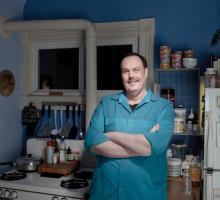
Tommi Avicolli Mecca is a longtime queer and tenants rights/affordable housing activist who works for Housing Rights Committee. He is a member of the LGBT Aging Policy Task Force.

LGBT youth law, ignored

Thirteen years ago, the San Francisco Board of Supervisors enacted an ordinance designed to make city services more accessible to lesbian, gay, bisexual and transgender youth. Under Chapter 12N of the San Francisco Administrative Code, city departments must provide LGBT sensitivity training “to any employee or volunteer who has direct contact with youth.” It also applies to any collaborative youth service providers who receive $50,000 or more in city funding.

Fueled with great intentions, 12N is the letter of the law in a city known for its tolerance and forward-thinking, progressive values. “San Francisco is committed to ensuring that LGBTQ youth receive the same level of dignity and respect as granted to all residents when encountering city services and programs,” a statement on the Human Rights Commission website reads.

There’s only one problem. With the exception of one department, 12N has never actually been implemented.

Last week, Paul Monge-Rodriguez, a 23-year-old appointee to the San Francisco Youth Commission, approached the Harvey Milk LGBT Democratic Club to point out that 12N has never been put into practice.

“To this day, there’s only one city department in compliance, and that’s the Department of Public Health,” Monge-Rodriguez explained in an interview with the Guardian. Other major service providers include the Human Services Agency, the Department of Children Youth & their Families, and the Office of Economic and Workforce Development.

An effort to push implementation, led by the Youth Commission, the Human Rights Commission and LYRIC — a nonprofit organization addressing issues facing LGBT youth — is gaining traction. Sup. John Avalos called for a hearing; following Monge-Rodriguez’s presentation, the Milk Club voted to formally support the effort.

“We pass these laws, but then when it comes to putting it in action, we don’t always live up to the legislation,” Avalos told the Guardian. “Basically, the city hasn’t implemented the program in terms of providing training for city staff.”

Jodi Schwartz, executive director of LYRIC, argues that 12N implementation should involve collection of sexual orientation and transgender identity data so as to better inform agencies about the populations they serve. The San Francisco Unified School District is the only district nationwide that collects sexual orientation and gender identity data when studying risk behavior for middle and high school students — and the results of a 2011 SFUSD anonymous survey revealed an alarming number of suicide attempts reported among queer youth.

According to SFUSD’s suicide indicators analysis, more than a third of high school students and nearly half of middle school students who self-identified as transgender reported having attempted suicide at some point; meanwhile, about a third of middle school students and about 17 percent of high school students who identified as lesbian, gay or bisexual also reported having attempted suicide.

The data is based on extrapolations and assumes no overlap between transgender and LGB populations, and concrete data in this realm is generally difficult to obtain. But based on the SFUSD data, LYRIC estimated that more than 1,000 LGBT students in middle and high school had reported attempting suicide. It’s a disturbing figure to say the least. If other agencies begin collecting such data, Schwartz argues, “they’ll use it to inform their priorities as an institution.”

Youth Commissioner Mia Tu Mutch, 22, helped create a training video that was shown to city staff at the Department of Public Health as part of a pilot program to initiate the sensitivity training mandated under 12N.

“Some of the stories talked about trans people feeling unsafe or unwelcome by service providers,” she explained when asked about the video, which was not made publicly available. “One featured a gender-queer young person who felt more comfortable using gender-neutral terms, but the intake person went out of their way to use the wrong pronoun.”

Tu Mutch worked with LYRIC to create a Tumblr site, entitled 12N Now or Never, featuring photographs of queer youth holding up signs asking for immediate 12N implementation. Her own sign reads, “I need 12N because youth shouldn’t have to educate adults.” Another message, posted by a young person named Vincent, reads, “I need 12N because I don’t want my kids to be judged like I was.”

“I think it just speaks to the bureaucratic process,” David Miree, spokesperson for the Human Rights Commission, responded when asked about the long delay. “The great intentions were there to put it into an ordinance. But what had to happen was, there had to be someone, or some community, or some agency” to step in and make it happen.

Schwartz takes a different view on why so little has been done. “There’s a lack of political will,” she says, “to invest the resources to do the transformation that’s necessary.”

Our Weekly Picks: March 27-April 2, 2013

0

THURSDAY 28

“The Secret History of Love”

It’s only four guys, but the quartet manages to call up a whole period in the cultural history of the LGBT community which, until Sean Dorsey put his considerable intellectual and artistic resources into this project, was little known even to its members, not to speak of the community at large. Dorsey, who found his way in a round about manner to dance through theater, has developed a personal language in which words and movement are irrevocably fused, each drawing its energy and expressive power from the other. These performances are a send-off for “The Secret History of Love” which is about to embark on its second national tour. Good to see what these very different dancers bring to this project. They are Dorsey, Juan De La Rosa, Brian Fisher, and Nol Simonse. (Rita Felciano)

Through March 31

8pm, Sat/Sun, 4pm; $15–$25

Dance Mission Theater

3316 24th St., S.F.

SecretHistory.brownpapertickets.com


Anthrax

Fresh off celebrating its 30th anniversary, iconic metal titan Anthrax is back with a new covers EP, Anthems (released last week), paying tribute to some of the songs that influenced it when the band was first starting out. Searing versions of tunes by artists such as AC/DC, Thin Lizzy, and Rush help shed light on the formative recipe that would eventually lead Anthrax to being considered one of “The Big 4” of thrash metal. Scott Ian and company will perform their classic 1987 album Among The Living in its entirety during their headlining slot tonight on the brutal “Metal Alliance Tour,” which also features Exodus, High On Fire, Municipal Waste, and Holy Grail. (Sean McCourt)

8pm, $29.99–$32

Regency Ballroom

1300 Van Ness, SF

www.theregencyballroom.com


FRIDAY 29

“Overturning the Artifice” closing reception

What do shoe shining and art have in common? Very much, according to Jack Leamy, curator of SOMArts’ show, “Overturning the Artifice,” which closes in style Friday evening with free shoe-shining by artist Rachel Leamy. When one shines another person’s shoes, the act is reflective and forms an intimate human connection that uplifts the soul. Art, the curator says, has the same uplifting effect; it raises consciousness “out of the doldrums.” That is an upbeat way to speak about a show that deals with the struggles of being human, but then again, art can act as a powerfully positive force. Come to the show while you still can, to be uplifted — or just to get shinier shoes. (Laura Kerry)

6pm, free

SOMArts Main Gallery

934 Brannan, SF

(415) 863-1414

www.somarts.org


“KUSF-In-Exile’s Blown-Out, Blowout Benefit II”

Benefit is an often overused term, but this one applies for the sake of preserving San Francisco Community Radio (SFCR). As the group Save KUSF transitions into SFCR (its nonprofit identity) the costly legal quest continues with an FCC-level appeal of 90.3 FM’s sale still waiting to be ruled on. So what’s a group of rogue DJs to do when their sojourn on the web waves appears as if it’s becoming permanent? They throw another springtime blowout of mind-melting music to raise cash for their cause. Carlton Melton delivers the psychedelic, stoner-drone, Disappearing People emerges out of Oakland with experimental punk, and from the same neck of the woods, the one and only Yogurt Brain rides in with some catchy jangle and an occasional monster riff thrown in. (Andre Torrez)

With Carlton Melton, Disappearing People, Yogurt Brain, and KUSF-in-Exile DJs

8pm, $5–$10

Lab

2948 16th St., SF

415-864-8855

www.thelab.org


Texas is the Reason

In 1994 Texas is the Reason released a three-song EP that would initially be heard by very few and go on to influence a great many. The band’s only full-length Do You Know Who You Are? remains a touchstone album in the post-hardcore canon and is considered to be one of the primary kick-starters of the ’90s emo movement. Just as the band was about to burst from underground notoriety to a mainstream record label, however, it collapsed due to internal tensions. After just three years of existence and one beloved album, Texas is the Reason was done. Other than a two-show reunion in 2006, this year marks the band’s first and only tour since its disintegration a decade and a half back. This spring, the band unveiled two new songs and a brief tour — its last ever. While it may be cruel to give us hope and a taste of what could have been before disappearing again, I’m not complaining. After nearly 15 years of waiting, I’ll take what I can get. (Haley Zaremba)

With the Jealous Sound

9pm, $20

Bimbo’s 365

1025 Columbus, SF

(415) 474-0365

www.bimbos365club.com


Mano Le Tough

Having proved himself a more than capable in long form (popping up on this year’s Resident Advisor Top 100 poll and a recent Boiler Room set) and short (contributing remixes for Midnight Magic, Roisin Murphy, and Aloe Blacc) Ireland’s Mano Le Tough needed only to release a solid album to complete the producer trifecta. With Changing Days, he’s done just that, and it’s an assured, spaced out collection of deep house and future disco, organic, airy sounds alternating at times with ray-gun zaps. Throughout, Mano expands on the calmly emotive vocal style earlier heard on “In My Arms” and the glistening Stories EP. (Ryan Prendiville)

With Bells and Whistles, Joey Alaniz

9pm, $8–$15

Monarch

101 Sixth St., SF

(415) 284-9774

www.monarchsf.com


SATURDAY 30

Lynne Hershman Leeson’s “The Agent Ruby Files”

The story of the humanoid and the human goes way back — Pinocchio, that relationship between Skywalker and his robot companions. Now, we can add Lyne Hershman Leeson’s Agent Ruby, an online platform in the shape of Ruby, a character based on the artist’s 2002 film, Teknolust, that invites its visitors to converse with it. Over the past 12 years, Ruby has learned, improving her responses as the database has expanded. In a show on view from March 30 to June 2, SFMOMA will present a look at the growth of Ruby. Exhibiting collections of user conversations on topics such as dreams and sexuality, we can expect to see something very human reflected in the non-human. (Kerry)

Through June 2

$18

SFMOMA

151 Third St., SF

(415) 357-4170

www.sfmoma.org


Jonny Fritz

Nashville’s Jonny Fritz has been writing, recording, and touring for the better part of a decade, and looks to be breaking into his own this year after recent stints opening for the likes of Alabama Shakes, Shooter Jennings, and Wanda Jackson. Recently dropping his long-time moniker of “Jonny Corndawg” in favor of his real name, Fritz (who opens for Heartless Bastards tonight) is releasing his new album, Dad Country on ATO Records in April, a collection of slice-of-life tales, sweet vocals, and great lyrics that blend the sounds of his native city with California country and a wide swath of points in between. (McCourt)

9pm, $23

Great American Music Hall

859 O’Farrell, SF

(415) 885-0750

www.slimspresents.com


Colette and DJ Heather

Around 16 years ago, four young female DJs united to form the formidable quartet known as the SuperJane Collective. Feeding off Chicago’s potent house music scene, DJ Heather, Colette, Lady D, and Dayhota laid claim to being the first all-female electronic DJ group. The groundbreaking foursome have since separated, both musically and geographically, but they are scheduled for a Sweet Sixteen reunion in Chicago in June. In the meantime, Colette and DJ Heather are coming in hot off their appearance at Austin’s SXSW. Expect deep grooves, funkiness, and improvisational live vocals from Colette. (Kevin Lee)

With Pink Mammoth

10pm, $15–$20

Mighty

119 Utah, SF

(415) 762-0151

www.mighty119.com


SUNDAY 31

Dolores Park Easter Celebration with Hunky Jesus Contest

Once you’re done sleeping through the church hours, the best thing to wake up to would be the annual Easter celebration in Dolores Park. The Sisters of Perpetual Indulgence are hosting their 34th birthday party once again at the park, and the “Under the Big Top” theme this year will be sure to charm the inner bunny out of you. The day will start out with family-friendly children’s Easter happenings at 11am, but just after noon the party really gets started. There will be circus tricks, an Easter Bonnet Contest, performances by the likes of our own Honey Mahogany (recently seen on RuPaul’s Drag Race), Sparkle Ponies, and Jane Wiedlin, along with the beloved Hunky Jesus Contest. The Sisters suggest you “bring a picnic blanket, some nosh and, of course, a little libation.” (Taylor Hynes)

11am-4pm, free

Dolores Park

18th and Dolores, SF

www.thesisters.org


Widowspeak

Eudora Welty once said, “Every story would be another story, and unrecognizable if it took up its characters and plot and happened somewhere else.” It is no surprise then that Widowspeak recorded its second album, Almanac, in a 100-year-old barn in the Hudson River Valley. Setting creeps in, the soft singing of frontperson Molly Hamilton ringing like a ghostly whisper from a rural past, which sits in beautiful tension with the sometimes jangly rock instrumentals that seem reflective of the band’s Brooklyn base. At the Chapel show, though, it might be more apt to say that the atmospheric folk-pop of the band creates a setting of its own. (Kerry)

With SISU

9pm, $12

Chapel

777 Valencia, SF

(415) 551-5157

www.thechapelsf.com


Daedelus

“The Willy Wonka of music.” That’s how one clever Internet commentator labeled LA beats producer Alfred Darlington, a.k.a Daedelus. It’s a fitting moniker — the dapper Darlington (often sporting colorful, wide-lapel suit jackets) ushers unsuspecting listeners into his music factory, laden with delicious and dangerous drums. Lick a sample here, taste a vocal there, and suddenly you’re swimming in a bass-filled reimagining of a video game villain’s theme music or hip-hop hacked to pieces and sped up to 130 BPM. All the while, Darlington goes all mad scientist, mashing away at a 256-button device known as a monome from which he can summon all sorts of sweet and sinister sounds. Overindulge at your own peril. (Lee)

With Two Fresh, Ryan Hemsworth, Samo Sound

8pm, $18

Independent

628 Divisadero

(415) 771-1421

www.theindependentsf.com

The Guardian listings deadline is two weeks prior to our Wednesday publication date. To submit an item for consideration, please include the title of the event, a brief description of the event, date and time, venue name, street address (listing cross streets only isn’t sufficient), city, telephone number readers can call for more information, telephone number for media, and admission costs. Send information to Listings, the Guardian, 225 Bush, 17th Flr., SF, CA 94105; or e-mail (paste press release into e-mail body — no attachments, please) to listings@sfbg.com. Digital photos may be submitted in jpeg format; the image must be at least 240 dpi and four inches by six inches in size. We regret we cannot accept listings over the phone.

Stage listings

0

Stage listings are compiled by Guardian staff. Performance times may change; call venues to confirm. Reviewers are Robert Avila, Rita Felciano, and Nicole Gluckstern. Submit items for the listings at listings@sfbg.com. For further information on how to submit items for the listings, see Picks.

THEATER

OPENING

The Bus New Conservatory Theatre Center, 25 Van Ness, SF; www.nctcsf.org. $32-45. Previews Wed/27-Fri/29, 8pm. Opens Sat/30, 8pm. Runs Wed-Sat, 8pm; Sun, 2pm. Through April 28. NCTC performs James Lantz’s tale of two young men whose meeting place for their secret relationship is a church bus.

The Happy Ones Magic Theatre, Fort Mason Center, Bldg D, Third Flr, SF; www.magictheatre.org. $22-62. Previews Wed/27-Sat/30, 8pm; Sun/31, 2:30pm; Tue/2, 7pm. Opens April 3, 8pm. Runs Wed-Sat, 8pm (also Sat, 2:30pm; no matinee April 20); Sun, 2:30pm; Tue, 7pm. Through April 21. An Orange County appliance store owner finds his life turned upside down in Julie Marie Myatt’s drama at Magic Theatre.

reasons to be pretty San Francisco Playhouse, 450 Post, Second Flr, SF; www.sfplayhouse.org. $30-100. Previews Wed/27-Fri/29, 8pm. Opens Sat/30, 8pm. Runs Tue-Thu, 7pm; Fri-Sat, 8pm (also Sat, 3pm). Through May 11. San Francisco Playhouse’s tenth season continues with Neil LaBute’s romantic drama.

Tinsel Tarts in a Hot Coma: The Next Cockettes Musical Hypnodrome, 575 10th St, SF; www.thrillpeddlers.com. $30-35. Previews Thu/28-Sat/30, 8pm. Opens April 4, 8pm. Runs Thu-Sat, 8pm. Through June 1. Thrillpeddlers’ sixth annual Theatre of the Ridiculous Revival presents a restored version of the Cockettes’ 1971 Art Deco-inspired musical extravaganza.

BAY AREA

The Whipping Man Marin Theatre Center, 397 Miller, Mill Valley; www.marintheatre.org. $36-57. Previews Thu/28-Sat/30, 8pm; Sun/31, 7pm. Opens Tue/2, 8pm. Runs Tue-Sat, 8pm (also April 6 and 20, 2pm; April 11, 1pm); Wed, 7:30pm; Sun, 2 and 7pm. Through April 21. Marin Theatre Company performs the Bay Area premiere of Matthew Lopez’s Civil War drama.

ONGOING

Assistance NOHspace, 2840 Mariposa, SF; www.opentabproductions.com. $20. Thu/28-Sat/30, 8pm. Over the past three years, things we’ve come to expect from plucky OpenTab Productions — whose annual offerings deal in aggressively contemporary themes such as media spin, business fraud, and job (in)security — include tight ensemble acting, minimal tech, and snappy direction, and in all these regards, Assistance does not disappoint. A crew of desperate office drones whose lives basically revolve around the abuse dished out by their unseen employer, Daniel Weisinger (who may or may not resemble playwright Leslye Headland’s old boss, Harvey Weinstein), hold down their airless fort, fielding calls at 11 p.m. and shirking responsibility whenever possible. Though Headland doesn’t do much to make her emotionally and professionally stunted characters palatable, the capable cast and director Ben Euphrat do manage to wring something resembling humanity out of them. From Nick (Tristan Rholl,) the frustrated slacker supervisor, to Nora (Melissa Keith), the-new-girl-turned-cynical-old-hand, to Justin (Nathan Tucker), the unctuous winner of the title of "last man standing," to Jenny (Michelle Drexler) a pragmatic yet annoyingly bubbly Brit, what stands out in each performance are the perfectly captured quirky nuances and barely-concealed neuroses of people caught in the process of losing their souls. Nothing about Assistance is likely to change your view of the business world, but if you’ve yet to experience the frenetic fun of an OpenTab show, it’s a perfect primer to the madness behind their method. (Gluckstern)

The Chairs Exit on Taylor, 277 Taylor, SF; www.cuttingball.com. $20-45. Thu, 7:30pm; Fri-Sat, 8pm (also Sat, 2pm); Sun, 5pm. Extended through April 7. In Rob Melrose’s new translation of Eugene Ionesco’s The Chairs, an elderly couple sit in the austere parlor of their lonely lighthouse, chortling over a spate of private wordplay and reminiscing of sprightlier times, until their initially frantic and disjointed dialogue settles into a smooth flow, well-polished by decades of endearments and gentle bickering. Possibly the last two survivors of a not entirely explained apocalypse, the isolated nonagenarians (magnificently played by David Sinaiko and Tamar Cohn) nevertheless make it known that important guests are expected to arrive at any moment in order to hear a hired orator (Derek Fischer) deliver the Old Man’s "message," which he has spent a lifetime honing. As the doorbell begins to ring, a jarring squall, and invisible guests and dozens of mismatched chairs begin to crowd their peaceable empire in claustrophobia-inducing numbers, their companionable seclusion is shattered for good. Director Annie Elias manages to coax both gravitas and decorum out of this little-produced, yet influential absurdist relic, imbuing her protagonists with a depth of character that belies their farcical circumstances, while Theodore J.H. Hulsker’s murmuring sound design of crashing waves, angry winds, and the strident doorbell could almost be another character in the play, so thoroughly does it set the tone in ways that Ionesco might not have approved of, but is all the better for. (Gluckstern)

The Couch Tides Theatre, 533 Sutter, Second Flr, SF; www.3girlstheatre.org. $30. Thu-Sat, 8pm; Sun/31, 4pm; April 7, 2pm. Extended through April 7. As the centerpiece of its second annual festival of plays in honor of Women’s History Month, 3Girls Theatre, devoted to Bay Area women playwrights, revives Lynne Kaufman’s fitful but enjoyable 1985 dramatic comedy about the inception of the famous sexual and psychiatric triangle between Carl Jung (Peter Ruocco), wife Emma Jung (Courtney Walsh), and his mistress and analysand Toni Wolff (Maggie Mason). In this, her first play, Kaufman (whose most recent play, Acid Test, explores the life of Ram Dass) folds in Carl’s critical 1912 break with mentor Sigmund Freud (Louis Parnell) for an action-packed day Chez Jung. (Also on the scene is the Jung’s precocious daughter Katherine, played by a sure and animated Hattie Rose Allen Bellino). Amy Glazer directs a solid cast who convincingly blends the farcical aspects of the dialogue with its meatier and more dramatic ones, as new ties and power dynamics are sometimes roughly, other times genteelly negotiated. The former is usually the stuff of high comedy, as when Freud goes apoplectic upon learning Jung is not necessarily the disciple and "son" he had thought him to be. And Jung’s (proto-) New Agey leanings only add fuel to the fire: When Carl turns to the I Ching to decide on the best course of action for his career going forward, Freud erupts, "You idiot! You’re playing tiddlywinks with the human race!" But it is ultimately the politics of love and the household that take center stage, with Walsh’s vulnerable yet ever dignified Emma emerging as, if not the greatest psychiatrist, perhaps the greatest strategist of them all. (Avila)

Eurydice Gough Street Playhouse, 1622 Gough, SF; www.custommade.org. $25-30. Thu-Sat, 8pm (no shows Thu/28-Fri/29); Sun, 7pm. Through April 14. Custom Made Theatre Co. performs Sarah Ruhl’s inventive take on the Orpheus and Eurydice myth, exploring the story through the heroine’s eyes.

Foodies! The Musical Shelton Theater, 533 Sutter, SF; www.foodiesthemusical.com. $30-34. Fri-Sat, 8pm. Open-ended. AWAT Productions presents Morris Bobrow’s musical comedy revue all about food.

God of Carnage Shelton Theater, 533 Sutter, SF; www.sheltontheater.org. $38. Thu/28-Sat/30, 8pm. Shelton Theater presents Yasmina Reza’s Tony-winning comedy about upper-middle-class parents clashing over an act of playground violence between their children.

Just One More Game Exit Theatre, 156 Eddy, SF; www.tripleshotprodutions.org. $25. Thu/28-Sat/30, 8pm. With the rise of the programmer as pop culture hero, it was probably inevitable that we’d start writing plays about them too. In local playwright Dan Wilson’s Just One More Game our programmer protagonist is Kent (Christopher DeJong) whose mission is to find love, and his co-player is Marjorie (Linda-Ruth Cardozo), who wields her own geek credentials like a Mortal Kombat wrath hammer. Where Wilson’s comedy excels is in the witty gamer banter that defines much of their attraction and commonality — references to Zork, Oregon Trail, Dungeons and Dragons, and The Secret of Monkey Island abound, while a series of meticulous video game animations (also Wilson’s) lend colorful counterpoint to the action on the stage. DeJong plays his role of emotionally-inhibited loner with a degree of laconic detachment that unfortunately eliminates all traces of chemistry between him and Cardozo, who is especially good at capturing the cheerfully aggressive awkward of a woman accustomed to being "one of the boys" because there was nothing about "the girls" she could relate to. Both the comedy and pace flag by the time the first NPCs (non-player characters) enter the room, broadly clichéd parents yammering for grandchildren and obnoxious college buddies armed with too many baby photos, who conspire to stunt the growth of Kent and Marjorie’s relationship and wind up stunting the growth of the play. If the quest for love is a game, as the title suggests, it’s one that could use a little more back-end development, and a much greater degree of playfulness. (Gluckstern)

Sex and the City: LIVE! Rebel, 1760 Market, SF; trannyshack.com/sexandthecity. $25. Wed, 7 and 9pm. Open-ended. It seems a no-brainer. Not just the HBO series itself — that’s definitely missing some gray matter — but putting it onstage as a drag show. Mais naturellement! Why was Sex and the City not conceived of as a drag show in the first place? Making the sordid not exactly palatable but somehow, I don’t know, friendlier (and the canned a little cannier), Velvet Rage Productions mounts two verbatim episodes from the widely adored cable show, with Trannyshack’s Heklina in a smashing portrayal of SJP’s Carrie; D’Arcy Drollinger stealing much of the show as ever-randy Samantha (already more or less a gay man trapped in a woman’s body); Lady Bear as an endearingly out-to-lunch Miranda; and ever assured, quick-witted Trixxie Carr as pent-up Charlotte. There’s also a solid and enjoyable supporting cast courtesy of Cookie Dough, Jordan Wheeler, and Leigh Crow (as Mr. Big). That’s some heavyweight talent trodding the straining boards of bar Rebel’s tiny stage. The show’s still two-dimensional, even in 3D, but noticeably bigger than your 50" plasma flat panel. (Avila)

Steve Seabrook: Better Than You Marsh San Francisco, 1062 Valencia, SF; www.themarsh.org. $15-50. Fri/29, 8pm; Sat/30, 8:30pm. Starting April 4, runs Thu, 8pm; Sat, 8:30pm. Extended through May 18.

Self-awareness, self-actualization, self-aggrandizement — for these things we turn to the professionals: the self-empowerment coaches, the self-help authors and motivational speakers. What’s the good of having a "self" unless someone shows you how to use it? Writer-performer Kurt Bodden’s Steve Seabrook wants to sell you on a better you, but his "Better Than You" weekend seminar (and tie-in book series, assorted CDs, and other paraphernalia) belies a certain divided loyalty in its own self-flattering title. The bitter fruit of the personal growth industry may sound overly ripe for the picking, but Bodden’s deftly executed "seminar" and its behind-the-scenes reveals, directed by Mark Kenward, explore the terrain with panache, cool wit, and shrewd characterization. As both writer and performer, Bodden keeps his Steve Seabrook just this side of overly sensational or maudlin, a believable figure, finally, whose all-too-ordinary life ends up something of a modest model of its own. (Avila)

The Voice: One Man’s Journey Into Sex Addition and Recovery Stage Werx Theater, 446 Valencia, SF; thevoice.brownpapertickets.com. $10-18. Fri-Sat, 8pm. Through April 6. Ticket sales for David Kleinberg’s autobiographical solo show benefit 12-step sex addiction recovery programs and other non-profits.

The Waiting Period Marsh San Francisco, 1062 Valencia, SF; www.themarsh.org. $25-50. Fri/29, 8pm; Sat/30, 5pm. Brian Copeland (comedian, TV and radio personality, and creator-performer of the long-running solo play Not a Genuine Black Man) returns to the Marsh with a new solo, this one based on more recent and messier events` in Copeland’s life. The play concerns an episode of severe depression in which he considered suicide, going so far as to purchase a handgun — the title coming from the legally mandatory 10-day period between purchasing and picking up the weapon, which leaves time for reflections and circumstances that ultimately prevent Copeland from pulling the trigger. A grim subject, but Copeland (with co-developer and director David Ford) ensures there’s plenty of humor as well as frank sentiment along the way. The actor peoples the opening scene in the gun store with a comically if somewhat stereotypically rugged representative of the Second Amendment, for instance, as well as an equally familiar "doood" dude at the service counter. Afterward, we follow Copeland, a just barely coping dad, home to the house recently abandoned by his wife, and through the ordinary routines that become unbearable to the clinically depressed. Copeland also recreates interviews he’s made with other survivors of suicidal depression. Telling someone about such things is vital to preventing their worst outcomes, says Copeland, and telling his own story is meant to encourage others. It’s a worthy aim but only a fitfully engaging piece, since as drama it remains thin, standing at perhaps too respectful a distance from the convoluted torment and alienation at its center. Note: review from an earlier run of the same production. (Avila)

BAY AREA

The Coast of Utopia: Voyage & Shipwreck Ashby Stage, 1901 Ashby, Berk; www.shotgunplayers.org. $20-35. Shipwreck previews Wed/27-Thu/28, 7pm; Fri/29, 8pm. Opens Sat/30, 8pm. Runs Wed-Thu, 7pm; Fri-Sat, 8pm; Sun, 5pm. Through May 5. Voyage previews Wed/27, 7pm. Opens April 3, 3pm. Runs April 13, 20, 27, and May 4, 3pm. Shotgun Players perform the first two parts of Tom Stoppard’s revolutionary trilogy.

Dostoevsky’s The Grand Inquisitor Berkeley City Club, 2315 Durant, Berk; www.centralworks.org. $15-28. Thu/28-Sat/30, 8pm; Sun/31, 5pm. Central Works performs Gary Graves’ adaptation of the story-within-a-story from The Brothers Karamazov.

Fallaci Berkeley Repertory Theatre, 2015 Addison, Berk; www.berkeleyrep.org. $29-89. Tue, Thu-Sat, 8pm (also Sat, 2pm); Wed and Sun, 7pm (also Sun, 2pm). Through April 21. Berkeley Rep performs Pulitzer-winning journalist Lawrence Wright’s new play about Italian journalist Oriana Fallaci.

The Mountaintop Lucie Stern Theatre, 1305 Middlefield, Palo Alto; www.theatreworks.org. $23-75. Wed/27, 7:30pm; Thu/28-Sat/30, 8pm (also Sat/30, 2pm); Sun/31, 2pm. Starting April 3, runs Wed-Thu, 11am (also Thu, 8pm); Sat, 8pm; Sun, 2pm. Through April 7. TheatreWorks performs Katori Hall’s play that re-imagines the events on the night before Dr. Martin Luther King, Jr.’s assassination.

The Real Americans Marsh Berkeley, 2120 Allston, Berk; www.themarsh.org. $25-50. Fri, 8pm; Sat, 5pm. Through April 6. Dan Hoyle shifts his popular show about small-town America to the Marsh’s Berkeley outpost.

PERFORMANCE/DANCE

BATS Improv Bayfront Theater, Fort Mason Center, Marina at Laguna, SF; www.improv.org. $20. "Theatresports," Fri/29, 8pm. "Double Feature," Sat/30, 8pm.

"Dream Queens Revue" Aunt Charlie’s Lounge, 133 Turk, SF; www.dreamqueensrevue.com. Wed/27, 9:30pm. Free (reservations suggested: dreamqueensrevue@gmail.com). Fab drag with Colette LeGrande, Diva LaFever, and more.

"Madame Ho" Commonwealth Club of San Francisco, 595 Market, Second Flr, SF; www.commonwealthclub.org. Mon/1, 6pm. Free. Magic Theatre’s 2013 Martha Heasley Cox Virgin Play Series concludes with this staged reading of Eugenie Chan’s Barbary Coast drama.

"Mission Position Live" Cinecave, 1034 Valencia, SF; www.missionpositionlive.com. Thu, 8pm. Ongoing. $10. Stand-up comedy with rotating performers.

"New Works by Artists in Residence" CounterPULSE, 1310 Mission, SF; www.counterpulse.org. Thu/28-Sun/31, 8pm. $20-30. With richien (Rowena Richie and Jennifer Chien) performing Twindependent, and Sense Object (Miriam Wolodarksi) performing Of Limb and Language.

"The News: Out of the Box with Bernadette Bohan of the Box Factory" SOMArts Cultural Center, 934 Brannan, SF; www.thenewsperformance.eventbrite.com. Tue/2, 7:30pm. $5. SOMArts wraps up its experimental performance series.

"A Night of Utopian Gestures" Yerba Buena Center for the Arts, 701 Mission, SF; www.ybca.org. Sat/30, 7-10pm. Free. Interactive celebration of exhibit "Without Reality There Is No Utopia," featuring Israeli artist Dana Yahalomi, Futurefarmers’ Michael Swaine, live music, and more.

"Picklewater Clown Cabaret Benefit for Judy Finelli" Stage Werx, 446 Valencia, SF; www.brownpapertickets.com. Mon/1, 8pm. $15. Clowning for a good cause: SF School for Circus Arts co-founder Finelli, who has multiple sclerosis.

"The Romaine Event Comedy Show: Eight Year Anniversary Show" Make-Out Room, 3225 22nd St, SF; www.pacoromane.com. Wed/27, 8-10pm. $10. Celebrate with Ngaio Bealum, Paco Romane, Kaseem Bentley, David Gborie, and Anna Serengina, plus music by DJ Specific.

"San Francisco Magic Parlor" Chancellor Hotel Union Square, 433 Powell, SF; www.sfmagicparlor.com. Thu-Sat, 8pm. Ongoing. $40. Magic vignettes with conjurer and storyteller Walt Anthony.

"The Secret History of Love" Dance Mission Theater, 3316 16th St, SF; www.seandorseydance.com. Thu/28-Sun/31, 8pm (also Sat/30-Sun/31, 4pm). $10-25. Sean Dorsey Dance makes a local stop on the company’s 20-city national tour with this performance inspired by Dorsey’s work on the National LGBT Elders Oral History Project.

"Sing-Along Jesus Christ Superstar" Victoria Theatre, 2961 16th St, SF; www.brownpapertickets.com. Fri/29, 7pm. $15-35. The Sisters of Perpetual Indulgence ring in the Sisters’ Annual Easter Weekend with this festive sing-along, plus the debut of the Chunky Jesus Contest.

BAY AREA

"The Divine Game" Ashby Stage, 1901 Ashby, Berk; www.shotgunplayers.org. Mon/1, April 15, and 29, 8pm. $20. First Person Singular and Shotgun Cabaret present this dramatic re-enactment of Nabokov teaching at Cornell in the 1950s.


Live Shots: LGBT Community Center celebrates 11 colorful years

0

Photos by Bowerbird Photography

Last Saturday, the disco ball sparkled from above, while below on the dance floor, party-goers glittered in gold. There was much to celebrate, with the SF LGBT Community Center‘s annual gala “Soiree” celebrating 11 years of sercing the community — and even more to drink, with bottomless bottles of champagne. There were also plenty of sights to drink in, including a few bottomless pairs of pants!

Of course, it was partying with a cause: tickets and auction items went to benefit the Center and their programs. With same-sex marriage equality rights in the balance this week at the U.S. Supreme Court, the Center made it clear that the LGBT community can always depend on them, regardless the outcome. District Supervisors David Campos and Scott Weiner also were in attendance and voiced their commitment to the Center.

Tita Aida worked the stage, introducing one great drag act after the other, including performances by Honey Mahogany, Ambrosia Salad, Miss Rahni, and Alotta Boutte. The theme was Studio 11, explaining why Salvador Dali watched haughtily from the VIP section, as boys in golden spanky pants made their rounds turning eyes. It was a night to remember, or at least a night to try to remember (after all that booze!). Congratulations to the LGBT Center for another year of amazing work and for throwing another wonderful gay-la.


Artists respond to hate-speech ads with “fabulous” alterations

When it comes to countering hate speech, there’s nothing like creative expression mixed with direct action. Activists affiliated with art collectives Bay Area Art Queers Unleashing Power (BAAQUP) and Street Cred declared yesterday to be “Hate Free Monday,” and celebrated by modifying hate speech ads recently plastered on Muni buses.

Purchased by the pro-Israeli American Freedom Defense Initiative (AFDI), the ads contain bigoted, inflammatory quotations directed at LGBT people, attributed to prominent Muslims. Although city officials have condemned the advertisements, they were nevertheless allowed to be displayed because Muni determined them to be within First Amendment guidelines.

Headed by conservative blogger Pamela Geller, AFDI has been deemed a hate group by the Southern Poverty Law Center and the Anti-Defamation League. Geller herself is the target of the activists’ handiwork.

“We believe that all public spaces, including public transit, should be welcoming and safe for all members of our community,” the artists, who did not give their names, wrote to the Guardian in a statement sent from baqupower@gmail.com. “The hate-filled messages purchased by Pamela Geller’s AFDI defame and vilify Muslims and are harmful and offensive to residents and visitors in San Francisco, both Muslim and non-Muslim. 
Since the city will not take action against these ads on city buses, we have.”

To read BAAQUP’s full description of the motivations behind their action, go here.

Their statement concludes: “As long as these advertising outrages continue to appear on our streets, we will continue to reconstitute them to reflect something more truthful, just, and ideally fabulous.”


Rally and vigils for marriage equality in S.F. this week

The U.S. Supreme Court will hold back-to-back hearings this week as justices consider Prop 8 and the Defense of Marriage Act (DOMA), setting the stage for historic discussions concerning LGBT civil rights. Tonight, hundreds are expected to gather at Castro and Market streets for a 6:30 p.m. rally, followed by a march to City Hall. Prop 8, a state constitutional amendment banning same-sex marriage, passed in California with 52 percent of the vote in November of 2008. Challenges to the discriminatory law have been working through the court system ever since.

LGBT activists also plan to mark Tuesday and Wednesday evenings with vigils outside the California Supreme Court building. The vigils will coincide with about 150 events scheduled throughout the country, organized to demonstrate support for marriage equality.

Shortly after longtime gay rights activists Cleve Jones and David Mixner put out the call to local activists that the Supreme Court would be hearing arguments on Prop 8 and DOMA, Patrick Connors started helping to organize the rally, march and vigils in tandem with activists Greg Chasin, Billy Bradford, Aaron Baldwin and others, Connors said. Over the past several weeks, they’ve been posting fliers, Tweeting to get the word out and urging support for marriage equality as the historic twin hearings get underway in D.C. 

“We’re cautiously optimistic that there will be hundreds of people in the Castro” for the Monday night rally, Connors told the Guardian. About 200 have also signalled interest in attending the vigils March 26 and 27.

San Francisco has been at the epicenter in the battle for marriage equality. Just after Prop 8 passed, it was immediately challenged in parallel court proceedings by same-sex couples and the city of San Francisco, with City Attorney Dennis Herrera leading the charge with support from other California municipalities.

Connors and his husband, Robert Dekoch, were initially married in February of 2004, but their marriage was invalidated after the California Supreme Court held that city officials lacked the authority to issue marriage licenses to same-sex couples. Following a subsequent court victory that opened the gates for same-sex couples to be married in San Francisco City Hall once again, Connors and Dekoch returned and were re-married in August of 2008.

Although Prop. 8 passed the following November, banning same-sex marriage, “our marriage, along with 18,000 others, is recognized by the state of California,” Connors explained. Yet their marriage still isn’t recognized at the federal level, so “there’s the potential of what could happen” during out-of-state travel, he said.

In May of 2009, Connors was arrested along with some 200 protesters who took to the streets following a California Supreme Court decision upholding Prop 8. “A whole bunch of us sat in the middle of Van Ness,” he recounted, “And blocked traffic for hours until the paddy wagons came.”    

San Francisco female priest and gay Catholics react to selection of Pope Francis

Victoria Rue, a female Roman Catholic Priest, leads a small community of renegade Catholic worshipers in San Francisco. Ordained by a trio of female Bishops on a boat on the St. Lawrence Seaway in 2005, she’s part of a growing international movement to dismantle the longstanding ban on female clergy and push the Catholic Church in a more liberal direction. Although Rue was excommunicated shortly after her ordination, she continues to consider herself a Catholic.

Contacted by the Guardian shortly after Pope Benedict stepped down last month, Rue said, “It’s just as much my church as [former Pope Benedict] Cardinal Ratzinger’s church.” She regarded his resignation as a welcome, if limited, opportunity to push the church in the direction of inclusivity.

But that’s a tall order to say the least; the Pope selection process is fundamentally flawed, Rue says, since “women are left out completely from the process.”

And while Rue said the selection of Pope Francis showed some sensitivity to the church’s changing constituency — “The fact that he is Argentinian is definitely a positive sign” — the newly chosen pope also pushed for legislation to ban gay marriage and gay adoption in Argentina. The church’s conservative values are entrenched: When it comes to LGBT rights, female priests, and contraception, the incoming Pope isn’t likely to budge.

“There is extremely limited hope for a new direction in the Church,” said Tom Piazza, a member of Sophia in Trinity, a San Francisco Roman Catholic church.

Piazza, who is in his 70s, says he grew up Catholic but felt alienated by the Church’s conservative tone — and local Catholics like him are increasingly at odds with the Roman Catholic Church. While it continues to champion conservative social mores, the majority of local Catholics now support gay marriage, according to a recent Field Poll.

The San Francisco Archdiocese is currently headed by Salvatore Cordileone, a major proponent of Prop 8. Cordileone served as the chairman of The United States Conference of Catholic Bishops’ subcommittee for the defense of marriage, and his appointment to the San Francisco Archdiocese was widely understood as an effort to rein in the city’s diverse Catholic community.

The  ideological rift between parishioners and the hierarchy is most apparent at Most Holy Redeemer Church, in the Castro — home to San Francisco’s active gay-Catholic community. The parishioners at Most Holy Redeemer routinely clash with conservative church leadership. Bishop Cordileone has even suggested that the Church’s gay couples refrain from taking communion.  

Father Brian Costello, the priest at Most Holy Redeemer, recently removed a picture of former Pope Benedict XVI from the Church after parishioners raised concerns about the Pope’s homophobic leanings. In a letter to the community, Costello expressed hope that with the selection of a new Pope, gay Catholics could work to “embrace the Pope and the Church, even when they don’t accept us.”

Jesuit Priest Donal Godfrey, author of Gays and Grays, a history of the gay Catholic community at Most Holy Redeemer, sees the ascension of Francis as a welcome opportunity to change the relationship between San Francisco’s Catholics and the church leadership.

“I want to get away from the dynamic of always getting put in our place. Instead of being smacked on the head and being told we are not good Catholics, we should create a space where we aren’t frightened to share our truths,” he told the Guardian.

At Sophia in Trinity, Rue echoes Godfrey’s concerns and hopes that the new Pope Francis will allow local Catholics to collaborate more closely in her community. “In the future, if a parish wants to work with a woman priest, maybe they won’t get their hand slapped by the Church hierarchy.”

Yoga, church, and radical acceptance: An interview with the Grace Cathedral yoga team

1

Every Tuesday evening, hundreds of people flock to the Grace Cathedral Labyrinth to practice yoga with local teacher Darren Main. With Easter around the corner, SFBG talked to Main and the Rev. Jude Harmon, who manages the program, about how this unlikely class came to be, and why it works so well in San Francisco.

SFBG: Darren, how did you wind up teaching the class at Grace Cathedral?

Darren Main: My friend Jamie Lindsay, a yoga teacher who had been attending Grace Cathedral for years, started the class there. When he moved to New York in 2009, he asked me if I would take the class. I had long admired Grace Cathedral for both its architectural wonder as well as how it has been on the cutting edge of social justice and spiritual equality. Right from the start I could feel something magical happening. What started off as a small group of students has now grown to over 300 people each week.

SFBG: How does yoga fit in at the church?

Rev. Jude Harmon: Grace Cathedral, like the National Cathedral, was established with the founding vision “to be a house of prayer for all people.” We have hosted a wide variety of cultural events that span the spectrum of nearly every kind of diversity imaginable. We were at the forefront of civil rights, welcoming Martin Luther King Jr. to preach here, and we paved the way forward for the embrace of LGBT people in the sacramental life of the Church long before it became the norm at a national level. This yoga class is just a natural extension of our commitment to welcome all people, from every walk of life, and to support them in their spiritual growth.

SFBG: What’s it like to teach yoga at Grace?

DM: Teaching in a church, especially one the size of Grace Cathedral, is an amazing experience. You can’t help but feel something sacred by simply walking through the door. And there is something about being in such an iconic space. It’s like teaching in the Taj Mahal or the Great Pyramid. People come from all over the world just to see this building, walk its labyrinth, and admire the architecture and artwork. I am moved to tears sometimes when I think of how much this cathedral — and specifically doing yoga in this cathedral — represents the magic of San Francisco.

SFBG: Do you have to be a churchgoer to attend?

DM: Not at all. Yoga is a science, not a religion and so it requires no belief to be effective as a practice for quieting the mind, opening the heart, and balancing the body. In fact, many atheists find yoga extremely rewarding. Non-Christians attend the class for the community, the practice, and the beauty of the cathedral.

SFBG: Can yoga enhance one’s spiritual practice?

DM: Yes, because it helps us to more easily access the divine when we have a quiet mind, a balanced body and an open heart. Yoga can also be a way of exploring the same universal questions that religion explores, like Why are we here? and Who are we?

SFBG: Does the practice of yoga connect in any way to the practice of Christianity?

JH: Yes. Early Christians—known as monastics—went to live alone in the desert to train their bodies to perceive the Word of God that is spoken in nature. The ascetic practices they developed to help them are very similar to those employed by yogis. And like great yogis, these early Christian pioneers were sought after for their deep wisdom.

I remember the first time I saw the yoga students ascending Grace Cathedral’s Great Steps in droves on the dusk of a July evening. They seemed like angelic visitors from some Hyperion realm. But they weren’t carrying BCPs in their hands, or hymnals or even bibles—they were carrying yoga mats! While most of them wouldn’t dream of setting foot in a church for a traditional Eucharist, I felt my heart bond with them. At some very profound level, yogis and Episcopalians have this in common: an intuitive yearning for deep communion and real presence. At the heart of a yogic practice, just as at the heart of our Eucharistic practice, is the possibility of a self-integration that opens out our consciousness toward the world in compassion.

SFBG: Has the yoga class helped bring lapsed Christians back to church?

JH: I’ve heard a lot of people say that they’re surprised and delighted to see a priest [myself] practicing yoga with them, and that maybe religion, and Christianity in particular, isn’t ‘all bad after all’! The extent to which that translates into people coming to Sunday services is another question. I did issue an invitation to the yoga community to participate in Ash Wednesday services and I saw several of them there. I believe that we must continue to build relationship, and also to build content that is familiar and comfortable, meaningful and simple, and that appeals to both the congregation and the yoga community across contexts.

DM: Over the years, hundreds of students have told me that their experience at Yoga on the Labyrinth helped them let go of past religion-based trauma, and even recognize the beauty in Jesus’ message of compassion and forgiveness. While the yoga class may have brought them into the church, they eventually came to see that Grace Cathedral was not like traditional churches. It welcomes people of all stripes and backgrounds, and only wants people to find spiritual wellbeing on their own terms. Like yoga, Grace is about radical self-acceptance. This radical acceptance can be profoundly healing.

SFBG: What is the yoga class like?

DM: Given that the class is so diverse in terms of age, physical ability, and level of yoga practice, I focus on the more gentle and meditative side of yoga. The cathedral itself invites a more inward and contemplative experience as well, so it is really a perfect fit. Every week, I invite Bay Area musicians who have a transcendent quality to play at class. Artists include Sam Jackson (singing bowls), Kendra Faye (harp), Timothy Das (Native American flute and didgeridoo), and Amber Field, Christopher Love, and Mirabai (Indian chanting).

SFBG: Why do you think a class like this became so popular in San Francisco?

DM: San Francisco has always been known for being open-mined, and that quality makes people open to the unique experience of doing yoga in a church. That said, I would not be at all surprised if we see this idea spreading beyond the Bay Area over the next ten years or so.

SFBG: It’s Easter time. Will your classes this month connect at all with the holiday?

DM: I try to theme my classes around seasons, holidays, and current events and Easter is one of my favorite holidays. While the story of Jesus’ death and resurrection is unique to the Christian tradition, the underlying theme — which is about the endurance of hardship and the opportunity for transcendence and rebirth through that experience—is as universal and inevitable as the sunrise.

Karen Macklin is a writer and yoga teacher in San Francisco — her On the Om Front column appears biweekly here on sfbg.com

YOGA AND SPIRITUALITY LISTINGS

By Joanne Greenstein

Spring Equinox Celebration with Katherine Otis

Capture the spirit of the season of revitalization, rebirth, and renewal. Usher in spring with this

workshop designed to help you welcome new beginnings and set new intentions.

Sat/23, 2-4:30pm, $30-35. Bernal Yoga, 908 Cortland, SF. www.bernalyoga.com

Introduction to Yogic Philosophy with Karen Macklin

Wondering what your teachers are talking about in yoga class when they mention all of those obscure Sanskrit terms and philosophies? This exciting workshop with your On the Om Front columnist will cover many of the most popular philosophical concepts encountered in the yoga room today, and help you gain a better understanding of the roots and heart of this practice.

Sat/23, 1:30-4pm, $35. Yoga Garden, 286 Divisadero, SF. www.yogagardensf.com

Healing Sound Concert with WAH!

Searching for healing and balance? Lay back, relax, and listen as Wah’s voice and music bring you to a meditative space. Special effects and “blisslights” enhance the experience.

Sat/23, 8-10pm, $35-40. Urban Flow, 1543 Mission, SF. www.urbanflowyoga.com

Yoga and Hiking with Wesleigh Roeca

Take your yoga outside! Explore the city and your practice in an adventure integrating urban hiking with yoga, and break out of the confines of the studio walls.

Sun/24, 11:00am-1:15pm, $30-35. Aha Yoga, 1892 Union, SFwww.ahayogasf.com

Stillness & Silence: Renewing Our Spiritual Vision with Swami Ramananda & Integral

Let the power of silence at this ocean side setting provide the space for an inward journey. This three-day Yoga Institute retreat in Bolinas consists of hatha yoga, workshops, meditations, and a variety of evening programs.

April 4-7, $400 – $475. Commonweal Retreat Center, 451 Mesa Road, Bolinas. www.integralyogasf.org


The right to transgender health care

23

OPINION When I first came out as a transgender man in the mid 1990s, I quickly realized that I would have to pay out-of-pocket for the health care I needed.

Nearly every insurance plan has outdated exclusions that bar transgender people from receiving medically necessary health care. Everything from cancer screenings to the care related to gender transition is commonly excluded, despite being provided without exclusion to non-transgender health insurance customers.

For working people everywhere, including members of the LGBT community, accessible, affordable, quality healthcare is critical. And for union members like myself, healthcare equity is part of a basic and broader vision for equality for all people.

In recognition of this vision, Pride at Work, the SEIU National Lavender Caucus, National Center for Transgender Equality, the Transgender Law Center, and Basic Rights Oregon have partnered for the very first Transgender Month of Action, aimed at lifting the healthcare inequities that face our community.

I began to gender transition in 1996, starting with hormone therapy, a process that required walking through countless hoops. I will forever be thankful to the Tom Wadell Clinic and Lyon Martin Clinic for making hormone therapy accessible to low-income and uninsured trans people like myself, but I know I was one of the lucky ones. A few years later, when I was insured, I began to feel as if insurance companies were the gatekeepers of my body.

I knew that I needed to get chest surgery and that it wouldn’t be covered by my insurance, so I held a rent party and told my friends and loved ones that I needed help. It took a lot of vulnerability to do that. Like everyone else, transgender people need acute care when they are sick and preventative care to keep us from becoming ill, including services that are traditionally considered to be gender specific — such as Pap smears, prostate exams, and mammograms.

But insurers frequently expand discriminatory exclusions in a way that denies transgender people coverage for basic services. Take the outrageous example of a transgender woman in New Jersey who was denied coverage for a mammogram on the basis that it fell under her plan’s sweeping exclusion for all treatments “related to changing sex.”

Sometimes, trans people are denied care completely. In the late 1990s, I went to a gynecologist, but the doctor refused to treat me. Over the next 10 years, likes so many other trans people, I did not get an exam, too embarrassed and outraged to seek treatment.

In 2001, I worked with the a group of transgender healthcare activists to remove discriminatory exclusions for trans employees. When the Board of Supervisors voted to remove these exclusions, it was a huge and historic victory. Since that decision over a decade ago, San Francisco has proudly provided inclusive health care to city employees — and there’s been no cost increase to the overall plan.

Pride at Work, the organization that brings together LGBT union members and their allies, has a sign in the office that states: An injury to one is an injury to all. That’s the premise that underscores the labor movement’s commitment to LGBT equality, including trans-inclusive healthcare.

And it’s why Pride at Work is organizing local and national efforts to educate LGBT people and labor unions about the importance of ensuring access to basic healthcare for transgender people and providing coverage of medically-necessary transition-related care in health insurance. This first-of-its-kind effort is inspired by the belief that all workers deserve to have all medically-necessary care covered by health insurance, including transgender people whose healthcare needs are not being met.

Gabriel Haaland is co-vice president of Pride at Work.

Alerts

0

THURSDAY 14

Building momentum around prison activism 518 Valencia, SF. 7pm, free. Hear from former prisoners, activists and organizers who were engaged in the prisoners’ hunger strike at Pelican Bay. This event, Build to Resist, seeks to promote movement building with a focus on prisoners. Speakers will include Linda Evans of prisoner advocacy alliance All of Us or None, Azadeh Zohrabi of the Hunger Strike Coalition, and others.

SATURDAY 16

Anarchist Book Fair The Armory Community Center, 1800 Mission St, SF. www.bayareaanarchistbookfair.wordpress.com, abookfair@yahoo.com. 10am-6pm, Sat/16 and Sun/17, free. The annual Bay Area Anarchist Book Fair, presented by Bound Together Books, brings together more than 75 radical booksellers, independent presses, and political groups from around the world. Speakers will include George Katsiaficas, author of “Asia’s Unknown Uprisings;” Eddie Yuen and Jim Davis, co-authors of The Apocalyptic Politics of Collapse and Rebirth; Terry Bisson of the Beehive Design Collective, and more. Visit the website for more events happening that weekend.

SUNDAY 17

Bayard Rustin Birthday Celebration Orbit Room Café, 1900 Market, SF. www.bayardrustincoalition.com. 5-7:30pm, $5–$10 suggested donation. The Bayard Rustin LGBT Coalition will celebrate the life and legacy of openly gay African American community organizer Bayard Rustin with this fundraiser, featuring food and a no-host bar. Rustin is widely remembered for organizing the Great March on Washington for Jobs and Freedom 50 years ago. A teaser for the event reads: “What would Bayard do? Get to work. Get to organizing. Get to making history. Get to creating change. .. and he would party hearty on his birthday along the way.”

The day in gay sports — very cool and very ugly

19

Three remarkable news stories today show the beautiful and the ugly side of LGBT issues in sports, and suggest that, despite the remaining bigotry, there’s hope.

We’ll start with the inspirational: The Chron reports on Gabrielle Ludwig, a 51-year-old trans woman who has fought her way to acceptance as a player on the Mission College women’s basketball team. She’s endured the sort of rotten, painful slurs that Jackie Robinson put up with as the first black player in Major League Baseball, but she’s won over her teammates and sent an important message to young people all over the world:

Since I decided to go out to the media, there’s been a larger purpose – to help the LGBT community and all those people who have lost children because they struggle with, ‘God, am I gay, am I straight, am I transgender? F- it, let’s put a rope around my neck and hang myself in the garage,’ ” Ludwig said. “If I can be a role model, and just let go of some of that burden, then what I do out here and the beating that I take from people in the stands … it’s worth it.”

Go Gabrielle.

And then we go to the NFL, where team execs at the “combine” — where scouts and coaches check out college players headed for the draft — are asking not-at-all-subtle questions about sexual orientation.

In a normal workplace (and the NFL isn’t remotely normal, as a workplace or anything else) asking a job applicant if he “likes girls” would be blatantly illegal. In pro football, it’s apparently tolerated, because the top brass in the NFL still can’t come to terms with their responsibility to prevent homophobia.

Everyone knows there are gay NFL players. And it’s only a matter of time before someone comes out. When that happens, the league has a repsonsibility to prevent the kind of shit that Gabrielle Ludwig is going through.So far, not so good.

Now for the hope: While everyone’s talking about the Obama administration’s amicus brief on same-sex marriage, an equally interesting brief has gotten lost. Two NFL players — yes, two players in the same league that is asking people if they like girls — have filed their own amicus brief, arguing that, as professional sports figures, they have a responsibility to stand up for the rights of all people to marry:

Under all the bad behavior that makes the news, male professional sports for far too long have harbored bigotry, intolerance, and prejudice—with respect to both race and sexual orientation,” the brief reads. “We are just beginning to see progress with regard to the issue of sexual orientation.

They say exactly what Ludwig says:

If a Pro Bowler treats a teammate as being an equal who is worthy of his friendship and respect because that other person is a good friend who places the team before himself, then high schoolers in Texas, Georgia, Illinois, Florida, Ohio, Pennsylvania,California, and Minnesota will not—cannot—miss that example. If that Pro Bowler speaks out publicly and kindly, kids will hear it and feel it. Kids who are already dealing with everything youth throws at them will know they can treat others as friends and equals, and those others will know they are equal and that, without question, it is better to be themselves than to be hurt.

So a handful of NFL players are supporting marriage equality and speaking out. They’ve opened the last closet door a crack. And, like the debate over same-sex marraige, this is only going in one direction.


Wiener’s dance mix: more DJs mixed with fines for “bad actors”

7

DJs could proliferate in San Francisco’s bars, restaurants, coffee shops, and plazas under legislation that Sup. Scott Wiener introduced today to include DJs under the city’s limited live music permits, but the legislation also includes new enforcement powers to crackdown on underground parties and other unpermitted events.

Limited live music permits – which are far cheaper and easier to obtain than the city’s full-blown Place of Entertainment permits ($385 compared to around $2,000 for the POE permits) – were created in 2011 by legislation sponsored by then-Sup. Ross Mirkarimi, allowing amplified performances until a 10pm curfew. But DJs were left out, despite their prevalence in San Francisco, something Wiener is now trying to correct.

“Entertainment and nightlife are an essential part of San Francisco’s cultural and economic vibrancy,” Wiener said today in a press release announcing the proposal. “This legislation fosters live entertainment while also heightening our ability to monitor and regulate bad actors.”

It’s that last part that doesn’t sit well with everyone, particularly given San Francisco’s pervasive culture of throwing underground parties, which are key fundraising tools for grassroots efforts such as Burning Man camps but which are the targets of periodic crackdowns by the SFPD and other agencies. It seems that when it comes to nightlife, we always have to take some medicine whenever City Hall offers a spoonful of sugar.

The legislation would give the Entertainment Commission the authority to levy $100 fines to those involved with unpermitted parties, either in established clubs or underground warehouses, whereas now the commission only has the authority to punish those who have permits for violating them.

“Punishing a DJ playing at a party in which the promoter didn’t get the proper permits (perhaps unbeknownst to the DJ), would be unfair and inappropriate, in my opinion,” was how DJ/Promoter Syd Gris from Opel Productions and Opulent Temple reacted to the legislation.

But Entertainment Commission Executive Director Jocelyn Kane told us she doesn’t expect to fine an DJs. While she asked Wiener for those enforcement powers, they are simply a way of encouraging promoters and business owners to get permits. “We’re not into punishment, we’re into compliance,” she said, adding that this is simply seeking authority to do administratively what the SFPD and California Alcoholic Beverage Control Administration can now to criminally and civilly.

Tom Temprano, president of the Harvey Milk LGBT Democratic Club and a DJ/promoter at the popular Hard French parties, told us “where I really want clarification is on the new enforcement powers for the commission,” although he agreed with Kane that the commission generally works cooperatively with the nightlife community, far more than either the SFPD or ABC.

“All in all, it’s a really good step in the right direction,” Temprano said of the Wiener legislation. “It seems really positive. As a DJ, allowing DJs to be used for limited live performances is just common sense.”

Kane said the legislation will allow music to flourish in the city, from outdoor plazas to small venues, many of which have used DJs illegally. “We’ll be able to legalize that and bring them into the fold,” she said. “There always have been places that use a DJ like a jukebox.”

In addition to the relatively cheap application cost compared to POE permits, limited live music perhaps are quick and easy to obtain and don’t necessarily require city inspections paid for by the applicant.

In his press release, Wiener praised the importance of nightlife to the city economy and cited a city study he commissioned last year which found that nightlife has a $4.2 billion impact on San Francisco, employing 48,000 people and furnishing the City with $55 million in tax revenue annually.

“We need to encourage a flourishing nightlife that not only marks San Francisco as a cultural capital, but also creates jobs and brings in revenue for essential City services,” Wiener said. “These amendments are part of that broader strategy.”

Who’s hungry for a ‘Shrimp Dufty’? UPDATED

30

I’m not really sure what the connection is between “homeless czar” and former Castro district supe Bevan Dufty embracing pescetarianism on his 58th birthday and raising money for an LGBT-friendly homeless shelter, but Sliderbar is certainly making it.

Tonight, Tue/26, 6-10:30pm, the Castro burger joint is hosting a fundraiser celebrating Dufty’s birthday and creating a “shrimp sandwich” especially for him. (In case you’re not up on such things, every successful restaurant opening in the Castro lately has been burger-based — not sure if it’s something to do with mainstreaming of gay culture or what but it’s sizzling red meat everywhere — so a seafood option is certainly welcomed. No horsemeat, please! j/k, Sliderbar, j/k)

Accidental equestrivorianismy aside, this is a great cause — many queer homeless people have reported harassment at shelters due to their sexual orientation, and the creation of an LGBT-friendly shelter would be a relief — especially as, well, evictions are rising in the Castro (and everywhere else). Dolores Street Community Services is on it, and 50% of the proceeds from food and drink tonight go to the cause (plus $1 from every pescatarian slider throughout March).

UPDATE: The sandwich is actually called a Pickled Pink.

So grab a slidey piece of our Director of Housing Opportunities, Partnerships and Engagement tonight, it promises to be a bit of a scene. Shrimp sliders, ahoy! I am not going to tell you what shrimping means.  


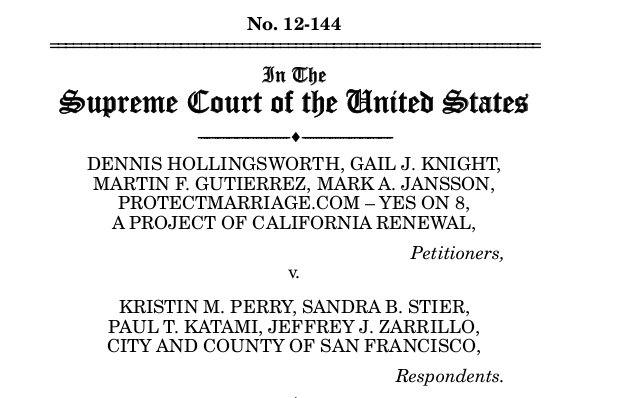
SF aims for the history books, filing its same-sex marriage brief with the Supremes

10

San Francisco City Attorney Dennis Herrera and his legal team today submitted written arguments to the US Supreme Court in the landmark same-sex marriage equality case it will consider this spring, with the hopes that their phrases and framing of the issue will be echoed in a civil rights ruling that could go down in history.

He argues that Proposition 8 – the California ballot measure that undid the California Supreme Court ruling legalizing same-sex marriage in a case that grew out of San Francisco’s unilateral decision to start marrying lesbians and gay men in 2004 – was unconstitutionally about “asserting the inferiority of same-sex couples….But relegating gay couples to a lesser status simply to brand them as different and less worthy than opposite-sex couples is not a legitimate purpose.”

Herrera, Deputy City Attorney Therese Stewart, and the rest of the city’s legal team also take up the notion of the “tyranny the majority” (which I explored in an earlier Guardian story on the issue) in their brief, arguing: “Petitioners’ argument derogates the most important role this Court serves in our democracy: to protect the constitutional rights of minorities from encroachment by an unsympathetic majority. The responsibility to protect individual rights does not transfer to the political process when the dispute happens to be ‘controversial.’  Quite the contrary.  In this circumstance more than any other, constitutional rights ‘may not be submitted to vote; they depend on the outcome of no elections.’ West Virginia State Bd. of Educ. v. Barnette, 319 U.S. 624, 638 (1943).”

Will the Supreme Court justices borrow any of these words or ideas in their ruling, as they sometimes do in such cases, placing them in history books alongside phrases such as “separate but equal is inherently not equal,” from the 1954 Brown v. Board of Education ruling ending racial segregation, which echoed the 1896 Plessy v. Ferguson ruling that it overturned?

Herrera told us that he couldn’t help but feel that sense of momentousness as he finalized the brief: “You have a sense as to the importance of what you’re working on, and that certainly has an impression on you.”

But he also said that he’s continually had that sense through this “long struggle,” during which he said that he’s remained focused on the LGBT community that he’s fighting to protect. “It’s been frustrating when you see how some folks perpetuate the discrimination that’s gone on too long,” he told us, adding that “to finally see it come to the Supreme Court is momentous.”

And Herrera said that he does hope the Supreme Court issues a broad ruling that finally settles this issue and removes the question of same-sex rights from the political realm and deems them to be an issue of equal protection under the law. “They’ve asked the court to abdicate its responsibility because same-sex marriage is controversial,” Herrera told us, arguing that’s why the Constitution offers equal protections to all citizens, regardless of the passions or societal biases of the moment. “Those constitutional rights are not subject to majority rule.”

You can read city’s full 62-page legal brief here.


Nite Trax: DJ Sprinkles lays it out

32

The phenomenal house DJ and experimental musicmaker on mainstream visibility, transgender globalism, Bay Area queer culture, and the “shopping mall diversity” of the current dance music scene.

Techno has always had room for theorists and intellectuals, from Derrick May to the Mille Plateaux label roster, and social activists, like Moodymann and Underground Resistance. Most of that discourse usually takes place musically, however, with concepts emerging from the vinyl itself. The celebrated DJ Sprinkles, a.k.a. Terre Thaemlitz, the American head of Japan-based label Comatonse, tops all that by making intellectually grounded music glimmering with poetic touches and expounding in interviews and writing on such heady, heated topics as essentialism, gender idenitity, surveillance, and authenticity. She leads workshops, goes on speaking engagements, and isn’t afraid to let loose in interviews. (For example — see below — rather than “born this way” platitudes, she considers her queer identity “beat this way.”) 

It’s a beautiful thing, especially in the rare context of controversial truth and radical opinion pouring from the mouth and keyboard of an outspoken transgender major player on the stubbornly homogenous global house-techno DJ scene. Of course, it all comes down to the music — we’ll get a treat when Sprinkles (who chose the name because he wanted something that sounded “totally pussy” in opposition to macho DJ culture, to buck the testosteronal scene) performs Sun/24 at Honey Soundsystem — and Sprinkles certainly has the goods. He’s released umpteen pieces in an astoundng breadth of genres under multiple pseudonyms over the past 20 years. Masterpiece deep house album “Midtown 120 Blues” siezed the top of several best of 2009 charts and was, typically, followed by Soulnessless, a 30-hour “mp3 album” of music and video. Because why the hell not?

I got a chance to exchange emails with Sprinkles before her appearance here. It’ll be an interesting return to the Bay Area, where she lived for several years before decamping to Japan. Here’s all she had to say.    

http://www.youtube.com/watch?v=UY79cyv8pH8

SFBG It’s been 13 years since you lived in Oakland, is that correct? Can you tell me why you decided to leave and what it was like to live here then, with regards to the music, political, and queer scene?

DJ SPRINKLES Yes, it’s been a long time. I used to live across the street from a hotel where the Unabomber once stayed. Honestly, I can’t say I miss California. I never really connected with any queer or transgendered communities in SF or Oakland. Whenever I tried, they seemed immersed in West Coast spiritualism and zodiac bullshit, which I found completely alienating. Most of the transgendered people I met there were prone to metaphysics — by which I mean they were ideologically (and economically and medically) invested in defining their transgenderism in relation to a perceived split between their “physical bodies” and their “true inner selves.” I’m an anti-essentialist, non-op, materialist, anti-spiritualist… so that clearly wasn’t a match with my own transgendered identity.

There was also a weird conservatism in SF’s queer scenes that I associated with the fact a lot of people in SF had been raised in conservative Midwestern towns, so they were in SF to “live the life.” I felt there was a lot of unacknowledged parody and role play going on — people trying to overcome a life of repression and closets by wrapping themselves in rainbow flag culture. Yet, when going to buy groceries or such, I still found myself being harassed as a “fag” on the street like in any other town in the US. I felt my four years there was all quite standard. I don’t really think of the Bay Area as a “special place” for being queer and transgendered.

US identity politics have a particularly inextricable link to the concept of the ghetto — not only as a place of economic strife and forced communal ostracization from a “white middle-class mainstream,” but also as a self-invested “safe space” for non-mainstream social movements. This is part of migrant culture. For example, after my grandparents passed through Ellis Island, they immediately moved to a place where people spoke the same language as their homeland, etc. The Castro, New York’s West Village, Little Italy, China Town… these are all migrant-based communities formed by people seeking safety in numbers in the face of not being welcome elsewhere — these two dynamics of “safety” and “alienation” are inseparable to most US identity politics. So these communal zones all display the problems and contradictions of cultural identification that plague mainstream US culture as an “immigrant nation” that is simultaneously “anti-immigrant” – because the “immigrant” is a brutal reminder that there are no “real Americans” beyond Native Americans, which the majority are not. And of course, the fact that recent generations of immigrants are primarily people of color does not jibe with conventional black/white US race discourse, which continues to be largely devoid of other browns, as well as the concept of the person of color as a willing immigrant (as opposed to the descendant of a slave). This history and context is peculiar to the US social landscape, and it creates a lot of weird identity essentialisms and hostilities around gender, sexuality, race, ethnicity, class…

Not to say other countries don’t have their own fucked up ways of causing and dealing with social problems, but moving to Japan and realizing that pretty much the entirety of Western identity politics did not function here was a big life experience. It was like leaving the Earth’s gravitational pull — it didn’t mean gravity no longer existed, but almost everything I had internalized and believed I understood about my relationship to gravity was no longer helpful in understanding the dynamics of dominations at work in this other context. I wasn’t freed of gravity, but lost in weightlessness. I had to learn to feel weight in a completely different way. This is why so many of my projects dealing with my own immigration and cultural issues consistently invoke the rather limited and problematic US language of black/white race relations. It is a critical gesture intended to highlight the limitations of my having been raised amidst that US language and social conditioning, yet now living within a non-US context with few tools to work with.

Because music’s value is so often tied to an essentialist concept of racial authenticity, it becomes difficult and risky to ask an audience to question their relationships to the very value systems through which they likely purchased the album – but that is also why I choose to work with audio. Not because of its possibilities, but its all-too-clear limitations. Since I am unable to believe in the authenticity or purity of identities of any kind, when I invoke “identifiable” sounds (a “queer” sound, a “black” sound, etc.) I am doing so to question the social relationships around their construction, proliferation, and distribution. The moment we become lazy about our use of those “identifiable” sounds — the minute we take it for granted that the essentialist associations they have come to carry are unquestionable and real reflections of material social experiences — everything becomes one-dimensional and shallow. This is why almost all music is one-dimensional and shallow! [Laughs.] For example, if I can beat a dead horse, my problem with Madonna’s “Vogue” is not that it was “inauthentic,” but that its terms of discourse misrepresented its relationship to vogueing by actively erasing the very contexts of Latina and African-American transgendered culture that inspired it (via lyrics about “It makes no difference if you’re black or white, a boy or a girl”… it TOTALLY made a difference, and THAT SOCIAL REALITY is where any real discussion on vogueing BEGINS.). So I’m interested in these other directions of audio discourse that cannot even occur if one is preoccupied with conflated essentializations of identity and sound. There is never a true point of origin for anything. It’s all referential and contextual. In my opinion, there is no point in discussions focussing on identifying the source of a sound or style — that is a hopelessly futile exercise, although it is the dominant exercise! It’s a distraction from the real discussions needing to be held, and those are discussions on relations of domination.

As a DJ in the late ’80s and early ’90s, there were a lot of drag queens asking me to play Madonna’s “Vogue” when it first came out. I refused, but I could understand their requests. We all have very complicit and complex relationships to dominations, and a perverse desire to celebrate our visibility within the dominant mainstream, no matter how unfamiliar or distorted that reflection may be… often because we are conditioned to feel so unhappy with what we see in the mirror to begin with. Mainstream visibility is like getting approval of the Father. It’s a mental and abusive process. It is also totally standard. So I get it… But there is also that which remains unrepresented and invisible to most. That which existed, and may have already been lost, but did so without seeking approval of the Father. And again, this is generally not a freed or liberated space, but a space of intense hatred for the Father. These are difficult things to speak of and represent, because any act of representation has the potential to be a violation of the cultural site it wishes to speak of. So to speak of them requires obfuscating or complicating the usual functions of language – not through vague poetry, but unexpected flashes of clarity coming from unexpected vectors.

http://www.youtube.com/watch?v=R2iKF_11WbY

SFBG You left during the first Internet boom I believe, and now SF is in the middle of a second one (although a bit different than the first —  the first wave seemed to have much more geeks and freaks in it, while this one seems much more regimented and Ivy League, even while many longtime residents are still feeling the results of “global recession”). When was the last time you were back here? And what are some of your recent thoughts on how house music is being affected by economic circumstances?

DJ SPRINKLES I was only back once about 10 years ago, visiting friends for a few days. When I moved away at the end of 2000, internet and web development had already undergone a rigid formalization. Years earlier, a web designer did a bit of everything. By 2000, developers were already split into specific teams focussing on interface, coding, page flow, etc… all processes were specialized, departmentalized, corporatized. I hadn’t heard about the “second internet boom” there, but the way you describe it doesn’t surprise me since it would surely be an extension of that regimentation that took place in the first boom.

And in a way, the same can be said of this “second boom” (third?) around house music. In the same way almost all websites have taken on the same continuity and feel, so has electronic dance music. You buy an album, and all the tracks sound similar — as opposed to the old days when an electronic dance track like Donna Summer’s “I Feel Love” was tacked on to the end of an otherwise standard soul-band album that didn’t sonically match it at all. Today’s music consumer experience is much more streamlined and organized, which affects how people produce an album as well. Younger generations — 20-somethings — grew up amidst this homogenization, so I am fairly sure they do not feel what I am speaking of… although they may recognize it as a historical process.

I try to play with discontinuity and mixing things up, like in my K-S.H.E album, “Routes not Roots,” which had monologues and ambient tracks interspersed between house cuts. But I once made the mistake of reading people’s blog comments, and they really seemed upset about this kind of thing. “Way to ruin the mix,” or “Why the fuck didn’t you put that monologue at the end of the album?” They have no patience for non-homogeneity. The same goes for my Comatonse Recordings website itself — people seem utterly confused and helpless. If one doesn’t do everything completely standard and at the same level, people get disoriented. It’s a kind of cultural compression going on, similar to audio compression, where everything has to be “punched up” to the same intensity or people feel lost. What the fuck is so wrong with being lost? Why would you expect — let alone insist — your interactions with non-mainstream media to be completely mainstream in process?

http://www.youtube.com/watch?v=B8iF7JQiz50

SFBG I’ve been hanging out recently with the new, young generation of ACT-UP activists who are transcending mere ’90s revival and undertaking a lot of energizing political discourse and action. Were you involved in the queer activist movement back then — or now? Would you characterize your musical project as a form of activism, especially in its more intellectual and challenging aspects?

DJ SPRINKLES That’s nice to hear. Although you use the term “action,” I assume the real interesting stuff has little to do with demos and “direct actions,” and more to do with communal education initiatives, etc.? My direct action days were mostly during the late ’80s and early ’90s, while living in New York. Most of those activities were in conjunction with various caucuses in ACT-UP, and WHAM! (Women’s Health Action & Mobilization).

I do consider my audio and other projects “political” — in theme, and also in their attempts to (dis)engage with standard industry practices. But clearly this is something different than direct action “activism” or community outreach, because my main social engagements are with people working for labels, distributors, music festivals, museums, and other culture industries. Maybe “culture jamming” is a better way to put this kind of political activity. Personally, I found myself distanced from direct action groups because the terms of identification they cultivated out of strategic necessity so often folded back into essentialisms that excluded me on a personal level. So I was always advocating for the recognition and acceptance of something other than myself (like the way “born this way” ideologies take over discussions of LGBT rights… I consider myself more “beat this way,” my queer identity being primarily informed by material ostracism and harassment than by some mythological self-actualization and pride). That, combined with the mid-’90s move away from direct action toward CBO’s (Community Based Organizations) — largely because the tactics of direct action had been so thoroughly coopted by mainstream media – was pretty much the end of my serious direct action involvements. Over the years, enunciating this process has become the core political act of my projects and activities. I do not do this to discourage people from forms of direct action, but as a simultaneous form of critical analysis that hopefully contributes in other ways to our various attempts to react to dominations.

SFBG Do you feel that, as the means of production and distribution have been more and more democratized in the past decade, house and techno music-making and DJing have been living up to their potential as a form of resistance to mainstream capitalism and culture, or do you feel they’ve become more homogenized and/or annexed by neoliberal, bourgeois culture?

DJ SPRINKLES I do not believe the means of production and distribution have become more democratized. I take issue with the way people always confuse “commercial accessibility” with “democratization.” The breadth and variation of today’s music production strategies is no more than a shopping mall diversity. We are all working with similar software on similar platforms. Mac, Windows, Unix… Banana Republic, Abercrombie & Fitch, The Gap… Having said that, if these musics had a potential, I believe it was lost back in the ’90s when anti-sampling legislation (mostly focusing on hip-hop) laid the groundwork for today’s electronic music. It basically reinvigorated house with “musicianship,” “authorship,” and all that crap which used to play far less of a role in this genre’s early days. And the younger generation – basically, today’s 20-somethings who grew up after the whole sampling debates — really don’t seem to understand how record label legal departments work.

So they list up all the samples they recognize in a track in the comment fields of music websites, which is putting the producers they wish to support at risk. There is no sense of how we can cultivate — let alone protect — “underground” media and information in this online era. Everything is about “sharing,” when in fact we need to be developing a parallel discourse around meaningful information distribution patterns, including strategically withholding information from the web. The cliché idea of making “everything accessible for everyone” is not only naîve, but negates the social and cultural specificities that give certain forms of media their alternative values, in particular collage and sampling. Anyone who has used a random image taken from a Google image search on their blog page, and then gotten an email from Getty Images’ legal department asking for back royalties, knows what I’m talking about. Treating subcultural musics as though they are meant for “everyone” — whether this is being done by fans, or the labels and online distributors themselves — is the biggest sign of people not understanding the media they are dealing with. And since all of that is SOP these days, it’s pretty much a sign that the sample-based genres of house is dead. Is talking about house’s political potential in 2013 really all that different than the trend of talking about the radical politics of ’60s rock during the ’80s?

http://www.youtube.com/watch?v=v4M3-t9lw7o

SFBG I feel like, with parties like Honey Soundsystem, there is a huge resurgence of interest in an underground queer dance music culture — a kind of new underground opposed to corporate or low-quality dance music (yet still taking place in corporate spaces). Is this phenomenon occurring in Japan as well? Do you feel there are specific possibilities with this, not just in terms of opportunity for queer DJs to travel but of transformation of queer discourse and politically actualizing a new generation?

DJ SPRINKLES Hey, low-quality is where it’s at. It’s what it’s all about. What was Chicago house if not low quality? It’s important to place value within the “low” in order to counter conventional associations between the terms “good,” “high quality” and “upper class.” I’m not talking about celebrating kitsch, or that kind of petit-bourgeois trivialization of the “low.” I’m talking about finding other values in the “low” that cannot find expression within a language developed to express everything in terms of “low vs. high.” This is ultimately about the identification of other values amidst class struggle.

I don’t think house resonates as a queer medium anymore. Those days are over. Today it is primarily a white, heterosexual, European phenomenon. That was the case early on. I mean, how many Americans became aware of house music in the ’80s by buying Chicago house sold back to us on UK compilations? The US has always treated its own history of electronic music like utter shit… The US is such a fucking rock’n’roll shithole. So I think for people to appreciate house music’s queer roots, and to actively invest in those themes today, requires people becoming deliberate and explicit about those interests. But whether that deliberate action would focus on “queer visibility” or not is another issue. It doesn’t have to focus on “visibility” — especially since visibility has become such an oppressive aspect of dominant LGBT movements. Explicitness can also be about closets. Not only the usual closets born of heterosexism, but less considered closets around sexuality and gender that have been formed by the actions of the “born this way” LGBT mainstream. Well, that’s the direction I try to take it… reflecting on, and constructing, queer and transgendered histories that are as skeptical of Pride[TM] as they are angry about violence. And I do believe, globally speaking, queer and transgendered experiences are much more informed by violence than pride. So this should be reflected in how and where we make noise. In my opinion, music that functions in completely standard ways – socially and economically – does not have much potential for reflecting queer or transgendered contexts in politically precise, helpful or meaningful ways. You end up with essentialist, humanist shit like Lady Gaga’s, “Born This Way.” She is not somebody I would consider an ally.

You know, American media is so fixated on the idea that sexuality and gender must either be biologically predetermined, or a personal choice. The “it’s not a choice” argument is a common theme in television shows, etc. Both of these options revolve around a fiction of free will. Like, if it’s not a choice, then the only other possibility must be some supra-social, biological reason that cannot be questioned. Both of these conclusions preserve the status quo brutality of how culture forces gender and sexual binaries upon us. The thought that our absence of choice might be rooted in social tyrannies – not biological predispositions – remains unthinkable. The mainstream has it half right when they say, “it’s not a choice,” but it’s a half-truth that has been twisted into a decoy from the real issues at hand – the inescapability of the hetero/homo and female/male paradigms. We are given no other choices through which to understand our genders and sexualities. Sexuality is far greater than two or three. The same goes for gender — and yes, I’m speaking biologically, human bodies are way more diverse than A or B. To argue that the reason you deserve rights under a humanist democratic system is because of genetics is a retreat into feudalist logic. It’s the same as an aristocrat arguing that their rights and privileges were deserved because of their family blood-line and DNA. “Born this way” is antithetical to any democratic argument for rights rooted in a social capacity for understanding and transformation. It is astounding that the majority of people cannot comprehend that any “born this way” argument is a complete obliteration of their social agency. “I can’t help it, so give me the same rights as you…” Fuck that. We shouldn’t be asking to participate in the rights and privileges of those who have oppressed us. We should be trying to divest those groups of privileges. That is the best way to help ourselves and minimize the violence we enact on others.

Humanist legislative practices are still rooted in feudal ideologies, and I am convinced the long-term repercussions of this is a cultural entrenchment that makes any democratic project (including US-brand democracy, socialism or communism) an impossibility. We can already see how the post-Cold War world is retreating into clan-based, privatized, anti-state organization structures. Capitalism is increasingly liberated of democratic agendas because — surprise! — capitalism works better with slavery. Capitalism is not about the distribution of wealth, and everyone’s equal chance to partake in a petit-bourgois lifestyle. It is about the isolation of wealth. There is no doubt in my mind that today’s moral insistence that all people must work at whatever job society throws them, and the accompanying presumption that all lower-class unemployed people are “lazy” (which is perpetuated by many lower-class peoples themselves), is an argument for slavery: forced labor in return for base subsistence at best. How is that not the reality of poverty under globalized capitalism?

…and that’s why I hate Lady Gaga. [Laughs.]

http://www.youtube.com/watch?v=y-JtoRxqK8s

SFBG You have some fascinatingly poetic thoughts about the intersection of transgender issues and immigration, the idea of “living as a ghost” in politicized and police-monitored spaces. Do you have any current thoughts on how globalization continues to affect transgender issues?

DJ SPRINKLES I think the fact that the world’s two largest economies around gender transitioning are in Thailand and Iran, yet the aesthetics of those economies follow largely western models of beauty and body, says a lot about how globalization affects transgendered issues. Thailand’s dominant transgendered culture revolves around the “Ladyboy” — a very essentialist transgendered model that is rooted in heterosexism and the cultural/ideological necessity for some men to “unbecome-man” in order for “straight men” to have sex with other men. Western transgendered discourses love to fetishize the “Ladyboy” as some kind of locally celebrated and accepted third-world transgendered native other, but this is patent orientalism. It refuses to envision how the strict regimentation of social codes for those transgendered people can be oppressive, or how the mythical “transgendered native’s special place at the edge of the village, possibly as a shaman” is a form of segregation. People also never address how such cultures are invariably patriarchies, and their models for transgenderism almost exclusively revolve around the MTF paradigm. And far as I know, Thailand has still not lifted their government prohibition on homosexual government employees, which is relatively new legislation passed just a few years back. This is all part of that context of transgendered production.

Meanwhile, Iran is a country where Islamic law prohibits homosexuality by fatwah. Since the ’70s, gender transitioning has been promoted as a way for men who have sex with men to avoid the death penalty, although many transitioned people still face the possibility of being murdered by their families or local communities. The cost of their procedures is partially subsidized by the Iranian government itself. While some Westerners have attempted to portray that as “progressive,” clearly it is the opposite. Many post-op transsexuals find themselves ghettoized, unemployed and cut off from the family structures that play such important roles in Iran’s social structure.

In both Thailand and Iran one can see how the global growth of gender-transitioning economies is connected to heterosexism and homophobia — something current Western gender analyses attempt to separate from gender transitioning through clear ideological divisions between gender and sexuality. While I believe these divisions between gender and sexuality are important and do have social value in the West, it is clear that the West is not the world. And the West has surely not overcome its heterosexism and homophobia, either. I believe it is more than coincidence that the global proliferation of gender transitioning technologies is happening parallel to medical industries’ attempts to divest of their previously blatant attempts to cure homosexuality, due to such methods falling out of cultural favor in the West and elsewhere. I also believe it is more than coincidence that today’s inescapable “born this way” arguments serve and justify today’s medical agendas so well.

For sure, my stance on medical transitioning has always been that I support peoples’ abilities to transform their bodies as they see necessary. Considering how few options for gender identification are offered to us, I can understand how a person can become no longer able to live within one’s body as it has been defined and shaped by social gender constraints. But, for obvious reasons, I am unable to believe those medical systems which propagated today’s gender binary are capable or willing to offer us a way out of our gender crises. Those industries move us further and further away from cultural environments that enable transgendered people to build medically unmediated relationships to our bodies. I just can’t accept that the medical industry’s methods for mediating our suffering are the only way. It really angers me… particularly since so many transgendered people are impoverished and without health care…

Hmm, you’re probably getting an idea as to why I am never invited to perform my more thematic projects in the US — just to DJ some house and go back home to Japan. [Laughs.]

SFBG Speaking of essentialism, ha: Any food or restaurants you miss from living here?

DJ SPRINKLES Mexican food…! It’s shockingly absent in Japan… and when you do find some, you generally wish you hadn’t. But what a weak note upon which to end this interview. [Laughs.]

Stage Listings

0

Stage listings are compiled by Guardian staff. Performance times may change; call venues to confirm. Reviewers are Robert Avila, Rita Felciano, and Nicole Gluckstern. Submit items for the listings at listings@sfbg.com. For further information on how to submit items for the listings, see Picks.

THEATER

OPENING

The Lisbon Traviata New Conservatory Theatre Center, 25 Van Ness, SF; www.nctcsf.org. $25. Opens Fri/22, 8pm. Runs Wed-Sat, 8pm; Sun, 2pm. Through March 24. New Conservatory Theatre Center performs Terrence McNally’s play, a mix of comedy and tragedy, about the relationship between two opera fanatics.

Steve Seabrook: Better Than You Marsh San Francisco, 1062 Valencia, SF; www.themarsh.org. $15-50. Opens Fri/22, 8pm. Runs Fri, 8pm; Sat, 8:30pm. Through March 22. Kurt Bodden’s San Francisco Best of Fringe-winning show takes a satirical look at motivational speakers.

BAY AREA

Dostoevsky’s The Grand Inquisitor Berkeley City Club, 2315 Durant, Berk; www.centralworks.org. $15-28. Previews Thu/21-Fri/22, 8pm. Opens Sat/23, 8pm. Runs Thu-Sat, 8pm; Sun, 5pm. Through March 31. Central Works performs Gary Graves’ adaptation of the story-within-a-story from The Brothers Karamazov.

My Recollect Time South Berkeley Community Church, 1802 Fairview, Berk; (510) 788-6415. $12-25. Opens Fri/22, 9pm. Runs Sat/23-Sun/24, Feb 28, March 2, 7, and 9, 8pm; March 1, 8, 9pm; March 3, 5pm. Through March 9. Inferno Theater performs Jamie Greenblatt’s play about the life of former slave Mary Fields.

ONGOING

Dear Harvey New Conservatory Theatre Center, 25 Van Ness, SF; www.nctcsf.org. $25-45. Wed/20-Sat/23, 8pm; Sun/24, 2pm. There’s always room in San Francisco for milk — Harvey Milk, that is, our very own out-and-proud crusader for equal rights for all, whose election as city supervisor in 1977 and assassination in 1978 galvanized the LGBT movement on a national level. Part history lesson, part memorial tribute, the Patricia Loughrey-penned Dear Harvey offers details of the extent of his influence, mostly in the realm of the political, collected from interviews with over 30 of Milk’s associates and friends. Interspersing testimonials with Bay Area Reporter headlines, fan mail, and projections of Daniel Nicoletta’s candid photos of the era, each member of the ensemble cast assumes multiple roles throughout the piece including Harvey’s activist nephew Stuart Milk, the "Queen Mother of the Americas" Nicole Murray-Ramirez, openly-gay politician Tom Ammiano, former youthful aide and prominent AIDS activist Cleve Jones, Milk’s spitfire campaign manager Anne Kronenberg, and even Milk himself. At its core, Dear Harvey plays out mainly like a talking head-style documentary, the disparate strands of monologue woven together providing a composite image of a single character. But as endearing in many ways that character is, it’s not enough to sustain the overall piece, which never develops its other, often fascinating, characters enough for the audience to feel much of a connection to the stage, no matter how much, personally, they might feel a connection to Milk himself. (Gluckstern)

Foodies! The Musical Shelton Theater, 533 Sutter, SF; www.foodiesthemusical.com. $30-34. Fri-Sat, 8pm. Open-ended. AWAT Productions presents Morris Bobrow’s musical comedy revue all about food.

God of Carnage Shelton Theater, 533 Sutter, SF; www.sheltontheater.org. $38. Thu-Sat, 8pm. Through March 30. Shelton Theater presents Yasmina Reza’s Tony-winning comedy about upper-middle-class parents clashing over an act of playground violence between their children.

Hedwig and the Angry Inch Boxcar Playhouse, 505 Natoma, SF; www.boxcartheatre.org. $25-40. Wed-Sat, 8pm (also Sat, 5pm). Through March 2. Hold onto your hairpiece, Boxcar Theatre is reprising their all-too short summer run of Hedwig and the Angry Inch, and just in case you think you saw it already, be forewarned — you ain’t seen nothing yet. Recast, redesigned, and re-vamped, this outcast-rock musical familiarly follows the misadventures of one Hedwig Robinson (né Hansel Schmidt) with glam, guts, and glitter. But unlike the movie version penned by and starring John Cameron Mitchell as the titular chanteuse, or other staged versions, director Nick A. Olivero splits the larger-than-life, would-be rock sensation into eight different characters, who are each given a solo turn as well as plenty of ensemble harmonizing during the course of the two hour-plus performance. The effect is often electric, and just as frequently hilarious, as when the four female actors playing the role stomp across the stage swinging imaginary dicks in the air to the lyric "six inches forward and five inches back, I got a, I got an angry inch!" Supported by a tight quartet of rock musicians led by Rachel Robinson, and the phenomenal Amy Lizardo as Hedwig’s beleaguered "man Friday" Yitzhak, Hedwig keeps on extending for what appears to be an indefinite run, employing the time-honored Thrillpeddlers’ tradition of rotating cast members and comeback performances, which means you could theoretically go multiple times and never see quite the same show twice. I certainly plan to. (Gluckstern)

Jurassic Ark Exit Theatre, 156 Eddy, SF; www.theexit.org. $15-25. Fri-Sat, 8pm. Through March 16. Writer-performer David Caggiano’s zany, well-executed solo play centers on a Christian televangelist who is unwaveringly bent on making a big-budget movie about a cowboy-like Biblical Noah, his Ark, and the largely lovable dinosaurs callously left out of the story — a project he sees delivering a decisive blow to the Darwinians, while turning cineplexes across the land into celluloid cathedrals. Brother Dallas and his proselytizing pitch eventually find receptive ears in a trinity of movie-industry heavies, whose collective business acumen demands a few changes to the script. Meanwhile, the intoxicating power of it all leads to a lapse in Brother Dallas’s righteousness and a scandal reminiscent of Hugh Grant’s career. Dallas rebounds from this bout with the Devil and sees his movie made — but surely only he is unaware that the Devil keeps a Hollywood address. Smartly directed by Mark Kenward, this low-frills production relies almost exclusively on Caggiano’s sturdy ability with quick-change characterizations (couched in Dylan West’s modest lighting design and a suggestive soundscape by sound editor–musician John Mazzei). The fitful satire trades in pretty orthodox caricature and, in Brother Dallas, lacks a very compelling or sympathetic central figure; but it unfolds with a very cinematic imagination that, while formulaic, is itself one hell of a movie pitch. (Avila)

The Little Foxes Tides Theatre, 533 Sutter, SF; www.tidestheatre.org. $20-38. Wed/20-Sat/23, 8pm. Tides Theatre Company performs a modern take on the Lillian Hellman classic.

The Motherfucker with the Hat San Francisco Playhouse, 450 Post, SF; www.sfplayhouse.org. $30-70. Tue-Thu, 7pm; Fri-Sat, 8pm (also Sat, 3pm). Through March 16. A fine cast makes the most of Stephen Adly Guirgis’s deceptively coarse, often amusing little play, The Motherfucker with the Hat, which receives its local premiere in a sure and rowdy production from SF Playhouse. Director and designer Bill English’s striking two-tier set almost belies the intimate nature of the quirky story, which concerns a hapless parolee and recovering alcoholic named Jackie (a winningly frazzled, bumptious Gabriel Marin) who retreats to his AA sponsor’s apartment to pine and plot revenge after he discovers a stranger’s hat in the bedroom of his longtime Puerto Rican girlfriend, Veronica (played vividly by an at once edgy and vulnerable Isabelle Ortega). But Ralph, his suave and persuasive sponsor (played with unctuous charm gilded by just a hint of ineptitude by an excellent Carl Lumbly), may not be the guy he wants in his corner. Not that Jackie can see that — he’s got a man-crush on Ralph that dwarfs his already ambivalent affection for much put-upon but stalwart cousin Julio (a sharply funny Rudy Guerrero) and blinds him to the warning signals from Ralph’s own disgruntled wife (a coolly disgusted Margo Hall). Throughout, these working-class New York borough dwellers display their wit and shield their soft underbellies with a rapid-fire barrage of creative swearing. English and cast display a real comfort with this kind of material (this is SF Playhouse’s fourth Girguis play), which drapes its soft heart in the intimations of violence more than the real thing. If the heat and imaginative cursing also seem to cover up for a play with little dramatic purpose beyond a gentle and somewhat pat exploration of loyalty, maturity, and trust, there’s pleasure to be had in the unfolding. (Avila)

Not a Genuine Black Man Marsh San Francisco, 1062 Valencia, SF; www.themarsh.org. $25-50. Fri/22, 8pm; Sat/23, 5pm. What, the unapologetically middle-class Brian Copeland asks, is the real meaning behind the phrase "a genuine black man"? By way of an answer, the stand-up comic and KGO radio host offers up a simultaneously funny and disarmingly frank story about growing up African American in the racist suburb that was San Leandro in the early 1970s. Letting his narrative bounce back and forth between his boyhood memories and a period of depression that overtook him as a parent in 1999 — and interlacing the autobiography with verbatim utterances from both sides of the fight his family joined to desegregate the city — Copeland brings admirable chops as a comedian to bear on some difficult and disturbing, if ultimately hopeful, material. Note: review from an earlier run of the same show. (Avila)

Sex and the City: LIVE! Rebel, 1760 Market, SF; trannyshack.com/sexandthecity. $25. Wed, 7 and 9pm. Open-ended. Lady Bear, Trixie Carr, Heklina, and D’Arcy Drollinger star in this drag tribute to the long-running HBO show.

The World’s Funniest Bubble Show Marsh San Francisco, 1062 Valencia, SF; www.themarsh.org. $8-50. Sun, 11am. Extended through March 17. The Amazing Bubble Man (a.k.a. Louis Pearl) continues his family-friendly bubble extravaganza.

You Know When the Men Are Gone Z Space, 450 Florida, SF; www.zspace.org. $30-55. Wed/20-Thu/21, 7pm; Fri/22-Sat/23, 8pm; Sun/24, 3pm. Word for Word mounts two related short stories from the titular collection by Siobhan Fallon about the home-front impact of warfare on the families of an American army base. In The Last Stand, an injured soldier (Chad Deverman) returns home to his young wife (Roselyn Hallett) to find she has decided to leave him. In Gold Star, a wife (Arwen Anderson) learns of her soldier husband’s (Ryan Tasker) death — the officer who died saving the life of the young soldier in the first story. Reeling from grief, she innocently hangs on the words of the young soldier (Deverman) as he comes to visit her. Beautifully designed — with shrewd use of Z Space’s large, potentially engulfing stage by Jacqueline Scott (set), Drew Yerys (lighting, sound), Delia McDougall (costume, props), and Andrea Weber (choreography) — directors Joel Mullennix (Last Stand) and Amy Kossow (Gold Star) show an imaginative command of the material that has made the company’s trademark verbatim staging of literature a viable theatrical undertaking in its own right, with much to admire and ponder in the juxtaposition of words, blocking, characterization, and imagery. Moreover, the ensemble (rounded out by Marilet Martinez and Armando McClain) is very strong, with standout turns from the mutually sympathetic but achingly at-odds characters played by Deverman and Hallett in the first half, and by Anderson’s shattered, erratic, yet highly attuned new widow in the second. As for the stories themselves, certain details of base life (such as the prime parking spaces eerily and crassly allotted widows of soldiers killed in combat) reveal the author’s firsthand knowledge as the wife of an active-duty soldier, adding a sense of authenticity to these intimate, heartfelt, and movingly told stories. Their essentially everyday tragedies, however, remain tightly focused on the subtleties of grief rather than any larger contextualizing of the immediate political and moral dimensions of the American imperial machine in which all characters ultimately serve. That leaves largely intact and unexamined the usual allusions to sacrifice, service, nationhood, duty, and traditional modes of male and female heroism in war, which is perhaps the most distressing thing about these otherwise quietly troubled stories. (Avila)

BAY AREA

The Fourth Messenger Ashby Stage, 1901 Ashby, Berk; www.thefourthmessenger.com. $23-40. Wed-Thu, 7pm (no show Wed/20); Fri-Sat, 8pm; Sun, 2pm. Through March 10. It’s been some time since a work by local playwright Tanya Shaffer last graced our stages, not since 2005 to be precise, and in keeping with her penchant for multicultural themes, her latest piece, The Fourth Messenger, is a reimagining of the Siddhartha story, written as a musical in collaboration with composer Vienna Teng. Raina (Anna Ishida), a "hungry" journalism intern with a secret agenda, pitches her first scoop — the debunking of a beatific guru named Mama Sid (Annemaria Rajala) — and embeds herself in a meditation retreat where she can get close to the famously private teacher and uncover her past. Neither as humorous or as merciless as Jesus Christ Superstar or as exuberant as Godspell (though the excellent song "Monkey Mind" crackles with wit and trenchant observation, and the tender "Human Experience" genuinely uplifts), Messenger does offer a fairly solid primer to the path of spiritual enlightenment including its all-too-human fallout and sacrifices. The white-on-wood set design by Joe Ragey frames the action in a deceptively delicate layer of gauze and mystery, and the capable ensemble inhabit their multiple roles with ease — from jaded newsies to loyal disciples. Which makes it doubly unfortunate that the jazzy, piano-driven score seems pitched just outside of most of the actor’s ranges, even those of the notably skilled Ishida and Rajala, an admitted distraction for the monkey-minded, which is to say most of us. (Gluckstern)

Our Practical Heaven Aurora Theatre, 2081 Addison, Berk; www.auroratheatre.org. $32-60. Tue and Sun, 7pm (also Sun, 2pm); Wed-Sat, 8pm. Through March 3. Anthony Clarvoe’s new play receives its world premiere as a 2011 prizewinner in Aurora’s Global Age Project (GAP), which cultivates new work addressing life in the 21st century. In the case of this labored and dull effort, the young century and its anxious outlook come refracted through three generations of women who gather for holidays at a seaside home whose own future is threatened by, first, financial and, ultimately, climatic conditions. Neurotic, self-absorbed Sasha (Anne Darragh) and capable businesswoman Willa (Julia Brothers) are middle-aged best friends forever who grew up in the home of Sasha’s mother (Joy Carlin) and late father. Joining Sasha’s two daughters by separate husbands, Suze (Blythe Foster) and Leez (Adrienne Walters), is Willa’s daughter, Magz (Lauren Spencer), who suffers from a debilitating disease. Despite many personal and generational differences — and a rising conflict over the house — all six women share in a traditional bout of bird watching in this fragile nature "refuge" for bird and human alike. While bird watching supplies the play’s operative metaphors, however, it does little to actually bring these characters together in any compelling or convincing way. In fact, respective backstories are pretty sketchy in general, dialogue strained and broadcasting, and performances correspondingly patchy. The three stage veterans in director Allen McKelvey’s cast — Brothers, Carlin, and Darragh — go furthest toward making Clarvoe’s leaden exposition somewhat buoyant, but the momentary pleasure they provide can’t stem the overall tide. (Avila)

PERFORMANCE/DANCE

"Analog: New Work by Katharine Hawthorne" Joe Goode Annex, 401 Alabama, SF; analogdance.eventbrite.com. Fri/22-Sat/23, 8pm. $15-25. A full evening of choreography inspired by the intersection of art and science.

BATS Improv Bayfront Theater, Fort Mason Center, Marina at Laguna, SF; www.improv.org. Sat/23, 8pm. $20. The company performs "Warp Speed: An Improvised Trek!"

"Comedy Night at the Presidio" Presidio Café and Golf Course, 300 Finley, SF; www.presidiocafe.com. Thu/21, 8pm. $10. With Will Durst, Andrew Holmgren, and host Justin Gomes.

"Dance and Diaspora" ODC Theater, 3153 17th St, SF; www.odctheater.org. Fri/22-Sat/23, 8pm. $25-30. Featuring the work of belly dance artist Jill Parker and Afro-Brazilian choreographer Tania Santiago.

"Fabulous Artistic Guys Get Overtly Traumatized Sometimes: The Musical!" CounterPULSE, 1310 Mission, SF; www.counterpulse.org. Thu/21-Sun/24, 8pm. $20-25. DavEnd’s performance extravaganza promises "singing pink cakes, dancing mirrors, and couture genitalia."

"Killing Me Softly With Jazz Hands" Stage Werx Theatre, 446 Valencia, SF; (415) 517-3581. Wed/20, 8pm. $10. Comedian Becky Pedigo performs.

"Megillah 3.0" Intersection for the Arts, 925 Mission, SF; www.killingmylobster.com. Sat/23, 7pm, $20. Killing My Lobster launches its online collection of original videos, music, and performance with a Purim carnival, featuring live sketch shows, KML comedy videos, and more.

"Our Voices, Our Stories Play Reading Festival" San Francisco Playhouse, 450 Post, SF; www.sfplayhouse.org. Mon/25, 7:30pm. Free. Readings of in-development works Without and Opportunity for Defense and Obeah.

"San Francisco Magic Parlor" Chancellor Hotel Union Square, 433 Powell, SF; www.sfmagicparlor.com. Thu-Sat, 8pm. Ongoing. $40. Magic vignettes with conjurer and storyteller Walt Anthony.

"Smack Dab" Magnet, 4122 18th St, SF; www.magnetsf.org. Wed/20, 8pm. Free. Open mic featuring Randy Alford.

"Solo Sundays: Family Blend, the Sweet and the Bitter" Stage Werx Theatre, 433 Valencia, SF; www.brownpapertickets.com. Sun/24, 7pm. $12. With Susan Ito, Lisa Marie Rollins, and Zahra Noorbakhsh.

Tanya Bello’s Project. B. and Karen Reedy Dance ODC Dance Commons, 351 Shotwell, SF; www.odcdance.org. Sat/23, 8pm; Sun/24, 7pm. $22. Featuring the world premiere of Bello’s Games We Play(ed).

BAY AREA

"One-Off Wednesdays (or sometimes Two-Off)" Marsh Berkeley, 2120 Allston, Berk; www.themarsh.org. Wed/20, 8pm. $15-50. This week: Wayne Harris in The Letter: Martin Luther King at the Crossroads.

Clubs vs. condos

30

steve@sfbg.com

The Western South of Market area is ground zero for the city’s War on Fun, a place where nightlife often comes into conflict with residential expectations, particularly on the raucous 300 block of 11th Street and, to a lesser degree, Folsom Street’s old “miracle mile” of predominantly gay bars.

As the city’s Planning Department and its development community looks to accommodate another 4,000 homes for 10,000 new residents on less than 300 acres of Western SoMa — most of it along Folsom Street between 7th and 13th streets — that potential for conflict could grow in the coming years as funky old buildings give way to shiny new stacks of expensive condos.

And efforts to sort it out may hinge on the future of a 105-year old purple building.

After nearly eight years of work by a unique citizen-led task force, the Western SoMa Community Plan is now before the Board of Supervisors, with the Land Use Committee set to hold its first hearing on Feb. 25. Despite dozens of task force meetings seeking to strike the right balance between residential and entertainment interests, the plan is still being tweaked.

When the Planning Commission approved the plan and some related projects on Dec. 6, it followed King Solomon’s approach of cutting the 11th Street baby in half. The commission heeded the recent recommendation of the nightlife community and District 6 Sup. Jane Kim to modify the plan to prohibit new residential development on the 11th Street block where tipsy visitors to Slim’s, DNA Lounge, and other big clubs clog the sidewalks every weekend. But it also voted to grandfather in a 24-unit residential project at 340 11th Street, which everyone now involved in closed-door negotiations simply calls “the purple building,” a two-story masonry structure built in 1907 that is awaiting demolition.

The building houses light industrial businesses and is the former home of Universal Electric, whose owner, Tony Lo, wants to develop the property. Along with architect John Goldman, Lo submitted a residential project application in 2005, only to have it placed on hold pending adoption of the Western SoMa Community Plan.

“It was well along when the Planning Department put the project on hold,” Goldman told us.

City officials and even many of the nightlife advocates say they sympathize with the long wait that Lo and Goldman have endured, even if many oppose housing on the site and have been urging Lo to find another use for the site, such as an office building.

“They would have no idea what they’re getting into until that first Saturday night,” nightlife advocate Terrance Alan said of the would-be residents of the building, envisioning a young couple who had only visited during daytime hours trying push a baby stroller past the throngs of club-goers. Alan took part in recent meetings Kim facilitated with Lo and Goldman, and Alan told us, “There was, for the first time, a very frank discussion about the problems that owners would experience and the pressure they would put on clubs in the area.”

For example, just one neighbor of Slim’s — a popular live music venue on the block owned by singer Boz Scaggs — has waged a relentless campaign that has forced temporary shutdowns and cost the club more than $750,000 in mediation costs, Alan said, despite the club’s sound buffering and general compliance with local codes.

Alan said that it’s simply unthinkable to add more than two dozen new homeowners to that busy block in a condominium building that only allows access on 11th Street. Alan is hopeful for a negotiated compromise with Lo, something that Kim told us she also thinks is likely.

“I’m hoping we can come to a consensus of the property owners and business owners on 11th street, including the purple building,” Kim said, echoing Alan’s point that, “Just one resident can really shut down a business and hurt its financing.”

Goldman said he understands the concern and “my client is considering alternatives to housing.” While he was a little frustrated that it wasn’t until November that they first heard about a proposal to ban residential projects on the block, “We’ve definitely heard the concerns of the nightlife entertainment folks…No decision has been made yet, but it’s the goal of my client to decide fairly soon.”

A ban on housing is just one of the changes that Alan and other members of the California Music And Culture Association (CMAC) are pushing the supervisors to make to the plan, provisions he was unable to get into the plan as a member of the Western SoMa Task Force for four years before resigning in frustration.

“The task force was made up of people primarily interested in residential development,” Alan told us. “The plan is pretty much about protecting residential.”

That perspective irritates task force chair Jim Meko, who said he held about 60 meetings on entertainment and nightlife issues and bent over backward to accommodate that community. “Overall, the Western SoMa Plan is very friendly to the entertainment industry,” Meko said, noting that the plan grandfathers in all existing nightclubs, even after a building is demolished, and requires new residential construction to buffer against street noise. “They’re never satisfied.”

But Meko does concede that accommodating existing residents and new residential development was central to the task force’s work, as it was charged with doing by the Planning Department. “The most important thing was to do no harm to anyone,” Meko said was the guiding philosophy behind the task force’s approach. “We’re the real test case for a mixed use community in the city.”

While Folsom Street has more bars that 11th street, and those bars will be protected under the plan, Meko said the idea was to keep them limited in scale and prevent the proliferation of large clubs that operate into the wee hours.

“Folsom Street is where the residential growth will go,” Meko said. “That’s the area where we want to add the most residential growth and it seems dumb to add more nightclubs there.”

But he also doesn’t think it makes economic sense for many clubs to open there anyway. With allowable height limits in that corridor being increased from 50 feet now up to 65 feet, and with the plan’s approval allowing development projects to move forward, many of what he called the “old junky buildings” where clubs could find cheap rent will likely be demolished.

“With the height increases, those buildings are going to be history in five years,” Meko said.

Kim said she is supportive of both nightlife and the plan’s facilitation of residential development.

“It’s transit-first and a good place to be able to handle the density that’s close to downtown,” Kim said, noting that she’s supportive of even the massive residential project proposed for 801 Brannan Street, mostly because it includes units with up to two and three bedrooms and an elegant design by architect David Baker.

That project would have 432 housing units with a total of 606 bedrooms, 22,124 square feet of retail, and a 422-car parking garage on a site of just over four acres. In many ways, it is typical of the housing density that will begin to crowd into Western SoMa.

Meko was critical of how the entertainment community was able to make changes to the plan after all the hard work of the task force, and he told us, “It was a choice Jane Kim had to make, and she will have to answer to her constituents in the future.”

But Kim said the change on 11th Street made sense and that it’s important to strike a balance. “Entertainment is clearly an important part of Western SoMa and 11th Street is unique in showcasing that community,” Kim said.

Alan and Glendon Hyde — an LGBT activist who, like Meko, ran against Kim for D6 supervisor two years ago — are also pushing for other changes in the rules governing nightlife in SoMa, including who can get the limited live music permits that the city issues and extending the 10pm curfew in those permits.

“I think small businesses throughout the district should be able to use the limited live music permits, and they’re available only on Folsom Street under the plan,” Hyde told us, noting that otherwise he thinks nightlife fares well until the plan, particularly after Kim’s intervention on 11th Street.

Kim said that she in reluctant to start tweaking too many provisions of the plan, which she characterized as a separate discussion that doesn’t have to happen now: “I’m open to further discussions after we get the plan passed.”

The Western SoMa Plan was broken off from the larger Eastern Neighborhoods Plan by then-Sup. Chris Daly in 2005 to let a citizen-based effort tackle this area’s unique challenges, and Kim said the plan is a testament to the diligent efforts of Meko and a diverse set of members.

“I think it was a really good process with lots of stakeholders involved,” Kim said. “I like the balance. I’m happy.”