Labor

Appetite: In Tequila with Fortaleza

1

Fortaleza is truly a special tequila. On my recent visit to Tequila, Mexico, this distillery enchanted with its agave covered hillsides and haunting caves. Fortaleza means fortitude, though in Mexico, you’ll find their bottles labeled Los Abuelos in memory of the grandfathers of Guillermo E. Sauza, the fifth generation producer who passionately runs Fortaleza by old world methods. He comes from tequila royalty as a Sauza… yes, that  Sauza (his family sold Sauza back in the ’70’s so don’t attribute the current quality level to them). Despite offers to be bought out by major tequila companies, Guillermo refuses, running his little distillery with a primary focus on quality and historical production. Here are just a few highlights of my visit over Day of the Dead in November.

DIA DE LOS MUERTOS at the distillery
The workers of Fortaleza and their children threw us one unforgettable Day of the Dead party. They exhibited impressive effort in a play performed under the stars of the distillery grounds. Tacos were filled with fresh-grilled chorizo and beef. A woman squeezed dough into a giant vat of bubbling oil, making the best churros I’ve ever tasted. Young men serenaded us with guitars while impromptu dancing erupted. Palomas (tequila and grapefruit soda), Mexican beers, and of course, tequila flowed. The caves glowed with candles, friendly skeletons and the occasional bat. We caroused, celebrated, sang by a campfire, and reveled in the magic of a night that could not have been recreated elsewhere.

VISITING the SAUZA FAMILY GRAVE in GUADALAJARA
In a surreal moment, I took in sunset at the Panteon de Mezquitan cemetery in Guadalajara with Guillermo Sauza. We stood at the grave of his great great grandfather Don Cenobio, the first to export tequila to the US in 1860’s, of his great grandfather, Don Eladio, and grandather, Don Javier, who carried on the tradition. Crumbling graves huddled in a maze of statues and crypts recall European cemeteries. But unlike those hushed sanctuaries, this graveyard swarmed with local families, music streaming from loud speakers, food for sale. We stood over the Sauza grave ablaze with orange flowers and streamers. Guillermo poured us shots of Fortaleza blanco while making a toast to his lineage. Over their graves we respectfully but joyfully partook of the fruit of their talented labor. From a place of death, I walked away having breathed in life, the riches of shared gifts and family.

TEQUILA PRODUCTION at the distillery
Think old world tequila production practices: small copper pot stills, mature agave plants steam-cooked in a brick oven to release natural sweetness, then crushed by a volcanic stone wheel pulled by a man-driven tractor in a circular pit. Mules used to pull that two-ton wheel but now a small tractor takes care of the heavy crushing. Two men still follow behind, sifting through the fibrous mash to achieve the right texture. The pot stills are labor-intensive being the smallest I’ve seen at a distillery of Fortaleza’s output. They double distill, then age in American oak in reused whiskey barrels.

GLASS-BLOWING (of Fortaleza bottles) in TONALA
In Guadalajara’s Tonala district, Fortaleza’s beautiful, hand-blown bottles with agave top are created. Hipolito Gutierrez, a third generation glass-blower, holds the Guinness World record for largest hand-blown bottle and runs this Tonala shop. Watching Fortaleza’s bottles being made is a mesmerizing dance of deft and delicate maneuvers. One misstep would lead to a serious burn as artisans flit between fire and searing hot molds with ease. I attempted to blow a glass myself, finding the greatest amount of breath I could muster was far from sufficient to fill even half a bottle with space. The skill required to blow continuously and fully is akin to the control Satchmo himself needed to play his trumpet.

EXPLORING TEQUILA
For those wanting to explore the riches of Tequila themselves, I met Clayton Szczech of Experience Tequila (www.experiencetequila.com) while in Mexico. Clayton regularly leads tours in the area, filling a rare niche for knowledgeable, passionate expertise on the region without rigid schedules and touristy stops one normally associates with a tour group. He purposely keeps it small, tailoring it towards the needs of each individual group. Clayton has good relationships with the distilleries (certainly with Fortaleza), maintaining a relaxed stance, as if traveling with friends, which, in fact, you just may become.

–Subscribe to Virgina’s twice monthly newsletter, The Perfect Spot.

Does Mayor Newsom represent SF workers or San Mateo politicians?

2

“Does Newsom represent local workers or San Mateo politicians?” That’s the question being asked  at City Hall today. And it’s threatening to deliver an unwelcome kick to Mayor Gavin Newsom on his way out of City Hall’s revolving doors, as dozens of unemployed construction workers deliver 1,000 Christmas cards that residents of Bayview Hunters Point, Chinatown, the Mission, the Tenderloin and South of Market have signed. The cards urge Mayor Gavin Newsom to “put the Merry into Christmas and the Happy back into New Year” and sign local hire law that the Board passed a week ago.

This special holiday season delivery has been in the works since Dec. 14, when Bayview-based job advocates Aboriginal Blackmen United (ABU) tried to meet with Newsom and get his signature on legislation that a super-majority on the Board support.

But after Newsom was a no-show and his chief of staff Steve Kawa refused to give ABU any assurances, community advocates Brightline Defense Project printed up a thousand of the cards urging Newsom to “put the Merry into Christmas”. And Brightline, ABU, Chinese for Affirmative Action, PODER, and the A. Philip Randolph Institute then asked unemployed workers, activists, and concerned citizens to sign this unusual set of greeting cards.

The move comes a day after the San Mateo County Board of Supervisors voted unanimously to urge Newsom to veto Avalos local hire policy. Local hire advocates suspect this counter-move was orchestrated to give Newsom political cover, should he choose to make the seemingly Scrooge-like move of vetoing, just before the holiday season, legislation that would help San Francisco residents secure work on billions of dollars worth of local tax-payer funded construction projects .

But the San Mateo supervisors claim that San Francisco’s plan, which would mandate that 50 percent of workers on city-funded projects are local residents, threatens to hurt an already sluggish regional economy.

“This is not the time to put isolation around a community,” San Mateo Sup. Carole Groom reportedly said at a hastily convened Dec. 21 special session.
 “If this is rejected, it would be time for all of us to sit down and talk about this,” fellow San Mateo County Sup. Adrienne Tissier reportedly said.

Newsom has until Christmas Eve to either sign or veto the law, though the Board can still override his veto, provided Avalos still has eight votes in the New Year. And if Newsom doesn’t sign or veto the law by week’s end, it will go into effect in 60 days.


San Mateo officials are arguing that the local hire legislation particularly impacts their county, because the law contains a “70-mile” clause that includes the San Francisco Airport, the Hetch Hetchy water system and the San Bruno jail.

Sup. John Avalos previously told the Guardian that project labor agreements protect workers at the airport and working on projects that the San Francisco Public Utilities Commission funds. But Tissier reportedly claimed that San Francisco’s local hire policy would kick in, once new contracts are negotiated.

Reached by phone, Avalos said it’s not clear if the San Mateo supervisors have actually read his legislation
‘If they had, they’d see a lot of ways that is supports San Mateo workers,” Avalos said.

San Francisco’s local hire legislation, which is the nation’s strongest, requires that 20 percent of workers within each construction trade be local residents starting in 2011. That number increases 5 percent annually for seven years, as local workers join trades where community representation is lacking, before reaching 50 percent. In other words, 80 percent of the workforce could be non-city residents in 2011, and even at 50 percent local hire, half of the jobs will still be available to workers who don’t live in San Francisco.
 
“That’s hardly an exclusion especially when you consider that San Francisco taxpayers are making the investments on these projects,” Avalos stated.
He believes that the San Mateo County Building Trades Council pressured the San Mateo Board to pass their Dec. 21 resolution urging a veto on his measure. Either way,  Victor Torreano, vice president of the San Mateo County Building Trades Council was quoted in media coverage of the Dec. 21 vote, saying, “the need for housing in San Francisco and the Peninsula make it impossible for many blue collar workers from sinking family roots in the area.”

Avalos acknowledges that San Francisco International Airport is in San Mateo County, and its workers understandably wants jobs there,
“San Mateo County has to put up with the sound of the airport, and its residents deserve to have jobs there, but this is much ado about nothing,” Avalos said. “But it’s the Building Trades that are uncomfortable with changing slightly their practices.”

Mike Theriault, Secretary-Treasurer of the San Francisco Building Trades Council, acknowledged that his group has never been pleased with Avalos’ legislation.

“But we are resigned to seeing how it plays out,” Theriault told the Guardian. “We think there are better things they could have done to guarantee access of San Francisco residents to careers in our trades.”

Theriault believes that Avalos may not understand the project labor agreement are of limited duration.
“So, they will require an extension of the existing labor agreement,” Theriault said,  noting the legislation states that future extensions would have to comply with the new law.

But Theriault acknowledged that with or without Newsom, Avalos’ legislation still has a chance to move forward.
“If he vetoes it, I understand that the Board will have another crack at it, Jan. 4,” THeriault said, referring to the current Board’s last meeting in January.
 
The Bay Area Council has also announced its opposition to Avalos’ legislation,
 “This troubling trend of intra-county battles being started by the San Francisco Board of Supervisors needs to stop,: Bay Area Council President and CEO Jim Wunderman said in a Dec. 21 statement. “The Bay Area is one regional economy, not nine island states. We need to focus on nurturing the fragile economic recovery in our region, not setting bad policies that pit county against county.  The Bay Area Council urges Mayor Newsom to veto this foolhardy piece of legislation.  Right now, we do not need any more incentives for businesses to leave any county, the Bay Area, or California.”

But advocates for the legislation note that the San Francisco Controller recently estimated that the law will pump $270 million into the local economy over the next 10 years. They hope Newsom will emerge from his warren-like office today and sign the law, delivering a historic Christmas present to the city’s growing ranks of unemployed workers.


But even if he doesn’t, Avalos isn’t sweating it.


“Newsom probably won’t sign it, and he’ll write a letter saying he’s opposed to it,” Avalos predicted. “And even if the new mayor is [SFPUC director] Ed Harrington, he’s been supportive of the measure. So Newsom has to answer his own conscience and ask himself, if he’s going to represent local residents or San Mateo politicians.”


According to Brightline’s Joshua Arce, ABU led about 30 to 40 workers from Bayview, Chinatown, and the Mission up to Room 200 today to drop off 1,000 signed  cards from residents in every neighborhood asking the Mayor to sign the community’s local hiring law by Christmas.
 
“Room 200 was locked, but we kept knocking,” Arce told the Guardian. “Eventually the doors opened and out came [Mayor Gavin Newsom’s chief of staff] Steve Kawa. We showed him all of the Christmas cards that we had for his boss and he thanked us. Ashley Rhodes of ABU explained that since we heard how much the Mayor liked the ABU holiday card last week, we printed up 1,000 more and got them signed by people from every community in San Francisco.”
 
“We asked where the Mayor was in terms of making his decision, he said that the Mayor was still studying all of the issues,” Arce continued. “He brought up the opposition from the San Mateo County Board of Supervisors, so we asked him to tell the Mayor to support us, the thousands of unemployed and job-hungry San Franciscans, over four San Mateo politicians.”
 
“Steve Kawa said that they will be working around the clock to make sure all concerns are addressed, and we showed Steve a card signed by Sup. Bevan Dufty just moments before we came upstairs,” Arce addded. “Sups. John Avalos and Eric Mar also signed Christmas cards to the Mayor.”

According to Arce, ABU left the two huge Santa bags full of cards with Kawa, who picked them up, commenting “These bags are awfully heavy.” 

“I asked him to make sure to tell his boss that the cards were printed on 100% recycled paper,” Arce concluded. “Let’s hope that Mayor Newsom puts the Merry into Christmas and the Happy back into New Year!”

Mirkarimi and mayoral hopefuls launch D5 Dem Club

4

Democratic Party clubs are one of the most basic political building blocks in this basically one-party town, so it’s odd that politically active District 5 (the Haight and Western Addition) didn’t have one. But that changed last night with the launch of the District 5 Democratic Club, with fuel provided by current D5 Sup. Ross Mirkarimi and mayoral contenders Leland Yee and Dennis Herrera and with several potential Mirkarimi successors on-board.

“We saw it was a huge opportunity this year to get people engaged and involved,” newly elected D5DC president Jen Longley, a progressive activist who calls herself a “campaign gypsy,” told a gathering of about three dozen people at Cafe Divis. And she thanked Mirkarimi, who switched from the Green to Democratic parties about a year ago, for supporting the club’s creation. “This party would not have happened if not for the help of Ross Mirkarimi.”

And it wouldn’t have met its $1,000 fundraising goal if Yee and Herrera didn’t kick in big as they court D5 voters as part of their mayoral campaigns. Mirkarimi gave the keynote speech, calling D5 the “hippest district in the city” and one of its most progressive, something he wants to see the club help project onto the rest of the city. “I’m delighted to be a part of it,” he said, urging attendees to contribute financially.

In addition to being active in next year’s mayor’s race, the club will also play a role in determining who will succeed Mirkarimi in 2012, and there were some likely contenders for that slot on hand, including City College of San Francisco Trustee John Rizzo, progressive activist Julian Davis, and club owner Michael O’Connor, with labor activist Gabriel Haaland also supporting the club’s creation.

Longley noted that D5 has lots of very active neighborhood association, but few political organizations, and she said that she feel honored to be leading one at such a pivotal political moment.

A funny thing happened on the way to the airport

4

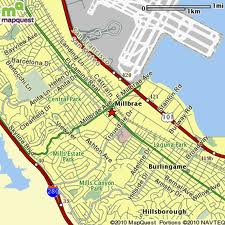
After Steve Kawa, Mayor Gavin Newsom’s chief of staff, started making noises about local hire’s impact on folks who work at San Francisco Airport, since technically it’s in Millbrae, I asked Sup. John Avalos, the legislation’s chief sponsor, to clarify this point.

“Project labor agreements trump this legislation,” Avalos said.

Avalos’ straightforward answer, coming on the heels of Kawa’s grumblings, Sparks claims about the program’s costs, and the striking absence of any analysis of the economic benefits of local hire (especially compared to the recent hooplah around the Americas Cup) made me wonder about the connection between the airport , Human Rights Commission director Theresa Sparks and the Mayor’s Office, since criticism of Avalos’ local hire legislation mainly seems to be coming from these three sources, these days.

Hiring at home

1

sarah@sfbg.com

The lame duck Board of Supervisors made history Dec. 7 when it voted 8-3 to approve mandatory local hire legislation for city-funded construction projects. The measure ends a decade-long effort to reach 50 percent local hiring goals through good-faith efforts.

“That’s a sea change in our local hiring discussion,” said Sup. John Avalos, who launched the legislation in October as part of the LOCAL-SF (Local Opportunities for Communities and Labor) campaign, which seeks to strengthen local hiring, address high unemployment rates, and boost the local economy.

The veto-proof passage of Avalos’ measure comes in the wake of a city-commissioned study indicating that San Francisco has failed to meet good-faith local hiring goals for public works projects even as unemployment levels rise in the local construction industry and several local neighborhoods face concentrated poverty.

Although Cleveland also has a local-hire law, the Avalos measure will be the strongest in the nation. Avalos’ legislative aide Raquel Redondiez told the Guardian that Cleveland’s 2003 legislation requires 20 percent local hire.

“This legislation doesn’t just have a mandated 50 percent goal,” Avalos explained, noting that San Francisco will require that each trade achieve a mandated rate and that 50 percent of apprentices be residents.

“This will ensure that our tax dollars get recycled back into the local economy, and that San Franciscans who are ready to work are provided the opportunity to do so,” Avalos said.

Avalos’ groundbreaking legislation phases in mandatory requirements that a portion of San Francisco public works jobs go to city residents and includes additional targets for hiring disadvantaged workers.


WHO GETS $25 BILLION?

The legislation replaces the city’s First Source program, under which contractors were required only to make good faith efforts to hire 50 percent local residents on publicly-funded projects. But the measure begins slowly by mandating levels some contractors are already reaching. According to a study commissioned by the city’s Office of Employment and Workforce Development and released in October, 20 percent of work hours on publicly-funded construction projects are going to San Francisco residents.

Avalos’ legislation, which is supported by a broad coalition of labor and community groups including PODER, the Filipino Community Center, Southeast Jobs Coalition, Kwan Wo Ironworks Inc., Rubecon, and Chinese for Affirmative Action, comes at a critical moment for the recession-battered construction industry.

Under the city’s capital plan, more than $25 billion will be spent on public works and other construction projects in the next decade — and two-thirds of this money will be spent over the next five years.

The measure has environmental benefits too. Transportation still accounts for more greenhouse gas emissions generated in the Bay Area than any other source, and San Francisco residents are more likely to take transit, walk, or bike to work than residents of other Bay Area counties. “When local citizens are able to work locally, there are fewer cars on the road and less air pollution,” Avalos said.

Sup. Ross Mirkarimi said that Avalos’ legislation is “just a start.”

“People have talked a good game about local hiring,” observed Mirkarimi, whose district includes the high unemployment-affected Western Addition.

“We are going to have to go beyond construction and start thinking about delving into the private sector,” Mirkarimi continued, pointing to the need to build 100,000 housing units over the next 25 years if the city is to keep up with a projected population increase. “Who is going to build that housing?” he asked.

Sup. Eric Mar noted that “the Sierra Club endorsed the measure early on because of the environmental benefits of having people work close to where they live.”

Sup. David Campos, whose district includes the Mission, said the measure was one of the most significant pieces of legislation to emerge from the board in recent years. “In the past, a lot of obstacles got in the way, including some legal challenges,” said Campos, who credited Avalos for navigating a complicated legal structure. “At the end of the day, I think this is going to benefit everyone.”

Mike Theriault, secretary-treasurer for the San Francisco Building Trades Council, told the Guardian he remains opposed to the legislation because the union presers to allocate jobs based on seniority, not residency. But he said the amendments make the measure “less harmful and more survivable in the short-term.”


THE ECONOMIC GAP

Termed-out Sup. Sophie Maxwell, who represents the city’s economically distressed southeast sector, has often noted that the construction industry provides a path to the middle class for people without advanced degrees or facing barriers to employment. She thanked Avalos for pushing legislation that promises to provides opportunities for “growing the middle class instead of importing it.”

“This industry closes the economic gap,” she said.

Board President David Chiu and termed-out Sups. Chris Daly and Bevan Dufty also supported Avalos legislation. But Dufty, who is running in the 2011 mayoral race, cast the eighth vote, which gave the measure a veto-proof majority.

The board’s Dec. 7 vote came a few hours after Bayview-based Aboriginal Blacks United founder James Richards and a score of unemployed local residents rallied at City Hall in the hopes of securing Dufty’s vote.

ABU has recently been protesting at UCSF’s Mission Bay hospital buildings site on 16th and Third streets. Its members also triggered a shut down at the Sunset Reservoir last month after a court ruled that locals promised jobs installing solar panels at the plant be replaced by higher-skilled engineers,

“It’s been too long that we have been protesting and fighting this good faith effort,” Richards told the Guardian. “We need a mandatory policy.”

Dufty is also hoping the Avalos measure could spread to other cities and benefit workers nationwide. “At a certain point I looked at labor and said, ‘Yes, I’m going for this legislation. But not just for San Francisco — you want to take this concept to other cities,’ ” Dufty said, as he made good on his promise to Richards to vote to support Avalos’ law.

Dufty seemed hopeful that Mayor Gavin Newsom would get behind the legislation. “But I respect that there may be a little bit of coming together between now and the second reading.”

Newsom spokesman Tony Winniker told the Guardian that the mayor has 10 days to review Avalos’ legislation after its Dec. 14 second reading. “He supports stronger local hire requirements but does want to review the many amendments that were added before deciding,” Winnicker said.

But will Newsom, who is scheduled to be sworn in as California’s next lieutenant governor Jan. 3, issue a veto on or before Christmas Eve on legislation that has been amended to address the stated concerns of the building trades?

That would be ironic since the amended legislation appears to match recommendations that the Mayor’s Taskforce on African American Outmigration published in 2009. The California Department of Finance projected that San Francisco’s black population would continue to decline from 6.5 percent (according to 2005 census data) to 4.6 percent of the city’s total population by 2050 — in part because of a lack of good jobs.


WILL NEWSOM VETO?

Avalos originally proposed to start at 30 percent and reach 50 percent over three years. But after the building trades complained that these levels were unworkable, Avalos amended the legislation to require an initial mandatory participation level of 20 percent of all project work-hours within each trade performed by local residents, with no less than 10 percent of all project work-hours within each trade to be performed by disadvantaged workers.

He also amended his legislation to require that this mandatory level be increased annually over seven years in 5 percent increments up to 50 percent, with no less than 25 percent within each trade to be performed by disadvantaged workers in the legislation’s sixth year.

A Dec. 1 report from city economist Ted Egan estimated that the local hire legislation would create 350 jobs and cost the city $9 million annually. But Egan clarified for the Guardian that this cost equals only 1 percent of the city’s spending on public works in any given year.

Vincent Pan of Chinese Affirmative Action, which supports Avalos’ local hiring policy, suggested that the mayor “check the temperature.”

“It would be leadership on the part of the mayor not to veto legislation that’s about San Francisco,” Pan said.

And Mindy Kener, an organizing member of the Southeast Jobs Coalition breathed a deep sigh of relief when Dufty’s vote made the law veto-proof. “It’s gonna go across the country,” Kener said. “We just made history.”

Local hiring — and purchasing

1

EDITORIAL The local hire ordinance that the Board of Supervisors approved last week once again puts the city on the cutting edge of progressive policy. San Francisco’s law, sponsored by Sup. John Avalos, is the strongest in the country, and ultimately will mandate that 50 percent of all the people hired on public works projects live in the city.

The politics of the bill were tricky; the local building trades unions opposed it on the grounds that many of their members live out of town and that hiring decisions should be based on seniority, not on residence. But eight supervisors recognized that a local hire law not only benefits the large numbers of unemployed San Franciscans; it’s also good economic policy for the city.

Numerous studies have shown that money paid out to local residents gets spent in town, and circulates in town, and creates more economic activity. That translates into fewer social and economic costs for the city and increased tax revenue.

There are costs to the law. Someone has to monitor compliance, and that requires additional city spending. Training local workers for union jobs may raise the price of some projects. But in the end, the studies all show that keeping money in the community is worth the price.

Avalos deserves tremendous credit for negotiating with labor and other interested parties, accepting compromises that don’t damage the impact of the measure and lining up eight votes to pass it, so even if Mayor Gavin Newsom vetoes it, the board can override the veto.

Now the board ought to apply the same principle to a local purchase law.

One of the major complaints small businesses have in San Francisco is their inability to get city contracts. The qualifying process is complicated and expensive — and when big out of town corporations with plenty of resources to put together bids can also offer lower prices, locals get left out.

The city spends vast sums of money, hundreds of millions of dollars a year, buying goods and services. Every dollar that leaves town translates into far more than a dollar lost to the local economy.

In fact, a 2007 study by Civic Economics showed that 38 percent of the money spent on locally based retailers in Phoenix, Ariz., remained in town and recirculated in the local economy; only 11 percent of the money spent at chain stores stayed in town.

That’s a huge difference, and would translate into many millions of dollars for the San Francisco economy. (Over time, the impact of local hire and local purchasing laws would be much greater than the one-time burst of income expected from the America’s Cup race.)

There are complications with any local purchase law. Not everything the city needs can be bought locally. Nobody in San Francisco, for example, makes train cars or fire engines. But on everything from office supplies and cars to uniforms and consulting contracts, there are (or could be) local companies handling the city’s business.

As with the Avalos law, there would be costs. Some small local suppliers would be unable to match the price that big chains offer. But the overall economic benefits to the city would greatly exceed those price differentials.

San Francisco currently gives a modest preference in bidding to local firms. But if the supervisors applied the Avalos principle and mandated that, within five years, a certain percentage of everything the city buys would have to go to local firms, city officials would be forced to do what they ought to do anyway: look local first.

Every year during the holiday season, the mayor and business leaders urge residents to shop locally. When the new Board of Supervisors takes over in January, the members should start looking beyond rhetoric and start working on legislation that would keep the city’s money in the city.

EDITORIAL: Local hiring, and purchasing

1

Tomorrow’s Guardian editorial:

The local hire ordinance that the Board of Supervisors approved last week once again puts the city on the cutting edge of progressive policy. San Francisco’s law, sponsored by Sup. John Avalos, is the strongest in the country, and ultimately will mandate that 50 percent of all the people hired on public works projects live in the city.

The politics of the bill were tricky; the local building trades unions opposed it on the grounds that many of their members live out of town and that hiring decisions should be based on seniority, not on residence. But eight supervisors recognized that a local hire law not only benefits the large numbers of unemployed San Franciscans; it’s also good economic policy for the city.

Numerous studies have shown that money paid out to local residents gets spent in town, and circulates in town, and creates more economic activity. That translates into fewer social and economic costs for the city and increased tax revenue.

There are costs to the law. Someone has to monitor compliance, and that requires additional city spending. Training local workers for union jobs may raise the price of some projects. But in the end, the studies all show that keeping money in the community is worth the price.

Avalos deserves tremendous credit for negotiating with labor and other interested parties, accepting compromises that don’t damage the impact of the measure and lining up eight votes to pass it, so even if Mayor Gavin Newsom vetoes it, the board can override the veto.

Now the board ought to apply the same principle to a local purchase law.

One of the major complaints small businesses have in San Francisco is their inability to get city contracts. The qualifying process is complicated and expensive — and when big out of town corporations with plenty of resources to put together bids can also offer lower prices, locals get left out.

The city spends vast sums of money, hundreds of millions of dollars a year, buying goods and services. Every dollar that leaves town translates into far more than a dollar lost to the local economy.

In fact, a 2007 study by Civic Economics showed that 38 percent of the money spent on locally based retailers in Phoenix, Ariz., remained in town and recirculated in the local economy; only 11 percent of the money spent at chain stores stayed in town.

That’s a huge difference, and would translate into many millions of dollars for the San Francisco economy. (Over time, the impact of local hire and local purchasing laws would be much greater than the one-time burst of income expected from the America’s Cup race.)

There are complications with any local purchase law. Not everything the city needs can be bought locally. Nobody in San Francisco, for example, makes train cars or fire engines. But on everything from office supplies and cars to uniforms and consulting contracts, there are (or could be) local companies handling the city’s business.

As with the Avalos law, there would be costs. Some small local suppliers would be unable to match the price that big chains offer. But the overall economic benefits to the city would greatly exceed those price differentials.

San Francisco currently gives a modest preference in bidding to local firms. But if the supervisors applied the Avalos principle and mandated that, within five years, a certain percentage of everything the city buys would have to go to local firms, city officials would be forced to do what they ought to do anyway: look local first.

Every year during the holiday season, the mayor and business leaders urge residents to shop locally. When the new Board of Supervisors takes over in January, the members should start looking beyond rhetoric and start working on legislation that would keep the city’s money in the city.

Class conflict in DC and SF

12

There’s an unmistakable whiff of class warfare in the air this holiday season, most obviously on the national level where President Barack Obama and congressional Republicans are helping the ultra-rich steal hundreds of billions of dollars from future generations and the country’s current needs. But we’re also seeing it right here in San Francisco, subtly playing out around who will be our next mayor.

During yesterday’s scheduled discussion at the Board of Supervisors on choosing a new mayor, members of the public – from African-American mothers of slain youth to representatives of immigrant communities to those representing labor and progressive groups – urged the board to choose a mayor who would finally represent all of San Francisco, not just the wealthy and the business community.

Then the progressive supervisors who represent the city’s working class districts talked about getting the process underway and voiced some of the things they’d like to see in a new mayor, such as compassion and a willingness to work with the board and community groups. It seemed like a good faith effort at having an open public discussion about the city’s needs.

But on the other side of the aisle, the supervisors who represent the city’s wealthiest neighborhoods voted to delay the discussion without offering a reason why. Sup. Chris Daly made good points about how incoming mayors usually have time to prepare for assuming this powerful office at a time of pressing city needs and tricky political dynamics, arguing for making this decision sooner than later.

And from the Establishment representatives: nothing. Not a word. Instead, we have Mayor Gavin Newsom threatening to delay his swearing in as lieutenant governor to thwart the current board from picking a successor, and being overtly urged to do so in a San Francisco Chronicle editorial and in disingenous, sanctimonious ruses from SF Chamber of Commerce officials.

Why? Well, here’s the closest thing the editorial offered to a reason: “It makes all the sense in the world to have the supervisors who will be working with the interim mayor make the selection. They are the ones who will have to find common ground and develop a working relationship with Newsom’s successor.”

But does it really make any sense to have an inexperienced group of new supervisors (as our current cover stories shows, none of the four new supervisors have held municipal office and two are new to politics) pick a mayor on their first day on the job, and then have that person immediately take on the complicated job of running the city with no staff in place? And to do that by flouting the the California Constitution and the City Charter?

That sounds like a recipe for disaster – and an opportunity for downtown power brokers to make mischief and ensure their interests aren’t threatened as part of whatever backroom deal gets cut to choose a new mayor, district attorney, and board president. Why else would they so vehemently oppose a deliberative public process that would lead to a decision by those who know the workings of City Hall better than anyone?

As we saw in the last election, wealthy San Franciscans are scared to death of progressive malcontents like Chris Daly, and they’re doing whatever they can to prevent him from being involved in this decision. They see, probably correctly, that the current political dynamics of the city could lead to perhaps the most progressive mayor since George Moscone, or maybe ever, and they’ll do whatever they can to prevent that from happening.

The rich of this city and this country have overplayed their hands, crippled the public sector, and, as Sen. Bernie Sanders so eloquently said recently on the floor of the US Senate, shown a selfish disregard for the needs and interests of the vast majority of citizens. The only question now is this: are we ready to finally stand up, fight back, and really give them something to fear? Or are we going to take our cues from Obama and treat anti-government conservatives as good faith actors when they have shown only contempt for our most cherished democratic processes and values?

I suppose next week, when this board reconvenes to try to choose a successor mayor, we’ll find out.

Class of 2010: Malia Cohen

4

sarah@sfbg.com

It took two weeks and 19 updates of San Francisco’s ranked-choice voting system before Malia Cohen, a former Mayor Gavin Newsom staffer and partner in a firm that helps businesses and nonprofits create public policy, was declared the winner of the hotly contested race to represent District 10, which includes Bayview, Hunters Point and Ingleside. The nail-biting time lag was a byproduct of complex calculations that involved 22 candidates, no clear front-runners, and a slew of absentee and provisional ballots.

But when the RCV dust settled, the results proved that the D10 vote continues to break down along class, race, and gender lines. These RCV patterns personally benefited Cohen’s success in picking up second- and third-place votes.

But they also helped D10’s African American community, now smaller than its growing Asian community but still larger that the black community in any other distinct in the city, send an African American supervisor back to City Hall. And it avoided a run-off between Lynette Sweet and Tony Kelly, who won most first-place votes.

Some chalk up Cohen’s victory to her polished appearance, the middle-of-the road positions she took on the campaign trail, and an impressive list of endorsements that include the San Francisco Democratic Party, the Labor Council, the Building and Construction Trades Council, state Sen. Leland Yee (D-SF), Assembly Speaker Pro Tempore Fiona Ma (D-SF), Board of Supervisors President David Chiu, SF Democratic Party Chair Aaron Peskin, and BART Board President James Fang.

But Cohen told us she thinks coalition building was the key. “Endorsements only account for a quarter of the reasons why you win,” she said. “It’s all about building an organization, a net that goes deep and wide.”

Some progressives were alarmed by a Dec. 1 fundraiser to help settle Cohen’s campaign debt whose guest list included Newsom, former Mayor Willie Brown, Sup. Sean Elsbernd, Ma, Building Owners and Managers Association director Ken Cleaveland, Kevin Westlye of the Golden Gate Restaurant Association, and Janan New of San Francisco Apartment Association.

Cohen dismissed concerns over this conservative showing of après-campaign support. “Fear not,” she said. “It is a fundraiser event. And now that I’m a newly elected supervisor, I look forward to meeting everyone. And I will do a great job representing everyone.

So what should we expect from Cohen, who ran as a fourth-generation “daughter of the district from a labor family” on a platform of health, safety, and employment — and will soon represent the diverse southeast sector, which has the highest unemployment, crime, recidivism, foreclosure and African American out-migration rates citywide and is ground zero for Lennar Corp.’s plan to build thousands of condos at Candlestick and the shipyard?

“I’m a bridge-builder,” said Cohen, who attributes her surprisingly tough but open-minded edge to being the oldest of five sisters.

So far, she’s not going out on a progressive limb. She told us she favors a caretaker mayor: “I’d like someone to maintain the business of the city, someone who has zero political ambition,” she said. “That way it creates an even playing field for the mayoral race.”

Cohen says she is determined to address quality of life concerns, including filling potholes, re-striping crosswalks and introducing traffic calming measures, and taking on critical criminal justice issues, including City Attorney Dennis Herrera’s gang injunction in the Sunnydale public housing project in Visitacion Valley. She opposes Herrera’s strategy but notes: “If not gang injunctions, then what? I can’t dispute that they get short-term results, but what about the long-term impacts? We need long-term solutions.”

Cohen supports Sup. John Avalos’ efforts to pass mandatory local hire legislation but is open to “creative solutions” to help get it over the finishing line. “People who live here should be working here,” Cohen said. “But is 50 percent the magic mandatory hire number? I don’t know.”

Cohen, who just survived a foreclosure attempt, has promised to be a “fierce advocate” for constituents facing similar challenges, including those who met predatory loan brokers at church.

But asked how she would cut spending or raise revenue to address the city’s massive budget deficit, she had no specific answer.

Yet Cohen disagrees with detractors who say she lacks experience. “I may look cute, but don’t be misled. I have a public policy background and fire in my belly. I’m a union candidate, I’m smart, I’m talented, and above all, I love the people in D10 and the rest of San Francisco. I want everyone to prosper and receive benefits. So give me a shot.”

Dufty was Avalos’ eighth vote on local hire

3

History was made at City Hall on December 7, when the Board voted 8-3 to approve local hire legislation for city-funded construction projects.
“This is the strongest local hiring measure in the nation, “ said Sup. John Avalos, the legislation’s chief sponsor. “It doesn’t just have a mandated 50 percent goal. It has a ‘by trade’ mandate. It requires 50 percent of apprentices to be residents. More than anything we are moving away from a good faith policy. That’s a sea change in our local hiring discussion.”
Sup. Sophie Maxwell thanked Avalos “for taking up the mantle” and pushing construction industry legislation that will provide opportunities for ”growing the middle class instead of importing it.”
“This industry closes the economic gap,” Maxwell said,
Board President David Chiu, Sups. John Avalos, David Campos, Chris Daly, Bevan Dufty, Eric Mar, Sophie Maxwell and Ross Mirkarimi voted for the legislation. But Dufty was the eighth vote that gave the measure a veto-proof majority. His vote came after he met ABU (Aboriginal Blacks United) leader James Richards and other advocates of unemployed residents. They see the legislation as a way to invest local tax dollars in local communities, reduce crime and poverty, and lessen pollution by reducing workers’ commutes.


“It’s been too long that we have been protesting and fighting this good faith effort,” Richards said.” We need a mandatory policy.”
ABU member Troy, 47, who was born and raised in the Bayview, and has two sons, said he had been unemployed for six months.
“If we don’t work, nobody works, that’s ABU’s motto,” Troy said. ‘We can’t have nobody come from Marin, taking our jobs and pushing us back onto the streets, selling drugs. We gotta put the merry back into Christmas.”


“A lot of moving parts had to come together for this legislation to be successful,” Dufty told the Board, a couple of hours after he met ABU’s Richards. “This is very reminiscent of Healthy San Francisco, which was one of the most monumental changes in the city.”
Dufty said he believes that, much like Healthy San Francisco, local hire legislation is bigger than just San Francisco. “At a certain point, I looked at labor and said, yes, I’m going for this legislation, but not just for San Francisco,” Dufty said. “You want to take this concept to other cities.”


Dufty  was hopeful that Mayor Gavin Newsom will get behind the legislation, before its Dec.14 second reading.
“But I respect that there may be a little bit of coming together between now and the second reading,” he said.
Newsom spokesperson Tony Winniker told reporters that the mayor plans to review the amended legislation and consult with impacted contractors and unions before deciding whether to veto the legislation.
A December 1 report from city economist Ted Egan estimated that the local hire legislation will create 350 jobs and cost the city $9 million annually, or 1 percent of whatever it spends on public works. (San Francisco is set to spend an estimated $27 billion on capital projects over the next decade.)
Vincent Pan of Chinese Affirmative Action, which supports Avalos’ local hiring policy, suggested that the mayor “check the temperature.”
“It would be leadership on the part of the mayor not to veto legislation that’s about San Francisco,” Pan said.

Where everybody knows your name

0

arts@sfbg.com

HAIRY EYEBALL It can be easy to get cynical about the business side of art, so it’s always refreshing when a local labor of love such as Romer Young — the small Dogpatch gallery formerly known as Ping Pong — demonstrates that growth doesn’t necessarily entail compromising one’s vision.

That vision has always been driven by husband and wife team Vanessa Blaikie and Joey Piziali’s commitment to work that is consistently smart, challenging and often surprisingly personal: from recent Goldie winner Amanda Curreri’s conceptual prompts at forging new social connections, to, most recently, James Sterling Pitt’s table-full of sculpted art-related books and ephemera, an affectionate take on how material possessions can shape creative practice.

“We’ve had very special relationships with our artists because this has always been about putting their work first,” explains Blaikie, when I meet with her and Piziali in the gallery’s cozy back room, which adjoins Piazali’s studio. Inspired by the work of many of their classmates in San Francisco Art Institute’s MFA program, but dismayed by the lack of spaces willing to take a chance on art that was more conceptual or performance-based, Blaikie and Piziali took matters into their own hands and started putting together exhibits.

The gallery’s unusual former name came from the quarterly, ping-pong happy hours Blaikie and Piziali held, a nod to 1970s Bay Area conceptual artist Tom Marioni’s famous statement, “Drinking beer with friends is the highest form of art.”

“We were really trying to activate the space as social sculpture through a non-art event,” Piziali recalls, “but we also had our share of calls asking about equipment rentals.”

Five years later, as the partnerships Blaikie and Piziali formed early on have led to a roster of repeat-showers and a more prominent profile, they decided it was time to change names and reassess how best to shift their operation. “Once you’re not an exhibition space, you start looking at the model of ‘gallery’ and see what that means, “explains Piziali. “But you don’t start a space like this with blood, sweat, and tears only to ask every time, ‘Did we make the bottom line?'”

Though the paddles have been hung up in favor of the, let’s face it, more professional-sounding Romer Young — a combination of Blaikie and Piziali’s mothers’ maiden names — Blaikie’s and Piziali’s core commitment hasn’t changed. Fittingly, they have decided to inaugurate the newly christened space with a solo exhibit by the now New York City-based conceptual artist Chad Stayrook, who contributed one of Ping Pong’s earliest shows.

“It felt only right to honor the growth we’ve undergone,” reflects Blaikie. “When we started, we were doing it because we loved it, and now we’re doing it because we love it and we want it to make sure it can keep growing.”


DOWN MEXICO WAY

Upon entering “Disponible — a kind of Mexican show” at SFAI’s Walter and McBean Galleries, you hear Manuel Rocha Iturbide’s sound installation I play the drum with frequency before you see it — what you see is Hector Zamora’s massive arrangement of hanging metal drying racks. Suspended with fishing line in tiered formations, the drying racks play off of the Brutalist, concrete interior of the Walter gallery while imbuing the space with an ethereal density. The ricocheting clinks, low-end buzzes, and sonorous clangs emitted by Iturbide’s piece — installed in a lofted area above the main gallery — bring Zamora’s installation to life as a fog bank-turned-carousel organ.

Both pieces are less impressive, however, when you attempt to view them individually. Without the extra visual accompaniment, Iturbide’s deconstructed drum kit — played via algorithmically-controlled speaker cones whose vibrations sound the cymbals and drum heads they’re attached to — loses its initial impact. Likewise, separated from Iturbide’s soundtrack, Zamora’s piece resembles the forgotten remains of a half-finished install job.

This creeping feeling of “is that all there is?” that both Zamora’s and Iturbide’s pieces evokes seems, at least partially, by design. The exhibit takes its name from the text on empty advertising billboards throughout Mexico, in which disponible is followed by a phone number. Playing off the double meaning of disponible as “available” and also “potentially changeable” or “disposable,” the curatorial team of Hou Hanru, SFAI’s director of exhibitions and public programs, and Guillermo Santamarina, an independent curator based in Mexico City, aren’t so much devaluing the pieces they’ve selected as they are loosening the conceptual strictures implicit in putting on a show of contemporary Mexican art. I can’t wait to see what Hanru and Santamarina have in store for phase two of the exhibit, which opens in February.

CHAD STAYROOK: UNATTAINABLE BEAST

Fri/10 through Jan. 15, 2011

Romer Young Gallery

1240 22nd St., SF

(415) 550-7483

www.romeryounggallery.com

DISPONIBLE — A KIND OF MEXICAN SHOW (PHASE ONE)

Through Jan. 22

Walter and McBean Galleries, San Francisco Art Institute

800 Chestnut, SF

(415) 749-4563

www.waltermcbean.com

Is your food fair?

0

caitlin@sfbg.com

FAIR FOOD We’ve all worked in a restaurant, haven’t we? I know I have — many — and gosh if they aren’t tricky little employment situations. Overtime, what? Breaks, really? And health care — well who the hell gets health care at a restaurant?

But this being San Francisco, restaurant workers are entitled to all these things courtesy of our hard-won labor laws. Which of course doesn’t mean that workers get them all the time, but that they should. And the bars and eateries that provide these benies — along with job safety, respect, and other luxuries — should be the ones that get the business of the conscientious diner.

Until recently the identity of these decent restaurants was only obtainable by sneaking back into the kitchen to chat. But the advocacy group Young Workers United (www.youngworkersunited.org) is changing that. Its guide to SF restaurants, Dining With Justice, is now in its second year of publication, teaching those who want to know where they can get a nice meal served by someone who is happy and secure in their job.

“It’s kind of a counter to Zagat and Yelp,” YWU organizer Edwin Escobar tells me. Escobar just got done talking about his group’s campaign to a room full of City College of San Francisco students at the school’s “Turn the Tables” teach-in last week. The event was sponsored by CCSF’s labor and community studies program and featured presentations from community groups and SF’s Office of Labor Standards Enforcement.

To research the guide, YWU members interviewed 250 employees at 32 restaurants. The 58-question survey ranked businesses in five fields: compliance with wage and working hours laws, job mobility, job satisfaction, health and safety, and job security. Only nine businesses received stars in three or more the categories; none received five out of five.

“People think, oh, it’s San Francisco, all the workers get treated well. But that’s not the case. Restaurants and retail businesses get away with murder,” Escobar says. His organization provides labor law education and advocacy for low-wage workers around the city in an attempt to stem workplace violations.

Recently, YWU shed some light on some of the troubles faced by workers in a struggle with one of the city’s most beloved type of snack stop: the taqueria. The group helped the Latino staff of the Taqueria Azteca chain (which has locations in the Castro and Noe Valley) recoup more than $2 million in back pay from owners who had cheated them of overtime compensation and even minimal control over their schedules. Escobar says one mother involved in the legal proceedings had been given a choice by management: return to work one week after giving birth or lose her job.

“The workers who get cheated the most in San Francisco are Asian immigrants,” says Shaw San Liu, another speaker at “Turn the Tables.” Liu is a lead organizer with the Chinese Progressive Association (www.cpasf.org), which since 1970 has worked to empower the Chinatown community to deal head on with social inequities. Earlier this year, the association released a report on the state of employment in Chinatown restaurants based on one-on-one interviews with 435 workers. The results were disheartening: 50 percent had worked under-minimum wage jobs; 80 percent had been cheated out of overtime; 64 percent had received no on-the-job training; a majority had been injured on the job; and more than half were paying all medical costs out of pocket.

That’s just not cool in a town that nominally protects workers against all these things by law. Liu says CPA would like to publish a guide similar to Dining With Justice to reward responsible restaurants but has run into cultural stumbling blocks. Law-abiding businesses didn’t want to be singled out as such because, owners said, it would make their neighbors look bad. “Everyone knows minimum wage in Chinatown is $1,000 a month,” says Liu. “They didn’t want to be known as the goody two-shoes.”

There are clear challenges to improving the lot of the person serving you your brunch, burritos, and dim sum. But everyone has a part to play in making it happen. “At this point, we’re just asking consumers to be aware,” Liu says.

Efforts like Dining With Justice are a real step in the right direction. YWU plans to expand its scope next year into other city neighborhoods. “Surely there are more than just nine restaurants treating their workers right in this city. We want to know about them,” YWU organizer Tiffany Crain tells the room of students assembled before her. Crain added that if anyone in attendance works for a good employer, they should call her — just as they should call her if they are getting cheated out of wages or a healthy working environment.

“You want to make money?” Liu asked SF restaurant owners. “You’re going to make money if people think you’re a good employer.” In San Francisco, diners like to think they’re eating sustainably: organic, local, and fair to workers. Also, a chef who is happy in his or her job makes for a better dining experience.

Here are restaurants that scored four stars in Dining With Justice.

Arizmendi Bakery

1331 Ninth Ave.; (415) 566-3117, www.arizmendibakery.com

Arlequin

384 Hayes; (415) 626-1211

The Corner

2199 Mission; (415) 875-9258, www.thecornersf.com

Frjtz

590 Valencia; (415) 863-8272 and 581 Hayes; (415) 864-7654, www.frjtzfries.com

Mission Pie

2901 Mission; (415) 282-1500, www.missionpie.com

Poesia

4072 18th St.; (415) 252-9325, www.poesiasf.com

Zazie

941 Cole; (415) 564-5332, www.zaziesf.com

The class of 2010

4

In about a month, the first class of district-elected supervisors since the 1970s will be gone, termed out, done with the transformative politics they brought to San Francisco. It’s a milestone worth marking: in 2000, when the city returned to district elections, everything changed. Machine-driven politics, controlled by money and mayoral power, vanished almost overnight. Constituencies that were virtually shut out of the corridors of power — tenants, labor, environmentalists, economic progressives, public power activists, the list goes on — suddenly had a seat at the table. Neighborhood issues started to matter. And downtown power brokers were no longer the only game in town.

But term limits mean that none of the members of the class of 2000 can remain in office beyond Jan. 8, 2011; and along with the new members elected two years ago, the class of 2010 will feature four new faces. It’s a diverse group. Two (Malia Cohen and Mark Farrell) have never before run for, much less held, elective office. One (Jane Kim) is Asian, one (Cohen) is African American, one (Scott Wiener) is gay. Farrell, who will replace Michela Alioto-Pier in District 2, is the only straight white guy. (Carmen Chu was reelected from District 4).

Overall, it’s safe to say, the ideological balance of the board hasn’t changed much — but the political approaches will be very different. In 2000, the election was all about then-Mayor Willie Brown, about fighting (or appeasing) the Brown Machine. This group of candidates didn’t run against anything in particular — and with the balkanized nature of local politics, they all have divergent bases of support.

So we sat down with the Class of 2010 and asked them to tell us what they plan to do with the next four years. Two trends emerged: all of the new supervisors want to be seen as independent of any political operation. And most have no clear agenda whatsoever for addressing the biggest problem facing the city — a looming budget deficit that will define almost everything they do in their first year.

At a moment of major fiscal crisis and political change, these four people will on center stage — and what they do could determine both the direction of the city and the hopes of the progressive movement. Click below for our exclusive interviews and profiles:

>>CLASS OF 2010: MARK FARRELL

>>CLASS OF 2010: MALIA COHEN

>>CLASS OF 2010: SCOTT WIENER

>>CLASS OF 2010: JANE KIM


Supervisors punt mayoral decision back a week

11

The San Francisco Board of Supervisors today voted to delay until Dec. 14 the process of choosing a mayor to succeed departing Mayor Gavin Newsom after taking about 40 minutes worth of public testimony, most of it calling on supervisors to act quickly to choose a public-spirited mayor to deal with a variety of neglected issues.
After Assembly member Tom Ammiano announced earlier today that he would not accept the board’s nomination to become mayor, it seemed unlikely that anyone could get the required six votes. But Sup. Chris Daly, who led the campaign to recruite Ammiano, argued for beginning the process today as agendized.
“While the Board of Supervisors is not prepared today to appoint someone as successor mayor of San Francisco, we shouldn’t truncate the conversation,” Daly argued, reiterating his call last week for a mayor who is experienced, compassionate, and willing to work cooperatively with the board.
But Sup. Sophie Maxwell didn’t want to have that conversation, making the motion to continue the item for one week, a motion seconded by Sup. Bevan Dufty. Neither offered reasons or arguments for the action.
Yet Daly noted that the board has an approved process for selecting a new mayor and “it might be a good idea to try it out and see how it works,” even if six votes aren’t there yet to approve a nominee. “I’m prepared to make a nomination.”
He addressed calls for delaying the mayoral succession decision by noting that Oakland Mayor-elect Jean Quan and Governor-elect Jerry Brown have both put together transition teams to prepare for taking power at the same time that Newsom will resign as mayor to become lieutenant governor.
“Typically, a mayor would have had about a month to put together a transition team,” Daly said, also noting, “We are now borrowing time against the next administration of San Francisco.”
Sups. David Campos and Eric Mar also spoke in support of this board making the mayoral succession decision “sooner rather than later,” as Campos put it. “We do have a very tough budget year we will be facing and many challenges in front of us,” he said. Campos said he was open to the delay, but he said “it would be a mistake” not to begin dealing with the decision in earnest next week.
Mar said he was open to the delay because he was interested to read the “Values-based Platform for the next Mayor” that a coalition of labor and progressive groups called San Francisco for All distributed at the meeting. The four-page document called for a mayor to value accessibility, consensus-building, making appointments who are accountable to the community, more equitable budget priorities, and transparency.
The motion to delay was approved on a 9-2 vote, with Daly in Sup. John Avalos in dissent.

Chronicle employees told to accept “substandard” contract

1

After some tough talk about resisting a “substandard offer” from San Francisco Chronicle management, the California Media Workers Guild has decided to urge Chronicle workers to approve a new contract offer that is “essentially the same company proposal” that workers resoundingly rejected just last month. The vote is set for Dec. 13.

Guild representative and longtime Chronicle writer Carl Hall told the Guardian last week that “they basically stiff-armed us” and “refused to negotiate any compromise since October” in contract talks. “We see it as insulting, irresponsible corporate behavior given everything staff has done,” Hall told the Guardian last week.

He told us workers planned to rally against the Chronicle and enlist the help of the community, readers, and local labor leaders. “The company is just not listening, so we’re going to have to get a louder voice to achieve that.” The Guild’s campaign included online testimonials from various Chronicle employees, including conservative columnist Debra Saunders, who began her missive by writing, “I am probably the last person Chronicle readers would expect to see standing up for a union.”

But since then, the Guild has essentially capitulated to management’s demand for a status quo contract, arguing that it’s the best they can get for now despite the 106-29 vote against that contract. “Since then, however, the economy has deteriorated even further, and other media companies in the Bay Area have announced fresh concession demands. At the Chronicle, many Guild members said they were ready to fight, but most recognized it would take some months to build up a potent campaign and public support,” the Guild wrote in a statement on its website. “Given those circumstances, the commitee decided it would be better to accept the current proposed changes — and continue mobilizing in advance of the next round of talks.”

Guardian calls to the Chronicle’s Publisher’s Office were not returned.

Saint Gravy

2

There is a certain faction of society — I think it’s pretty large, if you judge by NorCal standards — that regards Wavy Gravy as some sort of mystical deity from their parents’ generation. We’re not sure what he did, but you should probably address him as Mr. Gravy ’til he tells you not to.

This is a perception that is left unquibbled-with by director Michelle Esrick’s ten year labor of docu-love, Saint Misbehavin’: The Wavy Gravy Movie (opening Fri/3 in Bay Area theaters), and further untouched by my interview with Esrick and the man himself.

Saint Misbehavin’ opening scenes are an iteration of a tie-died holy man’s daily routine. We start out in Wavy’s corner bedroom, awash in sitting Buddha figurines, plastic Disney toys, beads, books, and other sacred objects. Wavy enters, and says a pray and a brief recitation of his heroes. 

This spoken list serves as a blueprint for the bio-pic to come: Jesus, Mohammed, Ghandi, MLK Jr., Jerry Garcia are among those name-dropped. They serve as a background compass for the movie’s neatly plotted trajectory of Wavy’s life: Gravy is born in New York, goes from folk-beatnik Greenwich Village, to acid be-ins with Kesey in California, to the Further Bus.

And then: a stint with the Hopi tribe, and later, off to the East: to Nepal to heal blindness (with the aide of his international medical non-profit Seva). Of course, his creation of Camp Winnarainbow, a summer camp that has been teaching West Coast flower children how to play for three generations now. Today, Wavy is an elder statesman of hippies and their descendents as well as a frozen dessert. His sold-out birthday spectaculars attract crowds like a Phish concert. 

A more recognizable Gravy. Photo Courtesy of Ripple Effect Films

But for our movie-viewing purposes those names at the start also essential because we don’t get to hear a whole lot about Wavy’s inner monolouge in the flick – he’s onstage here, clowning away as he does, well everywhere, not really dishing per se. Saint Misbehavin’ is no E! True Hollywood Story

So when I got the chance to sit face to face with the man (I wore a Ringling Brothers clown hat, he had on a blue bowler and carried his familiar fish on a leash), I thought maybe we’d talk a little about how he got so Gravy. “It’s not too many kids that grow up to be a seminal member of so many artistic scenes,” I say. “Washington Park in the early ’60s, SF during the ’60s, Woodstock… but what was special about Hugh Romney (that was his square name from before he was Wavy — even before his first nom de nonsense Al Dente), how’d you get to where you are today?”

Gravy, just a little sleepy-looking in the warm office building where our interview takes place, tells me “one thing just followed from another, listing off his general path across the world.” Such is the role of a tribe elder talking to a youngster: there are things that we are not to know. What more do we need to know, really? He quotes Thelonius Monk, a friend who stand-up comedian Hugh Romney opened for. “Everyone is a genius by just being themselves.”

That’s his deal: the rainbow he travels on is available to us all, if we can only see it and trust to it’s pretty suspended bands of color. Luckily, we do have Saint Misbehavin’ to get literal with. Esrick has put together a wild ride and the information it contains teaches about Wavy’s contributions to the hippie and anti-Vietnam war movement. He was on the front lines back then – Esrick tells me that the way he deals with the chronic pain he sustains from police beatings from those days is one of the most impressive things she learned about Wavy in the 10 years she spent researching for the film with him. 

I ask Wavy his reaction to seeing his epic life laid out on celluloid for thousands of strangers’ viewing pleasure. He refused to see early versions of the film when Esrick was still editing: what was it like to finally view the real thing? “You realize what a long strange trip it was – and continues to be,” he says after a moment’s pause. “It was the only time I’ve ever seen Wavy speechless,” Esrick smiles.

And so I leave our interview without really having gained any insider info on the life of Gravy. But I haven’t departed without a few gems, the primos being the story of meeting his wife (“she put peanuts in my hamburger and I fell in love,”) tips for graceful protests: “I always gave the best cop my rose. They were always very touched,” vegetarianism: “remember you are not what you eat, you are what you don’t shit,”and the truth about relations with the Middle East, spoken by a man who traveled through Iraq and Afghanistan on a rainbow bus in the 1970s: “They know the difference – there are ugly Americans that you see, and there are fellow travelers on the path of life. They recognized us as the latter.”

This from Michelle: “A full biography of Wavy’s would be 10 movies. I was interested in stringing a necklace of pearls together.” Maybe there are things we’re not supposed to know about those on high, or rather, that we don’t have to in order to know that they’re up there.

Epilogue: To gauge what maybe I am missing from the story of Wavy by virtue of not having been there in the glory days, I texted my mom today. “What did Wavy Gravy mean to you back in the day? Was he cool?” She wrote back “I don’t remember him!” Which of course, means she was really there. 


Saint Misbehavin’: The Wavy Gravy Movie opens Fri/3 in Bay Area theaters.  


Tax breaks we can’t afford

18

The big front-page headline on today’s Examiner: “Workers we can’t afford.” It’s a classic story of the Ex genre, a look at how much labor costs are increasing and eating a hole in the city budget. But what gets me is thal it’s not just the Ex; the Chron takes this line, too, and so do news outlets all over the state (and all over the country). The problem is always labor.


You never see a big headline telling the other side of the story: “Tax breaks we can’t afford.”


The thing is, tax cuts and tax breaks are expenses, just like labor costs. The impact the budget in the same way. And at least city workers DO something; a lot of the tax cuts don’t.


I was watching the City Channel last night (yes, Mr. Mayor, I was one of the “ten people” you joked about who were actually watching) and Newsom was giving a speech out at Mission Bay, welcoming a new biotech outfit to the city. And he went on and on about how his administration has attracted all these companies by giving them tax breaks.


He said that, unlike South San Francisco, this city “taxes jobs.” (That’s just silly; we have a payroll tax because you have to have some form of business tax, and the state won’t let us tax corporate income, and a gross receipts tax also has problems, and a payroll tax is at least an approximation of the size of a company. If we taxed gross receipts instead he’d complain that we were “taxing success.”)


And then when he was done with his prattle, the guy from UC who sets up the Mission Bay incubator space for biotech businesses spoke, and talked about all the reasons busineses want to move into the area, mainly the direct connection with UC researchers and experts in business development and the quality of the workforce. He didn’t say a word about taxes.


Because taxes, particularly the very modest payroll tax the city charges, are such a minor factor in business location decisions that tax breaks like Newsom’s don’t do much good in attracting employers. But they do cost the city money.


And those are expenses — yes, expenses — that we can’t afford.


Let’s play the “local hire” numbers game

0

There’s been a lot of discussion at City Hall about the pressing need for mandatory local hire legislation, as opposed to San Francisco’s current “good faith” efforts. And it seems that everyone agrees upon is that something needs to be done, as the Board prepares to vote December 7 on Sup. John Avalos’ local hire proposal, which seeks to ensure that 50 percent of workers hired on city-funded construction projects will be local residents.
The move comes at a time of high unemployment in the recession-hit construction industry, but would kick in as San Francisco stands poised to spend $27 billion on public works projects over the next decade.
‘The city needs to leverage its funding position to ensure that our residents benefit from these investments,” Avalos said at a Dec. 1 committee hearing on his legislation, which would require 25 percent of hours on city-funded construction projects, to be worked by local residents in the first year. This rate would rise 5 percent each year to 50 percent.
It would also require 50 percent of apprentice hours to be worked by local residents in the first year (with out-of-state workers exempt from these requirements).

These requirements currently apply to each individual construction trade (carpenters, painters, laborers, operators, brick masons, plasterers) and not to overall project hours.

The city would pay incentive bonuses to contractors that exceed the requirements.
Contractors who failed to meet the requirements would have the option of paying liquidated damages to the city, or sponsoring apprentices during the project.

But a December 1 report from Ted Egan, the city’s chief economist, estimates the legislation would raise the city’s contracting costs by $9.3 million per year, while creating 350 jobs.
 
Egan breaks down the city’s estimated $9.3 million in contracting and administrative costs into three distinct piles: $2 million in higher bid costs from hiring the unemployed, $4.5 million in higher bid costs from hiring the already unemployed, and $2.8 million in higher costs associated with penalties.

‘This cost represents approximately 1 percent of the city’s $934 million estimated annual spending on covered projects,” Egan noted, adding that the cost to the city will be lower in early years, because unemployment is high now and labor is widely available.

“This is a conservative estimate,” Egan added, “as it assumes no contractor exceeds the target and receives incentive bonuses from the city, and also excludes any contractor productivity losses caused by breaking up core crews.”

Egan acknowledges that most city expenses are associated with inflated contractor bids.
“These will occur because the local supply of skilled trades workers is insufficient to meet the local hiring requirements of the legislation,” he observed. “Contractors will be forced to pay above-the-market wages to workers that already have jobs, and pay the city penalties because resident labor is unavailable in many trades. These costs will be passed on to the city. This excess cost to the city could largely be mitigated by choosing local hiring targets that better reflect local supply.”

“The legislation will increase local employment and associated spending at local businesses, at the cost of higher City contracting costs,” Egan warned. “The legislation creates a net spending and jobs benefit, as written; with recommended mitigations, the positive economic impact can increase, and the cost to the city can decline.”

Egan calculated that estimated costs to the city could be reduced to $2.4 million, if Avalos’ proposed legislation is amended in the following ways:

1.    Replace across-the-board 50 percent mandatory requirements with trade-specific mandates to reflect “supply and demand in each trade.”
Egan argues that across-the-board requirement would lead to higher contracting costs “for several trades where required demand exceeds current supply.”
These impacted occupations include operators, brick masons and plasterers, and represent 50 percent of projected demand for city projects, over the next ten years, Egan said.
“Other occupations, such as carpenters, painters, laborers, and drivers are less impacted and can sustain the scheduled mandate, provided goals are set on an industry-wide and not a project-by-project basis,” Egan stated.

2.    Require a study every two years “to modify requirements and assess progress to a 50 percent mandatory requirement.”
Egan’s report suggests that the city conduct a review for two years, and then set mandatory participation levels for two years for brick masons, block masons, stone masons, cement masons, carpet, floor and tile installers and finishers, concrete finishers and terrazzo workers, construction equipment operators (except paving, surfacing and tamping equipment operators), drywall installers, ceiling tile installers and tapers, electricians, pipe layers, plumbers, pipe fitters and steam fitters, plasterers, stucco masons, roofers and sheet metal workers.
Egan’s proposal is that the city assess the length of time required for each of these trades to develop a pool of qualified resident workers to support a 50 percent local hire mandate, and then, if necessary, propose amendments to the mandatory levels for these trades.

3.    Allow contractors to transfer credit hours
Egan suggests that contractors and sub-contractors could accumulate credit for hiring local residents on non-City funded projects, transfer those accumulated credit hours to other contractors, and apply those credit hours to contracts for covered projects to meet the applicable minimum mandatory hiring requirements, or work off assessed liquidated damages. “Transferred credit hours may only be applied against mandatory hiring requirements for the trade in which they were accumulated,” Egan’s report states.

4.    Eliminate incentive payments
Egan recommends eliminating incentive payments, “since the ability to transfer accumulated credit hours provides a similar, and more efficient, incentive for contractors to exceed targets.”

Egan notes that his analysis assumes that annual public works spending is equal to the 10-year average in the city’s capital plan, which is $3.1 billion.
“60 percent of that will be spent on projects not covered by the legislation, because they are state- or federal-funded,” Egan stated.

He predicts that unemployment in the trades will average 10 percent in the next decade.
“Current unemployment in construction is 20 percent in San Francisco,” Egan said.

Egan argued that allowing contractors that exceed local hire requirements to transfer the additional hours, within a trade, to other contractors “would allow the same local hiring targets to be met on an industry-wide basis, not a project-by-project basis.”

He also recommended eliminating proposed incentive payments.
‘Giving contractors the ability to sell their excess hours creates a private incentive to exceed hiring targets. Contractors which do not meet the local hire requirements will compensate those that do,’ Egan wrote.

But at a Dec. 1 hearing by the Board’s Budget and Finance committee, not everyone agreed with Egan’s findings.

Missing from his “economic costs” equation, some speakers observed, were estimated savings from reduced law enforcement costs and poverty rates, if residents got jobs.
Egan acknowledged that his report does not factor in socio-economic benefits of the plan.
‘It’s a very fair point, but it’s hard to quantify,” Egan told the Guardian.

And while Avalos’ legislation proposes to phase in the local hiring mandate over the course of six years, Egan’s report simply focuses on costs when the city hits 50 percent.

Egan said he could have broken down his report into a phased-in, year by year, basis.
“But it gives the impression of greater certainty,” Egan said, noting that it’s not clear how much the city is going to spend on construction next year. “So, given what we’re planning to spend over the next 10 years, here’s an average estimate,” he explained.

I asked Egan about his report’s claim that there is a 20 percent unemployment rate in the construction industry in San Francisco, given that other city officials, including Mayor Gavin Newsom and Sup. John Avalos, have cited a 40 percent rate.

“The 2009 census figures came out in November and it said that 20 percent of San Francisco residents who are in construction say they are unemployed,” Egan said.

He acknowledged that the 40 percent unemployment rate that Newsom and Avalos cited likely refers to unemployment among folks who work in San Francisco’s construction industry, but live outside the city, where housing prices are cheaper.

Asked if his office was recommending that the local hire percentage start at 20 percent, as some building trades requested during the Budget Committee hearing on Avalos’ proposal Egan indicated this was not the case.
“We don’t see a problem in year one,” Egan explained. “There are a lot of unemployed people in year one that are available, so that target is not hard to meet.

The main problem, to Egan’s mind, was not the mandatory 50 percent local hiring goal, per se, but the requirement that it be achieved by every individual trade.
“That’s why we recommend doing a process every two years to take a look at how good a job individual trades are doing, and then set targets based on the rates of producing a supply of qualified workers,” he said.

“Some won’t take seven years to achieve a 50 percent rate, but others could take much longer,” Egan explained. ‘Otherwise, contractors, will have to raise bids so they can afford to pull qualified workers off other contracts. That would lead to shuffling people around, and the city paying for it, without new people being trained.”

So, that’s where the conversation seems to be headed going into Tuesday’s Board meeting, with the building trades still pushing for amendments, and Avalos, the chief sponsor of the legislation, reportedly trying to win support from Sup. Bevan Dufty, so that he can pass veto-proof legislation before the end of the month. Stay tuned.

Newsom and downtown groups court Cohen

18

A rogue’s gallery of downtown power brokers and moderate politicians is lining up to give D10 supervisor-elect Malia Cohen money during a fundraiser at Democratic Party money man Wade Randlett’s house tonight (Wed/1). And while the group may be trying to buy the support of a candidate they didn’t support in the election, Cohen and some of her progressive supporters say she’s been open to developing relationships across the ideological spectrum.

“Fear not,” Cohen told us when we raised an eyebrow at the host committee, and she noted that most of those on the list didn’t endorse her candidacy. “It is a fundraiser event, and now that I’m a newly elected supervisor, I look forward to meeting everyone.”

The guest list includes Mayor Gavin Newsom, former Mayor Willie Brown, Sup. Sean Elsbernd, Assembly member Fiona Ma, Building Owners and Managers Association director Ken Cleaveland, lobbyist Sam Lauter, Brook Turner with Coalition for Better Housing, Kevin Westlye of Golden Gate Restaurant Association, Janan New of San Francisco Apartment Association, as well as building trades head Michael Theriault and Tim Paulson of the San Francisco Labor Council.

“That’s not my perception of it,” Randlett – who used to run the downtown political organization SFSOS – told us when we asked about downtown’s attempt to buy influence with a candidate who finished the campaign about $20,000 in debt. He also rejected the characterization that it was a high-roller event, noting that prices initially listed at $100-$500 have since been lowered to $50. “Anyone who wants to attend at any price is welcome,” he said.

“I think it’s smart of their part, because they didn’t support her in the election, to try to give her money in the end,” said Gabriel Haaland of SEIU Local 1021, which did endorse Cohen. “It remains to be seen where she’s going to land [politically], but it seems clear what this group is attempting to do, to influence her votes.”

Cohen also received endorsements from the San Francisco Democratic County Central Committee, its Chair Aaron Peskin, and Board of Supervisors President David Chiu, who says he isn’t concerned about the Randlett fundraiser. “I understand that she has been celebrating with people from across the ideological spectrum,” Chiu said.

Indeed, Cohen said she is anxious to get to know representatives of San Francisco constituencies across the spectrum, borrowing a line from Shirley Chisholm, the first African-American women elected to Congress, in calling herself “unbought and unbossed.” Cohen said, “I will do a great job representing everyone. I will protect the interests of District 10 residents.”

Randlett, who flamed out with SFSOS before reviving his standing as a top-tier Democratic Party fundraiser by being an early backer of Barack Obama’s presidential bid, told us that was a connection he shares with Cohen. “The only reason I supported Malia from the beginning and am hosting the event for her is that like me she was there for Barack from Springfield through election night, never wavered in her support for him, and continues to stick by him now, when fair weather friends are carping from the sidelines,” Randlett told us.

Paulson told us that Cohen asked him to co-host a fundraiser with Newsom – who Cohen once worked for although he didn’t support her in this election – and that he didn’t see the complete roster until a couple days ago. “I am surprised there was this list,” Paulson said of the groups that regularly oppose progressive candidates and legislation.

But Haaland said that labor and the left will also be reaching out to Cohen, whose lack of a strong ideological grounding and representation of a district slated for the city’s most ambitious redevelopment plans will make her a pivotal vote on the new board. “We have to do our best to reach out to her as well,” Haaland said.


The biggest fish

6

rebeccab@sfbg.com

Shortly after Larry Ellison, the billionaire CEO of Oracle Corp. and owner of the BMW Oracle Racing Team, won the 33rd America’s Cup off the coast of Valencia, Spain, in February 2010, a reception was held in his honor in the rotunda at San Francisco City Hall.

The event drew members of Ellison’s sailing crew, business and political heavyweights such as former Secretary of State George Schultz, and other VIPs. Attendees posed for photographs with the tall, glittering silver trophy at the base of the grand staircase.

As part of the celebration, Ellison helped Mayor Gavin Newsom into an official BMW Oracle Racing Team jacket, and Newsom granted Ellison a key to the city, a symbolic honor usually reserved for heads of state and the San Francisco Giants after they won the World Series. Shortly after, the mayor and the guest of honor, whom Forbes magazine ranked as the sixth-richest person in the world, sat down for a face-to-face.

That meeting marked the beginning of the city’s bid to host the 34th America’s Cup in San Francisco in 2013. Since securing the Cup, Ellison has made no secret of his desire to stage the 159-year-old sailing match against the iconic backdrop of the San Francisco Bay, a natural amphitheater that could be ringed with spectators gathered ashore while media images of the stunningly expensive yachts are broadcast internationally.

Newsom and other elected officials have feverishly championed the idea, touting it as an opportunity for a boost to the region’s anemic economy. The city’s Budget & Legislative Analyst projects roughly $1.2 billion in economic activity associated with the event — the real prize, as far as business interests are concerned. It would also create the equivalent of 8,840 jobs, mostly in the form of overtime for city workers and short-term gigs for the private sector.

While the idea has won preliminary support from most members of the Board of Supervisors, serious questions are beginning to arise as the finer details of the agreement emerge and the date for a final decision draws near.

Ellison and the race organizers would be granted control of 35 acres of prime waterfront property in exchange for selecting San Francisco as the venue for the Cup and investing $150 million into Port of San Francisco infrastructure. But the event would result in a negative net impact to city coffers.

Hosting the event and meeting Ellison’s demands for property would cost the city about $128 million, according the Budget & Legislative Analyst, just as city leaders grapple with closing a projected $712 million deficit in the budget cycle spanning 2011 and 2012.

Part of the impact is an estimated $86 million in lost revenue associated with rent-free leases the city would enter into with Ellison’s LLC, the America’s Cup Event Authority (ACEA). In exchange for selecting San Francisco as a venue and investing in port infrastructure, ACEA would win long-term control of Piers 30-32, Pier 50, and Seawall Lot 330 — waterfront real estate owned by the Port of San Francisco, with development rights included. Seawall Lot 330, a 2.5-acre triangular parcel bordered by the Embarcadero at the base of Bryant Street, would either be leased long-term or transferred outright to ACEA.

The most vociferous opponent of the America’s Cup plan is Sup. Chris Daly, who has voiced scathing criticism of the notion that the city would subsidize a billionaire’s yacht race at a time of fiscal instability. “The question is whether or not the package that San Francisco’s putting together is good or bad for the city,” Daly told the Guardian, “and whether or not it’s the best deal the city can get.”


THE CREW

According to a Forbes calculation from September 2010, Ellison’s net worth is $27 billion, making him several times wealthier than the City and County of San Francisco, which has a total annual budget of about $6 billion. Ellison reportedly spent $100 million and a decade pursuing the Cup.

As soon as Ellison expressed interest in bringing the Cup to San Francisco, Newsom began charting a course. Park Merced architect and Newsom campaign contributor Craig Hartman of the firm Skidmore, Owings & Merrill was tapped to reimagine the piers south of the Bay Bridge as the central hub for the event, and soon Hartman’s vision for a viewing area beneath a whimsical sail-like canopy was forwarded to the media.

The mayor also issued letters of invitation to form the America’s Cup Organizing Committee (ACOC), a group that would be tasked with soliciting corporate funding for the event. ACOC was convened as a nonprofit corporation, and it’s a powerhouse of wealthy, politically connected, and influential members.

Hollywood mogul Steve Bing, who’s donated millions to the Democratic Party and funded former President Bill Clinton’s 2009 trip to North Korea to rescue two imprisoned American journalists, is on the committee. So is Tom Perkins, a Silicon Valley venture capitalist, billionaire, and former mega-yacht owner who was once dubbed “the Captain of Capitalism” by 60 Minutes. George Schultz and his wife, Charlotte, are members. Thomas J. Coates, a powerful San Francisco real estate investor who dumped $1 million into a 2008 California ballot initiative to eliminate rent control, also has a seat. Coates resurfaced in the November 2010 election when he poured $200,000 into local anti-progressive ballot measures and the campaigns of economically conservative supervisorial candidates.

Billionaire Warren Hellman, San Francisco socialite Dede Wilsey, and former Newsom press secretary Peter Ragone are also on ACOC. There are representatives from Wells Fargo, AT&T, and United Airlines. One ACOC member directs a real estate firm that generated $2.5 billion in revenue in 2009. Another is Martin Koffel, CEO of URS Corp., an energy industry heavyweight that made $9.2 billion in revenue in 2009. There’s Richard Kramlich, a cofounder of a Menlo Park venture capital firm that controls $11 billion in “committed capital.” And then there’s Mike Latham, CEO of iShares, which traffics in pooled investment funds worth about $509 billion, according to a BusinessWeek article.

There’s also an honorary branch of ACOC composed of elected officials including House Minority Leader Nancy Pelosi, Gov. Arnold Schwarzenegger, Sen. Dianne Feinstein, and others. Their role is to help the Cup interface with various governmental agencies to control air space, secure areas of the bay exclusively for the event, set up international broadcasts, and bring foreign crew members and fancy sailboats into the United States without a hassle from immigration authorities.

ACOC is expected to raise $270 million in corporate sponsorships for the America’s Cup. That money will be funneled into the budget for ACEA. It’s unclear whether the $150 million ACEA is required to invest in city piers will be derived from ACOC’s fund drive.

The city also anticipates that ACOC would raise $32 million to help defray municipal costs. “However,” the Budget & Legislative Analyst report cautions, “there is no guarantee that any of the anticipated $32 million in private contributions will be raised.”

A seven-member board, chaired by sports management executive Richard Worth, will direct the ACEA, according to Newsom’s economic advisors, but the other six seats have yet to be filled. ACEA’s newly minted CEO is Craig Thompson, a native Californian who previously worked with a governing body for the Olympics and has helped coordinate major sporting events internationally. In an interview with sports blog Valencia Sailing, Thompson provided some insight on why major corporations might be inspired to donate to the cause. Basically, the Cup is the holy grail of networking events.

“It’s a very difficult economic situation we are going through, and it’s not the best time to be looking for sponsors for a major event,” Thompson acknowledged. “On the other hand, the America’s Cup is one of the very few activities … that offer access to really top-level individuals in terms of education or economic situation. The America’s Cup is a unique platform for a lot of companies that want access to those individuals that are very difficult to reach under normal circumstances. I can tell you for example that Oracle is very pleased with the marketing opportunity the America’s Cup has presented to them. They invite their best customers and are very successful in turning the America’s Cup into a platform for generating business. The same thing can be true for a lot of different companies that need access to wealthy individuals.”

But should San Francisco taxpayers really be subsidizing a networking event for the some of the business world’s richest and most powerful players?


TRANSFORMING THE WATERFRONT

Over the past four months, Newsom’s Office of Economic and Workforce Development (OEWD) has been negotiating with race organizers to hash out a Host City Agreement outlining the terms of bringing the America’s Cup to San Francisco.

The proposal will go before the Board of Supervisor’s Budget & Finance Committee on Dec. 8, and to the full board Dec. 14. A final decision on whether San Francisco will host the race is expected by Dec. 31. ACEA and ACOC will each sign onto the agreement with the City and County of San Francisco.

From the beginning, the event was envisioned as “the twin transformation,” according to OEWD — the America’s Cup would be transformed by attracting greater crowds and heightened commercial interest while San Francisco’s crumbling piers would be revitalized through ACEA’s $150 million investment in port infrastructure.

The plan paints downtown San Francisco as the “America’s Cup Village” during the sailing events, and a study produced by Beacon Economics estimates that the financial boost would come primarily from hordes of visitors flocking to the event — more than 500,000 are expected to attend. The city expects a minimum of 45 race days, including one pre regatta in 2011 and one in 2012 (or two in 2012 if the one in 2011 doesn’t happen), a challenger series in 2013, and a final match in 2013.

The transformation of the city’s waterfront would be dramatic. In addition to the rent-free leases for Piers 30-32, 50, and Seawall Lot 330, ACEA would be granted exclusive use of much of the central waterfront, water, and piers around Mission Bay, and water and land near Islais Creek during the course of the event. Under the Host City Agreement, race organizers would have use of water space spanning Piers 14 to 22 ½; Piers 28, 38, 40, 48, and 54, a portion of Seawall Lot 337, and Pier 80, where a temporary heliport would be sited.

Seawall Lot 330, a 2.5-acre parcel valued by the Port at $33 million, lies at the base of Bryant Street along the Embarcadero and has a nice unimpeded view of the bay. Piers 30-32 span 12.5 acres, and Pier 50 is 20 acres.

The Budget & Legislative Analyst’s study predicts that the ACEA could opt to build a 250-unit condo high-rise on Seawall Lot 330, deemed the most lucrative use. Under the Host City Agreement, the city would be obligated to remove Tidelands Trust provisions from Seawall Lot 330, which guarantee under state law that waterfront property is used for maritime functions or public benefit. Tweaking the law for a single deal would require approval from the State Lands Commission, but Newsom, in his new capacity as lieutenant governor, would cast one of the three votes on that body.

The combination of construction, demolition, lost rent revenue, police and transit, environmental analysis, and other event costs would hit the city with a bill totaling around $64 million, according to the Budget & Legislative Analyst study. Since city government would recoup around $22 million in revenue from hosting the Cup, the net impact would be around $42 million. That doesn’t include the potential $32 million assistance from ACOC.

At the same time, the city would stand to lose another $86.2 million by granting long-term development rights to 35 acres of Port property for 66 to 75 years without charging rent, bringing the total cost to $128 million. OEWD representatives played down that loss in potential revenue, saying past attempts to redevelop piers hadn’t been successful because none could handle the upfront investment to revitalize the crumbling piers.

The Host City Agreement has raised skepticism among Port staff and the Budget Analyst that tempered initial enthusiasm for the event. “The terms of the Host City Agreement will require significant city capital investment and will result in substantial lost revenue to the Port,” a Port study determined. Faith in that plan seems to be eroding and it may be scrapped for an alternative plan that’s cheaper for the city.

The Northern Waterfront alternative substitutes Piers 19-29 as the primary location for the event and eliminates the Mission Bay piers from the equation. Under this scenario, ACEA would invest an estimated $55 million, instead of $150 million. In exchange, it would receive long-term development rights to Piers 30-32 and Seawall 330 on “commercially reasonable terms,” according to a Port staff report.

Board of Supervisors President David Chiu requested that the Port explore that second option more fully, and the Port report notes that it would reduce the strain on Port revenue. The Northern Waterfront plan would cost the Port a total of $15.8 million, instead of $43 million, the report notes. Port staff recommended in its report that both the original agreement and the alternative be forwarded to the full board for consideration.


PHANTOM BIDS?

Under the competition’s official protocol, Ellison, as defender of the Cup, has unilateral power to decide where the next regatta will be held. Race organizers have said it’s a toss-up between San Francisco and an unnamed port in Italy — though it’s anyone’s guess how seriously a European site is being considered by a team headquartered at the Golden Gate Yacht Club, a stone’s throw from the Golden Gate Bridge.

According to a San Francisco Chronicle article published in early September, Newsom issued a memo stating that San Francisco was competing against Spain and Italy to become the chosen venue. Valencia was said to be offering a “generous financial bid,” and a group in Rome was rumored to have offered some $645 million to bring the Cup to Italian shores, the memo noted. It was a call for the city to present Ellison with the most attractive deal possible to compel him to pick San Francisco.

Speaking at an Oct. 4 Land Use Committee hearing, OEWD director Jennifer Matz told supervisors: “San Francisco was designated the only city under consideration back in July. Now we are competing against the prime minister of Italy and the king of Spain.”

However, the veracity of those claims came into question in mid-November. Daly, incensed that the Mayor’s Office never communicated with him about the Cup despite wanting to hold it in his sixth supervisorial district, launched his own personal investigation. He fired off an e-mail to Team Alinghi, a prior America’s Cup winner, and began communicating with other European contacts until he got in touch with someone in Valencia’s municipal government.

“I got a call back from a representative who basically said I should know something,” Daly recounted. Valencia, his source said, never submitted a bid to host the Cup. At a Nov. 13 press conference, Valencia’s mayor Rita Barbera confirmed this claim, according to a Spanish press report, expressing disappointment that the city had been eliminated from consideration as a host venue. “There was no formal bidding process,” she charged. She also denied reports that any money had been offered.

Meanwhile, the Budget Analyst was unable to find any concrete evidence that other host city bids had been submitted. “We have nothing to confirm that other offers have been made,” Fred Brousseau of the Budget Analyst’s office told the Guardian.

In response to Guardian queries about whether the Mayor’s Office had evidence that Italy had indeed submitted a bid, Project Manager Kyri McClellan of the OEWD forwarded a one-page resolution from the Italian prime minister assuring race organizers that there would be tax breaks, accelerated approvals, and other perks guaranteed if the Cup came to Italy. However, an Italian journalist who looked over the resolution told the Guardian that the document didn’t appear to be a formal bid, merely a response to a query from race organizers.

Daly has his doubts that either Valencia or the Italian port were ever seriously considered. “I think they were phantom bids,” he said, “created by either Larry Ellison or the Newsom administration … to place pressure on the Board of Supervisors.”

A representative from OEWD told the Guardian that officials have no reason to doubt that the European bids, and accompanying offers of money, were real. However, the city wasn’t privy to race organizer’s discussions about possible European venues. A final decision is expected before the end of the year.

Daly hasn’t held back in voicing opposition to the America’s Cup and blasted it at an Oct. 5 Board meeting. “This tacking around Sup. Daly will not get you in calmer waters,” Daly said. “I told myself I was not going to make a yachting reference. But I will bring a white squall onto this race and onto this Cup, and I will do everything in my power starting on Jan. 8 to make sure these boats never see that water.”


WIND IN WHOSE SAILS?

The America’s Cup would undoubtedly bring economic benefit to the area and create work at a time when jobs are scarce. Police officers would get overtime. Restaurant servers would be scrambling to keep up with demand. Construction workers seeking temporary employment would get gigs. Hotels would rake it in. Pier 39 would be booming. However, the Budget Analyst report cautioned: “It is unlikely that any labor benefits would remain in the years after the America’s Cup event is completed.”

Certain small businesses would catch a windfall. John Caine, owner the Hi Dive bar at Pier 28, didn’t hesitate when asked about his opinion on the city hosting the Cup. “Please come fix our piers. It’s a shout-out to Larry Ellison,” he said. Caine said he supports the America’s Cup bid 100 percent, and is excited about the boost it could give his business. The Hi Dive would not be required to relocate under the proposal, he added.

At the same time, other small business would be negatively affected, particularly those among the 87 Port tenants who would be forced to relocate to make way for the America’s Cup. The Budget Analyst’s report also notes that retail businesses in the area whose services had no appeal to race-goers might suffer from reduced access to their stores, since crowding and street closures would shut out their customers.

The sailing community has rallied in support of the Cup, and Newsom has received hundreds of e-mails from yachting enthusiasts from as far away as Hawaii and Florida promising to travel to San Francisco with all their sailing friends to watch the world-famous vessels compete.

Ariane Paul, commodore of a classic wooden boat club called the Master Mariners Benevolent Association, told the Guardian that she was excited about the opportunity for the America’s Cup to showcase sailing on the bay. “In the long term, it’s a win-win,” Paul said. “It would be great to have that boost.” As for the financial terms of the deal, she remained confident, saying, “I don’t think that the city is going to let Larry Ellison walk all over them.”

Sup. Ross Mirkarimi is often politically aligned with Daly, but not when it comes to the issue of the America’s Cup. As a kid growing up on the island of Jamestown, a tiny blue-collar community located off the coast of Rhode Island, Mirkarimi learned to sail and occasionally spent summers working as a deckhand. Every few years, the America’s Cup would come to nearby Newport, transforming the area into a bustling hub and bringing the locals into contact with famous sailors. It left an everlasting impression. When the BMW Oracle Racing Team secured the 33rd Cup off the coast of Valencia, Mirkarimi did a double-take when he saw a photograph of the winning team — his childhood friend from Rhode Island was on the crew.

Mirkarimi told the Guardian he supports bringing the Cup to San Francisco because of the economic boost the area will receive — if the Cup continues to return to San Francisco as it did for 53 years in Newport, he said, the city could look forward to a free gift in improved revenue associated with the event, and that could help quiet the tired annual debates over painful budget cuts.

At the same time, he acknowledged that the Budget Analyst report had prompted what he called healthy skepticism. “I think the onus is on the city and Cup organizers to make sure the benefits far, far outweigh the investment,” Mirkarimi said. “This effort is not just about making one of the wealthiest men in the United States that much more wealthy … That can’t be the case,” he said. “It has to be about what will the Cup do in order to be a win-win for the people of San Francisco.” Mirkarimi said he expected scrutiny of the details of the agreement at the Dec. 8 Budget and Finance Committee hearing: “Naturally, in this time of economic downturn … people want to know, what’s the outlay of cost, and what are we going to get in return?” 

Investing in the future

0

Dick Meister, former labor editor of the SF Chronicle and KQED-TV Newsroom has covered labor and politics for a half-century. Contact him through his website, www.dickmeister.com, which includes more than 250 of his columns.

The nation’s crumbling infrastructure is in very serious need of rebuilding. There’s absolutely no doubt about that.

Miles and miles of roads, highways and airport runways need to be repaired or replaced, as do miles and miles of railroad track. Many bridges and other public structures need to be fixed. So do many streets and many street lights, many water and flood control systems, many park and recreation and port facilities’ high speed train systems need developing and so does very much more that’s vital to our daily lives.

Look around you. You can’t possibly miss examples of crumbling infrastructure.

The AFL-CIO and its affiliated unions have been pointing that out for many years, and noting that the obviously needed repair and replacement work would provide jobs for many thousands, if not millions, of the unemployed, who need work as badly as the infrastructure needs it. Those jobs are good, relatively well-paying jobs – exactly what we need to escape the Great Recession that’s continuing to plague the nation.

It’s pretty much what was done during the Great Depression of the 1930s, when President Franklin Roosevelt, with the support of Congress, put together the Works Projects Administration, or WPA, to put millions of jobless Americans to work on building and repairing the infrastructure. It worked then, and it would work now.

Last month, President Obama’s Council of Economic Advisers and the Treasury Department issued a report detailing the benefits of doing the needed infrastructure work, including the “long term economic benefits.” The report also noted that a huge majority of Americans support spending tax money on infrastructure improvement.

President Obama’s labor-endorsed plan for infrastructure improvements over the next six years calls rebuilding 150,000 miles of roads, laying and maintaining 4,000 miles of  railroad tracks, and creating a new air traffic control system that would reduce delays.

President Edward Wytkind of the AFL-CIO’s Transportation Trades Department hailed the president’s plan for its promise of “putting millions of Americans to work in the type of good jobs that transportation investments have supported for more than a century.”

Laborers Union President Terry O’Sullivan noted that “time is running out.” He said, “We need to invest in our country, and we need to create jobs as soon as possible. It’s a no-brainer – let’s build our country, create jobs, keep America competitive in the 21st century and leave behind real assets  for future generations.”

Author Ezra Klein, writing in the Washington Post, put it this way:  “infrastructure investment creates the right jobs, for the right people, doing the right things – and at the right time. Or, to say it more clearly, infrastructure investment creates middle-class jobs for workers in a sector with high unemployment and it puts them to work doing something that we actually need done at a moment when doing it is cheaper than it ever will be again.”

He’s right. Boy, is he right.  Yet there’s a considerable body of naysayers in Congress – most of them Republicans, as you might expect – who threaten to block the bills necessary for implementing Obama’s ambitious infrastructure plans.

We need those bills passed in a hurry. We need the millions of jobs they’ll provide. We need to carry out the long delayed modernization of our crumbling infrastructure.