Kids

Party Radar: Strap yourself in for the long weekend

0

This week, I took advantage of our Video Issue to gush in the Super Ego column about some digital developments in Clubland that fascinate me. But of course upon us comes the three-day bonanza known as Memorial Weekend to the outside world (Blackout McBlackety-Blackout Weekend to party peeps). So here’s a few picks to guide you tipsily down the Memorial Hole. Rat your wig and grip that PBR, because here we go. And check out our Weekly Picks for more craziness.

First to get you in the mood while you read this, here’s a primo mix from one of my new fave “fun time” DJs, Alex Niggemann, suitable for throwing down, vogueing, or just doing up your go-out mascara:


Alex Niggemann Live @ Soulfooled, Watergate, Berlin – 14-04-2010 by R_co

(Feeling deeper? Try this Snobo mix. Or just bhangra out of control.)


MISS HONEY

Get real, get fierce, get runway ($200 cash prize for voguers who rule) at the one year anniversary of this kiki favorite all the children flock to. DJs Errol, Chelsea Starr, Nikki B. play an interesting melange of the danceable — ironic pop to disco depths. Domonique and Artist Malcolm Drake preside over the ovah.

Fri/28, 10pm-3am, $7. Supperclub, 657 Harrison, SF. www.supperclub.com


NEW 7TH HEAVEN ROLLER DISCO II

Bump hips and try not to trip when you strap into your skates and go for a wild, wild ride at Mezzanine. DJs Chris Orr, Conor, Jordan, and BT Magnum give you the spins. Plus best promo ever: “What do you get when you take 23 afros, 37 scrunchies, 19 side ponytails, 45 satin bomber jackets, 132 knee socks, 240 bootie shorts, 3 fog blasters, 18 lasers, 52 sexy disco cuts, put them in an open spaced industrial warehouse space, shake it up, a drizzle of neon, a sprinkle of glitter, and a smorgasbord of wheels?” My Tuesday?

Fri/28, 9pm, $7. Mezzanine, 444 Jessie, SF. www.mezzaninesf.com


SOME THING

It’s DJ Down-E’s birthday, and a gaggle of alternadrag queens will be flocking to the stage for “Some Thing Special” to pay tribute. Faux King Awesome, Beth Amphetamine, Glamamore, Phatima, and so many more will help blow out the candles. DJs Hoku Mama Swamp and Juanita More put on party hits.

Fri/28, 10pm-4am (shows at 11 and midnight), $5. The Stud, 399 9th Street, SF. www.studsf.com


STACEY PULLEN

The Kosmik Messenger of Detroit techno flies in with his mindblowing combination of tribal soul and electronic forward-thinking. I’ve known him and heard him for about 21 years now, and he never fails to delight, deepen, and surprise.

Fri/28, 10pm-4am, $10. Teple, 540 Howard, SF. www.templesf.com


TEENAGE DANCE CRAZE– LIVE!

DJs Sergio Iglesias, Russell Quan, and dXXX bring on the old old school (we’re talking Motown, rockabilly, and French 60s pop here) for a hip and giddy crowd — and enliven it with a live performance from the Teenage Dance Craze house band. Kids keep swingin’.

Fri/28, 10pm, $4. The Knockout, 3223 Mission, SF. www.knockoutsf.com


BOYZ NOIZE

Trust, no Zs when this banger invades Mighty. Not quite an all-out electro overloader — he throws in some subtle, even disco-y effects — but yeah, he’s a bit of joyous nutso. OK, I changed my mind, there will be overload. Freaky overload.

Sat/29, 10pm-very late. $20. Mighty, 119 Utah, SF. www.mighty119.com


SIXXTEEN’S CHERRY BOMB PROM!

Rock it. Roll it. Blow it up! One of SF’s most “cherished” (punny, maybe!) rock ‘n roll extravaganzas returns for prom-prom-prom. Dressed in your finest fucked-up formal wear and lose it sublime. Lusty Ladies dance, Merkley??? hosts, Nicky Bangles performs, Lady Bear serves, nuns are there, and DJs Omar, Jenny, and a hell-heaven host of others rip up the tables. Tons of prizes awarded to nuttiest prommers — including Prom King, Biggest Queen, Class Slut and Stud. Why do I keep typing “porn” instead of “prom”?

Sat/29, 9pm-3am, $10. Cat Club, 1190 Folsom, SF. www.sfcatclub.com


TABOO: THE NEW JOURNEY

DJ David Harness‘s classic soulful house affair is back this weekend, at SOM. This should have an amazing and diverse crowd of deep lovers in it for the dance, not the showin’ off.

Sat/29, 9:30pm-4am, $10. SOM, 2925 16th Street, SF. www.som-bar.com


CHICKENBEAR

The whole gay “identify with an animal” thing has gone too far. Let’s mock it by taking it farther! Mica and Walter host this Sunday evening homo “in between” party at the Powerhouse (sexy!) to “get wild.” Tons of kooky funsters and drink specials expected. Music by DJ Dirty Knees. Plus this: “Wanna be the reigning CHICKENBEAR? Then practice your mating call and get ready to strut your stuff for a CASH prize! You can get some pointers from our feral gogo dancers!” CASH. It’s a theme.

Sun/30, 7pm-11pm, $5. Powerhouse, 1347 Folsom, SF. www.powerhouse-sf.com


HONEY WITH SPUN

The Honey Soundsystem boys are bringing in fabulous disco-house spinner DJ Spun from Rong Music for their “extended Memorial Day mix.” Goddess help us all.

Sun/30, 6:30pm-2:30pm, $3. paradise Lounge, 1501 Folsom, SF. www.paradisesf.com


 LIGHTS DOWN LOW

The too-hip electro free-for-all is back for jamz. The awesome HOTTUB rap trio tears off their clothes, DJ Them Jeans from LA provides some gonzo (yet pretty keenly smart) slices, and our two biggest saw-wave table-ravers Richie Panic and Sleazemore flash their pearly jaws.

Sun/30, 9pm, $10. Triple Crown, 1172 Market, SF. www.triplecrownsf.com


STOMPY+SUNSET JAMBOREE

Smooth house hero Kevin Yost returns, and hometown kings Solar, J-Bird, Galen, Deron, and Tasho (with a headlining appearance by Lance DeSardi) make it work at this marathon bonkers outdoor-patio Beat-BQ (you can eat til six), brought to us by the delerious Pacific Sound. You could lose a day here, easy.

Sun/30, 2pm-2am, $10. Cocomo, 650 Indiana, SF. www.cafecocomo.com


SWEATER FUNK

This regular Sunday night party is so cute I don’t know what to do with it. If you like to boogie — and I don’t say that ironically, it gets funky and sweaty in the basement of Li Po — then join E Da Boss, Eddy Bauer, and the Sweater Funk crew for some lively, local, laidback-attitude times. Sweeet.

Sun/30, 9pm, free. Li Po Lounge, 916 Grant, SF.

Why is SFUSD signing on to Race to the Top?

4

The Obama administration, to its credit, is actually paying attention to, and putting money into, urban public education. But Arne Duncan, the education secretary, is using some of the money to push a broad agenda that, frankly, drives me nuts and undermines a lot of what public education ought to be about.


The New York Times Magazine did a good job laying out the agenda May 23. The self-styled reformers want to encourage charter schools, push standardized testing (and other easily quantifiable methods of evaluating classroom performance) and change the way teachers are hired and fired. In fact, in many ways, the Duncan agenda is all about blaming the teachers for the problems in public schools.


There are, absolutely, some bad teachers out there. There are people who are so burned out they should leave and find other work. There are people who never were terribly good at teaching anyway. There are people who can’t do the job, and somehow stick around year after year, dooming students to poor-quality classes. There are 300,000 public-school teachers in California; not all of them will be great. (There are also, by the way, terrible lawyers who never get disbarred and terrible doctors who kill and maim patients and manage to protect their medical licenses.)


But in California, certainly, the relatively modest number of poor teachers is not by any stretch the biggest problem with public education. And tests, particularly standardized tests, are not remotely a valid way of determining which teachers are good and which aren’t.


Teachers in California cities face widely divergent student populations. In some San Francisco classrooms, a majority of the students are English learners, or come from broken or troubled families, or lack proper nutrition, or are homeless … and those are just the surface issues. Telling a dedicated first-grade teacher that he or she is going to be fired because of test scores in a classroom where it takes heroic efforts every day to get 20 troubled kids to sit down and pay attention for even 15 minutes isn’t just unfair. It’s crazy.


The teachers unions have fought some of these efforts, and — thanks to world-class organizing efforts and a fair amount of campaign money — have managed to beat some of them back in Congress and state Legislatures. That’s where Race to the Top comes in.


Duncan and his merry band of “reformers” are dangling out federal money to districts that desperately, desperately need any pennies they can get — but the price is high. In essence, you have to sign on to at least part of the Duncan agenda, which promotes testing, charter schools, etc. 


The highest number of points — 138 of the 500-point scale that Duncan and his staff created for the Race — would be awarded based on a commitment to eliminate what teachers’ union leaders consider the most important protections enjoyed by their members: seniority-based compensation and permanent job security.


It’s almost a cruel bargain: You don’t have enough money to buy chalk for the chalkboard or pencils for the kids, and the feds are happy to help — as long as you stick it to the teachers unions and sign onto an agenda that a lot of progressive school boards despise.


And that’s where San Francisco is.


In a special meeting May 20, the San Francisco School Board signed on to a Memorandum of Understanding with the state of California that will be part of California’s application for Race to the Top funding. You can read the MOU here. It’s not as bad as some of what Duncan is pushing, but still: SFUSD is participating in this madness.


I asked Jane Kim, president of the School Board, about it, and she told me that the district’s proposal “doesn’t have anything about charter schools or merit pay. It’s really just a continuation of the work that we’re already doing.” And that’s true, although Dennis Kelly, the head of the local teachers union, United Educators of San Francisco, isn’t happy about it, though; he told me that “this is not something we could sign on to. It’s pretty much the standard state form.”


And the board passed it unanimously, and a lot of the local board members are good progressives who know more about education than I do. And as Kim pointed out, at a time like this, “I don’t think we should refuse to go for the extra funding.”


Frankly, the San Francisco Unified School District isn’t going to get any Race to the Top money anyway — not with districts all over the country selling their souls and going way, way further than we are to scrap for that cash. But I have to ask: Since Race to the Top is such a bad idea, why are we even playing the game?

On the Cheap Listings

0

On the Cheap listings are compiled by Paula Connelly. Submit items for the listings at listings@sfbg.com. For further information on how to submit items for the listings, see Picks.

WEDNESDAY 26

“Meet the Change” Yerba Buena Center for the Arts, 701 Mission, SF; (415) 978-ARTS. 6pm, $5-15 sliding scale. Meet David Evan Harris, founder of the Global Lives Project which is currently on exhibition at the YBCA. Hear some lessons from his work, insights about our globalized world, and go on a guided tour of the exhibit, featuring 24 hours in the lives of people from around the world.

“SEX sells” 111 Minna Gallery, 111 Minna, SF; (415) 974-1719. 5pm, free. Attend this opening and cocktail party for the new exhibit, “SEX sells,” featuring photographic work by Michelle Tholen, Timothy D. Williamson, Lindsay Garvey, and George Mead that portrays suggestively sexual imagery in advertising.

THURSDAY 27

Coalition on Homelessness Karaoke Party Mint Karaoke Lounge, 1942 Market, SF; (415) 346-3740. 5:30pm; $5-$20 suggested donation, no one turned away. Sing songs in solidarity with the Coalition on Homelessness at this karaoke party and fundraiser for the campaign to fight against the proposed sit/lie ordinance in San Francisco. Featuring a raffle to win a mystery prize at 7:30pm.

Full Moon Celebration McLaren Park, Visitation and Mansell, SF; www.phases.org. 8pm, free. Celebrate the passing of the moon phases with dancing, drumming, singing, the passing on of traditions, readings, performances, community, and friends. Participation from all ages is welcome.

Remaking Citizenship Modern Times Bookstore, 888 Valencia, SF; www.mtbs.com. 7pm, free. Attend this book launch party for Kathleen Coll’s new book, Remaking Citizenship: Latina Immigrants and New American Politics, which looks at the impact that anti-immigration legislation has had on the lives of Mexican and Central American women and the grassroots political organizing that followed. Ten percent of book sales will be donated to Mujeres Unidas y Activas, in celebration of their 20th anniversary.

FRIDAY 28

Blue Stars Blue Apples The Spare Room Project, 270 Anderson, SF; http://thespareroomproject.net. 7pm, free. Attend this one night only convergence of the arts curated by Vanessa Norton and featuring a poetry reading by Eliza Rotterman, fiction readings by Jeremy Simmons and Vanessa Norton, and an exhibition of prints by Neal Pitak.

“Making Visible” Marina Abramovic Institute West, 575 Sutter, SF; http://marinaabramovicinstitute.org. Fri. and Sat. 4:30pm-8:30pm, Sun.-Mon. 12:30pm-4:30pm; free. Be a part of this unique installation and performance, where SF Ballet dancers Damian Smith and Muriel Maffre, choreographer Folawole, and composer Paul Dooley will make their creative process visible to the public. Audiences will be invited to observe, make recordings ask questions, and contribute to the overall project.

SATURDAY 29

Burger Queen Social Modern Times Bookstore, 888 Valencia, SF; www.mtbs.com. 5:30pm, free. Connect with wildly queer, deviously radical queers at this fun social event, perfect for insighting political witchery and great discussion.

Carnaval Festival Harrison between 16th and 22nd St., SF; www.sfcarnaval.com. Sat.-Sun. 10am-6pm, free. Celebrate the spirit of Latin American and Caribbean culture at this two-day Carnaval festival featuring food, live music, dance performances, salsa dance lessons, art, crafts, activities, and much more, including a “Niñolandia” section for kids.

San Francisco Really Really Free Market Dolores Park, 18th St. at Dolores, SF; www.reallyreallyfree.org. Noon, free. Bring usable items, food, skills, and talents for the sake of giving and because if we share, there really is enough for everyone. No one should have to go without food, shelter, entertainment, and community.

Walk the Wiggle Meet at Oasis Café, 901 Divisadero, SF; RSVP to thinkwalks@earthlink.net or call (415) 505-8255. 1pm; free, donations encouraged. Before San Francisco was a hub for cyclists, “the Wiggle” was a foot trail used to avoid the same hills. Change the way you look at the landscape on this guided walking tour where you will learn about art, bike politics, floods, lakes, and native societies.

BAY AREA

Himalayan Fair Live Oak Park, 1301 Shattuck, Berk.; www.himalayanfair.net. Sat. 10am-7pm, Sun. 10am-5:30pm; free. Enjoy Himalayan cuisine, including special momo’s made every year specifically for this event by the Tibetan Association of Northern California and the Nepalese Association of Northern California, check out vendors selling art, jewelry, clothing, antiques and collectables from Nepal, India, Tibet, Pakistan and Afghanistan, enjoy Himalayan entertainment, and more. Free bicycle parking available.

SUNDAY 30

Carnaval Parade Begins at Bryant and 24th St. and proceeds down Mission to 17th St., SF; www.sfcarnaval.com. 9:30a.m., free. Enjoy this multi-cultural parade in the tradition of cultures from around the world, filled with spectacular floats, music, costumes, dance, other performances, and more.

TUESDAY 1

Out and Off the Margins SF Public Library Main Branch, Koret Auditorium, 100 Larkin, SF; (415) 557-4400. 6pm, free. Kick-off San Francisco Pride season at this panel discussion featuring Cleis Press authors Ann Bannon, Jon Ginoli, Rob Rosen, Rachel Pepper, Carol Queen, and Felice Newman weighing in on how LGBT writing has changed as the margins of sexual identity have widened and shifted.

Film Listings

0

Film listings are edited by Cheryl Eddy. Reviewers are Kimberly Chun, Michelle Devereaux, Max Goldberg, Dennis Harvey, Johnny Ray Huston, Erik Morse, Louis Peitzman, Lynn Rapoport, Ben Richardson, and Matt Sussman. For rep house showtimes, see Rep Clock. For first-run showtimes, see Movie Guide.

OPENING

*Big River Man Some people are just larger than life. Martin Strel is 53-year-old overweight, alcoholic, endurance swimmer from Slovenia who has made it his calling to swim the world’s longest rivers. Borut Strel, his son and primary publicist, might say his father does it to increase awareness about pollution or, in the Amazon’s case, deforestation, but we quickly see that there is a deeper compulsion that goes into Martin’s swims. Big River Man chronicles Martin’s descent down the Amazon river, from Peru to Brazil, as he scoffs at piranhas and alligators, all while drinking two bottles of wine a day. Martin is definitely a funny guy and he helps make Big River Man a funny film, but most impressive is the subtle shift from quirky human interest documentary to Heart of Darkness-style thriller when too many days in the sun cause Martin to lose his grip on reality. (1:34) Roxie. (Peter Galvin)

*The Father of My Children Grégoire Canvel (Louis-Do de Lencquesaing) is a perpetual motion machine: a Paris-based veteran film producer of complicated multinational whose every waking moment is spent pleading, finessing, reassuring, and generally putting out fires of the artistic, logistic, or financial kind. But lately the strain has begun to surpass even his Herculean coping abilities. Debtors are closing in; funding might collapse for a brilliant but uncommercial director’s already half-finished latest. After surviving any number of prior crises, Gregoire’s whole production company might finally dissolve into a puddle of red ink and lawsuits. He barely has time to enjoy his perfect family, with Italian wife Sylvia (Chiara Caselli) and three young daughters happily ensconced in a charming country house. Something’s got to give — and when it does, writer-director Mia Hansen-Love’s drama (very loosely based on the life of a late European film producer) drastically shifts its focus midway. Her film’s first half is so arresting — with its whirlwind glimpse at a job so few of us know much about, yet which couldn’t be more important in keeping cinema afloat — that the second half inevitably seems less interesting by comparison. Still, for about 55 minutes The Father of My Children offers something you haven’t quite seen before, an experience well worthwhile even if the subsequent 55 are less memorable. (1:50) Embarcadero. (Harvey)

*Looking for Eric Eric Bishop (Steve Everts) is a single dad, frustrated at his inability to bond with his teenage sons and heartbroken over his failed marriage to Lily (Stephanie Bishop), the woman he walked out on 20 years ago but never managed to get over. Just when things are looking dire, Eric is delivered in surprising, magical fashion by hallucinatory visitations from Eric Cantona, his favorite soccer player, a philosophical Frenchman who was as renowned for his inscrutable press conferences as he was for his scintillating goals. Cantona plays himself, and passes pensive joints with Bishop as they slowly piece his shattered life back together. American viewers might be have trouble deciphering the intricacies of soccer culture or the molasses-thick Mancunian accents, but at its heart the movie (by Brit director Ken Loach) is an amusing, tautly crafted fable of middle-aged alienation giving way to hope and gumption. (1:57) Opera Plaza, Smith Rafael. (Richardson)

Prince of Persia: The Sands of Time Jake Gyllenhaal stars as the titular hero this video game adaptation. (2:10) California, Presidio.

Sex and the City 2 Oh my god, (more) shoes. (2:24) Castro, Cerrito, Marina, Presidio, Shattuck.

Survival of the Dead See Trash. (1:30) Lumiere, Shattuck.

ONGOING

Alice in Wonderland Tim Burton’s take on the classic children’s tale met my mediocre expectations exactly, given its months of pre-release hype (in the film world, fashion magazines, and even Sephora, for the love of brightly-colored eye shadows). Most folks over a certain age will already know the story, and much of the dialogue, before the lights go down and the 3-D glasses go on; it’s up to Burton and his all-star cast (including numerous big-name actors providing voices for animated characters) to make the tale seem newly enthralling. The visuals are nearly as striking as the CG, with Helena Bonham Carter’s big-headed Red Queen a particularly marvelous human-computer creation. But Wonderland suffers from the style-over-substance dilemma that’s plagued Burton before; all that spooky-pretty whimsy can’t disguise the film’s fairly tepid script. Teenage Alice (Mia Wasikowska) displaying girl-power tendencies is a nice, if not surprising, touch, but Johnny Depp’s grating take on the Mad Hatter will please only those who were able to stomach his interpretation of Willy Wonka. (1:48) SF Center. (Eddy)

*Babies Thomas Balmes’ camera records the first year in the lives of four infants in vastly different circumstances. They’re respectively born to hip young couple in Tokyo’s high-tech clutter; familiar moderately alterna-types (the father is director Frazer Bradshaw of last year’s excellent indie drama Everything Strange and New) in SF’s Mission District; a yurt-dwelling family isolated in the vast Mongolian tundra; and a Namibian village so maternally focused that adult menfolk seem to have been banished. Yes, on one level this is the cutest li’l documentary you ever saw. But if you were planning to avoid thinking that is all (or most) of what Babies would be like, you will miss out big time. Void of explanatory titles, voice-over narration, or subtitle translations, this is a purely observatory piece that reveals just how fascinating the business of being a baby is. There’s very little predictable pooping, wailing, or coddling. Instead, Balmes’ wonderful eye captures absorbing moments of sussing things out, decision-making, and skill learning. While the First World tykes firstborns both — are hauled off to (way) pre-school classes, the much less day planned Third Worlders have more complex, unmediated dealings with community. Those range from fending off devilish older siblings to Mongol Bayarjargal’s startlingly casual consorting with large furry livestock. (Imagine the horror of parents you know were their baby found surrounded by massive cows — a situation that here causes no concern whatsoever for adults, children, or bovines.) So accustomed to the camera that it doesn’t influence their behavior, the subjects here are viewed with an intimacy that continually surprises. Babies is getting a wider-than-usual release for a documentary, one cannily timed to coincide with Mother’s Day. But don’t be fooled: this movie is actually very cool. (1:19) Albany, Empire, 1000 Van Ness, Piedmont, Smith Rafael, Sundance Kabuki. (Harvey)

*City Island The Rizzo family of City Island, N.Y. — a tiny atoll associated historically with fishing and jurisdictionally with the Bronx — have reached a state where their primary interactions consist of sniping, yelling, and storming out of rooms. These storm clouds operate as cover for the secrets they’re all busy keeping from one another. Correctional officer Vince (Andy Garcia) pretends he’s got frequent poker nights so he can skulk off to his true shameful indulgence: a Manhattan acting class. Perpetually fuming spouse Joyce (Julianna Margulies) assumes he’s having an affair. Daughter Vivian (Dominik García-Lorido) has dropped out of school to work at a strip joint, while the world class-sarcasms of teenager Vinnie (Ezra Miller) deflect attention from his own hidden life as an aspiring chubby chaser. All this (plus everyone’s sneaky cigarette habit) is nothing, however, compared to Vince’s really big secret: he conceived and abandoned a “love child” before marrying, and said guilty issue has just turned up as a 24-year-old car thief on his cell block. Writer-director Raymond De Felitta made a couple other features in the last 15 years, none widely seen; if this latest is typical, we need more of him, more often. Perfectly cast, City Island is farcical without being cartoonish, howl-inducing without lowering your brain-cell count. It’s arguably a better, less self-conscious slice of dysfunctional family absurdism than Little Miss Sunshine (2006) — complete with an Alan Arkin more inspired in his one big scene here than in all of that film’s Oscar-winning performance. (1:40) Lumiere, Shattuck. (Harvey)

The City of Your Final Destination In James Ivory’s latest literary adaptation, Omar (Omar Metwally), an Iranian American graduate student of Latin American literature, precipitously descends on a rural estate in Paraguay, hoping to petition the relatives of deceased writer Jules Gund for authorization to write his biography. Numbering among the somewhat complicated ménage are Gund’s widow, Caroline (Laura Linney), his mistress, Arden (Charlotte Gainsbourg), their child, Portia (Ambar Mallman), the author’s brother, Adam (Anthony Hopkins), and Adam’s lover, Pete (Hiroyuki Sanada), a household that the film depicts as caught in a sedative isolation obstructing any progress or flourishing or change. But where Gund’s violent suicide has failed to produce a cataclysmic shift, the somewhat hapless Omar manages to interrupt their idle routines and mobilize them, stirring up sentiment and ambition. The notion of redirected fate is telegraphed by the title, but what the film does best is show the calm before the storm (really more of a heavy downpour) — and showcase the fineness of Hopkins’s and Linney’s dramatic abilities. In the final act, we see the characters being moved about rather than moved, and the sound of screeching brakes applied as the film reaches its conclusion undoes much of the subtlety invested in their performances. (1:58) Embarcadero, Shattuck. (Rapoport)

Clash of the Titans The minds behind Clash of the Titans decided their movie should be 3D at the last possible moment before release. Consequently, the 3D is pretty janky. I don’t know what the rest of the film’s excuse is. Clash of the Titans retreads the 1981 cult classic with reasonable faithfulness, though Ray Harryhausen’s stop-motion effects have been (of course) replaced with CG renderings of all the expected monsters, magic, gods, etc. Liam Neeson and Ralph Fiennes — as other reviews have pointed out: Schindler’s List (1993) reunion! — glow and glower as Zeus and Hades, while Sam Worthington (2009’s Avatar) once again fills the role of bland hero, this time as a snooze-worthy Perseus. You might have fun in the moment with Clash of the Titans, but it’s hardly memorable, and certainly nowhere near epic. (1:58) SF Center. (Eddy)

*Dirty Hands The 1990s-ish iconoclastic, workaholic breed of Asian hipster is obsessively worked by David Choe in Dirty Hands. Exhaustively documenting the Los Angeles-born artist for eight years as he matures before our eyes, director Harry Kim charts the growth spurts: from mischievous tot to shoplifter and graf artist to porn illustrator to street-art superstar to spiritual penitent after a stint in a Tokyo jail. The filmmaker doesn’t seem to know quite when to stop, but then neither does his subject: an obviously intelligent, playful talent who specializes in compulsively analyzing himself and pushing himself to the limits of the law, his work, and his own (r)evolution as a human being. So driven in his pursuit of edge-skating experiences that he comes off as less hipster than haunted, Choe and his Bukowskian tendencies, Vice aesthetics, and “deep” thoughts rivet long after the bodily fluids and sensory overload murals congeal. (1:33) Roxie. (Chun)

*Exit Through the Gift Shop Exit Through the Gift Shop is not a film about the elusive graffiti-cum-conceptual artist and merry prankster known as Banksy, even though he takes up a good chunk of this sly and by-no-means impartial documentary and is listed as its director. Rather, as he informs us — voice electronically altered, face hidden in shadow — in the film’s opening minutes, the film’s real subject is one Thierry Guetta, a French expat living in LA whose hangdog eyes, squat stature, and propensity for mutton chops and polyester could pass him off as Ron Jeremy’s long lost twin. Unlike Jeremy, Guetta is not blessed with any prodigious natural talent to propel him to stardom, save for a compulsion to videotape every waking minute of his life (roughly 80 percent of the footage in Exit is Guetta’s) and a knack for being in the right place at the right time. When Guetta is introduced by his tagger cousin to a pre-Obamatized Shepard Fairey in 2007, he realizes his true calling: to make a documentary about the street art scene that was then only starting to get mainstream attention. Enter Banksy, who, at first, is Guetta’s ultimate quarry. Eventually, the two become chummy, with Guetta acting as lookout and documenter for the artist just as the art market starts clambering for its piece of, “the Scarlet Pimpernel of street art,” as one headline dubs him. When, at about three quarters of the way in, Guetta, following Banksy’s casual suggestion, drops his camcorder and tries his hand at making street art, Exit becomes a very different beast. Guetta’s flashy debut as Mr. Brainwash is as obscenely successful as his “art” is terribly unimaginative — much to the chagrin of his former documentary subjects. But Guetta is no Eve Harrington and Banksy, who has the last laugh here, gives him plenty of rope with which to truss himself. Is Mr. Brainwash really the ridiculous and inevitable terminus of street art’s runaway mainstream success (which, it must be said, Banksy has handsomely profited from)? That question begs another: with friends like Banksy, who needs enemies? (1:27) Embarcadero, Shattuck, Sundance Kabuki. (Sussman)

*The Ghost Writer Roman Polanski’s never-ending legal woes have inspired endless debates on the interwebs and elsewhere; they also can’t help but add subtext to the 76-year-old’s new film, which is chock full o’ anti-American vibes anyway. It’s also a pretty nifty political thriller about a disgraced former British Prime Minister (Pierce Brosnan) who’s hanging out in his Martha’s Vineyard mansion with his whip-smart, bitter wife (Olivia Williams) and Joan Holloway-as-ice-queen assistant (Kim Cattrall), plus an eager young biographer (Ewan McGregor) recently hired to ghost-write his memoirs. But as the writer quickly discovers, the politician’s past contains the kinds of secrets that cause strange cars with tinted windows to appear in one’s rearview mirror when driving along deserted country roads. Polanski’s long been an expert when it comes to escalating tension onscreen; he’s also so good at adding offbeat moments that only seem tossed-off (as when the PM’s groundskeeper attempts to rake leaves amid relentless sea breezes) and making the utmost of his top-notch actors (Tom Wilkinson and Eli Wallach have small, memorable roles). Though I found The Ghost Writer‘s ZOMG! third-act revelation to be a bit corny, I still didn’t think it detracted from the finely crafted film that led up to it. (1:49) Elmwood, Opera Plaza. (Eddy)

*The Girl With the Dragon Tattoo By the time the first of Stieg Larsson’s so-called “Millennium” books had been published anywhere, the series already had an unhappy ending: he died (in 2004). The following year, The Girl With the Dragon Tattoo became a Swedish, then eventually international sensation, its sequels following suit. The books are addicting, to say the least; despite their essential crime-mystery-thriller nature, they don’t require putting your ear for writing of some literary value on sleep mode. Now the first of three adaptive features shot back-to-back has reached U.S. screens. (Sorry to say, yes, a Hollywood remake is already in the works — but let’s hope that’s years away.) Even at two-and-a-half hours, this Girl With the Dragon Tattoo by necessity must do some major truncating to pack in the essentials of a very long, very plotty novel. Still, all but the nitpickingest fans will be fairly satisfied, while virgins will have the benefit of not knowing what’s going to happen and getting scared accordingly. Soon facing jail after losing a libel suit brought against him by a shady corporate tycoon, leftie journalist Mikael Blomkvist (Michael Nyqvist) gets a curious private offer to probe the disappearance 40 years earlier of a teenage girl. This entangles him with an eccentric wealthy family and their many closet skeletons (including Nazi sympathies) — as well as dragon-tattooed Lisbeth Salander (Noomi Rapace), androgynous loner, 24-year-old court ward, investigative researcher, and skillful hacker. Director Niels Arden Oplev and his scenarists do a workmanlike job — one more organizational than interpretive, a faithful transcription without much style or personality all its own. Nonetheless, Larsson’s narrative engine kicks in early and hauls you right along to the depot. (2:32) Bridge, Piedmont, Shattuck, Smith Rafael. (Harvey)

Harry Brown Shades of Dirty Harry (1971) for the tea cozy and tweed set: elegantly rendered and very nicely played, Harry Brown might be the dark, late-in-the-day elder brother to 1971’s Get Carter, in the hands of eponymous lead Michael Caine. He’s a pensioner mourning the passing of his beloved wife, his mysterious life as a Marine stationed in Northern Ireland firmly behind him. Then his chess-playing pal Leonard (David Bradley) is terrorized and killed by the unsavory gang of heroin dealing hoodlums who lurk near their projects in a tunnel walkway like gun-toting, foul-mouthed, sociopathic trolls. Harry Brown is, er, forced to forsake a vow of peace and go commando on the culprits’ asses, triggering some moments of ultraviolence that are unsettling in their whole-hearted embrace of vigilante justice. Like predecessors similarly fixated on vengeance in their respective urban hells, a la Hardcore (1979) and Taxi Driver (1976) (Harry Brown echoes key moments in the latter, in particular — see, for instance, its keenly tense, eerily humorous gun shopping scene), Harry Brown is essentially an arch-conservative film, if good looking and even likable with Caine meting out the punishment. The overall denouement just might make some seniors feel very, very good about the coiled potential for hurt embedded in their aging frames. (1:42) Embarcadero, Sundance Kabuki. (Chun)

How to Train Your Dragon (1:38) 1000 Van Ness.

The Human Centipede (First Sequence) Director Tom Six had a vision, a glorious dream of surgically connecting three human beings via their gastro-intestinal systems, or as Kevin Smith would say — “ass to mouth.” When two girlfriends on a road trip across Europe get a flat tire, they stumble upon the home of a mad doctor (Dieter Laser) with a similar dream, who drugs them and ties them up in his basement laboratory. The Human Centipede is an entry into the torture porn arena, but it feels especially icky because you just know that the girls have zero chance of escaping the “100 percent medically accurate!” surgery. Once hooked up, there’s nowhere for the film to go and two out of three actors can’t talk because they are sewn to someone else’s anus. Still, as one-note as The Human Centipede is, I think we’d do well to encourage more films to be as batshit insane as this one. (1:30) Lumiere. (Galvin)

*Iron Man 2 Tony Stark (Robert Downey Jr.) returns, just as rich and self-involved as before, though his ego his inflated to unimaginable heights due to his superheroic fame. Pretty much, he’s put the whole “with great power comes great responsibility” thing on the back burner, exasperating everyone from Girl Friday Pepper Potts (Gwyneth Paltrow); to BFF military man Rhodey (Don Cheadle, replacing the first installment’s Terrence Howard); to certain mysterious Marvels played by Samuel L. Jackson and Scarlett Johansson; to a doofus-y rival defense contractor (Sam Rockwell); to a sanctimonius Senator (Garry Shandling). Frankly, the fact that a vengeful Russian scientist (Mickey Rourke) is plotting Tony’s imminent death is a secondary threat here — for much of the film, Tony’s biggest enemy is himself. Fortunately, this is conveyed with enjoyable action (props to director Jon Favreau, who also has a small role), a witty script (actor Justin Theroux — who knew? He also co-wrote 2008’s Tropic Thunder, by the way), and gusto-going performances by everyone, from Downey on down. Stay for the whole credits or miss out on the geek-gasm. (2:05) California, Castro, Empire, Four Star, Marina, 1000 Van Ness, Presidio, Sundance Kabuki. (Eddy)

Just Wright (1:51) 1000 Van Ness.

*Kick-Ass Based on a comic book series by Mark Millar, whose work was also the model for 2008’s Wanted, Kick Ass is a similarly over-the-top action flick that plays up its absurdity to even greater comedic effect. High school nerd Dave (Aaron Johnson) decides to become the world’s first real superhero. Donning a green wetsuit he bought on the internet and mustering some unlikely courage, he takes to the streets to avenge wrongdoing. Unsurprisingly, Dave is immediately beaten almost to death because he’s just a kid who has no idea what he’s doing, but Kick-Ass‘ greatest achievement is knowing exactly how to subvert audience expectations. Scenes that marry the film’s innocent story with enormously exaggerated violence enhance the otherwise Superbad-lite high-school comedy unfolding around them, and a parallel plot-line involving Nicolas Cage instructing his 12-year-old daughter to commit grievous murders will probably end up being the most gratifying aspect of the film. Though too much set-up and spinning gears mars the middle act, it’s hard to fault the film for competently setting up one of the most crowd-pleasing endings in recent memory. (1:58) 1000 Van Ness. (Galvin)

Kites As randomly exuberant, shamelessly cheesy, and as garishly OTT as an amalgam of Bollywood song-and-dance flash and ’80s Hollywood blockbuster can get, Kites is a lovable mutt through and through — ready for its stateside close-up with by way of a forthcoming Brett Ratner English-language “remix” treatment. But first the two-hour original: J (Hrithik Roshan) is a poor but studly, V-chested dance teacher who hits the jackpot in Vegas with Gina (Kangna), his besotted student and the daughter of a powerful and deadly casino owner. Their dance competition number — jumpily cut like a hybrid of Dancing With the Stars, Saturday Night Fever (1977), and Fame (1980) — lands J in the bosom of Gina’s family, where he meets her sadistic bro, Tony (Nick Brown), and his fiancée, Natasha (Barbara Mori), an illegal immigrant from Mexico. But J and Natasha have met briefly before, when she hired him to marry her for a green card. How can a connected, killer family possibly get in the way of true love — between two leads who resemble a youthful, performance-enhanced, manically happily Nicolas Cage and Megan Fox? Smoothly integrating the dance numbers into the predictable narrative, Kites has polished off any possible edge from its high-energy Bollywood riff on the movies of Michael Bay and Ridley Scott, but that doesn’t mean you can tear your eyes from the screen, or stop the music. (1:30) SF Center. (Chun)

Letters to Juliet If you can stomach the inevitable Barbara Cartland/Harlequin-romance-style clichés — and believe that Amanda Seyfried as a New Yorker fact-checker — then Letters to Juliet might be the ideal Tuscan-sunlit valentine for you. Seyfried’s Sophie is on a pre-honeymoon trip to Verona with her preoccupied chef-restaurateur intended, Victor (Gael Garcia Bernal), who’s more interested in sampling cheese and purchasing vino than taking in the romantic attractions of Verona with his fiancée. Luckily she finds the perfect diversion for a wannabe scribe: a small clutch of diehard romantics enlisted by the city of Verona to answer the letters to Juliet posted by lovelorn ladies. They’re Juliet’s secretaries — never mind that Juliet never managed to maintain a successful or long-term relationship herself. When Sophie finds a lost, unanswered letter from the ’50s, she sets off sequence of unlikely events, as the letter’s English writer, Claire (Vanessa Redgrave), returns to Verona with her grandson Charlie (Christopher Egan), in search of her missed-connection, Lorenzo. Alas, Lorenzo’s long gone, and the fact-checker decides to help the warm-hearted, hopeful Claire find her lost lover. Unfortunately Sophie’s chemistry with both her matches isn’t as powerful as Redgrave’s with real-life husband Franco Nero — after all he was Lancelot to her Guenevere in 1967’s Camelot and the father of her son. Still, Redgrave’s power as an actress — and her relationship with Nero — adds a resonance that takes this otherwise by-the-numbers romance to another level. (1:46) Elmwood, 1000 Van Ness, Piedmont, SF Center, Sundance Kabuki. (Chun)

MacGruber Mudflaps, moptops, box-office flippity-flops, such is the sad transition Saturday Night Live skits make to the big screen. Handicapped as such MacGruber also has a very specific demographic in mind: the Gen-Xers who popularized the use of MacGyver as a verb and harbor a picture-tube-deep ironic affection for the lousy ’80s TV action shows of their youth. Does anyone younger — or older — than that population get MacGruber‘s interest in Howard Stern-style transgressive humor, its “Cunth”/dick/poop/butt jokes, and its shameful identification with badly dated hair styles? That said, MacGruber isn’t half bad if one keeps expectations nice ‘n’ low, much like its hero’s brow, and one enjoys a comic antihero who uses his buds as human shields and can’t MacGyver a weapon out of a tennis ball and rubber-band to save his life. Laughs can be had — as long as your bad Gen-X self is still in touch with your inner 13-year-old. MacGruber won’t make the Bay Area-born-and-bred Will Forte a superstar, but at least it gives Kristen Wiig fans another, if somewhat inexplicable, chance to glimpse their heroine in action, with little to do — someone get this smart, likable actress into a Nicole Holofcener comedy ASAP. (1:39) 1000 Van Ness, SF Center. (Chun)

*Mid-August Lunch Gianni Di Gregorio’s loose, engaging comedy is about an aging bachelor still living with his ancient mum in their Rome flat. When his landlord offers to forgive some debts in return for briefly taking in his own elderly ma, Gianni (played by the director himself) soon finds himself in cat-herding charge of no less than five old ladies who delight in one another’s company while running him ragged. Gomorrah (2008) screenwriter Di Gregorio used nonprofessionals to play those parts in this semi improvised miniature, which is as light and flavorful as a first course of prosciutto and mozzarella. It’s a solid addition to the canon of palate-pleasing culinary flicks such as Big Night (1996) and Babette’s Feast (1987), as opposed to the repulsive ones like Super Size Me (2004) or Monty Python’s The Meaning of Life (1983). (1:15) Opera Plaza. (Harvey)

La Mission A veteran S.F. vato turned responsible — if still muy macho — widower, father, and Muni driver, fortysomething Che (Benjamin Bratt) isn’t the type for mushy displays of sentiment. But it’s clear his pride and joy is son Jess (Jeremy Ray Valdez), a straight-A high school grad bound for UCLA. That filial bond, however, sustains some serious damage when Che discovers Jes has a secret life — with a boyfriend, in the Castro, just a few blocks away from their Mission walkup but might as well be light-years away as far as old-school dad is concerned. This Bratt family project (Benjamin’s brother Peter writes-directs, his wife Talisa Soto Bratt has a supporting role) has a bit of a predictable TV-movie feel, but its warm heart is very much in the right place. (1:57) Opera Plaza, Shattuck. (Harvey)

Mother and Child Adoption advocates who railed against Orphan (2009) should turn their sights on Mother and Child, a ridiculous melodrama with a thoroughly vile message. I’d wager writer-director Rodrigo García didn’t set out to make an anti-adoption film: this is a movie about the relationship between mothers and daughters. But the undertones are impossible to miss. Annette Bening plays Karen, a miserable woman consumed by regret for putting her daughter up for adoption 37 years ago. That biological daughter is Elizabeth (Naomi Watts), who — despite having been adopted at birth — speaks dismissively of her “adoptive” parents as though they were never really hers. She’s cold and manipulative, sleeping with her boss and married neighbor because she can. Mother and Child offers no real explanation for why these women are so unpleasant, so we’re forced to conclude it’s the four decades-old adoption. Despite a stellar cast, which also includes Kerry Washington, Samuel L. Jackson, and S. Epatha Merkerson, the film’s misguided politics are too distracting to ignore. (2:06) Sundance Kabuki. (Peitzman)

*OSS 117: Lost in Rio The Cold War heated up a public appetite for spy adventures well before James Bond became a pop phenomenon. In fact, Ian Fleming hadn’t yet created 007 in 1949, when Jean Bruce commenced writing novels about Hubert Bonisseur de La Bath, a.k.a. Agent OSS 117. This French superspy was ready-made to join the ranks of umpteen 007 wannabes, appearing in somewhere between six and 11 films (it’s unclear whether all involved de La Bath, or were just Bruce-based) through 1970, played by at least four actors. The series remained well-known enough to get a new life in 2006 when director Michel Hazanavicius and top French comedy star Jean Dujardin sought to spoof 1960s espionage flicks a la Austin Powers: International Man of Mystery (1997). That was a big hit, so now we’ve got a sequel. OSS 117: Lost in Rio isn’t as fresh or funny as the preceding Cairo, Nest of Spies. But it’s still a whole lot fresher and funnier than Austin Powers Nos. two (1999) and three (2002). Dujardin’s de La Bath is the very model of jet-set masculinity, twisting the night away at a ski chalet with umpteen soon-to-be-machine gunned “Oriental” lovelies in the opening sequence. Of course such pleasure pursuits take place strictly between car chases, shootouts, and karate fights. Agreeably silly, Lost in Rio doesn’t go for Hollywood-style slapstick and gross out yuks. Instead, its biggest laughs are usually droll throwaways, as when 117 explains a shocking sudden costume change with the unlikely declaration “I sew,” or during an LSD-dosed hippie orgy proves quite willing to go with the flow — even when that involves another guy’s groovy finger breaching security up the pride of French intelligence’s derriere. (1:37) Lumiere, Smith Rafael. (Harvey)

*Please Give Manhattan couple Kate (Catherine Keener) and Alex (Oliver Platt) are the proprietors of an up-market vintage furniture store — they troll the apartments of the recently deceased, redistributing the contents at an astonishing markup — and they’ve purchased the entire apartment of their elderly next-door neighbor (Ann Guilbert). As they wait for her to expire so they can knock down a wall, they try not to loom in anticipation in front of her granddaughters, the softly melancholic Rebecca (Rebecca Hall) and the brittle pragmatist Mary (Amanda Peet). Filmmaker Nicole Holofcener has entered this territory before, examining the interpersonal pressures that a sizable income gap can exert in 2006’s Friends with Money. Here she turns to the pangs and blunderings of the liberal existence burdened with the discomforts of being comfortable and the desire to do some good in the world. The film capably explores the unexamined impulses of liberal guilt, though the conclusion it reaches is unsatisfying. Like Holofcener’s other work, Please Give is constructed from the episodic material of mundane, intimate encounters between characters whose complexity forces us to take them seriously, whether or not we like them. Here, though, it offers these private connections as the best one can hope for, a sort of domestic grace accrued by doing right, authentically, instinctively, by the people in your immediate orbit, leaving the larger world to muddle along on its axis as best it can. (1:30) Clay, SF Center, Shattuck. (Rapoport)

Princess Kaiulani Well-meaning and controversial (the independent’s first title, Barbarian Princess, and the tragic events it depicts has distressed some native Hawaiians) in its own inoffensive way, Princess Kaiulani is unfortunately overshadowed by star Q’orianka Kilcher’s first film, 2005’s The New World, in which she portrayed Pocahontas. The Hawaii-raised Kilcher appears to be getting typecast as a tragic, romanticized native royal. Still, if you can get past director Marc Forby’s weak attempts to match New World director Terrence Malick’s searingly poetic montages and the clunky History Channel-by-the-numbers screenplay, you might give a little credit to the makers for bringing to the screen the tale of Hawaii’s last intelligent, beautiful, and accomplished princess — a young woman determined to fight an overthrow of the Hawaiian monarchy and battle its annexation against the white land owners and descendents of missionaries who tried to block the voting rights of native Hawaiians. Kilcher possesses some of the noble charisma claimed by the real Kaiulani, but the obligatory romance superimposed on the narrative and the neglect of some of genuinely promising threads, such as Kaiulani’s friendship with Robert Louis Stevenson, make Princess Kaiulani feel as faux as those who pretended to Hawaii’s rule. (2:10) Elmwood, Embarcadero. (Chun)

Robin Hood Like it or not, we live in the age of the origin story. Ridley Scott’s Robin Hood introduces us to the outlaw while he’s still in France, wending his way back to Albion in the service of King Richard III. The Lionheart soon takes an arrow in the neck in order to demonstrate the film’s historical bona fides, and yeoman archer Robin Longstride (Russell Crowe) — surrounded by a nascent band of merry men — accidentally embroils himself in a conspiracy to wrest control of England. The complications of this intrigue hie Robin to Nottingham, where he is thrown together with Maid Marion (Cate Blanchett), a plucky rural aristocrat who likes getting her hands dirty almost as much as she likes a bit of smoldering Crowe seduction. A lot of hollow medieval verisimilitude ensues, along with a good bit of slow-mo swordplay, but the cumulative effect is tepid and rote. (2:20) Cerrito, Empire, 1000 Van Ness, Sundance Kabuki. (Richardson)

The Secret in Their Eyes (2:07) Albany, Embarcadero.

Shrek Forever After 3D It’s easy to give Dreamworks a hard time for pumping out a fourth sequel to a film that never really needed a sequel in the first place. But Shrek Forever After isn’t all that bad — it’s mostly just irrelevant. The film does begin on an interesting note, with Shrek discovering the consequences of settling down with a wife and kids: serious ennui. It’s refreshing to see a fairy tale in which “happily ever after” is revealed to be rather mundane. But soon there are wacky magical hijinks that spawn an alternate universe, a cheap way to inject new life into tired old characters. (You like Puss in Boots? Well, he’s fat now.) Luckily, the voice actors are still game and the animation remains top-notch. The 3D effects are well used for once, fleshing out Shrek’s world rather than providing an unnecessary distraction. The end result is a mildly entertaining addition to the franchise, but like the alternate universe in which Shrek finds himself stranded, there’s no real reason it should exist. (1:33) Four Star, 1000 Van Ness, Presidio, Sundance Kabuki. (Peitzman)

Touching Home Hometown boys (Logan and Noah Miller) make good in this based-on-a-true-story tale of identical twins who must divide their time at home between training for major league baseball and looking after their alcoholic father. The brothers, who also wrote and directed the film, aim for David Gordon Green by way of Marin, but fall short of mastering that director’s knack for natural dialogue. Ed Harris is, unsurprisingly, compelling as the alcoholic father, but the actors in the film who are not named Ed Harris tend to contribute to the script’s distracting histrionics. Touching Home has some amazing NorCal cinematography, and I could see how family audiences might enjoy its “feel bad, then feel good” style of melodrama. But while it’s awkward to say that someone’s real-life experiences come off as trite, there are moments here that feel as clichéd as a Lifetime movie. (1:48) Smith Rafael. (Galvin)

Depravity’s rainbow

0

VIDEO What is Trash Humpers? Is it filmmaker Harmony Korine’s rage against his experiences making 2007’s Mister Lonely? Despite being characteristically bizarre, with tales of celebrity impersonators and flying nuns, Mister Lonely was Korine’s most technically polished (i.e., expensive-looking) film to date. By contrast, Trash Humpers, shot on the quick and mega-cheap, literally looks like “an old VHS tape that was in some attick [sic] or buried in some ditch,” per the film’s charmingly lo-fi press kit.

There’s also Trash Humpers’ rather, uh, subversive content. Basically, it’s 78 minutes of shenanigans, starring a trio of ne’er-do-wells who are either wearing elderly-burn-victim masks or are actually supposed to be elderly burn victims. (Nimbleness during some basketball scenes suggests the former, but who knows?) The creepy crew and their pals cavort through an unidentified Nashville, smashing TVs, slipping razor blades into apples, guzzling booze, spanking hookers, setting off firecrackers, cracking racist and/or homophobic jokes, eating pancakes doused in dish soap, and humping trash cans. Lots of trash cans. Primitive video technology (the film was edited on two VCRs) makes everything look even worse, if that’s even possible.

Now, if you or I submitted Trash Humpers, the programmers at the Toronto International Film Festival would chuckle condescendingly and fling it into the nearest (humpable) trash bin. But you have to consider the source: Salon recently dubbed Korine “the most hated man in art-house cinema,” which if true is probably the director’s most cherished triumph. Indie film fans are familiar with his bio (wrote 1995’s Kids, directed 1997’s Gummo) and prickly reputation. He’s also an extremely intelligent guy. He obviously knows that Trash Humpers is going to baffle, amuse, bore, and outrage audiences; he also knows that you’re secretly writing him off as a hipster who makes deliberately crummy art.

So, what is Trash Humpers? I refer you to an interview I did with Korine when Mister Lonely made its way into theaters: “I always wanted to make movies that consisted entirely of moments. I always felt like, in movies, they waste so much time getting to the good part and resolving after the good part. I was just like, why can’t you make movies that consist only of good parts? I like to make things the way I want to experience them. I create an image because no one is giving it to me.” And no one can take it away. 

TRASH HUMPERS

June 3–5, 7:30 p.m.; June 6, 2 p.m., $6–$8

Yerba Buena Center for the Arts

701 Mission, SF

(415) 978-2787, www.ybca.org

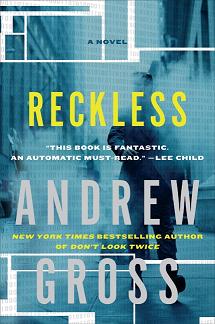
Trash Lit: ‘Reckless’ could be ripped from headlines (minus a couple murders)

0

Reckless
Andrew Gross
William Morrow, 404 pages, $25.99

Imagine if the head of a powerful banking company with close ties to the federal government conspired with some shady Saudi billionaires and a cruel Serbian ex-military thug to bring down the American financial system in a Darwinian plot that would allow the one firm with insider knowledge to emerge even stronger. How would it play out? Well, minus a few murders, more or less exactly the way the financial-sector meltdown of the past couple of years has played out.

That’s what makes this such a fun book. It’s not the most brilliant thriller ever – the structure involves a lot of flicking back and forth between parallel plots, and gets confusing at times. But the premise is delicious, and the execution is good enough to make it eminently enjoyable.

Reckless starts off nicely, with a Middle Eastern banker set to launch world economic ruin, an American private dick fucking his girlfriend as doom approaches, a Greenwich, Connecticut society divorcee fucking a sexy European stud with a dubious background and a brutal, bloody murder of a securities trader, his wife (who was an old pal of the PI) and one of their kids.

It slows down a bit after that, but not much.

Turns out the dead guy was way underwater in a complex deal. A few more traders, also underwater and scrambling, wind up dead, too. And then the economy really starts to fall – AIG goes under. Fanny Mae and Freddie Mac go under. There’s panic at every level of government.

Meanwhile, the bad guys try to kidnap the mildly retarded son of the PI’s girlfriend after a hockey game, leading to a spectacular hockey-stick-and-knife-in-the-locker-room fight that ends with the PI shoving a sharpened skate into the kidnapper’s chest (neat trick; I always wondered if that would really work).

By the time it all gets sorted out, there’s railroad trestle gun play, a federal agent who’s bleeding to death but still makes a spectacular shot, and an utterly predictable power-out, stuck-in-the-elevator sex scene. Maybe even worth forking over the hardcover price.

The feminization of Mexican agriculture

0

SANTA CRUZ TANACO (May 20th) – When I first settled into this tiny Purepecha Indian village high in the Meseta Tarasca of west-central Michoacan state 50 years ago, few women tilled the land. Tending the “milpa” (corn patch) was strictly a man’s work. The men ploughed the fields and planted in the spring and the wives and daughters would help to weed (“barbechar”) and glean in the harvest — but it was the men who strapped on the “tchundi” basket as they moved up and down the rows, snapping off the big ears of maiz to be sold in the markets of neighboring cities.

While the men lorded it over the corn patch, women had dominion over the home and the children. They cared for the kids and the chickens and prepared the meals. At mid-day, they wrapped up fresh, warm tortillas in colorful “servietas” and carried them out to the fields to feed their husbands.    

Only two women in Tanaco actually worked their own “parcelas” (plots.)  Dona Teresa Garcia had a handful of fields scattered up and down the valley she had inherited from her murdered husband and many sons to work them, and although she was known to get her hands dirty, she was more an overseer and administrator.


Slight and sprightly, Tere delighted in a full storehouse and was proudest of her purple and red and blue pinto corn she grew from her cache of grandfather seeds.  

Nana Eloisa, on the other hand, was a mountain of a woman who ploughed the rocky valley soil at the foot of volcanic mountains and lush pine forests — when she didn’t have an ox or the wherewithal to rent one, Eloisa was known to harness up the plough and pull it herself. Nana Eloisa had no husband although men sometimes hid in her long serge skirts. Unlike Dona Teresa, who preferred to negotiate off stage with the men who ruled the community, Eloisa, who was equipped with a stentorian voice, often spoke up at assemblies of the “comuneros” (indigenous landholders.) The neighbors talked about her in awed whispers.

Times have changed up in the Meseta — and changed again. In the 1980s, as the first of five neo-liberal regimes took hold far away in Mexico City, the Purepechas — who never strayed far from the Meseta, unlike their mestizo neighbors in Tangancicuaro and Gomez Farias who first began trekking north a hundred years ago — plunged into the immigration stream with a vengeance. Fathers and sons went off to find their fortunes in El Norte and many never came back.

The women were left in charge of the house and the milpa both, a double workday (“doble jornada.”) Their husbands would send home the “remisas” (money orders) with instructions on where and how much corn to plant. Any cash left over was destined to pay off loans for the “coyotes” who charged thousands of pesos to get the men across the border.  

Often the women would hire “peones” and “jornaleros” to do the fieldwork, but others worked the milpas on their own. Gradually the women began to make their own decisions about their husbands’ land.  Many stepped out of the traditional long Purepecha skirts and literally and figuratively put on the “pantalones.”

There are more women than men in Mexico 53,000,000 to 50,000,000, according to the 2005 half census. Although many are still tied to the home, women now comprise 40% of the workforce.


In the rural sector where 28% of the population continues to subsist, the stats are even more skewed. One estimate is that 18 million women are now the primary workers on the land — but only 4.5 million actually have title to it. Title allows them membership and voice and vote in the ejido (villages that are designated rural production units) and community, access to agricultural credits, and full agrarian rights. But women landholders are often relegated to servant stature in the ejido assemblies where only 2.5% serve as officials of the 28,000 communal farms so designated by the Secretary of Agriculture.

Although many women farmers or “campesinas” join mixed gender farmers organizations like the PRI party-run National Confederation of Campesinos (CNC) or the more left UNORCA and El Barzan, the dismaying disparity in their recognition as producers have motivated the women to form their own groupings such as the Ecological Campesinas of the Sierra of Petatlan Guerrero and the CONOC (National Council of Women Farmers’ Organizations.)  

But whether within the male-dominated farmers centrals or those of their own making, equal recognition has been slow in coming for the campesinas. Although agricultural budgets put together by the Secretary of Agriculture (SAGARPA) and the Secretary of Social Development (SEDESO) appear to allocate 42% of their resources to women, the numbers are deceiving – most of the money designated for women farmers is assistencial aid drawn down from the “Oportunidades” poverty program.  

Other monies are assigned to crafts collectives such as the ceramicists of Ocumicho just over the mountain from Tanaco, where the women throw the much-in-demand pots and the men bring the wood to keep the ovens fired up. Funds for micro-projects such as keeping chickens are available to women farmers but as Blanca Rubio writes in the left daily La Jornada, the campesinas would rather be recognized as producers of maiz than for their ancillary talents.          

In addition to the gender of farming, the gender of out-migration from feeder states like Michoacan, Jalisco, Guanajuato, Zacatecas, and more indigenous Chiapas and Oaxaca, has changed radically. Once upon a time only men headed for El Norte and the potentially mortal consequences of this dangerous migration but womens’ numbers in the flow north have tripled in the last decade as neo-liberal agrarian policies imposed from Mexico City have devastated the “campo” and the bottom has fallen out of Mexican agriculture.

Under presidents Carlos Salinas and Ernesto Zedillo (1988-2000), the Constitution was mutilated to allow the privatization of communally-held land, grain distribution was handed over to transnationals like the Cargill Corporation, guaranteed prices were scrapped, and credit for poor farmers dried up. Vicente Fox and Felipe Calderon (2000-2010), presidents chosen from the right-wing PAN party, have hastened the demise of the agricultural sector.

The coffin nail was the 1994 North American Free Trade Agreement.  Every year since, millions of tons of cheap U.S. and Canadian corn swamp Mexico forcing small-hold campesinos and campesinas out of business. A Carnegie Endowment investigation into the impacts of NAFTA on poor Mexican farmers published on the tenth anniversary of the trade treaty calculated that 1.8 million farmers had abandoned their milpas in NAFTA’s first decade – since each farm family represents five Mexicans, the real number of expulsees comes in close to 10,000,000, at least half of them women.

One consequence is that women now swim in the migration stream in dramatically increased numbers. Sisters follow their brothers north and wives their husbands, leaving the children at home with the grandmothers. A third of the households in Tanaco and just down the valley in Cucucho have no mother or father at home.  

For those women who stay behind, lifestyles have changed.  Families have abandoned or sold off their milpas and the remisas from El Norte (which decreased 20% in recession-ridden 2009) are now invested in building up the house, laying cement floors and hooking up electricity lines. Women open “changaros,” storefronts where they sell knicknacks and snacks to their neighbors.

Women farmers who still till their parcelas now have to work a triple workday (“triple Jornada”) just to make ends meet, finding jobs outside of the community as domestics or factory workers, taking care of the house and the kids and the chickens, and tending to the milpa. When the husbands do come home, the once rigidly defined roles of men and women in the Mexican countryside have been irreversibly altered. Men are not the sole breadwinners now and decisions must be taken together. Left to their own devices to survive, the campesinas have become empowered.  They have feminized agriculture.

The feminization of the Mexican campo is a bright light in a dismal prospectus, thinks the much-respected agrarian analyst Armando Bartra. Gender articulates how farmers approach the land, Bartra writes. Men wrest the crops from the soil. They plant to achieve bigger and better harvests and resort to chemical fertilizers and pesticides and genetically modified seed to speed up the bounty. They pin their hopes on the market, Bartra underscores, “and the market has no future” for small farmers.

By way of contrast, women are more in sync with the land. They don’t till the soil for profit as much as to keep their families well nourished. They are commited to auto-sufficiency first and do not poison the land upon which they grow their family’s food with chemicals. The feminization of farming, Bartra concludes, is “the only salvation for Mexican agriculture.”

John Ross has returned to El Monstruo (Mexico City), the title of his most recent volume “El Monstruo – Dread & Redemption in Mexico City” and the most contaminated, crime-ridden, corrupt, and conflictive megalopolis in the Americas.      


Immigration 101: Out of the mouth of babes

3

The Internet is abuzz with the news that a second-grader asked Michelle Obama about immigration during a visit to a Washington-area school–and in the process revealed that her mother is here without paperwork.

“My mom said, I think that she says that, Barack Obama is going to take away everybody that doesn’t have papers,” Margarita Zavala said.

“Yeah well that’s something that we have to work on, right?” the first lady replied. “To make sure that people can be here with the right kind of papers, right? That’s exactly right.”

“But, my mom doesn’t have any,” Zavala replied.

So, what will happen now that everybody in the world knows that Margarita’s mom is here without legal paperwork?

A) The feds descend on the Zavala household and slap an electronic monitoring bracelet on Margarita’s mother’s ankle, until they determine if she is deportable?

B) The Arizona-inspired alien-bashers cite Margarita’s mother as one more example of what is wrong with Obama’s administration, if the feds don’t haul her off pronto?

C) Margarita puts a human face on the people (and their kids) who are being terrorized by Arizona-style policies and helps the Obama administration move ahead with overdue immigration reform?

I don’t know what will happen. But I do know that it’s easy to rant about “illegal aliens” when they’re not your mother, the woman who tucks you into bed each night and helps you get to school on time, so you can open your mouth and speak truth to power.

The Mitchell sister

3

sarah@sfbg.com

Porn heiress Meta Jane Mitchell Johnson is running a little late when I arrive at the Mitchell Brothers O’Farrell Theater, the adult entertainment establishment her father Jim Mitchell and uncle Artie Mitchell founded on the edge of the Tenderloin, just blocks from City Hall, July 4, 1969.

Johnson, 32, recently became co-owner of the theater and invited me over to discuss her vision for this notoriously hardcore strip club and the challenges she faces in an industry dominated by the Déjà Vu corporate strip club chain, in a town whose political leaders are still trying to figure out how best to regulate the clubs to ensure that their predominantly female workforce is properly compensated and protected from harassment in safe, sanitary conditions.

A young guy on the front register ushers me into a side room. The walls are decorated with photographs that recall the people and players who have made this club such a storied San Francisco institution and a landmark in the history of the sex industry.

There’s an image of a topless Marilyn Chambers, the star of Behind the Green Door, the porn film the Mitchell brothers shot and screened at the theater in 1972 and was a major hit after it became known that Chambers was also the wholesome face on Ivory Snow soap flakes box.

There is a photo of Artie with a young raven perched over his shoulder. It was taken in 1990 during a trip to Aspen, Colo., to support gonzo journalist Hunter S. Thompson, who worked at the club in the 1980s and was facing serious charges, including sexual assault and possession of drugs and explosives, that eventually got dropped.

Another shows both the Mitchell brothers, photographed when they were still young and rakish and battling the vice squad, even as they entertained the local political elite.

Today the brothers are dead, Artie from bullet wounds inflicted when Jim shot him with a rifle in February 1991; Jim from a heart attack in July 2007. And now Jim’s oldest son, James Mitchell, 28, is in jail awaiting trial for allegedly beating his ex-girlfriend Danielle Keller to death with a baseball bat in July 2009 and abducting their baby daughter, Samantha.

Unlike his father, who continued to run the Mitchell porn empire after serving less than three years for voluntary manslaughter, James is facing life behind bars.

“He is charged with six serious felonies and is facing life imprisonment with no possibility of parole,” Marin County Deputy Chief District Attorney Barry Borden said recently. Johnson told me that her brother no longer owns stock in Cinema 7, the corporation the Mitchell brothers founded to oversee their burgeoning sex business.

This latest family tragedy occurred in the wake of a $3.74 million class action suit that was settled in 2008. Brought by three MBOT dancers, the suit led to valid claims by 370 dancers who complained about Cinema 7’s “piece-rate” wage system. Under that system, the club compensated dancers solely for the number of private dances performed, waived meal and rest periods, and failed to reimburse dancers for costumes, props, and makeup.

Since then the club ended the piece-rate system, but introduced chips customers must buy to procure lap dances and encounters in small, curtained private rooms. On a recent night, the girls at the O’Farrell Theater remained smiling and bright-eyed as they succeeded in getting some customers to purchase chips for lap dances and private encounters. But the rest of the crowd remained largely silent and mostly tight-fisted as customers watched the club’s exotic dancers perform on its disco-balled stage.

All of which left me wondering if Johnson can succeed in overcoming her family history and reputation to make a difference for her workers and community while facing a nationwide recession in an industry dominated by an out-of-state chain.


THE UNLIKELY SAVIOR

Johnson greets me dressed in Ugg boots and jeans, apologizes for being tardy, and leads the way upstairs to the theater’s office so we can talk.

I first met Johnson in 2007 (“Behind the Mitchell’s Door,” 07/22/09) when she arrived at the theater in knee-high boots, clutching a massive lime handbag and a tiny dog named Baby. During that first encounter, three months after her father died, Johnson confided that when she took over the office, it was full of dildos dancers had given the Mitchell brothers. Placing her dog on the pool table that dominated the office, she said she planned to massage all this male energy toward femininity.

Today it looks as if she has started to deliver on that promise. The pool table is gone. The sofa where Hunter S. Thompson used to sit remains in the room. But now a clothesline runs between the office walls, draped with a stripper’s glove, stilettos, and a G-string emblazoned with the word “Gonzo,” presumably in honor of Thompson.

“It was a little thing we made to give away,” Johnson laughs.

She introduces her youngest brother and club co-owner, Justin. “Me and Justin are close. We are the owners and we are making some changes,” Johnson explains. “We are making the prices more reasonable so customers don’t have to spend an arm and a leg just to get a lap dance. And we’re going to hold events like poetry slams. We are trying to make the club fun again. We definitely see a hit due to the economy, but we’ve also been hit by the decision from the class action lawsuit.”

Johnson insists she and her brother aren’t “your typical strip club owners.”

Were in a symbiotic relationship with our dancers, she says. That sets us apart from other clubs. The dancers are our employees. We pay them minimum wage and workers comp. We cover their Healthy San Francisco costs. We incur a lot of expenses legally employing our dancers. But instead of crying about our handicap,’ she said, referring to treating dancers as employees, my goal is to show we can manage the club without a pimp mentality, without a How much can you shake them down for? approach.

“A lot of our employees have been here a long time and have had to deal with all the painful violent stuff too,” she continued. “And folks are still here, even though their hours got cut and they are not making as much money.

In 2007, Johnson told me that she resented the family business when she was growing up. “The boys could go inside, and I couldn’t,” she recalled. It wasn’t until 2004, when she was working as a mortgage consultant in a cubical farm in San Ramon that Johnson began to take pride in the business “as something that had taken care of us through the years.”

Johnson, who became the club’s scheduling manager in 2005, recalls the shock of losing her dad in 2007. “It was like being dumped in icy water,” she says. “At first we didn’t know how to handle it. But we learned. Five years ago, I was much more liable to listen to advice. But I need to be able to fall asleep feeling good. That involves treating people a certain way. I don’t think any other strip club in the country is being run the way this one is.”

Johnson got married and went on maternity leave in 2008. ” When my son was six months old, I came back for the club’s 40th anniversary party and I realized, they need me both of us [she and her brother]— as owners, steering the proverbial ship. No one else wants to be held accountable. We never discussed selling. Our father built this place. It’s completely shaped our lives. Good or bad, it’s ours.”


TOUGH INDUSTRY

As a nude strip club, Mitchell Brothers’ O’Farrell Theatre stands in direct competition with Crazy Horse on Market Street and the Déjà Vu-owned clubs including the Market Street Theaters, Gold Clubs and other spots in SoMa, and most of the clubs in North Beach. The exception is Lusty Lady, the only unionized, worker-owned peepshow in the country.

If you walk into the Gold Club in San Francisco, well, there are 50 other Gold Clubs in the country, so, its generic, Johnson says. But theyve got their business model. Were not trying to copy Déjà Vu or Crazy Horse. Were the Mitchell Brothers. Its been part of us and our whole history.

Dancers agree that the Lusty Lady isn’t in competition with Déjà Vu.

“They’re Walmart, and we’re the mom and pop store on the corner,” Lorelei*, a dancer at Lusty Lady, said. “At the Lusty, we pride ourselves on being alternative and having tattoos and piercings.”

Some dancers, who we’ve indicated with an asterisk after their altered names, voiced fear of being identified as critics of Déjà Vu’s business model.

“If Deja Vu found out I was shit-talking them I would probably get fired and be blacklisted from all their clubs,” Sugar* said. “If I were to get blacklisted, I’d be totally screwed because there are no other clubs in San Francisco,” where she doesn’t feel pressure to do more than dance, “which is not my thing.”

“Or the Lusty Lady, which doesn’t pay enough to cover my bills,” she continued. “But Deja Vu is notorious for being a terrible company to work for, mainly because of their outrageously high stage fees.”

Other dancers say they had to pay stage fees at the Déjà Vu-owned Hungry I, and sometimes went home empty-handed after eight-hour shifts when uninvited touching was common.

“The number one thing that would improve our work experience is if someone actually forced Deja Vu to stop charging us stage fees,” Amber* said. “Almost no one outside the industry knows that dancers pay money to go to work. A lot of customers think the clubs pay us, like, thousands of dollars. In San Francisco we pay between $100–$200 per shift, sometimes more.”

By law, dancers have the right to choose employee status, versus being considered independent contractors. “But that’s a joke,” Amber added. “If we choose employee status, we’re required to do a minimum of 10 lap dances per shift. The club keeps all that money, and we would get paid $12–$15 an hour.”

But Edi Thomas, counsel for Déjà Vus Centerfolds club, flatly denies that the dancers who perform at Centerfolds (the only nightclub in San Francisco authorized to operate as a Deja Vu Showgirls club) pay stage fees.

Rather, entertainers who perform at Centerfolds (and/or at Hungry I, the Condor, and Market Street) are paid a substantial percentage of the patron revenues generated from individual dance sales, Thomas stated.

The entertainers are issued Forms 1099 at year-end, reflecting the amounts they were paid by the nightclub, she said, which means the dancers are independent contractors, not employees. These nightclubs operate within the law and make every effort to assure that entertainers are well compensated and perform in safe and lawful environments.

There are, as in any industry, former and disgruntled workers carrying a desire to harm a nightclub or the industry for their own personal reasons, Thomas added. “But those workers do not represent the voice of the majority.


CENTER OF THE STORM

When the Mitchell Brothers founded their empire, it was against a backdrop of organized crime trying to exercise a monopoly on the porn industry. According to a 1977 U.S. Department of Justice report, members of La Cosa Nostra tried to request exclusive distribution of Mitchell Brothers’ porn films.

The Mitchells resisted for years, but DOJ claims they eventually entered into a contract with LCN’s Michael Zaffarano to distribute “Autobiography of a Flea.” the Mitchells also fought City Hall.

During the 1980s, Mayor Dianne Feinstein’s vice squad tried to close the Mitchell Brothers’ operations. But under Mayor Willie Brown, the former attorney for late Déjà Vu strip club owner Sam Conti, SFPD enforcement reportedly eased.

Then in 1997, Déjà Vu started to take control of the city’s sex clubs, introducing stage fees and private rooms. In 2002, three former MBOT dancers filed their suit against Cinema 7. The next year, three other dancers brought suits against Market Street Cinema and Century Theater. And in 2005, Deja Vu settled a class action labor suit with its dancers. Attorney Greg Walston, representing the dancers, said at the time that minimum pay rate would protect dancers from being forced into prostitution to make money.

Deja Vu threatened a counter-suit based on the allegations of prostitution at their clubs, but Walston told reporters: “The record speaks for itself.” Walston used police reports with prostitution allegations to bolster his case and said he was doing the job the District Attorney’s Office should have done.

In July 2008, when MBOT reached its $3.74 million class action settlement, Cinema 7 president Jeffrey Armstrong said that the corporation was “not able to pay the entire amount up front.” Instead, Mitchell matriarch Georgia Mitchell and her business partner John P. Morgan, then cotrustees of the Jim Mitchell 1990 Family Trust, which holds two-thirds of Cinema 7’s shares, pledged stock certificates as security interest.

But the debate about how to treat sex work in San Francisco continues. In November 2008, District Attorney Kamala Harris and Mayor Gavin Newsom opposed Proposition K, a local measure that tried to decriminalize prostitution by forbidding local authorities from investigating, arresting or prosecuting sex workers. They argued that the measure would increase prostitution on the streets, give pimps cover, and hamper efforts to stop sex trafficking. The measure failed.

At the time, Prop. K advocate Carol Leigh and cofounder of the Bay Area Sex Workers Advocacy Network said, “We feel that repressive policies don’t help trafficking victims, and that human rights-based approaches, including decriminalization, are actually more effective.”

Today, erotic dancers must identify which of a tangle of regulatory entities is the appropriate venue to lodge complaints. District Attorney spokesperson Erica Derryck said Harris is dedicated to prosecuting violent crimes committed against all San Franciscans, regardless of whether they happen in a club or an alley.

“If there are two drug dealers and one attacks the other, we’d prosecute. But that’s not to say there won’t also be consequences for underlying criminal behavior too,” she said. “But anyone who has been victimized should be confident of going to the police and reporting any incident.”

Derryck said public health and safety complaints can be lodged at entities that provide permits and licenses, including the Planning Department and Entertainment Commission.

“There might not be any criminal activity involved, but this route hits clubs in the pocket and is worth considering if dancers want to represent their grievances,” she said.

Meanwhile dancers say there is still pressure to do more than just dance in some clubs. “For some dancers, the clubs feel fine,” Lorelei says. “It’s a safe space where no ads are needed. They see it as a fair exchange. But if you just want to dance — when one girl is doing this, and another that, how are you supposed to make money?”

Other dancers wish managers wouldn’t abuse their power. “Sometimes they back you up,” Amber said. “Other nights, someone insults you and they won’t help.” And many wish management would try to make the clubs fun again.

“It used to be a party, but now it’s about the cheapest dirtiest fuck you can get,” Lorelei said. “Taking stage fees created a dark environment that carries over to the customers. It’s like we’re goats in a petting zoo begging, saying give me money, give me coke.”


FAMILY BUSINESS

Attorney Jim Quadra, who represented the dancers in the MBOT class action suit, said that for all the talk about treating dancers right, the Mitchells’ interest was money.

“At the time, a group of people thought the agenda was to get dancers to do more than dancing because that’s what brings in the revenue,” Quadra said. “But Meta comes off much better than the rest of her family.”

During the trial, Jim was asked if there were meetings where Cinema 7 personnel defined what they meant by a “lap dance” in the piece rate system.

“You need a lap for a lap dance,” Mitchell replied. “You are getting down to like, you know, lap dance, erotic theater, America. And your question is like just a waste of the public’s slender resources, like drop[ping] a basketball in the ghetto and asking, ‘Did you define what that is for them?'<0x2009>”

Johnson, who voluntarily took the witness stand, was asked if there was any reason dancers would be afraid of her father. “He can be a little gruff and he can be cranky, a grouchy old man,” she replied.

Today Johnson is moving ahead with a vision she began to outline in 2007, then put on hold until December 2009, when a law suit about the family trust fund was settled.

“We settled everything out of court in December with my grandmother, which was a nice Christmas present,” she says, confirming that she and her siblings succeeded in removing their 83-year grandmother, Georgia Mae Mitchell, as trustee of the Jim Mitchell family fund. They replaced her with their mother, Jim Mitchell’s ex-wife, Mary Jane Whitty-Grimm, who also has custody of James’s baby daughter, Samantha.

“Danielle’s mother has some personal problems … that made the court reluctant to give her custody of the baby. so they gave Samantha to Mary, who is a nice woman, who is married with a family,” former San Francisco D.A. Terence Hallinan told me, after James Mitchell replaced him with another private criminal defense attorney, Douglas Horngrad, in March.

In court filings related to the family trust fund, Mitchell matriarch Georgia Mae claimed her grandchildren’s lawsuit was intended to deny her jailed grandson James his share of the trust to defend against his serious felony charges.

“Justin asked me to take money out of the trust account of his brother James, and send it to his mother instead of paying his criminal defense attorney, Terence Hallinan,” the Mitchell matriarch claimed.

I asked Hallinan if the trust fund was the reason James Mitchell changed attorneys. “Yes and no,” Hallinan said. “It definitely had to do with money and who was going to run the club. The poor grandma, she is such a nice person. She was trying to play fair and be nice to all the kids. It’s not a really healthy family. ‘Rafe’ [James] is where he is. In my opinion, he is still not clear what happened or why.”

Johnson, for her part, says her brother James has mental health issues. “I don’t accept what he did,” she said. “I’m not making any excuses for it. He’s either insane or he’s a monster. But the family has an obligation to make sure he has legal defense. He was always a beneficiary of the trust. But he fired his lawyer, which is the worst thing he could have done.”

A restraining order Keller secured five days before she was murdered claims Mitchell abused her for years, had mood swings, used cocaine, and was addicted to methamphetamines.

“Danny should have left,” Johnson said.

It’s been painful to read the comments people leave,” she continued, referring to online reaction to her brother’s arrest that suggest the Mitchells are bad seed and should be wiped out. It’s not because James is a Mitchell, or because there’s some bad gene.”

Rather, she said he had serious unaddressed problems, “a time bomb that was going to explode and then it did in just about the most horrific way imaginable.”

“When I was 13, my father shot my uncle Artie. And when I was 31, James killed Danny,” she adds. “So I hope I don’t live to be 103.”


WOMEN’S WORK

In 1985, the O’Farrell Theater’s marquee famously read, “For show times call … ” followed by Mayor Feinstein’s phone number. But that was another era.

“I don’t know Dianne Feinstein,” Johnson says, as she shows me a cartoon R. Crumb drew in 1985 of then-Mayor Feinstein as Little Bo Peep, with a bunch of men, including political and law enforcement leaders, peeking out from under her skirts. “I know my father was never very fond of her. And I’m sure her reasons for wanting to shut the club down were based on the idea that women are being exploited and that we need to save them.”

Johnson says some of their dancers are single moms; some are young girls who can’t get enough work at retail jobs to pay their bills; and others are college students and graduates.

“There are as many stories as there are dancers. But the stereotype is that dancers are being exploited and have to be protected because they can’t protect themselves and no one really wants to dance. But when I came through the club door, I realized that many women want to do this and get upset if people try to save them. Some people feel that working in a strip club is bad, wrong, dirty. No. But it can be if you are pushed into it and don’t want to do it.”

Dancers the Guardian spoke to confirmed that they dislike being framed as victims. When we are painted as victims, we look stupid, Lorelei said. All we want is to make sure that folks are following the labor code and providing the same basic, decent working conditions youd get if you were working at a coffee shop.

But dancers know that some people are titillated by the idea of women being taken advantage of. “They don’t want that fantasy to go away, that she’s really a good girl and doesn’t want to do it,” Lorelei said. “If it turns out we are not traumatized, horrified, or disenfranchised, it ruins the whole fantasy.”

She fears that political leaders know bad things are happening but don’t want to talk about them for fear it implies they are permitting them. “The attitude is these women aren’t real, they are sex workers, so if they get raped or go missing, who cares?” Lorelei claimed. “We can’t admit they are the babysitter, the girl who sits next to you at the office.”

When Johnson began working at MBOT, she was shocked that the dancers were naked. “But no one is forcing anyone to be here,” she says. “Sure, some women dance out of necessity. But there are women who are really into it … What’s bad is the exploitation.”

It’s hard to tell from the outside whether the MBOT dancers are feeling better about their working conditions these days or whether having a woman in charge makes a big difference.

On a recent Saturday night, we were charged $40 to enter the club. The ticket gave us access to the theater’s main stage, where a succession of ethnically diverse and athletically built girls pranced, pole danced, and eventually took it all off — in tasteful fashion — as the customers threw tips on stage.

A friendly girl asked if we’d like some company but backed off gracefully when we declined to do more than chat. No one else tried to hustle us for the next hour, and we didn’t get the sense that these women were desperate to make more money. The private rooms remained empty during our visit. But there are VIP rooms that we didn’t have access to, and it’s possible more hardcore stuff was going on elsewhere in the club.

As we left, a tour bus pulled up outside, full of tourists who pressed their noses against the bus windows to eyeball the famed Mitchell Brothers establishment, drawn just to gawk at this titillating and complicated San Francisco institution.

Johnson and Mitchell believe their club gives women a path to financial independence and that having a female in charge makes a difference. They don’t need a man,” Johnson says. “In most strip clubs, the pay is all under the table, and the girls keep cash in shoe box under the bed.”

“Dodging the IRS,” Mitchell adds.

But they recognize that some dancers may be coming from abusive situations. Johnson said she realized one dancer was in trouble when she asked to be booked for every shift. “I looked at the situation and saw 16-hour days in stilettos and an exhausting schedule. It took a woman’s insight to work out what was going on.”

“It goes back to a woman’s touch, ” Mitchell says.

Johnson blames this nation’s puritanical roots for the abiding disapproval toward the sex industry and those who work in it.

“But it’s come a long way,” Mitchell interjects.” When this place first started, it got raided non-stop. Now it’s much more acceptable than 20 years ago. In the next 20 years, I’m optimistic that prostitution will be decriminalized, at least in our city, if not in our state.”

So is prostitution happening as much as some dancers say it is? “You can’t penalize people for surviving,” Johnson says. “What dancers do outside clubs is their business. We don’t have control over them. All we can do is worry about them. We don’t condone illegal activity inside the club. We don’t encourage or support it. That’s our official take.”

Johnson acknowledges the O’Farrell Theater may have the reputation for being perhaps the most hardcore club in the city. “But everything that happens here, happens elsewhere,” she says. “It’s the same exact deal except they don’t care at all, and we’re a family-run business.”

Mitchell observes that the O’Farrell Theater is huge part of the city’s tourism industry. “When conventions come through, we’re one of the prime tourist spots, along with Fisherman’s Wharf and the Golden Gate Bridge,” he said.

“San Francisco is known for its freewheeling sexuality, like the Folsom Street Fair,” Johnson adds. “People say San Francisco is Oakland’s slutty sister. And people come here because this club is an institution, a landmark in San Francisco.”

So can Johnson make a difference against this convoluted backdrop?

“It’s a benefit to have a female in management,” Johnson claims. “When we come up with an idea, I think: How will the dancers feel? We’re on the same team. I treat them like teammates. We’re not in a battle over who gets the most money. I can see through things. Women manipulate men, and dancers are in the business of manipulating men. It’s a sale. It’s a hustle. They have that mindset. But I say, no, you don’t need to make up situations. You just tell us what’s up. But that’s not the normal attitude. In most clubs, it’s ‘Shut up, do what we say, and pay your fees.'”

Johnson says she was recently at the AT&T store, and the girl asked where she worked. “I said, at a strip club. People find that incredibly interesting. This girl was 23 and she was not comfortable with the idea of dancing, but at the same time she was fascinated by it. And it’s not going away, women dancing and stripping, You can hate it; you can love it — it doesn’t matter.”

After so many years on the San Francisco scene, MBOT is striving to be a legitimate part of its neighborhood and the city’s business community. And to Johnson, some of that involves unfinished business.

Lou Silva was the artist who did the original mural of whales on the clubs wall. Thats what I remember as a child. My dad and uncle were connected to that community and the underground comic movement in the late 1970s. They made money, they wanted to spread the love around, so they did a giant art project on the side wall. And a couple of years before my uncle died, they started to redo it. But the project stopped when my uncle was shot. We are going to bring the whales back. Were working on it with an Academy of Art class. It will be far more peaceful and calm than a crazy jungle scene on the wall. We want to redo whales to demonstrate that we are interested in more than just sex and exploitation. We want to be connected to our community again.

Noting that the new mural is part of the beautification of Polk Street, Johnson concludes: The mural on the wall is unfinished because of Arties death. Now its time to finish it, not to have unfinished art on the wall because of some horrible, violent incident. Its an investment to show we are not the Mitchells everyone thinks we are.

Alerts

0

alert@sfbg.com

WEDNESDAY, MAY 19

Solutions for Survival

Empower young people, support vivacious media, and support work on climate justice at this launch/fundraiser for this global youth media program that aims to uncover local, equitable solutions for climate change. Featuring guest speakers, food and wine, DJs, a silent art auction, and more.

7:30 p.m., free

Women’s Building

3543 18th St., SF

www.projectsurvivalmedia.org

THURSDAY, MAY 20

"Stand-In" for Safety


Protest the proposed "sit/lie" ordinance, which would make it illegal to sit or lie on SF sidewalks. The law would target sex workers, homeless people, youths, and immigrants, pushing them further underground and into more isolated, dangerous situations and areas.

Noon, free

Corner of Polk and Sutter, SF

www.allwomencount.net

FRIDAY, MAY 21

Rally for Peace


Say no to the war in Afghanistan, where deaths of U.S. troop Afghan civilians continue to rise. Demand that we bring our troops home now.

2 p.m., free

Corner of Acton and University, Berk.

(510) 841-4143

Berkeleygraypanthers.mysite.com

SATURDAY, MAY 22

Live in Peace March


Join KIPP Bayview Academy (KBA) students and community members for this peace march through the Bayview neighborhood to promote peaceful resolutions to social issues culminating in a scholarship ceremony. The Live in Peace March offers students and community members the opportunity to take a public stance against issues plaguing southeastern SF and attempts to ignite social change from within neighborhoods.

Noon, free

KIPP Bayview Academy

1060 Key, SF

www.kippbayarea.org

Walk to End Poverty


Help raise awareness about poverty at this walk around Lake Merritt followed by a multicultural family party featuring jazz, dance, kids activities, a community awards ceremony, and more.

10 a.m. walk, 11 a.m. party; free

Lake Merritt Bandstand

666 Bellevue, Oakl.

(510) 238-2362

SUNDAY, MAY 23

Beach cleanup


Celebrate World Turtle Day by removing plastic litter and garbage from Ocean Beach to help endangered leatherback sea turtles. The waters off San Francisco are popular with leatherbacks looking to feed on jellyfish, but ingesting plastic bags and other human garbage is known to kill leatherbacks worldwide.

10 a.m., free

Meet at north Ocean Beach

1000 Great Highway, SF

www.seaturtles.org

Rally against the pope


Join San Francisco and East Bay atheists in a call for a transparent investigation into the policies of the Catholic Church, which have perpetuated the sexual abuse of children all over the world. Demand the resignation of Pope Benedict XVI.

9:30 a.m., free

St. Mary’s of the Assumption Catholic Church

111 Gough, SF

www.atheists.meetup.com

Save the Whales


Show your opposition to the International Whaling Commission’s proposal to remove the ban on commercial whaling at this rally featuring SF Sup. Ross Mirkarimi and others.

Noon, free

Steps of San Francisco City Hall

1 Dr. Carlton B. Goodlett Place, SF

www.greenpeace.org 2

Mail items for Alerts to the Guardian Building, 135 Mississippi St., SF, CA 94107; fax to (415) 255-8762; or e-mail alert@sfbg.com. Please include a contact telephone number. Items must be received at least one week prior to the publication date.

East Bay endorsements

0

EDITORIAL There’s not a lot to bring voters out to the polls in Berkeley and Oakland, but two important races deserve attention. Proposition C, a bond act to replace the city’s aging public pools, has widespread support, but needs two-thirds of the vote to pass. And in a race for an open judicial seat, Victoria Kolakowski has the opportunity to become the first transgender person to serve on a trial court in the United States.

OUR ENDORSEMENTS


YES ON PROPOSITION C


Berkeley has four public pools, three outdoors and the indoor Berkeley High School Warm Pool. All four are badly in need of repair, but the Warm Pool faces imminent closure. That would primarily affect the disabled and senior communities, who use the pool for exercise, recreation, and therapy. It’s not a wealthy group overall, and having a place to go year-round to swim (or in some cases, just do physical therapy in the water) is a big deal.

The remaining pools are used by kids, adults, local swim clubs, and Berkeley residents who can’t or don’t want to spend the money on private gyms. Prop. C would provide the money to build a new Warm Pool and fix the cracks and do seismic upgrades and needed repairs on the other facilities. It’s the kind of measure that’s hard to oppose (it would cost the typical homeowner less than $100 a year in increased taxes) and every member of the City Council has endorsed it.

But with no major local issues on the ballot, progressives may not turn out in large numbers, which means the more conservative voters (who tend to dominate low-turnout elections) could account for enough votes to deny Prop. C a two-thirds majority. So Berkeley residents need to get out and vote — yes on C.

KOLAKOWSKI FOR JUDGE


Three people are contending for Seat No. 9 on the Alameda County Superior Court. It’s a rare open seat, and all three candidates have strong legal records and appear to be qualified for the job. But Kolakowski is our pick, in part because she’d make history — but more so because of her long history of public service and her progressive values.

John Creighton, a career prosecutor, has 25 years experience in the Alameda County District Attorney’s Office. He has the support of a lot of local law enforcement groups and a long list of judges. Louis Goodman, a defense lawyer, also served as a deputy D.A. before going into private practice. All the judges who haven’t endorsed Creighton are backing Goodman. We have nothing against either candidate — except that the bench is already full of former prosecutors.

Kolakowski is a different type of candidate. She’s spent much of her career as an administrative law judge, and for two years she helped the state try to recover some of the money that private utilities and energy traders stole during the 2000-01 energy crisis. She also has been deeply involved in community activities, serving as chair of Berkeley’s Human Welfare Commission, working with the city’s Police Review Commission on LGBT sensitivity training for police officers, and sitting on Oakland’s Budget Advisory Committee. She’s been on the Board of San Francisco’s Tenderloin AIDS Resource Center and is currently co-chair of the Transgender Law Center Board.

She’s an advocate for openness in the courts and wants to push for more transparency in how the Administrative Office of the Courts spends its budget. She also wants to make the courts more accessible to people who can’t afford lawyers.

Her election would be more than an historic statement — it might help change the way courts deal with transgender people (who often wind up in court, either for what ought to be simple things like identification changes or for the more serious problems facing a marginalized community with high unemployment). She has the support of Oakland City Attorney John Russo, Alameda County Supervisor Keith Carson, Oakland City Council Member Rebecca Kaplan, and many other progressive leaders. Vote for Kolakowski.

Editor’s Notes

3

Tredmond@sfbg.com

The governor of California released his last official state budget proposal May 14, just a few weeks before Mayor Gavin Newsom releases what might be his last official city budget proposal. The guv’s is truly ugly, so bad it’s almost hard to imagine what would happen if it passes. The mayor’s may not be a whole lot different.

Here’s why Gov. Schwarzenegger’s budget is so hypocritical. In his message, Schwarzenegger said that "employment remains the biggest source of concern" as the state emerges from the Great Recession. Then he moved to guarantee more unemployment.

I remember when a Democratic Assembly Member from San Francisco first proposed the idea that would later become the philosophical basis for the CALWORKS program. Art Agnos, who went on to serve as mayor of this city, suggested that it wasn’t such a bad idea to make welfare recipients work — as long as the state offered education, training, and, most important, affordable child care. A lot of us complained about it, warning that it would never get fully funded; it costs a lot up front to provide the services that allow long-term unemployed to transition into the workforce. Ultimately, however, most states have now created some sort of welfare-to-work program.

Now Schwarzenegger wants that completely eliminated. Along with all state-subsidized child care. So how are low-income people with kids supposed to get a job?

They’re not. They’re supposed to become a permanent underclass in a rich state. That’s exactly what the governor is talking about — destroying opportunities for hundreds of thousands of people, keeping them from joining in the productivity boom we’re going to need to get the economy going again, forcing them to live a third-world existence, at a massive cost to the state’s future. All to avoid modest taxes on the rich. If that’s not class warfare, I don’t know what is.

So how are we going to respond in San Francisco? Will Newsom’s budget — the one he will have to answer for as he runs for lieutenant governor — be cuts only? Or does he have the courage to tell the truth — that the only way the state and the city are ever going to emerge from this recession is if the folks on top of the economic pyramid chip in a little more? Well, I asked his press person, Tony Winnicker, and here’s what he said: "The mayor’s budget will not rely on taxes to achieve balance."

Nice.

Streets of San Francisco: ICP goes for inner city phame

0

If you live in San Francisco and pay attention to public art, you might already be familiar with the work of longstanding Bay Area graffiti crew Inner City Phame (ICP). Their prolific murals – diverse in style and magnetic in form – grace walls across the city. There’s a tribute to Malcolm X on Third and Kirkwood in Bayview-Hunters Point, featuring intricately crafted aliases free floating among inspired quotes. On a vibrant wall on the corner of 19th and Mission, comic book characters from Ironman to Dr. Evil swing between stylized names forged in cracked stone. An Azteca-themed mural up the street on 25th has a jaguar warrior getting down with the gods. And ICP also curates the street level walls of the Defenestration building on 6th and Howard (that old tenement hotel with furniture flying out of the windows), making a dynamic open-air gallery out of abandoned space. Wait, who said graffiti wasn’t art?

The first graffiti I saw when I was a kid growing up in the Mission was the Chicano writing on our walls,” says Twick, ICP veteran and original member of the group of close-knit friends, founded by Il Charo (then named Jes 446) back in 1988. “We called it Cholo writing, because that’s what it was. The walls decorated the names of the gang members of the neighborhood.” Surprisingly little of San Francisco’s Cholo writing has been documented, although street art researches have traced the origins of its Los Angeles cousin back to eastside barrios in the 1930s. What we do know is that today’s hip-hop tradition of graffiti didn’t take off in the Bay until ’83, a year that marked the momentous PBS broadcast of Henry Chalfant’s and Tony Silver’s Style Wars. After watching the stunning documentary about New York’s burgeoning youth culture, thousands of kids around the world racked some aerosol cans and took to the streets. A thirteen-year-old Twick, who had already tried to his hand at Cholo graffiti, was one of them.

I fell in love with the art form right away and wanted to duplicate what the writers in New York were doing,” Twick recalls. Along the way Twick found a mentor in Antie 67, who introduced to him the values and elements of hip-hop culture – from the craft of lettering to break dancing and emceeing. It was an apprenticeship. Like many other kids, Twick felt pulled into an exciting and creative underground world, one that for the most part, kept him out of the real trouble. “I didn’t choose my destiny my destiny chose me,” he says.

Soon enough more and more crews popped up, a unique Bay Area style developed and an ever-evolving ICP made a name for itself on the walls across the city. “We dubbed the style we do Phunk,” Twick explains, “meaning, knowing the foundation of a letter and creating from that: stretching it here and there, adding connections – some arrows and a few bends in the right places with a shadow or a 3d.” Funkified calligraphy is readable, unlike widlstyle, which has helped ICP garner a large audience of appreciators and street notoriety.

In recent years San Francisco has taken an active role on trying to eliminate graffiti. City policies have enforced strict regulations on private property owners to buff vandalism and enacted tougher surveillance and punishments on the writers. Graffiti is known as a quality of life crime, but it seems easy enough make just the opposite case. “We don’t destroy neighborhoods and communities – we beautify them,” Twick says. While ICP now paints many legal murals and members sell canvases in galleries, Twick still highlights that the practice is fundamentally rooted in both an unsanctioned approach and the aesthetics of the tag. So, ICP maintains a balance between two worlds. “The most important thing we stand for is our family and our cultures, inspiring young minds through art – not violence – and blessing our community with colorful murals,” says Twick. “And we will continue to be one of the top crews in the Bay Area.”


Democratizing the streets

steve@sbg.com

It’s hard to keep up with all the changes occurring on the streets of San Francisco, where an evolving view of who and what roadways are for cuts across ideological lines. The car is no longer king, dethroned by buses, bikes, pedestrians, and a movement to reclaim the streets as essential public spaces.

Sure, there are still divisive battles now underway over street space and funding, many centered around the San Francisco Municipal Transportation Agency, which has more control over the streets than any other local agency, particularly after the passage of Proposition A in 2007 placed all transportation modes under its purview.

Transit riders, environmentalists, and progressive members of the Board of Supervisors are frustrated that Mayor Gavin Newsom and his appointed SFMTA board members have raised Muni fares and slashed service rather than tapping downtown corporations, property owners, and/or car drivers for more revenue.

Board President David Chiu is leading the effort to reject the latest SFMTA budget and its 10 percent Muni service cut, and he and fellow progressive Sups. David Campos, Eric Mar, and Ross Mirkarimi have been working on SFMTA reform measures for the fall ballot, which need to be introduced by May 18.

But as nasty as those fights might get in the coming weeks, they mask a surprising amount of consensus around a new view of streets. “The mayor has made democratizing the streets one of his major initiatives,” Newsom Press Secretary Tony Winnicker told the Guardian.

And it’s true. Newsom has promoted removing cars from the streets for a few hours at a time through Sunday Streets and his “parklets” in parking spaces, for a few weeks or months at a time through Pavement to Parks, and permanently through Market Street traffic diversions and many projects in the city’s Bicycle Plan, which could finally be removed from a four-year court injunction after a hearing next month.

Even after this long ban on new bike projects, San Francisco has seen the number of regular bicycle commuters double in recent years. Bike to Work Day, this year held on May 13, has become like a civic holiday as almost every elected official pedals to work and traffic surveys from the last two years show bikes outnumbering cars on Market Street during the morning commute.

If it wasn’t for the fiscal crisis gripping this and other California cities, this could be a real kumbaya moment for the streets of San Francisco. Instead, it’s something closer to a moment of truth — when we’ll have to decide whether to put our money and political will into “democratizing the streets.”


RECONSIDERING ROADWAYS

After some early clashes between Newsom and progressives on the Board of Supervisors and in the alternative transportation community over a proposal to ban cars from a portion of John F. Kennedy Drive in Golden Gate Park — a polarizing debate that ended in compromise after almost two acrimonious years — there’s been a remarkable harmony over once-controversial changes to the streets.

In fact, the changes have come so fast and furious in the last couple of years that it’s tough to keep track of all the parking spaces turned into miniparks or extended sidewalks, replacement of once-banished benches on Market and other streets, car-free street closures and festivals, and healthy competition with other U.S. cities to offer bike-sharing or other green innovations.

So much is happening in the streets that SF Streetsblog has quickly become a popular, go-to clearinghouse for stories about and discussions of our evolving streets, a role that the San Francisco Bicycle Coalition — itself the largest grassroots group in the city, with more than 11,000 paid members — recently recognized with its Golden Wheel award.

“I think we are at a tipping point. All these little things have been percolating,” said San Francisco Planning Urban Research Association director Gabriel Metcalf, listing examples such as the creative reuse of San Francisco street space by Rebar and other groups (see “Seizing space,” 11/18/09), experiments in New York and other cities to convert traffic lanes to bicycle and pedestrian spaces, a new generation of more forward-thinking traffic engineers and planning professionals working in government, and more aggressive advocacy work by the SFBC, SPUR, and other groups.

“I think it’s all starting to coalesce,” Metcalf said. “Go to 17th and Valencia [streets] and feel what it’s like to have a sidewalk that’s wide enough to be comfortable. Or go ride in the physically separated bike lane on Market Street. Or take your kids to the playground at Hayes Green that used to be a freeway ramp.”

Politically, this is a rare area of almost universal agreement. “This is an issue where this mayor and this board have been very aligned,” Metcalf said. Winnicker, Newsom’s spokesperson, agreed: “The mayor and the board do see this issue very similarly.”

Mirkarimi, a progressive who chairs the Transportation Authority, also agreed that this new way of looking at the streets has been a bright spot in board-mayoral relations. “It is evolving and developing, and that’s a very good thing,” Mirkarimi said.

Both Winnicker and Mirkarimi separately singled out the improvements on Divisidero Street — where the median and sidewalks have been planted with trees and vegetation and some street parking spaces have been turned into designated bicycle parking and outdoor seating — as an example of the new approach.

“It really is a microcosm of an evolving consciousness,” Mirkarimi said of the strip.

Sunday Streets, a series of events when the streets are closed to cars and blossom with life, is an initiative proposed by SFBC and Livable City that has been championed by Newsom and supported by the board as it overcame initial opposition from the business community and some car drivers.

“There is a growing synergy toward connecting the movements that deal with repurposing space that has been used primarily for automobiles,” Sunday Streets coordinator Susan King told us.

Newsom has cast the greening initiatives as simply common sense uses of space and low-cost ways of improving the city. “A lot of what the mayor and the board have disagreements on, some of that is ideological,” Winnicker said. “But streets, parks, medians, and green spaces, they are not ideological.”

Maybe not, but where the rubber is starting to meet the road is on how to fund this shift, particularly when it comes to transit services that aren’t cheap — and to Newsom’s seemingly ideological aversion to new taxes or charges on motorists.

“We’re completely aligned when it comes to the Bike Plan and testing different things as far as our streets, but that all changes with the MTA budget,” said board President David Chiu, who is leading the charge to reject the budget because of its deep Muni service cuts. “Progressives are focused on the plight of everyday people who can’t afford to drive and park a car and have to rely on Muni. So it’s a question of on whose back will you balance the MTA budget.”


WHOSE STREETS?

The MTA governs San Francisco’s streets, from deciding how their space is allocated to who pays for their upkeep. The agency runs Muni, sets and administers parking policies, regulates taxis, approves bicycle-related improvements, and tries to protect pedestrians.

So when the mayoral-appointed MTA Board of Directors last month approved a budget that cuts Muni service by 10 percent without sharing the pain with motorists or pursuing significant new revenue sources — in defiance of pleas by the public and progressive supervisors over the last 18 months — it triggered a real street fight.

The Budget and Finance Committee will begin taking up the MTA budget May 12. And progressive supervisors, frustrated at having to replay this fight for a second year in a row, are pursuing a variety of MTA reforms for the November ballot, which must be submitted by May 18.

“We’re going to have a very serious discussion about MTA reform,” Chiu said, adding, “I expect there to be a very robust discussion about the MTA and balancing that budget on the backs of transit riders.”

Among the reforms being discussed are shared appointments between the mayor and board, greater ability for the board to reject individual initiatives rather than just the whole budget, changes to Muni work rules and compensation, and revenue measures like a local surcharge on vehicle license fees or a downtown transit assessment district.

Last week Chiu met with Newsom on the MTA budget issue and didn’t come away hopeful that there will be a collaborative solution such as last year’s compromise. But Chiu said he and other supervisors were committed to holding the line on Muni service cuts.

“I think the MTA needs to get more creative. We have to make sure the MTA isn’t being used as an ATM with these work orders,” Chiu said, referring to the $65 million the MTA pays to the Police Department and other agencies every year, a figure that steeply increased after 2007. “My hope is that the MTA board does the right thing and rolls back some of these service reductions.”

Transit riders have been universal in condemning the MTA budget. “The budget is irresponsible and dishonest,” said San Francisco Transit Riders Union project director Dave Snyder. “It reveals the hypocrisy in the mayor’s stated environmental commitments. This action will cut public transit permanently and that’s irresponsible.”

But the Mayor’s Office blames declining state funding and says the MTA had no choice. “It’s an economic reality. None of us want service reductions, but show us the money,” Winnicker said.

That’s precisely what the progressive supervisors are trying to do by exploring several revenue measures for the November ballot. But they say Newsom’s lack of leadership on the issue has made that difficult, particularly given the two-third vote requirement.

“There’s been a real failure of leadership by Gavin Newsom,” Mirkarimi said.

Newsom addressed the issue in December as he, Mirkarimi, and other city officials and bicycle advocates helped create the city’s first green “bike box” and honor the partial lifting of the bike injunction, sounding a message of unity on the issue.

“I can say this is the best relationship we’ve had for years with the advocacy community, with the Bicycle Coalition. We’ve begun to strike a nice balance where this is not about cars versus bikes. This is about cars and bikes and pedestrians cohabitating in a different mindset,” Newsom said.

Yet afterward, during an impromptu press conference, Newsom spoke with disdain about those who argued that improving the streets and maintaining Muni service during hard economic times requires money, and Newsom has been the biggest impediment to finding new revenue sources.

“Everyone is just so aggressive on trying to raise revenue. We’ve been increasing the cost of going on Muni the last few years. I think people need to consider that,” Newsom said. “We’ve increased the cost of parking tickets, increased the cost of using a parking meter, and we’ve raised the fares. It’s important to remind people of that. The first answer to every question shouldn’t be, OK, we’re going to tax people more or increase their costs.

“You have to be careful about that,” he continued. “So my answer to your question is two-fold. We’re going to look at revenue, but not necessarily tax increases. We’re going to look at revenue, but not necessarily fine increases. We’re going to look at revenue, but not necessarily parking meter increases. We’re going to look at new strategies.”

Yet that was six months ago, and with the exception of grudgingly agreeing to allow a small pilot program in a few commercial corridors to eliminate free parking in metered spots on Sunday, Newsom still hasn’t proposed any new revenue options.

“The voters aren’t receptive to new taxes now,” Winnicker said last week. Mirkarimi doesn’t necessarily agree, citing polling data showing that voters in San Francisco may be open to the VLF surcharge, if we can muster the same kind of political will we’re applying to other street questions.

“It polls well, even in a climate when taxation scares people,” Mirkarimi said.


BIKING IS BACK

It was almost four years ago that a judge stuck down the San Francisco Bicycle Plan, ruling that it should have been subjected to a full-blown environmental impact report (EIR) and ordering an injunction against any projects in the plan.

That EIR was completed and certified by the city last year, but the same anti-bike duo who originally sued to stop the plan again challenged it as inadequate. The case will finally be heard June 22, with a ruling on lifting the injunction expected within a month.

“The San Francisco Bicycle Plan project eliminates 56 traffic lanes and more than 2,000 parking spaces on city streets,” attorney Mary Miles wrote in her April 23 brief challenging the plan. “According to City’s EIR, the project will cause ‘significant unavoidable impacts’ on traffic, transit, and loading; degrade level of service to unacceptable levels at many major intersections; and cause delays of more than six minutes per street segment to many bus lines. The EIR admits that the “near-term” parts of the project alone will have 89 significant impacts of traffic, transit, and loading but fails to mitigate or offer feasible alternatives to each of these impacts.”

Yet for all that, elected officials in San Francisco are nearly unanimous in their support for the plan, signaling how far San Francisco has come in viewing the streets as more than just conduits for cars.

City officials deny that the bike plan is legally inadequate and they may quibble with a few of the details Miles cites, but they basically agree with her main point. The plan will take away parking spaces and it will slow traffic in some areas. But they also say those are acceptable trade-offs for facilitating safe urban bicycling.

The city’s main overriding consideration is that we must do more to get people out of their cars, for reasons ranging from traffic congestion to global warming. City Attorney’s Office spokesperson Matt Dorsey said that it’s absurd that the state’s main environmental law has been used to hinder progress toward the most environmentally beneficial and efficient transportation option.

“We have to stop solving for cars, and that’s an objective shared by the Board of Supervisors, and other cities, and the mayor as well,” Dorsey said.

Even anti-bike activist Rob Anderson, who brought the lawsuit challenging the bike plan, admits the City Hall has united around this plan to facilitate bicycling even if it means taking space from automobiles, although he believes that it’s a misguided effort.

“It’s a leap of faith they’re making here that this will be good for the city,” Anderson told us. “This is a complicated legal argument, and I don’t think the city has made the case.”

A judge will decide that question following the June 22 hearing. But whatever way that legal case is decided, it’s clear that San Francisco has already changed its view of its streets and other once-marginalized transportation choices like the bicycle.

Even the local business community has benefited from this new sensibility, with bicycle shops thriving around San Francisco and local bike messenger bag companies Timbuk2 and Rickshaw Bags experiencing rapid growth thanks to a doubling of the number of regular bicyclists in recent years.

“That’s who we’re aiming at, people who bike every day and make bikes a central part of their lives,” said Mike Waffenfels, CEO of Timbuk2, which in February moved into a larger location to handle it’s growth. “It’s about a lifestyle.”

For urban planners and advocates, it’s about making the streets of San Francisco work for everyone. As Metcalf said, “People need to be able to get where they’re going without a car.”

Vandalism Manifesto

1

Editor’s note: An earlier edition of this manifesto was scrawled onto the walls of an abandoned underground Muni tunnel somewhere in the Sunset District.

STREETS ISSUE The magic of the word — VANDALISM — is terribly offensive. Vandalism offends all the right people and launches an offensive against all the wrong people. Wait, vandalism converts our doublemoralspeak to honesty. Vandalism affirms a number of precarious values: freedom, justice, the art of unmediated living, etc.

Vandalism is not just a word. It’s a gaseous engine powering subversion, all saturated in viscous honey. A lifestyle set on boundless hope. A toy monkey you can buy on Haight Street. A self-imagined adventure ride in your Disneyland theme city of choice. A movement determined to strategically undermine deceptive imagery in favor of immediate experience — the sort of primitive amoebic goo that inspires the gorgeous muck of truthfulness. Vandalism lives in dirt and filth — the only organic material left unadulterated.

Vandalism has a healthy diet: iIt devours the monopoly on spectacle and excretes into the vast wastelands of intergalactic oil spills. Vandalism likes thrills: It’s a hyperdérive on the brink of the familiar, gathering as much intensity as possible before fluxing the rules of the game into a vortex of momentous vision. Vandalism wants to hold your hand. Vandalism is so charged that you might already feel an electric rage surging forth while reading this. If you don’t, you will. Does it burn and singe and bend and twist into the antennae of your fingertips? Channel that rage into acts of vandalism.

Vandalism is an awfully new phenomenon. It takes up arms all over the world: in big cities like New York and London, and in not-so-famous towns like Bakersfield and Danville. Well, maybe not Danville. Just wait, Danville.

Vandalism is an awfully old phenomenon. You can see nature desecrated, I mean subliminally mysticized, in the caves of Lascaux. Since we no longer live in pure nature but in concrete labyrinths built on top of iron cage islands, we must bring the caves of Lascaux and beaches of Eden and tornados of Jupiter to bear on today’s jungle city. We must subliminally mysticize the streets. Cue air horn.

Vandalism is so important that there are white wall guardians who repress it with nervous glances and waving arms. Byzantine policies regulate it. Laws have been established to punish transgressors. Yet vandalism doesn’t go away. Too many dreams fuel it. Too many imaginations keep it vital. Word on the street is that Werner Herzog is making a movie about it.

Vandalism doesn’t insist on art. It doesn’t get involved in arguments about whether something is or isn’t art. That conversation is terribly boring. Have you been to a modern museum lately? Didn’t you get the joke? OK, I admit, that conversation is irresistible. Here’s a clarification: Vandalism is an art form even if the graffiti itself is not artistic — a shrouded word meaning ultimately, technically savvy, or educated and properly executed. To this, I summon the ghost of a severe-faced vandal, Norman Mailer: Art is not peace but war! And war ain’t always pretty, or concerned with legality, soljah.

Vandalism would prefer to mark its ephemeral existence on the city skin, gushing down the fermented joys of unsanctioned life, mummifying itself in the cold caverns of a culture mausoleum. It would prefer to make you smile and laugh and wonder mercilessly to what happens in galleries: first confusion, then self-consciousness, and finally, the lingering pain of feeling slightly cheated. (Confession: I kinda stole that from Banksy. VANDALIZED!) No, vandalism doesn’t demand legitimacy in order to die in a sea of sterilized artifacts — all rotten fish skins and busted gall bladders in excessive frames. Museums sanctify the past. Vandalism prophesies the present.

History lesson: Street kids baptized vandalism in the slums, reconfiguring our country’s criminal policies of benign neglect into an acrobatic dance. They spun windmills into the future and set their gaze on the heavens. Among buildings reduced to rubble — a bombed out third world — they flipped the script and defined vandalism as bombing. The kids crucified monotony and sacrificed the crushing industrial rhythm of authority. They called themselves writers and painted their neon-tinted altar egos onto the shining armor of the behemoth subway trains and all over the walls. The names projected a faith in identity among the noise of polluted prayers.

Writers became pseudonymous in an abysmal well of city hustlers trying to make a legacy for themselves — billboard important and newsworthy. Writers preferred this life, fleeting and necessary and beautiful in the quixotic eternity of the now. The indifferent had no choice but to reckon with the writers.

Over 40 years strong, the writers still scour the marrow of their bones to re-enchant the lifeblood of the city. They craft enigmas out of the geometric lines and curves of the alphabet, making ferocious animals out of huge letters, feral and gunning in the jungle. The animals promulgate like bacteria, spawning writers-turned-shamans who cast spells of cryptic iconography wherever they go. Mummies, giraffes, and spaceships populate the jungle. An aura of prophecy emerges in the streets.

Writers wage war against the ubiquitous icons of worship mounted across the empire: those branded images manufacturing a spectacle of insurmountable desire and Sisyphean frustration. The marketers might have the money to buy permission to assault your eyes and make you feel bad about yourself; writers have the courage to forgo bureaucratic approval, stake claim on what rightfully belongs to all of us and conjure up a moveable feast. We believe in innocent pleasures, impulsive and vibrant, in order to dismantle the tyranny of monotony! More air horn, please.

Vandalism is degenerate. It’s not here to promote cleanliness and genteel manners of etiquette. Vandalism will replace honorifics with its own stamp of affirmation: Vandal Basquiat, Vandal Futura 2000, Vandal Taki 183, Vandal Debord, Haring, Burrows and Proudhon. But more than any of that, all the lower-case vandals on Muni set to burn their names on your retina.

Vandalism doesn’t care about rights to property. Vandalism stands by this ancient principle: property is theft. Vandalism doesn’t care about copyright. Copyright smacks of self-indulgence and greed. Quote me on that. Vandalism is universal and limitless, unwieldy and unbalanced, completely unhinged and frighteningly beautiful. It’s dangerous but welcoming. Come on. Give vandalism a try. Vandalism is the new gentrification; everyone’s doing it. It’s pushing emptiness and dullness out of the city and raising the quality of life to unpredictable heights of magnanimity. Your neutral walls do violence to our integrity. Whatcha got against color?

How does one live well and good? By doing vandalism. How does one become anonymously famous? By doing vandalism. With a flick of the wrists and a swagger of the step. Til’ one can’t stop and certainly won’t stop. It’s a terrible habit, an awfully time-consuming obsession. How can one get rid of everything grotesque and in bad taste? Vandalism. How do we reassert ourselves in the midst of corporate homogeny and increasing pressure to normalize? Vandalism. By what means do we establish our will to communicate freely and openly in the public sphere? Vandalism.

Vandalism cannot be bought or sold in your local Walgreens (maybe in Giant Robot, though). No no, vandalism is a nebulous thing, an utterly cosmic thing, dirty and scurrilous and always operating in the shadows, always slipping away from sterilization and appropriation like a rat with rabies on the run. What a charming nuisance. What a credible way to live! Street credible. The streets is a mother, and good ol’ vanguard vandalism — the first lesson.

Vandalism once brought down the Roman empire. We have yet to rebuild the world in its depths. (Wooley Van Dahl)

Goat news

4

City Grazing, the adorable weed-eating goat herd in Bayview, has a ton of upcoming events, starting tomorrow, May 12, at 6 p.m., when City Grazing founder David Gavrich will talk at a community forum on the urban farming movement at the Commonwealth Club.

Other speakers include Novella Carpenter (author of Farm City), Jason Mark, manager of Alemany Farm and editor of Earth Island Journal. Tickets are $20 and the price includes local, sustainable food. 

On Sunday, June 20, City Grazing’s ambassador Momma Goat will be at the Giants County Fair with her two 3-month-old kids as part of CUESA’s Urban Eats program

And on Sunday June 27, City Grazing will make goat history by providing the first goats ever to join the SF Pride Parade!  So, keep an eye out for their Goat Float.

The organization is also finalizing its new state of the art goat shelter design, redesigning its website, and looking for volunteers. Maa!

Editor’s Notes

1

Tredmond@sfbg.com

San Francisco has a lot of streets. Take a look at an aerial picture, or just look at the land-use statistics. More of this city is devoted to paved roads — pathways used largely and designed primarily for private automobiles — than any other single use. Parks, for example, don’t even come close.

That’s partially a matter of urban density. In more suburban-type cities like Berkeley or Portland or Seattle, the lots are bigger, yards are bigger, houses are bigger, and there’s more space between the strips of pavement.

But that density gives us a choice other cities don’t have. Maybe we don’t really need that much pavement.

I know it’s kind of a crazy thought, but imagine what some San Francisco neighborhoods would look like if we closed down, let’s say, one out of every four streets. I don’t mean open that land up for development, either — leave it as a passageway, a thoroughfare — but not for cars. Tear up the concrete, plant grass, make pathways for walking and biking … make the streets places where people can gather, kids can play, stores can enjoy the kind of traffic that only comes with a pedestrian mall, and restaurants can have outdoor seating in what would amount to a strip of mixed-use urban parkland.

Closing streets to cars creates plenty of problems, but I don’t think they’re insurmountable. Seniors and disabled people might have trouble with eliminating bus routes and parking in front of their houses, and that’s a legit concern. (Of course, the number of pedestrian seniors and disabled people killed or maimed by cars might go down too.) So maybe some streets could be turned into one-lane strips, and only people with disabled placards could use them. And ambulances and police and fire vehicles can already drive on car-free pathways in parks. And Muni could run a fleet of electric golf carts to ferry people with mobility issues up and down the grassy lanes.

Those of us who have cars would give up a certain amount of convenience; people without cars would get more of the benefits. That might discourage car use, which is good.

But even for drivers, I wonder. Would I be willing to give up the relative ease of parking near my house in exchange for letting my kids just open the front door of the house and run out and play in a safe, vehicle-free park that used to be a street? Would you?

The world is changing; the days of car culture driven by cheap oil are almost over. More and more people are going to be living in cities (that particular demographic trend is one of the most consistent in modern history). When we talk about the Streets of San Francisco, let’s stop for a moment and ask: does it all have to be about cars?

John Ross: To stop is to die

1

Editors note: John Ross is finishing up a book tour across the United States, and sending us his impressions of Obamalandia. You can read some of his previous posts here, here and here.


I. Baltimore/Washington


The Amtrak rumbles into the back end of Baltimore past block after block of abandoned, boarded-up row houses ripe for burning. This city of such magnificent renegades as Edgar Allen Poe, John Wilkes Booth, and Billie Holliday is mapped by grimy pocket ghettoes that made Baltimore a perfect stage-set for “The Wire.” When contrasted against the gleaming, refurbished downtown, these crime-scene neighborhoods incubate urban uprising.  Red Emma’s is one of a skein of anarcho bookstores with names like Sedition, Monkeywrench, and Bluestockings that have welcomed me on this grueling odyssey across the underbelly of Obamalandia. I’m enlivened by the energies these oases exude. Contemporary anarchists seem to have little time for the crippling ideological jousting that drained the lifeblood of my generation. Those bad old days of Marxist Leninist Maoist Trotskyist Stalinesque backbiting seem an absurd nightmare on the barricades of change these days.  

Tiffany, a tenor saxophonist who day gigs at OSHA over in D.C. and puts in after hours at the bookstore-cafe, and I pitch in to unload a busload of Bread & Puppet props for a zany, Zen show at a cavernous performance space Red Emma’s maintains in a vacated church. I get to trundle in the head of Ben Franklin, the villain in B&P’s latest mini-extravaganza in which $100 bills are the most pertinent puppets. A half century after its founding even before Vietnam caught fire, the puppeteers are still serving bread and aoeli to grateful audiences.

In D.C., I speak at the Institute for Policy Studies, a perennial leftist sounding board four blocks north of the White House and a billion light years from power, about how Washington has hooked Mexico on drug war. It is my first visit to the nation’s capitol with a black president in residence in the house that slaves once built. The Capo de Tutti Capos of the most grotesque criminal conspiracy on earth is too overwhelmed by swelling catastrophe offshore in the Gulf that will make Katrina look like a summer squall, impending car bombs in Times Square, and an economy that continues in freefall, to take time out for a chitchat.

On the day I speak in Washington, Teabaggers and their ilk are massing across the Potomac in an open-carry anti-Obama rally — newspaper photos depict white American males with what look like rocket launchers slung over their shoulders. The threats of this nativist scum are not idle ones. The economic collapse has stoked the bumfires that burn fiercely in the dormant craters of the American volcano.


II. New York
My roots on the North American landmass snake under the lower east side of Manhattan. The Ross (nee Grossinsky) DNA is imprinted everywhere on these mean streets. My grandma Mamie Zief (Ellis Islandese for “Jew”) relocated from Poland to a Rivington Street tenement at the turn of the 20th Century. Although I grew up in the West Village, I went east at an early age; after fleeing the family nest I squatted in the Shastone Monument building on Essex and Houston before escaping to Mexico in the late 1950s. Two of my kids grew up on Second Street and Avenue A, and my son the hiphop mogul still lives 500 yards away from the old homestead (Dante and I are working on a book that bounces off our mutual addictions to black music.)  

My presentations in the Big Apple fit neatly into this geographical schema. I lecture at NYU’s King Juan Carlos Center, once the site of concrete basketball courts where I expanded oodles of adolescent energies. I talk to the Friends of Brad Will at the Sixth Street Community Center where the slain Indymedia journalist, a lower east side rabble-rouser during the darkest days of the Giuliani dictatorship, regularly practiced yoga. Justice for Brad Will remains undone.
And I am lured into Amy Goodman’s state-of-the-art lair for 20 minutes of fame. Democracy Now even sends a car to fetch me up to Chelsea and I induce the stern goddess of left radio to smile — but perhaps it was merely a grimace.  

New York is chockablock with “I Love/Hate New York” minutes. One morning I descend from Dante’s sixth story inferno for a double espresso and the Lowisaida is infested with cops. I approach one of New York’s Finest, an amiable Caucasian, and inquire about the blue plague: “it’s the Will Smith show,” he smiles mischievously. Just then a motorcade of 50 bullet-proofed black vehicles swings off Houston with their lights flashing and sirens screaming and heads down the Bowery to Cooper Union where our commander-in-chief is to make a major speech addressing financial “reform” (in Mexico, we call this “plugging up the hole after the baby has drowned.”)

Goldman Sachs vultures in dark suits and furrowed brows listen intently but go mum to the press when they deadhead downtown back to Wall Street to continue fleecing the public’s pocket.

I step around the corner onto Houston, where a large enigmatic Shepard Fairey montage that references climate change has just been tagged (Dante who is well-versed in such iconography, speculates that the culprit is a tagger named “Nah” who is dedicated to dissing the public art of the stars of this genre.) Gallery slaves have been bussed in to erase the offending stains.  I am wearing my Mexican Electricity Workers tee-shirt, whose black and red colors and clenched fist logo match Fairey’s throw-up, and I am suddenly surrounded by a bevy of documenterians, at least one of whom is just off the boat from Andalusia. They pose me against Fairey’s wall for a thousand-click fashion shoot. New York New York!

Ironically (a word that doesn’t have much scratch here in Gotham), the Banksy flick “Exit Through The Gift Shop” is playing at a grind house across Houston, a cheese ball mockumentary that destroys this world-famous outlaw’s once-pristine reputation for thumbing his nose at power. Indeed, the best thing about the movie is that it is playing right next door to the Yonah Schimmil knishery. I order a kasha knish and sign the guest book with Subcomandante Marcos’s rubric.  

Also a mandatory dining stop in the old neighborhood: the immortal Katz’s (“Send a salami to your boy in the Army”) where pushy New Yorkers of the Hebraic persuasion scuffle to be next in line at the counter of this now 100% Puerto Rican-run deli. The brisket is still to die for.

New York City and environs is now home to a half million Mexicans, mostly from Puebla state, whose slow country drawls are a foil for the tropical machine-gun accents of Puerto Ricans and Dominicans. The Poblanos work in the kitchens of yupped-up food palaces (16 Oaxaquenos were burnt to a crisp walloping pots up in “Windows On The World” on the 108th floor of the Twin Towers on 9/11 day) or slave in 24-hour grocery stores run by Arabs and Hindus and Koreans.  

Mexican elites who have fled here from their imploding fatherland do not much rub elbows with their impoverished compatriots, except when they employ them as maids and babysitters One of the few upsides of the new Arizona Breathing While Brown law is that former pundit and Foreign Minister Jorge Castaneda might be jailed by Sheriff Joe Arpaio and his storm troopers and forced to don pink underwear if he were to be stopped without papers in Maricopa County.

III. BOSTON

The new Boston Tea Party that catapulted Scott Brown into the suddenly Kennedy-less Senate is not an anomaly in a city where the name of Charles Stuart (Google him up) still rings a bell.  

I speak at the Harvard Coop to a handful of bedraggled Harvard Square denizens who have found sanctuary from a driving rainstorm in this hallowed readery. I am invited to the David Rockefeller Center for Latin American Studies to rant at the future leaders of Latin America — but none show up. I spend an engaging evening with Jack Womack, whose “Zapata & The Mexican Revolution” is still the definitive text on the struggle of the incorruptible revolutionary. Jack, now emeritus in Harvard Yard, recently rebuked the Mexican government by turning down a literary prize because of President Felipe Calderon’s role in the firing of 43,000 workers in an undisguised ploy to privatize electricity generation in Mexico, and is currently chipping away at his life work, a history of working class struggle in the state of Veracruz. Jack and I converse in an argot stippled with so many arcane references to social upheaval south of the border that FBI eavesdroppers could surmise we are planning a new Mexican revolution — which, 100 years to the date of the last one, is not such a bad idea.    

I warm up for May 1st rallies by urging attendees at community meetings at the UNITE building in Chinatown and a U-U church in Jamaica Plains to join the protests. There are two marches and rallies set for International Workers Day in Beantown, the bitter fruit of a split in the movement the seeds of which I could not divine.  

On the Boston Commons, I spiel about the first May 1st back in 1886 when 80,000 immigrant workers stomped through Chicago to demand the eight-hour day, a day of solidarity and struggle around the world everywhere except in the country where it was birthed. The Haymarket Martyrs join us for a stroll through the streets of downtown Boston, held aloft by the ubiquitous Bread & Puppet comrades.  

All across Amerikkka, immigrant workers, incensed by the enactment of a law that makes inhaling the air of Arizona a jailable crime if you are a person the color of the earth, were on the march, perhaps a half million (high end estimates) strong — as many as 200,000 in Los Angeles and another 100,000 in Chicago; 25,000 more in Dallas and significant turnouts in New York and Washington but only 6,000 or so in Boston to which Mexicans have migrated in smaller numbers.  

This year’s surge, which was dwarfed by the gargantuan outpourings of 2006, featured a marked absence of Mexican flags as undocumented workers chose to cloak themselves in the Stars and Stripes in response to the feeding frenzy of the Fox News lynch mob.  

Although the condemnation of Arizona Goddamn was vibrant, it must be noted that there have been as many ICE raids under the Obaminators as under Bush and the crackdown on employers is targeting union-organized janitors. David Bacon, whose reportage remains a light in this darkness, recently noted that 175 SEIU janitors are about to be fired in San Francisco, once a sanctuary city for labor.

The People the Color of the Earth rolled through the streets of east Boston with gusto. “No One Is Illegal!” Sandra, my displaced Chilanga guardian angel, and I yodeled in unison with the compas.  “Do I Look Illegal?” read the homemade banner draped around the shoulders of a skinny pre-teener. Many high schoolers wore caps and gowns to highlight the prohibitions on financial aid that doom their college educations to MacDonald’s Hamburger U.

Speaker after speaker in a park down by the harbor  — where, indeed a few hundred years back down the pike the original Boston Tea Party was staged — raged against a system that still consigns immigrant workers to the lowest step on the American food chain. “Justicia! Justicia!” they clamored and their cries were no less relevant than those uttered by the “Martires de Chicago,” as the Haymarket martyrs are known throughout Latin America. By the time I took the mic, all the words had already been spoken but I finished up with the chant of the pensioners’ movement in Mexico City in whose ranks I am enrolled: “Parar Es Morir!” — To Stop Is To Die!

Me and the Monstruo have come to the end of our three month 66 performance journey through Obamalandia but there’s one thing you can count on: “Parar Es Morir.”  I’m not planning on stopping (or dying) any time soon.
  
John Ross will be returning to Mexico in mid- May to begin work on a new book, “From Bebop To HipHop – Fathers & Sons.”  You can consult him on particulars at johnross@igc.org  
        

Pantheistic party

caitlin@sfbg.com

CULTURE “I get asked by friends and family constantly about what pagan means,” says JoHanna White, president of the Pagan Alliance’s board of directors and parade coordinator for Berkeley’s Paganfest. So, hey, what does pagan mean? “I always tell them the Alliance’s definition: earth-based, nature- and justice-centered, and observant of polytheistic faiths and traditions.”

That’s a lot to wrap one’s brain around. But be it Wicca, Hellenism, shamanism, or adherence to traditional indigenous faiths, more and more people are turning to paganism these days, evidenced by soaring attendance at events like Pantheacon, an annual gathering of rituals and healing circles that has regularly outgrown venues since its inception 16 years ago. White’s colleague, Alliance cofounder Arlynne Camire, attributes the growth to “people’s awareness of what’s happening to the Earth,” concerns over climate change, and other worrisome trends.

Camire helped start Paganfest in 2000 as a way to raise public awareness about the pagan faith, to render themselves visible. That first year involved a fair in People’s Park and a procession down Telegraph Avenue. These days the fair includes several pavilions (druid storytelling, green, arts and crafts) and a dazzling array of community altars. A ritual is usually conducted and there are prizes for best kids’ costumes and artworks. “There are pagans in every walk of life,” says Camire, a Hayward city planner. “Paganfest is essentially a pride festival.”

Public manifestations are important for any minority — especially one like paganism, a belief system that many come to in solitude, not knowing that a welcoming community of believers awaits. Festival organizers regularly provide masks to pagans who haven’t yet made the decision to share their faith publicly, a process the community has dubbed “coming out of the broom closet.”

As White tells me about the anxiety that can be associated with becoming an “out” pagan, I remark that it sounds a lot like coming to terms with one’s alternative sexuality. “You should talk to this year’s Keeper of the Light, Joi Wolfwomyn. She’s a radical faerie and knows a lot about this stuff,” she counsels. I take her up on the advice. Days later, I sit in a coffee shop in Oakland awaiting Paganfest 2010’s parade marshal, realizing I neglected to ask Joi what she looks like. I needn’t have worried. In walks a person with green dreadlocks down to the small of the back, piercings galore, and leaves tattooed over a bearded face, carrying a wooden staff and a fuzzy rainbow backpack. Joi, is that you?

It is. We talk for more than an hour and, by the end, the articulate trans person STET has taught me a lot about paganism: its inclusiveness (“To me, paganism just means you honor the earth.”), its presence in pop culture (“Avatar was a very pretty piece of paganism propaganda.”), and the advantages of embracing one’s beliefs and values publicly(“By creating myself as I have, all people have to do is be within 100 feet of me to think.”)

Of course, not all pagans have etched their faith on their epidermis. Wolfwomyn is emphatic about the community’s diversity in this respect. “There are pagan Republicans, there are pagan anarchists, there are pagan everything — but we all honor the earth.” It’s inspiring to meet a person so open to the possibilities of belief. In an instant, the possibilities of such an expansive faith dawn on me. A new kind of acceptance beckons. What has monotheism ever done for our society, anyway? 

PAGANFEST 2010

Sat/8 10 a.m.–5:30 p.m., free

Civic Center Park

Martin Luther King Jr. and Allston, Berk.

(510) 872-1188

www.thepaganalliance.org


Luis Echegoyen’s old school Mission cool

3

Back when he was a television star in El Salvador, Luis Echegoyen could have little guessed that fifty year later he’d be performing in his own poetry reading in San Francisco of classic Spanish authors (Sat/8, Mission Cultural Center for Latino Arts). But it’s not the least probable feat that legendary Spanish language Bay area news anchor Echegoyen has accomplished — after all, poetry is his retirement project.

Echegoyen was famous in El Salvador when he made his first trip to the United States. A television and stage star, he had joined a troupe of artists who were performing in high schools and colleges across the country in a sort of cultural education tour for North American students. But when he arrived in San Francisco in November of 1962, he stayed. His sister lived here, and he heard that San Francisco State had a top-shelf drama program, where he planned on continuing the five years of formal stage education he had received back home.

But “I didn’t have the English,” Echegoyen tells me. He’s now a stately older gent in a turned-out suit, reminiscent of his days as a storied San Franciscan Spanish language news anchor. He shares his memories with me in a room at the Mission Cultural Center, and they’re fascinating, scenes set in the familiar streets of the Mission, but with reality set at a different angle from historical currencies.

With the education system unassailable, he turned to what he knew best; Spanish language show biz. His first major project was a radio show called Escala de Fama, which was being recorded in front of a live audience at the Victoria Theater. Echegoyen was a rookie at KOFY, which broadcasted Escala, but he could tell the hosts of the variety show needed help.

“The audience was very rowdy,” he recalls. “The announcers were afraid of the audience, they would hide behind the curtains!” He grabbed the mic, and drew on his years of experience during El Salvador‘s golden age of show business, cracking jokes and walking through the aisles of the Victoria. The spotlights followed him, and he hosted Escala for the next 13 years. Luis had arrived in San Francisco.

It’s fascinating to hear someone talk, as Luis does, about the way the Mission neighborhood was generations ago. It doesn’t sound so very different — sure, less fixed gear bikes — but the immigrant families packed into subdivided Victorians were already there, without many of the resources they needed to thrive. This was back before the advent of the social organizations that today call the Mission home. “Kids didn’t have anywhere to go; no parks, no gyms, no after school programs. I said, ‘okay, we need a park, we need a gym,’” says Luis.

Avance Luis! The man in magazine covers

And if talking with the man taught me one thing, it was this; what Echegoyen decides to do, Echegoyen does. To fix the issues he saw, he got in deep with a whole laundry list of community organizations; Bay Area Neighborhood Development, Mission Coalition Organization, and the Economic Opportunity Council, to name a few. He started working on seniors’ issues, delinquency issues, economic issues. Most importantly, he parlayed his growing radio and television celebrity into making change.

At one point, the Parks & Recreation department responded to his entreaties to build a park almost sarcastically, saying that if he wanted a park for his adopted neighborhood, they’d build it — if he could find an empty lot in the well-populated Mission neighborhood. On his way to shoot a news story with his camera crew, Echegoyen saw one, a dump site in the outer Mission/Bernal Hieghts.

He broadcasted from the site, sitting amidst the rubble. “I said ‘this is an empty lot, and we can use it to build a park. Let’s go to City Hall, and ask for a park to be built in this place.” Which of course, he did himself, only to find that Parks & Rec themselves were the property’s owners. Today, the park is there, testament to Echegoyen’s ability to use his broadcast skills and community position to effect change.

“You have to use the media to benefit the community. I went out on the streets, I found problems. Some of the problems were solved, some not,” he says, looking back at his activist career.

Today Echegoyen is retired, the first Latino inductee in the silver and gold circles of the National Academy of Television Arts and Sciences, a winner of a Lifetime Achievement Special Emmy.

“Luis has always been a leader in the community,” says Cynthia Harris, anchor of Univision KDTV’s En la Bahia, a local Spanish language news show of which Echegoyen was producer and host for many years. During his tenure, Luis brought in neighborhood leaders, as well as  local and international Latino artists. Harris says it was projects like these that reflect Echegoyen’s startling impact on San Francisco. “It was an opportunity for the Latino community to have a say — something that previously that hasn’t existed.”

Clearly, this is a man who’s earned his retirement. Although Echegoyen is active in senior education through AARP, two scholarship organizations for low income students, and is currently toying with the idea of organizing an artists’ flea market in the Mission, his pet project of the moment takes the stage at Mission Cultural Center for Latino Arts this weekend.

He’ll be reading poetry, the Spanish language masters. He’s a connoisseur of the art form, having recently recorded four volumes of poetic anthologies he‘s releasing one at a time on CD. “Poetry is so ample,” he tells me, proudly handing over a copy of volume one. “It’s really painful to be choosing which to include on the CDs.”

Sat/8 7 p.m., $15
Mission Cultural Center for Latino Arts
2868 Mission, SF
(415) 643-5001
www.missionculturalcenter.org

Slightly off-key

0

superego@sfbg.com

SUPER EGO "I was just in the bathroom splashing water on my knob," my excitable amigo Scottish Andy breathlessly dished at a mid-Market bathhouse-disco club last Saturday night. (You have to imagine this entire anecdote related in a hyper Scottish-Californian brogue. Like Highlander on poppers.) "And I heard someone majorly tooting in the stall. Snort. Snoooort. Like that. I thought, ‘someone is really sniffing the fuck out of their baggie in there.’ But then my friend came in and swung open the stall door and no one was in the stall.

"Marke! There’s a ghost doing coke in the bathroom!"

Perhaps that’s a metaphor for what dance floors around the world have sounded like for the past three years? Not just the whole disco-house-electro-wave-whatever revivalism thing, but a kind of ectoplasmic Hoovering of all of dance music’s past into a digital flush of half-heard echoes?

I drifted, boozily, from that club up to Triple Crown to check out Boston’s Soul Clap (www.soulclap.us), for my trick money the most rewarding DJ-production duo on the planet. The pair perfectly embody the now sound — ranging in reference from Motown to French electro, early blues to micro-house (with a special emphasis on late-’80s R&B) they smoothly discombobulate retro-fetishism to the point where you suddenly realize you’re throwing down hardcore to Chris Issak. Or are you? Soul Clap’s mid-tempo, ahistorical edits are cheeky sleight-of-ear. "There’s that wobbly brass blast from that early Heaven 17 12-inch floating over that Boyz II Men bass line," you think. But when you finally track it all down, you realize your self-satisfied trainspotting was slightly off. Soul Clap is making sounds that only sound like those sounds. Simulacrum disco. They have that now, on computers.

BONER FIESTA

Look, there are gonna be a lot of Cinco de Mayo parties — right now the thought of a shit-ton of drunk Americans celebrating Mexico seems, frankly, a relief. But only one party takes a sequin-sombreroed Alf as a mascot. That is electro-rock god Richie Panic’s weekly Wednesday Boner Party, and it will truly squeeze your lime and pop your piñata.

Wednesdays, 10 p.m., free. Beauty Bar, 2299 Mission, SF. www.beautybar.com

AYBEE

DJ Said’s soulful afro-house We & the Music monthly was off-the-chain at its April premiere (get there early) and shows no sign of stopping, this time around bringing in the fantastic Aybee of Deepblak Recordings. If you’re in the mood for dancing with a grin, I can’t recommend this enough.

Fri/7, 9 p.m., $7. 222 Hyde, SF. www.222hyde.com

SHOWNUFF

"I wanted to provide a remedy for music lovers who don’t usually catch live music late at night, a location that suits them, and prices that are easy on the pocket book," says promoter Conrad Schuman of his new Friday live-music happy hour, this week pumping with 11-piece funk explosion Stymie and the Pimp Jones Luv Orchestra, DJ Chris Orr, and Phleck. Don’t argue!

Fri/7, 5 p.m.-9 p.m., free. 111 Minna, SF. www.111minnagallery.com

THE TWELVES

Another intriguing duo, this time focusing on new electro from Brazil. I’m sweetly humming their new poppy-cowbell redo of Two Door Cinema Club’s "Something Good Can Work," which shows their range extends quite a bit beyond the "Rio de Janeiro’s answer to Daft Punk" descriptor they’ve been tagged with.

Fri/7, 10 p.m., $15. Mighty, 119 Utah, SF. www.mighty119.com

CHROME

The boys behind queer punk-rock extravaganzas Trans Am and Sissy Fit have revived their monthly nightlife ode to fixed-gear hotties (or whatever that new thing all the bike kids are into, I forget its name, I walk). DJs Pickle Surprise and Le Perv pump the rock and roll disco faggotry, while live electronic whiz SamuelRoy tunes the tranny.

Sat/8, 10 p.m., $5. Club 93, 93 Ninth St., SF.