Kids

Art Basel diary: Air-kissing South Beach on day one

0

Caitlin Donohue does South Beach during the country’s most excessive week of art. Check out her other Basel 2012 posts here

Faced with a daunting calendar, we went straight to the belly of the Art Basel beast on our first day in Miami: South Beach. The centerpiece of this belly, of course, is Art Basel — “Art Basel proper,” as one must call it during a week with over 20 satellite fairs in orbit around the main event.

Tip: do not try to see it all at Art Basel proper. I highly recommend doing it as Lovemonster and I did, starting out with a talk in the Art Salon. The labyrinth of galleries and their art and endless muted hush of high-level art dealings can make the whole affair seem robotic, so it was real nice to witness a coherent, out-loud discussion among human beings. 

The panel focused on Middle Eastern street art as a form of political expression. I got all fangirl about the last-minute addition of French street artist JR (level of geographical appropriateness be damned) to the talk, but was even more thrilled that the moderator was billed as ¨Princess Alia Al-Senuzzi, patron, London.¨ BASEL Other panelists included Bomi Odufunade, director of special projects at London´s outsider art mecca Museum of Everything, and Tala Sanah, author of Marking Beirut.

Conversation focused on the recent appearance of art-focused street art in the Middle East, and how it related to the political scrawls that have long served as stand-in for uncomfortable political conversations between neighbors there. I found the distinction between artists and political followers a little clunky, but the images flashed on-screen behind the panelists of Middle Eastern murals were amazing, and made me want to read Sanah´s book. JR kind of dominated the talk though, with his handwaving Frenchiness, making me wish Odufunade would moderate with a slightly heavier hand. BASEL

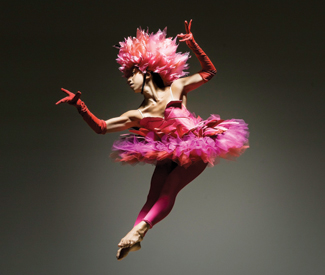
We left the talk early because the older Mid-West mom who sat next to us was having trouble not gawking at my pink hair. These creatures abound at Art Basel, providing quite the incongruous counterpoint to the freakish gazelles of South Beach until you realize the oldies are probably millionaires and really, who the hell am I to say that a brokeass alt-culture writer belongs in this scene any more than them? Her shoes def looked better suited to gallery stomping than my not-enough-broken in kicks, so good job lady and next time just take a picture.

Stop number two (after a brief intermission spent in a smoothie shop that was blasting techno music at 2pm MIAMI) was the massive translucent white tent on the beach that is housing Untitled Art Fair. Untitled´s a young buck in its first year of existence, and breaks from the usual fair mode in that a single dude (New York´s Omar Lopez-Chahoud) curated the whole, 50-gallery affair. The venue is flash as hell, foregoing spotlights on the art for primarily natural light, and designed to ¨flow¨ between gallery spaces.

Chicago gallerist Monique Meloche has shown at NADA and Pulse art fairs during Basel week before, but told us that participating in Untitled “is super-different. Omar calls you up and says ‘I want to do something with Justin,’ and then you pick complimentary pieces.”

Justin, of course, being Justin Cooper, whose site-specific rubber hose sculpture welcomed attendees off the beach into Untitled. A smaller creation sat on the floor in the middle of Meloche’s set-up, which also included pieces by Ebony Patterson, a Jamaican-born artist who works with mug shots of male criminals, converting them into ravishing drag queens with DIY-like touches like vinyl flowers cut from common household items. To complete the trifecta (all Untitled exhibitors were allowed three), she paired Patterson and Cooper with Iran´s Sheree Hovsepian, who manipulates dark room proofs to create deceptively simple abstracts. All three, Meloche told us, worked with elements of craft, mixing high and low materials and references. 

Throughout the exhibit you could see touches of Lopez´s personal preferences — there was a lot of abstract work, for example, although I´m not sure you could classify Paco Cao´s dead celeb tarot card prints (at $25, they were the cheapest pieces on sale at the fair) as abstract. Maybe the presentation of them, though. Cao sat in a hidey hole built with gallery walls, screaming out readings he did with the cards of fest-goers. 

Growing discomfort of my neon pink boots be damned, we made it to our third fair of the day, the free-entry (this is pretty much unheard of among Basel week fairs) New Art Dealers Alliance or NADA art fair, in the Deauville Beach Resort. We got a serious hit of hometown pride over the Bay galleries that made it to NADA — Oakland´s Creative Growth gallery for developmentally and otherwise disabled artists was showcasing William Scott´s R&B culture icon paintings, and can I just say that Cindy, Terry, Maxine, and Dawn of En Vogue have never looked lovelier. We also got to check out Oakland´s Et Al Projects, and SF´s CCA Wattis Institute and Queen´s Nails

And I know what you´re thinking and yeah duh, we´re partying too. Like, with mansions and shit. boychild (who along with another member of our SF-does-Basel crew, Dia Dear, were the subject of Marke B.´s Super Ego column last week) tipped us off to ¨The Body As Lightning Conductor,¨ a private party which turned out to be in a mansion you got to via yacht. We all stood around this Spanish-style mansion (or, y´know, ducked into the well-appointed library) housing drinks from the open bar with aforementioned Mid-West millionaires, high fashion West Coast club kids. All retired to the ballroom (!) to check out a vogue crew tear it down around midnight. 

Then, lacking a cab or cabfare, I got in a buncha strangers´ car (I think the dude sitting shotgun was a rapper), allowed them to buy me fries from the Wendy´s drive-thru, and then ditched them when they got mired in the standstill traffic going through Wynwood, charged my phone on some DJ´s powerstrip who was playing a set in a cigar factory, danced while it charged, and then made the Fountain Art Fair after-party with a buncha street artists/street art festival organizers BASEL

Chris Brown´s painting entitled ¨Chompuzz¨ is on display at hipster clusterfuck Basel Castle tonight, which is pretty much my only priority to see tonight. Center of the art world! BASEL!

Nite Trax: Tormenta Tropical whips up 5 years of cumbia madness

0

Five years ago the local nightlife scene was broadening its scope in a multitude of awe-inspiring musical directions, from contemporary Afrobeat and baile funk to experimental global indie. In that atmosphere of diverse ferment, a couple of super-talented kids, recently returned from Argentina, started Tormenta Tropical (along with label Bersa Discos), a monthly at the Elbo Room dedicated to the electronic spin many Latin American artists were putting on the traditional cumbia sound.

The sound centered around club Zizek in Buenos Aires and its ZZK label — but it also found a home, strangely enough, in the tropical-hungry underground clubs of Montreal. Tormenta Tropical provided a third leg of the nu-cumbia triangle, and has been known ever since as a go-to for cutting edge global bass and electro-Latin tracks. There were also a lot of glowing Virgin Marys on the DJ booth and a taco truck parked outside. 

This Saturday, oro11 and Shawn Reynaldo (formerly Disco Shawn), celebrate the fifth anniversary of the club, and it’s gonna be a humdinger, chicas.

Even though the party has become known for its insane roster of guest performers — including Buraka Som Sistema, El Guincho, Toy Selectah, DJ Rupture, Maluca, L-Vis 1990 and Bok Bok, Matias Aguayo, Kingdom, Uproot Andy, South Rakkas Crew, Chancha Via Circuito, Sinden, Schlachthofbronx, Roska, Los Rakas, Very Be Careful, and my secret byfirend Ghislain Poirier — this party will feature Shawn and oro tag-teaming on the decks, giving us a full five years’ (and four hours’) worth of pure TT gold. I emailed oro11 and Shawn (who’s also one of the Bay’s best dance music writers) to give us a little update about it all.  

SFBG In the past five years, and in the wake of moombahton, Diplo, and everything else Latin- and tropical-electronic obsessed — how has the nu-cumbia scene changed, are you finding new directions for the music? Will there be a trap hybrid soon? (I AM KIND OF KIDDING.)

TORMENTA TROPICAL When we started the party, there was definitely a sort of bloggy buzz around cumbia and the idea of tropical bass. Between Diplo, Mad Decent, and the attention our friends from ZZK in Buenos Aires were getting, it did feel like some of the crowd was coming out to check out this “new” sound, just because it was fashionable. Over time, that has totally changed. Five years later, it doesn’t feel like Tormenta Tropical is a party for the “cool” kids at all. At this point, it’s just for people who love the music and the vibe, and most importantly, want to dance. Also, it’s totally mixed, which is great, especially when so much of San Francisco nightlife is hopelessly segregated.

As for the music, we’ve seen so many trends and sounds come and go over the past five years, and the SoundCloud generation of producers is totally prone to hopping on whatever new sound they come across, only to abandon it just as quickly. It’s led to a lot of dodgy music, along with artists who fleetingly pass through the scene, but that’s why it’s our job to find the good stuff. Thankfully, even though cumbia and other sounds may not be as trendy as they once were, we still come across great music all the time. If anything, the most interesting producers are the ones operating out of their bedrooms in a virtual vacuum, just creating weird hybrids of Latin music or dancehall or African rhythms or whatever else because they have a passion for it, not because they’re trying to get posted on a blog.

And it’s funny that you mention trap. As cringe-inducing as that world has become, this kid DJ Quality in Chicago has been sending us some amazing cumbia and bachata tunes with trap beats. You never know…

http://www.youtube.com/watch?v=oLfNTztmSXU

SFBG How many people have you had to kick out due to over-cumbiaing?

TT Thankfully, the crowd at Tormenta Tropical has always been well-behaved. We’ve both been DJing and throwing parties for a long time, and it’s honestly hard to imagine another party where so many people are just dancing and having fun. There’s nothing pretentious about Tormenta Tropical, even when we’re playing totally obscure music or someone from South America is performing live on stage. That’s maybe the most amazing thing about Tormenta Tropical — the vast majority of the people don’t know the vast majority of the songs, but people still show up every month, pack the dancefloor, and get wild.

SFBG How’s the label doing? Any news?

TT Bersa Discos is still happening, although it’s admittedly been a little while since we’ve had a release. At this point, we’re just trying to promote quality over quantity, and it’s not like there’s any profit in putting out limited-run vinyl releases, so we’re just waiting for the right tunes to come in. It also doesn’t help that some of our favorite artists have a tendency to never finish their tracks. [There will be cool Bersa Discos t-shirts for sale at the party.]

http://www.youtube.com/watch?v=PZOaSX1uT_A

SFBG
Should I wear booty shorts to the anniversary and shower myself with cheap champagne?

TT Marke, that sounds fine to us. There has never been dress code at Tormenta Tropical, and we’re not going to start one now. Back in 2008, Buraka Som Sistema played their very first San Francisco show at our party. In the middle of the set, this girl hopped on stage, took her shirt off, and kept right on dancing with her boobs out and her sunglasses on. No one seemed to mind.

TOP 11 TORMENTA TROPICAL TRACKS OF ALL TIME

Casa de Leones “No Te Veo”
Chancha Via Circuito “Cumbia Malembe”
DJ Dus “Cuando Lo Negro Sea Bello”
DJ Negro “Sabor a Gaita Remix”
DJ Panik “Pintura de Nieve”
El Hijo de la Cumbia “La Mara Tomaza”
Erick Rincon “Cumbia de Nuevo Leon”
Los Rakas “Abrazame (Uproot Andy Remix)”
Mr. Vegas “Certain Law (Murlo Remix)”
Omega “Si Tú Queres, Tú No Queres (DJ K-Ber Extended Reggaeton Mix)”
Sabo and Cassady “La Curura”


TORMENTA TROPICAL 5-YEAR ANNIVERSARY

Sat/8, 10pm, $5 before 10pm, $10 after.

Elbo Room

647 Valencia, SF.

www.elbo.com

San Francisco’s slippery slope is chafing

71

By Nato Green

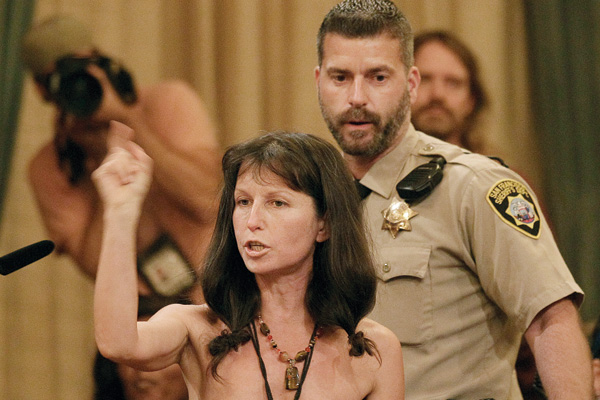
This week, the San Francisco Board of Supervisors passed a ban on public nudity on a party line vote. By “party line,” I mean the Supes voting against nudity are the ones who never go to parties with lines of coke or conga lines. I’m not saying every single one of the progressive supervisors could be found in the naked suntan lotion massage yurt at Burning Man, just that it’s conceivable.

The ban was proposed by District 8 Supervisor Scott Wiener, and supported by the “moderates,” who are Very Serious about sensible governance. First of all, anyone who ever made fun of Supervisor Eric Mar’s happy meal ban owes him an apology. Second, obviously all other problems in the City have been solved, which has freed up the Supes to kowtow to the whims of the gayeoisie.

People are worried about the effects of aggressive nudity on children, but fortunately we’ve gentrified all the families out of the City. Now we’ll have to export nudists to Solano County if we want kids subjected to them. At any rate, during a nippy San Francisco winter it’s vitally important for children to learn about shrinkage.

Nudity doesn’t necessarily harm children. I grew up in San Francisco. In the ’70s. Naked people were everywhere, bare and unshaven. I didn’t see a fully-clothed adult until I was nine. I didn’t see nakedness as sexual, so much as simply covered in naked. Partly because then, as now, the specific naked people were not easy on the eyes. Not to promote normative body images, but if Christina Hendricks and Ryan Gosling showed up naked, the ensuing celebration by all sexualities would make the Giants Victory Parade look like a tupperware party.

Worst of all, nudity was banned in the Castro. If there’s one neighborhood that arguably draws its spirit from the brandishing of genitalia, it’s the Castro. Harvey Milk did not march so his grandchildren could sequester the penis. It’s almost as if the City wanted to abolish hippies sitting on the sidewalk in the Haight-Ashbury. (Damn you, sit/lie.)

If we’re going to ban sitting on the sidewalk in the Haight and nudity in the Castro, here are more options for possible legislation to achieve the goal of draining our neighborhoods of their distinguishing features.

We should also ban:

  1. Bernal Heights—dykes with dogs.

  2. Mission—fixed-gear bicycles, ironic mustaches, and salvadoreños.

  3. Marina—entitlement.

  4. Richmond—Irish pubs with actual Irish people.

  5. Noe Valley—strollers and handmade baby food.

  6. Western Addition—Black people. Whoops. Too late.

Comedian Nato Green (writer for “Totally Biased with W. Kamau Bell” on FX) headlines the San Francisco Punchline December 19 and 20. Tweet him @natogreen

Free Muni for youth a rare progressive victory

18

The left isn’t winning all that much these days, but Sup. David Campos had a huge victory with the passage of a plan to offer free Muni to some 40,000 low-income kids. The challenges aren’t over — it’s still not clear, for example, how the actual clipper cards will be distributed — but this is a big step forward.

And it didn’t come easily. Campos worked with a coalition of low-income advocates that refused to give up despite two years of setbacks.

“We were relentless, even when we lost,” Campos told me.

It’s no secret that I’ve supported this plan all along (I actually like free Muni for all youth). And I think we’ll get there. In the meantime, for low-income middle-school and high-school kids, most of whom don’t get school bus rides any more, this is a big deal. The price of taking Muni to school ($1 a day for youth fares) is a significant amount of money, particularly for families with several kids who are struggling to make rent and eat. Yeah, there are cheaper youth passes — but you have to go to a Muni office in the middle of the day and bring proof of your kid’s age and it’s a pain in the ass for working parents.

So now it’s up to the MTA to figure out how to make it easy for families, some of them with limited English proficiency and virtually no time to wait in lines at Muni offices, to take advantage of the program. “We’re going to spend a lot of time doing outreach,” Campos said. “We’re working with Muni and with community-based organizations. We’re going to make this as easy as possible.”

The obvious solution, in my mind, is to distribute the passes at public schools. The school district already has income information on the kids, through the free and reduced-price lunch program; in theory, all anyone would have to do is take that list, adjust it a bit (because the eligibility for lunches and Muni passes is a little different) and hand out the passes at middle-school and high-school campuses. (You’d miss low-income kids who go to parochial schools, and a few others, but SFUSD wouldn’t be the only provider, just the first.)

And it’s education-related, since most of these kids take Muni to and from school — or should.

Problem is, there are legal rules about the use of the lunch data (although there must be a way to get around it) and SFUSD doesn’t seem terribly interested. (More work, more hassles for an already overworked and underfunded district.) But you could station one Muni worker at each school to hand out the passes, right? Or Muni could use some of the outreach money to pay for the SFUSD staff time.

At any rate, those are details. The main point is that Campos and his allies managed to beat back the opposition and make this actually happen. Good job.

(Oh, and the same day, Sup. Jane Kim managed to get $1.7 million for the schools to help with graduation rates — without raiding the Rainy Day Fund. Two progressive wins and it’s only the 5th of December.)

Guns in Bayview

36

The National Rifle Association’s bid to kill two San Francisco gun control ordinances — which a federal judge initially rejected last week, although that legal process continues — highlights differing views on the issue in the violence-plagued Bayview, where two prominent activists have opposing viewpoints.

One ordinance requires guns in the home to be locked up when not on the owner’s person and the second bans the sale of fragmenting and expanding bullets, affecting only the city’s sole gun store: High Bridge Arms, in the Mission district.

The first ordinance was introduced in 2007 by then-Mayor Gavin Newsom and supported by Sheriff and then-Sup. Ross Mirkarimi and opposed by three supervisors: Ed Jew, Aaron Peskin, and Chris Daly. City Attorney Dennis Herrera was pleased at the judge’s ruling.

“The NRA took aim at San Francisco’s Police Code,” Herrera said in a press release. “I’m proud of the efforts we’ve made to beat back these legal challenges, and preserve local laws that can save lives.”

NRA attorney C.D. Michel told the San Francisco Examiner, “This is not over, not by a long shot…What if you’re old and need glasses in the middle of the night, or you have kids at home to protect? Why are they being forced to keep their guns locked up?”

Interestingly, its not the NRA’s name on the front of the lawsuit, entitled “Espanola Jackson v. City and County of San Francisco.”

Jackson, a San Francisco native and longtime Bayview Hunter’s Point civil rights activist, has been fighting for the rights of minorities since she was old enough to hold a picket sign. She was recognized last May by the San Francisco Human Rights Commission with a “Legacy Award for a Lifetime in Human Rights Advocacy.”

So why is she advocating for unlocked guns in the home, and more lethal bullets?

“I live in the Bayview and I’m 79 years old,” she told The Guardian. “We’re mostly single women, but we need to have protection.”

She cited a recent police report she’d read of an elderly woman being assaulted by several teenage girls, just blocks from her home, as one of the many reasons she feels she needs protection in her own neighborhood.

Jackson said she’s had a lifetime of training with her firearm, although she wouldn’t identify the kind of weapon she wield. Back in the ’60s, she said, “they were calling us pistol packing mamas.” It’s that history, she said, that makes her feel safest with a gun in her drawer, where she can easily get it in case of a robbery.

But Theo Ellington — a board member of the Bayview Opera House and the Southeast Community Facilities Commission — sees the issue differently. Notably, as a member of the Young Black Democrats, he led the opposition against Mayor Ed Lee’s proposal to introduce “Stop and Frisk” policing to San Francisco. Lee abandoned the idea after activists cited rampant civil rights abuses under the policy in New York City.

Ellington thinks that overturning the San Francisco’s gun ordinances would be a bad idea. “We face a much greater risk if we fail to take measures to prevent [gun] accidents,” Ellington told us. “The last thing we want is for any weapons to be in the hands of children or for potential misuse.”

He has reason to be worried about the Bayview. Recent city statistics show an upswing in most crime categories in the district from 2011 to 2012, from homicides and rape to vehicle theft and burglaries. National studies have shown gun owners or their family members are more likely to get shot by guns kept in homes than are intruders. Public safety means different things in different areas, Ellington said, especially “when we’re dealing with a population that is plagued by gun violence.”

Film Listings

0

Film listings are edited by Cheryl Eddy. Reviewers are Kimberly Chun, Dennis Harvey, Lynn Rapoport, and Sara Vizcarrondo. For rep house showtimes, see Rep Clock.

OPENING

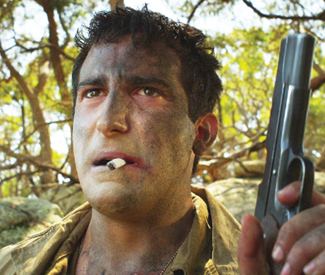
Generation P When Babylen Tatarsky (Vladimir Epifantsev) meets an old friend by chance, he’s plucked from penny-ante street level entrepeneurship into the much higher stakes of advertising in early 1990s Russia — a brave new world of post-Communist consumerist capitalism bent on outperforming the West’s, in which new corrupt orders replace the old ones with dizzying speed. His rise from humble copy writer to a "living god" controlling mass reality one commercial at a time is accompanied by a whole lot of recreational drug use, mafia-style violence, and references to Mesopotamian mythology. Adapted from Victor Pelevin’s 1999 novel (published in the US as Homo Zapiens), Victor Ginzburg’s film preserves its heady, gonzo mix of Pynchon, cyberpunk, and Putney Swope (1969) as a satirical conspiracy fantasia in which excess is both the style and the subject. No doubt at least half the in-jokes are lost on non-Russian audiences, but Generation P is so dense and hyperactive you’ll be entertained by its fabulist sociopolitical onslaught regardless. (1:52) Embarcadero. (Harvey)

In the Family See "Father and Law." (2:49) Opera Plaza.

North Sea Texas Growing up is never easy — especially when you know who you are and who you love from a tender young age, and live in a sleepy Belgium coastal hamlet in the early ’70s. Sexual freedom begins at home, as filmmaker Bavo Defurne’s debut feature opens on our beautiful little protagonist, Pim — a melancholy, shy, diligent soul who has a talent for drawing, a responsible nature, and a yen for ritual dress-up in lipstick and lace. He has an over-the-top role model: an accordion-playing, zaftig mother who has a rep as the village floozy. Left alone far too often as his mom parties at a bar named Texas, Pim takes refuge with kindly single-mom neighbor Marcella, her earnest daughter, and her sexy, motorcycle-loving son, Gino, who turns out to be just Pim’s speed. But this childhood idyll is under threat: Gino’s new girlfriend and a handsome new boarder at Pim’s house promise to change everything. Displaying a gentle, empathetic touch for his cast of mildly quirky characters and a genuine knack for conjuring those long, sensual days of youth, Defurne manages to shine a fresh, romantic light on a somewhat familiar bildungsroman, leaving a lingering taste of sea salt and sweat along with the feeling of walking in one young boy’s very specific shoes. (1:36) Opera Plaza, Shattuck. (Chun)

Playing For Keeps Gerard Butler plays a former sports star who aims to redeem himself by coaching his kid’s soccer team. (1:46)

"The Vortex Apocalypse, or How I Learned to Stop Worrying and Love Thursday Film Cult" With a respectful nod to the Mayans, the Vortex sees off 2012 with four weeks of movies depicting end-of-the-world-as-we-know-it scenarios. First up is an interesting duo from 1974. In Chosen Survivors, 11 strangers selected for their particular knowledge and skills are taken to an elaborate government bunker deep beneath the desert. They’re told they’re among several such groups in different secret locations chosen to preserve the human race in the immediate aftermath of total thermonuclear war. This is pretty hard to take, along with the notion that they’ll be spending at least the next five years in this very 1970s silver discotheque-spaceship environ. But soon the chosen few have an even more jarring crisis to deal with: the scientists who devised this sunken fortress neglected to note it is surrounded by caves filled with hungry vampire bats. There’s a very big twist at the one-hour point, but just when this rare theatrical feature by TV director Sutton Roley (The Man From U.N.C.L.E., Airwolf, etc.) should kick into high gear, it actually seems to slow down. Still, there are a couple very tense sequences, and some interesting character fillips. The co-feature is The Last Days of Planet Earth a.k.a. Prophecies of Nostradamus, a Japanese superproduction that aimed to top both the then-prominent disaster movie genre and the strain of eco-horror dominating much of 1970s fantasy cinema. In addition to the expected earthquakes, tsunamis, and such, Earth’s meltdown triggers such phenomena as pterodactyl-sized vampire bats (again!) and bird-eating flowers. Toshio Masuda’s special effects spectacular also features a really weird modern dance performance, and — in the editorially butchered, atrociously dubbed US release version — dialogue like "But by not allowing them to live, you’re … killing them!" Vortex Room. (Harvey)

Waiting for Lightning The first voice you hear in Waiting for Lightning is pro skateboarder Danny Way’s mother: "I said, ‘Are you crazy? What do you think you’re doing?’" Can’t really blame her for worrying: Waiting for Lightning is a bio-doc following the fearless Way’s rise from littlest squirt at the Del Mar skate park to his determined quest to jump over the Great Wall of China in 2005. Growing up, he faced problems (his dad was killed in jail; his mom partied … a lot; his mentor died in a car crash; he suffered a broken neck after a surfing accident), but persevered to find his calling, pursuing what a peer calls "life-and-death stuntman shit." Like all docs about skateboarding — a sport that depends so much on cameras standing by — there’s no shortage of action footage, and big names like Tony Hawk and Christian Hosoi drop by to heap praise on Way’s talents and work ethic. Lightning is aimed mostly at an audience already fond of watching skate footage; it lacks the artistic heft of 2001’s Dogtown and Z-Boys, or the unusually compelling narrative of 2003’s Stoked: The Rise and Fall of Gator, and the whole "Way is a golden god" theme gets a little tiresome. But it must be said: the Great Wall jump — a self-mythologizing publicity stunt that would do Evel Knievel proud — is rather spectacular. (1:32) Metreon. (Eddy)

ONGOING

Anna Karenina Joe Wright broke out of British TV with the 9,000th filmed Pride and Prejudice (2005), unnecessary but quite good. Too bad it immediately went to his head. His increasing showiness as director enlivened the silly teenage-superspy avenger fantasy Hanna (2011), but it started to get in the way of Atonement (2007), a fine book didn’t need camera gymnastics to make a great movie. Now it’s completely sunk a certified literary masterpiece still waiting for a worthy film adaptation. Keira Knightley plays the titular 19th century St. Petersburg aristocrat whose staid, happy-enough existence as a doting mother and dutiful wife (to deglammed Jude Law’s honorable but neglectful Karenin) is upended when she enters a mutually passionate affair with dashing military officer Count Vronsky (Aaron Taylor-Johnson, miscast). Scandal and tragedy ensue. There’s nothing wrong with the screenplay, by Tom Stoppard no less. What’s wrong is Wright’s bright idea of staging the whole shebang as if it were indeed staged — a theatrical production in which nearly everything (even a crucial horse race) takes place on a proscenium stage, in the auditorium, or "backstage" among riggings. Whenever we move into a "real" location, the director makes sure that transition draws attention to its own cleverness as possible. What, you might ask, is the point? That the public social mores and society Anna lives in are a sort of "acting"? Like wow. Add to that another brittle, mannered performance by Wright’s muse Knightley, and there’s no hope of involvement here, let alone empathy — in love with its empty (but very prettily designed) layers of artifice, this movie ends up suffocating all emotion in gilded horseshit. The reversed-fortune romance between Levin (Domhall Gleeson) and Kitty (Alicia Vikander) does work quite well — though since Tolstoy called his novel Anna Karenina, it’s a pretty bad sign when the subsidiary storyline ends up vastly more engaging than hers. (2:10) Metreon, Sundance Kabuki. (Harvey)

Argo If you didn’t know the particulars of the 1979 Iranian Revolution, you won’t be an expert after Argo, but the film does a good job of capturing America’s fearful reaction to the events that followed it — particularly the hostage crisis at the US embassy in Tehran. Argo zeroes in on the fate of six embassy staffers who managed to escape the building and flee to the home of the sympathetic Canadian ambassador (Victor Garber). Back in Washington, short-tempered CIA agents (including a top-notch Bryan Cranston) cast about for ways to rescue them. Enter Tony Mendez (Ben Affleck, who also directs), exfil specialist and father to a youngster wrapped up in the era’s sci-fi craze. While watching 1973’s Battle for the Planet of the Apes, Tony comes up with what Cranston’s character calls "the best bad idea we have:" the CIA will fund a phony Canadian movie production (corny, intergalactic, and titled Argo) and pretend the six are part of the crew, visiting Iran for a few days on a location shoot. Tony will sneak in, deliver the necessary fake-ID documents, and escort them out. Neither his superiors, nor the six in hiding, have much faith in the idea. ("Is this the part where we say, ‘It’s so crazy it just might work?’" someone asks, beating the cliché to the punch.) Argo never lets you forget that lives are at stake; every painstakingly forged form, every bluff past a checkpoint official increases the anxiety (to the point of being laid on a bit thick by the end). But though Affleck builds the needed suspense with gusto, Argo comes alive in its Hollywood scenes. As the show-biz veterans who mull over Tony’s plan with a mix of Tinseltown cynicism and patiotic duty, John Goodman and Alan Arkin practically burst with in-joke brio. I could have watched an entire movie just about those two. (2:00) 1000 Van Ness, Presidio, SF Center, Sundance Kabuki. (Eddy)

Back to 1942 Multiple storylines wend through Feng Xiaogang’s historical epic about a devastating drought that brought famine to China’s Henan province. Abandoned by their government, millions of refugees would eventually die in a situation compounded by corrupt officials, the Chinese army’s demands on the region’s nonexistent grain stores, and looming Japanese troops. The scenes from the road are grim, on both small (a desperate family tries to trade their child for grain) and larger (Japanese bombing raids, cannibalism) scales — though there are moments of hope, as when rival families put aside their differences to help a pregnant daughter. (Hope doesn’t last, though: when the baby is born, the half-dead mother mutters, "Kill it.") Meanwhile, an American journalist (Adrien Brody) chases the story with the help of a priest (Tim Robbins, working a distracting accent); after witnessing horrors in Henan, his reporting helps nudge the government into action, however slightly. It would take an exceptionally even hand to prevent this heavily tragic material from sliding face first into melodrama, something Back to 1942 doesn’t even attempt to do. Whether you feel moved or manipulated is up to you. (2:26) Presidio. (Eddy)

The Big Picture Trading places, especially under sinister circumstances, seems unnervingly easy to do — if you’re the talented Mr. Ripley or The Big Picture‘s adorably scruffy bourgeois-on-the-run Paul (Romain Duris of 2005’s The Beat That My Heart Skipped). Coming from wealth and amiably going through the motions of upper-middle-class lawyerly life with his wife (Marina Fois) and kids, Paul is accustomed to relegating his love of photography to the sidelines as a hobby. So when photojournalist neighbor Gregoire (Eric Ruf) has a freakish accident, Paul throws himself down the rabbit hole of another man’s identity. Is it possible to completely start over — and is there a kind of freedom in death? Working from Douglas Kennedy’s novel, director and co-writer Eric Lartigau keeps his camera firmly fixed on his camera-wielding, metamorphosing lead, sidestepping the meta and going for the clearly Hitchcockian (though Hitch would probably reject the occasional cheesy slow-motion effect and reach for something more visually or technically audacious). To his credit, Lartigau keeps the audience guessing even beyond the credits, making this noir something of an artist’s parable, while Duris makes you root for his haunted, puppy-dog-ish Paul as he falls, finds his métier, and tumbles once more. (1:50) Embarcadero. (Chun)

Chasing Ice Even wild-eyed neocons might reconsider their declarations that global warming is a hoax after seeing the work of photographer James Balog, whose images of shrinking glaciers offer startling proof that our planet is indeed being ravaged by climate change (and it’s getting exponentially worse). Jeff Orlowski’s doc follows Balog and his Extreme Ice Survey team as they brave cruel elements in Iceland, Greenland, and Alaska, using time-lapse cameras to record glacier activity, some of it quite dramatic, over months and years. Balog is an affable subject, doggedly pursuing his work even after multiple knee surgeries make him a less-than-agile hiker, but it’s the photographs — as hauntingly beautiful as they are alarming — that make Chasing Ice so powerful. Could’ve done without Scarlett Johansson crooning over the end credits, though. (1:15) Embarcadero. (Eddy)

Cloud Atlas Cramming the six busy storylines of David Mitchell’s wildly ambitious novel into just three hours — the average reader might have thought at least 12 would be required — this impressive adaptation directed (in separate parts) by Tom Twyker (1998’s Run Lola Run) and Matrix siblings Lana and Andy Wachowski has a whole lot of narrative to get through, stretching around the globe and over centuries. In the mid 19th century, Jim Sturgess’ sickly American notory endures a long sea voyage as reluctant protector of a runaway-slave stowaway from the Chatham Islands (David Gyasi). In 1931 Belgium, a talented but criminally minded British musician (Ben Whishaw) wheedles his way into the household of a famous but long-inactive composer (Jim Broadbent). A chance encounter sets 1970s San Francisco journalist Luisa (Halle Berry) on the path of a massive cover-up conspiracy, swiftly putting her life in danger. Circa now, a reprobate London publisher’s (Broadbent) huge windfall turns into bad luck that gets even worse when he seeks help from his brother (Hugh Grant). In the not-so-distant future, a disposable "fabricant" server to the "consumer" classes (Doona Bae) finds herself plucked from her cog-like life for a rebellious higher purpose. Finally, in an indeterminately distant future after "the Fall," an island tribesman (Tom Hanks) forms a highly ambivalent relationship toward a visitor (Berry) from a more advanced but dying civilization. Mitchell’s book was divided into huge novella-sized blocks, with each thread split in two; the film wastes very little time establishing its individual stories before beginning to rapidly intercut between them. That may result in a sense of information (and eventually action) overload, particularly for non-readers, even as it clarifies the connective tissues running throughout. Compression robs some episodes of the cumulative impact they had on the page; the starry multicasting (which in addition to the above mentioned finds many uses for Hugo Weaving, Keith David, James D’Arcy, and Susan Sarandon) can be a distraction; and there’s too much uplift forced on the six tales’ summation. Simply put, not everything here works; like the very different Watchmen, this is a rather brilliant "impossible adaptation" screenplay (by the directors) than nonetheless can’t help but be a bit too much. But so much does work — in alternating currents of satire, melodrama, pulp thriller, dystopian sci-fi, adventure, and so on — that Cloud Atlas must be forgiven for being imperfect. If it were perfect, it couldn’t possibly sprawl as imaginatively and challengingly as it does, and as mainstream movies very seldom do. (2:52) 1000 Van Ness, SF Center. (Harvey)

The Collection As soon as you behold the neon sign "Hotel Argento" shining over the grim warehouse-cum-evil dead trap, you know exactly what you’re in for — a wink, and even a little bit of a horror superfan’s giggle. In other words, to tweak that killer Roach Motel tagline: kids check in, but they don’t check out. No need to see 2009’s The Collector — the previous movie by director-cowriter Marcus Dunstan and writer Patrick Melton (winners of the third season of Project Greenlight, now with the screenplays for multiple Saw films beneath their collective belt) — the giallo fanboy and gorehound hallmarks are there for all to enjoy: tarantulas (straight from 1981’s The Beyond), a factory kitted out as an elaborate murder machine, and end credits that capture characters’ last moments. Plus, plenty of fast-paced shocks and seemingly endless splatter, with a heavy sprinkle of wince-inducing compound fractures. The Collection ups the first film’s ante, as gamine Elena (Emma Fitzpatrick) is lured to go dancing with her pals. Their underground party turns out to be way beyond the fringe, as the killer mows down the dance floor, literally, and gives the phrase "teen crush" a bloody new spin. Stumbling on The Collector‘s antihero thief Arkin (Josh Stewart) locked in a box, Elena releases him but can’t prevent her own capture, so killer-bodyguard Lucello (Oz‘s Lee Tergesen) snatches Arkin from the hospital and forces him to lead his team of toughs through a not-so-funhouse teeming with booby traps as well as victims-turned-insidious-weapons. All of which almost convinces you of nutty-nutball genius of the masked, dilated-pupiled Collector (here stuntman Randall Archer), who takes trendy taxidermy to icky extremes — even when his mechanism is threatened by a way smart last girl and a lock picker who’s adept at cracking building codes. Despite Dunstan’s obvious devotion to horror-movie landmarks, The Collection doesn’t turn out to be particularly original: rather, it attempts to stand on the shoulders — and arms and dismembered body parts — of others, in hopes of finding its place on a nonexistent drive-in bill. (1:23) Metreon, 1000 Van Ness. (Chun)

The Flat Arnon Goldfinger’s The Flat begins as the filmmaker’s family descends upon the Tel Aviv apartment of his recently-deceased grandmother, "a bit of a hoarder" who lived to 95 and seemingly never got rid of anything. This includes, as Goldfinger discovers, copies of the Joseph Goebbels-founded newspaper Der Angriff, containing articles about "the Nazi who visited Palestine." The Nazi was Leopold von Mildenstein, an SS officer with an interest in Zionism. Turns out he made the journey in 1933 with his wife and a Jewish couple named Kurt and Gerda Tuchler — Goldfinger’s grandparents. Understandably intrigued and more than a little baffled, Goldfinger investigates, finding letters and diary entries that reveal the unlikely traveling companions were close friends, even after World War II. His mother, the Tuchler’s daughter, prefers to "keep the past out," but curiosity (and the pursuit of a good documentary) presses Goldfinger forward; he visits von Mildenstein’s elderly daughter in Germany, digs through German archives, and unearths even more suprises about his family tree. Broader themes about guilt and denial emerge — post-traumatic coping mechanisms that echo through generations.

(1:37) Opera Plaza. (Eddy)

Flight To twist the words of one troubled balladeer, he believes he can fly, he believes he can touch the sky. Unfortunately for Denzel Washington’s Whip Whitaker, another less savory connotation applies: his semi-sketchy airline captain is sailing on the overconfidence that comes with billowing clouds of blow. Beware the quickie TV spot — and Washington’s heroic stance in the poster — that plays this as a quasi-action flick: Flight is really about a man’s efforts to escape responsibility and his flight from facing his own addiction. It also sees Washington once again doing what he does so well: wrestling with the demons of a charismatic yet deeply flawed protagonist. We come upon Whip as he’s rousing himself from yet another bender, balancing himself out with a couple lines with a gorgeous, enabling flight attendant by his side. It’s a checks-and-balances routine we’re led to believe is business as usual, as he slides confidently into the cockpit, gives the passengers a good scare by charging through turbulence, and proceeds to doze off. The plane, however, goes into fail mode and forces the pilot to improvise brilliantly and kick into hero mode, though he can’t fly from his cover, which is slowly blown despite the ministrations of kindred addict Nicole (Kelly Reilly) and dealer Harling (John Goodman at his most ebullient) and the defensive moves of his pilots union cohort (Bruce Greenwood) and the airline’s lawyer (Don Cheadle). How can Whip fly out of the particular jam called his life? Working with what he’s given, Washington summons reserves of humanity, though he’s ultimately failed by John Gatins’ sanctimonious, recovery-by-the-numbers script and the tendency of seasoned director Robert Zemeckis to blithely skip over the personal history and background details that would have more completely filled out our picture of Whip. We’re left grasping for the highs, waiting for the instances that Harling sails into view and Whip tumbles off the wagon. (2:18) 1000 Van Ness, SF Center, Sundance Kabuki. (Chun)

Hitchcock On the heels of last year’s My Week With Marilyn comes another biopic about an instantly recognizable celebrity viewed through the lens of a specific film shoot. Here, we have Anthony Hopkins (padded and prosthetic’d) playing the Master of Suspense, mulling over which project to pursue after the success of 1959’s North by Northwest. Even if you’re not a Hitch buff, it’s clear from the first scene that Psycho, based on Robert Bloch’s true crime-inspired pulpy thriller, is looming. We open on "Ed Gein’s Farmhouse, 1944;" Gein (Michael Wincott) is seen in his yard, his various heinous crimes — murder, grave-robbing, body-part hoarding, human-skin-mask crafting, etc. — as yet undiscovered. Hitchcock, portrayed by the guy who also played the Gein-inspired Hannibal Lecter, steps into the frame with that familiar droll greeting: "Guhhd eevvveeeening." And we’re off, following the veteran director as he muses "What if somebody really good made a horror picture?" Though his wife and collaborator, Alma (Helen Mirren), cautions him against doing something simply because everyone tells him not to, he plows ahead; the filmmaking scenes are peppered with behind-the-scenes moments detailed in Stephen Rebello’s Alfred Hitchcock and the Making of Psycho, the source material for John J. McLaughlin’s script. But as the film’s tagline — "Behind every Psycho is a great woman" — suggests, the relationship between Alma and Hitch is, stubbornly, Hitchcock‘s main focus. While Mirren is effective (and I’m all for seeing a lady who works hard behind the scenes get recognition), the Hitch-at-home subplot exists only to shoehorn more conflict into a tale that’s got plenty already. Elsewhere, however, Hitchcock director Sacha Gervasi — making his narrative debut after hit 2008 doc Anvil: The Story of Anvil — shows stylistic flair, working Hitchcock references into the mise-en-scène. (1:32) Metreon, Sundance Kabuki. (Eddy)

Holy Motors Holy moly. Offbeat auteur Leos Carax (1999’s Pola X) and frequent star Denis Lavant (1991’s Lovers on the Bridge) collaborate on one of the most bizarrely wonderful films of the year, or any year. Oscar (Lavant) spends every day riding around Paris in a white limo driven by Céline (Edith Scob, whose eerie role in 1960’s Eyes Without a Face is freely referenced here). After making use of the car’s full complement of wigs, theatrical make-up, and costumes, he emerges for "appointments" with unseen "clients," who apparently observe each vignette as it happens. And don’t even try to predict what’s coming next, or decipher what it all means, beyond an investigation of identity so original you won’t believe your eyes. This wickedly humorous trip through motion-capture suits, graveyard photo shoots, teen angst, back-alley gangsters, old age, and more (yep, that’s the theme from 1954’s Godzilla you hear; oh, and yep, that’s pop star Kylie Minogue) is equal parts disturbing and delightful. Movies don’t get more original or memorable than this. (1:56) Embarcadero. (Eddy)

Just 45 Minutes From Broadway (1:59) Roxie.

Killing Them Softly Lowest-level criminal fuckwits Frankie (Scoot McNairy) and Russell (Ben Mendelsohn) are hired to rob a mob gambling den, a task which miraculously they fail to blow. Nevertheless, the repercussions are swift and harsh, as a middleman suit (Richard Jenkins) to the unseen bosses brings in one hitman (Brad Pitt), who brings in another (James Gandolfini) to figure out who the thieves are and administer extreme justice. Based on a 1970s novel by George V. Higgins, this latest collaboration by Pitt and director-scenarist Andrew Dominik would appear superficially to be a surer commercial bet after the box-office failure of their last, 2007’s The Assassination of Jesse James By the Coward Robert Ford — one of the great films of the last decade. But if you’re looking for action thrills or even Guy Ritchie-style swaggering mantalk (though there is some of that), you’ll be disappointed to find Killing more in the abstracted crime drama arena of Drive (2011) or The American (2010), landing somewhere between the riveting former and the arid latter. This meticulously crafted tale is never less than compelling in imaginative direction and expert performance, but it still carries a certain unshakable air of so-what. Some may be turned off by just how vividly unpleasant Mendelsohn’s junkie and Gandolfini’s alchie are. Others will shrug at the wisdom of re-setting this story in the fall of 2008, with financial-infrastructure collapse and the hollow promise of President-elect Obama’s "Change" providing ironical background noise. It’s all a little too little, too soon. (1:37) Four Star, Marina, Metreon, 1000 Van Ness. (Harvey)

A Late Quartet Philip Seymour Hoffman is fed up playing second fiddle — literally. He stars in this grown-up soap opera about the internal dramas of a world-class string quartet. While the group is preparing for its 25th season, the eldest member (Christopher Walken) is diagnosed with early stage Parkinson’s. As he’s the base note in the quartet, his retirement challenges the group’s future, not just his own. Hoffman’s second violinist sees the transition as an opportunity to challenge the first violin (Mark Ivanir) for an occasional Alpha role. When his wife, the quartet’s viola player (Catherine Keener), disagrees, it’s a slight ("You think I’m not good enough?") and a betrayal because prior to their marriage, viola and first violin would "duet" if you get my meaning. This becomes a grody aside when Hoffman and Keener’s violin prodigy daughter (Imogen Poots) falls for her mother’s old beau and Hoffman challenges their marriage with a flamenco dancer. These quiet people finds ways to use some loud instruments (a flamenco dancer, really?) and the music as well as the views of Manhattan create a deeply settled feeling of comfort in the cold —insulation can be a dangerous thing. When we see (real world) cellist Nina Lee play, and her full body interacts with a drama as big as vaudeville, we see what tension was left out of the playing and forced into the incestuous "family" conflicts. In A Late Quartet, pleasures are great and atmosphere, heavy. You couldn’t find a better advertisement for this symphonic season; I wanted to buy tickets immediately. And also vowed to stay away from musicians. (1:45) Smith Rafael. (Vizcarrondo)

Life of Pi Several filmmakers including Alfonso Cuarón, Jean-Pierre Jeunet, and M. Night Shyamalan had a crack at Yann Martel’s "unfilmable" novel over the last decade, without success. That turns out to have been a very good thing, since Ang Lee and scenarist David Magee have made probably the best movie possible from the material — arguably even an improvement on it. Framed as the adult protagonist’s (Irrfan Khan) lengthy reminiscence to an interested writer (Rafe Spall) it chronicles his youthful experience accompanying his family and animals from their just shuttered zoo on a cargo ship voyage from India to Canada. But a storm capsizes the vessel, stranding teenaged Pi (Suraj Sharma) on a lifeboat with a mini menagerie — albeit one swiftly reduced by the food chain in action to one Richard Parker, a whimsically named Bengal tiger. This uneasy forced cohabitation between Hindu vegetarian and instinctual carnivore is an object lesson in survival as well as a fable about the existence of God, among other things. Shot in 3D, the movie has plenty of enchanted, original imagery, though its outstanding technical accomplishment may lie more in the application of CGI (rather than stereoscopic photography) to something reasonably intelligent for a change. First-time actor Sharma is a natural, while his costar gives the most remarkable performance by a wild animal this side of Joaquin Phoenix in The Master. It’s not a perfect film, but it’s a charmed, lovely experience. (2:00) Balboa, 1000 Van Ness, Presidio, SF Center, Sundance Kabuki. (Harvey)

Lincoln Distinguished subject matter and an A+ production team (Steven Spielberg directing, Daniel Day-Lewis starring, Tony Kushner adapting Doris Kearns Goodwin, John Williams scoring every emotion juuust so) mean Lincoln delivers about what you’d expect: a compelling (if verbose), emotionally resonant (and somehow suspenseful) dramatization of President Lincoln’s push to get the 13th amendment passed before the start of his second term. America’s neck-deep in the Civil War, and Congress, though now without Southern representation, is profoundly divided on the issue of abolition. Spielberg recreates 1865 Washington as a vibrant, exciting place, albeit one filled with so many recognizable stars it’s almost distracting wondering who’ll pop up in the next scene: Jared Harris as Ulysses S. Grant! Joseph Gordon-Levitt as Robert Lincoln! Lena Dunham’s shirtless boyfriend on Girls (Adam Driver) as a soldier! Most notable among the huge cast are John Hawkes, Tim Blake Nelson, and a daffy James Spader as a trio of lobbyists; Sally Field as the troubled First Lady; and likely Oscar contenders Tommy Lee Jones (as winningly cranky Rep. Thaddeus Stevens) and Day-Lewis, who does a reliably great job of disappearing into his iconic role. (2:30) 1000 Van Ness, Presidio, SF Center, Sundance Kabuki. (Eddy)

The Perks of Being a Wallflower Move over, Diary of a Wimpy Kid series — there’s a new shrinking-violet social outcast in town. These days, life might not suck quite so hard for 90-pound weaklings in every age category, what with so many films and TV shows exposing, and sometimes even celebrating, the many miseries of childhood and adolescence for all to see. In this case, Perks author Stephen Chbosky takes on the directorial duties — both a good and bad thing, much like the teen years. Smart, shy Charlie is starting high school with a host of issues: he’s painfully awkward and very alone in the brutal throng, his only friend just committed suicide, and his only simpatico family member was killed in a car accident. Charlie’s English teacher Mr. Andersen (Paul Rudd) appears to be his only connection, until the freshman strikes up a conversation with feline, charismatic, shop-class jester Patrick (Ezra Miller) and his magnetic, music- and fun-loving stepsister Sam (Emma Watson). Who needs the popular kids? The witty duo head up their gang of coolly uncool outcasts their own, the Wallflowers (not to be confused with the deeply uncool Jakob Dylan combo), and with them, Charlie appears to have found his tribe. Only a few small secrets put a damper on matters: Patrick happens to be gay and involved with football player Brad (Johnny Simmons), who’s saddled with a violently conservative father, and Charlie is in love with the already-hooked-up Sam and is frightened that his fragile equilibrium will be destroyed when his new besties graduate and slip out of his life. Displaying empathy and a devotion to emotional truth, Chbosky takes good care of his characters, preserving the complexity and ungainly quirks of their not-so-cartoonish suburbia, though his limitations as a director come to the fore in the murkiness and choppily handled climax that reveals how damaged Charlie truly is. (1:43) Bridge, Embarcadero. (Chun)

Red Dawn A remake of a 1984 movie that seemed a pretty nutty ideological throwback even during the Reagan Era’s revived Cold War air conditioning, Red Dawn should have come out a couple years ago, having been shot late 2009. But in the meantime MGM was undergoing yet another seismic financial rupture, and as the film sat around for lack of the means needed for distribution and marketing, it occurred that perhaps it already had a fatal, internal flaw. You see, this update re-cast our invaders from Russkies to People’s Republicans, tapping into the modern fear of China as debtor and international bully. But: China is also a huge fledgling market for Hollywood product. So a tortured makeover of the remake ensued; scenes were added, re-shot, and digitally altered to impose a drastic narrative change. The new villain is absurd it gets acknowledged as such by dialogue: "North Korea? It doesn’t make any sense!" Yup, in the new Red Dawn a coastal Washington state burg is the first attack point in a wholesale invasion of the U.S. (pop. 315 million) by the Democratic People’s Republic (pop. 25 million). It’s football season, so a Spokane suburb’s team — Wolverines!! — lends its name as battle cry and its revved up healthy young flesh as guerilla martyrs to the fight for, ohm yeah, freedom. Do they drink beer? Do they rescue cheerleader girlfriends from concentration camps? Do they kick North Korean ass? Do you really need to ask? (1:34) Metreon, 1000 Van Ness. (Harvey)

Rise of the Guardians There’s nothing so camp as "Heat Miser" from The Year Without a Santa Claus (1974) in Rise of the Guardians,, but there’s plenty here to charm all ages. The mystery at its center: we open on Jack Frost (voiced by Chris Pine) being born, pulled from the depths of a frozen pond by the Man on the Moon and destined to spread ice and cold everywhere he goes, invisible to all living creatures. It’s an individualistic yet lonely lot for Jack, who’s styled as an impish snowboarder in a hoodie and armed with an icy scepter, until the Guardians — spirits like North/Santa Claus (Alec Baldwin), the Tooth Fairy (Isla Fisher), and the Easter Bunny (Hugh Jackman) — call on him to join them. Pitch the Boogeyman (Jude Law) is threatening to snuff out all children’s hopes and dreams with fears and nightmares, and it’s up to the Guardians must keep belief in magic alive. But what’s in it for Jack, except the most important thing: namely who is he and what is his origin story? Director Peter Ramsey keeps those fragile dreams aloft with scenes awash with motion and animation that evokes the chubby figures and cozy warm tones of ’70s European storybooks. And though Pine verges on blandness with his vocal performance, Baldwin, Jackman, and Fisher winningly deliver the jokes. (1:38) Balboa, Metreon, 1000 Van Ness. (Chun)

A Royal Affair At age 15 in 1766, British princess Caroline (Alicia Vikander) travels abroad to a new life — as queen to the new ruler of Denmark, her cousin. Attractive and accomplished, she is judged a great success by everyone but her husband. King Christian (Mikkel Boe Følsgaard) is just a teenager himself, albeit one whose mental illness makes him behave alternately like a debauched libertine, a rude two year-old, a sulky-rebellious adolescent, and a plain old abusive spouse. Once her principal official duty is fulfilled — bearing a male heir — the two do their best to avoid each other. But on a tour of Europe Christian meets German doctor Johann Friedrich Struenesse (Mads Mikkelsen), a true man of the Enlightenment who not only has advanced notions about calming the monarch’s "eccentricities," but proves a tolerant and agreeable royal companion. Lured back to Denmark as the King’s personal physician, he soon infects the cultured Queen with the fervor of his progressive ideas, while the two find themselves mutually attracted on less intellectual levels as well. When they start manipulating their unstable but malleable ruler to push much-needed public reforms through in the still basically feudal nation, they begin acquiring powerful enemies. This very handsome-looking history lesson highlights a chapter relatively little-known here, and finds in it an interesting juncture in the eternal battle between masters and servants, the piously self-interested and the secular humanists. At the same time, Nikolaj Arcel’s impressively mounted and acted film is also somewhat pedestrian and overlong. It’s a quality costume drama, but not a great one. (2:17) Clay, Smith Rafael. (Harvey)

Searching for Sugar Man The tale of the lost, and increasingly found, artist known as Rodriguez seems to have it all: the mystery and drama of myth, beginning with the singer-songwriter’s stunning 1970 debut, Cold Fact, a neglected folk rock-psychedelic masterwork. (The record never sold in the states, but somehow became a beloved, canonical LP in South Africa.) The story goes on to parse the cold, hard facts of vanished hopes and unpaid royalties, all too familiar in pop tragedies. In Searching for Sugar Man, Swedish documentarian Malik Bendjelloul lays out the ballad of Rodriguez as a rock’n’roll detective story, with two South African music lovers in hot pursuit of the elusive musician — long-rumored to have died onstage by either self-immolation or gunshot, and whose music spoke to a generation of white activists struggling to overturn apartheid. By the time Rodriguez himself enters the narrative, the film has taken on a fairy-tale trajectory; the end result speaks volumes about the power and longevity of great songwriting. (1:25) Opera Plaza. (Chun)

The Sessions Polio has long since paralyzed the body of Berkeley poet Mark O’Brien (John Hawkes) from the neck down. Of course his mind is free to roam — but it often roams south of the personal equator, where he hasn’t had the same opportunities as able-bodied people. Thus he enlists the services of Cheryl (Helen Hunt), a professional sex surrogate, to lose his virginity at last. Based on the real-life figures’ experiences, this drama by Australian polio survivor Ben Lewin was a big hit at Sundance this year (then titled The Surrogate), and it’s not hard to see why: this is one of those rare inspirational feel-good stories that doesn’t pander and earns its tears with honest emotional toil. Hawkes is always arresting, but Hunt hasn’t been this good in a long time, and William H. Macy is pure pleasure as a sympathetic priest put in numerous awkward positions with the Lord by Mark’s very down-to-earth questions and confessions. (1:35) Embarcadero. (Harvey)

Seven Psychopaths Those nostalgic for 1990s-style chatty assassins will find much to love in the broadly sketched Seven Psychopaths. Director-writer Martin McDonough already dipped a pen into Tarantino’s blood-splattered ink well with his 2008 debut feature, In Bruges, and Seven Psychopaths reads as larkier and more off-the-cuff, as the award-winning Irish playwright continues to try to find his own discomfiting, teasing balance between goofy Grand Guignol yuks and meta-minded storytelling. Structured, sort of, with the certified lucidity of a thrill killer, Seven Psychopaths opens on Boardwalk Empire heavies Michael Pitt and Michael Stuhlbarg bantering about the terrors of getting shot in the eyeball, while waiting to "kill a chick." The talky twosome don’t seem capable of harming a fat hen, in the face of the Jack of Spades serial killer, who happens to be Psychopath No. One and a serial destroyer of hired guns. The key to the rest of the psychopathic gang is locked in the noggin of screenwriter Marty (Colin Farrell), who’s grappling with a major block and attempting the seeming impossible task of creating a peace-loving, Buddhist killer. Looking on are his girlfriend Kaya (Abbie Cornish) and actor best friend Billy (Sam Rockwell), who has a lucrative side gig as a dog kidnapper — and reward snatcher — with the dapper Hans (Christopher Walken). A teensy bit too enthusiastic about Marty’s screenplay, Billy displays a talent for stumbling over psychos, reeling in Zachariah (Tom Waits) and, on his doggie-grabbing adventures, Shih Tzu-loving gangster Charlie (Woody Harrelson). Unrest assured, leitmotifs from McDonough plays — like a preoccupation with fiction-making (The Pillowman) and the coupling of pet-loving sentimentality and primal violence (The Lieutenant of Inishmore) — crop up in Seven Psychopaths, though in rougher, less refined form, and sprinkled with a nervous, bromantic anxiety that barely skirts homophobia. Best to bask in the cute, dumb pleasures of a saucer-eyed lap dog and the considerably more mental joys of this cast, headed up by dear dog hunter Walken, who can still stir terror with just a withering gaze and a voice that can peel the finish off a watch. (1:45) Metreon. (Chun)

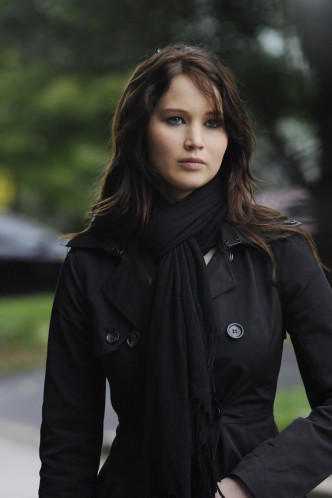
Silver Linings Playbook After guiding two actors to Best Supporting Oscars in 2010’s The Fighter, director David O. Russell returns (adapting his script from Matthew Quick’s novel) with another darkly comedic film about a complicated family that will probably earn some gold of its own. Though he’s obviously not ready to face the outside world, Pat (Bradley Cooper) checks out of the state institution he’s been court-ordered to spend eight months in after displaying some serious anger-management issues. He moves home with his football-obsessed father (Robert De Niro) and worrywart mother (Jacki Weaver of 2010’s Animal Kingdom), where he plunges into a plan to win back his estranged wife. Cooper plays Pat as a man vibrating with troubled energy — always in danger of flying into a rage, even as he pursues his forced-upbeat "silver linings" philosophy. But the movie belongs to Jennifer Lawrence, who proves the chops she showcased (pre-Hunger Games megafame) in 2010’s Winter’s Bone were no fluke. As the damaged-but-determined Tiffany, she’s the left-field element that jolts Pat out of his crazytown funk; she’s also the only reason Playbook‘s dance-competition subplot doesn’t feel eye-rollingly clichéd. The film’s not perfect, but Lawrence’s layered performance — emotional, demanding, bitchy, tough-yet-secretly-tender — damn near is. (2:01) SF Center. (Eddy)

Skyfall Top marks to Adele, who delivers a magnificent title song to cap off Skyfall‘s thrilling pre-credits chase scene. Unfortunate, then, that the film that follows squanders its initial promise. After a bomb attack on MI6, the clock is running out for Bond (Daniel Craig) and M (Judi Dench), accused of Cold War irrelevancy in a 21st century full of malevolent, stateless computer hackers. The audience, too, will yearn for a return to simpler times; dialogue about "firewalls" and "obfuscated code" never fails to sound faintly ridiculous, despite the efforts Ben Whishaw as the youthful new head of Q branch. Javier Bardem is creative and creepy as keyboard-tapping villain Raoul Silva, but would have done better with a megalomaniac scheme to take over the world. Instead, a small-potatoes revenge plot limps to a dull conclusion in the middle of nowhere. Skyfall never decides whether it prefers action, bons mots, and in-jokes to ponderous mythologizing and ripped-from-the-headlines speechifying — the result is a unsatisfying, uneven mixture. (2:23) Marina, Metreon, 1000 Van Ness, Sundance Kabuki, Vogue. (Ben Richardson)

Starlet Fresh off the bus from Florida, Jane (Dree Hemingway, daughter of the perennially undervalued Mariel) is living an indolent existence in the San Fernando Valley — it takes a while for us to realize she even has a job, albeit a pretty irregular and undemanding one. (Hint: What movie industry is largely based in the Valley? Second hint: It’s not the non-porn one.) Most of the time she just hangs about with her equally immature, similarly employed housemates, tanning and playing with her little dog. When a chance find at a yard sale yields a stash of hidden cash, Jane goes on a brief spending spree, then guiltily tries to return the remaining cash to Sadie (Besedka Johnson). The latter is an extra-cranky elderly woman who has no idea she’s missing any money and slams the door in Jane’s face before she can explain. Undaunted, perhaps needing some semblance of family in her vapid new life, Jane basically forces her friendship on the old lady, with eventual success albeit a few speed bumps. Sean Baker’s film is often an uncomfortable watch, because the dynamic between lead characters is so frequently awkward and discordant. (And also because the other major figures, Jane’s housemates played by Stella Maeve and James Ransome, are so completely obnoxious.) But its resistance to easy odd-couple sentimentality ultimately works to Starlet‘s favor, making the low key (like everything else here) close unexpectedly poignant. Real-life adult entertainment stars Manuel Ferrara and Asa Akira appear as themselves. (1:59) Opera Plaza. (Harvey)

The Twilight Saga: Breaking Dawn – Part 2 The final installment of the Twilight franchise picks up shortly after the medical-emergency vampirization of last year’s Breaking Dawn – Part 1, giving newly undead Bella Swan (Kristen Stewart) just enough time to freshen up after nearly being torn asunder during labor by her hybrid spawn, Renesmee. In a just world, Bella and soul mate Edward Cullen (Robert Pattinson) would get more of a honeymoon period, given how badly Part 1‘s actual honeymoon turned out. Alas, there’s just enough time for some soft-focus vampire-on-vampire action (a letdown after all the talk of rowdy undead sex), some catamount hunting, some werewolf posturing, a reunion with Jacob (Taylor Lautner), and a few seconds of Cullen family bonding, and then those creepy Volturi are back, convinced that the Cullens have committed a vampire capital crime and ready to exact penance. Director Bill Condon (1998’s Gods and Monsters, 2004’s Kinsey) knows what the Twi-hards want and methodically doles it out, but the overall effect is less sweeping action and shivery romance and more "I have bugs crawling on me — and yet I’m bored." Some of that isn’t his fault — he bears no responsibility for naming Renesmee, for instance, to say nothing of a January-May subplot that we’re asked to wrap our brains around. But the film maintains such a loose emotional grip, shifting clumsily and robotically from comic interludes to unintentionally comic interludes to soaring-music love scenes to attempted pathos to a snowy battlefield where the only moment of any dramatic value occurs. Weighed down by the responsibility of bringing The Twilight Saga to a close, it limps weakly to its anticlimax, leaving one almost — but not quite — wishing for one more installment, a chance for a more stirring farewell. (1:55) Metreon, 1000 Van Ness, Sundance Kabuki. (Rapoport)

Wreck-It Ralph Wreck-It Ralph cribs directly from the Toy Story series: when the lights go off in the arcade, video game characters gather to eat, drink, and endure existential crises. John C. Reilly is likable and idiosyncratic as Ralph, the hulking, ham-fisted villain of a game called Fix-It-Felix. Fed up with being the bad guy, Ralph sneaks into gritty combat sim Hero’s Duty under the nose of Sergeant Calhoun (Jane Lynch), a blond space marine who mixes Mass Effect‘s Commander Shepard with a PG-rated R. Lee Ermey. Things go quickly awry, and soon Ralph is marooned in cart-racing candyland Sugar Rush, helping Vanellope Von Schweetz (a manic Sarah Silverman), with Calhoun and opposite number Felix (Jack McBrayer) hot on his heels. Though often aggressively childish, the humor will amuse kids, parents, and occasionally gamers, and the Disney-approved message about acceptance is moving without being maudlin. The animation, limber enough to portray 30 years of changing video game graphics, deserves special praise. (1:34) Metreon, 1000 Van Ness. (Ben Richardson)


Vote yes on fresh school meals

6

OPINION My young friend ate school meals in San Francisco for 12 years. With food in short supply at home, he had little choice but to eat cafeteria offerings, but he was disheartened by the rubbery meat patties and limp vegetables that characterize frozen reheated school lunches. That’s why he was thrilled to hear that SFUSD wants to replace frozen meals with freshly prepared entrees. Although his school lunch days are over, his younger siblings still rely on the cafeterias. He hopes they will never again be served a meal still frozen in the middle, or the lifeless, tasteless food he remembers.

For years, parents and students have identified “fresh healthy food” as the most wanted improvement to school meals. SFUSD has tried to respond; middle and high schools offer lunch choices prepared daily on site, in addition to the traditional frozen reheated entree. But now SFUSD is ready to move forward with a new meal contract that would ensure all meals at every school are freshly prepared locally.

School officials are bringing the proposed contract, with Oakland-based Revolution Foods, to the Board of Education on Dec. 11. With board approval, students will be enjoying freshly prepared meals as early as January 7th.

Healthier food, happier students and parents — what’s not to like? The price, of course. In expensive San Francisco, with above-average food and labor costs, the money the federal government provides for school meals for low income students is already insufficient to cover the cost of serving those meals. Replacing cheaper frozen entrees with freshly prepared offerings drives the price higher still, and despite the passage of Prop 30, SFUSD continues to face major financial challenges.

The board should approve the new meal contract despite its higher cost — because academic achievement, equity and proper nutrition are not unrelated issues. Better food means better nourished students; healthy kids take fewer sick days and are better able to learn. Kids who eat only a few bites of unappealing meals return to class without the fuel they need to power them through an academic afternoon. Hungry students struggle to focus, or even to stay awake; they can be quick to anger (a condition school counselors call “hangry” — angry because hungry) and disrupt learning for everyone.

SFUSD’s student nutrition department runs the largest public feeding program in the city; the majority of school cafeteria patrons are low-income children of color, so offering better food is an equity issue.

If the board nixes the new contract, meal costs will still increase in 2013, with food, milk and delivery prices already rising. So SFUSD would find itself paying more for the same frozen meals students reject now.

The SF Board of Education meets at 6pm, in the Irving G. Breyer Board Meeting Room on the ground floor at 555 Franklin Street.

Dana Woldow is the parent of three SFUSD graduates, and has been an advocate for better school food since 2002.

Alameda County’s spy drone

32

We all knew it was coming, but the ACLU has the docs to prove it’s about to start happening here: The Alameda County Sheriff’s Office is trying to buy a drone aircraft in part to spy on people.

Now: Sheriff Gregory Ahern has insisted in public statements and in communications to the Board of Supervisors that he wants to use said drone only for search and rescue missions, disaster response, and checking out things like wildfires. But the ACLU and the Electronic Frontier Foundation have documents they obtained under the California Public Records Act that show the sheriff intends to use the drone for “intelligence and information sharing” — oh, and to prevent terrorism. Which he’s not going to do by flying over wildfires and looking for lost kids.

The documents, which will be released in full Dec. 4 at a press conference on the steps of the County Administration Building, include a grant application to the state’s Emergency Management Agency which outlines the proposed uses. “Clearly, if the sheriff’s certification to Cal-EMA is true, his office intends to use the drone for surveillance and intelligence gathering, a purpose not clearly disclosed to the Board,” staff attorney Linda Lye notes in a letter to the supervisors.

There’s an item on the Dec. 4 board agenda giving the sheriff the ability to apply for and receive grants for the drone, and the ACLU, for very good reasons, wants the item continued until there can be some more discussion on this.

Here’s the thing about law-enforcement tools: You give the cops a weapon, they’re going to use it. Give ’em Tasers, they’ll zap people. Give ’em a spy drone, they’ll spy on us.

Can you imagine having a spy drone circling overhead when Occupy groups were meeting to discuss actions and tactics? You want it flying near the offices of political groups that the sheriff may consider a threat to public safety? You want it equipped with cameras and listening devices?

The county supervisors at this point have no policy positions on how a drone can be used, because they haven’t had to address it yet. But here it is — the sheriff has already solicited bids from suppliers, and is itching to get that spy baby up in the air. This whole thing needs to slow down.

In fact, state Sen. Alex Padilla (D-Pacoima) just introduced a bill to regulate drones in the state. “I am concerned because domestic drones have the potential to be used for surreptitious surveillance activities that infringe upon fundamental constitutional rights.  We must ensure that there are clear guidelines in place that protect the rights of all Californians,” Padilla says in a press release I just got in my email box.

Maybe the sheriff should hold off spending any money on this thing until there are state guidelines in place. At the very least, the county supervisors should hold off giving him approval until they have rules of their own — rules that specifically ban the use of the drone for spying. (Oh, and the flight logs need to be public records, so we can see what’s really going on with the eye in the sky.)


Funding SFUSD’s graduation rescue

45

The San Francisco school district’s achievement gap exploded into the news when district officials learned that as many as 1,900 High School juniors — the vast majority of them students of color — aren’t on track to meet the new graduation standards.

It’s a crisis: The district several years ago mandated that every high school graduate complete the A to G classes required by the California State University system — essentially a requirement that every graduate be prepared for college. It was going to be a tough standard to meet — and that was before the state whacked $77 million out of the SFUSD budget.

Now, with the new standards on the books, the class of 2014 is nowhere near ready. The city’s laudatory 82 percent graduation rate is at risk — and more important, there’s a real possibility that hundreds of kids won’t get a high school diploma, which will severely damage their employment opportunities.

To make things worse, the district’s funding for after-school classes to help students who are behind catch up — known as “credit recovery” — is ending in December.

The statistics are alarming: More than 80 percent of African American kids and 70 percent of Latinos aren’t on track to graduate. And while Prop. 30 passed, preventing any more cuts, it doesn’t add to the district’s funding.

So Sup. Jane Kim is asking the city to pick up the $2.7 million tab for the credit recovery program, which makes perfect sense: If 1,900 kids don’t graduate from high school, the impacts on the city, from crime, unemployment, and social-service needs to homelessness, will vastly exceed that number. 

“It’s part of violence and crime prvention,” School Board member Sandra Fewer explained.

It’s also an issue of civic responsibility — we, as San Franciscans, can’t just let those kids fail. “Remember, these are the ones who stuck it out, who are really trying,” Kim told me. “They aren’t the drop-outs.”

There is, of course, the question of whether this is going to be an ongoing problem — what about the class of 2015? Fewer thinks the numbers will be a lot lower then: “”We’ve learned a lot,” she said. “We’ve had early warning indicators and I don’t think we’ll see these numbers again.”

Kim said that at first she thought the appropriation request would be noncontroversial — it is, after all, a fairly modest amount of money, and the city’s budget picture is improving. “We’re doing fairly well,” Kim said. “One of the promises of all this tech growth was that we’d get some more revenue, and I think we need to spread that wealth.”

But the Mayor’s Office and some of her colleagues weren’t ready to go along. So, as often happens in these situations, somebody found some fiscal magic — the Mayor’s Office folks “discovered” that the city had put an additional $1.5 million into the school district’s allocation from the Rainy Day Fund. Gee, maybe that could cover part of the cost.

Now it gets tricky.

The Rainy Day Fund, which Assemblymember Tom Ammiano created when he was supervisor, requires the city to set aside cash in flush years to use when times are tigher — and part of it goes to the school district. That money has been used in the past few years to prevent teacher layoffs. (Another whole crazy issue — the district has to issue layoff notices in the spring, and then rescind them, which sucks for everyone, but at least the Rainy Day Fund money has made most of the recissions possible).

So the teachers union isn’t thrilled with the idea of taking money that would prevent layoffs and using it for another worthy program. “We’re in support of the $2.7 million allocation,” union staffer Ken Tray told me. “We can’t fail these kids. But we’re afraid that the money that would go for this very good thing would lead to teacher layoffs.”

Sup. David Campos has concerns, too: “I think the Rainy Day Fund should stand on its own terms,” he said. “If any time something comes up we say let’s take it from the Rainy Day Fund, it can become a problem.”

He supports spending city money to help the students: “If it’s a crisis, we should handle it as a crisis.”

Which makes perfect sense to me. This IS a crisis, and Kim has properly identified a small amount of money for a one-time effort to address it, and in the end, her allocation would save the city way more than it costs. I can’t see why the mayor and the supervisors have to play games here; this is serious, serious stuff, and if the district thinks it can address it in a serious way for a modest amount of money at a time when the economy is picking up and the city budget is improving, why not just do it?

HoleHead, Brad Pitt, and more: new films!

0

This week: Brad Pitt earns forgiveness for that cringe-inducing Chanel commercial with Andrew Dominik’s gangster thriller Killing Them Softly, plus uncomfortable-yet-poignant drama Starlet, which just picked up the Film Independent Spirit Awards’ Robert Altman Award. Both films are reviewed below the jump.

Also! Check out my rundown on the Another Hole in the Head film festival, an annual event stuffed with catnip candy for fans of horror, sci-fi, and cinema du sick ‘n’ wrong. (If you love Franco Nero, John Saxon, Henry Silva, and guys with 1970s mustaches fighting in junkyards like I do, don’t miss my top pick: Eurocrime!)

Other movies opening this week include period detective flick Dragon (it stars Donnie Yen, so you know what that means: sweet fight scenes); and Henry Jaglom’s latest, family drama Just 45 Minutes to Broadway (at the Roxie).
http://www.youtube.com/watch?v=8P0PPqUewr8

Back to 1942 Multiple storylines wend through Feng Xiaogang’s historical epic about a devastating drought that brought famine to China’s Henan province. Abandoned by their government, millions of refugees would eventually die in a situation compounded by corrupt officials, the Chinese army’s demands on the region’s nonexistent grain stores, and looming Japanese troops. The scenes from the road are grim, on both small (a desperate family tries to trade their child for grain) and larger (Japanese bombing raids, cannibalism) scales — though there are moments of hope, as when rival families put aside their differences to help a pregnant daughter. (Hope doesn’t last, though: when the baby is born, the half-dead mother mutters, “Kill it.”) Meanwhile, an American journalist (Adrien Brody) chases the story with the help of a priest (Tim Robbins, working a distracting accent); after witnessing horrors in Henan, his reporting helps nudge the government into action, however slightly. It would take an exceptionally even hand to prevent this heavily tragic material from sliding face first into melodrama, something Back to 1942 doesn’t even attempt to do. Whether you feel moved or manipulated is up to you. (2:26) (Cheryl Eddy)

http://www.youtube.com/watch?v=msSH5v6tK9k

The Collection As soon as you behold the neon sign “Hotel Argento” shining over the grim warehouse-cum-evil dead trap, you know exactly what you’re in for — a wink, and even a little bit of a horror superfan’s giggle. In other words, to tweak that killer Roach Motel tagline: kids check in, but they don’t check out. No need to see 2009’s The Collector — the previous movie by director-cowriter Marcus Dunstan and writer Patrick Melton (winners of the third season of Project Greenlight, now with the screenplays for multiple Saw films beneath their collective belt) — the giallo fanboy and gorehound hallmarks are there for all to enjoy: tarantulas (straight from 1981’s The Beyond), a factory kitted out as an elaborate murder machine, and end credits that capture characters’ last moments. Plus, there’s plenty of fast-paced shocks and seemingly endless splatter, with a heavy sprinkle of wince-inducing compound fractures. The Collection ups the first film’s ante, as gamine Elena (Emma Fitzpatrick) is lured to go dancing with her pals. Their underground party turns out to be way beyond the fringe, as the killer mows down the dance floor, literally, and gives the phrase “teen crush” a bloody new spin. Stumbling on The Collector’s antihero thief Arkin (Josh Stewart) locked in a box, Elena releases him but can’t prevent her own capture, so killer-bodyguard Lucello (Oz’s Lee Tergesen) snatches Arkin from the hospital and forces him to lead his team of toughs through a not-so-funhouse teeming with booby traps as well as victims-turned-insidious-weapons. All of which almost convinces you of nutty-nutball genius of the masked, dilated-pupiled Collector (here stuntman Randall Archer), who takes trendy taxidermy to icky extremes — even when his mechanism is threatened by a way smart last girl and a lock picker who’s adept at cracking building codes. Despite Dunstan’s obvious devotion to horror-movie landmarks, The Collection doesn’t turn out to be particularly original: rather, it attempts to stand on the shoulders — and arms and dismembered body parts — of others, in hopes of finding its place on a nonexistent drive-in bill. (1:23) (Kimberly Chun)

Killing Them Softly Lowest-level criminal fuckwits Frankie (Scoot McNairy) and Russell (Ben Mendelsohn) are hired to rob a mob gambling den, a task which miraculously they fail to blow. Nevertheless, the repercussions are swift and harsh, as a middleman suit (Richard Jenkins) to the unseen bosses brings in one hitman (Brad Pitt), who brings in another (James Gandolfini) to figure out who the thieves are and administer extreme justice. Based on a 1970s novel by George V. Higgins, this latest collaboration by Pitt and director-scenarist Andrew Dominik would appear superficially to be a surer commercial bet after the box-office failure of their last, 2007’s The Assassination of Jesse James By the Coward Robert Ford — one of the great films of the last decade. But if you’re looking for action thrills or even Guy Ritchie-style swaggering mantalk (though there is some of that), you’ll be disappointed to find Killing more in the abstracted crime drama arena of Drive (2011) or The American (2010), landing somewhere between the riveting former and the arid latter. This meticulously crafted tale is never less than compelling in imaginative direction and expert performance, but it still carries a certain unshakable air of so-what. Some may be turned off by just how vividly unpleasant Mendelsohn’s junkie and Gandolfini’s alchie are. Others will shrug at the wisdom of re-setting this story in the fall of 2008, with financial-infrastructure collapse and the hollow promise of President-elect Obama’s “Change” providing ironical background noise. It’s all a little too little, too soon. (1:37) (Dennis Harvey)

http://www.youtube.com/watch?v=MUSNZGYIfD4

Starlet Fresh off the bus from Florida, Jane (Dree Hemingway, daughter of the perennially undervalued Mariel) is living an indolent existence in the San Fernando Valley — it takes a while for us to realize she even has a job, albeit a pretty irregular and undemanding one. (Hint: What movie industry is largely based in the Valley? Second hint: It’s not the non-porn one.) Most of the time she just hangs about with her equally immature, similarly employed housemates, tanning and playing with her little dog. When a chance find at a yard sale yields a stash of hidden cash, Jane goes on a brief spending spree, then guiltily tries to return the remaining cash to Sadie (Besedka Johnson). The latter is an extra-cranky elderly woman who has no idea she’s missing any money and slams the door in Jane’s face before she can explain. Undaunted, perhaps needing some semblance of family in her vapid new life, Jane basically forces her friendship on the old lady, with eventual success albeit a few speed bumps. Sean Baker’s film is often an uncomfortable watch, because the dynamic between lead characters is so frequently awkward and discordant. (And also because the other major figures, Jane’s housemates played by Stella Maeve and James Ransome, are so completely obnoxious.) But its resistance to easy odd-couple sentimentality ultimately works to Starlet’s favor, making the low key (like everything else here) close unexpectedly poignant. Real-life adult entertainment stars Manuel Ferrara and Asa Akira appear as themselves. (1:59)  (Dennis Harvey)

Chopping spree

2

cheryl@sfbg.com

FILM Unlike the San Francisco Independent Film Festival’s flagship event and its popular DocFest, which more or less put roots down at the Roxie, genre fest Another Hole in the Head spreads its horror, sci-fi, and just plain weird wealth around to various venues. Yeah, the Roxie’s still on its list, but HoleHead also hosts events down 16th Street at the Victoria Theater, and at SOMA’s Terra Gallery and the Vortex Room — the latter an inspired addition, given the Vortex’s reputation as a haven for mondo cinema.

This year, HoleHead opens with a screening of Richard Elfman’s 1982 cult musical Forbidden Zone, presented in — holy Tyrrell! — remastered and colorized form. Elfman will be on hand to answer all your Sixth Dimensional questions, and a party (complete with Oingo Boingo cover band) follows.

Closing night looks to be a decidedly less festive affair, with Austrian director Michal Kosakowski’s unsettling Zero Killed — a feature film spun from his video installation and short film project, Fortynine. From 1996 to 2006, Kosakowski interviewed people about their murder fantasies, then used the tales (suicide bombings, school shootings, dog attacks, dinner-party poisonings, stabbings, shoving people into traffic or letting them slip off cliffs, etc.) as short-film inspiration, starring the storyteller as either perpetrator or victim.

A haunting musical score ups the creep factor, as Kosakowski tracks down each participant (many, but not all, are actors by trade) to interview them about their specific fantasies and other troubling topics, like revenge, torture, and “What is evil?” Zero Killed is a uniquely disturbing mix of fiction and documentary, cutting between horrific, blood-soaked vignettes and clinical talking-head interviews — often featuring the same subject.

There’s plenty of blood gushing forth in slick British standout Axed (listed as “Fangoria presents Axed” on the HoleHead schedule, so that right there should assure you of its splatter cred). When a businessman is, uh, axed from the corporate gig that turned him into an uptight prick long ago, he goes all Jack Torrance on his wife and teenage kids. As you might guess, the titular implement figures prominently in his plans, and Ryan Lee Driscoll’s film spirals from satirical to sadistic as each new body drops.

Changing gears, from in-your-face to perhaps too subtle: posting recently to his Observations on Film Art blog, scholar David Bordwell scrutinized what he called “discovered footage” horror films, with a focus on the Paranormal Activity series. Bordwell took particularly interest in the “rewards and risks” of the genre’s “narrow set of stylistic choices.” In these films, the camera itself occupies a heightened presence within the story. By now, everyone knows the psychological effect that’s supposed to have: if we’re aware of the camera, and it seems like an actual person is filming what we see, the images appear more real — and hopefully, “the reward” translates to genuine shrieks in the dark.

But for every Paranormal Activity sequel that’s seen by millions and rakes in hundreds of millions, there are dozens of copycats. And why not? Found-footage horror is non-traditional filmmaking at its most democratic. It can be made on the cheap, and wobbly production values are de rigueur. Unfortunately, it’s a lot easier to get ahold of a camera than to come up with an original idea, much less one that yields actual moments of fright.

With that said, The Garlock Incident does make an effort to tread new, albeit Blair Witch-y, ground. The set-up is that a group of Los Angeles actors — appealing 20-somethings all — are en route to Vegas for a movie shoot. Also in the van is ambitious director Lily (Ana Lily Amirpour), who obsessively films everything. After taking a spontaneous detour to visit a ghost town with a sinister back story, they discover a couple of maybe-abandoned shacks — and soon realize that getting off the main road was a bad idea. Oh, kids. It’s always a bad idea, especially for city slickers who can’t function without cell service.

Garlock‘s frustrating ending, which I wouldn’t dare spoil even if I fully understood it (even after watching it several times), is a letdown. Until its last act, though, Garlock is actually a pretty interesting look at how quickly relationships can break down when circumstances slide from uncertain to dire. But once you start puzzling over the ending, other doubts surface — like, by what logic would the actors’ audition footage be neatly edited into this roughly-shot, “found” chronicle of wilderness terror?

Speaking of wilderness terror and, alas, unsatisfying finales, retro-styled sci-fi adventure The 25th Reich screeches to a halt with a “to be continued” cliffhanger, just when shit is starting to get mind-blowingly insane. Argh! Fortunately, for the most part, the film — about a group of World War II soldiers who time-travel back and forth, squabbling among themselves as they pursue UFOs and Nazis — works just fine as a stand-alone, though its gleeful reliance on stereotypes (the Jew, the Italian, the Southern redneck, etc.) feels less like a nod to classic war films than a way to avoid actual character development.

The best gimmick centers on Captain O’ Brien, an erstwhile matinee idol not above reciting cornball lines from his own films at crucial moments. That he’s played by Jim Knobeloch — who also appeared in 2012’s other Nazi sci-fi flick, Iron Sky — is a perfect bit of obscure-genre synergy.

It wouldn’t be HoleHead without zombies. Comic The Living Corpse gets the (re-)animated treatment in The Amazing Adventures of the Living Corpse, which follows the titular beastie’s existential crisis after he — oops! — rips apart almost his entire family. Spared is a young son who is sent to a creepy boarding school for orphans, though he’s soon plucked from its halls to apprentice under a mad scientist. Meanwhile, the guilt-ridden corpse — real name: John Romero; memo to creative types: naming anyone “Romero” in your zombie-related whatnot is no longer a novel idea — roams the underworld and the land of the living, meting out occasional supernatural ass-kickings but mostly searching for his long-lost offspring.

The haunted-school scenes (complete with a kids vs. demons showdown) are clever, and the catchy soundtrack has punky flair, but the sheer number of plot threads nearly overwhelms the 82-minute film — maybe cool for fans of the comic, but viewers new to the material might wonder why, say, the “Spectral Protection Society” is elaborately introduced and then discarded. The overall effect is not nearly as fun (or “amazing”) as it should be.

Amazing, however, is one of many gushing adjectives I might use to describe my top pick of the festival: Mike Malloy’s Eurocrime! The Italian Cop and Gangster Films That Ruled the ’70s — a jazzy, lovingly-compiled homage to some of the trashiest, most mean-spirited films ever made. Everyone’s heard of Spaghetti Westerns, but poliziotteschi movies have yet to make a true cult breakthrough (or be remade by Quentin Tarantino, but I’m sure he’ll get there eventually). A groovy-sleazy score and endless clips, posters, and still shots set the tone for Eurocrime!, which gathers some of the genre’s biggest stars (laid-back John Saxon; gracious Franco Nero; bratty Antonio Sabàto) to look back at their years chasing each other across rooftops, brawling in junkyards, and working with directors like Umberto Lenzi (“the screaming-est director I ever met in my life,” according to actor Henry Silva).

The doc, a tad long at 137 minutes, also explores why the films became so popular, despite the fact that their scripts were often ripped wholesale from American “angry cop” films (and, later, from each other) — and why that popularity didn’t last (possible culprits: laughable dubbing, distracting mustaches, brutal violence against women). Newcomers won’t believe that such a world of insane film exists, longtime aficionados will dig the nostalgia, and both camps will enjoy Eurocrime!‘s high-energy appreciation of a genre long overdue for this kind of treatment. 

ANOTHER HOLE IN THE HEAD

Nov. 28-Dec.9, $10-$12

Various venues, SF

www.sfindie.com

Midwinter dreaming

0

arts@sfbg.com

DANCE This weekend the parade of holiday entertainments started off on a festive note, and it wasn’t thanks to another interpretation of The Nutcracker or good old Scrooge. It was a brand new charmer from two experienced choreographers who pooled their artistic resources in 2008 to form Garrett + Moulton Productions. Given Janice Garrett and Charles Moulton’s different artistic temperaments, this union sounded like an iffy proposition. But with three hits to their credit, the duo has proved that opposites do indeed attract.

Garrett and Moulton’s newest endeavor for their four dancers, Angles of Enchantment, might not have been quite as consistently involving as their previous collaborations — but it was such a pleasure to watch the skill with which they handled the tasks they had set for themselves.

Angles was a frothy, endearing, and at-times rambunctious quartet that manages to suggest that we may not be doomed to live frantic lives without time or space for fantasy, abandon, and such a thing as pure fun. It was an excellent antidote to holiday anxiety.

The work’s biggest surprise, and one of its chief attractions, was Peter Whitehead’s imaginative score. In dance, music usually fulfills a supportive role. Here its high profile often drew not-unpleasant attention to itself. With his splendid collection of instruments — from kids’ noisemakers to homemade banjos — Whitehead called up a vibrant soundscape. A gentle singer, his lyrics spoke about the small joys and small pains of ordinary people. This kept Angles’ sometimes madcap fancifulness grounded. The music even suggested narrative threads. It made me wonder how effective Angles would be without that emotional backbone.

In the beginning, when the four dancers momentarily hooked up one-on-one, only to frantically pursue someone else in the next spotlight, it wasn’t clear whether they were playing or escaping. They leaped and grasped and tumbled, piling up on top of each other. But then, after a blackout — there were several — the dancers reappeared as if kissed by fairy dust, cavorting in the most ridiculous tutus and matching headdresses. The whole thing began to feel like a Midsummer Night’s Dream.

Tegan Schwab became an airborne, mischievous fairy with fingers and feet aflutter, when she was not interfering with Whitehead’s music making. A little later she morphed into a majestically promenading tree under which Nol Simonse found momentary respite. Lanky Carolina Czechowska, perhaps a wood sprite, sported what might have been an acorn hat — until she returned in a black tutu and sexy gloves, as a sexy sorceress whose breath made everyone tremble.

Tanya Bello and Simonse, both of them longtime colleagues in the company, paired up for a series of quasi pas de duex. They were our lovers, teasing each other with playful touches and kicks. Sitting together on a bench, they looked like the end of a Hollywood movie.

Bello barely comes up to Simonse’s chin, but their yearning arms interlocked as equals. And if Bello and Simonse are physically different, temperamentally they are even farther apart. It’s what gave their dancing together such frisson. Bello was a witty whirlwind, whether she spun like a top or raced circles around a partner. Languid and fluid, Simonse could not deliver an inexpressive gesture if he tried. He remains a marvel of a dancer.

There was something vaudevillian about the way Angles’ individual scenes, separated by darkness, followed each other. The structure did not quite sustain itself for a whole hour, delightful as this flight into a world of fairies, pixies, and playful Pucks was. Angles ends on a note of pure hilarity. For the finale, the dancers dressed in ballet wedding outfits: the women in huge white tutus, Simonse equally splendid in half a frock coat. And just to top it off, designer Margaret Hatcher adorned them with strings of Christmas tree lights. Happy holidays to one and all. 

ANGLES OF ENCHANTMENT

Thu/29-Sat/1, 8pm (also Sat/1, 2pm); Sun/2, 2 and 7:30pm, $30-$36

ODC Theater

3153 17th St, SF

www.garrettmoulton.org


Film Listings and Reviews

0

Film listings are edited by Cheryl Eddy. Reviewers are Kimberly Chun, Dennis Harvey, Lynn Rapoport, and Sara Vizcarrondo. For rep house showtimes, see Rep Clock.

OPENING

Back to 1942 Multiple storylines wend through Feng Xiaogang’s historical epic about a devastating drought that brought famine to China’s Henan province. Abandoned by their government, millions of refugees would eventually die in a situation compounded by corrupt officials, the Chinese army’s demands on the region’s nonexistent grain stores, and looming Japanese troops. The scenes from the road are grim, on both small (a desperate family tries to trade their child for grain) and larger (Japanese bombing raids, cannibalism) scales — though there are moments of hope, as when rival families put aside their differences to help a pregnant daughter. (Hope doesn’t last, though: when the baby is born, the half-dead mother mutters, “Kill it.”) Meanwhile, an American journalist (Adrien Brody) chases the story with the help of a priest (Tim Robbins, working a distracting accent); after witnessing horrors in Henan, his reporting helps nudge the government into action, however slightly. It would take an exceptionally even hand to prevent this heavily tragic material from sliding face first into melodrama, something Back to 1942 doesn’t even attempt to do. Whether you feel moved or manipulated is up to you. (2:26) Presidio. (Eddy)

The Collection A young woman is kidnapped by a torture-happy killer. (1:23)

Dragon Donnie Yen and Takeshi Kaneshiro star in this detective-meets-wuxia film set in 1917 China. (1:51)

Just 45 Minutes From Broadway Henry Jaglom’s latest is about a struggling actor who heads to upstate New York for a her eclectic family’s Passover Seder. (1:59) Roxie.

Killing Them Softly Lowest-level criminal fuckwits Frankie (Scoot McNairy) and Russell (Ben Mendelsohn) are hired to rob a mob gambling den, a task which miraculously they fail to blow. Nevertheless, the repercussions are swift and harsh, as a middleman suit (Richard Jenkins) to the unseen bosses brings in one hitman (Brad Pitt), who brings in another (James Gandolfini) to figure out who the thieves are and administer extreme justice. Based on a 1970s novel by George V. Higgins, this latest collaboration by Pitt and director-scenarist Andrew Dominik would appear superficially to be a surer commercial bet after the box-office failure of their last, 2007’s The Assassination of Jesse James By the Coward Robert Ford — one of the great films of the last decade. But if you’re looking for action thrills or even Guy Ritchie-style swaggering mantalk (though there is some of that), you’ll be disappointed to find Killing more in the abstracted crime drama arena of Drive (2011) or The American (2010), landing somewhere between the riveting former and the arid latter. This meticulously crafted tale is never less than compelling in imaginative direction and expert performance, but it still carries a certain unshakable air of so-what. Some may be turned off by just how vividly unpleasant Mendelsohn’s junkie and Gandolfini’s alchie are. Others will shrug at the wisdom of re-setting this story in the fall of 2008, with financial-infrastructure collapse and the hollow promise of President-elect Obama’s “Change” providing ironical background noise. It’s all a little too little, too soon. (1:37) Four Star, Marina. (Harvey)

Starlet Fresh off the bus from Florida, Jane (Dree Hemingway, daughter of the perennially undervalued Mariel) is living an indolent existence in the San Fernando Valley — it takes a while for us to realize she even has a job, albeit a pretty irregular and undemanding one. (Hint: What movie industry is largely based in the Valley? Second hint: It’s not the non-porn one.) Most of the time she just hangs about with her equally immature, similarly employed housemates, tanning and playing with her little dog. When a chance find at a yard sale yields a stash of hidden cash, Jane goes on a brief spending spree, then guiltily tries to return the remaining cash to Sadie (Besedka Johnson). The latter is an extra-cranky elderly woman who has no idea she’s missing any money and slams the door in Jane’s face before she can explain. Undaunted, perhaps needing some semblance of family in her vapid new life, Jane basically forces her friendship on the old lady, with eventual success albeit a few speed bumps. Sean Baker’s film is often an uncomfortable watch, because the dynamic between lead characters is so frequently awkward and discordant. (And also because the other major figures, Jane’s housemates played by Stella Maeve and James Ransome, are so completely obnoxious.) But its resistance to easy odd-couple sentimentality ultimately works to Starlet‘s favor, making the low key (like everything else here) close unexpectedly poignant. Real-life adult entertainment stars Manuel Ferrara and Asa Akira appear as themselves. (1:59) Opera Plaza, Shattuck. (Harvey)

ONGOING

Anna Karenina Joe Wright broke out of British TV with the 9,000th filmed Pride and Prejudice (2005), unnecessary but quite good. Too bad it immediately went to his head. His increasing showiness as director enlivened the silly teenage-superspy avenger fantasy Hanna (2011), but it started to get in the way of Atonement (2007), a fine book didn’t need camera gymnastics to make a great movie. Now it’s completely sunk a certified literary masterpiece still waiting for a worthy film adaptation. Keira Knightley plays the titular 19th century St. Petersburg aristocrat whose staid, happy-enough existence as a doting mother and dutiful wife (to deglammed Jude Law’s honorable but neglectful Karenin) is upended when she enters a mutually passionate affair with dashing military officer Count Vronsky (Aaron Taylor-Johnson, miscast). Scandal and tragedy ensue. There’s nothing wrong with the screenplay, by Tom Stoppard no less. What’s wrong is Wright’s bright idea of staging the whole shebang as if it were indeed staged — a theatrical production in which nearly everything (even a crucial horse race) takes place on a proscenium stage, in the auditorium, or “backstage” among riggings. Whenever we move into a “real” location, the director makes sure that transition draws attention to its own cleverness as possible. What, you might ask, is the point? That the public social mores and society Anna lives in are a sort of “acting”? Like wow. Add to that another brittle, mannered performance by Wright’s muse Knightley, and there’s no hope of involvement here, let alone empathy — in love with its empty (but very prettily designed) layers of artifice, this movie ends up suffocating all emotion in gilded horseshit. The reversed-fortune romance between Levin (Domhall Gleeson) and Kitty (Alicia Vikander) does work quite well — though since Tolstoy called his novel Anna Karenina, it’s a pretty bad sign when the subsidiary storyline ends up vastly more engaging than hers. (2:10) Albany, Metreon, Piedmont, Sundance Kabuki. (Harvey)

Argo If you didn’t know the particulars of the 1979 Iranian Revolution, you won’t be an expert after Argo, but the film does a good job of capturing America’s fearful reaction to the events that followed it — particularly the hostage crisis at the US embassy in Tehran. Argo zeroes in on the fate of six embassy staffers who managed to escape the building and flee to the home of the sympathetic Canadian ambassador (Victor Garber). Back in Washington, short-tempered CIA agents (including a top-notch Bryan Cranston) cast about for ways to rescue them. Enter Tony Mendez (Ben Affleck, who also directs), exfil specialist and father to a youngster wrapped up in the era’s sci-fi craze. While watching 1973’s Battle for the Planet of the Apes, Tony comes up with what Cranston’s character calls “the best bad idea we have:” the CIA will fund a phony Canadian movie production (corny, intergalactic, and titled Argo) and pretend the six are part of the crew, visiting Iran for a few days on a location shoot. Tony will sneak in, deliver the necessary fake-ID documents, and escort them out. Neither his superiors, nor the six in hiding, have much faith in the idea. (“Is this the part where we say, ‘It’s so crazy it just might work?'” someone asks, beating the cliché to the punch.) Argo never lets you forget that lives are at stake; every painstakingly forged form, every bluff past a checkpoint official increases the anxiety (to the point of being laid on a bit thick by the end). But though Affleck builds the needed suspense with gusto, Argo comes alive in its Hollywood scenes. As the show-biz veterans who mull over Tony’s plan with a mix of Tinseltown cynicism and patiotic duty, John Goodman and Alan Arkin practically burst with in-joke brio. I could have watched an entire movie just about those two. (2:00) 1000 Van Ness, SF Center, Sundance Kabuki. (Eddy)

The Big Picture Trading places, especially under sinister circumstances, seems unnervingly easy to do — if you’re the talented Mr. Ripley or The Big Picture‘s adorably scruffy bourgeois-on-the-run Paul (Romain Duris of 2005’s The Beat That My Heart Skipped). Coming from wealth and amiably going through the motions of upper-middle-class lawyerly life with his wife (Marina Fois) and kids, Paul is accustomed to relegating his love of photography to the sidelines as a hobby. So when photojournalist neighbor Gregoire (Eric Ruf) has a freakish accident, Paul throws himself down the rabbit hole of another man’s identity. Is it possible to completely start over — and is there a kind of freedom in death? Working from Douglas Kennedy’s novel, director and co-writer Eric Lartigau keeps his camera firmly fixed on his camera-wielding, metamorphosing lead, sidestepping the meta and going for the clearly Hitchcockian (though Hitch would probably reject the occasional cheesy slow-motion effect and reach for something more visually or technically audacious). To his credit, Lartigau keeps the audience guessing even beyond the credits, making this noir something of an artist’s parable, while Duris makes you root for his haunted, puppy-dog-ish Paul as he falls, finds his métier, and tumbles once more. (1:50) Embarcadero. (Chun)

Chasing Ice Even wild-eyed neocons might reconsider their declarations that global warming is a hoax after seeing the work of photographer James Balog, whose images of shrinking glaciers offer startling proof that our planet is indeed being ravaged by climate change (and it’s getting exponentially worse). Jeff Orlowski’s doc follows Balog and his Extreme Ice Survey team as they brave cruel elements in Iceland, Greenland, and Alaska, using time-lapse cameras to record glacier activity, some of it quite dramatic, over months and years. Balog is an affable subject, doggedly pursuing his work even after multiple knee surgeries make him a less-than-agile hiker, but it’s the photographs — as hauntingly beautiful as they are alarming — that make Chasing Ice so powerful. Could’ve done without Scarlett Johansson crooning over the end credits, though. (1:15) California, Embarcadero. (Eddy)

Cloud Atlas Cramming the six busy storylines of David Mitchell’s wildly ambitious novel into just three hours — the average reader might have thought at least 12 would be required — this impressive adaptation directed (in separate parts) by Tom Twyker (1998’s Run Lola Run) and Matrix siblings Lana and Andy Wachowski has a whole lot of narrative to get through, stretching around the globe and over centuries. In the mid 19th century, Jim Sturgess’ sickly American notory endures a long sea voyage as reluctant protector of a runaway-slave stowaway from the Chatham Islands (David Gyasi). In 1931 Belgium, a talented but criminally minded British musician (Ben Whishaw) wheedles his way into the household of a famous but long-inactive composer (Jim Broadbent). A chance encounter sets 1970s San Francisco journalist Luisa (Halle Berry) on the path of a massive cover-up conspiracy, swiftly putting her life in danger. Circa now, a reprobate London publisher’s (Broadbent) huge windfall turns into bad luck that gets even worse when he seeks help from his brother (Hugh Grant). In the not-so-distant future, a disposable “fabricant” server to the “consumer” classes (Doona Bae) finds herself plucked from her cog-like life for a rebellious higher purpose. Finally, in an indeterminately distant future after “the Fall,” an island tribesman (Tom Hanks) forms a highly ambivalent relationship toward a visitor (Berry) from a more advanced but dying civilization. Mitchell’s book was divided into huge novella-sized blocks, with each thread split in two; the film wastes very little time establishing its individual stories before beginning to rapidly intercut between them. That may result in a sense of information (and eventually action) overload, particularly for non-readers, even as it clarifies the connective tissues running throughout. Compression robs some episodes of the cumulative impact they had on the page; the starry multicasting (which in addition to the above mentioned finds many uses for Hugo Weaving, Keith David, James D’Arcy, and Susan Sarandon) can be a distraction; and there’s too much uplift forced on the six tales’ summation. Simply put, not everything here works; like the very different Watchmen, this is a rather brilliant “impossible adaptation” screenplay (by the directors) than nonetheless can’t help but be a bit too much. But so much does work — in alternating currents of satire, melodrama, pulp thriller, dystopian sci-fi, adventure, and so on — that Cloud Atlas must be forgiven for being imperfect. If it were perfect, it couldn’t possibly sprawl as imaginatively and challengingly as it does, and as mainstream movies very seldom do. (2:52) California, 1000 Van Ness, SF Center. (Harvey)

The Comedy Though it stars Adult Swim personalities Tim Heidecker and Eric Wareheim, and has a seemingly obvious title, The Comedy is not what you think it is. Prepare to cringe, be outraged, or (worst of all) be bored, as Heidecker’s character — a 35-year-old hipster whose schlubby appearance belies the fact that he’s swimming in inherited wealth — drifts around New York, provoking unsuspecting victims with his awkward, obnoxious behavior. He’s sarcastic, entitled, and appears to have no actual emotions. It’s possible that The Comedy (directed by Rick Alverson, who’s also credited as a co-writer, though I’d guess some of the film is improvised) is aiming to make a larger statement (generational malaise?), but the film is most notable for its sustained mood of who-gives-a-fuck-ness. Tight close-ups further underscore how self-centered the characters are, a choice designed to heighten the audience’s discomfort. You can’t engage with anyone in The Comedy, but neither can you look away. (1:34) Roxie. (Eddy)

The Flat Arnon Goldfinger’s The Flat begins as the filmmaker’s family descends upon the Tel Aviv apartment of his recently-deceased grandmother, “a bit of a hoarder” who lived to 95 and seemingly never got rid of anything. This includes, as Goldfinger discovers, copies of the Joseph Goebbels-founded newspaper Der Angriff, containing articles about “the Nazi who visited Palestine.” The Nazi was Leopold von Mildenstein, an SS officer with an interest in Zionism. Turns out he made the journey in 1933 with his wife and a Jewish couple named Kurt and Gerda Tuchler — Goldfinger’s grandparents. Understandably intrigued and more than a little baffled, Goldfinger investigates, finding letters and diary entries that reveal the unlikely traveling companions were close friends, even after World War II. His mother, the Tuchler’s daughter, prefers to “keep the past out,” but curiosity (and the pursuit of a good documentary) presses Goldfinger forward; he visits von Mildenstein’s elderly daughter in Germany, digs through German archives, and unearths even more suprises about his family tree. Broader themes about guilt and denial emerge — post-traumatic coping mechanisms that echo through generations.

(1:37) Opera Plaza. (Eddy)

Flight To twist the words of one troubled balladeer, he believes he can fly, he believes he can touch the sky. Unfortunately for Denzel Washington’s Whip Whitaker, another less savory connotation applies: his semi-sketchy airline captain is sailing on the overconfidence that comes with billowing clouds of blow. Beware the quickie TV spot — and Washington’s heroic stance in the poster — that plays this as a quasi-action flick: Flight is really about a man’s efforts to escape responsibility and his flight from facing his own addiction. It also sees Washington once again doing what he does so well: wrestling with the demons of a charismatic yet deeply flawed protagonist. We come upon Whip as he’s rousing himself from yet another bender, balancing himself out with a couple lines with a gorgeous, enabling flight attendant by his side. It’s a checks-and-balances routine we’re led to believe is business as usual, as he slides confidently into the cockpit, gives the passengers a good scare by charging through turbulence, and proceeds to doze off. The plane, however, goes into fail mode and forces the pilot to improvise brilliantly and kick into hero mode, though he can’t fly from his cover, which is slowly blown despite the ministrations of kindred addict Nicole (Kelly Reilly) and dealer Harling (John Goodman at his most ebullient) and the defensive moves of his pilots union cohort (Bruce Greenwood) and the airline’s lawyer (Don Cheadle). How can Whip fly out of the particular jam called his life? Working with what he’s given, Washington summons reserves of humanity, though he’s ultimately failed by John Gatins’ sanctimonious, recovery-by-the-numbers script and the tendency of seasoned director Robert Zemeckis to blithely skip over the personal history and background details that would have more completely filled out our picture of Whip. We’re left grasping for the highs, waiting for the instances that Harling sails into view and Whip tumbles off the wagon. (2:18) 1000 Van Ness, SF Center, Sundance Kabuki. (Chun)

Hitchcock On the heels of last year’s My Week With Marilyn comes another biopic about an instantly recognizable celebrity viewed through the lens of a specific film shoot. Here, we have Anthony Hopkins (padded and prosthetic’d) playing the Master of Suspense, mulling over which project to pursue after the success of 1959’s North by Northwest. Even if you’re not a Hitch buff, it’s clear from the first scene that Psycho, based on Robert Bloch’s true crime-inspired pulpy thriller, is looming. We open on “Ed Gein’s Farmhouse, 1944;” Gein (Michael Wincott) is seen in his yard, his various heinous crimes — murder, grave-robbing, body-part hoarding, human-skin-mask crafting, etc. — as yet undiscovered. Hitchcock, portrayed by the guy who also played the Gein-inspired Hannibal Lecter, steps into the frame with that familiar droll greeting: “Guhhd eevvveeeening.” And we’re off, following the veteran director as he muses “What if somebody really good made a horror picture?” Though his wife and collaborator, Alma (Helen Mirren), cautions him against doing something simply because everyone tells him not to, he plows ahead; the filmmaking scenes are peppered with behind-the-scenes moments detailed in Stephen Rebello’s Alfred Hitchcock and the Making of Psycho, the source material for John J. McLaughlin’s script. But as the film’s tagline — “Behind every Psycho is a great woman” — suggests, the relationship between Alma and Hitch is, stubbornly, Hitchcock‘s main focus. While Mirren is effective (and I’m all for seeing a lady who works hard behind the scenes get recognition), the Hitch-at-home subplot exists only to shoehorn more conflict into a tale that’s got plenty already. Elsewhere, however, Hitchcock director Sacha Gervasi — making his narrative debut after hit 2008 doc Anvil: The Story of Anvil — shows stylistic flair, working Hitchcock references into the mise-en-scène. (1:32) California, Metreon, Sundance Kabuki. (Eddy)

Holy Motors Holy moly. Offbeat auteur Leos Carax (1999’s Pola X) and frequent star Denis Lavant (1991’s Lovers on the Bridge) collaborate on one of the most bizarrely wonderful films of the year, or any year. Oscar (Lavant) spends every day riding around Paris in a white limo driven by Céline (Edith Scob, whose eerie role in 1960’s Eyes Without a Face is freely referenced here). After making use of the car’s full complement of wigs, theatrical make-up, and costumes, he emerges for “appointments” with unseen “clients,” who apparently observe each vignette as it happens. And don’t even try to predict what’s coming next, or decipher what it all means, beyond an investigation of identity so original you won’t believe your eyes. This wickedly humorous trip through motion-capture suits, graveyard photo shoots, teen angst, back-alley gangsters, old age, and more (yep, that’s the theme from 1954’s Godzilla you hear; oh, and yep, that’s pop star Kylie Minogue) is equal parts disturbing and delightful. Movies don’t get more original or memorable than this. (1:56) Embarcadero. (Eddy)

A Late Quartet Philip Seymour Hoffman is fed up playing second fiddle — literally. He stars in this grown-up soap opera about the internal dramas of a world-class string quartet. While the group is preparing for its 25th season, the eldest member (Christopher Walken) is diagnosed with early stage Parkinson’s. As he’s the base note in the quartet, his retirement challenges the group’s future, not just his own. Hoffman’s second violinist sees the transition as an opportunity to challenge the first violin (Mark Ivanir) for an occasional Alpha role. When his wife, the quartet’s viola player (Catherine Keener), disagrees, it’s a slight (“You think I’m not good enough?”) and a betrayal because prior to their marriage, viola and first violin would “duet” if you get my meaning. This becomes a grody aside when Hoffman and Keener’s violin prodigy daughter (Imogen Poots) falls for her mother’s old beau and Hoffman challenges their marriage with a flamenco dancer. These quiet people finds ways to use some loud instruments (a flamenco dancer, really?) and the music as well as the views of Manhattan create a deeply settled feeling of comfort in the cold —insulation can be a dangerous thing. When we see (real world) cellist Nina Lee play, and her full body interacts with a drama as big as vaudeville, we see what tension was left out of the playing and forced into the incestuous “family” conflicts. In A Late Quartet, pleasures are great and atmosphere, heavy. You couldn’t find a better advertisement for this symphonic season; I wanted to buy tickets immediately. And also vowed to stay away from musicians. (1:45) Albany, Opera Plaza, Smith Rafael. (Vizcarrondo)

Life of Pi Several filmmakers including Alfonso Cuarón, Jean-Pierre Jeunet, and M. Night Shyamalan had a crack at Yann Martel’s “unfilmable” novel over the last decade, without success. That turns out to have been a very good thing, since Ang Lee and scenarist David Magee have made probably the best movie possible from the material — arguably even an improvement on it. Framed as the adult protagonist’s (Irrfan Khan) lengthy reminiscence to an interested writer (Rafe Spall) it chronicles his youthful experience accompanying his family and animals from their just shuttered zoo on a cargo ship voyage from India to Canada. But a storm capsizes the vessel, stranding teenaged Pi (Suraj Sharma) on a lifeboat with a mini menagerie — albeit one swiftly reduced by the food chain in action to one Richard Parker, a whimsically named Bengal tiger. This uneasy forced cohabitation between Hindu vegetarian and instinctual carnivore is an object lesson in survival as well as a fable about the existence of God, among other things. Shot in 3D, the movie has plenty of enchanted, original imagery, though its outstanding technical accomplishment may lie more in the application of CGI (rather than stereoscopic photography) to something reasonably intelligent for a change. First-time actor Sharma is a natural, while his costar gives the most remarkable performance by a wild animal this side of Joaquin Phoenix in The Master. It’s not a perfect film, but it’s a charmed, lovely experience. (2:00) Balboa, Metreon, 1000 Van Ness, Presidio, Sundance Kabuki. (Harvey)

Lincoln Distinguished subject matter and an A+ production team (Steven Spielberg directing, Daniel Day-Lewis starring, Tony Kushner adapting Doris Kearns Goodwin, John Williams scoring every emotion juuust so) mean Lincoln delivers about what you’d expect: a compelling (if verbose), emotionally resonant (and somehow suspenseful) dramatization of President Lincoln’s push to get the 13th amendment passed before the start of his second term. America’s neck-deep in the Civil War, and Congress, though now without Southern representation, is profoundly divided on the issue of abolition. Spielberg recreates 1865 Washington as a vibrant, exciting place, albeit one filled with so many recognizable stars it’s almost distracting wondering who’ll pop up in the next scene: Jared Harris as Ulysses S. Grant! Joseph Gordon-Levitt as Robert Lincoln! Lena Dunham’s shirtless boyfriend on Girls (Adam Driver) as a soldier! Most notable among the huge cast are John Hawkes, Tim Blake Nelson, and a daffy James Spader as a trio of lobbyists; Sally Field as the troubled First Lady; and likely Oscar contenders Tommy Lee Jones (as winningly cranky Rep. Thaddeus Stevens) and Day-Lewis, who does a reliably great job of disappearing into his iconic role. (2:30) 1000 Van Ness, Presidio, SF Center, Shattuck, Sundance Kabuki. (Eddy)

The Other Son The plot of ABC Family’s Switched at Birth gets a politically-minded makeover in Lorraine Lévy’s The Other Son, in which the mixed-up teens represent both sides of the Israel-Palestine conflict. When mop-topped wannabe rocker Joseph (Jules Sitruk) dutifully signs up for Israeli military duty, the required blood test reveals he’s not the biological son of his parents. Understandably freaked out, his French-Israeli mother (Emmanuelle Devos) finds out that a hospital error during a Gulf War-era evacuation meant she and husband Alon (Pascal Elbé) went home with the wrong infant — and their child, aspiring doctor Yacine (Medhi Dehbi), was raised instead by a Palestinian couple (Areen Omari, Khalifia Natour). It’s a highly-charged situation on many levels (“Am I still Jewish?”, a tearful Joseph asks; “Have fun with the occupying forces?”, Yacine’s bitter brother inquires after his family visits Joseph in Tel Aviv), and potential for melodrama is sky-high. Fortunately, director and co-writer Levy handles the subject with admirable sensitivity, and the film is further buoyed by strong performances. (1:53) Smith Rafael. (Eddy)

The Perks of Being a Wallflower Move over, Diary of a Wimpy Kid series — there’s a new shrinking-violet social outcast in town. These days, life might not suck quite so hard for 90-pound weaklings in every age category, what with so many films and TV shows exposing, and sometimes even celebrating, the many miseries of childhood and adolescence for all to see. In this case, Perks author Stephen Chbosky takes on the directorial duties — both a good and bad thing, much like the teen years. Smart, shy Charlie is starting high school with a host of issues: he’s painfully awkward and very alone in the brutal throng, his only friend just committed suicide, and his only simpatico family member was killed in a car accident. Charlie’s English teacher Mr. Andersen (Paul Rudd) appears to be his only connection, until the freshman strikes up a conversation with feline, charismatic, shop-class jester Patrick (Ezra Miller) and his magnetic, music- and fun-loving stepsister Sam (Emma Watson). Who needs the popular kids? The witty duo head up their gang of coolly uncool outcasts their own, the Wallflowers (not to be confused with the deeply uncool Jakob Dylan combo), and with them, Charlie appears to have found his tribe. Only a few small secrets put a damper on matters: Patrick happens to be gay and involved with football player Brad (Johnny Simmons), who’s saddled with a violently conservative father, and Charlie is in love with the already-hooked-up Sam and is frightened that his fragile equilibrium will be destroyed when his new besties graduate and slip out of his life. Displaying empathy and a devotion to emotional truth, Chbosky takes good care of his characters, preserving the complexity and ungainly quirks of their not-so-cartoonish suburbia, though his limitations as a director come to the fore in the murkiness and choppily handled climax that reveals how damaged Charlie truly is. (1:43) Bridge, Embarcadero, Shattuck. (Chun)

Pitch Perfect As an all-female college a cappella group known as the Barden Bellas launches into Ace of Base’s “The Sign” during the prologue of Pitch Perfect, you can hear the Glee-meets-Bring It On elevator pitch. Which is fine, since Bring It On-meets-anything is clearly worth a shot. In this attempt, Anna Kendrick stars as withdrawn and disaffected college freshman Beca, who dreams of producing music in L.A. but is begrudgingly getting a free ride at Barden University via her comp lit professor father. Clearly his goal is not making sure she receives a liberal arts education, as Barden’s academic jungle extends to the edges of the campus’s competitive a cappella scene, and the closest thing to an intellectual challenge occurs during a “riff-off” between a cappella gangs at the bottom of a mysteriously drained swimming pool. When Beca reluctantly joins the Bellas, she finds herself caring enough about the group’s fate to push for an Ace of Base moratorium and radical steps like performing mashups. Much as 2000’s Bring It On coined terms like “cheerocracy” and “having cheer-sex,” Pitch Perfect gives us the infinitely applicable prefix “a ca-” and descriptives like “getting Treble-boned,” a reference to forbidden sexual relations with the Bellas’ cocky rivals, the Treblemakers. The gags get funnier, dirtier, and weirder, arguably reaching their climax in projectile-vomit snow angels, with Elizabeth Banks and John Michael Higgins as grin-panning competition commentators offering a string of loopily inappropriate observations. (1:52) Metreon. (Rapoport)

Red Dawn A remake of a 1984 movie that seemed a pretty nutty ideological throwback even during the Reagan Era’s revived Cold War air conditioning, Red Dawn should have come out a couple years ago, having been shot late 2009. But in the meantime MGM was undergoing yet another seismic financial rupture, and as the film sat around for lack of the means needed for distribution and marketing, it occurred that perhaps it already had a fatal, internal flaw. You see, this update re-cast our invaders from Russkies to People’s Republicans, tapping into the modern fear of China as debtor and international bully. But: China is also a huge fledgling market for Hollywood product. So a tortured makeover of the remake ensued; scenes were added, re-shot, and digitally altered to impose a drastic narrative change. The new villain is absurd it gets acknowledged as such by dialogue: “North Korea? It doesn’t make any sense!” Yup, in the new Red Dawn a coastal Washington state burg is the first attack point in a wholesale invasion of the U.S. (pop. 315 million) by the Democratic People’s Republic (pop. 25 million). It’s football season, so a Spokane suburb’s team — Wolverines!! — lends its name as battle cry and its revved up healthy young flesh as guerilla martyrs to the fight for, ohm yeah, freedom. Do they drink beer? Do they rescue cheerleader girlfriends from concentration camps? Do they kick North Korean ass? Do you really need to ask? (1:34) Metreon, 1000 Van Ness. (Harvey)

Rise of the Guardians There’s nothing so camp as “Heat Miser” from The Year Without a Santa Claus (1974) in Rise of the Guardians,, but there’s plenty here to charm all ages. The mystery at its center: we open on Jack Frost (voiced by Chris Pine) being born, pulled from the depths of a frozen pond by the Man on the Moon and destined to spread ice and cold everywhere he goes, invisible to all living creatures. It’s an individualistic yet lonely lot for Jack, who’s styled as an impish snowboarder in a hoodie and armed with an icy scepter, until the Guardians — spirits like North/Santa Claus (Alec Baldwin), the Tooth Fairy (Isla Fisher), and the Easter Bunny (Hugh Jackman) — call on him to join them. Pitch the Boogeyman (Jude Law) is threatening to snuff out all children’s hopes and dreams with fears and nightmares, and it’s up to the Guardians must keep belief in magic alive. But what’s in it for Jack, except the most important thing: namely who is he and what is his origin story? Director Peter Ramsey keeps those fragile dreams aloft with scenes awash with motion and animation that evokes the chubby figures and cozy warm tones of ’70s European storybooks. And though Pine verges on blandness with his vocal performance, Baldwin, Jackman, and Fisher winningly deliver the jokes. (1:38) Balboa, Metreon, 1000 Van Ness. (Chun)

A Royal Affair At age 15 in 1766, British princess Caroline (Alicia Vikander) travels abroad to a new life — as queen to the new ruler of Denmark, her cousin. Attractive and accomplished, she is judged a great success by everyone but her husband. King Christian (Mikkel Boe Følsgaard) is just a teenager himself, albeit one whose mental illness makes him behave alternately like a debauched libertine, a rude two year-old, a sulky-rebellious adolescent, and a plain old abusive spouse. Once her principal official duty is fulfilled — bearing a male heir — the two do their best to avoid each other. But on a tour of Europe Christian meets German doctor Johann Friedrich Struenesse (Mads Mikkelsen), a true man of the Enlightenment who not only has advanced notions about calming the monarch’s “eccentricities,” but proves a tolerant and agreeable royal companion. Lured back to Denmark as the King’s personal physician, he soon infects the cultured Queen with the fervor of his progressive ideas, while the two find themselves mutually attracted on less intellectual levels as well. When they start manipulating their unstable but malleable ruler to push much-needed public reforms through in the still basically feudal nation, they begin acquiring powerful enemies. This very handsome-looking history lesson highlights a chapter relatively little-known here, and finds in it an interesting juncture in the eternal battle between masters and servants, the piously self-interested and the secular humanists. At the same time, Nikolaj Arcel’s impressively mounted and acted film is also somewhat pedestrian and overlong. It’s a quality costume drama, but not a great one. (2:17) Clay, Smith Rafael. (Harvey)

Searching for Sugar Man The tale of the lost, and increasingly found, artist known as Rodriguez seems to have it all: the mystery and drama of myth, beginning with the singer-songwriter’s stunning 1970 debut, Cold Fact, a neglected folk rock-psychedelic masterwork. (The record never sold in the states, but somehow became a beloved, canonical LP in South Africa.) The story goes on to parse the cold, hard facts of vanished hopes and unpaid royalties, all too familiar in pop tragedies. In Searching for Sugar Man, Swedish documentarian Malik Bendjelloul lays out the ballad of Rodriguez as a rock’n’roll detective story, with two South African music lovers in hot pursuit of the elusive musician — long-rumored to have died onstage by either self-immolation or gunshot, and whose music spoke to a generation of white activists struggling to overturn apartheid. By the time Rodriguez himself enters the narrative, the film has taken on a fairy-tale trajectory; the end result speaks volumes about the power and longevity of great songwriting. (1:25) Opera Plaza. (Chun)

The Sessions Polio has long since paralyzed the body of Berkeley poet Mark O’Brien (John Hawkes) from the neck down. Of course his mind is free to roam — but it often roams south of the personal equator, where he hasn’t had the same opportunities as able-bodied people. Thus he enlists the services of Cheryl (Helen Hunt), a professional sex surrogate, to lose his virginity at last. Based on the real-life figures’ experiences, this drama by Australian polio survivor Ben Lewin was a big hit at Sundance this year (then titled The Surrogate), and it’s not hard to see why: this is one of those rare inspirational feel-good stories that doesn’t pander and earns its tears with honest emotional toil. Hawkes is always arresting, but Hunt hasn’t been this good in a long time, and William H. Macy is pure pleasure as a sympathetic priest put in numerous awkward positions with the Lord by Mark’s very down-to-earth questions and confessions. (1:35) Embarcadero, Piedmont, Shattuck. (Harvey)

Seven Psychopaths Those nostalgic for 1990s-style chatty assassins will find much to love in the broadly sketched Seven Psychopaths. Director-writer Martin McDonough already dipped a pen into Tarantino’s blood-splattered ink well with his 2008 debut feature, In Bruges, and Seven Psychopaths reads as larkier and more off-the-cuff, as the award-winning Irish playwright continues to try to find his own discomfiting, teasing balance between goofy Grand Guignol yuks and meta-minded storytelling. Structured, sort of, with the certified lucidity of a thrill killer, Seven Psychopaths opens on Boardwalk Empire heavies Michael Pitt and Michael Stuhlbarg bantering about the terrors of getting shot in the eyeball, while waiting to “kill a chick.” The talky twosome don’t seem capable of harming a fat hen, in the face of the Jack of Spades serial killer, who happens to be Psychopath No. One and a serial destroyer of hired guns. The key to the rest of the psychopathic gang is locked in the noggin of screenwriter Marty (Colin Farrell), who’s grappling with a major block and attempting the seeming impossible task of creating a peace-loving, Buddhist killer. Looking on are his girlfriend Kaya (Abbie Cornish) and actor best friend Billy (Sam Rockwell), who has a lucrative side gig as a dog kidnapper — and reward snatcher — with the dapper Hans (Christopher Walken). A teensy bit too enthusiastic about Marty’s screenplay, Billy displays a talent for stumbling over psychos, reeling in Zachariah (Tom Waits) and, on his doggie-grabbing adventures, Shih Tzu-loving gangster Charlie (Woody Harrelson). Unrest assured, leitmotifs from McDonough plays — like a preoccupation with fiction-making (The Pillowman) and the coupling of pet-loving sentimentality and primal violence (The Lieutenant of Inishmore) — crop up in Seven Psychopaths, though in rougher, less refined form, and sprinkled with a nervous, bromantic anxiety that barely skirts homophobia. Best to bask in the cute, dumb pleasures of a saucer-eyed lap dog and the considerably more mental joys of this cast, headed up by dear dog hunter Walken, who can still stir terror with just a withering gaze and a voice that can peel the finish off a watch. (1:45) Metreon. (Chun)

Silver Linings Playbook After guiding two actors to Best Supporting Oscars in 2010’s The Fighter, director David O. Russell returns (adapting his script from Matthew Quick’s novel) with another darkly comedic film about a complicated family that will probably earn some gold of its own. Though he’s obviously not ready to face the outside world, Pat (Bradley Cooper) checks out of the state institution he’s been court-ordered to spend eight months in after displaying some serious anger-management issues. He moves home with his football-obsessed father (Robert De Niro) and worrywart mother (Jacki Weaver of 2010’s Animal Kingdom), where he plunges into a plan to win back his estranged wife. Cooper plays Pat as a man vibrating with troubled energy — always in danger of flying into a rage, even as he pursues his forced-upbeat “silver linings” philosophy. But the movie belongs to Jennifer Lawrence, who proves the chops she showcased (pre-Hunger Games megafame) in 2010’s Winter’s Bone were no fluke. As the damaged-but-determined Tiffany, she’s the left-field element that jolts Pat out of his crazytown funk; she’s also the only reason Playbook‘s dance-competition subplot doesn’t feel eye-rollingly clichéd. The film’s not perfect, but Lawrence’s layered performance — emotional, demanding, bitchy, tough-yet-secretly-tender — damn near is. (2:01) Piedmont, SF Center, Shattuck. (Eddy)

Skyfall Top marks to Adele, who delivers a magnificent title song to cap off Skyfall‘s thrilling pre-credits chase scene. Unfortunate, then, that the film that follows squanders its initial promise. After a bomb attack on MI6, the clock is running out for Bond (Daniel Craig) and M (Judi Dench), accused of Cold War irrelevancy in a 21st century full of malevolent, stateless computer hackers. The audience, too, will yearn for a return to simpler times; dialogue about “firewalls” and “obfuscated code” never fails to sound faintly ridiculous, despite the efforts Ben Whishaw as the youthful new head of Q branch. Javier Bardem is creative and creepy as keyboard-tapping villain Raoul Silva, but would have done better with a megalomaniac scheme to take over the world. Instead, a small-potatoes revenge plot limps to a dull conclusion in the middle of nowhere. Skyfall never decides whether it prefers action, bons mots, and in-jokes to ponderous mythologizing and ripped-from-the-headlines speechifying — the result is a unsatisfying, uneven mixture. (2:23) Four Star, Marina, Metreon, 1000 Van Ness, Shattuck, Sundance Kabuki, Vogue. (Ben Richardson)

Taken 2 Surprise hit Taken (2008) was a soap opera produced by French action master Luc Besson and designed for export. The divorced-dad-saves-daughter-from-sex-slavery plot may have nagged at some universal parenting anxieties, but it was a Movie of the Week melodrama made on a major movie budget. Taken 2 begins immediately after the last, with sweet teen Kim (Maggie Grace) talking about normalizing after she was drugged and bought for booty. Papa Neeson sees Kim’s mom (Famke Janssen) losing her grip on husband number two and invites them both to holiday in Istanbul following one of his high-stakes security gigs. When the assistant with the money slinks him a fat envelope, Neeson chuckles at his haul. This is the point when women in the audience choose which Neeson they’re watching: the understated super-provider or the warrior-dad whose sense of duty can meet no match. For family men, this is the breeziest bit of vicarious living available; Neeson’s character is a tireless daddy duelist, a man as diligent as he is organized. (This is guy who screams “Victory loves preparation!”) As head-splitting, disorienting, and generally exhausting as the action direction is, Neeson saves his ex-wife and the show in a stream of unclear shootouts. Taken 2 is best suited for the small screen, but whatever the size, no one can stop an international slave trade (or wolves, or Batman) like 21st century Liam. Swoon. (1:31) Metreon. (Vizcarrondo)

The Twilight Saga: Breaking Dawn – Part 2 The final installment of the Twilight franchise picks up shortly after the medical-emergency vampirization of last year’s Breaking Dawn – Part 1, giving newly undead Bella Swan (Kristen Stewart) just enough time to freshen up after nearly being torn asunder during labor by her hybrid spawn, Renesmee. In a just world, Bella and soul mate Edward Cullen (Robert Pattinson) would get more of a honeymoon period, given how badly Part 1‘s actual honeymoon turned out. Alas, there’s just enough time for some soft-focus vampire-on-vampire action (a letdown after all the talk of rowdy undead sex), some catamount hunting, some werewolf posturing, a reunion with Jacob (Taylor Lautner), and a few seconds of Cullen family bonding, and then those creepy Volturi are back, convinced that the Cullens have committed a vampire capital crime and ready to exact penance. Director Bill Condon (1998’s Gods and Monsters, 2004’s Kinsey) knows what the Twi-hards want and methodically doles it out, but the overall effect is less sweeping action and shivery romance and more “I have bugs crawling on me — and yet I’m bored.” Some of that isn’t his fault — he bears no responsibility for naming Renesmee, for instance, to say nothing of a January-May subplot that we’re asked to wrap our brains around. But the film maintains such a loose emotional grip, shifting clumsily and robotically from comic interludes to unintentionally comic interludes to soaring-music love scenes to attempted pathos to a snowy battlefield where the only moment of any dramatic value occurs. Weighed down by the responsibility of bringing The Twilight Saga to a close, it limps weakly to its anticlimax, leaving one almost — but not quite — wishing for one more installment, a chance for a more stirring farewell. (1:55) Metreon, 1000 Van Ness, Presidio, Sundance Kabuki. (Rapoport)

Wreck-It Ralph Wreck-It Ralph cribs directly from the Toy Story series: when the lights go off in the arcade, video game characters gather to eat, drink, and endure existential crises. John C. Reilly is likable and idiosyncratic as Ralph, the hulking, ham-fisted villain of a game called Fix-It-Felix. Fed up with being the bad guy, Ralph sneaks into gritty combat sim Hero’s Duty under the nose of Sergeant Calhoun (Jane Lynch), a blond space marine who mixes Mass Effect‘s Commander Shepard with a PG-rated R. Lee Ermey. Things go quickly awry, and soon Ralph is marooned in cart-racing candyland Sugar Rush, helping Vanellope Von Schweetz (a manic Sarah Silverman), with Calhoun and opposite number Felix (Jack McBrayer) hot on his heels. Though often aggressively childish, the humor will amuse kids, parents, and occasionally gamers, and the Disney-approved message about acceptance is moving without being maudlin. The animation, limber enough to portray 30 years of changing video game graphics, deserves special praise. (1:34) Metreon, 1000 Van Ness, Shattuck. (Ben Richardson)

Our Weekly Picks: November 28-December 4

0

WEDNESDAY 28

World Party

While The Cure and R.E.M. were soaking up all the mainstream recognition, British singer-songwriter Karl Wallinger quietly churned out some of the most infectiously jangly pop of the 1980s and ’90s under the World Party moniker. Since the release of his magnum opus, Goodbye Jumbo (1990), Wallinger has gone on hiatus numerous times, coming out of the woodwork with a new set of songs, and a fresh cast of supporting musicians, whenever inspiration strikes. It’s been 12 years since his last LP, but with a new career-spanning box set on the way, and a rare US tour to support it, we’ll take whatever we can get. (Taylor Kaplan)

With Martin Harley 8pm, $26 Great American Music Hall 859 O’Farrell, SF (415) 885-0750 www.slimspresents.com


GOLDIES after-party

You read all about the 24th annual Goldie winners — that’s Guardian Outstanding Local Discovery awards! — in the Nov. 14 issue of the paper. Now’s your chance to come celebrate with us and the winners (musicians the Mallard, 5kinandbone5, and WATERS; theater company PianoFight; performers Mica Sigourney and Anna Ishida; filmmaker Jamie Meltzer; visual artist Brett Amory; dance winners Joe Landini and the Garage; and lifetime achievement winners Frank Shawl and Victor Anderson of Berkeley’s veteran Shawl-Anderson Dance Studio. The free party features performers Mad Noise, Kat Marie Yoas, and Dr. Zebrovski, plus tunes by Goldie alumni DJ Bus Station John. Gold attire encouraged! (Cheryl Eddy)

9pm, free

111 Minna Gallery

111 Minna, SF

www.111minnagallery.com


THURSDAY 29

Houses

If the 2010 album All Night from Chicago’s Houses seems sunnier and warmer than what you’d expect, given a cliched notion of the windy city, it may be because the album originated while the band was on a sort of idyllic, post-layoff stay in Hawaii. Seemingly lost in a year that was flooded with too many DOA “chillwave” bands, the album — with an air of IDM and standout track “Reds” — deserves a second listen, mainly for the vocal intimacy engendered by Dexter Tortoriello and Megan Messina, partners on and off record who have an immediately apparent rapport that suggests a hybrid sound of Mazzy Star and the xx, with feet on the dancefloor. (Ryan Prendiville)

With D33J, Yalls, Elephant and Castle

8pm, $8–$12

Public Works

161 Erie St., SF

(415) 932-0955

www.publicsf.com


Instrument

It’s one of those contradictions that I guess those of us who love live performances are also aware that the minute it happens, it dies. Gone, finished, never to return. It’s what Monique Jenkinson is exploring in her new Instrument, a solo performance piece to which she invited choreographers Miguel Gutierrez, Chris Black and Amy Seiwert — talk about diversity! — to set movement on her, which she then adapted to her own purposes. Somewhere, the late Rudolph Nureyev also entered into the equation. Jenkinson, who lives and breathes live performance, has made the slithery ground of identity a major theme of her dance/theater-making. She is a superb artist and entertainer, with immaculate craft and a fabulous perspective on what it means to be alive today whether as drag queen, fashion maven, opera diva or, perhaps, ballet super star. (Rita Felciano)

Also Nov. 30, Dec. 1-2, Dec. 6-9, 8pm, $20–$30

CounterPULSE

1310 Mission St. SF

$20-30.

www.counterpulse.org


FRIDAY 30


Rah Rah

“Rah Rah,” is accurately named — even its slower songs have a go-get-em, anthemic feel. At times this comes off as mildly ironic with some nonplussed singing paired with invigorating chord progressions. Our generation does love its irony. Mostly though, Rah Rah is full of wonder and cheer. The Canadian sextet makes good on the team spirit promise with a collaborative effort in which all the band members chip in for songwriting. With everybody switching instruments, singing, and maybe even tossing around balloons (or confetti), the band members bring the mirth wherever they go. (Molly Champlin)

With Travis Hayes

9pm, $10

Thee Parkside

1600 17th, SF

(415) 252-1330

www.theeparkside.com


Moodymann

Hailed for his massive influence on the Detroit techno scene he’s contributed to ever since the early ’90s, enigmatic producer Moodymann is that rare EDM artist who milks the album format for all it’s worth. Unlike the majority of his peers, content to churn out standalone tracks for the dancefloor, Moodymann stuffs his propulsive beats with funk and soul flourishes, samples from blaxploitation films, and impossibly lush, glossy synth tones, assembling cohesive LPs that conjure up a seductive, luminous sound-world all their own. Finding common ground between ravers and headphone geeks can be a challenge, but this master makes it look easy. (Kaplan)

With Galen, J-Bird, Solar, Deron

9:30pm, $20

Public Works

161 Erie, SF

(415) 932-0955

www.publicsf.com


SATURDAY 1

Come Out and Play Festival Weekend

The SOMArts gallery and grounds will transform into a playground with games that are as fun as they are artistic in the finale to its month-long “Come Out and Play” exhibit. There will be plenty for the kids, such as the parkour-inspired Sloth Chase, which will force the young ones to get creative in navigating everyday spaces. This is all-ages, so keep an eye out for adult games too, including the mind-bending experiment, Out of Body Labyrinth. It includes video goggles that give the player a third person perspective on his or her movements as they navigate a labyrinth. And then there’s Propinquity, which uses neon lights to measure scores in an experience that is equal parts club and Capoeira. Be sure to register in advance to skip the lines. (Champlin)

Also Dec. 2, 11am–5pm, free

SOMArts

934 Brannan, SF

(415) 863-1414

somarts.org/playsf


Bay Brewed Rock and Roll Beer Festival

What pairs better with rock and roll bands than beer? And I’m not talking about half-watching the (admittedly, enticing) dad rock band in the back corner of a pub while nursing a warm Pabst. This second annual Bay Brewed event, again hosted by the Bay Bridged blog, will feature performances by bands you actually want to see live: Bear in Haven, Sonny and the Sunsets, Born Gold, Blasted Canyons, James and Evander, and Trails and Ways. Plus, tickets include endless tasting of the frosty, locally-brewed stuff by 13 SF Brewers Guild breweries, including 21st Amendment and Social Kitchen and Brewery. Added bonus: Seoul on Wheels and Adam’s Grub Truck will be standing by to help you soak up your indulgences. (Emily Savage)

12:30-6pm, $60

Public Works

161 Eerie, SF

(415) 932-0955

www.publicsf.com


Opal Dust Opening

Casey Watson works graphite and colored pencil like paint to create rich, intricate floral patterns. This isn’t your typical flower power art though, her pieces combine to create abstract forms evocative of microscopic organic life or macrocosmic activity. The process is poetically described as the “sharp-edged task of portraying a soft exterior.” The exhibit will be on display at Johansson Projects, the fine art gallery with the DIY spirit people always remember from Oakland’s Art Murmur. Also showing will be Rachel Kaye, whose abstract work explores the relationship between fashion and fine art through geometric color fields. If you can’t make it to the reception on Saturday, you can always check out the exhibit at the First Fridays event, Dec. 7 this month. (Champlin)

3pm, free

Johansson Projects

2300 Telegraph, Oakl.

(510) 444-9140

www.johanssonprojects.com


Wovenhand  (canceled)

Wovenhand might be one of the only folk-rock bands around whose songs can evoke both the cool grandeur of a cathedral arch and the sweaty tent of a traveling preacher man set up beneath a wide-open prairie sky. Even if the band’s lyrics weren’t deeply rooted in the Christian faith of frontperson David Eugene Edwards, its intense, pounding rhythms, tightly-knit instrumentation and otherworldly vocals would be enough to drive even the most committed atheist to their knees. With The Laughing Stalk, Edwards eschews the occasional diversions of earthly delights and goes straight for the marrow, a nine-song cycle of tormented devotion using the Old Testament (and bone-shaking guitar riffs) as points of departure. Known particularly for the ferocity of their live shows, you will not want to miss these passionate Denverites at Bottom of the Hill — or anywhere else, really. (Nicole Gluckstern)

With Yassou Benedict and Yir

10pm, $12–$14

Bottom of the Hill

1233 17th St., SF

www.bottomofthehill.com


MONDAY 3

Death Grips

The easiest explanation for the attention and acclaim this band has garnered — including a hot-off-the-presses of SPIN award for Artist of the Year — would be controversy. We are talking about a group that canceled a tour, leaked its second album of the year onto the Internet (complete with the title, No Love Deep Web, scrawled across one member’s turgid member on the cover) and subsequently got dropped from Epic Records. (Epic Records still exists?) But to get past the ceaseless debate surrounding Death Grips and its currently incomparable hybrid of growling, punk infused rap, just see the band live, like some did last year at 103 Harriet, when barking singer Stefan Burnett and frenetic drummer Zach Hill delivered a memorable, aggressive, and beyond sweaty performance. (Prendiville)

With Cities Aviv

8pm, $20

Slim’s

333 11th St., SF

(415) 255-0333

www.slimspresents.com


TUESDAY 4

“The News”

Have you heard the good “News”? Freshly minted Goldie winner Mica Sigourney (as his unforgettable alter ego, VivvyAnne ForeverMORE!) is guest-curating SOMArts’ popular monthly showcase of queer, experimental debut and in-progress works. With Ms. ForeverMORE! at the helm, the event will be a blend of performance art and nightlight, featuring costume designer, accordionist, and queer-identity explorer DavEnd; interdisciplinary performer Cara Rode DeFabio; drag performers Elliot “Christina Christopher Damnit” Orona and Nathan “Nikki Sixx Mile” Rapport; and more. Space is limited, so get your tickets (a steal at just $5!) in advance. (Eddy)

7:30pm, $5

SOMArts Cultural Center

934 Brannan, SF

thenewsperformance.eventbrite.com


The Guardian listings deadline is two weeks prior to our Wednesday publication date. To submit an item for consideration, please include the title of the event, a brief description of the event, date and time, venue name, street address (listing cross streets only isn’t sufficient), city, telephone number readers can call for more information, telephone number for media, and admission costs. Send information to Listings, the Guardian, 225 Bush, 17th Flr., SF, CA 94105; or e-mail (paste press release into e-mail body — no attachments, please) to listings@sfbg.com. Digital photos may be submitted in jpeg format; the image must be at least 240 dpi and four inches by six inches in size. We regret we cannot accept listings over the phone.

Likes the name

0

caitlin@sfbg.com

STREET SEEN “People were like, we wanna wear some clothing from you guys,” San Franpsycho owner Christian Routzen tells me from the behind the counter of his DIY brand’s newish (it’s seven months old) location on newly-trendy Divisadero Street. “But we didn’t make clothing.”

I guess sometimes the brand just comes first, and then the product. Or rather, the movie comes first. Routzen made a 2001 Ocean Beach surf film with cohort Andy Olive called, yes, San Franpsycho. Apparently the flick, along with its 2005 follow-up San Franpsycho: Wet and Wreckless, captured the imagination of certain sector of San Francisco. They wanted T-shirts, so Routzen and Olive located some silkscreening gear and a mail truck and became a presence at Indie Marts, bars, and street fairs, silkscreening clothing with their bon mot. I’ve seen them do it, they get slammed.

“We had people taking off their shirts. Men, women, and children,” concludes Routzen. People resonated with the name, he says.

A couple of bangin’ blonde girls interrupt our conversation to buy wristbands for the surf fashion show the brand is hosting at Public Works that night. Later, I see a shot on Instagram involving a runway, a lot of thigh-high American Apparel tube socks, and bikinis. That same weekend, San Franpsycho was hosting a surf tournament and a poker competition.

The girls recede into the distance, banded. And then a guy interrupts us asking about customizing an aqua sweatshirt, as if to complete the San Franpsycho milieu I’ve found myself in the middle of.

But I kind of want Routzen to spell it out. “Can I ask you a less tangible question? Why’d they want to wear clothes from a bunch of guys that don’t make clothes? It’s all the name, really?”

Routzen shrugs, and hands me a DVD copy of Wet and Wreckless ($20, buy a copy at the store.) I watch it with my roommate the next night. It is a Jackass-paced piece of San Francisco bro-moblia, featuring gentlemen named Simo, Doobie, and Brownie, guys bouncing their penises while frying hot dogs in the kitchen, claymation sex, girls making out, an Ocean Beach parking lot shooting, a broken surfboard montage, and an incoherent interview with Andy Dick. Also: barrel rolls.

Most of the SFP dudes are pretty hot, they surf gnarly OB waves, and they straight-boy don’t give a fuck. Ding ding ding! Well yeah, obvs everybody wants San Franpsycho to rub off on them.

Which is a totally unfair analysis, because Olive and Routzen have (in addition to being attractive) created a real cute, real-real, repurposed wood retail galaxy. The Golden Gate Bridge-San Franpsycho logo can now be found on man-tanks, lady tanks, dog sweatshirts, boy shorts, hoodies, aprons, duffel bags, water bottles. The machines they’re printed on are clearly visible in the shop’s workspace.

The boys also sell a host of products made by buddies who live in the immediate neighborhood. The ginger-Afroed Olive holds up an expanse of black Cordura nylon, excitedly gesturing at a bank on the wall of the classic roll-top, leather-strapped Motley Goods backpacks (also available on Etsy) that it will be made into. That brand’s based out of their friend’s apartment, Olive says. “Literally, two blocks away.” The shop also stocks Sea Pony Couture (sea-pony-couture.myshopify.com), a line of delicate gold-chained, be-charmed jewelry by San Franciscan Fatima Fleming.

505 Divisadero, SF. (415) 829-7874, www.sanfranpsycho.com

Far, far away from the San Franpsycho clubhouse sits a Noe Valley clothing store that has absolutely zero hot men in it, but managed to pull me in on the strength of its color palette alone (I am, at my heart, a primary shades kind of person. This is Atlantis and I’m like, nautical.)

Said shop was Mill, and it’s MILF territory — at least, such were the women audibly rhapsodizing over the shop’s stock while I was there, and who were subsequently drawn in by the incredibly informative employees for a conversation about respective kids’ ages, the pleasures of teaching one’s youngster how to give mommy a foot massage, etc.

I was back in the dressing room trying on my Japanese striped/solid BlueBlue boatneck dress, silk drawstring pants with daisy motif by Janezic (a line designed by Michele Janezic, Mill’s store manager whose drapey tank tops are a touch more club-ready and sexy than the rest of Mill’s offerings), and high-waisted, below-the-knee, A-line Levi’s denim skirt.

“I just can’t believe this! It’s amazing,” went the raptures. I should mention that Mill is the brand-new female wear offshoot of beloved Castro store Unionmade. Unionmade was recently dinged by Gawker because its clothes are not, sadly, union-made. Nonetheless, its collection has garnered an enthusiastic following among those who swoon for spendy, high quality denim and other rugged forms of fashion. These followers included females, leading to the birth of Mill, which carries some unisex items in addition to female items from the same brands as Unionmade.

“The philosophy of Mill is to offer classic, quality, and timeless products,” Janezic told me in an email after my visit (I didn’t cop any of the items I tried on, but that was more a question of insufficient funds than personal proclivity because I wanted them all very badly. Even the Barbour “Morris” waxed utility jacket that seemed like a must-have for the drippy SF winter was $379, so I guess I must not-have it sob.)

But I’ll tell you this: if Mill ever needs someone to watch the store at night, say curl up on a pile of goldenrod Levi’s wool trenches lined with poncho material next to its stacks of design mags, wake up in the morning and go out brand representing in some Imogene + Willie jeans (this is cute — manufactured in Tennessee by a twangy couple who started in a gas station basement and still get their fabric from one the country’s last and oldest denim factories) and Gitman Bros. gingham button-ups…

… well, at least now they know my name.

3751 24th St., SF. (415) 401-8920, www.millmercantile.com

Film Listings

0

Film listings are edited by Cheryl Eddy. Reviewers are Kimberly Chun, Dennis Harvey, Lynn Rapoport, and Sara Vizcarrondo. For rep house showtimes, see Rep Clock.

OPENING

The Big Picture Trading places, especially under sinister circumstances, seems unnervingly easy to do — if you’re the talented Mr. Ripley or The Big Picture‘s adorably scruffy bourgeois-on-the-run Paul (Romain Duris of 2005’s The Beat That My Heart Skipped). Coming from wealth and amiably going through the motions of upper-middle-class lawyerly life with his wife (Marina Fois) and kids, Paul is accustomed to relegating his love of photography to the sidelines as a hobby. So when photojournalist neighbor Gregoire (Eric Ruf) has a freakish accident, Paul throws himself down the rabbit hole of another man’s identity. Is it possible to completely start over — and is there a kind of freedom in death? Working from Douglas Kennedy’s novel, director and co-writer Eric Lartigau keeps his camera firmly fixed on his camera-wielding, metamorphosing lead, sidestepping the meta and going for the clearly Hitchcockian (though Hitch would probably reject the occasional cheesy slow-motion effect and reach for something more visually or technically audacious). To his credit, Lartigau keeps the audience guessing even beyond the credits, making this noir something of an artist’s parable, while Duris makes you root for his haunted, puppy-dog-ish Paul as he falls, finds his métier, and tumbles once more. (1:50) Embarcadero. (Chun)

Chasing Ice Even wild-eyed neocons might reconsider their declarations that global warming is a hoax after seeing the work of photographer James Balog, whose images of shrinking glaciers offer startling proof that our planet is indeed being ravaged by climate change (and it’s getting exponentially worse). Jeff Orlowski’s doc follows Balog and his Extreme Ice Survey team as they brave cruel elements in Iceland, Greenland, and Alaska, using time-lapse cameras to record glacier activity, some of it quite dramatic, over months and years. Balog is an affable subject, doggedly pursuing his work even after multiple knee surgeries make him a less-than-agile hiker, but it’s the photographs — as hauntingly beautiful as they are alarming — that make Chasing Ice so powerful. Could’ve done without Scarlett Johansson crooning over the end credits, though. (1:15) Embarcadero. (Eddy)

"Comedic Cannibalism Double Feature" With Thanksgiving bloat imminent and The Book of Mormon opening downtown, the SF Cult and Psychotronic Film Society are providing you with a heapin helpin’ of relevant cinema. First up is Mormon creators Trey Parker and Matt Stone’s pre-South Park endeavor Cannibal! The Musical (1993), their duly sung and occasionally danced spin on the tale of Alferd Packer, who started out in a group of 21 men heading from Provo, Utah toward Colorado gold mines in late 1873. By the time he surfaced again about six months later, several people had died, possibly murdered and supposedly eaten. (Historians exhuming the actual bodies over a century later found no conclusive evidence supporting that legend.) The film earned its own notoriety being rejected by the Sundance Festival (so much for Utah pride!), which prompted its producer to hold a "guerilla" screening that perhaps inspired future Sundance ripostes-rivals like Slamdance. Cheesy, bloody, and melodic, Cannibal! The Musical (which these days is not infrequently performed live on stage) finds the Parker-Stone sensibility in gestative form, but it definitely has its moments, what with songs like "Hang the Bastard," "Shpadoinkle," "When I Was on Top of You," and "Let’s Build a Snowman." The co-feature is Bob Balaban’s 1989 Parents, an excellent black comedy satirizing Eisenhower-era America with Randy Quaid and Mary Beth Hurt as hyper-normal suburbanites whose young son (Bryan Madorsky) suspects they have a dark secret life. And oh yes they certainly do. Underappreciated both critically and commercially at the time, Parents is a queasy, funny, near-perfect little jewel. Victoria. (Harvey)

The Comedy Though it stars Adult Swim personalities Tim Heidecker and Eric Wareheim, and has a seemingly obvious title, The Comedy is not what you think it is. Prepare to cringe, be outraged, or (worst of all) be bored, as Heidecker’s character — a 35-year-old hipster whose schlubby appearance belies the fact that he’s swimming in inherited wealth — drifts around New York, provoking unsuspecting victims with his awkward, obnoxious behavior. He’s sarcastic, entitled, and appears to have no actual emotions. It’s possible that The Comedy (directed by Rick Alverson, who’s also credited as a co-writer, though I’d guess some of the film is improvised) is aiming to make a larger statement (generational malaise?), but the film is most notable for its sustained mood of who-gives-a-fuck-ness. Tight close-ups further underscore how self-centered the characters are, a choice designed to heighten the audience’s discomfort. You can’t engage with anyone in The Comedy, but neither can you look away. (1:34) Roxie. (Eddy)

Hitchcock See "The Master." (1:32)

Life of Pi Several filmmakers including Alfonso Cuarón, Jean-Pierre Jeunet, and M. Night Shyamalan had a crack at Yann Martel’s "unfilmable" novel over the last decade, without success. That turns out to have been a very good thing, since Ang Lee and scenarist David Magee have made probably the best movie possible from the material — arguably even an improvement on it. Framed as the adult protagonist’s (Irrfan Khan) lengthy reminiscence to an interested writer (Rafe Spall) it chronicles his youthful experience accompanying his family and animals from their just shuttered zoo on a cargo ship voyage from India to Canada. But a storm capsizes the vessel, stranding teenaged Pi (Suraj Sharma) on a lifeboat with a mini menagerie — albeit one swiftly reduced by the food chain in action to one Richard Parker, a whimsically named Bengal tiger. This uneasy forced cohabitation between Hindu vegetarian and instinctual carnivore is an object lesson in survival as well as a fable about the existence of God, among other things. Shot in 3D, the movie has plenty of enchanted, original imagery, though its outstanding technical accomplishment may lie more in the application of CGI (rather than stereoscopic photography) to something reasonably intelligent for a change. First-time actor Sharma is a natural, while his costar gives the most remarkable performance by a wild animal this side of Joaquin Phoenix in The Master. It’s not a perfect film, but it’s a charmed, lovely experience. (2:00) Balboa. (Harvey)

Red Dawn See "A Hello to Arms." (1:34)

Rise of the Guardians There’s nothing so camp as "Heat Miser" from The Year Without a Santa Claus (1974) in Rise of the Guardians,, but there’s plenty here to charm all ages. The mystery at its center: we open on Jack Frost (voiced by Chris Pine) being born, pulled from the depths of a frozen pond by the Man on the Moon and destined to spread ice and cold everywhere he goes, invisible to all living creatures. It’s an individualistic yet lonely lot for Jack, who’s styled as an impish snowboarder in a hoodie and armed with an icy scepter, until the Guardians — spirits like North/Santa Claus (Alec Baldwin), the Tooth Fairy (Isla Fisher), and the Easter Bunny (Hugh Jackman) — call on him to join them. Pitch the Boogeyman (Jude Law) is threatening to snuff out all children’s hopes and dreams with fears and nightmares, and it’s up to the Guardians must keep belief in magic alive. But what’s in it for Jack, except the most important thing: namely who is he and what is his origin story? Director Peter Ramsey keeps those fragile dreams aloft with scenes awash with motion and animation that evokes the chubby figures and cozy warm tones of ’70s European storybooks. And though Pine verges on blandness with his vocal performance, Baldwin, Jackman, and Fisher winningly deliver the jokes. (1:38) Balboa. (Chun)

ONGOING

Anna Karenina Joe Wright broke out of British TV with the 9,000th filmed Pride and Prejudice (2005), unnecessary but quite good. Too bad it immediately went to his head. His increasing showiness as director enlivened the silly teenage-superspy avenger fantasy Hanna (2011), but it started to get in the way of Atonement (2007), a fine book didn’t need camera gymnastics to make a great movie. Now it’s completely sunk a certified literary masterpiece still waiting for a worthy film adaptation. Keira Knightley plays the titular 19th century St. Petersburg aristocrat whose staid, happy-enough existence as a doting mother and dutiful wife (to deglammed Jude Law’s honorable but neglectful Karenin) is upended when she enters a mutually passionate affair with dashing military officer Count Vronsky (Aaron Taylor-Johnson, miscast). Scandal and tragedy ensue. There’s nothing wrong with the screenplay, by Tom Stoppard no less. What’s wrong is Wright’s bright idea of staging the whole shebang as if it were indeed staged — a theatrical production in which nearly everything (even a crucial horse race) takes place on a proscenium stage, in the auditorium, or "backstage" among riggings. Whenever we move into a "real" location, the director makes sure that transition draws attention to its own cleverness as possible. What, you might ask, is the point? That the public social mores and society Anna lives in are a sort of "acting"? Like wow. Add to that another brittle, mannered performance by Wright’s muse Knightley, and there’s no hope of involvement here, let alone empathy — in love with its empty (but very prettily designed) layers of artifice, this movie ends up suffocating all emotion in gilded horseshit. The reversed-fortune romance between Levin (Domhall Gleeson) and Kitty (Alicia Vikander) does work quite well — though since Tolstoy called his novel Anna Karenina, it’s a pretty bad sign when the subsidiary storyline ends up vastly more engaging than hers. (2:10) Albany, Metreon, Piedmont, Sundance Kabuki. (Harvey)

Argo If you didn’t know the particulars of the 1979 Iranian Revolution, you won’t be an expert after Argo, but the film does a good job of capturing America’s fearful reaction to the events that followed it — particularly the hostage crisis at the US embassy in Tehran. Argo zeroes in on the fate of six embassy staffers who managed to escape the building and flee to the home of the sympathetic Canadian ambassador (Victor Garber). Back in Washington, short-tempered CIA agents (including a top-notch Bryan Cranston) cast about for ways to rescue them. Enter Tony Mendez (Ben Affleck, who also directs), exfil specialist and father to a youngster wrapped up in the era’s sci-fi craze. While watching 1973’s Battle for the Planet of the Apes, Tony comes up with what Cranston’s character calls "the best bad idea we have:" the CIA will fund a phony Canadian movie production (corny, intergalactic, and titled Argo) and pretend the six are part of the crew, visiting Iran for a few days on a location shoot. Tony will sneak in, deliver the necessary fake-ID documents, and escort them out. Neither his superiors, nor the six in hiding, have much faith in the idea. ("Is this the part where we say, ‘It’s so crazy it just might work?’" someone asks, beating the cliché to the punch.) Argo never lets you forget that lives are at stake; every painstakingly forged form, every bluff past a checkpoint official increases the anxiety (to the point of being laid on a bit thick by the end). But though Affleck builds the needed suspense with gusto, Argo comes alive in its Hollywood scenes. As the show-biz veterans who mull over Tony’s plan with a mix of Tinseltown cynicism and patiotic duty, John Goodman and Alan Arkin practically burst with in-joke brio. I could have watched an entire movie just about those two. (2:00) 1000 Van Ness, SF Center, Sundance Kabuki. (Eddy)

Brooklyn Castle Geeks rock — that much we all know in the science- and math-rich Bay Area. That doesn’t lessen the impact of this documentary about Brooklyn I.S. 318’s young chess players, who have won the most junior high chess championships in the country and were the first middle school team to win the US Chess Federation’s national high school championship. With 60-plus percent of the students below the federal poverty level, the players certainly aren’t rolling in privilege, especially during these budget-slashing times. Nonetheless, with the help of caring teachers and an intensive chess class, the school’s players, spanning a spectrum of skills with some surpassing even Einstein’s rating, have managed to bring home state and national championships for the school — and vastly improved their prospects along the way. They range from Rochelle, the shy girl who has the chance to become the first African American female chess master; Alexis, the boy who yearns to get into a good high school and college to care for his immigrant parents; Justus, the sixth-grade chess prodigy who’s already a master and suffers intensely when he loses; and Pobo, the sweet-faced son of Nigerian émigrés who says he probably wouldn’t even be in school if not for chess. Brooklyn Castle is about chess, yes, as director Katie Dellamaggiore takes the time to spell out the rating and tournament point systems, but it’s also just as importantly about the kids, who are smart, strategic, and getting primed to play the game of life. (1:42) Opera Plaza. (Chun)

Cloud Atlas Cramming the six busy storylines of David Mitchell’s wildly ambitious novel into just three hours — the average reader might have thought at least 12 would be required — this impressive adaptation directed (in separate parts) by Tom Twyker (1998’s Run Lola Run) and Matrix siblings Lana and Andy Wachowski has a whole lot of narrative to get through, stretching around the globe and over centuries. In the mid 19th century, Jim Sturgess’ sickly American notory endures a long sea voyage as reluctant protector of a runaway-slave stowaway from the Chatham Islands (David Gyasi). In 1931 Belgium, a talented but criminally minded British musician (Ben Whishaw) wheedles his way into the household of a famous but long-inactive composer (Jim Broadbent). A chance encounter sets 1970s San Francisco journalist Luisa (Halle Berry) on the path of a massive cover-up conspiracy, swiftly putting her life in danger. Circa now, a reprobate London publisher’s (Broadbent) huge windfall turns into bad luck that gets even worse when he seeks help from his brother (Hugh Grant). In the not-so-distant future, a disposable "fabricant" server to the "consumer" classes (Doona Bae) finds herself plucked from her cog-like life for a rebellious higher purpose. Finally, in an indeterminately distant future after "the Fall," an island tribesman (Tom Hanks) forms a highly ambivalent relationship toward a visitor (Berry) from a more advanced but dying civilization. Mitchell’s book was divided into huge novella-sized blocks, with each thread split in two; the film wastes very little time establishing its individual stories before beginning to rapidly intercut between them. That may result in a sense of information (and eventually action) overload, particularly for non-readers, even as it clarifies the connective tissues running throughout. Compression robs some episodes of the cumulative impact they had on the page; the starry multicasting (which in addition to the above mentioned finds many uses for Hugo Weaving, Keith David, James D’Arcy, and Susan Sarandon) can be a distraction; and there’s too much uplift forced on the six tales’ summation. Simply put, not everything here works; like the very different Watchmen, this is a rather brilliant "impossible adaptation" screenplay (by the directors) than nonetheless can’t help but be a bit too much. But so much does work — in alternating currents of satire, melodrama, pulp thriller, dystopian sci-fi, adventure, and so on — that Cloud Atlas must be forgiven for being imperfect. If it were perfect, it couldn’t possibly sprawl as imaginatively and challengingly as it does, and as mainstream movies very seldom do. (2:52) California, 1000 Van Ness, SF Center, Sundance Kabuki. (Harvey)

The Flat Arnon Goldfinger’s The Flat begins as the filmmaker’s family descends upon the Tel Aviv apartment of his recently-deceased grandmother, "a bit of a hoarder" who lived to 95 and seemingly never got rid of anything. This includes, as Goldfinger discovers, copies of the Joseph Goebbels-founded newspaper Der Angriff, containing articles about "the Nazi who visited Palestine." The Nazi was Leopold von Mildenstein, an SS officer with an interest in Zionism. Turns out he made the journey in 1933 with his wife and a Jewish couple named Kurt and Gerda Tuchler — Goldfinger’s grandparents. Understandably intrigued and more than a little baffled, Goldfinger investigates, finding letters and diary entries that reveal the unlikely traveling companions were close friends, even after World War II. His mother, the Tuchler’s daughter, prefers to "keep the past out," but curiosity (and the pursuit of a good documentary) presses Goldfinger forward; he visits von Mildenstein’s elderly daughter in Germany, digs through German archives, and unearths even more suprises about his family tree. Broader themes about guilt and denial emerge — post-traumatic coping mechanisms that echo through generations.

(1:37) Opera Plaza. (Eddy)

Flight To twist the words of one troubled balladeer, he believes he can fly, he believes he can touch the sky. Unfortunately for Denzel Washington’s Whip Whitaker, another less savory connotation applies: his semi-sketchy airline captain is sailing on the overconfidence that comes with billowing clouds of blow. Beware the quickie TV spot — and Washington’s heroic stance in the poster — that plays this as a quasi-action flick: Flight is really about a man’s efforts to escape responsibility and his flight from facing his own addiction. It also sees Washington once again doing what he does so well: wrestling with the demons of a charismatic yet deeply flawed protagonist. We come upon Whip as he’s rousing himself from yet another bender, balancing himself out with a couple lines with a gorgeous, enabling flight attendant by his side. It’s a checks-and-balances routine we’re led to believe is business as usual, as he slides confidently into the cockpit, gives the passengers a good scare by charging through turbulence, and proceeds to doze off. The plane, however, goes into fail mode and forces the pilot to improvise brilliantly and kick into hero mode, though he can’t fly from his cover, which is slowly blown despite the ministrations of kindred addict Nicole (Kelly Reilly) and dealer Harling (John Goodman at his most ebullient) and the defensive moves of his pilots union cohort (Bruce Greenwood) and the airline’s lawyer (Don Cheadle). How can Whip fly out of the particular jam called his life? Working with what he’s given, Washington summons reserves of humanity, though he’s ultimately failed by John Gatins’ sanctimonious, recovery-by-the-numbers script and the tendency of seasoned director Robert Zemeckis to blithely skip over the personal history and background details that would have more completely filled out our picture of Whip. We’re left grasping for the highs, waiting for the instances that Harling sails into view and Whip tumbles off the wagon. (2:18) 1000 Van Ness, SF Center, Sundance Kabuki. (Chun)

Holy Motors Holy moly. Offbeat auteur Leos Carax (1999’s Pola X) and frequent star Denis Lavant (1991’s Lovers on the Bridge) collaborate on one of the most bizarrely wonderful films of the year, or any year. Oscar (Lavant) spends every day riding around Paris in a white limo driven by Céline (Edith Scob, whose eerie role in 1960’s Eyes Without a Face is freely referenced here). After making use of the car’s full complement of wigs, theatrical make-up, and costumes, he emerges for "appointments" with unseen "clients," who apparently observe each vignette as it happens. And don’t even try to predict what’s coming next, or decipher what it all means, beyond an investigation of identity so original you won’t believe your eyes. This wickedly humorous trip through motion-capture suits, graveyard photo shoots, teen angst, back-alley gangsters, old age, and more (yep, that’s the theme from 1954’s Godzilla you hear; oh, and yep, that’s pop star Kylie Minogue) is equal parts disturbing and delightful. Movies don’t get more original or memorable than this. (1:56) Embarcadero, Shattuck. (Eddy)

A Late Quartet Philip Seymour Hoffman is fed up playing second fiddle — literally. He stars in this grown-up soap opera about the internal dramas of a world-class string quartet. While the group is preparing for its 25th season, the eldest member (Christopher Walken) is diagnosed with early stage Parkinson’s. As he’s the base note in the quartet, his retirement challenges the group’s future, not just his own. Hoffman’s second violinist sees the transition as an opportunity to challenge the first violin (Mark Ivanir) for an occasional Alpha role. When his wife, the quartet’s viola player (Catherine Keener), disagrees, it’s a slight ("You think I’m not good enough?") and a betrayal because prior to their marriage, viola and first violin would "duet" if you get my meaning. This becomes a grody aside when Hoffman and Keener’s violin prodigy daughter (Imogen Poots) falls for her mother’s old beau and Hoffman challenges their marriage with a flamenco dancer. These quiet people finds ways to use some loud instruments (a flamenco dancer, really?) and the music as well as the views of Manhattan create a deeply settled feeling of comfort in the cold —insulation can be a dangerous thing. When we see (real world) cellist Nina Lee play, and her full body interacts with a drama as big as vaudeville, we see what tension was left out of the playing and forced into the incestuous "family" conflicts. In A Late Quartet, pleasures are great and atmosphere, heavy. You couldn’t find a better advertisement for this symphonic season; I wanted to buy tickets immediately. And also vowed to stay away from musicians. (1:45) Albany, Embarcadero, Smith Rafael. (Vizcarrondo)

Lincoln Distinguished subject matter and an A+ production team (Steven Spielberg directing, Daniel Day-Lewis starring, Tony Kushner adapting Doris Kearns Goodwin, John Williams scoring every emotion juuust so) mean Lincoln delivers about what you’d expect: a compelling (if verbose), emotionally resonant (and somehow suspenseful) dramatization of President Lincoln’s push to get the 13th amendment passed before the start of his second term. America’s neck-deep in the Civil War, and Congress, though now without Southern representation, is profoundly divided on the issue of abolition. Spielberg recreates 1865 Washington as a vibrant, exciting place, albeit one filled with so many recognizable stars it’s almost distracting wondering who’ll pop up in the next scene: Jared Harris as Ulysses S. Grant! Joseph Gordon-Levitt as Robert Lincoln! Lena Dunham’s shirtless boyfriend on Girls (Adam Driver) as a soldier! Most notable among the huge cast are John Hawkes, Tim Blake Nelson, and a daffy James Spader as a trio of lobbyists; Sally Field as the troubled First Lady; and likely Oscar contenders Tommy Lee Jones (as winningly cranky Rep. Thaddeus Stevens) and Day-Lewis, who does a reliably great job of disappearing into his iconic role. (2:30) 1000 Van Ness, SF Center, Shattuck, Sundance Kabuki. (Eddy)

Looper It’s 2044 and, thanks to a lengthy bout of exposition by our protagonist, Joe (Joseph Gordon-Levitt), here’s what we know: Time travel, an invention 30 years away, will be used by criminals to transport their soon-to-be homicide victims backward, where a class of gunmen called loopers, Joe among them, are employed to "do the necessaries." More deftly revealed in Brick writer-director Rian Johnson’s new film is the joylessness of the world in which Joe amorally makes his way, where gangsters from the future control the present (under the supervision of Jeff Daniels), their hit men live large but badly (Joe is addicted to some eyeball-administered narcotic), and the remainder of the urban populace suffers below-subsistence-level poverty. The latest downside for guys like Joe is that a new crime boss has begun sending back a steady stream of aging loopers for termination, or "closing the loop"; soon enough, Joe is staring down a gun barrel at himself plus 30 years. Being played by Bruce Willis, old Joe is not one to peaceably abide by a death warrant, and young Joe must set off in search of himself so that—with the help of a woman named Sara (Emily Blunt) and her creepy-cute son Cid (Pierce Gagnon)—he can blow his own (future) head off. Having seen the evocatively horrific fate of another escaped looper, we can’t totally blame him. Parsing the daft mechanics of time travel as envisioned here is rough going, but the film’s brisk pacing and talented cast distract, and as one Joe tersely explains to another, if they start talking about it, "we’re gonna be here all day making diagrams with straws" —in other words, some loops just weren’t meant to be closed. (1:58) 1000 Van Ness. (Rapoport)

The Man With The Iron Fists (1:36) SF Center.

The Other Son The plot of ABC Family’s Switched at Birth gets a politically-minded makeover in Lorraine Lévy’s The Other Son, in which the mixed-up teens represent both sides of the Israel-Palestine conflict. When mop-topped wannabe rocker Joseph (Jules Sitruk) dutifully signs up for Israeli military duty, the required blood test reveals he’s not the biological son of his parents. Understandably freaked out, his French-Israeli mother (Emmanuelle Devos) finds out that a hospital error during a Gulf War-era evacuation meant she and husband Alon (Pascal Elbé) went home with the wrong infant — and their child, aspiring doctor Yacine (Medhi Dehbi), was raised instead by a Palestinian couple (Areen Omari, Khalifia Natour). It’s a highly-charged situation on many levels ("Am I still Jewish?", a tearful Joseph asks; "Have fun with the occupying forces?", Yacine’s bitter brother inquires after his family visits Joseph in Tel Aviv), and potential for melodrama is sky-high. Fortunately, director and co-writer Levy handles the subject with admirable sensitivity, and the film is further buoyed by strong performances. (1:53) Smith Rafael. (Eddy)

The Perks of Being a Wallflower Move over, Diary of a Wimpy Kid series — there’s a new shrinking-violet social outcast in town. These days, life might not suck quite so hard for 90-pound weaklings in every age category, what with so many films and TV shows exposing, and sometimes even celebrating, the many miseries of childhood and adolescence for all to see. In this case, Perks author Stephen Chbosky takes on the directorial duties — both a good and bad thing, much like the teen years. Smart, shy Charlie is starting high school with a host of issues: he’s painfully awkward and very alone in the brutal throng, his only friend just committed suicide, and his only simpatico family member was killed in a car accident. Charlie’s English teacher Mr. Andersen (Paul Rudd) appears to be his only connection, until the freshman strikes up a conversation with feline, charismatic, shop-class jester Patrick (Ezra Miller) and his magnetic, music- and fun-loving stepsister Sam (Emma Watson). Who needs the popular kids? The witty duo head up their gang of coolly uncool outcasts their own, the Wallflowers (not to be confused with the deeply uncool Jakob Dylan combo), and with them, Charlie appears to have found his tribe. Only a few small secrets put a damper on matters: Patrick happens to be gay and involved with football player Brad (Johnny Simmons), who’s saddled with a violently conservative father, and Charlie is in love with the already-hooked-up Sam and is frightened that his fragile equilibrium will be destroyed when his new besties graduate and slip out of his life. Displaying empathy and a devotion to emotional truth, Chbosky takes good care of his characters, preserving the complexity and ungainly quirks of their not-so-cartoonish suburbia, though his limitations as a director come to the fore in the murkiness and choppily handled climax that reveals how damaged Charlie truly is. (1:43) Bridge, Embarcadero, Shattuck. (Chun)

Pitch Perfect As an all-female college a cappella group known as the Barden Bellas launches into Ace of Base’s "The Sign" during the prologue of Pitch Perfect, you can hear the Glee-meets-Bring It On elevator pitch. Which is fine, since Bring It On-meets-anything is clearly worth a shot. In this attempt, Anna Kendrick stars as withdrawn and disaffected college freshman Beca, who dreams of producing music in L.A. but is begrudgingly getting a free ride at Barden University via her comp lit professor father. Clearly his goal is not making sure she receives a liberal arts education, as Barden’s academic jungle extends to the edges of the campus’s competitive a cappella scene, and the closest thing to an intellectual challenge occurs during a "riff-off" between a cappella gangs at the bottom of a mysteriously drained swimming pool. When Beca reluctantly joins the Bellas, she finds herself caring enough about the group’s fate to push for an Ace of Base moratorium and radical steps like performing mashups. Much as 2000’s Bring It On coined terms like "cheerocracy" and "having cheer-sex," Pitch Perfect gives us the infinitely applicable prefix "a ca-" and descriptives like "getting Treble-boned," a reference to forbidden sexual relations with the Bellas’ cocky rivals, the Treblemakers. The gags get funnier, dirtier, and weirder, arguably reaching their climax in projectile-vomit snow angels, with Elizabeth Banks and John Michael Higgins as grin-panning competition commentators offering a string of loopily inappropriate observations. (1:52) Metreon. (Rapoport)

A Royal Affair At age 15 in 1766, British princess Caroline (Alicia Vikander) travels abroad to a new life — as queen to the new ruler of Denmark, her cousin. Attractive and accomplished, she is judged a great success by everyone but her husband. King Christian (Mikkel Boe Følsgaard) is just a teenager himself, albeit one whose mental illness makes him behave alternately like a debauched libertine, a rude two year-old, a sulky-rebellious adolescent, and a plain old abusive spouse. Once her principal official duty is fulfilled — bearing a male heir — the two do their best to avoid each other. But on a tour of Europe Christian meets German doctor Johann Friedrich Struenesse (Mads Mikkelsen), a true man of the Enlightenment who not only has advanced notions about calming the monarch’s "eccentricities," but proves a tolerant and agreeable royal companion. Lured back to Denmark as the King’s personal physician, he soon infects the cultured Queen with the fervor of his progressive ideas, while the two find themselves mutually attracted on less intellectual levels as well. When they start manipulating their unstable but malleable ruler to push much-needed public reforms through in the still basically feudal nation, they begin acquiring powerful enemies. This very handsome-looking history lesson highlights a chapter relatively little-known here, and finds in it an interesting juncture in the eternal battle between masters and servants, the piously self-interested and the secular humanists. At the same time, Nikolaj Arcel’s impressively mounted and acted film is also somewhat pedestrian and overlong. It’s a quality costume drama, but not a great one. (2:17) California, Clay. (Harvey)

Searching for Sugar Man The tale of the lost, and increasingly found, artist known as Rodriguez seems to have it all: the mystery and drama of myth, beginning with the singer-songwriter’s stunning 1970 debut, Cold Fact, a neglected folk rock-psychedelic masterwork. (The record never sold in the states, but somehow became a beloved, canonical LP in South Africa.) The story goes on to parse the cold, hard facts of vanished hopes and unpaid royalties, all too familiar in pop tragedies. In Searching for Sugar Man, Swedish documentarian Malik Bendjelloul lays out the ballad of Rodriguez as a rock’n’roll detective story, with two South African music lovers in hot pursuit of the elusive musician — long-rumored to have died onstage by either self-immolation or gunshot, and whose music spoke to a generation of white activists struggling to overturn apartheid. By the time Rodriguez himself enters the narrative, the film has taken on a fairy-tale trajectory; the end result speaks volumes about the power and longevity of great songwriting. (1:25) Opera Plaza. (Chun)

The Sessions Polio has long since paralyzed the body of Berkeley poet Mark O’Brien (John Hawkes) from the neck down. Of course his mind is free to roam — but it often roams south of the personal equator, where he hasn’t had the same opportunities as able-bodied people. Thus he enlists the services of Cheryl (Helen Hunt), a professional sex surrogate, to lose his virginity at last. Based on the real-life figures’ experiences, this drama by Australian polio survivor Ben Lewin was a big hit at Sundance this year (then titled The Surrogate), and it’s not hard to see why: this is one of those rare inspirational feel-good stories that doesn’t pander and earns its tears with honest emotional toil. Hawkes is always arresting, but Hunt hasn’t been this good in a long time, and William H. Macy is pure pleasure as a sympathetic priest put in numerous awkward positions with the Lord by Mark’s very down-to-earth questions and confessions. (1:35) Embarcadero, Piedmont, Shattuck. (Harvey)

Seven Psychopaths Those nostalgic for 1990s-style chatty assassins will find much to love in the broadly sketched Seven Psychopaths. Director-writer Martin McDonough already dipped a pen into Tarantino’s blood-splattered ink well with his 2008 debut feature, In Bruges, and Seven Psychopaths reads as larkier and more off-the-cuff, as the award-winning Irish playwright continues to try to find his own discomfiting, teasing balance between goofy Grand Guignol yuks and meta-minded storytelling. Structured, sort of, with the certified lucidity of a thrill killer, Seven Psychopaths opens on Boardwalk Empire heavies Michael Pitt and Michael Stuhlbarg bantering about the terrors of getting shot in the eyeball, while waiting to "kill a chick." The talky twosome don’t seem capable of harming a fat hen, in the face of the Jack of Spades serial killer, who happens to be Psychopath No. One and a serial destroyer of hired guns. The key to the rest of the psychopathic gang is locked in the noggin of screenwriter Marty (Colin Farrell), who’s grappling with a major block and attempting the seeming impossible task of creating a peace-loving, Buddhist killer. Looking on are his girlfriend Kaya (Abbie Cornish) and actor best friend Billy (Sam Rockwell), who has a lucrative side gig as a dog kidnapper — and reward snatcher — with the dapper Hans (Christopher Walken). A teensy bit too enthusiastic about Marty’s screenplay, Billy displays a talent for stumbling over psychos, reeling in Zachariah (Tom Waits) and, on his doggie-grabbing adventures, Shih Tzu-loving gangster Charlie (Woody Harrelson). Unrest assured, leitmotifs from McDonough plays — like a preoccupation with fiction-making (The Pillowman) and the coupling of pet-loving sentimentality and primal violence (The Lieutenant of Inishmore) — crop up in Seven Psychopaths, though in rougher, less refined form, and sprinkled with a nervous, bromantic anxiety that barely skirts homophobia. Best to bask in the cute, dumb pleasures of a saucer-eyed lap dog and the considerably more mental joys of this cast, headed up by dear dog hunter Walken, who can still stir terror with just a withering gaze and a voice that can peel the finish off a watch. (1:45) Metreon. (Chun)

Silver Linings Playbook After guiding two actors to Best Supporting Oscars in 2010’s The Fighter, director David O. Russell returns (adapting his script from Matthew Quick’s novel) with another darkly comedic film about a complicated family that will probably earn some gold of its own. Though he’s obviously not ready to face the outside world, Pat (Bradley Cooper) checks out of the state institution he’s been court-ordered to spend eight months in after displaying some serious anger-management issues. He moves home with his football-obsessed father (Robert De Niro) and worrywart mother (Jacki Weaver of 2010’s Animal Kingdom), where he plunges into a plan to win back his estranged wife. Cooper plays Pat as a man vibrating with troubled energy — always in danger of flying into a rage, even as he pursues his forced-upbeat "silver linings" philosophy. But the movie belongs to Jennifer Lawrence, who proves the chops she showcased (pre-Hunger Games megafame) in 2010’s Winter’s Bone were no fluke. As the damaged-but-determined Tiffany, she’s the left-field element that jolts Pat out of his crazytown funk; she’s also the only reason Playbook‘s dance-competition subplot doesn’t feel eye-rollingly clichéd. The film’s not perfect, but Lawrence’s layered performance — emotional, demanding, bitchy, tough-yet-secretly-tender — damn near is. (2:01) Piedmont, SF Center, Shattuck. (Eddy)

Skyfall Top marks to Adele, who delivers a magnificent title song to cap off Skyfall‘s thrilling pre-credits chase scene. Unfortunate, then, that the film that follows squanders its initial promise. After a bomb attack on MI6, the clock is running out for Bond (Daniel Craig) and M (Judi Dench), accused of Cold War irrelevancy in a 21st century full of malevolent, stateless computer hackers. The audience, too, will yearn for a return to simpler times; dialogue about "firewalls" and "obfuscated code" never fails to sound faintly ridiculous, despite the efforts Ben Whishaw as the youthful new head of Q branch. Javier Bardem is creative and creepy as keyboard-tapping villain Raoul Silva, but would have done better with a megalomaniac scheme to take over the world. Instead, a small-potatoes revenge plot limps to a dull conclusion in the middle of nowhere. Skyfall never decides whether it prefers action, bons mots, and in-jokes to ponderous mythologizing and ripped-from-the-headlines speechifying — the result is a unsatisfying, uneven mixture. (2:23) California, Metreon, 1000 Van Ness, Shattuck, Sundance Kabuki, Vogue. (Ben Richardson)

Taken 2 Surprise hit Taken (2008) was a soap opera produced by French action master Luc Besson and designed for export. The divorced-dad-saves-daughter-from-sex-slavery plot may have nagged at some universal parenting anxieties, but it was a Movie of the Week melodrama made on a major movie budget. Taken 2 begins immediately after the last, with sweet teen Kim (Maggie Grace) talking about normalizing after she was drugged and bought for booty. Papa Neeson sees Kim’s mom (Famke Janssen) losing her grip on husband number two and invites them both to holiday in Istanbul following one of his high-stakes security gigs. When the assistant with the money slinks him a fat envelope, Neeson chuckles at his haul. This is the point when women in the audience choose which Neeson they’re watching: the understated super-provider or the warrior-dad whose sense of duty can meet no match. For family men, this is the breeziest bit of vicarious living available; Neeson’s character is a tireless daddy duelist, a man as diligent as he is organized. (This is guy who screams "Victory loves preparation!") As head-splitting, disorienting, and generally exhausting as the action direction is, Neeson saves his ex-wife and the show in a stream of unclear shootouts. Taken 2 is best suited for the small screen, but whatever the size, no one can stop an international slave trade (or wolves, or Batman) like 21st century Liam. Swoon. (1:31) Metreon. (Vizcarrondo)

The Twilight Saga: Breaking Dawn – Part 2 The final installment of the Twilight franchise picks up shortly after the medical-emergency vampirization of last year’s Breaking Dawn – Part 1, giving newly undead Bella Swan (Kristen Stewart) just enough time to freshen up after nearly being torn asunder during labor by her hybrid spawn, Renesmee. In a just world, Bella and soul mate Edward Cullen (Robert Pattinson) would get more of a honeymoon period, given how badly Part 1‘s actual honeymoon turned out. Alas, there’s just enough time for some soft-focus vampire-on-vampire action (a letdown after all the talk of rowdy undead sex), some catamount hunting, some werewolf posturing, a reunion with Jacob (Taylor Lautner), and a few seconds of Cullen family bonding, and then those creepy Volturi are back, convinced that the Cullens have committed a vampire capital crime and ready to exact penance. Director Bill Condon (1998’s Gods and Monsters, 2004’s Kinsey) knows what the Twi-hards want and methodically doles it out, but the overall effect is less sweeping action and shivery romance and more "I have bugs crawling on me — and yet I’m bored." Some of that isn’t his fault — he bears no responsibility for naming Renesmee, for instance, to say nothing of a January-May subplot that we’re asked to wrap our brains around. But the film maintains such a loose emotional grip, shifting clumsily and robotically from comic interludes to unintentionally comic interludes to soaring-music love scenes to attempted pathos to a snowy battlefield where the only moment of any dramatic value occurs. Weighed down by the responsibility of bringing The Twilight Saga to a close, it limps weakly to its anticlimax, leaving one almost — but not quite — wishing for one more installment, a chance for a more stirring farewell. (1:55) Metreon, 1000 Van Ness, Sundance Kabuki. (Rapoport)

Wreck-It Ralph Wreck-It Ralph cribs directly from the Toy Story series: when the lights go off in the arcade, video game characters gather to eat, drink, and endure existential crises. John C. Reilly is likable and idiosyncratic as Ralph, the hulking, ham-fisted villain of a game called Fix-It-Felix. Fed up with being the bad guy, Ralph sneaks into gritty combat sim Hero’s Duty under the nose of Sergeant Calhoun (Jane Lynch), a blond space marine who mixes Mass Effect‘s Commander Shepard with a PG-rated R. Lee Ermey. Things go quickly awry, and soon Ralph is marooned in cart-racing candyland Sugar Rush, helping Vanellope Von Schweetz (a manic Sarah Silverman), with Calhoun and opposite number Felix (Jack McBrayer) hot on his heels. Though often aggressively childish, the humor will amuse kids, parents, and occasionally gamers, and the Disney-approved message about acceptance is moving without being maudlin. The animation, limber enough to portray 30 years of changing video game graphics, deserves special praise. (1:34) Metreon, 1000 Van Ness, Shattuck, Sundance Kabuki. (Ben Richardson)

The reason for the season

1

culture@sfbg.com

HOLIDAY GUIDE With the presidential election over, we are reminded that though our quest for reproductive rights and LGBTQ equality may continue unabated, making a difference must not be limited to a “Ya Voté” sticker every four years. Here’s a brief list of ways to do good this season, including community gardening, beach cleanups, and gift fairs where you can shop for a good cause.

VOLUNTEER

Outdoorsy types take note. SFGRO (www.sfgro.com) has a mission to elevate the profile of community gardening in San Francisco, and to provide support to local gardeners. You can do your part by helping out in the following areas: composting, garden safety and security, resource material development, administrative tasks, and fundraising. Jump into the mix all over the city: the De Haro, Dearborn, Alioto Mini-Park, Page Street, and Potrero Del Sol gardens all need help.

You can also help out at Hayes Valley Farm (450 Laguna, SF. www.hayesvalleyfarm.com) during it’s last winter. The farm is set to be turned back over to the city next year, at which point founder Jay Rosenburg hopes enough people will have learned agriculture skills at the farm to continue its mission elsewhere. “It will create a big fireworks explosion and everything we’ve created here will break off to little pieces all over town,” he recently told Edible San Francisco.

Help maintain the beauty of the five-mile-long Ocean Beach with the Surfrider Foundation‘s regular cleanups. Bonus: they’ll give you a chance to commune with our sandy spaces in the winter, when the waves are at their most ruggedly beautiful (Next events: Dec. 4 and 18, 10am-noon. Ocean Beach, Stairway No. 17, SF; Dec. 31, 10am-noon. Baker Beach, SF. sf.surfrider.org)

In the North Bay, we suggest you peruse the various opportunities available through Volunteer Marin (555 Northgate Drive, San Rafael. (415) 479-5710, www.volunteermarin.org.) The organization solicits requests from local nonprofits for donations or volunteer time. Its altruistic options include preparing and serving holiday meals, donating food, clothing, or requested gifts, and decorating or wrapping presents.

We are very much proud to say that San Francisco is home to the oldest toy drive in the whole country. The organization responsible for this is our beloved San Francisco Fire Department (www.sffirefighterstoys.org.) Find the nearest fire station to you and be part of the effort to get gifts to over 40,000 disadvantaged children.

Although many homeless shelters tend to fill up their volunteer shifts early on during the holiday season, head to At The Crossroads (Dec. 12, 6-8pm. 333 Valencia, SF. (415) 487-0691, www.atthecrossroads.org), when volunteers are needed to assemble care packages for homeless youth in city.

Kids Enjoy Exercise Now (www.keensanfrancisco.org) is an awesome national organization whose mission is promote physical activity among kids and young adults who have developmental disabilities. KEEN is recruiting people to be volunteer coaches, and those who sign up will be paired with an athlete for hours of fun and games — an easy thing to do that’ll make a big difference in a young person’s life.

And finally, for those of us too lazy or computer-bound to do anything besides point-and-click this holiday season, we present to you Games that Give (www.gamesthatgive.net) Play an online game like solitaire or mini-golf and for every 10 seconds you’re occupied — and viewing the site’s sponsors’ ads — a charity of your choice receives a certain amount of funds.

GIFTS THAT GIVE BACK

One thing people in the Bay Area love to brag about is our access to a wide selection of some of the best wines in the world — which many will be taking full advantage of this holiday season. Sometimes the vast number of options can be anxiety-inducing, which is why we recommend ONEHOPE (www.onehopewine.com), a socially-conscious winery that donates 50 percent of its profits to partner charities and has raised over $750,000 to date.

It’s not only one of the largest events recognizing women’s craft in the nation — the Women’s Building’s Celebration of Craftswomen (Dec. 2, 9am-1pm, free. Fort Mason, SF. (650) 615-6838, www.celebrationofcraftswomen.org) is a great place to satisfy your gift-giving needs. Note: an event as big is this requires all hands on deck — the organization would love your help in admissions, crowd monitoring, relief for exhibitors, plus organizing the raffle and silent auction.

One of our favorite entrepreneurship programs in the city puts together an amazing assemblage of its graduates just in time for your eight crazy nights or stocking stuffing. La Cocina’s Gift Bazaar (Dec. 7, 1-7pm, free. Crocker Galleria, 50 Post, SF. (415) 824-2729, www.giftbazaarsf.com) presents a pageantry-filled flea market dedicated to showcasing foodie goodies and handcrafted/artisan gifts.

This is the first year that the Contemporary Jewish Museum (736 Mission, SF. (415) 655-7800, www.cjm.org) has published a gift catalogue featuring its gift shop’s treasures, like modern-eclectic menorahs — one of which is shaped a cable car — artisan jewelry, and children’s toys. All sales proceeds benefit the museum’s ongoing efforts to bring Jewish art, history, and culture to the Bay Area.

Meals on Wheels (www.mowsf.org) would to invite you and yours to put those creative aptitudes to work brightening the holidays for the elderly and handicapped. Wrap and stuff gifts, and make holidays card for distribution to the group’s meal recipients during the first two weeks of December.

Creating our own traditions

0

culture@sfbg.com

HOLIDAY GUIDE Hold onto your butts, sweethearts, ’tis the season. Your kids are about to be out of school, your extended family is about to fly in, and your alone time is about to dwindle down to a nub.

Don’t fear, we’ve got you covered.

This holiday guide is designed specifically for LGBTQ families, sex-positive families, and other parents who don’t fit into the monogamous, heteronormative mold. Why? Most holiday advice directed at families comes with a heaping dose of heterosexism. Plus, feeling isolated from larger community networks — a common experience for parents — is especially prevalent among parents with sexual identities that reside outside the norm. That feeling of not being connected can result in stress on alt-families during the holiday season.

But not this season! This year we’ve got tips, a recipe, and events to keep you loving your queer, kinky, radical-parenting self.

IT TAKES A VILLAGE

The easiest way to stay sane during the holidays is to maximize the friends and family you’ve already got. If you’re not careful, a house full of holiday guests can seriously cut down on the already limited amount of sexytime parents are allotted.

So don’t think that you have to be the one to take your children to the San Francisco Lesbian/Gay Freedom Band’s Dance-Along Nutcracker. Try to get your in-laws to do it, while you squeeze in a quickie with your partner or have a grown-up play date with your friend with benefits. Sure, you still have to wrap the kids’ presents — but you should really have someone unwrap your clothing first.

In this truly unique SF version of the Nutcracker, the audience dances along while the Freedom Band plays Tchaikovsky’s classical suite. Tutus are available for rent on site.

Dec. 8, 2:30 p.m. and Dec. 9, 1pm, $25 for adults, $16 for children and seniors. sflgfb.townalive.com

HOLIDAY HEALING

The best part about being a non-traditional parent is that we create the rituals. Here’s two family-focused events that each seek to empower parents.

At Rad Dad Zine’s 23rd issue release party — celebrating an end-of-the-year issue appropriately titled “Making Family” — parents will do short readings from the zine, followed by a discussion on radical parenting at this kid-friendly community gathering. Parenting norms? Hmph, let’s go poke at stick at them.

Dec. 15, 5-7pm, free. The Holdout, 2313 San Pablo, Oakl. raddadzine.blogspot.com

You’re encouraged to “bring the foods and holiday traditions that make this season meaningful to your family” to the annual Our Family Winter Solstice Party. This year, the LGBTQ group is partnering with San Francisco Recreation and Parks to hold the celebration at the Eureka Valley Recreation Center, where the party will feature a magician, the group’s legendary multi-table gingerbread-making station, and other arts and crafts.

Dec. 16, noon-2:30pm, free. Eureka Valley Recreation Center, 100 Collingwood, SF. www.ourfamily.org

POTLUCK LIKE A MOFO

I encourage potluck-style casual dinners with other families during the holiday season. It doesn’t have to be a big production, and if it’s other parents who are coming over, your house doesn’t even have to be super-clean. (They get it.) Just offering a space to gather is an important contribution, and if it goes well, next time around a different family can host.

At the best family holiday potluck I ever went to, the kids made all the food. My sons were six and seven at the time, and weren’t allowed to use sharp knives or the stove, as was the case for most of the other children in our little after school collective. We found easy, no-cook recipes that they could make with very little assistance from their grown-ups.

The variety of dishes we wound up with was hilarious and festive — probably not the most balanced meal ever cooked, but nutritional concerns took a back seat to the pride the kids felt in sharing food they had made themselves. The hands-down favorite dish of the evening was this little number:

NO-BAKE HOLIDAY ÉCLAIR CAKE

Ingredients:

1 package instant vanilla pudding mix

1 container frozen whipped topping, thawed

3 cups milk

1 package graham cracker squares

1 package prepared chocolate frosting

1 package holiday M&M’s

Directions:

Whisk together the pudding mix, whipped topping, and milk. Arrange as you would a lasagna, with a single layer of graham cracker squares in the bottom of a 13×9 inch baking pan. Drop spoonfuls of the pudding mixture over the crackers, leaving about half in the bowl. Then add another layer of crackers and the remaining mixture. Top with the last of crackers. Spread the frosting over the whole cake, up to the edges of the pan. Place M&M’s on the frosting. Cover, and chill at least four hours before serving.

GIVE THIS GIFT

No holiday guide would be complete without the perfect gift recommendation. I’m bestowing this honor on Santa Rosa-based Calliope Designs’s personalized holiday ornaments. The company has been making them for over 30 years, and its website specifically states how happy it is to make ornaments for LGBTQ families: “We know that families come in all shapes and sizes and are happy to present ornaments to the gay and lesbian partners and families all over the world.” How can you not adore that?

www.calliopedesigns.com

KEEP IT CLASSY

Regardless of if you’re having sex alone or with a partner, your sexuality matters. That can mean prioritizing some grown-up time at one of the great sex-ed classes offered by Good Vibrations. I’ve heard that sometimes attendees leave with a free gift! The only challenge is that classes are during prime “must be at home with the kids” time. How to resolve? Do a childcare swap that includes dinner. One day a week, you host the brood, then later in the week your parent-ally can host. Maybe you can even attend a Good Vibes “Humpday Happy Hour” workshop. Every Wednesday you can find a free sexuality workshop at one of the store’s Bay Area locations. Here are two upcoming classes that I highly recommend:

“The Art of Clitoral Stimulation” Dec. 6, 6:30-7:30pm, free. Good Vibrations, 1620 Polk, SF;”50 Shades of Play” Dec. 12, 6:30-7:30pm, free. Good Vibrations, 603 Valencia, SF. (415) 522-5460, www.goodvibes.com

Airial Clark is the Sex-Positive Parent, an East Bay sex educator who teaches workshops on raising kids outside heteronormative models of family. Read more about her work at www.thesexpositiveparent.com


Run over by a reindeer

0

culture@sfbg.com

EVENTS

Union Square ice-skating rink Union Square, SF. www.unionsquareicerink.com. Through Jan. 16, 10 a.m.-11:30 p.m. except for when closed for private parties, $10 for 90-minute session. Sweetheart, the rink is open, grab my hand and try not to twist an ankle as we glide in circles around downtown’s living room.

Westin St. Francis sugar castle Westin St. Francis, Landmark Lobby, 335 Powell, SF. www.westinstfrancis.com. Through Jan. 24, on view 24 hours/day. Don’t lick it. For although this ever-growing sweet behemoth which each holiday season occupies the lobby of downtown’s classic luxury digs with its 1,300 pounds, 20 towers, 30 rooms, and sugar replicas of 2012’s movers and shakers has a hold on our heart, its original dimensions were sugar-spun back in 2005. Incredibly made, undeniably festive, but altogether inappropriate for dietary purposes.

Jack London Square holiday tree lighting Jack London Square, Oakl. www.jacklondonsquare.com. Nov. 30, 4:30-7pm, free. Performances by Disney-approved pop stars! Reindeer petting zoo! Miss California 2012 and a kids dress-up station with costumes from the Oakland Ballet! You’ll be hard-pressed not to find some holiday cheer at this annual lighting of Jack London’s fir tree for the masses.

Oakland-Alameda Estuary Lighted Yacht Parade Visible from Jack London Square, Oakl. www.lightedyachtparade.com. Dec. 1, 5:30pm, free. Let those cheeks get rosy, it’s boat-watching time. This yearly tradition sees the yacht owners of the East Bay putting their aquatic rides on display, stringing bulbs galore across decks and sails.

Festival of lights Union between Van Ness and Steiner, Fillmore between Union and Lombard, SF. www.sresproductions.com. Dec. 1, 3-7pm, free. Wiggle your nose at Santa at this explosion of twinkly tinsel and Cow Hollow reindeer — today Union Street puts on the holiday glitz and lays out the welcome mat. Cudworth Mansion (2040 Union) will be hosting a cupcake-decorating session from 3:30-5:30pm, at which Old St. Nick himself will make an appearance out front.

Golden Gate Park holiday tree lighting McLaren Lodge, 501 Stanyan, SF. www.sfrecpark.org. Dec. 6, 5pm, free. A tradition started by Golden Gate Park grandfather and San Francisco’s first park superintendent John McLaren in 1929, the lighting of the tree returns to Fell Street for the 83rd year in a row. Accompanying fanfare includes live performances, carnival rides, and a visit from Saint Nick.

Great Dickens Christmas Fair Cow Palace, 2600 Geneva, SF. www.dickensfair.com. Fri/23 and Sat.-Sun. Sat/24-Dec. 23, 10am-7pm, $21-25. For an ace weekend drunk this holiday season, toodle over to the Cow Palace. Once ensconced in the warm period embrace of the Dickens Fair, you will have the run of five bars (absinthe!), a multitude of meat pie shoppes, hilarious accents, near-constant stage shows, and the company of “famous Victorians,” including Charles Dickens and Her Majesty, the queen herself.

Family holiday crafts day Randall Museum, 199 Museum Way, SF. (415) 554-9600, www.randallmuseum.org. Dec. 1, 10am-3pm, free admission, activities fees vary. Bring the kiddos to the always-free-admission Randall Museum so they can spend the morning making holiday decorations and gifts. Cap off the morning with a performance by Asian American performance troupe Eth-Noh-Tec and its fusion of ancient and contemporary movement.

Community Hanukkah candle lighting Jewish Community Center, 3200 California, SF. (415) 292-1200, www.jccsf.org. Dec. 8-14, 4:30pm, free. Join up with your neighbors for the Jewish Community Center’s daily lighting of the menorah in the building’s atrium. Attend the Shabbat celebration on Dec. 14 for a family storytelling session, grape juice, hallah, and Hanukkah gelt.

Bill Graham Menorah Day Union Square, SF. www.chabadsf.org. Dec. 9, festivities start at 3pm, menorah lighting at 5pm, free. Each day from December 8-15, a candle will be ceremoniously lit on the Bill Graham mahogany menorah, a gift from the famous San Francisco promoter to his city. But on the 9th, Bill Graham Menorah Day festivities will occupy Union Square, a beautiful beginning to the Festival of Lights in the city.

Public library winter celebration Bernal Heights Library, 500 Cortland, SF. www.sfpl.org. Dec. 12, 6:30-8:30pm, free. The library’s got all kinds of free holiday programming this year, from cupcake-decorating and card-making to a magic show with a winter wonderland theme. Today’s no exception: join the Bernal Heights community for a kid-friendly celebration featuring the Bernal Jazz Quintet, refreshments, and children’s movies.

Frosting the Conservatory Conservatory of Flowers, 100 John F. Kennedy, SF. (415) 831-2090, www.conservatoryofflowers.org. Dec. 15, 11am-3pm, $10. Make your own ginger-greenhouse at this event amid the hothouse blooms of the Conservatory of Flowers. This events gets our thumbs-up for guaranteed toastiness, because being warm and cozy is a pre-req for Christmas cheer.

Jewish Christmas with Broke Ass Stuart The Make-Out Room, 3225 22nd St., SF. www.makeoutroom.com. Dec. 25, 5-11pm, $10. Strip dreidel set to the tune of streaming Woody Allen, Larry David, and Sascha Baron Cohen footage sounds like our kind of Christmas. Such was the vision of DJ Matt Haze and host Broke Ass Stuart, who designed this kitschy extravaganza for all of you (Chosen and Left Behind alike) who can’t stomach staying in on a perfectly good day off. Did we mention there will be a Chinese food buffet?

Kwanzaa celebration Bay Area Discovery Museum, 557 McReynolds, Sausalito. www.baykidsmuseum.org. Dec. 26, 9am-5pm, free. A traditional Kwanzaa altar will greet you upon arriving at the kids museum’s celebration of African-American culture, featuring two performance (at 11am and 1pm) by African Roots of Jazz.

PERFORMANCE

The Christmas Ballet Various times and Bay Area locations. www.smuinballet.org. Nov. 23 — Dec. 23, $25-65. Back by popular demand, the Smuin Ballet Company returns with this annual production, split this year into two acts: “Classical Christmas” and “Cool Christmas.” Both promise eye-opening, energetic entertainment set to eclectic tunes from Elvis to klezmer.

A Christmas Carol American Conservatory Theatre, 415 Geary, SF. (415) 749-2228, www.act-sf.org. Nov. 30-Dec. 24, various times, $20–$160. Stressful election year and rumors of apocalypse tightened those purse strings? Exorcise your inner Scrooge at this classic stage production of Charles Dickens’ terrifying ode to generosity and kindness towards diminutive children.

The Golden Girls: The Christmas Episodes Victoria Theatre, 2961 16th St., SF. www.victoriatheatre.org. Dec. 6-30, Thu.-Sat. 8pm, Sun. 7pm, $30. Our cover girl Cookie Dough co-stars as Sophia Petrillo in this now-traditional SF holiday stage production of the classic sitcom that employs more shoulder pads, even, than the original TV show. You’ll never know a catty elderly network television star until you’ve seen her re-enacted by a drag queen. Buy tickets pronto, the shows usually sell out.

California Revels Oakland Scottish Rite Center, 1547 Lakeside, Oakl. (510) 452-8800, www.californiarevels.org. Dec. 7-9, 13-15. Fridays 8pm, Saturdays and Sundays 1 and 5pm, $20-55. Feast and family are cornerstones of this annual interactive period piece performance celebrating the winter solstice. Hoist your mead and turkey leg and sway to the music, friends, good times will be upon ye here.

The Nutcracker Palace of Fine Arts, 3301 Lyon, SF. www.cityballetschool.org. Dec. 8, 2pm & 7pm; Dec. 9, 2pm, $20. Yes, everyone does The Nutcracker. At this point, it’s like the Rocky Horror Picture Show of ballet. (Would that ballet patrons donned Rat King costumes to attend!) Embrace the tradition, and check out the City Ballet School’s production of a classic.

Charles Phoenix Retro Holiday Show Empress of China Ballroom, 838 Grant, SF. www.charlesphoenix.com. Dec. 12, 8pm, $25. The creator of the Cherpumple, a pie-stuffed cake concoction that rises to the dizzying heights of kitsch, humorist Charles Phoenix celebrates the retro in every occasion. Tonight, he regales the crowd with tales of his favorite SF landmarks, road trips, and yes, feats of food fantasy.

Holiday youth mariachi concert Mission Cultural Center for Latino Arts, 2868 Mission, SF. www.missionculturalcenter.org. Dec. 14, 7:30-9pm, $15. Three mariachi troupes made of young people join forces for this exciting holiday program. The hat-dropping, guitar plucking action will be highlighted by Zenon Barron’s Mexican youth folk dance class.

The Snowman Davies Symphony Hall, 201 Van Ness, SF. (415) 864-6000, www.sfsymphony.org. Dec. 22, 11am, $13.50-57. Even the smallest budding season ticket holder will find this film-symphony presentation of Joe Nesbø’s classic children’s book a welcome boost to their holiday cheer. The animated version of this story of a youg’n’ whose bud is a Frosty-like chap will soar when paired with the world-class musicians of the SF Symphony.

Kung Pao Kosher Comedy New Asia Restaurant, 772 Pacific, SF. www.koshercomedy.com. Dec. 22-25, various times, $44-64. There’s nothing like having dinner on Christmas to up your alterna (or simply, not pan-Christian) cred. Add stand up comedy and you have a winning formula, which is obvious from the longevity of Lisa Gedulig’s annual show. This year features yucks from Judy Gold, Mike Capozzola, and Adrianne Tolsch.

Clairdee’s Christmas Yoshi’s San Francisco, 1330 Fillmore, SF. (415) 655-5600, www.yoshis.com. Dec. 24, 8pm, $20. Everything could use a little soul in lives and the holidays are no exception. Come hear the sounds of soul-jazz vocalist Clairdee, and soak in her ensemble’s rhythmic takes on Christmas standards.

“Holiday Memories” double feature A rare 16mm showing of Dylan Thomas’ A Child’s Christmas in Wales will be accompanied by a screening of The Sweater, a tale of a young hockey player’s passion for the sport, and the dangers that come of wearing the wrong jumper. Dec. 22, 2pm, Exploratorium, 3601 Lyon, SF. (415) 563-7337, www.exploratorium.edu

PEACE ON EARTH

Darkness and Light: A Hanukkah Meditation Retreat Jewish Community Center, 3200 California, SF. (415) 292-1200, www.jccsf.org. Dec. 9, 10am-5pm, $50-60. No prior experience is needed for this day-long workshop on finding the light within during the Hanukkah season. Sitting and walking meditation will be covered — the perfect primer for a month that can try the patience of even the most festive reveler.

Winter solstice ceremony San Francisco Zen Center, 300 Page, SF. (415) 863-3136, www.sfzc.org. Dec. 21, 6:15pm, free. Recharge on the longest night of the year in the peaceful confines of the SF Zen Center. The crowd here promises to be made of meditation newbies, Zen Center students, and all those in-between. It will also be your best bet to avoid jingles and tinsel, if that’s what your body is craving at this point.

Reclaiming’s Sing Up The Sun ritual Inspiration Point parking lot, Tilden Park, Berk. www.reclaiming.org. Dec. 21, 6:30am, free. Wake up before the sun does to greet it on this, the day of the year when it spends the least time out of its bed. A pagan celebration, you’re welcome to bring musical instruments and a warm Thermos of liquid to the community gathering.

GIFTS

Celebration of Craftswomen Herbst Pavilion, Fort Mason Center, SF. (650) 615-6838, www.celebrationofcraftswomen.org. Nov. 24-25, Dec. 1-2, 10am-5pm, $9 or $12 two-day pass. The first edition of this alternative holiday fair took place 34 years ago at the now-defunct Old Wives’ Tales Bookstore on Valencia Street with 22 female makers-of-things. Today, the event fills the Herbst Pavilion, features 150 juried artists and a mini-film festival. It’s still the best place for feminist shopping, some things don’t change.

Holiday Design Bazaar Intersection for the Arts, 925 Mission, No. 109, SF. www.artsedmatters.org. Nov. 30, 5-8pm; Dec. 1, noon-6pm, free. An arts fair with 25 local creators, plus live music and refreshments that may well make a difference in our kids’ art education. The event is a benefit for Arts Ed Matters, a group that is looking to build community support for art in schools.

Creativity Explored holiday art sale Creativity Explored, 3245 16th St., SF. www.creativityexplored.org. Dec. 1-2, noon-5pm, free. Shop at this studio for developmentally-disabled artists and half of your bill will go straight into their pocket — standard practice for Creativity Explored, which has been the real-deal spot for outsider art in San Francisco since 1983.

Paxton Gate holiday party Dec. 1, 3-6pm at Paxton Gate’s Curiosities for Kids, 766 Valencia; 8-10pm at Paxton Gate, 824 Valencia, SF. (415) 824-1872, www.paxtongate.com. One of the city’s most beloved families of taxidermy/kid’s toys/nursery shops, Paxton Gate is turning two decades of age this weekend. What better time to shop there? And what better to get your face painted “Victorian-style” (?!), check out stilt walkers and an accordionist-ballerina duo, and eat snacks during the day at its kids location — then walk two doors down later that night for more circus freakery, door prizes and a Hendrick’s gin open bar at 826 Valencia’s pirate shop?

Palestinian Craft Fair Middle East Children’s Alliance office, 1101 Eighth St., Berk. www.mecaforpeace.org. Dec. 1-2, 10am-5pm, free. Sip Arabic coffee while you paw through painted ceramics from Gaza, children’s book, scarves, West Bank olive oil, and more at this chance to support a nonprofit benefiting craftspeople living in Palestine — a particularly salient cause in this year of war and turmoil.

Bazaar Bizarre Concourse Exhibition Center, East Hall, 620 Seventh St., SF. www.bazaarbizarre.org. Dec. 1-2, 11am-6pm, free. This traveling indie craft fair stocks all the twee and yippee you need to get your gift recipients in your pocket. New in 2012: a mini-version of Forage SF’s Underground market, for all your small biz-sourced holiday edible needs.

Muir Beach Quilters Holiday Arts Fair Muir Beach Community Center, 19 Seascape, Muir Beach. www.muirbeach.com/quiltersfair. Dec. 1, 10am-5pm, Dec. 2 10am-4pm, free. Make a blustery beach journey that has time to spare for handicraft browsing. This annual gift fair stocks locally-made knickknacks by local groups (Muir Beach Garden Club included), and has more than retail opportunities. Hands-on crafts bars will stoke the creative fire of kids and big person shoppers alike.

La Cocina Gift Bazaar Crocker Galleria, 50 Post, SF. www.giftbazaarsf.com. Dec. 7, 1-7pm, free. You’re not going to have problems finding foodie-friendly presents at this fair — but getting them safely to their intended destination sans bite marks might be a problem. La Cocina business incubator program graduates Clairesquares, Onigilly, Love & Hummus Co., Chiefo’s Kitchen, and more will all have their wares for sale.

East Bay Alternative Book and Zine Fest Berkeley City College, 2050 Center, Berk. Dec. 8, 10am-5pm, donations suggested. www.eastbayalternativebookandzinefest.com. For the indie comic nerds on your list, you’ll want to check out this expo of all things zine. Talks by New Yorker illustrator Erik Drooker and Go the Fuck to Sleep author Adam Mansbach spice up the fair’s schedule and there’s rumor of a dance party to take place at day’s end.

KPFA Crafts Fair Concourse Exhibition Center, 635 Eighth St., SF. www.kpfa.org/craftsfair. Dec. 8-9, 10am-6pm, $10. Our public radio station hosts 220 artists and their wares for this no-brainer shopping weekend. Pick up unique wrapables from leather fashion to gourmet snacks to lotions and creams to pamper your loved ones.

Mercado de Cambio/The Po’ Sto’ market and knowledge exchange 2940 16th St., SF. www.poormagazine.org. Dec. 15, 3-7pm, donations suggested. We can pretty much guarantee you that there is no other gift fair that will have better hip-hop music. The Mercado de Cambio organized by POOR Magazine aims to counterbalance the corporatization of our holiday season. Go here for aforementioned live beats, indigenous crafts, Occupy gear, and POOR-published literature.

Renegade Craft Fair holiday market Concourse Exhibition Center, 635 Eighth St., SF. www.renegadecraft.com. Dec. 15-16, 11am-6pm, free. A DIY gift wrap station is one of the attractions at this one stop for cute gift shopping, which makes one of its two yearly appearances in the Bay Area for the holiday season. The Oakland Museum of California will truck out its mobile “we/customize” exhibit, and of course, there will be crafters: over 250 will have booths hawking clothes, accessories, home stuff, kid stuff — most handmade, and most awesome.


SF’s newest political pole gets a new name: Moderate progressives

101

A Daily Kos blogger known as Kurykh has posted an interesting and insightful “crash course in San Francisco politics,” in which he correctly identifies the tri-polar dynamic of local politics. Everyone knows the progressives (Ammiano, Avalos, the Guardian) and the so-called moderates (Wiener, Ma, the Chronicle), and so Kurykh dubs the rising third pole (Chiu, Kim, Mayor Lee) “moderate progressives.”

He calls them “the new kids on the block,” noting that they sided with progressives in 2008 but ushered in a new political reality by siding with the moderates in 2010, now serving essentially as the swing votes on major issues and projects.

“Like other progressives, they are pro-tenant and advocate for more social services to the poor. However, they have pro-business and pro-development tendencies and tend to focus on streamlining bureaucracy and effective government,” he wrote of the moderate progressives.

Personally, I think a more accurate label for this rising new power center is “neoliberal” (I just called them “liberals” in my own San Francisco political primer that I wrote a year ago), a political term describing the belief that any reforms or progress needs to be negotiated with capitalists and corporations instead of coming directly through taxes or regulations.

And I think it underestimates the influence that so-called “moderates” who are actually quite conservative when it come to finances and land use – people like Lee fundraiser Ron Conway and Planning Commissioner Michael Antonini – have in influencing Lee and shaping politics in the city.

But I welcome this contribution to helping San Franciscans understand the political dynamics that are governing this city.

Heads Up: 6 must-see concerts this week

1

Yes, it’s that time of the year again – when I make a faux-turkey. And, I suppose, when many of you eat the real thing. That’s cool. Either way, you’re going to want to relax, decompress, scream into the abyss after the stress of eating and chatting with the family, or over-indulging at multiple Friendsgivings. This Thanksgiving weekend, you can let your conflicted demons out into the night with Dick Dale, Sharon Jones and the Dap-Kings, Cass McCombs, Sébastien Giniaux, Kill Paris, and SISU.

An added bonus: because there are so many transplants to the Bay Area, holidays like this often suck the crowds out, meaning more space for you to shake a tail feather on the dancefloor, and shorter waits at the bar.

Here are your must-see Bay Area concerts this week/end:

Sébastien Giniaux
All Django-ish and la pompe, Parisian musician Sébastien Giniaux is a gypsy jazz guitar virtuoso. He quickly maneuvers from darkly emotional gypsy -spirited compositions to plucky swinging hot jazz, much like genre originator Django Reinhardt. True to inspiration, Giniaux has played France’s Django Reinhardt Festival and Djangofest in the US.
Fri/23, 7:30pm, $10-$15
Red Poppy Art House
2698 Folsom, SF
www.redpoppyarthouse.org
https://www.youtube.com/watch?v=1ElEoy6h6Tg

Kill Paris
“The consistently solid Opulent Temple DJs at the bottom of this eclectic lineup will definitely put down some solid house sets, but also worth checking out is Kill Paris, an EDM up-and-comer with a near fetish for funky ’80s soul and ’90s R&B. Expect to hear Prince, Montell Jordan, and Blackstreet reworked with the sounds of French electro, dubstep, and the fringes of LA’s beat scene.” — Ryan Prendiville
With Big Chocolate, Jelo, Opulent Temple DJs (Tekfreaks, Dutch, Dex Stakker, and more)
Fri/23, 10pm, $15–<\d>$30
1015 Folsom, SF
(415) 431-1200
www.1015.com
http://www.youtube.com/watch?v=eLhEjllbU3E

Sharon Jones and the Dap-Kings
It’s the swinging, soul-funk group’s first headlining show in San Francisco in more than two years, and in the grand Davies Symphony Hall to boot. The Brooklyn nine-piece Dap-Kings, is of course led by the velvety, luminous Sharon Jones and will likely be belting tracks 2010’s I Learned the Hard Way LP.
Sat/24, 8pm, $15–$82
Davies Symphony Hall
201 Van Ness, SF
(415) 864-6000
www.sfsymphony.org
http://www.youtube.com/watch?v=XSvRMiemEGc

Shine On with SISU
Shoe-gazy dreampop fronted by Sandra Vu, drummer of the Dum Dum Girls, creating moody meditations in line with 4AD bands and Broadcast. Hard to resist, no? If you missed it, here’s our chat from earlier this year.
With Sophie Gineau, DSTVV
Sat/24, 10pm, $5 
Knockout
3223 Mission, SF
www.theknockoutsf.com
http://www.youtube.com/watch?v=bNRz020IijQ

Dick Dale
Is there anything more exciting than reverb-heavy surf guitar? It warbles the veins. Last time the King of Surf Guitar, Dick Dale, popped up at the Uptown he roared through all the hits — yes, “Misirilou” was high on the setlist — and then some, rapidly fingering his custom guitar at a blistering speed, his long white hair whipping around him. Trust me, see the 75-year-old maven while you still can.
With Jonny Manek and the Depressives
Sat/24, 9pm, $20
Uptown
1928 Telegraph, Oakl.
(510) 451-8100
www.uptownnightclub.com
https://www.youtube.com/watch?v=X8CnurLcxRY

Cass McCombs
I probably shouldn’t even be writing about this one; people will likely complain that that it’ll sell out quick if everyone knows about it. I mean, it’s talented singer-songwriter Cass McCombs (who is about to embark on tour with the one and only John Cale). At comparatively tiny Amnesia. For just $5. But then I wouldn’t be doing my journalistic duty, right? If I was suppressing – already widely available – show info? It’s done; I apologize. Now breathe, and buy tickets;or you know, throw that Cass McCombs money away on another Four Loko, or whatever the kids are buying these days.
Sun/25, 9pm, $5
Amnesia
853 Valencia, SF
www.amnesiathebar.com
https://www.youtube.com/watch?v=sOcnITphyjk

‘Holy Motors’ and everything else: new movies

0

This week: Keira Knightley takes on a classic, but Jennifer Lawrence proves more worthy of leading-lady praise in a decidedly contemporary tale. Also, The Twilight Saga takes its fangs and goes home (at last), and HOLY MOTORS HOLY MOTORS HOLY MOTORS.

Anna Karenina Joe Wright broke out of British TV with the 9,000th filmed Pride and Prejudice (2005), unnecessary but quite good. Too bad it immediately went to his head. His increasing showiness as director enlivened the silly teenage-superspy avenger fantasy Hanna (2011), but it started to get in the way of Atonement (2007), a fine book didn’t need camera gymnastics to make a great movie. Now it’s completely sunk a certified literary masterpiece still waiting for a worthy film adaptation. Keira Knightley plays the titular 19th century St. Petersburg aristocrat whose staid, happy-enough existence as a doting mother and dutiful wife (to deglammed Jude Law’s honorable but neglectful Karenin) is upended when she enters a mutually passionate affair with dashing military officer Count Vronsky (Aaron Taylor-Johnson, miscast). Scandal and tragedy ensue.

There’s nothing wrong with the screenplay, by Tom Stoppard no less. What’s wrong is Wright’s bright idea of staging the whole shebang as if it were indeed staged — a theatrical production in which nearly everything (even a crucial horse race) takes place on a procenium stage, in the auditorium, or “backstage” among riggings. Whenever we move into a “real” location, the director makes sure that transition draws attention to its own cleverness as possible. What, you might ask, is the point? That the public social mores and society Anna lives in are a sort of “acting”? Like wow. Add to that another brittle, mannered performance by Wright’s muse Knightley, and there’s no hope of involvement here, let alone empathy — in love with its empty (but very prettily designed) layers of artifice, this movie ends up suffocating all emotion in gilded horseshit. The reversed-fortune romance between Levin (Domhall Gleeson) and Kitty (Alicia Vikander) does work quite well — though since Tolstoy called his novel Anna Karenina, it’s a pretty bad sign when the subsidiary storyline ends up vastly more engaging than hers. (2:10) (Dennis Harvey)

Brooklyn Castle Geeks rock — that much we all know in the science- and math-rich Bay Area. That doesn’t lessen the impact of this documentary about Brooklyn I.S. 318’s young chess players, who have won the most junior high chess championships in the country and were the first middle school team to win the US Chess Federation’s national high school championship. With 60-plus percent of the students below the federal poverty level, the players certainly aren’t rolling in privilege, especially during these budget-slashing times. Nonetheless, with the help of caring teachers and an intensive chess class, the school’s players, spanning a spectrum of skills with some surpassing even Einstein’s rating, have managed to bring home state and national championships for the school — and vastly improved their prospects along the way. They range from Rochelle, the shy girl who has the chance to become the first African American female chess master; Alexis, the boy who yearns to get into a good high school and college to care for his immigrant parents; Justus, the sixth-grade chess prodigy who’s already a master and suffers intensely when he loses; and Pobo, the sweet-faced son of Nigerian émigrés who says he probably wouldn’t even be in school if not for chess. Brooklyn Castle is about chess, yes, as director Katie Dellamaggiore takes the time to spell out the rating and tournament point systems, but it’s also just as importantly about the kids, who are smart, strategic, and getting primed to play the game of life. (1:42) (Kimberly Chun)

Holy Motors Holy moly. Offbeat auteur Leos Carax (1999’s Pola X) and frequent star Denis Lavant (1991’s Lovers on the Bridge) collaborate on one of the most bizarrely wonderful films of the year, or any year. Oscar (Lavant) spends every day riding around Paris in a white limo driven by Céline (Edith Scob, whose eerie role in 1960’s Eyes Without a Face is freely referenced here). After making use of the car’s full complement of wigs, theatrical make-up, and costumes, he emerges for “appointments” with unseen “clients,” who apparently observe each vignette as it happens. And don’t even try to predict what’s coming next, or decipher what it all means, beyond an investigation of identity so original you won’t believe your eyes. This wickedly humorous trip through motion-capture suits, graveyard photo shoots, teen angst, back-alley gangsters, old age, and more (yep, that’s the theme from 1954’s Godzilla you hear; oh, and yep, that’s pop star Kylie Minogue) is equal parts disturbing and delightful. Movies don’t get more original or memorable than this. (1:56) (Cheryl Eddy)

http://www.youtube.com/watch?v=FGXNQu3fpP8

A Royal Affair At age 15 in 1766, British princess Caroline (Alicia Vikander) travels abroad to a new life — as queen to the new ruler of Denmark, her cousin. Attractive and accomplished, she is judged a great success by everyone but her husband. King Christian (Mikkel Boe Følsgaard) is just a teenager himself, albeit one whose mental illness makes him behave alternately like a debauched libertine, a rude two year-old, a sulky-rebellious adolescent, and a plain old abusive spouse. Once her principal official duty is fulfilled — bearing a male heir — the two do their best to avoid each other. But on a tour of Europe Christian meets German doctor Johann Friedrich Struenesse (Mads Mikkelsen), a true man of the Enlightenment who not only has advanced notions about calming the monarch’s “eccentricities,” but proves a tolerant and agreeable royal companion. Lured back to Denmark as the King’s personal physician, he soon infects the cultured Queen with the fervor of his progressive ideas, while the two find themselves mutually attracted on less intellectual levels as well. When they start manipulating their unstable but malleable ruler to push much-needed public reforms through in the still basically feudal nation, they begin acquiring powerful enemies. This very handsome-looking history lesson highlights a chapter relatively little-known here, and finds in it an interesting juncture in the eternal battle between masters and servants, the piously self-interested and the secular humanists. At the same time, Nikolaj Arcel’s impressively mounted and acted film is also somewhat pedestrian and overlong. It’s a quality costume drama, but not a great one. (2:17) (Dennis Harvey)

Silver Linings Playbook After guiding two actors to Best Supporting Oscars in 2010’s The Fighter, director David O. Russell returns (adapting his script from Matthew Quick’s novel) with another darkly comedic film about a complicated family that will probably earn some gold of its own. Though he’s obviously not ready to face the outside world, Pat (Bradley Cooper) checks out of the state institution he’s been court-ordered to spend eight months in after displaying some serious anger-management issues. He moves home with his football-obsessed father (Robert De Niro) and worrywart mother (Jacki Weaver of 2010’s Animal Kingdom), where he plunges into a plan to win back his estranged wife. Cooper plays Pat as a man vibrating with troubled energy — always in danger of flying into a rage, even as he pursues his forced-upbeat “silver linings” philosophy. But the movie belongs to Jennifer Lawrence, who proves the chops she showcased (pre-Hunger Games megafame) in 2010’s Winter’s Bone were no fluke. As the damaged-but-determined Tiffany, she’s the left-field element that jolts Pat out of his crazytown funk; she’s also the only reason Playbook‘s dance-competition subplot doesn’t feel eye-rollingly clichéd. The film’s not perfect, but Lawrence’s layered performance — emotional, demanding, bitchy, tough-yet-secretly-tender — damn near is. (2:01) (Cheryl Eddy)

The Twilight Saga: Breaking Dawn – Part 2 The final installment of the Twilight franchise picks up shortly after the medical-emergency vampirization of last year’s Breaking Dawn – Part 1, giving newly undead Bella Swan (Kristen Stewart) just enough time to freshen up after nearly being torn asunder during labor by her hybrid spawn, Renesmee. In a just world, Bella and soul mate Edward Cullen (Robert Pattinson) would get more of a honeymoon period, given how badly Part 1’s actual honeymoon turned out. Alas, there’s just enough time for some soft-focus vampire-on-vampire action (a letdown after all the talk of rowdy undead sex), some catamount hunting, some werewolf posturing, a reunion with Jacob (Taylor Lautner), and a few seconds of Cullen family bonding, and then those creepy Volturi are back, convinced that the Cullens have committed a vampire capital crime and ready to exact penance. Director Bill Condon (1998’s Gods and Monsters, 2004’s Kinsey) knows what the Twi-hards want and methodically doles it out, but the overall effect is less sweeping action and shivery romance and more “I have bugs crawling on me — and yet I’m bored.” Some of that isn’t his fault — he bears no responsibility for naming Renesmee, for instance, to say nothing of a January-May subplot that we’re asked to wrap our brains around. But the film maintains such a loose emotional grip, shifting clumsily and robotically from comic interludes to unintentionally comic interludes to soaring-music love scenes to attempted pathos to a snowy battlefield where the only moment of any dramatic value occurs. Weighed down by the responsibility of bringing The Twilight Saga to a close, it limps weakly to its anticlimax, leaving one almost — but not quite — wishing for one more installment, a chance for a more stirring farewell. (1:55) (Lynn Rapoport)