Journalism

Examiner and PRI target Greenlining Institute

5

We chronicled the right-wing campaign to destroy ACORN – which promoted voting rights and economic justice for low-income Americans — as well as the crazy right-wing editorials in the San Francisco Examiner. And this week, we saw them join forces to go after another effective progressive organization: the Berkeley-based Greenlining Institute.

The Examiner newspapers here and in Washington D.C. today concluded a five-part series of industry-sponsored opinion pieces masquerading as journalism attacking Greenlining, ACORN, and the finally 1977 Community Reinvestment Act, claiming that their encouragement of banks to lend money in poor areas amounts to a criminal shakedown of corporations and one that caused the financial crisis.

The series was produced by a partnership that included San Francisco-based Pacific Research Institute (a right-wing think tank funded by big corporations and conservative foundations), its CalWatchdog propaganda project, and the Examiner, which is owned and operated by Denver-based billionaire businessman Philip Anschutz, whose foundation also helps fund PRI.

While it might be tempting to dismiss such a blatant effort by corporate-funded patsies to discredit an effective progressive foe, using the pages of marginalized newspaper that denies global warming. But considering what these same reactionary forces did to ACORN using evidence that was just as flimsy, it’s important that the people push back.

Greenlining Institute Executive Director Orson Aguilar raised that same concern when we contacted him: “This is pretty weak journalism, but the underlying issue is serious. They’re using us to attack the Community Reinvestment Act and the whole idea that huge Wall Street financial institutions have some responsibility to the communities they serve. We may be the scapegoat du jour, but the real aim is to blame low-income communities for a financial crisis that was caused by inadequate regulation and greed. We have no intention of backing down.”

I couldn’t have said it better myself.

Josh Wolf in the eye of the storm (again)

Josh Wolf has landed in hot water again — this time in connection with his reporting from inside the student occupation at Wheeler Hall on the University of California Berkeley campus to protest budget cuts.

The blogger and videographer was jailed in 2006 after resisting a subpoena to testify before a Federal grand jury because he had taken footage at a 2005 San Francisco protest against the G8 summit. His case was widely reported on, in part because he set a record for jail time served — 226 days — for refusing to give up newsgathering materials. Police believed Wolf possessed footage that could be used to press charges for vandalism of a police car and an assault on an officer. He didn’t.

Now the 27-year-old filmmaker, a student at the Graduate School of Journalism at UC Berkeley, faces a possible seven-month suspension in the wake of a student occupation of Wheeler Hall last November 20. Wolf was one of two reporters whose footage from inside Wheeler Hall was included in a Democracy Now! broadcast about the occupation — but he was the only UC Berkeley student who has said he was there documenting the event as a member of the press.

Wolf says he wore a police-issued press badge around his neck during the Wheeler Hall occupation. Press passes can serve to flag journalists as being in a separate category from civilians in situations involving law enforcement, but displaying one does not always provide a reporter immunity from arrest. The video he shot was integrated into a report produced with independent journalist Brandon Jourdan, who was also inside the building. Wolf and Jourdan were both arrested — but their footage was widely viewed on Democracy Now!, a national alternative news outlet.

In an “informal resolution” issued April 9, UC Berkeley’s Center for Student Conduct found that Wolf “participated in a disturbance of the peace,” charging him with multiple violations of the student conduct code. Wolf’s role as a journalist is not discussed in the list of charges, making it seem as if he’s being lumped in with the student protesters, despite being there as a reporter.

But the fact that he wears another hat as a journalist clearly hasn’t escaped the campus enforcers of the student conduct code. As part of the disciplinary measure, Wolf was also directed to write a 10-page essay reflecting on a list of questions, including: “How do you consider and reconcile the roles of being a student and being a journalist? At what points does either role become more important to you and why? What are your limits as a journalist? Where and how do you draw lines for yourself in terms of things you will or will not do to pursue professional goals?”

Wolf is being given the option of writing the paper and taking the seven-month suspension (a plea bargain of sorts), or moving on to a formal adjudication process that would entail going before a five-member hearing panel, like a court trial. His plan is to try and get an extension for the informal resolution process as a means of getting the charges dropped altogether.

Berkeley Associate Dean of Students Christina Gonzales, whose office oversees the Center of Student Conduct, was unable to discuss Wolf’s particular case because of a federal law prohibiting public disclosure on such matters. Nonetheless, she offered some general comments. “In the big picture, whenever you’re dealing with conduct, you do take into consideration circumstances,” Gonzales said. “If some one reported, ‘I have special credentials’ or whatever, then [the Center for Student Conduct] will go back as part of their research on any of the cases and try to find out as much information they can to determine if that was a known fact, whatever it is that the student’s telling us.” She stressed that the informal resolution was only a first step in the disciplinary process, and that no formal decision has been made at this point in time.

 “There’s always information that comes from others that’s taken into consideration with the whole picture,” Gonzales added.

Wolf says that when he asked Laura Bennett, Assistant Director at the Center for Student Conduct, whether it would impact the outcome of his case if he submitted a letter from Jourdan confirming that he was there as a reporter, he didn’t get a straightforward response. “Her response was, well, that kind of a letter would simply lead me to have more questions, such as, ‘how did you get into the building, who did what, what happened inside the building,’ a whole bunch of stuff that I’m not inclined to help with for any number of reasons,” Wolf said. “Some of this was given on a privileged basis. … And admittedly it’s like, wait, I went down this rabbit hole before, with the grand jury, and I’m not about to deviate from that path.”

Jourdan, who has contributed to the Huffington Post, Reuters, and the New York Times, among other outlets, told the Guardian that he wrote a letter supporting Wolf in this case. “To the best of his ability, he was there to capture a moment in history,” Jourdan said. Wolf is holding off on submitting the letter for now.

“I think what’s happening in the UC system is there’s a sort of crackdown,” added Jourdan, who faces his own charges after reporting on a March 4 demonstration against budget cuts to education that broke onto a West Oakland freeway. “When journalists are charged with criminal offenses … it’s impeding the work. The information is not free flowing. It’s imperative that journalists be given access to cover something … that in time will be seen as an historic movement.”

Pick up next week’s issue or visit us online for a more detailed report.

New media sources win Pulitzers

2

American journalism’s biggest awards, the Pulitzer Prizes, were awarded today and among the honorees was a nonprofit newsroom, Pro Publica, which was recognized for groundbreaking work that it did on the aftermath of Hurricane Katrina.

Pro Publica reporter Sheri Fink was honored for “The Deadly Choices at Memorial,” which chronicled ethically questionable decisions made by medical staff about what to do with critically ill patients awaiting a delayed evacuation. The nonprofit operation partners with other newsrooms, and Fink’s story also ran in New York Times Magazine.

Although he was not part of the Pulitzer Prize, former Guardian writer A.C. Thompson has been part of the Pro Publica team covering the aftermath of Katrina, doing amazing work on troubling actions (and inaction) by the New Orleans Police Department in the wake of Katrina, partnering with The Nation, Frontline, and The Times-Picayune on his stories.

Closer to home, SFGate cartoonist Mark Fiore won the Pulitzer for editorial cartooning, the first time that prize went to an online-only cartoonist.    

Park it here: an alterna-Dolores six pack

1

The other day, sharing the scrap of blanket space I was able to hustle between 1,000 of my Vitamin D deprived brethren, I spotted:

1. A green parrot. On a man’s shoulder.

2. A green python. Ditto, shoulders.

3. An LED light filled, fixed gear frame.

All in a ten foot radius. Freaky! Unique! Not very relaxing! Conclusion: I need a break from Dolo. 

Luckily, I made a serendipitous discovery: there are other parks in San Francisco! Many, in fact. Here are some green spaces that are sunny, green, and relatively free of studied self imagery:

Alamo Square

Okay, so perhaps this won’t provide much respite from those hip cats and their big snakes — on a sunny day, Alamo is almost as flush with BBQs and irony as it’s neighbor in the Mission down South. But Alamo’s got the most iconic view in the city (if your icons, as mine, are based on early ‘90s sitcoms) and a really cool shoe garden by the public bathrooms.

Walk in at: Steiner & Hayes


Lafayette Square

One of the most intelligent ideas our city planners had was to put a park on nearly every peak in our city. Head up to Lafayette Square, deep in the heart of tony Pac Heights, and you can see their brillance manifested for yourself — a panoramic view of urban valleys, green hills. This park is where all the little old rich ladies go with their little old rich dogs, and its pristine lawns is aching for a little more infiltration by the prols.

Walk in at: Sacramento & Laguna, SF


Alta Plaza

One hill over, Alta Plaza is Lafayette’s only slightly less ritzy cousin. Most of the lawn space is on a terraced slant, perfect for when the sun is in the southern end of the sky. And should you get the yen to rise up and do something, Alta’s got superb tennis and basketball courts that are rarely occupied on weekdays.

Walk in at: Clay & Steiner, SF


Ocean Beach

Did you know that the western side of the city is lined by the Pacific Ocean? It’s true! And while Ocean Beach no longer features the amusement parks and boho repurposed streetcar villages, it’s still one of the coolest things about living here. Pick a sunny day (or a tempestuous one if you dig watching storm action in a solid coating of Gore-Tex) and post up between a couple dunes, where you chill in a little wind sheltered, clothing optional cove of your own. [note: nudity not really legal]

Walk in at: Judah & Great Highway, SF


Misson Creek Park

With all the UCSF construction in the neighborhood to the south, who knows how long it’ll stay this way, but for now, Mission Creek Park reminds me the river we used to escape to when I was in high school; a spot where we could swim that was still close enough to the city to be doable on a half day off. Don’t swim in Mission Creek (actually, do it! That’d be hilarious!). But you get what I mean, here’s a place to hang, eat, read, smoke that J — next to a river. Bliss.

Walk in at: Channel & 4th St.


Fillmore Center

Am I really blowing up the spot on this little oasis? Dang, I’m taking this whole journalism thing seriously.  Consider yourself in on the greenest little patch of lawn in Western Addition — enter in through the snazzy plaza, and head straight past all the old people on benches to the wall of cascading water in back, which has a tranquil little pool and all the empty lawn space you need. All this solitude does come at a price though: BYO tamales and ganja treats.

Walk in at: Fillmore & O’Farrell

Tricia Taborn, a great San Francisco spirit, died today

21

I was saddened to hear that my former associate of many years, Tricia Taborn, died today (April 7) of cancer at Kaiser Hospital in Oakland.

She was four days shy of her 62nd birthday.

She entered the hospital on Saturday (April 3).  Her mother Neomi flew out from Dallas,  Texas,  to be with her the last few days. Her sister Ginny, her  two brothers Kenneth and Michael  and her husband Gerald Baron  were with her when she died. 

Tricia worked for me as assistant to the publisher from July of 1993 to April of 2000.

I always marveled  at how she  could jump into things and make them work.  Her friends and family say that she has been doing that throughout her life.  When she came to the Guardian, she had no newspaper or journalism experience, yet she quickly  fit in and

became a valuable employee able to handle most any administrative job that came along.  She kept me organized and she organized an endless series of events at the Guardian that included five annual awards contests and ceremonies (poetry, photography, cartoons, short stories, film treatments) that she structured to reflect the rich cultural diversity and artistic talent in San Francisco.

She also put on major events and dinners for the Northern California chapter of the Society of Professional Journalists and the California Freedom of Information Coalition during its early days.  She loved being a hostess and she did so with flair, a rollicking laugh, flamboyant hats and an ability to make the event important and distinctive and  to see that everyone was welcome and having fun. She served for several years as a director and treasurer of SPJ.

Victoria McDonnell, a friend that Tricia talked with almost every day on the phone, agreed that Tricia liked to jump into things.

“I know she joined her high school year book committee in Florida soon after arriving at the school.  In San Francisco, she did this at Major Ponds (a jazz club where she worked as a bartender in the late 1970s and early 1980s), the Bay Guardian, the Industry Standard (the late dot.com magazine),  OneWorld Health, and lastly selling real estate.

“Tricia was the first employee for One World Health,  It started out at (founder) Victoria Hale’s house and grew to be a world-wide multimillion dollar non profit pharmaceutical company.  The first ever non-profit pharmaceutical company in fact. Tricia thrived on ‘start ups.'”

Victoria Hale said that Tricia was “an amazing woman  who accomplished much, despite the obstacles, with humor and passion, while caring for others.  She had an especially good relationship with the Indian physicians who worked on leishmaniasis.  She demonstrated much courage and trust by becoming the first employee of OneWorld Health, while still on the first floor of our house.”

Tricia lived in Florida, Utah, Atlanta, Dallas, and other places because her father Raymond Taborn was an aeronautical engineer and moved about because of his work. She bought a house in Berkeley in 2004 with her husband Gerald Baron. 

For the last two years of her life, Tricia lived her dream: getting her independence by selling real estate and having fun doing it. She worked in the Berkeley office of Coldwell Banker, specializing in low price housing that many real estate people avoided. She was recently recognized as the top sales person in her office.  Her main hobby, according to her friends, was shopping and she was well known at Nordstroms, Macys and Ross department stores, as well as thrift shops and farmer’s markets.

Tricia was diagnosed in November with metastatic colon cancer. Over the last two months she rallied and was able to spend time and phone calls talking to her friends and “wrapping up her relationships in a positive and meaningful way,” as Victoria Hale put it.

Invariably, her friends reported that Tricia remained upbeat until she went into the hospital for the last time.

She leaves her mother Neomi Taborn of Dallas, a sister Ginny of Dallas, two brothers, Kenneth of Arlington, Texas, and Michael of Phoenix, Arizona, her husband Gerald Baron,  and Tommy, her beloved cat.  Services are pending and will be reported on this blog when they are set.


One question for Tiger Woods

1

So Tiger Woods is finally talking to the press. I don’t get invited to the press conferences at Augusta National (imagine that), but if I were there, I’d have tried to ask exactly one question:


Mr Woods: Can you explain why your personal life is any business of anyone in this room — and if you can’t, then why don’t you stop answering questions about it?


Seriously: I’m tired of it. The guy has sex with people to whom he wasn’t married. His wife got pissed about it. Is that not the story of millions of couples all over the world? Just shut up and ask him about his practice rounds, or his new swing, or why Augusta still doesn’t have any women members.


The cover story in the American Journalism Review this month is called “Lost in the Woods: Sinking standards, the Media and Tiger Woods.” It’s by Washington Post reporter Paul Farhi. AJR is pretty stodgy for my taste most of the time, but Farhi has it right:


For all its lurid aspects, the Woods scandal may have constituted a watershed in American journalism: A major news story in which many “respectable” news outlets ditched traditional newsgathering methods and standards of fair play and piggybacked on aggressive but not always accurate tabloid reporting. The distinction between “mainstream” and “tabloid” may never have been so blurred as it was in the whirlwind of reporting on Woods.


I don’t fucking care who Tiger fucked. As John Madden might say, just let the guy play the game.

A very special piece of fan mail

The Guardian recently received a hostile letter in response to last week’s cover story, The New War on Fun, which spotlighted the aggressive tactics of two undercover officers at the center of a crackdown on San Francisco nightlife.

Unable to verify the author’s identity, we’ve withheld his name. As champions of free speech, however, we decided to give this writer an opportunity to share his opinion not just with the writers he seeks to attack, but a wider audience of readers, who undoubtedly also hold strong opinions. While this letter might amount to hot air from one individual whose opinion holds about as much sway as any internet troll creeping across the blogosphere, airing it can perhaps shed some light on the mindset of someone who would position progressive values — not to mention fun in San Francisco — squarely in the crosshairs. And it’s kind of funny, too.

The other thing is that the far right has touched off a great deal of discussion as of late, with its bizarro streak on full public display. Receiving a letter crammed with hate-filled speech while witnessing pockets of far-right extremists grab headlines, we thought it best not to ignore it, but to call attention to it.

Without further ado, here is the colorful opinion of one pissed-off Guardian reader, in mostly raw form. 

Dear MR Jones and MRS Bowe
I am writing to you about your story in the SF Bay Guardian Titled The New War On Fun. I think it is in bad taste the way you are putting down fine
officers like Larry Bertrand from the San Francisco police Dept And officer Michelle Ott from the Alcohol Beverage and Control these two officers are doing what they are paid to do and that is to protect the citizens of the city and County of San Francisco. And if they have to CRACK A FEW SKULLS OPEN TO DO IT SO BE IT. I wish this city had a few dozen more OFFICERS like Bertrand and OTTS. Then this city would be a much safer place to live. I mean if these promoters of theses events obey by the laws then everything would be fine but in my opinion these parties should not be allowed in the first place. For where ever A large Group of people gather and there is Booze present there bound to be trouble. and if these promoters are to STUPID to realize that then i say to bad for them if POLICE OFFICERS LIKE BERTRAND AND OTT HAVE TO BUST UP THE PARTY AND START DOING SOME HEAD BUTTING AND ARRESTING ALL THOSE INVOLVED all I can say to that is OH WELL MORE POWER TO THESE FINE EXAMPLES OF POLICE OFFICERS . Even if it means confiscating every piece of equipment there. And making a few arrest even better.

For I know that a lot of the people that attend these after hour events are MINORS and way under the legal drinking age. I know this for a fact for I have a good friend that use to be a bartender in one of these after hour clubs and he told me he has seen more teenagers in these clubs getting loaded to the gills. he told me that some of the other bartenders never asked to see there id’s they just took there money and gave them there drinks. My friend got reprimanded several times from the promoters of the event as well as his boss for asking for there ID’S. Look these places will let any one in if they just look older. OR they slip the Doorman a few bucks and he looks the other way. And all i can say about the Promoter’S AND THE OWNERS OF THE PLACES WHERE THESE PARTIES TAKE PLACE THEY SHOULD KNOW THAT FINE OUTSTANDING OFFICES LIKE LARRY BERTRAND AND MICHAEL OTT show up knowing there record for doing so is TOO BAD FOR THEM..

But on the other hand what can i expect from a LIBERAL YELLOW JOURNALISTIC RAG LIKE THE SF BAY GUARDIAN TO RUN A ONE SIDED PIECE OF TRASH STORY AND MAKING THE COPS LOOK LIKE THE BAD GUYS. AND MAKING THESE POOR PROMOTERS AND CLUB OWNERS AND PARTY GOER’S INNOCENT VICTIMS OF CIRCUMSTANCES. HELL THESE CLUB OWNERS ARE BREAKING THE LAW BY SELLING BOOZE TO UNDER AGE MINORS THEN THESE GUYS GET DRUNK AND THEN TRY TO DRIVE HOME WHERE SOME OF THESE IDIOTS BLOOD ALCOHOL IS WAY ABOVE THE LEGAL LIMIT. SO THEN THEY EITHER KILL SOME INNOCENT PERSON OR KILL THEM SELVES. AND ITS LIBERAL REPORTERS LIKE YOURSELVES AND THE BOARD OF STUPID-VISORS IN THIS CITY THAT AGREE TO THESE EVENTS.

If I were Mayor of this City I would call a press conference with every major news paper TV And Radio and make EXCELLENT EXAMPLES OF THESE TWO FINE OFFICERS. And to give them each a certificate of Merit and Valor in going beyond there call and line of duty. MR JONES AND MRS BOWE I bet you would be singing a different tune if someone you know and love got hurt or killed by someone who left one of these after hours events loaded with BOOZE and tried to drive home and got in to a wreck and killed themselves or killed or crippled an innocent person and that person could be someone you know. And then again knowing liberals like i do you might say oh-well they were just in the wrong place at the wrong time.

I Emailed a copy of yourarticle To my Uncle who is a retired NY CITY Police OFFICER of 40 years. And he has several awards and medals for Valor and Bravery and for doing things beyond the CALL OF DUTY. He Said if these STUPID PROMOTERS tried that in HIS CITY not only would they be facing jail time and major fines. they might have a little accident on the way to the squad car and to the station-house. He did not say what kind of accident but knowing him it would be one they would not forget. For my uncle is also an ex UNITED STATES NAVY SEAL TRAINER. SO he knows how to inflect excruciating Paine on someone without leaving any signs of what happened. My Uncle hates these SOB’S who throw these types of parties for legal reasons and for personal reasons. and he got infuriated when he read your article. HE called your paper A PIECE of SHIT paper that he would not even let his bird CRAP ON.

but he said what do you expect from a STUPID CITY LIKE SAN FRANCISCO WHERE THE F—– PRACTICALLY RUN THE TOWN. AND WHERE MOST OF THE PEOPLE VOTED FOR THAT N—– OBAMA. AND THAT UGLY WITCH NANCY PELOSI. WELL IKE I SAID I HOPE THAT THESE
PROMOTERS AND CLUB OWNERS GET MORE THEN JUST A SLAP ON THE WRIST AND A FINE I SAY THAT THEY SHOULD BE TOSSED IN JAIL AND OR PRISON FOR WHAT THEY ARE DOING HOLDING THESE EVENTS AND LETTING MINORS IN TO THESE EVENTS AND LETTING THEM GET STONED. BUT THEN IF IT WERE NOT FOR LEFTIST MAGAZINES LIKE THE SAN FRANCISCO BAY GUARDIAN THEY WOULD NOT GET ANY PUBLICITY AT ALL. AND IF THESE STUPID PROMOTERS AND CLUB OWNERS DON’T LIKE BEING FORCED TO OBEY THE LAW THEN LET THESE STINKING PROMOTERS AND CLUB OWNERS FACE THE FULL WRATH OF THE LAW . .

SO ALL I CAN SAY ABOUT YOUR ARTICLE IS IT IS A LEFT WINGED PIECE OF YELLOW JOURNALISM. THE SAME TYPE OF LEFT WINGED COMMUNISTIC PROPAGANDA THEY USE TO PUT OUT IN THE 60’S SO TAKE CARE YOU TWO PINKO COMMY AND TO YOUR LEFT WINGED COMMY PAPER YOU WRITE FOR. NO WOUNDER IT’S FREE NO ONE WOULD WANT TO BY IT. AND YOU HAVE TO PAY FOR YOUR PAPER BY LETTING SICK PROMOTERS OF PERVERTED PORNOGRAPHY ADVERTISE IN IT AND THESE SO CALLED DOPE DESPNCERIES WHO I THINK SHOULD BE ALL SHUT DONE PERMANENTLY AND THE PEOPLE WHO OWN THEM BE THROWN IN TO A MAXIMUM FEDERAL PRISON FOR AT LEAST 40 YEARS WITH NO CHANCE OF PAROLE.

SINCERELY,

[name withheld]

Levada takes on the Times

7

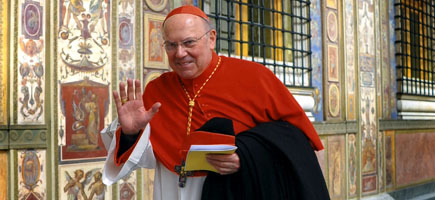
Cardinal William Levada, former archbishop of San Francisco Catholic Archdiocese of San Francisco, has penned a caustic response to recent New York Times articles and editorials that were critical of how the church and Pope Benedict XVI have handled sexual abuse cases involving priests over the years, calling the coverage “deficient by any reasonable standards of fairness that Americans have every right and expectation to find in their major media reporting.”

This bold, Spiro Agnew-like counterattack on the press during a time of mounting evidence of a covered-up pedophilia epidemic in the church is all the more notable given that Levada is the Prefect of the Congregation for the Doctrine of the Faith, an office then-Cardinal Ratzinger held before becoming Pope Benedict XVI, helping to place that office in charge of all reports of pedophiliac priests, a move that critics have charged was made to shield the church from criticism.

“I ask the Times to reconsider its attack mode about Pope Benedict XVI and give the world a more balanced view of a leader it can and should count on,” Levada writes, giving a far more charitable view of the current pope than the general public is feeling right now.

Rather than these defensive counterattacks on the Times’ solid journalism and analysis, Levada should realize that this tactic is precisely the attitude that has people concerned about the church, which has yet to fully atone for its many sins, including those committed by the Pope.

Back home in San Francisco, the church continues to stiff the city for millions of dollars in real estate transfer taxes involving the deed transfers of hundreds of properties under Levada’s leadership, a strange move that many critics have speculated was done to shield church assets from the claims of sexual abuse victims.

To me, this seems deficient by any reasonable standards of morality and openness that Americans have every right and expectation to find in their major religious institutions, particularly one that aspires to leadership that we can and should count on.

Us and the Weekly: It wasn’t personal

4

I really liked The Stranger’s article a couple of weeks ago about our battle with SF Weekly and it’s corporate parent, Village Voice Media. Eli Sanders is a good reporter, and he got most of it right.


But he did the same thing that a lot of people covering this legal battle have done, and it’s starting to get annoying. Everyone seems to want to play this as a battle of egos between Guardian Editor and Publisher Bruce Brugmann and VVM Executive Editor Mike Lacey. It’s as if we filed suit against them — and endured years of litigation and now collection efforts — just out of spite. It’s as if we were willing to go through all this just because Bruce didn’t like Mike Lacey.


Here’s Sanders’ spin:


These two men have hated each other for decades, but with increasing venom since 1995, when Lacey showed up in San Francisco in cowboy boots to announce that he and his partners had just purchased the tiny SF Weekly and planned to make a huge success of it.


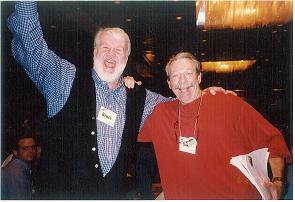
The thing is, Bruce and Mike haven’t hated each other for decades. They weren’t terribly close, but they got along fine — and sometimes, they were political allies. In 1997, three years AFTER Lacey’s company bought our competitor, SF Weekly, the two joined forces at an Association of Alternative Newsweeklies convention in Montreal to help push a bylaws measure that kept daily newspapers out of our trade association. And as the picture above shows, they were almost, sorta, kinda pals. At least for a few minutes.


The last thing we wanted to do was sue these guys. It wasn’t personal; we had no choice. Sure, the Guardian and VVM have very different approaches to journalism and politics, but we’d have been happy to compete with them — the way newspapers with different viewpoints should, on a level playing field. And for all the rhetoric on all sides, the legal animosity only started when the Weekly actively tried to put us out of business by selling ads below cost.


I dunno; the VVM people have been awfully rude to me of late, and I guess they like this mano-a-mano shit, but the reality is: We sued to stop illegal conduct that was threatening our business. That’s the real story.


Hank Plante’s exit interview

2

Hank Plante ends a three-decade run as a political journalist with tonight’s (March 24) broadcast of the CBS 5 Eyewitness News, where he has worked since 1986 after starting his career with newspapers in Washington DC. So we took the occasion to talk politics with him, learning that his loyalties lie downtown.

Plante agreed that politics has become ugly these days. “It’s just so much more acrimonious, that’s one thing that’s changed. The other is just the money that’s involved,” Plante told us, marveling at Meg Whitman’s plans to spend $40 million of her own money to run for governor and the $1 million per day that corporations spent lobbying against the health reform bill signed by President Obama.

But the changes haven’t gotten Plante down, as they have many political junkies, who decry the crippling of government’s ability to combat corporate power and address real social and economic problems. “I’ve never become a cynic, and I think that’s one thing that sets me apart from many political journalists,” he said, adding, “I still think politicians can make a difference.”

Yet like many political journalists, when I ask who his favorite politicians have been, he rates them based on whether they’ve made good stories, not whether they good for the people. For journalists, bad is often good, whether it be natural disasters or disgraceful politicians.

“Arnold is a great story. Willie Brown was a great story. Gray Davis was a dull story until he got recalled, then he was a good story,” Plante said.

What about Mayor Gavin Newsom, who has often given Plante exclusive access (including Newsom’s first extended interview after his 2007 sex scandal), but who has also angrily walked out in the middle of an interview with Plante. 

“Personally, I like the mayor. But I have to ask him tough questions, so he can be mercurial. Right now, he’s running for office again, so he’s charming,” Plante said.

In fact, for a journalist, Plante makes clear his preference for Newsom over the progressive majority on the Board of Supervisors, joking, “If I had a month to live, I’d spend it with the Board of Supervisors because it would seem like five years.”

Plante also said that he opposes district elections — which he said have prevented the emergence of big-stature political figures like Dianne Feinstein and Quintin Kopp — and Plante said he doesn’t see the value of district elections in counteracting the political power of downtown corporations. “I’m a capitalist and I have no problem with people making money,” he said.

Yet Plante acknowledges the divide between downtown and progressives is San Francisco’s dominant political dynamic, noting, “You see how afraid downtown is of the Board of Supervisors appointing the new mayor.”

While Plante said he believes in the importance of politics, he does decry how political science and public relations have been manipulated in recent years.

“They’re taken a page out of the Karl Rove playbook to talk over the journalists right at the public,” Plante said, noting how many politicians no longer feel the need to be accessible to journalists or honestly and directly answer their questions. “They really want to control the message, so the accessibility is diminished.”

Nonetheless, Plante said he regularly emphasizes the importance of political engagement: “In a place like the Bay Area, where people are inundated with lots of information sources, you have to keep saying it over and over again.” 

Plante, 63, is retiring and moving to his home in Palm Springs with his partner, Roger. Among the many awards and accolades he earned during his career are several Emmys and a prestigious Peabody Award. His station sent out a press release praising Plante, including this comment by anchor Dana King: “There is an entire population of politicians breathing a sigh of relief at the news of Hank’s retirement. Hank was the consummate professional, never combative but he did his homework and asked tough, pointed questions. Politicians, love him or hate him, respected and answered them, every single time. Our newsroom will suffer a huge intellectual void when he leaves.”

Cut administration, not schools

30

I received an interesting opinion piece this week from a group of teachers and parents working on sfbudgetblog.com, which looks at the San Francisco School District budget. They make some valid points:


By T.R. Amsler
Just when you think you’ve reached bottom, California schools find another shovel. Next year, San Francisco school children face even deeper cuts as many lose summer school, face increased class sizes and witness the dismissal of beloved teachers.


In identifying Sacramento as the crux of the problem, San Francisco schools superintendent Carlos Garcia has advocated a lawsuit against the state of California for failing to provide adequate funding to educate all children.
While we wait for a lawsuit that has not been filed, his proposed a 2010-11 budget slashes funding to classrooms while protecting central office jobs.


We wholeheartedly support Garcia’s effort to hold California accountable for the shameful under-funding of our schools. But change at the state level will take time—and in the meantime, we are baffled as to why, on a local level, he is not demonstrating the kind of ethical leadership we know he believes in.


Because of the state cuts, San Francisco must reduce its schools budget by $113 million over the next two years. The superintendent proposes making over 50% of those cuts from schools and classrooms. Over $8 million of the cuts are achieved by increasing K-3 class size—impacting our youngest and most vulnerable children. Over $8 million is slashed from Targeted Instructional Improvement Block Grant funds for the city’s lowest performing schools. Another $4.5 million comes from summer school programs for our struggling high school students. Garcia saves over $3 million by eliminating supplemental counseling funds for high schools supporting college readiness. Another $9 million is saved through furlough days, cutting instructional time for all students when we need to be expanding it.


Some say these draconian cuts are the only option. Some say we cannot find cuts in the central office because it is already lean. Yet the facts suggest otherwise: Compared to four similar-sized school districts (Elk Grove, Santa Ana, San Bernadino, and Capistrano), San Francisco spends significantly more on administration ($462 per student in SF compared to an average of $387) and less on instruction ($4,763 per student in SF compared to an average of $5,685).
Where does San Francisco spend its money instead of schools? This year, the district spent $340 million in centrally-budgeted services, as compared to $257 million in school-based funding. A portion of the central funds flows to schools in the form of centrally-funded staff, but the majority does not. There are many talented people working in the central departments, and many of the central services are helpful. But in a crisis, we must ask: do non-classroom-based expenditures better support student achievement than direct support of classrooms?


If San Francisco were to cut 20% from these central office budgets, we could save $68 million a year and close the budget gap without touching a penny of school-based funding. This would mean radically rethinking how the central office works—but if the alternative is radically slashing our schools, that’s some rethinking we cannot afford to put off.
Garcia’s proposal is to drastically defund school sites, fundamentally changing the experience of students and families. The radical shift however needs to happen not to families, but to the central office.


A group called the Children’s Allocation Team has created an alternative set of central office cuts that demonstrate the real possibility of protecting our schools and classrooms during this budget crisis. We need district staff to engage in this kind of creative thinking too.


In the San Francisco Chronicle on January 27, Superintendent Garcia wrote, “I recognize that we are in the midst of extraordinarily difficult economic times, but to place that burden on our children is morally unethical.” We agree.
Now we need our superintendent to make the morally ethical budget cuts he calls for. It is time to radically re-think the central office, not to fundamentally defund classrooms. We can, and we must, close the budget gap without touching classrooms and students.


T.R. Amsler has been a high school teacher and journalism teacher for ten years. SFbudgetblog.com is a collection of teachers, parents and administrators losing sleep to represent their investigations and analysis of the SFUSD local budget. Read, consider and contribute at www.sfbudgetblog.com


Informing the public

1

news@sfbg.com

Information is power. But too often, those with political power guard public documents and information from the journalists, activists, lawyers, and others who seek it on the people’s behalf. So every year, we at the Guardian honor those who fight for a freer and more open society by highlighting the annual winners of the James Madison Freedom of Information Awards, which are given by the Northern California chapter of the Society of Professional Journalists.

This year’s winners are:

Beverly Kees Educator Award

Rachele Kanigel

Rachele Kanigel, an associate professor of journalism and advisor to Golden Gate Xpress publications at San Francisco State University, has been highly involved in student press rights work on a national level. She wrote The Student Newspaper Survival Guide (Blackwell Publishing, 2006), a book designed to empower budding campus reporters. A champion of the free speech rights of her students, Kanigel has gone to bat on several occasions on behalf of student journalists whose work was challenged by interests that didn’t believe students should be afforded the same protections as professional reporters. Kanigel sees part of her job as educating the world about the importance of student journalists and standing up for their rights. “A lot of people won’t talk to student journalists, but they’re doing some really important work,” she said. “A lot of what we have to do is to assure the student journalists and tell the world outside that these are journalists.” The educator award is named in honor of Beverly Kees, who was the SPJ NorCal chapter president at the time of her death in 2004.

Norwin S. Yoffie Career Achievement Award

Mark Fricker

Mary Fricker is the kind of investigative reporter many of us would like to be.

She started out in the 1980s investigating complaints of irregularities at her local savings and loan when she was reporting for the old Russian River News community paper. Her dogged research and hard-hitting stories produced the first major investigation into the toxic problems of financial deregulation in S&Ls. Her work won numerous awards, including the Gerald Loeb Award given out by UCLA and the prestigious George Polk Award, and ultimately led to the book, Inside Job: The Looting of America’s Savings and Loan. The book won Best Book of the Year award from the Investigative Reporters and Editors association.

Fricker did business reporting and major investigative work for 20 years with the Santa Rosa Press Democrat. She retired and joined the Chauncey Bailey Project as a volunteer investigative reporter, researcher, Web site maestro, and general good spirit. Her work included several key investigations that determined that the Oakland Police Department was virtually alone in not taping interviews with suspects in investigations. Her stories changed that practice. She is a most worthy recipient of the Norwin S.<0x2009>Yoffie award, which honors the memory of the former publisher of the Marin Independent Journal, a founder of the SPJ/FOI committee, and a splendid warrior in the cause of Freedom of Information.

Professional Journalist

G.W. Schulz

G.W. Schulz was busy when we got him on the phone. “I’m sending out about eight or nine new freedom of information requests a day,” he said. “I fired off a few to the governor of Texas this morning.”

The relentless reporter is working on the Center for Investigative Reporting’s program exposing homeland security spending. It hasn’t been easy. Since the federal government began making big grants to local agencies for supposed antiterrorism and civil emergency equipment and programs, following the money has required unusual persistence. Homeland Security officials don’t even know where their grants are going, so Schulz has been forced to dig deeper.

“I think this is the biggest open government campaign I’ll ever do in my career,” he said. “We’re juggling dozens of requests, state by state. And it’s breathtaking what some people will ignore in their own public records laws.”

He’s found widespread abuse. “These agencies are getting all this expensive equipment and they don’t even maintain it or train their staff how to use it,” he said. CIR is not only doing its own stories, it’s working with local papers that don’t have the resources to do this kind of work. “Lots of great stories in the pipeline,” he said before signing off to get back to the battle. “I’m really excited.”

Legal Counsel

Ann Brick/ACLU

On the heels of a now-infamous Supreme Court ruling on so-called First Amendment rights for corporate political speech, SPJ is honoring an individual who has made a career devoted to protecting real, individual free speech rights for almost 20 years. Ann Brick, staff attorney for the Northern California chapter of the American Civil Liberties Union, has litigated in defense of privacy rights, free speech, government accountability, and student rights in cases ranging from book burning to Internet speech to illegal government wiretapping. “I can’t tell you how much of an honor it is to have worked with the ACLU,” she says, adding, “I can’t think of another award I’d rather get than this one — an award from journalists.” But the public’s gratitude goes to Brick, whose years of service are a shining example of speaking truth to power.

Computer Assisted Reporting

Phillip Reese

Phillip Reese of The Sacramento Bee is being honored for his unrelenting pursuit of public records and for producing interactive databases. Reese was the architect of the Bee‘s data center, providing readers readily accessible information about legislative voting records, neighborhood election results, state employee salaries, and other important information. At one point, the city of Sacramento demanded several thousand dollars in exchange for employee salary data. Reese gathered the city’s IT workers and a city attorney for a meeting, where he argued that organizing records in an analyzable format would insure the system wasn’t being abused, so they chose to provide the records for free. The online databases provide public access to records that are often disorganized and cryptic. “Sometimes these databases go well with a story, and sometimes they can stand on the Internet alone. People can view them in a way that is important to themselves,” Reese said.

Public Official

Leland Yee

State Sen. Leland Yee (D-San Francisco) has been an open government advocate since his days on the San Francisco Board of Supervisors, and one of his favorite targets is the administration of the University of California. He has fought to protect UC students from administrators who want to curtail their free-speech right and to get documents from university officials.

In 2008, he authored and passed SB 1696, which blocked the university from hiding audit information behind a private contractor. UCSF was refusing to release the information in an audit the school paid a private contractor to conduct. “I read about this in the newspaper and I was just scratching my head. How can public officials do this stuff?” Yee said. He had to overcome resistance from university officials and public agencies arguing that the state shouldn’t be sticking its nose into their business. “But it’s public money, and they’re public entities, and the people have a right to know where that money is going.”

Computer Assisted Reporting

Thomas Peele and Daniel Willis

This duo with the Bay Area News Group, which includes 15 daily and 14 community newspapers around the Bay Area, performed monumental multitasking when they decided to crunch the salaries of more than 194,000 public employees from 97 government agencies into a database. Honored with the Computer Assisted Reporting Award, the duo provided the public with a database that translated a gargantuan amount of records into understandable information. They had to submit dozens of California Public Records Act requests to access the records of salaries that account for more than $1.8 billion in taxpayer money. “It is important that the public know how its money is spent. This data base, built rather painstakingly one public records act request at a time by Danny Willis and myself as a public service, goes a long way in helping people follow the money,” Peele said.

Nonprofit

Californians Aware: The Center for Public Forum Rights

California’s sunshine laws, including the Brown Act open meeting law and California Public Records Act, aren’t bad. Unfortunately, they are routinely flouted by public officials, often making it necessary to go to court to enforce them. That’s why we need groups like CalAware, and individuals like its president, Rick McKee, and its counsel, longtime media attorney Terry Francke. Last year, while defending an Orange County school board member’s free speech rights and trying to restore a censored public meeting transcript, CalAware not only found itself losing the case on an anti-SLAPP (strategic lawsuit against public participation) motion, but being ordered to pay more than $80,000 in school district legal fees. “It’s never been easy, but that was going to be the end of private enforcement of the Brown Act,” Francke said. Luckily, Sen. Leland Yee intervened with legislation that prevents awarding attorney fees in such sunshine cases, leaving CalAware bruised but unbowed. “We’ve become active in court like never before.”

News Media

SF Public Press/McSweeney’s

Last year, when author Dave Eggers and his McSweeney’s magazine staff decided to put out a single newspaper issue (because “it’s a form we love,” Eggers told us), they filled San Francisco Panorama with the unusual mix of writers, topics, and graphics one might expect from a literary enterprise. But they wanted a hard-hitting investigation on the cover, so they turned to the nonprofit SF Public Press and reporters Robert Porterfield and Patricia Decker. Together, they worked full-time for four months to gather information on cost overruns on the Bay Bridge rebuild, fighting for public records and information from obscure agencies and an intransigent CalTrans. “We’re still dealing with this. I’ve been trying to secure documents for a follow-up and I keep getting the runaround,” said Decker, a new journalist with a master’s degree in engineering, a nice complement to Porterfield, an award-winning old pro. “He’s a great mentor, just such a fount of knowledge.”

Professional Journalist

Sean Webby

San Jose Mercury News reporter Sean Webby won for a series spotlighting the San Jose Police Department’s use of force and how difficult it is for the public or the press to track.

The department and the San Jose City Council refused to release use-of-force reports, so Webby obtained them through public court files. He zeroed in on incidents that involved “resisting arrest” charges, and even uncovered a cell phone video in which officers Tasered and battered suspects who did not appear to be resisting.

Webby has won numerous awards in the past, but says he is particularly proud of this one. “Freedom of information is basically our mission statement, our bible, our motto,” he said. “We feel like the less resistance the average person has to getting information, the better the system works.”

Webby said that despite causing some tension between his paper and the San Jose Police Department, the project was well worth it. “We are never going to back off the hard questions. It’s our job as a watchdog organization.”

Public Service

Rita Williams

KTVU’s Rita Williams is being honored for her tireless efforts to establish a media room in the San Francisco Federal Building that provides broadcasters the same access to interviews as print reporters.

Television and radio equipment was banned from the federal pressroom following 9/11, but Williams solicited support from television stations, security agencies, the courts, and the National Bar Association. After a six-year push, they were able to restore access.

Williams and her supporters converted a storage unit in the federal building into a full-blown media center, which was well-used during the Proposition 8 trial. “I only did two days of the trials, but every time I walked into the room, I would just be swarmed with camera folks saying thank you, thank you, thank you,” she said. “I’m getting close to retirement and I was in the first wave of women in broadcasting, and I’m proud that almost 40 years later, I can leave this legacy.”

Citizen

Melissa Nix

With her Betty Page looks, dogged sense of justice, and journalistic training, Melissa Nix became a charismatic and relentless force in the quest to find out how her ex-boyfriend Hugues de la Plaza really died in 2007. Nix began her efforts after the San Francisco medical examiner declared it was unable to determine how de la Plaza died and the San Francisco Police Department seemed to be leaning toward categorizing the case as a suicide. Using personal knowledge of de la Plaza and experience as a reporter with The Sacramento Bee, Nix got the French police involved, who ruled the death a homicide, and unearthed the existence of an independent medical examiner report that concluded that de la Plaza was murdered.

Editorial/Commentary

Daniel Borenstein

Contra Costa Times reporter Daniel Borenstein wasn’t out to deprive public worker retirees of yachting, country club golf, and rum-y cocktails at tropical resorts. The columnist was only trying to figure out how, for example, the chief of the Moraga-Orinda Fire District turned a $185,000 salary into a $241,000 annual pension. Borenstein’s effort to unearth and make public, in easily readable spreadsheets, the records of all Contra Costa County public employee pensioners led the Contra Costa Times to a court victory stipulating just that: all records would be released promptly on request without allowing retirees time to go to court to block access. The effects have been noticeable: “I get scores of e-mails most weeks in reaction to the columns I’m writing on pensions, [and] public officials are much more sensitive to the issue,” Borenstein says. It is a precedent that has carried into the Modesto Bee‘s similar pension-disclosure efforts in Stanislaus County.

Student Name Withheld After a photojournalism student at San Francisco State University snapped photographs at the scene of a fatal shooting in Bayview-Hunters Point, police skipped the usual process of using a subpoena to seek evidence, and went straight into his home with a search warrant to seize this student’s work. But with the help of his attorney, the student quashed the warrant, arguing California’s shield law prevents law enforcement from compelling journalists to disclose unpublished information. He won, and the case served to demonstrate that the shield law should apply to nontraditional journalists.

The student is being recognized because he resisted the warrant rather than caving into the demands of law enforcement. Invoking the shield law in such cases prevents reporters from being perceived as extensions of law enforcement by the communities they report on, enabling a free exchange of information. The student remained anonymous in the aftermath of the shooting because he feared for his life. Based on his ongoing concerns, NorCal SPJ and the Guardian have agreed to honor his wish to have his name withheld.


Guardian reporter’s inside story on arrested protesters

17

Story and photos by Jobert Poblete

I thought I was keeping a safe distance, observing Day of Action protesters as they went onto Interstate 880 to block traffic rather than participating, until a line of riot cops came barreling towards where I stood by the side of a freeway offramp. But my flight instinct took over, and I found myself running along northbound 880 with my notebook and pen still in my hands. What had been an impressive but otherwise peaceful protest was taking a surreal turn. But maybe I should start from the beginning.

As a recent UC Berkeley grad, I had been on campus many times in the last few months, invited by friends to support the occupations and protests that were fueling an extraordinary movement to defend public education. So I was excited to go out on March 4th to cover the Day of Action in the East Bay. This was a new experience for me. Like any good Berkeley grad, I’ve participated in my share of protests, but now I was a Bay Guardian news intern and this was the first time I was going out as a reporter.

There was a lot to be impressed with that day. In Berkeley, activists had succeeded in creating a broad coalition made up of graduate and undergraduate students, faculty, union members, lecturers, and campus workers and staff. These constituencies were well-represented Thursday morning.

Berkeley organizers were also working to expand their movement beyond the university. Callie Maidhof, a graduate student in anthropology, told me that March 4th is the “first attempt to organize beyond a single system, to organize across California, across the public education systems, and across the nation.”

On the four and a half mile march from Berkeley to downtown Oakland, there was plenty of evidence that they were succeeding. As the Berkeley contingent marched down Telegraph Ave., it was joined by middle school and high school students who brought their own concerns about teacher layoffs and program cuts.

At the rally in Oakland, I spoke to high school students who had walked out of their schools to participate. Sophomore Sienee Dakina from Oakland’s Envision Academy told me that her school lost three teachers because of budget cuts. “We feel like it’s not right,” Dakina said. “We’re losing our teachers.” Ninth graders Victoria Romero and Andrea Barba from Life Academy told me that they were protesting so that the school district would “not take our dreams away.”

When the rally ended, some people were headed to San Francisco to take part in the big rally at Civic Center. I knew that there would already be Guardian reporters there, so I decided to stay in Oakland for what was being billed as an after-protest dance party and “snake march.”

The dance party started around 4:30 with a couple hundred people taking Broadway accompanied by a mobile sound system, black flags, and large banners that declared “We Have Decided Not to Die” and “Occupy Everything.” For the first time that day, I saw riot cops in full force. I read these as signs that something dramatic was probably in store. The dance party wound its way through downtown Oakland, stopping in front of the UC Office of the President before heading towards West Oakland.

I was at the back of the march, talking to an Oakland teacher who was telling me about layoffs at his school, when the police started warning the crowd that they could face arrest. I fell behind and was playing catch-up as a group of around 150 people took to the freeway. I decided to stick by the offramp and watched as a bicyclist, who appeared to be riding on the freeway away from the march, got violently tackled by a fast-moving line of cops.

It was at this point that another line of cops started up the offramp and I fled up the freeway. An officer on a motorcycle yelled at me to continue and join the protesters or face arrest. I ran to catch up with the crowd, which was in chaos as the police approached. (I later learned that, in the chaos, a local high school student fell off the elevated highway and was taken to Highland Hospital with serious injuries.) I saw two kids – perhaps as young as 12 or 13 – trying to get away on skateboards. I was with a cluster of journalists as a line of cops and a blur of batons fell upon a group on the far side of the southbound lanes. We retreated to the dividing wall, me still clutching my pen and notebook, holding my hands in the air.

We were ordered to lay on the ground. My pen was still out so I continued taking notes. An officer noticed me and ordered me up. I explained that I was a reporter and offered to show him proof of my affiliation with the Guardian. “But you’re on a freeway,” he said. “You’re under arrest.” He did help me secure my notes and camera.

I was handcuffed and ordered to kneel on the side of the highway with the protesters, next to a friend from Berkeley, a graduate student at the journalism school. We knelt for hours waiting for the buses that would take us to Glenn Dyer jail in Oakland and Santa Rita jail in Dublin. A handful of stranded motorists cheered, presumably for the protesters, and in one of the lofts next to the freeway, a resident had posted a sign that said “FUCK U Protesters.”

I was sent to Santa Rita with around 100 of those arrested on the freeway. We were informed that we would be charged with misdemeanors and released, but it was clear that our numbers had overwhelmed the jail’s systems. Deputies told us that we would be in there for 10 hours. Ten hours turned into 20, most of that time spent in a cold concrete cell, seven feet long and seven feet wide, with 14 other inmates. There wasn’t room for all of us to lie down at the same time. The fluorescent lights were kept on all night, and I was disoriented, groggy.

The sheriff’s deputies joked about IEDs and half-heartedly threatened us with prison clichés. An agent with U.S. Immigration and Customs Enforcement visited my cell and questioned me and another person of color, asking us for our names and where we were born. My cell mates, worried about the possibility that an undocumented student had been arrested, discussed whether we should refuse to answer their questions. An inmate in a nearby cell hurled obscenities at the “protesters.” But most of the other inmates were merely curious. A few held up their fists in solidarity as they were led past our cell.

I shared cells with a diverse group of people, some I had known for years: a teacher’s aid, a Berkeley freshman computer science major, a veteran, an older man who called himself a communist, and a handful of community college students from Modesto. There were a number of other journalists: two stringers working for Democracy Now!, a reporter from the Daily Californian, and a friend who was covering the protest for Indybay.org. I had seen other journalists with big video rigs on the freeway, but one of the other arrestees told me that they had been allowed to leave.

We passed the time as best we could. The Berkeley computer science major taught us how to fold origami cranes. One of the other reporters gave an impromptu teach-in about some Bay Area residents imprisoned in Iran. We took advantage of the concrete cell’s unique acoustic properties by humming harmonies. A few cells over, the women agitated for food and we got bologna sandwiches and a strange powdered juice that tasted like the color yellow. Mostly, we tried to sleep, in fetal positions, sitting up, or curled around the toilet using our arms, shoes, and rolls of TP for pillows.

There were also discussions about the movement: how to make it broader, how best to organize and make decisions, and what should come next. It was clear to me that many of the people I was with did not know that they would end up on a freeway, but if there were any regrets, no one in my cell let that on. One man commented that the movement was getting bigger – earlier protests had resulted in dozens of arrests, but this one had 150 people taking a freeway. Another said that only the movement “intellectuals” were taking militant action. A community college student objected to that point. Earlier, he had joked about the $6 increase in his fees, but now he spoke bitterly and passionately about how he considered himself working class and not an intellectual. The budget cuts had made him feel that a quality education at a UC was getting further from his grasp.

I was not released until around 4 p.m. on Friday, charged with two misdemeanors – unlawful assembly and obstructing a public place – and ordered to appear in court April 5. Outside the jail, a small crowd of supporters had been gathered all day and it did not take long to find a familiar face and a ride back home.

A friend who had worked through the night to rally support and secure attorneys told me that a lot of students were upset about what had happened. They were critical about what they called a lack of planning and angry that protesters had been led into an action they did not fully understand and did not fully prepare for.

But the freeway action also showed how far the movement has come. Resistance to the budget cuts has spilled out of the universities and gotten bigger, broader, and, yes, perhaps more foolhardy. From my vantage point on that elevated highway, the movement has definitely upped the ante and more and more people are calling the bet.

It’s so easy to go after public employees

4

The always-insightful Robert Cruickshank has a fascinating piece on Calitics today talking about the investigative reports showing that some state employees save up all their vacation time and get big payouts when they retire. It’s true that some state workers walk away with upwards of $100,000, and it’s true that it pisses people off, and it’s true that there probably ought to be some reforms that limit the amount of vacation time you can save and cash in.


But as Cruickshank notes, the payouts have cost the state $486 million since 2006, and:


$486 million sounds like a lot of money. But that is just 2.43% of the current $20 billion deficit. In other words, if we had eliminated that practice in 2006, or capped it, the budget deficit would not be meaningfully impacted. In fact, given that we’ve had about $60 billion in budget shortfalls since 2007, these vacation payouts are 0.81% of the overall deficit.


He explains:


Of course, these kinds of articles help build a larger narrative that the budget problem is in large part caused by greedy public sector workers who are paid too much. The actual numbers here indicate that the vacation payouts are not a meaningful part of the budget problem at all. Similarly, Meg Whitman’s desire to layoff 40,000 state workers would probably save about $2.5 billion (assuming those workers make the state average). That’s a bigger chunk of the projected $20 billion deficit, but it’s still only 12.5%. Whitman and other critics of public employees need to come up with solutions for the other 87.5% of the deficit.


Maybe one place to start is by looking at how the rich evade their tax obligations. Last week the LA Times’s Michael Hiltzik showed that Frank and Jamie McCourt paid no federal or state income tax between 2004 and 2009. Many wealthy Californians and large corporations have similarly evaded taxes.


So why do the relatively minor excesses by state employees get much more press attention that the vast cheating and looting of the public treasury by the rich and by big businness? Well, after 30 years in journalism, I can tell you one reason:


It’s easy.


State employee payrolls are public record. It’s easy to find out how much overtime Muni drivers make, or how many city workers earn more than $100,000 a year, or what the firefighters contract allows. Editors love these kinds of stories, because they always stir up populist indignation and outrage.


I’ve done it myself. We all do.


On the other hand, try to figure out how a big commercial property owner is using complicated stock transfers to hide a change in ownership and avoid tens of millions of dollars in property-tax liability. It’s a bitch. That kind of work takes weeks, months of investigation and requires some sophisticated legal and financial knowledge. See, the private sector — particularly the folks who are hiding behind tax shelters and scams — is big on secrecy, and the laws don’t help reporters.


Investigative reporting on the private sector is expensive. And in these days of diminished news budgets, not that much of it happens any more.


So the message you get in the press is that public employees are busting the budgets, and if we could just quit paying them so much money all would be fine. And the real budget busters, the real scam artists, the real crooks who are sucking the public treasury dry … they just keep right one going. And nobody’s paying attention.

Ethics for political consultants?

1

I got an email from Garry South today. He’s the guy who used to run Gavin Newsom’s campaign for governor. Now he’s turned on his previous client. And he’s sent out a message to political reporters explaining why Newsom — the guy he was pushing for governor of California — is actually a worthless hack.


Here’s the mail:


STATEMENT BY GARRY SOUTH


CHIEF STRATEGIST, JANICE HAHN FOR LT. GOVERNOR


FORMER SENIOR ADVISOR, GAVIN NEWSOM FOR GOVERNOR


I am surprised and perplexed that my friend and former client Mayor Gavin Newsom apparently has decided to jump into the lieutenant governor’s race at the last minute – especially against an already-announced candidate who would be the first woman lieutenant governor in California history.


In every one of several conversations we had about the job while he was running for governor, the Mayor expressed nothing but disinterest in and disdain for the office of lieutenant governor. In fact, he was derisively dismissive of Gray Davis’s decision to run for and serve as lieutenant governor prior to running for governor (“I’m not a Gray Davis,” he said). On a couple of occasions, he directed me to repudiate publicly in the strongest terms that he had any interest in ever running for lieutenant governor.


The Mayor himself told the Chronicle in October that rumors he may run for lieutenant governor were “absurd” and “a complete lie,” and angrily accused Jerry Brown of personally spreading false information to that effect. As recently as December, he himself said flatly “no” when asked directly on a San Francisco radio show whether he intended to run for lieutenant governor.


In addition, when he precipitously pulled out of the governor’s race in late October – against my advice – he said he couldn’t continue as a statewide candidate because he was a husband, a new father and the mayor of San Francisco. So far as I know, he’s still a husband, a new father and the mayor of San Francisco. So it’s pretty hard to see what’s changed over the last four months that would now allow him to run for another statewide office.


If the Mayor does run, it is his responsibility to explain why he now claims to want an elected office he summarily dismissed publicly numerous times over the last several months, and which just earlier this year he called “a largely ceremonial post” … “with no real authority and no real portfolio.”


Now, if Garry South were an attorney, I think he could be disbarred for that statement. Lawyers can’t discuss anything that transpired between them and their ckients.And it sounds to me like he’s taking confidential conversations between himself and his client — talks that occured during campaign strategy sessions — and passing them along to the world.


But since political consultants have no regulations, nothing will happen to him.


Now, there is a code of ethics of the American Association of Political Consultants, which you can read here. It says, in part:


  • I will treat my colleagues and clients with respect and never intentionally injure their professional or personal reputations.

  • I will respect the confidence of my clients and not reveal confidential or privileged information obtained during our professional relationship.

  • Of course, the AAPC is just a trade group, with no enforcement. (Just as journalism codes of ethics are not enforceable by anyone.) But if you ask me, it’s a little slimy.


    IPI: Three Killed in Pakistan Press Club Bombing

    5

    The International Press Institute is a global network of editors, media executives and leading journalists. They are dedicated to the furtherance and safeguarding of press freedom, the protection of freedom of opinion and expression, the promotion of the free flow of news and information, and the improvement of the practices of journalism.

    Three Killed in Pakistan Press Club Bombing

    Pakistan IPI Member Warns: Media Now a ‘Central Target’

    VIENNA, 22 Dec. 2009 – At least three people were killed on Tuesday in Peshawar in northwestern Pakistan when a suicide bomber detonated explosives outside the city’s Press Club, according to media reports.

    Two policemen and a passer-by were killed, Reuters reported. At least 17 people were wounded.

    Peshawar, the capital of North West Frontier Province, has been wracked by violence since the Pakistani armed forces began an offensive against Pakistani Taliban militants in October.

    “It was a suicide attack. The bomber wanted to get into the Press Club and, when our police guard stopped him, he blew himself up,” city police chief Liaqat Ali Khan told Reuters – which noted that Peshawar reporters had said militants had threatened journalists since the beginning of the offensive against the Pakistani Taliban.

    Pakistan is one of the most dangerous places in the world for journalists. According to IPI’s Death Watch, seven journalists have already been murdered there this year.

    Owais Ali, an IPI member, and Secretary-General of the Pakistan Press Foundation, told the IPI Secretariat: “Things are getting from bad to worse. There was a time when the press was collateral damage in covering the war on terror. Now it seems the press has become a central target for terrorists.”

    He added: “This is another blow for press freedom in Pakistan. It’s high time the government moved beyond issuing routine condemnations for attacks on journalists and moved to providing security for journalists.”

    Ali said that many newspapers didn’t have the money to provide proper security at their entrances, and warned that in the absence of concrete measures to bolster media security after Tuesday’s attack some journalists might choose self-censorship rather than remain exposed to the wrath of the militants.

    IPI Director David Dadge said: “Pakistan is already one of the most dangerous countries in the world for journalists out in the field. The fact that journalists are now being attacked in the traditional haven of a press club is another tragic blow for freedom of the media in Pakistan. Journalists must never be targeted because they will not
    follow a political or ideological line and I call on the authorities to do everything to ensure that the perpetrators are brought swiftly to justice.”

    San Francisco Panorama hits the streets

    17

    By Steven T. Jones
    lilachris.jpg
    Chris Cook and Lila LaHood of the San Francisco Public Press hawk copies of San Francisco Panorama in front of the Chronicle Building.

    There’s a new newspaper in San Francisco – at least for today. San Francisco Panorama is being hawked on street corners around the city for $5 (get ‘em quick because they go up to the list price of $16 after today), perhaps the thickest, best-designed, and most creatively written (or at least the one penned by the most notable writers who aren’t usually journalists) newspaper ever.

    The one-time product was produced by McSweeney’s, the literary magazine and publishing house operated out of 826 Valencia by author Dave Eggers, in partnership with the San Francisco Public Press and with financial support from Spot.us, which allows citizens to directly fund good journalism. The San Francisco Chronicle also helped with promotion and distribution.

    The cover story on Bay Bridge cost-overruns, written by new journalist Patricia Decker and old pro Robert Porterfield, was overseen by the Public Press – a non-profit news outlet that aims to produce a non-commercial daily newspaper – and its project director Michael Stoll (full disclosure: I serve on the Public Press Steering Committee).

    Eggers originally conceived the Panorama project as a way to demonstrate what a vital and attractive medium newspapers continue to be. Or as Stoll told me this afternoon, “If you give people a news product that breaks the formula they’re used to seeing, you’re going to capture their imaginations.”

    Big bang

    0

    THEATER “Stop the world, I want to get off” — a hoary phrase of pop weltschmerz that only now strikes me as a choice bit of narcissistic prurience, thanks to Peter Sinn Nachtrieb. The phrase doesn’t actually figure in his latest work, a date-play apocalypse called boom, but when you see the play you too will encounter unexpected resonances between world-shaking existential dread and the most banal of Craigslist innuendo.
    The personals posting that actually gets the ball rolling promises something more like “sex to change the course of the world.” Finally, some truth in self-advertising. For as it happens, the man who placed the ad, Jules (a delightfully earnest Nicholas Pelczar), is a young marine biologist who through diligent study of the nervous diurnal habits of tropical reef fish has deduced the end of the world by comet — in what, by the opening of the action, is about a few minutes time. Accordingly, he has lured an eager and feisty young journalism student named Jo (a terrific, wound-up and wounding Blythe Foster) to his creepily well-stocked underground lab-lair to, little does she realize, repopulate the soon-to-be-barren earth. Never mind that Jules is a big gay virgin, or that Jo turns out to detest the very thought of babies: this is the End of the World, people.
    But of course rare is the hookup that matches what it promises, fate of humanity notwithstanding. Given our would-be Adam and his don’t-even-think-about-it Eve, things look increasingly dire for a race suddenly dependent on two maladapted virgins whose strange backgrounds — he, the sole survivor of a cursedly accident-prone family; she, hard-wired to faint at the first sign of danger — may or may not bode well from an evolutionary point of view. On this Darwinian date with destiny, Jules and Jo rank as colder fish than their tropical roommates, staring back at them from the aquarium center stage.
    Such contrasts between the mundane and the profound make for good comedy, especially in the very sharp production at Marin Theatre Company helmed by Ryan Rilette, but they also spark insight in a work that, for all its winning humor, ponders without pretension serious themes none too arbitrary here at what does kind of look like the end of the line for life as we know it.
    boom is never heavy about it, but it thoughtfully celebrates the ambiguous nature of things, or indeed the ambiguity in Nature itself. It’s a bracing tonic — whether in comedy or tragedy, you can always make my entendre a double. Nachtrieb and MTC serve up a stiff one, spiked with an even headier irony: the story we are watching of a heavily freighted blind date gone horribly wrong is itself actually a museum exhibit from the far future side of our impending doom, operated by a slowly unraveling docent (played with Chaplin-esque aplomb by an irresistible Joan Mankin) during what turns out to be her last day on the job, after many creatively frustrated work-years under heartless management.
    But Nachtrieb, the San Francisco–based playwright responsible for some of the more successful and smart comedies of recent years (Hunter Gatherers; T.I.C. Trenchcoat in Common), has never shied from the deeper social implications of his effortlessly hilarious send-ups of familiar human foibles — probably because his characters are always so lovingly rooted in their particular time and place, they just rise up naturally from his stories. boom, which is reportedly the most-popularly produced new play in the country this year, is no exception. Its human touch makes its posthuman dimensions somehow strangely reassuring. It’s as if, in almost diffident fashion, the play succeeds where the dogged journalism student in Jo would: in wringing a modest moral (and a final A) from the blackest hole of tragedy and the detritus of cliché — you know, “in some small, stupid way that’s sort of uplifting.”

    BOOM
    Through Dec. 6
    Wed, 7:30 p.m.; Thurs–Sat, 8 p.m.; Sun, 7 p.m., $31–$51
    Marin Theatre Company
    397 Miller, Mill Valley
    (415) 388-5208
    www.marintheatre.org

    They Might Be Giants: Fact-based rock

    0

    By Dan Abbott

    tmbg2_1109.JPG

    Music journalism is a little awkward for me. As a musician, most of the artists I like are those that I have a personal connection with. So most of the articles I’ve written on music have necessarily been prefaced by some sort of full disclosure statement. But though I have never met them, They Might Be Giants has had a disproportionably huge impact on me as both a musician and a lifelong nerd. Is it possible to be objective about them? Of course not! But a full disclosure about TMBG would be longer than article ought to be.

    So when I heard the smart-alecky Brooklyn, NY-based duo-cum quintet would be playing two shows in San Francisco promoting their latest record, Here Comes Science, an epic battle ensued between the TMBG fanboy and the intrepid journalist that lurk within me. I’d like to say the journalist won, as my phone interview with guitarist John Flansburgh proceeded with minimal squealing. Thank you, whiskey.

    But it is hard to deny the rabid devotion that TMBG inspires, as evidenced by their sold-out Nov. 13 show at the Fillmore. The night before that, a line stretched around the block to see their free six-song performance at Booksmith on Haight, where they signed copies of another release, Kids Go!, a children’s book with accompanying CD. The extraordinarily prolific group has put out three children’s albums in recent years, prompting a bit of head-scratching among fans of their more experimental and gloomy early works.

    Events listings

    0

    Events listings are compiled by Paula Connelly. Submit items for the listings at listings@sfbg.com.

    WEDNESDAY 7

    Dead-ication Booksmith, 1644 Haight, SF; (415) 863-8688. 7:30pm, free. Join well-known author Ben Fong-Torres as he presents his new book, The Grateful Dead Scrapbook: The Long, Strange Trip in Stories, Photos, and Memorabilia. The book is a collection of never-before published photos, flyers, fan letters, and other ephemera, accompanied by Fong-Torres’ personal experience of the San Francisco music scene at that time, as a writer for Rolling Stone magazine.

    FRIDAY 9

    HPV: The Silent Killer Commonwealth Club, 2nd floor, 595 Market, SF; (415) 869-5930. Noon, $15. Hear from health care professionals about the future of HPV prevention and treatment and the controversy surrounding the current vaccine.

    Litquake Various venues across Bay Area; www.litquake.org. Oct. 9-17, $0-30. Join in on this inclusive celebration of San Francisco’s unique contemporary literary scene by attending lectures, readings, workshops, panel discussions, and, best of all, parties. Attend the Porchlight Storytelling Series, where authors take the stage to tell true takes of punk rock excess (Mon/12). See Amy Tan be roasted by her peers including, Dave Eggers, Andrew Sean Greer, and Armistead Maupin at the Barbary Coast Award ceremony (Wed/14). Witness a Literary Death Match where writers compete for bragging rights (Thurs/15).

    Litquake’s Book Ball Herbst Theater, Green Room, 401 Van Ness, SF; www.litquake.org. 8pm; $19.99, includes one drink and snacks. Kick off this years litquake at a Black, White, and Read harlequin ball where attendees don masks inspired by their favorite books or writers. Live music, dancing, and plenty of authors guaranteed.

    SATURDAY 10

    Chinese-American Art Chinese Culture Center of San Francisco, 3rd floor, 750 Kearny, SF; (415) 986-1822, ext. 21. 1pm, free. Attend this lecture by Stanford University Professor Gordon H. Chang on Chinese-American art followed by a guided tour of the current exhibition Chromatic Constructions: Contemporary Fiber Art by Dora Hsiung.

    Hip Hop Chess Federation John O’Connell High School, 2355 Folsom, SF; www.bayareachess.com. 9am-6pm, free. This all day youth empowerment program includes a chess tournament, music, chess lessons, graffiti art battles, martial arts, and more to promote unity, strategy, and non-violence. Hip hop celebrity guests include Rakaa Iriscience, Ray Luv, Traxamillion, Casual, Conscious Daughters, and more. All ages welcome.

    Morbid Curiosity Borderland Books, 866 Valencia, SF; (415) 824-8203. 3pm, free. Celebrate the release of a new book drawn from the pages of Morbid Curiosity magazine called, Morbid Curiosity Cures the Blues: True Stories of the Unsavory, Unwise, Unorthodox, and Unusual, with readings by Simon Wood crashes his car, Katrina James drinks blood, A.M. Muffaz endures an exorcism, and more.

    Open Studios Various studios around neighborhoods Bernal Heights, Castro, Duboce, Eureka Valley, Glen Park, Mission, Noe Valley, and Portola. Sat-Sun 11am-6pm.

    Writing about Art The Lab, 2948 16th St., SF; (415) 864-8855. 3pm, $5-10 sliding scale. Attend the first installment of a three part series, Critical Sources: Writing about Art in the Bay Area, featuring speakers Glen Helfand, Tirza True Latimer, Matt Sussman, and David Cunningham.

    Yoga Tree Anniversary Yoga Tree Castro Studio, 97 Collingwood, SF; (415) 701-YOGA. 7pm, free. As a thank you to the community in honor of Yoga Tree’s ten year anniversary, owners Tim and Tara are offering a night of free yoga, Kirtan, dance, entertainment, and goodies.

    BAY AREA

    Indigenous Peoples Day Berkeley Farmers’ Market, Center at Martin Luther King, Jr., Berk.; (510) 595-5520. 10am, free. Celebrate Indigenous Peoples Day with a Pow Wow and Indian Market featuring Native American dancing, drumming, and singing, and a Native American crafts sale. The farmers’ market will also be holding a free fall fruit tasting with a whole range of Fall varieties you can find at the Berkeley Farmers’ Market.

    SUNDAY 11

    Arab Cultural Festival County Fair Building, Golden Gate Park, 9th Ave. at Lincoln, SF; (415) 664-2200. Noon, $6. Celebrate the contributions of the Arab-American community to San Francisco at this day-long showcase of the art, entertainment, food and traditions of Arab and Arab-American people that have contributed to the Bay Area’s cultural landscape.

    Japanese Confinement in North America National Japanese American Historical Society, 1684 Post, SF; (415) 921-5007. Hear Greg Robinson read and discuss his book, A Tragedy of Democracy: Japanese Confinement in North America, which analyses the confinement of 120,000 people of Japanese descent in the United States during World War II.

    Philosophy Talk Marsh Theater, 1062 Valencia, SF; (415) 826-5750. Noon, $20. Be part of a live studio audience at this recording of Philosophy Talk, a public radio show hosted by two Stanford philosophy professors and broadcast locally on KALW 91.7 and nationally on other public radio stations. The show’s topics will be "The Minds of Babies" with guest Alison Gopnick and "Nihilism and Meaning" with guest Hubert Dreyfus.

    WhiskyWeek Seminars Elixir, 3200 16th St., (415) 552-1633. From Sun/11-Thrus/15, various times; $35 per seminar, www.elixirSF.com to sign up. In honor of WhiskeyWeek, learn about five different approaches to whiskey making from experts from whiskey makers around the world, like Glenmorangie, St. George, Yamazaki, and more.

    BAY AREA

    Radical Love Long Haul Infoshop, 3124 Shattuck, Berk.; (510) 540-0751. 7pm, $10-15 sliding scale. Attend this workshop and discussion with Wendy-O Matik on how to re-invent your relationships outside the dominant social paradigm, focusing on love and intimacy, not sex. The components at the heart of this non-judgmental workshop are feminism, social activism, and revolution.

    MONDAY 12

    Meet the Programmers Mezzanine, 444 Jessie, SF; (415) 625-8880. 7pm, $8. Attend this SFFS Film Arts forum starting with a preview of the Film Society’s fall festival lineup, followed by a panel discussion featuring programmers from various San Francisco film festivals, followed by peer-to-peer screenings, review, and feedback on works in progress, leading into an open networking forum.

    TUESDAY 13

    Jew Tube Congregation Sherith Israel, 2266 California, SF; (415) 346-1720. 7pm; $48, for five part series. Every Tuesday for 5 weeks David Perlstein will show two episodes that demonstrate the evolution of Jewish identity and issues throughout the past 60 years of television situation comedies at this series titled, Jew Tube: TV Sitcoms’ Jewish Family Portraits.

    On Print Journalism Herbst Theater, 401 Van Ness, SF; (415) 392-4400. 8pm, $20. Hear Jill Abramson, Managing Editor, The New York Times, and Jane Mayer, Staff Writer, The New Yorker, discuss the current state of print journalism, the impact of the shift toward a more digital world, and the future of print media.

    How an online newspaper can succeed

    0

    EDITORIAL Dave Iverson, host of KQED’s Friday Forum show, introduced the Sept. 25 program with a pretty obvious comment: "Conversations about the future of journalism, and newspapers in particular, are rarely optimistic affairs." He went on to describe the new effort by Warren Hellman, KQED, and the UC Berkeley journalism school to create a new media outlet in San Francisco (a story that broke first in the Guardian‘s politics blog).

    The guests, including Neil Henry, dean of the j-school; Carl Hall, the former San Francisco Chronicle reporter; and Jeff Clarke, president of KQED; talked in vague platitudes about the big new plans — and then spent much of the time defending and lauding the Chronicle, which one guest called "a great paper."

    But that’s not how the callers saw it — and not how much of the Bay Area perceives San Francisco’s major daily newspaper. And therein is a critical lesson for the new journalistic effort.

    For the record: we would hate to see the San Francisco Chronicle fail. A daily newspaper plays a crucial role in urban life, politics, and society. No number of part-time bloggers and citizen journalists will ever be able to perform the watchdog role of a fully-staffed newspaper.

    And we welcome the new effort by Hellman and his crew. With the dramatic decline in the Chron‘s fortunes, there’s less and less coverage of crucial news in the city, and an aggressive new outlet could be very good news for San Francisco.

    But the people who manage the new venture need to understand that the problems the Chronicle faces are not entirely due to the economy and changes in the newspaper business. Frankly, the Chron has consistently spurned, ignored, trivialized, and sought to discredit the entire progressive movement and a wide range of progressive issues. It’s been a conservative newspaper in one of the nation’s most liberal cities. It’s been a cautious publication, wary of serious challenges to the city’s power structure. There’s not a single liberal or progressive columnist at the paper. Opinion writers like C.W. Nevius seem to disdain everything about San Francisco and urban life in general. The political coverage tends to treat the left as something to be mocked. There’s no real labor reporting any more, no aggressive consumer reporting, little pursuit of big structural corruption issues.

    It’s little wonder then that a significant percentage of San Franciscans (in particular, younger people) see no reason whatsoever to pick up the San Francisco Chronicle. And KQED (which gets big donations from some of the city’s biggest corporations and the social and political elite) is hardly the voice of young, progressive San Francisco. (Pacific Gas and Electric Co., for example, is one of the greatest corporate criminals in San Francisco history — and also a major KQED donor.)

    As one local media observer told us, this new Web-based publication "can’t just be about getting the old band back together for another tour."

    If a new online city newspaper is going to succeed, it’s going to have to take San Francisco — with all its diverse communities — seriously. It’s going to have to be willing to offend the big-business power structure. It’s going to need a strong, independent, editorial voice that includes, rather than marginalizes, the progressive point of view. And it’s going to have to attract writers who are interested in communicating to a generation that has abandoned the Chron.

    That means Hellman and the gang have to hire a respected editor — and vow not to interfere if the stories and editorials don’t support the agendas of the members of the nonprofit board.

    The nonprofit model is tricky for newspapers: foundations and big donors have their own interests, and they often want the organizations they bestow their largesse upon to behave in ways that are antithetical to good journalism. If this new group can make it work (and produce a locally- operated product — unlike the Chron, which is owned by Hearst Corporation in New York) we’re all for it. But a new model of journalism in San Francisco will require more than a new publishing technology. That’s going to be the hardest part.

    Editorial: How an SF online newspaper can succeed

    3

    No number of part-time bloggers and citizen journalists will ever be able to perform the watchdog role of a fully-staffed newspaper.But the new web-based publication “can’t just be about getting the old band together for another tour.”

    EDITORIAL Dave Iverson, host of KQED’s Friday Forum show, introduced the Sept. 25 program with a pretty obvious comment: "Conversations about the future of journalism, and newspapers in particular, are rarely optimistic affairs." He went on to describe the new effort by Warren Hellman, KQED, and the UC Berkeley journalism school to create a new media outlet in San Francisco (a story that broke first in the Guardian‘s politics blog).

    The guests, including Neil Henry, dean of the j-school; Carl Hall, the former San Francisco Chronicle reporter; and Jeff Clarke, president of KQED; talked in vague platitudes about the big new plans — and then spent much of the time defending and lauding the Chronicle, which one guest called "a great paper."