Jobs

Conversation on Golden Gate Park concerts continues

11

“I call for this hearing each year,” said District 1 Supervisor Eric Mar. The focus of the hearing was large events in Golden Gate Park, and each year, hundreds of San Franciscans have something to say about it.

At the Land Use Committee meeting Feb. 13, the room was packed with concert industry representatives, local artists, police officers, a couple dozen members of the Carpenters In Action from the United Brotherhood of Carpenters Local 22, and neighbors. Lots and lots of neighbors.

Many of the Richmond and Sunset residents who spoke are furious with the many large concerts that take place in Golden Gate Park throughout the year, including Hardly Strictly Bluegrass, Alice’s Summerthing, Outside Lands, and Power to the Peaceful.

They spoke of unbearable noise, impossible parking, and crime spilling over from the event crowds. One man said that during Outside Lands, his house shakes so much that he feels “trapped inside an acoustic guitar for three days straight.”

The Recreation and Parks Department has implemented several measures addressing these ongoing concerns since the first annual hearing on this topic in 2009. Dana Ketchum and Nick Kinsey represented the department at the hearing, speaking in detail of tightened permitting measures, increased outreach to the community about upcoming events, and a hotline set up so neighbors can call in noise complaints more efficiently during large concerts and performances.

Ketchum said that noise complaints have resulted more than once in Rec and Parks representatives threatening to pull the plug on amplified sound in the park if partiers don’t turn it down. One neighbor called the hotline, “more useless than yesterday’s spit.”

Proponents of the events, too, were passionate.

Local hip hop artist Tom Shimura, aka Lyrics Born spoke on the importance of the events to the San Francisco music scene. Shimura praised how the Outside Lands lineup is 20 percent local artists.

“These festivals launch careers and create Bay Area success stories,” said Shimura.

“I just wanted to say that I’m a big fan,” said Supervisor Mar.

Many supporters cited a recently released San Francisco State University Study, which finds that Outside Lands generates “more than $60 million for the San Francisco economy,” and even claims the festival creates “683 full-time equivalent jobs” in the city.

Some Richmond residents demanded that all the festivals be cancelled, and, barring that, that they be issued the personal cell phone numbers of the Rec and Parks staff.

“It’s clear everyone supports these events,” said Supervisor Mar at the hearing’s conclusion.

“It’s a matter of collaboration.”

The Obama budget, beyond the politics

3

Man, the way the president’s talking it sounds as if he’s appointed the General Assembly of OccupySF to write his budget plans. He’s going to make everyone pay a fair share of taxes. He’s going to invest in affordable higher education. He’s going to spend $350 billion on jobs programs. Just about everyone in the news media is calling it a “populist budget.

I love the politics. It’s the year Occupy will dominate the national political debate, and for Obama to decide that he wants to hitch his wagon to the tax-the-rich star can only be a positive development. Washington is listening, and is starting to talk. We’re making progress.

But we haven’t made that much. Because the actual Obama budget isn’t such a radical departure from what he and his predecessors have been doing for years: Spending far too much on the military, cutting tax rates for high incomes and leaving largely intact the class divide.

There’s a good NYT analysis here but you have to go through it carefully. Here’s what our populist leader wants to do:

1. He’s going to spend $613.9 billion on the military, more than most other departments combined. When you add in the $64 billion we’re spending to clean up the human costs of former wars (which isn’t enough) and the $40 billion we’re spending on Homeland Security, that’s a big, big number. Yeah, it’s about 2 percent less than last year. It’s still far too large, dwarfing all other federal spending. And we’re supposed to be winding down wars.

2. He’s not going to raise the marginal tax rate on the rich. In fact, he’s talking about lowering it. That’s crazy, that’s criminal, that’s a recipe for continued deficits and increased wealth disparity. All he’s proposing is to raise the tax rate on stock dividends — yeah, that’s something that mostly benefits the wealthy (although also some middle-class retired people), but it’s a tiny fraction of the money that would be available if the top bracket was raised just a little bit. His goal for new taxes? About $20 billion a year. Peanuts.

3. He’s not investing heavily in critical transportation priorities like high-speed rail. The funding for the transpo system of the nation’s future: $47 billion over six years. That’s less than $8 billion a year, which won’t build much track. His annual commitment to a project that would create tens of thousands of jobs and go a long way to end fossil-fuel reliance? About what the Pentagon will spend every four days. Whoopee.

So while I get the rhetoric, and it demonstrates that he’s going to make a few nods to the left during the campaign, I wouldn’t get too excited about this budget. It’s really business as usual.


Dick Meister: The plight of the pregnant worker

0

By Dick Meister

Dick Meister, former labor editor of the SF Chronicle and KQED-TV Newsroom, has covered labor and politics for more than a half-century. Contact him through his website, www.dickmeister.com, which includes more than 400 of his columns.

Dina Bakst of the Work and Family Legal Center reminds us of an important fact that few people seem to realize  – – that getting pregnant can cause a woman to lose her job, despite the laws banning employment discrimination against women and the disabled.

Bakst asked, in a recent New York Times column, that we imagine a woman who, seven months pregnant, was fired from her job as a cashier because she needed a few extra bathroom breaks.

That actually happened. So did the firing of a pregnant worker from her retail job after she gave her supervisors a doctor’s note asking that she not be required to do any heavy lifting or climbing of ladders during the month- and- a-half before she went on maternity leave.

A federal judge ruled in that case that firing the woman was fair because her employers were not legally obligated to accommodate her needs. A peculiar interpretation of the law, no? If that wasn’t illegal discrimination, then what is?

Bakst said that sort of thing happens regularly to pregnant workers. But why? Bakst blames it on a gap between anti-discrimination and disability laws.

It’s true enough that state and federal laws specifically ban discrimination against pregnant workers, and that those laws include the Americans With Disabilities Act. That law requires employers to provide reasonable accommodations to disabled employees, including, those with medical complications stemming from pregnancy.

But there’s a catch–– a big catch. Since pregnancy itself is not considered a disability, employers are not required to accommodate most pregnant workers in any way – – not in any way whatsoever.

The result, said Bakst, is that “thousands of pregnant women are pushed out of jobs that they are perfectly capable of performing – put on unpaid leave or simply fired –when they request an accommodation to help maintain a healthy pregnancy.”

Many of the women involved are single mothers or a family’s main breadwinner. And a high number of them are low-income women, many in physically demanding jobs.

A couple of New York legislators have come up with bills that would greatly lessen the problems facing pregnant workers in their state, and hopefully set a pattern for enactment of similar laws elsewhere. Lord knows, they’re badly needed.

The proposed New York law would require employers to provide reasonable accommodations for pregnant women whose health care providers say they need them – – unless that would be an undue hardship for the employer.

A few states have enacted laws requiring private employers to provide at least some accommodations such as providing a seat for employees who must spend long periods standing, allowing more frequent restroom breaks, limiting heavy lifting, or transferring pregnant employees to less strenuous or less hazardous jobs.

Bakst said those laws “have been used countless times to help pregnant women keep their jobs.”

Bakst, and no doubt others, see such laws as a public health necessity. Which they certainly are. Without such protections, pregnant workers fear asking for the accommodations they need for their own health and that of their unborn children, lest they be fired for asking.

Bakst also pointed out that “women who can work longer into their pregnancies often qualify for longer periods of leave following child birth, which facilitates breastfeeding, bonding with and caring for a new child and a smoother and healthier recovery from childbirth.”

Women who are forced early into unpaid maternity leaves lose pay, of course, and possibly lose chances for promotions that may be available during the period they are off work. It’s even worse for pregnant workers who are simply fired. They not only lose pay, but they also have a tough time finding new jobs in today’s weak economy.

There are some important pluses for employers who provide accommodations for pregnant employees. Less turnover, for instance, and greater worker loyalty and productivity. What’s more, Bakst noted, “With minor job modifications, a woman might be able to work up until the delivery of her child and return to work fairly soon after giving birth.”

That would save her employer the time and cost of finding a replacement. There’s this, too: “Employers could be responsible for much higher medical costs if their workers were afraid to ask for accommodations and instead continued doing work that endangered their pregnancies.”

This is hardly a minor matter. Three-fourths of the women now entering the workforce will become pregnant on the job. None of them – not a one – should have to face the blatant discrimination that’s now commonly faced by pregnant workers.

Dick Meister, former labor editor of the SF Chronicle and KQED-TV Newsroom, has covered labor and politics for more than a half-century. Contact him through his website, www.dickmeister.com, which includes more than 400 of his columns.

Meet the new supervisor

10

Christina Olague, the newest member of the Board of Supervisors, faces a difficult balancing act. She was appointed by Mayor Ed Lee, whom she supported as co-chair of the controversial “Run Ed Run” campaign, to fill the vacancy in District 5, an ultra-progressive district whose voters rejected Lee in favor of John Avalos by a 2-1 margin.

So now Olague faces the challenge of keeping her district happy while staying on good terms with the Mayor’s Office, all while running in her first campaign for elected office against what could be a large field of challengers scrutinizing her every vote and statement.

Olague has strong progressive activist credentials, from working with the Mission Anti-Displacement Coalition to protect low-income renters during the last dot-com boom to her more recent community organizing for the Senior Action Network. She co-chaired the 2003 campaign that established the city’s minimum wage and has been actively involved in such progressive organizations as the Milk Club, Transit Riders Union, and the short-lived San Francisco People’s Organization.

“One of the reasons many of us are so supportive of Christina is she is grounded in the issues of low-income San Franciscans,” said Gabriel Haaland, who works with SEIU Local 1021 and accompanied Olague to a recent interview at the Guardian office.

She also served two terms on the Planning Commission — appointed by Board of Supervisors then-President Matt Gonzalez in 2004 and reappointed by then-President Aaron Peskin in 2008 — where she was known for doing her homework on complicated land use issues and usually landing on the progressive side of divided votes.

“Coming from the Planning Commission, she can do a lot of good,” said Tom Radulovich, executive director of Livable City and a supporter who has worked with Olague for 15 years. “We lost a lot of collective memory on land use issues,” he said, citing the expertise of Chris Daly and Aaron Peskin. “We do need that on the board. There is so much at stake in land use.”

Olague disappointed many progressives by co-chairing Progress for All, which was created by Chinatown power broker Rose Pak to push the deceptive “Run Ed Run” campaign that was widely criticized for its secrecy and other ethical violations. At the time, Olague told us she appreciated how Lee was willing to consider community input and she thought it was important for progressives to support him to maintain that open door policy.

In announcing his appointment of Olague, Lee said, “This is not about counting votes, it’s about what’s best for San Francisco and her district.” Olague also sounded that post-partisan theme, telling the crowd at her swearing-in, “I think this is an incredible time for our city and a time when we are coming together and moving past old political pigeonholes.”

With some big projects coming to the board and the working class being rapidly driven out of the city, progressives are hoping Olague will be a committed ally. There’s some concern, though, about her connections to Progress For All campaign’s secretive political consultant, Enrique Pearce.

Pearce has become a bit of a pariah in progressive circles for his shady campaign tactics on behalf of powerful players. In 2010, his Left Coast Communications got caught running an independent expenditure campaign partly funded by Willie Brown out of Pearce’s office, even though Sup. Jane Kim was both its beneficiary and his client — and that level of coordination is illegal. Last year, Pearce was hired by Pak to create the “Run Ed Run” campaign and write the hagiographic book, The Ed Lee Story, which also seemed to have some connections with Lee’s campaign. The Ethics Commission hasn’t fined Pearce for either incident, and he didn’t return a Guardian call for comment.

Olague told us not to worry. “He’s a friend…and I think it’s an exaggerated concern,” she said, confirming but minimizing his role so far. Yet she hired one of Pearce’s former employees, Jen Low, as one of her board aide. Olague’s other aides are Chris Durazo from South of Market Community Action Network (SOMCAN) and Dominica Henderson, formerly of the SF Housing Authority.

Debra Walker, a progressive activist who served on the Building Inspection Commission and has worked with Olague for decades, said she’s a reliable ally: “She’s from the progressive community and I have no equivocation about that.”

Olague makes no apologies for her alliances, saying that she is both independent and progressive and that she should be judged by her actions as a supervisor. “People will have to decide who I am based on how I vote,” she said, later adding, “I support the mayor and I’m not going to apologize for that.”


OLAGUE’S PRIORITIES

Olague was born in Merced in 1961 to a Mexican immigrant father who fixed farming equipment and a stay-at-home mother. She went to high school in Fresno and moved to the Bay Area in 1982. She attended San Francisco State University but had to drop out to help support her family, working at various stock brokerage firms in the Financial District. She later got a degree in liberal studies from California Institute of Integral Studies.

In 1992, Olague’s mother was in serious car accident that left her a quadriplegic, so Olague spent the next seven years caring for her. After her mother died, Olague left the financial services industry and became a community organizer for the Mission Anti-Displacement Coalition, battling the forces of gentrification and then-Mayor Brown and becoming an active player in the ascendant progressive movement.

But Olague never abided progressive orthodoxy. She backed Mark Leno over the more progressive Harry Britt in their 2002 Assembly race and backed Leno again in 2007 when he ran for state Senate against Carole Migden. She also voted for the Home Depot project on Bayshore Boulevard despite a progressive campaign against the project.

Olague worked with then-Sup. Chris Daly to win more community benefits and other concessions from developers of the Trinity Plaza and Rincon Tower projects, but now she is critical of Daly’s confrontational tactics. “Daly’s style isn’t what I agree with anymore,” Olague said, criticizing the deals that were cut on those projects to approve them with larger than required community benefits packages. “I think we romanticized what we got.”

So how does Olague plan to approach big development proposals, and is she willing to practice the brinksmanship that many progressives believe is necessary to win concessions? While she says her approach will be more conciliatory than Daly’s, she says the answer is still yes. “You push back, you make demands, and if you don’t think it’s going to benefit the city holistically, you just fucking say no,” Olague said.

Walker said Olague has proven she can stand up to pressure. “I think she’ll do as well as she did on the Planning Commission. She served as president and there is an enormous amount of pressure that is applied behind the scenes,” Walker said. “She’s already stood up to mayoral pressure on some issues.”

Yet even some of Olague’s strongest supporters say her dual — and perhaps dueling — loyalties to the Mayor’s Office and her progressive district are likely to be tested this year.

“It’ll be challenging for her to navigate,” Radulovich said. “The Mayor’s Office is going to say I want you to do X and Y, and it won’t always be progressive stuff, so it’ll be interesting to see how that plays out.”

But he said Olague’s land use expertise and progressive background will likely count for more than any bitter pills that she’s asked to swallow. “Sometimes, as a policy maker, you have to push the envelope and say we can get more,” he said. “It helps if you’re willing to say no to things and set boundaries.”

When we asked Olague to lay out her philosophy on dealing with land-use issues, she said that her approach will vary: “I have a very gray approach, project by project and neighborhood by neighborhood.”

Only a couple weeks into her new role, Olague said that she’s still getting a lay of the land: “I’m in information gathering mode, meeting with neighborhood groups to try to figure out what their issues are.”

But Olague said she understands that part of her job is making decisions that will disappoint some groups. For example, after Mayor Lee pledged to install bike lanes on Fell and Oak streets to connect the Panhandle to The Wiggle and lessen the danger to bicyclists, he recently stalled the project after motorists opposed the idea.

“I’m a transit-first person, for sure. I don’t even drive,” Olague said of her approach to that issue, which she has now begun to work on. “We’ll try to craft a solution, but then at some point you have to fall on one side or the other.”


THE “JOBS” FOCUS

One issue on which Olague’s core loyalities are likely to be tested is on the so-called “jobs” issue, which both Lee and Olague call their top priority. “Jobs and economic revitalization are very important,” she told us.

Progressives have begun to push back on Lee for valuing private sector job creation over all other priorities, such as workers’ rights, environmental safeguards, and public services. That came to a head on Jan. 26 at the Rules Committee hearing on Lee’s proposed charter amendment to delay legislation that might cost private sector jobs and require extra hearings before the Small Business Commission. Progressives and labor leaders slammed the proposal as unfair, divisive, unnecessary, and reminiscent of right-wing political tactics.

But when we interviewed Olague the next day, she was reluctant to criticize the measure on the record, even though it seemed so dead-on-arrival at the Board of Supervisors that Mayor Lee voluntarily withdrew it the next week.

Olague told us job creation is important, but she said it can’t squeeze out other priorities, such as protecting affordable rental housing.

“We always have to look at how the community will benefit from things. So if we want to incentivize for businesses, how do we also make it work for neighborhoods and for people so that we don’t end up with where we were in the Mission District in the ’90s?” she said.

Olague also said that she didn’t share Lee’s focus on jobs in the technology sector. “There’s a lot of talk of technology, and that’s fine and I’m not against that, and we can see how it works in the city. But at the same time, I’m concerned about folks who aren’t interested necessarily in working in technology. We need other types of jobs, so I think we shouldn’t let go of the small scale manufacturing idea.”

Catholic hospitals and birth control

7

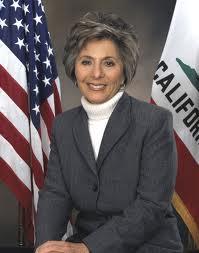
I’m glad Sen. Barbara Boxer, along with Sens. Patty Murray and Jeanne Shaheen, are supporting the Obama administration’s decision to mandate contraceptive coverage at Catholic hospitals. I read the Wall Street Journal editorial denouncing it as an assault on religious freedom, and I think there’s something that is too easily overlooked here.

Religious institutions like the Catholic Church are not just churches these days; they’re major employers and the operators of major health-care facilities that are intertwined with insurance companies. And for a lot of employees and patients, there isn’t any choice.

People who work for the hundreds of nonprofit social-service agencies run by the Catholic Church aren’t necessarily Catholics, or even religious. They might be receptionists, or janitors, or computer systems operators, or counselors who needed a job and happened to get hired by an agency that needed their (secular) skills. Jobs are hard to come by these days; a person who works in an administrative job at a Catholic nonprofit and is trying to pay the rent and support a family may not have the option of simply leaving because she doesn’t agreed with the Church’s position on birth control. She’s got a health plan paid for by her employer, just like most of the rest of us, and if that plan doesn’t cover contraception, she’s SOL. It’s not fair.

My health-insurance plan recently decided not to do business any more with Brown and Toland medical group and instead contract with Hill Physicians. I had nothing to do with that decision, which was based on some financial negotiations around reimbursement rates that were entirely out of my control, part of an ongoing fight between major hospital groups, physician groups and insurance companies that leave patients entirely out of the loop.

So I had to leave the doctor I’d been seeing for many years (who was a member of Brown and Toland and affiliated with the Sutter-owned California Pacific Medical Center) and I was reassigned to a new doctor, who is a member of Hill — and because of economic issues that have nothing to do with religion, my Hill doc is affiliated with Catholic Healthcare West. So now any major medical treatment I need is at St. Mary’s, or St. Francis, or Seton — all excellent hospitals, and I have no complaints. My new doctor is great, and frankly, the medical staff who are part of what happens to be a Catholic Church affiliated hospital chain aren’t a whole lot different from the medical staff at the secular CPMC — skillful, devoted, caring, and so far as I can tell, entirely free of any type of evangelism. I have no idea what, if any, religious affiliation the doctor who patched my broken hand back together last year had; it wasn’t an issue. Who cares?

But still: It’s a Catholic hospital chain. With all the issues that creates. And it’s part of the city’s public-health infrastructure. A lot of us didn’t choose a religious-based medical center; our insurance company did that for us.

Catholic Healthcare West just changed its name to Dignity Health, apparently for marketing reasons (interesting that they chose the name of a longtime group of gay Catholics) but according to the group’s website:

All of our Catholic hospitals, as well as those that may join the system at a later date, will continue to be Catholic and follow the Ethical and Religious Directives for Catholic Health Care Services (ERDs).

Among the rules that guide those ERDs:

First, Catholic health care ministry is rooted in a commitment to promote and defend human dignity; this is the foundation of its concern to respect the sacredness of every human life from the moment of conception until death. … Catholic health care does not offend the rights of individual conscience by refusing to provide or permit medical procedures that are judged morally wrong by the teaching authority of the Church.

I’m all for religious freedom. But under our current healthcare system, a lot of people have no choice as to their employer or their health-care system. And as long as that’s the case, I don’t see why the Church (which has to pay payroll tax on its employees and abide by the state’s employment laws) shouldn’t fall under the same health-insurance rules as everyone else.


Making history: Joanne Griffith’s ‘Redefining Black Power’ project comes to the Bay

0

“Joanne [Griffith]’s work is centered on one theme: not to offer information as a point of journalistic fact, but to act as a conduit for debate and conversation, especially around issues relating to the African diaspora experience.” So writes Brian Shazor, director of the Pacifica Radio Archives, in the foreward to Griffith’s new book Redefining Black Power: Reflections on the State of Black America (City Lights Books, 206pp, $16.95). Griffith will be presenting her work, part of an interactive project to archive the state of African Americans in the United States in the Bay Area this week — starting tonight (Wed/8) at the Museum of the African Diaspora.

This shouldn’t have to be said, but in these times of reductive news media it does: Obama isn’t the only black voice that needs to be heard, during this Black History Month or any other month. Inspired by the archives of progressive African American voice kept by LA’s Pacifica Radio Archives, Griffith — a leading progressive voice herself, having reported on issues from around the African diaspora for the BBC and NPR — transcribes her interviews with leading thoughtmakers for the book, set up as a series of dialogues. Hear from political prisoner Ramona Africa why Obama is “the new crack,” journalist Linn Washington, Jr. on media matters, green jobs leader Van Jones on hybrid activism. The president is used as a theme of the book, but the interviews use him as a lens to look at issues that range far beyond the White House.

Griffith and the other minds behind Redefining Black Power want these interviews to serve as a jumping off point for other unheard voices. Head over to the book’s website and you’ll find directions on how to add your point of view to those of the better-known activists and professionals already immortalized in the Pacifica archives. You can go to one of Griffith’s upcoming readings (details below) for inspiration. Or better yet, read our recent email interview with her and then do that. 

SFBG: Explain where the interviews in the book came from. How did you become acquainted with the Pacifica Radio Archives. Why are they important for people to hear?

JG: The idea for the Redefining Black Power Project, of which the book is part, was born out of the historic audio held in the Pacifica Radio Archives; a national treasure trove of material charting America’s history from a progressive perspective dating back to 1949. Within the collection are key recordings from the civil rights, black power and black freedom movement, including Rosa Parks, Shirley Chisholm, Jesse Jackson, Malcolm X, James Baldwin, Lorraine Hansberry, Dr. Martin Luther King Jr., Bobby Seale, Elaine Brown, and so many others. But it was one recording of Fannie Lou Hamer addressing the 1964 Democratic National Convention that sparked the idea for Redefining Black Power. The director of the Pacifica Radio Archives, Brian DeShazor, heard the tape and wanted to find a permanent way to preserve and share the voices held in the archives with a wider audience, and what better way than through the written word. Brian approached City Lights Books with the idea, and this book is the result, drawing on the voices of history to link us to the election of Barack Obama, one of the most significant moments in the social and political history of the United States. Through this project, we hope to preserve the voices, opinions and perspectives of African-Americans in this so called ‘Age of Obama’ for historians to digest and explore in years to come. 

How did I get involved? As a complete audio nut, I always make a point of visiting local radio stations wherever I travel in the world. Back in 2007, I was in Los Angeles, called KPFK to arrange a visit and was introduced to the Pacifica Radio Archives. Speaking with Brian DeShazor, we came up with an idea to share the historic collection with a UK audience and I’ve been doing this every Sunday evening on BBC Radio 5 Live in the UK for over four years. Because of this work and the extensive list of people I have interviewed over the years, Brian invited me to do the interviews for the Redefining Black Power project. Through this book, we delve into the role of the activist from different perspectives; the legal system, the media, religion, the economy, green politics and emotional justice. All were recorded between September 2009 and August 2011. To be clear though, this book is not an anthology of black leaders speaking on the Obama presidency. This is simply a taster of opinions on the subject, but everyone is encouraged to participate with their thoughts and opinions at www.redefiningblackpower.com and come out to the many events we’re hosting throughout February, including here in the Bay Area at the Museum of African Diaspora from 7 p.m. on Wednesday Feb 8 and at Marcus Books in Oakland with guest panelists Hodari Davis from Youth Speaks and social justice activist Dereca Blackmon on Thursday Feb 9 from 6.30 p.m.

SFBG: Has there been an interview you’ve conducted in which your subject’s answers have deeply surprised you? 

JG: Every interview had its own surprise; from Ramona Africa describing President Obama as ‘the new crack’ and why she refused to vote, to economist Dr. Julianne Malveaux revealing the financially precarious situations many African Americans find themselves in; from high foreclosure rates and high unemployment to the low levels of accumulated wealth for black women. Very sobering statistics. Michelle Alexander, too, the author of The New Jim Crow: Mass Incarceration in the Age of Colorblindness really shocked me when she said that more African American men are currently incarcerated than were enslaved in 1850. 

However, it was Dr Vincent Harding, the man behind Dr. Martin Luther King Jr’s “Beyond Vietnam” speech that surprised me the most. A true veteran of the civil rights movement, he made the point that the election of President Obama was never the goal of the movement; instead he prefers to call the work “the movement for the expansion and deepening of democracy in America.” Put this way, it made me realize more than ever, that the work we do today is not in isolation, but part of a wider movement, stretching back all the way to slavery. And the work isn’t over. 

SFBG: Your introduction ends with a quote from Kanye and Jay-Z’s Watch the Throne album. What role, if any, does hip-hop play in the book?

JG: Hip-hop doesn’t play a role in this book, other than this quote, but it will feature heavily in the next volume of Redefining Black Power which will focus on the reflections of black entertainers, writers, poets and performers on this moment in US history.  

SFBG: What would be the best way the United States could spend Black History Month?

JG: Black history — regardless of whether it is the United States or the UK where I moved from or anywhere else — should be acknowledged daily; this is the only way for us to keep memories alive and never forget where transformative change, like the election of President Obama, comes from. 

Listening to recordings like those held in the Pacifica Radio Archives with our youth would be a great place to start. I spent a couple of days with a group of students in Detroit, sharing the archive material and getting them to discuss their thoughts on the recordings; Audre Laude, James Baldwin, Muhammad Ali, Nelson Mandela, and others. Every one of them said they wished they had heard these voices before. It gave them a context to their own lives that didn’t exist previously, while encouraging them to never give up; too many people have suffered for them to let less than favorable circumstances stop them now. 

SFBG: Who should read this book? How should it be used?

JG: Use it as a conversation starter to discuss issues in your own community. Parents, use it as a way to engage your children in history. Students, use it as a resource for papers on race and the Obama presidency. Most importantly, everyone, share your thoughts at www.redefiningblackpower.com. This book is not the end of the project; we’re only getting started. 

Joanne Griffith’s Redefining Black Power author readings:

Wed/8 7 p.m., free with $10 museum admission

Museum of the African Diaspora

685 Mission, SF

(415) 358-7252

www.moadsf.org


Thu/9 6:30-8 p.m., free

Marcus Books

3900 Martin Luther King Jr. Way, Oakl.

(510) 652-3244

www.marcusbookstores.com


Ellison wins, SF loses

6

EDITORIAL San Francisco’s not going to lose the America’s Cup. Oracle CEO and yachting billionaire Larry Ellison is too excited about the prospect of bringing the sport (and his company’s logo on the sail of his boat) to a mass audience for the first time in history that he’s not about to abandon San Francisco Bay. The process is too far along; that much is a done deal.

But the development agreements for the city’s waterfront is not a done deal at all — in fact, the proposal could wind up giving Ellison effective control over five piers and a valuable waterfront lot that he could develop for condos. And the city won’t get anywhere near enough out of the deal.

The development agreement is really just a sideshow in the cup planning; nobody’s disagreeing that Ellison’s America’s Cup Event Authority will need space to stage the race, and that will require the renovation of some waterfront property. And nobody disputes that the event will bring tourism and revenue to the city, which will offset some of the cost of allowing Ellison rights to the waterfront.

The rest of it is purely a real estate deal: Ellison’s offering to put millions of dollars into renovating crumbling and underused piers, and in exchange the Port of San Francisco — which lacks the money to rebuild the waterfront and has no credible plans for a good part of its property — could give Ellison long-term low-cost leases and development rights on Piers 26, 28, 30-32 and possibly 29, as well as Seawall Lot 330 at Embarcadero and Bryant.

The city’s never been terribly good at cutting tough deals with real-estate developers, and the history of San Francisco is littered with examples of the taxpayers losing out to the speculators and builders. And in the furor of excitement over the America’s Cup, this development agreement could become the latest sellout.

The original projections for the economic impact of the event are looking more and more questionable; it’s entirely possible that San Francisco will wind up with far less than the $1.4 billion in spending and the thousands of jobs that cup promoters have promised. It’s still going to be a big deal, and the city (particularly the hospitality industry) will do well — but it’s not the answer to all of San Francisco’s problems. By the end of 2013, the event will be over — and Ellison will have essentially taken title to a huge amount of public land, for as long as 60 years into the future. And he won’t be paying the city the normal development fees, the normal impact fees, or even reasonable annual rent to the Port.

The supervisors need to put aside the hype around a sailing regatta and look at this for what it is: A real-estate development agreement with one of the world’s richest people. And right now, it’s not a good deal for the city.

Guardian editorial: Ellison wins, San Francisco loses!

3

EDITORIAL San Francisco’s not going to lose the America’s Cup. Oracle CEO and yachting billionaire Larry Ellison is too excited about the prospect of bringing the sport (and his company’s logo on the sail of his boat) to a mass audience for the first time in history that he’s not about to abandon San Francisco Bay. The process is too far along; that much is a done deal.

But the development agreements for the city’s waterfront is not a done deal at all — in fact, the proposal could wind up giving Ellison effective control over five piers and a valuable waterfront lot that he could develop for condos. And the city won’t get anywhere near enough out of the deal.

The development agreement is really just a sideshow in the cup planning; nobody’s arguing that Ellison’s America’s Cup Event Authority will need space to stage the race, and that will require the renovation of some waterfront property. And nobody disputes that the event will bring tourism and revenue to the city, which will offset some of the cost of allowing Ellison rights to the waterfront.

The rest of it is purely a real estate deal: Ellison’s offering to put millions of dollars in to renovating crumbling and underused piers, and in exchange the Port of San Francisco — which lacks the money to rebuild the waterfront and has no credible plans for a good part of its property — will give Ellison long-term low-cost leases and development rights on Piers 26, 28, 30-32 and possibly 29, as well as Seawall Lot 330 at Embarcadero and Bryant.

The city’s never been terribly good at cutting tough deals with real-estate developers, and the history of San Francisco is littered with examples of the taxpayers losing out to the speculators and builders. And in the furor of excitement over the America’s Cup, this development agreement could become the latest sellout.

The original projections for the economic impact of the event are looking more and more questionable; it’s entirely possible that San Francisco will wind up with far less than the $1.4 billion in spending and the thousands of jobs that cup promoters have promised. It’s still going to be a big deal, and the city (particularly the hospitality industry) will do well — but it’s not the answer to all of San Francisco’s problems. By the end of 2013, the event will be over — and Ellison will have essentially taken title to a huge amount of public land, for as long as 60 years into the future. And he won’t be paying the city the normal development fees, the normal impact fees, or even reasonable annual rent to the Port.

The supervisors need to put aside the hype around a sailing regatta and look at this for what it is: A real-estate development agreement with one of the world’s richest people. And right now, it’s a lousy deal for the city.


Some reality about the jobs report

6

The Obama Administration is thrilled with the new employment figures, and it’s clear the president will use this as a key part of his campaign (as long as the recovery keeps going and doesn’t sputter again). The Republicans, of course, are complaining that it’s not enough, that “we could do better,” but that sounds awfully hollow and fits into the narrative that the GOP doesn’t want anything to improve this year because the entire goal of the party is to defeat Obama in the fall.

But really, while it’s encouraging, the new unemployment figures are still bogged down by two things: The labor force is growing faster than the nation is creating jobs — and layoffs in the public sector are still a drag on the recovery.

There’s a pretty good analysis on DailyKos, talking about the labor force issue. But there’s more: Among people without a college education, the jobs picture is still really bleak. Same for people who have been unemployed for a while now and for youth. I could go on and on about the failure of trickle-down spending, but the reality is that the economy is still far too top heavy to all for a real recovery. Income inequality isn’t just a political and moral issue; it’s an economic downer. The U.S. economy depends overwhelmingly on consumer spending, and since all of the new new wealth of the past 20 years has gone to the very rich, most consumers don’t have enough money to spend enough to keep the economy buzzing. And a few new IPOs that make a few more people rich isn’t going to solve the problem.

Note that the one sector of the economy that is still losing jobs is government. That’s a result of low taxes that can’t fund public services (and can’t provide the generally decent unionized jobs, including jobs for people without college degrees, that exist in the public sector).

I was intrigued by the Congressional Budget Office report comparing federal and private-sector workers, which the Republicans (and, I’m sure, some of my beloved trolls on this blog) will use as evidence that government is bloated and public-sector workers are overpaid. But that’s not exactly what the report says:

CBO found that those without a college degree fared better as federal employees, since their pay was 36% higher than that of private-sector employees–particularly when it came to benefits. Those with advanced degrees such as doctorates, however, were generally better off in private industry, strictly from a monetary viewpoint–government pay was 18% lower than that of comparable individuals in the private sector.

In other words, federal pay is a lot more like the private sector used to be, back before the United States became one of the most socially stratifed societies in the developed world. The folks at the bottom do better, and the folks at the top don’t get as rich, and the gap between the highest paid and the lowest paid is a lot smaller.

Which is one reason that Republicans hate public-sector unions and government employment — it’s better for the 99 percent.

America’s cup: What does Larry get?

8

The development agreement for the America’s Cup comes out next week, although the project is already under way. But there’s some concern that the number of visitors (and thus the revenue to the city) might not be as high as projected.

The project EIR is more conservative about the possible number of visitors than city officials had been at first, and now the Bay Citizen reports that “doubts are growing about the number of spectators who will actually come to the city this year and next.” Apparently the prelims in San Diego have been a bit of a bust — and there aren’t as many teams signing up for the challenge.

So here’s the question: If the city winds up taking in less money than expected, does Larry Ellison take a bath, too?

Of course, it’s not that simple: Ellison’s getting a lot from the city, but it’s not based on any revenue the city will get from the cup; it’s based on the investment he’s putting into the port. He’s getting a sweet deal from San Francisco — way too sweet in my mind. The guy’s the sixth-richest person in the world; he doesn’t need all the goodies the city’s handing over, and I’m not sure I want the arrogant, aggressive CEO of Oracle determining the future of a large part of the San Francisco waterfront. But in theory, since he’s renovating property that’s falling apart, he gets something in return.

And, as Jane Sullivan, the spokesperson for the America’s Cup project at City Hall, points out, the fewer the visitors, the lower the city’s costs.

She also told me that “we don’t think the number of competitors will affect the number of visitors,” which is probably true — people will come for the spectacle, and Oracle will hype it beyond imagination, and nobody knows who any of these other teams are anyway. (The one team that might have gotten some press, aside from Oracle, wasn’t allowed to put in an application.)

But here’s the thing: This entire project, and the motivation to give Larry Ellison a bunch of really valuable city property, was the economic impact the cup is supposed to have on the city. The Mayor’s Office has been throwing around numbers like $1.4 billion in economic impact — that’s new jobs, full hotel rooms, packed restaurants, spillover employment benefits — and, of course, more tax revenue to the city coffers.

What it we give away the store to the Oracle pirates and we wind up getting a lot less money than we were hoping for? Nothing against the Cup; I love boats, and I love a big party (although I try to make sure that when the party’s over, I’m not completely broke). But it seems to me that the city’s the only one taking the risk on the downside. Larry gets everything he wants no matter how this all turns out.

We won’t know all the details until we see the agreement, but am I the only one worried about this?


But doubts are growing about the number of spectators who will actually come to the city this year and next to watch the races of experimental catamarans. Preliminary races held on 45-foot vessels in San Diego and elsewhere are failing to attract expected crowds or sponsors.

Source: The Bay Citizen (http://s.tt/15upW)

Our Weekly Picks: February 1-7

0

WEDNESDAY 1

Kapowski

Oakland-based indie pop quartet Kapowski is celebrating the release of its debut album, Boy Detective, with a party at Rickshaw Stop. With influences including George Gershwin, the Velvet Underground, and David Bowie, it’s no wonder Kapowski’s sound seems very much its own unique creation — sort of a dreamy, eerie, dissonant electric piano-driven march. While Thursday marks the release of the band’s debut album, Kapowski’s vibe has been slow cooking since front man and group visionary Jesse Rimler began collaborating with bassist Jon Gondo during middle school. (Mia Sullivan)

With Mwahaha and Bells

8 p.m., $10

Rickshaw Stop

155 Fell, SF

(415) 861-2011

www.rickshawstop.com


THURSDAY 2

Mostly British Film Festival

February is traditionally an uber-boring month for cinemaniacs — but fret not, local film fans: you need not resort to queuing up at the megaplex to weep at Channing Tatum’s romantic troubles. Not only is IndieFest looming (opening night is Feb. 9), but the Mostly British Film Festival — co-presented by the San Francisco Neighborhood Theater Foundation and the California Film Institute — kicks off tonight, with 28 new and vintage films from the U.K. (duh), Ireland, Australia, and South Africa. Highlights include Ken Loach’s latest, political thriller Route Irish; a complete screening of Michael Apted’s “Up” documentary series; and swinging London time capsule Performance (1970). (Cheryl Eddy)

Through Feb. 9, $12.50

Vogue Theatre

3290 Sacramento, SF

Christopher B. Smith Rafael Film Center

1118 Fourth St., San Rafael

www.mostlybritish.org


moe.

There’s nothing quite like seeing a jam show. They tend to involve hours of emphatic lyric shouting, sensual hip swinging, and persistent head nodding. The air smells more like pot than oxygen, lulling you into a stupor that causes you to forget you’ve been expressively swaying to the same song for thirty minutes. While lesser known than Phish and its omnipotent predecessor, the Grateful Dead, moe. has developed a similarly fanatical fan base by producing fun, danceable jams, perfecting the art of improvisation, and consistently engaging audiences at live venues. moe.’s been at it since 1989 and shows no signs of subsiding into irrelevance. Not to be missed. (Sullivan)

Thurs/2-Fri/3, 9 p.m., $30

Independent

628 Divisadero, SF

(415) 771-1421

www.theindependentsf.com


“Elegy”

A beatific child, arms outstretched, rides a polar bear through a snowy landscape. A baby rhinoceros ascends through a pink cloudscape, glowing halo floating above its wrinkly gray ears. A brown-robed Saint Francis gazes upon a bleeding fawn — but, wait a second, what’s that falling space junk in the background? And how’d that toy robot get in there? Menlo Park native David Michael Smith’s drawings and paintings “hearken back in style to elegant Renaissance Madonnas and saints, while simultaneously borrowing images from contemporary pop culture,” according to Dana DeKalb’s essay in the catalogue for “Elegy,” his new solo exhibition. The drawings and paintings, many situated in elaborate frames constructed by the artist, have an effect that’s as calming as it is unsettling. (Eddy)

Through March 17

Reception tonight, 5:30 p.m.-7:30 p.m., free

Scott Richards Contemporary Art

251 Post, Ste. 425, SF

(415) 788-5588

www.srcart.com


Dengue Fever

During a trip to Cambodia in the 1990s, Zac Holtzman became enamored with ’60s Cambodian pop and set out to create a sound that integrated the genre’s powerful female vocals with the psychedelic surf sound of the American ’60s. Enter Dengue Fever — a six-piece rock band whose Cambodian female vocalist, Chhom Nimol, sings in Khmer and English (sometimes in the same song, often wearing something sparkly), while Holtzman puts down a dazed, surf riff reminiscent of “Wipe Out” with his double-necked guitar chapei. Dengue Fever is set to shake the Great American Music Hall on Thursday and Slim’s Friday, to the delight of Bay Area indie pop fusion enthusiasts. (Sullivan)

With Secret Chiefs 3

8:30 p.m., $20–<\d>$44.95

Great American Music Hall

859 O’Farrell, SF

(415) 885-0750

www.gamh.com


FRIDAY 3

“WTF with Marc Maron”

Part comedy discussion and part no holds barred interview program, Marc Maron’s WTF podcast has emerged as can’t miss listening for anyone curious about the thought processes of modern comedians and performers. The stripped-down feel and anything goes attitude of the show has led to some incredibly personal moments — Todd Glass coming out on a recent episode immediately comes to mind — that are respectfully ushered along by Maron’s neurotic but attentive and no bullshit personality. In a special live taping of the show, he’ll be chatting with a handful of eclectic guests that includes political satirist Will Durst, Arden Myrin (Chelsea Lately), and original Saturday Night Live cast member, Laraine Newman. (Landon Moblad)

10:30 p.m., $25

Cobb’s Comedy Club

915 Columbus, SF

(415) 928-4320

www.cobbscomedyclub.com


SATURDAY 4

“Between Me and the Other World”

Dissecting wounds in under-reported aspects of American history has allowed Joanna Haigood to create some of the Bay Area’s most remarkable dance theater works. So there is every reason to look forward to her newest endeavor, “Between Me and the Other World,” which examines W.E.B. Du Bois’ concept of “double-consciousness,” as analyzed in his The Souls of Black Folk. Using the “veil” as a metaphor, Du Bois eloquently explained the fractured state of being imposed on people who are not allowed to be themselves. Written in 1903, his observations have stood the test of time. For “Between” Haigood, in addition to her own dancers, has enlisted first-rate collaborators in Antony Brown for the music and David Slzasa for the design. This is a work in progress showing and includes a post-performance discussion. (Rita Felciano)

2 p.m., free

ODC Theater

3153 17th St., SF

(415) 822-6744

www.zaccho.org


Bob Odenkirk with The Birthday Boys in “Seven-Man Sweater”

Bob Odenkirk (Mr. Show) joins up-and-coming Upright Citizens Brigade troupe The Birthday Boys for two Saturday night performances of “Seven-Man Sweater.” Gaining steam over the past couple years with videos for Funny or Die and writing jobs for the MTV Movie Awards, The Birthday Boys create comedy that successfully blends smart satire and pop culture send-ups. The Los Angeles-based troupe’s style should mesh well with Odenkirk — a legend of the sketch form — in this sure to be hilarious mix of live performance and video shorts. (Moblad)

8 p.m. and 10:30 p.m., $20

Eureka Theatre

215 Jackson, SF

(415) 788-7469

www.sfsketchfest.com


Exodus

In the 1980s, thrash reaffirmed the faster-is-better trajectory of heavy metal that was already developing in the mechanistic speed and rhythm of acts like Judas Priest, replacing the big, rounded tones and psychedelic aftertaste of the ’70s with piston-like riffs and angular dual-guitar leads. Thrash, the supremely-aggro next step in this sequence, exists today as something of a brief and punctual link in the great, forbidding chain of heavy metal, but one whose dogged endurance (see: Slayer) guarantees it a permanent appeal. The show brings together fellow Bay Area thrash legends Possessed, Heathen and Forbidden in a memorial for Paul Baloff, the late vocalist of Exodus, who died 10 years ago. (Tony Papnikolas)

With Mad at Sam, Angerhead, Mudface, Hysteria, Hell Fire, and the Venting Machine

6 p.m., $30

Oakland Metro

630 Third St., Oakl.

(510) 763-1146

www.oaklandmetro.org


SUNDAY 5

Apocalypse Cakes Reading + Eating”

The world is ending soon. Why not eat as much dessert as possible before the inevitable? And why not get into the end-times spirit by whipping up one of Shannon O’Malley’s concoctions from Apocalypse Cakes: Recipes for the End? O’Malley’s book (an offshoot of her tasty and notorious blog) has all the recipes you’ll need to celebrate doomsday, as long as you have a sense of humor: Black Deforestation Cake, Impending Meteorite Rock Candy Cake, Whore of Babylon Fruit Tart, Shifting Poles Pineapple Upside-Down Cake, and, yes, 2012 Mayan Chocolate Cupcakes. Swing by Omnivore Books for a reading and tasting — the countdown is on, so calories totally don’t count. Right? (Eddy)

3 p.m., free

Omnivore Books

3885a Cesar Chavez, SF

www.apocalypsecakes.com


MONDAY 6

Thee Silver Mt Zion

You know how the creation of epic classical music appears to be on the edge of madness, at least, the way it’s depicted in Amadeus (1984)? All ferocious scribblings, and sore hands from tearing furiously into instruments with the passion of a particular set of notes pumping through the veins for hours, days, months. Bloody hands arise, ‘I’ve got it!’ This is how I picture Thee Silver Mt. Zion working. A modern, Canadian, post-punk version of that. Perhaps it’s because of the frequent title reworkings that suggests hyper attention to detail: A Silver Mt. Zion, The Silver Mt. Zion Memorial Orchestra & Tra-La-La Band, Thee Silver Mt. Zion Memorial Orchestra and Tra-La-La Band with Choir and Thee Silver Mountain Reveries. As part of the Godspeed You! Black Emperor collective, the Montreal-based band gained notoriety for its likewise stunning arrangements, droning movements, improvisational jazz style, and punk ethos. With name changes, lineup shifts, and sound tweaks over the past decade, it’s a wonder they’ve yet to collapse. (Emily Savage)

With Matina Roberts

Great American Music Hall

859 O’Farrell, SF

(415) 885-0750

www.gamh.com


TUESDAY 7

Leni Stern and the Masters of African Percussion

When German-born guitarist Leni Stern traveled to Mali in 2005, she met master musician Bassekou Kouyate, and became entranced with the local percussion instruments and style — later releasing albums such as 2007’s Africa and 2010’s Sa Belle Belle Ba, incorporating the West African sound. A lifelong musician (she won Gibson’s Female Jazz Guitarist of the Year award for five consecutive years) and traveler, she was inspired, to the say the least. At Yoshi’s, she’ll play guitar, n’goni ba, and jeli n’goni, alongside Kofo on talking drum, Alioune Faye on djembe, and Mamadou on bass and additional percussion. (Savage)

8pm, $16.

Yoshi’s

1330 Fillmore, SF

(415) 655-5600

www.yoshis.com


The Guardian listings deadline is two weeks prior to our Wednesday publication date. To submit an item for consideration, please include the title of the event, a brief description of the event, date and time, venue name, street address (listing cross streets only isn’t sufficient), city, telephone number readers can call for more information, telephone number for media, and admission costs. Send information to Listings, the Guardian Building, 135 Mississippi St., SF, CA 94107; fax to (415) 487-2506; or e-mail (paste press release into e-mail body — no text attachments, please) to listings@sfbg.com. Digital photos may be submitted in jpeg format; the image must be at least 240 dpi and four inches by six inches in size. We regret we cannot accept listings over the phone.

Two clean energy tracks for SF

1

OPINION CleanPowerSF, San Francisco’s green electricity alternative to Pacific Gas and Electric Co., is set to launch this year. The program is following two parallel paths — one to build renewable energy in San Francisco and create thousands of local jobs, the other to purchase clean power from remote sources from Shell Energy.

While both tracks bring advantages, this bifurcated approach could end up serving only 30 percent of city residents. Fortunately, the city can easily improve the launch of CleanPowerSF by merging the two tracks.

Enacted by the Board of Supervisors and Mayor Gavin Newsom in 2004 and in 2007, CleanPowerSF is not a public-power program like Santa Clara’s Silicon Valley Power or Alameda Municipal Power. CleanPowerSF is a public-private partnership, much like the successful Marin Clean Energy, which can buy power in bulk from outside companies — and also generate its own renewable energy. PG&E still owns the transmission grid and will deliver electricity to customers, who then have the option of choosing between CleanPowerSF and PG&E.

The San Francisco Public Utilities Commission has embarked on a detailed analysis of PG&E electricity data to find out how much electricity is used in different parts of the city at different times of the day and how much it costs. That will pinpoint exactly where in San Francisco renewable energy should be built for the highest efficiency and lowest costs to ratepayers.

While this analysis is being conducted, the SFPUC plans to initiate the second track, offering ratepayers 100% renewable electricity purchased from Shell Energy North America. That will get CleanPowerSF up and running quickly — but would cost ratepayers between $6.70 and $54.50 more a month more than PG&E. As a result, the SFPUC estimates that as many as 70% of ratepayers could leave CleanPowerSF and go back to PG&E.

The SF PUC plans to offer CleanPowerSF to two-thirds of San Francisco customers — 230,000 residences — with as many as 155,000 opting out. Once these people opt out, they won’t be customers of the cheaper, locally produced, job-creating, green energy that will come later.

By comparison, only 20 percent of Marin Clean Energy customers opted out at initial rollout. That’s because Marin Clean Energy offers a 27 percent renewable energy option in addition to a higher-cost 100 percent green option. The “light-green” option is cheaper because it mixes in lower-cost, non-renewable electricity.

The PUC could keep more San Franciscans in CleanPowerSF by integrating the local generation and data analysis and purchasing tracks. First, it could include a cheaper light-green option like Marin’s. To determine what mix of renewable and non-renewable electricity would be cost-competitive with PG&E, the PUC would use the results from the first track, the analysis of electricity usage data, expected this spring. The Board of Supervisors could make these changes when it takes up the Shell contract this month or next.

In the past few months, CleanPowerSF has made much progress thanks to San Francisco Supervisor David Campos and Ed Harrington, general manager of the San Francisco Public Utilities Commission. The addition of a cost-competitive light-green option would enable CleanPowerSF to better compete with PG&E and keep more San Franciscans in the program — for the long term. That would significantly increase the number of new local jobs created and have a greater effect in fighting global climate change. It worked in Marin, and it can work in San Francisco as well..

John Rizzo is former chair of the Sierra Club Bay Area Chapter and current president of the San Francisco Community College Board


Meister: So, what about the state of the unions, Mr. President?

2

By Dick Meister

Dick Meister, former labor editor of the SF Chronicle and KQED-TV Newsroom, has covered labor and politics for more than a half-century. Contact him through his website, www.dickmeister.com, which includes more than 350 of his columns.

Unions? Organized labor? The AFL-CIO? Those words were nowhere to be heard in President Obama’s State of the Union address, despite labor’s vital role in the economy and strong support for Obama. The continued support of the labor movement is essential if the president is to carry out the bold plans he outlined and if he is to be re-elected.

The president’s failure to mention one of the country’s most important economic and political institutions was unfortunate. It was perhaps understandable, however, given the anti-union climate stirred up by attacks on public employee unions and their allies.

Obama’s failure to mention unions and their leaders was ignored in the post-speech pronouncements of AFL-CIO President Richard Trumka and other major unionists. They in fact proclaimed the speech a victory because of its endorsement of policies widely supported by labor.

“It was clear throughout the president’s speech that the era of the one percent is over,” Trumka declared. “We demanded a strong stand on behalf of working families – and the president delivered.”

Trumka cited, in particular, Obama’s promise to thoroughly investigate “misconduct in the mortgage industry that wrecked our economy,” his promise to invest in jobs and infrastructure, and his proposed tax rules that would help the 99 percent.

President Randi Weingarten of the American Federation of Teachers praised Obama for making it clear “that children and our future must be priorities,” and for noting “what America’s teachers have long understood. We can’t test our way to a middle class, we must educate our way to a middle class.”

Praise, too, from President Leo Gerard of the United Steelworkers Union. He singled out Obama’s promise to work “to bring manufacturing back to America.” Gerard said, “The president’s commitment to discourage job outsourcing and promote insourcing is a ticket to a better economy.” It was most welcome news, added Trumka, to the millions of Americans who are unemployed.

President Gerald McEntee of the American Federation of State, County and Municipal Employees described the president’s speech as “a comprehensive plan to move our country forward, bolster job creation and find real solutions for the problems confronting our country.”

McEntee noted that “in today’s political environment, it takes guts to stand strong with working families – even when we make our voices heard, loud and clear, because the toxic influence of money in politics – which the president spoke out against – is powerful.”

So, although Obama made no mention of organized labor in his address, he said much that greatly pleased labor, and made promises to carry out measures high on labor’s economic and political agendas.

As the AFL-CIO’s Trumka declared, Obama showed he “listened to the single mom working two jobs to get by, to the out-of-work construction worker, to the retired factory worker, to the student serving coffee to help pay for college.” The president, in short, “voiced the aspirations and concerns of those who are too often ignored.”

Trumka cited the similarities between Obama’s approach and that of the Occupy Wall Street movement. Like the occupiers, the president is “speaking out forcefully against the staggering increase in inequality” between the one percent and the 99 percent. The president’s speech, Trumka added, demonstrated “a focus on job creation Republican House and Senate leaders should follow.”

It’s clear, certainly, that as long as Obama continues on his current path, he’ll have strong labor support. But should he stray, it’s clear that labor will forcefully remind him of his promises and of the needs of those who work for a living – or who are attempting to work for a living.

Whatever Obama does is certain to be in startling contrast to his Republican predecessor, George W. Bush, one of the most virulently anti-labor presidents in U.S. history. Obama has already rescinded several of Bush’s executive orders that limited the union rights of some workers and has replaced openly anti-labor Bush appointees to labor-related federal agencies, boards and commissions with his openly pro-labor appointees, including Secretary of Labor Hilda Solis.

Imagine Bush, or any of his GOP allies, actually saying, as Obama did, that “we need to level the playing field for workers and the unions that represent their interests because we know you cannot have a strong middle class without a strong labor movement.”

Important words. But they need to be heard – and acted on – by the millions of Americans who know little or nothing of unions and their important position in our economic and political lives.

President Obama failed to take advantage of a great opportunity to explain the true nature of unions and their importance to the country-at-large and make clear the often vicious anti-unionism of his political enemies. He missed a chance to explain the crucial role labor is certain to play in attempts to carry out essential reforms.

Obama needed to speak out forcefully to try to counter the anti-unionism that is limiting the chances of many Americans to find decent jobs at decent pay and a strong voice in workplace and community matters.

Obama missed an important opportunity. But if he stays true to his promises, the president will have plenty of other chances to show the country the true nature of the labor movement and its opponents, to speak out in favor of unions and the importance of their members, leaders and supporters, and to carry out his proposed and much needed reforms designed to help the nation’s working people.

Dick Meister, former labor editor of the SF Chronicle and KQED-TV Newsroom, has covered labor and politics for more than a half-century. Contact him through his website, www.dickmeister.com, which includes more than 350 of his columns.


Mayor Lee’s call for more hearings gets wary reception

41

Labor and the Left came out strongly against Mayor Ed Lee’s proposed charter amendment to require all city legislation be delayed and subjected to hearings by the Small Business Commission and other commissions if it might cost private sector jobs, putting its prospects of making the ballot in doubt.

 “This legislation is one, unnecessary; two, unbalanced; and three, divisive,” Mike Casey, president of the San Francisco Labor Council – whose executive committee voted unanimously to oppose the legislation – said during today’s Rules Committee hearing on the measure.

He and other labor leaders noted that members of the business community have plenty of opportunities to weigh in on legislation it opposes, but Lee’s proposal would elevate employers’ interests far above those concerning the environment, consumers, public health, or workers. “This legislation gives one stakeholder undue power in the democratic process, which is undemocratic,” said Kate Hegé of La Raza Centro Legal, which represents day laborers and other immigrants.

Teacher Ken Tray of United Educators of San Francisco said, “Often times ‘jobs’ is used as a red herring to divert the city from doing what it needs to do.” It was a common theme, as opponents of the proposal noted that paid sick leave, the local minimum wage, and requiring employee health benefits were all fiercely opposed by the business community. “Anything that raises workers up, we’re told it’s a job killer,” said Larry Bradshaw of SEIU Local 1021.

Small business representatives – a bit sheepishly, given the tenor of the hearing, and without support from their downtown brethren – said they were simply looking for the ability to express their concerns. “We’ve tried to let small business have a voice at the Board of Supervisors,” said longtime small business advocate Scott Hauge, a regular at City Hall.
Keith Goldstein of Potrero Dogpatch Merchants Association said, “We feel we don’t have a say in this process.”

Mayor’s Office board liaison Jason Elliott emphasized that Lee’s charter amendment would create a delay and an extra hearing or two, but that supervisors would still be free to approve the legislation anyway. “This is about public participation and feedback,” Elliott said.

But Sup. David Campos, who led the questioning of Elliott, wasn’t buying it. “What’s the reason behind this? Is there a specific reason the Mayor’s Office has decided to do this now and through a charter amendment?” Campos said, probing for instances in which the Mayor’s Office thought the business community hadn’t been heard.

Elliott continued to say it was about emphasizing jobs and taking more public input, but he couldn’t explain what’s lacking currently or what’s muting employers. Campos thanked the Mayor’s Office for being willing to work with supervisors and accept amendments – including many introduced today, which delayed the vote on the measure until next week.
But Campos questioned the need for the legislation, comparing it to the hollow jobs rhetoric from the current field of Republican presidential candidates. “It’s not just the number of jobs you have, it’s the quality of those jobs,” Campos said.

(Side note: the Mayor’s Office issued a press release today celebrating the first two businesses to take advantage of last year’s controversial mid-Market payroll tax exemption, Zendesk and Pearl’s Deluxe Burgers, which created 56 jobs between them. And to help create those great burger joint jobs, Pearl’s got Redevelopment Agency assistance, a low-interest city loan, and an exemption from the payroll tax. For hiring burger flippers that probably make minimum wage. But I digress…)

Campos said that everyone in City Hall wants to see more good jobs in the city, “but I don’t believe this is a constructive approach.” Sup. Jane Kim echoed the sentiment, saying private sector job creation isn’t the only imperative. “Lowering our minimum wage to $3 or $1 an hour would create plenty of jobs in San Francisco,” she said.

Even the more conservative third committee member, Sup. Mark Farrell, said he tends to agree with his committee colleagues and made the motion to continue the item until next week, when its prospects for passage look weak unless Lee can convince them that there’s more to this measure than just political grandstanding.

Can SF follow Berkeley in dumping the big banks?

15

The City of Berkeley is considering dropping its contract with Wells Fargo and moving the city’s money to a credit union or a smaller community bank. That makes perfect sense — the Move Your Money Project has been urging individuals to do that, and there’s no reason why cities (which are huge customers of banking services) can’t do the same.


In fact, San Francisco ought to be next on the list.


This city puts all of its short-term money in Bank of America. It’s a lot of cash — if the city spends more than $6 billion a year, much of that at some point goes into a city account and most of the checks the city issues are paid on that account. We’re talking a plum deal for a big bank — particularly since the city’s checks aren’t going to bounce and the money comes in steadily.


Why B of A? Because the contract is put out to bid, and B of A was able to offer the best deal. But the bidding process didn’t consider the issues that Occupy has brought up — nor did it consider the number of local jobs that could be generated if the city put its money in a local bank that actually makes local loans to small businesses and homeowners instead of foreclosing on people and shipping the profits back to North Carolina every night.


I don’t know if there’s a local credit union or community bank big enough to handle the business of a client the size of San Francisco — but there’s no reason the entire contract has to go to one bank.


Besides, we could always create our own.

America’s Cup moves forward, but economic concerns remain

5

In past weeks, several environmental and community organizations filed two appeals of the Environmental Impact Report (EIR) prepared for the America’s Cup yacht race in 2013.

Jan. 24, the Board of Supervisors rejected the appeal, allowing for construction on the several major projects contained in the America’s Cup proposal to move forward.

But some supervisors say that the many groups with environmental concerns about the America’s Cup brought up important issues, including economic issues that will still need to be addressed.

Organizations involved in the appeals include San Francisco Tomorrow, Telegraph Hill Dwellers, and the Golden Gate Audubon Society.

The biggest concession regards the jumbotron, a giant TV screen that was planned to project the race’s events. The America’s Cup event authority planned to float the jumbotron’s 44-foot wide screen on a 140-foot barge, and anchor it with large concrete blocks, dropped in Aquatic Park. Opponents said that the blocks would stir up potentially toxic sediments and that the whole plan put Aquatic Park, a preferred beach of bay swimmers, at risk of a diesel spill that would have long-term implications for the safety of its swimmers.

After a heated back-and-forth, attorney for the The America’s Cup event authority Mary G. Murphy stated that the Authority would ditch plans for the water-born jumbotron and look into landside options.

President of the Dolphin Club Reuben Hechanova said that the decision on the jumbotron was a clear victory. The club, whose members have been swimming in the cold waters of Aquatic Park since 1877, was vocal in its opposition for plans for the floating TV. Members of the Dolphin Club and their allies had been meeting with city officials for over a year, campaigning against the jumbotron.

Hechanova denied that Dolphin Club members had planned to disrupt the America’s Cup in a swim-in called “Occupy the Bay” if plans for the floating jumbotron proceeded.

“We were always going to continue to work with the governing agencies…we were not going to occupy the bay. The only official spokespersons of the club are the board members,” Hechanova told the Guardian.

Appellants were also concerned about effects on air quality from cruise ship emissions.

The EIR claimed that these air quality issues would be mitigated with a shore-side power source on Pier 70, but appellants questioned the feasibility of these mitigating measures. Michael Martin of the Mayor’s Office on Economic and Workforce Development commented on the issue, stating that since issuing the report the port, along with its shipyard partner, BAE San Francisco Ship Repair, had in fact secured the 5.7 million necessary for the shore-side power project.

Still, several supervisors remained skeptical about the feasibility of paying for all of the mitigating measures crucial to the adequacy and accuracy of the EIR. Supervisors will vote on these and other financial matters associated with the Cup at a Feb. 14 hearing.

“I have questions remaining about finances, about union jobs that will be created for San Franciscans in this project…as well as assuring that there would be no hit to the general fund,” said Supervisor John Avalos at the meeting’s end.

Other environmental concerns, such as impact on sea and shore birds and on neighborhoods adjacent the America’s Cup area, went largely unresolved.

However, in an amendment proposed by Supervisor David Chiu, the Board made clear that they would require additional environmental reviews, including, potentially, more EIRs, for subsequent projects.

Aaron Peskin, former President of the Board of Supervisors and longtime water rights advocate, has been a vocal opponent of many aspects of the America’s Cup. He said these agreements are a step in the right direction.

“I wouldn’t call it a victory, I’d call it a step. It’s a good step,” said Peskin.

After the appeals had been rejected, Campos thanks all parties involved, including the appellants.

“I do believe that the two appeals that have been filed have clearly made this project better, and not only on the environmental piece. I think the appeals have also raised some very important issues about financial terms of this deal,” said Campos.

Occupy and the State of the Union

2

Have all of the Occupy actions made any difference? Gee — I wonder.


I wonder if a president who acted a year ago as if economic justice wasn’t even an issue in this country would have devoted a substantial part of his State of the Union speech to fairness in tax policy. I wonder if he would have said this:


Right now, we’re poised to spend nearly $1 trillion more on what was supposed to be a temporary tax break for the wealthiest 2 percent of Americans. Right now, because of loopholes and shelters in the tax code, a quarter of all millionaires pay lower tax rates than millions of middle-class households. Right now, Warren Buffett pays a lower tax rate than his secretary.


Do we want to keep these tax cuts for the wealthiest Americans? Or do we want to keep our investments in everything else –- like education and medical research; a strong military and care for our veterans?


Or this:


Tax reform should follow the Buffett Rule. If you make more than $1 million a year, you should not pay less than 30 percent in taxes. And my Republican friend Tom Coburn is right: Washington should stop subsidizing millionaires. In fact, if you’re earning a million dollars a year, you shouldn’t get special tax subsidies or deductions. On the other hand, if you make under $250,000 a year, like 98 percent of American families, your taxes shouldn’t go up. You’re the ones struggling with rising costs and stagnant wages. You’re the ones who need relief.


Now, you can call this class warfare all you want. But asking a billionaire to pay at least as much as his secretary in taxes? Most Americans would call that common sense.


or this:


No American company should be able to avoid paying its fair share of taxes by moving jobs and profits overseas. From now on, every multinational company should have to pay a basic minimum tax.


Now: Not saying any of that is going to happen right away, or even that Obama will put tax reform at the top of the agenda. And changing the tax code to charge people like Mitt Romney 30 percent is nowhere near enough; in the 1960s, those people paid 80 percent of their marginal dollars in federal taxes. The Repubs in Congress won’t let any of this happen anyway.


But all of the major newspapers (which a year ago didn’t even know how to spell economic injustice) made his pitch for greater fairness in the economy the lead of their reports and all of the headlines talked about it. And when pollster Stan Greenberg tracked the responses of Democrats, Republicans and independents to the speech, the vast majority were pleased by and agreed with the commments that I cited above. That’s not just 80 percent of the Dems but 70 percent of the GOP voters.


The other thing Obama said — in indirectly — is that government is important. Beyond the flag-waving salute to the troops and the talk about the Navy Seals (Yay! We killed a guy! No arrest, no trial, just summary execution!), Obama was setting the tone for a debate over the role of the public sector in America. He talked about building the Hoover Dam, the Golden Gate Bridge and the interstate highway system. He talked about the importance of public support for research. That’s a direct contradiction to what the Republicans are saying about making government much smaller and less significant in people’s lives. I wonder what happens if the Republican candidate and Obama get out of the platitudes are actually have that discussion this fall.


Of course, he also said the solution to most business problems was tax cuts and incentives, which is not only GOP dogma but silly, since tax cuts for business almost never have the intendent effect. Tax penalties won’t keep companies from moving offshore (although I still support the idea), and tax cuts won’t bring them back.


It’s notable that Obama didn’t mention corporate personhood, which is going to be a huge part of the Occupy agenda this year. And that’s something that could actually change business behavior. Corporate charters are granted by the government — and with a few changes in law, could be revoked by the government, too. Screw your workers, cheat on taxes and move jobs to low-wage non-union areas where children work 14 hours a day making your products? Guess we’ll have to revoke your corporate charter. No more protection for personal liability for the owners and shareholders. Too bad.


And while his populist stuff struck a chord, the energy and environmental policy suggestions were just horrible. Yeah, I’m for ending tax breaks for oil companies — but opening up 75 percent of the potential offshore areas to drilling? Encouraging more natural gas drilling? Not much in the way of serious talk about investing a fraction of that money in renewables?


Oh, and I love this: Obama’s going to force natural gas drillers to “disclose the chemicals they use.” That’s going to keep us safe, yesiree. Thank you, mister driller, for telling me how your poisoning my water. Not that I can do anything about it, of course; you can keep right on going. But now, thanks to our bold president, I know about it.


Occupy the natural gas wells. I’m ready to go.


Legal, not legal

4

caitlin@sfbg.com

HERBWISE It’s been a weird year to start a marijuana column. Shortly after we started Herbwise, which was intended to be our weekly look at marijuana culture and events, politics reared its ugly head, rendering it necessary to go to hearings at the State Building, call up California Assembly members, and occasionally wade through seas of legalese. Such is the state of cannabis under ongoing federal prohibition, but it’s been a particularly dramatic year.

And in some moments, news and culture reporting melded together in the marijuana world. Take, for example, the case of Oakland’s Harborside Health Center, which is often called the largest dispensary in the world (it is certainly the largest in California). After years of painstakingly crafting a working relationship with city government, the business was heavily audited by the IRS. The federal agency decided Harborside — and 40 other California dispensaries — fell under the jurisdiction of Section 280E of the Internal Revenue Code, which denies the right for businesses involved in illegal drug trafficking to claim standard business expenditures. The collective now owes $2.4 million in back taxes, an amount that founder Steve DeAngelo asserts will bankrupt it if his business is forced to pay up.

Despite the ever-growing acceptance of the plant in the United States — a Gallup poll put the number at 50 percent in the fall of 2011 — medical marijuana is under attack by the federal government. Last fall, US Attorney for Northern California Melinda Haag sent out letters to the landlords of roughly a dozen Bay Area dispensaries threatening them with civil forfeiture, or possibly four decades in prison, if they failed to move this “trafficking” off their property within 45 days. The letters targeted dispensaries considered to be in a school zone.

Most left without a fight. In San Francisco, the Tenderloin’s Divinity Tree Patients Wellness Cooperative, the Market Street Collective on Upper Market, and the Mission District’s Medithrive and Mr. Nice Guy were among the businesses that shut their doors, some completely and some to transition into delivery-only services. [UPDATE: Attorney Matt Kumin tells the Guardian that Divinity Tree and Medithrive have filed a “coordinated federal lawsuit” through his office in protestation of the closures]

Fairfax’s sole dispensary, Marin Alliance for Medical Marijuana, was forced to close after 15 years of legal operation overseen by long-time cannabis activist Lynette Shaw. The 7,500-person Marin County berg’s town council passed a resolution supporting the Alliance, which served as a symbol of popular support for legal cannabis in a county beset with some of the highest breast cancer rates in the country.

Assemblymember Tom Ammiano and Sen. Mark Leno have been the most outspoken California politicians in coming out against the federal government’s meddling with the state’s cannabis. At a press conference at San Francisco’s State Building in October 2011, Ammiano announced his frustration that the feds would “upset the will of the people” by curtailing safe patient access. Proud to be an elected gay official, he promised to continue to crusade for an issue that he says disproportionately affects the LGBTQ community.

One of the steps Ammiano took was to meet with Haag to discuss what could be done to assuage her concerns with the industry. “That was very, very disappointing,” Ammiano commented on this initial talk. In a recent phone interview with the Guardian, he remembered that Haag implied that the order was coming from above, from high up in the Obama Administration.

Ammiano doubts her assertion that she had little discretion in the matter. “She said she was only doing what the boss was telling her to do. We had a hard time with that.”

He does think that the Obama Administration is sending its attorneys mixed messages — case in point, US Attorney General Eric Holder’s repeated comments that federal interference in state-legal marijuana operations would be “a low priority.” Ammiano also makes the connection between the attacks on cannabis and the self-sustaining industries behind the War on Drugs. “The DEA, some of the diehards, this is like a jobs program for them,” he said.

His meeting with California Attorney General Kamala Harris went more smoothly. Ammiano says Harris, who voiced cautious support for the industry last fall, was eager for a more comprehensive regulatory system to be put into place, but she supported Proposition 215 — the 1996 measure that legalized medical marijuana in California — on principle.

Faced with an ambiguous future, medical cannabis’ proponents — politicians, activists, entrepreneurs, and patients — are putting forth plans for just such a system. This year will be the playing field for a passel of campaigns to take medical marijuana out of the under-supervised arena in which it’s found itself.

Three ballot initiative campaigns seek to address the issue. Two — Regulate Marijuana Like Wine and Repeal Prohibition — would legalize cannabis use for adults across the board. Another, which has perhaps the most likely chance to succeed in the $2 million process of getting onto the ballot, is being put forth by patient advocacy group Americans for Safe Access, the United Food and Commercial Workers (the union that represents many cannabis workers in California), and marijuana collectives. It’s called the Medical Marijuana Regulation, Control, and Taxation Act.

“We decided to focus on medical because we figured that taking that further step at this point is unwise given the federal government’s actions over the last months,” said attorney George Mull, who is part of the team that proposed the measure. If passed, the initiative would establish a 21-member state regulatory board comprised of doctors, industry folk, patients, activists, government officials, and others. A state supplemental tax on cannabis would be levied and local governments would be required to allow one dispensary per 50,000 residents. Ammiano said that he and Leno were also working on proposing legislation that would provide regulations.

But the future of medical marijuana in California remains somewhat cloudy. “I’m worried that even if we come up with the regulations, the feds will find something else,” said Ammiano. Complicating the matter, the California Supreme Court moved unanimously on Jan. 18 to review the power that cities and counties have to make their own laws concerning cannabis accessibility — plus, it plans to look at the old disconnect between state and federal law on the matter..

So much for the politics of marijuana in 2012. Away from the headlines, it’s plain to see that the plant is increasingly accepted in popular culture. On a local level, East Bay YouTube stoner Coral Reefer continues to tweet to thousands of followers every time she sparks a bowl, and on the national stage, Miley Cyrus admits to smoking “way too much fucking weed,” after seeing the birthday cake friends had gotten her. (It had Bob Marley’s face on it.)

On television, the United States is learning about Harborside’s travails — but not just from the news shows. Discovery Channel shot a season of reality TV following DeAngelo and his staff, telling the stories of patients and about the reality of running a dispensary for a show they entitled Weed Wars even before the final $20 million IRS ruling. As the collective is being persecuted by the feds, its fan base across the country grows.

Will Discovery Channel renew Weed Wars for a second season? Regardless of the network’s views on the protagonists’ profession, if the cameras are kept rolling they’re sure to capture another year of interesting times for California cannabis.


Calvin Trillin: Newt lays into Mitt

0

It’s “pious baloney.” Yes, pious baloney.

What Mitt speaks, Newt says, is remarkably phony:

His citizen pose is all hooey;

He’s hungered for office like Thomas E. Dewey.

And what he was doing those years spent at Bain

Was not create jobs but cause working stiffs pain.

While Newt covers Mitt’s smooth exterior with blotches,

Obama’s campaign staff just carefully watches.

Calvin Trillin: Deadline poet (The Nation 1/30/2012)

Supervisors make the Chamber of Commerce happy

7

You want a sense of what’s happened to politics at City Hall? Here you go: the San Francisco Chamber of Commerce is thrilled.


The Chamber just released its 2011 voting scorecard on the Board of Supervisors (which it calls the “Paychecks and Pink Slips Scorecard,” as if most of the stuff the Chamber supports had anything to do with actual job creation), and guess what? The board is more pro-downtown than it has been in a while:


The 2011 year-end scorecard reveals marked improvement in city’s efforts to create jobs and grow the economy. Overall, the Board of Supervisors received a score of 82 percent (equivalent to a B – grade), up from 60 percent (or a D – grade) in 2010. Individual rankings also improved, with five supervisors increasing their scores by at least 15 percent since last year. In 2011, a solid majority of supervisors voted in favor of jobs, the economy and government efficiency more than 75 percent of the time.


The top performer: Sup. Scott Wiener, who voted with the Chamber 88 percent of the time. Second best: Supervisor David Chiu (82%). The worst (or best, depending how you see downtown’s agenda of low taxes, reduced public services and minimual regulations) was Sup. John Avalos, who scored 56%.


The reality is that some of the Chamber’s key votes were relatively noncontroversial things that everone on the board supported — for example, a law sponsored by Sups. Ross Mirkarimi, Eric Mar, David Campos and Wiener making it easier for small cafes and restaurants to host live music and a measure restricting restaurant waste, both of which passed unanimously. There were some votes where nearly everyone opposed the Chamber — the cell phone disclosure requirements and the ban on yellow pages. And on a couple of them, even Chamber darlings Sean Elsbernd and Mark Farrell were on the wrong side — they voted against a tax exclusion for stock options because they wanted even greater tax reductions.


But on the key votes, you can see where the majority of the board lies: Six, sometimes seven votes with downtown, five, sometimes four with the rest of us. Not exactly a progressive majority.