

A special episode today, featuring Perry Michael Simon of allaccess.com talking about what happens with media, including TV and talk radio, migrates to the web — and the ability of the FCC to regulate everything from obscenity to fairness and public accountability vanishes? Listen to the discussion after the break.
EndOfCensorship by endorsements2010Internet
The ol’ Vic-trola

arts@sfbg.com
SOUND TO SPARE The potential closing of Haight Street’s Red Vic Theater has unsettled me. With one less place to go out and enjoy, what’s a shut-in-prone type like me to do?
Fortunately, when I spoke to Sam Sharkey, one of the co-op’s managing partners, he offered a ray of hope by saying that the Red Vic Movie House is here, organized — it just partnered with the Haight Street Fair and the California Jug Band Association for a benefit — and best of all, still screening movies, some of them music-related.
Let me take a breath for a minute to reflect and appreciate some of the carefully curated films I’ve encountered at this fine establishment. I’ve transcended the mundane through Ziggy Stardust’s gender-bending, screwed-up-eyes stage persona in Ziggy Stardust and the Spiders from Mars. Director D.A. Pennebaker, better known for documenting Bob Dylan in the 1960s, tried his hand at capturing the Bowie in full glam garb during a 1973 tour. Mick Ronson shreds on guitar to undeniably comical proportions. I recall the audience cracking up, something you just don’t get when you’ve opted to Netflix at home.
The less acclaimed — but equally gorgeous — somber sounds of a pop-star- turned-recluse proved to be quite a treat. Scott Walker: 30th Century Man (2006) was one of those films I didn’t know I needed to see, until the rainy day someone sent me a YouTube link to his song “It’s Raining Today.” The opening atmospheric sounds alone on this track are enough to captivate, but as it moves forward into Walker’s commanding crooning voice, you realize that he has the ability to convey dread and beauty at once. The film is a concrete testament to his influence on contemporary musicians.
Later I was given the soundtrack to boxing’s “Rumble in the Jungle,” set in early 1970s Zaire, where a showcase of mostly familiar soul artists pulled off a hugely successful stadium concert. Soul Power (2008) sort of serves as a musical counterpart to 1996’s When We Were Kings, which was the cinematic predecessor dealing with the same Ali vs. George fight. The symbolic implications of the event for African and African American pride are brought to the fore, and the concept of power is examined, whether it is achieved physically, politically or even musically.
Sharkey said that declining attendance was the Red Vic’s main obstacle. Single-screen theaters aren’t as much of a sustainable business anymore, as evidenced by the number that have closed in the last 10 to 20 years. The Castro Theatre and the Roxie in the Mission seem to be surviving, though — I wondered why people weren’t coming out for movies in the Haight anymore. Was it a bad rap from all the sit-lie buzz? Sharkey didn’t seem convinced on that argument, trusting that his patrons wouldn’t buy into that hype. He leaned toward more technology, calling this an age of competition and noting that the accessibility of movies via broadband Internet is just too convenient.
If you’re a music fan who wants to help curb the trend against local establishments falling by the wayside, then the no-brainer is to hit the Red Vic for the following music films. Rock out for the cause — or you may end up drowning in a sea of Whole Foods.
June 26-28, Phil Ochs: There But for Fortune. The unsung 1960s antiwar folksinger (who doesn’t mind taking a backseat to Dylan) gets the full doc treatment.
July 14, The Hippie Temptation. Vintage 1967 footage of the Haight-Ashbury scene in its glorious heyday as seen through the eyes of CBS News. Originally aired on TV, this “hilariously biased” take on flower power should have you craving the street peddlers’ wares immediately after the show.
July 15-16, Stop Making Sense. Classic Talking Heads circa 1984 at L.A.’s Pantages Theatre. Watching a jittery David Byrne working the crowd in his oversized boxy white suit should be worth the price of admission alone.
July 19-20, The Last Waltz. This one’s cool for a couple of reasons. First, it’s directed by Martin Scorsese and, second, it captures The Band’s final show at San Francisco’s old Winterland Ballroom, a place I’ve often dreamed of seeing a show.
Quickies: Short Frameline reviews
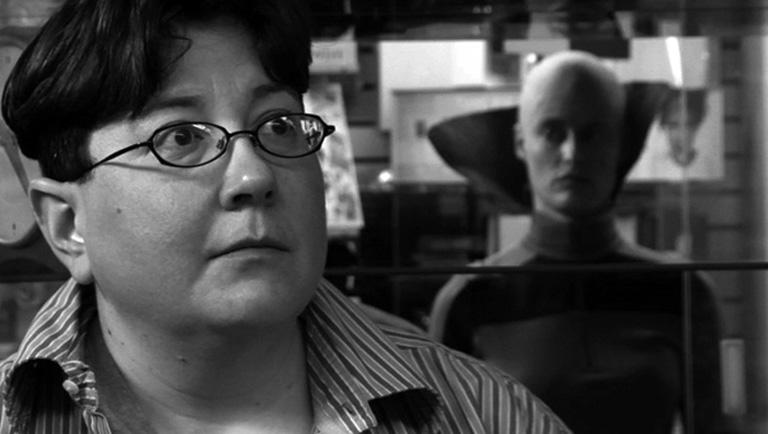
Below are some reviews of films that intrigued us from the upcoming Frameline Film Festival. Check out more of our coverage here.
Codependent Lesbian Space Alien Seeks Same (Madeleine Olnek, U.S., 2011) Who can’t identify with that title? Metaphorically speaking, that is. Although Madeleine Olnek’s B&W feature insists on etaking it quite literally, to pretty hilarious results. Lonely stationery-store clerk Jane (Lisa Haas) tells her shrink she dreamed a close encounter in which a space ship dropped a note her way that read “What are you doing later?” Shortly thereafter, she finds herself the object of amorous pursuit by Zoinx (Susan Ziegler), one of several bald-pated, high Peter Pan-collared exiles from planet Zotz who’ve been dumped in Manhattan to seek “hot Earthling action” and get their hearts broken — because it is believed back home that “big feelings” of love are destroying the ozone. Ergo, guilty citizens must be rendered “numb and apathetic” by off-shore interspecies romance before safely returning. Meanwhile two badly mismatched government operatives (Dennis Davis, Alex Karpovsky) are spying upon the intergalactic love intrigue. Go Fish (1994) meets Plan 9 From Outer Space (1959), at last! June 25, 3:30 p.m., Castro. (Dennis Harvey)
The Evening Dress (Myriam Aziza, France, 2009) Everybody’s crushed on a teacher at some point, and indeed everybody in Helene Solenska’s (Lio) sixth grade French grammar class seems to have a crush on her. Why not: she’s attractive, wears sexy clothing (by classroom standards at least), and addresses the occasional sass with challenging provocation rather than simple discipline. But shy, studious Juliette (Alba Gaia Bellugi) has a crush bordering on obsession, particularly once she misinterprets teach’s attentions toward outgoing male student Antoine (Léo Legrand). You’re never too young to have a nervous breakdown, and our heroine’s increasingly reckless actions threaten to make her a pariah. Myriam Aziza’s feature is in that My Life as a Dog (1985) realm of movies about unpleasant childhoods that aren’t exploitative but at times grow truly discomfiting — it’s a worst case-scenario of pubescent imagination run amuck amid the usual teasing and bullying of peers. It’s a very good film if not an especially pleasant one. June 22, 4 p.m., Castro. (Harvey)
A Few Days of Respite (Amor Hakkar, Algeria and France, 2010) Quiet, bespectacled Moshen and his younger lover Hassan have fled Iran in the hopes of starting a new life together in Paris. They have only each other, and yet, because they lack visas, they must keep their distance while traveling to avoid arousing suspicion. While on a train in southern France, Moshen befriends Yolande, an older widow hungry for companionship who offers him a quick job painting her flat in a nearby small town. He agrees, forcing Hassan to continue hiding out, first in plain sight, and later, unknown to Yolande, in her attic, until tragedy drags everything out into the open. Algerian writer-director Amor Hakkar, who also plays Moshen, has crafted a sparse, intimate drama — emotionally enriched by its muted performances and minimal dialogue — about the lengths we are willing to go for love and the price we must pay in the process. Mon/20, 9:30 p.m., Elmwood; June 22, 9:30 p.m., Castro. (Matt Sussman)
How Are You? (Jannik Splidboel, Denmark, 2011) In the past few years Michael Elmgreen and Ingar Dragset, a Berlin-based artistic duo and romantic couple, have become international art world darlings known for their ambitious, playful, and critical large-scale installations, such as turning an exhibition space into a life-size replica of a New York City subway station or building a Prada pop-up shop in the Southwestern art mecca Marfa, Texas. At only 70 minutes, How Are You? can’t help but be a whirlwind tour, air kissing the bigger issues (commodity fetishism, identity politics, commercialism, and the vexed relationship the art world has to all three) Elmgreen and Dragset’s projects touch on while tracing the duo’s career trajectory all the way to their victory lap at the 2009 Venice Biennale. Brief but solid. Sun/19, 6:30 p.m., Roxie. (Sussman)
L.A. Zombie (Bruce LaBruce, Germany/U.S./France, 2010) If you’re going to see one Bruce LaBruce gay zombie erotic film, don’t make it L.A. Zombie. Alas, the latest from the queer Canadian auteur doesn’t hold up alongside its thematic predecessor, 2008’s Otto; or Up With Dead People. Lacking any of Otto‘s subtlety, L.A. Zombie is all sex, no substance. Sometimes that works: LaBruce’s The Raspberry Reich (2004) doesn’t go light on the porn, and that’s surely one of his best. But L.A. Zombie is lacking on all fronts. It stars noted gay porn actor Francois Sagat as a possible zombie (as in Otto, this is never made clear) who makes it his mission to fuck dead men back to life. Insert endless scenes of the zombie sticking his weird alien cock into gaping wounds and ejaculating blood onto corpses. If you can stomach that sentence, you can handle the film, but what’s the point? LaBruce’s past efforts have all the full-frontal male nudity without sacrificing the humor or cultural commentary. June 23, 9:30 p.m., Victoria. (Louis Peitzman)
Miwa: A Japanese Icon (Pascal-Alex Vincent, France, 2011) Chanteuse, star of stage and screen, outspoken champion of gay rights, drag queen: Akihiro Miwa has worn these many titles on her taxi-yellow, hair-like tiaras since she first rose to prominence as an androgynous torch singer at Tokyo jazz clubs in the 1950s. But it wasn’t until her dazzling star turn as the titular jewel thief in the camp classic Black Lizard (1968) that Miwa became a household name throughout Japan. Despite its clear admiration of its subject, Pascal Alex-Vincent’s documentary gives Miwa the Wikipedia treatment, resulting in a film that shares the unfortunate distinction of being both heartfelt and dull. Even his interviews with the lady herself come off as lusterless. Do yourself a favor, and track down a copy of Black Lizard instead. Mon/20, 1:30 p.m., Castro. (Sussman)
The Mouth of the Wolf (Pietro Marcello, Italy, 2009) This experimental narrative is a mix of archival footage and dramatic vignettes depicting the great love between two unlikely entwined souls who met in prison: ex-hood/longtime jailbird Enzo, a.k.a. Vincenzo Motta), and sometimes drug-addicted transsexual Mary Monaco (who died last year after filming). It’s also a lyrical appreciation of Genoa, the fabled northern Italian seaport that’s experienced tumultuous changes for over two millennia. Pietro Marcello’s unpinnable “docu-fiction” — Motta and Monaco apparently play themselves, a highlight being a 12-minute, nearly unbroken-shot dual interview — is frequently gorgeous cinematic poetry. If you seek the more conventional rewards of prose, you’ll probably be bored. However: anybody looking for Daddy should be informed that Enzo is pretty much the last word in unreconstructed macho-manliness. June 22, 9:30 p.m., Elmwood; June 24, 11 a.m., Castro. (Harvey)
Smut Capital of America (Michael Stabile, U.S., 2010) San Francisco. It’s smutty! You already know that, but do you know how deep-down and dirty it really is, in a historical sense? Basically we invented hardcore pornography in the 1960s (OMG, pubic hair!) and this lively local short, soon to expand to full-length, tells that story through fascinating archival footage, no-punch-pulled interviews with folks like John Waters and pornologist John Karr, and titillating naughty bits. Throughout there’s a feeling that a vital part of the story of sexual liberation, gay and straight, is being unearthed. And the raunchy tales of Polk Street hustlers, sticky-floored cinemas, and buck-wild hippie girls throwing open their golden gates will flood you with San Francisco pride. The short plays as part of the “Only in San Francisco” program with Running in Heels: The Glendon ‘Anna Conda’ Hyde Story and Making Christmas: The View From the Tom and Jerry Christmas Tree. Sun/19, 11 a.m., Victoria. (Marke B.)
Weekend (Andrew Haigh, U.K., 2011) The mumblecore-y movie many of us who lived through the 1990s wish was made back then: all that’s missing is the purposefully retro Cure soundtrack. Two scruffy, hipsterish, actually attractive Brit boys enjoy an ideal weekend fling. There is a fixie involved. Commitment-phobes each — one because he isn’t quite into the gay scene, one because he’s too full-on liberated for relationship gibberish — they gradually and adorably deal with their emotional attraction. By no means is this My Beautiful Launderette, and the melancholy self-regard might come a bit thick (Weekend was a big hit at the SXSW film fest, so … ), but it’s a well-acted, lovely film that examines the state of cute white skinny young bearded gay blokes today. Fri/17, 4:15, Castro. (Marke B.)
Without (Mark Jackson, U.S., 2011) This first feature by Seattle’s Mark Jackson (not to be confused with the Bay Area theater talent) is a stark reading of the psyche of 19-year-old Joslyn (Joslyn Jensen), newly arrived as temporarily caretaker to nearly-vegetative, wheelchair-bound Frank (Ron Carrier) while his kids and grandkids are on vacation. Left with this almost completely helpless charge — requiring butt-wiping, wheelchair-to-bed lifting, and regular transfusions of the Fishing Channel as stimulant — Joslyn seems to wallow in rather than escape her problems. Which appear to consist largely of a lesbian relationship whose gasping breaths we witness in occasional flashback. Isolated by no Internet or cellphone reception, not to mention her own powers of repression, Joslyn gradually looses grip as Jackson’s narrative grows more disturbing and ambiguous. Sat/18, 6:30 p.m., Victoria. (Harvey)
Frameline 35: San Francisco International LGBT Film Festival
June 16–26, most films $9–$15
Castro Theatre, 429 Castro, SF
Rialto Cinemas Elmwood, 2966 College, Berk.
Roxie Theater, 3117 16th St., SF
Victoria Theatre, 2961 16th St., SF
Groupon’s secret
sarah@sfbg.com
A San Francisco-based bus tour operator who relies on the Internet to drum up business has filed a class action suit against Groupon, alleging that the deal-of-the-day website uses false advertising, or bait-and-switch tactics, to get customers to its site.
San Francisco Comprehensive Tours, LLC, which does business as San Francisco Shuttle Tours and Wine Country Tour Shuttle, originally filed suit March 17 in the U.S. District Court, Northern District of California “to stop false and misleading business and advertising acts and practices employed on Google.com by Groupon, Inc.”
In essence, the tour company claims that Groupon is dominating Google searches with offerings for discounted local tours — of, say, Alcatraz — that don’t actually exist.
On April 19, SFCT amended its complaint into a class action suit. The amended suit includes “all persons and entities in the United States who purchased Internet ads with Google for the purpose of advertising local tour company business information and whose tour businesses, including the cost of advertising on Google, have been affected by the false advertisements of Groupon which claim to provide discounted offers for tours but actually provide no such offers.”
Attorneys for Groupon have asked for an extension until June 13 to respond to SFCT’s complaint. Representatives for Groupon told the Guardian they can’t comment on the case.
SFCT’s attorneys claim that Groupon is arguing that this shouldn’t be a class action suit because everyone’s complaint is different.
“They’re spamming the Internet with false advertising that affects everyone’s ability to do business, so this is tailor-made for a class action suit,” said SFCT’s attorney Steve Williams of Cotchett, Pitre & McCarthy in Burlingame. “It’s not easy to take on Groupon now that it has gotten so big and can afford top-notch lawyers.” In other words, it could take a group to take on Groupon.
The suit comes as Groupon, which launched in Chicago in 2008 and now claims to have 70 million subscribers as well as annual revenues of $700 million and an estimated worth of $12.7 billion, prepares to go public. Investors are trying to figure out if Groupon has a sustainable business model.
Last December Groupon fueled speculation that it would offer an initial public offering (IPO) when it rejected Google’s jaw-dropping $5 billion-plus takeover bid. Spurned, Google responded by launching Google Deals, a Groupon clone, in Portland, Ore., this June and announcing plans to expand into San Francisco and other U.S. cities later this year.
But as Forbes magazine noted last August, Groupon founder Andrew Mason has “managed to build the fastest-growing company in Web history.” Groupon’s meteoric rise has been attributed to Mason’s decision to combine a familiar concept with a novel idea: customers only get Groupon’s deeply discounted deals if enough customers pay up in advance for the deal that day.
A BAIT AND SWITCH?
SFCT is accusing Groupon of manipulating ad space that it buys from Google to funnel visitors to its site and collect data about these visitors — while SFCT and other tour companies lose customers and have to spend more money on online advertising.
This isn’t the first time Groupon has been sued since it was launched. But the bulk of those cases revolved around claims that Groupon’s “Daily Deal” gift certificates have illegal expiration dates. By contrast, SFCT’s suit is about Groupon hurting other businesses through manipulating Google’s AdWords program, which is Google’s main advertising program and main source of revenue.
“It’s the means that Groupon uses that is harming legitimate businesses. But they argue that it’s the Internet, it’s all new, and therefore the rules don’t apply,” Williams claimed.
Even though Google has not been sued in this instance, Eric Goldman, an associate professor at Santa Clara University School of Law and director of the school’s High Tech Law Institute, said that much of SCTF’s complaint is as much an indictment of Google’s platform as it is of Groupon’s practices. “Even though Google hasn’t been sued, I wonder if Google has or will make changes to its ad platform in response to the allegations in this complaint,” Goldman said.
Google spokesperson Diana Adair told the Guardian: “Unfortunately, we’re not able to comment.”
Williams claims that Groupon is gaming the algorithm that underpins Google’s AdWords program, which uses a combination of the number of click-throughs to a website, the closeness of an ad’s wording to an Internet user’s search terms, and the amount of money businesses are willing to bid on specific keywords to rank search results on Google.
“Groupon can’t say it’s just an AdWords problem,” Williams said. “It’s a manipulation.”
In its suit, SCTF claims it successfully bid on keywords such as “San Francisco tours,” “Alcatraz tours” and “Napa wine tours” for years. Then, in September 2010, Groupon started bidding on these terms as well — and though it rarely offered any discounted Alcatraz tours, it began to rank high in search results, driving up SFCT’s ad costs.
The suit notes that one time, in response to the keyword “Alcatraz tickets,” Groupon’s ad copy read “Alcatraz tickets — one ridiculously huge coupon a day: Do Alcatraz CA at 50 to 90 percent off.” Groupon’s actual ad that day was for discounted acting lessons.
“But they don’t care because they are trying to direct as many people as they can to their website,” Williams claimed.
Williams said he believes he can show that from the moment Groupon started placing ads for tours it didn’t sell, SFCT has suffered financially. “For someone like the plaintiff who is not about to put out an IPO, the frustration is that Groupon is funneling people into their direct mail campaign to develop huge databases and monitor what people like to buy so Groupon can target those people in future,” he said.
Williams told us he thinks he knows how Groupon will try to defend its strategy. “They’ll probably say that there is nothing wrong with what they are doing because if a business want to attract people to its product, it can talk to them about other products,” he said.
But he doubted they would try to blame it on Google. “Google would say that Groupon is taking advantage of AdWords,” Williams explained.
He sees Groupon’s strategy as a “bait and switch” tactic that’s illegal under the federal Lanham Act and California’s unfair competition and false advertising laws. “If I did this in a newspaper’s classified advertising section, it would be wrong. But the way Groupon looks at it, the normal rules don’t apply because it’s doing this online,” Williams said.
TRUTH IN ADVERTISING
Williams also noted that Groupon hasn’t disclosed all the other lawsuits it’s facing. “They view this as a pesky little thing. But most companies, unless the suits are patently without merit, will err on the side of caution, believing it’s better to disclose than fail to disclose,” he said. “Or maybe they are thinking, ‘Soon we’re going to be making $30 billion, so who cares?'<0x2009>”
Goldman notes that SFCT’s class action adds extra complexity for its lawyers. “Groupon will likely try to prevent the class from forming in addition to attacking the substance of the arguments. This is not a quick-and-easy win for the plaintiffs. In many cases, companies like Groupon decide to settle rather than fight because it’s a costly defense, even if they ultimately win.”
“The starting point of this suit is simple enough, namely that businesses need to tell the truth in advertising,” he said. “The complaint alleges that Groupon wasn’t telling the truth because it says X in its ad but when you get there it says Y, which has nothing to do with X.”
Goldman also predicted that, to the extent that SFCT’s suit is truly about an algorithm problem, it won’t be helpful to Groupon. “But that doesn’t mean the plaintiff will win,” he added, noting that establishing false advertising is tricky.
The plaintiffs will have to establish that their parties are competitive and that their businesses were harmed, Goldman said. He also observed that this particular class action suit points to a broader range of questions about the legitimacy of Groupon’s business practices and problems with Google’s AdWords platform.
Goldman pointed to a lawsuit filed June 7 against Amazon suggesting that Amazon had an algorithmic tool for buying ads and that perhaps the tool had gone awry. In that case, Maxfield, a New York City company that markets and distributes the magnetic desk toys called Buckyballs, alleges that beginning May 5 when people searched online for “Buckyballs,” an ad popped up for Buckyballs at Amazon. But when customers clicked on this ad, they wound up on a website that purports to be a listing for Buckyballs but is actually an ad for Maxfield’s competitors’ products.
Goldman also said there is a growing trend of plaintiff law firms feasting on Internet companies, especially in Silicon Valley. “They are watching for these companies to make a mistake and are pouncing on them. It’s possible that suits are mushrooming into class action suits because someone is looking to get more money,” he said.
But in SFCT’s case, Goldman noted, “the plaintiff’s story makes sense.”
Play the game, preserve the wetlands for your grandkids

Things we like: halting environmentally harmful development projects, healthy waterways, online timesucks, and free booze. So Save The Bay, thanks bunches for your new fundraising Internet game — but in the future, thanksmuch for staying out of our heads, regardless of the potential benefits of whatever mind reading technology you’ve got your benevolent little mitts on.
At the risk of revealing the pathway to our sasstivist hearts, meet Battle for the Bay. It’s Save The Bay’s newest gizmo, giving water-loving point-and-clickers the chance to journey from the 1960s (when the bay advocacy group was founded) to present day times, all the while besting historically accurate environmental menaces to our local lands, from David Rockefeller’s 1970s bid to level the San Bruno Mountains and create a Manhattanized version of the San Mateo County shoreline, to the Costco Busan spill, to Cargill’s current ploy to transform 1,436 acres of Redwood City salt ponds to suit its freaky agribusiness needs. (Coincidentally, Save The Bay is not in favor of this plan.)

You’ll never get your stubby fingers on Bair Island, 1980s Mobil man!
And it’s not just an opportunity to crusade against cartoonized powers that be! Trivia questions give you a chance to brush up on your ephemeral wisdom of the Bay Area (from brothel main drags to historical transportation lines), and there are prizes: the Bay city with the most players will win a free happy hour at a watering hole in their ‘hood.
Genius. “We worked with Free Range Studios to design the game,” says Cara Longpre, online communications manager at Save the Bay. “We heart them.” (You’ll heart them too after watching The Meatrix, the company’s viral video hit from 2003).
Other people Longpre hearts: George A. Miller and Janet McKinley, two longtime Save The Bay members who’ve agreed to front up to $10,000 in $1 increments each time you (you!) click over to the site to defeat the evil Pete Wilson beast.
So quick, go! We’ve already lost 90 percent of our tidal marsh to development. And we want our free happy hour, dammit. Longpre told us not to count our chickens before we hatch on that one, but hey, we know some people in the media.
Stage Listings
Stage listings are compiled by Guardian staff. Performance times may change; call venues to confirm. Reviewers are Robert Avila, Rita Felciano, and Nicole Gluckstern. Submit items for the listings at listings@sfbg.com. For further information on how to submit items for the listings, see Picks.
THEATER
OPENING
Assisted Living: The Musical Imperial Palace, 818 Washington, SF; 1-888-88-LAUGH, www.assistedlivingthemusical.com. $79.59-99.50 (includes dim sum). Opens Sat/18. Runs Sat-Sun, noon (also Sun, 5pm). Through July 31. Rick Compton and Betsy Bennett’s comedy takes on “the pleasures and perils of later life.”
Indulgences in the Louisville Harem Phoenix Theatre, 414 Mason, SF; 1-800-838-3006, www.offbroadwaywest.org. $20-40. Opens Thurs/17, 8pm. Runs Thurs-Sat, 8pm. Through July 30. Two spinster sisters find unlikely beaux in Off Broadway West Theatre’s production of John Orlock’s play.
ONGOING
All Atheists Are Muslim Stage Werx, 533 Sutter, SF; www.brownpapertickets.com. $20. Runs Sun, 7pm. Through July 10. Zahra Noorbakhsh returns with her timely comedy.
Assassins Eureka Theatre, 215 Jackson, SF; www.roltheatre.com. $20-36. Thurs-Sat, 8pm (also Sat, 2pm); Sun, 2pm. Through June 25. Whether the world truly needed a Sondheim musical about the joys of political assassination or not is debatable, but as long as there is one it might as well go for the gusto. Brought to you by Ray of Light Theatre, the folks behind last year’s production of Jerry Springer the Opera, Assassins imbues society’s greatest misfits with quirky relatability. From Joel Roster’s hangdog portrayal of Leon Czolgosz (McKinley’s assassin) to Lisa-Marie Newton’s frazzled Sara Jane Moore (attempted to off Ford), Danny Cozart’s foul-mouthed, Santa Claus-suited, Samuel Byck (out for Nixon) to Gregory Sottolano’s loopy Charles Guiteau (bagged Garfield), the solid cast examines the assassination impulse in a breezy, borderline goofy manner. The production takes a more somber tone when Lee Harvey Oswald (Michael Scott Wells) takes the stage, encouraged by John Wilkes Booth (Derrick Silva) to turn a presumptive suicide attempt into one of assassination, while the other assassins beg him to legitimize their dark impulse through his action. The pacing works best when at its most frenetic, though Silva’s Booth, a pokerfaced elder statesman, lends an air of balancing gravitas. But the true stars of the show might well be the ultra-tight, eight-person house band playing a wide variety of American musical styles from the last 150 years, confidently directed by David Möschler.(Nicole Gluckstern) *Blue Man Group Golden Gate Theatre, 1 Taylor, SF; www.tickets.shnsf.com. $50-200. Wed/15-Sat/18, 8pm (also Sat/18, 2pm); Sun/19, 2pm. Jaw-slackening feats of circus skill combine with elaborate otherworldly percussion, subtle fresh-off-the-spaceship clowning, and of course lots of blue body paint in the updated version of the long-running now internationally strewn multi-group Blue Man Group. Mutatis mutandis, it’s a two decades–old formula. But its driving, eyeball-popping musical spectacle and wry, deft way with mass culture send-ups and (albeit rather pushy) audience participation can’t help but entertain. (Avila)
Fighting Mac! Thick House Theatre, 1695 18th St, SF; 1-800-838-3006, www.therhino.org. $15-30. Wed/15-Sat/18, 8pm; Sun/19, 3pm. Theatre Rhinoceros performs John Fisher’s play about real-life queer British general Hector MacDonald.
“Fury Factory 2011” Various venues and prices; www.brownpapertickets.com. Through July 12. Over 30 Bay Area and national companies participate in this bi-annual theater festival.
*Little Shop of Horrors Boxcar Theatre Playhouse. 505 Natoma; www.boxcartheatre.org. $20-50. Tues-Sat, 8pm; Sun, 2pm. Through June 26. From the moment the irritable Mr. Mushnik (Alex Shafer) chases his temp clerk (Amy Lizardo) out the lobby door and onto the street for the opening number, it’s clear that Boxcar Theatre’s production of Little Shop of Horrors is going to be unique. Boasting an energetic cast, an ingenious set, a few updated lyrics, and a marvelously menacing man-eating plant, Little Shop is engaging enough to distract from the somewhat awkwardly-mixed wireless mikes, and the fact that the doo-wop trio (Nikki Arias, Lauren Spencer, and Kelly Sanchez), though each individually blessed with awesome pipes, don’t always vocally blend well together. But they play their streetwise characters to a tough and tender T, while the awkwardly schlubby Seymour Kleborn (John R. Lewis) and his battered muse Audrey (Bryn Laux) tend Seymour’s mysterious botanical discovery and their burgeoning love affair with real sweetness. Everyone’s favorite badass dentist is played to sadistic perfection by Kevin Clarke, who rolls up Natoma Street on an actual motorcycle, while the able chorus morphs from skid row bums to cynical ad execs without missing a musical beat. As usual, Boxcar Theatre’s design team is a strong one, particularly in the case of puppet designers Greg Frisbee and Thomas John, whose trio of Audrey Jrs. are superbly executed. (Gluckstern)
Much Ado About Lebowski Cellspace, 2050 Bryant, SF; www.sfindie.com. $25. Fri-Sun, 8pm. Through June 28. SF IndieFest and the Primitive Screwheads perform a Shakespeare-inflected take on the Coen Brothers’ classic film.
The Pride New Conservatory Theatre Center, 25 Van Ness, SF; (415) 861-8972, www.nctcsf.org. $24-40. Wed-Sat, 8pm; Sun, 2pm. Through July 10. New Conservatory Theatre Center performs the West Coast premiere of Alexi Kaye Campbell’s love-triangle time warp drama.
Risk is This…The Cutting Ball New Experimental Plays Festival EXIT on Taylor, 227 Taylor; (800) 838-3006, www.cuttingball.com. Free. Fri-Sat, 8pm. Through June 25. Cutting Ball Theater closes its 11th season with a festival of experimental plays, including works by Eugenie Chan, Rob Melrose, and Annie Elias.
The Stops New Conservatory Theatre Center, 25 Van Ness; 861-8972, www.nctcsf.org. $24-40. Wed-Sat, 8pm; Sun, 2pm. Through June 25. New Conservatory Theater Center presents a musical comedy set in San Francisco.
A Streetcar Named Desire Actors Theatre, 855 Bush; 345-1287, www.actorstheatresf.org. $26-38. Wed-Sat, 8pm. Through June 25. Actors Theatre of San Francisco presents the Tennessee Williams tale.
*Vice Palace: The Last Cockettes Musical Thrillpeddlers’ Hypnodrome, 575 10th St; (800) 838-3006, www.brownpapertickets.com. $30-35. Fri-Sat, 8pm; Sun, 7pm. Through July 31. Hot on the high heels of a 22-month run of Pearls Over Shanghai, the Thrillpeddlers are continuing their Theatre of the Ridiculous revival with a tits-up, balls-out production of the Cockettes’ last musical, Vice Palace. Loosely based on the terrifyingly grim “Masque of the Red Death” by Edgar Allan Poe, part of the thrill of Palace is the way that it weds the campy drag-glamour of Pearls Over Shanghai with the Thrillpeddlers’ signature Grand Guignol aesthetic. From an opening number set on a plague-stricken street (“There’s Blood on Your Face”) to a charming little cabaret about Caligula, staged with live assassinations, an undercurrent of darkness runs like blood beneath the shameless slapstick of the thinly-plotted revue. As plague-obsessed hostess Divina (Leigh Crow) and her right-hand “gal” Bella (Eric Tyson Wertz) try to distract a group of stir-crazy socialites from the dangers outside the villa walls, the entertainments range from silly to salacious: a suggestively-sung song about camel’s humps, the wistful ballad “Just a Lonely Little Turd,” a truly unexpected Rite of Spring-style dance number entitled “Flesh Ballet.” Sumptuously costumed by Kara Emry, cleverly lit by Nicholas Torre, accompanied by songwriter/lyricist (and original Cockette) Scrumbly Koldewyn, and anchored by a core of Thrillpeddler regulars, Palace is one nice vice. (Gluckstern)
Wish We Were Here New Conservatory Theatre Center, 25 Van Ness, SF; (415) 861-8972, www.nctcsf.org. $20-32. Thurs-Sat, 8pm; Sun, 2pm. Through June 25. Slacker meets genie in this Michael Phillis comedy.
BAY AREA
Care of Trees Ashby Stage, 1901 Ashby, Berk; (510) 841-6500, www.shotgunplayers.org. $17-26. Thurs-Sat, 8pm; Sun, 5pm. Through June 26. E. Hunter Spreen’s Care of Trees, which is receiving an inventively bold world premiere production in Shotgun’s capable hands is at once ambitious yet unsatisfying. The basic plot — “girl meets boy then turns into a tree &ldots; sort of” — is a quirky premise full of untapped potential. With so many possible interpretations of Georgia’s (Liz Sklar) unique predicament, the one that seems most predominant is an unwitting critique of the banality of the self-realization movement. “If I don’t do &ldots; what I see as right, then I’ll be lost to myself,” she tells her understandably frustrated husband Travis (Patrick Russell), as she abruptly shuts off her empathy-meter and bids him to do the same. During isolated pockets of dramatic tension, Georgia is stabbed in an altercation with a tree-hugger, suffers a series of violent seizures, is shuttled off to a battery of clueless doctors, and granted an audience with a Peruvian shaman, yet the underlying significance of actually turning into a tree, is barely explored, certainly never understood. Sklar and Russell turn in standout performances as the forest-crossed lovers, and the canopy of Nina Ball’s inventive set soars, but overall this Tree could stand to develop some stronger roots. (Gluckstern)
Distracted 529 South Second St, San Jose; (408) 295-4200, www.cltc.org. $15-35. Thurs/16-Sat/18, 8pm; Sun/19, 2pm. City Lights Theater Company of San Jose presents a drama written by Lisa Loomer and directed by Lisa Mallette.
East 14th: True Tales of a Reluctant Player Marsh Berkeley, 2120 Allston, Berk; www.themarsh.org. $20-50. Sat, 8:30pm; Sun, 7pm. Through Aug. 7. Don Reed’s hit solo comedy receives one last extension before Reed debuts his new show (a sequel to East 14th) in the fall.
Edward Albee’s Tiny Alice Marin Theatre Company, 397 Miller, Mill Valley; (415) 388-5208, www.marintheatre.org. $32-53. Tues, Thurs-Sat, 8pm (also Thurs/16, 1pm; June 25, 2pm); Wed and Sun, 7:30pm (also Sun, 2pm). Through June 26. Marin Theatre Company performs Albee’s most divisive play, an erotic thriller-cum-comic allegory.
Let Me Down Easy Berkeley Repertory Theatre, Roda Theatre, 2015 Addison, Berk; (510) 647-2949, www.berkeleyrep.org. $17-73. Tues and Thurs-Sat, 8pm (also Sat, 2pm); Wed, 7pm; Sun, 2pm. Through June 26. Anna Deavere Smith performs her latest solo show.
Metamorphosis Aurora Theatre, 2081 Addison, Berk; (510) 843-4822, www.auroratheatre.org. $10-55. Previews Wed/15, 8pm. Opens Thurs/16, 8pm. Runs Tues, 7pm; Wed-Sat, 8pm; Sun, 2 and 7pm. Through July 17. Aurora Theatre Company performs a terrifying yet comic adaptation of Kafka’s classic by David Farr and Gísli Örn Gardarsson.
[title of show] TheatreWorks at the Mountain View Center for the Performing Arts, 500 Castro, Mtn View; (650) 463-1960, www.theatreworks.org. $24-42. Tues-Wed, 7:30pm; Thurs-Sat, 8pm (also Sat, 2pm); Sun, 2 and 7pm. Through June 26. TheatreWorks performs a new musical about musicals by Hunter Bell and Jeff Bowen.
*Welcome Home, Julie Sutter Marion E. Greene Black Box Theater, 531 19th St, Oakl; www.theatrefirst.com. $10-30. Thurs/16-Sat/18, 8pm; Sun/19, 2pm. On her first day back from Iraq, African American Marine, mother, and amputee Jenny Sutter (a pensive, quietly affecting Omoze Idehenre) sits in Beckett-like stasis at a bus depot operated by a wound-up cockroach-crazed attendant (Joe Estlack), until a chatty middle-aged woman named Louise (Nancy Carlin), recovering from addiction to everything, convinces her to come to Slab City. The off-the-grid settlement of semi-permanent campers and kooks on the desert edge of Los Angeles turns out to have once been a Marine base, much to the dismay of traumatized and anguished Jenny, who can’t work up the courage to answer the cell phone calls from her mother and children, let alone return to them. A physically handicapped internet-certified preacher (Brett David Williams) meanwhile takes it upon himself to help Jenny, with assistance from sometime girlfriend and recidivist Louise and a local soi-disant shrink (Karol Strempke). They throw a public coming-home ceremony for the cast-off vet. It’s Slab City’s socially awkward and pugnacious jewelry maker Donald (a sharp Jon Tracy) who challenges the militarism and religious pabulum in this enterprise, even as he finds himself irresistibly drawn to the deeply wounded Jenny. Nevertheless, playwright Julie Marie Myatt’s involving story (smoothly and engagingly directed for TheatreFIRST by Domenique Lozano) carries a real if not quite heavy-handed spiritual dimension, peppered with traditional gospel tunes (heard in Johnny cash recordings during scene transitions but echoed by cast members at other times) and undergirded by doubting Jenny’s unconscious quest for signs of a seemingly absent Christian god. What she finds is a community of equally messed up but compassionate souls, and that’s enough. (Avila)
PERFORMANCE/DANCE
Epiphany Productions Sonic Dance Theater ODC Theater, 3153 17th St, SF; (415) 863-9834, www.odctheatre.org. Fri-Sat, 8pm; Sun, 7pm. $15-20. The company performs its 2011 home season, with Heelomali, Alonesome/Twosome, and Solo Lo Que Fue.
“Fauxgirls!” Kimo’s, 1351 Polk, SF; (415) 885-4535. Sat, 10pm. Free. The drag revue celebrates its 10th anniversary with Victoria Secret, Chanel, Davida Ashton, and more.
“Fresh Meat Festival” Z Space at Theater Artaud, 450 Florida, SF; www.freshmeatproductions.org. Thurs-Sat, 8pm; Sun, 7pm. $15-20. Transgender and queer performers take the stage at this 10th annual festival.
“Garage All-Stars II” Garage, 975 Howard, SF; www.975howard.com. Sat-Sun, 8pm, $10-20. Part of the National Queer Arts Festival, this performance includes new choreography by Sara Yassky and Tim Rubel Human Shakes.
“Here: An Evening of Work by Katherine Kawthorne” Shotwell Studios, 3252-A 19th St, SF; (415) 298-2000, www.ftloose.org. Fri-Sat, 8pm, $10-15. Multimedia dance works including Living Line, Sferic, and Lumen.
kDub Dance CounterPULSE, 1310 Mission, SF; 1-800-838-3006, www.counterpulse.org. Fri-Sat, 8pm. $16-20. The Los Angeles company makes its SF debut with the evening-length dance work Fruit.
“Radar Spectacle” Verdi Club, 2424 Mariposa, SF; www.brownpapertickets.com. Fri, 7pm. $10-100. Support the 2011 Radar LAB Writers’ Retreat by checking out this event, with performances by Cintra Wilson, Fauxnique, Keith Hennessy, Lovewarz, Lil Miss Hot Mess, and more.
San Francisco Ethnic Dance Festival Yerba Buena Center for the Arts, 701 Mission, SF; (415) 978-2787, www.ybca.org. Sat, noon; Sun, 1pm. Free-$24. The third weekend of the 33rd annual festival includes events celebrating the Rumson Ohlone tribe plus dance set to the words of transcendent poets.
“Trouble In Mind” Zeum Theatre, 221 Fourth St., SF; (415) 474-8800. Mon, 8pm, $30. The Lorraine Hansberry Theatre benefits from this staged reading of Alice Childress’ play, with Peter Coyote, Geoff Hoyle, Margo Hall, and others.
New album review! EMA!

EMA
Past Life Martyred Saints
In a recent post on her blog – “lookit that came outta nowhere”, still humbly hosted on WordPress – Erika M. Anderson shares a letter she received from a soldier. “I want to live but i don’t mind dying at the same time / I feel like you and me are the same in that way / Two misfits like two submarines in the sky.” The lines possess some of the quiet force of Anderson’s music, though her lyrics are more firmly rooted in the body: mishaps with men, throw up, a butterfly knife. Anderson wears her initials on a big gold chain for the album art of Past Life Martyred Saints, and as an artist she goes by EMA.
That “misfit extending a hand” vibe is one that Anderson nurtures throughout her solo-debut and Internet presence. Online, she describes growing up “in the dive bars and rotten graveyards of South Dakota” and then fleeing to the West Coast. One song in, and she’s ready to proclaim: “Fuck California, you made me boring.” It’s the most memorable line on the album and one that introduces Anderson’s steady, chanting voice and droning electric guitar.
Listening to Past Life Martyred Saints is like taking that cross-country road trip with Anderson. Though most of the album’s songs run less than four minutes long, they roll with slow shifts in tone as a lamenting Anderson bumps into another stray voice, instrument, or clamoring industrial sound. Odd turns of phrase crop up like eerie landmarks among long stretches of repetition (“Mama’s in the bedroom, don’t you stop” eight times, followed by seven rounds of “you feel just like a breeze to me…”).
Anderson said she “wanted to make a piece that changes fidelity in the middle of the song, from lo-fi to hi-fi,” specifically on opener “Grey Ship.” These cycling crescendos and transitions yield the album’s best moments as she gracefully molds expanses of white space. It’s as if someone threw the xx off a cliff, and Erika M. Anderson got up, dusted herself off and picked up a guitar. (David Getman)
Stage Listings
Stage listings are compiled by Guardian staff. Performance times may change; call venues to confirm. Reviewers are Robert Avila, Rita Felciano, and Nicole Gluckstern. Submit items for the listings at listings@sfbg.com. For further information on how to submit items for the listings, see Picks.
THEATER
OPENING
Wish We Were Here New Conservatory Theatre Center, 25 Van Ness, SF; (415) 861-8972, www.nctcsf.org. $20-32. Previews Thurs/9, 8pm. Opens Fri/10, 8pm. Runs Thurs-Sat, 8pm; Sun, 2pm. Through June 25. Slacker meets genie in this Michael Phillis comedy.
BAY AREA
Metamorphosis Aurora Theatre, 2081 Addison, Berk; (510) 843-4822, www.auroratheatre.org. $10-55. Previews Fri/10-Sat/11 and June 15, 8pm; Sun/12, 2pm; Tues/14, 7pm. Opens June 16, 8pm. Runs Tues, 7pm; Wed-Sat, 8pm; Sun, 2 and 7pm. Through July 17. Aurora Theatre Company performs a terrifying yet comic adaptation of Kafka’s classic by David Farr and Gísli Örn Gardarsson.
ONGOING
All Atheists Are Muslim Stage Werx, 533 Sutter, SF; www.brownpapertickets.com. $20. Runs Sun, 7pm. Through July 10. Zahra Noorbakhsh returns with her timely comedy.
Assassins Eureka Theatre, 215 Jackson, SF; www.roltheatre.com. $20-36. Thurs-Sat, 8pm (also Sat, 2pm); Sun, 2pm. Through June 25. Ray of Light Theatre performs the Sondheim musical.
*Blue Man Group Golden Gate Theatre, 1 Taylor, SF; www.tickets.shnsf.com. $50-200. Tues-Sat, 8pm (also Sat, 2pm); Sun, 2pm. Through June 19. Jaw-slackening feats of circus skill combine with elaborate otherworldly percussion, subtle fresh-off-the-spaceship clowning, and of course lots of blue body paint in the updated version of the long-running now internationally strewn multi-group Blue Man Group. Mutatis mutandis, it’s a two decades–old formula. But its driving, eyeball-popping musical spectacle and wry, deft way with mass culture send-ups and (albeit rather pushy) audience participation can’t help but entertain. (Avila)
Fighting Mac! Thick House Theatre, 1695 18th St, SF; 1-800-838-3006, www.therhino.org. $15-30. Opens Fri/10, 8pm. Runs Wed-Sat, 8pm; Sun, 3pm. Through June 19. Theatre Rhinoceros performs John Fisher’s play about real-life queer British general Hector MacDonald.
“Fury Factory 2011” Various venues and prices; www.brownpapertickets.com. Through July 12. Over 30 Bay Area and national companies participate in this bi-annual theater festival.
*Little Shop of Horrors Boxcar Theatre Playhouse. 505 Natoma; www.boxcartheatre.org. $20-50. Tues-Sat, 8pm; Sun, 2pm. Through June 26. From the moment the irritable Mr. Mushnik (Alex Shafer) chases his temp clerk (Amy Lizardo) out the lobby door and onto the street for the opening number, it’s clear that Boxcar Theatre’s production of Little Shop of Horrors is going to be unique. Boasting an energetic cast, an ingenious set, a few updated lyrics, and a marvelously menacing man-eating plant, Little Shop is engaging enough to distract from the somewhat awkwardly-mixed wireless mikes, and the fact that the doo-wop trio (Nikki Arias, Lauren Spencer, and Kelly Sanchez), though each individually blessed with awesome pipes, don’t always vocally blend well together. But they play their streetwise characters to a tough and tender T, while the awkwardly schlubby Seymour Kleborn (John R. Lewis) and his battered muse Audrey (Bryn Laux) tend Seymour’s mysterious botanical discovery and their burgeoning love affair with real sweetness. Everyone’s favorite badass dentist is played to sadistic perfection by Kevin Clarke, who rolls up Natoma Street on an actual motorcycle, while the able chorus morphs from skid row bums to cynical ad execs without missing a musical beat. As usual, Boxcar Theatre’s design team is a strong one, particularly in the case of puppet designers Greg Frisbee and Thomas John, whose trio of Audrey Jrs. are superbly executed. (Gluckstern)
Much Ado About Lebowski Cellspace, 2050 Bryant, SF; www.sfindie.com. $25. Fri-Sun, 8pm. Through June 28. SF IndieFest and the Primitive Screwheads perform a Shakespeare-inflected take on the Coen Brothers’ classic film.
Nobody Move Intersection for the Arts, 925 Mission, Golden Gate; 626-2787, www.brownpapertickets.com. $20-35. Thurs/9-Sat/11, 8pm; Sun/12, 3pm. Intersection for the Arts and Campo Santo present a play based on the novel by Denis Johnson.
The Pride New Conservatory Theatre Center, 25 Van Ness, SF; (415) 861-8972, www.nctcsf.org. $24-40. Wed-Sat, 8pm; Sun, 2pm. Through July 10. New Conservatory Theatre Center performs the West Coast premiere of Alexi Kaye Campbell’s love-triangle time warp drama.
Reborning SF Playhouse, 533 Sutter; 677-9596. www.sfplayhouse.org. Wed/8, 7pm; Thurs/9-Sat/11, 8pm (also Sat/11, 3pm). Though emphatically fictional, Zayd Dohrn’s play Reborning, currently receiving its world premiere at the SF Playhouse, provides an intriguing introduction to a decidedly fringe occupation. That of reborning: the art of crafting photo-realistic doll children commissioned by collectors, and sometimes by grieving parents. The play opens with an act of creation, as Kelly (Lauren English) tidies up a closed eye with a sculptor’s blade while a joint burns in the ashtray beside her. Enter Lorri Holt as Emily, a crisp, efficient businesswoman, and a client, come to check on the progress of her “baby” Eva. Things start to go South when Emily suggests some modifications and Kelly’s own obsession with the project eventually spirals out of control. Amiable foil, Alexander Alioto as Kelly’s boyfriend Daizy, exudes eager, golden retriever-like loyalty, but as Emily coolly observes, has “nothing to offer someone who is drowning.” All three actors are top-notch and do a fine job processing thoroughly uncomfortable moments, and the crack design team set the stage and mood precisely. Unfortunately the script itself skews towards melodrama and certain themes (dildo-design, drug abuse, “the dumpster darling”) imbue Reborning with an almost seedy, Jerry Springer vibe that seems inconsistent with director Josh Costello’s strictly straightforward approach to the charged material. (Gluckstern)
Risk is This…The Cutting Ball New Experimental Plays Festival EXIT on Taylor, 227 Taylor; (800) 838-3006, www.cuttingball.com. Free. Fri-Sat, 8pm. Through June 25. Cutting Ball Theater closes its 11th season with a festival of experimental plays, including works by Eugenie Chan, Rob Melrose, and Annie Elias.
The Stops New Conservatory Theatre Center, 25 Van Ness; 861-8972, www.nctcsf.org. $24-40. Wed-Sat, 8pm; Sun, 2pm. Through June 25. New Conservatory Theater Center presents a musical comedy set in San Francisco.
A Streetcar Named Desire Actors Theatre, 855 Bush; 345-1287, www.actorstheatresf.org. $26-38. Wed-Sat, 8pm. Through June 25. Actors Theatre of San Francisco presents the Tennessee Williams tale.
*Vice Palace: The Last Cockettes Musical Thrillpeddlers’ Hypnodrome, 575 10th St; (800) 838-3006, www.brownpapertickets.com. $30-35. Fri-Sat, 8pm; Sun, 7pm. Through July 31. Hot on the high heels of a 22-month run of Pearls Over Shanghai, the Thrillpeddlers are continuing their Theatre of the Ridiculous revival with a tits-up, balls-out production of the Cockettes’ last musical, Vice Palace. Loosely based on the terrifyingly grim “Masque of the Red Death” by Edgar Allan Poe, part of the thrill of Palace is the way that it weds the campy drag-glamour of Pearls Over Shanghai with the Thrillpeddlers’ signature Grand Guignol aesthetic. From an opening number set on a plague-stricken street (“There’s Blood on Your Face”) to a charming little cabaret about Caligula, staged with live assassinations, an undercurrent of darkness runs like blood beneath the shameless slapstick of the thinly-plotted revue. As plague-obsessed hostess Divina (Leigh Crow) and her right-hand “gal” Bella (Eric Tyson Wertz) try to distract a group of stir-crazy socialites from the dangers outside the villa walls, the entertainments range from silly to salacious: a suggestively-sung song about camel’s humps, the wistful ballad “Just a Lonely Little Turd,” a truly unexpected Rite of Spring-style dance number entitled “Flesh Ballet.” Sumptuously costumed by Kara Emry, cleverly lit by Nicholas Torre, accompanied by songwriter/lyricist (and original Cockette) Scrumbly Koldewyn, and anchored by a core of Thrillpeddler regulars, Palace is one nice vice. (Gluckstern)
BAY AREA
Care of Trees Ashby Stage, 1901 Ashby, Berk; (510) 841-6500, www.shotgunplayers.org. $17-26. Thurs-Sat, 8pm; Sun, 5pm. Through June 26. E. Hunter Spreen’s Care of Trees, which is receiving an inventively bold world premiere production in Shotgun’s capable hands is at once ambitious yet unsatisfying. The basic plot — “girl meets boy then turns into a tree &ldots; sort of” — is a quirky premise full of untapped potential. With so many possible interpretations of Georgia’s (Liz Sklar) unique predicament, the one that seems most predominant is an unwitting critique of the banality of the self-realization movement. “If I don’t do &ldots; what I see as right, then I’ll be lost to myself,” she tells her understandably frustrated husband Travis (Patrick Russell), as she abruptly shuts off her empathy-meter and bids him to do the same. During isolated pockets of dramatic tension, Georgia is stabbed in an altercation with a tree-hugger, suffers a series of violent seizures, is shuttled off to a battery of clueless doctors, and granted an audience with a Peruvian shaman, yet the underlying significance of actually turning into a tree, is barely explored, certainly never understood. Sklar and Russell turn in standout performances as the forest-crossed lovers, and the canopy of Nina Ball’s inventive set soars, but overall this Tree could stand to develop some stronger roots. (Gluckstern)
Distracted 529 South Second St, San Jose; (408) 295-4200, www.cltc.org. $15-35. Thurs-Sat, 8pm; Sun, 2pm. Through June 19. City Lights Theater Company of San Jose presents a drama written by Lisa Loomer and directed by Lisa Mallette.
Edward Albee’s Tiny Alice Marin Theatre Company, 397 Miller, Mill Valley; (415) 388-5208, www.marintheatre.org. $32-53. Tues, Thurs-Sat, 8pm (also June 16, 1pm; Sat/11 and June 25, 2pm); Wed and Sun, 7:30pm (also Sun, 2pm). Through June 26. Marin Theatre Company performs Albee’s most divisive play, an erotic thriller-cum-comic allegory.
Let Me Down Easy Berkeley Repertory Theatre, Roda Theatre, 2015 Addison, Berk; (510) 647-2949, www.berkeleyrep.org. $17-73. Tues and Thurs-Sat, 8pm (also Sat, 2pm); Wed, 7pm; Sun, 2pm. Through June 26. Anna Deavere Smith performs her latest solo show.
Open Central Stage, 5221 Central, Richmond; 1-800-838-3006, www.raggedwing.org. $20-35. Thurs/9-Sat/11, 8pm. Ragged Wing Ensemble performs Amy Sass’s world-premiere play, inspired by the story of Bluebeard.
[title of show] TheatreWorks at the Mountain View Center for the Performing Arts, 500 Castro, Mtn View; (650) 463-1960, www.theatreworks.org. $24-42. Tues-Wed, 7:30pm; Thurs-Sat, 8pm (also Sat, 2pm); Sun, 2 and 7pm. Through June 26. TheatreWorks performs a new musical about musicals by Hunter Bell and Jeff Bowen.
*Welcome Home, Julie Sutter Marion E. Greene Black Box Theater, 531 19th St, Oakl; www.theatrefirst.com. $10-30. Thurs-Sat, 8pm; Sun, 2pm. Through June 19. On her first day back from Iraq, African American Marine, mother, and amputee Jenny Sutter (a pensive, quietly affecting Omoze Idehenre) sits in Beckett-like stasis at a bus depot operated by a wound-up cockroach-crazed attendant (Joe Estlack), until a chatty middle-aged woman named Louise (Nancy Carlin), recovering from addiction to everything, convinces her to come to Slab City. The off-the-grid settlement of semi-permanent campers and kooks on the desert edge of Los Angeles turns out to have once been a Marine base, much to the dismay of traumatized and anguished Jenny, who can’t work up the courage to answer the cell phone calls from her mother and children, let alone return to them. A physically handicapped internet-certified preacher (Brett David Williams) meanwhile takes it upon himself to help Jenny, with assistance from sometime girlfriend and recidivist Louise and a local soi-disant shrink (Karol Strempke). They throw a public coming-home ceremony for the cast-off vet. It’s Slab City’s socially awkward and pugnacious jewelry maker Donald (a sharp Jon Tracy) who challenges the militarism and religious pabulum in this enterprise, even as he finds himself irresistibly drawn to the deeply wounded Jenny. Nevertheless, playwright Julie Marie Myatt’s involving story (smoothly and engagingly directed for TheatreFIRST by Domenique Lozano) carries a real if not quite heavy-handed spiritual dimension, peppered with traditional gospel tunes (heard in Johnny cash recordings during scene transitions but echoed by cast members at other times) and undergirded by doubting Jenny’s unconscious quest for signs of a seemingly absent Christian god. What she finds is a community of equally messed up but compassionate souls, and that’s enough. (Avila)
PERFORMANCE/DANCE
Dance Continuum SF Dance Mission Theater, 3316 24th St, SF; www.brownpapertickets.com. Fri-Sun, 8pm. $20. The dance-theater company performs their fifth annual concert, Darkness Before Light, featuring three premieres and two repertory works.
Garrett + Moulton Productions ODC Theater, 3153 17th St, SF; (415) 863-9834, www.odctheater.org. Thurs-Fri, 8pm; Sat-Sun, 2pm (also Sun, 7pm). $24-30. Janice Garrett and Charles Moulton join forces to co-choreograph the new dance theater work The Experience of Flight in Dreams.
Joe Goode Performance Group Yerba Buena Center for the Arts, Novellus Theater, 701 Mission, SF; (415) 978-2787, www.joegoode.org. Fri/10-Sat/11 and June 16-18, 8pm; Sun/12, 7pm. $19-49. The acclaimed choreographer presents a world premiere work about a restless soul.
“The Legend of Hedgehog Boy” San Francisco LGBT Center, 1800 Market, SF; www.renecapone.com. Sat, 7:30pm. $12. Author René Capone reads from his graphic novel in a staged, multi-media performance.
Mary Carbonara Dances Kunst-Stoff Arts, 1 Grove, SF; www.brownpapertickets.com. Wed-Sat, 8pm. $20. The world premiere What Does It Feel Like to Kill Someone? addresses acts of violence in the contemporary world.
BAY AREA
San Francisco Ethnic Dance Festival Zellerbach Hall, UC Berkeley, Bancroft at Telegraph, Berk; (415) 474-3914, www.worldartswest.org. Sat, 8pm; Sun, 3pm. $18-58. The 33rd annual festival continues with its second of five weekends of performances. Performers include Gadung Katsuri Balinese Dance and Music, Shabnam Dance Company, African Heritage Ensemble, and more.
Through the lens of hip-hop
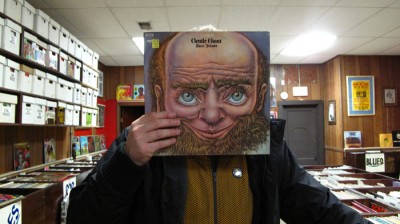
Photographer/filmmaker Brian Cross charts a musical map of the African diaspora in the Americas — and opens new Summit Peek Gallery show tonight (6/2), “If It Fits in the Backpack: 10 Years on the Road with Mochilla”
Last year, Los Angeles-based production group Mochilla released Timeless,a trilogy film series documenting three concerts performed in L.A., early 2009. For these concerts, the photographer/filmmaker/DJ duo behind Mochilla, Brian Cross and Eric Coleman, shined light on three composers who have helped influence and shape hip-hop in different ways: the originator of Ethio-jazz, Mulatu Astatke; leftfield Brazilian arranger, Arthur Verocai; and a gutsy rendition of J Dilla’s beats crafted by Miguel Atwood-Ferguson with 60-piece orchestra. The films paint intimate portraits of musical exchange and live performance while paying tribute to some of the overlooked giants of the sprawling African musical diaspora.
In many ways Timeless is a culmination of themes explored in Mochilla’s films from the past decade. Their first project, Keepintime: Talking Drums and Whispering Vinyl (2001), and the follow-up live recording and DVD release in 2004, captured improvisational collaboration between L.A. hiphop producers and DJs, such as Madlib and J.Rocc, among others, with some of the powerhouse session drummers who inspired their sample-based work. Brasilintime: Batucada Com Discos (2007) also navigated the dynamic tension between an older generation of drummers, this time including legendary Brazilian percussionists, and the new school of analog producer/turntablists.
But not only did Mochilla depict creative partnership between these two forms of percussionists, they also translated the cut-up aesthetic of the DJ and rhythmic momentum of the drummer to the inner workings of the films themselves. A pastiche of words, music, and imagery composed of still shots and footage drive forward the fragmented stories, and striking moments of reconciliation, which unfold on screen.
More recently, Cross (known more familiarly as B+) set off to Columbia to document the Petronio Alvarez music festival as well as collaborative work between Will Holland (a.k.a. Quantic) and Ernesto “Fruko” Estrada, who could be credited with forging the rootsy, Afro-Columbian take on salsa. Mochilla also shot a good deal of the footage for Banksy’s street art disaster film from last year, Exit Through the Gift Shop, caught wayward rapper Jay Electronica at the Pyramids in Egypt and recording in South Africa, and documented Nas and Damian Marley on tour. To put it short, the dudes put in work.
“I look more for the off-handed moments that can be sustained as photos in themselves,” Cross tells me over the phone, while working in the dark room basement of his home in Los Angeles. He says that he’s excited to see how the large hand-printed photos will look in the upcoming Mochilla showcase at the new Peek Gallery in the Mission, this Thursday. “I’m trying to be iconic, but at the same time I don’t want to make publicity photos for record companies,” Cross says. “The videos, in a way, can be much more interesting because the fluidity allows for a certain kind of candidness.”
Cross, 44, has quite a history with such candidness in his work. Born in Limerick, Ireland, Cross moved to San Francisco’s Mission district in 1990 before attending CalArts in Southern California to study photography. While still completing his degree, Cross started writing what would become a landmark book on the emergence and socio-political implications of hiphop in L.A., It’s Not About a Salary: Rap, Race, and Resistance in Los Angeles (Verso Books, 1993). He is responsible for a number of iconic album covers of underground hiphop acts, from Freestyle Fellowship to Ras Kass and Mos Def. And Cross also made headway with more than a few magazine photo spreads and music videos throughout the past couple decades, notably including an arresting multi-textured piece for DJ Shadow’s “Midnight in a Perfect World” off Entroducing….. (Mo’ Wax Records, 1996).
Looking over Cross’ ever-growing body of work, some primary themes consistently arise: Through the lens of hiphop, Cross orients a number of conversations, multi-generational interchanges, rhythmic confluences, and resistant divergences that weave through the diaspora of African musical traditions in the Americas. “There’s an anthropological side as well as an ethnomusicologist side to it—an attempt to make a map of the diaspora in terms of the music set by the present,” Cross explains. “The goal is ultimately to document in a way that is not strictly historical, but to let the past speak to now rather than the other way round.”
SFBG I find an interesting dynamic in your film work and the documented live performances. On the one hand, you’ll take hiphop producers and DJs and pair them with percussionists, so as to put the contemporary in tension with the recent past that informed those contemporaries. On the other hand, there’s another element of featuring the music of those composers themselves. In what way do you think the past speaks to the present, as you put it, in both those approaches?
Brian Cross The idea is that somehow you don’t want to frame it off. In other words, for Keepintime, we didn’t want to get Paul Humphrey or Earl Palmer involved in something and frame off the dialogue in terms of, ‘Ok Paul, we want you to play the classic break on “One Man Band (Plays all Alone),” and now we’re going to layer something on top of it and develop a routine.’ But that’s not what’s interesting about Paul Humphrey. Yeah, it’s amazing he did that, and that’s why we’re choosing to work with him. But Paul Humphrey is somebody living and breathing; he’s our past, but he’s also our present. We want to open up a space of dialogue that is open to this series of works but isn’t limited to it.
For the Brasilintime project, we could have gone to Brazil and found obscure musicians who made amazing recordings and complete the narrative in the way that normal Eurocentric or Western versions of the story go: We bring them to Carnegie Hall, we do a concert, venerate them, and show them that Carnegie Hall is in fact the best venue in the world and is the most important place to see music. Whoa whoa whoa, back it up, we’re not going to do that. We’re going to go to there and engage, and try to actually build a bridge to the music. Let’s not have this as a one-sided sentence that leads in a single direction. Generally, what we try to do is to de-center, to find ways in which we can open up, because, invariably, when you do these things, that’s when you make discoveries. Oh, Mamao and Wilson das Neves played on the Jose Mauro record, he died before the record came out, and then Dilla sampled it … that’s when you make these discoveries.
You know I don’t mind the Buena Vista Social Club [1997] record. Ry Cooder is a great producer and a great musician, but the film is fucking awful. It’s so fucking wrongheaded. And that director, Wim Wenders, is smarter than that, man. We’re people of the left, he knows better than that. Of course, everybody got involved and was super happy that these guys were finally discovered, and we can fully appreciate how beautiful their music is and the contributions they’ve made. But then Carnegie Hall is put into the equation; we don’t need to reaffirm the same set of cultural values. We don’t need that. Maybe that’s kind of a trite example, but I’m interested in trying to forge ways to talk about music, or to explore possibilities of music, that don’t fall into the same set of traps that most writing and television and documentaries about music fall into.
SFBG Yeah, there are standard methods for placing outsider music, or the marginal narratives of musical traditions and musicianship, into the mainstream narrative, one of validation internal to our own frameworks of understanding. As a photography and filmmaker, how do you approach a sense of the outsider, or the musician who is resistant, or peripheral to the grand narratives? What techniques do you take up in order to engage these musicians and traditions and make them visible for a broader audience?
BC Well, when it comes to Brazilian music, I’m pretty serious about my shit. I do my research thoroughly. I try to put my best foot into it. But other than that, it’s pure human relationships, man. For me, here’s my pet peeve: Too much of the stuff happening right now is done without real social engagement. It’s through the Internet, whether it’s digital digging, or people paying 800 dollars for an obscure record from Ethiopia or Angola, when you could buy a ticket to go there for the same amount. You should be going. That’s the responsibility. The responsibility is to go there, actually experience it, and see what works on the ground.
To go back to Ry Cooder, when he went to Cuba to make Buena Vista, that wasn’t the music people were listening to in Cuba. People were listening to Timba, and Timba is a completely different thing. I just think there’s a lot more to be gained from actually going to say, Baranquilla, and spending time there in the town—meeting people, buying records, meeting musicians—than there is from surfing the Internet and finding the latest hot cumbia re-groove from Argentina or whatever. If you’re serious about your shit you have to go there, engage on the ground, and see what makes sense. You like Wu-Tang? Go to Staten Island. Go for a walk around the projects. Go visit P.L.O. Liquors where all those songs came from. That’s the kind of compliment you need to be paying people. And there’s ways to do this that aren’t touristic. You can go and feel the vibe there. It might seem obvious, but it gets lost in these discussions.
SFBG Do you see that as your primary motivational force? That your projects are prefaced on this desire to travel, meet these musicians that inspire you where they live and make music; find out what they’re doing, why they’re doing it, and be a part of it?
BC Well, the two things are kind of contingent. It’s cyclical somehow. I’m there, experiencing, helping to build bridges as best as I can, and I’m also thinking about photographs because that’s what I do.
SFBG How do you think this approach fits back into your earlier photo work in Los Angeles and your book, ‘It’s Not about a Salary?’
BC It’s an extension of it, really. You know the book is a very primitive thing, if you actually sit there and read it from cover to cover, which I did for a project a couple years ago, and I was highly embarrassed (laughs). But there was no model. It’s not like Can’t Stop Won’t Stop [Picador, 2005] existed, and someone had put that work down. I was 26, I had been into hiphop since I was 17, and I gave it a stab. And, of course, I put myself into a cultural debate that I didn’t know much about, for my own peril.
Ostensibly, the work isn’t much different. In that book, yeah, it’s about hiphop in Los Angeles, but I also managed to talk to Roy Porter, The Watts Prophets, Kamau Daaoood, Horace Tapscott, and a whole slew of other people who didn’t straightforwardly have anything to do with hiphop in Los Angeles. But in another way, they had everything to do with it. What has always been interesting for me with hiphop is that it has this historical reach. That’s what I tried to bring into the book. There’s definitely things which I don’t agree with now, and suppositions that I made or thought what would happen which didn’t. But it was a critical moment, right before The Chronic [Death Row, 1992], which I think was really a world changer.
The amazing thing about the golden era of hiphop, as they call it now, that era up to ‘95 or ’96, is that it was incredibly inclusive music. There was Japanese Koto, all sorts of rhythms from the Caribbean, rock, jazz, funk, you name it. That sourced people into record stores in different ways. The categories didn’t make sense as they did previously. That’s the magnetic lure of it. Somehow, hiphop allowed this extraordinary ability to look at previously recorded things and make them work in the present. For me, that was a critical modernist moment, or as the prevailing discourse has it a post-modernist moment—the collage and montage.
SFBG That brings up another interesting point in your work in the idea that when listening to hiphop not only is the origin of the break or the sample concealed, but also the artist’s background is concealed. The identity of the artist is mystified. Would you say that your projects aim towards making visible the musician as a person rooted in an environment or social setting?
BC The two-sided sword of the invention of youth culture is that it posits a kind of energy and dynamism to what we call youth. The problem is that the way it’s commodified is made contingent on the exclusion of anything outside youthful values or youthful thinking. I don’t agree with that. And if you look at the music of the diaspora, it’s not there. These kind of generational fishers don’t exist in other traditions of music: not in Latin, not in African-oriented music, and in my understanding of European folk traditions, they’re not there either.
While I find aspects of youth admirable, it shouldn’t ever be considered an exclusive category. For instance, David Axelrod is in his late 70s, and he has as much to contribute, and as many interesting things to say now as he did when he was 30. The thing is we’ve consigned him off to a category as if he doesn’t exist. And that seems ridiculous to me. I mean James Gadson still has fire now as a drummer just as he did when he played with Bill Withers. Why would we decide that he no longer has importance? It’s not like people have stopped listening to Bill Withers. But that’s how our music culture works. We fetishize the appearance of youth, but we’re not entirely clear on the implications of that. So, I like the idea of putting the person in the room if I can. For inclusivity, it has to be that.
And we have to get past the old ways of thinking, too. When I was first doing this, it was all super secretive. No one was supposed to know what your samples were or where your drums came from, because that was your tool kit, and if everyone had the same tool kit, it wouldn’t be interesting anymore. But I don’t buy that. In the end, there’s a deluge of information out there, it’s what you do with it that’s important. Your understanding and ability to manipulate the history is what’s important.
SFBG Even when you put out ‘Keepintime,’ I imagine that people worried that you would unveil the alchemic creative process, otherwise covered up, behind a hiphop record.
BC It goes back even before that. Take the video I did for DJ Shadow’s “Midnight In A Perfect World.” It plots out a series of concerns that I’m still interested in. You know, Earl Palmer is in there, and the sample is from a David Axelrod record. And they didn’t clear the sample. Shadow was terrified that Earl was going to recognize the song. But Earl didn’t even remember David Axelrod the person, let alone the record (laughs). They weren’t hits! Earl wasn’t sitting around listening to Axelrod records. But if you’re going to be too scared to talk to him, we’ll never learn anything from the guy. And then he shows up, and we’re transported to a whole different world: New Orleans before World War II.
You could say rock n’ roll came from the soles of Earl Palmer’s shoes. He was a child vaudeville performer, a tap dancer, and he battled against Sammy Davis Junior, and a lot of cats from that era. But he was never the best dude, and he was always interested in drums, so he taught himself how to play drums. So, that shuffle beat, that swamp beat as they call it, which became the foundation of rock n’ roll drumming, came from a guy who’s a tap dancer in black vaudeville as a child, who figured out a way to transform his tap dancing onto a drum kit. Think of the multi-billion dollar industry that rock n’ roll has become, and we still don’t know these things. We have to sit down and talk to these guys to find out these stories.
If It Fits in the Backpack: 10 Years on the Road with Mochilla
Opening photo exhibition w/ film screenings and Q&A
With Brian Cross and Eric Coleman
Thurs./02, 7p.m.-11p.m., free (thru 06/30)
Peek Gallery (Summit SF)
780 Valencia Ave. @19th St., SF
(415) 861-5330
www.thesummit-sf.com/peekgallery.html
15-M utopia: Protests in Spain grow into massive popular movement
“Yes We Camp,” “Toma la Plaza!,” and “I can haz democracy … for realz now?” signs blanketed Madrid’s enormous Puerta del Sol plaza, as what started as a demonstration by a politically disenchanted few (“los indignados”) on the Sunday before the May 22 regional and municipal elections has grown into a full-fledged, round-the-clock, generalized protest movement, attracting tens of thousands here and in other Spanish city centers.
A calico patchwork of Quechua brand tents and sun-diffusing tarps fans out from the vibrant and loud main speaker/assembly arena, as dozens of perfectly scruffy, mostly half-naked (and from what we saw over two days, mostly white but pretty well-mixed age-wise and gender-wise) people beat the current heatwave while making Sol home. At night, the plaza roils with sympathizers — but a conscious effort to tone down the hard-party aspect without diminishing the festival atmosphere seems to be surprisingly successful.
The takeover also transcends the superficial: protestors here in Sol have in effect set up a functional utopian “leaderless” community, with separate committees of volunteers directing communications, sanitation, nourishment (vegetarian options available), feminist representation (“No Photos!” read the banner at the committee’s HQ), language usage, diversity and inclusivity, community outreach, and camp security (the role of which has been broadened under its new name as the “Respect Committee,” Comisión de Respeto).
The only official government reaction to the ongoing demonstrations has been to allow them to continue as long as they stay non-violent. And the current mainstream media narrative is a breathless comparison to the uprisings of the Arab Spring. (More on that below.) On Tuesday, the 24th, we made our way through the movimiento del Sol, dubbed the May 15th Movement, or 15-M (www.spanishrevolution.net), to get some idea of what the current protests — or, in the more poetic Spanish term, “manifestationes” — were all about.
BIRTH OF A MOVEMENT
“On the 15th, a group of about 30 of us decided to gather here, it wasn’t too serious, just have a beer or two — and then we were like ‘Let’s stay here!’ ‘Oh, alright.’ Just like that.” Pablo Prieto, spokesperson (portavoz) with the Communications Commitee told me. “And from there it was spontaneous, it grew to this point.”
Along the way there was a clash with the police that generated nationwide attention. “On Tuesday morning of the 17th, around 5 or 6 a.m., there were about 200 of us camping in the square, the police came and took us away violently,” Prieto, a wry, intellectual thirtysomething in thick glasses, said. “So after, we met at a certain place, had an assembly, and decided to come back and try again, and it worked. We grew quickly into the thousands. At that point we realized we needed some organization, so we formed the committees and became more of a community. We wanted to form a template so this could be replicated in other cities.”
But what exactly is “this”? Spain has been one of the European countries that has been hardest hit by the global recession, and even though it has begun to recover slightly, its unemployment rate, at more than 20 percent total (44 percent among youth), is the highest in Europe. The protests have no official demands yet, but some of the issues that spring to mind are lack of opportunity for educated youth, a wealth of corruption charges within the two major national political parties, a feeling that the European Union and European Central Bank heads are issuing economic directives (like pressuring Zapatero to cut government services) without any democratic recourse, and the new vocal confidence that the Internet gives young people without a corresponding, direct-democratic result in the real world. The May 22 elections slammed the ruling Socialist party, but the protestors have bigger fish to fry.
“In the beginning, the media says that this is mostly about government corruption or only about unemployment,” Prieto said. “But it’s not against the government. It’s against the entire system, the globalized system. And we think we can only fight it with a globalized movement, it’s not just for one particular country. It’s about the global financial system and the deeper roots of the crisis. I realize that sounds a little hopeful, and as a movement right now we don’t have any official goals. Everyone here has issues that they feel should take importance, that they are not being heard enough, and so right now we are just at the stage of everyone getting a voice and using the assembly and direct democracy to find the direction we will take. We are right now in the communications stage, trying to get to one common point, but that is farther than we have felt we’ve been before with the current system.
“I think that is what we’re about,” Prieto continued, “we’re not just protesting against something, we’re proposing an alternative. Everyone has a right to speak, a voice, and everyone has exactly the same power. There’s no leaders, no hierarchy at all, and we believe that’s the way democracy should work. We have continued staying here after the elections — and are planning to stay here through next Sunday, after which we will take our message to other communities — because we aren’t just about this moment. And although the Internet has been crucial to this movement, we need to go beyond that. Once we were in the papers and talking to people we began to reach older people and people with different economic means, people who are offline.” The movement is no mere Facebook page.
ICELAND, NOT ARABIA
Using classic, small-scale anarchist techniques like direct democracy and full-participatory assemblies to overthrow an entrenched global system is a trick not even the best minds or biggest movements have been able to pull off in the past, Internet or no. (And jettisoning representative safeguards against mob rule is probably not very comforting to anyone in a minority. “We realize that this movement is not wholly representative of some sectors of society,” Prieto said, “and that’s why we are making a conscious effort to correct that and to take this into the neighborhoods.”) But the 15-M movement does indeed have some immediate concerns and models, though not the ones you might expect.
We had just come from Tunisia, the source of the “Arab Spring” that saw the overthrow in January of dictator Ben Ali, but where continuing economic woes and pre-election angst had begun to render post-revolutionary hopefulness slightly bitter. Tire-burning protests and Al Qaeda presence had closed off some cities in the south already swamped with refugees from the Libyan war, and gangs of disaffected young men from the Berber hills were setting up random roadblocks out of frustration. In the capital, too, protests continued against the ongoing influence of the old guard in the interim government, even though everyone we talked to glowed with pride and confidence in their newly won autonomy.
So it was curious that papers around the world were heralding 15-M as the Spanish wing of the Arab Spring. Setting up an alternative utopia under a Socialist prime minister is a lot different from risking being shot in the street to overthrow a dictator. There are some commonalities, of course, like high unemployment and a surfeit of young people with no opportunities. Prieto welcomed some of the comparisons, but also balked at being lumped together with the events unfolding to the south and east.
“I think the more complete comparison would be to Iceland,” Prieto said. “We have the energy of the Arab Spring, but we are more like Iceland’s revolution, when they refused to pay back the money or accept the austerity measures imposed by the banks. That was really standing up to power.”
The Iceland connection, a reference to the recent reaction against a complex financial restructuring plan, came up again when I spoke to Manuel Verastegui, an exuberant young man on the Comisión de Respeto security committee, who definitely channeled the positive energy and fervor of the Arab Spring. He came from the nearby city of Rivas, about 15 kilometers away, to live in the plaza.
“Your media probably didn’t cover it, but the protests in Iceland were very influential to us,” he said. “I think that’s what we are taking as inspiration. But that’s just the start. We are tired of being treated like numbers or commodities. The way the present system stands is completely ridiculous. We are given a ‘choice’ of someone to vote for, when each side is horrible. We are told what to do with our money, when why shouldn’t I have a say in how that money is spent? The whole financial system is weighed against the individual. For instance, in Spain if you can’t pay for your house, they take your house away from you, but you still owe the money on the house. Why? They want to make sure you can never survive financially, because it is in their best interests. It is the same with jobs. Why is the government getting rid of jobs and services when the rich people are making more money? We have had enough of this, so we are starting our own society here to show what it can be like.”
KEEPING THE PEACE
Verastagui, looking exhausted but still hip in a Jimi Hendrix t-shirt, a constantly buzzing Motorola two-way radio glued to his hand, also gave me some insight on the formation of his Respect Committee. “At first, after the police were violent with us, we decided that we needed a committee of ‘security against the police,’ but then we realized that this was maybe not a good reference. We do not want to answer violence with violence, we have in mind Gandhi and Martin Luther King. Also, we began to see that there needed to be some mediation within the camp as well, to help defuse some of the tensions and disagreements — sometimes a small fight — between members. We are all working so hard for this, we are sleeping maybe three or four hours a night. Sometimes these little things get bigger. We try to ensure that no one is disrespectful, and give everyone an opportunity to either work things out, or discuss things in the assembly. We even give out hugs to anyone who asks!”
(As I talked with Verastagui, a vote about organizing a children’s space was ending in the assembly area, and a discussion about establishing a “spirituality committee” was being taken up. An elderly hippie-ish man in vaguely Native American dress was at the microphone saying in English: “We are at the turning point of human history, which is why this movement is happening now. Humanity can go either this way, or that way.”)
I talked more to spokesperson Prieto about the cultural implications of 15-M, explaining that in the United States, anger against the recession had bred not a utopian youth movement but a crochety old Tea Party, and that a protest community like this one forming in Washington D.C. seemed impossible in my mind. “Everyone thought this was impossible in Spain as well, but we don’t care about impossible,” Prieto told me. “Improbable, probably, but never impossible. And yet look what is happening. Our main concentration now is to spread this into all the neighborhoods and suburbs, and then beyond, which is already taking place. There are movements like this in every major city in Spain now as well. And one of our biggest inspirations has always been the protest movement of San Francisco. So don’t say it can’t happen again there.”
Arrested in rhythm
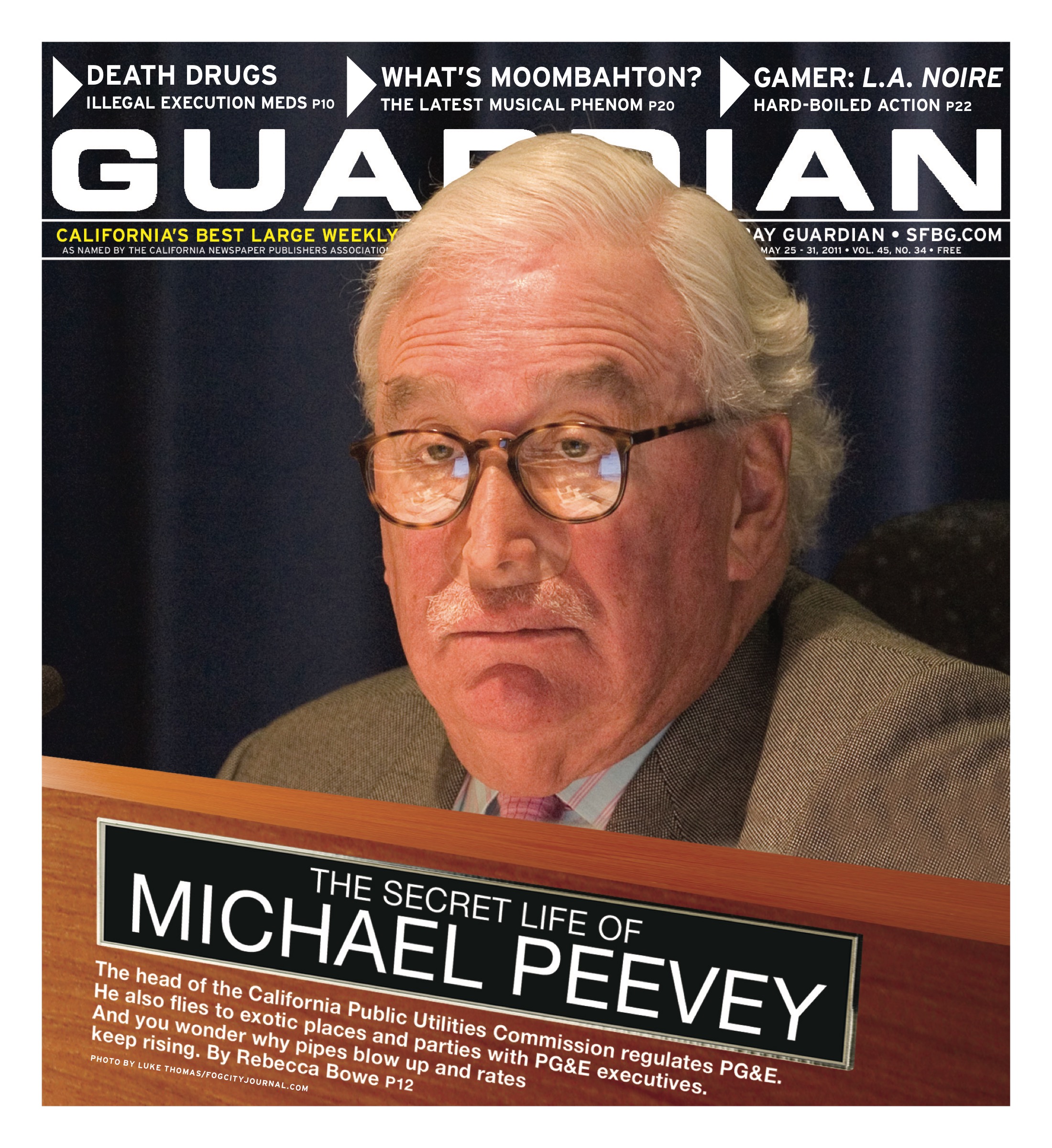
arts@sfbg.com
Every lasting genre of music needs a mythical origin. And at the hurried pace that genres, subgenres, and microgenres now grow, evolve, dissolve, and regenerate in the flourishing system of online circulation, the myths, well, the myths have a digital life course too. There’s hardly a linear narrative to it. Threads pop up on Internet forums tracing connections, blogs distribute mixes and links and downloads, Twitter feeds relay information and disappear just as quickly; stories transpire and expire, even flesh to flesh conversation refers back to the digitized fold.
The emerging musical phenomenon of moombahton might be rooted in rumor more than myth — or maybe active myth, one still in the works, loose and unfolding. Here’s what I’ve recounted: about a year and a half ago, Washington D.C.-based DJ Dave Nada agreed to spin records at his younger cousin’s high school ditch party, midday, in some basement packed with countless speakers, somewhere near the woods.
Kids on the decks were spinning reggaeton, ready to pass the torch to Nada, who was getting nervous because he was the oldest dude in the basement and comfortable with house and techno, not Latin jams. So Nada had the idea of pitching down the grimier side of Dutch house to about 108 beats per minute, the pulsating groove of reggaeton. First a slowed-down Afrojack remix of Silvio Ecomo and Chuckie’s “Moombah,” the polypercussive patterns suspended in their ecstatic tracks. Then Sidney Samsom’s “Riverside,” the synth keys expanding into a coursing alarm, the bass opening bigger and harder. And it worked. Shit went off, the kids went crazy.
It made sense too. Reggaeton had already traveled through the musical circuits of the islands, then across the globe, informed the origins of Dutch house, and come back around to this high school party in the suburbs of D.C., adjusted to its original tropic pace. The party was broken up. Everyone dispersed into the streets, the woods, their computers. Moombahton was born.
Ever since, Moombahton has become something of a bubbling undercurrent in the dance edits scene. A torchbearer of the movement is Los Angeles-via-New York City producer DJ Sabo, who got word of the concept from local Bersa Discos founder Shawn Reynaldo. Sabo, known terrestrially as William Sabatini, found Nada’s Intro to Moombahton mix online and heard some of his cumbia edits in the cut, so he decided to connect with Nada. “He sent me all the moombahton edits he made, and I was instantly hooked,” says Sabo.
For Sabo’s first crack at moombahton, he crafted “La Gata Plastica” from Nada’s original stepper, fusing mutilated elements of Major Lazer’s “Pon de Floor” and Jaydee’s “Plastic Dreams.” “[Moombahton] returned me to some of my rave roots — it has a solid four-on-the-floor kick — but it also retains so much of the Latin flavor I had already been playing,” says Sabo. “The songs also had really big build-ups and breaks … but I never quite found that kind of drama in slower music.”
Music seized, arrested in rhythm. Usually the story is that a DJ increased the tempo of a track, played ESG’s hypnotic “UFO” as a 45, and discovered a new way to tune into the wavelength. Now another discovery, maybe like DJ Screw’s intoxicated realization: a somnambulant beat, the entrapped groove.
In the past few months, Sabo has worked with Nada to release three Moombahton Massive EPs for free download online off his Sol Selectas upstart. Featuring a number of global moombahton harbingers, the EPs prefer an organic percussive treatment to a frenetic rave framework. But what is striking is just how far the scope of moombahton stretches, temporally backward and forward, spatially around the far-reaching continents and points of intersection of the Black Atlantic. South African producer DJ Mujava has his viral hit “Township Funk” refixed. Benga and Coki’s dubstep classic “Night” is transfigured. Even Zapp’s “I Can Make You Dance” is flipped, layered, adulterated into polypercussive vocoder funk.
“It spread really fast on SoundCloud and inspired kids all over the world to start making their own versions,” says Sabo. “People like A-Mac in Canada, Munchi in Rotterdam, Smutlee in the U.K., Heartbreak in North Carolina, Melo in Arizona, and now more producers from Europe and Australia. These producers are taking what they know works from their regions and incorporating it into a moombahton sound.” Many, like L.A.’s Dillon Francis, are starting to supplement the edit game with originally produced tracks.
Moombahton has become a contagion. Its infection draws in disco and dancehall, hip-hop and breaks, big room house and cumbia, the internetworked rhythms of third world electronic experiments. The archive of recorded dance music is its playhouse. The global circulation of digital grooves its mode of exchange. The sonic pulse of the Afro-Latin diaspora, loosely rooted in reggaeton, its rotational axis. Moombahton thrives in border zones, between genres and locations, within regions of movement and passage.
A new Blow Your Head compilation tracing the short but sprawling history of moombahton — presented by Nada and dropping at the end of this month on Mad Decent — affirms one thing for sure: it’s spreading quickly.
CARNAVAL FEVER
With Sabo, Afrolicious, Jeremiah, and Zamba
Sun/29, 9 p.m.–2 a.m., $10
Som Bar
2925 16th St., SF
(415) 558–8521
Hooked in

culture@sfbg.com
There is no water cooler. There are no memos. In most cases, sex workers aren’t walking into an office on Monday mornings — or even late Saturday nights — to punch in and gab with coworkers about the last shift. Sex work is a umbrella term pertaining to a multitude of professions, including but not limited to prostitution, porn, burlesque, modeling, and stripping. Most sex workers are independent contractors, freelancers, and individuals running their own businesses.
So in a way, the seventh San Francisco Sex Worker Film and Arts Festival (May 20-29) serves as the city’s whore company party, run with the intention of unifying a community in an ironically isolating line of work. Because whatever your profession, talking to a coworker about the daily grind is always extra-satisfying.
All but a select number of events during the festival are open to the public — we’re not talking about an exclusive trade show here. Organizers have packed nine days with musicals, cabarets, workshops, and parties, so whether you’re in the business, out of the business, curious, or supportive, this sex fest will do the trick.
The decision to base the festival around this kind of openness was intentional. Once the workday is done, where does a sex worker go to compare notes, swap secrets, laugh, or cry? The stigma around sex work can make talking to friends and family who don’t pole dance or film masturbation for pay awkward.
Chloe Camilla, a member of the festival’s planning committee, is still relatively new to the sex industry. She’s been doing a mix of porn and modeling for the past few years and remembers how intimidated she felt in the beginning.
“It’s strange — you’re shooting your first anal scene and you just want to ask somebody, ‘Uh, what do I do? Who do I talk to? Where’s the handbook?'” She and her friends have been talking about putting together a training manual with chapters on things like how to file your taxes, develop a marketing campaign, and learn screen tricks. “There should be a ‘Welcome to porn, here’s what to expect when you show up on set’ book.”
Camilla will be teaching “The Art of Webcamming”, a workshop she put together in response to peer requests. Webcams are a great introduction to the sex industry: cheap, easy, and gatekeeper-free — the Internet is an equal opportunity employer.
“Everyone can find their own market and niche. There’s room for all bodies and genders out there,” Camilla says, hoping her class will get people online and making money fast.
Festival founder Carol Leigh, a.k.a. longtime pro-sex activist, sex worker, and performance artist Scarlot Harlot, started the festival in 1999 to help foster supportive peer relationships while simultaneously urging hookers to use their collective voice to speak out on their own behalf and fight marginalization.
“I’m basically Grandma Scarlot Harlot now,” she smiles, her crimson lips matching the shiny paint on her fingernails. After years of marching up and down capitol steps, Leigh realized the creative potential of the people rallying around her.
It’s what she calls the “whore’s eye view:”
“As a group that’s oppressed with a stigma, there’s a kind of wisdom that grows from that stigmatization. Because we’re not accepted, we might not necessarily buy into mainstream values. Therefore, we do and see things differently,” Leigh says. Through art or film, sex workers can find their voice — even if they can’t be open about their profession because of child custody laws or a conservative day gig.
Now 60, with more than 30 years of advocating for sex workers’ rights behind her, Leigh says the festival’s relevance has expanded to respond to the community’s current needs. The back-to-back workshops at SomArts Cultural Center on May 27 most accurately reflects this year’s current list of hot topics: self-care and eco-sex, building bonds between male sex workers, and love advice for partners and pals of sex workers.
Although parts of the city’s sex worker community are tight-knit, festival organizer Erica Fabulous admits that closeness can depend on where you work and whom you work with. Getting politically active sex workers to attend is a snap, but festival organizers hope to reach past clubs and into the streets, pulling in workers from every corner of the industry.
“Sex work is raced and classed just like anything else — that’s why I’m so proud of the diversity of viewpoints that will be represented during the festival,” says Laure McElroy, the festival’s film curator.
Nearly 40 sex-worker-themed flicks will play at this year’s festival during a one-day marathon. Stories from Canada, Holland, Germany, Cambodia, and the U.S. will lay bare the work and lives of strippers, whores, masseuses, peep show gals, erotic performance artists, survival street workers, and escorts.
The diverse viewpoints echo another of the festival’s underlying missions: “These films are a glimpse of what’s happening out there — the people who are out there,” McElroy says. “I want people to walk away from this festival knowing that there isn’t just one way to think or talk about sex work.”
The Yellow Pages are green

OPINION It’s not often that the interests of seniors, cyclists, and small businesses intersect, but we all will be disadvantaged if Board of Supervisors President David Chui’s ordinance to stop Yellow Pages distribution in SF passes. Add gays and lesbians, non-English speakers, and low-income residents to the mix, and you have a large contingent of San Franciscans who, by necessity or choice, use a phone book rather than an smart phone to get information about their local community. And their use of the book may be far less of a drain on the environment than Chui’s misguided attempt to save paper.
It’s true that not everybody uses their copy of the Yellow Pages, and that not enough consumers know that they can opt out of receiving unwanted books online or with a simple phone call. But Chui’s ordinance goes beyond just addressing that problem — it cuts off a vital source of information for many local communities and vital advertising revenue for local businesses — which ultimately could send more San Francisco dollars out of town.
Chui’s ordinance doesn’t just mean no more of the big, fat, yellow books (which are already printed on recycled paper), it means no more of the specialized books as well: gay and lesbian, Hispanic and Chinese. These smaller books are key for consumers who want and need language-specific or specialized services as well as for specialized businesses to reach their audiences.
The Internet simply isn’t a substitute for everyone. While many San Franciscans are young, affluent, and take for granted phones that enable them to post their restaurant choices and arrivals on Facebook instantaneously, they are not our whole city.
According to a 2007 survey, low-income, elderly, and Latino residents, as well as those living in Bayview-Hunters Point, Crocker Amazon, Chinatown, Civic Center, and Visitacion Valley, have substantially lower levels of home computer and Internet usage than other San Franciscans.
Research by The Utility Reform Network (TURN) indicates the same, as does our experience with our own members, many of whom are seniors. Not only do they read our print newsletter, they often respond with comments, criticism, and questions via snail mail. Yes, they actually send us stamped, hand-written letters.
The supervisors have heard potent testimony from San Francisco’s small businesses begging not to be put at further disadvantage against large big-box stores and virtual retailers that can buy top billing on Google. Many small businesses owners told the board that the majority of their new customers come from Yellow Pages advertising, and that without this way of reaching those customers, they are likely to close.
Which is where the cyclists come in. I’m lucky enough to have a computer and decent Internet access at home, but I use the Yellow Pages to find local businesses that I can get to on my bike or on foot, preferably while en route to or from work.
So to me yellow is the new green. When I go online, Target, Walmart, and Zappos come up. With all of the push to buy local, why would we strangle local businesses for the sake of saving a bit of recycled paper?
The Yellow Pages Association has been quick to respond to Chui’s concerns with an upgraded website (www.yellowpagesoptout.com) that makes it easier than ever for consumers to choose whether to get the Yellow Pages, and how often.
That will further reduce what is already a minimal environment impact. Phone directories represent a mere 0.3 percent of the solid waste stream, significantly less than newspapers (3.2 percent) and office paper (2.2 percent).
San Franciscans without Internet access are more and more marginalized every day, and small businesses are fighting against the crush of online retailers. Local directories are key resource for keeping our dollars right here in San Francisco, and keeping shoppers out of their cars. We need to use them more, not less.
Mindy Spatt is communications director for The Utility Reform Network.
Boxed out
rebeccab@sfbg.com
The Board of Supervisors is gearing up to revisit whether telecommunications giant AT&T should be permitted to install 726 new metal boxes on city sidewalks for a communications network upgrade, without completing an environmental impact review.
At an April 26 meeting, the board spent several tedious hours listening to concerns such as whether the boxes would attract graffiti or clutter the sidewalks, and debated the finer points of whether the project could legally be considered exempt, ultimately resolving to take up the issue again May 24.
Meanwhile, a small cadre of tech-savvy San Franciscans has seized on this debate as an opportunity to drum up enthusiasm for an alternate vision of a citywide communications future, one with faster connection speeds that wouldn’t necessarily be controlled by the AT&T and Comcast duopoly.
At the meeting, AT&T California President Ken McNeely, dressed in a sharp suit, trumpeted the company’s proposed upgrade, part of a new system called U-verse. “This is the largest single upgrade to the San Francisco local phone network in more than a century,” he said. “Our network will provide the next-generation IP technologies that San Francisco needs to provide if it wants to continue to attract the best and brightest in the region.”
Yet Rudy Rucker, bearded and clad in a camouflage T-shirt, sounded a different note. “The U.S. is No. 30 in the world in Internet speed,” he said. “The boxes are not the way to go. What we need to do is rework the entire infrastructure of how we do communications in the city. We’re relying on copper lines. We need to pull all those out, recycle the copper, and put in fiber-optic cable.” Rucker is a cofounder of MonkeyBrains, an independent Internet service provider (ISP) based in San Francisco.
AT&T’s U-verse upgrade would enable it to offer connection speeds three times faster than current service — but not nearly as fast as what fiber proponents envision. Several members of the tech industry interviewed by the Guardian cautioned that another AT&T upgrade might be necessary after less than a decade to keep pace with technological advancement. At that point, it’s anyone’s guess whether those boxes would continue to be useful. AT&T did not respond to a query from the Guardian.
SPEED FREAKS
When it comes to Internet speeds, the United States trails Asia and some European countries. “We’ve fallen from first place,” said Ashwin Navin, who founded several tech startups including a file-sharing company called BitTorrent. “It’s really put our software and technology industry at a disadvantage.”
According to a website that compares connection speeds using data compilation, California ranks 23rd in the nation, while San Francisco doesn’t even clear the top 30 cities nationwide, Navin noted.
Yet much faster connection speeds are possible — even commonplace — in countries such as Japan and Singapore. “Right now, the average download speed in San Francisco is something around eight megabits,” explained Dana Sniezko, who’s emerged as a tech activist since creating a website called SF Fiber, which calls for a neutral, open, affordable community fiber network. “What U-verse is going to offer is about three times that. Something like fiber can offer service that’s 1,000 megabits [called a gigabit], or even much larger than that. Fiber allows you to really have a huge capacity for the future.”
Put in practical terms, Sniezko said, the difference between a connection speed of eight megabits and a gigabit amounts to downloading a full-length feature film in 90 minutes, versus several seconds. And since fiber also can deliver faster upload speeds, it opens the door to new possibilities. “It lets individuals potentially come up with really innovative and creative ideas,” Sniezko said. “If you wanted to have your own streaming TV channel from your house, you could. Or anything, really.”
Fiber already exists under San Francisco city streets — but most places lack the direct connections to homes or businesses, so the capacity is not realized. The city’s Department of Technology and Information Services (DTIS) convened a study in 2007 for developing the infrastructure to create a full-fiber network, deeming fiber “the holy grail of communications networking: unlimited capacity, long life, and global reach.”
Since then, progress has been slow. AT&T’s new system would also be based on fiber, but information would still travel to homes or offices over copper phone lines, resulting in slower speeds than a direct connection could supply.
On a recent afternoon, MonkeyBrains cofounder Alex Menendez scrambled up a ladder leading from his small Potrero Hill office space to show off some rooftop antennas and laser devices. There was a clear view from the flat, sunny roof to the office building the laser was pointed at, many blocks away. Secured to a hand-built metal stand, the gadgets were part of the company’s high-speed Internet network, which counts KQED among its roughly 1,000 subscribers.
Menendez was explaining how his small company is able to use these microwave devices in combination with fiber-optic cables to provide high-speed Internet by leapfrogging from node to node throughout San Francisco.
Menendez said he didn’t feel strongly one way or another about AT&T’s metal boxes. “But it raises a more interesting issue: what’s the 50-year-down-the-line solution? There’s much better technology out there. It could be super-affordable, with a wide-open, massive amount of bandwidth.”
But, he added, it won’t happen without the support of local government.
MISSED CONNECTIONS
The City and County of San Francisco owns an underground fiber-optic network spanning more than 110 miles, used mostly for municipal and emergency purposes. AT&T has its own fiber — and with a history going back more than a century in San Francisco, it also has a lock on the market.
AT&T owns underground cables, copper phone lines, and rights-of-way, making it necessary for small market players to interface with the corporation and pay fees. This makes it difficult for local ISPs to compete on any meaningful scale. “They have the right to trench the street,” Menendez explained. “We don’t.”
Mendendez and others are looking at micro-trenching as a possible way around this. Last summer, Google hosted an event at its Mountain View headquarters called the Micro-trenching Olympics (“A very Google-y thing to do,” according to a company representative speaking in a YouTube video) to find out which contractor could best slice a one-inch wide, nine-inch deep trench in a parking lot and install fiber-optic cable inside. The idea behind micro-trenching is that it’s fast and minimally disruptive — and best of all, it doesn’t interfere with existing infrastructure, so there’s no need to pay a fee to AT&T, or any other company.
Some in the tech community are hoping it will signify a new and efficient way to link fiber-optic cable directly to homes and businesses, ultimately resulting in the kind of Internet speed that would let you download a movie in less than ten seconds. With micro-trenching, there would be no need for utility boxes.
Navin, Mendendez, and several others have talked up the idea of micro-trenching a small area in the Mission District to bring fiber-optic, high-speed Internet to an entire neighborhood. Yet their early conversations with the city’s Department of Public Works suggest that it may be a slow process. “They were like, ‘What is this?'” Menendez recounted. “There’s no established permitting process.”
Meanwhile, Board of Supervisors President David Chiu recently asked DTIS to examine the possibility of leasing excess capacity on city-owned dark-fiber infrastructure, which is currently in place but not being used. This could boost bandwidth for entities such as nonprofits, health care facilities, biotech companies, digital media companies, or universities, Chiu said, while bolstering city coffers. “There are many places in town that need a lot more bandwidth, and this is an easy way to provide it,” he said.
Sniezko noted that other cities have created open-access networks to deploy fiber. “This is really effective because it’s a lot like a public utility,” she explained. “The city or someone fills a pipe, and then anyone who wants to run information or service on that pipe can do so. They pay a leasing fee. This has worked in many places in Europe, and they actually do it in Utah. In many cases, it’s really cool — because it’s publicly owned and it’s neutral. There’s no prioritizing traffic for one thing over another, or limitation on who’s allowed to offer service on the network. It … creates some good public infrastructure, and also allows for competition, and it sort of revives the local ISP. Chiu’s proposal is a little bit in that vein, it sounds like. But he hasn’t released a lot of details on it yet, so we’re still looking.”
Visit www.sffiber.info for more info
Guardian poll: Do we still need the yellow pages?

Sup. David Chiu is pushing legislation to restrict the delivery of yellow pages phone books in the city. His proposal: If you want the books, you should ask for them. Right now you get the stuff piled up on your door whether you like it or not — and that creates a fair amount of waste.
But some small business groups say that local independent businesses still use the yellow pages (and there are a lot of plumbers and locksmiths who clearly agree) — and consumer groups like The Utility Reform Network worry about seniors and people without internet access, many of whom might not understand that they have to opt in to keep getting the books.
Too much trash? Public service? You can vote after the jump.
| Free polls from Go2poll.com |
California isn’t losing jobs to Texas
Even Gavin Newsom, who the LA Times (with embarassing inaccuracy) calls “a poster boy for California liberalism” is buying, at least a little bit, the argument that California is losing jobs to Texas (and presumably other states) because of a “bad business climate.”
But a new study demonstrates, with excruciating accuracy, that the Texas argument is nothing more than bullpucky. California loses 25,000 jobs a year to other states, and gains 16,000 jobs a year from other states, and when you look at the 15 million jobs in the state, that’s just decimal dust.
Government – perhaps contrary to popular belief — cut 51,000 jobs last year. The construction industry, particularly hart-hit in California because of the housing bust, lost 26,000 jobs.
Remove those two sectors from the picture and California’s job growth was a respectable 1.5 percent in 2010. That’s a rate that compares favorably to the nation as a whole, which on the same measure grew by 1.3 percent. Professional services, health care, tourism and trade all posted job gains in California, as did the entertainment industry and Internet-related businesses.
In other words, public-sector layoffs (caused by low tax receipts) caused more economic pain than private-sector jobs moving to Texas for lower taxes — by far. More:
But even if a state’s tax code can lead to economic growth, other factors, including the state’s weather and its mix of industries, appear to be more influential than government policies, according to the PPIC study. So while California might do even better if it simplified its corporate tax code or restructured its welfare programs, the study found, those issues do not appear to be the reason for the recent doldrums.
That’s right — cutting taxes won’t create jobs in California.But cutting taxes so deeply that schools and police departments have to lay off employees will, indeed, cause job losses.
Northwest passage: Kelly Reichardt on “Meek’s Cutoff”
Over the past decade, Kelly Reichardt has consistently created an alternative cinema that is in opposition to modern Hollywood blockbusters. Her films, which emphasize minimalist and highly visual storytelling, transcend even the industry’s edgiest darlings (think Darren Aronofsky and Quentin Tarantino). Her films Ode (1999), Old Joy (2006), Wendy and Lucy (2008), and now Meek’s Cutoff (2010) cannot be categorized in the decade’s overhated mumblecore movement of Andrew Bujalski or the Duplass Brothers. Neither are they part of the world of extreme experimental artists, a la James Benning or Sharon Lockhart.
Somehow Reichardt has found a cinematic middle ground, balancing quiet and poetic allegories with accessible and emotional journeys — an achievement that present and future audiences will be hypnotized by for generations to come. After interviewing her for Wendy and Lucy, I spoke with her after Meek’s Cutoff played the 2011 Sundance Film Festival; it recently had its local debut at the San Francisco International Festival, and opens theatrically Fri/6.
San Francisco Bay Guardian: I recently saw your earliest films at the Pacific Film Archive retrospective and your adaptation of the Robby Benson-starring Ode to Billy Joe (1976), Ode (1999), was amazing! You shot the whole thing on Super 8, right? Do you like your earlier films?
Kelly Reichardt: Ode is very near and dear to my heart. It set me on my own way of making films. I don’t think I’m naturally a non-narrative person. And definitely not as much as I revere those kind of filmmakers like my colleagues: Peggy Ahwesh, Peter Hutton. I love seeing how their films unfold and really make the viewer be interactive in deciding what they’re about and what they mean to them. That’s what I’d like to do as a filmmaker. But I can see myself learning in all of my films, which is painful. A couple of students walked out of that screening of my earliest short films and I wanted to run out after them and say, “I totally understand!”
SFBG: You and [screenwriter] Jon Raymond seem to be consciously aware of just that! I know I have told you this before but I find your films so inspired. Your films are like the kind of classes I always wanted to have in college. You’re never telling me what to think, yet you are very precisely leading me towards something extremely imminent. And along the way, I get to experience my own journey with these characters and situations. Do you run into problems getting your films made and released because of this structure?
KR: That part of it, the endings, is [an element] coming from the world of non-narrative filmmaking. It doesn’t hand things over to the audience. It’s like a series of questions unfolding which is like a dream, which is something I want to bring into a more narrative form. It opens up the traditional genre a little which you already know how its’ suppose to go. Meek’s Cutoff and Wendy and Lucy were both released through Oscilloscope, while Old Joy was distributed by Kino. These are all small independent distributors and the things that they are looking for are not for everyone.
The hard part with filmmaking is getting the money to make the film. Everybody has a camera now. You can shoot a video. But if you’re not into naturalism and you’re trying to make things that are more extravagant, that vision is going to be much harder to just do on your own. If I were a student right now, my biggest fear would be how to rise up out of such a huge sea of voices. When I submitted my first feature, River of Grass, to Sundance in 1994, they had 600 entries that year which seemed overwhelming and huge. Six hundred and they were only gonna pick 16. And what was it this year? Didn’t they have something like 6,000 entries?
Getting your film out … worry about that later. Get your film made first. Plus there’s always the fear of even having something to say at the age of 20! Before you’ve lived on your own and been connected to the big black hole of employment, and public transportation and all those things. That could be good “big” fear to have as a young filmmaker.
SFBG: In your Q&A after the screening of Meek’s Cutoff at the Egyptian Theatre [in Park City, Utah], I was very excited about your bringing up forgotten and unavailable older films like Nicholas Ray’s The Lusty Men (1952).
KR: Me too! I was trying to make that point and I became so distracted by the woman sitting behind you filming. It’s just such a weird thing to look out and see 15 people videotaping you and you realize that no experience can ever just be with the people in the room again. Everything has to be some bigger purpose and I completely quit thinking about the film and the interaction. I think it’s a bizarre that people feel completely free about videotaping you and posting it on the Internet without asking me.
SFBG: Not only is it exciting that your films feel influenced by older cinema but you do it in a way that’s very much like Peter Bogdanovich, where it feels as if you truly understand the film’s themes and goals and you’re not just making a mixtape of your favorite scenes. Wendy and Lucy feels like a Vittorio De Sica neo-realist film, while Meek’s Cutoff feels like an existential William Wellman Western by way of Robert Flaherty’s Nanook of the North (1922). I mean, you even used the old Hollywood aspect ratio of 1.33:1 on Meek’s Cutoff! And it doesn’t come off kitschy; in fact, it feels even futuristic.
KR: It’s funny that you mention the aspect ratio. If anything is kitschy, and when you read back about the period, widescreen was what was kitschy. It was a gimmick! It’s what 3D or IMAX is to us today. What did Fritz Lang say, “Widescreens are for funerals and snakes.”
It’s funny now that this memory of widescreen is so embraced but it’s such a diminished landscape in a way. That question is always being asked to me in some tone of like, “When you accidentally picked the wrong aspect ratio did you have to just keep going with it?” (laughs) Though I knew going into it that it would limit the amount of theatres we can play Meek’s at. Sadly, very few theaters have the capabilities.
SFBG: I’ve been watching a lot of Westerns this year and your horizons in every single shot of Meek’s Cutoff are truly spectacular. Your multi-layered colors! Your floating cowboys! The lined-up pioneers! I could just go on. All of it is so particular. How did you design this film? Did you do it on the landscape or storyboard it first?
KR: I storyboard but I can’t draw. (laughs) I have many different notebooks. Color is an early thing. But everything comes first from relentless scouting. Scouting, scouting, scouting, scouting. I get familiar with the light and the colors of the day. The places you’re gonna be shooting in at certain times of the day. These locations were really remote and very hard to get to. And we ended up spending such a huge amount of time in that desert.
SFBG: Did you have to sleep out on the plains?
KR: We stayed in this town, Burns, Oregon. It’s a good two-street town and we’d drive off-road for two hours into the desert each day. This is where the actual wagon train got lost. There was nothing out there. We were actually finding pieces of wagon from the 1840s! So it would eat up a huge amount of our shooting day, which is already short because when you’re shooting in the mountains, the sun is gonna go behind them. So that’s four hours already out of your day.
My shooting schedule was so restricted that other producers would have said “You are sinking your ship by shooting out on these locations.” Fortunately my producers backed me and off we went, for better or worse. So you have to be on top of it when you’re there, knowing that there will be unexpected things to occur especially when you are dealing with oxen and mules and donkeys. All of that is to be embraced.
I also have to have a plan because we move so quickly. My DP [Chris Blauvelt] and I are talking, talking, talking. I have some books that are references, that I’ll steal frames from. Some that are location photos, people standing in the locations, some from old films. And some are just really crappy drawings I’ve done because I cannot draw, which I consider a huge handicap as a filmmaker. People always ask “Are you improvising?” We don’t have time for improv! Of course because of the weather, and the terrain, and rattlesnakes and the animals there’s certainly a certain amount of adjustment because when I storyboarded this, it wasn’t snowing. But you can’t go out there without a plan. The camera for me is the storyteller.
SFBG: Now you edit your own movies. Is that because you are a tyrant and you have to have it your own way or have you tried working with others? And by “tyrant,” I mean it in the nicest way possible.
KR: (laughs) You go through different stages: I have my writing partner [Jon Raymond] and that’s one stage and then it becomes very public and you’re working with a bunch of people when filming. Then editing is where you get your film back and it’s when I get to find my film. It’s a great moment when I’m in the editing room an I can say, “Oh yeah, that’s what Jon was originally talking about!” or “I felt that in Jon’s short story!”
But when you’re in production, there’s just so much going on! And editing is where you learn where you fucked up and should have put the camera. It’s the big payoff for me and I don’t want to hand it over to anyone else. It’s the interesting part of filmmaking. It’s where you can manipulate space and completely change the dynamic of a conversation or situation just by adding or taking away time. It’s not fun to edit with me, so I stopped using editors (laughs).
http://www.youtube.com/watch?v=AEmL9at6JT0
Meek’s Cutoff opens Fri/6 in Bay Area theaters.
Jesse Hawthorne Ficks is the Film History Coordinator at the Academy of Art University and programs the film series Midnites for Maniacs.
Land of the undead

VAMPIRE APOCALYPSE There are no sparkly torsos in Jim Mickle’s Stake Land, a movie that depicts a vampire snacking on a human infant within its first five minutes. After that bold declaration that this is not a film to be fucked with, Stake Land shifts its focus to a ragtag pair of travelers who’ve taken to rural America’s back roads, trying to annihilate as many vamps as possible: teenage Martin (Gossip Girl‘s Connor Paolo), and his gruff mentor, Mister (Nick Damici, who co-wrote the script with Mickle).
As books, films, and comics have taught us, whenever a big chunk of the human race is wiped out (thanks to zombies, an unknown cataclysm, etc.), the remaining population will either be good (heroic, like Mister and Martin, or helpless, like the stragglers they rescue, played by Kelly McGillis and Danielle Harris, among others), or evil — cannibals, rapists, religious nuts, militant survivalists, etc. Stake Land doesn’t throw many curveballs into its end-times narrative, but it’s beautifully shot and doesn’t hold back on the brutality. The film opens at the Roxie on the heels of its local debut at the San Francisco International Film Festival. I recently chatted with up-and-comer Mickle about horror, the Internet, and … well, what else is there, really?
SFBG Stake Land feels very much like a zombie apocalypse film, except for the choice of monster. Why vampires?
Jim Mickle [Co-writer Damici and I] had just done zombies — we had rat zombies in [2006’s] Mulberry Street — but I think we both felt we didn’t get to do everything that we wanted to do there. Yet, also, we didn’t want to do the Romero thing and just do one zombie movie after another. I think we were looking for another monster, and we both liked vampires. They’re human-based, so I think you can treat them like characters and not just monsters, and be able to have them stand in for a lot of different things socially — but also have a lot of fun with them.
SFBG A lot of vampire stories depict the vampires as living secretly among the human race, but in Stake Land, they’ve basically taken over.
JM Originally, we [planned the film as a Web series], and that was how it started. The first 10 pages were always the same, and from there it went to different webisodes, where, for example [the characters] stopped off in New York City and had to fight a hopping vampire in Chinatown. It was all about, “When are people gonna wake up and realize they are surrounded by vampires?” But we were gonna do it very low-budget, and the question was always, like, “Holy shit. How are we gonna pull this off?” When the idea became to make a feature out of it and to sort of merge all these stories together, it just felt like that — a bunch of stories strung together and very chapterized. We wanted to hang onto that, but also give it a backbone and an overriding theme.
SFBG Do you have plans to follow through on the Web series?
JM We did try to keep it going — we have these prequels that have come out [on the iTunes Movie Trailers page at trailers.apple.com]. There are seven total — each character has their own short film, basically, sort of right before we meet them in the movie. We wanted to keep the idea of the serial going. We liked the idea that there are these new ways to release movies, and the online presence really matters for movies now. I still have yet to see a really successful Web series, so we tried to find a way to do that and mix that in [with the prequels]. But we still have all those scripts, you know, and when people talk about sequels and stuff — we still have that material there, and it’ll be interesting to see where it goes.
STAKE LAND opens Fri/29 at the Roxie.
Sexual evolution
Dear Readers:
We are not calling this column “So Long And Thanks For All The Fish.” But this is, for good or ill, the final Alt Sex Column. So, you know, so long, and thanks for all the fish.
ASC debuted online in 1997, around the time going online was first moving from optional to something you’d better do if you didn’t want to get left behind. If I’m going to look back at what has changed in all this time, I could just type out “Internet” and hit send. Or not.
Having all the information (some of it even correct) available to everyone has hugely altered the way people have sex, think about sex, and meet people to have sex with. Much of my earlier sex education work was getting people to not freak out over wanting to do to something nobody else could possibly ever want to do, or get all freakily judgmental about other people wanting to do stuff. The Web’s normalizing influence (I didn’t expect to see (silly) vibrator ads on cable TV so soon, did you?) has done much to aid acceptance of other people’s weirdness (so very many people being so weird everywhere you look tends to reduce the perception of weirdness), and, of course, has vastly increased the chances of any one weirdo finding a like-minded weirdo for weirding. As holder of The Knowledge, I was a professional permission-granter. Now permission is out there for the taking. Off you go. Let me know how it went.
Porn: no longer the monolithic, centralized big business it was. Says my friend (formerly) in the business: “Fifteen years ago, you had a very certain market with a relatively small number of dollars compared to today, when you have a much larger number of dollars but in many ways a more unstable industry.” Meanwhile, anything you want, you got it, and without having to risk censure, embarrassment, or even getting rained on. If you can’t find it, you can make it. Porn started going DIY even before the rise of the Maker Faire, and then YouTube got here. No wonder more people are watching, and admitting to watching, some sort of porn, alone or together. Oh, and porn, I totally blame you for the near disappearance of female pubic hair. There was nothing wrong with female pubic hair.
Dating: freed by the Web from the tyranny of hoping your friend has a friend for you. Also freed from the tyranny of having to wait for the date to find out where he went to school, what her hobbies are, etc. I’m not sure Facebook’s long-term effect on date-night dinner conversation is going to turn out to have been entirely benign.
Teens: teenage sexuality is still subject to regular witch-hunts and media hysteria, but sites like Scartleteen.com are making it possible for kids to make their mistakes based on information instead of schoolyard rumors. Not that any amount of information is going to make your adolescence smooth going or your first times less than awkward. There’s only so much an Internet can do for you, kids. Teen pregnancy is actually down, though. Now if only “sexting” would go away.
Anal sex: totally the new oral.
Viagra (Cialis, Levitra): Bad news for sex therapists. Great news for almost anyone else who ever worries whether a particular penis will be on the job or not.
Gay acceptance, gay marriage, gay parenting: It’s hard to see if all you pay attention to are the worst new ideas in legislation, defunding, and curriculum. But honestly, it is so much easier to be gay now than it was even 14 years ago that it is tempting to see this war as won. It’s not won, mind you, but I think we’re going to have to go with Churchill on this: “Now this is not the end. It is not even the beginning of the end. But it is, perhaps, the end of the beginning.”
Gender: From where I sit (in San Francisco) gender’s trans(oh, ha)formation from a mostly scientific term most famous for having to be distinguished from “sex” while talking about the results of ultrasounds to a continuum, a conversation, and a community is hyoooge. I do not foresee the end of binary gender as a basic human sorting tool, if for no other reason than that most people do fall into one category or the other. But the new ways we are discussing gender as an option, a performance, and a journey will not be leaving us any time soon. And so much the richer for us.
I wanted to talk about hooking-up versus dating. Women not having periods. Vajazzling (OK, not really). The mainstreaming of S/M. I gotta go. But I’ll be around in the dark. Wherever there’s a kid wondering if people really do that with gerbils, I’ll be there. Wherever there’s some guy wondering if he can talk his girlfriend into a threesome, I’ll be there.
Love,
Andrea
New site coming soon. I’ll let you know.
5 Things: April 25, 2011
>>TAKE BACK THE STREETS In Chiapas, small Zapatista towns will build DIY speed bumps on the freeways cutting through their community. Here in SF, we make our own bike lanes. Nicely done, Kingston and Guerrero, nicely done.

Look and listen
>>TRIANGULA The Alps’ next album after last year’s acclaimed Le Voyage includes striking design work by Tauba Auerbach — namely, a sleeve that can be folded out to form a sky-sided pyramid atop a landscape. Released by Mexican Summer, Easy Action finds core trio Jefre Cantu-Ledesma, Alexis Georgopolous, and Scott Hewicker collaborating in different ways from song to song, using collage techniques to reframe sounds from past recordings, including Le Voyage. The overall textures are more dissonant, with fuzzy-needle effects and distortion present on more than one track.
>>MOMMY, HE’S SCARING US San Francisco’s latest YouTube sensation isn’t one of our outrageous performance artists or curbside curiosities. It’s Dr. Robert Lustig, a UCSF pediatric endocrinologist who wants to take away our candy. The opening salvo in Lustig’s journey to viral status was “Sugar: The Bitter Truth,” a dense, learned, 90-minute lecture dissecting the harmful effects of sugar on everything from our triceratops to our hermaphrodites — or was it our trigyclerides and hematocrits? The YouTube lecture was followed by a New York Times Magazine cover story by Gary Taubes on April 17 and an appearance on Forum with Michael Krasney on April 21. As of April 22, more than 1 million people have viewed the lecture, presumably after they polished off the cookies in their secret office drawer.
>>G.A.W.K. AND RAWK The Gay Artists and Writers Kollective is celebrating its 25th anniversary this Saturday at Magnet in the Castro. G.A.W.K. still rocks thanks to the efforts of Jon Sugar, who in addition to music and drag endeavors has helped assemble and emcee the gathering for queer rock performers, songwriters, actors, writers, and more. The bill for Saturday’s free anniversary celebration includes Bambi Lake, Jerry the Faerie, Xavier, Khalil Sullivan, the band Era Escape, and violinist Kippy Marks.
>>GUTS ‘N’ GLORY Having emerged on the other side of its first decade, the BYOBW (Bring Your Own Big Wheel) races yesterday on Sunday, April 17 seemed to be gathering speed, and swinging a can of Miller High Life about as they one-handedly swerved down the backside of Potrero Hill. The capacity crowd on Vermont street was well-pleased with their careening crusaders – even spectators inconvenienced by an airborne Michael Jackson on turn number two gave a lusty cheer when the King of Pop spun about nimbly and re-boarded. The Internet has nothing else on it today but video footage of the event, but here’s our fave shots from the day.
The glory:

And the fall (sorry buddy):

When the feds come knocking
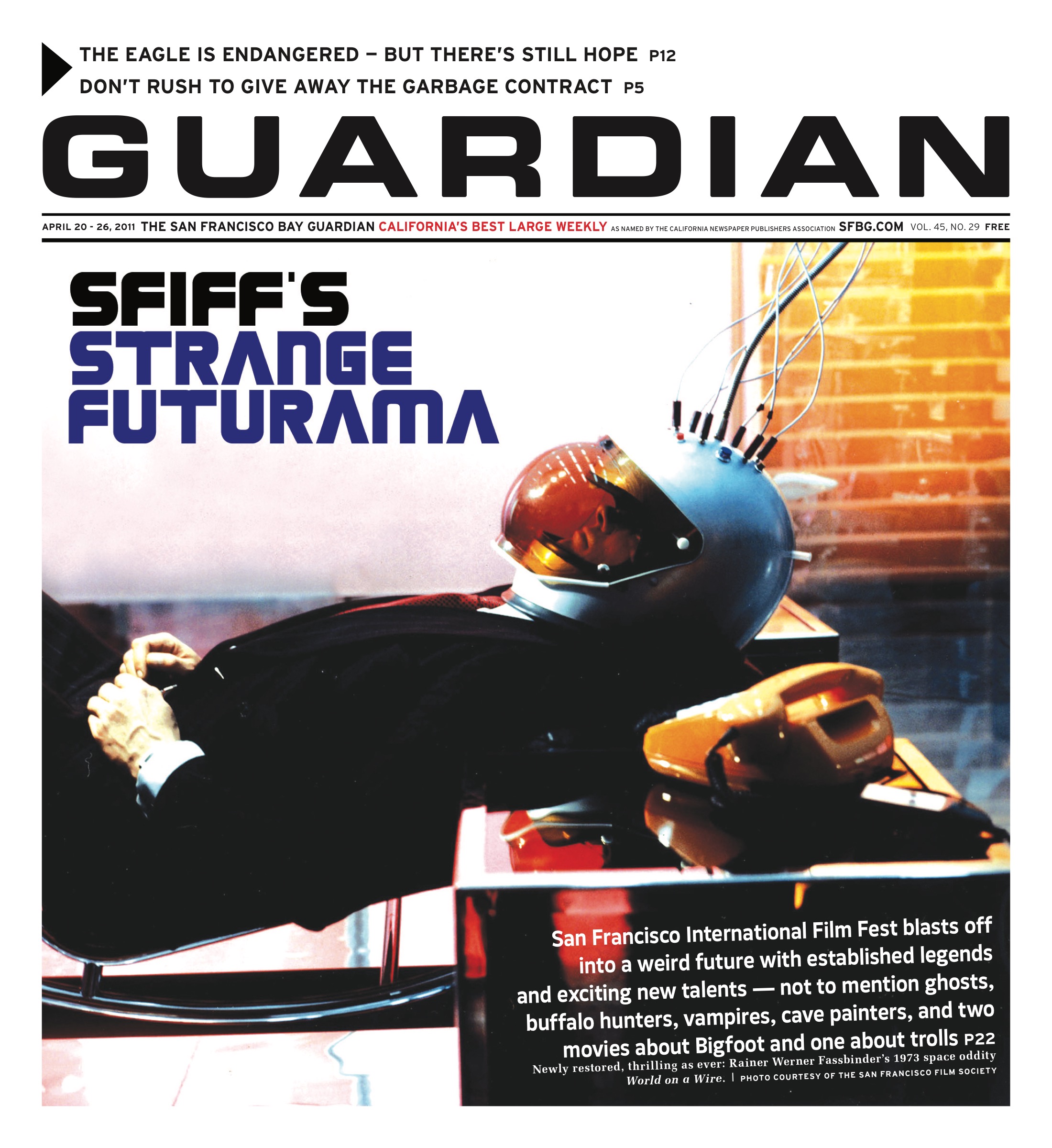
rebeccab@sfbg.com
Three supporters of WikiLeaks have been locked in a months-long court battle with the U.S. government following demands for data associated with their Twitter accounts, and the case has given rise to a campaign calling for improved transparency and user privacy protection across the board, spearheaded by the Electronic Frontier Foundation (EFF).
Last December, the U.S. Department of Justice ordered Twitter to turn over data linked to the accounts of Birgitta Jonsdottir, Rop Gonggijp, and Jacob Appelbaum as part of a federal investigation of WikiLeaks. Jonsdottier is a member of the Icelandic Parliament; Gonggijp is an Icelandic businessperson; and Appelbaum is Seattle-based Web programmer. All three were WikiLeaks affiliates and part of the team that prepared a video aired by the organization in 2010 featuring classified military footage documenting civilian deaths at the hands of U.S. troops.
EFF and the American Civil Liberties Union (ACLU) came to the defense of the targeted Twitter users, challenging the constitutionality of the government’s demand and characterizing it as “an improper and overbroad fishing expedition.” The case is ongoing.
Meanwhile, EFF has formulated a new online campaign hinging on one critical aspect of this unfolding saga: what Twitter did when the DOJ came looking for user data. “Twitter took one look at this and said this is a terrible thing,” said EFF activist Rainey Reitman.
The federal demand was initially accompanied by a gag order prohibiting Twitter from notifying its users that an investigation was underway. But Twitter balked and within days, the judge partially unsealed the documents, allowing the tech company to legally notify its users. Twitter then notified the WikiLeaks supporters via e-mail that it would respond to the request in 10 days unless a legal process was initiated. If it hadn’t done so, there wouldn’t be a case — and the three users would have remained in the dark. For this, EFF recognized Twitter as part of its new campaign targeting 12 of the largest tech companies. The “Who has your back?” campaign calls on social-media sites, e-mail hosting services, and Internet service providers to adhere to four transparency and privacy guidelines.
EFF is asking companies to strengthen the language in their privacy policies by committing to never share information with the government unless it’s legally necessary and to notify users whenever possible. They’re asked to be transparent about how often they share data with the government, documenting it regularly. Companies should publish their law-enforcement guidelines, according to EFF, and join with the Digital Due Process Coalition, which is working to upgrade the 1986 Electronic Communications Privacy Act to modernize surveillance laws for the Internet age.
Companies’ progress in satisfying EFF’s demands is charted on a website displaying gold stars for sufficient transparency and privacy policies. By press time, Twitter was in second place, with Google in the lead. They were the only two companies that won recognition in the categories “tell users about data demands” and “be transparent about government requests.” Each company also had earned credit for defending user privacy in court.
Apple, Comcast, MySpace, Skype, and Verizon were all tied for last place, with no evidence of following EFF-recommended practices. Amazon and Yahoo each won recognition for defending user privacy in court, yet fell short when it came to policies on government data requests. (According to news reports from 2005, a Chinese journalist was imprisoned for e-mailing comments to a democracy group in New York after Yahoo turned over his user data to the Chinese government.) Microsoft, Facebook, and AT&T earned only a single star each for joining the Digital Due Process Coalition.
“I think it’s pretty safe to assume that all of these companies are receiving requests from the government for information,” Reitman said, noting that not a single one had responded to say it simply hadn’t received any requests. “We chose those companies which we felt had the greatest quantity of data about consumers.”
An amicus brief filed by online privacy researchers on behalf of the WikiLeaks supporters suggests that consumers are often in the dark about privacy policies. A 2007 study at UC Berkeley found that only 1.4 percent of participants reported reading user license agreements often and thoroughly, while 66.2 percent admitted to rarely reading them.
The Guardian contacted all 12 companies for comment, but only received responses from Facebook and Microsoft.
“Like all service providers, we must respond to lawful requests to provide information,” a Microsoft spokesperson wrote via e-mail. “We take our responsibility to protect our customers’ privacy very seriously, and we have specific processes in place when responding to such requests. Additionally, we participate in the Global Network Initiative through which we have agreed to certain principles in responding to government demands.” The Global Network Initiative was recently slammed by a Forbes columnist for having “only barely functioned” since its creation in 2008.
Facebook’s Simon Axten responded via e-mail: “We scrutinize every request for legal sufficiency before responding and employ a dedicated team of [certified information privacy professionals] to manage these requests. We never disclose user content in response to U.S. legal process unless that process is a search warrant that has been reviewed and signed by a judge.”
Axten noted that Facebook had fought for user privacy against civil litigants and resisted all requests from private parties. Most government user data requests directed at Facebook aren’t related to freedom of speech, but to crimes such as child kidnapping.
“I’ve heard that argument from them before,” Reitman noted when asked to respond. “It would be easier to understand if … they were transparent about publishing their law enforcement guidelines and producing regular reports.”
Film Listings
Film listings are edited by Cheryl Eddy. Reviewers are Kimberly Chun, Michelle Devereaux, Peter Galvin, Max Goldberg, Dennis Harvey, Johnny Ray Huston, Louis Peitzman, Lynn Rapoport, Ben Richardson, and Matt Sussman. For rep house showtimes, see Rep Clock. For first-run showtimes, see Movie Guide.
SAN FRANCISCO INTERNATIONAL FILM FESTIVAL
The 54th annual San Francisco International Film Festival runs April 21–May 5. Venues are the Sundance Kabuki, 1881 Post, SF; Castro, 429 Castro, SF; New People, 1746 Post, SF; San Francisco Museum of Modern Art, 151 Third, SF; and Pacific Film Archive, 2575 Bancroft, SF. For tickets (most shows $13) and complete schedule visit www.sffs.org.
THURS/21
Castro Beginners 7.
FRI/22
Kabuki The Place In Between 2. “Irresistable Impulses” (shorts program) 3:15. The Good Life 3:45. Miss Representation 6. Hahaha 6:15. I’m Glad My Mother is Alive 6:45. Attenberg 7. Walking Too Fast 8:45. Meek’s Cutoff 9. Microphone 9:15. The City Below 9:30. Stake Land 11:30.
New People Hot Coffee 6:30. Nainsukh 9:15.
PFA Silent Souls 7. Jean Gentil 8:40.
SAT/23
Kabuki “Youth Media Mash-Up” noon. Mysteries of Lisbon 12:15. The Autobiography of Nicolae Ceausescu 12:45. The Colors of the Mountain 1. Year Without a Summer 3. Life, Above All 4. “Mind the Gap” (shorts program) 4:45. Better This World 6. The Future 6:15. Le Quattro Volte 6:45. The Light Thief 7:15. World on a Wire 8:45. Living On Love Alone 9:30. “Get With the Program” (shorts program) 9:45. The Troll Hunter 11:30.
New People Pink Saris 1. The Last Buffalo Hunt 3:20. The Pipe 6. Hospitalité 9.
SFMOMA The Mill and the Cross 12:30. !Women Art Revolution 3.
PFA Foreign Parts 2:15. The Green Wave 4. Autumn 6:15. The High Life 8:40.
SUN/24
Kabuki “Irresistable Impulses” (shorts program) noon. A Cat in Paris 12:30. Jean Gentil 1. Nainsukh 2:30. The Green Wave 2:45. Walking Too Fast 3. “Cupid With Fangs” (shorts program) 3:15. Silent Souls 4:45. Crime After Crime 6. At Ellen’s Age 6:15. The Colors of the Mountain 6:30. “The Deep End” (shorts program) 7. Asleep in the Sun 8:45. “State of Cinema: Christine Vachon” 9. The Stool Pigeon 9:15. “From A to Zellner” (shorts program) 9:45.
New People A Useful Life noon. Microphone 2. The Autobiography of Nicolae Ceausescu 5:15. The Future 9:15.
PFA Something Ventured 2. Children of the Princess of Cleves 4:15. Chantrapas 6:15. The Arbor 8:45.
MON/25
Kabuki Children of the Princess of Cleves 2. The City Below 4. Meek’s Cutoff 4:30. Hot Coffee 6:30. Autumn 6:45. Cave of Forgotten Dreams 7. She Monkeys 7:15. Salon: The Social Justice Documentary 8:30. Hahaha 9. The Light Thief 9:15. I’m Glad My Mother is Alive 9:30. Stake Land 9:45.
New People The Troll Hunter 6:15. Year Without a Summer 9:15.
PFA A Useful Life 7. !Women Art Revolution 8:40.
TUES/26
Kabuki Hot Coffee 2. Hahaha 3:30. Ulysses 4. Chantrapas 6. Jean Gentil 6. The Sleeping Beauty 6:15. Nostalgia for the Light 6:30. She Monkeys 8:45. New Skin For the Old Ceremony 9. The Whistleblower 9:15. Cave of Forgotten Dreams 9:30.
New People The Last Buffalo Hunt 6:30. “Cupid With Fangs” (shorts program) 9.
PFA Better This World 6:30. Position Among the Stars 8:50.
OPENING
African Cats This Earth Day release, narrated by Samuel L. Jackson, follows cheetah and lions on the African savanna. (1:40) Shattuck.
Ceremony It’s easy to dismiss Ceremony as derivative. The plot isn’t exactly original. But recycled material aside, it’s an entertaining indie diversion and a promising feature-length debut from writer-director Max Winkler. The underrated Michael Angarano stars as Sam Davis, a pretentious shit who owes a lot to Holden Caulfield by way of Rushmore‘s Max Fischer. Sam tricks his best friend Marshall (Reece Thompson) into accompanying him on a weekend getaway, with the real objective of winning back his lost love Zoe (Uma Thurman). But Zoe is all set to marry blowhard Whit Coutell (Lee Pace) and is not too keen on blowing off her wedding. None of the characters are all that likable — a quirky indie comedy must — and there are few surprises. But Winkler’s script is cute, and his cast is charming enough to carry the material along. The scenes between Angarano and Thompson are the film’s best. Here’s hoping they stand out enough to earn these young actors the recognition they deserve. (1:40) Lumiere. (Peitzman)
Pom Wonderful Presents: The Greatest Movie Ever Sold Don’t even think about shortening the title: Morgan Spurlock’s new documentary POM Wonderful Presents: The Greatest Story Ever Sold is ingenious, bitingly funny, and made possible by corporate sponsorship. POM paid good money to earn a spot about the title, so damned if I’m going to leave them out. Instead of keeping product placement subliminal — or at least trying — Spurlock shows exactly what goes into the popular marketing practice. His film isn’t so much critical as it is honest: he doesn’t fight product placement, but rather embraces it to his own advantage. It’s win-win. Spurlock gets to make his movie without losing any cash, and the audience gets a hilarious insider look into a mostly hidden facet of advertising. As he says, it’s about transparency, and no one can claim Spurlock is trying to go behind our backs. And what of the advertising that pops up throughout the film? I can only speak to my own experience, but yes, I’m drinking POM as I write this. (1:26) SF Center. (Peitzman)
Red, White and Blue Noah Taylor stars in this mystery punctuated by shocking twists. (1:42) Roxie.
Trust A teenager is victimized by an internet predator in this drama. Clive Owen and Catherine Keener play her horrified parents. (1:55) Opera Plaza.
Tyler Perry’s Madea’s Big Happy Family She’s baaack. (2:00) Shattuck.
Water for Elephants A young man (Robert Pattinson) joins a circus (populated by the likes of Reese Witherspoon and Christoph Waltz) in this drama based on the best-selling novel. (2:00) Balboa, Marina.
White Irish Drinkers What is 20-year TV veteran John Gray (of series The Ghost Whisperer) doing writing-directing yet another indie Mean Streets (1973) knockoff? That’s fresh-outta-film-school business. Why is anyone doing one of those so long after the expiration date for that second (or by now third) generation shit? This trip down some very familiar roads — 1997’s Good Will Hunting and 1977’s Saturday Night Fever being others — stars SF native Nick Thurston as a 1975 Brooklyn youth with a violent alcoholic father (Stephen Lang), long-suffering mother (Karen Allen), and an older brother drifting into criminality (Geoffrey Wigdor). As outside influences this talented closet artist has the requisite upscaling girl (Leslie Murphy) urging him to dream big, and a wistfully downtrodden employer (Peter Riegert) providing the plot gimmick as a failing movie-palace owner who hopes to turn around his fortunes with a one-night-stand by the Rolling Stones. Everything about White Irish Drinkers feels recycled from other movies. Though the performers work hard and the progress is entertaining enough, there’s way too much déjà vu here for one film to bear and still stand on its own punch-drunk legs. (1:49) Lumiere, Shattuck. (Harvey)
ONGOING
The Adjustment Bureau As far as sci-fi romantic thrillers go, The Adjustment Bureau is pretty standard. But since that’s not an altogether common genre mash-up, I guess the film deserves some points for creativity. Based on a short story by Philip K. Dick, The Adjustment Bureau takes place in a world where all of our fates are predetermined. Political hotshot David Norris (Matt Damon) is destined for greatness — but not if he lets a romantic dalliance with dancer Elise (Emily Blunt) take precedence. And in order to make sure he stays on track, the titular Adjustment Bureau (including Anthony Mackie and Mad Men‘s John Slattery) are there to push him in the right direction. While the film’s concept is intriguing, the execution is sloppy. The Adjustment Bureau suffers from flaws in internal logic, allowing the story to skip over crucial plot points with heavy exposition and a deus ex machina you’ve got to see to believe. Couldn’t the screenwriter have planned ahead? (1:39) Balboa, Shattuck. (Peitzman)
Arthur (1:45) Empire, 1000 Van Ness, SF Center.
Atlas Shrugged (1:57) Shattuck, SF Center.
*Bill Cunningham New York To say that Bill Cunningham, the 82-year old New York Times photographer, has made documenting how New Yorkers dress his life’s work would be an understatement. To be sure, Cunningham’s two decades-old Sunday Times columns — “On the Street,” which tracks street-fashion, and “Evening Hours,” which covers the charity gala circuit — are about the clothes. And, my, what clothes they are. But Cunningham is a sartorial anthropologist, and his pictures always tell the bigger story behind the changing hemlines, which socialite wore what designer, or the latest trend in footwear. Whether tracking the near-infinite variations of a particular hue, a sudden bumper-crop of cropped blazers, or the fanciful leaps of well-heeled pedestrians dodging February slush puddles, Cunningham’s talent lies in his ability to recognize fleeting moments of beauty, creativity, humor, and joy. That last quality courses through Bill Cunningham New York, Richard Press’ captivating and moving portrait of a man whose reticence and personal asceticism are proportional to his total devotion to documenting what Harold Koda, chief curator at the Costume Institute at the Metropolitan Museum of Art, describes in the film as “ordinary people going about their lives, dressed in fascinating ways.” (1:24) Embarcadero, Shattuck. (Sussman)
Certified Copy Abbas Kiarostami’s beguiling new feature signals “relationship movie” with every cobblestone step, but it’s manifestly a film of ideas — one in which disillusionment is as much a formal concern as a dramatic one. Typical of Kiarostami’s dialogic narratives, Certified Copy is both the name of the film and an entity within the film: a book written against the ideal of originality in art by James Miller (William Shimell), an English pedant fond of dissembling. After a lecture in Tuscany, he meets an apparent admirer (Juliette Binoche) in her antique shop. We watch them talk for several minutes in an unbroken two-shot. They gauge each other’s values using her sister as a test case — a woman who, according to the Binoche character, is the living embodiment of James’ book. Do their relative opinions of this off-screen cipher constitute characterization? Or are they themselves ciphers of the film’s recursive structure? Kiarostami makes us wonder. They begin to act as if they were married midway through the film, though the switch is not so out of the blue: Kiarostami’s narrative has already turned a few figure-eights. Several critics have already deemed Certified Copy derivative of many other elliptical romances; the strongest case for an “original” comes of Roberto Rossellini’s Voyage to Italy (1954). The real difference is that while Rossellini’s masterpiece realizes first-person feelings in a third-person approach, Kiarostami stays in the shadow of doubt to the end. (1:46) Opera Plaza, Smith Rafael. (Goldberg)
*Circo The old notion of “running away with the circus” seldom seemed appealing — conjuring images of following an elephant around with a shovel — and it grows even less so after watching Aaron Schock’s warm, touching documentary. The kids here might one day run away from the circus. They’re born into Grand Circo Mexico, one of four circuses run by the Ponce family, which has been in this business for generations; if they’re old enough to walk, they’re old enough to perform, and help with the endless setup and breakdown chores. (Presumably child labor laws are an innovation still waiting to happen here.) Touring Mexico’s small towns in trucks with a variety of exotic animals, it’s a life of labor, with on-the-job training in place of school — arguably not much of a life for child, as current company leader Tino’s wife Ivonne (who really did run away with the circus, or rather him, at age 15) increasingly insists. Other family members have split for a normal life, and Tino is caught between loyalty to his parents’ ever-struggling business and not wanting to lose the family he’s raised himself. This beautifully shot document, scored by Calexico and edited by Mark Becker (of 2005’s marvelous Romantico), is a disarming look at a lifestyle that feels almost 19th century, and is barely hobbling into the 21st one. (1:15) Lumiere, Shattuck. (Harvey)
The Conspirator It may not be your standard legal drama, but The Conspirator is a lot more enjoyable when you think of it as an extended episode of Law & Order. The film chronicles the trial of Mary Surratt (Robin Wright), the lone woman charged in the conspiracy to assassinate Abraham Lincoln. It’s a fascinating story, especially for those who don’t know much of the history past John Wilkes Booth. But while the subject matter is compelling, the execution is hit-or-miss. Wright is sympathetic as Surratt, but the usually great James McAvoy is somewhat forgettable in the pivotal role of Frederick Aiken, Surratt’s conflicted lawyer. It’s hard to say what it is that’s missing from The Conspirator: the cast — which also includes Evan Rachel Wood and Tom Wilkinson — is great, and this is a story that’s long overdue to be told. Still, something is lacking. Could it be the presence of everyone’s favorite detective, the late Lennie Briscoe? (2:02) Embarcadero, Empire, 1000 Van Ness, Piedmont, Presidio. (Peitzman)
*Hanna The title character of Hanna falls perfectly into the lately very popular Hit-Girl mold. Add a dash of The Boys from Brazil-style genetic engineering — Hanna has the unfair advantage, you see, when it comes to squashing other kids on the soccer field or maiming thugs with her bare hands — and you have an ethereal killing/survival machine, played with impassive confidence by Atonement (2007) shit-starter Saoirse Ronan. She’s been fine-tuned by her father, Erik (Eric Bana), a spy who went out into the cold and off the grid, disappearing into the wilds of Scandinavia where he home-schooled his charge with an encyclopedia and brutal self-defense and hunting tests. Atonement director Joe Wright plays with a snowy palette associated with innocence, purity, and death — this could be any time or place, though far from the touch of modern childhood stresses: that other Hannah (Montana), consumerism, suburban blight, and academic competition. The 16-year-old Hanna, however, isn’t immune from that desire to succeed. Her game mission: go from a feral, lonely existence into the modern world, run for her life, and avenge the death of her mother by killing Erik’s CIA handler, Marissa (Cate Blanchett). The nagging doubt: was she born free, or Bourne to be a killer? Much like the illustrated Brothers Grimm storybook that she studies, Hanna is caught in an evil death trap of fairytale allegories. One wonders if the super-soldier apple didn’t fall far from the tree, since evil stepmonster Marissa oversaw the program that produced Hanna — the older woman and the young girl have the same cold-blooded talent for destruction and the same steely determination. Yet there’s hope for the young ‘un. After learning that even her beloved father hid some basic truths from her, this natural-born killer seems less likely to go along with the predetermined ending, happy or no, further along in her storybook life. (1:51) Empire, Four Star, 1000 Van Ness, SF Center. (Chun)
Henry’s Crime Keanu Reeves is one of those actors who’s spectacularly franchise-wealthy — due to those Matrix movies wherein his usual baffled solemnity was ideal — yet whom the public otherwise feels scant evident loyalty toward, and producers don’t know what to do with. Now that he’s aging out of his looks, can he transform into a character actor? Maybe. Reeves played charming suitors in Something’s Gotta Give (2003) and The Private Lives of Pippa Lee (2009), both very much supporting roles. He seems increasingly interested in indie films, which he surely doesn’t need to pay the rent, and he’s certainly the best reason to see Henry’s Crime, a pleasant, middling, retro crime caper costarring frequently better actors at dimmer wattage than usual. The film is an old hat out of the Damon Runyon trunk, in which lovable crooks mix it up with hoity theatrical types and nobody gets hurt except (barely) the really bad guys. James Caan — who starred in similar enterprises during their post-The Sting heyday — plays the veteran convict-conman who schools Reeves’ hapless Buffalo, N.Y., toll-taker Henry after our hero is slammer-thrown for an armed robbery he didn’t know he was embroiled in until it was over. Upon release, Henry discovers the targeted bank and nearby theater had a Prohibition-era secret tunnel between them. Having already done the time, he figures he might as well do the crime by finishing the aborted bank job for real. He enlists local stage diva Julie (Vera Farmiga) as well as Caan’s parole-coaxed Max. Resulting wacky hijinks render Max a theater “volunteer” and Henry as Julie’s Cherry Orchard costar, all so they can access the walled-up passageway to the bank vault. Much of this is ridiculous, of course, and not intentionally so. The climax is classic movies-getting-how-theater-works-wrong. But its contrivance functions to some extent because the lead actor convinces us it should. (1:48) Embarcadero. (Harvey)
Hop (1:30) 1000 Van Ness, Shattuck.
*In a Better World Winner of this year’s Best Foreign Language Film Oscar, this latest from Danish director Susanne Bier (2004’s Brothers, 2006’s After the Wedding) and her usual co-scenarist Anders Thomas Jensen (2005’s Adam’s Apples, 2003’s The Green Butchers) is a typically engrossing, complex drama that deals with the kind of rage for “personal justice” that can lead to school and workplace shootings, among other things (like terrorism). Shy, nervous ten-year-old Elias (Markus Rygaard) needs a confidence boost, but things are worrying both at home and elsewhere. His parents are estranged, and his doting father (Mikael Persbrandt) is mostly away as a field hospital in Kenya tending victims of local militias. At school, he’s an easy mark for bullies, a fact which gets the attention of charismatic, self-assured new kid Christian (William Jøhnk Nielsen), who appoints himself Elias’ new (and only) friend — then when his slightly awed pal is picked on again, intervenes with such alarming intensity that the police are called. Christian appears a little too prone to violence and harsh judgment in teaching “lessons” to those he considers in the wrong; his own domestic situation is another source of anger, as he simplistically blames his earnest, distracted executive father (Ulrich Thomsen) for his mother’s recent cancer death. Is Christian a budding little psychopath, or just a kid haplessly channeling his profound loss? Regardless, when an adult bully (Kim Bodnia as a loutish mechanic) humiliates Elias’ father in front of the two boys, Christian pulls his reluctant friend into a pursuit of vengeance that surely isn’t going to end well. With their nuanced yet head-on treatment of hot button social and ethical issues, Bier and Jensen’s work can sometimes border on overly-schematic melodrama, meting out its own secular-humanist justice a bit too handily, like 21st-century cinematic Dickenses. But like Dickens, they also have a true mastery of the creating striking characters and intricately propulsive plotlines that illustrate the points at hand in riveting, hugely satisfying fashion. This isn’t their best. But it’s still pretty excellent, and one of those universally accessible movies you can safely recommend even to people who think they don’t like foreign or art house films. (1:53) Embarcadero, Shattuck. (Harvey)
Insidious (1:42) 1000 Van Ness.
*Jane Eyre Do we really need another adaptation of Jane Eyre? As long as they’re all as good as Cary Fukunaga’s stirring take on the gothic romance, keep ’em coming. Mia Wasikowska stars in the titular role, with the dreamy Michael Fassbender stepping into the high pants of Edward Rochester. The cast is rounded out by familiar faces like Judi Dench, Jamie Bell, and Sally Hawkins — all of whom breathe new life into the material. It helps that Fukunaga’s sensibilities are perfectly suited to the story: he stays true to the novel while maintaining an aesthetic certain to appeal to a modern audience. Even if you know Jane Eyre’s story — Mr. Rochester’s dark secret, the fate of their romance, etc. — there are still surprises to be had. Everyone tells the classics differently, and this adaptation is a thoroughly unique experience. And here’s hoping it pushes the engaging Wasikowska further in her ascent to stardom. (2:00) Albany, Embarcadero, Piedmont, Presidio. (Peitzman)
Kill the Irishman If you enjoy 1970s-set Mafia movies featuring characters with luxurious facial hair zooming around in Cadillacs, flossing leather blazers, and outwitting cops and each other — you could do a lot worse than Kill the Irishman, which busts no genre boundaries but delivers enjoyable retro-gangsta cool nonetheless. Adapted from the acclaimed true crime book by a former Cleveland police lieutenant, the film details the rise and fall of Danny Greene, a colorful and notorious Irish-American mobster who both served and ran afoul of the big bosses in his Ohio hometown. During one particularly conflict-ridden period, the city weathered nearly 40 bombings — buildings, mailboxes, and mostly cars, to the point where the number of automobiles going sky-high is almost comical (you’d think these guys would’ve considered taking the bus). The director of the 2004 Punisher, Jonathan Hensleigh, teams up with the star of 2008’s Punisher: War Zone, Ray Stevenson, who turns in a magnetic performance as Greene; it’s easy to see how his combination of book- and street smarts (with a healthy dash of ruthlessness) buoyed him nearly to the top of the underworld. The rest of the cast is equally impressive, with Vincent D’Onofrio, Val Kilmer, Christopher Walken, and Linda Cardellini turning in supporting roles, plus a host of dudes who look freshly defrosted from post-Sopranos storage. (1:46) Opera Plaza. (Eddy)
The King’s Speech Films like The King’s Speech have filled a certain notion of “prestige” cinema since the 1910s: historical themes, fully-clothed romance, high dramatics, star turns, a little political intrigue, sumptuous dress, and a vicarious taste of how the fabulously rich, famous, and powerful once lived. At its best, this so-called Masterpiece Theatre moviemaking can transcend formula — at its less-than-best, however, these movies sell complacency, in both style and content. In The King’s Speech, Colin Firth plays King George VI, forced onto the throne his favored older brother Edward abandoned. This was especially traumatic because George’s severe stammer made public address tortuous. Enter matey Australian émigré Lionel Logue (Geoffrey Rush, mercifully controlled), a speech therapist whose unconventional methods include insisting his royal client treat him as an equal. This ultimately frees not only the king’s tongue, but his heart — you see, he’s never had anyone before to confide in that daddy (Michael Gambon as George V) didn’t love him enough. Aww. David Seidler’s conventionally inspirational script and BBC miniseries veteran Tom Hooper’s direction deliver the expected goods — dignity on wry, wee orgasms of aesthetic tastefulness, much stiff-upper-lippage — at a stately promenade pace. Firth, so good in the uneven A Single Man last year, is perfect in this rock-steadier vehicle. Yet he never surprises us; role, actor, and movie are on a leash tight enough to limit airflow. (1:58) Shattuck. (Harvey)
*Limitless An open letter to the makers of Limitless: please fire your marketing team because they are making your movie look terrible. The story of a deadbeat writer (Bradley Cooper) who acquires an unregulated drug that allows him to take advantage of 100 percent of his previously under-utilized brain, Limitless is silly, improbable and features a number of distracting comic-book-esque stylistic tics. But consumed with the comic book in mind, Limitless is also unpredictable, thrilling, and darkly funny. The aforementioned style, which includes many instances of the infinite regression effect that you get when you point two mirrors at each other, and a heavy blur to distort depth-of-field, only solidifies the film’s cartoonish intentions. Cooper learns foreign languages in hours, impresses women with his keen attention to detail, and sets his sights on Wall Street, a move that gets him noticed by businessman Carl Van Loon (Robert DeNiro in a glorified cameo) as well as some rather nasty drug dealers and hired guns looking to cash in on the drug. Limitless is regrettably titled and masquerades in TV spots as a Wall Street series spin-off, but in truth it sports the speedy pacing and tongue-in-cheek humor required of a good popcorn flick. (1:37) California, Four Star, 1000 Van Ness, SF Center. (Galvin)
*The Lincoln Lawyer Outfitted with gym’d-tanned-and-laundered manly blonde bombshells like Matthew McConaughey, Josh Lucas, and Ryan Phillippe, this adaptation of Michael Connelly’s LA crime novel almost cries out for an appearance by the Limitless Bradley Cooper — only then will our cabal of flaxen-haired bros-from-other-‘hos be complete. That said, Lincoln Lawyer‘s blast of morally challenged golden boys nearly detracts from the pleasingly gritty mise-en-scène and the snappy, almost-screwball dialogue that makes this movie a genre pleasure akin to a solid Elmore Leonard read. McConaughey’s criminal defense attorney Mickey Haller is accustomed to working all the angles — hence the title, a reference to a client who’s working off his debt by chauffeuring Haller around in his de-facto office: a Lincoln Town Car. Haller’s playa gets truly played when he becomes entangled with Louis Roulet (Phillippe), a pretty-boy old-money realtor accused of brutally attacking a call girl. Loved ones such as Haller’s ex Maggie (Marisa Tomei) and his investigator Frank (William H. Macy) are in jeopardy — and in danger of turning in some delightfully textured cameos — in this enjoyable walk on the sleazy side of the law, the contemporary courtroom counterpart to quick-witted potboilers like Sweet Smell of Success (1957). (1:59) Four Star, 1000 Van Ness. (Chun)
Miral (1:42) California.
*Of Gods and Men It’s the mid-1990s, and we’re in Tibhirine, a small Algerian village based around a Trappist monastery. There, eight French-born monks pray and work alongside their Muslim neighbors, tending to the sick and tilling the land. An emboldened Islamist rebel movement threatens this delicate peace, and the monks must decide whether to risk the danger of becoming pawns in the Algerian Civil War. On paper, Of Gods and Men sounds like the sort of high-minded exploitation picture the Academy swoons over: based on a true story, with high marks for timeliness and authenticity. What a pleasant surprise then that Xavier Beauvois’s Cannes Grand Prix winner turns out to be such a tightly focused moral drama. Significantly, the film is more concerned with the power vacuum left by colonialism than a “clash of civilizations.” When Brother Christian (Lambert Wilson) turns away an Islamist commander by appealing to their overlapping scriptures, it’s at the cost of the Algerian army’s suspicion. Etienne Comar’s perceptive script does not rush to assign meaning to the monks’ decision to stay in Tibhirine, but rather works to imagine the foundation and struggle for their eventual consensus. Beauvois occasionally lapses into telegraphing the monks’ grave dilemma — there are far too many shots of Christian looking up to the heavens — but at other points he’s brilliant in staging the living complexity of Tibrihine’s collective structure of responsibility. The actors do a fine job too: it’s primarily thanks to them that by the end of the film each of the monks seems a sharply defined conscience. (2:00) Albany, Opera Plaza. (Goldberg)
*Poetry Sixtysomething Mija (legendary South Korean actor Yun Jung-hee) impulsively crashes a poetry class, a welcome shake-up in a life shaped by unfulfilling routines. In order to write compelling verse, her instructor says, it is important to open up and really see the world. But Mija’s world holds little beauty beyond her cheerful outfits and beloved flowers; most pressingly, her teenage grandson, a mouth-breathing lump who lives with her, is completely remorseless about his participation in a hideous crime. In addition, she’s just been disgnosed with the early stages of Alzheimer’s, and the elderly stroke victim she housekeeps for has started making inappropriate advances. Somehow writer-director Lee Chang-dong (2007’s Secret Sunshine) manages not to deliver a totally depressing film with all this loaded material; it’s worth noting Poetry won the Best Screenplay Award at the 2010 Cannes Film Festival. Yun is unforgettable as a woman trying to find herself after a lifetime of obeying the wishes of everyone around her. Though Poetry is completely different in tone than 2009’s Mother, it shares certain elements — including the impression that South Korean filmmakers have recognized the considerable rewards of showcasing aging (yet still formidable) female performers. (2:19) Shattuck, Smith Rafael. (Eddy)
Potiche When we first meet Catherine Deneuve’s Suzanne — the titular trophy wife (or potiche) of Francois Ozon’s new airspun comedy — she is on her morning jog, barely breaking a sweat as she huffs and puffs in her maroon Adidas tracksuit, her hair still in curlers. It’s 1977 and Suzanne’s life as a bourgeois homemaker in a small provincial French town has played out as smoothly as one of her many poly-blend skirt suits: a devoted mother to two grown children and loving wife who turns a blind eye to the philandering of husband Robert (Fabrice Luchini), Suzanne is on the fast track to comfortable irrelevance. All that changes when the workers at Robert’s umbrella factory strike and take him hostage. Suzanne, with the help of union leader and old flame Babin (Gerard Depardieu, as big as a house), negotiates a peace, and soon turns around the company’s fortunes with her new-found confidence and business savvy. But when Robert wrests back control with the help of a duped Babin, Suzanne does an Elle Woods and takes them both on in a surprise run for political office. True to the film’s light théâtre de boulevard source material, Ozon keeps things brisk and cheeky (Suzanne sings with as much ease as she spouts off Women’s Lib boilerplate) to the point where his cast’s hammy performances start blending into the cheery production design. Satire needs an edge that Potiche, for all its charm, never provides. (1:43) Clay, Shattuck, Smith Rafael. (Sussman)
Rio (1:32) 1000 Van Ness, Presidio, SF Center.
Scre4m Back in 1996, Wes Craven’s Scream revitalized the slasher genre with a script (by Kevin Williamson) that poked fun at horror clichés while still delivering genuine scares. The sequels offered diminishing returns on this once-clever formula; Scream 4 arrives 11 years past Scream 3, presumably hoping to work that old self-referential yet gory magic on a new crop of filmgoers. But Craven and Williamson’s hall-of-mirrors creation (more self-satisfied than self-referential, scrambling to anticipate a cynical audience member’s every second-guess) is barely more than than a continuation of something that was already tired in 2000, albeit with iPhone and web cam gags pasted in for currency’s sake. Eternal Ghostface target Sidney Prescott (Neve Campbell) returns to her hometown to promote what’s apparently a woo-woo self-help book (Mad Men‘s Alison Brie, as Sidney’s bitchy-perky publicist, steals every scene she’s in); still haunting Woodsboro are Dewey (David Arquette), now the sheriff, and Gale (Courteney Cox), a crime author with writer’s block. When the Munch-faced one starts offing high school kids, local movie nerds (Rory Culkin, Hayden Panettiere) and nubile types (Emma Roberts, Hayden Panettiere) react by screening all seven Stab films, inspired by the “real-life” Woodsboro murders, and spouting off about the rules, or lack thereof in the 21st century, of horror sequels. If that sounds mega-meta exhausting, it is. And, truth be told, not very scary. (1:51) 1000 Van Ness. (Eddy)
Some Days Are Better Than Others First-time director Matt McCormick doesn’t break any new stylistic or thematic ground with his ensemble drama, but Some Days Are Better Than Others does boast an interesting bit of stunt casting. Indie rock fans will recognize the Shins’ James Mercer as mopey Eli, who drifts between temp jobs trying to earn enough money to go back to school because he hates working so much; fellow musician Carrie Brownstein appears as Katrina, a recently-dumped, reality TV-obsessed dog-shelter worker; her character is the kind of emo thrift-shopper that Portlandia would had no trouble poking fun at. Other points on this sad-sack square are a lonely woman ((Renee Roman Nose) who finds an erstwhile cremation urn, and an elderly man (David Wodehouse) obsessed with the kaleidoscope-like patterns he captures while filming soap bubbles. Moments of wry humor (Katrina checks messages at “mumblemail.net”) and some Ghost World-ish jabs at mainstream go-getters (including a moving-company douchebag who hires Eli to help clean out a recently-deceased woman’s house) keep Some Days from being a total downer, but be warned: this is one melancholy movie. Shins fans will enjoy the scene where Eli, alone in his room, rehearses for a yearned-for karaoke date with a Bonnie Tyler classic. (1:33) Roxie. (Eddy)
Soul Surfer (1:46) 1000 Van Ness, SF Center.
*Source Code A post-9/11 Groundhog Day (1993) with explosions, Inception (2010) with a heart, or Avatar (2009) taken down a notch or dozen in Chicago —whatever you choose to call it, Source Code manages to stand up on its own wobbly Philip K. Dick-inspired legs, damn the science, and take off on the wings of wish fulfillment. ‘Cause who hasn’t yearned for a do-over — and then a do-over of that do-over, etc. We could all be as lucky — or as cursed — as soldier Colter Stevens (Jake Gyllenhaal), who gets to tumble down that time-space rabbit hole again and again, his consciousness hitching a ride in another man’s body, while in search of the bomber of a Chicago commuter train. On the upside, he gets to meet the girl of his dreams (Michelle Monaghan) — and see her getting blown to smithereens again and again, all in the service of his country, his commander-cum-link to the outside world (Vera Farmiga), and the scientist masterminding this secret military project (Jeffrey Wright). On the downside, well, he gets to do it over and over again, like a good little test bunny in pinball purgatory. Fortunately, director Duncan Jones (2009’s Moon) makes compelling work out of the potentially ludicrous material, while his cast lends the tale a glossed yet likable humanity, the kind that was all too absent in Inception. (1:33) Balboa, Marina, 1000 Van Ness. (Chun)
*Win Win Is Tom McCarthy the most versatile guy in Hollywood? He’s a successful character actor (in big-budget movies like 2009’s 2012; smaller-scale pictures like 2005’s Good Night, and Good Luck; and the final season of The Wire). He’s an Oscar-nominated screenwriter (2009’s Up). And he’s the writer-director of two highly acclaimed indie dramas, The Station Agent (2003) and The Visitor (2007). Clearly, McCarthy must not sleep much. His latest, Win Win, is a comedy set in his hometown of New Providence, N.J. Paul Giamatti stars as Mike Flaherty, a lawyer who’s feeling the economic pinch. Betraying his own basic good-guy-ness, he takes advantage of a senile client, Leo (Burt Young), when he spots the opportunity to pull in some badly-needed extra cash. Matters complicate with the appearance of Leo’s grandson, Kyle (newcomer Alex Shaffer), a runaway from Ohio. Though Mike’s wife, Jackie (Amy Ryan), is suspicious of the taciturn teen, she allows Kyle to crash with the Flaherty family. As luck would have it, Kyle is a superstar wrestler — and Mike happens to coach the local high school team. Things are going well until Kyle’s greedy mother (Melanie Lynskey) turns up and starts sniffing around her father’s finances. Lessons are learned, sure, and there are no big plot twists beyond typical indie-comedy turf. But the script delivers more genuine laughs than you’d expect from a movie that’s essentially about the recession. (1:46) Bridge, California, Piedmont. (Eddy)
Your Highness One of the dangers of reviewing a film like Your Highness is that stoner comedies have a very specific intended audience. A particular altered state is recommended to maximize one’s enjoyment. I tend not to show up for professional gigs with Mary Jane as my plus-one, so I had to view the latest from Pineapple Express (2008) director David Gordon Green through un-bloodshot eyes. While Express was more explicitly ganja-themed, Your Highness is instead a comedy that approximates the experience of getting as high as possible, then going directly to Medieval Times. Never gut-bustingly funny, Your Highness still reaps chuckles from its hard-R dialogue and plenty of CG-assisted sight gags involving genetalia. James Franco and Danny McBride star as princes, one heroic and one ne’er-do-well, who quest to save a maiden kidnapped by an evil wizard (Justin Theroux). Natalie Portman turns up as a thong-wearing warrior, just ’cause it’s that kind of movie. Forget the box office; only time and the tastes of late-night movie watchers will dictate whether Your Highness is a success or a bust. Case in point: nobody thought much of Half Baked (1998) when it was released, but in certain circles, it’s become a bona fide classic. Say it with me now: “Fuck you, fuck you, fuck you, you’re cool, and fuck you. I’m out!” (1:42) 1000 Van Ness, SF Center. (Eddy)
Hot sexy events: April 13-19

Where better to talk dirty than on the techno-verse? Nowhere, that’s where. Our fave SF sex blogger – c’mon, besides ourselves — Fleur De Lis SF makes an appearance at this used-to-be (before it expanded it occasional East Bay nights) monthly storytelling event, as does Reid Mihalko, a sexpert who has made appearances on Tyra Banks’ TV show, in addition to other seemingly unlikely places for a perv like him. Hot tip: Fleur De Lis just wrote about how Mihalko ahem, enjoyed meeting her the other day at Monika Thomas’ Sex Geek Potluck – knowing these two, could a round two be far behind?
Bawdy Storytelling: Taking Dirty and Technology
It’s shocking how often people use the Internet these days for things that don’t involve sex. Well, not these folks. This month’s Bawdy has assembled a top shelf lineup of pervs, including Allison Moon, creator of Burning Man’s home for queer women, Camp Beaverton, and as-of-recently author of a new lesbian werewolf novel. Everyone will be talking about how they’ve used technology to get super viral. Sexting during the event encouraged.
Weds/13 8 p.m., $10
The Blue Macaw
2565 Mission, SF
“Advanced CBT: Ready for the Ride?”
EMS/TENS-type electrical stimulation, cock and ball bondage, how to torture and tease your partner – who is ready for a walk on the wild side? Surely, that would be the attendees of this workshop, led by Gabriele Hoff, who has interviewed over 1200 couples and individuals for her research into the topic.
Weds/13 6-8 p.m., $20-25
Good Vibrations
1620 Polk, SF
(415) 345-0500
Eddie Dane memorial
Good night, sweet clown. Eddie Dane was a lot of things to a lot of people in the burlesque community, but a bummer to mourn – never! Help the tassel-twirlers say goodbye to one of the country’s great Burly Q troupe leaders at this free memorial burlesque revue, why don’t you?
Thurs/14 8 p.m., free
DNA Lounge
375 11th St., SF
(415) 626-1409
International Ms. Leather 25th Anniversary weekend
So very much for leatherwomen going on this weekend! The International Ms. Leather celebration hits town on Thursday, and if speed tricking, uniform parties, and of course, the yearly competitions for Ms. Leather and Ms. Bootblack are up your alley, you’d be best served by getting down that of this weekend-long celebration of women in hides.
Thurs/14-Sun/17, $25-155
Kinky Salon: Prohibition
You know what wasn’t outlawed during Prohibition? That’s right, ukuleles. So dance I say, to the organic pluckings of Five Cent Coffee, just one of the live music and performances acts that will be going on at Kinky Salon – while a building full of new friends have sex all around you. Kazoo orgy?
Sat/16 10 p.m.-late, $25-35 members only
Mission Control
“Let’s Talk About Sex”
Lee Harrington thinks you – yes you! – deserve to live the sex life of your dreams. To that end, he’s holding this frank discussion about what turns us all on when no one is looking. It’s all about airing your dirty laundry, and feeling good about it. Are you in?
Tues/19 7:30 p.m., $15-25 sliding scale
Center for Sex and Culture
1349 Mission, SF
(415) 552-7399
Out of the shadows

arts@sfbg.com
MUSIC The Cults out of the bag.
The initial mystery surrounding the Brooklyn band of two has been solved, as rumors turned into a year of lengthy articles, photographs, and live performances, all soothing the flea-ridden hype. The official promise of a debut full-length this summer is sure to stimulate some additional excitement, but once again the information age has won and indie snoops are left with a furry clump of truth.
“There’s no real story behind us. We’re just real people,” explains Brian Oblivion, the male half of Cults. While it may seem like some rock stars are hiding wizard or robot identities, believe it or not, all musicians are indeed “just real people.” Oblivion attempts to elaborate on this idea, but he and girlfriend Madeline Follin, the female half of the band, are riding in a tour van through some sketchy airwaves. His voice keeps transforming into robotic and scratchy sounds, which makes his theory slightly suspicious.
But no — the Cults are neither lizard-people nor alien-forms. They’re not angry cult leaders or brainwashed followers for that matter. The Internet has explained it all and the facts are clearly posted: Oblivion and Follin are both 22, from San Diego, and going to film school in New York City.
Follin grew up swaddled in punk music, and Oblivion always had a thing for surf-rock, but when the two of them began their courtship, a musical agreement had to commence. Soul, ’50s pop, and ’60s girl-groups like Lesley Gore and the Shangri-Las became a pleasant middle ground. When the lovers began to play music together, their inspiration was a direct pipeline to these performers; musicians who could make lemons into limoncello and drape a lacy haze over any foggy day.
“There’s something so tough about ’50s pop music,” says Oblivion. He respects the genre’s mold-breaking ideas, from its social connotations and ability to blur race barriers to its physical elements, like new echo effects and guitar tones. “There’s lots of spirit in that music that gets written off as retro when new acts try to perform it. But there’s a sentiment in it that we like. It’s moving. There’s something special there.”
Music by Cults makes daisies grow and serious cares seem like spoonfuls of acid-laced sugar. Everything is sublime beneath Follin’s gorgeous bell-like vocals, even when she sings about naughty behaviors, crying, and shit relationships. And they’re not the only young band that has begun harnessing the Motown stallion. Best Coast is the most direct example, but groups like Warpaint and Dom have also turned rock back a few pages, spawning a fresh generation of ears ready to challenge the music industry’s current corporate-pop bill.
“Madeline has a theory about [the ’50s and ’60s pop revival],” Oblivion says. “We’re just old enough now to appreciate it. Our parents grew up listening to it because it was our grandparents’ style. But we’re the ones going back and rediscovering. Our parents are still into their ’80s Rolling Stones records. Our generation is excited because we’re digging in Dumpsters and finding these old records — and we’re finding this music without having it shoved in our faces.”
Like treasure chests buried beneath a sea of Rihannas, American Idols, and decades of rock, the serenades of brass instruments, cheery bass lines, hollow voices, and forlorn lyrics are bubbling up to the surface. It’s discovery and reacquainted love. Aging 40 years or more, these albums may be dusty and scratched, their performers long absent from daily gossip rags, yet there’s still some element of mystery that has regrown from the ashes of the era. That mystery makes for good hype, but as Cults have learned, you’ve got to come out of the shadows to make solid impressions.
“It’s fun to play live and interact with audiences. Live [music] is so important — it’s the only way to make money, and right now shows are doing awesome,” Oblivion says with his crackly, phone-impaired voice, noting his admiration for indie bands that are selling out large venues. He’s calling it a revolution.
“People want to have an experience, something to hold onto. They’re tired of the MP3s that move around through the air, because it’s just not the same as being at a show and feeling the music come out of the speakers. It’s immaterial. You walk away with a feeling.”
That feeling is the revolution.
CULTS
With Magic Kids, White Arrows
Thurs./14, 8 p.m.; $13
The Independent
628 Divisadero, SF
(415) 771-1421