International

Mexico warns citizens: use extreme caution in Arizona

7

It’s no surprise to anyone who has watched Newsom stubbornly refuse to take responsibility for the consequences of his flawed juvenile immigrant policy that the mayor is playing coy when it comes to the Board of Supervisors’ and the City Attorney’s attempts to institute a boycott of Arizona.


The real surprise in the fallout around Arizona SB 1070 is that the legislation doesn’t include a clause whereby all “aliens” must find a picture of the Arizona state flag, cut out the star in it, and wear it as a “badge,” much like the Nazis required of the Jews.


But Mexico does gets the threat this hateful legislation poses to its citizens. In a new twist on travel advisories, the Ministry of Foreign Affairs of Mexico has warned its citizens in Arizona to exercise extreme caution, whether they are demonstrating against Arizona SB 1070, going about their everyday affairs, attending classes or contemplating accepting work offered from a car on a highway.


“It is important to act with prudence and respect local laws,” the Mexican consulate states. It notes that the new law won’t take effect until 90 days after the end of the current session of the Arizona state legislature, but warns, “however, as was clear during the legislative process, there is a negative political environment for migrant communities and for all Mexican visitors.”


The consulate recommends that Mexican nationals carry available documentation, even before the new law takes place so as to “help avoid needless confrontations.”


“As long as no clear criteria defined for when, where and who the authorities will inspect, it must be assumed that every Mexican citizen may be harassed and questioned without further cause at any time,” the consulate states.


“The new law will also make it illegal to hire or be hired from a motor vehicle stopped on a roadway or highway, regardless of the immigration status of those involved. While these rules are also not yet in force, extreme caution should be used.”


The consulate concludes by reminding folks that “Mexican nationals who are in the United States, regardless of their immigration status, have inalienable human rights and can resort to protection mechanisms under international law, U.S. federal law, and Arizona state law. The functions of the five Mexican consulates in Arizona (Phoenix, Tuscon, Yuma, Nogales and Douglas) include providing legal advice to all Mexicans who consider that they have been subjected to any abuse by the authorities.”


It recommends that Mexicans requiring consular assitance in Arizona use the following toll-free number, available 24 hours a day, seven days a week:1.877.6326.6785 (1.877.63CONSUL).


Rep Clock

0

Schedules are for Wed/28–Tues/4 except where noted. Director and year are given when available. Double features are marked with a •. All times are p.m. unless otherwise specified.

ARTISTS’ TELEVISION ACCESS 992 Valencia, SF; www.atasite.org. $6-8. “Anxiety and Apple Seeds:” B (Cardenas, 2010), Fri, 8. Hosted by the film’s star, comedian Mary Van Note. “Other Cinema:” The Juche Idea (Finn, 2008), Sat, 8:30.

BALBOA 3630 Balboa, SF; www.balboamovies.com. $10. Wild at Heart (Lynch, 1990), Wed, 7. Presented by City Lights Bookstore and featuring readings by Barry Gifford, Robert Mailer Anderson, Eddie Muller, and more.

BERKELEY FELLOWSHIP OF UNITARIAN UNIVERSALISTS Fellowship Hall, 1924 Cedar, Berk; www.bfuu.org. Donations accepted. “Palestine: Occupied Lives, Non-Violence, and Steadfastness:” Bil’in My Love (Carmeli-Pollack, 2006), Fri, 7.

CAFÉ OF THE DEAD 3208 Grand, Oakl; (510) 931-7945. Free. “Independent Filmmakers Screening Nite,” Wed, 6:30.

CASTRO 429 Castro, SF; (415) 621-6120, www.castrotheatre.com. $7.50-10. “Kubrick:” •Lolita (1962), Wed, 2:15, 8, and Eyes Wide Shut (1999), Wed, 5; •2001: A Space Odyssey (1968), Thurs, 2:30, 8, and A.I. Artificial Intelligence (Spielberg, 2001), Thurs, 5:05. San Francisco International Film Festival, Fri-Tues. See film listings.

CHRISTOPHER B. SMITH RAFAEL FILM CENTER 1118 Fourth St, San Rafael; (415) 454-1222, www.cafilm.org. $6.50-10. Exit Through the Gift Shop (Banksy, 2010), call for dates and times. The Girl With the Dragon Tattoo (Oplev, 2009), call for dates and times. The Greatest (Feste, 2009), call for dates and times. Vincere (Bellocchio, 2009), call for dates and times. “Red Riding Trilogy:” Red Riding 1980 (Marsh, 2009), Wed, 6:30; Red Riding 1983 (Tucker, 2009), Thurs, 6:30. Touching Home (Miller and Miller, 2009), April 30-May 6, call for times.

CITY COLLEGE OF SAN FRANCISCO Ocean Campus, 50 Phelan, Cloud Hall, Rm 246, SF; (415) 239-3580. Free. City of Borders (Suh, 2009), Wed, 7. HUMANIST HALL 390 27th St, Oakl; www.humanisthall.org. $5. A Story From the Deep North (Browne, 2008), Wed, 7:30. JACK LONDON SQUARE PAVILION THEATER 98 Broadway, Oakl; www.oakuff.org. Free. “Oakland Underground Film Festival: Major Music:” Sonic Youth: Sleeping Nights Awake (Project Moonshine, 2006), Fri, 8; Kurt Cobain: About a Son (Schnack, 2006), Fri, 9:30. MECHANICS’ INSTITUTE 57 Post, SF; (415) 393-0100, rsvp@milibrary.org. $10. “CinemaLit Film Series: Day and Noir:” Act of Violence (Zinneman, 1948), Fri, 6. PACIFIC FILM ARCHIVE 2575 Bancroft, Berk; (510) 642-5249, www.bampfa.berkeley.edu. $5.50-9.50. San Francisco International Film Festival, April 23-May 6. See film listings. PIEDMONT 4186 Piedmont, Oakl; (510) 464-5980. $5-8. “Cult Classics Attack 5:” Indiana Jones and the Temple of Doom (Spielberg, 1984), Fri-Sat, midnight; Sun, 10am. PIEDMONT VETERANS’ MEMORIAL BUILDING 401 Highland, Piedmont; www.works-exercise.com. $25-75. I Know a Woman Like That (Madsen, 2009), Thurs, 7. Benefit for the Works Cooperative dance and exercise studio with special guests including Rita Moreno and Maxine Hong Kingston. Advance tickets only. RED VIC 1727 Haight, SF; (415) 668-3994. $6-10. Police, Adjective (Porumboiu, 2009), Wed-Thurs, 7, 9:20 (also Wed, 2). The Wolfman (Johnston, 2010), Fri-Sat, 7:15, 9:25 (also Sat, 2, 4:15). The White Ribbon (Haneke, 2009), Sun-Mon, 5, 8 (also Sun, 2). Food, Inc. (Kenner, 2008), Tues, 5:30. Special benefit for Pie Ranch includes a reception, presentation about Pie Ranch, and movie screening. Tickets are $25; advance purchase at www.pieranch.org. ROXIE 3117 and 3125 16th St, SF; (415) 863-1087, www.roxie.com. $5-9.75. Birdemic: Shock and Terror (Nguyen, 2008), Fri-Sat, 11. SAN FRANCISCO MUSEUM OF CRAFT AND FOLK ART 51 Yerba Buena Lane, SF; www.mocfa.org. $40. Bamako Chic (Gosling and Downs, work in progress), Thurs, 7. Benefit screening with live Malian food and music. SAN FRANCISCO PUBLIC LIBRARY Koret Auditorium, 100 Larkin, SF; www.sfpl.org. Free. “Canines on Camera:” Best in Show (Guest, 2001), Thurs, noon. SOUTHERN EXPOSURE 3030 20th St, SF; www.soex.org. $10. “How-To Homestead Hootenanny,” homesteading movie shorts, food tastings, and live music and dancing, Thurs, 7. STONESTOWN TWIN 501 Buckingham, SF; (415) 221-8182. $7.50-10.25. The Harimaya Bridge (Woolfolk, 2009), Wed-Thurs, call for times.

Events listings

0

Event Listings are compiled by Paula Connelly. Submit items for the listings at listings@sfbg.com.

WEDNESDAY 28

Phases Full Moon Celebration McLaren Park, 2100 Sunnydale, SF; (415) 468-9664. 8pm, free. Join in on this celebration of the passing of the Moon Phases with people from different spiritual traditions and walks of life featuring dancing, drumming, singing, readings, performances, and more.

FRIDAY 30

Journalism Innovations University of San Francisco, Fromm Hall, Golden Gate at Parker, SF; (415) 738-4975. Fri. 1pm-7:30pm, Sat. 8:30am-7:30pm, Sun. 9am-12:30pm; $15-$75 sliding scale. Join over 600 journalists, educators, advocates, and citizens for this conference on shaping the future of journalism featuring workshops, expositions, and showcases of new projects, practices, and ideas. Presented by the Society of Professional Journalists (SPJ) Nor Cal.

Poems Under the Dome North Light Court, San Francisco City Hall, 1 Dr. Carlton B. Goodlett, SF; www.poemdome.com. 5:30pm, free. Celebrate the last day of National Poetry Month by reading a poem of your choosing at City Hall. Space is limited, so readers are selected by lottery and limited to three minutes per poem. Readings will begin with a poem by Maxine Chernoff.

BAY AREA

"Are We Alone?" UC Berkeley, Sibley Auditorium, Bechtel Engineering Center, Hearst at LeRoy, Berk.; (510) 642-8678. 7:30pm, free. Attend this debate where Dan Werthimer, UC Berkeley SETI Program Director, and Geoff Marcy, Professor, UC Berkeley Astronomy Department, will present convincing arguments both for and against the existence of technological life elsewhere in the galaxy. Either the Milky Way is teeming with life or it isn’t; decide who’s right.

SATURDAY 1

May Day Dolores Park, 18th St. at Dolores, SF; www.uainthebay.org. 3pm, free. Celebrate May Day with the anti-authoritarian community at this family friendly event featuring food, drink, activities, speeches, reenactments, and information tables from organizations like Bound Together Books, Homes Not Jails, Indybay, International Workers of the World (IWW), and many more.

National Free Comic Book Day Comic book stores throughout the Bay Area, visit freecomicbookday.com for a list of stores near you. All day, free. Special edition comics from top publishers, like Marvel and DC, will be given away all day. Participating stores include Isotope, Jeffery’s Toys, Caffeinated Comics, Japantown Collectibles, Neon Monster, Comix Experience, and more.

Roots and Culture Shelton Theater, Pier 26, The Embarcadero, SF; (415) 665-8855. 8pm, $2-20 sliding scale. Attend this May Day event that promises to shake loose all the dampness from the rain and economic struggles featuring COPUS, a spoken word, bass, and percussion ensemble, and Heartical Roots, a song-writing collaborative including bass, drums, keyboards, guitar, and Nyahbinghi drums.

Russian Hill Stairways Meet at Hyde and Filbert, SF; www.sfcityguides.org. 10am, free. Learn more about San Francisco history, architecture, legends, and lore on this SF City Guides walking tour featuring magic staircases, gardens, views from 345 feet above the Bay, and stories about the former haunts of writers and artists.

Spring Plant Sale SF County Fair Building, San Francisco Botanical Garden, Strybing Arboretum, Golden Gate Park, 9th Ave. at Lincoln, SF; (415) 661-1316. 10am-2pm, free. Learn about and purchase rare and unusual plants not found at other regional plant stores at this giant sale featuring over 4,000 different kinds of plants, plant related books, treasures, garden gifts, and more.

SUNDAY 2

Art in the Alley Kerouac Alley, Columbus and Broadway, SF; (415) 362-3370. Noon – 6pm, free. Attend this open air art gallery, where over 25 emerging and established artists will showcase their work, including painting, printmaking, glass art, books, photography, jewelry, and more, and celebrate this fabled neighborhood and its artistic roots.

Escape from Alcatraz Triathlon Race begins and ends at Marina Green, Marina at Fillmore, SF; www.escapefromalcatraztriathlon.com. 8am, free. Watch as more than 2,000 amateur and professional athletes compete in a 1.5 mile swim from Alcatraz Island in the San Francisco Bay, followed by an 18 mile bike ride out to the Great Highway through the Golden Gate Park, and concluding with an 8 mile run through the Golden Gate National Recreation Area. The finish is at The Marina Green.

BAY AREA

Go Expo Day Oakland Asian Cultural Center, Suite 290, Pacific Renaissance Plaza, 388 9th St., Oak.; (510) 501-2701. 1pm, free. Learn about the game "Go," which originated in 4,000 years ago in China. Get free lessons, participate in game sets, and get instructional booklets so that you too can one day compete for some big prizes.

Women Entrepreneurs Showcase David Brower Centre, main lobby, 2150 Allston, Berk.; (510) 809-0900. 10:30am, $4 includes light lunch and raffle ticket. Show your support for local, women-owned businesses of all types, listen to live music, and enjoy some food samples.

TUESDAY 4

Beers, Brats, and Bikes Gestalt Haus, 3159 16th St., SF; www.gestaltsf.com. 7pm, $1 suggested donation. Drink beer, eat delicious sausages (veggie options available and also delicious), and commune with other bike lovers at this fundraiser for Hazon, a non profit organization dedicated to promoting sustainable food.

Alerts

0

alert@sfbg.com

WEDNESDAY, APRIL 28

SF Hep B Free


Attend this kick-off rally for a new hepatitis B ad campaign. The campaign addresses recent federal data confirming that SF has the highest rate of liver cancer in the country, primarily due to the high rate of hepatitis B among Asian Americans. Fiona Ma, Dr. Edward Chow, Ted Fang, and others will be speaking.

5:30 p.m., free

Togonon Gallery

77 Geary, 2nd floor, SF

www.sfhepbfree.org

Workers Memorial Day


Commemorate workers killed on the job and defend injured workers at this protest to reactivate the labor movement, protect the lives and safety of workers in the workplace, and demand healthcare and justice for all.

7 p.m., free

ILWU Local 34

801 2nd St., SF

www.workersmemorialday.org

THURSDAY, APRIL 29

Support SFBG’s slate card


Show your support for the Guardian’s June 2010 slate of endorsed candidates for the Democratic County Central Committee (DCCC) at this fundraiser featuring live music by the Valerie Orth Band and Lumaya, DJs Smoove and Kramer, a performance by Fou Fou Ha, and more. Although the Guardian is not directly affiliated with this event, proceeds go to a Guardian slate card mailer prepared and distributed by the candidates.

7 p.m., $20–$100 suggested donation

CELLspace

2050 Bryant, SF

alixro@yahoo.com

Oakland teachers strike


Join the picket lines at your Oakland neighborhood public school to protest the district’s top-heavy administration, over-reliance on private contracts, and continued cuts to essential programs.

6 a.m. protest at a school near you

11 a.m. march and rally at Frank Ogawa Plaza

14th at Broadway, Oakl.

Oaklandteachers.wordpress.com

FRIDAY, APRIL 30

Project Homeless Connect


Celebrate Arbor Day by taking part in the groundbreaking of a new fruit tree orchard at Project Homeless Connect’s Growing Home Community Garden, a project that aims to provide an ongoing source of fresh fruit for San Francisco’s homeless community.

1 p.m., free

Project Homeless Connect

Octavia between Page and Oak, SF

RSVP to (858) 523-9020 or (510) 601-4211

SATURDAY, MAY 1

International Workers’ Day


This march and rally will demand full rights for undocumented workers; money for jobs and education not war and occupation; and no more budget cuts or fee hikes that are just taxes on the poor. Sponsored by the May Day 2010 Coalition and the ANSWER Coalition.

Noon, free

24th St. and Mission, SF

answersf.org

TUESDAY, MAY 4

HIREvent


Find out about job opportunities in accounting, education, management, public safety, customer service, sales, technology, law administration, and more at this job fair featuring resume recommendations and employers ready to hire.

11 a.m., free

Hotel Whitcomb

1231 Market, SF

1-888-THE JOBS

Mail items for Alerts to the Guardian Building, 135 Mississippi St., SF, CA 94107; fax to (415) 255-8762; or e-mail alert@sfbg.com. Please include a contact telephone number. Items must be received at least one week prior to the publication date.

“The Loved Ones:” the complete interview!

0

Pegged by some as “Misery meets Pretty in Pink,” Sean Byrne’s instant horror mini-classic is by turns poignant, funny, grotesque, alarming, and finally very, very satisfying. It’s sure to be a hit again in the San Francisco International Film Festival‘s Late Show section. Between festival travels, Byrne was back home in Melbourne when he answered my email queries.

San Francisco Bay Guardian:
The movie really throws you for a loop by spending the first stretch on serious psychological drama, then springing something entirely different.

Sean Byrne: Well, I needed [to establish] a hero who was uniquely qualified to survive hell. Someone who is conditioned to pain, who feels like they deserve to suffer. He’s a cutter or self-mutilator, someone who tries to block out emotional pain with physical pain. He’s a kid with a death wish who’s forced to endure a literal hell and in the process realizes he’s got everything to live for.

SFBG: Your central female character is more interesting than the usual horror movie villainness in that she’s so spoiled she thinks she’s a victim, which then excuses her behaving monstrously. Where did that come from?

SB: I was thinking about what could make a signature, iconic, highly marketable villain and I noticed how my five-year-old niece, along with almost every little girl, is obsessed with wearing pink. It’s part of the magic and fantasy stage of childhood, where they actually believe the Disney line “someday [my] prince will come.” So then I started thinking, well, what if our villain is a teenager with raging hormones but still somehow stuck in this spoiled, childish, pre-operational stage of development. I imagined “Princess” as a teenage version of that irritating kid in the supermarket who demands lollies and won’t stop screaming until she gets them!

SFBG: I like that her favorite song is self-pity anthem “Not Pretty Enough.” Has Kasey Chambers had any reaction to the film?

SB: I tried to stay within the horror genre but at the same time subvert the conventions, and having our troubled hero listen to heavy metal (the “devil’s music”) and our villain listen to a top-of-the-pops ballad like “Not Pretty Enough” was a way of doing that. As far as I know Kasey hasn’t seen the film. I’m dying to know how she’ll react.

SFBG: Did any particular films inspire you, in general or in making this film in particular?

SB: My filmic influences were a real mash up. Structurally the film is closest to Misery (1990) but tonally there are shades of Carrie (1976), Dazed and Confused (1993), Footloose (1984), The Terminator (1984), The Texas Chainsaw Massacre (1974 original), The Evil Dead (1981), Henry: Portrait of a Serial Killer (1986), [and the works of directors] David Lynch, Gaspar Noe, Michael Haneke, John Hughes, and even Walt Disney. The way Tarantino juxtaposes violence and comedy was a big influence. I’m also a huge David Fincher and P.T. Anderson fan. Audiences may recognize some of the influences but hopefully the film, as a whole, will be a fresh experience.

SFBG: A difference between this movie and those associated with “torture porn” is that here both victims and perps are pretty complicated characters.

SB: I hope so. I did my research and tried to get inside the heads of these characters before I started writing. Characters in horror movies are often one-dimensional cardboard cutouts. But really great ones like The Shining (1980), The Exorcist (1973), and Rosemary’s Baby (1968) delve into the psychology of the moment. They answer the question: how do ordinary people react to extraordinary situations honestly? They explore our base instincts with emotional authenticity.

I’ve made a horror movie, so I don’t want to sound hypocritical, but in my opinion movies that focus on the stalking bogeyman are actually kind of immoral because as an audience we’re almost forced to barrack for the killer. We know they won’t die (because there’s always a sequel) and we know nothing about the people being hunted and what makes them tick. So the main point of interest becomes, how much bare flesh am I going to see and how inventively gruesome is the next kill going to be? To me that’s not real horror. Real horror is having a relationship with the dark, extreme side of human nature and getting inside the cruelest of minds then genuinely caring about the people who are trapped in this terrifying web.

SFBG: The film really does dish out some horrifying abuse, though — did you ever pull back on how graphic it would be?

SB: No. Never. I’m not a fan of PG-13 horror. The middle ground is pretty boring — that’s why it’s called the middle ground. But we’re a balls-to-the wall pop-horror movie and as a fan growing up loving horror movies, I know what I like and I think I know what other true horror fans like, and we like to be pushed. Audiences go to horror movies to be scared. The brief is to freak them out so why hold back?

SFBG: Did anyone suggest you take out the whole comedy subplot involving the best friend’s dream date with the school’s goth chick? Although it works — both on its own and to provide some relief from the main action, which might be unbearable to watch without some interruption.

SB: The first draft of the screenplay was basically confined to the farmhouse, where most of the horror plays out, but it began to feel a bit suffocating. Like Misery, The Loved Ones is a kind of claustrophobic horror and also like Misery, which cuts to the sheriff and his wife for light relief, there are moments when the audience needs to take a breath, wipe their sweaty palms and maybe even have a nervous chuckle before preparing for the next white-knuckle onslaught.

SFBG: It’s a good thing your lead actress has already done some other, very different things, since otherwise she might be typecast forever as the horror-movie Girl from Hell.

SB: Yes, Robin McLeavy is an incredibly well-respected theater actress. She recently played Stella opposite Cate Blanchett’s Blanche in Liv Ullmann’s version of A Streetcar Named Desire, and won a Hayes Award for her performance, which is Washington’s answer to the Tonys.

SFBG: Upcoming projects? Have you gotten any overtures from major studios/producers?

SB: I’m writing a home invasion thriller with a unique twist, am attached to a medical thriller, which is a modern reworking of the Jekyll and Hyde story, and I’m in discussions with major studios and producers about a couple of other projects that I’d better keep quiet about for now.

The Loved Ones
San Francisco International Film Festival
May 2, 10:30 p.m., Castro, 429 Castro, SF
May 6, 3 p.m., Kabuki, 1881 Post, SF
www.sffs.org

Live on screen

0

johnny@sfbg.com

SFIFF All those with curious minds, step right up, we have live cinema waiting for you in this dark room. The idea of “live” or performance-generated movies has taken on a new vitality recently via the light-projecting likes of Bruce McClure, whose ear-splitting and eye-blasting appearances in San Francisco usually sell out. On a smaller local level, Konrad Steiner’s neo-benshi programs have united local writers and a wide variety of filmic subject matter in creative and sometimes entertaining ways. At the San Francisco Film Festival, live music by bands for silent works has become a reliable main attraction. But Sam Green’s and Dave Cerf’s new meta-documentary Utopia in Four Movements adds a new facet to the phenomenon: instead of utilizing an over-familiar voice-over, it unites live narration by Green with a musical performance overseen by Cerf, allowing for degrees of spontaneity and change.

Utopian, isn’t it? At the Mission bar the Phone Booth on an early Monday evening, Green can’t help but tease out his thoughts on the very word. “To me, utopia is almost a metaphor for hope, or hope in the imagination,” he says, shortly after we’ve been flirted with (and flashed) by one fierce female patron. “It’s about trying to be hopeful these days, which is hard. Utopia is almost a way to make up hope. In some ways it’s so preposterous. The word even has negative connotations these days — people are told not to be utopian.” Half an hour later, he returns for another analogy or two: “Utopia is a thing that never really exists. It’s like a flower — it always wilts. Even if there’s a moment of great utopian energy, it can’t last.”

Utopia may not exist in fully realized forms, but the quartet of mutations in Utopia in Four Movements (five if you count the movie) fascinate as real-life fables. The first segment explores Esperanto, which was invented in the late 19th century with the aim of its becoming a universal, international language. As Green puts it, Esperanto is “a wonderful idea that can’t be,” an idea that he illustrates with short direct portraits of contemporary Esperanto speakers that, uncannily, takes on a colors-of-Benneton feel.

Esperanto has also yielded some memorable black-and-white cinema, namely a 1965 Esperanto horror film shot in Big Sur by Conrad Hall, which stars a pre-Star Trek William Shatner. San Francisco movie maniacs may recognize Incubus through the efforts of Will The Thrill and Other Cinema’s Craig Baldwin. “William Shatner wrote a memoir in which he talks about it,” Green says, before adding some information that reflects Utopia‘s ever-changing nature –and utopia’s pitfalls. “I’m trying to do an interview with him because he’s practically the most famous person to have spoken Esperanto. But the world’s most famous Esperanto person is probably [financier] George Soros.”

The idea of utopia isn’t new to Green, whose best-known feature The Weather Underground (2002) digs deep into the multi-faceted realm of ’60s radicalism, riding out its actions and repercussions. The second part of Utopia, set in Cuba, adds a new chapter to Green’s explorations of thorny political contradiction. Like Assata Shakur, the segment’s subject lives in Cuba as a fugitive. In the present, she’s engaged with Cuban hip-hop, but she remains tied to her past as a radical in America. “It’s about the last embers of revolution,” says Green.

One of Utopia‘s movements examines the potential of forensice science in a manner quite different from pro-law enforcement US true crime television, showing how the smallest reinforcement can be regained from sites of mass tragedy. But the movie’s sojourn in China is in some ways its most vivid. There, Green takes an extended trip to the world’s largest shopping mall, in China. The subject matter is akin to dramas such as Jem Cohen’s Chain and Jia Zhangke’s The World (both from 2004), but this is a case of reality trumping fiction. “Almost every article I read about China and capitalism talked about how the world’s largest mall was there now,” says Green. “But nobody described it as a total failure. We were at the mall for ten days, and it was soul-killing. There’s something about a gigantic failed mall that is profoundly depressing.” Luckily, an encounter with a Teletubby who eventually removed its mask added some life to the experience.

The world’s largest shopping mall — at least for now: Green says it is slated to be bulldozed — may be grim, but it’s also richly symbolic when history is integrated to the picture. “Victor Gruen who essentially invented the [shopping] mall in the US in the 1950s was a socialist who came to America,” Green says, as “This Monkey’s Gone to Heaven” gives way to “I Feel Love” on the Phone Booth jukebox. “In turn the mall has gone to China, and the grounds of cultural revolution became the site of a government-funded bust of a mall. In a way, it’s the trajectory of the 20th century.

Today, we tiptoe into the 21st century, with a new president and old-new ways of seeing and making movies. “A year ago, when I was looking at [Utopia], people were saying ‘Aren’t you going to change everything because of Obama?’,” Green remarks. “It felt like cotton candy hope. When [U.S. presidents] are the limits of your possibility, it’s pretty lame.” Truth: Green may have used utopia in his title, but perhaps it’s time to come up with some fresh formulations of hope as well. *

UTOPIA IN FOUR MOVEMENTS

Sun/25, 9:30 p.m., Kabuki

Love, guts, and glory

0

arts@sfbg.com

SFIFF Though there were far starrier, more expensive films debuting in the Midnight Madness section of last year’s Toronto Film Festival, the category’s prize and foot-stomping audience favor was stolen by a low-budget Australian film that arrived with no fanfare, no name actors, and a writer-director who’d made no prior features.

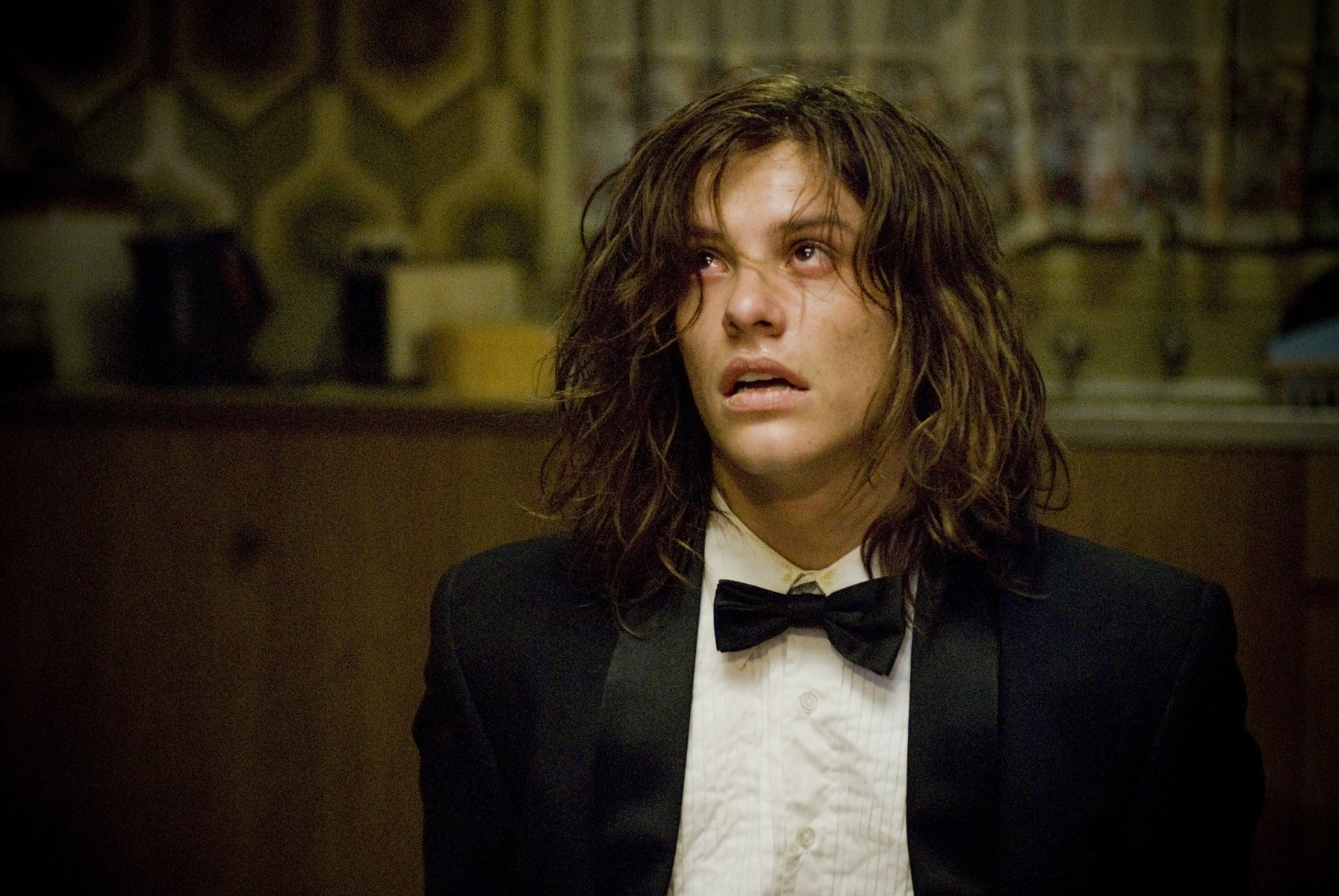
Sean Byrne’s The Loved Ones focuses on small-town teenager Brent (Xavier Samuel), who’s severely depressed from a recent tragedy but rouses himself to attend the school prom — or would have, if he wasn’t hijacked instead for one of the most harrowing first dates in film history.

Pegged by some as "Misery meets Pretty in Pink," this instant horror mini-classic is by turns poignant, funny, grotesque, alarming, and finally very, very satisfying. It’s sure to be a hit again in the San Francisco International Film Festival’s Late Show section. Between festival travels, Byrne was back home in Melbourne when he answered my e-mail queries.

SFBG The movie really throws you for a loop by spending the first stretch on serious psychological drama, then springing something entirely different.

Sean Byrne Well, I needed [to establish] a hero who was uniquely qualified to survive hell. Someone who is conditioned to pain, who feels like they deserve to suffer. He’s a cutter or self-mutilator, someone who tries to block out emotional pain with physical pain. He’s a kid with a death wish who’s forced to endure a literal hell, and in the process realizes he’s got everything to live for.

SFBG Your central female character is more interesting than the usual horror movie villains in that she’s so spoiled she thinks she’s a victim, which then excuses her behaving monstrously. Where did that come from?

SB I was thinking about what could make a signature, iconic, highly marketable villain and I noticed how my five-year-old niece, along with almost every little girl, is obsessed with wearing pink. It’s part of the magic and fantasy stage of childhood, where they actually believe the Disney line "someday [my] prince will come." So then I started thinking, well, what if our villain is a teenager with raging hormones but still somehow stuck in this spoiled, childish, preoperational stage of development. I imagined "Princess" as a teenage version of that irritating kid in the supermarket who demands lollies and won’t stop screaming until she gets them.

SFBG I like that her favorite song is self-pity anthem "Not Pretty Enough." Has Kasey Chambers had any reaction to the film?

SB I tried to stay within the horror genre but at the same time subvert the conventions. And having our troubled hero listen to heavy metal (the "devil’s music") and our villain listen to a top-of-the-pops ballad like "Not Pretty Enough" was a way of doing that. As far as I know, Kasey hasn’t seen the film. I’m dying to know how she’ll react.

SFBG A difference between this movie and those associated with "torture porn" is that here both the victims and the perps are pretty complicated characters.

SB I hope so. I did my research and tried to get inside the heads of these characters before I started writing. Characters in horror movies are often one-dimensional cardboard cutouts. But really great ones like The Shining (1980), The Exorcist (1973), and Rosemary’s Baby (1968) delve into the psychology of the moment. They answer the question: how do ordinary people react to extraordinary situations honestly? They explore our base instincts with emotional authenticity.

SFBG The film really does dish out some horrifying abuse, though — did you ever pull back on how graphic it would be?

SB No. Never. I’m not a fan of PG-13 horror. The middle ground is pretty boring — that’s why it’s called the middle ground.

THE LOVED ONES

May 2, 10:30 p.m., Castro

May 6, 3 p.m., Sundance Kabuki


MORE ON SFBG.COM For an extended version of Dennis Harvey’s interview with Sean Byrne, visit www.sfbg.com/pixel_vision

Not fade away

0

arts@sfbg.com

SFIFF Returns are dangerous. The story of Lot’s wife tells us that looking back is enough to be compromised. In cinema, the figure of return can stretch the basic spatiotemporal properties like so much silly putty. Take the two San Francisco International Film Festival speculative nonfictions that allow archival footage to overflow its conventional containers: 14-18: The Noise and the Fury, an epic reexamination of World War I narrated by a fictional French soldier, and Henri-Georges Clouzot’s Inferno, Serge Bromberg’s dogged excavation of the eponymous French director’s famously unrealized film. Then there’s Claire Denis’ return to Africa (White Material), a Chinese documentary portrait of a family’s fraught journey home (Last Train Home), and American filmmaker Tanya Hamilton’s Night Catches Us, a double return (the story of a Black Panther’s homecoming to his troubled neighborhood and a reconstruction of 1970s Philadelphia).

The cliché that “you can never go home again” is made freshly acute in Kamal Aljafari’s Port of Memory, a melancholic study of the Palestinian community of Jaffa where Aljafari is from. The film reminds me of The Exiles (1961) in its urban-fragmentary scenario, well-portioned running time, and lovingly quotidian portrait of a marginalized group. Port of Memory doesn’t announce that the fretful middle-aged woman who goes through the motions of housekeeping and caretaking is Aljafari’s mother and the man who wanders Jaffa’s crumbling streets his uncle — we’re left to piece together these intimate views on our own. As a narrator, Aljafari is discreet but hardly complacent: he intercuts establishing shots of his uncle’s promenades with footage from old Israeli and American films (for example, the 1986 Chuck Norris vehicle, Delta Force) that use the same streets for dubious spectacles of violence and nationalism. Doubling back on these inadvertent documents of occupation, Port of Memory‘s thin line of fiction has the now off-screen Israelis acting as a gentrifying force.

Like Aljafari’s film, Pedro González-Rubio’s gorgeous Alamar (“to the sea”) is set between landscapes (land and sea) and ways of telling (fiction and documentary). The bare frame of a plot places a young boy with his father and grandfather, Mayan fishermen working the Mexican Caribbean. The sweetness of this idyll is tempered by its provisional bounds: the boy will return to his mother in Rome at the end of his compressed experience of a father’s love. Every shot is earned: there are several in which the camera bucks with the boat, physically linked to the actors’ experience. The child is at an age of discovery, and González-Rubio channels this openness by fixing on the details of the fisher’s elegant way of life and the environmental contingencies of their home at sea.

The same well of patrimony and nature has been poisoned in Vimukthi Jayasundara’s surreal fable of destruction, Between Two Worlds. In this mythopoetic work, Sri Lanka’s 30-year civil war ravages on in screaming city streets and darkened forest visions. We first see the film’s central figure — a nameless wanderer resembling many other “chosen ones” — in a death pose, splayed on the beach with crabs crawling over him. Two fishermen trade variations of the story of a prince destined to survive great bloodshed to kill his powerful uncles, and several forest dwellers seem to think our protagonist is the man. The slipperiness of Between Two Worlds‘ reality, in which visions are liable to be doubled or outright contradicted, evokes both the shifting ground of trauma and different rules of oral storytelling. In its best moments, the film put me in the mood of Jeff Wall and Raúl Ruiz; in its least, a slow-motion Lost. But Between Two Worlds amply demonstrates that returning is not always a matter of volition: such is fate and endless war.

Top pic picks

0

The White Meadows (Mohammad Rasoulof, Iran, 2009) This latest by the recently jailed Iranian director of Iron Island (2005) is a stark, visually striking allegory whose natural settings (the salt formations of Lake Urmia) could hardly be more surreal. Aging Rahmat (Hasan Pourshirazi) rows his little boat from one tiny island community to another, collecting tears from variably aggrieved locals so they can be absolved of their sins — just how, neither they or we know. During his latest travels he gains a teenaged stowaway, then a blind-struck painter as passengers; witnesses a couple of village rituals that prove fatal for their main participants; and experiences other curious events that scarcely prompt a raised eyebrow from him. As with so much modern Iranian cinema, Mohammad Rasoulof’s film carefully renders its political symbolism so abstract you can dig endlessly for hidden meanings, or simply lose yourself in the hypnotic black-and-white-in-color imagery of black-clad people on bleached landscapes. Fri/23, 6:30 p.m., Kabuki; Sat/24, 9:30 p.m., Kabuki; Sun/25, 8 p.m., PFA. (Dennis Harvey)

Nymph (Pen-ek Ratanaruang, Thailand, 2009) Boy meets girl. Boy and girl fall in love. Girl cheats on boy with boss. Boy falls in love with tree. So are the broad strokes of Thai director Pen-ek Ratanaruang’s jungle-horror, Nymph, a city-to-country romance that deftly weaves strands of urban anomie, sexual dysfunction, and rural mythos into a dreamy, arboreal fantasia. One might be tempted to reference Lars von Trier’s Antichrist (2009) and fellow Thai helmer Apichatpong Weerasethakul’s 2004 breakout, Tropical Malady, as obvious points of reference, but that would derogate the potency and intensity of Ratanaruang’s singular, artistic design. The director of Last Life in the Universe (2003) and Ploy (2007) creates a tropical mise-en-scène that is less cinematic than immersive, developed largely by his use of tight, suspenseful close-ups, fluid camera work (including a 10-minute opening sequence that is practically gymnastic), and a transfixing ambient score. But unlike Tropical Malady, which leveraged much of its second-half’s novelty from overwrought, homoerotic tropes and a condescending nativism, Nymph‘s descent into the jungle is only the beginning of this powerful love story. Fri/23, 9 p.m., Kabuki; Sat/24, 4:30 p.m., Kabuki; April 28, 4:45 p.m., Kabuki. (Erik Morse)

Around a Small Mountain (Jacques Rivette, France/Italy, 2009) Around a Small Mountain (or 36 vues du Pic Saint Loup) is New Wave doyen Jacques Rivette’s return to the whimsy of 1984’s Love on the Ground, another exploration of theater staring eternal demoiselle Jane Birkin. In Mountain, Birkin plays Kate, a prodigal daughter who has returned to her deceased father’s circus after an unspecified trauma forced her into a 15 year absence. En route she encounters Vittorio (Sergio Castellitto), a peripatetic who instantly discovers in Kate a fellow improviser for his acrobatic feats of conversation. In hopes of learning her secret past, Vittorio follows Kate and her shabby troupe from performance to performance through the tiny towns of the Cevennes. Along the way, Rivette treats his audience to a mish-mash of sideshow sketches, enchanting dialogues and haunting soliloquies, all beneath the magical totem of the big top. The film is spellbinding ode to the theatre of everyday life and the actors who prance in and out of its cirque. Fri/23, 9:30 p.m., Kabuki; Sat/24, 4:15 p.m., Kabuki; April 28, 6:30 p.m., PFA. (Morse)

Way of Nature (Nina Hedenius, Sweden, 2008) Save for when Werner Herzog is doing the talking, documentaries about the natural world often benefit from a lack of voiceover narration. Nature’s seasons, cycles, and rhythms provide their own narrative structure, and simply, silently observing what happens can make for fascinating viewing. Nina Hedenius understands this. Her engrossing year-in-the-life portrait of Lisselbäcka Farm in northern Sweden is cut around creatures great and small — horses, cows, goats, chickens, dogs — and their routines. Although humans are part of the bucolic scene Hedenius so meticulously orchestrates (the sound editing is such that the film would be no less immersive if you watched it blindfolded), they are merely supporting actors. After watching, for the fourth time, another gangly offspring leap to its feet, minutes after being born, you start to realize the ways in which our species is quite helpless. If their keepers suddenly passed away, the animals of Lisselbäcka — domesticated though they may be — would probably manage to carry on. The way of nature is instinct, not mastery. Sat/24, 2 p.m., PFA; Sun/25, 3:45 p.m., Kabuki; Mon/26, 1 p.m., Kabuki; April 28, 6:30 p.m., Kabuki. (Matt Sussman)

Between Two Worlds (Vimukthi Jayasundara, Sri Lanka, 2009) Part vision quest, part historical allegory, Vimukthi Jayasundara’s lush and beguiling head-scratcher unfolds like the mutable folktale told between two fishermen in one of the film’s asides. A synopsis would go something like this: an unnamed South Asian man falls from the sky into an unspecified South Asian country (although the Sinhala the actors speak places us in Sri Lanka) under siege by revolutionaries intent on destroying all means of communication and killing any remaining young men. Fleeing a riot-ravaged city he winds up in the countryside where he reconnects with his sister-in-law, and undergoes several mysterious and mystical experiences at a nearby lake. “It’s possible that one can see today what has happened in the past,” cautions an old man to our protagonist, and Jayasundara — with an eye for arresting mise-en-scene, gorgeously photographed by Channa Deshapriya — attempts to offer a way to re-see the traumas of the civil war that ravaged Sri Lanka for over three decades. Like a freshly remembered dream, Between Two Worlds is as stubbornly oblique as it is hard to shake. Sat/24, 6:15 p.m., Kabuki; Sun/25, 9 p.m., Kabuki; Mon/26, 9:15, Kabuki. (Sussman)

Transcending Lynch (Marcos Andrade, Brazil, 2010) Picture it: everyone’s favorite psycho-thriller filmmaker and coffee retailer waxing beatific about peace, love, and “infinite bliss,” his American Spirit–stained teeth frozen in a perma-grin as he extols the virtues of the “unified field” of consciousness. At certain moments in Transcending Lynch, an exploration of infamous auteur David Lynch and his 35-year devotion to transcendental meditation, the director comes across as flakier than the celebrated piecrust at Twin Peaks‘ Double R diner. (At one point he even utters the phrase “Holy jumping George!”) For the irony-soaked, all the TM talk may be a little TMI, but for Lynch the practice is nothing short of the very source of his creative wellspring. Marcos Andrade’s documentary, which follows Lynch on a 2008 Brazilian book tour, won’t offer the mad-genius Eagle Scout’s more rabid followers much new insight. While the movie strives to be meditative, it’s more of an amalgam of trippy travelogue and pitch meeting. Even more frustrating, we get only teasing glimpses of how TM has directly informed and impacted the artist’s work. Lynch may be on the path to universal enlightenment, but when it comes to the man himself, the rest of us ignoramuses are still mostly in the dark. Sat/24, 6:30pm, Kabuki; Mon/26, 9pm, Kabuki; Tues/27, 12:30pm, Kabuki. (Michelle Devereaux)

14-18: The Noise and the Fury (Jean-Françoise Delassus, France/Belgium, 2009) Made for French TV, Jean-Françoise Delassus’ unclassifiable film would be arresting simply for cobbling together seldom-seen archival footage reflecting all aspects of the First World War, from its leaders to its trenches. But he and co-scenarist Isabelle Rabineau have shaped that footage into a narrative driven by the writings of a (fictional) French everyman soldier who somehow manages to survive and serve in most of its major conflicts. The result melds exquisite color tinting, first-person narration, clips from commercial films about the war (by D.W. Griffith and Chaplin as well as European directors), and ambient sound to create a brilliant kind of living history lesson that makes the events of nearly a century ago seem as immediate as yesterday’s. Mon/26, 4:30 p.m., Kabuki; May 1, 2 p.m., Kabuki; May 3, 9 p.m., Kabuki. (Harvey)

The Peddler (Eduardo de la Serna, Lucas Marcheggiano, and Adriana Yurkovich, Argentina, 2009) Daniel Burmeister is a traveling filmmaker. He drives his infirm jalopy from one small Argentine town to the next, hoping to set up camp for a month and make a movie with the locals. He’ll need food, a place to stay, and a camera. Whatever camera they can find. Usually the mayors are easy to convince, because Burmeister is essentially a regional attraction, a one-man circus they know about from the neighboring towns. It’s this strange repurposing of the filmmaking experience that makes the documentary so distinctive and special. And just watching the old man hustle from shot to shot with his bashful actors, working efficiently from one of the handful of scripts he’s been cycling through for years, is an absolute pleasure. Directors Eduardo de la Serna, Lucas Marcheggiano, and Adriana Yurcovich capture the jury-rigged process with unobtrusive admiration and an absence of condescension. As I watched it I kept thinking it was like the soul that was missing from Michel Gondry’s 2008 warmed-over DIY manifesto Be Kind Rewind. Mon/26, 6:30 p.m., PFA; May 1, 12:30 p.m., Kabuki; May 4, 6:30 p.m., Kabuki. (Jason Shamai)

Russian Lessons (Olga Konskaya and Andrei Nekrasov, Russia/Norway/Georgia, 2010) I remember watching the news two summers ago and feeling confused by the details of the Russia-Georgia War, the culmination of a dispute over the territory of South Ossetia. There seemed to be a haziness about who started what. Russian Lessons offers Olga Konskaya and Andrei Nekrasov’s version of what happened that summer and indicts Russian and mainstream international news organizations for exactly that failure to present a satisfactory chronology. Konskaya, a theater director and documentary producer, filmed events as they unfolded on the Northern end of the conflict while Nekrasov, a veteran documentarian, filmed in the South. The result is a collection of interviews with residents of recently bombed Georgian towns, confrontations with Russian soldiers, and investigations of still-smoldering battle sites. The filmmakers spend an equal amount of time scrutinizing source footage from the war and its antecedents, exposing how it was used to mislead the international community. It’s a disturbing and persuasive rebuttal to the Putin administration’s official side of the story. April 28, 3:15 p.m., Kabuki; April 29, 12:30 p.m., Kabuki; May 1, 6:15 p.m., Kabuki. (Shamai)

Restrepo (Tim Hetherington and Sabastian Junger, USA, 2010) Starting mid-’07, journalists-filmmakers Tim Hetherington and Sebastian Junger spent some 15 months off and on embedded with a U.S. Army platoon in Afghanistan’s Korengal Valley, a Taliban stronghold with steep, mountainous terrain that could hardly be more advantageous for snipers. Particularly once a second, even more isolated outpost is built, the soldiers’ days are fraught with tension, whether they’re ordered out into the open on a mission or staying put under frequent fire. Strictly vérité, with no political commentary overt or otherwise, the documentary could be (and has been) faulted for not having enough of a “narrative arc” — as if life often does, particularly under such extreme circumstances. But it’s harrowingly immediate (the filmmakers themselves often have to dive for cover) and revelatory as a glimpse not just of active warfare, but of the near-impossible challenges particular to foreign armed forces trying to make any kind of “progress” in Afghanistan. April 30, 3:45 p.m., Kabuki; May 2, 4:15 p.m., PFA; May 4, 9:30 p.m., Kabuki. (Harvey)

Animal Heart (Séverine Cornamusaz, France/Switzerland, 2009) This first feature by Séverine Cornamusaz has a story that would have fit just as well into the cinema of 1920 — or the literature of Thomas Hardy or George Eliot 50 years earlier. Paul (Olivier Rabourdin) is the gruff owner of family lands in the Swiss Alps, raising livestock whom he treats better than wife Rosine (Camille Japy). When he’s forced to hire a seasonal hired hand in the form of Eusebio (Antonio Bull), the easygoing Spaniard’s concern for ailing Rosine incites not Paul’s compassion but his brute jealousy. This elemental triangle set amid the severe elements of its spectacularly shot setting has a suitably blunt (but not crude) power; it leads not where you might expect but to a hard-won fadeout of audacious intimacy. April 30, 4 p.m., Clay; May 2, 9:15 p.m., Clay; May 3, 6 p.m., Kabuki. (Harvey)

Henri-Georges Clouzot’s Inferno (Serge Bromberg and Ruxandra Medrea, France, 2009) A painstaking craftsman who left nothing to chance, French suspense master Clouzot (1955’s Diabolique, 1953’s The Wages of Fear) decided to push his own envelope a little in 1964. He cast Serge Reggiani as a resort innkeeper who becomes pathologically, paranoically possessive of his gorgeous wife (Romy Schneider). Convincing himself she’s having an affair, he gradually snaps tether — and the film itself would reflect that downward spiral by increasingly illustrating his mental stage in distortive image and sound. Unfortunately, the project also drove Clouzot mad in a way, as his grapplings at a new filmic language ran counter to the kind of creative discipline that normally storyboarded everything within an inch of its life. Shooting endless footage, spending endless money, he finally admitted defeat and abandoned ship. Never completed, the film’s surviving pieces were restored for this absorbing unmaking-of documentary — even if the original clips, daring then but now looking like psychedelic kitsch, suggest Inferno would likely have been no masterpiece but a fascinating, instantly-dated failure. May 2, 1:45 p.m., Kabuki; May 5, 6:15 p.m., Kabuki. (Harvey)

Presumed Guilty (Roberto Hernández and Geoffrey Smith, Mexico, 2009) A fan of true crime TV programming, I all but take for granted that little coda at the end of each episode reminding viewers that the suspects shown are innocent until proven guilty. I sometimes forget that such rights are not the case in all countries, such as in Mexico where the criminal justice system employs a reverse practice requiring the accused to prove themselves innocent. In Presumed Guilty, filmmakers, lawyers, and UC Berkeley students Roberto Hernández and Layda Negrete use rarely-seen, up-close footage of the Mexican trial process in their effort to exonerate a young Mexico City street vendor who is falsely accused of murder in 2005. The proceedings, which require the defendant to stand for hours on end and are performed sans jury, is riveting stuff for fans of those A&E true crime shows and is sure to ruffle the feathers of a few sympathetic humanitarians. May 2, 3:30 p.m., Kabuki; May 3, 6:30 p.m., PFA; May 6, 3:15 p.m., Kabuki. (Peter Galvin)

Lebanon (Samuel Maoz, Israel, 2009) “Das Boot in a tank” has been the thumbnail summary of writer-director Samuel Maoz’s film in its festival travels to date, during which it’s picked up various prizes including a Venice Golden Lion. On the first day of Israel’s 1982 invasion (which Maoz fought in), an Israeli army tank with a crew of three fairly green 20-somethings — soon joined by a fourth with even less battle experience — crosses the border, enters a city already halfway reduced to rubble, and promptly gets its inhabitants in the worst possible fix, stranded without backup. Highly visceral and, needless to say, claustrophobic (there are almost no exterior shots), Lebanon may for some echo The Hurt Locker (2009) in its intense focus on physical peril. It also echoes that film’s lack of equally gripping character development. But taken on its own willfully narrow terms, this is a potent exercise in squirmy combat you-are-thereness. May 2, 9 p.m., Kabuki; May 5, 9:30 p.m., Kabuki. (Harvey)

The Day God Walked Away (Philippe van Leeuw, France/Belgium, 2009) Director Philippe Van Leeuw states in the press materials that he made The Day God Walked Away in an attempt to understand how the assassins of the 1994 Rwandan genocide could do what they did and how others could stand by and watch. I walked away from Day with a better understanding of what might draw a person to choose defeatism over an unlikely survival. The film opens as a Tutsi housekeeper (Ruth Nirere) finds herself trapped in her Belgian employers’ house, fearing for her children and surrounded by gun-toting murderers. Light on scripted dialogue and featuring local actors, van Leeuw’s nonintrusive filming lends the film an authentic atmosphere that can be slow but is never boring. In lensing the film’s horrific scenes in a simple and matter-of-fact fashion, he eerily replicates the emotional separation that survivors of the massacre were forced to adopt in order to live. May 3, 6:45 p.m., Clay; May 4, 4 p.m., Kabuki; May 5, 4:15 p.m., Kabuki. (Galvin)

The Practice of the Wild (John J. Healey, USA, 2009) “The way I want to use ‘nature’ is to refer to the whole of the physical universe,” explains the poet Gary Snyder in John J. Healy’s succinct but penetrating documentary on the octogenarian poet, essayist, and environmental activist. Snyder’s expansive definition conjoins the two areas to which he has devoted his life and creative practice to better being at peace with: the terrestrial and the existential. Healey provides the back story — covering Snyder’s farmstead childhood, his discovery of his love for the outdoors, his association with the Beats and later immersion in Zen Buddhism, and his two marriages — told in part through the obligatory scan-and-pan photography and contextual talking heads. The film’s highpoints, however, are the many lively conversations Snyder engages in with his friend and fellow writer Jim Harrison, whose grizzled countenance and chirpy demeanor make him a character in his own right. May 3, 6:45 p.m., Kabuki; May 5, 1:30 p.m., Kabuki. (Sussman)

Joan Rivers: A Piece of Work (Ricki Stern and Annie Sundberg, USA, 2010) Whether you’re a fan of its subject or not, Ricki Stern and Annie Sundberg’s documentary is an absorbing look at the business of entertainment, a demanding treadmill that fame doesn’t really make any easier. At 75, comedian Rivers has four decades in the spotlight behind her. Yet despite a high Q rating she finds it difficult to get the top-ranked gigs, no matter that as a workaholic who’ll take anything she could scarcely be more available. Funny onstage (and a lot ruder than on TV), she’s very, very focused off-, dismissive of being called a “trailblazer” when she’s still actively competing with those whose women comics trail she blazed for today’s hot TV guest spot or whatever. Anyone seeking a thorough career overview will have to look elsewhere; this vérité year-in-the-life portrait is, like the lady herself, entertainingly and quite fiercely focused on the here-and-now. May 6, 7 p.m., Castro. (Harvey)

THE 53RD SAN FRANCISCO INTERNATIONAL FILM FESTIVAL runs April 22–May 6 at Sundance Kabuki Cinemas, 1881 Post, SF; Clay Theatre, 2261 Fillmore, SF; Castro Theatre, 429 Castro, SF; and the Pacific Film Archive, 2575 Bancroft, SF. Tickets (most shows $12.50) are available by calling (925) 866-9559 or by visiting www.sffs.org>.


Join the cult!

0

cheryl@sfbg.com

SFIFF If you know San Francisco’s cult movie culture, you know Midnight Mass, the Bridge Theatre’s long-running celebration of late-night movies. And if you know Midnight Mass, then you most certainly know Peaches Christ, the event’s fabulously dressed and tressed hostess.

Many local film fans are already hip to the reason Peaches — and her civilian alter ego, Joshua Grannell — declared that 2009 would be the last year for Midnight Mass’ popular summer-weekend series. Grannell just completed his first feature film, All About Evil, about a mousy librarian named Deb (a killer Natasha Lyonne) who blossoms, rather terrifyingly, into a horror filmmaker named “De-bor-ah” after she inherits the Victoria Theatre. Deborah’s frighteningly, er, realistic short films begin drawing crowds to the struggling, single-screen movie house, with teenage horror geek Steven (Thomas Dekker of Terminator: The Sarah Connor Chronicles) looking on first in admiration, then suspicion. Also along for the ride are some familiar faces from Midnight Mass, including John Waters superstar Mink Stole and Cassandra “Elvira” Peterson.

A perfect fit for San Francisco International Film Festival’s Late Show series, All About Evil makes its world premiere at the fest, though it’ll be screening at the Castro Theatre rather than the Victoria, its central filming location.

“The Castro is just like, how can you not want to be at the Castro?” Grannell said. We were sitting outside of Farley’s on Potrero Hill — not one of Grannell’s usual haunts, but multiple friends of his still happened by. Peaches Christ is well-loved in this town, people. “I definitely didn’t want [the premiere] to be at the Kabuki, mostly because of what the movie is about. I think they’ve done a nice job with the Kabuki, but I was writing the movie while living and breathing at the [single-screen] Bridge.”

And lest ye forget, the Castro has a glorious stage. The SFIFF screening will be “like Midnight Mass,” Grannell explained. “But because it’s gonna be the world premiere and I have access to some of the cast, we’re actually incorporating them into the show. Natasha will be there and will do the Q&A. Mink is doing a number with me, and Thomas is doing his own rock number with all the young cast. Which is kind of unique — when do you get to go to a movie, and the cast is doing a show before the screening?”

Of course, Peaches Christ, who has a pretty delightful cameo in the film, will also host. “It’s kind of a marrying of Midnight Mass with All About Evil,” Grannell said. “And it’s kind of a surreal moment for me. We’ve spent 13 years creating live entertainment to celebrate all my favorite movies and now we get to do it for our own movie.”

Fortunately, the celebration isn’t going to be limited to one night. After SFIFF, Peaches and company plan to hit the road, taking the film and a scaled-down version of their live show to different venues (Austin, Texas’ Alamo Drafthouse is tops on the list). Grannell said that All About Evil will also have a limited theatrical release (playing midnight circuits, of course). For faithful locals, he’s giving the Victoria its due later this year.

“I thought, what are we gonna do in San Francisco? The world premiere doesn’t seem like enough. So we’re going to do a run with a full stage show in October,” he said. “We’re calling it ‘environmental theater,’ where we transform the Victoria back to the character it plays in the movie. I kind of think of it as a haunted house, where the characters will be interacting with you as you walk through the doors.”

Grannell is a huge cult movie fan, and his movie clearly references that. But he’d rather you didn’t call his movie a cult film just yet.

“[If All About Evil became a cult movie], that would be a dream come true. But it’s not that yet. There’s a long, long way to go, and only a few movies become that, truly,” he said. “But it’s sort of frustrating: ‘New cult movie All About Evil to have its world premiere!’ It’s like, how can it be a cult movie? Nobody’s seen it yet! I’m hoping that maybe someday I can go see All About Evil at someone else’s Midnight Mass. Someone else’s midnight series. Because then it’s really pure. Cause then it’s like, wow.”

ALL ABOUT EVIL

May 1, 10:45 p.m.

Castro

429 Castro, SF

www.sffs.org

Appetite: 3 food memoirs with heart

0

While reading Kim Severson’s new gem of a food memoir that came out last week, I started reminiscing about other food memoirs in recent years that travel well beyond food… the kind of books that leave one simultaneously comforted, satiated and challenged to live a more authentic life.

Spoon Fed: How Eight Cooks Saved My Life by Kim Severson
Kim Severson, a New York Times food journalist, just debuted Spoon Fed, sharing about eight cooks who taught her important life precepts. I read a lot of food memoirs but when this one hit my desk a few weeks ago, I couldn’t put it down. It contains stories (each accompanied by a recipe) of food trailblazers, from Alice Waters to Marion Cunningham. I related not only to Severson’s stories of life on both coasts (and in the Midwest) or as a food writer, but was touched by her tender honesty, blanketed in warm frankness. Severson’s life lessons are never heavy-handed and, in fact, are so vulnerable, I came away renewed to face my own hang-ups, while understanding others’. I particularly loved “Popular Girls,” a chapter on Ruth Reichl and self-acceptance, or lessons on faith and tenacity in New Orleans from the wonderful Leah Chase, even embracing authenticity and ambition from Rachael Ray. Severson’s own stories carry impact due to the heartfelt candor with which she shares her insecurities and fears, and what she has achieved in facing them.

A Homemade Life: Stories and Recipes from my Kitchen Table by Molly Wizenberg
Molly Wizenberg is an author who grew up in Oklahoma (where I was born), exhibiting a youthful yet mature-beyond-her-years hominess in her writing and comforting recipes. A Homemade Life pulsates with accessible heart but not naivete. This was a favorite memoir in recent years, laden with bittersweet sadness from her father’s cancer, the rejuvenating joy of re-discovering herself and her love for food upon returning to Paris after his death, the surprise of starting a blog, Orangette, that gained her an international following… and even more suprising, meeting the love her life through the blog. Her recipes are delicious, whether cider-glazed salmon or a ginger chocolate banana bread that’s become a staple in my own kitchen.

Tender at the Bone and Comfort Me With Apples by Ruth Reichl
One of Kim Severson’s aforementioned inspirations, Ruth Reichl has also long been a favorite of mine. Her memoirs are enjoyable reads, including delightful stories of life and disguises as a NY Times food critic in “Garlic and Sapphires”, or understanding her mother in “Not Becoming My Mother”. Reading Severson brought to mind Ruth’s first two memoirs, Tender at the Bone (1998) and Comfort Me with Apples (2002). Whether bluntly proclaiming she wasn’t “pretty or funny or sexy” but could attract people with food, or, in “Comfort Me…” (I recommend this one if you haven’t read her books), where she reveals, via colorful food and travel stories, the heartbreak of the dissolution of her first marriage or the agony of nearly adopting a child. Ruth’s bright candor, adventurous palate and lack of self pity make these food memoirs worth returning to.

Visit Virginia Miller’s food itinerary and review site, www.theperfectspotsf.com

Quick Lit: April 21-April 27

0

Literary readings, book tours, and talks this weekincluding NYT Dot Earth blogger Andrew Revkin, local activist Peter Berg, McSweeny’s Issue 34, poetry readings in honor of National Poetry month, and more.


Wednesday, April 21

Cosmic Conversation
Join KQED for a conversation with Dr. Neil deGrasse Tyson, host of NOVA scienceNOW, and Paula Apsell, senior executive producer of NOVA and NOVA scienceNOW, for a behind-the-scenes look at the science series and a discussion about the show’s “Pluto files.”
8 p.m., $15
Palace of Fine Arts
3301 Lyon, SF
(415) 392-4400
www.cityboxoffice.com

 
Greenpeace’s New Rainbow Warrior
Hear from Kumi Naiboo, the new Executive Director of Greenpeace International, discuss how to lead a grassroots group at a crucial point in the international environmental movement.
6:30 p.m., $20
Commonwealth Club
595 Market, 2nd floor, SF
(415) 597-6700

Daniele Mastrogiacomo
Hear Italian journalist Daniele Mastrogiacomo discuss his new book, Days of Fear, about how the Taliban kidnapped him, his driver, and his translator, about his subsequent travel throughout a system of Taliban underground hide-outs, the televised brutal murder of his driver, and his eventual release.
6:30 p.m., free
Italian Cultural Institute
425 Washington, Suite 200, SF
(415) 788-7142


Wherever There’s a Fight

Hear authors Elaine Elinson and Stan Yogi read from and sign their new book at this installment of Betty’s List Literary Salon.
6 p.m., free
Duboce Park Café
2 Sanchez, SF
www.wherevertheresafight.com


Thursday, April 22

Reza Aslan
Hear Reza Aslan, author of How to Win a Cosmic War: Confronting religious fundamentalism, discuss her theory that in a post 9/11 world, the U.S.’s “war on terror” adopts the same religiously polarizing rhetoric and cosmic worldview as the jihadists, and is therefore fighting a war that can’t be won.
8 p.m., $10-18
Jewish Community Center of San Francisco
Kanbar Hall
3200 California, SF
(415) 292-1233

Envisioning Sustainability
Hear author and environmental activist Peter Berg discuss his new collection of essays that helped to define the bioregional movement and shape the sustainability revolution.
7 p.m., free
Modern Times Bookstore
888 Valencia, SF
www.mtbs.com

How to Cool the Planet
Hear author Jeff Goodell discuss his new book that talks about the Earth’s possibilities for geoengineering, the idea that we can use technology to reduce global warming on Earth, which was recently made more popular by the eruption of Iceland’s Eyjafjallajokull volcano.
7 p.m.,free
Books Inc.
1760 4th St., Berk.
(510) 525-7777

“Medicean Music and Francesca Caccini”
Hear a presentation from Kip Cranna, from the SF Opera, about music from the Medicean world and hear Richard Savino, from CSU Sacramento, discuss Francesca Caccini, composer of the first published opera by a woman.
6 p.m., $15
Mechanics’ Institute
57 Post, SF
(415) 393-0100

“The Natural and Unnatural History of Yerba Buena Island and What Might be Next”
Hear a panel of experts present an illustrated overview of Yerba Buena Island’s history, ecological treasures, threats, and possible plans for the future.
7:30 p.m., free
Randall Museum
199 Museum Way, SF
www.natureinthecity.org

Poetry at Pegasus
Celebrate National Poetry Month at this reading with poets Kathleen Weaver, Gretchen Stengel, Susan Elliot Jardin, Cynthia Carmichael, and Jane Downs.
7:30 p.m., free
Pegasus Books Downtown
2349 Shattuck, Berk.
www.pegasusbookstore.com

RuPaul
Attend this book signing with the world’s most famous drag queen RuPaul, celebrating her recent book, Workin’ It! RuPaul’s Guide to Life, Liberty, and the Pursuit of Style.
7:30 p.m., free
Books Inc.
2275 Market, SF
(415) 864-6777

“Truth Emergency Interantional: Censorship, propaganda, and empire”
Attend this talk and booksigning with Peter Philips and Mickey Huff, co-editors of Project Censored 2010: The top 25 stories of 2010.
7 p.m., $5-20 sliding scale
Berkeley Unitarian Universalists
1924 Cedar, Berk.
http://www.bfuu.org

Friday, April 23

“The Contradictory Legacy of Haiti’s Revolution”
Attend this talk with Robert Fatton, Jr., author, scholar, and Professor of Government and Foreign Affairs at the University of Virginia, titled, “The Contradictory Legacy of Haiti’s Revolution: History and the earthquake crisis.”
6:30 p.m., free
California Institute of Integral Studies
Social and Cultural Anthropology Department
1453 Mission, Room 308, 3rd floor, SF
(415) 575-6249

Mark Kurlansky
Hear about Mark Kurlansky’s new book, The Eastern Stars: How baseball changed the Dominican town of San Pedro de Marcoris, about one small impoverished area in the Dominican Republic that has produced a suprising number of Major League Baseball talent.
7:30 p.m., free
Booksmith
1644 Haight, SF
(415) 863-8688

WritersCorps Reading Series
Attend this “Claim the Block” reading series featuring readings by young writers.
7:30 p.m., free
Yerba Buena Center for the Arts
701 Mission, SF
(415) 252-4655 to RSVP

Saturday, April 24

“America’s Muslim Roots”
Hear Bay Area Muslim journalists Hamza van Boom and Yahsmin Binti Bobo in conversation with Jonathan Curiel about his new book, Al’ America: Travels through America’s Arab and Islamic roots, which details the historic influence of Arab and Muslim culture on America from Columbus to the modern age.
6 p.m., $7
Islamic Cultural Center of Northern California
1433 Madison, Oak.
(510) 219-2431

“Outspoken: Vietnamese Poets of the Diaspora II”
Attend this event that celebrates the thriving Vietnamese community in the Bay Area with readings by poets Anh Vu Buchanan, Andrew Lam, Kim-An Lieberman, Trinh T. Minh-Ha, Dao Strom, and Lan Tran.
7 p.m., free
Fort Mason Center
Laguna at Marina, Fleet Room, SF
www.friendssfpl.org


Sunday, April 25


I Love You and I’m Leaving You Anyway
Mad Men writer Tracy McMillan tells the story about her relationship with her father, who was a convicted pimp, drug dealer, and felon, and what it has meant for her relationships with men.
3 p.m., free
Books Inc.
2251 Chestnut, SF
(415) 931-3633

Monday, April 26

The Immortal Life of Henrietta Lacks
As part of the Ask a Scientist lecture series, scientist and author Rebecca Skloot will discuss her new book about the life of a poor tobacco farmer who died of cervical cancer in 1951 but whose cells are still alive today and used for scientific research. Skloot will discuss bioethics, race issues, history, and family.
7 p.m., free
Horatius
350 Kansas, SF
(415) 252-3500

A Thousand Sisters
Hear author Lisa Shannon discuss her book which cronicles her journey to the Congo to meet the women there and share their stories.
7:30 p.m., free
Books Inc.
2251 Chestnut, SF
(415) 931-3633

Will Grayson, Will Grayson
Not Your Mother’s Book Club (NYMBC) presents John Green and David Levithan,
the authors of Will Grayson, Will Grayson, about two teens with the same name who cross paths in Chicago.
7 p.m., free
Books Inc.
601 Van Ness, SF
(415) 776-1111

Tuesday, April 27

Andrew Revkin
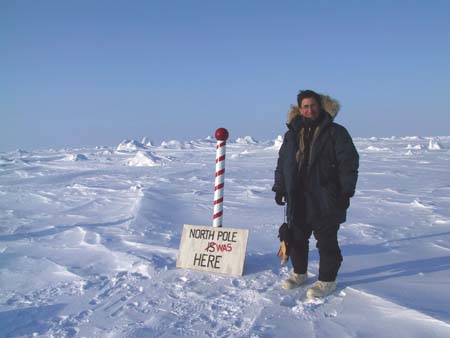
Hear award winning environmental journalist and author Andrew Revkin discuss his work on the New York Times’ Dot Earth blog, 25 years covering environmental and social subjects, and his previously published books, like The North Pole Was Here.
8 p.m., $20
Herbst Theater
401 Van Ness, SF
www.cityboxoffice.com

Hunting Eichmann
Hear author Neal Bascomb discuss his new book about a Nazi who escapes American POW camps and hides in the mountains in Buenos Aires before he is eventually caught and brought to trial.
7 p.m., free
Books Inc.
1760 4th St., Berk.
(510) 525-7777

McSweeny’s Issue 34
Attend this release of the highly anticipated Issue 34 of McSweeny’s presented by Nick McDonell, Tom Barbach, and Daniel Handler.
7:30 p.m., free
Books Inc.
2251 Chestnut, SF
(415) 931-3633

Noir Literary Night
Attend the 5th annual Nior Literary Night featuring Cara Black, author of Murder in the Palais Royal, David Corbett, author of Do They Know I’m Running?, and Joe Gores, author of Spade & Archer: The prequel to Dashiell Hammett’s the Maltese Falcon.
6 p.m., $12
Mechanic’s Institute
57 Post, SF
(415) 393-0100
www.milibrary.org

Karin Sanders
Attend a reading and discussion of Karin Sanders’ new book, Bodies in the Bog and the Archaeological Imagination, in conversation with Mark Sandberg.
5:30 p.m., free
University Press Books
2430 Bancroft, Berk.
(510) 548-0585

Crime Bomb

1

Editors note: This story was originally published May 31,  2001.


They found Virginia Lowery lying in the garage of her Excelsior home, an electrical cord around her throat, an ice pick jammed through her skull — in one ear and out the other. For the next 11 years San Francisco homicide detectives made no progress on the case. Promising leads turned into dead ends. Theories collapsed. The cops assigned to the case retired. It looked like Lowery’s 1987 slaying would never be solved.


Then in April 1998, by pure chance, police found Robert C. Nawi. Or rather, they found his fingertips.


When Nawi, a 57-year-old carpenter, got in a shouting match in a North Beach watering hole, he was picked up by the cops on misdemeanor charges and shuttled to county jail, where he was fingerprinted and booked. The computer spat out some interesting news: Nawi’s digits, according to the database, resembled a fingerprint found at the scene of Lowery’s slaying.


Soon thereafter, police evidence analyst Wendy Chong made a positive print match, and the new suspect found himself facing murder charges and life in a cage.


Nawi’s fate, to be decided at trial next year, rests largely on police readings of his fingerprints, as well as some DNA gathered by the coroner. Which raises some questions: How, exactly, did the cops and their computers analyze the evidence? Did they get it right? Is anybody checking their work?


Making a match between the distinguishing ridges and whorls, often microscopic, of two fresh fingerprints is a relatively simple task for a print expert. However, cases like Nawi’s aren’t so clear-cut: the print collected in Lowery’s garage is faint, smudged, and missing in patches.


Michael Burt, the resident forensicscience guru at the San Francisco Public Defender’s Office, shows me an 8-by-10-inch enlargement of the print discovered at the murder scene; it’s blurry, grainy, and only about 60 percent complete. To my layperson’s eye, it bears little resemblance to the clear, fresh mark left by Nawi at his booking. “The one print is so washed out you can’t see anything,” says Burt, who is representing Nawi. “This is not science at all; it’s subjective and shouldn’t be allowed.”


Burt, a 22-year veteran defense lawyer known around the Hall of Justice for his trademark cart full of documents, has plenty of cause to doubt the cops’ evidence. Despite what you may have seen on Law and Order, fingerprint examiners can — and often do — get it wrong. Last year 141 of America’s top forensic labs were tested to see if they could accurately match two fingerprints: 39 percent failed; 11 labs made false IDs. San Francisco analysts are rarely, if ever, graded for accuracy.


Jim Norris, head of the San Francisco Police Department’s forensics division, argues that new computer imaging tools are making it possible to match even sketchy, partial prints. “When somebody shows a print that was originally collected at the crime scene, and it looks very difficult to deal with, what they’re not looking at is the image that has been [digitally] enhanced,” Norris explains. “It’s a lot easier to deal with.” Norris admits that the department has seldom tested its print examiners for accuracy, but he says their work is constantly checked by superiors.


According to Burt, in this particular instance analysts didn’t turn to computers but simply enlarged the prints before making the call. The district attorney’s DNA evidence against Nawi is equally flawed, he says. When coroner Boyd Stephens autopsied the corpse, he — per routine — snipped the woman’s fingernails with a household nail clipper and stuck them in an envelope. Unrefrigerated, the clippings slowly rotted for more than a decade, until, in the wake of Nawi’s arrest, prosecutor John Farrell had them tested for DNA.


When the crime lab got the evidence, in 1998, DNA analyst Alan Keel scraped all 10 nails with a single cotton swab, combined the scrapings into one tiny pile, and dropped them into a genetic-typing device. According to standard forensic procedure, each nail should’ve been swabbed and tested separately.


Now, Burt contends, the sample has deteriorated because of a lack of refrigeration and has been contaminated with the DNA of more than one person. “[Keel] says there are three, possibly four different individuals underneath her fingernails,” the lawyer says. “He’s trying to grab my client out of that mixture. There’s no scientific way to do that.”


Norris disagrees: “There are ways to deal with [DNA] mixtures; it’s not a common problem luckily, but it’s something that comes up — for example, in rape cases where there are multiple assailants. There are ways to deal with it.”


I run down the scenario for Dr. Simon Ford, a Ph.D. biochemist and DNA expert who heads up San Francisco–based Lexigen Science and Law Consultants. “That’s not good,” Ford tells me. “You should deal with each hand separately, at least, and probably each nail separately. I don’t think combining all the nails together is a good idea.”


The dispassionate examination of crime scene evidence — narcotics, fingerprints, hair and fibers, genetic material, firearms, and everything else — is a cornerstone of the American justice system. The work, which can mean the difference between life and death for a suspect, is carried out by more than 500 labs nationwide, most of them run by law enforcement agencies.


In the public imagination — as shaped by endless cops-and-lawyers TV shows — forensic science is a perfectly impartial arbiter of justice. Eyewitnesses get confused. Police may be corrupt. Lawyers can corkscrew facts. Juries, not always composed of the brightest lights, can be swayed by mob dynamics. But science doesn’t lie. If the analyst says the bullet came from the suspect’s gun, then it must have.


It’s a comforting thought.


There’s just one problem: All forensic science is performed by humans, and all people make blunders. They mislabel samples. They use malfunctioning equipment. They inadvertently drop a flake of skin in a vial of blood, thus adding their own DNA to the sample.


Subjectivity, too, plays a starring role in forensic science, much of which depends on human-made comparisons. In one case heard last year by San Francisco Superior Court Judge Robert Dondero, two DNA experts couldn’t agree on the meaning of a genetic sample.


In addition to honest mistakes born of incompetence and overwork, there are continuously uncovered examples of fraud: the lab analyst, believing that the verdict justifies the means, willing to lie on the stand or fake test results. While the scientific question of DNA accuracy has been hashed out extensively in court rooms and the media, the issue of police crime lab accuracy has gone ignored, both by press and government regulators.


Each year California cops make 1.5 million arrests. Each of the state’s 19 local crime labs — run by sheriffs, prosecutors, and cops — performs thousands of analyses annually. Each of those tests, if faulty, could put an innocent person behind bars, or set a guilty soul free.


And in the wild world of forensics there are precious few safeguards against human bias and error: Crime labs are almost entirely unregulated. There are virtually no federal laws governing their operation; no law that says, “Bullet comparisons must be done using the best, most accurate techniques”; no law that says, “DNA examiners must meet these basic educational criteria”; no requirement that crime labs be audited and inspected. In California only DUI-<\h>testing procedures are regulated by state law.


“There’s more regulation in whether some clinical lab can give a test for strep throat than there is on whether you can use a test to put somebody in the gas chamber,” public defender Burt says. “That to me seems backwards. The stakes are the highest in the criminal justice system. These people are deciding who lives or dies.”


The ramifications spread beyond individual cases. While billions of dollars have been poured into police departments and prisons over the past two decades, pols and badge wearers have shown little interest in adequately funding or regulating crime labs. California’s facilities need hundreds of millions of dollars in repairs and equipment upgrades. The idea of public oversight is off the radar entirely.


The nonprofit American Society of Crime Laboratory Directors (ASCLD) is the closest thing forensics has to a regulatory agency. Created in the early 1970s to “improve the quality of laboratory services provided to the criminal justice system,” the group runs a voluntary accreditation program for forensic facilities. To get the society’s stamp of approval, a facility must pass a 149-point inspection. (Sample question: “Are the procedures used generally accepted in the field or supported by data gathered in a scientific manner?”) To maintain the certification, a lab must be tested annually and be reinspected every five years.


Of the approximately 500 labs in the United States, a mere 187 are accredited by the ASCLD. Only 11 of California’s 19 local crime labs have the group’s seal of approval. The San Francisco police facility isn’t one of them. Neither is the Contra Costa sheriff’s lab. Nor the San Mateo sheriff’s forensic unit.


“Got dope?” asks the white-coated woman who opens the locked door to the SFPD crime lab. She’s expecting cops bearing drug-filled baggies, to be weighed and tested and filed away until the courtroom beckons. Crime lab chief Martha “Marty” Blake steps out of her windowless office to greet me.


A few months back, Blake and her 18-person team traded overstuffed quarters in the city’s central cop shop at Eighth Street and Bryant for expansive new $1.5 million digs out in the asphalt wastes of the Hunters Point shipyard. “I’m getting ready to apply for accreditation, hopefully by next spring,” she says, pointing to a file cabinet emblazoned with the ASCLD seal. “We couldn’t get accredited in that facility when we were downtown at the Hall of Justice. It was too cramped. There was no way we could guarantee there would never be any chance for any contamination of the evidence when we had four people crammed into a little room trying to look at clothing, for example.”


Blake’s operation has taken its lumps over the years. In 1994 analyst Allison Lancaster was canned after she was videotaped faking drug tests. Last year Superior Court Judge Dondero slammed the lab’s lead DNA expert for “engaging in shortcuts,” “performing missteps,” and harboring a questionable “degree of bias” against defendants. Defense lawyers like Burt continue to hammer the lab for its lack of credentials.


With her eyeglasses and graying hair Blake looks more like a schoolteacher than a cop. She pulls a xeroxed sheet of paper out of a drawer and eagerly places it in front of me. “We just switched to a new case review process. This is the sort of thing we have to implement for accreditation. Every case we produce has to go through a review by a supervisor,” she explains. “This wasn’t happening before; a review happened before, but you’d just glance over [the work] and say, ‘Hmm, looks good to me,’ and initial it. It was sort of lightweight.” Bolstered by an increased budget and a growing staff, the lab’s procedures are improving across the board, according to Blake.


Why should forensic labs, which can land someone on death row, go without government oversight? “I’d like to think we can do this ourselves,” Blake replies, noting that the state’s management of the DUI testing program has been less than stellar. “I’m a little nervous about other agencies getting involved in regulation,” she says, because they don’t “really know the science.”


Nationally, the accountability vacuum is producing a steady stream of scandals, raising unsettling questions about the way we administer justice in this locked-down nation. A small sampling:
• Let’s start with the trial of the century, wherein O.J.’s defense team put the forensic bunglings of the Los Angeles Police Department on display for “unacceptable sloppiness,” pointing out a dozen major instances of possible evidence contamination. After losing the Simpson trial, the lab promptly began a thorough overhaul.
• In 1993 the West Virginia Supreme Court found a police blood expert guilty of fabricating or misrepresenting evidence in a staggering 134 cases. The man, one Fred Zain — employed by the state cops during the 1980s — was put on trial for perjury, while the state freed several unjustly imprisoned death row inmates and paid out millions to people who had been wrongfully convicted. Bexar County, Texas, where Zain worked in the early ’90s, also prosecuted him for perjury.
• A few years later, in 1997, the reputation of the Federal Bureau of Investigation crime lab — at the time widely regarded as the pinnacle of forensic science — was shredded by the allegations of a whistle-blowing scientist. The bureau’s lab practiced shoddy science and regularly presented inaccurate, pro-prosecution testimony, charged Dr. Frederic Whitehurst, one of the agency’s top explosives experts. The FBI denied the allegations and tried to discredit Whitehurst, but a scathing 517-page report by the Justice Department’s inspector general corroborated many of the scientist’s major claims and recommended disciplinary action against five agents.


• An April 1997 front-page story in the Wall Street Journal brought more unflattering publicity to the FBI lab, scrutinizing the track record of agent Michael Malone, a hair and fiber analyst. The paper quoted three well-known forensic scientists who challenged Malone’s analyses (one labeled him a “fraud”), illustrated numerous cases where the agent seemed to be fudging the evidence — and noted that courts were busy overturning convictions obtained with his testimony. “The guy’s a total liar,” one defense lawyer told the Wall Street Journal.
• In 1998 San Diego jurors convicted a top county police DNA expert of embezzling $8,100 in cash seized as evidence in murder cases. That same year the San Diego Police Department embarked on a 10-month internal investigation into charges of sloppy work and missing evidence at its crime lab, and it admitted that it had lost crucial evidence in an unsolved homicide case.
• Last year a crime lab chemist in Prince George’s County, Md., claimed that the police department was using improperly calibrated drug analysis equipment. Defense lawyers promptly challenged some 100 pending drug cases.


California is one of the few states that has actually scoped the inner workings of its local crime labs. The results of that onetime review, performed in 1998 by the state auditor’s office, are disturbing. Quality control was lacking at most of the facilities. Many of the labs were using “outdated and improperly working equipment.” As in San Francisco, many didn’t make their scientists undergo regular proficiency testing.


Without quality assurance measures — minimal at 13 of the 19 labs — the potential for error shoots through the roof. California auditor Elaine Howel says the study raised serious questions. “There are several issues,” she says. “Is the evidence being handled appropriately so there’s no potential for contamination?” Labs, according to Howel, should “make sure they are consistently applying the methodology so one forensic examiner isn’t using one technique and someone is using a different technique to conduct the same type of testing. That ties back to the credibility of the results.”


Ten of the outfits were relying on “outmoded” technology that needed replacement. At the Huntington Beach Police Department lab, staffers worked up a Rube Goldberg–<\d>esque scheme to revive a broken arson analysis gadget. Sort of. “Because the laboratory does not have the funds to replace this equipment, staff found a creative way to cool the [machine] using hoses rigged to a faucet,” auditors found. But, they noted, “this method could negatively affect the analysis of the evidence processed by this instrument.”


Then there was the question of whether the analysts themselves were up to par. “We think forensic examiners need to be tested every year to make sure they’re maintaining competence in their ability to perform the forensic examinations they’re doing,” Howel tells me. Eight of the labs had no proficiency testing for their staffers.


“It helped us put our operation in perspective to the rest of the state,” says S.F. lab chief Blake, who thinks the audit was fair. “We did look like we were swamped. It helped us get our additional staff.”


Whitehurst, the former top explosives expert at the FBI, doesn’t like the term ‘whistle-blower.’ “We’re simply scientists, and we disagree with the type of science that’s being practiced — because it’s not science,” he told me. “Our forensic labs are dictating truth; they’re not discovering it.” Whitehurst says he constantly hears from irate crime lab scientists claiming their operations are riddled with improprieties.


The Ph.D. chemist spent eight years at the bureau combing the rubble of bomb blasts for clues. And complaining. During his tenure with the bureau, he made 237 written complaints concerning what he saw as a pattern of bunk science and bogus testimony on the part of his colleagues. The charges spurred an 18-month probe by the Justice Department, the phone-book-size results of which were made public in 1997, undoubtedly marking one of the FBI’s worst public embarrassments.


The special-inspection team, an international panel of renowned forensic scientists, had few kind words for the lab, finding “significant instances of testimonial errors, substandard analytical work, and deficient practices” in numerous investigations, including the Unabomber, Oklahoma City, and World Trade Center bombings. Among the skeletons in the bureau’s closet: “scientifically flawed reports”; examiners devoid of the “requisite scientific qualifications”; and five agents who couldn’t be trusted.


Whitehurst’s experiences have led him to believe that crime labs should be overseen by federal or state authorities, rather than by ASCLD and its voluntary certification program. “It’s a foregone conclusion; there’s no question in my mind in five years forensic labs will be regulated, and they will be audited,” said Whitehurst, who now lives in Bethel, N.C., and acts as an expert witness in criminal trials. “There’s too much discovery happening.”


Lab directors argue that their work is constantly reviewed by the courts — juries don’t have to believe a forensic expert; judges can overturn verdicts based on forensic evidence — making their profession among the most scrutinized.
Whitehurst disagrees, saying juries, defense lawyers, and judges are often baffled by the science presented to them. “Listen to this phrase: pyrolisis-gas chromatography/mass spectrometry,” he says. “Do you know what that is? Let’s try this one: fourier transform infrared spectrometry. I’ve got a doctorate in chemistry and a jurisdoctorate also. What I’m saying to you are completely foreign concepts. When I try to explain how a ultraviolet spectraphatometer works, or how a micro spectraphatometer works, just saying the words begins the glass-over of the eyes.”


The Alameda County Sheriff’s crime lab is housed in a two-story building in the foothills just off 150th Avenue in San Leandro. On the second floor, in a series of linoleum-tiled rooms connected by a cluttered hallway, the lab’s technicians scope the physical remnants of crime, putting bullets beneath microscopes, lifting latent fingerprints from knife handles, culling DNA strands from splattered blood.


Each year the operation, which analyzes evidence for most of the county’s police forces, handles some 200 “major” investigations, most of them murders and rapes. But drug cases (1,800 to 2,000) and DUIs (more than 4,700) make up the bulk of the work. There are only eight lab technicians to handle the massive load.


“Every analytical report has to be right on the mark,” said lab director Tony Sprague, who has worked at the facility for 30 years. “We have a huge responsibility to make sure all the results are accurate.”


Sprague guides me through the building, showing me a single lead particle, as magnified 10,000 times by a monstrous, $270,000 scanning electron microscope. Next door a white-<\h>coated technician sits glued to a conventional microscope, studying a handgun cartridge. Across the hall are the analysts’ personal workstations: on one of the wide-topped tables sit the innards of an auto; on another lie sheets of paper covered with boot prints.


Sprague is an amiable gearhead and explains in detail how each of the machines works. The gas chromatograph/mass spectrometer, an ovenlike slab of a machine, can detect the presence of gasoline or kerosene in air samples collected at the scene of a suspected arson fire. Another device uses infrared light to determine the chemical composition of a given substance — a bag of white powder for instance.


The lab’s ASCLD accreditation in June 1999 was a huge undertaking, according to Sprague. “It took us about two years [to get certified],” he says. “It was costly from the standpoint that you have to take dedicated staff time away from analytical work to get the paperwork done for the accreditation process. In our case we really didn’t change our ways of doing forensic science to meet accreditation standards. There was really no issue about doing things differently — the thing we had to do, we had to document all the policies, the procedures, all of our quality assurance records had to be brought up to a little bit higher level.”


Voluntary reviews by the nonprofit ASCLD are enough regulation for Sprague, who views government oversight as a losing proposition. “Some mandated federal program? I don’t know that that’s really the answer,” he says. “That would involve a huge bureaucracy. It would be a very difficult situation.”


Ralph Keaton, executive director of ASCLD’s accrediting board, agrees. “I think crime laboratories should have some kind of program to review the quality of the work being produced by the laboratory — and that’s the reason we came into existence,” he tells me via telephone from the organization’s headquarters in Garner, N.C. “It’s my opinion that no one can evaluate the type of work being done better than the actual practitioners of that discipline. Just like the oversight of the medical profession is best done by the doctors themselves.”


Speaking to me in his office library, Sprague tells me he is proud of the work his team does, proud to be acknowledged by his peers. But he admits to a certain frustration, saying that his lab is seriously short-staffed: “We’re about one-third the strength we should be at for what we’re doing.”

Crime Bomb

0

Editors note: This story was originally published in 2001.


They found Virginia Lowery lying in the garage of her Excelsior home, an electrical cord around her throat, an ice pick jammed through her skull — in one ear and out the other. For the next 11 years San Francisco homicide detectives made no progress on the case. Promising leads turned into dead ends. Theories collapsed. The cops assigned to the case retired. It looked like Lowery’s 1987 slaying would never be solved.
Then in April 1998, by pure chance, police found Robert C. Nawi. Or rather, they found his fingertips.
When Nawi, a 57-year-old carpenter, got in a shouting match in a North Beach watering hole, he was picked up by the cops on misdemeanor charges and shuttled to county jail, where he was fingerprinted and booked. The computer spat out some interesting news: Nawi’s digits, according to the database, resembled a fingerprint found at the scene of Lowery’s slaying.
Soon thereafter, police evidence analyst Wendy Chong made a positive print match, and the new suspect found himself facing murder charges and life in a cage.
Nawi’s fate, to be decided at trial next year, rests largely on police readings of his fingerprints, as well as some DNA gathered by the coroner. Which raises some questions: How, exactly, did the cops and their computers analyze the evidence? Did they get it right? Is anybody checking their work?


Making a match between the distinguishing ridges and whorls, often microscopic, of two fresh fingerprints is a relatively simple task for a print expert. However, cases like Nawi’s aren’t so clear-cut: the print collected in Lowery’s garage is faint, smudged, and missing in patches.
Michael Burt, the resident forensic-<\h>science guru at the San Francisco Public Defender’s Office, shows me an 8-by-10-inch enlargement of the print discovered at the murder scene; it’s blurry, grainy, and only about 60 percent complete. To my layperson’s eye, it bears little resemblance to the clear, fresh mark left by Nawi at his booking. “The one print is so washed out you can’t see anything,” says Burt, who is representing Nawi. “This is not science at all; it’s subjective and shouldn’t be allowed.”
Burt, a 22-year veteran defense lawyer known around the Hall of Justice for his trademark cart full of documents, has plenty of cause to doubt the cops’ evidence. Despite what you may have seen on Law and Order, fingerprint examiners can — and often do — get it wrong. Last year 141 of America’s top forensic labs were tested to see if they could accurately match two fingerprints: 39 percent failed; 11 labs made false IDs. San Francisco analysts are rarely, if ever, graded for accuracy.
Jim Norris, head of the San Francisco Police Department’s forensics division, argues that new computer imaging tools are making it possible to match even sketchy, partial prints. “When somebody shows a print that was originally collected at the crime scene, and it looks very difficult to deal with, what they’re not looking at is the image that has been [digitally] enhanced,” Norris explains. “It’s a lot easier to deal with.” Norris admits that the department has seldom tested its print examiners for accuracy, but he says their work is constantly checked by superiors.
According to Burt, in this particular instance analysts didn’t turn to computers but simply enlarged the prints before making the call. The district attorney’s DNA evidence against Nawi is equally flawed, he says. When coroner Boyd Stephens autopsied the corpse, he — per routine — snipped the woman’s fingernails with a household nail clipper and stuck them in an envelope. Unrefrigerated, the clippings slowly rotted for more than a decade, until, in the wake of Nawi’s arrest, prosecutor John Farrell had them tested for DNA.
When the crime lab got the evidence, in 1998, DNA analyst Alan Keel scraped all 10 nails with a single cotton swab, combined the scrapings into one tiny pile, and dropped them into a genetic-<\h>typing device. According to standard forensic procedure, each nail should’ve been swabbed and tested separately.
Now, Burt contends, the sample has deteriorated because of a lack of refrigeration and has been contaminated with the DNA of more than one person. “[Keel] says there are three, possibly four different individuals underneath her fingernails,” the lawyer says. “He’s trying to grab my client out of that mixture. There’s no scientific way to do that.”
Norris disagrees: “There are ways to deal with [DNA] mixtures; it’s not a common problem luckily, but it’s something that comes up — for example, in rape cases where there are multiple assailants. There are ways to deal with it.”
I run down the scenario for Dr. Simon Ford, a Ph.D. biochemist and DNA expert who heads up San Francisco–<\d>based Lexigen Science and Law Consultants. “That’s not good,” Ford tells me. “You should deal with each hand separately, at least, and probably each nail separately. I don’t think combining all the nails together is a good idea.”
Blinding them with science
The dispassionate examination of crime scene evidence — narcotics, fingerprints, hair and fibers, genetic material, firearms, and everything else — is a cornerstone of the American justice system. The work, which can mean the difference between life and death for a suspect, is carried out by more than 500 labs nationwide, most of them run by law enforcement agencies.
In the public imagination — as shaped by endless cops-and-<\h>lawyers TV shows — forensic science is a perfectly impartial arbiter of justice. Eyewitnesses get confused. Police may be corrupt. Lawyers can corkscrew facts. Juries, not always composed of the brightest lights, can be swayed by mob dynamics. But science doesn’t lie. If the analyst says the bullet came from the suspect’s gun, then it must have.
It’s a comforting thought.
There’s just one problem: All forensic science is performed by humans, and all people make blunders. They mislabel samples. They use malfunctioning equipment. They inadvertently drop a flake of skin in a vial of blood, thus adding their own DNA to the sample.
Subjectivity, too, plays a starring role in forensic science, much of which depends on human-<\h>made comparisons. In one case heard last year by San Francisco Superior Court Judge Robert Dondero, two DNA experts couldn’t agree on the meaning of a genetic sample.
In addition to honest mistakes born of incompetence and overwork, there are continuously uncovered examples of fraud: the lab analyst, believing that the verdict justifies the means, willing to lie on the stand or fake test results.
While the scientific question of DNA accuracy has been hashed out extensively in court rooms and the media, the issue of police crime lab accuracy has gone ignored, both by press and government regulators.
Each year California cops make 1.5 million arrests. Each of the state’s 19 local crime labs — run by sheriffs, prosecutors, and cops — performs thousands of analyses annually. Each of those tests, if faulty, could put an innocent person behind bars, or set a guilty soul free.
And in the wild world of forensics there are precious few safeguards against human bias and error: Crime labs are almost entirely unregulated. There are virtually no federal laws governing their operation; no law that says, “Bullet comparisons must be done using the best, most accurate techniques”; no law that says, “DNA examiners must meet these basic educational criteria”; no requirement that crime labs be audited and inspected. In California only DUI-<\h>testing procedures are regulated by state law.
“There’s more regulation in whether some clinical lab can give a test for strep throat than there is on whether you can use a test to put somebody in the gas chamber,” public defender Burt says. “That to me seems backwards. The stakes are the highest in the criminal justice system. These people are deciding who lives or dies.”
The ramifications spread beyond individual cases. While billions of dollars have been poured into police departments and prisons over the past two decades, pols and badge wearers have shown little interest in adequately funding or regulating crime labs. California’s facilities need hundreds of millions of dollars in repairs and equipment upgrades. The idea of public oversight is off the radar entirely.
The nonprofit American Society of Crime Laboratory Directors (ASCLD) is the closest thing forensics has to a regulatory agency. Created in the early 1970s to “improve the quality of laboratory services provided to the criminal justice system,” the group runs a voluntary accreditation program for forensic facilities. To get the society’s stamp of approval, a facility must pass a 149-point inspection. (Sample question: “Are the procedures used generally accepted in the field or supported by data gathered in a scientific manner?”) To maintain the certification, a lab must be tested annually and be reinspected every five years.
Of the approximately 500 labs in the United States, a mere 187 are accredited by the ASCLD. Only 11 of California’s 19 local crime labs have the group’s seal of approval. The San Francisco police facility isn’t one of them. Neither is the Contra Costa sheriff’s lab. Nor the San Mateo sheriff’s forensic unit.
Renewing the review process
“Got dope?” asks the white-<\h>coated woman who opens the locked door to the SFPD crime lab. She’s expecting cops bearing drug-filled baggies, to be weighed and tested and filed away until the courtroom beckons. Crime lab chief Martha “Marty” Blake steps out of her windowless office to greet me.
A few months back, Blake and her 18-person team traded overstuffed quarters in the city’s central cop shop at Eighth Street and Bryant for expansive new $1.5 million digs out in the asphalt wastes of the Hunters Point shipyard. “I’m getting ready to apply for accreditation, hopefully by next spring,” she says, pointing to a file cabinet emblazoned with the ASCLD seal. “We couldn’t get accredited in that facility when we were downtown at the Hall of Justice. It was too cramped. There was no way we could guarantee there would never be any chance for any contamination of the evidence when we had four people crammed into a little room trying to look at clothing, for example.”
Blake’s operation has taken its lumps over the years. In 1994 analyst Allison Lancaster was canned after she was videotaped faking drug tests. Last year Superior Court Judge Dondero slammed the lab’s lead DNA expert for “engaging in shortcuts,” “performing missteps,” and harboring a questionable “degree of bias” against defendants. Defense lawyers like Burt continue to hammer the lab for its lack of credentials.
With her eyeglasses and graying hair Blake looks more like a schoolteacher than a cop. She pulls a xeroxed sheet of paper out of a drawer and eagerly places it in front of me. “We just switched to a new case review process. This is the sort of thing we have to implement for accreditation. Every case we produce has to go through a review by a supervisor,” she explains. “This wasn’t happening before; a review happened before, but you’d just glance over [the work] and say, ‘Hmm, looks good to me,’ and initial it. It was sort of lightweight.” Bolstered by an increased budget and a growing staff, the lab’s procedures are improving across the board, according to Blake.
Why should forensic labs, which can land someone on death row, go without government oversight? “I’d like to think we can do this ourselves,” Blake replies, noting that the state’s management of the DUI testing program has been less than stellar. “I’m a little nervous about other agencies getting involved in regulation,” she says, because they don’t “really know the science.”
Beyond O.J.
Nationally, the accountability vacuum is producing a steady stream of scandals, raising unsettling questions about the way we administer justice in this locked-down nation. A small sampling:
• Let’s start with the trial of the century, wherein O.J.’s defense team put the forensic bunglings of the Los Angeles Police Department on display for “unacceptable sloppiness,” pointing out a dozen major instances of possible evidence contamination. After losing the Simpson trial, the lab promptly began a thorough overhaul.
• In 1993 the West Virginia Supreme Court found a police blood expert guilty of fabricating or misrepresenting evidence in a staggering 134 cases. The man, one Fred Zain — employed by the state cops during the 1980s — was put on trial for perjury, while the state freed several unjustly imprisoned death row inmates and paid out millions to people who had been wrongfully convicted. Bexar County, Texas, where Zain worked in the early ’90s, also prosecuted him for perjury.
• A few years later, in 1997, the reputation of the Federal Bureau of Investigation crime lab — at the time widely regarded as the pinnacle of forensic science — was shredded by the allegations of a whistle-<\h>blowing scientist. The bureau’s lab practiced shoddy science and regularly presented inaccurate, pro-<\h>prosecution testimony, charged Dr. Frederic Whitehurst, one of the agency’s top explosives experts. The FBI denied the allegations and tried to discredit Whitehurst, but a scathing 517-page report by the Justice Department’s inspector general corroborated many of the scientist’s major claims and recommended disciplinary action against five agents.
• An April 1997 front-page story in the Wall Street Journal brought more unflattering publicity to the FBI lab, scrutinizing the track record of agent Michael Malone, a hair and fiber analyst. The paper quoted three well-known forensic scientists who challenged Malone’s analyses (one labeled him a “fraud”), illustrated numerous cases where the agent seemed to be fudging the evidence — and noted that courts were busy overturning convictions obtained with his testimony. “The guy’s a total liar,” one defense lawyer told the Wall Street Journal.
• In 1998 San Diego jurors convicted a top county police DNA expert of embezzling $8,100 in cash seized as evidence in murder cases. That same year the San Diego Police Department embarked on a 10-month internal investigation into charges of sloppy work and missing evidence at its crime lab, and it admitted that it had lost crucial evidence in an unsolved homicide case.
• Last year a crime lab chemist in Prince George’s County, Md., claimed that the police department was using improperly calibrated drug analysis equipment. Defense lawyers promptly challenged some 100 pending drug cases.
Under the microscope
California is one of the few states that has actually scoped the inner workings of its local crime labs. The results of that onetime review, performed in 1998 by the state auditor’s office, are disturbing. Quality control was lacking at most of the facilities. Many of the labs were using “outdated and improperly working equipment.” As in San Francisco, many didn’t make their scientists undergo regular proficiency testing.
Without quality assurance measures — minimal at 13 of the 19 labs — the potential for error shoots through the roof. California auditor Elaine Howel says the study raised serious questions. “There are several issues,” she says. “Is the evidence being handled appropriately so there’s no potential for contamination?” Labs, according to Howel, should “make sure they are consistently applying the methodology so one forensic examiner isn’t using one technique and someone is using a different technique to conduct the same type of testing. That ties back to the credibility of the results.”
Ten of the outfits were relying on “outmoded” technology that needed replacement. At the Huntington Beach Police Department lab, staffers worked up a Rube Goldberg–<\d>esque scheme to revive a broken arson analysis gadget. Sort of. “Because the laboratory does not have the funds to replace this equipment, staff found a creative way to cool the [machine] using hoses rigged to a faucet,” auditors found. But, they noted, “this method could negatively affect the analysis of the evidence processed by this instrument.”
Then there was the question of whether the analysts themselves were up to par. “We think forensic examiners need to be tested every year to make sure they’re maintaining competence in their ability to perform the forensic examinations they’re doing,” Howel tells me. Eight of the labs had no proficiency testing for their staffers.
“It helped us put our operation in perspective to the rest of the state,” says S.F. lab chief Blake, who thinks the audit was fair. “We did look like we were swamped. It helped us get our additional staff.”
Busting the FBI
Whitehurst, the former top explosives expert at the FBI, doesn’t like the term ‘whistle-blower.’ “We’re simply scientists, and we disagree with the type of science that’s being practiced — because it’s not science,” he told me. “Our forensic labs are dictating truth; they’re not discovering it.” Whitehurst says he constantly hears from irate crime lab scientists claiming their operations are riddled with improprieties.
The Ph.D. chemist spent eight years at the bureau combing the rubble of bomb blasts for clues. And complaining. During his tenure with the bureau, he made 237 written complaints concerning what he saw as a pattern of bunk science and bogus testimony on the part of his colleagues. The charges spurred an 18-month probe by the Justice Department, the phone-book-<\h>size results of which were made public in 1997, undoubtedly marking one of the FBI’s worst public embarrassments.
The special-inspection team, an international panel of renowned forensic scientists, had few kind words for the lab, finding “significant instances of testimonial errors, substandard analytical work, and deficient practices” in numerous investigations, including the Unabomber, Oklahoma City, and World Trade Center bombings. Among the skeletons in the bureau’s closet: “scientifically flawed reports”; examiners devoid of the “requisite scientific qualifications”; and five agents who couldn’t be trusted.
Whitehurst’s experiences have led him to believe that crime labs should be overseen by federal or state authorities, rather than by ASCLD and its voluntary certification program. “It’s a foregone conclusion; there’s no question in my mind in five years forensic labs will be regulated, and they will be audited,” said Whitehurst, who now lives in Bethel, N.C., and acts as an expert witness in criminal trials. “There’s too much discovery happening.”
Lab directors argue that their work is constantly reviewed by the courts — juries don’t have to believe a forensic expert; judges can overturn verdicts based on forensic evidence — making their profession among the most scrutinized.
Whitehurst disagrees, saying juries, defense lawyers, and judges are often baffled by the science presented to them. “Listen to this phrase: pyrolisis-gas chromatography/mass spectrometry,” he says. “Do you know what that is? Let’s try this one: fourier transform infrared spectrometry. I’ve got a doctorate in chemistry and a jurisdoctorate also. What I’m saying to you are completely foreign concepts. When I try to explain how a ultraviolet spectraphatometer works, or how a micro spectraphatometer works, just saying the words begins the glass-over of the eyes.”
Understaffed in Alameda
The Alameda County Sheriff’s crime lab is housed in a two-<\h>story building in the foothills just off 150th Avenue in San Leandro. On the second floor, in a series of linoleum-<\h>tiled rooms connected by a cluttered hallway, the lab’s technicians scope the physical remnants of crime, putting bullets beneath microscopes, lifting latent fingerprints from knife handles, culling DNA strands from splattered blood.
Each year the operation, which analyzes evidence for most of the county’s police forces, handles some 200 “major” investigations, most of them murders and rapes. But drug cases (1,800 to 2,000) and DUIs (more than 4,700) make up the bulk of the work. There are only eight lab technicians to handle the massive load.
“Every analytical report has to be right on the mark,” said lab director Tony Sprague, who has worked at the facility for 30 years. “We have a huge responsibility to make sure all the results are accurate.”
Sprague guides me through the building, showing me a single lead particle, as magnified 10,000 times by a monstrous, $270,000 scanning electron microscope. Next door a white-<\h>coated technician sits glued to a conventional microscope, studying a handgun cartridge. Across the hall are the analysts’ personal workstations: on one of the wide-<\h>topped tables sit the innards of an auto; on another lie sheets of paper covered with boot prints.
Sprague is an amiable gearhead and explains in detail how each of the machines works. The gas chromatograph/mass spectrometer, an ovenlike slab of a machine, can detect the presence of gasoline or kerosene in air samples collected at the scene of a suspected arson fire. Another device uses infrared light to determine the chemical composition of a given substance — a bag of white powder for instance.
The lab’s ASCLD accreditation in June 1999 was a huge undertaking, according to Sprague. “It took us about two years [to get certified],” he says. “It was costly from the standpoint that you have to take dedicated staff time away from analytical work to get the paperwork done for the accreditation process. In our case we really didn’t change our ways of doing forensic science to meet accreditation standards. There was really no issue about doing things differently — the thing we had to do, we had to document all the policies, the procedures, all of our quality assurance records had to be brought up to a little bit higher level.”
Voluntary reviews by the nonprofit ASCLD are enough regulation for Sprague, who views government oversight as a losing proposition. “Some mandated federal program? I don’t know that that’s really the answer,” he says. “That would involve a huge bureaucracy. It would be a very difficult situation.”
Ralph Keaton, executive director of ASCLD’s accrediting board, agrees. “I think crime laboratories should have some kind of program to review the quality of the work being produced by the laboratory — and that’s the reason we came into existence,” he tells me via telephone from the organization’s headquarters in Garner, N.C. “It’s my opinion that no one can evaluate the type of work being done better than the actual practitioners of that discipline. Just like the oversight of the medical profession is best done by the doctors themselves.”
Speaking to me in his office library, Sprague tells me he is proud of the work his team does, proud to be acknowledged by his peers. But he admits to a certain frustration, saying that his lab is seriously short-staffed: “We’re about one-third the strength we should be at for what we’re doing.”<\!s>v

Rep Clock

0

Schedules are for Wed/21–Tues/27 except where noted. Director and year are given when available. Double features are marked with a •. All times are p.m. unless otherwise specified.

ARTISTS’ TELEVISION ACCESS 992 Valencia, SF; www.atasite.org. $6-8. Crime Wave (Paisz, 1986), Fri, 8. Films by Kerry Laitala with music by Eats Tapes, Sat, 8:30.

CAFÉ OF THE DEAD 3208 Grand, Oakl; (510) 931-7945. Free. "Independent Filmmakers Screening Nite," Wed, 6:30.

CASTRO 429 Castro, SF; (415) 621-6120, www.castrotheatre.com. $7.50-10. The Lady from Shanghai (Welles, 1948), Wed, 7:30. Presented by Turner Classic Movies with Peter Bogdanovich and Jan Wahl introducing the film; sign up for free tickets at www.tcm.com/roadtohollywood. San Francisco International Film Festival, Thurs. See film listings. "Kubrick:" •Full Metal Jacket (1987), Fri, 7, and The Shining (1980), Fri, 9:15; •A Clockwork Orange (1971), Sat, 2:15, 8:30, and Barry Lyndon (1975), Sat, 5; •Spartacus (1960), Sun, 1:15, 7, and Paths of Glory (1957), Sun, 5:10; •The Killing (1956), Tues, 1:30, 5:10, 8:55, and Dr. Strangelove (1964), Tues, 3:15, 7.

CHRISTOPHER B. SMITH RAFAEL FILM CENTER 1118 Fourth St, San Rafael; (415) 454-1222, www.cafilm.org. $6.50-10. Exit Through the Gift Shop (Banksy, 2010), call for dates and times. The Girl With the Dragon Tattoo (Oplev, 2009), call for dates and times. The Greatest (Feste, 2009), call for dates and times. Vincere (Bellocchio, 2009), call for dates and times. May I Be Frank, Thurs, 6:30. Benefit for Beyond Hunger; tickets are $20-40. "Red Riding Trilogy:" Red Riding 1974 (Jarrold, 2009), Fri and Tues, 6:30; Sat, 2; Red Riding 1980 (Marsh, 2009), Sat and April 28, 6:30; Sun, 2; Red Riding 1983 (Tucker, 2009), Sun-Mon and April 29, 6:30.

FOUR STAR 2200 Clement, SF; www.lntsf.com. $7-9. Sleeping and Waking, Fri-Tues, check website for times.

HUMANIST HALL 390 27th St, Oakl; www.humanisthall.org. $5. A Sea Change (Ettinger, 2009), Wed, 7:30.

JACK LONDON SQUARE PAVILION THEATER 98 Broadway, Oakl; www.oakuff.org. Free. "Oakland Underground Film Festival: Leading Local Talent:" Everyday Black Man (Madden, 2009), Fri, 7:30; A Life Taken (Banville, 2009) with "A Day Late in Oakland" (Stauffer, 2008), Fri, 9:30.

MECHANICS’ INSTITUTE 57 Post, SF; (415) 393-0100, rsvp@milibrary.org. $10. "CinemaLit Film Series: Day and Noir:" Side Street (Mann, 1950), Fri, 6.

MUSEUM OF THE AFRICAN DIASPORA 685 Mission, SF; (415) 358-7200, www.moadsf.org. $5-10. Sabar: Life is a Dance (Nwoffiah, 2009), Fri, 5 and 7:30; Sat, 4 and 7.

PACIFIC FILM ARCHIVE 2575 Bancroft, Berk; (510) 642-5249, www.bampfa.berkeley.edu. $5.50-9.50. "Film 50: The History of Cinema:" The Beaches of Agnès (Varda, 2009), Wed, 3. "Dotted Lines: Women Filmmakers Connect the Past and the Present:" DDR/DDR (Siegel, 2008), Wed, 7:30. San Francisco International Film Festival, April 23-May 6. See film listings.

PIEDMONT 4186 Piedmont, Oakl; (510) 464-5980. $5-8. "Cult Classics Attack 5:" Coffy (Hill, 1973), Fri-Sat, midnight.

RED VIC 1727 Haight, SF; (415) 668-3994. $6-10. "Invisible Children Film Festival," films about Uganda, Wed, 7. "Celestial Navigations: The Short Films of Al Jarnow," Thurs, 7:15, 9:30. Labyrinth (Henson, 1986), Fri-Sun, 7:15, 9:25 (also Sat-Sun, 2, 4:15). Youth in Revolt (Arteta, 2009), Mon-Tues, 7:15, 9:15.

ROXIE 3117 and 3125 16th St, SF; (415) 863-1087, www.roxie.com. $5-9.75. Breath Made Visible (Gerber, 2009), Wed-Thurs, 8:30. It Came from Kuchar (Kroot, 2009), Wed-Thurs, 7, 9. The Most Dangerous Man in America: Daniel Ellsberg and the Pentagon Papers (Ehrlich and Goldsmith, 2009), Wed-Thurs, 6:30. Call for Fri-Tues shows and times.

SAN FRANCISCO PUBLIC LIBRARY Koret Auditorium, 100 Larkin, SF; www.sfpl.org. Free. "Canines on Camera:" Year of the Dog (White, 2007), Thurs, noon.

STONESTOWN TWIN 501 Buckingham, SF; (415) 221-8182. $7.50-10.25. The Harimaya Bridge (Woolfolk, 2009), April 23-29, call for times.

VIZ CINEMA New People, 1746 Post, SF; www.newpeopleworld.com/films. $8-10. Gravity’s Clowns (Mori, 2009), Wed-Thurs, call for times.

YERBA BUENA CENTER FOR THE ARTS 701 Mission, SF; (415) 978-2787, www.ybca.org. $6-8. "The Word and the Image: Films by Marguerite Duras:" Nathalie Granger (1972), Thurs, 7:30. "Renée Green: Endless Dreams and Time-Based Streams:" The Last Angel of History (Akomfrah), Sat, 2.

Editor’s Notes

0

Tredmond@sfbg.com

The San Francisco Chamber of Commerce decided this month to release a scorecard ranking the members of the Board of Supervisors on business-related issues. The idea was pretty clear: make the progressives on the board appear “anti jobs” — although some of the selections (naming rights for Candlestick Park?) weren’t really jobs issues at all. And the scorecard wasn’t about jobs (after all, the biggest employers in San Francisco are public agencies); it was about the downtown agenda.

We typically wait until election time to review how the supes voted over the past two years, but since the Chamber is launching its assault early, we thought we’d add a dose of reality. On page 13, you can find our list of 20 key votes on a broad range of progressive issues and see how the district supervisors did.

There’s another guide in this issue, too — our annual look at the San Francisco International Film Festival. And in honor of the festival, we’ve done something unusual. There are two different versions of the Guardian cover, highlighting two different movies. Go ahead — collect ’em both. 


Connecting the dots between Lennar’s vendors

4

Tomorrow (April 20), the Board of Supervisors will decide whether to support Sup. Chris Daly’s resolution to urge the Lennar Corp. to issue a formal, written apology to members of the Stop Lennar Action Movement and the City and County of San Francisco for irresponsible and potentially dangerous behavior.

At issue is a Feb. 18 incident in which a retired SFPD officer took a concealed weapon to a community meeting at the Nation of Islam’s Third Street mosque, where he gave a false name–and ended up handcuffed to a light pole.

If the past is any indication, plenty of allegations will be swirling tomorrow. So, before that drama unfolds, here is what’s in the public record, so far.

After questions arose as to whether the retired SFPD officer was employed by Lennar’s public relations subcontractor Sitrick and Company, or global security giant Andrews International, which swallowed up Lennar’s security subcontractor Verasys LLC, last fall, Lennar Urban’s president Kofi Bonner sought to clarify the Feb. 18 incident.

In an April 15 letter, Bonner tried to reassure Daly, other elected officials and the community, “that we are working to ensure that such an episode will never happen again.”

“You can be assured that no one from Lennar has any wish to escalate the atmosphere of blame and suspicion that led to this incident, which we truly regret happened,” Bonner said.

“As part of this effort the vendor and subcontractor most directly involved have expressed their apologies and clarified the record and facts surrounding this unfortunate occurrence,” Bonner said.

Bonner was referring to an April 14 letter that Verasys’ managing partner D.C. Page sent to San Francisco’s Board of Supervisors.
“Verasys was requested by our client, Lennar, to send a consultant to take notes at the public hearing,” Page wrote. “Lennar did not at any time ask that the consultant carry a firearm to the meeting and was not informed in advance that he had a concealed weapon.”

“Similarly, we had no way of knowing that the retired police officer whom we assigned to attend the meeting was going to a mosque or a house of worship,” Page continued. “Had we known, we would have ensured that the consultant did not bring a firearm to the meeting. We apologize to anyone who was offended by the presence of a weapon at a community meeting.”

Daly also received an April 14 letter from consultant Denise LaPointe, who clarified that Sitrick and Company has worked for Lennar and its subsidiaries since 2007.
“The Miami office originally hired the public relations firm to work on various matters relating to Lennar, which is a publicly traded company,” LaPointe wrote.

“As a result, the Los Angeles office of Sitrick became engaged with Lennar’s efforts in California including, but not limited to, the Hunter’s Point Shipyard project,” LaPointe continued, noting that Sitrick has offices in the Silicon Valley, San Francisco and New York, in addition to its Miami and Los Angeles offices.

(Sitrick’s office in Miami is located at 66 West Flagler Street, in Suite 410, which sounds like just a short stroll from Verasys’s office in Miami, which is located at 66 West Flagler Street, in Suite 401.)

‘In my experience, Sitrick and Company has worked in concert with Singer and Associates, a firm with a contractual agreement with Lennar dating back to 2000,” LaPointe continued, noting that Sitrick and Singer are both “communications firms specializing in large companies with complex public relations needs.”

Finally, LaPointe noted that the retired police officer didn’t have a contract with Andrews International.
“I have been informed that no contract exists,” LaPointe wrote.

Last but not least, an attorney for the retired SFPD officer sent the Board an apology, dated April 15, on behalf of his client.

“I would like to sincerely apologize for taking a concealed and un-displayed firearm to a community meeting held at the Nation of Islam center in Bayview Hunters Point on Feb. 18,” reads the apology, which was submitted by attorney James A. Lassart, who works in the San Francisco offices of Ropers, Majeski, Kohn & Bentley.

“I was assigned by a security firm, Verasys LLC, to attend a public meeting to make a record of a lecture concerning a draft environmental impact report,” Lassart’s client continues. “As a retired police officer in good standing with the San Francisco Police Department after 33 years of service, I routinely carry a concealed firearm and am licensed by the state of California to do so. Neither Verasys nor Lennar was aware that I had a firearm that night, nor did they request that I take one.”

”Notwithstanding my legal right to carry a firearm, I was unaware that the presence of my firearm would result in so much controversy,” Lassart’s client continues. “Had I known the meeting was being held in a house of worship, I would not have brought a weapon.”

“I am hopeful that my own ordeal that night is not forgotten,” the retired SFPD officer’s apology letter concludes. “I am withholding my identity because I was terrified by what happened to me and continue to fear for my safety. I was held against my will for nearly an hour, handcuffed to a light pole and repeatedly threatened with death by members of the Nation of Islam.”

Reached by phone, Daly said the letters don’t do what the resolution asks of Lennar.

“First, they are not addressed to the coalition,” Daly said, referring to the Stop Lennar Action Movement. “And I don’t need an apology.”

Daly said the letters seem to apologize for not knowing the meeting was held at a mosque, but not for sending an armed guy into a community meeting.

“It almost seems as if the letters were constructed in such a way as to avoid taking responsibility,” Daly said.

Calls to Lassart, the attorney for the retired police officer, remained unreturned as of this blog’s posting time.

At tomorrow’s Board meeting, there will be public comment on Daly’s resolution, but not a hearing into what happened Feb. 18, since a Board committee examined that incident at an April 12 meeting. So, in an effort to shine light on the serious issues that were raised on both sides of the equation, here are the main points from the SFPD report on the Feb. 18 incident:

According to the SFPD report, two officers were dispatched to 5048 Third Street, which houses the Nation’s Center for Self Improvement and Community Development, around 11.14 p.m, Feb. 18, regarding a “possible gun call” that involved “an approximately 50-year-old white male with a gun, surrounded by a group of eight black males.”

When the officers arrived, they found “a white male”, who identified himself as Robert “Bob” Tarantino* (the name given on the police report is not the real name of the retired SFPD officer) with his arms handcuffed in front of him around a light pole, and several black males surrounding him,” the report states.

The police asked Bob if he had a gun and he said yes, it was located in his left, rear pants pocket. The police removed the gun. Bob then told them that he was “a retired Q50 (Sergeant)”.
In the man’s wallet, police found a retired SFPD ID card that bore a CCW-approved logo on it, “thus allowing him to legally carry a concealed weapon,” the police report observes.
The retired officer also had a California Guard registration card in his wallet.

The report notes that Nation of Islam member Mark Muhammad told the police that night that he was responsible for handcuffing the retired officer and that he wanted to make a citizen’s arrest.
“However, he did not have the key in his possession and would have to go home to get it,” the report states, adding that Muhammad returned a few minutes later and unlocked the handcuffs on Bob, who willingly agreed to return to the Bayview Station, pending further investigation.

When the police interviewed Mark Muhammad, he said it was brought to his attention that Bob, who arrived at the meeting around 7 p.m. with an associate, was attempting to record what was said in the meeting. Muhammad told the police that The Nation doesn’t allow recordings, “unless they have our permission.”

Muhammad said he asked Bob if he could speak with him outside, where he advised him that he could not record the meeting. After speaking with Bob, Muhammad cross-referenced the man’s alleged name with the sign-in sheet and found a different name.
Two other Nation members informed Mark that they had seen, “the imprint of a firearm in the man’s left rear pants pocket as he went to sit at his seat.”
According to the police report, when the Nation members confronted Bob, he denied having a firearm, at which point they physically escorted him from the building.

Once outside, Muhammad told Bob he was going to make a citizen’s arrest.
Muhammad subsequently told the police that at no point did Bob, “brandish a firearm, gesture as if he had a pistol, nor did he physically assault him, or any other members of the congregation throughout the entire incident.”

Muhammad told police that Bob said to him, “You are making a mistake Mark! You’re going about this the wrong way! You are going about this completely wrong! You’ll see!”

The police report notes that Muhammad told police that he interpreted these words as threats. However, the police told Muhammad that since nothing Bob said was an actual threat, he could not be arrested.

Muhammad then told the police that he wanted to make a citizen’s arrest for trespassing, and the officers accepted the citizen’s arrest “pending further investigation of the allegation.”

At the Bayview station, Bob produced a flyer advertising the meeting.
“The flyer stated that the meeting was open to the public, and anyone in the community was welcome to attend,” the police report states.

Bob told the police that he admitted having a tape recorder to the Nation’s Miles Muhammad, but denied taping the meeting.
Bob said Miles at first demanded the recorder, but eventually requested Bob’s name and contact information, then returned with Mark Muhammad, who questioned the validity of his contact information and then asked him to leave.

Bob told the police that as he got up and walked to the door, Mark Muhammad grabbed his right arm and Miles grabbed his left arm, forcing him out of the building.
Bob said that as he was being forced out, Mark said,” You have a gun,” and “You brought a gun in here.”
Bob told the police that he denied having a gun and said it was his wallet.

Outside the building, Bob said Mark, Miles, Terrance Muhammad, and an unknown person threw him against a wall.

Bob said he asked to leave, but was held against his will for approximately half an hour.

According to the police report, Bob said Mark yelled “You white motherfucker!” and “You come to our place.”
The report states that when Bob asked to leave again, Terrance said, “If you move I’ll break your fucking arm.”

Bob said Mark eventually had him call his supervisor in Florida.

Bob said that conversation “lasted for ten minutes of Mark screaming at [Bob’s] supervisor.”

Bob said he feared the Nation members would take his firearm from him. He said he told them he had a legal right to carry a firearm and had documentation to prove it.
“At that point Mark grabbed his left wrist and handcuffed it and forced him to the light pole and handcuffed him to the light pole,”  the police report states.

Bob said he pleaded with the Nation to call 9-11.
According to the police report, “Mark replied, ‘Don’t tell us what to fucking do,’ and ‘You ain’t going nowhere.’”

Bob said he was handcuffed to the light pole for about ten minutes before police arrived.
He again said he was in fear of his life and his associates’ life and believed Mark, Miles, Terrance and the unknown suspect were going to physically harm him. Bob also said during the entire time he never made any threats towards any one and was fully cooperating with the nation.

SFPD’s Captain Jimenez, who headed the police’s investigation into the incident, “decided that due to the fact that the meeting was open to the public and anyone in the community was invited to attend and the fact that Bob did not refuse to leave the meeting once ordered by Muhammad, he could not be cited for trespassing and he was subsequently released.

“Prior to leaving, Bob gladly provided the SFPD with his personal information however requested it be kept confidential as he was concerned with the possible retaliation by the individuals involved in the incident,” the report concludes, noting that Sgt. Daniels took all evidence and took it into custody at the Bayview Station.

SF’s Tax Day protests: Progressives 300, Teabaggers 4

31

For all the hype about Tax Day Tea Parties, include two in San Francisco this afternoon, it was progressive causes that put the most protesters on the streets today. In fact, at a 1 p.m. Tea Party outside City Hall, the teabaggers were way outnumbered by journalists and satirical “teabaggers” doing street theater.

For awhile, 70-year-old Al Anolik – clad in his American flag shirt and NRA hat – was the only teabagger present, although he was joined by 23-year-old Odell Howard (wearing his American flag on his hat) at about 1:20 p.m. Another pair arrived later, making it four in all.

“It is San Francisco,” Anolik offered by way of explaining the anemic gathering.

Contrast that with two other rallies going on at the same time: Service Employees International Union fielding about 200 protesters on Mission Street near the federal building demanding immigration reform and respect for immigrants, and about 100 people who turned out for the Mobilization for Climate Justice, protesting a conference on carbon offsets.

“Nobody should be given credit for creating greenhouse gas emissions,” Ana Orozco, an organizer for Communities for a Better Environment, Richmond, told the gathering.

CBE was one of several groups demonstrating on Fourth Street outside the Marriott, which was hosting New Direction for Climate Action, put on by Navigating the American Carbon World, a group that promotes a cap-and-trade market for pollution credits.

The protesters said that system would only legitimize pollution and delay the strong actions needed to avert the worst impacts of global warming. “Keep the cap, nix the trade,” the group chanted at one point.

I asked one conference attendee (who wouldn’t give his name) what he thought of the protesters and he called them, “watermelons – green on the outside and red on the inside.” Longtime progressive activist Chris Carlsson said accusing someone of being a communist has always been tactic capitalists use to shut down real debate on important issues.

Anolik and Howard were also quick to play the red card, accusing the Obama administration of plotting to take away people’s guns and instituting a government takeover of the health care system, and neither would listen to arguments that their claims were demonstrably false.

But the progressives on the street today were all about sparking debate, including two members of the Raging Grannies that were at the climate event and then headed over to the Tea Party, where they satirically advocated for a health care system run by wealthy corporations.

“Billionaires for Wealthcare,” was the sign one held, while the other’s read, “Blue Cross, Palin, 2012,” advocating that we cut out the middle man and elect Blue Cross as the next president, with Sarah Palin as its running mate.

And then they broke into the song “We shall overcome,” but with a modified chorus: “We shall overcharge.”

The Daily Blurgh: Sugar & Sassy & Death & Taxes (Donald Duck remix)

0

Curiosities, quirks, oddites, and items from around the Bay and beyond

The 53rd San Francisco International Film Festival takes place next week, but over in France preparations are being made to reset the international festival circuit clock when Cannes ’10 kicks off in May. The full-line up has been announced, and I am already curious about the new titles from Apichatpong Weerasethakul, Godard, Gregg Araki, Hong Sangsoo, Alejandro González Iñárritu, and many more. Here’s to some of these being snatched up for SFIFF 54. And yes, there were movies 54 years ago.

*******

Pot without THC: O’Douls for stoners or scientific breakthrough?

*******

Phil Bronstein pushes for journalist Fight Club: “But it’s much more lively to measure breath on the mirror of our business by its deathmatches, where our history is rich and passionate. In the 1800’s, San Francisco rivals in the newspaper world were shooting each other on the street. Charles de Young, a Chronicle founder, popped a cap in politician Isaac Kalloch. De Young’s brother, M.H., was shot by businessman Adolph Spreckels over an article in the paper. And James King, editor of the Daily Evening Bulletin, was killed right downtown on Montgomery.”

********

We completely surrender to Sugar & Sassy — and will beg them to join our electroclash-revival band. Or at least lend their names.

*********

Did you notice the Angry Americans today in Union Square (and I’m not talking about the moms who narrowly snatched that pair of Burberry mules at Lohman’s)?

*********

No one told us there would be a BLOOD CANNON!!!!!

*********

Happy tax day from Motorhead:

*********

And so, courtesy of Wonkette, does “A Walt Disney Donald Duck” — guns! guns! guns!

http://www.youtube.com/watch?v=vr9qpeOjmuQ

Andy Stern to quit SEIU

3

Just days after a San Francisco trial aired the ugly battle between Service Employees International Union President Andy Stern and some of his former top aides in the Bay Area, Stern has confirmed that he’s resigning after 38 years in the movement, 14 as head of SEIU.

Stern was once thought of as a rising figure in the progressive movement, but in recent years he has become a polarizing figure within the labor movement, prone to undemocratic power-building and starting fights with other unions. He was criticized as too close to corporations and the Democratic Party, but he doesn’t endear himself to either in an exit interview with the Huffington Post.

The fight between SEIU and the National Union of Healthcare Workers has created bad feelings on both sides, as indicated by the comments section every time we write about it, and I can’t help but think that Stern’s decision can only help the labor movement. But I suppose we’ll see.

BTW, there’s more on the SEIU-NUHW fight here at Spot.us, which we partnered with on this week’s story.