History

Thrillpeddlers

0

If you dare! Venture to the Hypnodrome, home of San Francisco’s Thrillpeddlers. The company is America’s preeminent producer of plays from the Grand Guignol, the infamous Parisian theater that peddled thrills (if you will) from 1897-1962; the Hypnodrome, which seats 45, has been in operation for five years. The brave can choose to sit in "shock boxes" that line the theater’s back row — each box is tricked out with buzzers and other devices designed to lend an extra-sensational experience. These special seats also add enhancement to a Thrillpeddlers tradition: a blackout "spook show" (three minutes of pitch-black mayhem!) that is part of every performance.

This year marks Thrillpeddlers’ 10th "Shocktoberfest," an evening-length show compiling a few short plays. Typical for the company, the current bill combines an original work, Phantom Limb, with an authentic Guignol relic, 1922’s The Torture Garden.

"The Grand Guignol was the first theater to have an operating room onstage, with an on-stage surgery, or to set plays in insane asylums," director Russell Blackwood explains. "They started their work in the theater of naturalism, so they were going to places that the theater would never deal with prior to that." Naturally, Parisian audiences back in the day lapped up the gore — and so do "Hypnodromers," repeat offenders who see every Thrillpeddlers show six or seven times.

Shocktoberfest 2009 shares marquee space with a newer, non-Grand Guignol Thrillpeddlers endeavor: the "Theater of the Ridiculous Revival." The second annual incarnation features the musical Pearls Over Shanghai, first performed 40 years ago by legendary San Francisco theater troupe the Cockettes. It’s been a huge hit, extended from its summertime run through New Year’s weekend.

Thrillpeddlers is now known worldwide, thanks in part to its Web sites, thrillpeddlers.com and grandguignol.com — resources that have inspired other companies to take up the Grand Guignol. If Blackwood has his way, spines will be tingled in San Francisco and beyond for years to come.

"Spook shows, like Grand Guignol, like Theater of the Ridiculous, are this very, very marginal part of entertainment history. It’s the kind of thing that when I would read about it, I would want to see it, and I couldn’t help but feel like there were other people out there who maybe had heard of it and would want to see what it was like live," Blackwood says, with the satisfaction of someone who’s found what he was looking for.

www.thrillpeddlers.com

www.grandguignol.com

>>GOLDIES 2009: The 21st Guardian Outstanding Local Discovery awards, honoring the Bay’s best in arts

Cary Cronenwett

0

Cary Cronenwett first heard the cinematic call in 1998. He was volunteering at Frameline, the San Francisco International LGBT Film Festival, and caught an experimental film, Dandy Dust, by Austrian director A. Hans Schierl. "That made me think, ‘Wow — I could make a film.’ I think it’s a natural reaction that everybody has after watching a shorts program. I was like, ‘I’ll make something five minutes [long] — it’ll be really cool!’"

As Cronenwett soon realized, nothing is easy when it comes to filmmaking. In 2003, after more than a year of work, Phineas Slipped, a 16-minute short about daydreaming schoolboys, screened at Frameline. One of Phineas Slipped‘s main characters is played by Stormy Henry Knight, who also stars in Cronenwett’s debut feature, Maggots and Men. Earlier this year, Cronenwett described Knight to Guardian writer Matt Sussman as "the transgender Matt Dillon" — and the principle Maggots cast is composed of similarly hunky FTM actors, along with a handful of women and biological men (including a Lenin lookalike). The story is based on the real-life Kronstadt Rebellion of 1921, in which a group of sailors organized an ultimately unsuccessful revolt against the Bolshevik government. The style is reminiscent of Russian director Sergei Eisenstein’s most famous film, a chapter of which gave Maggots its title.

"I hadn’t seen Battleship Potemkin [1925] when I had the idea [for Maggots and Men]," Cronenwett admits. "My interest was making a sailor movie and playing with the masculine icon. I wanted to do something that was really romantic and took place in a different time and place."

Five years in the making — including time spent studying filmmaking at City College of San Francisco — the work was first seen by Bay Area audiences as a short film at Frameline 2008. The final, 53-minute version unspooled at Frameline 2009; Cronenwett credits San Francisco’s vast DIY and artistic networks with helping him get to the finish line: "Different people got excited about the project for different reasons. Some people were drawn because they’re interested in Russian history, [or] Super 8 special effects. And then we had trans guys who were interested in working with other trans guys on an art project, which was exciting."

The film’s revolutionary ideas extend beyond historical reenactment. "The film contextualizes the movement for transgender equality in a larger social justice movement," Cronenwett wrote in a post-interview e-mail. "It’s about hope, a vision. It’s about the corruption of power and a system that crushes its opposition. It’s about wanting more from society."

www.homepage.mac.com/gowithflo/krondweb

>>GOLDIES 2009: The 21st Guardian Outstanding Local Discovery awards, honoring the Bay’s best in arts

The battle for District 6

0

tredmond@sfbg.com

The race to replace Chris Daly — the always progressive, sometimes hotheaded supervisor who has dominated District 6 politics for almost a decade — is becoming one of the most important battles of 2010, with the balance of power on the board potentially in play.

Through whatever accident of politics and geography, San Francisco’s even-numbered districts — five of which will be up for election next fall — haven’t tended to fall in the progressive column. Districts 2 (Marina-Pacific Heights) and 4 (Outer Sunset) are home to the city’s more conservative supervisors, Michela Alioto-Pier and Carmen Chu. District 8 (the Castro) has elected the moderate-centrist Bevan Dufty, and District 10 is represented by Sophie Maxwell, who sometimes sides with the progressives but isn’t considered a solid left vote.

District 6 is different. The South of Market area is among the most liberal-voting parts of San Francisco, and since 2000, Daly has made his mark as a stalwart of the board’s left flank. And while progressive are hoping for victories in districts 8 and 10 — and will be pouring considerable effort and organizing energy into those areas — Daly’s district (like District 5, the Haight/Western Addition; and District 9, Mission/Bernal Heights) ought to be almost a gimme.

But the prospect of three progressive candidates fighting each other for votes — along with the high-profile entry of Human Rights Commission director Theresa Sparks, who is more moderate politically — has a lot of observers scratching their heads.

Is it possible that the progressives, who have only minor disagreements on the major issues, will beat each other up and split the votes enough that one of the city’s more liberal districts could shift from the progressive to the moderate column?

A FORMIDABLE CANDIDATE


A few months ago, District 6 was Debra Walker’s to lose. The Building Inspection Commission member, who has lived in the district for 25 years, has a long history on anti-gentrification issues and strong support in the LGBT community.

Jim Meko, who also has more than a quarter century in the district and chaired the Western SOMA planning task force, was also a progressive candidate but lacked Walker’s name recognition and all-star list of endorsements.

Then rumors began to fly that school board member Jane Kim — who moved into the district a few months ago — was interested in running. Kim has been a leading progressive voice on the school board and has proven she can win a citywide race. She told me she’s thinking seriously about running, but hasn’t decided yet.

Having Kim in the race might not have been a huge issue — in District 9 last year, three strong progressives competed and it was clear that one would be the ultimate winner. But over the past two weeks, Theresa Sparks has emerged as a likely contender — and if she runs, which seems more than likely at this point, she will be a serious candidate.

Sparks picked up the kind of press most potential candidates would die for: a front-page story in SF Weekly and a long, flattering profile in San Francisco magazine, which called her "San Francisco’s most electrifying candidate since Harvey Milk." Sparks does have a compelling personal tale: a transgender woman who began her transition in middle age, survived appalling levels of discrimination, became a civil rights activist and now is seeking to be the first trans person elected to the San Francisco Board of Supervisors.

She has experience in business and politics, served on the Police Commission, and was named a Woman of the Year by the California State Assembly (thanks to her friend Sen. Mark Leno, who would likely support her if she runs).

"Anyone who knows Theresa knows that she is smart, a formidable candidate, can fundraise, and will run a strong race," Robert Haaland, a trans man and labor activist who supports Walker, wrote on a Web posting recently.

She’s also, by most accounts (including her own) a good bit more moderate than Walker, Meko, and Kim.

LAW AND ORDER


Sparks doesn’t define herself with the progressive camp: "I think it’s hard to label myself," she said. "I try to look at each issue independently." Her first major issue, she told me, would be public safety — and there she differs markedly from the progressive candidates. "I was adamantly against cuts to the police department," she said. "I didn’t think this was a good time to reduce our police force."

She said she supported Sup. David Campos’ legislation — which directs local law enforcement agents not to turn immigrant youth over to federal immigration authorities until they’re found guilty by a court — "in concept." But she told me she thinks the bill should have been tougher on "habitual offenders." She also said she supports Police Chief George Gascón’s crackdown on Tenderloin drug sales.

And she starts off with what some call a conflict of interest: Mayor Gavin Newsom just appointed her to the $160,000-a-year post as head of the HRC, and she doesn’t intend to step down or take a leave while she runs. She told me she doesn’t see any problem — she devoted more than 20 hours a week to Police Commission work while holding down another full-time job. "I don’t know why it would be an issue," she said, noting that Emily Murase ran for the school board while working as the director of the city’s Commission on the Status of Women.

But some see it differently. "It would be as if the school superintendent hired someone to a senior job just as that person decided to run for school board," Haaland said.

Sparks’ election would be a landmark victory for trans people. For a community that has been isolated, dismissed, and ignored, her candidacy (like Haaland’s 2004 run in District 5) will inspire and motivate thousands of people. And it’s a tough one for the left — opposing a candidate whose election would mean so much to so many members of one of the city’s most marginalized communities could be painful. "A lot of folks will say that the progressives will never support a transgender candidate," Haaland noted.

But in terms of the city’s geopolitics, it’s also true that electing Sparks would probably move District 6 out of the solidly progressive column.

"If we lose D6, it’s huge," Walker noted. "This is where most of the new development is happening, where law-and-order issues are playing out, where we can hope to save part of the city for a diverse population."

More than that, if progressives lose District 6 and don’t win District 8, it will be almost impossible to override mayoral vetoes and control the legislative agenda. And that’s huge. On issue like tenants rights, preventing evictions, controlling market-rate housing development, advancing a transit-first policy — and raising new revenue instead of cutting programs — the moderates on the board have been overwhelmingly on the wrong side.

Kim, for her part, doesn’t want to talk about the politics of the 2010 elections — except to say that she’s thinking about the race and will probably decide sometime in the next two months. But she agreed with my analysis of how any left candidate should view this election: if she’s going to enter, she needs to present a case that, on the issues that matter, she’d be a better supervisor than either of the two long-term district residents with strong progressive credentials already in the race.

"I don’t have an answer to that now," Kim told me. "And when I make my decision, I will."

Events listings

0

Events listings are compiled by Paula Connelly. Submit items for the listings at listings@sfbg.com.

WEDNESDAY 4

Cliff House Centennial Cliff House, 1090 Point Lobos, SF; (415) 666-4006. 6:30pm, $175. Celebrate the 100 year anniversary of the third Cliffhouse built in 1909 after the first two buildings were destroyed by fire. Featuring celebrity hosts, music and dancing, history exhibits, and hors d’oeuvres and cocktails. Proceeds to benefit the Golden Gate National Parks Conservancy. Dress in evening or vintage attire.

THURSDAY 5

CulturShock Space Gallery, 1141 Polk, SF; www.culturcosm.com. Shop local at this Bay Area art and fashion showcase featuring local vendors, music by DJ ExtraLars, and full bar service.

FRIDAY 6

Abby Denson Modern Times, 888 Valencia, SF; www.abbycomix.com. 7pm, free. Hear graphic novelist Abby Denson read from her new book Dolltopia and bring your own made-over doll to compete to win a signed copy of the book.

Mission Muralismo deYoung Museum, 50 Hagiwara Tea Garden, Golden Gate Park, SF; www.missionmuralismo.com. Attend the kickoff of a yearlong series of programs at the deYoung in partnership with Precita Eyes Muralists called "Street Art San Francisco" inspired by the book Street Art San Francisco: Mission Muralismo, which chronicles the art of the Mission District of San Francisco.

SATURDAY 7

Exploratorium 40th Anniversary Exploratorium, Palace of Fine Arts, 3601 Lyon, SF; (415) EXP-LORE. Sat.-Sun. 10am-5pm, free. Enjoy free admission to the Exploratorium all weekend in honor of their 40th. Highlights to include bubble master Tom Noddy, behind-the-scenes floor walks; and an amazing Exploratorium sculpture.

Fabulous Food Festival Concourse Exhibition Center, 635 8th St., SF; (415) 388-7208. Sat.- Sun 10am-5pm, $10. Explore what’s new in food and cooking before the start of this holiday season by sampling from food exhibitors, checking out lectures and cooking demos, and playing with cookware. Great for entertaining and for gifts.

Haight Ashbury Literary Journal All Saints Church, 1350 Waller, SF; (415) 751-9226. 7pm, $10. Help support the Haight Ashbury Literary Journal at this benefit featuring readings from California Poet Laureate Al Young, Lorna Dee Cervantes, Q.R. Hand, and L.J. Moore.

John Hodgman Herbst Theater, 401 Van Ness, SF; (415) 392-4400. 8pm, $20. Join author and humorist Hodgman, best known for his role as Resident Expert on "The Daily Show," in conversation with Merlin Mann. His latest book, More Information Than You Require, revels in a culture saturated with experts of every stripe.

Rock Star Art Party Jellyfish Gallery, 1286 Folsom, SF; (415) 651-4604. 6pm, donations welcome. Attend this art auction to benefit the Ripper Journey Foundation, a fund created in the memory of Tom Kennedy to achieve his dream of sending his art car, "Ripper the Friendly Shark," around the world to promote peace.

Artists Against Violence 111 Minna, SF; (415) 704-5082. 4pm, free. Attend this fundraiser titled, "Independent artists against violence on women" featuring art by August, Betsy Vaca, Cliff Smith, Nina Robinson, and more and raffle drawings for skateboards, headphones, cosmetics, and more.

SUNDAY 8

Amiri Baraka San Francisco Public Library, Koret Auditorium, 100 Larkin, SF; (415) 557-4277. 1pm, free. See the poet, playwright, essayist, and living legend Amiri Baraka deliver a talk on the first year of the presidency of Barak Obama.

Indie Mart Street Fair Thee Parkside, 1600 17th St., SF; www.indie-mart.com. Noon-6pm, free. Check out some awesome local designers and vintage vendors while enjoying bands, DJs, drinks, and ping pong at this unique outdoor street fair.

Women Scientist Art Workshop Venus Gallery, 627 Cortland, SF; (415) 829-8465. Noon, free. Drop into this hands-on art workshop and create portraits of women scientists while learning about density, solutions, and solutes.

BAY AREA

Dancing with the Queers Veterans Memorial Building, 200 Grand, SF; (510) 763-1343. 11:30am; $15 per class, $52 for series. Learn the Tango or Cha-Cha from national same-sex ballroom champions Zoe Balfour and Citabria Phillips. No experience or partner necessary.

Wonderfest Stanley Hall, UC Berkeley, between Hearst Mining Circle and Gayley Road, Berk; (415) 577-1126. 10am, free. Attend this Bay Area science festival featuring talks like, "Do robots make better astronauts?," "Which stars support intelligent life?," in addition to a science expo with art, books, and gadgets, and more.

TUESDAY 10

Combining Work and Cancer Westin St. Francis, 335 Powell, SF; (866) 541-1972, RSVP recommended. 6:30pm, free. Attend this interactive seminar to learn more about balancing cancer and a career, like the value of working through treatment, your rights in the workplace, and more.

BAY AREA

Israel vs. Utopia Pegasus Books Downtown, 2349 Shattuck, Berk; (510) 649-1320. 7:30pm, free. This new book written by Israeli American journalist Joel Schalit attempts to define the instability of Israel as a metaphor and America’s troubled love for it. Schalit will discuss the book and other perspectives on the Israeli-Palestinian conflict.


Film listings

0

Film listings are edited by Cheryl Eddy. Reviewers are Kimberly Chun, Michelle Devereaux, Max Goldberg, Dennis Harvey, Johnny Ray Huston, Louis Peitzman, Lynn Rapoport, Ben Richardson, Matt Sussman, and Laura Swanbeck. The film intern is Fernando F. Croce. For rep house showtimes, see Rep Clock. For first-run showtimes, see Movie Guide.

OPENING

The Box Donnie Darko (2001) director Richard Kelly’s latest is an adaptation of the Richard Matheson story about a mysterious box causes both riches and destruction. Cameron Diaz and Frank Langella star. (1:56) California, Four Star, Presidio.

Disney’s A Christmas Carol Jim Carrey plays multiple roles in this 3-D animated take on the Dickens classic, directed by Robert Zemeckis (2004’s The Polar Express). (1:36) Presidio.

The Fourth Kind Milla Jovovich stars as an Alaska doctor investigating alien abductions. (1:38)

Gentlemen Broncos The latest from Napoleon Dynamite (2004) director Jared Hess is about a Utah teen (Michael Angarano) who is obsessed with science fiction. (1:51) Embarcadero.

The Men Who Stare at Goats Jon Ronson’s nonfiction book about government psy-ops gets the lighthearted screen treatment, with George Clooney, Kevin Spacey, Jeff Bridges, and Ewan McGregor. (1:28) Cerrito, Presidio, Shattuck.

*Skin This is one of those movies that works in large part because you know it’s a true story –- its truth is almost too strange to be credible as fiction. In 1955 the Laings, a white Afrikaner couple (played by the blond and blue-eyed likes of Sam Neill and Alice Krige) gave birth to a second child quite unlike their first, or themselves. Indeed, Sandra (Ella Ramangwane) was, by all appearances, black. Mrs. Laing insisted she hadn’t been unfaithful –- further, the couple were firm believers in the apartheid system –- and it was eventually determined Sandra’s looks were the result of a rare but not-unheard-of flashback to some "colored" genes no doubt well-buried far in their colonialist ancestry. Living in rural isolation, the well-intentioned Laings were able to keep Sandra oblivious to her being at all "different." But when time came to send her off to boarding school, she got a rude awakening in matters of race and class, resulting in court battles and myriad humiliations. Sophie Okonedo (2004’s Hotel Rwanda) plays the rebellious adult Sandra, who must reject her upbringing to find an identity she can live with –- as opposed to the wishful-thinking one her parents insist upon. Based on the real protagonist’s memoir, Anthony Fabian’s first feature observes the institutional cruelty and eventual fall of apartheid from the uniquely vivid perspective of someone yanked from privilege to prejudice. It’s a sprawling, involving story that affords excellent opportunities for its very good lead actors (also including Tony Kgoroge as Sandra’s abusive eventual husband). (1:47) Clay, Shattuck, Smith Rafael. (Harvey)

(Untitled) The sometimes absurd pretensions of the modern art world have –- for many decades –- been so easily, condescendingly ridiculed that its intelligently knowing satire is hard to come by. (How much harder still would it be for a fictive film to convey the genius of, say Anselm Kiefer? Even Ed Harris’ 2000 Pollock less vividly captured the art or its creation –- better done by Francis Ford Coppola and Nick Nolte in their 1989 New York Stories segment –- than the usual tortured-artist histrionics.) Bay Arean Jonathan Parker attempts to correct that with this perhaps overly low-key witticism. Erstwhile Hebrew Hammer Adam Goldberg plays a composer of painfully retro, plink-plunk 1950s avant-gardism. (His favorite instrument is the tin bucket.) His lack of success is inevitable yet chafes nonetheless, because he’s a) humorlessly self-important, and b) sibling to a painter (Eion Bailey) whose pleasant, unchallenging abstracts are hot properties amongst corporate-art buyers. But not hot enough for his gorgeous agent (Marley Shelton), who puts off showing him at her Chelsea gallery in favor of cartoonishly "edgy" artists –- like soccer hooligan Vinnie Jones as a proponent of lurid taxidermy sculpture –- and takes a contrary (if unlikely) fancy to Goldberg. (How could her educated like not know his music is even less cutting-edge than the brother’s canvases?) (Untitled) holds interest, but it’s at once too glib and modest –- exaggerative sans panache. This is equivalently if differently problematic from Parker’s 2005 Henry James-goes-Marin County The Californians. It can’t compare to his 2001 feature debut, the excellent Crispin Glover-starring translation of Melville’s Bartleby to Rhinoceros-like modern office culture. (1:30) Embarcadero, Shattuck. (Harvey)

Visual Acoustics Chances are you’ve seen one of Julius Shulman’s photographs. As the premiere architectural photographer during an outpouring of California-based creativity, Shulman captured the work of legends like Richard Neutra and Frank Lloyd Wright, transutf8g their constructive triumphs into powerful, iconic images. He is the subject of Visual Acoustics, a documentary by director Eric Bricker, which splits its time between the photographer’s long history and his current activities. A vital, avuncular nonagenarian, Shulman’s wit, optimistic outlook, and undimmed passion for design provide the film’s best moments; he is frequently found strolling arm and arm with the owner of some Modernist marvel, dispensing wisdom with a smile. The film is not strictly for the architectural cognoscenti, and though a familiarity with the medium is recommended, it holds up well enough as the story of a lovable, talented old man. (1:24) Lumiere. (Richardson)

ONGOING

Amelia Unending speculation surrounds the fate of aviator Amelia Earhart, who, with navigator Fred Noonan, disappeared in 1937 over the Pacific while attempting to circumnavigate the globe. However, Mira Nair’s biopic Amelia clarifies at least one fact: that Earhart (played by Hilary Swank) was a free-spirited freedom-loving lover of being free. We learn this through passages of her writing intoned in voice-over; during scenes with publisher and eventual husband George Putnam (Richard Gere); and via wildlife observations as she flies her Lockheed Electra over some 22,000 miles of the world. Not much could diminish the glory of Earhart’s achievements in aviation, particularly in helping open the field to other female pilots. And Swank creates the impression of a charming, intelligent, self-possessed woman who manages to sidestep many of fame’s pitfalls while remaining resolute in her lofty aims. She’s also slightly unknowable in her cheery, near-seamless virtue, and the film’s adoring depiction, with its broad, heavy strokes, at times inspires a different sort of restlessness than the kind that compels Earhart to take flight. Amelia is structured as a series of flashbacks in which the aviator, while circling the earth, retraces her life –- or rather, the highlights of her career in flying, her marriage to Putnam, and her affair with Gene Vidal (Ewan McGregor), another champion of aviation (and the father of author Gore). And this, too, begins to feel lazily repetitive, as we return and return again to that cockpit to stare at a doomed woman as she stares emotively into the wild blue yonder. (1:51) Oaks, 1000 Van Ness, Piedmont, Sundance Kabuki. (Rapoport)

Antichrist Will history judge Lars von Trier as the genius he’s sure he is? Or as a humorless, slightly less cartoonish Ken Russell, whipping images and actors into contrived frenzies for ersatz art’s sake? You’re probably already on one side of the fence or the other. Notorious Cannes shocker Antichrist will only further divide the yeas and nays, though the film does offers perhaps the most formally beautiful filmmaking von Trier’s bothered with since 1984’s The Element of Crime. Grieving parents Charlotte Gainsbourg and Willem Dafoe retreat to a forest primeval enabling widescreen images of poetic succulence. Yet that beauty only underlines Antichrist‘s garishness. One film festival viewer purportedly barfed onto the next row — and you too might recoil, particularly if unaccustomed to gore levels routinely surpassed by mainstream horror. Does Antichrist earn such viewer punishment by dint of moral, character, narrative, or artistic heft? Like slurp it does. What could be more reactionary than an opening in which our protagonists "cause" their angelic babe’s accidental death by obliviously enjoying one another? Shot in "lyrical" slow-mo black and white, it’s a shampoo commercial hard-selling Victorian sexual guilt. Later, Dafoe’s "He" clings to hollow psychiatric reason as only an embittered perennial couch case might imagine. Gainsbourg’s "She" morphs from maternal mourner to castrating shrike as only one terrified of femininity could contrive. They’re tortured by psychological and/or supernatural events existing solely to bend game actors toward a tyrant artiste’s whims. There’s no devil here — just von Trier’s punitive narcissism. (1:49) Lumiere, Shattuck, Smith Rafael. (Harvey)

*Astro Boy How can a robo-kid so cute be so sad? That’s the beautiful paradox of Astro Boy, the atomic age Japanese manga-cum-Pinocchio parable here given loving new life. Genius creator Osamu Tezuka’s original Astro Boy cannily grappled with the seductions and dangers of Japan’s economic miracle, the country’s conflicted emotions about the technology that fueled both Astro Boy and the war machine, and the struggle between industrialization and the environment. This update adds the recurring favorite sci-fi leitmotif of artificial intelligence — and by extension what it means to be human and non-human — to the mix. This adorable toaster (voiced by Freddie Highmore) awakens with memories of Toby, the brilliant, rebellious son of robotics genius Dr. Tenma (Nicolas Cage), believing he is a boy not a robot. The grief-stricken Tenma built him after the original Toby was killed during the test of a new robotic weapon. Eventually cast out by his Frankenstein father-creator and coping with some major identity issues, Astro Boy finds his place among a slew of outcasts on the now garbage- and robot part-strewn Wall-E-esque Earth, where his sense of compassion and mega powers threaten to bridge the seemingly insurmountable differences between humans and robots. Despite the speed with which director David Bowers and his team put together this animated feature, which boasts the voicings of stars like Charlize Theron and Nathan Lane, Astro Boy succeeds in delivering that crucial hybrid of action, comedy, and emotional heft that the best of classic animation offers, while touching lightly out relevant ideas about technology. (1:34) 1000 Van Ness, Shattuck. (Chun)

*The Beaches of Agnès Director’s commentaries are par for the course in the DVD age, but few filmmakers posses the élan to warrant a feature length auto-exegesis. Agnès Varda is one, and her most recent memory machine — she claims it’s her last — cheerfully dissolves the boundaries between memoir, retrospective, and installation. We begin on the beach, with the 80-year old Varda spryly instructing her young assistants on the placement of various mirrors. "If we opened people up, we’d find landscapes," she explains of her motivation for filmmaking, before embarking on an unclassifiable daisy chain of reenactment and reminiscence. The film moves at the leisurely pace of the flâneur’s walk, the better to relish Varda’s joie de vivre and sweet bawdiness. Her chameleon colored bowl cut dares us to keep abreast of her quicksilver digressions on the past (fact or fiction matters less than then and now). As with 2000’s The Gleaners and I, she’s most free with the things she adores: blurry foregrounds, old photographs, heart-shaped potatoes, ancient frescoes, the human body and neighbors. "All the dead lead me back to Jacques," she says, referring to her great love, Jacques Demy, and their life together loops The Beaches of Agnès with a beauty not soon forgotten. (1:40) Opera Plaza, Shattuck. (Goldberg)

*Bright Star Is beauty truth; truth, beauty? John Keats, the poet famed for such works as "Ode on a Grecian Urn," and Jane Campion, the filmmaker intent on encapsuutf8g the last romance of the archetypal Romantic, would have undoubtedly bonded over a love of sensual details — and the way a certain vellum-like light can transport its viewer into elevated reverie. In truth, Campion doesn’t quite achieve the level of Keats’ verse with this somber glimpse at the tubercular writer and his final love, neighbor Fanny Brawne. But she does bottle some of their pale beauty. Less-educated than the already respected young scribe, Brawne nonetheless may have been his equal in imagination as a seamstress, judging from the petal-bonneted, ruffled-collar ensembles Campion outfits her in. As portrayed by the soulful-eyed Abbie Cornish, the otherwise-enigmatic, plucky Brawne is the singularly bright blossom ready to be wrapped in a poet’s adoration, worthy of rhapsody by Ben Whishaw’s shaggily, shabbily puppy-dog Keats, who snatches the preternaturally serene focus of a fine mind cut short by illness, with the gravitational pull of a serious indie-rock hottie. The two are drawn to each other like the butterflies flittering in Brawne’s bedroom/farm, one of the most memorable scenes in the dark yet sweetly glimmering Bright Star. Bathing her scenes in lengthy silence, shot through with far-from-flowery dialogue, Campion is at odds with this love story, so unlike her joyful 1990 ode to author Janet Frame, An Angel at My Table (Kerry Fox appears here, too, as Fanny’s mother): the filmmaker refuses to overplay it, sidestepping Austenian sprightliness. Instead she embraces the dark differences, the negative inevitability, of this death-steeped coupling, welcoming the odd glance at the era’s intellectual life, the interplay of light and shadow. (1:59) Elmwood. (Chun)

*Capitalism: A Love Story Gun control. The Bush administration. Healthcare. Over the past decade, Michael Moore has tackled some of the most contentious issues with his trademark blend of humor and liberal rage. In Capitalism: A Love Story, he sets his sights on an even grander subject. Where to begin when you’re talking about an economic system that has defined this nation? Predictably, Moore’s focus is on all those times capitalism has failed. By this point, his tactics are familiar, but he still has a few tricks up his sleeve. As with Sicko (2007), Moore proves he can restrain himself — he gets plenty of screen time, but he spends more time than ever behind the camera. This isn’t about Moore; it’s about the United States. When he steps out of the limelight, he’s ultimately more effective, crafting a film that’s bipartisan in nature, not just in name. No, he’s not likely to please all, but for every Glenn Beck, there’s a sane moderate wondering where all the money has gone. (2:07) California, 1000 Van Ness. (Peitzman)

Cirque du Freak: The Vampire’s Assistant (1:48) 1000 Van Ness, SF Center.

Coco Before Chanel Like her designs, Gabrielle "Coco" Chanel was elegant, très chic, and utterly original. Director Anne Fontaine’s French biopic traces Coco (Audrey Tautou) from her childhood as a struggling orphan to one of the most influential designers of the 20th century. You’ll be disappointed if you expect a fashionista’s up close and personal look at the House of Chanel, as Fontaine keeps her story firmly rooted in Coco’s past, including her destructive relationship with French playboy Etienne Balsar (Benoît Poelvoorde) and her ill-fated love affair with dashing Englishman Arthur "Boy" Capel (Alessandro Nivola). The film functions best in scenes that display Coco’s imagination and aesthetic magnetism, like when she dances with Capel in her now famous "little black dress" amidst a sea of stiff, white meringues. Tautou imparts a quiet courage and quick wit as the trailblazing designer, and Nivola is unmistakably charming and compassionate as Boy. Nevertheless, Fontaine rushes the ending and never truly seizes the opportunity to explore how Coco’s personal life seeped into her timeless designs that were, in the end, an extension of herself. (1:50) Albany, SF Center, Sundance Kabuki. (Swanbeck)

Couples Retreat You could call Couples Retreat a romantic comedy, but that would imply that it was romantic and funny instead of an insipid, overlong waste of time. This story of a group of married friends trying to bond with their spouses in an exotic island locale is a failure on every level. Romantic? The titular couples — four total — represent eight of the most obnoxious characters in recent memory. Sure, you’re rooting for them to work out their issues, but that’s only because awful people deserve one another. (And in a scene with an almost-shark attack, you’re rooting for the shark.) Funny? The jokes are, at best, juvenile (boners are silly!) and, at worse, offensive (sexism and homophobia once more reign supreme). There is an impressive array of talent here: Vince Vaugh, Jason Bateman, Kristen Bell, Jean Reno, etc. Alas, there’s no excusing the script, which puts these otherwise solid actors into exceedingly unlikable roles. Even the gorgeous island scenery — Couples Retreat was filmed on location in Bora-Bora — can’t make up for this waterlogged mess. (1:47) 1000 Van Ness, Presidio, SF Center. (Peitzman)

*The Damned United Like last year’s Frost/Nixon, The Damned United features a lush 70’s backdrop, a screenplay by Peter Morgan, and a commanding performance by Michael Sheen as an ambitious egotist. A promising young actor, Sheen puts on the sharp tongue and charismatic monomania of real-life British soccer coach Brian Clough like a familiar garment, blustering his way through a fictionalized account of Clough’s unsuccessful 44-day stint as manager of Leeds United. Though the details of high-stakes professional "football" will likely be lost on American viewers, the tale of a talented, flawed sports hero spiraling deeper into obsession needs no trans-Atlantic translation, and the film is an engrossing portrait of a captivating, quotable character. (1:38) Elmwood, Opera Plaza. (Richardson)

*An Education The pursuit of knowledge — both carnal and cultural — are at the tender core of this end-of-innocence valentine by Danish filmmaker Lone Scherfig (who first made her well-tempered voice heard with her 2000 Dogme entry, Italian for Beginners), based on journalist Lynn Barber’s memoir. Screenwriter Nick Hornby breaks further with his Peter Pan protagonists with this adaptation: no man-boy mopers or misfits here. Rather, 16-year-old schoolgirl Jenny (Carey Mulligan) is a good girl and ace student. It’s 1961, and England is only starting to stir from its somber, all-too-sober post-war slumber. The carefully cloistered Jenny is on track for Oxford, though swinging London and its high-style freedoms beckon just around the corner. Ushering in those freedoms — a new, more class-free world disorder — is the charming David (Peter Sarsgaard), stopping to give Jenny and her cello a ride in the rain and soon proffering concerts and late-night suppers in the city. He’s a sweet-faced, feline outsider: cultured, Jewish, and given to playing fast and loose in the margins of society. David can see Jenny for the gem she is and appreciate her innocence with the knowing pleasure of a decadent playing all the angles. The stakes are believably high, thanks to An Education‘s careful attention to time and place and its gently glamored performances. Scherfig revels in the smart, easy-on-eye curb appeal of David and his friends while giving a nod to the college-educated empowerment Jenny risks by skipping class to jet to Paris. And Mulligan lends it all credence by letting all those seduced, abandoned, conflicted, rebellious feelings flicker unbridled across her face. (1:35) Albany, Embarcadero, Empire, Piedmont, Sundance Kabuki. (Chun)

*Good Hair Spurred by his little daughter’s plaintive query ("Daddy, how come I don’t have good hair?"), Chris Rock gets his Michael Moore freak on and sets out to uncover the racial and cultural implications of African-American hairstyling. Visiting beauty salons, talking to specialists, and interviewing celebrities ranging from Maya Angelou to Ice-T, the comic wisecracks his way into some pretty trenchant insights about how black women’s coiffures can often reflect Caucasian-set definitions of beauty. (Leave it to Rev. Al Sharpton to voice it ingeniously: "You comb your oppression every morning!") Rock makes an affable guide in Jeff Stilson’s breezy documentary, which posits the hair industry as a global affair where relaxers work as "nap-antidotes" and locks sacrificially shorn in India end up as pricey weaves in Beverly Hills. Maybe startled by his more disquieting discoveries, Rock shifts the focus to flamboyant, crowd-pleasing shenanigans at the Bronner Bros. International Hair Show. Despite such softball detours, it’s a genial and revealing tour. (1:35) Lumiere, Shattuck. (Croce)

*Heart of Stone With metal-detectors blocking its entrance, gang fights breaking out in the halls, and teachers wearing bulletproof vests, it’s clear that Weequahic High School is not your usual blackboard jungle. Once one of the nation’s most respected schools, the Newark, NJ institution was by 2000 plagued by the urban violence that claimed an alarming number of lives. Beth Toni Kruvant’s first-rate documentary chronicles the place’s gradual recovery thanks to Ron Stone, the passionate principal who, using a mixture of diplomacy and compassion, struggled to control the brutality that loomed over a new generation of students. Though similar in subject to Rollin Binzer’s recent The Providence Effect, Heart of Stone is easily the better film, less an infomercial for enrollment than a tough-minded analysis of the historical upheavals and social conditions forming Weequahic’s fall and rise. "Inspiring" is an abused term when it comes to movies about teachers, but Kruvant’s inquiry and Stone’s dedication earn it. (1:24) Roxie. (Croce)

Inglourious Basterds With Inglourious Basterds Quentin Tarantino pulls off something that seemed not only impossible, but undesirable, and surely unnecessary: making yet another of his in-jokey movies about other movies, albeit one that also happens to be kinda about the Holocaust — or at least Jews getting their own back on the Nazis during World War II — and (the kicker) is not inherently repulsive. As Rube Goldbergian achievements go, this is up there. Nonetheless, Basterds is more fun, with less guilt, than it has any right to be. The "basterds" are Tennessee moonshiner Pvt. Brad Pitt’s unit of Jewish soldiers committed to infuriating Der Fuhrer by literally scalping all the uniformed Nazis they can bag. Meanwhile a survivor (Mélanie Laurent) of one of insidious SS "Jew Hunter" Christoph Waltz’s raids, now passing as racially "pure" and operating a Paris cinema (imagine the cineaste name-dropping possibilities!) finds her venue hosting a Third Reich hoedown that provides an opportunity to nuke Hitler, Himmler, Goebbels, and Goering in one swoop. Tactically, Tarantino’s movies have always been about the ventriloquizing of that yadadada-yadadada whose self-consciousness is bearable because the cleverness is actual; brief eruptions of lasciviously enjoyed violence aside, Basterds too almost entirely consists of lengthy dialogues or near-monologues in which characters pitch and receive tasty palaver amid lethal danger. Still, even if he’s practically writing theatre now, Tarantino does understand the language of cinema. There isn’t a pin-sharp edit, actor’s raised eyebrow, artful design excess, or musical incongruity here that isn’t just the business. (2:30) Oaks. (Harvey)

The Invention of Lying Great concept. Great cast. All The Invention of Lying needed was a great script editor and it might have reached classic comedy territory. As it stands, it’s dragged down to mediocrity by a weak third act. This is the story of a world where no one can lie — and we’re not just talking about big lies either. The Invention of Lying presents a vision of no sarcasm, no white lies, no — gasp —creative fiction. All that changes when Mark Bellison (Ricky Gervais) realizes he can bend the truth. And because no one else can, everything Mark makes up becomes fact to the rubes around him. If you guessed that hilarity ensues, you’re right on the money! Watching Mark use his powers for evil (robbing the bank! seducing women!) makes for a very funny first hour. Then things take a turn for the heavy when Mark becomes a prophet by letting slip his vision of the afterlife. Faster than you can say "Jesus beard," he’s rocking a God complex and the audience is longing for the simpler laughs, like Jennifer Garner admitting to some pre-date masturbation. (1:40) 1000 Van Ness. (Peitzman)

Law Abiding Citizen "Spike Lee’s Inside Man (2006) as re-imagined by the Saw franchise folks" apparently sounded like a sweet pitch to someone, because here we are, stuck with Jamie Foxx and Gerard Butler playing bloody and increasingly ludicrous cat-and-mouse games. Foxx stars as a slick Philadelphia prosecutor whose deal-cutting careerist ways go easy on the scummy criminals responsible for murdering the wife and daughter of a local inventor (Butler). Cut to a decade later, and the doleful widower has become a vengeful mastermind with a yen for Hannibal Lecter-like skills, gruesome contraptions, and lines like "Lessons not learned in blood are soon forgotten." Butler metes out punishment to his family’s killers as well as to the bureocratic minions who let them off the hook. But the talk of moral consequences is less a critique of a faulty judicial system than mere white noise, vainly used by director F. Gary Gray and writer Kurt Wimmer in hopes of classing up a grinding exploitation drama. (1:48) 1000 Van Ness. (Croce)

*Michael Jackson’s This Is It Time –- and a tragic early death –- has a way of coloring perception, so little surprise that these thought pops into one’s head throughout This Is It: when did Michael Jackson transform himself into such an elegant, haute-pop sylph? Such a pixie-nosed, lacy-haired petit four of music-making delicacy? And where can I get his to-die-for, pointy-shouldered, rhinestone-lapeled Alexander McQueen-ish jacket? Something a bit bewitching this way comes as Michael Jackson –- now that he’s gone, seemingly less freakish than an outright phenomenon –- gracefully flits across the screen in this final (really?) document of his last hurrah, the rehearsals for his sold-out shows at O2 Arena in London. This Is It is far from perfect: this grainy video scratchpad of a film obviously wasn’t designed by the perfectionist MJ to be his final testament to pop. Director Kenny Ortega does his best to cobble together what looks like several rehearsal performances with teary testimonials from dancers (instilled with the intriguing idea that they are extensions of the surgery-friendly Jackson’s body onstage), interviews with musicians, minimal archival footage, and glimpses of Jacko protesting about being encouraged to "sing through" certain songs when he’s trying to preserve his voice, urging the band to play it "like the record," and still moving, dancing, and gesticuutf8g with such grace that you’re left with more than a tinge of regret that "This Is It," the tour, never came to pass. It’s a pure, albeit adulterated, pleasure to watch the man do the do, even with the gaps in the flow, even with the footage filtered by a family intent on propping up the franchise. Amid the artistry and kitsch, critics, pop academics, and superfans will find plenty to chew over –- from Jackson’s curiously timed physical complaints as the Jackson 5 segment kicks in, to the surreally CGI-ed, golden-age-of-Hollywood mash-up sequence. (1:52) Cerrito , Empire, Four Star, Marina, 1000 Van Ness, SF Center, Sundance Kabuki. (Chun)

My One and Only (1:48) Opera Plaza.

New York, I Love You A dreamy mash note to the city that never sleeps, New York, I Love You is the latest installment in a series of omnibus odes to world metropolises and the denizens that live and love within the city limits. Less successful than the Paris, je t’aime (2006) anthology — which roped in such disparate international directors as Gus Van Sant and Wes Craven, Alfonso Cuaron and Olivier Assayas — New York welcomes a more minor-key host of directors to the project with enjoyable if light-weight results. Surely any bite of the Big Apple would be considerably sexier. Bradley Cooper and Drea de Matteo tease out a one-night stand with legs, and Ethan Hawke and Maggie Q generate a wee bit of verbal fire over street-side cigs, yet there’s surprisingly little heat in this take on a few of the 8 million stories in the archetypal naked city. Most memorable are the strangest couplings, such as that of Natalie Portman, a Hasidic bride who flirtatiously haggles with Irrfan Khan, a Jain diamond merchant, in a tale directed by Mira Nair. Despite the pleasure of witnessing Julie Christie, Eli Wallach, and Cloris Leachman in action, many of these pieces — written by the late Anthony Minghella, Israel Horovitz, and Portman, among others — feel a mite too slight to nail down the attention of all but the most desperate romantics. (1:43) Bridge, Shattuck. (Chun)

The Nightmare Before Christmas 3D (1:16) Castro.

*Paranormal Activity In this ostensible found-footage exercise, Katie (Katie Featherson) and Micah (Micah Sloat) are a young San Diego couple whose first home together has a problem: someone, or something, is making things go bump in the night. In fact, Katie has sporadically suffered these disturbances since childhood, when an amorphous, not-at-reassuring entity would appear at the foot of her bed. Skeptical technophile Micah’s solution is to record everything on his primo new video camera, including a setup to shoot their bedroom while they sleep — surveillance footage sequences that grow steadily more terrifying as incidents grow more and more invasive. Like 1999’s The Blair Witch Project, Oren Peli’s no-budget first feature may underwhelm mainstream genre fans who only like their horror slick and slasher-gory. But everybody else should appreciate how convincingly the film’s very ordinary, at times annoying protagonists (you’ll eventually want to throttle Micah, whose efforts are clearly making things worse) fall prey to a hostile presence that manifests itself in increments no less alarming for being (at first) very small. When this hits DVD, you’ll get to see the original, more low-key ending (the film has also been tightened up since its festival debut two years ago). But don’t wait — Paranormal‘s subtler effects will be lost on the small screen. Not to mention that it’s a great collective screaming-audience experience. (1:39) Metreon, 1000 Van Ness, Sundance Kabuki. (Harvey)

*Paris Cédric Klapisch’s latest offers a series of interconnected stories with Paris as the backdrop, designed — if you’ll pardon the cliché — as a love letter to the city. On the surface, the plot of Paris sounds an awful lot like Paris, je t’aime (2006). But while the latter was composed entirely of vignettes, Paris has an actual, overarching plot. Perhaps that’s why it’s so much more effective. Juliette Binoche stars as Élise, whose brother Pierre (Romain Duris) is in dire need of a heart transplant. A dancer by trade, Pierre is also a world-class people watcher, and it’s his fascination with those around him that serves as Paris‘ wraparound device. He sees snippets of these people’s lives, but we get the full picture — or at least, something close to it. The strength of Paris is in the depth of its characters: every one we meet is more complex than you’d guess at first glance. The more they play off one another, the more we understand. Of course, the siblings remain at the film’s heart: sympathetic but not pitiable, moving but not maudlin. Both Binoche and Duris turn in strong performances, aided by a supporting cast of French actors who impress in even the smallest of roles. (2:04) Opera Plaza, Shattuck. (Peitzman)

Saw VI (1:30) 1000 Van Ness.

*The September Issue The Lioness D’Wintour, the Devil Who Wears Prada, or the High Priestess of Condé Nasty — it doesn’t matter what you choose to call Vogue editor-in-chief Anna Wintour. If you’re in the fashion industry, you will call her — or at least be amused by the power she wields as the overseer of style’s luxury bible, then 700-plus pages strong for its legendary September fall fashion issue back in the heady days of ’07, pre-Great Recession. But you don’t have to be a publishing insider to be fascinated by director R.J. Cutler’s frisky, sharp-eyed look at the making of fashion’s fave editorial doorstop. Wintour’s laser-gazed facade is humanized, as Cutler opens with footage of a sparkling-eyed editor breaking down fashion’s fluffy reputation. He then follows her as she assumes the warrior pose in, say, the studio of Yves St. Laurent, where she has designer Stefano Pilati fluttering over his morose color choices, and in the offices of the magazine, where she slices, dices, and kills photo shoots like a sartorial samurai. Many of the other characters at Vogue (like OTT columnist André Leon Talley) are given mere cameos, but Wintour finds a worthy adversary-compatriot in creative director Grace Coddington, another Englishwoman and ex-model — the red-tressed, pale-as-a-wraith Pre-Raphaelite dreamer to Wintour’s well-armored knight. The two keep each other honest and craftily ingenious, and both the magazine and this doc benefit. (1:28) Marina. (Chun)

*A Serious Man You don’t have to be Jewish to like A Serious Man — or to identify with beleaguered physics professor Larry Gopnik (the grandly aggrieved Michael Stuhlbarg), the well-meaning nebbishly center unable to hold onto a world quickly falling apart and looking for spiritual answers. It’s a coming of age for father and son, spurred by the small loss of a radio and a 20-dollar bill. Larry’s about-to-be-bar-mitzvahed son is listening to Jefferson Airplane instead of his Hebrew school teachers and beginning to chafe against authority. His daughter has commandeered the family bathroom for epic hair-washing sessions. His wife is leaving him for a silkily presumptuous family friend and has exiled Larry to the Jolly Roger Motel. His failure-to-launch brother is a closeted mathematical genius and has set up housekeeping on his couch. Larry’s chances of tenure could be spoiled by either an anonymous poison-pen writer or a disgruntled student intent on bribing him into a passing grade. One gun-toting neighbor vaguely menaces the borders of his property; the other sultry nude sunbather tempts with "new freedoms" and high times. What’s a mild-mannered prof to do, except envy Schrodinger’s Cat and approach three rungs of rabbis in his quest for answers to life’s most befuddling proofs? Reaching for a heightened, touched-by-advertising style that recalls Mad Men in look and Barton Fink (1991) in narrative — and stooping for the subtle jokes as well as the ones branded "wide load" — the Coen Brothers seem to be turning over, examining, and flirting with personally meaningful, serious narrative, though their Looney Tunes sense of humor can’t help but throw a surrealistic wrench into the works. (1:45) California, Embarcadero, Empire, Piedmont, Sundance Kabuki. (Chun)

The Stepfather (1:41) 1000 Van Ness.

Where the Wild Things Are From the richly delineated illustrations and sparse text of Maurice Sendak’s 1963 children’s book, director Spike Jonze and cowriter (with Jones) Dave Eggers have constructed a full-length film about the passions, travails, and interior/exterior wanderings of Sendak’s energetic young antihero, Max. Equally prone to feats of world-building and fits of overpowering, destructive rage, Max (Max Records) stampedes off into the night during one of the latter and journeys to the island where the Wild Things (voiced by James Gandolfini, Catherine O’Hara, Forest Whitaker, Chris Cooper, Lauren Ambrose, Paul Dano, and Michael Berry Jr.) live — and bicker and tantrum and give in to existential despair and no longer all sleep together in a big pile. The place has possibilities, though, and Max, once crowned king, tries his best to realize them. What its inhabitants need, however, is not so much a visionary king as a good family therapist — these are some gripey, defensive, passive-aggressive Wild Things, and Max, aged somewhere around 10, can’t fix their interpersonal problems. Jonze and Eggers do well at depicting Max’s temporary kingdom, its forests and deserts, its creatures and their half-finished creations from a past golden era, as well as subtly reminding us now and again that all of this — the island, the arguments, the sadness — is streaming from the mind of a fierce, wildly imaginative young child with familial troubles of his own, equally beyond his power to resolve. They’ve also invested the film with a slow, grim depressive mood that can make for unsettling viewing, particularly when pondering the Maxes in the audience, digesting an oft-disheartening tale about family conflict and relationship repair. (1:48) 1000 Van Ness, Sundance Kabuki. (Rapoport)

Whip It What’s a girl to do? Stuck in small town hell, Bliss Cavendar (Ellen Page), the gawky teen heroine of Drew Barrymore’s directorial debut, Whip It, faces a pressing dilemma — conform to the standards of stifling beauty pageantry to appease her mother or rebel and enter the rough-and tumble world of roller derby. Shockingly enough, Bliss chooses to escape to Austin and join the Hurl Scouts, a rowdy band of misfits led by the maternal Maggie Mayhem (Kristin Wiig) and the accident-prone Smashley Simpson (Barrymore). Making a bid for grrrl empowerment, Bliss dawns a pair of skates, assumes the moniker Babe Ruthless, and is suddenly throwing her weight around not only in the rink, but also in school where she’s bullied. Painfully predictable, the action comes to a head when, lo and behold, the dates for the Bluebonnet Pageant and the roller derby championship coincide. At times funny and charming with understated performances by Page and Alia Shawcat as Bliss’ best friend, Whip It can’t overcome its paper-thin characters, plot contrivances, and requisite scenery chewing by Jimmy Fallon as a cheesy announcer and Juliette Lewis as a cutthroat competitor. (1:51) SF Center. (Swanbeck)

*The Yes Men Fix the World Can you prank shame, if not sense, into the Powers That Be? Andy Bichlbaum and Mike Bonnano, the jesters-activists who punked right-wing big-business in the documentary The Yes Men (2003), continue to play Groucho Marx to capitalism’s mortified Margaret Dumont in this gleeful sequel. Decked in sharp suits and packing fake websites and catchphrases, the duo bluffs its way into conferences and proceeds to give corporate giants the Borat treatment. The stunts are often inspired and, in their visions of fantasy justice, poignant: Bichlbaum and Bonnano pose as Dow envoys and announce the company’s plans to send billions to treat victims of the 1984 Bhopal chemical disaster, and later appear as HUD representatives offering a corrective to the shameful neglect of New Orleans in the wake of Hurricane Katrina. The Yes Men may not fix the world, but their ruses once more prove the awareness-raising potential of comedy. (1:30) Oaks, Roxie, Smith Rafael, Sundance Kabuki. (Croce)

*Zombieland First things first: it’s clever, but it ain’t no Shaun of the Dead (2004). That said, Zombieland is an outstanding zombie comedy, largely thanks to Woody Harrelson’s performance as Tallahassee, a tough guy whose passion for offing the undead is rivaled only by his raging Twinkie jones. Set in a world where zombies have already taken over (the beginning stages of the outbreak are glimpsed only in flashback), Zombieland presents the creatures as yet another annoyance for Columbus (Jesse Eisenberg, who’s nearly finished morphing into Michael Cera), a onetime antisocial shut-in who has survived only by sticking to a strict set of rules (the "double tap," or always shooting each zombie twice, etc.) This odd couple meets a sister team (Emma Stone, Abigail Breslin), who eventually lay off their grifting ways so that Columbus can have a love interest (in Stone) and Tallahassee, still smarting from losing a loved one to zombies, can soften up a scoch by schooling the erstwhile Little Miss Sunshine in target practice. Sure, it’s a little heavy on the nerd-boy voiceover, but Zombieland has just enough goofiness and gushing guts to counteract all them brrraiiinss. (1:23) 1000 Van Ness, Shattuck. (Eddy)

Kink glitches the matrix

0

By D. Scot Miller

kink1109.jpg
Kink.com’s Van Darkholme, Peter Acworth, and Princess Donna in the Armory boiler room, photographed by Pat Mazzera for our 2008 “Kink Dreams” cover story.

I’ve always been fascinated with the Kink.com building on 14th and Mission.

A former armory, and reproduction of a Moorish castle, it looks like a parochial school for wayward souls. Often I’ve wondered what goes on in this monolithic old-world structure, seeming more suitable for doling out justice than ecstasy. I checked out a few of Kink’s family of Web sites and recommend all you surfers out there do the same. There’s an aura around the building, the history, and what it now houses that epitomizes what San Francisco was, is, and can be that I’m behind with everything I’ve got.

Of course, there’s BDSM with Hogtied.com, MenInPain.com, and TheTrainingofO.com. Woe unto the cynic within me who has become jaded by BDSM. Though the people are enjoying themselves and others, maybe too many trips to the old Power Exchange (and sub-station) and Folsom Street Fair in my youth have taken their toll.

The ones I find fascinating are WiredPussy.com, TSSeduction.com, FuckingMachines.com, and UltimateSurrender.com.

Michel’s AAAARG: A light exploration of sexuality with Foucault

2

By Juliette Tang

Michel Foucault‘s name is fondly dropped by anyone who has ever skimmed a pomo reader in college, but seriously reading his work (reading Foucault: A Very Short Introduction unfortunately doesn’t count) is a difficult, often trying challenge. Even the relatively slim History of Sexuality, Vol: 1 requires at least a couple of weeks of laboriously close reading to untangle and does take time away from things like going out and expanding the history of ones own sexuality.

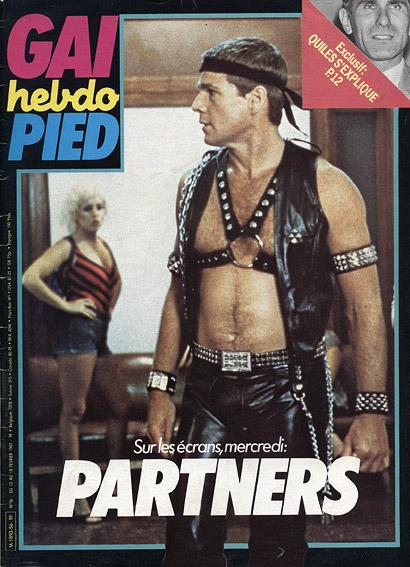
So where should the curious reader interested Foucault’s work on sexuality look toward, to prepare themselves for (or, in lieu of) reading Foucault without having to plunge headfirst into things like historicisms, repressive hypotheses, and binary systems? There is a very brief, very fascinating interview with the philosopher that Le Gai Pied published in 1981 called “Friendship is a Way of Life”. It is available online. While I downloaded the interview as a PDF on AAAARG (more on that in a bit), you can see the entire interview on Scribd, download-free.

Poor turnout

0

news@sfbg.com

The Guinness World Record for the largest mobilization of human beings was recently broken when 173 million people demanded that their governments eradicate extreme poverty around the world. But U.S. media barely noted the call and San Francisco’s event had low attendance, suggesting an uphill struggle for the cause in the world’s richest nation.

Millions gathered at more than 3,000 Stand Up, Take Action events in 120 countries Oct. 16-18 in an attempt to put pressure on governments to achieve the United Nations Millennium Development Goals, but less than 30 people gathered on the steps of San Francisco City Hall to support the movement.

Sup. John Avalos was one of the speakers at the event, organized by a coalition of local activist groups and student volunteers. Admitting that he was "expecting it to be a little bigger," Avalos said the event was just the start of what needed to be a much larger movement by the American people.

"There is a strange phenomenon occurring at the moment. It’s as if people are a little bit asleep about the need to be active," Avalos told the Guardian. "Because we have an administration they view as being more supportive of human rights and economic and social justice, people are being lulled into thinking things will just get better."

Standing just a short walk away from the birth place of the United Nations, Avalos bought attention in his speech to the rich history San Francisco has in mobilizing social change. "We do the best to live up to it, but we have a long way to go. Around the world this is the time to uproot poverty — we try to provide a safety net, but it could be stronger."

The Stand Up, Take Action, End Poverty Now! campaign is in its fourth year and is organized by the UN Millennium Campaign in an attempt to raise awareness of the Millennium Development Goals (MDGs), a series of benchmarks designed to eradicate global poverty.

At the United Nations Millennium Development Summit in 2000, 189 world leaders promised to "end poverty by 2015." The eight goals include eliminating extreme poverty and hunger, achieving universal primary education, and combating HIV/AIDS, malaria, and other diseases.

Rep. Barbara Lee (D-Oakland) has authored or coauthored every major piece of legislation dealing with global HIV/AIDS issues since she was elected to Congress. She told the Guardian that MDGs must be placed in context with poverty in America. "Sometimes people argue that we must look after our own first, but my position is that if you look at the eight Millennium goals, they all apply to our own country too," Lee said. "Look at the plight of people who are disproportionately affected by HIV/AIDS in our country — especially in African American and Latino communities.

"With the economic downturn, poverty rates in America are soaring, putting more people into circumstances the MDGs focus on outside of America," she continued. "I think it really is important to make those connections."

Lee compared the foreclosure crisis and lack of regulation in the financial markets over the last eight to 10 years to the "wild West" and calls America’s 47 million uninsured a "moral disgrace."

"It is about priorities and political will, and this will be determined by the voices of people saying it must be done," she said. "People have to push for these changes and remember that it didn’t just stop with the election. We have to raise awareness while at the same time working on changing policy. Otherwise we can get stuck debating issues and not doing the work that has to be done to change these very deplorable conditions."

Sup. David Campos was the only other supervisor to speak at the Civic Center event. He said he is committed to the fight against global poverty and wants to see the government represent the values San Francisco was founded on.

"We need to shed light and bring attention to one of the largest issues facing the world today — severe poverty," Campos said. "I really believe that as a city, as a state, and as a country, we not only need to make sure we push the U.S. to follow the lead of other countries, but actually become a leader in making these Millennium goals a reality."

After the event, Campos told the Guardian: "It doesn’t surprise me that more people didn’t show up to the event. But part of the task is to spread the word. San Francisco has been a leader in a number of these issues in the past, and I think we should play a key role in this one."

Campos said that one solution might be to put forward a resolution before the Board of Supervisors to support MDGs and have the city take a formal position on it.

"It is definitely something we are talking about to demonstrate San Francisco’s commitment to the issue," he said. "A lot of people don’t know about the goals, or the fact that the U.S. hasn’t really made them a priority. We need to spread the word and let people know this kind of a movement is only going to be a success if people take it upon themselves to play a leadership role."

Brian Webster, a volunteer who organized the SF event, drew attention to the large number of supporters for the MDGs in California. More than 250,000 people have signed up for the One Campaign, a global NGO that partnered with the U.N. Millennium Campaign in the events.

"For campaigners, it is now a matter of trying to join together and identify vast strategies to communicate what needs to be done," Webster said. "We will continue to educate communities, politicians, and civic leaders in what can be done this month, in the next six months, and ultimately, in the next six years."

While the Bush administration rarely mentioned MDGs while in office, many activists believe President Barack Obama’s public recognition of the goals at a recent U.N. summit demonstrates a change in American policy.

"In other countries, there has been more education and awareness about the goals. But here in America, it is almost like we are starting eight years late," said Anita Sharma, the North American director for the U.N. Millennium Campaign. "President Obama has said that the MDGs are American goals and has even talked about his plans for achieving them."

Also, despite the low numbers at the San Francisco event, Sharma says more than 190,000 people from North America participated in last weekend’s campaign, an increase of more than 70,000 from last year’s attempt.

"It’s not like Americans don’t care about global poverty — in fact we give more in charitable contributions than any other country in the world," she said. "It just takes quite a lot to get Americans into the streets and mobilized. There needs to be more education out there, that’s all."

Ananya Roy, a UC Berkeley professor of city and regional planning and education director of the Blum Center for Developing Economies, says she doesn’t think MDGs can be achieved worldwide by 2015. Even so, she stressed the important role they played in the framework of development.

Speaking at UC Berkeley’s Stand Up and Take Action Event, she said: "The goals are important because they are seen as a new global social contract that makes issues of poverty and inequality quite urgent. They also come with measurements and targets, which is meant to create accountability."

Roy placed particular emphasis on the eighth goal: building a global partnership for development. She noted that that increased awareness can change the ways the U.S. and European governments operate in terms of aid and trade.

"This multilateral contract requires more than simply the action and leadership of the U.S. and Western Europe," she said. "We need to think about poverty and inequality that is immediately around us, understand how we are involved in the production of depravity, and then we must act in solidarity.

"We need to be thinking about poverty as it exits here in the U.S. and not just as an abstract problem that belongs to someplace else," she added. "It is also our problem."

According to a 2009 U.N. report, progress toward achieving the MDGs has been slow in some cases and certain achievements have been reversed by the economic downturn. The report estimates that there will be 55 million to 90 million more people living in extreme poverty than anticipated before the crisis.

For Chandler Smith, media coordinator for the One Campaign — which campaigns for better development policies and more effective aid and trade reform — the Guinness certification marks progress toward achieving the MDGs. "That this year is breaking another world record speaks to the power of people to organize around the world, shows that we are a global community, and that there is a sustainability in the movement," he said.

"As for the North American aspect, we are always trying to educate people more about these issues. Our results show that a lot of our work has been done — but that we also have more work to do."

Film listings

0

Film listings are edited by Cheryl Eddy. Reviewers are Kimberly Chun, Michelle Devereaux, Max Goldberg, Dennis Harvey, Johnny Ray Huston, Louis Peitzman, Lynn Rapoport, Ben Richardson, Matt Sussman, and Laura Swanbeck. The film intern is Fernando F. Croce. For rep house showtimes, see Rep Clock. For first-run showtimes, see Movie Guide.

SF DOCFEST

The eighth annual San Francisco Documentary Film Festival runs through Oct 29 at the Roxie, 3117 16th St, SF. Tickets ($11) are available by visiting www.sfindie.com. All times p.m.

WED/28

American Artifact: The Rise of American Rock Poster Art 7. The Great Contemporary Art Bubble 7. The Philosopher Kings 9:15. Pop Star on Ice 9:15.

THURS/20

Nursery University 7. Speaking in Code 7. Trimpin: The Sound of Invention 9:15. Cropsey 9:15.

OPENING

*The Beaches of Agnès Director’s commentaries are par for the course in the DVD age, but few filmmakers posses the élan to warrant a feature length auto-exegesis. Agnès Varda is one, and her most recent memory machine — she claims it’s her last — cheerfully dissolves the boundaries between memoir, retrospective, and installation. We begin on the beach, with the 80-year old Varda spryly instructing her young assistants on the placement of various mirrors. "If we opened people up, we’d find landscapes," she explains of her motivation for filmmaking, before embarking on an unclassifiable daisy chain of reenactment and reminiscence. The film moves at the leisurely pace of the flâneur’s walk, the better to relish Varda’s joie de vivre and sweet bawdiness. Her chameleon colored bowl cut dares us to keep abreast of her quicksilver digressions on the past (fact or fiction matters less than then and now). As with 2000’s The Gleaners and I, she’s most free with the things she adores: blurry foregrounds, old photographs, heart-shaped potatoes, ancient frescoes, the human body and neighbors. "All the dead lead me back to Jacques," she says, referring to her great love, Jacques Demy, and their life together loops The Beaches of Agnès with a beauty not soon forgotten. (1:40) Opera Plaza. (Goldberg)

Brain Dead With the zombedy combedy genre — I’m sick of "zomcom," aren’t you? — having reached mass impact via Zombietown, you might be hungry if not chalk-facedly ravenous for more of the same. In which case you’ll enjoy this Thrillville-presented West Coast theatrical debut of 1980s horror fave (1986’s Witchboard) Kevin Tenney’s own more modestly scaled mixup of undead mayhem and laughs. When a tiny asteroid lands in a rural area — instantly turning one unlucky fisherman into green-faced chomper and his buddy into lunch — it’s not long before shambling carnivores are imperiling the requisite cabinful of ill-matched strandees. Their number include a televangelist, lost sorority sisters, and two escaped convicts, one nice and one psycho-mean. While the latter takes everyone hostage at gunpoint, those carnivorous ghouls gathering outside have a strictly take-no-hostages policy. They’ll take brains, though. BRAAAAAAAAINS!!! Brain Dead is fun — if kinda dumb fun, compared to Shaun of the Dead or even Zombieland. (Let alone Peter Jackson’s 1992 splatsterpiece Braindead, or the 1990 Bill Paxton-Bill Pullman non-zom horror faceoff also called Brain Dead). But if it lacks that special edge of originality and/or wit, it’s still a whole lot better than 2008’s Zombie Strippers, of which we shall never speak again. (1:35) Four Star. (Harvey)

*Bronson In 2000’s Chopper (2000), Eric Bana killed as Australia’s most notorious psychotic extortionist-killer-jailbird-celebrity autobiographer — more vividly than in any part serving his subsequent, slightly bland leading-hunk status. Tom Hardy is another handsome bloke at risk of looking competent and versatile without fully impressing. Yet here comes Bronson, a film (and role) offering up a dramatized "Man. Myth. Celebrity" (as per its ad line) of actual "worst prisoner in Britain." The real Michael Gordon Peterson, better known as "Charles Bronson" (a PR-minded friend fitted the Death Wish star as nom de notoriety), was an extreme anger-management case whose working-class struggle ended when he robbed a post office in 1974. As the film details, prison spectacularly agreed with him. He enjoyed the tension and violence — between himself and fellow inmates as well as guards — so much that he got sent to a high-security psychiatric hospital. Worry not: even drugged to the gills, he managed to create ruckuses that won national attention. This is the second English-language directing effort by Dane Nicolas Winding Refn, of the crime-drama Pusher trilogy. Bronson is utterly revved up in a way that’s showy but not at all dumbed-down, and it’s pure cinematic inspiration at least half-transcending even a case of snarkish homophobia as you haven’t seen since … well, Chopper maybe? (1:32) Lumiere. (Harvey)

The Canyon See "Into the Wild." (1:42) Opera Plaza.

Gentlemen Broncos The latest from Napoleon Dynamite (2004) director Jared Hess is about a Utah teen (Michael Angarano) who is obsessed with science fiction. (1:51)

*Heart of Stone With metal-detectors blocking its entrance, gang fights breaking out in the halls, and teachers wearing bulletproof vests, it’s clear that Weequahic High School is not your usual blackboard jungle. Once one of the nation’s most respected schools, the Newark, NJ institution was by 2000 plagued by the urban violence that claimed an alarming number of lives. Beth Toni Kruvant’s first-rate documentary chronicles the place’s gradual recovery thanks to Ron Stone, the passionate principal who, using a mixture of diplomacy and compassion, struggled to control the brutality that loomed over a new generation of students. Though similar in subject to Rollin Binzer’s recent The Providence Effect, Heart of Stone is easily the better film, less an infomercial for enrollment than a tough-minded analysis of the historical upheavals and social conditions forming Weequahic’s fall and rise. "Inspiring" is an abused term when it comes to movies about teachers, but Kruvant’s inquiry and Stone’s dedication earn it. (1:24) Roxie. (Croce)

Michael Jackson’s This Is It This concert doc compiles behind-the-scenes rehearsal footage for what would have been Jacko’s run of London shows. (1:52) Cerrito , Four Star, Marina.

Walt and El Grupo This highly authorized documentary chronicles the 1941 South American tour Disney staff took as part of the U.S. "Good Neighbor" policies. The creative results were several fascinating wartime pastiches, including 1944’s anarchic, marvelous feature Three Caballeros. But that last is inexplicably not excerpted here — while tedious home-movie footage with Walt and company on their well-recorded trip, not to mention surviving relatives’ clucking over how wonderful it all was, go on and on. It’s worth noting that this studio vanity project has reached theaters, if minimally — while John-Paul Davidson and Trudi Styler’s The Sweatbox, an unvarnished behind-scenes portrait of the thorny processes behind latter-day Disney ‘toon The Emperor’s New Groove (2000), mysteriously vanished from the planet after its 2002 festival debut. That documentary offered real insight without reducing appreciation for its original talents. This one is a timid, worshipful bore. (1:46) (Harvey)

*The Yes Men Fix the World Can you prank shame, if not sense, into the Powers That Be? Andy Bichlbaum and Mike Bonnano, the jesters-activists who punked right-wing big-business in the documentary The Yes Men (2003), continue to play Groucho Marx to capitalism’s mortified Margaret Dumont in this gleeful sequel. Decked in sharp suits and packing fake websites and catchphrases, the duo bluffs its way into conferences and proceeds to give corporate giants the Borat treatment. The stunts are often inspired and, in their visions of fantasy justice, poignant: Bichlbaum and Bonnano pose as Dow envoys and announce the company’s plans to send billions to treat victims of the 1984 Bhopal chemical disaster, and later appear as HUD representatives offering a corrective to the shameful neglect of New Orleans in the wake of Hurricane Katrina. The Yes Men may not fix the world, but their ruses once more prove the awareness-raising potential of comedy. (1:30) Oaks, Roxie. (Croce)

ONGOING

Amelia Unending speculation surrounds the fate of aviator Amelia Earhart, who, with navigator Fred Noonan, disappeared in 1937 over the Pacific while attempting to circumnavigate the globe. However, Mira Nair’s biopic Amelia clarifies at least one fact: that Earhart (played by Hilary Swank) was a free-spirited freedom-loving lover of being free. We learn this through passages of her writing intoned in voice-over; during scenes with publisher and eventual husband George Putnam (Richard Gere); and via wildlife observations as she flies her Lockheed Electra over some 22,000 miles of the world. Not much could diminish the glory of Earhart’s achievements in aviation, particularly in helping open the field to other female pilots. And Swank creates the impression of a charming, intelligent, self-possessed woman who manages to sidestep many of fame’s pitfalls while remaining resolute in her lofty aims. She’s also slightly unknowable in her cheery, near-seamless virtue, and the film’s adoring depiction, with its broad, heavy strokes, at times inspires a different sort of restlessness than the kind that compels Earhart to take flight. Amelia is structured as a series of flashbacks in which the aviator, while circling the earth, retraces her life –- or rather, the highlights of her career in flying, her marriage to Putnam, and her affair with Gene Vidal (Ewan McGregor), another champion of aviation (and the father of author Gore). And this, too, begins to feel lazily repetitive, as we return and return again to that cockpit to stare at a doomed woman as she stares emotively into the wild blue yonder. (1:51) California, 1000 Van Ness, Piedmont, SF Center, Sundance Kabuki. (Rapoport)

Antichrist Will history judge Lars von Trier as the genius he’s sure he is? Or as a humorless, slightly less cartoonish Ken Russell, whipping images and actors into contrived frenzies for ersatz art’s sake? You’re probably already on one side of the fence or the other. Notorious Cannes shocker Antichrist will only further divide the yeas and nays, though the film does offers perhaps the most formally beautiful filmmaking von Trier’s bothered with since 1984’s The Element of Crime. Grieving parents Charlotte Gainsbourg and Willem Dafoe retreat to a forest primeval enabling widescreen images of poetic succulence. Yet that beauty only underlines Antichrist‘s garishness. One film festival viewer purportedly barfed onto the next row — and you too might recoil, particularly if unaccustomed to gore levels routinely surpassed by mainstream horror. Does Antichrist earn such viewer punishment by dint of moral, character, narrative, or artistic heft? Like slurp it does. What could be more reactionary than an opening in which our protagonists "cause" their angelic babe’s accidental death by obliviously enjoying one another? Shot in "lyrical" slow-mo black and white, it’s a shampoo commercial hard-selling Victorian sexual guilt.

Later, Dafoe’s "He" clings to hollow psychiatric reason as only an embittered perennial couch case might imagine. Gainsbourg’s "She" morphs from maternal mourner to castrating shrike as only one terrified of femininity could contrive. They’re tortured by psychological and/or supernatural events existing solely to bend game actors toward a tyrant artiste’s whims. There’s no devil here — just von Trier’s punitive narcissism. (1:49) Embarcadero, Shattuck. (Harvey)

*Astro Boy How can a robo-kid so cute be so sad? That’s the beautiful paradox of Astro Boy, the atomic age Japanese manga-cum-Pinocchio parable here given loving new life. Genius creator Osamu Tezuka’s original Astro Boy cannily grappled with the seductions and dangers of Japan’s economic miracle, the country’s conflicted emotions about the technology that fueled both Astro Boy and the war machine, and the struggle between industrialization and the environment. This update adds the recurring favorite sci-fi leitmotif of artificial intelligence — and by extension what it means to be human and non-human — to the mix. This adorable toaster (voiced by Freddie Highmore) awakens with memories of Toby, the brilliant, rebellious son of robotics genius Dr. Tenma (Nicolas Cage), believing he is a boy not a robot. The grief-stricken Tenma built him after the original Toby was killed during the test of a new robotic weapon. Eventually cast out by his Frankenstein father-creator and coping with some major identity issues, Astro Boy finds his place among a slew of outcasts on the now garbage- and robot part-strewn Wall-E-esque Earth, where his sense of compassion and mega powers threaten to bridge the seemingly insurmountable differences between humans and robots. Despite the speed with which director David Bowers and his team put together this animated feature, which boasts the voicings of stars like Charlize Theron and Nathan Lane, Astro Boy succeeds in delivering that crucial hybrid of action, comedy, and emotional heft that the best of classic animation offers, while touching lightly out relevant ideas about technology. (1:34) 1000 Van Ness, Presidio, Shattuck. (Chun)

*Big Fan The Wrestler screenwriter Robert Siegel continues to trawl tri-state working class blues for his directorial debut, Big Fan, a darkened fairy tale of sports mania and the male ego. Sandpaper rough comic Patton Oswalt is Paul Aufiero, a thirtysomething New York Giants nut who lives with his mother and scripts huffy raps for his nightly 1AM "Paul from Staten Island" call to the local sports radio station. Siegel locates a revealing stage for anxious performances of masculinity in the motor-mouthed rituals of sports talk radio. Big Fan is at its best when Aufiero is locked in dubious battle with abstract foes like "Philadelphia Phil," but the film starts to slow down as soon as our anti-hero and his lone pal Sal (Kevin Corrigan) spot Giants QB Quantrell Bishop (Jonathan Hamm) at a Staten Island gas station. They tail him to a strip club in New York City, where Bishop gives Aufiero a bruising upon discovering he’s been followed, thus compromising the Giants’ playoff chances. What a tangled web we weave and all that. It’s telling of Siegel’s limited talents that the best part of the fateful trip into Manhattan is Oswalt’s grimace when faced with a nine buck Budweiser. We’re so hungry for any kind of regionalism in mainstream filmmaking that even Big Fan‘s cheapest shots (all its women characters, for instance) don’t overpower the pleasure of Oswalt’s marshy profanities and the provincial jabber of New York vs. Philadelphia and Staten Island vs. Manhattan. (1:35) Lumiere, Shattuck. (Goldberg)

*Bright Star Is beauty truth; truth, beauty? John Keats, the poet famed for such works as "Ode on a Grecian Urn," and Jane Campion, the filmmaker intent on encapsuutf8g the last romance of the archetypal Romantic, would have undoubtedly bonded over a love of sensual details — and the way a certain vellum-like light can transport its viewer into elevated reverie. In truth, Campion doesn’t quite achieve the level of Keats’ verse with this somber glimpse at the tubercular writer and his final love, neighbor Fanny Brawne. But she does bottle some of their pale beauty. Less-educated than the already respected young scribe, Brawne nonetheless may have been his equal in imagination as a seamstress, judging from the petal-bonneted, ruffled-collar ensembles Campion outfits her in. As portrayed by the soulful-eyed Abbie Cornish, the otherwise-enigmatic, plucky Brawne is the singularly bright blossom ready to be wrapped in a poet’s adoration, worthy of rhapsody by Ben Whishaw’s shaggily, shabbily puppy-dog Keats, who snatches the preternaturally serene focus of a fine mind cut short by illness, with the gravitational pull of a serious indie-rock hottie. The two are drawn to each other like the butterflies flittering in Brawne’s bedroom/farm, one of the most memorable scenes in the dark yet sweetly glimmering Bright Star. Bathing her scenes in lengthy silence, shot through with far-from-flowery dialogue, Campion is at odds with this love story, so unlike her joyful 1990 ode to author Janet Frame, An Angel at My Table (Kerry Fox appears here, too, as Fanny’s mother): the filmmaker refuses to overplay it, sidestepping Austenian sprightliness. Instead she embraces the dark differences, the negative inevitability, of this death-steeped coupling, welcoming the odd glance at the era’s intellectual life, the interplay of light and shadow. (1:59) Elmwood, Opera Plaza. (Chun)

*Capitalism: A Love Story Gun control. The Bush administration. Healthcare. Over the past decade, Michael Moore has tackled some of the most contentious issues with his trademark blend of humor and liberal rage. In Capitalism: A Love Story, he sets his sights on an even grander subject. Where to begin when you’re talking about an economic system that has defined this nation? Predictably, Moore’s focus is on all those times capitalism has failed. By this point, his tactics are familiar, but he still has a few tricks up his sleeve. As with Sicko (2007), Moore proves he can restrain himself — he gets plenty of screen time, but he spends more time than ever behind the camera. This isn’t about Moore; it’s about the United States. When he steps out of the limelight, he’s ultimately more effective, crafting a film that’s bipartisan in nature, not just in name. No, he’s not likely to please all, but for every Glenn Beck, there’s a sane moderate wondering where all the money has gone. (2:07) California, Empire, Grand Lake, 1000 Van Ness, SF Center. (Peitzman)

Cirque du Freak: The Vampire’s Assistant (1:48) 1000 Van Ness, SF Center, Shattuck.

Cloudy With a Chance of Meatballs (1:21) Oaks.

Coco Before Chanel Like her designs, Gabrielle "Coco" Chanel was elegant, très chic, and utterly original. Director Anne Fontaine’s French biopic traces Coco (Audrey Tautou) from her childhood as a struggling orphan to one of the most influential designers of the 20th century. You’ll be disappointed if you expect a fashionista’s up close and personal look at the House of Chanel, as Fontaine keeps her story firmly rooted in Coco’s past, including her destructive relationship with French playboy Etienne Balsar (Benoît Poelvoorde) and her ill-fated love affair with dashing Englishman Arthur "Boy" Capel (Alessandro Nivola). The film functions best in scenes that display Coco’s imagination and aesthetic magnetism, like when she dances with Capel in her now famous "little black dress" amidst a sea of stiff, white meringues. Tautou imparts a quiet courage and quick wit as the trailblazing designer, and Nivola is unmistakably charming and compassionate as Boy. Nevertheless, Fontaine rushes the ending and never truly seizes the opportunity to explore how Coco’s personal life seeped into her timeless designs that were, in the end, an extension of herself. (1:50) Albany, SF Center, Sundance Kabuki. (Swanbeck)

Couples Retreat You could call Couples Retreat a romantic comedy, but that would imply that it was romantic and funny instead of an insipid, overlong waste of time. This story of a group of married friends trying to bond with their spouses in an exotic island locale is a failure on every level. Romantic? The titular couples — four total — represent eight of the most obnoxious characters in recent memory. Sure, you’re rooting for them to work out their issues, but that’s only because awful people deserve one another. (And in a scene with an almost-shark attack, you’re rooting for the shark.) Funny? The jokes are, at best, juvenile (boners are silly!) and, at worse, offensive (sexism and homophobia once more reign supreme). There is an impressive array of talent here: Vince Vaugh, Jason Bateman, Kristen Bell, Jean Reno, etc. Alas, there’s no excusing the script, which puts these otherwise solid actors into exceedingly unlikable roles. Even the gorgeous island scenery — Couples Retreat was filmed on location in Bora-Bora — can’t make up for this waterlogged mess. (1:47) 1000 Van Ness, Presidio, SF Center, Shattuck. (Peitzman)

*The Damned United Like last year’s Frost/Nixon, The Damned United features a lush 70’s backdrop, a screenplay by Peter Morgan, and a commanding performance by Michael Sheen as an ambitious egotist. A promising young actor, Sheen puts on the sharp tongue and charismatic monomania of real-life British soccer coach Brian Clough like a familiar garment, blustering his way through a fictionalized account of Clough’s unsuccessful 44-day stint as manager of Leeds United. Though the details of high-stakes professional "football" will likely be lost on American viewers, the tale of a talented, flawed sports hero spiraling deeper into obsession needs no trans-Atlantic translation, and the film is an engrossing portrait of a captivating, quotable character. (1:38) Elmwood, Embarcadero. (Richardson)

*An Education The pursuit of knowledge — both carnal and cultural — are at the tender core of this end-of-innocence valentine by Danish filmmaker Lone Scherfig (who first made her well-tempered voice heard with her 2000 Dogme entry, Italian for Beginners), based on journalist Lynn Barber’s memoir. Screenwriter Nick Hornby breaks further with his Peter Pan protagonists with this adaptation: no man-boy mopers or misfits here. Rather, 16-year-old schoolgirl Jenny (Carey Mulligan) is a good girl and ace student. It’s 1961, and England is only starting to stir from its somber, all-too-sober post-war slumber. The carefully cloistered Jenny is on track for Oxford, though swinging London and its high-style freedoms beckon just around the corner. Ushering in those freedoms — a new, more class-free world disorder — is the charming David (Peter Sarsgaard), stopping to give Jenny and her cello a ride in the rain and soon proffering concerts and late-night suppers in the city. He’s a sweet-faced, feline outsider: cultured, Jewish, and given to playing fast and loose in the margins of society. David can see Jenny for the gem she is and appreciate her innocence with the knowing pleasure of a decadent playing all the angles. The stakes are believably high, thanks to An Education‘s careful attention to time and place and its gently glamored performances. Scherfig revels in the smart, easy-on-eye curb appeal of David and his friends while giving a nod to the college-educated empowerment Jenny risks by skipping class to jet to Paris. And Mulligan lends it all credence by letting all those seduced, abandoned, conflicted, rebellious feelings flicker unbridled across her face. (1:35) Albany, Embarcadero, Empire, Piedmont, Sundance Kabuki. (Chun)

*Good Hair Spurred by his little daughter’s plaintive query ("Daddy, how come I don’t have good hair?"), Chris Rock gets his Michael Moore freak on and sets out to uncover the racial and cultural implications of African-American hairstyling. Visiting beauty salons, talking to specialists, and interviewing celebrities ranging from Maya Angelou to Ice-T, the comic wisecracks his way into some pretty trenchant insights about how black women’s coiffures can often reflect Caucasian-set definitions of beauty. (Leave it to Rev. Al Sharpton to voice it ingeniously: "You comb your oppression every morning!") Rock makes an affable guide in Jeff Stilson’s breezy documentary, which posits the hair industry as a global affair where relaxers work as "nap-antidotes" and locks sacrificially shorn in India end up as pricey weaves in Beverly Hills. Maybe startled by his more disquieting discoveries, Rock shifts the focus to flamboyant, crowd-pleasing shenanigans at the Bronner Bros. International Hair Show. Despite such softball detours, it’s a genial and revealing tour. (1:35) Lumiere, Shattuck. (Croce)

Inglourious Basterds With Inglourious Basterds Quentin Tarantino pulls off something that seemed not only impossible, but undesirable, and surely unnecessary: making yet another of his in-jokey movies about other movies, albeit one that also happens to be kinda about the Holocaust — or at least Jews getting their own back on the Nazis during World War II — and (the kicker) is not inherently repulsive. As Rube Goldbergian achievements go, this is up there. Nonetheless, Basterds is more fun, with less guilt, than it has any right to be. The "basterds" are Tennessee moonshiner Pvt. Brad Pitt’s unit of Jewish soldiers committed to infuriating Der Fuhrer by literally scalping all the uniformed Nazis they can bag. Meanwhile a survivor (Mélanie Laurent) of one of insidious SS "Jew Hunter" Christoph Waltz’s raids, now passing as racially "pure" and operating a Paris cinema (imagine the cineaste name-dropping possibilities!) finds her venue hosting a Third Reich hoedown that provides an opportunity to nuke Hitler, Himmler, Goebbels, and Goering in one swoop. Tactically, Tarantino’s movies have always been about the ventriloquizing of that yadadada-yadadada whose self-consciousness is bearable because the cleverness is actual; brief eruptions of lasciviously enjoyed violence aside, Basterds too almost entirely consists of lengthy dialogues or near-monologues in which characters pitch and receive tasty palaver amid lethal danger. Still, even if he’s practically writing theatre now, Tarantino does understand the language of cinema. There isn’t a pin-sharp edit, actor’s raised eyebrow, artful design excess, or musical incongruity here that isn’t just the business. (2:30) Oaks, SF Center. (Harvey)

*The Informant! The best satire makes you uncomfortable, but nothing will make you squirm in your seat like a true story that feels like satire. Director Steven Soderbergh introduces the exploits of real-life agribusiness whistleblower Mark Whitacre with whimsical fonts and campy music — just enough to get the audience’s guard down. As the pitch-perfect Matt Damon — laden with 30 extra pounds and a fright-wig toupee — gee-whizzes his way through an increasingly complicated role, Soderbergh doles out subtle doses of torturous reality, peeling back the curtain to reveal a different, unexpected curtain behind it. Informant!’s tale of board-room malfeasance is filled with mis-directing cameos, jokes, and devices, and its ingenious, layered narrative will provoke both anti-capitalist outrage and a more chimerical feeling of satisfied frustration. Above all, it’s disquietingly great. (1:48) SF Center. (Richardson)

The Invention of Lying Great concept. Great cast. All The Invention of Lying needed was a great script editor and it might have reached classic comedy territory. As it stands, it’s dragged down to mediocrity by a weak third act. This is the story of a world where no one can lie — and we’re not just talking about big lies either. The Invention of Lying presents a vision of no sarcasm, no white lies, no — gasp —creative fiction. All that changes when Mark Bellison (Ricky Gervais) realizes he can bend the truth. And because no one else can, everything Mark makes up becomes fact to the rubes around him. If you guessed that hilarity ensues, you’re right on the money! Watching Mark use his powers for evil (robbing the bank! seducing women!) makes for a very funny first hour. Then things take a turn for the heavy when Mark becomes a prophet by letting slip his vision of the afterlife. Faster than you can say "Jesus beard," he’s rocking a God complex and the audience is longing for the simpler laughs, like Jennifer Garner admitting to some pre-date masturbation. (1:40) 1000 Van Ness. (Peitzman)

Law Abiding Citizen "Spike Lee’s Inside Man (2006) as re-imagined by the Saw franchise folks" apparently sounded like a sweet pitch to someone, because here we are, stuck with Jamie Foxx and Gerard Butler playing bloody and increasingly ludicrous cat-and-mouse games. Foxx stars as a slick Philadelphia prosecutor whose deal-cutting careerist ways go easy on the scummy criminals responsible for murdering the wife and daughter of a local inventor (Butler). Cut to a decade later, and the doleful widower has become a vengeful mastermind with a yen for Hannibal Lecter-like skills, gruesome contraptions, and lines like "Lessons not learned in blood are soon forgotten." Butler metes out punishment to his family’s killers as well as to the bureocratic minions who let them off the hook. But the talk of moral consequences is less a critique of a faulty judicial system than mere white noise, vainly used by director F. Gary Gray and writer Kurt Wimmer in hopes of classing up a grinding exploitation drama. (1:48) 1000 Van Ness. (Croce)

My One and Only (1:48) Opera Plaza.

New York, I Love You A dreamy mash note to the city that never sleeps, New York, I Love You is the latest installment in a series of omnibus odes to world metropolises and the denizens that live and love within the city limits. Less successful than the Paris, je t’aime (2006) anthology — which roped in such disparate international directors as Gus Van Sant and Wes Craven, Alfonso Cuaron and Olivier Assayas — New York welcomes a more minor-key host of directors to the project with enjoyable if light-weight results. Surely any bite of the Big Apple would be considerably sexier. Bradley Cooper and Drea de Matteo tease out a one-night stand with legs, and Ethan Hawke and Maggie Q generate a wee bit of verbal fire over street-side cigs, yet there’s surprisingly little heat in this take on a few of the 8 million stories in the archetypal naked city. Most memorable are the strangest couplings, such as that of Natalie Portman, a Hasidic bride who flirtatiously haggles with Irrfan Khan, a Jain diamond merchant, in a tale directed by Mira Nair. Despite the pleasure of witnessing Julie Christie, Eli Wallach, and Cloris Leachman in action, many of these pieces — written by the late Anthony Minghella, Israel Horovitz, and Portman, among others — feel a mite too slight to nail down the attention of all but the most desperate romantics. (1:43) Bridge, Shattuck. (Chun)

The Nightmare Before Christmas 3D (1:16) Castro, Grand Lake.

Ong Bak 2: The Beginning Important: though it does star the original’s Tony Jaa, this is not a sequel to 2003 Thai hit Ong-bak, about a pious martial-arts master who journeys to the big city to retrieve the stolen head of his village’s sacred Buddha. Rather, Ong Bak 2 travels back in time so that lethally limber star Jaa (who also directs) can portray a young man adopted by bandits after his noble parents are slaughtered by a corrupt general. Along the way, he learns multiple fighting styles; bones are crunched, elephants are charmed, and emo flashbacks abound. The cool thing about Ong-bak was that it showcased Jaa’s unique Thai fighting style in an urban environment — his country-bumpkin character took down mobs of petty hoods and smugglers, and he faced an array of ridiculous foes in underground pit fights (for righteous reasons, natch). Ong Bak 2‘s historic setting feels a tad generic, even if it does provide an excuse for a crocodile-wrestling scene. Also, the tragic storyline calls for the kind of acting depth Jaa simply doesn’t have. Though he glowers with conviction, his fists and feet are the most charismatic things about him. (1:55) Lumiere, Shattuck. (Eddy)

*Paranormal Activity In this ostensible found-footage exercise, Katie (Katie Featherson) and Micah (Micah Sloat) are a young San Diego couple whose first home together has a problem: someone, or something, is making things go bump in the night. In fact, Katie has sporadically suffered these disturbances since childhood, when an amorphous, not-at-reassuring entity would appear at the foot of her bed. Skeptical technophile Micah’s solution is to record everything on his primo new video camera, including a setup to shoot their bedroom while they sleep — surveillance footage sequences that grow steadily more terrifying as incidents grow more and more invasive. Like 1999’s The Blair Witch Project, Oren Peli’s no-budget first feature may underwhelm mainstream genre fans who only like their horror slick and slasher-gory. But everybody else should appreciate how convincingly the film’s very ordinary, at times annoying protagonists (you’ll eventually want to throttle Micah, whose efforts are clearly making things worse) fall prey to a hostile presence that manifests itself in increments no less alarming for being (at first) very small. When this hits DVD, you’ll get to see the original, more low-key ending (the film has also been tightened up since its festival debut two years ago). But don’t wait — Paranormal‘s subtler effects will be lost on the small screen. Not to mention that it’s a great collective screaming-audience experience. (1:39) Metreon, 1000 Van Ness, Presidio, Sundance Kabuki. (Harvey)

*Paris Cédric Klapisch’s latest offers a series of interconnected stories with Paris as the backdrop, designed — if you’ll pardon the cliché — as a love letter to the city. On the surface, the plot of Paris sounds an awful lot like Paris, je t’aime (2006). But while the latter was composed entirely of vignettes, Paris has an actual, overarching plot. Perhaps that’s why it’s so much more effective. Juliette Binoche stars as Élise, whose brother Pierre (Romain Duris) is in dire need of a heart transplant. A dancer by trade, Pierre is also a world-class people watcher, and it’s his fascination with those around him that serves as Paris‘ wraparound device. He sees snippets of these people’s lives, but we get the full picture — or at least, something close to it. The strength of Paris is in the depth of its characters: every one we meet is more complex than you’d guess at first glance. The more they play off one another, the more we understand. Of course, the siblings remain at the film’s heart: sympathetic but not pitiable, moving but not maudlin. Both Binoche and Duris turn in strong performances, aided by a supporting cast of French actors who impress in even the smallest of roles. (2:04) Embarcadero, Shattuck. (Peitzman)

Saw VI (1:30) 1000 Van Ness.

*The September Issue The Lioness D’Wintour, the Devil Who Wears Prada, or the High Priestess of Condé Nasty — it doesn’t matter what you choose to call Vogue editor-in-chief Anna Wintour. If you’re in the fashion industry, you will call her — or at least be amused by the power she wields as the overseer of style’s luxury bible, then 700-plus pages strong for its legendary September fall fashion issue back in the heady days of ’07, pre-Great Recession. But you don’t have to be a publishing insider to be fascinated by director R.J. Cutler’s frisky, sharp-eyed look at the making of fashion’s fave editorial doorstop. Wintour’s laser-gazed facade is humanized, as Cutler opens with footage of a sparkling-eyed editor breaking down fashion’s fluffy reputation. He then follows her as she assumes the warrior pose in, say, the studio of Yves St. Laurent, where she has designer Stefano Pilati fluttering over his morose color choices, and in the offices of the magazine, where she slices, dices, and kills photo shoots like a sartorial samurai. Many of the other characters at Vogue (like OTT columnist André Leon Talley) are given mere cameos, but Wintour finds a worthy adversary-compatriot in creative director Grace Coddington, another Englishwoman and ex-model — the red-tressed, pale-as-a-wraith Pre-Raphaelite dreamer to Wintour’s well-armored knight. The two keep each other honest and craftily ingenious, and both the magazine and this doc benefit. (1:28) Presidio. (Chun)

*A Serious Man You don’t have to be Jewish to like A Serious Man — or to identify with beleaguered physics professor Larry Gopnik (the grandly aggrieved Michael Stuhlbarg), the well-meaning nebbishly center unable to hold onto a world quickly falling apart and looking for spiritual answers. It’s a coming of age for father and son, spurred by the small loss of a radio and a 20-dollar bill. Larry’s about-to-be-bar-mitzvahed son is listening to Jefferson Airplane instead of his Hebrew school teachers and beginning to chafe against authority. His daughter has commandeered the family bathroom for epic hair-washing sessions. His wife is leaving him for a silkily presumptuous family friend and has exiled Larry to the Jolly Roger Motel. His failure-to-launch brother is a closeted mathematical genius and has set up housekeeping on his couch. Larry’s chances of tenure could be spoiled by either an anonymous poison-pen writer or a disgruntled student intent on bribing him into a passing grade. One gun-toting neighbor vaguely menaces the borders of his property; the other sultry nude sunbather tempts with "new freedoms" and high times. What’s a mild-mannered prof to do, except envy Schrodinger’s Cat and approach three rungs of rabbis in his quest for answers to life’s most befuddling proofs? Reaching for a heightened, touched-by-advertising style that recalls Mad Men in look and Barton Fink (1991) in narrative — and stooping for the subtle jokes as well as the ones branded "wide load" — the Coen Brothers seem to be turning over, examining, and flirting with personally meaningful, serious narrative, though their Looney Tunes sense of humor can’t help but throw a surrealistic wrench into the works. (1:45) California, Embarcadero, Empire, Piedmont, Sundance Kabuki. (Chun)

The Stepfather (1:41) 1000 Van Ness.

The Vanished Empire Pink Floyd records may become contraband once behind the Iron Curtain, but coming-of-age clichés remain the same in Karen Shakhnazarov’s seriocomic tale of adolescent ecstasies and agonies in 1973 Moscow. Lenin’s words are taught in school, though 18-year-old Sergey (Alexander Lyapin) is more interested in chasing girls, scoring pot, and savoring such illicit pop pleasures as jeans and rock music. Cool Kostya (Ivan Kupreyenko) and geeky Stepan (Yegor Baranovsky) are his contrasting cohorts, forming a trio of pubescent anxiety whose rites of passage are complicated by the arrival of Sergey’s girlfriend, Lyuda (Lidiya Milyuzina). The empire of the title is an ideological one, crumbled by a pleasure-seeking new generation who sell their grandfathers’ Marxist tomes in order to pay for Mick Jagger’s latest hit. Despite its evocative sense of time and place, however, the film’s teen nostalgia remains frustratingly amorphous, squandering the chance to find the youthful pulse of the nation’s transitory upheavals. (1:45) Sundance Kabuki. (Croce)

Where the Wild Things Are From the richly delineated illustrations and sparse text of Maurice Sendak’s 1963 children’s book, director Spike Jonze and cowriter (with Jones) Dave Eggers have constructed a full-length film about the passions, travails, and interior/exterior wanderings of Sendak’s energetic young antihero, Max. Equally prone to feats of world-building and fits of overpowering, destructive rage, Max (Max Records) stampedes off into the night during one of the latter and journeys to the island where the Wild Things (voiced by James Gandolfini, Catherine O’Hara, Forest Whitaker, Chris Cooper, Lauren Ambrose, Paul Dano, and Michael Berry Jr.) live — and bicker and tantrum and give in to existential despair and no longer all sleep together in a big pile. The place has possibilities, though, and Max, once crowned king, tries his best to realize them. What its inhabitants need, however, is not so much a visionary king as a good family therapist — these are some gripey, defensive, passive-aggressive Wild Things, and Max, aged somewhere around 10, can’t fix their interpersonal problems. Jonze and Eggers do well at depicting Max’s temporary kingdom, its forests and deserts, its creatures and their half-finished creations from a past golden era, as well as subtly reminding us now and again that all of this — the island, the arguments, the sadness — is streaming from the mind of a fierce, wildly imaginative young child with familial troubles of his own, equally beyond his power to resolve. They’ve also invested the film with a slow, grim depressive mood that can make for unsettling viewing, particularly when pondering the Maxes in the audience, digesting an oft-disheartening tale about family conflict and relationship repair. (1:48) Cerrito, Four Star, Grand Lake, Marina, 1000 Van Ness, Sundance Kabuki. (Rapoport)

Whip It What’s a girl to do? Stuck in small town hell, Bliss Cavendar (Ellen Page), the gawky teen heroine of Drew Barrymore’s directorial debut, Whip It, faces a pressing dilemma — conform to the standards of stifling beauty pageantry to appease her mother or rebel and enter the rough-and tumble world of roller derby. Shockingly enough, Bliss chooses to escape to Austin and join the Hurl Scouts, a rowdy band of misfits led by the maternal Maggie Mayhem (Kristin Wiig) and the accident-prone Smashley Simpson (Barrymore). Making a bid for grrrl empowerment, Bliss dawns a pair of skates, assumes the moniker Babe Ruthless, and is suddenly throwing her weight around not only in the rink, but also in school where she’s bullied. Painfully predictable, the action comes to a head when, lo and behold, the dates for the Bluebonnet Pageant and the roller derby championship coincide. At times funny and charming with understated performances by Page and Alia Shawcat as Bliss’ best friend, Whip It can’t overcome its paper-thin characters, plot contrivances, and requisite scenery chewing by Jimmy Fallon as a cheesy announcer and Juliette Lewis as a cutthroat competitor. (1:51) SF Center. (Swanbeck)

*Zombieland First things first: it’s clever, but it ain’t no Shaun of the Dead (2004). That said, Zombieland is an outstanding zombie comedy, largely thanks to Woody Harrelson’s performance as Tallahassee, a tough guy whose passion for offing the undead is rivaled only by his raging Twinkie jones. Set in a world where zombies have already taken over (the beginning stages of the outbreak are glimpsed only in flashback), Zombieland presents the creatures as yet another annoyance for Columbus (Jesse Eisenberg, who’s nearly finished morphing into Michael Cera), a onetime antisocial shut-in who has survived only by sticking to a strict set of rules (the "double tap," or always shooting each zombie twice, etc.) This odd couple meets a sister team (Emma Stone, Abigail Breslin), who eventually lay off their grifting ways so that Columbus can have a love interest (in Stone) and Tallahassee, still smarting from losing a loved one to zombies, can soften up a scoch by schooling the erstwhile Little Miss Sunshine in target practice. Sure, it’s a little heavy on the nerd-boy voiceover, but Zombieland has just enough goofiness and gushing guts to counteract all them brrraiiinss. (1:23) 1000 Van Ness, Shattuck, Sundance Kabuki. (Eddy)


Events listings

0

Events listings are compiled by Paula Connelly. Submit items for the listings at listings@sfbg.com.

FRIDAY 30

Bedbugs: Modern Vampires City College of San Francisco, Science Building, room 300, 50 Phelan, SF; (415) 239-3580. Noon, free. Hear Johnson Ojo, Ph.D. from the San Francisco department of health describe the life cycle of bedbugs, our 21st century vampires. Dr. Ojo will discuss the factors that have led to their reemergence and current public health measures to control infestations in San Francisco.

Ghost Walk Palace Hotel, 2 New Montgomery, SF; (415) 557-4266. 6:30pm, free. Learn about the spooky history of the historic Palace hotel, how King Kalakaua, the last king of Hawaii, died there in 1891, how it was rebuilt after burning in the 1906 quake, how President Warren G. Harding died in office there in 1923, and more tragedies and heartbreaks that keep the halls buzzing with spectral visions and mysterious occurrences.

Postmortem Legion of Honor, 100 34th Ave., SF; (415) 750-3548. 8pm, $85. Dance among the undead at this "Ghoulish Gala," combining complimentary potions and witches brews with the current mummy exhibit featuring Irethorrou, a 2,500 year old Egyptian mummy.

BAY AREA

Hallowmas Orinda Masonic Temple, 9 Altarinda, Orinda; (925) 787-9247. 6:30pm, $29. Join other women and girls from the Bay Area to celebrate the Pagan New Year at this annual Womyn’s Ritual and Spiral Dance accompanied by an artisan and craftswomen marketplace.

SATURDAY 31

Classic Ghost Stories North Beach Library, 2000 Mason, SF; (415) 355-5626. 2pm, free. Be a part of the Sitdown Readers’ Theater and help read aloud classic ghost stories like "The Turn of the Screw" by Henry James and "Thrawn Janet" by Robert Louis Stevenson or bring your own favorites.

Costume Walk Yerba Buena Children’s Garden, 4th St. at Howard, SF; (415) 543-1718. Noon, free. Children under 10 and their families are invited to participate in interactive performances and games for kids followed by a costume parade.

Creature Features Exploratorium, 3601 Lyon, SF; (415) 561-0360. 3pm; $10-16, discount in costume. Begin your Halloween festivities with creepy creatures, plants, giant insects, a haunted Victorian house on wheels, and more. Including candy for the kids and a cash bar for adults.

Drop Dead Sexy Block Party Broadway between Montgomery and Columbus, SF; www.megahalloweensf.com. 8pm, $35. Buy a wristband and gain access to multiple clubs for costume contests and DJs spinning hip hop, R&B, mashups, top 40, electro, and more.

End of the Night Justin Herman Plaza, Market at Embarcadero, SF; journey.totheendofthenight.com. 7pm, free. Be a part of this city wide game of tag spanning

San Francisco’s haunted cityscape on Halloween. Players try to make it through six checkpoints on foot or by public transportation, without being caught by chasers. Those caught become chasers themselves.

Freakshow Terra Gallery, 511 Harrison, SF; www.terrasf.com. 9pm, $30. Attend a 1930’s circus big top Halloween party featuring a freakshow with aerialists, jugglers, clowns, DJs spinning indie, pop, and alternative sounds, and more.

Halloween Party Cat Club, 1190 Folsom, SF; (415) 703-8964. 9pm, $15 with costume. In response to years of violence in the Castro, Peaches Christ and Helinka are hosting a fright-night featuring a costume contest, midnight drag show, classic horror films projected on screens, and DJs spinning creepy dance music.

Make Drag, Not War Dance Mission Theater, 3316 24th St., SF; www.againstmilitarism.org. 7:30pm, $20. Join Iraq Veterans Against War (IVAW) for a night of activist drag and dance theater featuring the drag debut of more than a dozen Iraq veterans as a benefit for Dialogues Against Militarism (DAM).

Spider Ball Bently Reserve, 400 Sansome, SF; spiderball.com. 10pm, $55. Dress to impress at this decadent Halloween party and fundraiser for the Black Rock Arts Foundation (BRAF) and enjoy DJs, live acts, and more.

Spiral Dance Ritual Kezar Pavilion, 755 Stanyan, SF; www.reclaiming.org. 7:30pm, $20-100. Honor the dead and celebrate renewal at this spiral dance ritual happening on the day of the year when the veil is thin between the worlds of the living and the dead.

SUNDAY 1

Dia de los Muertos Concert San Francisco Symphony, Davies Symphony Hall, 201 Van Ness, SF; (415) 864-6000. 2pm, $15-65. Celebrate Latino culture at this family concert featuring music, dance, art, and storytelling from the traditions of the Day of the Dead.

MONDAY 2

Dia de los Muertos 24th St. and Bryant, SF; www.dayofthedeadsf.org. 7pm, free. Join thousands of families, community members, artists, and activists for the annual Day of the Dead procession and public altar exhibit. Procession ends at a Festival of Altars in Garfield Park, located at 26th and Harrison.


Psychic Dream Astrology

0

ARIES

March 21-April 19

Determination is a beautiful thing and can be turbo fuel for the Change Train you’re on. Harness all your strength and vision into a clear set of goals now that Saturn is in your opposite sign: Libra. This is when you can rise to the occasion or sink like a ton of rocks. Let go of some old ways of being that no longer serve you.

TAURUS

April 20-May 20

Your emotions are running wild and fast like a waterfall, rushing from one part of your heart and spilling into the rest of your life. Don’t fight it, Taurus. Go with them instead. Support yourself by noticing what sets you off so you don’t get dragged down every time.

GEMINI

May 21-June 21

Anxiousness makes you feel super-helpless, and it’s easy to feel trapped when that shit comes around. There’s always an option you haven’t considered yet, an attitude you haven’t yet held. Remember that you have more jurisdiction over your own life than you’re likely to feel you do. If you were fearless, what would you do next?

CANCER

June 22-July 22

You’re not supposed to know the answers right now, Cancer. This week, cultivate patience as you get grounded enough to check in with your gut instincts. Your fears may pretend to be the voice of your intuition, so here’s a tip: intuition is not scary, it’s just a clear and subtle inner voice. Get grounded and listen closely.

LEO

July 23-Aug. 22

History has this nasty habit of repeating itself. If you don’t take a minute to review your past and notice the similarities to your present, you may find yourself in an all-too-familiar pickle. It’s time to let go of your attachment to learning the same lesson over and over. Change whatever hasn’t been working.

VIRGO

Aug. 23-Sept. 22

There is no answer that is absolutely right for you, just different options — some better, some worse. The crappiest choice you can make is to stay inert. It’s time for the "wild rumpus to start." Make some noise, do your stretches, and get ready for action. The more play you have in your life, the more of it you’ll attract.

LIBRA

Sept. 23-Oct. 22

This is it, Libra. Saturn enters your sign this week and it’s up to you make the best of the Taskmaster’s journey through your jurisdiction. Don’t start freaking out, though. Saturn feeds off of worry and fear. Instead, take a solid look around and inside you to find what needs attention. Wherever you are not living your life self appropriately, Saturn will be felt.

SCORPIO

Oct. 23-Nov. 21

If you’re doing something that you know is wrong, even if you’re doing it for the right reasons or the most deserving people, it’ll eat you up from the inside. You’re focusing on the problem that is most in your face when you need to be looking a little deeper to see what’s really got you twisted. Be true to what you believe right now.

SAGITTARIUS

Nov. 22-Dec. 21

There are parts of yourself that you’re holding onto for dear life, but you’ve outgrown them. It’s like you’re not sure what’s real and what’s here to stay, so you’re falling back on your tried and true, whether it’s outdated or not. Spend a bit of time with No. 1 to make sure you’re in touch with you, in the now.

CAPRICORN

Dec. 22-Jan. 19

You are moving through some meaningful emotional stuff and there is some turbulence on the way. Once you get on the other side of this journey, you’ll be so much better off. You’re over-stimulated, Cap. Don’t try to fix anything just yet. Instead, take care of yourself. Disengage from other people’s energies and just deal with you for a while.

AQUARIUS

Jan. 20-Feb. 18

If you can hike up your willingness to have things shift, your whole life will get easier. You’re on the brink of major change and it’s a lot to handle right now. Be brave and practice balance. Know when to assert yourself and with how much force, as well as when to hold back. You are on your way to major improvements.

PISCES

Feb. 19-March 20

Some things are outside your control, like the recession, global warming, and who the winner of American Idol will be. But that doesn’t mean you can’t participate and make your voice heard. Put out more of what you want to see in the world. You have so much to give, but first you have to make peace with your limitations.

Jessica Lanyadoo has been a psychic dreamer for 15 years. Check out her Website at www.lovelanyadoo.com or contact her for an astrology or intuitive reading at (415) 336-8354 or dreamyastrology@gmail.com.

Yes we (Daisy) Khan

0

by Caitlin Donohue

“From Harriet Tubman to Susan B. Anthony to Amelia Boynton Robinson, faithful women throughout American history have shaken up the status quo, driving some of our country’s most remarkable examples of broad political and social change.”

Daisy Khan 1009.jpg
Daisy Khan touts some good ol’ hope and change at her lecture tomorrow

Daisy Khan is well placed to comment on the efficacies of faith in social activism- her own name would not be too incongruous to add to the list of observing freedom fighters above. Khan’s struggle, however, is not for the Underground Railroad or universal suffrage, but rather for a Muslim religion that is fair and just for its members and has a positive relationship with the global community.

It is a tall order. But the key to a better world is identifying your allies, and Khan has identified two as the most crucial to the task at hand in her upcoming lecture “Countering Extremism in Youth and Women’s Leadership in Islam.”

West Fest: The fun and the photos

0

Text and photos by Lisa Weiss

Photos from the 40th anniversary Woodstock celebration at Speedway meadow:

1terry[2].jpg
“This is righteous! It’s a part of history!” Terry Kennedy makes up the seriously daunting security behind the scenes at this year’s West Fest. He, along with many of his fellow security handlers and 2B1 record employees, lent a hand to the celebrations to commemorate the majestic memories from Summer of Love and Woodstock.

More pix after the jump

Black men invade the Castro

0

By Marke B

Bring Black Back to the Castro !! from STOP AIDS Project on Vimeo.

Does the title of this post shock you? It shocks me and I wrote it! That’s because, if you’ve visited our faery-tailed gay wonderland of late (like, the past 30 years), you may have noticed a somewhat shocking lack of color on the streets and in the bars. Well, StopAIDS has been aiming to remedy that with OUR LOVE, a pretty rad outreach program to black gay men, which celebrates its 10th anniversary with, what else, a party this Sunday afternoon at the Cafe called Church — drinking, dining, dancing, and general carrying on are on the menu.

OUR LOVE has been bridging the gay color gap with a number of cool things, including a roaming Blackout party, the last installment of which (viewed above) took place at the new Toad Hall — an interesting choice, if anyone remembers the history of controversy between owner Les Natali and some members of the black gay community. Also: an upcoming “Black Men of the Castro” 2010 calendar, and a soon-to-be-launched social networking site for gay African American men, tentatively called Welcome to My Neighborhood. There’s also a “procott” planned (as opposed to a boycott), which will bring masses of African American gay men to visit business in the Castro. Plus: A mess o’ more.

Manic pop thrill

0

arts@sfbg.com

MUSIC In Guitar Hero 5, the avatar of Kurt Cobain is wearing a tee adorned with the cover of Daniel Johnston’s 1983 album, Hi, How Are You? (High Wire). The t-shirt presents a pop-eyed frog, Jeremiah the Innocent, one of the recurring characters within Johnston’s creative world.

Cobain helped catapult many musical cult heroes, among them the Melvins and the Raincoats, to new notoriety, and his devotion to Johnston was no exception. Although it’s hard to pinpoint which moment transformed Johnston into a somebody — K Records selling his homemade cassettes? his serendipitous MTV appearance? Cobain’s adoration? Jeff Feuerzeig’s 2005 documentary The Devil and Daniel Johnston? — most Daniel Johnston stories are part of a narrative that defines him as an unstable artistic genius.

Johnston was born in 1961 to a Christian fundamentalist household in Sacramento. In the early 1980s, he spent most of his time in his parents’ cellar, writing songs. He recorded his seminal cassettes on a Sanyo mono boom-box. After a corndog-selling gig with a traveling circus, he eventually found himself — and went on to lose himself — in Austin, Texas. There, his popularity as a musician grew as his mental stability declined.

Johnston’s story has more twists than most — he’s been institutionalized multiple times, crashed a small plane his father was piloting, and contributed artwork to the 2006 Whitney Biennial. But in Fuerzeig’s documentary, Johnston’s odyssey ends where it began, with him making art at his parents’ home.

In the process of "growing up," most people put away the piano, the paintbrushes, and pen-and-paper in exchange for something practical. When contemputf8g the artist who never gives in to societal obligations, it isn’t uncommon to entertain the notion that creativity springs from craziness.

Some scientific evidence supports a link between creativity and bipolar disorder. Clinical psychologist Kay Redfield Jamison’s 1993 book Touched With Fire: Manic-Depressive Illness and the Artistic Temperament explains that during a manic phase, there is often a "fluency, rapidity, and flexibility of thought … and the ability to combine ideas or categories of thought in order to form new and original connection." Ideas often occur during the manic phase. During the artist’s melancholic periods, there is a refinement of such thoughts, requiring a more logical perspective to put the new ideas into practice.

Jamison discusses artists’ resistance to undergoing drug therapy — who would want to give up the highs and lows for mild numbness? In The Devil and Daniel Johnston, Johnston spends 1987 in bed on meds, and it does appear dismal. But Jamison advocates that untreated bipolar disorder may lead to suicide.

"All great artists are crazy," Austin Chronicle editor Louis Black says in The Devil and Daniel Johnston. "But there is a difference between the abstract creative person being crazy and this person doing damage to you or himself." Black questions how we, as individuals and as a society, should deal with the mentally ill. If we drug or institutionalize the crazy artist, who benefits: the individual, the friends and family, the fans — or art history? And which is most important?

If there are answers or solutions to such questions, they doesn’t reside in rotely accepting a cultural myth or a scientifically provable connection between creativity and craziness. First it helps to realize that there is a continuum between the "healthy" and the "mentally ill." Indeed, the collective understanding of what is sane and what is insane needs reevaluation. Many people live with psychotic traits but no debilitating symptoms. Each of us who has found comfort or a moment of recognition in Johnston’s lyrics has probably felt a tinge of what might be deemed mental illness.

With a distinctive quavering voice, Johnston sings tormented lyrics about universal themes — unrequited love and not giving up on your dreams — over ebullient and charming pop melodies. His music possesses a combination of craft and sincerity that appeals to the most basic human emotions. He is an oddball phenomenon whose biography provides clues to how the creative mind works. Amid all the chaos and the pain, Johnston continues on — with and without drugs, and definitely with the assistance of his family. His music, art, and life reflect a dichotomy between good vs. evil, hope vs. despair, and genius vs. madman. In the end, as captured in his most recent release Is and Always Was (High Wire), the good wins.

DANIEL JOHNSTON

with Hymns

Thurs/22, 8 p.m., $22.50–$25

Regency Ballroom

1290 Sutter, SF

www.theregencyballroom.com

Lars loves lars

0

Will history judge Lars von Trier as the genius he’s sure he is? Or as a humorless, slightly less cartoonish Ken Russell, whipping images and actors into contrived frenzies for ersatz art’s sake? You’re probably already on one side of the fence or the other. Notorious Cannes shocker Antichrist will only further divide the yeas and nays.

Seriously: why does von Trier’s particular misanthropy and misogyny make him an auteur with something to say about the human condition (as opposed to a neurotic whose particular hangups — fear of sex, for starters — might better work out in therapy)?

His endlessly violated, saintly, often pea-brained victims — previously played by Björk, Nicole Kidman, and Emily Watson — embody phony innocence to hammer home indictments of horrible humanity dependent on cartooned melodrama. Dogme 95’s "rules" briefly enlivened international cinema before becoming a tiresome fad. Less liberating than puritanical, their restrictions painted all other cinema decadent.

Antichrist does offers perhaps the most formally beautiful filmmaking von Trier’s bothered with since 1984’s The Element of Crime. Grieving parents Charlotte Gainsbourg and Willem Dafoe retreat to a forest primeval enabling widescreen images of poetic succulence. Yet that beauty only underlines Antichrist‘s garishness. One film festival viewer purportedly barfed onto the next row — and you too might recoil, particularly if unaccustomed to gore levels routinely surpassed by mainstream horror.

Does Antichrist earn such viewer punishment by dint of moral, character, narrative, or artistic heft? Like slurp it does. What could be more reactionary than an opening in which our protagonists "cause" their angelic babe’s accidental death by obliviously enjoying one another? Shot in "lyrical" slow-mo black and white, it’s a shampoo commercial hard-selling Victorian sexual guilt.

Later, Dafoe’s "He" clings to hollow psychiatric reason as only an embittered perennial couch case might imagine. Gainsbourg’s "She" morphs from maternal mourner to castrating shrike as only one terrified of femininity could contrive. They’re tortured by psychological and/or supernatural events existing solely to bend game actors toward a tyrant artiste’s whims.

There’s no devil here — just von Trier’s punitive narcissism. His fuzzed point is finally just old-school, arted-up revulsion toward that gender that both engulfs and births the male member. Antichrist offers the punitive sound of Lars’ one hand, slapping.

ANTICHRIST opens Fri/23 in San Francisco.

Killing the dream

0

tredmond@sfbg.com

When the first issue of the Bay Guardian hit the stands in 1966, it was still really possible to talk about the California dream. The state had seemingly limitless potential and was in many way a model for the nation — a free public university system that was the envy of the world, an economy that provided jobs to hundreds of thousands of new arrivals, the beginnings of what would be the nation’s premier environmental movement pushing to save San Francisco Bay, save the coast, save Lake Tahoe … and the Free Speech Movement, the Summer of Love, the United Farm Workers Union, and so much more that was transforming politics and culture in the United States from the West Coast.

Twelve years later, it was all falling apart. Eight years of Gov. Ronald Reagan and then the passage of Proposition 13 launched a very different kind of movement out of the West, a movement that sought to dismantle the public sector and the social safety net, to treat government as the enemy, and to use culture wars to convince working-class Americans to vote against their own economic interests.

And now California is being described as the nation’s first failed state. Gov. Arnold Schwarzenegger — the second Republican actor to hold that role — has driven the state to the brink of bankruptcy. The University of California is drowning in red ink, raising fees and turning away students. The state’s water system is a mess; cities and counties are in fiscal collapse; the economy’s in the tank; and nobody seriously talks about a California dream anymore.

The story of how that happened — and how the diseases of tax-revolts, privatization, government corruption, and public disempowerment spread east from California — is the focus of this 43rd anniversary issue. It’s both enlightening and a bit scary to read through old issues, because in hundreds of stories over the past four decades, the Guardian has warned of exactly what was to come.

The very first issue of the Bay Guardian talked about the "historic election" pitting the incumbent, Democrat Pat Brown, against Reagan. A lot of people in the emerging "new left" were arguing that there wasn’t a bit of difference between the two, and that you might as well sit out the election. But the Guardian had a different take. The election was really about the direction California wanted to go, the paper said, a choice between a state that cares about the public sector and social welfare and a state where those things don’t matter.

"Reagan’s stands typify the temper of the cause," the Nov. 7, 1966 editorial stated. "He is on record, at various times, in opposition to the progressive income tax, Social Security, Medicare, the anti-poverty program, farm subsidies, the TVA, the Civil Rights Act, the Voting Rights Act, public housing, federal aid to education, and veterans hospitalization for anything other than service-connected disabilities. How can a man or a movement govern the state of California with such a political philosophy?"

Reagan’s election may have seemed like a fluke, but it was nothing of the sort. By the mid 1960s, with the counterculture — and equally important, the economic left — looking to make major inroads in American policy, the broad outlines of a right-wing attack plan were in place.

That’s something the Guardian always recognized — that powerful people who moved the levers of government typically did so with a long-term plan.

In San Francisco, part of that plan was the transformation of a human-scale city to a West Coast version of Manhattan. The idea: tear up South of Market (then mostly low-income housing) for a shiny new convention center and hotels. Dump dozens of big high-rise office buildings downtown. Construct a fixed-rail system to carry suburban commuters into the dense downtown. Drive up property values — massively — and if that means blue collar jobs and working class people had to go to make way for wealthier office workers, so be it. In the end, of course, the architects of the plan — landowners, developers, bankers, and big business leaders — became immensely wealthy.

On the state and national level, their plans were broader. Even so, they had one major aim: throttle the pubic sector. Cut off the funding for government programs, reduce regulations, undermine any concept of a welfare estate — and cut taxes on the rich.

As we report on page 8, the architects of this plan are happy today to talk about how it worked — how Reagan launched his war on government back in the 1970s, how a group of well-funded think tanks developed plans, and political consultants took advantage of people’s fears (and the Democratic Party’s failures) to put those plans into action.

The movement really got off the ground in 1978 with the passage of Proposition 13.

Prop. 13 emerged from a state in the middle of a massive growth spurt and a heated political cauldron of money, race, and Legislative failure. Howard Jarvis, a Republican landlord lobbyist who hated taxes, hated government, hated public schools, and disdained most Californians — "63 percent of [public school] graduates are illiterate" and would have no need for public libraries, he once quipped — took advantage of a gaping hole in political leadership and set off a movement that would cripple the United States of America.

The measure marked the final, fatal end in California of the era known as the ’60s — a period when the left was ascendant, when taxes on the wealthy funded education, infrastructure and programs for inner cities, and when economic and cultural liberalization seemed to be spreading across the nation.

Rising property values, driven by rapid population growth, were driving up property taxes — and the problem was real. Long-time residents, particularly people on fixed incomes, saw their taxes rise so high they couldn’t afford to stay in their homes. The Legislature could have addressed that (with, say, a split-roll measure that taxed residential and commercial property at different rates) but utterly failed to move on the crisis.

A series of assessor’s office scandals didn’t help, either. And, at the same time, the California Supreme Court ruled that rich school districts had to share revenue with poor districts, infuriating wealthy white property owners.

Jarvis and his partner Paul Gann circulated petitions to roll back property taxes and make it almost impossible to raise taxes in the future. It passed with 65 percent of the vote.

Of course, big businesses (particularly utilities) were the big winners. As the Guardian pointed out on June 1, 1978, the top five utilities in California alone (including Pacific Gas and Electric Co.) would gain billions from the tax cuts.

But beneath it all was a simmering discontent with government — something Jarvis had set afire and would later be used by Ronald Reagan and the right-wing operatives who backed him to undermine the New Deal, the social safety net, and the basic social contract in America. The antitax folks played to white people who didn’t want to see their money going to minorities, to the middle-class folks who thought (thanks to the assessor scandals) their tax money was being wasted by corruption — and to a lot of younger people coming out of the 1960s who had learned from Vietnam, COINTELPRO, and Watergate not to trust government.

The Bay Guardian opposed the measure strongly: "Most analyses indicate that without replacement taxes, hundreds of thousands of California public servants would be thrown out of work (which is exactly what Howard Jarvis intends) … " a May 18, 1978 editorial noted. "Vote for Prop. 13 only if you favor decreased government services (including cutbacks in everything from libraries to schools to street-cleaning crews and possibly police and fire departments) and are fond of half-baked measures that favor the rich."

Prop. 13 set off a national movement to cut taxes — and riding that wave, Reagan was elected president in 1980. He immediately set about attempting to slash taxes on big business and the wealthiest Americans, and eliminate environmental, workplace safety, and employment regulations.

You can see the results in California — and across the nation. The very strategies that emerged in this state and that the right has supported over the years have come very close to destroying the United States economy, leaving millions out of work — while the gap between the rich and the poor has risen to unsustainable levels.

Part of the reason this national attack on government and the public sector worked was the failure of Democrats to recognize that corruption matters. It was no small wonder that Californians were losing faith in government — in the 1970s and 1980s, the state Legislature, under the Democratic control of Speaker Willie Brown, was awash in sleaze, paralyzed by lobbyist influence and campaign money. Yet leading Democrats, fearful of Brown’s power, did little to reign in the appalling corruption.

In fact, when Brown became mayor of San Francisco, the entire Democratic Party, from the president of the United States on down, seemed to treat him as royalty — despite the fact that he was selling the city to every developer and corporate lobbyist who waved money under his nose. When taxpayers knew that a large part of their money was going to fund juicy jobs for Brown’s cronies and pet projects, it was hard to argue for higher taxes.

And it was the Democratic Party leadership in San Francisco who presided over two of the greatest examples of privatization of public resources in modern history: the Presidio and the Raker Act. Rep. Nancy Pelosi was the author of the bill that, for the first time, turned a national park over to the private sector — and hardly a Democratic leader in the city dared to lift a finger in opposition. And for decades — since the Guardian first broke the story in 1969 — the city’s Democratic power brokers have bowed and genuflected to PG&E and allowed the private utility to control the local electric grid and block implantation of the federal law that mandates public power for San Francisco.

And now PG&E wants to pull off one of the greatest feats of privatization in American history. The company has launched a ballot initiative that would wipe out any further attempts at public power in California, essentially guaranteeing that private companies, not the public sector, control the vast, critical resource of electric power in this state.

It’s the latest big battle between two divergent visions of America — and this time, the folks who have done so much damage to this state and this nation can’t be allowed to win. In fact, maybe the campaign against PG&E can be the turning point, the time when California realizes that privatization, attacks on the public sector, tax cuts for the rich, and political sleaze are a formula for disaster.

Attack of the right-wing nuts

0

news@sfbg.com

In April 2006, with the approval ratings of President George W. Bush plummeting, his senior political advisor, Karl Rove, began discussing a plan to turn things around.

His strategy: attack progressive organizations that were registering low-income people to vote and helping them fight corporate power — and claim it was about voter fraud.

The main White House target, newly released records show, was the Association of Community Organizations for Reform Now (ACORN). By the end of 2006, Rove would oversee the removal of eight U.S. attorneys, including two who refused to press bogus charges against ACORN in New Mexico and Missouri, and a third under similar suspicions in Washington state.

ACORN made a convenient target for Rove and his gang — and the well-orchestrated attacks on that group, which have exploded into the headlines this year, provide a compelling case study in how the right wing operates in this country.

Although it was the GOP that removed tens of thousands of likely Democratic voters from the rolls in the 2000 and 2004, the Republicans and their allies were able to make the issue of voter fraud all about ACORN, using a handful of isolated problems to undercut an organization focused on giving a voice to poor people.

Founded in Little Rock, Ark. at the end of the 1960s, ACORN has grown into the nation’s top community-organizer group, thanks to success in improving poor people’s housing, wages, and educational access. By the eve of the 2008 presidential election, ACORN had helped register more than 1.3 million voters — mostly young, low-income minorities — in 21 states, including the battleground states of Florida, Pennsylvania, Michigan, and Ohio.

As The Nation put it, these successes made ACORN “something of a right-wing bogeyman.”

And while the recent furor over a conservative videographer secretly taping ACORN employees saying dumb things has somehow become one of the big political stories of the year, the major media have mostly ignored how this attack is part of a larger conservative strategy.

In August, hundreds of pages of e-mails and transcripts related to the 2006 U.S. attorney-firing scandal were released to the press and public — but few news outlets mentioned that Rove was focused on attacking ACORN’s voter registration efforts, even though ACORN and voter fraud are repeatedly mentioned in these documents.

“This is about a campaign that goes back a decade to big business and that people who don’t like what ACORN does and is effective at — namely, helping groups to organize and put pressure on banks around sub[prime] mortgage loans to stop racial discrimination,” Peter Dreier, a professor of politics at Occidental College, told us.

It wasn’t really about voter fraud. As former U.S. Attorney David Iglesias, a Republican from New Mexico, recently stated on The Rachel Maddow Show: “They were looking at numbers [and] didn’t like the demographic tidal wave that was coming their way so they wanted to engage the machinery of the Justice Department to stop that wave.”

After two years of investigating ACORN and other supposed perpetrators of left-wing voter fraud, Igelias said, “I couldn’t find one case I could prosecute.”

But for the right-wing attack machine, it didn’t matter — the damage was done.


THEIR MASTERS’ VOICE

White House communications strategist Anita Dunn created a stir in mid-October when she told CNN host Howie Kurtz that Fox News “is really more of a wing of the Republican Party. … Let’s not pretend they’re a news network like everybody else is.”

It didn’t take long for Fox commentator Glenn Beck to retaliate. In a series of broadcasts, he attacked Dunn, compared the Obama administration to a communist dictatorship, and likened the criticism to the Holocaust. “Ask yourself this question,” Beck said during a radio segment, vaguely addressing people he called “good journalists” at other mainstream news networks. “When they’re done with Fox, and you decide to speak out on something — it’s the old ‘first they came for the Jews, and I wasn’t Jewish.'” Beck concluded the segment by warning his audience, “this is how a dictatorship always starts.”

Beck’s comment may strike San Francisco progressives as outrageous, but given the rhetoric routinely issuing from the right-wing megaphone, it’s also 100 percent predictable.

But when Dunn called Fox News Channel an arm of the GOP, she was dead on. Consider the history of its chairman and CEO, Roger Ailes, who ran Richard Nixon’s 1968 presidential campaign and later those of presidents Ronald Reagan and George H.W. Bush, guiding them all to victory through his brilliant and successful media campaign strategies.

“Roger Ailes is a newsman with a profound disdain for newsmen,” according to a New York magazine profile. “Fox News is being promoted as an anti-network, a news channel designed to appeal to the people … who don’t trust [the others].” Portrayed in the story as a “self-described paranoid,” Ailes reportedly resigned from an earlier position as head of CNBC after questions were raised about his desire to use his position as a weapon against his enemies.

Fox News is an outgrowth of its parent company, Rupert Murdoch’s News Corporation. A look at the board of directors of this multinational giant yields some startling insight into who controls the “fair and balanced” news network. Ailes himself has a seat at the table — but not every board member has a background in media.

News Corp. board member Viet Dinh, for example, is an attorney who came to the United States as a boy from Vietnam. In a 2002 interview with the Los Angeles Times, Dinh, who then served as an assistant attorney general at the Department of Justice, recalled an exchange he had with then-Attorney General John Ashcroft in the wake of the Sept. 11 attacks. “He told me: ‘The art of leadership is the redefinition of the possible. I want you to be the think tank to help me redefine the possible for the Department of Justice.'”

Dinh successfully redefined “the possible” by acting as a primary author of the USA PATRIOT Act, quickly propelling himself to prominence as a darling of conservatives and an enemy of civil liberties watchdog groups. A law professor at Georgetown University, Dinh is also founder and chief of Bancroft Associates PLLC, a consulting firm that specializes in helping Fortune 500 companies “navigate the federal and state criminal or civil investigations, congressional investigations, and complex litigation,” according to the firm’s Web site. It also specializes in public relations.

Another board member is José Maria Aznar, former prime minister of Spain. Aznar was born into a politically active, conservative family in Spain in 1953, and both his father and grandfather held government jobs under Gen. Francisco Franco, the fascist dictator. Aznar was handpicked by Manuel Fraga, a minister under Franco, to succeed him in leading Spain’s center-right People’s Party (Partido Popular), according to an article in the U.K.’s The Independent.

Aznar now serves as president of the Foundation for Social Studies and Analysis, a right-wing think tank based in Spain that, according to its Web site, works closely with the CATO Institute, the Heritage Foundation, and other conservative U.S. think tanks.

Occupying other seats at News Corp.’s board table is an assortment of professors, attorneys, public-relations experts, and businessmen with their fingers in a variety of banks and multinational corporations. Among the more familiar names are Phillip Morris, Ford Motor Co., Hewlett Packard, Goldman Sachs, HSBC North America, and JP Morgan Chase. Lesser known are the investment banking firms that have stakes in the petroleum industry, utilities, mining companies, and real estate.

While the connections between corporate interests and the country’s leading conservative propagandist are extensive and obvious, there’s a stark contrast between the message delivered by Fox News and the interests of its parent company.

Fox News plays up the theme of patriotism and reinforces the idea that there is a distinction between “real Americans” and outsiders. But Fox’s board is made up of members whose lives and economic interests are scattered across the globe, but have one common thread: they all control extraordinary sums of concentrated wealth.


PROPAGANDA AND EMOTIONS

While Dunn called Fox News Channel an arm of the Republican Party, others have gone so far as to label its content pure propaganda — and incredibly effective propaganda at that.

“This is very, very sophisticated propaganda,” says Bryant Welch, a clinical psychologist, author, and expert on political manipulation. “I don’t think progressives really get it that it’s a technique being used all the time.”

Welch said when he began working as a Washington, D.C., lobbyist on behalf of the American Psychological Association years ago, he started observing the tricky political maneuverings at play in the nation’s capital through the eyes of a psychotherapist who had spent some 30,000 hours helping patients confront their deep-seated hang-ups.

To his surprise, Welch found that some of the most successful right-wing political operatives also seemed to have an understanding of psychology — although they use the knowledge very differently. “A lot of it is psychological manipulation,” Welch asserts.

George Lakoff, a professor of linguistics at UC Berkeley and author of Don’t Think of an Elephant: Know Your Values and Frame the Debate, offered a similar analysis. He said Republicans approach issues as a marketing challenge. “They’ve learned from the cognitive scientists. Even if they don’t understand the science, they know how to do marketing.”

Welch, who is also an attorney and Huffington Post blogger, provides an analysis of how the right wing gets its message across in his book, State of Confusion: Political Manipulation and the Assault on the American Mind. He argues that public relations professionals, right-wing commentators, and others in the business of shaping public opinion are skilled at tapping into widespread feelings of anxiety and uncertainty.

“In this world, things are confusing,” he explains. “You’ve got to be constantly adapting and assimiutf8g new information. When times get confusing, people have a hard time forming a sense of what’s real.”

Right-wing television and radio personalities like Sean Hannity, Glenn Beck, or Rush Limbaugh prey on this widespread uncertainty, Welch argues, by providing viewers and listeners with an absolute version of reality that is easily grasped, neatly divided into right and wrong, and spelled out in very certain terms.

“The thing that Bill O’Reilly and Sean Hannity do is, they sound very powerful, certain, and aggressive,” Welch told us. “[Viewers] identify with that strength. They draw a sense of security from someone who has certainty about what is real.”

Viewers who find that their anxiety subsides when they tune in are hard-pressed to go back and reexamine their views later on, Welch said, because they’re satisfied with the answers they’ve been given. And in right-wing messaging, those answers consistently cast government as the enemy.

On Fox and AM radio, the use of repetition helps drive home an idea until it becomes a conviction in the mind of a listener. Television reinforces those key phrases with patriotic color schemes. The whole package is designed to transform an audience’s sense of bewilderment over a complex world into trust in spokespeople helping them make sense of it.

The right-wing commentators’ success lies partly in their ability to harness core human emotions such as paranoia or envy, Welch said. He pointed to the health care debate as an example, noting how Fox News has repeatedly played up the false concept of “death panels” to create fear.

To counter this tactic, Lakoff suggests that the left would do well to learn how to frame things in moral terms instead of playing defense against right-wing spin masters.

President Obama’s problem, Lakoff said, is that he is still trying to unify the country. “More power to him, but I don’t believe it’s possible,” Lakoff said. “Republican presidential candidate Sen. John McCain got 47 percent of the vote, bad as he was, and given how terrible a campaign he ran, and given that Obama ran a perfect campaign. So Obama’s election was not a landslide, even though he had one of the best campaign organizations and one of the best framed campaigns ever.” Obama doesn’t play the same manipulative games, Lakoff noted. “Obama believes that if you just tell the truth, it’ll be OK, and every day have a truth squad to find the conservative lies,” Lakoff said. “What he didn’t understand was that by focusing on the conservative lies, he was in fact helping the conservative cause. It’s like Richard Nixon saying, ‘I’m not a crook.'” That why Lakoff says it’s so important for Obama, and for the progressive movement in general, to define the moral imperative behind empowering the people and their government to create a better world, then aggressively push a campaign to do so. “It’s the ‘this is the right thing to do’ approach,” Lakoff explained. “And once it’s been framed that way, then you can say what’s false or true. But you should never go on the defensive first. As soon as you go point by point, you are on the defensive.”

Park life — and 3,000 guitars

0

arts@sfbg.com

MUSIC Golden Gate Park has once again become a nexus for huge music concerts. The massive scope of events such as Outside Lands can’t help but evoke the legacy of San Francisco in the 1960s, when musical gatherings were not only abundant, but a definite inspiration behind concerts elsewhere — especially Woodstock. With West Fest, organizer Boots Hughston and an extensive lineup of musicians and participants are paying tribute to Woodstock’s 40th anniversary. But they’re also bringing a sense of living history to a place where new generations of music lovers — some of whom knowingly or unknowingly admire contemporary acts influenced by the Woodstock era — regularly congregate.

Politically speaking, it’s especially important to bridge a sense of then and now. One person who will be doing exactly that is David Hilliard, former chief of staff in the Black Panther Party, author of many books, and current-day teacher. "Our purpose was always to ensure that art was part of our revolutionary political process," says Hilliard. "I dispatched members of our chapter to Woodstock ’69 as a gesture of solidarity to the counterculture movement. We were the comrades of the hippies and yippies and Peace and Freedom Party. We had the support of people like John Lennon — that was our constituency. It makes sense that we should be included in a celebration of this momentous event."

Hilliard has no problem connecting his message to the present — especially because the present includes some tell-tale problems. "I have to talk about the contemporary issue of millions of people who have lost their homes to foreclosure," he says, when asked about the subjects of his West Fest speech. "And isn’t it ironic that universal health care is the chief issue of the day, because we were devoted to free health care — it was central to our program."

Hilliard isn’t especially inspired by contemporary hip-hop, aside from Talib Kweli and a few other conscious artists. When asked whether the music of the moment approaches the political intensity of hip-hop’s Public Enemy era, he answers with a "hell no" that is as strong as it is quick, adding, "The whole industry has been reduced to a few artists who make it because they come up with songs about the latest dance."

This doesn’t mean that Hilliard and his contemporaries don’t have a hand in politicizing popular culture and youth culture in ways big and small. Black Panther Minister of Culture Emory Douglas currently has a solo exhibition at the Museum of Contemporary Art in Los Angeles, and Hilliard takes part in projects like the South L.A. Road to College, which teaches South Central L.A. youth about the Panthers and their history while preparing them for college. HBO is developing a six-hour series on the Panthers based on Hilliard’s 1993 book This Side of Glory and Elaine Brown’s 1992 autobiography A Taste of Power: A Black Woman’s Story. "We are proud to be working with Carl Franklin," Hilliard says, referring to the series’ director, whose undersung 1992 classic One False Move renders in truly disturbing human terms the kind of drug violence that 1994’s Pulp Fiction treats as entertainment. "We need a year to tell this story [in a series], but we’ll take six hours and hope that it will inspire people to tell the story more often."

West Fest’s wildest musical element has to be an attempt to outdo the Guinness World Book of Records‘ current entry for Largest Guitar Ensemble via a 3,000-or-more-guitar rendition of Jimi Hendrix’s "Purple Haze." A chief force leading this effort, the producer and musician Narada Michael Walden, is also performing a set in honor of Hendrix later in the day. "Jimi Hendrix was the highest-paid performer at Woodstock, the most sought-after at the time," Walden points out from his base at Tarpan Studios in San Rafael. "A lot of the music he played at the festival — "Jam Back at the House," "Villanova Junction," "Isabella," "Fire" — is in obscurity because we only hear "Purple Haze" and "Foxy Lady." I wanted a chance to play some of the songs Jimi played at Woodstock that we don’t get to hear."

Moreover, working with musicians such as Vernon Ice Black, Hendrix’s bassist Billy Cox, and some special guests, Walden hopes to tap into the political subtext of Hendrix’s music at West Fest. "He didn’t just want white fans or black fans, he wanted to reach everybody," Walden says. "He tried his hardest by doing "The Star-Spangled Banner" in a way in which you heard the bombs exploding. He’d been a paratrooper jumping out of airplanes, and he wanted our nation to wake up to what we were doing, all the needless killing in Vietnam."

If anyone can corral 3,000-plus guitarists into making something musical, it’s the energetic Walden. He’s the producer behind the hits that made Whitney Houston and Mariah Carey into stars, and before that, the gorgeous pop R&B songs by teenage Stacey Lattisaw ("Let Me Be Your Angel," "My Love") that no doubt inspired those divas-to-be to work with him. "My first solo album [Garden of Love Light] in 1976 was produced with Tommy [Tom] Dowd," he remembers, when another legendary musical force who turned away from the U.S. military is mentioned. "I spent months and months recording with him and learned first-hand from him. He was really here to do what he did — only a few people understood how to compress music for radio in a way that it could still live and breathe. He knew how to take the queen of soul, Aretha, and give her a Southern sound with a vibrancy that allowed all people everywhere to feel it. That’s the genius — not just the musical side but the scientific side — of Tom Dowd."

The life stories of men such as Hendrix and Dowd — who abandoned atomic work on the Manhattan Project for the studios of Atlantic Records — are still applicable today. After all, this is an era in which Barack Obama calls for more troops in Afghanistan and wins the Nobel Peace Prize. Amid the potential and contradictions invoked by such a circumstance, Walden’s Hendrix-inspired endeavors and Hilliard’s speech at West Fest are worth hearing.

WEST FEST, 40TH ANNIVERSARY OF WOODSTOCK

Sun/25, 9 a.m.–6 p.m., free

Golden Gate Park, SF

www.2b1records.com/woodstock40sf

Events listings

0

Events listings are compiled by Paula Connelly. Submit items for the listings at listings@sfbg.com.

WEDNESDAY 21

Distribution Workshop Artists’ Television Access, 992 Valencia, SF; festival@atasite.org. 7:30pm, free. Gain insight into the world of experimental film exhibition and distribution at this workshop and panel discussion featuring Joel Bachar from Microcinema International, filmmaker Jonathan Marlow from SFcinemateque, filmmaker Maia Carpenter from Canyon Cinema, filmmaker Craig Baldwin from Other Cinema, and associate editor and producer of Wholphin, Emily Doe.

Root Division Auction Root Division, 3175 17th St., SF; (415) 863-7668. 7:30pm, $35. Support artists and arts education at this community auction and benefit for local emerging artists and Root Division’s after school art program for Bay Area youth.

FRIDAY 23

Art in Storefronts 989 Market, SF; www.sfartscommission.org/storefronts. 5pm, free. Enjoy live music and pick up a map at the opening party for the Art in Storefronts program, where participating storefronts along central Market and Taylor streets will display original window installations done by San Francisco artists.

Crush It! The Booksmith, 1644 Haight, SF; (415) 863-8688. 6pm; $22, includes book. Meet Gary Vaynerchuk, host of the popular daily webcast The Thunder Show on tv.winelibrary.com, and get a copy of his new book Crush It! Why now is the time to cash in on your passion, a guide on how to turn your interests into businesses.

Haunted Haight Walking Tour Starts in front of Coffee to the People, 1206 Masonic, SF; (415) 863-1416. Fri., Sat., and Sun throughout October, 7pm; $20 advanced tickets required. Discover neighborhood spirits and hunt ghosts with a real paranormal researcher on this haunted tour which includes chances to win spooky prizes and a guidebook.

Leon Panetta Intercontinental Mark Hopkins, 999 California, SF; (415) 869-5930. 11am, $30. Hear CIA director and California native Leon Panetta discuss the current challenges facing national security. Attendees may be subject to search.

SATURDAY 24

BYOQ Music Concourse, Golden Gate Park, 55 Hagiwara Tea Garden Drive, SF; www.byoq.org. Noon, free. Come dance and play at the Bring Your Own Queer music and arts festival featuring bands, DJs, performances, art, fashion, and more.

Passport 2009 Mission Playground, Valencia between 19th and 20th St., SF; (415) 554-6080. Noon, $25 for booklet. Pick up a map and purchase a "passport" at Mission Playground and begin your adventure to various locations around the Mission to collect artist-made stamps that will personalize your Passport 2009 journey.

Save City College Sale Parking area of the Balboa Reservoir across from the San Francisco City College Ocean Campus Science Hall, 50 Phelan, SF; www.ccsf.edu/saveccsf. 9am-2pm, free. Help restore canceled classes at the City College of San Francisco for the Spring 2010 semester at this Save City College garage sale and flea market.

Opera Costume Sale San Francisco Opera Scene Shop, 800 Indiana, SF; sfopera.com. Sat. 11am-5pm, Sun. 11am-4pm; free. Get a last minute Halloween costume at the San Francisco Opera’s warehouse sale featuring hats, masks, fabrics, shoes, and handmade costumes for women, men, and children.

Potrero Hill History Night International Studies Academy, 655 De Haro, SF; (415) 863-0784. 5:30pm; free program, $6 for BBQ. Enjoy BBQ from Potrero Hill restaurants and music by the Apollo Jazz Group, followed by a performance by the I.S.A. Community Choir, and ending with interviews of unique long-time residents.

Walk for Farm Animals Ferry Market Plaza, meet behind the Vallicourt Fountain in Justin Herman Plaza, SF; 607-583-2225. Noon, $20. Help expand awareness of the unnecessary suffering that farm animals endure and help raise funds for Farm Sanctuary, a farm animal rescue, education, and advocacy organization.

BAY AREA

Exotic Erotic Ball Cow Palace 2600 Geneva, Daly City; (415) 567-BALL. 8pm, $79. Attend the 30th anniversary of the Exotic Erotic Ball, a lingerie, fetish, and masquerade celebration of human sexuality and freedom of expression featuring live music, DJs, and costume contests.

SUNDAY 25

BAY AREA

Sister of Fire Awards Oakland Asian Cultural Center, 388 9th St., Oak; (510) 444-2700. 11am, $50-5,000. Help honor four remarkable women: Civil rights and immigration advocate Banafsheh Akhlaghi, Colombian indigenous rights advocate Ana Maria Murillo of Mujer U’wa, employment and labor rights advocate and author Lora Jo Foo and Tirien Steinbach of the East Bay Community Law Center. Featuring brunch and live music.

MONDAY 26

Ghosts of City Hall SF City Hall, meet at South Light Court, through Polk street entrance, 1 Dr. Carlton B. Goodlett Place, SF; (415) 557-4266. 6:30pm, free. Hear stories of disinterred remains, assassinations, and other ghostly lore, like the little-known fact that a cemetery once covered Civic Center. Allow time for security check.

“Burning Opera”: The fire’s almost out

0

By Molly Freedenberg. Photos by Michael Rauner.

Time is running out on the beloved (and only a bit controversial) Burning Opera: How to Survive the Apocalypse, the Mark Nichols/Erik Davis vehicle that attempts to both explain and capture the ethos of SF’s favorite (and favorite to ridicule) festival: Burning Man. The wildly popular show that opened October 5 at Teatro Zinzanni ends its three-week run (extended an extra week due to demand) tomorrow (Wed, Oct 21) night, with a limited number of tickets still available for tonight and tomorrow’s shows.

burningopera_eric.jpg
Librettist Erik Davis opens the Burning Opera by transforming from middle-aged geek to heckling dessert bunny “Bulldada,” whose commentary throughout the show is not only funny, but accurately captures one element of playa culture: irreverence for everything, including Burning Man itself.

Despite some technical difficulties (sound is hit-or-miss, and some lyrics are hard to decipher) and occasionally coming off as unpolished, the show has been delighting audiences with its remarkable range, combination of history and present-day culture, inside jokes, and a surprising mix of earnestness and irony.

Of course, most of those delighted are burners – people who get the jokes. If Burning Man were a summer camp (and in many ways it is), this opera would be what the counselors do for each other at the end of the year talent show – if the counselors were trained in musical theater. Which is exactly what makes it fantastic and hilarious, but potentially off-putting to non-burners, jaded old-schoolers, and anyone who doesn’t genuinely enjoy musicals and satire. I’d also argue that the longer one has gone to Burning Man and the more one knows about it, the more you’ll get from the show. (In particular, even my veteran burner friends had questions about historical references, most of which I could answer because I’d read Brian Doherty’s fantastic book This is Burning Man.)

Is the truth out there?

0

cheryl@sfbg.com

FILM Habitual attendees of documentary films in San Francisco might be surprised to see so many familiar titles in this year’s SF DocFest lineup. At least one (American Artifact: The Rise of American Rock Poster Art, which played the Red Vic a few months back) is skippable. Others — like I Need That Record: The Death (or Possible Survival) of the Independent Record Store, Johnny Cash at Folsom Prison, Off and Running, and especially Johnny Weir portrait Pop Star on Ice — make welcome returns. But the standout film is brand-new to these parts, and since it’s the closing-night film, it screens only once. Fans of true crime, urban legends, twisted suburbia, and serial killers won’t want to miss Cropsey.

For kids growing up on Staten Island — including codirectors Barbara Brancaccio and Joshua Zeman — "Cropsey" was the name given to the faceless boogeyman who lurked in the woods, slaking his bloodthirsty urges with disobedient children. (The name spread into popular culture with 1981 summer-camp slasher The Burning, featuring a bad guy named "Cropsy.") Sure, logic dictates that boogeymen aren’t real, but kids of Staten Island might’ve had trouble believing that. First of all, the husk of Willowbrook State School, subject of an infamous 1972 TV expose by a young Geraldo Rivera, loomed nearby; it closed in 1987, years after the horrible conditions within were exposed. Then, that same year, a 12-year-old girl with Down syndrome disappeared, and was found dead a month later. Suddenly, the Cropsey legend no longer felt like fiction.

A multilayered doc that’s clearly the product of a genuinely curious filmmaking team, Cropsey digs into Staten Island’s history to explore the community’s reaction to the tragedy, and to the man eventually charged for it: Andre Rand. Rand’s wild-eyed, drooling perp walk was enough to convince the general public, police, and media (the New York Daily News called him the "Hannibal Lecter of Staten Island") of his guilt. And he was a shady character, a former Willowbrook employee who’d taken to camping out among its abandoned buildings. He also had a history of sexual crimes against children. But, as Brancaccio and Zeman discover, there was no evidence, beyond unreliable eyewitnesses, that tied him to the girl’s disappearance. As Cropsey unfolds in true crime-drama style, fact and folklore become increasingly tangled; the viewer is openly encouraged to consider every angle with equal gravity.

Just as disturbing, but in a marginally less sinister and more overtly entertaining way, is the Johnny Knoxville-produced The Wild and Wonderful Whites of West Virginia. Fans of Jesco "Dancing Outlaw" White, take note: Wild follows White’s entire family, all as quotable and lawbreaking as he is, for a year, chronicling births, deaths, jail ins and outs, pill-popping, pill-snorting, public drunkenness, gunplay, DIY tattooing, and questionable parenting (and grandparenting). Fortunately it’s not completely exploitative, though the above description may suggest otherwise.

SF DOCFEST

Oct 16–29, $11

Roxie, 3117 16th St., SF

www.sfindie.com