Green

Music Listings

0

Music listings are compiled by Cheryl Eddy. Since club life is unpredictable, it’s a good idea to call ahead to confirm bookings and hours. Prices are listed when provided to us. Submit items for the listings at listings@sfbg.com. For further information on how to submit items for the listings, see Picks.

WEDNESDAY 22

ROCK/BLUES/HIP-HOP

Agalloch, Allerseelen, Dispirit Great American Music Hall. 8pm, $19.

Michael Chase and Lorenzo Rite Spot, 2099 Folsom, SF; www.ritespotcafe.net. 9pm, free.

Murkins, Attack Plan, Station and the Monster Bottom of the Hill. 9pm, $8.

Jason King Band Biscuits and Blues. 8 and 10pm, $15.

“Polk Street Lounge Comedy and Burlesque Show” Hemlock Tavern. 9pm, $6. With Mary Van Note, Nato Green, Sean Keane, and Miss Mae Western.

JAZZ/NEW MUSIC

“Christmas in San Francisco with Russ Lorenson and Friends” Rrazz Room. 8pm, $40.

Gaucho, Michael Abraham Amnesia. 7pm, free.

Horace-scope Coda. 10pm, $7.

Spaceheater Revolution Café, 3248 22nd St, SF; (415) 642-0474. 8:45pm, free.

FOLK/WORLD/COUNTRY

Dan Hicks and the Hot Licks Yoshi’s San Francisco. 8 and 10pm, $18-26.

DANCE CLUBS

Booty Call Q-Bar, 456 Castro, SF; www.bootycallwednesdays.com. 9pm. Juanita Moore hosts this dance party, featuring DJ Robot Hustle.

Cannonball Beauty Bar. 10pm, free. Rock, indie, and nu-disco with DJ White Mike.

Ceremony Presents Factory Records Night Knockout. 9pm, $5. Dark pop and new wave with DJs Deadbeat and Yule Be Sorry.

Club Shutter Elbo Room. 10pm, $5. Goth with Nako, Omar, and Justin.

Hands Down! Bar on Church. 9pm, free. With DJs Claksaarb, Mykill, and guests spinning indie, electro, house, and bangers.

Jam Fresh Wednesdays Vessel, 85 Campton, SF; (415) 433-8585. 9:30pm, free. With DJs Slick D, Chris Clouse, Rich Era, Don Lynch, and more spinning top40, mashups, hip hop, and remixes. Mary-Go-Round Lookout, 3600 16th St, SF; (415) 431-0306. 10pm, $5. A weekly drag show with hosts Cookie Dough, Pollo Del Mar, and Suppositori Spelling.

Red Wine Social Triple Crown. 5:30-9:30pm, free. DJ TophOne and guests spin outernational funk and get drunk.

Respect Wednesdays End Up. 10pm, $5. Rotating DJs Daddy Rolo, Young Fyah, Irie Dole, I-Vier, Sake One, Serg, and more spinning reggae, dancehall, roots, lovers rock, and mash ups.

Synchronize Il Pirata, 2007 16th St, SF; (415) 626-2626. 10pm, free. Psychedelic dance music with DJs Helios, Gatto Matto, Psy Lotus, Intergalactoid, and guests.

THURSDAY 23

ROCK/BLUES/HIP-HOP

Bell Biv DeVoe Yoshi’s San Francisco. 8 and 10pm, $25-35.

“Big Cat Blue Holiday Concert” Biscuits and Blues. 8 and 10pm, $15.

Blind Willies, Flash Gilmore, Funbeatles Stud. 8pm.

“Gospel Christmas with Kim Nalley and Tammy Hall” Rrazz Room. 8pm, $35.

Vienna Teng, Alex Wong and friends, Paul Joey Ryan, Amber Rubarth Great American Music Hall. 8pm, $26.

Michael Zapruder, We Is Shore Dedicated Hemlock Tavern. 9pm, $5.

JAZZ/NEW MUSIC

Def Poets Revolution Café, 3248 22nd St, SF; (415) 642-0474. 8:45pm, free.

FOLK/WORLD/COUNTRY

Bluegrass and old-time jam Atlas Café. 8pm, free.

Horse Thief Jack Rite Spot, 2099 Folsom, SF; www.ritespotcafe.net. 9pm, free.

DANCE CLUBS

Afrolicious Elbo Room. 9:30pm, $10. DJs Pleasuremaker and Señor Oz spin Afrobeat, tropicália, electro, samba, and funk.

Caribbean Connection Little Baobab, 3388 19th St, SF; (415) 643-3558. 10pm, $3. DJ Stevie B and guests spin reggae, soca, zouk, reggaetón, and more.

Drop the Pressure Underground SF. 6-10pm, free. Electro, house, and datafunk highlight this weekly happy hour.

Gigantic Beauty Bar. 9pm, free. With DJs Eli Glad, Greg J, and White Mike spinning indie, rock, disco, and soul.

Good Foot Som., 2925 16th St, SF; (415) 558-8521. 10pm, free. With DJs spinning R&B, Hip hop, classics, and soul.

Guilty Pleasures Gestalt, 3159 16th St, SF; (415) 560-0137. 9:30pm, free. DJ TophZilla, Rob Metal, DJ Stef, and Disco-D spin punk, metal, electro-funk, and 80s.

Jivin’ Dirty Disco Butter, 354 11th St., SF; (415) 863-5964. 8pm, free. With DJs spinning disco, funk, and classics.

Koko Puffs Koko Cocktails, 1060 Geary, SF; (415) 885-4788. 10pm, free. Dubby roots reggae and Jamaican funk from rotating DJs.

Peaches Skylark, 10pm, free. With an all female DJ line up featuring Deeandroid, Lady Fingaz, That Girl, and Umami spinning hip hop.

FRIDAY 24

ROCK/BLUES/HIP-HOP

Alvon Biscuits and Blues. 8 and 10pm, $20.

Oakland Interfaith Gospel Ensemble Slim’s. 7 and 9:30pm, $15.

FOLK/WORLD/COUNTRY

Baxtalo Drom Amnesia. 9pm, $7-10.

SATURDAY 25

ROCK/BLUES/HIP-HOP

“Bud E. Luv Christmas Show” Rrazz Room. 8pm, $30.

“13th Annual Black X-Mass” Elbo Room. 9pm. With Graves Bros Deluxe, Los Murderachis Dimesland, and more.

Earl Thomas and the Blues Ambassadors Biscuits and Blues. 8 and 10pm, $22.

FOLK/WORLD/COUNTRY

Craig Ventresco and Meredith Axelrod Atlas Café. 4pm, free.

DANCE CLUBS

Death Guild X-Mess Night DNA Lounge. 9:30pm, $5. Gothic, industrial, and synthpop with Decay, Joe Radio, and Melting Girl.

DJ Floydaclaus Hemlock Tavern. 9pm, free.

45Club Knockout. 10pm, free. Funky soul with dX the Funky Gran Paw, Dirty Dishes, and English Steve.

Go Bang! Presents: Ho Ho Bang! Deco Lounge, 510 Larkin, SF; www.gobangsf.com. 9pm, $5. Disco with Steve Fabus, Tres Lingerie, and Sergio.

SUNDAY 26

ROCK/BLUES/HIP-HOP

“Gorilla Holiday Takeover” DNA Lounge. 5:30pm, $12. With To Memory and Me, Twisted Blues, One for the Masses, and more.

Lucky Peterson Biscuits and Blues. 8 and 10pm, $20.

JAZZ/NEW MUSIC

Kim Nalley Rrazz Room. 7pm, $32.50.

DANCE CLUBS

Dub Mission Elbo Room. 9pm, $6. Dub, roots, and classic dancehall with DJs Sep, Maneesh the Twister, and guests Roy Two Thousand and DJ Quest.

Gloss Sundays Trigger, 2344 Market, SF; (415) 551-CLUB. 7pm. With DJ Hawthorne spinning house, funk, soul, retro, and disco.

Honey Soundsystem Paradise Lounge. 8pm-2am. “Dance floor for dancers – sound system for lovers.” Got that?

Kick It Bar on Church. 9pm. Hip-hop with DJ Zax.

Religion Bar on Church. 3pm. With DJ Nikita.

Swing Out Sundays Rock-It Room. 7pm, free (dance lessons $15). DJ BeBop Burnie spins 20s through 50s swing, jive, and more.

MONDAY 27

ROCK/BLUES/HIP-HOP

Allstar Weekend, Dylan Fox and the Waves, Greenlight District, Vegas is North Slim’s. 5:45pm, $16.

Cracker, Camper Van Beethoven Independent. 8pm, $25.

Morris Day and the Time Yoshi’s San Francisco. 8 and 10pm, $30-45.

Lucky Peterson Biscuits and Blues. 8 and 10pm, $20.

Richard Rite Spot, 2099 Folsom, SF; www.ritespotcafe.net. 9pm, free.

DANCE CLUBS

Death Guild DNA Lounge. 9:30pm, $3-5. Gothic, industrial, and synthpop with Joe Radio, Decay, and Melting Girl.

Krazy Mondays Beauty Bar. 10pm, free. With DJs Ant-1, $ir-Tipp, Ruby Red I, Lo, and Gelo spinning hip hop.

M.O.M. Madrone Art Bar. 6pm, free. With DJ Gordo Cabeza and guests playing all Motown every Monday.

Manic Mondays Bar on Church. 9pm. Drink 80-cent cosmos with Djs Mark Andrus and Dangerous Dan.

Musik for Your Teeth Revolution Café, 3248 22nd St., SF; (415) 642-0474. 5pm, free. Soul cookin’ happy hour tunes with DJ Antonino Musco.

Network Mondays Azul Lounge, One Tillman Pl, SF; www.inhousetalent.com. 9pm, $5. Hip-hop, R&B, and spoken word open mic, plus featured performers.

Skylarking Skylark. 10pm, free. With resident DJs I & I Vibration, Beatnok, and Mr. Lucky and weekly guest DJs.

TUESDAY 28

ROCK/BLUES/HIP-HOP

Morris Day and the Time Yoshi’s San Francisco. 8 and 10pm, $30-45.

Hollow Earth, Iron Witch, Vanishing Breed Hemlock Tavern. 9pm, $5.

Kitten on the Keys Rite Spot, 2099 Folsom, SF; www.ritespotcafe.net. 9pm, free.

Spirits in the Basement, Filthy Mudbloods, Laughing Prophets of Doom Bottom of the Hill. 9pm, $8.

*X, Ray Manzarek Slim’s. 8pm, $31.

DANCE CLUBS

Alcoholocaust Presents Argus Lounge. 9pm, free. With DJ Lightnin’ Jeff G. and DJ Filthy Phil.

Eclectic Company Skylark, 9pm, free. DJs Tones and Jaybee spin old school hip hop, bass, dub, glitch, and electro.

Share the Love Trigger, 2344 Market, SF; (415) 551-CLUB. 5pm, free. With DJ Pam Hubbuck spinning house.

Womanizer Bar on Church. 9pm. With DJ Nuxx.
Alerts

0

news@sfbg.com

WEDNESDAY, DEC. 22

Floyd Westerman Retrospective

You may remember him for his role in “Dances with Wolves” as Chief Ten Bears and as a country western singer/songwriter. But Floyd Westerman, a.k.a. Red Crow, was also an outspoken activist for Native Americans and the environment. A new documentary by Steve Jacobson explores his later life and activism. Along with the film, there will also be a social hour at 6:30 and a discussion following the film.

7:30–9:30 p.m., $5 suggested donation

Humanist Hall

390 27th St., Oakl.

510-681-8699

Real Mercantile Holiday Bazaar

If you still have some holiday shopping to do and just can’t summon the will to hit the stores or feed the machine, you can get some great stuff while supporting the local arts community and underground economy at the Real Mercantile Holiday Bazaar. held at arts impresario Chicken John spacious home and performance space. Homemade gifts and food are all available in a festive and very San Francisco atmosphere.

5–9 p.m., free

Chez Poulet

3359 Cesar Chavez, SF

www.therealmerchantile.com

THURSDAY, DEC. 23

Festivus 2010

San Francisco’s legendary Sisters of Perpetual Indulgence and pot activist Ed Rosenthal’s Green Aid unite to present a night of fundraising for the Medical Marijuana Legal Defense and Education Fund. The bash features an airing of grievances, feats of strength, the annual meeting of Dessert First Club, and live music and entertainment including The Phat Fly Girls and burlesque. Creative dress and cross-dressing encouraged.

7:30–11:30 p.m., $50 presale, $60 at door

SomArts

925 Brannan, SF

415-515-7483

SUNDAY, DEC 26

Get Your Spawn On

Join Brent Plater on a stroll through Muir Woods National Monument to learn more about coho and steelhead salmon and how to help them survive. The walk also features a search for endangered salmon in Redwood Creek. Make sure to wear something warm and bring your hiking boots.

10–12 p.m., free with RSVP

Meet at the Dipsea Trail trailhead

Muir Woods National Monument, Mill Valley

www.wildequity.org/events/3166

TUESDAY, DEC 28

Castro Queer-in

Join concerned local resident ins protesting the recently passed sit/lie ordinance more formally known as Proposition L. Bring out any and all musical instruments, games, food to share, face-painting kits, and any items to barter. Everyone will gather outside of Harvey Milk’s former camera store.

Noon–2 p.m., Free

575 Castro

Mail items for Alerts to the Guardian Building, 135 Mississippi St., SF, CA 94107; fax to (415) 437-3658; or e-mail alert@sfbg.com. Please include a contact telephone number. Items must be received at least one week prior to the publication date.

Look forward in anger

0

arts@sfbg.com

HAIRY EYEBALL/YEAR IN ART The year in art is ending on a note both sour and defiant. On Nov. 30, Smithsonian Secretary G. Wayne Clough, caving to criticism voiced by conservative politicians and religious groups, ordered the removal of David Wojnarowicz’s 1987 video A Fire in My Belly from the National Portrait Gallery’s exhibition “Hide/Seek: Difference and Desire in American Portraiture.” It was a cowardly decision; one that ultimately has undermined the credibility of Clough and his institution.

It’s unfortunate that it took an act of censorship to get art — specifically, art by an openly gay artist responding to the darkest hours of the AIDS crisis — back into the national conversation, but the chorus of condemnation coming variously from journalists and critics, art museum associations, and even The New York Times editorial page, has helped to do just that.

Additionally, Wojnarowicz’s piece, which was uploaded to Vimeo by his estate and New York’s PPOW Gallery soon after it had been taken down in Washington, D.C., has undoubtedly been seen by more viewers in the past month than it had at the Smithsonian, or perhaps even in past installations (as of writing this column, the uploaded version has received more than 18,000 views).

This will probably continue to be the case as more galleries and museums across the country, in an impressive show of institutional solidarity, screen and/or install A Fire In My Belly. Locally, SF Camerawork and Yerba Buena Center for the Arts held screenings earlier this month. Southern Exposure will continue to show the piece through mid-February, and SFMOMA is scheduled to screen the full-length version of the video in early January.

While I agree with Modern Art Notes’ Tyler Green that SFMOMA’s commitment to screen A Fire in My Belly is “a turning point” in this whole debacle (New York’s four biggest art museums have remained silent on the matter), I find his characterization of SFMOMA as “America’s most conservative, play-it-safe modern-and-contemporary art museum” a bit harsh. Certainly, this year’s recently revealed SECA winners — three of whom, it must be noted, have been past Goldie recipients, including 2010 winner Ruth Laskey — attest to the fact that, for every groaner of an exhibit (“How Wine Became Modern,” anyone?), SFMOMA is also committed to supporting artists whose work cannot be dismissed as “play-it-safe.” For starters, the memory drawings of Colter Jacobson, one of this year’s SECA winners, certainly fall along the continuum of queer portraiture displayed in “Hide/Seek.”

This is not to encourage wishful thinking. While it’s hard to imagine a San Francisco art institution doing something along the lines of the Smithsonian, I don’t think anyone expected a reignition of decades-old culture wars, let alone in the very city where the Corcoran Gallery infamously canceled a Robert Mapplethorpe exhibit in 1989. The shorter our cultural memory, it seems, the greater is our propensity to repeat the lowest moments of our history.

So, over the past few weeks, I’ve been going over the works, exhibits, and events that I was thrilled did happen here, all glorious reclamations of our Convention and Visitors Bureau’s tagline, “Only in San Francisco.” Here is an in no way complete rundown of some of the art I didn’t cover in this column for a variety of reasons (scheduling conflicts, in-the-moment preference, critical laxity), save for the works themselves.


L@TE, BERKELEY ART MUSEUM, MOST FRIDAY NIGHTS

Turning staid-by-day museums into hip nightspots for hip young folks has been the hip thing for institutions to do for some time now. Thankfully, the Berkeley Art Museum knows how to do it right. Skip the catered canapés and light show, and focus on programming that is truly varied and more often than not, locally-minded — from Terry Riley celebrating his 75th to Xiu Xiu frontman Jamie Stewart improvising film soundtracks, from performance artist Kalup Linzy singing dirty love songs to outré Mexican B cinema— all for next to nothing.


CARINA BAUMANN, UNTITLED (2) (2008-09), 2ND FLOOR PROJECTS, JAN.–FEB.

At first I couldn’t see the woman’s face in Carina Baumann’s Untitled (2). I stared into the slate-like surface (actually, translucent white film developed on aluminum), incrementally adjusting my height, until the blackness stared back. The effect was not one of shock, as with the mirrors at the end of Disney’s Haunted Mansion ride, in which the holographic undead crowd in with your reflection. Baumann’s art asks for patience and slow adjustment, and in return, regifts your sense of sight.


“SUGGESTIONS OF A LIFE BEING LIVED,” SF CAMERAWORK, SEPT.–OCT.

Perhaps most germane to the issues about queerness, identity politics, and representation now being raised (again) by Wojnarowicz-gate and the “Hide/Seek” exhibit, this group show put together by Chicago-based curator Danny Orendorff and SF native Adrienne Skye Roberts took “queerness” out into the desert, helped it cast off the much-tattered coat of identity politics, and asked a group of artists, activists, and filmmakers to record its unfettered visions of things to come (many of which, as the resulting work testified to, are being lived out right now).


MATT LIPPS, “HOME,” SILVERMAN GALLERY, APRIL-JUNE; R.H. QUAYTMAN, “NEW WORK,” SFMOMA, THROUGH JAN. 16, 2011

Although Matt Lipps is a photographer and R.H. Quaytman is a painter, they tweak their respective mediums in these unrelated shows to arrive at a similar kind of flat sculpture, which flickers between abstract prettiness and representational heavy-lifting. Lipps’ densely layered photographs of assemblages — in which variously colored photographs of domestic interiors, cut into facets and taped back together to form the original image, become backdrops for cut-out reproductions of Ansel Adams landscapes — collapse foreground and background, personal space and photographic history. Quaytman, working in dialogue with the poetry of Jack Spicer and SFMOMA’s photo archive, silk-screens images from the museum’s holdings onto beveled, wooden panels of various sizes, augmenting them with flashes of Easter eggs-like color and glittering crushed glass.


ERIK SCOLLON, “THE URGE,” ROMER YOUNG (FORMERLY PING PONG), JULY–AUG.

Although nothing will top his porcelain casts of assholes that littered Ping Pong Gallery like so many discarded sand dollars for the 2009 group show “Live and Direct,” Eric Scollon’s more recent solo exhibit at the gallery, “The Urge,” continued to queer form and function. The 50 or so small porcelain works, painted in the blue and white style of Dutch Delftware and arranged in pun-laden groupings, smartly played off ceramics’ dual cultural status as both a “fine art” and kitsch object, while throwing shade at modern art’s conflicted relationship to ornament. Speaking of which, if only I had a Scollon for my tree.


ANDY DIAZ HOPE, “INFINITE MORTAL,” CATHARINE CLARK GALLERY, THROUGH JAN. 1, 2011

Diaz Hope’s dazzling sculptures owe as much to his engineering background as to, as he puts it in an e-mail, a “revisiting of childhood thoughts about mortality and infinity.” Their mirrored, crystalline exteriors yell “Gaga!” but once immersed in their kaleidoscopic guts, they are, much like Yayoi Kusama’s infinity boxes, meditation chambers built from carnival ride components. Simply beautiful stuff.

Chiu, the mayor and the next board

12

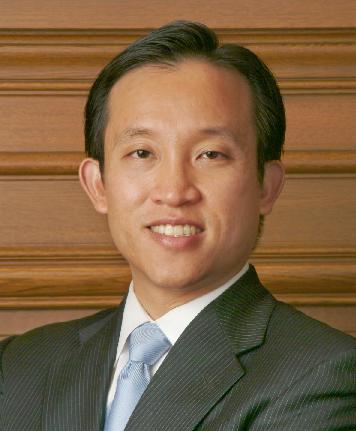
Matier and Ross today ran a piece saying exactly what everybody who follows local politics already knew: Board president David Chiu will have considerable influence over the choice of the next mayor. The thing is, Chiu has to make a decision, soon: Does he want to be interim mayor (thus giving up his board seat and risking losing in November) or go for the district attorney job (thus giving Newsom a swing-vote appointment to the board and pissing off the progressive constituency that got him elected and will be critical to his political future) or move to keep his position as board president (which means working some deals with the incoming board)?


He has to decide pretty soon, too.


Chiu can almost guarantee that the current board doesn’t choose a mayor. that will take six votes, and without Chiu, neither the progressives nor the moderates can count to six. That would put his fate (both as a potential mayor and board president) in the hands of the new board.


And while everyone at the Chron seems to accept at face value the notion that the new board will be more centrist, I don’t think we know that yet. The only way this board moves to the center is if Jane Kim, a former Green Party member  who replaces Chris Daly, starts to abondon her progressive principles. If that doesn’t happen, then all this talk of a more centrist new board is bunk.


Remember: D2, Farrell replaces Alioto-Pier — a wash. D4: carmen Chu re-elected. D6: Kim replaces Daly. D8: Wiener replaces Dufty — a wash. D 10: Cohen replaces Maxwell — probably a wash, since Maxwell was never part of the progressive majority.


The only twist is that Chiu supported Kim and they’re close, so she would back him for mayor. But Daly might, too.


The bottom line: Chiu has to decide pretty soon what he wants to do, and let the rest of us know.

PG&E granted cash reward, green light on power plant

0

While news surrounding Pacific Gas & Electric Co. has been dominated by a faulty weld and early warnings on the the San Bruno gas pipeline, which ruptured in a fatal explosion Sept. 9, the giant utility company received some good news at the Dec. 16 California Public Utilities Commission (CPUC) meeting.

Not only was PG&E awarded an additional $29 million cash reward for its performance in an energy efficiency program, bringing the total amount it’s received to $104 million, but it was granted commission approval to construct a new, $1.5 billion power plant in Oakley.

Ironically, the energy-efficiency program is designed to reduce the need to construct new power plants, which contribute to greenhouse gas emissions that are blamed for climate change.

The additional bonus was approved with a 3-2 vote on the “final true-up” of the energy-saving program. An independent CPUC evaluation of the utility’s performance in that program found that it fell short of the targets required to receive a cash bonus.

Commission President Michael Peevey justified the additional cash reward by saying utilities could not have known that the numbers they used to estimate energy savings were inflated, and that they would not have been able to adjust their energy-saving tactics in the middle of the program cycle to improve performance.

According to the Division of Ratepayer Advocates (DRA), a consumer-advocacy branch of the regulatory agency, “The CPUC today approved the additional $29.1 million award to PG&E in a 3-2 split vote, despite an Administrative Law Judge’s finding that no further bonuses should be awarded, nor penalties levied. Rather than receiving an additional $29 million bonus, PG&E should repay $74.9 million in bonuses already awarded for energy efficiency programs that failed to meet CPUC-established energy savings goals, and it should pay an additional $1.3 million in penalties, based on the original incentive mechanism.”

Barbara George, executive director of Women’s Energy Matters, blasted the decision. “In this shaky economy, it’s incredible that the Commission would force ratepayers to pay profits for utilities that missed their targets by a mile. This hurts everyone in California. Cities, businesses, and residential ratepayers will all have to pay twice for utilities’ failures — once for these undeserved ‘rewards,’ and again in high monthly utility bills that should have been reduced by these programs, but were not.”

The 4-1 vote to approve PG&E’s Oakley power plant was a reversal of an earlier commission decision rejecting the proposal. DRA weighed in on this item, too, saying data on PG&E power reserves suggests that the new facility is unnecessary.

“PG&E ratepayers are now on the hook for $1.5 billion in costs for energy they don’t need while being shut out of the decision-making process that will leave all PG&E customers with higher utility bills,” said DRA acting director Joe Como.

Mirkarimi and mayoral hopefuls launch D5 Dem Club

4

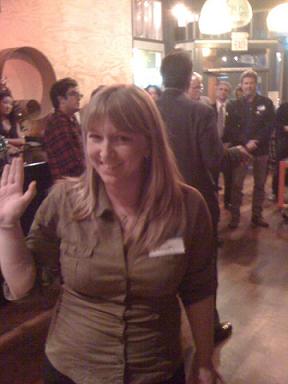
Democratic Party clubs are one of the most basic political building blocks in this basically one-party town, so it’s odd that politically active District 5 (the Haight and Western Addition) didn’t have one. But that changed last night with the launch of the District 5 Democratic Club, with fuel provided by current D5 Sup. Ross Mirkarimi and mayoral contenders Leland Yee and Dennis Herrera and with several potential Mirkarimi successors on-board.

“We saw it was a huge opportunity this year to get people engaged and involved,” newly elected D5DC president Jen Longley, a progressive activist who calls herself a “campaign gypsy,” told a gathering of about three dozen people at Cafe Divis. And she thanked Mirkarimi, who switched from the Green to Democratic parties about a year ago, for supporting the club’s creation. “This party would not have happened if not for the help of Ross Mirkarimi.”

And it wouldn’t have met its $1,000 fundraising goal if Yee and Herrera didn’t kick in big as they court D5 voters as part of their mayoral campaigns. Mirkarimi gave the keynote speech, calling D5 the “hippest district in the city” and one of its most progressive, something he wants to see the club help project onto the rest of the city. “I’m delighted to be a part of it,” he said, urging attendees to contribute financially.

In addition to being active in next year’s mayor’s race, the club will also play a role in determining who will succeed Mirkarimi in 2012, and there were some likely contenders for that slot on hand, including City College of San Francisco Trustee John Rizzo, progressive activist Julian Davis, and club owner Michael O’Connor, with labor activist Gabriel Haaland also supporting the club’s creation.

Longley noted that D5 has lots of very active neighborhood association, but few political organizations, and she said that she feel honored to be leading one at such a pivotal political moment.

Thank you later

0

arts@sfbg.com

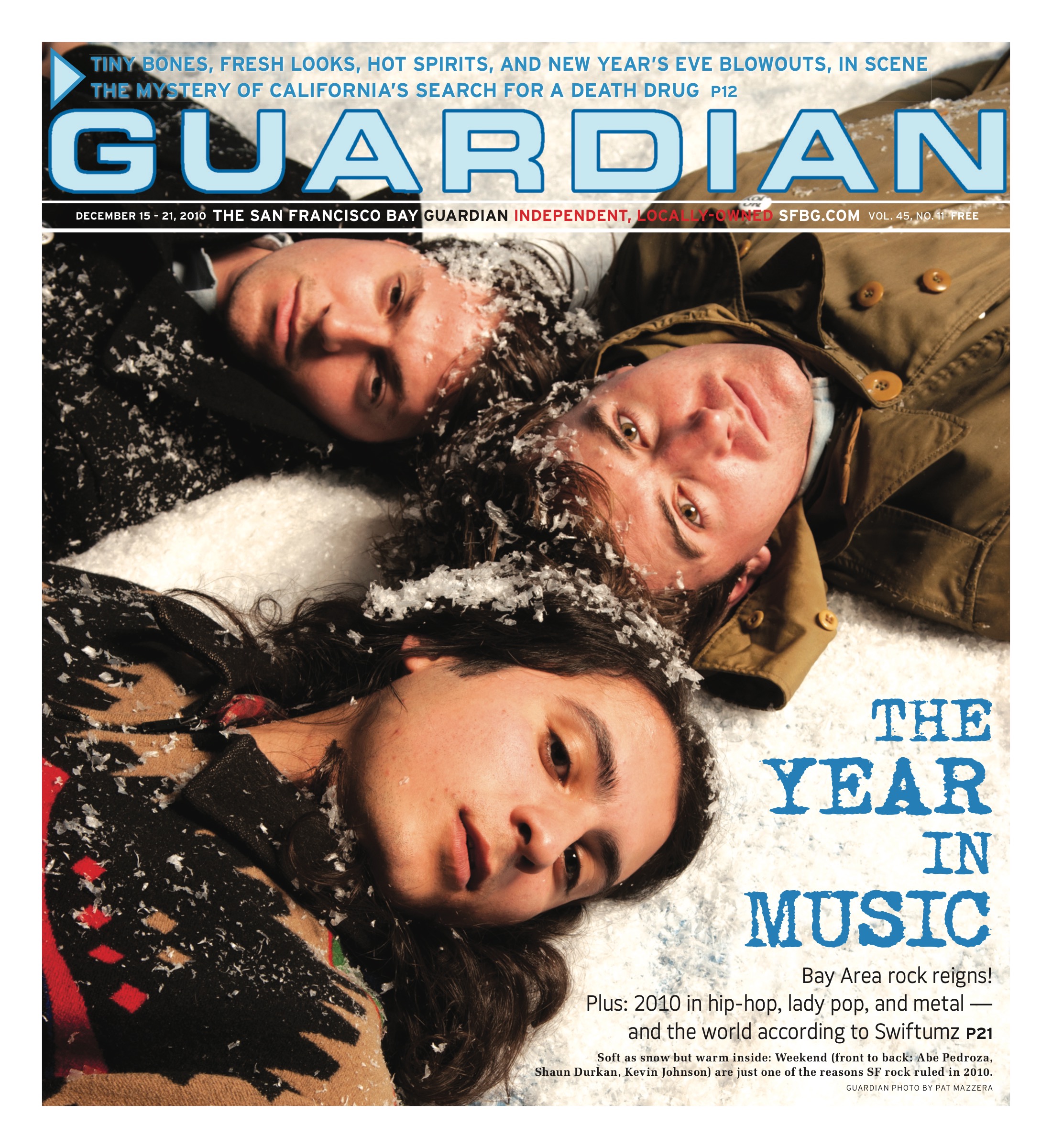
YEAR IN MUSIC The past year brought dozens of excellent albums, and hip-hop sounds topped the list. This wasn’t inevitable. Please recall 2009, when critics cited precious little rap in their favorites, save for Raekwon’s Only Built 4 Cuban Linx … Part 2 and Mos Def’s The Ecstatic. But in 2010, both rockists and heads reserved space for Kanye West’s My Beautiful Dark Twisted Fantasy, Big Boi’s Sir Lucious Left Foot: Son of Chico Dusty, the Roots’ How I Got Over, Drake’s Thank Me Later, and Flying Lotus’ Cosmogramma. And let’s not forget minor but important recordings such as Curren$y’s Pilot Talk and Yelawolf’s Trunk Muzik 0-60.

This winning slate confirmed that major label-backed rap is undergoing a renaissance. Nearly every artist made an impact by keeping their eye on the mainstream, from security guard-turned-bad actor Rick Ross recruiting Erykah Badu and Cee-Lo Green for his Teflon Don, to Bun B allowing Canadian teen idol Drake to call himself an “honorary member of UGK” on the former’s Trill O.G. Some complained that these rappers focused too much on claiming the hearts of soccer mama grizzlies and teens raised on Bratz dolls. But after years of boorish thugs peddling D-boy anthems and R&B gimmicks, this new pop sensibility sounded refreshing. (The sole exception may be Ludacris, who found success with Battle of the Sexes by offering a slick and familiar mix of strip club anthems and babymaker suites.)

B.o.B’s The Adventures of Bobby Ray was the most extreme product of these pop mirages. The Atlanta rapper scored two No. 1 hits (“Nothin’ but You” and “Airplanes”), but divided critics and fans by recruiting emo-rock burnout Rivers Cuomo and Hot Topic heroine Hayley Williams for his collection of gooey ballads. At its best, The Adventures of Bobby Ray had a charming innocence; at worst, it sounded like pandering. But at least it offered well-written tunes. In contrast, Nicki Minaj’s grating Pink Friday mashed bad 1980s John Hughes-approved synth-pop and soaring Rihanna choruses into a barely coherent mess. It proved that despite Nicki’s talent for ear-catching stunts, from her star turn as the bisexual chick who’ll do you and your man on Usher’s “Lil’ Freak” to her cipher-destroying rhymes on Kanye West’s “Monster” and Ludacris’ “My Chick Bad,” she was still a disappointingly underdeveloped songwriter.

Lost in the intense debate over the rap major domo was the demise of Definitive Jux. Once the mighty inheritor to the Fondle ‘Em tradition of B-boy nonconformity, and the source of key early-2000s works by Cannibal Ox, Aesop Rock, and Mr. Lif, it sagged under the weight of subpar and underpromoted releases before label head El-P mercifully pulled the plug last February. The news lit up the Internet for a day or two and then was seemingly forgotten. When Noz from cocaineblunts.com asked Yelawolf if he was “heartbroken” over Definitive Jux’s demise, the Alabama rapper answered: “I didn’t even know it ended. Well … I’m not heartbroken about it.” How ironic that Yelawolf was once a lyrical-minded backpacker too, before switching to gritty tales of deep South meth dealers.

There were other disturbing signs that Definitive Jux’s indie-rap scene was no longer ground zero for fledging MCs, from conscious rap advocates Little Brother breaking up, to Minneapolis freestyle ace Michael “Eyedea” Larsen dying at the tragically young age of 28. “Underground rap is dead,” noted Sean Fennessey in a Pitchfork essay hyping Los Angeles collective Odd Future. “In its stead, a different brand of homespun rappers have taken hold. Consider Lil B and Soulja Boy, who have been prolifically working the Web … to achieve their own kind of teenage heroism.”

Underground rap is not dead. It thrives with Bay Area imprints such as Interdependent Media (Truthlive’s Patience) and national players such as Duck Down Records (Skyzoo & Illmind’s Live from the Tape Deck) and Alpha Pup Records (Nocando’s Jimmy The Lock). Some of these labels subsist on scattershot independent distribution. Others recruit majors to achieve wider market penetration, including Stones Throw and EMI Label Services (Guilty Simpson’s OJ Simpson and Aloe Blacc’s retro-soul gem Good Things), and Decon and E1 Music (Black Milk’s Album of the Year). And who can blame them? These days, labels need all the help they can get. However, the principal philosophy of economic and artistic independence as an end unto itself has been forgotten.

In Robin D.G. Kelley’s 2002 book Freedom Dreams, a rapturous appreciation of 20th century black intellectualism, he writes, “Unfortunately, too often our standards for evaluating social movements pivot around whether or not they ‘succeeded’ in realizing their visions rather than on the merits or power of the visions themselves. … And yet it is precisely these alternative visions and dreams that inspire new generations.” Kelley could have referred to the many critics that marked Little Brother as hopelessly elitist for insisting that hip-hop should address more than the spoils of drug wars; dismissed the late Eyedea, Sage Francis, and others as silly white boys for addressing suburban middle-class concerns; and buried Definitive Jux as a repository of uncool, impossibly dense super-scientific lyricism.

By many measures, the indie-rap scene has been a failure. Unlike the network of homespun labels built by punks in the 1980s, the indie-rap scene didn’t create a thriving community without considerable financing from youth-targeting corporations, lifestyle brands, and advertising firms. And perhaps its denizens wrongly castigated dirty South rappers as ignorant, claimed that mainstream superstars like Jay-Z and Diddy were sell-outs, and turned the underground movement into a kind of purity test — all past conflicts that continue to bedevil it today. Yet these dreamers courageously imagined hip-hop culture as not only a way to entertain people and make money, but as a transformative experience that can help instill positive growth and change lives. They built a culture that holds key lessons for future rap generations.

The blog-rap generation doesn’t hold any illusions of being alternative, unless it’s manufacturing limp blasphemy like Odd Future’s use of Nazi imagery. (As Anti-Defamation League spokesman Abraham Foxman told The New York Times in a story on the Holocaust documentary Shoah, “To most kids growing up today, Hitler could be Genghis Khan.”) They’ll use any trope to be successful, from falsely claiming that they’re coke barons to bragging about their limited-edition sneaker collection and how much weed they smoke. There’s a gleeful egalitarianism in their digital miscellany. The beats bang but are same-y and indistinct, and the voices are barely distinguishable. As Wiz Khalifa simply said on his breakout single, “Black & Yellow”: “You can do it big.”

Some critics separated wheat from chaff with technical criteria such as internal rhyme schemes and double-time flow, as if MCs were ice skaters or guitar wankers. But the best artists simply illuminated their money hunger by any means necessary, effortlessly adding interesting twists to tired rap clichés. When Drake crooned on Thank Me Later, “I want this shit forever, man,” he evoked a poor man’s Nat King Cole. And when Curren$y ranted, “A gee is what I am, a jet is what I be” like a Southern Popeye on Pilot Talk II, he was insistent enough that you almost believed him.

And then there was Kanye West and My Beautiful Dark Twisted Fantasy. He created a spectacle out of an hour-long justification for his obnoxiousness, invited the genre’s biggest stars to support his meanderings on chauvinism and virility (or “my black balls”) and, most provocatively, continued a public call-and-response with Gil Scott-Heron. The conversation began with West’s sampling of Scott-Heron’s melancholy “Home Is Where the Hatred Is” for his 2005 album Graduation. Then Scott-Heron replied by using West’s “Flashing Lights” melody for “On Coming from a Broken Home,” the bittersweet coming-of age tale from Scott-Heron’s valiant yet muddled comeback, I’m New Here.

West ended Fantasy by sampling a large section from Scott-Heron’s 1970 spoken-word performance “Comment #1,” and retitling it “Who Will Survive in America?” The poem originally captured the COINTELPRO era and the U.S. government’s eradication of black radicals, but West seemed to use it for a different point. Perhaps he’s saying that fame serves as a protective armor against systemic racism and how “at the airport they check all through my bag and tell me that it’s random.” Or maybe he’s making a wry comment on celebrity culture as the only way to survive in America. Fantasy‘s cryptic epilogue perfectly summarized this year’s rap dreamers, lost in the pop Matrix.

Passion Cafe

0

paulr@sfbg.com

DINE Although I deplored Julie & Julia — a dreadful bit of movie pap, except for the scene where Julie discovers that Julia hates her bloody blog; priceless! — I was mesmerized by the al fresco dinner cooked and served by the unsinkable Julie on a Brooklyn rooftop. There is a magic like no other in floating motionless above the nighttime city, with a soundtrack of soft conversation, gently clicking tableware, and the odd horn honking on the street below.

The street below the rooftop dining patio at Passion Café — opened not quite a year ago by Steve Barton and Jacques Andre — is Sixth Street, between Market and Mission, and it has more than its share of honking horns, along with speeding traffic, trash spread like autumn leaves in sidewalk tree wells, and a Dante-esque population of the shattered and lost. Sitting under an umbrella at a long picnic table 50 feet above all this on a rooftop patio framed by trellised vines and with a tall potted ficus at the end of the next table, is slightly surreal (though pleasant). If there is indeed a stairway to heaven, as Led Zeppelin once suggested, it might well begin here.

Passion Café will never be confused with the Fifth Floor, a few blocks away. Fifth Floor is higher up, totally enclosed, and all but lacking a ground-level presence. Passion Café, on the other hand, has its feet solidly planted on terra firma: there’s a large ground-level dining area, complete with exposed brick and oil paintings (for sale), just inside the door. But the draw of the place is definitely the roof, which you attain by climbing two flights of wide wooden stairs that creak. At the landing between the flights is a small tea table set for two — the perfect spot for a civilized break up, or maybe (for the less civilized) a discreet shove.

The food carries mostly French nomenclature and takes a variety of familiar French forms — the menu offers a variety of tartines, along with plates of charcuterie and paté — but the execution is strongly Californian. Many of the plates come heaped with mixed green salads, and white rice is served on a scale I have never remotely seen in France.

The ratatouille ($14), for instance, included a berm of rice that looked like something left behind by a Tonka-truck snowplow working its way through a blizzard. The vegetable stew itself, meanwhile, wasn’t a stew at all but more of what appeared to be a stir-fry of long, rather tough eggplant strips, lengths of red bell pepper, zucchini chunks, and tomato, but not enough tomato. It was as though the kitchen had thoughts of transforming a peasant’s dish, a way of using up the end-of-summer surplus from a vegetable garden, into a gourmand’s delight, as in the movie Ratatouille, but lost its nerve after a few hesitant steps. I would have liked a bit more thyme and garlic, too, but the dish was still flavorful.

Napoleons are typically confections of layered pastry one finds on the dessert cart, but Passion’s version ($14.50) was savory and made with pasta — lasagna, basically, with ground beef, baked in an oblong crock. Beside it rose a low mountain of mixed greens dotted with olives and croutons and dressed with a cumin-inflected vinaigrette.

Cumin, an easterly breeze, reminds us of the French connection in the Middle East and so it wasn’t completely surprising to find yet another hint of it in Passion’s paté ($5). The spice added a note of exotic excitement, but the paté itself (mounted on yet more salad) fell short of an ideal creaminess; despite the thinness of the slice, its texture was almost leathery. It was like a bit of old shoe sole that had fallen away into a clump of wet grass.

Views were mixed on the tomato-mozzarella salad ($5). You might wonder how anything could possibly go wrong with such a straightforward preparation — slices of ripe red tomato alternating with slices of cheese, and perhaps a drizzling of balsamic vinegar over the top — and the answer would be the bits of arugula the kitchen scattered about. Arugula has a nuttiness with a slightly bitter edge, and here the bitterness seemed to assert itself to the dismay of the table, though once we figured out what the little green flecks were, I came to admire their feistiness.

Desserts weren’t served with mountains of rice or salad (yay) or even dribblings of berries (boo). Chocolate mousse cake ($5) was fluffy and light as laundry taken fresh from the dryer, though on the sweet side, while a Granny Smith apple crisp ($5) could have used more apple character. Maybe they should look up one of Julia’s old recipes.

PASSION CAFÉ

Tues.–Thurs., 11 a.m.–9 p.m.; Fri., 11 a.m.–10:30 p.m.;

Sat., 9 a.m.–10:30 p.m.; Sun., 9 a.m.–9 p.m.

28 Sixth St., SF

(415) 437-9730

www.passioncafe.net

Beer and wine

AE/DS/MC/V

Pleasant noise

Wheelchair access to ground floor

Alerts

0

steve@sfbg.com

WEDNESDAY, DEC. 15


Women’s Holiday Party

Come support and celebrate the holidays with San Francisco’s most politically active women. This annual party is thrown by the San Francisco Women’s Political Committee, and this year it’s being cohosted by NARAL Pro-Choice California, Good Ol Girls, Emerge California, and Planned Parenthood Shasta Pacific. The first 100 women to arrive receive a free glass of champagne, and the first 200 people get a free drink ticket.

6–9 p.m., free

Carnelian By The Bay

1 Ferry Plaza, SF

www.sfwpc.org

Jaynry@sfwpc.org


The Green Party party

The San Francisco Green Party is throwing a Green Holiday Hoopla. “Spread the word and come out to support a true progressive alternative to the scandalous, corporate-controlled duopoly that screws us over year after year,” reads the invitation, in true SF Green fashion. Cosmic Selector and other DJs will rock the party, Phantom Power and Ryan Hayes perform live, and speakers Mark Sanchez, John-Marc Chandonia, and Laura Well drop the truth.

7 p.m., free

Public Works

161 Erie, SF

www.sfgreenparty.org


D5 Democratic Club Kickoff

If you want to see who’s lining up to play a lead role in choosing Sup. Ross Mirkarimi’s successor in District 5 (Western Addition and the Haight) — or if you want to be in the group — stop by the District 5 Democratic Club’s Inaugural Fundraiser and Holiday Party. This is a qualifying membership for the newly reactivated D5DC, which only D5 residents may join. Mirkarimi hosts the event.

6:30–9 p.m., $30 (includes one-year membership) or $10 for hardship membership

Café Divis

359 Divisadero, SF

d5demclub@gmail.com


Bay Area Anarchist Salon

The Bay Area Anarchist Salon and Potluck is a monthly facilitated conversation by and for anarchists. This month, it poses the question: “In the spirit of the holiday season, what present-day gift-economy practices by anarchists and others point toward life after capitalism?” Bring a vegetarian item to share. The event is hosted by Station 40 Events Collective, which is trying to raise funds for new video projector.

7–10 p.m. $2–$5

Station 40

3030B 16th St, SF

SATURDAY, DEC. 18


Sidewalks are still for people

In the months leading up to the Nov. 2 election, Sidewalks Are For People held a series of events on sidewalks around San Francisco as part of its campaign against Prop. L, which makes it illegal to sit or stand on the sidewalks of San Francisco. Now that the measure passed, the group is taking to the sidewalks again for a similar event, this time in defiance of the new law. Stop by some of the events scattered around the city or create your own and register it at sidewalksareforpeople.org/december-18th-events/#register.

All day, free

Citywide

www.sidewalksareforpeople.org

Appetite: Blue Ribbon classics

0

Two of the nicest chefs you’ll ever meet, Bruce and Eric Bromberg (brothers), spread the warmth of their NY Blue Ribbon Restaurants globally. I have happy memories of late nights at the original Blue Ribbon Sushi on Sullivan Street long before Blue Ribbon grew to multiple restaurants around NYC. As I write, they are on their way to Las Vegas to open their first restaurant outside NY. They are also touring the world to launch their Blue Ribbon Classics menu at Renaissance Hotel bars… a brief menu of some of the most popular plates and cocktails from their NY restaurants. In SF, the menu just launched at the Stanford Court on Nob Hill, a recently remodeled, chic lobby bar with a youthful hipness (not your typical Nob Hill).

None of this sounds particularly down-to-earth, I’ll admit. During a media dinner last week, I went in expecting a tasting and brief “meet and greet” with the chefs. I took stairs down to the now-defunct but historic Fournou’s Ovens, an intimate space with the famous stoves lining one wall where whole ducks were roasted daily. The Bromberg bros happily recall their dad bringing them here as kids. There was a long table glowing with candles and fruits, as if at a friend’s intimate dinner. The Bromberg’s oldest brother was present, as was their dad, cousins, and childhood friend (they grew in New Jersey, so we have that in common). As media, we spent an engaging couple hours with the chefs themselves.

The titular ovens from now-closed Fournou’s Ovens

As for the menu, it is glorified bar food, including white bean hummus toasts ($10) drizzled with lemon oil, and their famed fried chicken in the form of wings ($12) with their own Mexican honey. I do have three words I want you to utter when at the Stanford Court bar: pork chip nachos ($6). These are not nachos but tender chicharrones. Yes, it’s a pile of pork rinds, soaked ever so subtly, giving the usual crisp a melting factor, tossed with queso fresco, red onion, cilantro and jalapeno. Addictive. Sip a bright Michelada ($10) using Napa Smith pilsner, fresh lime, hot sauce, garnished with a red and green chile, and you have yourself a happy hour indeed.

Pick up the Bromberg Brother’s recent cookbook to create their elevated comfort food recipes yourself, like their popular spicy egg shooters (also on the menu at the Stanford Court), baked blintz souffle with brown sugar bananas, or “really good brisket”. As the brothers spoke of their mission when founding the first restaurant many years ago, the Blue Ribbon name came from a desire to treat each person, whether a diner or staff, as ‘first place’: important, welcome, cared for. With some restaurateurs, this could come across disingenuous, and not entirely realistic. As I experienced the way we were treated that night by the Bromberg family, I can see they have not only built their success on this philosophy but that they mean every word.

–Subscribe to Virgina’s twice monthly newsletter, The Perfect Spot: http://theperfectspotsf.com

SF Camerawork and YBCA do the right thing (Updated)

0

Stop me if you think that you’ve heard this one before: a Washington DC art institution caves in to right wing politicians and conservative Christians calling for the removal of “controversial” work made by an openly gay artist.

No, I’m not talking about what happened with Robert Mapplethorpe more than two decades ago. In case you haven’t been following what’s turning into the biggest art news story of 2010, David Wojnarowicz’s video A Fire in My Belly was removed from the National Portrait Gallery’s exhibit “Hide/Seek: Difference and Desire in American Portraiture” on November 30th, after Smithsonian Secretary G. Wayne Clough bowed to pressure from Bill Donohue, President of the Catholic League, incoming House Speaker John Boehner, and Majority Leader Eric Cantor, who denounced the video as a form of, “hate speech.”

In response, the artist’s estate and the P.P.O.W. Gallery in New York have made Fire In My Belly available for exhibiton, and several museums and galleries across the country have started installing the video, along with other Wojnarowicz pieces. Two San Francisco institutions (that, incidentally, happen to be just down the street from each other) join the protest tomorrow.

The Queer Cultural Center and San Francisco Camerawork will screen the entire 13-minute version of Wojnarowicz’s piece at SF Camerawork’s gallery space at 7pm. The screening will be followed by a presentation on censorship and the arts by art historian Robert Atkins as well as a roundtable discussion with Ian Carter, Kim Anno and (via-Skype) “Hide/Seek” curator Jonathan Katz. Yerba Buena Center for the Arts will also show A Fire in My Belly from 11pm to 2am on a continuous loop as part of its Noel Noir party.

I’m still waiting to hear back from SFMOMA’s press office as to whether or not the museum has any plans to install and/or screen the video. In the meantime, Tyler Green’s ongoing coverage of the fiasco at Modern Art Notes continues to be indispensable.

UPDATED: SFMOMA is going to do the right thing too, in January. A publicist for the museum has just confirmed that it will hold a free screening of the full-length (30-min) version of A Fire In My Belly on Tuesday, Jan. 4 at 5:30 pm with a discussion afterward. Way to go!

DAVID WOJNAROWICZ: A FIRE IN MY BELLY

Friday, Dec 10

7pm, free

San Francisco Camerawork

657 Mission St, Second Floor

(415) 512-2020

http://www.sfcamerawork.org/events/index.php?view=monthly

11pm-2am, $20 general admission

YBCA

701 Mission St

(415) 978-2700

http://www.ybca.org/tickets/production/view.aspx?id=12312


Hot sexy events: December 8-14

1

So how’s this for weird: rich folks get freaky too! Yes indeed, according to our friends at the Bay Citizen, upon the launch of an investigation into her and her husband’s possible involvement in an inside trading ring (don’t they just always want to get into those things?) Pac Heights lady-who-lunches Annabel McClellan was discovered to be working on the gosh darn kinkiest iPhone app we’ve ever heard of: My Nookie. 

The app allows users to dish down to the nitty-gritty about their super hot hookups, right down to the positions, location of consummation, and partner used and abused. Share the info with your friends and even send de-personalized My Nookie messages to potential partners with purple anonymous avatars performing the sex event you’d like to try with them. Says McClellan (whose lawyer denies her involvement with the app)’s business partner Milly Hanley to the Bay Citizen, “we are housewives, our kids are older now. We were looking for something to do.” Consider your wealth-induced ennui assuaged, ladies! Now onto the sex events.

Women’s Community Clinic benefit

What’s really, really sexy? A capable, respectful place to nurture your reproductive health, that’s what. Join the women of Pin Up Clinic for live tunes and readings by Carol Queen, Lorelei Lee, and Tina Horn, plus a chance to get your 2011 copy of their frisky sexy lady calendar. All proceeds go to the Women’s Community Clinic, a place that’s more than worthy of your oooh’s and aaah’s. 

Wed/8 6-8 p.m., free

Good Vibrations

1620 Polk, SF

(415) 345-0500

www.goodvibes.com


Little Minksy’s Burlesque

For six years, Douglas Good has been holding an SF burlesque show every week – do you know how many pasties that is? His event, Little Minksy’s (named after the banned shows that rocked NYC at the turn of the 20th century) features this week talent from Alotta Boutte, Dottie Lux, Kentucky Fried Woman, Bitter Waitress, and more. It packs Club Deluxe every time – so get there early for a good shot of these lady lumps and attentive bar service. 

Thurs/9 9 p.m.-2 a.m., $5

Club Deluxe

1511 Haight, SF

(415) 552-6949

www.sfclubdeluxe.com


Kinky Holiday Fantasia

Just your typical holiday party here folks, nothing to see: ornament hanging (on bare skin), (living) tree and menorah lighting, jingle bell (boobs), and seasonal (bondage) fashion. More than enough fodder to keep you snickering through your family’s sit-down to watch It’s a Wonderful Life for the 800th time. 

Thurs/9 7:30-10:30 p.m., $15-25 sliding scale

SF Citadel

1277 Mission, SF

(415) 626-2746

www.sfcitadel.org


“Modern Love: A Panel About Open Relationships”

Are we still swinging, San Francisco? Smart money’s on hell yeah, particularly if you ask the speakers at this panel on polyamory: Ethical Slut author Dossie Easton will be there, as well as Carol Queen (She. Is. Everywhere.), and Sarah and Chris, creators of Mission Control’s KISS play party. Perfect for the seasoned spouse-swapper, or any couples looking to open up their loving arms in the future.

Fri/10 6-8 p.m., free

Good Vibrations

1620 Polk, SF

(415) 345-0500

www.goodvibes.com


Whobilation

Dr. Suess was due for a kinky overhaul, wasn’t he? Attire yourself in your Whoville best for this holiday play party, where the pinks and purples of the Mission Control harem rooms will try their best not to clash with all the green and red (let’s face it, Judaism has inspired a lot less easily-mimicked pop culture characters, Hanukkah Harry notwithstanding). Like all the other Kinky Salon parties, Whobilation features super sexy talent onstage during the mayhem. On this night of nights, Berkeley’s Burley Sisters Burlesque and Ophelia Coer de Noir take to the fore and Skanky Claus will lead all in a resounding session of dirty carols. 

Sat/11 10 p.m.-late, $25-35 members and allies only

Mission Control 

www.missioncontrolsf.org


“Abuse in Kinky Relationships: How to Reveal, Deal, and Heal”

It can be tough to distinguish love’s good and bad pain – particularly in the world of BDSM. But peer facilitator-in-training Jocelyn is a veteran of both, and is holding this class to teach about how to identify, fix, and recover from abusive relationships — in and out of the dungeon. 

Tues/14 8-10 p.m., $20

SF Citadel

1277 Mission, SF

(415) 626-2746

www.sfcitadel.org


Get her if you can

0

arts@sfbg.com

MUSIC “Where’s the costumes, bitch?”

The voice behind the inimitable Carletta Sue Kay, Randy Walker, has joined me at Deco Lounge in the Tenderloin for costume karaoke. The atmosphere is conjuring memories. “I worked at a self-storage place two blocks from here called Fort Knox,” Walker says. “I worked with every fucking junkie in San Francisco — recovering, mind you.

“This lady, let’s call her Christine, was 59, with long gray lion’s-mane hair. She was very sweet. She’d come in popping Xanax like candy. One day, right before I got fired, Gonzalo who I worked with came up to me and said, ‘Lady upstairs, sleeping — money.’ We jumped on the private elevator and there was Christine, laid out in the middle of her unit, covered in $100 bills. I asked her about it the next day and she said, ‘I had a date!’.”

Though Carletta Sue Kay is familiar with the most delicate strains of Parisian heartbreak, a real-life character such as Christine would not be out of place in a Carletta song. If Antony Hegarty occupies darker rooms, and Baby Dee finds secret places of unsettling whimsy, Carletta more than matches the best of both in a very San Franciscan way, combining a formidable voice with a restless and freely honest — as rock ‘n’ roll as it is chamber-bound — approach to being a singer. One listen to “Sleeping with the TV On” is all it’ll take for her to convince you.

Tonight I’m getting convinced in-person. “Pardon my obligato,” Walker says on his way to the Deco Lounge’s stage, where he’s soon comfortably issuing commands for more reverb to KJ Paul De Jong, who it turns out has booked lucrative hooker-hotel music gigs for Carletta in Port Costa. “It’s not standup,” a boozy wise-ass yells, and then Walker proceeds to sing the hell out of the Patsy Cline classic “Three Cigarettes in an Ashtray,” expertly using silence to magnify the sound of sorrow. Afterward, the wise-ass walks over to our table to praise him.

Thanks to Walker, Carletta Sue Kay is the kind of dame who knows Nashville as well as she knows Paris. “My favorite drag queen in the world is in Nashville,” Walker says, when I ask about one of country music’s homes. “Remember the figure skater Oksana Baiul? This queen’s name was Oxona Barstool. She wore this big green M&M outfit and she sounded like Tom Waits.”

Walker has also sung in Memphis’ Sun Studios: “I asked where Roy Orbison stood, and they said, ‘Honey, Roy was all over the place.'” Still, the next Carletta Sue Kay recordings are a homespun Bay Area affair, painstakingly produced by band member Doug Hilsinger. “We’re doing two collections,” Walker explains. “One is an album of ballads titled Incongruent. There’s an also an EP called Incongruous, and all of the songs on it will be up tempo. ” The wordplay in those titles comes naturally to Walker, who shares his boyfriend Lee Reymore’s deep love of literature — particularly Southern Gothic fiction — and lucrative love of book collecting.

At Reymore’s urging, Walker uses the moments before his next turn at the mic to tell the story of his encounter with the late Michael Jackson. “You know [the 1988 movie] Moonwalker? I was in that,” he says. “I come from a theater background and grew up 50 miles outside of L.A. in Fontana, hometown of Sammy Hagar.”

How was Michael? “He was a sweetheart. One day Bubbles got loose on the stage, and another day Yoko was there. I made $18,000 for a 12-day shoot, and I was only an extra.”

Carletta and the man behind her have a lot of stories to tell, whether they’re shared over a cocktail or through the stereo on songs such as the glam-anthemic “Joy Division.” Carletta can knowingly name check Beethoven, Crass, and Echo and the Bunnymen while reminiscing about a doom-laden boy with an Ian Curtis fixation. Walker has no hesitation about visiting the treasure troves of soul.

“My fangs are dripping looking at these costumes,” Walker jokes, after likening Deco’s wardrobe rack to the bars maneuvered by gymnasts. Finally, after someone sings “Killing Me Softly” and someone else sings “A Whole New World,” it’s time for his final costume-karaoke number. The song is “Get Here,” and though it was made famous by Oleta Adams, he makes a point of explaining on stage that it was written by Brenda Russell. This is in keeping with his musical , which is rooted in an appreciation of ’70s singer-songwriters like Tim Hardin, Townes Van Zandt, and Karen Dalton, as well as contemporaries like Kath Bloom.

Important names, one and all — but what did Walker’s real-life cousin Carletta Sue Kay think of her musical namesake? “She didn’t know anything about it until two years into it,” Walker says. “She found out about it through the Carletta Sue Kay MySpace, and wrote verbatim, ‘What the fuck is this!'”

What the fuck is this? Something well worth a listen, bitch.

CARLETTA SUE KAY

With M. Lamar

Sun/19, 8 p.m.; $10–$15

Community Music Center

Capp Street Concert Hall

544 Capp, SF

(415) 647-6015

www.myspace.com/carlettasuekay

Miss SaiGon

0

paulr@sfbg.com

DINE There really is a Miss Saigon inside of Miss SaiGon, but she seems to be made of plastic, if — to quote Groucho Marx — I’m any judge of horseflesh. With her motionless good cheer, the big doll looks like salvage from some airline’s marketing campaign, circa 1968. Next to her stands a kind of aqueous sculpture, with sheets of water rippling down a long glass panel.

Such kitschy drama, and we’re barely inside this Vietnamese restaurant (not to be confused with the musical of the same name). The semi-cavernous dining room — weirdly reminiscent of a dance floor in some mid-list gay bar — is screened from the street by a barricade of translucent draperies that hang from floor to ceiling with lacey, lingerie-like suggestiveness. It feels like an after-hours, members-only sale at a Victoria’s Secret warehouse.

Yet behind the bar, the wall is painted a nervy lime green — a hue that will be powerfully reminiscent (to the restaurant-minded) of Mangosteen. Mangosteen is part of the new wave of Vietnamese and Southeast Asian restaurants that have opened along Larkin Street, on the north side of Market, in recent years, while Miss SaiGon stands just steps away from old-guarder Tu Lan, which Julia Child is said to have admired. One evening, on my way to Miss Saigon, I peeked inside Tu Lan and wondered how Child even fit inside, let alone enjoyed herself, and whether the oft-told tale of her admiration might be apocryphal.

Miss SaiGon, slightly more two years old, belongs to the post-Child era, but I would guess the old doyenne would find the newer place eminently acceptable. The interior is attractive without being overbearing, the social tone is comfortable, with lots of younger people among the clientele (laptops glowing on tabletops in front of them — but aren’t laptops quaint now?), and the extensive menu is mostly excellent.

If brevity is the soul of wit as well as menu-writing, then a vast menu like Miss SaiGon’s, with so many items that they have to be numbered (including No. 4, kimchee, a ringer from Korea), is generally best approached with caution. The more dishes a kitchen has to master, the more likely it is the chefs’ attention will be diluted or that ingredients for the less-loved dishes will sit around too long — that something will go awry, in other words.

But the execution at Miss SaiGon is sharp and assured, the flavors properly balanced and amplified, like rich sound. The only exception, to my mind, was an unlikely one: slices of pork stir-fried with lemon sauce and vegetables ($9.50). The vegetables were ordinary — celery and carrots, mainly — and the lemon sauce was MIA. Instead, the dish was dominated by an unannounced walk-on: pineapple, in chunks. Pineapple is fine in piña coladas and as a supplement to lubricious activity, but as an accompaniment to pork here it was too sweet, too overwhelming, and too obvious.

Neither too sweet nor too obvious was the papaya salad ($6.50), which resembled a nest of glass shards and was fortified with shrimp and ground pork. Ground peanuts added texture, leaves of fresh mint brought their bewitching breath, and — best of all — the salad was dressed with some version of nuoc mam, the salty-tangy-sweet blend of fish sauce and vinegar that is one of Vietnamese cuisine’s signature condiments.

The prospect of cold noodles — sesame ($3.95) — on a cold night caused some consternation around the table, but there turned out to be something sufficiently warming, or at least sustaining, in the fatness of the noodles to muffle the disquiet. Sesame can have a sharpness that verges on the unpleasant, but the potentially harsh edge was blunted by the plush saltiness of fish sauce.

Even better were garlic noodles ($8.95), stir-fried with bits of boneless chicken, basil, and lemongrass — a lovely little symphony of melody and harmony, and hot to boot. Bun cha gio ($7.50) — a huge bowl filled with vermicelli noodles, egg rolls, and lettuce, with a side of nuoc mam sauce laced with carrot threads and crushed peanut — was a duet of hot (the egg rolls) and cold (everything else). And that was just fine. When it’s chilly out, you don’t quibble about whatever form warmth chooses to take, even if it’s the eternal smile on the face of a life-sized plastic doll, waving hello and goodbye to all and sundry.

MISS SAIGON

Mon.–Sat., 11 a.m.–9:30 p.m.

100 Sixth St., SF

(415) 522-0332

www.misssaigonsf.com

Beer and wine

MC/V

Somewhat noisy

Wheelchair accessible


Ducking the cold

0

le.chicken.farmer@gmail.com

CHEAP EATS I know I’m not the only one. December rubs a lot of people the wrong way. This year, to combat my usual seasonal depression, I am moving to Norway. Oh, I’m sure I’ll be back to the Bay Area to visit, now and agin, but just in case I’m underestimating the inherent cheerfulness of Oslo and wind up coming back to live, I will of course continue to write Cheap Eats from abroad, no worries.

Then when I have finished unlocking the secrets of Norwegian cuisine, in general, and of Oslo’s burgeoning restaurant scene, in particular, I will write letters to Earl Butter again, or Cheap-Eats-length poems about how happy I am, whaling, playing Scrabble on the beach, eating lutefisk until the wee hours, and running with the moose, or whatever it is that people in Norway do for happiness.

I’m kidding of course. I would never in a million years go whaling! Didn’t you ever read Moby Dick? I did! There’s a guy in it named Queemquack, or something like that, and in the end they all get eaten to death by a whale.

Oy, my poor father, a Melville scholar, would be rolling over in his grave right now if he were 1) still reading my column and 2) dead, but he is neither, that I know of. Why, I just talked to him on the phone a little bit ago and he didn’t mention anything at all about Cheap Eats or having died.

Man, I love my dad! Happy birthday to him. When I was eight, I helped him write his dissertation. No lie, he had underlined all the participial phrases in Melville’s major works, and it was my job to tally them up — my first quantitative analysis of a major literary figure, give or take Dr. Seuss.

It’s uncanny. First I became a writer like my dad, then I became a musician like my dad, and don’t look now but I believe a couple paragraphs ago I may have established myself as a Melville scholar in my own right. Anyway, I read Moby Dick twice. Twice! (Technically I read it once as a literate adult, and leafed through it the other time, as a literary scholar who also pretty much knew how to count.)

From my mother I inherited my athleticism (which is no less dear to me than all-of-the above) and my peculiar knack for migrating north in winter and living in the woods, literally and figuratively.

You have to have good, strong legs, like mine and mom’s, to run with moose, don’t you know. And you have to be at least a little bit crazy, as I understand it, to eat lutefisk. Especially when you can just stay here and have burritos.

Or, actually, I’m kind of stuck on duck noodle soup now. Again. It being cold season. And I was house- and dog-sitting for Crawdad for a while in Berkeley, where there are a lot more duck soups to be had than here in the Mission. Not to mention Oslo.

All kidding aside, although I did briefly consider going home for the holidays this year, I’ve decided to weather them here where my turntable is. I don’t have any records anymore, but I do have my kitten, Stoplight. And if I turn my turntable on, with Stoplight on top of it, the result is more entertaining than Merle Haggard or anything.

It should be enough to get me through the darkest time of year.

But I wonder if old Merle ever had duck noodle soup with three scoops of hot sauce in it, or hung around with lesbians. For the former, my current recommendation is Your Place on University Avenue.

It’s on the lunch menu, for like $7, but probably they’ll give it to you any time of day. And it’s a big bowl, with rice noodles, no-bone roast duck, celery, green onions, cilantro, and maybe even a few spinach leaves.

Very very very good. Nice place, friendly service.

Then you can always go to last week’s new favorite restaurant, Lao Thai, for a bowl of sweet duck soup for dessert. In this very way, I will hop, skip, and waddle my way to March, and warmth, and happiness, and hopefully I hope a li’l love.

If we make it through December …

YOUR PLACE THAI CUISINE

Daily 11:30 a.m.–10 p.m.

1267–71 University, Berk.

(510) 548-9781

MC,V

Beer and wine


Shroomin’ at the Fungus Fair

2

All photos by Erik Anderson

“See, it’s starting to smell.” It’s day two of the Mycological Society of San Francisco‘s winter Fungus Fair at Berkeley’s Lawrence Hall of Science this weekend and the ‘shrooms are getting a little funky. MSSF member Peter Wegner is showing us around the caps and stems and he sounds a little apologetic for the earthy musk that has descended on us as we enter the fair’s specimen room. 

But he needn’t be – the sight of the room’s fungi, collected by society volunteers in the Bay Area over the past few days from 25 forage sites, more than makes up for any scent it emits. Not to mention the fair’s culinary offerings, educational bonanza, and the ‘shroom gnome hats so delicately worn by gung-ho clan members – this is the cardinal event of the country’s largest amateur mushroom society. 

Fungus Fair, I think I love you.

Wegner himself has been a MSSF member for eight years. His mushroom mania began on a trip to Italy, incensed by the delectable array of edible fungi that lined dinner tables in the area. He is now  happy to tell Fungus Fair newbies that his favorite mushroom is the black chanterelle (“they’re mysterious,” he says). 

Delicious meals are but one type of draw to the study of mycology – other members we spoke with yesterday expressed interest in the taxonomy of the fungi kingdom, in dyeing clothes from the mushroom’s natural pigment, and in the sheer camaraderie that’s inherent in finding roughly 800 others with an atypical attraction to fine fungal growth. 

“There’s a lot of mentoring that goes on,” says Norm Andresen, MSSF member and conductor of the society’s beginner’s forays into the wilds of McLaren Park and other damp corners of the Bay. A Brobdingnagian, white-haired man, Andresen towers above the tables of the specimen room, keeping his distance from a particularly pungent stand of growths as he answers questions on their providence, properties, and shelf life (“you probably wouldn’t want to eat any of these display ones, they’ve been getting touched by little kids all weekend.”)

In a lecture room a few halls down from Andresen’s post, a man introduced as “the best mushroom photographer in the world” by fair chair person J.R. Blair is playing the music video to his self-penned ode to the fungus among us, “Mushroom Fever.” On repeat. “Hopefully we don’t scare anybody away!” he announces blithely into his microphone as he readies his presentation on his recent mushroom-finding jaunt around the Americas.

Such is the intro to the glory that is Taylor Lockwood, who has achieved a near-godlike status in my eyes by having cobbled together a living off of traveling, digging around in the dirt, and hoisting himself up tree-supported ladders to get the best shot of aerially-inclined mysterious mushrooms. The man flips through a Power Point presentation of some of his best clips, which include squishy mushrooms (“good for the kids!”), fungi resembling tropical purple coral (“probably just convergent evolution”), and Brazilian ‘shrooms he captured on illicit night-time jaunts through a nature preserve.

Lockwood’s pitch for his calendars and assorted publications concluded, we wander past the sold-out mushroom soup kitchen and into the realm of Pat George, the society’s culinary chair. George, set up at at a table kitty-corner from an impressive display of psilocybin, is distributing recipes and information on the group’s regular potluck dinners. She explains that the events feature a carefully planned barrage of  the mushroom’s power to sate — mushroom ragus, mushroom desserts flavored by candy cap mushrooms (“cheesecake, biscotti, there’s all kinds of stuff you can make with a candy cap,” she ventures), even the rare bottle of mushroom beer. 

It’s all very tasty, as is the prospect of the MSSF’s other fare for the nascent mycological enthusiast. Beginners are welcome also to the group’s regular forays into the not-quite-wild for ‘shrooms, many of which are located here in the city for extreme accessibility. For the lazy, Far West Fungi has set up a stand in the vendor hall that stocks the farm’s “mini-farms” in oyster and shiitake — simply uncover the germinated logs and let the fungal growth loose in a shady corner of your bedroom. 

Why so much mushroom mania here in the Bay? The answer, says SF State mycology lecturer Thomas Jenkinson, who is stationed at the fair’s “Introduction to Mushrooms” booth, lies in the ubiquity of fungi throughout the year in our fair glens and dales. “The Bay Area’s a real center of mycology,” he tells me. San Francisco State is the site of the West Coast’s longest study of mycology, as well as what he calls “the most prolific mycology professors.”

And mushrooms lend themselves to a real community notion of life in our natural world. “Fungus is a whole other kingdom – we don’t think about it that much because it’s underground, but microscopic threads of it are just everywhere,” says Jenkinson. The ‘shrooms are getting real neighborly down there, due to these interconnected systems. “The concept of individuality that we have – they just don’t have that underground.” Lack of individuality: a trait hardly shared by the mycological aficionados of Fungus Fair.


Rec & Park trashes HANC Recycling Center

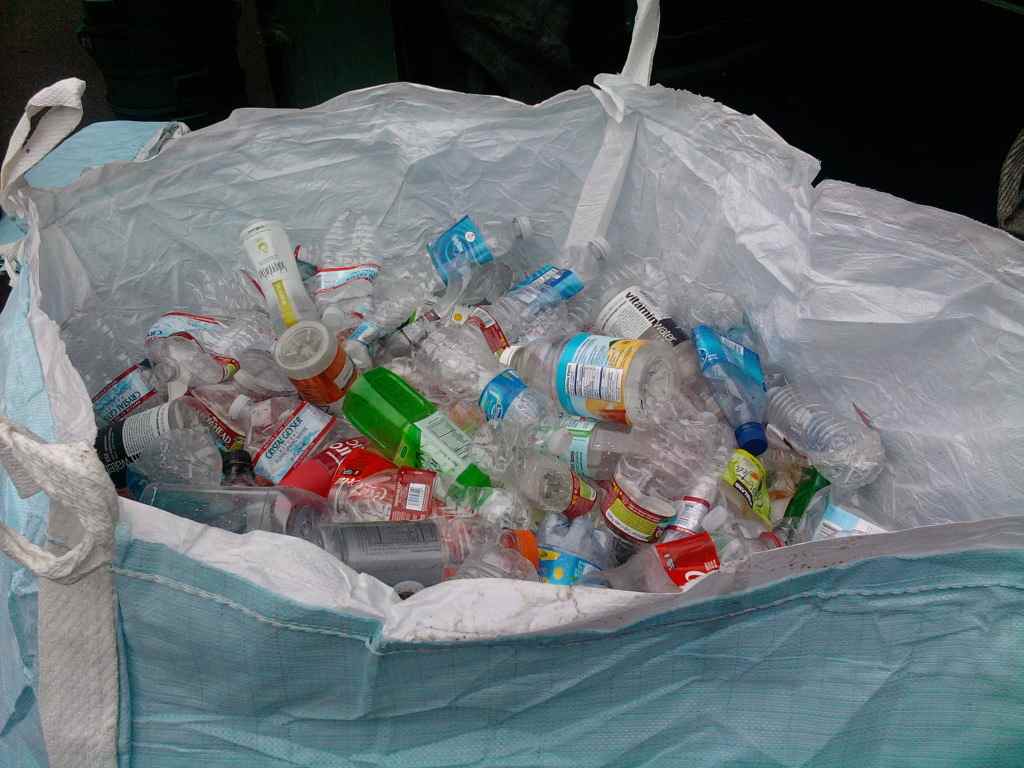
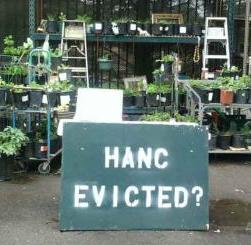
At yesterday’s Recreation & Park Commission meeting on Dec. 2, hundreds of San Francisco residents turned out to urge commissioners not to replace the Haight Ashbury Neighborhood Council (HANC) Recycling Center with a community garden. Their pleas fell on deaf ears.

It didn’t matter that a sunnier spot for a community garden had already been identified in the same area, with funding approved by the commission more than a year ago. It didn’t matter that thousands of people use the recycling center every month, and that the nonprofit bolsters community gardens throughout the city with donations and funding. It didn’t matter that we’re in a recession and there were jobs on the line. It didn’t matter that HANC pays rent to a city department facing a $12.5 million deficit, but the community garden would cost $250,000.

All that mattered in the end was that Rec & Park, and Mayor Gavin Newsom, wanted the HANC recycling center out. They thought removing it might discourage homeless people from sleeping in the park and hanging around the neighborhood. After nearly four hours of listening to residents urge them not to do it, the commissioners yawned and pushed the eject button. They unanimously voted in favor of the community garden. A 90-day eviction notice is expected to go out to HANC today.

The fight over HANC’s eviction has been described as a political battle between progressives and moderates, a showdown between heroes who stand up for public safety versus intimidating thugs and the lefties who enable them, and even a sequel to the sit /lie controversy. I think there’s an 800-pound gorilla sitting in the middle of this fight that no one wants to talk about: Class.

Community gardens are wonderfully empowering. I used to volunteer at one at a public housing complex in North Carolina. It was especially important for people who lived in that low-income community, since they benefited from nutritious produce that also lowered their grocery bills. Under the city’s plan for this new, gated community garden, 30 of the 40 garden plots will go to area residents. Given the affluence of that neighborhood, the garden beds will likely go to people who can afford organic groceries at Whole Foods without breaking into a sweat. For well-to-do San Franciscans, growing produce is not a means of survival — it’s about feeling good, and being green. By itself, there’s nothing wrong with that.

The problem is that it will be installed at the expense of a long-standing community resource that employs 10 people and lightens the load for hundreds of others during a recession, when people are truly struggling to get by. The Rec & Park Commission has essentially decided that this parcel of public space should be taken from a nonprofit that benefits people of all classes, and given to a small number of residents who’ve voiced complaints about “quality-of-life issues.”

In its current function, the HANC Recycling Center is empowering to many different kinds of people. Most aren’t homeless. Tough-as-nails Asian grandmas show up with bags full of cans that they can exchange for some extra spending money. Urban gardeners purchase native plants in hopes of pleasing native insects and birds. People on fixed incomes get a small financial boost by turning in recyclables.

A small number of the HANC Recycling Center patrons do sleep outside. In order to earn small amounts of cash for things like food, many of them have to go digging around in garbage cans, which is gross and humiliating. Why would someone paw through the garbage for hours, battling bees and germs, and then haul smelly bottles uphill in a shopping cart just to make a few bucks? My guess is that it’s to ward off desperation. They make their own work, and they get to eat.

“Some of them may use drugs,” one of the speakers acknowledged last night. “But,” he paused for dramatic effect. “Some of us use drugs, too.”

When sit / lie was under debate, critics wondered where the homeless were supposed to go, if they couldn’t sit on the sidewalks. Often, the reply was that they could go to the parks. But this latest attack on the homeless shows that they aren’t welcome there, either.

This is an opinion piece.

EDITORIAL: Save the HANC recycling center

11

The foes of the Haight Ashbury Neighborhood Council recycling center — including the mayor and Rec-Park Director Phil Ginsberg, who desperately want to get the low-income riff-raff who sell cans and bottles for a living out of the Haight and Inner Sunset — pulled out all the stops Dec 2, dragging good ol’ Chuck Nevius, who’s always ready to stand up for what isw clean and well-manicured and free of urban grit, into the fight. The Nevius column in the Chron is almost too perfect; he describes the center as “a noisy, ugly industrial plant” that doesn’t belong in Golden Gate Park. Well, the center is technically in the park, I suppose, but it’s not exactly smack amid Speedway Meadow or the Arboretum; it’s way off on the edge, in an area that most people don’t even think of as the park.

But see, here’s the real issue:

It is a magnet for the down and out, some of whom use the can and bottle payout as an ATM for booze and drugs, and even raid the neighborhood bins to fill their carts.

Imagine: A magnet for the “down and out” in the Haight. Imagine: A way for people to make some money without panhandling (which Nevius dislikes) or hassling tourists (which Nevius dislikes) or selling drugs (which Nevius dislikes) or stealing (which all of us dislike). Imagine: A community-run institution that actually creates green jobs for people who might otherwise be homeless (and doing things that Chuck Nevius dislikes).

The real issue is that the mayor never liked HANC (since he lives in the Haight, he ought to stop by a HANC meeting sometime; it’s really not that scary) and doesn’t like the idea of homeless people congregating around the recycling center, and would just as soon get rid of anything that doesn’t fit his vision of a squeaky clean, fully gentrified city.

And it’s not as if Ginsberg wants to restore that corner of the park to native flora; it will be, in his vision, a community gardening center. Nice, but not exactly a natural space. The new center would also attract small crowds — but of a very different demographic. Which, again, is what this is all about.

The HANC recycling center does everything that Gavin Newsom claims to support. It provides green jobs. It offers employment opportunities for people who are on the margins of society, and lets them get back on their feet — without a penny of taxpayer money. It promotes recycling and sound urban ecology.

The private company that collects our garbage and recycling, which is called Recology, doesn’t like the fact that poor people go around and collect cans and bottles from the blue bins on the sidewalk; the stuff is worth money, and the company would rather keep it. But in the end, the material goes to the same place and stays out of the landfills, which ought to be the point. And honestly, isn’t scavenging and recycling cans and bottles a better occupation than agressive panhandling and crime?

The center’s a bargain for San Francisco, and the personal peeves and suburban sensibilities of Newsom, Ginsberg and Nevius shouldn’t shut it down. The Recreation and Parks Commission should direct Ginsberg to back off on eviction proceedings and let the center stay.


Editor’s notes

2

Tredmond@sfbg.com

The New York Times, the old established voice of the liberal media elite, ran a piece on Sunday looking for answers to the nation’s persistent economic crisis. Reporter David Segal interviewed prominent economists on the left and right — the likes of John H. Cochrane at the University of Chicago, James K. Galbraith at the University of Texas, even Gar Alperowitz at the University of Maryland, who’s kind of (God help us) a socialist.

The right-wingers talked about the need to cut government, the left-wingers talked about community co-ops and green technology, and all sides agreed that the situation was dire and would probably get worse. But nobody even mentioned wealth inequality.

It’s kind of mind-boggling. It’s as if the entire subject is off the table, taboo, something that doesn’t get discussed in the company of polite economists. And that’s just crazy.

Look: the 400 richest Americans today have combined assets of about $1.5 trillion. Raise that number to 5,000 and you can about double the total wealth. This is a very rich country; our prospects aren’t bleak at all. With a bit of enlightened public policy, we could profoundly improve the economic situation in just a few months.

I have no PhD. I barely escaped Wesleyan University with an economics degree in 1980, squeaking out a D in my last class by promising the (very conservative) professor that if he failed me, I’d be back next year. But it doesn’t take econometric wizardry to add up the figures. They go like this: A one-time 20 percent wealth tax on the 5,000 richest Americans — including many people who have pledged to give away half their wealth anyway — would generate about $600 billion. Nobody would miss any meals; no families would lose their homes, or even their second or third homes, or their personal jets. Expand the pool a little and you could easily reach $1 trillion.

With that money, you could immediately create 7 million jobs (at an average of $50,000 a year) and fund them for three years. That would cut the unemployment rate in half. What would those people do? Plenty. They could rebuild the country’s roads and highways and bridges, and build high-speed rail systems, and work in health care clinics, and teach art and music and writing, and clean up environmental messes … there’s loads of work in this country. And even with a modest estimate of the economic multiplier, those 7 million public sector jobs would create another 3 million private sector jobs, and all of a sudden, the country’s booming again. And a lot of those people who were hired by the government could now transition to private business. (And those very rich people would do well in the boom, as they always do, and might even make most of their money back.)

Raise taxes on the top 5 percent of the nation’s wage earners and corporations and you would generate enough money to keep the program going until the private economy could pick up the slack. Then eliminate the Social Security tax on the first $25,000 of income and expand it to cover all income up to $250,000 and suddenly — a huge incentive for small businesses to hire new workers and a stable retirement system for the next two generations.

It’s not that hard. It’s not a socialist revolution. Nobody really gets hurt, and a lot of people benefit. I mean, it seems to me that it ought to be part of the discussion. Maybe that’s why I was such a lousy economics student.


DREAM on

2

sarah@sfbg.com

Spurred by congressional Democratic leaders’ promises to hold a vote on the DREAM (Development, Relief, and Education for Alien Minors) Act before the end of Congress’ lame-duck session this month, immigrant and civil rights advocates are pushing for the passage of bipartisan legislation that would give undocumented youth a shot at citizenship if they go to college or serve in the military for two years.

On Nov. 29 in San Francisco, several undocumented young people joined members of the Bay Area Coalition for Immigration Reform outside Mission High School — where as much as 20 percent of the student population may be undocumented, according to principal Eric Guthertz — to explain why it makes sense to give youth who grew up in the United States a shot at legal status.

“We are not asking you to give us a green card,” Anna, a student from Guatemala, said at the event. “All we want is a chance to succeed and give back to this country. We live here, we pay taxes, we’re smart, we go to college, but afterward we can’t work and give back.”

Mario, a 22-year-old gay student who was born in Peru to a Chinese father and Peruvian mother, graduated from UC Berkeley with a civil engineering degree. He explained that because of his lack of documentation, he can’t get a job to pay his bills or save up to pursue a master’s degree, and fears being deported to a homophobic country.

“It would be a waste of talent because I’ve learned California-specific engineering rules and the U.S. building code,” Mario said. “Sometimes I wake up from a nightmare about being detained. I came out here, but in Peru, I’d probably be back in the closet.

Joining Anna and Mario was Shing Ma “Steve” Li, a nursing student at City College, who was released Nov. 19 after two months in federal detention, shortly before he was to be deported to Peru. San Francisco Democrat Sen. Dianne Feinstein introduced legislation to halt his removal, saying it would be “unjust” to deport Li before a DREAM Act vote takes place.

Li, who speaks Cantonese, English, French, and Spanish, grew up reciting the Pledge of Allegiance and dreams of opening a clinic to serve low-income San Franciscans. But recently, federal immigration authorities flew him 800 miles to a jail in Arizona, all because his parents brought him here when he was 12 and he lacks documentation.

“We were handcuffed and shackled to our seats, and I wondered what would happen if the plane went down,” Li recalled.

Li believes the main barriers to the legislation’s passage is lack of accurate information. “People need to know the facts, see the people, and hear their stories,” Li said. “Then they’ll know it is a human rights issue.”

Guthertz said that as principal of Mission High, every year he sees undocumented youth who have great grades and lots of advanced placement classes “hit the wall” of their status. “Over and over, I’ve seen the heartbreaking effect of their situation,” Guthertz said. “The DREAM Act is yet another avenue to help these students.”

Eric Quezada, executive director of Dolores Street Community Services, noted that congressional leaders did not agree to the DREAM Act vote “out of the goodness of their heart — it’s because of the hard work of immigrant advocates.”

Quezada said the push to force a DREAM Act vote in Congress this year began when undocumented youth staged a sit-in in Sen. John McCain’s (R-Ariz.) office in May. “And the vote of Latinos saved the Senate from a Republican takeover on Nov. 2,” he said.

“But we understand this window is closing,” Quezada added, referring to the reality that Republicans will take control of the House in January. “So we’re not taking one vote for granted. And this is the first step. If we are able to pass the DREAM Act, it will be a downpayment for comprehensive immigration reform.”

Sup. John Avalos says the DREAM Act recognizes the contribution immigrants make to the community, and to the creation of economic opportunities for everybody. “Immigrants here support themselves and their families across the water, so it makes sense that we make proper investments and support,” Avalos said. “Education is one way to make the world a more stable place.”

Sup. David Campos, who came to the U.S. from Guatemala as an undocumented teenager, sees the DREAM Act as a piece of commonsense legislation.

“It’s so modest,” Campos said. “Even those who are against comprehensive immigration reform should be for something that recognizes that young people, who came here not by choice but because of their parents’ issues, should be given a chance to give back.”

Campos said his father was able to gain legal status for his whole family because of his employment, but that many undocumented youth aren’t so lucky.

“We open the doors to our public schools, we invest in their education, and then, when they are ready to give back to us, we say, ‘No, we don’t want you here,'” Campos said. “The best and brightest, the risk-takers, come here. As a country, we cannot go forward unless we realize that this influx of creativity and entrepreneurship made this country what it is.”

Emergency forum Tues. / 30 on HANC recycling center eviction

8

An emergency community forum will be held tonight, Nov. 30, about the Recreation and Parks Department’s plan to evict the Haight Ashbury Neighborhood Council (HANC) Recycling Center from a parking lot in Golden Gate Park. If Mayor Gavin Newsom and his former chief of staff, Rec & Park General Manager Phil Ginsburg, succeed in their plan to evict the 36-year old recycling center, they’ll kill 10 green jobs, eliminate a rare source of income for poor people, and put an end to a community resource that costs San Francisco taxpayers nothing.

HANC believes the recycling center is being targeted by Newsom’s administration as a form of political payback, since the progressive organization opposed Proposition L, the sit / lie ordinance, which Newsom supported.

Ginsburg wants to evict the recycling center, which pays rent to the city, and replace it with a community gardening center that would cost $250,000. The shaded lot doesn’t seem like an ideal site for growing produce.

A memo issued Nov. 29 from Ginsburg to Rec & Park Commissioners notes that it is legal for the department to move forward with the eviction without commission approval. Apparently, Newsom’s administration intends to send 10 people to the unemployment line and kick a 36-year-old green resource to the curb without any public input, despite receiving 400 postcards from San Francisco residents opposing the eviction. The Rec & Park Commission will take up the issue of the new community garden center at its Thurs., Dec. 2 meeting.

Tonight’s emergency forum, organized by Keep Arboretum Free, is an attempt to open up a space for public dialogue.

A stakeholder meeting took place this afternoon with Ginsburg, District 5 Sup. Ross Mirkarimi, Department of the Environment Director Melanie Nutter, representatives from the San Francisco Police Department, represenatives from the offices of Assembly Member Tom Ammiano and City Attorney Dennis Herrera, HANC, and area residents.

Jim Rhoads of the HANC Recycling Center told the Guardian just after the meeting, “They’re going to evict us by the end of December. That’s their goal. The mayor has it in for us and he wants to get us out before he leaves.”

The recycling center, located at Frederick and Arguello streets, operates a buyback program for recyclable materials as well as a San Francisco native plant nursery. Residents from the Inner Sunset Park Neighbors have voiced complaints about “quality-of-life issues” that they link with some of the center’s patrons. During buyback hours, held from 10 a.m. to 3 p.m., people arrive with shopping carts filled of cans and bottles to exchange for small amounts of cash. Some of them are homeless.

Representatives from HANC, Rec & Park, and the Inner Sunset Park Neighbors have been invited to speak at tonight’s forum. “There are strongly felt opinions on both sides,” a flier for the event notes. “In the interest of a broad discussion, a number of long time local residents organized this forum for a full public airing of the issues prior to the Dec. 2 Commission meeting.”

The forum will be held tonight, Tuesday, Nov. 30, from 7 to 9 p.m. at St. John of God, 5th Avenue at Irving St.

To voice your opinion about Rec & Park’s plan to evict HANC, call Phil Ginsburg at 415-831-2701 or email him at Philip.Ginsburg@sfgov.org.

Green vs. “green”

12

rebeccab@sfbg.com

Years ago, Greg Gaar was a scavenger, wandering the neighborhoods around Twin Peaks picking up bottles and other kinds of recyclable trash. He began working at the Haight Ashbury Neighborhood Council (HANC) Recycling Center in 1982.

During his tenure, a project designed primarily to divert waste from the landfill expanded to include a unique San Francisco native plant nursery. Located on a converted parking lot on Frederick Street near Lincoln Boulevard, the recycling center is a drop-off for recyclable materials, including used veggie oil, and a source for soil and 65 species of potted plants.

Gaar started small. “I took some seeds,” he explained, “and scattered them into a flat. They came up like fur on a dog’s back.” Over the years, he researched the natural history of the area, saved seeds, and cultivated the grounds surrounding the recycling center. HANC also converted a traffic triangle across the street into a thriving garden.

The Recreation and Parks Department, directed by Phil Ginsburg — former chief of staff to Mayor Gavin Newsom — is seriously considering a plan to evict HANC recycling center and replace it with a garden resource center.

While trading one garden center for another might not seem like a big deal, it appears to be an attack on poor people who make their living recycling cans and bottles, a group that organized to oppose Proposition L, the sit-lie ordinance that Newsom supported in this election.

Or as HANC Executive Director Ed Dunn put it: “He’s going to take it from his enemies and give it to his friends.”

The HANC recycling center has leased Rec and Park property since its inception in 1974, and it’s been at its current location for 30 years. HANC does not receive any city funding for the center, and it pays a small amount in rent for use of the parking lot. It processes roughly 160 tons of recycling per month.

Newsom has worked hard to cultivate his reputation as a green mayor and promote green-job creation, but evicting the recycling center would kill 10 green jobs. Many of the employees were formerly homeless and previously earned petty cash gathering cans to exchange at the center’s buyback station. They were hired without any help from San Francisco taxpayers and now they’re earning living wages while diverting waste from the landfill.

But some neighborhood residents are annoyed by the presence of people who arrive at the center with shopping carts filled to the brim with bottles and cans that they can exchange for cash. Buyback hours are held from 10 a.m. to 3 p.m., so during those times, people who haul around bundles of recyclables line up to receive modest rewards for their hours of effort.

HANC, a progressive organization, publicly and vehemently opposed Prop. L, the voter-approved ordinance that bans sitting and lying down on city sidewalks. Newsom enthusiastically endorsed Prop. L.

Dunn believes the recycling center is being targeted due to HANC’s position on that issue. “It’s all about political payback,” says Dunn. Incidentally, Haight voters rejected sit-lie and HANC sees the pending recycling-center eviction as part of the same agenda. “It’s all part of the gentrification that’s enveloping San Francisco,” said Jim Rhoads, who chairs the HANC Recycling Committee.

Once word of the plans got out, letters started pouring into to Newsom’s and Ginsburg’s offices from the Sierra Club, San Francisco Tomorrow, the Senior Action Network, and other organizations. Additionally, the center’s supporters mailed at least 400 postcards opposing the eviction.

Residents have voiced complaints about the shopping-cart recyclers, some of whom are homeless. The Inner Sunset Park Neighbors (ISPN), which is petitioning Rec and Park to evict the recycling center, has a message posted on its website linking the shopping-cart pushers with “quality-of-life issues such as aggressive panhandling, drug use/dealing, and public safety.” ISPN also charges that the recyclers swipe cans and bottles from rolling curbside bins. The neighborhood group had not responded to requests for an interview by press time.

Rhoads believes that if the recycling buyback program is removed, it would only encourage panhandling — after all, people already lacking basic resources would lose a critical source of income. “People will be very desperate,” he said. According to the results of a HANC survey, one in six recyclers regularly turning up at the center to exchange bottles for cash sleeps outside.

The Recreation and Park Commission will discuss the possible HANC eviction at its Dec. 2 meeting. And since the recycling center is on a month-to-month lease, the 36-year-old green resource could soon suffer eviction. There’s likely to be significant resistance, since the HANC Recycling Center has forged partnerships with urban-agriculture projects throughout the city.

It was a fiscal sponsor of the Garden for the Environment and donated several tons of cardboard for mulching at Hayes Valley Farm. The HANC nursery project has distributed plants to urban agriculture projects throughout the city, including school garden plots, urban habitat corridors designed to protect rare species, and the Mission Greenbelt Project, a network of sidewalk gardens in the Mission.

Details on the proposed garden resource center that would be installed in lieu of the HANC Recycling Center are sketchy. An artist’s rendering of the plan, drawn up by the city’s Department of Public Works, envisions an outdoor classroom amphitheatre, raised garden beds, a semi dwarf orchard, and a composting area. However, Guardian inquiries to Rec and Park requesting more specific details about funding and operation went unanswered by press time.