Government

Making the protests count

37

It was wonderful to see so many people all over the state taking to the streets to protest cuts in education and public services. The rally at San Francisco’s Civic Center wasn’t just young radical agitators, either — most of the people there were parents with kids, families, people who are just fed up with the threats to the future of this state and don’t want to take it any more.


And now that the press and public and maybe even the elected officials are focused on the issue, it’s time to move to the next step. Politicians can talk all they want about “standing with the families” and supporting education, but in the end, there’s only one way to adequately fund K-12 and higher education in California. And that’s to raise taxes.


You can talk about waste all you want, and there’s certainly waste at the University of California. But we’re looking at a need that runs into the billions, multiple billions, tens of billions — and eliminating a few million bucks of waste here and there isn’t going to solve the problem.


You’re not going to solve it by reallocating the state’s budget money, either, since there’s no single large pot of cash that can be taken and given to the schools without devastating another necessary public service. The only real possibility is the prison system, a financial sink hole if ever there were one — but again: You can’t just cut prison spending by eliminating services to prisoners. They get so little as it is — and the federal courts won’t allow any reductions in health care and the state’s already under court order to reduce overcrowding.


You could probably solve half of the schools’ fiscal problems by releasing from prison every single inmate serving time for a drug offense; that’s the kind of dramatic steps we’re talking about. And if anyone wants to launch a political campaign to let 30,000 prisoners free tomorrow, I’m with you.


But it’s not going to happen, not in this climate. So the only real option is to get more revenue. That means raising taxes at the state level, repealing Prop. 13 to allow local property tax hikes, or raising taxes at the city level.


And here’s who the protesters need to be targeting:


1. The governor. Arnold Schwarzenegger not only refuses to allow new taxes as part of the budget, he vetoed Sen. Mark Leno’s bill that would have allowed local government to raise its own car taxes. He’s at (916)-445-2841.


2. The Republican leadership of the state Legislature. These folks go into the budget talks with the power of a minority that can block the two-thirds vote required for tax hikes, and they’ve both signed “no new taxes” pledges. These two people are among the single largest reason that the California school are facing such huge cuts. Assemblymember Martin Garrick,  916-319-2074. Senator Dennis Hollingsworth, (916) 651-4036.


3. Attorney General Jerry Brown. He’s running for governor as the Democratic candidate, and he has already announced that he won’t raise taxes and that Prop. 13 is untouchable. He won’t even support Assemblymember Tom Ammiano’s bill to legalize and tax marijuana. He needs to hear from his constituents that those positions won’t fly. (916) 322-3360


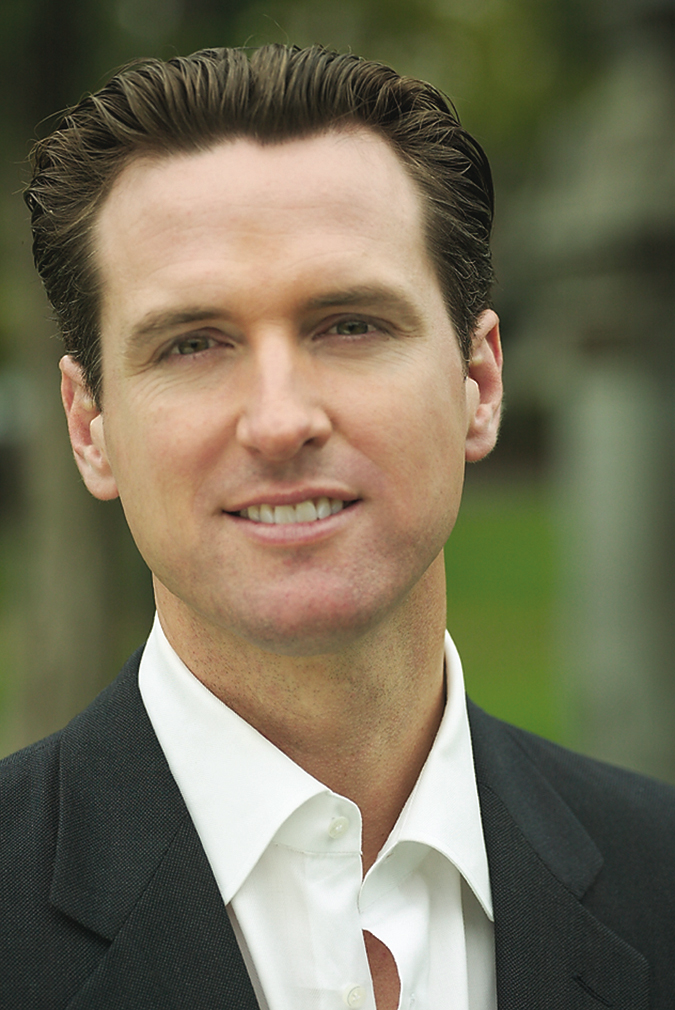
4. The mayor of San Francisco. Gavin Newsom is happy to announce that he supports education funding, but he’s never come forward with a single significant new tax increase for the city. Local taxes could be split between the general fund and the schools, and the progressives on the Board of Supervisors are looking for revenue options. Call the mayor and tell him: If Sacramento won’t raise taxes to educate our kids, we’d like to do it at home, in San Francisco. 415-554-6141.


5. Any state or local official who claims to support the schools but won’t publicly endorse and work for higher taxes. Folks, there’s no other way out of this.


And at the next rally, let’s chant: Repeal Prop. 13, Now! Tax the rich in San Francisco — Now!

MUNI driver: luck, not system, saved my family

3

MUNI bus driver Charles Washington says it was luck that won his family a reprieve from a federal deportation order. His Australian bride Tracey, who he married in Reno last April, and her 13-year-old son were served deportation orders after the boy got into a schoolyard fight and a police officer wrote him up with three felony charges. Under the city’s current policy, felony charges against undocumented youth triggers an immediate referral to ICE before the youth can prove their innocence.

Charles and Tracey Washington hug outside a hearing on the city’s policy towards immigrant youth. After the hearing, the juvenile probation department dropped language from its policy that advocates say could lead to racial profiling, but JPD Chief William Sifferman said the department cann’t allow kids due process for fear of being accused of harboring and transporting aliens.

Washington’s family won a reprieve after the media learned of their plight, an outcome Charles puts down to luck, not evidence that the system is working. He believes the nightmare his family is going through proves that the city’s policy towards immigrant youth isn’t working. And he wants those responsible for setting that policy to take responsibility and fix what’s broken,  not pass the buck by trying to hide behind federal laws they claim prevent them from fixing their own policy.

“The problem with the policy is that is doesn’t allow for due process,” Washington said during a March 4 hearing on the city’s policy which Mayor Gavin Newsom ordered in 2008.”The policy is based upon the original charges that a police officer made, a  field officer who has to make a quick decison based upon a couple of known facts,” Washington said. “Kids get treated as if they are guilty before they are proven innocent. There has to be a better way for the system to work.”

Washington doesn’t blame the city’s police or probation officers for his stepson getting referred to the feds before he could prove he was innocent of felony-level charges.

Gabe Calvillo, president of the city’s probation officers union, congratulated the Washington family on their reprieve, but repeated concerns that giving kids their day in court would put his members at risk.

And Washington does not blame city workers for the fact that federal immigration agents used his stepson as bait to get his wife to come in to their Sansome Street office where they handed her and her son deportation orders and slapped an electronic monitoring device on her ankle–a device she is still wearing to this day.

 Tracey Washington demonstrates the device that the feds are forcing her to wear, making her feel like a “murderer,” even though the couple say federal contractors gave them misinformation about when to apply for a green card, after she got married to  Charles Washington while she and her two sons were here on a visa waiver.

As a city worker, Washington gets that these city workers were simply following orders. But as a husband, father and US citizen who is still fighting to keep his family intact, he believes that those responsible for the policy that led to this nightmarish sequence of events are hiding behind claims that their hands are tied by federal law. And he wants them to get off their hands and back to the drawing board, so other families don’t have to go through what his family just experienced.

And unlike many families that feel they were unnecessarily ripped apart by the city’s policy towards immigrant kids, Washington can articulate his concerns without fear of being deported himself.

“It’s unbelievable how any family could have been put in that position,” Washington said, recalling how his son landed in ICE’s hands, after a SFPD officer wrote him up for three felony charges, following a schoolyard fight over 46 cents.

When an SFPD officer charges a juvenile with a felony, juvenile probation is required to refer the kid to US Immigration and Customs Enforcement (ICE), if they suspect the youth is here without legal documentation.

Once Washington’s stepson was referred to ICE, under a policy that Mayor Gavin Newsom ordered in 2008, the feds ordered him and his mother deported, without waiting to see if local courts actually find the boy guilty of any felony charges.

It was only when Washington went public with his family’s nightmare and the media started making calls that ICE backed off.

But while it was the city’s flawed policy that landed the Washingtons in this dilemma, the Mayor’s Office did not offer to try and help. Instead, the Mayor’s office claimed that their case proves that Newsom’s policy is “not draconian.” (You can read Newsom’s full statement at the end of this post.)

“The Mayor’s Office could have contacted me, tracked me down,” Washington said. “But they just sat back and waited to jump on the band wagon, whichever way it went.”

Mayoral spokesperson Tony Winnicker said the Mayor’s Office was sympathetic to the family’s plight but could see no reason to get involved in what he described as “a federal immigration matter.”

But Washington notes that it was Newsom’s policy that led to his stepson being referred to ICE, and the feds would have deported his family this week, if they hadn’t gone public with their case,a step most immigrant families are afraid to take.

“The bottom line is that we got lucky,” Washington said. “How many families wouldn’t know what to do in this situation? When I spoke at the press conference at the Asian Law Caucus,  I didn’t know what to do either. What if the Asian Law Caucus had been too busy, or the media hadn’t come to the press conference? Does everybody have to contact a lawyer. Our story shows that the system failed, and that it was luck that saved us.”

While folks are acting as if the Washingtons’ problems are over, the family still faces huge financial and legal challenges.

“For the time being, we’ve had a huge burden lifted off of us, but the next huge problem is that we are bing requested to have one-way plane tickets ready for the first part of April, though we are not being asked to leave now until May 4, that’s several thousand dollars that we have to lose,” Washington said, noting that it will cost over $4,000 to apply for green cards.
“Meanwhile, It looks like everyone wants to point the finger at someone else instead of focusing on the fact that there is a problem.”

Washington made his comments after a hearing that Sup. David Campos called to determine why the Juvenile Probation department hasn’t implemented an amendment that Campos introduced in 2009 to address the Catch 22 situation that’s  hidden within Newsom’s current policy and that ensnared the Washingtons’ kid.

Campos’ amendment instructed probation officers to wait until kids have had their day in court before referring them to ICE. But Mayor Newsom said he will ignore the amendment, and JPD Chief Sifferman has refused to implement it.

Either way, Campos’ March 4 hearing offered a rare insight into the, some would say, dysfunctional dynamics within the city’s juvenile justice department since it came under the microscope of US Attorney Joe Russoniello in 2008.

A Bush appointee, Russoniello has been ideologically opposed to the concept of sanctuary ever since the city enacted its City of Refuge ordinance in the 1980s, when he was first US Attorney for Northern California.

After Kevin Ryan was fired as US Attorney in 2006 and hired as Newsom’s director of criminal justice in 2007, Russoniello resumed his post as top federal prosecutor, a position of power that let him launch a federal Grand Jury investigation in 2008 to determine if JPD’s former practices violated federal law.

Ryan has since resigned from the Mayor’s Office, and the Obama adminstration is vetting Russoniello’s replacement, but the City claims it can’t give immigrant kids their day in court for fear of federal retaliation. And some believe the unresolved tension between the city’s sanctuary policy and the federal immigration laws will continue, unless national immigration reform occurs.

Juvenile Probation Department Chief William Sifferman said today that his department is eliminating language from its juvenile immigrant policy that could be an invitation to racial profiling.

JPD Chief William Sifferman told Campos that his department looked into Campos’ amendment, which directs JPD to modify its policies and practices to the “extent permitted by federal law”‘and concluded that it cannot modify them.

Sifferman recalled what happened when JPD used to return immigrant youth to their country of origin or place them in group homes, with no notification to ICE.

“Many of these youth were arrested for selling crack cocaine in the Tenderloin, were placed in group homes, ran away, were rearrested, selling drugs again,” Sifferman testified.

He recalled how JPD officers were interrogated and threatened with arrest by federal agents who intercepted them at Houston airport as they were accompanying minors to Honduras. And that Russoniello subsequently convened a Grand Jury to investigate JPD’s actions.

“That investigation continues to this day,” Sifferman said. “The department’s current policy was adpoted becoasue of these concerns.”

“Until a court rules otherwise, the department must conclude that [federal] law would not allow the city to change its policy,” Sifferman said.

He said probation officers are trained not to directly question juveniles or their parents about their immigration status. And hee noted “a marked reduction” in the number of unaccompanied Honduran minors who have been arrested for selling crack cocaine.

“We believe our policy has significantly reversed a 15-year trend in the city’s history,” he said.

Sifferman said he did not receive Campos’ request for time estimate information until 48 hours before the March 4 hearing, though Campos said he made his request weeks ago.

But he offered some statistics, including the fact that “since July 2008, JPD has released 107 unduplicated youth to ICE, 125 times.”

“This means that 17 were referred to ICE twice, that they returned to country of origin, then reoffended,” Sifferman explained.

He also noted that 92 percent of the youth are released to ICE after a felony finding.

“Only a small number are released to ICE without having determined if they had committed a felony,” Sifferman said.

The monthly average of kids referred to ICE for the first four months of the city’s new policy was ten, Sifferman said.

“And for the past 16 months, it’s been five,” he said. “We attribute this decline to undocumented Honduran youth no longer returning to the Tenderloin to sell crack with the same frequency.”

But he claimed that while there has been a reduction in releases to ICE, there had been no measurable decline in probation officer’s case or work load.

‘They continue to supervise kids who have not been referred to ICE,” he said.

“We have dedicated none of our resources to working with ICE,” he added.

Contact with ICE is limited to fax transmissions, follow-up phone calls, and follow-up responses, Sifferman said.

“Probation officers do not arrest or detain youth based on their undocumented status nor do they assist in taking youth into ICE custody,” Sifferman said. “We must always recognize the public safety impliations of our policy.”

Asked what kind of resources JPD spends on this contact, Sifferman said, “De minimus.”

Pressed  for more details,  Sifferman said, “It’s difficult to estimate given that our staffing level functions are ministerial—a fax being sent a record placed in a file, a phone call about a potential release date. We haven’t done a time study.”

Campos noted that unlike JPD’s former policy, the amendment he enacted last fall does not call for prior policing and actual transport of youth across the country. But Sifferman countered that if youth are released back into the community, JPD could be aked to transport them “to various locales.”

Campos questioned Sifferman as to the origin of language in Newsom’s current policy that immigrant advocates believe could lead to racial profiling (language that, as the Guardian learned today, has now been deleted from the policy).

“In determining whether there is reasonable suspicion that youth is undocumented, one of the criteria listed in the policy says, ‘presence of undocumented persons, ‘ but how would you know when a person is undocumented?” Campos asked.

“There could be information in the arresting report describing the conditions,” Sifferman suggested.

“How did you decide to include this language in the policy?” Campos asked.

“It was based on research and advice we received from the City Attorney’s office,” Sifferman said. “The entire policy is based on review and approval of the City Attorney’s office.”

“Can you see how something as open-ended as this could lead to racial profiling?” Campos asked.

‘It could, it requires vigilant oversight, if that criterion was taken alone, we’d have  a problem wth that,” Sifferman said.

Sup. Eric Mar said he was “very upset,” that Sifferman did not have the cost estimates available.
Mar also voiced concerns that the policy sounded “like a justification for racial profiling.”

“I really respect you, but it sure sounds like you’re flying in the face of San Francicso values when you are not implementing a policy to protect due process,” Mar said.

“I disagree that we have been intentionally stalling,” said Sifferman, who has been hit with budget cuts and staffing reductions in the past couple of years like other department heads.

Campos took issue with Sifferman citing Title 8, Section 1373 of the US code as justification for not implementing his policy amendment.

That section of the US code states that, “Notwithstanding any other provision of Federal, State, or local law, a Federal, State, or local government entity or official may not prohibit, or in any way restrict, any government entity or official from sending to, or receiving from, the Immigration and Naturalization Service information regarding the citizenship or immigration status, lawful or unlawful, of any individual. “

“Can you point to a section of the federal law that requires you to report?” Campos said
“No, I can’t,” Sifferman said.

But Sifferman subsequently noted  that there is a prohibition against “transporting and harboring any person known to be undocumented,” a position that leaves JPD officers feeling vulnerable given that the department has received three federal Granf Jury subpoenas related to JPD’s previous policy towards juveniles.

During public comment, UC Davis Law Professor Bill Ong Hing addressed the fact that a bunch of misinformation continues to swirl around the city’s immigrant juvenile policy.

“I would encourage the Board, Chief Sifferman, the Mayor’s Office and City Attorney’s office to sit down together,” Hing said. “A lot of misinformation is floating around.”

Hing noted that there is nothing in the Campos amendment that prohibits reporting kids to ICE.

“But you do not have to volunteer information to them, if it’s not required,” Hing said.

“The vast majority of jurisdictions don’t contact ICE [before kids have day in court], they recognize that’s not good policing, ” Hing continued. “Under the rules of federalism, there is nothing that prohibits this ordinance.”

“And there has never been a prosecution of a city worker [for following a city’s sanctuary policy], and [a prosecution of a city worker for that] wouldn’t be authorized by the Obama admininstration,” Hing claimed.

He also said that a confidential memo that Mayor Newsom leaked to the Chronicle was ‘laughable”.

“It exagerrates the likelihood of a successfully overruling the sanctuary ordinance,” Hing said.

Hing concluded that City Attorney approved language in Newsom’s current policy, “is a complete inviation for racial profiling.”

City Attorney spokesperson Matt Dorsey responded forcefully to these accusations.

“Racial profiling is illegal, and something we take very seriously,” Dorsey wrote in an email.” Part of the City Attorney’s duty is to advise against illegal conduct. If a client department informs us that a policy could risk illegality, we will work with our clients to make sure laws aren’t broken, and that no one’s rights are violated. That’s a job lawyers do every day.  And that’s especially true here, where the matter involves litigation, threats of litigation, and a federal criminal investigation.”

And today, JPD decided to eliminate the language that was triggering racial profiling concerns.

Meanwhile, mayoral spokesperson Tony Winnicker noted that of the 125 reports to ICE since July 2008, 97 percent were for felony arrests, and the other 3 percent were “misdemeanors with priors.”

Winnicker also emailed a statement from Newsom that reads as follows:

“I have long supported our sanctuary policy and a range of policies and programs designed to assist our immigrant community. I believe San Francisco continues to be an international leader with our efforts to protect immigrants in our community. However, the sanctuary ordinance as originally conceived and adopted was designed to protect all residents of our city, not as a shield for felons and criminal behavior. I will not put City staff, our sanctuary city policy and thousands of residents at risk to shield felony criminal behavior by a few. Immigration and Customs enforcement is a federal responsibility. San Francisco cannot be the arbiter of immigration cases that take place within the City. That’s why many other counties in California have a similar policy of reporting suspected juvenile felons to Immigration and Customs Enforcement at the booking stage. The recent example of the Washington family validates that our current policy is appropriate. Juvenile Probation officials report undocumented felony arrests to Immigration & Customs Enforcement, and Immigration & Customs Enforcement officials determine the appropriate response. In this case, once President Obama’s Immigration and Customs Enforcement office became aware of the exceptional circumstances around the case, they took commendable action to ensure that the young boy and his family were given time to resolve their residency status.San Francisco’s Sanctuary Ordinance continues to strike the appropriate balance between offering a welcoming hand to our immigrant community and protecting the public safety of law-abiding residents of our City.”

That’s a fine statement, and I’m sure the mayor cares about youth, whatever their nationality and immigration status. But  immigrant youth still face a  Catch 22 trap within his policy that has led kids who haven’t committed felonies being referred to ICE for deporation. The question now becomes, can a miracle happen? Will everyone involved–at the city and federal level–sit down and hash out an equitable solution? Will heads of other city departments acknowledge their role in this process or will Sifferman be hung out to dry all on his lonesome? And will a bunch more kids get thrown under the bus before we as a nation find our way towards a saner and more equitable immigration process? Stay tuned.

Safe at last?

0

Dick Meister, former labor editor of the SF Chronicle and KQED-TV Newsroom, has covered labor and politics for a half-century. Contact him through his website, www.dickmeister.com, which includes more than 250 of his recent columns.

It’s called musculoskeletal disorder or MSD, the most common of the serious injuries suffered by U.S. workers. But because corporate employers fear that greater public awareness would force them to spend more on job safety, MSD has remained one of the least understood of injuries.

The latest government figures show that more than 60 percent of the million or more on-the-job injuries reported annually are MSD-related. Some of the victims are permanently disabled, and many more have to take time off from work while their injuries heal.

The victims include computer operators, factory and construction workers, meat and poultry processors, hospital and restaurant employees, supermarket clerks and many others.  They suffer serious neck, shoulder and back problems, chronically sore arms and wrists and other repetitive motion injuries resulting from work that requires them to be in almost constant motion, bending, reaching, typing, or frequently lifting heavy objects.

The first serious government efforts to combat the rapidly growing problem of MSD came ten years ago, in the final days of the Clinton administration. The Occupational Safety and Health Administration (OSHA) issued a lengthy set of so-called ergonomic regulations that were designed to lessen the dangers of MSD.

The regulations, which had taken three years to draft, covered such things as how long and how many breaks workers in particular occupations should get, what protective equipment should be issued to them, how their work stations should be designed and hundreds of related matters.

That was way too much for the U.S. Chamber of Commerce and other corporate employer representatives. They got their Republican allies, who controlled Congress, to repeal OSHA’s regulations just before the decidedly anti-labor George W. Bush succeeded Clinton.

Certainly neither Bush nor his OSHA appointees would even consider such impingements on their corporate friends. Signing the legislation that repealed the ergonomic regulations was one of Bush’s first acts as president. He followed that quickly by revoking 19 previously approved grants that were to go to unions, universities and labor-management groups to finance safety and health training programs for small business employers and particularly vulnerable groups such as construction workers and immigrants.

Bush’s OSHA appointees, many of them former executives of the industries they were supposed to regulate, blocked, withdrew or weakened dozens of other safety regulations in addition to those covering MSD. They discontinued safety education and training programs, worked with Congress to cut their own barely adequate budgets and instead of enforcing the safety laws, stressed  “voluntary compliance” by employers.

But now comes Barack Obama and his labor and Democratic Party allies to resume the fight for the ergonomic regulations President Clinton had been forced to abandon.

The initial proposals of President Obama’s OSHA appointees are modest. They’re asking merely that employers note, on the accident reports they are required to file, whether the injury was MSD-related. No such designation is currently required, which makes it difficult – if not impossible – for OSHA to collect the accurate data required to develop a program for effectively dealing with MSD, the most serious safety problem faced by American workers.

Corporate employers headed by the Chamber of Commerce oppose even that simple reform. They fear it would be a first step toward development of an ergonomic safety program that could cost employers millions of dollars to implement.

It also could bring badly needed protections to U.S. workers. But workers’ concerns are, of course, of secondary interest to the Chamber of Commerce and its Republican friends. They’re not much interested in helping working people. Their role is to further the profit-seeking of employers, even if that should come at the expense of the men and women who do the nation’s work.

Dick Meister, former labor editor of the SF Chronicle and KQED-TV Newsroom, has covered labor and politics for a half-century. Contact him through his website, www.dickmeister.com, which includes more than 250 of his recent columns.

Stiglitz: The Dangers of Deficit Reduction

0

By Joseph E. Stiglitz

Here is our monthly installment of Joseph E. Stiglitz’s Unconventional Economic Wisdom column from the Project Syndicate news series. Stiglitz is University Professor at Columbia University and the winner of the 2001 Nobel Prize in economics. His forthcoming book Freefall will be published this winter.

NEW YORK – A wave of fiscal austerity is rushing over Europe and America. The magnitude of budget deficits – like the magnitude of the downturn – has taken many by surprise. But despite protests by the yesterday’s proponents of deregulation, who would like the government to remain passive, most economists believe that government spending has made a difference, helping to avert another Great Depression.

Most economists also agree that it is a mistake to look at only one side of a balance sheet (whether for the public or private sector). One has to look not only at what a country or firm owes, but also at its assets. This should help answer those financial sector hawks who are raising alarms about government spending. After all, even deficit hawks acknowledge that we should be focusing not on today’s deficit, but on the long-term national debt. Spending, especially on investments in education, technology, and infrastructure, can actually lead to lower long-term deficits. Banks’ short-sightedness helped create the crisis; we cannot let government short-sightedness – prodded by the financial sector – prolong it.

Faster growth and returns on public investment yield higher tax revenues, and a 5 to 6% return is more than enough to offset temporary increases in the national debt. A social cost-benefit analysis (taking into account impacts other than on the budget) makes such expenditures, even when debt-financed, even more attractive.

Finally, most economists agree that, apart from these considerations, the appropriate size of a deficit depends in part on the state of the economy. A weaker economy calls for a larger deficit, and the appropriate size of the deficit in the face of a recession depends on the precise circumstances.

It is here that economists disagree. Forecasting is always difficult, but especially so in troubled times. What has happened is (fortunately) not an everyday occurrence; it would be foolish to look at past recoveries to predict this one.

In America, for instance, bad debt and foreclosures are at levels not seen for three-quarters of a century; the decline in credit in 2009 was the largest since 1942. Comparisons to the Great Depression are also deceptive, because the economy today is so different in so many ways. And nearly all so-called experts have proven highly fallible – witness the United States Federal Reserve’s dismal forecasting record before the crisis.

Yet, even with large deficits, economic growth in the US and Europe is anemic, and forecasts of private-sector growth suggest that in the absence of continued government support, there is risk of continued stagnation – of growth too weak to return unemployment to normal levels anytime soon.

The risks are asymmetric: if these forecasts are wrong, and there is a more robust recovery, then, of course, expenditures can be cut back and/or taxes increased. But if these forecasts are right, then a premature “exit” from deficit spending risks pushing the economy back into recession. This is one of the lessons we should have learned from America’s experience in the Great Depression; it is also one of the lessons to emerge from Japan’s experience in the late 1990’s.

These points are particularly germane for the hardest-hit economies. The United Kingdom, for example, has had a harder time than other countries for an obvious reason: it had a real-estate bubble (though of less consequence than in Spain), and finance, which was at the epicenter of the crisis, played a more important role in its economy than it does in other countries.

The UK’s weaker performance is not the result of worse policies; indeed, compared to the US, its bank bailouts and labor-market policies were, in many ways, far better. It avoided the massive waste of human resources associated with high unemployment in America, where almost one out of five people who would like a full-time job cannot find one.

As the global economy returns to growth, governments should, of course, have plans on the drawing board to raise taxes and cut expenditures. The right balance will inevitably be a subject of dispute. Principles like “it is better to tax bad things than good things” might suggest imposing environmental taxes.

The financial sector has imposed huge externalities on the rest of society. America’s financial industry polluted the world with toxic mortgages, and, in line with the well established “polluter pays” principle, taxes should be imposed on it. Besides, well-designed taxes on the financial sector might help alleviate problems caused by excessive leverage and banks that are too big to fail. Taxes on speculative activity might encourage banks to focus greater attention on performing their key societal role of providing credit.

Over the longer term, most economists agree that governments, especially in advanced industrial countries with aging populations, should be concerned about the sustainability of their policies. But we must be wary of deficit fetishism. Deficits to finance wars or give-aways to the financial sector (as happened on a massive scale in the US) lead to liabilities without corresponding assets, imposing a burden on future generations. But high-return public investments that more than pay for themselves can actually improve the well-being of future generations, and it would be doubly foolish to burden them with debts from unproductive spending and then cut back on productive investments.

These are questions for a later day – at least in many countries, prospects of a robust recovery are, at best, a year or two away. For now, the economics is clear: reducing government spending is a risk not worth taking. 

Joseph E. Stiglitz is University Professor at Columbia University and recipient of the 2001 Nobel Prize in Economics. His most recent book Freefall: Free Markets and the Sinking of the Global Economy is available in French (Le Triomphe De La Cupidité, Liens Qui Liberent) and will be available shortly in Japanese, Spanish, German, and Italian.

Copyright: Project Syndicate, 2010.
www.project-syndicate.org

Protests demand more money for education

17

Images from yesterday’s protests by Charles Russo

Yesterday’s Day of Action to protest deep cuts in public education and other vital services was far larger – and occasionally more militant – than many had expected, sending a strong message to Sacramento that it’s time to pursue new revenue options instead of simply cutting the public sector to the bone.

More than 150 people were arrested (including Guardian intern Jobert Poblete, who is still among at least 80 awaiting booking this morning at the overwhelmed Santa Rita Jail in Dublin) for allegedly climbing onto the freeway at Interstate 880 in Oakland and blocking traffic around 5 p.m., the most confrontational event in an otherwise peaceful yet forceful day of protest.

The biggest Bay Area event was outside San Francisco City Hall, were more than a dozen smaller events and marches converged at 5 p.m. Civic Center Plaza was filled with thousands of people of all ages, backgrounds, and ethnicities, from sign-wielding kindergarteners to United Educators of San Francisco President Dennis Kelly, who served as MC of a program that explicitly excluded elected officials.

“We’re here today because never again should any of us feel helpless,” Kelly boomed, declaring, “The budgets of California will not be built on the backs of our future.”

It was indeed an inspiring, passionate presentation to the largest crowd that has filled the plaza since the start of the Iraq War in 2003. Some speakers even drew on that connection in scoffing at statements by elected officials that the budget cuts – which have results in hundreds of teacher layoffs and steep tuition hikes — are unavoidable.

“When the government wants to wage war, the money is there. When the government wants trillions of dollars to bail out the banks, the money is there,” Chabot College teacher Kip Waldo said.

Susan Solomon, a San Francisco kindergarten teacher, said the budget decisions being made today are incredibly myopic and unjust. “We are here today to address a crime, the crime of stealing education from our kids,” she said, going on to attack the belittling mantra that educators need to simply live within the budgets they’re given. “We are sick and tired of doing more with less. Let’s try something new. Let’s try doing more with more.”

Then she spelled out what she – and the majority of people who were out there, people who don’t usually take to the streets in protest – are advocating: “We want progressive taxation. The people and the corporation who have all the money should pay their fair share.”

Whether this nascent movement can help bring that about is yet to be determined, but its leaders sounded confident yesterday. As California Faculty Association President Lil Taiz said, “We have here the seeds of a movement that can lead this state to the kind of future we believe in.”

Tying one on with Dave Attell

0

Dave Attell had my dream job. In the Comedy Central series, Insomniac, from 2001-2004, Attell took the typical travel show concept and gave it a degenerate edge, showcasing the people and places that come alive in towns across the country after midnight. The show was a smash hit in its own right… but I think he’s tired of talking about it now. So more importantly, he’s a super sharp stand up comedian with a rather dead pan manner and a knack for making hecklers feel like fools. He rocks the USO circuit on the regular, but he’s doing a civilian show on a stage near you shortly (Fri/12 & Sat/13, Cobb’s Comedy Club). He asked me to let y’all know that he’ll be performing new materials- so all the real comedy fans, come out and play.

San Francisco Bay Guardian: So we’re all really stoked you’re coming to San Francisco…

Dave Attell: I love SF. That’s where I started headlining. That’s probably where I’m going to end headlining, too. I have nothing but good thoughts about SF- even though now that it’s all fancy and PC it’s not as fun anymore, everyone knows that.

SFBG: How long have you been doing standup?

DA: Twenty years.

SFBG: Oh yeah, some change has gone down then. The thing I keep reading about you is that you’re a comedian’s comedian. What does that even mean?

DA: It means you can’t act. I can’t. I’m a horrible actor. I like jokes, I like writing jokes. But yeah, I don’t really know what that means. It’s a compliment, I hope.

SFBG: Has your comedy matured/grown over time? New themes?

DA: That’s a great question and the answer is no. Being in your mid forties and still talking about drinking and porn, I’d say the answer is no. I’m a good comic, not a great comic.

SFBG: Who, in your eyes, are?

DA: There are so many great comics. Everyone says Richard Pryor, George Carlin, which is true. The longer I do comedy, I realize it’s hard to always come to the table enthused. Bill Hicks, who was an amazing, important part of SF comedy. He was another guy who was ahead of the curve. But I’m nothing like those guys, I go for dirty humor. I can spread the word about them, though! There’s so many new guys- and I know people don’t like dragging their ass out to a new club, but that’s how it’s supposed to be done, club experiences. Cobb’s is a club where you do that, where you can bring out the new material, it’s great. Every year or so I check in at Cobb’s. 

SFBG: I have to tell you, I have a not so secret dream to be a travel show host. I loved Insomniac, was that a fun project to work on?

DA: Yes. But I’m too old to be a travel show host, I’m a has been. I encourage you to go out and do it, though. We need to see a woman’s perspective. I would go to the Middle East. It’s rough out there, but there’s a few places where you can party. Abu Dhabi and Dubai. It’d be a lot of money, but…

SFBG: Dubai! All I always hear about are those apartment islands they’ve built in the shape of the continents.

DA: Well their economy is in the shitter too, so they’re not building land masses anymore. It’s weird for people who fear God to act like God. Building the earth, isn’t that his job?


“I realize it’s hard to always come to the table enthused.” 

SFBG: Were the cities featured ones you were familiar with before the show? How’d you scout the locations and people you talked to?

DA: I mean, it wasn’t magic. It was hit a bar, talk to folks, get a couple shots, roll out. The part no one talks about is the late night jobs. There’s a lot of shows that focus on different jobs now, but I think we were unique on that.

SFBG: Were there any jobs you featured that you could see yourself doing?

DA: Not the coal mine. I hate being trapped. The coal miners have these sleds that go into the mountain, and then after twelve hours they pull them out. I have serious claustrophobia, couldn’t do that. I’m not a big fan of the water either, so not the ocean jobs. Of course, [we did the show] back when there still were jobs.

SFBG: I hear you are a fixture on the USO circuit. What’s that like?

DA: Ah good, a new topic. I’ve done four shows in Iraq, five in Afghanistan. I don’t know if they’re going to want me back, I’m kind of dirty. But really, it’s hard for the troops because it’s really boring, but really, really dangerous. You get a perspective on what these people do and how cool they are. Everybody talks about how “amazing” they are, but they keep it low key, do their jobs, and then come back for more- some of these guys are doing second, third tours of duty. The Olympics, they fill you with pride, but the army… it does, more.

SFBG: Lots of different acts do the USO tour, right? Were you traveling with, like, a bunch of cheerleaders as well?

DA: Being in the USO, you get to see a lot of other acts. The last one I did was with Billy Ray Cyrus. We never would have met otherwise. The thing is there’s USO stuff going on all over the world and the people that do it are really, really cool. The USO has a small budget, its not a government thing, it’s privately funded. I mean, I’m really a nobody in that scene. Robin Williams, Dane Cook, they do it. That’s amazing. The troops, they’re in the dirt, the mud- and all of sudden they look up, and there’s a star.

SFBG: Do you have family that were in the military?

DA: My dad was in the Navy, he told me some great stories. He wasn’t a career man though. Retail was his real calling, him being a Jew.

SFBG: How’d you get into the USO gig?

DA: Why wouldn’t I? I’m too old to fight. I’m lucky to have the opportunity to go over there and do it. These are the times we live in. This is what we do during a war on terror, whether it’s wrong or right. It comes down to; either we have to end the war or I need to get more material.

SFBG: Or we need to get the draft going, new audiences, right?

DA: Right. What we should do, all the people that lose on the Biggest Loser, we should send out there. We should say ‘you can go on this show, but if you lose you have to go to war.’

SFBG: Or how about all the reality shows! There’s your draft.

DA: Right.


And so! Dave Attell and I = Problem. Solved.


Fri/12 & Sat/13, 8 p.m. & 10:30 p.m., $35.50

Cobb’s Comedy Club

915 Columbus, SF

(415) 928-4320

www.cobbscomedyclub.com

Film listings

0

Film listings are edited by Cheryl Eddy. Reviewers are Kimberly Chun, Michelle Devereaux, Max Goldberg, Dennis Harvey, Johnny Ray Huston, Erik Morse, Louis Peitzman, Lynn Rapoport, Ben Richardson, and Matt Sussman. The film intern is Peter Galvin. For rep house showtimes, see Rep Clock. For first-run showtimes, see Movie Guide.

OPENING

Alice in Wonderland Tim Burton and Johnny Depp go down the 3D rabbit hole. (1:48)

Brooklyn’s Finest "Really? I mean, really?" asked the moviegoer beside me as the final freeze-frame of Brooklyn’s Finest slapped our eyeballs. Yes, that’s the sound of letdown, despite the fact that Brooklyn’s Finest initially resembled a promisingly gritty juggling act in the mode of The Wire and Cop Land (1997), Taxi Driver (1976) and Training Day (2001). Bitter irony flows from the title — and from the lives, loves, bad habits, pressure-cooker stress, and unavoidable moral dilemmas of three would-be everyday cops, all occupying several different rungs on a food chain where right and wrong have an unpleasant way of switching sides. Eddie (Richard Gere) is the veteran officer just biding his time till he gets his pension, all while comforting himself with the meager sensuous attentions of hooker Chantel (Shannon Kane). Sal (Ethan Hawke) is the bad detective, stealing from the dealers to fund a dream home for his growing family with Angela (Lili Taylor). Tango (Don Cheadle) is the undercover detective who has cultivated friendships with dealers like Caz (Wesley Snipes) and sacrificed his marriage for a long-promised promotion from his lieutenant (Will Patton) and his superior (Ellen Barkin, in likely the most misogynist portrayal of a lady with a badge to date). You spend most of Brooklyn’s Finest waiting for these cops to collide in the most unfortunate, messiest way possible, but instead the denouement leaves will leave one wondering about unresolved threads and feeling vaguely unsatisfied. In any case, director Antoine Fuqua and company seem to pride themselves on their tough-minded if at times cartoonish take on law enforcement, with Hawke in particular turning in a memorably OTT and anguished performance. (2:13) Shattuck. (Chun)

*Prodigal Sons See "My Son, My Son." (1:26) Lumiere, Shattuck.

*A Prophet See "Education of a Felon." (2:29) Embarcadero, Shattuck.

The Yellow Handkerchief The Yellow Handkerchief is one of those quiet, character-driven dramas that get mistaken for subtle classics. It’s not bad, just bland. In fact, there’s something pleasant about the way the film’s three unlikely friends forge a lasting bond, but the movie as a whole is never quite that cohesive. William Hurt stars as Brett Hanson, an ex-con with a dark past. (The Yellow Handkerchief tries to make this mysterious by way of vague flashbacks, but the audience gets there faster than the film does.) His inadvertent sidekicks are the troubled Martine (Kristen Stewart) and the awkward Gordy (Eddie Redmayne). The talented cast, rounded out by Maria Bello as the wife Brett left behind, does solid work with the material, but no one really stands out enough to elevate The Yellow Handkerchief to greatness. Redmayne is perhaps the most impressive, ditching his British accent to play a character so quirky, he’s almost Rain Man. But after taking a step back, the big picture is muddled. People are fascinating, but what does it all mean? (1:36) Albany. (Peitzman)

ONGOING

*"Academy Award-Nominated Short Films: Animated" Just because it’s animation doesn’t mean it’s just for kids. Like the live-action Oscar-nominated shorts, this year’s animated selections have got range, from the traditionally child-friendly to downright vulgar. Skewing heavily towards CG fare, the shorts vary from a Looney Tunes-style chase for an elderly woman’s soul (The Lady and the Reaper) to the Wallace and Gromit BBC special, A Matter of Loaf and Death. Most entertaining by far is Logorama, an action-packed tale set in a world populated by familiar trademarked logos. Any film that casts the Michelin man as a garbage-mouthed cop on the case of a renegade Ronald McDonald deserves to win all the awards in the universe. (1:35) Opera Plaza, Shattuck. (Galvin)

*"Academy Award-Nominated Short Films: Live Action" Aren’t you tired of wondering what all the fuss is about when the Academy awards their Oscar for Best Short? In an effort to give audiences a chance to play along, Shorts International is screening these less-seen works together. Though one or two of the five nominated films threaten to adhere to the Academy’s penchant for either heartbreaking or heartwarming, the majority are surprisingly oddball picks. Perhaps most odd of all is Denmark/U.S. submission The New Tenants. Feeling a tad forced but no less funny for it, Tenants draws on celebrities like Vincent D’Onofrio and comedian Kevin Corrigan to bring life to this surreal adaptation by Anders Thomas Jensen (2006’s After the Wedding). My pick would be Sweden’s gloriously goofy Instead of Abracadabra, which stars a stay-at-home slacker as he puts on a magic show for his father’s birthday. Obviously, some selections are going to be better than others, but hey, they’re shorts. If you don’t like one, just wait 10 minutes and you’ll find yourself somewhere completely different. (1:35) Opera Plaza, Shattuck. (Galvin)

Avatar James Cameron’s Avatar takes place on planet Pandora, where human capitalists are prospecting for precious unobtainium, hampered only by the toxic atmosphere and a profusion of unfriendly wildlife, including the Na’vi, a nine-foot tall race of poorly disguised cliches. When Jake Sully (Sam Worthington), a paraplegic ex-marine, arrives on the planet, he is recruited into the "Avatar" program, which enables him to cybernetically link with a part-human, part-Na’vi body and go traipsing through Pandora’s psychedelic underbrush. Initially designed for botanical research, these avatars become the only means of diplomatic contact with the bright-blue natives, who live smack on top of all the bling. The special effects are revolutionary, but the story that ensues blends hollow "noble savage" dreck with events borrowed from Dances With Wolves (1990) and FernGully: The Last Rainforest (1992). When Sully falls in love with a Na’vi princess and undergoes a spirit journey so he can be inducted into the tribe and fight the evil miners, all I could think of was Kevin Bacon getting his belly sliced in The Air Up There (1994). (2:42) 1000 Van Ness, Sundance Kabuki. (Richardson)

The Blind Side When the New York Times Magazine published Michael Lewis’ article "The Ballad of Big Mike" — which he expanded into the 2006 book The Blind Side: Evolution of a Game — nobody could have predicated the cultural windfall it would spawn. Lewis told the incredible story of Michael Oher — a 6’4, 350-pound 16-year-old, who grew up functionally parentless, splitting time between friends’ couches and the streets of one of Memphis’ poorest neighborhoods. As a sophomore with a 0.4 GPA, Oher serendipitously hitched a ride with a friend’s father to a ritzy private school across town and embarked on an unbelievable journey that led him into a upper-class, white family; the Dean’s List at Ole Miss; and, finally, the NFL. The film itself effectively focuses on Oher’s indomitable spirit and big heart, and the fearless devotion of Leigh Anne Tuohy, the matriarch of the family who adopted him (masterfully played by Sandra Bullock). While the movie will delight and touch moviegoers, its greatest success is that it will likely spur its viewers on to read Lewis’ brilliant book. (2:06) Oaks. (Daniel Alvarez)

Broken Embraces Pedro Almodóvar has always dabbled in the Hitchcockian tropes of uxoricide, betrayal, and double-identity, but with Broken Embraces he has attained a polyglot, if slightly mimicking, fluency with the language of Hollywood noir. A story within a story and a movie within a movie, Embraces begins in the present day with middle-aged Catalan Harry Caine (Lluís Homar), a blind screenwriter who takes time between his successful writing career to seduce and bed young women sympathetic to his disability. "Everything’s already happened to me," he explains to his manager, Judit (Blanca Portillo). "All that’s left is to enjoy life." But this life of empty pleasures is brought to a sudden halt when local business magnate Ernesto Martel (José Luis Gómez) has died; soon after, Ernesto Jr. (Rubén Ochandiano), who has renamed himself Ray X, visits Caine with an unusual request. The action retreats 14 years when Caine was a young (and visually abled) director named Mateo Blanco; he encounters a breathtaking femme fatale, Lena (Penelope Cruz) — an actress-turned-prostitute named Severine, turned secretary-turned-trophy wife of Ernesto Martel — when she appears to audition for his latest movie. If all of the narrative intricacies and multiplicitous identities in Broken Embraces appear a bit intimidating at first glance, it is because this is the cinema of Almodóvar taken to a kind of generic extreme. As with all of the director’s post-’00 films, which are often referred to as Almodóvar’s "mature" pictures, there is a microscopic attention to narrative development combined with a frenzied sub-plotting of nearly soap-operatic proportions. But, in Embraces, formalism attains such prominence that one might speculate the director is simply going through the motions. The effect is a purposely loquacious and overly-dramatized performance that pleasures itself as much by setting up the plot as unraveling it. (2:08) Opera Plaza, Smith Rafael. (Morse)

Cop Out I think there was a plot to Cop Out — something involving a stolen baseball card and a drug ring and Jimmy (Bruce Willis) trying to pay for his daughter’s wedding. Frankly, it’s irrelevant. Kevin Smith’s take on the buddy cop genre, which partners Willis with Tracy Morgan, is more a string of dick jokes and toilet humor than anything else. Not that there’s anything wrong with that. Sometimes it’s nice to sit back and turn off your brain, as Morgan’s Paul describes his bowel movements or when hapless thief Dave (Seann William Scott) begins imitating everything our heroes say. At the same time, Cop Out is easily forgettable: Smith directed the film, but writing duties went to the Cullen Brothers of TV’s Las Vegas. All judgments about that series aside, the script lacks Smith’s trademark blend of heart and vulgarity. Even Mallrats (1995) had a beginning, a middle, and a satisfying end. Without Smith as auteur, Cop Out is worth a few laughs but destined for the bargain bin. (1:50) Oaks, 1000 Van Ness. (Peitzman)

The Crazies Disease and anti-government paranoia dovetail in this competent yet overwhelmingly non-essential remake of one of George A. Romero’s second-tier spook shows. In a small Iowa hamlet overseen by a benevolent sheriff (Timothy Olyphant) and his pregnant wife (Radha Mitchell), who’s also the town doctor, a few odd incidents snowball into all-out chaos when a mysterious, unmarked plane crashes into the local water supply. Before long, the few residents who aren’t acting like homicidal maniacs are rounded up by an uber-aggressive military invasion. Though our heroes convey frantic panic as they try to figure out what the hell is going on, The Crazies never achieves full terror mode. It’s certainly watchable, and even enjoyable at times. But memorable? Not in the slightest. (1:41) 1000 Van Ness. (Eddy)

Crazy Heart "Oh, I love Jeff Bridges!" is the usual response when his name comes up every few years for Best Actor consideration, usually via some underdog movie no one saw, and the realization occurs that he’s never won an Oscar. The oversight is painful because it could be argued that no leading American actor has been more versatile, consistently good, and true to that elusive concept "artistic integrity" than Bridges over the last 40 years. It’s rumored Crazy Heart was slotted for cable or DVD premiere, then thrust into late-year theater release in hopes of attracting Best Actor momentum within a crowded field. Lucky for us, this performance shouldn’t be overlooked. Bridges plays "Bad" Blake, a veteran country star reduced to playing bars with local pickup bands. His slide from grace hasn’t been helped by lingering tastes for smoke and drink, let alone five defunct marriages. He meets Jean (Maggie Gyllenhaal), freelance journalist, fan, and single mother. They spark; though burnt by prior relationships, she’s reluctant to take seriously a famous drunk twice her age. Can Bad handle even this much responsibility? Meanwhile, he gets his "comeback" break in the semi-humiliating form of opening for Tommy Sweet (Colin Farrell) — a contemporary country superstar who was once Bad’s backup boy. Tommy offers a belated shot at commercial redemption; Jean offers redemption of the strictly personal kind. There’s nothing too surprising about the ways in which Crazy Heart both follows and finesses formula. You’ve seen this preordained road from wreckage to redemption before. But actor turned first-time director Scott Cooper’s screenplay honors the flies in the windshield inherited from Thomas Cobb’s novel — as does Bridges, needless to say. (1:51) California, Embarcadero, Empire, Piedmont, Presidio, 1000 Van Ness, Sundance Kabuki. (Harvey)

Dear John As long as you know what you’re getting yourself into, Dear John is a solid effort. Not extraordinary by any means, it’s your standard Nicholas Sparks book-turned-film: boy meets girl — drama, angst, and untimely death ensue. Here, Channing Tatum stars at the titular John, a soldier on leave who falls in love with the seemingly perfect Savannah (Amanda Seyfried). Both actors are likable enough that their romance is charming, if not always believable. And Dear John‘s plot turns, while not quite surprising, are at least dynamic enough to keep the audience engaged. But at the end of the day, this is still a Nicholas Sparks movie — even with the accomplished Lasse Hallström taking over directorial responsibilities. There are still plenty of eye-roll moments and, more often than not, Dear John employs the most predictable tearjerking techniques. By the time you realize why the film is set in 2001, it’s September 11. Sad? Surely. Cheap? You betcha. (1:48) 1000 Van Ness, SF Center. (Peitzman)

Edge of Darkness (1:57) SF Center.

*An Education The pursuit of knowledge — both carnal and cultural — are at the tender core of this end-of-innocence valentine by Danish filmmaker Lone Scherfig (who first made her well-tempered voice heard with her 2000 Dogme entry, Italian for Beginners), based on journalist Lynn Barber’s memoir. Screenwriter Nick Hornby breaks further with his Peter Pan protagonists with this adaptation: no man-boy mopers or misfits here. Rather, 16-year-old schoolgirl Jenny (Carey Mulligan) is a good girl and ace student. It’s 1961, and England is only starting to stir from its somber, all-too-sober post-war slumber. The carefully cloistered Jenny is on track for Oxford, though swinging London and its high-style freedoms beckon just around the corner. Ushering in those freedoms — a new, more class-free world disorder — is the charming David (Peter Sarsgaard), stopping to give Jenny and her cello a ride in the rain and soon proffering concerts and late-night suppers in the city. He’s a sweet-faced, feline outsider: cultured, Jewish, and given to playing fast and loose in the margins of society. David can see Jenny for the gem she is and appreciate her innocence with the knowing pleasure of a decadent playing all the angles. The stakes are believably high, thanks to An Education‘s careful attention to time and place and its gently glamored performances. Scherfig revels in the smart, easy-on-eye curb appeal of David and his friends while giving a nod to the college-educated empowerment Jenny risks by skipping class to jet to Paris. And Mulligan lends it all credence by letting all those seduced, abandoned, conflicted, rebellious feelings flicker unbridled across her face. (1:35) Opera Plaza, Presidio, SF Center, Shattuck, Smith Rafael. (Chun)

*Fish Tank There’s been a string of movies lately pondering what Britney once called the not-a-girl, not-yet-a-woman syndrome, including 2009’s An Education and Precious: Based on the Novel Push By Sapphire. Enter Fish Tank, the gritty new drama from British filmmaker Andrea Arnold. Her films (including 2006’s Red Road) are heartbreaking, but in an unforced way that never feels manipulative; her characters, often portrayed by nonactors, feel completely organic. Fish Tank‘s 15-year-old heroine, Mia (played by first-time actor Katie Jarvis), lives with her party-gal single mom and tweenage sister in a public-housing high-rise; all three enjoy drinking, swearing, and shouting. But Mia has a secret passion: hip-hop dancing, which she practices with track-suited determination. When mom’s foxy new boyfriend, Connor (Michael Fassbender, from 2008’s Hunger) encourages her talent, it’s initially unclear what Connor’s intentions are. Is he trying to be a cool father figure, or something far more inappropriate? Without giving away too much, it’s hard to fear too much for a girl who headbutts a teenage rival within the film’s first few minutes — though it soon becomes apparent Mia’s hard façade masks a vulnerable core. Her desire to make human connections causes her to drop her guard when she needs it the most. In a movie about coming of age, a young girl’s bumpy emotional journey is expected turf. But Fish Tank earns its poignant moments honestly — most coming courtesy of Jarvis, who has soulfullness to spare. Whether she’s acting out in tough-girl mode or revealing a glimpse of her fragile inner life, Arnold’s camera relays it all, with unglossy matter-of-factness. (2:02) Smith Rafael. (Eddy)

Formosa Betrayed The turbulent modern history of Taiwan is certainly deserving of increased international attention, but writer-producer Will Tao’s strategy of structuring Formosa Betrayed as a political thriller is too often at odds with imparting facts and information. Set in the early 80s, the film thrusts viewers into an unraveling government conspiracy that has FBI agent Jake Kelly (James Van Der Beek) trailing the suspected murderers of a Chicago professor to Taipei. Initially, selling Dawson’s Creek alum Van Der Beek as an FBI agent seems a strange choice, but undoubtedly his name will fill seats, and Formosa Betrayed is shooting for maximum awareness. There are some scenes of real tension, but just when you are beginning to get wrapped up in the inherent drama of conspiracy and murder, the suspense is interrupted by a long-winded bout of soapboxing. Formosa Betrayed might enlighten some audiences about Taiwan’s controversial history, but it too often does so at the expense of its own watchability. You start to wonder why Tao didn’t just make a documentary. (1:43) SF Center, Shattuck. (Galvin)

From Paris with Love Every so often, I walk out of a film feeling like I’ve been repeatedly buffeted by blows to the face. Transformers 2: Revenge of the Fallen (2009) had this effect, and it is now joined by From Paris With Love, a movie so aggressively stupid that the mistaken assumption that it was adapted from a video game could be construed as an insult to video games. John Travolta shows up chrome-domed as Charlie Wax, a loose-cannon CIA operative with a lot of transparently screenwritten machismo and an endless appetite for violence. He is joined by Jonathan Rhys Meyers, sporting a risible American accent, and the two embark on a frantic journey across the French capital that is almost as racist as it is misogynistic. I could fill an entire issue of this newspaper eviscerating this movie —suffice to say, don’t see it. (1:35) SF Center. (Richardson)

*The Ghost Writer Roman Polanski’s never-ending legal woes have inspired endless debates on the interwebs and elsewhere; they also can’t help but add subtext to the 76-year-old’s new film, which is chock full o’ anti-American vibes anyway. It’s also a pretty nifty political thriller about a disgraced former British Prime Minister (Pierce Brosnan) who’s hanging out in his Martha’s Vineyard mansion with his whip-smart, bitter wife (Olivia Williams) and Joan Holloway-as-ice-queen assistant (Kim Cattrall), plus an eager young biographer (Ewan McGregor) recently hired to ghost-write his memoirs. But as the writer quickly discovers, the politician’s past contains the kinds of secrets that cause strange cars with tinted windows to appear in one’s rearview mirror when driving along deserted country roads. Polanski’s long been an expert when it comes to escalating tension onscreen; he’s also so good at adding offbeat moments that only seem tossed-off (as when the PM’s groundskeeper attempts to rake leaves amid relentless sea breezes) and making the utmost of his top-notch actors (Tom Wilkinson and Eli Wallach have small, memorable roles). Though I found The Ghost Writer‘s ZOMG! third-act revelation to be a bit corny, I still didn’t think it detracted from the finely crafted film that led up to it. (1:49) California, Embarcadero, Sundance Kabuki. (Eddy)

The Hurt Locker When the leader of a close-knit U.S. Army Explosive Ordnance Disposal squad is killed in action, his subordinates have barely recovered from the shock when they’re introduced to his replacement. In contrast to his predecessor, Sgt. James (Jeremy Renner) is no standard-procedure-following team player, but a cocky adrenaline junkie who puts himself and others at risk making gonzo gut-instinct decisions in the face of live bombs and insurgent gunfire. This is particularly galling to next-in-command Sanborn (Anthony Mackie). An apolitical war-in-Iraq movie that’s won considerable praise for accuracy so far from vets (scenarist Mark Boal was "embedded" with an EOD unit there for several 2004 weeks), Kathryn Bigelow’s film is arguably you-are-there purist to a fault. While we eventually get to know in the principals, The Hurt Locker is so dominated by its seven lengthy squad-mission setpieces that there’s almost no time or attention left for building character development or a narrative arc. The result is often viscerally intense, yet less impactful than it would have been if we were more emotionally invested. Assured as her technique remains, don’t expect familiar stylistic dazzle from action cult figure Bigelow (1987’s Near Dark, 1989’s Blue Steel, 1991’s Point Break) — this vidcam-era war movie very much hews to the favored current genre approach of pseudo-documentary grainy handheld shaky-cam imagery. (2:11) Opera Plaza, Shattuck. (Harvey)

Invictus Elected President of South Africa in 1995 — just five years after his release from nearly three decades’ imprisonment — Nelson Mandela (Morgan Freeman) perceives a chance to forward his message of reconciliation and forgiveness by throwing support behind the low-ranked national rugby team. Trouble is, the Springboks are currently low-ranked, with the World Cup a very faint hope just one year away. Not to mention the fact that despite having one black member, they represent the all-too-recent Apartheid past for the country’s non-white majority. Based on John Carlin’s nonfiction tome, this latest Oscar bait by the indefatigable Clint Eastwood sports his usual plusses and minuses: An impressive scale, solid performances (Matt Damon co-stars as the team’s Afrikaaner captain), deft handling of subplots, and solid craftsmanship on the one hand. A certain dull literal-minded earnestness, lack of style and excitement on the other. Anthony Peckham’s screenplay hits the requisite inspirational notes (sometimes pretty bluntly), but even in the attenuated finals match, Eastwood’s direction is steady as she goes — no peaks, no valleys, no faults but not much inspiration, either. It doesn’t help that Kyle Eastwood and Michael Stevens contribute a score that’s as rousing as a warm milk bath. This is an entertaining history lesson, but it should have been an exhilarating one. (2:14) Oaks. (Harvey)

*The Last Station Most of the buzz around The Last Station has focused on Helen Mirren, who takes the lead as the Countess Sofya, wife of Leo Tolstoy (Christopher Plummer). Mirren is indeed impressive — when is she not? — but there’s more to the film than Sofya’s Oscar-worthy outbursts. The Last Station follows Valentin Bulgakov (James McAvoy), hired as Tolstoy’s personal secretary at the end of the writer’s life. Valentin struggles to reconcile his faith in the anarchist Christian Tolstoyan movement with his sympathy for Sofya and his budding feelings for fellow Tolstoyan Masha (Kerry Condon). For the first hour, The Last Station is charming and very funny. Once Tolstoy and Sofya’s relationship reaches its most volatile, however, the tone shifts toward the serious — a trend that continues as Tolstoy falls ill. After all the lighthearted levity, it’s a bit jarring, but the solid script and accomplished cast pull The Last Station together. Paul Giamatti is especially good as Vladimir Chertkov, who battles against Sofya for control of Tolstoy’s will. You’ll never feel guiltier for putting off War and Peace. (1:52) Albany, Embarcadero, Empire, Piedmont, Sundance Kabuki. (Peitzman)

*Leonard Cohen: Live at the Isle of Wight 1970 The dawn of the Me Decade saw the largest-ever music festival to that date —albeit one that was such a logistical, fiscal and hygenic disaster that it basically killed the development of similar events for years. This was the height of "music should be free" sentiments in the counterculture, with the result that many among the estimated six to eight hundred thousand attendees who overwhelmed this small U.K. island showed up without tickets, refused to pay, and protested in ways that included tearing down barrier walls and setting fires. It was a bummer, man. But after five days of starry acts often jeered by an antsy crowd — including everyone from Joni, Hendrix, Dylan, Sly Stone, the Who and the Doors to such odd bedfellows as Miles Davis, Tiny Tim, Voices of East Harlem, Supertramp, and Gilberto Gil — Canadian troubador Cohen appeared at 4 a.m. on a Monday to offer balm. Like director Murray Lerner’s 1995 Message to Love, about the festival as a whole, this footage has been shelved for decades, but it bounces right back from the dead — albeit soothingly. Cohen seems blissed out, pupils like black marbles, his between-song musings are as poetical as those fascinating lyrics, and his voice is suppler than the rasp it would soon become. Kris Kristofferson, Judy Collins, Joan Baez, and bandmate Bob Johnson offer reflections 40 years later. But the main attraction is obviously Cohen, who is magnetic even if an hour of (almost) nothing but ballads reveals how stylistically monotone his songwriting could be. (1:04) Roxie. (Harvey)

*The Most Dangerous Man in America: Daniel Ellsberg and the Pentagon Papers For many, Daniel Ellsberg is a hero — a savior of American First Amendment rights and one of the most outspoken opponents of the Vietnam war. But as this documentary (recently nominated for an Academy Award) shows, it’s never an an easy decision to take on the U.S. government. Ellsberg himself narrates the film and details his sleepless nights leading up to the leak of the Pentagon Papers — the top secret government study on the Vietnam war — to the public. Though there are few new developments in understanding the particulars of the war or the impact the release of the Papers had on ending the conflict, the film allows audiences to experience the famous case from Ellsberg’s point of view, adding a fresh and poignantly human element to the events; it’s a political documentary that plays more like a character drama. Whether you were there when it happened or new to the story, there is something to be appreciated from this tale of a man who fell out of love with his country and decided to do something about it. (1:34) Bridge, Shattuck. (Galvin)

*North Face You’ll never think of outerwear the same way again — and in fact you might be reaching for your fleece and shivering through the more harrowing climbing scenes of this riveting historical adventure based on a true tale. Even those who consider themselves less than avid fans of outdoor survival drama will find their eyes frozen, if you will, on the screen when it comes to this retelling/re-envisioning of this story, legendary among mountaineers, of climbers, urged on by Nazi propaganda, to tackle the last "Alpine problem." At issue: the unclimbed north face of Switzerland’s Eiger, a highly dangerous and unpredictable zone aptly nicknamed "Murder Wall." Two working-class friends, Toni Kurz (Benno Fürmann of 2008’s Jerichow) and Andi Hinterstoisser (Florian Lukas) — here portrayed as climbing fiends driven to reach summits rather than fight for the Nazis — take the challenge. There to document their achievement, or certain death, is childhood friend and Kurz’s onetime sweetheart Luise (Johanna Wokalek, memorable in 2008’s The Baader Meinhof Complex), eager to make her name as a photojournalist while fending off the advances of an editor (Ulrich Tukur) seeking to craft a narrative that positions the contestants as model Aryans. But the climb — and the Eiger, looming like a mythical ogre — is the main attraction here. Filmmaker Philipp Stölzl brings home the sheer heart-pumping exhilaration and terror associated with the sport — and this specific, legendarily tragic climb — by shooting in the mountains with his actors and crew, and the result goes a way in redeeming an adventure long-tainted by its fascist associations. (2:01) Lumiere, Shattuck, Smith Rafael. (Chun)

*Percy Jackson and the Olympians: The Lightning Thief It would be easy to dismiss Percy Jackson and the Olympians: The Lightning Thief as an unabashed Harry Potter knock-off. Trio of kids with magic powers goes on a quest to save the world in a Chris Columbus adaptation of a popular young adult series — sound familiar? But The Lightning Thief is sharp, witty, and a far cry from Columbus’ joyless adaptation of Harry Potter and the Sorcerer’s Stone (2001). Logan Lerman stars as Percy Jackson, the illegitimate son of Poseidon and Catherine Keener. Once he learns his true identity at Camp Half-Blood, he sets off on a quest with his protector, a satyr named Grover, and potential love interest Annabeth, daughter of Athena. Along the way, they bump into gods and monsters from Greek mythology — with a twist. Think Percy using his iPhone to fight Medusa (Uma Thurman), or a land of the Lotus-Eaters disguised as a Lady Gaga-blasting casino. A worthy successor to Harry Potter? Too soon to say, but The Lightning Thief is at least a well-made diversion. (1:59) 1000 Van Ness. (Peitzman)

*Precious: Based on the Novel Push By Sapphire This gut-wrenching, little-engine-that-could of a film shows the struggles of Precious, an overweight, illiterate 16-year-old girl from Harlem. Newcomer Gabourey Sidibe is so believably vigilant that her performance alone could bring together the art-house viewers as well as take the Oscars by storm. But people need to actually go and experience this film. While Precious did win Sundance’s Grand Jury and Audience Award awards this year, there is a sad possibility that filmgoers will follow the current trend of "discussing" films that they’ve actually never seen. The daring casting choices of comedian Mo’Nique (as Precious’ all-too-realistically abusive mother) and Mariah Carey (brilliantly understated as an undaunted and dedicated social counselor) are attempts to attract a wider audience, but cynics can hurdle just about anything these days. What’s most significant about this Dancer in the Dark-esque chronicle is how Damien Paul’s screenplay and director Lee Daniels have taken their time to confront the most difficult moments in Precious’ story –- and if that sounds heavy-handed, so be it. Stop blahging for a moment and let this movie move you. (1:49) Presidio, Roxie, Shattuck. (Jesse Hawthorne Ficks)

*"Red Riding Trilogy" There’s a "wolf" of sorts and several unfortunate little girls, but no fairy tale whimsy whatsoever in this trilogy of features originally made for U.K. broadcast. Based on David Pearce’s literary mystery quartet (the second volume goes unadapted here), it’s a complicated dive into conspiracy, cover-up, and murder in England’s North Country. Directed by Julian Jarrold (2008’s Brideshead Revisited), first installment Red Riding: 1974 centers on ambitious young journalist Eddie (Andrew Garfield), who at first sees a string of abducted, then grotesquely mutilated children as a career-making opportunity. The deeper in he gets, though, the more troubling are the case’s murky connections to police and private-sector corruption. 1980, directed by James Marsh (2008’s Man on Wire), finds a new protagonist in Hunter (Paddy Considine). Now local fears are focused on the "Yorkshire Ripper" a savage (real-life) killer of at least 13 women between 1975 and 1981 whose so-far hapless police investigation Hunter has been assigned to audit. Finally, 1983 (directed by Anand Tucker of 2005’s Shopgirl) divides its attention between Yorkshire chief detective Jobson (David Morrissey) and low-rent lawyer Piggot (Mark Addy). After the first copycat child slaying in years occurs, both become convinced a mentally challenged man (Daniel Mays) was framed for the original murders. The nearly six hours this serpentine tale takes can’t help but impress as a weighty experience (at least on your posterior), and it’s duly won some sky-high critical acclaim ("better than the Godfather trilogy", etc.) Certainly Red Riding is rich in period detail, fine characterizations, and bleak atmospherics. But the cumulative satisfaction expected of a true epic is broken up by the sole ongoing characters being supporting ones — heroes who eventually "know too much" don’t survive long. In each segment (Marsh’s Super-16-shot one being most stylistically distinctive), women deployed as romantic interests seem largely superfluous. The whole fussy, cipherous narrative points toward a heart of jet-black darkness its climactic revelations are at once too banal and implausible to deliver. So, worthwhile? Yes, if you’ve got the time to spare. A hype-justifying masterpiece? No. (1974, 1:45; 1980, 1:36; 1983, 1:44) Lumiere. (Harvey)

Shutter Island Director Martin Scorsese and muse du jour Leonardo DiCaprio draw from oft-filmed novelist Dennis Lehane (2003’s Mystic River, 2007’s Gone Baby Gone) for this B-movie thriller that, sadly, offers few thrills. DiCaprio’s a 1950s U.S. marshal summoned to a misty island that houses a hospital for the criminally insane, overseen by a doctor (Ben Kingsley) who believes in humane, if experimental, therapy techniques. From the get-go we suspect something’s not right with the G-man’s own mind; as he investigates the case of a missing patient, he experiences frequent flashbacks to his World War II service (during which he helped liberate a concentration camp), and has recurring visions of his spooky dead wife (Michelle Williams). Whether or not you fall for Shutter Island‘s twisty game depends on the gullibility of your own mind. Despite high-quality performances and an effective, if overwrought, tone of certain doom, Shutter Island stumbles into a third act that exposes its inherently flawed and frustrating storytelling structure. If only David Lynch had directed Shutter Island — it could’ve been a classic of mindfuckery run amok. Instead, Scorsese’s psychological drama is sapped of any mystery whatsoever by its stubbornly literal conclusion. (2:18) California, Four Star, 1000 Van Ness, Presidio. (Eddy)

A Single Man In this adaptation of Christopher Isherwood’s 1964 novel, Colin Firth plays George, a middle-aged gay expat Brit and college professor in 1962 Los Angeles. Months after the accidental death of Jim (Matthew Goode), his lover for 16 years, George still feels worse than bereft; simply waking each morning is agony. So on this particular day he has decided to end it all, first going through a series of meticulous preparations and discreet leave-takings that include teaching one last class and having supper with the onetime paramour (Julianne Moore) turned best friend who’s still stuck on him. The main problem with fashion designer turned film director Tom Ford’s first feature is that he directs it like a fashion designer, fussing over surface style and irrelevant detail in a story whose tight focus on one hard, real-world thing — grief — cries for simplicity. Not pretentious overpackaging, which encompasses the way his camera slavers over the excessively pretty likes of Nicholas Hoult as a student and Jon Kortajarena as a hustler, as if they were models selling product rather than characters, or even actors. (In fact Kortajarena is a male supermodel; the shocker is that Hoult is not, though Hugh Grant’s erstwhile About a Boy co-star is so preening here you’d never guess.) Eventually Ford stops showing off so much, and A Single Man is effective to the precise degree it lets good work by Goode, Moore and especially the reliably excellent Firth unfold without too much of his terribly artistic interference. (1:39) Embarcadero, 1000 Van Ness, Piedmont, Shattuck. (Harvey)

*Terribly Happy The Coen Brothers’ Blood Simple (1984) is the obvious corollary for this coolly humorous Danish import, though director/co-writer Henrik Ruben Genz’s firmly dampened-down thriller of sorts is also touched by David Lynch’s parochial surrealism and Aki Kaurismäki’s backwater puckishness. Happy isn’t quite the word for handsome, seemingly upstanding cop Jakob (Robert Hansen), reassigned from the big city of Copenhagen to a tiny village in South Jutland. There he slowly learns that the insular and self-sufficient locals are accustomed to fixing problems on their own and that cows, trucks, and other troubles have a way of conveniently disappearing into the bog. When buxom blonde Ingerlise (Lene Maria Christensen) whispers to him that her husband Jørgen (Kim Bodnia) beats her, Jakob begins to find his moral ground slipping away from him — while his own dark secrets turn out to be not so secret after all. More of a winkingly paranoid, black-hearted comedy about the quicksand nature of provincial community and small-town complicity than a genuine murder mystery, Terribly Happy wears its inspirations on its sleeve, but that doesn’t stop this attractively-shot production from amusing from start to finish, never tarrying too long to make a point that it gets mired in the bog that swallows all else. (1:42) Opera Plaza. (Chun)

Up in the Air After all the soldiers’ stories and the cannibalism canards of late, Up in the Air‘s focus on a corporate ax-man — an everyday everyman sniper in full-throttle downsizing mode — is more than timely; it’s downright eerie. But George Clooney does his best to inject likeable, if not quite soulful, humanity into Ryan Bingham, an all-pro mileage collector who prides himself in laying off employees en masse with as few tears, tantrums, and murder-suicide rages as possible. This terminator’s smooth ride from airport terminal to terminal is interrupted not only by a possible soul mate, fellow smoothie and corporate traveler Alex (Vera Farmiga), but a young tech-savvy upstart, Natalie (Anna Kendrick), who threatens to take the process to new reductionist lows (layoff via Web cam) and downsize Ryan along the way. With Up in the Air, director Jason Reitman, who oversaw Thank You for Smoking (2005) as well as Juno (2007), is threatening to become the bard of office parks, Casual Fridays, khaki-clad happy hours, and fly-over zones. But Up in the Air is no Death of a Salesman, and despite some memorable moments that capture the pain of downsizing and the flatness of real life, instances of snappily screwball dialogue, and some more than solid performances by all (and in particular, Kendrick), he never manages to quite sell us on the existence of Ryan’s soul. (1:49) 1000 Van Ness, Piedmont, SF Center, Shattuck, Sundance Kabuki. (Chun)

Valentine’s Day Genre moviemaking loves it a gimmick — and nothing gets more greeting-card gimmicky or sell-by-date corny than the technique of linking holidays and those mandatory date nights out. You’re shocked that nobody thought of this chick flick notion sooner. Valentine’s Day is no My Bloody Valentine (1981, 2009) — it aspires to an older, more yupscale lady’s choice-crowd than the screaming teens that are ordinarily sought out by horror flicks. And its A-list-studded cast — including Oscar winners Julia Roberts, Jamie Foxx, and Kathy Bates as well as seemingly half of That ’70s Show‘s players — is a cut above TV tween starlets’ coming-out slasher slumber parties. It partly succeeds: bringing Valentine’s haters into the game as well as lovers is a smart ploy (although who believes that the chic-cheekbones-and-fulsome-lips crew of Jessica Biel and Jennifer Garner would be dateless on V-Day?), and the first half is obviously structured around the punchlines that punctuate each scene — a winning if contrived device. Juggling multiple storylines with such a whopping cast lends an It’s a Mad Mad Mad Mad World (1963) quality to the Jessica- and Taylor-heavy shenanigans. And some tales get a wee bit more weight than others (the charisma-laden scenes with Bradley Cooper and Roberts cry out for added screentime), creating a strangely lopsided effect that adds unwanted tedium to an affair that should be as here-today-gone-tomorrow as a Whitman’s Sampler. (1:57) Empire, 1000 Van Ness, Shattuck, Sundance Kabuki. (Chun)

*The White Ribbon In Michael Haneke’s The White Ribbon, his first German-language film in ten years, violence descends on a small northern German village mired in an atmosphere of feudalism and protestant repression. When, over the course of a year, a spate of unaccountable tragedies strikes almost every prominent figure as well as a powerless family of tenant farmers, the village becomes a crucible for aspersion and unease. Meanwhile, a gang of preternaturally calm village children, led by the eerily intense daughter of the authoritarian pastor, keep appearing coincidentally near the sites of the mysterious crimes, lending this Teutonic morality play an unsettling Children of the Corn undertone. Only the schoolteacher, perhaps by virtue of his outsider status, seems capable of discerning the truth, but his low rank on the social pecking order prevent his suspicions from being made public. A protracted examination on the nature of evil — and the troubling moral absolutism from which it stems. (2:24) Clay, Shattuck. (Nicole Gluckstern)

The Wolfman Remember 2000’s Hollow Man, an update of 1933’s The Invisible Man so over-the-top that it could only have been brought to you by a post-Starship Troopers (1997) Paul Verhoeven? Fear not, Lon Chaney, Jr. fanclub members — The Wolfman sticks fairly true to its 1941 predecessor, setting its tale of a reluctant lycanthrope in Victorian England, where there are plenty of gypsies, foggy moors, silver bullets, angry villagers, and the like. Benicia Del Toro plays Lawrence Talbot, who’s given an American childhood backstory to explain his out-of-place stateside accent (and a Mediterranean-looking mother to make up for the fact that he’s supposed to be the son of Anthony Hopkins). Soon after returning to his estranged father’s crumbling manor, Lawrence is chomped by a you-know-what. Next full moon, Lawrence realizes what he’s become; murderous rampages and much angst ensue. (He’s kind of like the Incredible Hulk, except much hairier). Director Joe Johnston (a tech whiz who worked on the original Star Wars movies, and helmed 2001’s Jurassic Park III), doesn’t offer much innovation on the werewolf legend (or any scares, for that matter). But the effects, including transformation scenes and claw-tastic gore, are predictably top-notch. (2:05) 1000 Van Ness, SF Center, Sundance Kabuki. (Eddy)

REP PICKS

*The Hellcats The problem with most old biker movies is that there’s waaaaay too much aimless hog riding occasionally interrupted by repetitious fist and/or chain-fighting. This obscure 1967 entry, however, gets its priorities right: the characters are pretty seldom on the road, for that would leach precious time away from the hilarious quasi-hipster dialogue, fascinating personalities (with names like "Six Pack," "Heinie" and "Zombie"), and complex intrigue. Ross Hagen and Dee Duffy play the military-officer brother and fianceé, respectively, of a freshly assassinated police detective. To investigate they go undercover as the new biker couple in town, infiltrating the Hellcats’ clubhouse where booze, acid ("You ran into a bad cube, man!"), drug-running, and chick-swapping are the usual entertainment. These are hippie bikers, though they talk like Hollywood "beatniks" circa 1959 — which is to say, like no one who ever actually lived. They call each other Mamma, Daddy, and Baby a lot, and it’s presumably this familial spirit that leads both motorcycle gang and undercover pigs to finally join forces in defeating the real bad guys, some big-league mobster types. You know this movie is going to rock from the start, as blobular psychedelic paintings background opening credits to the sound of the lamest Farfisa organ-driven theme song ever. This was the first narrative feature by director Robert F. Slatzer, who for years claimed he was married to Marilyn Monroe for three days in 1952 (and subsequently milked two books out of that tall tale). His second (and last) was the even more ludicrous 1970 Bigfoot, in which bikers rescue pretty girls kidnapped and kept chained in a cave by horny sasquatches. A past Mystery Science Theater fave that requires no snarky commentary to entertain, Hellcats is presented as a double-feature with a better-known wanton-youth nugget, 1964’s Kitten With a Whip, starring a very naughty Ann-Margret. Thurs/4, 9 p.m., $5, Vortex Room, 1082 Howard, SF; www.myspace.com/thevortexroom. (Harvey)

Family’s deportation illustrates why Campos’ amendment is needed

7

The case of MUNI bus driver Charles Washington, whose wife Tracey and her 13-year old son face deportation on Friday after the boy tried to take 46 cents from another kid, helps illustrate why Sup. David Campos spent over a year working with local immigration experts to figure out a way to amend the city’s sanctuary policy. Under the Campos amendment, which Mayor Gavin Newsom has refused to implement, kids like Charles Washington’s 13-year-old stepson would only be referred to US immigration and Customs Enforcement after a juvenile justice determined that they were actually guilty of a felony.

Unfortunately, the city’s juvenile probation department, under Mayor Gavin Newsom’s orders, and running scared of rightwing nuts who have unsuccesfully tried to sue the city, has refused to implement Campos amendment. Campos, who spent over a year working with immigration experts to develop a measured and legally defensible amendment, has called a hearing to determine why juvenile probation is refusing to implement his amendment, which a super majority of the Board supported last year,thereby overriding Newsom’s mayoral veto.

And now, with the face of the Washingtons all over the local media, city officials are either rushing to clarify their positions, or avoiding reporters altogether, as the Washingtons fight to keep their family intact–and in San Francisco.

Sgt Tomioka of the San Francisco police Department left me a message this morning to clarify that the SFPD doesn’t refer immigrant youth to US Immigration and Customs Enforcement (ICE).

“That is not a function of the SFPD,” Tomioka said in a voice message.
And she’s right. That job is left to the city’s probation officers. But the city’s probation officers are required, under Newsom’s policy, to refer kids to ICE if the arresting SFPD officer charges them with a felony. So, in that sense the SFPD is involved in the ICE referral process, albeit indirectly.

As the SFPD’s Sgt. Wilfred Williams explained, SFPD officers make the arrests, write up the charges and transport suspected juvenile felons to the Juvenile Justice Center.

And it’s at the Juvenile Justice Center that members of the city’s Juvenile Probation Department are required, under Newsom’s orders, to pick up the phone and refer kids to US Immigration and Customs Enforcement (ICE) when kids they suspect of being undocumented are booked with felony charges.

In the case of Charles Washington’s skinny 13-year-old stepson, the kid was arrested by the SFPD on Jan. 25 and charged with felony assault, extortion and robbery. I haven’t seen a police report of the incident, yet. But Washington said it was based on what the other kid’s family told the police, and that there were no witnesses to the incident. And felony charges are all that’s needed, under Newsom’s current policy to require a probation officer to refer a kid to ICE.

And once juveniles are in the hands of ICE, a nightmarish Catch 22 kicks in, in which local protections no longer apply, and ICE’s deportation orders can trump any legal immigration application, including green card applications.

In the case of the Washingtons, the family was applying for green cards–applications that cost thousands of dollars. And US Citizenship and Immigration Services had agreed to review their case. But then came their son’s arrest by the SFPD who charged him with three felonies and transported him to Juvenile Probation, whose officers were required to refer him to ICE. And ICE, according to Washington, then used his son “as bait” to get his wife to show up at their office, where they slapped an electronic monitoring device on her ankle and gave her and her son their deportation marching orders.

Angela Chan, staff attorney at the Asian Law Caucus, and the lawyer helping the Washingtons’ negogiate their way through this immigration nightmare, clarified that USCIS isn’t refusing to consider their case, because of the stepson’s referral.
Instead, the problem is that USCIS  won’t be able to finish that process before Friday, when the Washingtons are due to be deported.

“Unfortunately, the mother and her child will be deported by ICE well before their greencard application can be processed by USCIS, which can take months,” Chan said.

Further compounding the Washingtons’ legal problems is the fact that their 13-year-old is supposed to appear before a juvenile justice on Monday (March 8) to review the charges against him.Chan said it’s likely that a juvenile justice would review the boy’s case and reduce the charges, probably requiring him to do six months informal probation. In other words, the felony charges that led to his referral to ICE likely wouldn’t be upheld in court.

Now, under the amendment that Sup. Campos authored and the Board approved last fall, but Newsom is refusing to implement, the boy’s probation oficer would not be required to refer him to ICE if the felony charges aren’t upheld. In which case, the boy would go free, his parents could continue applying for green cards, and the family could remain intact

But since ICE want to deport Washington’s stepson before his March 8 hearing, the boy won’t have his day in court. Even worse, he will likely be slapped with a bench warrant by the juvenile justice department–the kind of Catch 22 detail that will play havoc with future attempts to apply for green cards from outside the US.

I asked Lori Haley of US ICE what’s the big hurry to deport the Washingtons by Friday.
“They overstayed their visas,” was all Haley would say, along with the comment that “We don’t confirm when someone is going to be deported.”

Asked who was responsible for telling the Washingtons that they needn’t rush to apply for green cards, which is what Charles Washington said happened, Haley referred me to UC CIS, whose spokesperson Sharon Rummery said it was impossible to ascertain if a contractor with the US government misinformed the family.

‘I can’t say that it’s true or not, because it was a private conversation between one of the operators who works on our customer service line,” Rummery said. “Our operators are highly trained and are backed up by our trained officers,” Rummery continued, confirming that the operators are contractors, not US CIS staff.

Rummery offered that folks who are deported to their native country can file for a waiver of deportation and also a waiver of a ban on reentering the country.

“They have to demonstrate that an immediate relative, who has legal status, in this case the husband, will suffer severe hardship,” Rummery said. “When they are sent away, then they can apply for a waiver and return with a green card.”

But Rummery said she could not provide a reliable time estimate as to how long all this would take, nor did she know how the stepson’s felony charges and possible bench warrant would impact the family’s chances of getting a green card through this process.

So, I called Sens. Barbara Boxer, Dianne Feinstein, Speaker of the House Nancy Pelosi, and President Barack Obama’s press office to see if any of them are aware of this case and whether they would consider a private bill. As the Asian Law Caucus’ Chan explained to me, earlier today, “A private bill is when a bill is passed to grant immigration relief for an individual.  It doesn’t change SF’s policy or the way the feds are bullying us, but it may help this family.
  
No one in Boxer, Feinstein, Pelosi or Obama’s press offices was aware of this case when I called, but they all said they’d look into it,and the folks in Feinstein’s office sounded horrified that a kid could be deported thanks to a schoolyard fight over 46 cents. So, maybe there is hope after all.

To date, Mayor Gavin Newsom’s new media spokesperson Tony Winnicker hasn’t returned my calls.

But I did read that Winnicker had told the Chronicle that it was “‘an unfortunate situation for the family, and we’re sympathetic to it.”

“But [Winnicker] said the mayor is actually protecting ‘hard-working, law-abiding residents of this city, including undocumented residents’ by reporting youths after felony arrests,” the Chronicle continued.

Somehow, I don’t think that Charles Washington, a hard-working law-abiding resident of San Francisco, would agree that anybody is protecting him by deporting his wife and her two kids. Especially since the 13-year old hasn’t even had his day in court to determine if he is even guilty as charged.

And while the Chron wrote that Washington “hopes to visit them in Australia,” the Chron’s reporter must have left the press conference by the time Washington explained  how often he is likely to get to visit Australia. As Washington noted,  if you are deported, you typically have to wait 3-10 years to visit the US again.
“So, if it’s a 10-year ban, I’ll get to visit them 3 times, and if it’s a 3-year ban, I’ll get to visit them once,” Washington, who drives a MUNI bus, said.

“I refer to them as my sons, because I’m still going to be their dad,” continued Washington, who is praying for a miracle.

In the meantime, Sup. David Campos is holding a March 4 hearing before the Board’s rules committee to explore why the City’s Juvenile Probation Department has refused to implement Campos’ amendment to Newsom’s sanctuary policy. Up unitl now, Newsom’s office has claimed that taking this extra precaution would violate the US Constitution. I wonder how many families like the Washingtons are going to have to be destroyed before someone in the Mayor’s Office decides that it’s time to revaluate their position and prevent local families from get ripped apart, simply because their kids, green cards or not, insist on acting like kids.


Marshall amps

1

johnny@sfbg.com

VISUAL ART/MUSIC I’m walking with Jim Marshall from his apartment in the Castro to his favorite restaurant just around the corner. The T-shirt he’s wearing showcases one of his more famous photos, of Johnny Cash flipping the bird. Marshall tells me and his friend and assistant of 13 years, Amelia Davis, about another time he was wearing the shirt. When the person he was with said he wanted one, he promptly took it off and gave it to him. We sit down at a table, I turn on my old tape recorder, and Marshall asks me for my first question. I say, “Well, it’s not a question, but I guess the first thing I could observe about you is that you’ll give someone the shirt off your back.” He laughs.

This story, itself born from a story from Marshall, suits an article about him, because as the title of his one of his new books makes clear, a major foundation of his photography is trust. Almost every page of Trust: Photographs of Jim Marshall (Vision On, 165 pages, $34.95) illustrates the deep implicit bond between photographer and subject in Marshall’s work, an element largely lacking from the prefab realm of music photography today. At times, this trust makes for startling juxtapositions: more than once Marshall’s camera catches a singer — Mahalia Jackson at Carnegie Hall; BB King at the Fillmore West; Janis Joplin at an outdoor concert in San Jose; Big Mama Thornton in a San Francisco recording studio; Nina Simone at New York Town Hall; Big Joe Turner at Berkeley Folk Festival — wholly unguarded, with arms open wide. The gesture reflects Marshall’s wholehearted embrace of music, an approach that makes his best images sing.

Marshall is a San Francisco photographer. “I was just starting out during the Beat era, in 1959, hanging out in North Beach,” he says. “They called me Jaguar Jim because I had a Jag 120. I photographed at the Hungry Eye. Lenny Bruce was the first roll of color I ever shot — 10 frames. Fantasy Records called me up about 10 years ago and said, ‘Jim, we’ve got some of your shots here.’ I figured there was some Creedence [Clearwater Revival] stuff, or Otis Redding. But there were 10 slides [of Bruce] that had been stuck under a cabinet for 35 years.” One of those 10 frames can be found in Match Prints (HarperCollins, 208 pages, $40), a just-published collaborative monograph that juxtaposes photos by Timothy White with photos by Marshall. In the shot, Bruce is standing before a brick wall, and he has his arms outstretched — almost like he’s expecting to be arrested. He’s on stage.

The back and forth between White’s photos and Marshall’s in Match Print — also on display at New York’s Staley-Wise Gallery later this month — is partly a conversation between on-the-scene verité images and the carefully set designed studio shots that tend to dominate magazine profiles. But it’s also about iconography and a memorable pose: Jim Morrison taking a drag from a cigarette for Marshall, Robert Mitchum inhaling (unlike Bill Clinton) for White. Match Prints has a casual sense of humor, evident in the pairing of Cash giving the finger with a White shot of Elizabeth Taylor flipping two birds after stepping out of a limo. (It’s also made clear by Alice Cooper’s playfully catty comments about his sister-in-leopard-skin-boots Lil’ Kim.) But the lingering moments of the book, and ironically, the most contemporary visions, come from older black and white Marshall photos, such as one of a zaftig Mama Cass in the back of a car, or bouffant-and-eyeliner beauty Little Richard lost in thought. Cass’s style and Richard’s drag are very Bay Area rock n’ roll 2010.

Marshall’s photography is 2010 enough to be lodged in the White House at the moment. President Obama has a Marshall shot of John Coltrane (also within Trust) on the wall. “He [Obama] had a White House photographer take a picture of him reflected in the [frame’s] glass,” Marshall explains with pride. “He signed it, ‘To Jim — I’m a big fan of your work … and Coltrane!” A little later, back at Marshall’s apartment, I look at this photo, and think of Obama’s image and trust. In deed, is the President doing right by the artists?

At lunch, Marshall zooms in on a telling moment from Obama’s recent State of the Union address. “He said, ‘This administration this year will end discrimination against gays in the military.’ The camera was on four generals and admirals in front of Obama. The whole place stood up and applauded. Those motherfuckers didn’t blink, didn’t move — nothing. They just sat there stone-faced. That’s the last thing they wanted to hear.”

The trust recorded in Trust is a different kind of commitment than one offered by a political figure. The photo of Coltrane — itself reflective, a bit melancholy, even haunted — that Obama sees himself within is a chief example. “Miles [Davis] saw my pictures of Coltrane and saw that John trusted me, and that was good enough for Miles,” Marshall explains, after I tell him about a great Davis interview in which he proclaimed that his favorite thing to do was watch white people act stupid on TV. “Miles, he didn’t like white people a whole lot. But for some reason he liked me. He said, ‘You’re as crazy as me.'” The truth is, in America, then and now, that’s as good a reason as any to like someone.

Truth is another strong element of Trust. Marshall’s investment in emotional truth means that his opinions aren’t always orthodox. Trust contains some photos of the infamous 1972 Rolling Stones American tour — “I must have done two pounds of blow on that tour,” Marshall crows — also documented by Robert Frank in the movie Cocksucker Blues. “I was never a big Robert Frank fan, and I’ll tell you why,” Marshall says, with trademark intimate candor. “As good as [Frank’s classic 1958 monograph] The Americans is — and it’s one of the all-time great photo books, damn near as great as [1955’s] Family of Man — what Frank failed to do is this: he didn’t show in one picture, as far as I can remember, the joy of being an American. It’s cynical. That bothers the shit out of me.”

As much as Frank, Marshall is a primary documentarian of 20th century America, well aware of a time when great filmmakers and photographers had enough faith in the government to work for it. “I had a Baby Brownie [camera] when I was a kid,” he says, when asked how he found his calling. “Everything was blurry — you had to take the picture when the sun was at your back. But I won a track meet, the 50 yard dash, and a guy was taking pictures for the school. He had an early Leica. When we go back to my apartment I’ll show you my scrapbook — it has pictures of cameras cut out of magazines and pasted on the paper, with their prices written in pencil. He took a picture of me that was razor sharp, and I thought, ‘This guy has a magic box.'”

Marshall’s Leica images have their own magic, evident in monographs such as Tomorrow Never Knows — The Beatles’ Last Concert (1987), Monterey Pop (1992), Not Fade Away (1997), Proof (2004), and Jazz (2005). Trust distinguishes itself by the dominance of color images — Marshall laughs heartily when I tell him that the blue sky found in a pair of outdoor concert photos of Joplin is a California blue. The color in Marshall’s photos is super-real, to re-deploy a word Anthony DeCurtis applies to White in the introduction to Match Prints. It isn’t the cliché hallucinogenic vision found in so many recreations of drug trips or the ’60s, but instead an extra intensity, utterly pure.

“The single greatest performance I ever saw in my life was Otis Redding in Monterey [at Monterey Pop in 1967],” Marshall says, as we page through Trust. “Brian Jones was there as a guest, and he said, ‘I think Mick [Jagger] is one of the greatest singers, and our band is one of the best, but personally, you couldn’t give me a million pounds to follow Otis Redding on stage.’ It was that shattering of a performance.” The photo we’re looking at as he says this is deep black and rich blue, with fists to the fore. It’s a cry — a shout — into the night.

A pair of photos in Trust capture confidences exchanged between Johnny Cash and a top-of-the-world Bob Dylan — a country-folk echo of the gestures of confidence between Marshall, Coltrane, and Davis. Marshall laughs when I tell him of an anecdote about the great folk artist-archivist and magician Harry Smith slamming the door of his Chelsea Hotel room in the young Dylan’s face with a loud “Fuck off!” When Marshall first began to photograph Cash and Dylan, the upstart musician was uncooperative, until his idol set him straight about the man behind the lens. “Bob Dylan respected without equivocation two people,” says Marshall. “Johnny Cash and Pete Seeger.” Indeed, Trust’s American history isn’t just a rock star history, it’s a secret history, a braided folk tale that extends from Elizabeth Cotten to the unlikely yet perfectly logical friendship between Sly Stone and Doris Day. Its stunning photos of the Carter Family can inspire a conversation about Redding’s and Anita Carter’s individually magnificent versions of “I’ve Been Loving You Too Long.”

Back at Marshall’s apartment, a photo of his late friend Tim Hardin at Woodstock broods as quietly as one of Hardin’s ballads, near the fireplace. “A million people around him, and he’s totally alone,” Marshall says, as if he took the shot yesterday. The hallway is lined with photos, not just by Marshall, but more often by famous acuaintances, many of them layered gestures of friendship that need no inscription. Marshall takes out his teenage scrapbook and sets it down on a table by his autographed images of Obama and Joe DiMaggio. “This was from the late 1940s!” he says, his voice rising in amazement. “Isn’t that a mindfuck?” It sure is. Another mindfuck would be for the best musicians and biggest personalities of the Bay Area to step in front of Marshall’s Leica today.


A NEW LOOK: JIM MARSHALL AND FRIENDS PUT THE FOCUS ON MS

VISUAL ART/EVENT This month, from March 5–19, one of Jim Marshall’s iconic images of Janis Joplin will be showcased in Union Square. The shot, of Joplin at the Palace of Fine Arts with arms outstretched as she sits atop a colorful Volkswagen Beetle, is just one of a number of prints being auctioned up for sale by photographers such as Baron Wolman, Michael Zagaris, Herb Greene, Robert Altman, Bobby Klein, and Marshall.

The cause is treatment of — and public awareness and conversation about — multiple sclerosis. All of the proceeds from sales of the photography goes to MSFriends, a grass-roots nonprofit begun by Marshall’s longtime friend Amelia Davis. Marshall hired Davis as an assistant knowing she had MS, and one encounter with Davis makes it easy to see why: she’s committed and dedicated. In the case of MSFriends, this dedication involves providing 24/7 telephone peer support, running an organization staffed by people who have MS, in an effort to help people with MS and others understand and respond to a misdiagnosed and misunderstood disease. 

For more information about MSFriends Rock for MS and MSFriends, go to www.msfriends.org  


Expanding movement

1

rebeccab@sfbg.com

When University of California Berkeley students staged building occupations last fall, their furious, brazen response to startling tuition hikes and staff cutbacks captured the attention of the world, recalling the radical actions of earlier generations.

Yet the thrust behind the March 4 Strike and Day of Action, a mass mobilization for public education and services that is reaching into all corners of the state and spreading nationwide, appears to stem from widespread agitation that extends well beyond the flare-ups on college campuses.

"What’s historic about this is that pre-K through PhD has never walked together," said Lillian Taiz, president of the California Faculty Association, which represents faculty in the California State University system. "We have often been pitted against one another, and I think everyone feels finally, in the end, there is no difference in importance between pre-K and PhD. We need it all."

The historic new alliance faces an uphill climb in an environment characterized by a devastating budget crisis at the state level. California — the world’s eighth-largest economy — hovers around 47th in the nation in terms of per-pupil spending, and the most recent wave of budget rollbacks has cut to the bone.

Students and teachers across the Bay Area argue that with dramatic slashes in funding, the educational system is failing youth. Class sizes are ballooning to claustrophobic levels, students are unable to take their desired courses, fees are going up, bathrooms are getting cleaned less frequently, and staffers are getting stressed by overwhelming workloads. "Classes are jam-packed," Taiz says. "You have kids sitting on the floor. You have students just begging to be allowed in a class."

As University of California students decry a 32 percent hike in fees, the California State University system is suffering from damage inflicted by 2,000 faculty layoffs over the past year. The San Francisco Unified School District, meanwhile, is staring down an estimated $113 million budget deficit over the next two years, and 900 layoff notices recently were issued to teachers, librarians, secretaries, and other school employees to warn them that their jobs could be slashed by the end of the school year.

When San Francisco’s school district faced a gaping budget shortfall during the last budget cycle, it was propped up by a combination of Rainy Day Fund reserve dollars and stimulus funding from the American Recovery and Reinvestment Act. With no such safety nets in place this time around, anxiety levels are higher and the outlook is uncertain.

March 4 is shaping up to be more than an opportunity to vent frustrations to elected leaders. Instead, organizers describe it as a rallying point for a movement to defend public education that has caught on like wildfire, uniting people from different worlds. Pickets and rallies will be staged throughout the region. Thousands are expected to swarm Civic Center Plaza in San Francisco. Students from a handful of East Bay campuses are organizing marches to Frank Ogawa Plaza in downtown Oakland. Students and faculty from Berkeley will be boarding buses to take the message to Sacramento. The Oakland Unified School district will host a districtwide mock "disaster drill" to call attention to the disastrous budget. Even public transit activists opposed to the latest round of Muni service cuts and fare hikes are joining the protests, hoping to expand the discussion to support vital public services (for details on these and other events, see "Alerts" opposite this page).

"We’ve never gotten this level of activism over anything in SF since I’ve been here," says Matthew Hardy, communications director for United Educators of San Francisco. "There’s a growing movement for progressive taxation and budget reform instead of draconian cuts."

Taiz, who teaches history at Cal State Los Angeles, described March 4 as an opportunity to fill a void in leadership. "Historically, in these moments where ordinary people step up to the plate, you end up leading the leaders," she said. "We are kind of shocked, but in truth, we do know what has to be done." Quality education isn’t just important for young people, but for society as a whole, she argued. "I am a baby boomer, and if the folks coming up behind me don’t have really, really good jobs, I’m going to be eating dog food. Because those are the people who pay Social Security and pay the taxes."

In the week preceding March 4, teachers and students throughout the Bay Area were in a frenzy of preparation.

Carlos Baron, a theater professor at SF State, was wondering whether the grand procession of papier-mâché puppets his theater students will unveil on the March 4 Day of Action should take a V-shape or some other form. "The main puppet is the Draculator," explained Baron, a Chilean who directed plays in the Salvador Allende era before he began teaching at SF State in 1978. "It’s a cross between the Terminator-Governor and Dracula. But also it doubles as a banker and a general."

When asked how funding cutbacks affect students, Baron didn’t hesitate. "It impedes the creation of a positive vision for themselves and this society," he said. It stunts "the development of the imagination," he added. "We are trained as individuals to accept our failure and our smallness because we’re familiar with it. They don’t want an educated population, a sensitive population, a dreaming population. Would we select Schwarzenegger?"

Nicole Abreu Shepard, a first-grade teacher at Buena Vista Elementary in San Francisco’s Mission District, was collecting permission slips from parents to take her students to a rally and march down 24th Street. "The entire school is walking out," Abreu Shepherd said. Buena Vista’s art program exists solely because parents volunteer their time, she explained. More than half the students qualify for free or reduced lunch, and many incoming kindergarteners or preschoolers are new to the English language. Now there are proposals on the table to increase kindergarten class sizes to 25 or possibly even 30 students. "It’s sort of tying their hands behind their back and asking them to teach on one foot," she noted, and worried about the eventual result. "It’s going to be harder and harder to keep parents who could afford private school in a public school system."

Meanwhile, at the UC Berkeley campus, Krystof Cantor was sitting behind a table heaped with piles of radical literature bearing titles such as "After the Fall: Communiques from an Occupied California." Cantor, who earned his PhD in vision science in 2005, was joining student organizers in making one last push to drum up student interest in March 4 events at a multi-faceted event called "Rolling University." Late on the evening of Feb. 26, a dance party on the Berkeley campus morphed into a street riot — replete with ignited Dumpsters — in downtown Berkeley. The incident attracted media attention and drew public criticism from administrative officials.

The radicalized student movement that has erupted on the UC Berkeley campus is "very much about seizing power," Cantor told the Guardian several days before. "It’s been disruptive, it’s been militant, and it’s been creative. That’s very scary," to the administrators the movement is targeting, he added.

That focused pressure on UC administrators sets these students apart from the coalition of UC Berkeley faculty members and student government members and allies who are coordinating bus trips to protest in Sacramento March 4, he explained. "Sacramento’s not innocent, but it’s not like the administrators are just doing what they have to do," he charged, pointing to new construction projects on campus even as workers are hit with layoffs and furloughs, plus an increasing trend of privatizing on-campus jobs and services. "You can save the public sector by pouring money into it. But it won’t work if the people in charge … want to privatize everything."

Jasper Bernes, a graduate student in English who was seated next to Cantor, noted that the occupation tactic is catching on at other campuses. "I have no doubt that March 4 will greet us with news of many occupations," he said.

Baron, the Chilean theater professor, noted that some SF State students had occupied a business school building in protest of budget cuts. "They were pissed," he said. "They wanted to do something radical. They really inconvenienced a lot of people — but they took chances nonetheless. I went there, and I locked arms with them for awhile." At the same time, he wondered about how effective it was, he said.

And for all the months of preparation and visioning, Baron said he also wonders what will ultimately be borne out of the marches, rallies, pickets, and procession of lovingly crafted street puppets he helped breathe life into. For all the hard work and planning, he says, "My problem is not so much March 4. It’s March 5."

Jerry Brown releases forceful announcement speech

6

Jerry Brown announced his candidacy for governor by posting a three-minute speech on You Tube that was forceful and direct, making the case that California is in crisis and needs experienced, knowledgeable leadership, not an anti-government outsider who’s new to politics.

“We tried that and it doesn’t work. We found out that not knowing is not good,” Brown said in a veiled swipe at both Gov. Arnold Schwarzenegger and likely Republican nominee Meg Whitman, a former CEO with no political experience who has rarely even voted.

This speech was right on the money, and a sharp contrast to his recent Sierra Club speech, which I criticized here – demonstrating that when Brown gets his game face on, he’s still a formidable political pro.

“It’s no secret that Sacramento isn’t working today. Partisanship has become poisonous, political posturing has replaced leadership, and the budget: it’s always late, it’s always in the red, and it’s always wrong,” he said.

It was short on specifics, but that’s probably understandable at this stage. He talked about created a “leaner” state government, but also decried the cuts in education spending, and ended up staking out an interesting position on the critical issue of taxes, pledging, “No new taxes unless you the people vote for them.”

Perhaps Brown is just the guy to begin to persuade Californians that we can’t have it all, and that we’ll have to raise taxes on rich individuals and corporations if we want to do something about our underfunded infrastructure and declining public services. After all, he described our current situation as “a crisis” and said, “You deserve the truth and that’s what you’ll get from me.”

If he wins, this will likely be this septuagenarian’s last job in politics, one in which he’ll hopefully be willing to push for what needs to be done, even if that hurts his popularity. “At this stage in my life, I’m prepared to focus on nothing else but fixing the state I love.”   


Newsom’s sanctuary policy destroys MUNI worker’s family

12

“They used our son as bait, just to get the mother to come in,” Washington said.

When San Francisco native and MUNI bus driver Charles Washington married Tracey, his Australian girlfriend in Reno last April, he never imagined that she and her sons would be deported after her 13-year-old bullied another kid at school for 46 cents.

But that’s what will happen Friday, March 5, almost a year after their wedding, unless a miracle happens. And this travesty is happening thanks to Mayor Gavin Newsom’s overreaching juvenile sanctuary policy, a broken federal immigration system, and a couple who tried to do the right thing, but were told they didn’t need to apply for a green card in a hurry, when they called an immigration number for information last year.

‘What more could we have done other than call the number?” Washington asked, noting that once they were told it wasn’t urgent, they began saving up, so they could afford the several thousand dollars a green card for his wife and two kids was going to cost.


But now, thanks to a bullying incident at school, and the city’s overly draconian policy towards immigrant youth, Washington’s wife and her 13-year-old son will be deported to Australia on Friday, and her 5-year-old boy will accompany them, while Washington  stays in San Francisco to look after his 12-year old daughter (pictured in a photograph taken at the March 1 press conference at Asian Law Caucus).

“There are no laws that prevent me from going to Australia, but I have joint custody of my daughter from a previous marriage and her mother is not going to authorize the child to move, so I’m hoping for a miracle,” Washington explained.

His wife Tracey, who has been forced to wear a federal electronic monitoring bracelet since February, looked on in silence, flanked by her sons and step-daughter.

Washington, who grew up on Mt. Davidson Terrace, and was formerly in the military, had been driving a MUNI bus for a year and a half, when he woke one morning after he got home from his late-night MUNI shift, to hear the phone ringing with a call from his stepson’s school to say there where problems between him and a sixth grader.

“The school told me it was their policy to call the parents any time the police are going to talk to a child,” Washington said. Twenty minutes later, he and his wife were at the school, talking to an SFPD officer, who said a report had been filed by another parent about the incident and the police now wanted to talk to their kid.

After the interview with the police, Washington thought the worst thing that could happen was that the officer would write a citation to say his son needed to appear at juvenile court. Instead, the police arrested his stepson, putting him in handcuffs and saying that they were going to take him to the Juvenile Justice center.

“I think my son was in shock, as I was, “ Washington said. “What he actually did, and what the actual charges are, they are universes apart. Back when I was in school, at worst, a bully was sent home for the day, creating problems for them at home, when they explain to their parents why they’ve been sent home.”

Instead, Washington’s stepson was charged with felony robbery, extortion and assault after the parents of a sixth-grader at his school called the police, but his case has yet to be adjudicated by a juvenile justice, –and a bench warrant will be issued if he fails to attend a March 8 hearing in San Francisco—3 days after he and his mother are deported.

According to Washington, (pictured here (left) with Angela Chan, (right) staff attorney for the Asian Law Caucus) no weapons, no injuries and no witnesses were involved in his stepson’s incident. “And it was strictly one kids’ words against the other,” Washington said.

So, why did the police decide to refer his stepson to the federal immigration authorities?

“I think the officer picked up on the fact that he had an accent,” Washington said. “And when asked where he was born, my stepson said, ‘Australia.’ He is 13 years old. He doesn’t know if he is undocumented or not. As far as he is concerned, he was born in Australia, moved to San Francisco, and this is his family, his new family.”

Washington said his stepson was held for a week at Juvenile Hall for a week, during which the atmosphere at home became tense and stressful.

“We did not understand why this was happening,” Washington said. “Kids on my bus get on and do way worse things than he actually did, and the police usually make their presence known, but there is no worry about going to Juvenile Hall.”

But the worst was yet to come.
After his stepson had been at Juvenile Hall for about a week, Washington got a call from his stepson’s probation officer, saying that he was going to have to contact federal Immigration and Customs Enforcement (ICE).

“He said he had to contact ICE, that he was just doing his job, that it’s what’s required under his job title,” Washington said.

Under a new policy that Mayor Gavin Newsom ordered in the summer of 2008, the city’s juvenile probation officers are required to contact the feds when a juvenile is booked on suspected felony charges. This means, the probation officers are required to contact ICE before immigrant kids have even had a hearing before a juvenile judge to determine if they are in fact, guilty, as charged.

‘They didn’t say, ‘he might be deported,’” Washington said.” I was just told that there might be a ‘ICE hold put on him,’ but at this point I was still not understanding the importance of ICE.”

Once ICE picked up his stepson and transferred him to ICE’s facility on Sansome Street, Washington got a call from his stepson, who said he was OK.

“At this point, we were aware of the immigration issue, so I told my wife to stay at home and I went down there with a lawyer, and I was able to meet with my son,” Washington recalled.

But when he got back home, he received a call from his lawyer who notified him that if his wife was willing to go in and put on an electronic monitoring ankle bracelet, the feds would release their son.

“So, I drove my wife to Sansome Street, and that’s when we were informed that she was being handed her deportation orders, along with our 13-year-old son,” he said

His wife has been wearing the electronic monitoring ankle bracelet ever since.

“She wore pants today because it makes her feel ashamed, and she cries nightly over the fact that she feels like she’s being treated like an animal,” Washington said. “She says, ‘I feel like they think I’m a murderer, but I’m not, I haven’t done anything wrong.’”

According to Washington, his wife arrived in the country along with her kids on a 90-day visa-waiver, and the couple got married about 45 days into that visa.

“We had known each other for seven years, and we looked into getting a green card, two days after we were married, and we were told, not once, but twice, that if you enter on a visa-waiver, there is no deadline to apply for your green card. We were misinformed.”

But while Washington notes that the office that he spoke to was a contractor for the federal government and had its information wrong, he still can’t get over the fact that the federal government would treat him and his wife this way, using their son as bait.

‘This is all shocking to me,” Washington said. “I never dreamed America would treat not only someone from America, but someone not from America, this way. All we want is for our application to be reviewed based upon the facts. We are being told it’s too late.”

Equally upsetting for Washington was the experience of seeing his stepson used as bait.

‘They used our son as bait, just to get the mother to come in,” he said. “ Our son wasn’t there for more than 4 or 5 hours ,and we had no clue that the deportation papers would be served until we walked in. They hadn’t even put the monitoring bracelet on her. She could easily have run, but we still don’t want to break the law, regardless of the outcome. Even though we did something wrong according to ICE, it wasn’t intentionally. If we had been given the correct information, we wouldn’t be here. Yes, we couldn’t afford the money at that time, but we’d have made sacrifices.”

Washington said he is reaching out to the media in a last ditch effort to save his family.

“I don’t know any other way but to network, maybe someone might know someone else who can save my family,” he said. ‘My stepson, he’s just a nerd, he’s not a violent person, he’s not aggressive at all, he’s just being a boy, and he really hasn’t had a father figure in his life, until he moved here.”

Angela Chan, staff attorney for the Asian Law Caucus, which has been helping the Washington family try to get their green cards, said that if the son had never been reported to ICE, then the family likely would have received green cards.

“But now they are refusing to consider it, because of the ICE referral,” Chan said.

Chan also explained that if the boy was able to appear before a juvenile justice, he’d likely get informal probation for a first-time minor offense.

“He only had a hearing, but the juvenile proceedings were halted, when he got handed off to ICE,” Chan said. “The District Attorney had filed charges, but they had not yet been adjudicated, and a judge had not yet reduced the charges.”

Jane Kim, President of the San Francisco United School District said the School Board unanimously supported the amendment to Newsom’s policy that Sup. David Campos introduced last year and which a supermajority of the Board of Supervisors supports.

“We have seen how changes in the Juvenile Probation Department as of August 2008 have been used as a blunt tool to separate family members, regardless of whether the juvenile is convicted of the charges, and regardless of the family’s circumstances. And we don’t believe that the Campos amendment violates the US Constitution.”

“Newsom’s policy has put a lot of burden on our staff,’ Kim said, explaining how schools are now worried about calling the police, lest students end up being deported because the police referred them to ICE, based merely on accusations, 

“For those worried about public safety, I think this type of situation encourages under reporting,” Kim said.

Washington for his worries that his wife and her kids will be homeless in Australia.

‘My wife sold her furniture and gave up her apartment in Melbourne to come here, and her mother and father have a one-bedroom apartment, so there is no space for her and two kids,” he said

He also worries that if they ever manage to come back, his stepson will have a warrant out for his arrests:
 ‘Today we were notified that if my stepson doesn’t show up for his March 8 pre-hearing (in the juvenile justice system where the DA’s office is pressing charges), we’ll have to worry about a warrant for his arrest, which will make it even more difficult for him to move back” Washington said.

If a person is deported, they are barred from reentering the country for 3-10 years.

The Washingtons’ federal deportation will occur the day after the Board of Supervisors holds a hearing into why the city’s Juvenile Probation Department has failed to implement the city’s new policy towards immigrant youth: under the new policy, which the Board passed in 2009, a teenager like Tracey Washington’s son would get his day in court before being referred to federal immigration.

Since July 2008, when Newsom first began requiring probation officers to report all suspected undocumented youth for deportation right after arrest – before the youth  receives an attorney or a hearing on the alleged charges, over 160 children have been reported to ICE without regard to their innocence or how minor the offense.

In November 2009, a community-based based campaign resulted in the passage of a new policy that restores due process to immigrant youth. The new policy gives youth an opportunity to have a hearing and requires a finding that the youth committed a felony before any referral to ICE. If implemented, the new policy would boost public safety for all residents because it would put an end to the Mayor’s policy, which has caused immigrant residents to be afraid to have contact with city employees.

 “Until Mayor Newsom restores due process to all youth in San Francisco, many more hard-working families like the Washingtons will be torn apart,” said Chan.
On Thursday, March 4, the Board’s’ Rules Committee will hold a 10.30 am hearing at City Hall regarding Juvenile Probation Department’s refusal to implement the Campos amendment which would restore due process to youth.

Pressure builds to save Muni

5

Widespread frustration with Muni service cuts and fare hikes – passionately expressed by the public on Friday at a San Francisco Municipal Transportation Agency meeting that continues tomorrow (Tuesday, March 2, starting at noon in City Hall Room 400) – has prompted a surprisingly diverse backlash.

From angry, street-level progressive activists to the downtown-friendly San Francisco Planning and Urban Research Association (SPUR), San Franciscans are criticizing the SFMTA’s budget plan (including the 10 percent service cuts approved on Friday, which could be revisited tomorrow) as short-sighted and unnecessarily divisive, prompting the biggest and most diffuse progressive organizing effort in years.

“I’ve never seen anything like this,” SFMTA spokesperson Judson True told me as he surveyed the huge, passionate crowd assembled for Friday’s meeting, adding, “It’s clear grassroots organizing is alive and well in San Francisco.”

It’s true that grassroots organizing helped with Friday’s massive turnout, with hundreds of people lined up to give almost five hours worth of public testimony, much of it expressing frustration with poor city leadership (particularly by Mayor Gavin Newsom and his appointed SFMTA board and director) and declining public services.

But these weren’t the talking points of a centrally organized effort, which is what’s so remarkable about this movement. While many progressive groups joined forces under the Transit Not Traffic banner (coordinated by MTA Citizens Advisory Board member Sue Vaughn and others), and there’s a new San Francisco transit riders union (coordinated by transportation activist Dave Synder), the huge turnout on Friday came also from disability rights groups, ethnically identified groups from the Mission and Chinatown, the Senior Action Network, San Francisco Tomorrow, the social justice group POWER, the antiwar ANSWER Coalition, and several other groups, with very little coordination among them.

“We are really seeing a diverse group of people arguing for transit justice,” said Marc Caswell of the San Francisco Bicycle Coalition, which was part of the Transit Not Traffic coalition.

In fact, with Muni fares increasing and services declining since Newsom became mayor, a wide variety of groups seems to have figured out independently that there’s something seriously wrong with Newsom’s no-new-taxes approach to running the city, particularly given declining transit funding from the state and feds.

“These aren’t solutions. They’re just pitting one group against another,” said Frank Lara of the ANSWER Coalition, which opposes a proposal for extended parking meter hours, much to the chagrin of progressive groups who want motorists to help close the budget gap by giving up their free parking on Sundays.

One SPUR proposal also seeks to eliminate this pitting of groups against each other, listing as its biggest dollar proposal the elimination of work orders from the San Francisco Police Department, which would save $12.2 million per year, which the SFPD charges SFMTA for unspecified services that it has yet to document, despite agreeing to as part of last year’s budget deal.

When asked about the work order proposal, Newsom press secretary Tony Winnicker said doing so would make Muni less safe by discouraging officers from riding buses, saying such work orders were a “good accounting practice” rather than the budgetary shell game that progressive supervisors and SPUR director Gabriel Metcalf have called it.

“The gamesmanship with work orders has got to stop,” Metcalf told the Guardian, criticizing the SFMTA for cutting service across the board and raising fares for express bus service and cable cars. “They don’t have to do that and they shouldn’t do that. They just need some political courage right now.”

The next largest SPUR proposals are to charge $300 per year for disabled placards that allow drivers to park for free (which would raise $10 million per year) and to enforce existing city codes that require garages to charge by the hour rather than all day (which would raise $6.85 million), followed by Muni work rule changes that would need union approval.

Winnicker said Newsom was aware of the big turnout on Friday and the anger voiced by the crowd, telling us, “He understands people are concerned and he shares those concerns.” But rather than accepting that many people blame Newsom, Winnicker blamed Muni’s Transportation Workers Union for voting down about $5 million worth of wage concessions and work rule changes. Yet many speakers criticized Newsom’s finger-pointing on Friday, saying he and the SFMTA were too focused on targeting workers rather than the downtown corporations that Newsom has refused to adequately tax.

“There was already a fare increase last year, so for the low-income popular, this is major,” Wing Hoo Leung, vice president of the Community Tenants Association, told me in Mandarin, translated by Tan Chow, an organizer with Chinatown Community Development Center. “In a bad economy, the low-income people can’t get hit again and again. We need to cut from the top.”

Tax measures will be a big part of tomorrow’s SFMTA discussion of the $100 million budget deficit looming for the next two years – such as a parcel tax, downtown transit assessment district, parking tax increase, or local vehicle license fee — and several SFMTA board members agreed with the statement made Friday by Trustee Malcolm Heinicke that, “We need to look for other sources of revenue.”

Even Winnicker said Newsom acknowledges the need to discuss tax measures, even though he philosophically opposes them: “He understands that many things have to be on the table to close next year’s budget gap.”

But he’s far from advocating for any revenue-side solutions.

“The mayor doesn’t think the tax measures will have much public support,” Winnicker said. Yet progressive groups say that’s because Newsom has undermined people’s faith in local government and actively opposed tax increases rather than trying to make the case to the public that they’re needed to present public transit and other vital services.

“Newsom has to be out there fighting, one at the state level, and he needs to show some leadership here,” said Bob Allen of the group Urban Habitat. “I don’t want to hear Gavin Newsom say again that this is a transit-first city if he’s not going to do anything to support it.”

But Allen said that if Newsom and other city leaders made the case for new taxes to support transit and ran a strong campaign, “This city will support a ballot measure to protect Muni and expand it.”

Yet right now, he said one of the things frustrating low-income San Franciscans is there is a basic inequity between motorists and Muni riders: “If parking is going to be free on Sunday, transit should be free on Sunday. If parking is going to be free in the evenings, transit should be free in the evenings.”  

Newsom has long voiced opposition to extended meter hours, only recently softening that position slightly to possibly allow for a small pilot program for Sundays. But his appointed trustees might be willing to go even further, with Bruce Oka saying on Friday, “I know the mayor doesn’t like it, but it has to be tried.”

Bill Bennett, the only public official in California to take on PG&E

0

William Morgan Bennett, 1918-2010

On the front page of the Guardian of Oct. 19, 1988, we ran a big picture of Bill Bennett with a caption that read: “Bill Bennett, the only public official in California to take on PG&E.”

The reason we featured Bennett was because the California Public Utilities Commission was poised to make yet another multi-billion giveaway to the Pacific Gas & Electric Company.

This time the CPUC would force the public to pay $3.4 billion worth of PG&E’s mistakes  at its Diable Canyon nuclear power plant and not one public official in San Francisco, home of the PG&E/Raker Act scandal, and not one from any other public agency or public institution was on hand to monitor the CPUC hearings and testify about the horrible impacts the Diablo rate hike will have on the public.

The lone, honorable exception was Bill Bennett. Our editorial noted, “The only public official in California who has taken on the case is Bill Bennett, a member of the State Board of Equalization and a former member of the CPUC, a determined old warrior who fought Diablo from the start and continues to do so today, on his own, against the odds and at considerable personal cost.”

To drive the point home about Bennett’s couirageous stand, we continued, “Those who ignored the case–for example, the supervisors, mayor and city attorney of San Francisco, the board of directors of BART, the regents of the University of California and their counterparts in every other public agency and institution that pays or represents people who pay PG&E bills–ought to be ashamed. The citizens of every city, county and district ought to look at their representatives and ask: Where were you when PG&E walked away with all the marbles.”

 The press in Northern California was ignoring the story, despite the colorful,  forceful and newsworthy campaign that Bennett was waging. He said he had called the  Chronicle and Examiner reporters to try to interest them in the story, but “it was useless so I gave up.”  Guardian Reporter Jim Balderston did the story and quoted Bennett  as saying, among other things, “This commission (the CPUC) must think long and hard of the welfare of the ratepayers and the shareholders of PG&E.” With no Bill Bennett on the CPUC, PG&E once again quietly walked away with billions in ratepayer money.

William Morgan Bennett, the public attorney  who for more than five decades fought the corporate goliaths from taking all the marbles, died Feb.9th at his home in Kentfield after a short illness. He was 91. An overflow crowd paid tribute  to his extraordinary life and career at services held on Feb. 12th at St. Patrick’s Church in Larkspur

When his daughter Joan phoned me about Bennett’s death, I realized once again how much the Guardian and the consumer and the rate-payer would miss Bennett. We are in the middle of PG&E’s biggest monopoly scam ever –Prop l6 and PG&E’s initiative to kill public power and community choice aggregation (CCA)– and Bennett is alas missing in action, for one of the first times in his life. Today, there are other public officials out there fighting PG&E, but there is nobody who can  take on PG&E and its allies as effectively as Bennett.

Our 1988 story had a sidebar with the head, “Bennett vs. PG&E: The 30 years war.” The sidebar recounted an incident characteristic of Bennett and the way he gave new meaning to the term public service.  In 1959 the El Paso/Pacific Northwest natural gas pipeline merger was all but approved by the CPUC, except for an appeal from Bennett as CPUC general counsel.  Before Bennett could file the appeal, he got a phone call from Gregory Harrison, a partner in the politically powerful law firm of Brobeck, Phleger and Harrison. Harrison asked Bennett if he was going to file. Bennett said yes and Harrison responded, “I told them you would say that.”

Harrison told Bennett he would be removed from the case if he filed the appeal. Bennett told Harrison he was going to call a press conference. Harrison responded. “I told them you would say that,” and hung up. Shortly thereafter, Bennett got a call from Gov. Brown, who asked him if he was going to file the appeal. Bennett said yes and Brown refused to discuss the matter further.

Twenty minutes later, Bennett got a telegram from Brown that stated, “You no longer represent me or the State of California in USA v El Paso.” This infuriated Bennett and fueled his relentless 14-year crusade to compel El Paso to divest itself of Pacific Northwest. because of its price-fixing and monopolistic implications for California. In 1969, appearing as a private citizen, he successfully argued the final U.S. Supreme Court appeal in the case, the last oral argument heard by the Earl Warren court.

The Washington Monthly caught the drama and precedent of Bennett’s appearance in its November 1971 issue. “His last appearance before the court in 1969
needs to have been witnessed. Standing alone against an array of the best legal talent that could be provided by El Paso, the states of California and Utah, lawyers for other gas companies and the U.S. government, represented personally by Solicitor General Erwin Griswold, Bennett attacked as the lone surviving avenging angel of the original antitrust action. Finger in the air, voice crying out in toners of retribution, he spoke brilliantly and forcefully without notes for an hour…In the process, Bennett impressed at least one justice privately, and many more observers, as one of the most brilliant and effective lawyers to have gotten to his feet to present oral arguments to the court during the last 14 years.”

 As the final footnote in this legal saga, Bennett  stopped El Paso’s efforts in Congress to pass legislation to void the breakup of El Paso. The result: the largest refund for California ratepayers in the history of regulation to date.  The decision set a  national precedent in antitrust law.

Bennett was born Feb. 20, 1918 in San Francisco to Lt. William M. Bennett of the San Francisco Police Department and Eva Curran of Amador. He attended Most Holy Redeemer Elementary School, St. Ignatius High School, the University of San Francisco and the Hastings College of Law. At the outbreak of World War II, he suspended his law studies and joined the U.S. Army Air Corps.

He was a B-17 pilot in the North African, Mediterranean and European theater of operations, l5th Air Force, 483rd Bombardment Group, 815th Squadron, stationed in North Africa and then in Foggia, Italy. The 483rd flew a total of 215 combat missions during 14 months of combat duty and Bennett was in the middle of it all. “Wherever there were major oil refineries, aircraft and parts factories, tank works, railroad terminals and marshaling yards, supply dumps, bridges and communication networks, he saw action,” Jane Bennett said.  He flew 35 missions and encountered severe flak and fighter attacks at some of the most heavily defended targets in Europe:  Linz’ Herman Goering Tank Works; Berlin’s Daimler-Benz Tank Works; Innsbruck; Vienna; Regensburg; Blechhhammer; Schweinfurt; Salzburg; Landshut; Moosbierbaum, and Ruhland where ME 262 German jets attacked his squadron.

The Tuskegee Airmen, the famous black squadron, escorted Bennett’s missions. “Their base was right next to my father’s,” Joan Bennett said. “They were separated on the ground but equal in the air. That is, they were  equal targets for the Germans.” Bennett often visited some of the fighters across the runway that segregated the blacks.   George McGovern,  the bomber pilot who later became a presidential candidate in l972, was stationed at a nearby base.  He flew B-24s.

Bennett flew some of the first shuttle missions into Russia.  As the bomber squadrons flew deeper into Germany, the planes did not have fuel or were too shot up  to return to their base in Italy. So the squadrons continued on to Poltova,  Russia, to get refueled  and repaired, and  then either flew back  immediately back to their base or stayed over night and flew back the next day.  The missions were kept secret during the war  but later became known as the “Poltova missions.”

 Of the original 646 crew members sent to Italy in March 1944, 38 per cent were killed or missing in action. His bomb group received numerous battle awards, including two outstanding unit presidential citations. Bennett was highly decorated and won three Oak Leaf Clusters, four Bronze Stars and the Distinguished Flying Cross. He was awarded the DFC  for his courage and skill in miraculously bringing his plane back from a mission over Worgi, Austria, in February, 1945.  Bennett’s plane was hit by heavy enemy fire and the two right engines were shot out. He told his crew to bail out but they refused because they counted on Bennett to pull  them through.  Bennett did, safely piloting his crippled plane over the Alps. When the plane limped back to its base in Italy, there was nothing left inside, because the crew had ditched everything to lighten the load.


Col. Paul L. Barton, Bennett’s commanding officer, pins the Distinguished Flying Cross on Bennett in a ceremony on May 12, l945, at the air base on the Sterparone farm in Foggia, Italy.  Gen. Twining, head of the l5th Air Force who ended up as Chief of Staff of the USAF after the war,  attended the ceremony.  “There was no Tom Hanks, Brad Pitt, Tom Cruise WWII move glamor,”  Bennett’s daughter Jane told me.  “The base itself was primitive: steel mats for runways.  Ankle deep mud in the winter along with snow, ice and rain. Open latrines, no toilet paper, tent-living with one crew per tent. No mess halls. One canteen of water per day, etc.”  She said the Bennetts visited the farm in l982.  “The runways were vineyards,” she recalled. “The briefing hall for the men still stands. The interior of white plaster is still lined with drawings of pinup girls. The young girl who lived on the farm during the war is now the owner of the family land. She was very gracious.  She invited us in for coffee.”

 After the war, Bennett finished  law school at the University of San Francisco and then embarked upon a remarkable career of public service. Until I started working on his obituary,  I knew nothing about Bennett’s distinguished war record as a bomber pilot.   But it is clear to me that, having followed Bennett through the years, that  his combat experience under artillery fire and with flak coming at him from all directions served him well in public life.  He spent most of his public career  as a tough, smart and  aggressive attorney who relished  taking on the big cases and the big corporate behemoths who were screwing the public on illegal mergers or monopoly rate increases. To him, this was just combat in a different theater of operations. Sometimes as a public attorney, sometimes acting as an individual citizen, he handled precedent-setting cases  in antitrust, regulatory and criminal law and argued six times before the U.S. Supreme Court. He earned the nickname “the legal Houdini” but I always thought of him as “Fighting Bill” Bennett.

 As a deputy attorney general, he successfully prosecuted public corruption trials in 1954-55 against the State Board of Equalization in San Diego and put l3 public officials in jail. From 1957-59, he handled the celebrated case of Caryl Chessman, known as “the redlight bandit.” After his argument before the U.S. Supreme Court, the court clerk quietly handed him a note from Associate Justice Felix Frankfurter. He wrote, “There is no reason why I should not tell you how admirably you represented the state in this important case.” The clerk told Bennett he should save the note because it was only the second such note that Frankfurter had ever written.

From 1957-58, Bennett represented the state before the CPUC and won many cases against utilities that resulted in hundreds of millions of dollars in ratepayer rebates. Gov. Brown appointed him chief counsel of the PUC in 1958.

In 1960 Bennett was invited to join Sen. John F. Kennedy’s campaign as an advance man canvassing a territory from Chicago to New York.  He became friends with JFK and was considered part of Kennedy’s “Irish mafia.” Kennedy asked him to head the Federal Power Commission but he rejected it to remain with his family.

Bill Bennett and then presidential candidate John F. Kennedy  are pictured in 1960 as they got off the campaign plane at O’Hare field in Chicago.  Bennett was an advance man for JFK and helped stage several rallies in Chicago. Then JFK and Bennett headed east to Hamtramck, Michigan, and finished up at the garment center in New York.  JFK asked Bennett to be head of the Federal Power Commission but Bennett turned the appointment down to remain in California with his family.

In 1962, after Brown appointed Bennett to the CPUC, he promptly took on PG&E with gusto.  With the support of the Sierra Club, Bennett filed the lone dissenting opinion against the CPUC’s approval of a nuclear power plant upwind of San Francisco at Bodega Bay. The  Bodega fight was started in the living room of Prof. Joe Neilands, a UC-Berkeley biochemistry professor and stoked along by the Neilands/CharlieSmith/David Pesonen gang, with help from the Chronicle and its executive editor Scott Newhall and environmental writer Harold Gilliam.  The battle caught on and became a national story and focal point for the emerging anti-nuclear movement. PG&E was forced by public opinion to withdrew its application and skedall down  to Diablo Canyon. And so did Bennett.
Bennett was later visited by the chairman of PG&E, Robert Gerdes. told Bennett, “We don’t mind you dissenting, but do you realize the Russians are trying to stop us from building atomic plants.”

During his CPUC tenure, Bennett led the commission to regularly reduce electricity and gas rates in response to rate cases before the commission. In 1968, then Gov. Ronald Reagan refused to reappoint Bennett to the commission and sent Bennett a letter apologizing for not being able to reappoint him. Reagan did not explain the reason. Before Reagan could kick him off the CPUC,  Bennett  had saved the consumers hundreds of millions of dollars. Ever after Bennett, the CPUC has operated on a supine  basis with PG&E and other utilities and has handed down rate increases and goodies to them on a virtual assembly line basis.  

I first met Bennett in 1967 in his CPUC office overlooking the Civic Center  in the  state building. Lee Fremstad, then the San Francisco correndent for the Sacramento Bee, took me in and introduced me. I had rarely seen a public official like Bennett. He knew about the Guardian and me, had some juicy story ideas for me, and a batch more for Fremstad. Fremstad bantered back and forth with Bennett, noting a couple of ideas but rejecting others as too much even for the Bee and its longtime public power posture.  Bennett was open, expansive,  full of Irish humor,  a populist Democrat full of opinions I liked, jutting the Bennett jaw to make a point, and the kind of guy  who might be good for a lively  three martini lunch.

I thought he would have made a wonderful newspaper columnist or editorial writer, if he could find a newspaper that would publish his  tough consumer-oriented opinions that so  agitated the PG&Es and Hearsts  of the region.  We always enjoyed  Bennett at the Guardian, endorsed and supported him and used him as a friendly source and inspiration.all through the years. 

When Bennett left the CPUC, Neilands and Smith held an appeciation dinner for him in Berkeley that brought together the Bodega Bay/public power warriors of the era.   This was a watershed moment for the Guardian and me.  My wife Jean and I went, met Bennett and Neilands et al and got initiated. We also met Peter Petrakis, a fan of Bennett’s, and a graduate student of Neilands. Neilands did our pioneering expose of the PG&E/Raker Act  scandal in l969.   Petrakis joined the Guardian and  followed up Neilands’ work with a series of investigative storiies that revived the scandal and  the public power movement in San Francisco.  Bennett, as I realized, was a catalyst.  

Bennett’s next move to stay in public service was to run for the State Board of Equalization and Franchise Tax Board. He won his first campaign in l970 even though his opponent outspent him $450,000 to $4,000, all his own money. He was relected to five more terms, despite refusing to accept campaign contributions, and continued to fight the good fight against the special interests in Sacramento and beyond. He was also a professor of law at Hastings while on the board.

Bill Bennett with his wife Jane in 1943 at the primary cadet school in King City, Calif. They were married 67 years.

Bennett is survived by his wife of 67 years, Jane, and sons William (wife Gwendolyn) of Lafayette, James (Paula) of Kentfield, Michael (Roxanne) of Manhattan, Kansas, and daughter Joan of Kentfield and grandsons Jimmy, Will, Jack, and Brendan of Kentfield.

The Bennett family obituary  sums up their patriarch: “Despite his friendships with president and esteemed jurists, his out-going nature was such that he was a friend to all. He was a populist democrat, consumer rights advocate, and a veritable David against the corporate world’s Goliaths, in the vein of his mentor and ultimately friend, Earl Warren. Even with such achievements, his most important and cherished career was as a father and family man. Upon retirement, he embarked upon his most rewarding and enjoyable career: a devoted, loving, entertaining husband, father, and grandfather. For them and through them, he will live forever ‘in his way.'” 

For me, I will stick with our cutline under Bennett’s picture on our l988 front page: “Bill Bennett, the only public official in California to take on PG&E.”


The Bennett family photo was taken in May,  2009, at the Napa airport. A B-l7 was touring the country and Bennett wanted to see it. Jane Bennett said he actually went through the plane. “It was not easy. The access was a skinny, steep, metal ladder to the cockpit. I don’t know how he got up it. He refused a ride in the plane. As he said, ‘If I cannot fly it, what’s the point.'”

The Chronicle’s dishonest hit on district elections

8

The move to get rid of district elections – which is based entirely on the fact that big business and more conservative voices (including the Chron) don’t like the progressive policy positions of the current board – is now well under way. The Chron devoted its Insight section to the issue Feb. 28, leading with a long editorial that wandered back and forth between points and never really made the case.


An example of the Chron’s logic:


But sitting atop the decision-making tree [in San Francisco] are small-time politicos, some elected with fewer than 10,000 votes in a city with a population of 808,976.


Horrifying! It’s as if the United States Congress – which has to decide issues like war and peace — was made up of local politicos who were elected with as few as 100,000 votes in a nation of 350 million.


Or as if the California Assembly – which has to deal with a $28 billion budget deficit – was made up of local politicos who were elected with as few as 50,000 votes in a state of more than 35 million.


A district supes votes could represent about 1.2 percent of the entire city. A state Assembly member could represent only 0.1 percent of the population of the state. And yet, I don’t hear the Chron calling for the state Assembly to be replaced with an at-large body.


More:


A town with sweeping plans to develop two empty Navy bases at Hunters Point and Treasure Island, fill vacant offices with new jobs, and cut its budget by more than a half billion dollars isn’t getting the thought, expertise – and citywide vision – it needs for these challenges.
This lack of broad leadership obstructs the city’s future. A major cause is the district election system that magnifies neighborhood and tight-knit interest groups to produce officeholders with little stake in citywide questions. If all politics is local, as former House Speaker Tip O’Neill famously declared, then San Francisco has pushed this dictum to the max. It’s all about me and my neighborhood.


That’s absolutely, factually untrue – the district elected board has done more to advance citywide issues – from minimum wage to health care to the rainy day fund to infrastructure planning – than any at-large board in the previous 20 years.


And the Chron’s own editorial contradicts that argument:


Supervisor David Campos (a winner with 9,440 votes) led a move to keep illegal immigrants who are juveniles accused of felonies from being turned over to federal authorities, despite a city legal opinion that the idea wouldn’t fly. Supervisor John Avalos (6,918 votes) dreamed up the “must spend” order directing the mayor to maintain expenditures in a record deficit year. Thankfully, he dropped the idea at the 11th hour


Okay, I get that the Chronicle editorial board doesn’t like the Campos sanctuary bill or the Avalos must-spend legislation – but that are both citywide issues. They have nothing to do with “me and my neighborhood.”


Which is really the entire point here. The Chron doesn’t like the outcome of district elections – because over the past ten years, the progressives have shown they can win district races. There’s a good reason for that; in district races, you don’t need to raise huge amounts of money.


As Assemblymember Tom Ammiano and Supervisor David Chiu point out in an opposing editorial:


Part of that increased accessibility to government is the result of the decrease in the cost of running a district versus a citywide election. In the 1994 citywide elections, the average winning candidate spent $456,000 in today’s dollars. That’s 225 percent greater than the amount spent today: In 2008, the winning candidates spent an average of $204,000. Candidates needing to raise money for a citywide race will inevitably turn to special interests for contributions. If you believe elected representatives should speak up for people, not just the special interests that donated to their campaigns, today’s district system serves you better.


They also note:


Before district elections were passed, under a citywide election system, many neighborhoods – the Excelsior, the Sunset, the Mission and Bayview-Hunters Point – had no supervisor of their own. Today, all residents can pick up the phone and reach an office responsible for their neighborhood and responsive to their concerns – a broken streetlight, a dangerous pothole or a consistently tardy Muni line.


A lot of people don’t like Chris Daly’s personality, and some don’t like his politics, but if you’re a person living on SSI in a grubby little hotel room in the Tenderloin and you need help, you can walk into his office and get a welcome reception and assistance with your needs. You won’t get that from the mayor.


On the other hand, do you think, Don Fisher ever needed to stand in line and try to make a 15-minute appointment to talk to Gavin Newsom? Seriously?


And while we’re on the personality stuff: Yeah, some of Daly’s antics have been over the top. But he’s no worse than some of the others who have served on citywide boards. Former Sup. Bill Maher once accused one of his opponents of having a small penis, and waved around two fingers spread about an inch apart to the press and public.


More important, we had supervisors who did nothing. We had supervisors who did exactly what the mayor said without any question. We had supervisors who were wholly-owned subsidiaries of major local corporations. I’ll take Chris Daly over those folks any day.


By any rational standard, the district board over the past ten years has been more productive, more accountable, more representative and more accessible than any at-large board I’ve seen in my almost 30 years of covering this city.


So the Chron needs to shut up about “citywide perspective”’ and personalities. If the paper wants to oppose district elections, it needs to drop the poll-tested downtown talking points and tell the truth:


The current board is too liberal for the Chron. The moderate candidates the paper prefers can’t win in districts. So they want to change the rules.


That’s the story, beginning, middle and end.


Marching on Sacramento

15

Angry parents, hundreds of them, met in Marina Middle School to demand an end to cuts in education.

Angry Muni riders, hundreds of them, jammed City Hall to oppose Muni fare hikes and service cuts.

Angry students from the University of California — thousands of them — will hold a huge event March 4th to push for better education funding and lower fees.

There’s something going on here — because in every case, grassroots activists in huge numbers (numbers that dwarf the so-called Tea Party events) want to force the state of California to change its budget priorities. And they are starting to talk seriously about taxes.

The Republicans are pretty intransigent up in Sacramento. But if these groups — the public school parents, the UC students, the transit users and the wide range of other middle-class folks who are sick to death of California’s budget mess and how it’s screwing them — could start working together, we could see a powerful coalition emerging.

And what that coalition needs to do, among other things, is push for Assemblyman Tom Ammiano’s legislation to change Prop. 13 and Sen. Mark Leno’s efforts to allow a local vehicle license fee, and a Constitutional amendment to get rid of the two-thirds majority for budget approval and tax hikes.

The Republicans have all signed this no-new-taxes pledge and it’s going to be hard to move them. Any attempt to change Prop. 13 will be met with huge opposition from big business. I used to think that it was hopeless even to talk about that … but maybe it’s not. Maybe if everyone who’s angry about government cuts understood that the only way to solve the problem in the end is to allow local government to raise money for the schools through property taxes, and allow state government to raise income taxes on the rich and impose taxes on big businesses, we’d be able to build a movement that could make some progress.

It’s worth thinking about.


Lucky 7: Listening in on the Strange Boys

0

The Strange Boys (playing at the Elbo Room on Sat/27) are as brave and cocky as their music would suggest, an obvious product of the southern state they call home. Hailing from Austin, Texas, their “don’t mess” attitude harmonizes perfectly with wailing garage rock and humid twang. Ryan Sambol’s nasally vocals remind me of a young Bob Dylan and complement the band’s ’60s sound. 

The four Texans started making music together in high school and have since developed a sound easily categorized alongside The Monks, The Seeds, The Black Lips, and San Francisco’s Girls. The tracks off their debut full length, The Strange Boys and Girls Club (In the Red), were recorded at their friend Orville’s house in Denton. They scratch and squeak, transmitted through an AM radio style filter, instructing listeners to throw back a few brews on the porch and let cigarettes burn down to their lips.

The Strange Boys don’t want to be the next hipster trend. They strive to be an outlet for escaping all the horrible shit that surrounds our daily lives: war, a rotting economy, and a twisted government. Standing atop their rusty soap box, the boys demand you stop your bitching and moaning long enough to hear what their guitars have to say.

I was curious about their sources of inspiration. Bassist Philip Sambol was kind enough to scribble down some items from of the member’s current playlists:

1. Abner Jay, various songs on some tapes

2. A mix tape a fan gave Ryan

3. Townes Van Zandt, Live at the Old Quarter, Houston, Texas (Tomato, 1977/ Fat Possum, 2009)

4. John ‘Bloodcut’ Joseph, The Evolution of a Cro Magnon (PUNKHOuse) audiobook

5. It’s Always Sunny in Philadelphia, season four

6. The Savage Love podcast

7. CCR
http://www.youtube.com/watch?v=4R6nmKjcSeU

The Strange Boys
Sat/27, 9 p.m., $10
Elbo Room
647 Valencia, SF.
www.elbo.com

Gascon’s remarks at press conference are stunning

4

By Brady Welch

Police Chief George Gascon held a press conference Feb 25th to discuss his desire to arm his officers with Conducted Energy Devices (known to you and me as Tasers or stun guns) — and his comments demonstrated that the chief still doesn’t get it.

Gascon is arguing that Tasers could prevent some deadly police shootings. But there’s a much larger issue that he seems to be ignoring.

On December 28, 2009, the federal Ninth Circuit Court of Appeals right here in San Francisco affirmed the decision of a lower court that an unarmed man shot with a Taser can sue the city of Coronado, just outside San Diego. The zapping caused Carl Bryan to fall face first into the pavement, thus knocking out his four front teeth. To add insult to injury, one of the Taser probes lodged in the man’s flesh, requiring a doctor’s scalpel to remove it.
And what was this citizen’s crime? Getting upset with himself for being pulled over twice in the same day for routine traffic infractions. According to court records, the 21-year-old Bryan was driving home on a Sunday morning after a long night with friends and got pulled over for speeding. Later that same morning, he got stopped again, this time for not wearing a seat belt (which he forgot to put back on after initially getting stopped).

Bryan pulled to the curb and started punching the steering wheel, shouting expletives at himself for being so careless. He then got out of the car “yelling gibberish and hitting his thighs,” the court decision reports. The officer yelled at Bryan to get back in the car, but Bryan apparently didn’t hear him. Then the cop, without warning, shot the kid with his Taser gun.
Bryan didn’t die. He also wasn’t on drugs (Tasers are particularly dangerous to people under the influence of stimulants). But he was hurt — and at least according to the court files, there’s good grounds to argue that he should never have been zapped in the first place.

Gascon acknowledged that Tasers can be dangerous, although he offered a somewhat morbid justification of taser-implicated deaths—loosely paraphrased, he suggested that if you ask a crackhead to run around the block, that person would probably suffer cardiac arrest anyway. And he talked about special training to avoid police Tasing of drug-addled and mentally ill people.

But what he’s missing — and what has a lot of community activists concerned — is the situation in Coronado: The Taser shooting of someone who should never have been shot with anything. Two police commissioners, Petra DeJesus and Vincent Pan, have expressed concerns over whether people can trust a San Francisco police department armed with semi-lethal weapons that officers might feel inclined to used in decidedly less than semi-lethal situations. The Ninth Circuit’s opinion is only the most recent and ballyhooed case.

What was particularly galling during the chief’s press conference was when Taser-supporting commissioners Tom Mazzucco and Jim Hammer came forward to plead the case for using Tasers on the mentally ill — as opposed to real bullets — almost as if to say, Certainly, we can all agree on this.

Well, maybe not. Here’s what the Ninth Circuit had to say:

A mentally ill individual is in need of a doctor, not a jail cell, and in the usual case—where such an individual is neither a threat to himself nor to anyone else—the government’s interests in deploying force to detain him is not as substantial as its interest in deploying that force to apprehend a dangerous criminal. Moreover, the purpose of detaining a mentally ill individual is not to punish him, but to help him. The government has an important interest in providing assistance to a person in need of psychiatric care; thus, the use of force that may be justified by that interest necessarily differs both in degree and in kind from the use of force that would be justified against a person who has committed a crime or who poses a threat to the community.

In other words: Cops shouldn’t be shooting mentally ill people anyway, with Tasers or with pistols.

And if you give the cops Tasers, it’s almost certain that they’ll zap a whole lot of people who were, as one critic put it, “guilty of nothing more than mouthing off to a cop on the bus.”

BTW, there’s an interesting Amnesty International report on Tasers here


Film listings

0

Film listings are edited by Cheryl Eddy. Reviewers are Kimberly Chun, Michelle Devereaux, Max Goldberg, Dennis Harvey, Johnny Ray Huston, Erik Morse, Louis Peitzman, Lynn Rapoport, Ben Richardson, and Matt Sussman. The film intern is Peter Galvin. For rep house showtimes, see Rep Clock. For first-run showtimes, see Movie Guide.

OPENING

Cop Out Kevin Smith directs Tracy Morgan and Bruce Willis in this buddy-cop comedy. (1:50) Oaks.

The Crazies Remake alert! This time, it’s a revisiting of George A. Romero’s 1973 cult flick about a town whose residents suddenly start going insane. (1:41)

Formosa Betrayed The turbulent modern history of Taiwan is certainly deserving of increased international attention, but writer-producer Will Tao’s strategy of structuring Formosa Betrayed as a political thriller is too often at odds with imparting facts and information. Set in the early 80s, the film thrusts viewers into an unraveling government conspiracy that has FBI agent Jake Kelly (James Van Der Beek) trailing the suspected murderers of a Chicago professor to Taipei. Initially, selling Dawson’s Creek alum Van Der Beek as an FBI agent seems a strange choice, but undoubtedly his name will fill seats, and Formosa Betrayed is shooting for maximum awareness. There are some scenes of real tension, but just when you are beginning to get wrapped up in the inherent drama of conspiracy and murder, the suspense is interrupted by a long-winded bout of soapboxing. Formosa Betrayed might enlighten some audiences about Taiwan’s controversial history, but it too often does so at the expense of its own watchability. You start to wonder why Tao didn’t just make a documentary. (1:43) Shattuck. (Galvin)

*"German Gems" Berlin and Beyond film festival founder Ingrid Eggers programmed this slate of 2009 German-language releases, which range in content and tone from a quirky documentary of a female-helmed, around-the-world adventure by automobile in 1927, Miss Stimmes, to the not-quite-dark-nor-funny enough "noir comedy" about extortion, cannibalism, and revenge, The Bone Man. But it’s the two featured dramas that will likely garner the most attention: Being Mr. Kotschie, by Norbert Baumgarten, and Vision, by Margarethe von Trotta. As Jürgen Kotschie wearily anticipates his fiftieth birthday, his rather bland, suburban life begins to fracture almost imperceptibly; imperceptibly, at least, to others. But from Kotschie’s point of view, the tenuous line between reality and dreams begins to blur, and he becomes increasingly alienated from his uneventful existence. A fevered, hallucinogenic road-trip to an equally uneventful village in search of an old flame ensues, and, somewhat remarkably for a modern German film, he learns to gratefully accept the simple pleasure of being alive. Being Mr. Kotschie offers a dose of existential-crisis-lite, neurotically embodied by a thoroughly likeable lead (Stefan Kurt), whose minor resemblance to Basil Fawlty adds a sense of physical playfulness to the role. In Vision, the remarkable life of Hildegard von Bingen is given the biopic treatment by von Trotta with mixed results. On the one hand, the subject matter of a multi-talented, visionary "renaissance woman" who lived 300 years before the Renaissance even began, is truly compelling. But von Trotta can’t help but throw a little Sapphic mystery into the mix, and the powerful bond between Hildegard (Barbara Sukowa) and the spirited Richardis (Hannah Herzsprung) plays out like a not entirely convincing hot-for-teacher melodrama. Fortunately, Sukowa plays the headstrong Hildegard with just the right amount of compassion and self-importance, and Heino Ferch is rock-solid as her confidante, scribe, and confessor, Brother Volmar. Castro. (Nicole Gluckstern)

The Ghost Writer Embattled filmmaker Roman Polanski’s latest is a thriller starring Ewan McGregor, Pierce Brosnan, and Olivia Williams. (1:49) Embarcadero.

*"Red Riding Trilogy" There’s a "wolf" of sorts and several unfortunate little girls, but no fairy tale whimsy whatsoever in this trilogy of features originally made for U.K. broadcast. Based on David Pearce’s literary mystery quartet (the second volume goes unadapted here), it’s a complicated dive into conspiracy, cover-up, and murder in England’s North Country. Directed by Julian Jarrold (2008’s Brideshead Revisited), first installment Red Riding: 1974 centers on ambitious young journalist Eddie (Andrew Garfield), who at first sees a string of abducted, then grotesquely mutilated children as a career-making opportunity. The deeper in he gets, though, the more troubling are the case’s murky connections to police and private-sector corruption. 1980, directed by James Marsh (2008’s Man on Wire), finds a new protagonist in Hunter (Paddy Considine). Now local fears are focused on the "Yorkshire Ripper" a savage (real-life) killer of at least 13 women between 1975 and 1981 whose so-far hapless police investigation Hunter has been assigned to audit. Finally, 1983 (directed by Anand Tucker of 2005’s Shopgirl) divides its attention between Yorkshire chief detective Jobson (David Morrissey) and low-rent lawyer Piggot (Mark Addy). After the first copycat child slaying in years occurs, both become convinced a mentally challenged man (Daniel Mays) was framed for the original murders. The nearly six hours this serpentine tale takes can’t help but impress as a weighty experience (at least on your posterior), and it’s duly won some sky-high critical acclaim ("better than the Godfather trilogy", etc.) Certainly Red Riding is rich in period detail, fine characterizations, and bleak atmospherics. But the cumulative satisfaction expected of a true epic is broken up by the sole ongoing characters being supporting ones — heroes who eventually "know too much" don’t survive long. In each segment (Marsh’s Super-16-shot one being most stylistically distinctive), women deployed as romantic interests seem largely superfluous. The whole fussy, cipherous narrative points toward a heart of jet-black darkness its climactic revelations are at once too banal and implausible to deliver. So, worthwhile? Yes, if you’ve got the time to spare. A hype-justifying masterpiece? No. (1974, 1:45; 1980, 1:36; 1983, 1:44) Lumiere, Shattuck. (Harvey)

ONGOING

*"Academy Award-Nominated Short Films: Animated" Just because it’s animation doesn’t mean it’s just for kids. Like the live-action Oscar-nominated shorts, this year’s animated selections have got range, from the traditionally child-friendly to downright vulgar. Skewing heavily towards CG fare, the shorts vary from a Looney Tunes-style chase for an elderly woman’s soul (The Lady and the Reaper) to the Wallace and Gromit BBC special, A Matter of Loaf and Death. Most entertaining by far is Logorama, an action-packed tale set in a world populated by familiar trademarked logos. Any film that casts the Michelin man as a garbage-mouthed cop on the case of a renegade Ronald McDonald deserves to win all the awards in the universe. (1:35) Lumiere, Opera Plaza, Shattuck. (Galvin)

*"Academy Award-Nominated Short Films: Live Action" Aren’t you tired of wondering what all the fuss is about when the Academy awards their Oscar for Best Short? In an effort to give audiences a chance to play along, Shorts International is screening these less-seen works together. Though one or two of the five nominated films threaten to adhere to the Academy’s penchant for either heartbreaking or heartwarming, the majority are surprisingly oddball picks. Perhaps most odd of all is Denmark/U.S. submission The New Tenants. Feeling a tad forced but no less funny for it, Tenants draws on celebrities like Vincent D’Onofrio and comedian Kevin Corrigan to bring life to this surreal adaptation by Anders Thomas Jensen (2006’s After the Wedding). My pick would be Sweden’s gloriously goofy Instead of Abracadabra, which stars a stay-at-home slacker as he puts on a magic show for his father’s birthday. Obviously, some selections are going to be better than others, but hey, they’re shorts. If you don’t like one, just wait 10 minutes and you’ll find yourself somewhere completely different. (1:35) Lumiere, Opera Plaza, Shattuck. (Galvin)

Avatar James Cameron’s Avatar takes place on planet Pandora, where human capitalists are prospecting for precious unobtainium, hampered only by the toxic atmosphere and a profusion of unfriendly wildlife, including the Na’vi, a nine-foot tall race of poorly disguised cliches. When Jake Sully (Sam Worthington), a paraplegic ex-marine, arrives on the planet, he is recruited into the "Avatar" program, which enables him to cybernetically link with a part-human, part-Na’vi body and go traipsing through Pandora’s psychedelic underbrush. Initially designed for botanical research, these avatars become the only means of diplomatic contact with the bright-blue natives, who live smack on top of all the bling. The special effects are revolutionary, but the story that ensues blends hollow "noble savage" dreck with events borrowed from Dances With Wolves (1990) and FernGully: The Last Rainforest (1992). When Sully falls in love with a Na’vi princess and undergoes a spirit journey so he can be inducted into the tribe and fight the evil miners, all I could think of was Kevin Bacon getting his belly sliced in The Air Up There (1994). (2:42) 1000 Van Ness, Sundance Kabuki. (Richardson)

The Blind Side When the New York Times Magazine published Michael Lewis’ article "The Ballad of Big Mike" — which he expanded into the 2006 book The Blind Side: Evolution of a Game — nobody could have predicated the cultural windfall it would spawn. Lewis told the incredible story of Michael Oher — a 6’4, 350-pound 16-year-old, who grew up functionally parentless, splitting time between friends’ couches and the streets of one of Memphis’ poorest neighborhoods. As a sophomore with a 0.4 GPA, Oher serendipitously hitched a ride with a friend’s father to a ritzy private school across town and embarked on an unbelievable journey that led him into a upper-class, white family; the Dean’s List at Ole Miss; and, finally, the NFL. The film itself effectively focuses on Oher’s indomitable spirit and big heart, and the fearless devotion of Leigh Anne Tuohy, the matriarch of the family who adopted him (masterfully played by Sandra Bullock). While the movie will delight and touch moviegoers, its greatest success is that it will likely spur its viewers on to read Lewis’ brilliant book. (2:06) Marina, Oaks. (Daniel Alvarez)

The Book of Eli The Book of Eli isn’t likely to win many prizes, but it could eventually be up for a lifetime achievement award in the "most sentimental movie to ever feature multiple decapitations by machete" category. Denzel Washington plays the titular hero, displaying scant charisma as a post-apocalyptic drifter with a beatific personality and talent for dismemberment. Eli squares off against an evil but urbane kleptocrat named Carnegie (Gary Oldman phoning in a familiar "loathsome reptile" performance). Convinced that possession of Eli’s book will place humanity’s few survivors in his thrall, Carnegie will do anything to get it, even pimping out the daughter (Mila Kunis, utterly unconvincing) of his blind girlfriend (Jennifer Beals, who should stick to playing people who can see). The two slumming lead actors chase each other down the highway, pausing for some spiritual hogwash and an exchange of gunfire before limping towards an execrable twist ending. At least there’s a Tom Waits cameo. (1:58) 1000 Van Ness. (Richardson)

Broken Embraces Pedro Almodóvar has always dabbled in the Hitchcockian tropes of uxoricide, betrayal, and double-identity, but with Broken Embraces he has attained a polyglot, if slightly mimicking, fluency with the language of Hollywood noir. A story within a story and a movie within a movie, Embraces begins in the present day with middle-aged Catalan Harry Caine (Lluís Homar), a blind screenwriter who takes time between his successful writing career to seduce and bed young women sympathetic to his disability. "Everything’s already happened to me," he explains to his manager, Judit (Blanca Portillo). "All that’s left is to enjoy life." But this life of empty pleasures is brought to a sudden halt when local business magnate Ernesto Martel (José Luis Gómez) has died; soon after, Ernesto Jr. (Rubén Ochandiano), who has renamed himself Ray X, visits Caine with an unusual request. The action retreats 14 years when Caine was a young (and visually abled) director named Mateo Blanco; he encounters a breathtaking femme fatale, Lena (Penelope Cruz) — an actress-turned-prostitute named Severine, turned secretary-turned-trophy wife of Ernesto Martel — when she appears to audition for his latest movie. If all of the narrative intricacies and multiplicitous identities in Broken Embraces appear a bit intimidating at first glance, it is because this is the cinema of Almodóvar taken to a kind of generic extreme. As with all of the director’s post-’00 films, which are often referred to as Almodóvar’s "mature" pictures, there is a microscopic attention to narrative development combined with a frenzied sub-plotting of nearly soap-operatic proportions. But, in Embraces, formalism attains such prominence that one might speculate the director is simply going through the motions. The effect is a purposely loquacious and overly-dramatized performance that pleasures itself as much by setting up the plot as unraveling it. (2:08) Shattuck, Smith Rafael. (Morse)

Crazy Heart "Oh, I love Jeff Bridges!" is the usual response when his name comes up every few years for Best Actor consideration, usually via some underdog movie no one saw, and the realization occurs that he’s never won an Oscar. The oversight is painful because it could be argued that no leading American actor has been more versatile, consistently good, and true to that elusive concept "artistic integrity" than Bridges over the last 40 years. It’s rumored Crazy Heart was slotted for cable or DVD premiere, then thrust into late-year theater release in hopes of attracting Best Actor momentum within a crowded field. Lucky for us, this performance shouldn’t be overlooked. Bridges plays "Bad" Blake, a veteran country star reduced to playing bars with local pickup bands. His slide from grace hasn’t been helped by lingering tastes for smoke and drink, let alone five defunct marriages. He meets Jean (Maggie Gyllenhaal), freelance journalist, fan, and single mother. They spark; though burnt by prior relationships, she’s reluctant to take seriously a famous drunk twice her age. Can Bad handle even this much responsibility? Meanwhile, he gets his "comeback" break in the semi-humiliating form of opening for Tommy Sweet (Colin Farrell) — a contemporary country superstar who was once Bad’s backup boy. Tommy offers a belated shot at commercial redemption; Jean offers redemption of the strictly personal kind. There’s nothing too surprising about the ways in which Crazy Heart both follows and finesses formula. You’ve seen this preordained road from wreckage to redemption before. But actor turned first-time director Scott Cooper’s screenplay honors the flies in the windshield inherited from Thomas Cobb’s novel — as does Bridges, needless to say. (1:51) California, Embarcadero, Empire, Piedmont, Presidio, 1000 Van Ness, Sundance Kabuki. (Harvey)

Dear John As long as you know what you’re getting yourself into, Dear John is a solid effort. Not extraordinary by any means, it’s your standard Nicholas Sparks book-turned-film: boy meets girl — drama, angst, and untimely death ensue. Here, Channing Tatum stars at the titular John, a soldier on leave who falls in love with the seemingly perfect Savannah (Amanda Seyfried). Both actors are likable enough that their romance is charming, if not always believable. And Dear John‘s plot turns, while not quite surprising, are at least dynamic enough to keep the audience engaged. But at the end of the day, this is still a Nicholas Sparks movie — even with the accomplished Lasse Hallström taking over directorial responsibilities. There are still plenty of eye-roll moments and, more often than not, Dear John employs the most predictable tearjerking techniques. By the time you realize why the film is set in 2001, it’s September 11. Sad? Surely. Cheap? You betcha. (1:48) 1000 Van Ness, SF Center. (Peitzman)

Edge of Darkness (1:57) 1000 Van Ness, SF Center.

*An Education The pursuit of knowledge — both carnal and cultural — are at the tender core of this end-of-innocence valentine by Danish filmmaker Lone Scherfig (who first made her well-tempered voice heard with her 2000 Dogme entry, Italian for Beginners), based on journalist Lynn Barber’s memoir. Screenwriter Nick Hornby breaks further with his Peter Pan protagonists with this adaptation: no man-boy mopers or misfits here. Rather, 16-year-old schoolgirl Jenny (Carey Mulligan) is a good girl and ace student. It’s 1961, and England is only starting to stir from its somber, all-too-sober post-war slumber. The carefully cloistered Jenny is on track for Oxford, though swinging London and its high-style freedoms beckon just around the corner. Ushering in those freedoms — a new, more class-free world disorder — is the charming David (Peter Sarsgaard), stopping to give Jenny and her cello a ride in the rain and soon proffering concerts and late-night suppers in the city. He’s a sweet-faced, feline outsider: cultured, Jewish, and given to playing fast and loose in the margins of society. David can see Jenny for the gem she is and appreciate her innocence with the knowing pleasure of a decadent playing all the angles. The stakes are believably high, thanks to An Education‘s careful attention to time and place and its gently glamored performances. Scherfig revels in the smart, easy-on-eye curb appeal of David and his friends while giving a nod to the college-educated empowerment Jenny risks by skipping class to jet to Paris. And Mulligan lends it all credence by letting all those seduced, abandoned, conflicted, rebellious feelings flicker unbridled across her face. (1:35) Opera Plaza, Presidio, Shattuck, Smith Rafael. (Chun)

*Fish Tank There’s been a string of movies lately pondering what Britney once called the not-a-girl, not-yet-a-woman syndrome, including 2009’s An Education and Precious: Based on the Novel Push By Sapphire. Enter Fish Tank, the gritty new drama from British filmmaker Andrea Arnold. Her films (including 2006’s Red Road) are heartbreaking, but in an unforced way that never feels manipulative; her characters, often portrayed by nonactors, feel completely organic. Fish Tank‘s 15-year-old heroine, Mia (played by first-time actor Katie Jarvis), lives with her party-gal single mom and tweenage sister in a public-housing high-rise; all three enjoy drinking, swearing, and shouting. But Mia has a secret passion: hip-hop dancing, which she practices with track-suited determination. When mom’s foxy new boyfriend, Connor (Michael Fassbender, from 2008’s Hunger) encourages her talent, it’s initially unclear what Connor’s intentions are. Is he trying to be a cool father figure, or something far more inappropriate? Without giving away too much, it’s hard to fear too much for a girl who headbutts a teenage rival within the film’s first few minutes — though it soon becomes apparent Mia’s hard façade masks a vulnerable core. Her desire to make human connections causes her to drop her guard when she needs it the most. In a movie about coming of age, a young girl’s bumpy emotional journey is expected turf. But Fish Tank earns its poignant moments honestly — most coming courtesy of Jarvis, who has soulfullness to spare. Whether she’s acting out in tough-girl mode or revealing a glimpse of her fragile inner life, Arnold’s camera relays it all, with unglossy matter-of-factness. (2:02) Smith Rafael. (Eddy)

From Paris with Love Every so often, I walk out of a film feeling like I’ve been repeatedly buffeted by blows to the face. Transformers 2: Revenge of the Fallen (2009) had this effect, and it is now joined by From Paris With Love, a movie so aggressively stupid that the mistaken assumption that it was adapted from a video game could be construed as an insult to video games. John Travolta shows up chrome-domed as Charlie Wax, a loose-cannon CIA operative with a lot of transparently screenwritten machismo and an endless appetite for violence. He is joined by Jonathan Rhys Meyers, sporting a risible American accent, and the two embark on a frantic journey across the French capital that is almost as racist as it is misogynistic. I could fill an entire issue of this newspaper eviscerating this movie —suffice to say, don’t see it. (1:35) 1000 Van Ness, SF Center. (Richardson)

The Hurt Locker When the leader of a close-knit U.S. Army Explosive Ordnance Disposal squad is killed in action, his subordinates have barely recovered from the shock when they’re introduced to his replacement. In contrast to his predecessor, Sgt. James (Jeremy Renner) is no standard-procedure-following team player, but a cocky adrenaline junkie who puts himself and others at risk making gonzo gut-instinct decisions in the face of live bombs and insurgent gunfire. This is particularly galling to next-in-command Sanborn (Anthony Mackie). An apolitical war-in-Iraq movie that’s won considerable praise for accuracy so far from vets (scenarist Mark Boal was "embedded" with an EOD unit there for several 2004 weeks), Kathryn Bigelow’s film is arguably you-are-there purist to a fault. While we eventually get to know in the principals, The Hurt Locker is so dominated by its seven lengthy squad-mission setpieces that there’s almost no time or attention left for building character development or a narrative arc. The result is often viscerally intense, yet less impactful than it would have been if we were more emotionally invested. Assured as her technique remains, don’t expect familiar stylistic dazzle from action cult figure Bigelow (1987’s Near Dark, 1989’s Blue Steel, 1991’s Point Break) — this vidcam-era war movie very much hews to the favored current genre approach of pseudo-documentary grainy handheld shaky-cam imagery. (2:11) Opera Plaza, Shattuck. (Harvey)

*The Imaginarium of Doctor Parnassus From the title to the plot to the execution, The Imaginarium of Doctor Parnassus is the kind of movie you’re told not to see sober. This is a film in which Tom Waits plays the Devil, in which characters’ faces change repeatedly, in which Austin Powers‘ Verne Troyer makes his triumphant big-screen return. The story is your basic battle between good and evil, with Doctor Parnassus (Christopher Plummer) struggling to save souls from Mr. Nick (Waits) in order to protect his daughter Valentina (Lily Cole). Meanwhile, Valentina is wooed by the mysterious Tony, played by Heath Ledger in his final film role — along with Johnny Depp, Jude Law, and Colin Farrell. There are plenty of big important themes to be analyzed here, but it’s honestly more fun to simply get lost in Doctor Parnassus’ Imaginarium. Director and co-writer Terry Gilliam has created a world and a mythology that probably takes more than one viewing to fully comprehend. Might as well let yourself get distracted by all the shiny colors instead. (2:02) Shattuck. (Peitzman)

Invictus Elected President of South Africa in 1995 — just five years after his release from nearly three decades’ imprisonment — Nelson Mandela (Morgan Freeman) perceives a chance to forward his message of reconciliation and forgiveness by throwing support behind the low-ranked national rugby team. Trouble is, the Springboks are currently low-ranked, with the World Cup a very faint hope just one year away. Not to mention the fact that despite having one black member, they represent the all-too-recent Apartheid past for the country’s non-white majority. Based on John Carlin’s nonfiction tome, this latest Oscar bait by the indefatigable Clint Eastwood sports his usual plusses and minuses: An impressive scale, solid performances (Matt Damon co-stars as the team’s Afrikaaner captain), deft handling of subplots, and solid craftsmanship on the one hand. A certain dull literal-minded earnestness, lack of style and excitement on the other. Anthony Peckham’s screenplay hits the requisite inspirational notes (sometimes pretty bluntly), but even in the attenuated finals match, Eastwood’s direction is steady as she goes — no peaks, no valleys, no faults but not much inspiration, either. It doesn’t help that Kyle Eastwood and Michael Stevens contribute a score that’s as rousing as a warm milk bath. This is an entertaining history lesson, but it should have been an exhilarating one. (2:14) Oaks. (Harvey)

*The Last Station Most of the buzz around The Last Station has focused on Helen Mirren, who takes the lead as the Countess Sofya, wife of Leo Tolstoy (Christopher Plummer). Mirren is indeed impressive — when is she not? — but there’s more to the film than Sofya’s Oscar-worthy outbursts. The Last Station follows Valentin Bulgakov (James McAvoy), hired as Tolstoy’s personal secretary at the end of the writer’s life. Valentin struggles to reconcile his faith in the anarchist Christian Tolstoyan movement with his sympathy for Sofya and his budding feelings for fellow Tolstoyan Masha (Kerry Condon). For the first hour, The Last Station is charming and very funny. Once Tolstoy and Sofya’s relationship reaches its most volatile, however, the tone shifts toward the serious — a trend that continues as Tolstoy falls ill. After all the lighthearted levity, it’s a bit jarring, but the solid script and accomplished cast pull The Last Station together. Paul Giamatti is especially good as Vladimir Chertkov, who battles against Sofya for control of Tolstoy’s will. You’ll never feel guiltier for putting off War and Peace. (1:52) Albany, Embarcadero, Piedmont, Sundance Kabuki. (Peitzman)

*Leonard Cohen: Live at the Isle of Wight 1970 The dawn of the Me Decade saw the largest-ever music festival to that date —albeit one that was such a logistical, fiscal and hygenic disaster that it basically killed the development of similar events for years. This was the height of "music should be free" sentiments in the counterculture, with the result that many among the estimated six to eight hundred thousand attendees who overwhelmed this small U.K. island showed up without tickets, refused to pay, and protested in ways that included tearing down barrier walls and setting fires. It was a bummer, man. But after five days of starry acts often jeered by an antsy crowd — including everyone from Joni, Hendrix, Dylan, Sly Stone, the Who and the Doors to such odd bedfellows as Miles Davis, Tiny Tim, Voices of East Harlem, Supertramp, and Gilberto Gil — Canadian troubador Cohen appeared at 4 a.m. on a Monday to offer balm. Like director Murray Lerner’s 1995 Message to Love, about the festival as a whole, this footage has been shelved for decades, but it bounces right back from the dead — albeit soothingly. Cohen seems blissed out, pupils like black marbles, his between-song musings are as poetical as those fascinating lyrics, and his voice is suppler than the rasp it would soon become. Kris Kristofferson, Judy Collins, Joan Baez, and bandmate Bob Johnson offer reflections 40 years later. But the main attraction is obviously Cohen, who is magnetic even if an hour of (almost) nothing but ballads reveals how stylistically monotone his songwriting could be. (1:04) Roxie. (Harvey)

*The Most Dangerous Man in America: Daniel Ellsberg and the Pentagon Papers For many, Daniel Ellsberg is a hero — a savior of American First Amendment rights and one of the most outspoken opponents of the Vietnam war. But as this documentary (recently nominated for an Academy Award) shows, it’s never an an easy decision to take on the U.S. government. Ellsberg himself narrates the film and details his sleepless nights leading up to the leak of the Pentagon Papers — the top secret government study on the Vietnam war — to the public. Though there are few new developments in understanding the particulars of the war or the impact the release of the Papers had on ending the conflict, the film allows audiences to experience the famous case from Ellsberg’s point of view, adding a fresh and poignantly human element to the events; it’s a political documentary that plays more like a character drama. Whether you were there when it happened or new to the story, there is something to be appreciated from this tale of a man who fell out of love with his country and decided to do something about it. (1:34) Embarcadero, Shattuck. (Galvin)

My Son, My Son, What Have Ye Done "David Lynch presents a Werner Herzog film" — there’s a phrase guaranteed to titillate a certain percentage of the filmgoing public. Anyone still reeling from last year’s The Bad Lieutenant: Port of Call New Orleans may not be ready for My Son, My Son, What Have Ye Done, a less accessible tale imprinted with trademark quirks from both its producer and director. Loosely based on a true case of matricide in San Diego, My Son begins as Brad McCullum (Michael Shannon of 2008’s Revolutionary Road) has just used a sword to slay his mother (Grace Zabriskie). As police, led by Detective Hank Havenhurt (Willem Dafoe), gather ’round Mark’s pink, flamingo-festooned home — where he’s barricaded himself, apparently with hostages — the tale of a son’s bizarre downfall is pieced together via flashbacks courtesy of his fiancée, Ingrid (Chloë Sevigny), and ascot-wearing theater director Lee (Udo Kier). The whole thing, as Brad might say, is a "cosmic melodrama" imbued with just enough surreal and off-putting stylistic choices to alienate general audiences. Ernst Reijseger’s score is haunting, often to the point of distraction. A tuxedo-wearing little person appears, maybe as a shout-out to Lynch fans. A dinner scene involving Jell-O is capped by a frozen tableau, actors motionless even as the dessert jiggles. Ostriches, only slightly more integrated into the plot than Bad Lieutenant‘s iguanas, stalk across the screen. Herzog, ever the outsider auteur, may win no new fans with My Son. One senses he’s just fine with that. (1:31) Castro. (Eddy)

*North Face You’ll never think of outerwear the same way again — and in fact you might be reaching for your fleece and shivering through the more harrowing climbing scenes of this riveting historical adventure based on a true tale. Even those who consider themselves less than avid fans of outdoor survival drama will find their eyes frozen, if you will, on the screen when it comes to this retelling/re-envisioning of this story, legendary among mountaineers, of climbers, urged on by Nazi propaganda, to tackle the last "Alpine problem." At issue: the unclimbed north face of Switzerland’s Eiger, a highly dangerous and unpredictable zone aptly nicknamed "Murder Wall." Two working-class friends, Toni Kurz (Benno Fürmann of 2008’s Jerichow) and Andi Hinterstoisser (Florian Lukas) — here portrayed as climbing fiends driven to reach summits rather than fight for the Nazis — take the challenge. There to document their achievement, or certain death, is childhood friend and Kurz’s onetime sweetheart Luise (Johanna Wokalek, memorable in 2008’s The Baader Meinhof Complex), eager to make her name as a photojournalist while fending off the advances of an editor (Ulrich Tukur) seeking to craft a narrative that positions the contestants as model Aryans. But the climb — and the Eiger, looming like a mythical ogre — is the main attraction here. Filmmaker Philipp Stölzl brings home the sheer heart-pumping exhilaration and terror associated with the sport — and this specific, legendarily tragic climb — by shooting in the mountains with his actors and crew, and the result goes a way in redeeming an adventure long-tainted by its fascist associations. (2:01) Bridge, Shattuck, Smith Rafael. (Chun)

*Percy Jackson and the Olympians: The Lightning Thief It would be easy to dismiss Percy Jackson and the Olympians: The Lightning Thief as an unabashed Harry Potter knock-off. Trio of kids with magic powers goes on a quest to save the world in a Chris Columbus adaptation of a popular young adult series — sound familiar? But The Lightning Thief is sharp, witty, and a far cry from Columbus’ joyless adaptation of Harry Potter and the Sorcerer’s Stone (2001). Logan Lerman stars as Percy Jackson, the illegitimate son of Poseidon and Catherine Keener. Once he learns his true identity at Camp Half-Blood, he sets off on a quest with his protector, a satyr named Grover, and potential love interest Annabeth, daughter of Athena. Along the way, they bump into gods and monsters from Greek mythology — with a twist. Think Percy using his iPhone to fight Medusa (Uma Thurman), or a land of the Lotus-Eaters disguised as a Lady Gaga-blasting casino. A worthy successor to Harry Potter? Too soon to say, but The Lightning Thief is at least a well-made diversion. (1:59) 1000 Van Ness. (Peitzman)

*Precious: Based on the Novel Push By Sapphire This gut-wrenching, little-engine-that-could of a film shows the struggles of Precious, an overweight, illiterate 16-year-old girl from Harlem. Newcomer Gabourey Sidibe is so believably vigilant that her performance alone could bring together the art-house viewers as well as take the Oscars by storm. But people need to actually go and experience this film. While Precious did win Sundance’s Grand Jury and Audience Award awards this year, there is a sad possibility that filmgoers will follow the current trend of "discussing" films that they’ve actually never seen. The daring casting choices of comedian Mo’Nique (as Precious’ all-too-realistically abusive mother) and Mariah Carey (brilliantly understated as an undaunted and dedicated social counselor) are attempts to attract a wider audience, but cynics can hurdle just about anything these days. What’s most significant about this Dancer in the Dark-esque chronicle is how Damien Paul’s screenplay and director Lee Daniels have taken their time to confront the most difficult moments in Precious’ story –- and if that sounds heavy-handed, so be it. Stop blahging for a moment and let this movie move you. (1:49) Presidio, Roxie, Shattuck. (Jesse Hawthorne Ficks)

*Sherlock Holmes There is some perfunctory ass-kicking in director Guy Ritchie’s big-ticket adaptation of the venerable franchise, but old-school Holmes fans will be pleased to learn that the fisticuffs soon give way to a more traditional detective adventure. For all his foibles, Ritchie is well-versed in the art of free-wheeling, entertaining, London-based crime capers. And though Sir Arthur Conan Doyle’s legendary characters have been freshened up for a contemporary audience, the film has a comfortingly traditional feel to it. The director is lucky to have an actor as talented as Robert Downey Jr. in the title role, and the pair make good use of the American’s talents to create a Holmes resplendent in diffident, pipe-smoking, idiosyncratic glory. Though the film takes liberal creative license with the literary character’s offhand reference to martial prowess, it’s all very English, very Victorian (flying bowler hats, walking sticks, and bare-knuckle boxing), and more or less grounded in the century or so of lore that has sprung up around the world’s greatest detective. Jude Law’s John Watson is a more charismatic character this time around, defying the franchise’s tradition, and the byzantine dynamics of the pair’s close friendship are perfectly calibrated. The script, by Michael Robert Johnson, Anthony Peckham, and Simon Kinberg, suffers a little by borrowing from other Victorian crime fictions better left untouched, but they get the title character’s inimitable "science of deduction" down pat, and the plot is rife with twists, turns, and inscrutable skullduggery. (2:20) SF Center. (Richardson)

Shutter Island Director Martin Scorsese and muse du jour Leonardo DiCaprio draw from oft-filmed novelist Dennis Lehane (2003’s Mystic River, 2007’s Gone Baby Gone) for this B-movie thriller that, sadly, offers few thrills. DiCaprio’s a 1950s U.S. marshal summoned to a misty island that houses a hospital for the criminally insane, overseen by a doctor (Ben Kingsley) who believes in humane, if experimental, therapy techniques. From the get-go we suspect something’s not right with the G-man’s own mind; as he investigates the case of a missing patient, he experiences frequent flashbacks to his World War II service (during which he helped liberate a concentration camp), and has recurring visions of his spooky dead wife (Michelle Williams). Whether or not you fall for Shutter Island‘s twisty game depends on the gullibility of your own mind. Despite high-quality performances and an effective, if overwrought, tone of certain doom, Shutter Island stumbles into a third act that exposes its inherently flawed and frustrating storytelling structure. If only David Lynch had directed Shutter Island — it could’ve been a classic of mindfuckery run amok. Instead, Scorsese’s psychological drama is sapped of any mystery whatsoever by its stubbornly literal conclusion. (2:18) California, Four Star, 1000 Van Ness, Presidio, Sundance Kabuki. (Eddy)

A Single Man In this adaptation of Christopher Isherwood’s 1964 novel, Colin Firth plays George, a middle-aged gay expat Brit and college professor in 1962 Los Angeles. Months after the accidental death of Jim (Matthew Goode), his lover for 16 years, George still feels worse than bereft; simply waking each morning is agony. So on this particular day he has decided to end it all, first going through a series of meticulous preparations and discreet leave-takings that include teaching one last class and having supper with the onetime paramour (Julianne Moore) turned best friend who’s still stuck on him. The main problem with fashion designer turned film director Tom Ford’s first feature is that he directs it like a fashion designer, fussing over surface style and irrelevant detail in a story whose tight focus on one hard, real-world thing — grief — cries for simplicity. Not pretentious overpackaging, which encompasses the way his camera slavers over the excessively pretty likes of Nicholas Hoult as a student and Jon Kortajarena as a hustler, as if they were models selling product rather than characters, or even actors. (In fact Kortajarena is a male supermodel; the shocker is that Hoult is not, though Hugh Grant’s erstwhile About a Boy co-star is so preening here you’d never guess.) Eventually Ford stops showing off so much, and A Single Man is effective to the precise degree it lets good work by Goode, Moore and especially the reliably excellent Firth unfold without too much of his terribly artistic interference. (1:39) Embarcadero, 1000 Van Ness, Piedmont, Shattuck. (Harvey)

*Terribly Happy The Coen Brothers’ Blood Simple (1984) is the obvious corollary for this coolly humorous Danish import, though director/co-writer Henrik Ruben Genz’s firmly dampened-down thriller of sorts is also touched by David Lynch’s parochial surrealism and Aki Kaurismäki’s backwater puckishness. Happy isn’t quite the word for handsome, seemingly upstanding cop Jakob (Robert Hansen), reassigned from the big city of Copenhagen to a tiny village in South Jutland. There he slowly learns that the insular and self-sufficient locals are accustomed to fixing problems on their own and that cows, trucks, and other troubles have a way of conveniently disappearing into the bog. When buxom blonde Ingerlise (Lene Maria Christensen) whispers to him that her husband Jørgen (Kim Bodnia) beats her, Jakob begins to find his moral ground slipping away from him — while his own dark secrets turn out to be not so secret after all. More of a winkingly paranoid, black-hearted comedy about the quicksand nature of provincial community and small-town complicity than a genuine murder mystery, Terribly Happy wears its inspirations on its sleeve, but that doesn’t stop this attractively-shot production from amusing from start to finish, never tarrying too long to make a point that it gets mired in the bog that swallows all else. (1:42) Opera Plaza. (Chun)

Up in the Air After all the soldiers’ stories and the cannibalism canards of late, Up in the Air‘s focus on a corporate ax-man — an everyday everyman sniper in full-throttle downsizing mode — is more than timely; it’s downright eerie. But George Clooney does his best to inject likeable, if not quite soulful, humanity into Ryan Bingham, an all-pro mileage collector who prides himself in laying off employees en masse with as few tears, tantrums, and murder-suicide rages as possible. This terminator’s smooth ride from airport terminal to terminal is interrupted not only by a possible soul mate, fellow smoothie and corporate traveler Alex (Vera Farmiga), but a young tech-savvy upstart, Natalie (Anna Kendrick), who threatens to take the process to new reductionist lows (layoff via Web cam) and downsize Ryan along the way. With Up in the Air, director Jason Reitman, who oversaw Thank You for Smoking (2005) as well as Juno (2007), is threatening to become the bard of office parks, Casual Fridays, khaki-clad happy hours, and fly-over zones. But Up in the Air is no Death of a Salesman, and despite some memorable moments that capture the pain of downsizing and the flatness of real life, instances of snappily screwball dialogue, and some more than solid performances by all (and in particular, Kendrick), he never manages to quite sell us on the existence of Ryan’s soul. (1:49) Marina, 1000 Van Ness, Piedmont, SF Center, Shattuck, Sundance Kabuki. (Chun)

Valentine’s Day Genre moviemaking loves it a gimmick — and nothing gets more greeting-card gimmicky or sell-by-date corny than the technique of linking holidays and those mandatory date nights out. You’re shocked that nobody thought of this chick flick notion sooner. Valentine’s Day is no My Bloody Valentine (1981, 2009) — it aspires to an older, more yupscale lady’s choice-crowd than the screaming teens that are ordinarily sought out by horror flicks. And its A-list-studded cast — including Oscar winners Julia Roberts, Jamie Foxx, and Kathy Bates as well as seemingly half of That ’70s Show‘s players — is a cut above TV tween starlets’ coming-out slasher slumber parties. It partly succeeds: bringing Valentine’s haters into the game as well as lovers is a smart ploy (although who believes that the chic-cheekbones-and-fulsome-lips crew of Jessica Biel and Jennifer Garner would be dateless on V-Day?), and the first half is obviously structured around the punchlines that punctuate each scene — a winning if contrived device. Juggling multiple storylines with such a whopping cast lends an It’s a Mad Mad Mad Mad World (1963) quality to the Jessica- and Taylor-heavy shenanigans. And some tales get a wee bit more weight than others (the charisma-laden scenes with Bradley Cooper and Roberts cry out for added screentime), creating a strangely lopsided effect that adds unwanted tedium to an affair that should be as here-today-gone-tomorrow as a Whitman’s Sampler. (1:57) Empire, Marina, 1000 Van Ness, SF Center, Shattuck. (Chun)

*The White Ribbon In Michael Haneke’s The White Ribbon, his first German-language film in ten years, violence descends on a small northern German village mired in an atmosphere of feudalism and protestant repression. When, over the course of a year, a spate of unaccountable tragedies strikes almost every prominent figure as well as a powerless family of tenant farmers, the village becomes a crucible for aspersion and unease. Meanwhile, a gang of preternaturally calm village children, led by the eerily intense daughter of the authoritarian pastor, keep appearing coincidentally near the sites of the mysterious crimes, lending this Teutonic morality play an unsettling Children of the Corn undertone. Only the schoolteacher, perhaps by virtue of his outsider status, seems capable of discerning the truth, but his low rank on the social pecking order prevent his suspicions from being made public. A protracted examination on the nature of evil — and the troubling moral absolutism from which it stems. (2:24) Albany, Clay. (Nicole Gluckstern)

The Wolfman Remember 2000’s Hollow Man, an update of 1933’s The Invisible Man so over-the-top that it could only have been brought to you by a post-Starship Troopers (1997) Paul Verhoeven? Fear not, Lon Chaney, Jr. fanclub members — The Wolfman sticks fairly true to its 1941 predecessor, setting its tale of a reluctant lycanthrope in Victorian England, where there are plenty of gypsies, foggy moors, silver bullets, angry villagers, and the like. Benicia Del Toro plays Lawrence Talbot, who’s given an American childhood backstory to explain his out-of-place stateside accent (and a Mediterranean-looking mother to make up for the fact that he’s supposed to be the son of Anthony Hopkins). Soon after returning to his estranged father’s crumbling manor, Lawrence is chomped by a you-know-what. Next full moon, Lawrence realizes what he’s become; murderous rampages and much angst ensue. (He’s kind of like the Incredible Hulk, except much hairier). Director Joe Johnston (a tech whiz who worked on the original Star Wars movies, and helmed 2001’s Jurassic Park III), doesn’t offer much innovation on the werewolf legend (or any scares, for that matter). But the effects, including transformation scenes and claw-tastic gore, are predictably top-notch. (2:05) Empire, 1000 Van Ness, SF Center, Sundance Kabuki. (Eddy)

REP PICKS

*"Darkest Americana and Elsewhere: Films, Video, and Words of James Benning" See "Siteseeing." McBean Theater, Presentation Theater, Yerba Buena Center for the Arts.

*To My Great Chagrin: The Unbelievable Story of Brother Theodore See "tk feature." (1:10) Yerba Buena Center for the Arts.


Economy vs. environment

0


By Adam Lesser

news@sfbg.com

GREEN CITY The Port of Oakland has long been a battleground that pits economic development against environmental justice, a dichotomy that has become all the more fraught with emotional baggage during the current recession.

For years, West Oakland residents, environmentalists, and public health officials have demanded that government officials do something about the long lines of old, idling diesel trucks that spew toxic emissions that have sickened the surrounding community (see “The polluting Port,” 3/24/09).

When the state finally mandated expensive retrofits of the oldest trucks at the start of this year, truckers and their allies reacted angrily to what they called a job-killing regulation. But rather than viewing such fights in isolation, a new Bay Area movement is seeking to broaden the debates within what it labels the “toxic triangle” extending from the Port of Oakland to San Francisco’s Bayview-Hunters Point to the city of Richmond.

Citing concern for how to effectively address the cumulative impact of pollution, community groups including the West Oakland Environmental Indicators Project and Asian Pacific Environmental Network are sponsoring the Toxic Triangle Hearings. The first hearing was held Feb. 13 in Oakland; the next two hearings will take place later this year in the other two triangle points.

At the first hearing, supporters introduced their cumulative impact pledge, a request that agencies ranging from the Environmental Protection Agency to the California Air Resources Board work together to define emission limits for an entire area and to collectively adopt reduction strategies. The ultimate goal is an environmental justice ordinance that would require any new project to receive an “EJ permit” before a proposed project was allowed to move forward.

The city of Cincinnati approved a similar system last June, but it was put on hold this month due to concerns about the cost of implementing it during these hard economic times. The delay in Cincinnati points to an emerging theme in the narrative from lawmakers and corporations. With high unemployment and huge government budget deficits, can we afford to further regulate pollution?

California Assembly Member Nancy Skinner, who represents Richmond, was on hand at the Toxic Triangle Hearings. Questions arose about the ongoing legal battle between community groups and Chevron, which wants to expand its Richmond refinery. The refinery is the largest in Northern California, with a capacity of 240,000 barrels of crude oil per day.

The retrofit is on hold after a court rejected the project’s EIR, asking Chevron to clarify whether the expanded refinery would process heavy crude oil, which generates more pollution. A Jan. 19 editorial in the Contra Costa Times made the pro-business argument, claiming that Chevron “is poised to shut down its Richmond refinery operations” and laying blame on environmentalists.

“All we know is that the Chevron people have talked of change — there’s been a shift,” Skinner said. “They’re looking at all their North American operations. That doesn’t mean we just roll over. But it means that we have to be aware of that when we sit at the table.”

But environmentalists question whether closing the Richmond refinery is a realistic threat from Chevron, or merely a negotiating tactic. “There is no credible scenario in which this refinery will close anytime soon for business reasons,” said Greg Karras, a senior scientist for Communities for a Better Environment. “The issue is whether Chevron can move to heavier oil and whether they have to disclose that. It has nothing to do with jobs.”

The Toxic Triangle Hearings highlight this perceived conflict between the economy and the environment. But Karras called the dichotomy a “false choice,” arguing that the greatest potential for job growth lies in innovation and green jobs, not a refinery expansion.

APEN’s State Organizing Director Mari Rose Taruc agreed: “We want people to have jobs and make it out of the recession. But we’re not going to trade our health and the ailing conditions of our community for something worse.”

Taruc sounded frustrated, similar to the tone Karras expressed when faced with the question of the economic impact of environmental regulation. For now, she said the rationale for delay is the recession, but “when the economy is good, there would be another excuse.”

An open letter to the Transit Workers Union

18


By Gabriel Metcalf

OPINION Last week, the Transit Workers Union refused to accept a deal with San Francisco that would have modestly reduced major service cuts and eliminated another increase in discount fares at least for this year. The proposal would have involved two things: first, a one-time contribution by drivers to their own pension plans (worth $8.9 million for next year, almost precisely cancelled by the automatic raise of $8 million the drivers will receive next year); and second, a change in work rules that would have required drivers to actually work 40 hours in a week before earning overtime, which would have saved $3.8 million over the next 14 months.

Muni is facing a deficit of at least $17 million in the current fiscal year and around $55 million next year. Future years will be worse. Given these pressures, the TWU is getting ready to re-vote. I presume that, eventually, union members will accept the deal. But either way, given how utterly marginal this deal is for the riders, progressives need to begin a public conversation about what responsibility the union has for making Muni work better.

The problem is not that TWU salaries are too high. The problem is the work rules. These include: drivers not having to let their managers know how long they will be absent from work, making it impossible to set schedules; drivers earning overtime pay before actually working 40 hours a week; and perhaps most significantly, a set of rules that makes it virtually impossible to hire part time drivers. Currently, Muni is forced by the work rules to pay drivers at full hourly rates to sit around between the morning and afternoon peaks. That rule costs MTA about $11 million each year.

If the TWU is willing to give on just the overtime and part-time driver rules, MTA would save $12.4 million in next year’s budget — and this savings would grow in the future. Other work rule changes could save much, much more, while dramatically increasing service to riders.

Probably the underlying cause of Muni’s work rules is the fact that the TWU, unlike other bargaining units in the city, has its salary and benefits set by formula in the City Charter — which means that management has nothing to offer during labor negotiations. Friends of mine in the labor movement argue that TWU is just doing its job in trying to get a good deal for members. I would argue that TWU needs to do more than that, and needs to begin taking responsibility for building a transit system that works well and can grow over time.

Maybe this public sector union needs to take a page from the Swedish labor movement.

Early into the post World War II economic boom, the Swedish unions learned that, since they controlled the government and increasingly controlled the boards of directors of the corporations they had organized, they were essentially always going to get their major demands met. This forced a big shift in their culture, causing them to have to take responsibility not just for cutting a good deal for their members, but for ensuring the profitability of the companies. Labor could easily “win too much” and drive the companies out of business, thereby returning its members to unemployment. Once labor controlled the businesses, it had to come up with a proactive agenda for how to run them successfully.

Closer to home, we’ve seen the teachers union accept cuts and changes to their equivalent of work rules in order to prevent teacher layoffs. And we’ve seen the Service Employees International Union at the national level put immense resources into passing health care reform — something that will benefit all Americans, not just SEIU members.

Something similar needs to happen now at Muni.

Muni workers deserve a good wage. It’s a hard job under the best of circumstances. And as Muni tries to keep service on the streets without enough money for equipment and maintenance, workers on the front lines will bear the brunt of the bigger problems. But a lot of people resent the things the union has chosen to ask for in addition to a good wage.

Muni’s troubles are multifaceted. They involve bad management, bad street design, bad land use planning, and certainly insufficient funding. But work rules are undeniably part of the issue as well. It cannot be progressive for the TWU, in the middle of the worst financial crisis to hit our country since the Great Depression, to cling to the same work rules it has had in the past. Muni needs TWU to help it be successful.

Gabriel Metcalf is executive director of the San Francisco Planning and Urban Research Association (SPUR).

SF Weekly mangles Mexican politics

1

The SF Weekly, in its continuing effort to make everything the progressives in San Francisco do look stupid, just stepped in a major turd. A piece by Matt Smith seeks to trash the supes for passing a resolution supporting Mexican electricity workers against an effort by the Mexican government to privatize the nation’s electricity system.

He notes:

However, the government of Mexico felt this one to be so egregious as to warrant fact-checking. As it happens there was no privatization. The government transferred Luz y Fuerza del Centro to a much larger power utility called the Comision Federal de Electricidad — which is, you guessed it, also government-run.

 His single source for that information? The (utterly unbiased, of course) Mexican consulate.

Well, John Ross, our Mexico City correspondent, who has lived there more more than 25 years, has written several books on Mexican politics and is nationally known an expert in the area, has written about this issue extensively. I just sent him Smith’s blog post, and here’s how he responded:

Consul general Carlos Felix Corona’s response to the Board of Supervisors resolution re Felipe Calderon’s efforts to break the mexican electricity workers union (SME) is disingenuous. The Luz y Fuerza Company was forced to buy electricity from the federal electicity commission (CFE) at an exorbitant price, with the costs then passed along to the consumer by presidential fiat. The CFE itself now buys a third of the electricity it generates from private corporations — in violation of the Mexican Constitutionl, which ascribes electricity generation as a state function, thus privatizing electricity generation in Mexico City and five other states in the center of the country. According to the SME, whose workers were forced out of the generating plants and which the Mexican Labor Commission has now stripped of its authority to represent the workers, Luz y Fuerza lines will now be sold off to W Communications, a Madrid-based transnational represented in Mexico by two ex-energy secretaries (Calderon himself is an ex energy secretary). W Communications is expected to install fiber optic cables on the old Luz y Fuerza lines. The Calderon administration will no doubt wait several months to seal this deal until the clamor about priviatization recedes. But the contracts have been signed, so don’t be fooled by the consul’s disingenuous response that Luz y Fuerza has not yet been privatized. Now that US unions and the SF Board of Supes have expressed their solidarity with the electricity workers, Felix Corona, a shill for calderon, seeks to bamboozle San Franciscans that all is honky dory South of the border and that protest marches that regularly turn out a quarter of a million Mexicans are just the work of a few malcontents  

So there’s another side to this story, Matt, and the consulate is hardly a trustworthy source.


Robert Skidelsky: The big bank fix

4

If reformers are to win, they must be prepared to fight the world/s most powerful vested interest

By Robert Skidelsky 

Robert Skidelsky, a member of the British House of Lords, is Professor emeritus of political economy at Warwick University, author of a prize-winning biography of the economist John Maynard Keynes, and a board member of the Moscow School of Political Studies.

LONDON – Two alternative approaches dominate current discussions about banking reform: break-up and regulation. The debate goes back to the early days of US President Franklin D. Roosevelt’s “New Deal,” which pitted “trust-busters” against regulators. 


In banking, the trust-busters won the day with the Glass-Steagall Act of 1933, which divorced commercial banking from investment banking and guaranteed bank deposits. With the gradual dismantling of Glass-Steagall, and its final repeal in 1999, bankers triumphed over both the busters and the regulators, while maintaining deposit insurance for the commercial banks. It was this largely unregulated system that came crashing down in 2008, with global repercussions.

At the core of preventing another banking crash is solving the problem of moral hazard – the likelihood that a risk-taker who is insured against loss will take more risks. In most countries, if a bank in which I place my money goes bust, the government, not the bank, compensates me. Additionally, the central bank acts as “lender of last resort” to commercial banks considered “too big to fail.” As a result, banks enjoying deposit insurance and access to central bank funds are free to gamble with their depositors’ money; they are “banks with casinos attached to them” in the words of John Kay.

The danger unleashed by sweeping away the Glass-Steagall barrier to moral hazard became clear after Lehman Brothers was allowed to fail in September 2008. Bail-out facilities were then extended ad hoc to investment banks, mortgage providers, and big insurers like AIG, protecting managers, creditors, and stock-holders against loss. (Goldman Sachs became eligible for subsidized Fed loans by turning itself into a holding company). The main part of the banking system was able to take risks without having to foot the bill for failure. Public anger apart, such a system is untenable.

Premature rejection of bank nationalization has left us with the same two alternatives as in 1933: break-up or regulation. Taking his cue from Paul Volcker, a former chairman of the US Federal Reserve, President Barack Obama has proposed a modern form of Glass-Steagall.

Under the Obama-Volcker proposals, commercial banks would be forbidden to engage in proprietary trading – trading on their own account – and from owning hedge funds and private-equity firms. Moreover, they would be limited in their holding of derivative instruments, and Obama has suggested that no commercial bank should hold more than 10% of national deposits. The main idea is to reduce the risks that can be taken by any financial institution that is backed by the federal government.

The alternative regulatory approach, promoted by Nobel Laureate Paul Krugman and the chairman of Britain’s Financial Service Authority, Adair Turner, seeks to use regulation to limit risk-taking without changing the structure of the banking system. A new portfolio of regulations would increase banks’ capital requirements, limit the debt that they could take on, and establish a Consumer Financial Protection Agency to protect naïve borrowers against predatory lending.

This is not an either-or matter. In testimony to the Senate Banking Committee in early February, MIT’s Simon Johnson endorsed the Volcker approach, but also favored strengthening commercial banks’ capital ratios “dramatically” – from about 7% to 25% – and improving bankruptcy procedures through a “living will,” which would freeze some assets, but not others.

Many details of the Obama package are unlikely to survive (if, indeed, the plan itself does). But there are powerful arguments against the principles of his approach. Critics point out that “plain old bad lending” by the commercial banks accounted for 90% of banks’ losses. The classic case is Britain’s Royal Bank of Scotland, which is not an investment bank.

The commercial banks’ main losses were incurred in the residential and commercial housing market. The remedy here is not to break up the banks, but to limit bank loans to this sector – say, by forcing them to hold a certain proportion of mortgages on their books, and by increasing the capital that needs to be held against loans for commercial real estate.

Moreover, many countries with integrated banking systems did not have to bail out any of their financial institutions. Canada’s banks were not too big to fail – just too boring to fail. There is nothing in Canada to rival the power of Wall Street or the City of London.  This enabled the government to swim against the tide of financial innovation and de-regulation. It is countries like the US and Britain, with politically dominant financial sectors competing to take over financial leadership of the world, that suffered the heaviest losses.

This is the point that the well-intentioned regulators miss. At root, the battle between the two approaches is a question of power, not of technical financial economics. As Johnson pointed out in his Congressional testimony, “solutions that depend on smarter, better regulatory supervision and corrective action ignore the political constraint on regulation and the political power of big banks.”

Such proposed solutions assume that regulators will be able to identify excess risks, prevent banks from manipulating the regulations, resist political pressure to leave the banks alone, and impose controversial corrective measures “that will be too complicated to defend in public.” They also assume that governments will have to the courage to back them as their opponents accuse them of socialism and crimes against freedom, innovation, dynamism, and so on. In fact, this chorus of abuse has already started, led by Goldman Sachs Chairman Lloyd Blankfein.

There is another interesting parallel with the New Deal. Roosevelt got the Glass-Steagall Act through Congress within a hundred days of his inauguration. Obama has waited over a year to suggest his bank reform, and it is unlikely to pass. This is not just because the banking crisis in 1933 was greater than today’s crisis; it is because much more powerful financial lobbies now stand between pen and policy. If reformers are to win, they must be prepared to fight the world’s most powerful vested interest.

Robert Skidelsky, a member of the British House of Lords, is Professor emeritus of political economy at Warwick University, author of a prize-winning biography of the economist John Maynard Keynes, and a board member of the Moscow School of Political Studies.

Copyright: Project Syndicate, 2010.
www.project-syndicate.org