Government

Spies in blue

19

sarah@sfbg.com

San Francisco cops assigned to the FBI’s terrorism task force can ignore local police orders and California privacy laws to spy on people without any evidence of a crime.

That’s what a recently released memo appears to say — and it has sent shockwaves through the civil liberties community.

It also has members of the S.F. Police Commission asking why a carefully crafted set of rules on intelligence gathering, approved in the wake of police spy scandals in the 1990s, were bypassed without the knowledge or consent of the commission.

“It’s a bombshell,” said John Crew, a long-time police practices expert with the American Civil Liberties Union of Northern California.

The ACLU obtained the document April 4 under the California Public Records Act after a long battle. It’s a 2007 memorandum of understanding outlining the terms of an agreement between the city and the FBI for San Francisco’s participation in the Joint Terrorism Task Force.

And, according to Crew, it effectively puts local officers under the control of the FBI. “That means Police Commission policies do not apply,” Crew said. “It allows San Francisco police to circumvent local intelligence-gathering policies and follow more permissive federal rules.”

Veena Dubal, a staff attorney at the Asian Law Caucus, agreed: “This MOU confirms our worst fears,” she said.

Dubal noted that in the waning months of the Bush administration, the FBI changed its policies to allow federal authorities to collect intelligence on a person even if the subject is not suspected of a crime. The FBI is now allowed to spy on Americans who have done nothing wrong — and who may be engaged in activities protected by the First Amendment.

FBI activity under this new “assessment” category has since come under fire, and a recent report in The New York Times showed that the FBI has conducted thousands of assessments each month, and that these guidelines continue under Obama.

And if the feds do control San Francisco police policy, then the San Francisco cops could be spying on innocent people — a dramatic change from longstanding city policy. “The MOU is disturbing,” Police Commission member Petra DeJesus told the Guardian. “The department is assuring us that local policies are not being violated — but it looks as if it’s subject to interpretation.”

It’s the latest sign of a dangerous trend: San Francisco cops are working closely with the feds, often in ways that run counter to city policy.

And it raises a far-reaching question: With a district attorney who used to be police chief, a civilian commission that isn’t getting a straight story from the cops, and a climate of secrecy over San Francisco’s intimate relations with outside agencies, who is watching the cops?


SPIES LIKE US

San Francisco has a long — and ugly — history of police surveillance on political groups. SFPD officers spied on law-abiding organizations during the 1984 Democratic National Convention; kept files in the 1980s on 100 Bay Area civil, labor, and special interest groups; and carried out undercover surveillance of political groups focused on El Salvador and Central America.

Those abuses led the Police Commission to develop a departmental general order in 1990 known as DGO 8.10. The local intelligence guidelines require “articulable and reasonable suspicion” before SFPD officers are allowed to collect information on anyone.

Even those rules weren’t enough to halt the spies in blue. In 1993, police inspector Tom Gerard was caught spying on political groups — particularly Arab American and anti-apartheid organizations and groups Gerard described as “pinko” — and selling that information to agents for the Anti-Defamation League.

As the ACLU and Asian Law Caucus noted in a December 2010 letter to Cdr. Daniel Mahoney: “That scandal was not just about the fact that peaceful organizations and individuals were being unlawfully spied upon and their private information sold to foreign governments, but that the guidelines adopted in 1990 had never been fully implemented by SFPD. No officers had been trained on the new guidelines and no meaningful audit had ever been implemented.”

Over the years, the commission has tried to keep tabs on police intelligence and prevent more spy scandals. The general order mandates that local police officials have to request general authority from a commanding officer and the chief to investigate any activity that comes under First Amendment protections — and must specify in the request what the facts are that give rise to this suspicion of criminal activity. The order also states that the chief can’t approve any request that doesn’t include evidence of possible criminal activity.

Those requests are reviewed monthly by the Police Commission and there are annual audits of the SFPD files to monitor compliance — so the notion that the local cops are joining the FBI spy squad without commission oversight is more than a little disturbing.

Officials with the FBI and SFPD are doing their best to reassure the local community that there’s nothing to worry about. But so far their replies seem to duck questions about whether FBI guidelines trump local policies. For example, the MOU states that “when there is a conflict, [task force members] are held to the standard that provides the greatest organizational benefit.”

We asked Mahoney to clarify: does that mean the local cops could be held to the FBI’s standards?

“The San Francisco Police Officer(s) who are assigned to the Joint Terrorism Task Force always have and continue to be required to follow all SFPD’s policies and procedures,” Mahoney replied in a statement.

That’s confusing; do they follow SFPD policies, or obey the MOU?

We asked FBI special agent-in-charge Stephanie Douglas whether SFPD officers are involved in surveillance and “assessments” (that FBI code word for creating spy files on individuals and groups) and whether they are identifying as SFPD or FBI officers.

“The FBI only initiates investigations on allegations of criminal wrongdoing or threats to our national security,” Douglas replied April 21. “Our investigations are conducted in compliance with the Constitution, the laws of the United States, the Attorney General Guidelines, the Domestic Investigation and Operations Guide, and all other FBI policies.”

Okay, that’s typical FBI-speak. Here’s more: “The JTTF is a task force comprised of FBI special agents, agents from other federal agencies, and local police officers who have been officially deputized as federal task force officers (TFOs) who have the power and authority of a federal agent. Because all JTTF TFOs are actually de facto federal agents, they are required to operate under federal laws and policies when involved in a JTTF case.”

So the cops are actually feds. But wait: “Our standard JTTF MOU recognizes, however, that the JTTF TFOs do wear two hats, as it were, and directs JTTF TFOs to follow his or her own agency’s policy when it is stricter than the FBI policy under certain circumstances,” Douglas concluded.

Again: not exactly clear, and not exactly reassuring.

“At some point they need to say whether SFPD officers are engaged in assessments,” Crew said.

These questions have spurred the Police Commission and Human Rights Commission to schedule a joint hearing in May to discuss what the document means, why SFPD never alerted the civilian oversight authorities, and whether a clarifying addendum can be tacked onto the agreement.


SPY FOR US OR LEAVE

The concerns are likely to be intensified by recent developments in Portland, Ore.

Portland dropped out of the Joint Terrorism Task Force in 2005 over concerns that local cops would be violating privacy laws. But in November 2010, the FBI thwarted a bomb plot allegedly linked to terrorists, and city officials came under pressure to rejoin the JTTF.

But Mayor Sam Adams has insisted on language that would bar local cops from doing surveillance and assessments, which, apparently, won’t fly with the feds.

On April 20, Willamette Week, the Portland alternative paper, wrote that Adams “effectively scuttled” Portland’s reentry into its local JTTF because of his anti-spying language.

In an April 19 letter to Adams, U.S. Attorney for Oregon Dwight Holton stated that Adams’ proposal of only allowing officers with the Portland Police Bureau to be involved in investigations and not in FBI assessments was a deal-breaker.

“Unfortunately, as currently drafted, the proposed resolution does not provide a way in which the PPB can rejoin the team,” Holton wrote. “There is a single provision that stands as a roadblock to participation — specifically the provision that seeks to have the City Council delineate only certain investigative steps a task force officer can take part in. Specifically, the resolution seeks to dictate for the JTTF which stages of an investigation task force officers from the [Portland police] can work on.”

“Investigation and prevention of complex crimes and terrorism are typically fluid and fast-moving,” he added. “It makes no sense to ask [Portland police] officers to be in for one part of a conversation, but out for another part of the same conversation as investigators discuss findings from assessments, investigations, etc. in evaluating and addressing terrorist threats in Portland and beyond.”

The message isn’t lost on San Francisco civil liberties activists. If you don’t let your cops join the spy squad, they can’t be a part of the task force.

“It was one thing to join the JTTF 10 years ago when they were operating under guidelines that, while not to the ALCU’s taste, were at least tied to some level of suspicion,” Adams said. “But they have taken their procedures and guidelines and moved them to the far right. It’s one thing to say that it’s necessary for the FBI to do that, and quite another to say that local agencies have to forfeit their own policies — and with no public debate or decision-making.”


ASK THE FEDS FIRST

Further complicating the question of police oversight is the fact that George Gascón, who was police chief when civil liberties groups started asking for a copy of the MOU last fall, refused to turn over the document without asking the feds first.

In a Jan. 4 letter to the ACLU and ALC, Gascón and Mahoney stated that the SFPD could not speak to information about the duties, functions, and numbers of officers assigned to the Joint Terrorism Task Force “without conferring with our partners in the Federal Bureau of Investigation.”

“I am sure you can appreciate the delicate balance we hold in crafting policy that not only supports our mission in the ultimate protection of life, but also in advancing democratic values through collaboration with the communities we serve,” Gascón and Mahoney wrote.

And Gascón is now district attorney.

“It raises the question of accountability,” said Public Defender Jeff Adachi “We want to make sure that police officers working in the city, regardless of whether it be for the feds or the SFPD, are complying with general orders and policies established by the department. But when officers go on an assignment with the feds, we don’t know if they are operating under parameters set by local law.”

Unearthing the FBI’s hitherto clandestine MOU with the SFPD appears to be yet another sign that local police are increasingly being subjected to federal policies not in keeping with local procedures.

As the Guardian previously reported, the 2008 decimation of San Francisco’s sanctuary city legislation and the 2010 activation of the federal government’s controversial Secure Communities program, which both happened during former Mayor Gavin Newsom’s tenure, means that the city of St. Francis now ranks among the top 38 counties nationwide that are deporting “noncriminal aliens.”

Dubal also noted that the FBI came to the SFPD in 1996 asking for help with the task force, but also sought a waiver from the Police Commission so officers could participate without having to follow local rules. “And within two weeks, then Mayor Willie Brown said, not in our town,” Dubal said. “So in 1997, the SFPD said we are not going to join unless we can follow our own rules. And in 2001, when the SFPD joined, it was under an MOU that required them to comply with SFPD rules and was signed in 2002 by then-SFPD Chief [Earl] Saunders.”

Dubal said that after local law enforcement agencies sign an MOU with the FBI, they designate and assign officers to work from FBI headquarters. “In the past, two SFPD officers, paid with San Francisco tax dollars, physically worked in the FBI’s office in a secure room where you can only go if you have security clearance. But they still can’t spy without reasonable suspicion, and they also need audits.”

Crew and Dubal said that in a recent meeting, SFPD officials assured them that local police were following General Order 8.10, but that they are open to creating an MOU addendum to clarify this.

Crew and Dubal remain unsure if the FBI would be agreeable to signing off on that. They note that the FBI has previously stated that its JTTF has sensitive investigations going on so it can’t give the public all the information. “Fine, but the issue is, Are these investigations based on suspicion, or are they based on religious background, associations, ethnicity, and travel patterns?” Dubal said.

They also doubt that the MOU would even have surfaced if not for comments that then SFPD Chief Gascón made, first in October 2009, then in March 2010, that triggered an uproar in the local Muslim, Arab, and Pakistani and Afghani communities.

At the time, Gascón, who has a law degree and graduated from the FBI Academy, had just landed in San Francisco fresh from a stint as police chief for Meza, Ariz., where he drew praise for speaking out against Maricopa County Sheriff Joe Arpaio’s inhumane treatment of undocumented immigrants Given this seemingly progressive stance, Gascón shocked civil libertarians in San Francisco when he said he wanted to unearth SFPD’s intelligence unit, which was disbanded amid scandal in the early 1990s.

“We have to realize that in the post-9/11 world, San Francisco is an iconic city, like New York, Washington. and Los Angeles,” Gascón said. “If somebody wanted to make a big statement about something they disliked about America, doing it here would definitely get attention. We need to know what is going on under the surface of the city.”

But Gascón did not say how a revived police spy unit, which had been shut down in large part due to Crew’s work, would operate. And six months later, he upset Bay Area Muslims during a March 2010 breakfast by reportedly saying that the Hall of Justice building was not just susceptible to earthquakes, but also to an attack by members of the city’s Middle Eastern community who could park a van in front of it and blow it up.

Gascón subsequently claimed that he “never referred to Middle Easterners or Arab Americans,” but that he had instead singled out the Afghanistan and Yemen communities because they pose “potential terrorism risks”

“In light of Gascón’s comments and his desire to resurrect the intelligence unit, people were asking, ‘Is it possible that the SFPD is also doing the same thing?'” Dubal asked, noting that she started getting complaints in 2009 and throughout 2010 about the FBI.

“Folks were saying that the FBI was asking about their religious identity, their family situation, and their political activities,” she recalled. “I certainly saw an upswing in innocent people being contacted. People were saying, ‘What the hell? — the FBI knocked on my door at 5 a.m.'”


COMMUNITIES UNDER SIEGE

A 2011 Human Rights Commission report documents frequent complaints from Arab, Muslim, and South Asian communities facing racial and religious profiling while traveling and unwaraanted interrogation, surveillance, and infiltration by local and federal law enforcement personnel at their homes, places of worship, and workplaces.

The report recommended asking the supervisors and the Police Commission to “ensure that all SFPD officers, including those deputized to the Joint Terrorism Task Force, follow and comply with local and state privacy laws, including DGO 8.10.”

On April 5, the Board of Supervisors voted 10-0 to approve a resolution, sponsored by Sup. Ross Mirkarimi and cosponsored by Sups David Chiu, Eric Mar, David Campos, and John Avalos, to endorse the HRC report.

All this is happening against the backdrop of FBI guidelines that have been loosened twice since September 2011, first by U.S. Attorney General John Ashcroft in the wake of the 9/11 terrorist attacks, then by Attorney General Michael Mukasey in the dying days of the Bush administration, and now by the Obama administration.

And as The New York Times reported in March, records obtained through a Freedom of Information Act request show that between Dec. 2008 and March 2009, the FBI began 11,667 assessments of people and groups for criminal/terror links, completed 8,605 assessments, and launched more than 400 intensive investigations based on the assessments. The FBI also told the Times that agents continue to open assessments at about the same pace

Crew noted that Mukasey’s guidelines marked the first time since 1976 that the FBI has been allowed to do assessments and collect files without a suspicion that a crime has occurred.

Dubal observed that the most relevant documents to emerge from a recent FOIA request to determine if the FBI has engaged in disturbing intelligence gathering activities are those related to “geomapping.”

“The materials are not particular to Northern California, but they show how FBI maps communities based in ethnic concentrations,” Dubal said.

Dubal also pointed to the case of Yasir Afifi, an Egyptian American student from Santa Clara, who found an FBI tracking device on his car when he took it in for an oil change. In March 2011, CAIR filed suit in Washington, D.C., alleging that the FBI violated Afifi’s First, Fourth, and Fifth Amendment rights by failing to obtain a warrant.

DeJesus recently told the Guardian that the Police Commission was never made aware of the MOU’s existence. “The chief should have checked in with the commission president, at the very least,” she said. “The idea that they were not reporting this to anyone is disconcerting.”

“The SFPD does not have the authority to enter into a secret agreement with the FBI whereby some of its officers are allowed to conduct intelligence operations in violation of the Police Commission’s General Order 8.10,” Crew added.

In a Jan. 25 letter to Mahoney, representatives from the ACLU and the ALC noted that “in the past, the SFPD had not previously deferred to the FBI on whether or how to openly address how San Francisco police officers will be supervised and held to well-established and painstakingly and collaboratively crafted San Francisco general orders.”

“These are low-level investigations that require no criminal predicate, meaning that when initiating an assessment, FBI agents can conduct intrusive forms of investigation without any criminal suspicion,” Dubal said. “These include interviewing innocent Americans, infiltrating organizations, using open source data to spy and surveil, going into religious centers such as mosques to spy and surveil, and recruiting and using informants.”
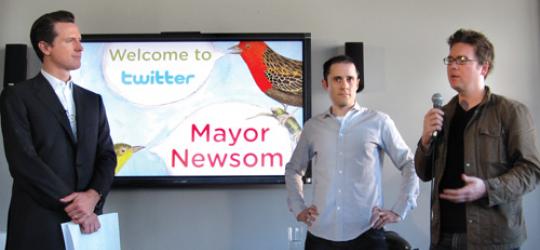



SFBG Radio: Why privatization doesn’t work

1

Today, Johnny A. and Johnny V. talk about why privatization and outsourcing don’t work for local government. Tune in and check it out after the jump.

OutsourcingBlows by endorsements2010

Covering the royal wedding

5

The New York Times has a revealing article about how US networks have been adding Britons to their coverage of the royal wedding this coming weekend.

“As long as you have an English accent, you’ll work,” joked Rob Silverstein, executive producer of “Access Hollywood,” which is moving to London for a week.

Actually, if Silverstein really wanted to impress, he should have said, “As long as one has an English accent.”

But then who in the US gives a flying fig about the royal wedding?

Apparently, a disturbing number of people who otherwise like to brag about how the US gave the Brits a royal boot up the ass around the Boston Tea Party.

Now, I get the fascination in the U.K. itself,  where the royal family is the Brits’ version of Hollywood. Just without the sunny locations and with the good looks supplied by aristocratic outsiders, like Diana, or non-royals, like Kate, who the royals, I kid you not, call “commoners.”

But as a commoner who left rain-soaked Britain shortly before Charles and Diana tied their ill-fated knot, I’m relieved to be escaping royal wedding fever for the second time in my life.

And while I do so hope the latest royal pair have a happier and more honest relationship than Charles and Di, I don’t plan to spend time cooing over the details of their carriages and tiaras. In fact, the latest episode in the never-ending royal saga reminds me that Queen Elizabeth only agreed to pay income taxes, give up the royal yacht, and limit the number of royals receiving government money in my own lifetime…

Besides, isn’t covering politics in California, where folks seem to like to elect celebrities as their governors and mayors, enough royal-watching for anyone?

Photo: 1,000 bottles of Royal Virility beer — containing herbal viagra, chocolate, goat weed and “a healthy dose of sarcasm” — is now available at www.brewdog.com

Busy week for immigration reform advocates

12

On Tuesday, April 26, the California Assembly’s Public Safety Committee holds a hearing on AB 1081, Assemblymember Tom Ammiano’s Transparency and Responsibility Using State Tools (TRUST) Act. The TRUST Act seeks to allow local governments to opt out of US Immigration and Customs Enforcement (ICE’s) controversial “Secure Communities” program and to set standards for jurisdictions that chose to participate in S-Comm.

Also on Tuesday, Congressmember Luis Gutierrez kicks off his “Change Takes Courage” immigrant rights tour in seven California cities. Gutierrez lands in San Francisco Wednesday, April 27, and the Bay Area immigrant community and LGBT leaders will host him on the steps of City Hall, as Gutierrez asks President Obama to stop the record number of deportations of immigrant families and students that have already occurred under the Obama administration.

Joining Ammiano in Sacramento on Tuesday as co-sponsors of the TRUST Act are Assemblymembers Gil Cedillo (D-LA) and Bill Monning (D- Carmel) and Sen. Leland Yee (D-SF). Endorsers include 80 organizations, local governments and elected officials, including the Santa Clara and Santa Cruz County Boards, San Francisco Sheriff Michael Hennessey and retired Sacramento Police Chief Arturo Venegas, and civil rights and faith groups, including the California Partnership to End Domestic Violence, the California Labor Federation, the San Bernardino Catholic Diocese and Equality California.

SF Sheriff Michael Hennessey blew the whistle on S-Comm last May, but was unable to stop the feds from activating the program in San Francisco last June. And the most recent batch of S-Comm statistics show that San Francisco, once famed as a sanctuary city, now ranks in the top 38 counties nationwide that deport “non-criminal aliens,” which is ICE-speak for immigrants whose primary misstep is that they are in the country without the requisite paperwork.

Ammiano’s Trust Act hearing comes just days after Congressmember Zoe Lofgren (D- San Jose) called for an investigation into the conduct of ICE officials around advising local municipalities whether they are required to participate in ICE’s S-Comm program.

“You can’t have a government department essentially lying to local government and to members of Congress. This is not OK,” Lofgren said April 22, following the disclosure of hundreds of ICE documents that allegedly show that the agency has been giving intentionally contradictory and misleading information about S-Comm to local officials.

“From then-Attorney General Brown on down, it’s painfully clear ICE deceived Californians about S-Comm,” said Angela Chan, a staff attorney with the Asian Law Caucus. “That’s unacceptable behavior for a government agency in a democracy.”

Advocates hope that Ammiano’s TRUST Act will restore balance and accountability to the nation’s otherwise broken immigration system. They charge that S-Comm’s misleading focus, over-broad reach and lack of transparency have eroded trust between police and immigrant communities, making victims and witnesses to crimes reluctant to come forward.

The TRUST Act would make S-Comm an “opt-in” program so local governments can tailor their participation based on local needs.

The bill would also set safeguards for municipalities that do elect to participate in S-Comm to guard against racial profiling and would ensure that children and domestic violence survivors are not swept up by S-Comm.

The TRUST act also upholds the right to a day in court by only reporting for deportation individuals convicted – not merely accused – of crimes.

Tuesday’s hearing will be followed by Congressman Luis Gutierrez’s Wednesday appearance in San Francisco, which the African Advocacy Network, Asian Law Caucus, Central American Resource Center, Chinese for Affirmative Action, People Organized to Demand Environmental and Economic Rights, Out4Immigration, San Francisco Interfaith Coalition on Immigration, and Dolores Street Community Services sponsored.

Sups David Campos, John Avalos, and David Chiu will join Gutierrez and their message to President Obama is laid out in the following press statement:

“We need administrative relief to uphold the values of opportunity, justice, and human rights for all to move our country forward. With the stroke of a pen, President Obama could put a halt to the rapidly increasing deportations that are taking place. We need to stop deporting parents and ripping apart all families, including same-sex partners. We need to stop deporting students who would have been eligible for the DREAM ACT. Last year, the U.S. deported an estimated 400,000 immigrants, the highest number of deportations per year in the history of our nation. We must allow our counties to opt out of  “S-Comm” (Secure Communities), which is making our communities less secure, and we support Congressman Gutierrez in these courageous requests. Immigrants are part of the fabric of our communities, and we need to fix our immigration system so everyone who lives here can continue to live as a full member of society without constant fear of safety, security, and livelihood being jeopardized at any moment.”


Let cities raise taxes

44

There’s a move in the California legislature to allow local government much broader authority to raise taxes — and the GOP types have their panties in a major bunch.


Dan Morain at the Sacramento Bee says it’s all a tactical move: The Republicans won’t allow any tax hikes at the state level, but the Democrats, by simple majority vote, can authorize cities and counties to do all kinds of things that the no-tax crowd hates. Maybe, Morain suggests, this is just a way to bring the recalcitrant Reps back to the budget table. But I don’t know about that: Senate President Darrel Steinberg may be playing games, but his legislative partner, Budget Chair Mark Leno, has been pushing for years to allow cities to raise their own vehicle license fees.


Leno’s brought that bill back this year, and it’s going to commitee next week. And I have to say, tactical or not, the Steinberg bill (PDF) is one of the best things I’ve seen out of Sacramento in years. It would allow local government agencies to impose an income tax, a car tax, an oil severance tax, and a series of excise taxes. It could make the budget deficit in San Francisco vanish.


I agree with Brian at Calitics: There are problems here.


What we’ll end up with is Bay Area counties with more stable revenue streams, while the Central Valley faces ever deepening cuts.  The inequality would be both troubling, and possibly violate some laws.   


And if the state Legislature weren’t paralyzed by a ridiculous two-thrids rule and a handful of die-hard no-tax Republicans, we might not need to go in this direction. But even so, it’s fair to ask: Why can’t the San Francisco voters decide they’d rather pay higher taxes than see the schools collapse?


It’s the same reason I’ve argued in favor of splitting California into three states. Those of us who live in the Bay Area have a very different vision of government than those who live in the no-tax districts. Why should they be able to hold us hostage?


Yes, there will be inequities. But there are only a few parts of the state that so utterly lack economic activity and wealth that there simply is nothing to tax (and the state would have to help them out). Much of Ag Land (and much of no-tax burbland) has plenty of wealthy people and businesses. The poverty is as much a result of inequality as it is a bum economy. In other words: those places can raise taxes, too.


And maybe over time the people in those crumbling tax-free towns will look over at San Francisco, with good schools, healthy, well-educated kids, clean, well-maintained streets, professional fire and police services and the like and say: Why can’t we have that?


And the answer will be: You can.

What to watch

0

THURS/21

Beginners (Mike Mills, U.S., 2010) There is nothing conventional about Beginners, a film that starts off with the funeral arrangements for one of its central characters. That man is Hal (Christopher Plummer), who came out to his son Oliver (Ewan McGregor) at the ripe age of 75. Through flashbacks, we see the relationship play out — Oliver’s inability to commit tempered by his father’s tremendous late-stage passion for life. Hal himself is a rare character: an elderly gay man, secure in his sexuality and, by his own admission, horny. He even has a much younger boyfriend, played by the handsome Goran Visnjic. While the father-son bond is the heart of Beginners, we also see the charming development of a relationship between Oliver and French actor Anna (Melanie Laurent). It all comes together beautifully in a film that is bittersweet but ultimately satisfying. Beginners deserves praise not only for telling a story too often left untold, but for doing so with grace and a refreshing sense of whimsy. Thurs/21, 7 p.m., Castro. (Louis Peitzman)


FRI/22

The Good Life (Eva Mulvad, Denmark, 2010) Portraits of the formerly wealthy are often guilty of peddling secondhand nostalgia for some ancien regime while simultaneously stoking schadenfreude toward the now-deposed (just ask Vanity Fair). Eva Mulvad’s melancholy character study of 50-something Annemette Beckmann and her aged mother, Mette, avoids both traps even as her subjects — formerly wealthy Danish expats living on the dole in a cramped apartment in a coastal Portuguese town — offer few inroads for sympathy. Narcissistic and petulant, Annemette blames the loss of her family’s wealth on the 1974 nationalization of Portugal’s then-Communist government, and claims that her cosseted upbringing has made it hard to find a job (“Work doesn’t become me,” she gratingly protests at one point). Mette, who is more likeable, is a resigned realist whose sole comfort, aside from the pet dog, seems to be her knowledge that she is not long for this world. Comparisons to Grey Gardens (1975) are inevitable here, but the Beckmanns simply aren’t as interesting or possessed by as idiosyncratic a joie de vivre as the Beales, making The Good Life a tough slog. Fri/22, 3:45 p.m.; April 28, 6:45 p.m.; and May 1, 9:30 p.m., Kabuki. (Matt Sussman)

Hahaha (Hong Sang-soo, South Korea, 2010) Do you remember a time you behaved badly (not horribly, but bad enough that you felt ashamed) but you didn’t really think about it until long after the fact, say, when getting drinks with an old friend? If you can’t, than the latest from South Korean director Hong Sang-soo will probably jog your memory. As with many of Hong’s films, Hahaha’s premise is similar to the above scenario: two 30-something buds get together and reminisce about their recent trips to the same seaside town. Shown in episodic flashbacks, we start to realize that the incidents and players in their separate accounts overlap into one story filled with terrible poetry, domineering mothers, stalker-ish behavior, and poorly made choices. Hong’s films are primers in how not to treat your fellow human beings (straight dudes are usually the culprits), so take notes. Fri/22, 9:15 p.m.; Mon/25, 9 p.m.; and Tues/26, 3:30 p.m., Kabuki. (Sussman)

I’m Glad My Mother is Alive (Claude Miller and Nathan Miller, France, 2009) Codirected with his son Nathan, this latest by veteran French director Claude Miller is an about-face from his acclaimed 2007 period epic A Secret. Viscerally up-to-the-moment in content and handheld-camera style, it’s a small story that builds toward an enormous punch. Thomas (played by Maxime Renard as a child, then Vincent Rottiers) is a lifelong malcontent whose troubles are rooted in his abandonment at age five by an irresponsible mother (Sophie Cattani). Neither the attentions of well-meaning adoptive parents or the influence of his better-adjusted younger brother can quell Thomas’ mix of furious resentment and curiosity toward his mere, whom he finally develops a relationship with as a young adult. As usual, Miller doesn’t “explain” his characters or let them explain themselves, yet everything feels emotionally true — right up to a narrative destination both that feels both shocking and inevitable. Fri/22, 6:45 p.m., and Mon/25, 9:30 p.m., Kabuki. (Dennis Harvey)

Meek’s Cutoff (Kelly Reichardt, U.S., 2010) After three broke down road movies (1994’s River of Grass, 2006’s Old Joy, 2008’s Wendy and Lucy), Kelly Reichardt’s new frontier story tilts decisively toward socially-minded existentialism. It’s 1845 on the choked plains of Oregon, miles from the fertile valley where a wagon train of three families is headed. They’ve hired the rogue guide Meek to show them the way, but he’s got them lost and low on water. When the group captures a Cayeuse Indian, Solomon proposes they keep him on as a compass; Meek thinks it better to hang him and be done with it. The periodic shots of the men deliberating are filmed from a distance — the earshot range of the three women (Michelle Williams, Zoe Kazan, and Shirley Henderson) who set up camp each night. It’s through subtle moves like these that Meek’s Cutoff gives a vivid taste of being subject to fate and, worse still, the likes of Meek. Reichardt winnows away the close-ups, small talk, and music that provided the simple gifts of her earlier work, and the overall effect is suitably austere. Fri/22, 9 p.m., and Mon/25, 4:30 p.m., Kabuki. (Max Goldberg)

Stake Land (Jim Mickle, U.S., 2010) Not gonna lie — the reason I wanted to review this one was because of the film still in the SFIFF catalog. Rotten-faced vampire with a stake through its neck? Yes, please! But while Jim Mickle’s apocalyptic road movie does offer plenty of gore, it’s more introspective than one might expect, following an orphaned teenage boy, Martin (Connor Paolo, Serena’s little bro on Gossip Girl), and his gruff mentor, Mister (Snake Plissken-ish Nick Damici), on their travels through a ravaged America. As books, films, and comics have taught us, whenever a big chunk of the human race is wiped out (thanks to zombies, vampires, an unknown cataclysm, etc.), the remaining population will either be good (heroic, like Mister and Martin, or helpless, like the stragglers they rescue, including a nun played by Kelly McGillis), or evil — cannibals, rapists, religious nuts, militant survivalists, etc. Stake Land doesn’t throw many curveballs into its end-times narrative, but it’s beautifully shot and doesn’t hold back on the brutality. Larry Fessenden (director of 2006’s The Last Winter) produced and has a brief cameo as a helpful bartender. Fri/22, 11:30 p.m., and Mon/25, 9:45 p.m., Kabuki. (Cheryl Eddy)


SAT/23

The Autobiography of Nicolae Ceausescu (Andrei Ujica, Romania, 2010) Andrei Ujica’s three-hour documentary uses decades of propagandic footage to let the late Romanian dictator — who was overthrown by popular revolt and executed in 1989 — hang himself with his own grandiose image-making. While the populace suffered (off-screen, you might want to bone up on the facts before seeing this ironical, commentary-free portrait), the “great leader” and his wife Elena were constantly seen holding state dances, playing volleyball, hunting bear, and vacationing hither and yon. (We even see them on the Universal Studios tour.) There’s no surprise in seeing them greeted with enormous pageantry in China; but it’s a little shocking to see this tyrant welcome Nixon (in the first-ever U.S. presidential visit to a Communist nation), lauded by Jimmy Cartner, and hobnobbing with Queen Elizabeth. This grotesque parade of self-glorifying public moments has a happy ending, however. Sat/23, 12:45 p.m., Kabuki; Sun/24, 5:15 p.m., New People; May 1, 1:30 p.m., PFA. (Harvey)

Life, Above All (Oliver Schmitz, South Africa/Germany, 2010) It’s tough enough to simply grow up, let alone care for a parent with AIDS and deal with the suspicions and fears of the no-nothing adults all around you. Rising above easy preaching and hand-wringing didacticism, Life, Above All takes as its blueprint the 2004 best-seller by Allan Stratton, Chandra’s Secrets, and makes compelling work of the story of 12-year-old Chandra (Khomotso Manyaka) and her unfortunate family, unable to get effective help amid the thicket of ignorance regarding AIDS in Africa. After her newborn sister dies, Chandra finds her loyalty torn between her bright-eyed best friend Esther (Keaobaka Makanyane), who’s rumored to hooking among the truck drivers in their dusty, sun-scorched rural South African hometown, and her mother (Lerato Mvelase), who listens far too closely to her bourgie friend Mrs. Tafa (an OTT Harriet Manamela), for her own good. Cape Town native director Oliver Schmitz sticks close to the action playing across his actors’ faces, and he’s rewarded, particularly by the graceful Manyaka, in this life-affirmer about little girls forced to shoulder heart-breaking responsibility far too soon. Sat/23, 4 p.m., and April 28, 6 p.m., Kabuki. (Kimberly Chun)

The Mill and the Cross (Lech Majewski, Poland/Sweden, 2010) One of the clichés often told about art is that it is supposed to speak to us. Polish director Lech Majewski’s gorgeous experiment in bringing Flemish Renaissance painter Peter Bruegel’s sprawling 1564 canvas The Procession to Calvary to life attempts to do just that. Majeswki both re-stages Bruegel’s painting — which draws parallels between its depiction of Christ en route to his crucifixion and the persecution of Flemish citizens by the Spanish inquisition’s militia — in stunning tableaux vivant that combine bluescreen technology and stage backdrops, and gives back stories to a dozen or so of its 500 figures. Periodically, Bruegel himself (Rutger Hauer) addresses the camera mid-sketch to dolefully explain the allegorical nature of his work, but these pedantic asides speak less forcefully than Majeswki’s beautifully lighted vignettes of the small joys and many hardships that comprised everyday life in the 16th century. Beguiling yet wholly absorbing, this portrait of a portrait is like nothing else at the festival. Sat/23, 12:30 p.m., SFMOMA, and April 27, 9 p.m., Kabuki. (Sussman)

Mind the Gap Experimental film fans: come for the big names, but don’t miss out on the newcomers. Locals Jay Rosenblatt (melancholy found-footage bio The D Train), Kerry Laitala (psychedelic 3-D brain-dazzler Chromatastic), and Skye Thorstenson (mannequin-horror music video freak out Tourist Trap, featuring the acting and singing stylings of the Guardian’s Johnny Ray Huston) offer strong entries in an overall excellent program. International bigwigs Peter Tscherkassky (the 25-minute Coming Attractions, a layered study of airplanes, Hollywood, and Hollywood airplanes — not for the crash-phobic) and Jonathan Caouette (“Lynchian” has been used to describe the Chloë Sevigny-starring All Flowers In Time, though it contains a scary-faces contest that’d spook even Frank Booth) are also notable. New names for me were Zachary Drucker, whose Lost Lake introduces a transsexual, pervert-huntin’ vigilante for the ages, and my top pick: Kelly Sears’ Once it started it could not end otherwise, a deliciously sinister hidden-history lesson imagined via 1970s high-school yearbooks. Sat/23, 4:45 p.m., and May 1, 9:45 p.m., Kabuki. (Eddy)

The Troll Hunter (André Ovredal, Norway, 2010) Yes, The Troll Hunter riffs off The Blair Witch Project (1999) with both whimsy and, um, rabidity. Yes, you may gawk at its humongoid, anatomically correct, three-headed trolls, never to be mistaken for grotesquely cute rubber dolls, Orcs, or garden gnomes again. Yes, you may not believe, but you will find this lampoon of reality TV-style journalism, and an affectionate jab at Norway’s favorite mythical creature, very entertaining. Told that a series of strange attacks could be chalked up to marauding bears, three college students (Glenn Erland Tosterud, Tomas Alf Larsen, and Johanna Morck) strap on their gumshoes and choose instead to pursue a mysterious poacher Hans (Otto Jespersen) who repeatedly rebuffs their interview attempts. Little did the young folk realize that their late-night excursions following the hunter into the woods would lead at least one of them to rue his or her christening day. Ornamenting his yarn with beauty shots of majestic mountains, fjords, and waterfalls, Norwegian director-writer André Ovredal takes the viewer beyond horror-fantasy — handheld camera at the ready — and into a semi-goofy wilderness of dark comedy, populated by rock-eating, fart-blowing trolls and overshadowed by a Scandinavian government cover-up sorta-worthy of The Girl with the Dragon Tattoo (2009). Sat/23, 11:30 p.m., Kabuki; Mon/25, 6:15 p.m., New People. (Chun)

World on a Wire (Rainer Werner Fassbinder, Germany, 1973) The words “Rainer Werner Fassbinder” and “science fiction film” are enough to get certain film buffs salivating, but the Euro-trashy interior décor is almost reason enough to see this restored print of the New German Cinema master’s cyber thriller. Originally a two-part TV miniseries, World on a Wire is set in an alternate present (then 1973) in which everything seems to be made of concrete, mirror, Lucite, or orange plastic. When the inventor of a supercomputer responsible for generating an artificial world mysteriously disappears, his handsome predecessor must fight against his corporate bosses to find out what really happened, and in the process, stumbles upon a far more shattering secret about the nature of reality itself. Riffing off the understated cool of Godard’s Alphaville (1965) while beating 1999’s The Matrix to the punch by some 25 years, World on a Wire is a stylistically singular entry in Fassbinder’s prolific filmography. Sat/23, 8:45 p.m., Kabuki, and April 30, 2 p.m., PFA. (Sussman) SUN/24

A Cat in Paris (Alain Gagnol and Jean-Loup Felicioli, France/Belgium/Netherlands/Switzerland, 2010) Save your pocket poodles, please: Paris, as cities go, is most decidedly feline. From 1917’s silent serial Les Vampires to its uber-cool 1990s update Irma Vep, cat burglars and the Parisian skyline have gone together like café and au lait. Add actual cats and jazz to the mix for good measure (even Disney saw fit to set its jazzy 1970 Aristocats in the City of Light). At just over an hour long, the animated A Cat in Paris is an enjoyable little amuse-bouche that employs all the standards of the cats-in-Paris meme: Billie Holiday warbling on the soundtrack, a dashingly heroic antihero who scales the rooftops as if he studied parkour under Spider-Man, and the titular untamable black cat who serves as his partner in crime. Complete with a climatic Hitchcockian set piece on the rooftops of Notre Dame Cathedral, A Cat in Paris has a refreshingly angular and graphic, almost cubist, feel. Directors Alain Gagnol and Jean-Loup Felicioli’s work certainly doesn’t rank among that of countryman Sylvain Chomet (2010’s The Illusionist), but this family film is worth checking out if kitties up to no good in Purr-ree simply make you want to le squee. Sun/24, 12:30 p.m., Kabuki, and May 1, 12:30 p.m., New People. (Michelle Devereaux)


MON/25

Cave of Forgotten Dreams (Werner Herzog, U.S., 2010) The latest documentary from Werner Herzog once again goes where no filmmaker — or many human beings, for that matter — has gone before: the Chauvet-Pont-d’Arc Cave, a heavily-guarded cavern in Southern France containing the oldest prehistoric artwork on record. Access is highly restricted, but Herzog’s 3D study is surely the next best thing to an in-person visit. The eerie beauty of the works leads to a typically Herzog-ian quest to learn more about the primitive culture that produced the paintings; as usual, Herzog’s experts have their own quirks (like a circus performer-turned-scientist), and the director’s own wry narration is peppered with random pop culture references and existential ponderings. It’s all interwoven with footage of crude yet beautiful renderings of horses and rhinos, calcified cave-bear skulls, and other time-capsule peeks at life tens of thousands of years ago. The end result is awe-inspiring. Mon/25, 7 p.m., and Tues/26, 9:30 p.m., Kabuki. (Eddy)


TUES/26

Nostalgia for the Light (Patricio Guzmán, France/Chile/Germany, 2010) Chile’s Atacama Desert, the setting for Patricio Guzmán’s lyrically haunting and meditative documentary, is supposedly the driest place on earth. As a result, it’s also the most ideal place to study the stars. Here, in this most Mars-like of earthly landscapes, astronomers look to the heavens in an attempt to decode the origins of the universe. Guzmán superimposes images from the world’s most powerful telescopes — effluent, gaseous nebulas, clusters of constellations rendered in 3-D brilliance — over the night sky of Atacama for an even more otherworldly effect, but it’s the film’s terrestrial preoccupations that resonate most. For decades, a small, ever dwindling group of women have scoured the cracked clay of Atacama searching for loved ones who disappeared early in Augusto Pinochet’s regime. They take their tiny, toy-like spades and sift through the dirt, finding a partial jawbone here, an entire mummified corpse there. Guzmán’s attempt through voice-over to make these “architects of memory,” both astronomers and excavators alike, a metaphor for Chile’s reluctance to deal with its past atrocities is only marginally successful. Here, it’s the images that do all the talking — if “memory has a gravitational force,” their emotional weight is as inescapable as a black hole. Tues/26, 6:30 p.m., Kabuki, and April 28, 6:15 p.m., PFA. (Devereaux)

The Sleeping Beauty (Catherine Breillat, France, 2010) Fairytales are endemically Freudian; perhaps it has something to with their use of subconscious fantasy to mourn — and breathlessly anticipate — the looming loss of childhood. French provocateuse Catherine Breillat’s feminist re-imagining of The Sleeping Beauty carries her hyper-sexualized signature, but now she also has free reign to throw in bizarre and beastly metaphors for feminine and masculine desire in the form of boil-covered, dungeon-dwelling ogres, albino teenage princes, and icy-beautiful snow queens. The story follows Anastasia, a poor little aristocrat, who longs to be a boy (she calls herself “Sir Vladimir”). When her hand is pricked with a yew spindle (more of a phallic impalement, really), Anastasia falls into a 100-year adventurous slumber, eventually awakening as a sexually ripe 16-year-old. It all plays like an anchorless, Brothers Grimm version of Sally Potter’s 1992 Orlando. And while it’s definitely not for the kiddies, it’s hard to believe that many adults would find its overt symbolism and plodding narrative any more than a sporadically entertaining exercise in preciousness. Your own dreams will undoubtedly be more interesting — perhaps you can catch a few zzz’s in a theater screening this movie. Tues/26, 6:15 p.m., and April 27, 6:30 p.m., Kabuki. (Devereaux)

THE 54TH ANNUAL SAN FRANCISCO INTERNATIONAL FILM FESTIVAL runs April 21–May 5. Venues are the Sundance Kabuki, 1881 Post, SF; Castro, 429 Castro, SF; New People, 1746 Post, SF; San Francisco Museum of Modern Art, 151 Third, SF; and Pacific Film Archive, 2575 Bancroft, SF. For tickets (most shows $13) and complete schedule visit www.sffs.org>.

Wicked, man

7

marke@sfbg.com

RAVE CULTURE Here’s a classic San Francisco rave story for you. First the official legend: “In the spring of 1991, a small, brave crew of acid house seekers set sail from southeast England in search of adventure. San Francisco was the destination. They made their mark under the Golden Gate Bridge at Baker Beach with the first in a six-year run of wild and lawless Full Moon parties.” And now the party reality: the crew set up during heavy fog after touching down from Britain — and at least two of Wicked’s four members, Garth and Jenö, had absolutely no freaking clue that they were beneath the Golden Gate Bridge.

“We Brits were virgins to that beach,” Garth told me. “We were all enjoying a psychedelic dance when the sun started to come up, and the fog peeled back to reveal the bridge above our heads, lit up like a spaceship! We were hooked from that moment on. The decks were set up on a blanket on the sand. No table. Walkman speakers made makeshift monitors. One well-prepared gay friend improvised a cardboard dancefloor for himself and went about his vogueing like he was back at the Endup or Paradise Garage.”

The Wicked Brit saucer, launched from the illustrious Tonka Sound System renegade rave base, touched down on our shores at a moment when the Bay Area psychedelic sound and spirit was flagging. The West Coast underground party scene was being commercialized into the kind of slick, infantile, overproduced spectacles that unfortunately came to define rave in many ’90s people’s minds. And the music was veering from true basement soul to Big Bird carnival woo-woo — not that there was anything too awful about that, at the time it was fresh. But a pagan squadron of prog-rocky, deep acid house and baggy beats lovers setting up on a beach was a blast of fresh air.

Update on the Wicked crew: Almost all have benefited from our wonderful current dance music moment that values historical broad-mindedness over genre lockstep. (Really, the era-roving Wicked DJs have never sounded better than right now). Garth now lives in Los Angeles and has been releasing a steady stream of re-edits and remixes on his two labels, and through his King & Hound project with beloved local disco archivist James Glass. Former punk protestor and anarchist bookstore haunter Jenö plays live acid house every first Saturday at 222 Hyde, broadcasts the weekly “Noise from the Void” radio show (Tuesdays at 9 p.m. at www.90hz.org), and is codirecting a documentary on the social implications of San Francisco’s early rave scene, due out this summer. Thomas is in New York City as one-half of the awesome Rub N Tug production team and owns Whatever We Want Records. And Markie? The dude is and always will be Markie, party legend.

On the eve of the full moon Wicked: 20 Years of Disco Glory reunion party (the name is a cheeky play on one of Garth’s already cheeky dance floor hits), I talked to Garth, Jenö, and Thomas over e-mail.

SFBG It seems like a boatload of Brits emigrated here in the ’90s and had a huge impact on the party scene — in fact, they’re still coming. Is there something special about San Francisco that draws you guys? 

Garth I think a lot of Brits followed us here after they heard what was going on in the Bay Area, the freedom. The U.K. party scene was outlawed by Thatcher’s conservative government when it passed the criminal justice bill, which made it illegal for groups of more than 10 people to congregate while listening to repetitive beats. So there was a kind of party exodus: trance heads went to India (specifically Goa), other Brits went to Thailand, Australia, and Spain in search of a more fun life. San Francisco is particularly appealing to Brits because the climate suits us. It’s never too hot or too cold, and there’s a good dose of fog. It’s very liberal, the architecture is Victorian, it’s by the ocean with hills and those trams — plus great food and a strong, self-sustaining music scene.

Thomas It’s poetic, cosmopolitan, and charming without being European: we like that.

SFBG You definitely did bring a pagan spirit with you — not just with the full moon and witchy Wicked angles, but also in the sense of reinfusing the local music scene with a particularly enchanting Northern California-British psychedelic rock sensibility. Is that spirit still alive? After seeing how the West Coast techno scene has progressed in the past 20 years, do you have any thoughts or gripes? 

Garth Life’s too short for gripes. And I don’t consider it a “West Coast techno scene,” really. It’s all just music. We’ve always played the best in disco, acid house, psych rock, and all points in between. It’s the tempo that keeps things moving, and move it always will.

Jenö I wouldn’t consider Wicked as even being a part of the techno scene. Our music was a lot broader than that, dominated more by psychedelic house and soulful disco grooves. But we definitely influenced the West Coast music scene, and that influence can still felt today in the style and sounds of the current crop of local DJ crews, from the Sunset parties to the hipster clubs currently delving into obscure house and disco-driven sounds.

Thomas I’ll tell you this: I live in New York, and there’s too much disco.

SFBG Any good stories from the early days of Burning Man? 

Garth We were the first and only sound system there in 1995, and of the 5,000 or so people out on the playa, we had a few thousand of them all grooving out under the open skies: no marquees, no lightshow, just a kick ass 15K Turbosound system, right out of the box. During the height of my five-hour set on Saturday night, one naked freak (they never seem to be clothed) ran up and flipped the tables on top of me. There was thunder and lightning and a mad electrical hum until we got the gear up and running again. The crowd went apeshit — it’s still the highlight of my DJ career!

Jenö I didn’t make it the Wicked BM camps back then. But I did attend the last-ever Stonehenge Free Festival in the U.K. during summer solstice in 1984, which was the epiphany that drove me to want to create my own anarchic and free-spirited musical gatherings. Very similar to BM in style and substance — art and music-driven with countercultural ideals, but without the dust and ridiculously expensive admission of Black Rock City.

Thomas I didn’t go because I didn’t think I’d get served a proper cocktail. A foolish mistake on many levels.

SFBG Top five quintessential Wicked records?

Wicked DJ Garth & Eti, “20 Minutes of Disco Glory” — all the boys did excellent remixes of this seminal West Coast classic.

!!!, “Hello Is This Thing On? (Rub N Tug Remix)” — this incredible remix really sums up the Wicked sound, and they recorded it on a full moon!

Colm III, “High as a Mountain” — the title of this 1988 release says it all. Jenö brought it with him from England and played it at the first SF Full Moon party.

Marshall Jefferson, “Open Your Eyes” — deep vibes from the master of early Chicago house. More than just good music, it’s a spiritual journey.

The Man Collective, “No Hassle From the Man” — anthem. It’s rock and rave and soul and psych and passion. That’s maybe what we’re all about. 

WICKED: 20 YEARS OF DISCO GLORY

Sat/23, 10 p.m.–7 a.m., $20 advance

Mighty

119 Utah, SF

www.mighty119.com

Facebook: Wicked Disco Glory


Kill your TV

0

le.chicken.farmer@gmail.com

Dear Cheap Eats Lady,

Where did you go? New Orleans? That is great.

It is the news. It is the unkind heart of government, our American government, that makes me want to stop what I’m doing, which is watching television, and go to sleep. This is easy, because I am lying on the couch anyway. All it requires is a rollover and the determination to jettison my responsibilities for the day. Students be damned, the government got me so down, I could not grade your papers.

The thing that’s great about me is that, I do roll over and go to bed for the day. It is a habit I’ve had all my life. I didn’t get to use it so much when I worked full time in an office. But those days were, in the scope of all the jobs I’ve had, short-lived.

There was a time, during the Bush eras, when I thought I would simply drop out of society. And I did. It was too much to take. I felt like democracy was over, and nobody cared. So I quit. I quit the whole thing. I am a man of accomplishment and purposefulness. Especially when it comes to not doing anything. The complete quitting. Oh, how I excel.

This has been kind of going on for a few weeks. My job doesn’t seem to notice. But I know I can’t go on like this and maintain any sort of a paycheck. Eventually the work will pile up so much that I will not be able to get it done anymore. I feel like the mailfolks who stash all the mail they don’t feel like delivering in their houses.

I have a tiny bedroom filled knee-deep with research papers about gun control, abortion, global warming, and how cell phones are very convenient. You would think that someone would be interested.

Yers,

Earl

Dear Earl Butter,

Goddamn it, man, deliver that mail! Seriously, you don’t have to worry about the government. David Byrne and I have that taken care of. What you do need to do is put every one of those student papers in its own private individual envelope, address them to as many different mail carriers as you can think of, and: stamp, boom, gone!

The USPS is in fact an evil institution, point taken. But I don’t know why you are letting the TV news roll you over. This is Cheap Eats! Switch to sports. I mean, not that it’s any less depressing than what may or may not be happening in the world of … the world, for all I know. On my way to the basketball game last night, for example, I learned that there might not be a pro football season next season. But wait, shouldn’t you be downstairs playing with my cat?

Yes, New Orleans. Where else is there? The first thing I ate this time was crawfish pieroghi. And it’s so hot here now that Hedgehog and I almost have no choice but to lick Hansen’s satsuma-flavored snow-blizzes off of each other.

Technically, hers may have been coconut-flavored, unless that’s my sunscreen I smell, typing this.

Other than that, it’s pretty kinda weird, living with someone you don’t live with in a town where you don’t live. I mean, in the morning she goes off to make TV (of a very different nature than the kind rolls you over), and I go off to change diapers, and then after work we go eat crawfish pieroghis just like any other northeast Ohio/central Pennsylvania bred couple in New Orleans.

Except some nights last week there was the French Canadian Quarter Festival, where we were not only rocked by brass bands and zydeco, but by Crabby Jack’s boudin sausages, which changed my life, and then Love at First Bite’s cochon du lait po’boys, which changed my life.

And then, as if my life weren’t different enough already, on the weekend we went to the mall. We went to Metarie. That’s like going to San Mateo. Except after we stopped for refreshment at Acme Oyster House, which changed my life.

Earl, I’ll be back next week. Our beloved Bay Area is not exactly unknown for its oysters, either. If you can find me a place that has char-grilled ones as good as this, or even half as good, if not better, then I will take you there.

And grade your papers.

And kill your television.

No you worry,

Your L.E.


SFBG Radio: US bond ratings and federalism

11

What does it mean that the bond rating agencies are considering downgrading U.S. government debt? Is another financial crisis on the way — and is there a progressive vision of returning some federal powers to the states? Johnny Angel and Johnny Venom discuss after the break.

sfbgradio4192011 by endorsements2010

Unions didn’t cause the financial crisis

35

It’s been said before and will be said again, but still worth noting: The bipartisan U.S. Senate report on the financial meltdown concludes that, as Calitics notes:


Our financial crisis and resulting recession occurred as a result of risky, unethical and likely criminal behavior by reckless Wall Street institutions and the regulators that failed to stop them.  


In other words, the worst of the recession — and the plummeting economy, and sharp loss of revenue to states, cities and counties, which precipitated several rounds of bloody budget cuts — wasn’t caused by labor contracts, or pensions, or local government waste and bloat.


I’m not saying that pension reform shouldn’t be part of the solution, but let’s all keep this in mind. I don’t see anywhere near the same push for financial-sector reform and givebacks as there is for union givebacks. And they ought to be at least in the same discussion.

Dick Meister: Rebuilding the American Middle Class

0

Dick Meister, formerly labor editor of the SF Chronicle and KQED-TV Newsroom, has covered labor, politics and other matters for a half-century.

Of all the many comments, pro and con, that have been made about the widespread attempts to weaken American unions, none have been clearer or more on the mark than the words of President Bob King of the United Auto Workers Union.

King, of course, is on the union side of the argument. But as King made very clear, that’s the side to be on if you believe working people should have full collective bargaining rights and the decent wages, hours and working conditions that result from fair bargaining.

King’s comments came in an exceptional column in the latest issue of Solidarity, the UAW’s official magazine.  The column is titled, simply, “Do Justice.”

To Bob King, “doing justice does not mean trying to reduce the wages, benefits and standard of living of all workers in America,” as far too many Republican politicians at all levels of government are trying to accomplish, with their main target – for now  – public employees.

“Doing justice to me,” said King, “means that everyone has an equal opportunity, and if they make the individual decision to work hard and live by the rules, then they will be able to live a middle-class standard of living and retire with dignity and maintain their middle-class standard of living.”

I know, and you know, that can’t happen if working people are denied the essential right to unionization – the essential right to a strong bargaining voice in determining their pay and benefits through their unions. That’s obvious, for unionization is the main reason for the rise of an American middle class,  beginning with the granting of union rights to most workers by federal law in the 1930s.

But as Bob King warned, those rights and the middle class they established are under serious attack by anti-union politicians and others who “preach the vision of scarcity, the vision of division and the vision of fear.”

Ours is a country gifted with great abundance, with plenty to give each of us a fair share. But union opponents preaching “the vision of scarcity” deny that. They act as if there’s not enough in this, the world’s richest country, to give a fair share to all.

Yet there is enough to go around, as we should know, and unions are the primary vehicles for guaranteeing that working people get their fair share of our abundance.

Which is why greedy corporate interests and other anti-labor forces that want a larger share at the expense of others argue selfishly against unions and, indeed, against the very concept of collective bargaining.

Dick Meister, former labor editor of the SF Chronicle and KQED-TV Newsroom, has covered labor and politics for a half-century. Contact him through his website, www.dickmeister.com, which includes more than 250 of his columns.

The failed experiment

27

news@sfbg.com

For three decades we have conducted a massive economic experiment, testing a theory known as supply-side economics. The theory goes like this: Lower tax rates will encourage more investment, which in turn will mean more jobs and greater prosperity — so much so that tax revenues will go up, despite lower rates.

The late Milton Friedman, the libertarian economist who wanted to shut down public parks because he considered them socialism, promoted this strategy. Ronald Reagan embraced Friedman’s ideas and made them into policy when he was elected president in 1980.

For the past decade, we have doubled down on this theory of supply-side economics with the tax cuts sponsored by President George W. Bush in 2001 and 2003, which President Barack Obama has agreed to continue for two years.

You would think that whether this grand experiment worked would be settled after three decades. You would think the practitioners of the dismal science of economics would look at their demand curves and the data on incomes and taxes and pronounce a verdict, the way Galileo and Copernicus did when they showed that geocentrism was a fantasy because the Earth revolves around the sun (known as heliocentrism). But economics is not like that. It is not like physics with its laws and arithmetic with its absolute values.

Tax policy is something the framers of the Constitution left to politics. And in politics, the facts often matter less then who has the biggest bullhorn.

The Mad Men who once ran campaigns featuring doctors extolling the health benefits of smoking are now busy marketing the dogma that tax cuts mean broad prosperity, no matter what the facts show.

As millions of Americans prepare to file their annual taxes, they do so in an environment of media-perpetuated tax myths. Here are a few points about taxes and the economy that you may not know, to consider as you prepare to file your taxes. (All figures are inflation adjusted.)

1. Poor Americans do pay taxes.

Gretchen Carlson, the Fox News host, said last year “47 percent of Americans don’t pay any taxes.” John McCain and Sarah Palin both said similar things during the 2008 campaign about the bottom half of Americans.

Ari Fleischer, the former Bush White House spokesman, once said “50 percent of the country gets benefits without paying for them.”

Actually, they pay lots of taxes — just not lots of federal income taxes.

Data from the Tax Foundation shows that in 2008, the average income for the bottom half of taxpayers was $15,300.

This year the first $9,350 of income is exempt from taxes for singles and $18,700 for married couples, just slightly more than in 2008. That means millions of the poor do not make enough to owe income taxes.

But they still pay plenty of other taxes, including federal payroll taxes. Between gas taxes, sales taxes, utility taxes and other taxes, no one lives tax free in America.

When it comes to state and local taxes, the poor bear a heavier burden than the rich in every state except Vermont, the Institute on Taxation and Economic Policy calculated from official data. In Alabama, for example, the burden on the poor is more than twice that of the top 1 percent. The one-fifth of Alabama families making less than $13,000 pay almost 11 percent of their income in state and local taxes, compared with less than 4 percent for those who make $229,000 or more.

2. The wealthiest Americans don’t carry the burden.

This is one of those oft-used canards. Senator Rand Paul, the tea party favorite from Kentucky, told David Letterman recently that “the wealthy do pay most of the taxes in this country.”

The Internet is awash with statements that the top 1 percent pays, depending on the year, 38 percent or more than 40 percent of taxes.

It’s true that the top 1 percent of wage earners paid 38 percent of the federal income taxes in 2008 (the most recent year for which data is available). But people forget that the income tax is less than half of federal taxes and only one-fifth of taxes at all levels of government.

Social Security, Medicare, and unemployment insurance taxes (known as payroll taxes) are paid mostly by the bottom 90 percent of wage earners. That’s because, once you reach $106,800 of income, you pay no more for Social Security, though the much smaller Medicare tax applies to all wages. Warren Buffett pays the exact same amount of Social Security taxes as someone who earns $106,800.

3. In fact, the wealthy are paying less taxes.

The Internal Revenue Service issues an annual report on the 400 highest income-tax payers. In 1961, there were 398 taxpayers who made $1 million or more, so I compared their income tax burdens from that year to 2007.

Despite skyrocketing incomes, the federal tax burden on the richest 400 has been slashed, thanks for a variety of loopholes, allowable deductions and other tools. The actual share of their income paid in taxes, according to the IRS, is 16.6 percent. Adding payroll taxes barely nudges that number.

Compare that to the vast majority of Americans, whose share of their income going to federal taxes increased from 13.1 percent in 1961 to 22.5 percent in 2007.

(By the way, during seven of the eight Bush years, the IRS report on the top 400 taxpayers was labeled a state secret, a policy that the Obama overturned almost instantly after his inauguration.)

4. Many of the very richest pay no current income taxes at all.

John Paulson, the most successful hedge fund manager of all, bet against the mortgage market one year and then bet with Glenn Beck in the gold market the next. Paulson made himself $9 billion in fees in just two years. His current tax bill on that $9 billion? Zero.

Congress lets hedge fund managers earn all they can now and pay their taxes years from now.

In 2007, Congress debated whether hedge fund managers should pay the top tax rate that applies to wages, bonuses and other compensation for their labors, which is 35 percent. That tax rate starts at about $300,000 of taxable income; not even pocket change to Paulson, but almost 12 years of gross pay to the median-wage worker.

The Republicans and a key Democrat, Sen. Charles Schumer of New York, fought to keep the tax rate on hedge fund managers at 15 percent, arguing that the profits from hedge funds should be considered capital gains, not ordinary income, which got a lot of attention in the news.

What the news media missed is that hedge fund managers don’t even pay 15 percent. At least, not currently. So long as they leave their money, known as “carried interest,” in the hedge fund, their taxes are deferred. They only pay taxes when they cash out, which could be decades from now for younger managers. How do these hedge fund managers get money in the meantime? By borrowing against the carried interest, often at absurdly low rates — currently about 2 percent.

Lots of other people live tax-free, too. I have Donald Trump’s tax records for four years early in his career. He paid no taxes for two of those years. Big real-estate investors enjoy tax-free living under a 1993 law President Clinton signed. It lets “professional” real-estate investors use paper losses like depreciation on their buildings against any cash income, even if they end up with negative incomes like Trump.

Frank and Jamie McCourt, who own the Los Angeles Dodgers, have not paid any income taxes since at least 2004, their divorce case revealed. Yet they spent $45 million one year alone. How? They just borrowed against Dodger ticket revenue and other assets. To the IRS, they look like paupers.

In Wisconsin, Terrence Wall, who unsuccessfully sought the Republican nomination for U.S. Senate in 2010, paid no income taxes on as much as $14 million of recent income, his disclosure forms showed. Asked about his living tax-free while working people pay taxes, he had a simple response: everyone should pay less.

5. And (surprise!) since Reagan , only the wealthy have gained significant income.

The Heritage Foundation, the Cato Institute, and similar conservative marketing organizations tell us relentlessly that lower tax rates will make us all better off.

“When tax rates are reduced, the economy’s growth rate improves and living standards increase,” according to Daniel J. Mitchell, an economist at Heritage until he joined Cato. He says that supply-side economics is “the simple notion that lower tax rates will boost work, saving, investment, and entrepreneurship.”

When Reagan was elected president, the marginal tax rate for income was 70 percent. He cut it to 50 percent and then 28 percent starting in 1987. It was raised by George H.W. Bush and Clinton and then cut by George W. Bush. The top rate is now 35 percent.

Since 1980, when President Reagan won election promising prosperity through tax cuts, the average income of the vast majority — the bottom 90 percent of Americans — has increased a meager $303, or 1 percent. Put another way, for each dollar people in the vast majority made in 1980, in 2008 their income was up to $1.01.

Those at the top did better. The top 1 percent’s average income more than doubled to $1.1 million, according to an analysis of tax data by economists Thomas Piketty and Emmanuel Saez. The really rich, the top 10th of 1 percent, each enjoyed almost $4 in 2008 for each dollar in 1980.

The top 300,000 Americans now enjoy almost as much income as the bottom 150 million, the data show.

6. When it comes to corporations, the story is much the same — less taxes.

Corporate profits in 2008, the latest year for which data is available, were $1.8 billion, up almost 12 percent from $1.6 billion in 2000. Yet even though corporate tax rates have not been cut, corporate income-tax revenues fell to $230 billion from $249 billion — an 8 percent decline, thanks to a number of loopholes. The official 2010 profit numbers are not added up and released by the government, but the amount paid in corporate taxes is: in 2010 they fell further, to $191 billion — a decline of more than 23 percent compared with 2000.

7. Some corporate tax breaks destroy jobs.

Despite all the noise that America has the world’s second highest corporate tax rate, the actual taxes paid by corporations are falling because of the growing number of loopholes and companies shifting profits to tax havens like the Cayman Islands.

And right now America’s corporations are sitting on close to $2 trillion in cash that is not being used to build factories, create jobs or anything else, but act as an insurance policy for managers unwilling to take the risk of actually building the businesses they are paid so well to run. That cash hoard, by the way, works out to nearly $13,000 per taxpaying household.

A corporate tax rate that is too low actually destroys jobs. That’s because a higher tax rate encourages businesses (who don’t want to pay taxes) to keep the profits in the business and reinvest, rather than pull them out as profits and have to pay high taxes.

The 2004 American Jobs Creation Act, which passed with bipartisan support, allowed more than 800 companies to bring profits that were untaxed but overseas back to the United States. Instead of paying the usual 35 percent tax, the companies paid just 5.25 percent.

The companies said bringing the money home — “repatriating” it, they called it — would mean lots of jobs. Sen. John Ensign, the Nevada Republican, put the figure at 660,000 new jobs.

Pfizer, the drug company, was the biggest beneficiary. It brought home $37 billion, saving $11 billion in taxes. Almost immediately it started firing people. Since the law took effect, it has let 40,000 workers go. In all, it appears that at least 100,000 jobs were destroyed.

Now Congressional Republicans and some Democrats are gearing up again to pass another tax holiday, promoting a new Jobs Creation Act. It would affect 10 times as much money as the 2004 law.

8. Republicans like taxes too.

President Reagan signed into law 11 tax increases, targeted at people down the income ladder. His administration and the Washington press corps called the increases “revenue enhancers.” Among other things, Reagan hiked Social Security taxes so high that by the end of 2008, the government had collected more than $2 trillion in surplus tax.

George W. Bush signed a tax increase, too, in 2006, despite his written ironclad pledge to never raise taxes on anyone. It raised taxes on teenagers by requiring kids up to age 17, who earned money, to pay taxes at their parents’ tax rate, which would almost always be higher than the rate they would otherwise pay. It was a story that ran buried inside The New York Times one Sunday, but nowhere else.

In fact, thanks to Republicans, one in three Americans will pay higher taxes this year than they did last year.

First, some history. In 2009, President Obama pushed his own tax cut—for the working class. He persuaded Congress to enact the Making Work Pay Tax Credit. Over the two years 2009 and 2010, it saved single workers up to $800 and married heterosexual couples up to $1,600, even if only one spouse worked. The top 5 percent or so of taxpayers were denied this tax break.

The Obama administration called it “the biggest middle-class tax cut” ever. Yet last December the Republicans, poised to regain control of the House of Representatives, killed Obama’s Making Work Pay Credit while extending the Bush tax cuts for two more years — a policy Obama agreed to.

By doing so, Congressional Republican leaders increased taxes on a third of Americans, virtually all of them the working poor, this year.

As a result, of the 155 million households in the tax system, 51 million will pay an average of $129 more this year. That is $6.6 billion in higher taxes for the working poor, the nonpartisan Tax Policy Center estimated.

In addition, the Republicans changed the rate of workers’ FICA contributions, which finances half of Social Security. The result:

If you are single and make less than $20,000, or married and less than $40,000, you lose under this plan.

But the top 5 percent, people who make more than $106,800, will save $2,136 ($4,272 for two-career couples).

9. Other countries do it better.

We measure our economic progress, and our elected leaders debate tax policy, in terms of a crude measure known as gross domestic product. The way the official statistics are put together, each dollar spent buying solar energy equipment counts the same as each dollar spent investigating murders.

We do not give any measure of value to time spent rearing children or growing our own vegetables or to time off for leisure and community service.

And we do not measure the economic damage done by shocks, such as losing a job, which means not only loss of income and depletion of savings, but loss of health insurance, which a Harvard Medical School study found results in 45,000 unnecessary deaths each year

Compare this to Germany, one of many countries with a smarter tax system and smarter spending policies.

Germans work less, make more per hour and get much better parental leave than Americans, many of whom get no fringe benefits such as health care, pensions or even a retirement savings plan. By many measures the vast majority live better in Germany than in America.

To achieve this, single German workers on average pay 52 percent of their income in taxes. Americans average 30 percent, according to the Organizations for Economic Cooperation and Development.

At first blush, the German tax burden seems horrendous. But in Germany (as well as Britain, France, Scandinavia, Canada, Australia, and Japan), tax-supported institutions provide many of the things Americans pay for with after-tax dollars. Buying wholesale rather than retail saves money.

A proper comparison would take the 30 percent average tax on American workers and add their out-of-pocket spending on health care, college tuition, and fees for services and compare that with taxes that the average German pays. Add it all up and the combination of tax and personal spending is roughly equal in both countries, but with a large risk of catastrophic loss in America, and a tiny risk in Germany.

Americans take on $85 billion of debt each year for higher education, while college is financed by taxes in Germany and tuition is cheap to free in other modern countries. While soaring medical costs are a key reason that since 1980 bankruptcy in America has increased 15 times faster than population growth, no one in Germany or the rest of the modern world goes broke because of accident or illness. And child poverty in America is the highest among modern countries — almost twice the rate in Germany, which is close to the average of modern countries.

On the corporate tax side, the Germans encourage reinvestment at home and the outsourcing of low-value work, like auto assembly, and German rules tightly control accounting so that profits earned at home cannot be made to appear as profits earned in tax havens.

Adopting the German system is not the answer for America. But crafting a tax system that benefits the vast majority, reduces risks, provides universal health care and focuses on diplomacy rather than militarism abroad (and at home) would be a lot smarter than what we have now.

Here is a question to ask yourself: We started down this road with Reagan’s election in 1980 and upped the ante in this century with George W. Bush.

How long does it take to conclude that a policy has failed to fulfill its promises? And as you think of that, keep in mind George Washington. When he fell ill his doctors followed the common wisdom of the era. They cut him and bled him to remove bad blood. As Washington’s condition grew worse, they bled him more. And like the mantra of tax cuts for the rich, they kept applying the same treatment until they killed him.

Luckily we don’t bleed the sick anymore, but we are bleeding our government to death.


ABOUT THE AUTHOR:

David Cay Johnston is a columnist for tax.com and teaches the tax, property, and regulatory law of the ancient world at Syracuse University College of Law and Whitman School of Management. He has also been called the “de facto chief tax enforcement officer of the United States” because his reporting in The New York Times shut down many tax dodges and schemes, just two of them valued by Congress at $260 billion.

Johnston received a 2001 Pulitzer Prize for exposing tax loopholes and inequities. He wrote two bestsellers on taxes, Perfectly Legal and Free Lunch. Later this year David Cay Johnston will be out with a new book, The Fine Print, revealing how big business, with help from politicians, abuses plain English to rob you blind.


Seeking a watchdog’s watchdog

1

rebeccab@sfbg.com

When cash pumps through the guts of city politics, the Ethics Commission is charged with keeping track of it all to help members of the public follow the money. But what happens when the public loses faith in the ethics of the Ethics Commission?

In the run-up to a hotly contested mayoral race, in a city marked by rough-and-tumble politics influenced by moneyed power brokers, the function of this local-government watchdog agency is especially critical — and to hear some critics tell it, the Ethics Commission needs reform if it is to perform as an effective safeguard against corruption.

So it was hardly surprising that an April 5 discussion at the San Francisco Board of Supervisors meeting about whom to appoint to the Ethics Commission featured a low-level tug-of-war with some potentially high-level implications.

Sup. Eric Mar proposed that the board consider Allen Grossman for the seat. An octogenarian government watchdog unaffiliated with any political party, Grossman has gone so far as to file a successful lawsuit against the Ethics Commission for not following its own public-disclosure rules. As a potential appointee, he was widely viewed as reform-minded, following in the footsteps of others who have been purged from the body in recent years.

“Open government and good government work together, hand in hand,” Grossman told members of the board’s Rules Committee several weeks prior, interlacing his fingers for emphasis.

Grossman won the backing of Sups. John Avalos and Ross Mirkarimi. But Board President David Chiu spoke against the idea, throwing his support instead behind Dorothy Liu, an attorney and professional colleague of his through the Asian American Bar Association. The Rules Committee, chaired by Sup. Jane Kim and filled out by Sups. Sean Elsbernd and Mark Farrell, also turned down Grossman in favor of Liu.

“She’s extremely hard-working and does her homework,” Chiu later told the Guardian. He also saw it as a plus that Liu was not a political insider: “I think we need an individual on the Ethics Commission who will be impartial,” he said, adding that he’d prefer “someone who has not been involved in the rough-and-tumble of San Francisco politics.” Sup. Carmen Chu echoed Chiu’s comments during the meeting, saying she thought Liu would be an ideal candidate because she did not seem to have an agenda.

Mirkarimi and Avalos, on the other hand, said they were looking for a candidate who did possess a vision for strengthening the role of the agency as a watchdog. “I think our Ethics Commission and the department, as it stands, needs all the help it can get,” Mirkarimi said during the meeting. “I think having people who are well-seasoned with an understanding in the law of ethics and sunshine is something we should be looking for. Mr. Grossman has exhibited that well over the years in trying to do everything he possibly can to advance the cause in a nonpartisan way of making sure that we have a very strong Ethics Commission.”

Mar’s motion to consider Grossman was shot down on an 8-3 vote with Mirkarimi, Mar, and Avalos dissenting; Liu then won the commission appointment on a 10-1 vote, with Avalos dissenting.

Until recently, the Board of Supervisors seat on the Ethics Commission was held by Eileen Hansen, a progressive who had called for political reform under Mayor Willie Brown’s administration prior to being named to the post. When she was being considered for the commission, Hansen recalled, then-Sup. Michela Alioto-Pier raised an objection. “[She] thought the perfect person would be somebody who … would come essentially as a clean slate,” Hansen remembered. “Because I had been involved in organizing campaigns and had run for office, that was deemed too political.”

Yet Hansen viewed her familiarity with the system as an asset that helped her serve as an effective watchdog against corruption. During her six-year tenure, Hansen often cast lone dissenting votes against decisions she believed were weakening ethical standards. She told the Guardian she’d tried floating remedies for situations she viewed as inappropriate, only to have them summarily ignored, a role similar to that of former Ethics Commission member and staffer Joe Lynn.

In one case, Hansen recalled, she became concerned about a planning commissioner who also directed a nonprofit. To raise money, her organization held fundraisers that were ostensibly attended and funded by the very same developers and lobbyists who appeared before her at the Planning Commission. Yet Hansen said she was unable to persuade the other commissioners or staff to call for an investigation.

A more recent Ethics Commission vote underscores the same tension. On March 14, the commission voted unanimously to waive a pair of ethics regulations to allow a mayoral staff member to become executive director of the America’s Cup Organizing Committee (ACOC). Composed of highly influential business figures including at least two billionaire investors, ACOC is tasked with securing corporate donations for the America’s Cup to offset city costs of hosting the race.

Kyri McClellan, project manager with the Mayor’s Office of Economic and Workforce Development, helped craft a memorandum of understanding with ACOC regarding its fundraising obligations to the city. In her new job, without skipping a beat, she’ll interface with the city on behalf of ACOC. The rules that were waived for her benefit are meant to prevent city officials from holding undue influence over their former coworkers after leaving public service, and to prevent city staffers from accepting money from city contractors right after departing from city employment.

“If I had been there, there would have been at least one vote against that waiver,” said Hansen, whose term on the commission ended before this vote. “We have this law in place for a reason. By continuing to provide waivers … we create a situation where the public will not trust the Ethics Commission as a watchdog.”

Hansen said she was scouting for a new commissioner who would carry on with her work. “I was looking for and trying to recruit a visionary — someone who could really be a reformer,” she said. “We’re almost in a position now where we need a watchdog over the watchdog.” She said she saw Grossman as the right fit.

Other observers, such as CitiReport blogger Larry Bush — an investigative reporter who called for the creation of the Ethics Commission in San Francisco in the early 1990s — questioned whether Liu was the best choice after hearing her statements at the March 17 Rules Committee hearing. Liu did not come out strongly in favor of televising Ethics Commission meetings, which has long been a sticking point for open-government advocates.

“I absolutely support televising the Ethics Commission, I think it’s really important,” Kim noted when we asked her about this. She added that she would have supported Oliver Luby — a former Ethics Commission staff member and whistleblower who was ultimately ousted from the job — if he’d applied.

Kim noted that an initial concern she’d had in seeking an ethics commissioner was whether the person would vote to allow Mayor Lee to resume his job as city administrator after serving out his term as interim mayor, a key decision that the commission was scheduled to consider April 11.

Once she was advised that it would be inappropriate to ask which way they would vote when conducting candidate interviews, Kim said she withheld her question — and still didn’t know Liu’s or Grossman’s position at the time she spoke with the Guardian. “I think it’s very appropriate for him to get his job back,” Kim noted. “That vote is very important to me.”

That vote drew closer scrutiny, however, after Ethics Commission staff recommended that the exemption that would be built into the law for Lee’s benefit should be expanded to include appointed members of the Board of Supervisors. “This new proposal would convert a targeted, narrow exemption to deal with a special case into the ‘Politician Job Protection Act’ and could open the door to all kinds of unintended consequences,” charged Jon Golinger of San Franciscans for Clean Government.

Meanwhile, Luby seemed disheartened by the board’s selection of Liu for the Ethics Commission. He was looking to Grossman to fill Hansen’s shoes as the commission’s reformer — a role previously held by Lynn, Luby’s good friend and mentor who died last year.

He lamented, “This will mark the first time in over 10 years to have an Ethics Commission without someone who has past experience advocating for good government.” 


No cuts-only pension deal

5

EDITORIAL Mayor Ed Lee has released a draft set of proposals for pension reform, and union leaders continue to meet with financier Warren Hellman to try to craft an alternative. Meanwhile, Public Defender Jeff Adachi is narrowing his options and appears ready to move forward to put his own plan on the ballot.

Everyone involved claims to be interested in a compromise, in some proposal that would reduce the city’s burden of paying $350 million this year (and potentially as much as $790 million in five years) into the employee pension fund. We support that idea, too — there are plenty of necessary, progressive moves to fix the city’s pension system and free up more cash for local programs.

But so far, none of the proposals on the table include any new revenue sources — which means, in effect, that the mayor, Hellman, and Adachi all want city workers to bear the entire brunt of the impact of a Wall Street-driven recession. The message: only city employees should share the pain; the wealthiest San Franciscans and biggest, richest businesses don’t have to contribute at all.

It’s a dangerous part of the tax mythology that Pulitzer Prize-winning reporter David Cay Johnston discusses in his article in the Guardian this week. He notes that the argument in favor of tax cuts for the rich — that lower taxes will lead to more investment and thus more jobs — has been tested in this country for 30 years. And it hasn’t worked.

Most San Franciscans probably realize that. Most city officials vote for Democrats, opposed the Bush-era tax cuts on the rich, and argue for more federal aid to cities. This is a progressive town.

But when it comes to something as fundamental as local economic policy — who pays for city services and who gets the benefits — the story becomes completely different.

The mayor and eight of the 11 supervisors are celebrating a broad-based tax cut as a way to create jobs in the Tenderloin and mid-Market (although the evidence that tax cuts don’t create jobs is overwhelming). The mayor is looking at the equivalent of a cuts-only budget (although everyone at City Hall opposes the notion of a cuts-only budget in Sacramento). And while it’s almost certain that some sort of pension reform will be on the November ballot, none of the players involved in the negotiations have openly taken what seems to us to be the only logical position:

Pension reform has to be linked to tax reform — a commercial rent tax, a progressive gross receipts tax, a city income tax, an increase in the Pacific Gas and Electric Co. franchise fee or something else that hits those who can afford to pay. Otherwise, we can’t support it.

Even the city employee unions are being awfully quiet about the need for a deal that includes new taxes. They ought to be leading the charge here, telling everyone that a cuts-only pension deal isn’t going to be acceptable. (The tax measures could hold until the November 2012 budget, when they’ll be easier to pass — if there’s a firm assurance that the mayor, Hellman, Adachi, the supervisors, and all the other players will support them.)

City employees are being asked to take what amount to pay cuts — which will reduce their purchasing power and have a depressing impact on the local economy. Taxing the wealthy (who spend a much smaller percentage of their income) has no such depressing impact. Those are hard, cold facts. They need to be part of the discussion.

Robert Reich, the former labor secretary who now teaches at the University of California, Berkeley, has an interesting essay on his blog April 9 that discusses Obama’s budget capitulations. The president, he notes, “is losing the war of ideas because he won’t tell the American public the truth: that we need more government spending now — not less — in order to get out of the gravitational pull of the Great Recession. That we got into the Great Recession because Wall Street went bonkers and government failed to do its job at regulating financial markets … That the only ways to deal with the long-term budget problem is to demand that the rich pay their fair share of taxes.

“And that, at a deeper level, the increasingly lopsided distribution of income and wealth has robbed the vast working middle class of the purchasing power they need to keep the economy going at full capacity.”

That’s as true here as it is in Washington. And if city officials want progressive support for pension reform, they need to acknowledge it.


Editorial: Link pension reform to tax reform (Second in a series on pension reform)

14

Mayor Ed Lee has released a draft set of proposals for pension reform, and union leaders continue to meet with financier Warren Hellman to try to craft an alternative. Meanwhile, Public Defender Jeff Adachi is narrowing his options and appears ready to move forward to put his own plan on the ballot.

Everyone involved claims to be interested in a compromise, in some proposal that would reduce the city’s burden of paying $350 million this year (and potentially as much as $790 million in five years) into the employee pension fund. We support that idea, too — there are plenty of necessary, progressive moves to fix the city’s pension system and free up more cash for local programs.

But so far, none of the proposals on the table include any new revenue sources — which means, in effect, that the mayor, Hellman, and Adachi all want city workers to bear the entire brunt of the impact of a Wall Street-driven recession. The message: only city employees should share the pain; the wealthiest San Franciscans and biggest, richest businesses don’t have to contribute at all.

It’s a dangerous part of the tax mythology that Pulitzer Prize-winning reporter David Cay Johnston discusses on page 10. He notes that the argument in favor of tax cuts for the rich — that lower taxes will lead to more investment and thus more jobs — has been tested in this country for 30 years. And it hasn’t worked.

Most San Franciscans probably realize that. Most city officials vote for Democrats, opposed the Bush-era tax cuts on the rich, and argue for more federal aid to cities. This is a progressive town.

But when it comes to something as fundamental as local economic policy — who pays for city services and who gets the benefits — the story becomes completely different.

The mayor and eight of the 11 supervisors are celebrating a broad-based tax cut as a way to create jobs in the Tenderloin and mid-Market (although the evidence that tax cuts don’t create jobs is overwhelming). The mayor is looking at the equivalent of a cuts-only budget (although everyone at City Hall opposes the notion of a cuts-only budget in Sacramento). And while it’s almost certain that some sort of pension reform will be on the November ballot, none of the players involved in the negotiations have openly taken what seems to us to be the only logical position:

Pension reform has to be linked to tax reform — a commercial rent tax, a progressive gross receipts tax, a city income tax, an increase in the Pacific Gas and Electric Co. franchise fee or something else that hits those who can afford to pay. Otherwise, we can’t support it.

Even the city employee unions are being awfully quiet about the need for a deal that includes new taxes. They ought to be leading the charge here, telling everyone that a cuts-only pension deal isn’t going to be acceptable. (The tax measures could hold until the November 2012 budget, when they’ll be easier to pass — if there’s a firm assurance that the mayor, Hellman, Adachi, the supervisors, and all the other players will support them.)

City employees are being asked to take what amount to pay cuts — which will reduce their purchasing power and have a depressing impact on the local economy. Taxing the wealthy (who spend a much smaller percentage of their income) has no such depressing impact. Those are hard, cold facts. They need to be part of the discussion.

Robert Reich, the former labor secretary who now teaches at the University of California, Berkeley, has an interesting essay on his blog April 9 that discusses Obama’s budget capitulations. The president, he notes, “is losing the war of ideas because he won’t tell the American public the truth: that we need more government spending now — not less — in order to get out of the gravitational pull of the Great Recession. That we got into the Great Recession because Wall Street went bonkers and government failed to do its job at regulating financial markets … That the only ways to deal with the long-term budget problem is to demand that the rich pay their fair share of taxes.

“And that, at a deeper level, the increasingly lopsided distribution of income and wealth has robbed the vast working middle class of the purchasing power they need to keep the economy going at full capacity.”

That’s as true here as it is in Washington. And if city officials want progressive support for pension reform, they need to acknowledge it.

Avalos for mayor? He’s talking about it

130

The San Francisco mayor’s race is taking a new twist: Sup. John Avalos — one of the best, most consistent and productive progressives on the board — is looking at running.


Avalos told me he wasn’t interested in the interim mayor job and “this was never on my mind when I ran for supervisor.” But the process of selecting an interim mayor and the politics of Sup. David Chiu’s re-election as board president left him deeply disturbed. “I was blown away by how the process was perverted into a backroom deal based on personal ambition,” he said. “The side of the progressive movement that’s about good government and transparency was lost.”


So he’s been meeting with potential supporters and discussing what an Avalos for Mayor campaign would look like.


Although he’s only been in office two years, Avaos has been Budget Committee chair and has a solid and impressive legislative record (the local hire law being his most recent accomplishment). He has as much experience as Matt Gonzalez did when he ran for mayor (and, obvioulsy, as much experience as Chiu, who is also running.)


He makes the case that the progressive movement is better off in the long term if there’s a strong progressive in the race: “If we don’t have someone running, we won’t do as well in district elections next time,” he said, noting that the progressive victories in 2000 and 2004 were helped by the energy generated by Tom Ammiano’s mayoral campaign in 1999 and the Gonzalez campaign in 2003.


Not everyone in progresive poltics agrees with that analysis; I’ve heard from a number of community leaders who question whether what everyone agrees would be a longshot mayoral campaign is the best use if prorogressive resources right now.
But Avalos, to his immense credit, isn’t going to do this on his own. “I don’t believe in just announcing one day,” he told me. “I’m going to talk to people, and if there’s enough support for me, fine, and if there isn’t, I won’t run.”


That’s a sharp contrast to Chris Daly, who has pretty much announced that if no other progressive runs, he will. And with all due respect to the former District 6 supervisor — who has done a tremendous amount of good for the city, and I mean that with all sincerity — Daly’s not the right person to carry the progressive standard in the November mayor’s race.

The loveliness of libraries, now at your local library

0

En route to City Hall the other day, the wind must have been at my back. Because? I got there very early, nearly a half hour before the intermidable Board of Appeals hearing I’d convinced myself was a good idea to attend was slated to begin. A couple options here:

a. Arrive at City Hall early and see how the government is coping with loiterers these days. 

b. Lounge about on the wind-swept tundra that the Civic Center often becomes in this uncertain world in which we live

c. Go to the library.

So thank goodness for the library. Of course, my holds queue is currently stuffed with requests for Joan Didion and David Byrne’s The Bicycle Diaries, but even setting aside its magic book-producing capabilities, consider what the institution of the free library brings to us all. A place to hang or hide or study, mercifully free of commerce, the last place in polite society where you can use someone else’s computer.

Charming people, those libraries. Sadly, along with everything else that is neither money-grubbing nor environmentally harmful, they are on the chopping block of many a local government these days. And though here in San Francisco we’d be able to go make asses of ourselves in any number of community and cultural centers across town, in many places in America if the library closes, it marks the end of any indoors public space not geared towards selling stuff. Or specifically built for the education of children, who get all the breaks. 

At any rate, it is a good moment to breathe in the steadfastness of the library, illustrated nicely in the photos of Robert Dawson and on display in our main library through June. Our main library, by the way, has these amazing historical-artistic exhibitions, on view free of charge of course, all the time. Last go-round, it was a round-up of San Francisco restaurant ephemera.

Dawson is showing up later today to do an artist Q&A on what would appear to be a very nice road trip he took all about the country, snapping shots of our book receptacles, public rec rooms, bastions of civilization. I’d like to ask him how big of a late fee balance it is acceptable to carry, in this era of cash-strapped social services and people. 

For a more extensive slideshow of Dawson’s libraries, you can go here


“Public Library: An American Commons”

Through June 12

Artist talk with Robert Dawson:

Tues/12 6 p.m., free

Koret Auditorium

Main Library

100 Larkin, SF

www.sfpl.org


Rule change for Mayor Ed Lee could expand beyond special case

Last week, the Guardian reported on the Ethics Commission’s decision to waive two post-employment bans for city officials in order to allow mayoral staffer Kyri McClellan to take a job as executive director of the America’s Cup Organizing Committee, a role that will put her into direct contact with the same office she’s departing from as a representative of private-sector interests.

The April 11 Ethics Commission meeting will feature another discussion on whether to bend the rules on post-employment for city officials.

Shortly after former City Administrator Ed Lee was appointed as interim Mayor, Board President David Chiu introduced legislation that would modify post-employment restrictions to allow Lee to go back to his former job directly after serving out his mayoral term. Under the Campaign and Governmental Conduct Code, the mayor and members of the Board of Supervisors must wait a full year after serving office to obtain employment with the city. Unlike in McClellan’s case, this rule cannot be waived for an interim mayor, so the law must to be changed to include an exception to accommodate Lee in this special case.

As it stands, “This rule is designed to restrict these elected officials from using their influence to create golden parachutes as they leave office,” according to a memo issued by Ethics Commission Deputy Executive Director Mabel Ng.

Yet Ng’s memo proposes expanding the reach of the rule change, advocating for it to apply not only to an interim mayor but any appointed member of the Board of Supervisors who does not plan to seek office after filling out a term.

“If the commission approves this legislation, staff recommends that the Commission also extend the exception to a member of the Board of Supervisors in the same circumstances,” Ng’s memo notes. “Staff makes this recommendation because the same arguments supporting an exception for appointed mayors like Mayor Lee apply equally to appointed members of the board.”

Not so fast, says Jon Golinger of San Franciscans for Clean Government, who issued a press release warning of the possible rule change on April 11. While Lee’s case is rare indeed, supervisors are appointed to fill vacant seats far more frequently, Golinger pointed out. “It introduces a whole new level of uncertainty and political abuse,” he charged. “We don’t want our top officials playing games with public funds so that they can have a job with the city” after leaving office.

Golinger said his group thought the provision that would allow for Lee to resume his old post should include a sunset clause to make it a temporary change, since in his view, “there’s no reason that should be a permanent change.”

As for going a step further to include appointed members of the board, “It’s a major change,” Golinger said, “and it does raise the broader issue of whether Ethics Commission reform is needed.”

In order to be approved, the rule change would have to win at least four votes at the Ethics Commission and at least eight votes at the Board of Supervisors.

Ng’s memo noted that a representative of Chiu’s office would attend the April 11 meeting and respond to questions from staff about the proposed legislation to create an exemption from the post-employment ban for Lee. Reached by phone, Chiu’s legislative aide Judson True said his office had not yet formed an opinion on whether the rule change ought to be extended to the Board of Supervisors.

Ammiano says support is growing for TRUST Act

5

Assemblymember Tom Ammiano says that statewide support is building for AB 1081 (the TRUST Act), which would give local governments the right to opt-out of the controversial Secure Communities program.

As the Guardian previously reported, ten months after ICE’s controversial S-Comm program was activated in San Francisco, our “sanctuary city” ranks among the top 38 counties nationwide deporting “non-criminal aliens.”

“Unlikely allies are lining up behind this bill because ICE misled the public about S-Comm, whose real focus is more spin than safety,” Ammiano said in a press release today. “In fact, seven in ten Californians deported under S-Comm had committed no crime or were picked up for minor offenses like traffic violations. The program is ruining trust between immigrant communities and the police. But here in California, we can do better. This bill is a practical solution that lets local governments have a say and restores some balance to this dysfunctional system.”

Joining Ammiano as co-sponsors of the TRUST (Transparency and Responsibility Using State Tools) Act are Assemblymembers Gil Cedillo and Bill Monning and Sen. Leland Yee. And the act, which is billed as a pro-safety and pro-transparency proposal, already has the support of over 50 organizations and a slew of elected local officials.

These officials include San Francisco Sheriff Mike Hennessey who blew the whistle on the program last May, when federal authorities privately told local law enforcement agencies that S-Comm was going live in San Francisco in June 2010. At the time, there had been no public hearings on the proposed program, which links fingerprints taken when folks are booked at county jails with federal and international databases—in other words, before folks charged with crimes have had their day in court.

A press release from Ammiano’ s office states that S-Comm’s “misleading focus, over-broad reach and lack of transparency” has eroded trust between police and immigrant communities and sparked considerable open government concerns —problems the TRUST Act aims to fix.

In addition to allowing municipalities to opt-out, the TRUST Act would also sets basic safeguards for local governments that participate in the program to guard against racial profiling, protect the rights of children and domestic violence survivors. And it would uphold the right to a day in court by only reporting for deportation individuals convicted, not merely accused, of crimes. 

“Under S-Comm, a desperate call for help can quickly turn into a nightmare situation for victims of domestic violence,” said Tara Shabazz, Executive Director of the California Partnership to End Domestic Violence. “We’ve seen victims of abuse reported for deportation from San Francisco to Lodi, California. This bill will protect abuse victims and remove an important barrier to reaching out for help, and we are proud to support it.”

Ammiano’s office says that these serious public safety and civil liberties concerns have pushed local governments to seek a way out of the program, imposed on communities with no transparency or opportunity for local oversight. They note that the Santa Clara Board of Supervisors unanimously requested to opt out of S-Comm program in September 2010, but after months of confusion, ICE refused to honor the county’s request.

“The Federal Government forced this program on my jail without my consent,” SF Sheriff Michael Hennessey said. “By allowing local governments to opt out of this flawed program, AB 1081 will help law enforcement win back some trust with immigrant communities. That, in turn, will help improve public safety for everyone.” 

 “The TRUST Act raises this unregulated and inaccurate program to California’s standards and ensures transparency and accountability through clear data reporting requirements for local jurisdictions opting to participate in S-Comm,” said Chris Newman, National Day Laborer Organizing Network’s legal director.
 AB 1081 will be heard in the Assembly Committee on Public Safety on Tuesday, April 26 at 9 a.m. in State Capitol Room 126.

Mayoral staff member to direct America’s Cup Organizing Committee

The San Francisco Ethics Commission voted unanimously on March 14 to waive a pair of ethics rules in order to allow Kyri McClellan, a project manager in the Mayor’s Office of Economic and Workforce Development (OEWD), to become executive director of the nonprofit America’s Cup Organizing Committee (ACOC). The fundraising arm of the America’s Cup effort, ACOC’s role in bringing the world-famous sailing regatta to San Francisco is to secure corporate donations to offset city costs.

For months, McClellan has been on the city’s side of the negotiating table in discussions with ACOC to hash out a memorandum of understanding (MOU) concerning its fundraising obligations to the city. Without skipping a beat, she’ll now be interfacing with the city on the ACOC side. At press time, it was unclear whether McClellan had already started her new job, but her voicemail with OEWD was still in service. We left a message, but haven’t heard back.

McClellan sat down with the Guardian last November for an interview about the America’s Cup. She seemed knowledgeable and organized — and race organizers were clearly impressed with her performance. Regardless of how qualified she may be, however, the Ethics Commission’s decision to grant these waivers raises the question of whether McClellan received special treatment from the very entity that’s tasked with ensuring ethical government conduct.

The move also raises concerns about a revolving door between the Mayor’s Office of Economic and Workforce Development and the powerful private-sector interests behind the prestigious sailing event. Rather than preserving the ethical barrier that the rules intended, ACOC will now gain a team member who has detailed knowledge of OEWD’s inner workings.

In order to accommodate McClellan, commissioners agreed to waive two post-employment restrictions for city officials. The first is a yearlong post-employment communications ban, and the second prohibits former city employees from receiving compensation from city contractors for two years.

To better understand the intent behind these bans, the Guardian phoned the Ethics Commission and was connected to Deputy Executive Director Mabel Ng. She explained that the communications ban prohibits former city employees from taking private-sector positions that interface with the same department they worked for, “because you might have some undue influence.”

The two-year ban on receiving compensation from city contractors is meant to ensure that city officials engaged in negotiating contracts are not doing so to secure an outcome that would benefit them personally. “This again, just to make sure that when you are negotiating a contract … you’re doing this on behalf of the city,” Ng said.

Asked to explain the commission’s reasoning behind the granting McClellan the waivers, Ng said it was because “it determined that there would not be a potential for undue influence … because it seemed like [ACOC’s] interests were aligned with the city’s interests.”

As one ethics commissioner pointed out during the meeting, however, the same could be said of virtually any nonprofit entering into an agreement with the city.

Asked what would happen if ACOC somehow failed to raise the agreed-upon funds, placing McClellan in the position of having to explain the shortfall or re-negotiate with her former coworkers, Ng allowed, “If something like that happened, there might be a conflict.”

And what justification was given for waiving the ban on former employees receiving compensation from city contractors? “For that one, in the law itself, it says the commission may waive it … if it would cause extreme hardship,” Ng explained. “There would be a hardship, because … this is a great opportunity for her, and there was a short timeline for her to do it.”

Pressed on that point, Ng confirmed that the “hardship” in this case was the possibility of being barred from a great job opportunity, not the threat of financial impact or job loss.

The other issue, Ng said, was that without McClellan serving in that post, the committee’s fundraising effort might not be successful. “It just seemed like, you need to have somebody take charge,” she said. “The committee may suffer without her at the helm. If she were not able to do that, the committee — which plays a very crucial role in this — may not be able to meet its obligations.”

When we mentioned to Ng that the committee was composed of some very well-connected individuals, she noted that she was not familiar with its membership.

As we reported in previous coverage of the America’s Cup, ACOC is a veritable who’s who. Hollywood mogul Steve Bing, who’s donated millions to the Democratic Party and funded former President Bill Clinton’s 2009 trip to North Korea to rescue two imprisoned American journalists, is on the committee. Tom Perkins, a Silicon Valley venture capitalist, billionaire, and former mega-yacht owner, has a seat. George Schultz and his wife, Charlotte, are members. Billionaire Warren Hellman, San Francisco socialite Dede Wilsey, and former Newsom press secretary Peter Ragone are also on the committee. And that’s to say nothing of the less well-known investors, or the honorary members — elected officials serving at all levels of government. Would a powerful crew such as this have a difficult time raising money without McClellan’s leadership? Seems like a stretch, but that reasoning was offered as a factor in the decision to grant the waiver.

In an odd twist, McClellan might also be working alongside her former boss on the America’s Cup effort. In January, ACOC named its “first ever” Ambassador at Large: Lt. Governor Gavin Newsom.

While several ethics commissioners raised questions before granting the waiver, the vote ultimately came to 4-0 in favor of McClellan’s request. Board President David Chiu sent his legislative aide, Judson True, to speak in support of issuing the waiver.

SFBG Radio: If the government shuts down

3

What will happen if the federal government shuts down, and 800,000 people lose their jobs, and basic services ground to a halt — and how long will this nasty game last? Johnny Angel and Johnny Venom discuss the implications after the jump.

sfbgradio462011 by endorsements2010

Barry Bonds trial: Why?

14

Can somebody pleae explain why the United States government is spending all this money trying to put someone in jail who is clearly no threat to society, already has had his career ruined (unlike the Wall Street guys who actually damaged the economy and got away not only without criminal charges but with increased riches) and at worst, lied about something that he knew would leak out?


Remember: Bonds was worried from the start that his grand jury testimony would not remain confidential. And it didn’t.


I don’t know. The case is weak, the prosecution is weak, I don’t care about the size of his testicles and this is all costing the taxpayers millions of dollars. Why can’t the U.S. attorney prosecute some real bad guys? How about investigating municipal corruption?


Okay, I’m done now.