Girls

GOLDIES 2011: Religious Girls

2

GOLDIES If they suddenly became stupidly rich, the trio behind Oakland’s Religious Girls would purchase a warehouse to turn into an all-ages venue/home-recording studio, with maybe some laser tag. Or they’d buy a food cart. If that isn’t the epitome of the modern Bay Area band, I don’t what is.

Gutted, then formed from the meat of other local acts, Religious Girls — Nicholas Cowman, Guy Culver, and Christopher Danko — became a unit in the summer of 2008. When asked if Oakland influenced their sound, Danko says, “It really did. We came together in Oakland, and grew together, our music as well.” The arty noise act’s music is that of the futurist multitasker: overflowing synth and samplers, beeping keyboard, near-tribal drumming, and three wordless chanting vocalists. Conspicuously absent are the given instruments of traditional rock ‘n’ roll.

The band is electrifying live, all loose limbs, hard-hitting drums solos, and musty, foggy chants, formed in a claustrophobic circle (more like a triangle, to be mathematically accurate), each musician clearly feeding off the energy of the others. This past summer, the rest of the country got to catch the live act — the Religious Girls (time to note: no actual females play in the band) spent 45 days on the road on their own Shred Til We Ded tour. They toured the East Coast in a giant school bus (dubbed “The Rad Bus”) with Blastoids and the Prophet Nathan, both of Tennessee, and from that trip fondly recall “jumping off a bridge and riding a waterfall in Washington, making a whirlpool with Japanther in Montana, and [getting] the stomach flu!”

The cross-country journey was in support of the recently released 12-inch EP Midnight Realms, which came out on two labels, Everybodies Stomached (in L.A.) and Echolalic Records (Seattle). To be released yet again next year, this time on German label Alien Transistor, the record is fraught with mind-expanding moments of ecstasy. The thrill of the twinkling keyboard build-up in “OG” (named for BART cop shooting victim Oscar Grant) plateaus with guttural screams and fuzzy daggers of laser synth, breaking down into near chiptune digi-video game bleeps and clacking drums. It’s pieces like this that explain the band’s magnetism, having been described as “feral and bubbly,” “fucking MONSTERS” (in a YouTube comment), and “like a more ambient Battles “(okay, that last one was me).

And in truth, it’s just really getting started, the momentum building thanks in no small part to the EP. The band is in the final stages of mixing its full-length record, set to be released next year, and has more tour plans in 2012: the trio will hit the West Coast in January, and take its first European jaunt in April after SXSW — where they’ll undoubtedly pick up a few additional fans, further spreading the good word on Oakland sound.

Dam-Funk brings modern funk and futuristic shoulder synth to Mezzanine

0

The Mezzanine wasn’t packed to capacity Saturday night, but there was a point about a quarter into Dam-Funk’s set when things started to get electric on the dance floor. I was in a sort of self-imposed paralysis, but looking around, it seemed as if I was surrounded by about half a dozen people, each just completely going for it. Woman in a sundress, shaking it back and forth without spilling the second half of her drink; A couple of businessmen out for a night during a layover; Short brunette busting out some fly girl moves not seen since In Living Color; Some jaw-some kid with ass length blonde hair and a complete tie-died outfit (with matching head-band), popping, locking, sliding, swerving, and whatever, all in a way that screamed drugs; A skinny guy with a flat-top and glasses, dancing with two girls and doing the robot. The fucking robot.

Everyone was getting down to the best of their ability; they were getting down to the combined forced of Master Blazter: L.A. musicians Dam-Funk, Computer Jay, and J-1. I had told my friends that we were going to a funk show, which was true in one sense, but totally misleading. Sure, the show was part of the SF Funk Fest, but for a lot of people, the term funk conjures up images of a bygone era of music, now performed by revivalists. Early in, Dam-Funk (his music’s greatest defender) got on the mic to clear this up, saying that what they were playing wasn’t “retro funk” – pronouncing retro like his wanted to spit – it was “modern funk.”

Whatever it is (some call it boogie funk), it’s got a heavy electronic sound, built on Dam-Funk’s Roland keyboards and shoulder synth (he also doesn’t like to hear people call that a keytar), Computer Jay’s beat work, and J-1’s breaks on the drum kit. A little bit of George Clinton/Sun Ra styled spaciness, mixed with some West Coast G rap cool, with some Prince style stage presence, there’s a lot of references to pick up, but the end product seems slightly futuristic. Not the reincarnation of Stevie Wonder in the year 2077, but like 14 months into the future, when all known musical genres have completed melded.

As a group, Master Blazter can jam out on a track, building it up beyond what the audience thinks it can take and holding it there, but knows when to shift and refocus attention, leading to some fairly memorable solos: Dam-Funk taking over on the drums for a super-syncopated session. Or, Computer Jay letting go of his giant console and coaxing a big, bouncy beat out of a little tiny controller with the playfulness of a child with a Gameboy. And, of course, Dam-Funk bringing his keyt – shoulder synth down into the crowd, letting the mob join in and smack the keys. The fact that the last one didn’t devolve into noise is a testament to how well the rest of the group grounded the beat.

The only lull in the evening came right before the encore moment. I don’t know if somebody actually said anything to him to occasion it, or if it was just a standard part of the show (I’m leaning this way,) but Dam-Funk went into a fairly long interlude mid-track about being called “nigga.” The beat seemed to hang on endless symbol crashes as Dam Funk asked “What makes me different from (insert black figure)?” MLK Jr., Malcolm X, Colin Powell, Bill Cosby. (I started to nervously laugh when he got to Cosby, the intensity ratcheting up out of nowhere, along with the many possible absurd answers to that rhetorical question.) This was mixed with declarations that this wasn’t just a “coon show.”* Maybe part of getting people to take his music as more than just dance music involves provocation, but in an interesting twist, and showing that he wasn’t just covering Sly Stone’s “Don’t Call Me Nigger, Whitey,” Dam-Funk said at one point he was speaking to the black guys in the audience “I’m not your nigga, I’m your brother.” If he wanted to challenge people, he did, as the atmosphere definitely changed, and a few tired couples seemed to take it as a cue to leave.

The energy down, it wasn’t enough to totally derail the night. Mainly because even when the DJ (possibly just picking up clues from the crowd) started playing records, J-1 came to the front of the stage and – with some throat slicing motions – signaled both “cut that shit off” and “this shows not over.” Dam-Funk returned to the stage (and smaller crowd) for an encore, which included the single “Hood Pass Intact.” Among Dam-Funk’s catchiest, straightforward songs, it’s a celebration of keeping it real, and a good option for introducing people to his music. Typically one of the easiest songs to get into, on Saturday night it was also the hardest to get to.

*Google “Dam Funk Antoine Dodson” for more on this topic.

The X Factor: It’s all Paula

0

After an embarassing selection episode,  the Simon Cowell Show (excuse me, the X Factor) is actually allowing the contestants to sing. And while Simon is strutting around trying to steal the limelight and show how incredibly cool and smart he is (at one point telling one of the contestants to kiss him because he knew what kind of music was best for her) the real star was … Paula Abdul.

Not because she’s appears perfectly sober (amazing) and looks great in purple — but because she’s taken the people with by far the least talent and turned them into winners.

See, each judge gets to mentor one category. Simon, of course, has the girls (more on that later). L.A. Reid has the boys. Nichole Sherzinger has the over-30s … and Paula has the groups.

Frankly, the groups were the weakest entries. In the early rounds, some of them were train wrecks and none of them were terribly good. But somehow, Paula has turned three of them into real contenstants; she’s picked good music, helped with good dance moves, given them confidence … even Simon admits she’s done well. Not that any of her folks are going to win (first prize — you get to make a Pepsi ad!); they aren’t that good. But while the other judges, particularly Simon the Great, have made some awful mistakes, the spaced-out daffy Paula has kept it together.

So onto the show.

What’s up with the interplanetary opener? Like the folks on Saturn are really zipping through the Solar System at warp nine just to see the X Factor? If this is the random picture of life on Earth that reaches the Vulcans, they’re going to continue to believe that the third rock from the sun is still far too primitive for First Contact.

The host, Steve Jones (no, not THAT Steve Jones) is as dull as dishwater, and needs a personality implant.

Stereo Hogzz open the show; I wasn’t impressed last time, and the red vests gotta go — but man, Paula worked a miracle with these guys. They’re actually ready for prime time. Chris Rene tries to do a hip-hop version of Karen Carpenter, complete with flames shooting out of what looks like a giant barbecue. Ack. Leroy Bell is 59, does a decent job with a bad song.

Rachel Crow is Viv’s favorite, of course, since she’s 14. She does a tolerable “Walking on Sunshine,” except that Simon has changed the lyrics to “You are my Sunshine” and the rythm is all wrong. Oh, and the bad psychedelic graphics in the background made the whole thing hard to follow.

Lakoda Rayne. Paula’s girls. They’re all dressed up like colored crayons, and they all look exactly the same. They have very little talent among them. But they managed to make a Fleetwood Mac song sound okay. A little less sexy than Stevie Nicks, but what are you going to do.

I hope Joch Krajcik wins, if only because he looks so much like Jack Black in School of Rock, complete with a girlfriend who clearly has been supporting him all these years while he makes an occasional burrito and sings in unsuccessful bands. I like the girlfriend; she better get half the money. And the guy can sing, he really can.

Melanie Amaro does “Desperado.” Jean hates the Eagles and always has, but not me, and that’s a great song for the right singer, and Melanie is the right singer. Something Simon did right. She’s got as much vocal talent as anyone in the show.

Astro — man, you have to love Astro. He’s 14, he writes his own raps, and even when he’s a little shaky, he’s awesome. He just is.

Marcus Canty is L.A. Reid’s guy, and Reid has him sing a song by … L.A. Reid. But it’s good, and he’s good, and L.A. gets a good one on Sir Simon, to wit:

Simon: It’s a little bit narcissistic to have your artist sing one of your own songs, but …

L.A.: Well, Simon, we were going to do one of yours, but …

Stacy Francis. Girl has pipes. Not my kind of singer. Amazing voice, though.

InTENsity. Some shit about America. Drew: Cute but predictable.

Tonight someone goes home. I predict weeping.


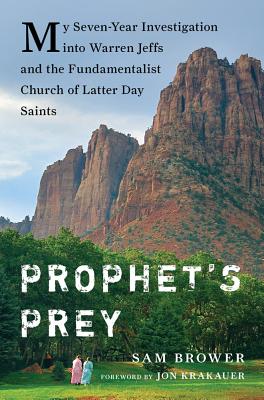
Far from heaven: Sam Brower takes aim at the FLDS church in “Prophet’s Prey”

2

If you read Jon Krakauer’s 2003 book Under the Banner of Heaven, and followed the trial of Warren Jeffs — notorious leader of the Fundamentalist Church of Christ of Latter-Day Saints, now in jail for life for sexual assault (after a stint on the FBI’s 10 Most Wanted List) — you’ll dig Sam Brower’s Prophet’s Prey (Bloomsbury, 336 pgs., $27).

Brower’s book, subtitled My Seven-Year Investigation into Warren Jeffs and the Fundamentalist Church of Latter-Day Saints, is the thrilling and disturbing tale of the private investigator’s relentless crusade for justice — not just in the Jeffs case, but against high-ranking FLDS members across Texas, Utah, Arizona, and beyond. The sect, which is completely removed from mainstream Mormonism, is best-known for its polygamist beliefs, often pairing underage brides with elderly church leaders (Jeffs is estimated to have over 50 wives, including the two, ages 12 and 15, that he was convicted of assaulting). They’re extremely well-funded, with leaders who live in mansions even as the rank-and-file go hungry. They also don’t care much for outsiders.

In Brower’s estimation, the FLDS church is “an organized crime syndicate that specializes in child abuse” — after reading his book (with a preface by Krakauer), you’ll tend to agree. He’ll be reading in Berkeley Tues/15; I caught up with him by phone at his home in snowy Cedar City, Utah, just over an hour’s drive from FLDS stronghold Short Creek, an isolated community straddling the Utah-Arizona border.

San Francisco Bay Guardian: I was just watching the recent clip of you on Dr. Phil, opposite former FLDS spokesperson Willie Jessop [an antagonistic figure in Prophet’s Prey]. That must have been an interesting experience.

Sam Brower: It was. It was weird, first of all, being there with Willie, who’s been on the opposite side of things throughout this whole ordeal. And then, Willie showed his true colors — he can’t answer a question and lies at the drop of a hat.

SFBG: He was in the news a couple of weeks ago, when the story broke about one of Warren Jeffs’ wives escaping from the church compound. I think you were quoted in the article, actually.

SB: Yeah, could be. One of Warren Jeffs’ wives took off, which is a very rare occurrence. This is the second one — the first one, I wrote about in the book; her name was Janetta — so it’s kind of a weird thing that they would actually let one of his wives get out of their grip, you know. And then just recently I heard that she has gone back to him. She’s with her family now, and so she’s back in the FLDS from what I understand. I was just waiting for that to happen. I know that they can’t afford to have one of Warrens wives out and talking, and that they’ll stop at nothing to try and get her back.

SFBG: You talk about this in the book a bit, but why is it so hard for them to escape?

SB: Number one, it’s not like they’re brainwashed. A lot of people use the term brainwashed, but it’s much, much deeper than that. They’re indoctrinated. It’s a cultural thing, and they really have no understanding of any other parts of the world. Their entire existence revolves around their life with the prophet. Many of them don’t have birth certificates. They don’t have drivers’ licenses. They’re with “caretakers,” they’re called — so there’ll be a group of wives and children that are being watched over by their caretakers.

In fact, it would be hard to trace wives, because they have no credit. They’re like non-entities. So it’s easier to trace their caretakers, the guys that are watching them. So they’re being watched constantly. They’re being shuttled around from place of refuge to place of refuge, and so, you know, they just don’t have a life or a world outside the relationship with Warren Jeffs and the church. So for [the wife who recently escaped] to get away is highly unusual, and my understanding was that she was in her stocking feet. She literally ran away.

SFBG: Do you think she had her own children that she left behind?

SB: I don’t know if she does or not. Some of his wives have not had children, mostly because there’s just so many wives. By the same token, some very young wives do have children, too. And I know that part of their existence is a very deviant existence, it’s a very deviant life — some of the things that came out in Warren’s trial regarding, basically, ritualistic orgies with his wives, in which he would say, “We all have to participate.” It was something that, before they became involved with Warren, was completely foreign to them. And it has to rock them a little bit to go from absolutely no sex education, no idea what it’s even about, to such a bizarre world.

SFBG: Warren Jeffs is serving a life sentence. Is he still in charge of the church?

SB: He’s running the show from prison as much as he can. While he was in jail, he had more access, because he was spending tens of thousands of dollars a month on calls from the jail. Now that he’s in prison he’s more restricted, but he still gets a 15-minute phone call every day, and he has two hours’ worth of visits on Saturday and on Sunday. And there are people who are called to visit him for those two hours on each day, and take down his revelations and notes and orders to the people.

So he’s still running the show, not as freely as had been in the past, but he still is, and he has his brother, Lyle Jeffs, who is now the prophet’s mouthpiece — the man who’s running the show on the ground, who is just as bad as Warren. Some people say he’s worse. And he also has his places of refuge all around the country in Colorado, South Dakota, and Texas, and different compounds. He has little kind of clones of himself there who also run those operations as well.

It’s a little bit of both: he’s still overseeing everything. He still has his input in everything. But he’s gotten rid of anybody within his crime syndicate that has any kind of moral compass, and instilled people who are blindly obedient and will do whatever he tells them to do.

SFBG: In the book, the first case that draws you into the FLDS world illustrates that obedience: a family nearly loses their home after the father is kicked out of the church, seemingly on a whim, and nobody outside of his immediate family questions the decision. How come nobody rebels?

SB: That’s the hardest thing for us, people on the outside, to wrap our minds around. And I think that’s what really grabbed me when I first started working on it, when I saw [the recently excommunicated man] Ross Chatwin holding up a copy of [history book] The Rise and Fall of the Third Reich [in a newspaper photo]. I read that book when I was a kid, and in my mind I was thinking, “Good grief, when I was a kid and read that book, I couldn’t understand what would make this whole country do whatever this madman told them to do!” And that’s what Ross Chatwin was saying.

And sure enough, I go down to [Short Creek], and good grief, there’s 10, 15 thousand people that’ll do anything that this guy tells ’em. He tells them to leave their home, their family, kids, and go repent from a distance, and they do it, and the wives go to another man. It’s nuts, crazy. It took me a long time to kind of get a feel for it. I still struggle with it. It goes back again to this deep-seated cultural thing, where blind obedience gets you stature within the culture. The more you can demonstrate this obedience, the more you demonstrate your faith, and the higher up on the pedestal you are.

It’s to the point where, this is an example, a mother who’s a nurse has a daughter who is hemorrhaging. The daughter was married off at 14 to some old lecher, and she’s hemorrhaging and about ready to die, and the mother won’t take her daughter to the hospital because Warren Jeffs told her not to, because they might be able to trace her to the “priesthood,” quote-unquote, and it may result in charges. It may lead them to the prophet. And she doesn’t do it. She’s willing to let her daughter die to prove her obedience and her faith. It illustrates how there are no boundaries there.

I’ve thought many times that, had not there been a handful of people that went after Warren Jeffs and tried to expose these things, how would it have ended? In fact I still worry about that. Would it have been another Waco, or another Jonestown? Right now there are edicts coming down that are out in Short Creek that there can be no more sex, period. Not even for procreation. They can’t watch TV, listen to the radio, read books, magazines, newspapers. Get on the internet. Nothing. They have no hope in their lives, no joy. It makes me wonder, how’s this all going to end? Is going to be, just a vision, some kind of huge manifestation of their faith that ends in some other tragedy? What’s going to happen?

SFBG: If their leader is in jail and they’re all behaving the same way, is there any hope for the future?

SB: I wish I knew. The way it appears now is that it’s just getting worse. Lyle Jeffs is a real mental case himself, and he’s the one who’s running the show now. I have a client, actually a half brother of Lyle and Warren, who wants to have his children. They’re his children. He has legal custody of them. But Lyle has taken them and is hiding the children from him. So we’re having to go to court, and jump through all these hoops to try and get this guy’s children back. And for some reason Lyle just doesn’t want him to have these children. Because he’s received some revelation saying that he shouldn’t have his own children.
I see it just continuing to get worse and worse. It’s anybody’s guess, really.

SFBG: You mentioned earlier that the church is like a “crime syndicate” — is that sort of the go-to argument to convince people who wonder about freedom of religion in this case?

SB: The freedom of religion thing is the FLDS’s wild card. You know, they try and go around and say that people are going after them because they’re an unpopular religion, and they practice polygamy, or whatever. But the fact is, they have turned into a crime syndicate that specialized in child abuse. And everything they do is in support of their illegal activities. They marry little girls off as young as 12 years old. They groom them from the ages of eight, nine, even younger, to become “heavenly comfort wives.”

You know, you can can believe whatever you want, as part of your religious doctrine or theology. If you want to believe that it’s OK to sacrifice virgins and throw them in a volcano, that’s fine. But when you start acting on those beliefs — when you start breaking the law — then it’s not OK anymore. And that’s what they’ve done. They’ve regressed to the point where, anything they do, anything that’s in violation of the law is, to them, within their rights to do that. That’s part of their free exercise of religion. And that’s not true. That’s not what the constitution says. It’s not OK to break the law just because you think it’s part of your religion. You can believe it if you want, but you can’t act on it.

SFBG: In the book, you discuss your own faith as a member of the mainstream Mormon church. I know the two aren’t connected, but is the FLDS church a topic of interest for mainstream Mormons? What’s been their reaction to the book?

SB: I think mainstream Mormons have been very interested in it. It’s one of the few times they’re able to read about it and find out what’s going on without being blamed for it. In fact, I just did a signing in Salt Lake City that was attended by a lot of mainstream church members.

SFBG: It sounds like you’re still very involved in FLDS cases, even now that Warren Jeffs is in prison. What are you up to now, and — as seen in the book — are you still a target for the church?

SB: Yeah, I’m still not on their Christmas list. I still have clients that are FLDS or former FLDS, and am still involved in it, and I guess I will be for as long as they’re still abusing children. It’s been a roller coaster ride and of course they do everything they can to try and get me out of the way, but it hasn’t worked in eight years. I feel sometimes like [the third] Godfather movie, where Michael Corleone says, “Just when I think I’m out, they pull me back in.” I have those moments every once in awhile, but I think I’m probably going to be in it for awhile.

When Warren’s trial happened, it was a good feeling in Texas. Life plus 20. But it was kind of bittersweet at the same time. Because then I leave, and I’ve got another client who’s still struggling to get his kids back. Lyle Jeffs is still doing the same things out in Short Creek. And part of me is going, “Yeah, we’ve come a long way. Things are happening.” But also, it’s still going on, too.

Sam Brower

Tues/15, 7 p.m., free

Books Inc.

1760 Fourth St., Berk.

(510) 525-7777

www.booksinc.net/Berkeley

Film Listings

0

Film listings are edited by Cheryl Eddy. Reviewers are Kimberly Chun, Max Goldberg, Dennis Harvey, Lynn Rapoport, and Matt Sussman. For rep house showtimes, see Rep Clock.

OPENING

Asylum of Satan and The Devil and Max Devlin The Vortex Room’s penultimate program of Satanic cinema weighs deeper into approximating the torments of hell, starting with the 1972 Asylum. The inevitable young lovely (Carla Borelli) is committed to a mental institution against her will. The other patients dress in white robes with heavy hoods like Klan members — in wheelchairs, yet — and the few other “normal” inmates tend to die horrible deaths under “treatment.” Reaching Andy Milligan-level amateurity of performance and filmmaking (complete with a library-music score), this patience-testing horror was the first feature from William Girdler, who stuck with exploitation genres but managed a steep learning curve. During the next few years he ascended to guilty-pleasure blaxploitation Exorcist rip-off Abby (1974) to competent hairy Jaws (1975) rip-off Grizzly (1976) to a true original, 1978’s berserk all-star The Manitou, in which a 400-year-old evil Native American spirit grows as a tumor from Susan Strasberg’s neck. Sadly, we’ll never know where Girdler could have gone from that zenith — he died in a helicopter crash at age 30 the same year. For maximum incongruity, Asylum‘s co-feature is 1981’s The Devil and Max Devlin, in which Elliott Gould plays a mean L.A. slumlord who’s run over by a bus full of Hare Krishnas. Waking up in Hades, Satan (Bill Cosby — what about that casting seems disturbingly just-right?), offers Max a deal: he can get outta jail free if he delivers three souls by making some innocent kids into selfish brats. One of them is a teen singer who, in a strange in-joke, sounds exactly and looks quite a bit like Barbra Streisand (the former Mrs. Gould). With its non-cute representations of Hell and deliberately humorless Cosby, this ersatz comedy made at the height of Disney’s post-Walt wilderness wandering won the Mouse House one of its first PG (as opposed to G) ratings. Mercifully Beelzebub’s further influence was curtailed before the studio reached the logical end point of this path, producing porn. Vortex Room. (Harvey)

I Think It’s Raining In local film curator Joshua Moore’s first feature, screening on opening night at Cinema by the Bay, a young woman named Renata (Alexandra Clayton) returns to her hometown of San Francisco after unspecified wanderings, replants herself loosely (in a motel), and proceeds to drift across the city, connecting with old friends and with strangers and disconnecting in response to internal impulses like panic attacks and drunken vitriol. The film is filled with evocative moments, like a scene in a nightclub where Renata’s musician friends call her up to perform a song (written and sung by Clayton) that seems to sketch out all the charms and failings and pitfalls and misadventures that make up her mysterious biography — Super 8 images flickering across her face, her own image set off in the darkness and isolated from the life and warmth around her. Renata is clearly moving in an atmosphere of emotional disturbances, and her discomfort and unsteadiness transmit powerfully, leaving the viewer equally uneasy and afraid. The mood temporarily lightens during a random, rainy-day encounter with a young man, Val (Andrew Dulman), who seems tuned in to Renata’s frequency without emitting the same anxious bursts of static — or perhaps simply inspires her to try to tune in to his. But it’s painfully unclear how sustaining such a mode can be for a protagonist who admits to lacking the primary skills for holding on to happiness. (1:32) SFFS New People Cinema. (Rapoport)

*Like Crazy Jacob (Anton Yelchin) and Anna (Felicity Jones) meet near the end of college; after a magical date, they’re ferociously hooked on each other. Trouble is, she’s in Los Angeles on a soon-to-expire student visa — and when she impulsively overstays, then jets home to London for a visit months later, her re-entry to America is stopped cold at LAX. (True love’s no match for homeland security.) An on-and-off long-distance romance ensues, and becomes increasingly strained, even as their respective careers (he makes furniture, she’s a magazine staffer) flourish. Director and co-writer Drake Doremus (2010’s Douchebag) achieves a rare midpoint between gritty mumblecore and shiny Hollywood romance; the characters feel very real and the script ably captures the frustration that settles in when idealized fantasies give way to the messy workings of everyday life. There are some contrivances here — Anna’s love-token gift from Jacob, a bracelet engraved “Patience,” breaks when she’s with another guy — but for the most part, Like Crazy offers an honest portrait of heartbreak. (1:29) (Eddy)

Revenge of the Electric Car The timing is right for Chris Paine to make a follow-up to his 2006 Who Killed the Electric Car?, a celebrity-studded doc examining the much-mourned downfall of GM’s EV1 — with gas prices so high and oil politics so distressing, even drivers who don’t consider themselves radical environmentalists are interested in going electric, as choices aplenty flood the marketplace. The aptly-titled Revenge of the Electric Car makes nice with GM’s Bob Lutz as he readies the release of the Chevy Volt. It also profiles Silicon Valley’s own electric car startup, Tesla; tracks Nissan’s top gun Carlos Ghosn as he pushes the Nissan Leaf into production; and even digs up an off-the-grid mechanical wizard known as “Gadget,” who makes his living converting regular autos (if a Porsche is “regular”) into vehicles with plug-in power. The film makes it clear that for most of these folks, business comes first — sure, it’s great to be green, but you have to make green, too — and there’s some tension when the crash of 2008 threatens the auto industry’s enthusiasm for planet-friendly innovations. But there’s far more optimism here than Paine’s first Electric Car film, not to mention a refreshing lack of Mel Gibson. (1:30) Embarcadero, Shattuck. (Eddy)

*Sutro’s: The Palace at Land’s End Filmmaker Tom Wyrsch (2008’s Watch Horror Films, Keep America Strong and 2009’s Remembering Playland) explores the unique and fascinating history behind San Francisco’s Sutro Baths in his latest project, an enjoyable documentary that covers the stories behind Adolph Sutro, the construction of his swimming pools, and the amazingly diverse, and somewhat strange collection of other attractions that entertained generations of locals that came to Land’s End for amusement. Told through interviews with local historians and residents, the narrative is illustrated with a host of rarely-seen historic photographs, archival film footage, contemporary video, and images of old documents, advertisements and newspapers. The film should appeal not only to older viewers who fondly remember going to Sutro’s as children, and sadly recall it burning down in 1966, but also younger audiences who have wandered through the ruins below the Cliff House and wondered what once stood there. (1:24) Balboa. (Sean McCourt)

Tower Heist Members of the 99% (real-life zillionaires Ben Stiller and Eddie Murphy) team up to get revenge on a sleazy Wall Street 1%-er (Alan Alda). Brett Ratner (also a real-life zillionaire) directs, so don’t actually expect much timely social commentary. (1:45) Balboa, Presidio, Shattuck.

A Very Harold and Kumar 3D Christmas The bros are back in this year’s first, and no doubt stoniest, holiday-themed release. (1:30)

ONGOING

Anonymous Hark, what bosom through yonder bodice heaves? If you like your Shakespearean capers OTT and chock-full of fleshy drama, political intrigue, and groundling sensation, then Anonymous will enthrall (and if the lurid storyline doesn’t hold, the acting should). Writer John Orloff spins his story off one popular theory of Shakespeare authorship — that Edward de Vere, the 17th Earl of Oxford, was the true pen behind the works attributed to William Shakespeare of Stratford-upon-Avon. Our modern-day narrator (Derek Jacobi) foregrounds the fictitious nature of the proceedings, pulling back the curtain on Ben Jonson (Sebastian Armesto) staging his unruly comedies for the mob, much to the amusement of a mysterious aging dandy of a visitor: the Earl of Oxford (Rhys Ifans). Hungry for the glory that has always slipped through his pretty fingers, the Earl yearns to have his works staged for audiences beyond those in court, where Queen Elizabeth I (Vanessa Redgrave as the elder regent, daughter Joely Richardson as the lusty young royal) dotes on them, and out of the reach of his puritan father-in-law Robert Cecil (David Thewlis), Elizabeth’s close advisor, and he devises a plan for Jonson to stage them under his own name. But much more is triggered by the productions, uncovering secret trysts, hunchback stratagems, and more royal bastards than you can shake a scepter at. Director Roland Emmerich invests the production with the requisite high drama — and camp — to match the material, as well as pleasing layers of grime and toxic-looking Elizabethan makeup for both the ladies and the dudes who look like ladies (the crowd-surfing, however, strikes the off-key grunge-era note). And if the inherent elitism of the tale — could only a nobleman have written those remarkable plays and sonnets? — offends, fortunately the cast members are more than mere players. Ifans invests his decadent Earl with the jaded gaze and smudgy guyliner of a fading rock star, and Redgrave plays her Elizabeth like a deranged, gulled grotesque. (2:10) 1000 Van Ness, SF Center, Sundance Kabuki. (Chun)

*The Black Power Mixtape 1967-1975 Cinematic crate-diggers have plenty to celebrate, checking the results of The Black Power Mixtape 1967-1975. Swedish documentarian Göran Hugo Olsson had heard whispers for years that Swedish television archives possessed more archival footage of the Black Panthers than anyone in the states — while poring through film for a doc on Philly soul, he discovered the rumors were dead-on. With this lyrical film, coproduced by the Bay Area’s Danny Glover, Olsson has assembled an elegant snapshot of black activists and urban life in America, relying on the vivid, startlingly crisp images of figures such as Stokely Carmichael and Huey P. Newton at their peak, while staying true to the wide-open, refreshingly nonjudgmental lens of the Swedish camera crews. Questlove of the Roots and Om’Mas Keith provide the haunting score for the film, beautifully historicized with shots of Oakland in the 1960s and Harlem in the ’70s. It’s made indelible thanks to footage of proto-Panther school kids singing songs about grabbing their guns, and an unforgettable interview with a fiery Angela Davis talking about the uses of violence, from behind bars and from the place of personally knowing the girls who died in the infamous Birmingham, Ala., church bombing of 1963. (1:36) Shattuck. (Chun)

*Contagion Tasked with such panic-inducing material, one has to appreciate director Steven Soderbergh’s cool head and hand with Contagion. Some might even dub this epic thriller (of sorts) cold, clinical, and completely lacking in bedside manner. Still, for those who’d rather be in the hands of a doctor who refuses to talk down to the patient, Contagion comes on like a refreshingly smart, somewhat melodrama-free clean room, a clear-eyed response to a messy, terrifying subject. A deadly virus is spreading swiftly — sans cure, vaccine, or sense — starting with a few unlikely suspects: globe-trotting corporate exec Beth (Gwyneth Paltrow), a waiter, a European tourist, and a Japanese businessman. The chase is on to track the disease’s genesis and find a way to combat it, from the halls of the San Francisco Chronicle and blog posts of citizen activist-journalist Alan (Jude Law), to the emergency hospital in the Midwest set up by intrepid Dr. Mears (Kate Winslet), to a tiny village in China with a World Health investigator (Marion Cotillard). Soderbergh’s brisk, businesslike storytelling approach nicely counterpoints the hysteria going off on the ground, as looting and anarchy breaks out around Beth’s immune widower Mitch (Matt Damon), and draws you in — though the tact of making this disease’s Typhoid Mary a sexually profligate woman is unsettling and borderline offensive, as is the predictable blame-it-on-the-Chinese origin coda. (1:42) Shattuck. (Chun)

*Drive Such a lovely way to Drive, drunk on the sensual depths of a lush, saturated jewel tone palette and a dreamlike, almost luxurious pacing that gives off the steamy hothouse pop romanticism of ’80s-era Michael Mann and David Lynch — with the bracing, impactful flecks of threat and ultraviolence that might accompany a car chase, a moody noir, or both, as filtered through a first-wave music video. Drive comes dressed in the klassic komforts — from the Steve McQueen-esque stances and perfectly cut jackets of Ryan Gosling as the Driver Who Shall Remain Nameless to the foreboding lingering in the shadows and the wittily static, statuesque strippers that decorate the background. Gosling’s Driver is in line with Mann’s other upstanding working men who hew to an old-school moral code and are excellent at what they do, regardless of what side of the law they’re working: he likes to keep it clear and simple — his services as a wheelman boil down to five minutes, in and out — but matters get messy when he falls for sweet-faced neighbor Irene (Carey Mulligan), who lives down the hall with her small son, and her ex-con husband (Oscar Isaac) is dragged back into the game. Populated by pungent side players like Albert Brooks, Bryan Cranston, Ron Perlman, and Christina Hendricks, and scattered with readily embeddable moments like a life-changing elevator kiss that goes bloodily wrong-right, Drive turns into a real coming-out affair for both Danish director Nicolas Winding Refn (2008’s Bronson), who rises above any crisis of influence or confluence of genre to pick up the po-mo baton that Lynch left behind, and 2011’s MVP Ryan Gosling, who gets to flex his leading-man muscles in a truly cinematic role, an anti-hero and under-the-hood psychopath looking for the real hero within. (1:40) Bridge, SF Center. (Chun)

50/50 This is nothing but a mainstream rom-com-dramedy wrapped in indie sheep’s clothes. When Adam (Joseph Gordon-Levitt) learns he has cancer, he undergoes the requisite denial, anger, bargaining, depression, and acceptance like a formality. Aided by his bird-brained but lovable best friend Kyle (Seth Rogan), lovable klutz of a counselor Katherine (Anna Kendrick), and panicky mother (Anjelica Huston), Adam gets a new lease on life. This comes in the form of one-night-stands, furious revelations in parked cars, and a prescribed dose of wacky tobaccy. If 50/50 all sounds like the setup for a pseudo-insightful, kooky feel-goodery, it is. The film doesn’t have the brains or spleen to get down to the bone of cancer. Instead, director Jonathan Levine (2008’s The Wackness) and screenwriter Will Reiser favor highfalutin’ monologues, wooden characters, and a Hollywood ending (with just the right amount of ambiguity). Still, Gordon-Levitt is the most gorgeous cancer patient you will ever see, bald head and all. (1:40) Four Star, 1000 Van Ness, SF Center, Sundance Kabuki. (Ryan Lattanzio)

Footloose Another unnecessary remake joins the queue at the box office, aiming for the pockets of ’80s-era nostalgics and fans of dance movies and naked opportunism. A recap for those (if there are those) who never saw the 1984 original: city boy Ren McCormack moves to a Middle American speck-on-the-map called Bomont and riles the town’s inhabitants with his rock ‘n’ roll ways — rock ‘n’ roll, and the lewd acts of physicality it inspires, i.e., dancing, having been criminalized by the town council to preserve the souls and bodies of Bomont’s young people. Ren falls for wayward preacher’s daughter Ariel Moore — whose father has sponsored this oversolicitous piece of legislation — and vows to fight city hall on the civil rights issue of a senior prom. Ren McCormack 2.0 is one Kenny Wormald (prepped for the gig by his tenure in the straight-to-cable dance-movie sequel Center Stage: Turn It Up), who forgoes the ass-grabbing blue jeans that Kevin Bacon once angry-danced through a flour mill in. Otherwise, the 2011 version, directed and cowritten by Craig Brewer (2005’s Hustle & Flow), regurgitates much of the original, hoping to leverage classic lines, familiar scenes, and that Dance Your Ass Off T-shirt of Ariel’s. It doesn’t work. Ren and Ariel (Dancing with the Stars‘ Julianne Hough) are blandly unsympathetic and have the chemistry of two wet paper towels, the adult supporting cast should have known better, and the entire film comes off as a tired, tuneless echo. (1:53) 1000 Van Ness, Presidio. (Rapoport)

Gainsbourg: A Heroic Life Far from perfect, yet imbued with all the playful, artful qualities of the maestro himself, writer-director Joann Sfar goes out of his way to tell singer-songwriter Serge Gainsbourg’s tale the way that he sees it, as that of an artist, and in the process creates a wonderland of cartoonish perversity from the cradle to the grave. The remainder of A Heroic Life is almost eclipsed by the film’s earliest interludes, which trail the already too-clever-for-his-own-good young musician and painter, born Lucien Ginsburg, as he proudly claims his gold star from the Nazis. With echoes of 400 Blows (1959) resounding with every wayward step, the brash young Lucien lives by his active imagination, dreaming up a fat, spiderlike plaything from the monstrous Jew depicted in Nazi propaganda and conjuring an imaginary alter-ego he dubs his ugly Mug. Though Heroic Life‘s adult Serge is seamlessly embodied by Eric Elmosnino, few of the moments from the grown lothario’s life rival those initial scenes, with the exception of his exuberant love affair with Brigitte Bardot (Laetitia Casta) and the fantastic music that came out of it. Still, it’s a joy to hear his music, even in short snatches, with subtitles that clearly spell out Gainsbourg’s talents as a stunning, uniquely talented lyricist. (2:02) Lumiere, Smith Rafael. (Chun)

*Gainsbourg: The Man Who Loved Women Those hungry for more of the real Serge Gainsbourg — after being tantalized and teased by Joann Sfar’s whimsical comic book-inspired feature — will want to catch this documentary by Pascal Forneri for many of the details that didn’t fit or were skimmed over, here, in the very words and image of the songwriter and the many iconic women in his life. Much of the chanson master’s photographic or video history seems to be here — from his blunt-force on-camera proposition of Whitney Houston to multiple, insightful interviews with the love of his life, Jane Birkin, as well as the many women who won his heart for just a little while, such as Brigitte Bardot, Juliette Gréco, Françoise Hardy, and Vanessa Paradis. Gainsbourg may be marred by its somewhat choppy, mystifying structure, at times chronological, at times organized according to creative periods, but overriding all are the actual footage and photographs loosely, louchely assembled and collaged by Forneri; delightful pre-music-videos Scopitones of everyone from France Gall to Anna Karina; and the gemlike, oh-so-quotable interviews with the mercurial, admirably honest musical genius and eternally subversive provocateur. Quibble as you might with the short shrift given his later career—in addition to major ’70s LPs like Histoire de Melody Nelson and L’Homme à tête de chou (Cabbage-Head Man) — this is a must-see for fans both casual and seriously seduced. (1:45) Roxie. (Chun)

The Help It’s tough to stitch ‘n’ bitch ‘n’ moan in the face of such heart-felt female bonding, even after you brush away the tears away and wonder why the so-called help’s stories needed to be cobbled with those of the creamy-skinned daughters of privilege that employed them. The Help purports to be the tale of the 1960s African American maids hired by a bourgie segment of Southern womanhood — resourceful hard-workers like Aibileen (Viola Davis) and Minny (Octavia Spencer) raise their employers’ daughters, filling them with pride and strength if they do their job well, while missing out on their own kids’ childhood. Then those daughters turn around and hurt their caretakers, often treating them little better than the slaves their families once owned. Hinging on a self-hatred that devalues the nurturing, housekeeping skills that were considered women’s birthright, this unending ugly, heartbreaking story of the everyday injustices spells separate-and-unequal bathrooms for the family and their help when it comes to certain sniping queen bees like Hilly (Bryce Dallas Howard). But the times they are a-changing, and the help get an assist from ugly duckling of a writer Skeeter (Emma Stone, playing against type, sort of, with fizzy hair), who risks social ostracism to get the housekeepers’ experiences down on paper, amid the Junior League gossip girls and the seismic shifts coming in the civil rights-era South. Based on the best-seller by Kathryn Stockett, The Help hitches the fortunes of two forces together — the African American women who are trying to survive and find respect, and the white women who have to define themselves as more than dependent breeders — under the banner of a feel-good weepie, though not without its guilty shadings, from the way the pale-faced ladies already have a jump, in so many ways, on their African American sisters to the Keane-eyed meekness of Davis’ Aibileen to The Help‘s most memorable performances, which are also tellingly throwback (Howard’s stinging hornet of a Southern belle and Jessica Chastain’s white-trash bimbo-with-a-heart-of-gold). (2:17) Shattuck. (Chun)

The Ides of March Battling it out in the Ohio primaries are two leading Democratic presidential candidates. Filling the role of idealistic upstart new to the national stage — even his poster looks like you-know-who’s Hope one — is Governor Mike Morris (George Clooney), who’s running neck-and-neck in the polls with his rival thanks to veteran campaign manager (Philip Seymour Hoffman) and ambitious young press secretary Steven (Ryan Gosling). The latter is so tipped for success that he’s wooed to switch teams by a rival politico’s campaign chief (Paul Giamatti). While he declines, even meeting with a representative from the opposing camp is a dangerous move for Steven, who’s already juggling complex loyalties to various folk including New York Times reporter Ida (Marisa Tomei) and campaign intern Molly (Evan Rachel Wood), who happens to be the daughter of the Democratic National Party chairman. Adapted from Beau Willimon’s acclaimed play Farragut North, Clooney’s fourth directorial feature is assured, expertly played, and full of sharp insider dialogue. (Willimon worked on Howard Dean’s 2004 run for the White House.) It’s all thoroughly engaging — yet what evolves into a thriller of sorts involving blackmail and revenge ultimately seems rather beside the point, as it turns upon an old-school personal morals quandary rather than diving seriously into the corporate, religious, and other special interests that really determine (or at least spin) the issues in today’s political landscape. Though stuffed with up-to-the-moment references, Ides already feels curiously dated. (1:51) California, Marina, 1000 Van Ness, Piedmont, Sundance Kabuki. (Harvey)

In Time Justin Timberlake moves from romantic comedy to social commentary to play Will Salas, a young man from the ghetto living one day at a time. Many 12-steppers may make this claim, but Salas literally is, because in his world, time actually is money and people pay, say, four minutes for a cup of coffee, a couple hours for a bus ride home from work, and years to travel into a time zone where people don’t run from place to place to stay ahead of death. In writer-director Andrew Niccol’s latest piece of speculative cinema, humans are born with a digitized timepiece installed in their forearm and a default sell-by date of 25 years, with one to grow on — though most end up selling theirs off fairly quickly while struggling to pay rent and put food on the table. Time zones have replaced area codes in defining social stature and signaling material wealth, alongside those pesky devices that give the phrase “internal clock” an ominous literality. Niccol also wrote and directed Gattaca (1997) and wrote The Truman Show (1998), two other films in which technological advances have facilitated a merciless, menacing brand of social engineering. In all three, what is most alarming is the through line between a dystopian society and our own, and what is most hopeful is the embattled protagonist’s promises that we don’t have to go down that road. Amanda Seyfried proves convincible as a bored heiress to eons, her father (Vincent Kartheiser) less amenable to Robin Hood-style time banditry. (1:55) 1000 Van Ness, SF Center. (Rapoport)

Johnny English Reborn (1:41) 1000 Van Ness, SF Center.

The Legend is Born: Ip Man If you prefer your martial arts movies Zhang Yimou-lush, Jackie Chan-hilarious, or Tsui Hark-insane, you’ll want to skip The Legend is Born: Ip Man, an earnest, unfussy semi-biopic about the early years of Wing Chun grandmaster Yip Man (he taught Bruce Lee … respect). Here, he’s called Ip Man and is played by the bland Dennis To, who might be carved from wood if not for his many nimble fight scenes — playful dispute-settling, grueling training sequences, to-the-death clashes, etc. The Ip Man story has been popular Hong Kong movie fodder in recent years, with the far more charistmatic Donnie Yen playing the lead in a pair of 2008 and 2010 flicks. This apparently unrelated production is less flashier than those films, but purists will appreciate appearances by fightin’ screen legends Sammo Hung and Yuen Bao, plus a cameo by Yip Man’s real-life son. Side note: director Herman Yau co-directed absolutely bonkers crime drama The Untold Story (1993), starring Anthony Wong as a Sweeney Todd type who runs a restaurant famed for its “pork” buns. Worth a look, fiends. (1:40) Four Star. (Eddy)

The Lion King 3D (1:29) SF Center.

*Love Crime Early this year came the announcement that Brian De Palma was hot to do an English remake of Alain Corneau’s Love Crime. The results, should they come to fruition, may well prove a landmark in the annals of lurid guilty-pleasure trash. But with the original Love Crime finally making it to local theaters, it’s an opportune moment to be appalled in advance about what sleazy things could potentially be done to this neat, dry, fully clothed model of a modern Hitchcockian thriller. No doubt in France Love Crime looks pretty mainstream. But here its soon-to be-despoiled virtues of narrative intricacy and restraint are upscale pleasures. Ludivine Sagnier plays assistant to high-powered corporate executive Christine (Kristin Scott Thomas). The boss enjoys molding protégée Isabelle to her own image, making them a double team of carefully planned guile unafraid to use sex appeal as a business strategy. But Isabelle is expected to know her place — even when that place robs her of credit for her own ideas — and when she stages a small rebellion, Christine’s revenge is cruelly out of scale, a high-heeled boot brought down to squash an ant. Halfway through an act of vengeance occurs that is shocking and satisfying, even if it leaves the remainder of Corneau and Nathalie Carter’s clever screenplay deprived of the very thing that had made it such a sardonic delight so far. Though it’s no masterpiece, Love Crime closes the book on his Corneau’s career Corneau (he died at age 67 last August) not with a bang but with a crisp, satisfying snap. (1:46) Lumiere. (Harvey)

*Margin Call Think of Margin Call as a Mamet-like, fictitious insider jab at the financial crisis, a novelistic rejoinder to Oscar-winning doc Inside Job (2010). First-time feature director and writer J.C. Chandor shows a deft hand with complex, writerly material, creating a darting dance of smart dialogue and well-etched characters as he sidesteps the hazards of overtheatricality, a.k.a. the crushing, overbearing proscenium. The film opens on a familiar Great Recession scene: lay-off day at an investment bank, marked by HR functionaries calling workers one by one into fishbowl conference rooms. The first victim is the most critical — Eric Dale (Stanley Tucci), a risk-management staffer who has stumbled on an investment miscalculation that could potentially trigger a Wall Street collapse. On his way out, he passes a drive with his findings to one of his young protégés, Peter (Zachary Quinto), setting off a flash storm over the next 24 hours that will entangle his boss Sam (Kevin Spacey), who’s agonizing over his dying dog while putting up a go-big-or-go-home front; cynical trading manager Will (Paul Bettany); and the firm’s intimidating head (Jeremy Irons), who gets to utter the lines, “Explain to me as you would to a child. Or a Golden Retriever.” Such top-notch players get to really flex their skills here, equipped with Chandor’s spot-on script, which manages to convey the big issues, infuse the numbers with drama and the money managers with humanity, and never talk down to the audience. (1:45) Shattuck, Sundance Kabuki. (Chun)

*Martha Marcy May Marlene If Winter’s Bone star Jennifer Lawrence was the breakout ingénue of 2010, look for Martha Marcy May Marlene‘s Elizabeth Olsen to take the 2011 title. Both films are backwoodsy and harrowing and offer juicy roles for their leading starlets — not to mention a pair of sinister supporting roles for the great John Harkes. Here, he’s a Manson-y figure who retains disturbing control over Olsen’s character even after the multi-monikered girl flees his back-to-the-land cult. Writer-director Sean Durkin goes for unflashy realism and mounds on the dread as the hollow-eyed Martha attempts to resume normal life, to the initial delight of her estranged, guilt-ridden older sister (Sarah Paulson). Soon, however, it becomes clear that Things Are Not Ok. You’d be forgiven for pooh-poohing Olsen from the get-go; lavish Sundance buzz and the fact that she’s Mary-Kate and Ashley’s sis have already landed her mountains of pre-release publicity. But her performance is unforgettable, and absolutely fearless. (1:41) Sundance Kabuki. (Eddy)

Midnight in Paris Owen Wilson plays Gil, a self-confessed “Hollywood hack” visiting the City of Light with his conservative future in-laws and crassly materialistic fiancée Inez (Rachel McAdams). A romantic obviously at odds with their selfish pragmatism (somehow he hasn’t realized that yet), he’s in love with Paris and particularly its fabled artistic past. Walking back to his hotel alone one night, he’s beckoned into an antique vehicle and finds himself transported to the 1920s, at every turn meeting the Fitzgeralds, Gertrude Stein (Kathy Bates), Dali (Adrien Brody), etc. He also meets Adriana (Marion Cotillard), a woman alluring enough to be fought over by Hemingway (Corey Stoll) and Picasso (Marcial di Fonzo Bo) — though she fancies aspiring literary novelist Gil. Woody Allen’s latest is a pleasant trifle, no more, no less. Its toying with a form of magical escapism from the dreary present recalls The Purple Rose of Cairo (1985), albeit without that film’s greater structural ingeniousness and considerable heart. None of the actors are at their best, though Cotillard is indeed beguiling and Wilson dithers charmingly as usual. Still — it’s pleasant. (1:34) Opera Plaza, Shattuck. (Harvey)

Moneyball As fun as it is to watch Brad Pitt listen to the radio, work out, hang out with his cute kid, and drive down I-80 over and over again, it doesn’t quite translate into compelling cinema for the casual baseball fan. A wholesale buy-in to the cult of personality — be it A’s manager Billy Beane or the actor who plays him — is at the center of Moneyball‘s issues. Beane (Pitt) is facing the sad, inevitable fate of having to replace his star players, Jason Giambi and Johnny Damon, once they command the cash from the more-moneyed teams. He’s gotta think outside of the corporate box, and he finds a few key answers in Peter Brand (a.k.a. Paul DePodesta, played by Jonah Hill), who’s working with the sabermetric ideas of Bill James: scout the undervalued players that get on base to work against better-funded big-hitters. Similarly, against popular thought, Moneyball works best when director Bennett Miller (2005’s Capote) strays from the slightly flattening sunniness of its lead actor and plunges into the number crunching — attempting to visualize the abstract and tapping into the David Fincher network, as it were (in a related note, Aaron Sorkin co-wrote Moneyball‘s screenplay) — though the funny anti-chemistry between Pitt and Hill is at times capable of pulling Moneyball out of its slump. (2:13) Four Star, 1000 Van Ness, Presidio, Sundance Kabuki. (Chun)

*My Afternoons with Margueritte There’s just one moment in this tender French dramedy that touches on star Gerard Depardieu’s real life: his quasi-literate salt-of-the-earth character, Germain, rushes to save his depressed friend from possible suicide only to have his pretentious pal pee on the ground in front of him. Perhaps Depardieu’s recent urinary run-in, on the floor of an airline cabin, was an inspired reference to this moment. In any case, My Afternoons With Margueritte offers a hope of the most humanist sort, for all those bumblers and sad cases that are usually shuttled to the side in the desperate ’00s, as Depardieu demonstrates that he’s fully capable of carrying a film with sheer life force, rotund gut and straw-mop ‘do and all. In fact he’s almost daring you to hate on his aging, bumptious current incarnation: Germain is the 50-something who never quite grew up or left home. The vegetable farmer is treated poorly by his doddering tramp of a mother and is widely considered the village idiot, the butt of all the jokes down at the cafe, though contrary to most assumptions, he manages to score a beautiful, bus-driving girlfriend (Sophie Guillemin). However the true love of his life might be the empathetic, intelligent older woman, Margueritte (Gisele Casadesus), that he meets in the park while counting pigeons. There’s a wee bit of Maude to Germain’s Harold, though Jean Becker’s chaste love story is content to remain within the wholesome confines of small-town life — not a bad thing when it comes to looking for grace in a rough world. (1:22) Opera Plaza. (Chun)

Oranges and Sunshine At the center of this saga of lives ripped apart by church and state is Margaret Humphreys, the Englishwoman who uncovered the scandalous mass deportation of children from England to Australia. In one of her most rewarding roles since The Proposition (2005), her last foray to Oz, Watson portrays the English social worker who in the ’80s learns of multiple cases of now-adult orphans in Australia who don’t know their real name or even age but remember that they once lived in the UK. She starts to explore the past of victims such as Jack (Hugo Weaving) and Len (David Wenham) and tries to reunite them with their families, including mothers who were told their youngsters were adopted into real families. In the course of her work, and at the expense of her own family life, Humphreys discovers the horrors that befell many young deportees — as child slave-laborers — and the corruption that extends its fingers into government and the Catholic church. In his first feature film, director Jim Loach, son of crusading cinematic force Ken Loach, turns over each stone with care and compassion, finding the perfect filter through which to tell this well-modulated story in Watson, whose Humphreys faces harassment and post-traumatic stress disorder in her quest to heal the children who were lured overseas in the hope that they would ride horses to school and pick oranges off a tree for breakfast. (1:45) Albany, Embarcadero. (Chun)

*Paranormal Activity 3 A prequel to a prequel, this third installment in the faux-home-movie horror series is as good as one could reasonably hope for: considerably better than 2010’s part two, even if inevitably it can’t replicate the relatively fresh impact of the 2007 original. After a brief introductory sequence we’re in 1988, with the grown-up sisters of the first two films now children (Chloe Csengery, Jessica Tyler Brown) living with a recently separated mom (Lauren Bitter) and her nice new boyfriend (Christopher Smith). His wedding-video business provides the excuse for many a surveillance cam to be set up in their home once things start going bump in the night (and sometimes day). Which indeed they do, pretty quickly. Brown’s little Kristi has an invisible friend called Toby she says is “real,” though of course everyone else trusts he’s a normal, harmless imaginary pal. Needless to say, they are wrong. Written by Christopher Landon (Paranormal Activity 2, 2007’s Disturbia) and directed by the guys (Henry Joost, Ariel Schulman) who made interesting nonfiction feature Catfish (2010), this quickly made follow-up does a good job piling on more scares without getting shameless or ludicrous about it, extends the series’ mythology in ways that easily pave way toward future chapters, and maintains the found-footage illusion well enough. (Excellent child performances and creepy camcorder “pans” atop an oscillating fan motor prove a great help; try to forget that video quality just wasn’t this good in ’88.) Not great, but thoroughly decent, and worth seeing in a theater — this remains one chiller concept whose effectiveness can only be diminished to the point of near-uselessness on the small screen. (1:24) California, 1000 Van Ness. (Harvey)

*Point Blank Not for nothing did Hollywood remake French filmmaker Fred Cavaye’s last film, Anything for Her (2008) as The Next Three Days (2010) — Cavaye’s latest, tauter-than-taut thriller almost screams out for a similar rework, with its Bourne-like handheld camera work, high-impact immediacy, and noirish narrative economy. Point Blank — not to be confused with the 1967 Lee Marvin vehicle —kicks off with a literal slam: a mystery man (Roschdy Zem) crashing into a metal barrier, on the run from two menacing figures until he is cornered and then taken out of the action by fate. His mind mainly on the welfare of his very pregnant wife Nadia (Elena Anaya), nursing assistant Samuel (Gilles Lellouche) has the bad luck to stumble on a faux doctor attempting to make sure that the injured man never rises from his hospital bed. As police wrangle over whose case this exactly is — the murder of an industrialist seems to have expanded the powers of the stony-faced, monolithic Commandant Werner (Gerard Lanvin) — Samuel gets sucked into the mystery man’s lot, a conspiracy that allows them to trust no one, and seemingly impossibly odds against getting out of the mess alive. Cavaye never quite stops applying the pressure in this clever, unrelenting cat-and-mouse and mouse-and-his-spouse game, topping it with a nerve-jangling search through a messily chaotic police station. (1:24) Opera Plaza. (Chun)

Puss in Boots (1:45) 1000 Van Ness, Presidio.

Real Steel Everybody knows what this movie about rocking, socking robots should have been called. Had the producers secured the rights to the name, we’d all be sitting down to Over The Top II: Child Endangerment. Absentee father Charlie Kenton (Hugh Jackman) and his much-too-young son Max (Dakota Goyo) haul their remote-controlled pugilists in a big old truck from one underground competition to the next. Along the way Charlie learns what it means to be a loving father while still routinely managing to leave cherubic Max alone in scenarios of astonishing peril. Seriously, there are displays of parental neglect in this movie that strain credulity well beyond any of its Rock ‘Em Sock ‘Em elements. Fortunately the filmmakers had the good sense to make those elements awesome. The robots look great and the ring action can be surprisingly stirring in spite of the paper-thin human story it depends on. And as adept as the script proves to be at skirting the question of robot sentience, we’re no less compelled to root for our scrappy contender. Recommended if you love finely wrought spectacle but hate strong characterization and children. (2:07) 1000 Van Ness, Shattuck. (Jason Shamai)

The Rum Diary Hunter S. Thompson’s writing has been adapted twice before into feature form. Truly execrable Where the Buffalo Roam (1980) suggested his style was unfilmable, but Terry Gilliam’s Fear and Loathing in Las Vegas (1998) duly captured a “gonzo” mindset filtered through quantities of drugs and alcohol that might kill the ordinary mortal — a hallucinatory excess whose unpleasant effectiveness was underlined by the loathing Fear won in most quarters. Now between those two extremes there’s the curiously mild third point of this Johnny Depp pet project, translating an early, autobiographical novel unpublished until late in the author’s life. Failed fiction writer Paul Kemp (Johnny Depp) thinks things are looking up when he’s hired to an English-language San Juan newspaper circa 1960 — though it turns out he was the only applicant. A gruff editor (Richard Jenkins), genially reckless photographer flatmate (Michael Rispoli) and trainwreck vision of his future self (Giovanni Ribisi) introduce him to the thanklessness of writing puff pieces for the gringo community of tourists and robber barons. One of the latter (Aaron Eckhart as Sanderson) introduces him to the spoils to be had exploiting this tax-shelter island “paradise” without sharing one cent with its angrily cast-aside, impoverished natives. Sanderson also introduces Kemp to blonde wild child Chenault (Amber Heard), who’s just the stock Girl here. Presumably hired for his Withnail & I (1987) cred, Bruce Robinson brings little of that 1987’s cult classic’s subversive cheek to his first writing-directing assignment in two decades. Handsomely illustrating without inhabiting its era, toying with matters of narrative and thematic import (American colonialism, Kemp-slash-Thompson finding his writing “voice,” etc.) that never develop, this slack quasi-caper comedy ambles nowhere in particular pleasantly enough. But the point, let alone the rage and outrageousness one expects from Thompson, is missing. On the plus side, there’s some succulent dialogue, as when Ribisi asks Depp for an amateur STD evaluation: “Is it clap?” “A standing ovation.” (2:00) California, Marina, 1000 Van Ness, Piedmont, Sundance Kabuki. (Harvey)

Sarah’s Key (1:42) Opera Plaza, Shattuck.

The Skin I Live In I’d like to think that Pedro Almodóvar is too far along in his frequently-celebrated career to be having a midlife crisis, but all the classic signs are on display in his flashy, disjointed new thriller. Still mourning the death of his burn victim wife and removed from his psychologically disturbed daughter, brilliant-but-ethically compromised plastic surgeon Robert (played with smoldering creepiness by former Almodóvar heartthrob Antonio Banderas) throws himself into developing a new injury-resistant form of prosthetic skin, testing it on his mysterious live-in guinea pig, Vera (the gorgeous Elena Anaya, whose every curve is on view thanks to an après-ski-ready body suit). Eventually, all hell breaks loose, as does Vera, whose back story, as we find out, owes equally to 1960’s Eyes Without a Face and perhaps one of the Saw films. And that’s not even the half of it — to fully recount every sharp turn, digression and MacGuffin thrown at us would take the entirety of this review. That’s not news for Almodóvar, though. Much like Rainer Werner Fassbinder before him, Almodóvar’s métier is melodrama, as refracted through a gay cinephile’s recuperative affections. His strength as a filmmaker is to keep us emotionally tethered to the story he’s telling, amidst all the allusions, sex changes and plot twists torn straight from a telenovela. The real shame of The Skin I Live In is that so much happens that you don’t actually have time to care much about any of it. Although its many surfaces are beautiful to behold (thanks largely to cinematographer José Luis Alcaine), The Skin I Live In ultimately lacks a key muscle: a heart. (1:57) Embarcadero, Shattuck, Sundance Kabuki. (Sussman)

*Take Shelter Jeff Nichols directed Michael Shannon in 2007’s Shotgun Stories, released right around the time the actor’s decade-plus prior career broke huge with an Oscar nom for 2008’s Revolutionary Road. Their second collaboration, Take Shelter, is a subtle drama that succeeds mostly because of Shannon’s strong star turn, with an assist from Jessica Chastain (suddenly ubiquitous after The Help, The Debt, and Tree of Life). Curtis (Shannon) and Samantha (Chastain) live paycheck to paycheck in a small Midwestern town; the health insurance associated with his construction job is the only reason they’ll be able to afford a cochlear implant for their deaf daughter. When Curtis starts having horrible nightmares, he can’t shake the feeling that his dreams prophesize an actual disaster to come — or are an indicator that Curtis, like his mother before him, is slowly losing touch with reality. Curtis does seek professional help, but he also starts ripping up his backyard, making expensive improvements to the family’s tornado shelter. You know, just in case. Domestic turmoil, troubles at work, and social ostracization inevitably follow. Where will it all lead? Won’t spoil it for you, but Take Shelter‘s conclusion isn’t nearly as gripping as Shannon’s performance, an skillfully balanced mix of confusion, anger, regret, and white-hot terror. (2:00) Lumiere, Shattuck. (Eddy)

The Thing John Carpenter’s 1982 The Thing is my go-to favorite film (that and 1988’s They Live — I’m a little bit Carpenter-obsessed). So this prequel-which-is-actually-more-like-a-remake is already treading on holy cinematic ground with me. My expectations were low. Pleasantly, first-time director Matthijs van Heijningen Jr. doesn’t deliver a total suckfest (as most remakes of sacred movies do, like the abominable 2003 Texas Chainsaw Massacre); his Thing is rated R, is not in 3D, casts a few actual Norwegians to play the inhabitants of Norway’s Antarctic research lab, etc. It also tries to create continuity with Carpenter’s film by ending exactly where the 1982 film begins. However, all that comes before is basically a weak imitation of Carpenter, whose own film was heavily inspired by 1951 sci-fi classic The Thing from Another World (all three versions list John W. Campbell Jr.’s story “Who Goes There?” as source material). Van Heihningen Jr. offers nothing new except for CG (the 1982 organic FX were creepier, though). Oh, there’s also a “we need a final girl” plot device that shoehorns Mary Elizabeth Winstead into the mix. Both this version and Carpenter’s film build up dread with paranoia. But Carpenter’s was also heavy with the Antarctic-long-haul side effects of cabin fever and extreme isolation. Not really a factor when your main character has just jetted in from New York. (1:43) 1000 Van Ness. (Eddy)

The Three Musketeers 3D (1:50) 1000 Van Ness.

The Way (1:55) 1000 Van Ness.

*Weekend In post-World War II Britain, the “Angry Young Man” school excited international interest even as it triggered alarm and disdain from various native bastions of cultural conservatism. Alan Sillitoe’s Saturday Night and Sunday Morning (1958) discomfited many by depicting a young factory grunt who frequently wakes in a married woman’s bed, chases other available tail, lies as naturally as he breathes, and calls neighborhood busybodies “bitches and whores.” Today British movies (at least the ones that get exported) are still more or less divided by a sort of class system. There’s the Masterpiece Theatre school of costumed romance and intrigue on one hand, the pint-mouthed rebel yellers practicing gritty realism on another. Except contemporary examples of the latter now allow that Angry Young Men might be something else beyond the radar once tuned to cocky, white male antiheroes. The “something else” is gay in Weekend, which was shot in some of the same Nottingham locations where Albert Finney kicked against the pricks in the 1960 film version of Saturday Night. The landscape has changed, but is still nondescript; the boozy clubs still loud but with different bad music. It’s at one such that bearded, late-20s Russell (Tom Cullen) wakes up next morning with a hangover next to no married lady but rather Glen (Chris New). It would be unfair to reveal more of Weekend‘s plot, what little there is. Suffice it to say these two lads get to know each other over less than 48 hours, during which it emerges that Russell isn’t really “out,” while Glen is with a vengeance — though the matter of who is more emotionally mature or well adjusted isn’t so simple. Writer-director Andrew Haigh made one prior feature, a semi-interesting, perhaps semi-staged portrait of a male hustler called Greek Pete (2009). It didn’t really prepare one for Weekend, which is the kind of yakkety, bumps and-all romantic brief encounter movies (or any other media) so rarely render this fresh, natural, and un-stagy. (1:36) Embarcadero. (Harvey)

The Woman on the Sixth Floor There is a particular strain of populist European comedy in which stuffy northerners are loosened up by liberating exposure to those sensual, passionate, loud, all-embracing simple folk from the sunny south. The line between multicultural inclusion and condescension is a thin one these movies not infrequently cross. Set in 1960, Philippe Le Guay’s film has a bourgeoisie Paris couple hiring a new maid in the person of attractive young Maria (Natalia Verbeke). She joins a large group of Spanish women toiling for snobbish French gentry in the same building. Her presence has a leavening effect on investment counselor employer Jean-Louis (Fabrice Luchini), to the point where he actually troubles to improve the poorly housed maids’ lot. (Hitherto no one has cared that their shared toilet is broken.) But he also takes an inappropriate and (initially) unwanted romantic interest in this woman, lending a creepy edge to what’s intended as a feel-good romp. (For the record, Verbeke is about a quarter-century younger than Luchini — a difference one can’t imagine the film would ignore so completely if the genders were reversed.) Le Guay’s screenplay trades in easy stereotypes — the Spanish “help” are all big-hearted lovers of life, the Gallic upper-crusters (including Sandrine Kiberlain as J-L’s shallow, insecure wife) emotionally constipated, xenophobic boors — predictable conflicts and pat resolutions. As formulaic crowd-pleasers go, it could be worse. But don’t be fooled — if this were in English, there’d be no fawning mainstream reviews. In fact, it has been in English, more or less. And that ugly moment in cinematic history was called Spanglish (2004). (1:44) Albany, Clay. (Harvey)

The Hangover: Oct.23-28

0

Fever dreams and wardrobe malfunctions: all about Halloween Weekend 2011 (and it’s still not over!)

**It’s a little nerve-wracking going out in costume for a show when it’s not  quite yet Halloween. What if no one else dresses up and it’s a scene out of  Legally Blonde? Luckily the bands at Brick and Mortar (Zulus, Uzi Rash, Apache, Nobunny, Ty Segall)  were slated to perform costumed covers, so I figured it would be safe. (Plus, I  spent enough money making the damn thing to ensure I’d be living with my dad for an additional month — so I was gonna milk it.) Still, when I got inside the venue, I scouted to find some other outfits among black  clothes and leather. A guy was wearing a 1994 USA Olympic Dream Team  windbreaker (“Carl Mullen” he told me, pointing to one of the figures  with a basketball) and a still priced-tagged Batman cap, so I assume that he was the first of many Tyler the Creators, despite his refusal. Another guy was dressed as Middle Aged Business Man Who Has Too Much To Drink, Tries To Mosh Too Early, And Is Never Seen Again, but this was easily topped by the best costume of the night: Totally Trashed Crazy Girl (Ryan Prendiville)

**If you were in the back of the Prospector in Long Beach, Calif. on Saturday night, you likely saw my glowing light saber sharking through moshing bodies up front for the Shitfits, a Misfits cover band (actually, the members of now-defunct math rock act the Valley Arena) that comes together just once a year at this special time. The musicians, who are now spread out across the U.S. in San Francisco, New York City, and Long Beach, have been dressing up as the Shitfits for the past six or so Halloweens, though they claimed this perhaps could be their last. My saber disappeared sooner than I’d hoped, when an angry, long-haired, ratfink tried to start some shit in the pit. This is Halloween, man, we’re here to celebrate ghoulish punk, not incite brocious pummeling. No matter, the sweaty set tore it up, kicking off with “Where Eagles Dare” and ending bittersweetly with “Last Caress. (Emily Savage) 

** South by Southwest favorites White Denim helped draw a sizable crowd in support of Manchester Orchestra to the Regency Ballroom on the Friday before Halloween. The Austin, Texas locals did not, however, save for a few ripping solos and a lap around the stage that coincided with some lyrics about running (I think), perform memorably for the sparsely costumed audience. White Denim played jammy, hip indie rock with, albeit, some interesting twists and breakdowns, and certainly with no lack of musicianship, but the set failed to deliver any standout moments. Instead, it seemed to fade into a background noise of other, similar bands with able musicians at the helm playing decent rock’n’roll to the Coachella generation. (Cooper Berkmoyer)

**There were art shags aplenty (and some lovely folks haven’t shown their faces on the nightlife scene in a while) at the tongue-through-cheek orgiastic spectacle that was Thursday’s “Ann Magnuson plays David Bowie and Jobriath, or, the Rock Star as Witch Doctor, Myth Maker, and Ritual Sacrifice” at the SF MoMA’s Halloween installment of its nighttime Now Playing series. While the live show featuring the beloved New York performance artist and Bongwater singer — backed by a fantastic four-piece live band — wasn’t quite as long as its title, it did covera whole lot of ground. Practically David Bowie’s entire career catalog got a glance, refracted through a bloody Mayan-type ritual enactment, with piñata even. But that was just the first bit. Jobriath, revered gay glam rock cult star who burnt out early and later died of AIDS, was resurrected and his tunes reverently trotted out by the always mesmerizing Ann. But in the end it was Beelzebub, the half-naked gogo “acolyte” dancing onstage throughout the entire show, who won. Imagine a wide-eyed Eyeore on ecstacy and you’re halfway there. (Marke B.)

**Santa Cruz did what it does best this weekend: dress up like crazies. Also: Peewee Herman! And motorcycle riders. And a Goldigger (why is that still a costume?). They had to, so that the surfers could be distracted from the fact that the Santa Cruz Coldwater Classic hit a weekend of sub-par waves in front of the town’s lighthouse. Not disappointing at all: the grin on eventual winner, Brazilian Miguel Pupo. Or the fish taco truck. No lines! (Caitlin Donohue)

**The season was in full effect Friday night at Kimo’s, with three costumed bands and quite a few creatively-attired audience members, including a dead-on Jack White. (It seemed all of Polk Street was in the Halloween spirit, for that matter, though the girls dressed as “slutty Teenage Mutant Ninja Turtles” really should’ve known better.) Anyway, rockers Heavy Action — with ghostly back-up dancer — took the stage first with a raft of 70s covers (including “Boris the Spider,” complete with a prop spider), followed by punk-band-with-songs-about-Van-Damme-movies Dalton (all members were dressed as Wayne’s World characters). Headliners Street Justice moonlighted as “Sesame Street Justice” for the night. Turns out that in addition to teaching children about friendship, Bert and Ernie are also capable of throwing down big time. Who knew?(Cheryl Eddy)

**Trannyshack Halloween: A Party was OK on Saturday. Most of the drag numbers were recycled and a little tired, although a neatly choreographed dance number by several of our finest Asian zombie queens, the Rice Rockettes, to “Heads Will Roll” was cuuute. Hostesses Peaches Christ and Heklina seemed to be in a bad mood — and when secret guest costume contest judge Tommy Lee failed to show up, their wrath exploded. Playing his apology voicemail over the PA (he claimed he had “a show tomorrow so really need my rest … rock on, ladies!”) they could barely conceal their disappointment. And usually ace retro DJ Omar seemed a bit on autopilot — although Oingo Boingo’s “Dead Man’s Party” sounds great right now, and Mary J. Blige’s first album is really making a comeback through a wide variety of DJs. Some of the costumes were dope and we still danced to the wee hours. (Marke B.)


Hot sexy events: October 27-November 1

0

Friday evening of the Folsom Street Fair saw a throng gathered in a second-story SoMa apartment for an art opening. The space was owned by a one Mark I. Chester, a man who counts as one of the city’s many hubs of sex culture. Chester tends towards the art side of rough sex — regularily hosting drawing sessions where men pose in various states of disarray — a harness here, a dog mask there, and not much else. But tonight, the crowd was more diverse. It was there to witness the opening of “Fear No Art,” the sex and power exhibition that you watch close its doors on Sun/30 this week.

Black-and-white photographs hung densely on Chester’s walls, but the opening party was 3D. On”stage” (the front of the living room), a man in a gold lamé thong performed comedic showtunes describing his life as a D-List porn star. Soliciting audience interaction, he neatly displayed his aptitude for deep-throating. Lucky banana. 

Any lingering effects of his levity was appreciated for the next act (at least, your hemophobic reporter appreciated them). Next up was Leland of the San Francisco girls of Leather, who announced to the crowd that she’d be etching the exhibition’s name onto the back of the helper she’d brought to the front of the cramped room with her. 

“Don’t be afraid to move in closer, it’s actually really quite beautiful,” she counseled the audience. A handful of art lovers obliged, pushing in for a closer look at her razor-thin lines that blossomed into strips of blood before their eyes as the woman who the back belonged to squirmed in agony — particularly when Leland went back over the lines for a more pronounced look. 

“Fear No Art” advises you in a similar manner — not to be afraid to look at sex in all its forms, and to consider what every kind of eroticism says about us as humans. It closes Sun/30, an excellent chance to take in 2D representations of human beauty, lust, and love. 


Naked Girls Reading: Neil Gaiman edition

So lit-sexy it’s scary, this regular reading event — hosted by the area’s hottest female sex activists in their alltogether — welcomes to its featured artist slot Rain DeGrey, professional bondage rigger, Kink.com star, and sex educator. She and the regular crew of NGR will be reading from the works of Neil Gaiman, a novelist whose children’s book featured a young orphan being raised by a graveyard, if that gives you any idication of the creepiness of his canon of work. C. Theodore Walker will perform a “half play, half ritual” based on the works of Aleister Crowley.

Thu/27 8-10:30 p.m., $15

Center for Sex and Culture

1349 Mission, SF

www.sexandculture.org


Steam’s one-year anniversary party

Powerhouse kicks off Halloween weekend with the 12-monther of its bathhouse revival shindig, Steam. It’ll be garaunteeing that the ghouls drop their sheets with a wet towel contest (winner gets $100, which will buy a zombie Amy Winehouse-sized load of vodka-Red-Bulls. Go-gos, power showers, hot boys — oh, boo. 

Fri/28 10 p.m.- 2 a.m., $5

Powerhouse

1347 Folsom, SF

www.powerhouse-sf.com


XXX Haunted Fun House

Halloween at Mission Control is like Christmas Day in Santa’s Workshop — all the work from around the year pretty much leads up to this one big spectacular. Do these swingers have mad flair game? Obviously. Pack more than a sheet with holes in it when you go to this two-night extravaganza featuring performances to fuck to from DJs Jocelyn and Cyril Noir, seances, zombie strippers, and virgin sacrifices (yeah right). 

Fri/28 10 p.m.-late, $25-$35 free membership required

Mission Control

www.missioncontrolsf.org


“Building Our Own White Picket Fences”

In a sex events column gone by we talked about Femina Potens’ plans for an art exhibit that re-envisioned what family and home meant in the alt sex-LGBT community. It’s opening on Fri/28, a multi-media presentation featuring artists Midori, Monica Canilao, Harrison Bartlett, Mev Luna, Amelia Reiff Hill, and Madison Young. Go to reflect on your own notion of what the future holds, and be inspired by the imaginings of others. 

Fri/28 7:30 p.m., free

Michele O’Connor gallery

2111 Mission, SF

www.feminapotens.org


“Fear No Art” closing party

“Things I Have Fucked Someone With: An Incomplete Collection” is photographic round-up of just those things by Patti Beadles. It looks like one of those kitchen posters that show you all the different kinds of chili peppers, and at this sex art exhibition she also displays a similarly-configured of things she has not fucked anyone with (shape seems to be the defining factor between the two). Pair this with Jim Duvall’s BDSM romance novel cover of a woman being used as a harp by a lover, Shilo McCabe’s pussy-baring fetish art, and others and you have yourself a panoramic view of human sexuality at local sex luminary Mark I. Chester’s SoMa apartment. 

Sun/30 2-5 p.m., donations suggested

1229 Folsom, SF

www.markichester.com

Boo ya!

0

culture@sfbg.com

Hell’s bells, our very own high unholy day approaches — and the fact that Halloween’s on a Monday this year means an entire weekend of insane. Oh, why not just make it a whole week. Surely you have a week’s worth of slutty Rick Perry toupee costumes in your closet? Tape ’em on crooked and check out some of the eee-vil events below, from fiendishly family friendly to naughtily “adult.”

WEDNESDAY 26

“Death in Parallel” fundraiser and preview Mission Cultural Center, 2868 Mission, SF. (415)821-1155, www.missionculturalcenter.org. 6:30 p.m.–9:30 p.m., $50. Get your dead on a little early at this sneak preview of the epicenter of SF’s Dia de los Muertos celebration.

Dream Queens Revue: Halloween Spooktacular Show Aunt Charlie’s Lounge, 133 Turk, SF. www.dreamqueensrevue.com. 9:45 p.m., free. The dreamy weekly drag show goes ghoulish with SF’s sole goth queen, Sophilya Leggz.

THURSDAY 27

“Ann Magnuson plays David Bowie and Jobriath, or, the Rock Star as Witch Doctor, Myth Maker, and Ritual Sacrifice San Francisco Museum of Modern Art, 151 Third St., SF. (415) 357-4000, www.sfmoma.org. 6 p.m.-9:45 p.m., free with museum admission. Fierce hero of the 1980s New York performance underground (and familiar face as sitcom television sidekick-boss-neighbor), Magnuson returns to her fabulous roots in this piece that include incorporate “dreams, Jung, human sacrifice, Aztec shamanism, and all things dark, bloody, and beautiful.” And it’s a costume party! In the SF MoMA! Creativity abounds.

“Halloween! The Ballad of Michele Myers” CounterPULSE, 1310 Mission, SF. www.counterpulse.org. 8 p.m., also Fri/28-Sun/30, $20. Gear up for a drag-studded slasher musical taking cues from “Heathers” and “The Facts of Life,” starring the perfectly horrific Raya Light. She’s a-scary!

Naked Girls Reading: Neil Gaiman Center for Sex and Culture, 1349 Mission, SF. www.sexandculture.org. 8 p.m., $15. Costumes and masks are encouraged at this semi-participatory, all-but-traditional reading of Sandman creator Gaiman’s darker work.

TheaterPop SF: SuperNatural, Red Poppy Arthouse, 2698 Folsom, SF. www.redpoppyarthouse.org. 7 p.m., $10. Local performers skip the tacky underchin flashlights and dry ice for carefully composed, intricate explorations of the macabre.

“Unmasked! The 2011 GLBT Historical Society Gala” Green Room, San Francisco War Memorial, 401 Van Ness, SF. www.unmaskedgala.org. 6 p.m.-9 p..m., $60/$100. A star-studded affair featuring fabulous (of course) entertainment, yummy food, and some of the most revered names in the queer community, including Phyllis Lyon, Jose Sarria, and Armistead Maupin.

Zombie Nightlife with Peaches Christ California Academy of Sciences, 55 Music Concourse Dr., Golden Gate Park, SF. www.calacademy.org. 6 p.m.-10 p.m., $12. The undead are by no means unfashionable — get a zombie makeover, dance with similarly festering folks, sample the latest zombie video games, and listen to a presentation by the Zombie Research Society at the ever-popular, always good-looking weekly Nightlife event at the Cal Academy of Sciences. With Peaches Christ as hostess, it’s a zombie no-brainer.

FRIDAY 28

The Big Nasty: 10th Anniversary Party with Too $hort Mezzanine, 444 Jesse, SF. www.mezzaninesf.com. 8 p.m., $30. A $1000 best costume prize is sure to put the kibosh on those perennially popular nurse get-ups. As if legendary Bay legend Boo $hort, er, Too $hort weren’t enough of an incentive to ditch tired costumes and go as your favorite classic rapper.

Haunted Hoedown, Bottom of the Hill, 1233 17th St., SF. www.bottomofthehill.com, 9 p.m., $10. Rin Tin Tiger and Please Do Not Fight headline the second annual hoedown at this live rock showcase; expect a barn-burner.

Jason Webley’s Halloween Spectacular Slim’s, 333 11th St., SF. www.slims-sf.com. 9 p.m., $14. After once faking his own death at a Halloween show and then disappearing for six months, accordionist Webley’s full-band show this year promises excitement, to say the least.

Night of the Living Shred Club Six, 66 Sixth St., SF. www.clubsix1.com. 9 p.m.-4a.m., $10. This hip-hop and electro throwdown is one where we’ll let the WTF press release speak for itself: “four rooms, five bands, five of the Bay’s best DJs including The Whooligan and Richie Panic, a Paradise Wheels half-pipe and best skate trick contest” — all catered by Mission Chinese Food and Bar Crudo and hosted by two of our favorite people ever, Kelly Kate Warren and Parker Day.

“Rhythm of the 90s” Ultimate Halloween Party Café Cocomo, 650 Indiana, SF. www.fivestarunited.com. 9 p.m.-2 a.m., $45. Break out the Clueless costume and the ketchup bottle; Café Cocomo’s massive dance floor has plenty of room to turn back the clock. Macarena, anyone?

Salem 103 Harriet, SF. www.1015.com, 10 p.m., free. The biggest and scariest name in the witch house dance music movement swoops in from Michigan for a free show, with Tearist, Pfang, Gummybear, Dials and Whitch providing gallows support.

Scaregrove, Stern Grove, 2750 19th Ave., SF. www.sfrecpark.org. 4 p.m.-9 p.m., $8. ‘Tis the season for bouncy castles — bring the kids out for hayrides, carnival activities, a haunted house, and (fingers crossed) funnel cake at the park.

Speakeasy’s Monsters of Rock Halloween Festival Speakeasy Ales and Lagers, 1195 Evans, SF. www.goodbeer.com. 4 p.m.-9 p.m., free. Parties centered upon the theme of good beer never really get old — especially when there are food trucks, live music, and heady costumes.

Sugar Skull Decorating Workshop Autumn Express, 2071 Mission, SF. www.autumnexpress.com. 5 p.m.–6 p.m., $20. Sugar skulls are provided (so you can keep licking away at last year’s) at artist Michele Simon’s decorative exploration of the Dia de los Muertos tradition.

Third Annual Zombie Prom Verdi Club, 2424 Mariposa, SF. www.zombiepromsf.com. 9 p.m., $20. Costume contest, coffin photo booth, live music, and a scary thought: the dancers on the floor tonight may have been doing that move for hundreds of years. Hey, our prom was kind of like night of the living dead, too.

SATURDAY 29

BiBi SF: Queer Middle East Masquerade 4 Shine, 1337 Mission, SF. www.bibisf.org, 9 p.m., $10. The charitable and extremely sultry BiBi SF throws a great party that combines Arabic, Persian, Pan-African, and Latin sounds with hip-shaking belly dancers, lovely drag performances, and an unbelievably hot crowd. All are welcome to this fourth installment of marvelous masquerading.

Club 1994 Halloween Special Vessel, 85 Campton Pl., SF. www.vesselsf.com. 9 p.m.-3 a.m., $18.50 advance.  Sexy electro glamour throwdown for Halloween, anyone? The gorgeous crew behind Blow Up is resurrecting its super-popular, Nintendo-rrific tribute to the pop sounds of the early ’90s (oh yes boy bands and TERL classics!) for a Halloween dress ’em up. With Stretch Armstrong, Jeffrey Paradise, and Vin Sol. The awesome Ava Berlin hosts.  

Circus Center’s Haunted House Circus Center, 755 Frederick, SF. www.circuscenter.org. Tours from 6-7 p.m., show at 7:30. Putting your body in the hands of a practicing student is sometimes not the best idea (see: haircuts, dental exams), but the Circus Center’s students have thrown together an extensive haunted house sure to turn your stomach in only the best way.

Dark Room does Halloween Hot Spot, 1414 Market, SF. 10 p.m., $5. “It’s like Debbie Does Dallas for freaks!” Quoth the undead hosts of this cute monthly queer goth and industrial party at a the little-known but awesome Hot Spot club on Market. Throw on your sheet and twirl. 

Ghost Ship IV: The Afterlife Treasure Island. www.spacecowboys.org. 9 p.m.-4 a.m., $50 tickets (extremely limited) on site. A massive, Halloween-themed arm of Burning Man, Ghost Ship mashes together DJs, art cars, food trucks, a stroboscopic zoetrope, and thousands of people.

GO BOO! Deco Lounge, 510 Larkin, SF. www.decosf.com, 9 p.m.-late, $5. If you want to experience some really sexy underground disco energy with a fantastically diverse crowd, the monthly Go Bang! Party is one of your best bets — this Halloween edition brings in DJ Glenn Rivera and Mattski to join residents Sergio and Steve Fabus of the storied Trocadero Disco. Pop on a costume and hustle on down.

Halloween Freakout with Planet Booty Café du Nord, 2170 Market, SF. www.planetbooty.org. 9 p.m., $12. It’s hard to imagine a more extreme Planet Booty, but this would be the night for it: swap your standard neon unitard for a black velvet version.

Halloween Masquerade with Zach Deputy The Independent, 628 Divisidero, SF. www.theindependentsf.com. 8:30 p.m., $20. Deputy’s “gospel-ninja-soul” provides the soundtrack to an unorthodox masquerade, followed by a free (with ticketstub) Boom Boom Room afterparty.

Halloween 2011: A Red Carpet Runway Massacre Jones, 620 Jones, SF., www.juanitamore.com. 9 p.m., $35. “I prefer the glamour to the gore on Halloween,” quoth ever-poised (even while double-fisting shots) drag ruler Juanita More. Join her at recently opened rooftop bar Jones for dancing and fashionable fun with Djs Delachaux and Sparber, club Some Things hilarious Project Runtover amateur design contest, treats from farm:table and Gimme Shoes, and More, More, More.

“Hallowscreen” cartoon screening Walt Disney Family Museum, 104 Montgomery, Presidio, SF. www.waltdisney.org 11 a.m., 1 p.m., 3 p.m., 4 p.m., 5 p.m. Also Sun/30, Mon/31. $7 adults, $5 children. Catch “Hell’s Bells” and other early, strange Disney shorts that show Walt’s more uncanny side. If you haven’t been to the excellent museum yet, here’s a great occasion.

Horror Costume Party, SUB-Mission, 2183 Mission, SF. www.sf-submission.com. 9 p.m., $4 in costume. Get your gore on with Meat Hook and the Vital Organs; after an earsplitting set, zombiewalk down the street for a taco at Cancun.

Foreverland Halloween Ball Bimbos 365 Club, 1025 Columbus, SF. www.bimbos365club.com. 9 p.m., $22. The Thriller dance is only the beginning at this costume-intensive, 14-piece tribute to M.J. himself.

Jack O’Lantern Jamboree Children’s Fairyland, Oakl. www.fairyland.org. 10 a.m. — 5 p.m., also Sun/30. $10. From juggling and puppets to rides and parades, Oakland’s Fairyland puts on a gentle All Hallow’s weekend.

Lights Down Low Halloween SOM Bar, 2925 16th St., SF. www.som-bar.com. 9:30 p.m., $10 advance. One of the city’s finest, wildest parties brings in bass music star Pearson Sound a.k.a. Ramadanman with DJ Christian Martin, Manaré, Sleazemore, and Eli Glad.

Mansion Madness: Official Playboy Halloween 2011 Mist Ultra Club, 316 11th St., SF. 9 p.m., $40-$80 Find your haunted honey bunny among the bodacious playmate hostesses at this hoppin’ Slayboy event.

Monster Bash on the U.S.S. Hornet 707 W. Hornet, Pier 3, Alameda. www.uss-hornet.org. 7:30 p.m., $25. What better place to celebrate spooks than among the 300 ghosts haunting the crannies of Alameda’s ancient aircraft carrier?

Spooktacular Japantown Halloween Party and Trick-or-Treat Japantown Peace Plaza, Post at Buchanan, SF. www.sfjapantown.org. 12 p.m.–4 p.m., free. Uni-nigiri and candy corn: the perfect combination. Trick-or-treat in the light of day through the Japan Center Malls.

32nd Annual Spiral Dance, Kezar Pavilion, 755 Stanyan, SF. www.reclaimingspiraldance.org. 7:30 p.m., $10–$20 (sliding scale). The witches of San Francisco gather for a huge participatory dance honoring those who have passed.’

Trannyshack Presents: Halloween: A Party DNA Lounge, 375 11th, SF. www.dnalounge.com. 11 p.m., $25. Anything but the traditional drag, the 5th incarnation of Peaches Christ and Heklina’s annual costumed throwdown features a fantastically horrific secret (and “big!”) guest judge. Oh, and the usual genius-creative bevy of outré drag performers, including Fauxnique, Becky Motorlodge, Toxic Waist, and Exhibit Q.

Wild Side West Costume Contest and Party Wild Side West, 424 Cortland, SF. 8 p.m., free. Try not to get your t.p. body cast caught on a shrub in the Bernal hotspot’s beer garden.

Wicked Gay! Halloween Bash Lexington Club, 3464 19th St., SF. www.lexingtonclub.com. 9 p.m., free. The happily hectic Mission dyke bar holds a costume party and contest with live beats.

SUNDAY 30

All Hallow’s Eve DNA Lounge, 375 11th St., SF. www.dnalounge.com. 9 p.m.-afterhours, $13, 18+. Great goth and industrial music parties Meat and Death Guild form an unholy alliance with the gorily titillating Hubba Hubba revue burlesque dancers for what’s sure to be a night to dismember. DJs Decay, devon, Joe Radio, Netik, and more tear you apart on the dance floor

Ceremony Halloween Tea, City Nights, 715 Harrison, SF. www.industrysf.com. 5 p.m.-midnight, $40. The name sounds genteel; the shirtless gay dancing to Freemasons and others will likely be raucous.

Fruitvale Dia de los Muertos Festival Fruitvale Village, Oakl. www.unitycouncil.org. 10 a.m.-5 p.m., free. Oakland’s Day of the Dead festival, falling a bit before SF’s, features dancers, gloriously fragrant food, huge crowds, and, of course, compelling tributes to loved ones who have passed.

Halloween Family Dance Class, ODC Dance Commons, 351 Shotwell, SF. www.odcdance.org. 1 p.m-2 p.m., $5/person, $20/family. Britt Van Hees allows kids and folks who’ve already mastered the Sprinkler to add the Thriller dance to their repertoire.

The Holy Crow Holy Cow, 1535 Folsom, SF., www.honeysoundsystem.com. 8 p.m.-2 a.m., $5. Quaffingly queer electronic music collective Honey Soundsystem throw one of the best weekly parties in the city — the Halloween edition of Honey Sunday should be a total scream, queen. 

Midnight Monster Mayhem, Rockit Room, 406 Clement, SF. www.rock-it-room.com. 9 p.m., $10 before 11 p.m. The live hip-hop dance party (costumed, of course) may well be the perfect nightcap to pumpkin pork stew at nearby Burma Superstar.

PETNATION 5 Public Works, 161 Erie, SF. www.publicsf.com. 9 p.m., $5 before 10 p.m., $10 after. Dance to Fido’s memory — Public Works honors deceased pets with soul-shaking beats, a DDLM art exhibit and a commemorative altar (plus, proceeds go to OccupySF).

MONDAY 31

Classical at the Freight Freight and Salvage Coffeehouse, 2020 Addison, Berk. www.freightandsalvage.org. 6:30 p.m., $10.50 for adults, under 12 free. The Bellavente Wind Quintet breathes chilling strains to a kid’s costume parade and candy-filled celebration.

Halloween at El Rio El Rio, 3158 Mission, SF. www.elriosf.com. 8 p.m., $7. Two Ohioans under the stage name “Mr. Gnome” take over the inclusive, ever-popular dive for Halloween.

Teatro ZinZombie, Teatro ZinZanni, Pier 29, SF. www.love.zinzanni.org. 6 p.m.-11 p.m., tickets start at $117. Tonight might be the one to finally catch SF’s cabaret mainstay, which for a few precious hours transforms into a zombie-laden spectacle.

Viennetta Discotheque: Halloween! UndergroundSF, 424 Haight, SF. 10 p.m., free. One of SF’s cutest underground queer Monday weekly parties will claws you to reel in horror at the frightful fantasticity of its drag denizens. Your body hits the floor with DJ Stanley Frank, Alexis Blair Penny, and Jason Kendig on the decks.


The way we were weird

0

arts@sfbg.com

FILM In 1990, cable was still a luxury many chose not to afford. The Big Three — it was now grudgingly being admitted that Fox might make it Four — weren’t doing anything all that different from what they had a decade or two or three before. Certainly the popular likes of Major Dad, Beverly Hills 90210, and America’s Funniest Home Videos weren’t exactly rocking the boat as thus far known to viewers and sponsors.

Then came Twin Peaks, which most ABC executives had thought a grievous mistake. Principal writer Mark Frost had the successful Hill Street Blues under his belt, but co-creator David Lynch’s four movies hadn’t remotely seemed to qualify him for America’s living rooms. The Elephant Man (1980) was a prestige project for which he was a hired hand, still his most “normal” film even if eccentric by most other standards; Dune (1984) was an expensive disaster fan-editors are still trying to salvage. Blue Velvet was the most perverse Americana joke imaginable in 1986, a screen year otherwise defined by Top Gun. As for Eraserhead (1977) — well, never mind.

Debuting in April of 1990, Twin Peaks took Velvet‘s surreal juxtaposition of Eisenhower-era small town idyllicism with hair-raising behavioral excesses, then stretched it semi-mockingly over the broad, flat ensemble canvas of Peyton Place — a trashily soap-operatic bestseller and TV series whose movie incarnation Frost-Lynch screened for inspiration. The notion of innocence defiled almost beyond comprehension was crystallized in their startling image of a homecoming queen beatifically dead, plastic-wrapped, washed onto the riverbank of her picturesque Washington state burg.

“Who killed Laura Palmer?” briefly gripped the nation, just as “Who shot J.R.?” had 10 years earlier. Two decades ago everything tasted better when drizzled with the special chocolate sauce of “postmodernism,” and Twin Peaks was the most ironic cherry pie vehicle for that addictive popular culture had yet baked up. It was so cool you could hardly believe it was actually being watched.

Then it wasn’t, making for one of the medium’s brightest, fastest flameouts. But naturally its cult has endured, despite so many home-viewing releases since compromised by laziness and rights issues, not to mention the colossal buzz kill of 1992’s first/last big-screen spin-off. Its actors have aged, and in numerous cases not prospered. But Twin Peaks itself is like Dorian Gray, forever ageless, seductively not-quite-right.

You can indulge your undying love at the Roxie, when a more-or-less “20th Anniversary Tribute” offers close to six consecutive hours of Peaks-iana. Co presented by short-range nostalgists Midnites for Maniacs, the evening commences with Otto Preminger’s noir-ish 1944 Laura, another story about an obsessed-over dead babe that was an apparent influence on the much later series.

Things begin in earnest with the 90-minute Peaks pilot, directed by Lynch himself. Swaying to the drugged prom dance themes of Angelo Badalamenti’s signature score, it introduced an incredible range not just of characters but of actors, both running the gamut from dewy to screwy.

Beyond those luscious youths (Lara Flynn Boyle, James Marshall, Sherilyn Fenn, etc.) who all seemed poised to become movie stars — particularly Sheryl Lee, whose Laura Palmer incited such mania that the Seattle “local girl” cast simply to be a corpse was brought back as a hastily conceived doppelganger — there were ex-actual movie stars (Piper Laurie, Richard Beymer, Russ Tamblyn), faded TV stars (Michael Ontkean, Peggy Lipton), David Lynch “stars” (Eraserhead himself, Jack Nance), miscellaneous oddjobs, and onetime “Elizabeth Taylor of China” Joan Chen. The latter never seemed quite to know what she was doing there, but then she wasn’t supposed to be — Isabella Rossellini had dropped out. Bemusedly observing all was Kyle MacLachlan’s apple-cheeked FBI Agent Dale Cooper, a Lynchian alter ego willing to plangently wade into swamps of teenage prostitution, cocaine deals, surreal dwarf fantasias, and so forth — as long as he could break for a cuppa diner joe and more of that fine pie.

Alternately queasy, campy, and swoony, Twin Peaks had it all. With its unending parade of lurid revelations, not excluding occult ones, the whole miraculous brew constantly threatened to sink into self-parody. Many thought it did so in the second season. ABC’s shuffleboard scheduling dealt further death blows to a fickle mainstream audience that had decided they weren’t sure if they cared who killed Laura Palmer anyway. (Lynch would have preferred the mystery remain unsolved.)

Still, the fanatics who remained made it seem viable to roll camera on 1992’s Twin Peaks: Fire Walk With Me (the Roxie program’s final feature) just after the show’s cancellation. No longer writing with Frost but Robert Engels, Lynch saw it as the first in a feature trilogy that would expand and complete the Peaks universe.

That was not to be. Booed at Cannes, Fire tanked everywhere but Japan. As with everything Lynch has ever done, it has defenders. The worse the project, the more vehement the defense, and as very possibly the worst of all, Fire is some folks’ notion of a cruelly maligned masterpiece. The director shot over five hours of material; should those umpteen deleted scenes ever surface, you can bet on a corrective-fan-edit frenzy.

In the meantime there’s still just the movie, as infuriating as the show was frequently great. It’s also (very) occasionally great, which itself is infuriating. The first section (starring Chris Isaac as Agent Non-Cooper in Upside-Down Pin Tweaks-ville) is the smug, dumb, garish self-parody the series never quite descended to. Eventually things come in to relative focus around Laura Palmer’s final week on Earth, building toward a surprisingly blunt religious fall-ascension, complete with literal angels.

The hellfire bits do have their moments, like scary Bob (Frank Silva) slithering into a bed, or driving two leashed girls at the end like panicked farm animals to slaughter. But the heightened gore and nudity seem pandering; fascinating Lee, 18 going on menopause, is made to totter around like a cokehead version of Bette Davis in Beyond the Forest (1949). There is dialogue as gee-whiz as Laura answering “Nowhere fast!” when asked “Where you going?” by Donna (Moira Kelly replacing Boyle, which doesn’t work); and as crass as demon-addled daddy Leland (Ray Wise) telling daughter “Let’s get your muffin!” en route to breakfast and the apocalypse. What is David Bowie doing here? As the New York Times review noted, such useless incongruities “would have made [just] as much sense inserted into a segment of Golden Girls.”

“20TH ANNIVERSARY CELEBRATION FOR DAVID LYNCH’S TWIN PEAKS

Sat/29, 7 p.m., $15

Roxie Theater

3117 16th St., SF

(415) 863-1087

www.roxie.com


Events Listings: Halloween edition

0

culture@sfbg.com

Hell’s bells, our very own high unholy day approaches — and the fact that Halloween’s on a Monday this year means an entire weekend of insane. Oh, why not just make it a whole week. Surely you have a week’s worth of slutty Rick Perry toupee costumes in your closet? Tape ’em on crooked and check out some of the eee-vil events below, from fiendishly family friendly to naughtily “adult.”

WEDNESDAY 26

“Death in Parallel” fundraiser and preview Mission Cultural Center, 2868 Mission, SF. (415)821-1155, www.missionculturalcenter.org. 6:30 p.m.–9:30 p.m., $50. Get your dead on a little early at this sneak preview of the epicenter of SF’s Dia de los Muertos celebration.

Dream Queens Revue: Halloween Spooktacular Show Aunt Charlie’s Lounge, 133 Turk, SF. www.dreamqueensrevue.com. 9:45 p.m., free. The dreamy weekly drag show goes ghoulish with SF’s sole goth queen, Sophilya Leggz.

THURSDAY 27

“Ann Magnuson plays David Bowie and Jobriath, or, the Rock Star as Witch Doctor, Myth Maker, and Ritual Sacrifice” San Francisco Museum of Modern Art, 151 Third St., SF. (415) 357-4000, www.sfmoma.org. 6 p.m.-9:45 p.m., free with museum admission. Fierce hero of the 1980s New York performance underground (and familiar face as sitcom television sidekick-boss-neighbor), Magnuson returns to her fabulous roots in this piece that include incorporate “dreams, Jung, human sacrifice, Aztec shamanism, and all things dark, bloody, and beautiful.” And it’s a costume party! In the SF MoMA! Creativity abounds.

“Halloween! The Ballad of Michele Myers” CounterPULSE, 1310 Mission, SF. www.counterpulse.org. 8 p.m., also Fri/28-Sun/30, $20. Gear up for a drag-studded slasher musical taking cues from “Heathers” and “The Facts of Life,” starring the perfectly horrific Raya Light. She’s a-scary!

Naked Girls Reading: Neil Gaiman Center for Sex and Culture, 1349 Mission, SF. www.sexandculture.org. 8 p.m., $15. Costumes and masks are encouraged at this semi-participatory, all-but-traditional reading of Sandman creator Gaiman’s darker work.

TheaterPop SF: SuperNatural, Red Poppy Arthouse, 2698 Folsom, SF. www.redpoppyarthouse.org. 7 p.m., $10. Local performers skip the tacky underchin flashlights and dry ice for carefully composed, intricate explorations of the macabre.

Zombie Nightlife with Peaches Christ California Academy of Sciences, 55 Music Concourse Dr., Golden Gate Park, SF. www.calacademy.org. 6 p.m.-10 p.m., $12. The undead are by no means unfashionable — get a zombie makeover, dance with similarly festering folks, sample the latest zombie video games, and listen to a presentation by the Zombie Research Society at the ever-popular, always good-looking weekly Nightlife event at the Cal Academy of Sciences. With Peaches Christ as hostess, it’s a zombie no-brainer.

FRIDAY 28

The Big Nasty: 10th Anniversary Party with Too $hort Mezzanine, 444 Jesse, SF. www.mezzaninesf.com. 8 p.m., $30. A $1000 best costume prize is sure to put the kibosh on those perennially popular nurse get-ups. As if legendary Bay legend Boo $hort, er, Too $hort weren’t enough of an incentive to ditch tired costumes and go as your favorite classic rapper.

Haunted Hoedown, Bottom of the Hill, 1233 17th St., SF. www.bottomofthehill.com, 9 p.m., $10. Rin Tin Tiger and Please Do Not Fight headline the second annual hoedown at this live rock showcase; expect a barn-burner.

Jason Webley’s Halloween Spectacular Slim’s, 333 11th St., SF. www.slims-sf.com. 9 p.m., $14. After once faking his own death at a Halloween show and then disappearing for six months, accordionist Webley’s full-band show this year promises excitement, to say the least.

Night of the Living Shred Club Six, 66 Sixth St., SF. www.clubsix1.com. 9 p.m.-4a.m., $10. This hip-hop and electro throwdown is one where we’ll let the WTF press release speak for itself: “four rooms, five bands, five of the Bay’s best DJs including The Whooligan and Richie Panic, a Paradise Wheels half-pipe and best skate trick contest” — all catered by Mission Chinese Food and Bar Crudo and hosted by two of our favorite people ever, Kelly Kate Warren and Parker Day.

“Rhythm of the 90s” Ultimate Halloween Party Café Cocomo, 650 Indiana, SF. www.fivestarunited.com. 9 p.m.-2 a.m., $45. Break out the Clueless costume and the ketchup bottle; Café Cocomo’s massive dance floor has plenty of room to turn back the clock. Macarena, anyone?

Salem 103 Harriet, SF. www.1015.com, 10 p.m., free. The biggest and scariest name in the witch house dance music movement swoops in from Michigan for a free show, with Tearist, Pfang, Gummybear, Dials and Whitch providing gallows support.

Scaregrove, Stern Grove, 2750 19th Ave., SF. www.sfrecpark.org. 4 p.m.-9 p.m., $8. ‘Tis the season for bouncy castles — bring the kids out for hayrides, carnival activities, a haunted house, and (fingers crossed) funnel cake at the park.

Speakeasy’s Monsters of Rock Halloween Festival Speakeasy Ales and Lagers, 1195 Evans, SF. www.goodbeer.com. 4 p.m.-9 p.m., free. Parties centered upon the theme of good beer never really get old — especially when there are food trucks, live music, and heady costumes.

Sugar Skull Decorating Workshop Autumn Express, 2071 Mission, SF. www.autumnexpress.com. 5 p.m.–6 p.m., $20. Sugar skulls are provided (so you can keep licking away at last year’s) at artist Michele Simon’s decorative exploration of the Dia de los Muertos tradition.

Third Annual Zombie Prom Verdi Club, 2424 Mariposa, SF. www.zombiepromsf.com. 9 p.m., $20. Costume contest, coffin photo booth, live music, and a scary thought: the dancers on the floor tonight may have been doing that move for hundreds of years. Hey, our prom was kind of like night of the living dead, too.

SATURDAY 29

BiBi SF: Queer Middle East Masquerade 4 Shine, 1337 Mission, SF. www.bibisf.org, 9 p.m., $10. The charitable and extremely sultry BiBi SF throws a great party that combines Arabic, Persian, Pan-African, and Latin sounds with hip-shaking belly dancers, lovely drag performances, and an unbelievably hot crowd. All are welcome to this fourth installment of marvelous masquerading.

Circus Center’s Haunted House Circus Center, 755 Frederick, SF. www.circuscenter.org. Tours from 6-7 p.m., show at 7:30. Putting your body in the hands of a practicing student is sometimes not the best idea (see: haircuts, dental exams), but the Circus Center’s students have thrown together an extensive haunted house sure to turn your stomach in only the best way.

Ghost Ship IV: The Afterlife Treasure Island. www.spacecowboys.org. 9 p.m.-4 a.m., $50 tickets (extremely limited) on site. A massive, Halloween-themed arm of Burning Man, Ghost Ship mashes together DJs, art cars, food trucks, a stroboscopic zoetrope, and thousands of people.

GO BOO! Deco Lounge, 510 Larkin, SF. www.decosf.com, 9 p.m.-late, $5. If you want to experience some really sexy underground disco energy with a fantastically diverse crowd, the monthly Go Bang! Party is one of your best bets — this Halloween edition brings in DJ Glenn Rivera and Mattski to join residents Sergio and Steve Fabus of the storied Trocadero Disco. Pop on a costume and hustle on down.

Halloween Freakout with Planet Booty Café du Nord, 2170 Market, SF. www.planetbooty.org. 9 p.m., $12. It’s hard to imagine a more extreme Planet Booty, but this would be the night for it: swap your standard neon unitard for a black velvet version.

Halloween Masquerade with Zach Deputy The Independent, 628 Divisidero, SF. www.theindependentsf.com. 8:30 p.m., $20. Deputy’s “gospel-ninja-soul” provides the soundtrack to an unorthodox masquerade, followed by a free (with ticketstub) Boom Boom Room afterparty.

Halloween 2011: A Red Carpet Runway Massacre Jones, 620 Jones, SF., www.juanitamore.com. 9 p.m., $35. “I prefer the glamour to the gore on Halloween,” quoth ever-poised (even while double-fisting shots) drag ruler Juanita More. Join her at recently opened rooftop bar Jones for dancing and fashionable fun with Djs Delachaux and Sparber, club Some Things hilarious Project Runtover amateur design contest, treats from farm:table and Gimme Shoes, and More, More, More.

“Hallowscreen” cartoon screening Walt Disney Family Museum, 104 Montgomery, Presidio, SF. www.waltdisney.org 11 a.m., 1 p.m., 3 p.m., 4 p.m., 5 p.m. Also Sun/30, Mon/31. $7 adults, $5 children. Catch “Hell’s Bells” and other early, strange Disney shorts that show Walt’s more uncanny side. If you haven’t been to the excellent museum yet, here’s a great occasion.

Horror Costume Party, SUB-Mission, 2183 Mission, SF. www.sf-submission.com. 9 p.m., $4 in costume. Get your gore on with Meat Hook and the Vital Organs; after an earsplitting set, zombiewalk down the street for a taco at Cancun.

Foreverland Halloween Ball Bimbos 365 Club, 1025 Columbus, SF. www.bimbos365club.com. 9 p.m., $22. The Thriller dance is only the beginning at this costume-intensive, 14-piece tribute to M.J. himself.

Jack O’Lantern Jamboree Children’s Fairyland, Oakl. www.fairyland.org. 10 a.m. — 5 p.m., also Sun/30. $10. From juggling and puppets to rides and parades, Oakland’s Fairyland puts on a gentle All Hallow’s weekend.

Lights Down Low Halloween SOM Bar, 2925 16th St., SF. www.som-bar.com. 9:30 p.m., $10 advance. One of the city’s finest, wildest parties brings in bass music star Pearson Sound a.k.a. Ramadanman with DJ Christian Martin, Manaré, Sleazemore, and Eli Glad.

Monster Bash on the U.S.S. Hornet 707 W. Hornet, Pier 3, Alameda. www.uss-hornet.org. 7:30 p.m., $25. What better place to celebrate spooks than among the 300 ghosts haunting the crannies of Alameda’s ancient aircraft carrier?

Spooktacular Japantown Halloween Party and Trick-or-Treat Japantown Peace Plaza, Post at Buchanan, SF. www.sfjapantown.org. 12 p.m.–4 p.m., free. Uni-nigiri and candy corn: the perfect combination. Trick-or-treat in the light of day through the Japan Center Malls.

32nd Annual Spiral Dance, Kezar Pavilion, 755 Stanyan, SF. www.reclaimingspiraldance.org. 7:30 p.m., $10–$20 (sliding scale). The witches of San Francisco gather for a huge participatory dance honoring those who have passed.’

Trannyshack Presents: Halloween: A Party DNA Lounge, 375 11th, SF. www.dnalounge.com. 11 p.m., $25. Anything but the traditional drag, the 5th incarnation of Peaches Christ and Heklina’s annual costumed throwdown features a fantastically horrific secret (and “big!”) guest judge. Oh, and the usual genius-creative bevy of outré drag performers, including Fauxnique, Becky Motorlodge, Toxic Waist, and Exhibit Q.

Wild Side West Costume Contest and Party Wild Side West, 424 Cortland, SF. 8 p.m., free. Try not to get your t.p. body cast caught on a shrub in the Bernal hotspot’s beer garden.

Wicked Gay! Halloween Bash Lexington Club, 3464 19th St., SF. www.lexingtonclub.com. 9 p.m., free. The happily hectic Mission dyke bar holds a costume party and contest with live beats.

SUNDAY 30

Ceremony Halloween Tea, City Nights, 715 Harrison, SF. www.industrysf.com. 5 p.m.-midnight, $40. The name sounds genteel; the dancing to Freemasons and others will likely be raucous.

Fruitvale Dia de los Muertos Festival Fruitvale Village, Oakl. www.unitycouncil.org. 10 a.m.-5 p.m., free. Oakland’s Day of the Dead festival, falling a bit before SF’s, features dancers, gloriously fragrant food, huge crowds, and, of course, compelling tributes to loved ones who have passed.

Halloween Family Dance Class, ODC Dance Commons, 351 Shotwell, SF. www.odcdance.org. 1 p.m-2 p.m., $5/person, $20/family. Britt Van Hees allows kids and folks who’ve already mastered the Sprinkler to add the Thriller dance to their repertoire.

Midnight Monster Mayhem, Rockit Room, 406 Clement, SF. www.rock-it-room.com. 9 p.m., $10 before 11 p.m. The live hip-hop dance party (costumed, of course) may well be the perfect nightcap to pumpkin pork stew at nearby Burma Superstar.

PETNATION 5 Public Works, 161 Erie, SF. www.publicsf.com. 9 p.m., $5 before 10 p.m., $10 after. Dance to Fido’s memory — Public Works honors deceased pets with soul-shaking beats, a DDLM art exhibit and a commemorative altar (plus, proceeds go to OccupySF).

MONDAY 31

Classical at the Freight Freight and Salvage Coffeehouse, 2020 Addison, Berk. www.freightandsalvage.org. 6:30 p.m., $10.50 for adults, under 12 free. The Bellavente Wind Quintet breathes chilling strains to a kid’s costume parade and candy-filled celebration.

Halloween at El Rio El Rio, 3158 Mission, SF. www.elriosf.com. 8 p.m., $7. Two Ohioans under the stage name “Mr. Gnome” take over the inclusive, ever-popular dive for Halloween.

Teatro ZinZombie, Teatro ZinZanni, Pier 29, SF. www.love.zinzanni.org. 6 p.m.-11 p.m., tickets start at $117. Tonight might be the one to finally catch SF’s cabaret mainstay, which for a few precious hours transforms into a zombie-laden spectacle.


Events Listings: Halloween edition

0

culture@sfbg.com

Hell’s bells, our very own high unholy day approaches — and the fact that Halloween’s on a Monday this year means an entire weekend of insane. Oh, why not just make it a whole week. Surely you have a week’s worth of slutty Rick Perry toupee costumes in your closet? Tape ’em on crooked and check out some of the eee-vil events below, from fiendishly family friendly to naughtily “adult.” 

WEDNESDAY 26

“Death in Parallel” fundraiser and preview Mission Cultural Center, 2868 Mission, SF. (415)821-1155, www.missionculturalcenter.org. 6:30 p.m.–9:30 p.m., $50. Get your dead on a little early at this sneak preview of the epicenter of SF’s Dia de los Muertos celebration.

Dream Queens Revue: Halloween Spooktacular Show Aunt Charlie’s Lounge, 133 Turk, SF. www.dreamqueensrevue.com. 9:45 p.m., free. The dreamy weekly drag show goes ghoulish with SF’s sole goth queen, Sophilya Leggz.

THURSDAY 27

“Ann Magnuson plays David Bowie and Jobriath, or, the Rock Star as Witch Doctor, Myth Maker, and Ritual Sacrifice San Francisco Museum of Modern Art, 151 Third St., SF. (415) 357-4000, www.sfmoma.org. 6 p.m.-9:45 p.m., free with museum admission. Fierce hero of the 1980s New York performance underground (and familiar face as sitcom television sidekick-boss-neighbor), Magnuson returns to her fabulous roots in this piece that include incorporate “dreams, Jung, human sacrifice, Aztec shamanism, and all things dark, bloody, and beautiful.” And it’s a costume party! In the SF MoMA! Creativity abounds.

“Halloween! The Ballad of Michele Myers” CounterPULSE, 1310 Mission, SF. www.counterpulse.org. 8 p.m., also Fri/28-Sun/30, $20. Gear up for a drag-studded slasher musical taking cues from “Heathers” and “The Facts of Life,” starring the perfectly horrific Raya Light. She’s a-scary!

Naked Girls Reading: Neil Gaiman Center for Sex and Culture, 1349 Mission, SF. www.sexandculture.org. 8 p.m., $15. Costumes and masks are encouraged at this semi-participatory, all-but-traditional reading of Sandman creator Gaiman’s darker work.

TheaterPop SF: SuperNatural, Red Poppy Arthouse, 2698 Folsom, SF. www.redpoppyarthouse.org. 7 p.m., $10. Local performers skip the tacky underchin flashlights and dry ice for carefully composed, intricate explorations of the macabre.

Zombie Nightlife with Peaches Christ California Academy of Sciences, 55 Music Concourse Dr., Golden Gate Park, SF. www.calacademy.org. 6 p.m.-10 p.m., $12. The undead are by no means unfashionable — get a zombie makeover, dance with similarly festering folks, sample the latest zombie video games, and listen to a presentation by the Zombie Research Society at the ever-popular, always good-looking weekly Nightlife event at the Cal Academy of Sciences. With Peaches Christ as hostess, it’s a zombie no-brainer.

FRIDAY 28

The Big Nasty: 10th Anniversary Party with Too $hort Mezzanine, 444 Jesse, SF. www.mezzaninesf.com. 8 p.m., $30. A $1000 best costume prize is sure to put the kibosh on those perennially popular nurse get-ups. As if legendary Bay legend Boo $hort, er, Too $hort weren’t enough of an incentive to ditch tired costumes and go as your favorite classic rapper.

Haunted Hoedown, Bottom of the Hill, 1233 17th St., SF. www.bottomofthehill.com, 9 p.m., $10. Rin Tin Tiger and Please Do Not Fight headline the second annual hoedown at this live rock showcase; expect a barn-burner.

Jason Webley’s Halloween Spectacular Slim’s, 333 11th St., SF. www.slims-sf.com. 9 p.m., $14. After once faking his own death at a Halloween show and then disappearing for six months, accordionist Webley’s full-band show this year promises excitement, to say the least.

Night of the Living Shred Club Six, 66 Sixth St., SF. www.clubsix1.com. 9 p.m.-4a.m., $10. This hip-hop and electro throwdown is one where we’ll let the WTF press release speak for itself: “four rooms, five bands, five of the Bay’s best DJs including The Whooligan and Richie Panic, a Paradise Wheels half-pipe and best skate trick contest” — all catered by Mission Chinese Food and Bar Crudo and hosted by two of our favorite people ever, Kelly Kate Warren and Parker Day.

“Rhythm of the 90s” Ultimate Halloween Party Café Cocomo, 650 Indiana, SF. www.fivestarunited.com. 9 p.m.-2 a.m., $45. Break out the Clueless costume and the ketchup bottle; Café Cocomo’s massive dance floor has plenty of room to turn back the clock. Macarena, anyone?

Salem 103 Harriet, SF. www.1015.com, 10 p.m., free. The biggest and scariest name in the witch house dance music movement swoops in from Michigan for a free show, with Tearist, Pfang, Gummybear, Dials and Whitch providing gallows support.

Scaregrove, Stern Grove, 2750 19th Ave., SF. www.sfrecpark.org. 4 p.m.-9 p.m., $8. ‘Tis the season for bouncy castles — bring the kids out for hayrides, carnival activities, a haunted house, and (fingers crossed) funnel cake at the park.

Speakeasy’s Monsters of Rock Halloween Festival Speakeasy Ales and Lagers, 1195 Evans, SF. www.goodbeer.com. 4 p.m.-9 p.m., free. Parties centered upon the theme of good beer never really get old — especially when there are food trucks, live music, and heady costumes.

Sugar Skull Decorating Workshop Autumn Express, 2071 Mission, SF. www.autumnexpress.com. 5 p.m.–6 p.m., $20. Sugar skulls are provided (so you can keep licking away at last year’s) at artist Michele Simon’s decorative exploration of the Dia de los Muertos tradition.

Third Annual Zombie Prom Verdi Club, 2424 Mariposa, SF. www.zombiepromsf.com. 9 p.m., $20. Costume contest, coffin photo booth, live music, and a scary thought: the dancers on the floor tonight may have been doing that move for hundreds of years. Hey, our prom was kind of like night of the living dead, too.

SATURDAY 29

BiBi SF: Queer Middle East Masquerade 4 Shine, 1337 Mission, SF. www.bibisf.org, 9 p.m., $10. The charitable and extremely sultry BiBi SF throws a great party that combines Arabic, Persian, Pan-African, and Latin sounds with hip-shaking belly dancers, lovely drag performances, and an unbelievably hot crowd. All are welcome to this fourth installment of marvelous masquerading.

Circus Center’s Haunted House Circus Center, 755 Frederick, SF. www.circuscenter.org. Tours from 6-7 p.m., show at 7:30. Putting your body in the hands of a practicing student is sometimes not the best idea (see: haircuts, dental exams), but the Circus Center’s students have thrown together an extensive haunted house sure to turn your stomach in only the best way.

Ghost Ship IV: The Afterlife Treasure Island. www.spacecowboys.org. 9 p.m.-4 a.m., $50 tickets (extremely limited) on site. A massive, Halloween-themed arm of Burning Man, Ghost Ship mashes together DJs, art cars, food trucks, a stroboscopic zoetrope, and thousands of people.

GO BOO! Deco Lounge, 510 Larkin, SF. www.decosf.com, 9 p.m.-late, $5. If you want to experience some really sexy underground disco energy with a fantastically diverse crowd, the monthly Go Bang! Party is one of your best bets — this Halloween edition brings in DJ Glenn Rivera and Mattski to join residents Sergio and Steve Fabus of the storied Trocadero Disco. Pop on a costume and hustle on down.

Halloween Freakout with Planet Booty Café du Nord, 2170 Market, SF. www.planetbooty.org. 9 p.m., $12. It’s hard to imagine a more extreme Planet Booty, but this would be the night for it: swap your standard neon unitard for a black velvet version.

Halloween Masquerade with Zach Deputy The Independent, 628 Divisidero, SF. www.theindependentsf.com. 8:30 p.m., $20. Deputy’s “gospel-ninja-soul” provides the soundtrack to an unorthodox masquerade, followed by a free (with ticketstub) Boom Boom Room afterparty.

Halloween 2011: A Red Carpet Runway Massacre Jones, 620 Jones, SF., www.juanitamore.com. 9 p.m., $35. “I prefer the glamour to the gore on Halloween,” quoth ever-poised (even while double-fisting shots) drag ruler Juanita More. Join her at recently opened rooftop bar Jones for dancing and fashionable fun with Djs Delachaux and Sparber, club Some Things hilarious Project Runtover amateur design contest, treats from farm:table and Gimme Shoes, and More, More, More.

“Hallowscreen” cartoon screening Walt Disney Family Museum, 104 Montgomery, Presidio, SF. www.waltdisney.org 11 a.m., 1 p.m., 3 p.m., 4 p.m., 5 p.m. Also Sun/30, Mon/31. $7 adults, $5 children. Catch “Hell’s Bells” and other early, strange Disney shorts that show Walt’s more uncanny side. If you haven’t been to the excellent museum yet, here’s a great occasion.

Horror Costume Party, SUB-Mission, 2183 Mission, SF. www.sf-submission.com. 9 p.m., $4 in costume. Get your gore on with Meat Hook and the Vital Organs; after an earsplitting set, zombiewalk down the street for a taco at Cancun.

Foreverland Halloween Ball Bimbos 365 Club, 1025 Columbus, SF. www.bimbos365club.com. 9 p.m., $22. The Thriller dance is only the beginning at this costume-intensive, 14-piece tribute to M.J. himself.

Jack O’Lantern Jamboree Children’s Fairyland, Oakl. www.fairyland.org. 10 a.m. — 5 p.m., also Sun/30. $10. From juggling and puppets to rides and parades, Oakland’s Fairyland puts on a gentle All Hallow’s weekend.

Lights Down Low Halloween SOM Bar, 2925 16th St., SF. www.som-bar.com. 9:30 p.m., $10 advance. One of the city’s finest, wildest parties brings in bass music star Pearson Sound a.k.a. Ramadanman with DJ Christian Martin, Manaré, Sleazemore, and Eli Glad.

Monster Bash on the U.S.S. Hornet 707 W. Hornet, Pier 3, Alameda. www.uss-hornet.org. 7:30 p.m., $25. What better place to celebrate spooks than among the 300 ghosts haunting the crannies of Alameda’s ancient aircraft carrier?

Spooktacular Japantown Halloween Party and Trick-or-Treat Japantown Peace Plaza, Post at Buchanan, SF. www.sfjapantown.org. 12 p.m.–4 p.m., free. Uni-nigiri and candy corn: the perfect combination. Trick-or-treat in the light of day through the Japan Center Malls.

32nd Annual Spiral Dance, Kezar Pavilion, 755 Stanyan, SF. www.reclaimingspiraldance.org. 7:30 p.m., $10–$20 (sliding scale). The witches of San Francisco gather for a huge participatory dance honoring those who have passed.’

Trannyshack Presents: Halloween: A Party DNA Lounge, 375 11th, SF. www.dnalounge.com. 11 p.m., $25. Anything but the traditional drag, the 5th incarnation of Peaches Christ and Heklina’s annual costumed throwdown features a fantastically horrific secret (and “big!”) guest judge. Oh, and the usual genius-creative bevy of outré drag performers, including Fauxnique, Becky Motorlodge, Toxic Waist, and Exhibit Q.

Wild Side West Costume Contest and Party Wild Side West, 424 Cortland, SF. 8 p.m., free. Try not to get your t.p. body cast caught on a shrub in the Bernal hotspot’s beer garden.

Wicked Gay! Halloween Bash Lexington Club, 3464 19th St., SF. www.lexingtonclub.com. 9 p.m., free. The happily hectic Mission dyke bar holds a costume party and contest with live beats.

SUNDAY 30

Ceremony Halloween Tea, City Nights, 715 Harrison, SF. www.industrysf.com. 5 p.m.-midnight, $40. The name sounds genteel; the dancing to Freemasons and others will likely be raucous.

Fruitvale Dia de los Muertos Festival Fruitvale Village, Oakl. www.unitycouncil.org. 10 a.m.-5 p.m., free. Oakland’s Day of the Dead festival, falling a bit before SF’s, features dancers, gloriously fragrant food, huge crowds, and, of course, compelling tributes to loved ones who have passed.

Halloween Family Dance Class, ODC Dance Commons, 351 Shotwell, SF. www.odcdance.org. 1 p.m-2 p.m., $5/person, $20/family. Britt Van Hees allows kids and folks who’ve already mastered the Sprinkler to add the Thriller dance to their repertoire.

Midnight Monster Mayhem, Rockit Room, 406 Clement, SF. www.rock-it-room.com. 9 p.m., $10 before 11 p.m. The live hip-hop dance party (costumed, of course) may well be the perfect nightcap to pumpkin pork stew at nearby Burma Superstar.

PETNATION 5 Public Works, 161 Erie, SF. www.publicsf.com. 9 p.m., $5 before 10 p.m., $10 after. Dance to Fido’s memory — Public Works honors deceased pets with soul-shaking beats, a DDLM art exhibit and a commemorative altar (plus, proceeds go to OccupySF).

MONDAY 31

Classical at the Freight Freight and Salvage Coffeehouse, 2020 Addison, Berk. www.freightandsalvage.org. 6:30 p.m., $10.50 for adults, under 12 free. The Bellavente Wind Quintet breathes chilling strains to a kid’s costume parade and candy-filled celebration.

Halloween at El Rio El Rio, 3158 Mission, SF. www.elriosf.com. 8 p.m., $7. Two Ohioans under the stage name “Mr. Gnome” take over the inclusive, ever-popular dive for Halloween.

Teatro ZinZombie, Teatro ZinZanni, Pier 29, SF. www.love.zinzanni.org. 6 p.m.-11 p.m., tickets start at $117. Tonight might be the one to finally catch SF’s cabaret mainstay, which for a few precious hours transforms into a zombie-laden spectacle.


Events Listings: Halloween edition

0

culture@sfbg.com

Hell’s bells, our very own high unholy day approaches — and the fact that Halloween’s on a Monday this year means an entire weekend of insane. Oh, why not just make it a whole week. Surely you have a week’s worth of slutty Rick Perry toupee costumes in your closet? Tape ’em on crooked and check out some of the eee-vil events below, from fiendishly family friendly to naughtily “adult.” *

WEDNESDAY 26

“Death in Parallel” fundraiser and preview Mission Cultural Center, 2868 Mission, SF. (415)821-1155, www.missionculturalcenter.org. 6:30 p.m.–9:30 p.m., $50. Get your dead on a little early at this sneak preview of the epicenter of SF’s Dia de los Muertos celebration.

Dream Queens Revue: Halloween Spooktacular Show Aunt Charlie’s Lounge, 133 Turk, SF. www.dreamqueensrevue.com. 9:45 p.m., free. The dreamy weekly drag show goes ghoulish with SF’s sole goth queen, Sophilya Leggz.

THURSDAY 27

“Ann Magnuson plays David Bowie and Jobriath, or, the Rock Star as Witch Doctor, Myth Maker, and Ritual Sacrifice San Francisco Museum of Modern Art, 151 Third St., SF. (415) 357-4000, www.sfmoma.org. 6 p.m.-9:45 p.m., free with museum admission. Fierce hero of the 1980s New York performance underground (and familiar face as sitcom television sidekick-boss-neighbor), Magnuson returns to her fabulous roots in this piece that include incorporate “dreams, Jung, human sacrifice, Aztec shamanism, and all things dark, bloody, and beautiful.” And it’s a costume party! In the SF MoMA! Creativity abounds.

“Halloween! The Ballad of Michele Myers” CounterPULSE, 1310 Mission, SF. www.counterpulse.org. 8 p.m., also Fri/28-Sun/30, $20. Gear up for a drag-studded slasher musical taking cues from “Heathers” and “The Facts of Life,” starring the perfectly horrific Raya Light. She’s a-scary!

Naked Girls Reading: Neil Gaiman Center for Sex and Culture, 1349 Mission, SF. www.sexandculture.org. 8 p.m., $15. Costumes and masks are encouraged at this semi-participatory, all-but-traditional reading of Sandman creator Gaiman’s darker work.

TheaterPop SF: SuperNatural, Red Poppy Arthouse, 2698 Folsom, SF. www.redpoppyarthouse.org. 7 p.m., $10. Local performers skip the tacky underchin flashlights and dry ice for carefully composed, intricate explorations of the macabre.

Zombie Nightlife with Peaches Christ California Academy of Sciences, 55 Music Concourse Dr., Golden Gate Park, SF. www.calacademy.org. 6 p.m.-10 p.m., $12. The undead are by no means unfashionable — get a zombie makeover, dance with similarly festering folks, sample the latest zombie video games, and listen to a presentation by the Zombie Research Society at the ever-popular, always good-looking weekly Nightlife event at the Cal Academy of Sciences. With Peaches Christ as hostess, it’s a zombie no-brainer.

FRIDAY 28

The Big Nasty: 10th Anniversary Party with Too $hort Mezzanine, 444 Jesse, SF. www.mezzaninesf.com. 8 p.m., $30. A $1000 best costume prize is sure to put the kibosh on those perennially popular nurse get-ups. As if legendary Bay legend Boo $hort, er, Too $hort weren’t enough of an incentive to ditch tired costumes and go as your favorite classic rapper.

Haunted Hoedown, Bottom of the Hill, 1233 17th St., SF. www.bottomofthehill.com, 9 p.m., $10. Rin Tin Tiger and Please Do Not Fight headline the second annual hoedown at this live rock showcase; expect a barn-burner.

Jason Webley’s Halloween Spectacular Slim’s, 333 11th St., SF. www.slims-sf.com. 9 p.m., $14. After once faking his own death at a Halloween show and then disappearing for six months, accordionist Webley’s full-band show this year promises excitement, to say the least.

Night of the Living Shred Club Six, 66 Sixth St., SF. www.clubsix1.com. 9 p.m.-4a.m., $10. This hip-hop and electro throwdown is one where we’ll let the WTF press release speak for itself: “four rooms, five bands, five of the Bay’s best DJs including The Whooligan and Richie Panic, a Paradise Wheels half-pipe and best skate trick contest” — all catered by Mission Chinese Food and Bar Crudo and hosted by two of our favorite people ever, Kelly Kate Warren and Parker Day.

“Rhythm of the 90s” Ultimate Halloween Party Café Cocomo, 650 Indiana, SF. www.fivestarunited.com. 9 p.m.-2 a.m., $45. Break out the Clueless costume and the ketchup bottle; Café Cocomo’s massive dance floor has plenty of room to turn back the clock. Macarena, anyone?

Salem 103 Harriet, SF. www.1015.com, 10 p.m., free. The biggest and scariest name in the witch house dance music movement swoops in from Michigan for a free show, with Tearist, Pfang, Gummybear, Dials and Whitch providing gallows support.

Scaregrove, Stern Grove, 2750 19th Ave., SF. www.sfrecpark.org. 4 p.m.-9 p.m., $8. ‘Tis the season for bouncy castles — bring the kids out for hayrides, carnival activities, a haunted house, and (fingers crossed) funnel cake at the park.

Speakeasy’s Monsters of Rock Halloween Festival Speakeasy Ales and Lagers, 1195 Evans, SF. www.goodbeer.com. 4 p.m.-9 p.m., free. Parties centered upon the theme of good beer never really get old — especially when there are food trucks, live music, and heady costumes.

Sugar Skull Decorating Workshop Autumn Express, 2071 Mission, SF. www.autumnexpress.com. 5 p.m.–6 p.m., $20. Sugar skulls are provided (so you can keep licking away at last year’s) at artist Michele Simon’s decorative exploration of the Dia de los Muertos tradition.

Third Annual Zombie Prom Verdi Club, 2424 Mariposa, SF. www.zombiepromsf.com. 9 p.m., $20. Costume contest, coffin photo booth, live music, and a scary thought: the dancers on the floor tonight may have been doing that move for hundreds of years. Hey, our prom was kind of like night of the living dead, too.

SATURDAY 29

BiBi SF: Queer Middle East Masquerade 4 Shine, 1337 Mission, SF. www.bibisf.org, 9 p.m., $10. The charitable and extremely sultry BiBi SF throws a great party that combines Arabic, Persian, Pan-African, and Latin sounds with hip-shaking belly dancers, lovely drag performances, and an unbelievably hot crowd. All are welcome to this fourth installment of marvelous masquerading.

Circus Center’s Haunted House Circus Center, 755 Frederick, SF. www.circuscenter.org. Tours from 6-7 p.m., show at 7:30. Putting your body in the hands of a practicing student is sometimes not the best idea (see: haircuts, dental exams), but the Circus Center’s students have thrown together an extensive haunted house sure to turn your stomach in only the best way.

Ghost Ship IV: The Afterlife Treasure Island. www.spacecowboys.org. 9 p.m.-4 a.m., $50 tickets (extremely limited) on site. A massive, Halloween-themed arm of Burning Man, Ghost Ship mashes together DJs, art cars, food trucks, a stroboscopic zoetrope, and thousands of people.

GO BOO! Deco Lounge, 510 Larkin, SF. www.decosf.com, 9 p.m.-late, $5. If you want to experience some really sexy underground disco energy with a fantastically diverse crowd, the monthly Go Bang! Party is one of your best bets — this Halloween edition brings in DJ Glenn Rivera and Mattski to join residents Sergio and Steve Fabus of the storied Trocadero Disco. Pop on a costume and hustle on down.

Halloween Freakout with Planet Booty Café du Nord, 2170 Market, SF. www.planetbooty.org. 9 p.m., $12. It’s hard to imagine a more extreme Planet Booty, but this would be the night for it: swap your standard neon unitard for a black velvet version.

Halloween Masquerade with Zach Deputy The Independent, 628 Divisidero, SF. www.theindependentsf.com. 8:30 p.m., $20. Deputy’s “gospel-ninja-soul” provides the soundtrack to an unorthodox masquerade, followed by a free (with ticketstub) Boom Boom Room afterparty.

Halloween 2011: A Red Carpet Runway Massacre Jones, 620 Jones, SF., www.juanitamore.com. 9 p.m., $35. “I prefer the glamour to the gore on Halloween,” quoth ever-poised (even while double-fisting shots) drag ruler Juanita More. Join her at recently opened rooftop bar Jones for dancing and fashionable fun with Djs Delachaux and Sparber, club Some Things hilarious Project Runtover amateur design contest, treats from farm:table and Gimme Shoes, and More, More, More.

“Hallowscreen” cartoon screening Walt Disney Family Museum, 104 Montgomery, Presidio, SF. www.waltdisney.org 11 a.m., 1 p.m., 3 p.m., 4 p.m., 5 p.m. Also Sun/30, Mon/31. $7 adults, $5 children. Catch “Hell’s Bells” and other early, strange Disney shorts that show Walt’s more uncanny side. If you haven’t been to the excellent museum yet, here’s a great occasion.

Horror Costume Party, SUB-Mission, 2183 Mission, SF. www.sf-submission.com. 9 p.m., $4 in costume. Get your gore on with Meat Hook and the Vital Organs; after an earsplitting set, zombiewalk down the street for a taco at Cancun.

Foreverland Halloween Ball Bimbos 365 Club, 1025 Columbus, SF. www.bimbos365club.com. 9 p.m., $22. The Thriller dance is only the beginning at this costume-intensive, 14-piece tribute to M.J. himself.

Jack O’Lantern Jamboree Children’s Fairyland, Oakl. www.fairyland.org. 10 a.m. — 5 p.m., also Sun/30. $10. From juggling and puppets to rides and parades, Oakland’s Fairyland puts on a gentle All Hallow’s weekend.

Lights Down Low Halloween SOM Bar, 2925 16th St., SF. www.som-bar.com. 9:30 p.m., $10 advance. One of the city’s finest, wildest parties brings in bass music star Pearson Sound a.k.a. Ramadanman with DJ Christian Martin, Manaré, Sleazemore, and Eli Glad.

Monster Bash on the U.S.S. Hornet 707 W. Hornet, Pier 3, Alameda. www.uss-hornet.org. 7:30 p.m., $25. What better place to celebrate spooks than among the 300 ghosts haunting the crannies of Alameda’s ancient aircraft carrier?

Spooktacular Japantown Halloween Party and Trick-or-Treat Japantown Peace Plaza, Post at Buchanan, SF. www.sfjapantown.org. 12 p.m.–4 p.m., free. Uni-nigiri and candy corn: the perfect combination. Trick-or-treat in the light of day through the Japan Center Malls.

32nd Annual Spiral Dance, Kezar Pavilion, 755 Stanyan, SF. www.reclaimingspiraldance.org. 7:30 p.m., $10–$20 (sliding scale). The witches of San Francisco gather for a huge participatory dance honoring those who have passed.’

Trannyshack Presents: Halloween: A Party DNA Lounge, 375 11th, SF. www.dnalounge.com. 11 p.m., $25. Anything but the traditional drag, the 5th incarnation of Peaches Christ and Heklina’s annual costumed throwdown features a fantastically horrific secret (and “big!”) guest judge. Oh, and the usual genius-creative bevy of outré drag performers, including Fauxnique, Becky Motorlodge, Toxic Waist, and Exhibit Q.

Wild Side West Costume Contest and Party Wild Side West, 424 Cortland, SF. 8 p.m., free. Try not to get your t.p. body cast caught on a shrub in the Bernal hotspot’s beer garden.

Wicked Gay! Halloween Bash Lexington Club, 3464 19th St., SF. www.lexingtonclub.com. 9 p.m., free. The happily hectic Mission dyke bar holds a costume party and contest with live beats.

SUNDAY 30

Ceremony Halloween Tea, City Nights, 715 Harrison, SF. www.industrysf.com. 5 p.m.-midnight, $40. The name sounds genteel; the dancing to Freemasons and others will likely be raucous.

Fruitvale Dia de los Muertos Festival Fruitvale Village, Oakl. www.unitycouncil.org. 10 a.m.-5 p.m., free. Oakland’s Day of the Dead festival, falling a bit before SF’s, features dancers, gloriously fragrant food, huge crowds, and, of course, compelling tributes to loved ones who have passed.

Halloween Family Dance Class, ODC Dance Commons, 351 Shotwell, SF. www.odcdance.org. 1 p.m-2 p.m., $5/person, $20/family. Britt Van Hees allows kids and folks who’ve already mastered the Sprinkler to add the Thriller dance to their repertoire.

Midnight Monster Mayhem, Rockit Room, 406 Clement, SF. www.rock-it-room.com. 9 p.m., $10 before 11 p.m. The live hip-hop dance party (costumed, of course) may well be the perfect nightcap to pumpkin pork stew at nearby Burma Superstar.

PETNATION 5 Public Works, 161 Erie, SF. www.publicsf.com. 9 p.m., $5 before 10 p.m., $10 after. Dance to Fido’s memory — Public Works honors deceased pets with soul-shaking beats, a DDLM art exhibit and a commemorative altar (plus, proceeds go to OccupySF).

MONDAY 31

Classical at the Freight Freight and Salvage Coffeehouse, 2020 Addison, Berk. www.freightandsalvage.org. 6:30 p.m., $10.50 for adults, under 12 free. The Bellavente Wind Quintet breathes chilling strains to a kid’s costume parade and candy-filled celebration.

Halloween at El Rio El Rio, 3158 Mission, SF. www.elriosf.com. 8 p.m., $7. Two Ohioans under the stage name “Mr. Gnome” take over the inclusive, ever-popular dive for Halloween.

Teatro ZinZombie, Teatro ZinZanni, Pier 29, SF. www.love.zinzanni.org. 6 p.m.-11 p.m., tickets start at $117. Tonight might be the one to finally catch SF’s cabaret mainstay, which for a few precious hours transforms into a zombie-laden spectacle.


Film Listings

0

Film listings are edited by Cheryl Eddy. Reviewers are Kimberly Chun, Max Goldberg, Dennis Harvey, Lynn Rapoport, and Matt Sussman. For rep house showtimes, see Rep Clock.

OPENING

Anonymous Who really wrote Shakespeare’s plays? The suddenly literary Roland Emmerich (1996’s Independence Day, 2009’s 2012) investigates in this political thriller starring Rhys Ifans. (2:10)

Gainsbourg: A Heroic Life Far from perfect, yet imbued with all the playful, artful qualities of the maestro himself, writer-director Joann Sfar goes out of his way to tell singer-songwriter Serge Gainsbourg’s tale the way that he sees it, as that of an artist, and in the process creates a wonderland of cartoonish perversity from the cradle to the grave. The remainder of A Heroic Life is almost eclipsed by the film’s earliest interludes, which trail the already too-clever-for-his-own-good young musician and painter, born Lucien Ginsburg, as he proudly claims his gold star from the Nazis. With echoes of 400 Blows (1959) resounding with every wayward step, the brash young Lucien lives by his active imagination, dreaming up a fat, spiderlike plaything from the monstrous Jew depicted in Nazi propaganda and conjuring an imaginary alter-ego he dubs his ugly Mug. Though Heroic Life‘s adult Serge is seamlessly embodied by Eric Elmosnino, few of the moments from the grown lothario’s life rival those initial scenes, with the exception of his exuberant love affair with Brigitte Bardot (Laetitia Casta) and the fantastic music that came out of it. Still, it’s a joy to hear his music, even in short snatches, with subtitles that clearly spell out Gainsbourg’s talents as a stunning, uniquely talented lyricist. (2:02) Embarcadero, Shattuck, Smith Rafael. (Chun)

*Gainsbourg: The Man Who Loved Women Those hungry for more of the real Serge Gainsbourg — after being tantalized and teased by Joann Sfar’s whimsical comic book-inspired feature — will want to catch this documentary by Pascal Forneri for many of the details that didn’t fit or were skimmed over, here, in the very words and image of the songwriter and the many iconic women in his life. Much of the chanson master’s photographic or video history seems to be here — from his blunt-force on-camera proposition of Whitney Houston to multiple, insightful interviews with the love of his life, Jane Birkin, as well as the many women who won his heart for just a little while, such as Brigitte Bardot, Juliette Gréco, Françoise Hardy, and Vanessa Paradis. Gainsbourg may be marred by its somewhat choppy, mystifying structure, at times chronological, at times organized according to creative periods, but overriding all are the actual footage and photographs loosely, louchely assembled and collaged by Forneri; delightful pre-music-videos Scopitones of everyone from France Gall to Anna Karina; and the gemlike, oh-so-quotable interviews with the mercurial, admirably honest musical genius and eternally subversive provocateur. Quibble as you might with the short shrift given his later career—in addition to major ’70s LPs like Histoire de Melody Nelson and L’Homme à tête de chou (Cabbage-Head Man) — this is a must-see for fans both casual and seriously seduced. (1:45) Roxie. (Chun)

In Time Justin Timberlake stars in this futuristic thriller, set in a world where people stop aging at 25. Andrew Niccol (1997’s Gattaca) directs. (runtime not available)

The Legend is Born: Ip Man If you prefer your martial arts movies Zhang Yimou-lush, Jackie Chan-hilarious, or Tsui Hark-insane, you’ll want to skip The Legend is Born: Ip Man, an earnest, unfussy semi-biopic about the early years of Wing Chun grandmaster Yip Man (he taught Bruce Lee … respect). Here, he’s called Ip Man and is played by the bland Dennis To, who might be carved from wood if not for his many nimble fight scenes — playful dispute-settling, grueling training sequences, to-the-death clashes, etc. The Ip Man story has been popular Hong Kong movie fodder in recent years, with the far more charismatic Donnie Yen playing the lead in a pair of 2008 and 2010 flicks. This apparently unrelated production is less flashier than those films, but purists will appreciate appearances by fightin’ screen legends Sammo Hung and Yuen Bao, plus a cameo by Yip Man’s real-life son. Side note: director Herman Yau co-directed absolutely bonkers crime drama The Untold Story (1993), starring Anthony Wong as a Sweeney Todd type who runs a restaurant famed for its “pork” buns. Worth a look, fiends. (1:40) Four Star. (Eddy)

*Martha Marcy May Marlene If Winter’s Bone star Jennifer Lawrence was the breakout ingénue of 2010, look for Martha Marcy May Marlene‘s Elizabeth Olsen to take the 2011 title. Both films are backwoodsy and harrowing and offer juicy roles for their leading starlets — not to mention a pair of sinister supporting roles for the great John Harkes. Here, he’s a Manson-y figure who retains disturbing control over Olsen’s character even after the multi-monikered girl flees his back-to-the-land cult. Writer-director Sean Durkin goes for unflashy realism and mounds on the dread as the hollow-eyed Martha attempts to resume normal life, to the initial delight of her estranged, guilt-ridden older sister (Sarah Paulson). Soon, however, it becomes clear that Things Are Not Ok. You’d be forgiven for pooh-poohing Olsen from the get-go; lavish Sundance buzz and the fact that she’s Mary-Kate and Ashley’s sis have already landed her mountains of pre-release publicity. But her performance is unforgettable, and absolutely fearless. (1:41) (Eddy)

*Oka! It’s good to know Lavinia Currier’s 1997 Passion in the Desert — a Napoleonic army officer meets Egyptian leopard love story, and yes you read that right — was no fluke. Her latest is at least as nuts. Diagnosed with liver failure from leprosy, or something, New Jersey ethno-musicologist Larry (tall, skinny Brit Kris Marshall with a shovel-flattened Yankee accent) heeds the telepathic call of a witch doctor and journeys back with recording equipment in hand to the African Bayaka pygmies he once documented, whose Central African Republic home is currently being decimated by foreign-funded deforestation. This wonderfully arbitrary adventure is supposedly based on an unpublished real-life memoir, but then Passion was allegedly derived from Balzac — one suspects everything Currier touches turns to Instant Crazy. (No wonder it’s taken her 26 years to make three features; if any filmmaker deserved a patron with an open checkbook to hurry the old artistic process up, it’s her.) There’s not much plot here, but what with hilarious sexual tensions, political intrigue, spectacular wildlife, and a elephant stampede/quasi-production-number/dream climax, your entertainment dollars will be rolling in dividends. To think that just two weeks ago a Mill Valley Film Festival premiere made Marshall seem the most obnoxious actor alive — here he seems pretty near the most delightful. This has been a shit film year so far, with even the good stuff feeling like the same old. Blessedly eccentric exceptions: Machotaildrop, The Arbor, The Mill and the Cross. Don’t let Oka! become yet another you’ve missed. (1:46) Opera Plaza. (Harvey)

Oranges and Sunshine At the center of this saga of lives ripped apart by church and state is Margaret Humphreys, the Englishwoman who uncovered the scandalous mass deportation of children from England to Australia. In one of her most rewarding roles since The Proposition (2005), her last foray to Oz, Watson portrays the English social worker who in the ’80s learns of multiple cases of now-adult orphans in Australia who don’t know their real name or even age but remember that they once lived in the UK. She starts to explore the past of victims such as Jack (Hugo Weaving) and Len (David Wenham) and tries to reunite them with their families, including mothers who were told their youngsters were adopted into real families. In the course of her work, and at the expense of her own family life, Humphreys discovers the horrors that befell many young deportees — as child slave-laborers — and the corruption that extends its fingers into government and the Catholic church. In his first feature film, director Jim Loach, son of crusading cinematic force Ken Loach, turns over each stone with care and compassion, finding the perfect filter through which to tell this well-modulated story in Watson, whose Humphreys faces harassment and post-traumatic stress disorder in her quest to heal the children who were lured overseas in the hope that they would ride horses to school and pick oranges off a tree for breakfast. (1:45) Albany, Embarcadero. (Chun)

*Programming the Nation? Filmmaker Jeff Warrick investigates the history of subliminal messages in America, touching on everything from commercials to rock music to political campaigns. The question mark in the title suggests that this sort of subconscious brainwashing might not be going on, but the film offers truckloads of evidence to the contrary; basically, every hidden-message rumor you’ve ever heard (in Beatles songs, Disney movies, Camel cigarette ads, and so forth) is compiled here, for talking-head experts to discuss (and, ultimately, for the viewer pass judgment on). He also posits that the current vogue lies less in actual subliminal imagery and sounds, and more in the vein of not-so-subtle suggestion — think product placement in movies, and slanted news coverage underwritten by advertisers. Warrick’s film suffers a bit from his unpolished narration and a slightly dated quality (aside from a quick mention of Obama at the end, much of the film’s political content refers to the George W. Bush era), but it offers quite a bit of food for thought, and not just for paranoid conspiracy theorists. He’ll be in person Fri/28-Sat/29 at the Balboa to answer questions, plus there’ll be live musical performances after each show — presumably without subliminal content. Turn me on, dead man! (1:45) Balboa. (Eddy)

Puss in Boots Antonio Banderas and Salma Hayek voice the leads in this Shrek series spin-off. (1:45)

The Rum Diary Johnny Depp stars in this tropical comedy adapted from a Hunter S. Thompson novel. (2:00) California, Piedmont.

ONGOING

The Big Year The weird, kind of wonderful world of bird watching has to be the most unlikely subject to get the mainstream Hollywood movie treatment this year, yet to director David Frankel and his cast’s credit, this project based on the book by Mark Obmascik takes flight with seemingly feather-light effortlessness. The Big Year entwines itself around three birding obsessives: the cocky Kenny (Owen Wilson), the record holder of the most birds sighted in one year, an achievement known as a Big Year; Stu (Steve Martin), a captain of industry who has eschewed corporate life in his pursuit of choice avian specimens; and Brad (Jack Black), the every guy determined to max out his, and his parents’, credit cards to take a stab at Kenny’s record. Frankel winningly seeds his yarn with playful visual devices (scribbling on the screen, say, to point out the sites of key sightings) but in the end, the human back stories of his absurdly driven characters provide the real foundation for The Big Year, while actors Black, Martin, and Wilson — all fully capable of tumbling into too-cute or too-hammy quagmires — respond with empathy to the story’s delicate handling. (1:30) 1000 Van Ness, SF Center. (Chun)

*The Black Power Mixtape 1967-1975 Cinematic crate-diggers have plenty to celebrate, checking the results of The Black Power Mixtape 1967-1975. Swedish documentarian Göran Hugo Olsson had heard whispers for years that Swedish television archives possessed more archival footage of the Black Panthers than anyone in the states — while poring through film for a doc on Philly soul, he discovered the rumors were dead-on. With this lyrical film, coproduced by the Bay Area’s Danny Glover, Olsson has assembled an elegant snapshot of black activists and urban life in America, relying on the vivid, startlingly crisp images of figures such as Stokely Carmichael and Huey P. Newton at their peak, while staying true to the wide-open, refreshingly nonjudgmental lens of the Swedish camera crews. Questlove of the Roots and Om’Mas Keith provide the haunting score for the film, beautifully historicized with shots of Oakland in the 1960s and Harlem in the ’70s. It’s made indelible thanks to footage of proto-Panther school kids singing songs about grabbing their guns, and an unforgettable interview with a fiery Angela Davis talking about the uses of violence, from behind bars and from the place of personally knowing the girls who died in the infamous Birmingham, Ala., church bombing of 1963. (1:36) Shattuck. (Chun)

*Blackthorn This low-key neo-Western imagines what would’ve happened if Butch Cassidy had survived that shootout in 1908 Bolivia and retreated into anonymity as a rural rancher. Sam Shepard stars as the outlaw turned grizzled gringo (in flashbacks to the Sundance Kid days, he’s played by Game of Thrones‘ Nikolaj Coster-Waldau). Butch, now known as James Blackthorn, longs to return to America, so he empties his bank account and sells off his horses. His plan runs afoul when he loses his cash stash, thanks to a series of unfortunate events set into motion by gentleman bandit Eduardo (Eduardo Noriega), who’s just ripped off a nearby mine but is ill-suited for survival in the harsh backcountry. Determined to recoup his losses, Butch reluctantly teams up with Eduardo; there are shoot-outs and escapes on horseback and a nice series of scenes with Stephen Rea as an aging, frequently soused Pinkerton detective. Director Mateo Gil (writer of 1997’s Open Your Eyes, which starred Noriega) delivers an unpretentious spin on a legend highlighted by gorgeous landscapes and, of course, Shepard’s true-gritty performance. (1:38) Shattuck. (Eddy)

*Contagion Tasked with such panic-inducing material, one has to appreciate director Steven Soderbergh’s cool head and hand with Contagion. Some might even dub this epic thriller (of sorts) cold, clinical, and completely lacking in bedside manner. Still, for those who’d rather be in the hands of a doctor who refuses to talk down to the patient, Contagion comes on like a refreshingly smart, somewhat melodrama-free clean room, a clear-eyed response to a messy, terrifying subject. A deadly virus is spreading swiftly — sans cure, vaccine, or sense — starting with a few unlikely suspects: globe-trotting corporate exec Beth (Gwyneth Paltrow), a waiter, a European tourist, and a Japanese businessman. The chase is on to track the disease’s genesis and find a way to combat it, from the halls of the San Francisco Chronicle and blog posts of citizen activist-journalist Alan (Jude Law), to the emergency hospital in the Midwest set up by intrepid Dr. Mears (Kate Winslet), to a tiny village in China with a World Health investigator (Marion Cotillard). Soderbergh’s brisk, businesslike storytelling approach nicely counterpoints the hysteria going off on the ground, as looting and anarchy breaks out around Beth’s immune widower Mitch (Matt Damon), and draws you in — though the tact of making this disease’s Typhoid Mary a sexually profligate woman is unsettling and borderline offensive, as is the predictable blame-it-on-the-Chinese origin coda. (1:42) Shattuck. (Chun)

The Debt On paper, The Debt has a lot going for it: captivating history-based plot, “it” actor Jessica Chastain, Helen Mirren vs. Nazis. And while the latest from John Madden (1998’s Shakespeare in Love) is fairly entertaining, the film is ultimately forgettable. Chastain plays Rachel, a member of an Israeli team tasked with capturing a Nazi war criminal and bringing him to justice. Mirren is the older Rachel, who is haunted by the long-withheld true story of the mission. Although The Debt traffics in spy secrets, it’s actually rather predictable: the big reveal is shrug-worthy, and the shocking conclusion is expected. So while the entire cast — which also includes Tom Wilkinson, Sam Worthington, and Ciaran Hinds — turn in admirable performances, the script is lacking what it needs to make The Debt an effective drama or thriller. Like 2008’s overrated The Reader, the film tries to hide its inadequacies under heavy themes and the dread with which we remember the Holocaust. (1:54) Balboa. (Louis Peitzman)

Detective Dee and the Mystery of the Phantom Flame (2:02) Lumiere.

Dolphin Tale (1:53) SF Center.

*Drive Such a lovely way to Drive, drunk on the sensual depths of a lush, saturated jewel tone palette and a dreamlike, almost luxurious pacing that gives off the steamy hothouse pop romanticism of ’80s-era Michael Mann and David Lynch — with the bracing, impactful flecks of threat and ultraviolence that might accompany a car chase, a moody noir, or both, as filtered through a first-wave music video. Drive comes dressed in the klassic komforts — from the Steve McQueen-esque stances and perfectly cut jackets of Ryan Gosling as the Driver Who Shall Remain Nameless to the foreboding lingering in the shadows and the wittily static, statuesque strippers that decorate the background. Gosling’s Driver is in line with Mann’s other upstanding working men who hew to an old-school moral code and are excellent at what they do, regardless of what side of the law they’re working: he likes to keep it clear and simple — his services as a wheelman boil down to five minutes, in and out — but matters get messy when he falls for sweet-faced neighbor Irene (Carey Mulligan), who lives down the hall with her small son, and her ex-con husband (Oscar Isaac) is dragged back into the game. Populated by pungent side players like Albert Brooks, Bryan Cranston, Ron Perlman, and Christina Hendricks, and scattered with readily embeddable moments like a life-changing elevator kiss that goes bloodily wrong-right, Drive turns into a real coming-out affair for both Danish director Nicolas Winding Refn (2008’s Bronson), who rises above any crisis of influence or confluence of genre to pick up the po-mo baton that Lynch left behind, and 2011’s MVP Ryan Gosling, who gets to flex his leading-man muscles in a truly cinematic role, an anti-hero and under-the-hood psychopath looking for the real hero within. (1:40) Bridge, 1000 Van Ness, SF Center, Sundance Kabuki. (Chun)

50/50 This is nothing but a mainstream rom-com-dramedy wrapped in indie sheep’s clothes. When Adam (Joseph Gordon-Levitt) learns he has cancer, he undergoes the requisite denial, anger, bargaining, depression, and acceptance like a formality. Aided by his bird-brained but lovable best friend Kyle (Seth Rogan), lovable klutz of a counselor Katherine (Anna Kendrick), and panicky mother (Anjelica Huston), Adam gets a new lease on life. This comes in the form of one-night-stands, furious revelations in parked cars, and a prescribed dose of wacky tobaccy. If 50/50 all sounds like the setup for a pseudo-insightful, kooky feel-goodery, it is. The film doesn’t have the brains or spleen to get down to the bone of cancer. Instead, director Jonathan Levine (2008’s The Wackness) and screenwriter Will Reiser favor highfalutin’ monologues, wooden characters, and a Hollywood ending (with just the right amount of ambiguity). Still, Gordon-Levitt is the most gorgeous cancer patient you will ever see, bald head and all. (1:40) 1000 Van Ness, SF Center, Sundance Kabuki. (Ryan Lattanzio)

Finding Joe Think of Finding Joe as a noob’s every-hero introduction to mythologist Joseph Campbell’s The Hero With a Thousand Faces. Director Patrick Takaya Solomon assembles a diverse group of Campbell experts and acolytes such as Joseph Campbell Foundation president Robert Walter, author Deepak Chopra, tai chi master Chungliang Al Huang, A Beautiful Mind (2001) screenwriter Akiva Goldsman, and skater Tony Hawk, who expound on every aspect of the hero’s journey, from experiencing spiritual death to finding bliss to summoning the courage to slay dragons. Somewhat predictable clips from Star Wars (1977) and other cinematic sources bring home the ways that pop culture has incorporated and been read through the filter of Campbell’s ideas. All of which makes for an accessible survey of our bro Joe’s work — though despite the inclusion of a few token female talking heads like actress Rashida Jones and Twilight (2008) director Catherine Hardwicke, Solomon’s past shooting action sports and commercials gives the doc a distinctly macho cast. (1:23) Opera Plaza. (Chun)

Footloose Another unnecessary remake joins the queue at the box office, aiming for the pockets of ’80s-era nostalgics and fans of dance movies and naked opportunism. A recap for those (if there are those) who never saw the 1984 original: city boy Ren McCormack moves to a Middle American speck-on-the-map called Bomont and riles the town’s inhabitants with his rock ‘n’ roll ways — rock ‘n’ roll, and the lewd acts of physicality it inspires, i.e., dancing, having been criminalized by the town council to preserve the souls and bodies of Bomont’s young people. Ren falls for wayward preacher’s daughter Ariel Moore — whose father has sponsored this oversolicitous piece of legislation — and vows to fight city hall on the civil rights issue of a senior prom. Ren McCormack 2.0 is one Kenny Wormald (prepped for the gig by his tenure in the straight-to-cable dance-movie sequel Center Stage: Turn It Up), who forgoes the ass-grabbing blue jeans that Kevin Bacon once angry-danced through a flour mill in. Otherwise, the 2011 version, directed and cowritten by Craig Brewer (2005’s Hustle & Flow), regurgitates much of the original, hoping to leverage classic lines, familiar scenes, and that Dance Your Ass Off T-shirt of Ariel’s. It doesn’t work. Ren and Ariel (Dancing with the Stars‘ Julianne Hough) are blandly unsympathetic and have the chemistry of two wet paper towels, the adult supporting cast should have known better, and the entire film comes off as a tired, tuneless echo. (1:53) 1000 Van Ness. (Rapoport)

*Hell and Back Again This emotionally jagged documentary mingles footage from the war and home fronts to rather nightmarishly evoke one soldier’s very stressful experiences on both. Marine Sgt. Nathan Harris is seen in combat, patrolling Afghan terrain, communicating — sometimes earnestly, sometimes exasperatedly — with skeptical local villagers who are themselves wedged between foreign forces and the Taliban. After surviving a serious injury during his third tour, he has a rough time re-adjusting to civilian life in North Carolina — undergoing physical therapy, often in pain or zonked on prescription drugs, his anger straining relations with wife Ashley. Seldom articulate, forever creepily playing with his handgun, Nathan doesn’t automatically win sympathy. That lends Danfung Dennis’ film a certain extra veracity: with all his foibles (and all the blanks left in his biography), the protagonist here is probably a more typical representation of today’s U.S. fighting forces than most similar recent docs have offered. The director’s soundtrack and editorial strategies further intensify a movie that tries to get inside the unsettled mind within an (at least temporarily) broken body, and to a discomfiting extent succeeds. (1:28) Lumiere. (Harvey)

The Help It’s tough to stitch ‘n’ bitch ‘n’ moan in the face of such heart-felt female bonding, even after you brush away the tears away and wonder why the so-called help’s stories needed to be cobbled with those of the creamy-skinned daughters of privilege that employed them. The Help purports to be the tale of the 1960s African American maids hired by a bourgie segment of Southern womanhood — resourceful hard-workers like Aibileen (Viola Davis) and Minny (Octavia Spencer) raise their employers’ daughters, filling them with pride and strength if they do their job well, while missing out on their own kids’ childhood. Then those daughters turn around and hurt their caretakers, often treating them little better than the slaves their families once owned. Hinging on a self-hatred that devalues the nurturing, housekeeping skills that were considered women’s birthright, this unending ugly, heartbreaking story of the everyday injustices spells separate-and-unequal bathrooms for the family and their help when it comes to certain sniping queen bees like Hilly (Bryce Dallas Howard). But the times they are a-changing, and the help get an assist from ugly duckling of a writer Skeeter (Emma Stone, playing against type, sort of, with fizzy hair), who risks social ostracism to get the housekeepers’ experiences down on paper, amid the Junior League gossip girls and the seismic shifts coming in the civil rights-era South. Based on the best-seller by Kathryn Stockett, The Help hitches the fortunes of two forces together — the African American women who are trying to survive and find respect, and the white women who have to define themselves as more than dependent breeders — under the banner of a feel-good weepie, though not without its guilty shadings, from the way the pale-faced ladies already have a jump, in so many ways, on their African American sisters to the Keane-eyed meekness of Davis’ Aibileen to The Help‘s most memorable performances, which are also tellingly throwback (Howard’s stinging hornet of a Southern belle and Jessica Chastain’s white-trash bimbo-with-a-heart-of-gold). (2:17) SF Center, Shattuck. (Chun)

The Ides of March Battling it out in the Ohio primaries are two leading Democratic presidential candidates. Filling the role of idealistic upstart new to the national stage — even his poster looks like you-know-who’s Hope one — is Governor Mike Morris (George Clooney), who’s running neck-and-neck in the polls with his rival thanks to veteran campaign manager (Philip Seymour Hoffman) and ambitious young press secretary Steven (Ryan Gosling). The latter is so tipped for success that he’s wooed to switch teams by a rival politico’s campaign chief (Paul Giamatti). While he declines, even meeting with a representative from the opposing camp is a dangerous move for Steven, who’s already juggling complex loyalties to various folk including New York Times reporter Ida (Marisa Tomei) and campaign intern Molly (Evan Rachel Wood), who happens to be the daughter of the Democratic National Party chairman. Adapted from Beau Willimon’s acclaimed play Farragut North, Clooney’s fourth directorial feature is assured, expertly played, and full of sharp insider dialogue. (Willimon worked on Howard Dean’s 2004 run for the White House.) It’s all thoroughly engaging — yet what evolves into a thriller of sorts involving blackmail and revenge ultimately seems rather beside the point, as it turns upon an old-school personal morals quandary rather than diving seriously into the corporate, religious, and other special interests that really determine (or at least spin) the issues in today’s political landscape. Though stuffed with up-to-the-moment references, Ides already feels curiously dated. (1:51) California, 1000 Van Ness, Piedmont, Sundance Kabuki. (Harvey)

Johnny English Reborn (1:41) 1000 Van Ness, SF Center.

The Lion King 3D (1:29) 1000 Van Ness, SF Center.

*Love Crime Early this year came the announcement that Brian De Palma was hot to do an English remake of Alain Corneau’s Love Crime. The results, should they come to fruition, may well prove a landmark in the annals of lurid guilty-pleasure trash. But with the original Love Crime finally making it to local theaters, it’s an opportune moment to be appalled in advance about what sleazy things could potentially be done to this neat, dry, fully clothed model of a modern Hitchcockian thriller. No doubt in France Love Crime looks pretty mainstream. But here its soon-to be-despoiled virtues of narrative intricacy and restraint are upscale pleasures. Ludivine Sagnier plays assistant to high-powered corporate executive Christine (Kristin Scott Thomas). The boss enjoys molding protégée Isabelle to her own image, making them a double team of carefully planned guile unafraid to use sex appeal as a business strategy. But Isabelle is expected to know her place — even when that place robs her of credit for her own ideas — and when she stages a small rebellion, Christine’s revenge is cruelly out of scale, a high-heeled boot brought down to squash an ant. Halfway through an act of vengeance occurs that is shocking and satisfying, even if it leaves the remainder of Corneau and Nathalie Carter’s clever screenplay deprived of the very thing that had made it such a sardonic delight so far. Though it’s no masterpiece, Love Crime closes the book on his Corneau’s career Corneau (he died at age 67 last August) not with a bang but with a crisp, satisfying snap. (1:46) Lumiere. (Harvey)

*Margin Call Think of Margin Call as a Mamet-like, fictitious insider jab at the financial crisis, a novelistic rejoinder to Oscar-winning doc Inside Job (2010). First-time feature director and writer J.C. Chandor shows a deft hand with complex, writerly material, creating a darting dance of smart dialogue and well-etched characters as he sidesteps the hazards of overtheatricality, a.k.a. the crushing, overbearing proscenium. The film opens on a familiar Great Recession scene: lay-off day at an investment bank, marked by HR functionaries calling workers one by one into fishbowl conference rooms. The first victim is the most critical — Eric Dale (Stanley Tucci), a risk-management staffer who has stumbled on an investment miscalculation that could potentially trigger a Wall Street collapse. On his way out, he passes a drive with his findings to one of his young protégés, Peter (Zachary Quinto), setting off a flash storm over the next 24 hours that will entangle his boss Sam (Kevin Spacey), who’s agonizing over his dying dog while putting up a go-big-or-go-home front; cynical trading manager Will (Paul Bettany); and the firm’s intimidating head (Jeremy Irons), who gets to utter the lines, “Explain to me as you would to a child. Or a Golden Retriever.” Such top-notch players get to really flex their skills here, equipped with Chandor’s spot-on script, which manages to convey the big issues, infuse the numbers with drama and the money managers with humanity, and never talk down to the audience. (1:45) Shattuck, Smith Rafael, Sundance Kabuki. (Chun)

Midnight in Paris Owen Wilson plays Gil, a self-confessed “Hollywood hack” visiting the City of Light with his conservative future in-laws and crassly materialistic fiancée Inez (Rachel McAdams). A romantic obviously at odds with their selfish pragmatism (somehow he hasn’t realized that yet), he’s in love with Paris and particularly its fabled artistic past. Walking back to his hotel alone one night, he’s beckoned into an antique vehicle and finds himself transported to the 1920s, at every turn meeting the Fitzgeralds, Gertrude Stein (Kathy Bates), Dali (Adrien Brody), etc. He also meets Adriana (Marion Cotillard), a woman alluring enough to be fought over by Hemingway (Corey Stoll) and Picasso (Marcial di Fonzo Bo) — though she fancies aspiring literary novelist Gil. Woody Allen’s latest is a pleasant trifle, no more, no less. Its toying with a form of magical escapism from the dreary present recalls The Purple Rose of Cairo (1985), albeit without that film’s greater structural ingeniousness and considerable heart. None of the actors are at their best, though Cotillard is indeed beguiling and Wilson dithers charmingly as usual. Still — it’s pleasant. (1:34) Embarcadero, Shattuck. (Harvey)

The Mighty Macs I can’t be the first reviewer to dub The Mighty MacsSister Act 2 meets Hoosiers,” but it can’t be avoided — that’s exactly what this movie is. It’s 1971 at Immaculata College, a tiny school in financial trouble staffed by nuns and populated by female students who made it through the 1960s seemingly untouched by any rebellious spirit. Into this uptight milieu strides Sister Mary Clarence, er, Cathy Rush (Carla Gugino), an ambitious young basketball coach determined to make winners out of a team so undervalued they practice in a basement and play games wearing outdated, skirted uniforms. Based on a pretty incredible true story, The Mighty Macs is a completely clichéd sports movie, with locker-room pep talks, a disapproving authority figure (a be-wimpled Ellen Burstyn), last-minute free throws deciding crucial games, etc. But it also offers a gentle lesson about the early days of feminism, not to mention a scene featuring an elderly nun yelling “Watch out for the pick and roll!” from the sidelines. (1:38) Metreon. (Eddy)

Moneyball As fun as it is to watch Brad Pitt listen to the radio, work out, hang out with his cute kid, and drive down I-80 over and over again, it doesn’t quite translate into compelling cinema for the casual baseball fan. A wholesale buy-in to the cult of personality — be it A’s manager Billy Beane or the actor who plays him — is at the center of Moneyball‘s issues. Beane (Pitt) is facing the sad, inevitable fate of having to replace his star players, Jason Giambi and Johnny Damon, once they command the cash from the more-moneyed teams. He’s gotta think outside of the corporate box, and he finds a few key answers in Peter Brand (a.k.a. Paul DePodesta, played by Jonah Hill), who’s working with the sabermetric ideas of Bill James: scout the undervalued players that get on base to work against better-funded big-hitters. Similarly, against popular thought, Moneyball works best when director Bennett Miller (2005’s Capote) strays from the slightly flattening sunniness of its lead actor and plunges into the number crunching — attempting to visualize the abstract and tapping into the David Fincher network, as it were (in a related note, Aaron Sorkin co-wrote Moneyball‘s screenplay) — though the funny anti-chemistry between Pitt and Hill is at times capable of pulling Moneyball out of its slump. (2:13) 1000 Van Ness, Sundance Kabuki. (Chun)

Mozart’s Sister Pity the talented sister of a world-shaking prodigy. Maria Anna “Nannerl” Mozart, who may have had just as much promise as a composer as her younger brother, according to Rene Féret’s Mozart’s Sister. A scant five years older, enlisted in the traveling family band led by father-teacher Leopold (Marc Barbe), yet forced to hide her music, being female and forbidden to play violin and compose, Nannerl (Marie Féret, the filmmaker’s daughter) tours the courts of Europe and is acclaimed as a keyboardist and vocalist but is expected to share little of her brother’s brilliant future. Following a chance carriage breakdown near a French monastery, Nannerl befriends one of its precious inhabitants, a daughter of Louis XV (Lisa Féret, another offspring), which leads her to Versailles, into a cross-dressing guise of a boy, and puts her into the sights of the Dauphin (Clovis Fouin, who could easily find a spot in the Cullen vampire clan). He’s seduced by her music and likewise charms Nannerl with his power and feline good looks — what’s a humble court minstrel to do? The conceit of casting one’s daughters in a narrative hinging on unjustly neglected female progeny — shades of Sofia Coppola in The Godfather: Part III (1990)! — almost capsizes this otherwise thoughtful re-imagination of Maria Anna’s thwarted life; despite the fact Féret has inserted his children in his films in the past, both girls offer little emotional depth to their roles. Nevertheless, as a feminist rediscovery pic akin to Camille Claudel (1988), Mozart’s Sister instructs on yet another tragically quashed woman artist and might inspire some righteous indignation. (2:00) Opera Plaza. (Chun)

*My Afternoons with Margueritte There’s just one moment in this tender French dramedy that touches on star Gerard Depardieu’s real life: his quasi-literate salt-of-the-earth character, Germain, rushes to save his depressed friend from possible suicide only to have his pretentious pal pee on the ground in front of him. Perhaps Depardieu’s recent urinary run-in, on the floor of an airline cabin, was an inspired reference to this moment. In any case, My Afternoons With Margueritte offers a hope of the most humanist sort, for all those bumblers and sad cases that are usually shuttled to the side in the desperate ’00s, as Depardieu demonstrates that he’s fully capable of carrying a film with sheer life force, rotund gut and straw-mop ‘do and all. In fact he’s almost daring you to hate on his aging, bumptious current incarnation: Germain is the 50-something who never quite grew up or left home. The vegetable farmer is treated poorly by his doddering tramp of a mother and is widely considered the village idiot, the butt of all the jokes down at the cafe, though contrary to most assumptions, he manages to score a beautiful, bus-driving girlfriend (Sophie Guillemin). However the true love of his life might be the empathetic, intelligent older woman, Margueritte (Gisele Casadesus), that he meets in the park while counting pigeons. There’s a wee bit of Maude to Germain’s Harold, though Jean Becker’s chaste love story is content to remain within the wholesome confines of small-town life — not a bad thing when it comes to looking for grace in a rough world. (1:22) Opera Plaza. (Chun)

*Paranormal Activity 3 A prequel to a prequel, this third installment in the faux-home-movie horror series is as good as one could reasonably hope for: considerably better than 2010’s part two, even if inevitably it can’t replicate the relatively fresh impact of the 2007 original. After a brief introductory sequence we’re in 1988, with the grown-up sisters of the first two films now children (Chloe Csengery, Jessica Tyler Brown) living with a recently separated mom (Lauren Bitter) and her nice new boyfriend (Christopher Smith). His wedding-video business provides the excuse for many a surveillance cam to be set up in their home once things start going bump in the night (and sometimes day). Which indeed they do, pretty quickly. Brown’s little Kristi has an invisible friend called Toby she says is “real,” though of course everyone else trusts he’s a normal, harmless imaginary pal. Needless to say, they are wrong. Written by Christopher Landon (Paranormal Activity 2, 2007’s Disturbia) and directed by the guys (Henry Joost, Ariel Schulman) who made interesting nonfiction feature Catfish (2010), this quickly made follow-up does a good job piling on more scares without getting shameless or ludicrous about it, extends the series’ mythology in ways that easily pave way toward future chapters, and maintains the found-footage illusion well enough. (Excellent child performances and creepy camcorder “pans” atop an oscillating fan motor prove a great help; try to forget that video quality just wasn’t this good in ’88.) Not great, but thoroughly decent, and worth seeing in a theater — this remains one chiller concept whose effectiveness can only be diminished to the point of near-uselessness on the small screen. (1:24) California, 1000 Van Ness. (Harvey)

*Point Blank Not for nothing did Hollywood remake French filmmaker Fred Cavaye’s last film, Anything for Her (2008) as The Next Three Days (2010) — Cavaye’s latest, tauter-than-taut thriller almost screams out for a similar rework, with its Bourne-like handheld camera work, high-impact immediacy, and noirish narrative economy. Point Blank — not to be confused with the 1967 Lee Marvin vehicle —kicks off with a literal slam: a mystery man (Roschdy Zem) crashing into a metal barrier, on the run from two menacing figures until he is cornered and then taken out of the action by fate. His mind mainly on the welfare of his very pregnant wife Nadia (Elena Anaya), nursing assistant Samuel (Gilles Lellouche) has the bad luck to stumble on a faux doctor attempting to make sure that the injured man never rises from his hospital bed. As police wrangle over whose case this exactly is — the murder of an industrialist seems to have expanded the powers of the stony-faced, monolithic Commandant Werner (Gerard Lanvin) — Samuel gets sucked into the mystery man’s lot, a conspiracy that allows them to trust no one, and seemingly impossibly odds against getting out of the mess alive. Cavaye never quite stops applying the pressure in this clever, unrelenting cat-and-mouse and mouse-and-his-spouse game, topping it with a nerve-jangling search through a messily chaotic police station. (1:24) Opera Plaza. (Chun)

Real Steel Everybody knows what this movie about rocking, socking robots should have been called. Had the producers secured the rights to the name, we’d all be sitting down to Over The Top II: Child Endangerment. Absentee father Charlie Kenton (Hugh Jackman) and his much-too-young son Max (Dakota Goyo) haul their remote-controlled pugilists in a big old truck from one underground competition to the next. Along the way Charlie learns what it means to be a loving father while still routinely managing to leave cherubic Max alone in scenarios of astonishing peril. Seriously, there are displays of parental neglect in this movie that strain credulity well beyond any of its Rock ‘Em Sock ‘Em elements. Fortunately the filmmakers had the good sense to make those elements awesome. The robots look great and the ring action can be surprisingly stirring in spite of the paper-thin human story it depends on. And as adept as the script proves to be at skirting the question of robot sentience, we’re no less compelled to root for our scrappy contender. Recommended if you love finely wrought spectacle but hate strong characterization and children. (2:07) 1000 Van Ness, Shattuck. (Jason Shamai)

Sarah’s Key (1:42) Balboa.

The Skin I Live In I’d like to think that Pedro Almodóvar is too far along in his frequently-celebrated career to be having a midlife crisis, but all the classic signs are on display in his flashy, disjointed new thriller. Still mourning the death of his burn victim wife and removed from his psychologically disturbed daughter, brilliant-but-ethically compromised plastic surgeon Robert (played with smoldering creepiness by former Almodóvar heartthrob Antonio Banderas) throws himself into developing a new injury-resistant form of prosthetic skin, testing it on his mysterious live-in guinea pig, Vera (the gorgeous Elena Anaya, whose every curve is on view thanks to an après-ski-ready body suit). Eventually, all hell breaks loose, as does Vera, whose back story, as we find out, owes equally to 1960’s Eyes Without a Face and perhaps one of the Saw films. And that’s not even the half of it — to fully recount every sharp turn, digression and MacGuffin thrown at us would take the entirety of this review. That’s not news for Almodóvar, though. Much like Rainer Werner Fassbinder before him, Almodóvar’s métier is melodrama, as refracted through a gay cinephile’s recuperative affections. His strength as a filmmaker is to keep us emotionally tethered to the story he’s telling, amidst all the allusions, sex changes and plot twists torn straight from a telenovela. The real shame of The Skin I Live In is that so much happens that you don’t actually have time to care much about any of it. Although its many surfaces are beautiful to behold (thanks largely to cinematographer José Luis Alcaine), The Skin I Live In ultimately lacks a key muscle: a heart. (1:57) Embarcadero, Sundance Kabuki. (Sussman)

*Take Shelter Jeff Nichols directed Michael Shannon in 2007’s Shotgun Stories, released right around the time the actor’s decade-plus prior career broke huge with an Oscar nom for 2008’s Revolutionary Road. Their second collaboration, Take Shelter, is a subtle drama that succeeds mostly because of Shannon’s strong star turn, with an assist from Jessica Chastain (suddenly ubiquitous after The Help, The Debt, and Tree of Life). Curtis (Shannon) and Samantha (Chastain) live paycheck to paycheck in a small Midwestern town; the health insurance associated with his construction job is the only reason they’ll be able to afford a cochlear implant for their deaf daughter. When Curtis starts having horrible nightmares, he can’t shake the feeling that his dreams prophesize an actual disaster to come — or are an indicator that Curtis, like his mother before him, is slowly losing touch with reality. Curtis does seek professional help, but he also starts ripping up his backyard, making expensive improvements to the family’s tornado shelter. You know, just in case. Domestic turmoil, troubles at work, and social ostracization inevitably follow. Where will it all lead? Won’t spoil it for you, but Take Shelter‘s conclusion isn’t nearly as gripping as Shannon’s performance, an skillfully balanced mix of confusion, anger, regret, and white-hot terror. (2:00) Lumiere, Shattuck. (Eddy)

The Thing John Carpenter’s 1982 The Thing is my go-to favorite film (that and 1988’s They Live — I’m a little bit Carpenter-obsessed). So this prequel-which-is-actually-more-like-a-remake is already treading on holy cinematic ground with me. My expectations were low. Pleasantly, first-time director Matthijs van Heijningen Jr. doesn’t deliver a total suckfest (as most remakes of sacred movies do, like the abominable 2003 Texas Chainsaw Massacre); his Thing is rated R, is not in 3D, casts a few actual Norwegians to play the inhabitants of Norway’s Antarctic research lab, etc. It also tries to create continuity with Carpenter’s film by ending exactly where the 1982 film begins. However, all that comes before is basically a weak imitation of Carpenter, whose own film was heavily inspired by 1951 sci-fi classic The Thing from Another World (all three versions list John W. Campbell Jr.’s story “Who Goes There?” as source material). Van Heihningen Jr. offers nothing new except for CG (the 1982 organic FX were creepier, though). Oh, there’s also a “we need a final girl” plot device that shoehorns Mary Elizabeth Winstead into the mix. Both this version and Carpenter’s film build up dread with paranoia. But Carpenter’s was also heavy with the Antarctic-long-haul side effects of cabin fever and extreme isolation. Not really a factor when your main character has just jetted in from New York. (1:43) 1000 Van Ness. (Eddy)

The Three Musketeers 3D (1:50) 1000 Van Ness, Sundance Kabuki.

The Way (1:55) 1000 Van Ness, SF Center.

*Weekend In post-World War II Britain, the “Angry Young Man” school excited international interest even as it triggered alarm and disdain from various native bastions of cultural conservatism. Alan Sillitoe’s Saturday Night and Sunday Morning (1958) discomfited many by depicting a young factory grunt who frequently wakes in a married woman’s bed, chases other available tail, lies as naturally as he breathes, and calls neighborhood busybodies “bitches and whores.” Today British movies (at least the ones that get exported) are still more or less divided by a sort of class system. There’s the Masterpiece Theatre school of costumed romance and intrigue on one hand, the pint-mouthed rebel yellers practicing gritty realism on another. Except contemporary examples of the latter now allow that Angry Young Men might be something else beyond the radar once tuned to cocky, white male antiheroes. The “something else” is gay in Weekend, which was shot in some of the same Nottingham locations where Albert Finney kicked against the pricks in the 1960 film version of Saturday Night. The landscape has changed, but is still nondescript; the boozy clubs still loud but with different bad music. It’s at one such that bearded, late-20s Russell (Tom Cullen) wakes up next morning with a hangover next to no married lady but rather Glen (Chris New). It would be unfair to reveal more of Weekend‘s plot, what little there is. Suffice it to say these two lads get to know each other over less than 48 hours, during which it emerges that Russell isn’t really “out,” while Glen is with a vengeance — though the matter of who is more emotionally mature or well adjusted isn’t so simple. Writer-director Andrew Haigh made one prior feature, a semi-interesting, perhaps semi-staged portrait of a male hustler called Greek Pete (2009). It didn’t really prepare one for Weekend, which is the kind of yakkety, bumps and-all romantic brief encounter movies (or any other media) so rarely render this fresh, natural, and un-stagy. (1:36) Embarcadero. (Harvey)

The Woman on the Sixth Floor There is a particular strain of populist European comedy in which stuffy northerners are loosened up by liberating exposure to those sensual, passionate, loud, all-embracing simple folk from the sunny south. The line between multicultural inclusion and condescension is a thin one these movies not infrequently cross. Set in 1960, Philippe Le Guay’s film has a bourgeoisie Paris couple hiring a new maid in the person of attractive young Maria (Natalia Verbeke). She joins a large group of Spanish women toiling for snobbish French gentry in the same building. Her presence has a leavening effect on investment counselor employer Jean-Louis (Fabrice Luchini), to the point where he actually troubles to improve the poorly housed maids’ lot. (Hitherto no one has cared that their shared toilet is broken.) But he also takes an inappropriate and (initially) unwanted romantic interest in this woman, lending a creepy edge to what’s intended as a feel-good romp. (For the record, Verbeke is about a quarter-century younger than Luchini — a difference one can’t imagine the film would ignore so completely if the genders were reversed.) Le Guay’s screenplay trades in easy stereotypes — the Spanish “help” are all big-hearted lovers of life, the Gallic upper-crusters (including Sandrine Kiberlain as J-L’s shallow, insecure wife) emotionally constipated, xenophobic boors — predictable conflicts and pat resolutions. As formulaic crowd-pleasers go, it could be worse. But don’t be fooled — if this were in English, there’d be no fawning mainstream reviews. In fact, it has been in English, more or less. And that ugly moment in cinematic history was called Spanglish (2004). (1:44) Albany, Clay, Smith Rafael. (Harvey)


The X Factor: Oh, the drama! Oh, the weeping!

0

Okay, I thought American Idol was getting bad. And I missed Simon Cowell. But the Next Big Thing, called The X Factor — featuring not just Simon but Paula Abdul, along with L.A. Reid (who discovered Rihanna!) and Nichole Sherzinger (from Pussycat Dolls, and she once won Dancing With the Stars) — is out of control.

Epic Fail Number One: The 32 semi-finalists are broken up into four categories — girls, boys, over 30 and (gasp) groups. Four from each category move forward. That means four groups, even though almost all of the groups totally suck, four boys (although at least six of the girls were better than all but two of the boys) and four over 30s (well, I guess people over 30 deserve special consideration, particularly women who were once married to Ike Turner).

Epic Fail Number Two: The semifinal round is set at the judges “houses” (although I can’t believe Simon, who appears only in his designer shades, actually lives full time in that glorious mansion in St. Tropez). L.A. Reid is a serious music dude, but his McMansion in the Hamptons is hideous. Paula is (of course) in Santa Barbara, and Nichole is (of course, maybe, if that’s really her house) in Malibu. It’s like Lifestyles of the Rich and Famous; I desperately wanted to hear Robin Leach introduce the scenery.

Epic Fail Number Three: The Oct 18 show had no music at all. No entertainment. Just two hours of people getting kicked off (and weeping) or getting sent through (and weeping). We watched contestant after contestant bawling as the judges tried to drag out the drama as long as possible by saying things like “the news I have for you isn’t good …. (weep, weep, sniff, my young life is ruined) … actually, it’s fantastic” (weep, weep, joy, hug Simon, I’m gonna be a contender). I’ve never seen so much mascara running down so many cheeks. Pepsi’s the wrong sponsor; should have been Kleenex.

It’s like Total Drama Mansions. I can’t believe anyone (other than Vivian and me) actually sat through that whole thing.

The good news is that the homeless guy (Dexter Haygood) and the burrito maker (Josh Krajcik) made it through to the live performances starting next week. So did Rachel Crow, the 13-year-old from Colorado. Viv would have been boycotting the rest of the season if Simon had kicked her out.

As it is, sigh, we’re still watching, and maybe next week someone will actually sing.

Our Weekly Picks: October 19-25

0

THURSDAY 20

Gabrielle Hamilton

Gabrielle Hamilton is a chef, first and foremost. Food critics praise her homegrown 30-seat New York City restaurant Prune. The James Beard Foundation (think the foodie Emmys) named her the Big Apple’s top chef this year. She topped Bobby Flay in an Iron Chef showdown. But when she’s not roasting duck breast or braising lamb shank, Hamilton is writing about cuisine for the New York Times, Saveur, Bon Appétit, and Food & Wine. She draws the connections between family and food in her earnest and unsparing New York Times bestselling memoir, Blood Bones & Butter: The Inadvertent Education of a Reluctant Chef. Tonight, she appears in conversation with with fellow food writer Kim Severson at Herbst Theater. (Kevin Lee)

8 p.m., $17–$27

Herbst Theater

401 Van Ness, SF

(415) 392-4400

www.cityarts.net


John Doe

Continuously proving himself a multi-talented singer-songwriter-actor and jack-of-all-artistic-trades, John Doe has been hitting the stage for more than three decades now, from his time with punk icons X, the Flesheaters, and the Knitters, to his solo releases and collaborations with a wide variety of other artists. His latest effort, Keeper (Yep Roc 2011) is his eighth solo foray, and features both stellar tunesmithing and punctuating contributions from guests including Patty Griffin, Jill Sobule, Don Was, and Steven Berlin. (Sean McCourt)

With Dead Rock West

8 p.m., $20

Great American Music Hall

859 O’Farrell St., SF

(415) 885-0750

www.gamh.com


FRIDAY 21

Four Tet Kieran Hebden a.k.a. abstract eclecticist Four Tet played two shows in the Bay Area last year: one headlining at the Independent and another an afternoon set at the Treasure Island Music Festival. The difference was night and day, illustrating that not so surprisingly, Four Tet was most at home in a particular setting. Underlining this point is a recent entry for super club Fabric’s FabricLive series. Not simply a typical set, Four Tet’s mix is designed to replicate a night out, a heady mix of UK garage, that’s at once full of steadily driving breaks and hypnotic backing tracks, as much about getting lost in the music as a particular space. (Ryan Prendiville)

With Rub N Tug (Thomas Bullock DJ Set), Jus Wan, Shawn Reynaldo, DJ Dials, Chris Orr, Eug, Ryury

10 p.m., $15-20 presale

103 Harriet, SF

(415) 431-1200

www.1015.com


Kendrick Lamar

On stage at a concert in Los Angeles this past August, Snoop Dogg, Dr. Dre, and Game “passed the torch” to a teary-eyed Kendrick Lamar, officially pronouncing him the new King of the West Coast. Born and raised in Compton, the 24-year-old rapper has gained swift notoriety thanks to a series of popular mixtapes including the critically acclaimed Section.80. He cites Tupac as his greatest influence, but he sounds more like underground legends Souls Of Mischief or the Pharcyde. In November, Lamar will head east to embark on a brief tour with none other than Drake. Before he does, you can catch him headlining the New Parish on Friday. (Frances Capell)

9 p.m., $23–$35

New Parish

579 18th St., Oakl.

(510) 444-7474

www.thenewparish.com


DJ Shadow

Like everyone else, I got lost in the instrumental hip-hop collages found on Endtroducing (1996), the first album from DJ Shadow. That album literally introduced turntablism to people like me who imagined it was merely that scratching sound heard on Beck and Garbage. I can even remember my conservative father (this is saying a lot) being intrigued by Endtroducing. Since then though, the progenitor of vinyl sampling has moved on to other, unforeseen sonic experiments. On his first studio album in five years, The Less You Know, The Better, Shadow builds up everything from bluesy jazz to rock and heavy metal; an experiment that may alienate some, perhaps, but thrill Shadow’s most devoted. (James H. Miller)

9 p.m. $35–$38

Regency Ballroom

1290 Sutter, SF

(800) 745-3000

wwww.theregencyballroom.com


SATURDAY 22

Masquerotica What this town really needs right about now is a Masquerade Ball — it must have been at least two weeks since the last one! Oh, I jest. But seriously, what we never can have too many of are large-scale Halloween bashes, alternatives to the sleeping giant of the currently-banned Castro Street frenzy. Adding another AnonEvent to the year’s calendar ‘o’ fun, Masquerotica will be an all-you-can-eat buffet of sensory overload, with nine separate stages showcasing acts as diverse as punk jazz-circus rock ensemble the Mutaytor, Kinky Salon’s zombie strippers, Unkle Paul’s Dark Kabaret, Asian Diva Girls a’plenty, and Annie Sprinkle and Margo St. James holding court at the Hooker’s Ball Brothello. There will be music, masques, a food court, and some very sexy people. Maybe you too? Costumes required. (Nicole Gluckstern)

8 p.m., $45–$100

Concourse Exhibition Center

635 Eighth St., SF

www.masquerotica.com


SUNDAY 23

Cashore Marionettes

Perhaps the universal attractiveness of puppets comes from the fact that they look so alive when we know full well that they are just a bunch of rags and wires. Borrowing his title from the Shakers, who danced to transport themselves into ecstasy, Joseph Cashore named his latest show after their most famous hymn “Simple Gifts.” He has been making and performing with marionettes for more than 20 years and has grown a master of his craft. There is nothing “simple” about the sophistication of his artistry and sheer acts of love he showers on his audiences. If you go with a child, you’ll open a world; if you don’t have an easily-available kid, take a friend. You’ll both be transported back to the time when “pulling strings” meant bliss. (Rita Felciano)

11 a.m. And 3 p.m. $24.

Cal Performances, Wheeler Hall, Berk.

(510) 642-9988

www.calperformances.org


Mammatus

Named after that most awe-inspiring of all cloud formations, Mammatus is as epic sounding as its meteorological namesake is visually stunning. Hailing from the wooded and misty hills of Santa Cruz, the three-piece reaches spectacularly ripping heights with songs like “Excellent Swordfight,” “Dragon of the Deep,” and “The Coast Explodes” (among others) that bridge the gap between jam band technical wizardry and space rock headbangery. Speaking of wizards, Mammatus used to perform with one, and although he no longer shares the stage, the atmosphere remains one friendly to bearded magicians with pointy hats and a long pipe filled with something pungent. When Gandalf indulges in “Longbottom Leaf,” (nudge, nudge, wink, wink) he listens to Mammatus. (Cooper Berkmoyer)

With Swanifant and San Francisco Watercooler

9 p.m., $10

Cafe Du Nord

2170 Market, SF

(415) 861-5016

www.cafedunord.com


Anthrax

Anthrax might be a junior partner when it comes to the massive “Big Four” concerts recently held in L.A. and New York, but it’s a giant on every other bill. The NYC-based band stayed ahead of the curve back in the day by embracing hardcore and hip-hop, and this year it put its arena-filling colleagues to shame with Worship Music, an urgent, heavy album that stands in sharp contrast to dreck like Lulu or Death Magnetic. At the head of a potent tour that includes Bay Area heroes Testament and Death Angel, Gotham’s finest thrashers plan to demonstrate their undiminished ferocity. (Ben Richardson)

With Testament, Death Angel, and Chimaira 6 p.m., $35 Warfield 982 Market, SF (415) 345-0900 www.thewarfieldtheatre.com


MONDAY 24

1Q84 release party

It goes without saying that Green Apple Books loves the written word. Just the other day, I was browsing its stacks and saw a staff note by an Ambrose Bierce collection that read, “If you haven’t read Ambrose Bierce you must be very, very sad.” It seems Green Apple also loves Japanese novelist Haruki Murakami. So much so that it’s hosting a release party, complete with a taco truck camped out front, for the author’s new novel, 1Q84. If you pre-order a copy of 1Q84 before it becomes available at midnight, Green Apple hooks you up with a taco and a beer, and then enters your name into a raffle to receive a signed copy — free of charge. Which are reasons, in turn, to love Green Apple. (Miller)

9:30 p.m. Free

Green Apple Bookstore

506 Clement, SF

(415) 387-2272

www.greenapplebooks.com


“An Injury to One”

Travis Wilkerson’s An Injury to One is nearly 10 years old, but I haven’t seen another American documentary since that comes close to matching its fire. The film takes up the buried history of Frank Little, an organizer murdered for aiding the workers of the aptly named Anaconda Mining Corporation in their efforts to unionize. Wilkerson deploys a radical form of graphic rhetoric to engage with this incendiary content. He’ll have nothing to do with the polite distance maintained in mainstream documentary (just think of all those nonfictions of ostensibly radical solidarities that come packaged in a conservative style made to order for HBO and PBS). Anyone with even a passing interest in political cinema and American class warfare needs to see this film. (Max Goldberg)

6:30 p.m., $9–$11

New People Cinema

1746 Post, SF

(415) 525-8630

www.sffs.org


TUESDAY 25

Gold Panda

I paid $10 to see Gold Panda. Supposed to be $15, but the woman gave me a deal, since the show’d been on for a while. Couldn’t tell from the crowd. Aside from a few people in the front, everyone was still. Eyes closed, a few were touching themselves. (No, not like that.) Just rubbing their neck or arm, minds so inwardly withdrawn and focused on hearing that their bodies wanted attention. The song was from 2010’s Lucky Shiner (a mix for DJ-Kicks comes out this month), mostly an airy drone, overlaid with choked, tightly modulated samples. Totally warm. After about fifteen seconds, the set was done, and I’ve meant to catch the rest ever since.(Prendiville)

With Jonti, and Blackout Make Out

8 p.m., $15

Independent

628 Divisadero, SF

(415) 771-1421

www.theindependentsf.com


TUESDAY 25

Male Bonding

If you’ve heard Male Bonding’s Endless Now (Sub Pop), there’s a good chance it’s still stuck in your head. The noisy English trio swapped the lo-fi grunge of its debut Nothing Hurts for a sunny, slightly more polished pop-punk aesthetic on its second full length release. Despite its differences, a ’90s Seattle slacker rock influence remains clear throughout the short, infectious album. Endless Now boasts so much slurry, layered guitar, the band enlisted an additional member for tour. Put on a flannel and check ’em out. (Capell)

With WATERS and Lilac

8 p.m., $12

Rickshaw Stop

155 Fell, SF

(415) 861-2011

www.rickshawstop.com


The Guardian listings deadline is two weeks prior to our Wednesday publication date. To submit an item for consideration, please include the title of the event, a brief description of the event, date and time, venue name, street address (listing cross streets only isn’t sufficient), city, telephone number readers can call for more information, telephone number for media, and admission costs. Send information to Listings, the Guardian Building, 135 Mississippi St., SF, CA 94107; fax to (415) 487-2506; or e-mail (paste press release into e-mail body — no text attachments, please) to listings@sfbg.com. Digital photos may be submitted in jpeg format; the image must be at least 240 dpi and four inches by six inches in size. We regret we cannot accept listings over the phone.

Film Listings

0

Film listings are edited by Cheryl Eddy. Reviewers are Kimberly Chun, Max Goldberg, Dennis Harvey, Lynn Rapoport, and Matt Sussman. For rep house showtimes, see Rep Clock.

SAN FRANCISCO DOCUMENTARY FILM FESTIVAL

The 10th San Francisco DocFest runs through Oct. 27 at the Roxie, 3117 16th St, SF, and the Shattuck Theatre, 2230 Shattuck, Berk. Tickets ($11) and complete schedule available at www.sfindie.com.

OPENING

*”ATA Film and Video Festival” Paul Clipson’s Caridea and Icthyes is an abstract feast of color, light and water, complemented by a space like ambience, and interspersed with shots of sea life. Zooming in and out of the abstract, it feels as though the viewer is pushing through water (like a fish) until the abstraction becomes clearly defined as oncoming car traffic. That contrast is surprising, however ambiguous. Dream-like, Clipson’s film can feel hypnotic, like an unsettling tranquility. Watching it is like being pushed under an ocean’s wave and kept from going back up for air – like a euphoric drowning where time has slowed down to the point of almost not being there at all. The music by Jefre Cantu-Ledesma heightens this feeling with vague, otherworldly tinkling sounds and echos. The film, though, doesn’t progress forward toward any particular point or idea. It ends where it begins. In David Baumflek’s Earthrise, the filmmaker’s father looks back on personal life-changing events that took place in the year 1968, including his own father’s death, and coming to know the woman who he’d later marry. “1968 seemed to be the most important year of my life,” he states in the beginning. As his his story reluctantly unfolds (the recording stops and starts several times), video filmed in 1968 by astronauts circling the moon is shown, subsequently drawing connections between the man’s life and larger events in the world. A moving and honest short, Baumflek makes these broad connections between the mysteriousness of life and fate, and the mysteriousness of the universe, and in way that feels natural. The connections never feel forced or exaggerated, and, more importantly, they are revealing. The film places a personal life in the larger context of cosmic events, and you watch the film with equal astonishment at both. For more ATA fest reviews, visit the Pixel Vision blog at www.sfbg.com. Artists’ Television Access. (James H. Miller)

*Hell and Back Again This emotionally jagged documentary mingles footage from the war and home fronts to rather nightmarishly evoke one soldier’s very stressful experiences on both. Marine Sgt. Nathan Harris is seen in combat, patrolling Afghan terrain, communicating — sometimes earnestly, sometimes exasperatedly — with skeptical local villagers who are themselves wedged between foreign forces and the Taliban. After surviving a serious injury during his third tour, he has a rough time re-adjusting to civilian life in North Carolina — undergoing physical therapy, often in pain or zonked on prescription drugs, his anger straining relations with wife Ashley. Seldom articulate, forever creepily playing with his handgun, Nathan doesn’t automatically win sympathy. That lends Danfung Dennis’ film a certain extra veracity: with all his foibles (and all the blanks left in his biography), the protagonist here is probably a more typical representation of today’s U.S. fighting forces than most similar recent docs have offered. The director’s soundtrack and editorial strategies further intensify a movie that tries to get inside the unsettled mind within an (at least temporarily) broken body, and to a discomfiting extent succeeds. (1:28) Lumiere, Shattuck. (Harvey)

Image of the Beast and Devil Dog: The Hound from Hell This “Special Rapture Edition” of the Vortex’s six-week Satanic-themed series offers doses of both salvation and demonic possession. First up is Image of the Beast (1980), third in early indie Christian filmmaker David W. Thompson’s Left Behind-anticipating quartet of features about a very American Biblical apocalypse. The devil has turned the U.S. into a military police state where all legal worship has been reduced to “one big sin-infested body, the World Church.” Stubborn Jesus-loving holdouts are executed by guillotine, and computers are the new “golden calf.” There’s a lot of Revelations-warping explanatory yakkety yak and not much action (though there’s one decent living room car crash stunt). But sincerity counts — as does the eccentricity that goes with it — in this precursor to today’s “faith-based entertainment” industry. Lacking any authentic impulse whatsoever is 1978’s strictly Mammon-worshipping Devil Dog: The Hound From Hell, in which a So. Cal. suburban family unknowingly adopts … well, you know. It promptly possesses mom Yvette Mimieux (she turns bitchy ‘n’ slutty) and the kids (Real Housewife Kim Richards and Ike Eisenmann, both of 1975’s Escape from Witch Mountain, become school bullies ruthlessly rigging Student Council elections). Meanwhile Richard Crenna’s Satan-resisting dad tries not to let Fido’s glowing eyes force his hands into lawn mower blades. An early casualty, the Mexican maid, warns “There ees a feeeling of eeeveel!” just before the puppy sets her on fire. You might think any movie that starts with the suggested witch-coven rape of a German Shepherd would be the height (or nadir) of outrageousness, but Devil Dog‘s clock-punching direction, disjointed script and bad performances by decent performers prove otherwise. A TV movie fit to make Satan’s School for Girls (1973) look like The Autobiography of Miss Jane Pittman (1974), it can be explained only as definitive proof that a whole lotta cocaine was impairing a whole lot of judgment in mid-late 70s Hollywood. Vortex Room. (Harvey)

Johnny English Reborn Rowan Atkinson returns at the comedic super-spy. (1:41)

*Margin Call Think of Margin Call as a Mamet-like, fictitious insider jab at the financial crisis, a novelistic rejoinder to Oscar-winning doc Inside Job (2010). First-time feature director and writer J.C. Chandor shows a deft hand with complex, writerly material, creating a darting dance of smart dialogue and well-etched characters as he sidesteps the hazards of overtheatricality, a.k.a. the crushing, overbearing proscenium. The film opens on a familiar Great Recession scene: lay-off day at an investment bank, marked by HR functionaries calling workers one by one into fishbowl conference rooms. The first victim is the most critical — Eric Dale (Stanley Tucci), a risk-management staffer who has stumbled on an investment miscalculation that could potentially trigger a Wall Street collapse. On his way out, he passes a drive with his findings to one of his young protégés, Peter (Zachary Quinto), setting off a flash storm over the next 24 hours that will entangle his boss Sam (Kevin Spacey), who’s agonizing over his dying dog while putting up a go-big-or-go-home front; cynical trading manager Will (Paul Bettany); and the firm’s intimidating head (Jeremy Irons), who gets to utter the lines, “Explain to me as you would to a child. Or a Golden Retriever.” Such top-notch players get to really flex their skills here, equipped with Chandor’s spot-on script, which manages to convey the big issues, infuse the numbers with drama and the money managers with humanity, and never talk down to the audience. (1:45) Shattuck. (Chun)

The Mighty Macs I can’t be the first reviewer to dub The Mighty MacsSister Act 2 meets Hoosiers,” but it can’t be avoided — that’s exactly what this movie is. It’s 1971 at Immaculata College, a tiny school in financial trouble staffed by nuns and populated by female students who made it through the 1960s seemingly untouched by any rebellious spirit. Into this uptight milieu strides Sister Mary Clarence, er, Cathy Rush (Carla Gugino), an ambitious young basketball coach determined to make winners out of a team so undervalued they practice in a basement and play games wearing outdated, skirted uniforms. Based on a pretty incredible true story, The Mighty Macs is a completely clichéd sports movie, with locker-room pep talks, a disapproving authority figure (a be-wimpled Ellen Burstyn), last-minute free throws deciding crucial games, etc. But it also offers a gentle lesson about the early days of feminism, not to mention a scene featuring an elderly nun yelling “Watch out for the pick and roll!” from the sidelines. (1:38) (Eddy)

Paranormal Activity 3 Who you gonna call? (1:24) California.

The Skin I Live In I’d like to think that Pedro Almodóvar is too far along in his frequently-celebrated career to be having a midlife crisis, but all the classic signs are on display in his flashy, disjointed new thriller. Still mourning the death of his burn victim wife and removed from his psychologically disturbed daughter, brilliant-but-ethically compromised plastic surgeon Robert (played with smoldering creepiness by former Almodóvar heartthrob Antonio Banderas) throws himself into developing a new injury-resistant form of prosthetic skin, testing it on his mysterious live-in guinea pig, Vera (the gorgeous Elena Anaya, whose every curve is on view thanks to an après-ski-ready body suit). Eventually, all hell breaks loose, as does Vera, whose back story, as we find out, owes equally to 1960’s Eyes Without a Face and perhaps one of the Saw films. And that’s not even the half of it — to fully recount every sharp turn, digression and MacGuffin thrown at us would take the entirety of this review. That’s not news for Almodóvar, though. Much like Rainer Werner Fassbinder before him, Almodóvar’s métier is melodrama, as refracted through a gay cinephile’s recuperative affections. His strength as a filmmaker is to keep us emotionally tethered to the story he’s telling, amidst all the allusions, sex changes and plot twists torn straight from a telenovela. The real shame of The Skin I Live In is that so much happens that you don’t actually have time to care much about any of it. Although its many surfaces are beautiful to behold (thanks largely to cinematographer José Luis Alcaine), The Skin I Live In ultimately lacks a key muscle: a heart. (1:57) Embarcadero. (Sussman)

The Three Musketeers 3D All for one and one for all. Again. (1:50)

The Way Emilio Estevez directs his pop, Martin Sheen, in this drama about a man on a modern-day odyssey. (1:55)

The Woman on the Sixth Floor There is a particular strain of populist European comedy in which stuffy northerners are loosened up by liberating exposure to those sensual, passionate, loud, all-embracing simple folk from the sunny south. The line between multicultural inclusion and condescension is a thin one these movies not infrequently cross. Set in 1960, Philippe Le Guay’s film has a bourgeoisie Paris couple hiring a new maid in the person of attractive young Maria (Natalia Verbeke). She joins a large group of Spanish women toiling for snobbish French gentry in the same building. Her presence has a leavening effect on investment counselor employer Jean-Louis (Fabrice Luchini), to the point where he actually troubles to improve the poorly housed maids’ lot. (Hitherto no one has cared that their shared toilet is broken.) But he also takes an inappropriate and (initially) unwanted romantic interest in this woman, lending a creepy edge to what’s intended as a feel-good romp. (For the record, Verbeke is about a quarter-century younger than Luchini — a difference one can’t imagine the film would ignore so completely if the genders were reversed.) Le Guay’s screenplay trades in easy stereotypes — the Spanish “help” are all big-hearted lovers of life, the Gallic upper-crusters (including Sandrine Kiberlain as J-L’s shallow, insecure wife) emotionally constipated, xenophobic boors — predictable conflicts and pat resolutions. As formulaic crowd-pleasers go, it could be worse. But don’t be fooled — if this were in English, there’d be no fawning mainstream reviews. In fact, it has been in English, more or less. And that ugly moment in cinematic history was called Spanglish (2004). (1:44) Albany, Clay. (Harvey)

ONGOING

The Big Year The weird, kind of wonderful world of bird watching has to be the most unlikely subject to get the mainstream Hollywood movie treatment this year, yet to director David Frankel and his cast’s credit, this project based on the book by Mark Obmascik takes flight with seemingly feather-light effortlessness. The Big Year entwines itself around three birding obsessives: the cocky Kenny (Owen Wilson), the record holder of the most birds sighted in one year, an achievement known as a Big Year; Stu (Steve Martin), a captain of industry who has eschewed corporate life in his pursuit of choice avian specimens; and Brad (Jack Black), the every guy determined to max out his, and his parents’, credit cards to take a stab at Kenny’s record. Frankel winningly seeds his yarn with playful visual devices (scribbling on the screen, say, to point out the sites of key sightings) but in the end, the human back stories of his absurdly driven characters provide the real foundation for The Big Year, while actors Black, Martin, and Wilson — all fully capable of tumbling into too-cute or too-hammy quagmires — respond with empathy to the story’s delicate handling. (1:30) 1000 Van Ness, SF Center, Sundance Kabuki. (Chun)

*Blackthorn This low-key neo-Western imagines what would’ve happened if Butch Cassidy had survived that shootout in 1908 Bolivia and retreated into anonymity as a rural rancher. Sam Shepard stars as the outlaw turned grizzled gringo (in flashbacks to the Sundance Kid days, he’s played by Game of Thrones‘ Nikolaj Coster-Waldau). Butch, now known as James Blackthorn, longs to return to America, so he empties his bank account and sells off his horses. His plan runs afoul when he loses his cash stash, thanks to a series of unfortunate events set into motion by gentleman bandit Eduardo (Eduardo Noriega), who’s just ripped off a nearby mine but is ill-suited for survival in the harsh backcountry. Determined to recoup his losses, Butch reluctantly teams up with Eduardo; there are shoot-outs and escapes on horseback and a nice series of scenes with Stephen Rea as an aging, frequently soused Pinkerton detective. Director Mateo Gil (writer of 1997’s Open Your Eyes, which starred Noriega) delivers an unpretentious spin on a legend highlighted by gorgeous landscapes and, of course, Shepard’s true-gritty performance. (1:38) Lumiere, Shattuck. (Eddy)

*Contagion Tasked with such panic-inducing material, one has to appreciate director Steven Soderbergh’s cool head and hand with Contagion. Some might even dub this epic thriller (of sorts) cold, clinical, and completely lacking in bedside manner. Still, for those who’d rather be in the hands of a doctor who refuses to talk down to the patient, Contagion comes on like a refreshingly smart, somewhat melodrama-free clean room, a clear-eyed response to a messy, terrifying subject. A deadly virus is spreading swiftly — sans cure, vaccine, or sense — starting with a few unlikely suspects: globe-trotting corporate exec Beth (Gwyneth Paltrow), a waiter, a European tourist, and a Japanese businessman. The chase is on to track the disease’s genesis and find a way to combat it, from the halls of the San Francisco Chronicle and blog posts of citizen activist-journalist Alan (Jude Law), to the emergency hospital in the Midwest set up by intrepid Dr. Mears (Kate Winslet), to a tiny village in China with a World Health investigator (Marion Cotillard). Soderbergh’s brisk, businesslike storytelling approach nicely counterpoints the hysteria going off on the ground, as looting and anarchy breaks out around Beth’s immune widower Mitch (Matt Damon), and draws you in — though the tact of making this disease’s Typhoid Mary a sexually profligate woman is unsettling and borderline offensive, as is the predictable blame-it-on-the-Chinese origin coda. (1:42) California, 1000 Van Ness, Sundance Kabuki. (Chun)

The Debt On paper, The Debt has a lot going for it: captivating history-based plot, “it” actor Jessica Chastain, Helen Mirren vs. Nazis. And while the latest from John Madden (1998’s Shakespeare in Love) is fairly entertaining, the film is ultimately forgettable. Chastain plays Rachel, a member of an Israeli team tasked with capturing a Nazi war criminal and bringing him to justice. Mirren is the older Rachel, who is haunted by the long-withheld true story of the mission. Although The Debt traffics in spy secrets, it’s actually rather predictable: the big reveal is shrug-worthy, and the shocking conclusion is expected. So while the entire cast — which also includes Tom Wilkinson, Sam Worthington, and Ciaran Hinds — turn in admirable performances, the script is lacking what it needs to make The Debt an effective drama or thriller. Like 2008’s overrated The Reader, the film tries to hide its inadequacies under heavy themes and the dread with which we remember the Holocaust. (1:54) Piedmont. (Louis Peitzman)

Detective Dee and the Mystery of the Phantom Flame (2:02) Lumiere.

Dolphin Tale (1:53) 1000 Van Ness, SF Center.

Dream House (1:33) SF Center.

*Drive Such a lovely way to Drive, drunk on the sensual depths of a lush, saturated jewel tone palette and a dreamlike, almost luxurious pacing that gives off the steamy hothouse pop romanticism of ’80s-era Michael Mann and David Lynch — with the bracing, impactful flecks of threat and ultraviolence that might accompany a car chase, a moody noir, or both, as filtered through a first-wave music video. Drive comes dressed in the klassic komforts — from the Steve McQueen-esque stances and perfectly cut jackets of Ryan Gosling as the Driver Who Shall Remain Nameless to the foreboding lingering in the shadows and the wittily static, statuesque strippers that decorate the background. Gosling’s Driver is in line with Mann’s other upstanding working men who hew to an old-school moral code and are excellent at what they do, regardless of what side of the law they’re working: he likes to keep it clear and simple — his services as a wheelman boil down to five minutes, in and out — but matters get messy when he falls for sweet-faced neighbor Irene (Carey Mulligan), who lives down the hall with her small son, and her ex-con husband (Oscar Isaac) is dragged back into the game. Populated by pungent side players like Albert Brooks, Bryan Cranston, Ron Perlman, and Christina Hendricks, and scattered with readily embeddable moments like a life-changing elevator kiss that goes bloodily wrong-right, Drive turns into a real coming-out affair for both Danish director Nicolas Winding Refn (2008’s Bronson), who rises above any crisis of influence or confluence of genre to pick up the po-mo baton that Lynch left behind, and 2011’s MVP Ryan Gosling, who gets to flex his leading-man muscles in a truly cinematic role, an anti-hero and under-the-hood psychopath looking for the real hero within. (1:40) 1000 Van Ness, SF Center, Sundance Kabuki. (Chun)

50/50 This is nothing but a mainstream rom-com-dramedy wrapped in indie sheep’s clothes. When Adam (Joseph Gordon-Levitt) learns he has cancer, he undergoes the requisite denial, anger, bargaining, depression, and acceptance like a formality. Aided by his bird-brained but lovable best friend Kyle (Seth Rogan), lovable klutz of a counselor Katherine (Anna Kendrick), and panicky mother (Anjelica Huston), Adam gets a new lease on life. This comes in the form of one-night-stands, furious revelations in parked cars, and a prescribed dose of wacky tobaccy. If 50/50 all sounds like the setup for a pseudo-insightful, kooky feel-goodery, it is. The film doesn’t have the brains or spleen to get down to the bone of cancer. Instead, director Jonathan Levine (2008’s The Wackness) and screenwriter Will Reiser favor highfalutin’ monologues, wooden characters, and a Hollywood ending (with just the right amount of ambiguity). Still, Gordon-Levitt is the most gorgeous cancer patient you will ever see, bald head and all. (1:40) 1000 Van Ness, SF Center, Sundance Kabuki. (Ryan Lattanzio)

Finding Joe Think of Finding Joe as a noob’s every-hero introduction to mythologist Joseph Campbell’s The Hero With a Thousand Faces. Director Patrick Takaya Solomon assembles a diverse group of Campbell experts and acolytes such as Joseph Campbell Foundation president Robert Walter, author Deepak Chopra, tai chi master Chungliang Al Huang, A Beautiful Mind (2001) screenwriter Akiva Goldsman, and skater Tony Hawk, who expound on every aspect of the hero’s journey, from experiencing spiritual death to finding bliss to summoning the courage to slay dragons. Somewhat predictable clips from Star Wars (1977) and other cinematic sources bring home the ways that pop culture has incorporated and been read through the filter of Campbell’s ideas. All of which makes for an accessible survey of our bro Joe’s work — though despite the inclusion of a few token female talking heads like actress Rashida Jones and Twilight (2008) director Catherine Hardwicke, Solomon’s past shooting action sports and commercials gives the doc a distinctly macho cast. (1:23) Opera Plaza, Shattuck. (Chun)

Fireflies in the Garden Don’t let the A-list cast (Willem Dafoe, Ryan Reynolds, Emily Watson, Julie Roberts) fool you: this is a minor-key melodrama that would be just as unmemorable with a cast of unknowns. Writer-director Dennis Lee tosses a co-writing credit to Robert Frost, whose poem lends the film its title and plays a part in a pivotal scene. Scarred by a childhood made miserable by his cruel father (Dafoe) — who, as onscreen dads go, really isn’t that terrible (see The Woman, below) — a successful writer (Reynolds) returns home for a family celebration that turns (wait for it) tragic. This is the kind of movie that attempts to hit big emotional notes without actually earning them; if the lure of Reynolds as a hunky sad sack is too great to resist, prepare to feel either completely unmoved or totally manipulated. Not sure which is worse. (1:39) Embarcadero. (Eddy)

Footloose Another unnecessary remake joins the queue at the box office, aiming for the pockets of ’80s-era nostalgics and fans of dance movies and naked opportunism. A recap for those (if there are those) who never saw the 1984 original: city boy Ren McCormack moves to a Middle American speck-on-the-map called Bomont and riles the town’s inhabitants with his rock ‘n’ roll ways — rock ‘n’ roll, and the lewd acts of physicality it inspires, i.e., dancing, having been criminalized by the town council to preserve the souls and bodies of Bomont’s young people. Ren falls for wayward preacher’s daughter Ariel Moore — whose father has sponsored this oversolicitous piece of legislation — and vows to fight city hall on the civil rights issue of a senior prom. Ren McCormack 2.0 is one Kenny Wormald (prepped for the gig by his tenure in the straight-to-cable dance-movie sequel Center Stage: Turn It Up), who forgoes the ass-grabbing blue jeans that Kevin Bacon once angry-danced through a flour mill in. Otherwise, the 2011 version, directed and cowritten by Craig Brewer (2005’s Hustle & Flow), regurgitates much of the original, hoping to leverage classic lines, familiar scenes, and that Dance Your Ass Off T-shirt of Ariel’s. It doesn’t work. Ren and Ariel (Dancing with the Stars‘ Julianne Hough) are blandly unsympathetic and have the chemistry of two wet paper towels, the adult supporting cast should have known better, and the entire film comes off as a tired, tuneless echo. (1:53) 1000 Van Ness. (Rapoport)

*Happy, Happy Sigve (Henrik Rafaelsen) and Elisabeth (Maibritt Saerens) seem like very exciting new neighbors to Kaja (Agnes Kittelsen) — she’s almost hysterical with welcoming enthusiasm, perhaps overcompensating for the frigidity of her union to dour Eirik (Joachim Rafaelsen). But it soon emerges that the urban, urbane newcomers to this snowy country community also have more than their share of domestic woes. When those unpleasant facts tumble out over a rather disastrous dinner party, the revelation somehow throws Kaja and Sigve together as not just the injured parties in their respective marriages, but potential soulmates. This first feature for both director Anne Sewitzky and scenarist Ragnhild Tronvoll nearly passed unnoticed at Sundance this January — being so good-natured and, well, Norwegian — but dang if it wasn’t just too much of a genuine (as opposed to contrived) crowdpleaser to go ignored. The characters behave badly (as well as irresponsibly, since there are children involved), yet their fates develop real rooting interest through a number of clever, complex, sometimes hilarious narrative developments. It would be a delight even without the slam-dunk inspiration of an unlikely Greek chorus: four vanilla gents singing African-American spirituals a cappella as incongruous yet strangely perfect external commentary on our protagonists’ hapless entanglements. (1:28) Lumiere. (Harvey)

The Help It’s tough to stitch ‘n’ bitch ‘n’ moan in the face of such heart-felt female bonding, even after you brush away the tears away and wonder why the so-called help’s stories needed to be cobbled with those of the creamy-skinned daughters of privilege that employed them. The Help purports to be the tale of the 1960s African American maids hired by a bourgie segment of Southern womanhood — resourceful hard-workers like Aibileen (Viola Davis) and Minny (Octavia Spencer) raise their employers’ daughters, filling them with pride and strength if they do their job well, while missing out on their own kids’ childhood. Then those daughters turn around and hurt their caretakers, often treating them little better than the slaves their families once owned. Hinging on a self-hatred that devalues the nurturing, housekeeping skills that were considered women’s birthright, this unending ugly, heartbreaking story of the everyday injustices spells separate-and-unequal bathrooms for the family and their help when it comes to certain sniping queen bees like Hilly (Bryce Dallas Howard). But the times they are a-changing, and the help get an assist from ugly duckling of a writer Skeeter (Emma Stone, playing against type, sort of, with fizzy hair), who risks social ostracism to get the housekeepers’ experiences down on paper, amid the Junior League gossip girls and the seismic shifts coming in the civil rights-era South. Based on the best-seller by Kathryn Stockett, The Help hitches the fortunes of two forces together — the African American women who are trying to survive and find respect, and the white women who have to define themselves as more than dependent breeders — under the banner of a feel-good weepie, though not without its guilty shadings, from the way the pale-faced ladies already have a jump, in so many ways, on their African American sisters to the Keane-eyed meekness of Davis’ Aibileen to The Help‘s most memorable performances, which are also tellingly throwback (Howard’s stinging hornet of a Southern belle and Jessica Chastain’s white-trash bimbo-with-a-heart-of-gold). (2:17) SF Center, Shattuck. (Chun)

The Ides of March Battling it out in the Ohio primaries are two leading Democratic presidential candidates. Filling the role of idealistic upstart new to the national stage — even his poster looks like you-know-who’s Hope one — is Governor Mike Morris (George Clooney), who’s running neck-and-neck in the polls with his rival thanks to veteran campaign manager (Philip Seymour Hoffman) and ambitious young press secretary Steven (Ryan Gosling). The latter is so tipped for success that he’s wooed to switch teams by a rival politico’s campaign chief (Paul Giamatti). While he declines, even meeting with a representative from the opposing camp is a dangerous move for Steven, who’s already juggling complex loyalties to various folk including New York Times reporter Ida (Marisa Tomei) and campaign intern Molly (Evan Rachel Wood), who happens to be the daughter of the Democratic National Party chairman. Adapted from Beau Willimon’s acclaimed play Farragut North, Clooney’s fourth directorial feature is assured, expertly played, and full of sharp insider dialogue. (Willimon worked on Howard Dean’s 2004 run for the White House.) It’s all thoroughly engaging — yet what evolves into a thriller of sorts involving blackmail and revenge ultimately seems rather beside the point, as it turns upon an old-school personal morals quandary rather than diving seriously into the corporate, religious, and other special interests that really determine (or at least spin) the issues in today’s political landscape. Though stuffed with up-to-the-moment references, Ides already feels curiously dated. (1:51) California, 1000 Van Ness, Piedmont, Sundance Kabuki. (Harvey)

The Lion King 3D (1:29) 1000 Van Ness, SF Center.

*Love Crime Early this year came the announcement that Brian De Palma was hot to do an English remake of Alain Corneau’s Love Crime. The results, should they come to fruition, may well prove a landmark in the annals of lurid guilty-pleasure trash. But with the original Love Crime finally making it to local theaters, it’s an opportune moment to be appalled in advance about what sleazy things could potentially be done to this neat, dry, fully clothed model of a modern Hitchcockian thriller. No doubt in France Love Crime looks pretty mainstream. But here its soon-to be-despoiled virtues of narrative intricacy and restraint are upscale pleasures. Ludivine Sagnier plays assistant to high-powered corporate executive Christine (Kristin Scott Thomas). The boss enjoys molding protégée Isabelle to her own image, making them a double team of carefully planned guile unafraid to use sex appeal as a business strategy. But Isabelle is expected to know her place — even when that place robs her of credit for her own ideas — and when she stages a small rebellion, Christine’s revenge is cruelly out of scale, a high-heeled boot brought down to squash an ant. Halfway through an act of vengeance occurs that is shocking and satisfying, even if it leaves the remainder of Corneau and Nathalie Carter’s clever screenplay deprived of the very thing that had made it such a sardonic delight so far. Though it’s no masterpiece, Love Crime closes the book on his Corneau’s career Corneau (he died at age 67 last August) not with a bang but with a crisp, satisfying snap. (1:46) Bridge. (Harvey)

Midnight in Paris Owen Wilson plays Gil, a self-confessed “Hollywood hack” visiting the City of Light with his conservative future in-laws and crassly materialistic fiancée Inez (Rachel McAdams). A romantic obviously at odds with their selfish pragmatism (somehow he hasn’t realized that yet), he’s in love with Paris and particularly its fabled artistic past. Walking back to his hotel alone one night, he’s beckoned into an antique vehicle and finds himself transported to the 1920s, at every turn meeting the Fitzgeralds, Gertrude Stein (Kathy Bates), Dali (Adrien Brody), etc. He also meets Adriana (Marion Cotillard), a woman alluring enough to be fought over by Hemingway (Corey Stoll) and Picasso (Marcial di Fonzo Bo) — though she fancies aspiring literary novelist Gil. Woody Allen’s latest is a pleasant trifle, no more, no less. Its toying with a form of magical escapism from the dreary present recalls The Purple Rose of Cairo (1985), albeit without that film’s greater structural ingeniousness and considerable heart. None of the actors are at their best, though Cotillard is indeed beguiling and Wilson dithers charmingly as usual. Still — it’s pleasant. (1:34) Albany, Embarcadero. (Harvey)

*The Mill and the Cross One of the clichés often told about art is that it is supposed to speak to us. Polish director Lech Majewski’s gorgeous experiment in bringing Flemish Renaissance painter Peter Bruegel’s sprawling 1564 canvas The Procession to Calvary to life attempts to do just that. Majeswki both re-stages Bruegel’s painting –which draws parallels between its depiction of Christ en route to his crucifixion and the persecution of Flemish citizens by the Spanish inquisition’s militia — in stunning tableaux vivant that combine bluescreen technology and stage backdrops, and gives back stories to a dozen or so of its 500 figures. Periodically, Bruegel himself (Rutger Hauer) addresses the camera mid-sketch to dolefully explain the allegorical nature of his work, but these pedantic asides speak less forcefully than Majeswki’s beautifully lit vignettes of the small joys and many hardships that comprised everyday life in the 16th century. Beguiling yet wholly absorbing. (1:37) Opera Plaza. (Sussman)

Moneyball As fun as it is to watch Brad Pitt listen to the radio, work out, hang out with his cute kid, and drive down I-80 over and over again, it doesn’t quite translate into compelling cinema for the casual baseball fan. A wholesale buy-in to the cult of personality — be it A’s manager Billy Beane or the actor who plays him — is at the center of Moneyball‘s issues. Beane (Pitt) is facing the sad, inevitable fate of having to replace his star players, Jason Giambi and Johnny Damon, once they command the cash from the more-moneyed teams. He’s gotta think outside of the corporate box, and he finds a few key answers in Peter Brand (a.k.a. Paul DePodesta, played by Jonah Hill), who’s working with the sabermetric ideas of Bill James: scout the undervalued players that get on base to work against better-funded big-hitters. Similarly, against popular thought, Moneyball works best when director Bennett Miller (2005’s Capote) strays from the slightly flattening sunniness of its lead actor and plunges into the number crunching — attempting to visualize the abstract and tapping into the David Fincher network, as it were (in a related note, Aaron Sorkin co-wrote Moneyball‘s screenplay) — though the funny anti-chemistry between Pitt and Hill is at times capable of pulling Moneyball out of its slump. (2:13) 1000 Van Ness, Sundance Kabuki. (Chun)

Mozart’s Sister Pity the talented sister of a world-shaking prodigy. Maria Anna “Nannerl” Mozart, who may have had just as much promise as a composer as her younger brother, according to Rene Féret’s Mozart’s Sister. A scant five years older, enlisted in the traveling family band led by father-teacher Leopold (Marc Barbe), yet forced to hide her music, being female and forbidden to play violin and compose, Nannerl (Marie Féret, the filmmaker’s daughter) tours the courts of Europe and is acclaimed as a keyboardist and vocalist but is expected to share little of her brother’s brilliant future. Following a chance carriage breakdown near a French monastery, Nannerl befriends one of its precious inhabitants, a daughter of Louis XV (Lisa Féret, another offspring), which leads her to Versailles, into a cross-dressing guise of a boy, and puts her into the sights of the Dauphin (Clovis Fouin, who could easily find a spot in the Cullen vampire clan). He’s seduced by her music and likewise charms Nannerl with his power and feline good looks — what’s a humble court minstrel to do? The conceit of casting one’s daughters in a narrative hinging on unjustly neglected female progeny — shades of Sofia Coppola in The Godfather: Part III (1990)! — almost capsizes this otherwise thoughtful re-imagination of Maria Anna’s thwarted life; despite the fact Féret has inserted his children in his films in the past, both girls offer little emotional depth to their roles. Nevertheless, as a feminist rediscovery pic akin to Camille Claudel (1988), Mozart’s Sister instructs on yet another tragically quashed woman artist and might inspire some righteous indignation. (2:00) Opera Plaza. (Chun)

*My Afternoons with Margueritte There’s just one moment in this tender French dramedy that touches on star Gerard Depardieu’s real life: his quasi-literate salt-of-the-earth character, Germain, rushes to save his depressed friend from possible suicide only to have his pretentious pal pee on the ground in front of him. Perhaps Depardieu’s recent urinary run-in, on the floor of an airline cabin, was an inspired reference to this moment. In any case, My Afternoons With Margueritte offers a hope of the most humanist sort, for all those bumblers and sad cases that are usually shuttled to the side in the desperate ’00s, as Depardieu demonstrates that he’s fully capable of carrying a film with sheer life force, rotund gut and straw-mop ‘do and all. In fact he’s almost daring you to hate on his aging, bumptious current incarnation: Germain is the 50-something who never quite grew up or left home. The vegetable farmer is treated poorly by his doddering tramp of a mother and is widely considered the village idiot, the butt of all the jokes down at the cafe, though contrary to most assumptions, he manages to score a beautiful, bus-driving girlfriend (Sophie Guillemin). However the true love of his life might be the empathetic, intelligent older woman, Margueritte (Gisele Casadesus), that he meets in the park while counting pigeons. There’s a wee bit of Maude to Germain’s Harold, though Jean Becker’s chaste love story is content to remain within the wholesome confines of small-town life — not a bad thing when it comes to looking for grace in a rough world. (1:22) Opera Plaza. (Chun)

*Point Blank Not for nothing did Hollywood remake French filmmaker Fred Cavaye’s last film, Anything for Her (2008) as The Next Three Days (2010) — Cavaye’s latest, tauter-than-taut thriller almost screams out for a similar rework, with its Bourne-like handheld camera work, high-impact immediacy, and noirish narrative economy. Point Blank — not to be confused with the 1967 Lee Marvin vehicle —kicks off with a literal slam: a mystery man (Roschdy Zem) crashing into a metal barrier, on the run from two menacing figures until he is cornered and then taken out of the action by fate. His mind mainly on the welfare of his very pregnant wife Nadia (Elena Anaya), nursing assistant Samuel (Gilles Lellouche) has the bad luck to stumble on a faux doctor attempting to make sure that the injured man never rises from his hospital bed. As police wrangle over whose case this exactly is — the murder of an industrialist seems to have expanded the powers of the stony-faced, monolithic Commandant Werner (Gerard Lanvin) — Samuel gets sucked into the mystery man’s lot, a conspiracy that allows them to trust no one, and seemingly impossibly odds against getting out of the mess alive. Cavaye never quite stops applying the pressure in this clever, unrelenting cat-and-mouse and mouse-and-his-spouse game, topping it with a nerve-jangling search through a messily chaotic police station. (1:24) Opera Plaza. (Chun)

Real Steel Everybody knows what this movie about rocking, socking robots should have been called. Had the producers secured the rights to the name, we’d all be sitting down to Over The Top II: Child Endangerment. Absentee father Charlie Kenton (Hugh Jackman) and his much-too-young son Max (Dakota Goyo) haul their remote-controlled pugilists in a big old truck from one underground competition to the next. Along the way Charlie learns what it means to be a loving father while still routinely managing to leave cherubic Max alone in scenarios of astonishing peril. Seriously, there are displays of parental neglect in this movie that strain credulity well beyond any of its Rock ‘Em Sock ‘Em elements. Fortunately the filmmakers had the good sense to make those elements awesome. The robots look great and the ring action can be surprisingly stirring in spite of the paper-thin human story it depends on. And as adept as the script proves to be at skirting the question of robot sentience, we’re no less compelled to root for our scrappy contender. Recommended if you love finely wrought spectacle but hate strong characterization and children. (2:07) 1000 Van Ness. (Jason Shamai)

The Sleeping Beauty Fairytales are endemically Freudian; perhaps it has something to with their use of subconscious fantasy to mourn — and breathlessly anticipate — the looming loss of childhood. French provocateuse Catherine Breillat’s feminist re-imagining of The Sleeping Beauty carries her hyper-sexualized signature, but now she also has free reign to throw in bizarre and beastly metaphors for feminine and masculine desire in the form of boil-covered, dungeon-dwelling ogres, albino teenage princes, and icy-beautiful snow queens. The story follows Anastasia, a poor little aristocrat, who longs to be a boy (she calls herself “Sir Vladimir”). When her hand is pricked with a yew spindle (more of a phallic impalement, really), Anastasia falls into a 100-year adventurous slumber, eventually awakening as a sexually ripe 16-year-old. It all plays like an anchorless, Brothers Grimm version of Sally Potter’s 1992 Orlando. And while it’s definitely not for the kiddies, it’s hard to believe that many adults would find its overt symbolism and plodding narrative any more than a sporadically entertaining exercise in preciousness. Your own dreams will undoubtedly be more interesting — perhaps you can catch a few zzz’s in a theater screening this movie. (1:42) SFFS New People Cinema. (Michelle Devereaux)

*Take Shelter Jeff Nichols directed Michael Shannon in 2007’s Shotgun Stories, released right around the time the actor’s decade-plus prior career broke huge with an Oscar nom for 2008’s Revolutionary Road. Their second collaboration, Take Shelter, is a subtle drama that succeeds mostly because of Shannon’s strong star turn, with an assist from Jessica Chastain (suddenly ubiquitous after The Help, The Debt, and Tree of Life). Curtis (Shannon) and Samantha (Chastain) live paycheck to paycheck in a small Midwestern town; the health insurance associated with his construction job is the only reason they’ll be able to afford a cochlear implant for their deaf daughter. When Curtis starts having horrible nightmares, he can’t shake the feeling that his dreams prophesize an actual disaster to come — or are an indicator that Curtis, like his mother before him, is slowly losing touch with reality. Curtis does seek professional help, but he also starts ripping up his backyard, making expensive improvements to the family’s tornado shelter. You know, just in case. Domestic turmoil, troubles at work, and social ostracization inevitably follow. Where will it all lead? Won’t spoil it for you, but Take Shelter‘s conclusion isn’t nearly as gripping as Shannon’s performance, an skillfully balanced mix of confusion, anger, regret, and white-hot terror. (2:00) Embarcadero, Shattuck, Sundance Kabuki. (Eddy)

The Thing John Carpenter’s 1982 The Thing is my go-to favorite film (that and 1988’s They Live — I’m a little bit Carpenter-obsessed). So this prequel-which-is-actually-more-like-a-remake is already treading on holy cinematic ground with me. My expectations were low. Pleasantly, first-time director Matthijs van Heijningen Jr. doesn’t deliver a total suckfest (as most remakes of sacred movies do, like the abominable 2003 Texas Chainsaw Massacre); his Thing is rated R, is not in 3D, casts a few actual Norwegians to play the inhabitants of Norway’s Antarctic research lab, etc. It also tries to create continuity with Carpenter’s film by ending exactly where the 1982 film begins. However, all that comes before is basically a weak imitation of Carpenter, whose own film was heavily inspired by 1951 sci-fi classic The Thing from Another World (all three versions list John W. Campbell Jr.’s story “Who Goes There?” as source material). Van Heihningen Jr. offers nothing new except for CG (the 1982 organic FX were creepier, though). Oh, there’s also a “we need a final girl” plot device that shoehorns Mary Elizabeth Winstead into the mix. Both this version and Carpenter’s film build up dread with paranoia. But Carpenter’s was also heavy with the Antarctic-long-haul side effects of cabin fever and extreme isolation. Not really a factor when your main character has just jetted in from New York. (1:43) 1000 Van Ness, Shattuck. (Eddy)

Toast Oh, what a tasty dish Helena Bonham Carter has become, not afraid to look bad, mumsy, frazzled, or even like a fashion icon (as in recent Marc Jacobs ads). Watching her clean, cook, and spar with the young, preternaturally snobbish food writer Nigel Slater (played as a child by Oscar Kennedy, then as a teenager by Freddie Highmore) is the central, entirely edible joy of this changeable, not-quite-cozy journey back to a damp, dour ’60s-era Britain. Swinging London is more than simply a few miles away from Nigel’s sad childhood in this film based on Slater’s memoir: he fantasizes about lavish spreads of food while his aggro dad (Ken Stott) blusters hopelessly and his sickly mum (Victoria Hamilton) cringes at even spaghetti Bolognese and relies on the culinary fallback of toast. The arrival of the blowsy, earthy and, in Nigel’s eyes, unendingly tacky housekeeper, Mrs. Potter (Carter), brings genuinely good food — and welcome comedy — into Nigel’s life while stirring a sense of indignant competition. The way to a dad’s, or rather, a man’s, heart is obviously through a lofty, majestic lemon meringue pie. Too bad young Nigel is such an elitist bitch, making for a repugnant protagonist that’s hard to sympathize with. Likewise Highmore and Kennedy are outclassed when it comes to Bonham Carter, who snatches the entire film away with her undeniable sass, manic scrubbing, and sorrowful looks. (1:36) Opera Plaza, Shattuck. (Chun)

*Weekend In post-World War II Britain, the “Angry Young Man” school excited international interest even as it triggered alarm and disdain from various native bastions of cultural conservatism. Alan Sillitoe’s Saturday Night and Sunday Morning (1958) discomfited many by depicting a young factory grunt who frequently wakes in a married woman’s bed, chases other available tail, lies as naturally as he breathes, and calls neighborhood busybodies “bitches and whores.” Today British movies (at least the ones that get exported) are still more or less divided by a sort of class system. There’s the Masterpiece Theatre school of costumed romance and intrigue on one hand, the pint-mouthed rebel yellers practicing gritty realism on another. Except contemporary examples of the latter now allow that Angry Young Men might be something else beyond the radar once tuned to cocky, white male antiheroes. The “something else” is gay in Weekend, which was shot in some of the same Nottingham locations where Albert Finney kicked against the pricks in the 1960 film version of Saturday Night. The landscape has changed, but is still nondescript; the boozy clubs still loud but with different bad music. It’s at one such that bearded, late-20s Russell (Tom Cullen) wakes up next morning with a hangover next to no married lady but rather Glen (Chris New). It would be unfair to reveal more of Weekend‘s plot, what little there is. Suffice it to say these two lads get to know each other over less than 48 hours, during which it emerges that Russell isn’t really “out,” while Glen is with a vengeance — though the matter of who is more emotionally mature or well adjusted isn’t so simple. Writer-director Andrew Haigh made one prior feature, a semi-interesting, perhaps semi-staged portrait of a male hustler called Greek Pete (2009). It didn’t really prepare one for Weekend, which is the kind of yakkety, bumps and-all romantic brief encounter movies (or any other media) so rarely render this fresh, natural, and un-stagy. (1:36) Embarcadero, Shattuck. (Harvey)

The Woman Writer-director Lucky McKee scored a cult hit with 2002’s May; his latest, The Woman (co-written with novelist Jack Ketchum), arrived in my mailbox packaged in a barf bag, “just in case.” This bit of Herschell Gordon Lewis-style gimmickry had me expecting great things, and indeed, McKee’s love of gore goes to 11, with gnawed-off digits, ripped-out entrails, and other squishy moments aimed squarely at shock-horror enthusiasts. All is not well in the household headed up by cheerful misogynist-sadist Chris (Sean Bridgers of Deadwood): his wife (May‘s Angela Bettis) is a quivering wreck; his older daughter (Lauren Ashley Carter) is concealing a growing secret; and his son (Zach Rand) is a middle-school sociopath. When Chris captures a Nell-by-way-of-Leatherface feral woman (Pollyanna McIntosh) in the woods near his home, he chains her up in a storm shelter and sets about “civilizing” her — which basically means keeping her as his own personal torture puppet. McKee, who never met a slo-mo shot he didn’t like, seems to be aiming for black comedy at least part of the time, but The Woman is so mean-spirited that by the time its inevitable tidal wave of revenge crashes down, it’s hard to feel any kind of satisfaction or release. Revulsion, however: yes. (1:45) Metreon. (Eddy)

On the Cheap Listings

0

Submit items for the listings at listings@sfbg.com. For further information on how to submit items for the listings, see Picks.

WEDNESDAY 19

“Early Anatolian Kilims” lecture Koret Auditorium, DeYoung Museum, 50 Hagiwara Tea Garden, SF. www.famsf.org. 1 p.m., free. Alberto Levi, Cathryn Cootner, and Jim Dixon know their stuff when it comes to kilims, colorful and intricately woven rugs that in this case date back to the 15th century.

THURSDAY 20

“Girls Got Kicks” book signing Dark Side Initiative, 1827 Powell, SF. www.girlsgotkicks.com. 5-8 p.m., free. Meet the badass author, photographer, and all-stars (not the Chuck Taylor kind) of Girls Got Kicks, a locally-shot exploration of empowered women and their multicolored sneakers.

“Private Lives of Sandhill Cranes” lecture First Universalist Church, 1187 Franklin, SF. www.goldengateaudubon.org. 7-9 p.m., $5. Join “craniac” Paul Tebbel, a biologist who has dedicated his life to the study of long-legged lovelies. He’ll guide you through noticing the nuances of sandhill crane behavior, including how you can tell when the crane is being aggressive and when it’s just dancing (still confusing to some of us humans).

“Empire of Death” lecture Paxton Gate, 824 Valencia, SF. www.empiredelamort.com. 6:30 p.m., free. Also at Sun/23 at Dog Eared Books, 900 Valencia, SF, 8 pm., free. Dr. Paul Koudounaris claims to own seventeen taxidermied goat heads, have been captured and manacled by a nutty Italian monk, and be the only foreigner blessed by the living incarnation of Durga. Presumably, most of this occurred in the last five years, while he was tracking down and documenting ossuaries across the globe. Bone up on your knowledge of the macabre via the good doctor explaining his new book.

“Ill-Gotten Brains” lecture, The Bone Room, 1573 Solano, Berk. www.boneroompresents.com. 7 p.m., free. Whether you donate your organs hasn’t always been a free choice throughout history.

FRIDAY 21

“Sex Sells! Sex Appeal in Advertising” exhibit and vintage poster fair Conference Center Building A, Fort Mason Center, SF. www.posterfair.com. 5-9 p.m., also Sat/22 (10 a.m.-7 p.m.) and Sun/23 (11 a.m.-6 p.m.), free for those under 25 years of age. Prices here will be a little spendy. But you can at least take in the sights: more than 10,000 vintage posters dating from the 1890s (when your ankles were shocking) to the 1980s (when they weren’t anymore).

“Double Up” book signing Marcus Books, 1712 Fillmore, SF. (415) 346-4222, www.marcusbookstores.com. 6:30 p.m., free. Renowned photographer Jules Allen takes uppercuts and left-hooks the least painful way — he takes notes on them. His most recent book documents the movements and people of Gleason’s Gym, where many a boxing great has trained.

SATURDAY 22

Pedalfest Jack London Square, Oakl. www.jacklondonsquare.com 10 a.m.-5 p.m., free. Bicycle-powered amusement rides might sound dubious, but then again, have you seen the quads on some of your fellow city-dwellers? A special free ferry takes you and your steel stallion to Oakland for a day of bike-oriented everything: food, art, music, even a rodeo.

“What I Love About Ukraine” cultural celebration Koret Auditorium, San Francisco Main Library, 100 Larkin. www.sfpl.org. 3:30-5 p.m., free. Traditionally-costumed Ukrainian musicians and dancers come to the library for a less-than-quiet affair.

Potrero Hill History Night International Studies Academy, 655 De Haro, SF. (415) 863-0784, www.potreroarchives.com. 5:30 – 9 p.m., free (except for barbeque). Country Joe McDonald, Joel Selvin, Goat Hill Phil, and Josephine Firpo Alioto join forces over barbeque to relate the music, film, and goat-centered histories of Potrero Hill.

Harvest Festival Ferry Building, SF. www.cuesa.org. 10 a.m.-2 p.m., also Sun/23 11 a.m.-3 p.m., free. Put that away! No, really. The harvest festival teaches you to pickle, preserve, press, and finally partake in all of your summer goodies. Also on the docket: lots of free samples, music, and a petting zoo.

Open Studios: Fort Mason, Marina, North Beach various locations, SF. www.artspan.org, also Sun/23. 11 a.m.-6 p.m., free. In its fourth weekend, the tour of some of the city’s most intriguing artists and artworks rolls on. Ghostly nighttime photos by the Nocturnes, a Bay Area collective, are among the offerings.

SUNDAY 23

“Touchstyle Ragas” discussion and performance Koret Auditorium, Main Library, 100 Larkin, SF. www.sfpl.org. 2-3:30 p.m., free. Teed Rockwell’s instrument defies easy explanation. It’s kind of like a guitar without the&ldots;guitar. He claims he’s the only person on Earth to play traditional Indian ragas on a Touchstyle Veena (basically a long, electrified fretboard). Rockwell pioneers his sound with style.


Snap Sounds: Celsius 7’s “Life Well Spent”

1

“First date was lovely, and the second was stellar: by the third I was liking you hella,” Bay Area MC Celsius 7 states on my Indian Summer jam “Difficult” from his new album Life Well Spent. Leave it to  the former Psychokinetics crew member to vibrantly revive the hoary “hella” chestnut — it’s not the first time you hear it on a disc that’s full of sunny tracks from the hip-hop comfort zone, and also includes references to Wild Style, Krush Groove, Doug E. Fresh, Rubik’s Cube necklaces, “Where’s the beef?,” and Dungeons and Dragons. Hey, what’s that? An EPMD sample? Aw yeah.

“I don’t keep up much with current hip-hop,” the down-to-earth rapper told me over the phone. “A lot of it just doesn’t catch my ear. I’m drawn more to the classics like Outkast, Tribe Called Quest, De La Soul, Nas, like that. Or else more underground stuff like El-P, Zion I, Aesop Rock, Yelawolf. Later Eminem is good, too. And my friends laugh at me because I listen to a lot of what they call “Castle Rock,” like Arcade Fire, Muse, Black Keys. Heartfelt lyrics with good music.

“But Life Well Spent is my ode to the Golden Age of hip-hop — specifically the Golden Age of Bay Area hip-hop, in the late 1990s and early 2000s when there was such a tight family of MCs and clubs like Tru Skool and Elefunk, when you could go out to the club every night and there would be a free exchange of creativity and ideas.” Catchy tracks off the new joint like “Pop Rox,” “Heavy Mental,” and “Small Science” bring to mind that time, while the entrancing opening run of “Minds Like Me,” “Givin’ Up,” and “Don’t Take Time” perfectly embody it.

Cel’s style may hark back to the glory days with an easy flow, catchy hooks, and subject matter that roams from fly girls to money problems to ladder-climbing ambition (and back around to fly girls) — but the production on Life Well Spent, his follow up to 2008 solo debut “Wanderlust,” is sparkling fresh and hints at the new. A large roster of guest — including Baby Jaymes, iLL Media, Foreign Legion, Loyalist, Denizen, and the notorious Dirt Nasty (a lifelong friend from Cel’s days growing up in Alameda) — helps bring everything up to date.

And for those who may get the impression that Celsius 7 is a wholly wholesome soul — the opposite of his raunchy, raunchy cousin Smooth Rick of raunchy, raunchy Bay rap collective Kalri$$ian — well, Celsius still comes through with the outright dirty talk on “KnockFace” (unsurprisingly joined by Dirt Nasty).

“I’m always looking to challenge myself,” Cel told me. “My first album was pretty much all on my own. This one’s more a collaboration and explores more sides of me. The idea of it re-energized me to move on to the next phase.” 

Spike salute: Showing love for Mission High volleyball team

3

When head coach Geraldine Poon and assistant coach Kris Thomas got involved with Mission High School’s volleyball program two years ago, their goal was to significantly improve the team’s attitude on the court and in the classroom. They did. 

The young women on the team made such strides on and off the court, in fact, that Thomas got in touch with the Guardian to ask if we could show them some love. We would love to!

“Over the years our student athletes have really put in tons of effort and it really does show,” Thomas told the Guardian in an email. This year has been the strongest start of a season in the history of Mission High School’s volleyball program with a 5-1 record.  

When Poon and Thomas came aboard as the team’s coaches, they started teaching skills that had nothing to do with volleyball. The two thought that for this team, communication skills were more important. The 12 girls on the roster learned how to offer constructive criticism, how to identify a problem and fix it, how to be supportive of their teammates, and how to play with composure and poise. Their new set of skills improved their playing and their schoolwork. 

Most of Mission High School’s student body is made up of students who know or are learning English as a second language and live in underprivileged neighborhoods such as Bayview, Hunters Point, Fillmore, and the Tenderloin. The school is not known for high levels of academic achievement, but the volleyball team has improved its GPA from 3.06 in 2008 to 3.65 in 2010. Many of the girls received straight A’s. 

On the court, the girls have shown a great amount of improvement as well. Middle blocker junior Leonida Radford has been dominating at the net in kills and blocks, totaling 27 kills for the season. 

Thomas offered specific commendations for many of the young women. He expects co-captain and outside hitter sophomore Katie Regalia to continue to post big numbers for the team in kills, digs and aces. She totals 137 service aces and 62 assists for the season. “She is by far the biggest asset to the team,” Thomas wrote. “[Her] undying effort and sheer selflessness …She is the glue that holds the team together.”

Sisters seniors Tianna, middle blocker and Nailafou Mitchell, outside hitter have significantly improved their grades and have both boasted a formidable offense when attacking. “They both had a rocky start to the season, but have both made major adjustments and are also huge assets to the team,” Thomas wrote. 

Coaches also commended junior captain and setter Michelle Li for the way she rallies and holds her teammates responsible. 

Despite its success, the team still has to deal with challenges they have no control over: it’s had to wear the same uniforms for three years and there is no funding to purchase new ones. “Some of the uniforms have holes in the sleeves and are worn and discolored,” Thomas wrote. But that doesn’t discourage the girls when playing volleyball powerhouse high schools like Washington, Lowell, or Lincoln.

There is still a month of games left on their schedule, but next Tuesday is the team’s last home game. “We have full confidence in making playoffs this year,” Thomas wrote. “In fact, I think it would be quite a disappointment if we don’t. A championship would be the proverbial icing on the cake.”


Live Shots: Gardens & Villa and Waterstrider at Bottom of the Hill

1

Rarely, if ever, do I see such unbridled joy at shows these days, at least not in the way I saw it last night for every band at Bottom of the Hill.

Even for barefoot Berkeley Afropop openers Waterstrider (this week’s Localized Appreesh) – not that the band isn’t excellent, because it is – but when was the last time you witnessed ecstatic masses losing their shit and screaming for “one more song” during the opening set of a Thursday night rock show? Perhaps it was the uncharacteristic heat. (Strange how strange it is to see San Franciscans out at night wearing little more than a strappy sundress or stretched-out tank top.) That kind of warmth and freedom does something to your endorphins. But I also chalk it up to the ‘Berkeley co-op factor.’ Waterstrider mentioned the co-ops (where it was spawned) and got a rousing reply. Like a hippie frat.

My show companion reminded me halfway through the night that one of our earliest visits to Bottom of the Hill was for Pretty Girls Make Graves, Your Enemies Friends, and Atom and His Package. Don’t jump to protest, the music of these bands and last night’s bill cannot compare sonically (the former was during the post-rock Aughts, a time when I was the one with the ‘X’ scrawled on my hand). But the youthful energy, and excitement, this is what triggered such memories. The kids throwing their hands in the air with abandon. I caught a young woman headbanging, swinging her hair back and forth, last night to music you wouldn’t expect.  And she was all smiles.

That ecstasy continued for touring headliners Gardens & Villa, hitting San Francisco with two stops left before its return to Santa Barbara. Opening the set with shuddering album opener, “Black Hills,” the five-piece began smooth and calm, soon sending the crowd into yet another tizzy with the more anthemic “Cruise Ship.” It moved along through other tracks off the recently released self-titled album, including “Spactime” (heavily profiled in print this week), and broke out a new, more upbeat dancey jam, to boot. The crowd ate it up, like ravenous heat monsters.


All photos by Chris Stevens.

A decade of DocFest: more reviews!

0

Check out more coverage of the 10th San Francisco Documentary Film Festival in this week’s Guardian.

Beaverbrook (Matthew Callahan, U.S., 2010) If you attended Camp Beaverbrook, which operated in California’s Lake County from 1961-85, this film is required viewing. It offers an intensely wistful look at an old-fashioned sleepaway camp that thrived in an era before insurance companies started frowning on things like helmet-free kids galloping wildly on horseback. If you don’t have Beaverbrook in your blood, however, watching 1979’s Meatballs will offer a similar overdose of nostalgia, plus the huge added bonus of Bill Murray. Sun/16, 5 p.m. and Oct. 18, 7:15 p.m., Roxie; Fri/14, 7:15 p.m., Shattuck.

Heavy Metal Picnic (Jeff Krulik, U.S., 2010) Everyone’s seen Heavy Metal Parking Lot, the 1986 Jeff Krulik and John Heyn short that became a pre-internet cult classic. Shot amid the beer-y, mullet-y, “party-as-a-verb” shenanigans that transpired before a Judas Priest-Dokken show, Parking Lot is a seminal document for metalheads and anthropologists alike. Twenty-five years later, the prolific Krulik, again with Hayn, returns to the subject matter that made him famous with Heavy Metal Picnic, a 666 … er, 66-minute look at an notorious 1985 concert known as “The Full Moon Jamboree” — described as a “heavy metal Woodstock” by the nervous local press at the time. Basically, this is Parking Lot shifted to the Maryland woods; there’s a concert going on in the background (the bigger acts were Pentagram and the Obsessed, but there’s hardly any footage of them; local boys Asylum and show organizer Billy Gordon of Blue Rockers are prominently featured, however) but the main attraction is, as ever, the fans assembled for raucous raging.

Krulik adds depth to the footage shot that weekend (not by him; from what I can tell, he didn’t actually attend) by tracking down various participants — from the show’s perma-grinning hosts to the members of Asylum to the ne’er-do-wells who patrolled the crowds with a video camera, still a novelty at the time, pouncing on pretty girls and eliciting slurred commentary from the assembled shirtless masses — and interviewing the 21st century versions. The film also traipses back to the spot where the party was held, still intact but now closely surrounded by McMansions. Times have changed, hairlines have receded, cut-off T-shirts are no longer fashionable — but the pursuit of establishment-ranking good times remains irresistible. Essential hesher viewing. Sat/15 and Mon/17, 7:15 p.m., Roxie; Oct. 19, 9:30 p.m., Shattuck.

http://www.youtube.com/watch?v=pBdzQxVWnVU

Peep Culture (Sally Blake, Canada, 2011) Sally Blake’s Peep Culture adds one more layer of media to the journey of one Hal Niedzviecki, following him as he agrees (for the documentary) to have cameras installed in his house so he can join the legions of “lifecasters,” everyday folks who believe sharing every detail of their lives will lead to internet-borne fame and possibly fortune. (His wife, who lives in the house too, along with the couple’s young daughter, is less than thrilled by this.) Though his online profile was previously pretty low, Niedzviecki did build up some expertise on the matter: he’s the author of The Peep Diaries: One Man’s Journey into Self-Exposure, Surveillance, and the Future of Voyeurism. But why read the book when you can actually peep at the guy, as he goes about his everyday life (making lunch, sleeping, peeing) on camera?

Fortunately, there’s more to Peep Culture than pee-pee. Niedzviecki also launches an investigation into the movement he’s recently, somewhat reluctantly, become a part of. He visits a few folks who’ve become “famous” due to their online openness, then travels to Hollywood to attend a boot camp for people desperate to get cast on reality TV shows, then checks out the Fox Reality Channel’s headquarters. That channel has since ceased to be, but reality shows are still going strong: hunting the next great American singer or chef, charting the foibles of Teen Moms and Housewives, exposing hoarders of objects and children, manufacturing lavish Kardashian weddings, etc., feeding the belief that absolutely anyone can be famous. (Which is, of course, the most important thing in life ever, aside from getting gloriously rich off that fame … right?) Though Niedzviecki is not the most compelling film subject ever (probably the biggest reason his online “life” never really takes off — he can’t quite put aside how ridiculous the whole thing is, and never lets totally loose) Peep Culture offers a timely take on the overshare era. Oct. 22 and 26, 7:15 p.m., Roxie; Fri/14, 12:30 p.m., Shattuck.

SAN FRANCISCO DOCUMENTARY FILM FESTIVAL
Oct 14-27, $11
Roxie Theater
3117 16th St, SF
Shattuck Theatre
2230 Shattuck, Berk
www.sfindie.com

Live Shots: Prince Rama, Gang Gang Dance at the Independent

0

A few things Prince Rama –  show openers at the Independent last night –  and Gang Gang Dance –  headliners – have in common: a whole lot of rhythm, standing tribal drumming (Gang Gang also has a more Western seated drummer), psychedelic visuals (damn, should have brought those drugs the kids take), and high, reverberating, Bollyhood-recalling vocals.

Sanskrit chanting-synth act Prince Rama, somewhat of a baby-Gang Gang-in-training, had a lesser stage show, but the crowd still dug it. As noted by Taraka and Nimai Larson, their families were in attendance (I peeked a whole lot of them dancing up front and in the balcony) –  wait, are they really sisters? No matter, midway through the set, there was a trust fall, during the song “Trust,” off the band’s newest release Trust Now (Paw Tracks). That’s a whole lot of trust for such a sparse front row. Also on stage: the folded-over visuals producer, mixing warped live feeds of the Larson girls, eerily recalling Grace Slick’s color-saturated turn in Jefferson Airplane’s “White Rabbit.”

Gang Gang had such a strangely unceremoniously beginning, each musician casually making their way to the stage, then slowly grabbing the instruments; with singer-percussionist Lizzi Bougatsos –  wearing an over-sized skeleton vest, winged patterned blouse, and killer heels – holding up a large drum and banging. It did help build momentum, likely the point. Once the thumping bass and beats got going, it was a memorizing set, full of rave-like whimsy and “positive energy” (the floating triangle projected on the screen behind included those words, and vibrated with the rest of the sound). Bougatsos moved effortlessly from standing drums to mic to rhythmic dance-off with peculiar on-stage “spirit guide” Taka Imamura (who spent much of the set maneuvering a plastic bag covered stick). The wicker-tree-hat-dance was an odd moment, but thankfully brief.

Gang Gang played nearly every song off newest release Eye Contact (4AD), and saved the older tracks for the encore. All the while, a figure in one of those Scream masks filmed from the sidelines and drank straight tequila. Clearly, an entertaining night. Though I can’t help but recognize that the areas of the crowd where plumes of smoke rose were likely having the most fun.

Film Listings

0

Film listings are edited by Cheryl Eddy. Reviewers are Kimberly Chun, Max Goldberg, Dennis Harvey, Lynn Rapoport, and Matt Sussman. For rep house showtimes, see Rep Clock.

SAN FRANCISCO DOCUMENTARY FILM FESTIVAL

The 10th San Francisco DocFest runs Oct 14-27 at the Roxie, 3117 16th St, SF, and the Shattuck Theatre, 2230 Shattuck, Berk. Tickets ($11) and complete schedule available at www.sfindie.com. For commentary, see “A Decade of DocFest.”

OPENING

The Big Year Steve Martin, Jack Black, and Owen Wilson star as bird-watching frenemies in this road-trip comedy. (1:30)

*Blackthorn This low-key neo-Western imagines what would’ve happened if Butch Cassidy had survived that shootout in 1908 Bolivia and retreated into anonymity as a rural rancher. Sam Shepard stars as the outlaw turned grizzled gringo (in flashbacks to the Sundance Kid days, he’s played by Game of Thrones‘ Nikolaj Coster-Waldau). Butch, now known as James Blackthorn, longs to return to America, so he empties his bank account and sells off his horses. His plan runs afoul when he loses his cash stash, thanks to a series of unfortunate events set into motion by gentleman bandit Eduardo (Eduardo Noriega), who’s just ripped off a nearby mine but is ill-suited for survival in the harsh backcountry. Determined to recoup his losses, Butch reluctantly teams up with Eduardo; there are shoot-outs and escapes on horseback and a nice series of scenes with Stephen Rea as an aging, frequently soused Pinkerton detective. Director Mateo Gil (writer of 1997’s Open Your Eyes, which starred Noriega) delivers an unpretentious spin on a legend highlighted by gorgeous landscapes and, of course, Shepard’s true-gritty performance. (1:38) Albany, Bridge. (Eddy)

Finding Joe Think of Finding Joe as a noob’s every-hero introduction to mythologist Joseph Campbell’s The Hero With a Thousand Faces. Director Patrick Takaya Solomon assembles a diverse group of Campbell experts and acolytes such as Joseph Campbell Foundation president Robert Walter, author Deepak Chopra, tai chi master Chungliang Al Huang, A Beautiful Mind (2001) screenwriter Akiva Goldsman, and skater Tony Hawk, who expound on every aspect of the hero’s journey, from experiencing spiritual death to finding bliss to summoning the courage to slay dragons. Somewhat predictable clips from Star Wars (1977) and other cinematic sources bring home the ways that pop culture has incorporated and been read through the filter of Campbell’s ideas. All of which makes for an accessible survey of our bro Joe’s work — though despite the inclusion of a few token female talking heads like actress Rashida Jones and Twilight (2008) director Catherine Hardwicke, Solomon’s past shooting action sports and commercials gives the doc a distinctly macho cast. (1:23) Opera Plaza, Shattuck. (Chun)

Fireflies in the Garden Don’t let the A-list cast (Willem Dafoe, Ryan Reynolds, Emily Watson, Julie Roberts) fool you: this is a minor-key melodrama that would be just as unmemorable with a cast of unknowns. Writer-director Dennis Lee tosses a co-writing credit to Robert Frost, whose poem lends the film its title and plays a part in a pivotal scene. Scarred by a childhood made miserable by his cruel father (Dafoe) — who, as onscreen dads go, really isn’t that terrible (see The Woman, below) — a successful writer (Reynolds) returns home for a family celebration that turns (wait for it) tragic. This is the kind of movie that attempts to hit big emotional notes without actually earning them; if the lure of Reynolds as a hunky sad sack is too great to resist, prepare to feel either completely unmoved or totally manipulated. Not sure which is worse. (1:39) Embarcadero. (Eddy)

Footloose Another unnecessary remake joins the queue at the box office, aiming for the pockets of ’80s-era nostalgics and fans of dance movies and naked opportunism. A recap for those (if there are those) who never saw the 1984 original: city boy Ren McCormack moves to a Middle American speck-on-the-map called Bomont and riles the town’s inhabitants with his rock ‘n’ roll ways — rock ‘n’ roll, and the lewd acts of physicality it inspires, i.e., dancing, having been criminalized by the town council to preserve the souls and bodies of Bomont’s young people. Ren falls for wayward preacher’s daughter Ariel Moore — whose father has sponsored this oversolicitous piece of legislation — and vows to fight city hall on the civil rights issue of a senior prom. Ren McCormack 2.0 is one Kenny Wormald (prepped for the gig by his tenure in the straight-to-cable dance-movie sequel Center Stage: Turn It Up), who forgoes the ass-grabbing blue jeans that Kevin Bacon once angry-danced through a flour mill in. Otherwise, the 2011 version, directed and cowritten by Craig Brewer (2005’s Hustle & Flow), regurgitates much of the original, hoping to leverage classic lines, familiar scenes, and that Dance Your Ass Off T-shirt of Ariel’s. It doesn’t work. Ren and Ariel (Dancing with the Stars‘ Julianne Hough) are blandly unsympathetic and have the chemistry of two wet paper towels, the adult supporting cast should have known better, and the entire film comes off as a tired, tuneless echo. (1:53) Balboa. (Rapoport)

*Happy, Happy Sigve (Henrik Rafaelsen) and Elisabeth (Maibritt Saerens) seem like very exciting new neighbors to Kaja (Agnes Kittelsen) — she’s almost hysterical with welcoming enthusiasm, perhaps overcompensating for the frigidity of her union to dour Eirik (Joachim Rafaelsen). But it soon emerges that the urban, urbane newcomers to this snowy country community also have more than their share of domestic woes. When those unpleasant facts tumble out over a rather disastrous dinner party, the revelation somehow throws Kaja and Sigve together as not just the injured parties in their respective marriages, but potential soulmates. This first feature for both director Anne Sewitzky and scenarist Ragnhild Tronvoll nearly passed unnoticed at Sundance this January — being so good-natured and, well, Norwegian — but dang if it wasn’t just too much of a genuine (as opposed to contrived) crowdpleaser to go ignored. The characters behave badly (as well as irresponsibly, since there are children involved), yet their fates develop real rooting interest through a number of clever, complex, sometimes hilarious narrative developments. It would be a delight even without the slam-dunk inspiration of an unlikely Greek chorus: four vanilla gents singing African-American spirituals a cappella as incongruous yet strangely perfect external commentary on our protagonists’ hapless entanglements. (1:28) Lumiere. (Harvey)

The Sleeping Beauty Fairytales are endemically Freudian; perhaps it has something to with their use of subconscious fantasy to mourn — and breathlessly anticipate — the looming loss of childhood. French provocateuse Catherine Breillat’s feminist re-imagining of The Sleeping Beauty carries her hyper-sexualized signature, but now she also has free reign to throw in bizarre and beastly metaphors for feminine and masculine desire in the form of boil-covered, dungeon-dwelling ogres, albino teenage princes, and icy-beautiful snow queens. The story follows Anastasia, a poor little aristocrat, who longs to be a boy (she calls herself “Sir Vladimir”). When her hand is pricked with a yew spindle (more of a phallic impalement, really), Anastasia falls into a 100-year adventurous slumber, eventually awakening as a sexually ripe 16-year-old. It all plays like an anchorless, Brothers Grimm version of Sally Potter’s 1992 Orlando. And while it’s definitely not for the kiddies, it’s hard to believe that many adults would find its overt symbolism and plodding narrative any more than a sporadically entertaining exercise in preciousness. Your own dreams will undoubtedly be more interesting — perhaps you can catch a few zzz’s in a theater screening this movie. (1:42) SFFS New People Cinema. (Michelle Devereaux)

The Thing A remake of a remake? Or a prequel to a remake? Whatever. Kurt Russell forever! (1:43) Shattuck.

Toast Oh, what a tasty dish Helena Bonham Carter has become, not afraid to look bad, mumsy, frazzled, or even like a fashion icon (as in recent Marc Jacobs ads). Watching her clean, cook, and spar with the young, preternaturally snobbish food writer Nigel Slater (played as a child by Oscar Kennedy, then as a teenager by Freddie Highmore) is the central, entirely edible joy of this changeable, not-quite-cozy journey back to a damp, dour ’60s-era Britain. Swinging London is more than simply a few miles away from Nigel’s sad childhood in this film based on Slater’s memoir: he fantasizes about lavish spreads of food while his aggro dad (Ken Stott) blusters hopelessly and his sickly mum (Victoria Hamilton) cringes at even spaghetti Bolognese and relies on the culinary fallback of toast. The arrival of the blowsy, earthy and, in Nigel’s eyes, unendingly tacky housekeeper, Mrs. Potter (Carter), brings genuinely good food — and welcome comedy — into Nigel’s life while stirring a sense of indignant competition. The way to a dad’s, or rather, a man’s, heart is obviously through a lofty, majestic lemon meringue pie. Too bad young Nigel is such an elitist bitch, making for a repugnant protagonist that’s hard to sympathize with. Likewise Highmore and Kennedy are outclassed when it comes to Bonham Carter, who snatches the entire film away with her undeniable sass, manic scrubbing, and sorrowful looks. (1:36) Opera Plaza, Shattuck. (Chun)

Trespass It’s a shame that director Joel Schumacher has to take the blowtorch of bad taste to this promising if melodramatic and theatrically static home-invasion thriller, especially considering the competence and likeability of the cast; the blood, sweat, and tears they shed; the pots boiled; and the scenery chomped, stomped, and summarily destroyed. Assembled in their set piece of a McMansion like sleek figurines all set to be knocked down, the affluent Miller family already appears to be a fairly dysfunctional lot: dad Kyle (Nicolas Cage) is more interested in cutting deals for his diamonds than paying any attention to his neglected, ineffectual wife, Sarah (Nicole Kidman), and his rebellious daughter, Avery (Liana Liberato). As Avery slips out for a clandestine teen party, in slithers a whole ‘nother screwed-up clan, led by Elias (Ben Mendelsohn) and Jonah (Cam Gigandet). This all-American fortress has been breached, but with little of the gut-level, primal genius of Sam Peckinpah’s Straw Dogs (1971). Broken glass, shattered bones, multiple death threats, and far too many cheesy, curtain-fluttering flashbacks ensue — the type that set you at the edge of your seat, simultaneously wondering what plot twist will materialize next and when the agony will be over, namely the Millers’, who Cage and Kidman invest with admirable bushels of conviction, and your own. (1:31) (Chun)

The Woman Writer-director Lucky McKee scored a cult hit with 2002’s May; his latest, The Woman (co-written with novelist Jack Ketchum), arrived in my mailbox packaged in a barf bag, “just in case.” This bit of Herschell Gordon Lewis-style gimmickry had me expecting great things, and indeed, McKee’s love of gore goes to 11, with gnawed-off digits, ripped-out entrails, and other squishy moments aimed squarely at shock-horror enthusiasts. All is not well in the household headed up by cheerful misogynist-sadist Chris (Sean Bridgers of Deadwood): his wife (May‘s Angela Bettis) is a quivering wreck; his older daughter (Lauren Ashley Carter) is concealing a growing secret; and his son (Zach Rand) is a middle-school sociopath. When Chris captures a Nell-by-way-of-Leatherface feral woman (Pollyanna McIntosh) in the woods near his home, he chains her up in a storm shelter and sets about “civilizing” her — which basically means keeping her as his own personal torture puppet. McKee, who never met a slo-mo shot he didn’t like, seems to be aiming for black comedy at least part of the time, but The Woman is so mean-spirited that by the time its inevitable tidal wave of revenge crashes down, it’s hard to feel any kind of satisfaction or release. Revulsion, however: yes. (1:45) (Eddy)

ONGOING

*American Teacher Public school teachers have one of the most important jobs in America — and most of them are paid very little in proportion to the long, difficult hours they put in (truth, no matter what Tea Partiers say). Vanessa Roth’s American Teacher — narrated by Matt Damon, co-produced by Dave Eggers, and spurred by the nonprofit Teacher Salary Project — examines the current state of the teaching profession, from its many drawbacks (like those mentioned above) to its chief rewards, namely, the feelings of joy that come from helping to expand young minds. As education experts lament the fact that top college grads gravitate toward big-bucks careers in law and medicine instead of teaching, the film profiles four teachers who’re struggling to stay in the career they love (one of them reluctantly quits his job at San Francisco’s Leadership High School in favor of a higher-paying gig with his family’s real-estate business). There’s also the Harvard grad tempted by a magnet school that pays its teachers over $100,000 a year; the pregnant first-grade teacher worried about the intricacies of maternity leave; and the most devastating tale, of a small-town Texas teacher and coach forced to take on a second job to support his family, at the eventual expense of his marriage. It’s likely that American Teacher will play mostly for audiences already sympathetic to its message, but there’s always hope a film like this will inspire an angry Fox News-er to have a change of heart. (1:21) Roxie. (Eddy)

*The Black Power Mixtape 1967-1975 Cinematic crate-diggers have plenty to celebrate, checking the results of The Black Power Mixtape 1967-1975. Swedish documentarian Göran Hugo Olsson had heard whispers for years that Swedish television archives possessed more archival footage of the Black Panthers than anyone in the states — while poring through film for a doc on Philly soul, he discovered the rumors were dead-on. With this lyrical film, coproduced by the Bay Area’s Danny Glover, Olsson has assembled an elegant snapshot of black activists and urban life in America, relying on the vivid, startlingly crisp images of figures such as Stokely Carmichael and Huey P. Newton at their peak, while staying true to the wide-open, refreshingly nonjudgmental lens of the Swedish camera crews. Questlove of the Roots and Om’Mas Keith provide the haunting score for the film, beautifully historicized with shots of Oakland in the 1960s and Harlem in the ’70s. It’s made indelible thanks to footage of proto-Panther school kids singing songs about grabbing their guns, and an unforgettable interview with a fiery Angela Davis talking about the uses of violence, from behind bars and from the place of personally knowing the girls who died in the infamous Birmingham, Ala., church bombing of 1963. (1:36) Shattuck. (Chun)

*Contagion Tasked with such panic-inducing material, one has to appreciate director Steven Soderbergh’s cool head and hand with Contagion. Some might even dub this epic thriller (of sorts) cold, clinical, and completely lacking in bedside manner. Still, for those who’d rather be in the hands of a doctor who refuses to talk down to the patient, Contagion comes on like a refreshingly smart, somewhat melodrama-free clean room, a clear-eyed response to a messy, terrifying subject. A deadly virus is spreading swiftly — sans cure, vaccine, or sense — starting with a few unlikely suspects: globe-trotting corporate exec Beth (Gwyneth Paltrow), a waiter, a European tourist, and a Japanese businessman. The chase is on to track the disease’s genesis and find a way to combat it, from the halls of the San Francisco Chronicle and blog posts of citizen activist-journalist Alan (Jude Law), to the emergency hospital in the Midwest set up by intrepid Dr. Mears (Kate Winslet), to a tiny village in China with a World Health investigator (Marion Cotillard). Soderbergh’s brisk, businesslike storytelling approach nicely counterpoints the hysteria going off on the ground, as looting and anarchy breaks out around Beth’s immune widower Mitch (Matt Damon), and draws you in — though the tact of making this disease’s Typhoid Mary a sexually profligate woman is unsettling and borderline offensive, as is the predictable blame-it-on-the-Chinese origin coda. (1:42) California, 1000 Van Ness, Sundance Kabuki. (Chun)

*The Dead Most zombie movies tell the same basic story, some variation of “survivors on the run.” Sometimes, the repetition is forgivable, as when the special effects are particularly juicy, or there’s totally unique plot twist (2009’s Zombieland set a new gold standard for that one), or there’s some other special thing that makes the film stand out from the brains-gobbling pack. For British directing brothers Howard J. and Jon Ford, that thing is the setting, which is neither backwoods America nor empty London, but West Africa. When The Dead begins, the outbreak (never explained) has already commenced; in an abandoned village, a grizzled American soldier (Rob Freeman) encounters a grim African soldier (Prince David Osei). Since they’re the only two living humans for miles, logic dictates they should team up; much of the film follows the pair on a surreal road trip through a rural landscape populated only by slow-moving, staring, ever-hungry undead. Despite some flaws (uneven acting, plus a few culturally iffy points — isn’t “witch doctor” kind of an outdated turn of phrase?), The Dead delivers where it matters, with moments of genuine suspense and some satisfyingly gross-outs. A+ in the ripped-off limbs department, Ford brothers. (1:45) Metreon. (Eddy)

The Debt On paper, The Debt has a lot going for it: captivating history-based plot, “it” actor Jessica Chastain, Helen Mirren vs. Nazis. And while the latest from John Madden (1998’s Shakespeare in Love) is fairly entertaining, the film is ultimately forgettable. Chastain plays Rachel, a member of an Israeli team tasked with capturing a Nazi war criminal and bringing him to justice. Mirren is the older Rachel, who is haunted by the long-withheld true story of the mission. Although The Debt traffics in spy secrets, it’s actually rather predictable: the big reveal is shrug-worthy, and the shocking conclusion is expected. So while the entire cast — which also includes Tom Wilkinson, Sam Worthington, and Ciaran Hinds — turn in admirable performances, the script is lacking what it needs to make The Debt an effective drama or thriller. Like 2008’s overrated The Reader, the film tries to hide its inadequacies under heavy themes and the dread with which we remember the Holocaust. (1:54) Piedmont. (Louis Peitzman)

Detective Dee and the Mystery of the Phantom Flame (2:02) Lumiere.

Dirty Girl The teenage heroine and hero of Dirty Girl, a self-possessed, unabashed slut and a chubby, diva-loving gay boy, were clearly meant for better things than life in the small-minded town of Norman, Okla., where they seem destined for a succession of beat-downs and shunnings. But as writer-director Abe Sylvia’s sweet-tart 1987-set story opens, Danielle (Juno Temple) and Clarke (Jeremy Dozier) have been wedged by a high school administration ill-equipped to handle square pegs into a remedial-track classroom that resembles the Island of Misfit Toys. There they are paired up for a “life skills” project as unenthusiastic new parents to a five-pound sack of flour (christened Joan after the pair’s respective idols, Jett and Crawford). Parenting missteps loom uncomfortably large in their lives: on Danielle’s home front, an ineffectual mother (Milla Jovovich), feebly deflecting her daughter’s rancor and clinging to her cheery Mormon boyfriend (William H. Macy); on Clarke’s, a homophobic father (Dwight Yoakam) and a recessive mother (Mary Steenburgen) passively witnessing his abuses. With none of the adults seeming up to the task of competently raising these misfit teenagers, it’s something of a relief when they acquire some wheels and Dirty Girl turns into a road movie — destination: Danielle’s mystery birth father, now living in California. With Danielle narrating — and penning diary entries in baby Joan’s name — Sylvia’s skillfully made first feature maps the high and low points of the journey with a comic eye and compassion, depicting a girl and her (flour)baby daddy’s deepening relationship and the complications attending any attempt to draw a family tree from scratch. (1:45) Lumiere, Metreon, Shattuck. (Rapoport)

Dolphin Tale (1:53) 1000 Van Ness, SF Center.

Dream House (1:33) 1000 Van Ness, SF Center.

*Drive Such a lovely way to Drive, drunk on the sensual depths of a lush, saturated jewel tone palette and a dreamlike, almost luxurious pacing that gives off the steamy hothouse pop romanticism of ’80s-era Michael Mann and David Lynch — with the bracing, impactful flecks of threat and ultraviolence that might accompany a car chase, a moody noir, or both, as filtered through a first-wave music video. Drive comes dressed in the klassic komforts — from the Steve McQueen-esque stances and perfectly cut jackets of Ryan Gosling as the Driver Who Shall Remain Nameless to the foreboding lingering in the shadows and the wittily static, statuesque strippers that decorate the background. Gosling’s Driver is in line with Mann’s other upstanding working men who hew to an old-school moral code and are excellent at what they do, regardless of what side of the law they’re working: he likes to keep it clear and simple — his services as a wheelman boil down to five minutes, in and out — but matters get messy when he falls for sweet-faced neighbor Irene (Carey Mulligan), who lives down the hall with her small son, and her ex-con husband (Oscar Isaac) is dragged back into the game. Populated by pungent side players like Albert Brooks, Bryan Cranston, Ron Perlman, and Christina Hendricks, and scattered with readily embeddable moments like a life-changing elevator kiss that goes bloodily wrong-right, Drive turns into a real coming-out affair for both Danish director Nicolas Winding Refn (2008’s Bronson), who rises above any crisis of influence or confluence of genre to pick up the po-mo baton that Lynch left behind, and 2011’s MVP Ryan Gosling, who gets to flex his leading-man muscles in a truly cinematic role, an anti-hero and under-the-hood psychopath looking for the real hero within. (1:40) 1000 Van Ness, SF Center, Sundance Kabuki. (Chun)

50/50 This is nothing but a mainstream rom-com-dramedy wrapped in indie sheep’s clothes. When Adam (Joseph Gordon-Levitt) learns he has cancer, he undergoes the requisite denial, anger, bargaining, depression, and acceptance like a formality. Aided by his bird-brained but lovable best friend Kyle (Seth Rogan), lovable klutz of a counselor Katherine (Anna Kendrick), and panicky mother (Anjelica Huston), Adam gets a new lease on life. This comes in the form of one-night-stands, furious revelations in parked cars, and a prescribed dose of wacky tobaccy. If 50/50 all sounds like the setup for a pseudo-insightful, kooky feel-goodery, it is. The film doesn’t have the brains or spleen to get down to the bone of cancer. Instead, director Jonathan Levine (2008’s The Wackness) and screenwriter Will Reiser favor highfalutin’ monologues, wooden characters, and a Hollywood ending (with just the right amount of ambiguity). Still, Gordon-Levitt is the most gorgeous cancer patient you will ever see, bald head and all. (1:40) 1000 Van Ness, SF Center, Sundance Kabuki. (Ryan Lattanzio)

The Help It’s tough to stitch ‘n’ bitch ‘n’ moan in the face of such heart-felt female bonding, even after you brush away the tears away and wonder why the so-called help’s stories needed to be cobbled with those of the creamy-skinned daughters of privilege that employed them. The Help purports to be the tale of the 1960s African American maids hired by a bourgie segment of Southern womanhood — resourceful hard-workers like Aibileen (Viola Davis) and Minny (Octavia Spencer) raise their employers’ daughters, filling them with pride and strength if they do their job well, while missing out on their own kids’ childhood. Then those daughters turn around and hurt their caretakers, often treating them little better than the slaves their families once owned. Hinging on a self-hatred that devalues the nurturing, housekeeping skills that were considered women’s birthright, this unending ugly, heartbreaking story of the everyday injustices spells separate-and-unequal bathrooms for the family and their help when it comes to certain sniping queen bees like Hilly (Bryce Dallas Howard). But the times they are a-changing, and the help get an assist from ugly duckling of a writer Skeeter (Emma Stone, playing against type, sort of, with fizzy hair), who risks social ostracism to get the housekeepers’ experiences down on paper, amid the Junior League gossip girls and the seismic shifts coming in the civil rights-era South. Based on the best-seller by Kathryn Stockett, The Help hitches the fortunes of two forces together — the African American women who are trying to survive and find respect, and the white women who have to define themselves as more than dependent breeders — under the banner of a feel-good weepie, though not without its guilty shadings, from the way the pale-faced ladies already have a jump, in so many ways, on their African American sisters to the Keane-eyed meekness of Davis’ Aibileen to The Help‘s most memorable performances, which are also tellingly throwback (Howard’s stinging hornet of a Southern belle and Jessica Chastain’s white-trash bimbo-with-a-heart-of-gold). (2:17) 1000 Van Ness, SF Center, Shattuck. (Chun)

The Human Centipede II: Full Sequence (1:28) Bridge, Shattuck.

The Ides of March Battling it out in the Ohio primaries are two leading Democratic presidential candidates. Filling the role of idealistic upstart new to the national stage — even his poster looks like you-know-who’s Hope one — is Governor Mike Morris (George Clooney), who’s running neck-and-neck in the polls with his rival thanks to veteran campaign manager (Philip Seymour Hoffman) and ambitious young press secretary Steven (Ryan Gosling). The latter is so tipped for success that he’s wooed to switch teams by a rival politico’s campaign chief (Paul Giamatti). While he declines, even meeting with a representative from the opposing camp is a dangerous move for Steven, who’s already juggling complex loyalties to various folk including New York Times reporter Ida (Marisa Tomei) and campaign intern Molly (Evan Rachel Wood), who happens to be the daughter of the Democratic National Party chairman. Adapted from Beau Willimon’s acclaimed play Farragut North, Clooney’s fourth directorial feature is assured, expertly played, and full of sharp insider dialogue. (Willimon worked on Howard Dean’s 2004 run for the White House.) It’s all thoroughly engaging — yet what evolves into a thriller of sorts involving blackmail and revenge ultimately seems rather beside the point, as it turns upon an old-school personal morals quandary rather than diving seriously into the corporate, religious, and other special interests that really determine (or at least spin) the issues in today’s political landscape. Though stuffed with up-to-the-moment references, Ides already feels curiously dated. (1:51) Balboa, California, 1000 Van Ness, Piedmont, Sundance Kabuki. (Harvey)

*Killer Elite Jason Statham has a lot going on, in addition to devastatingly attractive male-pattern balding: along with fellow Brit Daniel Craig, he’s one of the most believable action heroes in the cineplex today. This continent-hopping, Bourne-ish exercise, kitted out with piercingly loud sound design, comes chock-full of promise in the form of Statham, Robert De Niro, and Clive Owen, wielding endless firearms and finding new deadly uses for bathroom tile — you don’t want to be caught solo in anger management class with these specialists in cinematic rageaholism. Mercenary assassin Danny (Statham) wants out of the game after a traumatic killing involving way too much eye contact with a small child. Killer coworker Hunter (De Niro) pulled him out of that tight spot, so when the aging gunman is held hostage, Danny must emerge from hiding in rural Australia and take on a seemingly impossible case: avenge the deaths of a dying sheik’s sons, who were gunned down by assorted highly trained British military hotshots, get them to confess, and make it all look like an accident. Oh, yes, and try to make sure his own loved ones aren’t killed in the process. Dancing backwards as fast as he can is those retired Brits’ guardian angel-of-sorts, Spike (Owen), another intense, dangerous fellow with too much time on his hands. Throw in my favorite Oz evil-doer Adewale Akinnuoye-Agbaje as Danny and Hunter’s boss, some welcome been-there twinkle from De Niro, as well as a host of riveting fight scenes (and that ’00s cliché: sudden death by bus/truck/semi), and you have diverting popcorn killer. (1:40) 1000 Van Ness. (Chun)

The Lion King 3D (1:29) 1000 Van Ness, SF Center, Shattuck, Sundance Kabuki.

*Love Crime Early this year came the announcement that Brian De Palma was hot to do an English remake of Alain Corneau’s Love Crime. The results, should they come to fruition, may well prove a landmark in the annals of lurid guilty-pleasure trash. But with the original Love Crime finally making it to local theaters, it’s an opportune moment to be appalled in advance about what sleazy things could potentially be done to this neat, dry, fully clothed model of a modern Hitchcockian thriller. No doubt in France Love Crime looks pretty mainstream. But here its soon-to be-despoiled virtues of narrative intricacy and restraint are upscale pleasures. Ludivine Sagnier plays assistant to high-powered corporate executive Christine (Kristin Scott Thomas). The boss enjoys molding protégée Isabelle to her own image, making them a double team of carefully planned guile unafraid to use sex appeal as a business strategy. But Isabelle is expected to know her place — even when that place robs her of credit for her own ideas — and when she stages a small rebellion, Christine’s revenge is cruelly out of scale, a high-heeled boot brought down to squash an ant. Halfway through an act of vengeance occurs that is shocking and satisfying, even if it leaves the remainder of Corneau and Nathalie Carter’s clever screenplay deprived of the very thing that had made it such a sardonic delight so far. Though it’s no masterpiece, Love Crime closes the book on his Corneau’s career Corneau (he died at age 67 last August) not with a bang but with a crisp, satisfying snap. (1:46) Clay, Shattuck. (Harvey)

Midnight in Paris Owen Wilson plays Gil, a self-confessed “Hollywood hack” visiting the City of Light with his conservative future in-laws and crassly materialistic fiancée Inez (Rachel McAdams). A romantic obviously at odds with their selfish pragmatism (somehow he hasn’t realized that yet), he’s in love with Paris and particularly its fabled artistic past. Walking back to his hotel alone one night, he’s beckoned into an antique vehicle and finds himself transported to the 1920s, at every turn meeting the Fitzgeralds, Gertrude Stein (Kathy Bates), Dali (Adrien Brody), etc. He also meets Adriana (Marion Cotillard), a woman alluring enough to be fought over by Hemingway (Corey Stoll) and Picasso (Marcial di Fonzo Bo) — though she fancies aspiring literary novelist Gil. Woody Allen’s latest is a pleasant trifle, no more, no less. Its toying with a form of magical escapism from the dreary present recalls The Purple Rose of Cairo (1985), albeit without that film’s greater structural ingeniousness and considerable heart. None of the actors are at their best, though Cotillard is indeed beguiling and Wilson dithers charmingly as usual. Still — it’s pleasant. (1:34) Albany, Embarcadero. (Harvey)

*The Mill and the Cross One of the clichés often told about art is that it is supposed to speak to us. Polish director Lech Majewski’s gorgeous experiment in bringing Flemish Renaissance painter Peter Bruegel’s sprawling 1564 canvas The Procession to Calvary to life attempts to do just that. Majeswki both re-stages Bruegel’s painting –which draws parallels between its depiction of Christ en route to his crucifixion and the persecution of Flemish citizens by the Spanish inquisition’s militia — in stunning tableaux vivant that combine bluescreen technology and stage backdrops, and gives back stories to a dozen or so of its 500 figures. Periodically, Bruegel himself (Rutger Hauer) addresses the camera mid-sketch to dolefully explain the allegorical nature of his work, but these pedantic asides speak less forcefully than Majeswki’s beautifully lit vignettes of the small joys and many hardships that comprised everyday life in the 16th century. Beguiling yet wholly absorbing. (1:37) Opera Plaza. (Sussman)

Moneyball As fun as it is to watch Brad Pitt listen to the radio, work out, hang out with his cute kid, and drive down I-80 over and over again, it doesn’t quite translate into compelling cinema for the casual baseball fan. A wholesale buy-in to the cult of personality — be it A’s manager Billy Beane or the actor who plays him — is at the center of Moneyball‘s issues. Beane (Pitt) is facing the sad, inevitable fate of having to replace his star players, Jason Giambi and Johnny Damon, once they command the cash from the more-moneyed teams. He’s gotta think outside of the corporate box, and he finds a few key answers in Peter Brand (a.k.a. Paul DePodesta, played by Jonah Hill), who’s working with the sabermetric ideas of Bill James: scout the undervalued players that get on base to work against better-funded big-hitters. Similarly, against popular thought, Moneyball works best when director Bennett Miller (2005’s Capote) strays from the slightly flattening sunniness of its lead actor and plunges into the number crunching — attempting to visualize the abstract and tapping into the David Fincher network, as it were (in a related note, Aaron Sorkin co-wrote Moneyball‘s screenplay) — though the funny anti-chemistry between Pitt and Hill is at times capable of pulling Moneyball out of its slump. (2:13) 1000 Van Ness, Sundance Kabuki. (Chun)

Mozart’s Sister Pity the talented sister of a world-shaking prodigy. Maria Anna “Nannerl” Mozart, who may have had just as much promise as a composer as her younger brother, according to Rene Féret’s Mozart’s Sister. A scant five years older, enlisted in the traveling family band led by father-teacher Leopold (Marc Barbe), yet forced to hide her music, being female and forbidden to play violin and compose, Nannerl (Marie Féret, the filmmaker’s daughter) tours the courts of Europe and is acclaimed as a keyboardist and vocalist but is expected to share little of her brother’s brilliant future. Following a chance carriage breakdown near a French monastery, Nannerl befriends one of its precious inhabitants, a daughter of Louis XV (Lisa Féret, another offspring), which leads her to Versailles, into a cross-dressing guise of a boy, and puts her into the sights of the Dauphin (Clovis Fouin, who could easily find a spot in the Cullen vampire clan). He’s seduced by her music and likewise charms Nannerl with his power and feline good looks — what’s a humble court minstrel to do? The conceit of casting one’s daughters in a narrative hinging on unjustly neglected female progeny — shades of Sofia Coppola in The Godfather: Part III (1990)! — almost capsizes this otherwise thoughtful re-imagination of Maria Anna’s thwarted life; despite the fact Féret has inserted his children in his films in the past, both girls offer little emotional depth to their roles. Nevertheless, as a feminist rediscovery pic akin to Camille Claudel (1988), Mozart’s Sister instructs on yet another tragically quashed woman artist and might inspire some righteous indignation. (2:00) Embarcadero. (Chun)

*My Afternoons with Margueritte There’s just one moment in this tender French dramedy that touches on star Gerard Depardieu’s real life: his quasi-literate salt-of-the-earth character, Germain, rushes to save his depressed friend from possible suicide only to have his pretentious pal pee on the ground in front of him. Perhaps Depardieu’s recent urinary run-in, on the floor of an airline cabin, was an inspired reference to this moment. In any case, My Afternoons With Margueritte offers a hope of the most humanist sort, for all those bumblers and sad cases that are usually shuttled to the side in the desperate ’00s, as Depardieu demonstrates that he’s fully capable of carrying a film with sheer life force, rotund gut and straw-mop ‘do and all. In fact he’s almost daring you to hate on his aging, bumptious current incarnation: Germain is the 50-something who never quite grew up or left home. The vegetable farmer is treated poorly by his doddering tramp of a mother and is widely considered the village idiot, the butt of all the jokes down at the cafe, though contrary to most assumptions, he manages to score a beautiful, bus-driving girlfriend (Sophie Guillemin). However the true love of his life might be the empathetic, intelligent older woman, Margueritte (Gisele Casadesus), that he meets in the park while counting pigeons. There’s a wee bit of Maude to Germain’s Harold, though Jean Becker’s chaste love story is content to remain within the wholesome confines of small-town life — not a bad thing when it comes to looking for grace in a rough world. (1:22) Opera Plaza. (Chun)

*Point Blank Not for nothing did Hollywood remake French filmmaker Fred Cavaye’s last film, Anything for Her (2008) as The Next Three Days (2010) — Cavaye’s latest, tauter-than-taut thriller almost screams out for a similar rework, with its Bourne-like handheld camera work, high-impact immediacy, and noirish narrative economy. Point Blank — not to be confused with the 1967 Lee Marvin vehicle —kicks off with a literal slam: a mystery man (Roschdy Zem) crashing into a metal barrier, on the run from two menacing figures until he is cornered and then taken out of the action by fate. His mind mainly on the welfare of his very pregnant wife Nadia (Elena Anaya), nursing assistant Samuel (Gilles Lellouche) has the bad luck to stumble on a faux doctor attempting to make sure that the injured man never rises from his hospital bed. As police wrangle over whose case this exactly is — the murder of an industrialist seems to have expanded the powers of the stony-faced, monolithic Commandant Werner (Gerard Lanvin) — Samuel gets sucked into the mystery man’s lot, a conspiracy that allows them to trust no one, and seemingly impossibly odds against getting out of the mess alive. Cavaye never quite stops applying the pressure in this clever, unrelenting cat-and-mouse and mouse-and-his-spouse game, topping it with a nerve-jangling search through a messily chaotic police station. (1:24) Opera Plaza. (Chun)

Real Steel Everybody knows what this movie about rocking, socking robots should have been called. Had the producers secured the rights to the name, we’d all be sitting down to Over The Top II: Child Endangerment. Absentee father Charlie Kenton (Hugh Jackman) and his much-too-young son Max (Dakota Goyo) haul their remote-controlled pugilists in a big old truck from one underground competition to the next. Along the way Charlie learns what it means to be a loving father while still routinely managing to leave cherubic Max alone in scenarios of astonishing peril. Seriously, there are displays of parental neglect in this movie that strain credulity well beyond any of its Rock ‘Em Sock ‘Em elements. Fortunately the filmmakers had the good sense to make those elements awesome. The robots look great and the ring action can be surprisingly stirring in spite of the paper-thin human story it depends on. And as adept as the script proves to be at skirting the question of robot sentience, we’re no less compelled to root for our scrappy contender. Recommended if you love finely wrought spectacle but hate strong characterization and children. (2:07) 1000 Van Ness. (Jason Shamai)

*Sleep Furiously Gideon Koppel’s poetical feature takes a snapshot of an ebbing agricultural hamlet in middle Wales where his parents now live, one near in flavor and geography to Dylan Thomas’ fictive “Llareggub” in Under Milk Wood. Not that any background information is laid out here — this is the kind of documentary that eschews narrative and informational elements for an impressionist approach, little fragments of artfully arranged life adding up to a flavorsome if incomplete whole picture. Koppel is attracted to the way things haven’t changed — we never see a TV on, let alone somebody using a cell phone — yet we soon glean that things in Trefeurig are changing whether he likes it or not. The local residents we meet don’t: a dwindling populace has already shuttered the post office and other basic lifelines, with the schoolhouse scheduled next. What’s at issue here is the extinction of a community, though despite the attempts we see at sustaining local traditions, that may already be a foregone conclusion. Still, life goes on, from livestock birthings and shearings to the rain-or-shine route of John the mobile librarian, whose monthly visits to isolated pensioners provides Sleep‘s closest thing to a connecting thread. Some may be frustrated by the film’s opacity, and Koppel’s directorial choices can be pointlessly mannered. Yet there’s a lovely, lyrical warmth of observation that makes this perversely named (after a Noam Chomsky quote) nonfiction work a real pleasure to watch. It’s also a pleasure to hear, thanks to one exceptional local choir (featured in a rehearsal segment) and an original ambient soundtrack by Aphex Twin. (1:34) Roxie. (Harvey)

*Take Shelter Jeff Nichols directed Michael Shannon in 2007’s Shotgun Stories, released right around the time the actor’s decade-plus prior career broke huge with an Oscar nom for 2008’s Revolutionary Road. Their second collaboration, Take Shelter, is a subtle drama that succeeds mostly because of Shannon’s strong star turn, with an assist from Jessica Chastain (suddenly ubiquitous after The Help, The Debt, and Tree of Life). Curtis (Shannon) and Samantha (Chastain) live paycheck to paycheck in a small Midwestern town; the health insurance associated with his construction job is the only reason they’ll be able to afford a cochlear implant for their deaf daughter. When Curtis starts having horrible nightmares, he can’t shake the feeling that his dreams prophesize an actual disaster to come — or are an indicator that Curtis, like his mother before him, is slowly losing touch with reality. Curtis does seek professional help, but he also starts ripping up his backyard, making expensive improvements to the family’s tornado shelter. You know, just in case. Domestic turmoil, troubles at work, and social ostracization inevitably follow. Where will it all lead? Won’t spoil it for you, but Take Shelter‘s conclusion isn’t nearly as gripping as Shannon’s performance, an skillfully balanced mix of confusion, anger, regret, and white-hot terror. (2:00) Embarcadero, Shattuck, Sundance Kabuki. (Eddy)

*Weekend In post-World War II Britain, the “Angry Young Man” school excited international interest even as it triggered alarm and disdain from various native bastions of cultural conservatism. Alan Sillitoe’s Saturday Night and Sunday Morning (1958) discomfited many by depicting a young factory grunt who frequently wakes in a married woman’s bed, chases other available tail, lies as naturally as he breathes, and calls neighborhood busybodies “bitches and whores.” Today British movies (at least the ones that get exported) are still more or less divided by a sort of class system. There’s the Masterpiece Theatre school of costumed romance and intrigue on one hand, the pint-mouthed rebel yellers practicing gritty realism on another. Except contemporary examples of the latter now allow that Angry Young Men might be something else beyond the radar once tuned to cocky, white male antiheroes. The “something else” is gay in Weekend, which was shot in some of the same Nottingham locations where Albert Finney kicked against the pricks in the 1960 film version of Saturday Night. The landscape has changed, but is still nondescript; the boozy clubs still loud but with different bad music. It’s at one such that bearded, late-20s Russell (Tom Cullen) wakes up next morning with a hangover next to no married lady but rather Glen (Chris New). It would be unfair to reveal more of Weekend‘s plot, what little there is. Suffice it to say these two lads get to know each other over less than 48 hours, during which it emerges that Russell isn’t really “out,” while Glen is with a vengeance — though the matter of who is more emotionally mature or well adjusted isn’t so simple. Writer-director Andrew Haigh made one prior feature, a semi-interesting, perhaps semi-staged portrait of a male hustler called Greek Pete (2009). It didn’t really prepare one for Weekend, which is the kind of yakkety, bumps and-all romantic brief encounter movies (or any other media) so rarely render this fresh, natural, and un-stagy. (1:36) Embarcadero, Shattuck. (Harvey)

What’s Your Number? Following some sage relationship advice from Marie Claire about the perils of a lengthy sexual résumé, Ally (Anna Faris) resolves to cut off her partner roster at 20, too late to avoid getting tagged a slut by her friends but not, she hopes, to secure her soul mate — if she can cast back over a storied career of failed relationships and hook the one who might not have been a total douche after all. Aiding her in this sad, misguided quest is her far sluttier across-the-hall neighbor, Colin (Chris Evans), whose main selling point other than P.I. skills and a well-defined set of obliques seems to be that he’s virtually the only person in the movie who doesn’t think Ally is doomed to solitude for having slept with 20 people. Faris is a charmer, and — no mean feat given the modest claims of the material at hand — she injects a comic exuberance into Ally’s reunions with a succession of impossibles, who are either engaged to be married, still not interested, or a gay politico seeking a beard. For jokes not revealed in the trailer, see: the inexorable progression of Ally and Colin’s friendship (they have plenty of time to hang out, cyber-stalk people, and play games of strip H-O-R-S-E since she’s just been laid off and he has no visible source of income), which leaves Ally with a couple of insights into Colin’s character and motivations and the viewer shrugging, only half-convinced of the merits of bachelor number 21. (1:46) 1000 Van Ness. (Rapoport)