Gentrification

Shaking the city

0

arts@sfbg.com

LIT Activist, writer, and fast-talking leftist public intellectual Chris Carlsson, cofounder of the monthly bike happening Critical Mass, spearheads the online local history repository Shaping San Francisco. I recently spoke with Carlsson about Shaping SF and his associated projects, including three collections of cultural and political essays published by City Lights Books, the most recent of which, Ten Years that Shook the City: San Francisco 1968-1978, will be released June 15.

Carlsson began work on Shaping SF — a multimedia digital history project — in 1994 with co-conspirators from his often hilarious dissident magazine Processed World.

Reclaiming San Francisco: History , Politics, Culture, edited by James Brook, Carlsson, and Nancy Peters, was published in conjunction with the first CD and kiosk release of Shaping SF in early 1998. The collection of essays sets the tone for what would become, in Carlsson’s words, “an ongoing series of contrarian history anthologies about San Francisco.”

The second book in the series, The Political Edge (2004), examines cultural and political dynamics behind the popular mobilization to elect Green Party candidate Matt Gonzalez, a surprisingly close mayoral race that Gavin Newsom won in part with massive support from the San Francisco Chronicle and the national Democratic Party.

Carlsson says Ten Years that Shook the City continues his work “to counter our amnesiac culture.” More specifically, the book takes on the argument that the 1960s were filled with experiments that didn’t work out. Carlsson told me that evidence to the contrary “has systematically been flushed down the toilet” by mainstream commentators.

The book begins with a remembrance of the 1968 San Francisco State College strike, but in his introduction Carlsson writes: “From today’s organic food and community gardening movements to environmental justice, gay rights, and other social identity movements, neighborhood anti-gentrification efforts, and much more, the 1970s are the years when transformative social values burrowed deeply into society.”

In more than 30 years of activism, he also has crossed paths with many who became contributors to the series. Carlsson recalls when he attended an anti-nuclear rally in 1979 and was handed a flyer from a group called the “Union of Concerned Commies.” The leaflet featured a drawing of the White House with nuclear cooling towers on either wing, done by veteran underground cartoonist Jay Kinney. Kinney contributed one of the most entertaining pieces in Ten Years, a short history of underground comix (in a move below mainstream radar, “comics” became “comix”).

Former Guardian staffer Rachel Brahinsky contributed a heart-wrenching look at the (ongoing) African American exodus from the City by the Bay in the wake of the neighborhood-destroying process officially called “urban renewal.” In the chapter that follows Brahinsky’s, veteran organizer Calvin Welch describes further tenant victories in the creation of what he refers to as “the community housing movement.”

Carlsson’s chapter, “Ecology Emerges,” parallels a series of green history talks of the same name held this year at Counterpulse, Shaping SF’s home base at 1310 Mission St. Carlsson links the 1990s emergence of the environmental justice movement to David Brower, especially the more radical work Brower began when he left the Sierra Club and cofounded Friends of the Earth in 1969. Brower felt Greens should be antiwar, and was keen on making connections between movements. The ecologically-minded individuals and groupings Carlsson highlights also shared a disinterest in becoming a permanent cheering section for Democrats, working instead to keep pressure building from below.

I asked Carlsson for his take on the Obama administration’s announced plans to allow the mining of millions, possibly billions, of tons of coal on public lands.

“Obama was supported from the beginning by Big Finance an Big Coal,” Carlsson responded. He has never shown any indication he is anything but their front man. His lack of imagination on the energy crisis, the economic crisis, the military-empire crisis, and the social crisis is nothing less than remarkable.”

CHRIS CARLSSON

Thurs/2, 7 p.m., free

City Lights Bookstore

261 Columbus, SF

(415) 362-8193

www.citylights.com


Alerts

0

ALERTS

By Jackie Andrews


WEDNESDAY, JUNE 1

Awarding human rights

Join Global Exchange for its ninth annual awards ceremony to celebrate the people and organizations that honor human rights and work for change with dinner, activities, and a silent auction. This year’s winners include Bolivian U.N. Ambassador Pablo Solon, U.S. gulf coast toxicologist Wilma Subra, and more..

6:30 p.m., $125

Bimbo’s 365 Club

1025 Columbus, SF

www.humanrightsaward.org


FRIDAY, JUNE 3

Bluegrass for the Greenbelt

Help raise funds for local eco-heroes Greenbelt Alliance with a foot-stomping hoedown featuring Marley’s Ghost, Kathy Kallic Band, the Wronglers, and more. Show up a day early and camp out with your family. Proceeds benefit an organization that works to preserve the region’s natural ecosystems and sustainable farms.

Fri/3–Sat/4, $25–$50

Dunsmuir-Hellman Estate

2960 Peralta Oaks Court, Oakl.

www.greenbelt.org


SATURDAY, JUNE 4

Walk for hope

Get a group of friends together and raise funds — check out the online tips on how–for breast, ovarian, and cervical cancer research. Meet at Justin Herman Plaza and walk in solidarity down the Embarcadero and around AT&T Park. Enjoy lively music and other entertainment along the way.

9 a.m., free

Justin Herman Plaza

Market and Embarcadero , SF

800-888-5323

www.cityofhope.org


Cuba-U.S. relations

Find out what the 50th anniversary of the failed Bay of Pigs invasion means and how recent changes in Cuban politics will affect the country’s relationship with the U.S. Go online or call the library to receive readings to prepare yourself for this interesting discussion.

10 a.m., free

Niebyl-Proclor Library

6501 Telegraph, Oakl.

(510) 595-7417

www.marxistlibr.org


SUNDAY, JUNE 5

Sonoma County Pride Parade

Just can’t wait for the SF Pride Parade, huh? We can’t either. Come march with our LGBTQ neighbors by the Russian River for what is promised to be a fun and outrageous event featuring a parade followed by a party with food, drinks, and loads of entertainment for the whole family.

11 a.m. –6 p.m., free

Guerneville Lodge

15905 River Road, Guerneville

www.sonomacountypride.org


TUESDAY, JUNE 7

Radical SF History

Former Bay Guardian reporter Rachel Brahinsky reads her chapter from the book Ten Years That Shook the City: San Francisco 1968-1978, a selection of essays about the city’s gay rights and other identity-based social movements, anti-gentrification efforts, and more.

7:30 p.m., free

Green Arcade Books

1680 Market, SF

www.shapingsf.org 

Mail items for Alerts to the Guardian Building, 135 Mississippi St., SF, CA 94107; fax to (415) 437-3658; or e-mail alert@sfbg.com. Please include a contact telephone number. Items must be received at least one week prior to the publication date.


Endangered Eagle may still have hope

4

news@sfbg.com

An important community institution never truly dies. It remains in the hearts and minds of everyone it has touched — a fact that that patrons who have lived and loved (sometimes literally) in the Eagle Tavern understand. But that doesn’t mean they’re ready to loosen their talons and let go.

With the help of San Francisco’s supervisors, some seriously committed community energy — and maybe even a Dallas cowboy who likes his leather — they may not have to.

For the past week, patrons of one of San Francisco’s oldest and boldest gay leather bars have been rallying to save their stomping ground from uncertain fate. It started when they found that rumors swirling since early in the year were true: the Eagle was slated to close at the end of April and faced a May 1 eviction.

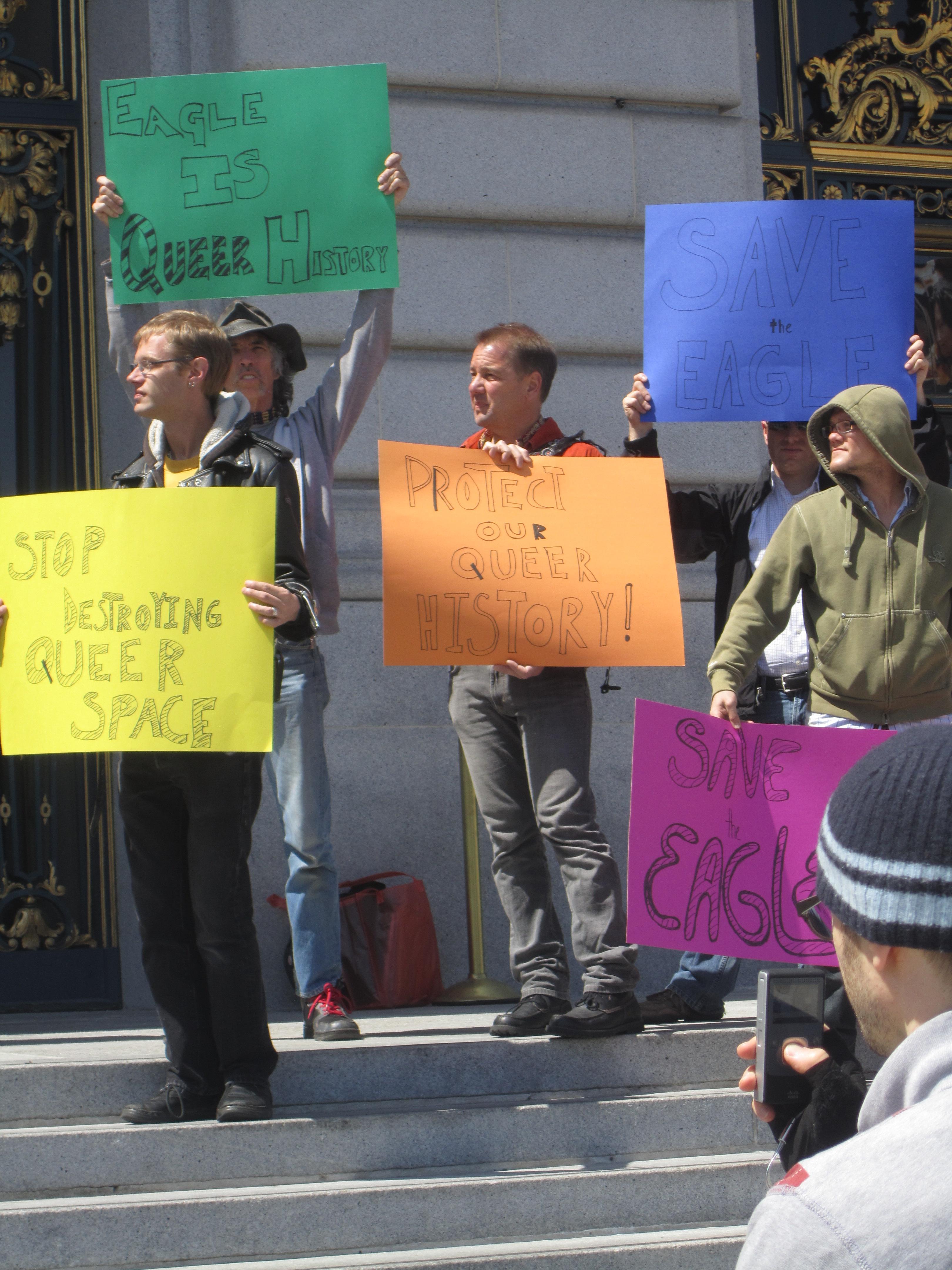
Since then, defenders of the 12th Street space have scraped together emergency meetings and impromptu marches, a surprise leather night at the Skylark Bar (owned by a believed-to-be buyer), and a demonstration on the steps of City Hall. Letters were sent to the Board of Supervisors, petitions signed, and pink tent campouts planned as vigils.

Through it all, the message carrying most clearly was that the Eagle Tavern is far more than a swingin’ hot spot. “It’s our history and it’s our culture,” said organizer Kyle DeVries at a rally on the steps of City Hall last Tuesday. “And we’re proud of what we’ve given to this city.”

That “what” includes more than $1 million raised through the years at popular Sunday beer busts supporting everything from breast cancer research to AIDS awareness. But it also includes providing a safe haven and sense of belonging for San Francisco’s queer community for more than three decades.

And now, patrons have learned they will eek out another month. Thanks to the huge outpouring of support from Eagle denizens, and political pressure from three San Francisco supervisors, the end-of-April plan to fly the coop has been delayed at least until the end of May, Eagle manager Ron Hennis said.

But since the issue first exploded April 11, efforts to save the sacred space haven’t slowed down. At press time, supporters were planning an April 19 “Tuesday roost” at the Eagle in hopes of pumping energy and cash back into the tavern on a night known to be quiet.

Sup. Scott Wiener, along with Sups. David Campos and Jane Kim, sent a letter to the San Francisco Police Department that reviews liquor license sales in connection with the California Department of Alcohol Beverage Control. The letter reviewed the Eagle’s importance in SF’s queer community and stated that its authors are “adamantly opposed to any sale that would result in the Eagle’s destruction.”

The supervisors urged the SFPD to “closely scrutinize, consistent with applicable legal standards, any requested liquor license transfer relating to the Eagle to ensure that any such transfer will not harm the LGBT community by putting an end to the Eagle.”

So far, these efforts have been promising for Eagle patrons. In a phone interview, Wiener told us that Skylark owner Steve Englebrecht has pulled out of negotiations to buy the place. But the situation remains complex.

Eagle manager Ron Hennis explained that current owners John Gardiner and Joe Banks decided to sell the Eagle a year ago to focus on their other SoMa leather bar, Hole in the Wall Saloon, which has been plagued with high-cost property battles of its own.

Gardiner and Banks didn’t respond to our e-mails. But Hennis said they intended to sell the business — which includes the Eagle name, equipment, and liquor license — to people they felt would maintain the existing spirit of the bar: Hennis, Eagle entertainment coordinator Doug Hilsinger, and Lila Thirkield, owner of the Lexington Club.

Hennis and Hilsinger told us a contract was signed and the deal had progressed through an initial set of inspections and into escrow when the property’s owner, John Nikitopoulos, refused to negotiate a new lease with the prospective owners.

Despite successful conversations up to that point, Gardiner and Banks “turned off and didn’t say why,” Hennis said.

Further complicating the matter, Gardiner and Banks’ lease ran out and Nikitopoulos hasn’t renewed it. He’s been renting the property month-to-month and is reportedly raising the monthly price tag, which has remained the same for the past 10 years.

Hennis said the owners were still paying rent when they were threatened with eviction — which would mean a death sentence for the Eagle unless they could sell the business to a party Nikitopoulos would be willing to negotiate a lease with.

In the midst of the stalemate, Nikitopoulos offered to buy the business (and most important, the liquor license) from Gardiner and Banks, who refused saying they’d already agreed to sell to Hennis and his partners. Nikitopoulos then approached Hennis, suggesting Hennis purchase the business as planned and then sell him the liquor license. When Hennis also turned down the landlord’s offer — without the liquor license, Hennis wouldn’t actually own the bar — he disappeared from the conversations.

At the April 12 demonstration, mayoral candidate Bevan Dufty called for the stakeholders involved to recognize that in a city that “values history — indeed, is defined by history,” the lease on the Eagle is “more than just a business transaction.

“The owner of this building needs to come to the table and talk about this,” he urged.

But Nikitopoulos, a resident of Santa Rosa who inherited the property from his father, hasn’t responded to Hennis, reporters, or even to calls from Sup. Wiener. He was, however, reportedly in communication with Englebrecht when the Skylark owner swept in to purchase the space and liquor license — but not the name or the leather culture.

Though Englebrecht withdrew, supporters worry Nikitopoulos could potentially negotiate a lease with a different tenant — leaving the bar a casualty of SoMa’s continued gentrification.

Longtime Eagle patron Mike Talley, who has lived in SoMa for more than two decades, fears the Eagle would fit perfectly into a familiar story of luxury lofts, astronomical rent increases, and — inevitably — mass evictions. He explained that what the Chronicle’s late columnist Herb Caen called the Miracle Mile — a strip of SoMa gay and leather bars that once numbered in the dozens — now consists of just a few properties “hanging in there.”

Mark Kliem, a.k.a Sister Zsa Zsa Glamour of the Sisters of Perpetual Indulgence, echoed Talley’s concern, saying, “The rest of the entire world is family-friendly. Why can’t we have this one little half-mile area to call queer space?”

It’s worth noting that the Eagle is by no means exclusively gay. It is famous for its Thursday-night rock shows where, according to an Eagle DJ, “a melting pot of hipsters, stoners, and rockers mixed with the leather crowd.”

“Everyone was cool,” he said. “Everyone was welcome.”

Still, the bar has become an icon of San Francisco’s queer community.

Kim, who represents the district, presented the Eagle with a letter of commendation recognizing its 30 outstanding years as a “venue, cultural institution, safe haven, and home for the LGBT community” at the April 12 meeting.

“You can’t threaten something as important as this institution,” Campos added.

Wiener, Kim, and California Sen. Mark Leno also praised the Eagle at Sunday’s regularly scheduled beer bust. Leno lauded the efforts of local drag queen/community organizer Anna Conda, and referred to the week’s events as “Stonewall West.”

If anything, the week of demonstrations has drawn San Francisco’s queer community closer. And there is hope that the crowd can stay together in the spot they claimed for themselves. One white-horse possibility is Mark Frazier, owner of a Dallas bar also named the Eagle — and also home to a leather crowd.

Seth Munter of Herth Realty in San Francisco said Frazier has been eyeing the SF Eagle for more than a year, and that he is “interested and able to participate in continuing the Eagle as it has been, either with partners or on his own.”

Reached by phone in Dallas, Frazier told us he’s dreamt of the business since before his own Eagle took flight in 1995. “I think the San Francisco Eagle has a lot of history and a core base of support,” he said. “Any time you go into a business with so much support, it’s going to be successful.”

Frazier stressed that like the SF original, his Eagle has raised substantial sums for charity. Though he acknowledged that the bottom line of all businesses is to make money, “the successful ones continue to give back to the community — and not only monetarily.”

So far, Frazier said he has “exchanged e-mails with the powers that be” and that he is confident the Eagle’s troubles stem from a “communication gap” he could help fix.

Hennis expressed hope about the possibility of working with Frazier in addition to pursuing other options like historical preservation.

Demonstrators have penned more than 100 hand-written letters to the Historic Preservation Commission urging it to assign the Eagle landmark status. Commissioner Alan Martinez said such a process could cost thousands of dollars and would not “grant the right to dictate businesses or tenants.”

Still, he announced publicly that giving the building historic status is not “about turning the city into a museum — it’s about our history.”

Though landmark status protects the physical property, it would also provide legitimacy, an instantaneous way to tell the building’s story and bind the community together. And no matter what happens with the sale of the Eagle, that’s one possibility that flies.


Seven for spring

1

marke@sfbg.com

FASHION/SHOPPING Everything seems so chill in men’s street wear lately, no? The harsh electro neons and jittery MySpace fabrics of the past few years have gone the way of shutter shades and full-print tees. Flashiness — on the dance floor, on the streets, online — is fading into a style of subtle sparks, complex yet unfussy, mixing high-tech winks with a comfy, endlessly expandable base. Menswear is going deep on us, and taking our sensibilities with it: if you’re still using irony to justify your outfit, then you need to back slowly away from your Tumblr and take a look around.

This makes it harder to binge shop for your wardrobe at thrift stores, of course, unless you’ve got a great connection to a super-hip tailor who won’t go overboard. And I fear that by jettisoning the devil-may-care attitude of WTF bricolage ensembles, we’re quaffing any sense of humor altogether. Still, the burst of, dare I say, modesty after a decade of gaudy attention-whoring comes as a relief. It feels like menswear in 2011 just totally deleted the comments section and moved on.

Another worry, though: how much does all this cost? It’s true that the new look and feel hearkens back to the old model of class, taste, and, yes, accounts. Fortunately, you can get by just fine matching neutral-leaning thrift and vintage finds — some holes or split seams, no problem — with newer touches. Yay for casual deconstruction! Lately San Francisco, previously by no means an oasis of menswear shopping, has opened up in the cool men’s streetwear department, adding to its handful of staples (Nomads, Upper Playground, Density, Unionmade, Azalea, Brooklyn Circus, etc.) a batch of new places and sites to search for spring inspiration. Below are some of my faves.


SUI GENERIS “ILLE”

This is the coolest place to vintage shop in the city right now. Castro men’s designer consignment boutique Sui Generis isn’t new, but it just moved, doubling its size as well as its offerings, and adding “Ille,” a Latin masculine declension, after its name. (Owners Miguel Lopez and Gabriel Yanez have turned the old location, at 2265 Market St., into “Illa,” a gorgeous upscale women’s consignment shop.) I’m far from a label whore, but I can appreciate when my friends gush over the selection of repriced Prada, etc. on offer here, all of it chosen with an excellent eye. Beyond the brand worship, you’ll find everything you need to construct a look here — just add your own futuristic flourishes — and the prices aren’t too shabby.

2265 Market, SF. (415) 437-2231, www.suigenerisconsignment.com


NICE COLLECTIVE MSU

Just down the street from Sui Generis is this rad pop-up shop from the boys at the fantastic local Nice Collective label, showcasing their particular genius for deconstructed clothing that radiates raffish gentility. (I’m living for their anarcho-utopian push-up cargo pants.) The tech details in most of their designs are fascinating, and the interior of this shop, with its disassembled drop ceiling, billowing canvas tunnel entrance, and digital projections, is a work of art in itself. Nice Collective is a real, big time design house, though, so expect related price points and quality.

2111 Market, SF. (415) 200-5322, www.nicecollective.com


HANGR 16

Go to this just-opened Mission District store if only to bask in the incredible friendliness, not pushiness, of the people who work there. As well as carrying unique items from local design wunderkinds Turk + Taylor — I’m still drooling over this one heavy felt Army jacket there — Hangr 16 offers an array of super-affordable button-ups, western shirts, plaid flannels, jeans, and nifty tees in its immaculate little white hangar of a space. More shopping options in the Mission? Oh yeah.

3128 16th St., SF. (415) 626-5522. www.faceboook.com/hangr16


BUSH + LEAVENWORTH

A smooth take on classic Americana from this online design house, founded by Neth Nom at his apartment guess where. Light plaid button-ups and some mouthwatering tee designs based on chess pieces (queen for me!) are highlights, as is the ultra-sporty nylon Fillmore windbreaker, combining Members Only stylishness with team jacket masculinity.

www.bushandleavenworth.com


MISSION WORKSHOP

Bike enthusiasts with chronic Chrome fatigue should fixie-fly to this hidden little warehouse outlet immediately. Beautifully crafted messenger bags and backpacks in unique styles are the draw, but the supplementary Quoc Pham, DZR, and house footwear, plus a good selection of outerwear, transcend utility to style bliss.

40 Rondel Place, SF. (415) 864-7225, www.missionworkshop.com


REVOLVER

I am crying, weeping with want, over this kickass pair of Yuketen Maine Guide OX Red shoes that look like Docksides on steroids. They are $440 at Revolver, a cute little joint that just opened in Lower Haight, and, alas, I sold my first-born for a baggie in the 1990s. But I am going to try them on with a pair of $199 Denham Mohawk chinos and a post-prepster $160 ecru Vassan 2-Tone jacket and yacht rock the fuck out for a few minutes.

136 Fillmore, SF. (415) 871-0665, www.revolversf.com


ALLSAINTS SPITALFIELDS

I really hate to recommend a chain, even one from Britain that’s just launching on these shores. But hey, I can’t afford anything here anyway (basic shirts start at around $140), so I’m going to tell you to go and check it out, if only because of the stunning interior that mixes steampunk accents with actual Victoriana. The clothes represent the complete yet fascinating gentrification of a certain postapocalyptic Burning Man aesthetic (the one without the sex clowns and fun fur). Everything is perfectly distressed — work boots, for instance, that gleam vermilion in certain slants of light.

140 Geary, SF. (415) 762-0702, www.allsaints.com

Stories for big kids: Tales hit the stage with Paul Flores, the Living Word Project, Campo Santo, and Word for Word

0

Stories aren’t just for youngsters who read The Very Hungry Caterpillar before bed or tell scary tales around a campfire. The big kids need stories too, and lucky for San Francisco, the city boasts dynamic performers enacting mature and human stories on stage. Feeding complex chronicles to the souls of grown up audience members, Paul Flores, Living Word Project, Campo Santo and Word for Word do their parts to prove stories for big kids rule.

In You’re Gonna Cry, a one-man show about the effects of Mission District gentrification performed in February at Dance Mission Theater, Flores embodied about a dozen neighborhood characters. Ranging from a Latino bohemian, a pink-haired DJ, and an elderly dumpster-diving immigrant, to a salsa-dancing old timer, a drug dealer, and a well-meaning business man, the personalities illuminated his story from diverse perspectives.

With versions of each character walking the streets in real life, You’re Gonna Cry‘s tales resonated. “The project is not meant to be consumed passively, but to move people to respond and take action,” Flores wrote in the program notes, revealing his intention to employ art for social change. The call to action: empathy, respect, and support for one’s neighbors, and acknowledgment of the cultural nuances in the Mission District. For Flores, hip-hop theater and storytelling helped to put a human face on the issue. 

A Def Poet, playwright, novelist, and spoken-word artist, Flores continues to make a huge impact on teens as a co-founder of Youth Speaks, which implements programs connecting poetry, spoken word, youth development, and civic engagement. The resident theater company of Youth Speaks, the Living Word Project extends the reach of  personal narratives, emphasizing spoken storytelling to communicate important social issues and current movements. Living Word Project Artistic Director Marc Bamuthi Joseph, also a former Def Poet, works closely with a select group of writers and performers, whose ages span from 19 to 25, for the productions.

Trailer for the Living Word Project’s ‘Word Becomes Flesh’:

Excerpts from the Living Word Project’s Word Becomes Flesh appeared in December of last year at YBCA’s Left Coast Leaning festival, co-curated by Joseph. There, committed performers enacted letters to an unborn son, with electrifying physicality and rapid-fire wordplay. The work presented a counter-narrative to the narrow frame of current commercial hip-hop, breaking stereotypes. Through performance, the group focused on the oral transfer of a story, directly confessing personal thoughts and emotions to make connections. Watch for them with Campo Santo at Intersection for the Arts this November in Tree City Legends, written by Dennis Kim of Denizen Kane and directed by Joseph.

Campo Santo, the resident theater company at Intersection for the Arts led by Sean San Jose, plays a major role in theatrical storytelling, linking writers to the stage. “Campo Santo is Spanish for sacred ground,” the group’s artist statement declares. “Like the roots of our name, we are taking the sacred form of storytelling and using it as a tool to bond community through socially relevant plays.”

In May, Campo Santo performs for the first time in Intersection for the Arts’ new home at the San Francisco Chronicle Building, presenting Nobody Move, based on the book by Denis Johnson. Adapted by San Jose, the performance offers a noir psychic picture of the United States from an outsider’s seat. In September, Campo Santo continues its work with Pulitzer Prize-winning author Junot Diaz when it presents The Pura Principle, created from Diaz’s recent short stories and original writings. Also expect storytelling to be part of this year’s Bay Area Now Triennial at Yerba Buena Center for the Arts, where San Jose is one of several curators for performances during the final months of 2011.

Another group breathing life into short stories is the Word for Word Performing Arts Company, operating at Z Space. Founded by Susan Harloe and JoAnne Winter, Word for Word is known for staging performances of classic and contemporary fiction, enabling the company to tell literary stories with theatricality. Word for Word’s last show was extended due to its popularity and positive critical reception. This week, The Islanders opens at Z Space, telling about the bonds of friendship – as two women reunite for a trip to Ireland — by bestselling author Andrew Sean Greer, directed by Sheila Balter. 

While some degree of storytelling already exists in most narrative theater work, the outward expression of a story onstage shifts the performances of Flores, the Living Word Project, Campo Santo, and Word for Word into distinct territory. By combining narrative and literature with powerful theatricality, these San Francisco performers make clear that stories are for people of all ages.

THE ISLANDERS
Wed./9-Fri./11, 8 p.m.; Sat./12, 3 and 7 p.m.; $15-$40
Z Space
450 Florida, SF
www.zspace.org

Back to the streets

2

Coronel knew an old man in Granada who said

(who often said):

“I wish I were a foreigner, so that I

Could go home

— Zero Hour, Ernesto Cardenal

I first came into contact with the work of poet Roberto Vargas a couple of years ago, when I saw his face, projected several stories tall, on a wall just off Valencia Street.

I was riding my bike to the Day of the Dead procession when I came across filmmaker Veronica Majano screening historical footage of the old Mission District on the wall of Dog Eared Books. The footage of Vargas was from a movie called Back to the Streets, and it showed a Latino hippie fest in Precita Park circa-1970. Long-haired Chicanos smoked weed and danced and played bongos on the grass while Vargas read from a stage. On today’s Valencia Street, Vargas was a ghost returned from a long-lost Mission, now standing twenty feet tall on the bookstore’s wall, reading a powerful poem that angrily denounced the SFPD for the mysterious death of a Mission Latino youth in police custody.

The film of Vargas was a beautiful snapshot of Latino youth culture in the neighborhood before gang violence and gentrification, like a Mission High School yearbook scene from an exhilarating era of Latino self-determination. In 1970, the Free Los Siete movement was feeding the community at a free breakfast program out of St. Peter’s Church on Alabama Street and had started free clinics and legal aid programs in the Mission. In the years to follow, the neighborhood would see the founding of the Mission Cultural Center and Galeria de la Raza and the inception of many of the neighborhood’s now world-famous mural projects.

Looking at the groovy scene in the park, it was hard to imagine that just a few short years later, Vargas and other kids from the Mission would be fighting alongside the Sandinistas in the jungles and mountains of Nicaragua. Yet the utopian promise of the era’s poetry, art, and youth culture in many ways culminated in the guerrilla war in which Vargas and other poets from San Francisco would fight and ultimately — in 1979 — help defeat the forces of Nicaraguan dictator Anastasio Somoza.

On Feb. 24, the day of his 70th birthday, Roberto Vargas makes a rare return to San Francisco to perform in a poetry event at the Mission Cultural Center in honor of that Nicaraguan solidarity movement of the 1970s. A video will be shown of footage from that struggle — classic scenes of Vargas and others taking over the Nicaraguan consulate in San Francisco; of the famed nightly candlelight vigils at 24th and Mission BART Plaza in support of the Sandinistas — and Vargas will be reunited on stage to read with old poet friends like Lawrence Ferlinghetti, Diane di Prima, Alejandro Murguía, and Vargas’ old compañero from San Francisco State University’s Third World Liberation Front, actor Danny Glover. The event is not open to the public. Invitations have been given out and the small MCC theater’s 150 seats have already been filled. Yet the event provides an opportunity to publicly honor Roberto Vargas’ contributions to the Mission, and to reflect on the hopes and dreams of Mission past.


POETRY AND REVOLUTIONARY VISION

Poetry was a part of Vargas’ world from the beginning. Vargas was born in Nicaragua, but came to the United States when he was a small child. In his 1980 collection of poems Nicaragua Te Canto Besos, Balas, y Sueños, he writes of “living in an offbeat alley called Natoma Street (where I always imagined a lost Mayan city existed beneath the factories).” By the late 1950s, Vargas may have been the first Mission District Latino Beat poet. “I graduated from Mission High School in 1958 and used to hang out in North Beach, going around to see all the poets,” he says. “I met Allen Ginsberg when I was just a 19-year-old kid running around in North Beach. Diane di Prima, Bob Kaufman, Ted Berrigan — all the major poets knew me when I was in my teens.”

After a stint in the U.S. Marine Corps and an attempt at a boxing career that ended with a detached retina (an injury that also helped him avoid the Vietnam-era draft), Vargas went to SF State, where he was heavily active in the student strike of 1968-69. Students walked out of campus and battled riot police while standing on picket lines for five months to demand an ethnic studies program at the university.

In the spirit of the times, Vargas and other poets — including a young Mission Chicano named Alejandro Murguía — joined the Pocho-Che Collective to publish poetry by local Latino poets. The poets went to cut sugar cane in the Venceremos Brigade in Cuba. They put out small poetry chapbooks in the Mission, full of poems that linked Che Guevara’s call for Third World revolution with the experience of the Chicano barrios of the United States in a new vision tropical. In the era after the SF State strike, the city started funding community arts projects in the ghettos. Like all classic zines, the first copies of Pocho-Che were scammed, in this case late at night at Vargas’ new job in the Mission’s Neighborhood Arts Program. In the years to come, the group would eventually publish hardbound books by Vargas, Nina Serrano, and others.

Today, Murguía is a professor in the ethnic studies program at SF State that the strikers fought to originate. He is the author of the American Book Award-winning short story collection This War Called Love (2002) and the memoir The Medicine of Memory (2002). He remembers, “The poetry scene was incipient, very young, and the readings weren’t always very formal. Sometimes they were at community events or protest rallies. But we had contact with Latin America. We knew people who had been in Chile, like Dr. Fernando Alegría.”

Alegría was a poet who had been the cultural attaché to the U.S. under Allende in Washington. Vargas recalls, “Alegría had myself and some other young poets come to Chile and spend a month or two studying with [Pablo] Neruda. But, of course, our plans were canceled by the coup in Chile.”

Murguia remembers the September 1973 coup in Chile that overthrew the popularly elected Socialist democracy of Salvador Allende caused the young poets to organize rare formal readings at Glide Memorial Church in protest. “We had several big ones there,” he says. “There was a broad range of poets — Michael McClure, Fernando Alegría, Jack Hirschman, Bob Kaufman, Janice Mirikitami all read. There was a line going down the block to get in.”

In addition to their mentor, Alegría, Vargas, and Murguía also knew one of their heroes, the Nicaraguan Marxist poet and priest, Ernesto Cardenal. Cardenal lived under the Somoza dictatorship in a sort-of internal exile in a religious artist commune called Solentiname. Vargas wanted to bring Cardenal to read in the United States, but Somoza would not allow the poet, who was critical of the Nicaraguan dictator, to travel outside the country. Vargas went to his old pal Ginsberg for help.

“Because Allen knew me when I was a kid, he helped me with my organizing for Nicaragua,” says Vargas. “Allen was part of PEN, and in 1973 or ’74 he went to the State Department with other writers to put pressure on [Anastasio] Somoza. Eventually Somoza relented and we brought Cardenal to New York for a reading.”

The poetry of Cardenal was a north star to the young Mission poets. Cardenal’s epic 1957-60 masterwork Zero Hour is perhaps the literary foundation of revolution in Nicaragua. Influenced formally by Ezra Pound, Zero Hour weaves a sprawling history of Somozan oppression and U.S. intervention in Nicaragua together with lyrical imagery of Nicaragua’s natural beauty and wildlife. The poem creates a poignant sense that Nicaraguans, unable to enjoy and own these natural riches, had under Somoza become exiles within their own country.

Of particular interest to the young Mission poets, though, was Cardenal’s Homage to the American Indians (1969), a book-length meditation on the glory of Mayan and North American native civilizations. “For us, the work of Cardenal was very important,” says Murguía. “Homage to the American Indians is a continental vision of Native Americans — everything from the San Blas Indians of Panama to the Indians of Omaha to the Indians of Mexico City and Peru.”

In Homage, Cardenal evokes a lost Indian Utopia “so democratic that archaeologists know nothing about their rulers,” where “their pyramids were built with no forced labor, the peak of their civilization did not lead to an empire, and the word wall does not exist in their language.” He writes:

But how to write anew the hieroglyph,

How to paint the jaguar anew,

How to overthrow the tyrants?

How to build our tropical acropolis anew

Cardenal’s poems of this lost glorious past were to Vargas more pointedly a vision of a Latin American utopia that can also be regained in the future. In Cardenal’s work, says Vargas, “There is a longing for the simplicity of that civilization — the creativity, the innocence, the tribalism. Can we get it back after all the dictatorships, after all that capitalism has done? Cardenal showed us what we were, what we had, what we lost.”

Under Cardenal’s influence, the Mission poets turned seeing lost Mayan cities beneath the city’s factories into a literary movement. By 1975, members of Pocho-Che had started a magazine called El Tin Tan with Murguia as editor and Vargas as contributor. El Tin Tan presented a sweeping utopian vision of a borderless invisible Latino republic united culturally and politically under the sign of the palm tree. The poets situated the capital of this world right here in the Mission District.

“To tropicalize the Mission — to see it as a tropical pueblo — was a political act of defiance and self-determination,” says Murguía. “We were saying that we put this particular neighborhood — our pueblo, in a way — not in a context of North American history but in the context of Latin American history. The history of the eastern U.S. doesn’t affect California until 1848 when the first illegal immigrants came to California — not from the South, but from the East.

El Tin Tan,” Murguía continues, “was probably the first magazine that was intercontinental in scope, a combination of politics and literature and art and different trends from the Mission to Mexico City to Argentina and everywhere in between.” He proudly recalls that it ran the first North American essays on Salvadoran poetry, and translated and printed a short story by Nelson Marra, a writer imprisoned by the Uruguayan dictatorship.

Yet for all its international perspective, El Tin Tan remained firmly rooted in the Mission. Columns by Nuyorican poet Victor Hernández Cruz and news of the assassination of Salvadoran guerrilla poet Roque Dalton ran side by side with the first comics by future Galeria de la Raza founder Rene Yáñez, all folded between wildly colorful cover art by neighborhood favorites like the famed Chicano artist Rupert Garcia and the muralist Mike Rios.

“The magazines were colorful — tropical — on the outside, but very political on the inside,” says Murguía. “That was a metaphor for our own work.”

By this time, Vargas had become an Associate Director at the SF Arts Commission. From within City Hall, he started to pump city arts money into the Mission, helping to fund projects like Mike Rios’ mural of the people holding BART on their backs at 24th and Mission BART Plaza and the Balmy Alley Mural Project — art that can still be seen in public today.

Once, Vargas commissioned a Chuy Campesano mural for the Bank of America building at 22nd and Mission. “I read a poem called “Boa” and had the crowd dancing and chanting, Es la Boa, Es la Boa,” says Vargas. “We were trying to say, ‘You made your millions off our farmers, but now you are on our turf in the Mission here in occupied Mexico. So we’ll put hieroglyphics on the walls of your bank like we used to do!’ Someone from the bank tried to take the mic from me and cops came and escorted us out.”

Vargas’s story of the mural’s dedication ceremony captures the bravado of the era. “It was a beautiful time, all of us young and thinking we were going to change the world. We wanted to change the world through culture.”

The poets organized the community to demand a neighborhood’s arts center, too. In 1977, the dream was realized when the City, with pressure from Vargas from within City Hall in the Arts Commission, purchased an old, five-floor furniture store at 24th and Mission to be made into the Mission Cultural Center. Murguia became the center’s first director.

The Mission utopia was becoming a reality for Vargas. In Nicaragua Te Canto, he wrote:

We used to drive

Our lowered down Plymouths and Chevys

On top of the breast of a mountain to

Make love and drink wine… Never

Knowing what was going to happen after

Mission High School

The Mission is now an expression of real culture, a many-faceted being … both plus and minus with the soul of a human rainbow…My people watching slides of Sandino and Nica history … White children wearing guarachas and afros trippin’ down the streets to party. Young Salvadoran poets discussing the assassination of Roque Dalton … The Mission is now an implosion/explosion of human color, of walls being painted by muralistas. There is a collective feeling of compassion for each other Nicas Blacks Chicanos Chilenos Oppressed Indios. The sense of collective survival, histories full of Somozas, Wounded Knees written on the walls.

In Zero Hour, Cardenal wrote of Nicaragua’s trees and birds and lakes, and their call to revolution, as seen from its mountains:

What’s that light way off there? Is it a star?

Its Sandino’s light shining in the black mountain


Vargas, the excited Mission kid, echoed in his work:


Tonight I am sitting on a mountain called Bernal Hill

Tonight I see the flames of America Latina spreading from here …


STRUGGLE AND VICTORY — AND STRUGGLE

Perhaps inevitably, the Latin American Utopia Vargas and company created in poetry would seem so tantalizingly close to actualization that they would be forced to pick up the gun and fight for its existence.

When the enormous earthquake of 1972 left Nicaragua’s capital, Managua, in ruins, Nicaraguan refugees flocked to SF’s Mission District. Soon, San Francisco was home to more Nicaraguans than any place on Earth outside of Nicaragua. The family of Anastasio Somoza had controlled Nicaragua with brutal repression for generations. Somoza’s embezzling of relief funds for earthquake victims led to increased revolutionary activity against his rule. Taking their name from Augusto Sandino, a Nicaraguan revolutionary who led resistance against U.S. occupation of Nicaragua in the 1930s, La Frente Sandinista de Liberacion Nacional (FSLN) — or the Sandinistas, as they were popularly known — began guerrilla activities in late 1974 by taking government officials and Somoza relatives hostage in a raid on the house of the minister of agriculture. They received a $2 million ransom and had their communiqué printed in the national newspaper. Thus was born the Sandinista revolution.

In the Mission, Vargas, Murguía, and others were in touch with La Frente, and began organizing Sandinista solidarity rallies to coordinate with La Frente’s actions in Nicaragua. Out of offices in the Mission Cultural Center, along with El Tin Tan, the poets published a newspaper called La Gaceta about the situation in Nicaragua. The paper had a circulation of 5000 copies and was available for free all over the district. The sight of pro-Sandinista rallies at 24th and BART Plaza became so common that the plaza was popularly nicknamed Plaza Sandino.

Vargas organized takeovers of the Nicaraguan consulate in San Francisco and traveled the US, speaking about Nicaragua. Yet, soon, this kind of support didn’t seem like enough. In Cardenal’s poetry, victory was inevitable. Cardenal had written that Indian time was circular, that “history became prophecy,” and that therefore the “empire will always fall.” He had also written, “The hero is reborn when he dies. And the green grass is reborn from the ashes.” In poetry, Vargas and Murguia found inspiration to go to war.

In 1976 and 1977, Mission District residents, in solidarity with the FSLN, began quietly leaving San Francisco to join up with La Frente and pick up the gun in the Sandinista Revolution. Among them were Roberto Vargas and Alejandro Murguía.

“It was very romantic,” says Murguía. “If you grew up in the time after Che’s death, when you had Che’s figure calling for “1,2,3, many Vietnams” and a lot of different armed struggles going on all over Latin America, then it would seem logical, I think, if you were kind of young and crazy, that you would want to participate in some of these situations besides just doing solidarity work or organizing rallies. Also, the coup in Chile crushed our generation’s hope for electoral change in Latin America.”

Today, Murguía tries to situate the poets’ embrace of armed struggle within the spirit of those long ago times, but one senses that Vargas would not hesitate to join a guerrilla war tomorrow morning. When I ask him how the young poets made the leap from verse to bullets, he is incredulous at the question.

“We had to fight! There was no other way!” Vargas says. “We had the historical perspective and as a people we were worthless if we let that situation stand. We had our own books out. But are we really revolutionary poets if we just sit back and collect our laurels?”

Murguía compares the Sandinista war with the Spanish Civil War, when there were many international brigades in which writers had been involved. He suggests the poets went to war because they were poets. “If you knew the situation intimately in Nicaragua and you were reading Cardenal’s poems,” he says, “it was easy to see the connection between poets and political necessity.”

Vargas began organizing small, tight-knit cadres for battle in Nicaragua, recruiting his Sandinista guerrillas right off of the streets of the Mission. “I was secretive and I found them one by one,” he explains. “We were very clandestine and very compartmentalized. We never had more than a dozen people in our committee at once.”

Men who were menial laborers in San Francisco would one day be among the most respected heroes of the Nicaraguan Revolution. “When I recruited Chombo [Walter Ferretti], he was a cook at the Hyatt Regency,” says Vargas. “Later, Chombo would become a head of national security in Nicaragua. Another recruit was a former pilot, so I went to talk to him where he pumped gas at 21st and South Van Ness. That was Commandante Raúl Venerio. After the triumph of 1979, he would become the Chief of the Nicaraguan Air Force.”

When in San Francisco, Venerio later served as the editor of La Gaceta. In Nicaragua, the former gas station attendant became a real hero. “They got an airplane and attacked the National Palace,” says Vargas, laughing. “They hit it and split, and got away — real Mission boys!”

Before heading off to join La Frente, Vargas’ recruits would undergo a regimen of training and political education, an informal boot camp largely hidden in plain sight in the Bay Area.

“It was primitive,” remembers Murguía. “We didn’t really have someone with a military background to train us. We got just guns at pawn shops on Mission Street and practiced shooting at the firing range in Sharp Park down in Pacifica. We worked out with a friend who was a black belt in karate.”

Murguía says the most difficult part of training was the daily pre-dawn run of five laps around Bernal Hill. “We would run up the hill counter-clockwise — because that way is more difficult,” he says, “and we would wear these combat boots we bought at Leed’s Shoes on Mission.”

Besides being a part of physical conditioning, the run was a litmus test of the recruits’ commitment. “Doing activity like that is almost impossible if you’re not really psychologically into it,” says Murguía. “Try running five times around Bernal Hill! You start wondering after your third lap, ‘Goddamn! Why am I doing this?‘ Especially when no one is forcing you to do it!”

When I ask if the daily jog of 10 or 12 Latino men in combat boots on the hill at sunrise did not attract any, uh, attention, Murguía shrugs. “There were less people on the hill in those days,” he says. He recalls that the Mission cadres trained in complete anonymity: “We got money to rent planes and we took turns learning to fly the planes around the Bay Area. Nobody suspected anything because nobody knew anything about Nicaragua then.”

When I try to imagine a phalanx of Sandinistas at dawn on today’s Bernal Hill, surrounded by a crowd of early morning dog walkers, I can’t help but laugh. But the cadre’s training was deadly serious, and Murguía says its value was far more than psychological. “What I discovered when I went to the Southern Front was that our San Francisco cadres were some of the most advanced in the war,” he explains. “We understood the political situation and the tactic of insurrection and we had a minimum of physical conditioning. But some of these other cats, man! They literally just walked in off the street!”

For a time, Murguía remained the director of the Mission Cultural Center, while making regular trips to fight in Nicaragua. In 1977, Vargas resigned from the Arts Commission and went to battle for six or seven months. He and Murguía would spend the next couple of years rotating back and forth from the war front in Nicaragua to their solidarity work in the Mission. Murguía describes his entry into Nicaragua, his stay in various guerrilla safe houses in Costa Rica, and his experiences in the war in his 1991 American Book Award-winning fictionalized memoir, Southern Front.

Though Murguía says the actual military war on the ground was largely a stalemate between the Sandinistas and the Somozas’ National Guard, the Sandinistas were at last able to triumph through international pressure, strategic military victories, and a general strike. Somoza fled in July of 1979, and the Sandinistas entered Managua victorious on July 19 of the same year. Cardenal’s poem “Lights” describes the city as seen from a plane that brought the elder poet into a Managua free from the Somoza family’s rule for the first time in 43 years. In Managua, street graffiti declared, El triunfo de la revolución el triunfo de la poesía.

Vargas and Murguía, however, did not enter Managua with the victorious army. The Southern Front did not go to Managua, and Vargas had recently been sent back to the U.S., to coordinate a simultaneous take over of the Nicaraguan consulates in major U.S. cities from coast to coast to coincide with the victory in Managua.

Vargas’ work for Nicaragua did not end with victory. The Mission High kid now found himself serving in the new revolutionary government as cultural attaché to the United States. “I was jailed in the takeover of the DC consulate,” Vargas says, laughing, “but then I came back several months later to serve there!”

The voluble poet grows uncharacteristically silent when I ask him what it felt like to actually win the war.

“To win?,” he asks, pronouncing the word as if he was hearing it for the very first time. “Well … it’s like taking off a huge load, man. Like taking mountains off your back.” He is silent for a bit and then adds, “But what do you win? You win the right to continue the struggle.”

“To win was to reach the objective of getting rid of the Somoza family once and for all,” Vargas says. “But it was not really a win/lose situation.” Indeed, the Sandinistas inherited a country in ruins and in debt, with an estimated 50,000 war dead, and 600,000 homeless. Nicaragua’s left-wing powers would become an obsession for the Reagan Administration, who for the next ten years offered heavy financial assistance and training to the Contras, a coalition of pro-Somoza and anti-Sandinista guerrillas who fought to overthrow the revolutionary government. The U.S. strangled Nicaragua’s economy with a trade embargo like it employed against Cuba. In reality, for the Sandinistas, the war literally never ended.

“Somoza bombed everything in Nicaragua before he left the country. Reagan was spending — what? — $100 million a year annually against us at that time?” says Vargas. “They spent so much for a decade to destroy our little country.”

Nonetheless, poetry remained in the forefront of the Nicaraguan revolution. Cardenal was named Ministry of Culture, and he instituted poetry workshops across Nicaragua as part of a highly successful literacy campaign that raised literacy from just 12 percent to over 50 percent in the first 6 months of the revolutionary government. Soon, poetry was being written and taught in the tiniest villages and in the fields.

“We tried,” Vargas says bluntly. “We were doing very important land reform, incredible stuff for the economy. But it was dangerous to be a good example. We had the potential, but we had to hold off this enormous power [of the U.S.] for decades. Ultimately, we had to step back so they would not destroy Nicaragua.”

In 1990, Nicaraguan voters, weary of war and economic misery, chose to elect FSLN President Daniel Ortega’s U.S.-backed opponent, Violetta Chamorro, in the presidential election. “We lost the elections,” says Vargas. “But we had to allow them to demonstrate that we were not like Cuba or other revolutions. We lost beautiful young men and women to get that liberty.”

I ask Vargas to consider the successes and failures of the Nicaraguan revolution. He pauses and then seemingly changes the subject, excitedly telling me of the time he brought Ginsberg to meet the Sandinista soldiers. “Ginsberg was fascinated by the Sandinistas,” says Vargas. “And he wanted to see what he had been supporting on my behalf all these years. So I took him to the fighting along the Honduras border in 1984, during the Contra war.”

When Ginsberg went to the war zone, he brought not a rifle but a concertina. “I took him to meet these young soldiers in a trench. They see Allen with the concertina and they were like, ‘Who the hell is this guy?’ I told them he was a very famous poet. At once, they all started taking bits of paper out of their pockets that they had written poems on and started reading them to Allen. So there we are, with these soldiers in the trench with their rifles reading poetry, and Allen just wailing away on this concertina!”

I think of the strange road from Cardenal’s vision of lost Mayan cities to Vargas’ dreams of a Bernal Hill utopia to Ginsberg listening to soldiers’ poetry in a Nicaraguan trench, and I see that Vargas has answered my question with his own, the question asked by revolutionary poetry.


LOST CITIES, AND NEW ONES

The lost moment with Ginsberg in the trenches is like a missing chapter out of Roberto Bolaño’s Savage Detectives. Indeed Vargas’ story in many ways embodies that of Bolaño’s exile poet generation, of which he wrote, “They dreamed of a Latin American paradise and died in a Latin American hell.” Except for one crucial difference: Vargas is very much alive and still fighting.

Today, Vargas still puts in a tireless 50-hour work week as a labor organizer for the American Federation of Teachers in San Antonio, TX. During our conversation, he excitedly tells me of an action he is organizing for next month, a march of teachers on the Texas capital to protest budget cuts to education. “I camp out in the teacher’s lounge and talk to them when they are on break,” he says. “I signed up 50 new members last week!”

As he nears 70, the poet shows no signs of slowing down. “I can’t afford to!” he says. “My youngest son is only 17. When I get finished putting him through college, then maybe I can take a break.”

But work seems like more than necessity to Vargas; political struggle is the central theme of his life’s work. “Work, work, work, Erick,” he tells me. “That is what we have to do. I could go back and forth about what went wrong in Nicaragua, but there is more work to do and I have to stay positive. It is all part of the process.”

When Vargas comes back to the Mission Cultural Center this week, he will literally return, full circle, to a building he helped build. “We had no money to hire laborers, so we’d be there with our kids every weekend, building the place,” he remembers.

One of those kids was Vargas’ son, Mission poet Ariel Vargas, who will read in public with his father for the first time this week. “Cardenal baptized him when Ernesto came to bless the new Mission Cultural Center in 1977,” Vargas says. “He had offered to baptize any children who also might be there. In the end, there was a line of families around the block on 24th Street who had brought their children for Ernesto Cardenal to baptize. Ariel had already been there every weekend on his hands and knees sanding those huge gymnasium-like floors with us. The Mission Cultural Center is still there and that is our monument.” As he discusses the Mission, Vargas forgets the problems of the Nicaraguan revolution and begins talking nonstop again at last. He comes back to the stories that started our conversation. “You know, I lived at 110 Mullen on Bernal Hill,” he says, his excitement gathering. “Mike Rios was my neighbor. Rene Yáñez lived on the block. So it was all happening right there! Carlos Santana lived down the block at around 180 Mullen or something. We used to hear him and his band jamming all the time. The Arts Commission had a stage truck and I’d take it out to Precita Park and put the stage down for Carlos to play on.” I think of Cardenal’s vision of the repeating cycle of time, the promise that the empire will always fall and the hero will always be reborn. Much in the Mission has changed. But Vargas, the old poet, still looks out from Bernal Hill today and sees lost cities beneath the surface.




Our Weekly Picks: February 9-15

0

WEDNESDAY 9

MUSIC

Turisas

I recently heard Turisas described as “Disney metal.” So before you run screaming in the other direction, hear me out when I claim that it was actually a compliment. Spearheaded by singer-founder Mathias “Warlord” Nygard, the band plays folk metal so lushly orchestrated that it sounds like a movie score, full of trumpet swells and epic organs. Onstage, it features an accordionist and a violinist; the latter is responsible for all the soloing that would traditionally be done on guitar. Turisas’ 2007 release The Varangian Way is an engrossing concept album whose eight tracks follow a group of Scandinavian travelers as they make their way across Russia by river and end up in Constantinople. New platter Stand Up and Fight is due Feb. 23, but you can get a sneak preview at the show. (Ben Richardson)

With Cradle of Filth, Nachtmystium, Daniel Lioneye

8 p.m., $27

Regency Ballroom

1300 Van Ness, SF

1-800-745-3000

www.theregencyballroom.com


DANCE

Eonnagata

Eonnagata comes with pretty impressive credentials, and promises to be unique. The work is a collaboration between maverick ballerina Sylvie Guillem, who has made waves ever since she dared to quit the Paris Opera Ballet to freelance; multi-whiz Canadian director Robert Lepage, whose Ex Machina company has redefined theater for the last 20 years; and dancer-choreographer Russell Maliphant, who mixes ballet with yoga and everything in between. The trio created and performs in a work that examines the in-between state of male-female sexual identity. Inspired by an 18th century French noble, spy, and diplomat who fluidly switched genders throughout his career, Eonnataga also acknowledges a debt to the onnagatas, the refined male actors in Kabuki who spent their careers playing female characters. (Rita Felciano)

Wed/9–Thurs/10, 8 p.m., $36–$72

Zellerbach Hall

Bancroft at Telegraph,

UC Berkeley, Berk.

(510) 642-9988

www.calperformances.org


EVENT

“How to Write A Dynamic Online Dating Profile”

You’ve been on blind dates. You’ve tried speed dating. You’ve even have had your mother set you up. But you still can’t find love? Turn to cyberspace. (Don’t be embarrassed. According to those Match.com ads, one out of five relationships now begin online.) Take it from Carol Renee, a self-proclaimed “logophile,” English teacher, and aspiring novelist who found the love of her life using the handle “Fearlessly Compassionate.” She’ll hold your hand during the daunting tasks of coming up with a tantalizing user name, writing an attention-grabbing headline, and composing a succinct and yet true-to-life bio in this “how-to” class. (Jen Verzosa)

6:15 p.m., free

San Francisco Public Main Library

Latino/Hispanic Community Room B

100 Larkin, SF

www.sfpl.org


THURSDAY 10

MUSIC

Ensiferum

The Finnish metallers in Ensiferum span many styles, taking the best of everything they encompass. From folk metal, they learned the power of haunting, infectious melody and atmospheric texture. From thrash, they got the exultation and catharsis of breakneck tempos and relentless picking. And from power metal, they got the gleeful, empowering satisfaction that comes from singing about dudes with swords. The recent infatuation with Pagan stylings among American metalheads has brought the band stateside numerous times now, and Ensiferum never disappoints. Having donned their warrior garb, the five Finns who make up the band don’t leave the stage until everyone and everything is vanquished. (Richardson)

With Finntroll, Rotten Sound, Barren Earth

7:30 p.m., $25

DNA Lounge

375 11th St., SF

415-626-2532

www.dnalounge.com


EVENT

“Lusty Trusty Ball SF”

Not on the guest list for the annual Manus-Salzman Valentine’s Day Ball? No matter. Your photo won’t be gracing the pages of the Nob Hill Gazette or SF Luxe this time next week, but as least you don’t have to worry about breaking out the black tie. At the less-costly-but-no-less-classy Lusty Trusty Ball, in exchange for forgoing the ice sculptures, posh catered nosh, and a live gingerbread boy to nibble candy off of (he was holdin’ it down for Hasbro’s Candy Land in keeping with last year’s Manus-Salzman theme, “The Game of Love”) you’ll enjoy DJs, VJs, and live groups galore. Plus, with punk rock cabaret from the Can-Cannibals, Circus Finelli’s all-female antics, and Red Hots Burlesque, you can have a hot night without the haut monde. (Emily Appelbaum)

8:30 p.m., $10–$20

Submission

2183 Mission, SF

(415) 425-6137

www.sf-submission.com


EVENT

“Oilpocalypse Now”

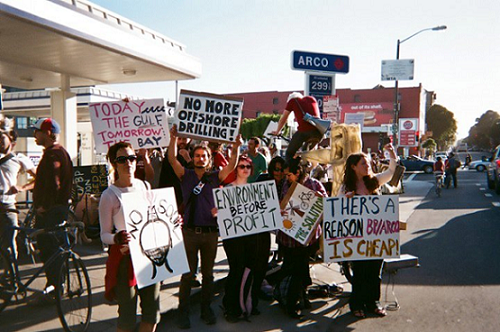
Last April’s Gulf Coast-ravaging oil spill may have slipped from the headlines, but the region is still struggling to recover. “Oilpocalypse Now” takes aim at the corporations that cause (and cover up) environmental disasters — indeed, the event is subtitled “Time for a 28th Amendment for the Separation of Corporation and State” — featuring a talk by Dr. Riki Ott, a community activist and marine biologist. Ott will present the documentary Black Wave: The Legacy of the Exxon Valdez (remember that one? Big Oil hopes you don’t!) Other speakers include Lisa Gautier, who helped organize the “hair boom” effort to soak up Gulf Coast oil; former Guardian columnist Summer Burkes, who witnessed the Louisiana devastation first-hand, and more. Proceeds benefit the Gulf Coast Fund, Ultimate Civics, and the Coastal Heritage Society of Louisiana. (Cheryl Eddy)

7 p.m., $10–$20

Grand Lake Theater

3200 Grand Lake, Oakl.

(510) 452-3556

www.summerburkes.wordpress.com

http://communitycurrency.org/node/63


FRIDAY 11

DANCE

“Black Choreographers Festival: Here and Now”

For the next three weekends the “Black Choreographers Festival: Here and Now” throws the spotlight on the Bay Area’s African American voices. Now in its seventh year, the festival brings together professionals from a rainbow of perspectives on dance. If this were an ideal world, these choreographers would have their own companies and regular seasons. Some do — Raissa Simpson, Deborah Vaughan, Paco Gomes — but the festival offers all an opportunity to make themselves heard in the context of their colleagues. The Oakland lineup is different from the San Francisco one; the third weekend focuses on up-and-coming new talent. And as always, the youth ensembles at the family matinee will be a special high-energy treat. (Felciano)

Fri/11–Sat/12, 8 p.m.;

Sun/13, 4 p.m., $10–$20

Laney College

900 Fallon, Oakl.

Feb. 17–19, 8pm; Feb. 20, 7 p.m.

ODC Theater

3153 17th St., SF

Feb. 25–26, 8 p.m.; Feb. 27, 7 p.m.

Dance Mission Theater

3316 24th St., SF

1-888-819-9106

www.bcfhereandnow.com


PERFORMANCE

You’re Gonna Cry

Where better than 24th Street to watch a solo show about the real lives of Mission District residents at the height of gentrification? Touching on everyone from the techies and bohemians to the Latino locals and immigrants, HBO Def Poet and Youth Speaks cofounder Paul S. Flores performs his theatrical work about the human cost of gentrification in the neighborhood. In addition to masterful storytelling, get ready for a gangster puppet show and digital murals, illuminating the changes brought by the dot-com boom and bust, real estate bubble, immigration, and forced evictions. The Mission is loaded with characters and Flores’s dynamic fusion of urban culture and spoken word brings them all to life. (Julie Potter)

Fri/11–Sat/12, 8 p.m., $15

Dance Mission Theater

3316 24th St., SF

(415) 273-4633

www.dancemission.com


EVENT

California International Antiquarian Book Fair

Ever wonder what ephemera left by our generation will be pored over in a millennium or two? Parking slips, band posters, books like Lady Isabella’s Scandalous Marriage and 1001 Deductions and Tax Breaks, 2011? Whatever the items, they’ll surely be found at the 1000th annual California International Antiquarian Book Fair. The festival, now only in its 44th year, tempts bibliophiles with a menagerie of historical snippets and antique selections. The perusables include musical prints and manuscripts, rare codices, antique children’s literature, fine bindings, maps, trade books, miscellaneous historical scraps, and — vocabulary word — “incunabula,” which are books, pamphlets, or broadsheets printed (not handwritten) in Europe before 1501. A trove of timeworn tomes? Simply splendid! (Appelbaum)

Fri/11, 3–8 p.m.; Sat/12, 11 a.m.–7 p.m.;

Sun/13. 11 a.m.–5 p.m., $10–$15

Concourse Exhibition Center

635 Eighth St., SF

(415) 551-5190

www.labookfair.com


SATURDAY 12

DANCE

Company C Contemporary Ballet

With a sampling of contemporary ballet from choreographers active across North America and Europe, Company C’s mixed-bill winter program includes a premiere set to the music of Elvis Costello by Artistic Director Charles Anderson in collaboration with Benjamin Bowman (both formerly of the New York City Ballet), and another by Maurice Causey, a former principal of William Forsythe’s Ballet Frankfurt. Also appearing from the diverse repertory of this vibrant company is Tovernon, a solo work by David Anderson, the father of Charles Anderson, and Daniel Ezralow’s Pulse, during which dancers take running starts to slide across stage wearing socks. (Potter)

Sat/12, 8 p.m.; Sun/13, 2 p.m., $18–$40

Yerba Buena Center for the Arts

701 Mission, SF

(415) 978-2787

www.companycballet.org


EVENT

“Woo At The Zoo”

Want to make things a bit more “wild” this year for Valentine’s Day? Then head on over to the San Francisco Zoo for “Woo At The Zoo,” the annual event that’s become a favorite activity for amorous humans looking to learn a bit more about our animal pals’ own mating habits and sexual behaviors. Make plans soon with your sweetheart for this special multimedia event that also includes a romantic brunch or dinner, along with drinks. Admit it — you’re already humming the words to the Bloodhound Gang’s “Discovery Channel” song, aren’t you? “You and me baby we ain’t nothing but mammals, so let’s do it like they do on the Discovery Channel!” (Sean McCourt)

Sat/12-Sun/13, 6 p.m.;

Also Sun/13, 11 a.m., $65–$75

San Francisco Zoo

One Zoo Road, SF

(415) 753-7080, ext. 7236

www.sfzoo.org


SUNDAY 13

MUSIC

High on Fire

How rad would it be to have an all-chick High on Fire tribute band called Pie on Fire? Though, yeah, that could go either way — hot cherry deliciousness or the evil feeling that makes your girlfriend chug sour pints of cranberry juice. And pulling off (literally) the shreddiness of Riffchild caliber is probably not gonna happen in this lifetime. In any case, join the real trio for a special one-off hometown show before they head out to tour New Zealand and beyond. An honorable way to ring in the annual holiday of love and lust, no? (Kat Renz)

8 p.m., $18

Slim’s

333 11th St., SF

(415) 255-0333

www.slims-sf.com


The Guardian listings deadline is two weeks prior to our Wednesday publication date. To submit an item for consideration, please include the title of the event, a brief description of the event, date and time, venue name, street address (listing cross streets only isn’t sufficient), city, telephone number readers can call for more information, telephone number for media, and admission costs. Send information to Listings, the Guardian Building, 135 Mississippi St., SF, CA 94107; fax to (415) 487-2506; or e-mail (paste press release into e-mail body — no text attachments, please) to listings@sfbg.com. Digital photos may be submitted in jpeg format; the image must be at least 240 dpi and four inches by six inches in size. We regret we cannot accept listings over the phone.

The Guardian Art Series Presents: Clybourne Park

0

Clybourne Park, the most acclaimed new comedy of the year!

Winner of the 2010 London Evening Standard Theatre Award for Best New Play and a “Top 10 of 2010” selection for Entertainment Weekly, the New York Times, and the Washington Post, Clybourne Park offers “completely audacious, architecturally ingenious entertainment” (Entertainment Weekly).
Home is where the heart—and history—is in Clybourne Park, which cleverly spins the events of A Raisin in the Sun to tell an unforgettable new story about race and real estate in America. A “buzz-saw sharp new comedy” (The Washington Post) from an adamant provocateur, this riveting play explores the gentrification plans and community uproar that galvanize a middle-class Chicago neighborhood in both 1959 and 2009.

Enjoy $10 Balcony seats through January 30. Live it up with 10UP—world-class theater at happy-hour prices! Visit act-sf.org/clybourne or call 415.749.2228.

Thursday, January 20 at 7PM at ACT
Join SFBG and A.C.T. for a complimentary happy-hour in A.C.T.’s Sky Bar serving Bear Flag wine and Cabot Cheese with the purchase of a 10UP ticket.

ENTER TO WIN
a pair of tickets to the January 20th performance of Clybourne Park by sending your full name to promos@sfbg.com (subject line: Clybourne Park) no later than midnight on Monday, January 17th.  Winners will be contacted via email.  Tickets will be held under the winners name at will call; you must provide a valid photo ID for entry.

Green vs. “green”

12

rebeccab@sfbg.com

Years ago, Greg Gaar was a scavenger, wandering the neighborhoods around Twin Peaks picking up bottles and other kinds of recyclable trash. He began working at the Haight Ashbury Neighborhood Council (HANC) Recycling Center in 1982.

During his tenure, a project designed primarily to divert waste from the landfill expanded to include a unique San Francisco native plant nursery. Located on a converted parking lot on Frederick Street near Lincoln Boulevard, the recycling center is a drop-off for recyclable materials, including used veggie oil, and a source for soil and 65 species of potted plants.

Gaar started small. “I took some seeds,” he explained, “and scattered them into a flat. They came up like fur on a dog’s back.” Over the years, he researched the natural history of the area, saved seeds, and cultivated the grounds surrounding the recycling center. HANC also converted a traffic triangle across the street into a thriving garden.

The Recreation and Parks Department, directed by Phil Ginsburg — former chief of staff to Mayor Gavin Newsom — is seriously considering a plan to evict HANC recycling center and replace it with a garden resource center.

While trading one garden center for another might not seem like a big deal, it appears to be an attack on poor people who make their living recycling cans and bottles, a group that organized to oppose Proposition L, the sit-lie ordinance that Newsom supported in this election.

Or as HANC Executive Director Ed Dunn put it: “He’s going to take it from his enemies and give it to his friends.”

The HANC recycling center has leased Rec and Park property since its inception in 1974, and it’s been at its current location for 30 years. HANC does not receive any city funding for the center, and it pays a small amount in rent for use of the parking lot. It processes roughly 160 tons of recycling per month.

Newsom has worked hard to cultivate his reputation as a green mayor and promote green-job creation, but evicting the recycling center would kill 10 green jobs. Many of the employees were formerly homeless and previously earned petty cash gathering cans to exchange at the center’s buyback station. They were hired without any help from San Francisco taxpayers and now they’re earning living wages while diverting waste from the landfill.

But some neighborhood residents are annoyed by the presence of people who arrive at the center with shopping carts filled to the brim with bottles and cans that they can exchange for cash. Buyback hours are held from 10 a.m. to 3 p.m., so during those times, people who haul around bundles of recyclables line up to receive modest rewards for their hours of effort.

HANC, a progressive organization, publicly and vehemently opposed Prop. L, the voter-approved ordinance that bans sitting and lying down on city sidewalks. Newsom enthusiastically endorsed Prop. L.

Dunn believes the recycling center is being targeted due to HANC’s position on that issue. “It’s all about political payback,” says Dunn. Incidentally, Haight voters rejected sit-lie and HANC sees the pending recycling-center eviction as part of the same agenda. “It’s all part of the gentrification that’s enveloping San Francisco,” said Jim Rhoads, who chairs the HANC Recycling Committee.

Once word of the plans got out, letters started pouring into to Newsom’s and Ginsburg’s offices from the Sierra Club, San Francisco Tomorrow, the Senior Action Network, and other organizations. Additionally, the center’s supporters mailed at least 400 postcards opposing the eviction.

Residents have voiced complaints about the shopping-cart recyclers, some of whom are homeless. The Inner Sunset Park Neighbors (ISPN), which is petitioning Rec and Park to evict the recycling center, has a message posted on its website linking the shopping-cart pushers with “quality-of-life issues such as aggressive panhandling, drug use/dealing, and public safety.” ISPN also charges that the recyclers swipe cans and bottles from rolling curbside bins. The neighborhood group had not responded to requests for an interview by press time.

Rhoads believes that if the recycling buyback program is removed, it would only encourage panhandling — after all, people already lacking basic resources would lose a critical source of income. “People will be very desperate,” he said. According to the results of a HANC survey, one in six recyclers regularly turning up at the center to exchange bottles for cash sleeps outside.

The Recreation and Park Commission will discuss the possible HANC eviction at its Dec. 2 meeting. And since the recycling center is on a month-to-month lease, the 36-year-old green resource could soon suffer eviction. There’s likely to be significant resistance, since the HANC Recycling Center has forged partnerships with urban-agriculture projects throughout the city.

It was a fiscal sponsor of the Garden for the Environment and donated several tons of cardboard for mulching at Hayes Valley Farm. The HANC nursery project has distributed plants to urban agriculture projects throughout the city, including school garden plots, urban habitat corridors designed to protect rare species, and the Mission Greenbelt Project, a network of sidewalk gardens in the Mission.

Details on the proposed garden resource center that would be installed in lieu of the HANC Recycling Center are sketchy. An artist’s rendering of the plan, drawn up by the city’s Department of Public Works, envisions an outdoor classroom amphitheatre, raised garden beds, a semi dwarf orchard, and a composting area. However, Guardian inquiries to Rec and Park requesting more specific details about funding and operation went unanswered by press time. 

Hold onto yer Wiggs, change comin’ to Western Addy

0

Morgan Fitzgibbons isn’t thinking small when it comes to goals for his Western Addition sustainability group, the Wigg Party. “We want to make our community a leader in the transformation in resilience,” he tells me during our coffee date to discuss the group’s upcoming anti-boycott “carrotmob” at Matching Half Cafe (Sat/23). 

It’s no coincidence that his language sounds a little new age-y. The basis for Fitzgibbons’ vision for the Wigglers seems grounded in the PhD of Philosopy, Cosmology, and Consciousness he received at California Institute for Integral Studies. “We’re these sacred beings,” he tells me earnestly of his San Francisco community. “This is a sacred movement – I want people to look back in a hundred years and see that.”

Woo-woo? Well yeah, but hold your jaded mutterings until you hear what the guy’s done with his convictions in “cosmological evolution,” as he puts it. Fitzgibbons has assembled a core group of Western Addition residents who operate in four different arenas of turning the area around SF’s “Wiggle” (the well-trafficked bike route through the Panhandle and between the hills in Lower Haight and Duboce Triangle) into a leader in scaled-back, neighborhood-focused living.

Bicycling barristers: Morgan Fitzgibbons and Wigger Dave Bryson on a city-wide urban farms bike tour. Photo by Jenny Sherman

Their areas of attack, you ask? There’s a sustainable business group, who works on incentives for local outfits that find ways of greening their ways. For example, this Saturday’s carrotmob (you can read more about the nationally recognized concept here) is a concentrated effort to storm Matching Half’s doors with business in support of their pledge to buy a bike trailer to transport farmer’s market-purchased goods, switch to organic milk, and chuck the plastic wrap for reusable food containers. 

There’s also a local food group who works with local markets to freecycle unpurchased produce at the neighborhood’s Hayes Valley Farm, a “rescaling” group focusing on ways to limit commercial consumption, and the Wiggle Transformers, who are collaborating with the SF Bike Coalition on the Wiggle portion of their Connecting the City Initiative, a comprehensive plan to improve bike passage throughout San Francisco.

Like I said, comprehensive. And most of the core group – which Fitzgibbons pegs at around 20 party members – are under 30 years old. Which is neat-o, and most likely made possible by the group’s party ethos when it comes to fighting for what they believe. I mean, I say fighting but I think I really mean loving, or something equally hippie. A bunch of them live in a place called the Sunshine Castle, for god’s sakes, where they throw “shenanigans” (according to Fitzgibbons) after-parties for their events, like the recent 10/10/10 day of action that saw the Wigglers conduct a 50-60 person bike tour of the city’s urban farms and a coordinated garden plant in collaboration with Kitchen Garden SF

In the works are plans for a Bernal Bucks-esque local currency, which the group hopes will inspire Western Addition residents to patronize more heavily the wealth of small businesses along the Divisadero Corridor and surrounding areas (holler, happy hour at Bean Bag). 

Fitzgibbons says the hyper-localism of the Wigg Party is perfectly suited for the history and relative youth of the Western Addition neighborhood.

The Wiggle itself provides a apt symbol for the group. The Wiggle Transformers’ work is making bike traffic better for everybody, but also a physical passage that Fitzgibbons hopes will say “you’re stepping into a different place now” to bikers entering the Western Addition.

“San Francisco has always been a seed of revolution,” he reflects. “Of the younger neighborhoods – the Mission and Western Addition – Western Addition is a lot less nihilistic. With University of San Francisco near the area, there’s always going to be a lot of young people living out here, and that’s who our message resonates with. It’s such a new community.”

This last comment raises a red flag in my mind. The parties, the bike tours, it all sounds grand, but given that all this is coming from a twenty-something guy with a complicated mullet and a hoody, how much does the Wigg Party truly represent the Western Addition, an area that’s been wracked by recurring waves of gentrification and is subject, like everywhere else in the city these days, to ever-increasing rent prices and displacement of long time residents? Despite the free food at Hayes Valley, are we being sustainable, or are we being hipster-sustainable? 

“To be a truly successful movement, we’ll have to organize everybody,” Fitzgibbons says, who himself has lived in the neighborhood for three years. Among those that regularly attend Wigg meetings, there is but one long-time resident, he tells me, who plays an active role advising on how to better integrate with the neighborhood’s ongoing goals and activities. Past that, “there’s tacit support among the long-term residents, and we get a lot of family participation in our Wiggle events,” Fitzgibbons tells me.

But I trust that he’s learning as he goes. After all, in explaining his philosophy on activism to me, Fitzgibbons appropriates that sustainability champion himself: Socrates. “The only thing I know is I don’t know everything,” he smiles. “We don’t have to have all the t’s crossed and i’s dotted, but we can whip up excitement and hopefully inspire people to do this in their communities. Create that showcase.” And if figuring it all out looks like a party in the streets, sayeth the Wigglers, so be it. 

Wigg Party Carrotmob

Matching Half Cafe

Sat/23 3-6 p.m., free

1799 McAllister, SF

www.wiggparty.org


The soul of the city

23

tredmond@sfbg.com

44th ANNIVERSARY SPECIAL We all arrived in San Francisco broke: Paulo and me in the ’73 Capri, crawling over Donner Pass with a blown valve and three cylinders firing; Tracy and Craig in the back of a VW van, behind in the payments and on the run from the repo men; Tom and Sharon hitching across the Southwest after Tom, who could bullshit with the best, talked himself out a jail cell in New Orleans. Moak showed up in a rusty Datsun with the wheels falling off. Jane and Danny came on the old hippie bus, the Green Tortoise, $69 across the country.

But we all had a friend who knew a friend where you could crash for a little while. And in the early 1980s you got food stamps the first day and it only took a couple of weeks to get a job waiting tables or canvassing or selling trinkets on the Wharf. And once you’d scraped together a couple hundred dollars — maybe two weeks’ work — you could get a place to live. My first room in a flat in the Western Addition was $120 a month.

We did art and politics and writing and music. After a while, some of us went to law school, some of us became journalists, some of us went into government and education. A few of us fled, and Paulo died in the plague (dammit). But in the end, a lot of us were — and are — San Franciscans, part of a city that welcomed us and gave us a chance.

It was a very different time to be young in San Francisco.

I’m not here to get all nostalgic, really I’m not. There were serious problems in 1982 — raging gentrification was creating clashes in the Mission and the Haight and south of Market that were more violent than anything going on today. And frankly, broke as we were, most of my friends were from middle class homes and were college educated and had a leg up. We weren’t going to starve; we didn’t have to make really ugly choices to eat.

Most of the stories in this special anniversary issue are about marginalized youth — young people trying to survive and make their way against all odds in an increasingly hostile city and a bitter, harsh economy.

But there’s an important difference about San Francisco today, something earlier generations of immigrants didn’t face. The cost of housing, always high, has so outstripped the entry-level and nonprofit wage scale that it’s almost impossible for young people to survive in this town — much less have the time to add to its artistic and creative culture.

I met the 21-year-old daughter of a college friend the other day. She’s as idealistic as we all were. She wants to move to San Francisco for the same reasons we did and you did — except maybe she won’t. Because she felt as if she had to come visit first, to use her dad’s network, see if she could line up a job and figure out if her likely earnings would cover the cost of living. When I mentioned that I’d just up and left the East Coast and headed west, planning to figure it out when I got here, she gave me a look that was part amazement and part sadness. You just can’t do that anymore.

The odds are pretty good that San Francisco won’t get her — her talent and energy will go somewhere else, somewhere that’s not so harsh on young people. I wondered, as I do every once in a while when I’m feeling halfway between an angry political writer and an old curmudgeon: would I come to San Francisco today?

Would Harvey Milk? Would Jello Biafra? Would Dave Eggers? Would you?

If you were born here, would you stay?

Are we squandering this city’s greatest resource — its ability to attract and retain creative people?

The two people who started the Bay Guardian 44 years ago were young arrivals from the Midwest. Bruce Brugmann looked around the city room at the Milwaukee Journal, where he worked as a reporter, and realized there wasn’t any job he wanted there in 10 years. With two young kids and a dream of starting a weekly newspaper in one of the world’s most exciting cities, Bruce and his wife, Jean Dibble, settled in a $130-a-month flat. The Guardian’s first office was a desk in the printers shop. When they paper could finally afford its own space, Bruce and Jean moved the staff into a $60-a-month four-room place on Ninth and Bryant streets.

From the start, the paper was a “preservationist” publication — both in terms of environmental issues like saving the bay and in the larger political sense. The San Francisco Bay Guardian was out to save San Francisco.

The city was under assault — by the developers who were making fast money tossing high-rises into downtown; the speculators making fast money flipping property, ducking taxes, and driving up rents; the unscrupulous landlords who were letting their buildings fall apart while they charged ever higher rent. For the Guardian, fighting this urbicide meant protecting San Francisco values, preserving the best of the city from what Bruce liked to call “the radicals at the Chamber of Commerce.”

For the Guardian, progress wasn’t measured in the number of new buildings constructed, but in the ability of the city to remain a place where artists and writers and community organizers and hell-raisers — and the young people who were always bringing new life to the city — could survive. We supported rent control, and growth limits, and affordable housing policies, and limits on condo conversions, and minimum-wage and sanctuary city laws — and a long list of other things that together amounted to a progressive agenda.

And in 2010, the assault on the young, the poor, the nonconformists, the immigrants, is still on, at full force. The mayor and his allies are pushing a ballot measure that would make it illegal just to sit on the sidewalk. He’s also turning the local juvenile authorities into immigration cops, breaking up families in the process. He’s cut funding for youth services, and wants to make it easier for speculators to evict tenants, take affordable rental housing (especially the flats that young people share to save money) off the market, and create high-priced condos. Virtually all of the new housing he’s pushing is for rich people. He’s shutting down parties and arresting DJs and, in effect, declaring a War on Fun.

What he’s doing — and what the downtown forces want — is the transformation of San Francisco from a welcoming city where the weird is the normal, where the young and the crazy and the brilliant and the broke can be part of (or even drivers of) the culture, to one where profit and property values are all that matter. And that’s a recipe for urban doom.

Richard Florida’s 2004 bestseller The Rise of the Creative Class shook up political thinking by pointing out that cities thrive with iconoclasts, not organization people. Everyone likes to talk about that now, even Mayor Gavin Newsom. But the missing piece, from a policy perspective, is that the creative class — particularly the young people who are going to be the next generation of the creative class — needs space to grow. And that means the most important thing a creative city can do is nurture the very people Newsom and his allies want to drive away.

If Prop. L, the “sit-lie” law, passes, if the rental flats in the Mission that have been home to several generations of young artists, writers, musicians and future civic leaders vanish in the name of condo conversions, if 85 percent of all the new housing in San Francisco is affordable only to millionaires, if the money that helps foster kids and runaways and at-risk youth dries up because this rich city won’t raise taxes, if nightlife becomes an annoyance to be stifled…then we’re in danger of losing San Francisco.

Our 44th Anniversary Issue also includes stories by Sarah Phelan on SF’s disadvantaged youth, Caitlin Donohue’s account of the Haight street kids, and Rebecca Bowe’s look at ageing out of the foster care system

How they’re sitting

182

caitlin@sfbg.com

I’ve been hanging out with the Haight Street kids. Over the course of a week or so, I smoked weed, drank malt liquor, witnessed nasty run-ins with police officers — all events that anyone who has walked down the sidewalks of that legendary street would expect. But I also met people who’d give away their last dollar to a friend, people who know a thing or two about community, and people who don’t see sidewalks only as thoroughfares to commerce.

Ironically, though the homeless kids on Haight are the explicit inspiration for Proposition L, the sit-lie measure on the Nov. 2 ballot, their voices have been significantly absent from the vitriolic debate on its merits and faults. Ironic because of all people, it’s these young men and women — and the citizens of San Francisco who interact humanely with them — who could teach us the most about what public space in San Francisco could be.

I didn’t just stand with a notebook, fire questions, and walk away. I took a seat and spent time with the kids, to see for myself whether its true that they’re harassing people, letting their dogs run amok, and generally ruining everyone’s lives as much as sit-lie supporters say they are. That it turned out to be uplifting was an added bonus. I got to see what many don’t on their way to shop for souvenir bongs, retro dresses, and designer skateboards — the reason young people from around the country come to the neighborhood.

It doesn’t have anything to do with fancy Victorians and boutiques, which may explain the disconnect between the street kids and their detractors. They come for the legacy of individuals brave enough to slough off social mores that Haight-Ashbury residents are so ostensibly proud of — not to mention the companionship of others who are comfortable with their rejection of and by society. They come to share stories and pipes and encouragement, and it was cool to watch a streetscape in San Francisco that wasn’t geared solely to commerce.

And while the young people I talked to told me how much they liked to travel, to live free of convention and without ties to the workday world, after a while most acknowledged that they had left behind families who couldn’t or didn’t care for them, home situations that were uncomfortable enough to make life on the streets seem like a better alternative.

Although violent incidents, uncivil behavior, and threatening dogs are well-documented by other news sources, I didn’t see any of that when I was hanging out on Haight. That doesn’t mean that these things don’t exist — but it might suggest that some of the strident supporters of Prop. L are seeing what they want to see.

SPANGING

Steven, who asked us not to use his full name, is 20 and homeless. He grew up in Stockton, became a welder after high school, then decided he “didn’t want the hassle” of staying put for a wage job. His fingernails play host to an ungodly amount of dirt, but his tight blonde curls, pretty golden eyes (“they look like a lion’s!” says one friend in amazement) and mellow, generous demeanor make him a popular hub among his homeless peers.

It doesn’t hurt that he sells weed, small amounts at a time to passing tourists and acquaintances. He silently passes a pipe around to his companions with the slightest provocation. Steven approached me on the street before he knew I was a journalist, a fact that seemed to make little difference to him.

He says he came to the Haight “for the people,” for the area’s reputation of open souls and unconventional artists that originated in the glory days of Janis Joplin and the Grateful Dead. Like most of the kids I talked to, he eschewed the often dangerous shelter scene to sleep in Golden Gate Park or nearby Buena Vista Park despite the police surveillance that could result in spendy fines for park camping.

Although Steven’s worldly possessions fit into the large camping backpack he carries with him 24 hours a day, and even though he’s been living on Haight less than nine months — broken by a jaunt to Eugene, Ore., where he found it “too rainy” to join the town’s expansive street kid community — he doesn’t plan on being homeless forever. It’s just that nothing about this economic climate inspires him to sell his freedom for a paycheck. He plans to go to a four-year college eventually. He sees an education as the only way to get a “real” job. “But until then, why not do this?” he asks. I’m not sure if he’s waiting for my answer.

“This” is sit on Haight Street and “spange,” the term used for “flying a sign” and asking shoppers and neighbors walking by for money, often in a creative way. Of the many crimes street kids are guilty of in the eyes of supporters, spanging is the only one Prop. L would effect.

If Francisco voters approve it, anyone who sits or reclines on the sidewalk (with exceptions for the handicapped and those with permits — but not for the tired, workers on breaks, or people waiting for buses) will be subject to a fine of $50 to $100 for the first offense and $300 to $500, or a maximum of 10 days in jail, for someone found guilty twice within 24 hours of unduly supporting his or her body on the sidewalk between 7 a.m. and 11 p.m. Similar laws can be found up and down the West Coast — although Portland’s was pulled from the books last year after being found unconstitutional because it targeted the homeless.

I ask street kid after street kid why they’ve chosen this lifestyle. Many wouldn’t have it any other way. “Why do people want us off the street?” says Oz, a 21 year old from upstate New York who deals alongside Steven. “Probably because they can’t do this themselves.”

Though I’m skeptical at first, after a while I see why the unconventional group of “travelers” on Haight choose to spend their time spanging. Conversations get struck up with the most unusual people — the old hippie who bought a new Mad Hatter cap for the weekend, the suburban woman who might or might not like to buy some weed (she can’t decide). When a few businesses ask us to move so they can sweep the sidewalk or clear a doorway, the street kids I’m watching relocate with little protest. Many who walk past Steven seemed to find humor in his sign, which that day reads “Are you one paycheck away from having this be your job too?” He says he likes to switch his message daily. “Keep it fresh.”

By hanging out with the spangers, I get to see a Haight Street with human interaction at its core. People walk by, often dropping off surprisingly generous gifts: a ex-Grateful Dead roadie with a massive beard who lives in Fairfax and stopped by the neighborhood for a quick lunch with his daughter parks in front of Steven’s group and approaches them. “You kids hungry? You look like you could use a pizza.”

He emerges a half-hour later with a large cheese pie and drives away after chatting for a few minutes about the old days, to the glee of the group (many of the street kids are Dead Heads). The kids eat their fill, then start handing out the remaining pizza to people walking by, a comic role reversal. “I like to support the community — they get back all the money they get sucked out of them,” Steven tells me.

“NARCOTIC FUELED, ANTISOCIAL THUGS”

The campaign to put a sit-lie ordinance into effect in San Francisco kicked into gear with a Saturday morning stroll. As San Francisco Chronicle columnist C.W. Nevius — who regularly publicizes complaints against the Haight street kid culture — reported Feb. 27, Mayor Gavin Newsom recently relocated to the neighborhood and saw evidence of drug use on the main stretch of Haight where he was walking with his infant daughter. “As God as my witness, there’s a guy on the sidewalk smoking crack,” Newsom reportedly said.

The mayor threw his support behind a sentiment already being voiced by the Haight Ashbury Improvement Association, a resident-merchant alliance in the area. HAIA sees the street kids as disruptive outsiders. “These are not the flower children of the 1960s. It’s narcotic fueled, antisocial thugs who act like a quasi-gang,” Ted Loewenberg, president of the association, was quoted as saying in Business Week.

Adds the Prop L website: ” … the Haight-Ashbury district — once synonymous with peace and love — this corridor is now a hot spot for street bullies, pit bulls, and drug abuse.” It’s a deft cultural lobotomy that dissociates drugs from the Summer of Love, and a devious one that implies that street kids weren’t major players in that social revolution.

As for the bullies, I didn’t see any violence from the street kids in the days and nights I spent out on Haight Street.

I couldn’t get cops to talk to me about it, either. There were two police officers on foot traversing Haight’s main strip and I introduced myself when they stood chatting with a coffee shop owner in the afternoon sunshine and asked them about the sort of neighborhood complaints they regularly received about the street kids.

“No comment,” Cop No. 1 told me. Okay, Cop No. 2, your thoughts? “I don’t speak English.”

To my requests that they share their view of crime on Haight, I could get one response: “It’s complicated.” Later, when I returned to write down their badge numbers, they were standing silently, staring at a lone young man sitting against a wall next to his skateboard. The kid was looking at the ground. Eventually they handcuffed him and put him in a police car while he pleaded meekly about it “only being a little bit of weed — and I was only skateboarding on the sidewalk.”

The most aggression I witnessed from any party took place while I was tapping my feet to a group of traveling bluegrass musicians performing around 10 p.m. on a Thursday. Their cover of Del Shannon’s “Runaway” had inspired an older homeless man to strike up a curiously graceful stomp dance on the sidewalk. He was so drunk and fully immersed in the music that the bottle of Jim Beam in his flailing hand didn’t even register when the police officer approached him and asked, “What do you think you’re doing?”

The musicians began to pack up. “I could have told you this would happen 20 minutes ago,” one tells me, nodding toward the old man. “Don’t say a word or I’ll fucking take you in,” said the cop, who poured out the half-full bottle and wrote a ticket for the older man, who had made a few feeble protests that ended abruptly with the cop’s obscenity.

The officer said he’d received a complaint about the music, a line I heard from each cop I came into contact with on Haight — including one officer who cautioned a family with a toddler to pack up the bracelets they were selling to pay the towing charges on their van. “People don’t like to see people with kids out here, you better move it along,” the cop said.

“I’ve seen aggression because people start shit,” Steven tells me when I ask him about his experience with street violence. A man has just walked by chanting “dirty, dirty” in Steven’s and his friends’ faces. “They don’t like to see people sit on the ground.”

“There are people who come down here just to make themselves look better,” chimes in Oz. “Like ‘ha ha ha, I have air conditioning.’ All kinds of people start shit”

I asked if they knew they were the focus of a massive political debate in San Francisco. “No, what debate?” asked Steven.

“You mean sit-lie?” Oz asks. “It probably has to do with tourism. I don’t see why else they would do that.”

Even the most well-known recent case of Haight Street violence — which was reported June 11 by New York Times reporter Scott James as having “inspired a grass roots movement” that propelled Prop. L, seems to be a question of mutual aggression on the two sides of the street kids issue.

The story goes that a man named Thomas was hosing down the sidewalk in front of his house — a practice that is growing more common in the Haight to make property inhospitable to the homeless. He found himself “surrounded and engaged in a heated confrontation,” as James reports. Thomas reportedly shouted “Do you want a piece of me?” and a scuffle erupted between him and Chad Potter, a 26-year old homeless man, culminating with Potter being arrested and set free the next day. Thomas says Potter and friends continued to harass him after the incident.

James Orr, 24, is busking with his flute when I meet him sitting by a store that sells flowing hippie skirts and bumper stickers that command future tailgaters to “Coexist.” He’s looking to trade his wind instrument for a banjo, which he plays in addition to guitar. A rolling stone, Orr is in town for the Hardly Strictly Bluegrass festival that weekend — he travels the country going to festivals, and even scored a job recently at upstate New York’s Mountain Jam for the event’s blog site, taking photos with a borrowed camera of performances by (ex-member of The Band) Levon Helm and Michael Franti.

Orr’s quite erudite and eager to “say something articulate” about the situation of the street kids and travelers on Haight. He tells me that yeah, he’s seen aggression go down here on occasion. But he resents those situations leading to laws against sitting on the street.

“It’s another example of the few that do mess up casting a bad light on everyone else. Most of us just want to make some money, put a smile on someone’s face.” As a busker, he finds it baffling that people who are against the presence of the homeless would want him to stop plying his trade by making sitting illegal. “You should point out also that it’s how we make money!” he exclaims.

THE PIT BULLS

Snarling ruffians on frayed rope leashes stalking the city streets! As evidenced by the Civil Sidewalks campaign, dogs — specifically pit bulls — are another source of controversy on the pavement. Last December, SFist identified a C.W. Nevius tirade against the breed as example of its ongoing feature “Pit Bull Hate Watch.” The paper has pointed out that the demonized dogs can make great members of society and are often the subject of a media smear campaign.

But for many homeless youth, their dogs aren’t the means of imposing chaos on the gentry. They keep them for the same reasons we do: friendship, protection, love — and during the days I spent on Haight, it was a pleasure to pat the doggies while interviewing their owners. Most were as gentle and laid back as the kids they sprawled next to, a reasonably expected result from the 24 hours a day of socialization with humans that the homeless lifestyle affords.

Smiley is an inveterate street kid unlikely to go indoors anytime soon. “I don’t know how to do anything else,” she tells me. Now in her early 20s with a shock of magenta, purple, and dirty blonde hair and fanciful purple ear plugs that pierce her lobes before spiraling nearly to her shoulders, she’s been traveling since she was 12 — “a Bohemian by blood,” as she puts it. Not only did her parents move their household regularly throughout her childhood, but their heritage is Romani, from the traveling tribes of Eastern Europe.

For Smiley, travel outside the bounds of business trips and weekend vacations is her life’s norm, and Haight Street’s legacy resounds in her nomadic soul. “Most of the people that travelers idolize were here,” she tells me.

Smiley has a year-old behemoth black mutt with droopy eyes. He obliges her as she leans into him holding her spanging sign, which tells the world the pup needs Benadryl for an upcoming van ride to Southern California. “He’s carsick,” she tells me sheepishly. She admits that the dog can limit her mobility on public transportation, but his benefits outweigh his cost. He keeps her warm at night — and, more important for a young woman who is often on her own, he protects her. For a moment breaking out of tough girl mode, she tell me, “oh yeah, I don’t have to worry about anything when he’s around.”

We talk about the perceived threat of dogs on Haight Street. “They want us to leash them, which I guess I understand — but look at that!” A well-dressed woman in her 40s has her Chihuahua off its leash and it has run into the busy street, with her in hot pursuit. “That dog’s out of control,” Smiley smiles.

PISS

Sitting against a mural on a wall where Haight meets Clayton, I watch Piss, an outgoing, gangly guy in his early 20s with a curly blonde mohawk in a growing-out stage. I ask him where he got his unusual moniker. “I like to get drunk and piss on things,” he says.

Well. Originally from Billings, Mont., Piss has been traveling since his mid-teens. “Let’s just say me and my family don’t get along,” he tells me.

His answers to my questions about why he’s on the streets follow a path I see with many of the younger homeless youth: they insist that the lure of the open road was too hard to ignore, but eventually reveal that their parents kicked them out or were unable to care for them at a young age. Many, like Juju, another small-time weed dealer I met, bounced from family member to family member until frictions with them and their significant others left no recourse but the street.

Piss says he’s been to every state in the country, plus Canada and Mexico. With so many years on the road, he is, as they say, letting his freak flag fly. Piss has a blue, vaguely tribal tattoo that curls around his right eye. He’s wearing white tube socks on the dirty pavement. At first glance, he could be crazy — and maybe he is. Whatever his motivation for travel, it’s not to blend in with the locals.

Piss is also actively spanging passersby in a manner that oscillates between off-putting and charming. “You got some money for some crack and ice cream?” he inquires of a passing trio of young women. They shake their head, but before they’re gone completely he continues “I’m just kidding! I don’t like ice cream! Hey miss, you have a nice ass … day!”

Over the course of the hour that I watch him a stand up routine emerges. Beneath the grime, he’s a charismatic kid with an enviable sense of comedic timing.

As he ranges up and down a 20-foot stretch of sidewalk, belly laughs are elicited from a few targets, dollars surfacing here and there. One man carrying an accordion and wearing an expensive-looking pair of leather Chaco sandals donates a handful of strawberries to Piss and to those of us acting as his entourage.

But Piss’ play is a little rough — like a big puppy — and he’s alienating the people who don’t crack up over crack. A couple of people walk away quickly from his petitions shaking their heads over one of the zingers, their suspicions confirmed about those rowdy Haight Street kids.

He’s not doing anything more than what young travelers do all over the world. Thousands of families bid see you later to young adults en route to Prague, Peru, and Perth each year, where they lug their dirty backpacks through the world’s most wondrous towns.

Of course, these kids aren’t sleeping in the public parks of Cuzco — but in countries with plenty of cheap travelers’ hostels, you don’t have to. And though international flights cost more than the van rides and freight train hops that brought in most of the Haight Street kids, backpackers abroad do the same things: take fewer showers and flaunt social norms — not because they want to cause a problem for the natives of the lands they pass through, but because they are young, and discovering themselves for the first time, and can’t see much past that. Piss isn’t being violent, but he has lost the language to deal with “normies” and he’s seen as unpredictable to the not-traveling, not-disenfranchised around him. Which to those who see public space as a place that should be predictable, mean he’s a threat.

The clash between the settled and transient in the Haight is not new. Indeed, it’s what made the neighborhood famous. As far back as the mid-1960s, officials have been simultaneously fighting and publicizing the Haight’s worldwide reputation as a traveler’s meeting place, a place with a culture of loosened societal moorings and enlightenment through free love, drugs, and art.

Businesses claim that the omnipresent homeless drive away paying customers from Haight Street. It a curious claim in an area where the vagrant hippie culture made the place the tourist attraction it is today, and one that is belied by the entry of Whole Foods, which plans to open a branch this year at a lot at Haight and Stanyan vacant since 2006. When contrasted with the Tenderloin — another neighborhood with a visible street community — and its chronic problems attracting a grocery store, the Haight street kids’ effect on local commerce doesn’t seem to be all that grave.

They certainly aren’t making the place any less desirable of a neighborhood to live in for the wealthy. Real estate website Trulia.com puts the median listing price for homes in the Haight-Ashbury neighborhood at $962,264.

The Haight Street kids I spoke could all too easily see what sit-lie would mean for San Francisco. When you control public space, you control who is in public space — and they have no illusions about whether or not they’re included in the perfect world of those who push the measure. If it’s enacted, the subculture that made Haight famous — part of which still survives today in a different form — would be gone, leaving it sterile and safe for the head shops and clothing boutiques, an even less authentic version of the ’60s love fest their patrons come to the street for. One wonders if a scrubbed-clean Haight is even what the residents and business owners who have thrown their lot behind sit-lie truly want, or if they’ve been duped into sit-lie’s efficacy by the same forces that on a national level have convinced us that curtailing civil liberties will lead to freedom for the real Americans. It comes down to this: What do we want Haight Street to be? Do we want to capitalize and benefit from the accepting, messy, wildly creative legacy the 20th century endowed our streets, or do we want a clean, friendly, outdoor mall? The powers of homogenization and gentrification can demonize the little heathens on Haight Street all they want, but they’ve miscalculated if they think that they don’t belong in San Francisco — after all, Haight created them, not the other way around.

Our 44th Anniversary Issue also includes stories by Sarah Phelan on SF’s disadvantaged youth, Rebecca Bowe’s look at ageing out of the foster care system, and Tim Redmond’s editorial on the issues facing our rising generation

Lost city

2

arts@sfbg.com

WRITERS ISSUE With its vast divide between the rich and poor, its lusty appetite for sex, and its backroom real estate deals, it would seem that even the boutique and completely gentrified San Francisco of today offers to writers of crime fiction a rich vein of noir opportunity. Yet the lone novelist today determinedly probing the dark side of San Francisco’s endless battle to clean up the streets is Peter Plate. His latest novel, Elegy Written on a Crowded Street (Seven Stories Press, 176 pages, $13.95), is Plate’s ninth in a hardboiled writing career that spans the era of out of control gentrification in San Francisco. With little fanfare or support, against the real life backdrop of police sweeps of the homeless and the start of the dot com boom, Plate has produced a shelf of books that represent a lonely, yet noble and deeply radical literary effort to write noir crime fiction in which not the cops but the criminals are the protagonists.

Plate’s novels are full of delicious hooks. They reliably begin with some of the best premises in noir fiction today. Fogtown (Seven Stories Press, 2004) opens as a crowd of Market Street homeless and down and outers witness the crash of an armored Brinks truck at dawn that temporarily fills the desolate street with crisp, new hundred dollar bills. In Police and Thieves (Seven Stories Press, 1999), Doojie, a small-time Capp Street weed dealer, accidently witnesses the murder of a homeless man by a police officer and spends the rest of the book on the run from the murderous cop who seeks to silence him.

Like Doojie, Plate’s characters are always in the wrong place at the wrong time, unwilling spectators as the city changes around them. The free money in Fogtown offers the Market Street dwellers a tantalizing glimpse of the kind of new carefree life being lived all around them by the rich who have newly arrived to the city. Yet, like the upscale new eateries and clubs popping up everywhere, the money is off limits to them, and those who take the money instantly become, like Doojie, hunted by police. Plate’s strength is in conveying the hopelessness and despair of lone characters pitted in Doestoyevskian battle with societal forces far greater than they are. As they are slowly ground down by this struggle, we feel their terror, incomprehension and paranoia. As the drug dealer and SRO hotel manager, Jeeter, says in Fogtown, “Rights? You don’t have any rights. You have choices. That’s all you have. And you made the wrong one.”

In this context, noir fiction for Plate is protest fiction. A longtime street activist, Plate writes with the gut instincts of a protester, taking his novels right to the barricades where different visions of San Francisco violently clash. One Foot Off The Gutter (Incommunicado, 1995), is a mordant postcard from a Mission District just about to enter its gentrification era in which a homeless cop, a Latino gang member, and a yuppie doctor all covet the same Victorian houses at 21st Street and Folsom. Soon The Rest Will Fall (Seven Stories, 2006) is set in the Trinity Plaza Apartments on Market Street at the height of housing activists’ struggle to save the low income housing from demolition. Plate has so reliably found the pulse of change in the city that at times his work has blurred tragically with reality. Police and Thieves ends with a fire at the Crown Hotel on Valencia Street. Just months after the book’s publication, the real life Crown Hotel burned to the ground.

Since Plate finished his Mission Quartet at the close of the dot-com era, he has turned his attention to San Francisco’s Main Street, Market Street. Recently, in its inaugural issue, the incipient local newspaper San Francisco Public Press reported that one lone real estate speculator owns 62% of the vacant real estate between 5th and 6th on Market Street and that he is willfully leaving those properties vacant until he can make the money he thinks he deserves off of the property. Those uselessly abandoned and boarded up buildings at the very heart of the city are the recurring backdrop for much of Elegy Written On a Crowded Street, perhaps Plate’s darkest and most emotional work to date.

Elegy is not so much a traditional crime fiction thriller, but a lyrical roman noir in which police and thieves battle not each other but the stifling conditions of the city. Plate’s latest evokes Don Carpenter’s 1966 classic Hard Rain Falling (reissued this year by New York Review of Books), an unrelenting work that also took place largely on Market Street. Carpenter’s novel brings to life the old dive 24-hour pool halls and dirty hotel rooms of a 1950s San Francisco where the promise of the Gold Rush American West has faded. The novels’ restless young pool hustlers and small time thieves can only shuttle aimlessly back and forth in the new remote control city, like the 8 Ball, waiting to fall. Elegy’s characters are their descendents, still on Market Street and still waiting.

Down this mean street walks May Jones a tough, hard-drinking bail bondswoman, who is nearing forty with no prospects. Like everyone around her, Jones dreams of escape from the city. Even Jones’ clients are leaving for Portland. “It’s got trees. Good people. Cheap housing,” an erstwhile, young crusty-punk bank robber earnestly tells Jones as she prepares to skip bail. But Jones is condemned to remain, while all around her are the undead ghosts of those already disappeared and the soon to be departed. The cleaned up San Francisco is haunted. The living are exhausted. Jones says to herself, “I have pipelines to the lands of the dead.’

Jones echoes the food stamp caseworker, Charlene Hassler from Plate’s welfare reform novel, Snitch Factory (Incommunicado, 1996). Like Hassler, Jones is being worn down between the insatiable needs of her clients and the treacherous intrigues that surround her job. Jones’ client is Mary Anderson, a pregnant twenty-year-old African-American who has killed her boyfriend, the SFPD’s star snitch on Fillmore Street. By keeping her client out of jail, Jones finds herself on the cops’ shitlist and in fear for her life. As in other Plate novels, a police hunt for Jones ensues. As in other recent Plate novels, after the initial hook, the plot soon becomes murky and this hunt becomes elliptical and hard to follow, perhaps even a bit ridiculous. A plot sideline in which Jones has a brief fling with a dyke she meets at the End Up goes nowhere. The ghosts of Lenin and punk rock legend, Will Shatter make surprise cameos that stretch the reader’s credulity. Yet, Plate’s spot on descriptions of Market Street today and the universe of dread his characters inhabit there remains compelling throughout and one never doubts that the unraveling narrative is what life feels like for his characters. Plate writes with a tightly wound urgency throughout and Elegy makes a persuasive case that what is happening at 5th and Market today is happening to the city as a whole.

Fantastical plot aside, it is the weight of the dead that is the true subject of Elegy. The book opens with a dreamy scene, shrouded in fog, in which Jones watches the dead body of one of her former clients as it bobs up and down in the surf, unable to either reach the shore or go under for good. Some policemen have waded into the water to grapple with the dead man and bring him in, but the body proves too difficult to apprehend and the cops are pulled down with the it into the crashing waves. Throughout Elegy, Plate’s characters similarly bob along, paralyzed and unable to take decisive action, only pulling each other down, and as the novel ends, May Jones is more or less back where she started. Sadly, like many of Plate’s recent books, the novel fails to fully satisfy because there is no resolution to the plot. Plate’s characters do not seem changed by their ordeal; they only become more numb. Yet perhaps that is the point. Plate seems to be saying that as long as the city fails to grapple with its own dead, nothing can change, and the city is condemned to go around and around in a sort-of netherworld, reliving its past traumas in new conflicts. “It’s a moment in hell that should be taking place beneath the ground,” Plate writes of a brutal police assault on a drunken derelict in Elegy, and it sums up the whole book. The dead won’t stay buried.

While an elegy is a funeral song, a lamentation for the dead, it also suggests a last word. With Elegy has Plate said all he has to say about San Francisco? One hopes not. Perhaps no writer working today has left such a record of what it feels like to live in the American city in the era of gentrification. Yet, in life as in Plate’s fiction, knowing the truth can take its toll, as Doojie finds out when he is hunted by the police for the truth he alone knows. By the end of Elegy, May Jones has spent so much time wallowing in the murky depths where her clients dwell, that her identification with them is complete and her fate has become inseparable from theirs.

The exhausted tone of Elegy suggests that like Jones, Plate, the lifelong activist and engaged writer, has perhaps stared into the abyss too long. Nonetheless, his nine novels are a significant achievement, the life’s work of a doggedly engaged writer. In each book, I have found scenes that remain unforgettable in my own mind and that have permanently altered my own perceptions of San Francisco and its streets. While Plate’s novels are each flawed in their own way, I love them with the Algren-like compassion he clearly has for his memorable characters, like the homeless cop who lives in his squad car in Gutter, and the ex-con who robs a pot club while dressed like Santa Claus in Soon the Rest Will Fall. Taken as a whole, Plate’s novels offer a compelling and defiant portrait of the psychic toll the disappearance of loved people, places, and opportunity from the city has taken on those left behind.


The test of the Tenderloin

16

caitlin@sfbg.com

This is a story about love and money. Or a story about love, money, and location. — Rebecca Solnit, Hollow City (Verso 2000)

It’s a sunny day in the most maligned neighborhood in San Francisco. I’m walking down a busy sidewalk with an excited Randy Shaw, long-time housing advocate. He’s giving me a tour of his Tenderloin.

“There’s history everywhere you look here,” he notes as we rush about the dingy blocks of one of the city’s most densely populated, economically bereft communities. In a half-untucked navy button-down and square-frame glasses, Shaw reels off evidence of this legacy faster than I can write it down and still maintain our walking pace.

To our left, Hyde Street Studios, where the Grateful Dead recorded its 1970 album American Beauty. Across the street, a ramshackle building that once housed Guido Caccienti’s Black Hawk nightclub, where the sounds of jam-fests by the likes of Billie Holiday and John Coltrane would echo out onto the streets during its heyday in the 1950s. Throughout its history, the Tenderloin has been renowned for its nightlife: music, theater, sex work — and the social space that occurs between them.

Shaw came to the Tenderloin 30 years ago as a young law student and founded and built the Tenderloin Housing Clinic, a nonprofit agency that is now one of the largest property owners in the neighborhood and employs more than 250 full-time workers. Shaw has spent the last few decades fighting to improve conditions in the single-room occupancy hotels, or SROs, once notorious for malfunctioning heating systems and mail rooms that would dump the letters for their hundreds of low-income residents into a pile on the floor rather than fit them into personal lock boxes (which now line the walls of THC’s lobbies).

But that activism isn’t the reason for this tour. No, today Shaw is showing me why tourism can work in the Tenderloin. The heavy iron gate of an SRO is quickly buzzed open as the doorman recognizes him. Inside, working-class seniors mill about aided by walkers — this particular property is an old folks’ home — but over our heads, affixed to a majestically high ceiling, looms a triple-tiered glass and metal chandelier, evidence of the area’s architecturally important past.

“When I show people this,” Shaw smiles at my amazement at this bling in a nonprofit apartment building, “they’re amazed at the quality of the housing.” Further down the road, we peep in at a vividly Moorish geometric vaulted ceiling and a lobby that once housed a boxing gym where Miles Davis and Muhammad Ali liked to spar. Both are now home to the inner city’s poorest residents.

Of course, it’s not just tours that we’re talking when it comes to Shaw’s plans for the future. Shaw has acquired a 6,400-square-foot storefront in the Cadillac Hotel on the corner of Eddy and Leavenworth streets, where he plans to open the Uptown Tenderloin Museum in 2012. He says it will showcase the hood’s historical legacy as well as house a nighttime music venue in the basement. The increased foot traffic, he says, will do good things for public safety (a problem that has been identified as a high priority by the resident-run Tenderloin Neighborhood Association) and bring business to the neighborhood’s impressive collection of small ethnic restaurants.

An increased focus on the Tenderloin’s heritage and public image, Shaw says, will translate to more jobs and a better quality of life for the people who live here. “My goal is to have this be the first area in an American city where low income people have a high quality of life,” he says.

If Shaw is correct, it will indeed be a first. Many cities have attempted to transform low income areas with arts districts — and the end result has typically been the displacement of the poorer residents. Coalition on Homelessness director Jennifer Friedenbach described the process: “Gentrification follows a very specific path. First come police sweeps, then the arts, then the displacement. That’s the path that we’re seeing. Hopefully we’ll be able to avoid the displacement part,” she says.

It’d be great if the Tenderloin took the road less traveled — but will it?

Shaw’s best-case scenario seems unlikely, according to Chester Hartman, a renowned urban planning scholar and author of the numerous studies of San Francisco history and the activist handbook Displacement: How to Fight It (National Housing Law Project 1982). Hartman doubts the Tenderloin will remain a housing option for the city’s poor, given its central location and market trends. “The question is, what proportion will move and what will stay?” he said in a phone interview.

Earlier this summer, the National Endowment of the Arts awarded the SF Arts Commission $250,000 toward an arts-based “revitalization of the mid-Market neighborhood.” The area, which is adjacent to the Tenderloin, is considered by many to be the more outwardly visible face of the TL. In truth, the two neighborhoods share many of the same issues and public characteristics, including high density living and prominent issues with drugs.

Amy Cohen, Mayor Gavin Newsom’s director of neighborhood business development, said the Newsom administration is using the money “to implement arts programming that would have an immediate impact on the street. These activities would then build momentum for the longer-term projects.” At this point, plans for that “immediate impact” have started with the installation of lights on Market Street between Sixth and Eighth streets. Two other projects are also in effect: a city-sponsored weekly arts market on United Nations Plaza and an al fresco public concert series.

It’s hard to distinguish these moves from a general trend toward rebranding the image of the Tenderloin. These streets have already seen Newsom announce a historic preservation initiative that put $15,000 worth of commemorative plaques on buildings; it was also announced they would be added to the National Register of Historic Places, a move that allows property owners deep tax cuts for building renovations.

Cohen said her office has spent time trying to attract a supermarket (something the neighborhood, although flush with corner stores, currently lacks), but efforts seem to be faltering. “Grocery store operators and other retailers perceive that the area is unsafe and have expressed concerns about the safety of their employees and customers,” Cohen said. “The arts strategy makes sense because it builds on the assets that are there. Cultivating the performing and visual arts uses that are already succeeding will ultimately enhance the neighborhood’s ability to attract restaurants, retail, and needed services like grocery stores.”

These days, many of the small businesses in the area have window signs hyping “Uptown Tenderloin: Walk, Dine, Enjoy” over graphics of jazzy, people-free high-rises. Looking skyward, one observes the recent deployment of tidy street banners funded by the North of Market/Tenderloin Community Benefit District that pay homage to the number of untouched historic buildings in the neighborhood. The banners read “409 historic buildings in 33 blocks. Yeah, we’re proud.”

Figuring out who benefits from these new bells and whistles can seem baffling at times. Even the museum plan, which Shaw says will draw inspiration in part from New York’s Tenement Museum, has drawn criticism. A July San Francisco Magazine blog post was subtitled “An indecent proposal that puzzled even the San Francisco Visitors Bureau” and likened Shaw’s attempts to the “reality tourism movement” that takes travelers through gang zones in L.A. and poverty-stricken townships in South Africa.

This seems to be a misconstruction of what he’s attempting. “You know what no one ever calls out? The Mission mural tours, the Chinatown tours,” Shaw says.

And Shaw scoffs when I bring up that PR bane of the urban renewer: gentrification. He takes me through a brief rundown of the strict zoning laws in the Tenderloin, adding that many people don’t believe that poor people have the right to live in a high-quality neighborhood: “I haven’t been down here for 30 years to create a neighborhood no one wants to live in.”

Indeed, thanks to the efforts of Shaw and others, it would be hard for even the most determined developers to get rid of the SRO housing in the Tenderloin.

In the 1980s, community activists struggled to change the zoning designation of the neighborhood, which lacked even a name on many city maps. The area was zoned for high-rise buildings and was being encroached on by the more expensive building projects of tourist-filled Union Square, Civic Center, and the wealthier Nob Hill neighborhood. Their success came in the form of 1990s Residential Hotel Anti-Conversion Ordinance, which placed strict limits on landlords flipping their SROs into more expensive housing.

Hartman remains unconvinced of the efficacy of the protective measures activists have won in years past; indeed, even SRO rental prices have soared. According to the Central City SRO Collaborative, in the decade after the Anti-Conversion Ordinance, rental prices increased by 150 percent, not only pricing residents out of the Tenderloin but out of the city. “Where do they move?” Hartman asked. “It’s probably the last bastion of low-income housing in the city. That changes the class composition of the city.”

“The neighborhood has been changing slowly but steadily,” says District Six Sup. Chris Daly when reached by e-mail for comment on the Tenderloin’s future. He writes that rents in the neighborhood have been consistently rising and that several condo development proposals have crossed his desk. Daly has been involved in negotiating “community benefits” and quotas for low income housing in past mid-Market housing projects, but has been disappointed by subsequent affordable housing levels in projects like Trinity Plaza on the corner of Sixth and Market streets. In terms of the Tenderloin, he said, “it is untrue to say that the neighborhood is immune from gentrifying forces. It is shielded, but not immune.”

But some see the influx of art-based attention to the area as a possible boon to residents. Debra Walker, a San Franciscan artist who is running for the District 6 supervisor post, said she believes arts can be used “organically to resolve some of the chronic problems in the Tenderloin, street safety being the primary one in my mind.”

Though most of her fellow candidates expressed similar views when contacted for this story, western SoMa neighborhood activist Jim Meko said he thinks artists in the area are being used to line the pockets of the real estate industry. “The idea of creating an arts district is an amenity that the real estate dealers want to see because it makes the neighborhood less scary for their upper class audience” he says.

The area clearly has a rich legacy of nightlife, arts, and theater. The Warfield is here, as is American Conservatory Theater, the Orpheum, and the Golden Gate. So is the unofficial center of SF’s “off-off Broadway district,” which includes Cutting Ball Theater and Exit Theater. The Exit has been located in the TL since its first performance in 1983, held in the lobby of the Cadillac Hotel, and sponsors the neighborhood’s yearly Fringe Festival. There are art galleries and soup kitchens, youth and age, and more shouted greetings on the streets than you’ll hear anywhere else in the city.

No one is more aware of this diversity of character than Machiko Saito, program director of Roaddawgz, a TL creative drop-in center and resource referral service for homeless youth. I met Saito in the Roaddawgz studio, which occupies a basement below Hospitality House, a homeless community center that also houses a drop-in self-help center, an employment program, men’s shelter and art studio for adults in transition.

Despite its being empty in the morning before the open hours that bring waves of youth to its stacks of paints and silk-screens, Roaddawgz is in a glorious state of bohemian dishevelment that implies a well-loved space. It could be a messy group studio if not for the load-bearing post in the center of the room covered with flyers for homelessness resource centers and a “missing” poster signed “your Mom loves you.”

We talk about how important it is that the kids Saito works with have a place like this, a spot where they can create “when all you want to do is your art and if you can’t you’ll die.” A career artist herself, she cuts a dramatic figure in black, safety pins, and deep red lipstick painted into a striking cupid’s bow. Her long fingernails tap the cluttered desk in front of her as she tells me stories from the high-risk lives that Roaddawgz youth come to escape: eviction, cop harassment, theft, rape.

The conversation moves to some of the recent developments in the area. Saito and I recently attended an arts advisory meeting convened by the Tenderloin Economic Development Corporation’s executive director, Elvin Padilla, who has received praise from many of the TL types I spoke with regarding his efforts to connect different factions of the community. Attendees ranged from a polished representative from ACT, which is considering building another theater, for students, in a space on Market and Mason streets, to heralded neighborhood newbies Grey Area Foundation, to Saito and longtime community art hub Luggage Store’s cofounder Darryl Smith. Talk centered on sweeping projects that could develop a more cohesive “identity” for the neighborhood.

I ask Saito how it felt for her to be involved with a group whose vision of the neighborhood might be focused on slightly different happenings than what she lives through Roaddawgz. She says she’s been to gatherings in the past where negative things about the Tenderloin were highlighted. Of Padilla’s arts advisory meeting, she says, “I think that one of the reasons I wanted to go was that it’s important [for attendees] to remember that there’s a community out there. Things can get really complicated. It’s hard to come up with decisions that affect everyone positively. If we’re going to say, ‘The homeless are bad; the drug addicts are bad; the business owners that don’t beautify their storefronts…” She trails off for a moment. “I don’t want to lose the heart of the Tenderloin.”

In yet another Tenderloin basement — this one housing the North of Market-Tenderloin CBD, an organization that is known for its work employing ex-addicts and adults in transition — Rick Darnell has created the Tenderloin Art Lending Library. The library accepts donated works from painters and makes them available for use by Tenderloin residents, many of whom have recently moved into their SRO housing and are in need of a homey touch.

Darnell is rightfully ecstatic at the inclusive nature of his library, but has been hurt over its reception at an arts advisory meeting he attended to publicize its creation. “Someone whispered under their breath ‘I would never lend anything to anyone in the Tenderloin,’ ” he tells me. The exclusion that Saito and Darnell sometimes feel highlights the reality that the definition of the Tenderloin might well vary, even among those who are set on making it “a better place.” The arts community appears to suffer from fractures that appear along the lines of where people live, their organizational affiliation, their housing status, and how they think art should play a role in community building.

Sammy Soun is one Tenderloin resident who would welcome an increased focus on art in the Tenderloin. Soun was born in a Thailand refugee camp to Cambodian parents fleeing the civil wars in their country. He grew up in the Tenderloin, where his family lived packed into small studios and apartments.

But he was part of a community, with plenty of support, and lives in the neighborhood to this day, as do one of his four siblings and his daughter. Soun paints, does graffiti, draws — he’s considering transferring from City College to the San Francisco Art Institute. He has worked at the Tenderloin Boys and Girls Club for nine years, giving back to the kids he says “are the future. They’re going to be the ones that promote this place or keep it going — if they want to.” His sister, cousins, and uncles still live in the neighborhood. You might say he has a vested interest in the area’s future.

He finds the incoming resources for the Tenderloin arts scene to be a mixed bag. Soun has never been to the Luggage Store, although it’s one of the longtime community art hubs in the area. He can’t relate to the kinds of art done at the neighborhood’s recent digital arts center, Grey Area Foundation for the Arts, though he says the space has contacted him and friends to visit. His disconnect from the arts scene implies that future arts projects need to work harder on their community outreach — or even better, planning — with artists who call the Tenderloin home.

But Soun loves the new Mona Caron mural the CBD sponsored on the corner of Jones Street and Golden Gate Avenue. Well-known for her panoramic bike path mural behind the Church Street Safeway, Caron painted “Windows into the Tenderloin” after dozens of interviews and tours of the neighborhood with community members. Its “before and after” panels are a dummies’ guide for anyone seeking input on ways to strengthen the Tenderloin community — though the “after” does show structural changes like roads converted into greenways and roof gardens sending tendrils down the sides of buildings, the focal point is the visibility of families. Where children were ushered through empty parking lots single-file in the “before” section, the second panel shows families strolling, children running, a space that belongs to them.

Our interview is probably the first time somebody has asked Soun where he thinks arts funding in the Tenderloin should go. “For projects by the kids in the community,he said.

Truth be told, more art of any kind can only make the Tenderloin a better place — but if you’re trying to improve quality life, focus needs to be on plans that positively affect residents of all ages — art can be a vital part of that, but it should be one part of a plan that ensures rent control, safe conditions, and access to services. After all, if you’re going to rebrand the Tenderloin, you might want to look at the painting on the wall.

Endorsement interviews: Chris Jackson

0

In 2008, San Francisco voters elected Chris Jackson to the Community College Board, where he serves as Budget Chair. And from 2007 until spring 2010, Jackson worked as a policy analyst for the San Francisco Labor Council.
Those experiences helped convince Jackson, whose grandfather came from Mississippi to work at Hunters Point Shipyard, of the pressing need for the next D10 supervisor to promote progressive policies that help working class families remain in San Francisco.

“People in D. 10 aren’t asking for market rate housing, they are looking for job opportunities,” Jackson said, clarifying that he wants to see the creation of good-paying, entry-level jobs with health and retirement benefits and the shoring up of local hiring policies, so workers can support their families and stay in the local community.

Jackson plans to create a stable funding source for truly affordable housing. He wants to help Section 8 recipients to rent in San Francisco. He thinks the city needs a different vision of redevelopment—one in which the Redevelopment Commission is brought within the control of the Board. He thinks gang injunctions serve to accelerate gentrification in low-income communities of color. And he thinks the city needs to reduce the number of high-level management positions before it fires and rehires thousands of public health workers at lower wages.

“I believe that the role of the supervisor is to empower local residents and community groups to be voices for real transformative chang,” Jackson said.
You can listen to the full interview here:


Cjackson by endorsements2010

Turf politics

1

arts@sfbg.com

MUSIC Messy Marv, a.k.a. The Boy Boy Young Mess, is probably San Francisco’s most popular rapper. Within the city, fellow Fillmore District native San Quinn remains SF’s icon, but, as Will Bronson, head of SMC Recordings, says: “Once you cross that [Bay} Bridge, it’s Mess.” According to Saeed Crumpler, the rap buyer for Rasputin, the prolific Mess outsells everyone in the Bay save E-40 and The Jacka, often having three or four CDs among the store’s top 20 rap chart. SMC has thus tapped the raspy-voiced gangsta rapper to preside over the just-released compilation Thizz City, first of a Frisco-focused series paralleling the label’s Oakland-oriented imprint Town Thizzness.

“We’re trying to brand the city and showcase the talent and the up and coming talent,” Mess says of Thizz City, a partnership between SMC and Thizz Entertainment, hence the name. “People can get on my promotion as far as where I’m at in my career.”

True to this conception, Thizz City attempts to represent all of the city’s scattered hoods, with a lineup that ranges from enduring O.G.s like Lakeview’s Cellski to new acts like Roach Gigz, a white kid from the Fillmore. Yet behind this apparent display of unity lurks an inconvenient truth: SF rappers don’t get along. By comparison, Oakland is a rap utopia — not that there’s never beef so much as the prominent acts tend to find common cause in the endless quest to make it big.

“In Oakland, they come together,” says Killa Keise, also of Lakeview. Keise, who began recording with Cellski at 12 and later hooked up with Hunters Point’s Guce, is simultaneously a vet and a young act, one of several slated for a Thizz City album later this year. “We just did a video shoot in Oakland for Guce and all the Oakland rappers came out to support it,” Killa says. “But there really wasn’t that Frisco support.”

The lack of camaraderie in SF is evident, and neutrality is frequently not an option. I’ve confirmed stories, off the record, of people being threatened just for recording with another rapper’s rival, and never have I been forced to have so many off-the-record conversations to get a picture of what’s happening. In Oakland, threats are generally reserved for someone who owes someone money, not for guilt by association. But in SF, where the African American population has shrunk from 13 percent to 6.5 percent since 1970 (according to an Aug. 8, 2008 article in the San Francisco Chronicle), street politics tend to exert more pressure on its necessarily smaller rap scene.


MESSY SITUATIONS

Mess’s situation is instructive. Currently he’s prepping his first full-blown solo album in several years, Waken Dey Cook Game Up, due this month from his own company, Scalen LLC/Click Clack Records. Produced largely by Mess’s longtime collaborator Sean T, who also made Mac Dre’s classic “Fellin’ Myself,” Waken will be the Fillmore rapper’s first big release as The Boy Boy Young Mess. It’s also a serious bid for chart action, with singles featuring Keyshia Cole (whom Mess discovered in the late 1990s) and Houston rapper Chalie Boy, whose 2009 independent hit “I Look Good” snagged him a deal with Jive. Clearly Mess has similar major label ambitions, and Chalie Boy proves that despite rap’s youth bias, a 30-year-old underground legend like Mess himself can still fulfill them. (In the age of Jay-Z, 30 is the new 25.)

“If one of us makes it from Frisco, we all make it,” says Guce, articulating the regional rap logic that has turned once-fledgling scenes like Houston into national powerhouses. But the SF rap scene hasn’t rallied around Mess the way the entire Bay seemed to support Jacka for last year’s Billboard-charting Tear Gas (SMC). This is partly due to feuds that have divided the Fillmore itself. A vicious beef with San Quinn two years ago has left lingering tension. Their battle was shocking because Quinn and Mess literally grew up under the same roof — Mess lived with Quinn’s family for a time — and the two have recorded together since they were teens.

“It was an ugly fight because they knew too much about each other,” says Fillmore’s Big Rich, who is in the studio working on his new album, Built to Last, with his protégés, Evenodds. “When Rick Ross and 50-Cent beef, they don’t know each other like that. It’s very nonpersonal. But these two brothers, every line they said was real.”

Just as this beef was “officially” squashed, another exploded between Mess and his former associates the Taliban (Young Boo and Homewrecka), which the group airs on Thizz City. The reasons for the dispute are less clear than the duo’s mode of attack, which is to question Mess’ street cred due to his recent absence from the Bay. On probation after his second weapons conviction — one strike away from serious prison time — Mess relocated to Miami in 2008 to focus on his music and his new endeavors Scalen Clothing and Scalen Films.

“When you break away and do other things, you get negative shit: ‘He ain’t fuck with the hood no more. He ain’t got money no more,'<0x2009>” Mess says during our phone interview. “Ain’t nobody run me out of Fillmore. I go wherever the fuck I please. I got out of jail and moved myself because I don’t want to go through that situation no more.”

This is an eternal dilemma, not limited to SF. A gangsta rapper faces an unrealistic if not impossible demand: to maintain credibility, you’re supposed to simultaneously get rich and stay in the hood.

“A lot of my people are brainwashed to believe you’re supposed to be in the hood and stay there,” Mess says. “That’s not what it’s supposed to be. I want to break the cycle. I have a kid. I don’t want him to go through the shit I went through. So I’m doing what I need to do for what’s better for my kid.”


WESTERN SUBTRACTION

No rap scene is immune to street politics, but the degree to which they affect SF is more extreme than anywhere else in the Bay. To every rapper I spoke with, I put the same question: why? Big Rich links the widespread volatility to both the depressed economy and drug abuse.

“The turf war in SF hip-hop is because niggas ain’t eatin’ enough,” Rich says. “Only a few of us can live off rap. And a few aren’t livin’ the way they used to because of the economy. That’s problem No 2. Problem No. 1 is drugs. A lot of Frisco rappers do cocaine and ecstasy, and drugs alter your thought process and your actions. So you get the drugs mixed in with the street politics and the lack of money being circulated.”

Another answer comes from the Fillmore’s DaVinci, a rising star originally from Quinn’s Done Deal camp. In March, DaVinci released his debut, The Day the Turf Stood Still (SWTBRDS), one of the most powerful, thought-provoking recent Bay Area albums, using gangsta rap to explore the problems of urban life. (The album is available for purchase or for free at www.swtbrds.com/DaVinci) As on his album, DaVinci suggests that gentrification is the root of many problems that bleed into the SF’s rap scene.

“Not only did gentrification break up families, but families that stayed let personal problems get in the way of coming together,” DaVinci said. “Fillmore used to be a whole, and now it’s broken up into different sections. Families who were keeping it together moved or got bought out of they houses, and we’re left with sprinkles of people who don’t know each other well. Or the second generation from them isn’t able to connect the dots like, ‘Oh, my pops used to go to school with him; he’s cool.’ It wasn’t instantly beef, but it was more like, ‘I ain’t fuckin with them.'<0x2009>”

As the aforementioned Chronicle article notes, SF has the most rapidly dwindling black population in the country, and the Fillmore, prime real estate in the middle of one of the most expensive cities on earth, has particularly felt the squeeze.

“The neighborhood’s shrinking every year,” DaVinci says. “It’s like, first you had two blocks for your territory, now you only got half a block. You do whatever you can to protect your half-block, even if it means you just fuck with these two niggas on your block. People don’t trust each other. And that’s reflected in the music because the music always reflects what’s going on in the neighborhood.”

Everyone I spoke with agrees that the lack of unity in SF rap is a problem. It’s bad for business, even locally. Town Thizzness, for example, has been thriving since 2008 while Thizz City is just getting off the ground, though they were conceived at the same time. “It’s like there’s a dark cloud over the city,” DEO of Evenodds sighs.

Occasionally a ray of light breaks through. Berner, a Mexican Italian SF native whose duo projects with the likes of Jacka also made Billboard noise, recently brokered what seemed impossible: getting Mess and Quinn on the same track — twice! — for his new collaboration with Mess, Blow (Blocks and Boatdocks) from Bern One Entertainment.

“I’m a fan first,” Berner says. “To be able to bring them together after all the problems is the greatest feeling in the world.”

They may have recorded their parts on opposite coasts without personal interaction, but that Mess and Quinn agreed to appear together sends a powerful message. Yet the tension in SF rap runs far deeper than any one dispute and Rich, for one, is tired of it.

“People be like, ‘We need a meeting, all the rappers come out,'<0x2009>” he says. “Every meeting, niggas say ‘This is what we need to do, this is what we gonna do,’ then everyone puts their hand in the circle and we break out the huddle. And niggas go out that room like, ‘Fuck that nigga.’ So I gotta carve my own lane and stay in it.”