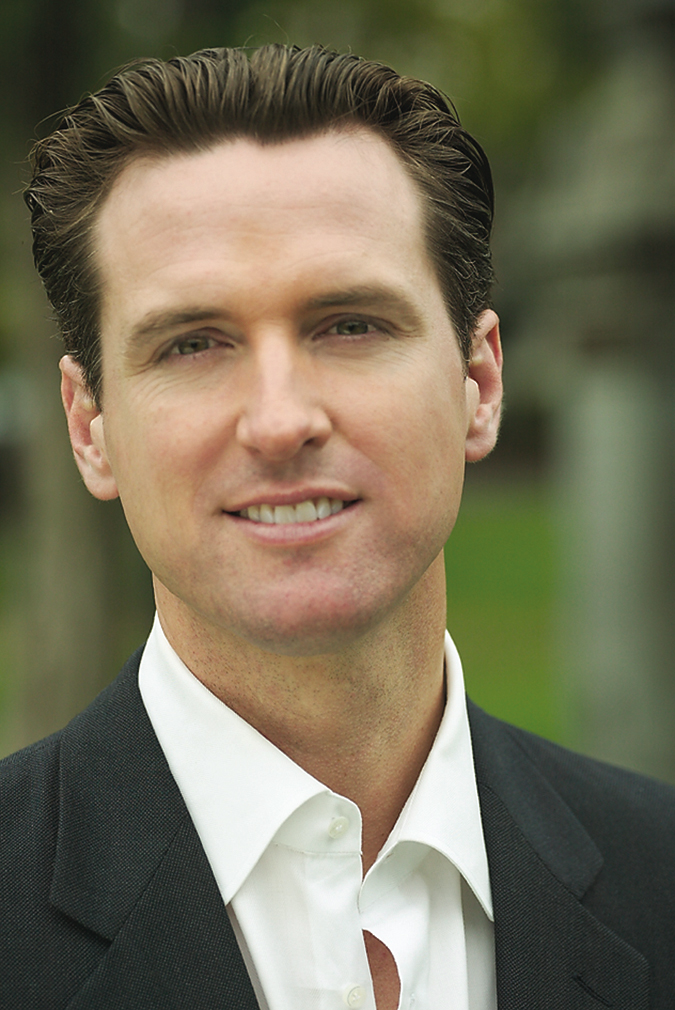
Gavin Newsom

No more stalling on CCA

0

EDITORIAL There’s nothing wrong with city officials taking tough stands in negotiations with private contractors. Hundreds, thousands of times in the past few years, San Francisco department heads have rolled over and given away the store in sweetheart deals that put the city on the hook for all the money, make the public take all the risk, and give a private outfit all the profit. Pacific Gas and Electric Co. (remember the Tulock-Modesto sellout contract?), Lennar Corp., Recurrent Energy, and countless other developers, builders, suppliers, and service providers have easily taken the public to the cleaners with contracts that never seemed to get stuck in the due diligence process.

But when there’s a looming deadline, hundreds of millions of dollars, and the city’s energy future and environmental footprint at stake, why is the San Francisco Public Utilities Commission moving so incredibly slowly to hammer out a deal for the city’s community choice aggregation (CCA) program? And why is PUC general manager Ed Harrington doing everything in his power to make sure that nothing happens that might put the city in the power business until after PG&E’s initiative, Prop. 16 — which would block public power efforts — passes at the polls?

It’s infuriating — and the supervisors need to tell the PUC that they won’t approve anything the agency does or wants to do until this contract is completed.

Harrington’s shop has known for more than a year that it needed to work out a business deal with a supplier that could replace PG&E and manage a program to buy greener, cheaper power in bulk and resell it to San Francisco residents. Marin County is setting up a similar program and is far ahead of San Francisco. The city has chosen a vendor, Powerchoice Inc., run by people completely qualified to handle the business.

And now there’s a absolute, drop-deal mandate: the city has to complete negotiations and get the program underway before the June 8 election. That’s because PG&E is spending $35 million to try to pass an initiative that would mandate a two-thirds vote of the public before any new CCA can begin selling power to customers. If San Francisco wants to present a solid legal case that its CCA is already in business, the contract with Powerchoice needs to be completed and signed, now.

But Harrington has, to put it kindly, been dragging his feet. The negotiations are hung up on a few points, although none are deal-breakers; Powerchoice already has agreed to assume some of the financial risk, which was the biggest obstacle to a deal. Now it’s just a matter of hammering out the details — but the PUC staff isn’t acting as if there is any time pressure at all.

In fact, last week Harrington circulated a draft press release all but announcing that he was tossing the whole deal under the bus and postponing negotiations until after the June election. He wanted to say that the "uncertainly" surrounding Prop. 16 made a deal impossible.

But Powerchoice isn’t walking away or complaining about the initiative. The company’s CEO, Sam Enoka, made it clear to us in an interview April 26 that he is eager to move forward. If Harrington — an experienced negotiator with a large staff at his disposal — and his boss, Mayor Gavin Newsom, wanted a deal, it could be finished well ahead of the deadline.

Instead, Harrington showed up at the Local Agency Formation Commission meeting April 23 with charts and a PowerPoint presentation purporting to show that renewable energy is too expensive to sell at rates comparable to what PG&E charges local customers. That misses the point — PG&E’s rates are going up every year and renewables are coming down, and the greatest risk to the city, the ratepayers, and the planet is sticking with the unreliable private utility that relies on fossil fuels and nuclear power for much of its electricity portfolio.

If the city has legitimate issues with Powerchoice, fine: Sit down and begin working them out. Now. But the only thing we can see at this point is the administration of a mayor who wants to be lieutenant governor intentionally delaying the process and giving PG&E exactly what it wants. (We called the PUC April 26, our print deadline, to ask why there were no talks scheduled that day, but Harrington wasn’t available; he was taking the day off.)

Sups. Ross Mirkarimi and David Campos suggest that the board simply refuse to sign off on any contracts, appropriations, or other approvals for anything the SFPUC does until this contract is completed. That’s a fine idea; they should start today.

Nevius makes the case for a progressive DCCC

27

Chronicle columnist C.W. Nevius made an excellent argument for supporting the Guardian’s slate of progressive candidates for the Democratic County Central Committee in Saturday’s paper, even though he was trying to do just the opposite. But I suppose that perspective is everything.

Our perspective at the Guardian is one of great pride in San Francisco and its left-of-center values. Nevius looks at San Francisco from his home in Walnut Creek and sees a scary place where people question authority figures and don’t simply trust developers, big corporations, and the Chamber of Commerce to act in the public interest.

“The next two months will see a battle for the political soul of the city. It will pit the progressives against the moderates in a face-off that will have huge implications in the November elections and, perhaps, the election of the next mayor. The key is control of an obscure but incredibly influential organization called the Democratic County Central Committee,” Nevius writes, and he’s right about that.

But he’s wrong when he assumes most San Franciscans agree with him and others who want to make the city more like the sterile suburbs that they prefer. Nevius values “safe streets,” which is his code for giving police more power through the proposed sit-lie ordinance and other unpopular crackdowns, despite the fact that he sat in the back row and watched the DCCC voted overwhelmingly against sit-lie after nobody presented a credible case for it.

Nevius is so utterly blind to the fact that most San Franciscans want adequate mitigation and community benefits from development projects that he recently ranted and raved about the defeat of the 555 Washington project, even though it was unanimously rejected by the Board of Supervisors for inadequately addressing these requirements.

The “moderate values” that Nevius champions are actually quite extreme: give downtown and developers everything they want, never question the behavior of cops or the Fire Department’s budget, keep cutting taxes until city government becomes incapable of providing services or regulating the private sector, ignore the cultural value of nightclubs and artists, and deport all the undocumented immigrants.

This is the Democratic Party that Nevius and his allies like Sup. Michela Alioto-Pier and supervisorial candidate Scott Wiener (a conservative attorney who would be the best friend that the suburban cowboy cops could ever have on the board) want to promote, and it looks more like the Republican Party than a political party with San Francisco values.

But they aren’t honest about that intention, instead trying to fool people into believing that progressives are the extremists. “But when Mrs. Jones receives her Democratic voter guide in the mail…she’s thinking of the party of Barack Obama, not the party of Aaron Peskin and (Supervisor) Chris Daly,” Wiener said.

But in the Democratic presidential primary election, it was Daly and Peskin who were the strongest early supporters of Barack Obama, while Wiener backed John Edwards and Alioto-Pier, Mayor Gavin Newsom, and the rest of the “moderate” party stalwarts supported Hillary Clinton. That’s not a huge deal, but it’s a sign of how the so-called moderates are willing to distort political reality.

So Nevius is right. This is an important election and it is about the soul of the city. Do you support scared suburban twits who disingenuously try to hide behind the “moderate” label in order to seem more reasonable, or do you support progressive candidates who have integrity and won’t moderate their values in order to appease the cops or the capitalists?

If it’s the latter, support the Guardian’s slate (which is substantially similar to the slates approved by the Harvey Milk LGBT Democratic Club, the San Francisco Tenants Union, the Sierra Club’s SF Bay Chapter, and other progressive groups).

And if you want that slate to have some money to mail out a Guardian slate card, come to a fundraiser this Thursday evening at CELLspace, 2050 Bryant, featuring the candidates and some great exemplars of the culture they support, including amazing singer/songwriter Valerie Orth, the zany dance troupe Fou Fou Ha, and DJs Smoove and Kramer, who regularly rock the best clubs and community-based parties in town.

And by “town,” I mean San Francisco, not Walnut Creek.    

Day laborers link sit-lie to Arizona crackdown

13

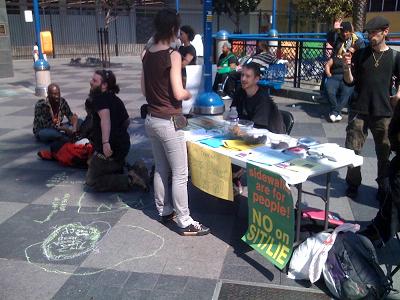
After another overwhelming vote against it last night, the sit-lie ordinance (banning sitting or lying on SF sidewalks) proposed by Mayor Gavin Newsom and Police Chief George Gascon is probably toast. But just to make sure, the activists at Stand Against Sit Lie are holding another day of creative protests on sidewalks around the city this Saturday, 4/24.

Among the 13 events scheduled so far will be immigrant day laborers sitting along Cesar Chavez Street between Mission and San Van Ness streets to protest both sit-lie and another legislative attack on immigrants, the controversial Arizona measure that essentially bans undocumented immigrants and encourages police to arrest them using racial profiling techniques.

The SF Day Labor Program is organizing the protest and today sent out a statement linking the two measures, noting that the sit-lie ordinance criminalizing otherwise lawful behavior and targets marginalized populations. Last night at the DCCC meeting, Sup. David Campos also made the point that day laborers who stand on street corners all day seeking work sometimes need to rest.

“Day laborers in San Francisco have to sit down once in awhile when they’re out on street corners waiting for work,” Jose Ramirez, a day laborer and coordinator of the SF Day Labor Program, said in today’s statement.  “Taking us to jail for sitting down in San Francisco is the same as immigrants being targeted by police for simply being Latino.”

After the Planning Commission early this month voted 6-1 to recommend against the sit-lie ordinance – finding that it violated a number of city goals and policies – the measure is awaiting consideration by the Board of Supervisors Public Safety Committee, possibly on May 3. 

DCCC: Thumbs down on sit / lie

San Francisco’s Democratic County Central Committee voted last night in favor of a resolution opposing San Francisco’s proposed sit / lie ordinance, a law backed by Mayor Gavin Newsom and Police Chief George Gascon that would make it illegal to sit or lie down on city sidewalks. Gabriel Haaland introduced the resolution, and it passed with overwhelming support.

Here’s a YouTube clip of Haaland’s comments during the committee discussion, filmed by Linda Post.

The DCCC is the policy-making body for the Democratic Party in San Francisco, chaired by former Board of Supervisors President Aaron Peskin. The vote followed a lengthy public comment session in which a wide variety of people voiced their opposition to sit / lie, including homeless youth advocates, residents of the Haight, and surprise guest Malia Cohen — formerly an executive staff member for Mayor Gavin Newsom. Some comments provoked laughter (“Sit /lie is like the fungus that won’t go away!” one Tenderloin resident exclaimed), while others framed their arguments in moral terms (“It’s hard to think of it as anything less than criminalizing poverty,” attorney David Waggoner charged). Cohen, for her part, called the ordinance “mean-spirited.”

The central committee members held a meaty discussion too, in which several members shared deeply personal stories to explain their feelings about the ordinance. Haaland described how, after graduating from law school in the mid-1990s, he found it so difficult to find work as a transgendered person that he worried about becoming homeless himself.

Committee member Tom Hsieh, who said he’d lived in the Haight for 10 years, spoke about his young daughter and expressed his discomfort about the “anything goes attitude” he’d seen people on the streets exhibit in her presence. Hsieh was one of a handful of committee members who voted against Haaland’s resolution. The others were Scott Wiener, Meagan Levitan, Mary Jung, and the proxy for Sen. Dianne Feinstein, while Matt Tuchow and the proxy for Assemblymember Fiona Ma abstained.  

Sup. David Campos addressed Hsieh’s concerns directly, saying that he did not believe the proposed ordinance actually addressed the sort of behavior that he found upsetting. “Sit / lie is the wrong focus,” Campos said. “The focus should be, how do we make policing better in San Francisco?” Noting that he had formely served as a police commissioner, he called for more effective community policing.

When he met with the mayor’s office about sit / lie, Campos added, he got the impression that the law was not actually meant to stop people from sitting or lying down on the sidewalk, but to target hostile behavior occurring on the street. “When you pass a law, you have to mean what it says,” he noted. He also pointed out that day laborers who wait on sidewalks for work would essentially be criminalized by the ordinance, since it’s unreasonable to expect that they wouldn’t occasionally sit down while waiting for a job.

Meanwhile, Scott Wiener’s resolution to endorse the Community Justice Center and encourage its expansion into the Haight failed with 14 voting against it and 10 voting to support it, while two abstained. While many committee members voiced general support for the CJC, a few said they resisted the idea of dictating to the Haight that it should install a similar court.

The DCCC also endorsed Linda Colfax and Michael Nava as candidates for Judge.

Green cards in hand, Washingtons want Newsom to discuss immigrant youth policy. In person.

0

Tracey Washington and her 13-year old son heard today that their green card applications have been approved. This means that they will not be deported to Australia, and their personal immigration nightmare is over.
But even as the family rejoices, Tracey’s husband, Charles Washington, a Muni bus driver and long-term San Francisco resident, has written to Mayor Gavin Newsom, voicing disappointment over Newsom’s failure to reach out to his family during their time of need and over Newsom’s continuing refusal to implement the immigrant youth due process policy that a veto-proof majority of the Board approved, in November 2009.

“Our family’s luck n this case was unique, but Mr. Newsom, the pain we felt when our family was facing deportation as a result of your policy is not unique at all,” Washington wrote in his April 21 letter. “We share the pain felt by the many other families whose children were taken into ICE custody and ordered deported, as a result of your policy.” (The full text of the letter that Charles Washington sent to Newsom today is included at the end of this blog post.)
 
The Washingtons’ nightmare began in January, when their 13-year-old boy was reported by juvenile probation to ICE for a minor bullying incident, during which he took 46 cents from another youth, then gave it back and apologized. That’s when the family first discovered that, thanks to a new juvenile immigrant policy that Newsom implemented in July 2008, their teen was going to reported to ICE immediately after his arrest – and before his case was heard in juvenile court. 

And even though the family was eligible for green cards thanks to Tracey’s April 2009 marriage to U.S. citizen Charles Washington, ICE handed Tracey and her son their deportation orders on Feb. 5, 2010–the same day they picked the boy up from juvenile detention and used the boy as bait to get his mother to agree to wear an electronic monitoring anklet.

That anklet was finally taken off today, meaning that Tracey Washington was forced to wear this uncomfortable and humiliating device for two and a half months, even though she did not commit a crime–and even though her son was not found guilty as charged, when his case was finally adjudicated by a juvenile justice.

Following the bullying incident, local law enforcement officers charged the boy with three felony counts, triggering an immediate referral to ICE, under Newsom’s immigrant youth policy.  But a juvenile justice recently gave the boy informal probation, recognizing that the youth is a first-time offender who committed a low level offense and is a good candidate for rehabilitation.

But seven weeks ago (March 1), when Tracey and her son had exhausted their legal options and were facing imminent deportation, the five-member blended Washington family held a press conference as a last resort. Two days later, following a media firestorm, ICE granted the Washingtons a two-month reprive, so that U.S. Citizenship and Immigration Services could review and approve their green card applications.

“We really appreciate that U.S. Citizenship and Immigration Services was willing to look at our individual circumstances and approve our residency application, so that our family can stay together,” Tracey Washington said today. “ At the same time, my heart goes out to the many other families who were harmed by the Mayor’s policy.” 

Angela Chan, the staff attorney at the Asian Law Caucus, who handled the family’s case, noted that while the Washington’s nightmare ended happily, many other families continue to be broken up by harsh immigration laws, lack of access to affordable legal services, and Mayor Newsom’s local policy towards immigrant youth.

“Newsom’s policy exacerbates the impact of a broken federal immigration system on San Francisco families,” Chan said. “We need humane reform at the federal level, but in the meantime, Mayor Newsom needs to take a stand today for due process and family unity by ending San Francisco’s draconian policy. If the Washingtons’ son had not been reported to ICE, as required by Newsom’s policy, he would not have been sent to ICE, and he and his family would not have had to endure this nightmare.”
 
Letter to Mayor Newsom from Washington Family–
 
April        21, 2010
 
Mayor Gavin Newsom
City Hall, Room 200
1 Dr. Carlton B. Goodlett Place
San Francisco, CA 94102
 
RE: Unjust Policy Regarding Undocumented Youth in San Francisco

Dear Mayor Newsom,

My name is Charles Washington. I was born and raised in San Francisco, and am a long-time resident of this great city. I also am a city employee. I love the city of San Francisco and my family has developed strong roots here. Unfortunately, last month, we went through a horrible ordeal when my wife and step-son were ordered deported as a result of your policy, which requires reporting of youth to Immigration and Customs Enforcement (ICE) right after arrest, before the youth even has a chance to have a hearing in juvenile court regarding the charges.

As you may have read in the news, my 13-year-old son was arrested and reported to ICE for deportation over 46 cents in a minor, first-time bullying case. In accordance with your policy, San Francisco juvenile probation officers reported my son to ICE before the allegations could even be adjudicated by a juvenile court judge. To my shock, my wife also was ordered deported by ICE as a result of the reporting of my son by juvenile probation in keeping with your policy.

With the imminent deportation hanging over my wife and son’s heads, we were utterly terrified that our family would be torn apart. Since we had no other legal remedies when our request for a stay of deportation was denied, we desperately reached out to the media to seek help in a last ditch effort. Fortunately, a reporter contacted the White House, which then resulted in an extension of the deadline for the deportation. However, I must tell you that during this time, we were really disappointed that we did not receive a single call or any type of outreach from your office to offer my family support, especially when my son’s referral to ICE was a direct consequence of your policy.

I also would like to express my deep disappointment in the statements your office issued after my family was granted the reprieve through no help from your office. Your office made statements to the press suggesting that our situation proves your policy leads to just outcomes. I completely disagree with this assertion and firmly believe that our being granted the reprieve has proven even more so that your policy hurts families and tears children away from their parents for minor, first-time offenses. The White House seems to understand the importance of keeping families together in granting the reprieve. Unfortunately, your office appears to have missed this completely. It is extremely hurtful to our family that you would try to claim credit for the positive turn in events that my family and the community supporting us worked hard to obtain in order to combat the injustice brought upon us by the policy you implemented in the first place.

Let me also say that my family was lucky, but there are many other families who have not been as fortunate.There was no handbook to tell us what to do to obtain a reprieve when we were in this crisis. It just so happened that we were able to obtain legal assistance, but what if we had been unable to find legal services or if the press had not covered our story? My wife and son would have been torn from me and there is nothing I could have done to stop it from happening. Families in San Francisco should not have to struggle or rely on luck to stay together. In fact, there have been over a hundred families in this city who have not been as fortunate as my family since your harsh and inhumane policy was implemented in 2008.  Our family’s luck in this case was unique, but Mr. Newsom, the pain we felt when our family was facing deportation as a result of your policy is not unique at all.We share the pain felt by the many other families whose children were taken into ICE custody and ordered deported as a result of your policy.

Mr. Newsom, I know that you are a new father yourself and will teach your own daughter many lessons in her lifetime. I respectfully ask you to reexamine your policy from the eyes of a father, the way that I am looking at my son today. While I must say that I am greatly disappointed in the actions you have taken to support a flawed policy that has endangered the children of this city, I do hope that you will take this opportunity to do the right thing and support implementation of Supervisor Campos’ due process amendment, which is now city law.  Families like mine, who are hard-working and rooted in San Francisco, are depending on you to do what is right and to follow the law the community passed in November 2009.

I respectfully request a meeting with you, in which my lawyer, Angela Chan from the Asian Law Caucus, and my family can speak with you about this policy and how it has affected us and continues to impact families in San Francisco.
Sincerely,

Charles Washington

Rolling forward

7

By Adrian Castañeda

news@sfbg.com

San Francisco’s Potrero del Sol Skatepark is often packed with skaterboarders, a testament to the sport’s popularity and to the dearth of places in the city where it’s legal to skate. But that will soon change with the city’s commitment to build two new skateparks: one in SoMa and the other in the Haight.

Both have been tentatively approved by the Board of Supervisors. But before any concrete is poured, the skaters will have to overcome budget crises, angry homeowners, and their own bad reputations, particularly in the Haight, where the proposed park has gotten caught up in the furor over vagrants and the proposed sit-lie ordinance.

San Francisco has long been a skateboarding hub, yet there’s always been friction with police, businesses, and everyday city life. Even though it’s legal, there just aren’t that many places to do it anymore, partially because the city and property owners routinely attach barriers to any surfaces that might be appealing to skaters.

Skateboarders, long accustomed to being ignored and disenfranchised, have responded in their usual DIY fashion, such as building a few obstacles in an empty parking lot under a freeway overpass. The city took notice of the demand and after three years of planning and meetings, the newest of San Francisco’s skate parks has finally been allotted the necessary funds to begin construction around the end of summer.

The Central Freeway Skate Park will be located in what is now a parking lot at the intersection of Duboce and Stevenson streets in the north Mission District area. With $2 million collected through the Central Freeway Corridor Housing and Transportation Improvement Act of 1999, which provides for the sale and lease of parcels of city land that were under the now-demolished freeway, officials plan to develop the park to eventually include basketball courts and a dog run.

Rich Hillis of the Mayor’s Office of Economic Development said the city is considering a variety of improvements, but confirmed that “we think the skate park is the priority.” He attributes the park’s relatively unopposed approval to the demands of the city’s skaters and to the community as a whole. “They embraced the idea of a skatepark early on,” Hillis said of the forward-thinking residents of the area. He jokingly adds that the park should be named “Hornbeck Park” after Bryan Hornbeck, director of the San Francisco Skateboard Association. Hornbeck and his associates started the SFSA to push the city to build new parks designed with skaters in mind.

“San Francisco has to have a world-class skatepark,” Hornbeck said at one of the many skate events his group organizes. Hornbeck said the city has been receptive, working with skaters on the design of the park, but left SFSA to organize skaters and raise the funds. “It’s bake sale; it’s lemonade stand; it’s the best we can do,” Hornbeck said. “We’re not trying to take anything, we’re trying to make our own thing.”

Plans for the park, drawn up by notable skatepark design firm New Line Skateparks, are currently under review by civil engineers. After the plans are finalized, the project will be bid out to find a contractor. Tentative 3-D renderings have been online for months, sparking heated debate on skateboarding Web sites.

When the acclaimed Potrero del Sol Skatepark opened in 2008, many skaters felt that while it was well-designed and enjoyable, it didn’t have enough terrain that mimicked street riding. New Line has designed a number of skating plazas, most recently in Los Angeles. Its involvement gives many skaters hope that the new park will incorporate obstacles that represent the city’s rich street skating history.

But things are not moving as swiftly for the city’s other planned skate park, just beyond where Waller dead-ends at Stanyan in the Haight, which doesn’t have the same guaranteed funding stream. While bids for a design have been submitted, the Recreation and Park Department needs to get approval for $1 million–$2 million in construction funds before moving forward. The city proposed the 120,000-square-foot cul-de-sac at the end of Waller and next to SFPD’s Park Station after the original site near the Golden Gate Park horseshoe pits was found to be too small and lacking the necessary sight-lines for safety. But according to some residents groups, the parking lot is less safe for youths.

Citing police incident reports, Lena Emmery, president of the Cole Valley Improvement Association, told us the Waller park would be in an area with a high number of reported assaults and drug arrests and would add to noise pollution. “This location puts a skateboard park too close to a dense residential area, as well as some businesses that would be negatively impacted by the noise from the skaters,” she wrote via e-mail.

While the lot is occasionally used for bicycle safety classes and overflow parking at Kezar Stadium, it sits empty most of the year, although a farmers market will hold its grand opening there April 28. Will Keating, a Waller Street resident and skateboarder who works on Haight Street, is excited about the proposed park. He disagrees with claims that the park would be a negative impact on his neighborhood. “I hear homeless mutants going crazy outside my window every night, I would much prefer skateboards,” Keating said of the current noise pollution.

The Haight Ashbury Improvement Association, which is leading the charge for a sit-lie ordinance, conducted a survey on its Web site and found that many of its visitors feel the skatepark would increase noise and safety problems in the Haight. Visitors to the site also said the lot would be better used as a farmers market. Yet city officials say the two are not mutually exclusive, and early designs for the project are said to include a large public plaza adjacent to the park intended for community events.

“We realize this is going to be a multiuse space,” said Nick Kinsey, property manager for the Recreation and Park Department. “Throughout San Francisco there are thousands and thousands of skateboarders but only two places where it is legal to skate.” Kinsey called the park is “a done deal,” citing a 2007 ordinance introduced by Sup. Ross Mirkarimi that mandates the department build a skatepark on the cul-de-sac.

Kent Uyehara, merchant chair for the HAIA and owner of FTC skateshop on Haight, said the community’s fears about pedestrian safety are understandable, but that fears of increased violence and drug use are irrational. “If you can’t have a skate park next to a police station, then basically you are saying you can’t have it.”

If the city enacts the sit-lie ordinance, which Uyehara supports, it would be easy to imagine that a skate park would be a magnet for homeless and others looking to escape police harassment. But Uyehara is adamant that the park would not become a haven for Haight Street refugees. “Skateboarders self-police their own areas,” he said. “We’re not trying to kick the homeless out,” he added. “We’re trying to make the neighborhood attractive for everyone, whether they’re buying something or not.”

Uyehara is no stranger to opposition. When his shop first moved to the Haight in 1994, he had to deal with threats from residents and a neighborhood organization, similar to the one he is now a part of, because of what skateboarding represented to them. Since then skateboarding and his business have prospered, and FTC now has four locations worldwide. “For a city that hosted the X-Games, it’s pathetic how skateboarding has been treated.”

Uyehara says the Waller park, along with the Central Freeway and Potrero del Sol parks, are part of a plan developed by the San Francisco Skate Task Force, created in 2002 by then-Sup. Gavin Newsom to address the growing friction between the city and its skateboard population. The task force envisioned “a series of five parks located in a star pattern, and one in the middle of the city, [that] would make it possible for users to easily get to a park within at least two miles of their home.”

All the meetings and fundraising will be in vain if the park is poorly designed and built, said Jake Phelps, editor-in-chief of Thrasher Magazine. He says locals should design the park “so we have no one to blame but ourselves,” and avoid another flawed park like Crocker Amazon in Sunnydale where, he says, “the fence costs more than the skatepark.” Unimpressed with preliminary designs for the park on Duboce, the notoriously blunt Phelps says, “They’re going to come to our town, drop a turd, and leave.”

The veteran skater is wary of “landscape designers” with grandiose ideas. “There are people who get too involved. They don’t skate. Who are they to tell anybody what it is?” Newer skateparks are too crowded with obstacles trying to please all different kinds of skaters, he said. Instead, he urges a simple design similar to the streets of downtown. “The whole idea of skating is being utilitarian with your environment.” Regardless of the design, he believes it won’t have a dramatic effect on the Haight community: “Homeless people are gonna sleep there,” he said. “People are gonna tag on it and think it’s theirs.”

“The whole city’s a park, but people need somewhere to go when they get kicked out of everywhere,” says pro skater Tony Trujillo, who is able to skate to the Potrero park from his house and thinks others should have the same proximity to hassle-free skating. Julien Stranger, another local pro, feels a park in the Haight would benefit youth in the area by giving them a healthy, creative outlet, something the Haight symbolizes to many. “I don’t think that the neighborhood should be complaining about the energy a skate park will bring,” he said. “Skate parks are pretty positive.”

Earlier this month, an informational meeting hosted by the Haight Ashbury Neighborhood Council, Kinsey, Hornbeck, and other residents raised concerns that noise pollution and property damage would increase because of the skate park. “There’s been no public outreach,” said Martha Hoffman, who lives across from where the park is slated to be built. “If we’d known about it sooner, we would have opposed earlier.”

Thuy Nguyen of the SF Skate Club, an after-school program that promotes skateboarding as a safe and positive activity, urged residents to look beyond their property values and consider the benefits for the city’s youth. “It’s important for kids who feel that traditional sports aren’t for them.” Her partner, Shawn Connolly, added that skateboarding has grown in popularity with children. “It’s right after baseball,” he said.

“If the city doesn’t have a skatepark, the city is the skatepark,” Hornbeck said of the Waller Street lot where he often hosts skate events with donated ramps to ease the community into the idea of skateboarders using the area. But until the city budget can provide for skateboarders, the debate over the park will rage — and the underused parking lot at the end of Waller will remain just that.


The danger of Props. 16 and 17

2

The problem here is not just two awful laws – it’s the idea that a single company, with loads of cash, can utterly subvert the basic premise of Democracy

EDITORIAL The California Democratic Party voted at its statewide convention April 17 to oppose Propositions 16 and 17. The San Francisco Chronicle — no friend of public power and consumer rights — endorsed strongly against both measures April 18. In fact, most major newspapers and civic groups have come out against what amounts to the most blatant attempt in California history by a pair of big corporations to buy favorable legislation at the ballot box.


And for Pacific Gas and Electric Co. and Mercury Insurance, none of that matters much.

This campaign is all about money — big gobs of money — and PG&E and Mercury have it and their opponents, so far, don’t. And if that doesn’t change in the next few weeks — if Democratic Party leaders, starting with Speaker of the House Nancy Pelosi and Sens. Dianne Feinstein and Barbara Boxer — don’t immediately start making the defeat of these two measures a priority, California will send a signal to every big corporate interest in the world that its laws and policies are for sale.

Prop. 16 is being sold — in slick TV ads and mailers so deceptive they can only be called intentional lies — as giving the voters the right to have a say before local government gets into the business of selling electricity. The proposition, one PG&E flyer notes, “is our best protection against government spending your money to get into a business they [sic] know nothing about.”

Actually, government knows a lot about the electricity business. All over California, public power agencies offer better service and lower rates than the private utilities. Nationwide, residents of more than 2,000 communities have public power — and few want to give it up and return to buying electricity from private utilities.

But that’s not the point. Prop. 16 exists entirely because PG&E wanted to stop competition. The company is spending at least $35 million of its money to pass a law that would require a two-thirds vote (a nearly insurmountable obstacle) before any local agency can offer or expand local electricity service. The Chronicle, which has always opposed public power in San Francisco, argues that “Californians should be skeptical of any local government’s claim that it can deliver cheaper and cleaner power than an established utility. But they should be at least as wary when that monopoly utility wants to deprive them of that choice.”

Prop. 17 is another blatant single-interest measure, sponsored and underwritten entirely by one giant insurance company, to change the way car insurance is regulated in California. It would, among other things, allow insurers to raise rates for people who don’t already have coverage. Give up your car for a year (because you lost your job and couldn’t afford it, or decided that you could commute just as well by bicycle, or for any other reason) and the next time you buy insurance, your rates could soar — even if your driving record was clean.

The problem here is not just two awful laws — it’s the idea that a single company, with loads of cash, can utterly subvert not only the intent of California’s initiative law but the basic premise of Democracy. PG&E and Mercury were unable to get the state Legislature to do what they wanted, so they hired campaign consultants, paid millions for people to gather signatures on petitions, put the self-serving measures on the ballot, and are now flooding airwaves and mailboxes with well-crafted, effective lies. If they succeed, what’s going to stop every other sleazy big-money interest from doing the same?

Well, right now, nothing.

It’s absolutely critical, both for the issues of public power and consumer rights and for the fundamental notion that you can’t simply buy a new law, that Props. 16 and 17 are defeated. But we’re not seeing a lot of evidence that any of the most influential people in California are taking this seriously.

State Sen. Mark Leno has done tremendous work in getting the state party to oppose Prop. 16. Assembly Member Tom Ammiano has been working nonstop in Sacramento to try to get some money into the No on 16 coffers. San Francisco Sup. Ross Mirkarimi has led the statewide organizing efforts. And San Francisco City Attorney Dennis Herrera joined a lawsuit to invalidate the law.

But in all the speeches and public statements that Pelosi, Boxer, Attorney General Jerry Brown, Lt. Gov. candidates Janice Hahn and Gavin Newsom, party chair John Burton, and others delivered at the state party convention, there was nary a mention of the fundamental importance of voting no on 16 and 17. None of the people who are capable of raising millions of dollars, the sort of money needed to defeat these measures, is making much of an effort to do it.

Props. 16 and 17 can be defeated. All it takes is a massive campaign to educate voters in a low turnout election about what these two measures actually are. But if the state’s political leaders allow these two measures to pass, California in 2010 will go down in history as the most corrupt and ungovernable state in America. And it’s very close to happening.


The danger of Props. 16 and 17

0

EDITORIAL The California Democratic Party voted at its statewide convention April 17 to oppose Propositions 16 and 17. The San Francisco Chronicle — no friend of public power and consumer rights — endorsed strongly against both measures April 18. In fact, most major newspapers and civic groups have come out against what amounts to the most blatant attempt in California history by a pair of big corporations to buy favorable legislation at the ballot box.

And for Pacific Gas and Electric Co. and Mercury Insurance, none of that matters much.

This campaign is all about money — big gobs of money — and PG&E and Mercury have it and their opponents, so far, don’t. And if that doesn’t change in the next few weeks — if Democratic Party leaders, starting with Speaker of the House Nancy Pelosi and Sens. Dianne Feinstein and Barbara Boxer — don’t immediately start making the defeat of these two measures a priority, California will send a signal to every big corporate interest in the world that its laws and policies are for sale.

Prop. 16 is being sold — in slick TV ads and mailers so deceptive they can only be called intentional lies — as giving the voters the right to have a say before local government gets into the business of selling electricity. The proposition, one PG&E flyer notes, "is our best protection against government spending your money to get into a business they [sic] know nothing about."

Actually, government knows a lot about the electricity business. All over California, public power agencies offer better service and lower rates than the private utilities. Nationwide, residents of more than 2,000 communities have public power — and few want to give it up and return to buying electricity from private utilities.

But that’s not the point. Prop. 16 exists entirely because PG&E wanted to stop competition. The company is spending at least $35 million of its money to pass a law that would require a two-thirds vote (a nearly insurmountable obstacle) before any local agency can offer or expand local electricity service. The Chronicle, which has always opposed public power in San Francisco, argues that "Californians should be skeptical of any local government’s claim that it can deliver cheaper and cleaner power than an established utility. But they should be at least as wary when that monopoly utility wants to deprive them of that choice."

Prop. 17 is another blatant single-interest measure, sponsored and underwritten entirely by one giant insurance company, to change the way car insurance is regulated in California. It would, among other things, allow insurers to raise rates for people who don’t already have coverage. Give up your car for a year (because you lost your job and couldn’t afford it, or decided that you could commute just as well by bicycle, or for any other reason) and the next time you buy insurance, your rates could soar — even if your driving record was clean.

The problem here is not just two awful laws — it’s the idea that a single company, with loads of cash, can utterly subvert not only the intent of California’s initiative law but the basic premise of Democracy. PG&E and Mercury were unable to get the state Legislature to do what they wanted, so they hired campaign consultants, paid millions for people to gather signatures on petitions, put the self-serving measures on the ballot, and are now flooding airwaves and mailboxes with well-crafted, effective lies. If they succeed, what’s going to stop every other sleazy big-money interest from doing the same?

Well, right now, nothing.

It’s absolutely critical, both for the issues of public power and consumer rights and for the fundamental notion that you can’t simply buy a new law, that Props. 16 and 17 are defeated. But we’re not seeing a lot of evidence that any of the most influential people in California are taking this seriously.

State Sen. Mark Leno has done tremendous work in getting the state party to oppose Prop. 16. Assembly Member Tom Ammiano has been working nonstop in Sacramento to try to get some money into the No on 16 coffers. San Francisco Sup. Ross Mirkarimi has led the statewide organizing efforts. And San Francisco City Attorney Dennis Herrera joined a lawsuit to invalidate the law.

But in all the speeches and public statements that Pelosi, Boxer, Attorney General Jerry Brown, Lt. Gov. candidates Janice Hahn and Gavin Newsom, party chair John Burton, and others delivered at the state party convention, there was nary a mention of the fundamental importance of voting no on 16 and 17. None of the people who are capable of raising millions of dollars, the sort of money needed to defeat these measures, is making much of an effort to do it.

Props. 16 and 17 can be defeated. All it takes is a massive campaign to educate voters in a low turnout election about what these two measures actually are. But if the state’s political leaders allow these two measures to pass, California in 2010 will go down in history as the most corrupt and ungovernable state in America. And it’s very close to happening.

Chiu talks MTA reform as agency fails to support Muni

3

With the San Francisco Municipal Transportation Agency Board of Directors poised to approve a truly terrible two-year budget today (4/20) – one that locks in Muni service cuts, subsidizes the police and other city departments, and fails to seek new revenue sources – there is talk about reforming an agency run exclusively by appointees of Mayor Gavin Newsom.

The most significant figure sounding that call is Board of Supervisors President David Chiu, who told the Guardian that he plans to hold hearings this year on the MTA board failures to support transit service, with the goal of placing reform measures on the November ballot. Helping that effort will be his newest board aide, Judson True, who comes from a fire-tested stint as the MTA’s spokesperson and before that was a board aide to then-Sup. Gerardo Sandoval.

“We’re going to have a very serious discussion about MTA reform,” Chiu told the Guardian. “I’ve got some real questions and for the next six months, that will be front and center…I expect there to be a very robust discussion about the MTA and balancing that budget on the backs of transit riders.”

Those discussions will be wrapped into city budget season, a realm in which Chiu is also adding firepower right now by hiring Cat Rauschuber as his other new board aide. Rauschuber has her masters in public policy from Harvard’s Kennedy School of Government, most recently worked for city Budget Analyst Harvey Rose, and earlier worked in the city’s Legislative Analyst’s Office.

“It’s important that we hire folks who have experience in city government, particularly solid policy experience,” Chiu said, adding that his third board aide, Victor Lim, came from the Asian Law Caucus and has experience in immigration reform, another valuable asset given the ongoing standoff between the board and Newsom over sanctuary city policies. 

True and Rauschuber are also master networkers with strong and extensive connections in the progressive community, as well as more mainstream arts, culture, and political communities (Full disclosure: They’re also friends of mine). Those connections and social skills could help unite the varied critics of the current MTA budget, which range from the downtown-oriented SPUR to the new San Francisco Transit Riders Union (SFTRU) to the radical ANSWER Coalition, all of whom have areas of policy disagreement over the best way forward.

All are expected to weigh in today (4/20) at 2 p.m. when the SFMTA convenes in City Hall Room 400 to discuss and vote on the agency’s two-year budget. And while the groups may differ over partial solutions like extended parking meter hours, they all agree this a truly terrible budget that disproportionately punishes low-income people who rely on Muni.

“The budget is irresponsible and dishonest,” SFTRU project director Dave Snyder. “It reveals the hypocrisy in the mayor’s stated environmental commitments. This action will cut public transit permanently and that’s irresponsible.”

Mayoral press secretary Tony Winnicker has not yet responded to the accusations or to Chiu’s calls for MTA reform, but I’ll post his response in the comments section if I hear back.

Newsom didn’t win in Los Angeles

5

I usually go to the California state Democratic Conventions, but I missed this one, so I’ve had to rely on news coverage to find out what happened — and it’s been pretty slim pickins. To read the Chron’s politics blog, you’d think the whole thing was silliness and parties, although Carla Marinucci got a fun comment from party Chair John Burton, who thinks the only thing that will drive the youth vote in November is pot.


But the news for people following the fate Gavin Newsom is that our mayor didn’t get the party’s endorsement for lieutenant governor. Matier and Ross spin it as a sorta, kinda victory:


Mayor Gavin Newsom didn’t get the state Democratic Party endorsement in his race for lieutenant governor, but he got the next best thing: keeping rival L.A. City Councilwoman Janice Hahn from getting it.


And technically, that’s true — Hahn ran hard for the endorsement, and really needed a boost, since she’s far behind in name recognition and money. But it was hardly a resounding win for the front-runner.


Newsom got 52 percent of the vote, short of the 60 percent needed for an endorsement. His campaign says, correctly, that he whupped Hahn, who got 42 percent.


But what’s remarkable is that Newsom had the support of all the party bigwigs — Nancy Pelosi, Dianne Feinstein, Burton — the folks who can usually pull strings and make sure that their candidate gets the nod. The truth is, Hahn never had a chance here; there was absolutely no way the L.A. council member was going to get enough votes to win the endorsement. Her only real play was to block Newsom — and she pulled it off.


So I wouldn’t call this a win for Newsom; I’d say it’s a sign that the grassroots Democrats are not entirely sold on the San Francisco mayor.

Sit/lie debate takes a strange new turn

Emails are rocketing around San Francisco political circles in anticipation of an April 21 meeting of the Democratic County Central Committee (DCCC), the policy-making body for the Democratic Party in San Francisco. Committee members are slated to discuss the city’s proposed sit/lie ordinance, a controversial measure backed by Mayor Gavin Newsom and Police Chief George Gascon meant to afford police more powers for dealing with hostile youth occupying sidewalk space.

Labor activist Gabriel Haaland, a DCCC committee member, touched off a small firestorm early this week when he submitted a resolution against the sit/lie ordinance. Haaland, who has lived in the Haight for around 15 years, said wayward youth have been flocking to that neighborhood and hurling occasional barbs at passersby (including himself) since he can remember, and recent interest in the issue does not make it a new problem. “What would actually solve the problem?” Haaland asked, and offered that sit/lie is not the answer. According to a post on Fog City Journal, his resolution for the Democratic Party to oppose sit/lie was co-sponsored by Assemblymember Tom Ammiano, Supervisor David Campos, Supervisor Chris Daly, Supervisor Eric Mar, Aaron Peskin, Hene Kelly, Rafael Mandelman, Michael Goldstein, Joe Julian, Jane Morrison, Jake McGoldrick, Michael Bornstein, and Debra Walker.

While some might look at a grungy street kid and see a menace to smooth business functioning or an unruly vagrant not being properly dealt with because the laws are too weak, Haaland said he perceives a kid from a broken home who already feels alienated from society. Incarceration for a nonviolent crime such as lying on the sidewalk would only further alienate these youths, he argued, possibly nudging them toward criminal behavior instead.

“This legislation will not solve longstanding, complex problems,” Haaland’s resolution reads. “City Hall has openly and repeatedly admitted in the press that the criminal justice system is failing to deal with similar issues in the Tenderloin, and has created an alternative known as the Community Justice Court (CJC) that is founded on principles of Restorative Justice.”

Restorative Justice is an alternative approach to dealing with crime that involves bringing together those who are directly affected to understand and address the harm that has been done, with emphasis on personal accountability and transformation. Some models also seek to change the conditions in which harmful actions occurred.

Haaland’s resolution urges the Board of Supervisors and the Mayor to oppose sit/lie, and to explore successful alternatives to incarceration.

The proposal sparked a second resolution, this one from committee member Scott Wiener, who is a candidate for the District 8 seat on the Board of Supervisors. Wiener submitted that the Democratic Party should officially get behind the CJC, and should acknowledge its error in opposing the court, a Newsom pet project, in 2008. “When I saw Gabriel’s resolution … I noticed it contained a positive reference to the [CJC],” Wiener told the Guardian. “I was pleasantly surprised.”

Furthermore, his resolution “encourages the Mayor and Board of Supervisors, budget permitting and based on careful analysis, to consider future expansion of the CJC’s geographic boundaries to include the Haight-Ashbury.”

Wiener is fully behind the sit/lie ordinance. “Right now, the police do not have enough enforcement tools to deal with some of the behavior on the streets,” he said. The measure has been an issue in the District 8 race, since progressive candidate Rafael Mandelman opposes the ordinance.

The resolution contest wasn’t over yet. In response to resolution No. 2, Haaland submitted yet another resolution — along with a personal note that appeared to extend an olive branch — revising Wiener’s proposal by urging support for “the restorative justice model as an alternative to incarceration.” (Haaland wrote an in-depth piece about restorative justice in a recent Guardian editorial.)

“I appreciated him doing that,” Wiener said when asked what he thought about resolution No. 3. “But I’m not convinced that that’s the way to go. That’s why I did not agree to it.”

Perhaps there won’t be any kum-ba-ya moments after all.

Along other email-blast circuits, Haaland’s initial proposal prompted David Villa-Lobos, a strong sit/lie advocate and District-6 contender, to sound his own alarm by urging SFPD officers to attend the April 21 meeting and defend the sit/lie ordinance.

The city Planning Commission recently voted 6-1 against the measure, and a grassroots group that brought opponents of the rule onto city sidewalks last month will hold another Stand Against Sit Lie citywide protest on April 24. The measure is expected to go before the Board of Supervisors near the end of the month.

The DCCC meeting will be held on Wednesday, April 21, at 6 p.m. in the basement auditorium of the California State Building, 455 Golden Gate Ave.

Editorial: Avoiding a taxicab meltdown

0

300 medallion holders who are now more than 70 years old will be allowed to sell their permits and pocket the money

The pilot program to privatize taxicab permits is a done deal. It’s a mistake, and its going to cause serious problems, but at this point, short of a new charter amendment, there’s not a lot anyone can do about it. Under the 2007 measure Proposition A, the Municipal Transportation Agency has the authority to revamp the rules for how cabs are regulated, and the MTA board, appointed by Mayor Gavin Newsom, has approved the privatization plan.

But the implementation rules can still be written to prevent some of the worst possible results.

Under the proposal, as many as 300 medallion holders who are now more than 70 years old will be allowed to sell their permits and pocket the money. The city will get 15 percent of the sale price. The idea is to encourage older drivers to retire. Since medallion holders must by law be active drivers – and the medallions are issued to drivers until they retire or die and the medallions are highly lucrative – the city’s taxi fleet includes a significant number of people who should no longer be behind the wheel.

But since 1978, the medallions have been issued to drivers for only a token fee – so in essence, the city just handed the older drivers a massive windfall. The permits – public property – are expected to sell for around $200,000, with holders pocketing 85 percent of that cash.

Newsom had much more ambitious plans – he initially wanted to put all the permits on the market and raise as much money for the city as possible. To her credit, Christine Hayashi, MTA’s taxi director, has held her ground and stuck to a plan she thinks will slowly address the problems in the current system (too many older drivers, too long a waiting list for permits).

But if this is going to be anything other than an utter disaster for cab drivers and the city, Hayashi needs to make sure that the permits don’t become speculative commodities – and that cab companies don’t use the new rules as a way to turn medallion buyers into indentured servants.

The rules still require that medallions be held by (and thus sold to) working drivers. But let’s face it: not many drivers have $200,000 cash on hand, so the system’s only going to work if the city can line up financing. Hayashi says she has several banks interested in making medallion loans (in fact, the banks will be the big winners here – medallions don’t depreciate and almost certainly won’t lose value over time). But the drivers will have to come up with a downpayment, probably 10 percent – and a lot of prospective buyers won’t have that much cash, either. One likely outcome: Cab companies will offer to front the downpayment for drivers who agree to associate their medallions with that company. Hayashi needs to press and enforce a rule that bans any cab company from lending money for permits. If this is going to benefit the average driver, the city ought to mandate low downpayments from participating banks or work with nonprofit microlenders to make those loans. (In fact, the city ought to be reaching out to the nonprofit finance community for advice on how to implement the entire program.)

MTA also needs to set a firm, reasonable cap on prices – at a level that a working driver earning the income possible at today’s fares can afford. Medallions can’t be allowed to sell at whatever the market will bear – or speculators and unscrupulous companies will be working all sorts of scams to cash in, the drivers will never have a chance, and the whole system will collapse.

Saturday voting — and how to fund it

9

Alex Tourk, a local political consultant who was once Gavin Newsom’s campaign manager, came by today to pitch us on his latest project: Saturday voting. He’s generated a fair amount of press on the concept, and it sounds like one of those thing nobody could oppose; why not open the polls an extra day? In fact, why not open the polls from Friday until Monday? Why Tuesday, anyway?


Well, Tuesday voting is a creature of the mid-1800s, when it took a couple of days to get from the farm to the town center, and nobody wanted to start out on a Sunday. Now it’s in the California constitution. But there’s no law that says you can’t vote Saturday AND Tuesday.


What Tourk is proposing is fairly simple: Voting places would be open Saturday, but there would be no voting machines. You’d just go there and fill out an absentee ballot. Which you could also do at home, of course, and a citywide vote-by-mail effort might increase turnout even more. (Or maybe it wouldn’t, given the low rate at which census forms are getting returned.)


Tourk says he wants to build excitement about elections and community interest; that’s why he wants the polls open an extra day — and a day when more people are off work and thus, in theory, would have more time to vote. He’s circulating an initiative that would set up a one-time pilot project, for the 2011 mayor’s race. If it works, maybe the supervisors and the mayor will want to continue it.


Here’s my big concern: Tourk doesn’t want to ask for public money from a city that’s deep in the red, so he’s proposing to raise the $1 million or so it would cost for Saturday voting from private interests.


Of course, the names of the donors would all be public, but still: Managing elections is about the most central democratic function of a government — and I really don’t want to see private interests involved. It seems to me that if this is worth doing, it’s worth paying for with public funds.


Where would that money come from? Here’s an idea: Prop. 15, the California Fair Elections Act, would set up a pilot program for public funding for statewide elections. The money would come from fees on lobbyists. Why can’t we do the same thing in San Francisco? Fund Saturday elections with a lobbyist fee — and a tax on political consultants.


Seriously: Consultants make money by manipulating democracy. They represent, on a deep philosophical level, the privatization of American politics. I’m not saying all consultants are bad or that they should be outlawed or anything like that — but a modest levy on political consultant fees would more than fund a Saturday election pilot program.


Tourk smiled when I suggested this, and would only say it was “an interesting idea.” Now, which supervisor is going to pick up on a tax that will only offend the small number of people who help get all our local officials elected?

Avoiding a taxicab meltdown

1

EDITORIAL The pilot program to privatize taxicab permits is a done deal. It’s a mistake, and its going to cause serious problems, but at this point, short of a new charter amendment, there’s not a lot anyone can do about it. Under the 2007 measure Proposition A, the Municipal Transportation Agency has the authority to revamp the rules for how cabs are regulated, and the MTA board, appointed by Mayor Gavin Newsom, has approved the privatization plan.

But the implementation rules can still be written to prevent some of the worst possible results.

Under the proposal, as many as 300 medallion holders who are now more than 70 years old will be allowed to sell their permits and pocket the money. The city will get 15 percent of the sale price. The idea is to encourage older drivers to retire. Since medallion holders must by law be active drivers — and the medallions are issued to drivers until they retire or die and the medallions are highly lucrative — the city’s taxi fleet includes a significant number of people who should no longer be behind the wheel.

But since 1978, the medallions have been issued to drivers for only a token fee — so in essence, the city just handed the older drivers a massive windfall. The permits — public property — are expected to sell for around $200,000, with holders pocketing 85 percent of that cash.

Newsom had much more ambitious plans — he initially wanted to put all the permits on the market and raise as much money for the city as possible. To her credit, Christine Hayashi, MTA’s taxi director, has held her ground and stuck to a plan she thinks will slowly address the problems in the current system (too many older drivers, too long a waiting list for permits).

But if this is going to be anything other than an utter disaster for cab drivers and the city, Hayashi needs to make sure that the permits don’t become speculative commodities — and that cab companies don’t use the new rules as a way to turn medallion buyers into indentured servants.

The rules still require that medallions be held by (and thus sold to) working drivers. But let’s face it: not many drivers have $200,000 cash on hand, so the system’s only going to work if the city can line up financing. Hayashi says she has several banks interested in making medallion loans (in fact, the banks will be the big winners here — medallions don’t depreciate and almost certainly won’t lose value over time). But the drivers will have to come up with a downpayment, probably 10 percent — and a lot of prospective buyers won’t have that much cash, either. One likely outcome: Cab companies will offer to front the downpayment for drivers who agree to associate their medallions with that company. Hayashi needs to press and enforce a rule that bans any cab company from lending money for permits. If this is going to benefit the average driver, the city ought to mandate low downpayments from participating banks or work with nonprofit microlenders to make those loans. (In fact, the city ought to be reaching out to the nonprofit finance community for advice on how to implement the entire program.)

MTA also needs to set a firm, reasonable cap on prices — at a level that a working driver earning the income possible at today’s fares can afford. Medallions can’t be allowed to sell at whatever the market will bear — or speculators and unscrupulous companies will be working all sorts of scams to cash in, the drivers will never have a chance, and the whole system will collapse.

Revenue for all

2

OPINION Cut, cut, cut, cut, cut: this is the sound of your government — parks, schools, playgrounds, hospitals, clinics, public transportation, programs for youth and seniors, arts, social services, the whole fabric that makes San Francisco what it is — fading away as state and local politicians refuse to raise revenue to revitalize our economy.

Mayor Gavin Newsom and big business groups have promoted a defeatist politics of low expectations, cutting spending, laying off city workers by the thousands, and offering tax breaks to businesses and developers rather than tapping San Francisco’s deep pockets of wealth to generate economic opportunities citywide.

It’s time for a new path: a fiscal politics of optimism, opportunity, and addition rather than subtraction. It’s time for an unapologetic progressive taxation movement for this November’s ballot and beyond, to make the city’s great wealth — individual and corporate, often badly undertaxed — work for all San Franciscans.

As California crumbles, local revenue movements could fuel a statewide campaign of towns, cities, and counties to overturn Proposition 13. San Francisco can take the lead with progressive taxation to create jobs, promote small neighborhood businesses, expand affordable housing and public transit, save public health, and more.

A citywide campaign for progressive taxes is building, including leaders from community-based nonprofits, grassroots organizing and neighborhood groups, labor unions, and some corners of City Hall. There are many promising ideas; with the right political will and organizing, the city could, for instance, tax large-scale real estate and levy profits from large firms. Progressive taxes could, at minimum, bring in close to $100 million and help save critical city services.

To win this campaign, a strong coalition must educate and mobilize the public about the vital importance — and citywide benefit — of raising revenue through targeted taxes on large firms and wealthy individuals. The city’s political leaders will need prodding, pressure, and support to get this done.

Progressive taxation will benefit all of San Francisco, not just some — working-class people of color and immigrants who endure the cuts’ harshest effects, everyone from youths to seniors, and vitally needed city employees like social workers, nurses, librarians, park workers, and firefighters.

The politics of austerity poses false choices between public safety and public health — as if health isn’t a safety issue. San Franciscans of all stripes must reject the pitting of services and "constituencies" against each other, reject the wedge politics that pit labor against nonprofits (both of which work to uplift working-class and poor residents), and unify around progressive revenue.

Nobody likes taxes, least of all the middle class, working class, and poor (the vast majority of us) who shoulder the bulk of the burden. But wealthy individuals and corporations can and must pay their fair share. According to a 2007 World Wealth Report produced by Merrill Lynch, 123,621 households in the Bay Area — many of them in San Francisco — "had $1 million or more in financial assets in 2007, up 10.8 percent from the year before," the San Francisco Chronicle reported.

At a Feb. 14, 2007 Town Hall on Poverty in Bayview-Hunters Point, Newsom asserted, "we haven’t addressed the wealth divide; we haven’t addressed the health divide; we haven’t addressed the economic divide … why in a city like San Francisco has income inequality grown like it has?"

Yet Newsom and others continue to avoid progressive taxation — despite polls suggesting such measures can win. Tell Mayor Newsom, and your district supervisor, to make San Francisco’s wealth work for everyone. Now. *

Christopher Cook, an award-winning journalist and former Bay Guardian city editor, is communications director for the Revenue for All campaign of Budget Justice, a coalition of members from dozens of community organizations, labor unions and their allies working to raise revenue and protect the most vulnerable San Franciscans from budget cuts.

Momentum shifts against sit-lie

19

Proponents of criminalizing sitting or lying on San Francisco sidewalks have seen their prospects of success steadily dwindle in the last week, starting with the creative and well-covered Stand Against Sit-Lie protests on March 27 and continuing through last week’s Planning Commission vote against the measure to yesterday’s debate on BBC’s The World, in which opponent Andy Blue clearly bested proponent Ted Loewenberg.

In fact, Blue and his grassroots band of progressive allies deserve tremendous credit for flipping the momentum on the issue away from the narrative pushed by Mayor Gavin Newsom, Police Chief George Gascon, and the reactionary Haight area property owners from Loewenberg’s Haight Ashbury Improvement Association.

While Newsom and Loewenberg tried to argue this was about giving police another “tool” to use against violent street ruffians, Blue and the progressives have correctly pointed out that the overblown examples proponents cite (ie hoodlums punching passersby, barricading businesses, and spitting on babies) are already illegal and that the law actually punishes the simple act of lounging in public.

That argument by progressives got strong support from a Planning Department report on how the sit-lie ordinance cuts against a variety of city policies and goals that promote open space and using sidewalks for more than just transportation, a view that the Planning Commission endorsed on a surprisingly lopsided 6-1 vote, with even Newsom’s appointees crossing him on the issue.

Few members of the Board of Supervisors have embraced the push for sit-lie, so it’s likely to be dead-on-arrival when the board considers it later this month, but Blue’s group isn’t taking any chances. Stand Against Sit Lie is planning another day of creative protest – with more sidewalk picnics, games, and maybe a return of Chicken John’s sidewalk hot tub – on April 24.

Why does the Catholic Church still exist?

6

Johnny Angel Wendell, who wrote a piece for us this week about talk radio, does a show Sunday night on LA’s KTLK radio called Southern California Live, and this week — on Easter Sunday — he had a great rant about the Catholic Church. You can listen to it here — it starts about 22 minutes into the show. (Full disclosure — I’m often a guest on the show, and was on last night, and you can listen to me talk about Meg Whitman and Gavin Newsom at the end of the session, but Johnny’s bit on the church was better).


His question: Why does the Catholic Church still exist?


If any other major institution was caught doing what the Catholic hierarchy did — allowing, or even encouraging, the abuse of children by its frontline workers — nobody would go there any more. Imagine if Disneyland had this sort of scandal; no parent would ever take a kid there again. No school, or club, or program that involves or caters in any way to kids would survive a scandal like this.


I know, I know: It’s about religion and faith that’s supposed to transcend the foibles of the humans who run the show. But Jesus — how can even devout Catholics allow this to continue? The pope and all the corrupt, sleazy bishops and cardinals ought to be thrown out like the devils cast from heaven in the Bible — and until that happens, maybe all those devout Catholics should stop putting money in the collection plate.

The Daily Blurgh: Splinters of the cross

0

Curiosities, quirks, oddites, and items from around the Bay and beyond

An unbelievably hermetically sealed spherical inalienable maze of light and sound seeing imagery expand in every direction.”

I was reminded of the words of visionary architect and late SF resident Achilles Rizzoli – who spent his life drafting gorgeous symbolic portraits of friends, family, and loved ones as fantastic buildings, the cornerstones of which would never be laid – when I saw this Wired video that Boing Boing posted about Rohnert Park artist Scott Weaver’s enormous sculpture of San Francisco done entirely in toothpicks.

Weaver has been at work on his creation for nearly three decades, having turned down multiple offers last year from Ripley’s Believe It or Not! Museum to buy what he views as an example of, as he told KGO at the time, “what can be done in life if you create and use your imagination.”

“But is toothpick art woodworking?” asks Fine Woodworking Senior Editor, Tom McKenna, in an article from last August about artist Steven J. Backman, who he describes as, “perhaps the preeminent toothpick sculptor in the country.” If Weaver’s accomplishment evokes Bosch’s Garden of Earthly Delights by its fantastic condensation, Backman’s pieces – many of which are based on local landmarks and attractions, such as the Golden Gate Bridge or a trolley car – go the route of Picasso’s early still life paintings, their forms connoted through pared down lines and simple, pronounced shapes. Even SF Mayor Gavin Newsom gave his seal of approval back in 2005, proclaiming January 11th of that year to be Steven J. Backman Day.

Backman’s art is a wonder of engineering. But Weaver’s is simply wondrous.


But what wonders of mental engineering also lurk in the virtual-pet analogue world?


And now, again, just in time for Easter, we turn to an Andy Rooney-inspired feature I’d like to call: “You got my goat!”

Do you Want Men Dressed as Women Teaching Your Kids?”

Hell yes!

But listen up, Traditional Values Coalition. We need to talk about your look. It’s busted. Don’t you know ominous, dark clouds went out of fashion after everyone and their mother mocked the National Organization for Marriage’s “Gathering Storm” ad? Weak. Sauce.

What you need is some drag queen valkyries or some shit like that thundering out of the heavenly maw, ready to swoop down and piss on the souls of those studious young folk, whose preciousness is so inviolate as to make Justin Bieber look like the next jailbait-hungry mark to get punked on To Catch a Predator (just give him time).

If you want fierce, bitch, you gotta go Wagner.

Caltrain faces deep cuts, perhaps even closure

13

Serious doubt was cast over the future of Caltrain today, with this vital commuter rail link threatened by the same funding cutbacks that are hobbling other regional transit agencies. The joint-powers agency might be forced to cut its service in half this summer – probably by eliminating night and weekend service — or perhaps even shutting the system down.

San Francisco Municipal Transportation Agency is in a fiscal emergency and moving ahead with service cuts and small but controversial revenue enhancements, all approved Tuesday by its Board of Directors, and the nearby San Mateo County Transit District (SamTrans) and Santa Clara Valley Transportation Authority (VTA) are in similarly desperate straits.

Those three agencies run Caltrain, and all have had to scale back their funding commitments in order to preserve bus and light rail services in their core communities. “We’re rapidly approaching a cliff,” Caltrain CEO Mike Scanlon told the Caltrain Board of Directors today, according to the San Mateo Times. “It’s going to be very, very painful. It’s probably going to force people back on congested freeways.”

Caltrain spokesperson Mark Simon told the Guardian that the agency is fully funded through the current fiscal year that ends June 30, but after that, “I don’t know how long we can survive.”

“I don’t think I need to tell someone at the San Francisco Bay Guardian how bad things are at the SFMTA,” he said, adding that the situation is as bad or worse at the other two agencies, and that Caltrain has no other sources of operating revenue.

“That issue has come to a head and it’s come to a head because the state has zeroed out how much money it gives to public transit,” Simon told us. “What’s really heartbreaking is that this is a time when we should be adding service.”

Indeed, Caltrain has been moving ahead with plans to electrify its track, which would increase train speed and therefore system capacity while polluting less. But while it seeks federal grants for that capital project, the operating funds that have traditionally come from the state via SFMTA, VTA, and SamTrans have dried up (state and federal transportation funds are strictly divided between capital and operating funds).

Unlike Caltrain, SFMTA and many other transit agencies have the authority to put general tax measures on the ballot to fund transit services, but so far in San Francisco, neither Mayor Gavin Newsom nor the seven SFMTA board members he appointed have shown any leadership is doing so.  

Newsom wants more authority for party-crashing cops

12

At a time of rising concern about police crackdowns on San Francisco nightlife – including the use of unprovoked brutality, selective harassment, and punitive property seizures – it would seem a strange time to call for abolishing the Entertainment Commission and returning its authority to the San Francisco Police Department. But Mayor Gavin Newsom has now called for doing just that.

Newsom last week refused calls to get involved with mediating a nasty dispute between the SFPD and nightlife workers and advocates, who have filed claims and lawsuits against the city alleging improper police behavior, including a racketeering lawsuit and another lawsuit alleging police retribution against promoter Arash Ghanadan for complaining about mistreatment, for which Police Chief George Gascon is scheduled for a video deposition on April 8 (other depositions involving Gascon and the undercover partners Officer Larry Bertrand and ABC agent Michelle Ott will follow in coming weeks).

The police crackdown, the subject of recent cover stories in both the Guardian and the SF Weekly, has been underway for more than a year and nightlife advocates say it is reminiscent of the arbitrary police enforcement against disfavored clubs and parties in the late 1990s that led to the creation of the Entertainment Commission in the first place.

Making Newsom’s new stance even more puzzling, the commission has been responsive to the overhyped criticism of the commission by nightlife critics, some politicians, and the San Francisco Chronicle and Examimer. The commission voted last night to suspend Suede for shooting out front, a decision that Board of Supervisors President David Chiu (whose North Beach constituents have put pressure on him to rein in problem clubs) cast as a litmus test for the commission, and one it apparently passed. In addition, Commissioner Terrance Alan, who had been criticized for his conflicts of interest, last week announced that he will be stepping down from the commission when his term expires in June. 

“Isn’t anyone paying attention? It’s really got me baffled,” Alan said of the continuing calls to kill the commission. “I don’t know what this is about.”

He isn’t the only one. Commissioner Jim Meko, who had been critical of the commission’s industry-heavy makeup and reluctance to take aggressive action against problem clubs, told the Chronicle that turning permitting and enforcement over to the cops would be much worse.

Sen. Mark Leno, who as a supervisor created the commission back in 2002, agrees. He told us that he opposes the change proposed by Newsom.

“I strongly believe the original reasons for the creation of the commission, an inherent conflict in having the same body that enforces licensing to also issue those licenses, remains,” Leno told us.

Leno also noted that it was only in November that the Board of Supervisors voted to give the commission more authority to suspend the licenses of problem clubs, which they used with Suede, delivering the maximum penalty possible: a 30-day suspension.  

“If they just gave them additional authority, let’s give it a little time to work out before we talk about disbanding them,” Leno said. He also noted that it’s strange to see the mayor and supervisors criticizing the industry-heavy makeup of the commission considering that they’re the one who make those appointments: “That’s in the hands of the board and the mayor.”

Neither Chiu nor Newsom have returned our calls seeking comment, but several Guardian sources with long involvement in the conflict between the SFPD and the nightlife community say the cops – particularly hardasses like Commander James Dudley, who has often made comments critical of nightlife and its promoters — have long sought to have more power over nightclub, private parties, and the citizens who attend them.

But until there is a fair airing of and resolution to the trend of overzealous and belligerent enforcement actions by the SFPD, any move to give that agency more authority to kill the fun in San Francisco is likely to be met with heavy opposition.


UPDATE: David Chiu just got back to me, saying Newsom hadn’t consulted him before taking his stand and telling us, “I don’t agree that we need to abolish the commission.”

But as the supervisor from a sometimes-rowdy district that includes a couple of clubs where violence has occurred, Chiu does want to make some changes in how nightlife is governed in San Francisco, seeing a conflict between the Entertainment Commission’s role promoting nightlife and regulating it: “The Entertainment Commission has conflicting missions.”

Chiu said he would like to see nightclub permitting turned over to a body like the Interdepartmental Staff Committee on Traffic and Transportation (ISCOTT), which handles street closure permits and has representatives from several city agencies. It would exist alongside the Entertainment Commission, whose work Chiu said has become “overly politicized” in recent months.

At the same time, Chiu said, “I generally agree with” the Guardian’s coverage of the War of Fun, and said that he’s helped facilitate meetings with SFPD to deal with issues like the inappropriate police seizures of DJ’s laptops: “From my perspective, I want to make sure people’s civil rights aren’t being violated.”

But Chiu said the problem seems to lie more with the California Department of Alcoholic Beverage Control than the SFPD: “It appears the ABC has been inappropriately cracking down on the mainstream venues that are trying to do the right thing.”

Chiu said there isn’t a pressing need to act quickly on the Entertainment Commission issue and said that he would work with Leno on the solution, something Leno confirmed, telling us, “I have had some conversations with David Chiu and I’m going to get more involved.”

Deadline looms for San Francisco’s green power program

Negotiations between city government and Power Choice LLC, a contractor selected to implement San Francisco’s Community Choice Aggregation (CCA) program, began Feb. 9. Almost seven weeks later, there’s still no end in sight — but if a deal isn’t secured soon, San Francisco could risk losing an opportunity to implement a cutting-edge green power program that would significantly reduce the city’s reliance on fossil fuels and give customers an alternative electricity provider.

About a half-decade of studies, debate, public meetings, and input from all sides have brought San Francisco’s CCA to the threshold of finally becoming a reality. The program would offer an energy mix comprised of 51 percent renewable power by 2017 for those who opted in.  

Assuming the program can operate successfully without an adverse impact to customers’ wallets, San Francisco could become a shining example of how to transition to a more sustainable energy model. It could represent giant step — rather than an inch-by-inch crawl — toward carbon-free power generation serving the needs of a major U.S. city.

As the negations drag on and a serious deadline looms closer and closer, some observers are growing anxious. No one can tell for sure what’s happening behind closed doors, but one thing is certain: PG&E is spending millions to try and torpedo CCA through a sophisticated public relations campaign, and it would have a much easier time derailing the project if it met with delays. PG&E would lose some of its customer base if the CCA program were a success.

PG&E has, intentionally or not, imposed a critical deadline on San Francisco’s CCA program implementation by introducing Proposition 16 — a ballot initiative that could slam shut this window of opportunity. Prop 16 would require a two-thirds majority vote before any CCA statewide could get off the ground, making it almost impossible to move forward.

If San Francisco’s CCA program hasn’t gotten underway by June, when Californians will vote on Prop 16, years of effort could be rendered futile if the initiative passes.

As SFPUC General Manager Ed Harrington told the Guardian, “We will get a contract as soon as we can possibly get a contract — but I can’t tell you the date.”

Several things would have to happen before the June deadline in order to guarantee that the city’s CCA would not be affected by the outcome of Prop 16. The program contract would have to be approved by the SFPUC, signed off on by the Board of Supervisors, and a 60-day opt-out period would need to be initiated before the start of service.

With so much to do in such little time, some observers are worried that the whole thing could fall apart. “Something seems to be awry,” noted John Rizzo of the Sierra Club, noting, “The PUC has historically fought and delayed CCA.”

The program is the product the joint efforts of two city bodies, the SFPUC and the Local Agency Formation Commission (LAFCo), which is chaired by Sup. Ross Mirkarimi. Historically, LAFCo and the SFPUC have not worked well together, with Mirkarimi trying to prod the power-and-water agency forward, and publicly bemoaning its recalcitrance.

Mayor Gavin Newsom — who has forged partnerships with PG&E in the past, received several campaign contributions from high-ranking PG&E employees, and traveled to Mexico on the utility’s dime — appoints commissioners to the SFPUC. The mayor’s apparent alliance with PG&E combined with his sway over the SFPUC has led program advocates to voice suspicion over the years that its progress was being hampered by something more than ordinary bureaucracy.

Harrington, who heads up the SFPUC, said everyone sitting at the negotiating table is well aware of the Prop 16 deadline.

“The hope is to do it, obviously, as fast as possible,” he said. “I think that we are doing well in terms of rate discussion [and] renewable discussion, they’re very much with us in terms of getting renewables as fast as possible, and meeting the goals that the Board [of Supervisors] and everybody else has set for years now.”

“But the real discussion at this point is risk,” he said. “And trying to figure out how that risk is done in a way that protects our customers and the city is a big deal.” A key program goal since the beginning has been to meet or beat PG&E rates, which will climb by some 30 percent in the next few years if its current rate-hike proposals are approved by state regulatory bodies.

“The other part is just how do you implement this?” Harrington continued. “You’re going to have to contract with people who will in turn contract with generators. What if one of them went under, what if there are price hikes? How do we step in for them?”

At the same time, Harrington acknowledged that in the long-term, this program has the capacity to shift the city’s electric and economic outlook by offering more stability, and minimizing risk.

“In general, the kinds of renewable power that we’re talking about are much, much more stable than natural gas, oil, those kinds of things,” he said. “And so while at the very first day of this we’re not going to own anything … as you start to have ownership interest in power supplies that are sustainable, renewable power, that price fluctuation should be a whole lot less, and our customers should be exposed to a whole lot less price fluctuation and risk than people who still have big things that are in natural gas and those areas.”

Harrington said he believed the CCA program would be attractive to San Franciscans because of its environmental edge. “I think people here want to take care of the world, they want to do things that are right. They probably don’t want to spend a lot of money to do it — and I don’t think they have to,” he said. “That’s the part that makes me crazy: If we can provide greener power for equal to or less than PG&E … why wouldn’t we try to do that for the city?”

Lawsuit could expose SFPD-ABC collaboration

43

Imminent legal actions against San Francisco, its Police Department, and the California Department of Alcohol Beverage Control could reveal whether a pair of undercover agents went rogue in harassing nightclubs and aggressively busting parties or whether they were acting at the direction of top officials.

Attorney Mark Webb – whose work on a racketeering lawsuit against the policing agencies was the subject of cover stories in the Guardian and the SF Weekly – told us that on Monday, he plans to file that racketeering claim against the city (which will then become a lawsuit if the city rejects it, as it routinely does) and a related lawsuit in Superior Court involving the rough, unnecessary arrest of bartender Javier Magallon and harassment of Mike Quan, owner of The Room, Playbar, and Mist. Narrated surveillance video associated with the case was posted on YouTube yesterday.

Central figures in the lawsuit are SFPD Officer Larry Bertrand and ABC agent Michelle Ott, plain-clothes partners in an aggressive crackdown on nightlife over the last year. Webb said he plans to immediately seek police records and communications and to depose Bertrand and Ott to try to determine who ordered the crackdown, why, and when higher-ups became aware of their aggressive tactics.

“I would like to know if Bertrand is being sent places or if he’s just a lone wolf, and the CADs will show that,” Webb said, referring to computer-assisted dispatch reports that track activities and communications involving individual officers. Those and other records that Webb can access through the court-ordered discovery process could finally shed light on what’s behind the crackdown.

Webb had sought to have Mayor Gavin Newsom mediate this dispute before the cases were filed, saying the racketeering lawsuit will be expensive and divisive, and all the nightlife community really wants is an end to the harassment and assurance that it wouldn’t restart once the media attention passes. And Webb did have conversations with top Newsom aide Mike Farrah and with Nicolas King, Newsom’s liaison to the SFPD, but neither indicated that Newsom was willing to get personally involved. Newsom spokesperson Tony Winnicker also told us Newsom preferred to let Police Chief George Gascon handle the matter.

So Webb said he now plans to move forward with litigation. “If they’re not answering the call at City Hall, let’s get into the arena,” Webb told us.

Webb is an experienced litigator who has won multi-million judgments and who started his career in New York City helping prosecute Racketeer Influenced and Corrupt Organizations (RICO) Act cases against the mob, and now he plans to use RICO laws against what he says is a city-state enterprise to interfere with lawful nightlife activities in San Francisco.

“Webb gets it. It’s a weird mentality, the really good trial attorneys, and Webb is that,” said attorney Mark Rennie, who has spent decades working with the city’s entertainment industry and has helped advise Webb on the case.

Among the parties involved in the RICO claim are those involved in Webb’s other lawsuit against the city, as well as Club Caliente, its owner Maurice Salinas, Azul, its owner John Bauer, New York nightclub owners Phillipe Rieser and David Brinkley, Vessel, and Siobhan Hefferman, who was arrested by Bertrand and Ott at a private party. Others may be added soon.

Great American Music Hall, Slims, and DNA Lounge also claim to have been harassed by the ABC and have been involved in several meetings that led up to Webb’s lawsuit, but they’re not taking part in the lawsuit yet, partially because they fear retribution from the ABC.

“I probably would have jumped in, but I don’t want to walk into a hearing suing the ABC,” Slims and GAMH general manager Dawn Holliday told us, referring to Slims’ April 1 appeals hearing stemming from noise complaint citations triggered by one particularly cranky neighbor.

DNA Lounge, which has regularly documented the harassment campaign on its blog, decided to wait with the other two clubs before joining the suit. “We thought it was important to stand as a community and there were too many venues that were worried about retribution from the police or ABC if they joined the suit,” DNA general manager Barry Synoground told us. 

But Synoground said he’s anxious to see what Webb’s suit unearths, noting that Bertrand and Ott haven’t been visible in recent weeks as complaints against them went public, and saying he thinks Commander James Dudley and other top SFPD brass are really driving this crackdown: “We may have taken one of his tools off the street, but he’ll find another.”

Synoground said most SFPD officers are very professional and they have no problem working with them, but Bertrand and Ott have unnecessarily and aggressively interfered with their business. Holliday goes even further in praising the SFPD, saying she has a good relationship with Bertrand and everyone in Southern Station, blaming her clubs’ troubles on the ABC and the unwillingness of top city officials to stand up for them.

So the internal SFPD communications, and those between the city and the ABC, could prove revealing. “On April 17, I can send out subpoenas to the cops and I can take Bertrand’s deposition 30 days from Monday,” Webb said, citing statutory response periods.  

Webb expressed confidence in his case and said the police shakedowns and harassment fit well with the RICO statute, which has been used against a wide variety of enterprises over the years, including government agencies.

In fact, an American Bar Association book, “Civil RICO: A definitive guide,” by Gregory P. Joseph, seems to support Webb’s confidence. “Any person injured in his business or property by reason of a violation of Section 1962 of this chapter may sue therefore in any appropriate United States district court and shall recover threefold the damages he sustains and the costs of the suit, including reasonable attorney fees.’ This simple sentence has generated an avalanche of litigation,” the book begins.

It makes clear the intent of Congress that RICO laws “shall be liberally construed to effectuate the remedial purposes” of targeted individual seeking protection from harassment. A 1981 U.S. Supreme Court ruling (U.S. vs. Turkette) made clear even legitimate enterprises such as government agencies could be sued, and a 1994 ruling (NOW vs. Scheidler) settled a long dispute over whether the racketeering needed to be economically motivated, finding that it doesn’t.

Racketeering was defined by Congress as simply committing any of a long list of “predicate acts,” which include violence or the threat of violence, kidnapping (including false arrest), extortion, physical interference with business, malicious prosecution, and abuse of authority, all of which Webb says apply in his case. He is also reviewing the Guardian’s Death of Fun coverage from the last four years to find more examples of predicate acts involving the SFPD.

The hardest part of proving his case could be to show that it interfered with interstate commerce, although Webb said that’s met by efforts by Bertrand and Ott to prevent Rieser and Brinkley from transferring a liquor license from New York. But “Civil RICO” also said caselaw has established that “RICO requires no more than a slight effect upon interstate commerce,” citing the 1989 case U.S. vs. Doherty.

Like many who have had run-ins with Bertrand and Ott, Webb said he’s anxious to see what he finds in discovery: “What’s fascinating about this is you can uncover the whole system.”

Workers rally against Newsom’s layoff scheme

8

By Jobert Poblete

Dozens of workers at San Francisco General Hospital rallied March 25 to protest layoffs there and throughout the city as ordered by Mayor Gavin Newsom. More than 17,000 city workers received layoff notices in the last few weeks, including hundreds at the hospital. The protest was organized by SEIU Local 1021, which represents around 12,000 city employees, 9,000 of whom have received pink slips. 

Many of these workers are expected to be re-hired as part-time employees, working 37.5 hours a week or less. The move is expected to shave $50 million from a more than $500 million budget deficit. The Mayor’s Office is calling this a “reorganization” that will minimize the impact on services and maintain employment. But the plan, which was proposed by Newsom last month without first consulting with the city’s unions, has met fierce resistance from employees and their labor representatives and is now the subject of negotiations between the mayor and 41 city employee unions.

SEIU acknowledged the city’s fiscal troubles but is upset about what it calls a unilateral change in its members’ wages and benefits. “Essentially what they’re doing is unilaterally cutting wages and benefits without negotiating it,” SEIU organizer Gabriel Haaland told us. “It’s not a question of whether we’re willing to sacrifice, but that choice has been taken away.”

Hospital workers, carrying signs that read “Patient Care is Not Part Time,” also raised concerns about the layoff-rehire scheme’s potential effects on the quality of services at the hospital. “It can’t work in the emergency room and it can’t work in the rest of the hospital,” said Ed Kinchley, a social worker who works in the hospital’s emergency room.

Shari Zinn, an X-ray technician in the hospital, said her department already runs below minimum staffing levels, forcing patients to wait two to four hours for X-rays. Since X-ray technicians are hard to retain, she is not being laid off, but clerks and aids in her department are. “If there isn’t a clerk or aid,” Zinn said, “then an X-ray tech has to stop what they’re doing. Fewer patients can be served.”

Hospital officials would not comment on the layoffs.

At the rally, speakers called on the city to come up with revenue measures and other ways to balance the budget. “The city has really pushed us too far,” Sin Yee Poon, SEIU’s chief elected officer, told the assembled workers. “They’re balancing they’re budget on us, just us.”