food

On the Cheap Listings

0

On the Cheap listings by Cortney Clift. Submit items for the listings at listings@sfbg.com. For further information on how to submit items for the listings, see Picks.

WEDNESDAY 23

“From Vision to Icon: Building the Golden Gate Bridge” Sports Basement, 1590 Bryant, SF. www.sfwalksandtalks.com. 7pm, free. Local writer, producer, and narrator Peter Moylan presents the story of the Golden Gate Bridge, exploring all the triumphs and challenges encountered throughout its creation The lecture will be told with over 120 historic photos in the live documentary style SF Walks and Talks is known for.

THURSDAY 24

“Pixilated Drift” Johansson Projects, 2300 Telegraph, Oakl. www.johanssonprojects.net. Through March 16. Noon-6pm, free. The show will feature Andrew Benson’s hypnotic pixel prints, David O’ Brien’s explosive and abstract video stills, and Tamara Albaitis’ sound sculptures, sure to be as entrancing and mysterious to look at as they are to listen to.

FRIDAY 25

“Full Wolf Moon” Cotton Mill Studios, 1091 Calcot, Oakl. www.f3oakland.com. 6-10pm, free. F3 at the Cotton Mill will be showing off resident and guest artists’ new work in the collective’s eighth event. The evening will be a bit of a cultural smorgasbord with various galleries and studios open throughout the building, live music, dance, and spoken word in the “Wolf Den,” a design bazaar, and food trucks. Free shuttle transportation will be provided to the Cotton Mill Studios from the Fruitvale BART station from 6-10:30pm.

Fundraiser for KPOO Radio Mercury Café, 201 Page, SF. 7-10pm, free. For over 40 years local nonprofit radio station has been discussing issues facing underserved communities such as GLBT folks, low-income families and young people as well as playing music largely absent in mainstream media. But KPOO has recently lost a significant source of funding due to budget cuts. Head over to Mercury Café for a night of food, drinks, and music to help keep the station on the air. 10 percent of all sales will go to KPOO.

“Deviant Type Press Benefit Show” Temescal Arts Center, 511 Eighth St., Oakl. 7pm, $10 donation suggested. Hosted by Jezebel Delilah X, this evening will consist of readings by Mia McKenzie, fat activist Virgie Tovar, Sister Spit-Valencia queer author Michelle Tea, and Manish Vaidya. After the readings Bay Area band Gaymous rocks.

SATURDAY 26

“All You Can Dance” Alonzo King LINES Dance Center, 26 Seventh St., fifth floor, SF. www.linesballet.org. 1-5pm, $5. Whether you’ve been itching to brush up on your ballet skills or wanting to test your talent in Zimbabwean dance, the $5 entry fee allows you try out any and all classes on today’s schedule. Offering everything from Bollywood dance to Pilates to Argentinean tango, you’re free to dance ’til you drop.

Roe Vs. Wade 40th anniversary celebration Justin Herman Plaza, SF. www.oursilverribbon.org. 10am-noon, free. Reproductive rights pioneer Pat Maginnis, president of the San Francisco Board of Supervisors David Chiu, and other speakers will be addressing women’s issues today in remembrance of the legendary court case that gave us our reproductive rights. It may not technically be a carnival, but there will be face-paining, airbrush tattoos, balloon artists, a bubble artist, and a performance by One Billion Rising, a radical gang of flash mobbers.

SUNDAY 27

“San Francisco Poet Laureate Alejandro Murguía’s Inaugural Address” San Francisco Main Library, Koret Auditorium, 100 Larkin, SF. www.sfpl.org. 1-3pm, free. Murguía will give his inaugural address as the city’s sixth poet laureate and speak about the connection Latino history and San Francisco history have to one another as well as how poetry has affected the local Latino community. A reception will follow his wise words, so you’ll have ample time to chew them over.

“Drunken Spelling Bee” Café Royal, 800 Post, SF. www.caferoyale-sf.com. 6pm, free. Hosted by Jimi Moran, this event is exactly what it sounds like. Maybe you dominated in your sixth grade spelling bee, but how are your skills after a few beers? No iPhone spell checks allowed.

“Oakland Youth Orchestra ‘Russian Romance’ Winter Concert” Holy Names University, 3500 Mountain, Oakl. www.oyo.org. 3pm, free. Get classy Sunday afternoon at what is sure to be something far better than an average high-school music recital. The 75 musicians who make up the Oakland Youth Orchestra range from ages 12 to 22 but possess musical skills far beyond their years. The concert will include festive pieces by Dimitri Shostakovich, Pyotr Ilyich Tchaikovsky, and Sergei Rachmaninov.

MONDAY 28

Berkeley Arts & Letters presents Adam Mansbach’s Rage is Back The Marsh Berkeley, 2120 Allston, Berk. www.berkeleyarts.org. 7:30pm, $5/students, $12/advance. The author of the No. 1 New York Times bestseller Go the F**k to Sleep is back to tell the story of a clever kid, the father who left him, and the greatest graffiti stunt New York City has ever seen in his new book titled Rage is Back. Today Mansbach will read and discuss his new release. The Marsh Cabaret Bar will be open before, during, and after the program.

TUESDAY 29

Recology art exhibit and panel discussion Reception at 503 Tunnel, SF. 5-7pm, free. Panel discussion at 401 Tunnel, SF. 7pm, free. Exhibition also on display Fri/25, 5-9pm; Sat/26, 1-3pm. www.recologysf.com. Recology’s artist in residence program will exhibit work created by Michael Damm, Julia Goodman, and Jeff Hantman over the past four months, made from scavenged materials found at the dump. After the exhibit, head a few doors down to catch the artists talking about their experience working to create art in trashland.

Quarterback sack

2

le.chicken.farmer@gmail.com

CHEAP EATS Mz. Grizz is tall and beautiful with a gleam in her eyes that says both I have something funny to add and, if you put a football in her hands, I will knock you over like a freight train hitting bowling pins.

If we played tackle instead of flag football, she would lead the league in yardage and touchdowns, and probably a lot of people would quit. As it is, her area of dominance is the defensive line. And the bowling pins are the opposing team’s O line.

I know I wouldn’t want to quarterback against her. Other hand, if I am totally honest (which I mostly totally am), I haven’t always exactly loved being Mz. Grizz’s teammate either. There’s the generational gap that bebaffles me to most of my teammates at least some of the time, and there was this thing I overheard her say once on the sideline: “I don’t care whether we win or lose,” she said. “I’m in it for the personal glory.”

Which statement bristled me for a while, even though I knew she was saying it to be funny — a twist on it’s how you play the game.

I must have been in a bad mood. Meaning: we must have just lost. Because for me, partially, it is whether you win or lose. That’s what makes it sports. And, in particular, team sports. Supposedly, although spelling is not my forte, there is no I in team. But this was a long time ago.

And, alas, there is an I in time.

Like a lot of our team, Mz. Grizz is a med student. Still, she manages to make more practices than anyone. And games. And she plays and practices –- and eats, it turns out — with an endearingly fierce and bearlike voracity.

Coach’s 35th birthday party was not the first time I got to eat next to Mz. Grizz, but it was the one that won me over. All the way, and in spite of any previously held differences of opinion regarding queer politics or English spelling.

Hers was the biggest plate of food I have seen since the days of Ann’s Cafe. And the way she pinned her ears back (in the parlance of pass-rushing specialists) and tackled it … it earned my undying respect and admiration. It was, in fact, glorious. And I understood.

I mean: first of all, we’re talking Celia’s — which should change its name to Surrealia’s — in San Rafael. I forget what they called the plate, but it had tacos, enchiladas, flautas, chile relleno, steak, beans, rice, and just basically all-things-Mexican all over it. And Mz. Grizz picked up her fork and knife with this super-sexy look, and fucking sacked its ass. I’m not saying it was quick. Or easy. You could tell she was using all her moves: the spin move, the stunt, the club, the rip, the hoop, the inside-out sock…

And those were just the ones that I saw! For the most part my attention was drawn to the wide-screen TV at the opposite end of Celia’s banquet room, on which the 49ers were all-of-the-above-ing it to the Green Bay Packers.

Also I had my own plate to deal with: big, yummy grilled shrimps with beans and rice and a big ball of salad dolloped quite pleasantly, thank you, with pico de gallo.

Everything was great. Warm, fresh-made chips and hot table salsa kept coming, margaritas happened, and Coach presided very thirty-fivishly at the head of the table, until the mariachi band came over from the main dining room behind a small flan with a single lit birthday candle in it.

They sang in Spanish. They sang in English. And by the time Coach wished for another winning season this Spring and blew out the candle, her birthday dessert was mostly melted wax. Yum!

While everyone else was woohooing her, I hugged and high-fived Mz. Griz, who was just then putting the finishing hurt on her quarterback. I think it was called “The Perfecto Special.” Look into this.

“You’re my hero,” I said.

Then, very mysteriously, everyone started disappearing into the restroom in pairs and coming back with each other’s pants and shirts on. Kids! Then they all went bowling across the street, but Hedgehog and I, being old, came home.

CELIA’S

Mon-Thu 11am-10pm; Fri-Sat 11am-10:30pm; Sun 4-9:30pm

1 Vivian, San Rafael

(415) 456-8190

AE/D/MC/V

Full bar


A shot of warmth

8

virginia@sfbg.com

APPETITE Let’s be clear: the Bon Vivants crew’s newly opened Trick Dog in the Mission — featuring a cocktail menu modeled after a Pantone swatch book — is the hot food and drink destination of the moment (see my early review on the Pixel Vision blog at SFBG.com). But slipping at the bar at these three restaurants, ranging from elegant to festive, offers some of SF’s best cocktails with incredible bites on a long winter’s eve.


RICH TABLE

It’s impossible to get a reservation at Rich Table, one of the most buzzed about restaurants in the country right now, but I find seats at the bar open up often on a Monday, and arriving when they open at 5:30pm is ideal.

With new bar manager Jason “Buffalo” LoGrasso (from Quince and Cotogna), already lovely cocktails expand from four-five offerings to seven on the regular and four on the dessert menu. After tasting every LoGrasso cocktail ($10), I’m in love with the Carnegie Martini. Inspiration is genius — a pastrami sandwich from Carnegie Deli, where my Dad took me for my first reuben as a teenager. LoGrasso combines elements of the ultimate sandwich into a clean, refreshing whole. Wisely using St. George’s Dry Rye Gin as a base, caraway comes in the form of Combier’s Doppelt Kummel Extra liqueur, an aromatic caraway liqueur redolent of cumin. LoGrasso adds drops of mustard oil and a pickle.

Other heights include a lively Shivered Timbers, red with pomegranate touched by ginger and cinnamon, evoking rhum agricole but using Smith & Cross Pot Still Rum. Top aperitif? Figaro Chain — bright, stimulating Swan’s Neck vodka, Averna, lemon, and ginger. Dessert cocktails shine, too. Rich Coffee is a harmonious blend of Fernet, Sightglass coffee, and pistachio cream. Carthusian Hot Cocoa sings with chocolate, Green Chartreuse, mint, and pineapple marshmallow.

Eat with: doughy, savory doughnuts ($7) topped with shaved dried porcini, the clincher being thick raclette dipping sauce. Amuse bouche “Dirty Hippie” elevates granola to gourmet with cool buttermilk panna cotta doused in pumpkin seeds, sprouts, and spices. Divine tajarin ($27) egg noodles (a Piedmont pasta style) in house cultured butter under shaved Perigord black truffles dissolve in the mouth. Sigh.

199 Gough, SF. (415) 355-9085, www.richtablesf.com


MICHAEL MINA

Carlo Splendorini has crafted some of the most elegant, balanced cocktails anywhere. In my travels sampling cocktails the world over, it’s rare to experience the precision and finesse Splendorini brings to drinks ($11-14). Prime example: the way barrel-aged Bols Genever and Beefeater Gin seamlessly weave with pine-y notes of Clear Creek Douglas Fir eau de vie, the earthiness of sencha green tea, brightened by tart yuzu, lemon, and grapefruit foam. This combination could easily go wrong, but it’s exquisitely layered. Similarly, Yamazaki 12-year Japanese whiskey, chamomile tea, and a spoonful of Yellow Chartreuse over a shiso leaf dramatically cast against a giant ice cube in a wine glass make a striking sipper.

Eat with: oysters brilliantly accented by drink sauces (Pimm’s Cup, Elderflower Fizz, Bloody Mary) instead of the usual mignonette, or a meaty Monterey bay abalone ($21) grilled over shiitakes, tokyo turnips, mirin-scented rice in a miso broth. A more affordable bar bite: Mina’s signature ahi tuna tartare starter ($19) doused in ancho chile, sesame oil, and mint is $10 during happy hour.

252 California St., SF. (415) 397-9222, www.michaelmina.net


HOG & ROCKS

With new chef Robin Song (formerly of Haven and Plum) on board, there are elevated touches to Hog & Rocks’ ever-approachable food, like a special of perch crudo ($14), delicate with nasturtium, puffed rice, minced Manila clams, and blood orange. This suits bar manager Michael Lazar’s robust yet refined cocktails just fine. Chef Song’s amuse bouche of buckwheat gougeres topped with warm, salty lardo is divine with Lazar’s Miller’s Meyer ($11), a vivid winter cocktail of Martin Miller’s Gin, Meyer lemon syrup, and herbaceous Elisir M.P. Roux liqueur lending whispers of anise, verbena, and lavender. My drink of choice is house Willett bourbon, a bracing 130 proof but cut with water. Rye spice and sweet corn notes meld perfectly in Lazar’s Old Fashioned with orange and Angostura bitters.

A refreshing Cider Press Buck ($11) showcases one of the most edible garnishes around: a spiced Arkansas black apple (preserved via Cryovac). This delicious garnish evolves with the seasons, atop Old Fitzgerald bourbon, lime, ginger, and Wandering Aengus dry pear cider, confirming the current cider craze. The Buck pairs with H&R’s always pleasurable ham platters ($16), now with Monte Nevado Jamon Serrano from Spain, Greci and Foizani Proscuitto from Italy, and a stunningly smoky ham exemplifying all I love best in Southern hams, Edwards Surryano from Virginia.

3431 19th St., SF. (415) 550-8627, www.hogandrocks.com

Subscribe to Virgina’s twice-monthly newsletter The Perfect Spot, www.theperfectspotsf.com


The inauguration and the economic divide

112

Second inaugration speeches are hard; you have to be political without sounding partisan, inspiring without being divisive — and promise change and progress even if you haven’t accomplished what you wanted in the first term. The Obama address surprised me: He went left, making clear that he wants economic and social equality to be his final legacy. It’s getting rave reviews in the lib-blogosphere, where it’s been described as the speech liberals have been begging him to give for years. You can’t argue with the content — he mentions gay rights, global climate change, equal pay, protecting social security, economic inequality, the need for collective effort … he even talks about reforming the tax code.

So now comes the hard part: The struggle for economic justice has to go beyond a compromise plan that limits higher tax rates to people earning more than $400,000 a year.

In fact, the best thing I read this weekend was a NY Times piece by Nobel-Prize-winning economist Joseph Stiglitz, who argues forcefully that continued economic inequality is prolonging the recession. It’s also destroying the nation’s future:

Our skyrocketing inequality — so contrary to our meritocratic ideal of America as a place where anyone with hard work and talent can “make it” — means that those who are born to parents of limited means are likely never to live up to their potential. Children in other rich countries like Canada, France, Germany and Sweden have a better chance of doing better than their parents did than American kids have. More than a fifth of our children live in poverty — the second worst of all the advanced economies, putting us behind countries like Bulgaria, Latvia and Greece. Our society is squandering its most valuable resource: our young.

Stiglitz says what few in Washington want to admit: We can’t get the economy going again without rebuilding the middle class, and we can’t do that without higher taxes on the rich and a lot more public investment in education. Oh, and all this talk of how it’s out of our control is bullshit:

There are all kinds of excuses for inequality. Some say it’s beyond our control, pointing to market forces like globalization, trade liberalization, the technological revolution, the “rise of the rest.” Others assert that doing anything about it would make us all worse off, by stifling our already sputtering economic engine. These are self-serving, ignorant falsehoods. Market forces don’t exist in a vacuum — we shape them. Other countries, like fast-growing Brazil, have shaped them in ways that have lowered inequality while creating more opportunity and higher growth. Countries far poorer than ours have decided that all young people should have access to food, education and health care so they can fulfill their aspirations.

Makes me think about some of what I hear out of San Francisco City Hall. Oh, we can’t do anything about economic inequality; that’s a national issue. Or maybe it’s a state issue. I bet there’s not an elected official in town today who woudn’t proclaim complete agreement with everything Obama just said — and there are very few of them who are trying to bring that message back home.

In San Francisco, we give tax breaks for businesses that create high-end jobs that drive poor people out of town. We happily seek development without considering the impact it will have on existing vulnerable populations. We even struggle over free Muni for low-income youth. We do nothing — nothing — to reclaim wealth from the 1 percent and put it into local housing, public education, and job-training that could make a dent in our local economic inequality.

Mr. Mayor: Are you even paying attention?


Appetite: New year sips

0

Ringing in the new year is all about celebratory imbibing, but the sometimes dreary days of January likewise call for a cheering pour. It’s a month of planning towards a new year, reaching out for fresh horizons… good reasons to have something quality in the glass, whatever the category. Here are a few worthy bottles, from sake, wine, whisky, even cocktail bitters.

BITTERS

Medicinal and mixable, the glut of bitters released the last few years has all but assured oversaturation. But Brooklyn Hemispherical Bitters ($21 per bottle) stands out. Made in Brooklyn, the focus is on seasonal flavors like popular Meyer lemon, rhubarb or Sriracha. Heat radiates from their savory-sweet blackberry mole or spicy charred pineapple bitters, or a brisk, bitter chill from Icelandic bitters. These are some of the more inventive, elegant bitters on the market. 

A couple additional stand-out bitter flavors: The Bitter End’s vibrant curry bitters ($24) made in Sante Fe and put to perfect use by  Mike Ryan at Sable Kitchen and Bar in Chicago in his Short Circuit cocktail with cachaca, manzanilla sherry and Kalani coconut liqueur. From Canada, Bittered Sling’s plum root beer evokes a sweet sarsaparilla.

WHISKEY

Nikka Whiskey is blessedly and finally distributed in the US through San Francisco’s Anchor Distilling, just releasing two new Nikka imports – hopefully many more to come. My favorite of the two, Yoichi Single Malt ($129), is a splurge-worthy, 15 year old whisky distilled on the island of Hokkaido from pot stills heated with finely powdered natural coal, a rare traditional method. Though more akin to a Highland-style Scotch, it nods to Islay with a hint of peat alongside a balanced brightness. On the more affordable side is Taketsuru Pure Malt ($69.99): a 12 year pure malt whisky blended in vats from Yoichi and Miyagikyo distilleries. The mountain air and river water humidity of the northern Honshu region where Miyagikyo is produced adds silky, ripe pear dimensions.

This November’s Single Malt and Scotch Whisky Extravaganza in San Francisco (held in 13 major markets), offered tastings of expected Scotches. A few special drams were the fabulous Scotch Malt Whisky Society‘s 8 year Ardbeg Cask No. 33.113, a salty, smoky Scotch young with exotic fruit. The Single Malts’ Auchriosk 20 year Scotch exhibits tropical vividness, though a classic beauty. It was a joy to taste The Balvenie Tun 1401/Batch #6, the youngest whisky in its blend being over 20 yrs old. This rarity expresses layers of fruit, vanilla and spice, lively despite age.

SAKE

Sake produced in a town outside Portland? SakeOne is a range of affordable sakes (those mentioned below $13-15)  made from rice grown nearby in Sacramento, CA. There’s Momokawa organic sakes, like a clean Junmai Ginjo or creamy Pearl Sake redolent of banana and coconut, or the smooth, balanced G Joy Sake.

SANGRIA

Despite low quality bottled sangria you may have tried before, Eppa (found at Bay Area Whole Foods and numerous shops across the country, $12 a bottle) is a refreshing mix of pomegranate, acai, blueberry and blood orange juices with Mendocino Cabernet and Syrah. Trying it chilled over fresh cut fruit this holiday season with family, it tastes homemade,  lush and dark, not too sweet, but just right.

INDY SPIRITS

It was the best year yet at the San Francisco Indy Spirits Expo http://www.indyspiritsexpo.com/ this November. A number of newcomers merely await West Coast distribution but are available online. With a slew of “craft” tonics released lately, each using real cinchona bark (quinine) without the natural color removed, Tomr’s Tonic is one of the better I’ve tasted. 100% organic and made in New Jersey, Tom Richter’s lively tonic combines citrus, herbs, cane sugar, with cinchona. The tonic mixes beautifully with a number of gins I sampled it with at home.

Fabrizia Limoncello is produced in New Hampshire with California and South American citrus by two Italian-American brothers. Balanced, fresh, tart (unlike their sweet Blood Orange liqueur), this limoncello is a step up from most. SW4 London Dry Gin, produced in the Clapham neighborhood of London and imported through Luxe Vintages in Florida, is a smooth, solid gin made from 12 botanicals, including lemon peel and cassia.

WINE

Craving the sparkling especially at this time of year? Two great value bottles ($15 each) are Nino Franco’s Rustico Prosecco, dry yet lively, clean and tight, and Coppo’s Moscato d’Asti  from Piedmont, Italy, its vivd effervescence cutting through intense sweetness, vibrant with brunch or spicy food. For after-dinner dessert wine, Donnafugata’s “Ben Rye” ($45 for half bottle) from Sicily, gives off a rich, raisin-like hue in the glass, made of Zibibbo grapes from the island of Pantelleria. To taste it’s lushly elegant, with a balanced sweetness and nuttiness.

At an industry tasting this fall with Sommelier David Lynch at his restaurant St. Vincent, we explored wines of the fascinating, warm-weather Consorzio Tutela Morellino Di Scansano region of southernmost Tuscany (established as a D.O.C.G. in 2007). I learned the region requires its wines be made with a minimum of 85% Sangiovese grapes. A 2010 Tenuta Pietramora di Collefagiano stood out, unusual at 100% Sangiovese. Its pleasantly funky nose gave way to cherry, even chocolate/earthy notes, balanced by soft acidity.
 
Subscribe to Virgina’s twice-monthly newsletter, The Perfect Spot, www.theperfectspotsf.com


Localized Appreesh: Adios Amigo

3

Localized Appreesh is our thank-you column to the musicians that make the Bay. To be considered, contact emilysavage@sfbg.com.

What began life as a side-project for Il Gato drummer Johnny Major has grown into a hyper melodic, can’t-miss, feel-good group to know. Or as I breathlessly wrote after catching an early show at the Hemlock: Adios Amigo is pure indie-pop bliss, in the vein of Broken Social Scene and the Shins. 

In this one, Major leads as singer-songwriter-guitarist, backed by guitarist Rahi Kumar, bassist Alex Coehn, drummer Stephen Wills, Claire Grinton on keys and fiddle, and percussionist Catalina Atria – along with warm multi-part harmonies put forth by all those involved.

The band released Dos last year, and starts 2013 off right with a headlining gig at Cafe Du Nord. Learn more about Adios Amigo below, but first check out the video for plucky “Chicken” and see how long you can hold out without cracking a grin.

http://www.youtube.com/watch?v=G4X7QxfE2jw
Video Credit: Caitlyn Adkins

Year and location of origin: 2011, San Francisco

Band name origin: Sitting in a cubicle in SOMA, dreaming of escaping to South America, I came up with the name.  It means ‘Goodbye Friend’.

Band motto: “¡Hasta la victoria siempre!” – “Until victory, always!”

Description of sound in 10 words or less: Grandiose, jangly, guitar-driven, harmonic psych-pop

Instrumentation: Two Guitars, one bass, one keyboard, one drum set.

Most recent release: Dos EP – June, 2012.

Best part about life as a Bay Area band: Living in one of the most beautiful cities in the world, being a part of one of the best music scenes in the world, playing awesome venues, great food, liberals.  

Worst part about life as a Bay Area band: The rent.  Too high.

First album ever purchased: Green Day’s Dookie, or the Forrest Gump soundtrack.

Most recent album purchased/downloaded:
 Tame Impala, Lonerism.

Favorite local eatery and dish: The Little Chihuahua — Garlic Shrimp Burrito. Everyday.

Adios Amigo
With City Tribe, Ghost Tiger
Thu/17, 9pm, $10
Cafe Du Nord
2170 Market, SF
www.cafedunord.com

Banchan, ramen, and squid innards

0

virginia@sfbg.com

APPETITE Authentic Asian cuisine of every category is one of California and the Bay Area’s strengths, with constant new openings, including Richmond’s mellow Daigo Sushi (www.daigosushi.com) and Szechuan outpost Chili House (www.chilihousesf.com). These three spots stand out for one (or a few) reasons.


MUGUBOKA

Passing Muguboka many a time over the years, I meant to visit but never did until recently. What I found: a humble, all-day respite serving an impressive array of free and abundant banchan (mini-dishes accompanying a Korean meal), like myeolchi bokkeum (crispy mini-anchovies), and bottomless tea — making even upper teens-priced entrees a deal. Dining alone, I attempted to finish the banchan… and fail.

There’s a plentiful selection of soups and stews featuring tofu or Korean sausage, and dishes like go dung uh gui (broiled salted mackerel), or hae-mool pajeon, those ever-fabulous seafood and green onion Korean pancakes. I finished with a complimentary, cool pour of sujeonggwa, a sweet Korean punch alive with cinnamon, ginger, peppercorns, and dried persimmon.

Best dish: Muguboka serves a mean hae-mool (seafood) dolsot (stone pot) bibimbop ($16.95), the scorching stone pot arrives with sizzling rice, egg, squid, shrimp, mussels, and veggies, with nori on top. Best suited for: A mellow setting with copious amounts of Korean food. Expect two meals for the price of one.

401 Balboa, (415) 668-6007


RAMEN SHOP

Here’s my early word on Rockridge hotspot Ramen Shop, opened at the beginning of the year and packed since day one with long waits (no reservations). A short, ever-changing menu offers three types of ramen, one dessert, and a handful of appetizers so it’s possible to try the entire menu in one visit.

Chez Panisse alums Sam White, Jerry Jaksich and Rayneil De Guzman already have a hit on their hands, if crowds are any indication. Although early online comments have been trending towards the “frustrated to spend $16 on a bowl of ramen” kind, this is quality ramen — house-made noodles, salt-cured eggs, ultra-fresh ingredients. Meyer lemon infuses shoyu ramen ($15) with bright dimension, while spit-roasted chashu (literally pork roast, often known as char siu) adds heft to particularly flavorful spicy miso ramen ($15).

But my favorites aren’t of the ramen variety. Meyer lemon shows up again in a unique kimchi of house-pickled Napa cabbage ($5) to winning effect, a spirited contrast to chili. Then, wild nettle fried rice steals the show (see “best dish” below). Another surprising winner? Liquor. It’s a rarity to see cocktails with ramen. Straightforward, refreshing mezcal, and rye-based punches ($10) make fine ramen companions, as does a classic hi-ball ($12) of Hibiki 12-year Japanese whiskey with soda. A nutty-tasting black sesame ice cream sandwich ($5) with brown sugar cookies is the right finish.

Best dish: Easy… wild nettle fried rice ($9) interlaced with Monterey Bay squid and Llano Seco pork is as comforting as it is gourmet. Best suited for: The joyous convergence of ramen and Japanese whiskey — and for those with time on their hands.

5812 College Ave., Oakl. (510) 788-6370, www.ramenshop.com


ROKU

Since JapaCurry’s Jay Hamada opened Roku in October at the busy Market and Octavia intersection, it’s been imilarly bustling inside. Groups of friends down Japanese beer and fried chicken in the form of karaage ($7) or chicken nan ban ($8), the latter a specialty of Kyushu, Hamada’s Southern Japanese hometown island. Unframed vintage Japanese posters hanging on wood walls impart a warm atmosphere, as do hearty house-made noodles and dishes like mochi bacon yakitori.

During opening weeks, I went straight for dishes I’ve never tried, including shio-kara ($4): room temperature, fermented squid swimming in its own innards. Salty and gummy, it is, as the menu states,”an acquired taste.” Likewise, hotate butter ($12) topped with vivid orange tobiko (fish roe) is unexpected. Scallops are sautéed in butter, but unlike most of our Westernized experiences with the succulent bivalve, the stomach and membrane skirt are left around the scallop flesh. Call it umami, call it funky, the taste is more accurately both. Look elsewhere for better well-known izakaya favorites — Roku’s rare dishes with bold flavor make it interesting.

Best dish: a surprisingly good seafood salad ($13) in an izakaya, laden with red king crab and smoked salmon, tobiko, boiled eggs, yellow bell pepper, and tomatoes over romaine, bright in a yuzu wasabi dressing. Best suited for: The hardcore who want authentic dishes they won’t find on typical menus. Also for groups of friends.

1819 Market, SF. (415) 861-6500, www.rokusf.com

Subscribe to Virgina’s twice-monthly newsletter, The Perfect Spot, www.theperfectspotsf.com


Alerts

0

THURSDAY 17

Refugee Hotel

Contemporary Jewish Museum, 736 Mission, SF. 6:30-8pm. Join photographer Jim Goldberg, photographer Gabriele Stabile, and journalist Juliet Linderman for a discussion about Refugee Hotel, a collection of photography and interviews documenting the arrival of refugees to the United States. Hosted by Voice of Witness, a nonprofit book series published by McSweeney’s Books that illuminates contemporary human rights issues. Free before 5pm; admission is $5 after. Advance tickets encouraged. info@thecjm.org; 415.655.7881. If you can’t make the Thursday event, consider dropping by Gallery Carte Blanche (973 Valencia St, SF) Friday/18 at 6 pm, when Voice of Witness will host a talk and book signing for Refugee Hotel, followed by a reception.


SATURDAY 19

Protest Citizens United at Chevron Refinery

March departs Richmond BART station at noon; rally at Chevron Gate 14 (corner of Castro and Chevron Way), 1pm, Richmond. Chevron is widely known in these parts for letting loose a toxic plume of smoke that blackened skies last year when the refinery caught fire. What you may not have heard is that the oil behemoth also bears the distinction of being the single-largest contributor to a so-called Super PAC (for the GOP, naturally) since the Citizens United decision. On the third anniversary of the Supreme Court’s notorious ruling, which opened the floodgates to skyrocketing corporate contributions to political campaigns, activists are planning a march and rally outside the Chevron Oil Refinery. Live music from the Brass Liberation Orchestra will accompany the 2.5-mile walk, local activists and community leaders will speak at the rally.


MONDAY 21

Fracking in California

Gazebo Room, CPMC Davies Campus, 45 Castro Street, SF. 7-9 p.m. Fracking, or hydraulic fracturing, is an environmentally damaging oil and gas–drilling technique that involves injecting high volumes of pressurized water, sand and toxic chemicals deep into the earth. It’s already taking place in nine California counties, according the Center for Biological Diversity. TransitionSF will host a free presentation on fracking with speakers Rose Braz, Climate Campaign Director of the Center for Biological Diversity; and Adam Scow, California Campaigns Director for Food & Water Watch. The talk will cover the environmental effects of fracking and offer ideas on how environmentalists can take action against it. Free.


Music Listings

0

Since club life is unpredictable, it’s a good idea to call ahead or check the venue’s website to confirm bookings and hours. Prices are listed when provided to us. Visit www.sfbg.com/venue-guide for venue information. Submit items for the listings at listings@sfbg.com. For further information on how to submit items for the listings, see Picks.

WEDNESDAY 16

ROCK/BLUES/HIP-HOP

Blues Organ Party with Big Bones and Chris Siebert Royal Cuckoo, 3202 Mission, SF; www.royalcuckoo.com. 7:30pm, free.

Gunshy Johnny Foley’s. 9pm, free.

Lee Huff vs Nathan Temby Johnny Foley’s Dueling Pianos. 9pm, free.

Michael Hurley, Cass McCombs, Jessica Pratt Great American Music Hall. 8pm, $15.

Jerry Joseph, Shelley Doty, Fred Torphy, Marc Friedman Brick and Mortar Music Hall. 8pm, free.

Keith Crossan Blues Showcase with Terry Hanck Biscuits and Blues. 11:30pm, $15.

Parquet Courts Hemlock Tavern. 8:30pm, $8.

Paulie Rhyme, Sweet Hayah, Aisha Fukushima, Bottom Hammer Elbo Room. 9pm, $7.

Todd Sickafoose’s Tiny Resistors, Erik Deutsch Band, Adam Levy Cafe Du Nord. 8pm, $10-$12.

JAZZ/NEW MUSIC

Dink Dink Dink, Gaucho, Eric Garland’s Jazz Session Amnesia. 7pm, free.

Latin Jazz All-Stars feat. Steve Turre, Chembo Corniel, Arturo O’Farrill, Nestor Torres Yoshi’s SF. 8pm, $25.

Reuben Rye Rite Spot. 9pm, free.

Ricardo Scales Top of the Mark, 999 California, SF; www.topofthemark.com. 6:30pm, $5.

FOLK/WORLD/COUNTRY

Timba Dance Party Bissap Baobab, 3372 19th St, SF; www.bissapbaobab.com. 10pm, $5. Timba and salsa cubana with DJ Walt Diggz.

DANCE CLUBS

Booty Call Q-Bar, 456 Castro, SF; www.bootycallwednesdays.com. 9pm. Juanita MORE! and Joshua J host this dance party.

Coo-Yah! Slate Bar, 2925 16th St, SF; www.slate-sf.com. 10pm, free. With Vinyl Ambassador, DJ Silverback, DJs Green B and Daneekah.

Hardcore Humpday Happy Hour RKRL, 52 Sixth St, SF; (415) 658-5506. 6pm, $3.

Martini Lounge John Colins, 138 Minna, SF; www.johncolins.com. 7pm. With DJ Mark Divita.

THURSDAY 17

ROCK/BLUES/HIP-HOP.

Adios Amigo, City Tribe, Ghost Tiger Cafe Du Nord. 9pm, $10.

Big Tree, Strange Vine, Bonnie and the Bang Bang, Owl Paws Bottom of the Hill. 8:30pm, $10. "Songs for Sandy: Hurricane Relief Show."

Broadway Calls, Silver Snakes, Civil War Rust Thee Parkside. 9pm, $10.

Eskmo Independent. 9pm, $20.

Hammond Organ Soulful Blues Party with Chris Siebert Royal Cuckoo, 3202 Mission, SF; www.royalcuckoo.com. 7:30pm, free.

John Lawton Trio Johnny Foley’s. 9pm, free.

Knocks, Gemini Club, popscene DJs Rickshaw Stop. 9:30pm, $13-$15.

Mark Matos and Os Beaches, Van Allen Belt, Sasha Bell, Crushed Out, DJ Neil Martinson Brick and Mortar Music Hall. 9pm, $6-$10.

Run Amok, Parae, Scarlet Stoic Sub-Mission. 8:15pm, $8.

Eric Sardinas Biscuits and Blues. 8 and 10pm, $20.

Nathan Temby vs Lee Huff Johnny Foley’s Dueling Pianos. 9pm, free.

Trampled By Turtles Fillmore. 8pm, $25.

JAZZ/NEW MUSIC

Latin Jazz All-Stars feat. Steve Turre, Chembo Corniel, Arturo O’Farrill, Nestor Torres Yoshi’s SF. 8pm, $25.

Midnight Flyte Rite Spot. 9pm, free.

SF Jazz Hotplate Series Amnesia. 9pm.

Stompy Jones Top of the Mark, 999 California, SF; www.topofthemark.com. 7:30pm, $10.

FOLK/WORLD/COUNTRY

Get Down Boys Atlas Cafe, 3049 20 St, SF; www.atlascafe.net. 8-10pm.

Twang! Honky Tonk Fiddler’s Green, 1330 Columbus, SF; www.twanghonkytonk.com. 5pm. Live country music.

DANCE CLUBS

Afrolicious Elbo Room. 9:30pm, $5-$7. With DJ-host Pleasuremaker and Senor Oz spin Afrobeat, Tropicália, electro, samba, and funk.

All 80s Thursday Cat Club. 9pm, $6 (free before 9:30pm). The best of ’80s mainstream and underground.

Base: Pan-Pot, Alex Sibley Vessel, 85 Campton Place, SF; www.vesselsf.com. 10pm, $10.

Ritual Dubstep Temple. 10pm-3am, $5. Trap and bass.

Tropicana Madrone Art Bar. 9pm, free. Salsa, cumbia, reggaeton, and more with DJs Don Bustamante, Apocolypto, Sr. Saen, Santero, and Mr. E.

FRIDAY 18

ROCK/BLUES/HIP-HOP

Asesino, Verbal Abuse, Embryonic Devourment, Psychosomatic DNA Lounge. 7pm, $16.

Back Pages Johnny Foley’s. 9pm, free.

"Bands4Bands Showcase" Slim’s. 8pm, $13. With Kaos, Potential Threat, Mystic Rage, Star Destroyer.

Black Cobra, Glitter Wizard, Lecherous Gaze Brick and Mortar Music Hall. 9pm, $10-$13.

Jake Bugg, Valerie June, popscene DJs Rickshaw Stop. 9pm, $15-$17.

Commissure, Let Fall the Sprarrow, Skyscraper Mori Hemlock Tavern. 9:30pm, $7.

Fidlar Amoeba Music, 1855 Haight, SF; www.amoeba.com. 6pm, free.

Fidlar, Pangea, Meat Market Bottom of the Hill. 9pm, $10.

Hammond Organ Soul Blues Party Royal Cuckoo, 3202 Mission, SF; www.royalcuckoo.com. 7:30pm, free.

Lee Huff, Jeff V., Rags Tuttle Johnny Foley’s Dueling Pianos. 9pm, free.

Native Elements, Jah Yzer Elbo Room. 10pm, $10.

Johnny Rawls Biscuits and Blues. 8 and 10pm, $20.

Ty Segall Fillmore. 9pm, $22.50.

Tell River, Anju’s Pale Blue Eyes, Hang Jones, Gayle Lynn and the Hired Hands Cafe Du Nord. 9pm, $8.

JAZZ/NEW MUSIC

Audium 1616 Bush, SF; www.audium.org. 8:30pm, $20. Theater of sound-sculptured space.

Black Market Jazz Orchestra Top of the Mark, 999 California, SF; www.topofthemark.com. 9Pm, $10.

George Duke Yoshi’s SF. 8pm, $32; 10pm, $24.

Lee Vilenski Rite Spot. 9pm, free.

FOLK/WORLD/COUNTRY

Alex Pinto Trio Red Poppy Art House. 8pm, $8.

Queer Cumbia Bissap Baobab, 3372 19th St, SF; www.bissapbaobab.com. 8pm, $3-$7. Musica tropical, cumbia, merengue.

DANCE CLUBS

DJ What’s His Fuck Riptide Tavern. 9pm, free.

Hella Tight Amnesia. 10pm, $5.

Sebastien Drums, Justin Milla Vessel, 85 Campton Place, SF; www.vesselsf.com. 10pm, $20-$30.

Joe Lookout, 3600 16th St.,SF; www.lookoutsf.com. 9pm. Eight rotating DJs.

Old School JAMZ El Rio. 9pm. Fruit Stand DJs spinning old school funk, hip-hop, and R&B.

Paris to Dakar Little Baobab, 3388 19th St, SF; (415) 643-3558. 10pm, $5. Afro and world music with rotating DJs including Stepwise, Steve, Claude, Santero, and Elembe.

"Save KUSF Benefit" Bender’s, 806 S. Van Ness, SF; www.bendersbar.com. 9pm, $5. With KUSF in Exile DJs Zoe, Stoo Odom, Brian Springer.

SATURDAY 19

ROCK/BLUES/HIP-HOP

Chris A., Jeff V., Lee Huff Johnny Foley’s Dueling Pianos. 9pm, free.

Bay Area Heat Johnny Foley’s. 9pm, free.

Buttercream Gang, Youth of the Beast, Apopka, Darkroom Thee Parkside. 9pm, $7.

Hammond Organ Soul Blues Party Royal Cuckoo, 3202 Mission, SF; www.royalcuckoo.com. 7:30pm, free.

Kowloon Walled City Hemlock Tavern. 9:30pm, $7.

Femi Kuti and the Positive Force Fillmore. 9pm, $35.

London Souls, Major Powers and the Lo-Fi Symphony, Wake Up Lucid Bottom of the Hill. 9:30pm, $12.

Maria Muldaur Biscuits and Blues. 8 and 10pm, $20.

Mustache Harbor Slim’s. 9pm, $20.

Paperplanes Riptide Tavern. 9:30pm, free.

Pinback, Judgement Day Bimbo’s. 9pm, $25.

Trails and Ways, Tremor Low, My Satellite Cafe Du Nord. 9pm, $10.

Turtle Rising Thee Parkside. 3pm, free.

Wayne Wonder, Joshua, Selecta Dans-One, DJ Rob Roots Brick and Mortar Music Hall. 9pm, $20-$25.

Yo La Tengo Amoeba Music, 1855 Haight, SF; www.amoeba.com. 3pm, free.

JAZZ/NEW MUSIC

Audium 1616 Bush, SF; www.audium.org. 8:30pm, $20. Theater of sound-sculptured space.

George Duke Yoshi’s SF. 8 and 10pm, $32.

Project Pimento Rite Spot. 9pm, free.

FOLK/WORLD/COUNTRY

Steph Macpherson Brainwash Cafe. 8pm.

Razteria a.k.a Renee Asteria Neck of the Woods. 9pm, $10-$15.

Craig Ventresco and Meredith Axelrod Atlas Cafe, 3049 20 St, SF; www.atlascafe.net. 4-6pm.

DANCE CLUBS

Bootie SF: SF vs LA vs NYC DNA Lounge. 9pm, $10-$15. With Mykill, Faroff, Billy Jam, and more.

Fringe Madrone Art Bar. 9pm, $5. Indie music video dance party with DJ Blondie K and subOctave.

Oakland Faders dance party Rickshaw Stop. 9pm, $5.

OK Hole Amnesia. 9pm.

Paris to Dakar Little Baobab, 3388 19th St, SF; (415) 643-3558. 10pm, $5. Afro and world music with rotating DJs.

Radio Franco Bissap, 3372 19th St, SF; (415) 826 9287. 6 pm. Rock, Chanson Francaise, Blues. Senegalese food and live music.

Scotty Boy Vessel, 85 Campton Place, SF; www.vesselsf.com. 10pm, $20-$30.

Saturday Night Soul Party Elbo Room. 10pm, $5-$10. With DJs Lucky, Paul Paul, Phengren Oswald.

Smiths Party Slate Bar, 2925 16th St, SF; www.slate-sf.com. 10pm, $5. Sounds of the Smiths, Morrissey, the Cure, and New Order.

Wild Nights Kok BarSF, 1225 Folsom, SF; www.kokbarsf.com. 9pm, $3. With DJ Frank Wild.

SUNDAY 20

ROCK/BLUES/HIP-HOP

Beso Negro, Sage, Steakhouse Cafe Du Nord. 8:30pm, $10.

Down, Warbeast Regency Ballroom. 8pm, $25.

Easway, King Pin, Ellie Cope Slim’s. 8pm, $15.

Giggle Party, Bella Novela, Spider Heart Bottom of the Hill. 9pm, $8.

Hammond Organ Blues Party with Lavay Smith and Chris Siebert Royal Cuckoo, 3202 Mission, SF; www.royalcuckoo.com. 7:30pm, free.

John Lawton Trio Johnny Foley’s. 9pm, free.

Harvey Mandel and the Snake Crew Biscuits and Blues. 7 and 9pm, $20.

Mike Giant and DJ Dougernaut Hemlock Tavern. 10pm, free.

JAZZ/NEW MUSIC

Collaboration feat. Dee Lucas, Joel Del Rosario, Sure Will Yoshi’s SF. 8pm, $32; 10pm, $24.

Linda Kosut, Benn Bacot Bliss Bar, 4026 24 St. SF; www.blissbarsf.com. 7pm, $22.

FOLK/WORLD/COUNTRY

Brazil and Beyond with Sandy Cressman Trio Bissap Baobab, 3372 19th St, SF; www.bissapbaobab.com. 6:30pm, free.

Paula Frazer, Rusty Miller, New Family Band Rite Spot. 9pm, free.

Hillbilly Swing with B Stars Amnesia. 9pm, $7.

Twang Sunday Thee Parkside. 4pm, free. With Nobody From Nashville.

DANCE CLUBS

Beats for Brunch Thee Parkside. 11am, free. With Chef Josie and DJ Motion Potion.

Dub Mission Elbo Room. 9pm, $8-$11. With Nickodemus, Spy from Cairo, DJ Sep.

Jock Lookout, 3600 16th St, SF; www.lookoutsf.com. 3pm, $2.

MONDAY 21

ROCK/BLUES/HIP-HOP

Damir Johnny Foley’s. 9pm, free.

White Cloud, Tears Club, Spectre, Grill Cloth Elbo Room. 9pm, $5.

Quicksand, Title Fight Regency Ballroom. 8pm, $28.

JAZZ/NEW MUSIC

Craig and Meredith Rite Spot. 8:30pm, free.

Mike Olmos Jazz Biscuits and Blues. 7:30pm, $12.

DANCE CLUBS

Crazy Mondays Beauty Bar, 2299 Mission, SF; www.thebeautybar.com. 10pm, free. Hip-hop and other stuff.

Death Guild DNA Lounge. 9:30pm, $3-$5. With Decay, Joe Radion, Melting Girl.

M.O.M. Madrone Art Bar. 6pm, free. DJs Timoteo Gigante, Gordo Cabeza, and Chris Phlek playing all Motown every Monday.

Soul Cafe John Colins Lounge, 138 Minna, SF; www.johncolins.com. 9pm. R&B, Hip-Hop, Neosoul, reggae, dancehall, and more with DJ Jerry Ross.

Vibes’N’Stuff El Amigo Bar, 3355 Mission, SF; (415) 852-0092. 10pm, free. Conscious jazz and hip-hop with DJs Luce Lucy, Vinnie Esparza, and more.

TUESDAY 22

ROCK/BLUES/HIP-HOP

Dubious Ranger, Sunrunners, Grahame Lesh, Midnight Snackers Elbo Room. 9pm, $8.

Fat Tuesday Band Biscuits and Blues. 8 and 10pm, $15.

God Module, Mordacious, Flesh Industry DNA Lounge. 9pm, $12.

Hot Fog, Buffalo Tooth, Wild Eyes, DJ D’Sasster Riptide Tavern. 9:30pm, $6.

Li Xi, Former Friends of Young Americans, Ash Reiter Amnesia. 9pm, $7.

Stan Erhart Band Johnny Foley’s. 9pm, free.

JAZZ/NEW MUSIC

Muriel Anderson with Tierra Negra Yoshi’s SF. 8pm, $20.

FOLK/WORLD/COUNTRY

Brazilian Zouk Bissap Baobab, 3372 19th St, SF; www.bissapbaobab.com. 8:30pm, $5.

DANCE CLUBS

KPT F8, 1192 Folsom, SF; www.feightsf.com. 9pm, $5.

Stylus John Colins Lounge, 138 Minna, SF; www.johncolins.com. 9pm. Hip-hop, dancehall, and Bay slaps with DJ Left Lane.

Takin’ Back Tuesdays Double Dutch, 3192 16th St,SF; www.thedoubledutch.com. 10pm. Hip-hop from the 1990s.

Film Listings

0

Film listings are edited by Cheryl Eddy. Reviewers are Kimberly Chun, Dennis Harvey, Lynn Rapoport, and Sara Maria Vizcarrondo. For rep house showtimes, see Rep Clock.

OPENING

Broken City It’s a tough guy-off when an ex-cop (Mark Wahlberg) dares to take on New York’s corrupt mayor (Russell Crowe). (1:49)

Hellbound? See "Damnation Investigation." (1:25) Yerba Buena Center for the Arts.

The Last Stand In Arnold Schwarzenegger’s first leading role since that whole Governator business, he plays a small-town sheriff doing battle with an escaped drug kingpin. (1:47) Shattuck.

The Law in These Parts Ra’anan Alexandrowicz’s documentary is a rather extraordinary historical record: he interviews numerous retired Israeli judges and lawyers who shaped and enforced the country’s legal positions as occupiers of Palestinian land and "temporary guardians" of a Palestinian populace living under foreign occupation. The key word there is "temporary" — in using here a different (military rather than civil) justice from the one Israeli citizens experience, Israel has been able to exert the extraordinary powers of an invading force in wartime. But what is "temporary" about an occupation that’s now lasted nearly 45 years? How can the state justify (under Geneva Convention rules, for one thing) building permanent Jewish settlements that now house about half a million Israelis on land that is as yet not legally Israel’s? By constantly changing the terms and laws of occupation, they do just that. If many policies have been perhaps necessary to control terrorist attacks, one can argue that they and other policies have created the climate in which oppositional fervor and terroristic acts were bound to flourish. That, of course, is a political-ethical judgement far beyond the public purview of the judges and others here, whose dry legalese admits no personal culpability — and indeed sometimes seems almost absurdly divorced from real-world ethics and consequence, which of course serves an increasingly rigid governmental stance just fine. Without preaching, The Law in These Parts raises a number of discomfiting questions about bending law to suit an agenda that in any other context would seem frankly unlawful. (1:40) Roxie. (Harvey)

Let Fury Have the Hour Though its message — that creative expression is a powerful, meaningful way to fight oppression — is a valuable one, Antonino D’Ambrosio’s Let Fury Have the Hour covers turf well-trod for anyone who has ever seen a documentary about punk rock and social justice. (Especially when it contains usual suspects like Ian MacKaye, Shepard Fairey, and Billy Bragg waxing nostalgic about how nonconformist they were in the 1980s.) In truth, Fury is more collage than doc, pasting together talking-head interviews (also here: Chuck D, John Sayles, Van Jones, Tom Morello, Boots Riley, and Wayne Kramer, plus a few token women, chiefly Eve Ensler) with a mish-mash of sepia-toned stock footage that more or less thematically compliments what’s being discussed at the time. A more focused examination of D’Ambrosio’s thesis might have resulted in a more effective film — like, say, an in-depth look at how Sayles’ politically-themed films (here, he reads from the script for 1987’s Matewan in a frustratingly brief segment) are echoed in works by contemporary artists and citizen journalists, particularly now that the internet has opened up a global platform for protest films. Listen: I admire what the film is trying to do. I am OK with watching yet another doc that contains the phrase "Punk rock politicized me." But with too much lip service and precious little depth, Fury‘s fury ends up feeling a bit diluted. (1:40) Balboa. (Eddy)

LUV Baltimore native Sheldon Candis drew from his own childhood for this coming-of-age tale, which takes place in a single day as 11-year-old "little man" Woody (Michael Rainey Jr.) tags along with his uncle, Vincent (Common), recently out of jail and rapidly heading back down the criminal path. With both parents out of the picture, Woody’s been raised by his grandmother (Lonette McKee), so he idolizes Vincent even though it’s soon clear the short-tempered man is no hero. Of course, things go horribly awry, bloody lessons are learned, tears are shed, etc. Despite the story’s autobiographical origins, the passable LUV suffers greatly by inviting comparisons to The Wire — the definitive docudrama examining drug crime in Baltimore. Most blatantly, sprinkled into an all-star cast (Dennis Haysbert, Danny Glover, Charles S. Dutton) are supporting characters played by Wire icons Michael K. "Omar" Williams (as a cop) and Anwan "Slim Charles" Glover (as a meaner Slim Charles, basically). Perhaps if you’ve never seen the show this wouldn’t be distracting — but if that’s the case, you should really be watching The Wire instead of LUV anyway. (1:34) (Eddy)
Mama Two long-lost children bring something supernatural home with them in this horror flick starring Jessica Chastain and Nikolaj "Jaime Lannister" Coster-Waldau. (1:40) California.

The Rabbi’s Cat A rabbi, a Muslim musician, two Russians (a Jew and a boozy Christian), and two talking animals hop into an antique Citroën for a road trip across Africa. No, it’s not the set-up for a joke; it’s the premise for this charming animated film, adapted from Joann Sfar’s graphic novel (the author co-directs with Antoine Delesvaux). In 1930s Algiers, a rabbi’s pet cat suddenly develops the ability to talk — and read and write, by the way — and wastes no time in sharing opinions, particularly when it comes to religion ("God is just a comforting invention!") When a crate full of Russian prayer books — and one handsome artist — arrives at the rabbi’s house, man and cat are drawn into the refugee’s search for an Ethiopian city populated by African Jews. Though it’s not suitable for younger kids (there’s kitty mating, and a few bursts of surprising violence) or diehard Tintin fans (thanks to a randomly cranky spoof of the character), The Rabbi’s Cat is a lushly illustrated, witty tale of cross-cultural clashes and connections. Rockin’ soundtrack, too. (1:29) Smith Rafael. (Eddy)

ONGOING

Amour Arriving in local theaters atop a tidal wave of critical hosannas, Amour now seeks to tempt popular acclaim — though actually liking this perfectly crafted, intensely depressing film (from Austrian director Michael Haneke) may be nigh impossible for most audience members. Eightysomething former music teachers Georges and Anne (the flawless Jean-Louis Trintignant and Emmanuelle Riva) are living out their days in their spacious Paris apartment, going to classical concerts and enjoying the comfort of their relationship. Early in the film, someone tries to break into their flat — and the rest of Amour unfolds with a series of invasions, with Anne’s declining health the most distressing, though there are also unwanted visits from the couple’s only daughter (an appropriately self-involved Isabelle Huppert), an inept nurse who disrespects Anne and curses out Georges, and even a rogue pigeon that wanders in more than once. As Anne fades into a hollow, twisted, babbling version of her former self, Georges also becomes hollow and twisted, taking care of her while grimly awaiting the inevitable. Of course, the movie’s called Amour, so there’s some tenderness involved. But if you seek heartwarming hope and last-act uplift, look anywhere but here. (2:07) Albany, Clay, Smith Rafael. (Eddy)

Anna Karenina Joe Wright broke out of British TV with the 9,000th filmed Pride and Prejudice (2005), unnecessary but quite good. Too bad it immediately went to his head. His increasing showiness as director enlivened the silly teenage-superspy avenger fantasy Hanna (2011), but it started to get in the way of Atonement (2007), a fine book didn’t need camera gymnastics to make a great movie. Now it’s completely sunk a certified literary masterpiece still waiting for a worthy film adaptation. Keira Knightley plays the titular 19th century St. Petersburg aristocrat whose staid, happy-enough existence as a doting mother and dutiful wife (to deglammed Jude Law’s honorable but neglectful Karenin) is upended when she enters a mutually passionate affair with dashing military officer Count Vronsky (Aaron Taylor-Johnson, miscast). Scandal and tragedy ensue. There’s nothing wrong with the screenplay, by Tom Stoppard no less. What’s wrong is Wright’s bright idea of staging the whole shebang as if it were indeed staged — a theatrical production in which nearly everything (even a crucial horse race) takes place on a proscenium stage, in the auditorium, or "backstage" among riggings. Whenever we move into a "real" location, the director makes sure that transition draws attention to its own cleverness as possible. What, you might ask, is the point? That the public social mores and society Anna lives in are a sort of "acting"? Like wow. Add to that another brittle, mannered performance by Wright’s muse Knightley, and there’s no hope of involvement here, let alone empathy — in love with its empty (but very prettily designed) layers of artifice, this movie ends up suffocating all emotion in gilded horseshit. The reversed-fortune romance between Levin (Domhall Gleeson) and Kitty (Alicia Vikander) does work quite well — though since Tolstoy called his novel Anna Karenina, it’s a pretty bad sign when the subsidiary storyline ends up vastly more engaging than hers. (2:10) Embarcadero, Opera Plaza, Shattuck. (Harvey)

Argo If you didn’t know the particulars of the 1979 Iranian Revolution, you won’t be an expert after Argo, but the film does a good job of capturing America’s fearful reaction to the events that followed it — particularly the hostage crisis at the US embassy in Tehran. Argo zeroes in on the fate of six embassy staffers who managed to escape the building and flee to the home of the sympathetic Canadian ambassador (Victor Garber). Back in Washington, short-tempered CIA agents (including a top-notch Bryan Cranston) cast about for ways to rescue them. Enter Tony Mendez (Ben Affleck, who also directs), exfil specialist and father to a youngster wrapped up in the era’s sci-fi craze. While watching 1973’s Battle for the Planet of the Apes, Tony comes up with what Cranston’s character calls "the best bad idea we have:" the CIA will fund a phony Canadian movie production (corny, intergalactic, and titled Argo) and pretend the six are part of the crew, visiting Iran for a few days on a location shoot. Tony will sneak in, deliver the necessary fake-ID documents, and escort them out. Neither his superiors, nor the six in hiding, have much faith in the idea. ("Is this the part where we say, ‘It’s so crazy it just might work?’" someone asks, beating the cliché to the punch.) Argo never lets you forget that lives are at stake; every painstakingly forged form, every bluff past a checkpoint official increases the anxiety (to the point of being laid on a bit thick by the end). But though Affleck builds the needed suspense with gusto, Argo comes alive in its Hollywood scenes. As the show-biz veterans who mull over Tony’s plan with a mix of Tinseltown cynicism and patiotic duty, John Goodman and Alan Arkin practically burst with in-joke brio. I could have watched an entire movie just about those two. (2:00) Embarcadero, Castro, 1000 Van Ness, Piedmont, Sundance Kabuki. (Eddy)

Cirque du Soleil: Worlds Away (1:31) Metreon, Shattuck.

Cloud Atlas Cramming the six busy storylines of David Mitchell’s wildly ambitious novel into just three hours — the average reader might have thought at least 12 would be required — this impressive adaptation directed (in separate parts) by Tom Twyker (1998’s Run Lola Run) and Matrix siblings Lana and Andy Wachowski has a whole lot of narrative to get through, stretching around the globe and over centuries. In the mid 19th century, Jim Sturgess’ sickly American notory endures a long sea voyage as reluctant protector of a runaway-slave stowaway from the Chatham Islands (David Gyasi). In 1931 Belgium, a talented but criminally minded British musician (Ben Whishaw) wheedles his way into the household of a famous but long-inactive composer (Jim Broadbent). A chance encounter sets 1970s San Francisco journalist Luisa (Halle Berry) on the path of a massive cover-up conspiracy, swiftly putting her life in danger. Circa now, a reprobate London publisher’s (Broadbent) huge windfall turns into bad luck that gets even worse when he seeks help from his brother (Hugh Grant). In the not-so-distant future, a disposable "fabricant" server to the "consumer" classes (Doona Bae) finds herself plucked from her cog-like life for a rebellious higher purpose. Finally, in an indeterminately distant future after "the Fall," an island tribesman (Tom Hanks) forms a highly ambivalent relationship toward a visitor (Berry) from a more advanced but dying civilization. Mitchell’s book was divided into huge novella-sized blocks, with each thread split in two; the film wastes very little time establishing its individual stories before beginning to rapidly intercut between them. That may result in a sense of information (and eventually action) overload, particularly for non-readers, even as it clarifies the connective tissues running throughout. Compression robs some episodes of the cumulative impact they had on the page; the starry multicasting (which in addition to the above mentioned finds many uses for Hugo Weaving, Keith David, James D’Arcy, and Susan Sarandon) can be a distraction; and there’s too much uplift forced on the six tales’ summation. Simply put, not everything here works; like the very different Watchmen, this is a rather brilliant "impossible adaptation" screenplay (by the directors) than nonetheless can’t help but be a bit too much. But so much does work — in alternating currents of satire, melodrama, pulp thriller, dystopian sci-fi, adventure, and so on — that Cloud Atlas must be forgiven for being imperfect. If it were perfect, it couldn’t possibly sprawl as imaginatively and challengingly as it does, and as mainstream movies very seldom do. (2:52) Castro. (Harvey)

Django Unchained Quentin Tarantino’s spaghetti western homage features a cameo by the original Django (Franco Nero, star of the 1966 film), and solid performances by a meticulously assembled cast, including Jamie Foxx as the titular former slave who becomes a badass bounty hunter under the tutelage of Dr. Schultz (Christoph Waltz). Waltz, who won an Oscar for playing the evil yet befuddlingly delightful Nazi Hans Landa in Tarantino’s 2009 Inglourious Basterds, is just as memorable (and here, you can feel good about liking him) as a quick-witted, quick-drawing wayward German dentist. There are no Nazis in Django, of course, but Tarantino’s taboo du jour (slavery) more than supplies motivation for the filmmaker’s favorite theme (revenge). Once Django joins forces with Schultz, the natural-born partners hatch a scheme to rescue Django’s still-enslaved wife, Broomhilda (Kerry Washington), whose German-language skills are as unlikely as they are convenient. Along the way (and it’s a long way; the movie runs 165 minutes), they encounter a cruel plantation owner (Leonardo DiCaprio), whose main passion is the offensive, shocking "sport" of "Mandingo fighting," and his right-hand man, played by Tarantino muse Samuel L. Jackson in a transcendently scandalous performance. And amid all the violence and racist language and Foxx vengeance-making, there are many moments of screaming hilarity, as when a character with the Old South 101 name of Big Daddy (Don Johnson) argues with the posse he’s rounded up over the proper construction of vigilante hoods. It’s a classic Tarantino moment: pausing the action so characters can blather on about something trivial before an epic scene of violence. Mr. Pink would approve. (2:45) Four Star, Metreon, 1000 Van Ness, Presidio, Sundance Kabuki. (Eddy)

Gangster Squad It’s 1949, and somewhere in the Hollywood hills, a man has been tied hand and foot to a pair of automobiles with the engines running. Coyotes pace in the background like patrons queuing up for a table at Flour + Water, and when dinner is served, the presentation isn’t very pretty. We’re barely five minutes into Ruben Fleischer’s Gangster Squad, and fair warning has been given of the bloodletting to come. None of it’s quite as visceral as the opening scene, but Fleischer (2009’s Zombieland) packs his tale of urban warfare with plenty of stylized slaughter to go along with the glamour shots of mob-run nightclubs, leggy pin-curled dames, and Ryan Gosling lounging at the bar cracking wise. At the center of all the gunplay and firebombing is what’s framed as a battle for the soul of Los Angeles, waged between transplanted Chicago mobster Mickey Cohen (Sean Penn) — who wields terms like "progress" and "manifest destiny" as a rationale for a continental turf war — and a police sergeant named John O’Mara (Josh Brolin), tasked with bringing down Cohen’s empire. The assignment requires working under cover so deep that only the police chief (Nick Nolte) and the handpicked members of O’Mara’s "gangster squad" — ncluding Gosling, a half-jaded charmer who poaches Cohen’s arm candy (Emma Stone) — know of its existence. This leaves plenty of room for improvisation, and the film pauses now and again to wonder about what happens when you pit brutal amorality against brutal morality, but it’s a rhetorical question, and no one shows much interest in it. Dragged down by talking points that someone clearly wanted wedged in (as well as by O’Mara’s ponderous voice-overs), the film does better when it abandons gravitas and refocuses on spinning its mythic tale of wilder times in the Golden State. (1:53) Metreon, 1000 Van Ness. (Rapoport)

The Guilt Trip (1:35) Metreon.

A Haunted House (1:25) Metreon, 1000 Van Ness.

Hitchcock On the heels of last year’s My Week With Marilyn comes another biopic about an instantly recognizable celebrity viewed through the lens of a specific film shoot. Here, we have Anthony Hopkins (padded and prosthetic’d) playing the Master of Suspense, mulling over which project to pursue after the success of 1959’s North by Northwest. Even if you’re not a Hitch buff, it’s clear from the first scene that Psycho, based on Robert Bloch’s true crime-inspired pulpy thriller, is looming. We open on "Ed Gein’s Farmhouse, 1944;" Gein (Michael Wincott) is seen in his yard, his various heinous crimes — murder, grave-robbing, body-part hoarding, human-skin-mask crafting, etc. — as yet undiscovered. Hitchcock, portrayed by the guy who also played the Gein-inspired Hannibal Lecter, steps into the frame with that familiar droll greeting: "Guhhd eevvveeeening." And we’re off, following the veteran director as he muses "What if somebody really good made a horror picture?" Though his wife and collaborator, Alma (Helen Mirren), cautions him against doing something simply because everyone tells him not to, he plows ahead; the filmmaking scenes are peppered with behind-the-scenes moments detailed in Stephen Rebello’s Alfred Hitchcock and the Making of Psycho, the source material for John J. McLaughlin’s script. But as the film’s tagline — "Behind every Psycho is a great woman" — suggests, the relationship between Alma and Hitch is, stubbornly, Hitchcock‘s main focus. While Mirren is effective (and I’m all for seeing a lady who works hard behind the scenes get recognition), the Hitch-at-home subplot exists only to shoehorn more conflict into a tale that’s got plenty already. Elsewhere, however, Hitchcock director Sacha Gervasi — making his narrative debut after hit 2008 doc Anvil: The Story of Anvil — shows stylistic flair, working Hitchcock references into the mise-en-scène. (1:32) Embarcadero, New Parkway. (Eddy)

The Hobbit: An Unexpected Journey Make no mistake: the Lord of the Rings trilogy represented an incredible filmmaking achievement, with well-deserved Oscars handed down after the third installment in 2003. If director Peter Jackson wanted to go one more round with J.R.R. Tolkien’s beloved characters for a Hobbit movie, who was gonna stop him? Not so fast. This return to Middle-earth (in 3D this time) represents not one but three films — which would be self-indulgent enough even if part one didn’t unspool at just under three hours, and even if Jackson hadn’t decided to shoot at 48 frames per second. (I can’t even begin to explain what that means from a technical standpoint, but suffice to say there’s a certain amount of cinematic lushness lost when everything is rendered in insanely crystal-clear hi-def.) Journey begins as Bilbo Baggins (a game, funny Martin Freeman) reluctantly joins Gandalf (a weary-seeming Ian McKellan) and a gang of dwarves on their quest to reclaim their stolen homeland and treasure, batting Orcs, goblins, Gollum (Andy Serkis), and other beasties along the way. Fan-pandering happens (with characters like Cate Blanchett’s icy Galadriel popping in to remind you how much you loved LOTR), and the story moves at a brisk enough pace, but Journey never transcends what came before — or in the chronology of the story, what comes after. I’m not quite ready to declare this Jackson’s Phantom Menace (1999), but it’s not an unfair comparison to make, either. (2:50) California, Metreon, 1000 Van Ness, Sundance Kabuki. (Eddy)

Hyde Park on Hudson Weeks after the release of Lincoln, Hyde Park on Hudson arrives with a lighthearted (-ish) take on Franklin D. Roosevelt’s 1939 meeting with King George VI (of stuttering fame) and Queen Elizabeth at FDR’s rural New York estate. Casting Bill Murray as FDR is Hyde Park‘s main attraction, though Olivia Williams makes for a surprisingly effective Eleanor. But the thrust of the film concerns FDR’s relationship with his cousin, Daisy — played by Laura Linney, who’s relegated to a series of dowdy outfits, pouting reaction shots, and far too many voice-overs. The affair has zero heat, and the film is disappointingly shallow — how many times can one be urged to giggle at someone saying "Hot dogs!" in an English accent? — not to mention a waste of a perfectly fine Bill Murray performance. As that sideburned Democrat bellows in Lincoln, "Howwww dare you!" (1:35) Albany, Embarcadero. (Eddy)

The Impossible Spanish director Juan Antonio Bayona (2007’s The Orphanage) directs The Impossible, a relatively modestly-budgeted take on the 2004 Indian Ocean tsunami, based on the real story of a Spanish family who experienced the disaster. Here, the family (Naomi Watts, Ewan McGregor, three young sons) is British, on a Christmas vacation from dad’s high-stress job in Japan. Beachy bliss is soon ruined by that terrible series of waves; they hit early in the film, and Bayona offers a devastatingly realistic depiction of what being caught in a tsunami must feel like: roaring, debris-filled water threatening death by drowning, impalement, or skull-crushing. And then, the anguish of surfacing, alive but injured, stranded, and miles from the nearest doctor, not knowing if your family members have perished. Without giving anything away (no more than the film’s suggestive title, anyway), once the survivors are established (and the film’s strongest performer, Watts, is relegated to hospital-bed scenes) The Impossible finds its way inevitably to melodrama, and triumph-of-the-human-spirit theatrics. As the family’s oldest son, 16-year-old Tom Holland is effective as a kid who reacts exactly right to crisis, morphing from sulky teen to thoughtful hero — but the film is too narrowly focused on its tourist characters, with native Thais mostly relegated to background action. It’s a disconnect that’s not quite offensive, but is still off-putting. (1:54) California, Piedmont, SF Center, Sundance Kabuki. (Eddy)

Jack Reacher (2:10) Metreon, 1000 Van Ness.

Life of Pi Several filmmakers including Alfonso Cuarón, Jean-Pierre Jeunet, and M. Night Shyamalan had a crack at Yann Martel’s "unfilmable" novel over the last decade, without success. That turns out to have been a very good thing, since Ang Lee and scenarist David Magee have made probably the best movie possible from the material — arguably even an improvement on it. Framed as the adult protagonist’s (Irrfan Khan) lengthy reminiscence to an interested writer (Rafe Spall) it chronicles his youthful experience accompanying his family and animals from their just shuttered zoo on a cargo ship voyage from India to Canada. But a storm capsizes the vessel, stranding teenaged Pi (Suraj Sharma) on a lifeboat with a mini menagerie — albeit one swiftly reduced by the food chain in action to one Richard Parker, a whimsically named Bengal tiger. This uneasy forced cohabitation between Hindu vegetarian and instinctual carnivore is an object lesson in survival as well as a fable about the existence of God, among other things. Shot in 3D, the movie has plenty of enchanted, original imagery, though its outstanding technical accomplishment may lie more in the application of CGI (rather than stereoscopic photography) to something reasonably intelligent for a change. First-time actor Sharma is a natural, while his costar gives the most remarkable performance by a wild animal this side of Joaquin Phoenix in The Master. It’s not a perfect film, but it’s a charmed, lovely experience. (2:00) New Parkway, 1000 Van Ness, Presidio, SF Center. (Harvey)

Lincoln Distinguished subject matter and an A+ production team (Steven Spielberg directing, Daniel Day-Lewis starring, Tony Kushner adapting Doris Kearns Goodwin, John Williams scoring every emotion juuust so) mean Lincoln delivers about what you’d expect: a compelling (if verbose), emotionally resonant (and somehow suspenseful) dramatization of President Lincoln’s push to get the 13th amendment passed before the start of his second term. America’s neck-deep in the Civil War, and Congress, though now without Southern representation, is profoundly divided on the issue of abolition. Spielberg recreates 1865 Washington as a vibrant, exciting place, albeit one filled with so many recognizable stars it’s almost distracting wondering who’ll pop up in the next scene: Jared Harris as Ulysses S. Grant! Joseph Gordon-Levitt as Robert Lincoln! Lena Dunham’s shirtless boyfriend on Girls (Adam Driver) as a soldier! Most notable among the huge cast are John Hawkes, Tim Blake Nelson, and a daffy James Spader as a trio of lobbyists; Sally Field as the troubled First Lady; and likely Oscar contenders Tommy Lee Jones (as winningly cranky Rep. Thaddeus Stevens) and Day-Lewis, who does a reliably great job of disappearing into his iconic role. (2:30) 1000 Van Ness, Presidio, SF Center, Shattuck, Sundance Kabuki. (Eddy)

Les Misérables There is a not-insignificant portion of the population who already knows all the words to all the songs of this musical-theater warhorse, around since the 1980s and honored here with a lavish production by Tom Hooper (2010’s The King’s Speech). As other reviews have pointed out, this version only tangentially concerns Victor Hugo’s French Revolution tale; its true raison d’être is swooning over the sight of its big-name cast crooning those famous tunes. Vocals were recorded live on-set, with microphones digitally removed in post-production — but despite this technical achievement, there’s a certain inorganic quality to the proceedings. Like The King’s Speech, the whole affair feels spliced together in the Oscar-creation lab. The hardworking Hugh Jackman deserves the nomination he’ll inevitably get; jury’s still out on Anne Hathaway’s blubbery, "I cut my hair for real, I am so brave!" performance. (2:37) Marina, 1000 Van Ness, SF Center, Shattuck, Sundance Kabuki. (Eddy)

Monsters, Inc. 3D (1:35) Metreon.

My Worst Nightmare First seen locally in the San Francisco Film Society’s 2012 "French Cinema Now" series, My Worst Nightmare follows icy art curator Agathe (Isabelle Huppert) as her airless, tightly-controlled world begins to crumble — thanks in no small part to an exuberantly uncouth, down-on-his-luck Belgian contractor named Patrick (Benoît Poelvoorde). (His obnoxious, freewheeling presence in Agathe’s precision-mapped orbit gives rise to the film’s title.) Director and co-writer Anne Fontaine (2009’s Coco Before Chanel) injects plenty of offbeat, occasionally raunchy humor into what could’ve been a predictable personal-liberation tale — the sight of classy dame Huppert driving through a bikini car wash, for instance. (1:43) Smith Rafael. (Eddy)

Not Fade Away How to explain why the Beatles have been tossed so many cinematic bon mots and not the Stones? The group’s relatively short lifespan — and even the tragic, unexpectedly dramatic passing of John Lennon — seem to have all played into the band’s nostalgia-marinated legend, while the Stones’ profitable tour rotation and shocking physical resilience have lessened their romantic charge. So it reads as a counterintuitive, and a bit random, that Sopranos creator David Chase would open his first feature film with a black and white re-creation of the Mick Jagger and Keith Richards meet-up, before switching to the ’60s coming-of-age of New Jersey teen geek Douglas (John Magaro), trapped in an oppressively whiny nuclear family headed up by his Pep Boy grouch of a dad (James Gandolfini) — at least until rock ‘n’ roll saves his soul and he starts beating the skins. Graduating to better-than-average singer after his band’s frontman Eugene (Boardwalk Empire‘s Jack Huston) inhales a joint, Douglas not only finds his voice, but also wins over dream girl Grace (Bella Heathcote). Sure, Not Fade Away is about sex, drugs, and rock ‘n’ roll — and much attention is dutifully squandered on basement shows, band practice, and politics, and posturing with wacky new haircuts and funny cigarettes, thanks to Chase’s own background in garage bands and executive producer, music supervisor, and true believer Steve Van Zandt’s considerable passion. Yet despite the amount screen time devoted to rock’s rites, those familiar gestures never rise above the clichéd, and Not Fade Away only finds its authentic emotional footing when Gandolfini’s imposing yet trapped patriarch and the rest of Douglas’s beaten-down yet still kicking family enters the picture — they’re the force that refuses to fade away, even after they disappear in the rear view. (1:52) Shattuck. (Chun)

Only the Young First seen locally at the 2012 San Francisco International Film Festival, this documentary from Elizabeth Mims and Jason Tippet is styled like a narrative and often shot like a fine art photograph (or at least a particularly bitchin’ Instagram), with an unexpectedly groovy soundtrack. It follows a pair of high schoolers with ever-changing hairstyles in dried-up Santa Clarita, Calif. — a burg of abandoned mini-golf courses and squatter’s houses, and a place where the owner of the local skate shop seems equally obsessed with tacos and Jesus. It’s never clear where Garrison and Kevin fall on the religious spectrum — though "the church" has a looming importance, influencing relationships if not wardrobe choices — but one gets the feeling all they really care about is skateboarding, with their own friendship a close second. Less certain are Garrison’s feelings about punky, tough-yet-sweet gal pal Skye — especially when they begin spending time with new flames. Only the Young‘s seemingly random choice of subjects works to its advantage, capturing the kids’ unaffected, surprisingly honest point of view on subjects as varied as cars, dating, college, the economy, and Gandalf Halloween costumes. (1:10) Roxie. (Eddy)

Parental Guidance (1:36) Metreon.

The Perks of Being a Wallflower Move over, Diary of a Wimpy Kid series — there’s a new shrinking-violet social outcast in town. These days, life might not suck quite so hard for 90-pound weaklings in every age category, what with so many films and TV shows exposing, and sometimes even celebrating, the many miseries of childhood and adolescence for all to see. In this case, Perks author Stephen Chbosky takes on the directorial duties — both a good and bad thing, much like the teen years. Smart, shy Charlie is starting high school with a host of issues: he’s painfully awkward and very alone in the brutal throng, his only friend just committed suicide, and his only simpatico family member was killed in a car accident. Charlie’s English teacher Mr. Andersen (Paul Rudd) appears to be his only connection, until the freshman strikes up a conversation with feline, charismatic, shop-class jester Patrick (Ezra Miller) and his magnetic, music- and fun-loving stepsister Sam (Emma Watson). Who needs the popular kids? The witty duo head up their gang of coolly uncool outcasts their own, the Wallflowers (not to be confused with the deeply uncool Jakob Dylan combo), and with them, Charlie appears to have found his tribe. Only a few small secrets put a damper on matters: Patrick happens to be gay and involved with football player Brad (Johnny Simmons), who’s saddled with a violently conservative father, and Charlie is in love with the already-hooked-up Sam and is frightened that his fragile equilibrium will be destroyed when his new besties graduate and slip out of his life. Displaying empathy and a devotion to emotional truth, Chbosky takes good care of his characters, preserving the complexity and ungainly quirks of their not-so-cartoonish suburbia, though his limitations as a director come to the fore in the murkiness and choppily handled climax that reveals how damaged Charlie truly is. (1:43) Opera Plaza.. (Chun)

Promised Land Gus Van Sant’s fracking fable — co-written by stars Matt Damon and John Krasinski, from a story by Dave Eggers — offers a didactic lesson in environmental politics, capped off by the earth-shattering revelation that billion-dollar corporations are sleazy and evil. You don’t say! Formulated like a Capra movie, Promised Land follows company man Steve Butler (Matt Damon) as he and sales partner Sue (Frances McDormand) travel to a small Pennsylvania town to convince its (they hope) gullible residents to allow drilling on their land. But things don’t go as smoothly as hoped, when the pair faces opposition from a science teacher with a brainiac past (Hal Holbrook), and an irritatingly upbeat green activist (Krasinski) breezes into town to further monkey-wrench their scheme. That Damon is such a likeable actor actually works against him here; his character arc from soulless salesman to emotional-creature-with-a-conscience couldn’t be more predictable or obvious. McDormand’s wonderfully biting supporting performance is the best (and only) reason to see this ponderous, faux-folksy tale, which targets an audience that likely already shares its point of view. (1:46) 1000 Van Ness, SF Center. (Eddy)

Rise of the Guardians There’s nothing so camp as "Heat Miser" from The Year Without a Santa Claus (1974) in Rise of the Guardians,, but there’s plenty here to charm all ages. The mystery at its center: we open on Jack Frost (voiced by Chris Pine) being born, pulled from the depths of a frozen pond by the Man on the Moon and destined to spread ice and cold everywhere he goes, invisible to all living creatures. It’s an individualistic yet lonely lot for Jack, who’s styled as an impish snowboarder in a hoodie and armed with an icy scepter, until the Guardians — spirits like North/Santa Claus (Alec Baldwin), the Tooth Fairy (Isla Fisher), and the Easter Bunny (Hugh Jackman) — call on him to join them. Pitch the Boogeyman (Jude Law) is threatening to snuff out all children’s hopes and dreams with fears and nightmares, and it’s up to the Guardians must keep belief in magic alive. But what’s in it for Jack, except the most important thing: namely who is he and what is his origin story? Director Peter Ramsey keeps those fragile dreams aloft with scenes awash with motion and animation that evokes the chubby figures and cozy warm tones of ’70s European storybooks. And though Pine verges on blandness with his vocal performance, Baldwin, Jackman, and Fisher winningly deliver the jokes. (1:38) Metreon. (Chun)

Rust and Bone Unlike her Dark Knight Rises co-star Anne Hathaway, Rust and Bone star Marion Cotillard never seems like she’s trying too hard to be sexy, or edgy, or whatever (plus, she already has an Oscar, so the pressure’s off). Here, she’s a whale trainer at a SeaWorld-type park who loses her legs in an accident, which complicates (but ultimately strengthens) her relationship with Ali (Belgian actor Matthias Schoenaerts, so tremendous in 2011’s Bullhead), a single dad trying to make a name for himself as a boxer. Jacques Audiard’s follow-up to 2009’s A Prophet gets a bit overwrought by its last act, but there’s an emotional authenticity in the performances that makes even a ridiculous twist (like, the kind that’ll make you exclaim "Are you fucking kidding me?") feel almost well-earned. (2:00) Embarcadero, Shattuck. (Eddy)

Searching for Sugar Man The tale of the lost, and increasingly found, artist known as Rodriguez seems to have it all: the mystery and drama of myth, beginning with the singer-songwriter’s stunning 1970 debut, Cold Fact, a neglected folk rock-psychedelic masterwork. (The record never sold in the states, but somehow became a beloved, canonical LP in South Africa.) The story goes on to parse the cold, hard facts of vanished hopes and unpaid royalties, all too familiar in pop tragedies. In Searching for Sugar Man, Swedish documentarian Malik Bendjelloul lays out the ballad of Rodriguez as a rock’n’roll detective story, with two South African music lovers in hot pursuit of the elusive musician — long-rumored to have died onstage by either self-immolation or gunshot, and whose music spoke to a generation of white activists struggling to overturn apartheid. By the time Rodriguez himself enters the narrative, the film has taken on a fairy-tale trajectory; the end result speaks volumes about the power and longevity of great songwriting. (1:25) Opera Plaza. (Chun)

The Sessions Polio has long since paralyzed the body of Berkeley poet Mark O’Brien (John Hawkes) from the neck down. Of course his mind is free to roam — but it often roams south of the personal equator, where he hasn’t had the same opportunities as able-bodied people. Thus he enlists the services of Cheryl (Helen Hunt), a professional sex surrogate, to lose his virginity at last. Based on the real-life figures’ experiences, this drama by Australian polio survivor Ben Lewin was a big hit at Sundance this year (then titled The Surrogate), and it’s not hard to see why: this is one of those rare inspirational feel-good stories that doesn’t pander and earns its tears with honest emotional toil. Hawkes is always arresting, but Hunt hasn’t been this good in a long time, and William H. Macy is pure pleasure as a sympathetic priest put in numerous awkward positions with the Lord by Mark’s very down-to-earth questions and confessions. (1:35) New Parkway, Opera Plaza. (Harvey)

Silver Linings Playbook After guiding two actors to Best Supporting Oscars in 2010’s The Fighter, director David O. Russell returns (adapting his script from Matthew Quick’s novel) with another darkly comedic film about a complicated family that will probably earn some gold of its own. Though he’s obviously not ready to face the outside world, Pat (Bradley Cooper) checks out of the state institution he’s been court-ordered to spend eight months in after displaying some serious anger-management issues. He moves home with his football-obsessed father (Robert De Niro) and worrywart mother (Jacki Weaver of 2010’s Animal Kingdom), where he plunges into a plan to win back his estranged wife. Cooper plays Pat as a man vibrating with troubled energy — always in danger of flying into a rage, even as he pursues his forced-upbeat "silver linings" philosophy. But the movie belongs to Jennifer Lawrence, who proves the chops she showcased (pre-Hunger Games megafame) in 2010’s Winter’s Bone were no fluke. As the damaged-but-determined Tiffany, she’s the left-field element that jolts Pat out of his crazytown funk; she’s also the only reason Playbook‘s dance-competition subplot doesn’t feel eye-rollingly clichéd. The film’s not perfect, but Lawrence’s layered performance — emotional, demanding, bitchy, tough-yet-secretly-tender — damn near is. (2:01) Four Star, Piedmont, Presidio, SF Center, Shattuck. (Eddy)

Skyfall Top marks to Adele, who delivers a magnificent title song to cap off Skyfall‘s thrilling pre-credits chase scene. Unfortunate, then, that the film that follows squanders its initial promise. After a bomb attack on MI6, the clock is running out for Bond (Daniel Craig) and M (Judi Dench), accused of Cold War irrelevancy in a 21st century full of malevolent, stateless computer hackers. The audience, too, will yearn for a return to simpler times; dialogue about "firewalls" and "obfuscated code" never fails to sound faintly ridiculous, despite the efforts Ben Whishaw as the youthful new head of Q branch. Javier Bardem is creative and creepy as keyboard-tapping villain Raoul Silva, but would have done better with a megalomaniac scheme to take over the world. Instead, a small-potatoes revenge plot limps to a dull conclusion in the middle of nowhere. Skyfall never decides whether it prefers action, bon mots, and in-jokes to ponderous mythologizing and ripped-from-the-headlines speechifying — the result is a unsatisfying, uneven mixture. (2:23) Metreon, Shattuck, Sundance Kabuki. (Ben Richardson)

Texas Chainsaw 3D (1:32) Metreon, 1000 Van Ness.

This is 40 A spin-off of sorts from 2007’s Knocked Up, Judd Apatow’s This is 40 continues the story of two characters nobody cared about from that earlier film: Debbie (Leslie Mann, Apatow’s wife) and Pete (Paul Rudd), plus their two kids (played by Mann and Apatow’s kids). Pete and Debbie have accumulated all the trappings of comfortable Los Angeles livin’: luxury cars, a huge house, a private personal trainer, the means to throw catered parties and take weekend trips to fancy hotels (and to whimsically decide to go gluten-free), and more Apple products than have ever before been shoehorned into a single film. But! This was crap they got used to having before Pete’s record label went into the shitter, and Debbie’s dress-shop employee (Charlene Yi, another Knocked Up returnee who is one of two people of color in the film; the other is an Indian doctor who exists so Pete can mock his accent) started stealing thousands from the register. How will this couple and their whiny offspring deal with their financial reality? By arguing! About bullshit! In every scene! For nearly two and a half hours! By the time Melissa McCarthy, as a fellow parent, shows up to command the film’s only satisfying scene — ripping Pete and Debbie a new one, which they sorely deserve — you’re torn between cheering for her and wishing she’d never appeared. Seeing McCarthy go at it is a reminder that most comedies don’t make you feel like stabbing yourself in the face. I’m honestly perplexed as to who this movie’s audience is supposed to be. Self-loathing yuppies? Masochists? Apatow’s immediate family, most of whom are already in the film? (2:14) Metreon, 1000 Van Ness, Shattuck, Vogue. (Eddy)

Wreck-It Ralph Wreck-It Ralph cribs directly from the Toy Story series: when the lights go off in the arcade, video game characters gather to eat, drink, and endure existential crises. John C. Reilly is likable and idiosyncratic as Ralph, the hulking, ham-fisted villain of a game called Fix-It-Felix. Fed up with being the bad guy, Ralph sneaks into gritty combat sim Hero’s Duty under the nose of Sergeant Calhoun (Jane Lynch), a blond space marine who mixes Mass Effect‘s Commander Shepard with a PG-rated R. Lee Ermey. Things go quickly awry, and soon Ralph is marooned in cart-racing candyland Sugar Rush, helping Vanellope Von Schweetz (a manic Sarah Silverman), with Calhoun and opposite number Felix (Jack McBrayer) hot on his heels. Though often aggressively childish, the humor will amuse kids, parents, and occasionally gamers, and the Disney-approved message about acceptance is moving without being maudlin. The animation, limber enough to portray 30 years of changing video game graphics, deserves special praise. (1:34) Metreon, Shattuck. (Ben Richardson)

Zero Dark Thirty The extent to which torture was actually used in the hunt for Osama Bin Ladin may never be known, though popular opinion will surely be shaped by this film, as it’s produced with the same kind of "realness" that made Kathryn Bigelow’s previous film, the Oscar-winning The Hurt Locker (2008), so potent. Zero Dark Thirty incorporates torture early in its chronology — which begins in 2003, after a brief opening that captures the terror of September 11, 2001 using only 911 phone calls — but the practice is discarded after 2008, a sea-change year marked by the sight of Obama on TV insisting that "America does not torture." (The "any more" goes unspoken.) Most of Zero Dark Thirty is set in Pakistan and/or "CIA black sites" in undisclosed locations; it’s a suspenseful procedural that manages to make well-documented events (the July 2005 London bombings; the September 2008 Islamabad Marriott Hotel bombing) seem shocking and unexpected. Even the raid on Bin Ladin’s HQ is nail-bitingly intense. The film immerses the viewer in the clandestine world, tossing out abbreviations ("KSM" for al-Qaeda bigwig Khalid Sheikh Mohammed) and jargon ("tradecraft") without pausing for a breath. It is thrilling, emotional, engrossing — the smartest, most tightly-constructed action film of the year. At the center of it all: a character allegedly based on a real person whose actual identity is kept top-secret by necessity. She’s interpreted here in the form of a steely CIA operative named Maya, played to likely Oscar-winning perfection by Jessica Chastain. No matter the film’s divisive subject matter, there’s no denying that this is a powerful performance. "Washington says she’s a killer," a character remarks after meeting this seemingly delicate creature, and he’s proven right long before Bin Ladin goes down. Some critics have argued that character is underdeveloped, but anyone who says that isn’t watching closely enough. Maya may not be given a traditional backstory, but there’s plenty of interior life there, and it comes through in quick, vulnerable flashes — leading up to the payoff of the film’s devastating final shot. (2:39) Balboa, Marina, 1000 Van Ness, SF Center, Sundance Kabuki. (Eddy)


Appetite: Jumping at Trick Dog

0

The Bon Vivants (Josh Harris, Scott Baird, Jason Henton) need little introduction in the drink world, from humanitarian work with their Pig & Punch events — they’re featured in the latest issue of Imbibe magazine — to unforgettable Bon Vivants’ parties. Last Sunday, I walked through the unfinished space of their long-awaited bar Trick Dog. Though it appeared there was much left to be done, in 24 short hours the bar was looking all grown up and open for business, welcoming a slew of early birds and industry folk at 3pm on January 7th.

Trick Dog buzz is already at fever pitch. The two-level space, designed by the Bon Vivants (they recently launched The Bon Vivants Design–Build) along with Wylie Price Design, boasts thoughtful details like iron banisters from the original Warfield and a seating area upstairs overlooking the action for those who want to sit and dine. The space is both industrial and warm, named after the vintage trick dog piggy banks spotted around the bar.

While cocktails are the Vivants’ expertise, listed on a brilliant menu resembling a Pantone paint color guide-swatch (designed by Camille Robles Ramble & Ride), there’s food from Chef Chester Watson, like a salt cod-wrapped Scotch egg and dreamy, minty Fernet ice cream laden with toasted cacao nibs. Soon I will have worked my way through the menus but for opening day, I tasted half of the 13 Pantone color-named cocktails ($10-$12), each a winner. There are also $8 highballs (like amaro & Moxie soda), $7 alcohol-free drinks, $35 punches to share, and $8 “Neat with a Side” options, like George Dickel #12 Tennessee whiskey with dill pickle gelée.

Behind the bar, lined with Vivants’-designed sliding bottle shelves, a tight team of bartenders is already busy attending to opening week crowds. Here are my opening day highlights and cocktails in photos.

TRICK DOG, 3010 20th Street at Florida, 415-471-2999, open 3pm-2am daily (brunch coming soon) 

Subscribe to Virgina’s twice-monthly newsletter, The Perfect Spot, www.theperfectspotsf.com


Film Listings

0

Film listings are edited by Cheryl Eddy. Reviewers are Kimberly Chun, Dennis Harvey, Lynn Rapoport, and Sara Maria Vizcarrondo. For rep house showtimes, see Rep Clock.

OPENING

Amour Arriving in local theaters atop a tidal wave of critical hosannas, Amour now seeks to tempt popular acclaim — though actually liking this perfectly crafted, intensely depressing film (from Austrian director Michael Haneke) may be nigh impossible for most audience members. Eightysomething former music teachers Georges and Anne (the flawless Jean-Louis Trintignant and Emmanuelle Riva) are living out their days in their spacious Paris apartment, going to classical concerts and enjoying the comfort of their relationship. Early in the film, someone tries to break into their flat — and the rest of Amour unfolds with a series of invasions, with Anne’s declining health the most distressing, though there are also unwanted visits from the couple’s only daughter (an appropriately self-involved Isabelle Huppert), an inept nurse who disrespects Anne and curses out Georges, and even a rogue pigeon that wanders in more than once. As Anne fades into a hollow, twisted, babbling version of her former self, Georges also becomes hollow and twisted, taking care of her while grimly awaiting the inevitable. Of course, the movie’s called Amour, so there’s some tenderness involved. But if you seek heartwarming hope and last-act uplift, look anywhere but here. (2:07) Clay. (Eddy)

California Solo Whatever happened to &ldots;? In a sense, Robert Carlyle — lost too long to US movie audiences while marooned on SGU Stargate Universe — might have found the ideal role in this soulful indie turn as a Scottish rock star on the decline. Lachlan (Carlyle) was once the guitarist in a Britpop-band-on-the-verge called the Cranks —now he’s grounding himself by working at a farm outside LA and doing his humble part in the music world with a podcast on spectacular rock ‘n’ roll deaths. But Lachlan’s attempts to hold steady are dashed when he’s slapped with a DUI and his immigration status is threatened. With few bucks saved and a life that has gone strictly solo for far too long, the free spirit is forced to reckon with his past — an old manager (Michael Des Barres), the ex-wife (Kathleen Wilhoite) and daughter (Savannah Lathem) he never sees — in an attempt to avoid getting deported. Echoes of both Dennis Wilson’s and Noel Gallagher’s rock histories reverberate through California Solo, as do 1983’s Tender Mercies, 2009’s Crazy Heart, and other music films about charismatic old reprobates coming to terms with their misdeeds. The intense, sexy Carlyle, however, makes it clear through the specifics of his performance that this story, and these sins, is his extremely flawed, charmingly self-absorbed character’s own. Will he or won’t he fabulously flame out rather than fade away, asks writer-director Marshall Lewy (2007s Blue State)? The more heroic path, according to California Solo, might be waking up to face yet another day. For a longer review of this film, see "The Damage Done." (1:34) Opera Plaza. (Chun)

Gangster Squad Ryan Gosling leads a fedora-wearing cast in this cops ‘n’ mobsters tale set in 1949 Los Angeles. (1:53)

A Haunted House Marlon Wayans stars in this spoof of the Paranormal Activity series and other "found footage" films. Mocking the trend means it’s on its way out, right? (1:25)

Only the Young First seen locally at the 2012 San Francisco International Film Festival, this documentary from Elizabeth Mims and Jason Tippet is styled like a narrative and often shot like a fine art photograph (or at least a particularly bitchin’ Instagram), with an unexpectedly groovy soundtrack. It follows a pair of high schoolers with ever-changing hairstyles in dried-up Santa Clarita, Calif. — a burg of abandoned mini-golf courses and squatter’s houses, and a place where the owner of the local skate shop seems equally obsessed with tacos and Jesus. It’s never clear where Garrison and Kevin fall on the religious spectrum — though "the church" has a looming importance, influencing relationships if not wardrobe choices — but one gets the feeling all they really care about is skateboarding, with their own friendship a close second. Less certain are Garrison’s feelings about punky, tough-yet-sweet gal pal Skye — especially when they begin spending time with new flames. Only the Young‘s seemingly random choice of subjects works to its advantage, capturing the kids’ unaffected, surprisingly honest point of view on subjects as varied as cars, dating, college, the economy, and Gandalf Halloween costumes. (1:10) Roxie. (Eddy)

ONGOING

Anna Karenina Joe Wright broke out of British TV with the 9,000th filmed Pride and Prejudice (2005), unnecessary but quite good. Too bad it immediately went to his head. His increasing showiness as director enlivened the silly teenage-superspy avenger fantasy Hanna (2011), but it started to get in the way of Atonement (2007), a fine book didn’t need camera gymnastics to make a great movie. Now it’s completely sunk a certified literary masterpiece still waiting for a worthy film adaptation. Keira Knightley plays the titular 19th century St. Petersburg aristocrat whose staid, happy-enough existence as a doting mother and dutiful wife (to deglammed Jude Law’s honorable but neglectful Karenin) is upended when she enters a mutually passionate affair with dashing military officer Count Vronsky (Aaron Taylor-Johnson, miscast). Scandal and tragedy ensue. There’s nothing wrong with the screenplay, by Tom Stoppard no less. What’s wrong is Wright’s bright idea of staging the whole shebang as if it were indeed staged — a theatrical production in which nearly everything (even a crucial horse race) takes place on a proscenium stage, in the auditorium, or "backstage" among riggings. Whenever we move into a "real" location, the director makes sure that transition draws attention to its own cleverness as possible. What, you might ask, is the point? That the public social mores and society Anna lives in are a sort of "acting"? Like wow. Add to that another brittle, mannered performance by Wright’s muse Knightley, and there’s no hope of involvement here, let alone empathy — in love with its empty (but very prettily designed) layers of artifice, this movie ends up suffocating all emotion in gilded horseshit. The reversed-fortune romance between Levin (Domhall Gleeson) and Kitty (Alicia Vikander) does work quite well — though since Tolstoy called his novel Anna Karenina, it’s a pretty bad sign when the subsidiary storyline ends up vastly more engaging than hers. (2:10) Albany, Embarcadero. (Harvey)

Argo If you didn’t know the particulars of the 1979 Iranian Revolution, you won’t be an expert after Argo, but the film does a good job of capturing America’s fearful reaction to the events that followed it — particularly the hostage crisis at the US embassy in Tehran. Argo zeroes in on the fate of six embassy staffers who managed to escape the building and flee to the home of the sympathetic Canadian ambassador (Victor Garber). Back in Washington, short-tempered CIA agents (including a top-notch Bryan Cranston) cast about for ways to rescue them. Enter Tony Mendez (Ben Affleck, who also directs), exfil specialist and father to a youngster wrapped up in the era’s sci-fi craze. While watching 1973’s Battle for the Planet of the Apes, Tony comes up with what Cranston’s character calls "the best bad idea we have:" the CIA will fund a phony Canadian movie production (corny, intergalactic, and titled Argo) and pretend the six are part of the crew, visiting Iran for a few days on a location shoot. Tony will sneak in, deliver the necessary fake-ID documents, and escort them out. Neither his superiors, nor the six in hiding, have much faith in the idea. ("Is this the part where we say, ‘It’s so crazy it just might work?’" someone asks, beating the cliché to the punch.) Argo never lets you forget that lives are at stake; every painstakingly forged form, every bluff past a checkpoint official increases the anxiety (to the point of being laid on a bit thick by the end). But though Affleck builds the needed suspense with gusto, Argo comes alive in its Hollywood scenes. As the show-biz veterans who mull over Tony’s plan with a mix of Tinseltown cynicism and patiotic duty, John Goodman and Alan Arkin practically burst with in-joke brio. I could have watched an entire movie just about those two. (2:00) Embarcadero, Castro, Piedmont, Sundance Kabuki. (Eddy)

The Central Park Five Acclaimed documentarian Ken Burns takes on the 1989 rape case that shocked and divided a New York City already overwhelmed by racially-charged violence. The initial crime was horrible enough — a female jogger was brutally assaulted in Central Park — but what happened after was also awful: cops and prosecutors, none of whom agreed to appear in the film, swooped in on a group of African American and Latino teenagers who had been making mischief in the vicinity (NYC’s hysterical media dubbed the acts "wilding," a term that became forever associated with the event). Just 14 to 16 years old, the boys were questioned for hours and intimidated into giving false, damning confessions. Already guilty in the court of public opinion, the accused were convicted in trials — only to see their convictions vacated years after they’d served their time, when the real assailant was finally identified. Using archival news footage (in one clip, Gov. Mario Cuomo calls the crime "the ultimate shriek of alarm that says none of us are safe") and contemporary, emotional interviews with the Five, Burns crafts a fascinating study of a crime that ran away with itself, in an environment that encouraged it, leaving lives beyond just the jogger’s devastated in the process. (1:59) Roxie. (Eddy)

Cirque du Soleil: Worlds Away (1:31) Metreon, 1000 Van Ness, Shattuck.

Cloud Atlas Cramming the six busy storylines of David Mitchell’s wildly ambitious novel into just three hours — the average reader might have thought at least 12 would be required — this impressive adaptation directed (in separate parts) by Tom Twyker (1998’s Run Lola Run) and Matrix siblings Lana and Andy Wachowski has a whole lot of narrative to get through, stretching around the globe and over centuries. In the mid 19th century, Jim Sturgess’ sickly American notory endures a long sea voyage as reluctant protector of a runaway-slave stowaway from the Chatham Islands (David Gyasi). In 1931 Belgium, a talented but criminally minded British musician (Ben Whishaw) wheedles his way into the household of a famous but long-inactive composer (Jim Broadbent). A chance encounter sets 1970s San Francisco journalist Luisa (Halle Berry) on the path of a massive cover-up conspiracy, swiftly putting her life in danger. Circa now, a reprobate London publisher’s (Broadbent) huge windfall turns into bad luck that gets even worse when he seeks help from his brother (Hugh Grant). In the not-so-distant future, a disposable "fabricant" server to the "consumer" classes (Doona Bae) finds herself plucked from her cog-like life for a rebellious higher purpose. Finally, in an indeterminately distant future after "the Fall," an island tribesman (Tom Hanks) forms a highly ambivalent relationship toward a visitor (Berry) from a more advanced but dying civilization. Mitchell’s book was divided into huge novella-sized blocks, with each thread split in two; the film wastes very little time establishing its individual stories before beginning to rapidly intercut between them. That may result in a sense of information (and eventually action) overload, particularly for non-readers, even as it clarifies the connective tissues running throughout. Compression robs some episodes of the cumulative impact they had on the page; the starry multicasting (which in addition to the above mentioned finds many uses for Hugo Weaving, Keith David, James D’Arcy, and Susan Sarandon) can be a distraction; and there’s too much uplift forced on the six tales’ summation. Simply put, not everything here works; like the very different Watchmen, this is a rather brilliant "impossible adaptation" screenplay (by the directors) than nonetheless can’t help but be a bit too much. But so much does work — in alternating currents of satire, melodrama, pulp thriller, dystopian sci-fi, adventure, and so on — that Cloud Atlas must be forgiven for being imperfect. If it were perfect, it couldn’t possibly sprawl as imaginatively and challengingly as it does, and as mainstream movies very seldom do. (2:52) Castro. (Harvey)

Django Unchained Quentin Tarantino’s spaghetti western homage features a cameo by the original Django (Franco Nero, star of the 1966 film), and solid performances by a meticulously assembled cast, including Jamie Foxx as the titular former slave who becomes a badass bounty hunter under the tutelage of Dr. Schultz (Christoph Waltz). Waltz, who won an Oscar for playing the evil yet befuddlingly delightful Nazi Hans Landa in Tarantino’s 2009 Inglourious Basterds, is just as memorable (and here, you can feel good about liking him) as a quick-witted, quick-drawing wayward German dentist. There are no Nazis in Django, of course, but Tarantino’s taboo du jour (slavery) more than supplies motivation for the filmmaker’s favorite theme (revenge). Once Django joins forces with Schultz, the natural-born partners hatch a scheme to rescue Django’s still-enslaved wife, Broomhilda (Kerry Washington), whose German-language skills are as unlikely as they are convenient. Along the way (and it’s a long way; the movie runs 165 minutes), they encounter a cruel plantation owner (Leonardo DiCaprio), whose main passion is the offensive, shocking "sport" of "Mandingo fighting," and his right-hand man, played by Tarantino muse Samuel L. Jackson in a transcendently scandalous performance. And amid all the violence and racist language and Foxx vengeance-making, there are many moments of screaming hilarity, as when a character with the Old South 101 name of Big Daddy (Don Johnson) argues with the posse he’s rounded up over the proper construction of vigilante hoods. It’s a classic Tarantino moment: pausing the action so characters can blather on about something trivial before an epic scene of violence. Mr. Pink would approve. (2:45) Four Star, Metreon, 1000 Van Ness, Presidio, Sundance Kabuki. (Eddy)

The Guilt Trip (1:35) Metreon, 1000 Van Ness, Shattuck.

Hitchcock On the heels of last year’s My Week With Marilyn comes another biopic about an instantly recognizable celebrity viewed through the lens of a specific film shoot. Here, we have Anthony Hopkins (padded and prosthetic’d) playing the Master of Suspense, mulling over which project to pursue after the success of 1959’s North by Northwest. Even if you’re not a Hitch buff, it’s clear from the first scene that Psycho, based on Robert Bloch’s true crime-inspired pulpy thriller, is looming. We open on "Ed Gein’s Farmhouse, 1944;" Gein (Michael Wincott) is seen in his yard, his various heinous crimes — murder, grave-robbing, body-part hoarding, human-skin-mask crafting, etc. — as yet undiscovered. Hitchcock, portrayed by the guy who also played the Gein-inspired Hannibal Lecter, steps into the frame with that familiar droll greeting: "Guhhd eevvveeeening." And we’re off, following the veteran director as he muses "What if somebody really good made a horror picture?" Though his wife and collaborator, Alma (Helen Mirren), cautions him against doing something simply because everyone tells him not to, he plows ahead; the filmmaking scenes are peppered with behind-the-scenes moments detailed in Stephen Rebello’s Alfred Hitchcock and the Making of Psycho, the source material for John J. McLaughlin’s script. But as the film’s tagline — "Behind every Psycho is a great woman" — suggests, the relationship between Alma and Hitch is, stubbornly, Hitchcock‘s main focus. While Mirren is effective (and I’m all for seeing a lady who works hard behind the scenes get recognition), the Hitch-at-home subplot exists only to shoehorn more conflict into a tale that’s got plenty already. Elsewhere, however, Hitchcock director Sacha Gervasi — making his narrative debut after hit 2008 doc Anvil: The Story of Anvil — shows stylistic flair, working Hitchcock references into the mise-en-scène. (1:32) Embarcadero, Four Star. (Eddy)

The Hobbit: An Unexpected Journey Make no mistake: the Lord of the Rings trilogy represented an incredible filmmaking achievement, with well-deserved Oscars handed down after the third installment in 2003. If director Peter Jackson wanted to go one more round with J.R.R. Tolkien’s beloved characters for a Hobbit movie, who was gonna stop him? Not so fast. This return to Middle-earth (in 3D this time) represents not one but three films — which would be self-indulgent enough even if part one didn’t unspool at just under three hours, and even if Jackson hadn’t decided to shoot at 48 frames per second. (I can’t even begin to explain what that means from a technical standpoint, but suffice to say there’s a certain amount of cinematic lushness lost when everything is rendered in insanely crystal-clear hi-def.) Journey begins as Bilbo Baggins (a game, funny Martin Freeman) reluctantly joins Gandalf (a weary-seeming Ian McKellan) and a gang of dwarves on their quest to reclaim their stolen homeland and treasure, batting Orcs, goblins, Gollum (Andy Serkis), and other beasties along the way. Fan-pandering happens (with characters like Cate Blanchett’s icy Galadriel popping in to remind you how much you loved LOTR), and the story moves at a brisk enough pace, but Journey never transcends what came before — or in the chronology of the story, what comes after. I’m not quite ready to declare this Jackson’s Phantom Menace (1999), but it’s not an unfair comparison to make, either. (2:50) California, Metreon, 1000 Van Ness, Sundance Kabuki. (Eddy)

Holy Motors Holy moly. Offbeat auteur Leos Carax (1999’s Pola X) and frequent star Denis Lavant (1991’s Lovers on the Bridge) collaborate on one of the most bizarrely wonderful films of the year, or any year. Oscar (Lavant) spends every day riding around Paris in a white limo driven by Céline (Edith Scob, whose eerie role in 1960’s Eyes Without a Face is freely referenced here). After making use of the car’s full complement of wigs, theatrical make-up, and costumes, he emerges for "appointments" with unseen "clients," who apparently observe each vignette as it happens. And don’t even try to predict what’s coming next, or decipher what it all means, beyond an investigation of identity so original you won’t believe your eyes. This wickedly humorous trip through motion-capture suits, graveyard photo shoots, teen angst, back-alley gangsters, old age, and more (yep, that’s the theme from 1954’s Godzilla you hear; oh, and yep, that’s pop star Kylie Minogue) is equal parts disturbing and delightful. Movies don’t get more original or memorable than this. (1:56) Roxie. (Eddy)

Hyde Park on Hudson Weeks after the release of Lincoln, Hyde Park on Hudson arrives with a lighthearted (-ish) take on Franklin D. Roosevelt’s 1939 meeting with King George VI (of stuttering fame) and Queen Elizabeth at FDR’s rural New York estate. Casting Bill Murray as FDR is Hyde Park‘s main attraction, though Olivia Williams makes for a surprisingly effective Eleanor. But the thrust of the film concerns FDR’s relationship with his cousin, Daisy — played by Laura Linney, who’s relegated to a series of dowdy outfits, pouting reaction shots, and far too many voice-overs. The affair has zero heat, and the film is disappointingly shallow — how many times can one be urged to giggle at someone saying "Hot dogs!" in an English accent? — not to mention a waste of a perfectly fine Bill Murray performance. As that sideburned Democrat bellows in Lincoln, "Howwww dare you!" (1:35) Albany, Embarcadero. (Eddy)

The Impossible Spanish director Juan Antonio Bayona (2007’s The Orphanage) directs The Impossible, a relatively modestly-budgeted take on the 2004 Indian Ocean tsunami, based on the real story of a Spanish family who experienced the disaster. Here, the family (Naomi Watts, Ewan McGregor, three young sons) is British, on a Christmas vacation from dad’s high-stress job in Japan. Beachy bliss is soon ruined by that terrible series of waves; they hit early in the film, and Bayona offers a devastatingly realistic depiction of what being caught in a tsunami must feel like: roaring, debris-filled water threatening death by drowning, impalement, or skull-crushing. And then, the anguish of surfacing, alive but injured, stranded, and miles from the nearest doctor, not knowing if your family members have perished. Without giving anything away (no more than the film’s suggestive title, anyway), once the survivors are established (and the film’s strongest performer, Watts, is relegated to hospital-bed scenes) The Impossible finds its way inevitably to melodrama, and triumph-of-the-human-spirit theatrics. As the family’s oldest son, 16-year-old Tom Holland is effective as a kid who reacts exactly right to crisis, morphing from sulky teen to thoughtful hero — but the film is too narrowly focused on its tourist characters, with native Thais mostly relegated to background action. It’s a disconnect that’s not quite offensive, but is still off-putting. (1:54) California, Piedmont, SF Center, Sundance Kabuki. (Eddy)
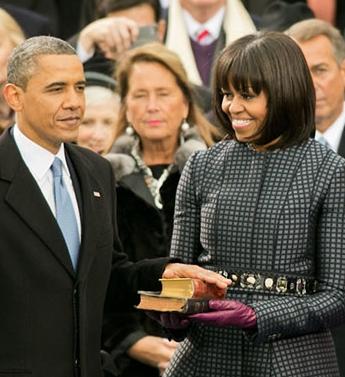
Jack Reacher (2:10) Metreon, 1000 Van Ness.

Killing Them Softly Lowest-level criminal fuckwits Frankie (Scoot McNairy) and Russell (Ben Mendelsohn) are hired to rob a mob gambling den, a task which miraculously they fail to blow. Nevertheless, the repercussions are swift and harsh, as a middleman suit (Richard Jenkins) to the unseen bosses brings in one hitman (Brad Pitt), who brings in another (James Gandolfini) to figure out who the thieves are and administer extreme justice. Based on a 1970s novel by George V. Higgins, this latest collaboration by Pitt and director-scenarist Andrew Dominik would appear superficially to be a surer commercial bet after the box-office failure of their last, 2007’s The Assassination of Jesse James By the Coward Robert Ford — one of the great films of the last decade. But if you’re looking for action thrills or even Guy Ritchie-style swaggering mantalk (though there is some of that), you’ll be disappointed to find Killing more in the abstracted crime drama arena of Drive (2011) or The American (2010), landing somewhere between the riveting former and the arid latter. This meticulously crafted tale is never less than compelling in imaginative direction and expert performance, but it still carries a certain unshakable air of so-what. Some may be turned off by just how vividly unpleasant Mendelsohn’s junkie and Gandolfini’s alchie are. Others will shrug at the wisdom of re-setting this story in the fall of 2008, with financial-infrastructure collapse and the hollow promise of President-elect Obama’s "Change" providing ironical background noise. It’s all a little too little, too soon. (1:37) New Parkway. (Harvey)

Life of Pi Several filmmakers including Alfonso Cuarón, Jean-Pierre Jeunet, and M. Night Shyamalan had a crack at Yann Martel’s "unfilmable" novel over the last decade, without success. That turns out to have been a very good thing, since Ang Lee and scenarist David Magee have made probably the best movie possible from the material — arguably even an improvement on it. Framed as the adult protagonist’s (Irrfan Khan) lengthy reminiscence to an interested writer (Rafe Spall) it chronicles his youthful experience accompanying his family and animals from their just shuttered zoo on a cargo ship voyage from India to Canada. But a storm capsizes the vessel, stranding teenaged Pi (Suraj Sharma) on a lifeboat with a mini menagerie — albeit one swiftly reduced by the food chain in action to one Richard Parker, a whimsically named Bengal tiger. This uneasy forced cohabitation between Hindu vegetarian and instinctual carnivore is an object lesson in survival as well as a fable about the existence of God, among other things. Shot in 3D, the movie has plenty of enchanted, original imagery, though its outstanding technical accomplishment may lie more in the application of CGI (rather than stereoscopic photography) to something reasonably intelligent for a change. First-time actor Sharma is a natural, while his costar gives the most remarkable performance by a wild animal this side of Joaquin Phoenix in The Master. It’s not a perfect film, but it’s a charmed, lovely experience. (2:00) 1000 Van Ness, SF Center. (Harvey)

Lincoln Distinguished subject matter and an A+ production team (Steven Spielberg directing, Daniel Day-Lewis starring, Tony Kushner adapting Doris Kearns Goodwin, John Williams scoring every emotion juuust so) mean Lincoln delivers about what you’d expect: a compelling (if verbose), emotionally resonant (and somehow suspenseful) dramatization of President Lincoln’s push to get the 13th amendment passed before the start of his second term. America’s neck-deep in the Civil War, and Congress, though now without Southern representation, is profoundly divided on the issue of abolition. Spielberg recreates 1865 Washington as a vibrant, exciting place, albeit one filled with so many recognizable stars it’s almost distracting wondering who’ll pop up in the next scene: Jared Harris as Ulysses S. Grant! Joseph Gordon-Levitt as Robert Lincoln! Lena Dunham’s shirtless boyfriend on Girls (Adam Driver) as a soldier! Most notable among the huge cast are John Hawkes, Tim Blake Nelson, and a daffy James Spader as a trio of lobbyists; Sally Field as the troubled First Lady; and likely Oscar contenders Tommy Lee Jones (as winningly cranky Rep. Thaddeus Stevens) and Day-Lewis, who does a reliably great job of disappearing into his iconic role. (2:30) 1000 Van Ness, Presidio, SF Center, Shattuck, Sundance Kabuki. (Eddy)

Les Misérables There is a not-insignificant portion of the population who already knows all the words to all the songs of this musical-theater warhorse, around since the 1980s and honored here with a lavish production by Tom Hooper (2010’s The King’s Speech). As other reviews have pointed out, this version only tangentially concerns Victor Hugo’s French Revolution tale; its true raison d’être is swooning over the sight of its big-name cast crooning those famous tunes. Vocals were recorded live on-set, with microphones digitally removed in post-production — but despite this technical achievement, there’s a certain inorganic quality to the proceedings. Like The King’s Speech, the whole affair feels spliced together in the Oscar-creation lab. The hardworking Hugh Jackman deserves the nomination he’ll inevitably get; jury’s still out on Anne Hathaway’s blubbery, "I cut my hair for real, I am so brave!" performance. (2:37) Balboa, Marina, 1000 Van Ness, SF Center, Shattuck, Sundance Kabuki. (Eddy)

Monsters, Inc. 3D (1:35) Metreon.

My Worst Nightmare First seen locally in the San Francisco Film Society’s 2012 "French Cinema Now" series, My Worst Nightmare follows icy art curator Agathe (Isabelle Huppert) as her airless, tightly-controlled world begins to crumble — thanks in no small part to an exuberantly uncouth, down-on-his-luck Belgian contractor named Patrick (Benoît Poelvoorde). (His obnoxious, freewheeling presence in Agathe’s precision-mapped orbit gives rise to the film’s title.) Director and co-writer Anne Fontaine (2009’s Coco Before Chanel) injects plenty of offbeat, occasionally raunchy humor into what could’ve been a predictable personal-liberation tale — the sight of classy dame Huppert driving through a bikini car wash, for instance. (1:43) Smith Rafael. (Eddy)

Not Fade Away How to explain why the Beatles have been tossed so many cinematic bon mots and not the Stones? The group’s relatively short lifespan — and even the tragic, unexpectedly dramatic passing of John Lennon — seem to have all played into the band’s nostalgia-marinated legend, while the Stones’ profitable tour rotation and shocking physical resilience have lessened their romantic charge. So it reads as a counterintuitive, and a bit random, that Sopranos creator David Chase would open his first feature film with a black and white re-creation of the Mick Jagger and Keith Richards meet-up, before switching to the ’60s coming-of-age of New Jersey teen geek Douglas (John Magaro), trapped in an oppressively whiny nuclear family headed up by his Pep Boy grouch of a dad (James Gandolfini) — at least until rock ‘n’ roll saves his soul and he starts beating the skins. Graduating to better-than-average singer after his band’s frontman Eugene (Boardwalk Empire‘s Jack Huston) inhales a joint, Douglas not only finds his voice, but also wins over dream girl Grace (Bella Heathcote). Sure, Not Fade Away is about sex, drugs, and rock ‘n’ roll — and much attention is dutifully squandered on basement shows, band practice, and politics, and posturing with wacky new haircuts and funny cigarettes, thanks to Chase’s own background in garage bands and executive producer, music supervisor, and true believer Steve Van Zandt’s considerable passion. Yet despite the amount screen time devoted to rock’s rites, those familiar gestures never rise above the clichéd, and Not Fade Away only finds its authentic emotional footing when Gandolfini’s imposing yet trapped patriarch and the rest of Douglas’s beaten-down yet still kicking family enters the picture — they’re the force that refuses to fade away, even after they disappear in the rear view. (1:52) Metreon, 1000 Van Ness, Shattuck. (Chun)

Parental Guidance (1:36) Metreon, 1000 Van Ness.

The Perks of Being a Wallflower Move over, Diary of a Wimpy Kid series — there’s a new shrinking-violet social outcast in town. These days, life might not suck quite so hard for 90-pound weaklings in every age category, what with so many films and TV shows exposing, and sometimes even celebrating, the many miseries of childhood and adolescence for all to see. In this case, Perks author Stephen Chbosky takes on the directorial duties — both a good and bad thing, much like the teen years. Smart, shy Charlie is starting high school with a host of issues: he’s painfully awkward and very alone in the brutal throng, his only friend just committed suicide, and his only simpatico family member was killed in a car accident. Charlie’s English teacher Mr. Andersen (Paul Rudd) appears to be his only connection, until the freshman strikes up a conversation with feline, charismatic, shop-class jester Patrick (Ezra Miller) and his magnetic, music- and fun-loving stepsister Sam (Emma Watson). Who needs the popular kids? The witty duo head up their gang of coolly uncool outcasts their own, the Wallflowers (not to be confused with the deeply uncool Jakob Dylan combo), and with them, Charlie appears to have found his tribe. Only a few small secrets put a damper on matters: Patrick happens to be gay and involved with football player Brad (Johnny Simmons), who’s saddled with a violently conservative father, and Charlie is in love with the already-hooked-up Sam and is frightened that his fragile equilibrium will be destroyed when his new besties graduate and slip out of his life. Displaying empathy and a devotion to emotional truth, Chbosky takes good care of his characters, preserving the complexity and ungainly quirks of their not-so-cartoonish suburbia, though his limitations as a director come to the fore in the murkiness and choppily handled climax that reveals how damaged Charlie truly is. (1:43) New Parkway, Opera Plaza.. (Chun)

Promised Land Gus Van Sant’s fracking fable — co-written by stars Matt Damon and John Krasinski, from a story by Dave Eggers — offers a didactic lesson in environmental politics, capped off by the earth-shattering revelation that billion-dollar corporations are sleazy and evil. You don’t say! Formulated like a Capra movie, Promised Land follows company man Steve Butler (Matt Damon) as he and sales partner Sue (Frances McDormand) travel to a small Pennsylvania town to convince its (they hope) gullible residents to allow drilling on their land. But things don’t go as smoothly as hoped, when the pair faces opposition from a science teacher with a brainiac past (Hal Holbrook), and an irritatingly upbeat green activist (Krasinski) breezes into town to further monkey-wrench their scheme. That Damon is such a likeable actor actually works against him here; his character arc from soulless salesman to emotional-creature-with-a-conscience couldn’t be more predictable or obvious. McDormand’s wonderfully biting supporting performance is the best (and only) reason to see this ponderous, faux-folksy tale, which targets an audience that likely already shares its point of view. (1:46) 1000 Van Ness, Presidio, SF Center. (Eddy)

Rise of the Guardians There’s nothing so camp as "Heat Miser" from The Year Without a Santa Claus (1974) in Rise of the Guardians,, but there’s plenty here to charm all ages. The mystery at its center: we open on Jack Frost (voiced by Chris Pine) being born, pulled from the depths of a frozen pond by the Man on the Moon and destined to spread ice and cold everywhere he goes, invisible to all living creatures. It’s an individualistic yet lonely lot for Jack, who’s styled as an impish snowboarder in a hoodie and armed with an icy scepter, until the Guardians — spirits like North/Santa Claus (Alec Baldwin), the Tooth Fairy (Isla Fisher), and the Easter Bunny (Hugh Jackman) — call on him to join them. Pitch the Boogeyman (Jude Law) is threatening to snuff out all children’s hopes and dreams with fears and nightmares, and it’s up to the Guardians must keep belief in magic alive. But what’s in it for Jack, except the most important thing: namely who is he and what is his origin story? Director Peter Ramsey keeps those fragile dreams aloft with scenes awash with motion and animation that evokes the chubby figures and cozy warm tones of ’70s European storybooks. And though Pine verges on blandness with his vocal performance, Baldwin, Jackman, and Fisher winningly deliver the jokes. (1:38) Metreon. (Chun)

Rust and Bone Unlike her Dark Knight Rises co-star Anne Hathaway, Rust and Bone star Marion Cotillard never seems like she’s trying too hard to be sexy, or edgy, or whatever (plus, she already has an Oscar, so the pressure’s off). Here, she’s a whale trainer at a SeaWorld-type park who loses her legs in an accident, which complicates (but ultimately strengthens) her relationship with Ali (Belgian actor Matthias Schoenaerts, so tremendous in 2011’s Bullhead), a single dad trying to make a name for himself as a boxer. Jacques Audiard’s follow-up to 2009’s A Prophet gets a bit overwrought by its last act, but there’s an emotional authenticity in the performances that makes even a ridiculous twist (like, the kind that’ll make you exclaim "Are you fucking kidding me?") feel almost well-earned. (2:00) Embarcadero, Shattuck. (Eddy)

The Sessions Polio has long since paralyzed the body of Berkeley poet Mark O’Brien (John Hawkes) from the neck down. Of course his mind is free to roam — but it often roams south of the personal equator, where he hasn’t had the same opportunities as able-bodied people. Thus he enlists the services of Cheryl (Helen Hunt), a professional sex surrogate, to lose his virginity at last. Based on the real-life figures’ experiences, this drama by Australian polio survivor Ben Lewin was a big hit at Sundance this year (then titled The Surrogate), and it’s not hard to see why: this is one of those rare inspirational feel-good stories that doesn’t pander and earns its tears with honest emotional toil. Hawkes is always arresting, but Hunt hasn’t been this good in a long time, and William H. Macy is pure pleasure as a sympathetic priest put in numerous awkward positions with the Lord by Mark’s very down-to-earth questions and confessions. (1:35) Opera Plaza. (Harvey)

Silver Linings Playbook After guiding two actors to Best Supporting Oscars in 2010’s The Fighter, director David O. Russell returns (adapting his script from Matthew Quick’s novel) with another darkly comedic film about a complicated family that will probably earn some gold of its own. Though he’s obviously not ready to face the outside world, Pat (Bradley Cooper) checks out of the state institution he’s been court-ordered to spend eight months in after displaying some serious anger-management issues. He moves home with his football-obsessed father (Robert De Niro) and worrywart mother (Jacki Weaver of 2010’s Animal Kingdom), where he plunges into a plan to win back his estranged wife. Cooper plays Pat as a man vibrating with troubled energy — always in danger of flying into a rage, even as he pursues his forced-upbeat "silver linings" philosophy. But the movie belongs to Jennifer Lawrence, who proves the chops she showcased (pre-Hunger Games megafame) in 2010’s Winter’s Bone were no fluke. As the damaged-but-determined Tiffany, she’s the left-field element that jolts Pat out of his crazytown funk; she’s also the only reason Playbook‘s dance-competition subplot doesn’t feel eye-rollingly clichéd. The film’s not perfect, but Lawrence’s layered performance — emotional, demanding, bitchy, tough-yet-secretly-tender — damn near is. (2:01) Piedmont, Presidio, SF Center, Shattuck. (Eddy)

Skyfall Top marks to Adele, who delivers a magnificent title song to cap off Skyfall‘s thrilling pre-credits chase scene. Unfortunate, then, that the film that follows squanders its initial promise. After a bomb attack on MI6, the clock is running out for Bond (Daniel Craig) and M (Judi Dench), accused of Cold War irrelevancy in a 21st century full of malevolent, stateless computer hackers. The audience, too, will yearn for a return to simpler times; dialogue about "firewalls" and "obfuscated code" never fails to sound faintly ridiculous, despite the efforts Ben Whishaw as the youthful new head of Q branch. Javier Bardem is creative and creepy as keyboard-tapping villain Raoul Silva, but would have done better with a megalomaniac scheme to take over the world. Instead, a small-potatoes revenge plot limps to a dull conclusion in the middle of nowhere. Skyfall never decides whether it prefers action, bon mots, and in-jokes to ponderous mythologizing and ripped-from-the-headlines speechifying — the result is a unsatisfying, uneven mixture. (2:23) Metreon, 1000 Van Ness, Shattuck, Sundance Kabuki. (Ben Richardson)

Texas Chainsaw 3D (1:32) Metreon, 1000 Van Ness.

Tchopitoulas Three adolescent brothers enjoy a dusk-to-dawn night in the Big Easy — New Orleans, baby — in this impressionistic documentary that blurs the line between staged and sampled lyricism. Bill and Turner Ross’ film sets the trio loose in the French Quarter and beyond, where they sample the company of various drunks, buskers, oyster shuckers, painted ladies, and so forth. No laws are conspicuously broken, though a few get bent — it’s safe to say these kids probably won’t be visiting several environs again until they’re of legal drinking age. The long night is an inebriate dream of color and sound, strange but seldom menacing. Like the "city symphony" movies of the 1920s and 30s, this is less nonfiction cinema in a strict vérité vein than a poetically contrived ode to life — a life that’s sturdier than it looks, since Tchoupitoulas finds NO back to the business of partying like Katrina never happened. If you’re looking for a harder-edged portrait of the burg’s status quo, there are plenty of other documentaries to choose from; the Ross’ provide a woozy mash note rather than a sober pulse-taking. You’ll definitely want to go bar-hopping afterward. (1:20) Roxie. (Harvey)

This is 40 A spin-off of sorts from 2007’s Knocked Up, Judd Apatow’s This is 40 continues the story of two characters nobody cared about from that earlier film: Debbie (Leslie Mann, Apatow’s wife) and Pete (Paul Rudd), plus their two kids (played by Mann and Apatow’s kids). Pete and Debbie have accumulated all the trappings of comfortable Los Angeles livin’: luxury cars, a huge house, a private personal trainer, the means to throw catered parties and take weekend trips to fancy hotels (and to whimsically decide to go gluten-free), and more Apple products than have ever before been shoehorned into a single film. But! This was crap they got used to having before Pete’s record label went into the shitter, and Debbie’s dress-shop employee (Charlene Yi, another Knocked Up returnee who is one of two people of color in the film; the other is an Indian doctor who exists so Pete can mock his accent) started stealing thousands from the register. How will this couple and their whiny offspring deal with their financial reality? By arguing! About bullshit! In every scene! For nearly two and a half hours! By the time Melissa McCarthy, as a fellow parent, shows up to command the film’s only satisfying scene — ripping Pete and Debbie a new one, which they sorely deserve — you’re torn between cheering for her and wishing she’d never appeared. Seeing McCarthy go at it is a reminder that most comedies don’t make you feel like stabbing yourself in the face. I’m honestly perplexed as to who this movie’s audience is supposed to be. Self-loathing yuppies? Masochists? Apatow’s immediate family, most of whom are already in the film? (2:14) Metreon, 1000 Van Ness, Shattuck, Vogue. (Eddy)

Tristana The morality tale rarely gets as twisted as it does in Luis Buñuel’s 1970 late-in-the-day beauty Tristana. Working with Benito Perez Galdos’s novel, the filmmaker gleefully picked up a thread entwining erotic politics and S&M — explored to exquisite effect in 1967’s Belle de Jour and again offset by the immaculate bone structure of anti-heroine Catherine Deneuve — while bringing a corrosive intimacy to his black-humored disembowelment of a self-serving aristocracy, hypocritical church, and Franco-era fascism. Today it feels like one of Buñuel’s most personal and Spanish films, with the director-cowriter basing the impressionable Tristana on his sister Conchita. The starting point is an archetypal innocent "strange flower" clad in black, Tristana (Deneuve). She has been placed in the care of the aristocratic Don Lope (Buñuel regular Fernando Rey), a dissolute "senorito" (akin to Buñuel’s own father) who lives off his inheritance and espouses a kind of anti-clerical, antiauthoritarian, albeit elitist, libertine lifestyle. The patriarch can hardly deny himself anything, let alone his gorgeous ward, who is confined to the house like a prisoner and learns at Don Lope’s feet to despise the man who admits he’s her father or her husband, depending on when it suits him. Enter a dashing young artist Horacio (Franco Nero, the original Django) to spirit the increasingly embittered Tristana away from the battered, mazelike streets of Toledo, Spain. But that feat is far from easy when the "fallen" woman’s daydreams of teaching piano pale in comparison to a recurring nightmare of Don Lope’s head at the end of a rather phallic church bell clapper. What follows — photographed with disciplined, earthy beauty by cinematographer Jose Aguayo and now restored to its dusky, lustrous good looks—is a de-evolution of sorts, as both an innocent and corruptor are defiled, though Tristana‘s psychosexual reverberations, which would have given both Freud and the Marquis de Sade palpitations, echo out beyond the closing montage, its tolling bell, and the repeated heavy thud of a prosthetic slamming into the floor. (1:38) Opera Plaza. (Chun)

Wreck-It Ralph Wreck-It Ralph cribs directly from the Toy Story series: when the lights go off in the arcade, video game characters gather to eat, drink, and endure existential crises. John C. Reilly is likable and idiosyncratic as Ralph, the hulking, ham-fisted villain of a game called Fix-It-Felix. Fed up with being the bad guy, Ralph sneaks into gritty combat sim Hero’s Duty under the nose of Sergeant Calhoun (Jane Lynch), a blond space marine who mixes Mass Effect‘s Commander Shepard with a PG-rated R. Lee Ermey. Things go quickly awry, and soon Ralph is marooned in cart-racing candyland Sugar Rush, helping Vanellope Von Schweetz (a manic Sarah Silverman), with Calhoun and opposite number Felix (Jack McBrayer) hot on his heels. Though often aggressively childish, the humor will amuse kids, parents, and occasionally gamers, and the Disney-approved message about acceptance is moving without being maudlin. The animation, limber enough to portray 30 years of changing video game graphics, deserves special praise. (1:34) Metreon. (Ben Richardson)

Zero Dark Thirty The extent to which torture was actually used in the hunt for Osama Bin Ladin may never be known, though popular opinion will surely be shaped by this film, as it’s produced with the same kind of "realness" that made Kathryn Bigelow’s previous film, the Oscar-winning The Hurt Locker (2008), so potent. Zero Dark Thirty incorporates torture early in its chronology — which begins in 2003, after a brief opening that captures the terror of September 11, 2001 using only 911 phone calls — but the practice is discarded after 2008, a sea-change year marked by the sight of Obama on TV insisting that "America does not torture." (The "any more" goes unspoken.) Most of Zero Dark Thirty is set in Pakistan and/or "CIA black sites" in undisclosed locations; it’s a suspenseful procedural that manages to make well-documented events (the July 2005 London bombings; the September 2008 Islamabad Marriott Hotel bombing) seem shocking and unexpected. Even the raid on Bin Ladin’s HQ is nail-bitingly intense. The film immerses the viewer in the clandestine world, tossing out abbreviations ("KSM" for al-Qaeda bigwig Khalid Sheikh Mohammed) and jargon ("tradecraft") without pausing for a breath. It is thrilling, emotional, engrossing — the smartest, most tightly-constructed action film of the year. At the center of it all: a character allegedly based on a real person whose actual identity is kept top-secret by necessity. She’s interpreted here in the form of a steely CIA operative named Maya, played to likely Oscar-winning perfection by Jessica Chastain. No matter the film’s divisive subject matter, there’s no denying that this is a powerful performance. "Washington says she’s a killer," a character remarks after meeting this seemingly delicate creature, and he’s proven right long before Bin Ladin goes down. Some critics have argued that character is underdeveloped, but anyone who says that isn’t watching closely enough. Maya may not be given a traditional backstory, but there’s plenty of interior life there, and it comes through in quick, vulnerable flashes — leading up to the payoff of the film’s devastating final shot. (2:39) Balboa, Marina, SF Center, Sundance Kabuki. (Eddy)

Write it out

1

culture@sfbg.com

CAREERS AND ED If your New Year’s resolutions include finally finishing that post-apocalyptic S&M fantasy novel, or maybe just starting the memoir about your childhood as the illegitimate offspring of a ’70s soap opera star, you’re in the right place — and time. Here in the Bay Area, you can’t throw a copy of Robert McKee’s literary how-to “Story” without hitting a writing teacher — and January is when most writing classes ramp up. The trick is choosing the right one.

Best to begin with these 3 steps:

DECIDE EXACTLY WHAT KIND OF CLASS YOU WANT

Are you looking for a lot of lecture on writing craft, or would you rather spend more time workshopping your writing? Do you want to be assigned reading homework, or would you prefer writing exercises? All this information should be in the class description, and if it isn’t, email the teacher and ask. You’re allowed, you’re a grown-up now.

ASSESS YOUR MOTIVATION LEVEL

About mid-February it’ll be a cold, rainy night and that TiVoed episode of Downton Abbey and some takeout Indian food will seem more appealing than the experimental fiction course you signed up for. Decide now if you’re better committing to an afternoon class or a weekend workshop. Or if you should sign up with a friend so you’ll have somebody to shame you going.

VET THE INSTRUCTOR

Reading the teacher’s bio is as important as reading the course description. If you’re taking a class in novel-writing, you might want to know if your instructor has actually published (and not self-published) a novel — and if it was in the last couple of decades. This is useful information to have when you’re asking about real-world topics, such as getting an agent or dealing with publishers.

Of course, being published doesn’t necessarily make someone a good teacher. Writing is a profession that attracts people who like to lock themselves up in rooms with imaginary characters. Always check out the Yelp reviews for any place you’re thinking of taking a class. You’ll find plenty of individual teacher comments, pro and con.

*******

While there are other options, here is my personal list of the best places to take writing classes in the Bay Area:

THE WRITING SALON

Started in 1999 by a former newspaper editor, the Writing Salon (www.writingsalons.com)now has two locations, one in Potrero Hill and another in Berkeley. The Writing Salon offers intimate classes, four times a year in all genres (fiction, poetry, playwriting, even erotica) that are real crowd-pleasers. The Writing Salon won the SFBG Best of the Bay Readers’ Poll in Adult Education in 2011 and 2012.

THE SAN FRANCISCO WRITERS’ GROTTO

The Grotto began offering classes in 2008, and has seen their program grow to more than 15 classes per week. Begun in 1994 by Po Bronson, Ethan Canin, and Ethan Watters, the San Francisco Writers’ Grotto (www.sfgrotto.org) is a collective of working writers who share office space South of Market, where classes are held. Grotto classes are taught by Grotto members, as well as visiting colleagues, such as their agents, editors, and author friends. Grotto classes have perhaps the most stringent criteria for their teachers. No instructor can teach a Grotto class in a genre he or she is not published in. The Grotto has recently partnered with Litquake to sponsor the Bay Area’s first juried writers conference, Lit Camp, to be held this April.

BOOK PASSAGE

Easily the best independent bookstore in the country, Book Passage (www.bookpassage.com) in Corte Madera is also an excellent place to take a writing class. Often authors on their way through town on book tour will teach here. Book Passage is justifiably famous for its three big conferences — Children’s Writers and Illustrators, Mystery Writers, and Travel Writers and Photographers — which take place in the spring and summer. Elaine Petrocelli, the brains behind Book Passage, packs these conferences with agents and editors, and then sends them out to mingle with the students. More than one local writer has had his or her career made at a Book Passage conference.

GOING ALL IN — GRADUATE SCHOOL

If attending these writing classes has you thinking about taking your skill set to the next level, you don’t have to leave town. San Francisco State has one of the best, and for California residents, one of the least expensive Creative Writing graduate programs. It’s not easy to get into, but the upside is that once you’re in, reading your fellow students’ work is a pleasure. SF State (creativewriting.sfsu.edu) offers an MA and an MFA program, and you can go part time.

Another good, although pricier, choice is California College of the Arts, which offers a two-year MFA program at its SF campus (www.cca.edu/academics/graduate/writing).

Learned

1

ONGOING

Rockin’ Kids Singalong

Licensed clinical social worker and former punk rock singer-guitarist Stephanie Pepitone leads this musical play group for kids of all ages. Stephanie “leads families in about an hour’s worth of singing, dancing, music-making, and fun/chaos” with original tunes and familiar favorites.

Fridays, 10:30-11:30am, $10 per family. La Pena Cultural Center, 3105 Shattuck, Berk. www.lapena.org

JAN 12

Haitian Folkloric Dance

Live drumming accompanies instructor Portsha Jefferson’s class for all levels, which promises that “you will experience the meditative Yanvalou, the fiery rhythms of Petwo, the playful and celebratory dances of Banda and Rara. Expect a high energy class in celebration of a rich, spiritual tradition. Bring a long, flowy skirt if you have one.”

1:30-3pm, $13. Dance Mission Theater, 3316 24th St., SF. www.dancemission.com

JAN 16

Feeding Your Soul: Mindful Cooking and Eating in the New Year

Let the onslaught of New Year’s resolution-keeping commence. Kick off the year with an intro to mindful eating, and get away from psychologically compulsive, physically harming habits when it comes to nourishing yourself. Life coach Carley Hauck and chef Greg Lutes (known for his uni crème brulee!) team up deliver a lecture and cooking demo — aimed at helping you recognize wasteful food behaviors and reinvigorate your love for creating and enjoying healthful dishes.

$25 18 Reasons members, $35 others. 18 Reasons, 3674 18th St., SF. www.18reasons.org

JAN 17

Understanding Chinese Medicine

A six-week course at the American College of Traditional Chinese Medicine that will introduce you to the basic life force concept of Qi, and then broaden your knowledge into acupuncture, Chinese herbs, tongue and pulse diagnostics, yin and yang, five elements, and the Chinese concept of internal organs.

Thursdays, 6pm-8pm, $120. Pioneer Square and Shuji Goto Library, 555 De Haro, SF. www.actcm.edu

JAN 19

New Year, New Poems: Celebrate Your Muse!

“In our day together we’ll read and talk about an array of accessible, provocative poems by fine writers including current poet laureates Kathleen Flenniken, Juan Felipe Herrera, and Natasha Trethewey, and we’ll do some whimsical, illuminating writing exercises to bypass our inner critics and experiment with themes and tones, phrases and rhythms. We’ll listen closely and encouragingly to each other’s voices. By the end of the day we’ll have shaped a handful of budding poems and sharpened our vision for future writing projects,” says Writing Salon teacher Kathleen McClung.

10am-4pm, $95 Writing Salon members, $110 others. Writing Salon, 720 York, SF. www.writingsalons.com

JAN 19

Kongolese Contemporary Dance

Extremely charismatic instructor Byb Chanel Bibene revisits his Congolese roots, in which contemporary and traditional movements intertwined to produce a unique, exhilarating style. No experience in dance is necessary for this warm, fun, and inviting workshop.

10am-noon, $12-15 sliding scale. Also Jan. 20. Counterpulse, 1310 Mission, SF. www.counterpulse.org


JAN 25


Exploring San Francisco District Six

Sometimes education begins with looking more closely at your community. Supervisor Jane Kim leads a tour of her district — including South of Market, Mid-Market and Tenderloin neighborhoods — highlighting some of the recent successes and challenges affecting its residents’ quality of life.

3:30pm, $10. See www.spur.org/events for more info.

JAN 27

Bagel Making Workshop

Hole yes! You’ll never need complain about the state of West Coast bagelry again when the good folks of Sour Flour workshops lead you through the basics. You’ll begin by mixing flour, starter, salt, and water and then learning to develop the glutens through various techniques. Finally you’ll find out about boiling and baking techniques. Bring a plate to roll your creation home.

12:30-2:30pm, $80. La Victoria Bakery, 2937 24th St., SF. www.sourflour.org/workshops

FEB 2

Introduction to Coptic Bookbinding

The Coptic style of bookbinding allows a book to be laid open flat, making it ideal for sketchbooks and journals. Offered at Techshop, the epicenter of hands-on DIY yumminess, this seminar allows you to take home your own handmade journal! (To blog about?)

10am-4pm, $95 TechShop members, $110 others. TechShop, 926 Howard, SF. www.techshop.ws

FEB 5

Basic Mysteries

Revered Beat poet, former New College professor, and Guardian GOLDIE Lifetime Achievement Award-winner David Meltzer takes us on a uniquely persona tour of poetry and poetics, exploring “the roots of poetry, the invention and mythology of writing systems, divination, Kabbalah, and the page.” The four-week course (Tuesdays through February) will cover a lot of transcendent ground.

7:00-9:30pm, $200. Mythos, 930 Dwight Way #10, Berk. Contact julmind@mtashland.net for more info.

FEB 8

Career Toolbox with Suzanne Vega

The acclaimed neo-folk singer introduces us to her concept of the “career toolbox,” which “contains a unique mix of creative, strategic and marketing skills that helped her in the early stages of her career.” Honest self-reflection and an understanding of necessary skills to survive a competitive marketplace are key. Plus, hello, Suzanne Vega.

11am-2pm, $52 CIIS members, $65 others. California Institute of Integral Studies, 1453 Mission, SF. www.ciis.edu

FEB 19

Wild Oakland: Nature Photography Basics at Lake Merritt

Amid its passel of no-cost classes, including weekly courses on Eskrima, the Filipino combat system and herbal medicine, the East Bay Free Skool offers great one-off tutorials. Nature group Wild Oakland hosts a few of these that entail happy tromps about Lake Merritt. Today’s is a wildlife photography class taught by Damon Tighe, whose freelance shots appear in Bay Nature and other publications.

Noon, free. Meet in front of Rotary Nature Center, 600 Bellevue, Oakl. eastbayfreeskool.wikia.com

MARCH 17

Introduction to Neon

Surely there are few among us who could not use a custom-made neon sign. Perhaps you would like it to be clear that you are open for business. Maybe your roommate could use a permanent reminder that please Buddha Christ our savior we don’t leave our coffee mugs on the dining room table (ahem.) At any rate, this is one of this West Oakland metal mecca’s entry-level courses — check its online course schedule for more offerings in blacksmithing, welding, jewelry, glass, and more.

Sundays through 10am-6pm, $400. The Crucible, 1260 Seventh St., Oakl. www.thecrucible.org


Street music

14

le.chicken.farmer@gmail.com

CHEAP EATS It’s like a rubber band. It breaks.

CHEAP MUSIC


by Hedgehog


Happy Current Year from the not-too-distant past! We celebrated New Years Eve at the Manse de la Cooter with good luck sausages, kale, and (for some of us) perhaps a little too much vino.

Oddly, it wasn’t Chicken Farmer who over-indulged, though I expected her to drown her sorrows in the grape since earlier that day her knee doctor broke the news. Or rather, he tore the news: ACL.

"In the wind," as McNulty would say. Only permanently. Like, Chris escorted her left knee’s ACL into a "vacant," and Snoop followed behind with a bucket of quick lime and a powder-actuated nail gun, you feel me?

But, in spite of her bad case of S.A.D. (Sad ACL Discovery) the farmer stoicly sang and storied the Chunks de la Cooter to sleep, and soberly designated drivered me home, where we’ve been burying our heads ever since, recording Sister Exister music.

And so, in deference to my honey’s questionable sports future and entirely unsporty present, I’m going to focus my portion of the column on the thing I now know more about than I did last week: music in San Francisco.

What’s that? The BG already has music writers? So? They already have a food writer, too. My new twist is: Us! That’s right, it’s 2013 and Sister Exister (sisterexister.bandcamp.com) is primed for world domination. We are everywhere. We tweet, tumble, face the book, kick the songs, camp the band, and cloud the sounds with our patented brand of "What the hell was that? Are they serious?"

And it is thanks to my self-appointed role as the band’s link to all things digital that I’ve discovered — gasp — we are not the only band in San Francisco. This epiphany was mostly Soundcloud’s doing, since we never go outside, let alone to bars, let alone to bars playing loud, live, amplified music.

But maybe in 2013 we should because . . . The High Witness Co. (www.soundcloud.com/highwitness)? Digging the "Leonard Cohen and Calexico in a blender" vibe of "Borrowed Time." And the Street Eaters (www.soundcloud.com/streeteaters)? Fuck yeah! And not just because of their name, either.

Chick drummer, fella plucking the bass, and that’s it. And they sound like a full orchestra! OK not really but dang, only two people? Yowza. Check out their track "Blades" and forget what I said about there being only two people in the band. And then be amazed when I say again: all that energy is coming out of only two people!

This, and then all the bands we already know with all the people we already know in them, like the Verms, Yard Sale, the Low Rollers, 17 Reasons . . . In fact, everybody in the greater Bay Area is in a band! If this isn’t true, if you in fact are not in a band then guess what? You, like us, have got a lot of audiencing to catch up on!

CHEAP EATS continued

Yeah but now I can’t go out because I look like Rocky Balboa. I lasted just one round with the bathroom floor yesterday morning and now I have a broken nose, a black eye, and a swollen eyebrow full of dried blood, in addition to my depressing ACLessness. So I can’t even dance, let alone be seen.

For now.

Go on ahead without me, Hedgehog.

I’ll be here on the toilet, where I’ve spent most of 2013, when I wasn’t Hillary Clintoning off of it.

She found me, dear reader, in a puddle of blood. Not Hillary — Hedgehog. And that awesome moment was the highlight of my year this year so far.

Oh. This morning I ate a half of a bagel with jam on it, and I held it down!

Or up, as it were. Other than that it’s been white rice and dry toast on my menu. But you don’t want to hear about this! Go give a listen to happier times, courtesy of Hedgehog . . .