Films

TV party

2

TRASH These days we’re used to TV series regularly offering better, more serious, and more relevant drama than mainstream movies, a notion unthinkable not long ago. But even at the height of boob tube silliness, when zero cable alternatives and FCC strictures resulted in mostly bland programming, there was some room for deviation from formula. That room was primarily occupied by TV movies, which began being produced in 1964. By decade’s end they were a broadcast staple, earning strong ratings and lessening the need for networks to purchase old theatrical-release films for broadcast.

In the 1970s TV movies would increasingly take on social issues. That kind of activist edge was still pretty rare, however, when two little-remembered telepics the Vortex Room is showing on Thursday, July 14 first aired. Both are dated relics stylistically but surprisingly prescient politically.

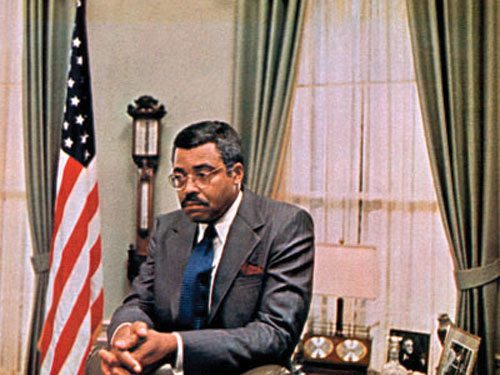
The Man (1972), which was given a brief theatrical release after being made for ABC, was adapted from Irving Wallace’s trashy bestseller by The Twilight Zone‘s Rod Serling — fair enough, since its conceit must have seemed science fiction at the time. James Earl Jones plays a fusty academic Senate president pro tempore suddenly swept into the Oval Office after circumstances wipe out the succession line before him.

Having a “black,” “Negro,” or “jigaboo” (depending on who’s talking and how publicly) commander-in-chief naturally brings out the not-so-latent racism in the various old white male power-mongers used to minority colleagues being powerless token figures. Polite and awed by his position to a fault — he’s no 2008 Barack Obama — our protag nonetheless learns to stand up for himself and his office, even if that means making some decisions unpopular with black voters.

Four years earlier, another trashy novelist (Sidney Sheldon of The Other Side of Midnight) had the pretty good idea of updating (without crediting) Sinclair Lewis’ 1935 cautionary novel It Can’t Happen Here — about a “patriotic” political party pushing the country toward a fascist dictatorship — as a modern action-suspense series. What with Vietnam protests, campus unrest, civil rights struggles, and so forth, the concept of our nation undergoing civil war was evidently too hot for the networks. They passed even after the original script had been shorn of nearly all direct political commentary.

Nonetheless, feature-length pilot Shadow on the Land is fairly strong (and violent) meat for the era. Its hectic portrait of a nation oppressed by governmental “security” brutality, air travel restrictions, etc. on one side, destabilized by a “Society of Man” underground resistance on the other is a metaphor applicable to the Nazi threat of Lewis’ day, Nixon vs. the Left, or post-Patriot Act America. It’s by turns wooden, heavy-handed, shrill, and sophisticated — not exactly good, but still a credible picture of something that could well happen here, perhaps more easily now than in 1968.  

THE UNITED STATES OF VORTEX

The Man, Thurs/14, 9 p.m.;

Shadow on the Land, Thurs/14, 11 p.m., $5

Vortex Room

1082 Howard, SF

www.myspace.com/thevortexroom


Hot reels

0

culture@sfbg.com

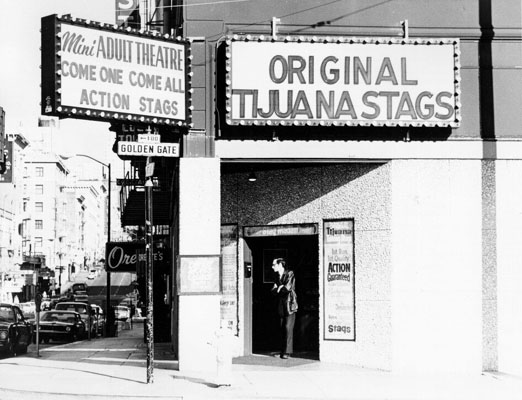
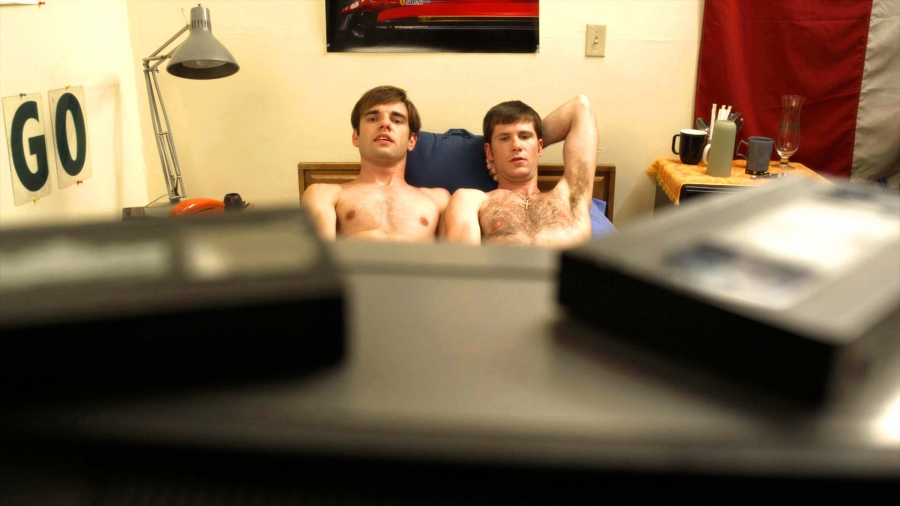
LUST FOR LIFE In 1969, San Francisco became the first American city to legalize screening hardcore pornography. In honor of director Michael Stabile’s documentary-in-progress Smut Capital of America, which chronicles the 1969 event and SF’s ensuing pivotal role in the adult film industry during the early 1970s, Yerba Buena Center for the Arts is sponsoring a festival from July 14-Aug. 24 that will screen Stabile’s project and seven vintage porn films.

The festival kicks off with an evening featuring Smut Capital, a post-screening Q&A, rare vintage porn clips, and a discussion between Stabile and YBCA film and video curator Joel Shepard on SF sex culture in the 1960s and ’70s. After seeing the 16 minute-excerpt of the film, I ‘m already intrigued, entertained, and offended.

Smut Capital does more than give a blow-by-blow (sorry for the pun) porn history. It is also one of the few existing histories of sex work and queerness in the 1970s Tenderloin district. There is some pretty transphobic and sexist language in the footage (said by interviewees, not the filmmaker), and its treatment of street sex work and survival sex feels weirdly lighthearted. But because documenting the Tenderloin’s importance to queer and sex cultures is rare, I’m glad this film is in the works. I’m interested to see what other footage Stabile has for us down the road.

YBCA is also screening good old-fashioned smut — a passel of 1960s and ’70s blue shorts and full-lengths are on the schedule. And for another take on the era, a perspective piece from right in the thick of things, look to director Alex De Renzy’s Pornography in Denmark (1969), a controversial (at the time — but then, what wasn’t?) documentary he made during the first Danish adult trade expo to shoot its load after the country rescinded many of its anti-sex laws. De Renzy went on to direct such gems as 1989’s Bring on the Virgins and 1997’s Trashy Ass Deliquents, so you can probably guess where he stands on matters of sexual freedom.

Pornography in Denmark is far more interesting as a historical document than as a documentary or a porn film. As far as docs go, it’s slow; as far as porn goes, well, there’s nudity and sex, but they’re not very arousing. The film is a bit dry and long-winded, with the narrator earnestly explaining the history of porn in Denmark, right down to reciting the national average of production costs.

The interviews with sex industry workers are interesting, though, and some of the dialogue is priceless. I was having giggle fits over lines like “Probably not many men carry a vibrator in their attaché case”; “A tourist’s raincoat has deep pockets”; and “Making a pornographic film can raise a sharp appetite!”

All in all, these events are definitely worth checking out. I’ll be at “Smut Capital” — see you there?

SMUT CAPITAL OF AMERICA: SAN FRANCISCO’S SEX FILM REVOLUTION

Smut Capital , Thurs/14, 7:30 p.m., $6–$8

Pornography in Denmark , July 21, 7:30 p.m., $6–$8

Yerba Buena Center for the Arts

701 Mission, SF

www.ybca.org


Film Listings

0

Film listings are edited by Cheryl Eddy. Reviewers are Kimberly Chun, Michelle Devereaux, Peter Galvin, Max Goldberg, Dennis Harvey, Johnny Ray Huston, Louis Peitzman, Lynn Rapoport, Ben Richardson, and Matt Sussman. For rep house showtimes, see Rep Clock.

OPENING

Beats, Rhymes & Life See “Buggin’ Out.” (1:38) Shattuck.

*”An Evening With Andy and Jonathan” Before the 80s standup craze dredged up so much bottom-feeding crap, the comedy world had room for a few chameleonic improv innovators like the subjects of this Roxie program hosted by Johnny Legend. Making its theatrical debut is his recent DVD assembly Jonathan Winters: Birth of a Comedy Genius, a compilation bringing together clips from various long-forgotten shows like The NBC Comedy Hour and The Steve Allen Plymouth Show. A man of a thousand voices, Winters (who’s still occasionally active — he voices Papa Smurf in the imminent Smurfs feature) anticipated the manic improvisational glee of Jim Carrey and others as he sped through myriad instantly-created characters, often leaving any fellow players silenced and agog. If these segments predating his peak fame in the late 60s aren’t necessarily stellar in terms of material — it was an era when TV allowed very little that was “edgy” — the performer himself is always a marvel to watch. The co-feature is cult fave My Breakfast with Blassie, the 55-minute semi-staged, all-improv vehicle for the late Andy Kaufman — very much “playing” himself — and his older pro wrestler friend Fred Blassie. Legend co-directed that 1983 oddity, made just a year before the “dadaist” comedian’s untimely death; also on the bill is a one-hour program of ultra-rarities featuring Kaufman, Blassie, Legend and more. Roxie. (Harvey)

Harry Potter and the Deathly Hallows Part 2 Game over. (2:10)

If A Tree Falls: A Story of the Earth Liberation Front If A Tree Falls: A Story of the Earth Liberation Front traces the roots and development of the controversial environmental activist organization through one of its members, Daniel McGowan, as he faces trial for the newly imagined charge of eco-terrorism. McGowan is thoughtful and open about his participation in numerous actions against perceived enemies of Earth, allowing director Marshall Curry to craft an intelligent documentary as much about McGowan and the E.L.F. as the almost insurmountable ethical murkiness of activism in America. Frustrated by the apparent ineffectuality of peaceful protest and faced with the continued despoiling of our planet, McGowan and his peers pose a difficult question: how far is too far? Or, what price do we pay by failing to go far enough? Curry is careful to allow both sides of the debate ample time on screen in a timely consideration of the viability of direct action and the human face behind a media frenzy. (1:30) Shattuck. (Cooper Berkmoyer)

*Project Nim This is the story of an individual plucked from their native culture even before birth, separated from parents shortly after, handed over to a chaotic if loving urban foster family, yanked from them to a lavish, isolated country estate, then shipped off to a medical experimentation lab, “rescued” only to be placed in prison like solitary confinement, and … well, things finally get a little better, but isn’t this enough abuse for several lifetimes? Before you call Child Services or the ACLU, be informed that this is not the saga of a human being, but one Nim Chimpsky, a chimpanzee born in U.S. captivity, then set on a highly unusual life course as the subject of a study in animal language acquisition by Columbia University linguist Herbert S. Terrace. Nim did indeed prove remarkably adept at learning sign language to communicate with his teachers/minders — even if Terrace finally belittled that as no more than imitation performed to beg food and other favor. Nim was a prodigy, and for a while a media sensation. He was also a temperamental, physically powerful wild beast who could (and sometimes did) cause considerable harm to those around him. Regardless, both his adaptation to human habitats and animal instincts should have been deal with a great deal more care and consistency — there was no overall plan for his well-being beyond serving (or being abandoned by) whoever his keepers were at any given moment. This latest documentary by James Marsh (2008’s Man on Wire, 1999’s Wisconsin Death Trip) is an involving story whose latter-day interviewees — tumbling rather easily into hero and villain categories, with Prof. Terrance not in the first camp — annotate an enormous amount of archival footage shot throughout Nim’s life. (1:33) (Harvey)

*Snow Flower and the Secret Fan Working with Lisa See’s novel, director Wayne Wang returns to the crowd-pleasing territory of his wildly popular Joy Luck Club (1993) — fortunately it’s also material that feels intensely personal, even transposed in 21st century China (one of those modern Chinese women, Rupert Murdoch’s wife Wendi bought the rights to the book and provides a financial boost here). Modern-day Nina (Bingbing Li) is about to leave her native Shanghai for NYC and certain success in the banking world when she learns that her best friend, her laotong or sworn sister, Sophia (Gianna Jun), is in a coma. She must piece together the mystery of her friend’s life since they last parted, studying the book written about her 19th century forbearer Snow Flower (also Jun) and her own laotong Lily (Li). An uncredited turn by Hugh Jackman as a caddish boyfriend is beside the point here; Wang’s take on the bond of friendship that ties two women together, beyond the pain of foot-binding, marriage, class, and adversity is tremulously sentimental, in way that will have many would-be Joy Luck Club-ers happily identifying with these sisters from other mothers — and leave everyone else sobbing in the darkness. (1:40) Albany. (Chun)

*Tabloid Taking a break from loftier subjects, Errol Morris’ latest documentary simply finds a whopper of a story and lets the principal participant tell her side of it — one we gradually realize may be very far from the real truth. In 1978 former Miss Wyoming Joyce McKinney flew to England, where the Mormon boy she’d grown infatuated with had been posted for missionary work by his church. What ensued became a U.K. tabloid sensation, as the glamorous, not at all publicity-shy Yankee attracted accusations of kidnapping, imprisonment, attempted rape and more. Her victim of love, one Kirk Anderson, is not heard from here — presumably he’s been trying to live down an embarrassing life chapter ever since. But we do hear from others who shed considerable light on the now middle-aged McKinney’s continued protestations that it was all just one big misunderstanding. Most importantly, we hear from the lady herself — and she is colorful, unflappable, unapologetic, and quite possibly stone-cold nuts. (1:28) California. (Harvey)

*Terri What happens when the camera stops on the quiet, shy and heavy 15-year-old in the corner of the classroom? Terri might be his story — if he cut class regularly to avoid being teased about his man-breasts, wore PJs to school, and befriended an affable, straight-talking Shrek of a teacher. Painfully awkward Terri (Jacob Wysocki) is ignored or mocked by most, left to feed the mice he catches in traps to passing raptors, care for his ailing uncle, and avoid the school bullies as best he can. But assistant principal Mr. Fitzgerald (John C. Reilly), who has a habit of nurturing the school’s misfits, recognizes Terri’s tender heart and takes him under his wing. It’s catching, apparently, as Terri first befriends the hair-pulling Chad (Bridger Zadina) and then Heather, the girl who allows herself be fingered in home ec (Olivia Crocicchia). What transpires among these school outcasts, shaped by director-writer Azazel Jacobs, subtly subverts your conventional teen identity story arc —Terri isn’t the only one here that’s good-hearted. (1:45) California. (Chun)

Trigun: Badlands Rumble Set in a futuristic western border town with as much variety in firepower as in its inhabitants (think Mos Eisley with way more guns), anime import Trigun: Badlands Rumble follows Vash the Stampede, an apparently bungling but actually expert gunslinger, as he attempts to both woo the beautiful and dangerous Amelia and prevent the infamous robber Gasback from pulling off the most daring heist in history. The orgy of destruction that results wears thin, as does the philosophical side to a movie that employs “rolling the dice” as a metaphor at least seven times. Vash’s staunch thou-shalt-not-kill posturing is somewhat intriguing if not wildly incongruous with the level of chaos celebrated by Badlands Rumble; there’s simply no way that everyone lives with the sheer tonnage of lead in the air. I’m guessing this could be a blast for those more familiar with the manga and animated series it’s based upon, but as for the casual viewer, it may leave you somewhat confused. (1:30) Viz Cinema. (Berkmoyer)

*”TV Noir” This-three night retrospective of broadcast episodes from the boob tube’s formative decade — in which it went from being the luxury of a few to the nation’s primary entertainment — spotlights moody crime, procedural, and morality dramas that fit into the medium’s early fast-cheap requirements. Network TV in the 1950s wasn’t yet mostly L.A.-based, and as a result providing a starting point for a lot of actors, writers and directors who’d soon make a splash on Broadway or in Hollywood, as well as established stars willing to slum a bit. Among those whose work you’ll catch in the series’ six separate programs are Leslie Nielsen, Sidney Lumet, Joanne Woodward, Boris Karloff, James Coburn, Robert Aldrich, Blake Edwards, Angie Dickinson, Lee Marvin, and even Harpo Marx. Highlights include Charles Bronson, atypically manic as an ex-con released to terrorize his wife (“Don’t you understand I love you, I’d never hurt you…” [Five seconds later] “You let a cop in here, Laura, and I’ll blow off his head, then yours!”) in an episode from forgotten 1955 series Treasury Men in Action. Jack Palance is swell as usual in “The Kiss Off,” a 1953 segment from long-running omnibus Suspense. And Brian Keith, a long way from the treacle train of Family Affair a decade later, plays Mike Hammer in a failed pilot of that name, the first attempted TV version of Mickey Spillane’s take-no-prisoners private eye. It was excellent but evidently too hardboiled for the tube at the time, although subsequent attempts both big- and small-screen would be more successful. While not all the largely very rare, commercially unavailable materials here qualify as “noir” by even a generous stretch of the imagination, they’re all testaments to the TV’s industry and invention back when many programs were broadcast “live.” Collector-curator Johnny Legend will be on hand to introduce all shows. Roxie. (Harvey)

Winnie the Pooh John Cleese narrates this new animated film about the honey-loving bear and his pals in the Hundred Acre Wood. (1:09)

ONGOING

Bad Teacher Jake Kasdan, the once-talented director of a few Freaks and Geeks episodes and 2002’s underrated Orange County, seems hell-bent on humiliating everyone in the cast of Bad Teacher. Cameron Diaz is Elizabeth, the title’s criminally bad pedagogue who prefers the Jack Daniels method to the Socratic. Her impetus for pounding Harper Lee into her middle school students’ bug-eyed little heads is to cash in on a bonus check to fund her breast-y ambitions and woo Justin Timberlake and his baby voice. The only likable onscreen presence is Jason Segal as a sad sack gym teacher in love with Elizabeth. But he could do so much better. There’s no shortage of racist jokes and potty humor in this R-rated comedy pandering to those 17 and below. When asked if she wants to go out with her coworkers, Elizabeth ripostes, “I’d rather get shot in the face!” That scenario is likely a better alternative than suffering this steaming pile of cash cow carcass. (1:29) 1000 Van Ness, SF Center, Shattuck. (Lattanzio)

*Beginners There is nothing conventional about Beginners, a film that starts off with the funeral arrangements for one of its central characters. That man is Hal (Christopher Plummer), who came out to his son Oliver (Ewan McGregor) at the ripe age of 75. Through flashbacks, we see the relationship play out — Oliver’s inability to commit tempered by his father’s tremendous late-stage passion for life. Hal himself is a rare character: an elderly gay man, secure in his sexuality and, by his own admission, horny. He even has a much younger boyfriend, played by the handsome Goran Visnjic. While the father-son bond is the heart of Beginners, we also see the charming development of a relationship between Oliver and French actor Anna (Mélanie Laurent). It all comes together beautifully in a film that is bittersweet but ultimately satisfying. Beginners deserves praise not only for telling a story too often left untold, but for doing so with grace and a refreshing sense of whimsy. (1:44) Balboa, Piedmont, Sundance Kabuki. (Peitzman)

A Better Life (1:38) Shattuck, Sundance Kabuki.

*Bill Cunningham New York To say that Bill Cunningham, the 82-year old New York Times photographer, has made documenting how New Yorkers dress his life’s work would be an understatement. To be sure, Cunningham’s two decades-old Sunday Times columns — “On the Street,” which tracks street-fashion, and “Evening Hours,” which covers the charity gala circuit — are about the clothes. And, my, what clothes they are. But Cunningham is a sartorial anthropologist, and his pictures always tell the bigger story behind the changing hemlines, which socialite wore what designer, or the latest trend in footwear. Whether tracking the near-infinite variations of a particular hue, a sudden bumper-crop of cropped blazers, or the fanciful leaps of well-heeled pedestrians dodging February slush puddles, Cunningham’s talent lies in his ability to recognize fleeting moments of beauty, creativity, humor, and joy. That last quality courses through Bill Cunningham New York, Richard Press’ captivating and moving portrait of a man whose reticence and personal asceticism are proportional to his total devotion to documenting what Harold Koda, chief curator at the Costume Institute at the Metropolitan Museum of Art, describes in the film as “ordinary people going about their lives, dressed in fascinating ways.” (1:24) Castro. (Sussman)

*Bridesmaids For anyone burned out on bad romantic comedies, Bridesmaids can teach you how to love again. This film is an answer to those who have lamented the lack of strong female roles in comedy, of good vehicles for Saturday Night Live cast members, of an appropriate showcase for Melissa McCarthy. The hilarious but grounded Kristen Wiig stars as Annie, whose best friend Lillian (Maya Rudolph) is getting hitched. Financially and romantically unstable, Annie tries to throw herself into her maid of honor duties — all while competing with the far more refined Helen (Rose Byrne). Bridesmaids is one of the best comedies in recent memory, treating its relatable female characters with sympathy. It’s also damn funny from start to finish, which is more than can be said for most of the comedies Hollywood continues to churn out. Here’s your choice: let Bridesmaids work its charm on you, or never allow yourself to complain about an Adam Sandler flick again. (2:04) 1000 Van Ness, Shattuck, Sundance Kabuki. (Peitzman)

Buck This documentary paints a portrait of horse trainer Buck Brannaman as a sort of modern-day sage, a sentimental cowboy who helps “horses with people problems.” Brannaman has transcended a background of hardship and abuse to become a happy family man who makes a difference for horses and their owners all over the country with his unconventional, humane colt-starting clinics. Though he doesn’t actually whisper to horses, he served as an advisor and inspiration for Robert Redford’s The Horse Whisperer (1998). Director Cindy Meehl focuses generously on her saintly subject’s bits of wisdom in and out of a horse-training setting — e.g. “Everything you do with a horse is a dance” — as well as heartfelt commentary from friends and colleagues. In the harrowing final act of the film, Brannaman deals with a particularly unruly horse and his troubled owner, highlighting the dire and disturbing consequences of improper horse rearing. (1:28) Shattuck, Smith Rafael, Sundance Kabuki. (Sam Stander)

Cars 2 You pretty much can’t say a bad thing about a Pixar film. Cars 2 is by no means Ratatouille (2007) or Wall-E (2008), but the sequel to the 2006 hit Cars offers plenty of sleek visuals and one-note gags under its hollow hood. If nothing else, Pixar seems to have overcome the dingy, dark glaze that plagues 3-D films. Directors John Lasseter and Joe Ranft return to beloved autos Lightning McQueen (Owen Wilson) and the “extremely American” Mater (Larry the Cable Guy). This time around, secret agents Finn McMissile (Michael Caine) and Holley Shiftwell (Emily Mortimer) come along for the ride while working to expose sabotage in the alternative fuel industry. Compelling chase sequences, explosions and more than a few jabs at cultural stereotypes follow suit. This is the lightest, silliest Pixar film to date, but you probably don’t have any business seeing it unless you’ve got a kid in tow. (1:52) 1000 Van Ness, SF Center, Shattuck. (Lattanzio)

*Cave of Forgotten Dreams The latest documentary from Werner Herzog once again goes where no filmmaker — or many human beings, for that matter — has gone before: the Chauvet-Pont-d’Arc Cave, a heavily-guarded cavern in Southern France containing the oldest prehistoric artwork on record. Access is highly restricted, but Herzog’s 3D study is surely the next best thing to an in-person visit. The eerie beauty of the works leads to a typically Herzog-ian quest to learn more about the primitive culture that produced the paintings; as usual, Herzog’s experts have their own quirks (like a circus performer-turned-scientist), and the director’s own wry narration is peppered with random pop culture references and existential ponderings. It’s all interwoven with footage of crude yet beautiful renderings of horses and rhinos, calcified cave-bear skulls, and other time-capsule peeks at life tens of thousands of years ago. The end result is awe-inspiring. (1:35) SF Center, Shattuck. (Eddy)

Green Lantern This latest DC Comics-to-film adaptation fails to recognize the line between awesome fantasy-action and cheeseball absurdity, often resembling the worst excesses of the Christopher Reeve Superman movies. A surprisingly palatable Ryan Reynolds stars as Hal Jordan, the cocky test pilot who is chosen to wield a power ring as a member of an intergalactic police force called the Green Lantern Corps. He must face down Parallax, an alien embodiment of fear, who appears here as a chuckle-inducing floating head surrounded by tentacles. Peter Sarsgaard is effectively nauseating as Hector Hammond, who becomes Parallax’s crony after he is transformed by a transfusion of fear energy. The acting is all over the map, with Blake Lively’s blank-faced love interest caricature as the weakest link, and the effects are hit-or-miss, but scenes featuring alien Green Lanterns should please fans, and you could probably do worse if you’re looking for an entertaining popcorn flick. (1:45) 1000 Van Ness. (Stander)

The Hangover Part II What do you do with a problematic mess like Hangover Part II? I was a fan of The Hangover (2009), as well as director-cowriter Todd Phillips’ 1994 GG Allin doc, Hated, so I was rooting for II, this time set in the East’s Sin City of Bangkok, while simultaneously dreading the inevitable Asian/”ching-chang-chong” jokes. Would this would-be hit sequel be funnier if they packed in more of those? Doubtful. The problem is that most of II‘s so-called humor, Asian or no, falls completely flat — and any gross-out yuks regarding wicked, wicked Bangkok are fairly old hat at this point, long after Shocking Asia (1976) and innumerable episodes of No Reservations and other extreme travel offerings. This Hangover around, mild-ish dentist Stu (Ed Helms) is heading to the altar with Lauren (The Real World: San Diego‘s Jamie Chung), with buds Phil (Bradley Cooper) and Doug (Justin Bartha) in tow. Alan (Zach Galifianakis) has completely broken with reality — he’s the pity invite who somehow ropes in the gangster wild-card Mr. Chow (Ken Jeong). Blackouts, natch, and not-very-funny high jinks ensue, with Jeong, surprisingly, pulling small sections of II out of the crapper. Phillips obviously specializes in men-behaving-badly, but II‘s most recent character tweaks, turning Phil into an arrogant, delusional creep and Alan into an arrogant, delusional kook, seem beside the point. Because almost none of the jokes work, and that includes the tired jabs at tranny strippers because we all know how supposedly straight white guys get hella grossed out by brown chicks with dicks. Lame. (1:42) SF Center. (Chun)

Happy Happy, a documentary by Roko Belic (1999’s Genghis Blues), traces the contented lifestyles of men and women around the globe. Manoj Singh is a Kolkata rickshaw driver sustained by his son’s smile. Anne Bechsgaard’s life is enriched by her co-housing community in Denmark. These soothingly sentimental profiles are intercut with commentary from leading neuroscientists and psychologists. They provide a cursory guide to the rare balancing act that is happiness in the 21st century. A brisk 75 minutes, the film is saturated with thought-provoking tidbits (the Bhutan government aims for gross national happiness instead of GDP) and an ambient backing track that’s heavy on the chimes. However, sometimes there’s the sense that these mechanics of happiness aren’t cinematically compelling enough, and that rifling through a couple Wikipedia pages might offer just as much insight. At its best, Happy sparks a reflection on how many of the unofficial criteria for joy one has fulfilled, and suggests ideas for simple happiness boosters. (1:15) Roxie. (Getman)

Horrible Bosses Lead by a clearly talented ensemble of comic actors, Horrible Bosses is yet another example of a big-budget summer comedy with a promising conceit (see Bad Teacher) that fails to deliver anything but crude alms to the lowest common denominator. Seth Gordon directs Jason Bateman, Jason Sudeikis, and Charlie Day as three pals fed up with their evil employers (Kevin Spacey, Colin Farrell and Jennifer Aniston, respectively) so they hatch a plan to have them killed. Because the answer to their problem obviously lies in a dive bar in the “bad part of town,” Jamie Foxx plays Motherfucker Jones, their murder consultant and the film’s most likable character-stereotype. In the tradition of The Hangover (2009) and its ilk of beer-guzzling, frat-boy cousins, Horrible Bosses is a disastrous pile-up of idiocy that’s more vapid than vulgar despite a few amusing performances. See it for no other reason than Michael Bluth and Charlie Kelly on coke. (1:33) 1000 Van Ness, Sundance Kabuki. (Lattanzio)

Larry Crowne While Transformers: Dark of the Moon may be getting all the attention for being the most terrible summer movie, I’d like to propose Larry Crowne as the bigger offender. No, it doesn’t have the abrasive effects of a Michael Bay blockbuster, but it’s surely just as incompetent. And coming from an actor as talented as Tom Hanks — who co-wrote, directed, produced, and stars in the film —Larry Crowne is insulting. The plot, insofar as there is one, centers around the titular Larry (Hanks), a man who goes to community college, joins a scooter gang led by Wilmer Valderrama, and ends up falling for his cranky, alcoholic teacher Mercedes (Julia Roberts). The scenes are thrown together hapharzadly, with no real sense of character development or continuity. Larry Crowne doesn’t even feel like a romantic comedy until a drunk Mercedes begins kissing and dry humping her student. But hey, who can resist a shot of Larry’s middle-aged bottom as he tries to wriggle into jeans that are just too small? (1:39) 1000 Van Ness, Piedmont, SF Center. (Peitzman)

Midnight in Paris Owen Wilson plays Gil, a self-confessed “Hollywood hack” visiting the City of Light with his conservative future in-laws and crassly materialistic fiancée Inez (Rachel McAdams). A romantic obviously at odds with their selfish pragmatism (somehow he hasn’t realized that yet), he’s in love with Paris and particularly its fabled artistic past. Walking back to his hotel alone one night, he’s beckoned into an antique vehicle and finds himself transported to the 1920s, at every turn meeting the Fitzgeralds, Gertrude Stein (Kathy Bates), Dali (Adrien Brody), etc. He also meets Adriana (Marion Cotillard), a woman alluring enough to be fought over by Hemingway (Corey Stoll) and Picasso (Marcial di Fonzo Bo) — though she fancies aspiring literary novelist Gil. Woody Allen’s latest is a pleasant trifle, no more, no less. Its toying with a form of magical escapism from the dreary present recalls The Purple Rose of Cairo (1985), albeit without that film’s greater structural ingeniousness and considerable heart. None of the actors are at their best, though Cotillard is indeed beguiling and Wilson dithers charmingly as usual. Still — it’s pleasant. (1:34) Albany, Balboa, 1000 Van Ness, Piedmont, Sundance Kabuki. (Harvey)

Monte Carlo (1:48) 1000 Van Ness.

Mr. Popper’s Penguins (1:35) SF Center.

*My Perestroika Robin Hessman’s very engaging documentary takes one very relatable look at how changes since glasnost have affected some average Russians. The subjects here are five thirtysomethings who, growing up in Moscow in the 70s and 80s, were the last generation to experience full-on Communist Party indoctrination. But just as they reached adulthood, the whole system dissolved, confusing long-held beliefs and variably impacting their futures. Andrei has ridden the capitalist choo-choo to considerable enrichment as the proprietor of luxury Western menswear shops. But single mother Olga, unlucky in love, just scrapes by, while married schoolteachers Lyuba and Boris are lucky to have inherited an apartment (cramped as it is) they could otherwise ill afford. Meanwhile Ruslan, once member of a famous punk band (which he abandoned on principal because it was getting “too commercial”), both disdains and resents the new order just as he did the old one. Home movies and old footage of pageantry celebrating Soviet socialist glory make a whole ‘nother era come to life in this intimate, unexpectedly charming portrait of its long-term aftermath. (1:27) Balboa. (Harvey)

*Page One: Inside the New York Times When Andrew Rossi’s documentary premiered at Sundance this January, word of mouth on it was respectable but qualified, with nearly everyone opining that it was good … just not what they’d been led to expect. What they expected was (in line with the original subtitle A Year Inside the New York Times) a top-to-bottom overview of how the nation’s most respected — and in some circles resented — arbiter of news, “style,” and culture is created on a day-to-day as well as longer term basis. That’s something that would doubtless fascinate anyone still interested in print media, or even that realm of web media not catering to the ADD nation. But that big picture and the wealth of minute cogs within isn’t Page One‘s subject. Instead, Rossi focuses on the Gray Lady’s wrestling with admittedly fast-changing times in which newspapers and any other information source on paper seem to constitute an endangered species. This particular Times, however, is such a special case that that crisis might better have been explored by training a camera on a less fabled publication, perhaps one of the many that have succumbed to a once unthinkable, market-shrunk mortality in recent years. The film finds its colorful protagonist in David Carr, an ex-crack addict turned media columnist who retains his cranky, nonconformist edge even as he defends the Times itself from the same out-with-the-old cheerleaders who 15 years ago were inflating the dot-com boom till it burst. Facing one particularly smug champion of the blogosphere at a forum, Carr notes that without a few remaining outlets — like the Times — doing the hard work of serious research and reportage, the web would have nothing to purloin or offer but its own unending trivia and gossip. Page One does what it does entertainingly well, but if you’re looking for insight toward this not-dead-yet U.S. institution as a whole, you’d be better off simply picking up this week’s Sunday edition and reading every last word. (1:28) Smith Rafael. (Harvey)

Pirates of the Caribbean: On Stranger Tides The last time we saw rascally Captain Jack Sparrow (Johnny Depp), he was fighting his most formidable enemy yet: the potentially franchise-ending Pirates of the Caribbean: At World’s End (2007). The first Pirates movie (2003) was a surprise critical success, earning Depp his first-ever Oscar nomination; subsequent entries, though no less moneymaking, suffered from a detectable case of sequel-itis. Overseeing this reboot of sorts is director Rob Marshall (2002’s Chicago), who keeps the World’s End notion of sending Jack to find the Fountain of Youth, but adds in a raft of new faces, including Deadwood‘s Ian McShane (as Blackbeard) and lady pirate Penélope Cruz. The story is predictably over-the-top, with the expected supernatural elements mingling with sparring both sword-driven and verbal — as well as an underlying theme about faith that’s nowhere near as fun as the film’s lesser motifs (revenge, for one). It’s basically a big swirl of silly swashbuckling, nothing more or less. And speaking of Depp, the fact that the oft-ridiculous Sparrow is still an amusing character can only be chalked up to the actor’s own brand of untouchable cool. If it was anyone else, Sparrow’d be in Austin Powers territory by now. (2:05) SF Center. (Eddy)

*Super 8 The latest from J.J. Abrams is very conspicuously produced by Steven Spielberg; it evokes 1982’s E.T.: The Extra-Terrestrial as well as 1985’s The Goonies and 1982’s Poltergeist (so Spielbergian in nature you’d be forgiven for assuming he directed, rather than simply produced, the pair). But having Grandpa Stevie blessing your flick is surely a good thing, especially when you’re already as capable as Abrams. Super 8 is set in 1979, high time for its titular medium, used by a group of horror movie-loving kids to film their backyard zombie epic; later in the film, old-school celluloid reveals the mystery behind exactly what escaped following a spectacular train wreck on the edge of their small Ohio town. The PG-13 Super 8 aims to frighten, albeit gently; there’s a lot of nostalgia afoot, and things do veer into sappiness at the end (that, plus the band of kids at its center, evoke the trademarks of another Grandpa Stevie: Stephen King). But the kid actors (especially the much-vaunted Elle Fanning) are great, and there’s palpable imagination and atmosphere afoot, rare qualities in blockbusters today. Super 8 tries, and mostly succeeds, in progressing the fears and themes addressed by E.T. (divorce, loneliness, growing up) into century 21, making the unknowns darker and the consequences more dire. (1:52) Empire, 1000 Van Ness, Shattuck. (Eddy)

Transformers: Dark of the Moon I’ll never understand the wisdom behind epic-length children’s movies. What child — or adult, for that matter — wants to sit through 154 minutes of assaultive popcorn entertainment? It’s an especially confounding decision for this third installment in the Transformers franchise because there’s a fantastic 90-minute movie in there, undone at every turn by some of the worst jokes, most pointless characters, and most hateful cultural politics you’re likely to see this summer. But when I say a fantastic movie, I mean a fantastic movie. It took two very expensive earlier attempts before director Michael Bay figured out that big things require a big canvas. Every shot of Dark of the Moon‘s predecessors seemed designed to hide their effects by crowding the screen. Finally we get the full view — the scale is now rightly calibrated to operatic and ridiculous. The marquee set pieces are inspired and terrifying, eliciting a sense of vertigo that’s earned for once, not imposed by the editing. The human hijinks are less consistent but ingratiatingly batshit, and without resorting to preening self-awareness and elaborately contrived mea culpas. But unfortunately Bay is too unapologetic even to walk back the ethnic buffoonery that not only upsets hippies like me but also seems defiantly disharmonious with the movie he’s trying to make. Bay is like that guy at the party who thinks amping up the racism will prove he’s not a racist. It’s that kind of garbage (plus, I guess, some universal primal hatred of Shia LaBeouf that I don’t really get) that makes people dismiss these movies wholesale. This time it’s just not deserved. I wouldn’t want to meet the asshole who made this thing, but credit where credit is due. It’s a visual marvel with perfectly integrated, utterly tactile, brilliantly choreographed CG robotics — a point that’ll no doubt be conceded in passing as if it’s not the very reason the movie exists. As if it’s not a feat of mastery to make a megaton changeling truck look graceful. (2:34) Empire, 1000 Van Ness, Sundance Kabuki. (Jason Shamai)

The Tree of Life Mainstream American films are so rarely adventuresome that overreactive gratitude frequently greets those rare, self-conscious, usually Oscar-baiting stabs at profundity. Terrence Malick has made those gestures so sparingly over four decades that his scarcity is widely taken for genius. Now there’s The Tree of Life, at once astonishingly ambitious — insofar as general addressing the origin/meaning of life goes — and a small domestic narrative artificially inflated to a maximally pretentious pressure-point. The thesis here is a conflict between “nature” (the way of striving, dissatisfied, angry humanity) and “grace” (the way of love, femininity, and God). After a while Tree settles into a fairly conventional narrative groove, dissecting — albeit in meandering fashion — the travails of a middle-class Texas household whose patriarch (a solid Brad Pitt) is sternly demanding of his three young sons. As a modern-day survivor of that household, Malick’s career-reviving ally Sean Penn has little to do but look angst-ridden while wandering about various alien landscapes. Set in Waco but also shot in Rome, at Versailles, and in Saturn’s orbit (trust me), The Tree of Life is so astonishingly self-important while so undernourished on some basic levels that it would be easy to dismiss as lofty bullshit. Its Cannes premiere audience booed and cheered — both factions right, to an extent. (2:18) California, Empire, Smith Rafael, Sundance Kabuki. (Harvey)

*The Trip Eclectic British director Michael Winterbottom rebounds from sexually humiliating Jessica Alba in last year’s flop The Killer Inside Me to humiliating Steve Coogan in all number of ways (this time to positive effect) in this largely improvised comic romp through England’s Lake District. Well, romp might be the wrong descriptive — dubbed a “foodie Sideways” but more plaintive and less formulaic than that sun-dappled California affair, this TV-to-film adaptation displays a characteristic English glumness to surprisingly keen emotional effect. Playing himself, Coogan displays all the carefree joie de vivre of a colonoscopy patient with hemorrhoids as he sloshes through the gray northern landscape trying to get cell reception when not dining on haute cuisine or being wracked with self-doubt over his stalled movie career and love life. Throw in a happily married, happy-go-lucky frenemy (comic actor Rob Brydon) and Coogan (TV’s I’m Alan Partridge), can’t help but seem like a pathetic middle-aged prick in a puffy coat. Somehow, though, his confused narcissism is a perverse panacea. Come for the dueling Michael Caine impressions and snot martinis, stay for the scallops and Brydon’s “small man in a box” routine. (1:52) Shattuck, Smith Rafael. (Devereaux)

Zookeeper (1:42) 1000 Van Ness, Shattuck.


Upcoming summer festivals

0

July 14-24

Midsummer Mozart Festival Various Bay Area venues. (415) 627-9141, www.midsummermozart.org . Prices vary. You won’t be hearing any Beethoven or Schubert at this midsummer series — the name of the day is Mr. Mozart alone.


July 16-17

Connoisseur’s Marketplace Santa Cruz between Camino and Johnson, Menlo Park. (650) 325-2818, www.miramarevents.com. 10am-6pm, free. Let the artisans do what they do best — you’ll polish off the fruits of their labor at this outdoor expo of artisan food, wine, and craft.


July 21-Aug 8

SF Jewish Film Festival Various Bay Area venues. www.sfjff.org. Times and prices vary. A three week smorgasbord of world premiere Jewish films at theaters in SF, Berkeley, the Peninsula, and Marin County.


July 22-Aug 13

Music@Menlo Chamber Music Festival Menlo School, 50 Valparaiso, Atherton. (650) 330-2030, www.musicatmenlo.org. Classical chamber music at its best: this year’s theme “Through Brahms,” will take you on a journey through Johannes’ most notable works.


July 23-Sept 25

 SF Shakespeare Festival Various Bay Area venues. www.sfshakes.org. Various times, free. Picnic with Princess Innogen and her crew with dropping a dime at this year’s production of Cymbeline. It’s by that playwriter guy… what’s his name again?


July 30

Oakland A’s Beer Festival Eastside Club at the Oakland-Alameda Coliseum, 7000 Coliseum Way, Oakl. www.oakland.athletics.mlb.com. 4:05-6:05pm, free with game ticket. Booze your way through the Oakland A’s vs. Minnesota Twins game while the coliseum is filled with brewskies from over 30 microbreweries, there for the chugging in your souvenir A’s beer mug.


July 30-31

 Berkeley Kite Festival Cesar Chavez Park, 11 Spinnaker, Berk. www.highlinekites.com. 10am-5pm, free. A joyous selection of Berkeley’s coolest kites, all in one easy location.


July 31

Up Your Alley Dore between Folsom and Howard, SF. www.folsomstreetfair.com. 11am-6pm, $7-10 suggested donation. Whether you are into BDSM, leather, paddles, nipple clamps, hardcore — or don’t know what any of the above means, this Dore Alley stroll is surprisingly friendly and cute once you get past all the whips!


Aug 1-7

SF Chefs Various venues, SF. www.sfchefs2011.com. Times and prices vary. Those that love to taste test will rejoice during this foodie’s paradise of culinary stars sharing their latest bites. Best of all, the goal for 2011’s event is tons of taste with zero waste.


Aug 7

SF Theater Festival Fort Mason Center. Buchanan and Marina, SF. www.sftheaterfestival.org. 11am-5pm, free. Think you can face about 100 live theater acts in one day? Set a personal record at this indoor and outdoor celebration of thespians.


Aug 13

San Rafael Food and Wine Festival Falkirk Cultural Center, 1408 Mission, San Rafael. 1-800-310-6563, www.sresproductions.com. Noon-6pm, $25 food and wine tasting, $15 food tasting only. A sampler’s paradise, this festival features an array of tastes from the Bay’s best wineries and restaurants.


Aug 13-14

Nihonmachi Street Fair Post and Webster, SF. www.nihonmachistreetfair.org. 11am-6pm, free. Founded by Asian Pacific American youths, this Japantown tradition is a yearly tribute to the difficult history and prevailing spirit of Asian American culture in this SF neighborhood.


Aug 20-21

Oakland Art and Soul Festival Entrances at 14th St. and Broadway, 16th St. and San Pablo, Oakl. (510) 444-CITY, www.artandsouloakland.com. $15. A musical entertainment tribute to downtown Oakland’s art and soul, this festival features nationally-known R&B, jazz, gospel, and rock artists.


Aug 20-22

* SF Street Food Festival Folsom St from Twenty Sixth to Twenty Second, SF. www.sfstreetfoodfest.com. 11am-7pm, free. All of the city’s best food, available without having to go indoors — or sit down. 2011 brings a bigger and better Street Food Fest, perfect for SF’s burgeoning addiction to pavement meals.


Aug 29-Sept 5

Burning Man Black Rock City, Nev. (415) TO-FLAME, www.burningman.com. $320. This year’s theme, “Rites of Passage,” is set to explore transitional spaces and feelings. Gather with the best of the burned-out at one of the world’s weirdest, most renowned parties.


Sep 10-11

* Autumn Moon Festival Street Fair Grant between California and Broadway, SF. (415) 982-6306, www.moonfestival.org. 11am-6pm, free. A time to celebrate the summer harvest and the end of summer full-moon, rejoice in bounty with the moon goddess.


Sept 17-18

SF International Dragon Boat Festival California and Avenue D, Treasure Island. www.sfdragonboat.com. 10am-5pm, free. The country’s largest dragon boat festival sees beautiful man-powered boats take to the water in 300 and 500 meter competitive races.


Sept 23-25

SF Greek Food Festival Annunciation Cathedral. 245 Valencia, SF. www.sfgreekfoodfestival.org. Fri.-Sat., 11am-10pm; Sun., noon-9pm, free with advance ticket. Get your baba ghanoush on during this late summer festival, complete with traditional Greek dancing, music, and wine.


Sept 25

Folsom Street Fair Folsom between 7th and 12th St., SF. www.folsomstreetfair.org . 11am-6pm, free. The urban Burning Man equivalent for leather enthusiasts, going to this expansive SoMa celebration of kink and fetish culture is the surest way to see a penis in public (you dirty dog!).


Sept 30-Oct 2

Hardly Strictly Bluegrass Speedway Meadows, Golden Gate Park, SF. www.strictlybluegrass.com. 11am-7pm, free. Pack some whiskey and shoulder your banjo: this free three day festival draws record-breaking crowds — and top names in a variety of twangy genres — each year.


Items with asterisks note family-fun activities.

Hot sexy events: July 6-12

0

Good news this week’s gang: Femina Potens has found a new brick and mortar gallery! The sex-positive, high-art fetish org will be moving out to Cesar Chavez between Mission and Valencia, high times for those of us in favor of artsy bondage nights and feminist porn-o-rama. We’ll keep you posted as this story progresses… now onto the sex events!


Feelmore510 erotic film night

Didja catch our recent profile of Oakland’s dopest new sex toy store? Certainly worth a trip to downtown Oak-town, so why not make it tonight for owner Nena Joiner’s screening of blue films. Tonight’s theme is vintage – maybe it’ll get you all stoked for next week’s YBCA retro porn festival?

Weds/13 7:30-9 p.m., free

Feelmore510 

1703 Telegraph, SF

(510) 891-0199

www.feelmore510.com


Pink 

Oh man, you’re all dressed up in your marabou finery, you’re at Mission Control, there’s a sexy cat or Dorothy or mermaid sitting across the room giving you the come-hither gaze – and you freeze. Don’t worry, times like these just call for a workshop. You can get that before you hit this week’s Pink play party at the regular pre-party class, which this time around features Martha Baczynski teaching you the fine art of the swinger come-on. Just remember, you gotta bring a “responsible partner” to Pink.

Pre-workshop 9-10:15 p.m.

Play party 10 p.m.-3 a.m., $30 for both, members only

Mission Control 

www.missioncontrolsf.org


Screwup

Guess what trannies, genderqueers, and the like: you now have your very own coffee meet-and-greet! Hie thee hence to Wicked Grounds, where you will find not only a gender-nuetral bathroom, but a roomful of fun, interesting, sexy folks who defy the gender binary that persists in asking: coffee or tea? at SF’s S-M cafe extraordinaire. 

Sat/9 7-9 p.m., free

Wicked Grounds 

289 Eighth St., SF

(415) 503-0405

www.wickedgrounds.com


11th Annual South Bay Kink Ride

Board your choppers and bring your appetite – this South Bay tradition takes you to that most suburban of restaurants, to a small park for singetail slingin’, and then out through the Santa Cruz Mountains – and lunch, of course. Perfect for those who enjoy the feel of fresh air whipping by their sexy loins. And whips, of course. 

Sun/10 9 a.m. breakfast, 10:30 ride, free except for cost of food

Marie Callender’s

18500 Sutter, Morgan Hill

www.soj.org/calendar


Naked Girls Eating

The gang — Lady Monster, Carol Queen, Cherry Galette, Ophelia Coeur de Noir, and Isis Starr from Naked Girls Reading is back — and they’ve brought snacks. This month, the rude nudes will be orating from tales of delectable food porn — and all the while you can feast on their bodacious bods and treats from SF’s own BDSM coffeeshop, Wicked Grounds. Delicious!

Sun/10 8-10 p.m., $15-20

Center for Sex and Culture

1349 Mission, SF

(415) 552-7399

www.sexandculture.org


“Fabulous Fellatio: The Art of Oral Sex” and “Petting the Kitty: Cunnilingus and Female Massage”

Megan Andelloux‘s gotta have a great mouth. The sexpert is teaching not one, but two nights that’ll teach all comers the art of going downtown on their Charlie Brown (and Lucy). Hetero couples: going to one and not the other? Not fun at all, make it a two-fer and everyone goes home happy! 

Fellatio: Mon/11 6:30-8:30 p.m., $20-25

Petting: Tues/12 6:30-8:30 p.m., $20-25

Good Vibrations

1620 Polk, SF

(415) 345-0500

www.goodvibes.com 


The nonconformist

0

arts@sfbg.com

FILM Marxist, aesthete, padrone, Oscar winner, supreme screen sensualist — the list of contradictions goes on, onscreen as well as off, for Bernardo Bertolucci. Earlier this year he emerged from a long creative hibernation (attributable, it turns out, to back pain so severe it prevented any work) to accept an honorary Palme d’Or at the Cannes International Film Festival and begin work on his first film in nearly a decade, a claustrophobic drama about a withdrawn teen who secretly sequesters himself in the family basement. It will be filmed in 3-D — an idea so daft it just might prove brilliant.

Because, after all, it is lunacy and excess as well as intelligence, beauty, instinct, and so forth that have led Bertolucci to some of his most extraordinary as well as dubious achievements, nearly all of them debatable as falling into either category.

Now that he’s reaching a half-century spent in the director’s chair, it is clear what an unpredictable, erratic, even arbitrary career this has been; the line between the sublime and silly in his films is easily felt but almost impossible to define. What makes 1972’s Last Tango in Paris, for instance, a genuine fever dream of mad desire, while two later films equally about eros and yearning — 1996’s Stealing Beauty and 2003’s The Dreamers — are fussy, false, a little embarrassing? Trained as a poet (whatever that means), he surrenders to cinema time and again as someone intoxicated by images as he once was to words, taking each sustained impulse to its logical (or illogical) endpoint, whether to transcendence or off an artistic cliff.

The Pacific Film Archive’s summer retrospective “Bernardo Bertolucci: In Search of Mystery” provides an opportunity to weigh most of the exhilarating highs and a couple of the baffling lows in a wayward trajectory one hopes is nowhere near complete. (Only 71, he can surely spare us another three decades — look at Manoel de Oliveira, wildly prolific at 102, yet without a single film as memorable as a half-dozen or more of Bertolucci’s.) All 13 features will be offered in new prints, a big lure for a director whose best movies — particularly those shot by the incomparable cinematographer Vittorio Storaro — it would be criminal to view in any but the most pristine visual condition.

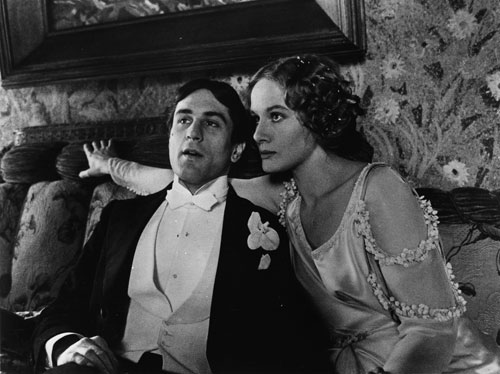
After a promising literary start as a teenager — his father, notably, was a well-regarded poet, art historian, and film critic — Bertolucci apprenticed to family friend Pier Paolo Pasolini on 1961’s Accattone!. When Pasolini moved on to another project, Bertolucci made his own directorial debut at age 21 with similarly gritty The Grim Reaper (1962). That tale of a prostitute’s murder, cowritten with Pasolini, as well as 1964’s Before the Revolution (a presumably somewhat autobiographical mélange about a young bourgeois torn between tentative radicalization and pleasures of the flesh as represented by Bertolucci’s then-wife Adriana Asti) reflected his heavy early influencing by the ebbing Italian neorealist movement and still-current French New Wave.

Inspired by Dostoyevsky, 1968’s Partner was a transitional work, straddling Godardian dialecticism and pure extravagance. When 1970’s Jorge Luis Borges-drawn puzzle The Spider’s Strategem found Bertolucci discovering his sumptuous mature style (as well as Storaro’s rapturous lighting and camera movement), Godard denounced him as a sellout. The international breakthrough was that same year’s The Conformist, a Moravia story about the individual surrender to fascism — passivity turning to criminality being a frequent Bertolucci subject — that somehow became a baroque tone poem of saturated color, hedonistic suggestion, and damp paranoia. It announced the arrival of a great artist, albeit one for whom style would always trump political content, and whose literary sources were often twisted nearly past recognition by his own overwhelming authorial stamp.

The 1970s were a dazzling high-wire decade for Bertolucci. Last Tango was an X-rated scandal and sensation, an experience so psychologically (and literally) naked for Marlon Brando that he didn’t speak to the director for years afterward. Bertolucci explained: “He felt that I stole something from him, that he didn’t know what he was doing … I like to have very famous, important actors because it is a challenge to find out what they are hiding.”) Its tale of two people with only compulsive coitus in common is still berserk, implausible, off-putting, and completely enveloping.

The epic, multinational cast (Robert De Niro, Gerard Depardieu, Donald Sutherland, Dominique Sanda, Burt Lancaster, even some Italians) 1900, a film originally over five hours long, offered the first half of Italy’s 20th century as a class struggle, as well as a conceptual one, between idealism and decadent pageantry — Pasolini wrestling with Luchino Visconti. Few knew what to make of the contrastingly intimate (yet, again, stylistically gaga) 1979 La Luna, an Oedipal drama based on a dream Bertolucci had about Maria Callas. Fervently loved by a slim cult following, it was otherwise so ridiculed and loathed that 32 years later 20th Century Fox still hasn’t coughed up a U.S. home-format release.

With the new decade, the limbs Bertolucci went out on became less reliably inspirational, perhaps partly because Storaro had developed conflicting allegiances to other directors (Francis Ford Coppola, Carlos Saura, Warren Beatty). Tragedy of a Ridiculous Man (1981) is dispirited and dull. Little Buddha (1993) was a silly idea nonetheless spiked by enchanted storybook scenes with Keanu Reeves as Siddhartha — ludicrous-sounding stunt casting that is somehow perfect. Stealing Beauty and The Dreamers found this uneasily homophilic director reduced to ogling young bodies of both sexes like a dirty old professor.

On the other hand, 1990’s The Sheltering Sky was difficult, ravishing, another masterpiece if a great commercial disappointment. Another leap into exotica, 1987’s The Last Emperor had the opposite fate — winning all nine of its nominated Oscars in a slow year, a staggering spectacle widely admired yet loved by few (least of all the Chinese), elephantine yet wry, and closer to David Lean respectability than auteurist idiosyncrasy. Then after all this 1998’s Besieged, a tiny story of unrequited love and noble sacrifice shot with two actors and hand-held camera, felt rejuvenative — as if the increasingly burdened composer of massive symphonies had discovered the joy in a piano miniature.

The curio in the PFA’s series is 1967’s The Path of Oil — a three-part Italian documentary about petroleum production, apparently undertaken in a funk when two failed first features had temporarily reduced his career prospects. It’s handsome, if clearly less than a labor of love. But for the Bertolucci fetishist, no film is so impersonal or underwhelming (or on the other hand beloved) that it might not yet spring surprises, whether on a first viewing or an umpteenth. 

BERNARDO BERTOLUCCI: IN SEARCH OF MYSTERY

July 8–Aug. 18, $5.50–$9.50

Pacific Film Archive

2575 Bancroft, Berk.

(510) 642-5249

bampfa.berkeley.edu

Stage Listings

0

Stage listings are compiled by Guardian staff. Performance times may change; call venues to confirm. Reviewers are Robert Avila, Rita Felciano, and Nicole Gluckstern. Submit items for the listings at listings@sfbg.com. For further information on how to submit items for the listings, see Picks. For complete listings, see www.sfbg.com.

THEATER

OPENING

Act One, Scene Two SF Playhouse, Stage Two, 533 Sutter, SF; (415) 869-5384, www.un-scripted.com. $10-20. Opens Thurs/7, 8pm. Runs Thurs-Sat, 8pm. Through Aug 20. Un-Scripted Theater Company hosts a different playwright each night, performing the first scene of an unfinished play and then improvising its finish.

Not Getting Any Younger Marsh San Francisco, 1062 Valencia, SF; www.themarsh.org. $15-50. Opens Thurs/7, 8pm. Runs Thurs, 8pm; Sat, 8:30pm; Sun, 7pm. Through July 24. Marga Gomez presents a workshop production of her new comedy, her ninth solo show.

Salty Towers Exit Theatre, 156 Eddy, SF; (415) 673-3847, www.theexit.org. $15-25. Opens Thurs/8, 8pm. Runs Thurs-Sat, 8pm; Sun, 3pm. Through July 23. Thunderbird Theatre Company performs a farce that combines Greek mythology with a tale of sea creatures running a two-star hotel.

Twilight Zone Live: Season 8 Dark Room, 2263 Mission, SF; www.ticketturtle.com. $20 ($5 discount if you use the code word “maggie”). Opens Fri/8, 8pm. Runs Fri-Sat, 8pm. Through July 29. The Dark Room Theater presents its eighth annual tribute to classic Twilight Zone episodes.

BAY AREA

Macbeth Dominican University of California, Forest Meadows Amphitheater, 1475 Grand, San Rafael; (415) 499-4488, www.marinshakespeare.org. $20-35. Previews Fri/8-Sun/10, 8pm. Opens July 15, 8pm. Performance times vary; check website for schedule. Through Aug 14. Marin Shakespeare Company takes on the Scottish play, opening under a full moon, no less.

The Verona Project Bruns Amphitheater, 100 California Shakespeare Theater Way, Orinda; (510) 548-9666, www.calshakes.org. $35-66. Previews Wed/6-Fri/8, 8pm. Opens Sat/9, 8pm. Runs Tues-Thurs, 7:30pm; Fri-Sat, 8pm (also July 30, 2pm); Sun, 4pm. Through July 31. California Shakespeare Theater performs a world-premiere play (inspired by The Two Gentlemen of Verona) by Amanda Dehnert.

ONGOING

All Atheists Are Muslim Stage Werx, 533 Sutter, SF; www.brownpapertickets.com. $20. Sun/10, 7pm. Zahra Noorbakhsh returns with her timely comedy.

Assisted Living: The Musical Imperial Palace, 818 Washington, SF; 1-888-88-LAUGH, www.assistedlivingthemusical.com. $79.59-99.50 (includes dim sum). Sat-Sun, noon (also Sun, 5pm). Through July 31. Rick Compton and Betsy Bennett’s comedy takes on “the pleasures and perils of later life.”

Billy Elliot Orpheum Theater, 1192 Market, SF; www.shnsf.com/shows/billyelliot. $35-200. Tues-Sat, 8pm (also Wed, 2pm); Sun, 2pm. Through Sept. 17. As a Broadway musical, Billy Elliot proves more enjoyable than the film. The movie’s T. Rex score may have been a major selling point, but it was a bit maudlin for a story that needed no help in that department. The musical naturally has a sentimental moment or three, but it’s much more often funny, muscular in its staging (with repeatedly inspired choreography from Peter Darling), and expansive in its eclectic score (Elton John) and well-wrought book and lyrics (Lee Hall). Moreover, Stephen Daldry (who also directed the 2000 film) plays up bracingly the too-timely class politics of the modest 1980s English mining town besieged by Margaret Thatcher’s neoliberal regime in the latter’s ultimately successful bid to crush the once-powerful miners union. The cast is likewise very strong, beginning with opening night’s impressive J.P. Viernes in the title role. Broadway’s Faith Prince is an especially engaging presence as the ballet teacher who takes an interest in Billy’s inherent talent, setting him on a course out of the doomed town and into London’s Royal Ballet School — much to the violent disgust of his predominantly male and prickly household. The first act is a nearly perfect balance of bawdy humor, aggressive staging, adept scene-setting and character development and a potent tide of song and group choreography that is hard to resist. There are some unfortunate choices later on, like a bit of Peter Pan wire work that has Billy twirling over the stage (an excessive display that hovers awkwardly over dullsville) and in general the second act is not as strong as the first. It’s also the point where the working-class politics paid homage to by the script gets seriously blunted by a concomitant streak of middle-class individualism. But as crowd-pleasing entertainment the musical burrows deep and more often than not comes up with gold. (Avila)

The Book of Liz Custom Made Theatre, 1620 Gough, SF; www.custommade.org. $10-29. Thurs-Sat, 8pm; Sun, 7pm. Through July 31. Custom Made Theatre performs David and Amy Sedaris’ comedy about an unconventional nun.

“Fury Factory 2011” Various venues and prices; www.brownpapertickets.com. Through Tues/12. Over 30 Bay Area and national companies participate in this bi-annual theater festival.

Indulgences in the Louisville Harem Phoenix Theatre, 414 Mason, SF; 1-800-838-3006, www.offbroadwaywest.org. $20-40. Thurs-Sat, 8pm. Through July 30. Two spinster sisters find unlikely beaux in Off Broadway West Theatre’s production of John Orlock’s play.

The Pride New Conservatory Theatre Center, 25 Van Ness, SF; (415) 861-8972, www.nctcsf.org. $24-40. Wed/6-Sat/9, 8pm; Sun/10, 2pm. New Conservatory Theatre Center performs the West Coast premiere of Alexi Kaye Campbell’s love-triangle time warp drama.

*Vice Palace: The Last Cockettes Musical Thrillpeddlers’ Hypnodrome, 575 10th St; (800) 838-3006, www.brownpapertickets.com. $30-35. Fri-Sat, 8pm; Sun, 7pm. Through July 31. Hot on the high heels of a 22-month run of Pearls Over Shanghai, the Thrillpeddlers are continuing their Theatre of the Ridiculous revival with a tits-up, balls-out production of the Cockettes’ last musical, Vice Palace. Loosely based on the terrifyingly grim “Masque of the Red Death” by Edgar Allan Poe, part of the thrill of Palace is the way that it weds the campy drag-glamour of Pearls Over Shanghai with the Thrillpeddlers’ signature Grand Guignol aesthetic. From an opening number set on a plague-stricken street (“There’s Blood on Your Face”) to a charming little cabaret about Caligula, staged with live assassinations, an undercurrent of darkness runs like blood beneath the shameless slapstick of the thinly-plotted revue. As plague-obsessed hostess Divina (Leigh Crow) and her right-hand “gal” Bella (Eric Tyson Wertz) try to distract a group of stir-crazy socialites from the dangers outside the villa walls, the entertainments range from silly to salacious: a suggestively-sung song about camel’s humps, the wistful ballad “Just a Lonely Little Turd,” a truly unexpected Rite of Spring-style dance number entitled “Flesh Ballet.” Sumptuously costumed by Kara Emry, cleverly lit by Nicholas Torre, accompanied by songwriter/lyricist (and original Cockette) Scrumbly Koldewyn, and anchored by a core of Thrillpeddler regulars, Palace is one nice vice. (Gluckstern)

What Mamma Said About Down There SF Downtown Comedy Theater, 287 Ellis, SF; www.sfdowntowncomedytheater.com. $15. Thurs-Sat, 8pm. Through August 20. Sia Amma returns with her solo comedy.

BAY AREA

All My Children Cabaret at Marsh Berkeley, 2120 Allston, Berk; www.themarsh.org. $20-50. Fri, 8pm; Sat, 8:30pm. Through July 23. Not the soap opera — it’s Seattle Improv co-founder Matt Smith in his comedy about a middle-aged man with boundary issues.

East 14th: True Tales of a Reluctant Player Marsh Berkeley, 2120 Allston, Berk; www.themarsh.org. $20-50. Sat, 8:30pm; Sun, 7pm. Through Aug 7. Don Reed’s hit solo comedy receives one last extension before Reed debuts his new show (a sequel to East 14th) in the fall.

Metamorphosis Aurora Theatre, 2081 Addison, Berk; (510) 843-4822, www.auroratheatre.org. $10-55. Tues and Sun, 7pm (also Sun, 2pm); Wed-Sat, 8pm. Through July 17. Aurora Theatre Company performs a terrifying yet comic adaptation of Kafka’s classic by David Farr and Gísli Örn Gardarsson.

A Raisin in the Sun Pear Avenue Theatre, 1220 Pear, Mtn. View; (650) 254-1148, www.thepear.org. $15-30. Thurs/7-Sat/9, 8pm; Sun/10, 2pm. Lorraine Hansberry’s classic play comes to life on the Pear Avenue Theatre stage.

2012: The Musical! Cedar Rose Park, 1300 Rose, Berk; www.sfmt.org. Free. Sat/9-Sun/10, 2pm. Continues through Sept. 25 at various Bay Area venues. San Francisco Mime Troupe mounts their annual summer musical; this year’s show is about a political theater company torn between selling out and staying true to its anti-corporate roots.

*Working for the Mouse La Val’s Subterranean, 1834 Euclid, Berk; www.impacttheatre.com. $10-20. Thurs/7-Fri/8, 8pm. It might not come as a surprise to hear that even “the happiest place on earth” has a dark side, but hearing Trevor Allen describe it during this long overdue reprise of 2002’s Working for the Mouse, will put a smile on your face as big as Mickey’s. With a burst of youthful energy, Allen bounds onto the tiny stage of Impact Theatre to confess his one-time aspiration to never grow up — a desire which made auditioning for the role of Peter Pan at Disneyland a sensible career move. But in order to break into the big time of “charactering,” one must pay some heavy, plush-covered dues. As Allen creeps up the costumed hierarchy one iconic cartoon figure at a time, he finds himself unwittingly enmeshed in a world full of backroom politics, union-busting, drug addled surfer dudes with peaches-and-cream complexions, sexual tension, showboating, job suspension, Make-A-Wish Foundation heartbreak, hash brownies, rabbit vomit, and accidental decapitation. Smoothly paced and astutely crafted, Working for the Mouse will either shatter your blissful ignorance or confirm your worst suspicions about the corporate Disney machine, but either way, it will probably make you treat any “Casual Seasonal Pageant Helpers” you see running around in their sweaty character suits with a whole lot more empathy. (Gluckstern)

PERFORMANCE/DANCE

Front Line Theatre CounterPULSE, 1310 Mission, SF; www.brownpapertickets.com. Fri/8-Sun/10, 8pm. Also July 21-23, 8pm, Garage, 975 Howard, SF; www.brownpapertickets.com. Both venues, $20. The company presents the world premiere of Rare Earth, a verse-and-movement comedy about waste and the past.

Miguel Gutierrez Garage, 975 Howard, SF; www.brownpapertickets.com. Fri-Sun, 8pm. $15. The choreographer performs his 2010 work Heavens What Have I Done as part of Verge, the Garage’s workshop series.

LINES Ballet Summer Program Cowell Theater, Fort Mason Center, Marina at Laguna, SF; www.linesballet.org. Tues/12, 7:30pm. $15. The LINES Ballet Summer Program celebrates its 10th anniversary with the first of two student showcases.

“OMFG! The Internet Dating Musical” ODC Theater, 3153 17th St, SF; www.odctheater.org. Fri-Sat, 8pm; Sun, 2pm. Through July 17. $15-18. ODC Theater Resident Artist Chris Winslow presents his new comedy about a couple who both fear they can’t live up to reality after meeting online.

“Project Bust” Z Space, 450 Florida, SF; www.brownpapertickets.com. Wed/6 and Aug 3, 8pm. $15. Malinda LaVelle presents her evening-length dance-theater piece.

“Sympathetic: An Aerial Dance Performance Honoring Labor” Rincon Annex Post Office, 121 Spear, SF; (415) 564-4010. Sat, 1 and 3pm. Free. The Labor Archives and Research Center, San Francisco State University, and Flyaway Productions present this work honoring the 1934 San Francisco General Strike by choreographer Jo Kreiter and musician Pamela Z.

“The Tinker Show” Stage Werx, 533 Sutter, SF; www.thetinkershow.com. Thurs-Fri, 8pm. $18-20. “Old school immaturity” via live sketch comedy and improv, plus original short films.

Yubiwa Hotel Performing Arts Company NOHspace, 2640 Mariposa, SF; www.sfiaf.org. Fri, 8pm; Sun, 3pm. $12. The company performs the play Mesujika Doe, a Japanese-American collaboration from Shirotama Hitsujiya and Trista Baldwin.

Film Listings

0

Film listings are edited by Cheryl Eddy. Reviewers are Kimberly Chun, Michelle Devereaux, Peter Galvin, Max Goldberg, Dennis Harvey, Johnny Ray Huston, Louis Peitzman, Lynn Rapoport, Ben Richardson, and Matt Sussman. For rep house showtimes, see Rep Clock. For first-run showtimes, see Movie Guide. Due to the Fourth of July holiday, theater information was incomplete at presstime.

OPENING

A Better Life Demian Bichir (Weeds) stars in this drama about an immigrant family struggling to realize the American dream. (1:38)

Horrible Bosses Jason Bateman and Jennifer Aniston star in this workplace comedy. (1:33)

How to Live Forever After his mother died, documentarian Mark S. Wexler began to seriously contemplate aging and, inevitably, his own death. A certain amount of baby boomer naval-gazing is the inevitable result, but Wexler is curious enough to expand his quest into realms beyond his own graying hair and expanding midsection. The film’s (mostly) tongue-in-cheek title comes into play as he visits scientists, inventors, new age types, cryonics-facility workers, and doctors with various anti-aging philosophies and agendas. But probably the most compelling long-life widsom comes from the elderly folks he visits for practical advice. While the Guinness record-holding 114-year-olds aren’t much for coherent communication, quite a few of the 80-, 90- and 100-somethings Wexler talks to suggest that simply being a spitfire is a key to longevity. Highlights include the late fitness guru Jack LaLanne, enviably energetic in his mid-90s; a 104-year-old Brit who’s a smoker, drinker, and aspiring marathoner; and an 80-year-old tap dancer who decides to compete in a beauty pageant for senior citizens. “I’m older than he is,” she giggles of her boyfriend. “But he can drive at night!” (1:34) (Eddy)

Vincent Wants to Sea An anorexic, an obsessive-compulsive, and someone with Tourette syndrome go on a roadtrip: it’s not the setup to a bad joke, it’s the gist of Vincent Wants to Sea, a mostly fun, sometimes touching, but often improbable film. When Vincent’s mother dies, his father (Heino Ferch) decides it’s time for Vincent (Florian David Fitz — who also wrote the screenplay) to once and for all eradicate his tics and spasms and sequesters him at a summer camp-esque institution in the German countryside. The subsequent escape and journey to the Italian coast (where Vincent hopes to scatter his mother’s ashes) with two fellow patients, the anorexic Marie (Karoline Herfuth) and the Bach-loving compulsive Alex (Johannes Allmayer), is rife with self-discovery and uplifting music, so much so that it sometimes resembles a Levi’s ad more than a feature film. There’s real heart and humor beneath the cheese, but there’s a lot of cheese. (1:36) (Cooper Berkmoyer)

Zookeeper Kevin James graduates from policing mall rats to hanging with talking zoo animals. (1:42)

ONGOING

The Art of Getting By The Art of Getting By is all about those confusing, mixed-up and apparently sexually frustrating months before high school graduation. George (Freddie Highmore) is a trench coat-wearing misanthrope — an old soul, as they say — whose parents and teachers are always trying to put him inside a box and tell him how to think. He finds a kindred sprit in Sally (Emma Roberts) who smokes and watches Louis Malle films. Hot. Heavily scored by the now-ancient songs of early ’00s blog bands, it may all sound like indie bullshit but this one has charm and wit despite its post-trend package. Like a sad little crayon, Highmore is a competent Michael Cera surrogate du jour. Writer-director Gavin Wiesen embraces hell of clichés, but he suitably sums up a generational angst along the way. The film may not always feel real, but it does have real feeling. Look out for great performances from Blair Underwood and Alicia Silverstone. (1:24) (Ryan Lattanzio)

Bad Teacher Jake Kasdan, the once-talented director of a few Freaks and Geeks episodes and 2002’s underrated Orange County, seems hell-bent on humiliating everyone in the cast of Bad Teacher. Cameron Diaz is Elizabeth, the title’s criminally bad pedagogue who prefers the Jack Daniels method to the Socratic. Her impetus for pounding Harper Lee into her middle school students’ bug-eyed little heads is to cash in on a bonus check to fund her breast-y ambitions and woo Justin Timberlake and his baby voice. The only likable onscreen presence is Jason Segal as a sad sack gym teacher in love with Elizabeth. But he could do so much better. There’s no shortage of racist jokes and potty humor in this R-rated comedy pandering to those 17 and below. When asked if she wants to go out with her coworkers, Elizabeth ripostes, “I’d rather get shot in the face!” That scenario is likely a better alternative than suffering this steaming pile of cash cow carcass. (1:29) (Lattanzio)

*Beginners There is nothing conventional about Beginners, a film that starts off with the funeral arrangements for one of its central characters. That man is Hal (Christopher Plummer), who came out to his son Oliver (Ewan McGregor) at the ripe age of 75. Through flashbacks, we see the relationship play out — Oliver’s inability to commit tempered by his father’s tremendous late-stage passion for life. Hal himself is a rare character: an elderly gay man, secure in his sexuality and, by his own admission, horny. He even has a much younger boyfriend, played by the handsome Goran Visnjic. While the father-son bond is the heart of Beginners, we also see the charming development of a relationship between Oliver and French actor Anna (Mélanie Laurent). It all comes together beautifully in a film that is bittersweet but ultimately satisfying. Beginners deserves praise not only for telling a story too often left untold, but for doing so with grace and a refreshing sense of whimsy. (1:44) (Peitzman)

*Bill Cunningham New York To say that Bill Cunningham, the 82-year old New York Times photographer, has made documenting how New Yorkers dress his life’s work would be an understatement. To be sure, Cunningham’s two decades-old Sunday Times columns — “On the Street,” which tracks street-fashion, and “Evening Hours,” which covers the charity gala circuit — are about the clothes. And, my, what clothes they are. But Cunningham is a sartorial anthropologist, and his pictures always tell the bigger story behind the changing hemlines, which socialite wore what designer, or the latest trend in footwear. Whether tracking the near-infinite variations of a particular hue, a sudden bumper-crop of cropped blazers, or the fanciful leaps of well-heeled pedestrians dodging February slush puddles, Cunningham’s talent lies in his ability to recognize fleeting moments of beauty, creativity, humor, and joy. That last quality courses through Bill Cunningham New York, Richard Press’ captivating and moving portrait of a man whose reticence and personal asceticism are proportional to his total devotion to documenting what Harold Koda, chief curator at the Costume Institute at the Metropolitan Museum of Art, describes in the film as “ordinary people going about their lives, dressed in fascinating ways.” (1:24) (Sussman)

Bride Flight Who doesn’t love a sweeping Dutch period piece? Ben Sombogaart’s Bride Flight is pure melodrama soup, enough to give even the most devout arthouse-goer the bloats. Emigrating from post-World War II Holland to New Zealand with two gal pals, the sweetly staid Ada (Karina Smulders) falls for smarm-ball Frank (Waldemar Torenstra, the Dutchman’s James Franco) and kind of joins the mile high club to the behest of her conscience. The women arrive with emotional baggage and carry-ons of the uterine kind. As the harem adjusts to the country mores of the Highlands, Frank tries a poke at all of them in a series of sex scenes more moldy than smoldery. This Flight, set to a plodding score and stuffy mise-en-scene, never quite leaves the runway. Not to mention the whole picture, pale as a corpse, resembles one of those old-timey photographs of your great grandma’s wedding. These kinds of pastoral romances ought to be put out to, well, pasture. (2:10) (Lattanzio)

*Bridesmaids For anyone burned out on bad romantic comedies, Bridesmaids can teach you how to love again. This film is an answer to those who have lamented the lack of strong female roles in comedy, of good vehicles for Saturday Night Live cast members, of an appropriate showcase for Melissa McCarthy. The hilarious but grounded Kristen Wiig stars as Annie, whose best friend Lillian (Maya Rudolph) is getting hitched. Financially and romantically unstable, Annie tries to throw herself into her maid of honor duties — all while competing with the far more refined Helen (Rose Byrne). Bridesmaids is one of the best comedies in recent memory, treating its relatable female characters with sympathy. It’s also damn funny from start to finish, which is more than can be said for most of the comedies Hollywood continues to churn out. Here’s your choice: let Bridesmaids work its charm on you, or never allow yourself to complain about an Adam Sandler flick again. (2:04) (Peitzman)

Buck This documentary paints a portrait of horse trainer Buck Brannaman as a sort of modern-day sage, a sentimental cowboy who helps “horses with people problems.” Brannaman has transcended a background of hardship and abuse to become a happy family man who makes a difference for horses and their owners all over the country with his unconventional, humane colt-starting clinics. Though he doesn’t actually whisper to horses, he served as an advisor and inspiration for Robert Redford’s The Horse Whisperer (1998). Director Cindy Meehl focuses generously on her saintly subject’s bits of wisdom in and out of a horse-training setting — e.g. “Everything you do with a horse is a dance” — as well as heartfelt commentary from friends and colleagues. In the harrowing final act of the film, Brannaman deals with a particularly unruly horse and his troubled owner, highlighting the dire and disturbing consequences of improper horse rearing. (1:28) Smith Rafael. (Sam Stander)

Cars 2 You pretty much can’t say a bad thing about a Pixar film. Cars 2 is by no means Ratatouille (2007) or Wall-E (2008), but the sequel to the 2006 hit Cars offers plenty of sleek visuals and one-note gags under its hollow hood. If nothing else, Pixar seems to have overcome the dingy, dark glaze that plagues 3-D films. Directors John Lasseter and Joe Ranft return to beloved autos Lightning McQueen (Owen Wilson) and the “extremely American” Mater (Larry the Cable Guy). This time around, secret agents Finn McMissile (Michael Caine) and Holley Shiftwell (Emily Mortimer) come along for the ride while working to expose sabotage in the alternative fuel industry. Compelling chase sequences, explosions and more than a few jabs at cultural stereotypes follow suit. This is the lightest, silliest Pixar film to date, but you probably don’t have any business seeing it unless you’ve got a kid in tow. (1:52) Balboa. (Lattanzio)

*Cave of Forgotten Dreams The latest documentary from Werner Herzog once again goes where no filmmaker — or many human beings, for that matter — has gone before: the Chauvet-Pont-d’Arc Cave, a heavily-guarded cavern in Southern France containing the oldest prehistoric artwork on record. Access is highly restricted, but Herzog’s 3D study is surely the next best thing to an in-person visit. The eerie beauty of the works leads to a typically Herzog-ian quest to learn more about the primitive culture that produced the paintings; as usual, Herzog’s experts have their own quirks (like a circus performer-turned-scientist), and the director’s own wry narration is peppered with random pop culture references and existential ponderings. It’s all interwoven with footage of crude yet beautiful renderings of horses and rhinos, calcified cave-bear skulls, and other time-capsule peeks at life tens of thousands of years ago. The end result is awe-inspiring. (1:35) (Eddy)

Conan O’Brien Can’t Stop Conan O’Brien Can’t Stop seems less of a movie title and more like a hushed comment shared between one of the many hangers-on during the filming of the “Legally Prohibited From Being Funny On Television Tour.” Throughout 23 cities’ worth of footage, O’Brien seethes, paces, sweats, yells and beats dead jokes so hard that they spring back to life, as he is wont to do. At this point, the Leno/Coco drama is a bit stale — at least in internet time — but the documentary is a fascinating comedian character study nonetheless. It may be hard to sympathize with a man nursing a bruised ego as he cashes a $45 million dollar check, but it’s easy to see that he’s one of the best late night hosts (temporarily off) the air. Split primarily between clips of O’Brien performing songs on stage with a myriad of celebrity guests and bemoaning how exhausted and frustrated he is, Can’t Stop derives most of its hilarity from the off-the-cuff comments that pepper Conan’s everyday conversations. (1:29) (David Getman)

*The Double Hour Slovenian hotel maid Sonia (Ksenia Rappoport) and security guard Guido (Filippo Timi) are two lonely people in the Italian city of Turin. They find one another (via a speed-dating service) and things are seriously looking up for the fledgling couple when calamity strikes. This first feature by music video director Giuseppe Capotondi takes a spare, somber approach to a screenplay (by Alessandro Fabbri, Ludovica Rampoldi, and Stefano Sardo) that strikingly keeps raising, then resisting genre categorization. Suffice it to say their story goes from lonely-hearts romance to violent thriller, ghost story, criminal intrigue, and yet more. It doesn’t all work seamlessly, but such narrative unpredictability is so rare at the movies these days that The Double Hour is worth seeing simply for the satisfying feeling of never being sure where it’s headed. (1:35) (Harvey)

Empire of Silver Love, not money, is at the core of Empire of Silver — that’s the M.O. of a Shanxi banking family’s libertine third son, or “Third Master” (Aaron Kwok) in this epic tug-of-war between Confucian duty and free will. The Third Master pines for his true love, his stepmother (Hao Lei), yet change is going off all around the star-crossed couple in China at the end of the 19th century and the start of the 20th, and the youthful scion ends up pouring his passion into the family business, attempting to tread his own path, apart from his Machiavellian father (Tielin Zhang). Much like her protagonist, however, director (and Stanford alum) Christina Yao seems more besotted with romance than finance, bathing those scenes with the love light and sensual hues reminiscent of Zhang Yimou’s early movies. Though Yao handles the widescreen crowd scenes with aplomb, her chosen focus on money, rather than honey, leaches the action of its emotional charge. It doesn’t help that, on the heels of the Great Recession, it’s unlikely that anyone buys the idea of a financial industry with ironclad integrity — or gives a flying yuan about the lives of bankers. (1:52) (Chun)

Green Lantern This latest DC Comics-to-film adaptation fails to recognize the line between awesome fantasy-action and cheeseball absurdity, often resembling the worst excesses of the Christopher Reeve Superman movies. A surprisingly palatable Ryan Reynolds stars as Hal Jordan, the cocky test pilot who is chosen to wield a power ring as a member of an intergalactic police force called the Green Lantern Corps. He must face down Parallax, an alien embodiment of fear, who appears here as a chuckle-inducing floating head surrounded by tentacles. Peter Sarsgaard is effectively nauseating as Hector Hammond, who becomes Parallax’s crony after he is transformed by a transfusion of fear energy. The acting is all over the map, with Blake Lively’s blank-faced love interest caricature as the weakest link, and the effects are hit-or-miss, but scenes featuring alien Green Lanterns should please fans, and you could probably do worse if you’re looking for an entertaining popcorn flick. (1:45) (Stander)

The Hangover Part II What do you do with a problematic mess like Hangover Part II? I was a fan of The Hangover (2009), as well as director-cowriter Todd Phillips’ 1994 GG Allin doc, Hated, so I was rooting for II, this time set in the East’s Sin City of Bangkok, while simultaneously dreading the inevitable Asian/”ching-chang-chong” jokes. Would this would-be hit sequel be funnier if they packed in more of those? Doubtful. The problem is that most of II‘s so-called humor, Asian or no, falls completely flat — and any gross-out yuks regarding wicked, wicked Bangkok are fairly old hat at this point, long after Shocking Asia (1976) and innumerable episodes of No Reservations and other extreme travel offerings. This Hangover around, mild-ish dentist Stu (Ed Helms) is heading to the altar with Lauren (The Real World: San Diego‘s Jamie Chung), with buds Phil (Bradley Cooper) and Doug (Justin Bartha) in tow. Alan (Zach Galifianakis) has completely broken with reality — he’s the pity invite who somehow ropes in the gangster wild-card Mr. Chow (Ken Jeong). Blackouts, natch, and not-very-funny high jinks ensue, with Jeong, surprisingly, pulling small sections of II out of the crapper. Phillips obviously specializes in men-behaving-badly, but II‘s most recent character tweaks, turning Phil into an arrogant, delusional creep and Alan into an arrogant, delusional kook, seem beside the point. Because almost none of the jokes work, and that includes the tired jabs at tranny strippers because we all know how supposedly straight white guys get hella grossed out by brown chicks with dicks. Lame. (1:42) (Chun)

Happy Happy, a documentary by Roko Belic (1999’s Genghis Blues), traces the contented lifestyles of men and women around the globe. Manoj Singh is a Kolkata rickshaw driver sustained by his son’s smile. Anne Bechsgaard’s life is enriched by her co-housing community in Denmark. These soothingly sentimental profiles are intercut with commentary from leading neuroscientists and psychologists. They provide a cursory guide to the rare balancing act that is happiness in the 21st century. A brisk 75 minutes, the film is saturated with thought-provoking tidbits (the Bhutan government aims for gross national happiness instead of GDP) and an ambient backing track that’s heavy on the chimes. However, sometimes there’s the sense that these mechanics of happiness aren’t cinematically compelling enough, and that rifling through a couple Wikipedia pages might offer just as much insight. At its best, Happy sparks a reflection on how many of the unofficial criteria for joy one has fulfilled, and suggests ideas for simple happiness boosters. (1:15) Roxie. (Getman)

Kung Fu Panda 2 The affable affirmations of 2008’s Kung Fu Panda take a back seat to relentlessly elaborate, gag-filled action sequences in this DreamWorks Animation sequel, which ought to satisfy kids but not entertain their parents as much as its predecessor. Po (voiced by Jack Black), the overeating panda and ordained Dragon Warrior of the title, joins forces with a cavalcade of other sparring wildlife to battle Lord Shen (Gary Oldman), a petulant peacock whose arsenal of cannons threatens to overwhelm kung fu. But Shen is also part of Po’s hazy past, so the panda’s quest to save China is also a quest for self-fulfillment and “inner peace.” There’s less character development in this installment, though the growing friendship between Po and the “hardcore” Tigress (Angelina Jolie) is occasionally touching. The 3-D visuals are rarely more than a gimmick, save for a series of eye-catching flashbacks in the style of cel-shaded animation. (1:30) (Stander)

Larry Crowne While Transformers: Dark of the Moon may be getting all the attention for being the most terrible summer movie, I’d like to propose Larry Crowne as the bigger offender. No, it doesn’t have the abrasive effects of a Michael Bay blockbuster, but it’s surely just as incompetent. And coming from an actor as talented as Tom Hanks — who co-wrote, directed, produced, and stars in the film —Larry Crowne is insulting. The plot, insofar as there is one, centers around the titular Larry (Hanks), a man who goes to community college, joins a scooter gang led by Wilmer Valderrama, and ends up falling for his cranky, alcoholic teacher Mercedes (Julia Roberts). The scenes are thrown together hapharzadly, with no real sense of character development or continuity. Larry Crowne doesn’t even feel like a romantic comedy until a drunk Mercedes begins kissing and dry humping her student. But hey, who can resist a shot of Larry’s middle-aged bottom as he tries to wriggle into jeans that are just too small? (1:39) (Peitzman)

Midnight in Paris Owen Wilson plays Gil, a self-confessed “Hollywood hack” visiting the City of Light with his conservative future in-laws and crassly materialistic fiancée Inez (Rachel McAdams). A romantic obviously at odds with their selfish pragmatism (somehow he hasn’t realized that yet), he’s in love with Paris and particularly its fabled artistic past. Walking back to his hotel alone one night, he’s beckoned into an antique vehicle and finds himself transported to the 1920s, at every turn meeting the Fitzgeralds, Gertrude Stein (Kathy Bates), Dali (Adrien Brody), etc. He also meets Adriana (Marion Cotillard), a woman alluring enough to be fought over by Hemingway (Corey Stoll) and Picasso (Marcial di Fonzo Bo) — though she fancies aspiring literary novelist Gil. Woody Allen’s latest is a pleasant trifle, no more, no less. Its toying with a form of magical escapism from the dreary present recalls The Purple Rose of Cairo (1985), albeit without that film’s greater structural ingeniousness and considerable heart. None of the actors are at their best, though Cotillard is indeed beguiling and Wilson dithers charmingly as usual. Still — it’s pleasant. (1:34) Balboa. (Harvey)

Monte Carlo (1:48)

Mr. Nice By the second hour of Mr. Nice, star Rhys Ifans and company have exhausted every possible pot smoking flourish. There’s the seductive French inhale by the pool, the suggestive mouth to mouth, the euphoric dragon release in the deserts of Pakistan: all rendered in extreme close-up with improbably thick plumes of white smoke. Mr. Nice is mostly sexy drug use tutorial, though it’s also part biography of real-life drug smuggler Howard Marks. His claim to fame — at least according to the movie’s tagline — is the sheer number of aliases, phone lines, and children he had (43, 89, and 4, respectively). Unexpectedly, it’s the period costuming, cinematography, and the enchanting listlessness of Chloe Sevigny that redeem the film. Mr. Nice is captivatingly interlaced with vintage news and scenery clips from the period and it’s shot in a way that is both hyper-stylized and erratic. Those twists and turns of Marks’s life turn out to be not nearly as suspenseful onscreen as they should be, making the movie less of a traditional drug thriller and more of a mildly interesting reflection on the culture of the period. (2:01) (Getman)

Mr. Popper’s Penguins (1:35)

*My Perestroika Robin Hessman’s very engaging documentary takes one very relatable look at how changes since glasnost have affected some average Russians. The subjects here are five thirtysomethings who, growing up in Moscow in the 70s and 80s, were the last generation to experience full-on Communist Party indoctrination. But just as they reached adulthood, the whole system dissolved, confusing long-held beliefs and variably impacting their futures. Andrei has ridden the capitalist choo-choo to considerable enrichment as the proprietor of luxury Western menswear shops. But single mother Olga, unlucky in love, just scrapes by, while married schoolteachers Lyuba and Boris are lucky to have inherited an apartment (cramped as it is) they could otherwise ill afford. Meanwhile Ruslan, once member of a famous punk band (which he abandoned on principal because it was getting “too commercial”), both disdains and resents the new order just as he did the old one. Home movies and old footage of pageantry celebrating Soviet socialist glory make a whole ‘nother era come to life in this intimate, unexpectedly charming portrait of its long-term aftermath. (1:27) Balboa. (Harvey)

*Page One: Inside the New York Times When Andrew Rossi’s documentary premiered at Sundance this January, word of mouth on it was respectable but qualified, with nearly everyone opining that it was good … just not what they’d been led to expect. What they expected was (in line with the original subtitle A Year Inside the New York Times) a top-to-bottom overview of how the nation’s most respected — and in some circles resented — arbiter of news, “style,” and culture is created on a day-to-day as well as longer term basis. That’s something that would doubtless fascinate anyone still interested in print media, or even that realm of web media not catering to the ADD nation. But that big picture and the wealth of minute cogs within isn’t Page One‘s subject. Instead, Rossi focuses on the Gray Lady’s wrestling with admittedly fast-changing times in which newspapers and any other information source on paper seem to constitute an endangered species. This particular Times, however, is such a special case that that crisis might better have been explored by training a camera on a less fabled publication, perhaps one of the many that have succumbed to a once unthinkable, market-shrunk mortality in recent years. The film finds its colorful protagonist in David Carr, an ex-crack addict turned media columnist who retains his cranky, nonconformist edge even as he defends the Times itself from the same out-with-the-old cheerleaders who 15 years ago were inflating the dot-com boom till it burst. Facing one particularly smug champion of the blogosphere at a forum, Carr notes that without a few remaining outlets — like the Times — doing the hard work of serious research and reportage, the web would have nothing to purloin or offer but its own unending trivia and gossip. Page One does what it does entertainingly well, but if you’re looking for insight toward this not-dead-yet U.S. institution as a whole, you’d be better off simply picking up this week’s Sunday edition and reading every last word. (1:28) Smith Rafael. (Harvey)

*Super 8 The latest from J.J. Abrams is very conspicuously produced by Steven Spielberg; it evokes 1982’s E.T.: The Extra-Terrestrial as well as 1985’s The Goonies and 1982’s Poltergeist (so Spielbergian in nature you’d be forgiven for assuming he directed, rather than simply produced, the pair). But having Grandpa Stevie blessing your flick is surely a good thing, especially when you’re already as capable as Abrams. Super 8 is set in 1979, high time for its titular medium, used by a group of horror movie-loving kids to film their backyard zombie epic; later in the film, old-school celluloid reveals the mystery behind exactly what escaped following a spectacular train wreck on the edge of their small Ohio town. The PG-13 Super 8 aims to frighten, albeit gently; there’s a lot of nostalgia afoot, and things do veer into sappiness at the end (that, plus the band of kids at its center, evoke the trademarks of another Grandpa Stevie: Stephen King). But the kid actors (especially the much-vaunted Elle Fanning) are great, and there’s palpable imagination and atmosphere afoot, rare qualities in blockbusters today. Super 8 tries, and mostly succeeds, in progressing the fears and themes addressed by E.T. (divorce, loneliness, growing up) into century 21, making the unknowns darker and the consequences more dire. (1:52) (Eddy)

*13 Assassins 13 Assassins is clearly destined to be prolific director Takashi Miike’s greatest success outside Japan yet. It’s another departure for the multi-genre-conquering Miike, doubtless one of the most conventional movies he’s made in theme and execution. That’s key to its appeal — rigorously traditional, taking its sweet time getting to samurai action that is pointedly not heightened by wire work or CGI, it arrives at the kind of slam-dunk prolonged battle climax that only a measured buildup can let you properly appreciate. In the 1840s, samurai are in decline but feudalism is still hale. It’s a time of peace, though not for the unfortunates who live under regional tyrant Lord Naritsugu (Goro Inagaki), a li’l Nippon Caligula who taxes and oppresses his people to the point of starvation. Alas, the current Shogun is his sibling, and plans to make little bro his chief adviser — so a concerned Shogun official secretly hires veteran samurai Shinzaemon (Koji Yakusho) to assassinate the Lord. Fully an hour is spent on our hero doing “assembling the team” stuff, recruiting other unemployed, retired, or wannabe samurai. When the protagonists finally commence their mission, their target is already aware he’s being pursued, and he’s surrounded by some 200 soldiers by the time Miike arrives at the film’s sustained, spectacular climax: a small village which Shinzaemon and co. have turned into a giant boobytrap so that 13 men can divide and destroy an ogre-guarding army. A major reason why mainstream Hollywood fantasy and straight action movies have gotten so depressingly interchangeable is that digital FX and stunt work can (and does) visualize any stupid idea — heroes who get thrown 200 feet into walls by monsters then getting up to fight some more, etc. 13 Assassins is thrilling because its action, while sporting against-the-odds ingeniousness and sheer luck by our heroes as in any trad genre film, is still vividly, bloodily, credibly physical. (2:06) (Harvey)

Transformers: Dark of the Moon I’ll never understand the wisdom behind epic-length children’s movies. What child — or adult, for that matter — wants to sit through 154 minutes of assaultive popcorn entertainment? It’s an especially confounding decision for this third installment in the Transformers franchise because there’s a fantastic 90-minute movie in there, undone at every turn by some of the worst jokes, most pointless characters, and most hateful cultural politics you’re likely to see this summer. But when I say a fantastic movie, I mean a fantastic movie. It took two very expensive earlier attempts before director Michael Bay figured out that big things require a big canvas. Every shot of Dark of the Moon‘s predecessors seemed designed to hide their effects by crowding the screen. Finally we get the full view — the scale is now rightly calibrated to operatic and ridiculous. The marquee set pieces are inspired and terrifying, eliciting a sense of vertigo that’s earned for once, not imposed by the editing. The human hijinks are less consistent but ingratiatingly batshit, and without resorting to preening self-awareness and elaborately contrived mea culpas. But unfortunately Bay is too unapologetic even to walk back the ethnic buffoonery that not only upsets hippies like me but also seems defiantly disharmonious with the movie he’s trying to make. Bay is like that guy at the party who thinks amping up the racism will prove he’s not a racist. It’s that kind of garbage (plus, I guess, some universal primal hatred of Shia LaBeouf that I don’t really get) that makes people dismiss these movies wholesale. This time it’s just not deserved. I wouldn’t want to meet the asshole who made this thing, but credit where credit is due. It’s a visual marvel with perfectly integrated, utterly tactile, brilliantly choreographed CG robotics — a point that’ll no doubt be conceded in passing as if it’s not the very reason the movie exists. As if it’s not a feat of mastery to make a megaton changeling truck look graceful. (2:34) (Jason Shamai)

The Tree of Life Mainstream American films are so rarely adventuresome that overreactive gratitude frequently greets those rare, self-conscious, usually Oscar-baiting stabs at profundity. Terrence Malick has made those gestures so sparingly over four decades that his scarcity is widely taken for genius. Now there’s The Tree of Life, at once astonishingly ambitious — insofar as general addressing the origin/meaning of life goes — and a small domestic narrative artificially inflated to a maximally pretentious pressure-point. The thesis here is a conflict between “nature” (the way of striving, dissatisfied, angry humanity) and “grace” (the way of love, femininity, and God). After a while Tree settles into a fairly conventional narrative groove, dissecting — albeit in meandering fashion — the travails of a middle-class Texas household whose patriarch (a solid Brad Pitt) is sternly demanding of his three young sons. As a modern-day survivor of that household, Malick’s career-reviving ally Sean Penn has little to do but look angst-ridden while wandering about various alien landscapes. Set in Waco but also shot in Rome, at Versailles, and in Saturn’s orbit (trust me), The Tree of Life is so astonishingly self-important while so undernourished on some basic levels that it would be easy to dismiss as lofty bullshit. Its Cannes premiere audience booed and cheered — both factions right, to an extent. (2:18) (Harvey)

*The Trip Eclectic British director Michael Winterbottom rebounds from sexually humiliating Jessica Alba in last year’s flop The Killer Inside Me to humiliating Steve Coogan in all number of ways (this time to positive effect) in this largely improvised comic romp through England’s Lake District. Well, romp might be the wrong descriptive — dubbed a “foodie Sideways” but more plaintive and less formulaic than that sun-dappled California affair, this TV-to-film adaptation displays a characteristic English glumness to surprisingly keen emotional effect. Playing himself, Coogan displays all the carefree joie de vivre of a colonoscopy patient with hemorrhoids as he sloshes through the gray northern landscape trying to get cell reception when not dining on haute cuisine or being wracked with self-doubt over his stalled movie career and love life. Throw in a happily married, happy-go-lucky frenemy (comic actor Rob Brydon) and Coogan (TV’s I’m Alan Partridge), can’t help but seem like a pathetic middle-aged prick in a puffy coat. Somehow, though, his confused narcissism is a perverse panacea. Come for the dueling Michael Caine impressions and snot martinis, stay for the scallops and Brydon’s “small man in a box” routine. (1:52) Smith Rafael. (Devereaux)

*Trollhunter Yes, The Troll Hunter riffs off The Blair Witch Project (1999) with both whimsy and, um, rabidity. Yes, you may gawk at its humongoid, anatomically correct, three-headed trolls, never to be mistaken for grotesquely cute rubber dolls, Orcs, or garden gnomes again. Yes, you may not believe, but you will find this lampoon of reality TV-style journalism, and an affectionate jab at Norway’s favorite mythical creature, very entertaining. Told that a series of strange attacks could be chalked up to marauding bears, three college students (Glenn Erland Tosterud, Tomas Alf Larsen, and Johanna Morck) strap on their gumshoes and choose instead to pursue a mysterious poacher Hans (Otto Jespersen) who repeatedly rebuffs their interview attempts. Little did the young folk realize that their late-night excursions following the hunter into the woods would lead at least one of them to rue his or her christening day. Ornamenting his yarn with beauty shots of majestic mountains, fjords, and waterfalls, Norwegian director-writer André Ovredal takes the viewer beyond horror-fantasy — handheld camera at the ready — and into a semi-goofy wilderness of dark comedy, populated by rock-eating, fart-blowing trolls and overshadowed by a Scandinavian government cover-up sorta-worthy of The Girl with the Dragon Tattoo (2009). (1:30) (Chun)

*X-Men: First Class Cynics might see this prequel as pandering to a more tweeny demographic, and certainly there are so many ways it could have gone terribly wrong, in an infantile, way-too-cute X-Babies kinda way. But despite some overly choppy edits that shortchange brief moments of narrative clarity, X-Men: First Class gets high marks for its fairly first-class, compelling acting — specifically from Michael Fassbender as the enraged, angst-ridden Magneto and James McAvoy as the idealistic, humanist Charles Xavier. Of course, the celebrated X-Men tale itself plays a major part: the origin story of Magneto, a.k.a. Erik Lehnsherr, a Holocaust survivor, is given added heft with a few tweaks: here, in an echo of Fassbender’s turn in Inglourious Basterds (2009), his master of metal draws on his bottomless rage to ruthlessly destroy the Nazis who used him as a lab rat in experiments to build a master race. The last on his list is the energy-wrangling Sebastian Shaw (Kevin Bacon), who’s set up a sweet Bond-like scenario, protected by super-serious bikini-vixen Emma Frost (January Jones). The complications are that Erik doesn’t ultimately differ from his Frankensteins — he pushes mutant power to the detriment of those puny, bigoted humans — and his unexpected collaborator and friend is Xavier, the privileged, highly psychic scion who hopes to broker an understanding between mutants and human and use mutant talent to peaceful ends. Together, they can move mountains—or at least satellite dishes and submarines. Jennifer Lawrence as Raven/Mystique and Nicholas Hoult as Hank McCoy/Beast fill out the cast, voicing those eternal X-Men dualities — preserving difference vs. conformity, intoxicating power vs. reasoned discipline. All core superhero concerns, as well as teen identity issues — given a fresh charge. (2:20) (Chun)


Our Weekly Picks, July 6-12, 2011

0

WEDNESDAY 6

DANCE/THEATER

Project Bust

Malinda LaVelle’s Project Bust tackles tits and ass without A Chorus Line. Presented as part of the San Francisco Conservatory of Dance’s second annual Summer Dance Series, Project Bust is the culmination of 18 months of research and creation with eight women in their 20s. A group of SF Conservatory of Dance-trained performers make up LaVelle’s company, Project Thrust, and for this evening-length dance theater work, they address some of the ups and downs of being young and female. This fresh crew marries athletic prowess with a fearless attitude, and their work is not complete without a competitive pillow fight. (Julie Potter)

Wed/6 and Aug. 3, 8 p.m., $15

Z Space

450 Florida, SF

(415) 626-0453

www.zspace.org


MUSIC

Rosebuds

Honestly, talking about this band at all makes me feel creepy. I blame their publicist. Since the release of The Rosebuds Make Out and over the course of four albums, Ivan Howard and Kelly Crisp were not just a band, they were married. Ideally, they were in love. It’s the sort of biographical information that can’t be glossed, but also overwhelmingly frames the musical relationship. Now that the pair are divorced, is their new album, Loud Planes Fly Low, truly as plaintively sad as it sounds? Onstage is it just an act? Does Howard seem happier in GAYNGS? Maybe Crisp’s latest blog post has the answers. (Ryan Prendiville)

With Other Lives

8 p.m., $14

Independent

628 Divisadero, SF

(415) 771-1421

www.theindependentsf.com


THURSDAY 7

FILM

San Francisco Frozen Film Festival

San Francisco has more film festivals than people I think. But — like the star of Last Fast Ride: The Life, Love, and Death of a Punk Goddess — the San Francisco Frozen Film Festival stands out from the pack. Last Fast Ride, which is screening at the fest, documents the late Marion Anderson: dominatrix, performance artist, and native San Franciscan whose stint as lead vocalist of the Insaints (and arrest at 924 Gilman; hint: it involves nudity and a banana) will forever secure her legacy as one of the wildest and most outspoken women ever to pick up a microphone. Also screening at the festival are several enormously varied collections of short films, as well as other full-length documentaries including Color Me Obsessed: A Film About the Replacements and Ocean Monk, which follows the surfing disciples of weightlifting spiritualist Sri Chinmoy. (Cooper Berkmoyer)

Thurs/7–Sat/9, $11

Roxie Theater

3117 16th St., SF

(415) 863-1087

www.frozenfilmfestival.com


VISUAL ART

“Chroma: About Color”

The summer months call for color and spontaneity; the newest exhibit at Cain Schulte Contemporary Art offers both. Tonight’s opening reception rings in a monthlong show featuring bright hues rendered in all kinds of media by five different artists. The gallery consistently spotlights artists on the rise and those just hitting their stride. This show is no different. Jessica Snow displays pieces on canvas and paper; Carrie Seid uses aluminum and silk; David Buckingham constructs with metal; Joel Hoyer with panel; and Eileen Goldenberg encaustic works. Don’t be blue if you can’t make it tonight: the art is on display for most of the summer. (David Getman)

Through Aug. 20

5:30–7:30 p.m., free

Cain Schulte Contemporary Art

251 Post, SF

(415) 543-1550

www.cainschulte.com


THEATER

Act One, Scene Two

Here’s a unique idea from a theater company that takes its name to heart: Un-Scripted’s Act One, Scene Two, which every night hosts a different playwright wielding an unfinished script. After an onstage debriefing with the author, the company takes the stage to perform the first scene from the first act, reading through the lines for the first time. The flyin’-by-the-seats-of-our-pants theme continues as Un-Scripted shifts to full-on improv mode, finishing out the play using their own wits but guided by information shared by the writer in that on-stage interview about his or her writing process, influences, etc. Sophisticated spontaneity (and likely some decent doses of impulsive humor) awaits. (Cheryl Eddy)

Through Aug. 20

Thurs.–Sat., 8 p.m., $10–$20

SF Playhouse, Stage Two

533 Sutter, SF

(415) 869-5384

www.un-scripted.com


FRIDAY 8

FILM

“Watching Big Brother: A Tribute to the Summer of 1984”

Ah, 1984: “Like a Virgin,” Boy George, Mary Lou Retton, Ronald Reagan — er, anyway. Politics aside, it was a magnificent year if you were an elementary-school kid obsessed with pausing the VCR to better analyze each second of every new Duran Duran video. The movies from 1984 weren’t too shabby, either, with a top 10 filled with now-classics: Ghostbusters, Beverly Hills Cop, Footloose … trust me, you’ve seen ’em all. Midnites for Maniacs salutes one of the greatest years for film (suck it, 1939) with a two-day cinematic throwdown. The event’s title, “Watching Big Brother,” nods to the Orwellian tone of the times, but the films are (mostly) pure fun, from big hits like Gremlins and The Karate Kid to more culty choices: The Pope of Greenwich Village, starring the original faces of Eric Roberts and Mickey Rourke; immortal sci-fi new-wave nugget The Adventures of Buckaroo Banzai Across the 8th Dimension; and a Midnites for Maniacs favorite, Diane Lane punk-noir musical relic Streets of Fire. (Eddy)

Fri/8, 7:30 p.m.; Sat/9, 2:30 p.m., $12–$13

Castro Theatre

429 Castro, SF

(415) 621-6120

www.castrotheatre.com


MUSIC

“Let Her Dance”

How high can your hair go? Like, 1962 high? Better get to back-combing, because “Let Her Dance” is a recreation of a prom circa the early ’60s, with a lineup of local musicians crooning tunes from the era (think Ike and Tina, the Bobby Fuller Four, Curtis Mayfield, and the like). The elegant Verdi Club, which could actually serve as a prom venue, has a big dance floor, so you can twist, mashed-potato, watusi, and frug to the sounds of DJ Primo Pitmo, plus Heidi Alexander and Grace Cooper (the Sandwitches), Shannon “And the Clams” Shaw, Quinn Deveaux, and others breathing new life into retro jams, with back-up help from the Goldstar Band. (Eddy)

8 p.m., $15

Verdi Club

2424 Mariposa, SF

www.letherdance.eventbrite.com


MUSIC

Limp Wrist

As punk rock begins yet another agonizing mutation into a marketable consumer good, a process that seems to ebb and flow with each passing lustrum, it’s easy to forget that bands can still be fierce. With a fearsome live show (I have seen the band rip a microphone cord in half, which, if you’ve ever tried — though I don’t know why you would — ou know is not easy) and songs like “I Love Hardcore Boys, I Love Boys Hardcore” and “Recruiting Time,” Limp Wrist strikes terror into the hearts of homophobes everywhere with wit, intelligence, and wicked-fast power chords. Vocalist Martin, also of the infamous Los Crudos, is a hairy-chested, short-shorts-wearing bomb who goes off when drum blasts start and queercore reaches its blitzkrieg zenith. (Berkmoyer)

With Drapetomania and Brilliant Colors

9 p.m., $7

El Rio

3158 Mission, SF

(415) 282-3325

www.elriosf.com


MUSIC

“The Tipper Sound Experience!”

There is an arms race taking place right now in the electronic music scene. The DJ booth has become a launching pad for a complete sensory assault. Tipper is not new to the fight, having built up a reputation by stuffing cars with a dangerous quantity of speakers (Funktion Ones — only the best), and blowing up crowds. This latest project not only continues the weaponization of glitchy breakbeats and wobbly down- tempo, but escalates it through Tipper’s extensive research into holographic surround sound, for 360 degrees of musical bombardment. (Prendiville)

With VibesquaD, Dov, and Hypnotech; visuals by Johnathan Singer

9 p.m., $25–$40

Regency Ballroom

1300 Van Ness, SF

1-800-745-3000

www.theregencyballroom.com


MUSIC

“A Benefit for Cheb I Sabbah”

Algerian-born DJ turned world musician Cheb I Sabbah been a part of San Francisco’s music scene since the 1980s; he’s the kind of innovative, constantly evolving musician who can’t help but influence other creative types he’s met along the way. That community, as well as his many fans, are uniting to help Cheb I, who is uninsured, cover medical bills after a devastating diagnosis of stage four stomach cancer. As you might suspect, the benefit boasts a massive lineup, with artists drawn from Anon Salon, Hookahdome, Opel Productions, Non Stop Bhangra, and Six Degrees Records, plus Fat Chance Bellydance dancers and DJs Syd Gris, Janaka Selecta, Turbo Tabla, DJ Sep, and many more. There will also be a raffle (win private belly dance lessons!) and if you can’t make the show, you can donate directly to the cause at Cheb I’s website. (Eddy)

9 p.m.–4 a.m., $15 and up

1015 Folsom, SF

www.chebisabbah.com


SATURDAY 9

EVENT

“Ugly Sweater Scavenger Hunt”

CLASH’s Ugly Sweater Scavenger Hunt finally gives you an excuse to bust out that Christmas gift from Grandma on a summer Saturday night. The hunt is stitched together by so-bad-it’s-good fashion, flowing alcohol, and scavenger accomplishments beamed in by social networking. Four to six people team up to complete funky challenges that might include coercing clues from characters planted in the city, thumb wrestling children, and sparking impromptu street dance parties. CLASH (which stands for California League of Adult Scavenger Hunters) pledges to “avoid the raunchy” but warns of a “light suggestive undertone at times” to shake things up. Luckily, anyone age 21 to 87 is welcome, so feel free to bring along the original gifter! (Getman)

8 p.m., $20

Blackthorn Tavern

834 Irving, SF

(415) 623-9629

www.clashsf.com 


The Guardian listings deadline is two weeks prior to our Wednesday publication date. To submit an item for consideration, please include the title of the event, a brief description of the event, date and time, venue name, street address (listing cross streets only isn’t sufficient), city, telephone number readers can call for more information, telephone number for media, and admission costs. Send information to Listings, the Guardian Building, 135 Mississippi St., SF, CA 94107; fax to (415) 487-2506; or e-mail (paste press release into e-mail body — no text attachments, please) to listings@sfbg.com. Digital photos may be submitted in jpeg format; the image must be at least 240 dpi and four inches by six inches in size. We regret we cannot accept listings over the phone.

One Hundred Days of Spring: As Mid-Market talks, two organizers do

1

All photos by Stephen Heraldo

Just beyond the scope of the perpetual debate of revitalizing Mid-Market — defined as the stretch from Fifth Street to Van Ness Avenue — an extraordinary project is quietly closing its doors on an oblique, no-man’s-land corner of Market near Franklin. There, for one hundred days and nights, an empty glass storefront opened up to spill a swath of light and music onto the cigarette-studded sidewalk — without funding, a business model, or (as founders Will Greene and Sam Haynor are the first to say) much of anything else.

“Ask us our mission statement,” One Hundred Days of Spring organizer Haynor challenges.

“We don’t have one,” Greene, his creative partner, cuts in.

“Well, yes we do,” says Haynor.

“Yeah, that not doing it seemed like a cop-out,” the pair concludes.

“It” was creating more than three months of free and donation-based events, classes, and recorded stories representing a variegated slice of the local population: hipster kids in art collectives, professionals on their Market Street commutes, and low income neighborhood residents, including many who bed down each night on the block.

As part of Central Market Partnership’s ongoing efforts to inject arts and culture into revitalization plans for mid-Market, the San Francisco Office of Economic and Workforce Development is joining with the Arts Commission to hold a series of focus groups exploring ways to engage artists, small businesses and cultural organizations in the making of a thriving creative district.

Five focus groups have already met, according to OEWD’s Jordan Klein, and over the coming weeks, more gatherings — of community residents, transportation advocates, historical preservation advocates, and nonprofit leaders — will provide insight for the Central Market Economic Strategy, to be released in the late summer or early fall.

One Hundred Days of Spring wasn’t on the agenda of any of these meetings. A former boutique clothing store sandwiched between SROs and auto body shops on a strip shadowed by the sheer, block-long face of a Honda dealership, the space’s previous tenants didn’t last long. But transformed into a gypsy-tent-circus-wagon-theater-gallery-cum-classroom, the storefront, reborn as the Schoolhouse, rooted itself in the neighborhood in just a few months.

The hundred days are now over. But if the packed closing ceremony was any indication, Haynor and Greene’s model is one that the community is keen to reproduce. Mark Singer, a research librarian and freelance writer who found the project in what the two founders call the “analog way” — by stumbling across the threshold — told supporters, “I challenge everyone in this room to replicate what we’ve seen here, seen in the last hundred days.”

“The ultimate goal,” Haynor said, “is not only to share and to educate, but at the end of one hundred days, to have created one hundred new ideas for people to carry out into the world.”


Nothing to it

One Hundred Days of Spring was an experiment in community-supported programming. Rather than relying on or waiting for grant money, Haynor and Greene hoped to show that a community space can be self-sustaining — for the benefit of those who can contribute more and those who must contribute less.

“San Francisco is grant rich,” Haynor explains, “but it’s also full of people waiting for grants. They have a bunch of awesome ideas, but by the time the grant cycle comes around, the initial spark is gone. For us, going after a grant would just eat up time, and we wouldn’t end up doing what we wanted.”

Instead, the two 25-year-olds pooled their savings and paid $2,000 a month for rent from March to June, $200 for utilities, plus a few hundred extra for renovations and insurance. Within three weeks of the initial idea, they had moved into the space and populated a calendar of events through friends, friends of friends, and tools like SF Chalkboard. They were running full tilt by day six. 

In just over three months, the team offered more than 250 classes, shows, and tutorials — sometimes five in a day — covering everything from truffle-making and fermentation to bike repairs, aerial silks, and open mics. By collecting donations on a pay-what-you-can basis, Haynor and Greene were able to recover a large portion of their initial output, and also garner an extra $4,000 to reinvest into the project.

Greene on the value of 100 days of events: “If you try to put a value on what we have now, that we didn’t have then, you couldn’t buy it for $4,000.”

Though the Schoolhouse founders ended up $4,000 short, Greene says they “could have broken even” if they had focused more on the project’s revenue-generating components, like filming videos for musicians who performed in the space.

Even so, for Greene the worth of One Hundred Days of Spring was indisputable. “If you try to put a value on what we have now, that we didn’t have then, you couldn’t buy it for $4,000,” he says.

When Judy Nemzoff, community arts and education program director for the Arts Commission, stopped by the Schoolhouse and asked how Haynor and Greene did what they did, the two replied, “Well, we just signed a lease.”


It takes two

Inside the Schoolhouse, the laid-back attitude seemed to likewise shrug “nothing to it but to do it.” But the warm, easy atmosphere belied the late nights and hard work it took to get ‘er done.

Understanding how One Hundred Days of Spring came to be — and why it worked so well — means understanding a bit about its creators

Greene and Haynor, hanging at the Schoolhouse

Haynor and Greene have the kind of friendship people make movies about. Besides the sort-of charming things like finishing each other’s sentences and bragging about accomplishments each knows the other would never mention for himself, there’s the sense that somehow, these two unassuming fellows are going to change the world.

“We’re a good balance,” Greene says. With the air of someone showing how two-plus-two equals four, he explains, “Sam’s a bit spastic, and I can plunge a toilet.”

“We have different skill sets, but we share goals,” he continues. “We keep each other in check. We’re both very often wrong, but we’re rarely both wrong at the same time.”

Coco Spencer, who joined One Hundred Days of Spring as an intern partway through and become an indispensible team member, says she was willing to dedicate so many hours to the Schoolhouse because, “Basically, Sam and Will are the most inspiring people I’ve ever met.”

Haynor and Greene were campers and later counselors together at the Bar 717 Ranch in Trinity County. There, they found each other, and also a passion for teaching — or, as they put it, “helping people to be good versions of themselves.”

Though each has traveled and embarked on sundry individual projects — Greene as a musician and videographer, Haynor as a chess champion and conflict-area journalist — they continue to connect over their drive to educate in unique new ways.


Bathroom, beats, and big ideas

At the Schoolhouse, that meant engaging community members through a service-based approach. “Our main goal is to provide resources to people who need resources,” Greene says. “We’re not interested in providing resources to people who have resources.”

Given the diversity of The Schoolhouse’s participants, “resources” could mean different things.

Haynor explains, “For some people, we’re a bathroom. For some we’re a place to stop in and say ‘hi.’ For some, we’re a place to do events.”

“We’re successful because we’re always doing something fun, and everyone feels invited,” Greene says. “It’s the loose nature of our project. There’s no doorman, no guy with a cash box.”

There were challenges (“Sam’s been trying to put together homeless poetry readings, but he’s scheduled them for the first of the month. That’s when everyone gets their checks, so everyone gets drunk,” Greene says at one point), but there were also many moments — like when a woman from the block walked up and started giving Haynor a massage, or when Greene calmly negotiated with a rowdy, intoxicated visitor, encouraging her to pipe down and eventually leave — that pointed to a deft interface with the surrounding community.

“They respect our storefront more than they do the others,” Greene says. Some locals worked shifts at the Schoolhouse in return for resources. Others stopped in for music, for food and nutrition classes, or to look at the art. Some simply came by to talk about living in the area.

During an “Un-Talent Show”, a performer named SofT humorously described a street-dweller’s perpetual problem: carrying belongings. He showed an in-stitches audience how to bundle objects in an old sweater — a wholly relatable rap on wrapping. Another visit came from Benny, one of SF’s famous itinerant tamale sellers, who lives in an SRO across the street and makes what partakers described as “possibly the world’s best tamales” across town in his girlfriend’s kitchen.

Haynor describes a woman who walked into a sewing workshop — run by SF Social Fabric, a volunteer-staffed bike maintenance and sewing skills collective — with “some trepidation.”

“She was in a room with a bunch of people who were nothing like her,” he says, “but we got to know each other over the fact that we all wear clothes. And they all fall apart.”

Neighborhood connections at the Schoolhouse

“There’s a duality to this corner,” Haynor says. “From doctors to the people who live on the block to all the people in the middle who travel Market Street. Before us, some wouldn’t even cross the street.”

“At our best,” he continues, “we’re a place people from another demographic can discover the old-fashioned way — with their eyes and their feet. They cross the threshold, ask what we’re doing, decide to stay, and learn something. Now, I can’t go five minutes without seeing someone I know, or someone who I recognize, or someone who just popped in.”

Singer, a perfect example of the phenomenon, started stopping by between two and five times a week after his initial discovery. He framed the project’s importance in simpler terms: “This is where we need these things to happen. Where it smells like urine on a hot day.”


Let’s put on a show!

Singer believes that projects like the Schoolhouse can “transform parts of San Francisco” by providing services that are more than “just artists and gallery-talk.” The Schoolhouse, he says, “was something visceral.”

“One Hundred Days of Spring created an infinite possibility for community that can’t be replicated on a screen or keyboard. We’re not talking Internet cafés with white earbuds, but humans breathing in the same space — collaborating, communicating in one room, and that room changing every darn day.”

Indeed, the walls of the Schoolhouse were repainted so many times over the course of the hundred days — with layers of murals, street art, installations, white space for projecting films — that Spencer, who took charge of many of the events’ logistics, joked she was hoping to reduce the interior square footage, and thus, the rent.

The zealous energy required to transform the space again and again was reminiscent — Singer pointed out — of Babes-in-Arms-era Mickey Rooney and Judy Garland exclaiming Hey, kids! Let’s put on a show in this old barn! That down-home, DIY energy may be just what efforts like the Mid-Market revitalization require.

Greene, who attended one of the Central Market Partnership’s focus groups, says the consensus was that knowledge about and access to space were the biggest obstacles to creating and executing programs of any kind.

“People are looking for answers,” he says, “looking for some larger entity to hand them space, or looking tax breaks. There’s the feeling that you can’t just do what you want to do.”

“Rather than saying ‘if you give us space, we’ll fill it with beautiful things,’ you can say ‘I’m just going to do it.’ If you’re willing to make it happen, if you work really hard, if you work with the people you’re trying to reach, then you don’t have to worry about anything else.”

Despite the waiting, wanting, hoping attitudes Greene says he encountered, he points out that plenty of others are “just doing it.” The Schoolhouse helped along a few such visionaries by sponsoring two “Grant Prix Dinners.” During the informal roundtables, entrepreneurs presented project ideas between courses. Participants paid a fee for dinner and a ballot on which to elect their favorite projects – to whom the entry frees were turned over as seed money at the end of the night. 


Bringing together the neighborhood

At times, especially in San Francisco and other urban areas where real estate is costly, amping up a neighborhood’s arts and cultural amenities has acted as a roundabout measure to invite the type of gentrification that sweeps streets clean. That kind of programming is not intended to serve current residents so much as to usher in new ones. 

By contrast, the Schoolhouse made a conscious decision to serve the neighborhood’s existing population — with safer-feeling streets resulting, and much more quickly, at that. 

One Hundred Days of Spring was a bold, direct move to engage the local community. As such, it was highly effective not only at providing needed resources, but at tempering the less-desirable qualities of the neighborhood by creating a sense of community and responsibility among residents and passers-through.

“Coming out of Muni, walking home on Market Street,” Singer had said, “can frankly be pretty scary. There’s substance abuse, drug deals, and people who may or may not be harmless.” The Schoolhouse, he said, helped diffuse that lack of ownership and feeling of “anything goes.” For Singer – and Schoolhouse denizens of all backgrounds — the space managed to help tie a few new knots. 

“The Schoolhouse brought me closer to a world that’s very marginal,” Singer said. “the homeless world.”

Whether or not Mid-Market planners will look to the Schoolhouse for a lesson in effective community building, the project’s two masterminds have undoubtedly developed a model they can draw on in the future.

Haynor and Greene plan to continue working together on community education projects. With One Hundred Days of Spring under their belts, they will be able to approach supporters “not just with an idea, but with a proven concept.”

“We are both in this together to see what we’re both capable of,” Haynor said. “To see if we’re any good at this thing.”

In the style of banter so typical of the pair, Greene added, “So we can figure out the rest of what we’re going to do with our whole darn lives.”


Smells like motherland spirit

0

cheryl@sfbg.com

FILM When North Korea makes the news, it’s usually under unpleasant headlines containing words like “nuclear” and “hostilities.” What most Americans know of this secretive country is either drawn from these dire reports or formed via pop culture. Notable are Vice magazine’s surprisingly illuminating North Korean travelogue, which “aired” online, and a pair of 2004 films: doc A State of Mind, about two girls training for the country’s circus-on-a-terrifying-scale Mass Games, and, of course, Team America: World Police.

For the sum of a few thousand euros, Beijing-based Koryo Tours can book Westerners (except journalists — NO JOURNALISTS ALLOWED!) on trips that include the Mass Games, the DMZ, Baekdu Mountain, and more (act now for the “Kim Il Sung 100th Birthday Ultimate Mega Tour 2012”!) The Koryo website’s FAQ (“Will the guides try to brainwash me?”) offers quite an education about how controlled access to the country really is — as you might suspect, tourists have to be extremely careful where they point their cameras. Still, a vacation in North Korea would surely be a one-of-a-kind experience.

With that in mind, Koryo is sponsoring a screening of a one-of-a-kind — at least in America — film, Centre Forward, a 1978 curio that was digitally restored in 2010. Directed with limited artistic flair by Pak Chong-Song (according the Yerba Buena Center for the Arts’ website, “considered one of the DPRK’s finest filmmakers”), this 75-minute, black-and-white propaganda piece weaves the tale of Comrade In Son, a gifted but inexperienced soccer player struggling to succeed on a team that recently upgraded its training regime from merely exhausting to sadistically brutal.

Along the way, the lad wearing No. 17 learns important lessons from his sister (a dancer whose training also tends toward the sadistically brutal), his roommate (an older player with international triumphs under his belt), his coach (who gives motivational speeches that invoke the teachings of the Fatherly Leader), and the lyrics of the rousing tunes that play over the film’s many montages — “Oh we are sportspersons of the Leader, let us demonstrate wisdom and vigor,” that sort of thing. There’s never any doubt, because it’s emphasized over and over, that sporting glory is owned by the motherland, not individual players. (Though if you fail, you’re personally responsible for hindering the DPRK’s pursuit of being “a kingdom of sports.”)

Centre Forward‘s original release must’ve stirred the hearts of North Korean soccer fans who recalled the national team’s best-ever World Cup showing; in 1966, it reached the quarter-finals after defeating perennial powerhouse Italy. Contemporary fans might better remember the 2010 World Cup, though they’d probably prefer not to — while even qualifying for the tournament was an accomplishment (and the extreme underdogs did score a goal in their game against Brazil), the team exited after three losses, including a humiliating 0-7 defeat versus Portugal.

The media, of course, feasted on the oddities the outsider country brought to the World Cup stage: the identically-dressed fans that were alleged to be Chinese actors imported to South Africa for the occasion; the assertion that the North Korean coach was getting pitch-side advice from Kim Jong-il via an invisible phone invented by the Supreme Leader himself. We chuckled, sure. But who didn’t worry a bit when the team had to trudge back to Pyongyang, still stinging from having their asses handed to them on international television by Cristiano Ronaldo and company?

Multiple sources reported the team and coach were “publicly rebuked” (some said for six hours) for their poor showing, and that the team was forced to “reprimand” their own coach, who was then quickly shunted into a laboring job (see above, re: “kingdom of sports.”) Superstar striker Jong Tae-se — loyal to North Korea, but born in Japan, so he enjoys the decadent luxury of playing in Europe — was spared from this punishment. But what happened to the other players? If Centre Forward‘s “no pain-no gain” training philosophy at all resembles real life, I shudder to imagine.

CENTRE FORWARD

Thurs/30, 7:30 p.m., $6–$8

Yerba Buena Center for the Arts

701 Mission, SF

(415) 978-2787

www.ybca.org

Down Mexico way

0

arts@sfbg.com

FILM Traditional noir cinema is like a whirlpool (and there is, in fact, a 1949 noir titled Whirlpool): its protagonists are haplessly sucked into a vortex of escalating, devouring peril against which their struggles are likely to be futile. Violence, deceit, perversity, love gone wrong, vengeance, and insanity envelop the good and the weak, the haunted and proud alike.The familiar noir setting is that of the bustling city turned malevolent and strange, suddenly underpopulated streets fraught with danger in an unending night of guns, dames, and double crosses. But the open road is equally a noir landscape, exchanging the maze of urban entrapment for flights that seek rescue from dire straits but instead only dig deeper into trouble with each incriminating mile. Loss of control and comfort is the noir hero’s inevitable slippery slope; he (or the occasional she) is increasingly at the mercy of cruel fate, unrelenting pursuit, bad judgment, and/or unforgiving alien surroundings.

The Pacific Film Archive July series “Going South: American Noir in Mexico” explores one such manifestation of the traveler becoming “lost” in ways no AAA map can help. The eight vintage black and white features in curator Steve Seid’s program trace Yank protagonists’ odysseys southward, often on the lam or otherwise under duress. Some never actually make it to Mexico, or just to those border towns fabled for lawlessness and licentiousness (if largely because northern money, cultural ignorance, and thrill-seeking encouraged criminal predation).

Those who do make it find no comfort in a strange land: the stark desert, tourist traps, and insinuating locals with their maddening foreign tongue (the titular villain from 1953’s The Hitch-Hiker keeps expressing exasperation that Mexicans insist on speaking “Mexican”) provide no hiding place from their demons.

No less than three features star the inimitable sloe-eyed Robert Mitchum, a man who always seemed like he’d have a few Tijuana stories unfit for family consumption. Two by Mia’s dad John Farrow (1950’s Where Danger Lives and the next year’s His Kind of Woman), as well as Jacques Tourneur’s 1947 noir classic Out of the Past, find his variably innocent heroes drawn like flies into ornate sticky webs with an alluring brunette at their center. If Danger and Past prove her deadlier than the male, Woman‘s lighter tone allows a tropical resort near Santa Rosalita to parody den-of-thieves exoticism. In it, Jane Russell gets to be one dame who’s hard-boiled on the outside but soft on the in, as opposed to vice versa.

Mexico is likewise just the end point of thorny chases — after stolen loot or lying tail, respectively — in Phil Karlson’s excellent 1952 Kansas City Confidential and Anthony Mann’s cheesy Blue Angel (1930) update The Great Flamarion (1945) (with Erich von Stroheim as a grandiose vaudeville sharpshooter). But it’s central to the series’ three most potent entries, which also notably offer more complex takes on the relationship between our perennially poorer neighbor and imposing Gringolandia.

If you haven’t seen Orson Welles’ 1958 Touch of Evil — either in its original studio cut or drastically different 1998 Walter Murch reconstruction of the director’s original intent — you need to, because it’s a masterpiece of noir, exploitation, irony, and stylistic delirium. When Charlton Heston’s unlikely spray-tanned Mexican narcotics agent marries very blonde, “pure” (and racist) gringa Janet Leigh, their honeymoon becomes a grotesque nightmare of border-straddling sleaze, though the Spanish-speaking miscreants are just pawns in the hands of Yankee pros — especially Welles’ own Jabba the Hutt-like police captain.

Much lesser-known are two other films by actors behind the camera. Ida Lupino’s The Hitch-Hiker finds two average American Joes on a Baja fishing trip kidnapped by a serial-murdering psycho who forces them deep into desolate foreign terrain. It’s the keen eye of locals rather than our desperate heroes’ resourcefulness that might ultimately save them from the maniac’s itchy trigger finger. Spare, tense and realistic, it’s contrasted by Robert Montgomery’s 1947 Ride the Pink Horse, a sort of noir-fever-dream spin on Under the Volcano (1984) in which the director stars as a war-veteran tough guy unraveling from sleep deprivation and general dislocation on a revenge mission in a fictitious border town. Full of phony ethnic exoticism and stereotypes, it nonetheless offers hope of salvation solely from kindly Spanish-speaking locals, notably a teenage girl (pigtailed Wanda Hendrix) who can see his imminent death in our gruff hero’s eyes.

“Go on, beat it. Scrambo!” he barks at her — a good line to be sure, though none can beat Out of the Past‘s (false, it turns out) koan “A dame with a rod is like a guy with a knitting needle.”

GOING SOUTH: AMERICAN NOIR IN MEXICO

July 1–29, $5.50–$9.50

Pacific Film Archive

2575 Bancroft, Berk.

(510) 642-5249

www.bampfa.berkeley.edu

Punk prophet

0

arts@sfbg.com

LIT Perhaps the biggest faux pas in critical art writing is using the artist’s first name when addressing his or her work. Countless teachers, critics, and editors have embedded this notion deep into the recesses of the right side of my brain. However, when writing this essay I continuously found myself wanting to address Mark Morrisroe only by Mark — as if I were having a personal conversation with him about his work. It could be that after spending a great deal of time with the artist’s recently published posthumous monograph Mark Morrisroe (JRP-Ringier, 512 pages, $65), that a bond, strong enough to diminish such formalities, seems to have formed between us. I feel as if we would have been the best of friends had Mark survived his untimely death from AIDS in 1989.

This mammoth publication spans the artist’s relatively short but undeniably influential oeuvre and includes 500 impeccably printed reproductions of his photographs, photograms, Polaroids, Super 8mm films, and signature “sandwich prints.” The resulting survey is nothing short of breathtaking. Mark’s dynamic approach to image-making is showcased alongside several poignant theoretical and explanatory essays reminiscent of Felix Gonzales-Torres’ retrospective monograph published by Nancy Spector and the Guggenheim Museum in 1995. As Gonzales-Torres would say, this is a book you would want to bring on leisurely day at the beach.

The monograph is divided into several sections, each encapsulating a portion of Morrisroe’s career and augmented with an essay detailing the importance of the specific subject matter in defining his artistic vision. I found myself spending countless hours examining each section and noting how Morrisroe’s hand is so vividly present throughout. Even in his most straightforward portraits, the notion of his human presence behind the camera — like so many other artists in the history of photography — is not lost. He is not simply producing likenesses of his subjects, he is simultaneously projecting reflections of himself onto the surface of the paper.

To be honest, I have yet to give the literary portion of the book its due diligence because I have been so blindingly seduced by the imagery. There is potential for this to happen to you as well, but keep in mind that the biographical knowledge available greatly informs the work and provides essential historical context that considerably heightens its cultural significance. I won’t go into too much detail of Morrisroe’s biography here because I feel that a few short sentences on the matter won’t do him justice. Besides, it would be far more entertaining for you to discover his story on your own among the pages of drag queens, hustlers, X-ray images, and vintage porn photo montages.

As a young photographic artist myself, I was struck most by Morrisroe’s visceral interest in understanding the alchemical processes of his chosen medium and the unflagging beauty of the individuals and peripheral culture he aligned himself with. Morrisroe’s photographs might be considered off-center — infused with the tumultuous happenings of his extraordinary life story. Yet the immediate sense of tragedy present within much of the work is lyrically transcended through his bold use of color and dreamlike, oftentimes surreal, and pictorial imagery.

Today Morrisroe’s palette could be read as reminiscent of the 1980s, a consciously busted queer-punk aesthetic. But it also serves as an elegiac reminder of dying analog photographic processes. (For those who aren’t photonerds: many of the techniques used by Morrisroe over the course of his career have become nearly extinct with the rise of digital technology and rapidly increasing cost of maintaining a strictly analog practice.)

The last section of the book features installation images from various solo exhibitions of Morrisroe’s work before and after his death. I can’t help but think of the myriad possible trajectories that would have been available had he survived the AIDS epidemic. It seems as if he was just beginning to come into his own and to fully understand his potential as a maker and progenitor of culture. Instead we are left with an impressive and spontaneous collection of work that was light-years ahead of its time. It seems appropriate that a monograph of this caliber would come to fruition now to allow a younger generation to connect with Mark’s spirit found in every lush-hued image.

Rep Clock

0

Schedules are for Wed/29–Tues/5 except where noted. Director and year are given when available. Double and triple features are marked with a •. All times are p.m. unless otherwise specified.

BALBOA 3620 Balboa, SF; www.balboamovies.com. $20. “Opera, Ballet, and Shakespeare in Cinema:” Rigoletto, performed by Placido Domingo, Wed, 7:30.

CASTRO 429 Castro, SF; (415) 621-6120, www.castrotheatre.com. $7.50-10. •The Blue Angel (von Sternberg, 1930), Wed, 3, 7, and The Devil is a Woman (von Sternberg, 1935), Wed, 5:15, 9. Beautiful Darling: The Life and Times of Candy Darling, Andy Warhol Superstar (Rasin, 2010), Thurs, 7, 9:15. “Peaches Christ presents:” Purple Rain (Magnoli, 1984), Fri, 8. With star Apollonia in person; for tickets ($23) and more info, visit www.peacheschrist.com. “Scary Cow’s 14th Indie Film Festival,” Sat, 3. For more info, visit www.scarycow.com. Call for Sun-Tues program info.

CHRISTOPHER B. SMITH RAFAEL FILM CENTER 1118 Fourth St, San Rafael; (415) 454-1222, www.cafilm.org. $10.25. Buck (Meehl, 2011), call for dates and times. The Tree of Life (Malick, 2011), call for dates and times. The Trip (Winterbottom, 2010), call for dates and times. Page One (Rossi, 2011), July 1-7, call for times.

“FILM NIGHT IN THE PARK” This week: Creek Park, 451 Sir Francis Drake, San Anselmo; (415) 272-2756, www.filmnight.org. Donations accepted. Breaking Away (Yates, 1979), Fri, 8; The Princess Bride (Reiner, 1987), Sat, 8.

FOUR STAR 2200 Clement, SF; www.lntsf.com. $10. “Asian Movie Madness” •Ip Man 2 (Yip, 2010), and Tiger Cage 2 (Yuen, 1990), Thurs, call for times.

PACIFIC FILM ARCHIVE 2575 Bancroft, Berk; (510) 642-5249, www.bampfa.berkeley.edu. $5.50-9.50. “Arthur Penn: A Liberal Helping:” The Missouri Breaks (1976), Wed, 7. “Japanese Divas:” The Life of Oharu (Mizoguchi, 1952), Thurs, 7; Rashomon (Kurosawa, 1950), Sat, 6:30; Sansho the Bailiff (Mizoguchi, 1954), Sat, 8:20. “Going South: American Noir in Mexico:” Ride the Pink Horse (Montgomery, 1947), Fri, 7; Where Danger Lives (Farrow, 1950), Fri, 9:10.

RED VIC 1727 Haight, SF; (415) 668-3994; www.redvicmoviehouse.com. $6-10. Orgasm Inc. (Canning, 2011), Wed-Thurs, 7:15, 9:15. Rango (Verbinski, 2011), Fri-Sun, 7:15, 9:20 (also Sat-Sun, 2, 4:15). Vertigo (Hitchcock, 1958), July 5-6, 7, 9:25 (also July 6, 2).

ROXIE 3117 and 3125 16th St, SF; (415) 863-1087, www.roxie.com. $5-9.75. Making the Boys (Robey, 2009), Wed, 9; Thurs, 9:15. Meek’s Cutoff (Reichardt, 2010), Wed, 7. “San Francisco United Film Festival,” Wed-Thurs, 6. Yoga Is (Bryant, 2011), Thurs, 7. Happy (Belic, 2011), Fri-Sun, 7, 8:30 (also Sat-Sun, 3:30, 5:15); July 4-7, 7 and 9.

SAN FRANCISCO PUBLIC LIBRARY Koret Auditorium, 100 Larkin, SF; www.greenplanetfilms.org. Free. Green (Rouxel, 2009), Wed, 6:15.

“TEMESCAL STREET CINEMA 2011” 49th St at Telegraph, Oakl; www.temescalstreetcinema.com. Free. “Animation + Experimentation,” short films, Thurs, 8:45. With music by Amber Gougis at 8pm.

TOP OF THE MARK InterContinental Mark Hopkins, One Nob Hill, SF; www.topofthemark.com. Free. Dirty Harry (Siegel, 1971), Tues, 7:30. YERBA BUENA CENTER FOR THE ARTS 701 Mission, SF; (415) 978-2787, www.ybca.org. $6-8. Centre Forward (Pak, 1978/2010), Thurs, 7:30.

Film Listings

0

Film listings are edited by Cheryl Eddy. Reviewers are Kimberly Chun, Michelle Devereaux, Peter Galvin, Max Goldberg, Dennis Harvey, Johnny Ray Huston, Louis Peitzman, Lynn Rapoport, Ben Richardson, and Matt Sussman. For rep house showtimes, see Rep Clock. For first-run showtimes, see Movie Guide.

OPENING

Happy Happy, a documentary by Roko Belic (1999’s Genghis Blues), traces the contented lifestyles of men and women around the globe. Manoj Singh is a Kolkata rickshaw driver sustained by his son’s smile. Anne Bechsgaard’s life is enriched by her co-housing community in Denmark. These soothingly sentimental profiles are intercut with commentary from leading neuroscientists and psychologists. They provide a cursory guide to the rare balancing act that is happiness in the 21st century. A brisk 75 minutes, the film is saturated with thought-provoking tidbits (the Bhutan government aims for gross national happiness instead of GDP) and an ambient backing track that’s heavy on the chimes. However, sometimes there’s the sense that these mechanics of happiness aren’t cinematically compelling enough, and that rifling through a couple Wikipedia pages might offer just as much insight. At its best, Happy sparks a reflection on how many of the unofficial criteria for joy one has fulfilled, and suggests ideas for simple happiness boosters. (1:15) Roxie. (David Getman)

Larry Crowne A recently unemployed man (Tom Hanks, who also co-wrote and directs the film) starts attending college, where he promptly becomes hot for teacher (Julia Roberts). (1:39) Four Star, Piedmont, Presidio, Shattuck.

Monte Carlo Selena Gomez, Leighton Meester, and Katie Cassidy play friends who fake their way to an awesome European vacation. (1:48)

Mr. Nice By the second hour of Mr. Nice, star Rhys Ifans and company have exhausted every possible pot smoking flourish. There’s the seductive French inhale by the pool, the suggestive mouth to mouth, the euphoric dragon release in the deserts of Pakistan: all rendered in extreme close-up with improbably thick plumes of white smoke. Mr. Nice is mostly sexy drug use tutorial, though it’s also part biography of real-life drug smuggler Howard Marks. His claim to fame — at least according to the movie’s tagline — is the sheer number of aliases, phone lines, and children he had (43, 89, and 4, respectively). Unexpectedly, it’s the period costuming, cinematography, and the enchanting listlessness of Chloe Sevigny that redeem the film. Mr. Nice is captivatingly interlaced with vintage news and scenery clips from the period and it’s shot in a way that is both hyper-stylized and erratic. Those twists and turns of Marks’s life turn out to be not nearly as suspenseful onscreen as they should be, making the movie less of a traditional drug thriller and more of a mildly interesting reflection on the culture of the period. (2:01) Lumiere, Shattuck. (Getman)

*Page One: Inside the New York Times When Andrew Rossi’s documentary premiered at Sundance this January, word of mouth on it was respectable but qualified, with nearly everyone opining that it was good … just not what they’d been led to expect. What they expected was (in line with the original subtitle A Year Inside the New York Times) a top-to-bottom overview of how the nation’s most respected — and in some circles resented — arbiter of news, “style,” and culture is created on a day-to-day as well as longer term basis. That’s something that would doubtless fascinate anyone still interested in print media, or even that realm of web media not catering to the ADD nation. But that big picture and the wealth of minute cogs within isn’t Page One‘s subject. Instead, Rossi focuses on the Gray Lady’s wrestling with admittedly fast-changing times in which newspapers and any other information source on paper seem to constitute an endangered species. This particular Times, however, is such a special case that that crisis might better have been explored by training a camera on a less fabled publication, perhaps one of the many that have succumbed to a once unthinkable, market-shrunk mortality in recent years. The film finds its colorful protagonist in David Carr, an ex-crack addict turned media columnist who retains his cranky, nonconformist edge even as he defends the Times itself from the same out-with-the-old cheerleaders who 15 years ago were inflating the dot-com boom till it burst. Facing one particularly smug champion of the blogosphere at a forum, Carr notes that without a few remaining outlets — like the Times — doing the hard work of serious research and reportage, the web would have nothing to purloin or offer but its own unending trivia and gossip. Page One does what it does entertainingly well, but if you’re looking for insight toward this not-dead-yet U.S. institution as a whole, you’d be better off simply picking up this week’s Sunday edition and reading every last word. (1:28) Bridge, Shattuck, Smith Rafael. (Harvey)

Transformers: Dark of the Moon Just wondering how Michael Bay could possibly improve on the previous film’s robot balls. (2:34) Presidio.


ONGOING

The Art of Getting By The Art of Getting By is all about those confusing, mixed-up and apparently sexually frustrating months before high school graduation. George (Freddie Highmore) is a trench coat-wearing misanthrope — an old soul, as they say — whose parents and teachers are always trying to put him inside a box and tell him how to think. He finds a kindred sprit in Sally (Emma Roberts) who smokes and watches Louis Malle films. Hot. Heavily scored by the now-ancient songs of early ’00s blog bands, it may all sound like indie bullshit but this one has charm and wit despite its post-trend package. Like a sad little crayon, Highmore is a competent Michael Cera surrogate du jour. Writer-director Gavin Wiesen embraces hell of clichés, but he suitably sums up a generational angst along the way. The film may not always feel real, but it does have real feeling. Look out for great performances from Blair Underwood and Alicia Silverstone. (1:24) Sundance Kabuki. (Ryan Lattanzio)

Bad Teacher Jake Kasdan, the once-talented director of a few Freaks and Geeks episodes and 2002’s underrated Orange County, seems hell-bent on humiliating everyone in the cast of Bad Teacher. Cameron Diaz is Elizabeth, the title’s criminally bad pedagogue who prefers the Jack Daniels method to the Socratic. Her impetus for pounding Harper Lee into her middle school students’ bug-eyed little heads is to cash in on a bonus check to fund her breast-y ambitions and woo Justin Timberlake and his baby voice. The only likable onscreen presence is Jason Segal as a sad sack gym teacher in love with Elizabeth. But he could do so much better. There’s no shortage of racist jokes and potty humor in this R-rated comedy pandering to those 17 and below. When asked if she wants to go out with her coworkers, Elizabeth ripostes, “I’d rather get shot in the face!” That scenario is likely a better alternative than suffering this steaming pile of cash cow carcass. (1:29) Marina, 1000 Van Ness, Shattuck, SF Center. (Lattanzio)

*Beginners There is nothing conventional about Beginners, a film that starts off with the funeral arrangements for one of its central characters. That man is Hal (Christopher Plummer), who came out to his son Oliver (Ewan McGregor) at the ripe age of 75. Through flashbacks, we see the relationship play out — Oliver’s inability to commit tempered by his father’s tremendous late-stage passion for life. Hal himself is a rare character: an elderly gay man, secure in his sexuality and, by his own admission, horny. He even has a much younger boyfriend, played by the handsome Goran Visnjic. While the father-son bond is the heart of Beginners, we also see the charming development of a relationship between Oliver and French actor Anna (Mélanie Laurent). It all comes together beautifully in a film that is bittersweet but ultimately satisfying. Beginners deserves praise not only for telling a story too often left untold, but for doing so with grace and a refreshing sense of whimsy. (1:44) Embarcadero, Piedmont, Sundance Kabuki. (Peitzman)

*Bill Cunningham New York To say that Bill Cunningham, the 82-year old New York Times photographer, has made documenting how New Yorkers dress his life’s work would be an understatement. To be sure, Cunningham’s two decades-old Sunday Times columns — “On the Street,” which tracks street-fashion, and “Evening Hours,” which covers the charity gala circuit — are about the clothes. And, my, what clothes they are. But Cunningham is a sartorial anthropologist, and his pictures always tell the bigger story behind the changing hemlines, which socialite wore what designer, or the latest trend in footwear. Whether tracking the near-infinite variations of a particular hue, a sudden bumper-crop of cropped blazers, or the fanciful leaps of well-heeled pedestrians dodging February slush puddles, Cunningham’s talent lies in his ability to recognize fleeting moments of beauty, creativity, humor, and joy. That last quality courses through Bill Cunningham New York, Richard Press’ captivating and moving portrait of a man whose reticence and personal asceticism are proportional to his total devotion to documenting what Harold Koda, chief curator at the Costume Institute at the Metropolitan Museum of Art, describes in the film as “ordinary people going about their lives, dressed in fascinating ways.” (1:24) Opera Plaza. (Sussman)

Bride Flight Who doesn’t love a sweeping Dutch period piece? Ben Sombogaart’s Bride Flight is pure melodrama soup, enough to give even the most devout arthouse-goer the bloats. Emigrating from post-World War II Holland to New Zealand with two gal pals, the sweetly staid Ada (Karina Smulders) falls for smarm-ball Frank (Waldemar Torenstra, the Dutchman’s James Franco) and kind of joins the mile high club to the behest of her conscience. The women arrive with emotional baggage and carry-ons of the uterine kind. As the harem adjusts to the country mores of the Highlands, Frank tries a poke at all of them in a series of sex scenes more moldy than smoldery. This Flight, set to a plodding score and stuffy mise-en-scene, never quite leaves the runway. Not to mention the whole picture, pale as a corpse, resembles one of those old-timey photographs of your great grandma’s wedding. These kinds of pastoral romances ought to be put out to, well, pasture. (2:10) Opera Plaza. (Lattanzio)

*Bridesmaids For anyone burned out on bad romantic comedies, Bridesmaids can teach you how to love again. This film is an answer to those who have lamented the lack of strong female roles in comedy, of good vehicles for Saturday Night Live cast members, of an appropriate showcase for Melissa McCarthy. The hilarious but grounded Kristen Wiig stars as Annie, whose best friend Lillian (Maya Rudolph) is getting hitched. Financially and romantically unstable, Annie tries to throw herself into her maid of honor duties — all while competing with the far more refined Helen (Rose Byrne). Bridesmaids is one of the best comedies in recent memory, treating its relatable female characters with sympathy. It’s also damn funny from start to finish, which is more than can be said for most of the comedies Hollywood continues to churn out. Here’s your choice: let Bridesmaids work its charm on you, or never allow yourself to complain about an Adam Sandler flick again. (2:04) Marina, 1000 Van Ness, Shattuck, Sundance Kabuki. (Peitzman)

Buck This documentary paints a portrait of horse trainer Buck Brannaman as a sort of modern-day sage, a sentimental cowboy who helps “horses with people problems.” Brannaman has transcended a background of hardship and abuse to become a happy family man who makes a difference for horses and their owners all over the country with his unconventional, humane colt-starting clinics. Though he doesn’t actually whisper to horses, he served as an advisor and inspiration for Robert Redford’s The Horse Whisperer (1998). Director Cindy Meehl focuses generously on her saintly subject’s bits of wisdom in and out of a horse-training setting — e.g. “Everything you do with a horse is a dance” — as well as heartfelt commentary from friends and colleagues. In the harrowing final act of the film, Brannaman deals with a particularly unruly horse and his troubled owner, highlighting the dire and disturbing consequences of improper horse rearing. (1:28) Embarcadero, Shattuck, Smith Rafael, Sundance Kabuki. (Sam Stander)

Cars 2 You pretty much can’t say a bad thing about a Pixar film. Cars 2 is by no means Ratatouille (2007) or Wall-E (2008), but the sequel to the 2006 hit Cars offers plenty of sleek visuals and one-note gags under its hollow hood. If nothing else, Pixar seems to have overcome the dingy, dark glaze that plagues 3-D films. Directors John Lasseter and Joe Ranft return to beloved autos Lightning McQueen (Owen Wilson) and the “extremely American” Mater (Larry the Cable Guy). This time around, secret agents Finn McMissile (Michael Caine) and Holley Shiftwell (Emily Mortimer) come along for the ride while working to expose sabotage in the alternative fuel industry. Compelling chase sequences, explosions and more than a few jabs at cultural stereotypes follow suit. This is the lightest, silliest Pixar film to date, but you probably don’t have any business seeing it unless you’ve got a kid in tow. (1:52) Balboa, Empire, 1000 Van Ness, Presidio, SF Center, Shattuck, Sundance Kabuki. (Lattanzio)

*Cave of Forgotten Dreams The latest documentary from Werner Herzog once again goes where no filmmaker — or many human beings, for that matter — has gone before: the Chauvet-Pont-d’Arc Cave, a heavily-guarded cavern in Southern France containing the oldest prehistoric artwork on record. Access is highly restricted, but Herzog’s 3D study is surely the next best thing to an in-person visit. The eerie beauty of the works leads to a typically Herzog-ian quest to learn more about the primitive culture that produced the paintings; as usual, Herzog’s experts have their own quirks (like a circus performer-turned-scientist), and the director’s own wry narration is peppered with random pop culture references and existential ponderings. It’s all interwoven with footage of crude yet beautiful renderings of horses and rhinos, calcified cave-bear skulls, and other time-capsule peeks at life tens of thousands of years ago. The end result is awe-inspiring. (1:35) SF Center, Shattuck. (Eddy)

Conan O’Brien Can’t Stop Conan O’Brien Can’t Stop seems less of a movie title and more like a hushed comment shared between one of the many hangers-on during the filming of the “Legally Prohibited From Being Funny On Television Tour.” Throughout 23 cities’ worth of footage, O’Brien seethes, paces, sweats, yells and beats dead jokes so hard that they spring back to life, as he is wont to do. At this point, the Leno/Coco drama is a bit stale — at least in internet time — but the documentary is a fascinating comedian character study nonetheless. It may be hard to sympathize with a man nursing a bruised ego as he cashes a $45 million dollar check, but it’s easy to see that he’s one of the best late night hosts (temporarily off) the air. Split primarily between clips of O’Brien performing songs on stage with a myriad of celebrity guests and bemoaning how exhausted and frustrated he is, Can’t Stop derives most of its hilarity from the off-the-cuff comments that pepper Conan’s everyday conversations. (1:29) Lumiere, Shattuck. (Getman)

*The Double Hour Slovenian hotel maid Sonia (Ksenia Rappoport) and security guard Guido (Filippo Timi) are two lonely people in the Italian city of Turin. They find one another (via a speed-dating service) and things are seriously looking up for the fledgling couple when calamity strikes. This first feature by music video director Giuseppe Capotondi takes a spare, somber approach to a screenplay (by Alessandro Fabbri, Ludovica Rampoldi, and Stefano Sardo) that strikingly keeps raising, then resisting genre categorization. Suffice it to say their story goes from lonely-hearts romance to violent thriller, ghost story, criminal intrigue, and yet more. It doesn’t all work seamlessly, but such narrative unpredictability is so rare at the movies these days that The Double Hour is worth seeing simply for the satisfying feeling of never being sure where it’s headed. (1:35) Opera Plaza. (Harvey)

Empire of Silver Love, not money, is at the core of Empire of Silver — that’s the M.O. of a Shanxi banking family’s libertine third son, or “Third Master” (Aaron Kwok) in this epic tug-of-war between Confucian duty and free will. The Third Master pines for his true love, his stepmother (Hao Lei), yet change is going off all around the star-crossed couple in China at the end of the 19th century and the start of the 20th, and the youthful scion ends up pouring his passion into the family business, attempting to tread his own path, apart from his Machiavellian father (Tielin Zhang). Much like her protagonist, however, director (and Stanford alum) Christina Yao seems more besotted with romance than finance, bathing those scenes with the love light and sensual hues reminiscent of Zhang Yimou’s early movies. Though Yao handles the widescreen crowd scenes with aplomb, her chosen focus on money, rather than honey, leaches the action of its emotional charge. It doesn’t help that, on the heels of the Great Recession, it’s unlikely that anyone buys the idea of a financial industry with ironclad integrity — or gives a flying yuan about the lives of bankers. (1:52) Four Star. (Chun)

Green Lantern This latest DC Comics-to-film adaptation fails to recognize the line between awesome fantasy-action and cheeseball absurdity, often resembling the worst excesses of the Christopher Reeve Superman movies. A surprisingly palatable Ryan Reynolds stars as Hal Jordan, the cocky test pilot who is chosen to wield a power ring as a member of an intergalactic police force called the Green Lantern Corps. He must face down Parallax, an alien embodiment of fear, who appears here as a chuckle-inducing floating head surrounded by tentacles. Peter Sarsgaard is effectively nauseating as Hector Hammond, who becomes Parallax’s crony after he is transformed by a transfusion of fear energy. The acting is all over the map, with Blake Lively’s blank-faced love interest caricature as the weakest link, and the effects are hit-or-miss, but scenes featuring alien Green Lanterns should please fans, and you could probably do worse if you’re looking for an entertaining popcorn flick. (1:45) 1000 Van Ness, Sundance Kabuki. (Stander)

The Hangover Part II What do you do with a problematic mess like Hangover Part II? I was a fan of The Hangover (2009), as well as director-cowriter Todd Phillips’ 1994 GG Allin doc, Hated, so I was rooting for II, this time set in the East’s Sin City of Bangkok, while simultaneously dreading the inevitable Asian/”ching-chang-chong” jokes. Would this would-be hit sequel be funnier if they packed in more of those? Doubtful. The problem is that most of II‘s so-called humor, Asian or no, falls completely flat — and any gross-out yuks regarding wicked, wicked Bangkok are fairly old hat at this point, long after Shocking Asia (1976) and innumerable episodes of No Reservations and other extreme travel offerings. This Hangover around, mild-ish dentist Stu (Ed Helms) is heading to the altar with Lauren (The Real World: San Diego‘s Jamie Chung), with buds Phil (Bradley Cooper) and Doug (Justin Bartha) in tow. Alan (Zach Galifianakis) has completely broken with reality — he’s the pity invite who somehow ropes in the gangster wild-card Mr. Chow (Ken Jeong). Blackouts, natch, and not-very-funny high jinks ensue, with Jeong, surprisingly, pulling small sections of II out of the crapper. Phillips obviously specializes in men-behaving-badly, but II‘s most recent character tweaks, turning Phil into an arrogant, delusional creep and Alan into an arrogant, delusional kook, seem beside the point. Because almost none of the jokes work, and that includes the tired jabs at tranny strippers because we all know how supposedly straight white guys get hella grossed out by brown chicks with dicks. Lame. (1:42) 1000 Van Ness, SF Center. (Chun)

Kung Fu Panda 2 The affable affirmations of 2008’s Kung Fu Panda take a back seat to relentlessly elaborate, gag-filled action sequences in this DreamWorks Animation sequel, which ought to satisfy kids but not entertain their parents as much as its predecessor. Po (voiced by Jack Black), the overeating panda and ordained Dragon Warrior of the title, joins forces with a cavalcade of other sparring wildlife to battle Lord Shen (Gary Oldman), a petulant peacock whose arsenal of cannons threatens to overwhelm kung fu. But Shen is also part of Po’s hazy past, so the panda’s quest to save China is also a quest for self-fulfillment and “inner peace.” There’s less character development in this installment, though the growing friendship between Po and the “hardcore” Tigress (Angelina Jolie) is occasionally touching. The 3-D visuals are rarely more than a gimmick, save for a series of eye-catching flashbacks in the style of cel-shaded animation. (1:30) 1000 Van Ness, SF Center. (Stander)

*Making the Boys In 1968 The Boys in the Band revolutionized Broadway and opened a lot of minds by being a hit play (and film) about NYC homosexuals. Yet on the cusp of “Gay Liberation” and for many years thereafter, much of the actual gay community hugely objected to author Mart Crowley’s fictive portrait of its ‘mos as insular, shallow, classist, bitchy, and guilt-ridden. It was (as interviewee Edward Albee notes here) a picture ideally suited to straight Broadway audiences who lined up to see queers rendered pitiful if still identifiably human. Crayton Robey’s absorbing documentary chronicles the bumpy road of Boys and its creators — Crowley never had another hit, floundering until he moved into TV series scripting. The cast of the 1970 movie version, directed by William Friedkin (one year before The French Connection, followed by The Exorcist), saw their big break turn into a virtual industry blacklisting. Exceptions were unimpeachably heterosexual thespians Laurence Luckinbill and Cliff Gorman, who only “played” gay. This engrossing document recalls a work that trailblazed, was rejected as politically correct, then re embraced as an important touchstone in gay visibility and self-empowerment. (1:33) Roxie. (Harvey)

Midnight in Paris Owen Wilson plays Gil, a self-confessed “Hollywood hack” visiting the City of Light with his conservative future in-laws and crassly materialistic fiancée Inez (Rachel McAdams). A romantic obviously at odds with their selfish pragmatism (somehow he hasn’t realized that yet), he’s in love with Paris and particularly its fabled artistic past. Walking back to his hotel alone one night, he’s beckoned into an antique vehicle and finds himself transported to the 1920s, at every turn meeting the Fitzgeralds, Gertrude Stein (Kathy Bates), Dali (Adrien Brody), etc. He also meets Adriana (Marion Cotillard), a woman alluring enough to be fought over by Hemingway (Corey Stoll) and Picasso (Marcial di Fonzo Bo) — though she fancies aspiring literary novelist Gil. Woody Allen’s latest is a pleasant trifle, no more, no less. Its toying with a form of magical escapism from the dreary present recalls The Purple Rose of Cairo (1985), albeit without that film’s greater structural ingeniousness and considerable heart. None of the actors are at their best, though Cotillard is indeed beguiling and Wilson dithers charmingly as usual. Still — it’s pleasant. (1:34) Albany, Balboa, Embarcadero, 1000 Van Ness, Piedmont, Sundance Kabuki. (Harvey)

Mr. Popper’s Penguins (1:35) 1000 Van Ness.

*My Perestroika Robin Hessman’s very engaging documentary takes one very relatable look at how changes since glasnost have affected some average Russians. The subjects here are five thirtysomethings who, growing up in Moscow in the 70s and 80s, were the last generation to experience full-on Communist Party indoctrination. But just as they reached adulthood, the whole system dissolved, confusing long-held beliefs and variably impacting their futures. Andrei has ridden the capitalist choo-choo to considerable enrichment as the proprietor of luxury Western menswear shops. But single mother Olga, unlucky in love, just scrapes by, while married schoolteachers Lyuba and Boris are lucky to have inherited an apartment (cramped as it is) they could otherwise ill afford. Meanwhile Ruslan, once member of a famous punk band (which he abandoned on principal because it was getting “too commercial”), both disdains and resents the new order just as he did the old one. Home movies and old footage of pageantry celebrating Soviet socialist glory make a whole ‘nother era come to life in this intimate, unexpectedly charming portrait of its long-term aftermath. (1:27) Balboa. (Harvey)

Submarine (1:37) Opera Plaza.

*Super 8 The latest from J.J. Abrams is very conspicuously produced by Steven Spielberg; it evokes 1982’s E.T.: The Extra-Terrestrial as well as 1985’s The Goonies and 1982’s Poltergeist (so Spielbergian in nature you’d be forgiven for assuming he directed, rather than simply produced, the pair). But having Grandpa Stevie blessing your flick is surely a good thing, especially when you’re already as capable as Abrams. Super 8 is set in 1979, high time for its titular medium, used by a group of horror movie-loving kids to film their backyard zombie epic; later in the film, old-school celluloid reveals the mystery behind exactly what escaped following a spectacular train wreck on the edge of their small Ohio town. The PG-13 Super 8 aims to frighten, albeit gently; there’s a lot of nostalgia afoot, and things do veer into sappiness at the end (that, plus the band of kids at its center, evoke the trademarks of another Grandpa Stevie: Stephen King). But the kid actors (especially the much-vaunted Elle Fanning) are great, and there’s palpable imagination and atmosphere afoot, rare qualities in blockbusters today. Super 8 tries, and mostly succeeds, in progressing the fears and themes addressed by E.T. (divorce, loneliness, growing up) into century 21, making the unknowns darker and the consequences more dire. (1:52) California, Empire, 1000 Van Ness, Presidio. (Eddy)

*13 Assassins 13 Assassins is clearly destined to be prolific director Takashi Miike’s greatest success outside Japan yet. It’s another departure for the multi-genre-conquering Miike, doubtless one of the most conventional movies he’s made in theme and execution. That’s key to its appeal — rigorously traditional, taking its sweet time getting to samurai action that is pointedly not heightened by wire work or CGI, it arrives at the kind of slam-dunk prolonged battle climax that only a measured buildup can let you properly appreciate. In the 1840s, samurai are in decline but feudalism is still hale. It’s a time of peace, though not for the unfortunates who live under regional tyrant Lord Naritsugu (Goro Inagaki), a li’l Nippon Caligula who taxes and oppresses his people to the point of starvation. Alas, the current Shogun is his sibling, and plans to make little bro his chief adviser — so a concerned Shogun official secretly hires veteran samurai Shinzaemon (Koji Yakusho) to assassinate the Lord. Fully an hour is spent on our hero doing “assembling the team” stuff, recruiting other unemployed, retired, or wannabe samurai. When the protagonists finally commence their mission, their target is already aware he’s being pursued, and he’s surrounded by some 200 soldiers by the time Miike arrives at the film’s sustained, spectacular climax: a small village which Shinzaemon and co. have turned into a giant boobytrap so that 13 men can divide and destroy an ogre-guarding army. A major reason why mainstream Hollywood fantasy and straight action movies have gotten so depressingly interchangeable is that digital FX and stunt work can (and does) visualize any stupid idea — heroes who get thrown 200 feet into walls by monsters then getting up to fight some more, etc. 13 Assassins is thrilling because its action, while sporting against-the-odds ingeniousness and sheer luck by our heroes as in any trad genre film, is still vividly, bloodily, credibly physical. (2:06) Four Star, Opera Plaza, Shattuck. (Harvey)

The Tree of Life Mainstream American films are so rarely adventuresome that overreactive gratitude frequently greets those rare, self-conscious, usually Oscar-baiting stabs at profundity. Terrence Malick has made those gestures so sparingly over four decades that his scarcity is widely taken for genius. Now there’s The Tree of Life, at once astonishingly ambitious — insofar as general addressing the origin/meaning of life goes — and a small domestic narrative artificially inflated to a maximally pretentious pressure-point. The thesis here is a conflict between “nature” (the way of striving, dissatisfied, angry humanity) and “grace” (the way of love, femininity, and God). After a while Tree settles into a fairly conventional narrative groove, dissecting — albeit in meandering fashion — the travails of a middle-class Texas household whose patriarch (a solid Brad Pitt) is sternly demanding of his three young sons. As a modern-day survivor of that household, Malick’s career-reviving ally Sean Penn has little to do but look angst-ridden while wandering about various alien landscapes. Set in Waco but also shot in Rome, at Versailles, and in Saturn’s orbit (trust me), The Tree of Life is so astonishingly self-important while so undernourished on some basic levels that it would be easy to dismiss as lofty bullshit. Its Cannes premiere audience booed and cheered — both factions right, to an extent. (2:18) California, Embarcadero, Empire, Smith Rafael, Sundance Kabuki. (Harvey)

*The Trip Eclectic British director Michael Winterbottom rebounds from sexually humiliating Jessica Alba in last year’s flop The Killer Inside Me to humiliating Steve Coogan in all number of ways (this time to positive effect) in this largely improvised comic romp through England’s Lake District. Well, romp might be the wrong descriptive — dubbed a “foodie Sideways” but more plaintive and less formulaic than that sun-dappled California affair, this TV-to-film adaptation displays a characteristic English glumness to surprisingly keen emotional effect. Playing himself, Coogan displays all the carefree joie de vivre of a colonoscopy patient with hemorrhoids as he sloshes through the gray northern landscape trying to get cell reception when not dining on haute cuisine or being wracked with self-doubt over his stalled movie career and love life. Throw in a happily married, happy-go-lucky frenemy (comic actor Rob Brydon) and Coogan (TV’s I’m Alan Partridge), can’t help but seem like a pathetic middle-aged prick in a puffy coat. Somehow, though, his confused narcissism is a perverse panacea. Come for the dueling Michael Caine impressions and snot martinis, stay for the scallops and Brydon’s “small man in a box” routine. (1:52) Albany, Clay, Smith Rafael. (Devereaux)

*Trollhunter Yes, The Troll Hunter riffs off The Blair Witch Project (1999) with both whimsy and, um, rabidity. Yes, you may gawk at its humongoid, anatomically correct, three-headed trolls, never to be mistaken for grotesquely cute rubber dolls, Orcs, or garden gnomes again. Yes, you may not believe, but you will find this lampoon of reality TV-style journalism, and an affectionate jab at Norway’s favorite mythical creature, very entertaining. Told that a series of strange attacks could be chalked up to marauding bears, three college students (Glenn Erland Tosterud, Tomas Alf Larsen, and Johanna Morck) strap on their gumshoes and choose instead to pursue a mysterious poacher Hans (Otto Jespersen) who repeatedly rebuffs their interview attempts. Little did the young folk realize that their late-night excursions following the hunter into the woods would lead at least one of them to rue his or her christening day. Ornamenting his yarn with beauty shots of majestic mountains, fjords, and waterfalls, Norwegian director-writer André Ovredal takes the viewer beyond horror-fantasy — handheld camera at the ready — and into a semi-goofy wilderness of dark comedy, populated by rock-eating, fart-blowing trolls and overshadowed by a Scandinavian government cover-up sorta-worthy of The Girl with the Dragon Tattoo (2009). (1:30) Lumiere. (Chun)

*X-Men: First Class Cynics might see this prequel as pandering to a more tweeny demographic, and certainly there are so many ways it could have gone terribly wrong, in an infantile, way-too-cute X-Babies kinda way. But despite some overly choppy edits that shortchange brief moments of narrative clarity, X-Men: First Class gets high marks for its fairly first-class, compelling acting — specifically from Michael Fassbender as the enraged, angst-ridden Magneto and James McAvoy as the idealistic, humanist Charles Xavier. Of course, the celebrated X-Men tale itself plays a major part: the origin story of Magneto, a.k.a. Erik Lehnsherr, a Holocaust survivor, is given added heft with a few tweaks: here, in an echo of Fassbender’s turn in Inglourious Basterds (2009), his master of metal draws on his bottomless rage to ruthlessly destroy the Nazis who used him as a lab rat in experiments to build a master race. The last on his list is the energy-wrangling Sebastian Shaw (Kevin Bacon), who’s set up a sweet Bond-like scenario, protected by super-serious bikini-vixen Emma Frost (January Jones). The complications are that Erik doesn’t ultimately differ from his Frankensteins — he pushes mutant power to the detriment of those puny, bigoted humans — and his unexpected collaborator and friend is Xavier, the privileged, highly psychic scion who hopes to broker an understanding between mutants and human and use mutant talent to peaceful ends. Together, they can move mountains—or at least satellite dishes and submarines. Jennifer Lawrence as Raven/Mystique and Nicholas Hoult as Hank McCoy/Beast fill out the cast, voicing those eternal X-Men dualities — preserving difference vs. conformity, intoxicating power vs. reasoned discipline. All core superhero concerns, as well as teen identity issues — given a fresh charge. (2:20) 1000 Van Ness, Sundance Kabuki. (Chun)


What goes around Hong Sang-soo disassembles the love triangle in “Oki’s Movie”

0

The drab realism of Hong Sang-soo’s films is more testing apparatus than window. His romantic narratives foreground structural operations (doublings, loops, intersections) in a gamely way; a set template of characters and situations also contributes to the impression of his films as moral prisms.

Oki’s Movie, one of only three movies the South Korean auteur has released in the last two years, is split into four sections of perplexing relation, but which together establish a lucid distance from a conventional love triangle. Doubters look upon Hong’s prodigious output as evidence of artistic complacency, while admirers point to the centrality of revision in his work (it’s the process by which he peels the onion of art in life and life in art). What sometimes gets lost in the discussion is that Hong’s narratives still have a delightful capacity to surprise. Oki’s Movie looks like it was shot fast and cheap, but its fluid shifts in perspective and rueful examination of the storytelling impulse are very fine indeed.

Oki’s Movie begins on a telling note of displacement when the wife of Jingu (Lee Seon-kyun) wife calls him by the wrong name as they leave their apartment. He’s the familiar Hong type: a ragingly insecure filmmaker-professor who interacts with everyone, whether stranger or wife, with the same grubby defensiveness. Within a few short scenes, we’re already launched into the inevitable whiskey-fueled meltdown, as Jingu impoliticly confronts his mentor, Professor Song (Moon Sung-guen), with another faculty member’s accusations. The pacing of this long take degradation is characteristically precise, with Jingu’s narrow perspective neatly reflected in Hong’s zooms and pans.

Jingu feels threatened by three women in the film’s first act (his wife, a stranger who snaps his photo, and a young woman who confronts him with a previous romantic entanglement during a Q&A following one of his films), but none are named Oki. By the time we begin to wonder about this, the opening credits are rolling again. Confusingly, we begin this second segment with Jingu and Song watching the end credits of a film (Jingu’s) on a computer monitor. We wonder if the previous act was a film-within-the-film, but this seems paradoxical when we realize that there has been a shift back in time. Here Jingu is Song’s student rather than his junior colleague. In any case, Oki (Jung Yumi) is just outside the door.

We can tell from her charged hello with Song that there’s something between them. A moment later Jingu lurches into his obdurate seduction. Eventually he cajoles Oki into bed, though Hong’s slipshod narrative keeps us from assigning any kind of finality to their embrace.

Even as we expect the narrative to upend the male initiative, it still comes as a tonic to have the movie turned over to Oki for the film’s final, eponymously titled act. In voiceover, Oki sets up the kind of controlled experiment Hong thrives upon: she will cut between two identical park strolls taken with both men to better judge her relationship with each.

One of Hong’s modes of indirection is to plant ideas which could easily be taken as reflections upon his own filmmaking in the mouths of all his characters. He surely identifies with both Jingu’s narcissism and Oki’s analytical rigor, in other words, but it’s only in this last segment that Hong admits a degree of lyricism into the film. The heretofore flat winter light softens and arches towards twilight. There’s real poignancy to Oki’s reflections, but it only comes when we’re most deeply embedded in the artifice of Hong’s narrative construction. “Things repeat themselves with differences I can’t understand,” she muses. Having specified the conditions of the repetitions doesn’t make resolution any less elusive. The only solution is to go on making films.

http://www.youtube.com/watch?v=4_T9f8o-HTA

Our Weekly Picks: June 22-28, 2011

0

WEDNESDAY 22

DANCE

Hard Core: Getting Raw

Finding your identity is tough unless you are a vegetable. Asserting your identity — going against mom and dad — can be tough. However, if who you are and who you want to be goes against societal norms, be prepared to fight for your life. People have died doing it. It’s what the Queer Arts Festival is all about: paying tribute to and celebrating being “out there.” It’s most appropriate that hip-hop — street-born, street-nourished — is part of this yearly event. Hard Core: Getting Raw is a multimedia show put together by Josh Klipp and members of the Freeplay Dance Crew in which each artist (Klipp, Liz Angoff, Kevan Arrington, Hana Azman, and Molly Tsongas) tells a story about a journey undertaken. (Rita Felciano)

Wed/22–Thurs/23, 8 p.m., $15

Garage

975 Howard, SF

(415) 518-1517

www.brownpapertickets.com


THURSDAY 23

EVENT

Manic D Press showcase

In concert with this month’s Pride festivities, the recently relocated Modern Times Bookstore hosts a reading to spotlight luminaries from the queer independent scene. Many affiliated artists stop by, none of whom are exclusively tied to the literary scene but many of whom are pursuing a more experimental approach instead The night features poet Daphne Gottlieb (author of nine books), zinester Larry-Bob Roberts (he’s been called “the Stephen Colbert of queer culture”), badass trans musician-performer Lynn Breedlove, and performance artist extraordinaire Alvin Orloff. With such an eclectic collection of artists of the queer community gathered in one space, the night looks to be a classy, entertaining classy bookend to the flashier parties and parades to come. (David Getman)

7 p.m., free

Modern Times Bookstore

2919 24th St., SF

(415) 282-9246

www.mtbs.com


EVENT

Mara Hvistendahl

On glimpsing the title of Science magazine correspondent Mara Hvistendahl’s new book Unnatural Selection: Choosing Boys Over Girls, and the Consequences of a World Full of Men, I immediately thought what any reasonable boy-crazy person would: yeeeeesssss! Because in the meat-marketplace of a society burdened by a capitalistic priapism, the more infinite the choices, the better. But as usual, first impressions are incomplete. Join Hvistendahl as she explains the repercussions of selective sex abortion and the resulting 160 million women missing from Asia. How is this imbalance tweaking entire nations, and what does the West have to do with it (aside from having invented the ultrasound)? Can I get some ladies here? (Kat Renz)

6 p.m., $5–$15

World Affairs Council Auditorium

312 Sutter, Suite 200, SF

(415) 293-4600

www.itsyourworld.org


FRIDAY 24

PERFORMANCE

I Love Being Me, Don’t You?

A cherished comedian, singer, actress, gay deity, and recent Sarah Palin pummeler, Sandra Bernhard comes to town with a new show and new songs from a new album (both show and album are called I Love Being Me, Don’t You?) as well as dependably cutting observations about the world as such — all in time for Pride. Judging by reports from New York City’s sold-out Town Hall appearance, Bernhard — also working on a new musical with Justin Vivian Bond titled Arts and Crafts — flourishes trademark comedic and vocal chops while keeping outspoken, outrageous, and just plain out. (Robert Avila)

Fri/24–Sat/25, 7 p.m., $45–$75

Marines’ Memorial Theatre

609 Sutter, Second Floor., SF

(415) 771-6900

www.marinesmemorialtheatre.com


MUSIC

Brainfeeder Records Showcase

Started in 2008, the Brainfeeder label has essentially the same musical genetics as its founder, Flying Lotus: bass, hip-hop, electronic, things that go bleep-bloop, and jazz (all with a distinctively experimental bent). Following performances in New York City and L.A., Flying Lotus and a collection of labelmates will be bringing a showcase to 103 Harriet. Of particular interest will be 20-year-old Austin Peralta, a composer and jazz keyboardist who has drawn comparisons to McCoy Tyner and Chick Corea. His album, Endless Planets, has a sense of continuity with the forward elements of the genre (that seemed in part to stall outside of Japan in the ’70s) modernized for the 21st century. (Ryan Prendiville)

With Flying Lotus, Thundercat, Austin Peralta, Teebs, and Strangeloop

9 p.m., $22.50

103 Harriet, SF.

(415) 431-1200

www.1015.com


EVENT

“World’s Ugliest Dog Contest”

Festival season has arrived, and if the tie-dye at the Haight Ashbury Street Fair and the impending smolder of the Queer Tango Fest (June 29-July 3) hasn’t yet reminded you of the all-consuming special-ness of the Bay Area, I hereby announce the entrance of the ugly dogs. Yes, the Sonoma-Marin Fair was the birthplace of the snaggle-toothed, wonky-tailed trend of funky puppy adulation that has since made its way from The Tonight Show with Jay Leno show to Europe and back again. The day culminates in the crowning of another freaky furry friend (the 23rd annual!), but get to the fair early to enjoy dog training lessons, treat demonstrations, and, oh yes, the rest of the pig-and-pie county fair action. (Caitlin Donohue)

6 p.m. (fair hours, noon–midnight), $8–$15

Sonoma-Marin Fairgrounds

175 Fairgrounds, Petaluma

www.sonoma-marinfair.org


FILM

San Francisco United Film Festival

As per its mission statement, the San Francisco United Film Festival draws from an impressively varied pool of films for its third year in the city. From Bhopali, a somber look at the 1984 Union Carbide disaster in Bhopal, India, to The Dead Inside, a zombie-centric musical (the first?), there are strong indicators that the oft-used mantra “something for everyone” is apropos. Documentaries are the meat of this year’s selection and provide some of the more outstanding picks. Eat the Sun examines the practice of sun-gazing, or staring directly into the sun for prolonged periods of time in the belief that this will provide miraculous sustenance, and Superheroes dives mask-first into the world of real-life costumed vigilantes. Superheroes particularly holds promise as a crowd favorite as director Michael Barnett follows avengers Mr. Extreme on patrol and in their daily lives. Super! (Cooper Berkmoyer)

June 24–30, $10.75 (all-film pass, $25–$50)

Roxie Theater

3117 16th St., SF

(415) 863-1087

www.theunitedfest.com/sanfrancisco


SATURDAY 25

MUSIC

San Francisco Free Folk Festival

What better place than a middle school to host a wholesome folk festival? San Francisco’s 35th annual Free Folk Festival features music, dance, and art performances, workshops, and jam sessions for toddlers, teens, 20-somethings, and tried and true folks of any age. The festival provides a great opportunity to fine-tune your Gypsy jazz guitar, pennywhistle, left-handed mandolin, and countless other highly specialized instruments in hour-long workshops throughout the day. If listening and dancing are more your thing, there’ll be storytelling, Moroccan dance, jug band swing, and Bohemian national polka sessions galore. It seems no pocket of culture around the world will go untapped. On the off chance that you think something’s been overlooked, there’s a plain old open mic, too. (Getman)

Sat/25–Sun/26, noon–10 p.m., free

Presidio Middle School

450 30th Ave., SF

www.sffolkfest.org


MUSIC

“Rites of Massive”

Opulent Temple, the SF-based Burning Man camp that has been rocking the playa since 2003, is going big again on Treasure Island, drawing in a wide variety of Burning Man DJs, sculptures, performers, art cars, and music lovers. After filling Building 180 two years ago for its Massive Cox party featuring DJ Carl Cox, OT is moving to the larger Hangar 3 space for Rites of Massive (playing off this year’s Burning Man art theme “Rites of Passage”). Internationally acclaimed headliners DJ Dan, Christopher Lawrence, and Elite Force join notable local DJs on six stages, with burner sound collectives Distrikt, Symbiosis, and others joining the Opulent Temple hosts. Get ready to go big. (Steven T. Jones)

9 p.m.–4 a.m., $30–$50

Hangar 3, 600 California

Treasure Island, SF

www.opulenttemple.org


MUSIC

Cibo Matto

They’ve become hyperactive again. Prior to Cibo Matto’s split in 2001, the duo of instrumentalist Yuka Honda and singer Miho Hatori were responsible for some of the most infectious and bizarre sweet, sweet music of the 1990s. Based in New York City, Cibo Matto had a tendency to be mistaken for a J-Pop band at first listen, in part because of a consistent, aforementioned energy level, but in truth it skipped across the musical spectrum with a complete disregard for genres. The trip-hopping of “Sugar Water.” The ray-gun blap rap of “Working for Vacation.” The tropicalia version of “About a Girl.” Reunited for a Japanese benefit and now a small tour, the band is reportedly working on a new album. (Prendiville) With Chain Gang of 1974

9 p.m., $25

1025 Columbus, SF

(415) 474-0365

www.bimbos365club.com


SUNDAY 26

FILM

“Sand Up Your Vortex”

Since beach dreams rarely come true ’round these foggy, windy parts, why not ditch the S.P.F. and stuff your wild bikini at the Vortex Room instead? Tonight’s quadruple feature kicks off with Roger Corman’s 1957 Attack of the Crab Monsters (nukes made ’em giant; human flesh makes ’em hungry); Jack Curtis’ 1964 The Flesh Eaters (contains Nazis, beatniks, and — again — gruesomely gourmet human flesh); Monster from the Surf (1965), perhaps best explained by its alternate title, The Beach Girls and the Monster; and Nate Watt’s 1961 The Fiend of Dope Island (“He took everything and everyone he wanted!”), which is firmly ensconced on my list (along with 1976’s Shriek of the Mutilated and 1981’s Make Them Die Slowly) of all-time best movie titles. (Cheryl Eddy)

7 p.m., $5

Vortex Room

1082 Howard, SF

www.myspace.com/thevortexroom 


The Guardian listings deadline is two weeks prior to our Wednesday publication date. To submit an item for consideration, please include the title of the event, a brief description of the event, date and time, venue name, street address (listing cross streets only isn’t sufficient), city, telephone number readers can call for more information, telephone number for media, and admission costs. Send information to Listings, the Guardian Building, 135 Mississippi St., SF, CA 94107; fax to (415) 487-2506; or e-mail (paste press release into e-mail body — no text attachments, please) to listings@sfbg.com. Digital photos may be submitted in jpeg format; the image must be at least 240 dpi and four inches by six inches in size. We regret we cannot accept listings over the phone.


Rep Clock

0

Schedules are for Wed/22–Tues/28 except where noted. Director and year are given when available. Double and triple features are marked with a •. All times are p.m. unless otherwise specified.

BALBOA 3620 Balboa, SF; www.balboamovies.com. $20. “Opera, Ballet, and Shakespeare in Cinema:” Rigoletto, performed by Placido Domingo, Sat-Sun, 10am.

CASTRO 429 Castro, SF; (415) 621-6120, www.castrotheatre.com. $7.50-10. “Frameline 35: San Francisco International LGBT Film Festival,” Wed-Sun. Visit www.frameline.org for complete schedule and ticket information. Stonewall Uprising (Davis and Heilbroner, 2010), Tues, 7. Free screening.

CHRISTOPHER B. SMITH RAFAEL FILM CENTER 1118 Fourth St, San Rafael; (415) 454-1222, www.cafilm.org. $10.25. The Tree of Life (Malick, 2011), call for dates and times. The Trip (Winterbottom, 2010), call for dates and times. Coppelia, performed by the Bolshoi Ballet, Thurs, 7 and Sun, 1. This event, $18. Buck (Meehl, 2011), June 24-30, call for times.

“FILM NIGHT IN THE PARK” This week: Creek Park, 451 Sir Francis Drake, San Anselmo; (415) 272-2756, www.filmnight.org. Donations accepted. Breakfast Club (Hughes, 1985), Fri, 8; National Velvet (Brown, 1944), Sat, 8.

FOUR STAR 2200 Clement, SF; www.lntsf.com. $10. “Asian Movie Madness” •The Host (Bong, 2006), and Yang Zean (1979), Thurs, call for times.

MECHANICS’ INSTITUTE 57 Post, SF; (415) 393-0100, rsvp@milibrary.org. $10. “CinemaLit Film Series: Music and Nostalgia:” The Blues Brothers (Landis, 1980), Fri, 6.

PACIFIC FILM ARCHIVE 2575 Bancroft, Berk; (510) 642-5249, www.bampfa.berkeley.edu. $5.50-9.50. “Japanese Divas:” Tokyo Story (Ozu, 1953), Wed, 7; Dragnet Girl (Ozu, 1933), Fri, 7; Sisters of the Gion (Mizoguchi, 1936), Fri, 9; Street of Shame (Mizoguchi, 1956), Sat, 8:45. “The Cult of the Kuchars:” “8mm Films by George and Mike Kuchar,” Thurs, 7; Weather Diary 1 (George Kuchar, 1986), Sat, 6. “Secession from the Broadcast: The Internet and the Crisis of Social Control,” lecture by Gene Youngblood, Sat, 3:30. “Arthur Penn: A Liberal Helping:” Little Big Man (1970), Sun, 5:30; Night Moves (1975), Sun, 8:10.

RED VIC 1727 Haight, SF; (415) 668-3994; www.redvicmoviehouse.com. $6-10. “Midnites for Maniacs:” •The Purple Rose of Cairo (Allen, 1985), Wed, 2, 9:15, and Broadway Danny Rose (Allen, 1984), Wed, 7:15. Single film, $7; double feature, $10. Forgetting Dad (Minnich, 2009), Thurs, 7:15, 9:25. The Warriors (Hill, 1979), Fri-Sat, 7:15, 9:20 (also Sat, 2, 4:15). Phil Ochs: There But For Fortune (Bowser, 2011), Sun-Tues, 7:15, 9:20 (also Sun, 2, 4:15).

ROXIE 3117 and 3125 16th St, SF; (415) 863-1087, www.roxie.com. $5-9.75. “Frameline 35: San Francisco International LGBT Film Festival,” Wed-Thurs. Visit www.frameline.org for complete schedule and ticket information. Making the Boys (Robey, 2009), Wed-Thurs, 7:30, 9:30.

SUBTERRANEAN ARTHOUSE 2179 Bancroft, Berk; (510) 540-7185, www.brownpapertickets.com. $10. “Innovative California Dance Films,” Fri, 8:30.

“TEMESCAL STREET CINEMA 2011” 49th St at Telegraph, Oakl; www.temescalstreetcinema.com. Free. Trust (Kelly and Yamamoto, 2010), Thurs, 8:45. With music by Ash Reiter at 8pm.

TOP OF THE MARK InterContinental Mark Hopkins, One Nob Hill, SF; www.topofthemark.com. Free. Bullitt (Yates, 1968), Tues, 7:30. YERBA BUENA CENTER FOR THE ARTS 701 Mission, SF; (415) 978-2787, www.ybca.org. $6-8. Oki’s Movie (Hong, 2010), Thurs, 7:30; Sun, 2.

Film Listings

0

Film listings are edited by Cheryl Eddy. Reviewers are Kimberly Chun, Michelle Devereaux, Peter Galvin, Max Goldberg, Dennis Harvey, Johnny Ray Huston, Louis Peitzman, Lynn Rapoport, Ben Richardson, and Matt Sussman. For rep house showtimes, see Rep Clock. For first-run showtimes, see Movie Guide.

FRAMELINE

The 35th San Francisco International LGBT Film Festival runs through Sun/26 at the Castro, 429 Castro, SF; Rialto Cinemas Elmwood, 2966 College, Berk; Roxie, 3117 16th St., SF; and Victoria, 2961 16th St., SF. For tickets (most films $9-$15) and complete schedule, visit www.frameline.org.

OPENING

Bad Teacher Cameron Diaz don’t need no education. (1:29) Shattuck.

Buck This documentary paints a portrait of horse trainer Buck Brannaman as a sort of modern-day sage, a sentimental cowboy who helps “horses with people problems.” Brannaman has transcended a background of hardship and abuse to become a happy family man who makes a difference for horses and their owners all over the country with his unconventional, humane colt-starting clinics. Though he doesn’t actually whisper to horses, he served as an advisor and inspiration for Robert Redford’s The Horse Whisperer (1998). Director Cindy Meehl focuses generously on her saintly subject’s bits of wisdom in and out of a horse-training setting — e.g. “Everything you do with a horse is a dance” — as well as heartfelt commentary from friends and colleagues. In the harrowing final act of the film, Brannaman deals with a particularly unruly horse and his troubled owner, highlighting the dire and disturbing consequences of improper horse rearing. (1:28) Embarcadero, Shattuck, Smith Rafael. (Sam Stander)

Cars 2 Owen Wilson, Larry the Cable Guy, Michael Caine, and others give voice to the autos in this spy-themed Pixar sequel. (1:52) Balboa, Shattuck.

Conan O’Brien Can’t Stop Conan O’Brien Can’t Stop seems less of a movie title and more like a hushed comment shared between one of the many hangers-on during the filming of the “Legally Prohibited From Being Funny On Television Tour.” Throughout 23 cities’ worth of footage, O’Brien seethes, paces, sweats, yells and beats dead jokes so hard that they spring back to life, as he is wont to do.

At this point, the Leno/Coco drama is a bit stale — at least in internet time — but the documentary is a fascinating comedian character study nonetheless. It may be hard to sympathize with a man nursing a bruised ego as he cashes a $45 million dollar check, but it’s easy to see that he’s one of the best late night hosts (temporarily off) the air. Split primarily between clips of O’Brien performing songs on stage with a myriad of celebrity guests and bemoaning how exhausted and frustrated he is, Can’t Stop derives most of its hilarity from the off-the-cuff comments that pepper Conan’s everyday conversations. (1:29) Lumiere, Shattuck. (David Getman)

Oki’s Movie See review at www.sfbg.com. (1:20) Yerba Buena Center for the Arts.

*Viva Riva! Gritty, riveting, and even heartbreaking, Viva Riva!, the first Congolese feature film to get distribution in the states, is much like its small-time crook of an anti-hero, Riva (Patsha Bay Mukuna) — in love with life and prepared to laugh in the face of death when it comes knocking. Director Djo Tunda Wa Munga’s African Movie Academy Award winner tumbles with the grimy details of its Kinshasa, Congo, backdrop, and rarely stumbles. A mere foot soldier in a sprawling crime world, Riva has seized his chance at breaking into the big time, with a score of stolen gasoline, and has returned home. His eyes are on an unlikely prize, Nora (Marie Malone), the well-guarded moll of a Kinshasa gangster. As Riva stalks his lithe prey, he’s tailed by the ruthless Angolan crime boss he’s crossed (Hoji Fortuna) and a local military commander under the thug’s thumb (Marlene Longage). As sexy and violent as a contemporary noir, and as familiar as a folk tale unraveled round a campfire, Viva Riva! holds your attention with all the bruised bravado of its Stagger Lee-like protagonist, catching you in with the way the gorgeous Nora undulates at an outdoor gathering at one moment, then squats in the dirt to take a piss at the next. (1:36) Lumiere, Shattuck. (Chun)

ONGOING

*L’Amour Fou Pierre Thoretton’s documentary L’amour fou opens with two clips of men bidding farewell. The first, from 2002, is of the French-Algerian couturier Yves Saint Laurent announcing his retirement in a moving and emotional speech worthy of his favorite writer Marcel Proust. The second is of Pierre Bergé, Saint Laurent’s longtime business partner and former lover, eulogizing his departed friend at the designer’s memorial service six years later. Thoretton’s film is suffused with goodbyes, many tender and candid, some portentous and rehearsed. To be sure, L’amour fou is a touching portrait of the powerful and tempestuous bond between Saint Laurent and Bergé, a bond that lasted close to five decades and resulted in one of the great empires of 20th century fashion. But it is also, alongside David Teboud’s two 2002 YSL documentaries, another entry in the hagiography of Saint Laurent, one cannily steered by Bergé as much as by Thoretton. Well-spoken and charming, Bergé still comes off as the punchy entrepreneurial foil to Saint Laurent’s dazzling but fragile genius. He can be both hyperbolic (praising Saint Laurent’s gifts) but also forthcoming (discussing the designer’s demons). Former muses Loulou de la Falaise and Betty Catroux are also interviewed, but this is clearly Bergé’s show. (1:43) Opera Plaza. (Sussman)

The Art of Getting By The Art of Getting By is all about those confusing, mixed-up and apparently sexually frustrating months before high school graduation. George (Freddie Highmore) is a trench coat-wearing misanthrope — an old soul, as they say — whose parents and teachers are always trying to put him inside a box and tell him how to think. He finds a kindred sprit in Sally (Emma Roberts) who smokes and watches Louis Malle films. Hot. Heavily scored by the now-ancient songs of early ’00s blog bands, it may all sound like indie bullshit but this one has charm and wit despite its post-trend package. Like a sad little crayon, Highmore is a competent Michael Cera surrogate du jour. Writer-director Gavin Wiesen embraces hell of clichés, but he suitably sums up a generational angst along the way. The film may not always feel real, but it does have real feeling. Look out for great performances from Blair Underwood and Alicia Silverstone. (1:24) 1000 Van Ness, Sundance Kabuki. (Ryan Lattanzio)

*Beautiful Boy Save the children, but pity the parents. Director-cowriter Shawn Ku’s Beautiful Boy is one of two recent films concerning parents of kids who go on school killing sprees, and it’ll get potentially shortchanged due to the forthcoming We Need to Talk About Kevin‘s head-turning cast and its Hitchcockian literary source material. Still, Beautiful Boy shines in its own humble way, by dint of its quiet sense of integrity and refusal to pander. The bone-deep unhappiness suffusing the family concerned was present long before 18-year-old college student Sammy (Kyle Gallner) picked up a gun, killed more than a dozen people, then took his own life. Surviving parents Kate (Maria Bello) and Bill (Michael Sheen) already kept separate bedrooms under the same roof and led separate lives, with Bill pasting an unsettling grin on for work and Maria relentlessly pushing to make everything all right, neither noticing the barely perceptible warning signs that their only son was succumbing to despair. Belying its title, Beautiful Boy is less focused on the desperate youngster than on the adults attempting to cope with the horror he’s wrought — not necessarily cleaning up after him or picking up the pieces, but somehow finding their way through their own explosive responses. Bolstered by fine performances by Bello and Sheen, it’s yet another installment in the post-9/11 cinema of trauma — this time, attempting to imagine the unimaginable and to comprehend a kind of healing. (1:40) SF Center. (Chun)

*Beginners There is nothing conventional about Beginners, a film that starts off with the funeral arrangements for one of its central characters. That man is Hal (Christopher Plummer), who came out to his son Oliver (Ewan McGregor) at the ripe age of 75. Through flashbacks, we see the relationship play out — Oliver’s inability to commit tempered by his father’s tremendous late-stage passion for life. Hal himself is a rare character: an elderly gay man, secure in his sexuality and, by his own admission, horny. He even has a much younger boyfriend, played by the handsome Goran Visnjic. While the father-son bond is the heart of Beginners, we also see the charming development of a relationship between Oliver and French actor Anna (Mélanie Laurent). It all comes together beautifully in a film that is bittersweet but ultimately satisfying. Beginners deserves praise not only for telling a story too often left untold, but for doing so with grace and a refreshing sense of whimsy. (1:44) Embarcadero, Piedmont, Sundance Kabuki. (Peitzman)

*Bill Cunningham New York To say that Bill Cunningham, the 82-year old New York Times photographer, has made documenting how New Yorkers dress his life’s work would be an understatement. To be sure, Cunningham’s two decades-old Sunday Times columns — “On the Street,” which tracks street-fashion, and “Evening Hours,” which covers the charity gala circuit — are about the clothes. And, my, what clothes they are. But Cunningham is a sartorial anthropologist, and his pictures always tell the bigger story behind the changing hemlines, which socialite wore what designer, or the latest trend in footwear. Whether tracking the near-infinite variations of a particular hue, a sudden bumper-crop of cropped blazers, or the fanciful leaps of well-heeled pedestrians dodging February slush puddles, Cunningham’s talent lies in his ability to recognize fleeting moments of beauty, creativity, humor, and joy. That last quality courses through Bill Cunningham New York, Richard Press’ captivating and moving portrait of a man whose reticence and personal asceticism are proportional to his total devotion to documenting what Harold Koda, chief curator at the Costume Institute at the Metropolitan Museum of Art, describes in the film as “ordinary people going about their lives, dressed in fascinating ways.” (1:24) Opera Plaza. (Sussman)

Bride Flight Who doesn’t love a sweeping Dutch period piece? Ben Sombogaart’s Bride Flight is pure melodrama soup, enough to give even the most devout arthouse-goer the bloats. Emigrating from post-World War II Holland to New Zealand with two gal pals, the sweetly staid Ada (Karina Smulders) falls for smarm-ball Frank (Waldemar Torenstra, the Dutchman’s James Franco) and kind of joins the mile high club to the behest of her conscience. The women arrive with emotional baggage and carry-ons of the uterine kind. As the harem adjusts to the country mores of the Highlands, Frank tries a poke at all of them in a series of sex scenes more moldy than smoldery. This Flight, set to a plodding score and stuffy mise-en-scene, never quite leaves the runway. Not to mention the whole picture, pale as a corpse, resembles one of those old-timey photographs of your great grandma’s wedding. These kinds of pastoral romances ought to be put out to, well, pasture. (2:10) Opera Plaza. (Lattanzio)

*Bridesmaids For anyone burned out on bad romantic comedies, Bridesmaids can teach you how to love again. This film is an answer to those who have lamented the lack of strong female roles in comedy, of good vehicles for Saturday Night Live cast members, of an appropriate showcase for Melissa McCarthy. The hilarious but grounded Kristen Wiig stars as Annie, whose best friend Lillian (Maya Rudolph) is getting hitched. Financially and romantically unstable, Annie tries to throw herself into her maid of honor duties — all while competing with the far more refined Helen (Rose Byrne). Bridesmaids is one of the best comedies in recent memory, treating its relatable female characters with sympathy. It’s also damn funny from start to finish, which is more than can be said for most of the comedies Hollywood continues to churn out. Here’s your choice: let Bridesmaids work its charm on you, or never allow yourself to complain about an Adam Sandler flick again. (2:04) Empire, 1000 Van Ness, Shattuck, Sundance Kabuki. (Peitzman)

*Cave of Forgotten Dreams The latest documentary from Werner Herzog once again goes where no filmmaker — or many human beings, for that matter — has gone before: the Chauvet-Pont-d’Arc Cave, a heavily-guarded cavern in Southern France containing the oldest prehistoric artwork on record. Access is highly restricted, but Herzog’s 3D study is surely the next best thing to an in-person visit. The eerie beauty of the works leads to a typically Herzog-ian quest to learn more about the primitive culture that produced the paintings; as usual, Herzog’s experts have their own quirks (like a circus performer-turned-scientist), and the director’s own wry narration is peppered with random pop culture references and existential ponderings. It’s all interwoven with footage of crude yet beautiful renderings of horses and rhinos, calcified cave-bear skulls, and other time-capsule peeks at life tens of thousands of years ago. The end result is awe-inspiring. (1:35) SF Center, Shattuck. (Eddy)

*The Double Hour Slovenian hotel maid Sonia (Ksenia Rappoport) and security guard Guido (Filippo Timi) are two lonely people in the Italian city of Turin. They find one another (via a speed-dating service) and things are seriously looking up for the fledgling couple when calamity strikes. This first feature by music video director Giuseppe Capotondi takes a spare, somber approach to a screenplay (by Alessandro Fabbri, Ludovica Rampoldi, and Stefano Sardo) that strikingly keeps raising, then resisting genre categorization. Suffice it to say their story goes from lonely-hearts romance to violent thriller, ghost story, criminal intrigue, and yet more. It doesn’t all work seamlessly, but such narrative unpredictability is so rare at the movies these days that The Double Hour is worth seeing simply for the satisfying feeling of never being sure where it’s headed. (1:35) Opera Plaza. (Harvey)

Green Lantern This latest DC Comics-to-film adaptation fails to recognize the line between awesome fantasy-action and cheeseball absurdity, often resembling the worst excesses of the Christopher Reeve Superman movies. A surprisingly palatable Ryan Reynolds stars as Hal Jordan, the cocky test pilot who is chosen to wield a power ring as a member of an intergalactic police force called the Green Lantern Corps. He must face down Parallax, an alien embodiment of fear, who appears here as a chuckle-inducing floating head surrounded by tentacles. Peter Sarsgaard is effectively nauseating as Hector Hammond, who becomes Parallax’s crony after he is transformed by a transfusion of fear energy. The acting is all over the map, with Blake Lively’s blank-faced love interest caricature as the weakest link, and the effects are hit-or-miss, but scenes featuring alien Green Lanterns should please fans, and you could probably do worse if you’re looking for an entertaining popcorn flick. (1:45) 1000 Van Ness, Sundance Kabuki. (Stander)

The Hangover Part II What do you do with a problematic mess like Hangover Part II? I was a fan of The Hangover (2009), as well as director-cowriter Todd Phillips’ 1994 GG Allin doc, Hated, so I was rooting for II, this time set in the East’s Sin City of Bangkok, while simultaneously dreading the inevitable Asian/”ching-chang-chong” jokes. Would this would-be hit sequel be funnier if they packed in more of those? Doubtful. The problem is that most of II‘s so-called humor, Asian or no, falls completely flat — and any gross-out yuks regarding wicked, wicked Bangkok are fairly old hat at this point, long after Shocking Asia (1976) and innumerable episodes of No Reservations and other extreme travel offerings. This Hangover around, mild-ish dentist Stu (Ed Helms) is heading to the altar with Lauren (The Real World: San Diego‘s Jamie Chung), with buds Phil (Bradley Cooper) and Doug (Justin Bartha) in tow. Alan (Zach Galifianakis) has completely broken with reality — he’s the pity invite who somehow ropes in the gangster wild-card Mr. Chow (Ken Jeong). Blackouts, natch, and not-very-funny high jinks ensue, with Jeong, surprisingly, pulling small sections of II out of the crapper. Phillips obviously specializes in men-behaving-badly, but II‘s most recent character tweaks, turning Phil into an arrogant, delusional creep and Alan into an arrogant, delusional kook, seem beside the point. Because almost none of the jokes work, and that includes the tired jabs at tranny strippers because we all know how supposedly straight white guys get hella grossed out by brown chicks with dicks. Lame. (1:42) 1000 Van Ness, SF Center, Shattuck, Sundance Kabuki. (Chun)

Judy Moody and the Not Bummer Summer Try not trying so hard, Judy Moody. The tween paperback fave gets an OTT makeover for the cineplex, as director John Schultz and company throw as many bells, whistles, silly new slang, kooky gruesome colors, CGI twinkles, sing-along subtitles, and zany hijinks into the mix as possible, in vain hope of keeping kiddie eyeballs from drifting. Bright-eyed redhead Judy Moody (Jordana Beatty) — think Pippi Longstocking, only way more annoying — is stuck at home for the season, sans most of her pals and parentals, scuttling her plans for a Not Bummer Summer filled with weirdly competitive thrill points (her very own invention) and pointless faux adventures (ditto). Her cute, arty, wack-eee Aunt Opal (Heather Graham) offers some diverting solace, but the summer seems to find its groove only after Judy slimily co-opts younger bro Stink’s (Parris Mosteller) obsession with Bigfoot. Lovers of visceral kid stuff will appreciate Judy and mob’s affection for pee and puke references — too bad the entire enterprise just reeks of very bummer desperation. (1:31) 1000 Van Ness. (Chun)

Kung Fu Panda 2 The affable affirmations of 2008’s Kung Fu Panda take a back seat to relentlessly elaborate, gag-filled action sequences in this DreamWorks Animation sequel, which ought to satisfy kids but not entertain their parents as much as its predecessor. Po (voiced by Jack Black), the overeating panda and ordained Dragon Warrior of the title, joins forces with a cavalcade of other sparring wildlife to battle Lord Shen (Gary Oldman), a petulant peacock whose arsenal of cannons threatens to overwhelm kung fu. But Shen is also part of Po’s hazy past, so the panda’s quest to save China is also a quest for self-fulfillment and “inner peace.” There’s less character development in this installment, though the growing friendship between Po and the “hardcore” Tigress (Angelina Jolie) is occasionally touching. The 3-D visuals are rarely more than a gimmick, save for a series of eye-catching flashbacks in the style of cel-shaded animation. (1:30) 1000 Van Ness, SF Center. (Stander)

*Making the Boys In 1968 The Boys in the Band revolutionized Broadway and opened a lot of minds by being a hit play (and film) about NYC homosexuals. Yet on the cusp of “Gay Liberation” and for many years thereafter, much of the actual gay community hugely objected to author Mart Crowley’s fictive portrait of its ‘mos as insular, shallow, classist, bitchy, and guilt-ridden. It was (as interviewee Edward Albee notes here) a picture ideally suited to straight Broadway audiences who lined up to see queers rendered pitiful if still identifiably human. Crayton Robey’s absorbing documentary chronicles the bumpy road of Boys and its creators — Crowley never had another hit, floundering until he moved into TV series scripting. The cast of the 1970 movie version, directed by William Friedkin (one year before The French Connection, followed by The Exorcist), saw their big break turn into a virtual industry blacklisting. Exceptions were unimpeachably heterosexual thespians Laurence Luckinbill and Cliff Gorman, who only “played” gay. This engrossing document recalls a work that trailblazed, was rejected as politically correct, then re embraced as an important touchstone in gay visibility and self-empowerment. (1:33) Roxie. (Harvey)

Midnight in Paris Owen Wilson plays Gil, a self-confessed “Hollywood hack” visiting the City of Light with his conservative future in-laws and crassly materialistic fiancée Inez (Rachel McAdams). A romantic obviously at odds with their selfish pragmatism (somehow he hasn’t realized that yet), he’s in love with Paris and particularly its fabled artistic past. Walking back to his hotel alone one night, he’s beckoned into an antique vehicle and finds himself transported to the 1920s, at every turn meeting the Fitzgeralds, Gertrude Stein (Kathy Bates), Dali (Adrien Brody), etc. He also meets Adriana (Marion Cotillard), a woman alluring enough to be fought over by Hemingway (Corey Stoll) and Picasso (Marcial di Fonzo Bo) — though she fancies aspiring literary novelist Gil. Woody Allen’s latest is a pleasant trifle, no more, no less. Its toying with a form of magical escapism from the dreary present recalls The Purple Rose of Cairo (1985), albeit without that film’s greater structural ingeniousness and considerable heart. None of the actors are at their best, though Cotillard is indeed beguiling and Wilson dithers charmingly as usual. Still — it’s pleasant. (1:34) Albany, Balboa, Embarcadero, 1000 Van Ness, Piedmont, Sundance Kabuki. (Harvey)

Mr. Popper’s Penguins (1:35) 1000 Van Ness.

*My Perestroika Robin Hessman’s very engaging documentary takes one very relatable look at how changes since glasnost have affected some average Russians. The subjects here are five thirtysomethings who, growing up in Moscow in the 70s and 80s, were the last generation to experience full-on Communist Party indoctrination. But just as they reached adulthood, the whole system dissolved, confusing long-held beliefs and variably impacting their futures. Andrei has ridden the capitalist choo-choo to considerable enrichment as the proprietor of luxury Western menswear shops. But single mother Olga, unlucky in love, just scrapes by, while married schoolteachers Lyuba and Boris are lucky to have inherited an apartment (cramped as it is) they could otherwise ill afford. Meanwhile Ruslan, once member of a famous punk band (which he abandoned on principal because it was getting “too commercial”), both disdains and resents the new order just as he did the old one. Home movies and old footage of pageantry celebrating Soviet socialist glory make a whole ‘nother era come to life in this intimate, unexpectedly charming portrait of its long-term aftermath. (1:27) Balboa. (Harvey)

Submarine (1:37) Opera Plaza, SF Center.

*Super 8 The latest from J.J. Abrams is very conspicuously produced by Steven Spielberg; it evokes 1982’s E.T.: The Extra-Terrestrial as well as 1985’s The Goonies and 1982’s Poltergeist (so Spielbergian in nature you’d be forgiven for assuming he directed, rather than simply produced, the pair). But having Grandpa Stevie blessing your flick is surely a good thing, especially when you’re already as capable as Abrams. Super 8 is set in 1979, high time for its titular medium, used by a group of horror movie-loving kids to film their backyard zombie epic; later in the film, old-school celluloid reveals the mystery behind exactly what escaped following a spectacular train wreck on the edge of their small Ohio town. The PG-13 Super 8 aims to frighten, albeit gently; there’s a lot of nostalgia afoot, and things do veer into sappiness at the end (that, plus the band of kids at its center, evoke the trademarks of another Grandpa Stevie: Stephen King). But the kid actors (especially the much-vaunted Elle Fanning) are great, and there’s palpable imagination and atmosphere afoot, rare qualities in blockbusters today. Super 8 tries, and mostly succeeds, in progressing the fears and themes addressed by E.T. (divorce, loneliness, growing up) into century 21, making the unknowns darker and the consequences more dire. (1:52) California, Empire, 1000 Van Ness. (Eddy)

*13 Assassins 13 Assassins is clearly destined to be prolific director Takashi Miike’s greatest success outside Japan yet. It’s another departure for the multi-genre-conquering Miike, doubtless one of the most conventional movies he’s made in theme and execution. That’s key to its appeal — rigorously traditional, taking its sweet time getting to samurai action that is pointedly not heightened by wire work or CGI, it arrives at the kind of slam-dunk prolonged battle climax that only a measured buildup can let you properly appreciate. In the 1840s, samurai are in decline but feudalism is still hale. It’s a time of peace, though not for the unfortunates who live under regional tyrant Lord Naritsugu (Goro Inagaki), a li’l Nippon Caligula who taxes and oppresses his people to the point of starvation. Alas, the current Shogun is his sibling, and plans to make little bro his chief adviser — so a concerned Shogun official secretly hires veteran samurai Shinzaemon (Koji Yakusho) to assassinate the Lord. Fully an hour is spent on our hero doing “assembling the team” stuff, recruiting other unemployed, retired, or wannabe samurai. When the protagonists finally commence their mission, their target is already aware he’s being pursued, and he’s surrounded by some 200 soldiers by the time Miike arrives at the film’s sustained, spectacular climax: a small village which Shinzaemon and co. have turned into a giant boobytrap so that 13 men can divide and destroy an ogre-guarding army. A major reason why mainstream Hollywood fantasy and straight action movies have gotten so depressingly interchangeable is that digital FX and stunt work can (and does) visualize any stupid idea — heroes who get thrown 200 feet into walls by monsters then getting up to fight some more, etc. 13 Assassins is thrilling because its action, while sporting against-the-odds ingeniousness and sheer luck by our heroes as in any trad genre film, is still vividly, bloodily, credibly physical. (2:06) Bridge, Shattuck. (Harvey)

The Tree of Life Mainstream American films are so rarely adventuresome that overreactive gratitude frequently greets those rare, self-conscious, usually Oscar-baiting stabs at profundity. Terrence Malick has made those gestures so sparingly over four decades that his scarcity is widely taken for genius. Now there’s The Tree of Life, at once astonishingly ambitious — insofar as general addressing the origin/meaning of life goes — and a small domestic narrative artificially inflated to a maximally pretentious pressure-point. The thesis here is a conflict between “nature” (the way of striving, dissatisfied, angry humanity) and “grace” (the way of love, femininity, and God). After a while Tree settles into a fairly conventional narrative groove, dissecting — albeit in meandering fashion — the travails of a middle-class Texas household whose patriarch (a solid Brad Pitt) is sternly demanding of his three young sons. As a modern-day survivor of that household, Malick’s career-reviving ally Sean Penn has little to do but look angst-ridden while wandering about various alien landscapes. Set in Waco but also shot in Rome, at Versailles, and in Saturn’s orbit (trust me), The Tree of Life is so astonishingly self-important while so undernourished on some basic levels that it would be easy to dismiss as lofty bullshit. Its Cannes premiere audience booed and cheered — both factions right, to an extent. (2:18) California, Embarcadero, Smith Rafael, Sundance Kabuki. (Harvey)

*The Trip Eclectic British director Michael Winterbottom rebounds from sexually humiliating Jessica Alba in last year’s flop The Killer Inside Me to humiliating Steve Coogan in all number of ways (this time to positive effect) in this largely improvised comic romp through England’s Lake District. Well, romp might be the wrong descriptive — dubbed a “foodie Sideways” but more plaintive and less formulaic than that sun-dappled California affair, this TV-to-film adaptation displays a characteristic English glumness to surprisingly keen emotional effect. Playing himself, Coogan displays all the carefree joie de vivre of a colonoscopy patient with hemorrhoids as he sloshes through the gray northern landscape trying to get cell reception when not dining on haute cuisine or being wracked with self-doubt over his stalled movie career and love life. Throw in a happily married, happy-go-lucky frenemy (comic actor Rob Brydon) and Coogan (TV’s I’m Alan Partridge), can’t help but seem like a pathetic middle-aged prick in a puffy coat. Somehow, though, his confused narcissism is a perverse panacea. Come for the dueling Michael Caine impressions and snot martinis, stay for the scallops and Brydon’s “small man in a box” routine. (1:52) Albany, Clay, Smith Rafael. (Devereaux)

*Trollhunter Yes, The Troll Hunter riffs off The Blair Witch Project (1999) with both whimsy and, um, rabidity. Yes, you may gawk at its humongoid, anatomically correct, three-headed trolls, never to be mistaken for grotesquely cute rubber dolls, Orcs, or garden gnomes again. Yes, you may not believe, but you will find this lampoon of reality TV-style journalism, and an affectionate jab at Norway’s favorite mythical creature, very entertaining. Told that a series of strange attacks could be chalked up to marauding bears, three college students (Glenn Erland Tosterud, Tomas Alf Larsen, and Johanna Morck) strap on their gumshoes and choose instead to pursue a mysterious poacher Hans (Otto Jespersen) who repeatedly rebuffs their interview attempts. Little did the young folk realize that their late-night excursions following the hunter into the woods would lead at least one of them to rue his or her christening day. Ornamenting his yarn with beauty shots of majestic mountains, fjords, and waterfalls, Norwegian director-writer André Ovredal takes the viewer beyond horror-fantasy — handheld camera at the ready — and into a semi-goofy wilderness of dark comedy, populated by rock-eating, fart-blowing trolls and overshadowed by a Scandinavian government cover-up sorta-worthy of The Girl with the Dragon Tattoo (2009). (1:30) Lumiere. (Chun)

*X-Men: First Class Cynics might see this prequel as pandering to a more tweeny demographic, and certainly there are so many ways it could have gone terribly wrong, in an infantile, way-too-cute X-Babies kinda way. But despite some overly choppy edits that shortchange brief moments of narrative clarity, X-Men: First Class gets high marks for its fairly first-class, compelling acting — specifically from Michael Fassbender as the enraged, angst-ridden Magneto and James McAvoy as the idealistic, humanist Charles Xavier. Of course, the celebrated X-Men tale itself plays a major part: the origin story of Magneto, a.k.a. Erik Lehnsherr, a Holocaust survivor, is given added heft with a few tweaks: here, in an echo of Fassbender’s turn in Inglourious Basterds (2009), his master of metal draws on his bottomless rage to ruthlessly destroy the Nazis who used him as a lab rat in experiments to build a master race. The last on his list is the energy-wrangling Sebastian Shaw (Kevin Bacon), who’s set up a sweet Bond-like scenario, protected by super-serious bikini-vixen Emma Frost (January Jones). The complications are that Erik doesn’t ultimately differ from his Frankensteins — he pushes mutant power to the detriment of those puny, bigoted humans — and his unexpected collaborator and friend is Xavier, the privileged, highly psychic scion who hopes to broker an understanding between mutants and human and use mutant talent to peaceful ends. Together, they can move mountains—or at least satellite dishes and submarines. Jennifer Lawrence as Raven/Mystique and Nicholas Hoult as Hank McCoy/Beast fill out the cast, voicing those eternal X-Men dualities — preserving difference vs. conformity, intoxicating power vs. reasoned discipline. All core superhero concerns, as well as teen identity issues — given a fresh charge. (2:20) Empire, 1000 Van Ness, Sundance Kabuki. (Chun)


The naughty list: Sex on screen at the SF International LGBT Film Fest

22

Relationships, emotions and identities? Yada yada yada. The San Francisco International LGBT Film Festival may explore all the complicated bits of queerness but lest we forget that this festival is dedicated to a community centered around sexual preference. Who wants to see some hot, artsy gay sex on the big screen? If your hand is waving high in anticipation (among other body parts) you won’t be disappointed when you see what this year’s festival has hot on the reel.

Romantic and handholding gay characters will be a dime a dozen throughout the 10 days of films, which is awesome and wonderful in itself, but eventually all those homo chick-flicks might start to make your mouth water for something a bit more juicy. Gay porn is always a couple blocks or clicks away, but the independent, inspiring, adventurous, and beautiful varieties are much harder to get your lubed hands on. The unique visions of filmmakers from around the globe will be represented during the festival’s 35th year anniversary and if you time it right, you could probably find yourself pleased in public for a consecutive week and a half. Some are provocative, some sexually explicit, and others just have a lot of enjoyable visuals. Here are some steamy recommendations to provoke that scandalous theater hard-on and maybe even a Pride-ful romp with a fellow film-fester. 

Longhorns

longhorns

It’s Texas in 1982 when frat-boy Kevin and openly gay student Cesar become schoolmates. Kevin needs a little “help” and Cesar comes through with a helping hand. These study-buddies always end their homework and a well-deserved round of handjobs– lots of them. 


Community Action Center

cac

No dialogue. Just sex. Metallic bodies, gender-queer, paint splashing, fruit bashing, blood-red wooden dildos, witches, and dungeons will flash before your eyes in a series of shocking shorts. The performers were encouraged to go “hog wild” in this cinematic orgy and the results look dirty. 


I Want Your Love

want_love

Recreational sex always sounds like a good idea when booze does the convincing. Besties Jesse and Brenden decide to give it an arousing go, but predictably end up with sticky emotions. 


LA Zombie

la zombie

One word: wound fucking with prosthetic alien cocks. This sexy horror flick will get your adrenaline pumping all night.


May I Please Have Another

may_i_please

This series of six kinky shorts runs the gamete with a guitar-slaying transexual dominatrix, a queer leather family who sends off their bratty brother with a proper beating, the scenes behind International Mr. Leather, arousing poems, and surprising sexual encounters. 


Weekend

weekend

This extended one-night stand gets complicated as Russell and Glen get high, have loads of awesome sex, and chat for hours. Passionate and honest, it may be a love story but it’s also got enough skin to keep you perky. 


Three

three

From the director of Run Lola Run, Germany’s Tom Tykwer explores bisexuality and human motivation through three test subjects: Simon, Hanna, and Adam. The erotic chaos is a complete mind-fuck that will send you to bed with dripping dreams. 


SF INTERNATIONAL LGBT FILM FEST

Thurs/15 – Sun/26

Times, locations and ticket prices vary

Check the schedule and get tickets in advance at www.Frameline.org


Tribes author burrows into the Big Apple

0

Thanks to the help of burners from at least five different tribes that I’ve covered or camped with at Burning Man, my New York City book tour was a successful adventure in art and community, from the Figment festival on scenic Governors Island to exotic eating and drinking in the East Village and Queens to a great underground party at an old Catholic school in Brooklyn to getting canonized by Rev. Billy and his 25-person choir into the Church of Earthalujah along with SF-based performance artist Guillermo Gómez-Peña.

The June 7-13 trip was in support of The Tribes of Burning Man: How an Experimental City in the Desert is Shaping the New American Counterculture, my book chronicling how an event born in San Francisco has spawned a vast, well-developed culture and ethos that is affecting life in cities around the world, even seemingly impervious megalopolises like the Big Apple.

I arrived on the red eye Wednesday morning just as a heat wave was peaking in New York, showing up mid-morning at the Upper East Side apartment of Jax, a recent transplant from SF who I worked with on last year’s Temple of Flux project. Her air conditioner hadn’t arrived yet, so I sweated through a needed nap before surrendering myself to exploring the city.

That night was my Tribes launch party in a great spot called Casa Mezcal on Orchard Street on the Lower East Side. Fellow Shadyvil campmate Wylie Stecklow had not only arranged the venue, which is owned by one of his law clients, but he moved the weekly Big Apple Burners happy hour and the final planning meeting for Figment (an event he co-founded four years ago) to the venue, giving me a built-in audience of interested burners who seemed to really appreciate my reading and discussion.

Also joining the party were two NYC figures who appear in my book: Not That Dave, Burning Man’s NYC regional contact and a Figment director, and Billy Talen, the former San Francisco performance artist who transformed himself into NYC’s Reverend Billy, pastor of the Church of Stop Shopping, which evolved into the Church of Life After Shopping before becoming the Church of Earthalujah to reflect a mission that expanded from economic justice and anti-consumerism to environmentalism and a holistic way of looking at the perils of our economic system.

As I’ve been doing at some of my Bay Area book events, I read chapters that introduced them and then let them speak, and they each had lively, weird, heart-warming things to say. Several other New Yorkers who I know through Burning Man showed up at the event to join the discussion, wish me well, and buy books. The most surprising guest was Mike Farrah, former Mayor Gavin Newsom’s old right-hand man who did more to facilitate the temporary placement of burner artworks in SF than anyone in City Hall. He now lives in NYC and showed up late, so after talking SF politics and BRC art over beers, we wandered past some of the oldest tenement buildings in the city together as we headed toward the subway.

The city was sweltering the next day (although Jax’s air conditioner had blessedly arrived), so I spent over three hours in the Metropolitan Museum of Art, which makes SF’s museums seem like mere gallery spaces. I walked through Central Park between the reservoir and the Great Lawn, which was being set up for that evening’s Black Eyed Peas concert, all the way to the Upper East Side and my reading at the Columbia University Bookstore (which nobody showed up for, a combination of school being out, the heat, and a freak thunderstorm that was just rolling in as my event began – my first flop after more than a dozen bookstore events).

But New York is a city for nightowls, as I was just beginning to appreciate, particularly after I made my way down to the East Village that night to meet a Garage Mahal campmate who I’ve known for years simply as Manhattan. He’s been living in his apartment for 15 years and the city for 25, developing a detailed knowledge of the best places to eat, drink, and otherwise indulge.

Manhattan won’t go to the Upper East Side, preferring to remain in “civilization,” as he calls the East Village, which earned its storied reputation as the center of the nightlife universe. We ate Japanese curry at Curry Ya, drank hard-to-find German Kolsch beer at Wechsler’s Currywurst, danced with saucy Armenian women on Avenue C, drank cold sake underground at Decibel, indulged in the most decadent fried pork sandwiches at Porchetta, mingled with beautiful young people in the Penny Farthing, and then drank cocktails on his stoop until dawn, the streets never going to sleep in this lively neighborhood.

On Friday in the early afternoon, I met Wylie at The Cube, a public art piece near the 8th Street subway stop, and we hopped a train down to the southern tip of Manhattan to catch the free ferry to Governors Island for the opening day of Figment, an art festival started there by burners in 2007 that has since expanded to Detroit, Boston, and Jackson.

Mayor Michael Bloomberg and other city officials have embraced and facilitated the popular three-day event, which now includes art projects such as a treehouse built of old doors, massive steel sculptures, and an elaborate miniature golf course that will remain on the island through the summer. Most of the projects featured the interactivity that is the hallmark of burner art, such as a sound project in an enclosed courtyard in which passerby had to figure out how they were controlling the sounds they heard.

Wylie and I pedaled on borrowed rental bikes to cover all the projects on a large island that is a decommissioned military base with gorgeous views of the Manhattan and New Jersey skylines. Out on the Picnic Point lawn, with the Statue of Liberty looking on from the bay, the venerable NYC-based Burning Man sound camp Disorient hosted a rocking set of DJs under a massive wooden sculpture that they built for Figment and the playa this year.

Unfortunately, Figment is permitted only as a daytime event that ends at 6 pm, because the energy of the 100-plus organizers and volunteers could have driven this party well into the wee hours. Instead, they all gathered after the event at the 340-year-old White Horse Tavern to discuss the day, celebrate, and share endless ideas for new art projects and ways of measuring and directing all the creative energy that flows through their event and city.

After partying until dawn again, Manhattan and I climbed into his car (yes, a car, in Manhattan, the better to cover more ground, he says) Saturday mid-afternoon, picked up a friend near Wall Street, and crossed the Brooklyn Bridge headed toward Astoria, Queens. There, we drank pitchers of rich Czech beer at the 100-year-old Bohemian Hall and Beer Garden, run by the nonprofit Bohemian Citizens’ Benevolent Society, a fraternal order open only to those with Czech blood. With an outdoor capacity of almost 1,000 people, this place was like my beloved Zeitgeist on steroids.

On the way back to the East Village that night, Manhattan did a sudden U-turn and parked in a bus zone in front of a crowded outdoor eatery called Tavern Kyclades, muttering something about needing octopus and telling us he’d just be a minute. The wait for tables at this amazing Greek seafood spot was 90 minutes, but after less than 10 he was back with a to-go container with three long octopus legs, grilled, tender, and just insanely good.

That night, the plan was to hit an underground party in Brooklyn, thrown in a former Catholic school by Rubulad, a venerable party crew. It was after 1 am when we finally left Manhattan’s apartment for the party, catching the subway at Union Square and arriving to find the party in full swing, with more than a dozen rooms with different offerings: DJ dance parties, avante garde films, a piano bar, live music from a trio that had the beautiful crowd dancing hard and smiling. As the party wound down, I headed to Queens with a new friend and we watched a new day dawn on the Empire State building standing tall in the distance.

Sunday might be a day of rest for some, but not for me, not with the kind of roll I was on. So I caught the last ferry to Governors Island at 3 pm and spent the afternoon at Figment with some other burner friends, Shanthi and Patty, who came back to the East Village with me afterward for my third and final Tribes event: being canonized by Reverend Billy during the Church of Earthalujah’s regular Sunday evening performance at Theatre 80 on St. Marks Place.

I’ve been covering Billy and his crew for years, from their performances in San Francisco’s Castro Theater and other local venues to their film “What Would Jesus Buy?” to their work at Burning Man, including their touching sendoff of burner work crews to the Gulf Coast in 2005 to do cleanup and rebuilding work after Hurricane Katrina, an effort that became Burners Without Borders.

As I write in my book, Billy and his choir of several dozen were transformed by Burning Man, and they have returned that embrace of a culture that magnifies and perpetuates their values. And after being called from the audience and walking toward the stage during a rousing rendition of the “When the Saints Go Marching In,” I was warmly embraced by the entire 25-member chorus – actually, it was probably closer to a group grope – and I became Saint Scribe.

And after that, it’s all a bit of a blur, and a vibrant, decadent, Big Apple blur. Thanks, everyone, for a truly memorable trip.

The ol’ Vic-trola

0

arts@sfbg.com

SOUND TO SPARE The potential closing of Haight Street’s Red Vic Theater has unsettled me. With one less place to go out and enjoy, what’s a shut-in-prone type like me to do?

Fortunately, when I spoke to Sam Sharkey, one of the co-op’s managing partners, he offered a ray of hope by saying that the Red Vic Movie House is here, organized — it just partnered with the Haight Street Fair and the California Jug Band Association for a benefit — and best of all, still screening movies, some of them music-related.

Let me take a breath for a minute to reflect and appreciate some of the carefully curated films I’ve encountered at this fine establishment. I’ve transcended the mundane through Ziggy Stardust’s gender-bending, screwed-up-eyes stage persona in Ziggy Stardust and the Spiders from Mars. Director D.A. Pennebaker, better known for documenting Bob Dylan in the 1960s, tried his hand at capturing the Bowie in full glam garb during a 1973 tour. Mick Ronson shreds on guitar to undeniably comical proportions. I recall the audience cracking up, something you just don’t get when you’ve opted to Netflix at home.

The less acclaimed — but equally gorgeous — somber sounds of a pop-star- turned-recluse proved to be quite a treat. Scott Walker: 30th Century Man (2006) was one of those films I didn’t know I needed to see, until the rainy day someone sent me a YouTube link to his song “It’s Raining Today.” The opening atmospheric sounds alone on this track are enough to captivate, but as it moves forward into Walker’s commanding crooning voice, you realize that he has the ability to convey dread and beauty at once. The film is a concrete testament to his influence on contemporary musicians.

Later I was given the soundtrack to boxing’s “Rumble in the Jungle,” set in early 1970s Zaire, where a showcase of mostly familiar soul artists pulled off a hugely successful stadium concert. Soul Power (2008) sort of serves as a musical counterpart to 1996’s When We Were Kings, which was the cinematic predecessor dealing with the same Ali vs. George fight. The symbolic implications of the event for African and African American pride are brought to the fore, and the concept of power is examined, whether it is achieved physically, politically or even musically.

Sharkey said that declining attendance was the Red Vic’s main obstacle. Single-screen theaters aren’t as much of a sustainable business anymore, as evidenced by the number that have closed in the last 10 to 20 years. The Castro Theatre and the Roxie in the Mission seem to be surviving, though — I wondered why people weren’t coming out for movies in the Haight anymore. Was it a bad rap from all the sit-lie buzz? Sharkey didn’t seem convinced on that argument, trusting that his patrons wouldn’t buy into that hype. He leaned toward more technology, calling this an age of competition and noting that the accessibility of movies via broadband Internet is just too convenient.

If you’re a music fan who wants to help curb the trend against local establishments falling by the wayside, then the no-brainer is to hit the Red Vic for the following music films. Rock out for the cause — or you may end up drowning in a sea of Whole Foods.

June 26-28, Phil Ochs: There But for Fortune. The unsung 1960s antiwar folksinger (who doesn’t mind taking a backseat to Dylan) gets the full doc treatment.

July 14, The Hippie Temptation. Vintage 1967 footage of the Haight-Ashbury scene in its glorious heyday as seen through the eyes of CBS News. Originally aired on TV, this “hilariously biased” take on flower power should have you craving the street peddlers’ wares immediately after the show.

July 15-16, Stop Making Sense. Classic Talking Heads circa 1984 at L.A.’s Pantages Theatre. Watching a jittery David Byrne working the crowd in his oversized boxy white suit should be worth the price of admission alone.

July 19-20, The Last Waltz. This one’s cool for a couple of reasons. First, it’s directed by Martin Scorsese and, second, it captures The Band’s final show at San Francisco’s old Winterland Ballroom, a place I’ve often dreamed of seeing a show.

The faith and the fury

0

arts@sfbg.com

FILM Hell hath no fury like an enraged Klaus Kinski. The late German actor, who rose to prominence in the 1970s as the combusting supernova at the center of the Wernzer Herzog films Aguirre: The Wrath of God (1972) and Cobra Verde (1987), was as famous for his coruscating off-camera temper as for his onscreen intensity. With Kinski, there is always the near-unanswerable question of to what extent is his performance acting and to what extent is he just being himself. Are we watching someone who has totally, obsessively (unhealthily?) committed to his craft, or a petulant diva whose overinflated ego perhaps bruises too easily?

Klaus Kinski: Jesus Christ the Savoir, a recently rediscovered concert film of a 1971 solo performance, makes a riveting case for all of the above. Filmed a year before he headed to the South American jungle with Herzog, Jesus Christ finds Kinski alone on a spot-lit stage before a packed house delivering a monologue that frames Christ as a persecuted outlaw. “Wanted: Jesus Christ,” he purrs, “charged with seduction, anarchistic tendencies, conspiracy against the authority of the state.”

Not five minutes in the catcalls begin, no doubt encouraged by Kinski’s sudden switch to the first person, making overt the already implicit and problematic association of himself with his subject. “I want my 10 marks back!” cries one audience member. “Shut up!” Kinski volleys back. When one particularly bold heckler climbs on stage to chasten Kinski for his un-Christ-like language, the actor has his security guards forcibly remove the young man and storms off stage to the audience’s cries of “fascist.”

Things only get uglier as the evening progresses. Kinksi returns a second time to proselytize for the continued relevance of scripture by drawing comparisons to then-current issues such as Vietnam and the growing counterculture. The audience, both fascinated and repelled by this wealthy actor whose truculent delivery and hostility toward his flock undercuts his message of nonviolence and justified outrage at the world’s horrors, continues to have its say. Many times, in fact. Kinski walks away from the mic twice more in disgust at the “riffraff.” It is only after the film’s credits that the visibly drained thespian finally delivers his sermon in full to the remaining faithful.

What’s surprising is the palpable sincerity beneath Kinski’s vitriol: He seems genuinely exasperated by the unreceptive crowd, even as each successive disciplinary outburst further alienates them. Of course, such naiveté is another symptom of privilege, but rarely are the privileged as hypnotic or as loose a cannon as Kinski. God bless him.

KLAUS KINSKI: JESUS CHRIST THE SAVIOR

Thurs/16, 7:30 p.m.; Sun/19, 2 p.m., $6–$8

Yerba Buena Center for the Arts

701 Mission, SF

(415) 978-2787

www.ybca.org *


The ballad of Peter and Raymond

0

arts@sfbg.com

Once upon a time (1987 to be exact), two young men who were old friends moved to San Francisco from the Midwest to take in all the big city had to offer. Like many 20-somethings, Eddie Lee “Sausage” and Mitchell “Mitch D” Deprey didn’t have a lot of money and wound up living in a somewhat derelict apartment in the Lower Haight with a bright pink exterior they dubbed “the Pepto Bismol Palace.” The paint was peeling and the walls were thin but the rent was cheap.

What Eddie and Mitch didn’t count on was having Peter J. Haskett and Raymond Huffman as their neighbors. “You blind cocksucker. You wanna fuck with me? You try to touch me, and I will kill you in a fucking minute.” “Shut up! Shut up! Shut up! Shut up, little man!”

The insults, tantrum-throwing, and threats of violence (which sometimes crossed over into actual fisticuffs) coming from next door were constant. When they weren’t drinking like fishes, Peter — acid-tongued, gay — and Ray — the more hotheaded of the two and an unrepentant homophobe — seemingly devoted their every waking hour to mercilessly tearing each other apart.

Weeks went by. Eddie and Mitch started to lose sleep. And after one failed attempt at complaining to Raymond’s face (he threatened death), they started tape-recording Peter and Ray’s endless geyser of vitriol — first, as possible future evidence — but also out of a growing voyeuristic fascination with these two seniors who had to be the world’s oddest and angriest odd couple.

The rest is history. Mitch and Eddie started including snippets of Peter and Ray’s bickering on mixtapes for friends. Somehow, the editor of the now-defunct SF noise music zine Bananafish heard a snippet and approached Mitch and Eddie about distributing compilations of the recordings to a large network of found sound fans. Gradually “Peter and Raymond” became known and much-beloved characters. Their warped repartee — frequently referred to using Raymond’s favorite rejoinder, “Shut up, little man!,” as shorthand — inspired several theatrical adaptations, short animated films, pages of comic book panels by artists such as Daniel Clowes, and even a one-off single from Devo side project the Wipeouters. SF Weekly did a cover story and there were reams of additional press. Hollywood types called wanting to know who owned the rights to Peter and Raymond. Things had gotten big.

“Shut Up Little Man has been an enchanted, messy cultural accident,” reflects Sausage (he’s kept the moniker) over a Skype conference call. “It was a personal obsession and a private joke that in a very curious way became an underground cultural phenomena.” Sausage, a visual artist and musician who supports himself as a rare-book seller, remains, in his words, “the official custodian” of Shut Up Little Man’s (SULM) legacy, which is copiously detailed on its website.

Deprey — who now works as an insurance agent in Wisconsin where he lives with his wife and teenage children — is also on the line. Although Sausage is doing most of the talking, he interjects from time to time to provide clarification. We are discussing Matthew Bate’s documentary Shut Up Little Man! An Audio Misadventure — perhaps the squarest peg in Frameline 35’s lineup. As much an attempt to comprehensively recount the above long, strange trip from start to finish, the film is also the newest chapter in the now 20-year saga of Peter, Raymond, Mitch, and Eddie.

Bate is a clever filmmaker who is able to translate a story that has primarily been told through sound into something visually compelling. Goofy animated interludes are woven between interviews with Clowes, Devo’s Mark Mothersbaugh, and the many other SULM fans who have created art inspired by Peter and Raymond. Sausage and Deprey also get plenty of screen time, and Bate goes so far as to have them play their 20-something selves in dramatized reenactments of their early days of interacting with and recording Peter and Raymond, who are played by actors. (Huffman died in 1992 of a heart attack brought on by colon cancer, pancreatitis, and alcoholism; Haskett died four years later of liver problems also due to alcoholism.)

Bate’s film is less successful in presenting a clear account of Sausage and Deprey’s 1994 controversial decision to copyright their recordings — which up to that point had been accompanied only by a note encouraging creative liberties and humbly asking for credit — going so far as to imply that this was an ideological about-face. As Sausage and Deprey tell it, they were simply doing the responsible, professional thing in the face of mounting disputes over who could or couldn’t sell the rights (the current disclaimer on the SULM website notes that “permission and licensing is usually granted, but please ask first”).

“Because this stuff was so viral and so innocuous, it wasn’t clear who owned any of this, ” explains Deprey, “We just didn’t want people wrongfully charging other people to use it. And the truth is, we’ve never gotten a penny from any of the artists [featured in the film].”

Still, Deprey and Sausage have now become the semiofficial executors of Peter and Raymond’s estate, even if it’s a legacy composed of hours and hours of blue streaks captured on tape. No surviving relatives of either Huffman or Haskett have come forward in the time that their infamy has grown, underscoring the fact that these two men — despite the venom they constantly spewed at back and forth — really only had each other.

“In a very real way, I think it’s a nontraditional love story,” says Sausage. “There’s a lot of passion and a lot of intimacy there. I mean, arguing is one of the most intimate things we can do as human beings.”

Indeed, Peter and Raymond’s highly dysfunctional Boston marriage might be the queerest onscreen relationship in the whole festival.

SHUT UP LITTLE MAN! AN AUDIO MISADVENTURE

June 22, 9:30 p.m., $11

Victoria Theatre

2961 16th St., SF

www.frameline.org

P.S. Shut Up Little Man! An Audio Misadventure was recently picked up by a distributor and will be released theatrically Aug. 26.