Film

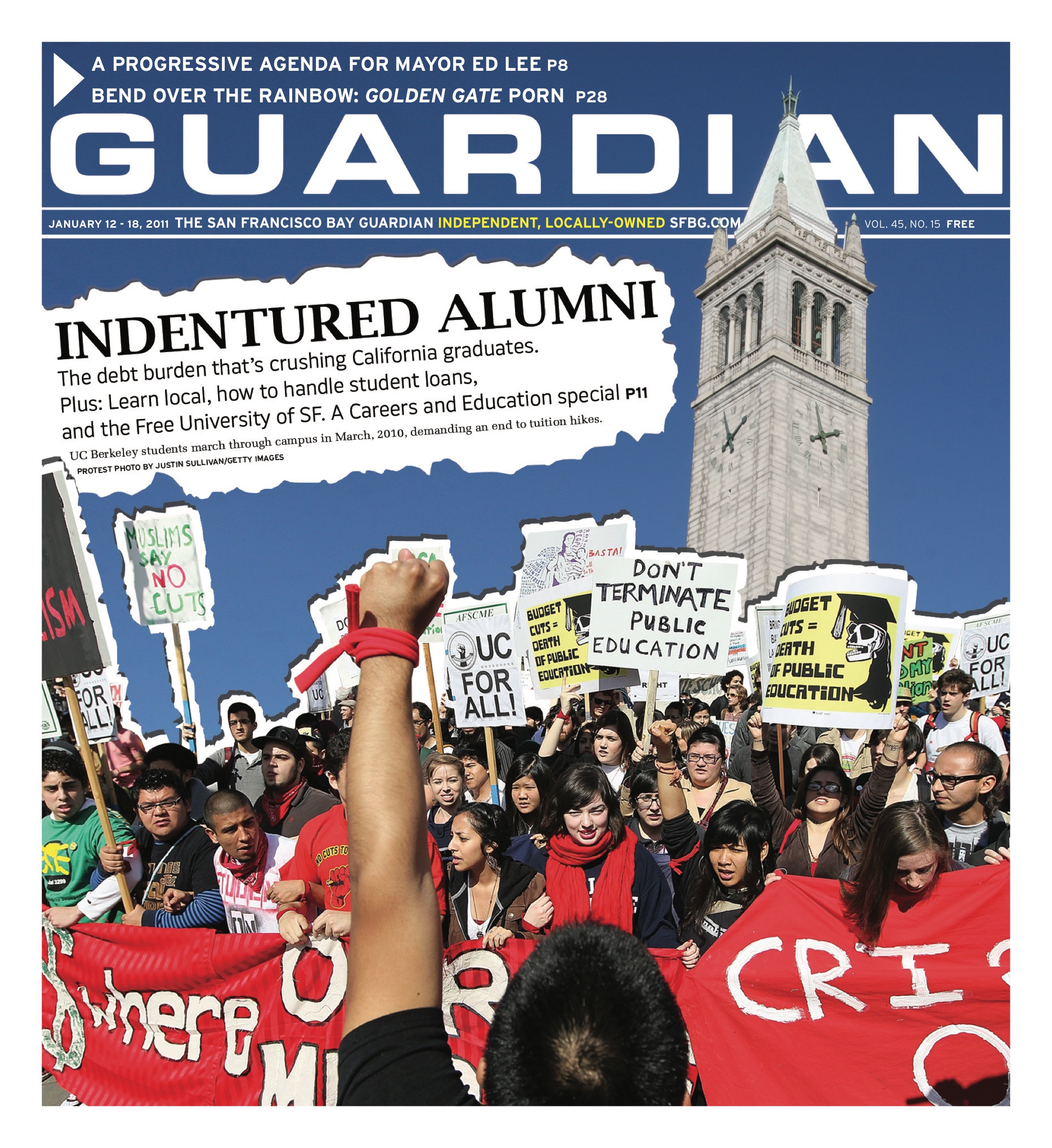
Bend over the rainbow

11

marke@sfbg.com

SEX/TV “We get to shoot all over San Francisco,” Jack Shamama of NakedSword.com tells me over the phone, a wicked lilt tiptoeing into his voice. “How great is that?”

Double entendres! He’s referring to Golden Gate, the spunky episodic porn Web series he wrote with Michael Stabile, which just wrapped up its first season and will begin a second season in February. The weekly series runs on the Naked Sword site, with a new episode debuting every week to a substantial viewership that values glossy production and polished presentation.

Although there’s no grand soap opera-like family tree of intersecting characters and storylines, each episode does feature quite a bit of plot, at least by wank-flick standards, and solid back stories for the various players. (Sample: “Robert is an unemployed writer who spends his days at cafes. He’s got a real interest in humanity, and is garrulous and friendly. He’s almost always dressed casually. Robert lives in the grittier Castro-adjacent neighborhood of the Lower Haight.” Robert gets crammed full of a two-foot-long cone-shaped black dildo. But I digress.)

GOLDEN GATE TRAILER (er, NSFW)

Pornisodic series have been done before — the sprawling Wet Palms comes to mind — but this is the first that really focuses on San Francisco. Shamama and Stabile being our perennial enfants terribles of porn, there’s some fun with San Francisco archetypes in each episode as well, bringing together, say, a high-powered downtown investor with a struggling Mission District artist who pimps himself out online for rent money. And while there are a few problems with verisimilitude (that struggling artist has waxed eyebrows and an all-over tan), there are plenty of spot-on in-jokes. In one episode, a couple of almost-hipster rockers get approached by a groupie for sex — but first they hand him a flyer for their band’s show at Bottom of the Hill.

After we dished a bit about the scheduling woes of porn stars in the Internet Age and the purported whereabouts of 1990s bear porn pioneer Steve “Titpig” Hurley, I asked Shamama a few questions about Golden Gate.

SFBG What pricked you into Golden Gate action?

Jack Shamama In the past, Naked Sword has teamed up with partners to produce hardcore content, behind-the-scenes specials, porn event coverage, and our regular talk show, “The Tim and Roma Show.” But for our first completely in-house production, we knew we had to come up with something big that wouldn’t run out of steam, since we wanted it to be a weekly series. The concept that kept coming up was the city itself.

Gay porn was pretty much invented in San Francisco and even today maybe as much as 75 percent of it is still filmed here, but you really wouldn’t know it since most of it’s filmed on sets. Those movies that do spotlight San Francisco generally end up giving people a dumbed-down CliffsNotes “gay Disneyland” version of SF, with an opening shot of the Golden Gate Bridge and credits rolling over a shot of the giant rainbow flag in the Castro.

We figured we owed San Francisco a bit more than that. Our tagline is “Enter the land of impulse and desire.” The city ends up being sort of like the main character. For each episode, we bring together two opposing types of San Francisco men to show the different sides of the city.

SFBG Everyone talks about how major porn studios are being killed by amateur websites. But you guys are going in the opposite direction, with glossy production values, old-fashioned plot-oriented scenes, big name stars, and timed release dates …  

JS Golden Gate is definitely an anomaly in the porn marketplace — but I think that at this point, its uniqueness is a plus. There’s still a huge audience out there that wants this type of meticulously produced, quality product, and I don’t think they should be ignored just because there are other types of porn being made.

Many people automatically equate “amateur” with “plotless” — but really it’s the same plot over and over again. “Straight guy sucks his first dick” could describe seven-eighths of amateur porn. That can be hot but yeah, we get it. We want to explore other kinds of fantasy. And, along with our executive producer Tim Valenti, we want to do it in a quality way. Even though our actors get down and dirty, we’re not ashamed of having a little class.

SFBG How difficult is it to produce a weekly porn series?  

JS It can get tough to write episodes at that pace and to keep everything straight — scouting locations, shooting stills, scheduling stars. One challenging aspect to production I didn’t anticipate was finding filming locations. Since each episode takes places in a different neighborhood, it’s taking us out of our comfort zone. There are lots of guys who live in the Castro who want to have a gay porn shot in their apartment, but some other neighborhoods can be tricky. We’ve lucked out and been able to shoot in some amazing apartments so far, though. I really didn’t expect it to become real estate porn, but I don’t think anyone’s complaining.

Another thing is making sure our script is malleable enough to adapt to the actors and direction. We shoot the sex part before the scripted part, so the actors won’t get too bored. And even though in our scripts Mike and I try to go beyond just clichéd “fuck me harders” during the sex parts, when it comes down to it, we want our actors to have hot sex, not worry about delivering their lines. And we want our director, Chris Ward, to be free to match his sexual vision to our scripted intentions. He’s one of the biggest names in porn — no one tells Chris Ward how to film a sex scene. He’s incredible.

SFBG Any hot scenarios you can share from the upcoming season?

JS A pair of Mormon missionaries don’t quite know what they’re getting into when they knock on the door of a certain fetishy Alamo Square leather daddy. That one ought to be fun.

Beyond Berlin and Beyond

0

arts@sfbg.com

FILM In 1996 Ingrid Eggers cofounded Berlin and Beyond, that annual Castro Theatre showcase for all things celluloid (or digital) and German-language. Fourteen years later she retired from the San Francisco Goethe-Institut after two decades of service. B and B soldiers on without her, but Eggers now has her own weekend-long independent festival at that same art-deco movie palace.

Why a second S.F. German language film festival? “Because I think that German films are not really well-represented in the various film festivals in the Bay Area, especially not in the [San Francisco] International [Film Festival],” she says. “There was always a focus on French films, particularly under [ex-SFIFF chief] Peter Scarlet. We had French and Italian film weeks, but nothing German. The other thing is that with Berlin and Beyond having a [current] director who is, I guess, going into a more international direction with lots of coproductions, I think there are enough films that come from Germany that deserve an audience here.”

German Gems part zwei is hella heavy on debuts — six out of 10 features — which Eggers says “wasn’t intentional, but came about because lots of the bigger productions are very expensive [to book] these days. It’s not unusual to pay 1,000 euros for a single screening.” Plus, Germany is admirably generous when it comes to funding not just film production, but film schools and graduation feature projects.

One such gem showing this weekend, Philipp J. Pamer’s two-hour-plus Mountain Blood, is the sort of thing even veteran commercial talents might have a hard time getting bankrolled. It’s a 19th-century epic shot high in the Tyrolean Alps, involving romantic and military intrigue between sophisticated Bavarians and rough-edged Tyrols during a period of attempted French occupation. Eggers allows that kind of budgetary challenge would be “unheard of here for a first feature, but in Germany you can pull it off.”

Opening the festival is a movie by one far-from-new director. A quarter-century ago Percy Adlon (another Bavarian) ruled the arthouse circuit with Zuckerbaby (1985) and Bagdad Café (1987). There followed a gradual slide into obscurity suggesting Adlon wasn’t a maturing talent so much as a permanently immature one who got lucky a couple times early on.

Yet his Gems-launching historical fantasia Mahler on the Couch is wise, antic, over-the-top, and controlled. It portrays last-great-musical-Romantic Gustav Mahler (Johannes Silberschneider) as a neurotic egomaniac driven to the upholstery of Sigmund Freud (Karl Markovics) by worry over the professed infidelity of spouse Alma Mahler (Barbara Romaner).

This Freud is sometimes harshly insightful, to Gustav’s frequent distress. Yet this very trickily structured, farcically winking, incongruously picturesque film is less concerned with either of them than horny, tempestuous Alma — “the most beautiful girl in Vienna, from a good family, and very rich.” How disappointing, then, that she spends most of her adult life as wedded servant to a cultural behemoth. She, too, wanted to make music. But even had she turned out something well short of a genius in that regard, Adlon (cowriting and codirecting with son Felix) sympathizes with the fact that she was never allowed to discover that for herself.

Other German Gems highlights include Ina Weisse’s black comedy The Architect, in which a jaded, dysfunctional nuclear unit travels to an ancestral hamlet for a matriarch’s funeral and promptly falls apart in all kinds of unpredictable ways. Another bad dad is the subject of Lara Juliette Sanders’ documentary Celebration of Flight, about a 78-year-old ex-pilot and amateur airplane builder living on a Caribbean isle — though the film is too shy about probing the estranged family he’s basically exiled from. David Sieveking’s non-aerial nonfiction David Wants to Fly finds the incessantly onscreen director seeking an artistic father-mentor in David Lynch, though this patriarchal worship is soon torpedoed by the director’s skepticism toward his idol’s favorite cause, Transcendental Meditation.

Elsewhere, Thomas Stiller’s She Deserved It offers lurid teenage-bullying moral instruction à la Larry Clark, without the graphic sex. Andreas Pieper’s Disenchantments interweaves four stories about variously unhappy Berliners coping with “the dialectics of enlightenment.” (Now that is German.) For some welcome absurdism, there’s Björn Richie Lob’s Keep Surfing, which is Cali fragi-licious: its real-life subjects ride stationary river waves in the middle of Munich, which is like “water skiing in a wind tunnel.” Cowabunga, freunde!

GERMAN GEMS

Jan. 14–16, $11–$20

429 Castro, SF (415) 695-0864 www.germangems.com

Sawako’s choice

0

arts@sfbg.com

FILM Sawako Decides, the most recent feature by the talented 27 year-old Japanese director Yuya Ishii, might not be the best film of 2010 that you never saw, but it certainly ranks as one of last year’s funniest — and perhaps more debatably, most feminist.

Yerba Buena Center for the Arts’ Ishii double feature “Lost in Japan,” which pairs Sawako with Ishii’s previous film To Walk With You (2009), is an all- too-brief introduction to a director whose modestly budgeted films about losers, misfits, and the socially marginalized in a Japan as depressed as they are have been garnering critical praise and catching the attention of festival programmers since his 2006 debut Rebel, Giro’s Love. Sawako Decides leaves no doubt that Ishii is one to watch (and to watch repeatedly).

Five years after winding up in Tokyo after a failed post-high school elopement, 20-something Sawako (a wonderful Hikari Mitsushima) has landed herself a thankless pink collar job serving tea at the offices of a toy manufacturer and an equally lame coworker boyfriend, whose young daughter from a previous marriage seems just as indifferent to Sawako as her father is. A human doormat in the extreme, Sawako is the first to agree the chorus of detractors that surround her that she’s, “not really much … a lower-middling type, really.” This routine existence is upended when her boyfriend arranges for Sawako to take over her estranged and terminally ill father’s freshwater clam packing business, and Sawako must face down the rural community — most notably, the pack of sniping older female employees she now oversees — who view her as a selfish deserter.

Although Sawako is a far cry from Emma Stone’s sass-spouting Olive in Easy A (2010), Ishii still wants his underdog to come out on top, and eventually the fates smile kindly, albeit crookedly, on her. By the time the film reaches the climactic scene in which a newly-emboldened Sawako leads her shocked employees in a rousing anti-government anthem, there is no denying that she has — to borrow the title phrase of another recent coming-of-age film anchored by a strong female character — true grit, and that Ishii is not only a wildly inventive filmmaker, but one who possesses a true heart.

Ishii — who also frequently edits and writes his films — combines humor and pathos in a way that mimics his bumbling antiheroes’ oft-failed attempts to integrate themselves within the world around them: jokes are frequently followed up a beat too late so as to go practically unnoticed or are delivered in a deadpan that verges on D.O.A. He also has a penchant for peppering his narratives with absurdist detours, out-of-the-blue dance numbers, and enough idiosyncratic supporting characters to make Miranda July proud.

Unlike July’s work, however, Ishii’s films leave no aftertaste of preciousness. Ishii’s characters are often as laughably insufferable as their peers make them out to be, but Ishii takes their funny-sad struggles to exist quite seriously, putting his work more in line with that of, say, Woody Allen or even Todd Solondz, than of anything Michael Cera has mumbled his way through. Ishii’s films are “existential” — a descriptor they’re frequently tagged with — to the extent that his characters, through much hilarious trial and error, transform their failure to achieve what society expects of them into a new ethics for living.

Thus, Sawako Decides‘ most radical proposition is that “nothing special” is not simply a demoted way of being, but grounds for collectivization. Japanese culture’s drive toward upper-middle class exceptionalism is exposed as a myth that should have died with the Bubble Economy (in To Walk With You, the protagonist discovers everybody’s mother wants them to be a lawyer largely for lack of imagination). Like Melville’s scrivener Bartleby, Sawako turns staying within one’s station into an act of defiance. To be the best at being a “lower-middling person” is not defeatist. Rather, it is to embrace one’s stunted potential as a generative constraint. If everyone’s a loser, than no one is. *


LOST IN JAPAN: THE EXISTENTIAL COMEDIES OF YUYA ISHII

Jan. 13–15, $6-$8

Yerba Buena Center for the Arts

701 Mission, SF (415) 978-2787 www.ybca.org

Dark end of the street

0

DOCUMENTARY CLASSIC This column space is usually devoted to pop culture detritus. But this week we’ll bend the Trash definition to encompass human detritus, as in such timeless phrases as “Those people are nothing but trash.” The occasion is the Roxie’s restored re-release showcase of On the Bowery, a 1956 piece of early U.S. independent cinema that won major prizes. But it also struck many observers at the time as akin to literal trash: they wanted it dragged into some dark alley under cover of darkness, then quietly removed, lest polite society sift through the unflattering mess.

The 65-minute feature echoed Italian neorealism’s influence, as it mixed documentary footage with dramatic elements using amateur actors basically playing themselves. It provided a filmmaking “school” for debuting director Lionel Rogosin, a son of well-off New York City Jewish textile manufacturers who, like many of his peers, felt the need to make work addressing social equity rather than just “enjoy life” after the Holocaust. He hit on film as his chosen medium, South Africa’s apartheid system as desired subject — but as he knew nothing about filmmaking, taking on some smaller project first seemed apt.

Interviewed just before his turn-of-millennium death for 2009’s The Perfect Team: The Making of On the Bowery, which the Roxie is also showing, Rogosin recalls approaching this endeavor (initially planned as a short) with characteristic immersive fervency.

Having decided to focus on New York’s Skid Row district — the onetime flourishing heart of Manhattan whose slow degeneration began when an overground rail built in the 1870s bypassed stopping there — he spent a full six months befriending and bar-crawling with “Bowery bums,” occasionally slinking back to his Village apartment. (To neighbors’ consternation, sometimes these new pals would come uptown to pound on his door at 4 a.m., shaking the rich guy down for gin money.)

In the saloons and flops he found his cast, even his crew: cinematographer Richard Bagley, who shot 1948’s Oscar-nominated The Quiet One (another neorealist semidocumentary, about a Harlem juvenile delinquent), was found carousing thereabouts. (He died of cirrhosis in 1961 at 41. That was six years later and four years younger than Pulitzer Prize-winning scribe James Agee, who’d written The Quiet One and drank himself to death before he could write Bowery.)

Bagley understood what Rogosin meant in wanting the film to look like Rembrandt’s portraits of 17th-century Amsterdam’s poor and diseased — black and white On the Bowery has stunning passages of nothing but faces ruined by hooch and hardship, soulful in their grotesquerie. (Probably many were beyond registering being filmed.) The slim story, dialogue improvised within a barely scripted structure, centers on itinerant railroad worker Ray. Drifting into town between jobs, this uncomplicated rural Southerner has the ill fortune to get buddied up by the older Gorman, a.k.a. Doc (he claims to have blown a legit surgeon’s career), who spies a soft touch. Umpteen glasses later, Ray is left unconscious at the curb, his battered suitcase stolen by Doc to buy a few hours’ privacy in one flophouse’s chicken wire “room.”

Ray awakens the next day sobered but not sore, determined to stay dry long enough to clean up, get some work, and get outta here. Knowing his weakness for the sauce, he recognizes Bowery life as a pit he might easily vanish in. But after an abortive night at a depressing church mission, he answers the siren call of Doc’s mooching hospitality and gets in worse straits than ever. There’s both surprising redemption and a stone-cold reality check at the end of this woozy-view slice of gutter life.

On the Bowery won great acclaim in Europe and an eventual Oscar nomination as Best Documentary. (It was also inducted into the National Film Registry in 2008.) Yet it was scarcely distributed here, and outright condemned in some quarters. Eisenhower America preferred the less seemly aspects of its domestic life be kept hidden from view. Bagley’s shocking vistas of bruised, broken, passed-out “forgotten men” littering already decrepit city sidewalks at dawn — like extras in a Cold War sci-fi scare film about the Bomb — seemed not just an ugly truth but an unallowable one.

The New York Times and other commentators assailed the filmmakers for wallowing in gratuitous filth. At an otherwise triumphant Venice Festival premiere, socialite ambassador Clare Boothe Luce and publishing tycoon husband Henry snubbed Rogosin, the first Yank to win its Documentary Grand Prize. She reportedly encouraged the U.S. State Department to suppress Bowery‘s further exposure abroad — and was no doubt appalled when it became a runaway hit in certain Eastern Bloc nations.

Rogosin did make that South Africa film (1958’s Come Back, Africa, another Venice sensation) as well as several other little-seen social-justice documentaries, before continual funding shortages forced his mid-1970s retirement from the medium.

On the Bowery‘s “stars” imitated the art that had replicated their lives. Having been told by a real physician that he wouldn’t survive even one more binge, Gorman “Doc” Hendricks honored the crew’s pleas and stayed sober as long as the film was being shot. Once it wrapped, he promptly relapsed and died, never seeing a frame of the end product.

Handsome, affable 42-year-old Ray Salyer helped Rogosin promote the movie, dignified and frank about his own alcoholism in a Today interview excerpted in The Perfect Team. That publicity attracted Hollywood acting offers, including a purported $40,000 contract Salyer refused. When the attention got to be too much, he simply “hopped on a freight train and nobody ever saw him again.” Legend has it he later returned to the Bowery, dying there. A surviving nephew recalled his father (Ray’s twin among a brutal Kentucky Methodist minister’s 12 children) saying this wayward brother “returned permanently screwed up” from World War II military service. He was “still the charming, witty, engaging guy he had been, but with a deep sadness in his eyes. And he couldn’t drink enough to make it go away.”

ON THE BOWERY

Jan 14–20, $5–$9.75

Roxie Theater

3117 16th St., SF

(415) 431-3611

www.roxie.com


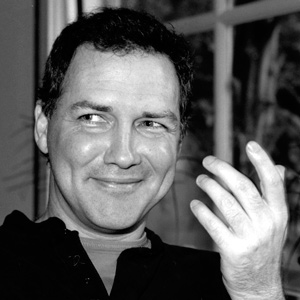
NORM MACDONALD

0
Live Nation is pleased to announce Norm MacDonald will tape his Comedy Central Special on Friday, January 14, 2011 at The Fillmore in San Francisco, CA.

You laughed at him on Saturday Night Live…you loved him in Dirty Work, Dr Doolittle, and My Name is Earl…You might have even watched “The Norm Show”…Now, see him live and uncensored, right here in San Francisco…

Perhaps best known for his offbeat delivery of “the fake news” onSaturday Night Live” for five seasons, MacDonald proved that his acerbic wit and writing were not to be contained to just the small screen.

MacDonald starred in the film Dirty Work, , was seen in Billy Madison , The People Vs. Larry Flint  and was the voice of ” Lucky the Dog” in Dr. Doolittle.

It’s Norm MacDonald, live at the Fillmore, Friday January 14th… Don’t miss it 2 shows, one night only, Friday January 14th at the historic Fillmore Auditorium! 
 
For ticket and show information go to http://www.livenation.com

Friday, January 14th at 7:30pm & 10pm @ The Fillmore,1805 Gearly Blvd., San Francisco
 
WIN TICKETS to the 7:30pm show by sending an email to promos@sfbg.com, subject line: Norm MacDonald, by 5pm on Friday, January 7th.

Our Weekly Picks: January 5-11, 2011

0

THURSDAY 6

THEATER

Strange Travel Suggestions

Jeff Greenwald’s life is a trip, and he’s happy to take you along for the ride. The Oakland-based travel writer has made a name for himself slaking an unquenchable wanderlust in lively, enlightening books like Shopping for Buddhas and, most recently, Snake Lake, a memoir of one year (1990) that saw a poignant collision between Nepalese revolution and personal upheaval. But many who know the writer don’t know the performer. A natural storyteller, Greenwald returns this week to the Marsh with his improvised, low-key but engrossing Strange Travel Suggestions. Making use of an idiosyncratic “wheel of fortune,” the journey changes each night, relying like all good wanderings on the collective mood and dumb chance. (Robert Avila)

Through Jan. 22

Thurs.–Fri., 8 p.m.; Sat., 5 p.m., $20–$50

Marsh Berkeley Cabaret

2120 Allston, Berk.

1-800-838-3006

www.themarsh.org


MUSIC

Blaqk Audio

Alas, I lost the thread and completely missed the moment when emo reached its New Romantic period. Which is sad, because right around 2007, I really could have used a sharp-shirted, electro-emo stomper from Blaqk Audio called “Semiotic Love.” I think at that point in my mope-rock attention, I was too busy gawking at footage of the punks vs. emos riots breaking out across Mexico. (According to one punky hater, emos “are stupid, they cry about stupid things.”) Too bad those rowdy Mexican kids didn’t know about Blaqk Audio, a side project of Davey Havoc and Jade Puget of Ukiah stalwarts AFI, which fluffs a punk pedigree and emo self-longing into synthy, baroque, slightly dark power pop. Think Depeche Confessional or maybe My Chemical Numan — or just be pulled into Blaqk Audio’s chilly, wriggling embrace at weekly club Popscene. (Marke B.)

With DJs Aaron Axelson and Nako

9 p.m., $18

Rickshaw Stop

155 Fell, SF

www.popscene-sf.com


MUSIC

George Winston

Grammy-award winning pianist George Winston is known in the music world for a wide variety of his projects, ranging from his own outstanding original material to his reworkings of Vince Guaraldi’s beloved Peanuts compositions, as well as reinterpreting music from the Doors. During his 30 years and counting music career, Winston has long worked with various food banks and service organizations throughout the country when he tours — he donates 100 percent of his merchandise sales to the organizations he works with at each show. Tonight benefits the Berkeley Food Bank, so prepare for an evening of good music for a good cause. (Sean McCourt)

8 p.m., $39.50

Freight and Salvage Coffeehouse

2020 Addison, Berk.

(510) 644-2020

www.thefreight.org


FRIDAY 7

MUSIC

Velvet Teen

This month sees the release of the Velvet Teen’s first new material since 2006, an EP titled No Star. That’s a big gap in the band’s discography, particularly for a group that released three albums and a handful of EPs between 2000 and 2006. But tragedy takes priority in life, and while fans of the Santa Rosa indie rockers certainly have been eager for new sounds, there’s also a sense that things take time, particularly after the loss of original drummer Logan Whitehurst in 2006. Tonight’s show, the CD release, is a chance to see what the Velvet Teen has made of the intervening years. (Ryan Prendiville)

With Silian Rail and Low-five

10 p.m., $12

Bottom of the Hill

1233 17th St., SF

(415) 621-4455

www.bottomofthehill.com


SATURDAY 8

MUSIC

“Bowie and Elvis Birthday Bash”

Used to be, you’d have to choose which rock superstar to celebrate come Jan. 8. Would you meticulously apply glittery makeup and sway to “Life on Mars?” or slick your hair into a pompadour and pound a peanut-butter-and-banana concoction to the beat of “Suspicious Minds”? This year, head to the Edinburgh Castle’s “Bowie and Elvis Birthday Bash,” offering equal time to each rock titan on their shared birthday (Ziggy’s 64th, and what would’ve been the King’s 76th). Shindog and Skip spin tunes “from Hound Dog to Diamond Dog,” poet Alan Black pays tribute, and there’ll be a costume contest in the image of each legend. If you already own a sparkly jumpsuit, a two-in-one homage is certainly possible. (Cheryl Eddy)

9 p.m.–2 a.m., $5

Edinburgh Castle Pub

950 Geary, SF

www.castlenews.com


MUSIC

Optimo

There was no single club whose aesthetic ruled world dance floor sensibilities in 2010 (this may be a good thing). No Berghain, no Misshapes, no Hollertronix, no Body & Soul, no Fabric, no Space — and unfortunately no Optimo (Espacio), the wee Glasgow joint that helped birth one of the most thrilling recent trends in DJ styling, the “never know what you’re gonna get, but it’ll be amaaazing” thing. Optimo shut down in April, and the San Francisco scene mourned the loss of a sister spirit. Honey Soundsystem even mounted an elaborate wake on the same night Optimo closed. Fortunately, Optimo’s wildly diverse musical policy lives on. DJ JD Twitch founded the club with JG Wilkes — Twitch will hopefully beat through the snow to bring his club’s still-thriving vibe to 222 Hyde, along with unexpected sonic goodies from Midnight Star and Chicks on Speed to Gui Boratto and beyond. (Marke B.)

9:30 p.m., $5–$10

222 Hyde, SF

www.222hyde.com


FILM

“Hitchcock”

Rear Window   (1954), Vertigo   (1958), Psycho   (1960) — not only have you seen ’em multiple times, you can recite all the dialogue and catch yourself miming along with the shower scene. It’s likely even Alfred Hitchcock diehards haven’t gotten around to watching all of the prolific director’s 60-something works. But thanks to the Castro Theatre, you can skip a random TV viewing and catch some of Hitch’s lesser-known but no less compelling films on the big, glorious screen (as he’d no doubt rather prefer). Highlights include The Lady Vanishes (1938), Rope (1948), The Trouble With Harry (1955), and The Wrong Man (1956), though there’s not a bad double-feature during the six-day event. (Eddy)

Jan. 8–13, $7.50–$10

Castro Theatre

429 Castro, SF

(415) 621-6120

www.castrotheatre.com


EVENT

Oshogatsu Matsuri Festival

Traditions central to the Japanese New Year: the pounding of boiled sticky rice into mochi, Beethoven’s Ninth Symphony, and well-meaning gaijin galuts asking everybody where the Chinese dragon is. Unversed in the dawn of the new year in the Land of the Rising Sun? This Japantown community center is holding a day to honor the Year of the Rabbit’s arrival, which Japan celebrates in tune with the Gregorian calendar along with the Western world. Bring the kiddos for art activities and make yourself comfortable for demonstrations of mochitsuki (the aforementioned rice preparation), kendo sword-fighting, and odori, the dance to welcome the dead. (Caitlin Donohue)

11 a.m.–3 p.m., free

Japanese Cultural and Community Center of Northern California

1840 Sutter, SF

(415) 567-5505

www.jcccnc.org


MUSIC

Los Lobos

Had he not died in a helicopter crash after leaving a 1991 Huey Lewis concert, legendary San Francisco rock promoter Bill Graham would have turned 80 today — local music fans can celebrate his birthday at tonight’s concert, featuring Los Lobos and Jackie Greene, all benefiting the Bill Graham Memorial Foundation. Run by a group that includes members of Graham’s family and other community leaders, the foundation strives to raise money for a variety of social and charitable causes. Raise your glass to Wolfgang (a childhood nickname for Graham, born Wolodia Grajonca) at this fitting tribute — remember, the reason Graham was at the concert that fateful night was to plan a benefit show to help victims of the 1991 Oakland firestorm. (McCourt)

9 p.m., $50

Fillmore

1805 Geary, SF

(415) 346-6000

www.thefillmore.com


MUSIC

Talib Kweli

What does it mean to be a “conscious” rapper? That label has been applied to Talib Kweli ever since he emerged on the musical scene in the mid-1990s, particularly for Black Star, a 1998 collaboration with fellow Brooklyn artist Mos Def and DJ Hi-Tek. Beyond charity work, it means being able to get past the divisive beefing that plagues hip-hop. That ability has kept Kweli busy with guest appearances between albums, on tracks with the Roots, Little Brother, UGK, Gucci Mane, and beyond. His new album, Gutter Rainbows, is out Jan. 25. (Prendiville)

With Be Brown, Skins and Needles, My-G and Rose, and Lowriderz

10 p.m., $25

Public Works

161 Erie, SF

www.publicsf.com


SUNDAY 9

MUSIC

Willie Nelson

“Outlaw” is a term that tends to be thrown around a little bit too liberally these days, particularly when it comes to discussing musicians. But one man who undoubtedly deserves that title is Willie Nelson, whose five-decades-and-counting career as a singer, songwriter, poet, author, and social activist has been forged entirely on his own terms. Known for his own recording hits, his partnerships with artists such as Johnny Cash, his slew of songwriting successes (notably the classic tune “Crazy” as made famous by Patsy Cline), and more recently his newsmaking, weed-related tour bus arrests, the 77-year-old icon continues to prove that he is a musical and social force to be reckoned with. (McCourt)

Through Jan 12

9 p.m., $55

Fillmore

1805 Geary, SF

(415) 346-6000

www.thefillmore.com


MONDAY 10

EVENT

BCS National Championship Game

The University of Oregon Duck is a champ. Omnivorous, excellent paddler, wearer of fetching sailor shirts — a gentleman and a scholar, truly. Except when he’s beating up the University of Houston’s Cougar (as seen in a popular YouTube clip), but that happened all the way back in 2007! This year, his football Ducks ended the regular season undefeated to face the Auburn Tigers in the national championships. Though we may not have the benefit of a fine Oregon drizzle to fully appreciate the Duck’s waddle, there is a lovely vantage point from which to watch the mayhem: the Independent, where the game will be played on its pull-down movie screen and microbrews will flow like the mighty Willamette. (Donohue)

5:30 p.m., free

Independent

628 Divisadero, SF

(415) 771-4421

www.theindependentsf.com


The Guardian listings deadline is two weeks prior to our Wednesday publication date. To submit an item for consideration, please include the title of the event, a brief description of the event, date and time, venue name, street address (listing cross streets only isn’t sufficient), city, telephone number readers can call for more information, telephone number for media, and admission costs. Send information to Listings, the Guardian Building, 135 Mississippi St., SF, CA 94107; fax to (415) 487-2506; or e-mail (paste press release into e-mail body — no text attachments, please) to listings@sfbg.com. Digital photos may be submitted in jpeg format; the image must be at least 240 dpi and four inches by six inches in size. We regret we cannot accept listings over the phone.

On the Cheap Listings

0

On the Cheap listings are compiled by Caitlin Donohue. Submit items for the listings at listings@sfbg.com. For further information on how to submit items for the listings, see Picks.

WEDNESDAY 5

Concierto de Reyes Mission Cultural Center for Latino Arts, 2868 Mission, SF; (415) 643-5001, www.missioncultural.org. 2pm, free. The Coro Hispano of San Francisco, a chorus comprised of Spanish-speaking community members, has been celebrating Latin America through song since 1975. Join ’em for their annual kids holiday concert, which will cover turf as varied as renaissance motets and aguinaldos (Christmas folk music) from Peru, Venezuela, Puerto Rico, and more.

Glen Canyon habitat restoration Glen Park Recreation Center, 70 Elk, SF; (415) 337-4705, www.sfrecpark.org. 9am-noon, free. Sure, you’ve made “that” resolution for the millionth time. But how about you snap out of that pudgy pity party and truck out to a little exercise that benefits more than just your waist line? SF parks are in need of TLC if they want to fend off invasive species and you can join in on the action at this morning of weeding, planting, and pruning. Dress to get muddy and active – and indulge in the free snacks provided free of your Christmas cookie guilt.

FRIDAY 7

Jaime Cortez: “Universal Remote” Southern Exposure, 3030 20th St., SF; (415) 863-2141, www.soex.org Through Feb. 19. Opening reception 7-9pm, free. It’s been months, but we still have a big in our hearts the size of a glittery glove. Thankfully, here comes visual artist Jaime Cortez’s solo exhibition, which calls out the tragic, tremendous pop culture whorl that was MJ – and highlights the King of Pop’s fluid moves through race, sexuality, and zombie-human relations.

Oakland Art Murmur Telegraph and 23rd St., Oakl.; www.oaklandartmurmur.com. 6-10 p.m., free. Rediscover what downtown Oakland’s got going on art-wise with this monthly show-and-tell by the neighborhood’s best and brightest art galleries. This week, catch Jennie Ottinger’s book art at Johansson Projects (excerpt from her truncated version of As I Lay Dying: “Holy shit, this family is cursed! Very National Lampoon’s Vacation.“)

SATURDAY 8

Parent-child snow globe class Randall Museum, 199 Museum Way, SF; (415) 554-9600, www.randallmuseum.org. 1-4pm, $6 for children; $10 for parent-child duos. The holidays are over, and yeah it’s still cold and rainy. But take heart! Winter can be time for good cheer even after Santa’s packed up the sleigh and gone north. Make a shakable wonder with your wee one and enjoy the rest of Randall Museum’s “Saturdays are Special” event (10am-4pm), which includes railroad exhibits, live animal feedings, and the rest of the science-y wonders present throughout the rest of this always-free museum.

Vintage Paper Expo Hall of Flowers, Golden Gate Park, Lincoln and Ninth Ave., SF; (328) 883-1702, www.vintagepaperfair.com. 10am-6pm, free. (Also Sun/9, 10am-4pm) Postcards, photos, brochures, stereoviews, and so much more! What’s a stereoview, you ask? Why, nothing less than an antique 3D image – something you can acquaint yourself with at this fair of all things printed and retro. The Vintage Paper Expo’s got over 100 vendors this year, all primed to sell you affordable scraps of history.

Writers With Drinks The Make Out Room, 3225 22nd St., SF; (415) 647-2888, www.writerswithdrinks.com. 7:30-9:30pm, $5-10 sliding scale. Writers? Drink? Well, I guess there’s a first time for everything! This long-standing lit night series pairs local scribes (this month’s are girl group Gogos founder Jane Wiedlin and socio-writer Ethan Watters) with a crowd that’s anything but stiff for readings, skits, and stand-up.

MONDAY 10

Cinema Drafthouse: Machete The Independent, 628 Divisadero, SF; (415) 771-1421, www.theindependentsf.com. 9pm, free. A deliberately silly revenge plot that’s both spot-on vintage homage and semi-serious commentary on America’s ongoing immigration debate gets the Indy’s free movie night treatment. Watch the film with a beer in hand (or two) – and feel free to shout advice to the characters on-screen. You’re in a music venue, for chrissakes.

TUESDAY 11

Pecha Kucha 330 Ritch, 330 Ritch, SF; www.pecha-kucha.org. 7pm, $5 donation suggested. Embarking as we are on month number one of year two-thousand-and-one-one, the theme of this month’s installation of this cross-discipline art night series is, yes, “one.” Not the most specific theme, sure – but that’s the way artists like it, and when you’ve assembled a passel of them from fields as varied as industrial design, animation, and fashion, sometimes it’s best just to step back and watch them unify.

Rep Clock

0

Schedules are for Wed/5–Tues/11 except where noted. Director and year are given when available. Double and triple features are marked with a •. All times are p.m. unless otherwise specified.

CASTRO 429 Castro, SF; (415) 621-6120, www.castrotheatre.com. $7.50-12. Tron: Legacy (Kosinski, 2010), Wed-Thurs, 1:30, 4:15, 7:00, 9:30. “Midnites for Maniacs: Swords and Sorcery Triple Feature:” •The Princess Bride (Reiner, 1987), Fri, 7:30; Time Bandits (Gilliam, 1981), Fri, 9:30; Deathstalker (Sbardellati, 1983), Fri, 11:59. All three films, $12. “Hitchcock:” •The 39 Steps (1935), 2, 5:35, 9:05, and The Lady Vanishes (1938), Sat, 3:45, 7:15; •I Confess (1953), Sun, 2, 5:30, 9:05, and Rope (1948), Sun, 3:55, 7:30; •Torn Curtain (1966), Mon, 2:15, 7, and Stage Fright (1950), Mon, 4:45, 9:25; •The Trouble With Harry (1955), Tues, 3, 7, and Mr. and Mrs. Smith (1941), Tues, 5:05, 8:55.

CHRISTOPHER B. SMITH RAFAEL FILM CENTER 1118 Fourth St, San Rafael; (415) 454-1222, www.cafilm.org. $6.50-10.25. “Short Films from the 2010 Sundance Film Festival,” Wed-Thurs, call for times. “San Francisco Grand Opera Cinema Series:” Lucia de Lammermoor, Thurs, 7 and Sat, 10am. Bhutto (Baughman and O’Hara, 2010), Jan 7-13, call for times.

HUMANIST HALL 390 27th St, Oakl; www.humanisthall.org. $5. Enron: The Smartest Guys in the World (Gibney, 2005), Wed, 7:30.

MECHANICS’ INSTITUTE 57 Post, SF; (415) 393-0100, rsvp@milibrary.org. $10. “CinemaLit Film Series: New Year’s Revolutions:” Viva Zapata! (Kazan, 1952), Fri, 6.

PACIFIC FILM ARCHIVE 2575 Bancroft, Berk; (510) 642-5249, www.bampfa.berkeley.edu. $5.50-9.50. Closed until Jan. 13.

RED VIC 1727 Haight, SF; (415) 668-3994. $6-10; www.redvicmoviehouse.com. Client 9: The Rise and Fall of Eliot Spitzer (Gibney, 2010), Wed, 2, 7, 9:15. Enter the Void (Noé, 2009), Thurs-Sat, 7, 9:45 (also Sat, 2). The Girl Who Kicked the Hornet’s Nest (Alfredson, 2009), Sun, 2, 5, 8 and Mon-Tues, 7:30. ROXIE 3117 and 3125 16th St, SF; (415) 863-1087, www.roxie.com. $5-9.75. The Strange Case of Angelica (de Oliveira, 2010), Jan 7-13, call for times.

Going commando

0

CHEESY, SLEAZY CINEMA Last year found Jack Abramoff a peculiarly hot commodity at the movies, especially if you consider he spent most of the year in federal prison and hadn’t exercised his own Hollywood ambitions in nearly a quarter-century.

But then his recent on-screen exposure was not of an ilk he’d have chosen for himself: as subject of a documentary (2010’s Casino Jack and the United States of Money) and biographical drama (plain Casino Jack, also 2010) both depicting the now-infamous Washington, D.C., lobbyist as personification of that Shrub Era conservative jingoism, corrupt backdoor business deals, egomania, and greed that helped land us in our current economic craphole. And which got him four years, ending last month even as former Republican House Majority leader and BFF Tom DeLay faced the start of his own money-laundering slammer stint.

Abramoff was not likely to have enjoyed either portrait, not even as semi-sympathetically (albeit poorly) portrayed by Academy Award-winning thespian Kevin Spacey in the weaker film. If he’d been able to invent his own starring vehicle, no doubt it would have been more a flatteringly bold cross of 1987’s Wall Street (the Michael Douglas part), 1960’s Exodus (the Paul Newman as he-man crusader for Israel part) and 1980s Rocky-Rambo Stallone (the whole enchilada, from bulging biceps to rippling Old Glory and Commie-wasting weaponry). In the Reagan America of his physical if not yet political prime, he really was a bit of all those things: bodybuilder, Zionist, rabid anti-Red.

Whether he ever harbored dreams of being a celluloid hero, or was always content to become a real-life Supermensch, Abramoff did once make a movie — exactly one — exemplifying his beliefs and self-image in suitably cartoonish fashion, before realizing Hollywood’s corridors of power were puny game for a real man. So he moved on to the more hallowed halls of D.C. and Manhattan. But first, there was Red Scorpion.

This 1988 actioner starred 6-foot, 5-inch Swedish meatball Dolph Lundgren, hot from playing the robo-Russkie villain in Rocky IV (1985) and He-Man in Masters of the Universe (1987), as a “perfect killing machine” sent by evil Soviet commanders to assassinate a resistance leader in a fictive African nation under the thumb of Communist oppressors.

Tending not to play well with others, Lt. Nikolai Rachenko spends his first night here in jail for “disorderly conduct” — after a few drinks he’d kicked open a saloon door, beat up half the patrons, and machine-gunned the joint. Boys will be boys. He shares a cell with a local freedom fighter (Al White) and an American reporter (M. Emmet Walsh at his formidably most-obnoxious). For no obvious reason our steroid miracle of a KGB enforcer decides moments later to switch sides and help them escape. This effort requires killing about a million extras playing Russian and Cuban military occupiers to the tune of Little Richard’s “Good Golly Miss Molly.” (Because nothing says “Democracy rocks!” like the orgasmic trills of an African American queen.)

Slowly-dawning ability to feel empathy for suffering peoples indicated by the heavings of his perpetually oiled torso and completely unintelligible mutterings, Nikolai is recaptured by former masters and made to endure homoerotic torture. He escapes again, staggering through the desert alone, shirtless and shiny. Bushmen rescuers teach this Golden Bwana something or other — like Billy Jack, he sweats, grunts, and hallucinates toward enlightenment — and give him a scorpion tattoo as diploma.

Now armed spiritually as well as abdominally to do good, his reappearance in civilization spurs Walsh to call this juiced Russki “the gutsiest goddamn sonuvabitch I ever met.” (Arne Olsen’s screenplay, from the brothers Jack and Robert Abramoff’s story idea, is seldom even this articulate.)

The climactic triumphant popular uprising at one point hinges on Lundgren lifting a truck out of a sandtrap with his bare bulging guns, a bit included purportedly because Jack Abramoff was an iron-pumping addict himself at the time. (What makes the scene funnier is that it evidently occurred to no one that Nikolai’s load would be lightened if Walsh got his fat ass out of the truck cab for a minute.)

A movie rife with bad dialogue badly spoken — you’ll gulp as White seemingly enthuses “When we arrive there will be a celebration and much fisting!” — ends aptly with the worst pronunciation ever of “Fucken’ A.” Our heroes are then freeze-framed while strolling over another umpteen freshly killed Commies.

Red Scorpion was shrugged off as what it basically was, yet another Rambo ripoff arriving toward the tail end of that subgenre’s lifespan. (A theatrical flop, it did well enough on tape and cable to prompt 1994’s in-name-only sequel Red Scorpion 2, on which the Abramoffs got executive producer credits.) There certainly are more cheap, inept, laughable, senseless, just plain dumb films of its ilk — though this one does excel at dumbness — and unlike many it does have one good joke, involving a grenade and a decapitated hand. Otherwise, if not for its primary motivator’s subsequent antics, Red Scorpion would be just another forgotten B-grade cultural relic.

But the Beverly Hills-raised Abramoff — who spent the earlier part of the 1980s as an aggressive far-right youth activist — intended this first-last cinematic venture as a stealth combo of dynamite popular entertainment and anti-Red Menace propaganda. He modeled the character of “Mombaka’s” resistance savior Sundata (played by Ruben Nthodi) on real-life Angolan anti-Marxist rebel warlord Jonas Savimbi, a darling of later Cold War hawks. (Others would soon call him “a charismatic homicidal maniac.”)

It is still debated whether Red Scorpion‘s $16 million budget was secretly funded primarily by the South African government and/or military. Abramoff denies it — though he had already spearheaded support of the apartheid regime as College Republican National Committee chairman and founder of the dubiously named think tank, International Freedom Foundation. In any case, once protestors got wind of the production shooting in South Africa-controlled Namibia — defying an international boycott — a skittish Warner Bros. pulled out as distributor. (Scorpion was then picked up in the U.S. by Shapiro-Glickenhaus, who later gave us 1990’s Frankenhooker and 1992’s Basket Case 3: The Progeny.)

The shoot was fraught. Some actors and crew complained they were never paid; production was suspended for three months when money ran out; star attraction Lundgren was apparently quite the hulking handful on and off set. Afterward, Abramoff — who’d converted to Orthodox Judaism at age 12 after seeing Fiddler on the Roof (1971) — blamed the film’s potty-mouthed and violent excesses on director Joseph Zito (of future Tea Party fan Chuck Norris’ own 1985 anti-Commie classic Invasion U.S.A.) He founded something called the Committee For Traditional Jewish Values in Entertainment as penance.

That noble latter endeavor was abandoned about five seconds later, however, since by then Abramoff realized he had better things to do than mess around with pansy-ass showbiz. Among his future, better-known achievements — the ones that got him top billing as Inmate 27593-112 — were bilking casino-owning Native American tribes, keeping third world factory sweatshops safe from investigation, pimping Congress to myriad corporations, and otherwise pedaling corruption ’round the globe, all while clutching family values and raving against the Godforsaken liberals. He was ever so righteous about doing wrong.

Today, he’s free, if uncharacteristically silent, having finished both his hoosegow stint and a halfway-house stay during which he worked for below minimum wage at a Baltimore kosher pizzaria. One suspects he will not be flippin’ pie in the future, however. Sibling Robert Abramoff is still in the biz, producing such fascinating-sounding recent projects as 2009’s Pauly Shore and Friends, 2009’s Jesus People: The Movie, and 2010’s Dino Mom.

Lundgren, recently looking fine (if downsized) in 2010’s all-star Expendables, now directs his own direct-to-DVD action vehicles. Still fighting the good fight, alongside Israeli special forces and South African mercenaries, Savimbi died in a hail of machine-gun fire eight years ago. That event helped end Angola’s civil war after nearly three decades. And Red Scorpion lives on, more or less. I found my used VHS copy at Rasputin Music for 50 cents. Fucken’ A!

Woman on the verge

0

FILM Sometimes a performance stands out and grabs attention for embodying a particular personality type or emotional state that’s instantly familiar yet infrequently explored in much depth at the movies. What’s most striking about Derek Cianfrance’s Blue Valentine is the primary focus it lends Michelle Williams’ role as the more disgruntled half of a marriage that’s on its last legs whether the other half knows that or not. Ryan Gosling has the showier part — his Dean (the actor’s second bad husband in a month, following All Good Things) is mercurial, childish, more prone to both anger and delight, a babbler who tries to control situations by motor-mouthing or goofing through them.

But Williams’ Cindy has reached the point where all his sound and fury can no longer pass as anything but static that must be tuned out as much as possible so that things get done. Things like parenting, going to work, getting the bills paid, and so forth. Dean hasn’t just lost his antic charm; his act is now clearly a poor cover for basic incompetence. He is an obstacle, an irritant whose clowning, fits of pique, and perpetual failure to be useful have become the domestic equivalent of fingernails on chalkboard.

It’s taken a few years for Cindy to realize that she’s losing ground in her lifelong battle for self-improvement with every exasperating minute she continues to tolerate him. Williams’ bile-swallowing silences and the involuntary recoil that greets Dean’s attempts to touch Cindy are the central emotional color of Blue Valentine: that state in which the loyalty, obligation, fear, pity, or whatever has kept you tied to a failing relationship is being whittled away by growing revulsion. Cindy is quiet because if she were to stop bottling it up for just a moment, ugly final truths would scream out.

It’s only a matter of time before that moment arrives, though Valentine maintains suspense (and avoids turning into a dirge) by scrambling time — we see this couple at their start and end, the chronology a bit confusing at first. Their paths cross when she’s an aspiring med student and he works for a moving company. Scenes of their courtship are charmingly spontaneous but also a bit conspicuously actor-improv, the two stars trotting out cute unexpected skills (he sings like a 1920s crooner, she demonstrates how to memorize all the presidents’ names) that seem to be their own, not Dean and Cindy’s.

Making only his second narrative feature after 12 years of documentaries, Cianfrance has said he’d sat on Valentine‘s finished screenplay that entire span, so that by the time funding was in place he’d become “bored” with it. He now wanted the actors to use it only as a structural springboard for their own character insights and dialogue. (You have to wonder how credited cowriters Joey Curtis and Cami Delavigne felt about that decision, particularly since they’ve barely been mentioned in all the film’s acclaim since the 2010 Sundance Film Festival.) That approach works better in the flashback scenes between Cindy and her problematic family (as well as Mike Vogel as her then boyfriend Bobby) than those with Dean, or his own with coworker Marshall (Marshall Johnson), which somewhat heavy-handedly spell out Dean’s need to belong to somebody.

But it pays off richly in Blue Valentine‘s present-tense majority, which finds several years’ passage has exposed rather than strengthened a commitment originally made under considerable duress. (Bobby’s carelessness had left Cindy pregnant at the worst possible time, allowing barely-known suitor Dean to rush in as rescuer. The scene in which she nearly has an abortion will strike many as the film’s most uncomfortably intimate — certainly more so than the two tame bits of mimed cunnilingus that initially won Valentine a ridiculous NC-13 rating.) Now the couple are settled in working-class suburban New England, with a modest house, an adorable daughter of about five (Faith Wladyka as Frankie), and a dog that has ominously been missing some hours.

Cindy works as a nurse in an area hospital; Dean appears to be a stay-at-home dad. But we immediately sense the extent to which his not handling that job very well compounds the exhaustion created by hers. Daddy is a great playmate, beer and cigarette already in hand at high noon. Ergo it seems like a fun idea that he and Frankie should jump on the bed to wake up mommy — never mind that her shift probably ended just hours before and her cries to be allowed more sleep sound desperate. Breakfast is another time Dad wants to play, heedless of the reality that a squirmy child must be fed and dressed in time for Mom to drop her off at daycare on the way to work.

His notion of a tension releaser is to insist that Frankie stay overnight with grandpa so her parents can “get drunk and make love.” Though Cindy insists, “I’m not going to some cheesy sex motel” (one that, further, will require she drive back two hours to work first thing the next morning), that is exactly the plan forced on her.

Said motel’s stupid fantasy “Future Room” (resembling a community-theatre USS Enterprise) becomes the stage for their marital Götterdämmerung. Cindy starts pounding drinks to dull the pain. Dean tries turning on the old wacky charm, prompting her comment, “I thought the whole point of coming here was to have a night without kids.” It’s downhill from there.

Blue Valentine is raw and uncompromising, if not quite great. It suffers from the fact that while we fully understand where Cindy’s coming from (particularly the horrors of her parents’ marriage, a model she’s determined not to recreate), Dean remains something of a blank. Gosling provides his usual detailed performance, but grasping the insecure failure Dean is now — and that she should have recognized from the start — doesn’t fully compensate for our having no idea how he got that way. A couple mumbled sentences about a missing mother and musician father feel forced. Like the actor’s role in All Good Things, Gosling’s Dean is trying very hard to impersonate the man he’d like to be. But in that film we glimpsed some formative void; here the void is structural, the character self-invention not a condition so much as an actor filling in a surface without getting beneath it. Gosling’s excellent stab at an underwritten part is also at a disadvantage in that Williams just about burns a hole through the screen. It’s hard to believe she spent years as a fairly interchangeable teen star and Next Big Thing before 2005’s Brokeback Mountain revealed a startling propensity for very serious, ordinary, long-suffering women doggedly bailing out sinking canoes.

Her range is as yet an unknown — next up is My Week With Marilyn (yes, Monroe), which might not sound a natural fit, though clearly she has the craft to go way past mere breathy sexpot imitation. As her very different role in Valentine underlines, she has an uncanny knack for capturing every nuance in essentially uncomplicated personalities. Cindy is probably the least colorful, exciting, or humorous major female role of last year by conventional fiction standards. Williams manages to make her very ordinariness completely engrossing.


BLUE VALENTINE opens Fri/7 in Bay Area theaters.

Eat, pray, defend chick lit

1

caitlin@sfbg.com

LIT I read Eat, Pray Love a while ago, and I’m nervous to tell you that I liked it. Ever since bottle blonde Julia Roberts assumed her best worried-kitten face for the book’s film version, no self-respecting lit snob would ever admit to having enjoyed Elizabeth Gilbert’s account of her year of finances-be-damned travel, healing from divorce, and fulminations on the belabored pursuit of love.

The release of her follow-up, Committed (Viking Adult), a socio-historical look at marriage couched in the story of Gilbert’s own unexpected union to her green card-challenged hubby Felipe — and the announcement of her Jan. 14 appearance at the Yoga Journal Conference — goaded me to examine just why people are down on Gilbert. After perusing the con side (a blog called Drink Curse Hate was enlightening) I found that the ire seems to hinge on two precepts: that she is self-centered, and that her writing is what we diminutively refer to as chick lit. Well three, if you count complaints about her flippant usage of Eastern spirituality for self-help. But I’m not sure I have much to answer back to on that front.

First, a self-centered writer? Well stomp my keyboard and call me Danielle Steele. Writers write because we think we have something interesting and important to say. There are plenty of writers who write about themselves, and only themselves, and whom people fall over themselves to love. Hey, David Sedaris. Eat, Pray, Love is indeed all about Gilbert, but that doesn’t make it uninteresting. Glamorous travel writer leaves unsatisfying marriage, mends heart with an empowering trek around the world, yoga, Italian food, and impressively hunky Brazilian men encountered along the way. Hate on, haters, you’d write about it if it happened to you.

Second, chick lit. Literature written for chicks, by chicks, about chicks — am I getting the definition right? This term can stop being a pejorative one yesterday, as far as I’m concerned. And really, any book that teaches women that it’s okay to long for more than children and complete kitchen sets (which EPL does in spades) should be applauded in these uncertain times.

The funny thing about Gilbert is that before Eat, Pray, Love, she had a thriving writing career. Her creative nonfiction books were about men, of all things: an account of the macho culture of a Maine fishing village (named Stern Men) and the tale of an awe-inspiring, if prickly master outdoors-man (this titled The Last Man in America). Gilbert was a regular contributor at Spin and GQ, for which she penned the article on her days bartending at one of Manhattan’s most testosterone-heavy dives, Coyote Ugly Saloon. There was a movie based on that one, by the way.

“I couldn’t believe that Disney wanted to buy this story, it was so raunchy,” Gilbert tells me over the phone from the converted New Jersey church where she and Felipe had set up shop just prior to the onset of Eat, Pray, Love fever. “I still don’t know how they did it — I was like no! I can still smell the vomit.”

No, she could never have anticipated the last book’s zeitgeist-level success. No, she doesn’t expect Committed to replicate those sales numbers. The Eat, Pray, Love mania was “like a big circus parade going on just outside my door nonstop. I spend my day washing dishes and doing laundry and then I look out the window and go, ‘Wow, there’s that circus out there — they have dancing bears!’ and then I go back to doing what I’m doing.”

As far as she’s concerned, the book was the pinnacle of her career — and that’s fine. “The definition of a phenomenon is that it only happens once and you don’t know why it happened.”

But my money’s on Committed to be a success in its own right. The premise: Gilbert’s just not that into marriage. But marry she must, to secure Brazilian hubs Felipe the right to live in the country they’ve made their home, so she embarks on finding out what the hell it is about societally recognized partnership that people down through history have found acceptable, even appealing. She comes up with divergent and fascinating tidbits: that early Christians eschewed marriage, a socially conservative writer’s thesis that marriage is in itself a subversive act.

I read the book in a day. Gilbert’s conversational flow carries you through her life’s intimate details, like the transcribed list of personal faults she complied for Felipe. (She includes her need for attention and overly enthusiastic cold shoulder, yet leaves out the inevitability that every iota of their relationship will at one point be discussed by book clubs around the country.) A tone as engaging as hers has rarely been applied to the question of what marriage means in this day and age, and it’s refreshing to see that matter given some thought — even if her research is by her own admission not exhaustive. Hey, I probably wouldn’t have read the book if it had been.

I wanted to give the book to my newly sprouted crop of married friends, see how my mom reacts to Gilbert’s conclusions on child rearing, copy a chapter on the importance of solo travel for my boyfriend to read.

But they’d probably make fun of me. Elizabeth Gilbert? Please, that’s chick lit.

YOGA JOURNAL CONFERENCE: AN EVENING WITH ELIZABETH GILBERT

Jan. 14, 7:30 p.m.,

$29–$39 conference attendees, $49–$59 regular admission

Hyatt Regency

5 Embarcadero Center, SF

(800) 561-7407

www.yjevents.com


Don’t forget the Motor City

0

arts@sfbg.com

FILM/CULTURE There is the Detroit of mythology, and then there is the reality — half-abandoned, yet rife with some greater potential — beneath the myths. Local archivist Rick Prelinger sets his sights on both in Lost Landscapes of Detroit, an assemblage of private and commercially-produced films spanning from the peak of the Model T to the era of the gas guzzler. As arranged by Prelinger, Lost Landscapes is a provocative counterpoint to the urban portraiture of his Lost Landscapes of San Francisco series. Gazing from both sides of the automobile window, it reveals Hollywood’s relationship with the Motor City during the golden age of the movie theater, and the potential and the limits of other obsolescent industries: film and print media. Immersed in a mammoth project involving home movies (he says he’s “only” watched 1,200 of the ones he’s assembled for it), Prelinger recently discussed Lost Landscapes of Detroit, on the eve of its first West Coast screening.

SFBG One thing I like about your Lost Landscapes programs is their dynamic and open-ended shifts between industrial and home movies, black-and-white and color, silence and sound.

RICK PRELINGER These are assemblies, but also quickie films. I like the form. One thing I’m interested in is elevating unedited material — raw footage — to the same level that something dramatized or contrived might enjoy.

I like to think of home movies as homemade crafts, and you establish that through difference. When you show something industrial, with all the weird tropes we all now know — even if we didn’t grow up with them, we see them on The Simpsons — it’s a way of building a stronger sense of what is particular to home movies.

SFBG How did Lost Landscapes of Detroit come about?

RP I started traveling to Detroit in 1982 to talk to retirees from production companies there, the biggest of which was Jam Handy. Jam Handy Organization made something like 7,000 motion pictures and tens of thousands of film strips, and no one knows this. They used to say — and it might be apocryphal — that more film was exposed in Detroit than in New York and Hollywood combined. Detroit was within 400 miles of most of the industrial production and most of the population of America. It was a strategic place.

In ’82, Detroit was already stressing, there was a recession. For the first time, I saw fast food outlets and banks and suburban malls that were derelict — now we’ve gotten kind of used to that. I loved the city. I must have gone back 20 times since.

SFBG What was the response like when you screened Lost Landscapes of Detroit in Detroit?

RP We set out 150 chairs, and when it was time for the show, there were 425 people. It was an amazing audience — racially mixed, union people, people from Ann Arbor, people who had moved to Oakland and Macomb County, people coming for the white flight nostalgia thing.

Afterward, there was almost an hour of discussion. One comment that was so great came from the woman who runs the Black Theater program at Wayne State [University]. She said it was a perfect blend of nostalgia and provocation.

I’ve always been really anti-nostalgic, but you have to acknowledge that nostalgia is a major subjective and social force. It’s deeply wired. To inflect that with the idea of provocation worked for me. I don’t want [to put together] another America apocalypse movie. Detroit really isn’t about all that — there’s still 300 or 400,000 people in the city who are going to work 9-to-5.

The other thing about Lost Landscapes of Detroit is that there’s nothing about Hudson’s in the film. Everybody goes on in a senile way about Hudson’s and how wonderful it was — let’s get over it, you know? We have two things we have to get over if we’re going to move forward, May ’68 and Hudson’s.

SFBG Lost Landscapes contains a film about a newspaper coverage of an antiwar protest that is interesting because it doesn’t look to quote the protest figures who are usually lionized, and because it foregrounds another 20th-century industry in trouble: newspapers and print media. Same with the movie of the Detroit News’ June Brown talking with an ex-daily News reader who does her hair. It’s an off-the-cuff but perfectly precise discussion of racial bias in journalism.

RP It’s kind of like looking to the periphery for the inside truth. I’ve always found that to be true, and it relates to the kind of film I collect and the material I foreground. There it is, in some industrial film — intelligent, critical city residents demanding a certain level of media accountability.

SFBG There’s a show-not-tell tactic to your placement of archival footage. Lost Landscapes begins with a black-and-white industrial newsreel trumpeting that “any picture of America without automobiles is hopelessly out of date.” It ends with a silent color home movie in which the city’s name is spelled out in greenery.

RP I hate the course that recent documentaries have taken, in which they have characters undergoing crises that are resolved in Act 3. It’s like Mad Libs. Dramatically, most documentaries today are almost identical.

I’ve been working on a long-form film about travel, mobility, and tourism in America, largely comprised of home movie footage. It’s based on the idea that there’s nothing more attractive and seductive and fascinating than traveling, especially by car. We’ve come to see it not just as an entitlement, but as a right. But how can we think about this in a period where you can’t afford gas at $4 a gallon, or there may not be any fuel anymore? It’s thinking toward a time when mobility isn’t a given.

LOST LANDSCAPES OF DETROIT

Jan.12, 7:30 p.m., free

CounterPULSE

1310 Mission, SF

(800) 838-3006

www.counterpulse.org

How Brown can save California

4

EDITORIAL There are two things Gov. Jerry Brown has to do to get California back on track, and he needs to start right away. He has to restore at least a degree of public faith in state government — and he has to put a series of tax increases on the June ballot.

The first step ought to be right in the Brown playbook. The public is fed up with the secrecy, lies, machinations, and policy failures of the Schwarzenegger administration, and Brown can start off by telling people the truth. The budget situation is frightening; it can’t all be solved by cuts without destroying the state of California as we know it. But it also requires an understanding that the taxpayers don’t want to see their money wasted.

Brown has done the right thing by offering to cut his own staff by 25 percent and by denouncing the demands of the highest-paid University of California staffers who want even larger pensions. He might also take a look at some of the outmoded, expensive commissions in the state (do we really need a 21-member California Film Commission?) None of these are big money-savers, and none address the budget crisis in any meaningful way. But they’ll show that Brown’s cautious with a buck.

Then he needs to tell the voters that the state does, indeed, have a revenue problem, not just a spending problem. And he should start right away with a blue-ribbon panel of tax experts to look at what reforms ought to go on the June ballot.

It’s crazy to say that solving a $28 billion budget shortfall is easy, but a few basic changes could go a very long way to balancing the books. If the voters approve an oil severance tax (something every other oil-producing state in the nation has), an end to the commercial property loophole in Prop. 13, and the restoration of the vehicle license fee that Arnold Schwarzenegger abolished, the state would be about $10 billion richer. A modest increase in the income tax on the very richest Californians would add a few billion more. And suddenly the problem wouldn’t look so insurmountable.

Brown has an advantage: he’s taking over for a terribly unpopular governor. He will be able to work with a Legislature that now has the ability to pass a budget with a simple majority. And while his victory in November was hardly a landslide, it was substantial enough that he’s got a valid mandate for change.

He and the legislative leaders should adopt a budget that includes the expected revenue from a June tax package — and then offer an alternative budget that doesn’t. Give the voters a clear choice. Do they want to eliminate hundreds of public schools, raise elementary school class sizes to 40, shut down a couple of University of California campuses, shutter the state parks, and let 30,000 prisoners go free? Of do they want the oil companies and the richest Californians to pay a little bit more to keep the state functioning?

Brown can make history this spring. The passage of Prop. 13, during his last term as governor, set off a nationwide tax-cutting frenzy that’s damaged the entire country. By pushing back just a little bit, and demanding a little bit of tax fairness, he can demonstrate that California is still a leader in progressive public policy.

He’ll have to put his political capital, his credibility, and all the money he can raise behind the effort. If he doesn’t, his administration, and the state, will be a total failure.

Editorial: How Brown can save California

0

There are two things Gov. Jerry Brown has to do to get California back on track, and he needs to start right away. He has to restore at least a degree of public faith in state government and he has to put a series of tax increases on the June ballot.

The first step ought to be right in the Brown playbook. The public is fed up with the secrecy, lies, machinations, and policy failures of the Schwarzenegger administration, and Brown can start off by telling people the truth. The budget situation is frightening; it can’t all be solved by cuts without destroying the state of California as we know it. But it also requires an understanding that the taxpayers don’t want to see their money wasted.

Brown has done the right thing by offering to cut his own staff by 25 percent and by denouncing the demands of the highest-paid University of California staffers who want even larger pensions. He might also take a look at some of the outmoded, expensive commissions in the state (do we really need a 21-member California Film Commission?) None of these are big money-savers, and none address the budget crisis in any meaningful way. But they’ll show that Brown’s cautious with a buck.

Then he needs to tell the voters that the state does, indeed, have a revenue problem, not just a spending problem. And he should start right away with a blue-ribbon panel of tax experts to look at what reforms ought to go on the June ballot.

It’s crazy to say that solving a $28 billion budget shortfall is easy, but a few basic changes could go a very long way to balancing the books. If the voters approve an oil severance tax (something every other oil-producing state in the nation has), an end to the commercial property loophole in Prop. 13, and the restoration of the vehicle license fee that Arnold Schwarzenegger abolished, the state would be about $10 billion richer. A modest increase in the income tax on the very richest Californians would add a few billion more. And suddenly the problem wouldn’t look so insurmountable.

Brown has an advantage: he’s taking over for a terribly unpopular governor. He will be able to work with a Legislature that now has the ability to pass a budget with a simple majority. And while his victory in November was hardly a landslide, it was substantial enough that he’s got a valid mandate for change.

He and the legislative leaders should adopt a budget that includes the expected revenue from a June tax package and then offer an alternative budget that doesn’t. Give the voters a clear choice. Do they want to eliminate hundreds of public schools, raise elementary school class sizes to 40, shut down a couple of University of California campuses, shutter the state parks, and let 30,000 prisoners go free? Of do they want the oil companies and the richest Californians to pay a little bit more to keep the state functioning?

Brown can make history this spring. The passage of Prop. 13, during his last term as governor, set off a nationwide tax-cutting frenzy that’s damaged the entire country. By pushing back just a little bit, and demanding a little bit of tax fairness, he can demonstrate that California is still a leader in progressive public policy.

He’ll have to put his political capital, his credibility, and all the money he can raise behind the effort. If he doesn’t, his administration, and the state, will be a total failure.  


Our Weekly Picks: December 29, 2010-January 4, 2011

0

WEDNESDAY 29

STAGE

John Oliver

Emmy-award winning writer and comedian John Oliver has lent a familiar Dickens-esque face to American TVs since he began his role as the senior British correspondent on Comedy Central’s The Daily Show in 2006. In addition to a large body of satirical news work overseas that you don’t care about, he is a regular on NBC’s Community and had a role in 2008’s The Love Guru, which was not his fault. To this day, and as a credit to his commitment to dry humor, he insists on telling every joke with a funny English accent. (Ryan Prendiville)

Wed/29-Thurs/30 and Sat/1, 8 p.m. (also Sat/1, 10:15 p.m.);

Fri/31, 7 and 9:45 p.m., $35.50–$60.50

Cobb’s Comedy Club

915 Columbus, SF

(415) 928-4320

www.cobbscomedyclub.com


THURSDAY 30

MUSIC

San Francisco Chamber Orchestra

Bottoms Up! is a series of free concerts around the Bay Area featuring 17-year-old internationally renowned cellist Nathan Chan. Chan made his debut at the age of three conducting the San Jose Chamber Orchestra. Although he has grown a bit since then, his prodigious musical ability remains intact. Chan joins bassist Michel Taddei and the rest of the San Francisco Chamber Orchestra in selections by Mozart, Jon Deak, and Tchaikovsky. Advanced reservations are strongly recommended. (Emmaly Wiederholt)

Through Jan. 3

Tonight, 5:30 p.m., free (check website for complete schedule)

Intercontinental Hotel

888 Howard, SF

www.sfchamberorchestra.org


MUSIC

Primus

What could be better than catching one of the two upcoming Primus shows to close out your 2010? How about seeing a run through of the classic 1991 album, Sailing the Seas of Cheese? The album, which first introduced a mainstream audience to Les Claypool’s bizarrely innovative bass playing and the band’s self-described brand of “psychedelic polka,” will be performed front-to-back. And just to add to the nostalgia, Jay Lane, one of the band’s original drummers, will be joining in for the first time since 1989. The novelty of the “band playing its classic album” craze might be wearing off a tad, but it’s tough to argue with this one. (Landon Moblad)

With the Residents

Thurs/30–Fri/31, 8 p.m., $42.50

Fox Theater

1807 Telegraph, Oakl.

(510) 302-2277

www.thefoxoakland.com


MUSIC

MarchFourth Marching Band

We here at the Guardian are collecting predictions for wonderful (only wonderful) things that will occur in 2011. Let me kick off the convo with an easy lay-up: the continued resurgence of vaudevillian entertainment. The thrift store baroque aesthetic of SF’s circus-burlesque-klezmer whorl has also been fermenting in darkly fantastic corners about the country — and happily, the hobohemians love to tour! MarchFourth Marching Band is one of the O.G.s of this scene, having burst onto (and off of) Portland, Ore., stages in their full be-stilted, brass band flag-twirling fury back in 2003. Let them blast you into your end of the year orbit with 360 degrees of their wily, high-stepping ways. (Caitlin Donohue)

With Bodice Rippers and DJ Shawna

9 p.m., $17

Independent

628 Divisadero, SF

(415) 771-1421

www.theindependentsf.com


FRIDAY 31

PERFORMANCE

BATS Imrov’s New Year’s Eve Special

Both a school and a professional company, BATS Improv is the most awarded, largest, and longest-running improvisational theater group in Northern California. Join BATS this New Year’s Eve to usher in 2011 with a hilarious comedy improv show followed by an after-party complete with tasty snacks and a beer-wine-champagne bar. One complimentary beverage comes with admission. The cast, which includes John Remak, Kasey Klemm, Kimberly MacLean, Rafe Chase, Regina Saisi, and Tim Orr, will perform a variety of scenes and songs inspired by (and possibly even including) members of the audience. What better way to begin 2011 than with laughter and good cheer? (Wiederholt)

Fri/31, 8 p.m., $40

Bayfront Theater

Fort Mason Center, Marina at Laguna, SF

(415) 474-6776

www.improv.org


EVENT

Vampire Tour of San Francisco

You’ll probably wake up with marks all over your neck anyway — you might as well have a good excuse for how they got there. Before 2011’s first fling vacuum-sucks your neck into the new year, head over to what is possibly the only event in SF that doesn’t increase ticket prices by 200 percent just because it’s the 31st: Mina Harker’s vampire tour. A self-proclaimed convert by none other than Count Dracula himself back in 1897, Harker now flits about Nob Hill sharing facts from our city’s long involvement with enterprising ghouls of her ilk. A fangtastic early evening plan, particularly if you like biters. (Donohue)

8–10 p.m., $15–$20

Departs from corner of California and Taylor, SF

(650) 279-1840

www.sfvampiretour.com


MUSIC

Chris Isaak

Contemporary crooner Chris Isaak really needs no introduction to Bay Area music fans — the longtime San Francisco resident has been performing his retro-rockabilly tinged tunes for more than 25 years now, scoring a multitude of hit singles along the way. It’s only fitting that he come back home to help ring in the New Year here with a gig that promises to be one hell of a party. There should be enough up tempo rockers like “Gone Ridin'” to keep the guys happy and plenty of hauntingly beautiful love ballads sure to make the ladies swoon — “Wicked Game” ought to do nicely as the soundtrack for that first tender New Year’s kiss. (Sean McCourt)

9 p.m., $99

Fillmore

1805 Geary, SF

(415) 346-6000

www.livenation.com


PERFORMANCE

“The Marga Gomez New Year’s Eve Spectacular”

Not for nothing is Marga Gomez known as “San Francisco’s queer queen of New Year’s Eve.” For the past seven years, she’s performed at Theatre Rhinoceros’ popular Dec. 31 extravaganza. But the whip-smart, no-holds-barred comedian and playwright has announced that this’ll be her final NYE gig; Gomez fans, temper this bittersweet revelation with the knowledge that she’ll be sure to go out with a mega-bang. The bill is rounded out by transsexual comedian Natasha Muse, Pirate Cat Radio Morning Show host Casey Ley, and Theatre Rhino’s own John Fisher as host with DJ OJ. Plus: balloon drop at midnight! (Cheryl Eddy)

7 and 9 p.m., $30–$35

Victoria Theatre

2961 16th St, SF

1-800-838-3006

www.therhino.org


FILM

The Phantom of the Opera

As any Hollywood history buff knows, both of Lon “Man of 1,000 Faces” Chaney’s parents were deaf. Having honed his pantomime skills since birth, Chaney’s success as a silent movie star should’ve surprised nobody (except that one sourpuss studio executive who, according to Wikipedia, told Chaney “You’ll never be worth more than $100 a week.”) One of the actor’s greatest triumphs, as the title role in 1925’s The Phantom of the Opera, is this year’s pick for Grace Cathedral’s annual New Year’s Eve silent movie. Go earlier if you have party plans, or for maximum spookiness, attend the later show, which lets out just before midnight. Musician Dorothy Papadakos accompanies both showings on the cathedral’s Aeolian-Skinner organ, itself almost as old as the Phantom film. (Eddy)

7 and 10 p.m., $10–$20

Grace Cathedral

1100 California, SF

(415) 392-4400

www.cityboxoffice.com


MUSIC

Slackers

New York City’s Slackers got unfairly lumped in with all of the punk-tinged, third-wave ska groups that blew up briefly in the mid-1990s. Look closer and you’ll see a band whose musical maturity (if not its lyrics) has always seemed a little classier and less concerned with current trends. And whether touching on rocksteady, soul, dub, reggae or old-fashioned rock and roll, Slackers shows always keep up-tempo, danceable rhythms and a party vibe throughout. Speaking of which — rumor has it the band throws a hell of a New Year’s Eve bash. (Moblad)

With Boss 501 and Lord Loves a Working Man

9 p.m., $35

Great American Music Hall

859 O’Farrell, SF

(415) 885-0750

www.gamh.com


SATURDAY 1

MUSIC

Breakfast of Champions

Saint Patrick’s Day, Halloween, New Year’s Eve: As my uncle Greg and pretty much any alcoholic will tell you, these are generally considered amateur hour when it comes to the drinking. This block party, the first thrown by the Space Cowboy DJ collective, provides an opportunity to celebrate New Year’s Eve, even if you skip out on the countdown, hoping to not have drunk bro vomit on your shoes as soon as the ball drops. Again. Or, it’s the opportunity to just roll straight through the night and keep dancing into next year. Conveniently, it starts when it’s legal to sell booze again. (Prendiville)

6 a.m., $25

Mighty

119 Utah, SF

(415) 762-0151

www.breakfast-of-champions.eventbrite.com


MUSIC

Pinback

Pinback is a great example of a band finding its own niche and mastering it. Since 1998, Rob Crow and Armistead Burwell Smith IV have made perfectly precise indie-rock albums, full of snaky bass lines and subtle time signature shifts. The songs can often sound so intricately crafted that they seem mechanical. But luckily, the pair are both gifted in the art of finding strong melodic hooks, counteracting the machine-like production with adequate amounts of human touch and catchy choruses. In a live setting, Pinback is expanded to a five-piece, with collaborators from its albums filling in the empty gaps. (Moblad)

With JP Inc.

10 p.m., $20

Bottom of the Hill

1233 17th Street, SF

(415) 621-4455

www.bottomofthehill.com

SUNDAY

JANUARY 2


Edgar Winter

One of two albino brothers. A child prodigy and multi-instrumentalist known to go from keys to saxophone to drums to synths and beyond in a single song. Among hits like “Free Ride,” had a No. 1 with face-melting, synthesizer-pioneering instrumental track “Frankenstein.” A Scientologist, he recorded Mission Earth, an album based on directions from L. Ron Hubbard. Still active into his 60s, Winter frequently tours with Ringo Starr, likely his favorite Beatle. If I had made up Edgar Winter, would you believe me? (Prendiville)

7 p.m., $38

Yoshi’s San Francisco

1330 Fillmore St., SF

(415) 655-5600

www.yoshis.com 


The Guardian listings deadline is two weeks prior to our Wednesday publication date. To submit an item for consideration, please include the title of the event, a brief description of the event, date and time, venue name, street address (listing cross streets only isn’t sufficient), city, telephone number readers can call for more information, telephone number for media, and admission costs. Send information to Listings, the Guardian Building, 135 Mississippi St., SF, CA 94107; fax to (415) 487-2506; or e-mail (paste press release into e-mail body — no text attachments, please) to listings@sfbg.com. Digital photos may be submitted in jpeg format; the image must be at least 240 dpi and four inches by six inches in size. We regret we cannot accept listings over the phone.

Rep Clock

0

Schedules are for Wed/29–Tues/4 except where noted. Director and year are given when available. Double and triple features are marked with a •. All times are p.m. unless otherwise specified.

CASTRO 429 Castro, SF; (415) 621-6120, www.castrotheatre.com. $7.50-12. Check website for program information.

CHRISTOPHER B. SMITH RAFAEL FILM CENTER 1118 Fourth St, San Rafael; (415) 454-1222, www.cafilm.org. $6.50-10.25. “San Francisco Grand Opera Cinema Series:” Tosca, Thurs, 7. “Short Films from the 2010 Sundance Film Festival,” Dec 31-Jan 6, call for times.

PACIFIC FILM ARCHIVE 2575 Bancroft, Berk; (510) 642-5249, www.bampfa.berkeley.edu. $5.50-9.50. Closed until Jan. 13.

RED VIC 1727 Haight, SF; (415) 668-3994. $6-10; www.redvicmoviehouse.com. Check website for program information.

ROXIE 3117 and 3125 16th St, SF; (415) 863-1087, www.roxie.com. $5-9.75. Hadewijch (Dumont, 2009), Wed-Thurs and Sat-Tues, call for times.<\!s>*

Baby daddy drama

0

arts@sfbg.com

YEAR IN FILM Who’s your daddy? That tired line was more relevant ever in 2010, as big screens saw a firming trend in sperm-donor comedies. These films have attacked so-called family values from a much more commonplace front. After all, artificial insemination is an everyday occurrence. Thousands of multiple births happen in this country every year — according to the Centers for Disease Control and Prevention, there were almost 6,000 triplet births in 2007 — for mothers who are increasingly older and unmarried, and a good many of the multiples result from assisted reproductive therapies such as artificial insemination.

Many a hand has been wrung, historically, over the impact of childbearing among unmarried women: the CDC report’s author cites concerns about family structure and the economic security of children, stating that single moms have more limited financial resources than married breeders. But then what to make of such 2010 comedies as The Kids Are All Right, The Switch, and The Back-up Plan? — not to mention the small-screen tabloid shenanigans of Octomom and the arti-insem antics of the Gosselin family?

Coming on the heels of Baby Mama (2008), which saw two women surmounting class barriers to bond over surrogacy, and welfare-sploitation drama Precious (2009), which included possibly the most nightmarish single mom ever, 2010’s unmarried, artificially inseminated cinematic moms tellingly embody the idea of choice — though the repercussions of their decision to have a child by either an unnamed baby daddy or a known, accomplished stud donor, are still considered the stuff of laughs, both realistic and aspirational.

While The Back-Up Plan rings as the most by-the-book, tepid rom-com of the lot and The Switch feels like a curveball, focusing more on Jason Bateman’s drunken DNA switcheroo and his resulting sad-faced and neurotic offspring (implying a kind of ambivalence about artificial insemination), the best of the bunch is The Kids Are All Right. Grounded and realistic, the dramedy is confident enough to leave a few loose ends dangling, to give the power to the fruit of those supposedly unnatural unions. Just one teensy step beyond gay marriage, gay parenting in The Kids Are All Right is normative, even bourgeois, with one mom, Nic (Annette Bening), working as a doctor and the other, Jules (Julianne Moore), a stay-at-home searching for herself.

As open-minded as the narrator of the Who song that gives the film its title, kids Joni (Mia Wasikowska) and Laser (Josh Hutcherson) are piecing out their identities, in part by independently searching out their biological donor dad Paul (Mark Ruffalo), in part by making some very adult decisions about whether they want to have a relationship with him and whether they can trust him. Eons away from the classic messed-up single-mom offspring, Joni and Laser turn out to be more psychologically on-point and morally centered than their moms or bio pop Paul, a feckless Peter Pan charmer ready to jump into the family that life has presented him but irresponsible and thoughtless when it comes to embarking on an affair with Jules.

The painfully transparent, slowly-evolving hurt look on Nic’s face when she realizes the two are sexually involved turns our sympathies around to the side of the mom saddled with the bad cop-disciplinarian role, the uptight one seemingly at odds with the kickback California sunshine. A recent bitter, real-life custody battle between a U.K. lesbian couple and their sperm donor hasn’t sorted out quite so well. Family apparently has its limits — and its moments of forgiveness. The 1970s and ’80s TV and musical clans — à la the bunches Brady, Partridge, and Osmond — may have pushed a semi-subtextual message about togetherness in the face of social and generational upheaval, but these women and their kids are still working it out as they go.

Rate irate

0

arts@sfbg.com

YEAR IN FILM “Bloody bugger to you, you … beastly bastard. Shit. Shit shit shit shit shit shit shit shit. F-fornication. Fuck. Fuck fuck fuck fuck and fuck. Fuck, fuck, and bugger. Bugger, bugger, buggety buggety buggety fuck. Fuck ass. Balls! Balls! Fuckety shit. Shit, fuck and willy. Willy, shit and fuck, and … tits.”

The above is, in toto, the reason why The King’s Speech — a movie that might very well turn out Oscar’s idea of this year’s Best Picture next February — is rated R. This childish explosion of potty-mouth is coaxed from England’s future king (Colin Firth) by his speech therapist (Geoffrey Rush) to demonstrate that the former’s crippling stammer flies away whenever he’s unself-consciousness enough to cuss a bit. It’s a comic moment (one of few, and perhaps the film’s highlight in general) that, by reducing the words to sniggering playground naughtiness — this king is, after all, in a state of arrested development — robs them of any genuine scatology or shock value. They’re just words.

But those words (give or take a few fucks and shits — only the MPAA can or would bother to count every rapid-fire cuss) were still enough to get this otherwise very chaste, polite Masterpiece Theatre exercise classified with Saw 3D and The Human Centipede as viewable by minors only with parental accompaniment. Not that many teens are likely to be lining up for The King’s Speech — certainly far fewer than saw Saw 3D with or without adult chaperoning. But really, this is what they need protecting from?

This was a year in which the usual grousing undercurrent about arbitrary ratings-board standards started to seep overground. There were small hubbubs about two excellent documentaries, The Tillman Story and A Film Unfinished, getting R’s due to cursing on one hand and nudity (among Nazi concentration camp inmates) on the other. In both cases prudishness means these searing indictments of historical wrongs probably can’t be used for classroom educational purposes.

A larger controversy surrounded Blue Valentine, the acclaimed indie feature slapped with an NC-17 for a sex scene so subversive that no one who saw the film at Sundance could recall it; the MPAA rating mystified many. Turns out the scene in question is a happy flashback in this slow-agonizing-death-of-a marriage portrait, with Michelle Williams’ thrusty body language expressing clear enjoyment of Ryan Gosling’s mouthy activities downtown. Nonetheless, there’s nothing more explicit displayed than the outside of her thighs — as one colleague put it, “I’ve seen more of Britney Spears on the Internet.” The drama’s sobriety and its awards momentum finally won a rare MPAA reversal on appeal, reducing its rating to R.

But the case still underlines the injustice of our current system. As Kirby Dick’s This Film Is Not Yet Rated pointed out in 2006, as a tool of the Hollywood mainstream the MPAA routinely judges independent films more harshly than major studio releases. It also exercises double standards when it comes to gender nudity and gender-preference sexuality, and most crucially continues to heighten the American morality gap between depictions of sex and violence.

These complaints have prompted some vague hints of change afoot, albeit more toward hitting torture-porn horror harder than lightening up on the birds ‘n’ bees. In any case, it’s difficult to be very hopeful: for every progressive cultural step forward these days, there seem to be two Tea Party dance-steps back. It was announced earlier this month that Christian pastor and cable honcho Robert H. Schuller had contracted to broadcast G-rated versions of movies like the original Alien (1979) and Predator (1987). OK, so they’ll have bad language and explicit violence removed; but even these eviscerated edits will still offer entertainment predicated on the horrific (if now nongraphically suggested) murders of humans by icky monsters. Giving kids nightmares is more godly (and provides a more “positive message,” per the Rev. Schuller) than showing them (God forbid) a nipple.

Such hypocrisies run rampant in U.S. entertainment and society in general. Media outlets generally refuse to advertise NC-17 films, giving them and their modicum of sexual explicitness the commercial kiss of death while most kids freely access porn online. Screen violence grows ever more desensitizing; explosions of cars, buildings, entire cities, or planets are viewed as harmless while anything truly unpleasant enough to act as a deterrent sparks outrage. (By now the escapist Saw and Hostel movies get shrugged at, whereas the recent Killer Inside Me remake offended many because its protracted scenes of domestic violence were realistically painful to watch.)

Penises are now OK in small doses, albeit only in the clownish contexts of Forgetting Sarah Marshall (2008), Observe and Report (2009), etc. Ironically, any time sex is taken seriously, sans juvenile humor or lurid “erotic-thriller” type judgment, it becomes unfit for allegedly innocent eyes. Blue Valentine‘s good sex, and subsequent bad breakup sex, disturbs the MPAA because it is all too real-world relatable in both its pleasure and fallibility, something you won’t often find in porn, either.

The logic gap grows ever more ridiculous even as our culture wars’ battle lines harden. Imagine a Palin White House two years hence, presiding over a land in which sex education is nonexistent, abstinence clubs are the new Honor Society, and teenage pregnancy rates skyrocket. When in doubt as to the nation’s course, say grace, then settle down to dinner with the kids as you watch a “clean” tube edit of something like 1995’s Braveheart, its medieval spears through the chest trimmed but that humorous throwing of a prince’s homosexual BFF from the castle tower left intact. Then drift off to slumberland, family values affirmed.

Past imperfect

0

arts@sfbg.com

YEAR IN FILM We’re all media scavengers now, but archival sounds and images remain a tantalizing lure for both the documentary profile and its surrealistic double, the found footage film. The first repackages capsules of the past while the second hijacks them — different economies of exchange, to be sure, though perhaps less starkly contrasted to those accustomed to hyperlinking their way through the dustbin.

The use of obscure footage as leverage is exceedingly clear in Jean-Michel Basquiat: The Radiant Child, a film structured around director Tamra Davis’ intimate camcorder interview with the artist in 1985. The close-up portrait gives us Basquiat’s sly intelligence, spacey charisma, and tragic oversensitivity to judgment — all to the good, but Davis’ inability to reckon with the exchange value of her insider access is disappointing. Selling and chronicling are inextricably linked with the celebrity artist, but Basquiat’s early graffiti partner Al Diaz is the only interviewee who addresses the issue of the golden goose frankly.

The Rolling Stones have always excelled at selling themselves, so it’s no surprise to see Mick and Keith’s executive producer credits on Stones in Exile. Fortunately for us, director Stephen Kijack (2006’s Scott Walker: 30 Century Man) recognizes 1972’s Exile on Main Street as a masterpiece of vibe and accordingly focuses great attention on the zonked record’s mise-en-scène. But the strictly MOR slate of interviewees — alas, no Pussy Galore here — makes the scraps of Robert Frank’s long suppressed Cocksucker Blues (1972) feel all the more bowdlerized.

The bankable aura of the rarely seen supplants Frank’s prickly immediacy, and the dream of a rock ‘n’ roll cinema is the poorer for it. If it’s easier to accept the brief stream of Jonas Mekas’ New York City film-diaries borrowed in LennonNYC, that’s because the footage serves a narrow expositional purpose in establishing the bohemian milieu that John Lennon and Yoko Ono embraced — and also because Mekas is himself interviewed. The PBS-produced doc’s failings are the conventional ones, but its archival trove does illuminate Lennon and Ono’s creative collaborations, especially insofar as their art hinged upon probing self-consciousness and the redemptive potential of intimacy.

On the other side of the archival aisle, the mad detectives and film theorists who whisper hidden truths in our ears have become increasingly ambitious storytellers. Johan Grimonprez’s inventive Double Take slips into the realms of the unreal by characterizing the Cold War as a literally Hitchcockian play of ciphers, while Yael Hersonski’s A Film Unfinished submits an oft-cited, little-understood Nazi propaganda film to ontological deliberation. Adam Curtis introduces his most recent raid of the archive, It Felt Like a Kiss, with print titles that speak for all these projects: “When a nation is powerful it tells the world confident stories about the future/ The stories can be enchanting or frightening/ But they make sense of the world/ But when that power begins to ebb the stories fall apart/ And all that is left are fragments which haunt you like half-forgotten dreams.”

As with Curtis’ earlier multipart films, It Felt Like a Kiss registers history as a shifting series of simultaneities and unforeseen consequences. The only slightly tongue-in-cheek cast includes Doris Day, Rock Hudson, Saddam Hussein, Enos the cosmonaut chimp, and everyone above level seven in the CIA. Initially conceived as a multichannel promenade, the film is named for the singularly disturbing pop song Carole King penned for Phil Spector and his Crystals. It’s one of four ’60s sides Curtis builds out as deeply personal, but emblematic chronicles of anguish and dread (the others are “I’ll Be Your Mirror,” “River Deep, Mountain High” and “Wouldn’t It Be Nice?”). In each case, Curtis surveys the decade’s interlocking horror shows with something like poignancy — a new feature of his work.

Atop all the uncanny déjà vus and dream-life convergences, It Felt Like a Kiss also serves up one of the greatest WTF endings in recent memory. After revealing a bunker’s worth of government computers (repurposed from Cold War fighting to credit card debt), Curtis cuts to Pillow Talk (1959). Doris Day is a vision of contentment going to bed, but then something disturbs her — on the soundtrack, a soaring engine noise is followed by a hard cut to black silence. Amazed at how economically Curtis suggests the coming impact, we cue the sequence up again and let our jaws drop when we see Day’s room number: 2001.

To be sure, there’s no rule that found footage films must generate conspiratorial heat. Jay Rosenblatt’s The Darkness of Day materializes a reserved contemplation of suicide using industrial discards — the forgotten nature of these older films itself becoming a token of loss in an elegiac context. Oblique images float upon fragmented suicide stories narrated from many different vantages: near and far, first-person and third, male and female, young and old, anonymous and notable. We hear excerpts drawn from 10 years of a diary of depression, read of an ancient Egyptian’s dispute with his own soul, and learn about the first man to jump off the Golden Gate Bridge.

This last story surfaces with a montage of the bridge’s construction — a monument, but to what? — and might be read as a critique of The Bridge (2006), which unaccountably turned us into voyeurs of suicide. The Darkness of Day travels the path of Night and Fog (1955), regarding trauma indirectly, as traces and shadows. Industrial footage is not the most obvious resource to make darkness visible, but Rosenblatt’s use of mass-produced materials subtly underscore the film’s suggestion that while suicide is always discrete and thus unknowable, it is also a social phenomenon.

For a more concrete cultural history glazed with Debordian wit, Andrei Ujica’s The Autobiography of Nicolae Ceausescu is matchless. After opening with a thoroughly demystified, inquisitorial video of Ceausescu and his wife Elena in 1989 — previously seen in Ujica’s 1992 collaboration with Harun Farocki, Videograms of a Revolution — we double back to the spectacular public funeral for the Romanian leader’s predecessor, Gheorghiu-Dej, in 1965. From here, Ujica proceeds more or less chronologically (and without voice-over) through Ceausescu’s decades in power, collecting speeches, press conferences, soft debates, home movies, inspections of factories and construction sites, and trips abroad to Communist countries and Hollywood (a letdown after the stupefying parades in China and North Korea).

One of the director’s most cunning insights is that since the totalitarian state stages reality to furnish proof of its own dominion — the problem with measuring Triumph of the Will (1933) as documentary — the resulting footage might be considered as if dictated by the leader. But by letting these “autobiographical” materials run at length, Ujica also opens a space for the accidents and lacunae that surely would have been excised from the official record. The fact that it’s so easy to imagine the propaganda version of this footage is part of the point: we calculate where the cuts would have been to “correct” Ceausescu’s diminutive posture and speechmaking, and in that gap lies much of 20th century history. The closest Ujica comes to giving the game away is when he cuts from one of Ceausescu’s baroque rhetorical performance (filmed in black-and-white, as with everything else we’ve seen up to this point) to his cheating at volleyball in a color home movie. It’s a wonderfully rude swipe at rulers everywhere and likely the single most smashing edit of the year.

Goal difference

0

cheryl@sfbg.com

YEAR IN FILM Making a mistake on the playing field can haunt an athlete for the rest of his or her career. For Colombian soccer star Andrés Escobar, a particularly heartbreaking blunder — an own goal during the 1994 World Cup — proved fatal. Just two weeks after Colombia’s first-round defeat in the tournament they’d been favored to win, team captain Escobar was shot after leaving a nightclub in his hometown of Medellín. There were rumors the killer yelled “Goal!” as he unloaded.

Presented merely as a sports-history anecdote, Escobar’s demise is sad and senseless. But his murder wasn’t an isolated incident, just a particularly high-profile one; it was part of an unimaginable tide of violence that swept Colombia in the 1980s and ’90s. If you watched the 2010 World Cup on ESPN, you probably saw commercials for The Two Escobars, presented as part of the channel’s “30 for 30” documentary series. Participants included genre pioneer Albert Maysles, whose film was about Muhammed Ali; Ice Cube, who used his own South Central childhood to reflect on the Raiders’ 1982 move from Oakland to Los Angeles; and brothers Jeff and Michael Zimbalist, whose longer entry The Two Escobars sifted through years of Colombian history to trace the corresponding lives of Andrés “The Gentleman of Football” Escobar and drug kingpin Pablo Escobar.

At 32, Jeff, who lives in San Francisco, is the older brother by 17 months. In 2005, he codirected the award-winning Brazilian music doc Favela Rising. Michael, an actor and writer who ran a theater company in Mexico for several years, lives in New York City. Though they’re Americans, the Zimbalists feel a strong connection to Colombian culture. They were researching another film in the country (previous endeavors included a project with Colombian superstar Shakira) when ESPN asked them to pitch an idea for “30 for 30.” Though the shared last name of the unrelated Andrés and Pablo makes for a memorable title, the brothers didn’t use the coincidence as a starting point.

“We didn’t choose the title until really late, actually, because it felt like it was more of a portrait of a time period. It was about the hopes and dreams of the Colombian people as told through the vehicle of these two characters,” Jeff says. “The choice to use the two characters came about more organically than that, too. Initially we had the assignment to go find story ideas for the ESPN series that were about the impact of sports on society, and vice versa.”

After learning more about Andrés, they knew they’d found a captivating subject. They also realized that they would need to contextualize his story in order to tell it properly.

“We didn’t want to make a whodunnit about who pulled the trigger,” Jeff says. “It was a lot more interesting to ask the question of how an athlete gets killed for making a mistake. But in order to understand that, you need to understand what narco-soccer is. We quickly realized that hadn’t been covered before. And that meant that people were very reluctant to talk about it for a number of reasons: out of fear, shame, or they didn’t want to revisit a traumatic time period.”

The idea of “narco-soccer” led the filmmakers directly to their other subject. “You can’t really explain the whole context of narco without understanding Pablo Escobar. And it also felt unwieldy to not tie the societal story to a subject, or to a personal narrative,” Jeff explains. “So using Pablo as the tool through which we could explain society, and Andres as the tool through which we could understand sports, the next challenge was finding their overlaps. They only literally overlap a number of times in their lives. So how does the story justifies the use of these two characters? It has to be thematic — and there was tons of great, thematic overlap, and parallel and contrast, between the two Escobars.”

If you weren’t among the millions who watched The Two Escobars‘ repeat showings on ESPN (or caught it at the Sundance Kabuki as part of the San Francisco Film Society’s “SFFS Screen” programming), here’s a crash course in narco-soccer, as explained by the movie: during the ’80s and ’90s, Colombian drug lords invested in soccer teams as a way to launder their ill-gotten gains. As teams’ coffers grew, so did their ability to hire top-notch players. Sides flush with dirty cash racked up victories and corruption behind the scenes grew to outlandish proportions. Referees could easily be bought — or eliminated. A huge soccer fan who’d risen from poverty, then used his wealth to build fields in the slums, Pablo was one of these investors. Andrés, of course, was one of the league’s stars.

Using no narrator, The Two Escobars instead weaves its account with contemporary interviews (the exhaustive list of talking heads includes soccer legends, jailed gangsters, coaches, cops, and the sisters of both Escobars) and expertly edited archival footage that enables the viewer to witness just about everything discussed: the might of Colombia’s national team in the run-up to the 1994 World Cup; the sight of Pablo enjoying soccer on both his palatial estate and, incredibly, while incarcerated; the horrific violence that became an everyday occurrence during Pablo’s war on Colombia’s government.

Obtaining these hours of interviews and footage — only a fraction of which made it into the final cut — posed various challenges. “[Subjects] were reluctant to talk for many reasons: it’s taboo; it’s often felt to be dangerous still,” Jeff says. “So there is fear. And also, it is traumatic to go back and visit those emotions. A lot of people would rather bottle that up. I’m not one to judge because I didn’t live during the reign of Pablo Escobar and [anti-Escobar vigilante group] Los Pepes in Colombia. But I do believe that expressing that stuff and getting it out can be cathartic.”

Culling the archival footage used in The Two Escobars took months of plowing through broadcast vaults, the private archives of both Escobars, and films shot by military police and amateur videographers. “We knew it wasn’t gonna be as powerful a film, as accessible a film, if we just rooted it in present-day talking head interviews,” Jeff says. “We needed to transport the viewer back into that time period. A lot of our decision to tell both the narratives of Pablo and Andrés, and make it bigger than just the ESPN assignment, to make it a theatrical movie, was hanging on whether or not we were able to find enough compelling visuals to create real scenes. We had myself, my brother, and a team of people just going through tapes.”

Editing was a monumental task, proving both labor-intensive and emotionally trying. “It was very difficult to whittle down the story,” Michael says. “At one point, we had a film that was sort of focused on being the first exposé of this secret world of narco-soccer. We had hours of anecdotes that really blew our minds. We ended up reducing that whole part of the story to what you could call act one of the movie, and that was certainly difficult. You’re just sorry to see things go.”

Though The Two Escobars screened worldwide, not just on ESPN but at the Tribeca and Cannes film festivals, one place it hasn’t been seen is, ironically, Colombia. Due to the sensitive subject matter, and objections to the final product by Andrés Escobar’s family — who didn’t appreciate being associated with Pablo Escobar — “it’s been completely censored,” Jeff says, noting that he and his brother did not intend to mislead anyone during the filming.

“We always knew it was going to be extremely controversial,” Michael says. “I was nervous in terms of what the reactions from Colombians would be, because obviously it’s very delicate, very loaded subject matter. There’s so much visceral emotion for any Colombian who went through that period of time. Virtually everyone who lived there in the ’80s and ’90s was touched by that violence.”

Though the brothers are disappointed the film hasn’t been shown in Colombia, that doesn’t mean no Colombians have seen it.

“Everywhere we’ve shown the film and done a Q&A, there have been Colombians present,” Michael says. “That’s been a really rewarding experience.”

“For Colombians, it’s not an easy 100 minutes to sit through,” adds Jeff. “But by the end, [the Colombians we’ve met] do feel that it’s an accurate portrayal, that it’s balanced journalism, and that the message is an important one about Colombia moving forward. It presents a lot of hope through Andrés’ family. That was our goal, to create a portrayal of Andrés that was heroic. We made sure the voice of his family is the takeaway from the movie. I think it couldn’t be more clear once you see the film how opposite Pablo and Andrés are in terms of who they are and what they stand for. I hope that Colombians get a chance to see the film because they’ll realize that.” 

www.the2escobars.com

Babes in bondage

1

arts@sfbg.com

YEAR IN FILM ‘Tis the season to dismantle. For us film critic types, that means picking over the past year’s movie offerings with the ill-advised intensity of Natalie Portman working a hangnail in Black Swan. (That scene was so gross, yes?)

Speaking of sadomasochistic tendency (and La Portman), 2010 saw an intriguing mini-trend in psychological horror, most exemplified by a trio of films: Vincenzo Natali’s riotous sci-fi cheesefest Splice, Mark Romanek’s austerely devastating Never Let Me Go, and Darren Aronofsky’s aforementioned phenom Black Swan. Superficially, these movies couldn’t be more different. Splice is an homage to B exploitation and Cronenbergian body horror; Never Let Me Go is a pedigreed adaptation of a dead-serious study of emotional subtlety and Black Swan is a grandiose, visually exhilarating spectacle, not to mention one of the weirdest films ever to likely get an Oscar nod.

Dig a little deeper (perhaps with Winona Ryder’s Black Swan nail file?) and some surprisingly similar themes, motifs, and motivations become clear. This new breed of female-centered “body horror” challenges certain well-worn horror tropes, whether intentionally or not, along with the subject-object relationship of women in movies in general. And while female body horror is certainly nothing new (vaginas with teeth, anyone?) these movies do offer a refreshing new spin.

Genetic clones, genetic hybrids, and guano-crazy ballerinas, the female characters in these films exemplify the idea of the “other” superficially, but also collapse the traditional idea the “monstrous feminine.” Even if we aren’t meant to identify with them in totality, their terror is still our terror, not some janky Freudian nightmare of their otherness and our supposed repulsion to it. This kind of female subject-object horror revisionism has been seen before — Georges Franju’s 1960 French quasi-surrealist masterpiece Eyes Without a Face and the raucous little Canadian cult indie Ginger Snaps (2000) come to mind — but it hasn’t punctured mainstream Hollywood film in quite this way before.

All three movies work off the principle relationship of the matriarch and her offspring: Elsa (Sarah Polley) and Dren (Delphine Chaneac) in Splice; Nina (Natalie Portman) and her mother (Barbara Hershey, her plastic surgery–pummeled visage unintentionally representing the concept of “face horror”) in Black Swan; and Miss Emily (Charlotte Rampling) and later Madame (Nathalie Richard) and Kathy (Carey Mulligan) in Never Let Me Go.

Black Swan goes so far as to encourage a curiously gender-flipped Oedipal reading of Nina’s relationship with her (s)mother, who feverishly paints portraits of her daughter while Nina slaves away at ballet practice. Indeed, the movie’s true WTF moment comes when, at the behest of her tyrannical director Thomas (Vincent Cassel), Nina masturbates, almost violently so, until she realizes that her mother is watching her from the bedroom corner.

From her raw, toe-shoe ravaged feet to her undernourished frame to the intermittent appearances of blood oozing from imaginary sores, Nina experiences physical and psychological disturbances that lead to an eventual complete breakdown and physical metamorphosis in the classic body horror tradition. “I wanna be perfect,” she laments. That desire for perfection ultimately manifests itself in the masochistic self-infliction of physical pain to achieve transcendence. It’s a subject Aronofsky mined to great effect in his last film, 2008’s The Wrestler.

Psychological and physical metamorphoses are rampant in the movie, characterized by Nina’s overly precious pink butterfly wallpaper and Thomas’ uber-masculine Rorschach blotter–inspired living room. In a motif most reminiscent of David Cronenberg’s The Fly (1986), Nina begins to see nonhuman physical transformations in the form of scratches that elicit bristle-like feathers on her back, much in the same way The Fly‘s Seth Brundle grew coarse insect hairs as he slowly morphs into “Brundlefly.” Nina finally asserts her sexual independence by absorbing her “black swan” by way of sexually demonstrative doppelganger, Lily (Mila Kunis). In the process, she becomes something all-powerful and completely unknowable, achieving total perfection. She also ceases to be human.

Transcending the entrapment of biology plays a major role in Splice and Never Let Me Go as well. In Splice, Dren’s jacked-up DNA is a source of fear and revulsion to Elsa’s husband and coresearcher, Clive (Adrien Brody), and she is held captive while they study her in their pursuit of greater scientific truth. But her creator-mother can’t help but delight in her otherness, which mirrors her own in some perverse way. She even insists that Dren, who resembles something akin to a beautiful chicken-alien-minotaur, is “perfectly formed.” The moment Dren reveals her magnificent wings for the first time (wings she didn’t even know she possessed) recalls Nina’s crazed transformation in Black Swan. Both characters eventually embrace their outsider status, although it’s hard to say if it really works out for either of them. (Baby steps.)

Officially, Never Let Me Go isn’t really a horror film, but more of a Merchant Ivory–style sci-fi. In addition to being an exercise in stylistic restraint and melancholy, Romanek’s film is an affecting, straight-faced mediation on life and loss. But its core conceit can easily be read as a story of body horror as well. Kathy, the pretty, waifish clone-girl at the center of the narrative, grows up at a genteel English boarding school called Hailsham, a place she finds as warm and nurturing as the womb. But it’s also a place from which there is no escape. By virtue of her very birth, Kathy is bound by a grisly obligation, metaphorically and literally: eventually her body will be dismantled bit by bit, her organs redistributed, so that in her death (or “completion,” as its dubbed in a kind of gentle Newspeak) “real” people may live. But her body’s eventual betrayal is not Kathy’s ultimate source of horror. Her true other-ness isn’t represented by physicality, but by spirituality: like all her fellow clones, she must question the very idea that she is human, what it means to be human, and whether or not she even possesses that supposed essential blueprint, a soul. The audience shares Kathy’s existential horror at that most inner fear. Eventually, though, it’s virtually impossible to not acknowledge what makes Kathy, like Nina and even Dren, so potently human. Their humanity, of course, is in their very imperfection. Nobody’s perfect, except for maybe that little spitfire Natalie Portman. At this point, I think it’s safe to say she’s at least better than the rest of us.