Festival

Film Listings

0

Film listings are edited by Cheryl Eddy. Reviewers are Kimberly Chun, Max Goldberg, Dennis Harvey, and Lynn Rapoport. For rep house showtimes, see Rep Clock. For complete film listings, see www.sfbg.com.

OPENING

Ballplayer: Pelotero With upbeat music, slick editing, and narration by John Leguizamo, Ballplayer: Pelotero is an entertaining, enlightening investigation into exactly why the Dominican Republic produces so many baseball stars. Comparisons to acclaimed sports doc Hoop Dreams (1994) are apt, as filmmakers Ross Finkel, Trevor Martin, and Jonathan Paley travel to the DR to follow a pair of teenage baseball players dreaming of big-league stardom (and big-league paychecks). But the Hoop Dreams kids weren’t being confronted by the shady, sinister, bottom-line-obsessed recruiters working for Major League Baseball, which maintains a pee-wee farm system of sorts in the country to train young prospects — the best of whom are snapped up at the magic age of 16 for bargain-basement (relatively speaking) prices. And in this environment, questions about numbers reign supreme: how much with each kid be signed for? And, more intriguingly, is either kid lying about his true age? (1:12) SF Film Society Cinema. (Eddy)

Bonsái Awkward young love blooms in this Chilean import, a hit at the 2012 San Francisco International Film Festival. (1:35) SF Film Society Cinema.

Crazy Eyes Los Angeles thirtysomething Zach (Lukas Haas, playing a character apparently based on writer-director Adam Sherman — which, if true, yikes) doesn’t do anything but party from the minute he wakes up ’till the moment he passes out. Since he’s conveniently, inexplicably rich, he also has plenty of time to chase tail; occasionally, very occasionally, he’ll make time for his concerned parents and young son, the product of a failed marriage to a woman openly portrayed as a gold digger. Adding to this noxious brew is Rebecca (Madeline Zima), Zach’s vapid drinking buddy; she refuses to have sex with him, so he becomes obsessed with her — see, she’s the one thing the man who has everything can’t have. Deep, man. This is the cinematic equivalent of all that slurring, flailing, late-night drama that goes down outside your local dive bar, amplified to magnificently self-indulgent levels. (1:36) Lumiere, Shattuck. (Eddy)

Crazy Wisdom Not exactly your average Buddhist leader, Chogyam Trungpa was one part monk to two parts rock star. Recognized as a reincarnated master while still an infant, he left Tibet behind to flee Chinese government forces in 1960, eventually landing in the UK, where he founded its first Buddhist center. A decade later he’d move to the US, founding its first Buddhist university. Amidst all that achievement and enlightenment-spreading, however, he also found time to marry a 16-year-old upper-class Brit, have myriad affairs with students, partially paralyze himself driving a car into a shop front, frequently get drunk in public, and so forth — even though, incongruously, he frowned upon marijuana (and rock music). All this made sense in a tradition of Tibetan Buddhist “crazy wisdom” — or so his supporters would (and still) claim in his defense. Having left this life at age 48, his body exhausted by decades of hedonistic excess, he still has a powerful hold over diverse, multi-faith followers and acquaintances who recall his extraordinary spiritual-personal magnetism. Johanna Demetrakas’ entertaining documentary gathers up testimony from a gamut of them, including Ram Dass, Allen Ginsberg, Robert Thurman, and Anne Waldman. (1:26) Roxie. (Harvey)

The Do-Deca-Pentathlon An annual family gathering sets the stage for revival of the poisonously competitive rivalry between two thirty-something siblings. Mark (Steve Zissis) has a devoted wife (Jennifer Lafleur), a teenage son (Red Williams), a home, and steady job, but he can still be easily goaded into a frustrated rage by brother Jeremy (Mark Kelly), who has none of the above but still gloats over his alleged victory in an adolescent fraternal mini-Olympics two decades earlier. Their uncomfortable reunion provides an opportunity to settle that score once and for all — even if they must (not very successfully) try to hide this epic athletic rematch between nearly middle-aged schlubs from their disapproving relatives. Penned by the Duplass Brothers (2011’s Jeff, Who Lives at Home), and shot several years ago, this feels like a Will Ferrell-John C. Reilly (or whoever) comedy writ small, with the variously normal and silly competitive heats only mildly amusing, and the character drama only slightly more depthed than it would be in a more commercial, slapsticky vehicle. Plus, it’s hard to care much about whether the bros achieve reconciliation, since Jeremy is a little too effectively drawn as an annoying, bullying prick in the early going. There’s a clever idea at Pentathlon‘s center, but this just passably diverting feature doesn’t make all that much of it. (1:30) Sundance Kabuki. (Harvey)

“Family Screening: The Storytellers Show” A one-time-only engagement, this cosmopolitan, family-friendly compilation of short films is a mixed bag, both content and quality-wise. Certain selections — the beautifully, imaginatively animated, Storyteller (Kahanikar) of England; the live-action, Aussie Play Lunch — are inhibited by the heavy-handed drive to tell a linear story or push a message, while others (the Tim Burton-ish, Alan Rickman-narrated Boy in the Bubble) put forth compelling narratives, hindered by wishy-washy CGI. Strongest are the visually-driven films (the silent, mixed-media Paper Piano from Venezuela, in which a young girl crosses the “dangerous urban jungle” to get to her music lesson), and those whose stories flow naturally (the live-action, left-field documentary The Vacuum Kid, about a tweenage boy who enthusiastically collects vacuum cleaners). As a whole, “The Storytellers Show” is perfectly viable entertainment — but with competition like A Cat in Paris, it’s not compulsory viewing, either. (1:06) SF Film Society Cinema. (Taylor Kaplan)

Farewell, My Queen (Benoît Jacquot, France, 2012) Opening early on the morning of July 14, 1789, Farewell, My Queen depicts four days at the Palace of Versailles on the eve of the French Revolution, as witnessed by a young woman named Sidonie Laborde (Léa Seydoux) who serves as reader to Marie Antoinette (Diane Kruger). Sidonie displays a singular and romantic devotion to the queen, while the latter’s loyalties are split between a heedless amour propre and her grand passion for the Duchess de Polignac (Virginie Ledoyen). These domestic matters and other regal whims loom large in the tiny galaxy of the queen’s retinue, so that while elsewhere in the palace, in shadowy, candle-lit corridors, courtiers and their servants mingle to exchange news, rumor, panicky theories, and evacuation plans, in the queen’s quarters the task of embroidering a dahlia for a projected gown at times overshadows the storming of the Bastille and the much larger catastrophe on the horizon. (1:39) Embarcadero. (Rapoport)

Ice Age: Continental Drift This time with pirates. (1:27) Presidio.

Magic of Belle Isle Morgan Freeman and Virginia Madsen star in this Rob Reiner-directed drama about an alcoholic writer who gets a new lease on life after befriending the neighbors at his lakeside cabin. (1:49) Opera Plaza.

Patang (The Kite) Loving memories tethered to a place (Ahmedabad, India), moment (the city’s kite festival, the largest of its kind in the country), and season (according to the Hindu calendar, the event coincides with the day that wind direction shifts) beautifully suffuse this first feature film by director and co-writer Prashant Bhargava. Certainly Patang (The Kite) is the story of a family: Delhi businessman Jayesh (Mukund Shukla) has returned with his freewheeling, movie-camera-toting daughter Priya (Sugandha Garg) to his majestically ramshackle family home, where he supports his mother, sister-in-law (Seema Biswas of 1994’s Bandit Queen), and nephew Chakku (Nawazuddin Siddiqui). He’s come to indulge his childhood love of kite flying and to introduce Priya to Ahmedabad’s old-world sights and ways. Entangled among the strands of story are past resentments —harbored by Chakku against his paternalistic uncle — and new hopes, particularly in the form of a budding romance between Priya and Bobby (Aakash Maherya), the son of the kite shop owner. Above all — and as much a presence as any other — is the city, with its fleeting pleasures and memorable faces, captured with vérité verve and sensuous lyricism on small HD cameras by Bhargava and director of photography Shanker Raman. Their imagery imprints on a viewer like an early memory, darting to mind like those many bright kites dancing buoyantly in the city sky. (1:32) Metreon. (Chun)

Red Dog Already a monster hit in Australia, provenance of the Babe movies, this animal-centric charmer comes to the Bay Area as part of the Windrider Bay Area Film Forum in Atherton. It’s based on Louis de Bernières’ collection of tales (and tall tales) about a legendary canine that roamed the country’s Northwestern wilderness in the 1970s. Director Kriv Stenders centers his film in the mining burg that erected a statue to the animal after its death — an event that serves as the movie’s starting point, as the townspeople gather to toast Red Dog’s many contributions to the community (in addition to providing a much-needed source of amusement in a bleak, barren place, he also became a mascot for the local union, match-made multiple couples, prevented a suicide-by-shark attempt, and engaged in epic brawls with his arch-nemesis, Red Cat). It’s a shaggy, sentimental story elevated by some appealing human performances — Josh Lucas is the token American star, though Aussie film fans will recognize Noah Taylor and Keisha Castle-Hughes — and, of course, one very charismatic pooch. If you can’t make the trek down the peninsula for the screening, Red Dog will be available On Demand starting August 14; the DVD will be out September 4. (1:32) Menlo-Atherton Performing Arts Center. (Eddy)

ONGOING

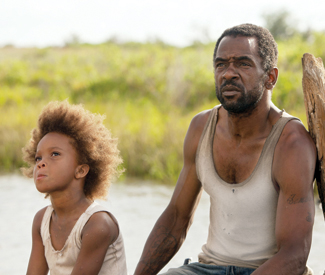
Beasts of the Southern Wild Six months after winning the Grand Jury Prize at Sundance (and a Cannes Camera d’Or), Beasts of the Southern Wild proves capable of enduring a second or third viewing with its originality and strangeness fully intact. Magical realism is a primarily literary device that isn’t attempted very often in U.S. cinema, and succeeds very rarely. But this intersection between Faulkner and fairy tale, a fable about — improbably — Hurricane Katrina, is mysterious and unruly and enchanting. Benh Zeitlin’s film is wildly cinematic from the outset, as voiceover narration from six-year-old Hushpuppy (Quvenzhané Wallis) offers simple commentary on her rather fantastical life. She abides in the Bathtub, an imaginary chunk of bayou country south of New Orleans whose residents live closer to nature, amid the detritus of civilization. Seemingly everything is some alchemical combination of scrap heap, flesh, and soil. But not all is well: when “the storm” floods the land, the holdouts are forced at federal gunpoint to evacuate. With its elements of magic, mythological exodus, and evolutionary biology, Beasts goes way out on a conceptual limb; you could argue it achieves many (if not more) of the same goals Terrence Malick’s 2011 The Tree of Life did at a fraction of that film’s cost and length. (1:31) Bridge, California, Embarcadero, Smith Rafael. (Harvey)

Neil Young Journeys Interested in going back further with Neil Young, back beyond 1969’s Everybody Knows This Is Nowhere? With Neil Young: Heart of Gold (2006) and Neil Young Trunk Show (2009) under his belt, Jonathan Demme has clearly earned the trust of the singer-songwriter, who occasionally likes to flex his multi-hyphenate creative muscles as a director himself, working under the name Bernard Shakey. The music-loving filmmaker tails Young as he drives through his hometown of Omemee, Ontario, shares glimpses of his school, named after his newspaper-man father, his small-town streets, and his home, and then takes it back to the stage and performs at Toronto’s Massey Hall. The stories and sights will interest mostly Young fans — you definitely get a feel for Young’s roots, but the place and its tales won’t jump out dramatically; they merely visualize factoids one can cull from sources like James McDonough’s bio Shakey — but performance dominates this concert film. Playing solo on guitar, harmonica, and in at least one memorable instance, pipe organ (for a hammered-home “After the Gold Rush”), the songs range from the still-moving, sprawling “Ohio” to “Love and War” off 2010’s Le Noise. It’s all love here for the Young diehard, though for an insightful, passionate tour doc, one might look to Shakey’s own CSNY/ Deja Vu (2008) or, for the performer’s finest cinematic performances, to Rust Never Sleeps (1979) and The Last Waltz (1978). (1:27) SF Center, Shattuck. (Chun) *

 

9 ways to say oui to Bastille Day

1

Unless the tech kings and queens need to start watching their backs, there’s no accounting for the voracity San Francisco consumes all things Bastille Day (Sat/14). Why do we celebrate the anniversary of the storming of a French clink so comprehensively, when Canada Day goes all but unnoticed? Perhaps the answers will be clearer after this weekend — movies, concerts, food cart explosions, and more will be taking place now through Sat/14 in honor of the Bay’s most illogically favorite holiday.

Farewell, My Queen 

Landmark Theatres picked an appropriate time to unveil French director Benoit Jacquot’s film Farewell, My Queen. The flick follows the last three days of Marie Antoinette (Diane Kruger) and her reader (Léa Seydoux, the pale beauty from Midnight in Paris) in the chaos just before the French Revolution.

Showing at Embarcadero Center Cinema, 1 Embarcadero Center, SF; Shattuck Cinemas, 2230 Shattuck Ave, Berk.

www.landmarktheatres.com

Pre-Bastille Musicale with Baguette Quartet and GAUCHO

Peacefully ring in this not-so-peaceful holiday with a musical performance in the UC Berkeley Botanical Garden. Local group Baguette Quartette performs tangos, foxtrots, and more tunes endemic to 1920s and ’30s Paris. It’ll be joined by Gaucho, a Euro-New Orleans-inspired jazz group that prides itself on its ability to inspire foot-tapping. 

Thu/12 5:30-7:30pm, $12

University of California Berkeley Botanical Gardens

200 Centennial, Berk. 

(510) 643-2755 

botanicalgarden.berkeley.edu

“From Geek to Chic: French Fashion and Technology”

SF Fashion + Tech has acquired a collection of Bay Area industry notables to speak at their Bastille Day commemoration “French Technique: From Geek to Chic.” Enrich your intellect and your closet with drinks, music, and fashion tech talk. 

Thu/12 5pm-9pm, $15-$25

Temple

540 Howard, SF. 

f1wfrenchtechnique.eventbrite.com

Mugsy’s Pop-Up Wine Bar

El Rio busts out its new socially-conscious wine bar in honor of Bastille Day, where Francophile — or just plain wine-chugging — Missionaries can celebrate French independence with a cuppa and some patio-side sunshine. Just as the French revolutionaries stormed the Bastille on this monumental day, Mugsy proposes to storm your olfactory senses with a velvety wine with hints of licorice, chocolate, and lavender (and, somehow, plum, olive, and pepper), a 2009 Le Clos du Caillou Côtes du Rhône Vieilles Vignes Cuvee Unique. Quite a way to class up your Friday night happy hour. 

Fri/13 5:30-8:30pm

El Rio

3158 Mission, SF.

mugsywinebar.tumblr.com

Off The Grid Au Francais 

Foodies can rejoice in a Off The Grid’s solution to affordable French cuisine. In honor of the holiday, many of the street truck fair’s vendors will be offering special French-inspired items. Regardless of one’s culinary orientation (cupcake, crepe, and bahn mi, or baguette?), French gypsy jazz will accompany this cart food frenzy throughout the evening. 

Fri/13 5pm-9pm, free entry

Fort Mason Center, SF

www.offthegridsf.com

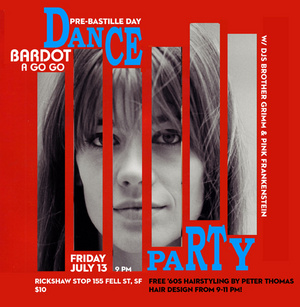
Bardot-A-Go-Go 

Go-go to the Rickshaw’s no-pretension dance floor for this always-fun Bastille Day pre-party. DJs Brothers Grimm and Pink Frankenstein will be providing the tunes to guide the night, and you can count on some Gainsbourg screenins to provide an appropriately-hazy French ambiance. Go-go girls, drinks, videos — even 1960’s hair-styling for only $10. 

Fri/13 9pm-11pm, $10

Rickshaw Stop

155 Fell, SF 

www.rickshawstop.com

Belden Place Block Party 

Celebrating another nation’s independence day has never felt so authentic. Tucked away in a FiDi alleyway, Belden is a focal point for Francophiles in San Francisco due to its tasty restaurants. Bastille Day turns the nook into a communal fete, with music and other festivities to boot. The festival recently ran into some trouble due to “past insanity” — always a good sign — but it’s pledged to  

Sat/14, check restaurant websites for hours

Belden between Pine and Bush, SF.

www.belden-place.com

KZYX Bastille Day benefit

Holler your support of community radio through a mouthful of crawfish etouffee — today Mendocino indie radio station KZYZ is raising funds for its community tunes with a full spread of French Cajun fare. Live tunes from Americana rockabillies Contino and that band’s fave openers Shaky Jake Blues Band featuring Rag Time Rick will be the perfect side dish to heaping bowls of gumbo, jambalaya, and red beans and rice with sweet corn boiled in Tabasco mash for the vegetarians music fans. 

Sat/14 3pm, $10-$15

Mendocino County fairgrounds

Highway 128, Boonville

www.kzyx.org

Le P’tit Laurent 

What is normally a highfalutin French restaurant is also a fabulous fete for those who want to get their dinner, drinks, and dancing all in one. The restaurant will serve its normal menu a la carte, keep its bar open until 2am, and rumor has it DJs and dancing will enter the scene at around 10:30pm.

Sat/14 5:00pm-10:30pm dinner, 10:30pm-2am drinks and dancing, $23

699 Chenery, SF. 

 www.leptitlaurent.net

Check out the Hidden World of Girls

0

The Cabrillo Festival of Contemporary Music is a hip and splashy event, North America’s most important festival of new orchestral music”  (San Jose Mercury News) The Festival turns 50 this summer, and its commitment to orchestral innovation is as fearless as ever, with six world and three west coast premieres and 14 composers-in-residence. Marin Alsop leads the Cabrillo Festival Orchestra, joined by guest artists David Krakauer, klezmer clarinet; Cristina Pato, Galician bagpipes; Kayhan Kalhor, kemancheh; and Michael Ward-Bergeman, hyper-accordion. July 28 through August 12 will be filled with concerts, forums, and open rehearsals in Santa Cruz. August 4 and 5 includes the Church Street Fair, a two-day celebration of Santa Cruz’ vibrant arts scene. The season will open on July 28 with Hidden World of Girls: Stories for Orchestra, a groundbreaking multimedia collaboration with NPR’s Kitchen Sisters, five female composers, and media design by renowned Obscura Digital.

For more information, tickets, and a full list of events going on this summer click here

Saturday, July 28 – Sunday, July 29 @ Santa Cruz Civic Auditorium, 307 Church Street, Santa Cruz | $32

Delta delight

1

arts@sfbg.com

FILM In the annual hothouse atmosphere of Sundance, even mediocre or bad new American narrative features are cocooned in an atmosphere of self-congratulation — at least until the reviews come out a few hours later. Movies that are actually pretty good invariably become “great” for the duration of the festival; with everyone searching for something to hyperventilate about, one need only light a birthday candle to set off a roman candle of hyperbole. Most of these movies come out a few months, waving their festival awards, only to look significantly diminished in the sober light of day (and decreased altitude). Suddenly they’re, well, just pretty good.

With the occasional exception, of course. Six months after winning the Grand Jury Prize at Sundance (and a Cannes Camera d’Or), Beasts of the Southern Wild proves capable of enduring a second or third viewing with its originality and strangeness fully intact. Magical realism is a primarily literary device that isn’t attempted very often in U.S. cinema, and succeeds very rarely. But this intersection between Faulkner and fairy tale, a fable about — improbably — Hurricane Katrina, is mysterious and unruly and enchanting, an imaginative leap of unusual ambition and accomplishment for a first feature.

Ostensibly based on a stage play — co-scenarist Lucy Alibar’s Juicy and Delicious, said to be a bluegrass musical — Benh Zeitlin’s film is wildly cinematic from the outset, as voiceover narration from six-year-old Hushpuppy (Quvenzhané Wallis) offers simple commentary on her rather fantastical life. She abides in the Bathtub, an imaginary chunk of bayou country south of New Orleans whose residents live closer to nature, amid the detritus of civilization. Seemingly everything is some alchemical combination of scrap heap, flesh, and soil. What might look like an unhygienic, frightening, child-abusive nightmare to any Social Services authority is to Hushpuppy a constant playground, and to her elders a sort of pagan-libertarian utopia.

http://www.youtube.com/watch?v=Wqt5m0OBkjE

Before the story has gotten properly started there’s a community celebration with fireworks, music, guns fired into the air, babies crawling everywhere — a celebration of nothing in particular, at least that we can tell. But as our heroine says, “The Bathtub has more holidays than the rest of the world.” It is clear that, for that and many other reasons, its citizens have no use for the rest of the world.

She lives with her father Wink (Dwight Henry) — albeit in separate ramshackle trailers on stilts — a fierce, erratic man with unknown demons who’s seldom outright unkind but acts less like a father than an Outward Bound coach, teaching his charge the tools to survive on her own. (In addition to slopping the livestock and pets, she can already make dinner for herself, lighting the stove with a blowtorch.) But one day he disappears, leaving Hushpuppy without human company beyond the memory of a long-absent mother she nonetheless frequently talks to. When Wink returns, it’s in a hospital gown and bracelet; whatever happened, he doesn’t want to discuss it.

Soon they have bigger things to worry about, anyway, as “the storm” is coming — prompting all but a few stubborn holdouts (well-fortified by alcohol) to evacuate the Bathtub. Wink and child aren’t going anywhere, waiting it out instead in a shack then floating to safety in their boat (a decapitated truck bed).

The area is fully flooded, however, and an illegal breach of a remaining levee drains it but can’t repair the devastation wrought on plants, animals, and homes. The holdouts are forced at federal gunpoint to evacuate at last, sequestered in a relief shelter-hospital whose sterility and order is as alien to them as the surface of Mars. Worse, this exile hastens the serious illness Wink was able to keep (mostly) at bay in the Bathtub — as the wary say, hospitals are where sick people go to die.

With its elements of magic (or at least the illustration of a child’s belief in such), mythological exodus, and evolutionary biology — Gina Montana’s Amazonian schoolmarm Miss Bathsheeba defines her eat-or-be-eaten perspective with “Everything is part of the buffet of the universe” — Beasts goes way out on a conceptual limb. Particularly for a low-budget movie with non-professional actors; you could argue it achieves many (if not more) of the same goals Terrence Malick’s 2011 The Tree of Life did at a fraction of that film’s cost and length. Its messiness is an organic virtue, with grainy imagery whose hand-held spastic camerawork (by Ben Richardson) is for once much more than a trendy stylistic choice; the instability feels in synch with Hushpuppy’s world, in vibrates with the slightest clue provided by glance, weather, or instinct.

The frenetic yet amorphous atmosphere might on a first viewing make you question whether there’s really much story beneath the busy aesthetic surface, but in fact for all its freely digressive air Beasts is pretty tightly constructed. (Nonetheless, you can imagine the editors scratching their heads initially over how this footage might possibly cut together, unless they were in on the project from the start.) Adding to that spectral, hyperreal effect is a score by Dan Zomer and Zeitlin that combines keening or plucked strings with the ethereal chime of a glockenspiel, at times sounding like a Sufjan Stevens instrumental.

There are moments of real enchantment, like an all-girls’ side trip to a floating bordello whose bosomy ladies surrender to their maternal instincts, or the recurrent glimpses that see Hushpuppy’s hog gradually morph into a thundering pack of tusked, primeval wild boars. (Toward the end especially, this latter effect underlines the notion that the film’s closest recent antecedent is Spike Jonze’s 2009 Where the Wind Things Are, another child’s feral fantasy.)

Through it all the pint-sized Wallis (who was just five when she was chosen from some 4000 auditioning kids) strides with astonishing alertness and confidence, a vulnerable minor one minute, as regally self-possessed as Pam Grier in Coffy (1973) the next.

It would almost be a shame if she did anything else — this performance would be best preserved as a mysterious lone bolt from the blue, just as the movie itself seems to capture unrepeatable lightning in a bottle.


BEASTS OF THE SOUTHERN WILD opens Fri/6 in San Francisco.

Rep Clock

0

Schedules are for Wed/4-Tue/10 except where noted. Director and year are given when available. Double and triple features marked with a •. All times pm unless otherwise specified.

CASTRO 429 Castro, SF; (415) 621-6120, www.castrotheatre.com. $8.50-11. Grease (Kleiser, 1978), Thu, 5, 7. Presented sing-along style; this event, $10-15. “Midnites for Maniacs: BFFs Triple Bill:” •Clueless (Heckerling, 1995), Fri, 7:30; Mean Girls (Waters, 2004), Fri, 9:45; Heavenly Creatures (Jackson, 1994), Fri, 11:45. This event, one or all three films for $13. “Scary Cow Short Film Festival,” Sat, 3. More info at www.scarycow.com. •The Muppet Movie (Frawley, 1979), Sun, noon, 3:15, 7, and Phantom of the Paradise (De Palma, 1974), Sun, 5:05, 8:50.

CHRISTOPHER B. SMITH RAFAEL FILM CENTER 1118 Fourth St, San Rafael; (415) 454-1222, www.cafilm.org. $6.75-$10.25. Bel Ami (Donnellan and Ormerod, 2012), call for dates and times. Bernie (Linklater, 2012), call for dates and times. Oslo, August 31st (Trier, 2011), call for dates and times. Peace, Love and Misunderstanding (Beresford, 2011), call for dates and times. Pink Ribbons, Inc. (Pool, 2011), call for dates and times. Take This Waltz (Polley, 2011), July 6-12, call for times.

PACIFIC FILM ARCHIVE 2575 Bancroft, Berk; (510) 642-5249, bampfa.berkeley.edu. $5.50-9.50. “Bellissima: Leading Ladies of the Italian Screen:” Le Amiche (Antonioni, 1955), Fri, 7; La strada (Fellini, 1954), Sat, 8:30. “A Theater Near You:” Weekend (Godard, 1967), Fri, 9:05; Gerhard Richter Painting (Belz, 2011), Sat, 6:30; This Is Not a Film (Mirtahmasb and Panahi, 2011), Sun, 5:15. “Always for Pleasure: The Films of Les Blank:” Always for Pleasure (Blank, 1978) with “Dry Wood” (Blank and Gosling, 1973) and “Running Around Like a Chicken With Its Head Cut Off” (Blank, Blank, and Van Deusen, 1960), Sun, 7.

ROXIE 3117 and 3125 16th St, SF; (415) 863-1087, www.roxie.com. $6.50-10. Beyond the Black Rainbow (Cosmatos, 2011), Wed-Thu, 7:15. 9:30. The Connection (Clarke, 1962), Wed-Thu, 7, 9:15. “Kung Fu Double Feature:” •Five Element Ninjas (a.k.a. Chinese Super Ninjas) (Chang, 1982), Fri, 7:30, and The Mystery of Chess Boxing (Kuo, 1979), Fri, 9:30. “Au Revoir Béla Tarr:” The Man From London (Tarr and Hranitzky, 2007), July 7-11, 6:30 (also Sat-Sun, 1); The Turin Horse (Tarr and Hranitzky, 2011), July 7-11, 9:15 (also Sat-Sun, 3:45).

SF FILM SOCIETY CINEMA 1746 Post, SF. $10-11. The Story of Film: An Odyssey, Part Six: The Arrival of Multiplexes and Asian Mainstream (1970s); Fight the Power: Protest in Films (1980s), (Cousins, 2011), Sat, noon. British TV series; new episodes weekly through July 21. Corpo Celeste (Rohrwacher, 2011), Wed-Thu, 2:30, 4:30, 6:30. Marina Abramovic: The Artist is Present (Akers, 2011), July 6-12, 2:45, 5, 7:15, 9:30.

SF STATE UNIVERSITY Coppola Theatre, 1600 Holloway, SF; www.legacyfilmfestivalonaging.org. $12. “Legacy Film Festival on Aging,” co-presented by the Osher Lifelong Learning Institute, Fri-Sun.

YERBA BUENA CENTER FOR THE ARTS 701 Mission, SF; (415) 978-2787, www.ybca.org. $6-8. “Documentaries By Ai Weiwei:” Fairytale (2008), Sun, 2.

Stage Listings

0

Stage listings are compiled by Guardian staff. Performance times may change; call venues to confirm. Reviewers are Robert Avila, Rita Felciano, and Nicole Gluckstern. Submit items for the listings at listings@sfbg.com. For further information on how to submit items for the listings, see Picks.

THEATER

OPENING

Duck Lake The Jewish Theater, 470 Florida, SF; www.duck-lake.com. $17-35. Opens Fri/6, 8pm. Runs Fri-Sat, 8pm. Through July 28. PianoFight’s resident sketch comedy group, Mission CTRL, performs its new "ballet-horror-comedy."

For the Greater Good, Or The Last Election This week: Dolores Park, 18th St at Dolores, SF; www.sfmt.org. Free (donations accepted). Opens Wed/4, 2pm. Runs Sat/7-Sun/8, 2pm. Various venues through Sept. 8. SF Mime Troupe launches its annual political musical (this year’s theme: one percenters behaving badly); the show travels around NorCal parks and other venues throughout the summer.

BAY AREA

King John Forest Meadows Amphitheater, 890 Belle, Dominican University of California, San Rafael; www.marinshakespeare.org. $20-35. Previews Fri/6-Sun/8, 8pm. Opens July 13, 8pm. Runs July 15, 21, 27, 29, Aug 4, 10-12, 8pm; July 22 and Aug 5, 4pm. Marin Shakespeare Company kicks off its 2012 outdoor summer festival season with this history play.

ONGOING

Absolutely San Francisco Alcove Theater, 414 Mason, Ste 502, SF; www.thealcovetheater.com. $32-50. Thu-Sat, 8pm (no show Fri/6). Through Aug 18. A multi-character solo show about the characters of San Francisco.

5 Lesbians Eating a Quiche Phoenix Theatre, 414 Mason, SF; www.tidestheatre.org. $20-38. Thu-Sat, 8pm (also Sat, 10pm). Through July 21. Tides Theatre performs Evan Linder and Andrew Hobgood’s comedy about five women forced into a bomb shelter during a mid-breakfast nuke attack.

Fwd: Life Gone Viral Marsh San Francisco, 1062 Valencia, SF; (415) 282-3055, www.themarsh.org. $20-50. Sat, 8:30pm; Sun, 7pm (July 15, show at 7:30pm). Extended through July 22. The internet becomes comic fodder for creator-performers Charlie Varon and Jeri Lynn Cohen, and creator-director David Ford.

Hedwig and the Angry Inch Boxcar Playhouse, 505 Natoma, SF; www.boxcartheatre.org. $25. Wed/4-Thu/5, 8pm; Fri/6-Sat/7, 7 and 9:30pm; Sun/8, 5pm. Boxcar Theatre performs John Cameron Mitchell’s musical about a transgendered glam rocker.

Jip: His Story Marsh San Francisco, MainStage, 1062 Valencia, SF; www.themarsh.org. $8-50. Thu-Fri, 7:30pm; Sat, 2pm; Sun, 3pm. Through July 15. Marsh Youth Theater remounts its 2005 musical production of Katherine Paterson’s historical novel.

The Magic Flute War Memorial Opera House, 301 Van Ness, SF; www.sfopera.com. $31-340. Fri/6, 8pm; Sun/8, 2pm. San Francisco Opera adds some unexpected vitality to its new star-studded production of one of the world’s most popular operas, Mozart’s whimsical but philosophical tale of a romance and (Mason-inspired) spiritual evolution. Prince Tamino (poised tenor Alek Shrader) and sidekick Papageno (fine baritone Nathan Gunn in a blithe comedic performance) are on a quest to rescue from sorcerer Sarastro (imposing bass Kristinn Sigmundsson) the lovely Pamina (appealing soprano Heidi Stober), daughter of the Queen of the Night (the rousingly virtuosic Russian soprano Albina Shagimuratova). The battle royal between the Queen and Sarastro is one between darkness and light, but the emphasis of this joyful production is rightly on the latter, even as Tamino and Papageno’s journey takes them through the ritual rite of passage in Sarastro’s order, the Temple of Light. Visual artist Jun Kaneko (responsible for the giant ceramic heads on view outside the War Memorial Opera House until November) marshals a brightly extensive color palette and some state-of-the-art 3D software to create a mise-en-scène out of parallel planes of patterned line and color. These enveloping and fascinating geometric flights of fancy — animated by a drawn, human touch and organic trickles and blushes of color throughout — come complimented by wildly playful costumes, including a host of wonderfully oddball brightly painted birds, that make for some pleasantly cackling entrances. David Gockley’s English-language translation of the libretto, meanwhile, adds a zesty colloquial freshness whose tinge of irony contributes to an intellectual roominess that matches the aesthetic one, both together offering some necessary reflective space to the contemporary audience vis-à-vis the certainties of this Enlightenment fairytale. (Avila)

Proof NOHspace, 2840 Mariposa, SF; www.proofsf.com. Wed-Sat, 8pm. Through July 14. $28. Expression Productions performs David Auburn’s Pulitzer-winning play about a mathematician and his daughter.

"Risk Is This…The Cutting Ball New Experimental Plays Festival" Exit on Taylor, 277 Taylor, SF; (415) 525-1205, www.cuttingball.com. Free ($20 donation for reserved seating; $50 donation for five-play reserved seating pass). Fri-Sat, 8pm. Through July 14. Cutting Ball’s annual fest of experimental plays features two new works and five new translations in staged readings.

The Scottsboro Boys American Conservatory Theater, 415 Geary, SF; www.act-sf.org. $20-95. Tue-Sat, 8pm (also Wed and Sat, 2pm; no matinee Wed/4); Sun/8, 7pm. Extended through July 22. American Conservatory Theater presents the Kander and Ebb musical about nine African American men falsely accused of a crime they didn’t commit in the pre-civil rights movement South.

Vital Signs Marsh San Francisco, 1062 Valencia, SF; (415) 282-3055, www.themarsh.org. $15-50. Sat, 8:30pm. Through July 21. The Marsh San Francisco presents Alison Whittaker’s behind-the-scenes look at nursing in America.

Waiting… Larkspur Hotel Union Square, 525 Sutter, SF; www.brownpapertickets.com. $69-75. Thu-Sat, 8pm; Sun, 2pm. Through Aug 5. Comedy set behind the scenes at a San Francisco restaurant.

The Waiting Period MainStage, Marsh San Francisco, 1062 Valencia, SF; (415) 282-3055, www.themarsh.org. $15-50. Fri, 8pm; Sat, 5pm. Extended through August 4. Brian Copeland (comedian, TV and radio personality, and creator-performer of the long-running solo play Not a Genuine Black Man) returns to the Marsh with a new solo, this one based on more recent and messier events in Copeland’s life. The play concerns an episode of severe depression in which he considered suicide, going so far as to purchase a handgun — the title coming from the legally mandatory 10-day period between purchasing and picking up the weapon, which leaves time for reflections and circumstances that ultimately prevent Copeland from pulling the trigger. A grim subject, but Copeland (with co-developer and director David Ford) ensures there’s plenty of humor as well as frank sentiment along the way. The actor peoples the opening scene in the gun store with a comically if somewhat stereotypically rugged representative of the Second Amendment, for instance, as well as an equally familiar "doood" dude at the service counter. Afterward, we follow Copeland, a just barely coping dad, home to the house recently abandoned by his wife, and through the ordinary routines that become unbearable to the clinically depressed. Copeland also recreates interviews he’s made with other survivors of suicidal depression. Telling someone about such things is vital to preventing their worst outcomes, says Copeland, and telling his own story is meant to encourage others. It’s a worthy aim but only a fitfully engaging piece, since as drama it remains thin, standing at perhaps too respectful a distance from the convoluted torment and alienation at its center. (Avila)

BAY AREA

Emotional Creature Berkeley Repertory Theatre, Roda Theatre, 2025 Addison, Berk; www.berkeleyrep.org. $14.50-73. Tue and Thu-Sat, 8pm (also Sat, 2pm; no show July 13); Wed, 7pm (no show Wed/4); Sun, 2 and 7pm. Through July 15. It’s not easy being a girl, and Eve Ensler’s newest play Emotional Creature leaves no scenario unexplored: from high school shaming rituals to ritual clitorectomies. If that sounds like a jarring juxtaposition, you’d be right. It’s difficult theatrically to transition seamlessly from a deeply affecting monologue about being a teenage sex slave in the Democratic Republic of Congo to a cute song about wearing miniskirts, and it’s equally difficult for the audience to change emotional gears rapidly enough to be able to adequately absorb the impact of each individual segment. Instead, the play comes off as an earnest but awkward Girl Scout Jamboree variety show — attempting to address as wide a variety of social ills as possible (from teen suicide to industrial pollution) — despite the strong and savvy acting chops of the six performers. In contrast to Ensler’s most popular work, The Vagina Monologues, which effectively "humanized" a part of the body by giving it something highly personal to say, Emotional Creature weirdly depersonalizes its girls by putting lines in their mouths ("I’m not the life you never lived") that clearly come from an adult perspective. And as for those girls who don’t particularly identify as "emotional creatures" at all? For them, there are no words. (Gluckstern)

The Kipling Hotel: True Misadventures of the Electric Pink ’80s New venue: Marsh Berkeley, 2120 Allston, Berk; (415) 282-3055, www.themarsh.org. $20-50. Sat, 8:30pm; Sun, 7pm. Extended through July 15. This new autobiographical solo show by Don Reed, writer-performer of the fine and long-running East 14th, is another slice of the artist’s journey from 1970s Oakland ghetto to comedy-circuit respectability — here via a partial debate-scholarship to UCLA. The titular Los Angeles residency hotel was where Reed lived and worked for a time in the 1980s while attending university. It’s also a rich mine of memory and material for this physically protean and charismatic comic actor, who sails through two acts of often hilarious, sometimes touching vignettes loosely structured around his time on the hotel’s young wait staff, which catered to the needs of elderly patrons who might need conversation as much as breakfast. On opening night, the episodic narrative seemed to pass through several endings before settling on one whose tidy moral was delivered with too heavy a hand, but if the piece runs a little long, it’s only the last 20 minutes that noticeably meanders. And even with some awkward bumps along the way, it’s never a dull thing watching Reed work. (Avila)

Salomania Aurora Theatre, 2081 Addison, Berk; www.auroratheatre.org. $30-55. Tue, 7pm; Wed-Sat, 8pm; Sun, 2 and 7pm. Through July 22. The libel trial of a politically opportunistic newspaper publisher (Mark Andrew Phillips) and the private life of a famous dancer of the London stage — San Franciscan Maud Allan (a striking Madeline H.D. Brown) — become the scandalous headline-grabber of the day, as World War I rages on in some forgotten external world. In Aurora’s impressive world premiere by playwright-director Mark Jackson, the real-life story of Allan, celebrated for her risqué interpretation of Oscar Wilde’s Salomé, soon gets conflated with the infamous trial (20 years earlier) of Wilde himself (a shrewdly understated Kevin Clarke). But is this case just a media-stoked distraction, or is there a deeper connection between the disciplining of "sexual deviance" and the ordered disorder of the nation state? Jackson’s sharp if sprawling ensemble-driven exploration brings up plenty of tantalizing suggestions, while reveling in the complexly intermingling themes of sex, nationalism, militarism, women’s rights, and the webs spun by media and politics. A group of trench-bound soldiers (the admirable ensemble of Clarke, Alex Moggridge, Anthony Nemirovsky, Phillips, Marilee Talkington, and Liam Vincent) provide one comedy-lined avenue into a system whose own excesses are manifest in the insane carnage of war — yet an insanity only possible in a world policed by illusions, distractions and the fear of unsettled and unsettling "deviants" of all kinds. In its cracked-mirror portraiture of an era, the play echoes a social and political turmoil that has never really subsided. (Avila)

PERFORMANCE/DANCE

"Channels: An Evening of Cross-Disciplinary Performance" Shotwell Studios, 3252-A 19th St, SF; www.ftloose.org. Fri/6-Sun/7, 8pm. $10-20. Dancers Daria Kaufman, Bianca Brzezinski, and musician-composer Richard Warp perform Arti Ulate, a dance-theater piece; Brzezinski also performs a solo, Non-self.

"Comedy Bodega" Esta Noche Nightclub, 3079 16th St, SF; www.comedybodega.com. Thu/5, 8pm. Free (one drink minimum). Weekly free stand-up show. This week: Yayne Abeba, David Hawkins, Anna Seregina, Veronica Porras, Baruch P. Hernandez, and George Chen.

"Comedy Returns to El Rio" El Rio, 3158 Mission, SF; www.brownpapertickets.com. Mon/9, 8pm. $7-20. With Joe Klocek, Josh Healey, Regina Stoops, Johan Miranda, Shanti Charan, and Lisa Geduldig.

"Elect to Laugh" Studio Theater, Marsh San Francisco, 1062 Valencia, SF; (415) 282-3055, www.themarsh.org. Tue, 8pm. Through Nov 6. $15-50. Will Durst and friends perform in this weekly political humor show that focuses on the upcoming presidential election.

"The Eric Andre Show" Rickshaw Stop, 155 Fell, SF; www.rickshawstop.com. Mon/9, 8pm. $10. Adult Swim-spawned, SF Sketchfest-presented faux-cable access variety show with musical guests and "real and fake celebrity appearances," hosted by actor Eric André.

"The Fag Hag Comedy Show" Deco Lounge, 510 Larkin, SF; www.brownpapertickets.com. Sun/8, 8pm. $10. Charlie Ballard hosts this stand-up comedy extravaganza, with headliner Glamis Rory and more.

"A Funny Night for Comedy" Actors Theatre of San Francisco, 855 Bush, SF; www.natashamuse.com. Sun/8, 7pm. $10. Natasha Muse and Ryan Cronin host stand-up comedians, including headliner Jason Wheeler, at their monthly talk show.

"Jillarious Tuesdays" Tommy T’s Showroom, 1000 Van Ness, SF; www.jillarious.com. Tue, 7:30. Ongoing. $20. Weekly comedy show with Jill Bourque, Kevin Camia, Justin Lucas, and special guests.

Carolina Lugo and Carolé Acuña’s Café Flamenco Peña Pachamama, 1630 Powell, SF; www.carolinalugo.com. Sun/8, 6:15pm. $15-19. Mother-daughter flamenco dance and music company.

"Majestic Musical Review Featuring Her Rebel Highness" Harlot, 46 Minna, SF; www.herrebelhighness.com. Sun, 5pm. Through Aug 12. $25-65. Cocktails and hors d’oeuvres, performers in Baroque-chic gowns, music, and more.

"Schwabacher Summer Concert" Herbst Theatre, 401 Van Ness, SF; www.sfopera.com. Thu/5, 7:30pm. $25-40. The young talent of the Merola Opera Program performs scenes from works by Bizet, Stravinsky, and more.

Generations confer over La Peña’s second skin

3

I’m sitting in on a meeting between two generations of muralists. In name, our encounter was designed as an interview about La Peña Cultural Center’s plans to redo its decades-old facade, a historic piece that right now is a 3-D tableau named “Song of Unity” and meant to represent the people of North and South America coming together in art.

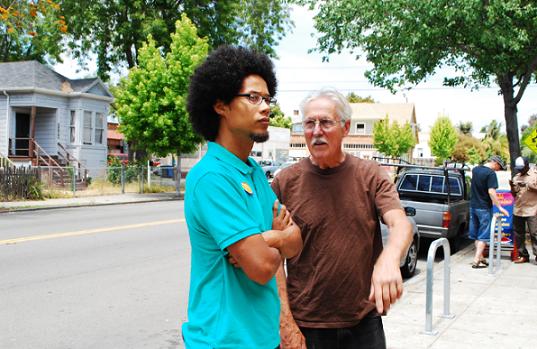
But it has become clear to me the interviewer that’s it’s way more momentous to let these groups talk largely unimpeded by my questions. Two people who created the mural in 1978 are speaking with two people who will design its rebirth in 2012 about changes in the world of street art over the last 34 years. It’s the first time the four have met together. Assasinated Chilean artist-activist Victor Jara‘s detached hands strum a guitar in silent soundtrack over us as we sit on folding chairs in front of the mural in question. 

In contrast to his “Song of Unity’s” figurative style, “graffiti is an abstract art,” says Osha Neumann.

Neumann was able to pay his original mural crew largely with funds from government-sponsored community arts program meant to train and employ creative types. La Peña’s wasn’t the only piece the group worked on — they also masterminded the piece on Berkeley’s Amoeba Music and a large wall at People’s Park. Their work was inspired, he says, by the school of Mexican muralists that included Diego Rivera, José Orozco — the masters that gave birth to the last mural renaissance in the United States. 

Osha Neumann, Cece Carpio, and O’Brien Thiele — two generations of La Peña artists. All Guardian photos by Caitlin Donohue

“Song of Unity” was meant to illustrate the coming-together of two continents through activist culture, at a time with US interventionism in Latin America was reaching a fevered pitch of corruption and when Bay Areans and Latin American refugees were coming together to form La Peña. It was a heavy moment. Jara’s hands, by way of illustration, are portrayed severed from his body for a reason. After the 1973 Chilean coup, they were said to have been cut from his body by military junta.

“Graffiti has no connection at all to the work of the Mexican muralists,” Neumann continues in response to my question about how street art has changed since his time.

“Graffiti artists don’t usually work collectively,” adds O’Brien Thiele, Neumann’s co-artist.

But here, Robert Trujillo must step in. Trujillo is a member of the Trust Your Struggle collective, the team of California-bred young people that have been elected to take up this historic mantle.

“But there are graffiti crews that are really well-established,” he interjects gently. “CPS from Los Angeles. TKO and MSK have crews worldwide. These are the groups that pioneered graffiti art on the West Coast.”

Trujillo should know — in a time in which street art has come into vogue and become a big-money game, TYS is a sterling example of what is still great about the genre. TYS travels the world connecting with communities in parts of the developing world like Latin America and the Phillipines. It uses graffiti-inspired murals to illustrate social problems, solutions. The center already bears the group’s mark — its superlative Cafe Valparaiso, which serves Chilean food at lunch and dinner, is adorned with a striking mural done by TYS members.


“When you’re in school, writing on the walls — that’s the thing they tell you not to do,” Trujillo tells us, by way of explaining the power of graffiti. “You don’t have a voice. With graffiti, suddenly you have a voice. People have to realize that it exists because of society.” He pauses, then hits upon an eloquent sum-up. “Graffiti is the perfect answer to society.”

“This is a really huge project for us,” says TYS member Cece Carpio. Carpio is La Peña’s program manager, one of many ties the local group has to the center. “This is a place of gathering. [With the new mural] we want to honor the history of Latin American activism here, but also the diversity that the place has now.”

This comes to the heart of why La Peña wants a new mural. Certainly, “Song of Unity” is in bad shape. It is crumbling at the junctures of its panels. Water is seeping in through the cracks, a death sentence for its three-dimensional figures. 

“Song of Unity” today

But perhaps even more importantly, the re-envisioning of the center’s facade will represent something rather extraordinary — that a radical institution that has been relevant in this community for decades has found itself in the hands of a new, dedicated generation.

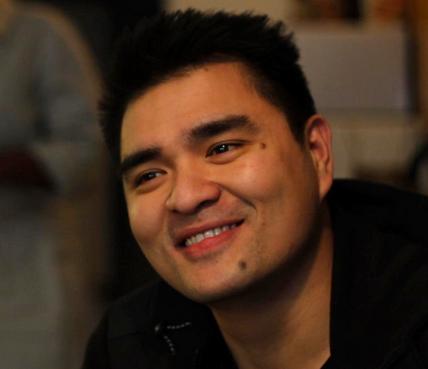
La Peña’s programming has continued to diversify. Upcoming events include July 13’s Asian Rock Fest and this year has seen the fifth year of Queendom, DJ Zita’s all-female celebration of the five elements of hip-hop — not to mention the Immigrant Voices Festival that brought openly undocumented journalist Jose Antonio Vargas to the center last week. The Immigrant Voices Festival is a project explicitly sponsored by this “second generation” group — referred to as LP2G by the center. 

“I was sorry when they said they wanted to take [“Song of Unity”] down,” Neumann admits to the group that is assembled that sunny Sunday afternoon. “But they said they wanted new blood. What could I say to that?”

What indeed? Because if there is one good reason to donate to La Peña’s campaign to step, facade-first, into the new generation of activism — and you can! The last day to contribute to its Indie Gogo campaign is today, Mon/2 — it is to celebrate that a radical institution started in the fire of the ’70s has successfully found relevance today among the Internet generation. 

So what is TYS going to paint on this wall? Will it be three-dimensional, like Jara’s memorialized fingers and guitar? The final design won’t be determined until the collective’s done more meetings like this with the community members of La Peña. But you can rest easy on one point. Says Trujillo: “We all know it’s going to be fresh though.”

A queerness in Harlem, finely revived

0

Visual alchemy, fabulous feminist story-telling, and something deemed “hyper-literate busking” abound at 2012’s Queer Rebels of the Harlem Renaissance fesitval, three nights of art and performance (Thu/28-Sat/30) by 21 LGBTQ African Americans.

Part of the 15th National Queer Arts Festival, Queer Rebels of the Harlem Renaissance continues the legacy of the droves of artists, performers, and activists who questioned stale societal standards in a myriad ways during the heyday of the New York City neighborhood’s 1920s and 30s creative blossoming: from sensual lyrics of Bessie Smith to the pointed poetics of Langston Hughes, the artists of the Harlem Renaissance continue to testify to the assertion that social causes are rarely separate and constantly progressing.

“The explosion of artistic, intellectual, and sexual freedom during the Harlem Renaissance created new possibilities,” explains Celeste Chan over the phone. She co-directs the performance series with Kali Boyce — together they’re known as the Queer Rebels. “We think that dialogue on race, gender, and sexuality grew naturally during the Harlem Renaissance because these were people’s real experiences, and what they wanted to create art about. We’re thankful for the elders and the artists who paved the way for us, whose shoulders we stand on.”

Queer Rebels of the Harlem Renaissance reinforces the idea that it is necessary to understand a past in order to create a future. Thus, paying proper homage to the Harlem Renaissance artists who opened the possibility for social change and activist dialogue, the performance schedule for Queer Rebels consists largely of dance, story-telling and readings, and music. Earl Thomas, Sista Monica, and “Drag King of the Blues” TuffNStuff operate within the jazz and blues traditions — however, the show also expands to mediums of artistic expression not so common in 1920’s America, such as political film,  contemporary music, and visual alchemy with appearances from the likes of short-filmmaker Crystal Mason, punk rock dancer Brontez Purnell, and visual artist Adee Roberson. 
(Check out the incredible-sounding lineup here.)

“Artists and queers are up against a lot, and have always been society’s outsiders, the ones who have and will lead the way,” says Chan, “Today, we are able to live unapologetically queer lives and create our own spaces because of the work that the Harlem Renaissance artists did.”

QUEER REBELS OF THE HARLEM RENAISSANCE

Thu/28.-Sat/30, 8pm, $15-$25

African American Art and Culture Complex

762 Fulton, SF.

www.queerrebels.com

Tickets:  www.brownpapertickets.com/event/246312


The economies of desire

0

THEATER Since 2010, This Is What I Want has hitched its program to the National Queer Arts Festival to explore the artistic and social ground between intimacy and performance. Privileging the immediate, even confused elaborations of desire over the canny or slickly theorized, TIWIW (produced by THEOFFCENTER in association with SOMArts, the Center for Sex and Culture, and the Queer Cultural Center) challenges adept, professional performance makers to risk forgoing the usual control or cohesion in the hope of finding new avenues for creation and participation.

TIWIW’s free-ranging curatorial approach, which includes artists operating outside queer or identity-based practices, gets a further boost this year with the inclusion of several Los Angeles–based artists and a symposium at the Center for Sex and Culture moderated by Carol Queen.

San Francisco–based performance artist and choreographer Tessa Wills took over as artistic director this year at the invitation of TIWIW’s founder, choreographer Jesse Hewit. Wills’s own piece caps the five-day program with a “participatory experience” at the Center for Sex and Culture, and in general she brings a particular stamp to this year’s festival, even as TIWIW stretches out within and beyond the Bay Area via a curatorial team that includes Hewit, Rachael Dichter, and Los Angeles–based artists Anna Martine Whitehead and Doran George.

Wills, a thirtysomething whose relaxed mien belies a probing stare, is an internationally produced performance maker who grew up studying music, ballet, and contemporary dance in England before relocating to the Bay Area. She’s one of those artists always worth going out of your way for. In fact, she was behind one of the more memorable contributions to last year’s TIWIW program (more on that below). Wearing a sleeveless T-shirt that nonchalantly compliments the shorn sides of her sandy brown bob, Wills sat down at a Mission café last week to discuss her directorial vision for TIWIW and the economies of desire.

San Francisco Bay Guardian Can you describe briefly the curatorial process this year?

Tessa Wills We asked people to apply, either people whose work we like or with a specific piece in mind, like Sara Kraft’s — Rachael [Dichter] knew exactly what the piece was. [Multimedia artist Sara Kraft’s The Truth employs a pair of dueling narratives in what the artist describes as a desperate search for objectivity, “fueled by the deeply subjective madness of desire, loss and the chaos of experience.” It premiered at Yerba Buena Center for the Arts in 2007.]

I had the curatorial statement underway, and the other curators added to it, enriched it or changed parts, and we invited people from there. About half of them are new commissions from people we are just excited by, like Dia [Dear] and Mica [Sigourney], and half of them are pieces that already exist. There are loads of people coming up from LA this time because two of the curators are down there.

SFBG One of those is British artist Doran George. How did he become involved?

TW I followed his work in England but never met him. Then he came to San Francisco, and we made very fast, intense connections around work and politics, and also a friendship. So we were looking for a way to work with each other.

When Jesse asked me to direct TIWIW and invite in curators, it seemed like that was really where Doran was at. A lot of his work is about somatics as it relates to gender. Because he was [in Los Angeles], it seemed sensible to think about other people that could support him and his choices down there. Anna Martine [Whitehead] is also down there working, and obviously she has this strong history with the festival, and her voice is clear, rich and powerful.

SFBG Can you explain the emphasis on desire and economy in your work and in your directorial approach overall?

TW Broadly, people in this festival [in the last two years] have looked at desire through the lens of sexuality — but they also have not. My artistic direction has put it very specifically; I really wanted to bring in that question of how money and desire weave together, and where the places of empowerment and disempowerment are around that. I’ve brought sex work to the fore in that. Doran also is interested in that. But we were very careful in the curating to broaden that out a lot. The pieces are not all about sex; but the pieces are all about desire. So there is breadth, but also that very specific thing that I’ve brought in.

In my piece, at Center for Sex and Culture on Saturday, there are nine people who are “charging,” they’re doing one-on-one performances with audiences. Basically, they’re facilitating you talking about your desire. But it’s not like straight sex work. It’s not like they’re going to meet your desire. They’re going to interrogate it with you and charge it up.

SFBG So “charge up” has a double entendre.

TW It’s got a double entendre, exactly. All of the chargers are sex workers. I identify as a sex-worker ally, and I identify in the space between performance and sex work. Those are my two communities. So this theme, the value of desire, somehow has those two together.

SFBG Where do you see subversive or radical points of departure in the intersections of desire and economy? 

TW People will take money and then use it for their subversive practices. So there’s that. Then there’s the fact that everybody is working for free to put this festival on. I think that adds a really interesting perspective to the conversation about how desire and money relate. Because the thing that’s really driven this festival is this passionate desire to put it on for its own sake. It defies any economic logic that any of us are working this hard. I mean, it’s ridiculous. I feel stupid how hard I’m working on this.

SFBG That’s the position of a lot of art-making in this society. But then, ridiculousness is a tried-and-true strategy of subversion too. I’m reminded of the argument in Judith Halberstam’s book, The Queer Art of Failure, where a willingness to “fail” — in the terms set by the dominant social and economic order — may offer a way out from under that order, and suggest alternatives beyond its reach or ken.

TW There are all these other economies that come to light when you look at that disconnect or failure [vis-à-vis the dominant economic model]—then it’s like, ok, that’s obviously not working, so what else can be motivating? There are just so many diverse economies at work. Like DavEnds piece, for example. She was really motivated by wanting to have close, intimate exchanges and make more friends. The people she’s brought into her piece, she’s very clear about it, are people that she wants to be friends with.

SFBG There’s a social impulse mixed in there. I also like the idea that desire could be tied to giving away or losing, as opposed to taking, receiving, gaining or possessing. Does that resonate with some of the pieces this year? 

TW Yes, I think that’s right. Mica Sigourney’s piece is one that I was very keen to curate. He’s the only one who’s been in all the iterations of the festival, and I think each time he’s done [TIWIW], it’s gotten a little closer to actually managing to stage desire, in motion, on the stage. His piece is kind of a secret, but there’s a way in which he is working directly with money. He’s trying to figure out his erotic value in the moment, with the audience. There’s a way in which his work always gets right to the heart of the theme for me.

SFBG Back to your piece: Does it build on previous work?

TW Yes. Last year, when I was at the festival, I did this piece with electric butt plugs. [Note: In this piece, Wills and co-performer Harold Burns were naked inside (what looked like) giant pink bath scrunchies (designed by Honey McMoney), wearing electric butt-plugs attached to a microphone set low before a pillow at the front of the stage. Individual audience members could come kneel and whisper their fantasies, their words registering solely in the physical responses and expressions of the performers.]

When they asked me to be in the festival, I identified that what I’m really excited about is the process of saying what you want, the somatic experience of saying what you want — especially if it feels transgressive inside of you. I don’t really care what the content of the thing is. And I don’t care whether society thinks it’s ok or not. I’m not really interested in any of that. I’m just interested in the physical, somatic experience of saying what you want. That seems like the most valuable thing for me.

So what I did in the butt-plug piece was to get the audience to come up and say things, to say what they wanted, and they couldn’t really be heard, and then we would just get the sensation — we would get the quality of how they were talking but we wouldn’t get the content. And we’d experience that in a very intimate, deep way. That’s what I wanted to try and develop a bit further this year. So after this week of people watching other people struggle and interrogate and stage their desire, [in this piece] they get to have all of that research land in their own body. They have their own process of saying what they desire, and they have their own somatic experience.

SFBG So it’s very individual and private, there’s no larger audience, there’s no documentation of the whole thing.

TW Exactly. It’s kind of rough for me as an artist, because I’ve put so much work into it, and it’s a very generous piece in terms of the amount — like we talked about the economic worth and the amount of one-on-one time with the audience. So it’s very sad for me to never get an audience response, actually.

SFBG No payoff?

TW Yeah, I’ll never get that.


THIS IS WHAT I WANT

Performances Wed/27-Fri/29, 8pm, $20

SOMArts Cultural Center

934 Brannan, SF

“Slow Sex Symposium” Sat/30, noon-4pm, free

“This Is What You Want — Experiential” Sat/30, 5-11pm, $15-$25

Center for Sex and Culture

1349 Mission, SF

thisiswhatiwant.eventbrite.com

Walk this way

2

arts@sfbg.com

DANCE If you’ve ever had to create a multi-course meal from random fridge contents, or pulled together a smashing outfit moments before a big party, you are well familiar with the fine art of making do.

ODC Theater Director Christy Bolingbroke might have been thinking along these lines as she put together the Walking Distance Dance Festival — SF, a three-day marathon of 12 companies both local and national, with one from Singapore thrown in for good measure. These are the ingredients that she had to work with; the occasion is that Dance/USA, the national service organization for dance, is in town. That’s a big opportunity to show the rest of the country who we are and what we do.

The ten-year-old but little-known Scuba, a multi-city initiative between San Francisco, Seattle, Minneapolis, and Philadelphia, offers touring opportunities to mid-career artists to and from participating cities. ODC has a long tradition of offering developmental residencies to local choreographers. And last, but not least, ODC has an elegant multi-venue “campus,” as they call it, suitable for simultaneously showcasing performances both intimate and large. For Walking Distance, Bolingbroke curated a mix of Scuba and former ODC resident artists performing in three ODC venues.

But she also had something else in mind. Walking Distance presents most works in shared line-ups. “We know that audiences follow individual artists,” she explains. “We wanted to create opportunities for them to see different artists in one sitting to get a taste of a variety of choreographies.”

It’s a model that has been the norm in other performing arts, such as symphony orchestras. Dance companies, however, have for the most part stuck to one-artist programs, though Robert Moses’ Kin Dance Company’s recent “The BY Series” and Amy Seiwert and Imagery’s upcoming “Sketch 2” may be indications of change to come.

One of Walking Distance’s most intriguing pairings just might be ODC Dance with Maya Dance. Maya is a five-year-old contemporary ensemble from Singapore that bases its work on Asian esthetics and traditional dance forms. In May, ODC and Maya performed in a shared program in Singapore. Both groups performed Brenda Way’s 2008 Unintended Consequences: A Meditation; KT Nelson set a work on Maya, and Kavitha Krishnan set one on ODC. The repeat will be Maya’s first US appearance.

Making their first appearance in San Francisco are three Scuba artists; it’s impossible not to be impressed with the sheer variety of dance being created outside the Eastern corridor. A colleague from Seattle described Alice Gosti’s Spaghetti Co — Are you Still Hungry? as “basically a food fight with kinetically interesting things happening.” For her Halo, Gabrielle Revlock is bringing one prop — a hoop — from Philly. And then there is the German-born Minneapolis choreographer Angharad Davies, who in Security examines the effect of tedious shift work on relationships.

Of the work by former ODC Theater residents, only the excerpt of Catherine Galasso’s Fall of the Rebel Angels is new. Perhaps that’s not what festivals traditionally do, but for Bolingbroke this one is an opportunity to gather works that have proven themselves.

Walking Distance also reflects the theatrical strengths among former ODC resident artists. There is no pure dance, and no ballet unless you count the revival of Kunst-Stoff’s deliciously deconstructed Less Sylphide. The festival’s choreographers — Ben Levy, Monique Jenkinson, Ryan Smith and Wendy Rein, and Shinichi Iova Koga — have extraordinarily broad perspectives on how dance communicates.

“It’s a taster, a sampler of many different things,” Bolingbroke says of Walking Distance, which was inspired by a 2011 version held in the Mendocino County town of Willits. At that festival, several theaters in close proximity to each other collaborated to present BARE Dance (from Los Angeles), AXIS Dance Company, and Na Lei Hulu I Ka Wekiu; it focused local attention on California dance in an informal, easily accessible manner. This approach just might work in San Francisco as well — now and at future incarnations of the fest.

WALKING DISTANCE DANCE FESTIVAL — SF

Fri/29-Sat/30, 6:30pm; Sun/1, 2pm, $20-$75

ODC Theater

3153 17th St., SF

www.odctheater.org

Rep Clock

0

Schedules are for Wed/27-Tue/3 except where noted. Director and year are given when available. Double features and marked with a •. All times pm unless otherwise specified.

CASTRO 429 Castro, SF; (415) 621-6120, www.castrotheatre.com. $8.50-11. •Pina (Wenders, 2011), Wed, 3:05, 7, and Cave of Forgotten Dreams (Herzog, 2010), Wed, 5:05, 9. •Barbarella (Vadim, 1968), Thu, 3:05, 7, and Cherry 2000 (De Jarnatt, 1987), Thu, 5, 8:55. Grease (Kleiser, 1978), June 29-July 5, 7 (also Sat-Sun, 2:30; no show July 4). Presented sing-along style; this event, $10-15.

CHRISTOPHER B. SMITH RAFAEL FILM CENTER 1118 Fourth St, San Rafael; (415) 454-1222, www.cafilm.org. $6.75-$10.25. Bel Ami (Donnellan and Ormerod, 2012), call for dates and times. Bernie (Linklater, 2012), call for dates and times. Oslo, August 31st (Trier, 2011), call for dates and times. Peace, Love and Misunderstanding (Beresford, 2011), call for dates and times. Pink Ribbons, Inc. (Pool, 2011), June 29-July 5, call for times.

LIFECROWD MOVIE THEATRE 356 Sixth St, SF; www.lifecrowd.com. Free (advance sign-up required). Dazed and Confused (Linklater, 1993), Thu, 7.

PACIFIC FILM ARCHIVE 2575 Bancroft, Berk; (510) 642-5249, bampfa.berkeley.edu. $5.50-9.50. "Gregory Peck: An Agreeable Gentleman:" Duel in the Sun (Vidor, 1969), Wed, 7; Arabesque (Donen, 1966), Fri, 7. "One-Two Punch: Pulp Writers Dorothy B. Hughes, Mickey Spillane, Elmore Leonard:" My Gun is Quick (White, 1957), Thu, 7; The Girl Hunters (Rowland, 1963), Thu, 8:50; Stick (Reynolds, 1985), Sat, 6:30; Valdez is Coming (Sherin, 1971), Sat, 8:40. "Three Czech New Wave Classics:" Valerie and Her Week of Wonders (Jires, 1969), Fri, 9.

ROXIE 3117 and 3125 16th St, SF; (415) 863-1087, www.roxie.com. $6.50-10. Gerhard Richter Painting (Belz, 2011), Thu, 6:30. Marley (Macdonald, 2012), Thu, 8:30. Ultrasonic (Rao, 2011), Wed-Thu, 7, 8:45. Arab Film Festival presents: The War Around Us (Omeish, 2012), Wed, 7:30. With director Abdallah Omeish in person. Beyond the Black Rainbow (Cosmatos, 2011), June 29-July 5, 7:15. 9:30 (also Sat-Sun, 2:30, 4:45). The Connection (Clarke, 1962), June 29-July 5, 7, 9:15 (also Sat-Sun, 2:30, 4:45).

SF FILM SOCIETY CINEMA 1746 Post, SF. $10-11. The Story of Film: An Odyssey, Part Five: American Cinema of the 70s and Movies to Change the World (Cousins, 2011), Sat, noon. British TV series; new episodes weekly through July 21. Found Memories (Murat, 2011), Wed-Thu, 2:30, 4:30, 6:30, 8:30. Corpo Celeste ( Rohrwacher, 2011), June 29-July 5, 2:30, 4:30, 6:30.

Stage Listings

0

Stage listings are compiled by Guardian staff. Performance times may change; call venues to confirm. Reviewers are Robert Avila, Rita Felciano, and Nicole Gluckstern. Submit items for the listings at listings@sfbg.com. For further information on how to submit items for the listings, see Picks.

THEATER

OPENING

Absolutely San Francisco Alcove Theater, 414 Mason, Ste 502, SF; www.thealcovetheater.com. $32-50. Opens Thu/28, 8pm. Runs Thu-Sat, 8pm (no show Fri/29 or July 6). Through Aug 18. A multi-character solo show about the characters of San Francisco.

Hedwig and the Angry Inch Boxcar Playhouse, 505 Natoma, SF; www.boxcartheatre.org. $25. Opens Wed/27, 8pm. Runs Wed-Thu, 8pm; Fri-Sat, 7 and 9:30pm; July 8, 5pm. Through July 8. Boxcar Theatre performs John Cameron Mitchell’s musical about a transgendered glam rocker.

Jip: His Story Marsh San Francisco, MainStage, 1062 Valencia, SF; www.themarsh.org. $8-50. Previews Fri/29, 7:30pm. Opens Sat/30, 5pm. Runs Sun/1, 4:30; Thu-Fri, 7:30pm; Sat, 2pm; Sun, 3pm. Through July 15. Marsh Youth Theater remounts its 2005 musical production of Katherine Paterson’s historical novel.

Waiting… Larkspur Hotel Union Square, 525 Sutter, SF; www.brownpapertickets.com. $69-75. Opens Fri/29, 8pm. Runs Thu-Sat, 8pm; Sun, 2pm. Through Aug 5. Comedy set behind the scenes at a San Francisco restaurant.

ONGOING

Aftermath Stagewerx, 446 Valencia, SF; www.brownpapertickets.com. $25. Thu/28-Sat/30, 8pm. Theatre, Period presents Jessica Blank and Erik Jenson’s docu-drama, based on interviews with Iraqi civilians forced to flee after the US military’s arrival in 2003.

A Behanding in Spokane SF Playhouse, 533 Sutter, SF; www.sfplayhouse.org. $20-70. Wed/27-Thu/28, 7pm; Fri/29-Sat/30, 8pm (also Sat/30, 3pm). If Garth Ennis had been asked to write a comic book about a one-handed sociopath with a dark obsession, he might well have written something similar to Martin McDonagh’s A Behanding in Spokane. And admittedly, approached from that angle, a lot of the script’s dramatic flaws are more easily forgiven. There’s not a whole lot of subtle context or languid metaphor to be found in McDonagh’s criminal caper about the little-known “hand-dealing” trade, but as in Ennis’ best known work, Preacher, the pretty girl (Melissa Quine) is the smartest one in the room; the sociopath (Rod Gnapp) is interested in enacting as vicious a revenge on all humanity while spewing as many blatantly offensive invectives as possible; the boyfriend (Daveed Diggs) has some arrested development issues to work out; and the receptionist (Alex Hurt) takes the caricature of man-child to a whole new level. In fact, while all four actors deliver rock-solid performances of their mostly unsympathetic characters, it’s Hurt’s that impresses most. His spooky intensity and goofily tone-deaf determination plays like a combination of Adam Sandler and Arno Frisch, and if there’s a real sociopath in the room, the evidence suggests it’s probably him. Ultimately though the piece relies too heavily on hollow one-liners to remain interesting — a 20-minute farce stretched to 90 minutes — and quite unlike an Ennis comic, it does not leave one wanting more. (Gluckstern)

Bruja Magic Theatre, Fort Mason Center, Marina at Laguna, SF; www.magictheatre.org. $20-60. Extended run: Wed/27-Fri/29, 8pm; Sun/1, 2:30pm and 7pm. Although San Francisco’s Mission District is inexorably morphing into an empire of twee boutiques and haute cuisine, it’s still the first port of call for many Latin American migrants, and there are plenty of panaderias and botanicas tucked in between the sushi joints. In the Magic Theatre’s production of Bruja, playwright Luis Alfaro transplants the story of Medea to 24th Street by way of Michoacán, exploring the tension between retaining old-country values and staking out a future in a new world. Directed by artistic director Loretta Greco, the title role played by a stunning Sabina Zuniga Varela, this chamber version of the Greek tragedy hits hard, exposing each character’s darkest secrets to an unforgiving light. And every character, save the doomed brothers Acan and Acat (played the night I saw it by Daniel Castaneda and Gavilan Gordon-Chavez), has a secret to hide, even Medea, a curandera or healer by trade, whose powers run deeper and darker than her new world acquaintances, or even her old servant (Wilma Bonet) suspect. And when Jason (Sean San José) and his callous boss Creon (Carlos Aguirre), ruthlessly push Medea to her breaking point, her bloody vengeance proves, if little else, that she can play at ruthlessness better than anyone, whatever the consequences. (Gluckstern)

5 Lesbians Eating a Quiche Phoenix Theatre, 414 Mason, SF; www.tidestheatre.org. $20-38. Thu-Sat, 8pm (also Sat, 10pm). Through July 21. Tides Theatre performs Evan Linder and Andrew Hobgood’s comedy about five women forced into a bomb shelter during a mid-breakfast nuke attack.

The Full Monty Eureka Theatre, 215 Jackson, SF; www.roltheatre.com. $25-36. Thu/28-Sat/30, 8pm (also Sat/30, 2pm). In desperate times, how far would you go to turn a buck? The central premise of the 1997 movie and its namesake musical comedy The Full Monty, the answer to this question is right in the title, which limits the suspense, but amps up the expectations. Set not in Sheffield, England as in the movie, but the similarly economically challenged climate of Buffalo, New York circa the late nineties, the comical romp follows a group of unemployed steel workers who decide, rather optimistically, that spending one night as exotic dancers will solve their immediate financial woes. Banish all notions of a Hot Chocolate sing-along; the soundtrack of the stage musical has little in common with its cinematic predecessor, but there are a couple of toe-tappers, particularly the songs writ for the ladies: a belter’s anthem for their spry but elderly accompanist Jeanette (Cami Thompson), a snarky commentary on male beauty, “The Goods,” for the ensemble. On opening night, Ray of Light’s production ran about 15 minutes long after a late start, and the tempo seemed sluggish in parts, but once it hits its stride, The Full Monty should provide a welcome antidote to the ongoing, we’re-still-in-a-recession blues, red leather g-strings and all. (Gluckstern) Fwd: Life Gone Viral Marsh San Francisco, 1062 Valencia, SF; (415) 282-3055, www.themarsh.org. $20-50. Sat, 8:30pm; Sun, 7pm (July 15, show at 7:30pm). Extended through July 22. The internet becomes comic fodder for creator-performers Charlie Varon and Jeri Lynn Cohen, and creator-director David Ford.

Lips Together, Teeth Apart New Conservatory Theatre Center, 25 Van Ness, SF; www.nctcsf.org. $25-45. Wed/27-Sat/30, 8pm; Sun/1, 2pm. New Conservatory Theatre Center performs Terrence McNally’s play about two straight couples spending July 4 amid Fire Island’s gay community.

100 Saints You Should Know Thick House, 1695 18th St, SF; www.therhino.org. $10-30. Fri/29-Sat/30, 8pm; Sun/1, 3pm. Homespun scenic design notwithstanding, Theatre Rhinoceros and artistic director John Fisher offer a fine, engrossing production of this 2007 play by Kate Fodor (Hannah and Martin, RX), a sturdy comedy-drama about two fractured families colliding awkwardly in a sort of spiritual vacuum. Matthew (an intriguingly restrained Wiley Herman) is a desolate but forbearing Catholic priest sent on a leave of absence after a venial transgression involving some artful nude male photographs. Returning home, he endures a pained relationship with his devout, passively domineering Irish mother (Tamar Cohn, channeling a nicely measured mixture of stony discipline and childlike vulnerability). Soon Matthew gets an unexpected visit from single mom Theresa (a bright but shrewdly self-possessed Ann Lawler), a former Deadhead who now cleans the rectory and finds herself overcome with an urge to ask the gentle priest about prayer — just at the moment his faith seems to have left him. Meanwhile, Theresa’s too-cool-for-school teenager, Abby (a deft and hilarious Kim Stephenson), waits outside and does some preying of her own on a slower-witted but game young man from the neighborhood (a charmingly quirky Michael Rosen), both of them roiling with confused yearnings. The appealing characters and unexpected storyline come supported by some excellent dialogue, developing a searching theme that ultimately has less to do with formal religion than the ordinary but ineffable need it promises (problematically) to meet. “I think I could be religious or whatever if it made any sense,” notes Abby, “but it doesn’t make any sense.” It’s easy to agree with the teenager on this one. 100 Saints is a genuinely funny and compassionate play discerning enough to avoid naming the depths it sounds. (Avila)

Proof NOHspace, 2840 Mariposa, SF; www.proofsf.com. Wed-Sat, 8pm. Through July 14. $28. Expression Productions performs David Auburn’s Pulitzer-winning play about a mathematician and his daughter.

Reunion SF Playhouse, Stage Two, 533 Sutter, SF; (415) 677-9596, www.sfplayhouse.org. $20. Wed/27-Thu/28, 7pm; Fri/29-Sat/30, 8pm. SF Playhouse presents a world premiere drama by local playwright Kenn Rabin.

“Risk Is This…The Cutting Ball New Experimental Plays Festival” Exit on Taylor, 277 Taylor, SF; (415) 525-1205, www.cuttingball.com. Free ($20 donation for reserved seating; $50 donation for five-play reserved seating pass). Fri-Sat, 8pm. Through July 14. Cutting Ball’s annual fest of experimental plays features two new works and five new translations in staged readings.

The Scottsboro Boys American Conservatory Theater, 415 Geary, SF; www.act-sf.org. $20-95. Opens Wed/27, 8pm. Runs Tue-Sat, 8pm (Tue/3 performance at 7pm; also Wed and Sat, 2pm; no matinee July 4); Sun/1 and July 8, 7pm. Through July 15. American Conservatory Theater presents the Kander and Ebb musical about nine African American men falsely accused of a crime they didn’t commit in the pre-civil rights movement South.

Slipping New Conservatory Theatre Center, 25 Van Ness, SF; www.nctcsf.org. $25-45. Wed/27-Sat/30, 8pm; Sun/1, 2pm. Midwestern high-school senior Eli (Evan Johnson), a recent transfer from San Francisco, is a rebellious gay teen with issues — what American teen doesn’t have issues? But then Eli’s, which include the loss of a beloved father and a Hamlet-like resentment for his recently widowed, sexually liberated academic of a mom (a subtle Stacy Thunes), have already driven him over the ledge. Eli’s “slip” into a state of deep grief is further accelerated by the complicated, violently closeted love he left back in San Francisco. In flashbacks, Eli relives this punishing, irresistible relationship with Chris (a coiled, forceful Fernando Navales) as meanwhile new best friend Jake (Benjamin T. Ismail) gradually expresses more than platonic interest and life with mother builds toward a showdown, in New Conservatory’s Bay Area premiere of Bay Area–born playwright Daniel Talbott’s thoughtfully drawn if dramatically underdeveloped play. In contrast to Ron Gasparinetti’s purposefully vague “anywhere” of a monochrome set (consisting of several low or sloped stone slabs), director Andrew Nance’s cast are engagingly precise in their clear-eyed take on adolescent anguish. Johnson proves gracefully multifaceted as Eli, at turns unbearable in his loose, simmering rage and disarming in his helplessness and heartbreak. And a charmingly awkward and earnest Ismail makes wholly convincing Jake’s innocent moth-to-flame attraction. Indeed, the play’s weaknesses — including a dizzying amount of hopping around the time-space continuum and, more critically, a dramatic arc that’s too neat and shallow to be really satisfying — do not completely detract from a worthwhile subject that often feels drawn from life. (Avila)

Vital Signs Marsh San Francisco, 1062 Valencia, SF; (415) 282-3055, www.themarsh.org. $15-50. Sat, 8:30pm. Through July 21. The Marsh San Francisco presents Alison Whittaker’s behind-the-scenes look at nursing in America.

The Waiting Period MainStage, Marsh San Francisco, 1062 Valencia, SF; (415) 282-3055, www.themarsh.org. $15-50. Fri, 8pm; Sat, 5pm. Extended through July 7. Brian Copeland (comedian, TV and radio personality, and creator-performer of the long-running solo play Not a Genuine Black Man) returns to the Marsh with a new solo, this one based on more recent and messier events in Copeland’s life. The play concerns an episode of severe depression in which he considered suicide, going so far as to purchase a handgun — the title coming from the legally mandatory 10-day period between purchasing and picking up the weapon, which leaves time for reflections and circumstances that ultimately prevent Copeland from pulling the trigger. A grim subject, but Copeland (with co-developer and director David Ford) ensures there’s plenty of humor as well as frank sentiment along the way. The actor peoples the opening scene in the gun store with a comically if somewhat stereotypically rugged representative of the Second Amendment, for instance, as well as an equally familiar “doood” dude at the service counter. Afterward, we follow Copeland, a just barely coping dad, home to the house recently abandoned by his wife, and through the ordinary routines that become unbearable to the clinically depressed. Copeland also recreates interviews he’s made with other survivors of suicidal depression. Telling someone about such things is vital to preventing their worst outcomes, says Copeland, and telling his own story is meant to encourage others. It’s a worthy aim but only a fitfully engaging piece, since as drama it remains thin, standing at perhaps too respectful a distance from the convoluted torment and alienation at its center. (Avila)

BAY AREA

Emilie: La Marquise Du Chatelet Defends Her Life Tonight Berkeley City Club, 2315 Durant, Berk; www.brownpapertickets.com. $18-25. Thu/28-Sat/30, 8pm; Sun/1, 2pm. Symmetry Theatre Company presents Bay Area playwright Lauren Gunderson’s romantic drama centering on the life of 18th-century French physicist and mathematician, Émilie du Châtelet (Danielle Levin) and her (here tempestuous) long-term romance with Voltaire (Robert Parsons). In a familiar conceit left accordingly vague, fate rematerializes Emilie from some hazy afterlife so that she may relive key moments in her life and account for herself. A Cartesian mind/body split rules the replay, with Emilie finding herself painfully attenuated from the world of the senses — her flashback self (played by an impressive Blythe Foster) alone able to enjoy sensual contact with her surroundings. Meanwhile, love and loyalty face the test as Emilie goes head-to-head with a male-dominated scientific establishment over a certain theorem she calls “force vivre” — a formula into which Gunderson cleverly folds theoretical physics and the irrational heart. There’s even a visual aid: a running tally is kept throughout on a screen at the back of the stage, where hash marks appear and disappear under the headings “philosophy” and “love” as the scenes wind their desultory way back toward the moment of her demise. Chloe Bronzan directs a cast of strong actors but their work is uneven. Foster alone is consistently commanding in a part that, while minor, suggests what a more muscular approach overall might have accomplished. The normally formidable Parsons seems uncommitted in the part of Voltaire, admittedly a character too simpering and watery as written to merit much credence. Instead of palpable relationships — whether with lovers or ideas — Emilie deploys self-conscious verbiage, strained repartee and heavy thematic underscoring to churn what amounts to thin drama. (Avila)

Emotional Creature Berkeley Repertory Theatre, Roda Theatre, 2025 Addison, Berk; www.berkeleyrep.org. $14.50-73. Tue and Thu-Sat, 8pm (also Sat, 2pm; no show July 13); Wed, 7pm (no show July 4); Sun, 2 and 7pm. Through July 15. Berkeley Rep presents Eve Ensler’s world premiere, based on her best-seller I Am an Emotional Creature: The Secret Life of Girls Around the World.

The Kipling Hotel: True Misadventures of the Electric Pink ’80s New venue: Marsh Berkeley, 2120 Allston, Berk; (415) 282-3055, www.themarsh.org. $20-50. Sat, 8:30pm; Sun, 7pm. Extended through July 15. This new autobiographical solo show by Don Reed, writer-performer of the fine and long-running East 14th, is another slice of the artist’s journey from 1970s Oakland ghetto to comedy-circuit respectability — here via a partial debate-scholarship to UCLA. The titular Los Angeles residency hotel was where Reed lived and worked for a time in the 1980s while attending university. It’s also a rich mine of memory and material for this physically protean and charismatic comic actor, who sails through two acts of often hilarious, sometimes touching vignettes loosely structured around his time on the hotel’s young wait staff, which catered to the needs of elderly patrons who might need conversation as much as breakfast. On opening night, the episodic narrative seemed to pass through several endings before settling on one whose tidy moral was delivered with too heavy a hand, but if the piece runs a little long, it’s only the last 20 minutes that noticeably meanders. And even with some awkward bumps along the way, it’s never a dull thing watching Reed work. (Avila)

Not Getting Any Younger Marsh Berkeley, 2120 Allston, Berk; (415) 282-3055, www.themarsh.org. $15-50. Fri/29, 8pm; Sat/30, 5pm. Marga Gomez is back at the Marsh, a couple of too-brief decades after inaugurating the theater’s new stage with her first solo show — an apt setting, in other words, for the writer-performer’s latest monologue, a reflection on the inevitable process of aging for a Latina lesbian comedian and artist who still hangs at Starbucks and can’t be trusted with the details of her own Wikipedia entry. If the thought of someone as perennially irreverent, insouciant, and appealingly immature as Gomez makes you depressed, the show is, strangely enough, the best antidote. Note: review from the show’s 2011 run at the Marsh San Francisco. (Avila)

The Odyssey Angel Island; (415) 547-0189, www.weplayers.org. $40-76 (some tickets include ferry passage). Sat/30-Sun/1, 10:30am-4pm (does not include travel time to island). We Players present Ava Roy’s adaptation of Homer’s epic poem: an all-day adventure set throughout the nature and buildings of Angel Island State Park.

Salomania Aurora Theatre, 2081 Addison, Berk; www.auroratheatre.org. $30-55. Previews Wed/20, 8pm. Tue, 7pm; Wed-Sat, 8pm; Sun, 2 and 7pm. Throgh July 22. The libel trial of a politically opportunistic newspaper publisher (Mark Andrew Phillips) and the private life of a famous dancer of the London stage — San Franciscan Maud Allan (a striking Madeline H.D. Brown) — become the scandalous headline-grabber of the day, as World War I rages on in some forgotten external world. In Aurora’s impressive world premiere by playwright-director Mark Jackson, the real-life story of Allan, celebrated for her risqué interpretation of Oscar Wilde’s Salomé, soon gets conflated with the infamous trial (20 years earlier) of Wilde himself (a shrewdly understated Kevin Clarke). But is this case just a media-stoked distraction, or is there a deeper connection between the disciplining of “sexual deviance” and the ordered disorder of the nation state? Jackson’s sharp if sprawling ensemble-driven exploration brings up plenty of tantalizing suggestions, while reveling in the complexly intermingling themes of sex, nationalism, militarism, women’s rights, and the webs spun by media and politics. A group of trench-bound soldiers (the admirable ensemble of Clarke, Alex Moggridge, Anthony Nemirovsky, Phillips, Marilee Talkington, and Liam Vincent) provide one comedy-lined avenue into a system whose own excesses are manifest in the insane carnage of war — yet an insanity only possible in a world policed by illusions, distractions and the fear of unsettled and unsettling “deviants” of all kinds. In its cracked-mirror portraiture of an era, the play echoes a social and political turmoil that has never really subsided. (Avila)

Wheelhouse TheatreWorks at the Mountain View Center for the Performing Arts, 500 Castro, Mtn View; (650) 463-1960, www.theatreworks.org. $19-69. Wed/27, 7:30pm; Thu/28-Sat/30, 8pm (also Sat/30, 2); Sun/1, 2 and 7pm. TheatreWorks’ 60th world premiere is a musical created by and starring pop-rock trio GrooveLily.

The World’s Funniest Bubble Show Marsh Berkeley, TheaterStage, 2120 Allston, Berk; (415) 826-5750, www.themarsh.org. $8-50. Fri/29, 6pm; Sat/30, 11am. Louis “The Amazing Bubble Man” Pearl returns with this kid-friendly, bubble-tastic comedy.

PERFORMANCE/DANCE

Alicia Dattner Exit Theatre, 156 Eddy, SF; www.theexit.org. Thu/28-Sat/30, 8pm. $26. The comedian performs.

“DEEPER, Architectural Meditations at CounterPULSE” CounterPULSE, 1310 Mission, SF; www.counterpulse.org. Fri/29-Sun/1, 8pm. $25. Lizz Roman and Dancers perform a site-specific work.

“Elect to Laugh” Studio Theater, Marsh San Francisco, 1062 Valencia, SF; (415) 282-3055, www.themarsh.org. Tue, 8pm. Through Nov 6. $15-50. Will Durst and friends perform in this weekly political humor show that focuses on the upcoming presidential election.

“I Heart Hamas: And Other Things I’m Afraid to Tell You” Exit Theatre, 156 Eddy, SF; www.brownpapertickets.com. Fri/29-Sat/30, 8pm. $20. Jennifer Jajeh performs her solo show, soon to be presented at the Edinburgh Festival Fringe.

“Jillarious Tuesdays” Tommy T’s Showroom, 1000 Van Ness, SF; www.jillarious.com. Tue, 7:30. Ongoing. $20. Weekly comedy show with Jill Bourque, Kevin Camia, Justin Lucas, and special guests.

“Majestic Musical Review Featuring Her Rebel Highness” Harlot, 46 Minna, SF; www.herrebelhighness.com. Sun, 5pm. Through Aug 12. $25-65. Cocktails and hors d’oeuvres, performers in Baroque-chic gowns, music, and more.

“Mission in the Mix” Dance Mission Theatre, 3316 24th St, SF; www.brownpapertickets.com. Fri/29-Sat/30, 8pm; Sun/1, 7pm. $17. SF Hip-Hop DanceFest producer Micaya presents new work by her SoulForce Dance Company, plus guest performances.

“Nerdgasm” Garage, 715 Bryant, SF; wonderdave.wordpress.com. Thu/28, 8pm. $12. Poetry, storytelling, and more, for nerds and by nerds. Part of the National Queer Arts Festival.

“One Night Only Benefit Cabaret” Marines Memorial Theater, 609 Sutter, SF; www.richmondermet.org. Mon/2, 7:30pm. $25-65. Cast members from the American Idiot tour perform original music and comedy to raise money for the Richmond/Ermet AIDS Foundation and Broadway Cares/Equity Fights AIDS.

“Picklewater Clown Cabaret: Robot’s Revenge!” Stage Werx Theatre, 446 Valencia, SF; www.brownpapertickets.com. Mon/2, 8pm. $15. Picklewater and guests perform physical comedy and other circus acts.

“Same Amor” Shotwell Studios, 3252-A 19th St, SF; www.ftloose.org. Fri/29-Sat/30, 8pm; Sun/1, 3pm. $10-20. Flamenco and contemporary dance, comedy, and live music, featuring Acuña Danza Teatro.

San Francisco Ethnic Dance Festival Novellus Theater, Yerba Buena Center for the Arts, 700 Howard, SF; www.worldartswest.org. Sat/30-Sun/1, 3pm (also Sat/30, 8pm). $18-58. This final weekend of programming includes dance from Hawaii, India, Indonesia, Japan, Liberia, Mexico, the Philippines, Spain, Tajikistan, and Uzbekistan.

Sex and the City: Live!” Rebel, 1760 Market, SF; www.brownpapertickets.com. Tue, 7 and 9pm. Through June 26. $25. Heklina, D’Arcy Drollinger, Lady Bear, Trixxie Carr play the fab four in this drag-tastic homage to the HBO series.

“This Is What I Want Performance Festival” SOMArts Cultural Center, 934 Brannan, SF; thisiswhatiwant.eventbrite.com. Wed/27-Fri/29, 8pm. $20. Part of the National Queer Arts Festival, this event features different bills each night of new, multidisciplinary performances from San Francisco and Los Angeles-based artists.

“Walking Distance Dance Festival” ODC Theater, 3153 17th St, SF; www.odctheater.org. Fri/29-Sat/30, 6:30pm; Sun/1, 2pm. $20-75. LEVYdance, inkBoat, Kunst-Stoff, and more participate in this new festival, featuring dance artists performing throughout ODC’s two-building campus.

“When We Fall Apart” Z Space, 450 Florida, SF; www.zspace.org. Wed/27-Sat/30, 7pm (also Fri/29-Sat/30, 9pm). $25-35. Joe Goode Performance Group presents a world premiere, an exploration of “home” with a set designed by architect Cass Calder Smith.

On the Cheap Listings

0

Submit items for the listings at listings@sfbg.com. For further information on how to submit items for the listings, see Picks.

WEDNESDAY 27

Swing in the Square Union Square Park, SF. www.unionsquarelive.org. Fourth Wednesdays, 6pm-8pm, free. All you jazzy cats can get your groove on in 1930s and ’40s style at this outdoor party. Move to the Western swing sounds of the B-Stars, who will play live all evening. If you show up early, professional dance instructors await to give you lessons.

San Francisco’s 236th birthday Presidio, SF. www.presidio.gov/calendar. 11am-midnight, free. Join Los Californianos in celebrating SF’s anniversary at the location of the city’s founding, the Presidio. Commemorate the people of early California with music and a horse riding ceremony performed by the Amigos de Anza drill team.

Music on the Main 12th Street and Macdonald, Richmond. www.richmondmainstreet.org. 5pm, free. Enjoy some classic rhythm and blues as it floats over the children’s activities and outdoor bazaar at the first installment of this annual concert series. Blues artist Jesse James will lay down his soul, R&B crooner Reed Fromer will make your hair stand tall, and pop performers from the Richmond Police Activities League will keep your feet tappin’

THURSDAY 28

“So You Think You Can Paint” art party Club Six, 60 6th St., SF. www.clubsix1.com. Thursdays, 6pm-11pm, free. All you have to bring is a friend to this self-titled “world’s most creative happy hour.” The venue will provide all the paint, brushes, tunes, and cheap drinks you need to paint a masterpiece on one of Club Six’s walls. The idea is to complete as many eight-foot-long walls as possible prior to the end of the night, as a party.

Jazz Summerfest Citizen Rhythm Project Stanford Shopping Center, 180 El Camino Real, Palo Alto. www.sfjazz.org. 6pm-7:30pm, free. Citizen Rhythm is an award winning Bay Area fusion group. Come jam with Bay Area fusion group Citizen Rhythm – they’ll be infusing the works of Mingus, Monk, Miles, and more with funk, hard rock, and hip-hop.

Costume roller disco party Mighty, 119 Utah, SF. www.mighty119.com. 9pm, $5. Ladies and gents rolling around in revealing disco outfits? Check. Saturday night classics all night long? Check. Bring a pair of quads or rent skates from David “Skate Godfather” Myles who will be at the front desk. Costumes are optional, boogie is mandatory.

Underground Market Public Works, 161 Erie, SF. www.publicsf.com. 5pm, $10. It’s been away for a year (dang health inspectors, let us live!) but ForageSF’s DIY market of mealtime is back, and better than ever. All food items – prepared by such rad local vendors as Rice Paper Scissors and Homeroom – will be under $5, and sustainable sweeties abound. A date auction will go off, another facet of the evening that’ll contribute to a drive for a new community kitchen space run by ForageSF.

FRIDAY 29

Circus Bella in the park Yerba Buena Gardens, Third St. and Mission, SF. www.circusbella.com. Noon, free. It was the shared dream of David Hunt and Abigail Munn to create this open air, one-ring circus, so in 2008 they made it come true. Ever since, lucky park-goers have been known to happen across Munn’s loping aerial acrobatics and ground-level clowning by the rest of Bella’s talented pack. Bring a blanket and enjoy a picnic lunch as you watch their antics set to live music.

Sonny and the Sunsets concert Amoeba Music, 1855 Haight, SF. www.amoeba.com. 6pm, free. Sonny Smith recorded his album Longtime Companion (out June 26 on Polyvinyl Records) directly onto tape in a musty basement that smelt of beer and tobacco. By way of acoustic guitars, intimate lyrics, and pedal steel, Smith explores love and heartache with songs that sound a little like the results of a Johnny Cash-Kinks-Gene Clark jam session. Hear him perform live today.

SATURDAY 30

Flickr photo walk Treasure Island, 1 Avenue of the Palms, SF. www.meetup.com/flickr. 2pm-4pm, $5. Snag your real camera and give Instagram a break for this photo walk through the man-made island in the middle of the Bay. Flickr peeps will guide you to spectacular views of the city, bay, and the construction that’s underway on the eastern span of the Bay Bridge.

Toothpick Golden Gate Bridge Exhibit final day Hyatt Regency, 5 Embarcadero, SF. www.sanfranciscoregency.hyatt.com. 9am-midnight, free. Ripley’s Believe It Or Not presents this 13-foot model of the Golden Gate Bridge, constructed out of 30,000 toothpicks. You can also gawk at a scale model of a cable car made from matchsticks, and enormous 3-D portraits of Jerry Garcia and legendary Spanish guitarist Carlos Santana made from chicken wire.

French cinema night with wine Alliance Francaise, 1345 Bush, SF. www.afsf.com. 6:45pm, $5 donation. This evening was designed to help non-French speakers discover French cinema. Enjoy wine, refreshments, and free popcorn — and learn to speak French through conversing with cinema buffs.

Russian River water carnival and fireworks show Monte Rio Public Beach, Monte Rio. www.mrrpd.org. Enjoy Independence Day in high California-style — at a beach crowded with people and BBQ. This annual event features a water boat parade, and a “water curtain” — patriotic images projected onto a curtain of water that flows from the Monte Rio bridge. Plus, yes, fireworks.

SUNDAY 1

Sonoma Winery charity classic car show B.R. Cohn Winery, 15000 Sonoma Highway, Glen Ellen. www.brcohn.com. Noon-5pm, free. Visitors can enjoy live music as they gaze at a hand-picked collection of vintage cars from various eras. Food from local vendors will be available, and B.R. Cohn wines will abound. Bring your wallet if you’d like to support Redwood Empire Food Bank of Santa Rosa, donations will be accepted on site.

Park electronic dance music party Pioneer Log Cabin picnic area, Stow Lake Dr. East, Golden Gate Park, SF. www.goldengateparkparty.com. 2pm, free. Bring dancing shoes, something to BBQ, face paint, beer to share, perhaps some earplugs, and boogie down with fellow house music fans at this all-day dance extravaganza.

Preservation Hall Jazz Band Stern Grove, 19th Ave. and Sloat, SF. www.sterngrove.org. 2pm, free. Have you gotten your Stern Grove Festival fix yet this summer? The Sunday free concert series is once more in glorious swing – pack up your hummus and homies and head to the leafy glade for Big Easy brass from Preservation Hall, headlining a bill that also includes bluesers the Stone Foxes.

Monday 2

Beatles karaoke night Café Royale, 800 Post, SF. www.caferoyale-sf.com. 8pm, free. Pianist Joshua Raoul Brody plays your blackbird singing in the dead of night – sit back and let the evening go with beer and cocktails at this Tenderloin neighborhood bar. Brody’s turning it into a Beatle-driven piano bar tonight.

Women of Jazz fan appreciation night Yoshi’s Jazz Club, 510 Embarcadero, Oakl. www.yoshis.com. 8pm, $5. Celebrate the female jazz world as you tap your feet (and enjoy delicious sushi, if you like) to the tunes of “Sweet” Sue Terry, an internationally-known soloist on the sax and clarinet. Then hear composer Peggy Stern riff on everything from her original work to re-harmonized standards.

TUESDAY 3

Colleen Green Brick and Mortar Music Hall, 1710 Mission, SF. www.brickandmortar.com. 8pm, free. Colleen Green sings catchy, heart-wrenching songs that range from psychedelic drone to ’80s pop goulash and ’90s power punk. She plays her Daniel Johnston-inspired live shows alone on stage with only an electric guitar and a drum machine to accompany her. Come down to this free show and see.

A’s post-game fireworks show Oakland Coliseum, 7000 Coliseum Way, Oakl. www.oakland.athletics.mlb.com. 10pm, free. As soon as the Athletics (hopefully) defeat the Boston Red Sox, just make sure you’re anywhere near the Coliseum. If you are, you can enjoy this spectacle of fireworks that will boom over the stadium following the game in celebration of our nation’s independence from Great Britain. And baseball, obviously baseball.


No more fast food: Slow Sex Symposium proposes a love beyond capitalism

0

After a hectic Pride weekend, it’s about time to slow down. A Sat/30 performance-workshop (part of this week’s stellar This Is What I Want performance art fest — read Guardian theater critic Robert Avila’s enlightening interview with artistic director Tessa Wills here) should fit the bill nicely. Introducing “Slow Sex Symposia” and its curator, internationally-acclaimed writer and dancer Doran George. George is planning an afternoon exploration into alternative sexual practices, lifestyles, and unique relationships. Slow sex is a term the artist coined to serve as counterpoint to today’s fast-paced, commercialized notions of sex. Last week, George and I spoke about what it was like to work with a blockbuster lineup of artist, “the economics of queer desire,” and a childhood solo of  “Yankee Doodle.”

San Francisco Bay Guardian: Tell us about the slow sex movement. What makes it important?

Doran George: Slow sex is not a movement as far as I know. It’s a term that I coined for the symposium because I like the idea that communities of alternative sexual practice are engaged in the long-term process of cultivating a culture of sex that takes time, in contrast with the immediacy of practicing conventional ideas about sex. 

Setting up a good SM scene, negotiating non-monogamy, negotiating racist ideas about the sexuality of non-white bodies while still claiming the space for pleasure, these all take time. There is also a parallel [between slow sex and] the slow food movement, in the sense that I believe the radical pleasure community provides a model of sexual practice that is more nourishing, [similar to how] slow food is better than its fast equivalent. 

>>FOR MORE ON THE FESTIVAL, READ “ECONOMIES OF DESIRE”: ROBERT AVILA’S INTERVIEW WITH THIS IS WHAT I WANT‘S ARTISTIC DIRECTOR

SFBG: In your artist statement you reference accessibility to touch, conceptualizing new models of relationships, and the complexities of race in the sex industry. Can the slow sex movement move into mainstream and can queer forms of thought (around sex) be integrated into popular culture?

DG: There are many examples of alternative sexual practice entering mainstream culture. Unfortunately most of them are bitterly disappointing. Mainstream culture constantly needs new images and ideas to make it seem exciting, but at the same time it is usually committed to sustaining convention. Take Madonna’s use of SM imagery in the late 20th century as an example. Although some of the aesthetics were tantalizing, the bodies and constructions of gender were incredibly conservative. There were no sexy butch leather dykes on Madonna’s stage or in her videos. 

I think this is partly because the real power of alternative sexual culture is located in the fact that it is something you have learn and practice — it often entails carefully unpicking and rethinking relationships.. All of this takes careful work that is difficult for the fast consumer culture to contend with. In this sense I’m not sure that existing structures for the production and distribution of mainstream culture are very well designed for alternative sexual culture because radical sex depends upon local economy rather than global corporations. 

SFBG:  You are working with a blockbuster cast of queer artists, sex educators, and performers. What was it like working alongside all these influential queer people?

DG: I first heard about radical sex culture when I was in the fourth year of my dance training, nearly 20 years ago. Rachel Kaplan came to my dance academy and gave me a copy of More Out than In which was writing that came out of 848 space about the intersection between art, sex and community. 

A few years later I came to San Francisco from London with an artist’s grant to research diverse sexual cultures. It was 1999 and I was refusing to use gendered pronouns and regularly getting harassed on those big red buses for looking like a freak. When I first arrived in the Bay Area I felt like a queen. Susan Stryker showed me the hot-spots of transgender history and bought me my first\-ever burrito in the Mission. Pat (now Patrick) Califia and Matt Rice took me out for sushi. Annie Sprinkle gave me a pin badge that said “metamorphosexual” on it, and I met with Carol Queen and a host of other San Francisco folk. 

I was overwhelmed by the culture that had emerged in this city, the ideas and practices that people had pioneered, and the history that was being recorded. Returning to the UK I carried on making my own dance works that were influenced by the knowledge I had gleaned from people in the Bay. Being able to create a symposium that looks at how the unique sex culture of San Francisco has informed and been informed by the practice of art is therefore my own way of honoring the people and the gifts I was given as a young queer artists. 

SFBG: What does the term “the economics of queer desire” mean for you?

DG: I’m interested in how conventional economies of desire are queered, or how the queer dimensions of economies of desire become visible. Someone said to me recently that the extra-marital affair is the straight way to play. It made me laugh and struck me as a beautiful queering of heterosexuality, although Carol Queen’s Bend Over Boyfriend is still my all time favorite queering of straight sex.

SFBG: Where does art, desire, and sex intersect in your opinion?

DG: I don’t think that art, desire, and sex ever don’t intersect. Artistic practice has been involved in representing ideals of gender, desire and sex for centuries, and they inform the way that we practice sex. The symposium provides two different frames in which to think, one of them is

performance, and the other is sexual practice, but in reality these things are not separate. Having two frames is useful because it helps to start a conversation by giving us two different ideas to talk about: Performers make their work to represent or express something, and sex radicals do their practice to connect with people erotically (in all the different dimensions that the erotic can exist).

SFBG: How should attendees of the Slow Sex Symposia expect to walk away feeling? 

DG: I hope that attendees will walk away thinking about their feelings, and feeling about their thinking! I also hope their thinking and feeling moves in lots of different directions. My desire for the symposium is that it will provide a space for discourse about sexual and artistic practice to proliferate. A strong culture is one that can contend with diverse opinions being voiced.

SFBG: I enjoyed reading your bio on the This is What I Want website. You are quite an accomplished artist and scholar. Can you tell us something about yourself most people don’t know?

DG: My first major stage performance was a solo rendition of “Yankee Doodle” at the age of nine in the scout gangshow at the amateur dramatic theatre in a working class hosiery town in the British midlands. I don’t think the audience or I ever really recovered! 

Slow Sex Symposia 

Sat/30 noon-4pm, free with reservation

Center for Sex and Culture

1349 Mission, SF

www.theoffcenter.org

Scandinavian prudishness surprises Extra Action Marching Band

0

By Lasse Lundberg Andreasen
Photos by Pelle Rink

The young festival worker only offers one piece of advice: “Do not enter their hotel room. They are wack. They will flip you upside down and snort coke from your ass. Also, they might be gay”.

The rumours about Oakland’s 27-piece Extra Action Marching Band (EAMB) had arrived in Copenhagen long before the band. EAMB was invited to the Danish capital to perform at the Distortion street festival in early June this year.

Performances by this massive ensemble include a flag team, barely dressed male and female dancers and a bullhorn performer. A combination, which led to some confusion among the audience. “I’m pretty sure one of them was a transvestite”, a woman says out loud after the show, clearly in doubt about the appropriateness of her own statement.

The Bay Area band was somewhat perplexed about the sexual focus. “This is so weird. It’s the second time someone has asked us about homosexuality since we arrived,” says Violet Angell, a drummer in the band.

“Yes, some in the band are homosexuals, others are brothers or someone’s aunt. It’s not an issue for us at all. The time we just spent on this question is the longest time we have ever spent talking about it. Ever. We have started wondering what the Danish people are hiding in their closets”, Violet Angell adds.

In the US, the bands performances spark other kinds of reactions. “After a gig in the US a woman wanted to know why our female dancers was dancing the way they do. She thought it was degrading for the women. I just told her: You got issues – I play music. That’s it”.

One of the founding members of EAMB, Simon Cheffins, explains, “Our performances are not about entertaining. Rather we want to blur the lines between a band performing and an audience passively receiving. That’s why the dancers and musicians get so intimate with the crowd.”

Later in the evening, it’s time for the second act at the festival. However, this time the performance is not in a hotel and the crowd has been drinking for hours.

“We like to play late gigs. People are more drunk”, a band member says just before EAMB push their way into the massive crowd.

Treasure Island Music Fest lineup is out: xx, M83, Public Enemy, Best Coast

0

It’s not ’till October, but the Treasure Island Music Festival lineup was let loose on the web today — and tickets go on sale this week. The popular San Francisco fest, created and curated by Noise Pop, this year includes a buzzy, bloggy mix of EDM and chillwave, rock’n’roll and pop.

As opposed to previous years, the split two day lineups (Saturday and Sunday) seem less rigidly defined by genre. Headliners include Girl Talk, xx, the Presets, M83, Porter Robinson, and Gossip. There are some locals in there as well – Tycho, Dirty Ghosts, K. Flay, Imperial Teen, and the like.

See the current list below (undoubtedly, others will be added down the line).

Saturday: Oct. 13, 2012
Girl Talk
The Presets
Porter Robinson
Public Enemy
SBTRKT
Tycho
Araabmuzik
Matthew Dear
Toro Y Moi
Grimes
The Coup
K. Flay
Dirty Ghosts

http://www.youtube.com/watch?v=JtH68PJIQLE

Sunday: Oct. 14, 2012
The xx
M83
Gossip
Best Coast
Divine Fits
Youth Lagoon
Los Campesinos!
The War on Drugs
Ty Segall
Hospitality
Imperial Teen
Neighbourhood

Two-day tickets ($109.50-$129.50) are on sale Wednesday, June 27 at 10am.
One-day passes ($75) are on sale Friday, June 29 at 10am.

Keep tabs on the festival here.

Glass on Glass: an extended interview with the composer

7

Few living composers can claim more influence over the landscape of modern classical music than Philip Glass. A glance at his expansive discography — comprised of symphonies, operas, ballets, film scores, and a broad range of collaborative efforts — reveals a restlessly creative artist, with little regard for categorization. Even after turning 75 earlier this year, Glass continues to work as prolifically as ever.

The latest installment in Glass’ storied career finds the composer joining forces with acclaimed singer-songwriter-harpist Joanna Newsom, for an exclusive, one-off performance Mon/25 to benefit Big Sur’s Henry Miller Memorial Library.

In a phone conversation with the Guardian last week, from his home in Manhattan, Glass detailed the evolution of his creative alliance with Newsom, his burning desire to work with Ornette Coleman and Wynton Marsalis, his likeness to Brian Eno, and his refusal to be labeled a “minimalist”, among a host of other topics.

Our interview was much too extensive for Wednesday’s feature to contain, so read on for more words of wisdom from Glass.

http://www.youtube.com/watch?v=N1C3FtvOZ4g

San Francisco Bay Guardian Are you working on any of your own material recently? Anything you can share with us, that you’re working on for your own purposes?

Philip Glass I finished an opera for Linz, Austria, based on a story about [Austrian novelist-playwright Peter Handke], and now I’m working on another opera, based on… well, that’s a Walt Disney. Besides that, I’m working with Godfrey Reggio on one of his new movies. He’s the one who made Koyaanisqatsi and Powaqqatsi. Besides that, I’m doing concerts. The one [in San Francisco] of course… and I have three in New York this week, and one in Chicago next weekend.

SFBG Solo piano performances?

PG They’re mostly ensemble concerts with my own group. There will be one in New York called the River to River Festival. That’s a group that’s been together for about 35 years or so, and we’re playing pieces that are retrospective of music from those years. Then, I will be doing some collaborative pieces. One concert I’m doing, I’m playing with Laurie Anderson. And I did one last night with Stephin Merritt. The concert in Chicago, which is next weekend, I’m doing with a wonderful violinist named Tim Fain [accompanying Glass and Newsom Mon/25], which is mostly chamber music of mine.

So, I tend to do a variety of things. It keeps everything very interesting for me. It means I’m always practicing and rehearsing [laughs], but it’s more fun to do that than to just play the same thing over and over again. I don’t do that very much.

SGBG Moving on to the show in San Francisco coming up: I spoke with [Magnus Toren, executive director of the Henry Miller Memorial Library] on the phone the other day, and said he’d heard that your rehearsals with Joanna Newsom and Tim Fain are going very well.

PG Yeah, we got along very well, and I’ve known Tim a long time. I knew Joanna from her records when we met for the first time. She spends a lot of time in New York. We met very recently, and we had two sessions here. We’re going to have another rehearsal out there.

What we’re doing, basically… it’s her music and my music. I’m playing one of her new songs, and then she and Tim are playing a number of songs together. Then, we’re playing some of my trios that I adapted for harp, piano, and violin. We’re also doing solo pieces. Violin, harp, and piano: it’s kind of a classic combination. They’re instruments that go very well together, and we found … she’s an excellent player, anyway, and a wonderful singer. But, we found that our music works very well together.

SFBG Are there any songs of [Newsom’s], or just elements of her music that you really connect to?

PG She has a unique way of approaching the harp. I’m not a harpist, so I can’t give you the technical details, but when you hear her play, she has her own style. The way that certain pianists have a certain way of playing the piano. You know, you hear them, you say, “Oh, that’s so-and-so.” You know right away who it is.

She has a bigger tonal range than harp players usually use, because she can change keys very easily, very rapidly. And so, that gives her a lot of flexibility in terms of the tonality. That’s the one thing that I noticed right away. She has a command of the whole range of the instrument, and she can adapt her voice to it very, very well.

SFBG In a recent interview, you said, “all the collaborations I’ve done, have been a way for me to put myself in a place where I haven’t been before.” Based on the time you’ve spent rehearsing with Joanna and Tim, where is this collaboration taking you, that you’ve never been before?

PG I’ve used the harp a lot in orchestral music, where it becomes part of the orchestra. It might not stand out that much. But now, with a harpist right in front of me, there were parts of the instrument that worked very well with parts of my music, and I was able to hear it. Although I knew the instrument, in terms of a large ensemble, I’ve never been in such an intimate relationship with it. It brings out a texture in the music I write, which I’m hearing almost for the first time.

SFBG Besides Newsom, are there any other new artists you’ve been listening to recently, or any currently working musicians who you admire, or take inspiration from?

PG I’m going back to working with a wonderful kora player named Foday Suso. He’s from the Gambia. We toured a lot in the late ’90s, and the early part of this decade, and we’re just trying to start touring again. We haven’t played in a few years. There will be a new percussion ensemble, and we’re going to be playing with them. But, we have concerts coming up in Seattle, and Mexico City, and actually one in Carmel.

I would guess, in terms of a new player, I think Joanna is the newest of the new, given the people I know. I just, last night, was doing a concert with, and played one piece with, Stephin Merritt. I liked playing with him. He’s a very good singer. Do you know his work?

SFBG Magnetic Fields, right?

PG Yeah, that’s right. So, he’s another person I’ve just worked with very recently, who I enjoyed working with.

SFBG So, you’re really known for your collaborations. You’ve done a lot of them. Is there any kind of consistent contribution that you feel you bring to collaborative projects?

PG One of the things that interests me the most is when I work with people who don’t have a background in Western music, as such. Wu Man, who is a wonderful pipa player (it’s like a Chinese mandolin, you could say), we’ve done work together. I’ve worked with Mark Atkins from Australia. He’s a didgeridoo player.

A percussion group from Brazil called Uakti. What I really like, is going outside of my home base. You know, my home base is basically central European art music, as it grew up in Europe and then took root in America. I find, when I’m playing with people from Africa, or Australia, or China, or Japan, or Korea, I find it very stimulating.

SFBG Are there any artists in particular who you’d love to collaborate with?

PG I did a very extensive piece with Leonard Cohen recently [The Book of Longing], and I liked that. I could go back to that collaboration again. But, it’s been four or five years since we did that piece. There are two people I’ve talked to, we’ve never had the time to do it: one is Ornette Coleman, and the other is Wynton Marsalis. We keep on talking about it, but you have to get in the same room long enough to do some work [laughs].

I’d love to go back and do some more pieces with Ravi Shankar, who is still alive, and still writing. I got to know his daughter, Anoushka. Wonderful sitar player. So, that’s a young person I would like to work with. But, she knows that. Ever since she was eight years old. She’s become a wonderful player, these days.

SFBG A few other questions about your music. You seem to reject the “minimalism” tag…

PG Well, here’s the problem: if you would like people to come to a concert of minimalism, and they come to the concert, you’re not going to hear it [laughs]. The reason I object to descriptions that are not going to be found [is that] instead of helping the audience, it creates a kind of obstacle.

The pieces I wrote in ’73, ’74, ’75, ’76: yeah, sure! But, I’m not playing any of those pieces in the concert in San Francisco. I can, and I have. I played Koyaanisqatsi with Godfrey Reggio’s film at the Hollywood Bowl last year. And, that’s close to that period. It was written in 1979. So, it wouldn’t be so outlandish to call it minimalist, but actually, the pieces I’m writing today … it’s misleading.

I don’t know what your situation is, but often, editors will try to find something to sum it up and make a headline of a piece: “Minimalist composer arrives with Joanna Newsom.” But, that’s not going to happen! [Laughs]. So, those are catchy lines, and they’re maybe good journalism, but they’re actually poor preparation.

Look: I’ve been writing music for 40 years. It’s not the same music. So, when people ask me about that, I say, “well, let’s talk about what the concert’s going to be.” Now, in this particular concert, I’m doing pieces with Joanna, and with Tim, that have been written in the last ten years. So, there’s no minimalism in it at all.

When people talk about [Einstein on the Beach]: of course. It resonates with reality. That was the heartland of minimalism in the mid-’70s, and Einstein was one of the apotheosis pieces of that time, that caught that spirit, caught that technique. But, we’re not doing Einstein. We will be doing Einstein at Berkeley, at the Zellerbach, in October.

SFBG Do you have a way, maybe a shorthand, to classify what you’re doing now?

PG You kind of brought it up, yourself. I work with musicians from many different areas, so I’ve become a collaborator. In a way, that informs more about what I do than almost anything else. I don’t care how I’m remembered, in a way, but how I might be remembered as someone who worked with a lot of different people, from Allen Ginsberg, to Twyla Tharp. [That’s the distinctive thing], and it’s definitely reflected in the form of the work.

SFBG A lot of people who were brought up on popular music, even jazz, see a certain exclusivity in classical music. But, looking at your body of work, in contrast, you’ve produced a wide range of work on commission, from operas…

PG Yeah, I got over that label right away! [Laughs].  I’m not even a new music composer anymore. I’m just a composer.

I mean, part of my agenda was to get out of the ghetto, get out of the new music ghetto, into a bigger musical world, where I could work with David Bowie, or Emmylou Harris, or Joanna Newsom. I could work with anybody, and it wouldn’t be a surprise. No one’s going to say “what is he doing now?” because I’ve done it so much that it’s more like, “there he goes again!” [laughs]

SFBG You’ve collaborated with Brian Eno in the past.

PG Yes, that was part of the collaboration with David Bowie, because during the days where they were doing pieces like Heroes and Low (I turned those into symphonies) Brian was a collaborator, for sure.

Also I had a record company at one time [Point Records], and we produced a new performance of Music for Airports [with Bang on a Can]. So, I’ve been involved with his music more than casually. I mean, I’ve actually been involved in recordings, and working on scores with his music. Very interesting composer. Very interesting guy.

SFBG Along those lines: he’s is another artist who’s really made a reputation on versatility, on working within a lot of musical settings. So, do you feel like you might have more in common with, perhaps, someone like Eno, than some of the more traditional figures in Western art music?

PG Well, I think that’s a very good point, because Eno crosses lines very casually, very easily. He wasn’t interested in being in any particular [genre]. I came up at Juilliard, and then [I had] a very high-end academic teacher in Paris called Nadia Boulanger. People who come from that background don’t usually do a lot.  [Pauses]. Trying to think. There was a great producer who produced some Michael Jackson [Quincy Jones]. He was a student of Nadia Boulanger as well. People turn up, but it’s not that common, to be truthful.

SFBG Another quotation from a recent interview, concerning your philosophy on music: you said, “music is a place, and is as real as Chicago, or Indianapolis, or the city you live in. It’s an absolute place, and once you know where that place is, you can go there.” Do you try to bring your audience, your listeners, to a certain place with your music?

PG Well, it’s not that I try to. I’m there already, so if they’re coming to my concerts, they’re going to be there, too. I think that it’s not so much the intention. It’s, more or less, a result of how I work, and who I am. If I tried to do it, I couldn’t do it any better than just, naturally doing what’s natural to me.

I think that’s not uncommon among musicians. We live in this world. It’s not a pastime. It amounts to, almost, an obsession for most musicians. They almost can’t think of anything else, to be truthful. They’re probably boring people to be around if you’re not a fellow musician [laughs]. But, the allure of the world of music is very powerful, and when you’re caught up in it, that’s what it is.

SFBG The place in music that you occupy: do you form any visual associations with it?

PG Not really, though in dreams, I can see things. The language of music is aural. It’s not about seeing; it’s about hearing.

SFBG Is there a piece, or even a section of a piece of yours, that you feel really succinctly encapsulates your approach to music, or what you strive for?

PG Einstein was the piece in the ’70s that captured that for me. But then, six years later, I was doing Koyaanisqatsi. Before Einstein, there was Music in Twelve Parts. Then, after that, there were three operas I did, to the work of Jean Cocteau. These are things that come up throughout my life. Certain pieces kind of sum up everything you’ve been thinking about, and you become aware of it afterwards. It’s hard to know it when it’s happening.

When I look back on certain pieces, [in the mid-’90s there was] Symphony No. 2, which, I didn’t think very much of when I wrote it. And the violin concertos from that time. They both became emblematic pieces of a certain kind.

I can see pieces that way: pieces that seem to sum up a period of search and work, and they seem to be the contestants of those ideas. And then, you move on to, then maybe three, four years of experimentation, of working through things. And then, another piece will pop up, that kind of sums it up. That happens to everybody.

A Benefit for Big Sur’s Henry Miller Memorial Library
Philip Glass and Joanna Newsom with Tim Fain
Mon/25, $62.50-$140
Warfield
982 Market, SF
(415) 345-0900
www.thewarfieldtheatre.com

Ladies and gentleman, the Bay’s youth spoken word team (and where you can see them spit)

0

Hey you, over-20 person. Do you ever wonder what what on the minds of today’s teens? The answers are heavy, and they soar from the mouths of spoken word poets — especially those of the recently-announced team that will be representing the Bay Area at this year’s Brave New Voices international slam on July 21. Care to meet them?


Bay Area grand slam champion: Nyabingha McDowell, Richmond, Salesian High School, age 15

Obasi Davis Oakland, Berkeley High School, 16

Colleen Hamilton-Lecky Berkeley, Berkeley High School, 15

Allison Kephart Pacifica, Oceana High School, 17

Marje Kilpatrick Richmond, Holy Names High School, 15

Queen Nefertiti Shabazz Berkeley, Lick-Wilmerding High School, 17


Take note of the names above. These young people deserve our support. Consider them your Baybies. 

This year, the BNV International Youth Poetry Slam Festival will bring more than 500 poets and their mentors from around the globe for five days of open mics, preliminary poetry slams, and writing workshops beginning July 19. 

For the kids, the competition is an opportunity to spit the most difficult, strange, or meaningful aspects of their lives into a mic. For the listeners, the slam is just that — a shock to the senses in a society that rarely lets its kids go unedited. 

In preparation for the festival, teams of four to six poets aged 13 to 18, have been selected by way of city and region-wide poetry slams throughout the year. Locally, the SF nonprofit Youth Speaks organizes and coordinates BNV representatives. Youth Speaks is also the progenitor of the festival, which has now spread to include participants from Guam, South Africa, Taiwan, and New Zealand among other countries. 

After rehearsing, rewriting, and reinventing their poetry for months, the poets step into the final spotlight for three rounds of onstage recitation, both in tandem and solo.  Meanwhile, the kids offstage get to meet and spit words with poetic peers that hail from places like New York, Chicago, South Africa and Taiwan. 

James Kass, founder and executive director of Youth Speaks, says it is important that participants come from varied backgrounds. 

“The kids get to know each other and hear from each other, and see their similarities and differences,” he says. “They really represent the changing demographics in the country. They really represent the future of the country.”

15-year old  Nyabingha McDowell at the Bay Area grand slam finals. Photo by Ashleigh Reddy

He adds that it is just as important to bring in a diverse audience. 

 “A lot of adults, their main interaction with teenagers — if they don’t have kids — is through the mass media. We want to dispel those myths and stereotypes that are created. Adults need to hear directly from teenagers what they’re talking about and who they are.”

Now a decade and a half old, BNV began in San Francisco in 1998 following an inaugural Youth Speaks Teen Poetry Slam the previous year. 

“I look back to the very first [BNV] we did when there were only four teams and we had hardly any crowd,” Kass says. “But the kids that came from these four different cities immediately started connecting and started feeling that they were part of a larger movement.”

The BNV Festival takes place in a different US city each year, but this year’s competition brings the beatniks back home to the Bay. Says Kass: “If you think you don’t like poetry, if you think you don’t know what’s going on in the youth world, come check it out because it’s a whole different experience. It’s an incredible place to be.”

Brave New Voices International Youth Poetry Slam finals

July 21, 7pm, $20

Fox Theatre 

1807 Telegraph, Oakl.

www.bravenewvoices.org

17th annual Kate Wolf music festival

0
This year’s line-up includes: k.d. lang and The Siss Boom Bang, Lucinda Williams, Leftover Salmon, Richard Thompson, Texas Tornados, Ruthie Foster, Justin Townes Earle, Marcia Ball, Loudon Wainwright III, Poor Man’s Whiskey, Jimmy LaFave, Ferron, Brokedown In Bakersfield, Ruth Moody Band, Good Luck Thrift Store Outfit,  Brothers Comatose, Cache Valley Drifters, California Honeydrops, Rita Hosking, Tim & Nicki Bluhm, and many more.
 
The festival, covering 150 acres, has a large stage in the Main Music Meadow plus three other intimate stage areas, workshops, kidzone, camping, food court, jamming area, and flowing creek.  The Ranch is home to the Hog Farm and Camp Winnarainbow  (a circus camp for kids) – all powered by bio-diesel generators.
 
For more information and to get your tickets visit the website