Fashion

Appetite: Hungry for Oscar coverage

0

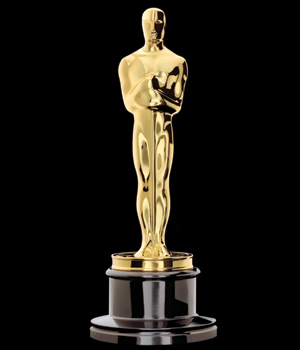
Food lovers can be film lovers, too. So in an unconventional “Appetite” this week, we go to the Oscars. Despite unworthy nominees and a slew of lackluster films, as a lifelong film fanatic, I still relish the event every year. There’s fun in joining with like-minded film buffs and fashion hounds to rave and rant about all the missteps or underdogs who should have won. And I’ll take any excuse to dress up.

This year I’m hoping the dynamic duo hosting team of Alec Baldwin and Steve Martin will add some spark to the hours’ long telecast. I’m more skeptical about the first go-round of 10 Best Picture nominees, however. We may not be Hollywood, but SF still gets into the act with events to suit everyone: those who want to enjoy the Oscars in style and those who want to bash the hell out of them.

Old Hollywood Glamour at Top of the Mark
Pull out your vintage or evening gown attire for a night of “Old Hollywood Glamour” at Top of the Mark. With the glorious lights and waters of SF shimmering below, enjoy champagne, Tsar Nicoulai caviar and other hors d’oeuvres. There’s no admission cost, rather, you order a la carte off the regular menu or from special menus like “The Nominees Are…”, including a bottle of Piper Sonoma Brut and shrimp cocktails ($60), or “…the Oscar goes to”: Moet & Chandon Brut Imperial with 1 oz. of Tsar Nicoulai California Estate Osetra Caviar ($110). With friends or that special someone in tow, pretend you’re at the Oscars as you watch from two screens near the dance floor, mentally composing your own Oscar acceptance speech. 

Sun/7, 5-10pm

Top of Mark/InterContinental Mark Hopkins

One Nob Hill, SF

(415) 616-6916

www.intercontinentalmarkhopkins.com/top_of_the_mark

Up the Oscars Benefit Bash at the Roxie
For 18 years running, dingy but loveable Roxie Theater is the place for all you haters… or rather, true film buffs who can’t stomach the idea of James Cameron winning any more awards. With the playful moniker of “Up the Oscars Benefit Bash,” you’re actually encouraged to shout at the movie screen, critique gowns or choose sides on the Best Actor front (Firth or Bridges?) There’s prizes and a costume contest, so come in anything from Cher-like weirdness to favorite film character. Shawerma-type snacks will be provided by neighboring Truly Mediterranean, but you can also bring your own food and drink as it’s gonna get long. You’ll need your energy for expressing outrage that a movie lacking plot, acting or substance, could (once again) win Best Picture.

Sun/7, 3:45pm (Red Carpet at 4pm; Oscars at 5:30pm)

$12-$15

Roxie Theater

3117 16th St, SF

(415) 863-1087

www.roxie.com

Appetite: Hungry for Oscar coverage

0

Food lovers can be film lovers, too. So in an unconventional “Appetite” this week, we go to the Oscars. Despite unworthy nominees and a slew of lackluster films, as a lifelong film fanatic, I still relish the event every year. There’s fun in joining with like-minded film buffs and fashion hounds to rave and rant about all the missteps or underdogs who should have won. And I’ll take any excuse to dress up.

This year I’m hoping the dynamic duo hosting team of Alec Baldwin and Steve Martin will add some spark to the hours’ long telecast. I’m more skeptical about the first go-round of 10 Best Picture nominees, however. We may not be Hollywood, but SF still gets into the act with events to suit everyone: those who want to enjoy the Oscars in style and those who want to bash the hell out of them.

Old Hollywood Glamour at Top of the Mark
Pull out your vintage or evening gown attire for a night of “Old Hollywood Glamour” at Top of the Mark. With the glorious lights and waters of SF shimmering below, enjoy champagne, Tsar Nicoulai caviar and other hors d’oeuvres. There’s no admission cost, rather, you order a la carte off the regular menu or from special menus like “The Nominees Are…”, including a bottle of Piper Sonoma Brut and shrimp cocktails ($60), or “…the Oscar goes to”: Moet & Chandon Brut Imperial with 1 oz. of Tsar Nicoulai California Estate Osetra Caviar ($110). With friends or that special someone in tow, pretend you’re at the Oscars as you watch from two screens near the dance floor, mentally composing your own Oscar acceptance speech. 

Sun/7, 5-10pm

Top of Mark/InterContinental Mark Hopkins

One Nob Hill, SF

(415) 616-6916

www.intercontinentalmarkhopkins.com/top_of_the_mark

Up the Oscars Benefit Bash at the Roxie
For 18 years running, dingy but loveable Roxie Theater is the place for all you haters… or rather, true film buffs who can’t stomach the idea of James Cameron winning any more awards. With the playful moniker of “Up the Oscars Benefit Bash,” you’re actually encouraged to shout at the movie screen, critique gowns or choose sides on the Best Actor front (Firth or Bridges?) There’s prizes and a costume contest, so come in anything from Cher-like weirdness to favorite film character. Shawerma-type snacks will be provided by neighboring Truly Mediterranean, but you can also bring your own food and drink as it’s gonna get long. You’ll need your energy for expressing outrage that a movie lacking plot, acting or substance, could (once again) win Best Picture.

Sun/7, 3:45pm (Red Carpet at 4pm; Oscars at 5:30pm)

$12-$15

Roxie Theater

3117 16th St, SF

(415) 863-1087

www.roxie.com

Film listings

0

Film listings are edited by Cheryl Eddy. Reviewers are Kimberly Chun, Michelle Devereaux, Max Goldberg, Dennis Harvey, Johnny Ray Huston, Erik Morse, Louis Peitzman, Lynn Rapoport, Ben Richardson, and Matt Sussman. The film intern is Peter Galvin. For rep house showtimes, see Rep Clock. For first-run showtimes, see Movie Guide.

OPENING

Alice in Wonderland Tim Burton and Johnny Depp go down the 3D rabbit hole. (1:48)

Brooklyn’s Finest "Really? I mean, really?" asked the moviegoer beside me as the final freeze-frame of Brooklyn’s Finest slapped our eyeballs. Yes, that’s the sound of letdown, despite the fact that Brooklyn’s Finest initially resembled a promisingly gritty juggling act in the mode of The Wire and Cop Land (1997), Taxi Driver (1976) and Training Day (2001). Bitter irony flows from the title — and from the lives, loves, bad habits, pressure-cooker stress, and unavoidable moral dilemmas of three would-be everyday cops, all occupying several different rungs on a food chain where right and wrong have an unpleasant way of switching sides. Eddie (Richard Gere) is the veteran officer just biding his time till he gets his pension, all while comforting himself with the meager sensuous attentions of hooker Chantel (Shannon Kane). Sal (Ethan Hawke) is the bad detective, stealing from the dealers to fund a dream home for his growing family with Angela (Lili Taylor). Tango (Don Cheadle) is the undercover detective who has cultivated friendships with dealers like Caz (Wesley Snipes) and sacrificed his marriage for a long-promised promotion from his lieutenant (Will Patton) and his superior (Ellen Barkin, in likely the most misogynist portrayal of a lady with a badge to date). You spend most of Brooklyn’s Finest waiting for these cops to collide in the most unfortunate, messiest way possible, but instead the denouement leaves will leave one wondering about unresolved threads and feeling vaguely unsatisfied. In any case, director Antoine Fuqua and company seem to pride themselves on their tough-minded if at times cartoonish take on law enforcement, with Hawke in particular turning in a memorably OTT and anguished performance. (2:13) Shattuck. (Chun)

*Prodigal Sons See "My Son, My Son." (1:26) Lumiere, Shattuck.

*A Prophet See "Education of a Felon." (2:29) Embarcadero, Shattuck.

The Yellow Handkerchief The Yellow Handkerchief is one of those quiet, character-driven dramas that get mistaken for subtle classics. It’s not bad, just bland. In fact, there’s something pleasant about the way the film’s three unlikely friends forge a lasting bond, but the movie as a whole is never quite that cohesive. William Hurt stars as Brett Hanson, an ex-con with a dark past. (The Yellow Handkerchief tries to make this mysterious by way of vague flashbacks, but the audience gets there faster than the film does.) His inadvertent sidekicks are the troubled Martine (Kristen Stewart) and the awkward Gordy (Eddie Redmayne). The talented cast, rounded out by Maria Bello as the wife Brett left behind, does solid work with the material, but no one really stands out enough to elevate The Yellow Handkerchief to greatness. Redmayne is perhaps the most impressive, ditching his British accent to play a character so quirky, he’s almost Rain Man. But after taking a step back, the big picture is muddled. People are fascinating, but what does it all mean? (1:36) Albany. (Peitzman)

ONGOING

*"Academy Award-Nominated Short Films: Animated" Just because it’s animation doesn’t mean it’s just for kids. Like the live-action Oscar-nominated shorts, this year’s animated selections have got range, from the traditionally child-friendly to downright vulgar. Skewing heavily towards CG fare, the shorts vary from a Looney Tunes-style chase for an elderly woman’s soul (The Lady and the Reaper) to the Wallace and Gromit BBC special, A Matter of Loaf and Death. Most entertaining by far is Logorama, an action-packed tale set in a world populated by familiar trademarked logos. Any film that casts the Michelin man as a garbage-mouthed cop on the case of a renegade Ronald McDonald deserves to win all the awards in the universe. (1:35) Opera Plaza, Shattuck. (Galvin)

*"Academy Award-Nominated Short Films: Live Action" Aren’t you tired of wondering what all the fuss is about when the Academy awards their Oscar for Best Short? In an effort to give audiences a chance to play along, Shorts International is screening these less-seen works together. Though one or two of the five nominated films threaten to adhere to the Academy’s penchant for either heartbreaking or heartwarming, the majority are surprisingly oddball picks. Perhaps most odd of all is Denmark/U.S. submission The New Tenants. Feeling a tad forced but no less funny for it, Tenants draws on celebrities like Vincent D’Onofrio and comedian Kevin Corrigan to bring life to this surreal adaptation by Anders Thomas Jensen (2006’s After the Wedding). My pick would be Sweden’s gloriously goofy Instead of Abracadabra, which stars a stay-at-home slacker as he puts on a magic show for his father’s birthday. Obviously, some selections are going to be better than others, but hey, they’re shorts. If you don’t like one, just wait 10 minutes and you’ll find yourself somewhere completely different. (1:35) Opera Plaza, Shattuck. (Galvin)

Avatar James Cameron’s Avatar takes place on planet Pandora, where human capitalists are prospecting for precious unobtainium, hampered only by the toxic atmosphere and a profusion of unfriendly wildlife, including the Na’vi, a nine-foot tall race of poorly disguised cliches. When Jake Sully (Sam Worthington), a paraplegic ex-marine, arrives on the planet, he is recruited into the "Avatar" program, which enables him to cybernetically link with a part-human, part-Na’vi body and go traipsing through Pandora’s psychedelic underbrush. Initially designed for botanical research, these avatars become the only means of diplomatic contact with the bright-blue natives, who live smack on top of all the bling. The special effects are revolutionary, but the story that ensues blends hollow "noble savage" dreck with events borrowed from Dances With Wolves (1990) and FernGully: The Last Rainforest (1992). When Sully falls in love with a Na’vi princess and undergoes a spirit journey so he can be inducted into the tribe and fight the evil miners, all I could think of was Kevin Bacon getting his belly sliced in The Air Up There (1994). (2:42) 1000 Van Ness, Sundance Kabuki. (Richardson)

The Blind Side When the New York Times Magazine published Michael Lewis’ article "The Ballad of Big Mike" — which he expanded into the 2006 book The Blind Side: Evolution of a Game — nobody could have predicated the cultural windfall it would spawn. Lewis told the incredible story of Michael Oher — a 6’4, 350-pound 16-year-old, who grew up functionally parentless, splitting time between friends’ couches and the streets of one of Memphis’ poorest neighborhoods. As a sophomore with a 0.4 GPA, Oher serendipitously hitched a ride with a friend’s father to a ritzy private school across town and embarked on an unbelievable journey that led him into a upper-class, white family; the Dean’s List at Ole Miss; and, finally, the NFL. The film itself effectively focuses on Oher’s indomitable spirit and big heart, and the fearless devotion of Leigh Anne Tuohy, the matriarch of the family who adopted him (masterfully played by Sandra Bullock). While the movie will delight and touch moviegoers, its greatest success is that it will likely spur its viewers on to read Lewis’ brilliant book. (2:06) Oaks. (Daniel Alvarez)

Broken Embraces Pedro Almodóvar has always dabbled in the Hitchcockian tropes of uxoricide, betrayal, and double-identity, but with Broken Embraces he has attained a polyglot, if slightly mimicking, fluency with the language of Hollywood noir. A story within a story and a movie within a movie, Embraces begins in the present day with middle-aged Catalan Harry Caine (Lluís Homar), a blind screenwriter who takes time between his successful writing career to seduce and bed young women sympathetic to his disability. "Everything’s already happened to me," he explains to his manager, Judit (Blanca Portillo). "All that’s left is to enjoy life." But this life of empty pleasures is brought to a sudden halt when local business magnate Ernesto Martel (José Luis Gómez) has died; soon after, Ernesto Jr. (Rubén Ochandiano), who has renamed himself Ray X, visits Caine with an unusual request. The action retreats 14 years when Caine was a young (and visually abled) director named Mateo Blanco; he encounters a breathtaking femme fatale, Lena (Penelope Cruz) — an actress-turned-prostitute named Severine, turned secretary-turned-trophy wife of Ernesto Martel — when she appears to audition for his latest movie. If all of the narrative intricacies and multiplicitous identities in Broken Embraces appear a bit intimidating at first glance, it is because this is the cinema of Almodóvar taken to a kind of generic extreme. As with all of the director’s post-’00 films, which are often referred to as Almodóvar’s "mature" pictures, there is a microscopic attention to narrative development combined with a frenzied sub-plotting of nearly soap-operatic proportions. But, in Embraces, formalism attains such prominence that one might speculate the director is simply going through the motions. The effect is a purposely loquacious and overly-dramatized performance that pleasures itself as much by setting up the plot as unraveling it. (2:08) Opera Plaza, Smith Rafael. (Morse)

Cop Out I think there was a plot to Cop Out — something involving a stolen baseball card and a drug ring and Jimmy (Bruce Willis) trying to pay for his daughter’s wedding. Frankly, it’s irrelevant. Kevin Smith’s take on the buddy cop genre, which partners Willis with Tracy Morgan, is more a string of dick jokes and toilet humor than anything else. Not that there’s anything wrong with that. Sometimes it’s nice to sit back and turn off your brain, as Morgan’s Paul describes his bowel movements or when hapless thief Dave (Seann William Scott) begins imitating everything our heroes say. At the same time, Cop Out is easily forgettable: Smith directed the film, but writing duties went to the Cullen Brothers of TV’s Las Vegas. All judgments about that series aside, the script lacks Smith’s trademark blend of heart and vulgarity. Even Mallrats (1995) had a beginning, a middle, and a satisfying end. Without Smith as auteur, Cop Out is worth a few laughs but destined for the bargain bin. (1:50) Oaks, 1000 Van Ness. (Peitzman)

The Crazies Disease and anti-government paranoia dovetail in this competent yet overwhelmingly non-essential remake of one of George A. Romero’s second-tier spook shows. In a small Iowa hamlet overseen by a benevolent sheriff (Timothy Olyphant) and his pregnant wife (Radha Mitchell), who’s also the town doctor, a few odd incidents snowball into all-out chaos when a mysterious, unmarked plane crashes into the local water supply. Before long, the few residents who aren’t acting like homicidal maniacs are rounded up by an uber-aggressive military invasion. Though our heroes convey frantic panic as they try to figure out what the hell is going on, The Crazies never achieves full terror mode. It’s certainly watchable, and even enjoyable at times. But memorable? Not in the slightest. (1:41) 1000 Van Ness. (Eddy)

Crazy Heart "Oh, I love Jeff Bridges!" is the usual response when his name comes up every few years for Best Actor consideration, usually via some underdog movie no one saw, and the realization occurs that he’s never won an Oscar. The oversight is painful because it could be argued that no leading American actor has been more versatile, consistently good, and true to that elusive concept "artistic integrity" than Bridges over the last 40 years. It’s rumored Crazy Heart was slotted for cable or DVD premiere, then thrust into late-year theater release in hopes of attracting Best Actor momentum within a crowded field. Lucky for us, this performance shouldn’t be overlooked. Bridges plays "Bad" Blake, a veteran country star reduced to playing bars with local pickup bands. His slide from grace hasn’t been helped by lingering tastes for smoke and drink, let alone five defunct marriages. He meets Jean (Maggie Gyllenhaal), freelance journalist, fan, and single mother. They spark; though burnt by prior relationships, she’s reluctant to take seriously a famous drunk twice her age. Can Bad handle even this much responsibility? Meanwhile, he gets his "comeback" break in the semi-humiliating form of opening for Tommy Sweet (Colin Farrell) — a contemporary country superstar who was once Bad’s backup boy. Tommy offers a belated shot at commercial redemption; Jean offers redemption of the strictly personal kind. There’s nothing too surprising about the ways in which Crazy Heart both follows and finesses formula. You’ve seen this preordained road from wreckage to redemption before. But actor turned first-time director Scott Cooper’s screenplay honors the flies in the windshield inherited from Thomas Cobb’s novel — as does Bridges, needless to say. (1:51) California, Embarcadero, Empire, Piedmont, Presidio, 1000 Van Ness, Sundance Kabuki. (Harvey)

Dear John As long as you know what you’re getting yourself into, Dear John is a solid effort. Not extraordinary by any means, it’s your standard Nicholas Sparks book-turned-film: boy meets girl — drama, angst, and untimely death ensue. Here, Channing Tatum stars at the titular John, a soldier on leave who falls in love with the seemingly perfect Savannah (Amanda Seyfried). Both actors are likable enough that their romance is charming, if not always believable. And Dear John‘s plot turns, while not quite surprising, are at least dynamic enough to keep the audience engaged. But at the end of the day, this is still a Nicholas Sparks movie — even with the accomplished Lasse Hallström taking over directorial responsibilities. There are still plenty of eye-roll moments and, more often than not, Dear John employs the most predictable tearjerking techniques. By the time you realize why the film is set in 2001, it’s September 11. Sad? Surely. Cheap? You betcha. (1:48) 1000 Van Ness, SF Center. (Peitzman)

Edge of Darkness (1:57) SF Center.

*An Education The pursuit of knowledge — both carnal and cultural — are at the tender core of this end-of-innocence valentine by Danish filmmaker Lone Scherfig (who first made her well-tempered voice heard with her 2000 Dogme entry, Italian for Beginners), based on journalist Lynn Barber’s memoir. Screenwriter Nick Hornby breaks further with his Peter Pan protagonists with this adaptation: no man-boy mopers or misfits here. Rather, 16-year-old schoolgirl Jenny (Carey Mulligan) is a good girl and ace student. It’s 1961, and England is only starting to stir from its somber, all-too-sober post-war slumber. The carefully cloistered Jenny is on track for Oxford, though swinging London and its high-style freedoms beckon just around the corner. Ushering in those freedoms — a new, more class-free world disorder — is the charming David (Peter Sarsgaard), stopping to give Jenny and her cello a ride in the rain and soon proffering concerts and late-night suppers in the city. He’s a sweet-faced, feline outsider: cultured, Jewish, and given to playing fast and loose in the margins of society. David can see Jenny for the gem she is and appreciate her innocence with the knowing pleasure of a decadent playing all the angles. The stakes are believably high, thanks to An Education‘s careful attention to time and place and its gently glamored performances. Scherfig revels in the smart, easy-on-eye curb appeal of David and his friends while giving a nod to the college-educated empowerment Jenny risks by skipping class to jet to Paris. And Mulligan lends it all credence by letting all those seduced, abandoned, conflicted, rebellious feelings flicker unbridled across her face. (1:35) Opera Plaza, Presidio, SF Center, Shattuck, Smith Rafael. (Chun)

*Fish Tank There’s been a string of movies lately pondering what Britney once called the not-a-girl, not-yet-a-woman syndrome, including 2009’s An Education and Precious: Based on the Novel Push By Sapphire. Enter Fish Tank, the gritty new drama from British filmmaker Andrea Arnold. Her films (including 2006’s Red Road) are heartbreaking, but in an unforced way that never feels manipulative; her characters, often portrayed by nonactors, feel completely organic. Fish Tank‘s 15-year-old heroine, Mia (played by first-time actor Katie Jarvis), lives with her party-gal single mom and tweenage sister in a public-housing high-rise; all three enjoy drinking, swearing, and shouting. But Mia has a secret passion: hip-hop dancing, which she practices with track-suited determination. When mom’s foxy new boyfriend, Connor (Michael Fassbender, from 2008’s Hunger) encourages her talent, it’s initially unclear what Connor’s intentions are. Is he trying to be a cool father figure, or something far more inappropriate? Without giving away too much, it’s hard to fear too much for a girl who headbutts a teenage rival within the film’s first few minutes — though it soon becomes apparent Mia’s hard façade masks a vulnerable core. Her desire to make human connections causes her to drop her guard when she needs it the most. In a movie about coming of age, a young girl’s bumpy emotional journey is expected turf. But Fish Tank earns its poignant moments honestly — most coming courtesy of Jarvis, who has soulfullness to spare. Whether she’s acting out in tough-girl mode or revealing a glimpse of her fragile inner life, Arnold’s camera relays it all, with unglossy matter-of-factness. (2:02) Smith Rafael. (Eddy)

Formosa Betrayed The turbulent modern history of Taiwan is certainly deserving of increased international attention, but writer-producer Will Tao’s strategy of structuring Formosa Betrayed as a political thriller is too often at odds with imparting facts and information. Set in the early 80s, the film thrusts viewers into an unraveling government conspiracy that has FBI agent Jake Kelly (James Van Der Beek) trailing the suspected murderers of a Chicago professor to Taipei. Initially, selling Dawson’s Creek alum Van Der Beek as an FBI agent seems a strange choice, but undoubtedly his name will fill seats, and Formosa Betrayed is shooting for maximum awareness. There are some scenes of real tension, but just when you are beginning to get wrapped up in the inherent drama of conspiracy and murder, the suspense is interrupted by a long-winded bout of soapboxing. Formosa Betrayed might enlighten some audiences about Taiwan’s controversial history, but it too often does so at the expense of its own watchability. You start to wonder why Tao didn’t just make a documentary. (1:43) SF Center, Shattuck. (Galvin)

From Paris with Love Every so often, I walk out of a film feeling like I’ve been repeatedly buffeted by blows to the face. Transformers 2: Revenge of the Fallen (2009) had this effect, and it is now joined by From Paris With Love, a movie so aggressively stupid that the mistaken assumption that it was adapted from a video game could be construed as an insult to video games. John Travolta shows up chrome-domed as Charlie Wax, a loose-cannon CIA operative with a lot of transparently screenwritten machismo and an endless appetite for violence. He is joined by Jonathan Rhys Meyers, sporting a risible American accent, and the two embark on a frantic journey across the French capital that is almost as racist as it is misogynistic. I could fill an entire issue of this newspaper eviscerating this movie —suffice to say, don’t see it. (1:35) SF Center. (Richardson)

*The Ghost Writer Roman Polanski’s never-ending legal woes have inspired endless debates on the interwebs and elsewhere; they also can’t help but add subtext to the 76-year-old’s new film, which is chock full o’ anti-American vibes anyway. It’s also a pretty nifty political thriller about a disgraced former British Prime Minister (Pierce Brosnan) who’s hanging out in his Martha’s Vineyard mansion with his whip-smart, bitter wife (Olivia Williams) and Joan Holloway-as-ice-queen assistant (Kim Cattrall), plus an eager young biographer (Ewan McGregor) recently hired to ghost-write his memoirs. But as the writer quickly discovers, the politician’s past contains the kinds of secrets that cause strange cars with tinted windows to appear in one’s rearview mirror when driving along deserted country roads. Polanski’s long been an expert when it comes to escalating tension onscreen; he’s also so good at adding offbeat moments that only seem tossed-off (as when the PM’s groundskeeper attempts to rake leaves amid relentless sea breezes) and making the utmost of his top-notch actors (Tom Wilkinson and Eli Wallach have small, memorable roles). Though I found The Ghost Writer‘s ZOMG! third-act revelation to be a bit corny, I still didn’t think it detracted from the finely crafted film that led up to it. (1:49) California, Embarcadero, Sundance Kabuki. (Eddy)

The Hurt Locker When the leader of a close-knit U.S. Army Explosive Ordnance Disposal squad is killed in action, his subordinates have barely recovered from the shock when they’re introduced to his replacement. In contrast to his predecessor, Sgt. James (Jeremy Renner) is no standard-procedure-following team player, but a cocky adrenaline junkie who puts himself and others at risk making gonzo gut-instinct decisions in the face of live bombs and insurgent gunfire. This is particularly galling to next-in-command Sanborn (Anthony Mackie). An apolitical war-in-Iraq movie that’s won considerable praise for accuracy so far from vets (scenarist Mark Boal was "embedded" with an EOD unit there for several 2004 weeks), Kathryn Bigelow’s film is arguably you-are-there purist to a fault. While we eventually get to know in the principals, The Hurt Locker is so dominated by its seven lengthy squad-mission setpieces that there’s almost no time or attention left for building character development or a narrative arc. The result is often viscerally intense, yet less impactful than it would have been if we were more emotionally invested. Assured as her technique remains, don’t expect familiar stylistic dazzle from action cult figure Bigelow (1987’s Near Dark, 1989’s Blue Steel, 1991’s Point Break) — this vidcam-era war movie very much hews to the favored current genre approach of pseudo-documentary grainy handheld shaky-cam imagery. (2:11) Opera Plaza, Shattuck. (Harvey)

Invictus Elected President of South Africa in 1995 — just five years after his release from nearly three decades’ imprisonment — Nelson Mandela (Morgan Freeman) perceives a chance to forward his message of reconciliation and forgiveness by throwing support behind the low-ranked national rugby team. Trouble is, the Springboks are currently low-ranked, with the World Cup a very faint hope just one year away. Not to mention the fact that despite having one black member, they represent the all-too-recent Apartheid past for the country’s non-white majority. Based on John Carlin’s nonfiction tome, this latest Oscar bait by the indefatigable Clint Eastwood sports his usual plusses and minuses: An impressive scale, solid performances (Matt Damon co-stars as the team’s Afrikaaner captain), deft handling of subplots, and solid craftsmanship on the one hand. A certain dull literal-minded earnestness, lack of style and excitement on the other. Anthony Peckham’s screenplay hits the requisite inspirational notes (sometimes pretty bluntly), but even in the attenuated finals match, Eastwood’s direction is steady as she goes — no peaks, no valleys, no faults but not much inspiration, either. It doesn’t help that Kyle Eastwood and Michael Stevens contribute a score that’s as rousing as a warm milk bath. This is an entertaining history lesson, but it should have been an exhilarating one. (2:14) Oaks. (Harvey)

*The Last Station Most of the buzz around The Last Station has focused on Helen Mirren, who takes the lead as the Countess Sofya, wife of Leo Tolstoy (Christopher Plummer). Mirren is indeed impressive — when is she not? — but there’s more to the film than Sofya’s Oscar-worthy outbursts. The Last Station follows Valentin Bulgakov (James McAvoy), hired as Tolstoy’s personal secretary at the end of the writer’s life. Valentin struggles to reconcile his faith in the anarchist Christian Tolstoyan movement with his sympathy for Sofya and his budding feelings for fellow Tolstoyan Masha (Kerry Condon). For the first hour, The Last Station is charming and very funny. Once Tolstoy and Sofya’s relationship reaches its most volatile, however, the tone shifts toward the serious — a trend that continues as Tolstoy falls ill. After all the lighthearted levity, it’s a bit jarring, but the solid script and accomplished cast pull The Last Station together. Paul Giamatti is especially good as Vladimir Chertkov, who battles against Sofya for control of Tolstoy’s will. You’ll never feel guiltier for putting off War and Peace. (1:52) Albany, Embarcadero, Empire, Piedmont, Sundance Kabuki. (Peitzman)

*Leonard Cohen: Live at the Isle of Wight 1970 The dawn of the Me Decade saw the largest-ever music festival to that date —albeit one that was such a logistical, fiscal and hygenic disaster that it basically killed the development of similar events for years. This was the height of "music should be free" sentiments in the counterculture, with the result that many among the estimated six to eight hundred thousand attendees who overwhelmed this small U.K. island showed up without tickets, refused to pay, and protested in ways that included tearing down barrier walls and setting fires. It was a bummer, man. But after five days of starry acts often jeered by an antsy crowd — including everyone from Joni, Hendrix, Dylan, Sly Stone, the Who and the Doors to such odd bedfellows as Miles Davis, Tiny Tim, Voices of East Harlem, Supertramp, and Gilberto Gil — Canadian troubador Cohen appeared at 4 a.m. on a Monday to offer balm. Like director Murray Lerner’s 1995 Message to Love, about the festival as a whole, this footage has been shelved for decades, but it bounces right back from the dead — albeit soothingly. Cohen seems blissed out, pupils like black marbles, his between-song musings are as poetical as those fascinating lyrics, and his voice is suppler than the rasp it would soon become. Kris Kristofferson, Judy Collins, Joan Baez, and bandmate Bob Johnson offer reflections 40 years later. But the main attraction is obviously Cohen, who is magnetic even if an hour of (almost) nothing but ballads reveals how stylistically monotone his songwriting could be. (1:04) Roxie. (Harvey)

*The Most Dangerous Man in America: Daniel Ellsberg and the Pentagon Papers For many, Daniel Ellsberg is a hero — a savior of American First Amendment rights and one of the most outspoken opponents of the Vietnam war. But as this documentary (recently nominated for an Academy Award) shows, it’s never an an easy decision to take on the U.S. government. Ellsberg himself narrates the film and details his sleepless nights leading up to the leak of the Pentagon Papers — the top secret government study on the Vietnam war — to the public. Though there are few new developments in understanding the particulars of the war or the impact the release of the Papers had on ending the conflict, the film allows audiences to experience the famous case from Ellsberg’s point of view, adding a fresh and poignantly human element to the events; it’s a political documentary that plays more like a character drama. Whether you were there when it happened or new to the story, there is something to be appreciated from this tale of a man who fell out of love with his country and decided to do something about it. (1:34) Bridge, Shattuck. (Galvin)

*North Face You’ll never think of outerwear the same way again — and in fact you might be reaching for your fleece and shivering through the more harrowing climbing scenes of this riveting historical adventure based on a true tale. Even those who consider themselves less than avid fans of outdoor survival drama will find their eyes frozen, if you will, on the screen when it comes to this retelling/re-envisioning of this story, legendary among mountaineers, of climbers, urged on by Nazi propaganda, to tackle the last "Alpine problem." At issue: the unclimbed north face of Switzerland’s Eiger, a highly dangerous and unpredictable zone aptly nicknamed "Murder Wall." Two working-class friends, Toni Kurz (Benno Fürmann of 2008’s Jerichow) and Andi Hinterstoisser (Florian Lukas) — here portrayed as climbing fiends driven to reach summits rather than fight for the Nazis — take the challenge. There to document their achievement, or certain death, is childhood friend and Kurz’s onetime sweetheart Luise (Johanna Wokalek, memorable in 2008’s The Baader Meinhof Complex), eager to make her name as a photojournalist while fending off the advances of an editor (Ulrich Tukur) seeking to craft a narrative that positions the contestants as model Aryans. But the climb — and the Eiger, looming like a mythical ogre — is the main attraction here. Filmmaker Philipp Stölzl brings home the sheer heart-pumping exhilaration and terror associated with the sport — and this specific, legendarily tragic climb — by shooting in the mountains with his actors and crew, and the result goes a way in redeeming an adventure long-tainted by its fascist associations. (2:01) Lumiere, Shattuck, Smith Rafael. (Chun)

*Percy Jackson and the Olympians: The Lightning Thief It would be easy to dismiss Percy Jackson and the Olympians: The Lightning Thief as an unabashed Harry Potter knock-off. Trio of kids with magic powers goes on a quest to save the world in a Chris Columbus adaptation of a popular young adult series — sound familiar? But The Lightning Thief is sharp, witty, and a far cry from Columbus’ joyless adaptation of Harry Potter and the Sorcerer’s Stone (2001). Logan Lerman stars as Percy Jackson, the illegitimate son of Poseidon and Catherine Keener. Once he learns his true identity at Camp Half-Blood, he sets off on a quest with his protector, a satyr named Grover, and potential love interest Annabeth, daughter of Athena. Along the way, they bump into gods and monsters from Greek mythology — with a twist. Think Percy using his iPhone to fight Medusa (Uma Thurman), or a land of the Lotus-Eaters disguised as a Lady Gaga-blasting casino. A worthy successor to Harry Potter? Too soon to say, but The Lightning Thief is at least a well-made diversion. (1:59) 1000 Van Ness. (Peitzman)

*Precious: Based on the Novel Push By Sapphire This gut-wrenching, little-engine-that-could of a film shows the struggles of Precious, an overweight, illiterate 16-year-old girl from Harlem. Newcomer Gabourey Sidibe is so believably vigilant that her performance alone could bring together the art-house viewers as well as take the Oscars by storm. But people need to actually go and experience this film. While Precious did win Sundance’s Grand Jury and Audience Award awards this year, there is a sad possibility that filmgoers will follow the current trend of "discussing" films that they’ve actually never seen. The daring casting choices of comedian Mo’Nique (as Precious’ all-too-realistically abusive mother) and Mariah Carey (brilliantly understated as an undaunted and dedicated social counselor) are attempts to attract a wider audience, but cynics can hurdle just about anything these days. What’s most significant about this Dancer in the Dark-esque chronicle is how Damien Paul’s screenplay and director Lee Daniels have taken their time to confront the most difficult moments in Precious’ story –- and if that sounds heavy-handed, so be it. Stop blahging for a moment and let this movie move you. (1:49) Presidio, Roxie, Shattuck. (Jesse Hawthorne Ficks)

*"Red Riding Trilogy" There’s a "wolf" of sorts and several unfortunate little girls, but no fairy tale whimsy whatsoever in this trilogy of features originally made for U.K. broadcast. Based on David Pearce’s literary mystery quartet (the second volume goes unadapted here), it’s a complicated dive into conspiracy, cover-up, and murder in England’s North Country. Directed by Julian Jarrold (2008’s Brideshead Revisited), first installment Red Riding: 1974 centers on ambitious young journalist Eddie (Andrew Garfield), who at first sees a string of abducted, then grotesquely mutilated children as a career-making opportunity. The deeper in he gets, though, the more troubling are the case’s murky connections to police and private-sector corruption. 1980, directed by James Marsh (2008’s Man on Wire), finds a new protagonist in Hunter (Paddy Considine). Now local fears are focused on the "Yorkshire Ripper" a savage (real-life) killer of at least 13 women between 1975 and 1981 whose so-far hapless police investigation Hunter has been assigned to audit. Finally, 1983 (directed by Anand Tucker of 2005’s Shopgirl) divides its attention between Yorkshire chief detective Jobson (David Morrissey) and low-rent lawyer Piggot (Mark Addy). After the first copycat child slaying in years occurs, both become convinced a mentally challenged man (Daniel Mays) was framed for the original murders. The nearly six hours this serpentine tale takes can’t help but impress as a weighty experience (at least on your posterior), and it’s duly won some sky-high critical acclaim ("better than the Godfather trilogy", etc.) Certainly Red Riding is rich in period detail, fine characterizations, and bleak atmospherics. But the cumulative satisfaction expected of a true epic is broken up by the sole ongoing characters being supporting ones — heroes who eventually "know too much" don’t survive long. In each segment (Marsh’s Super-16-shot one being most stylistically distinctive), women deployed as romantic interests seem largely superfluous. The whole fussy, cipherous narrative points toward a heart of jet-black darkness its climactic revelations are at once too banal and implausible to deliver. So, worthwhile? Yes, if you’ve got the time to spare. A hype-justifying masterpiece? No. (1974, 1:45; 1980, 1:36; 1983, 1:44) Lumiere. (Harvey)

Shutter Island Director Martin Scorsese and muse du jour Leonardo DiCaprio draw from oft-filmed novelist Dennis Lehane (2003’s Mystic River, 2007’s Gone Baby Gone) for this B-movie thriller that, sadly, offers few thrills. DiCaprio’s a 1950s U.S. marshal summoned to a misty island that houses a hospital for the criminally insane, overseen by a doctor (Ben Kingsley) who believes in humane, if experimental, therapy techniques. From the get-go we suspect something’s not right with the G-man’s own mind; as he investigates the case of a missing patient, he experiences frequent flashbacks to his World War II service (during which he helped liberate a concentration camp), and has recurring visions of his spooky dead wife (Michelle Williams). Whether or not you fall for Shutter Island‘s twisty game depends on the gullibility of your own mind. Despite high-quality performances and an effective, if overwrought, tone of certain doom, Shutter Island stumbles into a third act that exposes its inherently flawed and frustrating storytelling structure. If only David Lynch had directed Shutter Island — it could’ve been a classic of mindfuckery run amok. Instead, Scorsese’s psychological drama is sapped of any mystery whatsoever by its stubbornly literal conclusion. (2:18) California, Four Star, 1000 Van Ness, Presidio. (Eddy)

A Single Man In this adaptation of Christopher Isherwood’s 1964 novel, Colin Firth plays George, a middle-aged gay expat Brit and college professor in 1962 Los Angeles. Months after the accidental death of Jim (Matthew Goode), his lover for 16 years, George still feels worse than bereft; simply waking each morning is agony. So on this particular day he has decided to end it all, first going through a series of meticulous preparations and discreet leave-takings that include teaching one last class and having supper with the onetime paramour (Julianne Moore) turned best friend who’s still stuck on him. The main problem with fashion designer turned film director Tom Ford’s first feature is that he directs it like a fashion designer, fussing over surface style and irrelevant detail in a story whose tight focus on one hard, real-world thing — grief — cries for simplicity. Not pretentious overpackaging, which encompasses the way his camera slavers over the excessively pretty likes of Nicholas Hoult as a student and Jon Kortajarena as a hustler, as if they were models selling product rather than characters, or even actors. (In fact Kortajarena is a male supermodel; the shocker is that Hoult is not, though Hugh Grant’s erstwhile About a Boy co-star is so preening here you’d never guess.) Eventually Ford stops showing off so much, and A Single Man is effective to the precise degree it lets good work by Goode, Moore and especially the reliably excellent Firth unfold without too much of his terribly artistic interference. (1:39) Embarcadero, 1000 Van Ness, Piedmont, Shattuck. (Harvey)

*Terribly Happy The Coen Brothers’ Blood Simple (1984) is the obvious corollary for this coolly humorous Danish import, though director/co-writer Henrik Ruben Genz’s firmly dampened-down thriller of sorts is also touched by David Lynch’s parochial surrealism and Aki Kaurismäki’s backwater puckishness. Happy isn’t quite the word for handsome, seemingly upstanding cop Jakob (Robert Hansen), reassigned from the big city of Copenhagen to a tiny village in South Jutland. There he slowly learns that the insular and self-sufficient locals are accustomed to fixing problems on their own and that cows, trucks, and other troubles have a way of conveniently disappearing into the bog. When buxom blonde Ingerlise (Lene Maria Christensen) whispers to him that her husband Jørgen (Kim Bodnia) beats her, Jakob begins to find his moral ground slipping away from him — while his own dark secrets turn out to be not so secret after all. More of a winkingly paranoid, black-hearted comedy about the quicksand nature of provincial community and small-town complicity than a genuine murder mystery, Terribly Happy wears its inspirations on its sleeve, but that doesn’t stop this attractively-shot production from amusing from start to finish, never tarrying too long to make a point that it gets mired in the bog that swallows all else. (1:42) Opera Plaza. (Chun)

Up in the Air After all the soldiers’ stories and the cannibalism canards of late, Up in the Air‘s focus on a corporate ax-man — an everyday everyman sniper in full-throttle downsizing mode — is more than timely; it’s downright eerie. But George Clooney does his best to inject likeable, if not quite soulful, humanity into Ryan Bingham, an all-pro mileage collector who prides himself in laying off employees en masse with as few tears, tantrums, and murder-suicide rages as possible. This terminator’s smooth ride from airport terminal to terminal is interrupted not only by a possible soul mate, fellow smoothie and corporate traveler Alex (Vera Farmiga), but a young tech-savvy upstart, Natalie (Anna Kendrick), who threatens to take the process to new reductionist lows (layoff via Web cam) and downsize Ryan along the way. With Up in the Air, director Jason Reitman, who oversaw Thank You for Smoking (2005) as well as Juno (2007), is threatening to become the bard of office parks, Casual Fridays, khaki-clad happy hours, and fly-over zones. But Up in the Air is no Death of a Salesman, and despite some memorable moments that capture the pain of downsizing and the flatness of real life, instances of snappily screwball dialogue, and some more than solid performances by all (and in particular, Kendrick), he never manages to quite sell us on the existence of Ryan’s soul. (1:49) 1000 Van Ness, Piedmont, SF Center, Shattuck, Sundance Kabuki. (Chun)

Valentine’s Day Genre moviemaking loves it a gimmick — and nothing gets more greeting-card gimmicky or sell-by-date corny than the technique of linking holidays and those mandatory date nights out. You’re shocked that nobody thought of this chick flick notion sooner. Valentine’s Day is no My Bloody Valentine (1981, 2009) — it aspires to an older, more yupscale lady’s choice-crowd than the screaming teens that are ordinarily sought out by horror flicks. And its A-list-studded cast — including Oscar winners Julia Roberts, Jamie Foxx, and Kathy Bates as well as seemingly half of That ’70s Show‘s players — is a cut above TV tween starlets’ coming-out slasher slumber parties. It partly succeeds: bringing Valentine’s haters into the game as well as lovers is a smart ploy (although who believes that the chic-cheekbones-and-fulsome-lips crew of Jessica Biel and Jennifer Garner would be dateless on V-Day?), and the first half is obviously structured around the punchlines that punctuate each scene — a winning if contrived device. Juggling multiple storylines with such a whopping cast lends an It’s a Mad Mad Mad Mad World (1963) quality to the Jessica- and Taylor-heavy shenanigans. And some tales get a wee bit more weight than others (the charisma-laden scenes with Bradley Cooper and Roberts cry out for added screentime), creating a strangely lopsided effect that adds unwanted tedium to an affair that should be as here-today-gone-tomorrow as a Whitman’s Sampler. (1:57) Empire, 1000 Van Ness, Shattuck, Sundance Kabuki. (Chun)

*The White Ribbon In Michael Haneke’s The White Ribbon, his first German-language film in ten years, violence descends on a small northern German village mired in an atmosphere of feudalism and protestant repression. When, over the course of a year, a spate of unaccountable tragedies strikes almost every prominent figure as well as a powerless family of tenant farmers, the village becomes a crucible for aspersion and unease. Meanwhile, a gang of preternaturally calm village children, led by the eerily intense daughter of the authoritarian pastor, keep appearing coincidentally near the sites of the mysterious crimes, lending this Teutonic morality play an unsettling Children of the Corn undertone. Only the schoolteacher, perhaps by virtue of his outsider status, seems capable of discerning the truth, but his low rank on the social pecking order prevent his suspicions from being made public. A protracted examination on the nature of evil — and the troubling moral absolutism from which it stems. (2:24) Clay, Shattuck. (Nicole Gluckstern)

The Wolfman Remember 2000’s Hollow Man, an update of 1933’s The Invisible Man so over-the-top that it could only have been brought to you by a post-Starship Troopers (1997) Paul Verhoeven? Fear not, Lon Chaney, Jr. fanclub members — The Wolfman sticks fairly true to its 1941 predecessor, setting its tale of a reluctant lycanthrope in Victorian England, where there are plenty of gypsies, foggy moors, silver bullets, angry villagers, and the like. Benicia Del Toro plays Lawrence Talbot, who’s given an American childhood backstory to explain his out-of-place stateside accent (and a Mediterranean-looking mother to make up for the fact that he’s supposed to be the son of Anthony Hopkins). Soon after returning to his estranged father’s crumbling manor, Lawrence is chomped by a you-know-what. Next full moon, Lawrence realizes what he’s become; murderous rampages and much angst ensue. (He’s kind of like the Incredible Hulk, except much hairier). Director Joe Johnston (a tech whiz who worked on the original Star Wars movies, and helmed 2001’s Jurassic Park III), doesn’t offer much innovation on the werewolf legend (or any scares, for that matter). But the effects, including transformation scenes and claw-tastic gore, are predictably top-notch. (2:05) 1000 Van Ness, SF Center, Sundance Kabuki. (Eddy)

REP PICKS

*The Hellcats The problem with most old biker movies is that there’s waaaaay too much aimless hog riding occasionally interrupted by repetitious fist and/or chain-fighting. This obscure 1967 entry, however, gets its priorities right: the characters are pretty seldom on the road, for that would leach precious time away from the hilarious quasi-hipster dialogue, fascinating personalities (with names like "Six Pack," "Heinie" and "Zombie"), and complex intrigue. Ross Hagen and Dee Duffy play the military-officer brother and fianceé, respectively, of a freshly assassinated police detective. To investigate they go undercover as the new biker couple in town, infiltrating the Hellcats’ clubhouse where booze, acid ("You ran into a bad cube, man!"), drug-running, and chick-swapping are the usual entertainment. These are hippie bikers, though they talk like Hollywood "beatniks" circa 1959 — which is to say, like no one who ever actually lived. They call each other Mamma, Daddy, and Baby a lot, and it’s presumably this familial spirit that leads both motorcycle gang and undercover pigs to finally join forces in defeating the real bad guys, some big-league mobster types. You know this movie is going to rock from the start, as blobular psychedelic paintings background opening credits to the sound of the lamest Farfisa organ-driven theme song ever. This was the first narrative feature by director Robert F. Slatzer, who for years claimed he was married to Marilyn Monroe for three days in 1952 (and subsequently milked two books out of that tall tale). His second (and last) was the even more ludicrous 1970 Bigfoot, in which bikers rescue pretty girls kidnapped and kept chained in a cave by horny sasquatches. A past Mystery Science Theater fave that requires no snarky commentary to entertain, Hellcats is presented as a double-feature with a better-known wanton-youth nugget, 1964’s Kitten With a Whip, starring a very naughty Ann-Margret. Thurs/4, 9 p.m., $5, Vortex Room, 1082 Howard, SF; www.myspace.com/thevortexroom. (Harvey)

Sly ‘n’ sincere

0

kimberly@sfbg.com

SONIC REDUCER "Move while you’re watching me / Dance with the enemy — here is my remedy!"

Though the production is vaguely "Toxic," don’t confuse this Brit with Britney. Little Boots, a.k.a. Victoria Hesketh, may be a dulcet, highly infectious dead-ringer for Britney Spears — sporting a sweeter voice and ‘tude, judging from her lyrical preoccupations and her popular homemade YouTube snippets showing the Boots covering Kid Cudi or Cyndi Lauper.

And as El Niño continues to batter our doors, one can’t help but wonder what a steadily heat-seeking, viral-vid starlet like herself makes of the chill falling over pop, both under- and overground in the form of, say, Cold Cave and the xx? Lo, behold synthpop prime mover Phil Oakey of Human League, dueting with Hesketh on "Symmetry," off her debut, Hands (Atlantic), which finally sees its stateside release this week.

"Maybe it sounds cold, but I think it sounds really cool as well. That’s the whole thing, the detached Human League thing," explains Hesketh, 25, phasing in and out by phone from London.

"I’m just really interested in electronic music and inspired by it, so I kind of got into it from that angle, being a fan of the sound and the records."

Today’s colder, sparser synth minimalism perhaps reckons more honestly with the instruments themselves, with a sound that isn’t trying to resemble anything other than itself. Its quiet aggression resonates perfectly with the cold wind of austerity that has been long blowing through the music world. That harder, tougher, oft-pared-down synth sound also jibes with the continuing cultural fascination with the ’80s: rhyming perfectly with fashion’s studded stilettos and architectural leather, it reads like armor against pummeling economic times.

Hesketh is completely frank about the hardscrabble pop environment she’s found herself in — and the way understandable fiscal conservatism is affecting the art and craft of music-making. "I think the industry doesn’t really have any money, and I’m not selling very many records, so they’re just playing it really safe because they’re scared to invest money in anything that’s too weird and can’t fit," offers Hesketh, who’s had Ellie Goulding, Music Go Music, and Marina and the Diamonds on repeat lately. She says that timidity doesn’t bleed into the formation of such delectable nuggets as the Madonna-esque "Stuck on Repeat" and the Telepathe-like "Mathematics," which sees Hesketh winningly rhyming Fibonacci with Pythagoras while entreating, "But the only formula I know will work for us / Is that when we’re together in the sum of our parts / It’s far greater than what we added up to at the start."

That juxtaposition of every-girl vulnerability is full frontal on Hesketh’s solo electric piano version of "Stuck on Repeat," one of the most popular of her DIY, laptop-made videos. Flanneled shoulder to camera, hair dark and bushy, in Paul Frank monkey jammies, she sings to herself — and to the Webcam — in a way that makes one think that you and Hesketh are sharing an intimate moment, much like meeting Lily Allen via MySpace, and peering through a tiny window into her world. But even good things must end. "I don’t do [those videos] anymore," Hesketh says flatly. "I did them a lot, so it’s a bit boring. but yeah, it definitely helped as a way to get exposure. Now I’m kind of having a break from them and doing something new." Namely performing throughout the U.S., in the flesh: these Boots walk onto the Fillmore stage March 9.

LITTLE BOOTS

With Class Actress and Dragonette

Tues/9, 8 p.m., $15–$20

Fillmore

1805 Geary, SF

www.livenation.com


COME IN FROM THE COLD

MIDLAKE


Where Fairport Convention meets Fleetwood Mac, the Denton, Texas, band convenes for its sublime new The Courage of Others (Bella Union). With Matthew and the Arrogant Sea. Thurs/4, 9 p.m., $16–<\d>$18. Great American Music Hall, 859 O’Farrell, SF. www.gamh.com

BARN OWL AND DANIEL HIGGS


It’ll be a hoot when the SF psych-drone nature boys cavort with the Lungfish savant. With Carlton Melton and Electric Jellyfish. Fri/5, 9:30 p.m., $7. Hemlock Tavern, 1131 Polk, SF. www.hemlocktavern.com

So long, Bryant Park: SF students show at Fashion Week’s last season in the tents

0

As the New York fashion world flicked a sassy over-the-shoulder wave and bid its Bryant Park home goodbye — Fashion Week will move to Lincoln Center starting next season — six students from San Francisco’s Academy of Art University fretted and beamed as their projects took the stage before the eyes of famed industry professionals.

For the past five years, AAU has been showing select student’s work during New York Fashion week, to give promising graduates exposure and to lure new students out to the Bay Area. Bethany Meuleners’ story is a case in point: three and a half years ago, she secured a seat as a prospective featured student, sat in the audience, and dreamed of seeing her own designs on the runway. Serendipitously, she graduated just in time to have her goal realized. “I can’t believe I’m here! In Bryant Park!” Meuleners told me before the show. “It’s such an iconic thing.”

It’s difficult to piece together a coherent narrative from the collections of six individual designers, but this season seemed to play a gothic darkness (three of the students’ offerings were almost entirely black) off a theme best summed up as “monochrome time traveler.”


The most captivating and curious of the black camp was the work of Sabah Husain, which seamlessly distilled the glitz and glitter of India into wearable yet sophisticate outerwear. Husain brought the cut glass of a chandelier that had dazzled her back to her native India to be replicated into gemstones that she sewed into her designs — long felted jackets dripping with jewels, coats fit for a king. “This was my journey of moving from one aesthetic to another,” explained Husain. “In India, garments are largely draped, while in Western culture, they are all constructed.” Hopefully her cultural fusion will continue on in future garment construction.

Meuleners’ designs went for disassembled gothic, characterized by dark metallic bodysuits, lace dresses, and worn combat boots. Haphazard additions in flowing black silk chiffon created a perfect wardrobe for a sparkly vampire. It is a strange reality from a vision of an innocent child’s game. “I like having a story in mind when I design,” she said. “This was about a little girl playing dress up in her mom’s closet, throwing on clothes.” Meuleners mentioned that she used to shop her own mother’s closet for formals… the mother of this collections’ closet may need to have her fangs filed.

A departure from the shimmer and shine were the sculpted knits of Steven Oo. Creaturesque sweaters gave girls stegosaurus spines, and coned details on shoulders scratched towards wearer’s necks. Oo’s commanding demeanor (crucial for survival in the fashion world) may serve him better than his diligence or technical experimentation. Calm and collected backstage, he stood with a tie purposefully undone over a printed t-shirt, waving a lint roller over garments as he talked. “I was most worried about fitting with the new models,” Oo admitted. “But the knits treated me well.” Each piece took 40 to 60 hours of hand- and machine-knitting to create.

The work of the other students was a spray of light colors — whites, grays, and tans — on a trip: up to space, out on safari, and into the past.

The standout collection among the students consited of the six sculptural, cosmically conceptual looks that sweet and quiet Hyo Sun An sent out. Ornately fringed jumpsuits constructed from one continuous piece of fabric brilliantly transposed form over figure. An was searching through a science magazine for inspiration. Intrigued by the concepts of the Mobius strip and Klein bottle, An chose wool and jersey in gorgeous and complex gray tones to explore fluidity in fashion.

Lady Grace met desert expedition with Marina Solomatnikova’s sand suede suits. “I wanted to play between masculine and feminine,” she said after the show, still shaking with exhilaration. Masculine elements were present in heavy tailoring and femininity shown through in organza ruffles and deeply cut backs, resulting in six outfits that would be perfect for a duchess on an African safari.

Naomi Sutton, with an easy laugh that kept her blond hair shifting over her delicate shoulders, recounted her numerous trips to Bay Area vintage stores and fabric remnant warehouses to find the white and cream velvets and laces she printed with delightful images of chubby children playing, based on of her childhood memories. Traipsing down the runway, models became enchanted sleepwalkers dressed in ghosty gauzes. Aprons and silky ribbons gave a sense of nostalgia. Stepping into Sutton’s dresses is stepping into a whimsical past.

The six students are all back in San Francisco, frequenting their favorite inspiration spots — city beaches, Union Square — while the current class has its eyes locked on Lincoln Center and next season.

No pixels, please — we’re plastic

0

Film and prints, like dinosaur bones and fossilized treasures, seem like ancient artifacts blown to the wayside in our digital age. We lost the mystery in photography when we introduced the point and shoot, erasing not only the physical labor but the ugly smiles, blinky eyes, and embarrassing angles. Where are the mistakes? The light leaks and fuzz on the lens? They’re making a comeback.

Obscure, eerie, and beautifully whimsical images galore will be on display starting Fri/26  at the RayKo Photo Center, as part of the third annual Plastic Camera Show.

More than 100 images from Bay Area artists, national and international photographers will have you yearning to get out there, grind that advance gear, and capture a local critter with some old fashion film.

A fascination with old school cameras is growing, with updated versions of the Diana and Holga plastic models showing up at Urban Outfitters and antique versions trading online faster than they can click. A backlash to our digital photo machines, it’s invigorating to see a picture lacking today’s high standards of “perfection”, allowing the camera to steer and our imagination to follow.

Cloudy, out of focus bridges and water towers clash and mingle with oddly colored figures and landscapes. Advanced photographer and amateurs alike can find success with the plastic gadgets, yielding photos with a quality unlike any produced by the futuristic models.

The work of Czech artist, Michael Borek, will be highlighted in the exhibit, shots of hot air balloons (see above) and lazy summer days harnessing the Holga’s unpredictability with gorgeous light leaks and inspiring angles.

RayKo’s 3rd Annual Plastic Camera Show
Fri/26-April 17 (Opening reception 6-9pm)
RayKo Photo Center
428 Third St., SF
www.raykophoto.com

(Lack of) grace at EpiscoDisco

0

It was bound to happen. Some girl in a white coat tagged Grace Cathedral.

One thousand flowers were suspended from above as an art installation while I watched Nodzzz run through a collection of songs. The band described the outing as the first time they had ever held a microphone in church. I took that as confirmation they weren’t pastors or priests in their previous line of work. As soon as their set was done someone, maybe the event’s organizer, got on the microphone and had a startling announcement to make. He informed us that this may have been the final installment of EpiscoDisco because the woman in white, who he accused of “probably tripping on acid,” had vandalized the church. The man on the mic rhetorically told us that in the event’s one-year history, no such disrespect had ever occurred up until now, and that the future of the monthly get-together was now in doubt, as the church’s leadership would likely frown upon that night’s incident. He described what she had done and what she was wearing. To be honest, I sort of feared for the girl, because it sounded as if this guy was hoping for a lynch mob or at least some sort of immediate repercussions for her actions. He seemed pretty pissed, and if he was to be held responsible, I’d say rightfully so.

The church is one of those buildings a San Francisco resident is likely to take for granted. Grace’s occupation would normally be limited to parishioners or tourists, but its gothic majesty opens engraved chamber-like doors once a month on Saturday evenings, allowing a curious bunch of unlikely visitors to roam freely, seemingly unsupervised. Maybe it’s my Catholic upbringing, but something about the whole thing just seems so backwards. Disco scenesters mix it up with the garage rock crowd with drinks in their hands and stained glass windows in the background? Same-sex couples sharing intimate secrets littered among long rows of pews? Hipsters dressed (in their Sunday best?) ogling a giant crimson version of the holy bible all within the Episcopalian version of the house of the lord? It was madness. It seemed so wrong. Really, what would Jesus do?

Who could blame the girl? Before the culprit’s act was publicly announced, I myself was tempted to do something drastic in iconoclastic fashion. In fact, I did voice my fantasy out loud to my friend, saying I wanted to tag or at least tip something over. I’m sure some of those feelings were just residual teenage angst from the aforementioned upbringing of religion’s expectations of conformity and control. However, whereas I was a talker, the woman in white was a walker. Without inhibition she let loose in the form of either spray paint or maybe one of those Magnum markers. One friend thought she smelled something funny, but figured someone had light up a cig indoors. I never saw (nor smelled) her work of attempted ecclesiastical immortalization, but her sacrilegious act made her instantly notorious and got her bounced. We could only wonder what compelled her to do it. What did she have to say? My guess was “666,” even if it is a bit cliché, while another friend suggested she graffiti-ed “This church rulz.” In any event and quite unceremoniously, she attempted to re-enter the place of worship, but to no avail.

People filtered out of the cathedral slowly, just as they had been asked, while flamboyantl men with interesting haircuts decked out in leopard-print ensembles continued to berate the alleged vandal on their way out. As far as they were concerned, their EpiscoDisco was to suffer an uncertain future. So much for the church’s youth outreach program, but it was nice while it lasted. I guess we’ll just have to stay tuned.

Funkin’ and flashin’ in Sebastopol

0

So you’re in wine country on your way to (or more likely, from) a bubbly tasting at Korbell when suddenly you realize something startling; you’re not feeling so effervescent yourself. The answer to your frump? Well, I’m guessing a wine colored tutu or red corduroy cowboy pants embroidered with sequined cacti wouldn’t hurt. Enter Funk & Flash, to my knowledge the best secondhand clothing store in the North Bay. Carnival/Sgt. Pepper/Mexicali fun time, here you come!

“Wild pants and marching band jackets really turn me on,” says the funkster-flasher himself, owner Shane Sterling on his store’s website. “Expressing yourself through clothing builds confidence, promotes self-love and makes life more fun.” I dig. If you can’t feel fly in ruffled retro tap pants and a St. Patrick’s themed stretch belt, you maybe just can’t feel fly.

Sterling has assembled a surprising collection in his recently opened little storefront on Sebastopol’s quiet main drag. Combat boots, darling tennis cardigans, old school green tortoise shell shades you’d pay top dollar for in the city pack the small, well edited space- no hours of shuffling through racks of clunkers here. Rumor has it, he culls the items from opera sales and other used clothing outlets, relying on the efforts of a vast supporting cast for their ‘fit spotting aptitudes. The team must be putting in their hours in, because some of the items at Funk & Flash are unlike anything I’ve ever seen at SF thrift/vintage stores- and I take these things seriously. The collection is packed with pieces that kiss at being costumey, but are old enough to look classic- if that’s what you’re going for (fyi, Burners, you’ve found your mecca- don’t wait til this summer to make the trip out to stock up).

But fashionistas, move fast- this hidden gem is bound to be good and dug up sooner or later. An employee of the store tells me that Sebastopol is fast becoming a destination for city dwellers cruising for retro threads like they were a chemical addiction. I got my fix with a totally legit $14 1982 Bay To Breakers tee… but I’ll be back out there soon enough. After all, you can’t fake the funk.

Sequin rack? Oh, baby. Check.

Rock this Funk & Flash jumpsuit this spring time strut season. Do it!


Funk & Flash

Open 11 a.m.- 6 p.m. everyday

228 S. Main, Sebastopol

(707) 829-1142

www.funkandflash.com

Film listings

0

Film listings are edited by Cheryl Eddy. Reviewers are Kimberly Chun, Michelle Devereaux, Max Goldberg, Dennis Harvey, Johnny Ray Huston, Erik Morse, Louis Peitzman, Lynn Rapoport, Ben Richardson, and Matt Sussman. The film intern is Peter Galvin. For rep house showtimes, see Rep Clock. For first-run showtimes, see Movie Guide.

OPENING

Cop Out Kevin Smith directs Tracy Morgan and Bruce Willis in this buddy-cop comedy. (1:50) Oaks.

The Crazies Remake alert! This time, it’s a revisiting of George A. Romero’s 1973 cult flick about a town whose residents suddenly start going insane. (1:41)

Formosa Betrayed The turbulent modern history of Taiwan is certainly deserving of increased international attention, but writer-producer Will Tao’s strategy of structuring Formosa Betrayed as a political thriller is too often at odds with imparting facts and information. Set in the early 80s, the film thrusts viewers into an unraveling government conspiracy that has FBI agent Jake Kelly (James Van Der Beek) trailing the suspected murderers of a Chicago professor to Taipei. Initially, selling Dawson’s Creek alum Van Der Beek as an FBI agent seems a strange choice, but undoubtedly his name will fill seats, and Formosa Betrayed is shooting for maximum awareness. There are some scenes of real tension, but just when you are beginning to get wrapped up in the inherent drama of conspiracy and murder, the suspense is interrupted by a long-winded bout of soapboxing. Formosa Betrayed might enlighten some audiences about Taiwan’s controversial history, but it too often does so at the expense of its own watchability. You start to wonder why Tao didn’t just make a documentary. (1:43) Shattuck. (Galvin)

*"German Gems" Berlin and Beyond film festival founder Ingrid Eggers programmed this slate of 2009 German-language releases, which range in content and tone from a quirky documentary of a female-helmed, around-the-world adventure by automobile in 1927, Miss Stimmes, to the not-quite-dark-nor-funny enough "noir comedy" about extortion, cannibalism, and revenge, The Bone Man. But it’s the two featured dramas that will likely garner the most attention: Being Mr. Kotschie, by Norbert Baumgarten, and Vision, by Margarethe von Trotta. As Jürgen Kotschie wearily anticipates his fiftieth birthday, his rather bland, suburban life begins to fracture almost imperceptibly; imperceptibly, at least, to others. But from Kotschie’s point of view, the tenuous line between reality and dreams begins to blur, and he becomes increasingly alienated from his uneventful existence. A fevered, hallucinogenic road-trip to an equally uneventful village in search of an old flame ensues, and, somewhat remarkably for a modern German film, he learns to gratefully accept the simple pleasure of being alive. Being Mr. Kotschie offers a dose of existential-crisis-lite, neurotically embodied by a thoroughly likeable lead (Stefan Kurt), whose minor resemblance to Basil Fawlty adds a sense of physical playfulness to the role. In Vision, the remarkable life of Hildegard von Bingen is given the biopic treatment by von Trotta with mixed results. On the one hand, the subject matter of a multi-talented, visionary "renaissance woman" who lived 300 years before the Renaissance even began, is truly compelling. But von Trotta can’t help but throw a little Sapphic mystery into the mix, and the powerful bond between Hildegard (Barbara Sukowa) and the spirited Richardis (Hannah Herzsprung) plays out like a not entirely convincing hot-for-teacher melodrama. Fortunately, Sukowa plays the headstrong Hildegard with just the right amount of compassion and self-importance, and Heino Ferch is rock-solid as her confidante, scribe, and confessor, Brother Volmar. Castro. (Nicole Gluckstern)

The Ghost Writer Embattled filmmaker Roman Polanski’s latest is a thriller starring Ewan McGregor, Pierce Brosnan, and Olivia Williams. (1:49) Embarcadero.

*"Red Riding Trilogy" There’s a "wolf" of sorts and several unfortunate little girls, but no fairy tale whimsy whatsoever in this trilogy of features originally made for U.K. broadcast. Based on David Pearce’s literary mystery quartet (the second volume goes unadapted here), it’s a complicated dive into conspiracy, cover-up, and murder in England’s North Country. Directed by Julian Jarrold (2008’s Brideshead Revisited), first installment Red Riding: 1974 centers on ambitious young journalist Eddie (Andrew Garfield), who at first sees a string of abducted, then grotesquely mutilated children as a career-making opportunity. The deeper in he gets, though, the more troubling are the case’s murky connections to police and private-sector corruption. 1980, directed by James Marsh (2008’s Man on Wire), finds a new protagonist in Hunter (Paddy Considine). Now local fears are focused on the "Yorkshire Ripper" a savage (real-life) killer of at least 13 women between 1975 and 1981 whose so-far hapless police investigation Hunter has been assigned to audit. Finally, 1983 (directed by Anand Tucker of 2005’s Shopgirl) divides its attention between Yorkshire chief detective Jobson (David Morrissey) and low-rent lawyer Piggot (Mark Addy). After the first copycat child slaying in years occurs, both become convinced a mentally challenged man (Daniel Mays) was framed for the original murders. The nearly six hours this serpentine tale takes can’t help but impress as a weighty experience (at least on your posterior), and it’s duly won some sky-high critical acclaim ("better than the Godfather trilogy", etc.) Certainly Red Riding is rich in period detail, fine characterizations, and bleak atmospherics. But the cumulative satisfaction expected of a true epic is broken up by the sole ongoing characters being supporting ones — heroes who eventually "know too much" don’t survive long. In each segment (Marsh’s Super-16-shot one being most stylistically distinctive), women deployed as romantic interests seem largely superfluous. The whole fussy, cipherous narrative points toward a heart of jet-black darkness its climactic revelations are at once too banal and implausible to deliver. So, worthwhile? Yes, if you’ve got the time to spare. A hype-justifying masterpiece? No. (1974, 1:45; 1980, 1:36; 1983, 1:44) Lumiere, Shattuck. (Harvey)

ONGOING

*"Academy Award-Nominated Short Films: Animated" Just because it’s animation doesn’t mean it’s just for kids. Like the live-action Oscar-nominated shorts, this year’s animated selections have got range, from the traditionally child-friendly to downright vulgar. Skewing heavily towards CG fare, the shorts vary from a Looney Tunes-style chase for an elderly woman’s soul (The Lady and the Reaper) to the Wallace and Gromit BBC special, A Matter of Loaf and Death. Most entertaining by far is Logorama, an action-packed tale set in a world populated by familiar trademarked logos. Any film that casts the Michelin man as a garbage-mouthed cop on the case of a renegade Ronald McDonald deserves to win all the awards in the universe. (1:35) Lumiere, Opera Plaza, Shattuck. (Galvin)

*"Academy Award-Nominated Short Films: Live Action" Aren’t you tired of wondering what all the fuss is about when the Academy awards their Oscar for Best Short? In an effort to give audiences a chance to play along, Shorts International is screening these less-seen works together. Though one or two of the five nominated films threaten to adhere to the Academy’s penchant for either heartbreaking or heartwarming, the majority are surprisingly oddball picks. Perhaps most odd of all is Denmark/U.S. submission The New Tenants. Feeling a tad forced but no less funny for it, Tenants draws on celebrities like Vincent D’Onofrio and comedian Kevin Corrigan to bring life to this surreal adaptation by Anders Thomas Jensen (2006’s After the Wedding). My pick would be Sweden’s gloriously goofy Instead of Abracadabra, which stars a stay-at-home slacker as he puts on a magic show for his father’s birthday. Obviously, some selections are going to be better than others, but hey, they’re shorts. If you don’t like one, just wait 10 minutes and you’ll find yourself somewhere completely different. (1:35) Lumiere, Opera Plaza, Shattuck. (Galvin)

Avatar James Cameron’s Avatar takes place on planet Pandora, where human capitalists are prospecting for precious unobtainium, hampered only by the toxic atmosphere and a profusion of unfriendly wildlife, including the Na’vi, a nine-foot tall race of poorly disguised cliches. When Jake Sully (Sam Worthington), a paraplegic ex-marine, arrives on the planet, he is recruited into the "Avatar" program, which enables him to cybernetically link with a part-human, part-Na’vi body and go traipsing through Pandora’s psychedelic underbrush. Initially designed for botanical research, these avatars become the only means of diplomatic contact with the bright-blue natives, who live smack on top of all the bling. The special effects are revolutionary, but the story that ensues blends hollow "noble savage" dreck with events borrowed from Dances With Wolves (1990) and FernGully: The Last Rainforest (1992). When Sully falls in love with a Na’vi princess and undergoes a spirit journey so he can be inducted into the tribe and fight the evil miners, all I could think of was Kevin Bacon getting his belly sliced in The Air Up There (1994). (2:42) 1000 Van Ness, Sundance Kabuki. (Richardson)

The Blind Side When the New York Times Magazine published Michael Lewis’ article "The Ballad of Big Mike" — which he expanded into the 2006 book The Blind Side: Evolution of a Game — nobody could have predicated the cultural windfall it would spawn. Lewis told the incredible story of Michael Oher — a 6’4, 350-pound 16-year-old, who grew up functionally parentless, splitting time between friends’ couches and the streets of one of Memphis’ poorest neighborhoods. As a sophomore with a 0.4 GPA, Oher serendipitously hitched a ride with a friend’s father to a ritzy private school across town and embarked on an unbelievable journey that led him into a upper-class, white family; the Dean’s List at Ole Miss; and, finally, the NFL. The film itself effectively focuses on Oher’s indomitable spirit and big heart, and the fearless devotion of Leigh Anne Tuohy, the matriarch of the family who adopted him (masterfully played by Sandra Bullock). While the movie will delight and touch moviegoers, its greatest success is that it will likely spur its viewers on to read Lewis’ brilliant book. (2:06) Marina, Oaks. (Daniel Alvarez)

The Book of Eli The Book of Eli isn’t likely to win many prizes, but it could eventually be up for a lifetime achievement award in the "most sentimental movie to ever feature multiple decapitations by machete" category. Denzel Washington plays the titular hero, displaying scant charisma as a post-apocalyptic drifter with a beatific personality and talent for dismemberment. Eli squares off against an evil but urbane kleptocrat named Carnegie (Gary Oldman phoning in a familiar "loathsome reptile" performance). Convinced that possession of Eli’s book will place humanity’s few survivors in his thrall, Carnegie will do anything to get it, even pimping out the daughter (Mila Kunis, utterly unconvincing) of his blind girlfriend (Jennifer Beals, who should stick to playing people who can see). The two slumming lead actors chase each other down the highway, pausing for some spiritual hogwash and an exchange of gunfire before limping towards an execrable twist ending. At least there’s a Tom Waits cameo. (1:58) 1000 Van Ness. (Richardson)

Broken Embraces Pedro Almodóvar has always dabbled in the Hitchcockian tropes of uxoricide, betrayal, and double-identity, but with Broken Embraces he has attained a polyglot, if slightly mimicking, fluency with the language of Hollywood noir. A story within a story and a movie within a movie, Embraces begins in the present day with middle-aged Catalan Harry Caine (Lluís Homar), a blind screenwriter who takes time between his successful writing career to seduce and bed young women sympathetic to his disability. "Everything’s already happened to me," he explains to his manager, Judit (Blanca Portillo). "All that’s left is to enjoy life." But this life of empty pleasures is brought to a sudden halt when local business magnate Ernesto Martel (José Luis Gómez) has died; soon after, Ernesto Jr. (Rubén Ochandiano), who has renamed himself Ray X, visits Caine with an unusual request. The action retreats 14 years when Caine was a young (and visually abled) director named Mateo Blanco; he encounters a breathtaking femme fatale, Lena (Penelope Cruz) — an actress-turned-prostitute named Severine, turned secretary-turned-trophy wife of Ernesto Martel — when she appears to audition for his latest movie. If all of the narrative intricacies and multiplicitous identities in Broken Embraces appear a bit intimidating at first glance, it is because this is the cinema of Almodóvar taken to a kind of generic extreme. As with all of the director’s post-’00 films, which are often referred to as Almodóvar’s "mature" pictures, there is a microscopic attention to narrative development combined with a frenzied sub-plotting of nearly soap-operatic proportions. But, in Embraces, formalism attains such prominence that one might speculate the director is simply going through the motions. The effect is a purposely loquacious and overly-dramatized performance that pleasures itself as much by setting up the plot as unraveling it. (2:08) Shattuck, Smith Rafael. (Morse)

Crazy Heart "Oh, I love Jeff Bridges!" is the usual response when his name comes up every few years for Best Actor consideration, usually via some underdog movie no one saw, and the realization occurs that he’s never won an Oscar. The oversight is painful because it could be argued that no leading American actor has been more versatile, consistently good, and true to that elusive concept "artistic integrity" than Bridges over the last 40 years. It’s rumored Crazy Heart was slotted for cable or DVD premiere, then thrust into late-year theater release in hopes of attracting Best Actor momentum within a crowded field. Lucky for us, this performance shouldn’t be overlooked. Bridges plays "Bad" Blake, a veteran country star reduced to playing bars with local pickup bands. His slide from grace hasn’t been helped by lingering tastes for smoke and drink, let alone five defunct marriages. He meets Jean (Maggie Gyllenhaal), freelance journalist, fan, and single mother. They spark; though burnt by prior relationships, she’s reluctant to take seriously a famous drunk twice her age. Can Bad handle even this much responsibility? Meanwhile, he gets his "comeback" break in the semi-humiliating form of opening for Tommy Sweet (Colin Farrell) — a contemporary country superstar who was once Bad’s backup boy. Tommy offers a belated shot at commercial redemption; Jean offers redemption of the strictly personal kind. There’s nothing too surprising about the ways in which Crazy Heart both follows and finesses formula. You’ve seen this preordained road from wreckage to redemption before. But actor turned first-time director Scott Cooper’s screenplay honors the flies in the windshield inherited from Thomas Cobb’s novel — as does Bridges, needless to say. (1:51) California, Embarcadero, Empire, Piedmont, Presidio, 1000 Van Ness, Sundance Kabuki. (Harvey)

Dear John As long as you know what you’re getting yourself into, Dear John is a solid effort. Not extraordinary by any means, it’s your standard Nicholas Sparks book-turned-film: boy meets girl — drama, angst, and untimely death ensue. Here, Channing Tatum stars at the titular John, a soldier on leave who falls in love with the seemingly perfect Savannah (Amanda Seyfried). Both actors are likable enough that their romance is charming, if not always believable. And Dear John‘s plot turns, while not quite surprising, are at least dynamic enough to keep the audience engaged. But at the end of the day, this is still a Nicholas Sparks movie — even with the accomplished Lasse Hallström taking over directorial responsibilities. There are still plenty of eye-roll moments and, more often than not, Dear John employs the most predictable tearjerking techniques. By the time you realize why the film is set in 2001, it’s September 11. Sad? Surely. Cheap? You betcha. (1:48) 1000 Van Ness, SF Center. (Peitzman)

Edge of Darkness (1:57) 1000 Van Ness, SF Center.

*An Education The pursuit of knowledge — both carnal and cultural — are at the tender core of this end-of-innocence valentine by Danish filmmaker Lone Scherfig (who first made her well-tempered voice heard with her 2000 Dogme entry, Italian for Beginners), based on journalist Lynn Barber’s memoir. Screenwriter Nick Hornby breaks further with his Peter Pan protagonists with this adaptation: no man-boy mopers or misfits here. Rather, 16-year-old schoolgirl Jenny (Carey Mulligan) is a good girl and ace student. It’s 1961, and England is only starting to stir from its somber, all-too-sober post-war slumber. The carefully cloistered Jenny is on track for Oxford, though swinging London and its high-style freedoms beckon just around the corner. Ushering in those freedoms — a new, more class-free world disorder — is the charming David (Peter Sarsgaard), stopping to give Jenny and her cello a ride in the rain and soon proffering concerts and late-night suppers in the city. He’s a sweet-faced, feline outsider: cultured, Jewish, and given to playing fast and loose in the margins of society. David can see Jenny for the gem she is and appreciate her innocence with the knowing pleasure of a decadent playing all the angles. The stakes are believably high, thanks to An Education‘s careful attention to time and place and its gently glamored performances. Scherfig revels in the smart, easy-on-eye curb appeal of David and his friends while giving a nod to the college-educated empowerment Jenny risks by skipping class to jet to Paris. And Mulligan lends it all credence by letting all those seduced, abandoned, conflicted, rebellious feelings flicker unbridled across her face. (1:35) Opera Plaza, Presidio, Shattuck, Smith Rafael. (Chun)

*Fish Tank There’s been a string of movies lately pondering what Britney once called the not-a-girl, not-yet-a-woman syndrome, including 2009’s An Education and Precious: Based on the Novel Push By Sapphire. Enter Fish Tank, the gritty new drama from British filmmaker Andrea Arnold. Her films (including 2006’s Red Road) are heartbreaking, but in an unforced way that never feels manipulative; her characters, often portrayed by nonactors, feel completely organic. Fish Tank‘s 15-year-old heroine, Mia (played by first-time actor Katie Jarvis), lives with her party-gal single mom and tweenage sister in a public-housing high-rise; all three enjoy drinking, swearing, and shouting. But Mia has a secret passion: hip-hop dancing, which she practices with track-suited determination. When mom’s foxy new boyfriend, Connor (Michael Fassbender, from 2008’s Hunger) encourages her talent, it’s initially unclear what Connor’s intentions are. Is he trying to be a cool father figure, or something far more inappropriate? Without giving away too much, it’s hard to fear too much for a girl who headbutts a teenage rival within the film’s first few minutes — though it soon becomes apparent Mia’s hard façade masks a vulnerable core. Her desire to make human connections causes her to drop her guard when she needs it the most. In a movie about coming of age, a young girl’s bumpy emotional journey is expected turf. But Fish Tank earns its poignant moments honestly — most coming courtesy of Jarvis, who has soulfullness to spare. Whether she’s acting out in tough-girl mode or revealing a glimpse of her fragile inner life, Arnold’s camera relays it all, with unglossy matter-of-factness. (2:02) Smith Rafael. (Eddy)

From Paris with Love Every so often, I walk out of a film feeling like I’ve been repeatedly buffeted by blows to the face. Transformers 2: Revenge of the Fallen (2009) had this effect, and it is now joined by From Paris With Love, a movie so aggressively stupid that the mistaken assumption that it was adapted from a video game could be construed as an insult to video games. John Travolta shows up chrome-domed as Charlie Wax, a loose-cannon CIA operative with a lot of transparently screenwritten machismo and an endless appetite for violence. He is joined by Jonathan Rhys Meyers, sporting a risible American accent, and the two embark on a frantic journey across the French capital that is almost as racist as it is misogynistic. I could fill an entire issue of this newspaper eviscerating this movie —suffice to say, don’t see it. (1:35) 1000 Van Ness, SF Center. (Richardson)

The Hurt Locker When the leader of a close-knit U.S. Army Explosive Ordnance Disposal squad is killed in action, his subordinates have barely recovered from the shock when they’re introduced to his replacement. In contrast to his predecessor, Sgt. James (Jeremy Renner) is no standard-procedure-following team player, but a cocky adrenaline junkie who puts himself and others at risk making gonzo gut-instinct decisions in the face of live bombs and insurgent gunfire. This is particularly galling to next-in-command Sanborn (Anthony Mackie). An apolitical war-in-Iraq movie that’s won considerable praise for accuracy so far from vets (scenarist Mark Boal was "embedded" with an EOD unit there for several 2004 weeks), Kathryn Bigelow’s film is arguably you-are-there purist to a fault. While we eventually get to know in the principals, The Hurt Locker is so dominated by its seven lengthy squad-mission setpieces that there’s almost no time or attention left for building character development or a narrative arc. The result is often viscerally intense, yet less impactful than it would have been if we were more emotionally invested. Assured as her technique remains, don’t expect familiar stylistic dazzle from action cult figure Bigelow (1987’s Near Dark, 1989’s Blue Steel, 1991’s Point Break) — this vidcam-era war movie very much hews to the favored current genre approach of pseudo-documentary grainy handheld shaky-cam imagery. (2:11) Opera Plaza, Shattuck. (Harvey)

*The Imaginarium of Doctor Parnassus From the title to the plot to the execution, The Imaginarium of Doctor Parnassus is the kind of movie you’re told not to see sober. This is a film in which Tom Waits plays the Devil, in which characters’ faces change repeatedly, in which Austin Powers‘ Verne Troyer makes his triumphant big-screen return. The story is your basic battle between good and evil, with Doctor Parnassus (Christopher Plummer) struggling to save souls from Mr. Nick (Waits) in order to protect his daughter Valentina (Lily Cole). Meanwhile, Valentina is wooed by the mysterious Tony, played by Heath Ledger in his final film role — along with Johnny Depp, Jude Law, and Colin Farrell. There are plenty of big important themes to be analyzed here, but it’s honestly more fun to simply get lost in Doctor Parnassus’ Imaginarium. Director and co-writer Terry Gilliam has created a world and a mythology that probably takes more than one viewing to fully comprehend. Might as well let yourself get distracted by all the shiny colors instead. (2:02) Shattuck. (Peitzman)

Invictus Elected President of South Africa in 1995 — just five years after his release from nearly three decades’ imprisonment — Nelson Mandela (Morgan Freeman) perceives a chance to forward his message of reconciliation and forgiveness by throwing support behind the low-ranked national rugby team. Trouble is, the Springboks are currently low-ranked, with the World Cup a very faint hope just one year away. Not to mention the fact that despite having one black member, they represent the all-too-recent Apartheid past for the country’s non-white majority. Based on John Carlin’s nonfiction tome, this latest Oscar bait by the indefatigable Clint Eastwood sports his usual plusses and minuses: An impressive scale, solid performances (Matt Damon co-stars as the team’s Afrikaaner captain), deft handling of subplots, and solid craftsmanship on the one hand. A certain dull literal-minded earnestness, lack of style and excitement on the other. Anthony Peckham’s screenplay hits the requisite inspirational notes (sometimes pretty bluntly), but even in the attenuated finals match, Eastwood’s direction is steady as she goes — no peaks, no valleys, no faults but not much inspiration, either. It doesn’t help that Kyle Eastwood and Michael Stevens contribute a score that’s as rousing as a warm milk bath. This is an entertaining history lesson, but it should have been an exhilarating one. (2:14) Oaks. (Harvey)

*The Last Station Most of the buzz around The Last Station has focused on Helen Mirren, who takes the lead as the Countess Sofya, wife of Leo Tolstoy (Christopher Plummer). Mirren is indeed impressive — when is she not? — but there’s more to the film than Sofya’s Oscar-worthy outbursts. The Last Station follows Valentin Bulgakov (James McAvoy), hired as Tolstoy’s personal secretary at the end of the writer’s life. Valentin struggles to reconcile his faith in the anarchist Christian Tolstoyan movement with his sympathy for Sofya and his budding feelings for fellow Tolstoyan Masha (Kerry Condon). For the first hour, The Last Station is charming and very funny. Once Tolstoy and Sofya’s relationship reaches its most volatile, however, the tone shifts toward the serious — a trend that continues as Tolstoy falls ill. After all the lighthearted levity, it’s a bit jarring, but the solid script and accomplished cast pull The Last Station together. Paul Giamatti is especially good as Vladimir Chertkov, who battles against Sofya for control of Tolstoy’s will. You’ll never feel guiltier for putting off War and Peace. (1:52) Albany, Embarcadero, Piedmont, Sundance Kabuki. (Peitzman)

*Leonard Cohen: Live at the Isle of Wight 1970 The dawn of the Me Decade saw the largest-ever music festival to that date —albeit one that was such a logistical, fiscal and hygenic disaster that it basically killed the development of similar events for years. This was the height of "music should be free" sentiments in the counterculture, with the result that many among the estimated six to eight hundred thousand attendees who overwhelmed this small U.K. island showed up without tickets, refused to pay, and protested in ways that included tearing down barrier walls and setting fires. It was a bummer, man. But after five days of starry acts often jeered by an antsy crowd — including everyone from Joni, Hendrix, Dylan, Sly Stone, the Who and the Doors to such odd bedfellows as Miles Davis, Tiny Tim, Voices of East Harlem, Supertramp, and Gilberto Gil — Canadian troubador Cohen appeared at 4 a.m. on a Monday to offer balm. Like director Murray Lerner’s 1995 Message to Love, about the festival as a whole, this footage has been shelved for decades, but it bounces right back from the dead — albeit soothingly. Cohen seems blissed out, pupils like black marbles, his between-song musings are as poetical as those fascinating lyrics, and his voice is suppler than the rasp it would soon become. Kris Kristofferson, Judy Collins, Joan Baez, and bandmate Bob Johnson offer reflections 40 years later. But the main attraction is obviously Cohen, who is magnetic even if an hour of (almost) nothing but ballads reveals how stylistically monotone his songwriting could be. (1:04) Roxie. (Harvey)

*The Most Dangerous Man in America: Daniel Ellsberg and the Pentagon Papers For many, Daniel Ellsberg is a hero — a savior of American First Amendment rights and one of the most outspoken opponents of the Vietnam war. But as this documentary (recently nominated for an Academy Award) shows, it’s never an an easy decision to take on the U.S. government. Ellsberg himself narrates the film and details his sleepless nights leading up to the leak of the Pentagon Papers — the top secret government study on the Vietnam war — to the public. Though there are few new developments in understanding the particulars of the war or the impact the release of the Papers had on ending the conflict, the film allows audiences to experience the famous case from Ellsberg’s point of view, adding a fresh and poignantly human element to the events; it’s a political documentary that plays more like a character drama. Whether you were there when it happened or new to the story, there is something to be appreciated from this tale of a man who fell out of love with his country and decided to do something about it. (1:34) Embarcadero, Shattuck. (Galvin)

My Son, My Son, What Have Ye Done "David Lynch presents a Werner Herzog film" — there’s a phrase guaranteed to titillate a certain percentage of the filmgoing public. Anyone still reeling from last year’s The Bad Lieutenant: Port of Call New Orleans may not be ready for My Son, My Son, What Have Ye Done, a less accessible tale imprinted with trademark quirks from both its producer and director. Loosely based on a true case of matricide in San Diego, My Son begins as Brad McCullum (Michael Shannon of 2008’s Revolutionary Road) has just used a sword to slay his mother (Grace Zabriskie). As police, led by Detective Hank Havenhurt (Willem Dafoe), gather ’round Mark’s pink, flamingo-festooned home — where he’s barricaded himself, apparently with hostages — the tale of a son’s bizarre downfall is pieced together via flashbacks courtesy of his fiancée, Ingrid (Chloë Sevigny), and ascot-wearing theater director Lee (Udo Kier). The whole thing, as Brad might say, is a "cosmic melodrama" imbued with just enough surreal and off-putting stylistic choices to alienate general audiences. Ernst Reijseger’s score is haunting, often to the point of distraction. A tuxedo-wearing little person appears, maybe as a shout-out to Lynch fans. A dinner scene involving Jell-O is capped by a frozen tableau, actors motionless even as the dessert jiggles. Ostriches, only slightly more integrated into the plot than Bad Lieutenant‘s iguanas, stalk across the screen. Herzog, ever the outsider auteur, may win no new fans with My Son. One senses he’s just fine with that. (1:31) Castro. (Eddy)

*North Face You’ll never think of outerwear the same way again — and in fact you might be reaching for your fleece and shivering through the more harrowing climbing scenes of this riveting historical adventure based on a true tale. Even those who consider themselves less than avid fans of outdoor survival drama will find their eyes frozen, if you will, on the screen when it comes to this retelling/re-envisioning of this story, legendary among mountaineers, of climbers, urged on by Nazi propaganda, to tackle the last "Alpine problem." At issue: the unclimbed north face of Switzerland’s Eiger, a highly dangerous and unpredictable zone aptly nicknamed "Murder Wall." Two working-class friends, Toni Kurz (Benno Fürmann of 2008’s Jerichow) and Andi Hinterstoisser (Florian Lukas) — here portrayed as climbing fiends driven to reach summits rather than fight for the Nazis — take the challenge. There to document their achievement, or certain death, is childhood friend and Kurz’s onetime sweetheart Luise (Johanna Wokalek, memorable in 2008’s The Baader Meinhof Complex), eager to make her name as a photojournalist while fending off the advances of an editor (Ulrich Tukur) seeking to craft a narrative that positions the contestants as model Aryans. But the climb — and the Eiger, looming like a mythical ogre — is the main attraction here. Filmmaker Philipp Stölzl brings home the sheer heart-pumping exhilaration and terror associated with the sport — and this specific, legendarily tragic climb — by shooting in the mountains with his actors and crew, and the result goes a way in redeeming an adventure long-tainted by its fascist associations. (2:01) Bridge, Shattuck, Smith Rafael. (Chun)

*Percy Jackson and the Olympians: The Lightning Thief It would be easy to dismiss Percy Jackson and the Olympians: The Lightning Thief as an unabashed Harry Potter knock-off. Trio of kids with magic powers goes on a quest to save the world in a Chris Columbus adaptation of a popular young adult series — sound familiar? But The Lightning Thief is sharp, witty, and a far cry from Columbus’ joyless adaptation of Harry Potter and the Sorcerer’s Stone (2001). Logan Lerman stars as Percy Jackson, the illegitimate son of Poseidon and Catherine Keener. Once he learns his true identity at Camp Half-Blood, he sets off on a quest with his protector, a satyr named Grover, and potential love interest Annabeth, daughter of Athena. Along the way, they bump into gods and monsters from Greek mythology — with a twist. Think Percy using his iPhone to fight Medusa (Uma Thurman), or a land of the Lotus-Eaters disguised as a Lady Gaga-blasting casino. A worthy successor to Harry Potter? Too soon to say, but The Lightning Thief is at least a well-made diversion. (1:59) 1000 Van Ness. (Peitzman)

*Precious: Based on the Novel Push By Sapphire This gut-wrenching, little-engine-that-could of a film shows the struggles of Precious, an overweight, illiterate 16-year-old girl from Harlem. Newcomer Gabourey Sidibe is so believably vigilant that her performance alone could bring together the art-house viewers as well as take the Oscars by storm. But people need to actually go and experience this film. While Precious did win Sundance’s Grand Jury and Audience Award awards this year, there is a sad possibility that filmgoers will follow the current trend of "discussing" films that they’ve actually never seen. The daring casting choices of comedian Mo’Nique (as Precious’ all-too-realistically abusive mother) and Mariah Carey (brilliantly understated as an undaunted and dedicated social counselor) are attempts to attract a wider audience, but cynics can hurdle just about anything these days. What’s most significant about this Dancer in the Dark-esque chronicle is how Damien Paul’s screenplay and director Lee Daniels have taken their time to confront the most difficult moments in Precious’ story –- and if that sounds heavy-handed, so be it. Stop blahging for a moment and let this movie move you. (1:49) Presidio, Roxie, Shattuck. (Jesse Hawthorne Ficks)

*Sherlock Holmes There is some perfunctory ass-kicking in director Guy Ritchie’s big-ticket adaptation of the venerable franchise, but old-school Holmes fans will be pleased to learn that the fisticuffs soon give way to a more traditional detective adventure. For all his foibles, Ritchie is well-versed in the art of free-wheeling, entertaining, London-based crime capers. And though Sir Arthur Conan Doyle’s legendary characters have been freshened up for a contemporary audience, the film has a comfortingly traditional feel to it. The director is lucky to have an actor as talented as Robert Downey Jr. in the title role, and the pair make good use of the American’s talents to create a Holmes resplendent in diffident, pipe-smoking, idiosyncratic glory. Though the film takes liberal creative license with the literary character’s offhand reference to martial prowess, it’s all very English, very Victorian (flying bowler hats, walking sticks, and bare-knuckle boxing), and more or less grounded in the century or so of lore that has sprung up around the world’s greatest detective. Jude Law’s John Watson is a more charismatic character this time around, defying the franchise’s tradition, and the byzantine dynamics of the pair’s close friendship are perfectly calibrated. The script, by Michael Robert Johnson, Anthony Peckham, and Simon Kinberg, suffers a little by borrowing from other Victorian crime fictions better left untouched, but they get the title character’s inimitable "science of deduction" down pat, and the plot is rife with twists, turns, and inscrutable skullduggery. (2:20) SF Center. (Richardson)

Shutter Island Director Martin Scorsese and muse du jour Leonardo DiCaprio draw from oft-filmed novelist Dennis Lehane (2003’s Mystic River, 2007’s Gone Baby Gone) for this B-movie thriller that, sadly, offers few thrills. DiCaprio’s a 1950s U.S. marshal summoned to a misty island that houses a hospital for the criminally insane, overseen by a doctor (Ben Kingsley) who believes in humane, if experimental, therapy techniques. From the get-go we suspect something’s not right with the G-man’s own mind; as he investigates the case of a missing patient, he experiences frequent flashbacks to his World War II service (during which he helped liberate a concentration camp), and has recurring visions of his spooky dead wife (Michelle Williams). Whether or not you fall for Shutter Island‘s twisty game depends on the gullibility of your own mind. Despite high-quality performances and an effective, if overwrought, tone of certain doom, Shutter Island stumbles into a third act that exposes its inherently flawed and frustrating storytelling structure. If only David Lynch had directed Shutter Island — it could’ve been a classic of mindfuckery run amok. Instead, Scorsese’s psychological drama is sapped of any mystery whatsoever by its stubbornly literal conclusion. (2:18) California, Four Star, 1000 Van Ness, Presidio, Sundance Kabuki. (Eddy)

A Single Man In this adaptation of Christopher Isherwood’s 1964 novel, Colin Firth plays George, a middle-aged gay expat Brit and college professor in 1962 Los Angeles. Months after the accidental death of Jim (Matthew Goode), his lover for 16 years, George still feels worse than bereft; simply waking each morning is agony. So on this particular day he has decided to end it all, first going through a series of meticulous preparations and discreet leave-takings that include teaching one last class and having supper with the onetime paramour (Julianne Moore) turned best friend who’s still stuck on him. The main problem with fashion designer turned film director Tom Ford’s first feature is that he directs it like a fashion designer, fussing over surface style and irrelevant detail in a story whose tight focus on one hard, real-world thing — grief — cries for simplicity. Not pretentious overpackaging, which encompasses the way his camera slavers over the excessively pretty likes of Nicholas Hoult as a student and Jon Kortajarena as a hustler, as if they were models selling product rather than characters, or even actors. (In fact Kortajarena is a male supermodel; the shocker is that Hoult is not, though Hugh Grant’s erstwhile About a Boy co-star is so preening here you’d never guess.) Eventually Ford stops showing off so much, and A Single Man is effective to the precise degree it lets good work by Goode, Moore and especially the reliably excellent Firth unfold without too much of his terribly artistic interference. (1:39) Embarcadero, 1000 Van Ness, Piedmont, Shattuck. (Harvey)

*Terribly Happy The Coen Brothers’ Blood Simple (1984) is the obvious corollary for this coolly humorous Danish import, though director/co-writer Henrik Ruben Genz’s firmly dampened-down thriller of sorts is also touched by David Lynch’s parochial surrealism and Aki Kaurismäki’s backwater puckishness. Happy isn’t quite the word for handsome, seemingly upstanding cop Jakob (Robert Hansen), reassigned from the big city of Copenhagen to a tiny village in South Jutland. There he slowly learns that the insular and self-sufficient locals are accustomed to fixing problems on their own and that cows, trucks, and other troubles have a way of conveniently disappearing into the bog. When buxom blonde Ingerlise (Lene Maria Christensen) whispers to him that her husband Jørgen (Kim Bodnia) beats her, Jakob begins to find his moral ground slipping away from him — while his own dark secrets turn out to be not so secret after all. More of a winkingly paranoid, black-hearted comedy about the quicksand nature of provincial community and small-town complicity than a genuine murder mystery, Terribly Happy wears its inspirations on its sleeve, but that doesn’t stop this attractively-shot production from amusing from start to finish, never tarrying too long to make a point that it gets mired in the bog that swallows all else. (1:42) Opera Plaza. (Chun)

Up in the Air After all the soldiers’ stories and the cannibalism canards of late, Up in the Air‘s focus on a corporate ax-man — an everyday everyman sniper in full-throttle downsizing mode — is more than timely; it’s downright eerie. But George Clooney does his best to inject likeable, if not quite soulful, humanity into Ryan Bingham, an all-pro mileage collector who prides himself in laying off employees en masse with as few tears, tantrums, and murder-suicide rages as possible. This terminator’s smooth ride from airport terminal to terminal is interrupted not only by a possible soul mate, fellow smoothie and corporate traveler Alex (Vera Farmiga), but a young tech-savvy upstart, Natalie (Anna Kendrick), who threatens to take the process to new reductionist lows (layoff via Web cam) and downsize Ryan along the way. With Up in the Air, director Jason Reitman, who oversaw Thank You for Smoking (2005) as well as Juno (2007), is threatening to become the bard of office parks, Casual Fridays, khaki-clad happy hours, and fly-over zones. But Up in the Air is no Death of a Salesman, and despite some memorable moments that capture the pain of downsizing and the flatness of real life, instances of snappily screwball dialogue, and some more than solid performances by all (and in particular, Kendrick), he never manages to quite sell us on the existence of Ryan’s soul. (1:49) Marina, 1000 Van Ness, Piedmont, SF Center, Shattuck, Sundance Kabuki. (Chun)

Valentine’s Day Genre moviemaking loves it a gimmick — and nothing gets more greeting-card gimmicky or sell-by-date corny than the technique of linking holidays and those mandatory date nights out. You’re shocked that nobody thought of this chick flick notion sooner. Valentine’s Day is no My Bloody Valentine (1981, 2009) — it aspires to an older, more yupscale lady’s choice-crowd than the screaming teens that are ordinarily sought out by horror flicks. And its A-list-studded cast — including Oscar winners Julia Roberts, Jamie Foxx, and Kathy Bates as well as seemingly half of That ’70s Show‘s players — is a cut above TV tween starlets’ coming-out slasher slumber parties. It partly succeeds: bringing Valentine’s haters into the game as well as lovers is a smart ploy (although who believes that the chic-cheekbones-and-fulsome-lips crew of Jessica Biel and Jennifer Garner would be dateless on V-Day?), and the first half is obviously structured around the punchlines that punctuate each scene — a winning if contrived device. Juggling multiple storylines with such a whopping cast lends an It’s a Mad Mad Mad Mad World (1963) quality to the Jessica- and Taylor-heavy shenanigans. And some tales get a wee bit more weight than others (the charisma-laden scenes with Bradley Cooper and Roberts cry out for added screentime), creating a strangely lopsided effect that adds unwanted tedium to an affair that should be as here-today-gone-tomorrow as a Whitman’s Sampler. (1:57) Empire, Marina, 1000 Van Ness, SF Center, Shattuck. (Chun)

*The White Ribbon In Michael Haneke’s The White Ribbon, his first German-language film in ten years, violence descends on a small northern German village mired in an atmosphere of feudalism and protestant repression. When, over the course of a year, a spate of unaccountable tragedies strikes almost every prominent figure as well as a powerless family of tenant farmers, the village becomes a crucible for aspersion and unease. Meanwhile, a gang of preternaturally calm village children, led by the eerily intense daughter of the authoritarian pastor, keep appearing coincidentally near the sites of the mysterious crimes, lending this Teutonic morality play an unsettling Children of the Corn undertone. Only the schoolteacher, perhaps by virtue of his outsider status, seems capable of discerning the truth, but his low rank on the social pecking order prevent his suspicions from being made public. A protracted examination on the nature of evil — and the troubling moral absolutism from which it stems. (2:24) Albany, Clay. (Nicole Gluckstern)

The Wolfman Remember 2000’s Hollow Man, an update of 1933’s The Invisible Man so over-the-top that it could only have been brought to you by a post-Starship Troopers (1997) Paul Verhoeven? Fear not, Lon Chaney, Jr. fanclub members — The Wolfman sticks fairly true to its 1941 predecessor, setting its tale of a reluctant lycanthrope in Victorian England, where there are plenty of gypsies, foggy moors, silver bullets, angry villagers, and the like. Benicia Del Toro plays Lawrence Talbot, who’s given an American childhood backstory to explain his out-of-place stateside accent (and a Mediterranean-looking mother to make up for the fact that he’s supposed to be the son of Anthony Hopkins). Soon after returning to his estranged father’s crumbling manor, Lawrence is chomped by a you-know-what. Next full moon, Lawrence realizes what he’s become; murderous rampages and much angst ensue. (He’s kind of like the Incredible Hulk, except much hairier). Director Joe Johnston (a tech whiz who worked on the original Star Wars movies, and helmed 2001’s Jurassic Park III), doesn’t offer much innovation on the werewolf legend (or any scares, for that matter). But the effects, including transformation scenes and claw-tastic gore, are predictably top-notch. (2:05) Empire, 1000 Van Ness, SF Center, Sundance Kabuki. (Eddy)

REP PICKS

*"Darkest Americana and Elsewhere: Films, Video, and Words of James Benning" See "Siteseeing." McBean Theater, Presentation Theater, Yerba Buena Center for the Arts.

*To My Great Chagrin: The Unbelievable Story of Brother Theodore See "tk feature." (1:10) Yerba Buena Center for the Arts.

Go directly to “Superjail!”

0

By Peter Galvin

From the studio that produced the terrifically-offensive animated sequences from MTV’s Wonder Showzen, Superjail! is an 11-minute cartoon series about a prison located inside a volcano, which is itself located inside a larger volcano.

http://www.youtube.com/watch?v=Ty6M7c3rZiQ

In typical Adult Swim fashion, this acid trip of an animated series is mostly non-sequiturs and abrupt tonal shifts, but Superjail! easily skates by on its ruthless depictions of violence and throwback animation style. Like a skillful rendition of “Free Bird,” each episode starts out slow and builds to a manic crescendo of all-out slaughter. With the promise of a second season, this first season set is being released with little in the way of extras or special features, but the real gift is just having all the insanity on one disc. As an exercise in wringing comedy from excess, you could say Superjail! is like all Adult Swim shows: it really shouldn’t work, but it does.

Superjail!: Season One comes out on DVD Tues/23.

Playtime

0

“It’s like he was waiting for someone to find him. It was overwhelming at first because I was just this little person trying to write a dissertation, and here was someone I thought needed to be recognized by history.”

Filmmaker and University of San Francisco professor Melinda Stone is telling me about Sid Laverents, the backyard auteur whose Multiple SIDosis (1970) is unlike any other work enshrined by the National Registry. Laverents died last May, at 100, but not before receiving the Library of Congress honor in 2000 — the result of years of faithful barnstorming by Stone and other enthusiasts (notably filmmaker and preservationist Ross Lipman). The 35mm UCLA restoration of SIDosis screening at a Pacific Film Archive tribute fits with Lipman’s ongoing historiographic missive to refurbish exemplars of Southern California’s “minor cinemas.” Charles Burnett, Kent Mackenzie, John Cassavetes, and Kenneth Anger are heady company, but then Laverents may yet be seen as San Diego’s own Georges Méliès.

So then, what is Multiple SIDosis? Film archivist David Francis’ description of the nine-minute short as a “technical comedy” is apt. The film opens in Laverents’ conservative San Diego spread. It’s Christmas morning, and his wife has given him a reel-to-reel machine. He records a little banjo jaunt and listens to the playback, grabbing a few more instruments. Partly due to Laverents’ straight appearance, we begin to think we’re watching an ordinary demonstration. We’re not. Following a slightly psychedelic title card, Laverents’ trusty metronome is telescoped into a masked, locket-shaped image in the top-left of the frame. His banjo, ukulele, and whistling parts are split into three other miniatures, Brady Bunch style. Then, an amazing geometric panoply of six Sids, nine Sids, 16 Sids; chimes over here, harp over there, Sid, Sid, everywhere.

Laverents created these pre-digital effects with a syncing system of his own devising (he honed his one-man band chops touring the Southern vaudeville circuit in the 1920s and ’30s). Multiple SIDosis is not merely inventive; it is, in some real way, an invention. “It’s so perfectly that confluence of aeronautical engineer and vaudeville performer,” Stone gushes. Local film buffs still drunk on a month’s worth of Jacques Tati screenings at various venues may well note a family resemblance in the way Laverents bends modern technology to his own idiosyncratic vision.

Multiple SIDosis is not your typical home movie, but Laverents didn’t work in a vacuum — he was a proud member of the San Diego Amateur Moviemakers Club (motto: “If it moves, we’ll shoot it”), a once-thriving community group that, like many such organizations, provided encouragement, tech support, and elevated expectations. In proper club fashion, Stone graciously brings out tea and cookies when we meet.

“I really came to believe in the cinema clubs and what they might tell us about the longevity of civic engagement,” she muses. But the number of clubs is dwindling. Even before YouTube presented a virtual forum (but definitely no tea and cookies), film schools attracted the young, would-be filmmakers who might have replenished the clubs’ stocks. Without wanting to disparage university programs, their emphasis on specialization comes at a cost — not to mention that the clubs offered a lifetime membership rather than a two- to four-year shot at community.

The Pacific Film Archive’s “For the Love of It” program features a few recent selections from clubs in Cupertino, San Jose, and Los Angeles, along with one minor masterpiece from the now-defunct, SF-based Westwood Movie Club. Moods of a City (1972) may be the closest San Francisco ever gets to its Berlin: Symphony of a Great City (1927). To make the film, the club split into different teams covering fog, architecture, the sea, public gatherings, and typical San Franciscans.

It’s a patchwork, but one with surprisingly perceptive seams: a perfect graphic match between a gleaming spider’s web and the Golden Gate Bridge’s cables, for instance, or the hard cut between a flock of suits rolling the Financial District and scattered hobos down and out in the urban wilderness. The postcard views all come at a local slant, and the architecture segment, with its minute focus on variations in windows and doorframes, reminds us that the etymological root of amateur is lover. The fog slides off, and we’re treated to a North Beach round of bocce. Better yet are the gestures (spitting, cigarettes held on the lower lip) that have disappeared — like so many buildings, but not so easily memorialized by a plaque.

Moods of a City is a collective work, made during a period when avant-garde circles grappled with questions of authorship and community. Though Stone admits being somewhat resigned about bridging these worlds, she hasn’t stopped trying. When San Jose Movie Club rep Bernard Wood gave her a few rolls of discontinued Kodachrome stock — coincidentally, Nathaniel Dorsky’s last Kodachrome film, Compline (2009), premiers Feb. 23 at PFA — Stone distributed the film to a quartet of top Bay Area experimentalists. Their three-minute rolls will run with the club films at PFA. Refreshments to follow.

“FOR THE LOVE OF IT: SEVENTH ANNUAL FESTIVAL OF AMATEUR FILMMAKING”

Sun/21, 3 p.m.

“SID’S CINEMA: A TRIBUTE TO AMATEUR FILMMAKER SID LAVERENTS”

Feb. 28, 3 p.m.

Both events $5.50–$9.50

Pacific Film Archive

2575 Bancroft, Berk.

(510) 642-5249

www.bampfa.berkeley.edu


Budget looks: Buy it, bejewel it, fix it, wear it, do it

6

By Chhavi Nanda

The dismal economy may be prompting us to keep our wallets shut, but it can’t curb our fashion obsession. Widespread job losses, declines in personal income, declines in real GDP — we’re still managing to look fabulous and sharp. The only difference now? We’re on a budget. Here are three ways to spruce up your look without breaking that cute little piggy bank. (Hint: find a way to wear it.)


Task #1: We have to get an outfit together for less than $20, all items collected from a thrift store. I headed to Thrift Town (2101 Mission, SF. 415-861-1132, www.thrifttown.com), in the Mission.
Dress: $5.99
Shoes: $3.00
Vest: $3.99
Belt: $1.50
Grand Total: $14.48


Task #2:   I was approached with the issue,  ” I have so many accessories, but nothing to wear them with. I only have $5.00. Help!” My response was, ” Of course.” Again, we headed to Thrift Town, picked out a dress that was perfect for the client’s body type, personal style, and wallet.
Dress: $2.99
add your own accessories


Task #3:  You may have found that almost-perfect dress with a great print and fit, but there’s just something off about it. It’s easy to nonprofessionally alter a dress to achieve the fit and shape you desire. Once again at Thrift Town, I found this dress, but there was something awkward about the shape of it. All we did was tie it around the client’s body, as if it were a wrap dress, and voila! The makeover is complete, for a recession friendly bargain of $5.99.
Dress: $5.99
Get creative!

Awkward!

So much better!

Film Listings

0

Film listings are edited by Cheryl Eddy. Reviewers are Kimberly Chun, Michelle Devereaux, Max Goldberg, Dennis Harvey, Johnny Ray Huston, Erik Morse, Louis Peitzman, Lynn Rapoport, Ben Richardson, and Matt Sussman. The film intern is Peter Galvin. For rep house showtimes, see Rep Clock. For first-run showtimes, see Movie Guide. Due to the Presidents’ Day holiday, theater information was incomplete at presstime.

SF INDIEFEST

The 12th San Francisco Independent Film Festival runs through Thurs/18 at the Roxie, 3117 16th St, SF. For tickets (most shows $11), visit www.sfindie.com. All times pm.

WED/17

Down Terrace 7:15. No One Knows About Persian Cats 7:15. Godspeed 9:30. At the Foot of a Tree 9:30.

THURS/18

Art of the Steal 7:15. TBA 7:15. Harmony and Me 9:30. TBA 9:30.

OPENING

*”Academy Award-Nominated Short Films: Animated” Just because it’s animation doesn’t mean it’s just for kids. Like the live-action Oscar-nominated shorts, this year’s animated selections have got range, from the traditionally child-friendly to downright vulgar. Skewing heavily towards CG fare, the shorts vary from a Looney Tunes-style chase for an elderly woman’s soul (The Lady and the Reaper) to the Wallace and Gromit BBC special, A Matter of Loaf and Death. Most entertaining by far is Logorama, an action-packed tale set in a world populated by familiar trademarked logos. Any film that casts the Michelin man as a garbage-mouthed cop on the case of a renegade Ronald McDonald deserves to win all the awards in the universe. (1:35) (Galvin)

*”Academy Award-Nominated Short Films: Live Action” Aren’t you tired of wondering what all the fuss is about when the Academy awards their Oscar for Best Short? In an effort to give audiences a chance to play along, Shorts International is screening these less-seen works together. Though one or two of the five nominated films threaten to adhere to the Academy’s penchant for either heartbreaking or heartwarming, the majority are surprisingly oddball picks. Perhaps most odd of all is Denmark/U.S. submission The New Tenants. Feeling a tad forced but no less funny for it, Tenants draws on celebrities like Vincent D’Onofrio and comedian Kevin Corrigan to bring life to this surreal adaptation by Anders Thomas Jensen (2006’s After the Wedding). My pick would be Sweden’s gloriously goofy Instead of Abracadabra, which stars a stay-at-home slacker as he puts on a magic show for his father’s birthday. Obviously, some selections are going to be better than others, but hey, they’re shorts. If you don’t like one, just wait 10 minutes and you’ll find yourself somewhere completely different. (1:35) (Galvin)

Happy Tears Director Mitchell Litchenstein’s second film attempts to take on the family drama in the similarly warped fashion that his 2007 debut Teeth skewed the horror genre. Unfortunately, his thoroughly offbeat humor continues to be as much of a liability as a asset, and in this case the genre isn’t nearly as forgiving of clumsiness. Parker Posey and Demi Moore star as dissimilar sisters tasked with caring for their father (Rip Torn), who copes with dementia. Posey turns in an animated performance that will gain her as many fans as it alienates, and Moore is surprisingly pleasant as a level-headed hippie. As the sisters interrogate a flighty nurse (Ellen Barkin) who may or may not be a crackhead, clean up after their incontinent father, and dig for treasure in the backyard, the restless plot creates a murky mix of flat humor, heavy drama and conventional whimsy. A subplot involving Posey’s fiance dealing with the legacy of his famous father’s art feels tangential, but may provide the most autobiographical moments in the film. The title Happy Tears is borrowed from the record-selling 1964 painting and Lichtenstein is indeed the son of legendary pop-art painter Roy Lichtenstein. Perhaps these moments function as catharsis for the director, but until he learns to better manage his impulses, his films will continue to be more awkward than funny. (1:36) (Galvin)

*Leonard Cohen: Live at the Isle of Wight 1970 The dawn of the Me Decade saw the largest-ever music festival to that date —albeit one that was such a logistical, fiscal and hygenic disaster that it basically killed the development of similar events for years. This was the height of “music should be free” sentiments in the counterculture, with the result that many among the estimated six to eight hundred thousand attendees who overwhelmed this small U.K. island showed up without tickets, refused to pay, and protested in ways that included tearing down barrier walls and setting fires. It was a bummer, man. But after five days of starry acts often jeered by an antsy crowd — including everyone from Joni, Hendrix, Dylan, Sly Stone, the Who and the Doors to such odd bedfellows as Miles Davis, Tiny Tim, Voices of East Harlem, Supertramp, and Gilberto Gil — Canadian troubador Cohen appeared at 4 a.m. on a Monday to offer balm. Like director Murray Lerner’s 1995 Message to Love, about the festival as a whole, this footage has been shelved for decades, but it bounces right back from the dead — albeit soothingly. Cohen seems blissed out, pupils like black marbles, his between-song musings are as poetical as those fascinating lyrics, and his voice is suppler than the rasp it would soon become. Kris Kristofferson, Judy Collins, Joan Baez, and bandmate Bob Johnson offer reflections 40 years later. But the main attraction is obviously Cohen, who is magnetic even if an hour of (almost) nothing but ballads reveals how stylistically monotone his songwriting could be. (1:04) Roxie. (Harvey)

*The Most Dangerous Man in America: Daniel Ellsberg and the Pentagon

Papers For many, Daniel Ellsberg is a hero — a savior of American First Amendment rights and one of the most outspoken opponents of the Vietnam war. But as this documentary (recently nominated for an Academy Award) shows, it’s never an an easy decision to take on the U.S. government. Ellsberg himself narrates the film and details his sleepless nights leading up to the leak of the Pentagon Papers — the top secret government study on the Vietnam war — to the public. Though there are few new developments in understanding the particulars of the war or the impact the release of the Papers had on ending the conflict, the film allows audiences to experience the famous case from Ellsberg’s point of view, adding a fresh and poignantly human element to the events; it’s a political documentary that plays more like a character drama. Whether you were there when it happened or new to the story, there is something to be appreciated from this tale of a man who fell out of love with his country and decided to do something about it. (1:34) (Galvin)

My Son, My Son, What Have Ye Done See “Ain’t No Iguana.” (1:31) Castro.

*North Face You’ll never think of outerwear the same way again — and in fact you might be reaching for your fleece and shivering through the more harrowing climbing scenes of this riveting historical adventure based on a true tale. Even those who consider themselves less than avid fans of outdoor survival drama will find their eyes frozen, if you will, on the screen when it comes to this retelling/re-envisioning of this story, legendary among mountaineers, of climbers, urged on by Nazi propaganda, to tackle the last “Alpine problem.” At issue: the unclimbed north face of Switzerland’s Eiger, a highly dangerous and unpredictable zone aptly nicknamed “Murder Wall.” Two working-class friends, Toni Kurz (Benno Fürmann of 2008’s Jerichow) and Andi Hinterstoisser (Florian Lukas) — here portrayed as climbing fiends driven to reach summits rather than fight for the Nazis — take the challenge. There to document their achievement, or certain death, is childhood friend and Kurz’s onetime sweetheart Luise (Johanna Wokalek, memorable in 2008’s The Baader Meinhof Complex), eager to make her name as a photojournalist while fending off the advances of an editor (Ulrich Tukur) seeking to craft a narrative that positions the contestants as model Aryans. But the climb — and the Eiger, looming like a mythical ogre — is the main attraction here. Filmmaker Philipp Stölzl brings home the sheer heart-pumping exhilaration and terror associated with the sport — and this specific, legendarily tragic climb — by shooting in the mountains with his actors and crew, and the result goes a way in redeeming an adventure long-tainted by its fascist associations. (2:01) Smith Rafael. (Chun)

Shutter Island Martin Scorsese directs Leonardo DiCaprio in this adaptation of the Dennis Lehane novel, a mystery set at an isolated 1950s insane asylum. (2:18)

ONGOING

Avatar James Cameron’s Avatar takes place on planet Pandora, where human capitalists are prospecting for precious unobtainium, hampered only by the toxic atmosphere and a profusion of unfriendly wildlife, including the Na’vi, a nine-foot tall race of poorly disguised cliches. When Jake Sully (Sam Worthington), a paraplegic ex-marine, arrives on the planet, he is recruited into the “Avatar” program, which enables him to cybernetically link with a part-human, part-Na’vi body and go traipsing through Pandora’s psychedelic underbrush. Initially designed for botanical research, these avatars become the only means of diplomatic contact with the bright-blue natives, who live smack on top of all the bling. The special effects are revolutionary, but the story that ensues blends hollow “noble savage” dreck with events borrowed from Dances With Wolves (1990) and FernGully: The Last Rainforest (1992). When Sully falls in love with a Na’vi princess and undergoes a spirit journey so he can be inducted into the tribe and fight the evil miners, all I could think of was Kevin Bacon getting his belly sliced in The Air Up There (1994). (2:42) (Richardson)

The Blind Side When the New York Times Magazine published Michael Lewis’ article “The Ballad of Big Mike” — which he expanded into the 2006 book The Blind Side: Evolution of a Game — nobody could have predicated the cultural windfall it would spawn. Lewis told the incredible story of Michael Oher — a 6’4, 350-pound 16-year-old, who grew up functionally parentless, splitting time between friends’ couches and the streets of one of Memphis’ poorest neighborhoods. As a sophomore with a 0.4 GPA, Oher serendipitously hitched a ride with a friend’s father to a ritzy private school across town and embarked on an unbelievable journey that led him into a upper-class, white family; the Dean’s List at Ole Miss; and, finally, the NFL. The film itself effectively focuses on Oher’s indomitable spirit and big heart, and the fearless devotion of Leigh Anne Tuohy, the matriarch of the family who adopted him (masterfully played by Sandra Bullock). While the movie will delight and touch moviegoers, its greatest success is that it will likely spur its viewers on to read Lewis’ brilliant book. (2:06) (Daniel Alvarez)

The Book of Eli The Book of Eli isn’t likely to win many prizes, but it could eventually be up for a lifetime achievement award in the “most sentimental movie to ever feature multiple decapitations by machete” category. Denzel Washington plays the titular hero, displaying scant charisma as a post-apocalyptic drifter with a beatific personality and talent for dismemberment. Eli squares off against an evil but urbane kleptocrat named Carnegie (Gary Oldman phoning in a familiar “loathsome reptile” performance). Convinced that possession of Eli’s book will place humanity’s few survivors in his thrall, Carnegie will do anything to get it, even pimping out the daughter (Mila Kunis, utterly unconvincing) of his blind girlfriend (Jennifer Beals, who should stick to playing people who can see). The two slumming lead actors chase each other down the highway, pausing for some spiritual hogwash and an exchange of gunfire before limping towards an execrable twist ending. At least there’s a Tom Waits cameo. (1:58) (Richardson)

Broken Embraces Pedro Almodóvar has always dabbled in the Hitchcockian tropes of uxoricide, betrayal, and double-identity, but with Broken Embraces he has attained a polyglot, if slightly mimicking, fluency with the language of Hollywood noir. A story within a story and a movie within a movie, Embraces begins in the present day with middle-aged Catalan Harry Caine (Lluís Homar), a blind screenwriter who takes time between his successful writing career to seduce and bed young women sympathetic to his disability. “Everything’s already happened to me,” he explains to his manager, Judit (Blanca Portillo). “All that’s left is to enjoy life.” But this life of empty pleasures is brought to a sudden halt when local business magnate Ernesto Martel (José Luis Gómez) has died; soon after, Ernesto Jr. (Rubén Ochandiano), who has renamed himself Ray X, visits Caine with an unusual request. The action retreats 14 years when Caine was a young (and visually abled) director named Mateo Blanco; he encounters a breathtaking femme fatale, Lena (Penelope Cruz) — an actress-turned-prostitute named Severine, turned secretary-turned-trophy wife of Ernesto Martel — when she appears to audition for his latest movie. If all of the narrative intricacies and multiplicitous identities in Broken Embraces appear a bit intimidating at first glance, it is because this is the cinema of Almodóvar taken to a kind of generic extreme. As with all of the director’s post-’00 films, which are often referred to as Almodóvar’s “mature” pictures, there is a microscopic attention to narrative development combined with a frenzied sub-plotting of nearly soap-operatic proportions. But, in Embraces, formalism attains such prominence that one might speculate the director is simply going through the motions. The effect is a purposely loquacious and overly-dramatized performance that pleasures itself as much by setting up the plot as unraveling it. (2:08) Smith Rafael. (Morse)

Crazy Heart “Oh, I love Jeff Bridges!” is the usual response when his name comes up every few years for Best Actor consideration, usually via some underdog movie no one saw, and the realization occurs that he’s never won an Oscar. The oversight is painful because it could be argued that no leading American actor has been more versatile, consistently good, and true to that elusive concept “artistic integrity” than Bridges over the last 40 years. It’s rumored Crazy Heart was slotted for cable or DVD premiere, then thrust into late-year theater release in hopes of attracting Best Actor momentum within a crowded field. Lucky for us, this performance shouldn’t be overlooked. Bridges plays “Bad” Blake, a veteran country star reduced to playing bars with local pickup bands. His slide from grace hasn’t been helped by lingering tastes for smoke and drink, let alone five defunct marriages. He meets Jean (Maggie Gyllenhaal), freelance journalist, fan, and single mother. They spark; though burnt by prior relationships, she’s reluctant to take seriously a famous drunk twice her age. Can Bad handle even this much responsibility? Meanwhile, he gets his “comeback” break in the semi-humiliating form of opening for Tommy Sweet (Colin Farrell) — a contemporary country superstar who was once Bad’s backup boy. Tommy offers a belated shot at commercial redemption; Jean offers redemption of the strictly personal kind. There’s nothing too surprising about the ways in which Crazy Heart both follows and finesses formula. You’ve seen this preordained road from wreckage to redemption before. But actor turned first-time director Scott Cooper’s screenplay honors the flies in the windshield inherited from Thomas Cobb’s novel — as does Bridges, needless to say. (1:51) (Harvey)

Creation Critically drubbed in its high-profile slot as the 2009 Toronto International Film Festival’s opening-night film, this handsome costume drama isn’t all that bad — but neither is it very good. Offscreen married couple Paul Bettany and Jennifer Connelly play Mr. and Mrs. Darwin in the mid-1850s, just as he’s about to incite a still-active public firestorm with The Origin of the Species. Charles is hardly in any shape to face such controversy, as the death of favorite daughter Annie (Martha West) has had a grave impact on both his psychological and physical health. That event has only strengthened wife Emma’s Christian faith, while destroying his own. Also arguing against the evolutionary tract’s publication is their close friend Reverend Innes (Jeremy Northam); contrarily urging Darwin to go ahead and “kill God” are fellow scientitific enthusiasts played by Toby Jones and Benedict Cumberbatch. Director Jon Amiel lends considerable visual panache, but Creation ultimately misses the rare chance to meaningfully scrutinize rationalism vs. religious belief perhaps the industrial era’s most importantly divisive issue — in favor of conventional dramatic dwelling on grief over a child’s loss. The appealing Bettany is somewhat straitjacketed by a character that verges on being a sickly bore, while Connolly is, as usual, a humorless one. (1:58) (Harvey)

Dear John As long as you know what you’re getting yourself into, Dear John is a solid effort. Not extraordinary by any means, it’s your standard Nicholas Sparks book-turned-film: boy meets girl — drama, angst, and untimely death ensue. Here, Channing Tatum stars at the titular John, a soldier on leave who falls in love with the seemingly perfect Savannah (Amanda Seyfried). Both actors are likable enough that their romance is charming, if not always believable. And Dear John‘s plot turns, while not quite surprising, are at least dynamic enough to keep the audience engaged. But at the end of the day, this is still a Nicholas Sparks movie — even with the accomplished Lasse Hallström taking over directorial responsibilities. There are still plenty of eye-roll moments and, more often than not, Dear John employs the most predictable tearjerking techniques. By the time you realize why the film is set in 2001, it’s September 11. Sad? Surely. Cheap? You betcha. (1:48) (Peitzman)

District 13: Ultimatum Often cited by the uninformed as a wellspring of all that is artsy and pretentious about film, France is also home to some quality action movies. District 13: Ultimatum is the second in a series of breezy, adrenalized crime capers about a Parisian housing project and the politicians that secretly crave its destruction, and it succeeds as a satisfying reprise of the original’s inventive stunt-work and good-natured self-mockery. Cyril Raffaeli (a sort of Frenchified Bruce Willis) returns as Captain Damien Tomasso, a principled super-cop whose friendship with hunky petty criminal Leito (David Belle) carries over from the first film. Belle is widely acknowledged as the inventor of parkour, the French martial art of death-defying urban gymnastics, and an avalanche of clever fight choreography ensues as the pair karate kick their way toward the bottom of the conspiracy and a showdown with the forces of evil: an American conglomerate called “Harriburton.” (1:41) (Richardson)

Edge of Darkness (1:57)

*An Education The pursuit of knowledge — both carnal and cultural — are at the tender core of this end-of-innocence valentine by Danish filmmaker Lone Scherfig (who first made her well-tempered voice heard with her 2000 Dogme entry, Italian for Beginners), based on journalist Lynn Barber’s memoir. Screenwriter Nick Hornby breaks further with his Peter Pan protagonists with this adaptation: no man-boy mopers or misfits here. Rather, 16-year-old schoolgirl Jenny (Carey Mulligan) is a good girl and ace student. It’s 1961, and England is only starting to stir from its somber, all-too-sober post-war slumber. The carefully cloistered Jenny is on track for Oxford, though swinging London and its high-style freedoms beckon just around the corner. Ushering in those freedoms — a new, more class-free world disorder — is the charming David (Peter Sarsgaard), stopping to give Jenny and her cello a ride in the rain and soon proffering concerts and late-night suppers in the city. He’s a sweet-faced, feline outsider: cultured, Jewish, and given to playing fast and loose in the margins of society. David can see Jenny for the gem she is and appreciate her innocence with the knowing pleasure of a decadent playing all the angles. The stakes are believably high, thanks to An Education‘s careful attention to time and place and its gently glamored performances. Scherfig revels in the smart, easy-on-eye curb appeal of David and his friends while giving a nod to the college-educated empowerment Jenny risks by skipping class to jet to Paris. And Mulligan lends it all credence by letting all those seduced, abandoned, conflicted, rebellious feelings flicker unbridled across her face. (1:35) Smith Rafael. (Chun)

*Fantastic Mr. Fox A lot of people have been busting filmmaker Wes Anderson’s proverbial chops lately, lambasting him for recent cinematic self-indulgences hewing dangerously close to self-parody (and in the case of 2007’s Darjeeling Limited, I’m one of them). Maybe he’s been listening. Either way, his new animated film, Fantastic Mr. Fox, should keep the naysayer wolves at bay for a while — it’s nothing short of a rollicking, deadpan-hilarious case study in artistic renewal. A kind of man-imal inversion of Anderson’s other heist movie, his debut feature Bottle Rocket (1996), his latest revels in ramshackle spontaneity and childlike charm without sacrificing his adult preoccupations. Based on Roald Dahl’s beloved 1970 book, Mr. Fox captures the essence of the source material but is still full of Anderson trademarks: meticulously staged mise en scène, bisected dollhouse-like sets, eccentric dysfunctional families coming to grips with their talent and success (or lack thereof).(1:27) (Devereaux)

*Fish Tank There’s been a string of movies lately pondering what Britney once called the not-a-girl, not-yet-a-woman syndrome, including 2009’s An Education and Precious: Based on the Novel Push By Sapphire. Enter Fish Tank, the gritty new drama from British filmmaker Andrea Arnold. Her films (including 2006’s Red Road) are heartbreaking, but in an unforced way that never feels manipulative; her characters, often portrayed by nonactors, feel completely organic. Fish Tank‘s 15-year-old heroine, Mia (played by first-time actor Katie Jarvis), lives with her party-gal single mom and tweenage sister in a public-housing high-rise; all three enjoy drinking, swearing, and shouting. But Mia has a secret passion: hip-hop dancing, which she practices with track-suited determination. When mom’s foxy new boyfriend, Connor (Michael Fassbender, from 2008’s Hunger) encourages her talent, it’s initially unclear what Connor’s intentions are. Is he trying to be a cool father figure, or something far more inappropriate? Without giving away too much, it’s hard to fear too much for a girl who headbutts a teenage rival within the film’s first few minutes — though it soon becomes apparent Mia’s hard façade masks a vulnerable core. Her desire to make human connections causes her to drop her guard when she needs it the most. In a movie about coming of age, a young girl’s bumpy emotional journey is expected turf. But Fish Tank earns its poignant moments honestly — most coming courtesy of Jarvis, who has soulfullness to spare. Whether she’s acting out in tough-girl mode or revealing a glimpse of her fragile inner life, Arnold’s camera relays it all, with unglossy matter-of-factness. (2:02) Smith Rafael. (Eddy)

44 Inch Chest You couldn’t ask for a much better cast than the one 44 Inch Chest offers. The film’s a veritable who’s who of veteran British actors: Tom Wilkinson, Ray Winstone, John Hurt, Ian McShane. The story’s a bit less exceptional, though kudos to director Malcolm Venville and co-writers Louis Mellis and David Scinto for subverting expectations. While the movie’s poster suggests a gritty crime thriller, 44 Inch Chest is actually a somewhat subtle character drama. Winstone stars as Colin, a man devastated after his wife Liz (Joanna Whalley) leaves him for a younger man. His mobster friends encourage him to kidnap her new squeeze, nicknamed Loverboy (Melvil Poupaud), as revenge. But don’t expect any Tarantino-esque torture scenes: 44 Inch Chest spends most of its time revealing what’s going on in Colin’s head while he struggles to make sense of his friends’ conflicting philosophies. Hurt’s Old Man Peanut is the obvious standout, but McShane should also be commended for playing a character who is suave and confident, despite being a gay man named Meredith. (1:34) (Peitzman)

From Paris with Love Every so often, I walk out of a film feeling like I’ve been repeatedly buffeted by blows to the face. Transformers 2: Revenge of the Fallen (2009) had this effect, and it is now joined by From Paris With Love, a movie so aggressively stupid that the mistaken assumption that it was adapted from a video game could be construed as an insult to video games. John Travolta shows up chrome-domed as Charlie Wax, a loose-cannon CIA operative with a lot of transparently screenwritten machismo and an endless appetite for violence. He is joined by Jonathan Rhys Meyers, sporting a risible American accent, and the two embark on a frantic journey across the French capital that is almost as racist as it is misogynistic. I could fill an entire issue of this newspaper eviscerating this movie —suffice to say, don’t see it. (1:35) (Richardson)

The Hurt Locker When the leader of a close-knit U.S. Army Explosive Ordnance Disposal squad is killed in action, his subordinates have barely recovered from the shock when they’re introduced to his replacement. In contrast to his predecessor, Sgt. James (Jeremy Renner) is no standard-procedure-following team player, but a cocky adrenaline junkie who puts himself and others at risk making gonzo gut-instinct decisions in the face of live bombs and insurgent gunfire. This is particularly galling to next-in-command Sanborn (Anthony Mackie). An apolitical war-in-Iraq movie that’s won considerable praise for accuracy so far from vets (scenarist Mark Boal was “embedded” with an EOD unit there for several 2004 weeks), Kathryn Bigelow’s film is arguably you-are-there purist to a fault. While we eventually get to know in the principals, The Hurt Locker is so dominated by its seven lengthy squad-mission setpieces that there’s almost no time or attention left for building character development or a narrative arc. The result is often viscerally intense, yet less impactful than it would have been if we were more emotionally invested. Assured as her technique remains, don’t expect familiar stylistic dazzle from action cult figure Bigelow (1987’s Near Dark, 1989’s Blue Steel, 1991’s Point Break) — this vidcam-era war movie very much hews to the favored current genre approach of pseudo-documentary grainy handheld shaky-cam imagery. (2:11) (Harvey)

*The Imaginarium of Doctor Parnassus From the title to the plot to the execution, The Imaginarium of Doctor Parnassus is the kind of movie you’re told not to see sober. This is a film in which Tom Waits plays the Devil, in which characters’ faces change repeatedly, in which Austin Powers‘ Verne Troyer makes his triumphant big-screen return. The story is your basic battle between good and evil, with Doctor Parnassus (Christopher Plummer) struggling to save souls from Mr. Nick (Waits) in order to protect his daughter Valentina (Lily Cole). Meanwhile, Valentina is wooed by the mysterious Tony, played by Heath Ledger in his final film role — along with Johnny Depp, Jude Law, and Colin Farrell. There are plenty of big important themes to be analyzed here, but it’s honestly more fun to simply get lost in Doctor Parnassus’ Imaginarium. Director and co-writer Terry Gilliam has created a world and a mythology that probably takes more than one viewing to fully comprehend. Might as well let yourself get distracted by all the shiny colors instead. (2:02) (Peitzman)

Invictus Elected President of South Africa in 1995 — just five years after his release from nearly three decades’ imprisonment — Nelson Mandela (Morgan Freeman) perceives a chance to forward his message of reconciliation and forgiveness by throwing support behind the low-ranked national rugby team. Trouble is, the Springboks are currently low-ranked, with the World Cup a very faint hope just one year away. Not to mention the fact that despite having one black member, they represent the all-too-recent Apartheid past for the country’s non-white majority. Based on John Carlin’s nonfiction tome, this latest Oscar bait by the indefatigable Clint Eastwood sports his usual plusses and minuses: An impressive scale, solid performances (Matt Damon co-stars as the team’s Afrikaaner captain), deft handling of subplots, and solid craftsmanship on the one hand. A certain dull literal-minded earnestness, lack of style and excitement on the other. Anthony Peckham’s screenplay hits the requisite inspirational notes (sometimes pretty bluntly), but even in the attenuated finals match, Eastwood’s direction is steady as she goes — no peaks, no valleys, no faults but not much inspiration, either. It doesn’t help that Kyle Eastwood and Michael Stevens contribute a score that’s as rousing as a warm milk bath. This is an entertaining history lesson, but it should have been an exhilarating one. (2:14) (Harvey)

It’s Complicated Allow me to spoil one line in It’s Complicated, because I believe it sums up — better than I ever could — everything right and wrong with this movie: “I prefer a lot of semen.” Bet you never thought you’d hear Meryl Streep say that. The thrill of movies like It’s Complicated (see also: Nancy Meyer’s 2003 senior romance Something’s Gotta Give) is in seeing actors of a certain age get down and dirty. There is something fascinating (and for audiences of that same age, encouraging) about watching Alec Baldwin inadvertently flash a webcam or Streep and Steve Martin making croissants while stoned. Once the novelty wears off, however, It’s Complicated is a fairly run-of-the-mill romcom. Sure, the story’s a bit more unusual: 10 years after their divorce, Jane (Streep) and Jake (Baldwin) begin having an affair. But the execution is full of the same clichés you’ve come to expect from the genre, including plenty of slapstick, miscommunication, and raunchy humor. It’s delightful to see such talented actors in a film together. Less delightful when they’re shotgunning weed and saying “oh em gee.” (2:00) (Peitzman)

*The Last Station Most of the buzz around The Last Station has focused on Helen Mirren, who takes the lead as the Countess Sofya, wife of Leo Tolstoy (Christopher Plummer). Mirren is indeed impressive — when is she not? — but there’s more to the film than Sofya’s Oscar-worthy outbursts. The Last Station follows Valentin Bulgakov (James McAvoy), hired as Tolstoy’s personal secretary at the end of the writer’s life. Valentin struggles to reconcile his faith in the anarchist Christian Tolstoyan movement with his sympathy for Sofya and his budding feelings for fellow Tolstoyan Masha (Kerry Condon). For the first hour, The Last Station is charming and very funny. Once Tolstoy and Sofya’s relationship reaches its most volatile, however, the tone shifts toward the serious — a trend that continues as Tolstoy falls ill. After all the lighthearted levity, it’s a bit jarring, but the solid script and accomplished cast pull The Last Station together. Paul Giamatti is especially good as Vladimir Chertkov, who battles against Sofya for control of Tolstoy’s will. You’ll never feel guiltier for putting off War and Peace. (1:52) (Peitzman)

Legion (1:40)

The Lovely Bones There comes a point when the boy with every toy should have some taken away, in order to improve focusing skills. Ergo, it seemed like a good idea when Peter Jackson became attached to The Lovely Bones. A (relatively) “small” story mixing real-world emotions with the otherworldly à la 1994’s Heavenly Creatures? Perfect. His taste for the grotesque would surely toughen up the hugely popular novel’s more gelatinous aspects. But no: these Bones heighten every mush-headed weakness in the book, sprinkling CGI sugar on top. Alice Sebold’s tale of a 1970s suburban teenager murdered by a neighbor is one of those occasional books that becomes a sensation by wrapping real-world horror (i.e. the brutal, unsolved loss of a child) in the warm gingerbread odor of spiritual comfort food. Susie Salmon (Saoirse Ronan of 2007’s Atonement) narrates from a soft-focus wish-fulfillment afterlife in which she can watch (and occasionally be seen by) those left behind. Bones is sentimentally exploitative in an ingenious way: it uses the protagonist’s violent victimization to stir a vague New Age narcissism in the reader. Susie is, yes, an “ordinary” girl, but she (and we) are of course so loved and special that all heavenly rules must be suspended just for her. Ultimately, divine justice is wrought upon her killer (Stanley Tucci, whose appropriately creepy scenes are the film’s best) — but why didn’t it intervene in time to save his prior victims? Guess they weren’t special enough. This is specious material — powerful in outline, woozy in specifics — that needed a grounding touch. But Jackson directs as if his inspirations were the worst of coproducer Steven Spielberg (i.e., those mawkish last reels) and Baz Luhrmann (in empty kitsch pictorialism). Seriously, after a while I was surprised no unicorns jumped o’er rainbows. (2:15) (Harvey)

Me and Orson Welles It’s 1937, and New York City, like the rest of the nation, presumably remains in the grip of the Great Depression. That trifling historical detail, however, is upstaged in Richard Linklater’s Me and Orson Welles (adapted from the novel by Robert Kaplow) by the doings at the newly founded Mercury Theatre. There, in the equally tight grip of actor, director, and company cofounder Orson Welles — who makes more pointed use of the historical present, of Italian fascism — a groundbreaking production of Shakespeare’s Julius Caesar hovers on the brink of premiere and possible disaster. Luckily for swaggering young aspirant Richard (High School Musical series star Zac Efron), Welles (Christian McKay), already infamously tyrannical at 22, is not a man to shrink from firing an actor a week before opening night and replacing him with a 17-year-old kid from New Jersey. Finding himself working in perilous proximity to the master, his unharnessed ego, and his winsome, dishearteningly pragmatic assistant, Sonja (Claire Danes), our callow hero is destined, predictably, to be handed some valuable life experience. McKay makes a credible, enjoyable Welles, presented as the kind of engaging sociopath who handles people like props and hails ambulances like taxicabs. Efron projects a shallow interior life, an instinct for survival, and the charm of someone who has had charming lines written for him. Still, he and Welles and the rest are all in service to the play, and so is the film, which offers an absorbing account of the company’s final days of rehearsal. (1:54) (Rapoport)

Nine Though it has a terrific concept — translating Fellini’s 1963 autobiographical fantasia 8 1/2 into musical terms — this Broadway entity owed its success to celebrity, not artistry. The 1982 edition starred Raul Julia and a host of stage-famed glamazons; the 2003 revival featured Antonio Banderas and ditto. Why did Rob Marshall choose it to follow up his celebrated-if-overrated film of 2002’s Chicago (overlooking his underwhelming 2005 Memoirs of a Geisha)? Perhaps because it provided even greater opportunity for lingerie-clad post-Fosse gyrations, starry casting, and production numbers framed as mind’s-eye fantasies just like his Chicago. (Today’s audiences purportedly don’t like characters simply bursting into song — though doesn’t the High School Musical series disprove that?) Daniel Day-Lewis plays Guido, an internationally famed, scandalous Italian film director who in 1965 is commencing production on his latest fantastical epic. But with crew and financiers breathing down his neck, he’s creatively blocked — haunted by prior successes, recent flops, and a gallery of past and present muses. They include Marion Cotillard (long-suffering wife), Penélope Cruz (mercurial mistress), Nicole Kidman (his usual star), Judi Dench (costume designer-mother figure), Sophia Loren (his actual mamma), Fergie (his first putana), and Kate Hudson (a Vogue reporter). All can sing, pretty much, though Nine‘s trouble has always been Maury Weston’s generic songs. This is splashy entertainment, intelligently conceived (not least by Michael Tolkin and the late Anthony Minghella’s screenplay, which heightens the structural complexity of Arthur Kopit’s original book) and staged. But despite taking place almost entirely in its protagonist’s head, psychological depth is strictly two-dimensional. One longs for the suggestive intellectual nuance Marcello Mastroianni originally brought to Fellini’s non-singing Guido — something Nine doesn’t permit the estimable Day-Lewis. (2:00) (Harvey)

*Percy Jackson and the Olympians: The Lightning Thief It would be easy to dismiss Percy Jackson and the Olympians: The Lightning Thief as an unabashed Harry Potter knock-off. Trio of kids with magic powers goes on a quest to save the world in a Chris Columbus adaptation of a popular young adult series — sound familiar? But The Lightning Thief is sharp, witty, and a far cry from Columbus’ joyless adaptation of Harry Potter and the Sorcerer’s Stone (2001). Logan Lerman stars as Percy Jackson, the illegitimate son of Poseidon and Catherine Keener. Once he learns his true identity at Camp Half-Blood, he sets off on a quest with his protector, a satyr named Grover, and potential love interest Annabeth, daughter of Athena. Along the way, they bump into gods and monsters from Greek mythology — with a twist. Think Percy using his iPhone to fight Medusa (Uma Thurman), or a land of the Lotus-Eaters disguised as a Lady Gaga-blasting casino. A worthy successor to Harry Potter? Too soon to say, but The Lightning Thief is at least a well-made diversion. (1:59) (Peitzman)

*Precious: Based on the Novel Push By Sapphire This gut-wrenching, little-engine-that-could of a film shows the struggles of Precious, an overweight, illiterate 16-year-old girl from Harlem. Newcomer Gabourey Sidibe is so believably vigilant that her performance alone could bring together the art-house viewers as well as take the Oscars by storm. But people need to actually go and experience this film. While Precious did win Sundance’s Grand Jury and Audience Award awards this year, there is a sad possibility that filmgoers will follow the current trend of “discussing” films that they’ve actually never seen. The daring casting choices of comedian Mo’Nique (as Precious’ all-too-realistically abusive mother) and Mariah Carey (brilliantly understated as an undaunted and dedicated social counselor) are attempts to attract a wider audience, but cynics can hurdle just about anything these days. What’s most significant about this Dancer in the Dark-esque chronicle is how Damien Paul’s screenplay and director Lee Daniels have taken their time to confront the most difficult moments in Precious’ story –- and if that sounds heavy-handed, so be it. Stop blahging for a moment and let this movie move you. (1:49) (Jesse Hawthorne Ficks)

*Saint John of Las Vegas Saint John of Las Vegas gives Steve Buscemi-philes a good long, yummy drink of our nerd overlord. His goofy Mr. Pink anti-cool has weathered nicely into a finely wrinkled facsimile of those nicotine-stained, pompadoured and comb-overed casino codgers you can find dug in on Vegas’ Fremont Street. Here, his John’s a gambler fed up with the long odds and late nights, running from a vaguely sketchy past, so he has decided to consciously choose the straight path. Read: a solid cubicle job at an auto insurance company. After summoning the courage to make a play for a raise (and sexy coworker Jill, played by Sarah Silverman), John is enlisted by his tough little man of a boss (Peter Dinklage) to become a fraud inspector. He’s placed under the tutelage of Virgil (Romany Malco of Weeds) — this is, after all, very, very loosely based a certain Divine Comedy. Off our would-be pals go on John’s tryout case, Virgil aloof and knowing and John empathizing with the many quirky characters they encounter. When their journey ends, you can’t help but be disappointed because you really don’t want this sweet-natured first film by director-writer and onetime Silicon Valley hotshot Hue Rhodes to end. It’s such a treat to watch Buscemi work, pulling the spooky-tooth tics and rattled nerves out of his bag of mannerisms. And it’s fitting that he has arrived here, because from its star to its bit players, Saint John offers a gentle Hail Mary to the usually less-than-visible guys and gals in the cameos. (1:25) (Chun)

*A Serious Man You don’t have to be Jewish to like A Serious Man — or to identify with beleaguered physics professor Larry Gopnik (the grandly aggrieved Michael Stuhlbarg), the well-meaning nebbishly center unable to hold onto a world quickly falling apart and looking for spiritual answers. It’s a coming of age for father and son, spurred by the small loss of a radio and a 20-dollar bill. Larry’s about-to-be-bar-mitzvahed son is listening to Jefferson Airplane instead of his Hebrew school teachers and beginning to chafe against authority. His daughter has commandeered the family bathroom for epic hair-washing sessions. His wife is leaving him for a silkily presumptuous family friend and has exiled Larry to the Jolly Roger Motel. His failure-to-launch brother is a closeted mathematical genius and has set up housekeeping on his couch. Larry’s chances of tenure could be spoiled by either an anonymous poison-pen writer or a disgruntled student intent on bribing him into a passing grade. One gun-toting neighbor vaguely menaces the borders of his property; the other sultry nude sunbather tempts with “new freedoms” and high times. What’s a mild-mannered prof to do, except envy Schrodinger’s Cat and approach three rungs of rabbis in his quest for answers to life’s most befuddling proofs? Reaching for a heightened, touched-by-advertising style that recalls Mad Men in look and Barton Fink (1991) in narrative — and stooping for the subtle jokes as well as the ones branded “wide load” — the Coen Brothers seem to be turning over, examining, and flirting with personally meaningful, serious narrative, though their Looney Tunes sense of humor can’t help but throw a surrealistic wrench into the works. (1:45) (Chun)

*Sherlock Holmes There is some perfunctory ass-kicking in director Guy Ritchie’s big-ticket adaptation of the venerable franchise, but old-school Holmes fans will be pleased to learn that the fisticuffs soon give way to a more traditional detective adventure. For all his foibles, Ritchie is well-versed in the art of free-wheeling, entertaining, London-based crime capers. And though Sir Arthur Conan Doyle’s legendary characters have been freshened up for a contemporary audience, the film has a comfortingly traditional feel to it. The director is lucky to have an actor as talented as Robert Downey Jr. in the title role, and the pair make good use of the American’s talents to create a Holmes resplendent in diffident, pipe-smoking, idiosyncratic glory. Though the film takes liberal creative license with the literary character’s offhand reference to martial prowess, it’s all very English, very Victorian (flying bowler hats, walking sticks, and bare-knuckle boxing), and more or less grounded in the century or so of lore that has sprung up around the world’s greatest detective. Jude Law’s John Watson is a more charismatic character this time around, defying the franchise’s tradition, and the byzantine dynamics of the pair’s close friendship are perfectly calibrated. The script, by Michael Robert Johnson, Anthony Peckham, and Simon Kinberg, suffers a little by borrowing from other Victorian crime fictions better left untouched, but they get the title character’s inimitable “science of deduction” down pat, and the plot is rife with twists, turns, and inscrutable skullduggery. (2:20) (Richardson)

A Single Man In this adaptation of Christopher Isherwood’s 1964 novel, Colin Firth plays George, a middle-aged gay expat Brit and college professor in 1962 Los Angeles. Months after the accidental death of Jim (Matthew Goode), his lover for 16 years, George still feels worse than bereft; simply waking each morning is agony. So on this particular day he has decided to end it all, first going through a series of meticulous preparations and discreet leave-takings that include teaching one last class and having supper with the onetime paramour (Julianne Moore) turned best friend who’s still stuck on him. The main problem with fashion designer turned film director Tom Ford’s first feature is that he directs it like a fashion designer, fussing over surface style and irrelevant detail in a story whose tight focus on one hard, real-world thing–grief–cries for simplicity. Not pretentious overpackaging, which encompasses the way his camera slavers over the excessively pretty likes of Nicholas Hoult as a student and Jon Kortajarena as a hustler, as if they were models selling product rather than characters, or even actors. (In fact Kortajarena is a male supermodel; the shocker is that Hoult is not, though Hugh Grant’s erstwhile About a Boy co-star is so preening here you’d never guess.) Eventually Ford stops showing off so much, and A Single Man is effective to the precise degree it lets good work by Goode, Moore and especially the reliably excellent Firth unfold without too much of his terribly artistic interference. (1:39) (Harvey)

*Terribly Happy The Coen Brothers’ Blood Simple (1984) is the obvious corollary for this coolly humorous Danish import, though director/co-writer Henrik Ruben Genz’s firmly dampened-down thriller of sorts is also touched by David Lynch’s parochial surrealism and Aki Kaurismäki’s backwater puckishness. Happy isn’t quite the word for handsome, seemingly upstanding cop Jakob (Robert Hansen), reassigned from the big city of Copenhagen to a tiny village in South Jutland. There he slowly learns that the insular and self-sufficient locals are accustomed to fixing problems on their own and that cows, trucks, and other troubles have a way of conveniently disappearing into the bog. When buxom blonde Ingerlise (Lene Maria Christensen) whispers to him that her husband Jørgen (Kim Bodnia) beats her, Jakob begins to find his moral ground slipping away from him — while his own dark secrets turn out to be not so secret after all. More of a winkingly paranoid, black-hearted comedy about the quicksand nature of provincial community and small-town complicity than a genuine murder mystery, Terribly Happy wears its inspirations on its sleeve, but that doesn’t stop this attractively-shot production from amusing from start to finish, never tarrying too long to make a point that it gets mired in the bog that swallows all else. (1:42) (Chun)

Up in the Air After all the soldiers’ stories and the cannibalism canards of late, Up in the Air‘s focus on a corporate ax-man — an everyday everyman sniper in full-throttle downsizing mode — is more than timely; it’s downright eerie. But George Clooney does his best to inject likeable, if not quite soulful, humanity into Ryan Bingham, an all-pro mileage collector who prides himself in laying off employees en masse with as few tears, tantrums, and murder-suicide rages as possible. This terminator’s smooth ride from airport terminal to terminal is interrupted not only by a possible soul mate, fellow smoothie and corporate traveler Alex (Vera Farmiga), but a young tech-savvy upstart, Natalie (Anna Kendrick), who threatens to take the process to new reductionist lows (layoff via Web cam) and downsize Ryan along the way. With Up in the Air, director Jason Reitman, who oversaw Thank You for Smoking (2005) as well as Juno (2007), is threatening to become the bard of office parks, Casual Fridays, khaki-clad happy hours, and fly-over zones. But Up in the Air is no Death of a Salesman, and despite some memorable moments that capture the pain of downsizing and the flatness of real life, instances of snappily screwball dialogue, and some more than solid performances by all (and in particular, Kendrick), he never manages to quite sell us on the existence of Ryan’s soul. (1:49) (Chun)

Valentine’s Day Genre moviemaking loves it a gimmick — and nothing gets more greeting-card gimmicky or sell-by-date corny than the technique of linking holidays and those mandatory date nights out. You’re shocked that nobody thought of this chick flick notion sooner. Valentine’s Day is no My Bloody Valentine (1981, 2009) — it aspires to an older, more yupscale lady’s choice-crowd than the screaming teens that are ordinarily sought out by horror flicks. And its A-list-studded cast — including Oscar winners Julia Roberts, Jamie Foxx, and Kathy Bates as well as seemingly half of That ’70s Show‘s players — is a cut above TV tween starlets’ coming-out slasher slumber parties. It partly succeeds: bringing Valentine’s haters into the game as well as lovers is a smart ploy (although who believes that the chic-cheekbones-and-fulsome-lips crew of Jessica Biel and Jennifer Garner would be dateless on V-Day?), and the first half is obviously structured around the punchlines that punctuate each scene — a winning if contrived device. Juggling multiple storylines with such a whopping cast lends an It’s a Mad Mad Mad Mad World (1963) quality to the Jessica- and Taylor-heavy shenanigans. And some tales get a wee bit more weight than others (the charisma-laden scenes with Bradley Cooper and Roberts cry out for added screentime), creating a strangely lopsided effect that adds unwanted tedium to an affair that should be as here-today-gone-tomorrow as a Whitman’s Sampler. (1:57) (Chun)

When in Rome From the esteemed director of Ghost Rider (2007) and Daredevil (2003) comes a romantic comedy about a New York workaholic (Kristen Bell) who drunkenly takes magic coins from a fountain of love while on a trip to Rome. She soon finds herself pursued by a gaggle of goons keen on winning her affection, incited by the ancient Roman magic. With a supporting cast that includes Danny DeVito, Will Arnett, and That Guy From Napoleon Dynamite, there’s way too much going on for anyone to get a decent amount of screen time to strut their stuff. The budding relationship between Bell and charming sports reporter Nick (Josh Duhamel) is largely predictable fluff but pleasant enough for those of you who like that sort of thing. However, if you’re looking for a romantic pre-Valentine’s Day date movie, be warned that When in Rome is generally more interested in slapstick than sweetness. (1:31) (Galvin)

*The White Ribbon In Michael Haneke’s The White Ribbon, his first German-language film in ten years, violence descends on a small northern German village mired in an atmosphere of feudalism and protestant repression. When, over the course of a year, a spate of unaccountable tragedies strikes almost every prominent figure as well as a powerless family of tenant farmers, the village becomes a crucible for aspersion and unease. Meanwhile, a gang of preternaturally calm village children, led by the eerily intense daughter of the authoritarian pastor, keep appearing coincidentally near the sites of the mysterious crimes, lending this Teutonic morality play an unsettling Children of the Corn undertone. Only the schoolteacher, perhaps by virtue of his outsider status, seems capable of discerning the truth, but his low rank on the social pecking order prevent his suspicions from being made public. A protracted examination on the nature of evil — and the troubling moral absolutism from which it stems. (2:24) (Nicole Gluckstern)

The Wolfman Remember 2000’s Hollow Man, an update of 1933’s The Invisible Man so over-the-top that it could only have been brought to you by a post-Starship Troopers (1997) Paul Verhoeven? Fear not, Lon Chaney, Jr. fanclub members — The Wolfman sticks fairly true to its 1941 predecessor, setting its tale of a reluctant lycanthrope in Victorian England, where there are plenty of gypsies, foggy moors, silver bullets, angry villagers, and the like. Benicia Del Toro plays Lawrence Talbot, who’s given an American childhood backstory to explain his out-of-place stateside accent (and a Mediterranean-looking mother to make up for the fact that he’s supposed to be the son of Anthony Hopkins). Soon after returning to his estranged father’s crumbling manor, Lawrence is chomped by a you-know-what. Next full moon, Lawrence realizes what he’s become; murderous rampages and much angst ensue. (He’s kind of like the Incredible Hulk, except much hairier). Director Joe Johnston (a tech whiz who worked on the original Star Wars movies, and helmed 2001’s Jurassic Park III), doesn’t offer much innovation on the werewolf legend (or any scares, for that matter). But the effects, including transformation scenes and claw-tastic gore, are predictably top-notch. (2:05) (Eddy)

The Young Victoria Those who envision the Victorian Age as one of restraint and repression will likely be surprised by The Young Victoria, which places a vibrant Emily Blunt in the title role. Her Queen Victoria is headstrong and romantic — driven not only by her desire to stand tall against the men who would control her, but also by her love for the dashing Prince Albert (Rupert Friend). To be honest, the story itself is nothing spectacular, even for those who have imagined a different portrait of the queen. But The Young Victoria is still a spectacle to behold: the opulent palaces, the stunning gowns, and the flawless Blunt going regal. Her performance is rich and nuanced — and her chemistry with Prince Albert makes the film. No, it doesn’t leave quite the impression that 1998’s Elizabeth did, but it’s a memorable costume drama and romance, worthy of at least a moderate reign in theaters. (1:40) (Peitzman)

Youth in Revolt At first glance, Youth in Revolt‘s tragically misunderstood teenage protagonist Nick Twisp is typical of actor Michael Cera’s repertoire of lovesick, dryly funny, impossibly sensitive and meek characters, although his particularly miserable family life does ratchet up the pathos. The Sinatra-worshipping Nick spends his time being shuttled between his bitter, oversexed divorced parents (Jean Smart and Steve Buscemi), who generally view him as an afterthought. When Nick meets Sheeni Saunders (newcomer Portia Doubleday), a Francophile femme fatale in training, she instructs him to “be bad.” Desperately in lust, he readily complies, developing a malevolent, supremely confident alter ego, François Dillinger. With his bad teenage moustache, crisp white yachting ensemble, and slow-burn swagger, François conjures notions of a pubescent Patricia Highsmith villain crossed with a dose of James Spader circa Pretty in Pink. While the film itself is tonally wobbly (whimsical Juno-esque animated sequences don’t really mesh with a guy surreptitiously drugging his girlfriend), Cera’s startlingly self-assured, deadpan-funny performance saves it from devolving into smarmy camp. In an added bonus, his split-personality character plays like an ironic commentary on Cera’s career so far — imagine Arrested Development‘s George-Michael Bluth setting fire to a large swath of downtown Berkeley instead of the family banana stand. (1:30) (Devereaux)

REP PICKS

*”For the Love of It: Seventh Annual Festival of Amateur Filmmaking” See “Playtime.” Pacific Film Archive.

La Maison de Himiko The second of two Isshin Inudou films screening at Viz Cinema, this 2005 entry is more assured and professional than previous offering Josee, the Tiger, and the Fish (2003). It carries similar trademarks — being prone to wandering and dilly-dallying — but at least it’s willing to make bold statements. A struggling receptionist follows the promise of money to a part-time position in a gay nursing home, forcing a confrontation with her estranged father who founded it. The characters that inhabit the home are exceedingly colorful, each with his own air of mystery, and none more than the head caretaker, played skillfully by Jô Odagiri. At once affecting and obvious, celebratory and critical, La Maison de Himiko plays a hard game and hits more than it misses. Moments of quirky comedy are reminiscent of the work or Katsuhito Ishii (2004’s The Taste of Tea) and Inudou’s past experience as a director of Japanese commercials has a pleasant effect on the crisp cinematography. (2:11) Viz Cinema. (Galvin)


Nothing’s shocking

0

BioShock 2

(2K Games/Digital Extremes/Arkane Studios); Xbox360, PS3, PC

GAMER The original BioShock (2007) was a revelation in game design, inviting players into a living, breathing world that simultaneously awed and terrified, an undersea metropolis at the bottom of the Atlantic, undergirded by a surprisingly deep treatment of Objectivist philosophy. In the game’s stylized 1950s, the city of Rapture is conceived and built by its founder Andrew Ryan as a libertarian paradise. Developer Irrational Games rendered it as a gorgeous ruin, filled with Art Deco filigree, cascading seawater, and haunting period music — the soundtrack to a uptopia’s devolution into Hobbesian chaos.

There were many who balked when the sequel was announced, and the concerns of the naysayers seem justified in light of a game that cannot muster the watertight coherence of its predecessor. BioShock 2 puts you into the clanking dive suit of one of the original’s iconic “Big Daddy” characters, genetically modified brutes who protect creepy, glowing-eyed “Little Sisters” as they harvest ADAM (the game’s magical, chemical MacGuffin) from the ruined corpses strewn liberally about.

Big Daddies were panic-inducing adversaries the first time around, so it serves as an interesting inversion to step into their weighted boots and impale crazed “splicers” (Rapture’s mutilated, gene modification-addicted denizens) with a drill-bit the size of a traffic cone. Your character’s ability to breathe underwater enables the introduction of brief traverses outside the city’s pressurized buildings — a novel exercise in the eerie, aquatic sublime.

The player’s Big Daddy is one of the original models, codenamed “Delta,” and the action of the game is driven by your attempts to reunite with your Sister sidekick. In your way is Dr. Sofia Lamb, a sort of Stepford Stalin who replaces the Randian exhortations Andrew Ryan provided via radio in the first game with a lot of religious, communitarian claptrap. Unfortunately, Lamb isn’t half the adversary Ryan was, and the game’s story has none of the careful calibration or bold engagement with questions of individual freedom that made its predecessor so affecting.

Instead, in classic video game sequel fashion, the title throws a bunch of zany “bigger and better” ideas at you, in the form of new weapons, ADAM- derived pseudo-spells, and the “Big Sisters,” spindly, hyperkinetic murderers who are mostly notable for their tinnitus-inducing screeches. A frantic new multiplayer mode is likely the cause of the item overload and short single-player campaign, and though serviceable, those in search of frags are likely to find satisfaction elsewhere. Like Rapture itself, the BioShock franchise began as a grand, noble idea — only to descend into internecine, leaking disrepair.

Street Threads: Sylvia

0

Today’s Look: Sylvia, 30th Street and Mission

Tell us about your look: “Comfort”

Hot sex events this week: Feb 10-16

0

Valentine’s week is in full effect, but whether you’re single, double, triple, or just all-encompassing there’s a lot of fun (and smarts!) to be had out there in Big Sexyland.

————-

Swinging Chinatown: The Golden Age of Chinese Nightclubs Opening Gala
Bay Area author and personality Ben Fong-Torres will host this celebration of the rare exhibit, featuring the “Grant Avenue Follies,” a troupe of former nighclub dancers.

Thurs/11, 6pm
$85-$100
Old Mint
88 Fifth St, SF
www.sfhistory.org

————-

Bawdy Storytelling: Your Cheating Heart
Adulterers, polyamorists, and jilted lovers tell stories in honor of what the hosts have dubbed “Filthy February.”

Wed/10, 7pm
$10
Blue Macaw
2565 Mission
www.bawdystorytelling.com
thebluemacawsf.com

————-

Beerlesque
Beer and breasts: What goes together better? Hubba Hubba Revue and Shmaltz Brewing Company celebrate the return of Coney Island Human Blockhead with a full-on cabaret show featuring Sister Kate, Honey Lawless, Pin Key Lee, and Vagabondage.

Thurs/11, 8pm
$8
Paradise Lounge
1501 Folsom, SF
www.hubbahubbarevue.com

Underwear Party
Trade in your underwear for a free drink at this weekly party in honor of undressing. Featuring wet underwear contest and Room and Locker passes from Steamworks.

Thurs/11, 9pm
$5
Powerhouse
1347 Folsom, SF
(415) 552-8689
www.powerhouse-sf.com

————-

Little Minsky’s
Douglas Good, the Flying Fox, and a few shady characters present Kellita, Sugar la Vie, Lady Monster, and a bevy of beauties in this monthly burlesque show.

Thurs/11, 9pm
$5
Club Deluxe
1511 Haight, SF
www.myspace.com/little_minskys

————-

Luv Up the HeARTbeat RED PARTY
The folks behind the Hearbeat Amplifier Art Project host a Valentine’s themed Lingerie and Lace party, featuring DJ Knowa Knowone, Aradia Tribal Fushion Bellydance, and a linger and lace fashion show. Show up in your undies or pay the higher cover.

Thurs/11, 9pm
$10-$15
Supperclub
657 Harrison, SF
www.supperclub.com


————-

Red Hots Burlesque
Dottie Lux celebrates two years of weekly shows with host Jukie Sunshine and a performance roster that reads like a who’s who of the Bay Area burlesque scene.

Fri/12, 7:30pm
$5-$10
El Rio
3158 Mission, SF
www.elrioinsf.com

————-

Ladies and Couples Night at Galleri
The adult retail store in South San Francisco invites women and the paramours who love them to an intimate private party showcasing the shop’s merchandise. Guests will enjoy wine, Valentine’s gifts, special discounts, and a chance to sample the merchandise. Guests must RSVP.

Fri/12, 8pm
Free
Galleri
168 Beacon, South San Francisco
(650) 827-3946
www.thegalleri.com

————-

Lucha VaVOOM: From Lucha with Love
Everyone’s favorite combination of Mexican masked wrestling, burlesque, and comedy has come up with its most romantic Sexo y Violencia extravaganza yet.

Fri/12, 9pm
$32.50
Fillmore
1805 Geary, SF
www.luchavavoom.com

————-

Lick It
Party with naughty and nice gogo boys and compete for prizes and giveaways at this party hosted by Lance Holman, Mr May in the Bare Chest Calendar.

Fri/12, 10pm
$5
Powerhouse
1347 Folsom, SF
(415) 552-8689
www.powerhouse-sf.com


————-

Be Our Valentine: Customer Appreciation Night
Good Vibes celebrates Valentine’s Day with complimentary chocolates and wine as personal shoppers help you select the perfect gift for your sweetheart – or yourself.

Fri/12-Sun/14, 6pm-9pm
Free
Good Vibrations
www.goodvibes.com


————-

Whipped: ATPOC Recipes for Love, Sex, and Disaster
Mangos with Chile present the second annual show about the miracles, dreams, and cream our hearts make, featuring true life queer and trans stories of love through music, spoken word, theater, dance, burlesque, drag, and video.

Fri/12-Sat/13, 8pm
$10-$15
La Pena Cultural Center
3105 Shattuck, Berk
www.lapena.org


————-

Water Tantra for Couples
Fancy dinner’s overrated. If you really want to impress your sweetie, sign up together for this special workshop for couples who want to deepen their erotic connection. Topics will include water yab yum, water lap dance, partnered breathwork, and sensual mediation.

Sun/14, 4-8pm
$160/couple (including snacks and drinks)
Passion Temple
Hayward
www.passion/edu/e/ucpueaqqil

————-

Street Threads: Krystal and Wisdom

0

SFBG photographer Ariel Soto scoops San Francisco Street Fashion.

Today’s Look: Krystal and Wisdom, Cesar Chavez and Valencia

Tell us about your look: “Try to stay up to fashion and be color coordinated. Clothes represent who you are.”

<3 <3 <3

0

superego@sfbg.com

SUPER EGO Love — can’t we just stick it in a blender with some vodka and call it a nightlife? This year Presidents Day, Valentine’s Day, and the International Bear Rendezvous all collide in a ginormous party-party mush. Which makes sense, since two bears back-to-back make an upside-down heart or Richard Nixon’s face. For large, hairy, gay events hit the IBR site (www.bosf.org/bearrendezvous). Below are more hearty affairs to flirt with.

1964

“He hit me (and it felt like a kiss)”? A special hand-holding, goin’ down to Love Town edition of the classic girl-group and Motown pop joint with DJs Sergio Iglesias and Matt Bonar.

Wed/10, 10 p.m., free. Edinburgh Castle, 950 Geary, SF. www.castlenews.com

ARABS GONE WILD

“We think nothing says ‘I love you’ more than watching a group of Arab American comedians be funny,” says joker Maysoon Zayid. She’ll be joined by Dean Obeidallah and Aron Kader for some heartfelt halal hilarity.

Thu/11, 8 p.m., $20 (Also Fri/12, 8 p.m. and 10:15 p.m.). Cobb’s, 915 Columbus, SF. www.cobbscomedyclub.com

NIGHTLIFE: ROMANCE AND REPRODUCTION

The diversity of life gets an amorous showcase at the Cal Academy’s wildly popular club night, while the diversity of sound comes courtesy of DJ Jeff Stallings’ Balearic, Bedouin, African and Latin beats.

Thu/11, 6 p.m.- 10 p.m., $10–$12. California Academy of Sciences, 55 Music Concourse Dr., SF. www.calacademy.org/nightlife

LUCHA VAVOOM

Burlesque-wrestlemania to tear your heart out! Take it to the mat with Hector Garza, Chocolate Caliente, El Bombero, Lucy Fur, Lil Cholo, hula-hooper extraordinaire Karis, and also some chickens, apparently, as they ring the bell of amour.

Fri/12, 8 p.m.-11 p.m., $32.50. Fillmore, 1805 Geary, SF. www.livenation.com

1994

World’s tallest DJ Stretch Armstrong has enough party-electro love to reach out from the late 2ks and embrace the fresh-faced crowds at this super-fashionable retro-fest. Will he drop some rave bombs? With Jeffrey Paradise and Richie Panic.

Sat/13, 9 p.m., $10 advance. 111 Minna, SF. www.111minnagallery.com

BLACK VALENTINE MASQUERADE

You go, ghoul (ugh). Goth it up in style with demonic Aussie heart-breakbeats from DJ Nick Thayer and a blippy dub blitz from Flying Skulls. Dress like hot, masked death.

Sat/12, 10 p.m.-4 a.m., $10. Mighty, 119 Utah, SF. www.mighty119.com

BLOWOFF

It may not be the most romantically named party for V-Day, but if you’re looking for furry snugglebunnies, in the form of large gay men, then this gathering is one of your best bets. DJs Bob Mould and Richard Morel bring the alt-rock dance remixes.

Sat/13, 10 p.m., $15. Slim’s 333 11th St., SF. www.blowoff.us

BOOTIE VALENTINES PARTY

“We’re going to scare our audience big-time with our most fucked up Valentines midnite mashup show ever,” DJ D of the still-going-strong bootleg club tells me. Get ready! Cousin Winderlette performs and A+D and Freddy King of Pants get wicked on the decks.

Sat/13, 9 p.m., $12. DNA Lounge, 375 11th St., SF. www.bootiesf.com

CLUB NEON UNDERWEAR PARTY

It’s the sixth anniversary of this pants on the ground must, with nubile flesh amply and cheekily displayed to indie-rock and hip-hop tunes from Jamie Jams, Emdee, Lil’ Melanie, and Aidan. Flash that bulging polka-dotted Ginch Gonch, brother.

Sat/13, 9 p.m., $10. The Knockout, 3223 Mission, SF. www.theknockoutsf.com

COCKBLOCK: THE LOVE PARTY

Who doesn’t want to feel the love of dozens of punkish young lezzies and bois with amazing hair, raising their cans to the heavy dance tunes of DJ Nuxx and Kidd Sysko

Sat/13, 10 p.m., $7. Rickshaw Stop, 155 Fell, SF. www.cockblocksf.com

LE PERLE DEGLI SQUALLOR

Who needs love when you can have delicious anonymous queer encounters, which are also a form of love? A trickin’ chicken, tonsil-ticklin’, fanny-fondlin’, disco rareties free-for-all, tenderly sprayed down from DJ Bus Station John.

Sat/13, 10 p.m., $5. Hot Spot, 1414 Market, SF.

MY BLOODY VALENTINE BINGO

Oh, those Sisters of Perpetual Indulgence — always getting pancake on my pants. It’ll be a “zombie of a good time” when our patron saints preside over a horrifically lovely zombie-themed installment of their charitable bingo bonanza. Even the undead need love.

Sat/13, 4 p.m.–7 p.m., donations encouraged. Veteran’s War Memorial, second floor, 401 Van Ness, SF. www.thesisters.org

PARADISE LOVERS DISCO

Singles going steady on the dance floor, please, for this retro-disco and lovebug-boogie extravaganza. DJs from Gemini Disco, Beat Electric, Donuts, Honey Soundsystem, and Sweaterfunk get all underground and passionate. Cheap, too.

Sat/13, 9 p.m.–3 a.m., $5. Mezzanine, 444 Jessie, SF. www.mezzaninesf.com

“A LOVELYFUCKING SUNDAY”

Why all the bitterness, when weekly bassbin funk-rap blowout Lowbrow has DJs Roost Uno, Smashy Trashy, Pony P, and Pozibelle on tap (and $2 brews). Plus, “photos by many drunk girls and most likely members of Ron Jeremy Fan Club.” I have no idea, but I like it.

Sun/14, 9 p.m., free. Delirium, 3139 16th St., SF. www.lowsf.com

HONEY AND THE HEARTBREAKERS

A Honey Sunday “leather discotheque Valentine’s” from Honey Soundsystem that will whip your lonely ticker into a frenzy — probably a tipsy frenzy, if you take advantage of the $8 beer bust until 11 p.m., DJ Ken Vulsion, Pee Play, and Derek Bobus make it work.

Sun/14, 9 p.m., $3. Paradise Lounge, 1501 Folsom, SF. www.honeysoundsystem.com

HUGS ‘N HEARTS

Monthly three-ring kiki-athon Big Top is a circus, and its special V-Day party will be a zoo, with NYC homo-rapper Cazwell and club legend Amanda LePore (she sings!) in town to stir things up. Heklina hostesses.

Sun/14, 9 p.m., $10–$25. Club Eight, 1151 Folsom, SF. www.eightsf.com

JUSTIN BOND: CLOSE TO YOU

The fantastical creature who jumped from local club kid talent to legend of New York stage (Tony nom, anyone?) is back with a freakin’ 10-piece orchestra to sing his favorite Carpenters’ songs. Mellow gold, child. 

Sun/14, 8:15, $25-$75. Castro Theatre, 419 Castro, SF. www.ticketweb.com

LOVESICK III

Geez, will anybody ever love you if you look like heck warmed over? Of course they will, Adam Lambert. But why not hit up this huge, buzzy lingerie fashion fiesta, dance floor prance, and trunk show party to polish your lacy underthings resume.

Sun/14, 7 p.m.-1 a.m., $15/$20. Mighty, 119 Utah, SF. www.mighty119.com

MOODYMANN

No one wants to date moody, but everyone shall dance to Moodymann, the second generation Detroit techno whiz and father of the current red-hot soul re-edits trend (although his Black Power message is getting a bit lost in the fray.) With Sunset and Stompy party DJs.

Sun/14, 3 p.m.-2 a.m., $15/$20. Café Cocomo, 650 Indiana, SF. www.stompy.com

SIXXTEEN

Rock out with your aorta out — it’s cuddle-with-a-chainsaw time as the legendary rock club returns, leopard Spandex and all. Kiss tribute band Heroes takes stage, while DJs Omar, Jenny, China G., Howie Pyro and more give you a whole lotta love. Panama!

Sun/14, 10 p.m.-3 a.m., $10. Cat Club, 1190 Folsom, SF. www.sfcatclub.com

Style Lines: Bianca Starr fulfills your heart’s desire

0

By Chhavi Nandi

Music and fashion are often so intrinsically connected, it’s hard to tell where one starts and the other stops. Which came first? Fall Out Boy or the emo haircut? So it should be no surprise that the impeccable taste that Bianca Starr brought to operating the former nightlife wonderland Club 222, now techno hotspot  222 Hyde, also carries over into the world of clothing with her new vintage boutique. The concept is providing carefully edited and cleaned pieces that appeal to Bianca herself (the store motto is “If we wouldn’t wear it, we wouldn’t sell it”), all in a fun, collaborative, friendly setting that includes rotating DJs playing every weekend.

And just as you might expect, she’s kicking off the store’s opening with a party worthy of a nightclub . Beats will be provided by Rebecca Vandersteen, Sybil Johnson of Heartbaker, DJ Irene Hernandez-Feiks of Chillin’ Productions, and DJ Miss Watkins, while shoppers enjoy baked goods, champagne, and special deals like 25 percent off all dresses and discounts on jewelry (it is the day before Valentine’s Day, after all).

4 R Hearts Desire

Sat/13, 1-7pm

Bianca Starr

3552 20th St, SF

(between San Carlos and Lexington)

www.biancastarr.com

Film Listings

0

Film listings are edited by Cheryl Eddy. Reviewers are Kimberly Chun, Michelle Devereaux, Max Goldberg, Dennis Harvey, Johnny Ray Huston, Erik Morse, Louis Peitzman, Lynn Rapoport, Ben Richardson, and Matt Sussman. The film intern is Peter Galvin. For rep house showtimes, see Rep Clock. For first-run showtimes, see Movie Guide.

SF INDIEFEST

The 12th San Francisco Independent Film Festival runs through Feb. 18 at the Roxie, 3117 16th St, SF. For tickets (most shows $11), visit www.sfindie.com. All times pm.

WED/10

City Island 7:15. Oh My God! It’s Harrod Blank! 7:15. Limbo Lounge 9:30. "Games of Telephone" (shorts program) 9:30.

THURS/11

Blood of Rebirth 7:15. West of Pluto 7:15. My Movie Girl 9:30. "None of the Above" (shorts program) 9:30.

FRI/12

Double Take 7:15. High on Hope 7:15. Down Terrace 9:30. Last Son 9:30.

SAT/13

"Access Denied" (shorts program) 2:45. Last Son 2:45. No One Knows About Persian Cats 5. René 5. Harmony and Me 7:15. Zooey and Adam 7:15. Easier With Practice 9:30. Godspeed 9:30.

SUN/14

Art of the Steal 2:45. Double Take 2:45. "An Animated World" (shorts program) 5. TBA 5. Corner Store 7:15. TBA 7:15. At the Foot of a Tree 9:30. TBA 9:30.

MON/15

"An Animated World" (shorts program) 7:15. Easier with Practice 7:15. "Access Denied" (shorts program) 9:30. High on Hope 9:30.

TUES/16

René 7:15. TBA 7:15. Zooey and Adam 9:30. Corner Store 9:30.

OPENING

Percy Jackson and the Olympians: The Lightning Thief Chris Columbus directs this adaptation of the popular children’s fantasy novel. (1:59) Elmwood.

*Saint John of Las Vegas See "Even Steven." (1:25) Embarcadero, California.

*Terribly Happy The Coen Brothers’ Blood Simple (1984) is the obvious corollary for this coolly humorous Danish import, though director/co-writer Henrik Ruben Genz’s firmly dampened-down thriller of sorts is also touched by David Lynch’s parochial surrealism and Aki Kaurismäki’s backwater puckishness. Happy isn’t quite the word for handsome, seemingly upstanding cop Jakob (Robert Hansen), reassigned from the big city of Copenhagen to a tiny village in South Jutland. There he slowly learns that the insular and self-sufficient locals are accustomed to fixing problems on their own and that cows, trucks, and other troubles have a way of conveniently disappearing into the bog. When buxom blonde Ingerlise (Lene Maria Christensen) whispers to him that her husband Jørgen (Kim Bodnia) beats her, Jakob begins to find his moral ground slipping away from him — while his own dark secrets turn out to be not so secret after all. More of a winkingly paranoid, black-hearted comedy about the quicksand nature of provincial community and small-town complicity than a genuine murder mystery, Terribly Happy wears its inspirations on its sleeve, but that doesn’t stop this attractively-shot production from amusing from start to finish, never tarrying too long to make a point that it gets mired in the bog that swallows all else. (1:42) Lumiere, Shattuck. (Chun)

Valentine’s Day Romantic comedy or horror flick? (1:57) Cerrito, Shattuck, Sundance Kabuki.

The Wolfman Benicio Del Toro stars as the hairy antihero. (2:05) Sundance Kabuki.

ONGOING

Avatar James Cameron’s Avatar takes place on planet Pandora, where human capitalists are prospecting for precious unobtainium, hampered only by the toxic atmosphere and a profusion of unfriendly wildlife, including the Na’vi, a nine-foot tall race of poorly disguised cliches. When Jake Sully (Sam Worthington), a paraplegic ex-marine, arrives on the planet, he is recruited into the "Avatar" program, which enables him to cybernetically link with a part-human, part-Na’vi body and go traipsing through Pandora’s psychedelic underbrush. Initially designed for botanical research, these avatars become the only means of diplomatic contact with the bright-blue natives, who live smack on top of all the bling. The special effects are revolutionary, but the story that ensues blends hollow "noble savage" dreck with events borrowed from Dances With Wolves (1990) and FernGully: The Last Rainforest (1992). When Sully falls in love with a Na’vi princess and undergoes a spirit journey so he can be inducted into the tribe and fight the evil miners, all I could think of was Kevin Bacon getting his belly sliced in The Air Up There (1994). (2:42) 1000 Van Ness, Sundance Kabuki. (Richardson)

The Blind Side When the New York Times Magazine published Michael Lewis’ article "The Ballad of Big Mike" — which he expanded into the 2006 book The Blind Side: Evolution of a Game —nobody could have predicated the cultural windfall it would spawn. Lewis told the incredible story of Michael Oher — a 6’4, 350-pound 16-year-old, who grew up functionally parentless, splitting time between friends’ couches and the streets of one of Memphis’ poorest neighborhoods. As a sophomore with a 0.4 GPA, Oher serendipitously hitched a ride with a friend’s father to a ritzy private school across town and embarked on an unbelievable journey that led him into a upper-class, white family; the Dean’s List at Ole Miss; and, finally, the NFL. The film itself effectively focuses on Oher’s indomitable spirit and big heart, and the fearless devotion of Leigh Anne Tuohy, the matriarch of the family who adopted him (masterfully played by Sandra Bullock). While the movie will delight and touch moviegoers, its greatest success is that it will likely spur its viewers on to read Lewis’ brilliant book. (2:06) Elmwood, Oaks. (Daniel Alvarez)

The Book of Eli The Book of Eli isn’t likely to win many prizes, but it could eventually be up for a lifetime achievement award in the "most sentimental movie to ever feature multiple decapitations by machete" category. Denzel Washington plays the titular hero, displaying scant charisma as a post-apocalyptic drifter with a beatific personality and talent for dismemberment. Eli squares off against an evil but urbane kleptocrat named Carnegie (Gary Oldman phoning in a familiar "loathsome reptile" performance). Convinced that possession of Eli’s book will place humanity’s few survivors in his thrall, Carnegie will do anything to get it, even pimping out the daughter (Mila Kunis, utterly unconvincing) of his blind girlfriend (Jennifer Beals, who should stick to playing people who can see). The two slumming lead actors chase each other down the highway, pausing for some spiritual hogwash and an exchange of gunfire before limping towards an execrable twist ending. At least there’s a Tom Waits cameo. (1:58) 1000 Van Ness. (Richardson)

Broken Embraces Pedro Almodóvar has always dabbled in the Hitchcockian tropes of uxoricide, betrayal, and double-identity, but with Broken Embraces he has attained a polyglot, if slightly mimicking, fluency with the language of Hollywood noir. A story within a story and a movie within a movie, Embraces begins in the present day with middle-aged Catalan Harry Caine (Lluís Homar), a blind screenwriter who takes time between his successful writing career to seduce and bed young women sympathetic to his disability. "Everything’s already happened to me," he explains to his manager, Judit (Blanca Portillo). "All that’s left is to enjoy life." But this life of empty pleasures is brought to a sudden halt when local business magnate Ernesto Martel (José Luis Gómez) has died; soon after, Ernesto Jr. (Rubén Ochandiano), who has renamed himself Ray X, visits Caine with an unusual request. The action retreats 14 years when Caine was a young (and visually abled) director named Mateo Blanco; he encounters a breathtaking femme fatale, Lena (Penelope Cruz) — an actress-turned-prostitute named Severine, turned secretary-turned-trophy wife of Ernesto Martel — when she appears to audition for his latest movie. If all of the narrative intricacies and multiplicitous identities in Broken Embraces appear a bit intimidating at first glance, it is because this is the cinema of Almodóvar taken to a kind of generic extreme. As with all of the director’s post-’00 films, which are often referred to as Almodóvar’s "mature" pictures, there is a microscopic attention to narrative development combined with a frenzied sub-plotting of nearly soap-operatic proportions. But, in Embraces, formalism attains such prominence that one might speculate the director is simply going through the motions. The effect is a purposely loquacious and overly-dramatized performance that pleasures itself as much by setting up the plot as unraveling it. (2:08) Clay, Smith Rafael. (Morse)

Crazy Heart "Oh, I love Jeff Bridges!" is the usual response when his name comes up every few years for Best Actor consideration, usually via some underdog movie no one saw, and the realization occurs that he’s never won an Oscar. The oversight is painful because it could be argued that no leading American actor has been more versatile, consistently good, and true to that elusive concept "artistic integrity" than Bridges over the last 40 years. It’s rumored Crazy Heart was slotted for cable or DVD premiere, then thrust into late-year theater release in hopes of attracting Best Actor momentum within a crowded field. Lucky for us, this performance shouldn’t be overlooked. Bridges plays "Bad" Blake, a veteran country star reduced to playing bars with local pickup bands. His slide from grace hasn’t been helped by lingering tastes for smoke and drink, let alone five defunct marriages. He meets Jean (Maggie Gyllenhaal), freelance journalist, fan, and single mother. They spark; though burnt by prior relationships, she’s reluctant to take seriously a famous drunk twice her age. Can Bad handle even this much responsibility? Meanwhile, he gets his "comeback" break in the semi-humiliating form of opening for Tommy Sweet (Colin Farrell) — a contemporary country superstar who was once Bad’s backup boy. Tommy offers a belated shot at commercial redemption; Jean offers redemption of the strictly personal kind. There’s nothing too surprising about the ways in which Crazy Heart both follows and finesses formula. You’ve seen this preordained road from wreckage to redemption before. But actor turned first-time director Scott Cooper’s screenplay honors the flies in the windshield inherited from Thomas Cobb’s novel — as does Bridges, needless to say. (1:51) California, Embarcadero, Empire, 1000 Van Ness, Piedmont, Sundance Kabuki. (Harvey)

Creation Critically drubbed in its high-profile slot as the 2009 Toronto International Film Festival’s opening-night film, this handsome costume drama isn’t all that bad — but neither is it very good. Offscreen married couple Paul Bettany and Jennifer Connelly play Mr. and Mrs. Darwin in the mid-1850s, just as he’s about to incite a still-active public firestorm with The Origin of the Species. Charles is hardly in any shape to face such controversy, as the death of favorite daughter Annie (Martha West) has had a grave impact on both his psychological and physical health. That event has only strengthened wife Emma’s Christian faith, while destroying his own. Also arguing against the evolutionary tract’s publication is their close friend Reverend Innes (Jeremy Northam); contrarily urging Darwin to go ahead and "kill God" are fellow scientitific enthusiasts played by Toby Jones and Benedict Cumberbatch. Director Jon Amiel lends considerable visual panache, but Creation ultimately misses the rare chance to meaningfully scrutinize rationalism vs. religious belief perhaps the industrial era’s most importantly divisive issue — in favor of conventional dramatic dwelling on grief over a child’s loss. The appealing Bettany is somewhat straitjacketed by a character that verges on being a sickly bore, while Connolly is, as usual, a humorless one. (1:58) Opera Plaza. (Harvey)

Dear John As long as you know what you’re getting yourself into, Dear John is a solid effort. Not extraordinary by any means, it’s your standard Nicholas Sparks book-turned-film: boy meets girl — drama, angst, and untimely death ensue. Here, Channing Tatum stars at the titular John, a soldier on leave who falls in love with the seemingly perfect Savannah (Amanda Seyfried). Both actors are likable enough that their romance is charming, if not always believable. And Dear John‘s plot turns, while not quite surprising, are at least dynamic enough to keep the audience engaged. But at the end of the day, this is still a Nicholas Sparks movie — even with the accomplished Lasse Hallström taking over directorial responsibilities. There are still plenty of eye-roll moments and, more often than not, Dear John employs the most predictable tearjerking techniques. By the time you realize why the film is set in 2001, it’s September 11. Sad? Surely. Cheap? You betcha. (1:48) 1000 Van Ness, Shattuck, Sundance Kabuki. (Peitzman)

District 13: Ultimatum Often cited by the uninformed as a wellspring of all that is artsy and pretentious about film, France is also home to some quality action movies. District 13: Ultimatum is the second in a series of breezy, adrenalized crime capers about a Parisian housing project and the politicians that secretly crave its destruction, and it succeeds as a satisfying reprise of the original’s inventive stunt-work and good-natured self-mockery. Cyril Raffaeli (a sort of Frenchified Bruce Willis) returns as Captain Damien Tomasso, a principled super-cop whose friendship with hunky petty criminal Leito (David Belle) carries over from the first film. Belle is widely acknowledged as the inventor of parkour, the French martial art of death-defying urban gymnastics, and an avalanche of clever fight choreography ensues as the pair karate kick their way toward the bottom of the conspiracy and a showdown with the forces of evil: an American conglomerate called "Harriburton." (1:41) Lumiere. (Richardson)

Edge of Darkness (1:57) Empire, 1000 Van Ness, SF Center.

*An Education The pursuit of knowledge — both carnal and cultural — are at the tender core of this end-of-innocence valentine by Danish filmmaker Lone Scherfig (who first made her well-tempered voice heard with her 2000 Dogme entry, Italian for Beginners), based on journalist Lynn Barber’s memoir. Screenwriter Nick Hornby breaks further with his Peter Pan protagonists with this adaptation: no man-boy mopers or misfits here. Rather, 16-year-old schoolgirl Jenny (Carey Mulligan) is a good girl and ace student. It’s 1961, and England is only starting to stir from its somber, all-too-sober post-war slumber. The carefully cloistered Jenny is on track for Oxford, though swinging London and its high-style freedoms beckon just around the corner. Ushering in those freedoms — a new, more class-free world disorder — is the charming David (Peter Sarsgaard), stopping to give Jenny and her cello a ride in the rain and soon proffering concerts and late-night suppers in the city. He’s a sweet-faced, feline outsider: cultured, Jewish, and given to playing fast and loose in the margins of society. David can see Jenny for the gem she is and appreciate her innocence with the knowing pleasure of a decadent playing all the angles. The stakes are believably high, thanks to An Education‘s careful attention to time and place and its gently glamored performances. Scherfig revels in the smart, easy-on-eye curb appeal of David and his friends while giving a nod to the college-educated empowerment Jenny risks by skipping class to jet to Paris. And Mulligan lends it all credence by letting all those seduced, abandoned, conflicted, rebellious feelings flicker unbridled across her face. (1:35) Bridge, Shattuck, Smith Rafael. (Chun)

*Fantastic Mr. Fox A lot of people have been busting filmmaker Wes Anderson’s proverbial chops lately, lambasting him for recent cinematic self-indulgences hewing dangerously close to self-parody (and in the case of 2007’s Darjeeling Limited, I’m one of them). Maybe he’s been listening. Either way, his new animated film, Fantastic Mr. Fox, should keep the naysayer wolves at bay for a while — it’s nothing short of a rollicking, deadpan-hilarious case study in artistic renewal. A kind of man-imal inversion of Anderson’s other heist movie, his debut feature Bottle Rocket (1996), his latest revels in ramshackle spontaneity and childlike charm without sacrificing his adult preoccupations. Based on Roald Dahl’s beloved 1970 book, Mr. Fox captures the essence of the source material but is still full of Anderson trademarks: meticulously staged mise en scène, bisected dollhouse-like sets, eccentric dysfunctional families coming to grips with their talent and success (or lack thereof).(1:27) Elmwood, SF Center. (Devereaux)

*Fish Tank There’s been a string of movies lately pondering what Britney once called the not-a-girl, not-yet-a-woman syndrome, including 2009’s An Education and Precious: Based on the Novel Push By Sapphire. Enter Fish Tank, the gritty new drama from British filmmaker Andrea Arnold. Her films (including 2006’s Red Road) are heartbreaking, but in an unforced way that never feels manipulative; her characters, often portrayed by nonactors, feel completely organic. Fish Tank‘s 15-year-old heroine, Mia (played by first-time actor Katie Jarvis), lives with her party-gal single mom and tweenage sister in a public-housing high-rise; all three enjoy drinking, swearing, and shouting. But Mia has a secret passion: hip-hop dancing, which she practices with track-suited determination. When mom’s foxy new boyfriend, Connor (Michael Fassbender, from 2008’s Hunger) encourages her talent, it’s initially unclear what Connor’s intentions are. Is he trying to be a cool father figure, or something far more inappropriate? Without giving away too much, it’s hard to fear too much for a girl who headbutts a teenage rival within the film’s first few minutes — though it soon becomes apparent Mia’s hard façade masks a vulnerable core. Her desire to make human connections causes her to drop her guard when she needs it the most. In a movie about coming of age, a young girl’s bumpy emotional journey is expected turf. But Fish Tank earns its poignant moments honestly — most coming courtesy of Jarvis, who has soulfullness to spare. Whether she’s acting out in tough-girl mode or revealing a glimpse of her fragile inner life, Arnold’s camera relays it all, with unglossy matter-of-factness. (2:02) Lumiere, Smith Rafael. (Eddy)

44 Inch Chest You couldn’t ask for a much better cast than the one 44 Inch Chest offers. The film’s a veritable who’s who of veteran British actors: Tom Wilkinson, Ray Winstone, John Hurt, Ian McShane. The story’s a bit less exceptional, though kudos to director Malcolm Venville and co-writers Louis Mellis and David Scinto for subverting expectations. While the movie’s poster suggests a gritty crime thriller, 44 Inch Chest is actually a somewhat subtle character drama. Winstone stars as Colin, a man devastated after his wife Liz (Joanna Whalley) leaves him for a younger man. His mobster friends encourage him to kidnap her new squeeze, nicknamed Loverboy (Melvil Poupaud), as revenge. But don’t expect any Tarantino-esque torture scenes: 44 Inch Chest spends most of its time revealing what’s going on in Colin’s head while he struggles to make sense of his friends’ conflicting philosophies. Hurt’s Old Man Peanut is the obvious standout, but McShane should also be commended for playing a character who is suave and confident, despite being a gay man named Meredith. (1:34) Lumiere. (Peitzman)

From Paris with Love Every so often, I walk out of a film feeling like I’ve been repeatedly buffeted by blows to the face. Transformers 2: Revenge of the Fallen (2009) had this effect, and it is now joined by From Paris With Love, a movie so aggressively stupid that the mistaken assumption that it was adapted from a video game could be construed as an insult to video games. John Travolta shows up chrome-domed as Charlie Wax, a loose-cannon CIA operative with a lot of transparently screenwritten machismo and an endless appetite for violence. He is joined by Jonathan Rhys Meyers, sporting a risible American accent, and the two embark on a frantic journey across the French capital that is almost as racist as it is misogynistic. I could fill an entire issue of this newspaper eviscerating this movie —suffice to say, don’t see it. (1:35) 1000 Van Ness. (Richardson)

The Hurt Locker When the leader of a close-knit U.S. Army Explosive Ordnance Disposal squad is killed in action, his subordinates have barely recovered from the shock when they’re introduced to his replacement. In contrast to his predecessor, Sgt. James (Jeremy Renner) is no standard-procedure-following team player, but a cocky adrenaline junkie who puts himself and others at risk making gonzo gut-instinct decisions in the face of live bombs and insurgent gunfire. This is particularly galling to next-in-command Sanborn (Anthony Mackie). An apolitical war-in-Iraq movie that’s won considerable praise for accuracy so far from vets (scenarist Mark Boal was "embedded" with an EOD unit there for several 2004 weeks), Kathryn Bigelow’s film is arguably you-are-there purist to a fault. While we eventually get to know in the principals, The Hurt Locker is so dominated by its seven lengthy squad-mission setpieces that there’s almost no time or attention left for building character development or a narrative arc. The result is often viscerally intense, yet less impactful than it would have been if we were more emotionally invested. Assured as her technique remains, don’t expect familiar stylistic dazzle from action cult figure Bigelow (1987’s Near Dark, 1989’s Blue Steel, 1991’s Point Break) — this vidcam-era war movie very much hews to the favored current genre approach of pseudo-documentary grainy handheld shaky-cam imagery. (2:11) Opera Plaza, Shattuck.. (Harvey)

*The Imaginarium of Doctor Parnassus From the title to the plot to the execution, The Imaginarium of Doctor Parnassus is the kind of movie you’re told not to see sober. This is a film in which Tom Waits plays the Devil, in which characters’ faces change repeatedly, in which Austin Powers‘ Verne Troyer makes his triumphant big-screen return. The story is your basic battle between good and evil, with Doctor Parnassus (Christopher Plummer) struggling to save souls from Mr. Nick (Waits) in order to protect his daughter Valentina (Lily Cole). Meanwhile, Valentina is wooed by the mysterious Tony, played by Heath Ledger in his final film role — along with Johnny Depp, Jude Law, and Colin Farrell. There are plenty of big important themes to be analyzed here, but it’s honestly more fun to simply get lost in Doctor Parnassus’ Imaginarium. Director and co-writer Terry Gilliam has created a world and a mythology that probably takes more than one viewing to fully comprehend. Might as well let yourself get distracted by all the shiny colors instead. (2:02) Shattuck, Sundance Kabuki. (Peitzman)

Invictus Elected President of South Africa in 1995 — just five years after his release from nearly three decades’ imprisonment — Nelson Mandela (Morgan Freeman) perceives a chance to forward his message of reconciliation and forgiveness by throwing support behind the low-ranked national rugby team. Trouble is, the Springboks are currently low-ranked, with the World Cup a very faint hope just one year away. Not to mention the fact that despite having one black member, they represent the all-too-recent Apartheid past for the country’s non-white majority. Based on John Carlin’s nonfiction tome, this latest Oscar bait by the indefatigable Clint Eastwood sports his usual plusses and minuses: An impressive scale, solid performances (Matt Damon co-stars as the team’s Afrikaaner captain), deft handling of subplots, and solid craftsmanship on the one hand. A certain dull literal-minded earnestness, lack of style and excitement on the other. Anthony Peckham’s screenplay hits the requisite inspirational notes (sometimes pretty bluntly), but even in the attenuated finals match, Eastwood’s direction is steady as she goes — no peaks, no valleys, no faults but not much inspiration, either. It doesn’t help that Kyle Eastwood and Michael Stevens contribute a score that’s as rousing as a warm milk bath. This is an entertaining history lesson, but it should have been an exhilarating one. (2:14) Oaks, SF Center. (Harvey)

It’s Complicated Allow me to spoil one line in It’s Complicated, because I believe it sums up — better than I ever could — everything right and wrong with this movie: "I prefer a lot of semen." Bet you never thought you’d hear Meryl Streep say that. The thrill of movies like It’s Complicated (see also: Nancy Meyer’s 2003 senior romance Something’s Gotta Give) is in seeing actors of a certain age get down and dirty. There is something fascinating (and for audiences of that same age, encouraging) about watching Alec Baldwin inadvertently flash a webcam or Streep and Steve Martin making croissants while stoned. Once the novelty wears off, however, It’s Complicated is a fairly run-of-the-mill romcom. Sure, the story’s a bit more unusual: 10 years after their divorce, Jane (Streep) and Jake (Baldwin) begin having an affair. But the execution is full of the same clichés you’ve come to expect from the genre, including plenty of slapstick, miscommunication, and raunchy humor. It’s delightful to see such talented actors in a film together. Less delightful when they’re shotgunning weed and saying "oh em gee." (2:00) Empire, Sundance Kabuki. (Peitzman)

*The Last Station Most of the buzz around The Last Station has focused on Helen Mirren, who takes the lead as the Countess Sofya, wife of Leo Tolstoy (Christopher Plummer). Mirren is indeed impressive — when is she not? — but there’s more to the film than Sofya’s Oscar-worthy outbursts. The Last Station follows Valentin Bulgakov (James McAvoy), hired as Tolstoy’s personal secretary at the end of the writer’s life. Valentin struggles to reconcile his faith in the anarchist Christian Tolstoyan movement with his sympathy for Sofya and his budding feelings for fellow Tolstoyan Masha (Kerry Condon). For the first hour, The Last Station is charming and very funny. Once Tolstoy and Sofya’s relationship reaches its most volatile, however, the tone shifts toward the serious — a trend that continues as Tolstoy falls ill. After all the lighthearted levity, it’s a bit jarring, but the solid script and accomplished cast pull The Last Station together. Paul Giamatti is especially good as Vladimir Chertkov, who battles against Sofya for control of Tolstoy’s will. You’ll never feel guiltier for putting off War and Peace. (1:52) Albany, Embarcadero. (Peitzman)

Legion (1:40) 1000 Van Ness.

The Lovely Bones There comes a point when the boy with every toy should have some taken away, in order to improve focusing skills. Ergo, it seemed like a good idea when Peter Jackson became attached to The Lovely Bones. A (relatively) "small" story mixing real-world emotions with the otherworldly à la 1994’s Heavenly Creatures? Perfect. His taste for the grotesque would surely toughen up the hugely popular novel’s more gelatinous aspects. But no: these Bones heighten every mush-headed weakness in the book, sprinkling CGI sugar on top. Alice Sebold’s tale of a 1970s suburban teenager murdered by a neighbor is one of those occasional books that becomes a sensation by wrapping real-world horror (i.e. the brutal, unsolved loss of a child) in the warm gingerbread odor of spiritual comfort food. Susie Salmon (Saoirse Ronan of 2007’s Atonement) narrates from a soft-focus wish-fulfillment afterlife in which she can watch (and occasionally be seen by) those left behind. Bones is sentimentally exploitative in an ingenious way: it uses the protagonist’s violent victimization to stir a vague New Age narcissism in the reader. Susie is, yes, an "ordinary" girl, but she (and we) are of course so loved and special that all heavenly rules must be suspended just for her. Ultimately, divine justice is wrought upon her killer (Stanley Tucci, whose appropriately creepy scenes are the film’s best) — but why didn’t it intervene in time to save his prior victims? Guess they weren’t special enough. This is specious material — powerful in outline, woozy in specifics — that needed a grounding touch. But Jackson directs as if his inspirations were the worst of coproducer Steven Spielberg (i.e., those mawkish last reels) and Baz Luhrmann (in empty kitsch pictorialism). Seriously, after a while I was surprised no unicorns jumped o’er rainbows. (2:15) 1000 Van Ness. (Harvey)

Me and Orson Welles It’s 1937, and New York City, like the rest of the nation, presumably remains in the grip of the Great Depression. That trifling historical detail, however, is upstaged in Richard Linklater’s Me and Orson Welles (adapted from the novel by Robert Kaplow) by the doings at the newly founded Mercury Theatre. There, in the equally tight grip of actor, director, and company cofounder Orson Welles — who makes more pointed use of the historical present, of Italian fascism — a groundbreaking production of Shakespeare’s Julius Caesar hovers on the brink of premiere and possible disaster. Luckily for swaggering young aspirant Richard (High School Musical series star Zac Efron), Welles (Christian McKay), already infamously tyrannical at 22, is not a man to shrink from firing an actor a week before opening night and replacing him with a 17-year-old kid from New Jersey. Finding himself working in perilous proximity to the master, his unharnessed ego, and his winsome, dishearteningly pragmatic assistant, Sonja (Claire Danes), our callow hero is destined, predictably, to be handed some valuable life experience. McKay makes a credible, enjoyable Welles, presented as the kind of engaging sociopath who handles people like props and hails ambulances like taxicabs. Efron projects a shallow interior life, an instinct for survival, and the charm of someone who has had charming lines written for him. Still, he and Welles and the rest are all in service to the play, and so is the film, which offers an absorbing account of the company’s final days of rehearsal. (1:54) Opera Plaza. (Rapoport)

Nine Though it has a terrific concept — translating Fellini’s 1963 autobiographical fantasia 8 1/2 into musical terms — this Broadway entity owed its success to celebrity, not artistry. The 1982 edition starred Raul Julia and a host of stage-famed glamazons; the 2003 revival featured Antonio Banderas and ditto. Why did Rob Marshall choose it to follow up his celebrated-if-overrated film of 2002’s Chicago (overlooking his underwhelming 2005 Memoirs of a Geisha)? Perhaps because it provided even greater opportunity for lingerie-clad post-Fosse gyrations, starry casting, and production numbers framed as mind’s-eye fantasies just like his Chicago. (Today’s audiences purportedly don’t like characters simply bursting
into song — though doesn’t the High School Musical series disprove that?) Daniel Day-Lewis plays Guido, an internationally famed, scandalous Italian film director who in 1965 is commencing production on his latest fantastical epic. But with crew and financiers breathing down his neck, he’s creatively blocked — haunted by prior successes, recent flops, and a gallery of past and present muses. They include Marion Cotillard (long-suffering wife), Penélope Cruz (mercurial mistress), Nicole Kidman (his usual star), Judi Dench (costume designer-mother figure), Sophia Loren (his actual mamma), Fergie (his first putana), and Kate Hudson (a Vogue reporter). All can sing, pretty much, though Nine‘s trouble has always been Maury
Weston’s generic songs. This is splashy entertainment, intelligently conceived (not least by Michael Tolkin and the late Anthony Minghella’s screenplay, which heightens the structural complexity of Arthur Kopit’s original book) and staged. But despite taking place almost entirely in its protagonist’s head, psychological depth is strictly two-dimensional. One longs for the suggestive intellectual nuance Marcello Mastroianni originally brought to Fellini’s non-singing Guido — something Nine doesn’t permit the estimable Day-Lewis. (2:00) Opera Plaza. (Harvey)

*Precious: Based on the Novel Push By Sapphire This gut-wrenching, little-engine-that-could of a film shows the struggles of Precious, an overweight, illiterate 16-year-old girl from Harlem. Newcomer Gabourey Sidibe is so believably vigilant that her performance alone could bring together the art-house viewers as well as take the Oscars by storm. But people need to actually go and experience this film. While Precious did win Sundance’s Grand Jury and Audience Award awards this year, there is a sad possibility that filmgoers will follow the current trend of "discussing" films that they’ve actually never seen. The daring casting choices of comedian Mo’Nique (as Precious’ all-too-realistically abusive mother) and Mariah Carey (brilliantly understated as an undaunted and dedicated social counselor) are attempts to attract a wider audience, but cynics can hurdle just about anything these days. What’s most significant about this Dancer in the Dark-esque chronicle is how Damien Paul’s screenplay and director Lee Daniels have taken their time to confront the most difficult moments in Precious’ story –- and if that sounds heavy-handed, so be it. Stop blahging for a moment and let this movie move you. (1:49) Cerrito, Shattuck. (Jesse Hawthorne Ficks)

*A Serious Man You don’t have to be Jewish to like A Serious Man — or to identify with beleaguered physics professor Larry Gopnik (the grandly aggrieved Michael Stuhlbarg), the well-meaning nebbishly center unable to hold onto a world quickly falling apart and looking for spiritual answers. It’s a coming of age for father and son, spurred by the small loss of a radio and a 20-dollar bill. Larry’s about-to-be-bar-mitzvahed son is listening to Jefferson Airplane instead of his Hebrew school teachers and beginning to chafe against authority. His daughter has commandeered the family bathroom for epic hair-washing sessions. His wife is leaving him for a silkily presumptuous family friend and has exiled Larry to the Jolly Roger Motel. His failure-to-launch brother is a closeted mathematical genius and has set up housekeeping on his couch. Larry’s chances of tenure could be spoiled by either an anonymous poison-pen writer or a disgruntled student intent on bribing him into a passing grade. One gun-toting neighbor vaguely menaces the borders of his property; the other sultry nude sunbather tempts with "new freedoms" and high times. What’s a mild-mannered prof to do, except envy Schrodinger’s Cat and approach three rungs of rabbis in his quest for answers to life’s most befuddling proofs? Reaching for a heightened, touched-by-advertising style that recalls Mad Men in look and Barton Fink (1991) in narrative — and stooping for the subtle jokes as well as the ones branded "wide load" — the Coen Brothers seem to be turning over, examining, and flirting with personally meaningful, serious narrative, though their Looney Tunes sense of humor can’t help but throw a surrealistic wrench into the works. (1:45) Oaks, Opera Plaza. (Chun)

*Sherlock Holmes There is some perfunctory ass-kicking in director Guy Ritchie’s big-ticket adaptation of the venerable franchise, but old-school Holmes fans will be pleased to learn that the fisticuffs soon give way to a more traditional detective adventure. For all his foibles, Ritchie is well-versed in the art of free-wheeling, entertaining, London-based crime capers. And though Sir Arthur Conan Doyle’s legendary characters have been freshened up for a contemporary audience, the film has a comfortingly traditional feel to it. The director is lucky to have an actor as talented as Robert Downey Jr. in the title role, and the pair make good use of the American’s talents to create a Holmes resplendent in diffident, pipe-smoking, idiosyncratic glory. Though the film takes liberal creative license with the literary character’s offhand reference to martial prowess, it’s all very English, very Victorian (flying bowler hats, walking sticks, and bare-knuckle boxing), and more or less grounded in the century or so of lore that has sprung up around the world’s greatest detective. Jude Law’s John Watson is a more charismatic character this time around, defying the franchise’s tradition, and the byzantine dynamics of the pair’s close friendship are perfectly calibrated. The script, by Michael Robert Johnson, Anthony Peckham, and Simon Kinberg, suffers a little by borrowing from other Victorian crime fictions better left untouched, but they get the title character’s inimitable "science of deduction" down pat, and the plot is rife with twists, turns, and inscrutable skullduggery. (2:20) 1000 Van Ness, SF Center, Shattuck. (Richardson)

A Single Man In this adaptation of Christopher Isherwood’s 1964 novel, Colin Firth plays George, a middle-aged gay expat Brit and college professor in 1962 Los Angeles. Months after the accidental death of Jim (Matthew Goode), his lover for 16 years, George still feels worse than bereft; simply waking each morning is agony. So on this particular day he has decided to end it all, first going through a series of meticulous preparations and discreet leave-takings that include teaching one last class and having supper with the onetime paramour (Julianne Moore) turned best friend who’s still stuck on him. The main problem with fashion designer turned film director Tom Ford’s first feature is that he directs it like a fashion designer, fussing over surface style and irrelevant detail in a story whose tight focus on one hard, real-world thing–grief–cries for simplicity. Not pretentious overpackaging, which encompasses the way his camera slavers over the excessively pretty likes of Nicholas Hoult as a student and Jon Kortajarena as a hustler, as if they were models selling product rather than characters, or even actors. (In fact Kortajarena is a male supermodel; the shocker is that Hoult is not, though Hugh Grant’s erstwhile About a Boy co-star is so preening here you’d never guess.) Eventually Ford stops showing off so much, and A Single Man is effective to the precise degree it lets good work by Goode, Moore and especially the reliably excellent Firth unfold without too much of his terribly artistic interference. (1:39) Embarcadero, 1000 Van Ness, Piedmont, Shattuck. (Harvey)

Up in the Air After all the soldiers’ stories and the cannibalism canards of late, Up in the Air‘s focus on a corporate ax-man — an everyday everyman sniper in full-throttle downsizing mode — is more than timely; it’s downright eerie. But George Clooney does his best to inject likeable, if not quite soulful, humanity into Ryan Bingham, an all-pro mileage collector who prides himself in laying off employees en masse with as few tears, tantrums, and murder-suicide rages as possible. This terminator’s smooth ride from airport terminal to terminal is interrupted not only by a possible soul mate, fellow smoothie and corporate traveler Alex (Vera Farmiga), but a young tech-savvy upstart, Natalie (Anna Kendrick), who threatens to take the process to new reductionist lows (layoff via Web cam) and downsize Ryan along the way. With Up in the Air, director Jason Reitman, who oversaw Thank You for Smoking (2005) as well as Juno (2007), is threatening to become the bard of office parks, Casual Fridays, khaki-clad happy hours, and fly-over zones. But Up in the Air is no Death of a Salesman, and despite some memorable moments that capture the pain of downsizing and the flatness of real life, instances of snappily screwball dialogue, and some more than solid performances by all (and in particular, Kendrick), he never manages to quite sell us on the existence of Ryan’s soul. (1:49) California, Cerrito, 1000 Van Ness, Piedmont, SF Center, Sundance Kabuki. (Chun)

When in Rome From the esteemed director of Ghost Rider (2007) and Daredevil (2003) comes a romantic comedy about a New York workaholic (Kristen Bell) who drunkenly takes magic coins from a fountain of love while on a trip to Rome. She soon finds herself pursued by a gaggle of goons keen on winning her affection, incited by the ancient Roman magic. With a supporting cast that includes Danny DeVito, Will Arnett, and That Guy From Napoleon Dynamite, there’s way too much going on for anyone to get a decent amount of screen time to strut their stuff. The budding relationship between Bell and charming sports reporter Nick (Josh Duhamel) is largely predictable fluff but pleasant enough for those of you who like that sort of thing. However, if you’re looking for a romantic pre-Valentine’s Day date movie, be warned that When in Rome is generally more interested in slapstick than sweetness. (1:31) 1000 Van Ness. (Galvin)

*The White Ribbon In Michael Haneke’s The White Ribbon, his first German-language film in ten years, violence descends on a small northern German village mired in an atmosphere of feudalism and protestant repression. When, over the course of a year, a spate of unaccountable tragedies strikes almost every prominent figure as well as a powerless family of tenant farmers, the village becomes a crucible for aspersion and unease. Meanwhile, a gang of preternaturally calm village children, led by the eerily intense daughter of the authoritarian pastor, keep appearing coincidentally near the sites of the mysterious crimes, lending this Teutonic morality play an unsettling Children of the Corn undertone. Only the schoolteacher, perhaps by virtue of his outsider status, seems capable of discerning the truth, but his low rank on the social pecking order prevent his suspicions from being made public. A protracted examination on the nature of evil — and the troubling moral absolutism from which it stems. (2:24) Albany, Embarcadero. (Nicole Gluckstern)

The Young Victoria Those who envision the Victorian Age as one of restraint and repression will likely be surprised by The Young Victoria, which places a vibrant Emily Blunt in the title role. Her Queen Victoria is headstrong and romantic — driven not only by her desire to stand tall against the men who would control her, but also by her love for the dashing Prince Albert (Rupert Friend). To be honest, the story itself is nothing spectacular, even for those who have imagined a different portrait of the queen. But The Young Victoria is still a spectacle to behold: the opulent palaces, the stunning gowns, and the flawless Blunt going regal. Her performance is rich and nuanced — and her chemistry with Prince Albert makes the film. No, it doesn’t leave quite the impression that 1998’s Elizabeth did, but it’s a memorable costume drama and romance, worthy of at least a moderate reign in theaters. (1:40) Oaks. (Peitzman)

Youth in Revolt At first glance, Youth in Revolt‘s tragically misunderstood teenage protagonist Nick Twisp is typical of actor Michael Cera’s repertoire of lovesick, dryly funny, impossibly sensitive and meek characters, although his particularly miserable family life does ratchet up the pathos. The Sinatra-worshipping Nick spends his time being shuttled between his bitter, oversexed divorced parents (Jean Smart and Steve Buscemi), who generally view him as an afterthought. When Nick meets Sheeni Saunders (newcomer Portia Doubleday), a Francophile femme fatale in training, she instructs him to "be bad." Desperately in lust, he readily complies, developing a malevolent, supremely confident alter ego, François Dillinger. With his bad teenage moustache, crisp white yachting ensemble, and slow-burn swagger, François conjures notions of a pubescent Patricia Highsmith villain crossed with a dose of James Spader circa Pretty in Pink. While the film itself is tonally wobbly (whimsical Juno-esque animated sequences don’t really mesh with a guy surreptitiously drugging his girlfriend), Cera’s startlingly self-assured, deadpan-funny performance saves it from devolving into smarmy camp. In an added bonus, his split-personality character plays like an ironic commentary on Cera’s career so far — imagine Arrested Development‘s George-Michael Bluth setting fire to a large swath of downtown Berkeley instead of the family banana stand. (1:30) 1000 Van Ness. (Devereaux)

REP PICKS

Josee, The Tiger and The Fish A breakout hit in Japan, Isshin Inudou’s 2003 indie romance begins as a typically mannered Japanese melodrama, but proceeds to flirt with something deeper beneath the surface. Tsuneo is an average Osakan college student, chasing girls and working part-time at a mahjong parlor, until he stumbles upon Josee, a young girl with cerebral palsy. As Tsuneo begins to spend more time with Josee, it becomes unclear whether he is falling in love with her or merely cultivating another conquest. While toeing the line between giddy romance and darker drama can cause certain emotional scenes to ring false, it also delivers moments of brilliance that elevate an otherwise muddled storyline. Less affecting and exhaustive than Korea’s Oasis (2002), also a cerebral palsy love story, Josee feels comparatively slight. Though he often suggests a deeper meaning, Inudou never outright makes a statement. Whether such open-endedness is enough for you will be a matter of personal taste. (1:56) Viz Cinema. (Galvin)

Events Listings

0

Events listings are compiled by Paula Connelly. Submit items for the listings at listings@sfbg.com. For further information on how to submit items for the listings, see Picks.

WEDNESDAY 10

Bear Rendezvous Locations throughout San Francisco Wed. through Mon., visit www.bosf.org/bearrendezvous for a schedule of events, times, and prices. The theme of this year’s Bear Rendezvous is "Sin, Fire, and Gold" and includes events like beer busts, dance lessons, happy hours, movie screenings, art shows, pub crawls, beer busts, and more to raise funds for non-profit organizations that promote and assist the GLBTQQI community.

How to do Magic Tricks Bazaar Café, 5927 California, SF; (415) 831-5620. 7pm, $1 suggested donation. Attend this month’s "How – To Night" and learn how to do magic tricks with professional magician Robert Strong. Suggested items to bring include coins, a deck of cards, a dollar bill, business card, 6 feet of rope, and scissors. Extra supplies will also be available there.

THURSDAY 11

BAY AREA

"Counter Culture" Pegasus Books Downtown, 2349 Shattuck, Berk.; (510) 649-1320. 7:30pm, free. Hear oral historian, photographer, and former waitress Candacy Taylor discuss her new book, Counter Culture: The American Coffee Shop Waitress, and uncover the experiences of diner waitresses from a sociological perspective.

Sweetheart Bingo Rhythmix Cultural Works, 2513 Blanding, Alameda; (510) 865-5060. 7:30pm; $20 for 10 games, includes a free drink. This three ring bingo circus is not like your grandmother’s bingo, with cash and gift certificate prizes, circus arts, food and drinks for purchase, music and carnival games. Proceeds benefit Rhythmix Cultural Works.

FRIDAY 12

Love on Wheels Rickshaw Stop, 155 Fell, SF; www.sfbike.org/love. 6pm, $10. Join other single cyclists for a chance at romance at this recreation of the original 1970’s Dating Game where bachelors and bachelorettes select hidden dates to roll away with to hip local spots.

Lunar New Year Flowers San Francisco Conservatory of Flowers, 100 John F Kennedy Drive, Golden Gate Park, SF; (415) 831-2090. 9am, $5; runs through Feb. 28. Celebrate the year of the Tiger by enjoying a special display of Chinese miniature plant landscapes, a tradition that dates back over 2,000 years.

Soul Food for Thought Herbst Theater, 401 Van Ness, SF; (415) 392-4400. 8pm, $10-40. Celebrate Black History Month at this fundraiser for the International Fund for Africa featuring comedian MC Leo Flowers, music from R&B legend Lenny Williams, live music, dance, thought-provoking speakers, and more.

SATURDAY 13

Hot glass, Cold beer Public Glass, 1750 Armstrong, SF; (415) 671-4916. 6pm, $25 includes a glass drinking vessel or glass heart made by Public Glass artists. Enjoy a cold one while watching glassblowing demonstrations by artists Jaime Guerrero and Guido Gerlitz. Featuring live music with Joel Streeter and Max Delaney.

Love Dub Yoga Tree Castro Studio, 97 Collingwood, SF; (415) 701-YOGA. 8:30pm, $45. Open your heart and share the love with those in need at this fundraiser for the Save the Redwood Tree Foundation, Surfriders, and Power to the Peaceful featuring a Native American blessing, a Hatha yoga session, guided meditation, and ending in a live reggae concert.

Sea Watch Meet at Louis’ Restaurant, 902 Point Lobos, SF; (415) 349-5787, email mbzlat@yahoo.com to RSVP. 8am, free. Look for the Marbled Murrelet, California Sea Otter, and Steller Sea Lion on this sea watch for endangered sea creatures.

Vegan Bakesale Ike’s Place, 3506 16th St., SF; www.vegansaurus.com. 11am, free. Enjoy goods from local professional and amateur bakers while helping to raise money for the Harvest Home Sanctuary, a rescue for domesticated and farmed animals, and Cycles of Change APC, a non-profit community bike shop in Alameda.

BAY AREA

Alameda Zombie Crawl Starts at Forbidden Island Tiki Lounge, 1304 Lincoln, Alameda; (510) 749-0332. 7pm; free. Zombie make-up available at 5pm, from $5-25. Join other zombie lovers for a "Valentine’s Eve of the Living Dead" starting at the Forbidden Island Tiki lounge and continuing to Scobies Sports Bar and Grill and Lost Weekend Lounge before the zombies are unleashed on the rest of Alameda.

Love Mission Chabot Space and Science Center, 10000 Skyline, Oak; (510) 336-7311. 1:30pm and 3:30pm, $85 per couple. Go on a Valentine’s Day love mission at this simulated space mission to find the red planet.

SUNDAY 14

LoveSick 3 Mighty, 119 Utah, SF; (650) 524-0056. 7pm, $15-20. Cure what ails you at this lingerie fashion show featuring live music, DJ sets, an art installation, trunk sale, kissing booth, raffle, and more.

Pet Adoption Day Amoeba Music S.F., 1855 Haight, SF; (415) 831-1200. 11am, free. Find yourself somebody to love at this pet adoption event on Valentine’s Day in support of Muttville Senior Dog Rescue, a non-profit dedicated to creating better lives for older dogs.

BAY AREA

Muir Woods after Dark Meet at Muir Woods National Monument Visitors Center, Mill Valley; (415) 349-5787. 5pm, $5. Hear the rich sounds of nature in Muir Woods after dark and learn about the nesting Northern Spotted Owl. Bring a flashlight and wear sturdy shoes.

TUESDAY 16

Eve Ensler Commonwealth Club, 2nd floor, 595 Market, SF; (415) 597-6705. 6:30pm, $20. Hear author and anti-violence feminist Eve Ensler discuss the daily struggles faced by women around the world and how they have overcome obstacles at this talk and booksigning for "I am an Emotional Creature."

Internship Programs

0

EDITORIAL INTERNSHIPS

What we offer

The Bay Guardian offers opportunities for its interns to develop reporting skills and to write numerous articles. We also provide workshops for interns on city politics, research and writing skills, and freelancing. Interns advance at their own pace. Although there are no guarantees, interns should leave the paper writing better and faster.

What we’re looking for

We are looking for self-motivated people with strong research, fact-checking, and writing skills, but prior journalistic experience is not required. Some familiarity with the Bay Area is helpful. In choosing interns, we take into consideration how well our intern program mirrors the readership our newspaper serves. People of color, lesbians, gay men, and bisexuals are strongly encouraged to apply. Applicants from both student and nonstudent populations are welcome.

What we expect

News interns help staff reporters with research and news gathering and develop their own short articles. They cover events, write blog entries, and in time some may write longer features.

For those whose interests lean more toward arts and entertainment, there are slots open for A&E interns, who write previews and short reviews, and potentially longer pieces. A&E interns also contribute regularly to the paper’s Pixel Vision (arts and culture) and Noise (music) blogs. These interns are hired based on writing skills and their knowledge of music, film, visual art, theater, dance, or any combination of the above. Knowledge of the local arts scene is a big plus.

Our Culture interns focus on food, shopping, fashion, nightlife, history, and other aspects of city living and global culture. They help out with special issues and contribute incisive blog posts and feature articles. As with A&E interns, our selection is based on writing skills, web-savviness, and eagerness to explore the city in all its cultural aspects. 

Web interns write blog posts, contribute to ongoing features, and help edit and post sfbg.com. Proven experience in these areas and familiarity with blogging and social networking is a plus. The web internship offers a chance to cover a specific area of interest, develop online features, and expand one’s web presence. 

Internships require a commitment of two full days each week (during regular business hours) for four months. Interns’ schedules will be arranged at an orientation prior to the internship. All internships are voluntary and unsalaried.

HOW TO APPLY

News internship: Send a resumé, cover letter, and three writing samples (clips are preferable) to Steven T. Jones, SFBG, 835 Market Street, Suite 550, SF, CA 94103 or email steve@sfbg.com

Culture and A&E internships: Send a résumé, cover letter, and three writing samples (published clips are preferable; blog entries are acceptable; please, no academic samples!) to Cheryl Eddy, SFBG, 550 Market Street, Suite 550, SF, CA 94103 — or email to cheryl@sfbg.com


Anyone interested in applying to more than one internship position should send separate applications and should inform each department of the different positions s/he is applying to.

INTERNSHIP DATES

Fall internship: begins in early September. APPLICATION DEADLINE: AUG 27

Winter/Spring internship: begins early January. 

Summer internship: begins in early May. (We understand that school schedules vary, so we’re somewhat flexible on summer start/end dates. Please indicate your availability in your cover letter.)

THE SAN FRANCISCO BAY GUARDIAN

550 Market Street, Suite 550

San Francisco, CA 94103


Rep Clock

0

Schedules are for Wed/3–Tues/9 except where noted. Director and year are given when available. Double features are marked with a •. All times are p.m. unless otherwise specified.

ARTISTS’ TELEVISION ACCESS 992 Valencia, SF; www.atasite.org. $6. “Return to Gaza and Lebanon,” short films, Thurs, 8. “Summertime Movie,” short films, plus poetry reading by Erik Noonan with live music by Rad Cloud, Fri, 8.

CAFÉ OF THE DEAD 3208 Grand, Oakl; (510) 931-7945. Free. “Independent Filmmakers Screening Nite,” Wed, 6:30.

CALIFORNIA COLLEGE OF ARTS Timken Auditorium, 1111 Eighth St, SF; http://tarasbulbasalta.blogspot.com. Free. When the Pueblo Was Hollywood (Windhausen, 2009), Fri, 7pm.

CASTRO 429 Castro, SF; (415) 621-6120, www.castrotheatre.com. $7.50-10. •Brazil (Gilliam, 1985), Wed, 1:55, 7, and 12 Monkeys (Gilliam, 1995), Wed, 4:30, 9:40. •9 (Acker, 2009), Thurs, 1:35, 5:15, 9, and Coraline (Selick, 2009), Thurs, 3:15, 7. It’s Complicated (Meyers, 2009), Fri, 2, 4:30, 7, 9:30. Dionne Warwick performing live, Sat, 8. For tickets, visit www.cityboxoffice.com. Gone With the Wind (Fleming, 2009), Sun, 2, 7. Theater closed Mon-Tues.

CHRISTOPHER B. SMITH RAFAEL FILM CENTER 1118 Fourth St, San Rafael; (415) 454-1222, www.cafilm.org. $6.50-10. Broken Embraces (Almodóvar, 2009), call for dates and times. An Education (Scherfig, 2009), call for dates and times. Fish Tank (Arnold, 2009), call for dates and times. A Town Called Panic (Aubier and Patar, 2009), call for dates and times. Trimpin: The Sound of Invention (Esmonde, 2009), Wed-Thurs, 6:45, 9. “Mostly British Film Festival:” The Red Shoes (Powell and Pressburger, 1948), Sun, 4, 7; Balibo (Isaac, 2009), Mon, 7; Bran Nue Dae (Perkins, 2009), Tues, 7.

PACIFIC FILM ARCHIVE 2575 Bancroft, Berk; (510) 642-5249, www.bampfa.berkeley.edu. $5.50-9.50. “Film 50: History of Cinema:” The Cabinet of Dr. Caligari (Wiene, 1919), Wed, 3. “What’s A Matta U? Considering the College Experience Through Film:” Pieces of April (Hedges, 2003), Wed, 7. “African Film Festival:” Sacred Places (Téno, 2009), Thurs, 7. “Watching the Unwatchable: Films Confront Torture:” Seven Moments (Cardozo, 2008), Thurs, 8:30; Archaology of Memory: Villa Grimaldi (Cruz and Mulford, 2008), Sun, 5:30. “Complicated Shadows: The Films of Val Lewton:” The Curse of the Cat People (Fritsch and Wise, 1944), Fri, 7; The Leopard Man (Tourneur, 1954), Fri, 8:30. “Screenagers:” “12th High School Film and Video Festival,” Sat, 2:30. “The Kids Are Alright: Post-Fifties Musicals and the Rise of Youth Culture:” The Music Man (Da Costa, 1962), Sat, 5:30; Pennies from Heaven (Ross, 1981), Sun, 3. “Before ‘Capraesque:’ Early Frank Capra:” Submarine (1928), Sat, 8:20. “Alfred Leslie: Cool Man in a Golden Age:” “A Cool Man: Short Films by Alfred Leslie,” Tues, 7:30.

PARAMOUNT 2025 Broadway, Oakl; www.paramounttheatre.com. $5. Rebecca (Hitchcock, 1940), Fri, 8.

RED VIC 1727 Haight, SF; (415) 668-3994. $6-10. M. Hulot’s Holiday (Tati, 1963), Wed-Thurs, 7:15, 9:15 (also Wed, 2). Pirate Radio (Curtis, 2009), Fri-Sat, 7, 9:25 (also Sat, 2). Willy Wonka and the Chocolate Factory (Stuart, 1971), Sun-Mon, 7:15, 9:25 (also Sun, 2, 4:15). Sita Sings the Blues (Paley, 2008), Feb 9-11, 7:15, 9:15 (also Feb 10, 2).

ROXIE 3117 and 3125 16th St, SF; (415) 863-1087, www.roxie.com. $5-9.75. La Danse: The Paris Opera Ballet (Wiseman, 2009), Wed, 6. Inglourious Basterds (Tarantino, 2009), Wed, 9. “Gay.com Presents:” Watercolors (Oliveras, 2008), Wed-Thurs, 5:45; Misconceptions (Satlof), Wed-Thurs, 8; Murder in Fashion: The Andrew Cunanan Story (Waller), Wed-Thurs, 9:50. San Francisco Independent Film Festival, Feb 4-18. See film listings.

THEATER 39 Embarcadero at Beach, SF; (415) 561-6251, www.oceanfilmfest.org. $8-12. “Seventh Annual San Francisco Ocean Film Festival,” Wed-Sun. Check web site for program information.

VOGUE 3290 Sacramento, SF; (415) 346-2288, www.mostlybritish.org. $12.50-30. “Mostly British Film Festival,” Feb 4-11. Check web site for program information.

YERBA BUENA CENTER FOR THE ARTS 701 Mission, SF; (415) 978-2787, www.ybca.org. $6-8. “Jacques Tati: Genius of French Comedy:” Trafic (1971), Thurs, 7:30.