Event

Community Congress convened

1

news@sfbg.com

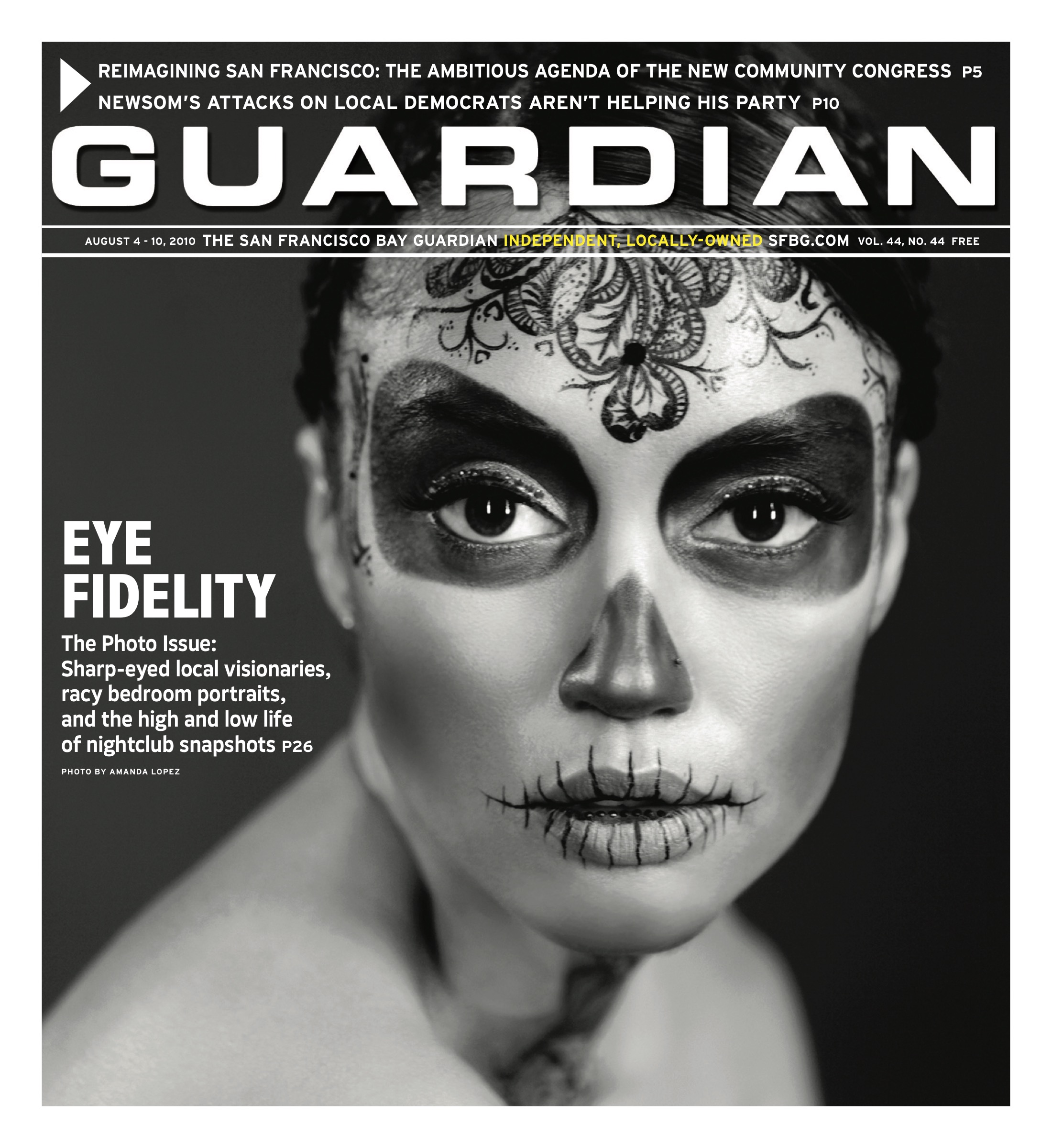
About 60 San Francisco citizens voted just before 1 p.m. on Aug. 15 to adopt a progressive platform of approximately 100 policy recommendations they hope will define the agenda of candidates and elected officials in coming years and offer a contrasting vision for the city to that of downtown corporate interests.

Sunday’s culmination of the 2010 Community Congress represented almost a year’s work by some 400 San Franciscans and dozens of community-based organizations, according to the Congress’ draft recommendations. The congress convened all day Aug. 14, at the University of San Francisco’s Fromm Hall, where participants engaged in breakout groups aimed at addressing four distinct local policy categories: health and human services; Muni and public transportation; affordable housing and tenant rights; and community-based economic development.

Recommendations in the four areas were drafted prior to the congress and published by the Guardian (see “Reinvention of San Francisco,” Aug. 4 and “Ideas that work: a plan for a new San Francisco,” Aug. 11), but planning group coordinator Calvin Welch said between a one-quarter and one-third were rewritten and amended during the breakout sessions on Saturday and by the congress as a whole on Sunday. Representatives from the breakout groups are working to finalize all the last-minute amendments and hope to post a final document by on the congress’ website (www.sfcommunitycongress.wordpress.com) by Aug. 20.

“This is a group of left-progressive people trying to articulate a left-progressive view for the city that is distinct from the cynicism of the [San Francisco] Chronicle and [Mayor] Gavin Newsom’s message,” Welch told the Guardian after the vote.

Gail Gilman facilitated the final adoption session on Aug. 15, passing a microphone to those who wished to speak or propose amendments while pushing the group to stick to the schedule. “I think we produced a solid progressive platform that will gain traction in the upcoming supervisors race,” Gilman told the Guardian outside the congress. “We’re hoping to have actionable items implemented over the next five years.”

Some of the congress’ ambitious agenda had to be put on hold, either because consensus couldn’t be reached or groups simply ran out of time. The Muni group’s recommendation to delay the Central Subway Project and use those funds to address “Muni’s backlog of operating, maintenance, and capital improvement needs” was tabled, as was decentralizing control of expenditures in health and human services out of the mayor’s hands. However, several agencies that the congress hopes to create, including a “canopy” entity to manage San Francisco’s public health system, would have direct budgetary control over city departments.

Health and human services group coleader and Bayview-Hunters Point Foundation Executive Director Jacob Moody told the crowd about a question posed early in the congress that informed his group’s recommendations: How do we create a city where people can live, work, and prosper together?

Welch admitted that some of policy recommendations would be difficult to realize and would draw the ire of powerful political groups in San Francisco, but he insisted that creating a municipal bank, an economic redevelopment agency, and a health and human services planning agency, and implementing several of the Muni group’s recommendations, were actionable in the short term.

“Some others would need to wait until the election of a new mayor,” Welch said. “I hope we can get some mayoral candidates to endorse some of these proposals.”

Sunnydale/southeast neighborhood community organizer Sharen Hewitt said that although there were often disagreements at the congress, the most important aspect of the event to her was that everyone learned from the perspectives of others.

“Tension is not always bad,” Hewitt told the Guardian at the event. “Everybody came here with biases and interests. Everybody needs to leave here with more. I’m damn near 60 years old and I grew half an inch today.”

Sunday’s congress and policy platform were modeled after San Francisco’s first Community Congress, which took place in 1975. But Welch told us this congress was entirely new. “To the extent that there is a historical aspect, 35 years ago we tried to figure out a way to bring people together. And 35 years later, young people want to do the same thing.”

“Diamond” Dave Whittaker, a modern Emperor Norton-esque San Francisco personality, closed the congress with a poem. “The basis of real social change is happening here,” he said. “And we need to continue casting a wider net, finding the thread, and letting it flourish.”

Alerts

0

alert@sfbg.com

THURSDAY, AUG. 19


Celebrating Young Activists

Mingle with environmental activists and community group members of all ages at the networking event Celebrating Young Activists: Building a Green Movement and Changing the World. The event features talks by inspirational young leaders, winners of the Brower Youth Awards, environmental and social justice organization information tables, and live jazz.

6:30 p.m., $10–$20

Richard and Rhoda Goldman Theater

David Brower Center

2150 Allston, Berk.

(510) 859-9100

SATURDAY, AUG. 21


Shoot Hoops, Not Guns

Commemorate the 25th birthday of Elliot Jemar Noble, who was killed by an Oakland police officer in 2005, at this combination march, basketball tournament, and gospel concert. The event is a benefit for the Elliot J. Noble Multiservice Family Organization, a nonprofit that provides support for families affected by violence. The parade begins at 10 a.m. at Eldridge and Darien streets, progresses to a 1 p.m. basketball tournament where players assume the names of slain or incarcerated loved ones, and ends with a gospel concert at 6 p.m.

10 a.m., $5–$10 for the concert

Ira Jinkins Recreation Center

9175 Ededs, Oakl.

(510) 895-5234

SUNDAY, AUG. 22


Tour Alameda Naval Air Station

Find out more about Alameda’s Naval Air Station, which closed in 1997 and remains the subject of much controversy and public debate over what to do with this prime piece of real estate. This guided tour combines a two-hour bus tour followed by a self-guided walking tour of the businesses engaged in adaptive reuse of the buildings. Reservations required.

1 p.m., 3 p.m.; $10

Meet in front of Alameda Naval Air Museum

2151 Ferry Point Road, Alameda

(510) 479-6489


Mobilization for Climate Justice

Get involved in the effort to stand up to big oil companies by attending this public action planning meeting for an Aug. 30 march and protest on the five-year anniversary of Hurricane Katrina. The protests will target the offices of BP and Chevron for their roles in environmental and community destruction in the gulf, the Bay Area, and around the world.

Noon, free

Mission Cultural Center

2868 Mission, SF

www.actforclimatejustice.org/west


Nuevos Horizontes

Attend a benefit dinner and show for Nuevos Horizontes, a domestic violence shelter in Guatemala that provides long-term housing, psychological counseling, legal advice, job training, and health care for women and children. There will be vegan and vegetarian options for dinner, bands, and speakers.

6 p.m., $8–$10

Call (510) 878-8879 or e-mail bigcavecomix@live.com for Oakland location

www.ahnh.org


Street Food Conference

Following the San Francisco Street Food Fest, attend this conference dedicated to the exploration of food, policy and economics. Participants will engage in discussions about the creation of viable economic models that allow small-scale food entrepreneurs to bring the foods they love to the cities in which they live.

Sat. Noon-5pm, Sun. 9 a.m.–3:30 p.m., $20–$50

Hotel Vitale

8 Mission, SF

sfstreetfoodconference.eventbrite.com

Mail items for Alerts to the Guardian Building, 135 Mississippi St., SF, CA 94107; fax to (415) 437-3658; or e-mail alert@sfbg.com. Please include a contact telephone number. Items must be received at least one week prior to the publication date.


New and improv-ed

0

The launching of the San Francisco Improv Festival, back in 2004, signaled a major resurgence for improvisational theater in the Bay Area, long dominated by the exceptional BATS (Bay Area Theatre Sports) and related groups, but recently joined by a host of newer outfits as well. The rollicking festival attracted eager audiences, while bringing together a somewhat disparate local and intergenerational community of improvisers with national and even international acts. There was cross-pollination everywhere, in meetings on and offstage between players and groups, in workshops and master classes, and of course in many a bar. It all contributed to the latest wave in a tradition of Bay Area improv that reaches back to the storied days of the Committee in the 1960s.

Then things got rocky as well as rollicking as SFIF organizers shifted around and founding members headed to other projects and/or climes, culminating in last year’s hiatus. The cancellation of SFIF 2009 might have been more discouraging had not the members of Crisis Hopkins, the San Francisco–based improv and sketch comedy troupe, thought fast and leaped into the breach, organizing a last-minute smorgasbord they called the Temporary Improv Festival. Still, while TIF proved a modest success, the name alone inadvertently contributed to an impression that the peak might have already occurred.

Nothing could be further from the truth. As if to prove the point, SFIF has risen once more, like a soggy phoenix from a still-cresting wave. The revival of SFIF, which comes under new Crisis-led management, frankly looks more ambitious than ever. It even comes with an iPhone app.

“Which is ridiculous,” says Sam Shaw, Crisis Hopkins member and a cofounder of SFIF in 2004. “The people I’m working with — including Anthony Veneziale from The Freeze, and Jamie Wright, Cassidy Brown, Chris Hayes, and Chris Libby — we’ve come up with these little touches that I never would have thought of. We’re going to have a food truck for primetime shows hanging out in front of the [Eureka] theater. We’ve got Solstice, this bar in Pacific Heights, [to] help us serve alcohol, so we’ll have a full bar. There’s a lot going on.”

Of course, the real meat is in the shrewd and eclectic programming. In addition to a generous number of local, national, and international troupes, SFIF 2010 is hosting workshops (including an already sold-out improv “boot camp” with Armando Diaz) and inaugurating the SFIF Award for Outstanding Contribution to the Improv Community, which this year goes to beloved veteran performer Barbara Scott of BATS, True Fiction Magazine, Tonal Chaos, and other groups.

Also among the special events is an intriguing “Look Back at The Committee,” featuring a panel discussion with founding director Alan Myerson and other unannounced guests in conversation with improv historian and Monty Python pal Kim “Howard” Johnson. Shaw says this last event, connecting the improv scene with some of its heftier roots, realizes a long-held dream.

“I cofounded the fest with Shaun Landry in 2004, and ever since then I’ve wanted to do a program on The Committee. It was San Francisco’s Second City from 1963 to 1973,” he explains. “They did topical political satire; they did sketch comedy and improvisation.” Led for a time by the wildly influential improv director-performer Del Close, The Committee also spearheaded major developments in the form, in particular an exciting long-form structure called the Harold (a name coined by Committee musical director Allaudin Mathieu). “It’s like a 30-minute riff on a topic where the audience goes along for the ride,” says Shaw. “And it was born in San Francisco.”

Half-way out in the year from SF Sketchfest, the popular comedy showcase held each January, and centered in the same 200-seat venue downtown, SFIF looks more than ever like a natural compliment to its unaffiliated cousin. “We love Sketchfest, and we love doing it every year,” says Shaw, who notes the complimentary aspects to their programming as well. As for the Festival’s performance roster, the names alone tantalize. OJ in a Sippy Cup, for instance, just sounds refreshing.

“OJ in a Sippy Cup is a pretty awesome name,” admits Shaw. “They’re a duo from New York City, and they’re very fun. I have to say that I love the name Slave Leia. That’s an all-woman improv team from L.A.” Among other highlights, Shaw points to Men: A User’s Guide, “a really exciting duo from the Netherlands. They’re very highly trained long-form performers doing a show on men and men’s issues, and it’s just hilarious.” He sheds light on an enigmatic title, The Super-Dupers: Doo-Wop-Ner. “That is going to be doo-wop small claims court improvising,” he says, clearly impressed. “Their submission just said ‘doo-wop small claims court.’ And we let them in.”

Clearly, one take-home lesson is the sheer variety of improv out there. The common denominator remains the all-inclusive collaboration in the moment, in which audiences participate to varying degrees. “The fourth wall is very porous,” agrees SFIF’s executive producer Jamie Wright, a Bay Area native who came to improv from afar while bartending at Amsterdam’s famous Boom Chicago comedy club. But he stresses that interaction shouldn’t sound intimidating. “I’m an improviser and even I don’t like getting singled out by a comedian. Improv is really inviting, a very joyful thing to go to and watch. It’s also impressive. You are going to see something completely unique, and you’re going to be part of it — one way or another.”

SAN FRANCISCO IMPROV FEST

Aug. 12–21, $15–$50

Eureka Theater

215 Jackson, SF

(800) 838-3006

www.sfimprovfestival.com

The Photo Issue: Parker Tilghman

0

SFBG Your website is more cunningly organized than a lot of photographer’s or artist’s sites. How does it relate to your photography?
Parker Tilghman I feel like my site isn’t fully representative of what I’m doing now. I’m in this weird exploration phase. I’m enjoying the medium as much as possible while I have access to tools at CCA. My website began as a creative outlet and a place to show my photography. It started with nightlife photography, but I got over it quickly. Once school started I didn’t have time to go out and I stopped working in that way to focus on my studies.

SFBG One of my favorite photos from the “night.” series on your site is of Fauxnique.
PT That was from [her show] Faux Real. It was such a cool number. I took that the last or second to last night [of the run]. I just happened to be in the front of the stage, and I was really excited when I got it. I showed it to Marc [Kate], her husband, and he was all about it. She’s so talented and I’m really thrilled about the success she has been achieving. 

SFBG “night.” also includes a photo of Veronica Klaus.
PT Veronica is probably one of my favorite women in SF. She’s amazing – so sweet and full of life and energy. One photo of her is from a big gay wedding that I shot shortly after Prop 8 passed. The other is of her and Joey Arias. Joey and Veronica were co-hosting Tingel Tangel that month. We did it really quick and dirty in the downstairs basement of The Great American Music Hall. The people behind the event wanted it to be done that night and I said if I was going to do it I wanted to take the time to do it right. I chose a spot and I set up all of my lights, but didn’t realize I was in front of the bathroom – someone took a major shit and it smelled really bad. Joey had to go on in about 15 minutes. I shot a few rolls and prayed for the best. It was classic.

SFBG Some of the bedroom and intimate interior shots from “lover no longer.” remind me a bit of the Boston School – Mark Morrisroe, David Armstrong, Nan Goldin – but they are mixed with outdoor scenes. Can you tell me a bit about that series and its subject?
PT He was this boy I was absolutely in love with. One of the first I felt I was actually in love with. He was living in NY and in graduate school at Columbia getting his MFA. Our time together was intense and very in the moment. He was here this time last year visiting me for a few weeks. The interior shots were taken in my apartment with a Polaroid Spectra. I would shoot without the flash in order to get these blurry, creepy images. I realized after we broke up that I never had a full head-on shot of him. It made sense because he was so far away both literally and emotionally. I was totally heartbroken but I  didn’t want to be a bitchy queen about it. I wanted to honor him in some way.
There are a lot of nude portraits of boys I don’t have on my site because everyone does that now. I have a beautiful collection of images of boys that I’ve encountered throughout my life. The images are a reminder of those relationships, sexual and otherwise.

SFBG You’ve made triptychs, and also series’ of related but varying images. What attracts you to that approach?
PT I’m obsessed with repetition – and how it can express obsession. People are drawn to form connections when they are confronted with multiple images in the same work. I’m interested in forming a communication between the images, whether they have something visually in common or not. In life I tend do the same stupid things over and over again. The repetition is an aesthetic choice, but it also forms a rhythm I become comfortable with and great things happen in that cycle.

SFBG What was it like to photograph Daniel Nicoletta?
PT I love Danny. He is such an idol to me and when I met him I was starstruck in a way. I think about it now and it seems silly because he is such a sweet man. I grew up queer in a small town in South Carolina. He was one of the first gay photographers I learned about through reading about Harvey Milk. He doesn’t have the recognition as a photographer that he deserves outside of SF. I feel that he has that potential now and I am very excited for him.
We spent a wonderful day together at Danny’s house when I photographed him. Danny was a bit of a bossy bottom — he tried to tell me what to do, but soon realized what he was doing and said, “I’m sorry, I’ll stop.” That image was the one moment where he let his guard down. He was fantastic and I still remain in close contact with him.
Recently, I’ve been spending some time with Arthur Tress. I photographed him last week. These photographers are coming into my life and I feel I can learn so much from them. They were there through the AIDS crisis and the Stonewall riots. They paved the way for me to make the work I am doing now.

SFBG “RGB” might be the most striking series on your site, both because of the colors and the sudden bursts of motion.
PT The original installation is on three separate televisions screens turned on their sides.  It’s fully dimensional and takes on aspects of 2-D, 3-D, and 4-D based mediums. They’re animated GIFS. I took the photographs with a stereoscopic lens and compiled the images in Photoshop to make them 3-D.
Stereoscopic imagery has been around since photography’s inception and you can still get these cheap stereoscopic lenses from Japan for about $100. At the time that I was heavily immersed in color theory- and constantly thinking about red, green, and blue. I wanted to play with those ideas on top of underlying notion of digital identity.

SFBG “marshall’s beach.” is different from some of the other series’ on your site in that it isn’t populated. Instead, you photograph detritus. It made me think of a time when I was on a beach with friends in Bolinas, and everyone was shell collecting, and I was most attracted to this bright yellow plastic bottle of Joy dishwashing liquid.
PT That series is more or less a placeholder for my site, although I do find the images to be beautiful. I was out at the beach on my birthday. The best thing I found in the sand that day was a deflated Mylar “Happy Birthday” balloon. I came back three days later and it was still there, so I kept it.
I saw this shirt on the pathway down to the water and thought, “Oh, someone’s cruising.” I walked through the bushes, but they were gone. All that was left were their condoms and lube on the ground. I began noticing that all the trash was in pairs around the area. I don’t think I’m the kind of photographer who just goes out and shoots rolls of film in hopes of finding something. That’s a boring task to me, but I like the idea of queer documentation in whatever form that takes.

SFBG That story makes me think about the waterfront and different photographers who’ve used it either to create gay photography, or documented gay life in that kind of zone. Alvin Baltrop did so in the Piers in New York, and his photos are also now a record of a Manhattan that doesn’t exist anymore. The other night I met an artist, Doug Ischar, who has a book of mid-1980s photos [Marginal Waters] of a sunbathing and cruising space in Chicago that also is no longer around. SF Camerawork had a show devoted to Alan B.Stone, who took pre-Stonewall photos of the Montreal coastline. And here in SF Denny Denfield was doing 3-D physique photography on the beaches.
PT Have you see Arthur Tress’s images from the New York piers in the ’70s? They’re fucking stunning – beautiful and violently sexual. He wouldn’t have sex with his subjects. The way he got off was by photographing these beautiful men in sexy, compromising spaces.
I like work like that because, while I’m a pervy gay boy at heart, I don’t want sex to be the overwhelming projection. I love Mapplethorpe, but more for the technical perfection and beautiful tones achieved in his prints than the blatantly sexual subject matter. I don’t want overwhelming sexuality to be present in my work because some people can’t get past it and it hinders further exploration.
For me, it’s more about having subtle undertones that are a little uncomfortable. You can feel its presence, but aren’t quite sure what is off. I think the magenta in the “Untitled.” color series is a good example of that. It has this underlying tone of strange eroticism that isn’t immediately recognizable.

SFBG There’s a specific alphabet on your main page, and around half of the letters aren’t attached to images yet. What’s to come?
PT I’m going to fill them up eventually. Knowing me, in a year’s time the entire site will be completely different. I like the format – if you get it, you get it. I live in the Tenderloin and within two days I got called a faggot twice walking down the street. I’ve been called a faggot my whole life, but I was in my own fucking neighborhood and I was just wearing boots and flannel! I didn’t even look that gay. I wanted to do something with the word ‘faggot’ and liked the idea of removing it from the alphabet completely. I like making people confused.

SFBG The image in the Guardian’s Photo Issue comes from “untitled (transparencies).” Can you tell me a bit about that series?
PT For this project I spent hours in the darkroom and sometimes forgot to eat or sleep. For me, it always starts as an aesthetic choice. I know a lot of people don’t like that idea, but I need something beautiful to work from as a point of departure. I wanted to play with pure color and investigate it was much as could within the photographic medium. I knew I wanted deep, rich color. I tried a bunch of crazy experiments with my film like pushing and pulling 5 or 6 stops at a time. I began using positive transparency film and printing it on normal color paper in order to produce a negative image. They’re double-exposed and manipulated in-camera. I can’t give away all my secrets.  There were tons of problem solving moments where I thought I would have a nervous breakdown, but it was fun to run with and work through.
The images themselves are horrific if you really look at them. I was reading a lot of Julia Kristeva, especially her writings about abjection and the duality of horror. She really defined what I was doing. I think in terms of queer art and culture she has so much to say, without even realizing it. There are so many connecting channels, even though her writing can be excruciatingly painful to read.
I was excited about making something beautiful and ugly at the same time by mutilating the figures. It’s something I’m proud enough to show, which is a big thing for me.

SFBG Your portraits of women have a mix of directness and depth.
PT Nude female portraiture is something straight male photographers do all the time. Being a gay male, the sexual tension was completely removed, which makes the gaze and the pose of the women very different.
A portrait shoot with me is like a two hour-long conversation. People ask about my camera because it’s big and imposing and it freaks them out sometimes.
I was interested in showcasing these queer women and normalizing them in a way. One person told me it’s like Cathy Opie without everything that makes them who they are. She’s concerned with all the surroundings that make them queer, while I’m interested in them when they are most vulnerable.

SFBG You’ve combined photography with different forms, from installation to bookmaking. What do you like about changing formats?
PT This is going to sound arrogant, but I don’t want to be just a photographer. I’m excited by having the opportunity to change and explore other mediums to achieve what I want. I don’t even really foresee that stopping in the near future. At the same time I’m interested in refining and focusing on what I’m trying to say and getting past making things just because they’re pretty.

SFBG What’s next?
PT I’m still playing with processes and have recently begun shooting directly onto color paper with an 8×10 camera to make paper negatives. I’m creating large wall installations of several small images. The color and detail I have been achieving is simply out of this world.

Our Weekly Picks: August 11-17, 2010

0

WEDNESDAY 11

MUSIC

Carla Bozulich’s Evangelista

Anyone who’s witnessed Carla Bozulich live knows the former Geraldine Fibbers frontperson is a true force of nature, bravely following her muse into the flatlands of Texas, onto arena-sized stages, or to the ear-scorching reaches of experimental music. For the past month, the Bay Area has been home to the artistically restless Bozulich, who says she never stays anywhere for very long. Still, this is her refuge as she writes her fourth album with Evangelista for the respected Constellation imprint — recording once again with players in Godspeed You! Black Emperor — before she heads out again. This fall, she’ll be directing and performing at a massive multiday installation-performance in Krems, Austria. Godspeed you, Ms. Bozulich, who hopes to “shake things up a bit” at her favorite old haunt, Cafe Du Nord, with guests Ava Mendoza on guitar and John Eichenseer on viola. (Kimberly Chun)

With Common Eider, King Eider

9:30 p.m., $14

Café Du Nord

2170 Market, SF

(415) 861-5016

www.cafedunord.com


EVENT

Henry Lee

Once a prolific Chronicler of one of the biggest media snafus in recent Bay Area memory, Henry Lee adapted and expanded his coverage of the Hans Reiser murder case for his true crime book Presumed Dead. What elevates it beyond a sensationalist paperback is Lee’s cogent reportage and willingness to think more about the unthinkable (spousicide, for one) than most would ever dare. He starts with the life of murder victim Nina Sharanova and weaves his way into the nitty-gritty of the case. Even before this summer’s publication, Lee proved himself a stalwart for local journalism — and for all the other strong stomachs out there delivering cold, hard truths. (Ryan Lattanzio)

7 p.m., free

Books, Inc.

1760 Fourth St., Berk.

(510) 525-7777

www.booksinc.net


THURSDAY 12

EVENT


Infinite City: Right Wing of the Dove”

The release of Rebecca Solnit’s Infinite City: A San Francisco Atlas — a book that digs through the dense and dirty histories, cultures, and sites of the Bay Area with help from cartographers, artists, and writers — is preceded by a series of cartographic “live art” events at the San Francisco Museum of Modern Art and in the Bay Area at large. Part two of this series is a screening of In Smog and Thunder: The Great War of the Californias (2003), written and art-directed by Sandow Birk. Drawing from his own experience amid the antagonisms of these two cities, Birk satirically envisions a civil war between Los Angeles and SF, and his 100-plus artworks comically probe the ongoing geo-ideo-cultural tension. Afterward, Solnit leads a post-screening discussion on the contradictory relationship between our liberal values and local economy. That SF and LA are cultural foils is well-known. But Solnit points out, friction is being made closer to home. (Spencer Young)

7 p.m., free with museum admission ($9–$18)

SFMOMA

Phyllis Wattis Theater

151 Third St, SF

(415) 357-4000

www.sfmoma.org


THEATER/DANCE

Rapid Descent Physical Performance Company

Love ain’t easy. Relationships are intense, emotionally draining, and take up too much time. What then (besides cuddling) keeps us coupling up? New Zealand playwright Gary Henderson might have the answer. And thanks to choreographer Megan Finlay and her physical performance company Rapid Descent, you won’t have to go all the way to New Zealand to find out. Finlay brings Henderson’s Skin Tight to San Francisco and reworks the original script to incorporate dance as well as live music by trumpeter Aaron Priskorn. Centering around the enduring love of one couple (played by Beth Deitchman and Nathaniel Justiniano), Skin Tight exposes the visceral complexity of hostility and attachment. (Katie Gaydos)

Through Aug. 28

Thurs.–Sat., 8 p.m., $20–$35

CounterPULSE

1310 Mission, SF

www.counterpulse.org


ROCK

Dawes

The California Academy of Sciences, a place that puts nature on its proper pedestal, is a great venue for Dawes. The band has appreciation not just for its own musical genealogy, but also for the mysteries of the American landscape. This folk rock quartet, helmed by the Goldsmith brothers, saw Americana anew on the debut album North Hills, undoubtedly a nod to that small-town Louisiana region. The songcraft recalls the harmonic pastures of Crosby, Stills, and Nash. Like a pair of Levis, Dawes’ faded wear-and-tear is contrived — yet it feels genuine, and that’s what counts. A song like “Take Me Out Of The City” gives a microcosmic view of the band’s guitar-plucking, straw-gnawing aesthetic. (Lattanzio)

6 p.m., $12

California Academy of Sciences

55 Music Concourse Dr., SF

(415) 379-8000

www.calacademy.org


MUSIC

Reverend Horton Heat

It may be hard to believe, but the rockabilly juggernaut that is the Reverend Horton Heat will be hitting the 25 year mark soon — and as fans of the Texas trio know, the band’s strong suit is its live show. So in fitting fashion, it has decided to celebrate its upcoming milestone by filming a live set in our fair city’s legendary music venue, the Fillmore, for a special release next year. Although the band will be sure to touch on material from its latest album, Laughin’ and Cryin’ With The Reverend Horton Heat, expect Jim Heath, Jimbo Wallace, and Paul Simmons to dig into their back catalog for some oldies and goodies as well. (Sean McCourt)

With Split Lip Rayfield, Hillstomp

9 p.m., $25

Fillmore

1805 Geary, SF

www.thefillmore.com


FRIDAY 13

EVENT

Terry Zwigoff

On Aug. 10, there were two things of utmost importance you should’ve celebrated: National S’mores Day and the arrival of Terry Zwigoff’s 1995 documentary Crumb on Criterion Collection DVD. Zwigoff, personal hero of many (including myself), will be at Amoeba to sign copies of that new release plus his 1985 film Louie Blue, also slated for Criterion treatment. Blues musicians Frank Fairfield and Blind Boy Paxton will accompany, which fits the bill since Zwigoff has made the blues and its many subgenres a focus of his films. He probably saw some of himself in Seymour, the LP-loving and lovable schlub in Ghost World (2001), just as he understood artist R. Crumb’s grotesque genius. (Lattanzio)

6 p.m., free

Amoeba Music

1855 Haight, SF

(415) 831-1200

www.amoeba.com


COMEDY

Bobcat Goldthwait

Although he is perhaps most initially recognizable for his high-pitched, scratchy voice and wacky mannerisms from his appearances in 1980s movies and comedy specials, Bobcat Goldthwait is a man of many talents. From his breakout acting roles in flicks, including the Police Academy series, to his live album Meat Bob, to directing his first film Shakes The Clown in 1991, the versatile performer has had an ever-expanding resume. He even opened for Nirvana on its 1993 U.S. tour. Last year saw the release of his critically acclaimed film World’s Greatest Dad, and his newest project is directing a U.K. musical production based on the Kinks’ Schoolboys in Disgrace album. Be sure to catch the hilarious — and busy — man live on stage while you can. (McCourt)

Through Sat/14

8 p.m. and 10:15 p.m., $20.50

Cobb’s Comedy Club

915 Columbus, SF

(415) 928-4320

www.cobbscomedyclub.com


SATURDAY 14

MUSIC

Stone River Boys

Although their recent debut album Love On The Dial was born in the midst of enduring personal tragedies, the Stone River Boys created a collection of inspiring tunes that meld country with a host of other roots rock influences. Featuring guitarist Dave Gonzalez (the Paladins and the Hacienda Brothers) and singer Mike Barfield (the Hollisters), the group came together a couple of years ago while the two were trying to help raise money for friend and fellow musician Chris Gaffney’s cancer treatments. “Gaff” passed away before the benefit tour could begin, but the resulting music is a fitting tribute, carrying the torch and keeping the infectious spirit of their friendship alive. (McCourt)

With Carolyn Wonderland, Mother Truckers

9 p.m., $15

Slim’s

333 11th St., SF

(415) 255-0333

www.slims-sf.com


SUNDAY 15

MUSIC

Dan Sartain

How did a lip-stachioed rocker from Birmingham, Ala., become the poster child for the garage roots revival? Well, he didn’t really; Jack White already had that crown. But years of paying tribute to the gods of garage and blues eventually landed Sartain on a tour with the White Stripes in 2007 — the subsequent 7-inch release for White’s Third Man label now seems like your textbook well, of course! facepalm moment. The pair’s aesthetics of “garage-a-billy” with a Morricone spaghetti western tinge are invariably complementary. And although it may seem a disservice to all the time Sartain put into his sound before this epic meeting of minds, you have to admit there are worse career maneuvers than being linked to Jack White. (Peter Galvin)

With Leopold and His Fiction, Twinks

9 p.m., $8

Hemlock Tavern

1131 Polk, SF

(415) 923-0923

www.hemlocktavern.com


MUSIC

Rasputina

Fourteen years on from the advent of Rasputina’s cello-goth-lite musical stylings on Thanks for the Ether, the trio is touring behind its latest record Sister Kinderhook. Vocalist-songwriter-cellist Melora Creager is the only remaining original member (in fact, the band’s lineup has even changed since recording the album, with percussionist Catie D’Amica stepping down). Rasputina seems to be maintaining its historical fascination here — the album’s embroidered cover anachronistically purports that it was “wrought by Rasputina circa 1809.” They’re well-matched with supporting act Larkin Grimm, a skilled practitioner of weird folk and one-time member of Dirty Projectors whose riveting life story incorporates being born into a cult, studying at Yale, and spending time in Thailand and Guatemala. (Sam Stander)

With Larkin Grimm

8 p.m., $16

Great American Music Hall

859 O’Farrell, SF

(415) 885-0750

www.gamh.com


MONDAY 16

EVENT

Alison Gopnik

UC Berkeley psychology and philosophy professor Alison Gopnik is responsible for groundbreaking work exploring the ways young children think and learn. She’ll be reading from her latest book, The Philosophical Baby, just a few blocks from Berkeley campus. A Chronicle bestseller, the book continues to delve into developmental psychology for new insight into some momentous topics (it is, after all, subtitled What Children’s Minds Tell Us About Truth, Love, and the Meaning of Life). Heavy subject matter, to be sure. But since it’s also about babies, you can temper those overwhelmingly deep thoughts with cuteness and chortling. Oh, and an inborn template for the scientific method, apparently. (Stander)

7:30 p.m., free

Pegasus Books Downtown

2349 Shattuck, Berk.

(510) 649-1320

www.pegasusbookstore.com


TUESDAY 17

EVENT

“Idiolexicon”

It’s changed over the years, for better and for worse, but the Bay Area is still a hospitable place for poets. Just look at the newly opened café-performance space Rancho Parnassus. According to its website, RP’s goal is “to get the abundant untapped talent around Sixth Street working together.” Toward this end, the venue is hosting an installment of the “Idiolexicon” series, with readings from local poets Carrie Hunter, Della Watson, and Jessica Wickens. All three are billed as experimental, but their work also bears more than a hint of high-modernist influence. Watson’s unconventional syntax is reminiscent of Gertrude Stein, while Hunter’s “Kine(sta)sis” evokes Poundian Imagism. On the page, it’s all pretty effective stuff. Come to the reading, and you can decide how it plays live. (Zach Ritter)

7 p.m., free

Rancho Parnassus

132 Sixth St, SF

(415) 503-0700

www.idiolexicon.com 


The Guardian listings deadline is two weeks prior to our Wednesday publication date. To submit an item for consideration, please include the title of the event, a brief description of the event, date and time, venue name, street address (listing cross streets only isn’t sufficient), city, telephone number readers can call for more information, telephone number for media, and admission costs. Send information to Listings, the Guardian Building, 135 Mississippi St., SF, CA 94107; fax to (415) 487-2506; or e-mail (paste press release into e-mail body — no text attachments, please) to listings@sfbg.com. We cannot guarantee the return of photos, but enclosing an SASE helps. Digital photos may be submitted in jpeg format; the image must be at least 240 dpi and four inches by six inches in size. We regret we cannot accept listings over the phone.

Bay Area assemblage

3

arts@sfbg.com

FILM/MUSIC/VISUAL ART Since July 9, local artist David Wilson has programmed the Friday night L@TE shows at the Berkeley Art Museum, in conjunction with “Gatherings,” his installment in the site’s MATRIX series. On Friday the 13th, Wilson concludes his summer contributions to L@TE with presentations by Jamie Stewart, the veritable prince of darkness for Oakland-based indie band Xiu Xiu, and Bay Area film critic Max Goldberg. The program is not only about gatherings in nature but also the assemblage of disparate art forms. Wilson has traversed between media to suss out the kind of aesthetics you can see, and invisible aesthetics that can only be heard. Or as he puts it in an e-mail: “I have been organizing a seasonal series of performances that foster collaborations with different artists and performers and bring people together in unique circumstances.”

Adjacent to Thom Faulder’s BAMscape — a massive orange installation that doubles as sculpture and furniture, beckoning spectators to “sit on it” but also turning them off with its uncomfortable wood seating — Wilson has placed what he calls “a large cove structure of found wood.” It works like an indoor amphitheater. This summer it has become the playing space of musicians such as Grouper and Gamelan Sekar Jaya. Wilson also has framed some works in conjunction with the interactive architecture installed in the gallery. “I’ve been making art about place and experience in place,” he writes. “Often this takes shape as a series of drawings made during explorations through the hills, or as a single drawing of a place.”

When he’s not brooding onstage or exploring childhood trauma in Xiu Xiu, Oakland native Stewart has cultivated a rather self-effacing hobby: bird-watching. “I find myself inexplicably in North Carolina,” he tells me in a phone interview. He’s been living there for about two years. “There are a lot of hunting stores … [with] rows and rows of different animal calls. A lot of these are really horrifying. The hunting bird calls sound like the environment completely exploding.”

I ask Stewart not to be totally forthcoming about his performance, as the element of mystery and the unexpected will be crucial to this event. “It’s an ambient piece,” he says. “I have a really extensive collection of gongs and animal calls and I will be using these together, but with long periods of silence. It’s an attempt to incorporate ideas of 1950s minimalist composition insofar as focusing on the pauses in sound, animal sounds, and a certain amount of physicality.”

In trying to realize the chasm between din and utter silence, Stewart cites composer Rhys Chatham’s Two Gongs (1971) as an inspiration. Of ambient music, Stewart explains, “It ends up being less of a musical experience and more of a psychological and physical experience.”

The aural and physical aspects of Stewart’s contribution — since he will be running from gong to gong — collide with the almost exclusive visual focus of Goldberg’s carefully curated selection of short films, all culled from Canyon Cinema. In the same way that the aural, physical, and visual get cozy and find a crossroads at BAM, the trio of Wilson, Stewart, and Goldberg will gather and treat BAM like a bazaar for the exchange of artistic interests.

Goldberg, a friend of Wilson’s and an admirer of Xiu Xiu (and Guardian contributer), says in an interview that the films he curated are “tuned into different ideas about recording nature. It’s not just observing. You’re in the midst and you encounter it.” For the exhibit, he sought “aesthetically amazing works” because he is “eager to capture the eyes of people who might not know about experimental cinema.”

The six shorts include films by Jeanne Liotta, Len Lye, and avant-garde household name (because there are so many of those!) Stan Brakhage. One of the most stunning works is Ben Russell’s 2007 Black and White Trypps Number Three, which turns a mosh pit into a fugue state with epileptic, chiaroscuro-heavy visuals. “They’re all films with no spoken language, and that was unintended,” Goldberg tells me. He’s curious about BAM-as-theater since it is “not a controlled environment for viewing films.” The projector will be placed right in the audience, in BAMscape’s center.

While Stewart’s performance and Goldberg’s handpicked film selection will not occur at the same time, they will operate in tandem, addressing the aesthetic concerns of place — and its, well, place in nature — while creating a multisensory experience: a disquieting yet provocative full-course feast for the open eyes, ears, and mind.

L@TE: JAMIE STEWART AND FILM PROGRAM BY MAX GOLDBERG

7:30 p.m., $5

Berkeley Art Museum

2625 Durant, Berk.

(510) 642-0808

www.bampfa.berkeley.edu


PayPal freezes the finances of Burning Man’s Temple crew (UPDATED)

117

PayPal has frozen the account of the Flux Foundation – a large crew of Bay Area artists and burners that is headed to the Black Rock Desert this week to build the most ambitious Temple in Burning Man‘s 25-year history – claiming the right to profit from the money until the group formally attains its nonprofit status from a backlogged federal government.

“All that money is just sitting there and we can’t touch it,” says artist Jess Hobbs, referring to the tens of thousands of dollars that the crew has raised this summer through events and other fundraising drives to supplement an art grant from Black Rock City LLC that didn’t come close to meeting the project’s $180,000 budget.

PayPal — which has been criticized for its secrecy, financial manipulation, and other corporate misbehavior — was founded in San Jose in 1998 to facilitate online financial transactions and in 2002 was taken over by eBay, the company from which billionaire California gubernatorial candidate Meg Whitman acquired her wealth.

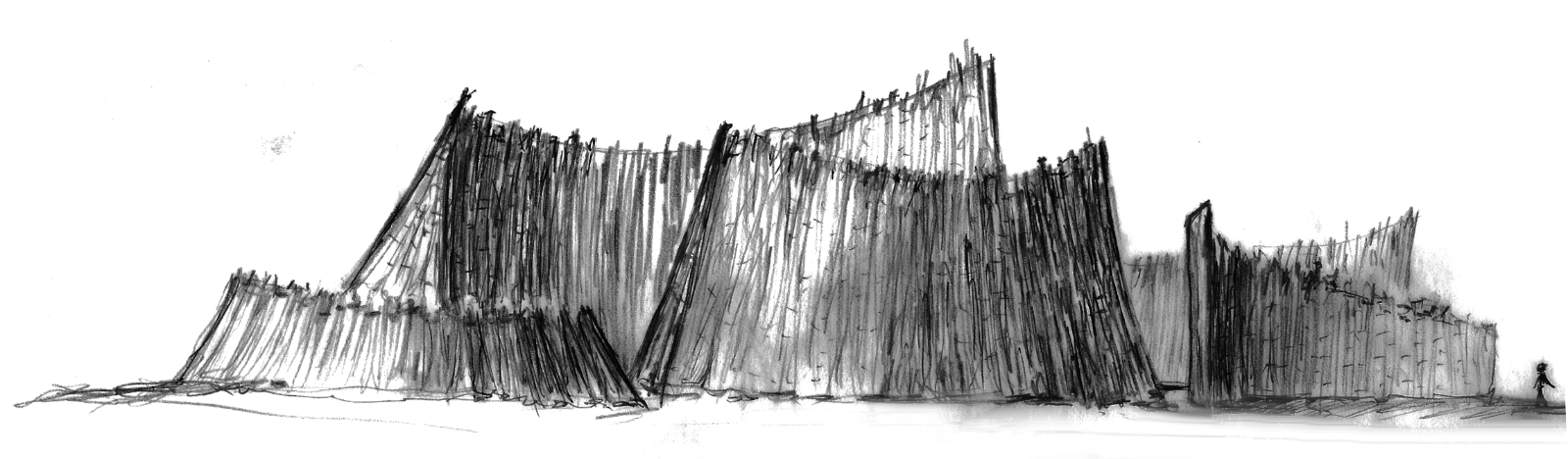
The company has not returned inquires from the Guardian made this morning. Hobbs and a crew that includes more than 200 other artists and burners have voluntarily worked almost every day this summer to build the Temple of Flux, a series of massive dunes that replicate peaks, canyons, caves, and other natural land forms – a project that I’ve been embedded with for a Guardian cover story that comes out Sept. 1.

“They will take the donations and their fees, but they won’t give us our money until we get our nonprofit status,” Hobbs told a meeting of the crew last night at the American Steel warehouse in West Oakland, where they’ve been working on the project since early June, before she and other principle artists PK Kimelman and Rebecca Anders left for the playa today. “And the IRS is so backed up they’re taking at least six months to give out nonprofit status.”

Hobbs and other Temple crew members are now scrambling for ways to support a difficult on-site build that will take more than two weeks to complete, including asking crew members for loans and encouraging everyone to put the word out to the community, hoping to find generous benefactors who can at least extend a bridge loan.

Burning Man crews and camps are traditionally informal groups, but given the scale of this project, the Temple of Flux crew this year tried to create a new model for fundraising and sustaining the organization beyond this year’s Burning Man event by filing the voluminous paperwork required to create the nonprofit Flux Foundation.

But now, PayPal has thrown the effort into a real state of financial flux, taking its cut of nearly 3 percent but refusing to even explain why the corporation has deemed it necessary to freeze the group’s finances.

UPDATE: PayPal has released the fund due to reader outcry. Read more here.

Appetite: Tales from Tales

0

In 100 percent humidity at nearly 100 degrees (and no relief at night), spending a week drinking and eating doesn’t sound like the best idea, but for eight years running, it happens every July in New Orleans at Tales of the Cocktail. For cocktail lovers and industry, this is THE drink event of the year.

My first, or virgin, year at Tales, was as sleepless and packed as everyone said it would be, but moderation is the name of my game (at least outside of the sleep arena), and I managed to indulge and enjoy without so much as one hangover from anything other than sleep deprivation. Of course, it meant merely tasting most drinks, eating a lot (NO problem in New Orleans!) and promptly turning around upon surveying nightly after crowds at Old Absinthe House, heading to quieter bars or the Monteleone lobby for civilized conversation instead.

Opening party at Elms Mansion — a truly magical setting

I already feel completely alive in my skin when I’m in New Orleans. Any reason to be in that queen of cities is a good reason for me. Tales itself grew progressively better as the week went on, despite awful heat and waning sleep… mainly because I continued to meet great people which led to further excursions, tastings, dinners, parties, and as the cumulative effect added up to a host of memories and experiences.  Let me try to summarize a mere few highlights for you – read more about the 2010 Tales and New Orleans in my upcoming 8/15 issue of The Perfect Spot:

LIFE-ALTERING TASTING of 1865 & 1805 COGNAC!
7/25 The Mysteries & Secrets of Distilling in Cognac
Cognac masters, Olivier Paultes and Alain Royer, moderator Dale DeGroff, and spirited bartender extraordinaire, Salvatore Calabrese, were keepers of the surprise that awaited at the end of a fascinating, seemingly routine seminar on the methods of distilling cognac, along with a token five cognac side-by-side tasting.

The seminar suddenly escalated to once-in-a-lifetime experience when Calabrese informed our small group that he had brought not only a bottle of 1865 Rouyer Guillet & Co. cognac to share together, but also an 1805 Maison De L’Emprereur cognac he was going to make a Sazerac with! The room erupted in applause as we stood on chairs to take photos and watch him mix what he called a “$10,000 cocktail”. We passed the Sazerac around, each savoring a profound sip.

Dale DeGroff pours us an 1865 cognac

We all had a pour of the silky 1865. I exhaled and placed my head down on the table after first taste. It was remarkably full, refined with raisin and floral notes initially, a finely balanced burn, evolving into chocolate and nutty notes. I could barely begin to fathom the history wrapped up in each sip. As Calabrese exclaimed, “This was made when Abraham Lincoln was alive!”

Worth far more than the $40 price of admission, the lucky few who happened to be in this seminar got an education beyond what we could have ever expected. We lived a moment that, for drink lovers, will remain a marker of earth-shattering tastes for the rest of our lives.

GREEN GORILLAS DESCENDING on the PELICAN CLUB
7/22 at The Pelican Club Spirited Dinner, French Quarter
Thursday night there were Spirited Dinners across town. I chose the one at Pelican Club mainly because of the all-star line-up of bartenders from across the country pairing cocktails with a six-course dinner: Marcos Tello – The Varnish, LA; Jim Meehan – PDT, NY; Misty Kalkofen – Drink, Boston; Peter Vestinos – Wirtz Beverage Group, Chicago; and our own rockstar, Neyah White, formerly of Nopa.

The food was not as fine as I’d hoped, but the atmosphere was convivial, festive, a warmly welcoming party. The cocktails all featured the night’s spirit: Bols Genever. Neyah clearly had fun creating the dessert cocktail, Drum Shag: Bols, sarsaparilla, PX sherry, infused with smoke.

But the highlight of the night? A foursome of green gorillas descended on the bar during aperitif hour before we were seated at our tables. I’d seen them at the pool of the Monteleone before, or roaming the streets, surely hot and sweaty in their cheap, neon green garb. The site of these guys at the elegant Pelican bar while some of our country’s best bartenders poured them shots was a memorable image, one that somehow typifies the wacky exuberance that is Tales.

DEL MAGUEY – RON COOPER – MEZCAL
7/25 La Verdad (The Truth) about Mezcal Seminar
Everyone who knows anything about mezcal knows Ron Cooper of Del Maguey is the master, having done more to further the mezcal gospel than anyone, even being called the “mezcal missionary”. As my friend whispered to me during the seminar, describing the panel of mezcal distillers: “They’ve all drunk the kool-aid, haven’t they?” Despite the fact that I’ve already been a mezcal fan for years, so did I… so did we all… by the end of the session.

I’m must be honest and say, much as I appreciated every distiller there (Illegal Mezcal, Los Amantes, and Sombra), as has been my common experience in previously tasting these and other mezcals, none hold a candle to Ron’s entire product line. This was sorely highlighted in a side-by-side tasting of all the above next to five Del Maguey mezcals. But all these guys were heartfelt and inspiring, while Ron himself is a small, peace-filled  powerhouse of a man… the Yoda of the mezcal world.

Every single Del Maguey mezcal is a revelation, whether the creamy, smoky sweet of Crema de Mezcal, or the chocolate earthiness of other-worldly Chichicapa. More to come soon in my Guardian column and here about his mezcals. Thanks to Neyah White, try Del Maguey by the shot at Nopalito, in cocktails throughout SF, or order some bottles. Once you dig further into mezcal, particularly through the Del Maguey lens, you, too, will “drink the kool-aid”.

SOUTHERN ROMANCE of DIXIELAND JAZZ under SWEEPING OAKS
7/22 William Grant & Sons Opening Party at Elms Mansion in the Garden District
Yes, by 1am it felt like it was actually getting hotter as I wilted in the oppressive humidity, but what could have been more romantic than the stately, white Elms Mansion with stunning wood carved fireplaces and ceilings, scotch bar in the drawing room, white lights and absinthe in the garden, and live Dixieland band playing under a white-pillared rotunda? Not much. As massive oak trees loomed over us, even larger than the mansion, I felt fully alive and grateful… I was in the South.

A SUDDEN DOWNPOUR entering the BARTENDER’S BREAKFAST
7/24 Bartender’s Breakfast – Spirited Awards after party
A second line jazz funeral was held for Sex on the Beach, a cocktail that surely needed to be buried, on the walk from the Spirited Awards Ceremony to the Bartender’s Breakfast, where the likes of Audrey Saunders and Jim Meehan were making us drinks. Before entering the building, a sultry Summer storm rushed through, dampening our dresses, suits and hair. A warm rain, it wasn’t exactly a respite from the unrelenting heat, but it somehow refreshed, invigorated, injecting us with energy to celebrate late into the night.

Ideas that work: a plan for a new San Francisco

6

OPINION San Francisco is a city of tremendous riches and problems — a locus of wealth, inequality, innovation, creativity, and sometimes stifling resistance by political and economic power brokers. It’s time to break through. We have the ability, and opportunity, to create a whole new set of economic, social, and political relationships between people and government. On everything from municipal banking, to Muni reform, to public-controlled sustainable energy production and community-driven budgeting, we have a flood of ideas from thinkers and activists across the city.

The Aug. 14-15 Community Congress at the University of San Francisco will focus on turning those ideas into a political platform the city can implement. Last week, we described the vision; this week, we offer some proposals that will be discussed at the event; following the event, others will be posted at sfbg.com.

The event runs Aug. 14 from 9 a.m.–5 p.m. and Aug. 15 from 9 a.m.–1 p.m. at USF’s McLaren Conference Center. For information, go to www.sfsummitcongress.wordpress.com. (Karl Beitel and Christopher Cook)

1. A MUNICIPAL BANK


San Francisco is rich — it has $16.1 billion in assets, with a net worth of $6.5 billion, according to the city treasurer. With a little maneuvering and political will, roughly a half-billion of that money could be devoted to creating a municipal bank: a fiscally solvent, federally insured economic engine that would invest in community development projects serving underfunded activities and endeavors, providing significant economic and social benefits to the residents of San Francisco.

With its own public bank, San Francisco could begin to fund and promote more community-centered forms of economic development. Worker co-ops, for instance, could get loans for projects that are socially beneficial and economically viable. The bank could also help generate new homegrown industries that produce both revenue and social value to the city. This would help democratize the city economy, giving financial muscle to community-based projects and neighborhood-serving businesses.

Over a period of three to five years, a modest portion of the city’s liquid investments can be transferred to create to the new bank. The bank could use this pool of capital to extend low-interest, long-term loans for projects located in San Francisco. The bank would offer a full spectrum of retail banking services, such as money market accounts, to attract additional deposits to supplement funds from the city.

A municipal bank has potential to grow into a major economic force in the city for financing community-centered development. With the right up-front commitment from the city, the total asset portfolio of loans and other investments would grow far beyond this initial public investment — representing a significant infusion of loan capital into currently underserved segments of the credit market in San Francisco.

The municipal bank would be a member-owned, federally chartered, and federally insured credit union. It would engage in rigorous vetting of loan applicants. But because the bank would not run as a profit-maximizing enterprise, loan officers would explicitly consider projects in light of their economic viability and potential contribution to the economic, social, and cultural well being of San Francisco.

Priority could, for instance, be given to loans for affordable housing development and community economic development. In particular, the bank could prioritize businesses and enterprises that represent alternative models of ownership such as worker co-ops and worker collectives, and smaller, community-serving, locally-based, social enterprise-type businesses.

To ensure that the bank’s lending activities reflect the need for more democratic modes of credit and finance, governance and oversight could include representation from social groups and constituents normally excluded from corporate governance. The bank’s member-owners would elect the board of directors.

Municipal bank funds would be completely separate from the city’s general fund, with strict firewalls imposed to assure that lending activities do not become intermingled in any way with the annual appropriations process.

By creating its own bank, San Francisco would be a national model for community-based development and economic democracy. It would be a national first, and has the potential to transform how cities think about local economic development. (Beitel)

2. HOUSING SAN FRANCISCO


Since the beginning of the dot-com boom, San Francisco has seen displacement of low-income families from rent-controlled housing in alarming numbers. Much of this displacement has been happening through conversion of small residential apartment buildings (between four and 12 units) into tenancy in common units. Small-site displacement tends to target seniors, disabled people, and working class families — and many of the units that were converted were, under rent control, de facto affordable housing.

In addition, over the past 15 years the city has lost 4,370 units due to Ellis Act evictions. At the same time, the city’s housing production model favors larger projects because of the economies of scale possible for new construction of big projects, with 70 or more units. While these projects are important in adding to the city’s affordable housing stock, sites to accommodate giant developments are in short supply.

So how do we address San Francisco’s chronic affordable housing crisis. First, stabilize low-income communities and preserve diverse neighborhoods by encouraging the city to invest in developing a small sites acquisition and rehabilitation program that could help nonprofits take over and operate affordable rental housing for low-income tenants. That property could also be converted to limited equity housing cooperatives and community land trust properties.

Next, the city should ban all TICs from becoming condos. The city can give landlords and speculators a choice: If you want your property to be eligible for condo conversion, with all the economic benefits that come with that designation, then you need to follow the process and abide by tenant protections in the condo law. If you want to ignore the condo law, then you’re stuck with a TIC.

To further protect renters, prior to sale of a renter-occupied unit, the city could require the owner to offer tenants the right to buy the unit, at a price based on the last best offer from a bona fide purchaser.

The Rent Board also needs reform. The panel, which oversees rent increases, consists of five members: two landlords, two tenants, and one homeowner. All are appointed by the mayor. We suggest three tenants, two landlords, and two homeowners — with the appointments split between the mayor and the supervisors.

There also must be a permanent, local source of funding for affordable housing development. A progressive increase in the real estate transfer tax could generate $45 million annually.

We further support Sup. Ross Mirkarimi’s proposed legislation that would protect resident’s rights during relocation and ensure their right to return to buildings that have been redeveloped. (Amy Beinart and the Council of Community Housing Organizations)

3. THE CRISIS IN CARE


More than any other American city, San Francisco relies on a network of faith- and community-based nonprofits to deliver critical health and human services to its poorest and sickest residents. More than 15,000 people are employed in this sector, which had a total budget of almost $800 million in 2000.

Health and human service nonprofits play a significant role in providing a substantial portion of the city’s services for seniors, people with AIDS, the homeless, children and youth, people with special physical and mental needs, and those who suffer from substance abuse.

Yet this critical sector finds itself bearing the brunt of cuts and reduction in services caused by the fiscal crisis facing San Francisco.

So what can we do? Here are seven suggestions.

First, conduct a coordinated citywide health and human services needs assessment driven by neighborhoods and communities.

Second, working with service users, service providers, and city employees, create a 10-year plan for health and human services that can guide yearly budget considerations.

Third, as the city implements the 2009 ballot measure that calls for a two-year budget cycle informed by five-year financial plans, require department heads and commissions to include the perspective of professional service providers and service users, including a standards analysis plan and a narrative about the impact on services.

Fourth, open a dialogue with the foundation community on addressing the changing needs of the nonprofit human services community, including community needs, accountability, and funding cycles.

Fifth, depoliticize the request-for-proposals (RFP) process by moving it out of city departments and into the Controller’s Office.

Sixth, require city departments that contract with nonprofit health and human service providers to complete their implementation of the recommendations to streamline the city’s contracting and monitoring processes approved by the 2003 City Nonprofit Contracting Task Force, and ensure that current procedures and processes are consistent with those recommendations.

And seventh, preserve services for the most vulnerable San Franciscans by focusing on revenue solutions to the city’s ongoing structural budget deficit, including November 2010 campaigns to increase the hotel tax and the real property transfer tax. (Debbi Lerman, Human Services Network)

4. BUILDING WORKER COOPERATIVES


Although these are hard times, there’s an opportunity for San Francisco to realize a new model of economic sustainability — by supporting worker cooperatives.

The worker cooperative model is a business form well-suited to the diverse needs of urban areas and is already viable in a broad variety of sectors including manufacturing, service, and retail. A key aspect of worker cooperative development is that its goal is not just the creation of jobs; it’s also about making business ownership accessible.

An inspiring new model of economic development is currently taking place with the Evergreen Cooperatives in Cleveland. In an ambitious effort, anchor institutions such as the local universities, hospitals, and the City of Cleveland have established procurement agreements with developing worker cooperatives rooted in the struggling urban communities of Cleveland (where unemployment rates are as high as 25 percent). The goal is to redirect the estimated $3 billion that these anchor institutions spend on goods and services toward worker cooperatives in the communities where these institutions are located. The first two business models underway are a commercial laundry service and a solar installation company.

There’s also a lot of inspiring work already being done by the worker cooperative community in the Bay Area. The Arizmendi Association continues to develop new worker-owned bakeries despite the economic recession. This fall, Arizmendi will launch its second SF location in the Mission District, creating new jobs and opportunities for local residents to have ownership over their work. Rainbow Grocery and Other Avenues are two extremely successful, long-lasting worker-owned grocery stores in San Francisco.

The city ought to officially recognize the worker cooperative model as both viable and preferable, and include it in the city’s various efforts of economic development. And city officials should take a leadership role in reimagining what a vibrant economy could look like and begin to promote worker cooperatives as central to that vision. (Poonam Whabi, Rick Simon, Steve Rice, Inno Nagara, and Nadia Khastagir)

Alerts

0

alert@sfbg.com

WEDNESDAY, AUG. 11

Anarchists Salon


Join this monthly discussion, sponsored by Bay Area anarchists, aimed at encouraging constructive dialogue and debate about strategies for social transformation. People from diverse anarchist perspectives are welcome to help brainstorm projects and organizing efforts. Proceeds benefit the Oakland 100.

7 p.m., $3–$5 suggested

Station 40

3030B 16th St., SF

www.myspace.com/station40

Bay Area Timebank

Learn how you can exchange services, save money, and build a stronger community using this new timebank website that allows you to earn one "time dollar" for every hour you spend doing something for another member. Time dollars can then be traded for something you need, like goods and services. Half the bar tips from this informal luncheon will be donated to the project.

9 p.m., free

Elixir

3200 16th St., SF

www.timebank.sfbace.org

THURSDAY, AUG. 12

"Problema 1070"


Poet and MC Yoshimar Reyes leads a night of creative expression by Bay Area performers, spoken word artists, poets, and artists "reflecting on an Arizona state of mind." The event is intended to heighten awareness and broaden perspective on recently enacted xenophobic laws as well as ongoing attacks on the Latino immigrant communities in Arizona, Utah, and California.

7 p.m., $7 suggested donation

Mission Cultural Center Theater

2868 Mission, SF

(415) 821-1155

Women of Color Theory


Join radical feminists for a discussion from the feminist anthology, This Bridge Called My Back. The event features excerpts from Racism in the Women’s Movement, including writers Judit Moschkovich, Rosario Morales, Audre Lorde, and Doris Davenport. A summer buffet will be available beforehand for $7.50.

7 p.m., free

New Valencia Hall

625 Larkin, SF

(415) 864-1278

SATURDAY, AUG. 14

Conspiracy Tour 2010


This nationwide tour aims to raise awareness for the political activists from Minneapolis who are facing felony charges under the Patriot Act for conspiracy to commit riot and criminal damage during the 2008 Republican National Convention. Featuring performances and presentations. Proceeds benefit the RNC 8 legal defense fund.

7 p.m., donations encouraged

Station 40

3030B 16th St., SF

www. conspiracytour.wordpress.com

Defend Social Security


Join the California Alliance for Retired Americans (CARA) and the San Francisco Central Labor Council to celebrate and defend Social Security, on it’s 75th anniversary. The protest aims to raise awareness for the negative impacts that cuts to Social Security programs will have on seniors, people with disabilities, kids, and low-income families.

11 a.m., free

New Federal Building Plaza

Mission at Seventh, SF

(415) 215-7575

Mail items for Alerts to the Guardian Building, 135 Mississippi St., SF, CA 94107; fax to (415) 437-3658; or e-mail alert@sfbg.com. Please include a contact telephone number. Items must be received at least one week prior to the publication date.

Polite in Public

0
This event slideshow requires Flash.

A different lit: Another kind of Castro sex store

0

“It’s really one of the only places in the Castro that isn’t focused on drinking or shopping,” says events coordinator Oscar Raymundo of his book nook on the neighborhood’s main drag, A Different Light. Ambling down Castro Street, one really doesn’t see too much geared towards the intellectual pursuit – punnily-named beauty salons, cheap bars, and spendy restaurants are far more evocative of the enclave’s milieu. Raymundo would be the first to admit, however, that the bookstore where he works deals in a theme that plays a central role in Castro life: sexuality, and the varying ways in which the LGBT community lives the theme.

Inside the Light, you see the true meaning of this last sentence. A bin of DVDs cheerfully promising vivid anal sex scenes at quite reasonable prices. Evocative postcards, prints on the wall – and for the more literary minded among us, the books themselves. Raymundo says that A Different Light attempts to find “the stories that aren’t told as often. A lot of books fall into this Chelsea, West Hollywood kind of scene – we want to find the stories that are more off the beaten track.”

So for those that are looking for a less mainstream version of gay sex, there is a chapter here for you. Tales of love in the urban rural south, the vagaries of a more-or-less polygamous marriage. There is lesbian lit as well, how-tos for a healthy, sex-positive life like The Ethical Slut and The Bottoming Book. Hell, should everything in A Different Light be considered fodder for lust and liaison, the store has tales for even the most esoteric of arousals: a volume of Harry Potter, captured on audio for to make possible the most effusive sort of literary enjoyment. 

Raymundo says that the store wants to be considered a sort of “community hub,” a sentiment that is fostered by a steady stream of authors that make their way to the small store for readings and signings of books by grateful fans. America’s favorite drag queen appeared here earlier in the year to promote Workin’ It: RuPaul’s Guide to Life, Liberty, and the Pursuit of Style (sans “face,” to the consternation of fans who had lined up around the block to bask in her bleached blonde light), and recent appearances have included Axel Ironrod, creator of Tarquin and Paul, the studly protagonists of Ironrod’s series Leather Masters and Slaves, as well as David Jedeikin, who talked about his book Wander the Rainbow, a self published account of the author’s foray through the sex tourism capitals of the world (sort of like Eat, Pray, Love without the womenfolk or aestheticism.)

A favorite event of the event coordinator himself? Raymundo harkens back to the day when Aiden Shaw, “the most highly paid male porn star of the ’90s,” lent his spark to A Different Light upon the release of the actor’s fourth memoir. “He was surprising, really eloquent,” Raymundo says. 

Johnnie Waters ups the freaky celeb factor at his A Different Light author signing

Of course, reality TV hosts and porn stars do not a “community hub” make. To this end, A Different Light is partnering with the Magnet, the SF AIDS Foundation gallery-lounge around the corner from the bookstore whose lobby offers free Internet access and a chance for neighborhood gay men to connect on matters besides $2 well drinks and $200 designer denim. The two organizations have created a bi-monthly book club (second and fourth Tuesdays of the month 7:30 p.m. at the Magnet) to dish on the stories that come to life within the walls of A Different Light. Again, still sexy. Most of the selections to date have been from authors making stops in the bookstore: John Waters, dashing through with his odd little ode to those that made him how he be, Role Models, made a stop through, and next week the gang’ll be discussing Insignificant Others, a novel of the unraveling of a polygamous Boston couple (those exist?) by Stephen McCauley.


Upcoming author appearance:

Del Shores and the cast of TV’s Sordid Lives

Fri/13 7 p.m., free

A Different Light

489 Castro, SF

(415) 431-0891

www.adol-books.blogspot.com


Chiu left out of Gascon’s Community Ambassadors loop

2

SFPD Chief George Gascon kicked off today’s press conference about a Community Ambassadors program on the Third Street corridor by saying that it’s a grassroots pilot.

“This is not a police program, it’s a community program,” Gascon said, as he introduced Adrienne Pon from the Mayor’s Office to speak about what is being framed as a trailblazing effort to address violence on public transit at a time when money is tight all around.

Board President David Chiu, Sups. Carmen Chu, Sophie Maxwell and Eric Mar, and Chinese Chamber of Commerce consultant Rose Pak were also in attendance and everyone was all smiles and put on an apparent show of solidarity for what appears to be a desperately needed program

But Chiu did not know that the press conference was happening, when I called him last night for details. I’d assumed that he would be in the loop as the Board President and the most visible of the city’s top Asian American political leaders. But as Chiu confirmed today, he only was briefed a few hours before it took place.

Asked what was going on, Chiu waxed diplomatic.
“As you know, I didn’t know about it yesterday when you called,” Chiu said. “So, when I heard about it, I called the Chief and he sent the information. I’m happy this is happening.”

Oddly, when I called the SFPD this morning to confirm that today’s press conference was happening, I was asked who had told me about it. By then, I also knew that D. 10 candidate Marlene Tran was going to be speaking at the press conference. And while it’s great that Tran is an advocate for public safety programs, it’s weird that a candidate on the November ballot was in Gascon’s press conference loop, when Board President Chiu was not.

“We are in a neighborhood with serious public safety concerns,” Chiu told reporters today. “The issues that come from one of our ethnic communities are of concern for us all.

“We are working with the Mayor’s Office and the Chief,” Chiu continued, noting that the Board has been working hard to restore funding for violence prevention programs and to ensure there is funding for a new program for translation services.

“A multi-ethnic program is the type of program we need to move the healing process forward,” Chiu said, thanking the SFPD and the District Attorney’s Office for working to help victims of violence get help and translation services.

Sup. Maxwell talked about how the Ambassadors Program will be good for seniors, young people and very very young people.
“We need to make sure we continue these kinds of programs,” Maxwell said.

Sup. Eric Mar thanked AT& T for providing cell phones to the 12 outreach workers who have been trained as Community Ambassadors.
And Pon of the Mayor’s Office promised that this would be the first of many efforts to address public safety concerns.
‘There is no place for violence in the community,” Pon said. “Any time anyone gets hurt, it rips a hole in the fabric of society. It’s not just the recent acts of physical violence and threats against some of our residents. No one should have to contend with being spit upon and name-calling and threats.”

Thanking Sharen Hewitt, Rose Pak and “the courageous community members who came forward,” Pon said the pilot program will last until mid-September and will focus on the Number 9-San Bruno bus and the T-Third line. Funding is coming from the city’s general fund and federal job stimulus funds.

“Unfortunately, those funds are going to end in September, so we’re looking for funding from the corporate community,” Pon said, referring to AT&T.

She described the Community Ambassadors program as a “non-law enforcement presence.”
“People can get along regardless of their cultural and linguistic differences,” Pon said.

AT& T California President Ken McNeely talked about his company’s “long and storied history”, noting that the first transcontinental call happened over 100 years ago and involved a call from San Francisco’s Chinatown to New York City.

“We’re in the business of really connecting people,” McNeely said.

Sup. Carmen Chu said the pilot program is the beginning of efforts to build community across ethnic lines.
“It starts to sends a message about what we want to accomplish,” Chu said.
“Crime is not something we want to see tolerated,” Chu continued.

On August 3, the Board considered legislation that Chu authored to implement higher penalties for crimes on and around Muni. Like the Community Ambassadors program, Chu’s legislation came in response to recent attacks on Asian Americans by African-American teens. In one case, a group beat a 57-year-old woman then pushed her onto the tracks. In another, an 83-year-old man died in the hospital after he was assaulted.

If passed, Chu’s legislation would increase the penalties for aggressive pursuit and loitering while carrying a concealed weapon to $1,000 if the crime occurred on or around MUNI (as opposed to $500 for the same crime committed elsewhere.) The Board also recommended that juveniles convicted of these crimes be given community service or in-home sentences instead of probation or juvenile hall.

Police Commission President Dr. Joe Marshall was also on hand today to voice his enthusiasm for the Community Ambassadors pilot.
“This is pretty cool,” Marshall said. “We got a model. I don’t know if any other cities are doing this, but they should be. I commend the ambassadors for being involved.”

And D. 10 candidate Marlene Tran said the program represented an opportunity to work “for peace and harmony.”
“This is an auspicious occasion,” Tran said, noting that there would be “double happiness” in the Asian American community over two community hubs, one in Viz Valley, the other in the Bayview.
“We encourage more collaboration amongst our community,” she said.

Rose Pak, consultant to the Chinese Chamber of Commerce, hinted that she would be squeezing more money out of AT&T.
“I knew we had a problem, and I knew who to go to,” Pak said, noting that she wasn’t not going to let AT&T “get away with pilot support.”
“I expect them to write a big check,” she said.

Pon told reporters that the Community Ambassadors speak a total of seven languages: English, Cantonese, Mandarin, Vietnamese, Spanish, Samoan and Hawaiian.

But when reporters asked how City Attorney Dennis Herrera’s newly announced gang injunction against two warring street gangs, the Down Below Gangsters and Towerside Gang, in Viz Valley, might be compromised by the Community Ambassadors program, Gascon stepped forward.
“If thoughtfully implemented, gang injunctions can be a powerful tool,” Gascon said, noting he believes the Community Ambassadors will be a model that “we’d like to take to other neighborhoods.”

But how can 12 people armed solely with AT&T cell phones and fluorescent yellow jackets tackle what seems primarily to be youth violence against Asians? And what will happen in six weeks when the pilot program’s funding dries up?
“For the past two weeks, and continuously until mid-September, they are going through training at the SFPD and the MTA,” Pon said, noting that some of this training involved cultural and linguistic competency training.

“We’re building a pilot,” Pon continued. “The phones are preprogrammed to speed dial the SFPD, and we recruited these 12 ambassadors from over a hundred candidates in the Jobs Now program’s census outreach team. So, they are used to working in public and are comfortable with working with individuals of diverse backgrounds and ethnicities.

Pon acknowledged that the pilot has a shoestring budget.
“We are seeking private and foundation funding, so I’ll be doing lots of grant writing,” Pon continued, noting that a permanent program would need “at least half a million dollar budget.”

Asked if the Mayor’s Office was kept in the loop about today’s event more than Chiu, Pon smiled.

“SFPD called the conference and we are all making sure that we are working together,” Pon said.

But AT&T’s Ken McNeely was happy to talk about his company’s efforts to provide cell phones for connecting with first responders.
“Public-private partnerships are critically important,” McNeely told the Guardian.
“We’ve made education one of our key pillars for giving back,” he said. “ For us all to do well, it’s going to take public private partnerships.”

Gods of Distortion: The Interviews (Part One)

1

Check out Ben Richardson’s story on the Southern Lord Mini-Tour in this week’s Guardian. Here, he talks with Southern Lord founder and Goatsnake and SunnO))) guitarist Greg Anderson.

San Francisco Bay Guardian: So, first off, could you describe the planning of the Power of the Riff festival, and the Southern Lord Mini Tour that’s sort of spun off of that?

Greg Anderson: Well, last summer we did a Southern Lord event in Seattle with SunnO))), the other group that I play in. Basically it was two nights up there at this venue Neumo’s, and SunnO))) headlined each night, playing different sets each night. The support for both shows was Lord bands: we had Black Breath, Accused, Pelican, Earth, Trap Them. It was great! So the promoter of that venue – who put that on for us last year – called and asked if we wanted to do something similar this year – another Southern Lord event. So we were trying to put something together for that, and right around the same time, another good friend of mine told me that he’d been asked to put together something down here in Los Angeles, at the Echo and the Echoplex, and was I interested in getting involved in that. So with these things impending on the horizon, I thought I’d put together a decent line-up of Lord bands and make it happen.

Also, at the same time, I’d been talking with Mike Dean from C.O.C., who told me that they wanted to get out and play some shows with the three-piece line-up, the 80s Animosity line-up, and asked me if I was interested in working with them on that. So I thought I’d base it around them being the headliner and some of our bands on the bill as well. So that’s how it came together, and over the last couple months, I’ve been slowly putting together the pieces, getting other bands on board.

San Francisco just seemed like a natural choice, also, to do a show. San Francisco’s always been very supportive of Southern Lord and heavy music in general, so I thought “we’ve gotta do a show in San Francisco with this package – it’s gotta happen!”

SFBG: How long have you known Mike?

GA: He stayed at my house in 1986, when C.O.C. played in Seattle, actually, on the Animosity tour. It was an amazing show, and back then there were a lot of bands crashing on people’s floors. They still do, of course. I had a lot of bands stay at my house, and they were one of them. I met him then, but I didn’t reconnect with him as far as a working relationship goes until about 2003 – he was on the Probot record, as one of the vocalists on that, and I reconnected with him that way. A couple years later, he produced and recorded a record by this band on Southern Lord called Earthride.

It was kind of off and on. C.O.C.’s come to town, and I’ve talked to him and what-not. I have a lot of respect for his playing, over the years.

SFBG: Did the idea of playing the shows this summer precede the idea of releasing the seven-inch you guys are putting out, with the new track by that Animosity trio line-up?

GA: No, it all kinda came at the same time. I suggested it might be cool to have some new material, and he was really gung ho for doing that too, so we’re putting it together really for the shows that they’re playing – in time for the shows.

We thought it’d be cool. There are a lot of bands getting back together these days that rarely if ever have any new material, or really anything new. We had talked about that, and told me “hey, we’re actually playing a handful of new songs at these shows, so we’re really into writing new material.” So I said, “well, lets try to get something out there,” and that’s how the seven-inch happened.

SFBG: What’s your feeling on older, defunct, previously broken-up bands coming out of the woodwork? I saw an interesting comment of yours in another interview about the “Kyuss Syndrome,” in which a band isn’t a draw while they’re together, but if you give them some time, they build up this huge fanbase, whether or not they’re actually active and playing shows. What kind of ramifications do you see this trend having?

GA: First of all, I think it’s really great, actually. Some people kind of have a bitter attitude about it. They say “where were these people back in the day!” But the truth of the matter is that its really based around the internet, and the fact that information is so easily available, and cataloged and documented meticulously on the internet. You can find out a lot of stuff!

The other thing about the internet is that it’s like a trail, a path you can get on, on which you find one thing, and it leads to another thing, and it’s just a snowball effect. I think it’s just an amazing tool for discovery. It’s great, because there’s important music that’s been made, that before the internet, or without the internet, would have been much more difficult to learn about. Now, it’s easy, and I think people are getting turned on to all this stuff. The interest grows, and it makes it possible for these bands to come out and play to three to four times as many people as they did in their heyday.

It’s amazing! I’ve seen it in different genres. I saw At the Gates play in Los Angeles, and they sold out this huge place. I saw them in their first tour in the U.S., in the mid-nineties, and there were 50 people. It was the same thing with Saint Vitus. I saw them in the 80’s and it was a very select audience; very few people were there. Then, they come back, and they’re playing for three or four hundred people. I think it’s cool, I think it’s a real testament to the fact that this music is valid and incredible. It needs to be heard, and it needs to be given the respect that it’s due.

SFBG: Particularly in the case of At The Gates, there’s almost a sense of justice, in that a lot of people made a lot of money aping ATG when they weren’t around. Now they’re able to take advantage of a bunch of people who were introduced to the music through other bands that were playing an At the Gates style.

Do you think the proliferation of big summer metal festivals has had an effect on bands reforming? From what I can glean, that seemed to be an influence on Goatsnake getting back together, having this opportunity to play Roadburn, and you guys thinking “hey, why not?”

GA: I think there are two big factors: one – I won’t lie – the money is really attractive, especially when you get older, and you’ve got families, mortgages, etc. You can’t just crash on people’s couches – you’ve got responsibilities. When these festivals come along, or sponsorship from Scion or Converse comes along, it makes it so it can actually happen – the resources are there. And that’s something that wasn’t available – to my knowledge – in the 80s. These opportunities involving people with deep pockets who are willing to put it into underground music. It just didn’t exist. It definitely didn’t exist in the 80s and in the 90s, with the alternative music boom, stuff was available, but for underground metal and hardcore it wasn’t available.

Now, you’ve got these corporate sponsors who are putting together these insane events, and a lot of times – they’re free! Like the Power of the Riff fest that we’re putting on. We were able to get the funding to make it a free event. And at the request of the sponsor – they demanded that it be a free event – and we were like, “Wow! This is cool!” I think it’s an interesting time right now. There’s nothing like it. That wasn’t possible before. Like you’re saying with your question, it makes it so that these bands can get out there and do stuff. They have the resources to do that.

A lot of the bands I’ve seen are really kicking ass! I saw Saint Vitus a couple weeks ago, and it was mind-blowing – it was absolutely mind-blowing. They had it, man, they were killing. Eyehategod, same thing! These bands are charged! I saw Death Row play, which is like the original Pentagram – they were killer. It’s an interesting and cool time in music right now.

SFBG: Your bringing up Eyehategod and Death Row provides a good segue to my next question: does the doom metal genre have a particular affinity for a lot of interpollination between bands and musicians? For this kind of freewheeling collaboration, in which Goatsnake is tied into the Obsessed, and tied into SunnO))). I think of Eyehategod in the same way, with their connections to Down, and therefore C.O.C., and so forth. Do you think there’s something particular about doom-stoner metal that enables or inspires this kind of collaboration?

GA: I’ve never really thought about it before, to be honest with you. It’s just kind of a friendship or a brotherhood between the musicians, and kind of a desire to take things in different directions and do different things with it. You mentioned the Eyehategod thing, and that whole New Orleans scene is super, super-intertwined. Outlaw Order, Crowbar, Arson Anthem, and all these other bands that all share members. I think it’s really cool. Soilent Green. There’s tons of those bands, and I think it’s cool when bands can branch and do different side-projects. For me, as a fan, it’s interesting, and if you’re into the player or the players, and what they’re doing, it’s a real treat to have all these different outlets, rather than just doing one band, and one album a year.

I think it has to do with the punk rock roots that these people have and come from, and the DIY aesthetic of doing things on your own, and not really having to answer to a major label or someone telling you, “Well, you can’t do that, and you can only focus on this one band.” It’s kind of a shame, when you think about it. What if that spirit, and that mentality was happening with bands like Led Zeppelin and Sabbath? We’d have all these spin-offs and different projects that they were involved in, that were kind of pushing boundaries and doing different things. I think these [younger] people do what the hell they wanna do.

SFBG: Well you’re making my job easy, mentioning the punk rock ethos and the DIY ethos of these musicians, because my next question was about all the connections that exist between the 80s hardcore scene and the doom metal bands, and the doom bands that grow out of that scene and the musicians that play in hardcore bands and then do metal bands. I think I remember reading that you were a hardcore fan in your youth, and played in a more hardcore-oriented band. Do you have any insight into how those connections came to be? Stylistically, the types of music have some serious differences, and I know that at particular points in history, there was a lot of animosity between people who like their music fast and those who like it super-slow. Is there anything you can point to that speaks to the connection between those two worlds?

GA: I’m not sure I can explain or pinpoint why that’s a phenomenon, but you’re definitely right. What I was thinking when you were asking the question – I was thinking about Black Sabbath, because I think they’re one of those bands that everyone likes, and there are a couple hardcore bands like that too, like the Cro-Mags, and Bad Brains. Everyone can agree on those bands – at least a lot of people can.

I grew up in Seattle, and we didn’t get a chance to see a lot of outside, touring bands, because we were way up in the corner – we were sort of geographically isolated. There’s a lot of stuff that can happen because of that, and one result was the grunge explosion, where a strong local scene grew and was cultivated because there wasn’t a lot of outside influence. That also adds to how people got some of their open-mindedness. Grunge is a fusion of a bunch of different musical styles – punk included, metal included. What I thought was cool about Soundgarden, from the beginning, was that they sounded like a fusion of Zeppelin, Sabbath, and [Black] Flag. And the most important band in that scene growing up, at least for me, was the Melvins, who were the perfect combination of Black Sabbath and Black Flag. To have these prejudices against certain styles of music didn’t seem right to me, because there were all kinds of cool music happening around me. I know what you’re talking about – some of the punk rock attitude, and some of the metal attitude can be pretty narrow-minded at times. But at the time that I grew up in, the bands that I was heavily influenced by were available for me to see on a regular basis. That wasn’t the attitude, and it was obvious why it wasn’t the attitude.

I was turned onto metal first – Metallica, Motorhead, Raven, Slayer, Venom. Through those bands, and their attitude, and who they thanked on their records, and which T-shirts they wore, I got turned onto punk rock. And hardcore was a revelation because metal was played so fast and heavy, but then there were these hardcore bands that were playing even faster, like C.O.C. or D.R.I. The excitement involved in discovering new music has carried on throughout my entire life. And that was the start of it: being into metal, and then getting into hardcore.

SFBG: So the liner notes and sweaty T-shirts were like the internet of the 80s? Sticking with that theme of Seattle, and hardcore, and being psyched about discovering new music, can you talk to me about how you first came in contact with Black Breath, and the process of getting them on Southern Lord, and getting them on the tour this summer?

GA: It’s actually an interesting story! Over the last couple of years, especially playing with SunnO))), and working on this last record we were working on, I really turned away from, or wasn’t listening to much aggressive music. It was either experimental, or I was actually really into jazz music. It’s not like I was turning my back on heavy music, but my taste had just drifted a bit.

And then something snapped. I started listening to old hardcore records, like Jerry’s Kids, and Crucifix, which was sort of a reaction to where my mind was with the SunnO))) stuff. I wanted something that was the complete opposite of it. And so I was rediscovering stuff that I was listening to when I was younger, and I really got heavily into that. And I started searching about bands now that were happening, and I got turned onto His Hero is Gone, and a band called Cursed, and I was like “gosh, there’s actually some great music happening in the hardcore scene that I didn’t have any clue about!”

I got more into checking out the hardcore stuff that was happening over the last couple of years, and I got a record in the mail – a 12-inch, in the mail – by Black Breath. The font of their band logo was stolen from Celtic Frost, and they listed Poison Idea and Dismember as influences, and they were from Seattle, and I was like “Wow!” Because I actually get a lot of demo submissions, and most of it’s just CD-Rs, and honestly I just don’t have time to listen to ’em, but when we get a 12-inch we stop and think “that’s cool!”

SFBG: If I publish that information, you’re gonna get a lot more twelve-inches…

GA: [Laughs] If people are going to take the time to do that, it almost warrants me taking the time to listen to it. I think it’s a cool thing.

So I threw this record on, and I was totally blown away by the energy and intensity of it, and it so happened that this was close to a time that I was going back up to Seattle for Christmas. I ended up looking at the local paper to see what was going on around town, and they were playing one of the venues in Seattle. I went down to check it out, and their live show totally, totally blew me away. I hit ’em up after the show to see if they wanted to get a drink and talk about stuff, and it just kinda went from there.

SFBG: What was their reaction to that? It sounds sort of like the Miracle on 34th St. of metal…

GA: The funny thing is – and one of the things that really sold me on these guys – was that they were more impressed by the old hardcore band that I was in in Seattle – this band called Brotherhood, a hardcore band in the late 80’s. Being able to talk about that sold them on me. We bonded on a lot of different music. They’re really into the Swedish death metal of the 90s, which I’m really obsessed with as well.

Those guys actually turned me onto to a lot of other music as well. There’s this band that we just signed called Nails – they played a couple shows with Black Breath and I thought, “God, that’s great!”

SFBG: One last band-signing question. I noticed in another interview you did, you used a phrase “vigilantly heavy” to describe bands that you you appreciate. I can sort of figure out from context what you mean, but you applied it to Black Breath and I was hoping to get a more detailed description of how you’re using the word “vigilantly” in that way.

GA: I think it’s about being focused on what you’re doing. I notice a lot of intense focus from those guys on creating really amazing songs and riffs, especially. I’ve talked to them, and had in-depth conversations about that, and about how they write songs, and what they want. And they’re not just throwing the stuff together, and that’s pretty obvious. That’s one thing I’ve seen, with a lot of music these days. I won’t name any names, but there are more bands than ever, and more labels than ever – that’s kind of the curse of the internet, that there’s just too much music, too much information! It makes it more difficult to really find the good stuff. But I’m a seeker, man, and I enjoy that part of it, whether that’s going to a used record store and spending two hours flipping through all the used records, or really searching out music. When I find out about a band, I want to know everything about them – what other bands the members have been in, who’s influenced by them, who their influences were. That’s the same type of thing with Black Breath. They’re not just blowing stuff out there, and they’re really careful about what they do.

http://www.youtube.com/watch?v=HpOqsSV_S7c&feature=related

SFBG: To switch gears to a couple of Goatsnake questions to wrap up: do you remember the moment you first heard a Sunn amplifier?

GA: I do. I have two different recollections. One is Buzz Osbourne [of the Melvins], using the solid-state versions of the Sunn amps. I actually had no idea that Sunn had made a tube amp. I thought they were all about solid-state. In a lot of ways, to use a geek analogy, they were kind of the Peavey of the Northwest. They were based in central Oregon, in a town called Tualatin, and their whole thing, at least how I saw it, was that they were creating solid state amps and putting them out there at a reasonable price, for people who were getting into music. It was a good and cost-effective alternative to a Marshall, like a high-end model. Peavey was the same way – an inexpensive amplifier, usually solid-state, for people who were just learning to play guitar. Now, playing guitar is just so accepted and so huge that every company has a line of amps now that is targeted to this audience.

So this to me was what Sunn was about, and back in those days, you could go to any fucking pawn shop or any used store and get a Sunn head for really cheap! Especially pawn shops. That’s why bands like the Melvins picked up on them – because they were readily available.

The first time I heard the Model T, which is the amp I use in SunnO))), was actually in the mid-90’s. I was seeing this band in Olympia called Life, and the guitar player was this dude – actually a San Francisco dude, now – Tim Green, who went on to be in the [Fucking] Champs, and records bands now in San Francisco. And he played in this band that was amazing. Pretty Eyehategod-influenced. I went and saw him play in this basement, and he had this Sunn head, a tube amp, and I was like “what the hell is that!” It was super-loud, ripping, super-heavy, and immediately after I saw that, I searched one out – I had to have that amp. That was the beginning. I had never seen anyone play Sunn tube heads. I didn’t know they existed! And of course, after my search, I realized that they made a lot of them. But they stopped making them around the mid-70s, and that’s when they started making the solid-states, as a more reasonably-priced option.

SFBG: Do you remember the specific influences that were working on you around the time that Goatsnake was created?

GA: I moved to Los Angeles from Seattle in the mid-90s, and I had played in this band in Seattle called Engine Kid that was more – it was more about melody and dynamics, and we were really influenced by a lot of the stuff that was happening in Chicago, the Touch and Go style of bands like Shellac and Slint and Bastro and those kinda bands. But we were always into the heavy stuff too, and the Melvins, so there was that kinda influence.

When I moved to L.A., I had a chance to jam with the rhythm section from the Obsessed, because [Scott] Wino [Weinrich, singer-guitarist in the Obsessed] had just basically left town, and he was the leader of the band, and the band ended. They were just looking to do something new, and a friend of mine knew them and knew that I was looking to do something new too, so we put it together, under the guise of creating a heavy band, but with no guidelines.

At that point, I was listening to a ton of Eyehategod and a lot of Kyuss, and Slayer. Our common interests in that band – the bass player, drummer and I – were Pentagram, St. Vitus, and Trouble. That type of stuff. Basically, I started bringing them some music that I had written, and it was really heavy.

But we didn’t have a vocalist. And we thought, “how are we gonna do this?” We thought it would be too obvious to get a screamer, in the Eyehategod style. I really like that kind of music, but we wanted to go somewhere different, and to have some bit of melody in there. Pete Stahl was an old friend of all of ours, and we played him some of the demos, and he said “this is great, I think I could really do something with this.” It was a perfect combination, because the music’s really heavy, and I think you really expect someone to come screaming over it, but the vocals are really soulful, and really melodic. It was a really interesting contrast, and it set it apart from a lot of the other stuff coming out at that time.

SFBG: Was the harmonica Pete’s idea? That’s one of the things that put the music’s uniqueness over the top for me, is that it has this element that no other band takes advantage of.

GA: He’s a great harp player, too! When he first started doing it, I thought, “this reminds me of the first Sabbath record,” of “Wizard.” One thing I didn’t mention when you asked about the influences – at that point, I was overly super-obsessed with Sabbath. They’re my favorite band of all time, but at that time especially, I wanted to tap into something that had that sort of vibe. A lot of the music that was written for Goatsnake — all the time, but especially back then – was just sort of re-working Sabbath riffs. Turning them around, and playing them with much more distortion and tuned down a little bit more. Sabbath has always been, and always will be the most important inspiration for me. Also Sabbath, in my eyes, were basically just a heavy blues band. People ask me “Is Goatsnake stoner rock?” and I say, “No, it’s blues played slower, down-tuned and played a little heavier than you might have been used to hearing.”

SFBG: Can Goatsnake fans expect sort of a retrospective set? Is it gonna match up pretty closely with what you guys played at Roadburn?

GA: Yeah, it’s pretty much the same material that we’ve been working on. The big difference is that on Roadburn, we were playing with the original bass player for Goatsnake, Guy [Pinhas], who was in The Obsessed, and Acid King after that. But he lives in Europe, and he’s not able to come out for these other shows, so we’re going to be playing with Scott Reeder, who was in Kyuss, and who was actually in the Obsessed also – Guy took Scott’s place in the Obsessed. It’s amazing, because he’s actually played with Goatsnake before. He played on the last EP that we released, as well.

His playing is very different than Guy’s, and we’re going to attempt one song off the EP that we did with Scott. So we’re working on that, and he’s fitting in well with the other material. Actually, the last time Goatsnake played San Francisco was with Scott, in 2004. We played another Southern Lord showcase [at the Elbo Room].

SFBG: Is there a future plan for other Goatsnake shows down the road? I know you’re super-busy with your other band and, of course, your label, but I’m assuming that the people who read this interview will be dying to hear whether there’s a chance of a more extensive tour, or some new recordings.

GA: There definitely won’t be any extensive touring. Given all of our schedules, that’s just not possible. To be honest with you, I don’t think it’s an appropriate thing for this band to do. We’ve sort of made the decision, “We’re all having a good time, but let’s keep this special. Let’s do special events, and not beat it into the ground.” I think it’ll be every once in a while. We have actually already committed to doing one other show at the end of October, here in Los Angeles. Friends of ours and labelmates Pelican are doing their tenth anniversary show, and they asked us to play that show with them. That band Nails that I mentioned are going to open.

Other than that, we’ve gotten a lot of offers, and a lot of interesting ones, which have been really flattering. But we’re taking the mellow approach to it. Definitely not a “get in the van” kind of approach.

But I would love to make some more music with these guys. It’s just a matter of scheduling, and seeing what that’s about. That’s definitely something that I’m hoping for, but we’ll see. I don’t want to push anything. If it happens, it happens, and I’ll be stoked, but if it doesn’t, so be it.

THE SOUTHERN LORD WEST COAST MINI TOUR

Corrosion of Conformity, Goatsnake, Black Breath, Eagle Twin, Righteous Fool

7 p.m., $25

DNA Lounge

375 11th St., SF

www.dnalounge.com

Start your engines for the Chiselers!

0

Sure, sure — you love your Prius. Or your fixie-skateboard-rollerblades-scooter-Clipper pass. But there’s something awfully rock n’ roll about a muscle car, especially one that’s been lovingly restored to roarin’-around-town condition.

Sat/7, local auto fanatics Chiselers Car Club host their first annual Chiselers Car Club Blowout — “blowout” in this context referring to a raucous party, of course, not a tire gone haywire. Revelers are encouraged to “bring your pre ’75 pimped-ass ride” (bikes are also welcome); the carless can gawk all they want. Arrive during the daytime hours (starts at 4 p.m., free) to check out the cars, scarf some barbecue, and listen to classic tunes by the Ramshackle Romeos, a two-man group incorporating an array of strange instruments, including the ever-haunting musical saw.

http://www.youtube.com/watch?v=p8bDhRMHrC8&feature=player_embedded

Stick around for the night show (starts at 8 p.m., $10), featuring the pop-punk Clorox Girls (one of those all-dude bands with “Girls” in their name), punk-punk Complaints, and the sassy, garage-y Midnite Snaxxx, whose MySpace “sounds like” is “making out with a burrito.” What’s not to love?

Chiselers Car Show Blowout

Sat/7, 4 p.m., free-$10

Thee Parkside

1600 17th St, SF

www.theeparkside.com

Our Weekly Picks: August 4-10, 2010

0

WEDNESDAY 4

MUSIC

Blondie

Emerging from the early punk and new wave scenes of New York City in the mid-1970s, Blondie incorporated a variety of musical styles into its overall sound, helping to set itself apart from its contemporaries and creating a following that perseveres today. It’s hard to believe that firebrand singer Deborah Harry is now 65, but she, along with founding members Chris Stein and Clem Burke, continues to powerfully rollick through the band’s impressive back catalog of favorites such as “Call Me,” “Heart of Glass,” “Atomic,” and its cover of The Paragons’ “The Tide Is High.” With Gorvette (featuring Nikki Corvette alongside Amy Gore of the Gore Gore Girls). (Sean McCourt)

With Gorvette

8 p.m., $55

Fillmore

1805 Geary, SF

www.thefillmore.com


COMEDY

Tim Lee

There are many career paths available to someone with an advanced degree in biology, but standup comedy usually isn’t one of them. That explains the immediate appeal of Tim Lee, a PhD from UC Davis who’s made his name mining the rich comedic veins of fossil records and molecular geometry. This is actually way better than it sounds — think of the guy as your witty high school science teacher writ large. His use of PowerPoint slides makes him a kind of Demetri Martin for the un-stoned. But what ultimately sets Lee apart is his undeniably charming wonkiness. Sure, you’ve heard a million Larry King jokes, but have you heard one that manages to work in the Cambrian explosion? (Zach Ritter)

8 p.m., $20

Punch Line Comedy Club

444 Battery, SF

(415) 397-7573

www.punchlinecomedyclub.com


THURSDAY 5


DANCE/THEATER

CounterPULSE artists-in-residence

What is feminine? Answering such a broad and loaded question undoubtedly generates some anxiety. Not so for CounterPULSE’s summer artists-in-residence, Laura Arrington and Jesse Hewit. Merging dance and theater, these two emerging choreographers aren’t afraid to dive head-first into notions of sex, gender, and authenticity. Their shared showcase at CounterPULSE (a nonprofit community performance space) features Arrington’s latest piece, Hot Wings — which centers around four women in a cardboard castle — and Hewit’s newest creation, Tell Them That You Saw Me, a work with everything from lipstick and large tanks of water to sacred hymns and sex stories. (Katie Gaydos)

Thurs/5-Sat/7, 8 p.m.; Sun/8, 3 p.m., $15–$20

CounterPULSE

1310 Mission, SF

(415) 626-2060

http://counterpulse.org


THEATER

Sex Tapes for Seniors

If you have a comfortable relationship founded on bridging the generational gap, Sex Tapes For Seniors is a show you can see with your grandparents. They can relate to, or at least chuckle at, the plight of old folks clinging to their libidos before slipping into senility, and you can appreciate it because this is your future. Yet as Mario Cossa –– playwright, director, and choreographer –– fills your imagination, you might realize you don’t want to be sitting with grandma and grandpa after all. Upon retiring, a group of seniors starts making their own instructional sex tapes and thus, the locals get all verklempt. In the words of the late TV series Party Down, this musical is “seniorlicious!” (Lattanzio)

Through Aug. 22

Previews tonight, 8 p.m.

Runs Fri.–Sat., 8 p.m.; Sun, 2 p.m., $20–$40

Victoria Theater

2961 16th St, SF

(415) 863-7576

www.stfsproductions.com


EVENT

“Exploratorium After Dark: Nomadic Communities”

As thousands of Bay Area residents prepare for their annual pilgrimage to the Black Rock Desert for Burning Man, the monthly Exploratorium After Dark series takes on the topic of nomadic communities. “While true nomads are rare in industrialized countries, hybrids of whimsical and economically inventive itinerancies are evolving here in the Bay Area,” notes the program. Burning Man board member and chief city builder Harley Dubois will discuss the evolution of Black Rock City while attendees have the chance to nosh on one of the blue plate specials at the mobile Dust City Diner, a project developed by Burning Man artists that brings the ’40s-style diner experience to the most random spots. Exploratorium biologist Karen Kalumuck will also talk about nomads from the animal world and how they’ve come to live and thrive in the Bay Area, with interactive exhibits. (Steven T. Jones)

6–10 p.m., $15

Exploratorium

3601 Lyon, SF

(415) 561-0360

www.exploratorium.edu


FRIDAY 6


THEATER

The Norman Conquests

The Shotgun Players invade the Ashby Stage with British playwright Alan Ayckbourn’s The Norman Conquests, a triptych of farce, lunacy, and suburban malaise. The Conquests feature three freestanding yet complementary plays set in separate rooms of a house revolving around the same characters: Table Manners happens in the dining room, Living Together in the living room, and finally Round and Round the Garden in the … well, you get it. In 2009, a revival garnered one Tony and five nominations. A three-play package affords you many chances to catch each, but on Aug. 29 and Sept. 5, you can see them all in one marathon. (Lattanzio)

Through Sept. 5

Performance times vary, $20–$25 (three-play package, $50)

Ashby Stage

1901 Ashby, Berk.

(510) 841-6500

www.shotgunplayers.org


VISUAL ART

“Gangsters, Guns, and Floozies”

The cinematic microverse populated by shamuses and femmes fatales is fodder for plenty of critical writing as well as contemporary neo-noir film, but a gallery of visual art inspired by the form stands to capture the shadows from a different angle. Nicole Ferrara’s works depict harsh gray moments in time, with the titular floozies, guns, and gangsters as primary subjects. The immediacy of the faces on Ferrara’s characters is enough to convey the continued relevance of this decades-old aesthetic. Whether painted or caught on film, the desperate acts of desperate people are riveting and revealing. Ferrara also paints B-movie inspired art, apparently drawing inspiration from the alternate visual reality presented in such films. (Sam Stander)

Through Aug. 31

Reception 6 p.m., free

Hive Gallery

301 Jefferson, Oakl.

www.hivestudios.org/hive_gallery.html


VISUAL ART

“Por Skunkey”

Big Umbrella Studios is a cooperative gallery and a community of artists, and with them comes DIY-chic culture to the Divisadero Corridor. “Por Skunkey” brings together the artists-in-residence –– including the abstract, gestural paintings of Umbrella co-owner Chad Kipfer –– along with a few guests to pay tribute to Skunkey, also known as canine-in-residence, also known as Mama Skunk. And if you’d like some oil spill on the side of your oil painting, then under the Umbrella you’ll find artist responses to this summer’s BP disaster. Here’s hoping Skunkey herself shows up, so be nice and pet the pooch. When you’re good to Mama, Mama’s good to you. (Lattanzio)

Through Aug. 31

7 p.m., free

Big Umbrella Gallery

906 1/2 Divisadero, SF

(415) 359-9211

www.bigumbrellastudios.com


SATURDAY 7


MUSIC/PERFORMANCE

Slammin’ All-Body Band

Clap, snap, stomp, slap, step, tap. Try it and you’ll see it’s easy to make sound with your body. Making music though, proves far more difficult. Keith Terry — a trained percussionist and drummer for the original Jazz Tap Ensemble — has mastered what he terms body music. He’s been clapping and stomping his way through awe-inspiring kinetic soundtracks for more than 30 years. In 2008 he founded the International Body Music Festival out of his nonprofit Oakland arts organization, Crosspulse. This benefit show with Slammin’ All-Body Band — plus guest dancers and renowned hambone artist Derique McGee — highlights the artists before they head off to the Lincoln Center Out-of-Doors Festival. Proceeds help fund the group’s NYC debut. (Gaydos)

8 p.m., $25–$100

La Peña Cultural Center

3105 Shattuck, Berk.

(510) 849-2568

www.crosspulse.com


FILM/PERFORMANCE

“Night of 1,000 Showgirls

Can you believe it’s been 15 years since Showgirls was first released? The crowning achievement in a directing career that also included 1997’s Starship Troopers, 1992’s Basic Instinct, 1990’s Total Recall, and 1987’s RoboCop, Paul Verhoeven’s trashiest, most glorious film is, by extension, probably the trashiest, most glorious film of all time. Peaches Christ (now a filmmaker in her own right, thanks to alter ego Joshua Grannell’s All About Evil) hosts “Night of 1,000 Showgirls,” maybe the biggest tribute the tit-tastic classic has ever enjoyed. In addition to a Goddessthemed preshow, there’ll be a contest for Nomi Malone look-alikes — don’t forget the nails! And don’t eat all the chips … or the doggie chow. (Cheryl Eddy)

8 p.m., $18

Castro Theatre

429 Castro, SF

(415) 621-6120

www.peacheschrist.com


SUNDAY 8

DANCE

San Francisco Ballet

An afternoon at the ballet doesn’t come cheap. Rarely ever, free. But thanks to the annual performing series Stern Grove Festival, park-goers can see one of the nation’s top ballet companies, San Francisco Ballet, for a grand total of zero dollars. In its one and only Bay Area summer appearance, SFB performs Christopher Wheeldon’s romantic pas de deux, After the Rain; Mark Morris’ playful ensemble piece, Sandpaper Ballet; the classic pas de deux from act three of Petipa’s Don Quixote; and the neoclassical work Prism by SFB artistic director Helgi Tomasson. So skip out on Dolores Park for one Sunday this summer, trade in your tall can for a bottle of wine, and head to Stern Grove for a tutu-filled midsummer afternoon. (Gaydos)

2 p.m., free

Sigmund Stern Grove

19th Ave. and Sloat, SF

www.sterngrove.org


MONDAY 9


EVENT

“The Evolving Landscape of Local Journalism”

In the face of the ever more hectic state of print journalism, as exemplified by the recent strife at the San Francisco Chronicle and the disappearance of other local publications, new modes of reporting are cropping up to fill the need for engaged investigative coverage. Tonight at the Booksmith, Lisa Frazier from the recently opened Bay Citizen, SF Public Press’s Michael Stoll, and Mission Local’s Lydia Chavez discuss the future of local journalism as a significant alternative to our standard methods of news delivery and consumption. If these three aren’t enough San Francisco journalistic players for you, the panel discussion will be moderated by Christin Evans, co-owner of the Booksmith and a contributor to the Huffington Post. (Stander)

7:30 p.m., free

Booksmith

1644 Haight, SF

(415) 863-8688

www.booksmith.com


TUESDAY 10

MUSIC

Weird Al Yankovic

Must we seek to encapsulate Weird Al Yankovic in 130 words or less? Some would call this treason against the United States of Awesome. Yankovic has been marshaling the ludricrousness of pop culture music into parodies no less farcical since 1979 — and his campaign (surprise!) continues to this day. Certainly, “Eat It,” “I Love Rocky Road,” and “Amish Paradise” — the track that incurred the wrath of Coolio at the height of his celebrity powers — were classics seared into our souls like the brand on a cow’s behind. But rest assured of the future’s brightness by his recent offerings, like an ode to that modern day zeitgeist, “Craigslist.” (Caitlin Donohue)

8 p.m., $36-50

Warfield

982 Market, SF

1-800-745-3000

www.thewarfieldtheatre.com 

The Guardian listings deadline is two weeks prior to our Wednesday publication date. To submit an item for consideration, please include the title of the event, a brief description of the event, date and time, venue name, street address (listing cross streets only isn’t sufficient), city, telephone number readers can call for more information, telephone number for media, and admission costs. Send information to Listings, the Guardian Building, 135 Mississippi St., SF, CA 94107; fax to (415) 487-2506; or e-mail (paste press release into e-mail body — no text attachments, please) to listings@sfbg.com. We cannot guarantee the return of photos, but enclosing an SASE helps. Digital photos may be submitted in jpeg format; the image must be at least 240 dpi and four inches by six inches in size. We regret we cannot accept listings over the phone.

(A rhythmic series of) slaps on the back for the Body Music Festival artists

0

Slap a belly, claps them hands, shake your head side to side and buzz through your lips like a motorboat. It’s called body music, mon cheri – and since 2008 the Bay Area’s been the yearly gathering spot for all manner of the diverse artistes that call this noise home at the International Body Music Festival. This year, the festie’s moving down south to Sao Paolo, Brazil – but before it does, festival founder and primo tap dancer Keith Terry has organized a benefit show (Sat/7 La Peña Cultural Center) that features his group, Slammin, along with sometimes-clown and presently hambone performer Derique McGee. The show will fund Bay performers trips down south – and more presently, out to NYC where they will perform at the Lincoln Center (Thurs/12). We spoke with the mastermind behind this convergence of natural noisemakers over the phone, and found him to be more than happy to explain his unusual passion for playing with one’s self. Keith, what’s all this noise about?


Keith Terry on the ones and two-legs 


San Francisco Bay Guardian: Now then. Body music. I must admit, I wasn’t previously familiar with the art from. How’d you get turned on to it?

Keith Terry: I came to it 30 years ago – I’m a drummer, and I was in a rehearsal with tap dancers, and I had this thought that I could displace everything I was playing on my drums onto my body. And it became a career.


SFBG: Did you start out by researching the background of body music? It’s been around for quite some time, hasn’t it?

KT: I was really into tap dancers, people like Charles “Honi” Coles, Eddie Brown, Steve Condos. I’m really drawn to dance that has its own inherent soundtrack, or music that has a visual component. I’ve been fascinated by that for a long time. I was aware of hambone for a long time, that it grew out of slavery, of drums being taken away from slaves to suppress rebellion. There are a lot of traditional styles of body music. I’m a student of world music. But the style that I do is a contemporary style. 


SFBG: Tell me about it?

KT: I do solo and group shows, but for the festival my group is called Slammin’; 3 singers: beatboxer, and body music – eight in the ensemble. It’s very urban music: we draw from jazz, hip hop, R&B. There’s usually five of us, but for the Lincoln Center show we’re adding three additional body musicians, so this is the enhanced Slammin’.


SFBG: The Body Music Festival has been doing great the past few years in SF. Why are you moving the event to Sao Paolo?

KT: We’ve always had performers come to the festival from all over – we’ve had people from Indonesia, Turkey, Polynesia, France, Brazil, Spain. One thought I had in 2008 when I started the festival was that it would be great if the festival itself became international. I had asked Barbatuques, a group from Sao Paolo of 12 performers, I asked if they would host, and they accepted. Next year the full festival will be back in the Bay Area, then the next year in Istanbul. 


SFBG: Do audience members ever call foul on you and say that what you do is actually dance, not music?

KT: It’s hard to categorize and put it in a box. But people find it really accessible.


Body Music Festival Benefit Send-off Concert

Sat/7 8 p.m., $20-100

La Peña Cultural Center

3105 Shattuck, Berk.

(510) 849-2568

www.lapena.org

www.internationalbodymusicfestival.com


Music listings

0

Music listings are compiled by Paula Connelly and Cheryl Eddy. Since club life is unpredictable, it’s a good idea to call ahead to confirm bookings and hours. Prices are listed when provided to us. Submit items at listings@sfbg.com.

WEDNESDAY 4

ROCK/BLUES/HIP-HOP

Apollo Sunshine, Big Light, Alexi and Botticellis Independent. 8pm, $14.

Elvin Bishop Biscuits and Blues. 8 and 10pm, $35.

*Blondie, Gorevette Fillmore. 8pm, $55.

D’espairsRay Slim’s. 8pm, $26.

Last Gun Shop, Justin Ancheta, Stephanie Barrak Hemlock Tavern. 8pm, $6.

Mondo Generator, Tweak Bird, It’s Casual Elbo Room. 9pm, $12.

Parties, Bye Bye Blackbird, Lotus Moons Hemlock Tavern. 9pm, $6.

*Personal and the Pizzas, Slippery Slopes, Spencey Dude and the Doodles Knockout. 9pm,

$5.

Penelope[s], Planet Booty, Dylan Trees Rickshaw Stop. 8pm, $12.

Samvega, Shimmies, Maera Bottom of the Hill. 9pm, $8.

DANCE CLUBS

Booty Call Q-Bar, 456 Castro, SF; www.bootycallwednesdays.com. 9pm. Juanita Moore hosts this dance party, featuring DJ Robot Hustle.

Hands Down! Bar on Church. 9pm, free. With DJs Claksaarb, Mykill, and guests spinning indie, electro, house, and bangers.

Infatuation Vessel, 85 Campton, SF; (415) 433-8585. 9:30pm, $10-$15. With DJs Digitalism, Sleazemore, and Jim-E Stack.

Jam Fresh Wednesdays Vessel, 85 Campton, SF; (415) 433-8585. 9:30pm, free. With DJs Slick D, Chris Clouse, Rich Era, Don Lynch, and more spinning top40, mashups, hip hop, and remixes.

Mary-Go-Round Lookout, 3600 16th St, SF; (415) 431-0306. 10pm, $5. A weekly drag show with hosts Cookie Dough, Pollo Del Mar, and Suppositori Spelling.

*Psychedelic Bicycle Ride Club Six. 5pm, $10-$20. A day-long art and music event featuring DJs Logic, Abstract Rude, Citizen Ten, Sleepyhead, Coop D Ville, and Kaptain Harris.

RedWine Social Dalva. 9pm-2am, free. DJ TophOne and guests spin outernational funk and get drunk.

Respect Wednesdays End Up. 10pm, $5. Rotating DJs Daddy Rolo, Young Fyah, Irie Dole, I-Vier, Sake One, Serg, and more spinning reggae, dancehall, roots, lovers rock, and mash ups.

Synchronize Il Pirata, 2007 16th St, SF; (415) 626-2626. 10pm, free. Psychedelic dance music with DJs Helios, Gatto Matto, Psy Lotus, Intergalactoid, and guests.

THURSDAY 5

ROCK/BLUES/HIP-HOP

*Best of the Bay Rock Party Mezzanine. 9pm, free. Celebrate the Bay Guardian and San Francisco values with performances by Chuck Prophet and the Mission Express, Stephanie Finch and the Company Men, Bitter Honeys, performances by the Freeze, and DJ Ome.

Heather Combs, Stewart Lewis, Chi McClean, Austin Wallacy Hotel Utah. 8pm, $8.

William Fitzsimmons, Rosi Golan Independent. 8pm, $18.

Steve Lucky and the Rhumba Bums Biscuits and Blues. 8 and 10pm, $15.

McRad, Hot Lunch, Vanishing Breed Thee Parkside. 9pm, $6.

My First Earthquake, Little Red Radio, Elissa P. Bottom of the Hill. 9pm, $8.

Shannon and the Clams, White Mystery, Glitter Wizard Hemlock Tavern. 9pm, $7.

Tremor, El Remolon, Chancha vis Circuito, El G, Ghosts on Tape, DJ Disco Shawn Rickshaw Stop. 9pm, $12.

FOLK/WORLD/COUNTRY

Saddlecats Atlas Café. 8pm, free.

Tremor, El Remolon, Chancha Via Circuito, El-G Rickshaw Stop. 9pm, $10.

DANCE CLUBS

Afrolicious Elbo Room. 9:30pm, $5-7. DJs Pleasuremaker and Señor Oz spin Afro-tropical, samba, and funk.

Caribbean Connection Little Baobab, 3388 19th St, SF; (415) 643-3558. 10pm, $3. DJ Stevie B and guests spin reggae, soca, zouk, reggaetón, and more.

Club Jammies Edinburgh Castle. 10pm, free. DJs EBERrad and White Mice spinning reggae, punk, dub, and post punk.

Drop the Pressure Underground SF. 6-10pm, free. Electro, house, and datafunk highlight this weekly happy hour.

Electric Feel Lookout, 3600 16th St, SF; (415) 431-0306. 9pm, $2. With DJs subOctave and Blondie K spinning indie music videos.

Fritemare The Showdown, 10 6th St., SF; www.fritemare.tumblr.com. 10pm, free. With DJs H.U.D., Epcot, and Comma spinning future bass and mutant dance.

Good Foot Som., 2925 16th St, SF; (415) 558-8521. 10pm, free. With DJs spinning R&B, Hip hop, classics, and soul.

Holy Thursday Underground SF. 10pm, $5. Bay Area electronic hip hop producers showcase their cutting edge styles monthly.

Koko Puffs Koko Cocktails, 1060 Geary, SF; (415) 885-4788. 10pm, free. Dubby roots reggae and Jamaican funk from rotating DJs.

Lacquer Beauty Bar. 10pm-2am, free. DJs Mario Muse and Miss Margo bring the electro.

Mestiza Bollywood Café, 3376 19th St, SF; (415) 970-0362. 10pm, free. Showcasing progressive Latin and global beats with DJ Juan Data.

Peaches Skylark, 10pm, free. Celebrate the one year anniversary of this all female hip hop DJ dance party featuring Deeandroid, Lady Fingaz, That Girl, Similak Chyld, and Umami spinning hip hop with MCs TOAST.

Popscene 330 Rich. 10pm, $10. Rotating DJs spinning indie, Britpop, electro, new wave, and post-punk.

Solid Thursdays Club Six. 9pm, free. With DJs Daddy Rolo and Tesfa spinning roots, reggae, dancehall, soca, and mashups.

Studio SF Triple Crown. 9pm, $5. Keeping the Disco vibe alive with authentic 70’s, 80’s, and current disco with DJs White Girl Lust, Ken Vulsion, and Sergio.

"Thunderdome: Burning Man Fundraiser" DNA Lounge. 8pm, $10-25. With DJs Decay, Melting Girl, and Mz Samantha, plus belly dance and burlesque performers, and more.

FRIDAY 6

ROCK/BLUES/HIP-HOP

Seth Augustus Revolution Café, 3248 22nd St., SF; (415) 642-0474. 8:45pm, free.

Chali2na Yoshi’s San Francisco. 10:30pm, $22.

Devotionals, Kacey Johansing Bottom of the Hill. 9pm, $10.

Impaled, Funerot, Population Reduction, Man Among Wolves, DJ Rob Metal Thee Parkside. 9pm, $10.

Todd Morgan and the Emblems Biscuits and Blues. 8 and 10pm, $20.

Orgone, Fitz and the Tantrums Independent. 9pm, $15.

"Party Corps Benefit for At the Crossroads" Rickshaw Stop. 8pm, $20. With Michipet with Joey Mousepad and Freddie Future, Raashan Ahmad, and Alma the Dreamer.

Phenomenauts, Struts, Bobby Joe Ebola and the Children Macnuggits Café du Nord. 9:30pm, $13.

"Phish After Party" Great American Music Hall. 9pm, $25. With Bill Kreutzmann, Papa Mali and Matt Hubbard with George Porter Jr., and Moonalice.

Annie Sajdera Art Tap, Yerba Buena Center for the Arts, 701 Mission, SF; (415) 978-2787, www.ybca.org. 6pm, free.

Scraping for Change, Solid State Logic, Roosevelt Radio, Five Minutes to Freedom Slim’s. 8pm, $16.

Zeros, Gorevette, Primitivas Elbo Room. 10pm, $14.

JAZZ/NEW MUSIC

Audium 9 1616 Bush, SF; (415) 771-1616. 8:30pm, $15.

Black Market Jazz Orchestra Top of the Mark. 9pm, $10.

Peter White Yoshi’s San Francisco. 8pm, $30.

FOLK/WORLD/COUNTRY

Camila Fillmore. 8pm, $47.50.

DANCE CLUBS

Afrobeat Lab Elbo Room. 10pm, $10. Featuring a live performance by ALBINO! with DJs Señor Oz and guests.

Braza! Som., 2925 16th St., SF; (415) 558-8521.10pm, $10.

Deeper 222 Hyde, 222 Hyde, SF; (415) 345-8222. 9pm, $10. With rotating DJs spinning dubstep and techno.

Dirty Rotten Dance Party Madrone Art Bar. 9pm, $5. With DJs Morale, Kap10 Harris, and Shane King spinning electro, bootybass, crunk, swampy breaks, hyphy, rap, and party classics.

Exhale, Fridays Project One Gallery, 251 Rhode Island, SF; (415) 465-2129. 5pm, $5. Happy hour with art, fine food, and music with Vin Sol, King Most, DJ Centipede, and Shane King.

Fat Stack Fridays Koko Cocktails, 1060 Geary, SF; (415) 885-4788. 10pm, free. With rotating DJs Romanowski, B-Love, Tomas, Toph One, and Vinnie Esparza.

Fubar Fridays Butter, 354 11th St., SF; (415) 863-5964. 6pm, $5. With DJs spinning retro mashup remixes.

Club Dragon Club Eight, 1151 Folsom, SF; www.eightsf.com. 9pm, $8. A gay Asian paradise. Featuring two dance floors playing dance and hip hop, smoking patio, and 2 for 1 drinks before 10pm.

Good Life Fridays Apartment 24, 440 Broadway, SF; (415) 989-3434. 10pm, $10. With DJ Brian spinning hip hop, mashups, and top 40.

Hot Chocolate Milk. 9pm, $5. With DJs Big Fat Frog, Chardmo, DuseRock, and more spinning old and new school funk.

Hubba Hubba Revue DNA Lounge. 9pm, $10-15. Burlesque with a fairy tale theme.

Matthew Dear, Nikola Baytala, Shoddy Lynn, Blu Farm Mighty. 10pm, $12.

Oldies Night Knockout. 9pm, $2-4. Doo wop, one-hit wonders, and soul with DJ Primo, Daniel, and Lost Cat.

Rockabilly Fridays Jay N Bee Club, 2736 20th St, SF; (415) 824-4190. 9pm, free. With DJs Rockin’ Raul, Oakie Oran, Sergio Iglesias, and Tanoa "Samoa Boy" spinning 50s and 60s Doo Wop, Rockabilly, Bop, Jive, and more.

Some Thing The Stud. 10pm, $7. VivvyAnne Forevermore, Glamamore, and DJ Down-E give you fierce drag shows and afterhours dancing.

SATURDAY 7

ROCK/BLUES/HIP-HOP

Clorox Girls, Complaints, Midnite Snaxxx Thee Parkside. 8pm, $10. Chiselers Car Show First Annual Blowout.

*Freestyle Fellowship Yoshi’s San Francisco. 10:30pm, $25.

*Hank IV, White Mystery, Nothing People, Uzi Rash El Rio. 9pm, $7.

Man in Space, Young the Giant, Finish Ticket, Fever Charm Bottom of the Hill. 8:30pm, $10.

Gino Matteo and Family Phunk Biscuits and Blues. 8 and 10pm, $20.

Phenomenauts, Classics of Love, Kepi Ghoulie Electric Café du Nord. 9:30pm, $13.

"Phish After Party" Great American Music Hall. 9pm, $25. With Bill Kreutzmann, Papa Mali and Matt Hubbard with George Porter Jr., and Big Chief Monk Bodreaux and Mardi Gras Indians.

Pop Rocks, Petty Theft Red Devil Lounge. 9pm, $10.

Rabbles, Reaction, Sweet Bones Hemlock Tavern. 9:30pm, $6.

*Ramshackle Romeos Thee Parkside. 4pm, free. Chiselers Car Show First Annual Blowout.

Social Studies, Maus Haus, 50 Watt Kid, Montra Rickshaw Stop. 8pm, $12.

"Soul Bingo" Stud. 9pm, $10-15. Soul food, bingo, and live music by Ferocious Few, North Fork, and Negative Trend, plus DJ Nature Boy.

*Thee Oh Sees, Yellow Fever, Bare Wires Independent. 9pm, $15.

We Are Scientists, Rewards Slim’s. 9pm, $18.

JAZZ/NEW MUSIC

Audium 9 1616 Bush, SF; (415) 771-1616. 8:30pm, $15.

Brian Charette Coda. 10pm, $5.

Eric Kurtzrock Trio Ana Mandara, Ghirardelli Square, 891 Beach, SF; (415) 771-6800. 8pm, free.

Michael Parsons Revolution Café, 3248 22nd St., SF; (415) 642-0474. 8:45pm, free.

Peter White Yoshi’s San Francisco. 8pm, $30.

FOLK/WORLD/COUNTRY

Small Gas Engine Plough and Stars. 9:30pm, $6-$10 sliding scale.

DANCE CLUBS

Bar on Church 9pm. Rotating DJs Foxxee, Joseph Lee, Zhaldee, Mark Andrus, and Nuxx.

*Debaser Knockout. 9pm, $5. Wear a flannel (and arrive by 11pm) and you’ll get in free to this alt-90s dance party with Jamie Jams and Emdee.

Everlasting Bass 330 Ritch. 10pm, $5-10. Bay Area Sistah Sound presents this party, with DJs Zita and Pam the Funkstress spinning hip-hop, soul, funk, reggae, dancehall, and club classics.

Fire Corner Koko Cocktails, 1060 Geary, SF; (415) 885-4788. 9:30pm, free. Rare and outrageous ska, rocksteady, and reggae vinyl with Revival Sound System and guests.

Foundation Som., 2925 16th St., SF; (415) 558-8521. 10pm.

Gemini Disco Underground SF. 10pm, $5. Disco with DJ Derrick Love and Nicky B. spinning deep disco.

HYP Club Eight, 1151 Folsom, SF; www.eightsf.com. 10pm, free. Gay and lesbian hip hop party, featuring DJs spinning the newest in the top 40s hip hop and hyphy.

Kontrol Endup. 10pm, $20. With resident DJs Alland Byallo, Craig Kuna, Sammy D, and Nikola Baytala spinning minimal techno and avant house.

Leisure Paradise Lounge. 10pm, $7. DJs Omar, Aaron, and Jet Set James spinning classic britpop, mod, 60s soul, and 90s indie.

New Wave City DNA Lounge. 9pm, $7-12. Skip and Shindog spin at this Siousxie and the Banshees tribute.

Rock City Butter, 354 11th St., SF; (415) 863-5964. 6pm, $5 after 10pm. With DJs spinning party rock.

Saturday Night Soul Party Elbo Room. 10pm, $10. DJs Lucky, Phengren Oswald, and Paul Paul spin 60s soul on 45s.

Souf Club Six. 9pm, $7. With DJs Jeanine Da Feen, Motive, and Bozak spinning southern crunk, bounce, hip hop, and reggaeton.

Soundscape Vortex Room, 1082 Howard, SF; www.myspace.com/thevortexroom. With DJs C3PLOS, Brighton Russ, and Nick Waterhouse spinning Soul jazz, boogaloo, hammond grooves, and more.

Spirit Fingers Sessions 330 Ritch. 9pm, free. With DJ Morse Code and live guest performances.

SUNDAY 8

ROCK/BLUES/HIP-HOP

Calm Palm Vapor, Change! Hemlock Tavern. 9pm, $6.

Zac Harman Biscuits and Blues. 8 and 10pm, $15.

Ludachris Slim’s. 9pm, $45.

McCabe and Mrs. Miller, True Margit, Family Crest Bottom of the Hill. 3pm, $8.

Jim Messina, Rob Laufter Café du Nord. 8pm, $25.

FOLK/WORLD/COUNTY

Rachel Efron, Robert Temple, Kelly Love Jones Yoshi’s San Francisco. 8pm, $7.

Songwriters Unplugged Yoshi’s San Francisco. 8pm, $7.

DANCE CLUBS

DiscoFunk Mashups Cat Club. 10pm, free. House and 70’s music.

Dub Mission Elbo Room. 9pm, $6. Dub, roots, and classic dancehall with DJs Sep, J Boogie, and guest DJ Jimmy Love.

Gloss Sundays Trigger, 2344 Market, SF; (415) 551-CLUB. 7pm. With DJ Hawthorne spinning house, funk, soul, retro, and disco.

Honey Soundsystem Paradise Lounge. 8pm-2am. "Dance floor for dancers – sound system for lovers." Got that?

Jock! Lookout, 3600 16th St, SF; (415) 431-0306. 3pm, $2. This high-energy party raises money for LGBT sports teams.

Kick It Bar on Church. 9pm. Hip-hop with DJ Zax.

Lowbrow Sunday Delirium. 1pm, free. DJ Roost Uno and guests spinning club hip hop, indie, and top 40s.

Religion Bar on Church. 3pm. With DJ Nikita.

Stag AsiaSF. 6pm, $5. Gay bachelor parties are the target demo of this weekly erotic tea dance.

Swing Out Sundays Rock-It Room. 7pm, free (dance lessons $15). DJ BeBop Burnie spins 20s through 50s swing, jive, and more.

MONDAY 9

ROCK/BLUES/HIP-HOP

Michael Burks Biscuits and Blues. 8 and 10pm, $20.

Frazey Ford, Bhi Bhiman Independent. 8pm, $17.

Don McGlashan, Rob Laufer Café du Nord. 8pm, $18.

Psalm One, Open Mike Eagle, Moe Green Elbo Room. 9pm, $8.

DANCE CLUBS

Black Gold Koko Cocktails, 1060 Geary, SF; (415) 885-4788. 10pm-2am, free. Senator Soul spins Detroit soul, Motown, New Orleans R&B, and more — all on 45!

Death Guild DNA Lounge. 9:30pm, $3-5. Gothic, industrial, and synthpop with Decay, Joe Radio, and Melting Girl.

Krazy Mondays Beauty Bar. 10pm, free. With DJs Ant-1, $ir-Tipp, Ruby Red I, Lo, and Gelo spinning hip hop.

M.O.M. Madrone Art Bar. 6pm, free. With DJ Gordo Cabeza and guests playing all Motown every Monday.

Manic Mondays Bar on Church. 9pm. Drink 80-cent cosmos with Djs Mark Andrus and Dangerous Dan.

Musik for Your Teeth Revolution Café, 3248 22nd St., SF; (415) 642-0474. 5pm, free. Soul cookin’ happy hour tunes with DJ Antonino Musco.

Network Mondays Azul Lounge, One Tillman Pl, SF; www.inhousetalent.com. 9pm, $5. Hip-hop, R&B, and spoken word open mic, plus featured performers.

Skylarking Skylark. 10pm, free. With resident DJs I & I Vibration, Beatnok, and Mr. Lucky and weekly guest DJs.

TUESDAY 10

ROCK/BLUES/HIP-HOP

Joan Armatrading, Jamie McLean Palace of Fine Arts, 3301 Lyon, SF; www.slimstickets.com. 7:30pm, $45-100.

Michael Burks Biscuits and Blues. 8 and 10pm, $20.

CCR Headcleaner, Puffy Areolas, Arms and Legs, Mike Donovan Hemlock Tavern. 9pm, $6.

*Corrosion of Conformity, Goatsnake, Black Breath, Eagle Twin, Righteous Fool DNA Lounge. 7pm, $25.

*Devildriver, Kataklysm, Skeletonwitch, Saviours Slim’s. 7:30pm, $23.

Teri Falini, Blair Hansen, Black Balloon Bottom of the Hill. 9pm, $10.

Hightower, Natur, Space Vacation Knockout. 9:30pm, free.

Codany Holiday Coda. 9pm, $7.

Kitten Elbo Room. 9pm, $7.

Lower Class Brats, Stagger and Fall, Kicker, Poison Control Thee Parkside. 8:30pm, $8.

Overnight Lows, Bad Assets Hemlock Tavern. 6pm, $5.

FOLK/WORLD/COUNTRY

Seu Jorge and Almaz Regency Ballroom. 8pm, $38.

DANCE CLUBS

Alcoholocaust Presents Argus Lounge. 9pm, free. With DJs Kate Waste and Trashed Tracy.

Eclectic Company Skylark, 9pm, free. DJs Tones and Jaybee spin old school hip hop, bass, dub, glitch, and electro.

Rock Out Karaoke! Amnesia. 7:30pm. With Glenny Kravitz.

Share the Love Trigger, 2344 Market, SF; (415) 551-CLUB. 5pm, free. With DJ Pam Hubbuck spinning house.

Womanizer Bar on Church. 9pm. With DJ Nuxx.

On the Cheap listings

0

On the Cheap listings are compiled by Paula Connelly. Submit items for the listings at listings@sfbg.com.

WEDNESDAY 4

Psychedelic Bicycle Ride Club Six, 60 6th St., SF; (415) 863-1221. 5pm, $10-$20. Tune in to your cosmic consciousness at this art show starting at 5pm, featuring Stanley Mouse, Tripp Shealy, Chor Boogie, Erin Cadigan, and more followed by transcendent musical performances starting at 9pm by DJ Logic, Abstract Rude, Citizen Ten, DJ Coopdville, and more.

THURSDAY 5

Craft Lab Museum of Craft and Folk Art, 51 Yerba Buena Lane, SF; (415) 227-4888. 6pm, $5. Explore your inner book worm at this craft bar where artists Julie Schneider, Kelly Ball, Jen Hewett, and Maren Salomon will provide you with easy-to-learn bookmaking projects using found and recycled materials. The Loin SF will also be on hand to walk you through a silk-screening project or you can join in the Stitch ‘n Bitch area for some knitting and crocheting.

Sister Corita Silkscreen Workshop Levi’s Workshop, 580 Valencia, SF; www.workshops.levi.com. 3pm, free. Attend this workshop with artist Aaron Rose, where attendees are invited to create a silkscreen composition using the imagery of Sister Corita, an iconic California artist from the 1960’s and 70’s.

SATURDAY 7

Aloha Festival Presidio Parade Grounds, Lincoln at Anza, SF; www.pica-org.org. Sat.-Sun. 10am-5pm, free. Get a taste of Pacific Island culture and life at this two day festival featuring traditional and contemporary hula, slack key guitar, Tahitian dance, ukulele music, Hawaiian music, chanting, and more performances. There will also be arts and crafts vendors, island cuisine, educational exhibits and workshops, and more. This is an alcohol free event.

American Indian Market and Powwow Julian between 14th St. and 15th St., SF; www.friendshiphousesf.org. 10am-6pm, free. Celebrate the diversity and cultures represented in the American Indian community at his market and powwow featuring American Indian arts and crafts, powwow dancers, drum groups, educational booths, Indian tacos and refreshments, teepee storytelling sessions, carnival games for kids, and more.

Birding for Everyone Meet at the main gate, Strybing Arboretum, San Francisco Botanical Garden, 9th Ave. at Lincoln, SF; www.sfnature.org. 10am, $10. Take a leisurely naturalist-led walk through the micro-habitats of the San Francisco Botanical Garden in search of the California Quail and other birds that nest there.

Gem and Mineral Show San Francisco County Fair Building, Golden Gate Park, 9th Ave. at Lincoln, SF; (415) 564-4230. Sat. 10am-6pm, Sun. 10am-5pm; $7. Watch jade carving demonstrations, wire wrapping, chain maille weaving, bead stringing, and more demonstrations, exhibits of hand-crafted jewelry, gemstones, carvings, and more, and vendors selling gems, minerals, fossils, crystals, beads, jewelry, and more.

Robert Philipson Magnet, 4122 18th St., SF; (415) 581-1600. 7pm, free. Attend this poetry reading with author Robert Philipson, author of Very Good-Looking Seeks Same: Gay Profiles in Search of Love, featuring live jazz, wine, and snacks.

Progressive Film Festival ATA, 992 Valencia, SF; (415) 821-6545. Sat. 7pm, Sun. 5pm; $6 each screening. For two days, ATA will be showing films addressing the struggles of people from around the world. Showing Sat. at 7pm, Maquilapolis (City of Factories) documents the struggle of women workers in Tijuana, and at 8:30pm, 9 Star Hotel takes a look at Palestinian workers struggling for survival. Sun. to feature a two part movie, Cuba: An African Odyssey, documenting Cuba’s role in the African Liberation struggles of the 1960’s and 70’s.

Summer Gardening Fair San Francisco Botanical Garden, Golden Gate Park, 9th Ave. at Lincoln, SF; (415) 661-1316. Postpone your Saturday chores and go learn more about plants and gardening from representatives of local horticultural and conservation organizations. Join a local plant club, buy plants and plant products, or enjoy activities and demonstrations.

BAY AREA

Brainwash Movie Festival Mandela Village Arts Center, 1357 5th St., Oakl.; www.brainwashm.com. 9pm, $10. Attend the kickoff to this drive-on, bike-in, walk-in independent movie festival featuring the short With Anchovies…Without Mamma followed by Dynamite Swine. The festival to continue Fri/13 and Sat/14 with a full line up of indie films.

“Once Upon A Time, Happily Ever After…” All around Lake Merritt, pick up audio equipment at Rotary Nature Center, 553 Bellevue, Oakl.; www.onceuponatime-happilyeverafter.com. All day, through Nov. 14th; free. Take a self-guided audio tour designed by local artist Scott Oliver, local photographer Rachel Heath, and others that tells the intimate history of Lake Merritt and some of it’s most familiar and peculiar features.

SUNDAY 8

San Francisco Theater Festival Various locations, visit www.sftheaterfestival.org for more info. 11am-5pm, free. Get a taste of the Bay Area’s culturally and artistically-varied theater groups at this one-day festival showcasing 120 shows on 14 stages, including shows created specifically for kids. Participating theater groups to include Beach Blanket Babylon, Lamplighters Musical Theatre, The Big Lebowski…Over the Line!, Piano Fight, We Players, PlayGround, Ray of Light Theatre, and more.

A new community congress

0

EDITORIAL The first time a group of activists from across San Francisco met in a Community Congress, it was 1975 and the city was in trouble. Runaway downtown development was creating massive displacement and threatening the quality of life. Rents were rising and tenants were facing eviction. An energy crisis had left residents and businesses with soaring power bills. The manifesto of the Congress laid out the problem:

"Every poor and working class community in San Francisco has learned the hard way that its interests are at the bottom of the list as far as City Hall is concerned. At the top of the list are the banks, real estate interests, and large corporations, who view San Francisco not as a place for people to live and work and raise families, but as a corporate headquarters city and playground for corporate executives. By using their vast financial resources, they have been able to persuade local government officials that office buildings, hotels, and luxury apartments are more important than blue-collar industry, low-cost housing and decent public services and facilities."

The Community Congress hammered out a platform — a 40-page document that pretty much defined what progressive San Francisco believed in and wanted for the city. It included district elections of supervisors, rent control, public power, a requirement that developers build affordable housing, and a sunshine ordinance — in fact, much of what the left has accomplished in this town in the past 35 years was first outlined in that document.

Beyond the details, what the platform said was profound: it suggested that the people of San Francisco could reimagine their city, that local government could become a force for social and economic change on the local level, even when politics in Washington and Sacramento were lagging behind. It called for a new relationship between San Franciscans and their city government and looked not just at what was wrong, but what was possible.

That’s something that too often gets lost in political debate today. With urban finances in total collapse, the progressives are on defense much of the time, trying to save the basic safety net and preserve essential programs and services. It seems as if there’s little opportunity to talk about a comprehensive alternative vision for San Francisco.

But bad times are great times to try new ideas — and when the second Community Congress convenes Aug. 14 and 15 at the University of San Francisco, that’s exactly what they’ll be trying to do. It’s not going to be easy — the left in San Francisco has always been fractious, and there’s no consensus on a lot of central issues. But if the Community Congress attracts a broad enough constituency and develops a coherent platform that can guide future political organizing efforts, it will have made a huge contribution to the city.

The event also offers the potential for the creation of a permanent progressive organization that can serve as a forum for discussion, debate, and action on a wide range of issues. That’s something the San Francisco left has never had. Sup. Chris Daly tried to create that sort of organization but it never really worked out. The city’s full of activist groups — the Tenants Union, the Harvey Milk LGBT Club, the Sierra Club, and many others — that work on important issues and generally agree on things, but there’s no umbrella group that can knit all those causes together. It may be an impossible dream, but it’s worth discussing.

The organizers of the Community Congress discuss some of their agenda in the accompanying piece on this page. It should be based on a vision of what a city like San Francisco can be. Think about it:

This can be a city where economic development is about encouraging small businesses and start-ups, where public money goes to finance neighborhood enterprises instead of subsidizing massive projects.

This can be a city where planning is driven by what the people who live here want for their community, not by what big developers can make a profit doing.

This can be a city where housing is a right, not a privilege, where new residential construction is designed to be affordable for the people who work here.

This can be a city where renewable energy powers nearly all the needs of residents and businesses and where the public controls the electricity grid.

This can be a city where the wealthy pay the same level of taxes that rich people paid in this country before the Reagan era, where the individuals and corporations that have gotten filthy rich off Republican tax cuts give back a little bit to a city that is proud of its liberal Democratic values.

This can be a city where it’s safe to walk and bike on the streets and where clean, reliable buses and trains have priority over cars.

This can be a city where all kids get a good education in public schools.

Despite all the economic woes, this is one of the richest cities in one of the richest countries in the history of human civilization. There are no economic or physical or scientific or structural constraints to reimagining the city. The only obstacles are political.

In the next two years, control of City Hall will change dramatically. Five seats on the Board of Supervisors are up in November, and the mayor’s office is open the year after that. The progressives have made great progress in the past few years — but downtown is gearing up to try to reverse those advances. The community congress needs to address not just the battle ahead, but describe the outcome and explain why San Francisco’s future is worth fighting for.

A new community congress

2

Bad times are great times to try new ideas – the second Community Congress convenes Aug. 14 and 15 at the University of San Francisco

EDITORIAL The first time a group of activists from across San Francisco met in a Community Congress, it was 1975 and the city was in trouble. Runaway downtown development was creating massive displacement and threatening the quality of life. Rents were rising and tenants were facing eviction. An energy crisis had left residents and businesses with soaring power bills. The manifesto of the Congress laid out the problem:

“Every poor and working class community in San Francisco has learned the hard way that its interests are at the bottom of the list as far as City Hall is concerned. At the top of the list are the banks, real estate interests, and large corporations, who view San Francisco not as a place for people to live and work and raise families, but as a corporate headquarters city and playground for corporate executives. By using their vast financial resources, they have been able to persuade local government officials that office buildings, hotels, and luxury apartments are more important than blue-collar industry, low-cost housing and decent public services and facilities.”

The Community Congress hammered out a platform — a 40-page document that pretty much defined what progressive San Francisco believed in and wanted for the city. It included district elections of supervisors, rent control, public power, a requirement that developers build affordable housing, and a sunshine ordinance — in fact, much of what the left has accomplished in this town in the past 35 years was first outlined in that document.

Beyond the details, what the platform said was profound: it suggested that the people of San Francisco could reimagine their city, that local government could become a force for social and economic change on the local level, even when politics in Washington and Sacramento were lagging behind. It called for a new relationship between San Franciscans and their city government and looked not just at what was wrong, but what was possible.

That’s something that too often gets lost in political debate today. With urban finances in total collapse, the progressives are on defense much of the time, trying to save the basic safety net and preserve essential programs and services. It seems as if there’s little opportunity to talk about a comprehensive alternative vision for San Francisco.

But bad times are great times to try new ideas — and when the second Community Congress convenes Aug. 14 and 15 at the University of San Francisco, that’s exactly what they’ll be trying to do. It’s not going to be easy — the left in San Francisco has always been fractious, and there’s no consensus on a lot of central issues. But if the Community Congress attracts a broad enough constituency and develops a coherent platform that can guide future political organizing efforts, it will have made a huge contribution to the city.

The event also offers the potential for the creation of a permanent progressive organization that can serve as a forum for discussion, debate, and action on a wide range of issues. That’s something the San Francisco left has never had. Sup. Chris Daly tried to create that sort of organization but it never really worked out. The city’s full of activist groups — the Tenants Union, the Harvey Milk LGBT Club, the Sierra Club, and many others — that work on important issues and generally agree on things, but there’s no umbrella group that can knit all those causes together. It may be an impossible dream, but it’s worth discussing.

The organizers of the Community Congress discuss some of their agenda in the accompanying piece on this page. It should be based on a vision of what a city like San Francisco can be. Think about it:

This can be a city where economic development is about encouraging small businesses and start-ups, where public money goes to finance neighborhood enterprises instead of subsidizing massive projects.

This can be a city where planning is driven by what the people who live here want for their community, not by what big developers can make a profit doing.

This can be a city where housing is a right, not a privilege, where new residential construction is designed to be affordable for the people who work here.

This can be a city where renewable energy powers nearly all the needs of residents and businesses and where the public controls the electricity grid.

This can be a city where the wealthy pay the same level of taxes that rich people paid in this country before the Reagan era, where the individuals and corporations that have gotten filthy rich off Republican tax cuts give back a little bit to a city that is proud of its liberal Democratic values.

This can be a city where it’s safe to walk and bike on the streets and where clean, reliable buses and trains have priority over cars.

This can be a city where all kids get a good education in public schools.

Despite all the economic woes, this is one of the richest cities in one of the richest countries in the history of human civilization. There are no economic or physical or scientific or structural constraints to reimagining the city. The only obstacles are political.

In the next two years, control of City Hall will change dramatically. Five seats on the Board of Supervisors are up in November, and the mayor’s office is open the year after that. The progressives have made great progress in the past few years — but downtown is gearing up to try to reverse those advances. The community congress needs to address not just the battle ahead, but describe the outcome and explain why San Francisco’s future is worth fighting for.