Event

Past presence

0

arts@sfbg.com

LIT/MUSIC/VISUAL ART A present from the past — the paradox within that phrase is as close as one might get to pithily describing hauntology. The term was coined in 1993 by the French philosopher Jacques Derrida to describe utopian specters within capitalist society. But more recently, the music writer Simon Reynolds has specifically applied hauntology — literally, ghost logic — to music, using the term to describe the playfully eerie studio-as-séance-site releases on the British label Ghost Box, and similar recordings.

Since his early days as a journalist for Melody Maker, Reynolds has cannily related French theory to musical phenoms in practical and illustrative ways, whether applying the feminism of Hélène Cixous to Throwing Muses, ideas about jouissance to the sonic innovations of My Bloody Valentine, or Deleuze and Guattari to the jones for acceleration in rave culture. With the release of Reynolds’ most recent book, Totally Wired: Postpunk Interviews and Overviews (Soft Skull Press, 464 pages, $16.95), I thought the time was right to turn the tables and interview him about hauntology and the related library music genre — especially since the current Berkeley Art Museum exhibition “Hauntology” cites him while putting forth a hauntological theory of visual art.

SFBG What do you think about the current interest in library music as culture grows ever more digitized? To me it seems there’s an intrinsic push-pull between searches for rare objects in far reaches, and then their incorporation into digital or online spheres.

Simon Reynolds Certainly there are some music bloggers who specialize in library [music] and go about it in an extremely systematic manner — they aim to upload or share or post every single Bruton or Peer International Library or Chappell release. They work their way through the entire catalog, number by number. These are super-obscure records, and there doesn’t seem to be any kind of discography for a lot of the labels — I guess they weren’t precious about their own output. That must be both attractive and maddening (attractively maddening?) for a certain kind of obsessive-compulsive collector.

People are building a body of knowledge about library music, in the same way that reggae collectors did with the similarly chaotic and massive output of record labels in the ’70s. But it still has the aspect of an unmapped zone, a zone of discovery, which you can’t say about many other areas of music.

SFBG What aspects of library music appeal to you, and what aspects don’t?

SR I like the electronic stuff done by people moonlighting from the BBC Radiophonic Workshop, or by oddball figures like Ron Geesin. Or Eric Peters and Frederick G, who did stuff — electronic weirdness, or effects-laden goofy production-type tracks — for Studio G among other library labels. The Studio G stuff on the Trunk compilation G-Spots is just so luxuriant sounding.

In library music, the weird combination of anything-goes experimentation and un-precious functionalism creates good results, especially when you factor in brevity. Most library tunes are really short. So you get the same alien buzz as from experimental music, but without being detained for 20 minutes to an hour.

I also like the whole mythos and vibe around library music, the idea of all these studios in Wardour Street and thereabouts in central London churning stuff out, with top session players or underemployed composers earning a bit of dough on the side. And of course the packaging, with its uniform artwork for different series and wonderfully distilled evocative track descriptions (“pathetic, grotesque”; “relaxed swing-along”).

The downside is that some library music is just anodyne. A large proportion is sub-music, just splinters of mood or feeling that aren’t developed because they’re meant to underscore or mood-tint brief moments in a movie or TV show. I’m also less interested in the breaks end of library music, the “groovy scene in swinging discotheque” redolent tunes favored by some beat headz.

SFBG How would you characterize or define the relationship between library music and hauntology?

SR What people would consider the classic era of library music — the ’60s and ’70s, when there were groups of musicians in the studio, as opposed to the ’80s and thereafter, when it increasingly became one composer using a digital synthesizer to play all the parts — has heavy associations with the popular culture of that period. Especially TV programs and radio, and particularly children’s TV. Library music was used when there wasn’t a budget to get a soundtrack made, so you got this off-the-peg stuff.

If you’re a child of the ’60s or ’70s, this music has a potent memory-stirring effect, but in a nonspecific way. You hear certain kinds of lite-jazz chords, or melancholic orchestrations, or certain analog synth sounds, and it sets off reverberations inside you, but you can’t place them. (A later generation will probably have the same relationship with digital-era music — we’re maybe getting that with the vogue for video game sounds in a lot of dance music now.)

When hauntologist artists use this material, they can trigger all these emotions. They can also mess with the “science of mood” in library music by making emotions clash and mingle in strange combinations.

The formality and institutional vibe of library releases has a similar appeal to the “benevolent state” stuff that the hauntologist artists are into (like polytechnics, new towns, the BBC when it believed in elevating and educating the common man, etc.). Even though the library labels were commercial ventures, the aura of them is oddly similar to government or educational institutions: kind of stuffy and prim. The artwork relates to the way Penguin and Pelican books looked. It has that “lost Britain” quality.

SFBG Have you heard responses from theorists about your application of Derrida’s concept of hauntology to music?

SR No. I really just stole the word off Jacques because I liked the feel of it. It’s Mark Fisher of k-punk who’s done the more serious mapping of hauntology as a theory onto the music. I think there are definitely some parallels and connections, but Derrida’s thing seems very much bound up with Marxism and philosophy.

SFBG What is particularly hauntological about the Ghost Box label’s recordings, and what are some notable hauntological recordings over time?

SR The “haunty” aspect to the Ghost Box stuff relates to the reverberations I just described. They use samples from the era’s library or incidental music and TV or Radiophonic Workshop scores. Or (in the case of more composed-and-played recordings by Belbury Poly or The Advisory Circle) they write new melodies and motifs that are evocative of that era or in the style of that music.

I think there’s an intrinsic musical appeal and value to this stuff that works on people who don’t have the nostalgic connection. For instance, I know some quite young Americans who really like Ghost Box’s stuff. But if you are of the demographic, it has this extra layer of meaning and effect. It can be bound to a generation, and also to nationality. (Interestingly, it appeals to Australians, who get a lot of the TV from the U.K., and thus have a similar pop cultural matrix of memory).

The Ghost Box artists have a “haunty” aspect in the sense that they’re interested — in a simultaneously playful and serious way — in all kinds of pop culture to do with the supernatural and horror, from the Algernon Blackwood/Arthur Machen tales of cosmic horror, to the Hammer House of Horror movies, to Doctor Who, to ghost stories. Again, there’s a nostalgic aspect in the sense that these things, first encountered as a child, have a profound effect. British children’s TV had some really creepy and macabre stuff on it. In retrospect, you wonder, “What were they thinking broadcasting this stuff to under-10-year-olds?”

Ghost Box has fun with the cultural associations of all this stuff. There is a really pleasing clash of the campy and the genuinely disquieting in the way they handle it. It’s not some goth/industrial scary thing, which I think is where people get confused — they put on the Ghost Box records and discover they’re quite pleasant and enjoyable.

I like the main three Ghost Box groups very much — The Focus Group, Belbury Poly, and The Advisory Circle. And Roj made a cool album, The Transactional Dharma of Roj. The label’s most fully realized, brilliant record is Advisory Circle’s Other Channels. But in terms of individual peaks, I’d say certain tracks on Focus Group’s Hey Let Loose Your Love and Belbury Poly’s The Willows are among the most remarkable music of the past decade. For me they find this place between idyllic and eerie that just presses all my buttons, especially when you add the overall framework — the design and the concepts have this dry, poker-faced humor to them.

A similar vibe is going on in the records by Moon Wiring Club and Mordant Music, who are the other two central hauntologists for me. The Caretaker, a.k.a. Leyland James Kirby, has also done some really great stuff, but it’s more amorphous and drone-y.

SFBG Inside and outside of a deployment of library music, does hauntology appeal to you more than “retrofuturism” as an idea and a practice?

SR They are similar, or they overlap. The Ghost Box guys and Mordant Music are into the whole nostalgia for the future trip. Part of the appeal of something like the BBC Radiophonic Workshop is the futurism of it, the alien impact it had on impressionable ears, now inevitably filtered through a scrim of bygone charm and quaintness.

SFBG What future forms might hauntology take?

SR It may well be that every generation will come up with some kind of working-through of its recent past, the stuff that affected it most intensely as children. If you look at Ariel Pink and all the people he’s influenced who’ve come through recently, it’s bound up with a different memory-set: ’80s pop, MTV, and radio.

HAUNTOLOGY

Through Dec. 5

(Oct 29, 6-9pm “Hauntology at L@te Event with Interdisciplinary Intro Panel and musical performances Indignant Senility, Barn Owl, and Jim Haynes)

Berkeley Art Museum

2626 Bancroft Way, Berk.

(510) 642-0808

www.bampfa.berkeley.edu


The family Yañez and their evolving altars

0

To hear father and son artistic team Rene and Rio Yañez talk about San Francisco’s Day of the Dead celebration is to realize how much the holiday has taken on its own light here in the city. “It’s about personal experience, but also politics,” Rene says. The duo have crafted another year of homage to the dead around us — and in so doing also reflect a shifting scene in San Francisco art.

No art event in the city reflects evolving tradition more than the Yañezs’ yearly exhibit of Dia de los Muertos altars at SOMArts Cultural Center (opening Fri/8). As the three of us sit in Rene’s office at SOMArts next to the cow brain in a mason jar on top of which the elder Yañez — the center’s director of special projects — has stacked a pair of headphones and a plush Taco Bell chihuahua, Rene tells his son and myself about the first public Day of the Dead celebration in San Francisco.

Rene, a seminal figure in the Mission art scene, held the first year of the altar installations in the early ’70s at his neighborhood community art hub from that time, Galería de la Raza. In an area full of Central and South American activists who had lost their home due to oppressive regimes and political exile, he and other artists figured it was time to start acknowledging the Mexican holiday of death, parody, and remembrance in their new community. 

In Mexico, Dia de los Muertos is celebrated by the gathering of family, of processions to the cemetery to mark loved ones’ graves with ofrendas of marigolds, sugar skulls, and refreshments. In the Mission, that feeling of community and import was to be replicated with a distinctly San Franciscan twist. “We talked about creating a ritual, ceremonial exhibit,” Rene says.

In those early days, it was mainly the Latinos that lived in the neighborhood that came to see the altars that Yañez and fellow artists created in the Galería. But soon, word of the popular exhibit spread, and it became a teaching moment for those outside the culture. School groups would come by for a field trip, occasions for which the Galeria printed out Day of the Dead lesson plans. 

Still, not every one immediately understood the holiday’s significance. “It’s not really a morbid holiday,” Rene tells me. “People use it to make fun of death, some people make political statements, some people use humor.” That approach “made some people preoccupied,” Rene says, a smile flickering over his face. “They were seeing skulls and things like that.” “It’s about celebrating death as a part of life,” Rio supplies.

Of course, things have changed over the last forty years. Nowadays, the esoteric procession that began in the Mission in the ’80s to mark the holiday has grown into a 15,000 person yearly event, and has been jokingly termed “Day of the Dead Gringos” and “Gringos Gone Wild” by some local blogs for the Burning Man-style theatrical costumes, stilting, and concept artwork contributed by those with nary a drop of Latino blood in their body.

Which, Rio Yañez says, is just fine. Rio – who dad Rene jokingly calls “a cholo hipster” – was born and raised in the Mission, watching his family stave off eviction notices during the dot com boom and beyond during times when rent prices in his neighborhood have soared. Unlike many of his childhood friends, he has chosen to remain in the Mission, and having graduated from CalArts, now partners with his father at SOMArts. 

In the Day of the Dead celebration’s cultural inclusivity, Rio finds a positive benefit for the city’s diverse tribes. “It’s a way of sharing culture – even with all the drunk hipsters just having a good time marching there’s still a community spirit.” When I ask him whether the Mission Latino community can still claim ownership of the procession, he replies diplomatically. “The neighborhood has changed so much — the parade is a reflection of that.”

Rene concurs. “I haven’t experienced a neighborhood that hasn’t changed,” he tells me.

That kind of cultural shift is reflected in the Yañez-curated SOMArts exhibition. Past years’ exhibits have paid homage to deceased family members, to the victims of disasters like Hurricane Katrina, and even to the artists themselves – last year one contributor passed away during the altar’s run at SOMArts, and her installation was augmented by fellow mourners to reflect the snuffing of a creative life. Although the papel picado and traditional iconography remain a part of the vast labyrinth of artists’ contributions at SOMArts, the things mourned and celebrated ring universal, hurts and hopes accessible to everyone present in the melting pot of the city.

This year, the Day of the Dead artists come from all over, and hail from all age groups. Some, like CJ Grossman, Susan Matthews, and Jos Sances have been working with Rene on the exhibit since the late ’80s. Others, like photographer Amanda Lopez, have been brought in by Rio, who is aiding in the transition to online culture, contributing his own photographic skills to the effort, and scouts talent from the younger artistic circles he runs in.

Which isn’t to say that Rene hasn’t taken advantage of some of today’s most cutting edge art technologies, including the Avatar-inspired mania for 3D. Before I leave SOMArts, he produces a sheaf of 3D renderings he’s created on the computer and a flashy pair of red and blue-lensed glasses – far more impressive than anything that I’ve been handed en route to Toy Story 3

I put them on, and a galaxy of Mexican masked wrestlers, women, and designs pop up at varying levels in front of my eyes. The images, Rene tells me, will be projected on the walls of the Day of the Dead exhibit to create a saturated visual experience. More evidence of tradition – and the family Yañez – gathering no moss in the name of art. 


Dia de los Muertos Exhibition: Honoring Revolution With Visions of Healing

(through Nov. 6)

Opening reception: Fri/8 6- 9 p.m., $5-10 sliding scale

SOMArts Cultural Center

934 Brannan, SF

(415) 863-1414

www.somarts.org


Quick Lit: Oct. 6-Oct. 12

0

Literary readings, book tours, and talks this week

Litquake 2010 goes out with a bang featuring novelists, scientists, poets, comedians, sexy storytellers, and more, culminating in this year’s not-to-be-missed Lit Crawl.


Wednesday, Oct. 6

“The Art of Narrative Nonfiction”
Much is said about how to write fiction, but what about non-fiction? This panel moderated by best-selling author David Ewing Duncan will discuss the techniques for turning a biography into a National Book Award Winner. Featuring Tamim Ansary, Frances Dinkelspiel, Richard Rhodes, and T.J. Stiles.
6 p.m., free
San Francisco Main Library
100 Larkin, SF
www.litquake.org

Bawdy Storytelling
Hear real people sharing their bona fide sexual exploits in ten minutes or less. Storytellers are an eclectic mix of authors, poets, comedians, actors, and regular people, including Tim Barsky, Stephen Elliot, Johnny Funcheap, Jow Klocek, Joe Kukura, and Morgan.
7 p.m., $10
Blue Macaw
2565 Mission, SF
www.litquake.org

“The Complex Societies of Ants and Honeybees”
Join Litquake and the California Academy of Sciences for a discussion led by two leading experts, Mark W. Moffett and Dr. Thomas D. Seeley, on our planet’s smallest and most complex social organizations. Co-sponsored by KQED, and moderated by KQED’s QUEST TV series producer Amy Miller.
7 p.m., $15
Morrison Planetarium
California Academy of Sciences
55 Music Concourse
Golden Gate Park, SF
www.litquake.org


“Dance, Intergenerational Trauma, and the Diaspora”
Learn about the Katherine Dunham Technique at this lecture featuring Eyla Moore, teacher at ODC, Dance Commons, Hip Line, and Dance Fitness Studio, and Aliyah Dunn Salahuddin, dancer and tutor in City College of San Francisco’s African American Scholastic Program.
3 p.m., free
City College of San Francisco
Ocean Campus
Rosenberg Library, Room 305
50 Phelan, SF
(415) 239-3854

Flight of Poets
Internationally renowned sommelier Christopher Sawyer pairs six talented local poets with six great wines carefully selected to illuminate their work. Featuring Camille T. Dungy, Robin Ekiss, Paul Hoover, Ada Limón, Zachary Mason, Christopher Sawyer, and Matthew Siegel.
7 p.m., $15 includes wine flight 
Hotel Rex
562 Sutter, SF
www.litquake.org

The Funny Side of Sex
Join Daily Show correspondent Kristen Schaal as she celebrates her first book, The Sexy Book of Sexy Sex, along with Scott Jacobson, co-author of the new book Sex: Our Bodies Our Junk, illustrator Michael Kupperman, and actor and writer Ted Travelstead. This evening of live and uncensored sex-humor unfolds at San Francisco’s legendary Cobb’s Comedy Club. Co-sponsored by Chronicle Books.
8 p.m., $15
Cobbs Comedy Club
915 Columbus, SF
www.litquake.org

Lit on the Lake
Celebrate East Bay writers at this litquake event featuring acclaimed novelists including Melanie Abrams, Elaine Beale Lucy Jane Bledsoe, Jacqueline Luckett, Lisa Braver Moss, and Kristin McCloy.
6 p.m., $5-$10 donation
Gondola Room
Lake Chalet
1520 Lakeside, Oakl.
www.litquake.org

100th Literary Death Match
Celebrate the kickoff of a worldwide Literary Death Match tour where judges, W. Kamau Bell, Mark Fiore, and Jane Smiley, will pass centurial judgment on a must-see lineup featuring readers Jason Bayani, David Corbett, Kari Kiernan, and Joel Selvin. Hosted by Todd Zuniga, Elissa Bassist, Alia Volz, and M.G. Martin.
7 p.m., $15
Elbo Room
647 Valencia, SF
www.litquake.org

Radar Reading Series: Litquake Edition
This monthly literary series brings in first-time novelists, playwrights, shoplifting poets, and riot girl historians for readings, followed by a Q&A session hosted by Michelle Tea. Featuring Chinaka Hodge, Tao Lin, Sara Marcus, and Beth Pickens.
6 p.m., free
Latino Reading Room
San Francisco Main Library
100 Larkin, SF
www.litquake.org

Thursday, Oct. 7

Booksmith Bookswap
Bring a book you passionately love but can part with and learn about dozens of new, fantastic books. Ticket price includes two drinks, appetizers, and a 20% discount card to purchase books after the event.
6:30 p.m., $25
Booksmith
1644 Haight, SF
www.litquake.org

Feminine Wiles
Hear witty women read from their most recent books, featuring Elif Batuman, Marisa Crawford, Katie Crouch, Thaisa Frank, Joyce Maynard, Kaya Oakes, and Shawna Yang Ryan.
7 p.m., free
Noe Valley Recreational Center
295 Day, SF
www.litquake.org

The International Homosexual Conspiracy
Author Larry-bob Roberts offers humorous insights into the absurdities of modern life and queer culture, from contemporary topics like mistaken first impressions, to sustainable yet unaffordable pants, and critiques of bourgeois mindsets.
7 p.m., free
Modern Times Bookstore
888 Valencia, SF
www.mtbs.com

Litquake Bites
Local food and books, two of San Francisco’s favorite pastimes, converge at this delicious and informative lunchtime event featuring presentations and tastings by four innovative food purveyors and authors including Sarah Billingsley, Gordon Edgar, Steve Sando, and Amy Treadwell.
Noon, free
Book Passage
1 Ferry Building, SF
www.litquake.org


Stories on the Stage
Hear short fiction stories about love lost, love never found, and love perpetually out of touch with authors Daniel Handler, Daniel Alarcón, and Yiyun Li. Directed by Sean San José, co-founder of Campo Santo, the award-winning resident theater company of San Francisco’s Intersection for the Arts.
7:30 p.m., $25
Roda Theater
Berkeley Repertory Theatre
2025 Addison, Berk.
www.litquake.org

Friday, Oct. 8

All-Memoir Women’s Night
From finding love in foreign lands to struggling with poverty, from being in the sandwich generation to making the perfect brownie, women are fearless when it comes to exploring life and its myriad joys and challenges. Hear authors Zoe Fitzgerald Carter, Katherine Ellison, Laura Fraser, Frances Lefkowitz, Meredith Maran, Kate Moses, Janice Cooke Newman turn inward to provide us with stories that delight, dismay, and entertain. Emceed by Litquake co-director Jane Ganahl.
6:30 p.m., $5-$10 donation
Paris Ballroom
501 Geary, SF
www.litquake.org


“How to Write and Sell Erotica”

Join a panel of editors, anthologists, and published authors as they offer practical tips and personal insights about how to write and sell all forms of erotica. Find out what magazines, websites, anthologies, and book publishers you can sell your work to, as well as  tips on how to write more marketable erotica.
7:30 p.m., $5-$15 donation
Center for Sex and Culture
1519 Mission, SF
www.sexandculture.org

“It’s All Over But the Crying”
Enjoy a night of author talks on the world of sports, from the infinite variations of major-league baseball to the international phenomenon of the World Cup, with Alan Black, Howard Bryant, Dan Epstein, Dan Fost, David Henry Sterry, Jason Turbow, and Michael Zagaris. Special multimedia presentation by Bay Area sports photographer Michael “Z Man” Zagaris. Emceed by Litquake co-director Jack Boulware.
7 p.m., $10
Hemlock Tavern
1131 Polk, SF
www.litquake.org

Jonathan Lethem
Novelist, essayist, and short story writer Jonathan Lethem will discuss his latest novel, Chronic City. Co-presented by Litquake and San Francisco’s Jewish Community Center.
11 a.m., $20
Jewish Community Center of San Francisco
3200 California, SF
www.litquake.org


Litquake at the Bikestore

In the late 19th century, an accountant named Frank Lenz quit his job to cycle around the world. Two years later he mysteriously disappeared during the final leg of the journey. Hear author David V. Herlihy discuss this mystery and his new book The Lost Cyclist. In conjunction with Green Apple Books.
7 p.m., free
Public Bikes
123 South Park, SF
www.litquake.org

Saturday, Oct. 9

Lit Crawl
Get your fill of literary entertainment at galleries and bars across the Mission, where each phase offers crawlers a choice of attending readings happening simultaneously at over a dozen venues. With best-selling authors, poets, professors, bawdy story-tellers, amateurs, and professionals, it’ll be tough to choose three.
Phase I 6pm-7pm, Phase II 7:15pm-8:15pm, Phase III 8:30pm-9:30pm; free
Various venues along the Valencia Street Corridor
Mission District, SF
www.litquake.org

Sunday, Oct. 10

Social Justice with Claudette Colvin
Attend this social justice event featuring a conversation between Enid Lee and Civil Rights legend Claudette Colvin, who refused to give up her seat to a white person on a Montgomery bus in 1955 and was the star witness in the federal case Browder v. Gayle, which desegregated the Montgomery buses. Also featuring a performance piece by Awele Makeba and a performance by poet, activist, and spoken word artist Bryonn Bain.
1:30 p.m., free
San Francisco Main Library
100 Larkin, SF
www.litquake.org

Tuesday, Oct. 12

Bill Bryson
Hear the author of At Home in conversation with Roy Eisenhardt.
8 p.m., $20
Herbst Theater
401 Van Ness, SF
www.cityboxoffice.com

Left in the Dark
Authors R.A. McBride and Julie Lindow celebrate twentieth century movie theatres and movie going in this book titled, Left in the Dark: Portraits of San Francisco Movie Theatres, a collection of personal essays and fine art photographs that casts the theatres as characters within the city’s cultural landscape.
7 p.m., free
City Lights Bookstore
261 Columbus, SF
www.litquake.org

Joseph O’ Neill
The award-winning novelist of Netherland will be discussing his new family memoir, Blood-Dark Track.
7 p.m., $20
Jewish Community Center of San Francisco
3200 California, SF
(415) 292-1200

On the Cheap listings

0

On the Cheap listings are compiled by Paula Connelly. Submit items for the listings at listings@sfbg.com.

WEDNESDAY 6

Bawdy Storytelling Blue Macaw, 2565 Mission, SF; www.litquake.org. 7pm, $10. Hear real people sharing their bona fide sexual exploits in ten minutes or less. Storytellers are an eclectic mix of authors, poets, comedians, actors, and regular people, including Tim Barsky, Stephen Elliot, Johnny Funcheap, Jow Klocek, Joe Kukura, and Morgan.

THURSDAY 7

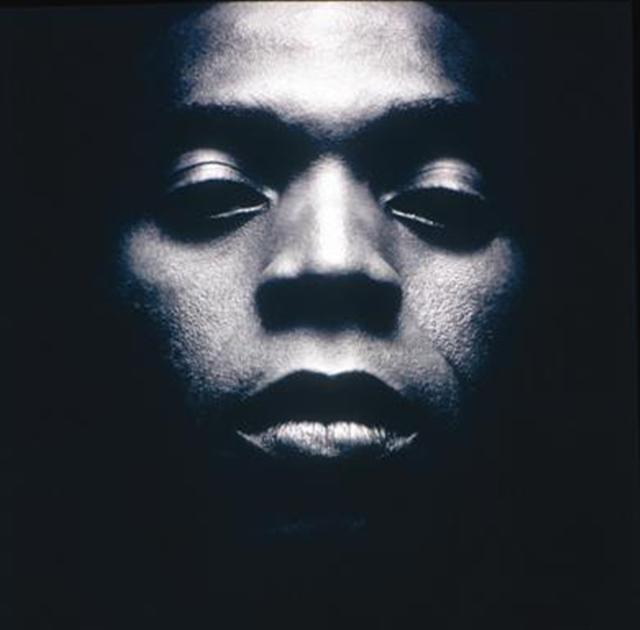
"Fierce" Visual Aid Gallery, Suite 905, 57 Post, SF; (415) 777-8242. 5:30pm, free. This exhibition comments on the horror of the AIDS pandemic by showing work by two artists whose lives were cut short by AIDS. Featuring John B. Davis’ (1964-1992) photographs based on images of his own body titled, "Fearless Gaze," and two Sylvain Klaus’ (1959-1996) mixed media paintings from the series titled, "Mourning Wall." Hosted by Visual Aid, a non-profit that helps support artists living with life-threatening diseases.

National Cemetery Walk San Francisco National Cemetery, 1 Lincoln, SF; (415) 561-4323. 10am, free. Learn about the interesting lives of the people buried in the San Francisco National Cemetery, including a Union spy, an Indian scout, Buffalo Soldiers, and 28,000 U.S. Servicemen and Servicewomen, 35 of whom received the Congressional Medal of Honor. Call to make a reservation.

FRIDAY 8

Day of the Dead Exhibition SOMArts, 934 Brannan, SF; (415) 552-1770. 6pm, free. The father and son curatorial team of Rene Yañez and Rio Yañez, with assistance from architect Nick Gomez, challenge artists to use their creative visions to look at personal loss, as well as local and global issues. This year, over 70 artists will create installations about contemporary issues. Through November 2, the Day of the Dead.

SATURDAY 9

"Art Publishing Now" Southern Exposure, 3030 20th St., SF; (415) 863-2141. Sat. 11am-10pm, Sun. 11am-6pm; free. This two-day event is dedicated to the investigation and showcasing of art publishing practices in the Bay Area including a summit on Saturday featuring a panel discussion with leading creators of print, online, and experimental publications, and an art publishing fair on Sunday that will showcase upcoming projects.

Four Short Docs San Francisco Main Library, 100 Larkin, SF; (415) 557-4400. 11am, free. Attend this screening of four short documentaries from the National Geographic All Roads Film Festival, including Owners of the Water: Conflict and Collaboration over Rivers, Daughters of the Revolution, Earth Day in Attawapiskat, and Weaving the Wisdom.

Lit Crawl Various venues along the Valencia Street Corridor in the Mission District, SF; www.litquake.org. Phase I 6pm-7pm, Phase II 7:15pm-8:15pm, Phase III 8:30pm-9:30pm; free. Get your fill of literary entertainment at galleries and bars across the Mission, where each phase offers crawlers a choice of attending readings happening simultaneously at over a dozen venues. With best-selling authors, poets, professors, bawdy story-tellers, amateurs, and professionals, it’ll be tough to choose three.

"Loneliest Species on Earth" Presidio Native Plant Nursery, 1244 Appleton, SF; www.wildequity.org. 10am; free, RSVP required. Hear the story of the last wild Presidio Manzanita plant, learn how the last one was discovered, and learn about the efforts biologists are taking to germinate the Manzanita’s seeds in order to continue the lineage. Part of the Golden Gate National Park Endangered Species Big Year series.

Nude Peace Day East side of Baker Beach, Presidio, SF; www.fkkfreebodyculture.com. Noon, free. Following the 2010 Nude Beach Olympics, join other Free Body Culture enthusiasts for a day of body paint, no tan lines, and community in the name of freedom and peace. Adults of all genders and orientations welcome.

BAY AREA

Oaktoberfest Fruitvale at MacArthur, Oakl.; (510) 839-3100. 11am-6pm, free. Walk around the sunny East Bay and try beer from over 20 local craft breweries, including Pyramid, Lagunitas, 21st Amendment, Triple Rock, Pacific Coast, Drake’s Brewing Company, and more. Featuring live music bringing the traditional sounds of Munich to Oakland, street food, including traditional German dishes, an eco fair, and more.

SUNDAY 10

Social Justice with Claudette Colvin San Francisco Main Library, 100 Larkin, SF; (415) 557-4400. 1:30pm, free. Attend this social justice event featuring a conversation between Enid Lee and Civil Rights legend Claudette Colvin, who refused to give up her seat to a white person on a Montgomery bus in 1955 and was the star witness in the federal case Browder v. Gayle, which desegregated the Montgomery buses. Also featuring a performance piece by Awele Makeba and a performance by poet, activist, and spoken word artist Bryonn Bain.

BAY AREA

Say No to Torture Revolution Books, 2425 Channing, Berk.; (510) 848-1196. 7 p.m., $5-$10 sliding scale. In honor of anti-torture week hear authors discuss their work and findings on the topic of torture. Featuring investigative journalist Justine Sharrock, author of Tortured: When Good Soldiers Do Bad Things, and journalist and historian Andy Worthington, author of The Guantánamo Files.

TUESDAY 12

Left in the Dark City Lights Bookstore, 261 Columbus, SF; (415) 362-8193. 7pm, free. Authors R.A. McBride and Julie Lindow celebrate twentieth century movie theatres and movie going in this book titled, Left in the Dark: Portraits of San Francisco Movie Theatres, a collection of personal essays and fine art photographs that casts the theatres as characters within the city’s cultural landscape.

Alerts

0

alert@sfbg.com

WEDNESDAY, OCT. 6

District 8 Candidate Forum


Four candidates running for D8 supervisor — Bill Hemenger, Rafael Mandelman, Rebecca Prozan, and Scott Wiener — discuss the issues and concerns facing the district. Audience members will have an opportunity to ask the candidates questions. Hosted by Friends of Noe Valley and the League of Women Voters.

6:30 p.m., free

Randall Museum

199 Museum Way, SF

(415) 554-9600

Nine Years Later


Hear speakers with different political viewpoints unite in their opposition to the war in Afghanistan at this event to commemorate our nine-year war there and the loss of thousands of lives. Featuring Karel from Green 960; John Dennis, Republican candidate from the 8th Congressional District; Daniel Ellsberg, and others.

6 p.m., free

First Unitarian Universalist Society

1187 Franklin, SF

(415) 776-4580

THURSDAY, OCT. 7

District 6 Candidate Forum


Hear the candidates for D6 supervisor answer questions and discuss issues related to parks, open space, and land use in the district and general issues relating to the city as a whole. Jane Kim, Matt Drake, Glendon "Anna Conda" Hyde, James Keys, Jim Meko, Theresa Sparks, Debra Walker, and Elaine Zamora will be on board. Hosted by the League of Women Voters and San Francisco Neighborhood Parks Council.

6 p.m., free

Genentech Hall

UCSF Mission Bay Campus

600 16th St., SF

415-989-VOTE

Grandmothers against the War


Join antiwar grannies for an hour of leafleting and discussion with passersby about the need to bring our tax money back home for education and other basic services. This is an ongoing weekly protest.

Noon, free

Corner of Powell and Geary, SF

(510) 845-3815

FRIDAY, OCT. 8

District 8 Candidates on Milk


Hear D8 candidates Bill Hemenger, Rafael Mandelman, Rebecca Prozan, and Scott Wiener debate the issues vital to the district and as well as the values inspired by the life and work of former D8 Sup. Harvey Milk. The debate will be moderated by Cynthia Lard, editor of Bay Area Reporter, and Christina Velasco, principal of the Harvey Milk Civil Rights Academy. Forum includes questions from Harvey Milk Civil Rights Academy students.
7 p.m., free
Auditorium
Harvey Milk Civil Rights Academy
4235 19th St., SF
(415) 608-7414

SUNDAY, OCT. 10

Protest live chicken sales


Every Wednesday and Sunday morning, hundreds of live chickens are sold for food at the Heart of the City Farmers Market to people who lack butchering skills and don’t know what they’re buying. The animals are a product of industrial farming and often arrive sick, wounded, and dehydrated. Help advocate for the lives of these animals and educate the public on veganism and animal rights. Protest the city’s inaction, the market management’s complacency, and the cruelty of poultry vendors.

9 a.m., free

Heart of the City Farmers Market

U.N. Plaza

Market at Leavenworth, SF

www.lgbtcompassion.org

Mail items for Alerts to the Guardian Building, 135 Mississippi St., SF, CA 94107; fax to (415) 255-8762; or e-mail alerts@sfbg.com. Please include a contact telephone number. Items must be received at least one week prior to the publication date.

Appetite: The green fairy transforms

0

Absinthe is on the move from its initial novelty phase once finally legalized in the US in 2007 into an era where appreciators of fine drink are gaining greater education and refinement on the subject. No, it is not a hallucinogen (more on that in a minute), and no, it’s not the artificially sweetened and colored liqueurs flooding the market (but labeled as absinthe). When made as it has been historically, it’s a natural, herbal spirit with a rich culture surrounding it. 

We owe increasing knowledge to artisan producers of absinthe near and far. Some are local guys, like Lance Winters of St. George Spirits, the first producer in the US when the ban was lifted, or more recently, Davorin Kuchan of Old World Spirits, producing green (verte) and bleue (white) absinthes. Then there’s absinthe historians and experts like Peter Schaf and John Troia of Tempus Fugit Spirits who import some of the best absinthes from France and Switzerland, such as Duplais’ brilliant verte and blanche (white) versions. Schaf also created Vieux Pontarlier, a classic-style absinthe made in Pontarlier, France, from local wormwood, long considered the finest grown in the world (where most wormwood was sourced over 100 years ago). Schaf, Winters and Ted Breaux of Lucid, formed a recent panel during SF Cocktail Week, a two hour session (and tasting) on the green fairy (read about it here).

Another source for absinthe education is books, the latest being A Taste for Absinthe, by R. Winston Guthrie with James F. Thompson. Though predominantly a cocktail recipe source, this elegant new book, with photography by Liza Gershman, offers an encompassing summary of the history and culture surrounding absinthe, from its poster art, to the spoons, glasses, fountains and accouterments used to serve it. It’s an artful drink requiring leisure and attention, not a hallucinogen, a myth still falsely promoted around the world (thujone is the fragrant chemical found in wormwood and other plants, such as sage, believed to be a neurotoxoin in extremely high doses – governments have strict regulations on the levels of thujone allowed in the making of absinthe so it is not remotely dangerous yet qualifies as actual absinthe). Kudos for film anecdotes throughout the book on movies where absinthe is imbibed, classic films I grew up watching that are rare to run across now like Lust for Life and Madame X. 

On the recipe side, the book is broken down into five sections: classics, fruit and citrus, whiskey and gin, liqueurs and bitters, and modern classics. The recipes are compiled from some of our country’s best bartenders, including many SF locals. While straightforward classics like Death in the Afternoon (absinthe and champagne) and a bright Brunelle (lemon, absinthe, citrus) are all here, there are also modern takes such as Neyah White’s Green Goddess: absinthe, Square One cucumber vodka, simple syrup, lime fresh basil and thyme. There’s even dessert-like recipes… try an Absinthe & Old Lace: gin, absinthe, creme de menthe, cream, egg white and chocolate mole bitters. 

A Taste for Absinthe is clearly well-researched, with many of the sources above tapped to bring together a comprehensive book worthy of a place on the shelves of absinthe aficionados as well as novices. This Monday at Book Passage (6pm) is a book release event with the author, photographer, and an all-star line-up of bartenders at neighboring Slanted Door serving four cocktails from the book: 

The event is free… well, purchased drinks and the book are on your own dime, but that’s a small price to pay for a little education.
 

Monday, 10/4 – 6pm

 Book Passage

1 Ferry Building # 42


www.atasteforabsinthe.com


Quick Lit: Oct. 1-Oct. 5

0

Literary readings, book tours, and talks this week

Litquake is back from Oct. 1-9 with more than 550 authors and events. Find out how to catch some this week after the jump.

Friday, Oct. 1

Litquake 2010 kickoff
Grab you litquake program and enjoy music by “Diva Deluxe” Suzy Williams and Brad Kay as they perform songs based on the work of well-known authors Kurt Vonnegut, Raymond Chandler, and more. You can also sip cocktails while browsing the gallery’s latest exhibit “Everyday,” showcasing new works by California tattoo artists. Litquake programming through Oct. 9.
5 p.m., free
111 Minna Gallery
111 Minna, SF
www.litquake.org

Saturday, Oct. 2

Off the Richter Scale
From poetry to comics to dad lit, this Litquake opening weekend event will feature literary tweeters, bloggers, illustrators, mystery writers, fathers, poets, historians, and more.
Noon – 4 p.m., free
Variety Preview Room Theatre
582 Market, SF
www.litquake.org

 
Watershed Environmental Poetry Festival
Enjoy a stellar line-up of poets and environmental writers including Brenda Hillman, Robert Haas, Allison Hawthorne Deming, Al Young, David Meltzer, Camille T. Dungy, and more. Also featuring a poem installation by Arthur Okamura, live music, environmental updates and information, and more.
Noon-4:30 p.m., free
Civic Center Park
Martin Luther King, Jr. at Center, Berk.
www.poetryflash.org

Sunday, Oct. 3

Barely Published Authors
Readings by up-and-coming masters of prose from the Bay Area including Jeremy Hatch, Mimi Lok, Caitlin Myer, Andre Perry, Paul Spinrad, Ian Tuttle, Alia Volz, and Olga Zilberbourg. Emceed by Ransom Stephens.
7 p.m., free
Make-Out Room
3225 22nd St., SF
www.litquake.org

“CLA All-Stars: 25 Years of San Jose’s Center for Literary Arts”
Join best-selling authors Maxine Hong Kingston (The Woman Warrior, Tripmaster Monkey), Mary Roach (Packing for Mars, Stiff, Spook, Bonk), Daniel Alarcon (Lost City Radio), and Andrew Sean Greer (The Story of a Marriage) as they read from their latest works. This program was developed in collaboration with the San Jose Center for Literary Arts and Litquake.
6:30 p.m., $10
The California Historical Society Museum
678 Mission, SF
(415) 357-1848

Ein Zweigabend: A Zweig Evening
Enjoy this literary and musical eveing dedicated to the works and memory of Austrian writer Stefan Zweig, featuring violinist Gregory Sykes, pianist Ian Scarfe, and vocalist Patrick Marks playing some of Zweig’s favorite music. Wine, champagne, and hors d’oeuvres.
7 p.m., $20 suggested donation
Green Arcade
1680 Market, SF
(415) 431-6800

North Beach Literary Tour
Learn more about the literary tradition of North Beach, from the Gold Rush, to the Beats, and into the modern era. The one mile tour concludes at Focus Gallery on 1534 Grant with readings by political satirists, socially savvy novelists, outlaw poets, and cultural historians Phil Bronstein, Will Durst, Ben Fong-Torres, Alan Kaufman, Ellen Sussman, and Jody Weiner.
5:30 p.m., free
Meet at The Beat Museum
540 Broadway, SF
www.litquake.org

Off the Richter Scale, Day Two
Day Two of Off the Richter Scale features panel discussions on alternative publishing and literature in translation and readings by Hedgebrook Alums and writers on California and San Francisco.
Noon – 4 p.m., free
Variety Preview Room Theatre
582 Market, SF
www.litquake.org

Monday, Oct. 4

Final Flight
Join author Peter Stekel for a reading and discussion of his new book, Final Flight: The Mystery of a WWII Plane Crash and the Frozen Airmen in the High Sierra.
6 p.m., free
University Press Books
2430 Bancroft, Berk.
(510) 548-0585


Tao Lin

Tao Lin takes his trademark minimalism in a different direction as he ponders the meaning of illicit sex for a generation with no rules in his new book, Richard Yates, named after the real-life writer. In Richard Yates, Lin narrates a tale about a young man dealing with the consequences of an affair with an underage, self-destructive girl.
7:30 p.m., free
The Booksmith
1644 Haight, SF
(415) 863-8688

“Original Shorts: Bottom’s Up”
Join this year’s esteemed scribblers as they reveal their original takes on the theme “Bottoms Up,” with Dodie Bellamy, Elizabeth Bernstein, Joshua Braff, Anne Finger, Shanthi Sekaran, Namwali Serpell, and James Warner.
7 p.m., free
Heart Wine Bar
1270 Valencia, SF
www.litquake.org

“Words and Waves”
A night of surf lit with Krista Comer and Elizabeth Pepin, Doug Dorst, Daniel Duane, Thomas Farber, Steven Kotler, emcee Mark Massara, Michael Scott Moore, Matt Warshaw, and Jaimal Yogis.
6:30 p.m., $5-$10 donation entitles you to order of the happy hour menu all night
Park Chalet
1000 Great Hwy, SF
www.litquake.org


Tuesday, Oct. 5


“Dave Cooper Gets Bent”

Award-winning cartoonist and illustrator Dave Cooper will sign his new book, Bent, and discuss his career in comics.
7 p.m., $5
Cartoon Art Museum
655 Mission, SF
www.cartoonart.org

I Live in the Future and Here’s How It Works
Hear New York Times technology writer Nick Bilton explain why social networks, the openness of the Internet, and all the handy new gadgets are becoming the foundation for “anchoring communities” that tame information overload and help us to determine what is important at this reading of his new book, I Live in the Future and Here’s How It Works: Why Your World, Work, and Brain are Being Creatively Disrupted. Part of Litquake.
7:30 p.m., free
The Booksmith
1644 Haight, SF
www.booksmith.com

“Tales of Hollywood Hell”
Litquake and Porchlight Storytelling collaborate for a special one-night show of true stories from inside the world’s entertainment machine. Book options, screenplays, adaptations, celebrity, and just plain Hollywood weirdness, explained without notes or memorization, featuring Exene Cervenka, Michael Tolkin, Martin Cruz Smith, Kristen Tracy, Jack Boulware, Joyce Maynard, and Jill Soloway. Hosted by Porchlight’s Arline Klatte and Beth Lisick.
8 p.m., $15
Herbst Theater
401 Van Ness, SF
www.litquake.org

“Virtual Reality: The Effect of Fiction on Your Mind”
Attend this Litquake panel discussion that looks into the readers’ interaction with the characters they meet in works of fiction, whether or not it’s healthy to visit imaginary worlds, and how well the authors themselves know their own characters. Featuring Robert Burton, M.D., former Chief of Neurology, Mt. Zion-UCSF Hospital, Elaine Petrocelli, President of Book Passage, Michelle Richmond, author of The Year of Fog and No One You Know, Blakey Vermeule, Ph.D., Associate Professor of English, Stanford University, and Mark Vonnegut, M.D., pediatrician, memoirist, and son of the late Kurt Vonnegut.
6:30 p.m., $12
Mechanic’s Institute
57 Post, SF
(415) 393-0100

The Governator: Fighting oil villains or making life easier for them?

Today’s San Francisco Chronicle contains an opinion piece by David Horsey commending Gov. Arnold Schwarzenegger, a Republican, for taking Texas oil companies Tesoro and Valero to task for attempting to subvert California’s landmark global warming legislation, AB 32.

Titled “The Governator battles villains with ‘black oil hearts,’” the piece casts Schwarzenegger as an environmental superhero facing off against a band of greedy cowboys. Tesoro and Valero have sunk millions into Proposition 23, the deceptively titled “California Jobs Initiative,” which would suspend implementation of the greenhouse-gas reduction law until unemployment drops to 5.5 percent for four consecutive quarters. Prospects are dim for such a market condition anytime soon.

“It is electrifying to hear a Republican politician expose the big corporations that relentlessly subvert public policy and the national interest,” Horsey notes. “Arnold Schwarzenegger might be leaving office with a mixed record of accomplishment, but when it comes to challenging these modern-day bandits of industry, he could be the boldest action hero we’ve got.”

Schwarzenegger deserves credit for taking a stand against oil-industry giants on this particular issue, but he’s no environmental action hero. On Sept. 30, The Governator vetoed legislation that would have improved the state’s capability to respond to oil spills.

AB 234, authored by Assembly Member Jared Huffman, would have required large vessels to deploy oil containment booms prior to fuel transfers. The Dubai Star oil spill occurred during a fuel transfer, and the precautionary measure could have lessened the impact.

Additionally, the bill would have increased existing oil fees to bolster funding for the state’s oil spill prevention and response efforts. And it would have required the State Lands Commission to report on safeguards for offshore oil drilling and response plans in the event of the failure of an oil rig’s blowout preventer. The BP oil spill demonstrated how dire the consequences can be if such a failure occurs.

“With his veto of AB 234, Governor Schwarzenegger failed miserably when it came to protecting California’s environment, public health, seabirds, and our coastal waters from oil spills,” said Marcie Keever, Oceans & Vessels Campaign Director at Friends of the Earth, which sponsored the bill along with Pacific Environment.  “Assembly Member Huffman and the Legislature worked extremely hard this year to craft AB 234 to protect the people and resources of the state of California — and with a few strokes of his pen the Governor struck a significant blow to public health and our environment.”

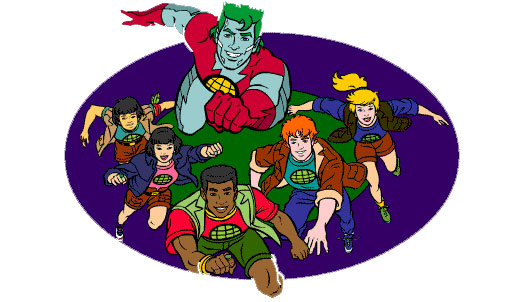
Schwarzenegger may have publicly reprimanded the Texas oil cowboys for bankrolling Prop. 23, but he’s no Captain Planet.

Party Radar: Felabration, New Wave City, Castro Street Fair, more

0

Lovevolution’s daytime portion may be cancelled this weekend, but that’s no reason to sit this one out — as I wrote this week in Super Ego, there’s tons of great Love Weekend events, plus a bunch more happenings. Funz! Read about all the official Lovevolution parties still going on here, and check out the below for even more.

But first, I promised a look at the Silent Disco movement, which is finally hosting an official, non-underground event this weekend — so I can write about it without getting it busted, heh. Silent Frisco is taking place on Saturday afternoon at the brand new Jones bar, which has been pumping the fact that it’s a mainly outdoor venue in the heart of the city. (Sat/2, noon–10 p.m., $15, Jones, 620 Jones, SF. www.sunsetpromotions.com). You get special wireless headphones that pick up a signal broadcast from the DJ booth (with two DJ channels to choose from for maximum hubbub.) Although the idea’s been around a while, the actual movement originated at the Bonnaroo festival in 2007 and has toured the world since. SF’s DJ Motion Potion has been there from the beginning and he told me it’s quite bonkers. Wildly diverse-styled DJs for this installment are Jeffrey Paradise, Disco Shawn, Centipede, MoPo himself, and a special secret guest. Get into it.


WE & THE MUSIC: FELABRATION

Afrobeat and soulful house luminary DJ Said of Fatsouls Records is back with his awesomely deep monthly We & the Music party, this time featuring local decks master David Harness for a celebration of Nigerian legend Fela Kuti, as Nigeria celebrates its 50th anniversary. It looks so young!  222 Hyde is gonna have a major dance attack on its hands …

Fri/1, 9pm, $10. 222 Hyde, SF. www.222hyde.com


NEW WAVE CITY 18TH ANNIVERSARY

Surely this means that the neverending monthly retroland of New Wave City is the longest-operating club in the city? Join DJs Skip, Shindog, Low Life, Melting Girl, and more to sing along to all your favorites from the ’80s at a club that started looking back right when that decade ended.

Sat/2, 9pm-3am, $12. DNA Lounge, 375 11th St., SF. www.newwavecity.com


CLUB LEISURE GRAND REOPENING

Soooo too cool for school, but not so cool it freezes you out. This great indie club is back at a new location, bringing with it “the best in classic Britpop, Madchester, 90s Indie, Mod, dancey shoegaze, power pop, and 60s soul on the first Saturday of every month!” It’s an Oasis, everybody, with free champagne until they run out. DJs Aaron Axelson and Omar preside.

Sat/2, 10pm-3am, $8. Cat Club, 1190 Folsom, SF. www.sfcatclub.com


CASTRO STREET FAIR

Hot fun — or at least tacky tchotchke shopping and muscle man cruising — at this huge affair that streatches all up and down Castro from Market to your future trick’s house. Also music and dancing, with several stages (the line-dancing stage behind Castro Theater is my personal fave) and performances by Pepperspray, Adonisaurus, DJ Jim Hopkins, and many more. PLUS: You could win an Atlantis cruise from GayCities.com. O.M.G.!

Sun/3, 11am-6pm, donation requested. Market and Castro, SF. www.castrostreetfair.org


BIONIC 12-YEAR ANNIVERSARY

Another long runner! This funky house and chill techno joint has moved around a bunch, but never lost its good-footin’. Celebrate a dozen with DJs Justin V. of !!!, UK’s Simbad, and residents Solar, Nikola Baytala, Conor, and Kwai LeCheif.

Sun/3, 9:30pm, $7. 222 Hyde, SF. www.222hyde.com


Save Day of the Dead!

0

Another wonderful local cultural event, Día de los Muertos, is falling prey to the city’s War on Fun — watch the video, and donate here to help reach the $6k goal. (via SFist, Mission Local)

Flagging in the Park: the whirl story

0

“This is the gayest thing I’ve ever done in my life!” laughed my friend Ricky Strawberry as he twirled around and around, unfurling lengths of tie-dyed cloth to Hi-NRG dance tracks from a live DJ in the sunshine. If you know Ricky Strawberry, that’s pretty damn sparkly pink unicorn in a rainbow thong bathing under a Splenda waterfall gay. In fact, it was the gayest thing anyone in my pinko posse had ever done, as well, and we had a ball. It was gay, it was amazing, it was gaymazing, and you should do it too.

It? Flagging in the Park, the summertime monthly gathering of fluttering human butterflies in the AIDS Memorial Grove in Golden Gate Park. I wrote about it in this week’s Super Ego nightlife column — and it happens for the final time this year on Sat/2, 1 p.m.- 4p.m. 

Flagging — or flag dancing, wherein the dancer whirls around waving psychedelic-patterned, weighted pieces of fabric — has been around for several decades. I remember the first time I saw it was in the ’80s at a giant outdoor picnic in Detroit organized by Metra magazine, but it really took hold inside gay clubs during the ’90s, when circuit parties were on the rise. (Flag dancing of a non-gay-specific kind, using actual flags with poles, is an ancient art still practiced especially in Italy and New Orleans — and in Midwestern marching bands.) The exact gay origins are fuzzy — men dancing with giant fans at disco clubs were a common sight, and you will see lots of flaggers at the disco-celebrating Remember the Party event next weekend, for instance, which acts as a reunion for patrons of the classic Trocadero Transfer venue in the ’70s and ’80s.

Like many alternaqueers of my generation, flagging was a turnoff in the ’90s — it was too associated with annoyingly relentless circuit music, mainstream gym culture, and bad drugs in my mind. But that was a long time ago, and like a lot of things from that time, a rediscovery after old conflicts have died out puts things into a totally different perspective. (You don’t see much flagging in mainstream gay clubs these days, and the music at Flagging in the Park is a bit more fun and interesting than I thought it would be. For the October installment, the DJ is Steve Sherwood.) I was able to appreciate the art in a different context, and without prejudice. Flagging in the Park is a beautiful event, full of rich historical meaning. It welcomes everyone — there are also large contingents of hula-hoopers, poi-twirlers, and other talents — and has taken on a more spiritual aspect.

http://www.youtube.com/watch?v=Me3rZ99ArbU

When I went in August (I had heard about it for months, and was encouraged to finally attend by my friend Steven Satyricon’s lovely writeup over at The Juice Box site) I was lucky enough to see the organizer, Xavier Caylor, be sainted by the Sisters of Perpetual Indulgence for his community work. And Flagging in the Park (FITP) really does bring in a bunch of donations for community organizations, as well as provide community healing. “Without grief, you can’t have joy,” said Xavier, referencing the spirits around us in the AIDS Grove. Xavier took over FITP 10 years ago, and he teaches a flagging class at Gold’s Gym in the Castro every Wednesday, 6 p.m.-8 p.m. He’s also several thousand degrees of hotness, yowza. I wanted to know more about how he got involved, and some of the spiritual aspects of the art. His story is below — and you should drift on by this Saturday afternoon to see for yourself. Xavier provides plenty of free flags to borrow, and flagging really is a bit of good exercise, I discovered. 

XAVIER CAYLOR: “I picked up my first set of flags from a friend of a friend at a party on Will Rogers Beach in 1997. I was hooked and we proceeded to flag everywhere we could: at home, in clubs and circuit parties. I heard about FITP from a fellow that I met at a circuit party in Palm Springs; he told me of a community of good friends that met during the summer months at a park in SF. I managed to contact someone and planned a weekend getaway from So. Cal. to attend in July of 1998.

“In 1998 the recently dedicated National AIDS Memorial Grove was young, the flaggers met in the then newly planted fern grove and gravel circle on the far West side. Twenty people gathered on what was a truly magical day for me; I was amazed with the variety of people, flags, and energy there – like a kid in a candy store. I not only left my heart in San Francisco but gave it freely to a tie-dye artist that became the catalyst for me moving here in just three short months. For the next few years he and I co-produced the event, popularity soon crowded us out of the circle and into the meadow. I have been producing the event since 2001 less two years that a friend took it and moved it to Dolores Park. Originally the events were planned a few days in advance around a sunny weather forecast. In 2002 this changed, acquiring permits and making these outreach events for charity brought a whole new dimension to our gatherings.

“What does the event mean to me? It was and is a magical space where love was born and flourishes, where flaggers can come out of the clubs and into nature. Held in a place that was built out of grief, mourning, and reflection by something that devastated our community and for a few hours we pour color, love, celebration, and heritage carefully back while raising consciousness by giving back. It is the place that our tribes come together to socialize, bond, and strengthen community. It is also a place that people walking through the park can happen upon a surreal event, take it in for a minute, and leave having had the opportunity to try something new or just stop and take in the music and visuals before moving along to where ever it is they are going. I usually plan 3 or 4 FITPs per year between May and October — the last one was supposed to be the final one this year, but we had such a great crowd and great vibe that we decided to have one more.

http://www.youtube.com/watch?v=fd3pX-Ys1wI

“If you’ve picked up flags you’ve most likely been asked by someone to show them how to do “it.” I’ve been showing friends since day one, taught at workshops in SF, NY, SD, and Dallas. I’ve been involved with group and solo performances, led people in tie-dye, and given away hundreds of flags while traveling to parties in Brazil, Australia, Thailand, Spain and the UK ,not to mention many cities around the US.

“About my class at Gold’s Gym: When I moved to San Francisco Club Universe, 177 Townsend, on Sundays was known as Pleasuredome and was a venue with a huge stage that flaggers flocked to weekly to play and share their art. It was a beacon to flag dancers on the West coast and beyond, introducing a steady stream of club goers weekly to the glowing fabric twirling in the U.V. flooded stage. It’s close in 2002 was a blow to the dance and flag communities. In 2007 I approached the management at Gold’s and asked if I could hold a weekly space for flaggers to come and practice – I was envisioning a free space that I would hold for a year with the purpose of re-energizing my tribe and reviving that weekly space. Troy at Gold’s Gym enthusiastically offered me a position and added the class to their Group X fitness program – I’ve been teaching Wednesday nights since. It is a place that people that have never flagged can come and learn – I have flags for use and set up black lights to make them come to life. The community comes to practice, play and socialize. I support new and old flaggers at the gym and outside of the gym by leading tie-dye classes/open studios so people can make their own flags. Weekly pre class discussions are opportunities to share history, personal stories and current events. Other flow toys (like poi and fans) show up from time to time and I support them if and when I can.

http://www.youtube.com/watch?v=GC4qFjeSTvg

“The group of guys that started FITP in 1996 shared a common experience, they had all gone to a week long experience in consciousness building in San Diego called the Miracle of Love which used active meditation techniques developed by Osho Rajneesh. Those flaggers came together in 1998 to bring those techniques to the gay community through a weekend seminar that is still going strong called the ‘Men’s Inner Journey.’ It was through delving deep into the techniques of active meditation that I realized what a spiritual event flagging is. Though people don’t usually make the connection between flagging and meditation, there is a point when the body and mind are so engaged that in the exuberance of the dance the mind is set free to a place of stillness. I believe that meditation something lacking in our lives and something we need to recharge our spirit and connect with our soul.

“Flagging is a visually appealing dance that has lived primarily in the gay community for the past 40 years. It touches on spirituality by being an alternative form of meditation palatable for people on the go. I am proud to be one of the many that keeps this art form flourishing by holding the space to pass it to the next generation of artists. www.flaggercentral.com is a great resource for our community.”

Hot sexy events Sept 29 – Oct 5

0

With Folsom’s fumes still coming out of your pores thanks to this week’s weather’s surprise cameo by Death Valley, you are perhaps wondering the best spot to get hot and sweaty with your newfound best trick. We got you covered — as we do each week here in the schvitzy dungeon of the SFBG stables. Read on for porn parodies, artistic foreplay, and techno-free touching.


Naked Men’s Sketch

Eros’ website says that the NMS that takes over the community room in the sex club each Wednesday is all about fostering artistic development. But it’s not too many life drawing classes that require that all involved take a turn up on the nudie dais. Could it be that art here is not defined by the charcoal sketch on the pad in front of you? If you invite your favorite David to partake in the creative carnality on option in the rest of the club, you will probably be forgiven. 

Wed/29 7-9 p.m., free

Eros

2051 Market, SF

(415) 864-3767

www.erossf.com


Arse Elektronika

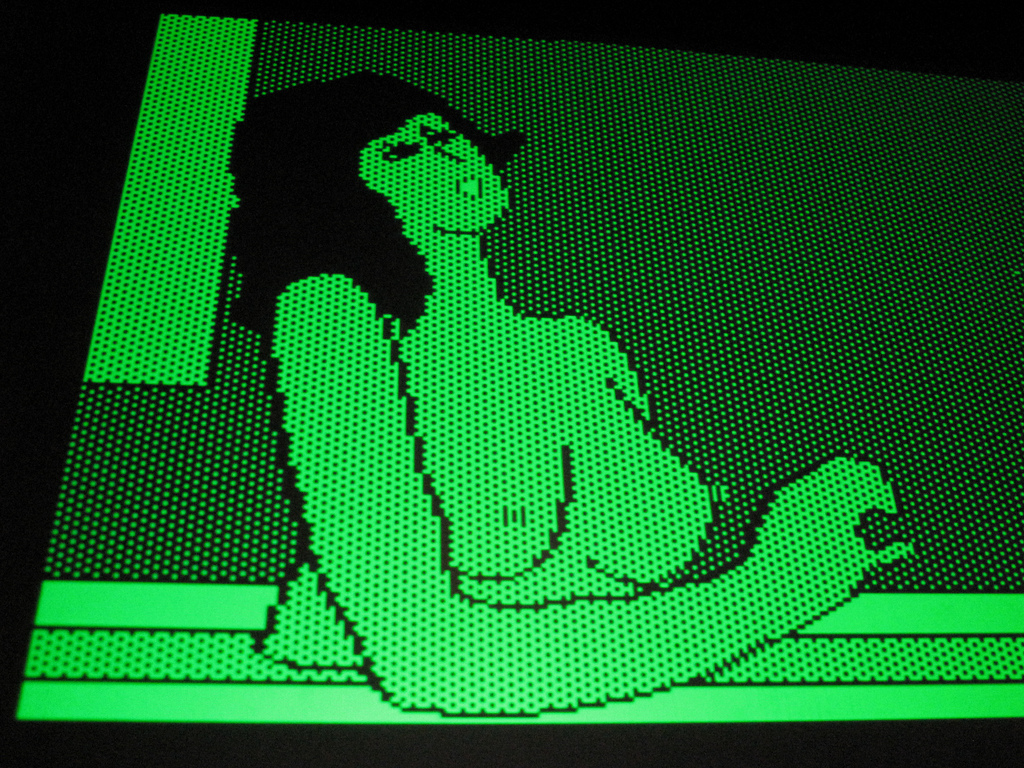
Sex in space. Space in sex. Sex in coffins, fucking machines, digital sex toys – Arse Elektronika is a three day festival of what it means to be human in this digital age. And if they want you to dress like a 1950s B-movie sci-fi character in which to do it all, so be it. The weekend kicks off with a parties, one featuring said coffin (in which couples can be “buried” and do what they like in front of the coffin’s installed night vision cam), and continues with lectures all day on topics from Creating Spaces for Sex, taught by Carol Queen, and Blowing Your Load: The Office Shooting Spree as Sexual Metaphor. Something for everyone!

Thur/30-Sun/3, $20 day pass – $50 weekend pass

Times and locations vary

www.monochrom.at


Kiss

An adult social club with nary a trace of techno is a rare event at Mission Control, where Burners often flock for some radical free love in the playa off-season. But not so at Kiss, where pre-screened women and couples get their play started on the dancefloor before they progress to one of the MC’s be-pillowed, bedazzled romper rooms.

Sat/2 10 p.m., RSVP required, see website for prices

Mission Control

2519 Mission, SF

www.clubkiss.us


Bent XXX Parody

Cue the over-exaggerated moans and overdone dialogue – this month’s BDSM young people play party, Bent, is taking on the parody. The theme for the party this weekend plays into the penchant for pornos to spoof – adding a little ribbing at Twilight or The Office‘s expense in with the sensual sexy play. To this end, hosts Stefanos and Chey will be holding a “Bent’s Got Talent!” face-off, where competitors are encourage to show off their deep-throating, to ribbon-dancing to zither-playing skills. 

Fri/1 9 p.m.-1 a.m., $20

SF Citadel

1277 Mission, SF

(415) 626-1746

www.stefanosandchey.com/bent.html


Ms. Leather SF 2010 Competition

Since 1987 when Shadow Morton took home the prize for best dyke in skins, the Ms. Leather SF Competition has been turning heads and cracking whips — in fact, three of those years, Ms. SF has gone on to win the International Ms. Leather sash (2009’s winner Mollena Williams among them). Who will be the lucky womyn this time around? The three contestants are all upstanding members of the SF sex community, so judges might have a tough time figuring out who comes out on top.

Sat/2 6:30 p.m., $10-20

Hotel Whitcomb

1231 Market, SF

www.mssfleather.org


OMG – Multiple Gushing G-Spot Orgasms

Tallulah Samis, somatic sexologist comes to tell you just how to achieve that Herbal Essence commercial look. Of course, it’s not just about great hair. She’s talking “exquisite Yoni (vagina) massage techniques,” for you and/or a friend!

Mon/4 6-8 p.m., $20-25

Good Vibrations

1620 Polk, SF

(415) 345-0400

www.goodvibes.com


Appetite: Highlights of SF Cocktail Week, part 2

0

That fizzy, magical week during which cocktails take over our fair city has just washed over us. Here are more highlights — check out part 1 here.

9/26 – Cocktail Cookout on the Island  

 Though it’s a toss-up between the Cocktail Carnival and the St. George/Hangar One cookout for best event of the week, sheer fun and beauty was unrivaled on the stunning Sunday boat cruise to and from Alameda (entire boat for Cocktail Week attendees only). None other than Scott Beattie served cocktails for the scenic boat ride. It was a hot, over 80 degree day so Beattie’s creations topped with Thai coconut foam and apple chip or dotted with edible flowers cooled us off in the most gourmet of ways. Massive navy ships in Alameda’s port made for a dramatic unloading point.

At the ever festive St. George/Hangar One distillery, there was BBQ (pulled pork from Fatted Calf), East Bay bartenders shaking up ice-cold cocktails, umbrellas and wading pools in the massive lot with views of the city across the Bay. Claire of Claire’s Squares served seductively lush dark chocolate squares which she hand-filled with St. George brandy in a caramel sauce and topped with sea salt. Damn. Tours of the distillery, a DJ spinning reggae and hip hop and bright sun made for a cookout to trump all cookouts.

But nothing could top that ferry ride home… pristine horizons, a rosy orange sunset illuminating our fair San Francisco with a gentle glow, warm air and rounds of Firelit Coffee liqueur. Amidst much laughter with friends, I leaned over the side of the boat letting the spray of the waves caress my face as city lights begin to ignite before me. I knew, once again, the grateful wonder and privilege of living in a place so magically stunning. 

9/25 – The Return of Absinthe at Comstock 

 Absinthe distillers Peter Schaf of Vieux Pontarlier, Lance Winters of St. George, and Ted Breaux of Lucid, formed the panel for two hours of all things absinthe. Their expertise and knowledge is dizzying. It was a crucial intro for those who dabble in the green fairy, clarifying the difference between real absinthe distilled from herbs and the unnaturally colored and flavored “absinthes” that flood the market.  Absinthe’s history, art and paraphernalia, as well as “terroir” and sourcing of herbs, were all discussed… with occasionally rowdy laughter from comments such as the one about syphilis (don’t ask).Comstock Saloon was the perfect setting, serving us three impeccably-prepared (and in gorgeous classic glassware) absinthe cocktails, including a Sazerac and Brunelle, as well as savory snacks from their kitchen.

9/26 – I-talian I-ranian Spaghetti Feed

Negronis, Sangiovese, antipasti, spaghetti and meatballs (traditional Italian from Long Bar chef Erik Hopfinger, as well as Hoss Zaré of Zaré at Fly Trap‘s – famed Iranian meatballs), ending with tiramisu and grappa. This was Sunday night (plus red-checkered tablecloths) at Reza Esmaili’s Long Bar for the I-talian I-ranian American Spaghetti Feed. Some took the tip, wearing velour tracksuits or elastic-waisted trousers: trashy and tacky, ready to fill up after a long day in the sun at St. George. It was all delicious – a special kudos to Hoss’ decadent surprise meatball stuffing of foie gras, duck, fig and date.


Our Weekly Picks: September 29-October 5, 2010

0

WEDNESDAY 29

MUSIC

Kylesa

The devil went down to Georgia, and sprinkled enough hoodoo in the water to cultivate quite a metal scene. But it ain’t just Mastodon and Baroness splitting ears in the town squares. Kylesa — you know, the band with the two drummers, the badass chick guitarist-vocalist (she’s one of two guitarists and one of three vocalists), and the coolest cover art in the biz — is about to drop its fifth full-length, Spiral Shadow. The title of lead track “Tired Climb” belies the album’s fierce riffs and heavy energy. But let’s stop pretending you weren’t going to this show anyway — local mighties High on Fire headlining the glorious Great American? With the added bonus of two ironclad openers? Can’t miss, hesher. (Cheryl Eddy)

With High On Fire and Torche

8 p.m., $20

Great American Music Hall

859 O’Farrell, SF

1-888-233-0449

www.gamhtickets.com


THURSDAY 30

DANCE

Mark Morris Dance Company

Just because his company has become a perennial audience favorite doesn’t mean we should ignore Mark Morris. After all, the acclaim is justified: there’s nobody else who — after 30 years of working — can still surprise and delight (and sometimes disappoint) us the way Morris can. This time he is bringing three West Coast premieres. If the buzz wafting in from the East Coast is any indication, the new Socrates set to Satie’s oratorio “Socrate” (piano and voice) should be outstanding. It will be performed with the stark Behemoth — Morris’ only no-music piece — and Looky, his bemused take on pretentious museum-going in which the inmates take over the show. (Rita Felciano)

Thurs/30–Sat/2, 8 p.m.;

Sun/3, 3 p.m., $34–$72

Zellerbach Hall

Bancroft at Telegraph, UC Berkeley, Berk.

(510) 642-9988

www.calperformances.org


DANCE

Lizz Roman and Dancers

San Francisco’s Gingerbread Danzhaus is the only venue in the city to provide dance studio space to professional companies while also serving as a nightclub in the after-hours. This weekend it will also be the seat of Lizz Roman and Dancers new site-specific work This Dance This Place, which aims to bring the architecture of Danzhaus to life through an interactive dance performance challenging viewers to really see the nooks and crannies of the space. With a live sound score, collaborative lighting and costume design, and dancers streaming from every danceable doorway, crevice, and ledge, this performance is sure to provoke thought on where and how dance is presented. (Emmaly Weiderholt)

Through Oct. 9

Thurs.–Sat., 8 p.m., $20

Danzhaus

1275 Connecticut, SF

www.lizzromananddancers.com


FRIDAY 1

DANCE

Nina Haft and Company

A few years ago, visitors to Zaccho Dance Theatre’s third-story performance space could look down onto San Francisco’s last working farm. The Bayside venue seems uniquely appropriate for Nina Haft’s site-specific Debris/Flows. Collaborating with German-born, Italian-trained Claudia Borna, the two women transformed this former warehouse space into a natural environment for 12 dancers to explore both outer and inner landscapes. In addition to watching the performance, audiences can contribute to Zaccho’s environment by planting seeds and eating food from local gardens. The dozen dancers will help you navigate the labyrinth. (Felciano)

Fri/1–Sat/2, 8 p.m. (also Sat/2, 6 p.m.);

Sun/3, 6 p.m., $12–>$18

Zaccho Dance Theatre

1777 Yosemite, Suite 330, SF

(510) 325-5646

www.brownpapertickets.com


MUSIC

Drums

A lot of the Drums’ music mines the sounds of the 1950s, smooshing it up with the more saccharine output of the Smiths and New Order, but there’s a lull halfway through the New York City band’s debut album where its intentions really become clear. A slower song than the rest of the album, “Down By The Water” mimics the believable earnestness of ’50s crooners completely without pretension. The Drums have been accused of lacking individualism, which is a fairly valid criticism considering you could drop some of their more upbeat tracks into a Smiths album and no one would bat an eye. But in latching onto eras where simplicity was something to be celebrated, the band succeeds by being sincere when tongue in cheek would have been way “cooler.” (Peter Galvin)

With the Young Friends

9 p.m., $15

Independent

628 Divisadero, SF

(415) 771-1421

www.theindependentsf.com


DANCE

SMUIN BALLET

Although the Smuin Ballet may be considered a relatively small ballet company, there’s nothing small about the renowned choreographers and kick-ass dancers Smuin attracts. Founded by Michael Smuin in 1994 and now under the artistic direction of Celia Fushille, the company presents classical ballet with a contemporary edge. It kicks off its 2010-11 home season with a fall program that includes the world premiere of Oh, Inverted World — set to the indie rock band the Shins and choreographed by the illustrious Trey McIntyre — as well as Michael Smuin’s twangy Bluegrass/Slyde and his more lyrical Brahms-Haydn Variations. (Katie Gaydos)

Through Oct. 9

8 p.m. (no show Mon/4);

Additional shows Sat/2–Sun/3, 2 p.m.), $20–$62

Palace of Fine Arts Theater

3301 Lyon, SF

(415) 978-2787

www.smuinballet.org


SATURDAY 2

FILM

The Incredible Shrinking Man

Ever get the feeling you’re being dwarfed by what’s going on around you in life? Well, that’s exactly what happens to the main character in the 1957 Jack Arnold sci-fi classic The Incredible Shrinking Man, in which a freak accident causes him to get smaller and smaller with every passing day. Featuring a host of inventive special effects and memorable scenes (among them his epic battle with a house spider), the movie screens tonight as part of the San Francisco Film Society’s annual “Film In The Fog” event. Let’s hope nature cooperates and offers up a little bit of a spooky mist to make for a cool and creepy early Halloween celebration. (Sean McCourt)

5 p.m. picnic, 7 p.m. film, free

Presidio, Moraga at Arguello, SF

www.sffs.org


MUSIC

The Sword

Austin, Texas, retro-metallers the Sword are in space. This summer, new album Warp Riders saw them rocket into full-fledged concept album territory, weaving a epic saga of interplanetary travel and mystical sci-fi warriors on a loom composed of Orange amplifiers. As fall descends, they’re taking the tunes and tales on the road, and their SF date marks the second stop on a grueling national run. Fans will be eager to bask in a bevy of new songs performed live, and the band’s adroit playing on the new record bodes extremely well for the experience. Prepare for blast-off! (Ben Richardson)

With Karma to Burn and Mount Carmel

8:30 p.m., $20

Regency Ballroom

1290 Sutter, SF

1-800-745-3000

www.theregencyballroom.com


FILM

American Splendor

Who is Cleveland’s most beloved figure? A few months ago the answer may have seemed obvious: superhuman baller LeBron James. At least until he got on the ESPN grandstand and announced he was going to Miami. Four days later Harvey Pekar died, and it put everything in perspective. A cranky file clerk who wrote wonderfully mundane comics about life’s pedestrian absurdities for more than 30 years, Pekar was an unlikely fit for the limelight (with legendary Letterman appearances to prove it). Fame found him nonetheless, culminating in this 2003 biopic featuring not only a suitable portrayal by the continually wincing Paul Giamatti, but also the inimitable figure himself. A fine entry into a persistent legacy. (Ryan Prendiville)

8:30 p.m., $5.50–$9.50

Pacific Film Archive

2575 Bancroft, Berk.

(510) 642-5249

www.bampfa.berkeley.edu


SUNDAY 3

EVENT

Estria Invitational Graffiti Battle

Graffiti’s outgrown furtive leaps over cyclone fencing and dark alley deployment. These days street art is a community builder, the old pros from the 1980s golden age having become teachers and respected figures in the art world. But that doesn’t mean it’s gotten stuffy. Case in point: Bay Area graff legend Estria Miyashiro’s free annual spray-off in the park. Names that are no strangers to the city’s bus stops, brick walls, and freight trains will be present to participate in and judge live painting: Nate1, Crayone TWS, and 2009’s champ Vogue TDK among them. Mix in stencil workshops, a youth sketchbook competition, and artist signings, and you’ve got a multi-generational homage to the art of aerosol. (Caitlin Donohue)

11 a.m.–5 p.m., free

DeFremery Park

1651 Adeline, Oakl.

(510) 895-5700

www.estriabattle.com


MONDAY 4

MUSIC

Guitar Wolf

In the future, anthropologists will study Guitar Wolf to calculate the speed of pop culture. The musical equivalent of Engrish, the trio channels Ramones-era punk rock (leather and all) to create Japanese “jet rock ‘n’ roll,” a louder, noisier, and enjoyably unintelligible hybrid. Tonight the band ends its first U.S. tour in five years, also the first since the death of bassist Billy. “However, it is not, not necessary to worry,” lead singer Seiji says on the band’s website. “New bassist player U.G.! U.G. is terrible! It is jet terrible! It fight! It fight rock! I will show Guitar Wolf is reborn to you!” (Prendiville)

With Hans Condor, Midnite Snaxxx, and DJ Classic Bar Music

9 p.m., $15

Bottom of the Hill

1233 17th St., SF

(415) 621-4455

www.bottomofthehill.com


TUESDAY 5

MUSIC

Guided By Voices

Ringleader Robert Pollard is rounding up the rest of indie rock giants Guided By Voices for a one-time reunion tour to commemorate Matador Records’ 21st anniversary. And this isn’t some half-ass reunion, either. This is the GBV lineup of the mid-1990s that spawned much-beloved albums such as Bee Thousand and Alien Lanes. Pollard’s been just as prolific on his own as he was before the group’s breakup in 2004, but there is just no comparing his solo work to GBV’s catalog. Don’t miss your chance to see one of the most influential indie rock bands of the past 20 years one last time. (Landon Moblad)

With Times New Viking

8 p.m., $24

Warfield

982 Market, SF

(415) 345-0900

www.thewarfieldtheatre.com 


The Guardian listings deadline is two weeks prior to our Wednesday publication date. To submit an item for consideration, please include the title of the event, a brief description of the event, date and time, venue name, street address (listing cross streets only isn’t sufficient), city, telephone number readers can call for more information, telephone number for media, and admission costs. Send information to Listings, the Guardian Building, 135 Mississippi St., SF, CA 94107; fax to (415) 487-2506; or e-mail (paste press release into e-mail body — no text attachments, please) to listings@sfbg.com. We cannot guarantee the return of photos, but enclosing an SASE helps. Digital photos may be submitted in jpeg format; the image must be at least 240 dpi and four inches by six inches in size. We regret we cannot accept listings over the phone.

False witness

0

arts@sfbg.com

FILM Documentaries that “tell” the Holocaust tend to employ archival footage generically as a kind of historical flavoring. It’s rare that we are asked to contemplate either the provenance of the images or the individual lives depicted. Yael Hersonski’s A Film Unfinished simultaneously confronts both of these gaps with a taut historiography of several reels of Nazi propaganda footage. Even in the German film’s inchoate form, we easily apprehend the propagandistic moves to further manipulate an already constructed reality (the Warsaw Ghetto) for objective “proof” of the necessity of Hitler’s Final Solution. Yet here before us, flowing at the speed of life, are the faces and places that would be destroyed within months of the filming.

Hersonski attempts to extricate the documentary value of this footage using frame-speed manipulations and edits that call attention to telling movements. She also films elderly survivors watching the footage alone in a darkened theater. In their capacity for recognition and incredulousness, they unravel the German point of view. By weaving these live responses with diary entries of those consigned to the ghetto along with the deposition of a German cameraman, Hersonski draws a fragmentary, highly specific account of the Holocaust’s crisis of representation. We discussed the film during a recent e-mail exchange.

SFBG The question of how to use archival footage responsibly is one that haunts the great Holocaust-themed films — Night and Fog (1955), Shoah (1985), and the films of Péter Forgács all find very different solutions. Can you describe the way your own attitudes regarding the appropriation of this archive developed during the time you worked on A Film Unfinished?

Yael Hersonski During the last decade I became more and more preoccupied with the thought of the near future, when no Holocaust survivors will be left to remember — the time when the archives will be the only source of witness. I’ve tried to examine the possibilities of exploring the image like an archaeologist analyses a palimpsest and to excavate, by cinematic means, new layers of reality from beneath the known imagery. I admit that [at one] time I felt that Night and Fog and Shoah were all that a filmmaker could express facing such an inconceivable, unprecedented event. For [Shoah director Claude] Lanzmann, the Holocaust lies firmly outside the archive as the ultimate Other, a black hole that threatens to swallow every visual witness, and thus resists the film archive and its raptures.

Forgács faces the impossibility of bearing witness exactly by confronting the contemporary viewer (who knows how it all ended) with private documentation that was abruptly stopped when the photographer himself was no longer capable of documenting, nor his dear ones of being documented. Forgács’ films introduce me again and again to the immense capacity of footage to reveal, in the form of a private history, the traces of an inconceivable past. My aim in showing the Warsaw Ghetto footage (for the first time in its entire length) and confronting the images with many points of view about the filmmaking itself was not to tell “the true story” of the Warsaw Ghetto, nor to expose the evil of Nazi propaganda (which was obvious even to the German filmmaker who discovered the reels in 1954), but to make the viewers question the way they see these images, and through them, perceive the past.

A FILM UNFINISHED opens Fri/1 in Bay Area theaters.

Who wants cheap beer?

5

culture@sfbg.com

Whether you’re unemployed, underemployed, or squirreling away your, ahem, nuts in terror of the post–American Empire Mad Max economapocalypse to come, these are hard times for beer lovers who like their pints out in public. You need cheap suds. Here’s a guide to staying within your meager budget while enjoying an oat soda or 10 to help you swallow the bitter pill that is the Bay Area economy. And cheer up, you ol’ bugger: it’s beer o’ clock!


THE HAPPIEST HOURS

Most bars have a happy hour, but when you’re looking out for numero uno, you notice that some are happier than others. Even among budget-friendly Mission bars (like, I don’t know, say, Mission Bar 2695 Mission, SF. 415-647-2300), the happy hour at Elbo Room (647 Valencia, SF. 415-552-7788, www.elbo.com) is generous, as far as duration goes. From 5 p.m. to 9 p.m., you’ll have plenty of opportunity to hit on a hipster hottie while sipping a Lost Coast Tangerine Wheat near the Ms. Pac-Man table top.

My blogger friend Jeff Diehl (spotsunknown.com) and I recently dove into North Beach, where we stumbled, literally, upon a real, cheap gem: International Sports Club (1000 Columbus, SF. 415-775-6036). Don’t let the name scare you. This place is as divey as a clean, well-lit place gets, with an interesting mix of tourists and scruffy locals. Bartender-cousins Mi and Emily serve up the ultimate poor man’s pour: tap drafts for $2.50, from 4 p.m. to 8 p.m. on weekdays — decent drafts like Stella and Widmer.

But possibly the happiest hour(s) for the frugal sud-guzzler can be found at Bean Bag Café (601 Divisadero, SF. 414-563-3634), near the Panhandle. There are no beanbags, but there’d be room for none, as the clarion call of $1.92 pints of hefeweizen brings the thirsty hordes. If you’re a bit work-shy at the moment, get there early and beat some of these beasts to the tap.


PBR NATION

Obviously, nothing beats a deal with no strings attached. If you’re a San Francisco beer lover and you don’t know about Toronado (547 Haight, SF. 415-863-2276, www.toronado.com), you’re just doing it wrong. For a place so renowned, the big T’s tap selection is diverse enough to accommodate the not-so-rich while avoiding the option of Pabst Blue Ribbon.

I say that with the full knowledge that PBR has become something of a cultural touchstone in the city. Why PBR and not Hamm’s or Oly? Who knows? I blame Blue Velvet. In any event, there’s no shortage of hipster dives that will crack a can for you. (I see no real point of PBR on tap.) For my money, the best is Bender’s (806 S. Van Ness, SF. 415-824-1800, www.bendersbar.com). Not only will you find the obligatory $2 can of Frank Booth’s favorite bev, but you’ll also find my personal favorite canned option, local brewery 21st Amendment’s Hell or High Watermelon Wheat, for a mere $2.50. Can’t beat that with a stick, not to mention Bender’s other assets, such as a tasty grill and a smoky patio.


CHEAP? HOW ABOUT FREE?

I talk to beer freaks who have never taken a tour of the amazing Anchor Brewery (1705 Mariposa, SF. 415-863-8350, www.anchorbrewing.com), in Potrero Hill, and all of a sudden it’s like they’re speaking another language. I just don’t understand. I’ve been taking this tour since my first visit to the city back in 1992, and I still go at least once or twice a year. When I got laid off, my second act, after filing for unemployment benefits, was to book a tour at Anchor.

The good folks there recommend that you call two to three weeks in advance. But this is a small price to pay, and the only price. The tour is free, and if you love beer, it’s like a guided tour of how God runs heaven (if heaven smells like Grape-Nuts). The coup de grâce is the unlimited tasting that ends your journey of discovery and sends you off in the middle of the day with a belly full of top-notch brew — and hopefully a fresh perspective on the simple pleasures of living in a beautiful city for drinking beer.

OTHER CHEAP BEER FAVES

The Bitter End 441 Clement, SF. (415) 221-9538.

Broken Record 1166 Geneva, SF. (415) 963-1713, www.brokenrecordsf.com.

Delirium 3139 16th St., SF. (415) 552-5525.

500 Club 500 Guerrero, SF. (415) 861-2500.

Greens Sports Bar 2239 Polk, SF. (415) 775-4287.

Horseshoe Tavern 2024 Chestnut, SF. (415) 346-1430, www.horseshoetavernsf.com.

The Page 298 Divisadero, SF. (415) 255-6101, www.thepagebar.com.

Thee Parkside 1600 17th St., SF. (415) 252-1330, www.theeparkside.com.

El Rio 3158 Mission, SF. (415) 282-3325, www.elriosf.com.


Stage listings

0

Stage listings are compiled by Guardian staff. Performance times may change; call venues to confirm. Reviewers are Robert Avila, Rita Felciano, and Nicole Gluckstern. Submit items for the listings at listings@sfbg.com.

THEATER

OPENING

Hamlet Alcatraz Island; 547-0189, www.weplayers.org. By donation. Opens Sat/2, call for time. Runs Sat-Sun, times vary. Through Nov 21. As part of an artistic residency, We Players presents an island-wide interactive performance of the Shakespeare play.

Kiss of Blood Hypnodrome Theatre, 575 10th; (800) 838-3006, www.brownpapertickets.com. $25-35. Opens Thurs/30, 8pm. Runs Thurs-Fri, 8pm. Through Nov 19. Thrillpeddlers presents its signature Halloween show, with three one-act Grand Guignol terror plays.

The Shining: Live The Dark Room, 2263 Mission; 401-77891, www.darkroomsf.com. $7-10. Opens Fr/1, 8pm. Runs Fri-Sat, 8pm. Through Oct 23. The Dark Room becomes the Overlook Hotel in this stage production of the horror classic.

ONGOING

Absolutely San Francisco Phoenix Theatre, Stage 2, 414 Mason; 433-1235, www.absolutelysanfrancisco.com. $20-25. Fri-Sat, 8pm. Through Oct 23. A one-woman musical starring Karen Hirst, with book and music by Anne Doherty.

Aida War Memorial Opera House, 301 Van Ness, 864-1330, www.sfopera.com. $25-320. Wed/29, 7:30pm; Sat/2, 8pm; Oct 6, 7:30pm. San Francisco Opera presents Verdi’s classic, a co-production with English National Opera and Houston Grand Opera.

And Then They Came for Me: Remembering the World of Anne Frank New Conservatory Theatre Center, 25 Van Ness; 861-8972, www.nctcsf.org. Call for reservations. Mon-Thurs, 10 and 11:45am. Through Oct 10. YouthAware Educational Theatre presents a multimedia play by James Still, directed by Sara Staley.

Anita Bryant Died For Your Sins New Conservatory Theatre Center, 25 Van Ness; 861-8972, www.nctcsf.org. $24-40. Wed-Sat, 8pm; Sun, 2pm. Through Oct 24. New Conservatory Theatre Center presents a show by Brian Christopher Williams.

The Brothers Size Magic Theatre, Bldg D, Fort Mason Center; 441-8822, www.magictheatre.org. $20-60. Dates and times vary. Through Oct 17. Magic Theatre presents the West Coast premiere of Tarell Alvin McCraney’s play, directed by Octavio Solis.

Cat on a Hot Tin Roof Actors Theatre, 855 Bush; 345-1287, www.actorstheatresf.org. $26-38. Wed-Sat, 8pm. Through Oct 22. Actors Theatre presents Tennessee Williams’ sultry, sweltering tale of a Mississippi family, directed by Keith Phillips.

*Etiquette Yerba Buena Center for the Arts, 701 Mission; 978-2787, www.ybca.org. $8-10. Thurs-Sat, noon, 1pm, 2pm, 3pm, 4pm, 5pm, 6pm, 7pm, 8pm; Sun, noon, 1pm, 2pm, 3pm, 4pm, 5pm, 6pm. Through Sun/3. Rotozaza presents a participatory performance piece for two people.

*Faux Real Climate Theater at TJT, 470 Florida; (800) 838-3006, www.brownpapertickets.com. $15-20. Wed-Sat, 8pm (also Sat/9, 10pm). Through Oct 9. A drag queen stripped bare? Not on your life. But in baring some soul and some truth (“two lies” per), Fauxnique (aka Monique Jenkinson; aka a woman as a man as a woman&ldots;) does some productive and fascinating (re)working of this sly semi-confessional form. In a show that begins by asking, via David Bowie, “whatchya gonna say to the real me?”, Fauxnique undresses drag by singing (very ably) as often as syncing and otherwise playing knowingly with the “reveals” inherent in the drag tradition, taking audiences back with her to high school in Denver in the 1980s for a herstory lesson like few others. Questions about identity and art mingle with hip, hilarious, wonderfully “haute,” and seriously hardworking solo cabaret (assisted by transgresser-dresser and prop boy Kegan Marling). Originally unveiled in 2009, and fresh from a London debut, Faux Real returns for an extended but still too-brief run courtesy of the mighty little Climate Theater, currently ensconced in the Jewish Theatre’s luxurious little space. (Avila)

Futurestyle ’79 Off-Market Theater, Studio 250, 965 Mission; (8008) 838-3006, www.brownpapertickets.com. $15-20. Wed, 8pm. Through Oct 27. A fully improvised episodic comedy played against the backdrop of SF in 1979.

IPH… Brava Theater, 2781 24th St, 647-2822, www.brava.org. $15-35. Thurs-Sat, 8pm; Sun, 3pm (also Mon/4, 8pm). Through Oct 16. Brava Theatre and African-American Shakespeare Company present the US premiere of an adaptation of Iphigenia at Aulis.

Jerry Springer the Opera Victoria Theatre, 2961 16th; www.jerrysf.com. $20-36. Wed-Sat, 8pm. Through Oct 16. Ray of Light Theatre presents the West Coast premiere of the operatic farce by Stewart Lee and Richard Thomas.

KML Holds the Mayo Zeum Theater, 221 4th St; www.killingmylobster.com. $10-20. Thurs-Fri, 8pm; Sat, 7 and 10pm; Sun, 7pm. Through Sun/3. Killing My Lobster presents its fall comedy show, directed by co-founder Paul Charney.

Last Days of Judas Iscariot Gough Street Playhouse, 1620 Gough; (510) 207-5774, www.CustomMade.org. $10-30. Thurs-Sat, 8pm; Sun, 7pm. Through Oct 30. Custom Made Theatre presents Stephen Adly Guirgis’ meditation on the meaning of forgiveness.

Olive Kitteridge Z Space at Theater Artaud, 450 Florida; (800) 838-3006, www.zspace.org. $20-40. Wed-Thurs, 7pm; Fri-Sat, 8pm; Sun, 5pm. Through Oct 10. Page-to-stage company Word for Word takes on two chapters’ worth of Elizabeth Strout’s celebrated 2008 novel, comprised of a loosely connected set of stories surrounding the title character (played with cunning subtlety by Patricia Silver) and her immediate circle in a coastal town in Maine. In “Tulips,” we find the thorny but shrewd Olive, a former math teacher, and her patient husband Henry (Paul Finocchiaro), the town’s longtime pharmacist, transitioning not so smoothly into their retirement years. Olive—itchy, cantankerous and vaguely at a loss despite her sharp wit—resents her grown son’s (Patrick Alparone) happily distant life in New York and battles with the neighbors until her husband’s stroke leaves her at sea, unexpectedly vulnerable and open to the kindness of neighbors and strangers alike (played by an ensemble that includes Jeri Lynn Cohen, Nancy Shelby, and Michelle Belaver). In “River,” Olive, now a widow, begins a gradual, unlikely and bumpy romance with a recently widowed former academic (Warren David Keith). Director Joel Mullennix grabs hold of colorful details along the way—like the summer influx of rollerbladers and bicyclists—to further enliven the verbatim staging of these stories, but the effort can feel a little forced at times, as if betraying a sense that these well-acted, gently poetical and thoughtful stories and their complex protagonist do not always make for the most stimulating drama. (Avila)

A Picasso Royce Gallery, 2901 Mariposa; (866) 811-4111, www.apicassoonstage.com. $12-28. Thurs-Sat, 8pm. Through Oct 9. Expression Productions presents Jeffery Hatcher’s drama about the authenticity of three Picasso paintings.

Pinocchio Young Performers Theatre, Fort Mason Center, Bldg C, Third Floor, Room 300; 346-5550, www.ypt.org. $7-10. Sat-Sun, 1 and 3:30pm. Through Oct 10. Young Performers Theatre presents a new production of Carlo Collodi’s puppet tale.

*The Real Americans The Marsh MainStage, 1062 Valencia; (800) 838-3006; www.themarsh.org. $20-50. Wed-Fri, 8pm; Sun, 5pm. Through Nov 6. The fifth extension of Dan Hoyle’s acclaimed show, directed by Charlie Varon.

*Scapin American Conservatory Theatre, 415 Geary; 749-2228, www.act-sf.org. $10-90. Tues-Sun, times vary. Through Oct 23. Bill Irwin, the innovative former Pickle Family clown and neo-vaudevillian turned Broadway star, makes a San Francisco return at the helm—and in the title role—of American Conservatory Theater’s production of Moliere’s classic farce. It’s an excuse for some arch meta-theatrical high jinx as well as expert clowning, a love fest really, with many fine moments amid a general font of fun whose heady purity seems like it should fall under some FDA regulation or other—clearly, somebody has paid someone to look the other way, and for once the corruption is unreservedly welcome. Joining the fun is Irwin’s old comrade-in-arms and, here, sacks, Geoff Hoyle, as miserly and dyspeptic daddy Geronte. Other ACT regulars and veterans flesh out a winning cast, among them the ever versatile and inimitable Gregory Wallace as Octave, a flouncing Steven Anthony Jones as put-out patriarch Argante, René Augesen as boisterously unlikely “virgin” Zerbinette, and a wonderfully adept and scene-stealing Jud Williford in the role of Scapin sidekick Sylvestre. As for Irwin, his comedic sensibility shows itself scrupulously apt and timeless at once, and his sure, lithesome performance intoxicating and age-defying. As a director, moreover, he gives as generously to each of his fellow performers as he does to his adoring, lovingly tousled audience. (Avila)

The Secretaries Boxcar Playhouse, 505 Natoma; 255-7846, www.crowdedfire.org. $15-25 (pay what you can previews). Wed-Sat, 8pm. Through Oct 9. Crowded Fire revives the 1994 black comedy by New York’s Five Lesbian Brothers, a gleefully inappropriate bit of feminist satire that feels like the love child of John Waters and Valerie Solanas. Set in the front offices of the Cooney Lumber Mill in Big Bone, Oregon (delightfully rendered in Nick A. Olivero’s scenic design with New Yorker-like illustrations of the surrounding environs), the story follows narrator Patty (Elissa Beth Stebbins) as she recounts her initiation into a snappy coven of office ladies who not-so-secretly fell (rather than fall for) the town’s lumberjacks as if they were so much old growth forest. The mayhem and humor amuse, but probably seemed a lot fresher 16 years ago, making the simple plot seem thinly stretched. Nevertheless, the play’s details are nicely taken care of in artistic director Marissa Wolf’s fluid staging, featuring lots of play with fluids and a robust ensemble. In addition to Stebbins’s well-wrought and raunchy innocent, Leticia Duarte rocks her power-suit commandingly as no-nonsense supervisor and pack/pact-leader Susan; Eleanor Mason Reinholdt proves scarily endearing as the deceptively mincing, food-obsessed Peaches; Khamara Pettus has Norma Desmond eyes as Susan’s jealous onetime favorite Ashley; and Marilee Talkington approaches comic perfection in lovingly crafted twin roles: the boundingly predatory butch Dawn; and Patty’s hetero love interest and sexual-harassment-workshop–graduate, Buzz. (Avila)

BAY AREA

Angels in America, Part One Pear Avenue Theatre, 1220 Pear, Mtn View; (650) 254-1148, www.thepear.org. $15-30. Thurs-Fri, 8pm; Sat, 2 and 8pm; Sun, 2pm. Through Oct 16. Pear Avenue Theatre kicks off its fall “Americana” program with the Tony Kushner play.

Bleacher Bums Contra Costa Civic Theatre, 951 Pomona, El Cerrito; (510) 524-9132, www.ccct.org. $18. Fri-Sat, 8pm; Sun, 2pm. Through Sun/3. A sports comedy conceived by Joe Mantegna, directed by Joel Roster.

La Cage Aux Folles San Mateo Performing Arts Center, 600 N. Delaware; (650) 579-5565, www.broadwaybythebay.org. $20-48. Dates and times vary. Through Sun/3. Broadway By the Bay presents the gay musical based on the play of the same title.

*Compulsion Berkeley Repertory Theatre, Thrust Stage, 2025 Addison; (510) 647-2949, www.berkeleyrep.org. $29-85. Dates and times vary. Through Oct 31. Director Oscar Eustis of New York’s Public Theater marks a Bay Area return with an imaginatively layered staging of Rinne Groff’s stimulating new play. Compulsion locates the momentous yet dauntingly complex cultural-political outcomes of the Holocaust in the career of a provocative Jewish American character, Sid Silver, driven by real horror, sometimes-specious paranoia, and unbounded ego in his battle for control over the staging of Anne Frank’s Diary. A commandingly intense and fascinatingly nuanced Mandy Patinkin plays the brash, litigious Silver, based on real-life writer Meyer Levin, a best-selling author who obsessively pursued rights to stage his own version of Anne Frank’s story. The forces competing for ownership of, and identification with, Anne Frank and her hugely influential diary extend far beyond her father Otto, Silver, or the diary’s publishers at Doubleday (represented here by a smooth Matte Osian in a variety of parts; and a vital Hannah Cabell, who doubles as Silver’s increasingly alarmed and alienated French wife). But the power of Groff’s play lies in grounding the deeply convoluted and compromised history of that text and, by extension, the memory and meanings of the Holocaust itself, in a small set of forceful characters—augmented by astute use of marionettes (designed by Matt Acheson) and the words of Anne Frank herself (partially projected in Jeff Sugg’s impressive video design). The productive dramatic tension doesn’t let up, even after the seeming grace of the last-line, which relieves Silver of worldly burdens but leaves us brooding on their shifting meanings and ends. (Avila)

*East 14th: True Tales of a Reluctant Player Marsh Berkeley, 2120 Allston, Berk; www.themarsh.org. $20-50. Dates and times vary. Through Nov 21. Don Reed’s solo play, making its Oakland debut after an acclaimed New York run, is truly a welcome homecoming twice over. (Avila)

In the Red and Brown Water Marin Theatre Company, 397 Miller, Mill Valley; 388-5208, www.marintheatre.org. $32-53. Tues, 8pm; Thurs-Sat, 8pm; Wed, 7:30pm, Sun, 7pm (also Sat/2, 2pm). Through Oct 10. Marin Theatre Company presents the West Coast premiere of Tarell Alvin McCraney’s play.

In the Wound John Hinkel Park, Berk; (510) 841-6500, www.shotgunplayers.org. $10 (no one turned away). Sat-Sun, 3pm. Through Sun/3. Shotgun Players’ annual free performance in Berkeley’s John Hinkel Park is this year an impressively staged large-cast reworking of the Illiad from playwright-director Jon Tracy. In the Wound is actually the first of two new and related works from Tracy collectively known as the Salt Plays (the second of which, Of the Earth will open at Shotgun’s Ashby stage in December). Its distinctly contemporary slant on the Trojan War includes re-imagining the epic’s Greek commanders as figures we’ve come to know and loath here in the belly of a beast once know by the quaint-sounding phrase, “military-industrial complex.” Hence, Odysseus (Daniel Bruno) as a devoted family man in a business suit with a briefcase full of bloody contradictions emanating from his 9-to-5 as a “social architect” for the empire; or Agamemnon (an irresistibly Patton-esque Michael Torres) as the ridiculously macho, creatively foul-mouthed redneck American four-star commander-clown ordering others into battle. While the alternately humorous and overly meaningful American inflections can feel too obvious and dramatically limiting, they’re delivered with panache, amid the not unmoving spectacle of the production’s energetic, drum-driven choreography and cleverly integrated mise-en-scène. (Avila)

*Loveland The Marsh Berkeley, 2120 Allston Way; (800) 838-3006, www.brownpapertickets.com. $20-50. Fri, 7pm; Sat, 5pm. Through Nov 13. Ann Randolph’s acclaimed one-woman comic show about grief returns for its sixth sold-out extension.

MilkMilkLemonade La Val’s Subterranean, 1834 Euclid, Berk; www.impacttheatre.com. $10-20. Thurs-Sat, 8pm. Through Sat/2. Impact Theatre presents Joshua Conkel’s off off Broadway play about a lonely gay man trapped in a chicken farm.

She Loves Me Lesher Center for the Arts, 1601 Civic Drive, Walnut Creek; (825) 943-7469, www.CenterREP.org. $36-45. Wed, 7:30pm; Thurs-Fri, 8pm; Sat, 2:30 and 8pm; Sun, 2:30pm. Through Oct 10. Center REPertory company presents a musical choreographed and directed by Robert Barry fleming.

Trouble in Mind Aurora Theatre, 2081 Addison, Berk; (510) 843-4822, www.auroratheatre.org. $10-55. Wed-Sat, 8pm; Sun, 2 and 7pm; Tues, 7pm. Through Sun/3. It’s old enough be considered a period piece, but at no time does Aurora Theatre’s production of Alice Childress’ 1955 comic drama Trouble in Mind feel dated. Set backstage on Broadway, Trouble depicts the rehearsals of a play entitled Chaos in Belleville—an anti-lynching melodrama penned by a white author. The often hilariously manic director, Al Manners (Tim Kniffin) alternately patronizes, bullies, and flatters the predominantly black cast into portraying the basest plantation stereotypes—right down to the names “Petunia” and “Ruby”—all the while touting the work as an important statement about race relations. But the real lessons in race relations and breaking through the color barriers occur as the rehearsals progress and the cast, middle-aged “character actress” Wiletta Mayer (Margo Hall) in particular, begin to question the veracity of the script and the directorial instincts of Manners. Trouble’s exceptional cast keeps the dialogue crackling and the pace urgent, save for a heart-breakingly deliberate reminiscence powerfully delivered by Rhonnie Washington. As for the timeliness of a piece which highlights among other things the dearth of strong theatrical roles for African-Americans, it’s interesting to note that actors Elizabeth Carter, Jon Joseph Gentry, Margo Hall, and Rhonnie Washington are all making their Aurora Theatre debut with this particular play. (Nicole Gluckstern)

PERFORMANCE/DANCE


“Best of the Fringe Encore Performances” EXIT Theatre, 156 Eddy; 673-3847, www.sffringe.org. Fri/1-Sat/2, 7 and 8:30pm; $20. Four highlights from this year’s SF Fringe Festival get repeat performances.

“Blue Room Comedy” Club 93, 93 9th St; 264-5489. Free. Tues/5, 10pm. A weekly series that takes comedy to new lows.

“Body and Sound Arts Festival Concert” Kunst-Stoff Arts, 929 Market; www.dancemonks.com. Fri/1, 7pm; $15-30. An interdisciplinary arts festival dedicated to improvisation.

“Clown Cabaret at the Climate” The Jewish Theater, 470 Florida; 704-3260, www.climatetheater.com. Mon/4, 7 and 9pm; $10-15. Rising star clowns and seasoned pro clowns perform.

“The Ethel Merman Experience” Martuni’s, 4 Valencia; 241-0205, www.dragatmartunis.com. Sun/3, 7pm; $5. Rock gets the brassy Merman treatment.

“Free Night of Theatre” Union Square; www.tixbayarea.com. Wed/29, 10-am-4pm and 6pm; free. A sixth anniversary kick-off performance celebration in which free theater tickets are distributed.

“Funny Girlz” Brava Theater, 2781 24th St; (800) 838-3006, www.brownpapertickets.com. Wed/29, 8pm; $25. Kung Pao Kosher Comedy presents a smorgasboard of female comedians.

Insides Out!/Indecision Collision Stage Werx, 533 Sutter; (800) 838-3006, wwwbrownpapertickets.com. Thurs-Fri, 8pm (Insides Out!); Sat, 8pm (Indecision Collision); $12-20. A pair of solo performances by Katie O’Brien.

“ODC/Dance: Architecture of Light” ODC Theater, 3153 17th St; www.odctheater.org. Thurs/30-Sat/2, 8pm; $20-500. ODC celebrates the opening of its new building with performances.

“Qcomedy Showcase” Martuni’s, 4 Valencia; www.Qcomedy.com. Mon/4, 8pm; $5-16. Karen Ripley, Zoe Dunning, Pippi Lovestocking, and others perform.

Lizz Roman and Dancers Danzhaus, 1275 Connecticut; 970-0222, wwwlizzromandancers.com. Thurs/30-Sat/2 (also Oct 7-9), 8pm; $20. A new performance by the local company, with lighting by Jenny B.

“The Romane Event” Make Out room, 3225 22nd; 647-2888, www.pacoromane.com.Wed/29, 7:30pm; $7. Paco Romane hosts Tim Lee, Harmon Leon, and others.

“Rotunda Dance Series” San Francisco City Hall; www.dancersgroup.org. Fri/1, noon; free. Performances by Joanna Haigood/ZACCHO Dance Theatre.

Smuin Ballet Palace of Fine Arts Theatre, 3301 Lyon; (415) 978-2787, www.smuinballet.org. Fri/1 (through Oct 9), 8pm; call for prices. The company kicks off a new season with two premieres by Trey McIntyre.

“Swan Lake: Ballet for the People By the People” CounterPULSE, 1310 Mission; (800) 838-3006, www.brownpapertickets.com. Fri/1-Sat/2, 8pm; $10-15. ArtFace Performance Group presents an unconventional take on a classic.

“Trine” The Garage, 975 Howard; 518-1517, www.975howard.com. Fri/1-Sat/2, 8pm; $10-20. RAW presents work by Paco Gomes and Dancers and Damage Control Dance Theater.

BAY AREA

Bay Area Playback Theatre Belrose Theatre, 1415 5th Ave, San Rafael; 499-8528, www.BayAreaPlayback.com. Sat/2, 7:30pm; $18. Stories told by audience members are turned into imrpov theater by a troupe.

“The Funniest Bubble Show on Earth” The Marsh Berkeley, 2120 Allston; (800) 838-3006, www.themarsh.org. Sun/3, 11am (through Nov 21); $8-11. The Amazing Bubble Man (aka Louis Pearl) returns with his show.

Mark Morris Dance Group Zellerbach Hall, UC campus, Berk; (510) 642-9988, www.calperfs.berkeley.edu. Thurs/20-Sat/2, 8pm; Sun/3, 3pm; $34-72. The acclimaed dance company returns with a triple-bill of premieres.

Appetite: Highlights of SF Cocktail Week, part 1

0

The magical settings, moments and drinks were many in the 4th Annual SF Cocktail Week, which set the bar high for all future Cocktail Weeks… consider attending next year, as it’s far from being just for drink aficionados. It’s for those who love a memorable party done in true San Francisco style.

I have watched Cocktail Week grow from intimate nights out at bars in prior years to this year’s galas and ferry rides. Camaraderie was strong and I couldn’t help but think that though there were even grander galas at major cocktail weeks like Tales of the Cocktail or Manhattan Cocktail Classic, the quality of the settings and drinks I had every night at SF Cocktail Week were far superior to most everything I tasted at either of those two events. SF, once again, does drink proud. (Check out part 2 here.)

9/21 – Inauguration of Boothby Center

SF now has a cocktail center to call its own: the “Cocktail Bill” Boothby Center for the Beverage Arts, which debuted opening night of Cocktail Week, named after SF bartending legend Cocktail Bill Boothby. A multi-use space in the Mission, it will be community center, beverage lab, and event space, preserving the art and history of the cocktail. The Barbary Coast Conservancy of the American Cocktail(BCCAC), headed up by H. Joseph Ehrmann (Elixir), Jeff Hollinger (Comstock Saloon), Duggan McDonnell (Cantina), calls it home base. Opening night was a raucous toast to the still raw space with, what else? Classic cocktails, including the week’s official drink, a Papa Ghirardelli.

9/23 – Ragtag Rabble Gaming Soiree  

The back room of one of my favorite bars, Burritt Room, was transformed into a turn-of-the-century, Barbary Coast-era saloon/parlor with craps, blackjack, roulette and poker (sans real money), and a beautiful menu of classic cocktails prepared with skillful care, from The Last Word to a Boulevardier with scotch. A jazz quartet (with talented female vocalist) set the mood, transporting me to another time, as did the decked-out crowd who filled but did not overcrowd the room with bowler hats, suspenders, boas, saloon or retro attire. It was a swank affair that carried on late into the night with an after-party at Comstock Saloon.

9/25 – Cocktail Carnival Gala

The event of the week, Cocktail Carnival Gala in the stunning, historic Old Mint, was a brilliant night. I only wish even more people filled  (not overcrowded) the spacious mansion we were given free reign in. This was a one-of-a-kind night I’d plan towards next year. The Barbary Coast-Era carnival theme included roving minstrels, talented musicians, contortionists, man-on-stilts, jugglers and acrobats, roving among us through each high-ceilinged room as we sipped punches from antique punch bowls.

Leave it to Martin Cate from Smuggler’s Cove to wow us with a 40-gallon rum punch bowl with flaming volcano shooting out of a sea of spiced punch. Daniel Hyatt and the Alembic crew scooped some mighty tasty ‘swill’ out of a swampy bucket. One cachaca-based punch sported an ethereal liquid nitrogen top. Bartenders from Elixir, Cantina and 15 Romolo ensured there was not one bad drink in the house.

Chef Chris L’Hommedieu of Restaurant Michael Mina and William Werner of Tell Tale Preserve Co. sent out small but impeccable bites like lobster corn dogs, chips topped with caviar and creme fraiche, and lush dark chocolate caramel cake squares.

The courtyard of the Old Mint was a surreal setting transporting me directly to an ancient Spanish or Italian square. Chipped building facades contrasted against a deep, midnight blue sky. As minstrels serenaded us on this warm, sultry night while the full moon cast a glow over the courtyard, I felt alive with the night… one of those perfect moments that lives illuminated in memory.

The evening ended (at 2am) with a bang: Brass Mafia played and we began to dance. Circling in and among us, their blaring brass brought to life songs from musicians as random as Michael Jackson, Salt-n-Pepa, Men at Work, even Montell Jordan’s “This Is How We Do It”, all in New Orleans’ brass band style (they threw in a few classic Nola Dixieland tunes, too). It was a joyous, raucous dance.

Thanks to the Bon Vivants for co-hosting a tremendous event none who attended will soon forget (which I hope you will all attend next year).

Life and death in Sunnydale

7

Photographs by Sarah Phelan

On the first Friday afternoon in September, as most folks were trying to get an early start on their Labor Day weekend, C.L.A.E.R. director Sharen Hewitt and her advisory board member Carrie Manuel welcomed friends, family, neighbors—and a handful of D10 candidates—to a basketball hoop dedication ceremony outside C.L.A.E.R.’s office on Brookdale Ave at the heart of the  violence-racked Sunnydale housing project in Visitacion Valley.

By afternoon”s end, Hewitt had managed to get D 10 candidates Malia Cohen, Kristine Enea, Chris Jackson, Tony Kelly and Marlene Tran shooting hoops with a dozen African American youngsters who live in Sunnydale, the city’s largest public housing project, and talking about what they have learned about life and death in this deceptively pleasant-looking sun-and-fog bathed spot that overlooks the Bay, backs onto McLaren Park and the neighboring Gleneagles Golf course–little knowing that within two hours, yet another young black man would be fatally shot one block away from C.L.A.E.R.’s office.

Sunnydale’s appealing geographical location has made it the target of redevelopment plans that seek to rebuild 785 low income unit and add 925 market rate units into the mix—plans that have Hewitt concerned that Sunnydale’s current residents could end up being displaced through a combination of factors, including the San Francisco Housing Authority’s  announcement that many of these residents owe thousands in back rent, and City Attorney Dennis Herrera’s announcement that he is seeking a gang injunction against 41 alleged members of the Down Below Gangsters and the Towerside Gang, who have been engaged in a violent turf war in the Suinnydale for the past three years.

Many of these alleged gang members don’t actually live in Sunnydale, but their friends, families and their own children still do. Currently, seventy-five percent of lease holders in Sunnydale are single female heads of household. And while African Americansaccount for only six percent of San Francisco’s population citywide, black males represent 60 percent of the county jail’s population and feature in disproportionately high numbers in the city’s homicide statistics.

An unfortunate case in point occurred just hours after C.L.A.E.R.’s basketball hoop dedication, when 38 year old Asa Roberts was fatally shot on the first block of Brookdale Avenue, which is a stone’s throw from Hewitt’s office. Found after police responded to a report of gunshots at 8:20 p.m. at the Sunnydale projects, Roberts was pronounced dead at San Francisco General Hospital on what was his 38th birthday, making him the city’s 35th homicide this year.

And at the C.L.A.E.R. ceremony, held at 5:30 p.m. that day, the majority of kids in attendance raised their hands when asked if they knew someone who had been murdered—a shocking illustration of the traumatic stress that these children live with, even as they reside in one of the richest cities in the world

“This is more than just a basketball dedication ceremony and this is hardly just any basketball hoop, this hoop represents a small step toward safety and security for the residents of Sunnydale public housing,” Hewitt told the crowd, just hours before she would find herself rushing around the projects, trying to determine if families and kids in Sunnydale were safe, in the wake of Roberts’ shooting.

“In remembrance of Labor Day, one mother’s labor of love will unite a community under siege,” Hewitt said at C.L.A.E.R.’s 5:30 p.m. hoop dedication, recalling how she had seen Carrie Manuel’s four boys playing basketball against the wall of a public housing unit that was home to an old gas line with pipes that were in dire need of repair. Shocked, Hewitt called upon city partners and C.L.A.E.R. donors in an effort to get these boys a real hoop and thus minimize safety concerns.

“Because the little things change a community, “ Hewitt said.

Hewitt recalled how Sup. Bevan Dufty put her in touch with the Department of Recreation and Parks and the San Francisco Parks Trust, when he heard about the basketball hoop situation, and that these departments helped heed her call to action.

Hewitt also tipped her hat to the five D 10 candidates who attended the hoop dedication: Kristine Enea for being the first to respond to this particular crisis, Malia Cohen for her ongoing support of CLAER’s Brookdale Center, Tony Kelly for his general support of the community, Chris Jackson for connecting Sunnydale residents, including four named in Herrera’s gang injunction, to the Gateway to College program, and Marlene Tran for her work on public safety.

After the dedication, Hewitt paired each D10 candidate with one of the bright-eyed small boys that were eagerly waiting to play ball, as Manuel looked on.

“She’s a woman under siege,” Hewitt said of Manuel, recalling how this woman and her kids witnessed a homicide outside their window, and how Manuel’s 16-year-old son was murdered before his child—her first grandson—was born. “This family has been besieged by no less than three murders, but they don’t even have space to run up and down,” Hewitt observed.

“Look at what we do with nothing,” Hewitt said, pointing to the basketball hoop outside C.L.A.E.R.’s office. “We are not a service provider in a box.”

“Look at this beautiful property,” Hewitt said, pointing to the Bay that sparkled in the distance below and the fingers of  fog that tumbled across the sun-baked hills behind Viz Valley. “But this has not been such a beautiful place. This has been a forgotten district, a forgotten neighborhood, but not in our name.”

“This mother,” Hewitt continued, pointing to Manuel, “must be embraced by all of you. And we must give these boys more options than a cage or a coffin.”

Hewitt was referring to the disproportionately high number of young black males that end up jailed or dead in San Francisco, with many of those arrests and fatalities occurring in and around Sunnydale. But while the City Attorney’s office has responded to this pattern of crime and violence by issuing gang injunctions, Hewitt believes this strategy is a waste of money and resources, given that local non-profits which seek to provide education and restorative justice, have just had their budgets decimated.

Last month, City Attorney Dennis Herrera filed an injunction naming 41 alleged members of the Down Below Gangsters and the Towerside Gang, claiming that the two groups were engaged in turf wars that had terrorized the residents of the Sunnydale housing projects for the last three years. And on Thursday, September 30, Herrera will go to court to try to get a judge to support his injunction request.

But Hewitt fears that Herrera’s injunction will further stress an already fragile community.

“Gang injunctions are plaguing this neighborhood and their families, but we don’t have gangs, we have families,” Hewitt said, as local residents Larry C. Jones of TURF and the Marsha Kyer Foundation, and Robert Cowan, watched the kids and candidates play ball.

After the basket ball game, Hewitt asked the five D10 candidates what they had learned from the C.L.A.E.R-sponsored event

“I’m struck by how strong the entrepreneurial spirit is,” Marlene Tran said, surveying a greeting card business that Sunnydale youth Tyree Vaughan started, under the auspices of C.L.A.E.R. “For 35 years, I was with kids every day,” Tran continued, referring to her career as a teacher. “And when I was 9 years old in Hong Kong, I helped my mother with work, and at 16, I had my own import/export business. So, we should recognize youth, all the positive things they do.”


Kristine Enea also praised the entrepreneurial spirit that was evident on the ground in Sunnydale.”Entrepreneurship is a powerful drug,” Enea observed. “Every child should know the joy of holding in your hands a product that started as an idea in your head,”


“This neighborhood is getting ready to be demolished,” Hewitt interjected. “What do we have to do with Project Hope?”

Tony Kelly admitted that he had never been to C.L.A.E.R.’s office before.
“But I’ve been involved with Hope SF on Potrero Hill,” Kelly said. “With Hope SF, there’s this weird thing of competition between public housing sites, this, ‘Oh, we can only get one project taken care of,’ and ‘Oh, we can’t get services’  attitude. But this is the largest public housing project in the city. We need complete neighborhoods where we live.”

Chris Jackson complimented C.L.A.E.R. on doing so much with so little.
“When I look at how many millions we spend on community services, but not something as simple as a basketball hoop, which gives a dozen black youth access to exercise, team work and figuring out how to work together, I see that you are doing with $300 what Goodwill and JHS failed to do with millions,” Jackson said.” You have brought the community together.”

Hewitt, who likes to call herself Mini Mouse and isn’t afraid to challenge her biggest supporters, responded by urging the candidates to get more hands on.

“The rhetoric doesn’t bode well for the community,” Hewitt said. “You can’t only come here every six months.”

Malia Cohen, who is on C.L.A.E.R.’s board, expressed her belief that the community needs to do more in terms of giving back.
“This is a partnership, I brought resources here, but people who live here ought to respect the resources, and say, this is our home and we are going to sweep up,” Cohen said, pointing to untended pathways and a couple of wilted potted plants that had died for lack of watering outside C.L.A.E.R.’s office.

“You did this because you are a board member,” Hewitt retorted, giving Cohen, who she supports politically, a predictably hard time.“But where are we collectively in terms of challenging ourselves to respond?”

 “I see great opportunities here, but because of budget cuts, you haven’t had resources,” Cohen continued. “The Department of Children, Youth and Families has been funneling funds to mega-organizations, and not the grassroots.”

“One opportunity is with City College,” Jackson, who counts Hewitt as a mentor, interjected. “And we can give deeper. I believe 20 percent of our participants are from Viz Valley, and we can do a better job of reaching out to the 41 young men listed on gang injunction. It’s something the City Attorney should have talked about before he put in for the gang injunction. A week later, he declares he’s running for mayor, while those of us on the ground are left to clean up.”

“785 units will come back as low-income and there is a zero vacancy rate here, so the one-to-one replacement of the units is not so much the issue as the replacement of the people,” Hewitt told me, as she locked up her office and the rest of the city prepared to enjoy a Labor Day weekend in a world that is not scarred by memories of fblack and brown brothers dying in a hail of bullets in the street.

And as I drove away, towards the bonfire of vanities that is downtown San Francisco, I couldn’t shake the twin images of those young black boys raising their hands when asked if they knew someone who has been murdered, and of Hewitt, fearlessly grilling the D10 candidates, even as she tries to hold together this fragile community of color on a prayer and an increasingly frayed shoelace budget.

Alerts

0

alert@sfbg.com

WEDNESDAY, SEPT. 29

Celebrate Fair Trade


Temple San Francisco is kicking off Fair Trade Month with a party to raise awareness and funds to support the Fair Trade movement. Taste appetizers made with Fair Trade certified ingredients, get a sneak peak at Fair Trade certified clothing, try cocktails made with FAIR vodka, a Fair Trade spirit made with quinoa, and mingle with other ethical consumers.

8 p.m., $15

Temple San Francisco

540 Howard, SF

www.transfairusa.org

THURSDAY, SEPT. 30

Earth Made of Glass


Attend this screening of director Deborah Scranton’s documentary about the wounds that remain after the 1994 Rwandan genocide. The films chronicles the continuing struggles of an ordinary citizen and head of state as they try to uncover the past and face the future. The film will be followed by a panel discussion on the functions, roles, and processes of documentary film as a form of investigative journalism featuring Deborah Scranton; Robert Rosenthal, executive director of the Center for Investigative Reporting; Mathilde Mukantabana, president of Friends of Rwanda; and moderator Phil Bronstein, editor-at-large for the San Francisco Chronicle.

7 p.m., $12.50

Embarcadero Center Cinema

1 Embarcadero Center, SF

(415) 561-5000

FRIDAY, OCT. 1

"Emerging Autonomous Movements in Cuba"


Learn about some of the challenges facing Cubans today as they try to form new movements using horizontal organizing models that seek alternatives to a bureaucratic centralized state and include autonomy and creative and political freedom. The panel, videos, and discussion include a history of Cuban anarchism. Come early at 6 p.m. for a vegan Cuban dinner. Proceeds support autonomous and antiauthoritarian collectives in Cuba.

7 p.m., $20–$100 donation

Modern Times Bookstore

888 Valencia, SF

(415) 282-9246

SATURDAY, OCT. 2

Bunny Art Show


Browse and buy bunny art, inspired by rescued bunnies, to benefit East Bay rabbit rescue shelters. All art was created by well-known and young Bay Area artists. You can also meet and adopt a bunny from East Bay Rabbit Rescue, Harvest Home Animal Sanctuary, House Rabbit Society, and more local shelters and rescues. Bring your bunny for bunny speed-dating or for a free nail trim.

11 a.m.–4 p.m., free

East Bay SPCA Tri-Valley Adoption Center

4651 Gleason, Dublin

www.eastbayrabbit.petfinder.com

SUNDAY, OCT. 3

Take a Kid Mountain Biking


Kids 8 to 16 and their families are invited to participate in this day of free mountain biking activities in McLaren Park. The event offers skill instruction, guided short and long loop rides, bike maintenance, helmet fitting, information about urban bike routes, a raffle, photo booth, free Clif Bar snacks, and more. Bring your own bikes. Sponsored by SPUR, Specialized Bicycles, Clif Bar, IMBA, and the YMCA.

9 a.m.–12:30 p.m., free

McLaren Park

Mansell at Visitacion, SF

www.sfurbanriders.org

Mail items for Alerts to the Guardian Building, 135 Mississippi St., SF, CA 94107; fax to (415) 437-3658; or e-mail alert@sfbg.com. Please include a contact telephone number. Items must be received at least one week prior to the publication date.

False witness: Yael Hersonski on “A Film Unfinished”

0

Documentaries that “tell” the Holocaust tend to employ archival footage generically as a kind of historical flavoring. It’s rare that we are asked to contemplate either the provenance of the images or the individual lives depicted. Yael Hersonski’s A Film Unfinished simultaneously confronts both of these gaps with a taut historiography of several reels of Nazi propaganda footage. Even in the German film’s inchoate form, we easily apprehend the propagandistic moves to further manipulate an already constructed reality (the Warsaw Ghetto) for objective “proof” of the necessity of Hitler’s Final Solution. And yet here before us, flowing at the speed of life, are the faces and places that would be destroyed within months of the filming.

Hersonski attempts to extricate the documentary value of this footage using frame-speed manipulations and edits which call attention to telling movements. She also films elderly survivors watching the footage alone in a darkened theater. In their capacity for recognition and incredulousness, they unravel the German point-of-view. By weaving these live responses with diary entries of those consigned to the ghetto along with the deposition of a German cameraman, Hersonski draws a fragmentary, highly specific account of the Holocaust’s crisis of representation. We discussed the film in a recent email exchange.

San Francisco Bay Guardian: The question of how to use archival footage responsibly is one that haunts the great Holocaust-themed films — Night and Fog (1955), Shoah (1985), and the films of Péter Forgács all find very different solutions. Can you describe the way your own attitudes regarding the appropriation of this archive developed during the time you worked on A Film Unfinished?

Yael Hersonski: During the last decade I became more and more preoccupied with the thought of the near future, when no Holocaust survivors will be left to remember — the time when the archives will be the only source of witness. I’ve tried to examine the possibilities of exploring the image like an archaeologist analyses a palimpsest, and to excavate, by cinematic means, new layers of reality from beneath the known imagery. I admit that [at one] time I felt that Night and Fog and Shoah were all that a filmmaker could express facing such an inconceivable, unprecedented event. For [Shoah director Claude] Lanzmann, the Holocaust lies firmly outside the archive as the ultimately Other, a black hole which threatens to swallow every visual witness, and thus resists the film archive and its raptures.
Forgács faces the impossibility of bearing witness exactly by confronting the contemporary viewer (who knows how it all ended) with private documentation which was abruptly stopped when the photographer himself was no longer capable of documenting, nor his dear ones of being documented. Forgács’ films introduce me again and again to the immense capacity of footage to reveal, in the form of a private history, the traces of an inconceivable past.

My aim in showing the Warsaw Ghetto footage (for the first time in its entire length) and confronting the images with many points of view about the filmmaking itself was not to tell “the true story” of the Warsaw Ghetto, nor to expose the evil of Nazi propaganda (which was obvious even to the German filmmaker who discovered the reels in 1954), but to make the viewers question the way they see these images and through them perceive the past.

SFBG: Did you set out to interrogate the decontextualization of these images in more conventional visual histories of the Holocaust and Warsaw Ghetto? The logic of many Holocaust documentaries, wittingly or not, is that the content of these images can be separated from the context in which they were made — that what we see speaks for itself. Your film challenges this assumption in many ways.

YH: I’ve always felt that the images from the Holocaust were mainly used the same way: as illustrations for many different stories, as visual background between interviews. We see the same images over and over again, [both] because the quantity of footage is finite (only 10 percent from what the Nazis documented on film survived the war), [but also] because of sheer laziness of filmmakers who find it more comfortable to use what’s [familiar]. The superficial use of an image enables it to show almost nothing — or merely repeats the humiliation of the victims that were captured on film as an anonymous helpless crowd. I emphasize a moment [by slowing it down] in which a woman is protesting against the humiliation caused by filming merely by means of her gaze and her body language. When I know this woman was probably murdered a short time after her image was taken, and when I hear at the same time the cameraman who was filming her speaking about how he could not even imagine what was going on, I feel closer to the reality of that image than I did before.

SFBG: How did you come to the idea of having the survivors respond to the archival footage in place of a more traditional question-and-answer interview? As viewers separated from these events, we’re able to treat these archival images as content — whereas I imagine for the person who was there, it’s inescapable that the footage literally represents how they were seen by the Germans. Were you concerned that you might be putting your subjects through a kind of secondary trauma by having them view the footage in such a way that they didn’t have their hands on the controls?

YH: I was looking not only for survivors from the Warsaw Ghetto, but for those who could actually recall the event of the filming in May 1942. I was quite amazed to locate more than the five survivors I interviewed for the film, because obviously the filming was a negligible event compared with the unimaginable horrors that went on there. When speaking with the survivors, I explained to them in detail how the filming would be done — that they would watch the whole film, alone, on the big screen, that it contained atrocious scenes (I described these), and that obviously it would be a difficult experience. Some of the survivors indeed refused to watch it, and some hesitated. Only those who felt it was their personal obligation to [speak to] the silent images, those who told me that the worst horrors exist not in any footage but in their own memories, [those who thought] it important to add their own point of view to the Nazi perspective — only these people were invited to be filmed. Still, I stopped the screening every time a reel was over and asked if they wished to continue. All of them asked to watch to the very end and felt a great relief after doing so.

The decision to film [the survivors] inside a cinema hall and to show the footage in 35mm stemmed from three [priorities]. First of all, I wanted to intensify the experience of the screening as much as I could, for I knew I would not — not in any case — film these survivors again. After they had given me their approval, I knew I had only one chance. I was also aware that the time of interview would be short, since all of them are physically too fragile to sit for more than two hours in such an intense emotional state. If there was a chance someone could recognize a person in the film or add any other important historical information about the footage, the only way to help them remember was to isolate them from their domestic surroundings and show them the film on the big screen.

The second reason relates to the character of the survivors as witnesses. Roughly [speaking], we can say that there are those survivors who won’t talk about the past, who remain silent merely to be able to live…and there are those who ceaselessly tell their stories, who give lectures and interviews, write books, and so on. They find witnessing [to be] their very vocation and destiny. The survivors who were filmed belong to the group who speaks. They have told their stories many times, and because they can’t tell it all any one time, their memory [often narrows] to [a] single narrative. Other details have remained in a less accessible memory. By changing the traditional scenery of the interview and creating a new interactive space [in which] the survivors were not just storytellers but also viewers and witnesses who comment, I hoped to help them to release some of the memories which [remained unspoken] by them.

The third reason was aesthetic: it was important for me to maintain [every aspect] of the film in relation to the archival documents and documentation itself. My initial idea, even before watching the footage for the first time, was to think of these archives as if they were a brain, with memories and even a subconscious. The labyrinth of the archive, with its knowns and unknowns, the desire to restore and remember, which is simultaneously the impulse to destroy and forget, can be used as a metaphor for our own memories and forgetfulness.

SFBG: Given your film’s deliberate consideration of the way the Nazi footage represents a constructed, stage-managed view of the Jews in the ghetto, I think many viewers might be curious why you choose to visually recreate the interview with Willy Wist. Why is this transcript recreated visually, while the various diary entries are only read?

YH: First of all, the diaries were written, [whereas] the preliminary interrogation with the cameraman was recorded on audio reels (the audio reels were recycled for the next interrogation, and therefore only the paper protocols survived). I insisted on emphasizing the various manners of documentation. Until we found the interrogation’s protocol, the only fact we knew about the cameraman was his name. When I first read the protocols, I was amazed to [discover] what a rare witness I was faced with. These images that we were educated to see in bits and pieces, as if they were some kind of an “objective” anonymous documentation of past events — suddenly there was a specific gaze of a cameraman, with his own impressions, speculations, inner monologues and so on, and he describes himself shooting scenes we can actually see in the footage. [It] enabled me to see the footage not merely as a sequence of images but as a real trace of reality, and as the atrociously painful (for the viewer) medium between the perpetrators and their victims. I knew I’d have to create the cameraman’s witness with different tools to distinguish it from other kinds of testimony, to emphasize the presence of a single gaze behind a single camera.

There is another crucial reason for delivering the texts from the protocols visually. After watching the footage for the first time, I felt there was no way to show it all without having any visual breaks between the different reels. At a certain point, our psychological mechanism of self-defense [prevents us from] absorbing more images, and we find ourselves looking yet not seeing. My goal here was quite the opposite: I was trying to figure out a way to enable the viewer to keep his gaze constantly fresh and involved. My solution was to produce visual breaks which would allow the viewer to dive into these dark waters again and again. Delivering the cameraman’s protocols in a visual way was something that helped me do this. But I was very strict in not changing even a single word from the protocols, not dramatizing it in any way, not working with the actors to establish an imaginary character of a cameraman, not interpreting his words, and most of all, not judging him in any way.

http://www.youtube.com/watch?v=Khut0kKn-c8

A Film Unfinished opens Fri/1 in Bay Area theaters.

A hardly strictly kind of guy

0

It is not everyday that a San Francisco Bay Guardian culture writer finds herself going for an interview in the Financial District. Something about the fumes of avarice making poor atmosphere for the creative process. But high above the Starbucks and town cars is the banjo-packed office of a rich man who puts on the best free bluegrass festival of the year. And so, for Warren Hellman and his Hardly Strictly Bluegrass (Fri/1-Sun/3), I braved the world of name tags and extravagant corner offices.

Much has been written on the avuncular nature of Hellman. He is an ex-president of Lehmann Brothers, and as chairman of Hellman and Friedman and founding partner of his own venture capital firm, falls just shy of Forbes’ 400 Richest Americans list. He’s a born and bred adherent to a downtown-centric vision of the city, but counts among his buddies union activists and some of the city’s well-known liberal muckrakers. 

But I guess Hellman just likes what he likes. And after I’ve breached the security check-in that takes place in his megalithic office building’s lobby, traveled up to Hellman and Friedman’s well-appointed offices, chit-chatted with his amiable receptionist, and been installed in his office to wait for the man’s arrival from a meeting next door, I realize that central to this category is bluegrass music. His corner office is comfortably packed with stacks of banjos and guitars, a signed CD from Emmylou Harris that wishes him a happy birthday, a metal sculpture that wears aviator sunglasses and a white cowboy hat, thank you plaques from the Berkeley music venue Freight and Salvage, where Hellman is a keystone donor and acted as chairman for the club’s fundraising campaign in years past. It’s impossible to avoid the music in the room, indeed the music is the room

Hellman arrives shortly, limping slightly, but enthused at the prospect of our interview. I tell him it’s great to meet you, Mr. Hellman, an honorific he doesn’t cotton to – Warren it is. He’s wearing a long sleeve denim button down – a look he favors, judging from photos of him taken at different shows and events.

It comes as a shock to the system in this day and age, to meet a billionaire with progressive friends (or, in my case, a billionaire at all), an older man with tattoos who likes to talk glowingly of his trips to Burning Man ensconced in his skyscraper office above the downtown grid. “There’s no fights there!” he tells me of the desert art festival. “Sure, there’s lots of pot, but there’s no violence.” Warren perhaps falls into the eccentric rich guy archetype, but the philosophy inherent in his personal pastimes at times seep here and thre into his politics, at least sporadically. He’s the kind of guy that will endorse the installation of a massive underground parking lot in Golden Gate Park, yet still support closing down the streets that access said lot so that Sundays amongst the trees and museums can be car-free affairs.

So first for the obvious question: why bluegrass, Warren? “People like to ask these ethereal questions,” the man muses in response. I realize quickly that Hellman pulls few punches, answering questions quickly before detouring into favorite stories that more or less illustrate his point. He’s a good talker. “Why do you like bluegrass – why do you like smoked salmon?” 

Fair enough, but why choose to spend your birthday putting on three days of music for the riff-raff (besides the obvious PR bonanza it affords the businessman)? With this query, the billionaire’s eyes alight with a thoroughly unmonetized joy. “It’s the single most fulfilling thing – this is as close to heaven as I’m gonna get,” Hellman says. “To be able to give something that’s really fun to a lot a people that seem to have the same love it as I do… it’s just really fulfilling. And if I could hang out with anyone in my life, it would not be the president of Lehmann Brothers and Goldman Sachs.” 

Hardly Strictly seems to be at its a place that allows Hellman to mingle with people outside the financial business. He’s endowed the festival to continue at least 15 years after he dies. “I’d like it to go on more or less forever,” he says. His desire for meetings of minds across ideological, professional, and personal differences is evident even in the way he conducts our interview — which he treats as though he is meeting a friend for the first time. 

Hellman’s typical routine for this weekend? “You could say what are the peaks of ecstasy,” he chuckles. He worries all week leading up to the event about the weather – this weekend’s sweaty days have perhaps precluded this part — attends the Friday morning MC Hammer (yes, Hammer’s a regular performer at the event) concert for middle schoolers, and then zips around from stage to stage in his golf cart throughout Saturday and Sunday, reaping praise by the untold hundreds of thousands that come to the park to check out the six stages of tunes provided by Hellman each year. 

Oh, and there’s the matter of his band’s performance as well. Hellman plays banjo and sings for the Wronglers, who will be taking the stage at Hardly Strictly at 11 a.m. on Sun/3. They debuted at the festival, and now play gigs all over the country. His travels with the band bring him to bluegrass events year round – when he’s not racing horses, another hobby – and into contact with some great potential acts for Hardly Strictly.

One such group, Hardly Strictly newcomers the Ebony Hillbillies, an all African-American outfit from Jamaica Queens, are Hellman’s personal don’t-miss pick for this weekend. He’s also looking forward to perennial favorites Jimmie Dale Gilmore and Emmylou Harris.

Our time is up, and Hellman’s assistant enters the room to tell him that his next appointment is waiting in the lobby, which doesn’t seem to enthuse him in quite the same fashion that our interview did. Or maybe he’s just good at pretending.

“Oh crap. Well, that was the most fun I’m going to have all day,” he says. Hellman exhorts me to set up another appointment with assistant to talk (“I barely got to find out anything about you!”) and insists on playing me a song about Hardly Strictly that was sent to him by a woman impelled to compose it by her therapist but finally it is time for me to vamoose. We sit convivially, tapping our feet to the beat, Warren every so often blurting out “You have to listen to this part!” Soon, he escorts me to my journey back away from the skyscrapers of the Financial District and returns to his tightly regimented meeting schedule. Moments after our parting, I catch a flat on my bike and am forced to hail a cab to bring me to a neighborhood endowed with such pedestrian things as a bike store. It’s less infuriating than it would have been sans Hellman meet up — I’m still satisfied by our morning time brush between two worlds. 


Hardly Strictly Bluegrass

Fri/1 10:30 a.m.-12 p.m., 2 p.m.-7 p.m.; Sat/2 and Sun/3 11 a.m.- 7 p.m.

Speedway Meadows

Golden Gate Park, SF

www.strictlybluegrass.com


Allen town: Toronto International Film Festival 2010

0

Every time a new Woody Allen film arrives (a near-annual event since 1969) the same old, lazy complaints (“It’s not one of his best”) arrive faster than you can say “pontificate.”  Yet 10 or 20 years later it seems that somehow many of those uncelebrated films seem to become “one of his best.” See Broadway Danny Rose (1984), Husbands and Wives (1992), or Sweet and Lowdown (1999).

With his latest entry, You Will Meet a Tall Dark Stranger (opening locally Fri/1), Allen delivers another pitch-perfect mini-guide to the hilarious horrors of growing old … something Allen (according to the director himself, speaking at his Toronto International Film Festival press conference) wouldn’t wish on anyone. What looks and feels like a whimsical rom-com about aging is, in fact, a sobering and even paralyzing blueprint of what exists in most relationships or marriages. Don’t let the fun and breezy vibe of quirky narration deter you. Not only is there more of a bittersweet edge to Allen’s familiar archetypes, but the UK-produced film works as a perfect counterpart to Mike Leigh’s latest monument Another Year (2010). I wouldn’t be surprised if Stranger‘s Gemma Jones earns an Oscar nomination for her performance in what will surely be one of the year’s most truthful films.

After talking to a handful of critics at the TIFF this year about their unimpressed or indifferent reactions to Woody Allen’s latest, I feel it’s important to take a moment to revisit exactly what Allen has made over this past decade of films. Wrapping up his fourth full decade of prolific filmmaking, he has somehow stayed surprisingly strong in such a bipolar industry.

Here’s a quick guide to the brilliance of Woody Allen during the Y2Ks.

1. Vicky Cristina Barcelona (2008) While it’s wonderful to see directors like Noah Baumbach, David O. Russell, and Wes Anderson making cinema inspired by Allen, he can still beat all of them at his own game. Showcasing defining roles for Rebecca Hall and Scarlet Johansson as well as juicy parts for Javier Bardem and Penélope Cruz, the film also features gorgeous cinematography by Javier Aguirresarobe (of Pedro Almodóvar fame) that punctuates this realistic-romance to transcendental heights. Woody + Almodóvar = blissful chronic dissatisfaction.

2. Match Point (2005) and Cassandra’s Dream (2007) Who would have ever guessed that making films in the UK would reawaken Allen’s serious side? Of course, there were hints; see also: Interiors (1978) and Another Woman (1988). While Match Point was perhaps overly hyped and Cassandra’s Dream utterly dismissed, both of these morality tales contain profound character studies, hauntingly performed by Jonathan Rhys Meyer, Colin Farrell, and Ewan McGregor. Both are well worth revisiting. Who says people aren’t making movies about the new Depression?

3. Melinda and Melinda (2004) While this masterful deconstruction may have left audiences cold the first time around, what shines so brightly about this gem is how deftly the same story being told both from a comedic and tragic perspective slowly starts to blend into one. Radha Mitchell was robbed of an Oscar nod here and Will Ferrell delivers one of the all time best Woody impersonations.

4. Small Time Crooks (2000) When Woody Allen’s character in the 1980 masterpiece Stardust Memories, Sandy Bates, is approached by his fans, they often make the comment “I love your work … especially the earlier, funny ones.” Well, if you wanna talk about one of Allen’s funniest films, it’s right here. Not only do Tracey Ullman, Jon Lovitz, and Michael Rapaport deliver laugh-out-loud performances, nothing will prepare you for Allen’s girlfriend in the film — she’s played by Elaine May, director of The Heartbreak Kid (1972) and Ishtar (1986). The two of them together light up the screen.

5. Anything Else (2003) Rounding out the top five is this overlooked treasure championing both Christina Ricci as a neurotic 20-something and Stockard Channing as her newly reenergized single mother. While it could be said that Jason Biggs is a bit too awkward, both Danny DeVito and Allen shine in what even Quentin Tarantino ranked as one of the best films of the decade.

Throw in the hilarious little rainy day ditties such as the match made in heaven Whatever Works (2009) with Larry David and the ScarJo-starring, surprisingly sweet if not a bit silly Scoop (2006) and you’ve got one helluva great decade. I understand that sometimes it’s easier to move on from your favorite artists of the past to find the hot new Hollywood or Sundance sensation. But to paraphrase Preston Sturges’ Sullivan’s Travels (1941): don’t forget about the clowns and buffoons who attempt to lighten our burden a little with laughs while putting a mirror up to the society around us. All that … plus a little sex too, of course.  
 
Jesse Hawthorne Ficks is the Film History Coordinator at the Academy of Art University and programs Midnites for Maniacs, a monthly series at the Castro Movie Theatre that celebrates dismissed, underrated, and overlooked cinema.