Event

Our Weekly Picks: February 27- March 5, 2013

0

WEDNESDAY 27

Lisa Fagan and Alison Williams

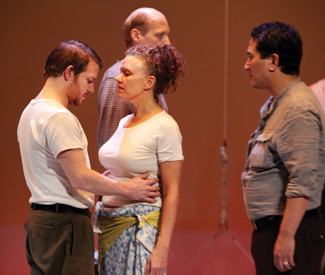
At the Garage, you get to see a lot of choreography in progress, which is a pleasure in itself because you can imagine what the final product might be like. Not this time. Lisa Fagan and Alison Williams — friends and colleagues, who first met during that hotbed of incubation, ODC’s Pilot Programs — are offering finished work. The evening, about an hour of choreography, comes with a bonus. Fagan calls her trio, Full Grown Baby Lemon, “a dance work of fiction,” and it has a definitely odd set of characters. Williams’ Edit promises to be rollicking duet between pop and geology. That’s where the bonus comes in. Her music will be live and includes an after-performance dance party where you can dive into dubstep. (Rita Felciano)

8pm, $10–$20

Garage

715 Bryant, SF

www.brownpapertickets.com


Fresh and Onlys

Noise Pop borrows its name from a mid-1980s genre that merges contradictions. Noise is edgy and gritty; pop is sunny and easily digestible. The Fresh and Onlys, a San Francisco band that has taken off since its ’08 formation, represents a ’13 incarnation of these oppositions. In “20 Days and 20 Nights,” the opener of last fall’s Long Slow Dance, “I cry” repeats over and over against bright harmonies and an upbeat piano hook, leaving the listener to bop along to the singer’s misery. It is an intriguing sensation caused by the balanced mix of grit and sunshine that continues throughout the vibrant album. The band invites you to bop along to its Noise Pop contradictions at Bottom of the Hill. (Laura Kerry)

With R. Stevie Moore, Plateaus, Burnt Ones

8pm, $14

Bottom of the Hill

1233 17th St., SF

(415) 621-4455

www.bottomofthehill.com


Ceremony

Through the progression of its three studio albums, Rohnert Park’s Ceremony has evolved from unbridled, no-nonsense bursts of hardcore punk to a more slow-burning and equally devastating aggression. While it’s certainly not unusual for punk bands to shine on stage rather than on recordings, Ceremony’s live show takes the cake. Vocalist Ross Farrar is reminiscent of Ian Curtis as he lurches, jerks, and occasionally collapses across the stage, moaning, howling, and screeching as guitarist Anthony Anzaldo and bassist Andy Nelson leap and high-kick around him. The result is a cacophonous and tightly-coiled energy that is deliciously cathartic and at times transcendent in the pissed-off way only a punk band from the suburbs can produce. (Haley Zaremba)

With Terry Malts, Comadre, Perfect Ruin, Synthetic ID

8pm, $12

Rickshaw Stop

155 Fell, SF

(415) 861-2011

www.rickshawstop.com


THURSDAY 28

Other Minds 18

Noise Pop isn’t the only contemporary music and art festival rolling into town this week. Other Minds, an annual event that invites composers and artists to share their avant-garde work, launches its 18th year on Thursday with performances of music from far-away places such as Denmark and India. Each of the three nights includes a panel discussion and a performance to fully engage the world of music outside the mainstream. Don’t come to Other Minds expecting the same finger-snapping tunes as the other festival in town; do come to hear some innovative music and to learn something along the way. (Kerry)

Through Sat/2, 7pm, $30-$115 (festival pass)

Jewish Community Center

3200 California, SF

(415) 292-1200

www.otherminds.org


Punk in Africa

How much do you know about origins of global underground punk scenes? Beyond the live shows, Noise Pop always shows a handful of creative takes on the usual music doc; Punk in Africa is no exception. It explores a too-infrequently examined continent’s aggressive punk roots, from “the underground rock music of early 1970s Johannesburg, the first multi-racial punk bands formed in the wake of the Soweto Uprising and the militant anti-apartheid hardcore and post-punk bands of the ’80s to the rise of celebratory African-inspired ska bands, which sprang up from Cape Town to Maputo in the democratic era of the ’90s.” It also spotlights current acts battling political bombs with explosive lyrics and pounding drumbeats in Zimbabwe and South Africa. (Emily Savage)

7pm, $10

Artists’ Television Access

992 Valencia, SF

(415) 824-3890

www.atasite.org


FRIDAY 1

Peter

Following last November’s potent For the Love of Emptiness (danced by Jorge De Hoyos), San Francisco-based choreographer Sara Shelton Mann presents the second solo in her fascinating “Eye of Leo Series.” Peter reteams the long esteemed, ever-searching Mann with video-light designer David Slaza, joined by composer Robbie Beahrs and performer Jesse Hewit. In these highly dynamic collaborations, Mann is wont to hover on the fringes, interacting variously with the performance space. “I open the ground and track it as a guide and follow the progress of the terrain chosen by the individual,” explains Mann. “Some chose the difficult path, some chose the surreal dream of extinction, some the practice of perfection. . . . I have chosen and I do not choose. People find me. I have become a hermit in a cage and those who find me have to find the key to the door.” (Robert Avila)

Through Sat/2, 8pm, $15

Joe Goode Annex

499 Alabama, SF

www.brownpapertickets.com

www.sarasheltonmann.org


Shih Chieh Huang: Synthetic Seduction

If a work of art had a spirit soundtrack, what would it be? Considering the use of industrial materials such as plastic bags, electrical sensors, and colored lights, one would expect Shih Chieh Huang’s installations to play to the the robotic pop of Daft Punk. Past pieces, though, including one at the National Museum of Natural History, achieve an organic quality that recalls the sound of being submerged in water. Continuing to explore the creation of technological landscapes while engaging in the theme of psychedelia, the artist’s Yerba Buena Center for the Arts installation conjures the image of a Jimi Hendrix solo played backwards over a heart monitor. Huang’s art certainly dances to the beat of its own drummer. (Kerry)

Through June 30 Noon, $10

Yerba Buena Center for the Arts

(415) 978-2700

www.ybca.org


SATURDAY 2

“Voices of Afghanistan”

Ustad Farida Mahwash and Homayoun Sakhi — both legends in their own right — will return to Cal Performances tonight (for the first time in two years) for a pleasant and educational evening of live traditional and contemporary Afghan music. Mahwash, a popular vocalist in her home country known as “the voice of Afghanistan,” will sing over rubâb virtuoso Sakhi and his ensemble in Wheeler Auditorium. The Sakhi Ensemble is a quartet employing instruments such as the harmonium, tula, doyra, tabla, and Sakhi’s rubâb — a lute-like instrument played with a bow that’s one of Afghanistan’s national instruments; it’s likely the sound you imagine when you think of mesmerizing Middle Eastern music. (Savage)

8pm, $36

Wheeler Auditorium, UC Berkeley Campus

Bancroft Way at Telegraph, Berk.

(510) 642-9988

www.calperformances.org


Sonny and the Sunsets

San Francisco’s Sonny Smith has already done more in the past few years than most of us will accomplish in our lifetime. The singer-songwriter-illustrator-playwright has more side projects than Jack White and a seemingly bottomless reserve of creative energy. In 2010, Smith released 200 songs at once that he had recorded for his 100 Records exhibition, and instead of swearing off music for a period like an exhausted person might, he soon began writing the next Sunsets album, worked on 100 Records: Vol. 3 (released this January) and began planning another exhibition, basing songs off protest signs. This project, tentatively titled “Protest Factory,” is still gestating, but last year saw the release of the Sunsets’ third full-length album, which carried on Smith’s tradition of engaging narrative lyrics, though with a surprisingly fantastic country twist. (Zaremba)

With Magic Trick, Cool Ghouls, Dune Rats

Bottom of the Hill

9pm, $12

1233 17th St., SF

(415) 626-4455

www.bottomofthehill.com


SUNDAY 3

“Balboa Birthday Bash”

San Francisco is all about celebrating the newest, hottest place — that pizza restaurant where you wait a full hour for a gourmet pie; that bar where each drink is hand-crafted using 11 exotic ingredients. So why not tip your top hat to an 87-year-old veteran: the Balboa Theatre, keeping the avenues cinematically rockin’ since Feb. 7, 1926? The party gets started at 4pm today with a 35mm screening of the 1924 silent version of Peter Pan, featuring live accompaniment by Frederick Hodges; come to the evening show for a repeat screening, plus a live vaudeville show, birthday prizes, and treats. Roaring Twenties attire encouraged! (Cheryl Eddy)

4 and 7pm, $10

Balboa Theatre

3630 Balboa, SF

www.cinemasf.com


“Tom Fest” Benefit for Tom Mallon

While he may not be a household name, Tom Mallon had a huge influence and impact on the San Francisco music scene, beginning the mid-1970s. As a musician, Mallon has performed with American Music Club and Toiling Midgets among others, and as a producer and engineer, he provided acts with low-cost studio time and guidance that helped document the work of countless artists. A host of musicians he has worked with over the years are performing tonight at “TomFest,” a special tribute and benefit concert for Mallon and his family (along with the SF Brain Tumor Support Group at UCSF), including Chuck Prophet, Toiling Midgets, Fright Wig, Penelope Houston, Ugly Stick, Peter Case, members of American Music Club, and many more. (Sean McCourt)

7:30pm, $25

Great American Music Hall

859 O’Farrell, SF

(415) 885-0750

www.slimspresents.com

Film Listings

0

Film listings are edited by Cheryl Eddy. Reviewers are Kimberly Chun, Dennis Harvey, Lynn Rapoport, and Sara Maria Vizcarrondo. For rep house showtimes, see Rep Clock.

OPENING

Jack the Giant Slayer Bryan Singer directs this live-action, CG-enhanced spin on the classic fairy tale. (1:55) Presidio.

The Jeffrey Dahmer Files See "American Horror Story." (1:16) Roxie.

The Last Exorcism Part II Ashley Bell reprises her role as the possession-prone Nell. (1:28)

Lore Set in Germany amid the violent, chaotic aftermath of World War II, Lore levels some brutally frank lessons on its young protagonist. Pretty, smart 14-year-old Lore (Saskia Rosendahl) is tasked with caring for her twin brothers, sister, and infant brother when her SS officer father (Hans-Jochen Wagner) and true-believer mother (Ursina Lardi) depart. Her seemingly hopeless mission is to get what’s left of her family across a topsy-turvy countryside to her grandmother’s house, a journey that’s less a fairy tale than a kind of inverted nightmare — yet another dystopic vision — as seen by children who must beg, barter, and scrounge to survive when they aren’t singing songs in praise of the Third Reich. Enter magnetic mystery man Thomas (Kai Malina), who offers Lore life lessons about the assumed enemy. Tarrying briefly to savor the sensual pleasure of a river bath or the beauty of a spring landscape, albeit one riddled with bodies, director and co-writer Cate Shortland rarely averts her eyes from the sexual and psychological dangers of her charges’ circumstances, making us not only care for her players but also imparting the dark magic of a world destroyed then born anew. (1:48) Embarcadero, Shattuck. (Chun)

No Long before the Arab Spring, a people’s revolution went down in Chile when a 1988 referendum toppled the country’s dictator, Augusto Pinochet, thanks in part to an ad exec who dared to sell the dream to his countrymen and women — using the relentlessly upbeat, cheesy language of a Pepsi Generation. In No‘s dramatization of this true story, ad man Rene Saavedra (Gael Garcia Bernal) is approached by the opposition to Pinochet’s regime to help them on their campaign to encourage Chile’s people to vote "no" to eight more years under the brutal strongman. Rene’s well-aware of the horrors of the dictatorship; not only are the disappeared common knowledge, his activist ex (Antonia Zegers) has been beaten and jailed with seeming regularity. Going up against his boss (Alfredo Castro), who’s overseeing the Pinochet campaign, Rene takes the brilliant tact in the opposition’s TV programs of selling hope — sound familiar? — promising "Chile, happiness is coming!" amid corny mimes, dancers, and the like. Director-producer Pablo Larrain turns out to be just as genius, shooting with a grainy U-matic ’80s video camera to match his footage with 1988 archival imagery, including the original TV spots, in this invigorating spiritual kin of both 2012’s Argo and 1997’s Wag the Dog. (1:50) Embarcadero. (Chun)

Phantom Ed Harris and David Duchovny star in this Cold War tale set aboard a Russian nuclear submarine. (1:37)

A Place at the Table Obesity gets all the concern-trolling headlines, but America’s hunger crisis is also very real — and the two are closely related to each other, as Kristi Jacobson and Lori Silverbush’s sobering, informative documentary investigates. A Place at the Table assembles a mix of talking-head experts, celebrities (actor and longtime hunger activist Jeff Bridges; celebrity chef Tom Colicchio, who’s married to Silverbush), and (most compellingly) average folks dealing with "food insecurity:" a Philadelphia single mom who joins the Witnesses to Hunger advocacy project; a pastor in small-town Colorado who oversees his struggling community’s crucial food bank; the Mississippi elementary-school teacher who uses her own struggles with diabetes to educate her students about nutrition. The film digs into the problem’s root causes (one being a government that prefers to subsidize mega-farming corporations that produce ingredients used in processed food), and conveys its message with authentic urgency. (1:24) Embarcadero, Shattuck. (Eddy)

The Sweeney Based on the 1970s British TV series, Nick Love’s action drama is bolstered enormously by Ray Winstone’s snarling-bulldog lead performance. He plays skull-cracking cop Regan, head of an elite unit that has relied upon freely violent, rule-bending methods to bust many an in-progress armed robbery. As his worried boss (Homeland‘s Damian Lewis) warns, internal affairs has taken an interest in Regan’s activites, and the situation isn’t helped by the fact that Regan is having an affair with a comely co-worker (Hayley Atwell) who is married to IA’s prick-in-chief (Steven Mackintosh). When a Serbian assassin enters the picture and monkey-wrenches Regan’s career, love life, and tenuously calibrated moral compass, all hell predictably breaks loose. Shot in moody, London-appropriate gray and blue monochrome, and featuring bravura set pieces (a shootout in Trafalgar Square) and a supporting cast that includes rapper Ben Drew (a.k.a. Plan B) and Downtown Abbey‘s Allen Leech, The Sweeney doesn’t surprise much with its beat-by-beat plot. But it’s enjoyable — maybe not enough to travel to Antioch (its only local theatrical opening) to see it, but worth a look on its simultaneous VOD release. (1:52) AMC Deer Valley. (Eddy)

21 and Over Even an important med-school interview can’t get in the way of some wild birthday shenanigans, because YOLO, amirite? (1:33)

ONGOING

Amour Arriving in local theaters atop a tidal wave of critical hosannas, Amour now seeks to tempt popular acclaim — though actually liking this perfectly crafted, intensely depressing film (from Austrian director Michael Haneke) may be nigh impossible for most audience members. Eightysomething former music teachers Georges and Anne (the flawless Jean-Louis Trintignant and Emmanuelle Riva) are living out their days in their spacious Paris apartment, going to classical concerts and enjoying the comfort of their relationship. Early in the film, someone tries to break into their flat — and the rest of Amour unfolds with a series of invasions, with Anne’s declining health the most distressing, though there are also unwanted visits from the couple’s only daughter (an appropriately self-involved Isabelle Huppert), an inept nurse who disrespects Anne and curses out Georges, and even a rogue pigeon that wanders in more than once. As Anne fades into a hollow, twisted, babbling version of her former self, Georges also becomes hollow and twisted, taking care of her while grimly awaiting the inevitable. Of course, the movie’s called Amour, so there’s some tenderness involved. But if you seek heartwarming hope and last-act uplift, look anywhere but here. (2:07) Albany, Clay, Smith Rafael. (Eddy)

Argo If you didn’t know the particulars of the 1979 Iranian Revolution, you won’t be an expert after Argo, but the film does a good job of capturing America’s fearful reaction to the events that followed it — particularly the hostage crisis at the US embassy in Tehran. Argo zeroes in on the fate of six embassy staffers who managed to escape the building and flee to the home of the sympathetic Canadian ambassador (Victor Garber). Back in Washington, short-tempered CIA agents (including a top-notch Bryan Cranston) cast about for ways to rescue them. Enter Tony Mendez (Ben Affleck, who also directs), exfil specialist and father to a youngster wrapped up in the era’s sci-fi craze. While watching 1973’s Battle for the Planet of the Apes, Tony comes up with what Cranston’s character calls "the best bad idea we have:" the CIA will fund a phony Canadian movie production (corny, intergalactic, and titled Argo) and pretend the six are part of the crew, visiting Iran for a few days on a location shoot. Tony will sneak in, deliver the necessary fake-ID documents, and escort them out. Neither his superiors, nor the six in hiding, have much faith in the idea. ("Is this the part where we say, ‘It’s so crazy it just might work?’" someone asks, beating the cliché to the punch.) Argo never lets you forget that lives are at stake; every painstakingly forged form, every bluff past a checkpoint official increases the anxiety (to the point of being laid on a bit thick by the end). But though Affleck builds the needed suspense with gusto, Argo comes alive in its Hollywood scenes. As the show-biz veterans who mull over Tony’s plan with a mix of Tinseltown cynicism and patiotic duty, John Goodman and Alan Arkin practically burst with in-joke brio. I could have watched an entire movie just about those two. (2:00) Marina, Opera Plaza, Sundance Kabuki. (Eddy)

Beasts of the Southern Wild A year after winning the Grand Jury Prize at Sundance (and a Cannes Camera d’Or), Beasts of the Southern Wild proves capable of enduring a second or third viewing with its originality and strangeness fully intact. Magical realism is a primarily literary device that isn’t attempted very often in U.S. cinema, and succeeds very rarely. But this intersection between Faulkner and fairy tale, a fable about — improbably — Hurricane Katrina, is mysterious and unruly and enchanting. Benh Zeitlin’s film is wildly cinematic from the outset, as voiceover narration from six-year-old Hushpuppy (Quvenzhané Wallis) offers simple commentary on her rather fantastical life. She abides in the Bathtub, an imaginary chunk of bayou country south of New Orleans whose residents live closer to nature, amid the detritus of civilization. Seemingly everything is some alchemical combination of scrap heap, flesh, and soil. But not all is well: when "the storm" floods the land, the holdouts are forced at federal gunpoint to evacuate. With its elements of magic, mythological exodus, and evolutionary biology, Beasts goes way out on a conceptual limb; you could argue it achieves many (if not more) of the same goals Terrence Malick’s 2011 The Tree of Life did at a fraction of that film’s cost and length. (1:31) Opera Plaza. (Harvey)

Beautiful Creatures In the tiny South Carolina town of Gatlin, a teenage boy named Ethan Wate (Alden Ehrenreich) finds himself dreaming about a girl he’s never met (Alice Englert), until she shows up at school one day with an oddly behaving tattoo on her wrist and the power to disrupt local weather patterns when she loses her temper. Thus begins Richard LaGravenese’s adaptation of the first installment in Kami Garcia and Margaret Stohl’s four-book YA series the Caster Chronicles. The girl of Ethan’s dreams, Lena Duchannes, is the youngest member of a reclusive local family long suspected by the town’s inhabitants of performing witchcraft and otherwise being in league with Satan. They’re at least half right, though Lena and her relatives (among them Jeremy Irons, Emma Thompson, and Emmy Rossum) prefer the term caster to witch, a slur inflicted on them by mortals. As for the diabolical part, casters are, it seems, slaves to essentialism: their coming-of-age rite at age 16 entails learning whether their true nature will turn them toward the forces of darkness or light. Lena’s special birthday, as it happens, is coming up, a circumstance complicating the romance that sparks between her and Ethan. Though the altitude is lower, and the sweeping pans of coniferous forests have been replaced by claustrophobic shots of swampland and live oaks draped with Spanish moss, comparisons to the Twilight franchise are inevitable. But while we’re not unfamiliar with the arc of a human teenage protagonist who is drawn into the orbit of an alluring supernatural and finds life forever changed, Beautiful Creatures‘ young lovers are more relatable, less annoying and creepy, and smaller targets for an SNL spoof. (2:04) 1000 Van Ness, SF Center. (Rapoport)

Bless Me, Ultima A mysticism that melds the Latin American shamanism with old-world Catholicism suffuses this bildungsroman of a memory movie, warmly rendered by director Carl Franklin, perhaps best known for his noirish tendencies in Devil in a Blue Dress (1995) and One False Move (1992). Here, working with Rudolfo Anaya’s landmark Chicano novel and material steeped in curandera, or shamanistic, folkways, he continues to exhibit that close attention to detail and the emotional truth of his characters that he brought to his more sensational genre work. This is a smaller, yet no less powerful, story: Antonio (Luke Ganalon) is the youngest son of a vaquero father (Benito Martinez) and a mother (Dolores Heredia) who hails from a farming family — yet perhaps his most important connection is with the woman who midwifed him, Ultima (Miriam Colon), who is taken in by his family out of respect for her deep folk magic and knowledge as a healer. Under Ultima’s close tutelage — while faithfully attending church and working his uncles’ fields —Antonio learns about life and the earth’s bounty, dangers, and cycles, particularly when one of his uncles falls prey to wicked brujas who practice blood sacrifice and Ultima is called in to help him. All of which makes for emotionally resonant storytelling that imparts the impact of Anaya’s tale and his reverence for spiritual practice — of all sorts — and our planet’s power and magic. (1:46) SF Center, Sundance Kabuki. (Chun)

Chronicle of My Mother (1:59) Four Star.

Dark Skies The Barretts are a suburban family stuck together with firm-enough glue of love and habit, even if they’re suffering from some unfortunately typical current problems: architect dad (Josh Hamilton) has been out of work for some time, mom’s (Keri Russell) own job isn’t going gangbusters, they’re mortgaged to the hilt, and the fiscal prognosis is not good. These issues are stressing their marriage, and that vibe is stressing their sons, a 13-year-old (Dakota Goya) and a 6-year-old (Kadan Rockett). So initially it seems somebody might be acting out when they begin experiencing nocturnal disturbances that could be chalked up to an intruder if there were any sign of forced entry. But soon the disturbances grow inexplicable by any normal standard, and it begins to seem they might be having unwelcome "visitors" of the evil-E.T. kind. Writer-director Scott Stewart’s prior features were breathless, ludicrous, FX-cluttered fantasy action films (2010’s Legion, 2011’s Priest); this goes in the opposite direction by carefully building atmosphere, character, and credibility while withholding spectacle for as long as possible. That’s an admirable approach, and Dark Skies duly holds attention — but one wishes the basic ideas were a little more original, and the payoff a little more substantial. (1:35) Metreon, 1000 Van Ness. (Harvey)

Django Unchained Quentin Tarantino’s spaghetti western homage features a cameo by the original Django (Franco Nero, star of the 1966 film), and solid performances by a meticulously assembled cast, including Jamie Foxx as the titular former slave who becomes a badass bounty hunter under the tutelage of Dr. Schultz (Christoph Waltz). Waltz, who won an Oscar for playing the evil yet befuddlingly delightful Nazi Hans Landa in Tarantino’s 2009 Inglourious Basterds, is just as memorable (and here, you can feel good about liking him) as a quick-witted, quick-drawing wayward German dentist. There are no Nazis in Django, of course, but Tarantino’s taboo du jour (slavery) more than supplies motivation for the filmmaker’s favorite theme (revenge). Once Django joins forces with Schultz, the natural-born partners hatch a scheme to rescue Django’s still-enslaved wife, Broomhilda (Kerry Washington), whose German-language skills are as unlikely as they are convenient. Along the way (and it’s a long way; the movie runs 165 minutes), they encounter a cruel plantation owner (Leonardo DiCaprio), whose main passion is the offensive, shocking "sport" of "Mandingo fighting," and his right-hand man, played by Tarantino muse Samuel L. Jackson in a transcendently scandalous performance. And amid all the violence and racist language and Foxx vengeance-making, there are many moments of screaming hilarity, as when a character with the Old South 101 name of Big Daddy (Don Johnson) argues with the posse he’s rounded up over the proper construction of vigilante hoods. It’s a classic Tarantino moment: pausing the action so characters can blather on about something trivial before an epic scene of violence. Mr. Pink would approve. (2:45) Metreon, 1000 Van Ness, Sundance Kabuki. (Eddy)

Escape from Planet Earth (1:35) Metreon, 1000 Van Ness, Shattuck.

56 Up The world may be going to shit, but some things can be relied upon, like Michael Apted’s beloved series that’s traced the lives of 14 disparate Brits every seven years since original BBC documentary 7 Up in 1964. More happily still, this latest installment finds nearly all the participants shuffling toward the end of middle-age in more settled and contented form than ever before. There are exceptions: Jackie is surrounded by health and financial woes; special-needs librarian Lynn has been hit hard by the economic downturn; everybody’s favorite undiagnosed mental case, the formerly homeless Neil, is never going to fully comfortable in his own skin or in too close proximity to others. But for the most part, life is good. Back after 28 years is Peter, who’d quit being filmed when his anti-Thatcher comments provoked "malicious" responses, even if he’s returned mostly to promote his successful folk trio the Good Intentions. Particularly admirable and evidently fulfilling is the path that’s been taken by Symon, the only person of color here. Raised in government care, he and his wife have by now fostered 65 children — with near-infinite love and generosity, from all appearances. If you’re new to the Up series, you’ll be best off doing a Netflix retrospective as preparation for this chapter, starting with 28 Up. (2:24) California, Opera Plaza. (Harvey)

The Gatekeepers Coming hard on the heels of The Law in These Parts, which gave a dispassionate forum to the lawmakers who’ve shaped — some might say in pretzel form — the military legal system that’s been applied by Israelis to Palestinians for decades, Dror Moreh’s documentary provides another key insiders’ viewpoint on that endless occupation. His interviewees are six former heads of the Shin Bet, Israel’s secret service. Their top-secret decisions shaped the nation’s attempts to control terrorist sects and attacks, as seen in a nearly half-century parade of news clips showing violence and negotiation on both sides. Unlike the subjects of Law, who spoke a cool, often evasive legalese to avoid any awkward ethical issues, these men are at times frankly — and surprisingly — doubtful about the wisdom of some individual decisions, let alone about the seemingly ever-receding prospect of a diplomatic peace. They even advocate for a two-state solution, an idea the government they served no longer seems seriously interested in advancing. The Gatekeepers is an important document that offers recent history examined head-on by the hitherto generally close-mouthed people who were in a prime position to direct its course. (1:37) Embarcadero, Shattuck. (Harvey)

A Good Day to Die Hard A Good Day to Die Hard did me wrong. How did I miss the signs? Badass daddy rescues son. Perps cover up ’80s era misdeeds. They’re in Russia&ldots;Die Hard has become Taken. All it needs is someone to kidnap Bonnie Bedelia or deflower Jai Courtney and the transformation will be complete. What’s more, A Good Day is so obviously made for export it’s almost not trying to court the American audience for which the franchise is a staple. In a desperate reach for brand loyalty director John Moore (2001’s Behind Enemy Lines) has loaded the film with slight allusions to McClane’s past adventures. The McClanes shoot the ceiling and litter the floor with glass. John escapes a helicopter by leaping into a skyscraper window from the outside. John’s ringtone plays "Ode to Joy." The glib rejoinders are all there but they’re smeared by crap direction and odd pacing that gives ample time to military vehicles tumbling down the highway but absolutely no time for Bruce’s declarations of "I’m on VACATION!" Which may be just as well — it’s no "Yipee kay yay, motherfucker." When Willis says that in A Good Day, all the love’s gone out of it. I guess every romance has to end. (1:37) Metreon, 1000 Van Ness, Sundance Kabuki. (Vizcarrondo)

Happy People: A Year in the Taiga The ever-intrepid Werner Herzog, with co-director Dmitry Vasyukov, pursues his fascination with extreme landscapes by chronicling a year deep within the Siberian Taiga. True to form, he doesn’t spend much time in the 300-inhabitant town nestled amid "endless wilderness," accessible only by helicopter or boat (and only during the warmer seasons); instead, he seeks the most isolated environment possible, venturing into the frozen forest with fur trappers who augment their passed-down-over-generations job skills with the occasional modern assist (chainsaws and snowmobiles are key). Gorgeous cinematography and a curious, respectful tone elevate Happy People from mere ethnographic-film status, though that’s essentially what it is, as it records the men carving canoes, bear-proofing their cabins, interacting with their dogs, and generally being incredibly self-reliant amid some of the most rugged conditions imaginable. And since it’s Herzog, you know there’ll be a few gently bizarre moments, as when a politician’s summer campaign cruise brings a musical revue to town, or the director himself refers to "vodka — vicious as jet fuel" in his trademark droll voice over. (1:34) California, Opera Plaza, Smith Rafael. (Eddy)

The Hobbit: An Unexpected Journey Make no mistake: the Lord of the Rings trilogy represented an incredible filmmaking achievement, with well-deserved Oscars handed down after the third installment in 2003. If director Peter Jackson wanted to go one more round with J.R.R. Tolkien’s beloved characters for a Hobbit movie, who was gonna stop him? Not so fast. This return to Middle-earth (in 3D this time) represents not one but three films — which would be self-indulgent enough even if part one didn’t unspool at just under three hours, and even if Jackson hadn’t decided to shoot at 48 frames per second. (I can’t even begin to explain what that means from a technical standpoint, but suffice to say there’s a certain amount of cinematic lushness lost when everything is rendered in insanely crystal-clear hi-def.) Journey begins as Bilbo Baggins (a game, funny Martin Freeman) reluctantly joins Gandalf (a weary-seeming Ian McKellan) and a gang of dwarves on their quest to reclaim their stolen homeland and treasure, batting Orcs, goblins, Gollum (Andy Serkis), and other beasties along the way. Fan-pandering happens (with characters like Cate Blanchett’s icy Galadriel popping in to remind you how much you loved LOTR), and the story moves at a brisk enough pace, but Journey never transcends what came before — or in the chronology of the story, what comes after. I’m not quite ready to declare this Jackson’s Phantom Menace (1999), but it’s not an unfair comparison to make, either. (2:50) Metreon, Shattuck. (Eddy)

Identity Thief America is made up of asshole winners and nice guy losers — or at least that’s the thesis of Identity Thief, a comedy about a crying-clown credit card bandit (Melissa McCarthy) and the sweet sucker (Jason Bateman) she lures into her web of chaos. Bateman plays Sandy, a typical middle-class dude with a wife, two kids, and a third on the way. He’s always struggling to break even and just when it seems like his ship’s come in, Diana (McCarthy) jacks his identity — a crime that requires just five minutes in a dark room with Sandy’s social security number. Suddenly, his good name is contaminated with her prior arrests, drug-dealer entanglements, and mounting debt; it’s like the capitalist version of VD. But as the "kind of person who has no friends," Diana is as tragic as she is comic, providing McCarthy an acting opportunity no one saw coming when she was dispensing romantic advice on The Gilmore Girls. Director Seth Gordon (2011’s Horrible Bosses) treats this comedy like an action movie — as breakneck as slapstick gets — and he relies so heavily on discomfort humor that the film doesn’t just prompt laughs, it pokes you in the ribs until you laugh, man, LAUGH! While Identity Thief has a few complex moments about how defeating "sticking it to the man" can be (mostly because only middle men get hurt), it’s mostly as subtle as a pratfall and just as (un-)rewarding. (1:25) 1000 Van Ness, SF Center, Sundance Kabuki. (Vizcarrondo)

The Impossible Spanish director Juan Antonio Bayona (2007’s The Orphanage) directs The Impossible, a relatively modestly-budgeted take on the 2004 Indian Ocean tsunami, based on the real story of a Spanish family who experienced the disaster. Here, the family (Naomi Watts, Ewan McGregor, three young sons) is British, on a Christmas vacation from dad’s high-stress job in Japan. Beachy bliss is soon ruined by that terrible series of waves; they hit early in the film, and Bayona offers a devastatingly realistic depiction of what being caught in a tsunami must feel like: roaring, debris-filled water threatening death by drowning, impalement, or skull-crushing. And then, the anguish of surfacing, alive but injured, stranded, and miles from the nearest doctor, not knowing if your family members have perished. Without giving anything away (no more than the film’s suggestive title, anyway), once the survivors are established (and the film’s strongest performer, Watts, is relegated to hospital-bed scenes) The Impossible finds its way inevitably to melodrama, and triumph-of-the-human-spirit theatrics. As the family’s oldest son, 16-year-old Tom Holland is effective as a kid who reacts exactly right to crisis, morphing from sulky teen to thoughtful hero — but the film is too narrowly focused on its tourist characters, with native Thais mostly relegated to background action. It’s a disconnect that’s not quite offensive, but is still off-putting. (1:54) Metreon. (Eddy)

Life of Pi Several filmmakers including Alfonso Cuarón, Jean-Pierre Jeunet, and M. Night Shyamalan had a crack at Yann Martel’s "unfilmable" novel over the last decade, without success. That turns out to have been a very good thing, since Ang Lee and scenarist David Magee have made probably the best movie possible from the material — arguably even an improvement on it. Framed as the adult protagonist’s (Irrfan Khan) lengthy reminiscence to an interested writer (Rafe Spall) it chronicles his youthful experience accompanying his family and animals from their just shuttered zoo on a cargo ship voyage from India to Canada. But a storm capsizes the vessel, stranding teenaged Pi (Suraj Sharma) on a lifeboat with a mini menagerie — albeit one swiftly reduced by the food chain in action to one Richard Parker, a whimsically named Bengal tiger. This uneasy forced cohabitation between Hindu vegetarian and instinctual carnivore is an object lesson in survival as well as a fable about the existence of God, among other things. Shot in 3D, the movie has plenty of enchanted, original imagery, though its outstanding technical accomplishment may lie more in the application of CGI (rather than stereoscopic photography) to something reasonably intelligent for a change. First-time actor Sharma is a natural, while his costar gives the most remarkable performance by a wild animal this side of Joaquin Phoenix in The Master. It’s not a perfect film, but it’s a charmed, lovely experience. (2:00) 1000 Van Ness. (Harvey)

Lincoln Distinguished subject matter and an A+ production team (Steven Spielberg directing, Daniel Day-Lewis starring, Tony Kushner adapting Doris Kearns Goodwin, John Williams scoring every emotion juuust so) mean Lincoln delivers about what you’d expect: a compelling (if verbose), emotionally resonant (and somehow suspenseful) dramatization of President Lincoln’s push to get the 13th amendment passed before the start of his second term. America’s neck-deep in the Civil War, and Congress, though now without Southern representation, is profoundly divided on the issue of abolition. Spielberg recreates 1865 Washington as a vibrant, exciting place, albeit one filled with so many recognizable stars it’s almost distracting wondering who’ll pop up in the next scene: Jared Harris as Ulysses S. Grant! Joseph Gordon-Levitt as Robert Lincoln! Lena Dunham’s shirtless boyfriend on Girls (Adam Driver) as a soldier! Most notable among the huge cast are John Hawkes, Tim Blake Nelson, and a daffy James Spader as a trio of lobbyists; Sally Field as the troubled First Lady; and likely Oscar contenders Tommy Lee Jones (as winningly cranky Rep. Thaddeus Stevens) and Day-Lewis, who does a reliably great job of disappearing into his iconic role. (2:30) Metreon, Shattuck. (Eddy)

"Oscar Nominated Short Films 2013: Animated" If you caught Wreck-It Ralph, nominated in the Best Animated Feature category, you’ve already seen John Kahrs’ Paperman, about a junior Mad Men type who bumbles through his pursuit of a lovely fellow office drone he spots on his commute. (Clearly, its charm won over Oscar voters, since it picked up the gold man Feb. 24.) Or, if you saw Ice Age: Continental Drift, you’ve seen Maggie Simpson in The Longest Daycare, starring Homer and Marge’s wee one as she grapples with the social order at the Ayn Rand School for Tots. Among the stand-alones, Minkyu Lee’s Adam and Dog features a quick appearance by Eve, too, but the star is really the scrappy canine who gallops through prehistory playing the world’s first game of fetch with his hairy master. Two minutes is all PES (nom de screen of Adam Pesapane) needs to make Fresh Guacamole — which depicts grenades, dice, and other random objects as most unusual ingredients. The only non-US entry, UK director Timothy Reckart’s Head Over Heels, is about an elderly married couple whose relationship has deteriorated to the point where they (literally) no longer see eye to eye on anything. The program is rounded out by three more non-Oscar-nominated animated shorts: Britain’s The Gruffalo’s Child, featuring the voices of Helena Bonham Carter and Robbie Coltrane; French art-thief caper Dripped; and New Zealand’s sci-fi tale Abiogenesis. (1:28) Opera Plaza, Shattuck, Smith Rafael. (Eddy)

"Oscar Nominated Short Films 2013: Documentary" (3:29) Smith Rafael.

"Oscar Nominated Short Films 2013: Live Action" (1:54) Opera Plaza, Shattuck, Smith Rafael.

Quartet Every year there’s at least one: the adorable-old-cootfest, usually British, that proves harmless and reassuring and lightly tear/laughter producing enough to convince a certain demographic that it’s safe to go to the movies again. The last months have seen two, both starring Maggie Smith (who’s also queen of that audience’s home viewing via Downton Abbey). Last year’s The Best Exotic Marigold Hotel, in which Smith played a bitchy old spinster appalled to find herself in India, has already filled the slot. It was formulaic, cute, and sentimental, yes, but it also practiced more restraint than one expected. Now here’s Quartet, which is basically the same flower arrangement with quite a bit more dust on it. Smith plays a bitchy old spinster appalled to find herself forced into spending her twilight years at a home for the elderly. It’s not just any such home, however, but Beecham House, whose residents are retired professional musicians. Gingerly peeking out from her room after a few days’ retreat from public gaze, Smith’s Jean Horton — a famed English soprano — spies a roomful of codgers rolling their hips to Afropop in a dance class. "This is not a retirement home — this is a madhouse!" she pronounces. Oh, the shitty lines that lazy writers have long depended on Smith to make sparkle. Quartet is full of such bunk, adapted with loving fidelity, no doubt, from his own 1999 play by Ronald Harwood, who as a scenarist has done some good adaptations of other people’s work (2002’s The Pianist). But as a generator of original material for about a half-century, he’s mostly proven that it is possible to prosper that long while being in entirely the wrong half-century. Making his directorial debut: 75-year-old Dustin Hoffman, which ought to have yielded a more interesting final product. But with its workmanlike gloss and head-on take on the script’s very predictable beats, Quartet could as well have been directed by any BBC veteran of no particular distinction. (1:38) Albany, Embarcadero, Piedmont, Presidio, Smith Rafael. (Harvey)

Safe Haven Over a decade and a half, as one Nicholas Sparks novel after another has hit the shelves and inexorably been adapted for the big screen, we’ve come to expect a certain kind of end product: a romantic drama that manages, in its treacly messaging and relentless arc toward emotional resonance, to give us second thoughts about the redemptive power of love. The latest, Safe Haven, directed by Lasse Hallström (2011’s Salmon Fishing in the Yemen, 1993’s What’s Eating Gilbert Grape), follows the formula fairly dutifully. Julianne Hough (2012’s Rock of Ages) plays Katie, a Boston woman on the run from the kind of terrifying event that causes a person to dye their hair platinum blond and board a Greyhound in the middle of the night, a trauma whose details are doled out to us in a series of flashbacks. Winding up in a small coastal town in North Carolina, she meets handsome widower and father of two Alex (Josh Duhamel), who runs the local general store and takes a shine to the unfriendly new girl. Viewers of last year’s Sparks adaptation The Lucky One will find some familiar elements (the healing balm of a good man’s love, cloying usage of the paranormal), as will viewers of 1991’s Sleeping with the Enemy, another film that presents the fantasy of a fresh start in Smalltown, U.S.A. (1:55) 1000 Van Ness, SF Center. (Rapoport)

Side Effects Though on the surface Channing Tatum appears to be his current muse, Steven Soderbergh seems to have gotten his smart, topical groove back, the one that spurred him to kick off his feature filmmaking career with the on-point Sex, Lies, and Videotape (1989) and went missing with the fun, featherweight Ocean’s franchise. (Alas, he’s been making claims that Side Effects will be his last feature film.) Here, trendy designer antidepressants are the draw — mixed with the heady intoxicants of a murder mystery with a nice hard twist that would have intrigued either Hitchcock or Chabrol. As Side Effects opens, the waifish Emily Taylor (Rooney Mara), whose inside-trading hubby (Tatum) has just been released from prison, looks like a big-eyed little basket of nerves ready to combust — internally, it seems, when she drives her car into a wall. Therapist Jonathan Banks (Jude Law), who begins to treat her after her hospital stay, seems to care about her, but nevertheless reflexively prescribes the latest anti-anxiety med of the day, on the advice of her former doctor (Catherine Zeta-Jones). Where does his responsibility for Emily’s subsequent actions begin and end? Soderbergh and his very able cast fill out the issues admirably, with the urgency that was missing from the more clinical Contagion (2011) and the, ahem, meaty intelligence that was lacking in all but the more ingenious strip scenes of last year’s Magic Mike. (1:30) California, Metreon, 1000 Van Ness, Presidio, Sundance Kabuki. (Chun)

Silver Linings Playbook After guiding two actors to Best Supporting Oscars in 2010’s The Fighter, director David O. Russell returns (adapting his script from Matthew Quick’s novel) with another darkly comedic film about a complicated family that will probably earn some gold of its own. Though he’s obviously not ready to face the outside world, Pat (Bradley Cooper) checks out of the state institution he’s been court-ordered to spend eight months in after displaying some serious anger-management issues. He moves home with his football-obsessed father (Robert De Niro) and worrywart mother (Jacki Weaver of 2010’s Animal Kingdom), where he plunges into a plan to win back his estranged wife. Cooper plays Pat as a man vibrating with troubled energy — always in danger of flying into a rage, even as he pursues his forced-upbeat "silver linings" philosophy. But the movie belongs to Jennifer Lawrence, who proves the chops she showcased (pre-Hunger Games megafame) in 2010’s Winter’s Bone were no fluke. As the damaged-but-determined Tiffany, she’s the left-field element that jolts Pat out of his crazytown funk; she’s also the only reason Playbook‘s dance-competition subplot doesn’t feel eye-rollingly clichéd. The film’s not perfect, but Lawrence’s layered performance — emotional, demanding, bitchy, tough-yet-secretly-tender — damn near is. (2:01) Four Star, Marina, 1000 Van Ness, Piedmont, SF Center, Shattuck, Sundance Kabuki. (Eddy)

Snitch (1:35) Metreon, 1000 Van Ness.

Warm Bodies A decade and a half of torrid, tormented vampire-human entanglements has left us accustomed to rooting for romances involving the undead and the still-alive. Some might argue, however, that no amount of pop-cultural prepping could be sufficient to get us behind a human-zombie love story for the ages. Is guzzling human blood really measurably less gross than making a meal of someone’s brains and other body parts? Somehow, yes. Recognizing this perceptual hurdle, writer-director Jonathan Levine (2011’s 50/50, 2008’s The Wackness) secures our sympathies at the outset of Warm Bodies by situating us inside the surprisingly active brain of the film’s zombie protagonist. Zombies, it turns out, have internal monologues. R (Nicholas Hoult) can only remember the first letter of his former name, but as he shambles and shuffles and slumps his way through the terminals of a postapocalyptic airport overrun by his fellow corpses (as they’re called by the film’s human population), he fills us in as best he can on the global catastrophe that’s occurred and his own ensuing existential crisis. By the time he meets not-so-cute with Julie (Teresa Palmer), a young woman whose father (John Malkovich) is commander-in-chief of the human survivors living in a walled-off city center, we’ve learned that he collects vinyl, that he has a zombie best friend, and that he doesn’t want to be like this. We may still be flinching at the thought of his and Julie’s first kiss, but we’re also kind of rooting for him. The plot gapes in places, where a tenuous logic gets trampled and gives way, but Levine’s script, adapted from a novel by Isaac Marion, is full of funny riffs on the zombie condition, which Hoult invests with a comic sweetness as his character staggers toward the land of the living. (1:37) 1000 Van Ness, SF Center, Shattuck. (Rapoport)

Zero Dark Thirty The extent to which torture was actually used in the hunt for Osama Bin Ladin may never be known, though popular opinion will surely be shaped by this film, as it’s produced with the same kind of "realness" that made Kathryn Bigelow’s previous film, the Oscar-winning The Hurt Locker (2008), so potent. Zero Dark Thirty incorporates torture early in its chronology — which begins in 2003, after a brief opening that captures the terror of September 11, 2001 using only 911 phone calls — but the practice is discarded after 2008, a sea-change year marked by the sight of Obama on TV insisting that "America does not torture." (The "any more" goes unspoken.) Most of Zero Dark Thirty is set in Pakistan and/or "CIA black sites" in undisclosed locations; it’s a suspenseful procedural that manages to make well-documented events (the July 2005 London bombings; the September 2008 Islamabad Marriott Hotel bombing) seem shocking and unexpected. Even the raid on Bin Ladin’s HQ is nail-bitingly intense. The film immerses the viewer in the clandestine world, tossing out abbreviations ("KSM" for al-Qaeda bigwig Khalid Sheikh Mohammed) and jargon ("tradecraft") without pausing for a breath. It is thrilling, emotional, engrossing — the smartest, most tightly-constructed action film of the year. At the center of it all: a character allegedly based on a real person whose actual identity is kept top-secret by necessity. She’s interpreted here in the form of a steely CIA operative named Maya, played to likely Oscar-winning perfection by Jessica Chastain. No matter the film’s divisive subject matter, there’s no denying that this is a powerful performance. "Washington says she’s a killer," a character remarks after meeting this seemingly delicate creature, and he’s proven right long before Bin Ladin goes down. Some critics have argued that character is underdeveloped, but anyone who says that isn’t watching closely enough. Maya may not be given a traditional backstory, but there’s plenty of interior life there, and it comes through in quick, vulnerable flashes — leading up to the payoff of the film’s devastating final shot. (2:39) Four Star, 1000 Van Ness, Presidio, SF Center, Sundance Kabuki. (Eddy)

Mrs. Wilsey’s fine art

66

rebecca@sfbg.com

A little more than a year ago, Therese Chen, director of registration at San Francisco’s de Young Museum in Golden Gate Park, sent an email to another staffer concerning “Mrs. Wilsey’s new Matisse.”

That would be Diane “Dede” Wilsey, the wealthy art collector who is also president of the Board of Trustees of the Fine Arts Museums of San Francisco.

Chen asked Steve Brindmore, then a museum staff member who also runs a personal art crating business, whether he had a crate for the oil painting, which is titled “The Pink Blouse.” According to records from Sotheby’s New York auction house, the estimated value of this painting is between $3 and $4 million.

“The painting is on an A-frame in the Examination Room,” Chen wrote. “I’m taking the painting over to Dede on Wednesday … for [an event], and then it will come back here to the de Young to be crated for Portland around the week of Jan. 23.”

The exchange suggests that public museum facilities were being used to store and crate a piece of art from Wilsey’s personal collection.

Timestamps show that the exchange happened around 1:30 on a Monday, during museum hours. The correspondence was sent using museum staff email. It’s unclear what, if anything, this task had to do with the operations of a public museum. But FAMSF clearly handled a painting from the growing private art collection maintained by Wilsey, a major donor and key FAMSF fundraiser who loves Impressionist paintings and seems to gravitate toward works incorporating the color pink.

Beth Heinrich, a spokesperson for the Portland Art Museum, confirmed to the Guardian that a Matisse titled “The Pink Blouse” was indeed loaned to the museum from a private collection, and placed on display in its Impressionist galleries in February of 2012.

The email exchange between Chen and Brindmore is just one thread in a trove of correspondence, invoices, and other documentation anonymously submitted to the Guardian. Put together, the information shows museum staff being asked, during normal business hours, to handle, photograph, crate or arrange shipments for more than a dozen different pieces from Wilsey’s personal art collection in just the past two years. The documentation also shows several examples in which museum employees were directed by Chen to digitally reproduce works from Wilsey’s private collection.

It’s not uncommon for art collectors to put private pieces in the collection of a museum, nor it is unusual for collectors to lend out art to other museums. And if the de Young received some benefit from its association with Wilsey’s art, it wouldn’t be surprising (or inappropriate) for the museum to help reproduce or ship it.

On the other hand, if Wilsey is loaning out the pieces on her own, from her private collection, and using museum resources, it could raise conflicts of interest.

The de Young, for example, wasn’t cosponsoring the Portland exhibit where the Matisse was shown. Since Wilsey just bought the Matisse, it couldn’t have been part of the de Young’s collection.

There’s no indication that it was anything but her personal loan of a valuable painting — facilitated by the staff of a nonprofit that runs a city museum.

Invoices show that some staff members were paid separately for assisting with Wilsey’s art collection, in some cases through independent businesses.

WHO’S IN CHARGE?

The Fine Arts Museums include the de Young and the Legion of Honor. Included as charitable trust departments under the City Charter, they are governed by a 43-member Board of Trustees, which is responsible for appointing a director. Wilsey has presided over the body as board president since the 1990s. The bylaws of the board were changed to eliminate term limits for the president, meaning she could stay in the post for as long as her board colleagues want.

The FAMSF has been leaderless since director John Buchanan died in December, 2011.

Though the museums are public institutions, their governance structure is similar to that of a public-private partnership, since a private nonprofit organization called the Corporation of Fine Arts Museums of San Francisco handles museum administration and employs a number of museum staff, including curators and other professionals.

The city contributes some public funding to FAMSF, but the majority of revenue is derived from private sources. Wilsey, a multi-millionaire, contributed $10 million to the de Young, and spearheaded a 10-year fundraising campaign that culminated in 2005 with more than $180 million raised to rebuild the museum.

The socially connected philanthropist, known for throwing Christmastime bashes that attract a roster of powerful luminaries from government and big business to her Pacific Heights mansion, is often the subject of press reports or gossip surrounding San Francisco high society. Her stepson, Sean Wilsey, famously characterized Wilsey as his “evil stepmother” in his memoir, “Oh, the Glory of It All,” which includes an unflattering scene in which she is said to have pinned $200,000 brooches onto her bathrobe one Christmas morning.

She owns a fair amount of art — and apparently moves it around. In August of 2011, for instance, email threads show that Chen, using her FAMSF email address, contacted Jamil Abou-Samra of Masterpiece International, the shipping company, regarding “Mrs. Wilsey’s Degas.” Chen wrote: “I brought the Degas to the de Young last week for glazing. It should be ready for Steve to measure for crating any days [sic] now. Are we still looking at August 30, Tuesday, for pick up?” The thread indicates that the painting was destined for the Royal Academy of Arts, in London.

An Internet search shows that the Royal Academy indeed hosted an exhibit titled “Degas and the Ballet,” which opened in September of 2011. Press reports highlighting the artwork on display include an image of a Degas credited to “Collection of Diane B. Wilsey.”

There is no mention of the de Young or the Fine Arts Museums of San Francisco anywhere in the web or press materials discussing the exhibition. Numerous other cooperating museums are identified by name.

When the Guardian reached Abou-Samra by phone, she indicated that she was not at liberty to discuss any of Masterpiece International’s handling of art shipments.

OFF TO PARIS

In February of 2011, email records show, Chen contacted Brindmore on his FAMSF email regarding a crate for a painting by Jean-Louis Forain that was bound for an exhibition at the Petit Palais, in Paris. The Parisian exhibit was launched in partnership with a Forain exhibit at Dixon Gallery and Gardens in Memphis.

“Dede has a Forain painting that needs to be packed and crated … The painting is currently in our storage and [FAMSF staff member Steven Correll] knows the exact location,” Chen wrote to Brindmore. A few weeks later, Chen provided some special handling instructions for the Forain in an email to Samra, of Masterpiece International, just before it was transported to the airport.

There are established professional standards governing the operations of art museums, and the Guardian phoned several experts to determine whether it’s common practice for a member of the Board of Trustees to call upon museum staff members to handle their personal artwork. In response, communications director Dewey Blanton of the American Alliance of Museums highlighted an ethical standard stating, “No individual can use his or her position with the museum for personal gain.”

The code of ethics at the Boston Science Museum put it quite clearly: “When Museum of Science Trustees seek staff assistance for personal needs they should not expect that such help will be rendered to an extent greater than that available to a member of the general public in similar circumstances or with similar needs.”

It’s unlikely that a member of the general public who wanted to ship artworks would have the staff of the de Young at his or her disposal.

The Guardian telephoned a number believed to be Wilsey’s seeking comment, and was greeted with a receptionist who answered with the bright greeting, “Wilsey residence!” After being informed that Wilsey was traveling, we requested comment from her via email, explaining that documentation appeared to show use of museum time to manage her personal art collection. She had not responded by press time.

Ken Garcia, press spokesman for the Museums, told us “there are situations in which the museum facilitates loans to the Corporation of the Fine Arts Museums (COFAM), loans to other museums, and in other ways assists with the care and handling of artworks for private collectors, including trustees when there is significant value to our museum.” He added: “The reasons for museum staff to have handled the board president’s private art collection reflect standard practice for exhibitions and loans.”

He noted: “Reproductions of artworks (2D) are routinely requested by collectors when the loan of a picture conflicts with the lenders need for privacy, represents a potential security issue, or interrupts the continuity of the enjoyment of a collection. FAMSF provides for the photographic reproduction of artworks as an appreciative acknowledgment of the negotiated loan. Mrs. Wilsey has on occasion requested a reproduction be made of a loaned picture but on each occasion has generously assumed responsibility for the associated costs.”

Maybe it’s all perfectly fine and normal, “standard practice.” But there’s a lot of it going on, and some is at the very least curious.

Get a discout code for SF Weekly’s DRINK tasting event

0

This year SF Weekly returns to the City View at Metreon to host their third annual DRINK Tasting Event. Tickets are available here, and Guardian readers get a special discount using this code: Margarita.

Guests can expect sampling from a number of categories, including bars serving sponsored products, light appetizers, entertainment, and also a cocktail competition.

Participants include: Stella Artois, Sailor Jerry, Tullamore Dew, Monkey Shoulder, Reyka Vodka, Hornitos Tequila, SF Room Service, Titan Insurance, Tres, and more.
 
Saturday, March 9 at 3pm @ City View at the Metreon, 135 Fourth St., SF

Nite Trax: 222 Hyde is closing :(

11

Oh jeez, sad news this morning from EO, owner of great, actually-underground rave cave 222 Hyde. Due to a change in ownership of the nightlub’s building, and some continued trouble with the ABC state liquor and license patrol, 222 will be closing March 9.

There’s gonna be a huge closing party that night of course! (Stay tuned for details.)

This marks the loss of one of the most truly open-eared venues to come along in a while, a space that had room – well, a little room, at least, that basement dancefloor got packed! — for ambitious electronic experiment as well as balls out crowd pleasers, but always on the cutting edge. The staff is pretty great, too — and the space itself is a historic nightlife landmark. I don’t want to make any grand statements about the blandification of SF nightlife, you’ve heard it all before, but 222’s size insured that lesser-known acts, or ones not so familiar in the US, could perform to a vibing dancefloor, rather than risk the cost of larger venues. (And I regret not making it to some of the recent parties like Wednesday’s “What?!” party and the appearance by Skooz. Next time!)

EO will continue on with his ear-grabbing electronic music production — I wish him and his staff well and thank you for the music! Let’s make sure the next few weeks and the closing party are real blowouts. EO’s message to me after the jump:


Hi Marke,

I have some news regarding 222 Hyde.

Sadly, we are closing our doors. Our last event will be March 9, a farewell party with djs and acts who have been staples at 222 over the years. Lineup to follow, but so far Jeno, Atish, Sleazemore, Polk & Hyde (live), and more to come. The final week we are open will be one for the books, starting with the final Tutu Tuesday March 5, As You Like It w/San Proper March 8, and the closing party March 9.

A few things factored into what is leading us to close. Problems with the ABC (Alcoholic Beverage Control) over a technicality concerning a condition on the license being one of them. Also, the building that houses 222 is also changing hands in a couple months, and the new owners would not be sympathetic to the club or it’s operations. We were lucky to have a great landlord for years and his departure signaled the last sign that it was time to move on.

222 will be remembered as a unique and special place in the SF club landscape, and we know it will be missed. It will live on in everyone’s memory, and there is something to be said for ending on a high note.

Personally, I will have even more time to devote to my first passion, that being producing and performing electronic music on my own, as well as with my collaborators Kenneth Scott (Moniker) and Jonah Sharp (Polk & Hyde). There are a string of upcoming releases on deck and I look forward to having more time to focus on music.

We would love to see everyone at any and all of the last events at the club!

eo

Which Noise Pop show is right for you?

0

It’s all about choice, people. Noise Pop is a well-oiled festival machine at this point — now in its 21st year — cranking out dozens of concerts, nightlife happenings, film screenings, culture club events, photography showings, and all that good stuff we’ve come to expect from the homegrown indie fest. But given all those choices for the week of Feb. 26 through March 3, restless souls such as myself always tend to feel a bit well, overwhelmed.

Do I see headliner Toro Y Moi at one of his Independent showcases, or DIIV at Brick and Mortar Music Hall? (Shouldn’t matter much to most; those are all super sold out by now.) Do I squeeze in a Noise Pop Happy Hour after work, before the cozy Sonny and the Sunsets Bottom of the Hill concert or Kim Gordon’s new project, Body/Head at the Rickshaw Stop? How much is too much booze for one week? I can’t answer them all for you (if you want to see a sold-out show, buy a fest badge), but I can help with those pesky last-minute questions that boil down to which show to choose over another, equally appealing event.

The infographic flowchart for this appeared in this week’s issue (pg. 20 of the Feb. 20 Guardian), but for these purposes, I’ll hook you up with a video for each:

Interested in live music? Are you a “members of” type of fan? Do you prefer distorted guitar?
Answer: Kim Gordon’s newest venture, Body/Head. Body/Head is the newest post-Sonic Youth project for Gordon, who teams up with free-noise guitarist Bill Nace to create noisy experimental mindfucks such as single “The Eyes, The Mouth.”
https://www.youtube.com/watch?v=cQ4axZa5ZFo
With Horsebladder, Burmese, Noel Von Harmonson
Feb. 26, 8pm, $17
Rickshaw Stop
155 Fell, SF
www.rickshawstop.com

Are you a “members of” type of fan? Do you prefer analog synth?
Answer: Jason Lytle of Grandaddy. The Modesto-born Grandaddy frontperson and singer-songwriter most recently released heart-tugging solo work, Dept. of Disappearance (ANTI-, 2012).
https://www.youtube.com/watch?v=M0yMQCcU6NY
With Jenny-O, Will Sprott, Michael Stasis
Feb. 26, 7pm, $14
Brick and Mortar Music Hall
1710 Mission, SF
www.brickandmortarmusic.com

Do you like to keep it local? Do you only go to shows if they are free?
Answer: Noise Pop Happy Hour with Golden Void, Wild Moth. San Francisco psych band Golden Void and local post-punk act Wild Moth (check out 2012 EP Mourning Glow, on Asian Man Records) are both acts to know now.
https://www.youtube.com/watch?v=yJC3u_COifo
With DSTVV
March 1, 5pm, free
Bender’s
806 Van Ness, SF
www.bendersbar.com

Do you like to keep it local? Are you willing to spend a nominal sum on live music?
Answer: Sonny and the Sunsets. By now, the band, led by prolific artist-musician Sonny Smith, is a go-to classic for quality SF garage-pop. And yet, last year’s Longtime Companion (Polyvinyl) pumped up the twang.
https://www.youtube.com/watch?v=rbctzd9kW1A
With Magic Trick, Cool Ghouls, Dune Rats
March 2, 8pm, $12
Bottom of the Hill
1233 17th St., SF
www.bottomofthehill.com

Can you get into some ’90s slow jams?
Answer: XXYYXX. Woozy XXYYXX is the creation of 18-year-old Orlando, Florida producer, Marcel Everett, whose beat-driven Relief in Abstract albums, have gotten props from the likes of Kardashian baby momma/Kanye West and the like. Our very own DJ Dials brings the wunderkind West.
http://www.youtube.com/watch?v=lG5aSZBAuPs
With DJ Dials, Teebs, Nanosaur
Feb. 28, 9pm, $25
DNA Lounge
375 11th St., SF
www.dnalounge.com

Extra credit:
There will be a feature story on Noise Pop 21 headliner Toro Y Moi in next week’s issue (Feb. 27). He’s playing two sold out shows at the Independent (March 1 and 2). 
http://www.youtube.com/watch?v=O0_ardwzTrA

And if you’re able to attend any of the other ticket-less shows, there’s also this great one:
Post-punk Beach Fossils side project DIIV, recent On the Rise act Wax Idols, Sisu (fronted by Sandy of Dum Dum Girls), and Lenz.
http://www.youtube.com/watch?v=L702zw6Ilqs
March 2, 8pm, $15 (sold out)
Brick and Mortar Music Hall
1710 Mission, SF
www.brickandmortarmusic.com

The World’s Best Artist©: Getting weird with Mitch O’Connell

0

Can you guess which of the 290 pages of Mitch Connell‘s jampacked new, puffy-covered-like-cheap-tablecloth art anthology he is most proud of? It is not the vaguely seedy Hanna Barbera art, commissions all for Warner Brothers that were never utilized commercially. It’s not the illustrations for porno mags, the public works benches in Chicago, several Newsweek covers, untold numbers of event flyers, or his late-1980s pop art aerial views of reclining women hoisting hot dogs.

It’s the crazy shit he drew after he discovered his wife had been chronically cheating on him. You thought the rest of it was wacky!

But hoist a copy of Mitch O’Connell: The World’s Best Artist — you should, it’s awesome — and there’s no telling where you’ll get lost amid the artist’s decades of work. The book is a (puffy-covered) homage to an insane career of drawing and illustration, accomplished by a man (PS, not this guy) who has managed to raise a family on his skills while steadfastly pushing the bounds of good taste. The Chicago-based artist is coming to the Bay Area tonight (Thu/21, Berkeley) and tomorrow (Fri/22, San Francisco) for book tour dates. If you like insane, and talent, and professionally insane talent, you’ll most likely be there. 

We email-interviewed him, to talk.

SFBG: You did a few series of drawings for Warner Bros., how on earth did that come about? What was your highest hope for that collaboration?

 Mitch O’Connell: After doing this drawing thing forever, it would be hard NOT to accumulate a long list of clients. If I hadn’t, I’d be writing this from my cardboard box estate situated on the sidewalk of Michigan Avenue.

I’ve done little bits and pieces for Warner Brothers over the years, working with art directors who must have just seen my art here and there, but the “Hanna Barbera” series was the most fun and involving. I think I pushed a few of the paintings into PG-13 territory, but they encouraged me to be irreverent. Which might not have been a good thing. Once they got the finished art and started pondering how it might look on a kid’s lunchbox it seems they rethought their initial enthusiasm and put the job on the shelf. Where it’s still collecting dust. But I still like ’em!

Your next lunchbox

SFBG: You’re favorite and/or most disturbing tattoo you’ve done?

MO: ALL the tattoos I actually tattooed into peoples flesh were disturbing. Mostly because the clients kept on squirming, screaming, and bleeding. How the hell am I supposed to get any work done with those type of folks?! Actually, now I’m just sticking with simply designing the tattoos, and leaving the actual permanent engraving to the professional tattooists. It was much too nerve-wracking trying to get the art right the first time. As for my best ones, I’m working on my fourth set off flash [ink newbs: “flash” refers to the 11″x14″ sheets of sample ink that hang in tattoo parlors] now, and I like how it’s turning out the best of all. But I’m biased. Tattoo shops, start clearing some room on the walls!

SFBG: How long did your “covering up the naughty bits” gig for Fox Magazine last?

MO: The Fox mascot will hopefully be on the cover blocking out nipples and vaginas as long as there’s a Fox magazine. I did the painting a dozen years ago, it’s all up to them where/when/how often it appears. The more the merrier!

SFBG: Besides its puffy cover (please explain that feature) what are you most proud about with this book?

MO: The graphic design work of my pal Joseph Allen Black (yes, that would be www.josephallenblack.com). He took my rough placement of where I wanted everything and made it look stunning. Think of me as the guy who delivers the 4000-pound block of marble to Michelangelo. As for the puffy glittery cover, a) I loved the look, and b) wanted my book to stand out from the millions of others. At least I’ll have a better chance of folks actually picking it up out of curiosity. Then, considering what’s inside, the better chance of them putting it back.

I kid! They’ll LOVE it!

SFBG: Advice for aspiring freelance illustrators?

MO: Try to be more creative, distinctive, easy to work with, and talented than anyone else. Sadly, you’ll never be able to be the best, because I’ve already copyrighted it.

SFBG: We must know: What does makes you the World’s Best Artist?

MO: One reason was that no matter who reviews it, they have to use the title [of the book]. That way if the opinion is “Mitch O’Connell the World’s Best Artist sucks!” I can turn that into “‘The world’s best artist!,’ raves the New York Times!”

Also, if you keep on repeating something, at some point folks might start falling for it. Think “weapons of mass destruction,” “trickle down economics,” and “guaranteed to add inches to your penis!”. And I’m STILL waiting for my money back!

Mitch O’Connell: The World’s Best Artist book tour

Thu/21, 7-9pm, free

Pegasus Books

2349 Shattuck, Berk. 

www.pegasusbookstore.com


Fri/22, 7-9pm, free

Mission Comics and Art

3520 20th St., SF

www.missioncomicsandart.com

The Performant: Love bites

0

Celebrating romance with power ballads, Spandex leggings, fancy panties

Although there are about 364 days of the year when I can do without it—one day of the year seems custom-made to celebrate the ignoble rise of hair metal and its greatest contribution to the musical landscape — the power ballad. From “Love Bites” to “Is This Love,” “(I Can’t Live Without) Your Love and Affection,” to “The Power of Love” — all the saccharine sentiment of brooding, pouty millionaires in ripped jeans, tight leather, and all those glorious manes — power ballads can and probably should form the soundtrack to Saint Valentine’s Day now and forever. They so perfectly tap into both the cynicism of the single person facing “the dread VD” alone, as well as offering a soaring guitar-solo boost to the cuddly nostalgia of the happily coupled.

While innamorati for hundreds of years have used February 14 as a date to shower their beloved in flowers and cards, Jeff Ross and the SF IndieFest team have used it as another excuse to party, with an annual Power Ballad Sing-along at the Roxie Theatre. Just three years after its San Francisco debut (a similar party tears it up each year in Brooklyn), PBS pours its sugar and motors through the packed house, screening subtitled MTV videos turned up to 11 of all the best bands you’d love to forget to a theatre full of eager inebriates, cutting loose in a veritable bacchanalia of communal song.

If you’re lucky enough to squeeze into the perpetually sold-out event, you’ll be handed a lighter at the door, the essential prop of the power ballad lover and although no extra credit points are handed out for costumes, this being San Francisco, plenty of people do show up in them. Spandex leggings, ripped stonewash denim, studded wristbands, and plenty of Aquanet. One enterprising soul even comes dressed as Slash — right down to the guitar — a handy prop during the obligatory screening of Guns ‘N Roses’ nine-minute orchestral dirge “November Rain”.

Unlike a karaoke night full of awkward people who have to be cajoled into singing at all, let alone bellowing REO Speedwagon songs at full volume, a sing-along allows everyone to a) hide in the dark and b) therefore sing with the full confidence that almost everyone around them sounds even worse than they do, especially after the effects of cheap whiskey and rampant silliness settles in. It’s about as egalitarian as it gets, and even though this year’s blowout was marred by technical difficulties, my sorrow at missing out on the ultimate elation of singing “You Give Love a Bad Name” en masse couldn’t spoil the gleeful satisfaction of mangling an otherwise extensive playbook of all the worst bands with the best hair: Def Leppard, Cinderella, Whitesnake, Journey.

Meantime, just up the block at the Little Roxie, Liz Worthy’s window display aka “Heist Boutique” offers a poignant love letter to the ever-changing landscape of the Mission district via a few carefully-curated *objets d’art* used to represent a psychogeographical survey of “old-school” Mission businesses taken over by others in recent years. There’s the Self Edge VHS tape (asking price $714, in honor of the address), commemorating previous tenant and nostalgic favorite Leather Tongue video store (represented cheekily by a pair of red jeans), a pair of Modern Times sunglasses ($888) named for the bookstore that until recently inhabited the space where Fine Arts Optical now resides, a Wang Fat Fish Market bikini in turquoise and red ($2199) honoring the fish store of yore, (now Zoe Bikini). The display will be up until at least the middle of March, so swing by soon to relive your own fond memories of a Mission gone by. It may be too late to hang out at the Café Macondo or Jivano’s Cutlery, but, like the power ballads of the past, it’s still not too late to reminisce about them awhile.

Sort of and last

0

arts@sfbg.com

THEATER In a deceptively low-key but major theatrical event, Yerba Buena Center for the Arts last weekend presented the local debuts of both the Wooster Group and the New York City Players, in their collaborative take on three of Eugene O’Neill’s seafaring “Glencairn plays.”

It’s striking and not a little frustrating that San Francisco has never before been a port of call for either of these two world-famous and globetrotting experimental theater companies. Moreover, because this was a first-time collaboration between the two influential groups, Early Plays (as the O’Neill program is titled) was not really representative of either one of them. Rather, it was an intriguing, at times euphoric, at times baffling exploration fusing actors from both companies with relatively bare-bones Wooster design elements — all under the signature directorial style of NYC Players’ playwright-director, Richard Maxwell. Even so, it was a stimulating evening in which the attentive, open curiosity of the audience was palpable.

The triplet of early O’Neill one-acts — all written between 1913 and 1916 and featuring polyglot crew members of the British tramp steamer Glencairn —included, in order of presentation, The Moon of the Caribbees, Bound East for Cardiff, and The Long Voyage Home. In these short and atmospheric plays, O’Neill explores the hard, often brutal lives of sailors and other working-class people swept along by the winds of trade. But in paying attention to their distinct cadences, relationships, and dreams, the playwright also points to the lyrical nature of their lonely yet social lives, as well as flickering moments of transcendent experience amid coarse routines and unruly bursts of energy.

In this sense, they are not all that different from (and nearly as contemporary as) Maxwell’s own plays (like House, Burger King, Boxing 2000, or People Without History), which often delve into the mundane musicality of ordinary, inconsequential lives sideswiped by half-understood forces, churned by bumptious pretentions and bumpy social interactions, bewildered by quiet epiphanies. Indeed, Maxwell’s work comes shaded by his own original songs in which the banal takes unexpected flight.

But whatever their resonances, their plays remain a fat century apart in theatrical worldviews. O’Neill, learning from Europe and especially Stindberg, was inventing an American theatrical vocabulary still not entirely free of a certain melodramatic tradition. Maxwell and the New York City Players, on the other hand, represent a distinct and sustained attack on the stifling affects of the theatrical artifice that has accrued since then. And the Wooster Group has maintained a visionary re-imagining of the stage, its strengths and capacities, for nearly four decades (a project whose power and scope was clearly visible even on video in the three-weekend series of Wooster Group work screened at YBCA in the lead-up to the Early Plays premiere).

And so, what audiences encountered last weekend was a purposively monotone rendering of O’Neill’s rather overwrought dialogue, laden with a variety of archaic-sounding dialects that the actors dutifully articulated as written but, for the most part, without further embellishment or affectation. The action, meanwhile, unfolded with a deliberately subdued, knowing amateurishness on a Wooster-like set (designed by Jim Clayburgh and Wooster leader Elizabeth LeCompte) whose exposed gray-planed design featured a floating stage floor, supported by thin vertical cables, on which a skeletal framework of piping, bulging light bulbs, ropes, and pulleys combined in vaguely nautical abstraction.

Not that theatricality per se was absent: three of Maxwell’s workmanlike yet stirring ditties, for example, stitch together the O’Neill plays with simple, poignant, uninflected harmonies and rhythms as the actors smoothly reconfigure the stage. During Bound East for Cardiff, moreover, the stage was plunged into semi-darkness, sculpted by the warm glow of a few lantern lamps and the looming, slowly dissipating clouds blasted at intervals from a smoke machine, as main characters Yank and Driscoll (played respectively by NYC Players’ Brian Mendes and Wooster veteran Ari Fliakos) conferred at the former’s deathbed in a recessed, beautifully haunted corner of the stage. And in The Long Voyage Home, NYC Players stalwart Jim Fletcher (a riveting presence who is perhaps the quintessence of Maxwell’s forthright aesthetic, deflating and commanding at once) donned a too-tight barman’s vest and a toupee that looked like an animal roosting rump-forward on his head; while beside him Wooster’s luminous Kate Valk burst into and out of tears with a kind of blank perfection.

But it was precisely the melding of the clumsy and the graceful — and the volatile tension that arose between the purposely anti-theatrical and the inescapable pull of the plays themselves — that marked the production’s dissonant, quasi-Brechtian approach. In eschewing the usual cohesion, the production gave itself over to an admittedly not entirely successful but fascinating pursuit of what is much more rare: a sense of raw immediacy and authenticity, and a poetic capacity for unexpected instants of reflection. It’s an approach that wrestled with itself as much as the material or the audience, but it led to a refreshing sense of possibility and inquiry, and in it too there were moments when the lyrical and transcendent were given new life.

Our Weekly Picks: February 20-26, 2013

0

WEDNESDAY 20

Mega Shark vs. Giant Octopus

Head on down to the waterfront tonight for a hilarious night of bad B-movie fun! Where could be better to watch the schlocky sci-fi flick Mega Shark vs. Giant Octopus (featuring over-the-top cheesy performances from Deborah Gibson and Lorenzo Lamas) than an actual aquarium on the San Francisco Bay? Part of Aquarium of the Bay’s “Octopalooza,” a week-long fete celebrating cephalopods, the price of admission to this “Bad Movie Night” will include two drinks, popcorn, admission to the aquarium, and live satiric commentary about the film from Dark Room Theater. (Sean McCourt)

6pm, $16

Aquarium of the Bay, Bay Theater

Pier 39, SF

(415) 623-5300

www.aquariumofthebay.com


Patricia Schultz

Travel writer Patricia Schultz explained how she selected entries for her New York Times-bestseller 1,000 Places to See Before You Die in the book’s introduction: “In the final analysis, the common denominator I chose was a simple one: that each place impress upon the visitor — and, I hope, upon the reader — some sense of the earth’s magic, integrity, wonder, and legacy.” Lately, Schultz seems like she is looking for the next 1,000 places to pass on to readers. She has made stops in Connecticut, Boston, and California this month, and has a 10-day jaunt through Ethiopia in April ($5,400 to join her) followed by a 19-day cruise ship voyage near the Antarctic coast in November ($9,500). Interested (and perhaps more frugal) travelers can listen in tonight on her latest adventures. (Kevin Lee)

7pm, $12–$20

Oshman Family Jewish Community Center

3921 Fabian Way, Palo Alto

(415) 597-6700

www.commonwealthclub.org


THURSDAY 21

“Migration Now!”

The creators of the fabulous People’s History poster series, Justseeds, and Culturestr/ke have assembled a poster show to heal the psychic wounds you’ve done to yourself listening to the Right rage on against immigrants ruining our country. Seriously, this is the antidote: undocumented queer activist Julio Salgado’s peaceful odes to cross-border gay marriage, the flock of monarch butterflies that Portland, Ore.’s Roger Peet has conjured, alighting on a human skull in protest of the War on Drugs. King of the subversive poster Emory Douglas will also show work, along with many others. The opening reception features hip-hop performance, panel discussion, an appearance by the Filipino Caregiver Theater Ensemble, and more. (Caitlin Donohue)

Through Feb. 28

Opening reception: 6-10pm, free

Eric Quesada Center for Culture and Politics

518 Valencia, SF

www.justseeds.org

www.migrationnow.com


“Fabulous Artistic Guys Get Overtly Traumatized Sometimes: the Musical!”

After a sold-out weekend premiere in October, DavEnd’s sharp-witted, madcap, acronym-inviting musical comes back for another raucous binge of self-obsession and doubt before the bedroom mirror. Fabulous Artistic Guys Get Overtly Traumatized Sometimes features writer, composer, performer, chanteuse, accordionist, and costume designer extraordinaire DavEnd as, who else, queer artist DavEnd and her active — very active — imagination. Upon reflection (her own that is, courtesy of a full-length looking-glass (Maryam Farnaz Rostami)), solipsism turns to schism as DavEnd confronts a fractured fashion show of ideal or not-so-ideal types, MC’d by her Fairy Drag Mother (luminous burlesque star World Famous *BOB*). Discerning direction by D’Arcy Drollinger and musical director Chris Winslow support a pitch-perfect combo of the effervescent and deadpan, in a comedy that actually asks stark present-day questions about difference, acceptance, and validation of the self. (Robert Avila)

Through Sun/24, 8pm; (also Sun/24, 3pm), $20–$25

Counterpulse

1310 Mission, SF

(415) 626-2060

www.counterpulse.org


CHERYL at the Asian Art Museum

In the third century BCE, a Chinese emperor wanted to defeat death by commissioning a life-size terracotta army of over 7,000 warriors. In 2013, New York-based art collective CHERYL wants to defeat convention by throwing a party in honor of 10 of these warriors. At the opening of the Asian Art Museum’s “China’s Terracotta Warriors: The First Emperor’s Legacy,” the collective, joined by DJ Hakobo and the Extra Action Marching Band, will set up a video installation, an excellent set of tunes, and a bar, and they invite you to join them (preferably in a costume of your choosing). Probably not what the emperor had in mind, but it just might work. (Laura Kerry)

7pm, $18

Asian Art Museum

200 Larkin, SF

(415) 581-3500

www.asianart.org


FRIDAY 22

“Sexual Politics”

The full title of the Roxie’s first post-SF Indiefest event is “Sexual Politics: The Occasionally Autobiographical and Always Personal Films of Joe Swanberg,” a mouthful befitting a prolific filmmaker who is only 31 and yet has already made nearly 20 films. His debut, 2005’s Kissing on the Mouth, isn’t included here, but his second and third films are — LOL (2006) and Hannah Takes the Stairs (2007), both of which rushed him to the forefront of the lo-fi, low-budget, mostly-improv’d genre known (for better and worse) as “mumblecore.” (Both also star Hollywood’s next big thing, Greta Gerwig.) Among the 12 Swanberg selections is IndieFest closer All the Light in the Sky, a 2012 release that isn’t even his most recent (that’s be Drinking Buddies, which just screened at Sundance). Never sleep, Joe. (Cheryl Eddy)

Fri/22-Mon/25, $6.50–$10

Roxie Theater

3117 16th St, SF

www.roxie.com


Dave Alvin and Marshall Crenshaw

Fans of Americana, rockabilly, and roots music — or just plain old fashioned rock’n’roll — are in for a special treat tonight as two of the greatest singer-songwriters-guitarists of the past 30 years come to town on tour together — Dave Alvin and Marshall Crenshaw. First displaying his formidable chops as a member of the Blasters, Alvin has gone on to a distinguished solo career, as has Crenshaw, who gained mainstream exposure with his 1981 hit “Someday, Someway,” and portrayed Buddy Holly in the 1987 film La Bamba. Get ready for a night of shredding Stratocasters as these two tunesmith titans, who just keep getting better with age, play live backed by the Guilty Ones. (McCourt)

8pm, $22

Great American Music Hall

859 O’Farrell, SF

(415) 885-0750

www.slimspresents.com


Chrome Canyon

At this rate, I’ll never make it to the future. But when I do, I know exactly what would make the perfect soundtrack. Giorgio Moroder’s Metropolis, Wendy Carlos’s Tron, John Carpenter’s Escape From New York, Michael Jarre’s Dreamscape, and Hirokazu Tanaka’s Metroid. Of course, that’s too much for one Walkman, but since I’ll be going that direction anyway, I’ll make a point to procure a copy of Elemental Themes, the recent analog synth saturated non-soundtrack from Brooklyn’s Chrome Canyon. It captures the mood. First order of business: find a place that sells cassettes. Second: restore causality. (Ryan Prendiville)

Voltaire Records and Stones Throw Present, with Peanut Butter Wolf (DJ set), Jonas Reinhardt, Shock, Chautauqua (DJ set)

9pm, $13-15

Mezzanine

444 Jessie, SF

(415) 625-8880

www.mezzaninesf.com


SATURDAY 23

FaltyDL

Producer Drew Lustman may hail from New York, but his newest release Hardcourage impressively fuses the pace and smoothness of Chicago house with the synths and bleeps found in Detroit techno. The result is a multilayered work that leans more toward spacey introspection than frenetic movement, a somewhat surprising departure from vintage FaltyDL productions of two-step and UK-influenced garage. Consistent throughout Lustman’s discography is an emphasis on melody and texture that is quite fitting, given Lustman played upright bass and piano in jazz groups and counts Miles Davis as a big influence. How Lustman mixes groovier works like the luscious “She Sleeps” with harder-stepping garage in the tighter confines of Public Works’ loft space will bear watching. (Lee)

9:30pm, $10–$20

Public Works

161 Erie, SF

(415) 932-0955

www.publicsf.com


SUNDAY 24

Morrissey

It’s difficult to describe the voice — a tinge of a yowl but always fluid and warm. Then there’s the songwriting — mysteriously transcendent. And the incredible style that is both quirky and catchy. OK, this might be gushing, but come on, it’s Morrissey, and he’s coming to Davies Symphony Hall (and we’re keeping our fingers crossed that he actually makes it to the Bay this time). The influential artist, who established his reputation with the Smiths in the ’80s, will release a “very best of” album in April. Even though he’s looking back on career classics, he wants to show us he can still rock out. Morrissey, we wouldn’t doubt you for a second. (Kerry)

With Kristeen Young

8pm, $50-$90

Davies Symphony Hall

201 Van Ness, SF

(415) 864-6000

www.daviessymphonyhall.org


Matmos

Relax. Try to concentrate. I’m going to play some sounds. Tell me what you see. A triangle? No. Try again. A velvet blivet? No. Focus, please. What? I assure you, no one has had sex on this table. One more. A damn deacon? Please, there’s no call for that sort of language. Fail, a complete fail. Correct answer was A Marriage of True Minds, an auditory experiment into ESP by former SF — now Baltimore — residing duo Matmos. Yes, extra-sensory perception. Telepathy for the layperson like you. Here, give it a listen the next time you’re in the flotation tank. (Prendiville)

With Horse Lords, C.L.A.W.S. (DJ set), Kit Clayton, and visuals by Golden Suicide

8pm, $10

Public Works

161 Erie St., SF

(415) 932-0955

www.publicsf.com


MONDAY 25

Surfer Blood

Surfer Blood has discovered a magical formula. When the band came together in ’09, it united with the simple goal to produce an album and go on tour, but with the album and EP it has released since that time, the quartet has earned impressive recognition for its unceasingly gratifying pop-rock. Surfer Blood’s four-year-old goal continues with the launch of another tour leading up to the June release of Pythons. In the single, “Weird Shapes,” the magic continues in a catchy tune that somehow recalls both the Strokes and the Beach Boys. Come see what other tricks it has up its sleeve. (Kerry)

With Grand Rapids, Aaron Axelsen

8pm, $11

Brick and Mortar Music Hall

1710 Mission, SF

(415) 800-8782

www.brickandmortarmusic.com

Film Listings

0

Film listings are edited by Cheryl Eddy. Reviewers are Kimberly Chun, Dennis Harvey, Lynn Rapoport, and Sara Maria Vizcarrondo. For rep house showtimes, see Rep Clock. Due to the Presidents’ Day holiday, theater information was incomplete at presstime.

OPENING

Bless Me, Ultima A mysticism that melds the Latin American shamanism with old-world Catholicism suffuses this bildungsroman of a memory movie, warmly rendered by director Carl Franklin, perhaps best known for his noirish tendencies in Devil in a Blue Dress (1995) and One False Move (1992). Here, working with Rudolfo Anaya’s landmark Chicano novel and material steeped in curandera, or shamanistic, folkways, he continues to exhibit that close attention to detail and the emotional truth of his characters that he brought to his more sensational genre work. This is a smaller, yet no less powerful, story: Antonio (Luke Ganalon) is the youngest son of a vaquero father (Benito Martinez) and a mother (Dolores Heredia) who hails from a farming family — yet perhaps his most important connection is with the woman who midwifed him, Ultima (Miriam Colon), who is taken in by his family out of respect for her deep folk magic and knowledge as a healer. Under Ultima’s close tutelage — while faithfully attending church and working his uncles’ fields —Antonio learns about life and the earth’s bounty, dangers, and cycles, particularly when one of his uncles falls prey to wicked brujas who practice blood sacrifice and Ultima is called in to help him. All of which makes for emotionally resonant storytelling that imparts the impact of Anaya’s tale and his reverence for spiritual practice — of all sorts — and our planet’s power and magic. (1:46) SF Center, Sundance Kabuki. (Chun)

Chronicle of My Mother Japanese import about the post-war relationship between a successful but arrogant writer, who bases his novels on his own life experiences, and his aging mother. (1:59) Four Star.

Dark Skies Keri Russell and Josh Hamilton star in this aliens-in-suburbia thriller. (runtime not available)

The Gatekeepers Coming hard on the heels of The Law in These Parts, which gave a dispassionate forum to the lawmakers who’ve shaped — some might say in pretzel form — the military legal system that’s been applied by Israelis to Palestinians for decades, Dror Moreh’s documentary provides another key insiders’ viewpoint on that endless occupation. His interviewees are six former heads of the Shin Bet, Israel’s secret service. Their top-secret decisions shaped the nation’s attempts to control terrorist sects and attacks, as seen in a nearly half-century parade of news clips showing violence and negotiation on both sides. Unlike the subjects of Law, who spoke a cool, often evasive legalese to avoid any awkward ethical issues, these men are at times frankly — and surprisingly — doubtful about the wisdom of some individual decisions, let alone about the seemingly ever-receding prospect of a diplomatic peace. They even advocate for a two-state solution, an idea the government they served no longer seems seriously interested in advancing. The Gatekeepers is an important document that offers recent history examined head-on by the hitherto generally close-mouthed people who were in a prime position to direct its course. (1:37) (Harvey)

Happy People: A Year in the Taiga The ever-intrepid Werner Herzog, with co-director Dmitry Vasyukov, pursues his fascination with extreme landscapes by chronicling a year deep within the Siberian Taiga. True to form, he doesn’t spend much time in the 300-inhabitant town nestled amid “endless wilderness,” accessible only by helicopter or boat (and only during the warmer seasons); instead, he seeks the most isolated environment possible, venturing into the frozen forest with fur trappers who augment their passed-down-over-generations job skills with the occasional modern assist (chainsaws and snowmobiles are key). Gorgeous cinematography and a curious, respectful tone elevate Happy People from mere ethnographic-film status, though that’s essentially what it is, as it records the men carving canoes, bear-proofing their cabins, interacting with their dogs, and generally being incredibly self-reliant amid some of the most rugged conditions imaginable. And since it’s Herzog, you know there’ll be a few gently bizarre moments, as when a politician’s summer campaign cruise brings a musical revue to town, or the director himself refers to “vodka — vicious as jet fuel” in his trademark droll voice over. (1:34) Smith Rafael. (Eddy)

Snitch The Rock goes undercover for the DEA to help clear his son’s name. What could possibly go wrong? (runtime not available)

ONGOING

Amour Arriving in local theaters atop a tidal wave of critical hosannas, Amour now seeks to tempt popular acclaim — though actually liking this perfectly crafted, intensely depressing film (from Austrian director Michael Haneke) may be nigh impossible for most audience members. Eightysomething former music teachers Georges and Anne (the flawless Jean-Louis Trintignant and Emmanuelle Riva) are living out their days in their spacious Paris apartment, going to classical concerts and enjoying the comfort of their relationship. Early in the film, someone tries to break into their flat — and the rest of Amour unfolds with a series of invasions, with Anne’s declining health the most distressing, though there are also unwanted visits from the couple’s only daughter (an appropriately self-involved Isabelle Huppert), an inept nurse who disrespects Anne and curses out Georges, and even a rogue pigeon that wanders in more than once. As Anne fades into a hollow, twisted, babbling version of her former self, Georges also becomes hollow and twisted, taking care of her while grimly awaiting the inevitable. Of course, the movie’s called Amour, so there’s some tenderness involved. But if you seek heartwarming hope and last-act uplift, look anywhere but here. (2:07) Smith Rafael. (Eddy)

Argo If you didn’t know the particulars of the 1979 Iranian Revolution, you won’t be an expert after Argo, but the film does a good job of capturing America’s fearful reaction to the events that followed it — particularly the hostage crisis at the US embassy in Tehran. Argo zeroes in on the fate of six embassy staffers who managed to escape the building and flee to the home of the sympathetic Canadian ambassador (Victor Garber). Back in Washington, short-tempered CIA agents (including a top-notch Bryan Cranston) cast about for ways to rescue them. Enter Tony Mendez (Ben Affleck, who also directs), exfil specialist and father to a youngster wrapped up in the era’s sci-fi craze. While watching 1973’s Battle for the Planet of the Apes, Tony comes up with what Cranston’s character calls “the best bad idea we have:” the CIA will fund a phony Canadian movie production (corny, intergalactic, and titled Argo) and pretend the six are part of the crew, visiting Iran for a few days on a location shoot. Tony will sneak in, deliver the necessary fake-ID documents, and escort them out. Neither his superiors, nor the six in hiding, have much faith in the idea. (“Is this the part where we say, ‘It’s so crazy it just might work?'” someone asks, beating the cliché to the punch.) Argo never lets you forget that lives are at stake; every painstakingly forged form, every bluff past a checkpoint official increases the anxiety (to the point of being laid on a bit thick by the end). But though Affleck builds the needed suspense with gusto, Argo comes alive in its Hollywood scenes. As the show-biz veterans who mull over Tony’s plan with a mix of Tinseltown cynicism and patiotic duty, John Goodman and Alan Arkin practically burst with in-joke brio. I could have watched an entire movie just about those two. (2:00) Castro. (Eddy)

Beasts of the Southern Wild A year after winning the Grand Jury Prize at Sundance (and a Cannes Camera d’Or), Beasts of the Southern Wild proves capable of enduring a second or third viewing with its originality and strangeness fully intact. Magical realism is a primarily literary device that isn’t attempted very often in U.S. cinema, and succeeds very rarely. But this intersection between Faulkner and fairy tale, a fable about — improbably — Hurricane Katrina, is mysterious and unruly and enchanting. Benh Zeitlin’s film is wildly cinematic from the outset, as voiceover narration from six-year-old Hushpuppy (Quvenzhané Wallis) offers simple commentary on her rather fantastical life. She abides in the Bathtub, an imaginary chunk of bayou country south of New Orleans whose residents live closer to nature, amid the detritus of civilization. Seemingly everything is some alchemical combination of scrap heap, flesh, and soil. But not all is well: when “the storm” floods the land, the holdouts are forced at federal gunpoint to evacuate. With its elements of magic, mythological exodus, and evolutionary biology, Beasts goes way out on a conceptual limb; you could argue it achieves many (if not more) of the same goals Terrence Malick’s 2011 The Tree of Life did at a fraction of that film’s cost and length. (1:31) (Harvey)

Beautiful Creatures In the tiny South Carolina town of Gatlin, a teenage boy named Ethan Wate (Alden Ehrenreich) finds himself dreaming about a girl he’s never met (Alice Englert), until she shows up at school one day with an oddly behaving tattoo on her wrist and the power to disrupt local weather patterns when she loses her temper. Thus begins Richard LaGravenese’s adaptation of the first installment in Kami Garcia and Margaret Stohl’s four-book YA series the Caster Chronicles. The girl of Ethan’s dreams, Lena Duchannes, is the youngest member of a reclusive local family long suspected by the town’s inhabitants of performing witchcraft and otherwise being in league with Satan. They’re at least half right, though Lena and her relatives (among them Jeremy Irons, Emma Thompson, and Emmy Rossum) prefer the term caster to witch, a slur inflicted on them by mortals. As for the diabolical part, casters are, it seems, slaves to essentialism: their coming-of-age rite at age 16 entails learning whether their true nature will turn them toward the forces of darkness or light. Lena’s special birthday, as it happens, is coming up, a circumstance complicating the romance that sparks between her and Ethan. Though the altitude is lower, and the sweeping pans of coniferous forests have been replaced by claustrophobic shots of swampland and live oaks draped with Spanish moss, comparisons to the Twilight franchise are inevitable. But while we’re not unfamiliar with the arc of a human teenage protagonist who is drawn into the orbit of an alluring supernatural and finds life forever changed, Beautiful Creatures‘ young lovers are more relatable, less annoying and creepy, and smaller targets for an SNL spoof. (2:04) (Rapoport)

Bullet to the Head Not to be mistaken for the John Woo passion play, this head wound of a revenge flick instead pits a hired assassin (Sylvester Stallone) against an outsider cop (Sung Kang), the corroded action star who emerged from the thicket of ’70s Italian American iconic actors against a smooth-faced Asian American indie actor associated with the Fast and Furious franchise. Sly’s James Bonomo and his partner have been set up by a set of tepid bad guys (Oz fave Adewale Akinnuoye-Agbaje, here sleep-raging his way through Bullet; a very unpumped Christian Slater; and Jason Momoa, who glowers like he’s still playing a warlord on Game of Thrones). So Bonomo and Kang’s Taylor Kwon — the former’s got the brawn, the latter’s got the smartphone with access to criminal databases — must reluctantly team up to mete out some kind of justice. Yawn. The uninspired oh-so-gritty camera effects don’t help matters when it comes to staving off the sleepies induced by this tired enterprise — director Walter Hill certainly seems to have succumbed to the big snooze. The only real fun to be gleaned here is in watching your random, uh, ax fight and studying the Stallone’s weirdly crumbling yet inert rubble of face, which almost seems to scream to us about — yo, not Adrian, but the ravages of age, surgery, and excess. (1:32) (Chun)

Django Unchained Quentin Tarantino’s spaghetti western homage features a cameo by the original Django (Franco Nero, star of the 1966 film), and solid performances by a meticulously assembled cast, including Jamie Foxx as the titular former slave who becomes a badass bounty hunter under the tutelage of Dr. Schultz (Christoph Waltz). Waltz, who won an Oscar for playing the evil yet befuddlingly delightful Nazi Hans Landa in Tarantino’s 2009 Inglourious Basterds, is just as memorable (and here, you can feel good about liking him) as a quick-witted, quick-drawing wayward German dentist. There are no Nazis in Django, of course, but Tarantino’s taboo du jour (slavery) more than supplies motivation for the filmmaker’s favorite theme (revenge). Once Django joins forces with Schultz, the natural-born partners hatch a scheme to rescue Django’s still-enslaved wife, Broomhilda (Kerry Washington), whose German-language skills are as unlikely as they are convenient. Along the way (and it’s a long way; the movie runs 165 minutes), they encounter a cruel plantation owner (Leonardo DiCaprio), whose main passion is the offensive, shocking “sport” of “Mandingo fighting,” and his right-hand man, played by Tarantino muse Samuel L. Jackson in a transcendently scandalous performance. And amid all the violence and racist language and Foxx vengeance-making, there are many moments of screaming hilarity, as when a character with the Old South 101 name of Big Daddy (Don Johnson) argues with the posse he’s rounded up over the proper construction of vigilante hoods. It’s a classic Tarantino moment: pausing the action so characters can blather on about something trivial before an epic scene of violence. Mr. Pink would approve. (2:45) (Eddy)

Escape from Planet Earth (1:35)

56 Up The world may be going to shit, but some things can be relied upon, like Michael Apted’s beloved series that’s traced the lives of 14 disparate Brits every seven years since original BBC documentary 7 Up in 1964. More happily still, this latest installment finds nearly all the participants shuffling toward the end of middle-age in more settled and contented form than ever before. There are exceptions: Jackie is surrounded by health and financial woes; special-needs librarian Lynn has been hit hard by the economic downturn; everybody’s favorite undiagnosed mental case, the formerly homeless Neil, is never going to fully comfortable in his own skin or in too close proximity to others. But for the most part, life is good. Back after 28 years is Peter, who’d quit being filmed when his anti-Thatcher comments provoked “malicious” responses, even if he’s returned mostly to promote his successful folk trio the Good Intentions. Particularly admirable and evidently fulfilling is the path that’s been taken by Symon, the only person of color here. Raised in government care, he and his wife have by now fostered 65 children — with near-infinite love and generosity, from all appearances. If you’re new to the Up series, you’ll be best off doing a Netflix retrospective as preparation for this chapter, starting with 28 Up. (2:24) Smith Rafael. (Harvey)

Gangster Squad It’s 1949, and somewhere in the Hollywood hills, a man has been tied hand and foot to a pair of automobiles with the engines running. Coyotes pace in the background like patrons queuing up for a table at Flour + Water, and when dinner is served, the presentation isn’t very pretty. We’re barely five minutes into Ruben Fleischer’s Gangster Squad, and fair warning has been given of the bloodletting to come. None of it’s quite as visceral as the opening scene, but Fleischer (2009’s Zombieland) packs his tale of urban warfare with plenty of stylized slaughter to go along with the glamour shots of mob-run nightclubs, leggy pin-curled dames, and Ryan Gosling lounging at the bar cracking wise. At the center of all the gunplay and firebombing is what’s framed as a battle for the soul of Los Angeles, waged between transplanted Chicago mobster Mickey Cohen (Sean Penn) — who wields terms like “progress” and “manifest destiny” as a rationale for a continental turf war — and a police sergeant named John O’Mara (Josh Brolin), tasked with bringing down Cohen’s empire. The assignment requires working under cover so deep that only the police chief (Nick Nolte) and the handpicked members of O’Mara’s “gangster squad” — ncluding Gosling, a half-jaded charmer who poaches Cohen’s arm candy (Emma Stone) — know of its existence. This leaves plenty of room for improvisation, and the film pauses now and again to wonder about what happens when you pit brutal amorality against brutal morality, but it’s a rhetorical question, and no one shows much interest in it. Dragged down by talking points that someone clearly wanted wedged in (as well as by O’Mara’s ponderous voice-overs), the film does better when it abandons gravitas and refocuses on spinning its mythic tale of wilder times in the Golden State. (1:53) (Rapoport)

A Good Day to Die Hard A Good Day to Die Hard did me wrong. How did I miss the signs? Badass daddy rescues son. Perps cover up ’80s era misdeeds. They’re in Russia&ldots;Die Hard has become Taken. All it needs is someone to kidnap Bonnie Bedelia or deflower Jai Courtney and the transformation will be complete. What’s more, A Good Day is so obviously made for export it’s almost not trying to court the American audience for which the franchise is a staple. In a desperate reach for brand loyalty director John Moore (2001’s Behind Enemy Lines) has loaded the film with slight allusions to McClane’s past adventures. The McClanes shoot the ceiling and litter the floor with glass. John escapes a helicopter by leaping into a skyscraper window from the outside. John’s ringtone plays “Ode to Joy.” The glib rejoinders are all there but they’re smeared by crap direction and odd pacing that gives ample time to military vehicles tumbling down the highway but absolutely no time for Bruce’s declarations of “I’m on VACATION!” Which may be just as well — it’s no “Yipee kay yay, motherfucker.” When Willis says that in A Good Day, all the love’s gone out of it. I guess every romance has to end. (1:37) (Vizcarrondo)

Hansel & Gretel: Witch Hunters So here’s something you may not have been wondering: what exactly happened to Hansel and Gretel after they killed the gingerbread-house witch and made their way to freedom? Did they really live happily ever after? Did they land in the foster care system? Did they enter adulthood bearing the deep psychic wounds a person might well suffer after shoving a living creature into an oven and listening to her agonized howls as she burned alive? Or did they realize they’d discovered their life’s vocation without even having to complete the Myers-Briggs test? Shutting his eyes and pointing at random, director and screenplay cowriter Tommy Wirkola (2009’s Dead Snow) chooses the latter scenario, keeping his eyes closed to stab out some weak dialogue and half a plot for a script that leans heavily on the power of 3D technology to send eviscerated-witch guts and other biological shrapnel flying toward the eyeballs of audience members. Hansel (why, Jeremy Renner?) and Gretel (Gemma Arterton) have grown up to share the intense sibling bond and wandering ways you might expect from a brother and sister abandoned at a tender age to starve and be rent limb from limb by wild animals. They’ve also taken full advantage of a niche witch-slaying market in and around the gloomy forest where they made their first kill. When they’re hired to track down a particularly loathsome practitioner of the dark arts (Famke Janssen) who’s been snatching up local children, multidimensional mayhem ensues. Arterton’s Gretel is pretty much a badass and the brains of the operation, while Renner’s Hansel is more of a strong, silent, and occasionally shit-faced type. Neither makes for a particularly memorable protagonist, but that flat look on their faces could just be disappointment or boredom with the material. (1:41) (Rapoport)

The Hobbit: An Unexpected Journey Make no mistake: the Lord of the Rings trilogy represented an incredible filmmaking achievement, with well-deserved Oscars handed down after the third installment in 2003. If director Peter Jackson wanted to go one more round with J.R.R. Tolkien’s beloved characters for a Hobbit movie, who was gonna stop him? Not so fast. This return to Middle-earth (in 3D this time) represents not one but three films — which would be self-indulgent enough even if part one didn’t unspool at just under three hours, and even if Jackson hadn’t decided to shoot at 48 frames per second. (I can’t even begin to explain what that means from a technical standpoint, but suffice to say there’s a certain amount of cinematic lushness lost when everything is rendered in insanely crystal-clear hi-def.) Journey begins as Bilbo Baggins (a game, funny Martin Freeman) reluctantly joins Gandalf (a weary-seeming Ian McKellan) and a gang of dwarves on their quest to reclaim their stolen homeland and treasure, batting Orcs, goblins, Gollum (Andy Serkis), and other beasties along the way. Fan-pandering happens (with characters like Cate Blanchett’s icy Galadriel popping in to remind you how much you loved LOTR), and the story moves at a brisk enough pace, but Journey never transcends what came before — or in the chronology of the story, what comes after. I’m not quite ready to declare this Jackson’s Phantom Menace (1999), but it’s not an unfair comparison to make, either. (2:50) (Eddy)

Identity Thief America is made up of asshole winners and nice guy losers — or at least that’s the thesis of Identity Thief, a comedy about a crying-clown credit card bandit (Melissa McCarthy) and the sweet sucker (Jason Bateman) she lures into her web of chaos. Bateman plays Sandy, a typical middle-class dude with a wife, two kids, and a third on the way. He’s always struggling to break even and just when it seems like his ship’s come in, Diana (McCarthy) jacks his identity — a crime that requires just five minutes in a dark room with Sandy’s social security number. Suddenly, his good name is contaminated with her prior arrests, drug-dealer entanglements, and mounting debt; it’s like the capitalist version of VD. But as the “kind of person who has no friends,” Diana is as tragic as she is comic, providing McCarthy an acting opportunity no one saw coming when she was dispensing romantic advice on The Gilmore Girls. Director Seth Gordon (2011’s Horrible Bosses) treats this comedy like an action movie — as breakneck as slapstick gets — and he relies so heavily on discomfort humor that the film doesn’t just prompt laughs, it pokes you in the ribs until you laugh, man, LAUGH! While Identity Thief has a few complex moments about how defeating “sticking it to the man” can be (mostly because only middle men get hurt), it’s mostly as subtle as a pratfall and just as (un-)rewarding. (1:25) (Vizcarrondo)

The Impossible Spanish director Juan Antonio Bayona (2007’s The Orphanage) directs The Impossible, a relatively modestly-budgeted take on the 2004 Indian Ocean tsunami, based on the real story of a Spanish family who experienced the disaster. Here, the family (Naomi Watts, Ewan McGregor, three young sons) is British, on a Christmas vacation from dad’s high-stress job in Japan. Beachy bliss is soon ruined by that terrible series of waves; they hit early in the film, and Bayona offers a devastatingly realistic depiction of what being caught in a tsunami must feel like: roaring, debris-filled water threatening death by drowning, impalement, or skull-crushing. And then, the anguish of surfacing, alive but injured, stranded, and miles from the nearest doctor, not knowing if your family members have perished. Without giving anything away (no more than the film’s suggestive title, anyway), once the survivors are established (and the film’s strongest performer, Watts, is relegated to hospital-bed scenes) The Impossible finds its way inevitably to melodrama, and triumph-of-the-human-spirit theatrics. As the family’s oldest son, 16-year-old Tom Holland is effective as a kid who reacts exactly right to crisis, morphing from sulky teen to thoughtful hero — but the film is too narrowly focused on its tourist characters, with native Thais mostly relegated to background action. It’s a disconnect that’s not quite offensive, but is still off-putting. (1:54) (Eddy)

Life of Pi Several filmmakers including Alfonso Cuarón, Jean-Pierre Jeunet, and M. Night Shyamalan had a crack at Yann Martel’s “unfilmable” novel over the last decade, without success. That turns out to have been a very good thing, since Ang Lee and scenarist David Magee have made probably the best movie possible from the material — arguably even an improvement on it. Framed as the adult protagonist’s (Irrfan Khan) lengthy reminiscence to an interested writer (Rafe Spall) it chronicles his youthful experience accompanying his family and animals from their just shuttered zoo on a cargo ship voyage from India to Canada. But a storm capsizes the vessel, stranding teenaged Pi (Suraj Sharma) on a lifeboat with a mini menagerie — albeit one swiftly reduced by the food chain in action to one Richard Parker, a whimsically named Bengal tiger. This uneasy forced cohabitation between Hindu vegetarian and instinctual carnivore is an object lesson in survival as well as a fable about the existence of God, among other things. Shot in 3D, the movie has plenty of enchanted, original imagery, though its outstanding technical accomplishment may lie more in the application of CGI (rather than stereoscopic photography) to something reasonably intelligent for a change. First-time actor Sharma is a natural, while his costar gives the most remarkable performance by a wild animal this side of Joaquin Phoenix in The Master. It’s not a perfect film, but it’s a charmed, lovely experience. (2:00) (Harvey)

Lincoln Distinguished subject matter and an A+ production team (Steven Spielberg directing, Daniel Day-Lewis starring, Tony Kushner adapting Doris Kearns Goodwin, John Williams scoring every emotion juuust so) mean Lincoln delivers about what you’d expect: a compelling (if verbose), emotionally resonant (and somehow suspenseful) dramatization of President Lincoln’s push to get the 13th amendment passed before the start of his second term. America’s neck-deep in the Civil War, and Congress, though now without Southern representation, is profoundly divided on the issue of abolition. Spielberg recreates 1865 Washington as a vibrant, exciting place, albeit one filled with so many recognizable stars it’s almost distracting wondering who’ll pop up in the next scene: Jared Harris as Ulysses S. Grant! Joseph Gordon-Levitt as Robert Lincoln! Lena Dunham’s shirtless boyfriend on Girls (Adam Driver) as a soldier! Most notable among the huge cast are John Hawkes, Tim Blake Nelson, and a daffy James Spader as a trio of lobbyists; Sally Field as the troubled First Lady; and likely Oscar contenders Tommy Lee Jones (as winningly cranky Rep. Thaddeus Stevens) and Day-Lewis, who does a reliably great job of disappearing into his iconic role. (2:30) (Eddy)

Les Misérables There is a not-insignificant portion of the population who already knows all the words to all the songs of this musical-theater warhorse, around since the 1980s and honored here with a lavish production by Tom Hooper (2010’s The King’s Speech). As other reviews have pointed out, this version only tangentially concerns Victor Hugo’s tale; its true raison d’être is swooning over the sight of its big-name cast crooning those famous tunes. Vocals were recorded live on-set, with microphones digitally removed in post-production — but despite this technical achievement, there’s a certain inorganic quality to the proceedings. Like The King’s Speech, the whole affair feels spliced together in the Oscar-creation lab. The hardworking Hugh Jackman deserves the nomination he’ll inevitably get; jury’s still out on Anne Hathaway’s blubbery, “I cut my hair for real, I am so brave!” performance. (2:37) (Eddy)

“Oscar Nominated Short Films 2013: Animated” If you caught Wreck-It Ralph, nominated in the Best Animated Feature category, you’ve already seen John Kahrs’ Paperman, about a junior Mad Men type who bumbles through his pursuit of a lovely fellow office drone he spots on his commute. Or, if you saw Ice Age: Continental Drift, you’ve seen Maggie Simpson in The Longest Daycare, starring Homer and Marge’s wee one as she grapples with the social order at the Ayn Rand School for Tots. Among the stand-alones, Minkyu Lee’s Adam and Dog features a quick appearance by Eve, too, but the star is really the scrappy canine who gallops through prehistory playing the world’s first game of fetch with his hairy master. Two minutes is all PES (nom de screen of Adam Pesapane) needs to make Fresh Guacamole — which depicts grenades, dice, and other random objects as most unusual ingredients. The only non-US entry, UK director Timothy Reckart’s Head Over Heels, is about an elderly married couple whose relationship has deteriorated to the point where they (literally) no longer see eye to eye on anything. The program is rounded out by three more non-Oscar-nominated animated shorts: Britain’s The Gruffalo’s Child, featuring the voices of Helena Bonham Carter and Robbie Coltrane; French art-thief caper Dripped; and New Zealand’s sci-fi tale Abiogenesis. (1:28) (Eddy)

“Oscar Nominated Short Films 2013: Documentary” (3:29)

“Oscar Nominated Short Films 2013: Live Action” (1:54)

Quartet Every year there’s at least one: the adorable-old-cootfest, usually British, that proves harmless and reassuring and lightly tear/laughter producing enough to convince a certain demographic that it’s safe to go to the movies again. The last months have seen two, both starring Maggie Smith (who’s also queen of that audience’s home viewing via Downton Abbey). Last year’s The Best Exotic Marigold Hotel, in which Smith played a bitchy old spinster appalled to find herself in India, has already filled the slot. It was formulaic, cute, and sentimental, yes, but it also practiced more restraint than one expected. Now here’s Quartet, which is basically the same flower arrangement with quite a bit more dust on it. Smith plays a bitchy old spinster appalled to find herself forced into spending her twilight years at a home for the elderly. It’s not just any such home, however, but Beecham House, whose residents are retired professional musicians. Gingerly peeking out from her room after a few days’ retreat from public gaze, Smith’s Jean Horton — a famed English soprano — spies a roomful of codgers rolling their hips to Afropop in a dance class. “This is not a retirement home — this is a madhouse!” she pronounces. Oh, the shitty lines that lazy writers have long depended on Smith to make sparkle. Quartet is full of such bunk, adapted with loving fidelity, no doubt, from his own 1999 play by Ronald Harwood, who as a scenarist has done some good adaptations of other people’s work (2002’s The Pianist). But as a generator of original material for about a half-century, he’s mostly proven that it is possible to prosper that long while being in entirely the wrong half-century. Making his directorial debut: 75-year-old Dustin Hoffman, which ought to have yielded a more interesting final product. But with its workmanlike gloss and head-on take on the script’s very predictable beats, Quartet could as well have been directed by any BBC veteran of no particular distinction. (1:38) Smith Rafael. (Harvey)

Rust and Bone Unlike her Dark Knight Rises co-star Anne Hathaway, Rust and Bone star Marion Cotillard never seems like she’s trying too hard to be sexy, or edgy, or whatever (plus, she already has an Oscar, so the pressure’s off). Here, she’s a whale trainer at a SeaWorld-type park who loses her legs in an accident, which complicates (but ultimately strengthens) her relationship with Ali (Belgian actor Matthias Schoenaerts, so tremendous in 2011’s Bullhead), a single dad trying to make a name for himself as a boxer. Jacques Audiard’s follow-up to 2009’s A Prophet gets a bit overwrought by its last act, but there’s an emotional authenticity in the performances that makes even a ridiculous twist (like, the kind that’ll make you exclaim “Are you fucking kidding me?”) feel almost well-earned. (2:00) (Eddy)

Safe Haven Over a decade and a half, as one Nicholas Sparks novel after another has hit the shelves and inexorably been adapted for the big screen, we’ve come to expect a certain kind of end product: a romantic drama that manages, in its treacly messaging and relentless arc toward emotional resonance, to give us second thoughts about the redemptive power of love. The latest, Safe Haven, directed by Lasse Hallström (2011’s Salmon Fishing in the Yemen, 1993’s What’s Eating Gilbert Grape), follows the formula fairly dutifully. Julianne Hough (2012’s Rock of Ages) plays Katie, a Boston woman on the run from the kind of terrifying event that causes a person to dye their hair platinum blond and board a Greyhound in the middle of the night, a trauma whose details are doled out to us in a series of flashbacks. Winding up in a small coastal town in North Carolina, she meets handsome widower and father of two Alex (Josh Duhamel), who runs the local general store and takes a shine to the unfriendly new girl. Viewers of last year’s Sparks adaptation The Lucky One will find some familiar elements (the healing balm of a good man’s love, cloying usage of the paranormal), as will viewers of 1991’s Sleeping with the Enemy, another film that presents the fantasy of a fresh start in Smalltown, U.S.A. (1:55) (Rapoport)

The Sessions Polio has long since paralyzed the body of Berkeley poet Mark O’Brien (John Hawkes) from the neck down. Of course his mind is free to roam — but it often roams south of the personal equator, where he hasn’t had the same opportunities as able-bodied people. Thus he enlists the services of Cheryl (Helen Hunt), a professional sex surrogate, to lose his virginity at last. Based on the real-life figures’ experiences, this drama by Australian polio survivor Ben Lewin was a big hit at Sundance this year (then titled The Surrogate), and it’s not hard to see why: this is one of those rare inspirational feel-good stories that doesn’t pander and earns its tears with honest emotional toil. Hawkes is always arresting, but Hunt hasn’t been this good in a long time, and William H. Macy is pure pleasure as a sympathetic priest put in numerous awkward positions with the Lord by Mark’s very down-to-earth questions and confessions. (1:35) (Harvey)

Side Effects Though on the surface Channing Tatum appears to be his current muse, Steven Soderbergh seems to have gotten his smart, topical groove back, the one that spurred him to kick off his feature filmmaking career with the on-point Sex, Lies, and Videotape (1989) and went missing with the fun, featherweight Ocean’s franchise. (Alas, he’s been making claims that Side Effects will be his last feature film.) Here, trendy designer antidepressants are the draw — mixed with the heady intoxicants of a murder mystery with a nice hard twist that would have intrigued either Hitchcock or Chabrol. As Side Effects opens, the waifish Emily Taylor (Rooney Mara), whose inside-trading hubby (Tatum) has just been released from prison, looks like a big-eyed little basket of nerves ready to combust — internally, it seems, when she drives her car into a wall. Therapist Jonathan Banks (Jude Law), who begins to treat her after her hospital stay, seems to care about her, but nevertheless reflexively prescribes the latest anti-anxiety med of the day, on the advice of her former doctor (Catherine Zeta-Jones). Where does his responsibility for Emily’s subsequent actions begin and end? Soderbergh and his very able cast fill out the issues admirably, with the urgency that was missing from the more clinical Contagion (2011) and the, ahem, meaty intelligence that was lacking in all but the more ingenious strip scenes of last year’s Magic Mike. (1:30) (Chun)

Silver Linings Playbook After guiding two actors to Best Supporting Oscars in 2010’s The Fighter, director David O. Russell returns (adapting his script from Matthew Quick’s novel) with another darkly comedic film about a complicated family that will probably earn some gold of its own. Though he’s obviously not ready to face the outside world, Pat (Bradley Cooper) checks out of the state institution he’s been court-ordered to spend eight months in after displaying some serious anger-management issues. He moves home with his football-obsessed father (Robert De Niro) and worrywart mother (Jacki Weaver of 2010’s Animal Kingdom), where he plunges into a plan to win back his estranged wife. Cooper plays Pat as a man vibrating with troubled energy — always in danger of flying into a rage, even as he pursues his forced-upbeat “silver linings” philosophy. But the movie belongs to Jennifer Lawrence, who proves the chops she showcased (pre-Hunger Games megafame) in 2010’s Winter’s Bone were no fluke. As the damaged-but-determined Tiffany, she’s the left-field element that jolts Pat out of his crazytown funk; she’s also the only reason Playbook‘s dance-competition subplot doesn’t feel eye-rollingly clichéd. The film’s not perfect, but Lawrence’s layered performance — emotional, demanding, bitchy, tough-yet-secretly-tender — damn near is. (2:01) (Eddy)

Skyfall Top marks to Adele, who delivers a magnificent title song to cap off Skyfall‘s thrilling pre-credits chase scene. Unfortunate, then, that the film that follows squanders its initial promise. After a bomb attack on MI6, the clock is running out for Bond (Daniel Craig) and M (Judi Dench), accused of Cold War irrelevancy in a 21st century full of malevolent, stateless computer hackers. The audience, too, will yearn for a return to simpler times; dialogue about “firewalls” and “obfuscated code” never fails to sound faintly ridiculous, despite the efforts Ben Whishaw as the youthful new head of Q branch. Javier Bardem is creative and creepy as keyboard-tapping villain Raoul Silva, but would have done better with a megalomaniac scheme to take over the world. Instead, a small-potatoes revenge plot limps to a dull conclusion in the middle of nowhere. Skyfall never decides whether it prefers action, bon mots, and in-jokes to ponderous mythologizing and ripped-from-the-headlines speechifying — the result is a unsatisfying, uneven mixture. (2:23) (Ben Richardson)

Stand Up Guys Call it oldster pop, call it geriatricore, just don’t call it late for its meds. With the oncoming boomer elder explosion, we can Depends — har-dee-har-har — on the fact that action-crime thrillers-slash-comedies like 2010’s Red, 2012’s Robot and Frank, and now Stand Up Guys are just the vanguard of an imminent barrage of grumpy old pros locking and loading, grousing about their angina, and delivering wisdom with a dose of hard-won levity. As handled by onetime teen-comedy character actor Fisher Stevens, Stand Up Guys is a warm, worthy addition to that soon-to-be-well-populated pantheon. It grows on you as you spend time with it — much like the two aging reprobates at its core, Val (Al Pacino) and Doc (Christopher Walken). Val, the proverbial stand-up guy who took the fall for the rest of his gang, has just completed a 25-year-plus stint in the pen. There to meet him is his only pal, and former partner in crime, Doc, who has been leading a humble life but has one last hit to commit for their old boss Claphands (Mark Margolis), who’s inexplicably named after a Tom Waits song. Sex, drugs, and some Viagra commercial-esque bluesy guitars are in order, but first Val and Doc must find their drive, in the form of their old driver buddy Hirsch (Alan Arkin), who they break out of a rest home, and, perhaps, their moral compass, which arrives with the discovery of a victim (Vanessa Ferlito) of baddies much less couth than themselves. The pleasure comes with following these stand-up guys as they make that leap from craven self-preservation to heroism, which might seem implausible to some. But to the cast’s, and Stevens’s, credit, they make it work — and even give the sentiment-washed finale a swashbuckling buddy-movie romanticism, the kind that a young Tarantino might dislike and an older Tarantino would be loathe to begrudge his lovable louses. (1:34) (Chun)

Warm Bodies A decade and a half of torrid, tormented vampire-human entanglements has left us accustomed to rooting for romances involving the undead and the still-alive. Some might argue, however, that no amount of pop-cultural prepping could be sufficient to get us behind a human-zombie love story for the ages. Is guzzling human blood really measurably less gross than making a meal of someone’s brains and other body parts? Somehow, yes. Recognizing this perceptual hurdle, writer-director Jonathan Levine (2011’s 50/50, 2008’s The Wackness) secures our sympathies at the outset of Warm Bodies by situating us inside the surprisingly active brain of the film’s zombie protagonist. Zombies, it turns out, have internal monologues. R (Nicholas Hoult) can only remember the first letter of his former name, but as he shambles and shuffles and slumps his way through the terminals of a postapocalyptic airport overrun by his fellow corpses (as they’re called by the film’s human population), he fills us in as best he can on the global catastrophe that’s occurred and his own ensuing existential crisis. By the time he meets not-so-cute with Julie (Teresa Palmer), a young woman whose father (John Malkovich) is commander-in-chief of the human survivors living in a walled-off city center, we’ve learned that he collects vinyl, that he has a zombie best friend, and that he doesn’t want to be like this. We may still be flinching at the thought of his and Julie’s first kiss, but we’re also kind of rooting for him. The plot gapes in places, where a tenuous logic gets trampled and gives way, but Levine’s script, adapted from a novel by Isaac Marion, is full of funny riffs on the zombie condition, which Hoult invests with a comic sweetness as his character staggers toward the land of the living. (1:37) (Rapoport)

West of Memphis At this point, it’s hard to imagine a present-day murder trial more painstakingly documented than that of the so-called West Memphis Three. West of Memphis can be considered a crash course for those who somehow missed the Bruce Sinofsky and Joe Berlinger-directed Paradise Lost trilogy; it’s an evenly-paced montage of talking heads, archival trial footage, and interviews with investigators and legal experts, with additional focus on the relationship between former death row inmate Damien Echols and his wife Lorri Davis. (The other two accused men do appear in the film, but Echols is the focal point.) The doc traces the entire case, from the initial news reports of the disappearance of eight-year-olds Christopher Byers, Michael Moore, and Steve Branch, to the supporter-funded, post-conviction investigation and appeals process still unfolding today. Over the years, Echols’ defense team had gradually amassed testimony from a slew of high-powered experts, which not only pointed away from the West Memphis Three, but also suggested new suspects. Despite this seemingly compelling material, Echols’ appeal hit a wall in 2008, when then-Circuit Court judge David Burnett, who had presided over the original trials, denied a new hearing, citing “inconclusive” evidence. At that point, Peter Jackson and Fran Walsh, who had privately bankrolled much of the investigation leading to the DNA appeal, decided produce a doc; Amy Berg (2006’s Deliver Us from Evil) was tapped to direct. Whether or not this film advances the legal process any further remains to be seen, but it does offer a telling portrait of a deeply-flawed criminal justice system at work. (2:26) (Nicole Gluckstern)

Yossi A decade after Yossi (Ohad Knoller) lost his secret lover Jagger in a night raid during their Israeli Army service, the former is no longer a strapping, macho figure but a prematurely middle-aged sad sack. He works to the point of exhaustion as a Tel Aviv cardiologist, and his home life is pathetically lonely — an attempt to step out of the closet with an internet hookup turns out so humiliatingly that it seems he might as well shut the door on love for keeps. But forced to take a vacation, he finds some measure of hope in a chance encounter with four young soldiers who remind him of himself and still-mourned Jagger back when — except times have changed, and the gay identity he still hides even from closest colleagues doesn’t phase them in the least. Eytan Fox’s 2002 breakthrough Yossi & Jagger (originally made for Israeli TV) was sexy, then tragic, then stinging — consistently surprising and nuanced, with a memorably bitter resolution of social injustice. A sequel was theoretically a good idea, but the choices Fox has made for it (and for Yossi) are at once depressing and pat. It’s one thing that our hero has turned into such a piteous loser — these things happen, though the original edition didn’t seem like he’d give up so easily — quite another that his salvation comes in an all-too-convenient, movie wish-fulfillment form. As a stand-alone, melancholic character-study drama, Fox’s latest has its points. As a follow-up to what’s still his best film, however, it’s a bit more deflating and deflated than necessary. (1:24) (Harvey)

Zero Dark Thirty The extent to which torture was actually used in the hunt for Osama Bin Ladin may never be known, though popular opinion will surely be shaped by this film, as it’s produced with the same kind of “realness” that made Kathryn Bigelow’s previous film, the Oscar-winning The Hurt Locker (2008), so potent. Zero Dark Thirty incorporates torture early in its chronology — which begins in 2003, after a brief opening that captures the terror of September 11, 2001 using only 911 phone calls — but the practice is discarded after 2008, a sea-change year marked by the sight of Obama on TV insisting that “America does not torture.” (The “any more” goes unspoken.) Most of Zero Dark Thirty is set in Pakistan and/or “CIA black sites” in undisclosed locations; it’s a suspenseful procedural that manages to make well-documented events (the July 2005 London bombings; the September 2008 Islamabad Marriott Hotel bombing) seem shocking and unexpected. Even the raid on Bin Ladin’s HQ is nail-bitingly intense. The film immerses the viewer in the clandestine world, tossing out abbreviations (“KSM” for al-Qaeda bigwig Khalid Sheikh Mohammed) and jargon (“tradecraft”) without pausing for a breath. It is thrilling, emotional, engrossing — the smartest, most tightly-constructed action film of the year. At the center of it all: a character allegedly based on a real person whose actual identity is kept top-secret by necessity. She’s interpreted here in the form of a steely CIA operative named Maya, played to likely Oscar-winning perfection by Jessica Chastain. No matter the film’s divisive subject matter, there’s no denying that this is a powerful performance. “Washington says she’s a killer,” a character remarks after meeting this seemingly delicate creature, and he’s proven right long before Bin Ladin goes down. Some critics have argued that character is underdeveloped, but anyone who says that isn’t watching closely enough. Maya may not be given a traditional backstory, but there’s plenty of interior life there, and it comes through in quick, vulnerable flashes — leading up to the payoff of the film’s devastating final shot. (2:39) (Eddy)


Girl Scouts versus Scott Weiner versus Naked Sword: Here’s your week in sexy events

2

There are few things that San Franciscans love more than Thin Mints, and local Girl Scouts found out what those were on Sunday when a troop conviniently posted up in front of the deceased Diesel store at Castro and Market. The whippersnappers paid witness not only to another nude-y demonstration against the city’s new ban on public nudity, but also to said demonstration’s infiltration by dapper members (ahem) of local porn outfit Naked Sword [as Castro Biscuit reported.] They’re making a send-up of the nudity ban starring an ambitious politician, surname: Cox. Wink.

The flick will star Guardian cover boy Leo Forte, Dale Cooper as Cox, Christian Wilde as Officer Dick — who, we will note, was the only “cop” making arrests at the porn shoot-protest. Though there were six members of SFPD there by Castro Biscuit’s count and many exposed sets of genitalia, not a single arrest was made. If you’re going to have a nudity ban, might as well be a selectively-enforced one — all the better for climate-of-fear creating, amiright?

Adult Entertainment Virtual Convention 

Perhaps you were unable to attend the AVN porn awards in Vegas this year, or last weekend’s transgender version, the Tranny Awards in Los Angeles. How will you supplant the opportunities you forewent to rub elbows with your favorite adult stars in a vast, drafty hotel conference room? Might we recommend this peculiar, multi-day event hosted by porn critics Xbiz and sex-only Second Life-esque world Red Light Social Center. Now in its second year, you can prowl the halls of the convention avatar-like, taking in a Q&A with James Deen (Sat/23, 10am), daily industry networking hours, and expert panels on social media and branding for adult brands (Wed/27, 2pm) and online possibilities for sex work (Fri/22, 2pm).

Wed/20-Sat/23, free with online registration. www.adultvirtualconvention.com

Bawdy Storytelling: “One Night Stand” slam

It’s another edition of this XXX storytelling series’ amateur hour — not in a bad way! We’re just trying to say the field is open to all comers. Come at 7:30pm to sign up for a five-minute slot, all for you to lay bare your tale of one-off sexual shenanigans. The winner gets to compete in an upcoming championship round of some sort. Good luck, truth teller. 

Thu/21, 8pm, $10. Cafe Royale, 800 Post, SF. www.bawdystorytelling.com

Antique vibrator talk with Rachel Maines

Rachel Maines was actually researching a different kind of poke entirely when she came across the world of vibrator history — the scholar, who is currently a visiting scientist at Cornell University’s School of Electrical and Computer Engineering, first saw mention of old school vibes in antique needlepoint magazines. Her interest piqued, Maines embarked on a study of the vibrator’s origins in private homes and as a tool used by doctors to treat “hysteria” among the female population. Today, she gives a talk surrounded by Good Vibrations founder Jodi Blanks’ formidable collection of vibrators throughout history — and of course, alongside some modern-day versions you can buy for your newly-educated self. 

Fri/22, 6:30pm, free. Good Vibrations, 1620 Polk, SF. www.goodvibes.com

Sex Worker Outreach Project meeting

Current and former sex workers are invited over to talk justice at SWOP’s regular meeting of the minds. The national organization fights for social justice for sex workers, working particularly on anti-violence issues. SWOP was behind a failed bid to decriminalize prostitution in 2004, and every year leads the way with the International Day to End Violence Against Sex Workers — check it out. 

Feb. 28, 6pm, free. Harm Reduction Coalition, 1440 Broadway, Suite 510, Oakl. www.swopbay.org

“Hard Day at the Office: Sex Workers on the Job”

… Speaking of SWOP, if you didn’t make it to that meeting — or aren’t a current or former sex worker, but still want to support the group’s work — or just like lit, get over to this evening of spoken word performances about the world’s oldest profession. Contributing to the program: Apaulo Hart, Carol Queen, Chad Litz, Cho Whoreingsly Prancypants, Daphne Gottlieb, Jacques LeFemme, Janetta Johnson, Miss Lola Sunshine, and Shelley “Muffie” Mays. 

Sat/23, 8pm, $10-20 sliding scale. Center for Sex and Culture, 1349 Mission, SF. www.sexandculture.org

Oil pipeline protest coming to San Francisco

Forward on Climate, an event billed as the largest climate rally in history, will have a presence in San Francisco on Feb. 17. With most activity centered in Washington, D.C., organizers of the nationwide mobilization hope to convince President Barack Obama to reject the development of the Keystone XL pipeline, an extension of a tar-sand oil pipeline that connects Alberta, Canada and multiple Midwest cities.

In San Francisco, protesters plan to surround the U.S. State Department building at One Market Plaza to demonstrate opposition the pipeline project. “Since the pipeline crosses the international boundary with Canada, the State Department has to approve the permit, so symbolically that’s why we chose it,” explained Taylor Hawke of 350 Bay Area.

More than 70 organizations are partnering to promote the event, including 350.org, the Sierra Club, the National Resources Defense Council, CREDO Action and others. Sup. John Avalos will join student groups, indigenous organization Idle No More, and others in speaking at the rally. Organizers expect a turnout of more than 2,000 with participants traveling to San Francisco from Chico, Sacramento, Santa Cruz and University of California campuses at Davis and Merced.

Jessica Dervin-Ackerman of 350 Bay Area says activists “intend to send a strong message to President Obama that immediate action is needed to stop climate disruption and to protect current and future generations,” and that “the U.S. needs to be an international leader in the diplomacy of cutting greenhouse-gas emissions.” A recent HSBC report underscored the role of national governments in fighting climate change, noting that 90 percent of the world’s oil and gas is held by governments or state-owned oil companies.

Some climate activists aren’t waiting until Feb. 17 to get their message across. Protestors from 350.org and the Sierra Club, along with many other organizations, sat outside the gates of the White House Feb. 13 in an act of civil disobedience meant to raise awareness about the Keystone XL pipeline extension. Many were arrested, including actress Daryl Hannah, and released the following day.

Bill McKibben, co-founder of 350.org, touched on Obama’s apparent contradiction on climate change in a recent Rolling Stones article. While the President has made promises to work on wind and solar energy, McKibben said, he’s also emphasized a goal of “producing more oil and gas here at home.” The pipeline would financially benefit the Canadian government, which is anxious to export its most lucrative commodity. The tar sands in Alberta contain as much as 240 gigatons of carbon, representing half the amount carbon scientists say can be “safely” burned by 2050.

Big oil companies stand to lose the most if the Forward on Climate movement succeeds. Oil reserves represent corporate assets that lay buried underground, and that’s where organizations like 350.org want them to stay. “The key to everything is this,” Hawke said: “From the latest science, we now know that the climate crisis is the greatest moral issue of our time.”

TransCanada, the pipeline developer, claims the project would provide tens of thousands of jobs, but the U.S. State Department estimates that it would be closer to five or six thousand temporary construction jobs. A more sustainable approach, says Frances Aubrey of 350.org, would be to create new jobs by investing in renewable energy. The only ones who will benefit from fossil fuels, she added, are the oil companies and the politicians whose campaigns they fund. “Oil companies are willing to change the planet beyond what people can survive,” says Aubrey, “to make a profit.”

Will it fly? Drones in Alameda County and (almost) San Francisco

During what one official called the “show-and-tell” portion of a public hearing held yesterday by a committee of the Alameda County Board of Supervisors, a representative from the Sheriff’s Office held up a drone so the crowd of 100 or so attendees could have a look. The small, lightweight device consisted of a plastic box to house technical equipment, a camera, and four spidery legs affixed with tiny black propellers.

“It’s cuute!” someone exclaimed. But that was likely a sarcastic wisecrack – concerned citizens had packed the board chambers in hopes of convincing the two-person Public Protection Committee that the civil liberties implications of surveillance drones were too great to justify flying them over Oakland and other cities. 

Last summer, Alameda County Sheriff Gregory Ahern submitted a Department of Homeland Security (DHS) grant request for an “unmanned aircraft system” (UAS), police-speak for drone. The agency intends to purchase one or two, depending on the manufacturer, for uses ranging from thermal imagery to crime detection.

The Sheriff now seeks supervisors’ approval, and is working to secure a Certificate of Authorization (COA) from the Federal Aviation Administration, required for aircraft flown at 400 feet. But the Sheriff’s plan has been met with strong resistance from civil liberties advocates worried that drones would open the gates to aerial surveillance and runaway data collection.

Concerns revolve around surveillance

Representatives from the Northern California chapter of the American Civil Liberties Union (ACLU), the Electronic Frontier Foundation (EFF) and the grassroots Alameda County Against Drones voiced myriad concerns about what they viewed as flimsy privacy protections put forward by the department. “The potential concerns with drones are too great to justify any use of drones at all in Alameda County,” said Nadia Kayyali of Alameda County Against Drones.

In turn, Sheriff representatives sought to defend its plan to use the devices, at one point practically asking critics to think of the children.

“We get several hundred calls a year for search and rescue, and deployment of our teams, to find lost children, lost hikers, or elderly persons,” Capt. Tom Madigan explained, and his co-presenter even referenced the case of famed kidnap victim Jaycee Dugard as a possible scenario where a drone could have been deployed. Commander Tom Wright assured supervisors that the drones would not be equipped with weapons, and stated that UAS devices would “not be used for indiscriminate mass surveillance.”

Yet the use of drones for surveillance and intelligence gathering lies at the heart of the controversy. “Data collected in the name of search and rescue could be retained for intelligence gathering and analysis,” ACLU staff attorney Linda Lye warned in comments delivered to the Public Protection Committee. “In conjunction with other existing policies, this would lead to the submission of UAS-collected data to the Northern California Regional Intelligence Center, also known as a ‘fusion center,’ where data – in some instances, about constitutionally protected activity –are stockpiled and analyzed in the name of so-called terrorism prevention.”

According to documents obtained by EFF and MuckRock News, the Sheriff’s Office indicated in its grant request that the unmanned aircraft could be used for “surveillance (investigative and tactical),” “intelligence gathering,” “suspicious persons” or “large crowd control disturbances,” the latter bringing to mind street clashes that flared up in downtown Oakland in 2011 when riot police sought to crush protests organized under the banner of Occupy Oakland. 

If the Alameda County Sheriff’s Department obtains drones, the unmanned aircraft could be deployed anywhere from Monterey to the Oregon border, Madigan noted, if regional law enforcement agencies determined that emergency circumstances warranted jurisdictional waivers.

Technology advancing

Unlike helicopters, drones can gather high-resolution footage and other kinds of data without detection, transmitting live video feed to a command post for real-time viewing. While the Sheriff’s Department is eyeing drones that travel a quarter of a mile from base with a 25-minute flight time capacity, the technology is advancing quickly. It’s technically possible for drones to be equipped with facial recognition technology, radar, or license-plate readers.

Those growing capabilities are part of the reason civil liberties advocates are so focused on hammering out strong privacy safeguards. “We’re wading into uncharted waters here,” Lye cautioned, noting that any privacy safeguards established for these drones would apply to more advanced models down the line. “We have to bake in the privacy safeguards into this template.”

The Alameda County Board of Supervisors held off on approving a drone purchase by the Sheriff Department late last year when faced with controversy. It was originally included as an agenda item before any public meeting had been scheduled, but was later removed after civil liberties advocates intervened. At a December meeting, Undersheriff Richard Lucia told supervisors that including drone approval on the agenda had been “an oversight.”

If Alameda County obtains a drone, it will be the first California law enforcement agency to do so. Several other cities are proceeding cautiously: Last week, for example, Mayor Mike McGinn of Seattle canceled a drone program amid heated controversy.

San Francisco also sought a drone 

Meanwhile, the Alameda County Sheriff’s Department is not the only Bay Area law enforcement agency eyeing unmanned aircraft devices. According to a document unearthed by an EFF and MuckRock News, the San Francisco Police Department (SFPD) submitted a $100,000 funding request to the Bay Area Urban Areas Security Initiative for a “remote pilot video camera,” basically a drone, that could be outfitted to “transmit real-time, geo-coded data to command centers.” The SFPD initially hoped to clear the FAA approval process by June of 2013, according to the document. However, its funding request was rejected. (It is unclear why San Francisco’s funding request for a drone was more than three times the funding request submitted by Alameda County.)

The grant request form notes that Lieutenant Thomas Feledy of the SFPD’s Homeland Security Unit sought funding for “the deployment of mobile compact video cameras in the visual and infrared spectrum … to provide live overhead views of critical infrastructure” in the event of a terrorist attack or natural disaster.

“It was rejected,” Officer Albie Esparza told the Guardian when we called SFPD media relations to ask about it. “And we have no plans of getting a drone.”

The Performant: Playing in the Sandbox

1

SF Playhouse’s Sandbox Series puts play back into playwriting

It’s getting harder each year to determine when exactly the “off-season” is in terms of things to do in the City, considering that this past, random weekend in February alone saw collisions of three major festivals — SF Sketchfest, SF Indie Fest, and SF Beer Week — on top of all the usual openings and closings and goings on. In fact, it’s been so hectic (albeit muy divertido) that the Performant is going to break protocol and look ahead to an event lingering just on the horizon, to ensure it doesn’t get lost in the onslaught of events to come.

Founded in 2010, SF Playhouse’s Sandbox Series is a play series (beginning Feb. 27) that inhabits a region somewhere between staged reading and full production — offering new plays a full run and technical support, without breaking the bank on design and promotion.

Past playwrights have included William Bivins (“The Apotheosis of Pig Husbandry”), Daniel Heath (“Seven Days”), and Kenn Rabin (“Reunion”). This year, the ladies will take centerstage with Inevitable, penned by SF Playhouse’s own Literary Manager, Jordan Puckett, and the next play in the series a commissioned piece from Lauren Gunderson on the life of artist Rudolf Bauer.

I caught up with SF Playhouse artistic director Bill English and artistic associate Lauren English to get the scoop on playing in the “Sandbox.”

SFBG When you founded the Sandbox Series in 2010 did you anticipate it having this kind of staying power?

SF Playhouse (Initially) we were worried we were taking on too much by starting an alternate season of World Premieres, but this is our fourth year and the funding has miraculously kept up with our needs.

SFBG
What’s the selection process for plays like?

SFP We started by soliciting scripts from the outside and three of our Sandbox plays were commissions of Playground—a new play incubator—that provided part of their funding. Now we are trying to feed our own commissions into the Sandbox, while still accepting scripts from outside SF Playhouse

SFBG It appears that these productions straddle a line between staged reading and full production, care to break down the dynamic a bit.

SFP The gulf between readings and full productions is an area where not many theatres dare to tread, but one where there is a great need. Sandbox offers a unique experience for both the playwright and the audience. It’s not a full production nor is it a staged reading, it’s in that gorgeous “in-between” phase of play development that is not often seen by the public. We look to create simple design gestures to support the story, while keeping the focus on the story itself. We try to stick with scripts that have five or less actors and fairly simple technical demands.

SFBG Have any of these plays gone on to fully staged productions at SF Playhouse or elsewhere? What is the future for a Sandbox series play?

SFP Not yet, but we are still working on some of them and our aim is to have Sandbox plays track to the mainstage or productions at other theatres. We always meet with the playwrights after run closes to do a post mortem and make recommendations.

SFBG Anything you’d like to add?

SFP If theater is to continue to be a part of our culture and thrive into the future, it is essential to develop new voices. Playwrights are the prophets of our culture, with sensitive antennae poised to see, hear, and feel the essentials of being alive in our time and to translate those insights into stories that give us much needed perspective on our lives. We need them and our Sandbox program is our commitment to nurture these voices.

SF Playhouse Sandbox Series
previews begin Feb 27, $20
Unscripted Theatre
533 Sutter, SF
(415) 677-9596
www.sfplayhouse.org

Love for women flows through the streets of San Francisco

0

Can you feel the love, San Francisco? Cuz it’s flowing through the streets right now, taking many forms on this unusually busy and politically active Valentine’s Day, with a strong theme of protecting the interests of women.

As I write these words, hundreds of SEIU Local 1021 members – many clad in Cupid-inspired costumes – are rallying outside the San Francisco Department of Human Resources office at 1 South Van Ness. They’re calling for the city not to slash the salaries of 43 different city job classifications that are disproportionately staffed by women and minorities (check my story in this week’s paper for details on that issue).

Meanwhile, over in Dolores Park, members of the Mission Rising collective are massing up amid live bands and other festivities and preparing to dance their way through way through the Mission this afternoon en route to join us with the One Billion Rising movement protesting violence against women and girls in all its many forms. Check the One Billion Rising website for live feeds from about 200 events around the world.

The biggest local manifestation of that global event will start at 4pm outside of City Hall, with speakers and a massive flash mob dance party at 5:30pm (as the Guardian’s Rebecca Bowe reported yesterday, the One Billion Rising event will even include a flash mob dance party within San Francisco County Jail, as well as an event at 3pm in Union Square focused on migrant women).

Or if you prefer your flash mob madness to be politics-free, there’s always the annual Valentine’s Day Pillow fight in Justin Herman Plaza at 5:30pm, which is always a feather-filled good time. However you choose to spend your day, do it with love.

Technical difficulties mar main Burning Man ticket sale

5

So much for the lack of drama around ticket sales for Burning Man this year. Today at noon was when 40,000 tickets went on sale to the general public, and while some burners got their tickets in less than an hour, others endured a frustrating wait of several hours and then found themselves unexpectedly kicked out of line.

There was lots of online grumbling about the bad old days when demand for tickets would often crash the servers and griping about why the generally tech-savvy Black Rock City LLC and their inTicketing partners seem to have such a hard time building a more robust system.

“I think there have been some technical difficulties, but we’ve seen worse,” BRC board member Marian Goodell told the Guardian. She said high demand pushed the system toward a crash, so they slowed the queue and added more servers. “The queue should start moving pretty soon,” she said at 4:30pm.

With people being denied tickets, the rumor circulated online around mid-afternoon that the event had already sold out, as it has each of the last two years, which BRC employees denied. [UPDATE: Tickets sold out that evening, a couple hours after this post wentup.] Some of those who got kicked off received this perplexing message: “At this time Burning Man Tickets does not have any tickets available for purchase for this event. Note: This does not mean this event is sold out. Contact the venue to purchase tickets.”

But Goodell said that as of now, there are still tickets available and she wouldn’t offer a prediction about whether they will sell out today. For those who don’t get tickets now and still want to go, BRC has an online ticket exchange started Feb. 28 and it will make at least another 1,000 tickets available shortly before the late-August event.

Beyond Frank Ocean: La Peña takes a deeper look at hip-hop inclusivity

4

If I hear another journalist ask anyone involved in hip-hop incredulously, reverently, portentously about Frank Ocean and that Tumblr post someone may lose their digital recorder. Frank I love you, I love your ambiguous Internet warblings, your endearingly awful Grammy performances — and kudos on Willy Carter, damn — but obvs you’re not the first queer person to be involved with your musical genre.

The Bay Area knows this — in 2007 the PeaceOUT World Homo Hop Festival, already six years old at that point, took over deFremery Park with Oakland’s Deep Dickollective and co. And like, Cazwell? Hey.

This list goes on — but this post is more about future, specifically the Hip-Hop: Beyond Gender event series that kicks off at La Peña Cultural Center on Fri/15 with “Here Me Roar”, a lineup of queer and feminist spoken word MCs set to wrecking speed. I caught up with a couple of the artists to talk about how hip-hop came to them, and where they want it to go.

Hopefully, their events in the La Peña series — which include concerts, panel discussions, and breakdance battles — will advance the conversation about hip-hop and gender-sexuality inclusivity that Le1f, Freedia, Nicky, Mykki, Double Duchess, Syd, YES Frank Ocean, and a bajillion other awesome artists are helping to create. 

CHINAKA HODGE

Photo by Bethanie Hines

A child of Oakland, this playwright, poet, and author of Girls With Hips will perform at “Hear Me Roar” at La Peña on Fri/15.

First hip-hop album: The Roots, Illadelph Halflife. Up until that point, I’d just stolen hip-hop music from my parents. The first album of any genre that I learned all of the words to was Arrested Development’s debut, 3 Years, 5 Months & 2 Days in the Life Of… 

First hip hop concert/party: Tough. Hmmm. There’s an MC out of Oakland, originally from Queens, named Rico Pabon. When I was in high school, Rico was probably my favorite act. He used to headline a series of all-ages shows at La Peña called “Collective Soul”, alongside Company of Prophets, Lunar Heights, a bunch of the indie staples in hip-hop at the time. I think those were probably my first parties. Glad to see we’re coming full circle, and I’ll get to rock the stage at La Peña this Friday — I used to beg mom to let me attend back in the day.

First time I thought about what gender meant in hip-hop: Listening to Digable Planets. Everyone used to refer to Ladybug Mecca as “the girl” in the group. I saw that trope carry over as I listened to Blunted on Reality, the Fugees’ first album. To me, sonically, I just identified Ladybug and Lauryn as the best of the three. It wasn’t until older male relatives and friends pointed out gender that I first started to note and notice differences.

One question I’d like to see addressed “Hip-Hop: Beyond Gender”: I’d like to see us address the issue of why female-identified emcees are consistently asked to talk about gender and sex — both onstage and off — when our male identified counterparts are not.

INVINCIBLE 

Photo by B Fresh

In addition to having their own music label — Emergence Media — this Michigan MC is active with Detroit Summer, an intergenational inner-city group that links up community members in projects to change the future of their neighborhood. Invincible’s organizing the “Event Horizon” night on March 15, which promises “transcending the gender binary and entering parallel multiverses of holistic complex identities.” Ooo.

First hip-hop album: First vinyl, Paid In Full (Eric B and Rakim). First tape, Check The Rhime (maxi single!) followed by Low End Theory (A Tribe Called Quest). First CD (in the tall cardboard package): Sleeping With The Enemy (Paris).

First hip hop concert/party: When I was 15 I had a secret knock at the back door of a few local clubs where bouncers got me in to watch shows and get on the open mic. I got caught one too many times so that led to the first show I threw, which was at an abandoned hotel that me and my first DJ transformed into an all-ages venue, ’til the cops broke it up at our second event. I think the first time I actually bought a ticket was for Xzibit and Big Pun but that show sadly got shot up and shut down too soon. 

First time I thought about what gender meant in hip-hop: I remember when “Ladies First” by [Queen] Latifah came out. It made an impression on me, but I was too young to understand the power of it. I first fully saw the role gender justice plays in reviving hip-hop when I met and joined the anti-misogyny all-elements hip hop collective ANOMOLIES. They made me reflect on all the hardships i had witnessed and experienced, and realize how important it is to support each other as people whose voices are marginalized in this culture.

One question I’d like to see addressed “Hip-Hop: Beyond Gender”: How do we create space for more transgender and gender non-conforming hip-hop artists to develop skills, bring new perspectives, and be heard? How can gender justice in this music and culture benefit all marginalized voices in hip-hop?

TRU BLOO

Photo by Ruby Battacharya, logo by Maya el Helou

Tru Bloo started performing hip-hop when they were 11, played Angela Davis’ induction into the La Peña hall of fame in 2011, and has dabbled in classical guitar and piano among a million other projects. They’re curating the May 10 “Wo(MB) Manifest” night of breakdancing, graffiti, and performance at La Peña.

First hip-hop album: I found a 2 Live Crew rap tape on my school bus in fourth grade and memorized the entire album. Also danced a lot to Rob Base & DJ E-Z Rock.

First hip hop concert/party: MC Hammer

First time I thought about what gender meant in hip-hop: When groups like TLC, Salt ‘N Pepa and Queen Latifah’s U.N.I.T.Y. anthem came out in late ’80s/early ’90s, I realized women had a different story to tell via hip-hop.

One question I’d like to see addressed “Hip-Hop: Beyond Gender”: Do female, trans, and gender non-conforming hip-hop artists have the power to change the social discourse around patriarchy, misogyny, homophobia, and transphobia within our communities and mainstream pop culture, if given a voice?

Our Weekly Picks: February 13-19, 2013

0

WEDNESDAY 13

Dirty Looks Road Show

How Do I Look? asks a seminal weighty tome addressing queer film and video theory from 1991. “Dirty!” I always wanted to shout back to my dusty bookshelf when it caught my eye. Well, hey — 22 years later along comes NYC’s Dirty Looks collective, which showcases queer experimental film and video with startling freshness. The edgy gems on offer in its two-night visit to SF may have slipped through your Youtube crack. Thu/14’s “Yesterday Once More” at SFMOMA, www.sfmoma.org, gives you contemporary coolness from Matt Wolf, Zachary Drucker, Mariah Garnett, and Chris E. Vargas. Then check out Fri/15’s “Pickle Surprise! The Eyes of Tom Rubnitz” at Artists Television Access, www.atasite.org, which has me jumping for joy — this ’80s underground clubkid, filmmaker, and musician caught the spirit of one of our civilizations most vividly glorious times before he died of AIDS. Legendary drag queens and trashy foodstuffs galore! (Marke B.)

“Yesterday Once More”: Thu/14, 7-9pm, $10

Phyllis Watts Theater, SF MOMA

151 Third St., SF

“Pickle Surprise”: Fri/15, 8pm, $6

992 Valencia, SF

www.dirtylooksnyc.org


Comedy! Comedy!

As the name subtlety implies, this event will showcase humor. Hosted by the sardonic upstart comic Cameron Vannini, this event, billed as a standup show for comics and by comics, will be the first ever comedic event at the nascent Chapel, signaling more standup shows in its future. Going up to bat tonight will be an all-local slate featuring Kevin O’Shea, Clare O’Kane, Jules Posner, Sean Keane, Brendan Lynch, and Kevin Camia. O’Shea, O’Kane, Posner, Keane, and Vannini will all be coming fresh off recent gigs at Sketchfest. The blunt and jabbing Camia, whose record Kindness was voted among the top 10 best comedy albums on iTunes in 2010, is a stalwart of the local scene and recently has been rumored to be making “the move” down to LA. A night like this should be the perfect respite for those still pining for Sketchfest. (George McIntire)

9pm, $15

Chapel

777 Valencia, SF

(415) 551-5157

www.thechapelsf.com


Stone Foxes

Remember rock’n’roll? You know, that dynamic and gritty music before the age of synthesizers? The Stone Foxes show at the New Parish might jog your memory. Launching into experimentation from strong roots in blues, the band plays a range from the catchy interpretation of Edgar Allen Poe’s gothic, “The Tell-Tale Heart,” (“Everybody Knows”) to the elegy in minor, “Battles, Blades and Bones,” which repeats, “We need someone to sing/’Cause we’ve turned everything/To battles, blades, and bones.” In their third album, Little Fires (which came out Feb. 12), collaboration with Girls’ producer Doug Boehm proves that polish doesn’t mean sterility, that good production doesn’t mean overproduction, and that good old rock’n’roll lives on. (Laura Kerry)

With Mahgeetah, Black Cobra Vipers

9pm, free

New Parish

579 18th St., Oakl.

(510) 444-7474

www.thenewparish.com


THURSDAY 14

“The Algorithm of Love”

Sam Yagan might be as qualified as anyone to decipher the formula for love. Yagan and his three Harvard classmates founded the online dating site OKCupid as a spin off from the Spark Notes study guides they created at the turn of the millennium. Since then, Internet matchmaking has become a booming business, and Yagan and Co. capitalized in 2011 by selling OKCupid to rival Match.com. Yagan, now Match.com’s CEO, uses data from 8 million users to quantify the unquantifiable, to dissect what exactly goes into fuzzy feelings and unexplainable attractions. Bay Area matchmaker Joy Nordenstrom and SFGate blogger Beth Spotswood will be on hand to help translate the love equation. (Kevin Lee)

6:30pm, $7–$20

Commonwealth Club

595 Market, SF

www.commonwealthclub.org


The Wooster Group/New York City Players: Early Plays

However it pans out as a performance, this has to be one of the theatrical events of the year: A rare Bay Area appearance by the famed Wooster Group in collaboration with another NY-based contemporary experimental theater company of renown, Richard Maxwell’s New York City Players. Maxwell directs members of both companies in a trio of “Early Plays” by Eugene O’Neill —three one-acts also known as the Glencairn plays, after the ship on which work the men of Moon of the Caribbees, Bound East for Cardiff, and The Long Voyage Home. Each unfolds in the director’s emblematic affectless style, which seeks out the unfamiliar beneath layers of received theatricality and, in the case of these young yet also experimental plays, lingering melodrama. (Robert Avila)

Through Sat/16, 8pm, $20–$30 ($10 Thu/14)

Yerba Buena Center for the Arts

750 Folsom, SF

(415) 978-2787

www.ybca.org


Feed Me with Teeth

Britain’s Jon Gooch has many alter egos. He’s a producer and a DJ, he’s Spor and he’s Feed Me. No matter what the role or the moniker, however, Gooch remains constant and consistent in his creation of unrelentingly catchy electro and yes, dubstep. Teeth, Gooch’s newest creation, is the element that pushes Feed Me’s act over the line from just another EDM act and into the realm of a truly spectacular performance that’s going to keep you talking about it for quite a while. The Teeth are comprised of 20 jagged LED screens that create a huge, crooked grin that flashes and pulses in sync with Feed Me’s expert mixing. Dancing shoes required, party provided. (Haley Zaremba)

With Mord Fustang

9pm, $38

Regency Ballroom

1300 Van Ness, SF

www.theregencyballroom.com


Body Cartography: Symptom

Last time Olive Bieringa and Otto Ramstad’s Body Cartography Project performed locally downtown, it was difficult to tell the dancers apart from the mingling pedestrians. Shortly after that the company left its home turf of SF for greener pastures, Minneapolis, as it turned out. From there Body Cartography has taken its expanded investigations of physicality — both geographically and the mediums within which it works — around the globe. For its return engagement as part of CounterPULSE’s Queer Series (running through March), Body Cartography is bringing a relatively small group, Ramstad with sibling Emmett. One is a dancer, the other a visual artist. They look very much alike; they are even dressed alike. They have called what they do Symptom, a work they say is “sculpture, drawing, movement and text.” (Rita Felciano)

8pm, $20-30

Also Feb. 15-17

CounterPULSE

1310 Mission, SF

(877) 297-6805

www.counterpulse.org


FRIDAY 15

“Engulfing the Elusory”

Here are some of the themes that the sculptures of Rachel Mica Weiss undertake: human vulnerability, large-scale disasters, self-inflicted limitations. Does an image come to mind? I’m guessing that it does not resemble Weiss’s black net installations. But when you see the twisted rope, the rough stones, and the tarnished wood that comprise Weiss’s previous work, idea and object click. The artist condenses so much conceptual work into physical pieces of inexplicable poignancy. Let’s throw a few more themes in: boundaries, environmental change, cultural constructs. All of it will be on view in the windows of the Arts Commission Gallery. (Kerry)

Through April 27

6pm, free

SF Arts Commission Gallery

401 Van Ness, SF

(415) 554-6080

sfartscommission.org/gallery


Every Time I Die

The metal life isn’t for everyone. Constant touring, an over-crowded industry, and headbang whiplash causes many bands to give up their brutal dream early into their career. Buffalo, NY’s Every Time I Die isn’t one of those bands. ETID has been churning out its distinctive Southern-tinged hardcore since 1998. Six studio albums, a billion bassists, and a tour with Steve-O later, the Buckley brothers are still going strong. Incredibly, their high-energy live show has shown no signs of fatigue in well over a decade, and their reputation for intensity continues to be well-earned. Come for the snarky lyrics and clever songwriting, stay for the circle pit. (Zaremba)

With the Acacia Strain, Vanna, Hundreth, No Bragging Rights

8pm, $17

Oakland Metro Operahouse

630 Third St, Oakl.

(510) 763-1146

www.oaklandmetro.org


“Hip-Hop Beyond Gender”

My first compact disc was Salt ‘N Pepa’s masterful ode to minding one’s business, safe sex, and superlative/godawful male companions, 1993’s Very Necessary. Imagine my confusion, then, upon my discovery that the rest of the hip-hop world was hardly as empowering for females as that power-sass had led me to believe. But hip-hop has always been a site of subversion, where societal rules are flipped, and so it makes perfect since that some day, its lovers would take back the form from the silly misogynists on the Billboard charts. So, yay: tonight, nu-world griots Aya De Leon, Raquel Gutierrez, Chinaka Hodge, Carrie Leilam Love, Dawn Robinson, and Kity Yan examine hip-hop’s queer-feminist revolutionary potential through spoken word. It’s the first of five La Peña events in 2013 focused on breaking down hip-hop’s gender barriers. (Caitlin Donohue)

8pm, $15–$18

La Peña Cultural Center

3105 Shattuck, Berk.

www.lapena.org


Ott and the All-Seeing I

If you’re into dub, electronic, Middle Eastern, and psychedelic sounds, you must meet Ott. Ott — a veteran electronic British musician-producer who has worked with big names like Sinéad O’Connor, Brian Eno, and Simon Posford (Shpongle) — makes rich, ambient, trancey electronic dub jams under the moniker Ott and the All-Seeing I. “Owl Stretching Time,” one of the band’s signature tracks, could just as easily be the anthem to a Jamaican surf trip as the soundtrack to a night out in Berlin. Ott handles electronics alongside Naked Nick (guitars, synths, percussion), bassist Chris Barker, and drummer Matt White. (Mia Sullivan)

With KiloWatts, Desert Dwellers, Outersect

10pm, $15

1015 Folsom, SF

(415) 264-1015

www.1015folsom.com


MONDAY 18

Buke and Gase

Before we begin, let’s establish a few definitions. Buke: an altered six-string baritone banjo. Gase: a blend of a guitar and bass. Surely, a band that carries its own invented glossary approaches music differently. Arone Dyer and Aron Sanchez, the duo that with its homemade instruments manages to sound more like an offbeat orchestra, alters language, genre, and the overall assumptions of the listener. The driving cacophony in the recently released General Dome shouldn’t make sense. Somehow, though, with Dyer’s expressive singing, the building repetition of sounds, and the band’s confidence in its own inventiveness, it all comes together. See Dyer and Sanchez create their own rules at Café Du Nord. (Kerry)

With Aleuchatistas, Yassou Benedict

9pm, $10

Cafe Du Nord

2170 Market, SF

(415) 861-5016 

www.cafedunord.com

The Guardian listings deadline is two weeks prior to our Wednesday publication date. To submit an item for consideration, please include the title of the event, a brief description of the event, date and time, venue name, street address (listing cross streets only isn’t sufficient), city, telephone number readers can call for more information, telephone number for media, and admission costs. Send information to Listings, the Guardian, 225 Bush, 17th Flr., SF, CA 94105; or e-mail (paste press release into e-mail body — no attachments, please) to listings@sfbg.com. Digital photos may be submitted in jpeg format; the image must be at least 240 dpi and four inches by six inches in size. We regret we cannot accept listings over the phone.