Event

PG&E’s laughable Prop 16: Who needs friends when you’ve got $35 million?

Last month, when the Guardian sent an intern to cover a debate between Pacific Gas & Electric Co. spokesperson David Townsend and California Sen. Mark Leno, the reporter was ejected from the event at Townsend’s request.

I figured I’d be immune from such nonsense when I ventured to the state capitol yesterday for a joint informational hearing about Proposition 16, the ballot initiative that PG&E has bankrolled for the June ballot for the purpose of extinguishing competition in its service territory. The initiative would establish a two-thirds majority vote before any municipal electricity program could get up and running, and its sole sponsor is PG&E.

But just after I snapped a photo of Sen. Mark Leno and Assemblyman Tom Ammiano chuckling sardonically at a PG&E executive who had mistakenly referred to the ballot initiative as “Prop 13,” a guard swooped in and ordered me to stop photographing and turn off my voice recorder.

I shot him a dirty look at first, but then realized that I could wind up meeting the same fate as our unfortunate intern if I didn’t cooperate. He informed me that it’s protocol to provide advance notification before photographing or recording a public meeting at the capitol (despite the fact that the hearing is televised and open to the public). Then he asked for my name and affiliation, and said he would have to ask committee members for permission before he could allow me to do any more recording or photographing. Presumably, the decision would be based on who was asking. He vanished and, a few minutes later, returned to say that the answer was “no.”

Thus, I was reduced to frantically scribbling down notes, which means the exchanges transcribed below aren’t as complete as they could be. (Anyone know of an acupuncturist who can soothe muscle stiffness in the forearm?)

Yesterday’s hearing made it clear that PG&E has little support for the ballot initiative other than its own war chest of funding, and it’s royally pissed off the Legislature besides. PG&E Senior Director Ed Bedwell blushed a bright red hue more than once when he was assailed with statements such as, “Alienating those who are usually in your camp is not a good sign,” an admonishment delivered by Assembly Member Tom Ammiano when pointing out that not even California’s other investor-owned utilities are behind the initiative.

Apparently, not even the Republican members of the Senate Energy, Utilities and Communications Committee and the Assembly Utilities and Commerce Committee could stand the smell of the PG&E’s bullshit, as every one of them had walked out of the room by the end. Not a single member of either legislative committee had a positive word for the proposition, but Assembly Member Jared Huffman plainly stated his opinion: “I think this is a terrible initiative.”

Nor was there any evidence of the “coalition” supporting Prop 16 that the PG&E-funded public relations firm that orchestrated this campaign claims exists. Every single member of the public who commented voiced strong opposition, and most had traveled there on their own dime.

Even the conservative-leaning Agricultural Energy Consumers Association, which represents 40,000 growers, is against it. “It would have a chilling effect on the farming community,” Michael Boccadoro of the Agricultural Energy Consumers testified. A representative from the California Chamber of Commerce spoke in favor, but local Chambers of Commerce are not unified in their support.

Paul Hauser, of Redding Electric Utility, testified that if customers in his territory —  which has been slammed with high unemployment — were paying PG&E prices instead of the municipal electricity rates, every single man, woman, and child would have to fork over an extra $440 per year.

The Pacific Gas & Electric Corporation, which is the parent company of the regulated Pacific Gas & Electric Company, has vowed to spend $35 million on Prop 16. Since the corporation derives all of its funding from the company, which is regulated by the California Public Utilities Commission and earns its money through customer billing, this means that every PG&E ratepayer is pitching in. Speaking of bills, PG&E rates will increase 30 percent by 2013 if PG&E is granted its requested hikes, according to The Utility Reform Network.

“Maybe it’s time the Legislature took a very hard look at whether that parent corporation needs to exist,” Boccadoro, of the agricultural group, commented. “Maybe it’s time for a vote on rate increases as well.”

One point that came up over and over again during questioning was the fact that instead of proposing changes to legislation, PG&E sought to use the initiative process to get its way, a move that Leno argues is flouting the democratic process. A second point was that its move is inconsistent with a statute that requires utilities to “cooperate fully” with community-choice aggregation programs. Below are some exchanges between members of the Legislature and Bedwell, the PG&E executive.

Leno: Can you describe to us how Prop 16 exemplifies your abiding by the statute of AB 117 in “cooperating fully?”
Bedwell: Can you repeat that?
Leno: (repeats language of statute)
Bedwell: … “I don’t see how that’s necessarily inconsistent. The cooperation aspect is in the implementation…”
(Leno takes issue with this, saying that they could have proposed that such language be included in the bill at the time it was being drafted. He points out that Prop 16 would present a “hurdle” to municipal power programs, and asks Bedwell if he agrees.)
Bedwell: Says he thinks it would create “a high bar.”
Leno: “A high bar. How is a high bar in any way consistent with ‘cooperate fully?’”
Bedwell: … “I don’t see it’s a matter of cooperation or lack of cooperation. …”

Bedwell: “We value our customers. I think you know through the last six or seven years in San Francisco, you know that we’re very committed to retaining our customers.”
Leno: (Explains that he is a PG&E customer in San Francisco, and a Sacramento Municipal Utility District [SMUD] customer in Sacramento.) “I pay PG&E 25 percent more, and I get more green power here in Sacramento. [In PG&E’s San Francisco territory] my business suffers regularly from blackouts. I’ve never had a blackout here in Sacramento.”

Going Rogue

0

By Robyn Johnson

The second decade of the millennium has ushered in some upheavals, and whether they’re for the better or worse it’s hard to say. Tea Partiers are the new Republicans. Doughnuts are the new cupcakes. And now, beer is the new wine.

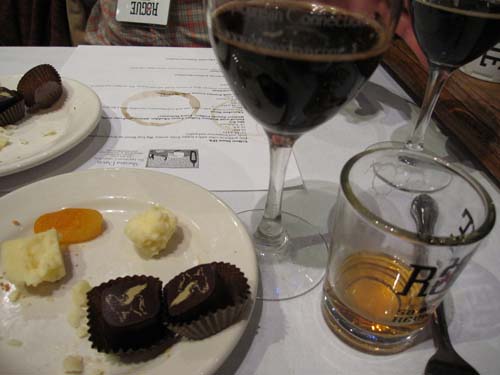
I recently attended the increasingly popular SF Beer Week, specifically the “A Taste of the Rogue Nation” event at the Rogue Ale Pub House, featuring a delightful cornucopia of their popular brews. Beer sommelier Sheana Davis of the Epicurean Connection elevated the status of the tasting from a mere beer bust to a frou-frou gourmet gathering with her artfully chosen pairings of artisan cheeses and chocolates. Although a little under a dozen samples were served, the following are the highlights — and what I could mostly remember to take notes on after several drinks. (Like true beer badasses, we did not expectorate.)
The tasting started off with Dirtoir Black Lager. Obsidian in color, it looked like coffee, it smelled like coffee, and it tasted like… coffee-ish beer: dark, roasted, and bitter. It was tasty in itself, but the lager became quite a treat when paired with the sampling of Rouge de Noir Le Petit Dejeuner—a sweet, creamy cheese with a white rind covered in penicillium fungi. Our lovely hostess Sheana told us it was mostly eaten as a morning cheese, which partially explained how well it complemented a coffee-like lager.

The Morimoto Soba Ale was also interesting, at least conceptually. A collaboration between Rogue and Chef Masaharu Morimoto (of Iron Chef fame), the specialty grain ale makes use of buckwheat—the same grain used for the flour of soba noodles. The taste was reminiscent of my favorite cheap beer, Asahi (Don’t kill me, beer aficionados, or Chef Morimoto.) In other words, it was refreshing, crisp, light, and on the dry side. I had a hard time placing the buckwheat nuttiness, though.

Not originally included in our tasting menu, John John Dead Guy Ale snuck in as an additional round. Another collaborative product, it’s comprised of Dead Guy Ale (creative contribution of Rogue Brewmaster John Maier) that has been aged in the leftover barrels of Dead Guy Whiskey (Rogue Spirits Master Distiller John Couchot’s input in the unholy scheme). It was delicate and sweet with the oaky notes of whiskey. To give us a basis of comparison, Double Dead Guy Ale was served immediately afterwards; with twice the normal amount of ingredients, it’s also twice as alcoholic. More bitter and less carbonated, it had a ghost of a caramel flavor.
 
While I did not care for the next round of Yellow Snow IPA, the immediate and bold hop flavor really assaulted my palate (for you hopheads, though, this beer’s for you), it’s worth mentioning because the cheese pairing was manna from heaven. Aged for 8 years, Widmer Cellar’s special cheddar actually develops crystals of condensed cheese, which adds a fun consistency to the concentrated, tangy flavor. It’s really the Übermensch of cheddar.

Finishing as the appropriate crescendo to the evening with rich, deep flavors, the Russian Imperial Stout, paired with Sheana’s espresso cookies, conjured up leather and smoke and the flashing eyes of Ivan the Great as he took to the battlefield against the advancing Mongol horde: earthy and full. I have to point out that at this point my intoxication level was at its peak, perhaps affecting my judgment. But the beer and its pairing were good in the way that dark, strong, and chocolatey foods are good.

All in all, my first foray into the complexities of beer and its relationship to food was edifying, especially in the case of the delicious synergism between the Dirtoir Black Lager and Rouge de Noir Le Petit Dejeuner. The conclusion? A pint glass can replace my wine glass any time.

Rogue Ales Public House

673 Union, SF

(415) 362-7880

www.rogue.com

How the UC regents avoided a PR mess with Bill Clinton

0

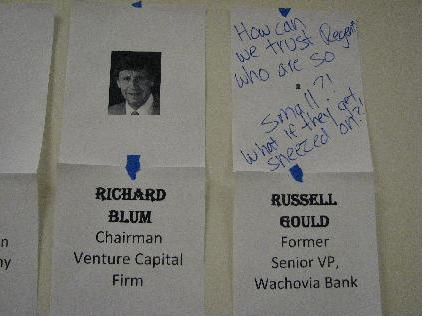
Things were calm and peaceful outside San Francisco’s Fairmont Hotel, perched high atop a windy hill on Mason Street, as dark shiny vehicles rolled up to the stately entrance and well-dressed patrons filed in on the evening of Feb. 24. They were there to hear former President Bill Clinton deliver a speech titled “Don’t Stop Thinking About Tomorrow: Building a Better World,” as a benefit for the American Himalayan Foundation. The AHF is chaired by Richard Blum, a member of the University of California Board of Regents who is married to Sen. Diane Feinstein.

As guests arrived, a small group of workers tried to thrust neon green fliers into their hands. The fliers were headlined, “Tell Richard Blum to Stop Poverty at UC!” and charged that the UC Regents had approved a package of raises for UC executives on Jan. 21 even as front-line UC workers faced layoffs and cuts. The stack of Xeroxed fliers was a mere blip compared with what AFSCME Local 3299, the union that represents workers throughout the University of California system, had originally planned.

The union had organized a picket against Blum’s AHF event, which would have forced Clinton to cross a picket line in order to go in. Not only would this have created an unwanted spectacle, it could have marred the entire event. As AFSCME Local 3299 member Tim Thrush put it, “Bill Clinton is a friend of labor. AFSCME has worked with him a lot in the past … And Clinton will not cross the picket line.”

UC workers have been reeling in the face of massive layoffs and budget cuts. While the university administration contends that there is little it can do in the face of a decimated state budget, union workers point to examples of privatization on the UC campus as an alarming trend that is supplanting public-sector jobs and eroding California’s renowned public-education system.

AFSCME Local 3299 laid out three demands, according to organizer Danielle DiSilverio. While two — involving benefits for custodians at the Irvine campus and concerns about “reductions in time” at the Santa Cruz and San Diego campuses — have not been met, they did secure an agreement to abandon a plan to contract out jobs for shuttle drivers at UC Berkeley. Since the UC Berkeley shuttle drivers would be able to keep their jobs, Local 3299 called off the picket.

“We would prefer to not have to do this kind of stuff,” Thrush told the Guardian. “But unfortunately, in the world that Dick Blum operates in, we can’t get his attention unless we do stuff like this. As he works hard on poverty issues and gives money and time to poverty issues, he also makes decisions at UC that further the poverty problem of our lowest-paid workers. We want to keep reminding him that it’s not OK to do that.”

Kevin Killian’s sex is unpretty

4

IMPOSSIBLE PRINCESS

By Kevin Killian

(City Lights)

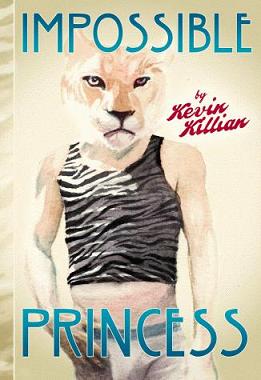
Author Kevin Killian’s relationship to sex is too complicated to be pinpointed as merely “homoerotic,” but homoerotic encounters are a frequent occurrence throughout the stories in Impossible Princess, Killian’s latest collection of gay short fiction.

Killian’s stories are full of nervous energy. The pace of his writing is jerky and striated, and events change and adjust so suddenly that Killian’s words read as if short of breath. The panting quality of the work is, in terms of form, utilized most effectively in the writer’s vivid and ominously perceptive descriptions of sex. These sexual encounters are often baffling.

In this sense, the sex described Impossible Princess feels accurate. Sexuality and sexual preferences continually evade our attempts at designation, both in fiction and in life. Killian toys with this idea of fundamental strangeness. In “Spurt,” lighthearted S&M suddenly turns into gore. In “Zoo Story,” an ailurophile finds himself mauled by panthers. When they are realized, Killian’s stories seem to argue, sexual fantasies can be experienced in ways both nightmarish and sublime.

While some of these stories seem fantastical, others are rooted in worldly experience. The sex Killian is so adept at describing also seems, for all its exuberance of libido, deeply and humanly sad. “Hot Lights,” which I first heard Killian read at an “autobiography-themed” Small Press Traffic event at Canessa Gallery last fall, is the tale of a young student (purportedly Killian during his Lower Manhattan days) turned porn performer who develops an infatuation with another porn performer, only to be outright rejected later on in the story. “Making Waves,” told from the perspective of an aging and washed-up former pop star, recounts the successful seduction of a young virgin that, unfortunately for the male ingenue, revealed a broken condom.

As we surely recognize, this sense of alienation is accurate to human experience. In its most honest portrayal, even sex that is shared between two (or more) people can feel unfathomably lonely. Just as sex can bring people together, it has the power to isolate us even further. Sex frequently severs us from our tenuous hold on an other as well as our all too malleable perception of ourselves, a point which Killian’s stories drive home. Sex is fluid. It is a current whose pace and destination cannot be mapped or predicted. When it comes to unpretty and unsentimental sex shed of the layers of accumulated euphemism, Killian doles it out in spades whether readers are prepared for it or not.

SF officials tap corporate cash

2

San Francisco’s $500 campaign contribution limit makes it tough for rich individuals and corporations to curry favor with local politicians, right? Well, not really. Actually, politicians can still tap wealthy interests for tens of thousands of dollars for their special events and pet projects, as long as they fill out a form called “Payments Made at the Behest of an Elected Officer” within 30 days.

Traditionally, those forms have been buried in the files of the Ethics Commission, but the agency recently put them online, a rare bit of user-friendly sunshine from this often-toothless watchdog body. A Guardian review of the forms shows it is almost exclusively the city’s most fiscally conservative elected officials who use this tactic, tapping a relatively small pool of downtown power brokers.

When Sup. Michela Alioto-Pier wanted to support a Bizworld Foundation event in December, she had Pacific Gas & Electric donate $5,000 on her behalf. Sup. Sean Elsbernd throws a big annual crab-feed fundraiser in February, with proceeds going to the Laguna Honda Foundation. The form for this year’s event isn’t in yet, but last year he got $5,000 each from all the top anti-progressive funders: Don Fisher, Dede Wilsey, Charles Schwab, Warren Hellman, Platinum Advisors, and the San Francisco Association of Realtors.

But far and away the biggest beneficiary of these kinds of corporate donations is Mayor Gavin Newsom, who submitted more than half the forms on file. For last year’s Sunday Streets events, he tapped the Hellman family for $30,000, Blue Shield for $10,000, his favorite developer Lennar for $10,000, and Lennar subcontractor CH2M Hill for $5,000. The year before, the top Sunday Streets donors (at $20,000 each) were California Pacific Medical Center (which is seeking city approval to build two new hospitals) and Catholic Healthcare West.

For his swearing-in events in 2008, Newsom tapped old family friends Gordon and Ann Getty for $30,000, the Fisher family for $20,000, and Charles Schwab, Dede Wilsey, and Marc Benioff for $15,000 each. And, of course, PG&E gave him $10,000.

When Treasurer Jose Cisneros was starting his Bank on San Francisco program in 2008, he had Wells Fargo donate $20,000. When Sup. Bevan Dufty wanted to create Mission High School scholarships in his name, he called his friends Denise and John York, owners of the 49ers, to cut a check for $19,000.

Only one official from the progressive side of the local political spectrum turned to these big donations for help, and that was then-Sup. Aaron Peskin in 2007, when he wanted to raise $84,000 to buy a Telegraph Hill property to turn into open space. His top donors were the Gerson Bakar Foundation for $34,000 and 1301 Sansome LLC for $15,000.

So if you want to find out how downtown corporations are supporting the politicians they favor, keep your eye on this valuable new online resource.

The clue master takes it down to Chinatown

2

It was a casual question to end a brief interview with SF Treasure Hunts clue master Jayson Wechter. “What’s something about San Francisco’s history that most people who live in the city don’t know about?” “Hmm, let’s see,” Wechter begins, whose Chinese New Year hunt this weekend (Sat/27) is his mostly highly attended event of the year. Before I can apologize for putting him on the spot, he starts reeling off the following:

1. The CIA used a house on Telegraph Hill in the 1950s to perform unauthorized LSD trials on men they hired prostitutes to bring home from bars.

2. The bay used to come all the way up to Montgomery Street on the east side of the city before it was filled in. Land being in such short supply back then, dud ships were converted to hotels, saloons and warehouse space.

3. William Tecumseh Sherman was a banker in SF before the Civil War.

4. In 1845, newspaper man and devote Mormon, Sam Brannan chartered a boat to take him and his Latter Day Saint brethren from the east coast to San Francisco (still part of Mexico when their journey began). They eventually migrated away from the city, but not before good old Sam had a street downtown named after him. “Had they stayed,” concluded Wechter solemnly “the SF sound would not have been Jefferson Airplane or the Grateful Dead but the Mormon Tabernacle Choir.”

Clearly, this man trivias.

Gleening post-collegiate inspiration from Keroauc’s On the Road, Wechter moved to San Francisco to work as a freelance journalist, taxi driver and eventually, private investigator. But a quick mind and a knack for knowing “a little bit about everything” had led Wechter to creating treasure hunts for his friends from the time he was 11 years old. He began in earnest with the SF hunts 20 years ago, to the delight of history/culture knick-knackery aficionados. Nowadays, the games attract clue hunters from all over the country, none more so than for the annual Chinese New Year hunt.

“There’s a great sense of joy in discovering something new… It’s a team activity for people that don’t have any athletic prowess,” he says of the events’ popularity today. Just make sure you’re ready to take the ‘me’ out of ‘team.’ Many of the groups at the fast paced, high pressure event are made of friends and couples- at least, before the competition starts. “Let’s just say the treasure hunts accentuate the ‘dynamics’ of a relationship,” chuckles Wechter.

Saturday’s Chinese New Year hunt will involve participants in a sort of noir mystery of their own making, racing in and out of parade routes, answering questions on the city’s landmarks, cultural history and general knowledge to win the competition’s big pay-off. “People have the ability to see things they normally wouldn’t [during Chinese New Year celebrations], says Wechter. “It’s a pedestrian focused event and has a festival, carnival like atmosphere- like Mardi Gras without the alcohol!”

The competition is broken into four levels of play; beginner, regular, master’s and “thinks faster than runs” for the competition’s less mobile participants. Already, 1,500 players are signed up for this weekend’s event.

So pop quiz: do you have what it takes to match wits with Jayson Wechter?

Sat/27 4:30 p.m., $35 pre order, $40 at event

Justin Herman Plaza

1 Market, SF

(925) 866-9599

www.sftreasurehunts.com

“The State of Black SF”

2

By Adrian Castañeda

To support those living in public housing, the Osiris Coalition is hosting an event called The State of Black SF this Sunday (Feb. 28) at the Main Library’s Koret Auditorium from 2-4:30 pm. It will feature a short film and a panel discussion on the plight of the city’s African American population, a topic discussed in this week’s Guardian cover story.

One of the items the panel is sure to discuss is the mayor’s Hope SF initiative to renovate eight public housing projects around the city. City officials, residents, and developers agree that housing projects like Hunter’s View and Alice Griffith are dilapidated. But while plans have been made for revitalization and rebuilding, some community groups are worried that current residents, an already marginalized population, will be overlooked.

With this in mind, the Housing Rights Committee of San Francisco is drafting The Right to Remain Act that aims to assign accountability and protect current tenants during the construction process.

If passed by the Board of Supervisors, the ordinance would provide for the establishment of a monitoring committee comprised of residents and community leaders to approve plans and keep the public informed.  The aim, says Julian Davis of the San Francisco Housing Development Corporation, is to guarantee that current residents benefit from revitalization and will be allowed to remain in their neighborhoods. “They’re all just stated policy goals at this point,” he said of the effort to provide stronger guarantees.

Under the ordinance, existing provisions in the Hope SF plan would be enforced by limiting city funding for future projects until appropriate conditions for relocation and construction are met. The current Hope SF plan includes specific one-to-one placement and phased development provisions, where residents will be moved to on-site housing if possible.

However, there is no guarantee the developers will abide by these plans, so the Right to Remain Act will fill in gaps in federal and state housing laws and hold the Hope SF plan to its goals by ensuring every resident will receive a contract for their home and can sue if their rights are not upheld. Sara Shortt of the HRCSF told us, “No matter what kind of rhetoric is thrown around by officials during all of this, there’s something real on paper that can be enforced.” Shortt, who served on the mayor’s Hope SF task force, says there is a long history of broken promises in communities like Hunter’s View and tenant’s fear being pushed out of their homes.

Many city officials, including District 10 supervisor Sophie Maxwell and those in the Mayor’s Office of Housing, are receptive to the general idea behind the act but few have assured their support. “I don’t think the mayor’s office is particularly keen on it,” Davis said of the proposed residential committee. Shortt said, “It’s not just about logistical issues. We believe you can’t guarantee that without having accountability and oversight.” She adds that the act should be “in the spotlight,” for the November District 10 elections, “so all the candidates are aware this is something that they’re going to have to take a position on.”

The act is still being drafted, but the relocation of residents at the Hunter’s View projects has already begun. The pre-existing surplus of hundreds of empty units has made the on-site relocation simple, and Jack Gardner of the John Stewart Company says demolition will begin in March. While the Right to Remain Act would not retroactively cover current projects, it will protect residents in future redevelopment plans.

“Wouldn’t it be great to have it happen like Hunter’s View at the other sites?” says Davis.

(Lack of) grace at EpiscoDisco

0

It was bound to happen. Some girl in a white coat tagged Grace Cathedral.

One thousand flowers were suspended from above as an art installation while I watched Nodzzz run through a collection of songs. The band described the outing as the first time they had ever held a microphone in church. I took that as confirmation they weren’t pastors or priests in their previous line of work. As soon as their set was done someone, maybe the event’s organizer, got on the microphone and had a startling announcement to make. He informed us that this may have been the final installment of EpiscoDisco because the woman in white, who he accused of “probably tripping on acid,” had vandalized the church. The man on the mic rhetorically told us that in the event’s one-year history, no such disrespect had ever occurred up until now, and that the future of the monthly get-together was now in doubt, as the church’s leadership would likely frown upon that night’s incident. He described what she had done and what she was wearing. To be honest, I sort of feared for the girl, because it sounded as if this guy was hoping for a lynch mob or at least some sort of immediate repercussions for her actions. He seemed pretty pissed, and if he was to be held responsible, I’d say rightfully so.

The church is one of those buildings a San Francisco resident is likely to take for granted. Grace’s occupation would normally be limited to parishioners or tourists, but its gothic majesty opens engraved chamber-like doors once a month on Saturday evenings, allowing a curious bunch of unlikely visitors to roam freely, seemingly unsupervised. Maybe it’s my Catholic upbringing, but something about the whole thing just seems so backwards. Disco scenesters mix it up with the garage rock crowd with drinks in their hands and stained glass windows in the background? Same-sex couples sharing intimate secrets littered among long rows of pews? Hipsters dressed (in their Sunday best?) ogling a giant crimson version of the holy bible all within the Episcopalian version of the house of the lord? It was madness. It seemed so wrong. Really, what would Jesus do?

Who could blame the girl? Before the culprit’s act was publicly announced, I myself was tempted to do something drastic in iconoclastic fashion. In fact, I did voice my fantasy out loud to my friend, saying I wanted to tag or at least tip something over. I’m sure some of those feelings were just residual teenage angst from the aforementioned upbringing of religion’s expectations of conformity and control. However, whereas I was a talker, the woman in white was a walker. Without inhibition she let loose in the form of either spray paint or maybe one of those Magnum markers. One friend thought she smelled something funny, but figured someone had light up a cig indoors. I never saw (nor smelled) her work of attempted ecclesiastical immortalization, but her sacrilegious act made her instantly notorious and got her bounced. We could only wonder what compelled her to do it. What did she have to say? My guess was “666,” even if it is a bit cliché, while another friend suggested she graffiti-ed “This church rulz.” In any event and quite unceremoniously, she attempted to re-enter the place of worship, but to no avail.

People filtered out of the cathedral slowly, just as they had been asked, while flamboyantl men with interesting haircuts decked out in leopard-print ensembles continued to berate the alleged vandal on their way out. As far as they were concerned, their EpiscoDisco was to suffer an uncertain future. So much for the church’s youth outreach program, but it was nice while it lasted. I guess we’ll just have to stay tuned.

Our weekly picks

0

WEDNESDAY (24th)

MUSIC

Noise Pop: The Ghost of a Saber Toothed Tiger

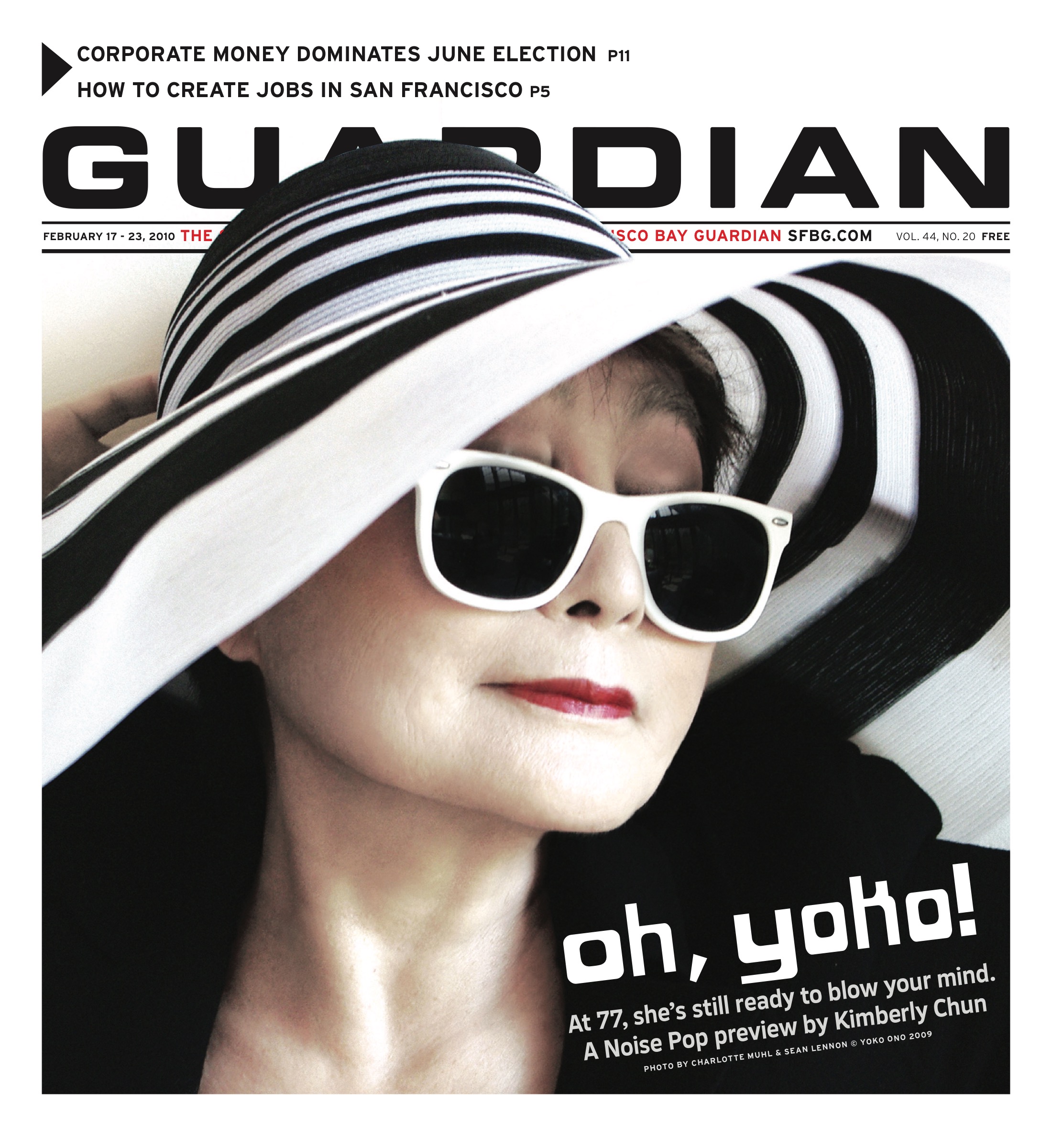
Noise Pop is in full effect, and Sean Lennon manages to pull double duty with the most important ladies in his life, performing with Plastic Ono Band as well as a group that includes his girlfriend Charlotte Kemp Muhr. The latter project, dubbed Ghost of a Saber Toothed Tiger, presents lavish folk songs not too far-flung from Lennon’s solo output, including a few spaced-out covers of that material. But Muhl’s harmonies lend a new depth and tone to the sublime psych gems. Performing under the pseudonyms Amatla and Zargifon, the duo is joined at this performance by members of Cornelius’s band (Keigo Oyamada, Shimmy Hirotaka Shimizu, Yuko Araki), adding to the full sound. (Peter Galvin)

With If By Yes (Petra Hayden and Yuka Honda)

8 p.m., $20

The Independent

628 Divisadero, SF

(415) 771-1421

www.theindependentsf.com

MUSIC

Noise Pop: Harlem, Young Prisms

Best party of Noise Pop probably has to be the Harlem show. The Bay Area isn’t trifling when it comes to garage rock, but the Texan trio can hang with the best of them (and in fact, they have some ties to them). They’ve got the best rock ‘n’ roll invocation of Caspar the Friendly Ghost since fellow Austin boy Daniel Johnston, and a handsome guitar sound. And yeah, they have a song called “Psychedelic Tits” that Jayne Mansfield would be proud to dance to regardless of whether Frank Tashlin was watching. They can write about unhappily blasting ABBA in the rain in the South of France and make it sound like the best time. Opening for them are Mexican Summer signees Young Prisms, one of the best new bands in San Francisco. (Johnny Ray Huston)

With Best Coast, the Sandwitches

8 p.m., $12

Cafe Du Nord

2170 Market, SF

(415) 861-5016

www.cafedunord.com

MUSIC

Jimmy Scott and the Jazz Expressions

There is nothing quite like Jimmy Scott singing “Sometimes I Feel Like a Motherless Child.” I’ve seen Scott testify when singing this song — even at 85 years old, he grabs hold of it with ferocity. That’s how it is when a song tells the story of your life, and Scott, well he’s the kind of singer who turns a song into a story. Back in the ’60s, Scott brought fearless singing on songs such as “Day By Day.” In recent years, his takes on standards like “All of Me” have had an increased sense of mischievous humor. If you haven’t seen Jimmy Scott live, you should, because there is no one quite like him, and no document of a concert in Tokyo, no matter how enjoyable, can match the experience. (Huston)

8 p.m., $18

Yoshi’s San Francisco

1330 Fillmore, SF

(415) 655-5600

www.yoshis.com

THURSDAY (25th)

FOOD/SPOKEN WORD

“In the Defense of Food”

Food. It’s one thing that can bring people together, create tears of joy, make mouths water, and conjure dreams. Although many of us try to fight the temptation to indulge in delectable bites, we are, in fact a society obsessed with savory morsels that bring us to our knees, and keep us begging for more. So let’s talk about it. Poetri, the star of the original Def Poetry Jam on Broadway, will unleash his inner love for food, and top spoken word artists from the Bay Area will also spend the evening praising unforgettable treats. And yes, food sampling and wine tasting are on the menu. (Elise-Marie Brown)

6 p.m., $20 (RSVP required)

Museum of the African Diaspora

685 Mission, SF

(415) 358-7200

www.moadsf.org

DANCE

Robert Moses’ Kin: The Cinderella Principle

When Robert Moses formed his dance company 15 years ago, he called it Robert Moses’ Kin. Moses knows that families today no longer just run along bloodlines. Nontraditional, blended, interracial, same-sex, single parent, no-kids families have become common. Hence The Cinderella Principle: Try These On to See If They Fit, an hour-long, full company work for which he collaborated with playwright Anne Galfour. The choreographic impetus came from interviews with people who are engaged in redefining kinship. Since dance companies often refer to themselves as family, Cinderella seems a particularly appropriate subject for a choreographer to undertake. The live music by Todd Reynolds includes beat boxer Kid Beyond. Cinderella will be joined by two works from 2008, Toward September and Hush. (Rita Felciano)

8 p.m (also Fri/26-Sat/27), $20-35.

Yerba. Buena Center for the Arts

701 Mission, SF

(415) 978-2787

www.ybca.org

VISUAL ART

Jill Storthz: Woodcuts

San Francisco has a lot of artists, but how many artists have San Francisco in heart and mind? Jill Storthz does — she’s written about the city’s influence on her work’s “splintered ramshackle quality entwined with colored light, earth, and space. Points for use of the word ramshackle, no doubt, but Storthz’s woodcuts have a lightness and grace to them, and the piece on the postcard for her latest show is rich with color in a manner that doesn’t listlessly parrot Mission School motifs. Storthz doesn’t draw within the lines of color theory — in other words, her art is distinct, not derivative. (Huston)

5:30–7 p.m. (through March), free

The Grotto

490 2nd St, SF

www.jillstorthz.com

www.sfgrotto.org

FRIDAY (26th)

ART/PHOTOGRAPHY

Third Annual International Juried Plastic Camera Show

What happened to the days when a basic point-and-shoot camera with film could make life exciting? We didn’t have the option of viewing photos instantly — instead, we had to march over to the one-hour photo and wait as our roll of film was developed. Whether the pictures came out in focus or not, the whole point was to document a moment in time when something worthy of a photo took place. At the Juried Plastic Camera Show, renowned photographers will showcase their work with the use of low-grade cameras — sans all the fancy equipment — and unveil beautiful pieces at that. (Brown)

6 p.m., free

RayKo Photo Center

428 Third St., SF

(415) 495-3773

www.raykophoto.com

MUSIC

Noise Pop: Atlas Sound

Buffalo Springfield died so that we might have Neil Young, and Peter Gabriel gave up the ghost with Genesis so his angelic 1980s pipes could blast from the boombox of an adolescent John Cusack. Sometimes branching off is a good idea. So it is with the music of Atlas Sound, the more-than-side project of Deerhunter’s Bradford Cox. The group’s recent album Logos (Kranky/4AD, 2009) is a hodgepodge of druggy, reverbed, and blissed-out beauty recorded whenever, wherever, and with whatever from 2007 to 2009. (Brady Welch)

With Geographer, Magic Wands, Nice Nice

8 p.m., $16-18

Great American Music Hall

859 O’Farrell, SF

(415) 885-0750

www.noisepop.com

FILM

Downstream

As recent entries The Book of Eli, The Road (2009), and I Am Legend (2007) have demonstrated, it’s easy to nuke a fascinating sci-fi genre into ponderous, sentimental meh-ness. (Not every postapocalyptic film can be as cool as 1979’s Mad Max.) Self-distributed Downstream avoids the heart-tugging route, for the most part: after his scientist father is killed, a boy grows up to be a straggly-haired drifter in a ravaged world where there’s no gas and very few women (thanks to cancers caused by genetically altered food). His one hope is of finding a rumored city kept civilized by clean energy. Its over-reliance on split-screen can be distracting, but Downstream deserves props for approaching dystopia from an intriguingly green perspective. (Cheryl Eddy)

Fri/26-Sat/27, 8 p.m.; Sun/28, 7 p.m.; $12

Victoria Theatre

2961 16th St., SF

(415) 863-7576

www.downstreamthemovie.com

MUSIC

Brian McKnight, Lalah Hathaway

Tonight, two respected R&B singers come together in one of the most soulful towns. Brian McKnight has made an imprint with his singing and songwriting on such hits as “Back at One” and “Anytime.” He also plays nine instruments. His timeless voice is an inspiration to several of today’s R&B singers. Opening for McKnight is Lalah Hathaway, daughter of the legendary Donny Hathaway. Her buttery alto tone is reminiscent of her father’s voice, but she injects her own timbre and control into every note. (Lilan Kane)

8pm, $50–$75

Fox Theater

1807 Telegraph, Oakl.

(510) 302-2277

www.thefoxoakland.com

SATURDAY (27th)

EVENT

Monster Jam

A stampede of horsepower comes thundering into the Bay Area today as the Monster Jam series of monster truck races and events hits Oakland, featuring ground-shaking custom creations such as “Iron Man,” “Donkey Kong,” “Maximum Destruction,” and the long-running fan favorite “Grave Digger.” Spectators will be treated to both races and full-on “freestyle” events — where the 10,000 pound muscle machines fly through the air at distances up to 130 feet and reach heights up to 35 feet in the air — not to mention crushing cars aplenty. Get in touch with your inner gear-head and speed on over to the Coliseum early, where a pit party precedes the night’s main events, allowing fans to get up close and personal with the burly beasts. (Sean McCourt)

3 p.m. pit party, 7 p.m. main event; $7.50–$30 ($125 for an all access pass)

Oakland Coliseum

7000 Coliseum Way, Oakl.

(800) 745-3000

www.monsterjam.com

MUSIC

California Honeydrops

It’s cold season, so if you are experiencing a sore throat, grab some California Honeydrops. Their music makes you feel good. Originating in the Oakland subway stations in 2007, California Honeydrops has played worldwide. Led by vocalist and trumpeter Lech Wierzynski, the band embraces roots, blues, and New Orleans-style horn lines to create a modern sound with a traditional influences. The playful rhythm section includes Chris Burns on the keys, drummer Ben Malament, and bassist Seth Ford-Young, with spicy shouts from saxophonist Johnny Bones. Bring your dancing shoes. (Kane)

$10–$15, 7:30 and 9 p.m.

Red Poppy Art House

2698 Folsom, SF

(415) 826-2402

www.redpoppyarthouse.org

ART/FILM

Cartune Xprez: 2010 Future Television

Combine images of old Sunday morning cartoons, live video theater, and psychedelic colors and shapes into a cosmic video and you’ve got Cartune Xprez: an out-of-body dream sequence come to life. Many of the directors will be on hand to explain the concepts for their work, so don’t be scared if you misinterpret their tour de force. Artists who have presented at Cartune Xprez in the past include Shana Moulton, Day-Glo maniacs Paper Rad, and collage visionary Martha Colburn. (Brown)

8 p.m., $5

LoBot Gallery

1800 Campbell, Oakl.

www.lobotgallery.com

SUNDAY (28th)

EVENT/LIT

“Meet Ann Bannon: Queen of Lesbian Pulp Fiction”

Pulp fiction isn’t just Tarantino kitsch. For pre-Stonewall gay and lesbian writers, the creation of pulp titles with something more — a way to forge community, share desires, and spark imagination. For some, if not all, this meant pulp was a political act. It would be difficult to find a better representative of lesbian pulp fiction than Ann Bannon, whose five-volume Beebo Brinker Chronicles has seen numerous reprints and recently inspired a stage play. In conjunction with the West Coast premiere of the stage version of Beebo Brinker, Bannon is coming to town for a tea party. Heat it up and add honey. (Huston)

1 p.m., $20–$40

Brava Theater Center

2789 24th St., SF

(415) 641-7657

www.brava.org The Guardian listings deadline is two weeks prior to our Wednesday publication date. To submit an item for consideration, please include the title of the event, a brief description of the event, date and time, venue name, street address (listing cross streets only isn’t sufficient), city, telephone number readers can call for more information, telephone number for media, and admission costs. Send information to Listings, the Guardian Building, 135 Mississippi St., SF, CA 94107; fax to (415) 487-2506; or e-mail (paste press release into e-mail body — no text attachments, please) to listings@sfbg.com. We cannot guarantee the return of photos, but enclosing an SASE helps. Digital photos may be submitted in jpeg format; the image must be at least 240 dpi and four inches by six inches in size. We regret we cannot accept listings over the phone.

Sing, spelunker, sing

0

arts@sfbg.com

SONIC REDUCER How many degrees of separation can be charted between the soulful, indie-folk natural men of the Cave Singers and the cut, tanned, laundered, and pugnacious bruisers and thugettes of Jersey Shore? Way fewer than you, or Snooki, would think.

“I’m all about it. It runs in my veins,” says Cave Singer Pete Quirk from downtown Seattle, taking a lunch break from his toils as a bike messenger and struggling to be heard above the din of jackhammers and a seemingly invisible, stalking squeeze-box player. He grew up on the shore, albeit on a more rustic stretch, which fostered mischievous fun like pool-hopping rather than cop car riding. “I’ve only seen the commercials, and I was so frightened by it. I got a glimpse of a guy punching a girl — so horrific.” Still, he adds, “Things seem a little less dramatic when you’re a kid. It wouldn’t be on TV if it wasn’t overblown.”

Of course, who knows what sort of reality show would focus on the Cave Singers, though the group’s origins could read like the stuff of potentially high drama considering songwriters Derek Fudesco, ex of Pretty Girls Make Graves and Murder City Devils, and Quirk, once of Hint Hint, share the same house — best friend-style, not Surreal Life-style. (Drummer Marty Lund, formerly of Cobra High, bunks elsewhere.) “People would fall in love with us, you know,” speculates Quirk, 34, gamely. “We’re just three lovable guys cruising around the country. It’s like that movie 3 Men and a Baby — just no baby. Music is the baby.” Quirk would like to be the Tom Selleck of that bunch. “But I’d probably Steve Guttenberg. But Guttenberg is cool because he’s down to earth.”

That’s an asset for these beach-, cave-, and nature-loving nu-folkies, who dive deeply into a breast-beating, witchy breed of acoustic rock on their brighter, more upbeat second long-player, Welcome Joy (Matador, 2009). A fleet of frisky, Feelies-like rhythm guitars drone with infectious optimism on “I Don’t Mind,” transmogrifying into kick-off-your-shoes pop bliss for “W” and the plucky, clickety-clack climax of “Hen of the Woods,” before taking it down a few gleaming notches for a bongo-laced, incantatory “Shrine.” The arc of Welcome Joy‘s tracks is crucial, miming the passage of a fiery orb across a midyear sky.

Why such joy? “We all went to therapy together like Metallica, y’know,” quips Quirk. But really, folks, Quirk qualifies, “we always sit around, and Derek will play a guitar line, and we’ll just be jamming, and it will bring up a cinematic image, and we’ll go with that. A lot of the songs at the time seemed joyful, for whatever reason. It seemed like there was a lot of beach imagery, or just youthful things we remembered doing in the past.”

It’s all organic down in the Fudesco and Quirk basement, where they practice and demo, decorate and sing freely, as Quirk puts it. There’s safety in that man cave — and in this band, apparently. “We’re best friends and housemates,” Quirk offers, amid the city clamor and chatter of kids with petitions. “We’re each other’s second wives or something — we help each other when we’re down. It’s like a Rotary Club down there.”

THE CAVE SINGERS

With the Dutchess and the Duke and the Moondoggies

March 9, 8 p.m., $12–$14

Independent

628 Divisadero, SF

www.theindependentsf.com


JOHNNY CASH TRIBUTE

Speedy’s Wig City cashes in with the seventh annual event showcasing Glen Earl Brown Jr., the B Stars, the Royal Deuces, Big B and His Snake Oil Saviors, the Mystery Men, Whiskey Pills Fiasco, and Misisipi Mike and the Country Squires. Thurs/25, 8 p.m., $10. Knockout, 3223 Mission, SF. www.theknockoutsf.com


ZAIMPH AND STELLAR OM SOURCE

Double Leopards diva Marcia Bassett serves up metal-flake No Fun noise candy alongside electronic dreamweaver Christelle Gualdi. With Vodka Soap and Bill Orcutt. Thurs/25, 9 p.m., $7. Hemlock Tavern, 1131 Polk, SF. www.hemlocktavern.com


TAKEN BY TREES

“Sweet Child O’ Mine,” Steinbeck, and South Asian exotica are a few of the touchstones for ex-Concretes vocalist Victoria Bergsman. With El Perro Del Mar. Tues/2, 9 p.m., $15. Café Du Nord, 2170 Market, SF. www.cafedunord.com

Rep Clock

0

Schedules are for Wed/24–Tues/2 except where noted. Director and year are given when available. Double features are marked with a •. All times are p.m. unless otherwise specified.

AUTOBODY FINE ART GALLERY 1517 Park, Alameda; www.autobodyfineart.com. $5. "Hunger," short zombie films by Bay Area filmmakers, Sat, 8.

ARTISTS’ TELEVISION ACCESS 992 Valencia, SF; www.atasite.org. $6-10. Zeitgeist Addendum: The Resource-Based Economy, Thurs, 7. "Noise Pop Film Festival:" Blood Into Wine (Page and Pomerenke), Fri, 7; Downtown Calling (Nicholson), Fri, 9; •Lou Barlow: Goodnight Unknown (Harding) and The Mountain Goats: Life of the World to Come (Johnson), Sat, 2; Woodstock: Now and Then (Kopple), Sat, 4; The Secret to a Happy Ending (Weissman), Sun, 2; All My Friends Are Funeral Singers (Rutili), Sun, 4:15. For info on these screenings, visit www.noisepop.com.

CAFÉ OF THE DEAD 3208 Grand, Oakl; (510) 931-7945. Free. "Independent Filmmakers Screening Nite," Wed, 6:30.

CASTRO 429 Castro, SF; (415) 621-6120, www.castrotheatre.com. $7.50-10. My Son, My Son, What Have Ye Done (Herzog, 2009), Wed-Thurs, 7, 9:15 (also Wed, 2:30, 4:45). •Fight Club (Fincher, 1999), Fri, 7, and Donnie Darko (Kelly, 2001), Fri, 9:40. Up (Docter, 2009), Sat, 2, 4:30, 7, 9:15. "German Gems:" Tender Parasites (Becker and Schwabe, 2009), Sun, noon; Miss Stinnes (von Moeller, 2009), Sun, 2; Being Mr. Kotschie (Baumgarten, 2009), Sun, 4:15; Vision (von Trotta, 2009), Sun, 7; The Bone Man (Murnberger, 2009), Sun, 9:15. Call for Mon-Tues program information.

CHRISTOPHER B. SMITH RAFAEL FILM CENTER 1118 Fourth St, San Rafael; (415) 454-1222, www.cafilm.org. $6.50-10. Broken Embraces (Almodóvar, 2009), call for dates and times. An Education (Scherfig, 2009), call for dates and times. Fish Tank (Arnold, 2009), call for dates and times. North Face (Stölzl, 2008), call for dates and times. "2010 Oscar Nominated Short Films," Wed-Thurs, call for times. "The Cinema of Jan Troell:" Everlasting Moments (2008), Sat, 7:15; The Emigrants (1971), Sat, 2 and March 6, 2; The New Land (1972), Sun, 2 and March 6, 7; "Dancing," "Reflexion 2001," and "Their Frozen Dream," Sun, 7; As White as Snow (2001), Mon and March 4, 7; Il Capitano (1991), Tues, 7.

HERBST THEATRE 401 Van Ness, SF; (415) 392-4400. $20. Examined Life (Taylor, 2008), Thurs, 7:30.

HUMANIST HALL 390 27th St, Oakl; www.humanisthall.org. $5. •Shellmound and In the Light of Reverence, Wed, 7:30.

MECHANICS’ INSTITUTE 57 Post, SF; (415) 393-0100, rsvp@milibrary.org. $10. "CinemaLit Film Series: Reel Criminals — The Heist:" A Fish Called Wanda (Crichton, 1988), Fri, 6.

MEZZANINE 444 Jessie, SF; www.sffs.org. $15. "SF360 Film + Club," sneak preview of a film about Stephin Merritt of the Magnetic Fields, Sun, 8.

PACIFIC FILM ARCHIVE 2575 Bancroft, Berk; (510) 642-5249, www.bampfa.berkeley.edu. $5.50-9.50. "Film 50: History of Cinema:" Pursued (Walsh, 1947), Wed, 3. "African Film Festival:" In My Genes (Nyong’o, 2009), Wed, 7. "Before ‘Capraesque:’ Early Frank Capra:" The Younger Generation (1929), Thurs, 7; So This Is Love (1928), Fri, 7; The Bitter Tea of General Yen (1933), Fri, 8:30; It Happened One Night (1934), Sat, 6:30. "The Kids Are Alright: Post-Fifties Musicals and the Rise of Youth Culture:" Pink Floyd the Wall (Parker, 1982), Thurs, 8:35; True Stories (Byrne, 1986), Sat, 8:35; Fruit Fly (Mendoza, 2008), Sun, 5:30. "L@te: Friday Nights at BAM/PFA:" "Paul Clipson and Gregg Kowalsky; Keith Evans," Fri, 7:30. This event at the Berkeley Art Museum, 2626 Bancroft, Berk. "Celebrating Amateur Film:" "Sid’s Cinema: A Tribute to Amateur Filmmaker Sid Laverents (1963-85)," Sun, 3.

RED VIC 1727 Haight, SF; (415) 668-3994. $6-10. The Yes Men Fix the World (Ollman, Price, and Smith, 2009), Wed, 2, 7:15, 9:15. The Bad Lieutenant: Port of Call New Orleans (Herzog, 2009), Thurs-Sat, 7, 9:35 (also Sat, 2, 4:30. Small Change (Truffaut, 1976), Sun-Mon, 7:15, 9:30 (also Sun, 2, 4). The Beaches of Agnès (Varda, 2008), March 2-3, 7, 9:20 (also March 3, 2).

ROXIE 3117 and 3125 16th St, SF; (415) 863-1087, www.roxie.com. $5-9.75. "Noise Pop Film Festival:" Austin, TX: Live Music Capital of the World? (Christ), Wed, 7; P-Star Rising (Noble), Wed, 9:15. For info on these screenings, visit www.noisepop.com. Leonard Cohen: Live at the Isle of Wight 1970 (Lerner), Wed-Thurs, 6:40, 8, 9:30. Precious: Based on the Novel Push by Sapphire (Daniels, 2009), Thurs, 6:45. The Cove (Psihoyos, 2009), Thurs, 8:50. Call for Fri-Tues program information.

SAN FRANCISCO CINEMATHEQUE Yerba Buena Center for the Arts, 701 Mission, SF; www.sfcinema.org. $10. "Darkest Americana and Elsewhere: Films, Video, and Words of James Benning:" "James Benning: American Dreams," Fri, 7; "James Benning: Landscape Suicide," Fri, 8:15. "Australian Avant-Garde: A Historical Overview," Tues, 7:30. Presentation Theater, University of San Francisco, 2350 Turk, SF. Same price and contact info. "James Benning:" Ruhr (2009) with "Fire and Rain" (2009), Sat, 7:30. McBean Theater, Exploratorium, 3601 Lyon, SF. Same price and contact info. "James Benning: Milwaukee to Lincoln, Montana Lecture," Sun, 3.

SAN FRANCISCO PUBLIC LIBRARY Koret Auditorium, 100 Larkin, SF; www.sfpl.org. Free. "The Story of India:" Freedom (2007), Thurs, noon. Large-screen video presentation.

VICTORIA 2961 16th St, SF; www.downstreamthemovie.com. $12. Downstream (Bartesaghi, 2009), Fri-Sat, 8; Sun, 7.

VIZ CINEMA New People, 1746 Post, SF; www.newpeopleworld.com/films. $10-25. La Maison De Himiko (2005), through March 4, call for times. "Noise Pop Film Festival:" Blood Into Wine (Page and Pomerenke), Thurs, 7:30; The Heart is a Drum Machine (Pomerenke), Thurs, 9:30. For info on these screenings, visit www.noisepop.com.

YERBA BUENA CENTER FOR THE ARTS 701 Mission, SF; (415) 978-2787, www.ybca.org. $6-8. "Freaks, Punks, Skanks, and Cranks:" To My Great Chagrin: The Unbelievable Story of Brother Theodore (Sumerel, 2008), Thurs, 7:30; Gold (Levis, 1968), Sat, 7:30.

Alerts

0

alert@sfbg.com

WEDNESDAY, FEB. 24


Party like it’s 1986!

A lot has changed since 1986, but electronic privacy law has not. Learn more about the Demand Your Dot Rights campaign — a project of the American Civil Liberties Union — and how we can work together to demand a privacy upgrade. Prizes for best 1980s attire and relics.

6 p.m., free

111 Minna Gallery

111 Minna, SF

www.dotrights.org


Positive Opportunities for Youth

Attend this youth resource fair and rally combining job, college, and internship opportunities with performances and speakers. The event concludes with the presentation a Youth Manifesto petition to the Oakland School Board. Support a safe learning environment where education, not military recruitment, is the priority.

2 p.m., free

Lake Merritt United Methodist Church

1330 Lakeshore, Oakl.

(510) 465-4793


The U.S. and the International Criminal Court

Hear William H. Taft IV of the American Society of International Law, discuss whether the U.S. should join the International Criminal Court to make it more effective in prosecuting those responsible for war crimes and crimes against humanity.

6 p.m., $15

Commonwealth Club

595 Market, 2nd floor, SF

(415) 597-6700

SUNDAY, FEB. 28


Complete the Gaza Freedom March

Hear cofounder of the Electronic Intifada and author Ali Abunimah discuss his recent participation in the international Gaza Freedom March, which served as a call to end Israel’s siege of Gaza on the anniversary of an assault that killed more than 1,400 Palestinians.

7 p.m., $15

Martin Luther King Jr. Middle School Auditorium

1781 Rose, Berk.

(510) 548-0542


You Can’t Be Neutral on a Moving Train

Join the call for an end to the wars in Iraq and Afghanistan and for the U.S. to use our taxes for healthcare, jobs, and education instead at this screening of the 2004 documentary about Howard Zinn’s life and causes. Sponsored by the Unitarian Universalists for Peace.

1:15 p.m., free

Unitarian Universalists Center

1187 Franklin, SF

(415) 776-4580

MONDAY, MARCH 1


Nuclear Tipping Point

Attend this screening of Nuclear Tipping Point, which looks at policymakers who advocate eliminating nuclear weapons. Includes a panel discussion with former Secretary of State George Shultz and former Secretary of Defense William Perry.

6:30 p.m., free

Cowell Theater at Fort Mason

Bay at Laguna, SF

(415) 775-2244, RSVP required

TUESDAY, MARCH 2


Produce to the people

Find out more about the creative ways organizations are addressing the need to find alternative models for local produce distribution, including making farm fresh produce available in underserved and neglected communities.

6:30 p.m., free

Port Commission Hearing Room

Ferry Building, 2nd floor

Market at Embarcadero, SF

www.cuesa.org

Mail items for Alerts to the Guardian Building, 135 Mississippi St., SF, CA 94107; fax to (415) 255-8762; or e-mail alert@sfbg.com. Please include a contact telephone number. Items must be received at least one week prior to the publication date.


John Yoo’s torturous book tour

1

By Adrian Castaneda and Steven T. Jones

John Yoo – the infamous author of legal memos justifying torture for the Bush Administration and a controversial UC Berkeley law professor – continued his surreal book tour yesterday, stopping in San Francisco yesterday to appear on KQED’s forum.

And while host Michael Krasny did little to challenge Yoo’s tortured logic, including the ludicrous assertion that tactics like waterboarding are legal because they weren’t specifically outlawed by Congress, two callers who are lawyers correctly noted that the U.S. is bound by several treaties that bar torture, as well as inhumane or degrading treatment of prisoners, which the U.S. clearly engaged in based on Yoo’s legal advice that only pushing a prisoner to the brink of death or major organ failure constitutes impermissible torture.

One of those callers specifically asked Yoo why his memo to the White House – written in the wake of 9/11, which Yoo considers an “unprecedented” event that conveyed great new powers to the president – didn’t cite the U.S. constitutional provision that makes Congressional-approved treaties the “supreme law of the land,” comparable to any other laws Congress approves.

Yoo never answered that question, and Krasny quickly dropped the issue to quote an e-mail that was supportive of Yoo, the only such comment during the hour-long show. It’s a shame that Krasny was far easier on this locally infamous figure than the Daily Show’s Jon Stewart, whose interview with Yoo last month was far tougher and more revealing.

That’s particularly galling given that is was just last week that the Department of Justice issued its final report criticizing Yoo’s “flawed legal reasoning” even though it stopped short of finding professional misconduct that would warrant criminal sanctions or disbarment. That final report by David Margolis of the Justice Department overruled a preliminary report by the Office of Professional Standards that did find professional misconduct based on the fact that Yoo “knowingly provided incomplete and one-sided advice” to justify the Bush Administration’s desire to torture detainees that it dubbed “enemy combatants.”

Protesters with World Can’t Wait and other groups have been hounding Yoo on his tour to promote his new book, “Crisis and Command: A history of executive power from George Washington to George W. Bush,” calling him and Jay Bybee (another Bush Administration lawyer who approved torture and is now a judge on the Ninth Circuit Court of Appeals in San Francisco) to be tried for their role in facilitating war crimes.

“These are men covered with the blood of countless victims of unspeakably cruel torture, rendition, and imprisonment without any recourse to trial in hell hole dungeons across the planet,” reads a World Can’t Wait missive.

For his part, Yoo is unrepentant and dismissive of critics, repeatedly citing unnamed polls that he says indicate most Americans support the so-called “enhanced interrogation methods” and believe they have prevented terrorist attacks. “I don’t think the majority of the American people think we went too far,” Yoo told Stewart.

On Forum, Yoo criticized the Office of Professional Responsibility’s finding as “shoddy,” saying that the investigators did not take into account the pressure and national urgency of the months just after the 9/11 attacks. Yoo placed blame for the torture scandals not on the one-sided misinformation in his legal briefs but on the fact that Congress didn’t create specific laws to define torture technique after adopting international torture treaties into American law. Yoo also blamed Congress for its inability or unwillingness to reign in the President’s broad wartime powers. “Congress still has enormous authority over national security matters when it chooses to use them,” he said.

Congress also has the power to subpoena Yoo and hold public hearings on the latest Justice Department report, which critics say whitewashed what many consider to be blatantly illegal activities by Yoo and other Bush Administration officials – or to formally support the indictment of Yoo and others by a Spanish judge investigating U.S.-approved torture — if it chooses to do so.

Clean money campaign launches in SF

0

The campaign for Prop. 15, the California Fair Elections Act, kicks off in San Francisco this Sunday afternoon. It’s an appropriate city to launch this effort, given San Francisco’s leadership on electoral reform, from our pioneering ranked choice voting system to our low political contribution limits to the public financing available in the races for mayor and the Board of Supervisors.

As I discussed in an article this week’s paper, the measure would create a pilot public financing program in the 2014 and 2018 races for the Secretary of State, funded by a $350 annual fee on lobbyists and their employers. It was placed on the ballot by legislation pushed primarily by Bay Area legislators Loni Hancock, Mark Leno, and Tom Ammiano.

Those legislators, along with Sup. Ross Mirkarimi, campaign chair Trent Lange, and California Nurses Association president Deborah Burger, are scheduled to speak at the event, with takes place at 1 p.m. outside the Main Library, 100 Larkin Street.

Notes from the Sierra Club’s gala dinner

0

While I focused on Jerry Brown’s disappointing speech to the Sierra Club San Francisco Bay Chapter’s gala dinner on Wednesday night, there are a few more notable nuggets in my notebook worth posting here, starting with what appears to be the collapse of plans for a California Constitutional Convention.

The Guardian recently reported on the difficulties that the campaign was having, but consultant Clint Reilly told me that the effort is basically over, with fundraising shortfalls being the final nail in the coffin. That’s one more reason why “hope” seems to be in such short supply on the political landscape.

The event was held in the Merchant Exchange, a building owned by Reilly, who helped underwrite the gathering. So it was no surprise that the evening was MCed by his wife, Janet Reilly, who is running a strong campaign to replace Michela Alioto-Pier on the Board of Supervisors.

There were lots of political luminaries at the event (list to follow), but there was one particularly notable attendee and particularly notable absence. Los Angeles City Council member Janice Hahn was one of the few politicos from down south, making the rounds in support of her run for lieutenant governor. But Mayor Gavin Newsom, who is considering challenging her, didn’t show up.

Also a no-show was U.S. Sen. Barbara Boxer, who appeared by video to address the gathering and express appreciation for being the recipient of the Sierra Club’s first Phillip Burton Badge of Courage Award for environmental stewardship. Accepting the award on her behalf was California Democratic Party chair John Burton, who was his usual salty self, taking a dig at the San Francisco Chronicle by referring to someone who wrote “for the Chronicle back when that was a newspaper,” and describing the award’s namesake thusly: “My brother was an outstanding environmentalist who didn’t like the outdoors much.”

He also made this funny, self-effacing crack at the start of his speech: “I think a third of the people in this room would like to see the accelerator stuck on the rug of my Prius.” I was not among that third.

There was a strong turnout of local political leaders, but tellingly, only from the left side of the political spectrum. The members of the Board of Supervisors who turned out were David Chiu, Chris Daly, Ross Mirkarimi, Eric Mar, and John Avalos. Other political luminaries on hand included City Attorney Dennis Herrera, Sen. Leland Yee (Yee and Herrera are each running for mayor) City College trustee John Rizzo (who introduced Brown), Senator-turned-Oakland mayoral candidate Don Perata, District Attorney Kamala Harris, Rep. Jerry McNerney, and Sen. Loni Hancock.

Bay Area faith leaders gather to call for immigration reform

2


By Rebecca Bowe

An event will be held this evening (2/18) at the Mission Dolores Basilica to urge Sens. Barbara Boxer and Diane Feinstein to push for nationwide immigration reform. The gathering of people from the immigrant community and faith-based organizations, which is being put together by the San Francisco Organizing Project, will be held in conjunction with the national Reform Immigration for America campaign.

Pat Bregant of SFOP told the Guardian that a turnout of around 1,000 is expected. Several families whose lives have been turned upside down by deportations will share their stories.

More than 35 clergy members from throughout the Bay Area will attend, including Bishop William Justice, Archdiocese of San Francisco. Others who are expected include Jim Molinari, state director for the office of Sen. Diane Feinstein, and San Francisco Supervisors David Chiu and David Campos.

Myrna Godinez, who came to the United States from war-torn El Salvador 26 years ago, said immigrants face steep challenges such as accessing health care and obtaining education. “They come here to work,” she said, “and to live in peace.” She said she faced many challenges trying to build a life here, but in her case, coming to the United States also meant being able “to go outside without being afraid of getting killed.”
The Mission Dolores Basilica is located at 3321 16th Street in San Francisco.

The event will be held from 7 to 8:30 p.m. and is free and open to the public.

Appetite: Forecast — a downpour of delicious varietals and gourmet bites

0

It’s been a stunning week of sunny weather… We may get a little rain on Saturday, but no problem if we can spend the afternoon indoors sipping delicious wine, right? On Sat/20, the largest competition of American wines in the world takes place in Fort Mason’s Festival Pavilion.

The San Francisco Chronicle Wine Competition features literally thousands of our country’s best with gourmet bites along the way. Maybe it’s Sonoma Artisan Foie Gras or A Perfect Pear‘s delicious jams. Or you can sample what the CCA students are cooking up.

The event started in 1983 as an annual fundraiser for the Santa Rosa Junior College Wine Studies Program & Culinary Arts Program (now that’s a mouthful), and was then known as the humble Cloverdale Citrus Fair wine competition — eventually growing to the point where it moved to SF. More than 4800 nationwide wines are judged in January by 60 industry judges. The gold medal wines are offered to you — that’s a lot of wine tasting!

You’ll taste wines of many a varietal and within a wide price range, like a Norton from Missouri, Rieslings from both coasts, or a Chambourcin from the Finger Lakes. Fort Mason is yours to roam: sipping, nibbling, taking in views of Golden Gate Bridge. Rainy or not, that sounds like a sweet Saturday.

San Francisco Chronicle Wine Competition
Sat/20; 2-5pm, $60 advance/ $80 at the door
Fort Mason Center Festival Pavillion, 38 Fort Mason 11
www.winejudging.com
twitter.com/sfcwinecomp

Check out Virginia’s culinary itinerary site www.theperfectspotsf.com for more food news and views.

The “Newsom wins” merry-go-round: What fun

10

Gavin Newsom still hasn’t said for sure that he’s in the race for lt. governor, although just about everyone in town now thinks he’s going for it.

But the very prospect of the mayor leaving office before his term is up has the political classes speculating: Who gets that job? And how does it happen?

It’s actually pretty interesting.

Under the City Charter, the president of the Board of Supervisors becomes acting mayor in the event that the mayor leaves office before the end of his or her term. Then the supervisors, by a six-vote majority, can appoint someone else to the job.

Melissa Griffin lays out one piece of the scenario, which is that the board could appoint a new mayor in advance, without anyone serving as acting mayor.

But there’s much more to the story.

According to a fascinating city attorney’s opinion issued in 1978 (PDF), when George Moscone and Harvey Milk were killed and Dianne Feinstein was board president, no supervisor is allowed to vote on his or her own appointment. Which would mean that if, say, Board President David Chiu wanted the job, he’d need six votes not including his own.

Now the plot thickens. Suppose nobody can round up six votes — that is, a majority of the supervisors can’t agree on a new mayor? Well, Chiu, as board president, would be acting mayor — potentially for the entire duration of Newsom’s term, roughly a year. He’d also remain as board president. It’s the same as if the mayor goes out of the state and names an acting mayor in his place; that person is still a supervisor. So Chiu would have all the powers of both the mayor and the board president — and immense amout of clout for one person at City Hall.

But wait, there’s more: Chiu is board president only until the board elected in November of this year takes office, which would be about five days after Newsom would become lite guv. So unless the current board can choose a new mayor, with six votes (not including the vote of any supervisor being nominated), the new board would elect a new board president — who would instantly become acting mayor at the same time.

And since supervisors are allowed to vote for themselves for board president, any member would be allowed to vote for him- or herself for acting mayor.

Confused yet? Clearly, the folks who wrote the City Charter never actually envisioned this scenario (or didn’t think about it very much).

Of course, what that means that with the current board split the way it is, with exactly six solid progressive votes, someone who isn’t currently on the board (say, Aaron Peskin — or Tom Ammiano, or Mark Leno, or whoever) would have a better chance of getting a majority than a current member, who would need at least one of the moderate bloc votes.

And if Newsom runs, it will make the fall supervisorial elections even more important, because potentially those newly elected supes will be choosing not only a board president but a mayor.

Here’s another fun twist: If District Attorney Kamala Harris is elected attorney general, the mayor gets to appoint a new D.A. But suppose Newsom also wins and is sworn in a few minutes before Harris. Presumably acting mayor David Chiu (a former prosecutor who rumor has it might like to be D.A. himself someday) would choose the new D.A. — and suppose Chiu knows he doesn’t have six votes to be mayor. There’s no reason why he couldn’t appoint himself D.A., leaving a vacancy on the board and a vacancy for board president, which would be filled by anyone who could get six votes, who would then be acting mayor and could appoint a new supervisor to Chiu’s seat. Who could then be the deciding vote on who gets to be mayor.

Whoa. I can’t wait. Run, Gavin, Run.

Snap your fingers for our new poet laureate

0

“The only war that matters is the war against the imagination.” Diane di Prima, San Francisco’s new poet laureate as of last year, should be an expert on imagination’s primacy. Her work in such volumes as The Revolutionary Letters (1971) helped to shine a light on the role women played in Bohemia- not always the most well-lit arena. On Fri/19, the Mission Cultural Center for Latino Arts holds a reception to laud the most well known female voice of the Beat movement, and celebrate her turn as our city’s bard.

Here’s the bio-in-a-nutshell; born Italian-American in Brooklyn, Di Prima was a precocious writer, corresponding with Ezra Pound by the age of 19. After attending Swarthmore she starting gettin’ wierd with in with the Beats in Manhattan, in 1966 spending time on Timothy Leary’s Millbrook psychedelic community. She’s worked closely with Amiri Baraka, and the two co-founded the New York Poet’s Theatre. She became a connective figure between the Beats and hippies, moving to California permanently in the ’60s where got in with the radical improv group, the Diggers, and started studying world religions. She’s written over 48 books. 48 books! Would that we all could have a paragraph like that written on our lives.

And the poetry? The words often often personal, serving to widen Di Prima’s scope beyond an individual life to constancies in the human condition. But rather than stretch my capacity as a poetry critic, let us just revel in the glory of the words themselves. Below, “Revolutionary Letter #1” from Revolutionary Letters.


I have just realized the stakes are myself

I have no other

ransom money, nothing to break or barter but my life

my spirit measured out, in bits, spread over

the roulette table, I recoup what I can

nothing else to shove under the nose of the maȋtre de jeu

nothing to thrust out the window, no white flag

this flesh all I have to offer, to make the play with

this immediate head, what it comes up with, my move

as we slither over this go board, stepping always

(we hope) between the lines


The poet laureate honor was first bestowed on Lawrence Ferlinghetti by Willie Brown in 1998. MCCLA’s event will also feature past honorees Devorah Major, Jack Hirschman and Janice Mirikitani, amongst other members of the rhymey profession.

Celebrate Diana di Prima

Fri/19 7:30 p.m., free

Mission Cultural Center for Latino Arts

2868 Mission, SF

(415) 821-1155

www.missionculturalcenter.org

Alerts

0

alerts@sfbg.com

WEDNESDAY, FEB. 17

Same Sex Marriage Forum

Attend this forum about which entity — the state or the federal government — should define marriage. The forum is led by a panel of experts from human rights organizations and SF Chief Deputy City Attorney Therese Stewart, attorney for the plaintiffs in the current court case challenging Proposition 8.

6:30 p.m., $20

Commonwealth Club

595 Market, 2nd floor, SF

(415) 597-6700


THURSDAY, FEB. 18

Human rights in Chiapas

Hear Victor Hugo López of Fray Bartolomé de las Casas Human Rights Center (Frayba) in San Cristóbal de las Casas, Chiapas, Mexico. López will discuss human rights and the prospects for political change in the region in 2010. Frayba produces human rights reports, defends cases in court, and supports indigenous communities under attack.

7:30 p.m., $5–$10 sliding scale

La Peña Cultural Center

3105 Shattuck, Berk.

(510 654-9587


Wreaking HavoQ

Attend this organizing meeting for Pride at Work, a queer advocacy group fighting for economic and social justice. The meeting will cover upcoming projects such as fighting the gentrification of queer neighborhoods, resisting attacks on immigrants, and advocating for queer workers’ rights.

6 p.m., free

UNITE HERE Local 2

209 Golden Gate, SF

sfprideatwork.org


SUNDAY, FEB. 21

Day of Remembrance

Commemorate the anniversary of Executive Order 9066, which led to the incarceration of 120,000 people of Japanese descent in 1942 during World War II. The event features a speech by California Assembly Member Warren Furutani (D-Long Beach), a performance by Purple Moon Dance Project, a candle- lighting ceremony, and more. Reception to follow at the Japanese Cultural and Community Center at 1840 Sutter.

2 p.m., free

Kabuki Sundance Cinema

1881 Post, SF

(415) 921-5007


Peacemas

Celebrate the anniversary of the peace symbol with an evening of entertainment that includes inspirational clown Wavy Gravy, Selma Vincent as Mrs. T. Bill Banks of the National Association of Rich People, jazz violinist India Cooke, and more.

7 p.m., free

Redwood Gardens

2950 Derby, Berk.

(510) 845-5481


Yeasayers for Prop. 15

Hear Sen. Mark Leno (D-SF), Assembly Member Tom Ammiano (D-SF), and other luminaries speak in support of the California Fair Elections Act, or Proposition 15, on the upcoming June ballot. The act would pilot a voluntary system of public financing for secretary of state campaigns, which means elected officials can spend less time fund-raising and more time solving California’s problems.

1 p.m., free

San Francisco Main Library

100 Larkin, SF

(415) 648-6740


TUESDAY, FEB. 23


A chicken in every yard

Learn the logistics of raising chickens in a urban environment at this workshop with Alexis Koefoed. The Soul Food Farm maven will answer questions about the legality of raising chickens in your area, what it costs to raise chickens, where to buy chicks, and more. There are two sessions.

6 p.m. and 7:30 p.m., $20

18 Reasons

593 Guerrero, SF email info@18reasons.org 2 Mail items for Alerts to the Guardian Building, 135 Mississippi St., SF, CA 94107; fax to (415) 255-8762; or e-mail alert@sfbg.com. Please include a contact telephone number. Items must be received at least one week prior to the publication date.

Event Listings

0

Events listings are compiled by Paula Connelly. Submit items for the listings at listings@sfbg.com. For further information on how to submit items for the listings, see Picks.

WEDNESDAY 17

LGBT Job Fair SF LGBT Center, 1800 Market, SF; (415) 865-5555. 11am, free with registration at jobfair.sfcenter.org. All levels of job seekers are welcome at this Bay Area diversity LGBT workforce recruitment event.

THURSDAY 18

Trotsky: Downfall of a Revolutionary Mechanics’ Institute, 57 Post, SF; (415) 393-0100. 6pm, $12. Hear Stanford University lecturer and author Bertrand M. Patenaude discuss the dark and tumultuous last days of revolutionary Leon Trotsky in Mexico, while hiding from Stalin’s secret police.

BAY AREA

“Teaching What Really Happened” First Unitarian Church of Oakland, 685 14th St., Oak.; (510) 601-0182 ext. 302. 7pm, $10-15 sliding scale. Hear author James W. Loewen discuss his new book Teaching What Really Happened: How to avoid the tyranny of textbooks and get students excited about history, a book that attempts to overturn myths and misinformation that pass for U.S. history.

FRIDAY 19

California Media in Crisis Commonwealth Club, 2nd floor, 595 Market, SF; (415) 597-6700. Noon, $15. Hear a panel of experts from New American Media, Oakland Tribune, Los Angeles Times, and more discuss “Who will hold California institutions accountable” at a time when traditional media is in a state of crisis.

SATURDAY 20

Jamaica Dyer Cartoon Art Museum, 655 Mission, SF; (415) CAR-TOON. Noon, free. Hear Bay Area native Jamaica Dyer talk about cartooning and view some of her work, including her recent book Weird Fishes about two outsider kids coming to terms with their identities.

Found Art Workshop Meet at Mina Dresden Gallery, 312 Valencia, SF; (415) 863- 8312. 10am, $40. Learn how to reuse, reimagine, and repurpose found objects with artists Truong Tran, who will begin by discussing his own process followed by a treasure hunt throughout the streets and thrift stores in the Mission.

BAY AREA

“Art of Revolution” Joyce Gordon Gallery, 406 14th St., Oak.; (510) 465-8928. Sat. and Sun. 3pm, $5-10 sliding scale. In honor of Black History Month hear featured poets Tureeda Mikell as the storyteller, Michael Lange as Malcolm X, Dough Howerton performing readings from “Firing Banks and Moving Targets”, and Charles Dubois performing the “History of the Black Panther Party”.

“Do It for Haiti” NIMBY, 8410 Amelia, Oak.; (510) 633-0506. 2pm, $10. Enjoy live music, art installations, and performances at this benefit and clothing drive for Bay Area organizations working in Haiti. Donations of summer clothing for children and adults welcome.

SUNDAY 21

Evolutionary Biology Today Humanist Hall, 390 27th St., Oak.; (510) 681-699. 1pm, $5 suggested donation. In honor of Darwin Day, attend this talk led by evolutionary biologist David Seaborg on what science knows today about adaptation, the evolution of altruistic behavior, sexuality and mating behavior, mass extinctions, and more.

WordUp Wine Tasting Fort Mason Center, Conference Center, Beach at Laguna, SF; (415) 626-7512 ext. 107. 2pm, $50. Meet artisan winemakers from the Richmond, Presidio, Marina, Excelsior, and more and enjoy handcrafted wines, hors d’oeuvres, and a silent auction. All proceeds to benefit the Neighborhood Library Campaign.

BAY AREA

Try! Magazine 21 Grand, 416 25th St., Oak.; newyipes.blogspot.com. 6pm, $10. Attend this fundraiser for Try! Magazine, celebrating their first two years as a voice for the Bay Area writing community. Featuring presentations from past issues by readers, DJs, drinks, and plenty of things to look at, listen to, and purchase.

MONDAY 22

Community Benefit Districts AIA San Francisco, Suite 600, 130 Sutter, SF; (215) 546-4128 to RSVP. Noon, free. Attend this Next American City lecture titled, “Community Benefit Districts: The Future of San Francisco Development?,” featuring a panel discussion with planning and development professionals that will explore what implications CBDs may have beyond streetscape improvement and beautification.

Joseph Stiglitz Commonwealth Club, 2nd floor, 595 Market, SF; (415) 597-6700. 6pm, $18. Hear Nobel Prize winner and economist Joseph Stiglitz speak about restoring the balance between markets and governments and addressing the inequalities of the global financial system.

TUESDAY 23

Reimagining Market Street San Francisco Planning and Urban Research, 654 Mission, SF;

(215) 546-4128. 6pm, $20. Take part in this interactive design collaboration from Next American City, SPUR, and the American Institute of Architecture titled, “Reimagining Market Street: Creating our own Champs-Elyssees.” Participants will discuss what it takes to make a great street before breaking into groups facilitated by leaders in local public space projects, transit, public art, bike activism, and more.

Film Listings

0

Film listings are edited by Cheryl Eddy. Reviewers are Kimberly Chun, Michelle Devereaux, Max Goldberg, Dennis Harvey, Johnny Ray Huston, Erik Morse, Louis Peitzman, Lynn Rapoport, Ben Richardson, and Matt Sussman. The film intern is Peter Galvin. For rep house showtimes, see Rep Clock. For first-run showtimes, see Movie Guide. Due to the Presidents’ Day holiday, theater information was incomplete at presstime.

SF INDIEFEST

The 12th San Francisco Independent Film Festival runs through Thurs/18 at the Roxie, 3117 16th St, SF. For tickets (most shows $11), visit www.sfindie.com. All times pm.

WED/17

Down Terrace 7:15. No One Knows About Persian Cats 7:15. Godspeed 9:30. At the Foot of a Tree 9:30.

THURS/18

Art of the Steal 7:15. TBA 7:15. Harmony and Me 9:30. TBA 9:30.

OPENING

*”Academy Award-Nominated Short Films: Animated” Just because it’s animation doesn’t mean it’s just for kids. Like the live-action Oscar-nominated shorts, this year’s animated selections have got range, from the traditionally child-friendly to downright vulgar. Skewing heavily towards CG fare, the shorts vary from a Looney Tunes-style chase for an elderly woman’s soul (The Lady and the Reaper) to the Wallace and Gromit BBC special, A Matter of Loaf and Death. Most entertaining by far is Logorama, an action-packed tale set in a world populated by familiar trademarked logos. Any film that casts the Michelin man as a garbage-mouthed cop on the case of a renegade Ronald McDonald deserves to win all the awards in the universe. (1:35) (Galvin)

*”Academy Award-Nominated Short Films: Live Action” Aren’t you tired of wondering what all the fuss is about when the Academy awards their Oscar for Best Short? In an effort to give audiences a chance to play along, Shorts International is screening these less-seen works together. Though one or two of the five nominated films threaten to adhere to the Academy’s penchant for either heartbreaking or heartwarming, the majority are surprisingly oddball picks. Perhaps most odd of all is Denmark/U.S. submission The New Tenants. Feeling a tad forced but no less funny for it, Tenants draws on celebrities like Vincent D’Onofrio and comedian Kevin Corrigan to bring life to this surreal adaptation by Anders Thomas Jensen (2006’s After the Wedding). My pick would be Sweden’s gloriously goofy Instead of Abracadabra, which stars a stay-at-home slacker as he puts on a magic show for his father’s birthday. Obviously, some selections are going to be better than others, but hey, they’re shorts. If you don’t like one, just wait 10 minutes and you’ll find yourself somewhere completely different. (1:35) (Galvin)

Happy Tears Director Mitchell Litchenstein’s second film attempts to take on the family drama in the similarly warped fashion that his 2007 debut Teeth skewed the horror genre. Unfortunately, his thoroughly offbeat humor continues to be as much of a liability as a asset, and in this case the genre isn’t nearly as forgiving of clumsiness. Parker Posey and Demi Moore star as dissimilar sisters tasked with caring for their father (Rip Torn), who copes with dementia. Posey turns in an animated performance that will gain her as many fans as it alienates, and Moore is surprisingly pleasant as a level-headed hippie. As the sisters interrogate a flighty nurse (Ellen Barkin) who may or may not be a crackhead, clean up after their incontinent father, and dig for treasure in the backyard, the restless plot creates a murky mix of flat humor, heavy drama and conventional whimsy. A subplot involving Posey’s fiance dealing with the legacy of his famous father’s art feels tangential, but may provide the most autobiographical moments in the film. The title Happy Tears is borrowed from the record-selling 1964 painting and Lichtenstein is indeed the son of legendary pop-art painter Roy Lichtenstein. Perhaps these moments function as catharsis for the director, but until he learns to better manage his impulses, his films will continue to be more awkward than funny. (1:36) (Galvin)

*Leonard Cohen: Live at the Isle of Wight 1970 The dawn of the Me Decade saw the largest-ever music festival to that date —albeit one that was such a logistical, fiscal and hygenic disaster that it basically killed the development of similar events for years. This was the height of “music should be free” sentiments in the counterculture, with the result that many among the estimated six to eight hundred thousand attendees who overwhelmed this small U.K. island showed up without tickets, refused to pay, and protested in ways that included tearing down barrier walls and setting fires. It was a bummer, man. But after five days of starry acts often jeered by an antsy crowd — including everyone from Joni, Hendrix, Dylan, Sly Stone, the Who and the Doors to such odd bedfellows as Miles Davis, Tiny Tim, Voices of East Harlem, Supertramp, and Gilberto Gil — Canadian troubador Cohen appeared at 4 a.m. on a Monday to offer balm. Like director Murray Lerner’s 1995 Message to Love, about the festival as a whole, this footage has been shelved for decades, but it bounces right back from the dead — albeit soothingly. Cohen seems blissed out, pupils like black marbles, his between-song musings are as poetical as those fascinating lyrics, and his voice is suppler than the rasp it would soon become. Kris Kristofferson, Judy Collins, Joan Baez, and bandmate Bob Johnson offer reflections 40 years later. But the main attraction is obviously Cohen, who is magnetic even if an hour of (almost) nothing but ballads reveals how stylistically monotone his songwriting could be. (1:04) Roxie. (Harvey)

*The Most Dangerous Man in America: Daniel Ellsberg and the Pentagon

Papers For many, Daniel Ellsberg is a hero — a savior of American First Amendment rights and one of the most outspoken opponents of the Vietnam war. But as this documentary (recently nominated for an Academy Award) shows, it’s never an an easy decision to take on the U.S. government. Ellsberg himself narrates the film and details his sleepless nights leading up to the leak of the Pentagon Papers — the top secret government study on the Vietnam war — to the public. Though there are few new developments in understanding the particulars of the war or the impact the release of the Papers had on ending the conflict, the film allows audiences to experience the famous case from Ellsberg’s point of view, adding a fresh and poignantly human element to the events; it’s a political documentary that plays more like a character drama. Whether you were there when it happened or new to the story, there is something to be appreciated from this tale of a man who fell out of love with his country and decided to do something about it. (1:34) (Galvin)

My Son, My Son, What Have Ye Done See “Ain’t No Iguana.” (1:31) Castro.

*North Face You’ll never think of outerwear the same way again — and in fact you might be reaching for your fleece and shivering through the more harrowing climbing scenes of this riveting historical adventure based on a true tale. Even those who consider themselves less than avid fans of outdoor survival drama will find their eyes frozen, if you will, on the screen when it comes to this retelling/re-envisioning of this story, legendary among mountaineers, of climbers, urged on by Nazi propaganda, to tackle the last “Alpine problem.” At issue: the unclimbed north face of Switzerland’s Eiger, a highly dangerous and unpredictable zone aptly nicknamed “Murder Wall.” Two working-class friends, Toni Kurz (Benno Fürmann of 2008’s Jerichow) and Andi Hinterstoisser (Florian Lukas) — here portrayed as climbing fiends driven to reach summits rather than fight for the Nazis — take the challenge. There to document their achievement, or certain death, is childhood friend and Kurz’s onetime sweetheart Luise (Johanna Wokalek, memorable in 2008’s The Baader Meinhof Complex), eager to make her name as a photojournalist while fending off the advances of an editor (Ulrich Tukur) seeking to craft a narrative that positions the contestants as model Aryans. But the climb — and the Eiger, looming like a mythical ogre — is the main attraction here. Filmmaker Philipp Stölzl brings home the sheer heart-pumping exhilaration and terror associated with the sport — and this specific, legendarily tragic climb — by shooting in the mountains with his actors and crew, and the result goes a way in redeeming an adventure long-tainted by its fascist associations. (2:01) Smith Rafael. (Chun)

Shutter Island Martin Scorsese directs Leonardo DiCaprio in this adaptation of the Dennis Lehane novel, a mystery set at an isolated 1950s insane asylum. (2:18)

ONGOING

Avatar James Cameron’s Avatar takes place on planet Pandora, where human capitalists are prospecting for precious unobtainium, hampered only by the toxic atmosphere and a profusion of unfriendly wildlife, including the Na’vi, a nine-foot tall race of poorly disguised cliches. When Jake Sully (Sam Worthington), a paraplegic ex-marine, arrives on the planet, he is recruited into the “Avatar” program, which enables him to cybernetically link with a part-human, part-Na’vi body and go traipsing through Pandora’s psychedelic underbrush. Initially designed for botanical research, these avatars become the only means of diplomatic contact with the bright-blue natives, who live smack on top of all the bling. The special effects are revolutionary, but the story that ensues blends hollow “noble savage” dreck with events borrowed from Dances With Wolves (1990) and FernGully: The Last Rainforest (1992). When Sully falls in love with a Na’vi princess and undergoes a spirit journey so he can be inducted into the tribe and fight the evil miners, all I could think of was Kevin Bacon getting his belly sliced in The Air Up There (1994). (2:42) (Richardson)

The Blind Side When the New York Times Magazine published Michael Lewis’ article “The Ballad of Big Mike” — which he expanded into the 2006 book The Blind Side: Evolution of a Game — nobody could have predicated the cultural windfall it would spawn. Lewis told the incredible story of Michael Oher — a 6’4, 350-pound 16-year-old, who grew up functionally parentless, splitting time between friends’ couches and the streets of one of Memphis’ poorest neighborhoods. As a sophomore with a 0.4 GPA, Oher serendipitously hitched a ride with a friend’s father to a ritzy private school across town and embarked on an unbelievable journey that led him into a upper-class, white family; the Dean’s List at Ole Miss; and, finally, the NFL. The film itself effectively focuses on Oher’s indomitable spirit and big heart, and the fearless devotion of Leigh Anne Tuohy, the matriarch of the family who adopted him (masterfully played by Sandra Bullock). While the movie will delight and touch moviegoers, its greatest success is that it will likely spur its viewers on to read Lewis’ brilliant book. (2:06) (Daniel Alvarez)

The Book of Eli The Book of Eli isn’t likely to win many prizes, but it could eventually be up for a lifetime achievement award in the “most sentimental movie to ever feature multiple decapitations by machete” category. Denzel Washington plays the titular hero, displaying scant charisma as a post-apocalyptic drifter with a beatific personality and talent for dismemberment. Eli squares off against an evil but urbane kleptocrat named Carnegie (Gary Oldman phoning in a familiar “loathsome reptile” performance). Convinced that possession of Eli’s book will place humanity’s few survivors in his thrall, Carnegie will do anything to get it, even pimping out the daughter (Mila Kunis, utterly unconvincing) of his blind girlfriend (Jennifer Beals, who should stick to playing people who can see). The two slumming lead actors chase each other down the highway, pausing for some spiritual hogwash and an exchange of gunfire before limping towards an execrable twist ending. At least there’s a Tom Waits cameo. (1:58) (Richardson)

Broken Embraces Pedro Almodóvar has always dabbled in the Hitchcockian tropes of uxoricide, betrayal, and double-identity, but with Broken Embraces he has attained a polyglot, if slightly mimicking, fluency with the language of Hollywood noir. A story within a story and a movie within a movie, Embraces begins in the present day with middle-aged Catalan Harry Caine (Lluís Homar), a blind screenwriter who takes time between his successful writing career to seduce and bed young women sympathetic to his disability. “Everything’s already happened to me,” he explains to his manager, Judit (Blanca Portillo). “All that’s left is to enjoy life.” But this life of empty pleasures is brought to a sudden halt when local business magnate Ernesto Martel (José Luis Gómez) has died; soon after, Ernesto Jr. (Rubén Ochandiano), who has renamed himself Ray X, visits Caine with an unusual request. The action retreats 14 years when Caine was a young (and visually abled) director named Mateo Blanco; he encounters a breathtaking femme fatale, Lena (Penelope Cruz) — an actress-turned-prostitute named Severine, turned secretary-turned-trophy wife of Ernesto Martel — when she appears to audition for his latest movie. If all of the narrative intricacies and multiplicitous identities in Broken Embraces appear a bit intimidating at first glance, it is because this is the cinema of Almodóvar taken to a kind of generic extreme. As with all of the director’s post-’00 films, which are often referred to as Almodóvar’s “mature” pictures, there is a microscopic attention to narrative development combined with a frenzied sub-plotting of nearly soap-operatic proportions. But, in Embraces, formalism attains such prominence that one might speculate the director is simply going through the motions. The effect is a purposely loquacious and overly-dramatized performance that pleasures itself as much by setting up the plot as unraveling it. (2:08) Smith Rafael. (Morse)

Crazy Heart “Oh, I love Jeff Bridges!” is the usual response when his name comes up every few years for Best Actor consideration, usually via some underdog movie no one saw, and the realization occurs that he’s never won an Oscar. The oversight is painful because it could be argued that no leading American actor has been more versatile, consistently good, and true to that elusive concept “artistic integrity” than Bridges over the last 40 years. It’s rumored Crazy Heart was slotted for cable or DVD premiere, then thrust into late-year theater release in hopes of attracting Best Actor momentum within a crowded field. Lucky for us, this performance shouldn’t be overlooked. Bridges plays “Bad” Blake, a veteran country star reduced to playing bars with local pickup bands. His slide from grace hasn’t been helped by lingering tastes for smoke and drink, let alone five defunct marriages. He meets Jean (Maggie Gyllenhaal), freelance journalist, fan, and single mother. They spark; though burnt by prior relationships, she’s reluctant to take seriously a famous drunk twice her age. Can Bad handle even this much responsibility? Meanwhile, he gets his “comeback” break in the semi-humiliating form of opening for Tommy Sweet (Colin Farrell) — a contemporary country superstar who was once Bad’s backup boy. Tommy offers a belated shot at commercial redemption; Jean offers redemption of the strictly personal kind. There’s nothing too surprising about the ways in which Crazy Heart both follows and finesses formula. You’ve seen this preordained road from wreckage to redemption before. But actor turned first-time director Scott Cooper’s screenplay honors the flies in the windshield inherited from Thomas Cobb’s novel — as does Bridges, needless to say. (1:51) (Harvey)

Creation Critically drubbed in its high-profile slot as the 2009 Toronto International Film Festival’s opening-night film, this handsome costume drama isn’t all that bad — but neither is it very good. Offscreen married couple Paul Bettany and Jennifer Connelly play Mr. and Mrs. Darwin in the mid-1850s, just as he’s about to incite a still-active public firestorm with The Origin of the Species. Charles is hardly in any shape to face such controversy, as the death of favorite daughter Annie (Martha West) has had a grave impact on both his psychological and physical health. That event has only strengthened wife Emma’s Christian faith, while destroying his own. Also arguing against the evolutionary tract’s publication is their close friend Reverend Innes (Jeremy Northam); contrarily urging Darwin to go ahead and “kill God” are fellow scientitific enthusiasts played by Toby Jones and Benedict Cumberbatch. Director Jon Amiel lends considerable visual panache, but Creation ultimately misses the rare chance to meaningfully scrutinize rationalism vs. religious belief perhaps the industrial era’s most importantly divisive issue — in favor of conventional dramatic dwelling on grief over a child’s loss. The appealing Bettany is somewhat straitjacketed by a character that verges on being a sickly bore, while Connolly is, as usual, a humorless one. (1:58) (Harvey)

Dear John As long as you know what you’re getting yourself into, Dear John is a solid effort. Not extraordinary by any means, it’s your standard Nicholas Sparks book-turned-film: boy meets girl — drama, angst, and untimely death ensue. Here, Channing Tatum stars at the titular John, a soldier on leave who falls in love with the seemingly perfect Savannah (Amanda Seyfried). Both actors are likable enough that their romance is charming, if not always believable. And Dear John‘s plot turns, while not quite surprising, are at least dynamic enough to keep the audience engaged. But at the end of the day, this is still a Nicholas Sparks movie — even with the accomplished Lasse Hallström taking over directorial responsibilities. There are still plenty of eye-roll moments and, more often than not, Dear John employs the most predictable tearjerking techniques. By the time you realize why the film is set in 2001, it’s September 11. Sad? Surely. Cheap? You betcha. (1:48) (Peitzman)

District 13: Ultimatum Often cited by the uninformed as a wellspring of all that is artsy and pretentious about film, France is also home to some quality action movies. District 13: Ultimatum is the second in a series of breezy, adrenalized crime capers about a Parisian housing project and the politicians that secretly crave its destruction, and it succeeds as a satisfying reprise of the original’s inventive stunt-work and good-natured self-mockery. Cyril Raffaeli (a sort of Frenchified Bruce Willis) returns as Captain Damien Tomasso, a principled super-cop whose friendship with hunky petty criminal Leito (David Belle) carries over from the first film. Belle is widely acknowledged as the inventor of parkour, the French martial art of death-defying urban gymnastics, and an avalanche of clever fight choreography ensues as the pair karate kick their way toward the bottom of the conspiracy and a showdown with the forces of evil: an American conglomerate called “Harriburton.” (1:41) (Richardson)

Edge of Darkness (1:57)

*An Education The pursuit of knowledge — both carnal and cultural — are at the tender core of this end-of-innocence valentine by Danish filmmaker Lone Scherfig (who first made her well-tempered voice heard with her 2000 Dogme entry, Italian for Beginners), based on journalist Lynn Barber’s memoir. Screenwriter Nick Hornby breaks further with his Peter Pan protagonists with this adaptation: no man-boy mopers or misfits here. Rather, 16-year-old schoolgirl Jenny (Carey Mulligan) is a good girl and ace student. It’s 1961, and England is only starting to stir from its somber, all-too-sober post-war slumber. The carefully cloistered Jenny is on track for Oxford, though swinging London and its high-style freedoms beckon just around the corner. Ushering in those freedoms — a new, more class-free world disorder — is the charming David (Peter Sarsgaard), stopping to give Jenny and her cello a ride in the rain and soon proffering concerts and late-night suppers in the city. He’s a sweet-faced, feline outsider: cultured, Jewish, and given to playing fast and loose in the margins of society. David can see Jenny for the gem she is and appreciate her innocence with the knowing pleasure of a decadent playing all the angles. The stakes are believably high, thanks to An Education‘s careful attention to time and place and its gently glamored performances. Scherfig revels in the smart, easy-on-eye curb appeal of David and his friends while giving a nod to the college-educated empowerment Jenny risks by skipping class to jet to Paris. And Mulligan lends it all credence by letting all those seduced, abandoned, conflicted, rebellious feelings flicker unbridled across her face. (1:35) Smith Rafael. (Chun)

*Fantastic Mr. Fox A lot of people have been busting filmmaker Wes Anderson’s proverbial chops lately, lambasting him for recent cinematic self-indulgences hewing dangerously close to self-parody (and in the case of 2007’s Darjeeling Limited, I’m one of them). Maybe he’s been listening. Either way, his new animated film, Fantastic Mr. Fox, should keep the naysayer wolves at bay for a while — it’s nothing short of a rollicking, deadpan-hilarious case study in artistic renewal. A kind of man-imal inversion of Anderson’s other heist movie, his debut feature Bottle Rocket (1996), his latest revels in ramshackle spontaneity and childlike charm without sacrificing his adult preoccupations. Based on Roald Dahl’s beloved 1970 book, Mr. Fox captures the essence of the source material but is still full of Anderson trademarks: meticulously staged mise en scène, bisected dollhouse-like sets, eccentric dysfunctional families coming to grips with their talent and success (or lack thereof).(1:27) (Devereaux)

*Fish Tank There’s been a string of movies lately pondering what Britney once called the not-a-girl, not-yet-a-woman syndrome, including 2009’s An Education and Precious: Based on the Novel Push By Sapphire. Enter Fish Tank, the gritty new drama from British filmmaker Andrea Arnold. Her films (including 2006’s Red Road) are heartbreaking, but in an unforced way that never feels manipulative; her characters, often portrayed by nonactors, feel completely organic. Fish Tank‘s 15-year-old heroine, Mia (played by first-time actor Katie Jarvis), lives with her party-gal single mom and tweenage sister in a public-housing high-rise; all three enjoy drinking, swearing, and shouting. But Mia has a secret passion: hip-hop dancing, which she practices with track-suited determination. When mom’s foxy new boyfriend, Connor (Michael Fassbender, from 2008’s Hunger) encourages her talent, it’s initially unclear what Connor’s intentions are. Is he trying to be a cool father figure, or something far more inappropriate? Without giving away too much, it’s hard to fear too much for a girl who headbutts a teenage rival within the film’s first few minutes — though it soon becomes apparent Mia’s hard façade masks a vulnerable core. Her desire to make human connections causes her to drop her guard when she needs it the most. In a movie about coming of age, a young girl’s bumpy emotional journey is expected turf. But Fish Tank earns its poignant moments honestly — most coming courtesy of Jarvis, who has soulfullness to spare. Whether she’s acting out in tough-girl mode or revealing a glimpse of her fragile inner life, Arnold’s camera relays it all, with unglossy matter-of-factness. (2:02) Smith Rafael. (Eddy)

44 Inch Chest You couldn’t ask for a much better cast than the one 44 Inch Chest offers. The film’s a veritable who’s who of veteran British actors: Tom Wilkinson, Ray Winstone, John Hurt, Ian McShane. The story’s a bit less exceptional, though kudos to director Malcolm Venville and co-writers Louis Mellis and David Scinto for subverting expectations. While the movie’s poster suggests a gritty crime thriller, 44 Inch Chest is actually a somewhat subtle character drama. Winstone stars as Colin, a man devastated after his wife Liz (Joanna Whalley) leaves him for a younger man. His mobster friends encourage him to kidnap her new squeeze, nicknamed Loverboy (Melvil Poupaud), as revenge. But don’t expect any Tarantino-esque torture scenes: 44 Inch Chest spends most of its time revealing what’s going on in Colin’s head while he struggles to make sense of his friends’ conflicting philosophies. Hurt’s Old Man Peanut is the obvious standout, but McShane should also be commended for playing a character who is suave and confident, despite being a gay man named Meredith. (1:34) (Peitzman)

From Paris with Love Every so often, I walk out of a film feeling like I’ve been repeatedly buffeted by blows to the face. Transformers 2: Revenge of the Fallen (2009) had this effect, and it is now joined by From Paris With Love, a movie so aggressively stupid that the mistaken assumption that it was adapted from a video game could be construed as an insult to video games. John Travolta shows up chrome-domed as Charlie Wax, a loose-cannon CIA operative with a lot of transparently screenwritten machismo and an endless appetite for violence. He is joined by Jonathan Rhys Meyers, sporting a risible American accent, and the two embark on a frantic journey across the French capital that is almost as racist as it is misogynistic. I could fill an entire issue of this newspaper eviscerating this movie —suffice to say, don’t see it. (1:35) (Richardson)

The Hurt Locker When the leader of a close-knit U.S. Army Explosive Ordnance Disposal squad is killed in action, his subordinates have barely recovered from the shock when they’re introduced to his replacement. In contrast to his predecessor, Sgt. James (Jeremy Renner) is no standard-procedure-following team player, but a cocky adrenaline junkie who puts himself and others at risk making gonzo gut-instinct decisions in the face of live bombs and insurgent gunfire. This is particularly galling to next-in-command Sanborn (Anthony Mackie). An apolitical war-in-Iraq movie that’s won considerable praise for accuracy so far from vets (scenarist Mark Boal was “embedded” with an EOD unit there for several 2004 weeks), Kathryn Bigelow’s film is arguably you-are-there purist to a fault. While we eventually get to know in the principals, The Hurt Locker is so dominated by its seven lengthy squad-mission setpieces that there’s almost no time or attention left for building character development or a narrative arc. The result is often viscerally intense, yet less impactful than it would have been if we were more emotionally invested. Assured as her technique remains, don’t expect familiar stylistic dazzle from action cult figure Bigelow (1987’s Near Dark, 1989’s Blue Steel, 1991’s Point Break) — this vidcam-era war movie very much hews to the favored current genre approach of pseudo-documentary grainy handheld shaky-cam imagery. (2:11) (Harvey)

*The Imaginarium of Doctor Parnassus From the title to the plot to the execution, The Imaginarium of Doctor Parnassus is the kind of movie you’re told not to see sober. This is a film in which Tom Waits plays the Devil, in which characters’ faces change repeatedly, in which Austin Powers‘ Verne Troyer makes his triumphant big-screen return. The story is your basic battle between good and evil, with Doctor Parnassus (Christopher Plummer) struggling to save souls from Mr. Nick (Waits) in order to protect his daughter Valentina (Lily Cole). Meanwhile, Valentina is wooed by the mysterious Tony, played by Heath Ledger in his final film role — along with Johnny Depp, Jude Law, and Colin Farrell. There are plenty of big important themes to be analyzed here, but it’s honestly more fun to simply get lost in Doctor Parnassus’ Imaginarium. Director and co-writer Terry Gilliam has created a world and a mythology that probably takes more than one viewing to fully comprehend. Might as well let yourself get distracted by all the shiny colors instead. (2:02) (Peitzman)

Invictus Elected President of South Africa in 1995 — just five years after his release from nearly three decades’ imprisonment — Nelson Mandela (Morgan Freeman) perceives a chance to forward his message of reconciliation and forgiveness by throwing support behind the low-ranked national rugby team. Trouble is, the Springboks are currently low-ranked, with the World Cup a very faint hope just one year away. Not to mention the fact that despite having one black member, they represent the all-too-recent Apartheid past for the country’s non-white majority. Based on John Carlin’s nonfiction tome, this latest Oscar bait by the indefatigable Clint Eastwood sports his usual plusses and minuses: An impressive scale, solid performances (Matt Damon co-stars as the team’s Afrikaaner captain), deft handling of subplots, and solid craftsmanship on the one hand. A certain dull literal-minded earnestness, lack of style and excitement on the other. Anthony Peckham’s screenplay hits the requisite inspirational notes (sometimes pretty bluntly), but even in the attenuated finals match, Eastwood’s direction is steady as she goes — no peaks, no valleys, no faults but not much inspiration, either. It doesn’t help that Kyle Eastwood and Michael Stevens contribute a score that’s as rousing as a warm milk bath. This is an entertaining history lesson, but it should have been an exhilarating one. (2:14) (Harvey)

It’s Complicated Allow me to spoil one line in It’s Complicated, because I believe it sums up — better than I ever could — everything right and wrong with this movie: “I prefer a lot of semen.” Bet you never thought you’d hear Meryl Streep say that. The thrill of movies like It’s Complicated (see also: Nancy Meyer’s 2003 senior romance Something’s Gotta Give) is in seeing actors of a certain age get down and dirty. There is something fascinating (and for audiences of that same age, encouraging) about watching Alec Baldwin inadvertently flash a webcam or Streep and Steve Martin making croissants while stoned. Once the novelty wears off, however, It’s Complicated is a fairly run-of-the-mill romcom. Sure, the story’s a bit more unusual: 10 years after their divorce, Jane (Streep) and Jake (Baldwin) begin having an affair. But the execution is full of the same clichés you’ve come to expect from the genre, including plenty of slapstick, miscommunication, and raunchy humor. It’s delightful to see such talented actors in a film together. Less delightful when they’re shotgunning weed and saying “oh em gee.” (2:00) (Peitzman)

*The Last Station Most of the buzz around The Last Station has focused on Helen Mirren, who takes the lead as the Countess Sofya, wife of Leo Tolstoy (Christopher Plummer). Mirren is indeed impressive — when is she not? — but there’s more to the film than Sofya’s Oscar-worthy outbursts. The Last Station follows Valentin Bulgakov (James McAvoy), hired as Tolstoy’s personal secretary at the end of the writer’s life. Valentin struggles to reconcile his faith in the anarchist Christian Tolstoyan movement with his sympathy for Sofya and his budding feelings for fellow Tolstoyan Masha (Kerry Condon). For the first hour, The Last Station is charming and very funny. Once Tolstoy and Sofya’s relationship reaches its most volatile, however, the tone shifts toward the serious — a trend that continues as Tolstoy falls ill. After all the lighthearted levity, it’s a bit jarring, but the solid script and accomplished cast pull The Last Station together. Paul Giamatti is especially good as Vladimir Chertkov, who battles against Sofya for control of Tolstoy’s will. You’ll never feel guiltier for putting off War and Peace. (1:52) (Peitzman)

Legion (1:40)

The Lovely Bones There comes a point when the boy with every toy should have some taken away, in order to improve focusing skills. Ergo, it seemed like a good idea when Peter Jackson became attached to The Lovely Bones. A (relatively) “small” story mixing real-world emotions with the otherworldly à la 1994’s Heavenly Creatures? Perfect. His taste for the grotesque would surely toughen up the hugely popular novel’s more gelatinous aspects. But no: these Bones heighten every mush-headed weakness in the book, sprinkling CGI sugar on top. Alice Sebold’s tale of a 1970s suburban teenager murdered by a neighbor is one of those occasional books that becomes a sensation by wrapping real-world horror (i.e. the brutal, unsolved loss of a child) in the warm gingerbread odor of spiritual comfort food. Susie Salmon (Saoirse Ronan of 2007’s Atonement) narrates from a soft-focus wish-fulfillment afterlife in which she can watch (and occasionally be seen by) those left behind. Bones is sentimentally exploitative in an ingenious way: it uses the protagonist’s violent victimization to stir a vague New Age narcissism in the reader. Susie is, yes, an “ordinary” girl, but she (and we) are of course so loved and special that all heavenly rules must be suspended just for her. Ultimately, divine justice is wrought upon her killer (Stanley Tucci, whose appropriately creepy scenes are the film’s best) — but why didn’t it intervene in time to save his prior victims? Guess they weren’t special enough. This is specious material — powerful in outline, woozy in specifics — that needed a grounding touch. But Jackson directs as if his inspirations were the worst of coproducer Steven Spielberg (i.e., those mawkish last reels) and Baz Luhrmann (in empty kitsch pictorialism). Seriously, after a while I was surprised no unicorns jumped o’er rainbows. (2:15) (Harvey)

Me and Orson Welles It’s 1937, and New York City, like the rest of the nation, presumably remains in the grip of the Great Depression. That trifling historical detail, however, is upstaged in Richard Linklater’s Me and Orson Welles (adapted from the novel by Robert Kaplow) by the doings at the newly founded Mercury Theatre. There, in the equally tight grip of actor, director, and company cofounder Orson Welles — who makes more pointed use of the historical present, of Italian fascism — a groundbreaking production of Shakespeare’s Julius Caesar hovers on the brink of premiere and possible disaster. Luckily for swaggering young aspirant Richard (High School Musical series star Zac Efron), Welles (Christian McKay), already infamously tyrannical at 22, is not a man to shrink from firing an actor a week before opening night and replacing him with a 17-year-old kid from New Jersey. Finding himself working in perilous proximity to the master, his unharnessed ego, and his winsome, dishearteningly pragmatic assistant, Sonja (Claire Danes), our callow hero is destined, predictably, to be handed some valuable life experience. McKay makes a credible, enjoyable Welles, presented as the kind of engaging sociopath who handles people like props and hails ambulances like taxicabs. Efron projects a shallow interior life, an instinct for survival, and the charm of someone who has had charming lines written for him. Still, he and Welles and the rest are all in service to the play, and so is the film, which offers an absorbing account of the company’s final days of rehearsal. (1:54) (Rapoport)

Nine Though it has a terrific concept — translating Fellini’s 1963 autobiographical fantasia 8 1/2 into musical terms — this Broadway entity owed its success to celebrity, not artistry. The 1982 edition starred Raul Julia and a host of stage-famed glamazons; the 2003 revival featured Antonio Banderas and ditto. Why did Rob Marshall choose it to follow up his celebrated-if-overrated film of 2002’s Chicago (overlooking his underwhelming 2005 Memoirs of a Geisha)? Perhaps because it provided even greater opportunity for lingerie-clad post-Fosse gyrations, starry casting, and production numbers framed as mind’s-eye fantasies just like his Chicago. (Today’s audiences purportedly don’t like characters simply bursting into song — though doesn’t the High School Musical series disprove that?) Daniel Day-Lewis plays Guido, an internationally famed, scandalous Italian film director who in 1965 is commencing production on his latest fantastical epic. But with crew and financiers breathing down his neck, he’s creatively blocked — haunted by prior successes, recent flops, and a gallery of past and present muses. They include Marion Cotillard (long-suffering wife), Penélope Cruz (mercurial mistress), Nicole Kidman (his usual star), Judi Dench (costume designer-mother figure), Sophia Loren (his actual mamma), Fergie (his first putana), and Kate Hudson (a Vogue reporter). All can sing, pretty much, though Nine‘s trouble has always been Maury Weston’s generic songs. This is splashy entertainment, intelligently conceived (not least by Michael Tolkin and the late Anthony Minghella’s screenplay, which heightens the structural complexity of Arthur Kopit’s original book) and staged. But despite taking place almost entirely in its protagonist’s head, psychological depth is strictly two-dimensional. One longs for the suggestive intellectual nuance Marcello Mastroianni originally brought to Fellini’s non-singing Guido — something Nine doesn’t permit the estimable Day-Lewis. (2:00) (Harvey)

*Percy Jackson and the Olympians: The Lightning Thief It would be easy to dismiss Percy Jackson and the Olympians: The Lightning Thief as an unabashed Harry Potter knock-off. Trio of kids with magic powers goes on a quest to save the world in a Chris Columbus adaptation of a popular young adult series — sound familiar? But The Lightning Thief is sharp, witty, and a far cry from Columbus’ joyless adaptation of Harry Potter and the Sorcerer’s Stone (2001). Logan Lerman stars as Percy Jackson, the illegitimate son of Poseidon and Catherine Keener. Once he learns his true identity at Camp Half-Blood, he sets off on a quest with his protector, a satyr named Grover, and potential love interest Annabeth, daughter of Athena. Along the way, they bump into gods and monsters from Greek mythology — with a twist. Think Percy using his iPhone to fight Medusa (Uma Thurman), or a land of the Lotus-Eaters disguised as a Lady Gaga-blasting casino. A worthy successor to Harry Potter? Too soon to say, but The Lightning Thief is at least a well-made diversion. (1:59) (Peitzman)

*Precious: Based on the Novel Push By Sapphire This gut-wrenching, little-engine-that-could of a film shows the struggles of Precious, an overweight, illiterate 16-year-old girl from Harlem. Newcomer Gabourey Sidibe is so believably vigilant that her performance alone could bring together the art-house viewers as well as take the Oscars by storm. But people need to actually go and experience this film. While Precious did win Sundance’s Grand Jury and Audience Award awards this year, there is a sad possibility that filmgoers will follow the current trend of “discussing” films that they’ve actually never seen. The daring casting choices of comedian Mo’Nique (as Precious’ all-too-realistically abusive mother) and Mariah Carey (brilliantly understated as an undaunted and dedicated social counselor) are attempts to attract a wider audience, but cynics can hurdle just about anything these days. What’s most significant about this Dancer in the Dark-esque chronicle is how Damien Paul’s screenplay and director Lee Daniels have taken their time to confront the most difficult moments in Precious’ story –- and if that sounds heavy-handed, so be it. Stop blahging for a moment and let this movie move you. (1:49) (Jesse Hawthorne Ficks)

*Saint John of Las Vegas Saint John of Las Vegas gives Steve Buscemi-philes a good long, yummy drink of our nerd overlord. His goofy Mr. Pink anti-cool has weathered nicely into a finely wrinkled facsimile of those nicotine-stained, pompadoured and comb-overed casino codgers you can find dug in on Vegas’ Fremont Street. Here, his John’s a gambler fed up with the long odds and late nights, running from a vaguely sketchy past, so he has decided to consciously choose the straight path. Read: a solid cubicle job at an auto insurance company. After summoning the courage to make a play for a raise (and sexy coworker Jill, played by Sarah Silverman), John is enlisted by his tough little man of a boss (Peter Dinklage) to become a fraud inspector. He’s placed under the tutelage of Virgil (Romany Malco of Weeds) — this is, after all, very, very loosely based a certain Divine Comedy. Off our would-be pals go on John’s tryout case, Virgil aloof and knowing and John empathizing with the many quirky characters they encounter. When their journey ends, you can’t help but be disappointed because you really don’t want this sweet-natured first film by director-writer and onetime Silicon Valley hotshot Hue Rhodes to end. It’s such a treat to watch Buscemi work, pulling the spooky-tooth tics and rattled nerves out of his bag of mannerisms. And it’s fitting that he has arrived here, because from its star to its bit players, Saint John offers a gentle Hail Mary to the usually less-than-visible guys and gals in the cameos. (1:25) (Chun)

*A Serious Man You don’t have to be Jewish to like A Serious Man — or to identify with beleaguered physics professor Larry Gopnik (the grandly aggrieved Michael Stuhlbarg), the well-meaning nebbishly center unable to hold onto a world quickly falling apart and looking for spiritual answers. It’s a coming of age for father and son, spurred by the small loss of a radio and a 20-dollar bill. Larry’s about-to-be-bar-mitzvahed son is listening to Jefferson Airplane instead of his Hebrew school teachers and beginning to chafe against authority. His daughter has commandeered the family bathroom for epic hair-washing sessions. His wife is leaving him for a silkily presumptuous family friend and has exiled Larry to the Jolly Roger Motel. His failure-to-launch brother is a closeted mathematical genius and has set up housekeeping on his couch. Larry’s chances of tenure could be spoiled by either an anonymous poison-pen writer or a disgruntled student intent on bribing him into a passing grade. One gun-toting neighbor vaguely menaces the borders of his property; the other sultry nude sunbather tempts with “new freedoms” and high times. What’s a mild-mannered prof to do, except envy Schrodinger’s Cat and approach three rungs of rabbis in his quest for answers to life’s most befuddling proofs? Reaching for a heightened, touched-by-advertising style that recalls Mad Men in look and Barton Fink (1991) in narrative — and stooping for the subtle jokes as well as the ones branded “wide load” — the Coen Brothers seem to be turning over, examining, and flirting with personally meaningful, serious narrative, though their Looney Tunes sense of humor can’t help but throw a surrealistic wrench into the works. (1:45) (Chun)

*Sherlock Holmes There is some perfunctory ass-kicking in director Guy Ritchie’s big-ticket adaptation of the venerable franchise, but old-school Holmes fans will be pleased to learn that the fisticuffs soon give way to a more traditional detective adventure. For all his foibles, Ritchie is well-versed in the art of free-wheeling, entertaining, London-based crime capers. And though Sir Arthur Conan Doyle’s legendary characters have been freshened up for a contemporary audience, the film has a comfortingly traditional feel to it. The director is lucky to have an actor as talented as Robert Downey Jr. in the title role, and the pair make good use of the American’s talents to create a Holmes resplendent in diffident, pipe-smoking, idiosyncratic glory. Though the film takes liberal creative license with the literary character’s offhand reference to martial prowess, it’s all very English, very Victorian (flying bowler hats, walking sticks, and bare-knuckle boxing), and more or less grounded in the century or so of lore that has sprung up around the world’s greatest detective. Jude Law’s John Watson is a more charismatic character this time around, defying the franchise’s tradition, and the byzantine dynamics of the pair’s close friendship are perfectly calibrated. The script, by Michael Robert Johnson, Anthony Peckham, and Simon Kinberg, suffers a little by borrowing from other Victorian crime fictions better left untouched, but they get the title character’s inimitable “science of deduction” down pat, and the plot is rife with twists, turns, and inscrutable skullduggery. (2:20) (Richardson)

A Single Man In this adaptation of Christopher Isherwood’s 1964 novel, Colin Firth plays George, a middle-aged gay expat Brit and college professor in 1962 Los Angeles. Months after the accidental death of Jim (Matthew Goode), his lover for 16 years, George still feels worse than bereft; simply waking each morning is agony. So on this particular day he has decided to end it all, first going through a series of meticulous preparations and discreet leave-takings that include teaching one last class and having supper with the onetime paramour (Julianne Moore) turned best friend who’s still stuck on him. The main problem with fashion designer turned film director Tom Ford’s first feature is that he directs it like a fashion designer, fussing over surface style and irrelevant detail in a story whose tight focus on one hard, real-world thing–grief–cries for simplicity. Not pretentious overpackaging, which encompasses the way his camera slavers over the excessively pretty likes of Nicholas Hoult as a student and Jon Kortajarena as a hustler, as if they were models selling product rather than characters, or even actors. (In fact Kortajarena is a male supermodel; the shocker is that Hoult is not, though Hugh Grant’s erstwhile About a Boy co-star is so preening here you’d never guess.) Eventually Ford stops showing off so much, and A Single Man is effective to the precise degree it lets good work by Goode, Moore and especially the reliably excellent Firth unfold without too much of his terribly artistic interference. (1:39) (Harvey)

*Terribly Happy The Coen Brothers’ Blood Simple (1984) is the obvious corollary for this coolly humorous Danish import, though director/co-writer Henrik Ruben Genz’s firmly dampened-down thriller of sorts is also touched by David Lynch’s parochial surrealism and Aki Kaurismäki’s backwater puckishness. Happy isn’t quite the word for handsome, seemingly upstanding cop Jakob (Robert Hansen), reassigned from the big city of Copenhagen to a tiny village in South Jutland. There he slowly learns that the insular and self-sufficient locals are accustomed to fixing problems on their own and that cows, trucks, and other troubles have a way of conveniently disappearing into the bog. When buxom blonde Ingerlise (Lene Maria Christensen) whispers to him that her husband Jørgen (Kim Bodnia) beats her, Jakob begins to find his moral ground slipping away from him — while his own dark secrets turn out to be not so secret after all. More of a winkingly paranoid, black-hearted comedy about the quicksand nature of provincial community and small-town complicity than a genuine murder mystery, Terribly Happy wears its inspirations on its sleeve, but that doesn’t stop this attractively-shot production from amusing from start to finish, never tarrying too long to make a point that it gets mired in the bog that swallows all else. (1:42) (Chun)

Up in the Air After all the soldiers’ stories and the cannibalism canards of late, Up in the Air‘s focus on a corporate ax-man — an everyday everyman sniper in full-throttle downsizing mode — is more than timely; it’s downright eerie. But George Clooney does his best to inject likeable, if not quite soulful, humanity into Ryan Bingham, an all-pro mileage collector who prides himself in laying off employees en masse with as few tears, tantrums, and murder-suicide rages as possible. This terminator’s smooth ride from airport terminal to terminal is interrupted not only by a possible soul mate, fellow smoothie and corporate traveler Alex (Vera Farmiga), but a young tech-savvy upstart, Natalie (Anna Kendrick), who threatens to take the process to new reductionist lows (layoff via Web cam) and downsize Ryan along the way. With Up in the Air, director Jason Reitman, who oversaw Thank You for Smoking (2005) as well as Juno (2007), is threatening to become the bard of office parks, Casual Fridays, khaki-clad happy hours, and fly-over zones. But Up in the Air is no Death of a Salesman, and despite some memorable moments that capture the pain of downsizing and the flatness of real life, instances of snappily screwball dialogue, and some more than solid performances by all (and in particular, Kendrick), he never manages to quite sell us on the existence of Ryan’s soul. (1:49) (Chun)

Valentine’s Day Genre moviemaking loves it a gimmick — and nothing gets more greeting-card gimmicky or sell-by-date corny than the technique of linking holidays and those mandatory date nights out. You’re shocked that nobody thought of this chick flick notion sooner. Valentine’s Day is no My Bloody Valentine (1981, 2009) — it aspires to an older, more yupscale lady’s choice-crowd than the screaming teens that are ordinarily sought out by horror flicks. And its A-list-studded cast — including Oscar winners Julia Roberts, Jamie Foxx, and Kathy Bates as well as seemingly half of That ’70s Show‘s players — is a cut above TV tween starlets’ coming-out slasher slumber parties. It partly succeeds: bringing Valentine’s haters into the game as well as lovers is a smart ploy (although who believes that the chic-cheekbones-and-fulsome-lips crew of Jessica Biel and Jennifer Garner would be dateless on V-Day?), and the first half is obviously structured around the punchlines that punctuate each scene — a winning if contrived device. Juggling multiple storylines with such a whopping cast lends an It’s a Mad Mad Mad Mad World (1963) quality to the Jessica- and Taylor-heavy shenanigans. And some tales get a wee bit more weight than others (the charisma-laden scenes with Bradley Cooper and Roberts cry out for added screentime), creating a strangely lopsided effect that adds unwanted tedium to an affair that should be as here-today-gone-tomorrow as a Whitman’s Sampler. (1:57) (Chun)

When in Rome From the esteemed director of Ghost Rider (2007) and Daredevil (2003) comes a romantic comedy about a New York workaholic (Kristen Bell) who drunkenly takes magic coins from a fountain of love while on a trip to Rome. She soon finds herself pursued by a gaggle of goons keen on winning her affection, incited by the ancient Roman magic. With a supporting cast that includes Danny DeVito, Will Arnett, and That Guy From Napoleon Dynamite, there’s way too much going on for anyone to get a decent amount of screen time to strut their stuff. The budding relationship between Bell and charming sports reporter Nick (Josh Duhamel) is largely predictable fluff but pleasant enough for those of you who like that sort of thing. However, if you’re looking for a romantic pre-Valentine’s Day date movie, be warned that When in Rome is generally more interested in slapstick than sweetness. (1:31) (Galvin)

*The White Ribbon In Michael Haneke’s The White Ribbon, his first German-language film in ten years, violence descends on a small northern German village mired in an atmosphere of feudalism and protestant repression. When, over the course of a year, a spate of unaccountable tragedies strikes almost every prominent figure as well as a powerless family of tenant farmers, the village becomes a crucible for aspersion and unease. Meanwhile, a gang of preternaturally calm village children, led by the eerily intense daughter of the authoritarian pastor, keep appearing coincidentally near the sites of the mysterious crimes, lending this Teutonic morality play an unsettling Children of the Corn undertone. Only the schoolteacher, perhaps by virtue of his outsider status, seems capable of discerning the truth, but his low rank on the social pecking order prevent his suspicions from being made public. A protracted examination on the nature of evil — and the troubling moral absolutism from which it stems. (2:24) (Nicole Gluckstern)

The Wolfman Remember 2000’s Hollow Man, an update of 1933’s The Invisible Man so over-the-top that it could only have been brought to you by a post-Starship Troopers (1997) Paul Verhoeven? Fear not, Lon Chaney, Jr. fanclub members — The Wolfman sticks fairly true to its 1941 predecessor, setting its tale of a reluctant lycanthrope in Victorian England, where there are plenty of gypsies, foggy moors, silver bullets, angry villagers, and the like. Benicia Del Toro plays Lawrence Talbot, who’s given an American childhood backstory to explain his out-of-place stateside accent (and a Mediterranean-looking mother to make up for the fact that he’s supposed to be the son of Anthony Hopkins). Soon after returning to his estranged father’s crumbling manor, Lawrence is chomped by a you-know-what. Next full moon, Lawrence realizes what he’s become; murderous rampages and much angst ensue. (He’s kind of like the Incredible Hulk, except much hairier). Director Joe Johnston (a tech whiz who worked on the original Star Wars movies, and helmed 2001’s Jurassic Park III), doesn’t offer much innovation on the werewolf legend (or any scares, for that matter). But the effects, including transformation scenes and claw-tastic gore, are predictably top-notch. (2:05) (Eddy)

The Young Victoria Those who envision the Victorian Age as one of restraint and repression will likely be surprised by The Young Victoria, which places a vibrant Emily Blunt in the title role. Her Queen Victoria is headstrong and romantic — driven not only by her desire to stand tall against the men who would control her, but also by her love for the dashing Prince Albert (Rupert Friend). To be honest, the story itself is nothing spectacular, even for those who have imagined a different portrait of the queen. But The Young Victoria is still a spectacle to behold: the opulent palaces, the stunning gowns, and the flawless Blunt going regal. Her performance is rich and nuanced — and her chemistry with Prince Albert makes the film. No, it doesn’t leave quite the impression that 1998’s Elizabeth did, but it’s a memorable costume drama and romance, worthy of at least a moderate reign in theaters. (1:40) (Peitzman)

Youth in Revolt At first glance, Youth in Revolt‘s tragically misunderstood teenage protagonist Nick Twisp is typical of actor Michael Cera’s repertoire of lovesick, dryly funny, impossibly sensitive and meek characters, although his particularly miserable family life does ratchet up the pathos. The Sinatra-worshipping Nick spends his time being shuttled between his bitter, oversexed divorced parents (Jean Smart and Steve Buscemi), who generally view him as an afterthought. When Nick meets Sheeni Saunders (newcomer Portia Doubleday), a Francophile femme fatale in training, she instructs him to “be bad.” Desperately in lust, he readily complies, developing a malevolent, supremely confident alter ego, François Dillinger. With his bad teenage moustache, crisp white yachting ensemble, and slow-burn swagger, François conjures notions of a pubescent Patricia Highsmith villain crossed with a dose of James Spader circa Pretty in Pink. While the film itself is tonally wobbly (whimsical Juno-esque animated sequences don’t really mesh with a guy surreptitiously drugging his girlfriend), Cera’s startlingly self-assured, deadpan-funny performance saves it from devolving into smarmy camp. In an added bonus, his split-personality character plays like an ironic commentary on Cera’s career so far — imagine Arrested Development‘s George-Michael Bluth setting fire to a large swath of downtown Berkeley instead of the family banana stand. (1:30) (Devereaux)

REP PICKS

*”For the Love of It: Seventh Annual Festival of Amateur Filmmaking” See “Playtime.” Pacific Film Archive.

La Maison de Himiko The second of two Isshin Inudou films screening at Viz Cinema, this 2005 entry is more assured and professional than previous offering Josee, the Tiger, and the Fish (2003). It carries similar trademarks — being prone to wandering and dilly-dallying — but at least it’s willing to make bold statements. A struggling receptionist follows the promise of money to a part-time position in a gay nursing home, forcing a confrontation with her estranged father who founded it. The characters that inhabit the home are exceedingly colorful, each with his own air of mystery, and none more than the head caretaker, played skillfully by Jô Odagiri. At once affecting and obvious, celebratory and critical, La Maison de Himiko plays a hard game and hits more than it misses. Moments of quirky comedy are reminiscent of the work or Katsuhito Ishii (2004’s The Taste of Tea) and Inudou’s past experience as a director of Japanese commercials has a pleasant effect on the crisp cinematography. (2:11) Viz Cinema. (Galvin)


Our Weekly Picks

0

WEDNESDAY 17

MUSIC

“Dig This! Local Only Live Showcase”: C U Next Weekend

A kick flip here and a hip-hop, indie combo there, C U Next Weekend is hands down the Oakland version of the corporate-backed, top 40 favorite Gym Class Heroes that hit the radio a few years back. The pack of adorable Berkeley boys rock hard and fit into their skate shoes as the perfect party band. Pirate Cat Radio presents “Dig This! Locals Only Live Showcase” at the Uptown every Wednesday. Along with C U Next Weekend, this week’s show includes the ambient, soothing sounds of the Blind plus Black Balloon’s electric rock. (Amber Schadewald)

9 p.m., free

Uptown Night Club

1928 Telegraph Avenue, Oakl.

(510) 451-8100

www.piratecatradio.com


THURSDAY 18

FILM

“Freaks, Punks, Skanks, and Cranks: Target Video Presents”

Kick-starting this five-part film series on weirdos and wackos is a look-see into Target Video’s vast collection of live shows by and interviews with late 1970s and early ’80s underground hardcore, punk, and art bands. Launched in 1977 by SF’s own Joe Rees, these pre-MTV VHS documents offer a much-needed source of inspiration and revitalization for today’s defused and confused punk scenes. But if the distant sounds and visions of Devo, Throbbing Gristle, Mutants, and the Screamers don’t whet your nerves, then surely Rees — a veteran who understands effective affects from defective redux — who’ll be appearing live, in the flesh, will. (Spencer Young)

6, 8 and 10 p.m., $8–$10

Yerba Buena Center for the Arts

701 Mission, SF

(415) 978-2787


MUSIC

Joshua Roman

“The High School of Cello Playing” sounds like a weird mashup of Vivaldi and the Ramones, but it’s actually a suite of 40 lively, adventurous etudes by overlooked Bohemian composer David Popper (1843-1913). Hot-hot 26-year-old cello sensation Joshua Roman is currently updating the piece for a digital age, using his laptop to record himself performing each etude at random spots on the globe. He’ll be joining the SF Symphony to play Haydn’s bracing Cello Concerto No. 1. (Beethoven’s fab Eroica is also on the menu.) But if you hear some expert fingering in one of the bathroom stalls afterward, don’t be alarmed. It’s art. (Marke B.)

2 p.m., $15–$145 (also Fri. and Sat., 8 p.m.)

Davies Symphony Hall

201 Van Ness, SF

www.sfsymphony.org


MUSIC/FOOD

The BASSment

Fans of funk, soul, and new directions in hip-hop can take a trip into the BASSment, largely inspired by the innovative Soulive band and its counterpart, Lettuce. Kevin Wong, the leader of this talented quartet, holds down the keys and Hammond sounds with his right hand while his left picks up the bass lines. Guitarist Nate Mercereau adds insight with tasteful nuances and nasty solos. On the drum set, Clarence Lewis IV has his pockets full of funk. Also on the bill is Daniel Casares, tenor saxophonist from SF’s Jazz Mafia. Enjoy an evening of classic Italian cuisine and music that will have you dancing. (Lilan Kane)

8 p.m.-midnight, no cover (reservations encouraged)

Enrico’s

504 Broadway, SF

(415) 982-6223

www.enricossf.com


MUSIC

Dessa, P.O.S.

A hip-hop artist, poet, and former medical writer, Dessa (a.k.a. Maggie Wander) is the sole female member of Doomtree, the Minneapolis, punk-inspired collective with a thick hometown following. The pen is her sword, lover, and an extension of her analytical soul. Her first album, A Badly Broken Code (Doomtree), dropped earlier this month, bringing dark ideas and dissected theories wrapped in rust-bitten beats. Fellow Doomtree crew member P.O.S. closes the show. (Schadewald)

8:30 p.m., $12

Bottom of the Hill

1233 17th St., SF

(415) 621-4455

www.myspace.com/dessadarling


MUSIC

Zapp

Founded by Ohio brothers Roger and Lester Troutman in 1978, Zapp soon signed to George Clinton’s Uncle Jam Records. In 1980, they released their first single, “More Bounce to the Ounce.” Coproduced by Bootsy Collins, that song put them on the map, peaking in the top 20 of Billboard’s pop chart and No. 2 on the soul charts. Zapp has had a considerable impact on the G-funk era — Roger Troutman’s imaginative use of the talk box and hand-clapped drumbeats make “More Bounce to the Ounce” one of the most sampled songs in hip-hop. “Computer Love” and “Cutie Pie” are still popular staples in dance clubs for a reason. (Kane)

8 and 10 p.m. (also Fri/18–Sat/19), $18–$30

Yoshi’s SF

1330 Fillmore, SF

(415) 655-5600

www.yoshis.com


FRIDAY 19

EVENT/MUSIC/VISUAL ART

“L@te Friday Nights @ BAM/PFA: Skank Bloc Bologna”

It isn’t every night you can see a Scritti Politti cover band. If you love pop music at its smartest and most melodic, you know what I’m talking about. And if you haven’t heard them, tonight is your chance, since they figure in the DJ list, and local artists Cliff Hengst, Scott Hewicker, and Karla Milosevich are performing Scritti songs. If that’s not enough, the evening also includes fencing, Pier Paolo Pasolini, and Derek Jarman. (Johnny Ray Huston)

7:30 p.m., $5

Berkeley Art Museum

2626 Bancroft, Berk.

(510) 642-0808

www.bampfa.berkeley.edu


EVENT/MUSIC/VISUALART

“Renée Green: Endless Dreams and Time-Based Streams”

Renée Green’s art has traveled the world, the past two decades engaging with feminism, history, and the subject of travel itself in the process. This show is a homecoming of sorts for the artist, who lives in SF. It’s her first major U.S. exhibition in 15 years. Wear a blue shirt, dress, or costume to the opening night, which includes live music by Oakland’s Colossal Yes and L.A.’s Wounded Lion. (Huston)

8 p.m., $12–$15

Yerba Buena Center for the Arts

701 Mission, SF

(415) 978-2787

www.ybca.org


SATURDAY 20

EVENT/MUSIC/FILM

An Evening of Indian Music: From the Classical to Bollywood with Robin Sukhadia

Undeniably the most successful film in Bollywood history, Sholay (1975) follows two small-time criminals hired by a bounty hunter to capture a reckless dacoit. With a soundtrack composed by RD Burman fusing Latin and Afro-Cuban sounds with classical Indian music, it’s no wonder this film became a national sensation. Tonight local tabla musician Robin Sukhadia delves into the work of Burman and discusses how his music made this Western–style flick come to life. A performance of entrancing rhythms and beats on the tablas by Sukhadia and Jason Parmar follows the lecture. (Elise-Marie Brown)

6:30 p.m., free

Southern Exposure

3030 20th St, SF

(415) 863-2141

www.soex.org


MUSIC

Vitalic

French musician Vitalic, a.k.a. Pascal Arbez, is no longer as enigmatic as certain French electronic acts. Nonetheless, a scarcity of output lends his releases an air of mystery. Like peers Justice and Daft Punk, he’s known for his use of distortion, coming off a bit more like rock than trance. But in order to remain relevant among Ed Bangers and DFAs, one has to adapt. In his first studio album since 2005, Flashmob (Different/PIAS), Arbez sidestep-tackles a new genre — disco. Not post-Saturday Night Fever cheese, but groovy Moroder-esque rhythms as subtle as they are heavy. Arbez has proven that his selective output is mirrored by his choosiness about playing live, so if you miss him now, be prepared for a long wait. (Peter Galvin)

With Sleazemore and Nisus

9 p.m., $13

Mezzanine

444 Jessie, SF

(415) 625-8880

www.mezzaninesf.com


DANCE

MUSIC

Max Raabe & Palast Orchester

Max Raabe & Palast Orchester take the songs, styles, and instrumentation of the Weimar era into the 21st century. Performing with a clever, coolly detached demeanor, Raabe wows the listener with his vocal abilities, then forces laughter with deadpan jokes between songs. The elegant 14-piece orchestra plays traditional German pieces and classics such as “Singin’ In The Rain,” as well as tongue-in-cheek covers of more contemporary pop tunes. Britney Spears’ “Oops! …I Did It Again,” Tom Jones’ “Sex Bomb,” and Queen’s “We Will Rock You” will get a jazzy makeover. (Sean McCourt)

8 p.m., $25–$75

Paramount Theatre

2025 Broadway, Oakl.

(866) 920-5299

www.sfjazz.org


MUSIC

Ragga Muffin Festival: Barrington Levy, Gregory Isaac

Barrington Levy is a reggae legend, having established his distinct brand of dancehall music during the Jamaican industry’s 1970s boom. Despite his sweet sounding vocals and trademark almost scatting, Levy’s workhorse-like output never earned him the U.S. success of other reggae icons like Bob Marley. An unpredictable crooner able to convey romance and rage, he performs at the 29th annual Ragga Muffin Festival, along with a man every bit his equal, the talented Gregory Isaacs. Come prepared to stay Irie. (Galvin)

With Capleton, Cocoa Tea, Tarrus Riley, Sister I-Live

6 p.m., $39.50

Fox Theater

1807 Telegraph, Oakl.

(415) 625-8880

www.thefoxoakland.com


DANCE

Sonya Delwaide

Ever since French-Canadian choreographer Sonya Delwaide hit the Bay Area in 1996, her work — often seen on AXIS Dance Company — has been striking for its skill and breadth of imagination. This double bill is a welcome opportunity to see what’s going on these days in Delwaide’s head. The two-part Je me Souviens (I Remember) explores personal and collective memories. She choreographed it on Peiling Kao and former ODC dancers Andrea Basile, Brandon Freeman, and Yukie Fujimoto. Delwaide is joined in this concert by L.A.-based, South Korea-born Holly Johnston, whose Politics of Intimacyfor six dancers — examines personal and societal norms. (Felciano)

8 p.m. (also Sun/21), $15–$18

Also Sun. Feb.. 21

ODC Dance Commons

351 Shotwell, SF

(415) 863-9834

www.odctheateer.org/buytickets


SUNDAY 21

EVENT/LIT

TRY! Magazine Fundraiser

In publishing TRY! Magazine every other week for an extended period of time, David Brazil and Sara Larsen didn’t just try to do it, they did it — it being they united an ever-growing bunch of great writers from the Bay Area and beyond in print. TRY! is ready to make a next step into the future, but to do so, a fundraiser is more than in order. It’s hard to think of a local DIY publication that deserves it more, and this should be a hell of a party. (Huston)

6 p.m., $10

21 Grand

416 25th St., Oakl.

www.newyipes.blogspot.com


MONDAY 22

MUSIC

Fanfarlo

For many bands, downtime consists of playing video games, staying out all night, or sleeping the day away. For Fanfarlo, discussing the works of Henry David Thoreau is an ideal way to spend free time. After three years of limited edition singles, these indie darlings from across the pond finally released their debut album, Reservoir (Atlantic/WEA), in late 2009. Reminiscent of Beirut, its blend of mandolins, trumpets, melodicas, and accordions can be astonishing. You might find yourself singing their hypnotic harmonies in your sleep for weeks to come. (Brown)

With April Smith and the Great Picture Show

8 p.m., $16

Great American Music Hall

859 O’Farrell, SF

(415) 885-0750

www.gamh.com


TUESDAY 23

FILM

“Four by Nathaniel Dorsky”

Two years ago, the late, great critic Paul Arthur praised Nathaniel Dorsky as “a formalist with a brimming, elegiac soul.” In the new film Compline, this extends to emulsion itself — it’s Dorsky’s last film in Kodachrome, the stock having been discontinued last summer. His evocations of night — pooling dark, skimming auroras — dazzle. Dorsky has called over a late addition to this program, his first in-color negative, Aubade. Philip Larkin wrote a poem of the same name, and though quite different in spirit from Dorsky’s work, one passage matches my picture of the San Francisco filmmaker: “Waking at four to soundless dark, I stare/ In time the curtain-edges will grow light.” (Max Goldberg)

7:30 p.m., $9.50

Pacific Film Archive

2575 Bancroft, Berkeley

(510) 642-1412

www.bampfa.berkeley.edu

The Guardian listings deadline is two weeks prior to our Wednesday publication date. To submit an item for consideration, please include the title of the event, a brief description of the event, date and time, venue name, street address (listing cross streets only isn’t sufficient), city, telephone number readers can call for more information, telephone number for media, and admission costs. Send information to Listings, the Guardian Building, 135 Mississippi St., SF, CA 94107; fax to (415) 487-2506; or e-mail (paste press release into e-mail body — no text attachments, please) to listings@sfbg.com. We cannot guarantee the return of photos, but enclosing an SASE helps. Digital photos may be submitted in jpeg format; the image must be at least 240 dpi and four inches by six inches in size. We regret we cannot accept listings over the phone.

Labor’s love lost

4

Note: This file has been corrected from an earlier version.

rebeccab@sfbg.com

Two recent events could have major implications for Service Employees International Union Local 1021 — San Francisco’s largest public-sector union and an important ally for progressives — for better or for worse. And this union’s fate seems closely tied to that of the progressive movement in San Francisco.

The first event was likened to a “nuclear bomb in the morning paper” by one observer, and might be interpreted as the kickoff to a fierce budget battle. Mayor Gavin Newsom announced that he is considering a plan to help solve next year’s budget deficit by laying off 10,000 full-time city workers and rehiring them at 37.5 hours, which would amount to a sweeping 6.25 percent pay cut for workers and an estimated $50 million in savings for a fiscally impaired city.

Though it was framed by Newsom spokesperson Tony Winnicker as one preliminary cost-saving option among many, the proposal received prominent front-page coverage in the San Francisco Chronicle, even before official discussions were called between the mayor and public sector unions. Since SEIU Local 1021 represents 17,000 members in San Francisco and a majority of the city’s 26,000 total employees, it would likely absorb the greatest impact if such a plan went through.

At the same time the mayor’s startling announcement hit newsstands, SEIU was in the midst of mailing out ballots to its membership for union elections. “I don’t know whether it’s a coincidence, or if the city is taking advantage of the fact that SEIU is absorbed in its elections,” Sin Yee Poon, an SEIU chapter president for Human Services Agency workers, told us while pointing out that the events happened simultaneously.

With three separate slates of candidates vying for control of SEIU Local 1021, grudges between warring internal factions have intensified into bitter sparring matches. The timing is unfortunate — just as SEIU’s internal turmoil is coming to a head, one of its greatest battles is pending over an unprecedented $522 million budget shortfall that looms like a dark cloud over the city. The deficit will surely result in job losses, and the public sector union’s ability to mount resistance even as it wrestles with internal strife is shaping up to be a key question.

This pivotal moment carries wider political implications considering that the progressive organization has in the past helped seal an alliance between San Francisco’s left-leaning leaders and organized labor through the San Francisco Labor Council.

With SEIU besieged by infighting and soon to be hurting from wage slashes and layoffs, more conservative factions of the labor community, such as the San Francisco Firefighters Union and the Building and Construction Trades Council, have recently been butting heads with progressive members of the Board of Supervisors.

At the same time, forces on all sides are beginning to eye the coveted seats up for election in June at the Democratic County Central Committee, a Democratic Party hub that is a cornerstone of local political influence, as well as the seats that will open up on the Board of Supervisors in November. Negotiations between unions and the mayor are ongoing, and mayoral spokesperson Tony Winnicker was quick to note that Newsom is open to options, other than reconfiguring 10,000 city jobs, that organized labor brings to the table. At the same time, the Guardian heard from numerous sources that city workers felt outraged and blindsided by Newsom’s decision to air the plan in the Chronicle instead of bringing stakeholders to the table.

SEIU Local 1021 President Damita Davis-Howard told us she thinks the idea of taking $50 million out of the pockets of working people in a rocky economy is wrong-headed.

“This was devastating,” said Davis-Howard, who is running for a newly created union position called chief elected officer, which is different from the union president, and similar to an executive-director post. “The mayor might as well have raised their taxes, because if you decrease their pay by 6.25 percent, they will still have the same amount of work, they will still have to pay the same mortgage, they will still have to buy the same food, the same PG&E, and they’ll be doing it with a lot less money. If any idea like this were to go through, it would actually remove the very fabric or fiber of San Francisco. It would really cut to the core of the very being of San Francisco. … I don’t see how anybody could believe that we could continue being the city that we love being with this kind of action.”

Winnicker, the mayoral spokesperson, cast it as a plan that could avert hundreds or even thousands of layoffs. “This year the easy decisions are behind us,” he noted in a recent discussion with the Guardian.

Solving last year’s fiscal shortfall was far from easy — budget tussles between frontline city workers and the mayor got ugly, and even then, the city received millions in federal stimulus dollars to cushion the blow. A similar plan of sweeping hourly cuts was floated then too, but it didn’t gain enough traction to move forward.

“The mayor is facing a huge budget deficit, there’s no question about it — but he has not lifted one finger to raise a dime in revenue,” charged SEIU member Ed Kinchley, who works at San Francisco General Hospital. As for how the union might respond if such a proposal went through, he speculated, “I think it’s the kind of thing that could lead to a strike. A big fight.”

While the city charter bars strikes by public employees, Kinchley’s comment indicates the level of frustration among SEIU’s rank-and-file.


The proposal could present a common enemy and a rallying point for a union in disarray. Internal jockeying for elected positions can be fierce in any organization, but for San Francisco’s service-workers union, the rifts are particularly deep.

The elections, which will be decided Feb. 28, mark the first time since a radical restructuring in 2007 that members will collectively decide who should lead. In 2007, the face of SEIU was changed across California when the international president, Andy Stern, began consolidating dozens of far-flung locals into centralized, beefier entities in a bid to maximize political effectiveness (California comprises roughly one-third of the entire union’s membership).

Local 1021 came into existence when 10 locals were conglomerated into one 54,000-member giant — hence the “10-to-one” label — representing health care and frontline service workers from the Bay Area to the Oregon border. 

In San Francisco, where a large segment of its members are based, the shift was interpreted by some as a power grab, and it triggered a period of ongoing strife between those allied with Stern and the international wing on one side, and those dissatisfied with changes they saw as antithetical to the democratic ideals championed by Local 790, its predecessor, on the other.

In the years following the reorganization, Stern began trying to aggregate members by raiding other unions to consolidate power. But campaigns to bring in members from United Healthcare Workers (UHW) and fend off membership losses to the newly created National Union of Healthcare Workers (NUHW) have consumed money and resources that some members told the Guardian would’ve been better spent bolstering national support for health-care reform and the Employee Free Choice Act. According to one source, SEIU spent $10 million on a Fresno battle against NUHW.*

A fight waged between SEIU Local 1021 and UNITE HERE Local 2, a hotel-workers union that was historically allied with Local 1021’s predecessor, left some members especially stung because it marred a longstanding relationship between two groups of frontline workers.

“Andy Stern has concentrated more and more power into the hands of a group of so-called elite members of the union,” Kinchley told the Guardian. Stern’s top-down leadership style and growth-oriented objectives “run pretty harshly against what many of us believe is in the best interest of our workers locally,” he added.

In recent weeks, divisions have deepened further. A staff person who preferred not to be identified for fear of retribution filed charges with the U.S. Department of Labor against a supervisor, who is aligned with the international faction, for alleged harassment and bullying. Another complaint was filed with union leadership alleging that union bylaws were violated when membership money was authorized, but not spent, to conduct a poll without proper approval.*

“There’s a fiscal rogue-ness about it. [Davis-Howard] does whatever she wants, and she spends our dues money without authorization from anybody,” Kinchley charged.

Stern appointed Davis-Howard, and now she is running for election on a slate aligned with the international wing. When the Guardian tried to reach her to discuss union elections, spokesperson Carlos Rivera told us that Davis-Howard found it inappropriate to publicly discuss internal divisions.

Sin Yee Poon is running as her opponent on a reform slate, formed by members disaffected by the international’s modus operandi. “For the whole reform group, we’re disappointed with the general direction of corporate unionism,” Poon told the Guardian. Stressing that she believes grassroots, democratic ideals have eroded since the restructuring, she said members in her camp are agitated when they see resources siphoned into raids on other unions such as UNITE HERE and UHW. “We want it to be member-driven,” she said. “The raiding of other unions is absolutely not OK.”


The internal strife could have a wider ripple effect. SEIU Local 1021 has historically been influential in securing an alliance between the city’s labor community and San Francisco’s progressive leadership. During the last round of elections for San Francisco’s Board of Supervisors, Sups. John Avalos and Eric Mar campaigned and ultimately were elected with strong fundraising support from the labor council.

Yet in recent weeks, several skirmishes pitted certain factions of the labor community against progressive members of the Board of Supervisors. Outrage bubbled up from the firefighters — and ultimately the labor council as a whole — against a charter amendment proposed by Sup. John Avalos that would have extended the minimum number of work hours for firefighters.

Billed as a cost-saving measure, the proposal might have ultimately resulted in fewer firefighter jobs, but it was designed to spread the pain of budget cuts more equitably by grazing public safety departments instead of just inflicting blows on frontline and healthcare workers.

After Labor Council Executive Director Tim Paulson came out strongly against it, Avalos abandoned the idea. A source from within the labor council, who spoke on background only, described it as an opportunity for the labor council to come together and unite on class interests.

The political posturing that came out of that fight shook even Sup. David Campos, who vocally called for equitably sharing the pain during last year’s budget debacle. “This isn’t the way to do it,” Campos said when asked about Avalos’ failed charter amendment. “And I worry about the negative impact on labor and the progressive board. There are larger issues at play here. The entire progressive agenda is at stake. We need to think long-term about the specific issues plus the future of the progressive movement.”

Sup. Sean Elsbernd’s bid to reform the pension system to save money has provoked yet another fight with SEIU Local 1021. Union members argue that if they are asked to contribute to their own retirement funds, which would become mandatory under this proposal, then they should be given the same wage increase that other unions were granted when they agreed to similar terms.

But when Sup. Eric Mar tried to amend Elsbernd’s proposal by inserting language guaranteeing that pay increase, Elsbernd said it would cost the city millions more. If Mar’s amended version goes forward, “you’ll be going to the voters by yourself,” Elsbernd told the progressive-leaning supervisor at a Feb. 9 board meeting.


Another fight has erupted over 555 Washington, a tower proposed to go up beside the TransAmerica Pyramid, which was debated at a joint hearing Feb. 11 between the Planning Commission and the Recreation and Park Commission. For members of the Building & Construction Trades Council, which represents unionized carpenters, plumbers, and other workers in development-related trades, the project represented jobs — the screaming priority in an economy where funding for new construction has trickled to almost nil.

“There is, in general in San Francisco progressive politicians, a knee-jerk reaction to development projects,” Building & Trades Council Secretary Treasurer Michael Theriault told us. As a council representing people whose livelihoods depend on private sector construction, “We have a particular quandary,” he said. “We need politicians who at the same time are friendly to labor and understand that development is an economic tool that can help the city.”

The arm of labor representing Theriault’s council has been slammed with job losses due to the economic downturn, and he’s publicly expressed frustration when projects of this scale are shot down.

“What the mayor did, what Elsbernd did, and what Avalos did are all the same thing: They all staked out a position, put a provocative idea on the table, and forced unions to have a discussion with a gun to their head in a non-constructive way,” Mike Casey, president of UNITE HERE Local 2 and a member of the labor council’s Executive Committee.

A source familiar with the inner workings of the labor council said the tension between building trades and firefighters versus more left-leaning members of the labor community has been in existence for decades, and it isn’t anything new — particularly in the months preceding election season.

Casey challenged the very notion that there is a subculture of the labor council that isn’t progressive, pointing out that labor came together as whole to support Sups. Avalos, Mar, and David Chiu — “and I personally would do it again in a heartbeat,” he added. Internal catfights and struggles for control come with the territory in a democratic, diverse organization, he said. “As a group of working people, I have great regard for the membership [of SEIU Local 1021],” he said. “Occasionally there’s a dustup. In my experience, after the dust settles, more often that not, unions come out stronger for it.”.

*Corrections made to the original file.