Energy

Rand Paul’s baby talk

17

Last week, Rand Paul (R-KY) — man, there’s a double entendre just waiting to happen — went shithouse ballistic (pun intended) over what he sees as one of the most pressing issue in the nation today — low-flush toilets.

At a hearing while grilling a lower level Obama Administration Energy department spokesperson, Paul was in full fury.


“Frankly, the toilets don’t work in my house,” Paul said. “And I blame you, and people like you who want to tell me what I can install in my house, what I can do.”


Be it low flush crappers nouveau, newer and costlier and more energy efficient light bulbs, recycling (the new House leadership got rid of biodegradables in the House caff as a remnant of the despised Pelosi era), the angry and seething Libertarian and his followers are a bizarre variation on the Patrick Henry ethos that could have only sprung from the lunacy of our era–“Give me the liberty to waste the planet’s resources frivolously or give me…well, all of us are draft-dodging chicken-hawks anyway, so death may be extreme, let’s just say we’re gonna whine loudly about it.”

One would think that “conservatism” (Paul claims to be conservative) would include the classical definition, like prudence and caution and recognition that the finite resources of the planet have to be, well, conserved. Instead, he and his ilk rail about “treehuggers” and “environazis” and their mouthpieces mock people accustomed to husbanding their resources as silly.


But this is not conservatism. It is, as any parent whose ever seen a fou- year-old in action, the mindlessly childish defiance of anyone that dares impose anything for one’s own good, even when it makes complete sense to do so–this is not a drug or alcohol law of a prohibitionary stripe, nor a ban on the salacious, nor even an actual imposition–today’s “conservative” gets irate over any restriction, because, how dare you tell me what I can or can’t purchase even if it will make future generations (ie, the “unborn” that they claim to care about so much) miserable.


In other words, baby talk. This is kiddie shit–”I will stand up to those who would see me as a child because I, well, am being childish.” Defiance over not only the trivial, but the desire to make other people miserable by one’s own lack of sense and control. No wonder the American Right uses the expression “nanny state” so much–they are stuck in perpetual infanthood and see even the most modest measures to cut down on resource overuse as a kind of totalitarian, grown-up imposed austerity.


It isn’t a sacrifice to have less water in your john, Rand. It isn’t an imposition to put in them curly lightbulbs or to haul your own bags to the Safeway or to put recyclables in a different colored barrel. It’s called “accepting reality.” Which is probably why Senator Paul wouldn’t recognize it if it bit him on his toupeed ass.


Johnny Angel Wendell is a talk show host in LA at KTLK AM1150 and here on SFBG.com, as well as a musician  and actor

Live Review: Warpaint at The Independent, 3/16

0

The anticipation was brewing: even before the the ladies of Warpaint took the stage at the Independent, a guy standing at front and center passed out. His muscle failure could have been a product of over-intoxication, but I’m guessing it was an overdose of hard excitement. I admit, I too got the jimmy-legs during the show but I managed to keep them clenched until the encore came to a wow-worthy close. And then I hit the floor with a smirk. 

The LA band of four was nothing short of stunning. The set was gorgeously long, stacked with songs from their debut, The Fool [Rough Trade, 2010] and an exceptional jam-session during the encore. The guitars were intense, the drums fierce and the bass lines sanded rough edges with impressive force. Warpaint rocks hard and yet continually taunts with such an eerie, feminine mystique. 

It’s the girly details I liked best: Theresa Wayman hugs her guitar while she sings, Emily Kokal’s hips sway while she plucks a rift, the constant and very mischievous smirk on drummer Stella Mozgawa’s lips and Jenny Lee Lindberg’s relentless wild-child energy. They laughed, they kissed and hugged and flirted– and all the while the music was still totally rad and introspective. Harmonies oozed like honey from the nest and the simultaneous head-banging kept emotions on the rail. They drew the crowd in with a taunting index finger and then pushed us flat down when we got too close. It was the perfect mix of sensual and edgy. 

The Warpaint women are obviously best buds and their complimentary energies explode on stage. They’re like an upgraded version of the Babysitters Club— a hippie, feminist, grown-up version of the girl clan that could have been totally badass if they had traded all their boy-drama and horseback riding for band practice. 

I already totally loved the recorded version of Warpaint but their live performance upgraded my feelings to overflowing admiration for their mad skills, sex appeal and sweetness. No doubt this group is going to blow up and it’s totally deserved. 

Two East Bay rallies for clean energy

As a nuclear emergency continues to unfold in Japan, Bay Area grassroots organizations are trying to drum up support for incorporating clean energy into long-range local planning.

Communities for a Better Environment (CBE), the Asian Pacific Environmental Network, and other grassroots organizations have declared March 17 a “Green Day of Action,” and they’ll mark it with a rally before the City of Richmond’s Planning Commission meeting to call for a meaningful plan for reducing citywide greenhouse gas emissions.

Richmond’s Chevron oil refinery is one of the worst emitters of greenhouse gases statewide. The Richmond Planning Commission will hear public comment on a Draft Environmental Impact Report for the city’s General Plan, which includes a strategy to curb greenhouse gas emissions in coming years. Yet CBE’s Jessica Guadalupe Tovar noted that the city’s plan for a greener future doesn’t account for how it will limit industrial pollution.

According to a graph produced by CBE, industrial sources make up around 88 percent of the total annual greenhouse gas emissions generated in Richmond. The Chevron refinery is responsible for roughly 4.5 million tons of greenhouse gas emissions, out of a citywide total of just under 7 million tons. 

“They can’t ignore the elephant in the room,” Tovar said.

“Richmond is already plagued with preventable illnesses and diseases and residents cannot afford for the General Plan to overlook these serious environmental health hazards,” said Richmond resident Tiana Drisker, a member of CBE.

Meanwhile, on March 18, another rally for clean energy is planned outside Oakland City Hall from 4:30 to 6:30 p.m. Activists from Movement Generation are planning an anti-nuclear rally “to call on PG&E to not extend its nuclear energy production from its Diablo Canyon reactor, and on Oakland to ramp up clean energy alternatives.”

The rally will follow a day-long conference organized by Bay Localize and the Local Clean Energy Alliance to highlight Bay Area clean-energy efforts.

“This nuclear devastation in Japan must never happen in California, or anywhere else,” said Al Weinrub, conference coordinator. “Energy conservation and renewables are the safest forms of energy by far.”

Lit: A Slow Death: 83 Days of Radiation Sickness

3

This review originally appeared in the Jan. 7-13, 2009 issue of the Bay Guardian:

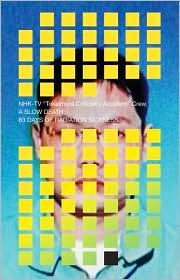
John Gall’s art for A Slow Death: 83 Days of Radiation Sickness (Vertical 160 pages $19.95) is unique in a gaze-snatching fashion. It combines hues of yellow and green, block patterns, and a news photo backdrop into an attractive, enigmatic, and faintly disturbing image that makes a browser wonder, “What exactly is inside this book?”

The answer is an account of a nuclear plant worker’s gradual demise after he was accidentally exposed to 20,000 times the maximum tolerable amount of neutron beam radiation. As some alleged environmentalists (including figureheads such as Al Gore) have begun touting the benefits of “non-carbon sources” of energy — an evasive way of saying “atomic power” — Hisashi Ouchi’s death comes across as an extreme cautionary tale.

Credited to NHK-TV “Tokaimura Criticality Accident Crew” and constructed from a television documentary about the nuclear accident, A Slow Death bluntly but compassionately renders Ouchi’s physical symptoms, which included massive skin loss, and the emotional impact his plight had on the doctors and nurses who treated him. The last extraordinary aspect of Ouchi’s story involves his heart, which persevered and remained relatively healthy while the rest of him demonstrated the impact of radiation. As the book puts it, “it continued living amidst the destruction of virtually every other cell in his body.” 

Simulation of dispersal routes of radioactive pollution cloud

0

The Belgium Institute for Space Aeronomy has posted simulations of the dispersion routes of clouds of radioactive pollution emitted by the explosion in Daiichi Building-3 nuclear power plant in Fukushima in Japan.
“This simulation is one of the first to take into account the leaching by rain as the cloud on the route,” their website notes. “This results in a much faster decrease of the concentration of particulate pollutants. Based on these projections (which extend up to this Saturday), the cloud will disappear before they reach U.S. shores.  This simulation is based on the hypothetical initial cloud between 0 and 1500 m altitude. We tested the sensitivity to this assumption with another simulation where the initial cloud rises up to 3000 m. Thanks to leaching by rainfall, the result is almost the same: the cloud of radioactive pollution disappears over the Pacific Ocean.”

You can watch more cloud dispersal simulations by clicking here. And you can read updates on the nuclear power plants in Japan by checking out the International Atomic Energy Agency’s website.

Finally, the Chron’s against nuclear power

17

Well, maybe not entirely against nuclear power, but in a rather surprising editorial, the paper noted:


Suddenly, nuclear doesn’t seem so safe. The truth is that it never has been. As we’re learning from Japan, it’s impossible to ensure full stability with the nuclear energy production process. Japan was known for being extraordinarily cautious with its nuclear energy plants and safety procedures, and disaster still struck. All that means is that there are too many contingencies and too many opportunities for things to go wrong.


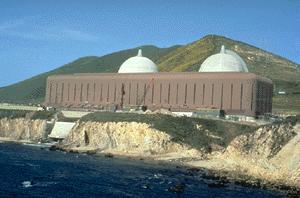
Damn. I wish we’d had that sort of editorial support when we were fighting PG&E over Diablo Canyon. That plant was a serious mistake, is still a serious mistake and ought to be shut down. But in the long, long years of protests against the plant’s construction, licensing and operations, I don’t remember the Chronicle ever saying that nuclear power “has never been safe.” We were up against the pro-PG&E press as much as we were up against PG&E.


So now the paper has figured out that boiling water with a nuclear fission reaction to generate electricity is a bad idea. Now we need the Chron to come out in strong opposition to the relicensing of Diablo Canyon and start calling for the plant to be decomissioned. Starting now.


Dolphin double

0

arts@sfbg.com

MUSIC San Francisco’s Mi Ami was a trio when it released the spazz-punk albums Steal Watersports (2009) and Steal Your Face (2010) on Thrill Jockey. Then bassist Jacob Long announced that he was going to leave the group. After Long made that decision, Mi Ami played a few Bay Area shows at El Rio, Rickshaw Stop, and the Knockout. They were full-throttle performances — high in energy, as always. But they also revealed a ripping-at-the-seams that would soon be complete.

Mi Ami’s Daniel Martin-McCormick explains that he and remaining bandmate Damon Palermo believed that “the music we’d written as trio was specific to that dynamic.” Rather than recruit a new bassist, the remaining two Mi Ami members spent the past year experimenting with different arrangements to make the band work as a duo. “We tried different combinations with guitar and drum,” says Martin-McCormick. “Then we tried with me playing keyboards and Damon playing drums.” What they settled on — “Damon playing a drum machine and a sampler, and me doing stuff on top of it” — is even more surprising.

Dolphins, a 12-inch EP released on Thrill Jockey, is a first taste of the band’s new approach, which includes a vintage 707 drum machine, a sampler, keys, and of course Martin-McCormick’s trademark squall-vocals. In its new manifestation, Mi Ami ditches any resemblance to a traditional rock band. At the same time, the ideas behind the music are similar to those the band has always been traveling along. The influences are the same; then again, they’ve always been eclectic: post-punk to Italo-disco, dubstep to krautrock. The emphasis remains on being (and feeling) very live.

Mi Ami is bicoastal now that Martin-McCormick has relocated to New York City. But before the big move, the pair recorded Dolphins with Phil Manley. “We were puzzling over how to do the recording because the way we do it live is pretty bootleg,” Martin-McCormick says. “It’s pretty raw.” Manley suggested that Mi Ami just record the album live. So they did.

There are, of course, a few touch-ups. Even so, Dolphins is essentially a live performance, and one that encapsulates the quintessential give-and-take of the band’s music. “There’s a lot of interplay, and a lot of focus on creating, and jamming that out, and building on top of it,” Martin-McCormick said.

Mi Ami layers sounds, as on “Sunrise.” As the song emerges, there are undulating synth sounds and kraut beats. Next, steady keys slowly become awash with samples and the song transitions into jungle dub. Once the mood and atmosphere has evolved into a very different space, the track returns to the steady keys. Each song is given time to grow, build — even overflow — then fade away. And no two songs abide by the same rules. Each creates a unique evolution.

The EP’s opener, “Hard Up,” is chock-full of hypnotic beats and heavy bass, making it a perfect party starter. Its follow-up, “Dolphins,” begins where “Hard Up” leaves off — with dance-ready beats. As it unravels, however, it reveals something altogether different: ecstatic sounds turn into twisted grooves and anguished beats as Martin-McCormick’s apocalyptic cries create a juxtaposition of dolphins washing ashore while “Your wife in capris/ Drinking Hi-C and eating lima beans.” Through the sampler and keyboard, Martin-McCormick creates dying dolphin sounds, pushing his voice to an even higher register to sound dolphin-like. The track is a response, he explains, to “humanity’s assault on the environment.”

A final, poignant reinvention of the band is revealed on Dolphins‘ final song “Echo,” which has appeared in different forms and with slightly different titles (such as “Echoonoecho”) on two earlier releases. The sole through-line is Martin-McCormick’s vocal track. “We didn’t want to use Jacob Long’s bassline, but the vocal part could go over anything — it’s so repetitive,” he said.

Dolphins is proof that, although challenging, change isn’t always bad. In conjunction with the EP’s release, Palermo is traveling to New York to tour with Martin-McCormick as a duo for the first time. They’ll play a handful of shows in New York, moving on to the Midwest, and then to Europe. If we’re lucky, this journey will eventually include a return to the Bay Area.

The madness of nuclear power

0

By Norman Solomon

Norman Solomon is president of the Institute for Public Accuracy and a senior fellow at RootsAction. His books include “Killing Our Own: The Disaster of America’s Experience with Atomic Radiation” (1982), co-authored with Harvey Wasserman.

Like every other president since the 1940s, Barack Obama has promoted nuclear power. Now, with reactors melting down in Japan, the official stance is more disconnected from reality than ever.

Political elites are still clinging to the oxymoron of “safe nuclear power.” It’s up to us — people around the world — to peacefully and insistently shut those plants down.

There is no more techno-advanced country in the world than Japan. Nuclear power is not safe there, and it is not safe anywhere.
As the New York Times reported on Monday, “most of the nuclear plants in the United States share some or all of the risk factors that played a role at Fukushima Daiichi: locations on tsunami-prone coastlines or near earthquake faults, aging plants and backup electrical systems that rely on diesel generators and batteries that could fail in extreme circumstances.”

Nuclear power — from uranium mining to fuel fabrication to reactor operations to nuclear waste that will remain deadly for hundreds of thousands of years — is, in fact, a moral crime against future generations.

But syrupy rhetoric has always marinated the nuclear age. From the outset — even as radioactive ashes were still hot in Hiroshima and Nagasaki — top officials in Washington touted atomic energy as redemptive. The split atom, we were to believe, could be an elevating marvel.

President Dwight Eisenhower pledged “to help solve the fearful atomic dilemma” by showing that “the miraculous inventiveness of man shall not be dedicated to his death, but consecrated to his life.”

Even after the Three Mile Island accident in 1979 and the Chernobyl disaster in 1986 — and now this catastrophe in Japan — the corporate theologians of nuclear faith have continued to bless their own divine projects.

Thirty years ago, when I coordinated the National Citizens Hearings for Radiation Victims on the edge of Capitol Hill, we heard grim testimony from nuclear scientists, workers, downwinders and many others whose lives had been forever ravaged by the split atom. Routine in the process was tag-team deception from government agencies and nuclear-invested companies.

By 1980, generations had already suffered a vast array of terrible consequences — including cancer, leukemia and genetic injuries — from a nuclear fuel cycle shared by the “peaceful” and military atom. Today, we know a lot more about the abrupt and slow-moving horrors of the nuclear industry.

And we keep learning, by the minute, as nuclear catastrophe goes exponential in Japan. But government leaders don’t seem to be learning much of anything.

On Sunday, even while nuclear-power reactors were melting down, the White House issued this statement: “The president believes that meeting our energy needs means relying on a diverse set of energy sources that includes renewables like wind and solar, natural gas, clean coal and nuclear power. Information is still coming in about the events unfolding in Japan, but the administration is committed to learning from them and ensuring that nuclear energy is produced safely and responsibly here in the U.S.”

Yet another reflexive nuclear salute.

When this year’s State of the Union address proclaimed a goal of “clean energy sources” for 80 percent of U.S. electricity by 2035, Obama added: “Some folks want wind and solar. Others want nuclear, clean coal and natural gas. To meet this goal, we will need them all — and I urge Democrats and Republicans to work together to make it happen.”

Bipartisan for nuclear power? You betcha. On Sunday morning TV shows, Republican Sen. Mitch McConnell voiced support for nuclear power, while Democratic Sen. Chuck Schumer offered this convoluted ode to atomic flackery: “We are going to have to see what happens here — obviously still things are happening — but the bottom line is we do have to free ourselves of independence from foreign oil in the other half of the globe. Libya showed that. Prices are up, our economy is being hurt by it, or could be hurt by it. So I’m still willing to look at nuclear. As I’ve always said it has to be done safely and carefully.”

Such behavior might just seem absurd or pathetic — if the consequences weren’t so grave.

Nuclear power madness is so entrenched that mainline pundits and top elected officials rarely murmur dissent. Acquiescence is equated with prudent sagacity.

In early 2010, President Obama announced federal loan guarantees — totaling more than $8 billion — to revive the construction of nuclear power plants in this country, where 110 nuclear-power reactors are already in operation.

“Investing in nuclear energy remains a necessary step,” he said. “What I hope is that, with this announcement, we’re underscoring both our seriousness in meeting the energy challenge and our willingness to look at this challenge, not as a partisan issue, but as a matter that’s far more important than politics because the choices we make will affect not just the next generation but many generations to come.”

Promising to push for bigger loan guarantees to build more nuclear power plants, the president said: “This is only the beginning.”

_______________________________________

Norman Solomon is president of the Institute for Public Accuracy and a senior fellow at RootsAction. His books include “Killing Our Own: The Disaster of America’s Experience with Atomic Radiation” (1982), co-authored with Harvey Wasserman.

Delhi 2 Dublin brings the St. Paddy’s bhangra

0

It’s St. Patrick’s Day and everyone is Irish. Truly — the West coast brand of ethnic identity is a far cry from that of New England and New York, where families ran straight from the Potato Famine to set up shop in certain neighborhoods, maintaining their Celtic colors even now. Nope, by the time the gene pool wagon-wheels its way to California, most people are some amalgamation of several cultures. Which is to say that the Vancouver-based Celtic electro-bhangra of Delhi 2 Dublin should be seen as less of a new bastardization of world musics as much as a let’s-all-get-down reflection of who we are today.

But I’m waxing more sociological (per usual) than the band does itself. We caught the group’s DJ, Tarun Nayar, on a layover in an airport he was having trouble identifying (“Baltimore?” he guessed). The only concrete location we were able to get out of him is that the band is playing Mezzanine on St. Patrick’s itself, Thurs/17, after its show at the Aubergine in Sebastopol on Tues/15. Other sureities? Go to either and you’re gonna have a high-energy, border-blurring dance party on your Guinness-wielding hands.

San Francisco Bay Guardian: So you guys are playing your St. Patrick’s Day show here. In honor of the holiday, can you run down the group’s Celtic connection for me?

Tarun Nayar: Well the group was born on St. Patrick’s Day five years ago, so the Celtic connection is really important to us. The ex-director of the Vancouver Folk Festival called me to do an Irish-themed event. I was an electronica DJ and I was like, I don’t think we’re going to be able to put together enough material for you. He suggested that we blend together Indian and Celtic music. At the last minute we got together with a Punjabi singer. It’s always been easy to blend the two together since then. 


SFBG: Is there any actual Irish heritage in the group?

TN: There is – I’m half Irish-Scottish, and our fiddle player Sara Fitzpatrick is – ha, obviously.


SFBG: Why does that mix work so well, do you think?

TN: It’s the world’s two greatest drinking cultures! No, but really I think that two types of music – and we also play with North Indian influences – can be really happy, but have a real melancholy, introverted streak too. Plus, there’s all these historical theories that the Celts and the gypsies of North India have common ancestors. But we don’t really philosophize about it, we just play what sounds good. 


SFBG: Is there a single genre that describes Delhi 2 Dublin?

TN: We say “world fusion.” But that sounds so lame to me – it has these connotations to it. I just like to say good music.


SFBG: You’ve also got some interesting solo side projects…

TN: Yeah, I have a solo CD that came out March first in the States and Canada. It sums up my experience traveling around the world – it doesn’t really have anything to do with electronic music or Punjabi music. I sometimes do the scores of movies too, I just did work on a really gritty film about sex workers north of Bombay. 


SFBG: I hear a lot about Vancouver’s incredible cosmopolitan nature, and diversity. How did the city influence your music?

TN: Vancouver has one of North America’s strongest South Asian music scenes. Without the light of that community and the strength of its culture Delhi 2 Dublin definitely couldn’t have made it. Our singer and dhol player are out of that tribe. Without the open-mindedness of the people of Vancouver also, I don’t think we’d be around. We’ve always felt that San Francisco is a bigger version of Vancouver. San Francisco was one of the first cities on the West coast to embrace us. 


Delhi 2 Dublin 

With Señor Oz, Pleasuremaker, and DJ Dragonfly

Thurs/17 9 p.m., $18

Mezzanine 

444 Jessie, SF

www.mezzaninesf.com

Nuclear meltdown: It could happen here

67

The death toll from the earthquake and tsunami in Japan is horrible, and it’s going to get worse. In fact, it could get a whole lot worse, if one of the nuclear power plants now on the edge of disaster actually melts down or cracks open. Either way, a huge amount of radioactive material could be dispersed in an densely populated area. It’s a nightmare that a lot of us have been worried about for years.


I got my start in politics in California organizing against the construction of Pacific Gas and Electric Co.’s Diablo Canyon nuke. It was a long, sometimes brilliant, sometimes frustrating struggle. We tried to warn people about rate hikes (which happened) and about the lack of a solution for the nuclear waste (still a problem) and the immense cost ($7 billion, about 200 times as much as projected) and the potential for accidents. But the argument that I always found most compelling, even with people who sorta, kinda supported nuclear power, was this:


Diablo Canyon is built on an active earthquake fault.


In fact, it’s built on a fault similar to the one that just shook Japan. The Hosgri is what’s called a “thrust fault,” meaning that the tectonic plates slide over each other. (The San Andreas, near San Francisco, is a slip fault, meaning the plates slide next to each other.) And the plant is perched on the edge of the Ocean.


PG&E has always insisted that the plant is built to withstand the greatest likely earthquake (about a 7.7 Richter). I don’t trust the company, but let’s say that’s true.


It’s also true that the Japanese plants (unlike, say, Chernobyl) were built to the highest standards. Japan was about as well prepared for this sort of disaster as a rich, industrized country could be. Japanese engineers are as good as any in the world, and the plants were well monitored and inspected. It’s just that the experts never predicted that a quake this large, and flooding this severe, could possibly happen.


Ths thing about major industrial accidents (and I learned this years ago researching the TMI near-meltdown for a book I was writing) is that they happen not because of one bad event but because of several unpredictable events happening at once. TMI was a series of errors. The plants in Japan are in trouble because the quake knocked out power (predictable) then the tsunami knocked out the backup generators (not as predictable) and the intense flooding also fried the emergency batteries. Three systems, all reliable, all redundant — and they all failed at once.


Oddly enough, the greatest danger to a nuke (other than a terrorist attack) is a loss of electric power. If there’s no power, you can’t pump cooling water into the core — and things get nasty really fast. The overheated core produces hydrogen gas, which can explode; that makes the mess even worse. If it gets bad enough, the 4,000-degree fuel rods melt right through the concrete and steel containment facility — and you have a catastrophic release of some of the world’s most toxic material.


Could a larger-than-predicted quake on the Hosgri Fault — combined with, perhaps, some human error of the sort PG&E is famous for, combined with bad weather and high seas — put Diablo in the same precarious situation as the Japanese plants? Of course it could. Is there any human way to put a nuclear plant on an active earthquake fault and make sure there’s zero potential for disaster? Of course not.


Now: You can argue that other forms of energy generation are also dangerous (coal miners die; natural gas facilities pollute the water etc., though I’ve never heard of a death from solar panels). But these things have to be discussed in terms of the disaster potential — and the potential of a massive radiation release on the California Coast, close enough to both San Francisco and Los Angeles to cause horrendous loss of life, makes almost any odds unacceptable.

A meeting of Mayor Lee and Bloomberg’s minds

0

Mayor Ed Lee described New York Mayor Michael Bloomberg as “a model of mine” as the two men exchanged gifts in the Mayor’s Office, and reporters unsuccessfully tried to figure out which of the two men is taller.

Bloomberg gave Lee a box of golf balls, Lee gave Bloomberg a trolley bell, organic hot dogs, a lifetime membership to the San Francisco Museum of Modern Art, and the two men had a meeting of the minds when it came to the need for big cities to reduce greenhouse gas emissions.

Lee prefaced his gift giving by saying he intended to make Bloomberg an honorary citizen of San Francisco.

“Does that mean I’ll have to pay taxes?” Bloomberg quipped.
“If they go up, you’ll be the first to know,” Lee replied.

Bloomberg said it was “fun to talk” with Mayor Lee about energy conservation and environmental activism. “Things like the environment are things mayors have to deal with every day,” Bloomberg said, noting that cities account for 70 percent of the world’s greenhouse gas emissions.”

Bloomberg praised San Francisco for approving an ordinance that requires owners of non-residential buildings to make public how much energy each building consumes each year. The legislation is meant to improve energy efficiency in existing buildings, reduce greenhouse gas emissions, lower energy costs and create green jobs. It also requires commercial buildings over 10,000 square feet to conduct energy-efficiency audits every five years.

“Each can profit from each other’s experiences,” Bloomberg said, noting that because NYC has a more carbon efficient mass transit than most U.S. cities, its buildings are responsible for creating 80 percent of NYC’s emissions. 

Asked about a lawsuit that his transportation commissioner Janette Sadik-Khan reportedly triggered by installing a bike lane along the boundary of an affluent Brooklyn neighborhood, Bloomberg flashed a smile that didn’t suggest he thinks Sadik-Khan is now a PR liability for his administration.

“Change is difficult,” Bloomberg replied, acknowledging that there are “battles between those who drive cars and ride bikes.”

“Mass transit is the solution for every big city,” he continued. “And the bicycle is one of the answers, but they can be dangerous. Roads are not just for motor vehicles. They are also for bikes and pedestrians. The key is pedestrian safety.”

“Our transportation commissioner is very innovative,” Bloomberg continued, referring back to the reportedly embattled Sadik-Khan. “She therefore does come under criticism, but I should be the one taking the heat, not her!”

“Closing Times Square was one of the most successful things we’ve done,” he added, referring to another initiative that Sadik-Khan championed, in addition to installing bike lanes on crowded streets and proposing to shut part of NYC’s 34th Street to cars.

Asked for his impressions of San Francisco’s homeless problem, Bloomberg pointed out that he had just traveled straight from the airport to City Hall by BART, and therefore didn’t have a deep grasp of the issue locally. “I don’t know the specifics,” he said.

But he was happy to outline how New York set “a very aggressive goal” of reducing its homeless population that it then failed to meet it, in part because the economy tanked. “The numbers are down about 13 percent each year,” he said, noting that he hasn’t seen the 2010 statistics.  “But only a small number sleep on the streets,” he continued, noting that folks in NYC, “have to work to qualify for rental assistance.”

Asked to give Lee some mayoral advice, Bloomberg said, “The public wants elected officials who are genuine, who are doing things for what they think are the right reasons.

Asked to give Lee specific advice on how to stay out of trouble as the city’s top official, Bloomberg joked that Lee should move to New York until the end of the year, when his term as interim mayor expires. “But then he’d get into trouble for doing that,” he said. And then he and his coterie of security guards and photographers were out of the press conference and into the elevators, faster than a cabbie trying to beat a red light on a sweltering night in the Big Apple.

Is David Crane just another Kochhead?

24

This week the Chronicle majorly attacked State Sen. Leland Yee, claiming Yee tried “to distort the words” of billionaire investment banker and UC Regent David Crane on collective bargaining.

The Chron’s attack came on the heels of Yee’s attempt to block Crane’s UC Regents confirmation. And Yee’s attempt to block Crane came in response to an op-ed Crane wrote for the Chron titled “Should public employees have collective bargaining rights?”

In its counter-counter attack editorial this week, the Chronicle accused Yee of falsely claiming that Crane had “called for an end to collective bargaining rights for California teachers, nurses, firefighters, university employees and other public sector worker.”

“What the former adviser to Gov.Arnold Schwarzenegger did was present a history of collective bargaining in California and explain how a 1977 law had changed the balance of power by giving public employees power over their compensation and benefits,” the Chronicle stated. “Crane did assert that extending collective bargaining to employees who already have civil service protections ‘serves to reduce benefits for citizens and to raise costs for taxpayers. Anyone who would argue with that fact has not been paying attention to what is happening with state and local budgets lately.”

The Chronicle finished by praising Crane, who is currently a lecturer on Public Policy at Stanford University and is reportedly working with former Fed Chairman Paul Volcker to form a task force to examine current state budget practices. Crane, the Chron asserted, has “long been widely respected as a teller of inconvenient truths about the rising costs of public-employee pensions and benefits. He should not be silenced – or misquoted by opportunistic politicians. The Senate should vote to confirm him as regent.”

Now, when Schwarzenegger appointed Crane as a UC Regent in December 2010 as one of his last acts as Governor, the Sacramento Bee described Crane as Schwarzenegger’s “chief public employee pension critic.” But here in San Francisco, the Chron didn’t bother to flesh out Crane’s history of employment, campaign contributions, prior statements on collective bargaining, and financial investments.

Maybe it was because these public records reveal Crane to be less a dyed-in-the-wool Democrat and more of a Bushocrat, an ultra-rich investor who supported G.W. Bush through two elections, and repeatedly frames the collective bargaining rights of government employees as an obstacle standing in the way of pension reform and budget balancing.

Campaign finance records show that in March 1999, when Democrats were trying to hang onto the White House in the wake of Clinton’s sex scandals, Crane gave $1,000 to Bush. And in June 2003, just three months after Bush invaded Iraq on a false pretext, Crane saw fit to give Bush another $2,000.

The good news? Crane didn’t support Sarah Palin and John McCain in 2008. But he did donate $7,200 to Republican Tom Campbell’s unsuccessful 2010 bid for US Sen. Barbara Boxer’s seat. And here in San Francisco, Crane was one of several billionaires who wrote big fat checks last fall in support of Measure B, which sought to curb the pension and health benefits of city workers, most of whom will make a fraction in their lifetime of what Crane rakes in each year from his widely diversified financial portfolio.

Crane’s 2009 statement of economic interest shows he has over $1 million invested in Farallon Capital Partners, one of the world’s largest hedge funds, many of whose investors include top university endowments.

Crane also has over $1 million invested in Acacia Partners, over $1 million in Bislett Partners, over $1 million in Kensico Partners, over $1 million in Semper Vic Partners, over $1 million in Berkshire Hathaway, whose CEO is Warren Buffet, over $1 million in the HCP Absolute Return Fund, whose Board includes Warren Hellman, and up to $1 million in Hall Capital Management, whose Board includes Hellman and Gap heir John Fisher. Crane also owns several million dollars stake in real estate investments, and has sizeable stock in Wells Fargo, Chesapeake Energy, Microsoft, Google, Pangloss Oil, Whole Foods Market, M&T Bank Corp., IBM, American Express, WalMart and Exxon.

And he gets income from Acacia Partners and Babcock & Brown, where he was a former partner from 1979 to 2003. While at Babcock, Crane reportedly brokered a controversial jet-lease deal between Arnold Schwarzenegger and Singapore Airlines that allowed Schwarzenegger to defer taxes on millions of dollars. And in 2004, Crane went to work for then Republican Gov. Schwarzenegger as special advisor for Jobs and Economic Growth. The Terminator returned the favor by appointing Crane to the California Commission in Economic Development and the California High Speed Rail Authority. But Crane was rejected in Senate confirmation proceedings for a position on the board of California State Teachers Retirement System.

Now, clearly it’s not a crime to be a billionaire, even though the way some folks make their billions is criminal. But you have to wonder if UC really needs another ultra-rich Regent on its Board. You also have to wonder why the wealthy Crane sought reimbursements of $2,812 from UC in 2009, if he cares about saving the state money.

And Crane has made plenty of statements about collective bargaining rights and pension reform in recent months that seem to frame government employees as the bogey men, not just in California, but across the entire nation.

Take his April 2010 comments to the Los Angeles Times: “State legislators are afraid even to utter the words ‘pension reform’ for fear of alienating what has become — since passage of the Dills Act in 1978, which endowed state public employees with collective bargaining rights on top of their civil service protections — the single most politically influential constituency in our state: government employees,” Crane said.

Or what he said in August 2010 to the Fox Business Network: “Even if you took care of every one of these spiked above the iceberg level pensions in California, you would not take care of the pension problem in California, which is true of virtually every state in the country, at least those where, you know, government employees have collective bargaining rights,” Crane said

In December 2010, he told the L.A. Times that the year 1978, ”wasn’t notable just because of Proposition 13. That was also the year public employees gained a power Franklin D. Roosevelt had warned against: collective bargaining rights.”

“California hasn’t been the same since,” Crane continued. “Public workers have gained at the expense of private workers as government spending was redirected from infrastructure and education to higher salaries, pensions and other benefits.”

And in his Feb. 27 Chronicle op-ed, Crane claimed that, “The battle in Wisconsin is not over collective bargaining rights generally but rather the appropriateness of those rights in the public sector ”

“Collective bargaining is a good thing when it’s needed to equalize power, but when public employees already have that equality because of civil service protections, collective bargaining in the public sector serves to reduce benefits for citizens and to raise costs for taxpayers,” Crane continued. “Citizens and taxpayers should consider this as they watch events unfold in Madison.”

As of today, letters are circulating in Sacramento opposing Crane’s confirmation. And Sen. Ted W. Lieu (D-Torrance), Chair of the Labor and Industrial Relations Committee in Sacramento, has already signaled his opposition.

“I cannot support someone for the powerful post of UC Regent who continues to perpetuate the myth that collective bargaining caused our state economic crisis and has a fundamental misunderstanding of how our state budget operates,” Lieu said in a statement. He noted that in the Chron op-ed Crane claimed that because of collective bargaining, “general fund spending on higher education, parks and environmental protection was flat or lower.” 
“As a matter of historical fact, that is false,” Lieu countered. “ Our general fund spending generally declined because of a national economic recession.  The recession was not caused by collective bargaining or public sector unions, but by private sector, out of control Wall Street firms at the time.”

“The specific reason our general fund spending sharply declined was because the person Mr. Crane advised, former Gov. Arnold Schwarzenegger, reduced the Vehicle License Fee and replaced it with . . . nothing,” Lieu continued. “As a result, the state general fund lost over $5 to $6 billion in revenues per year for every year Mr. Schwarzenegger was in office.  The VLF reduction has resulted in a total loss of over $30 billion to the state, an amount in excess of the current California budgetary shortfall.  How conveniently Mr. Crane forgot to mention that critical fact when it doesn’t suit his ideological assault on public sector unions.”

“Now that Mr. Crane senses his confirmation may be in jeopardy, he attempts to marginalize his own Op-Ed by releasing a new statement saying he really didn’t mean to attack all public sector unions, just those who happen to have statutory civil service protections,” Lieu added. “For those in Ivory Towers that distinction may have some academic meaning, but for everyone else in the real world that is a distinction without a difference. Civil Service protections do not prevent employees from being terminated or laid off, they provide standards for government to follow when firing or disciplining employees. Such protections do not guarantee appropriate wages or benefits, nor address a plethora of other issues, such as workforce safety issues.”
 
“Mr. Crane’s Op-Ed also discusses political spending by public sector unions, “Lieu concluded. “In his world view, political spending by the California Teachers Association is inappropriate, but the massive political spending by the Koch Brothers would presumably be acceptable. I cannot, and will not, support someone for the post of UC Regent who blames public sector employees, such as teachers, for somehow being responsible for our economic crisis or the resulting decline in general fund spending.  We need UC Regents who are interested in solving problems, not those who twist historical facts to suit an ideological agenda.”

So, as I wait for Crane to return my call, I’ll leave you with something reporter Peter Byrne, who authored the award-winning investigative series ‘Investor’s Club” How the Regents of the University of California spin public funds into private profit,” said to me yesterday when I asked him about the wisdom of putting investment bankers on the UC Regents Board. “Putting investment bankers in front of a plate of $63 billion is like putting a pound of hamburger in front of a bunch of feral cats. They are going to eat it. It’s in their nature.”

So, would confirming Crane be like adding another feral cat to the mix? Is he just another Kochhead? Or is he just maligned and misunderstood, as the Chron vehemently implies?

Erin go barhopping

0

caitlin@sfbg.com

IRISH Public service announcement: you do not need to get drunk on St. Patrick’s Day. This year there are a gamut of cultural activities that will teach you more about paddie heritage than finding the bottom of yet another Irish car bomb. But drink yourself green if you must — in this country, an argument could be made that the day has become a celebration of alcoholic pride more than anything. Just please, for the love of corned beef and cabbage — try to limit your use of novelty T-shirts.


ST. PATRICK’S DAY PARADE AND FESTIVAL

The big potato kicks off St. Paddy’s season this year and will honor upstanding Irish folks from around the city.

Sat/12. Parade: 11:30 a.m., free. Starts at Market and Second; Festival: 10 a.m.–5 p.m., free. Civic Center Plaza, SF. 1-800-310-6563, www.sresproductions.com


ST. PATRICK’S DAY FITNESS CRAWL

Stage a preemptive strike against all the Guinness you’ll be drinking at this affordable fitness boot camp.

Sat/12 9:30 a.m.–3 p.m., $10. Third Street Boxing Gym, 2576 Third St., SF. (415) 550-8269, www.thirdstreetgym.com


“IRISH CALIFORNIA: AN EVENING WITH THE CALIFORNIA HISTORICAL SOCIETY COLLECTION”

Snack on Irish bites and booze while perusing the Historical Society’s stockpile of Irish American ephemera — photos, pamphlets, and more from the Golden State’s green past.

Wed/16 5:30–7:30 p.m., $4 suggested donation, free to members. RSVP recommended. The California Historical Society, 678 Mission, SF. (415) 357-1848, www.californiahistoricalsociety.com


ST. PADDY’S PUNK BASH XI

The leprechaun rager returns for its 11th year in action, featuring the Undead Boys, Street Justice, Crosstops, Ruleta Rusa, and Face the Rail.

Weds/16 8 p.m., $8. Elbo Room, 647 Valencia, SF. (415) 552-7788, www.elbo.com


FARLEY’S 22ND BIRTHDAY

The Guardian staff’s fave cafe around the corner celebrates multiple decades of well-roasted independent business awesomeness with live bagpipers in the daytime and a concert in the evening.

Thurs/17 bagpipes 9 a.m.–1 p.m.; concert 8 p.m., free. Farley’s, 1315 18th St., SF. (415) 648-1545, www.farleyscoffee.com


O’REILLY’S ST. PATTY’S BLOCK PARTY

Between this and the Royal Exchange block party (see below) you’ll be well — if not over — served on “Kiss Me I’m Irish” tees, green face paint, and Bailey’swhiskeycarbombGuinness blackout glory. Pad your stomach before you get too deep in the drinkin’ with O’Reilly’s classic Irish brunch foods.

Thurs/17 Serving brunch 9 a.m.–1:30 p.m.; black party 3 p.m., free. O’Reilly’s, 622 Green, SF. (415) 989-6222, www.sforeillys.com


HABITOT MUSEUM’S SHAMROCK DAY

Make potato prints, drink green punch, and decorate your own pair of shamrock glasses with your little leprechaun at the family learning museum.

Thurs/17 9:30 a.m.–12:30 p.m., $9 museum admission. Habitot Children’s Museum, 2065 Kittredge, Berk. (510) 647-1111, www.habitot.org


PARKSIDE TAVERN IRISH LUNCH

Traditional fixin’s abound on this Sunset pub’s special Irish menu — corned beef and a little Irish stew to go with your Jameson?

Serving from 10 a.m.–10 p.m. Parkside Tavern, 1940 Taravel, SF. (415) 731-8900, www.parksidetavernsf.com


FINANCIAL DISTRICT ST. PADDY’S STREET PARTY

Wonderbread 5 provides rockin’ live tunes during happy hour, and pub Royal Exchange keeps the suds a flowin’ at this al fresco rager in FiDi.

Thurs/17 3 p.m.–2 a.m., free. Front between Sacramento and California, SF. www.royalexchange.com


ST. PATRICK’S NIGHTLIFE

DJ Nako puts the spin on St. Patrick’s, and the swanky science museum plies you with green-themed activities at the shamrock edition of its bangin’ night at the museum’s weekly event.

Thurs/17 8–10 p.m., $12. California Academy of Sciences, 55 Music Concourse, SF. 1-888-670-4433, www.calacademy.org


DELHI TO DUBLIN

Can you hold your finger cymbals and Guinness stein in the same hand? Try. This multicultural Celtic bhangra group always brings the jams — its St. Paddy’s Day gig in clubland is sure to be the most high energy dance party this side of Riverdance.

Thurs/17 9 p.m., $15. Mezzanine, 444 Jessie, SF. (415) 625-8880, www.mezzaninesf.com


CULANN’S HOUNDS

Didn’t get enough of the folk rock Hounds at the March 12 Civic Center Plaza festival? Check out the SF group’s headlining gig ensconced in the wooden glory of the Great American Music Hall. Renée de la Prada’s dulcet voice soars over the accordions and violins of her band.

Thurs/17 7:30 p.m., $20. Great American Music Hall, 859 O’Farrell, SF. (415) 885-0750, www.gamh.com


BISS ME I’M IRISH ST. PATRICK’S DAY PARTY

Celebrate the Irish infiltration into every corner of the globe with the hip-hop-cumbia-reggaetón punch of La Gente, which headlines this diverse lineup, otherwise composed of female singer-songwriters bringing it in the keys of punk, rock, and pop.

Thurs/17 9 p.m., $10. Cafe Du Nord, 2170 Market, SF. (415) 861-5016, www.cafedunord.com

Not for sale: An insider’s look at the battle to save KUSF

0

MUSIC/CULTURE Normally, Irwin Swirnoff’s demeanor is upbeat, and I’d consider him to be one of the friendliest people I know. But from the expression on his face, I thought someone had died. Even before walking into the room, I felt there was a weird vibe. “What’s wrong?” I asked.

“We just got sold and were taken off the air,” he replied.

Immediately and instinctively, without even really processing his words, I fired back, “Well, what are we gonna do about it?” Within minutes we worked ourselves into a frenzy, sending e-mails, texts, tweets, and phone calls to let everyone know that the nonprofit station where we volunteered, KUSF, had unfairly been ripped from us without any fair warning.

That morning, Jan. 18, was a blur of bad news. My parents were staying with me, and I had the day off. I needed a brief escape and turned to my volunteer work. It doesn’t really feel like work. I consider it more of a hobby, but calling it that would be selling it short. It’s like you can’t even have a hobby anymore without someone taking it away, selling it for $3.75 million and making it corporate. That’s exactly what the University of San Francisco did by attempting to sell out KUSF and the community in a veiled deal involving Entercom, America’s fifth-largest radio conglomerate; the University of Southern California; and Classical Public Radio Network (CPRN). We now know some of the details and overall shady manner in which these events transpired.

When I step back to think about our battle to save KUSF, one thing I find interesting is the current micro- and macro- momentum of power-to-the-people movements and how they can become contagious. It’s been said that tragedy brings communities together in astounding ways. Maybe the attempt to dismantle KUSF was the wake-up call some of us needed to pay attention to the behind-the-scenes politics of how, in radio, conglomerates are swallowing the little guys. This isn’t the first time this has happened — and it won’t be the last. But so many people were moved, inspired, and outraged enough to incite action, myself included. Maybe this is what we needed to get organized.

There was something really satisfying, in an old-school way, about a large group of people coming together to chant, clap, and scream “Shame!” in unison and really mean it. That’s how it went down Jan. 19 during the ill-conceived Q&A-style meeting staged by USF and its president, Father Stephen A. Privett. There was real energy in the air that night; it was sad, inspiring, and exciting all at once. It felt like I was going to a rumble, and I even dressed for the occasion, donning my leather biker jacket. When I got to the scene of the rally, I wasn’t disappointed by what I saw: sheer numbers, picket signs, “Save KUSF” hats and T-shirts, all materializing within hours. Most important, we had supporters willing to get vocal, with the passion to stand up and fight those who had wronged us.

At the end of February, the very community that USF and Privett sold out had raised more than $15,000, which is partly going to legal fees for what could be a precedent-setting denial of the station’s sale by the FCC. I think a lot of us were high on adrenaline in those first days after the station’s sale, especially because of the way it happened. Our cause has since garnered support from San Francisco’s Board of Supervisors. The majority of our supervisors seem to understand what the station meant to the community. You can’t just sell 33 years of independent radio, culture, and rock ‘n’ roll history. It never should have been for sale.

Film Listings

0

SAN FRANCISCO INTERNATIONAL ASIAN AMERICAN FILM FESTIVAL

The 29th SFIAAFF runs March 10-20 at the Asian Art Museum, 200 Larkin, SF; Castro, 429 Castro, SF; Clay, 2261 Fillmore, SF; Pacific Film Archive, 2776 Bancroft, Berk.; Sundance Kabuki, 1881 Post; and Viz Cinema, New People, 1746 Post, SF. For tickets (most shows $12) and additional program information, visit www.caamedia.org. All times pm.

THURS/10

Castro West Is West 7.

FRI/11

Clay The Learning 6. When Love Comes 9. Histeria 11:30.

Kabuki Dooman River 4:30. One Kine Day 6:30. The House of Suh 9:15. “Life, Interrupted” 9:30.

PFA Abrazas 7. Break Up Club 9:20.

Viz Summer Pasture 6:30. “Chicken Proof” (shorts program) 9:30.

SAT/12

Clay It’s a Wonderful Afterlife 12:15. The Fourth Portrait 3. The Taqwacores 5:30. I Wish I Knew 8.

Kabuki Gold and Copper 12:15. Anna May Wong: In Her Own Words with “Slaying the Dragon Reloaded” 12:45. Stepping Forward 2. Saigon Electric 3:15. Open Season 5:30. Dog Sweat 6. Resident Aliens with “Fumiko Hayashida: The Woman Behind the Symbol” 7:30. “Living Life Large” (shorts program) 8:30. Nang Nak 9:30.

PFA Summer Pasture 4. Piano in a Factory 6:30. Living in Seduced Circumstances 9.

Viz M/F Remix 4. “Tainted Love” (shorts program) 8:45.

SUN/13

Castro The Man From Nowhere noon. Emir 3. Clash 6:30. Raavanan 9:30.

Clay Almost Perfect 1. Bend It Like Beckham 4. One Voice 6:45. Break Up Club 9.

Kabuki Peace noon. “3rd I South Asian International Shorts” (shorts program) 1:15. The House of Suh 2. Passion 4. “Play/House” (shorts program) 4:30. Made in India 6. Piano in a Factory 8:30. Sampaguita, National Flower 9:15.

PFA Anna May Wong: In Her Own Words with “Slaying the Dragon Reloaded” 2:30. Charlie Chan at the Olympics 6. Bi, Don’t Be Afraid! 8.

Viz “Silent Rituals and Hovering Proxies” (shorts program) 2:15. Tales of the Waria 5. Gold and Copper 7. Living in Seduced Circumstances 9:30.

MON/14

Kabuki “Chicken Proof” (shorts program) 4. Summer Pasture 4:30. Sampaguita, National Flower 6:30. Abraxas 6:45. Saigon Electric 8:30. Dooman River 9:30.

Viz One Kine Day 4. “Suite Suite Chinatown” (shorts program) 7. Affliction 9.

TUES/15

Kabuki “3rd I South Asian International Shorts” (shorts program) 4:15. Tales of the Waria 4:45. Almost Perfect 6:45. Open Season 7. M/F Remix 9. “Play/House” (shorts program) 9:30.

PFA I Wish I Knew 7.

Viz Resident Aliens with “Fumiko Hayashida: The Woman Behind the Symbol” 4:15. The Imperialists Are Still Alive! 6:30. Amin 9.

OPENING

Battle: Los Angeles Aliens invade L.A. and Will Smith isn’t involved? SoCal is doomed. (1:57) California.

Carbon Nation This polished, surprisingly optimistic doc from director Peter Byck (1996’s Garbage) takes on the world’s current over-reliance on carbon-based energy — with a focus on the greediest “Carbon Nation” around, the U.S. — and lays out several logical and seemingly do-able scenarios and solutions that just might help slow the rapidly changing climate. Though Carbon Nation reality-checks itself on more than one occasion (noting the reluctance of politicians and corporations to help mainstream the green movement), this doc is unerringly hopeful, and it entertains with an array of real-life characters: a good ol’ boy Texas wind farmer, a quirky Alaskan geothermal expert, a former rock n’ roller who turned to recycling refrigerators after a near-death experience, and charismatic Bay Area activist Van Jones. Carbon Nation‘s droll narration and snappy graphics at times suggest the film is aimed at lowest-common-denominator types who don’t even recycle their soda cans — but really, isn’t that the type of person who most deserves a clean-energy wake-up call? (1:22) Opera Plaza. (Eddy)

Happythankyoumoreplease Director, writer, and star Josh Radnor gets the prize for most unwieldy, hard-to-remember title in a while — and a tiny gold star for revealing the most heart within one so-called hipster. In this indie feel-gooder, writer Sam (Radnor) is lost at sea, completely adrift at the close of his twenties and unable to sell his novel. The aimlessness is beginning to seem less than cute to the random ladies that pass in the night and chums like Annie (Malin Akerman), who happens to have Alopecia and whose merry outlook is battling with her lack of self-confidence, and Mary Catherine (Zoe Kazan), who is puzzling whether to follow her boyfriend Charlie (Pablo Schreiber) to LA or to retain her life as a an artist in NYC. It takes a lost little boy, Rasheen (Michael Algieri), to bring out the selfless nurturer in Sam’s self-conscious man-child, giving him the courage to approach the local hottie-slash-waitress-slash-cabaret-singer Mississippi (Kate Mara). Radnor — who resembles a likable, every-guy Ben Affleck, though he’s hindered with an expressiveness that ranges from bemused to bemused — himself points to the similarities between Woody Allen’s hymns to Manhattan intelligentsia-bohemia and his own aria to NYC singles on the brink of hooking up with adulthood. Waxing cute rather than critical, Happythankyoumoreplease lacks Allen’s early bite, but its guileless sweetness just might do the trick and satisfy some. (1:40) Embarcadero. (Chun)

I Saw the Devil This latest by South Korean wunderkind Kim Ji-woon (2008’s The Good, The Bad, The Weird; 2003’s A Tale of Two Sisters) aims to push serial-killer thriller conventions to new extremes in intensity, violent set-piece bravado, and sheer length. Intelligence agent Joo-yeong (Lee Byung-hun) is inconsolably horrified when his fiancée — a police chief’s daughter — is abducted, tortured and murdered by giddily remorseless Kyung-chul (Choi Min-sik). The latter is a rural schoolbus driver who stalks his prey on and off the job, hauling them to a rigged-up shack where he enjoys their protracted final writhings. Once our hero tracks down this grotesque villain, he demonstrates a perverse, obsessive side by letting the “devil” loose again — each time after serious physical punishment — so that he can live in terror of his avenger. The trouble with that concept is that our upright, fanatical hero thus allows remorseless Kyung-chul to abuse new victims every time he’s let loose, which simply doesn’t make psychological sense. I Saw the Devil has some dazzling action set-pieces and outre content. But the dependency on slasher genre-style harm toward pretty young women sounds a sour, conventional note. And while it reserves a delicious irony or two for the end, this glorified horror flick simply goes on way too long. (2:21) Lumiere, Shattuck. (Harvey)

Mars Needs Moms A young boy must fight to save his kidnapped-by-aliens mother in this 3D animated Disney comedy. (1:28)

Red Riding Hood Amanda Seyfried stars in Catherine Hardwicke’s edgy (i.e., the Big Bad Wolf is now a werewolf) fairy-tale update. (1:38) Shattuck.

*William S. Burroughs: A Man Within William S. Burroughs, as director John Waters puts it in this long-overdue documentary, became famous before any of his peers, “for all the things you were supposed to hide: he was gay; he was a junkie; he shot his wife.” Of course, that isn’t the entire story. Examining the cultural forces and tragic biographical events that shaped The Naked Lunch author, director Yony Lesler attempts with varying degrees of success to separate the intensely private man from the countercultural raconteur in the gray flannel suit Burroughs would become later in his life. Combining interviews with a who’s who of famous associates, friends, and admirers, rare and never-before seen archival footage, and clips from Burroughs’ own experimental films and later home movies, Lesler makes a convincing case for Burroughs as a perennial outsider, even to himself. His Harvard education and wealthy pedigree set him apart from his crunchier Beat compatriots and he openly disdained the label of “gay revolutionary” even as his writing boldly envisioned same-sex desire as something truly queer. And although his dour mien and conservative dress would later become personal trademarks, he in fact privately mourned the death of his wife, Joan Vollmer, who he shot in Mexico playing a drunken round of William Tell (he was never tried), and his estranged son, Bill Burroughs Jr., who died attempting to approximate his father’s former junkie lifestyle. The film’s talking heads variously credit Burroughs with everything from punk rock to performance art, but the sad, all-too-human story behind the hagiography is what’s most compelling here. (1:38) Roxie. (Sussman)

ONGOING

The Adjustment Bureau As far as sci-fi romantic thrillers go, The Adjustment Bureau is pretty standard. But since that’s not an altogether common genre mash-up, I guess the film deserves some points for creativity. Based on a short story by Philip K. Dick, The Adjustment Bureau takes place in a world where all of our fates are predetermined. Political hotshot David Norris (Matt Damon) is destined for greatness — but not if he lets a romantic dalliance with dancer Elise (Emily Blunt) take precedence. And in order to make sure he stays on track, the titular Adjustment Bureau (including Anthony Mackie and Mad Men‘s John Slattery) are there to push him in the right direction. While the film’s concept is intriguing, the execution is sloppy. The Adjustment Bureau suffers from flaws in internal logic, allowing the story to skip over crucial plot points with heavy exposition and a deus ex machina you’ve got to see to believe. Couldn’t the screenwriter have planned ahead? (1:39) 1000 Van Ness, Piedmont, SF Center, Shattuck, Sundance Kabuki. (Peitzman)

*Another Year Mike Leigh’s latest represents a particularly affecting entry among his many improv-based, lives-of-everyday-Brits films. More loosely structured than 2008’s Happy-Go-Lucky, which featured a clear lead character with a well-defined storyline, the aptly-titled Another Year follows a year in the life of a group of friends and acquaintances, anchored by married couple Tom (Jim Broadbent) and Gerri (Ruth Sheen). Tom and Gerri are happily settled into middle-class middle age, with a grown son (Oliver Maltman) who adores them. So far, doesn’t really sound like there’ll be much Leigh-style heightened emotion spewing off the screen, traumatizing all in attendance, right? Well, you haven’t met the rest of the ensemble: there’s a sad-sack small-town widower, a sad-sack overweight drunk, a near-suicidal wife and mother (embodied in one perfect, bitter scene by Imelda Staunton), and Gerri’s work colleague Mary, played with a breathtaking lack of vanity by Lesley Manville. At first Mary seems to be a particularly shrill take on the clichéd unlucky-in-love fiftysomething woman — think an unglamorous Sex in the City gal, except with a few more years and far less disposable income. But Manville adds layers of depth to the pitiful, fragile, blundering Mary; she seems real, which makes her hard to watch at times. That said, anyone would be hard-pressed to look away from Manville’s wrenching performance. (2:09) Shattuck. (Eddy)

Barney’s Version The charm of this shambling take on Mordecai Richler’s 1997 novel lies almost completely in the hang-dog peepers of star Paul Giamatti. Where would Barney’s Version be without him and his warts-and-all portrayal of lovable, fallible striver Barney Panofsky — son of a cop (Dustin Hoffman), cheesy TV man, romantic prone to falling in love on his wedding day, curmudgeon given to tying on a few at a bar appropriately named Grumpy’s, and friend and benefactor to the hard-partying and pseudo-talented Boogie (Scott Speedman). So much depends on the many nuances of feeling flickering across Giamatti’s pale, moon-like visage. Otherwise Barney’s Version sprawls, carries on, and stumbles over the many cute characters we don’t give a damn about — from Minnie Driver’s borderline-offensive JAP of a Panofsky second wife to Bruce Greenwood’s romantic rival for Barney’s third wife Miriam (Rosamund Pike). A mini-who’s who of Canadian directors surface in cameos — including Denys Arcand, David Cronenberg, and Atom Egoyan — as a testament to the respect Richler commands. Too bad director Richard J. Lewis didn’t get a few tips on dramatic rigor from Cronenberg or intelligent editing from Egoyan — as hard as it tries, Barney’s Version never rises from a mawkish middle ground. (2:12) Opera Plaza. (Chun)

Beastly The problem with a title like Beastly is that it’s difficult to avoid the obvious line: the movie lives up to its name. But indeed, this modernized take on the Beauty and the Beast tale is wretched on all fronts — a laughable script, endless plot holes, and the kind of wooden acting that makes you long for the glory days of Twilight (2008). New “It Boy” Alex Pettyfer stars as Kyle, a vapid popular kid who is cursed to look like a slightly less attractive version of himself by a vengeful witch (Mary-Kate Olsen). Only the love of kind-hearted Lindy (Vanessa Hudgens) can cure him of his fate. There is so much wrong with Beastly, it’s hard to zone in on its individual faults: this is a film in which the opening scene has Kyle telling his ugly classmates to “embrace the suck”—and then getting elected to student government anyway. Embrace Beastly‘s suck if you can’t live without Pettyfer’s washboard abs, but you’re far better off rewatching the Disney or Cocteau versions. (1:35) 1000 Van Ness. (Peitzman)

Biutiful Uxbal (Javier Bardem) has problems. To name but a few: he is raising two young children alone in a poor, crime-beset Barcelona hood. He is making occasional attempts to rope back in their bipolar, substance-abusive mother (Maricel Álvarez), a mission without much hope. He is trying to stay afloat by various not-quite legal means while hopefully doing the right thing by the illegals — African street drug dealers and Chinese sweatshop workers — he acts as middleman to, standing between them and much less sympathetically-inclined bossmen. He’s got a ne’er-do-well brother (Eduard Fernandez) to cope with. Needless to say, with all this going on (and more), he isn’t getting much rest. But when he wearily checks in with a doc, the proverbial last straw is stacked on his camelback: surprise, you have terminal cancer. With umpteen odds already stacked against him in everyday life, Uxbal must now put all affairs in order before he is no longer part of the equation. This is Alejandro González Iñárritu’s first feature since an acrimonious creative split with scenarist Guillermo Arriaga. Their films together (2006’s Babel, 2003’s 21 Grams, 2000’s Amores Perros) have been criticized for arbitrarily slamming together separate baleful storylines in an attempt at universal profundity. But they worked better than Biutiful, which takes the opposite tact of trying to fit several stand-alone stories’ worth of hardship into one continuous narrative — worse, onto the bowed shoulders of one character. Bardem is excellent as usual, but for all their assured craftsmanship and intense moments, these two and a half hours collapse from the weight of so much contrived suffering. Rather than making a universal statement about humanity in crisis, Iñárritu has made a high-end soap opera teetering on the verge of empathy porn. (2:18) SF Center, Sundance Kabuki. (Harvey)

*Black Swan “Lose yourself,” ballet company head Thomas (Vincent Cassel) whispers to his leading lady, Nina (Natalie Portman), moments before she takes the stage. But Nina is already consumed with trying to find herself, and rarely has a journey of self-discovery been so unsettling. Set in New York City’s catty, competitive ballet world, Black Swan samples from earlier dance films (notably 1948’s The Red Shoes, but also 1977’s Suspiria, with a smidgen of 1995’s Showgirls), though director Darren Aronofsky is nothing if not his own visionary. Black Swan resembles his 2008 The Wrestler somewhat thematically, with its focus on the anguish of an athlete under ten tons of pressure, but it’s a stylistic 180. Gone is the gritty, stripped-down aesthetic used to depict a sad-sack strongman. Like Dario Argento’s 1977 horror fantasy, the gory, elegantly choreographed Black Swan is set in a hyper-constructed world, with stabbingly obvious color palettes (literally, white = good; black = evil) and dozens of mirrors emphasizing (over and over again) the film’s doppelgänger obsession. As Nina, Portman gives her most dynamic performance to date. In addition to the thespian fireworks required while playing a goin’-batshit character, she also nails the role’s considerable athletic demands. (1:50) Shattuck, Sundance Kabuki. (Eddy)

Carmen in 3D (2:55) SF Center.

*Cedar Rapids What if The 40 Year Old Virgin (2005) got so Parks and Rec‘d at The Office party that he ended up with a killer Hangover (2009)? Just maybe the morning-after baby would be Cedar Rapids. Director Miguel Arteta (2009’s Youth in Revolt) wrings sweet-natured chuckles from his banal, intensely beige wall-to-wall convention center biosphere, spurring such ponderings as, should John C. Reilly snatch comedy’s real-guy MVP tiara away from Seth Rogen? Consider Tim Lippe (Ed Helms of The Hangover), the polar opposite of George Clooney’s ultracompetent, complacent ax-wielder in Up in the Air (2009). He’s the naive manchild-cum-corporate wannabe who never quite graduated from Timmyville into adulthood. But it’s up to Lippe to hold onto his firm’s coveted two-star rating at an annual convention in Cedar Rapids. Life conspires against him, however, and despite his heartfelt belief in insurance as a heroic profession, Lippe immediately gets sucked into the oh-so-distracting drama, stirred up by the dangerously subversive “Deanzie” Ziegler (John C. Reilly), whom our naif is warned against as a no-good poacher. Temptations lie around every PowerPoint and potato skin; as Deanzie warns Lippe’s Candide, “I’ve got tiger scratches all over my back. If you want to survive in this business, you gotta daaance with the tiger.” How do you do that? Cue lewd, boozy undulations — a potbelly lightly bouncing in the air-conditioned breeze. “You’ve got to show him a little teat.” Fortunately Arteta shows us plenty of that, equipped with a script by Wisconsin native Phil Johnston, written for Helms — and the latter does not disappoint. (1:26) California, Empire, Piedmont, Sundance Kabuki. (Chun)

Drive Angry 3D It says something about the sad state of Nicolas Cage’s cinematic choices when the killer-B, grindhouse-ready Drive Angry 3D is the finest proud-piece-o-trash he’s carried since The Bad Lieutenant: Port of Call New Orleans (2009), which doesn’t say much — the guy works a lot. Here, in his quest to become the paycheck-happy late-Brando of comic book, sci-fi, and fantasy flicks, Cage gets to work that anguished hound-dog mien, while meting out the punishment against grotty Satanists, in this cross between Constantine (2005), bible comics, and Shoot ‘Em Up (2007). Out for blood and sprung from the deepest, darkest hole a bad boy can find himself in, vengeful grandpa Milton (Cage) — a sop for Paradise Lost readers — is determined to rescue his infant granddaughter. She’s in the hands of Jonah King (Billy Burke), a devil-worshipping cult leader with a detestable soul patch who killed Milton’s daughter and carries her femur around as a souvenir. Along for the ride is the hot-pants-clad hottie Piper (Amber Heard), who’s as handy with her fists as she is randy with the busboys (she drives home from work, singing along to Peaches’ “Fuck the Pain Away” — ‘nuf said), and trailing Milton is the mysterious Accountant (William Fichtner). Gore, boobs, fast cars, undead gunfighters, and cheese galore — it’s a fanboy’s fantasy land, as handed down via the tenets of our fathers Tarantino and Rodriguez — and though the 3D seems somewhat extraneous, it does come in, ahem, handy during the opening salvo. (1:44) 1000 Van Ness. (Chun)

Even the Rain It feels wrong to criticize an “issues movie” — particularly when the issues addressed are long overdue for discussion. Even the Rain takes on the privatization of water in Bolivia, but it does so in such an obvious, artless way that the ultimate message is muddled. The film follows a crew shooting an on-location movie about Christopher Columbus. The film-within-a-film is a less-than-flattering portrait of the explorer: if you’ve guessed that the exploitation of the native people will play a role in both narratives, you’d be right. The problem here is that Even the Rain rests on our collective outrage, doing little to explain the situation or even develop the characters. Case in point: Sebastian (Gael García Bernal), who shifts allegiances at will throughout the film. There’s an interesting link to be made between the time of Columbus and current injustice, but it’s not properly drawn here, and in the end, the few poignant moments get lost in the shuffle. (1:44) Lumiere, Shattuck, Smith Rafael. (Peitzman)

The Fighter Once enough of a contenda to have fought Sugar Ray Leonard — and won, though there are lingering questions about that verdict’s justice — Dicky (Christian Bale) is now a washed-up, crack-addicted mess whose hopes for a comeback seem just another expression of empty braggadocio. Ergo it has fallen to the younger brother he’s supposedly “training,” Micky (Mark Wahlberg), to endure the “managerial” expertise of their smothering-bullying ma (Melissa Leo) and float their large girl gang family of trigger-tempered sisters. That’s made even worse by the fact that they’ve gotten him nothing but chump fights in which he’s matched someone above his weight and skill class in order to boost the other boxer’s ranking. When Micky meets Charlene (Amy Adams), an ambitious type despite her current job as a bartender, this hardboiled new girlfriend insists the only way he can really get ahead is by ditching bad influences — meaning mom and Dicky, who take this shutout as a declaration of war. The fact-based script and David O. Russell’s direction do a good job lending grit and humor to what’s essentially a 1930s Warner Brothers melodrama — the kind that might have had Pat O’Brien as the “good” brother and James Cagney as the ne’er-do-well one who redeems himself by fadeout. Even if things do get increasingly formulaic (less 1980’s Raging Bull and more 1976’s Rocky), the memorable performances by Bale (going skeletal once again), Wahlberg (a limited actor ideally cast) and Leo (excellent as usual in an atypically brassy role) make this more than worthwhile. As for Adams, she’s just fine — but by now it’s hard to forget the too many cutesy parts she’s been typecast in since 2005’s Junebug. (1:54) 1000 Van Ness, SF Center, Sundance Kabuki. (Harvey)

Gnomeo and Juliet If you willingly see a movie titled Gnomeo and Juliet, you probably have a keen sense of what you’re in for. And as long as that’s the case, it’s hard not to get sucked into the film’s 3D gnome-infested world. Believe it or not, this is actually a serviceable adaptation of Shakespeare’s classic — minus the whole double-suicide downer ending. But at least the movie is conscious of its source material, throwing in several references to other Shakespeare plays and even having the Bard himself (or, OK, a bronze statue) comment on the proceedings. It helps that the cast is populated by actors who could hold their own in a more traditional Shakespearean context: James McAvoy, Emily Blunt, Maggie Smith, and Michael Caine. But Gnomeo and Juliet isn’t perfect — not because of its outlandish concept, but due to a serious overabundance of Elton John. The film’s songwriter and producer couldn’t resist inserting himself into every other scene. Aside from the final “Crocodile Rock” dance number, it’s actually pretty distracting. (1:24) 1000 Van Ness, SF Center. (Peitzman)

Hall Pass There are some constants when it comes to a Farrelly Brothers movie: lewd humor, full-frontal male nudity, and at least one shot of explosive diarrhea. Hall Pass does not disappoint on the gross-out front, but it’s a letdown in almost every other way. Rick (Owen Wilson) and Fred (Jason Sudeikis) are married men obsessed with the idea of reliving their glory days. Lucky for them, wives Maggie (Jenna Fischer) and Grace (Christina Applegate) decide to give them a week-long “hall pass” from marriage. Of course, once Rick and Fred are able to go out and snag any women they want, they realize most women aren’t interested in being snagged by dopey fortysomethings. On paper, Hall Pass has the potential to be a sharp, anti-bro comedy. Instead, it wallows in recycled toilet humor that’s no longer edgy enough to make us squirm. At least there are still moments of misogyny to provide that familiar feeling of discomfort. (1:38) 1000 Van Ness. (Peitzman)

I Am File in the dusty back drawer of An Inconvenient Truth (2006) wannabes. The cringe-inducing, pretentious title is a giveaway — though the good intentions are in full effect — in this documentary by and about director Tom Shadyac’s search for answers to life’s big questions. After a catastrophic bike accident, the filmmaker finds his lavish lifestyle as a successful Hollywood director of such opuses as Bruce Almighty (2003) somewhat wanting. Thinkers and spiritual leaders such as Desmond Tutu, Howard Zinn, UC Berkeley psychology professor Dacher Keltner, and scientist David Suzuki provide some thought-provoking answers, although Shadyac’s thinking behind seeking out this specific collection of academics, writers, and activists remains somewhat unclear. I Am‘s shambling structure and perpetual return to its true subject — Shadyac, who resembles a wide-eyed Weird Al Yankovic — doesn’t help matters, leaving a viewer with mixed feelings, less about whether one man can work out his quest for meaning on film, than whether Shadyac complements his subjects and their ideas by framing them in such a random, if well-meaning, manner. And sorry, this film doesn’t make up for Ace Ventura: Pet Detective (1994). (1:16) Lumiere, Shattuck, Smith Rafael. (Chun)

I Am Number Four Do you like Twilight? Do you think aliens are just as sexy — if not sexier! — than vampires? I Am Number Four isn’t a rip-off of Stephenie Meyer’s supernatural saga, but the YA novel turned film is similar enough to draw in that coveted tween audience. John (Alex Pettyfer) is a teenage alien with extraordinary powers who falls in love with a human girl Sarah (Dianna Agron). But they’re from two different worlds! To be fair, star-crossed romance isn’t the issue here: the real problem is I Am Number Four‘s “first in a series” status. Rather than working to establish itself as a film in its own right, the movie sets the stage for what’s to come next, a bold presumption for something this mediocre. It lazily drops some exposition, then launches into big, loud battles without pausing to catch its breath. I Am Number Four only really works if it gets a sequel, and we all know how well that turned out for The Golden Compass (2007). (1:44) 1000 Van Ness. (Peitzman)

*The Illusionist Now you see Jacques Tati and now you don’t. With The Illusionist, aficionados yearning for another gem from Tati will get a sweet, satisfying taste of the maestro’s sensibility, inextricably blended with the distinctively hand-drawn animation of Sylvain Chomet (2004’s The Triplets of Belleville). Tati wrote the script between 1956 and 1959 — a loving sendoff from a father to a daughter heading toward selfhood — and after reading it in 2003 Chomet decided to adapt it, bringing the essentially silent film to life with 2D animation that’s as old school as Tati’s ambivalent longing for bygone days. The title character should be familiar to fans of Monsieur Hulot: the illusionist is a bemused artifact of another age, soon to be phased out with the rise of rock ‘n’ rollers. He drags his ornery rabbit and worn bag of tricks from one ragged hall to another, each more far-flung than the last, until he meets a little cleaning girl on a remote Scottish island. Enthralled by his tricks and grateful for his kindness, she follows him to Edinburgh and keeps house while the magician works the local theater and takes on odd jobs in an attempt to keep her in pretty clothes, until she discovers life beyond their small circle of fading vaudevillians. Chomet hews closely to bittersweet tone of Tati’s films — and though some controversy has dogged the production (Tati’s illegitimate, estranged daughter Helga Marie-Jeanne Schiel claimed to be the true inspiration for The Illusionist, rather than daughter and cinematic collaborator Sophie Tatischeff) and Chomet neglects to fully detail a few plot turns, the dialogue-free script does add an intriguing ambiguity to the illusionist and his charge’s relationship — are they playing at being father and daughter or husband and wife? — and an otherwise straightforward, albeit poignant tale. (1:20) Embarcadero, Smith Rafael. (Chun)

Inside Job Inside Job is director Charles Ferguson’s second investigative documentary after his 2007 analysis of the Iraq War, No End in Sight, but it feels more like the follow-up to Alex Gibney’s Enron: The Smartest Guys in the Room (2005). Keeping with the law of sequels, more shit blows up the second time around. As with No End in Sight, Ferguson adeptly packages a broad overview of complex events in two hours, respecting the audience’s intelligence while making sure to explain securities exchanges, derivatives, and leveraging laws in clear English (doubly important when so many Wall Street executives hide behind the intricacy of markets). The revolving door between banks, government, and academia is the key to Inside Job‘s account of financial deregulation. At times borrowing heist-film conventions (it is called Inside Job, after all), Ferguson keeps the primary players in view throughout his history so that the eventual meltdown seems anything but an accident. The filmmaker’s relentless focus on the insiders isn’t foolproof; tarring Ben Bernanke, Henry Paulson, and Timothy Geithner as “made” guys, for example, isn’t a substitute for evaluating their varied performances over the last two years. Inside Job makes it seem that the entire crisis was caused by the financial sector’s bad behavior, and this too is reductive. Furthermore, Ferguson does not come to terms with the politicized nature of the economic fallout. In Inside Job, there are only two kinds of people: those who get it and those who refuse to. The political reality is considerably more contentious. (2:00) Bridge. (Goldberg)

The King’s Speech Films like The King’s Speech have filled a certain notion of “prestige” cinema since the 1910s: historical themes, fully-clothed romance, high dramatics, star turns, a little political intrigue, sumptuous dress, and a vicarious taste of how the fabulously rich, famous, and powerful once lived. At its best, this so-called Masterpiece Theatre moviemaking can transcend formula — at its less-than-best, however, these movies sell complacency, in both style and content. In The King’s Speech, Colin Firth plays King George VI, forced onto the throne his favored older brother Edward abandoned. This was especially traumatic because George’s severe stammer made public address tortuous. Enter matey Australian émigré Lionel Logue (Geoffrey Rush, mercifully controlled), a speech therapist whose unconventional methods include insisting his royal client treat him as an equal. This ultimately frees not only the king’s tongue, but his heart — you see, he’s never had anyone before to confide in that daddy (Michael Gambon as George V) didn’t love him enough. Aww. David Seidler’s conventionally inspirational script and BBC miniseries veteran Tom Hooper’s direction deliver the expected goods — dignity on wry, wee orgasms of aesthetic tastefulness, much stiff-upper-lippage — at a stately promenade pace. Firth, so good in the uneven A Single Man last year, is perfect in this rock-steadier vehicle. Yet he never surprises us; role, actor, and movie are on a leash tight enough to limit airflow. (1:58) Albany, Embarcadero, Empire, 1000 Van Ness, Piedmont, Sundance Kabuki. (Harvey)

*Last Lions It’s hard being a single mom. Particularly when you are a lioness in the Botswana wetlands, your territory invaded and mate killed by an invading pride forced out of their own by encroaching humanity. Add buffalo herds (tasty yes, but with sharp horns they’re not afraid to use) and crocodiles (no upside there), and our heroine is hard-pressed to keep herself alive, let alone her three small cubs. Derek Joubert’s spectacular nature documentary, narrated by Jeremy Irons (in plummiest Lion King vocal form) manages a mind-boggling intimacy observing all these predators. Shot over several years, while seeming to depict just a few weeks or months’ events, it no doubt fudges facts a bit to achieve a stronger narrative, but you’ll be too gripped to care. Warning: those kitties sure are cute, but this sometimes harsh depiction of life (and death) in the wild is not suitable for younger children. (1:28) Embarcadero, Shattuck. (Harvey)

*Machotaildrop Every once in a while you see the Best Film Ever Made. Meaning, the movie that is indisputably the best film ever made at least for the length of time you’re watching it. Illustrative examples include Dr. Seuss musical The 5,000 Fingers of Dr. T (1953), Superstar (Todd Haynes’ 1987 Barbie biopic about Karen Carpenter), Nina Paley’s 2008 animation Sita Sings the Blues, several Buster Keaton vehicles, and Paul Robeson sightings — anything that delights unceasingly. Now there is Machotaildrop, which the Roxie had the excellent sense to book for an extended run after its local debut at SF IndieFest, a year and a half after its premiere at Toronto mystifyingly failed to set the entire world on fire. Corey Adams and Alex Craig’s debut takes place in a gently alternative universe where pro skateboarders play pro skateboarders who aspire to belonging in the media kingdom and island fiefdom of ex-tightrope-walking corporate titan the Baron (James Faulkner). Such is the lucky fate of gormless small-town lad Walter (Anthony Amedori), though naturally there proves to be something sinister going on here to kinda drive the kinda-plot along. When that disruption of skating paradise takes central focus after about an hour, what was hitherto something of pure joy — a genial, laid-back surrealist joke without identifiable cinematic precedent — becomes just a wee more conventional. But Machotaildrop still offers fun on a level so high it’s seldom legal. (1:31) Roxie. (Harvey)

Nora’s Will There’s certainly something to be said for the uniqueness of Nora’s Will: I can’t think of any other Mexican-Jewish movies that cover suicide, Passover, and cooking with equal attention. But while it sounds like the film is overloaded, Nora’s Will is actually too subtle for its own good. It meanders along, telling the story of the depressed Nora, her conflicted ex-husband, and the family she left behind. When the movie focuses on the clash between Judaism and Mexican culture, the results are dynamic, but more often that not, it simply crawls along. It’s not that Nora’s Will is boring: it’s just easily forgettable, which is surprising given its subject matter. Meanwhile, it walks that fine line between comedy and drama, never bringing the laughs or the emotional catharsis it wants to offer. The only real reaction it inspires is hunger, particularly if the idea of a Mexican-Jewish feast sounds appealing. Turns out “gefilte fish” is the same in every language. (1:32) Opera Plaza, Shattuck, Smith Rafael. (Peitzman)

*Of Gods and Men It’s the mid-1990s, and we’re in Tibhirine, a small Algerian village based around a Trappist monastery. There, eight French-born monks pray and work alongside their Muslim neighbors, tending to the sick and tilling the land. An emboldened Islamist rebel movement threatens this delicate peace, and the monks must decide whether to risk the danger of becoming pawns in the Algerian Civil War. On paper, Of Gods and Men sounds like the sort of high-minded exploitation picture the Academy swoons over: based on a true story, with high marks for timeliness and authenticity. What a pleasant surprise then that Xavier Beauvois’s Cannes Grand Prix winner turns out to be such a tightly focused moral drama. Significantly, the film is more concerned with the power vacuum left by colonialism than a “clash of civilizations.” When Brother Christian (Lambert Wilson) turns away an Islamist commander by appealing to their overlapping scriptures, it’s at the cost of the Algerian army’s suspicion. Etienne Comar’s perceptive script does not rush to assign meaning to the monks’ decision to stay in Tibhirine, but rather works to imagine the foundation and struggle for their eventual consensus. Beauvois occasionally lapses into telegraphing the monks’ grave dilemma — there are far too many shots of Christian looking up to the heavens — but at other points he’s brilliant in staging the living complexity of Tibrihine’s collective structure of responsibility. The actors do a fine job too: it’s primarily thanks to them that by the end of the film each of the monks seems a sharply defined conscience. (2:00) Albany, Embarcadero. (Goldberg)

127 Hours After the large-scale, Oscar-draped triumph of 2008’s Slumdog Millionaire, 127 Hours might seem starkly minimalist — if director Danny Boyle weren’t allergic to such terms. Based on Aron Ralston’s memoir Between a Rock and a Hard Place, it’s a tale defined by tight quarters, minimal “action,” and maximum peril: man gets pinned by rock in the middle of nowhere, must somehow free himself or die. More precisely, in 2003 experienced trekker Ralston biked and hiked into Utah’s Blue John Canyon, falling into a crevasse when a boulder gave way under his feet. He landed unharmed … save a right arm pinioned by a rock too securely wedged, solid, and heavy to budge. He’d told no one where he’d gone for the weekend; dehydration death was far more likely than being found. For those few who haven’t heard how he escaped this predicament, suffice it to say the solution was uniquely unpleasant enough to make the national news (and launch a motivational-speaking career). Opinions vary about the book. It’s well written, an undeniably amazing story, but some folks just don’t like him. Still, subject and interpreter match up better than one might expect, mostly because there are lengthy periods when the film simply has to let James Franco, as Ralston, command our full attention. This actor, who has reached the verge of major stardom as a chameleon rather than a personality, has no trouble making Ralston’s plight sympathetic, alarming, poignant, and funny by turns. His protagonist is good-natured, self-deprecating, not tangibly deep but incredibly resourceful. Probably just like the real-life Ralston, only a tad more appealing, less legend-in-his-own-mind — a typical movie cheat to be grateful for here. (1:30) Opera Plaza. (Harvey)

Rango (1:47) Empire, 1000 Van Ness, Sundance Kabuki.

Take Me Home Tonight Just because lame teen comedies existed in the ’80s doesn’t mean that they need to be updated for the ’10s. Nary an Eddie Money song disgraces the soundtrack of this unselfconscious puerile, pining sex farce — the type one assumes moviemakers have grown out of with the advent of smarty-pants a la Apatow and Farrell. Take Me Home Tonight would rather find its feeble kicks in major hair, big bags of coke, polo shirts with upturned collars, and “greed is good” affluenza. Matt (Topher Grace) is an MIT grad who’s refused to embrace the engineer within and is instead biding his time as a clerk at the local Suncoast video store when he stumbles on his old high school crush Tori (Teresa Palmer), a budding banker. In an effort to impress, he tells her he works for Goldman Sachs and trails after her to the rip-roaring last-hooray-before adulthood bash. Pal Barry (Dan Fogler) gets to play the Belushi-like buffoon when he swipes a Mercedes from the dealership he just got fired from, and ends up with a face full of powder in the arms of a kinky ex-supermodel (Angie Everhart). Despite cameos by comedians like Demetri Martin and a trailer and poster that make it all seem a bit cooler than it really is, Take Me Home Tonight doesn’t really touch the coattails of Jonathan Demme or even Cameron Crowe — in the hands of director Michael Dowse, it feels nowhere near as heartfelt, rock ‘n’ roll, or at the very least, cinematically competent. (1:37) 1000 Van Ness, Shattuck. (Chun)

*True Grit Jeff Bridges fans, resist the urge to see your Dude in computer-trippy 3D and make True Grit your holiday movie of choice. Directors Ethan and Joel Coen revisit (with characteristic oddball touches) the 1968 Charles Portis novel that already spawned a now-classic 1969 film, which earned John Wayne an Oscar for his turn as gruff U.S. Marshall Rooster Cogburn. (The all-star cast also included Dennis Hopper, Glen Campbell, Robert Duvall, and Strother Martin.) Into Wayne’s ten-gallon shoes steps an exceptionally crusty Bridges, whose banter with rival bounty hunter La Boeuf (a spot-on Matt Damon) and relationship with young Mattie Ross (poised newcomer Hailee Steinfeld) — who hires him to find the man who killed her father — likely won’t win the recently Oscar’d actor another statuette, but that doesn’t mean True Grit isn’t thoroughly entertaining. Josh Brolin and a barely-recognizable Barry Pepper round out a cast that’s fully committed to honoring two timeless American genres: Western and Coen. (1:50) 1000 Van Ness, SF Center, Sundance Kabuki. (Eddy)

“2011 Academy Award-Nominated Short Films, Live-Action and Animated” (Live-action, 1:50; animated, 1:25) Opera Plaza.

*Uncle Boonmee Who Can Recall His Past Lives There are very few contemporary filmmakers who grasp narrative as an expressive instrument in itself, and even among them Apichatpong Weerasethakul (2000’s Mysterious Object at Noon, 2004’s Tropical Malady) seems special. For those yet convinced, it’s important to note that while Apichatpong is sometimes pegged as a critic’s darling, he’s also highly esteemed by other filmmakers. I think this is because he entrusts the immersive qualities of sound and image and the intuitive processes of narrative. Like animals, his films change form as they move. Their regenerative story structures and sensuous beauty betray a motivating curiosity about the nature of perception as filtered through memory, desire, landscape, spirituality and social ties. All of Apichatpong’s films have a science-fiction flavor — the imaginative leap made to invent parallel worlds which resemble our reality but don’t quite behave — but Uncle Boonmee is the first to dress the part. That the film won the Palme d’Or at the 2010 Cannes Film Festival was instantly claimed as a triumph for film culture (which it was), but Uncle Boonmee has something to say to those interested in Buddhism, installation art, Jung, astrophysics, experimental music, animism … I could go on. If that list makes it sound a very San Francisco-appropriate movie, that’s not wrong either. (1:53) Sundance Kabuki. (Goldberg)

Unknown Everything is blue skies as Dr. Martin Harris (Liam Neeson) flies to Germany for a biotech conference, accompanied by lovely wife Elizabeth (January Jones in full Betty Draper mode). Landing in Berlin things quickly become grey, as he’s separated from his wife and ends up in a coma. Waking in a hospital room, Harris experiences memory loss, but like Harrison Ford he’s getting frantic with an urgent need to find his wife. Luckily she’s at the hotel. Unluckily, so is another man, who she and everyone else claims is the real Dr. Harris. What follows is a by-the-numbers thriller, with car chases and fist fights, that manages to entertain as long as the existential question is unanswered. Once it’s revealed to be a knock-off of a successful franchise, the details of Unknown‘s dated Cold War plot don’t quite make sense. On the heels of 2008’s Taken, Neeson again proves capable in action-star mode. Bruno Ganz amuses briefly as an ex-Stasi detective, but the vacant parsing by bad actress Jones, appropriate for her role on Mad Men, only frustrates here. (1:49) 1000 Van Ness, SF Center. (Ryan Prendiville)

*We Were Here Reagan isn’t mentioned in David Weissman’s important and moving new documentary about San Francisco’s early response to the AIDS epidemic, We Were Here — although his communications director Pat Buchanan and Moral Majority leader Jerry Falwell get split-second references. We Were Here isn’t a political polemic about the lack of governmental support that greeted the onset of the disease. Nor is it a kind of cinematic And the Band Played On that exhaustively lays out all the historical and medical minutiae of HIV’s dawn. (See PBS Frontline’s engrossing 2006 The Age of AIDS for that.) And you’ll find virtually nothing about the infected world outside the United States. A satisfying 90-minute documentary couldn’t possibly cover all the aspects of AIDS, of course, even the local ones. Instead, Weissman’s film, codirected with Bill Weber, concentrates mostly on AIDS in the 1980s and tells a more personal and, in its way, more controversial story. What happened in San Francisco when gay people started mysteriously wasting away? And how did the epidemic change the people who lived through it? The tales are well told and expertly woven together, as in Weissman’s earlier doc The Cockettes. But where We Were Here really hits home is in its foregrounding of many unspoken or buried truths about AIDS. The film will affect viewers on a deep level, perhaps allowing many to weep openly about what happened for the first time. But it’s a testimony as well to the absolute craziness of life, and the strange places it can take you — if you survive it. (1:30) Castro. (Marke B.)

*The Woman Chaser First widely noted as Elaine’s emotionally deaf boyfriend on Seinfield, in recent years Patrick Warburton has starred in successful network sitcoms Rules of Engagement and Less than Perfect. They followed The Tick, a shortlived Fox superhero parody series everyone loved but the viewing public. He’s voiced various characters on Family Guy (a man’s gotta work), as well as endearing villain Kronk in The Emperor’s New Groove (2000). That latter reunited him with Eartha Kitt, also a co-star in his screen debut: 1987’s campsterpiece Mandingo (1975) rip-off Dragonard, which he played a race traitor Scottish hunk on an 18th century Caribbean slaving isle also populated by such punishing extroverts as boozy Oliver Reed, chesty Claudia Uddy, and creaky Pink Panther boss Herbert Lom. These days, Warburton is promoting a past project he’d rather remember: 1999’s The Woman Chaser, billed as his leading-role debut. It was definitely the first feature for Robinson Devor (2005’s Police Beat, 2007’s Zoo), one of the most stubbornly idiosyncratic and independent American directors to emerge in recent years. Derived from nihilist pulp master’s Charles Willeford 1960 novel, this perfect B&W retro-noir miniature sets Warburton’s antihero to swaggering across vintage L.A. cityscapes. Sloughing off an incestuously available mother and other bullet-bra’d she cats, his eye on one bizarre personal ambition, he’s a vintage man’s man bobbing obliviously in a sea of delicious, droll irony. (1:30) Roxie. (Harvey)


Film listings are edited by Cheryl Eddy. Reviewers are Kimberly Chun, Michelle Devereaux, Peter Galvin, Max Goldberg, Dennis Harvey, Johnny Ray Huston, Louis Peitzman, Lynn Rapoport, Ben Richardson, and Matt Sussman. For rep house showtimes, see Rep Clock. For first-run showtimes, see Movie Guide.


Psychic Dream Astrology

0

March 9-15

ARIES

March 21-April 19

Being too goal-oriented in the realm of relationships can backfire. Don’t focus so much on how you believe things should look. Be receptive to what is, and make the best of that.

TAURUS

April 20-May 20

If you aren’t more flexible, you’ll be unable to let in the good that is trying to enter your life. All change requires some compromise. Don’t overthink things, and practice openness wherever you feel blocked.

GEMINI

May 21-June 21

Go with the flow even if it takes you someplace you didn’t expect to be, Gemini. This isn’t the week to power through your cold or tummy ache. Listen to the needs of your body and heart and respond with grace.

CANCER

June 22-July 22

It’s such a delicate balance between your need for love and family-style connections and your need for high quality, real-deal autonomy. Pursue that balance with everything you’ve got this week, Cancer.

LEO

July 23-Aug. 22

Be courageous and creative! It’s time to go to the next level with your development, and nothing is going to get you there other than your own energy. Go big and bold.

VIRGO

Aug. 23-Sept. 22

It’s all about supporting that big, beautiful heart of yours with that equally large brain. Go for what brings forth happiness and creativity at a pace you can sustain. Love wants to enter your life, so open up and let it in.

LIBRA

Sept. 23-Oct. 22

Be proactive in creating what you want, Libra. The world of people awaits you and only requires that you show up as your full, real self. Resist any and all urges to mold yourself into what you think others want this week.

SCORPIO

Oct. 23-Nov. 21

If you have to repress or hold back on what you’re feeling, then its time to retreat and TCB, pal. Make sure you create space for loving self-care. You have so much to learn from the needs of your stresses — if only you’ll listen.

SAGITTARIUS

Nov. 22-Dec. 21

Lean on your friends this week, Sag, and let them help you through your vulnerable times. Knowing how and when to ask for help is an art form, and you should pursue it, full speed ahead.

CAPRICORN

Dec. 22-Jan. 19

In matters of the heart, negative thinking generally serves to manifest your greatest fears. Such crap! Nurture your worries with tender loving care — or find someone else who can do it for you and let the good vibes roll.

AQUARIUS

Jan. 20-Feb. 18

The better your boundaries, the longer you’ll be able to hold onto passion. Approach your life with a clear sense of what works for you and what you’re not willing to do. Be the change you want to see in your life.

PISCES

Feb. 19-March 20

Too much ego will backfire on you, Pisces. Whether you’re playing the victim or the perp, make sure to take responsibility for your role. If you don’t like your actions, be humble enough to change them.

Jessica Lanyadoo has been a Psychic Dreamer for 16 years. Check out her website at www.lovelanyadoo.com or contact her for an astrology or intuitive reading at (415) 336-8354 or dreamyastrology@gmail.com.


Psychic Dream Astrology

0

March 2-8

ARIES

March 21-April 19

You don’t need to convince others that your way is the best way. If you truly believe in your own perspective, the best course of action is to pursue it without dragging others along with you. Just do you this week.

TAURUS

April 20-May 20

Step out of fix-it mode, or you’ll end up taking apart the kitchen sink and not knowing how to get it back together again. Clarify your needs and motives before you strike out — even if that slows you down.

GEMINI

May 21-June 21

Climb a mountaintop (in your mind) and survey the path you’ve been traveling the past four months. You’re at the peak of a cycle and need to maintain your balance. Now’s the time for change or stabilizing.

CANCER

June 22-July 22

Things are going along exactly as they should, but not as you envisioned. Resist the urge to vilify what doesn’t go with the program that only you have read. See the growth potential in the manure of your life, Moonchild.

LEO

July 23-Aug. 22

Take risks with care this week. Put yourself in positions that allow you to try new things or act in new ways while being careful to protect your vulnerable parts. Go for adventure, but slowly enough to evaluate your options.

VIRGO

Aug. 23-Sept. 22

“What you resist will persist,” Virgo. All that energy you’re putting into repressing or avoiding your fears would be must better spent confronting them. Make eye contact with your demons to disempower them.

LIBRA

Sept. 23-Oct. 22

Being self-directed and self-possessed is pure awesome this week. Acting pushy and bossy will create an avalanche of bad vibes that will shut you down. Focus on healing you, not “fixing” others.

SCORPIO

Oct. 23-Nov. 21

Sit with sad long enough to let it tell you what it needs. If you rush off on impulse based on feelings of sadness, you’re only likely to distract from your core troubles instead of dealing with them. It’s OK to cry it out, Scorp.

SAGITTARIUS

Nov. 22-Dec. 21

The only way to get through the sticky muck of the anxiety and insecurity you are mired in is to set some limits. Be strong enough to recognize what you’re able to handle and give yourself permission to have boundaries.

CAPRICORN

Dec. 22-Jan. 19

Open yourself to the simple emotion of happiness, Capricorn. Work on letting go of your attachment to life only being hard work or never easing up. Look for light and you’re likely to find it this week.

AQUARIUS

Jan. 20-Feb. 18

You don’t know how things are going to turn out, or even exactly what you want from your life. But you do know this: you need a little sugar in your bowl. Hold out for love and sweetness, and damn the distractions.

PISCES

Feb. 19-March 20

Don’t get caught in a cycle of reactiveness, Pisces. You alone are responsible for your actions and feelings. Ask others for support, not for fix-its. The path of self-care is equally as important as the destination: love.

Jessica Lanyadoo has been a Psychic Dreamer for 16 years. Check out her website at www.lovelanyadoo.com or contact her for an astrology or intuitive reading at (415) 336-8354 or dreamyastrology@gmail.com


As close to the lens as possible: A (too brief) Q&A with David Weissman

0

One of the strongest aspects of the film We Were Here is the intimacy and depth of its interviews (read our review here), so it’s with embarrassment and regret that I’m presenting this relatively casual Q&A with director David Weissman with the caveat that it’s been marred by a snafu. While transcribing, I discovered that the ‘Rec’ button on my ancient tape recorder had been triggered when it was in my carrying bag, and a sizable portion of the talk – including passages about archives, filmmaking, community, San Francisco, the cultural influence of The Cockettes, and a younger generation’s view of AIDS – had been replaced by the muffled sound of footsteps and traffic. The conversation is lost, but the story isn’t: We We Here is screening at the Castro Theatre through Thurs/3. Here’s some of what Weissman and I discussed.

SFBG What was the response to We Were Here like at Sundance?
David Weissman Sundance was great. We’d had a sneak preview at the Castro, and an even earlier one in Portland at the festival [the Portland Gay and Lesbian Film Festival] that I curate with Russ Gage up there, but Sundance was the first really mixed audience. The Salt Lake City screening was particularly fantastic.

SFBG How so?
DW You can feel the energy in the room, and people cry a lot at this movie. But I think that people cry in a way that by the end of the movie they feel good. That was one of the most important things to me – I didn’t want to make a movie that would just be devastating. It was important to me that it be inspiring. In almost every review and every response, people talk about it being uplifting.

Trailer for We Were Here:

SFBG In some ways We Were Here continues a tradition in San Francisco of oral history in documentary. I wanted to ask about your methodology in terms of doing interviews, because spoken interview accounts are a fundamental, powerful part of the film. You really devote time to the people whose stories you tell, or to flip it, those who tell their stories.
DW The only person I knew I was going to interview at the beginning was Ed [Wolf] and that’s because we’d known each other through doing HIV work, and I knew he had a passion about this story being told, and there was enough existing personal trust between us that I knew he would be an easy person to experiment with.
Right before I interviewed him, I woke up in the middle of the night with a start and thought, “Oh my god, I’ve done no research and have no notes. What am I thinking?” On The Cockettes [2002] we’d done tremendous research before each interview. Then I quickly calmed down and realized, “This is my story. This is my history. I lived through this entire thing.”
The interviews were totally unplanned and they went where they went. Rather than being conventional subject-object interviews, they were deep, mutually therapeutic conversations between people who shared a painful history.

SFBG How did you find and choose the film’s subjects?
DW It was completely intuitive. Other than Ed, the only way any of these people wound up in the film is that I bumped into them somewhere. In the course of conversation, I’d think, “Oh, you’d be good,” and [from] their unambiguous [affirmative] response, I’d decide to go with it. To some degree, their willingness to be interviewed is reflective of their generosity during the years of the epidemic. They clearly got a lot out of being interviewed personally. Having that kind of focus on such an intense part of one’s life for the first time is a powerful experience. But each of them really did it for the community and for the world.

SFBG Some of the answers are obvious, but how was making this film different from making The Cockettes, as an experience?
DW In many ways, the two films are very similar. The experience was different emotionally simply because there was so much pain involved in revisiting [We Were Here‘s] history. But both ultimately wound up being films in which a very large historical moment is evoked by a very small number of people, without a lot of extenuating materials to contextualize the times. The idea was to have the times emerge from the storytellers. There’s a great similarity in that choice.
The intention of the two films is also similar. In describing my intention with The Cockettes over the years, I’d say it had a twofold purpose, in validating the complexity and beauty of a period of time for the people who lived through it, and illuminating it in a rich and complex way for people who didn’t know anything about it. I’d use the exact same language for We Were Here.
The emotional aspect was much different. This film was much less celebratory and more wrenching. But there was something gratifying about being strong enough to engage with the material. The working experience with [co-director] Bill [Weber], the shared quality, was profoundly beautiful and extraordinary.

SFBG In making this film, I’d think any tasks or parts of the process you did on your own would be difficult.
DW When I see other documentaries and look at the credits, there’s name after name, but basically, it’s me and Bill. Each of us wears multiple hats. There’s also the production crew, Marsha [Kahm] and Loretta [Mollitor], who were incredible, and we had some archival help, too. But the big tasks of the movie belonged to me and Bill.

SFBG How did the film structure and approach of the film develop? Was it an intuitive process, as you suggested earlier?
DW The Cockettes had a clear narrative arc that Bill and I [as co-directors] agreed on from the beginning, and it didn’t have the burden of an entire community of people who had a stake in the story being told. The burden of how people would respond to We Were Here was a huge one that I worried about every day.
I don’t think Bill initially trusted that we could do [We Were Here] with this few people. From my vantage point, it was the fewer the better. And the less music the better. I came into it at the beginning saying, “No music at all.” Bill said, “You’re insane, we’re going to need some,” and I decided, “When we get there, let’s deal with it, but I want to start from zero.”

We evolved together, and Bill’s an enormously sensitive editor, both visually and with music. We were a good team. Bill said he kept having to unlearn his normal way of doing things, because some of what we were doing was so contrary – people are on screen for a long time, and they breathe, and they pause, and they make mistakes, and there is no augmentation of sentiment through music.

Sundance Film Festival: David Weissman:

SFBG Did you both do the film’s interviews?
DW I did all the interviews. With The Cockettes, we were co-directors. With We Were Here, I’m the producer and director, and Bill is the editor, and he got a co-director credit because his editorial role was so important.

SFBG Were there points while looking at archival material or doing interviews where you encountered anything that changed your ideas about what you were making?
DW Yes. One of the more conventional beliefs when making a film about recent events is that filmmakers generally prefer to use moving images instead of archival and still images. At a certain point, we shifted away from that, particularly when covering the pre-epidemic period in San Francisco. We focused on faces, and almost all of  the faces are looking directly into the lens. That sense of personal intimacy is central to how the whole film works.

SFBG There’s a counterbalance that works well in direct relation to that decision – you move from those still images to the footage of people in clinics.
DW Some of that footage came from Tina Di Feliciantonio’s Living With AIDS [1987], and from Marc Huestis’s Chuck Solomon film [Chuck Solomon: Coming of Age, 1987]. I don’t know if we got any clinic footage from Ellen Seidler’s Fighting For Our Lives [1987], but we got a lot of footage from it. All of those films were made between 1985 and 1986. And there’s the footage from Silverlake Life [1993]. I still can’t bring myself to watch Silverlake Life all the way through. Bill did, and he chose the footage.
When I’m interviewing – and this is also true with The Cockettes – I sit with my ear literally on the camera. I want people looking as close to the lens as possible.


Tasers vs. talk

1

rebeccab@sfbg.com

At a Feb. 23 Police Commission hearing, San Francisco interim Police Chief Jeff Godown told the civilian oversight board he wanted to investigate Tasers as a less-lethal weapon for San Francisco Police Department (SFPD) officers. Speaking to a room crammed full of community advocates who had turned out to rail against the idea, Godown seemed to try to preemptively address a concern that opponents were sure to raise during public comment.

“This is not about mental illness,” the chief said. Along with police commissioners who favored the Taser proposal, Godown drove that point home several more times throughout the evening, stressing that Tasers were not being sought as a law enforcement tool for dealing with violent, mentally ill individuals. Nevertheless, he said situations could potentially arise in which the stun guns would be used against the mentally ill, if officers were authorized to carry the devices.

At the end of a marathon meeting, SFPD won approval to spend 90 days investigating Tasers and other less-lethal weapons as possible additions to the police arsenal, which now includes pepper spray and batons as well as firearms. Advocates raised concerns ranging from misuse of the devices to accidental deaths caused by Tasers to documented overuse of the weapons in communities of color. The SFPD, meanwhile, emphasized that it saw Tasers as a way to improve officer safety while limiting the use of lethal force.


SHOOTING THE MENTALLY ILL

Throughout the discussion, concern about the use of Tasers as a tool against the mentally ill persisted despite the chief’s assurances. “Like it or not, these issues are intertwined,” said American Civil Liberties Union (ACLU) Police Practices Director Allen Hopper. He referenced comments made by former Police Chief George Gascón, who now serves as district attorney.

On Jan. 4, SFPD officers fired twice at Randal Dunklin, a wheelchair-bound, mentally ill man who was brandishing a knife outside the city’s Department of Public Health building. Dunklin allegedly stabbed an officer and suffered a nonfatal gunshot wound to the groin after he had tossed the knife. In press comments delivered in the aftermath, Gascón said the situation illustrated why the SFPD ought to carry Tasers.

“Not only was that not an appropriate circumstance for the use of a Taser, there were so many things wrong with the way police handled that situation,” Hopper said, referencing a YouTube video of the shooting that served to highlight key differences between the official police account and the events caught on tape.

Dunklin was the third person in recent months to be shot in an altercation with officers. Vinh Bui, who was 46, was fatally shot in Visitacion Valley in late December 2010. Michael Lee, who was 43, was fatally shot in a residential hotel in the Tenderloin a few months earlier. Both had a history of mental illness.

Police Commissioner Angela Chan told the Guardian that in light of these tragedies, she became concerned that the first commission meeting of the year initially featured a discussion about Tasers.

“I thought, this does not make any sense,” Chan said, because commissioners hadn’t yet looked at creating a specialized police unit for dealing with psychiatric crisis calls, a move she’d urged the department to consider. The commission schedule was rearranged to reflect her concern, and Chan rushed to book experts for a detailed presentation about crisis intervention training (CIT). In a unanimous vote at the Feb. 9 meeting, the police commission approved implementation of CIT.

The specialized policing technique is patterned after the so-called Memphis model, which originated in Tennessee in 1988 in the wake of a public outcry that arose when white officers gunned down an African American man with a history of mental illness.

Memphis model policing emphasizes de-escalation, which is quite different from the everyday command-and-control method cops are trained to use against suspects. Under this model, officers are taught to consider things such as the tone of voice they are using to communicate with the mentally ill person, the distance they are standing from them, and how the individual might respond to their behavior. Whenever it’s safe to do so, officers are encouraged to allow the mentally ill person the time they need to calm down.

Samara Marion, an attorney and policy analyst with the Office of Citizen Complaints, traveled to Memphis to witness CIT officers on duty. “I was absolutely impressed,” Marion said. “It is community policing at its best.”

CIT has been credited with a dramatic reduction in officer-involved shootings against the mentally ill in Memphis. Randolph Dupont, a clinical psychologist and professor at the Memphis-based School of Urban Affairs and Public Policy, told the Guardian that studies had shown mentally ill people who dealt with CIT officers were more likely to be in treatment three months later than those arrested by non-CIT officers. “Mental health is a community issue,” he said. “You don’t want it to be a police issue to resolve.”

In San Francisco, the program envisions training about 20 percent of the police force to create an elite unit of CIT officers, selecting those who are more experienced and have better track records in dealing with the public. Once in place, 911 dispatchers would alert CIT when SFPD receives calls involving psychiatric crises. On arriving to the scene, a CIT officer would be responsible for taking charge of the situation and directing other officers.

This is the second time an attempt was made to move forward with crisis intervention in San Francisco. In 2001, the department implemented generalized crisis training to all officers instead of intensive training for a specialized unit. However, that low-level effort was canceled last year due to budget cuts.

While CIT won resounding support from the community, the Feb. 23 discussion about Tasers drew tremendous opposition, with around 50 advocates speaking out against the plan. Hopper’s criticism, echoed by several mental-health providers, was that SFPD’s campaign for Tasers sent a mixed message and threatened to overshadow the CIT effort by seeking a quick fix based on a tool instead of a tactic. And rather than moving toward the goal of de-escalation set by CIT, Hopper said, the use of Tasers could exacerbate a situation instead, making it more dangerous for everyone involved.

“The Police Department — we think to its credit — has recognized that [addressing] mental health issues is a departmental priority,” Hopper said. “We think it’s putting the cart before the horse to give police Tasers before they put that plan into effect.”

A mental-health advocate who said she is “living the Kafkaesque world of a family dealing with mental illness” urged the commission to hold off on talking about Tasers until after CIT had been implemented, saying the two were closely connected.

“If you vote to purchase Tasers, you’re undercutting the message that they need to learn de-escalation,” another mental-health advocate noted.

Yet Marion said she thought adequate time was being allotted to study less-lethal weapons, and did not think this would undercut the CIT effort. “As long as the department continues to be motivated and engaged, I don’t see it being a problem,” she said.

Chan told the Guardian that the day after the Feb. 23 commission hearing, Godown phoned her to say he remained committed to CIT. Although she voted to allow police to move forward with investigating Tasers, Chan said her final support would depend on the success of CIT.

“If CIT is not doing well … I am going to be strongly opposed to any adoption of any pilot program,” Chan said. “I do prioritize one above the other.”


DEATH BY TASER?

A Taser is an electroshock weapon that can administer 50,000 volts through two small probes, disrupting the central nervous system and bringing on neuromuscular incapacitation.

While Taser proponent Chuck Wexler, a researcher who spoke at the hearing, emphasized that Tasers “are for saving lives,” studies have shown that the risk of death or serious injury increases under certain circumstances. Someone who is Tasered while fleeing police can suffer serious injuries if they can’t break their fall. There are dangerous implications for people whose heart rate is accelerated due to cocaine or methamphetamine, and as the Memphis Police Department learned many years ago, Tasers don’t mix with flammable substances, like an alcohol-based pepper spray that has since been discontinued.

“Lots of times it’s not about the product itself, it’s about … risk factors,” said Maj. Sam Cochran, who worked with Dupont in Memphis to create CIT. “Under some circumstances, things can happen very fast.”

Safety concerns are heightened when it comes to the mentally ill. It’s common for people experiencing psychiatric episodes to behave violently, speak incoherently, and ignore commands, creating the kind of scenario where law enforcement would likely opt to deploy a Taser. According to an extensive research inquiry on Tasers published by the Braidwood Commission on Conducted Energy Weapon Use, Tasers can be especially dangerous when used against people who are delirious.

“First responders should be aware of the medical risks associated with physically restraining a delirious subject or deploying a conducted energy weapon against them,” according to Dr. Shaohua Lu, who is quoted in the study. “They likely have profound exhaustion and electrolyte changes before delirium kicks in. At that stage, any additional insult (e.g., struggling or fighting) can lead to the body just giving out, resulting in cardiac arrest and death.”

Since 2004, when the city of San Jose first equipped officers with Tasers, seven people have died following police Taser deployments. At least one was mentally ill.

MaryKate Connor, a mental-health provider who founded the now-defunct Caduceus Outreach Services, told the Guardian she didn’t think the police officers could separate the issues of less-lethal weapons and tactics for handling the mentally ill. “The promise of the CIT program, whether the police want to acknowledge it or not, is that this is a huge cultural shift,” she said. “It’s not about finding a new weapon. It’s about finding a less lethal way to respond, period.”

Joyce Hicks, director of the Office of Citizen Complaints, sounded a similar note during the hearing. “No weapon can substitute for sound tactics,” Hicks said.

Burn this culture

0

caitlin@sfbg.com

LIT “I didn’t want to write a love letter to Burning Man.” Those words may come as a surprise out of the mouth of Guardian City Editor Steven T. Jones, who has been covering the freaky desert art festival and its year-round scene for nearly seven years in these very pages. They’re also surprising given that news of the book has already spread across the country by the vast Burning Man network: listserves, counterculture word-of-mouth, and through an important nod by the festival itself, which included a mention of Jones’ in-depth exploration of 2004-10 burner culture, The Tribes of Burning Man (Consortium of Collective Consciousness, 312 pages, $17.95) in its Jack Rabbit Speaks newsletter, which lands in 70,000 inboxes across the country.

Although Jones critiques many aspects of playa life, the book seems to be resonating with people immersed in the DIY, creativity a-go-go, Black Rock City milieu. “Man,” a burner friend told me on a recent trip to Washington, D.C. “You just don’t see books about Burning Man around these parts!” Which is kind of the point — Jones wanted to highlight a culture he says is vastly underreported yet culturally significant (and have a good time in the process). The book may be the most researched history of the festival to date, and romps through some of the biggest parties and most innovative art experiments on the playa in first person. “I was lucky to be reporting on this event at this time,” Jones says. “It was really epic stuff.”

Love the burn? Find yourself in the book’s pages — and at Jones’ series of readings all over town, he’ll be holding to celebrate its release. Hate everything it stands for? Read it and you’ll never have to go. I sat down with Jones at the newly remodeled Zeitgeist last week to learn more about the Man.

SFBG Why did you write this book?

Steven T. Jones Burning Man has been largely misunderstood and marginalized. Even those who know something about the event assume that its moment has past, that it’s “gone corporate” or otherwise lost its essential energy and appeal. Those who aren’t familiar think of it as just a festival. But it still absolutely floors newcomers, giving them what many describe as a chance to rediscover some more authentic sense of self in this strange and challenging new world. In recent years, this culture has expanded outward all over the world, a development that has begun to be even more important than the event itself to many people. It’s spawned vast social networks of creative, engaged people pursuing really interesting projects, and I’m honored to be able to tell their stories.

SFBG What initially drew you to write about Burning Man? You’re the Guardian city editor and most of your pieces are about politics.

SJ I think it’s hard to separate political culture from the counterculture. This book is probably more about San Francisco than it is about Black Rock City. Burning Man is the most significant culture to come out of San Francisco in years, especially considering its longevity and reach. I mean, some of our progressive political views have spread, but there are groups of burners in every major American city.

SFBG Who are the burners?

SJ There’s a census taken every year, so we know exact demographics on this one. There’s a wide age range and a wide cultural range in terms of ethnicities and geographic regions, and a range of how people live. There are the super-conservatives …

SFBG Really?

SJ Yeah, there are plenty of libertarians there. That’s how it was founded — the gun nuts and the freaks. Then the hippies discovered it. There’s the old hippie-punk divide at Burning Man that we see play out in San Francisco politics all the time over the last 40 years.

SFBG Throughout much of the book, you’re struggling with Burning Man’s political significance. In 2008 you even took a break in the middle of the festival to attend the Democratic National Convention and Barack Obama’s nomination. What was your final conclusion — is Burning Man important, politically speaking?

SJ It’s a good question. I wanted it to be. Larry Harvey wanted it to be, given what was going on with the rest of the country at the time. Ultimately, it just is what it is. I think it’s at least as relevant as the Tea Party — it’s got a better thought-out ethos and value system, but it doesn’t get as much press. It is a city, and the example the city offers is very relevant to the rest of the country.

SFBG Let’s say I’ve never gone to Burning Man and I’m never going to go. What does this book have for me?

SJ Burners are my main target audience, but it was important to me to make this book interesting and accessible to those who don’t go to Burning Man. I firmly ground this book in an intriguing sociopolitical moment in 2004, when the country really lost its mind. Bush was being reelected president and things were about to turn really ugly with the Iraq War and Hurricane Katrina, events that would further divide an already fractured country. I don’t think it’s an accident that the country hit its nadir just as Burning Man hit its zenith. People were desperate for authenticity, creativity, and a life-affirming way to spend their time. The most innovative and impactful cultural developments often happen on the margins, so to ignore Burning Man is to be incurious about what is animating the counterculture in San Francisco and other cities — people who will help lead this country back from this cultural desert we’re in, if that is ever going to happen.

SFBG Are you going to continue to write about burner culture as extensively as you’ve been doing?

SJ No, I think I’ll back off on it. I’ve got a few ideas for the next project — I’m fascinated by bike culture. I think it’d be fascinating to explore the international bike movement in the fashion of this book.

STEVEN T. JONES READS FROM TRIBES OF BURNING MAN

“Burning Man and the Art of Urbanism”

Tues/8 6 p.m., free for SPUR members, $20 for nonmembers

SPUR

654 Mission, SF

(415) 781-8726

www.spur.org

“Tribes of Burning Man Reading and Powwow”

Fri/11 7:30-10 p.m., $5–$20

Westerfield House

1198 Fulton, SF

Facebook: Tribes of Burning Man Reading and Powwow

5 Things: February 28, 2011

0

Each day, our editors pick five (or so) things that might interest you

>>OSCAR AND ANN L.A. performance artist-sitcom regular Ann Magnuson is one of our favorite people ever (ask her about crashing in our tent at Burning Man). Sure she’s pretty famous, she ruled ’80s downtown New York, and she is, in fact, the Power of Pussy. But she’s funniest when she’s just straight-up laying down some home truths. Here’s her viral Oscar rant and here’s the film she should have won an Oscar for:

>>BUT STILL, MILA’S DRESS WASN’T ENOUGH TO SOOTHE OUR RANDY NEWMAN-INDUCED RAGE Return to a time when Hollywood rewarded more glamor, less non-threatening paunch — the Balboa Theatre is turning 81 this year, which means it was born the same year as Marilyn Monroe, Hugh Hefner, Harry Dean Stanton, and Cloris Leachman (to name just a few — 1926 was a very good year!) Of course, it was a tragic year too: silent-film hunk Rudolph Valentino died at the age of 31. This year’s Balboa birthday bash (March 6, 7 p.m., $10) pays tribute to the original Italian Stallion with a screening of his 1922 high-seas adventure Moran of the Lady Letty, which was filmed right here in San Francisco and Tiburon. Swoon! Frederick Hodges performs an original score to go with the film, plus there’ll be a magic lantern slides, short films, a live vaudeville show, talks by Valentino experts, and birthday cake for all. www.balboamovies.com.

>>GET YOUR CARNAVAL ON Controversial, yet totally back up-able stance: Carnaval blows most other SF parades outta the grandstand. Sequined spandex, dope Latin beats, and way less corporate involvement than say, the SOUTHWEST AIRLINES Chinese New Year Parade, plus it’s in the Mission – how funky can you really get surrounded by the evil towers of the Financial District? Mission Cultural Center’s putting out the call for dancers in its parade contingent this year, so for anyone who is looking for a little workout, and a whole lot more sabor in their lives, sign up for the bi-week rehearsals to strut the streets as part of the center’s Pre-Colombian-style festivating at the May 29th parade. Email carnaval@missionculturalcenter.org or call (415) 821-1155 to make it happen.

>>IT’S EARLY, BITCH Britney’s coming to the Castro for an a.m. appearance on “Good Morning America” at which throngs of sleep-deprived acolytes will vie to supply her with Hot Cookies and Seconals.

>>THERE’S NO PLACE LIKE SMALL HOME Frigid temps making your flat seem like barren, fossil fuel-sucking tundra? Heard. Would that we all had a small home, whose energy-efficient ways are ever-so-in-right-now – and beyond adorable. Look at them

Contibutors: Cheryl Eddy, Caitlin Donohue, and Marke B.