Endorsements

The mayoral poll: No surprises

18

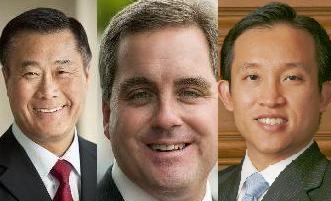
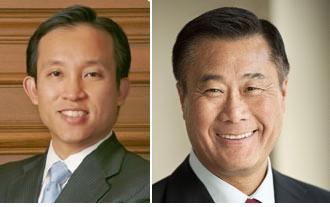
The David Chiu campaign has released a poll that isn’t really all that surprising. It shows that the two candidates who have run citywide races — State Sen. Leland Yee and City Attorney Dennis Herrera — are a little tiny bit ahead, and Chiu is a little tiny bit behind, but all of them are well within the margin of error of a poll sample of only 500 people. Yee is out in front at 17 percent (I’m actually surprised he’s not further ahead at this point, since so much of this is name recognition and he’s been elected so many times, to so many jobs, over so many years that he has by far the best name rec in the race). Chiu and Herrera are tied at 13 and 12 percent (but with a plus-or-minus five percent MOE, all three are statistically in a dead heat).


I would have thought John Avalos would be closer to the top at this point, since he’s doing a good job consolidating the left, but he’s never run citywide, and the campaigns have barely started. Again: It’s name recognition right now.


The bottom line: There is no front runner (with the possible exception of Yee). There may never be a front-runner among the three men bunched in the center of the pack. It’s all going to come down to who gets the second- and third-place votes — which is why ranked-choice voting is so valuable in a race like this. In a traditional race, two candidates who combined might have 35 percent of the vote would be in a runoff, and a candidate who missed the cut by half a percentage point would be out of the running.


One thing we do know: This poll is going to drive Rose Pak and Willie Brown nuts, and increase dramatically the pressure on Ed Lee to run. the more powerful Yee appears, the more likely it is that the center of power in the Asian community will shift away from Pak’s Chinatown operations. Yee’s base is west side, not Chinatown; always has been. Pak despises him (and the feeling is no doubt at least somewhat mutual).


The other fact that weighs in Yee’s favor: He’s doing a better job than anyone of expanding his base. He’s racking up leftside endorsements (unions, the Sierra Club) and aiming hard at the Avalos Number Twos.


As for the questions about what people want in a mayor? Again, these are poll-tested platitudes that we hear every year, and we’re going to hear more of them. “Together.” “Shared values.” “Making the city work.” If it weren’t such a beautiful day, I’d want to puke out my window.

A rather odd endorsement

94

I got a press release today from the Dennis Herrera for Mayor campaign proudly announcing the endorsement of … Frank Jordan.


Jordan was mayor of San Francisco once. Back in the 1990s. His term ran from 1992 to 1996, and was, to be polite, mediocre. Nice guy; awful mayor. He was one of the more conservative mayors in memory, left office pretty unpopular, and a lot of people don’t even remember him. Those who do, particularly progressives, don’t remember him fondly at all.


Ah, but Herrera does.


“I’m deeply honored by Mayor Jordan’s praise for my leadership, and grateful for his endorsement for my mayoral candidacy,” said Herrera.  “Few can claim to have done as much to serve our City with such integrity, skill and courage as Frank Jordan.”


While Leland Yee is out trying to get support on the left, which might actually help him win, Herrera seems to be moving, if anything, to the right (which is what Jordan’s endorsement represents). Very odd. Very odd indeed.


I couldn’t reach Herrera today to ask him about it, but I’m sure he’ll call me and I’ll update this post. Meanwhile: WTF?  


UPDATE: I heard from Herrera late in the day. He told me that “there are only six people alive who have ever held the office of mayor of San Francisco and know what it’s really like to manage this city, and I would be proud to have the endorsement of any of them.” I asked: Including Willie Brown? Herrera: “He’s a columnist now so he doesn’t do endorsements.”


Herrera also pointed out, correctly, that he has the endorsement of Mike Hennessey, the progressive sheriff. And he’ll wind up with some more leftish endorsements, too. Still: Frank Jordan?

David Chiu helps Leland Yee

118

It’s nice, sometimes, to be in Sacramento. You can run for local office without having to vote on local issues. Witness State Sen. Leland Yee, who didn’t have to take a formal position on the Park Merced project — and now can bask in the wonder of seeing David Chiu hand him thousands of tenant votes.


Here’s the deal: Chiu and Yee are both fighting for progressive voters in the mayor’s race. Most progressive groups will endorse John Avalos, but Yee and Chiu want those second-place votes, badly. Yee’s already got his West-side base, and getting a number two nod from, say, the Milk Club or SEIU 1021 won’t hurt him a bit with those voters. But he’s not strong with Chinatown leaders (Rose Pak despises him) and he’s in a race with three (so far) Asian candidates. He’s also contending with a bunch of other center-moderate types (Dennis Herrera, Bevan Dufty) in a very crowded race.


His strategy — and it’s smart — is to court the left, get those second- and third-place nods on the East side of town and emerge from the pack when all the votes are counted. Problem is, that’s Chiu’s natural constituency (or should be) — he talks about “our shared progressive values,” was elected as a progressive and, frankly, can’t win this race just by sticking to the center. It’s just too crowded there with too many people who have won citywide races.


And Chiu just gave up a huge chunk of the city’s left by alienating every tenant group in town.


As Dean Preston of Tenants Together put it in BeyondChron (which is generally quite friendly to Chiu):


 Chiu reached a backroom deal with the developer and provided the crucial sixth vote to approve the largest demolition of rent-controlled housing in San Francisco since the redevelopment of the Fillmore. Despite a good record on tenant rights issues before his work on Parkmerced, Chiu has now earned the distrust of tenants across the city.


The tenants aren’t always a solid bloc. Mitchell Omerberg of the Affordable Housing Alliance and Ted Gullicksen at the Tenants Union don’t always agree on candidates or issues. But there was no division or dissent on this one. Omerberg, who has been known to slide to the center, was adamant that Chiu’s vote — the swing vote to move the project forward — was “deeply disappointing.” He told us: “In general it’s an unwise, immoral plan to demolish a neighborhood. When you demolish people’s homes, you always regret it later.”


So now Yee can go to progressives and say — as he did at the Democratic County Central Committee — that he has all kinds of concerns about Park Merced and make it sound as if he opposes it, and use that leverage to peel some endorsements and votes away from Chiu. It’s ironic: When he was on the Board of Supervisors, Yee was hardly known as a pro-tenant vote. His record on tenant issues, while ancient history in political terms, was going to haunt him with some progressives (and still may). But now he’s gotten a boost — if only because he and Chiu are the ones most agressively working to get endorsements from progressive groups, and Chiu just shot himself in both feet.


Avalos and Chiu vie for bike vote at Sunday Streets

7

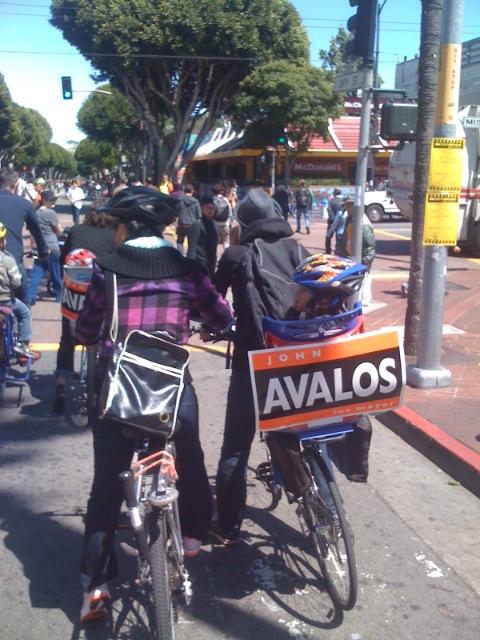
If yesterday’s jam-packed Sunday Streets event in the Mission was any indication, only two mayoral candidates are vying for the votes of bicyclists, skaters, and strolling families who appreciate carfree streets: John Avalos and David Chiu. They were the only two candidates who showed up, and both had lots of supporters with signs to help campaign for them, with Avalos supporters enjoying a slight edge in overall numbers.

It’s a testament to the lackluster field of mayoral candidates this year that Avalos and Chiu were the only ones campaigning at such a popular, cool, and high visibility event. It also foreshadows what is likely to be a tough fight between the two sitting supervisors for a constituency they each need to win.

With more than 13,000 dues-paying members, the San Francisco Bicycle Coalition is the city’s largest grassroots political organization, an active and high-profile group of voters that both candidates have sought to stake their claims with.

Chiu often touts the fact that he doesn’t own a car and bikes regularly, he took a fact-finding trip to Amsterdam with bike advocates last year, and he sponsored legislation setting the policy goal of 20 percent of SF vehicle trips being by bike by 2020. Avalos has the strongest progressive credentials in the race, he sometimes rides his bike from the far-flung Excelsior District, and he has close and deep relationships with many bike-riding political activists.

The choice could determine where bike-advocacy ends and progressivism begins, particularly at a time when Chiu has sought to marginalize Avalos and what was once a solid progressive majority on the board. Chiu has won over some SFBC leaders and snagged a few early endorsements from the bike community (such as SFMTA board member Cheryl Brinkman, who spoke at Chiu’s campaign kickoff), but the endorsements are made by a vote of SFBC membership that is likely to be hotly contested.

Well, hotly contested by the only two candidates who seem to care about the bike vote.

Editor’s notes

6

tredmond@sfbg.com

The candidates for mayor of San Francisco are already lining up endorsements — the Sierra Club held its interviews April 23, which seems awfully early to me, since some of the most interesting contenders in this town (Tom Ammiano, Matt Gonzalez) have a tendency to jump in at the last minute. And the filing deadline isn’t until August.

But the sooner the big names and organizations are lined up and the money is locked in, the harder it will be for anyone to pull off an August surprise. So unless the redistricting commission seriously messes with Mark Leno’s state Senate seat or Ed Lee bows to the pressure from Willie Brown, Rose Pak, and their allies and decides to go back on his promise and seek a full term, we’re probably looking at a rough approximation of what the voters will face in November.

With John Avalos in the race, the ballot’s become a lot more attractive to progressives. It’s not as if the other major candidates don’t have a lot to offer, and in some cases, they have a lot to offer to the left. There are smart, experienced, qualified people running.

But let’s be honest here: David Chiu, Dennis Herrera, Phil Ting, Leland Yee, and Bevan Dufty all operate somewhere in the squishy political center, a place where tax breaks for corporations are okay, where “homeownership opportunities” tend to trump the needs of tenants, where deals with big private developers are sculpted around the edges but never rejected outright, and where cuts in services are a larger part of the budget solution than taxes on the rich.

Michela Alioto-Pier is off on the far right of the San Francisco political world, and if she looks at all credible and gets any significant traction (and that’s a big if) she’ll be downtown’s favorite candidate. But until now, there was nobody holding the solid progressive banner.

I don’t think that means Avalos’ appeal is limited to the left; he’s in a swing district, and he’s very popular there, and he can talk about small business and community development and open, honest government. He doesn’t sound like a crazy radical; he’s polite and respectful and listens to people.

But I’m glad we have a candidate who won’t try to argue that 25 percent affordable housing at Treasure Island is something to be proud of, or that the Twitter tax break will create jobs, or that social inequality can’t be addressed through local policy. I’m glad there’s someone who can push the discussion and debate out of the middle, can force some of the others who want progressive support to take strong stands, and can liven things up a bit. Because without him, all of the candidates were sounding a lot alike — and I really don’t want to be bored this fall.

How taxes on millionaires could save the NBA

6

March is heaven for basketball junkies. The NCAA tournament goes full-tilt boogie and for fans of the pro game, playoff jockeying intensifies into overdrive. As a member of the latter camp whose team sits atop the NBA East, there is a river of joy flowing through the ventricles of my pumping heart.


But this year, the happy is tempered with the specter of dread. In July, the NBA’s collective bargaining agreement expires and it is a near certainty that there will be a lockout. Despite a projected revenue increase of anywhere from 3-5% in this allegedly recuperating economy of ours, the owners will padlock their doors shut, terminating contracts they signed in supposedly good faith, because they claim that they lost $370 million last season (the union disputes this). Who loses ultimately is the game itself–fan goodwill can only bend so far.


There’s plenty of blame to go around, but ultimately all of it rests with the owners who flout their own salary caps with ridiculous deals to borderline players like a Hedo Turkoglu or a Rashard Lewis, as well as the talent dilution in having teams in exotic locales that can’t support them (e.g. The Memphis Grizzzlies and the soon to be in Anaheim Sacramento Kings). But much of the issue of inflated salaries comes back to the same problem that is plaguing the entire economy–low taxation on the very wealthy has priced the NBA out of profitability.


Suppose the 91% tax in place during the 50’s was reinstated for people making over 10 million dollars a year (it used to be over a million to be in that bracket, let’s adjust for inflation). Why would a player demand a salary of 20 million a year (or Kobe Bryant’s 24M escalating to 32M due next year), when the net wouldn’t exceed 11M? Makes no economic sense. A GM can offer a ten year deal at 99M instead of 5 years/20M, same amount of money (not counting bonuses, endorsements and the like).


What low tax proponents never ever grasp is that lower taxes on the top 1% inevitably lead to these situations, the NBA is a micro in the macro of Wall Street, CEO compensations, estates. When massive amounts of money accumulate with the few (even hard earned, no one can deny the skill and work ethic of a LeBron or a Ray Allen), the ripple effect is that the system cannot sustain–the fans will not pay higher tickets and greater merchandise charges forever. The players and owners have effectively killed off the golden goose–let’s take the ax from their hands with reasonable taxes from now on in ours.


Johnny Angel Wendell  is a talk show host at KTLK AM1150 in Los Angeles, webcaster at sfbg.com and a 30 plus year veteran of the American music scene.
 

George Gascon, longtime Republican

51

One thing I didn’t know when I wrote about former police chief George Gascón’s shocking Jan. 9 appointment as San Francisco’s next district attorney is that he has Republican roots. But then I came across a January 10 Los Angeles Times article that revealed that in 2008, Gascón described himself to the L.A. Times “as a longtime Republican.”

Gascón is now registered as “decline-to-state” but his Republican leanings could become an issue in the D.A.’s race this November, depending on what happens between now and then, in terms of decisions Gascón makes, especially around cases the San Francisco Police Department refer to his new office.

Paul Henderson, who was D.A. Kamala Harris’ chief of staff before she won the Attorney General’s race, was rumored to be Harris’ preferred choice as her replacement. But he now finds himself in the awkward position of reporting to the man he will be running against this fall.

“I respect Gascón as a law enforcement officer and I appreciate that he called me personally to inform me of the mayor’s decision,” Henderson told me. “D.A. Gascón and I will be discussing next steps and I stand ready to help him address the pressing issues facing the office.”

Henderson said the atmosphere over at the D.A.’s office is “a little crazy these days.”

“Everyone is trying to figure out what is going to happen,” Henderson said.  “All of this happened out of the blue, out of left field.”

Or right field, if you consider Gascón’s former voter registration.

“I think a lot of people were expecting something and someone different,” Henderson observed. “That’s the reality and the truth. I know I have a lot of support, but I need a little time to weigh and evaluate things.”

Political consultant Jim Stearns told the Guardian that he believes Gascón and Newsom when they say Newsom’s offer of the post to Gascón was a spur-of-the-moment decision

“I know for a fact that [Board President] David Chiu was offered the D.A. position and that Chiu and Newsom were genuinely confused about whether Chiu was going to take it or not,” Stearns said. “Chiu had discussed it at length a long time ago and rejected the notion. But then, when the offer was actually made, he said ‘I don’t know’ for a few days. Then, when he turned it down, the Mayor’s Office was in a quandary. So, I think Newsom was trying to pull a rabbit out of the hat, but this is one of those appointments that you might not make, if you really thought about it.”

As Stearns notes, Gascón had only been SFPD Chief for 18 months, and before that he was chief in Mesa, Arizona, which as Stearns puts it, “is not what you’d call a big city.”

And while Gascón, who was former high-ranking official in the Los Angeles Police Department, has since scored high marks for reducing violent crime, there were a lot of issues between SFPD and the D.A.’s office during his tenure, leaving him at risk of being accused of conflict of interest in his new role.

Perhaps the biggest of these conflicts is the question of police misconduct, which became a political hot potato during the Attorney General’s race, when attention was brought to a law that’s been on the books since 1963, when the Supreme Court ruled in Brady vs. Maryland that the government has a duty to disclose material evidence to the defense which could tend to change the outcome of the trial.

In 1972, “Brady” was expanded to require District Attorneys to turn over any information that could impeach the credibility or veracity of a police officer’s testimony, or if an officer has a past record of falsifying reports or other conduct that could impact their truthfulness. But it turned out that San Francisco had never formalized a “Brady” policy. It’s true that Gascón as SFPD Chief requested that searches be done as far back as 1980 for any sustained discipline actions that could be interpreted as possible “Brady” issues, but his move to D.A. raises the issue afresh.

“What better way to keep a lid on it,” Stearns opined.

So far, the D.A.’s office has not released a statement on how Gascón intends to handle potential conflicts of interests, but I’ll update this post, if it does.

Stearns speculates that part of the decision to appoint Gascón was a result of the foot-dragging that went on as a result of Chiu’s indecision, allowing lots of competing camps to canvass for their preferred picks.

“The Gettys were pushing Bock,” Stearns said, referring to Alameda County Deputy District Attorney Sharmin Bock, an expert in human trafficking. “Others were pushing for [Assistant D.A.] Andy Clark, Paul Henderson, and [Deputy City Attorney] Sean Connelly [who represented the city in police excessive force cases].”

Other names floated were Chief Assistant District Attorney David Pfeifer, David Onek, senior fellow at the Berkeley Center for Criminal Justice; and San Francisco attorney John Keker.

“Newsom may have concluded that if he pushed for any of these folks, he’d be taking sides, and that if he went for Gascón, he wouldn’t be pissing anyone off,” Stearns said.

But now it seems the whole law enforcement world in San Francisco is in an uproar, as folks start to try and figure out how the appointment impacts the D.A.’s race in November.

‘The politics of a D.A.’s office is unique,” Stearns observed. “You can be thrown a curve ball at any moment. You never know what crime is going to be committed, and all of a sudden you have to make a decision that can impact the race.”

Stearns notes that Gascón has some positives going for him.
“He has fairly well-known name recognition, he had good grades, mostly, from the mainstream press for the work he has done as police chief, and it sounds like he is a pretty good manager and administrator.”

On the downside, there’s his statement that he’s “not philosophically opposed to the death penalty,” and the latest shocker that he’s been a longtime Republican.

And then there are the vagaries of running for elected office under San Francisco’s instant run-off voting (IRV) system.
“He could end up like Don Perata,” Stearns said, referring to Perata’s recent loss to Jean Quan in the race for Oakland mayor. “He could have the most money, the most endorsements and even the most votes, but no second and third place votes, and therefore he loses. But that depends on who else is going to run against him.”

Calls to David Onek, who filed in the D.A.’s race last summer and has already raised over $130,000 and collected a ton of endorsements, went unreturned, but if he gets back, I’ll be sure to post his comments here.

And as Henderson previously stated, he doesn’t plan to make any decisions until he has a substantive conversation with Gascón.

“Paul is pretty anti-death penalty, but like Gascón he came out in favor of sit-lie,” Stearns said, noting that Gascón may not feel he has to actively campaign to win in November.

“It’s a shock to the system what you have to go through to campaign in this city, especially if you believe in authority and hierarchy, and all of a sudden you have to go to every Democratic Club in town and listen to everyone’s questions and comments. But he sounds pretty serious about running, and I certainly believe that every election is competitive, so it remains to be seen what kind of candidate Gascón is and the deals he makes”.

RCV lessons for the SF mayor’s race

12

OPINION Elections using ranked choice voting (RCV) in both San Francisco and Oakland contain important lessons for the upcoming SF mayoral election. Rather than rely on traditional endorsements and funding advantages, winning candidates need to get out in the community, meet people, and build coalitions.

Jean Quan became the first Asian American woman elected mayor of a major city by coming from behind to beat the favorite, former state Senate president and powerbroker Don Perata. Perata outspent her five to one, but Quan countered by attending far more community meetings, forums, and house parties. She would knock on the door of a voter with an opponent’s yard sign and say, “I know I’m not your first choice, but please make me your second or third choice.”

She also reached out to her progressive opponents, especially Rebecca Kaplan, saying, “In case I don’t win, I think Rebecca should be your second choice.” As a result, Quan received three times more runoff rankings from the supporters of Kaplan, who finished third, than Perata did. That propelled Quan to victory.

Perata, meanwhile, used the traditional front-runner strategy of spending more money. His campaign never figured out that he needed to seek the second and third rankings from the supporters of other candidates by finding common ground.

A similar story also played out in SF’s supervisorial Districts 2 and 10. In those races, victors also won by coming from behind and picking up more second and third rankings from other candidates’ supporters.

In D10, some people seem to think that winner Malia Cohen wasn’t a strong candidate because she wasn’t one of the top-two finishers in first rankings. But this reflects a misunderstanding of this race’s dynamics. In the final results, Cohen finished third in first rankings (not fourth, as the early results showed), yet she was only five votes behind Tony Kelly for second place and only 53 votes behind Lynette Sweet in first place.

So Cohen was as much a front-runner as either Kelly or Sweet in an extremely close race with 22 candidates. She prevailed by picking up more second and third rankings from other candidates’ supporters, resulting in an African American candidate winning this traditionally black district.

Note that if D10 had used San Francisco’s old December runoff, the voter turnout would have plummeted from the high of a November gubernatorial race, and the winner would have won with a handful of votes. The RCV system worked to pick the candidate preferred by the most voters in a single November election.

In D2, fiscal conservative Mark Farrell beat the progressive’s choice, Janet Reilly. But this district is not a progressive one, and that’s supposed to be one of the benefits of district elections (which was a progressive reform), i.e. each district is able to elect its own representative who conforms to the majority of its district instead of what Big Money interests want. Unfortunately, that also means a progressive candidate probably won’t win a nonprogressive district. Farrell built an effort that attracted more second and third rankings from other candidates’ supporters, allowing him to come from a point behind to win a close race.

That’s the way you win with RCV. With no clear frontrunner, the candidate who can draw significant numbers of second and third rankings is most likely to win. In our overly adversarial, winner-take-all society, the incentives of RCV to find common ground and build coalitions with ranked ballots is a relief for most voters. Mayoral candidates should take note. 

Steven Hill is author of 10 Steps to Repair American Democracy (www.10Steps.net), Europe’s Promise (www.EuropesPromise.org) and other books, opeds, and articles. Visit his website at www.Steven-Hill.com.

Class of 2010: Jane Kim

7

steve@sfbg.com

Despite fears that a candidate backed by downtown could replace firebrand progressive leader Sup. Chris Daly in District 6, in the end it was the two progressive candidates — Jane Kim and Debra Walker — who finished far in front of the large pack of candidates, with Kim winning the race. And she thinks that says something about how the progressive movement has matured.

“To have the two leading candidates be progressives says a lot about the progressive political community,” Kim said. “The race was really between Debra and me in end.”

Kim, a 33-year-old attorney and the outgoing president of the San Francisco Board of Education, has been active in progressive politics in San Francisco for many years, from doing community organizing with the Chinatown Community Development Center to running the short-lived San Francisco People’s Organization, which Daly helped create.

Yet part of her campaign strategy, and the message that she’s sending in the wake of an election that divided the progressive community, focuses on issues and themes that are more common to political moderates: job creation, clean streets, public safety, and neighborhood services.

“I think it’s important for progressives to cross over, and I don’t think it should be viewed as selling out,” Kim told us. “Progressives need to do a good job at maintaining voters’ faith in the progressives’ ability to lead.”

In addition to courting progressive groups and voters, Kim’s campaign aggressively targeted residents of the residential condo towers in Rincon Hill and Eastern SoMa, voters who are generally more affluent and newer to San Francisco than the typical progressive constituencies.

“It’s a lot of new residents who don’t feel like they’re a part of any political faction and they’re really open,” Kim said. “People just want to see that things are better. They want the streets to be clean and safe.”

With a new mayor and new blood on the Board of Supervisors, Kim said this is an important political moment for San Francisco, “a huge opportunity” to redefine San Francisco politics in the wake of Mayor Gavin Newsom and progressive supervisors such as Aaron Peskin, Matt Gonzalez, Tom Ammiano, and Daly.

“The Class of 2000 was able to show how progressive we can be with policy. They really pushed the envelope,” Kim said, citing new worker and tenant protections and programs such as Healthy San Francisco. Now, she said, the challenge for progressives in the Classes of 2010 and 2008 is to show that they can provide effective leadership in realms like public safety and economic development. “If we’re able to lead on those two issues, it would really firm up our leadership of the city,” Kim said, noting that it would also affect the dynamics of next year’s mayor’s race.

While Kim didn’t go into detail about how she intends to deal with what she says is the biggest challenge facing the new board — a budget deficit of $700 million over two years, coming at a time when all the easy cuts have already been made in recent years — she said the city needs to be aggressive in boosting the local economy and ensuring San Franciscans get most city contracts.

“We need to figure out how we can partner with small business to create a diversity of jobs in San Francisco,” she said, noting that the average San Franciscan has more faith in the moderates’ ability to create jobs, something that progressives need to address. But how can she help break the grip that the conservative San Francisco Chamber of Commerce has on small businesses?

“Part of the problem is that small businesses aren’t organized,” Kim said, noting how that hurt Sup. David Chiu’s ability to win support this year for his business tax reform measure that would have helped most small businesses and made some large corporations pay more taxes. “They’re busy running their businesses and they don’t have the time to look at the details, so they just read the briefing of the Chamber of Commerce.”

Kim said she respects the leadership role Daly has played in progressive politics and that she’d “like to be part of the moral compass of the Board of Supervisors.” But she also said that Daly’s sometimes abrasive style unnecessarily hardened the opposition of moderates to important progressive issues.

“He made it harder to talk about affordable housing,” Kim said, noting that the city’s dearth of affordable housing should be an issue that’s important to middle class voters, noting that it includes housing for people who earn up to 120 percent of the median income for the region. But after Daly hammered on the issue, “It was like a bad word coming out, and people would turn off to the issue.”

But she thinks it’s a fixable problem if she and her allies do the hard work, an ability they demonstrated this year by defeating Walker, who had been running for the seat for years and lining up all the key endorsements. “Voters do respond to campaigns that work really hard, and that bodes well for progressives,” Kim said, noting that she intends to reach out to Walker’s supporters. “I don’t think I can be successful as a supervisor if I don’t work with all the camps in the progressive community.”

Class of 2010: Malia Cohen

4

sarah@sfbg.com

It took two weeks and 19 updates of San Francisco’s ranked-choice voting system before Malia Cohen, a former Mayor Gavin Newsom staffer and partner in a firm that helps businesses and nonprofits create public policy, was declared the winner of the hotly contested race to represent District 10, which includes Bayview, Hunters Point and Ingleside. The nail-biting time lag was a byproduct of complex calculations that involved 22 candidates, no clear front-runners, and a slew of absentee and provisional ballots.

But when the RCV dust settled, the results proved that the D10 vote continues to break down along class, race, and gender lines. These RCV patterns personally benefited Cohen’s success in picking up second- and third-place votes.

But they also helped D10’s African American community, now smaller than its growing Asian community but still larger that the black community in any other distinct in the city, send an African American supervisor back to City Hall. And it avoided a run-off between Lynette Sweet and Tony Kelly, who won most first-place votes.

Some chalk up Cohen’s victory to her polished appearance, the middle-of-the road positions she took on the campaign trail, and an impressive list of endorsements that include the San Francisco Democratic Party, the Labor Council, the Building and Construction Trades Council, state Sen. Leland Yee (D-SF), Assembly Speaker Pro Tempore Fiona Ma (D-SF), Board of Supervisors President David Chiu, SF Democratic Party Chair Aaron Peskin, and BART Board President James Fang.

But Cohen told us she thinks coalition building was the key. “Endorsements only account for a quarter of the reasons why you win,” she said. “It’s all about building an organization, a net that goes deep and wide.”

Some progressives were alarmed by a Dec. 1 fundraiser to help settle Cohen’s campaign debt whose guest list included Newsom, former Mayor Willie Brown, Sup. Sean Elsbernd, Ma, Building Owners and Managers Association director Ken Cleaveland, Kevin Westlye of the Golden Gate Restaurant Association, and Janan New of San Francisco Apartment Association.

Cohen dismissed concerns over this conservative showing of après-campaign support. “Fear not,” she said. “It is a fundraiser event. And now that I’m a newly elected supervisor, I look forward to meeting everyone. And I will do a great job representing everyone.

So what should we expect from Cohen, who ran as a fourth-generation “daughter of the district from a labor family” on a platform of health, safety, and employment — and will soon represent the diverse southeast sector, which has the highest unemployment, crime, recidivism, foreclosure and African American out-migration rates citywide and is ground zero for Lennar Corp.’s plan to build thousands of condos at Candlestick and the shipyard?

“I’m a bridge-builder,” said Cohen, who attributes her surprisingly tough but open-minded edge to being the oldest of five sisters.

So far, she’s not going out on a progressive limb. She told us she favors a caretaker mayor: “I’d like someone to maintain the business of the city, someone who has zero political ambition,” she said. “That way it creates an even playing field for the mayoral race.”

Cohen says she is determined to address quality of life concerns, including filling potholes, re-striping crosswalks and introducing traffic calming measures, and taking on critical criminal justice issues, including City Attorney Dennis Herrera’s gang injunction in the Sunnydale public housing project in Visitacion Valley. She opposes Herrera’s strategy but notes: “If not gang injunctions, then what? I can’t dispute that they get short-term results, but what about the long-term impacts? We need long-term solutions.”

Cohen supports Sup. John Avalos’ efforts to pass mandatory local hire legislation but is open to “creative solutions” to help get it over the finishing line. “People who live here should be working here,” Cohen said. “But is 50 percent the magic mandatory hire number? I don’t know.”

Cohen, who just survived a foreclosure attempt, has promised to be a “fierce advocate” for constituents facing similar challenges, including those who met predatory loan brokers at church.

But asked how she would cut spending or raise revenue to address the city’s massive budget deficit, she had no specific answer.

Yet Cohen disagrees with detractors who say she lacks experience. “I may look cute, but don’t be misled. I have a public policy background and fire in my belly. I’m a union candidate, I’m smart, I’m talented, and above all, I love the people in D10 and the rest of San Francisco. I want everyone to prosper and receive benefits. So give me a shot.”

Class of 2010: Mark Farrell

0

steve@sfbg.com

Mark Farrell is a 36-year-old venture capitalist and political newcomer who will represent the wealthy neighborhoods of District 2 (Pacific Heights, Sea Cliff, and the Marina) after narrowly beating Janet Reilly, whose extensive political endorsements ranged from the Guardian and local Democratic Party Chair Aaron Peskin to U.S. Sen. Dianne Feinsein and Mayor Gavin Newsom.

Challenging the city’s political power structure is why Farrell said he ran for office, playing up his outsider status and investment banking experience. He told visitors to his campaign website, “I am running for the Board of Supervisors to bring common sense back to City Hall” and railed against “career politicians who run for office again and again.”

In an interview with the Guardian, Farrell said he was motivated to make his first foray into politics by the dysfunction he has heard about at City Hall. “I’ve been frustrated with City Hall over the last few years, from the personal antics to the policies that have come out,” Farrell told us. “I humbly believe I have something different to bring to the table.”

Farrell calls himself a fiscal conservative who believes “our city government has gotten too large and we need to look at that,” a task he thinks he’s well-suited for given his background in finance. Yet when asked what government functions he would eliminate or cut deeply to help close a projected $700 million budget deficit over the next two years, Farrell said he can’t offer any specifics yet, saying only, “We need to make tough decisions.”

Would Farrell be open to new taxes or other revenue-side budget solutions? He told us that he won’t completely reject the idea of new taxes, but that he generally opposes them. “I don’t believe in raising taxes. We can’t raise enough revenue to get out of this problem,” Farrell said. “We need to learn to live within our means.”

Although he opposed Prop. B in this election, Farrell said public employee pension reform needs to be a part of the city’s budget solution, as well as scaling back how much the city gives to nonprofit groups, which provide many of the social services the city supports.

Farrell was born and raised in San Francisco — except for his college years, he’s spent his whole life in D2, where his parents still live — and has been friends with Sup. Sean Elsbernd since high school. Politically, Farrell also identifies with Elsbernd and fellow fiscally conservative Sups. Carmen Chu and Michela Alioto-Pier (who endorsed Farrell to replace her in D2), but he says that he doesn’t want to be politically pigeon-holed.

“I’m very much my own person and I look forward to working with everyone,” Farrell said. Indeed, part of Farrell’s frustration with City Hall politics has been the divisive relationship between the progressives and moderates, which he sees as a hindrance to finding “common sense solutions.”

“The progressive and moderate labels have been relatively destructive to San Francisco,” Farrell said. “We need to get beyond that to focus on issues.”

Yet people’s political values and worldview determine what issues they care about and the solutions they favor. For example, progressives decry the dearth of affordable being built for San Franciscans and cite city studies showing that deficit will get worse as developers build ever-more market rate housing (see “Dollars or sense?” Sept. 28), particularly in a city that is two-thirds renters.

Farrell said he supports rent control (saying he was unfairly attacked during the campaign as anti renter) and sees the dwindling rental stock and lack of new affordable units being constructed as problems, but he doesn’t have a solution to those problems. In fact, Farrell supports allowing more condo conversions, which would make the problem worse, telling us, “I believe home ownership is something we should promote.”

He was also vague about how he will approach land use issues and how tough he’ll be with developers in having them meet city design guidelines and provide affordable housing and other community benefits, saying only, “We need to have sustainable development in the city.”

Yet the issues that do animate Farrell are those typically focused on by conservative D2 voters. Farrell lists his top priorities as seeing to his district’s needs, promoting private sector job creation (“I think a lot of lip service has been paid to it, but not a lot of action by City Hall,” he said), public safety, and quality-of-life issues (he supported Prop. L, the sit-lie ordinance, calling it “very reasonable”). Generally Farrell sees San Francisco as a city in he midst of a serious fiscal crisis, “and I want to create a San Francisco that is secure for the future over the long haul.”

Newsom and downtown groups court Cohen

18

A rogue’s gallery of downtown power brokers and moderate politicians is lining up to give D10 supervisor-elect Malia Cohen money during a fundraiser at Democratic Party money man Wade Randlett’s house tonight (Wed/1). And while the group may be trying to buy the support of a candidate they didn’t support in the election, Cohen and some of her progressive supporters say she’s been open to developing relationships across the ideological spectrum.

“Fear not,” Cohen told us when we raised an eyebrow at the host committee, and she noted that most of those on the list didn’t endorse her candidacy. “It is a fundraiser event, and now that I’m a newly elected supervisor, I look forward to meeting everyone.”

The guest list includes Mayor Gavin Newsom, former Mayor Willie Brown, Sup. Sean Elsbernd, Assembly member Fiona Ma, Building Owners and Managers Association director Ken Cleaveland, lobbyist Sam Lauter, Brook Turner with Coalition for Better Housing, Kevin Westlye of Golden Gate Restaurant Association, Janan New of San Francisco Apartment Association, as well as building trades head Michael Theriault and Tim Paulson of the San Francisco Labor Council.

“That’s not my perception of it,” Randlett – who used to run the downtown political organization SFSOS – told us when we asked about downtown’s attempt to buy influence with a candidate who finished the campaign about $20,000 in debt. He also rejected the characterization that it was a high-roller event, noting that prices initially listed at $100-$500 have since been lowered to $50. “Anyone who wants to attend at any price is welcome,” he said.

“I think it’s smart of their part, because they didn’t support her in the election, to try to give her money in the end,” said Gabriel Haaland of SEIU Local 1021, which did endorse Cohen. “It remains to be seen where she’s going to land [politically], but it seems clear what this group is attempting to do, to influence her votes.”

Cohen also received endorsements from the San Francisco Democratic County Central Committee, its Chair Aaron Peskin, and Board of Supervisors President David Chiu, who says he isn’t concerned about the Randlett fundraiser. “I understand that she has been celebrating with people from across the ideological spectrum,” Chiu said.

Indeed, Cohen said she is anxious to get to know representatives of San Francisco constituencies across the spectrum, borrowing a line from Shirley Chisholm, the first African-American women elected to Congress, in calling herself “unbought and unbossed.” Cohen said, “I will do a great job representing everyone. I will protect the interests of District 10 residents.”

Randlett, who flamed out with SFSOS before reviving his standing as a top-tier Democratic Party fundraiser by being an early backer of Barack Obama’s presidential bid, told us that was a connection he shares with Cohen. “The only reason I supported Malia from the beginning and am hosting the event for her is that like me she was there for Barack from Springfield through election night, never wavered in her support for him, and continues to stick by him now, when fair weather friends are carping from the sidelines,” Randlett told us.

Paulson told us that Cohen asked him to co-host a fundraiser with Newsom – who Cohen once worked for although he didn’t support her in this election – and that he didn’t see the complete roster until a couple days ago. “I am surprised there was this list,” Paulson said of the groups that regularly oppose progressive candidates and legislation.

But Haaland said that labor and the left will also be reaching out to Cohen, whose lack of a strong ideological grounding and representation of a district slated for the city’s most ambitious redevelopment plans will make her a pivotal vote on the new board. “We have to do our best to reach out to her as well,” Haaland said.


About that “far left beating…”

61

Our old pal Chuck Nevius is gloating about how the “far left” (I guess that means the people who would have been called mainstream Democrats a generation ago, the ones who believe in the public sector and think economic equality matters) got beaten badly in the supervisors races. And he uses Aaron Peskin as the personification of the far left (amusing, because if you actually talk to Peskin, and look at his record, he’s hardly a crazy leftist. And I say that as someone who is. A crazy leftist, I mean.)

Anyway, here’s what Nevius missed:

Malia Cohen is on the Board of Supervisors because of Aaron Peskin.

Look at what happened in the ranked choice voting. Cohen came from back in the pack because of second-place votes — and a lot of that was because the Democratic County Central Commitee put her as its #2 choice, after DeWitt Lacy, who didn’t run much of an effective campaign.

How did she get the #2? How did a candidate who is bad on tenant issues beat out Tony Kelly, who was by far the most progressive contender, at the supposedly “far left” DCCC? That was the work of Peskin — who, to the chagrin of a lot of progressives (including me) decided to vote for and promote Cohen as the second choice on the slate.

First of all, that was hardly the move of a “far leftist,” since Cohen certainly ran as a more moderate candidate. Second, it showed that the “far left” isn’t some giant organized hippie commie bloc led by Commisar Peskin; it’s a sometimes-united, often-fractious coalition that shares some interests and agendas but doesn’t always have its shit together.

Then there’s this notion the moderates swept into power. Actually, by chance of the way lines are drawn, the even-numbered seats have always been more conservative than the odd-numbered ones. In this case, in many of the races, the progressives were (to quote Calvin Welch) “playing with the house’s money.” Check it out:

D2: Janet Reilly would have been much more reasonable than Michela Alioto-Pier, but Mark Farrell won’t be any worse. Almost by definition, he can’t be any worse than Alioto-Pier. That was a conservative seat, and still is.

D4: No change at all, still Carmen Chu, still a moderate-to-conservative seat.

D6: I supported Debra Walker, but by no stretch of the imagination is Jane Kim anything but a progressive. She’ll be more conciliatory than Chris Daly, but that’s not difficult; Walker would have been more conciliatory, too. Different people, different personalities. But in the end, Kim will be a progressive vote; I mean, she started out as a Green Party leader. The “far left” held that district.

 D8: Definitely the house’s money. Scott Wiener won’t be a whole lot different on the issues than Bevan Dufty. If Rafael Mandelman had won, it would have been a net pickup for the left, but as it is, I’d call it a wash. Sure, the DCCC endorsed Mandelman and he lost, but we all know that was an uphill battle; Wiener has been working that district for years, had plenty of money, was better-known, had the support of Mark Leno, who once held that seat and is immensely popular in the district.   

D10: Sophie Maxwell was never part of the progressive bloc on the board. Sometimes she voted with them; sometimes she didn’t. Tony Kelly would have increased the size of the progressive majority; Malia Cohen doesn’t change it.

In two years, five key progressive seats will be on the ballot — Eric Mar seeking re-election in D1, David Chiu in D3, Ross Mirkarimi termed out and an open race in D5, and David Campos and John Avalos running again in D9 and D11. That’s where the battle to hold the progressive majority will be fought — and those are districts where the DCCC has more influence anyway.

In other words, since the return of district election, the progressives — the “far left” if that’s what you want to call us — have only held one of the five even-numbered seats, and still do. That’s not spin, Chuck; that’s reality.

 PS: Just for fun, I went back four years and checked out our endorsements for supervisor the last time the even-numbered seats were up. W endorsed Sophie Maxwell for re-election in D10 (with reservations, and lacking a credible progressive alternative) and Daly was re-elected with our support in D6. But our candidates lost in D2, D4 and D8.  Nobody talked about the left getting destroyed.

Dodging bullets

14

steve@sfbg.com

Progressives in San Francisco dodged a few bullets on election night, which was the highest hope that many held in a campaign season dominated by conservative money and messaging. The Board of Supervisors retained a progressive majority, Prop B’s attack on public employees went down, the wealthy will pay more property transfer taxes, and — perhaps the best news of all — Gavin Newsom is leaving for Sacramento a year before his mayoral term ends.

But economically conservative and downtown-backed campaigns and candidates scored the most election-night victories in San Francisco, killing a temporary hotel tax hike pushed hard by labor and several progressive-sponsored ballot measures, and winning approval for the divisive sit-lie ordinance and Prop. G, removing Muni driver pay guarantees, which had the widest margin of the night: 65-35 percent.

“Ultimately, downtown did well,” progressive political consultant Jim Stearns told us on election night, noting how aggressive spending by downtown business and real estate interests ended a string of progressive victories in the last several election cycles. He cited the likely election of Scott Wiener in District 8 and the strong challenge in District 2 by Mark Farrell to perceived frontrunner Janet Reilly, who had progressive and mainstream endorsements.

A preliminary Guardian analysis of reported spending by independent expenditure committees shows that groups affiliated with downtown or supporting more conservative candidates spent about $922,435, the biggest contributions coming from conservative businessman Thomas Coates and the San Francisco Board of Realtors, compared to $635,203 by more progressive organizations, mostly the San Francisco Democratic Party and San Francisco Labor Council.

That spending piggy-backed on national campaigns that were also skewed heavily to conservative and corporate-funded groups and messaging that demonized government and public employee unions, playing on people’s economic insecurities during a stubborn recession and jobless recovery.

Stearns said voters are having a hard time in this economy “and they don’t like to see the government spending.” He said national polls consistently show that people are more scared of “big government” than they are “big corporations,” even if San Francisco progressives tend to hold the opposite view.

And even that narrow defeat came after an almost unprecedented opposition campaign that included every elected official in San Francisco except the measure’s sponsor, Public Defender Jeff Adachi, and both the labor movement and many moderate groups.

“The campaign on this was extraordinary and caught fire at the end,” Alex Clemens, founder of Barbary Coast Consulting, said at SPUR’s Nov. 4 election wrap-up event. In particular, the message about how much Prop B would increase the health care costs on median-income city employees seemed to resonate with voters.

“We are really happy that Prop. B is going down because it was such a misguided measure. It was not well thought through,” Labor Council President Tim Paulson told the Guardian at the election night party labor threw with the San Francisco Democratic Party at Great American Music Hall. “San Francisco voters are the smartest in America.”

Paulson was also happy to see those voters approve taxing the transfer of properties worth more than $5 million, “because San Franciscans know that everyone has to pay their fair share.”

In the Board of Supervisors races, it was basically a status quo election that shouldn’t alter the body’s current politics dynamics much. Sup. Bevan Dufty will be replaced with fellow moderate Scott Wiener in D8 and Sup. Chris Daly by progressive Jane Kim in D6. The outcome of races to replace ideological wobbler Sup. Sophie Maxwell in D10 and conservative Michela Alioto-Pier in D2 may not be conclusively known for at least a few more days (maybe longer if the close races devolve into lawsuits), but neither is a seat that would diminish the board’s progressive majority.

Progressives could have made a gain if Rafael Mandelman had won in D8, but he was seven points behind Wiener on election night and even more after the initial ranked choice tally was run on Nov. 5. And in D6, fears that downtown-backed candidate Theresa Sparks might sneak past dueling progressive candidates Jane Kim and Debra Walker never materialized as Sparks finished far behind the lefty pair.

Consultant David Latterman, who worked for Sparks, told us on election night that he was surprised to see that Kim was the choice of 32 percent of early absentee voters “because we targeted those voters.” By comparison, Walker was at 20 percent and Sparks was at 21 percent in the initial returns, which tend to be more conservative. By the end of the night, Kim had 31.3 percent, Walker 27.7 percent, and Sparks just 16.5 percent.

“If she did that well with absentees, it seems like it was Jane’s race to win. If they choose Jane, they wanted Jane. It’s just that simple,” Latterman told us on election night.

At her election night party, Kim credited her apparent victory to a strong campaign that she said fielded 400 volunteers on Election Day, most wearing the bright red T-shirts that read “See Jane Run” on the back. “I feel good,” Kim told the Guardian. “What I’m really happy about is we ran a really good campaign.”

In the end, Kim’s campaign was put over the top by the second-place votes of Sparks’ supporters, with 769 votes going to Kim and 572 to Walker in the first preliminary run of ranked-choice voter tabulations. But despite the bad blood that developed between progressives in the Kim and Walker campaigns, Board President David Chiu, an early Kim supporter, sounded a conciliatory note, telling the Guardian on election night, “Given where Debra and Jane are, I’m glad that we’re going to keep this a progressive seat.”

The “Democratic Machine” myth

34

Okay, I read the gloating from Randy Shaw about Jane Kim defeating the “Democratic Party Machine,” which, as far as I can tell, seems to consist of the Democratic County Central Committee and the Bay Guardian. (As I’ve said before, if I were that powerful, things would change around this city ….)


It annoys me because machine politics were once a harsh reality in this town. But not these days.


Let’s look seriously at the supposed immense clout of the DCCC. Everyone from Shaw to The Chron’s C.W. Nevius has been freaking out over the ability of the local Democratic Party to control who gets elected to the Board of Supervisors. And while I think it’s a good idea to have prgoressives control the local party (this is, after all, San Francisco), even a cursory look at election results suggests that this vaunted machine isn’t really running much of anything.


In every contested race for supervisor — every single one — the candidate endorsed first by the DCCC appears headed for defeat. It’s not just D6; The DCCC endorsed DeWitt Lacy in D10, and he finished well out of the picture. The person leading that race today, Tony Kelly, wasn’t even in the DCCC’s top three. The panel backed Rafael Mandelman in D8; Scott Wiener won. The party gave its nod to Janet Reilly in D2, and if early RCV results hold, she’s in serious trouble.


Here’s the facts: With district elections, and a weak mayor, power is far too diffuse in San Francisco today for anyone to operate a political machine. District races this time around weren’t about the DCCC; they were about local campaigns organizing around local issues.


The DCCC helped Debra Walker somewhat in D6 , but it also hurt: In the end, Kim won with a campaign that painted Walker as an old-school machine party politician — and, interestingly enough, according to Paul Hogarth, she won by reaching out to the more conservative voters:


We focused on pitching her biography as a Stanford and Berkeley graduate, who is a civil rights attorney. And Jane Kim was the kind of young professional these voters could relate to. 


If Randy Shaw was right, and a powerful Democratic party machine ran city politics, we wouldn’t all be scratching our heads and wondering who the hell the next mayor will be. I can tell you right now: Aaron Peskin, the titular head of this mighty machine, is pretty far out of the running. Sup. David Chiu, who has pretty much cut ties with Peskin and worked to elect Kim, is one of the top mayoral contenders. It’s also entirely possible that Mark Leno — who is by no means part of any Peskin operation — will wind up in Room 200.


Labor — supposedly part of this machine, too — can’t even agree half the time on its own endorsements — witness the United Healthcare Workers local splitting dramatically with its Local 1021 brothers and sisters in SEIU. UHW backed Wiener, Theresa Sparks and Steve Moss — all candidates opposed by Local 1021.


It’s an unsettled time in local politics, and I hope that the progressives who care about issues, not personalities and silly labels, can come together and choose a mayor who will support a progressive agenda. But that will be a close call, and no doubt will involve a temporary coalition that will fall apart as soon as the deal is done.


Because right now, nobody’s calling the shots in local politics. Just look at the facts on the ground. 

Election 2010: Labor and progressives dodge a bullet

22

Bucking a national conservative, anti-government political trend, San Franciscans stayed with some fairly progressive politics on election night, rejecting a measure to demonize public employees (Prop. B), giving progressive John Rizzo far more votes than his City College of San Francisco board rivals, and taking far more liberal positions in state ballot measures and candidates than California voters, who were already far to the left of national voters.
“We are really happy that Prop. B is going down because it was such a misguided measure. It was not well thought through,” San Francisco Labor Council President Tim Paulson told the Guardian at the party labor threw with the San Francisco Democratic Party at Great American Music Hall. “San Francisco voters are the smartest in America.”
Paulson was also happy to see those voters approve Prop. N, taxing the transfer of properties worth more than $5 million, “because San Franciscans know that everyone has to pay their fair share.”
Another labor priority, Prop. J, the temporary hotel tax increase, lost by a narrow margin after Mayor Gavin Newsom and his downtown allies opposed it, and the online travel company spent millions of dollars to bury Prop. K – a Newsom-created rival measure that would have closed a loophole that lets the company avoid paying the hotel tax.
Rizzo said he was happy to far outpoll Lawrence Wong and Anita Grier as the three incumbents ran uncontested for their City College board seats, which should put him in a leadership position in the troubled district. “There is a tradition at City College that the highest vote getter gets the presidency, so I’m pretty happy,” Rizzo told us on election night.
There were some conservative victories in San Francisco, including approval of Prop. L, which criminalizes sitting or lying on sidewalks, and Prop. G, which will reduce Muni operator wages and change work rules after getting the approval of about 63 percent of voters.
“Ultimately, downtown did well,” progressive political consultant Jim Stearns said, noting how aggressive spending by downtown business and real estate interests ended a string of progressive victories in the last several election cycles, including the likely election of Scott Wiener in D8 and the strong challenge in D2 by Mark Farrell to perceived frontrunner Janet Reilly, who had progressive endorsements.
Stearns said national polls have shown that people are more afraid of big government than big corporations, whereas progressives tend to hold the opposite view. “That national atmosphere definitely had an impact on even races locally,” Stearns said.
But in San Francisco, the progressives retain a strong position in the political debates to come.

Election 2010: Theresa Sparks supporters await results

District 6 candidate Theresa Sparks showed up fashionably late for her own election night gathering at Don Ramon’s Mexican restaurant in the South of Market neighborhood. Election results are still coming in, and she told the crowd, “We’ll just watch it together and see what happens.” Early results show Jane Kim as the favored candidate in the district so far, but as everyone here seems to be telling one another, “it’s going to be a long night.”

Rob Black of the San Francisco Chamber of Commerce was in attendance, as well as Francis Tsang, who works in Mayor Gavin Newsom’s press office. 

Katra Briel said she had known Sparks for years, and was one of the first to volunteer for her campaign. Being out on the streets and talking to voters about the election was “really enlightening,” she said, but “sometimes the things reminded me of the 7th grade — it seemed like more of a popularity contest than being about the issues.” Briel said she sees Sparks as “the kind of person we need in government.”

John Zowine, another campaign volunteer, said he was inspired to do phone banking for Sparks after a five-year stretch without being involved in any campaigns. “I was really impressed with her,” he said. Asked how he was feeling about the outcome of the race, Zowine said, “I would think that with all those endorsements, and Gavin’s support, she should do really well.”


Guardian: Endorsements for small business in San Francisco

1

Alas, this year some of the small business groups and leaders in San Francisco, such as the Small Business Advocates and Scott Hauge at Small Business California, once again came out with endorsements that were virtually identical with those of the downtown/Chamber of Commerce/PG&E/landlord/real estate gang. (See Guardian blogs.) Their candidates were, and the big downtown money went to, Steve Moss in District l0, Theresa Sparks in District 6, and Scott Wiener in District 8 and they all backed the Sit-Lie Ordinance and took identical positions on all the other local props.
There are many small business people who do not subscribe to the downtown line and vote more independently. I decided this year to do a special blog and email blast on the endorsements of the Guardian, which are done from the perspective of an independent, locally owned and operated alternative newspaper. I think it’s also good for people to know that there are a lot of independents and progressives out there in the small business community who support such things as public power, a city health plan for workers, more progressive taxation, and foot patrols by police for the neighborhoods and not just kicking kids off the sidewalks. b3

To the small business community in San Francisco:

Here are our 2010 endorsements of state and San Francisco candidates and propositions from the San Francisco Bay Guardian, a locally owned and operated, independent alternative weekly newspaper in San Francisco. The Guardian is a newspaper that is of, by, and for small business. We always question candidates carefully on their small businesses record and policies and consider small business to be a crucial criterion for candidates and propositions in our endorsement process. In a major story on the Guardian in its pre-election Sunday edition (Oct. 31), the Chronicle reported that Guardian endorsements “are widely considered the most influential in this left-leaning town.” We have done endorsements in every election since our founding in 1966.

For us, this is a serious, intensive process of many months: we interview all the major local candidates, put up podcasts of interviews on our website at sfbg.com, do extensive independent checking on the candidates and issues and their background and record and do independent reporting on the campaign and issues. You may agree with us; you may not. But you can have faith in our one and only campaign promise: Our Clean Slate represents what we think is best for San Francisco and San Francisco small business.
b3


Democracy = cheap drinks and free sex toys

0

Voting’s pretty good as it stands — representative government, dictator avoidance, all that jazz. But this fall, the choose-this-or-that got a little nutty. Have you seen the voter’s pamphlet? The ballots alone are four double-sided pages long. After all that paperwork, you’re gonna need a pick me up on Nov. 2. 

Call upon this pleasure two-pack of election day specials – yes, the title of this post is an accurate descriptor – to lift the weight you’ve been carrying on your back called “the future of California is in your hands.” Cheap drinks and free sex toys. Oh yeah, and check our complete endorsements for the low-down on just what’s on those ballots this year for San Francisco and East Bay.

Straight Up Vote

Bring your voter’s stub (this works if you’ve voted by mail or in-person) for a 50 cent drink at participating bars. Velvet Cantina, Tonic, and the Elite Cafe are all participating, but most participants are slopping around in the Castro. Anyway, find a list of all those aiding and abetting on their website. 

www.straightupvote.org


Vibrate the Vote

After you chuck that ballot down the appropriate chute, head to any Good Vibrations store, where dropping the name of this paragraph on election day will score you a free Pearl Drop vibrator. The generous giveaway is a part of an online voting contest that can enter you to win the top-rated toys on the Good Vibes website. 

www.goodvibes.com


Fall election ’10 clip out guide

15

Click here for the San Francisco Bay Guardian’s complete endorsements — and happy voting. CLICK HERE for the printable PDF from our home page.


NATIONAL RACES

U.S. Senate

Barbara Boxer


Congress, 6th District

Lynn Woolsey


Congress, 7th District

George Miller


Congress, 8th District

Nancy Pelosi


Congress, 9th District

Barbara Lee


Congress, 13th District

Pete Stark


STATE RACES

Governor

Edmund G. Brown


Lieutenant governor

Gavin Newsom


Secretary of state

Debra Bowen


Controller

John Chiang


Treasurer

Bill Lockyer


Attorney general

Kamala Harris


Insurance commissioner

Dave Jones


Board of Equalization, District 1

Betty Yee


Superintendent of public instruction

Tom Torlakson


State Senate, District 8

Leland Yee


State Assembly, district 12

Fiona Ma


State Assembly, District 13

Tom Ammiano


State Assembly, District 14

Nancy Skinner


State Assembly, District 16

Sandré Swanson


STATE BALLOT MEASURES

Prop. 19: YES, YES, YES

Prop. 20: NO

Prop. 21 YES

Prop. 22: NO

Prop. 23: NO, NO, NO

Prop. 24: YES

Prop. 25: YES, YES, YES

Prop. 26: NO, NO, NO

Prop. 27: YES


SAN FRANCISCO CANDIDATES

Supervisor, District 2

Janet Reilly


Supervisor, District 4

No endorsement


Supervisor, District 6

1. Debra Walker

2. Jane Kim

3. Glendon “Anna Conda” Hyde


Supervisor, District 8

Rafael Mandelman


Supervisor, District 10

1. Tony Kelly

2. DeWitt Lacy

3. Chris Jackson


Board of Education

Margaret Brodkin

Kim-Shree Maufas

Hydra Mendoza


Community College Board

John Rizzo


BART Board, District 8

Bert Hill


Assessor-Recorder

Phil Ting


Public Defender

Jeff Adachi


San Francisco Superior Court, Seat 15

Michael Nava


SAN FRANCISCO BALLOT MEASURES

Prop. AA: YES

Prop. A: YES Prop. B: NO, NO, NO

Prop. C: YES

Prop. D: YES

Prop. E: YES

Prop. F: NO

Prop. G: NO

Prop. H: NO

Prop. I: YES

Prop J: YES

Prop. K : NO

Prop. L : NO, NO, NO

Prop. M: YES

Prop. N: YES


EAST BAY ENDORSEMENTS

BART Board District 4

Robert Raburn


Berkeley City Auditor

Ann-Marie Hogan


Berkeley City Council District 1

Linda Maio


Berkeley City Council District 4

Jesse Arreguin


Berkeley City Council District 7

Kriss Worthington


Berkeley City Council District 8

Stewart Jones


Berkeley Rent Board

Asa Dodworth

Lisa Stephens

Jesse Townley

Pam Webster

Dave Blake

Katherine Harr


Oakland City Auditor

Courtney Ruby


Oakland Mayor

1. Rebecca Kaplan

2. Jean Quan


Oakland City Council District 2

Jennifer Pae


Oakland City Council District 4

Daniel Swafford


Oakland City Council District 6

Jose Dorado


EAST BAY BALLOT MEASURES

Berkeley Measure H: YES

Berkeley Measure I: YES

Berkeley Measure T: YES

Oakland Measure L: YES

Oakland Measure V: YES

Oakland Measure W: YES

Oakland Measure X: NO

Oakland Measure BB: YES


Alerts

0

news@sfbg.com

THURSDAY, OCT. 29

Bert for BART

BART board candidate Bert Hill, who is endorsed by a broad array of progressive organizations in his bid to unseat Republican incumbent James Fang, will be campaigning and meeting commuters along with several of his campaign’s supporters.

4:30–7 p.m., free

Balboa Park BART Station

401 Geneva Ave., SF

www.bert4bart.org

FRIDAY, OCT. 29

Halloween Critical Mass

Find a costume, hop on your bicycle, and join the monthly Critical Mass bike ride, Halloween edition. This rolling street party is always a fun way to flip the normal transportation paradigm, but it’s even more festive when composed of zombies, naughty nurses, and sexy cops.

6 p.m., free

Justin Herman Plaza

Market and Embarcadero

www.sfcriticalmass.org

Zombie Flash Mob

Guardian sources have warned that a mob of zombies, possibly dressed in prom attire, will rampage through the streets of the Mission. They are said to be protesting being marginalized and are showing their solidarity with the LGBTQ community. Eventually, our sources say, they will converge at El Rio, 3158 Mission St., for a zombie prom featuring live music by Elle Niño and others, with a cover charge of $3 for the undead and $7 for the living.

8 p.m., free

Corner of 16th and Mission, SF

elleninosf@gmail.com

SUNDAY, OCT. 31

(SF) Rally to Restore Sanity

If you can’t make it to the National Mall in Washington, D.C. for the Rally to Restore Sanity and the March to Keep Fear Alive, the send-up of political events by Comedy Central satirists Jon Stewart and Steven Colbert, you can still take part in SF’s local version. The event include guest speakers, comedy, poetry, and dancing.

9 a.m.–3 p.m., free

Civic Center Plaza

Larkin and Grove, SF

www.sfsanityrally.com

MONDAY, NOV. 1

Urban Water Rates

Panelists from the industry will seek to answer whether water pricing at the urban water agency level can work as a water conservation tool, whether rate increases jeopardize revenue, and how to serve low-income and low-use customers. RSVP at info@whollyh2o.org.

1 p.m.–3 p.m., free

Jellyfish Gallery

1286 Folsom, SF

www.whollyh20.org

TUESDAY, NOV. 2

Election Day

This election features pivotal races for the governor of California, U.S. Senate, and San Francisco Board of Supervisors, as well as important local and state propositions, so don’t forget to vote. Use this week’s cover as a cheat sheet or view our complete endorsements. Also visit the Guardian’s Politics blog on Election Day for a rundown on the evening parties and follow our live election coverage there that night.

7 a.m. to 8 p.m., free

SF City Hall basement

1 Dr. Carlton B. Goodlett Place, SF

www.sfgov.org/elections


Newsom could be headed for victory

11

Gavin Newsom seems poised to win his race for lieutenant governor, at least as indicated by his opponent Abel Maldonado’s increasingly desperate campaign tactics and Newsom’s string of newspaper endorsements, including the Spanish language La Opinion, which chose to pass over a moderate Latino that it has endorsed in the past. The only question now is voter turnout, and whether Newsom’s negatives would be enough to drag him down if the Democratic base stays home in this lackluster election.

In its endorsement in Sunday’s paper, La Opinion wrote, “We are deeply disappointed that in this election [Maldonado] has opted for an opportunistic strategy of using images of undocumented criminals to earn political points. This is unacceptable and his charges against Newsom on this issue are inaccurate.” The reference was to Maldonado’s wild charges in an Oct. 15 debate that Newsom created San Francisco’s sanctuary city policies and was responsible for the fatal shootings of Bologna family members, allegedly by an undocumented immigrant who had once been in city custody. The reality was that Newsom inherited the sanctuary city policy and unilaterally weakened it after the Bologna shooting, even refusing to implement legislation approved by the Board of Supervisors (which Newsom vetoed but the board overrode) to require due process before those arrested are turned over to the feds for possible deportation.

While the paper didn’t seem to understand that Newsom has snubbed his nose at San Francisco progressives and petulantly fed a particularly divisive style of politics here, they do rightfully give him credit for running a complicated city, unlike the conservative city of Santa Maria where Maldonado was mayor and always did the bidding of the Chamber of Commerce, something I observed while working at the Santa Maria Times at the time. “The Democratic candidate has implemented solid, progressive management while leading a diverse city during a deep budget crisis. Newsom has proven to be creative, resourceful, and sensitive while forging alliances that improve the quality of life for his city’s residents,” La Opinion wrote. 

Then yesterday, as the Los Angeles Times reports on its blog, when Newsom held a campaign event trumpeting his support by Latino leaders such as Los Angeles Mayor Antonio Villaraigosa and labor leader Dolores Huerta, Maldonado showed up and sat in the back with his advisers during the event. Now that’s just strange.

A California Democratic Party e-mail blast this afternoon used a series of rhetorical questions to describe the campaign’s episodes: “So was Maldonado’s bizarre behavior an egotistical attempt to intimidate other Latinos who came to the event to support Newsom? Does he feel entitled to the appointed position now that he actually has to compete for voters in a real election? Is he desperate for media attention? Or does he just enjoy being a spectator, watching his opponent secure key Latino endorsements while his own campaign falls apart?”

But the real question is whether Democrats can mobilize enough voters to overcome Newsom’s negatives, from his arrogance to his personal foibles. When I did a search for Gavin Newsom’s name on Yahoo, which automatically guesses what you’re asking for based on past queries, the first three that listed were “Gavin Newsom girlfriend,” “Gavin Newsom divorce,” and “Gavin Newsom affair,” an apparent reference to his admitted affair with Ruby Rippey Tourk, who worked for him and was married to his reelection campaign manager.

So, if you support Newsom for this office — or even if you’re just anxious for him to leave San Francisco a year before his mayoral term expires — don’t forget to get out there and vote.

East Bay endorsements 2010

31

BART BOARD DISTRICT 4

ROBERT RABURN

Incumbent Carole Ward Allen has been a disappointment, part of the moribund BART establishment that wastes money on pointless extensions, ignores urban cores, and can’t control its own police force. Robert Raburn, a bicycle activist with a PhD in transportation and urban geography, would be a great replacement. If he’s elected, and Bert Hill wins in San Francisco, BART will have two more progressive transit activists to join Tom Radulovich. Vote for Raburn.


BERKELEY CITY AUDITOR

ANN-MARIE HOGAN

Hogan’s running unopposed and we see no reason not to support her for another term.


BERKELEY CITY COUNCIL

DISTRICT 1

LINDA MAIO

Maio in the past has had a decent progressive track record, but lately she’s been something of a call-up vote for Mayor Tom Bates. We’re not thrilled with her more recent positions years (against raising condo conversion fees and for new high-rises downtown), but she has no strong credible opponents. Green Party Jasper Kingeter has never run for elective office before and needs more seasoning.

DISTRICT 4

JESSE ARREGUIN

Arreguin and Kriss Worthington hold down the progressive wing on the City Council. He’s pushed the Berkeley police to stop impounding the cars of undocumented immigrants and is a foe of the development-at-all costs mentality of the mayor.

DISTRICT 7

KRISS WORTHINGTON

It’s disappointing that Mayor Tom Bates and his allies are trying to get rid of Worthington, who by our estimation is the best, hardest-working, and most progressive member of the City Council. He’s been willing to stand up to the mayor when he’s wrong — and has managed to force developers to build more affordable housing. He’s against the mayor’s downtown plan, but sees a way forward to a compromise that includes all the positive elements without big high-rises. Vote for Worthington.

DISTRICT 8

STEWART JONES

Gordon Wozniak, the incumbent, is the most conservative member of the City Council and has been a bad vote on almost everything. He’s going to be tough to beat in this district, but we’re giving the nod to Jones, a teacher, Green Party member, and neighborhood activist. He lacks experience, but almost anyone would be better than Wozniak.


BERKELEY RENT BOARD

ASA DODWORTH

LISA STEPHENS

JESSE TOWNLEY

PAM WEBSTER

DAVE BLAKE

KATHERINE HARR

There’s a six-person tenant slate running, with endorsements from Worthington, Arreguin, and other progressive leaders. The members couldn’t find an easy mnemonic, so they’ve used the last letters of their last names, which, in the right order, add up to SHERRY. We’ve listed them in the order they’ll appear on the ballot.


OAKLAND CITY AUDITOR

COURTNEY RUBY

Ruby’s moved the office forward a bit, and we don’t see any argument to replace her.


OAKLAND MAYOR

1. REBECCA KAPLAN

2. JEAN QUAN

The danger in this race is Don Perata, the former state Senate president, longtime power broker, and friend of developers who has, at the very least, a checkered ethical record that led at one point to a five-year federal corruption investigation (the investigation ended with no charges filed). Perata wants to use the mayor’s office to continue his role as a regional kingpin, and he has the support of Pacific Gas and Electric Co. and the big developers. No thanks.

Two strong progressive challengers are taking him on. Our first choice is Rebecca Kaplan, an at-large City Council member who is full of great, innovative ideas for Oakland. She wants to enforce an Oakland-first hiring law, work on transit-oriented development, and encourage small businesses that can attract some of the $2 billion a year Oakland loses in retail sales from local residents who shop out of town.

Kaplan told us she thinks that if Proposition 19 passes and local government has the right to regulate legal marijuana, Oakland is perfectly situated to take advantage of the new law. By combining pot sales and possibly on-site consumption with new restaurants, bike lanes, and street-level amenities, the city could revitalize neighborhoods and bring in significant new tax revenue.

She’s a big bicycle advocate, would consider a progressive city income tax, and is a strong supporter of public power. She also has a practical sense of how to solve problems.

Jean Quan has been active in Oakland politics for decades. She served 12 years on the school board, eight on the City Council, and has the experience, skills, and vision to run the city. She’s also almost tied in the polls with Perata, despite being outspent dramatically (and being the subject of some nasty, inaccurate Perata hit pieces). She told us she wants to be a cheerleader for the public schools, to work with local businesses, expand the high school internship program, and add city wrap-around services to public schools. She’s had a long, impressive record on environmental issues (she worked with San Francisco on a plastic bag ban and wrote Oakland’s Styrofoam ban). She recognizes that much of the city’s budget problem comes from the police department and police pensions. But she’s a little less aggressive than Kaplan about raising new revenue, and while she fully supports Prop. 19 and the Oakland plan for allowing commercial marijuana operations, she is, in her own words, “relatively conservative” on how far Oakland should go to allow sales and use in the city.

Kaplan’s got more of the cutting-edge progressive vision. Quan’s got more experience and a longer track record. They’re the two choices to beat Perata and save Oakland’s future, and we’re happy that ranked-choice voting allows us to endorse them both.


OAKLAND CITY COUNCIL

DISTRICT 2

JENNIFER PAE

Patricia Kernighan is among the most conservative votes on the council. She’s also representing a wealthy, conservative hills district and will be hard to beat. We’re endorsing Jennifer Pae, community outreach director for the East Bay Voter Education Consortium. She has the backing of progressives like Supervisor Keith Carson and Berkeley City Council Member Kriss Worthington (as well as the Alameda County Green Party). She’s a long shot, but better than the incumbent.

DISTRICT 4

DANIEL SWAFFORD

The front-runners in this race are probably Libby Schaaf, a former aide to Ignacio de la Fuente; Melanie Shelby, a small business owner; and Daniel Swafford, a business consultant. Schaaf is too close to her old boss. We liked Shelby, but she’s awfully vague on solutions to Oakland’s problems — and she voted for Prop. 8. She now says her position on same-sex marriage is “evolving,” and she supports equal rights for all couples. But that’s an awfully big issue to have taken an awfully wrong stand on just two years ago.

This leaves Swafford, a neighborhood activist who grew up in Oakland and was City Council Member Jean Quan’s appointee to the Neighborhood Crime Prevention Council and is a strong advocate of community policing. He gets the nod.

DISTRICT 6

JOSE DORADO

Conventional wisdom says Desley Brooks is almost certain to get reelected to this seat. Her only competition comes from Nancy Sidebotham, whose platform is all cops all the time, and Jose Dorado, a bookkeeper with little political experience. Brooks is a fierce advocate for her district and has been tough on banks and good on pushing local hiring, but has too many ethical problems to merit our endorsement. She has never denied that she kept her boyfriend’s daughter on as a $5,000-a-month aide while the young woman was a full-time student at Syracuse University in New York. When San Francisco Chronicle columnist Chip Johnson challenged some of her ethical lapses, she sued him for libel (the case was dismissed).

Dorado is a neighborhood activist who is running a grassroots campaign and, while he needs more experience, he’s raising good issues (like public financing of elections). And unlike Sidebotham, he’s supporting the revenue measures on the ballot.


East Bay Ballot Measures

BERKELEY MEASURE H

SCHOOL FACILITIES TAX

YES

The East Bay cities have done a much better job than San Francisco at using parcel taxes — a poor substitute for property taxes but still a relatively progressive form of revenue — to support schools and other public services. Measure H would continue an existing tax on residential and commercial buildings — 6.3 cents per square foot on residences and 9.4 cents on businesses — to pay for maintenance on public school buildings. Vote yes.


BERKELEY MEASURE I

SCHOOL BONDS

YES

Measure I is a $210 million bond act to expand and upgrade the public schools. Vote yes.


BERKELEY MEASURE T

CANNABIS PERMITS

YES

Measure T is on the ballot as part of Berkeley’s effort to implement Prop. 19, the statewide pot-legalization measure. Berkeley and Oakland are both ahead of San Francisco in planning for legal marijuana. Prop. T would allow six medical cannabis clinics with cultivation permits, but restrict future industrial pot uses to industrial districts. Vote yes.


OAKLAND MEASURE L

SCHOOL TAX

YES

Another parcel tax for schools, this one $195 a year for 10 years, essentially to offset state cuts. There’s an exemption for low-income taxpayers. Vote yes.


OAKLAND MEASURE V

CANNABIS TAXES

YES

If Oakland goes ahead with its plans to allow large-scale cultivation and passes this tax hike on pot sales (to $50 per $1,000 of gross revenue for medical pot and $100 per $1,000 for recreational pot) the city could take in as much as $30 million a year — almost enough to offset the budget deficit. Vote yes.


OAKLAND MEASURE W

PHONE LINE TAX

YES

Another creative — if imperfect — way to raise some revenue, Measure W puts a modest $1.99 a month tax on phone lines to raise money for the general fund. Vote yes.


OAKLAND MEASURE X

POLICE PARCEL TAX

NO

We typically support any reasonable tax on property to pay for public services, but we can’t back this one. Measure X would impose a fairly high ($360 a year) parcel tax on single-family homes — entirely to pay for cops. The police union has been intractable, refusing to give back any of its generous pension benefits to help solve the budget deficit. We can’t see raising taxes for that department alone when so much of Oakland is hurting for money.


OAKLAND MEASURE BB

POLICE FUNDING

YES

Measure BB would allow Oakland to continue collecting violence-prevention money under a previous ballot measure even if the police department falls below a mandated staffing level. It would give the City Council more flexibility in addressing public safety. Vote yes.


>>VIEW OUR COMPLETE ENDORSEMENTS FOR THE 2010 ELECTION