Elections

Reilly and Kelly concede D2 and D10 races

9

Two weeks after the Nov. 2 election, D2 candidate Janet Reilly and D10 candidate Tony Kelly issued concession statements, as ranked choice voting counts, which will certified by November 30, placed them second: Reilly trailing Mark Farrell in D2, and Kelly behind Malia Cohen in D10.

For Reilly, the disappointment was sharpened by the knowledge that she received more first-place votes than any other D2 candidate. She won 9,625 first place votes (41.15 percent of vote) compated to Farrell’s 9,442 votes (40.37 percent).

But with neither Reilly or Farrell winning an outright majority, second and third place votes were factored in under the city’s ranked choice voting system. And that calculation tipped the balance in favor of Farrell, who finished with 11,105 votes, (50.62 percent) compared to Reilly’s 10,835 votes (49.38 percent).

Reilly tried to put on a brave face in face of adversity.
“I have spent many years serving people outside public office — on the Golden Gate Bridge Board, at Clinic by the Bay, at Catholic Charities CYO, through our family’s high school scholarship program and at many other institutions,” she aid. “Now that the campaign is finished, I will be able to resume these activities.”

But she voiced her belief that attack campaign prevent potentially good candidates from running for political office. Acknowledging that “public service is an honor” and that it is “an integral part of our democratic tradition for candidates to pass a series of difficult tests before earning the right to hold office,” Reilly  added that she “understands why many bright, capable people choose not to run for office when I see how poisonous and cynical the process can be.”

 “In my own race, an independent expenditure committee armed with $230,000 leveled an 11th-hour smear campaign against me,” Reilly noted. “They violated a litany of election laws while peddling gross distortions and outright lies. This is simply wrong. Actions like this deter many good people from public service.”

That said, she ended on a positive note.

 “I am truly proud of the campaign we ran,” Reilly said. “We never wavered in the face of adversity and we continued bringing our positive message to the voters of D2 all the way through Election Day, You can count on me to be fighting by your side every step of the way for the good of the city.”

For his part, Kelly offered congratulations to Cohen and asserted his relative success in the complex D10 race in which race, class and geographical location had a profound impact on voting patterns—and the ultimate results of the supervisor election

”I came in second in the ranked-choice runoff, by a few hundred votes,” Kelly said, alluding to a race in which Lynette Sweet  won most first place votes (2,059, 12.06 percent), ahead of Kelly (2,035 votes, 11.92 percent) and Malia Cohen and Marlene Tran tied third (2001 votes, 11.72 percent of vote). But once second and third place votes were counted, the importance of strategic alliances, positive campaigns and widespread appeal became clear, as Cohen polevaulted into the lead (4,173 votes, 52.60 percent) ahead of Kelly 3, 761 votes (47.40 percent), while Tran remained in third place (3,256 votes, 30.44 percent) and Sweet dropped to a distant fourth (3077 votes, 23.87 percent).

Kelly acknowledged the importance of running grassroots campaigns under this system.
“We had more donors from D10 than anyone, more volunteers from D 10 than anyone, and just as many first-place votes in D 10 as any other campaign,” Kelly observed. “So we know the voters heard us. They, like us, want a supervisor who will listen to all our concerns, bring real progressive ideas to the Board, and ensure that the City’s resources work much harder for the people of District 10.”

He offered an olive branch to the incoming supervisor and her allies by encouraging his supporters to work with Cohen to win the best future for the district.

“Neighborhood leadership is not about one person, or one campaign,” Kelly observed. “The alliances that came together during this year must continue, and I urge everyone interested in my candidacy to work with Sup.  Cohen to show City Hall how to create local jobs, clean up our environment, support our families, and use common sense ideas to fix our budget. In years to come, we will all continue to fight for the people of D10 with courage, compassion, better ideas and hard work.”

And then he signed off with a peace note
”My love to you all, and many thanks, on behalf of my entire staff and the hundreds of volunteers who gave of themselves over the past nine months,” Kelly said.

Peace out to Reilly, Kelly and all the candidates in these long, exhausing and ultimately brutal races.


 

From second to first

5

steve@sfbg.com

In Oakland and San Francisco, the big story of this election was ranked-choice voting, a system that allowed Jean Quan to overcome a nearly 10-point election-night deficit to become Oakland’s next mayor and enabled come-from-behind victories in two races for the San Francisco Board of Supervisors.

Those who never liked this system of letting voters rank their top three candidates — a group primarily affiliated with downtown and the moderates who did well under the old system of low-turnout, big-money runoff elections — felt validated by the outcomes. “Ranked-choice voting an undemocratic nightmare” was the headline on Examiner columnist Ken Garcia’s Nov. 11 column.

But for those who understand this system — a product of the progressive movement — and have supported it, this was a watershed election that showcased RCV’s populist possibilities. In Quan’s smart use of an RCV strategy and the huge gap she overcame to topple Don Perata, they see an opportunity for political coalition-building that could influence next year’s San Francisco mayor’s race and beyond.

Besides Perata, if there’s anyone who could justifiably be unhappy with how RCV worked in this election, it would be Tony Kelly. He finished in first place in the D10 supervisorial race on election night only to be defeated by Malia Cohen, who climbed out of fourth place on the strength of those who ranked her second or third. But Kelly is perfectly happy with how RCV worked.

“I supported it before and there’s no reason not to support it now, even though I’m on the edge of this,” Kelly told the Guardian. In fact, he said the only reason he ran for public office in San Francisco was because of progressive electoral reforms such as RCV, district elections and public financing of campaigns. “These are all things that help grassroots candidates.”

Kelly had a ranked-choice strategy; he and Marlene Tran each encouraged their supporters to rank the other second. The alliance might have been a way to overcome the strength of the district’s strong African American voting bloc, which favored Cohen (she got her biggest and most lopsided bumps when Dewitt Lacy and Lynette Sweet were eliminated). But most of Tran’s votes were exhausted when she was eliminated, meaning that many of her voters didn’t list any second and third choices.

“Without RCV, that black vote would have never come together. It would have splintered,” said Steven Hill, a progressive activist who helped design the system.

In Oakland, progressives and other blocs of voters wanted anybody but Perata, a Democratic Party power broker. So Quan reached out to all voters and was particularly helped by a progressive base that she shared with fellow Oakland City Council Member Rebecca Kaplan.

“One thing Jean Quan does consistently at events is say, ‘I would like your first place votes, and if I don’t get that, I would like your second place votes,” Kaplan told the Guardian. “It was striking to me that she consistently asked for No. 2 votes.”

That strategy, along with Quan and Kaplan running mutually supportive races and encouraging their supporters to list the other second, clearly paid off.

“It rewrites the textbook for how to win with ranked-choice voting,” Hill said.

Hill and Kaplan said Oakland voters proved themselves adept at using the ranked-choice system on its debut there. Hill noted how few exhausted ballots there were, showing that voters understood and used their full options — more so than have voters in San Francisco, which has had the system in place since 2004.

“I think what this says is that RCV worked. Voters overwhelmingly filled out their ballots correctly,” Kaplan said. She also noted how the election demonstrated the possibilities of political coalition-building: “It isn’t so much the coattails of the candidates as the coalition of the supporters.”

But many observers also say the situation in Oakland was a perfect storm of opposition to a single candidate, Perata, who professed ignorance about how RCV worked.

“I don’t think we’ll see something like this again, but it adds to what’s possible,” said David Latterman, a political consultant who works primarily with downtown-backed candidates.

Jim Stearns, a consultant who represents more progressive candidates, said moderate candidates with money usually prevail in runoff elections, and that probably would have been the case in Oakland if voters hadn’t switched to RCV: “I think you would have had a very different result if you’d had a runoff.”

Yet most political consultants still don’t like RCV, particularly those who work with downtown candidates. “RCV just probably won two races for me, coming from behind, and I still don’t like it,” said Latterman, who worked with Cohen and D2 winner Mark Farrell. “I like runoffs. I like candidates having to reach out and prove themselves.”

Of course, that system favored candidates who have the resources to reach out and target a voter base that is generally smaller and more conservative than in regular elections. But all the consultants are now trying to figure out how to make RCV work.

“The priority of any candidate in ranked-choice is to build your base,” Stearns, who is now working on Leland Yee’s mayoral campaign, told us. After that, the strategy is about identifying other candidates whose bases would also support your candidate and figuring out how to reach them. “Ranked-choice voting is a labor-intensive thing because you have to talk to everyone within that short window.”

But even Latterman said RCV will be a factor in next year’s San Francisco mayor’s race given what happened in Oakland this year. “For the first time a second place strategy worked and it can’t be ignored anymore,” Latterman said.

Hill said the progressive candidates and political consultants in San Francisco still need to learn how to work together to increase the turnout of their voters, sell swing voters on the progressive message and policies, and seek to win the race without undercutting those first two goals.

“How do you broaden your coalition and can you do that by having other progressives in the race?” Hill said. “These are the sorts of questions that progressives have to ask.”

Unfortunately, Hill hasn’t seen evidence that progressive campaigns in San Francisco have figured this out, noting how progressive supervisorial campaigns have instead criticized each other in the last few election cycles, such as this year’s D6 race between Jane Kim and Debra Walker.

“That’s the kind of behavior we still see from progressives in San Francisco, but that progressives in Oakland have already overcome,” Hill said. “Unfortunately, conservatives may figure this out first.”

Ultimately, Hill said that for progressive candidates to run strong ranked-choice voting campaigns against better-financed moderate candidates in a high-stakes election like the mayor’s race, they need to be a little bit selfless: “The progressive candidates need to care less about whether they win individually than that a progressive wins.”

Downtown’s one-two punch on RCV

20

Examiner columnist Ken Garcia and Chronicle columnist C.W. Nevius – the Tweedledum and Tweedledee of pro-downtown propagandists – today put out a pair of hit pieces on San Francisco’s ranked-choice voting system, with Garcia stridently calling for its repeal. But if there was ever a good argument for ranked-choice voting, it’s the fact that these two bozos don’t like it.

They use this election’s results to make a case that this system is confusing, slow, and undemocratic, even though the reality is closer to the opposite. They moan that some supervisorial races don’t have clear outcomes yet and that doing RCV tabulations requires more work now by election’s officials, conveniently leaving out the fact that all four contested supervisorial election would be headed for costly and divisive runoff elections a month from now under the old system.

As for being undemocratic, it’s anything but. Would it be more democratic if the D10 race was decided by a runoff between Marlene Tran and Tony Kelly because the African-American vote was divided among too many candidates, rather than going to Malia Cohen, who most D10 voters voted for as one of their top three choices? Doesn’t it count for anything that a majority of D2 voters apparently didn’t want Janet Reilly to represent them? Similarly, in Oakland, it seems clear that a majority of voters did not want Don Perata to be their mayor, and so they listed Jean Quan in their top three votes. And did anyone really want to see progressive Jane Kim and Debra Walker slug it out in a D6 runoff election?

No, what this coordinated attack on RCV is really about is how democratic it really is, letting the people rank their choices from a plethora of options, rather than having our leaders chosen in a low-turnout election when downtown and the rich have a far better opportunity to determine the winner. It’s just too bad that these two columnists aren’t honest enough to admit who they’re shilling for.

As for my more detailed reporting on RCV and its renewed chances for promoting real political coalition-building – the essence of democracy – check out next week’s Guardian.

D10 nail biting continues, but Cohen remains in lead

10

When the city’s Department of Elections ran its second preliminary round of ranked choice voting scores Nov. 9, neither of the leading D10 contenders was in attendance. Malia Cohen, who was sick last week, was still under the weather, according to her campaign manager Megan Hamilton. And Tony Kelly was at home “reading the Bible and eating chocolate,” as he jokingly told the Guardian earlier that afternoon. All of which was hardly surprising since the stress of the unrevolved races in D10 (and D2) is beginning to fray the nerves of even the most hardened elections veterans.

But Marlene Tran, who ended up in third place after yesterday’s RCV count, was waiting outside the Elections office, which is located in the basement of City Hall. And she openly talked about the stress of waiting for the ranked choice results, the failure of English-speaking media to cover issues that concern non-English speaking residents, the unexpected attacks she endured on Chinese radio, and her hope that all the D10 candidates will work together to make the district and its various communities and neighborhoods a better place to live, regardless of who wins.

“I’ve been trying to take care of all my mail and petting my cat, who is extremely demanding,” Tran told the Guardian, when asked how she was dealing with a waiting game that has had campaign managers and members of the media descending daily on the Elections Department at 4 p.m. to get updated results.

Finally, Elections Department director John Arntz emerged and sat on a table outside the Department of Elections office as he gave his daily update.

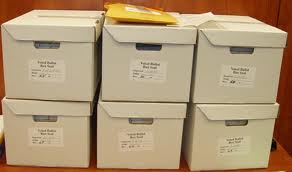
“We did a big push over the weekend to get 95 percent of the cards processed,” Arntz said, noting that 10,000-11,000 vote-by-mails remain to be counted citywide. He also noted that of the 1,275 provisional ballots from D10, 1,044 have been accepted, and another 231 have been challenged.

“We’ll have a tally sheet tomorrow with reasons why the provisionals were challenged,” Arntz added, observing that one reason provisionals get challenged is when it turns out that folks who voted provisionally aren’t actually registered to vote in San Francisco.

“I think it will be next week until we get to all the provisional ballots,” Arntz continued.“But it’s not like I am trying to prolong anything. I’m guesstimating that all the vote-by-mail ballots will be counted by Friday. So, we may do another ranked choice count on Friday.”

Arntz clarified that the 75 ballots that were found floating in the Palace of Fine Arts pond in the Marina district originated from a polling station in D11—and therefore will not impact the as yet unresolved supervisoral races in D10 and D2, where Janet Reilly leads Mark Farrell in raw first choice votes, but has been slipping into second place when the ranked choice votes are calculated.

“The bag is sealed, but the ballots are damp,” Arntz said of the missing D11 ballots.

After Arntz was done with his daily dose of explaining, the ever outspoken Sharen Hewitt, executive director of the C.L.A.E.R. project, warned of the importance of  counting every provisional vote.
‘If anyone touches my granddaughter vote, they’ll be a tsunami,” Hewitt warned, referring to the fact that her 18-year-old granddaughter Tiara voted provisionally this year.  “And it seems that a disproportionate numbers of challenged provisionals seem to be coming from Bayview Hunters Point.”

Afterwards, as the running dogs of the media rushed off to file stories, Tran lingered long enough to tell the Guardian how she was attacked on afternoon programs on Chinese radio after she announced that Tony Kelly was her second choice in the race (with her first choice being herself, natch.)

“I was called a traitor, I was told I was too old to run, that I can hardly walk around, that I didn’t do anything for the community in 20 years,” Tran recalled. “It was very humiliating.”

But she believes the attacks may have backfired.
“The radio programs in the evening addressed the question of whether Tran deserved to be a traitor—and everyone was very supportive of me,” Tran said. “And everybody who heard about these attacks was very angry, so maybe they worked harder to support me.”

Tran says she didn’t hire a political consultant to manage her campaign, but still found herself ahead of most of the other 21 candidates in this hotly contested race.

“I did a lot of stuff with volunteers, and for the first few months I did everything myself, including the design and layout of my fliers,” Tran confided, showing me a tri-lingual flier which includes translations from Chinese media outlets Sing Tao, which called her the “Guardian Angel of Immigrants.”

Tran, who was born in Hong Kong, and came to the United States when she was 19, says she is grateful that she got to live and work in such a beautiful city, and that many first-time voters got invigorated and decided to participate in the election because she was running.

“Whoever gets elected, I’ll support that person, because this is about D10 and San Francisco,” Tran said. ‘but many voters are now wondering if ranked choice is the best thing, because of the endless wait.”

She also ruminated on what she describes as the “chasm of a communication problem between the ethnic and Western press” and how that worked for and against her in past elections.
“When I ran for DCCC in 1998, I felt like a grain of sand in the Sahara,” Tran said, recalling how folks were surprised when she won that race. “And this time, my results are pretty healthy in the D10 race, and people are also surprised.”

Many of the absentee ballots that have been counted in recent days originated in Viz Valley, giving Tran a boost that takes her to second-place once ranked choices get reassigned, and helps Cohen vault over Lynette Sweet and into first place. But as they say, it ain’t over ’til the fat lady sings, so stay tuned…

Yee launches mayoral bid as supervisors consider their options

0

Amid the jockeying for position on who will be San Francisco’s next mayor, Sen. Leland Yee this morning filed paperwork at the SF Elections Department to form a mayoral exploratory committee before a throng of journalists who were invited yesterday for a big “announcement.”

Yee diligently hit his talking points and did little to divert from a script emphasizing his deep local roots, his belief in being a humble public servant, and how this action was “beginning a conversation with San Franciscans” about “what they want of their city government and their next mayor.” Yee used the word “conversation” so many times that an AP reporter asked him to explain his issues and reasons for running without using the word “conversation,” a word Yee still slipped into his answer.

Meanwhile, members of the Board of Supervisors yesterday introduced competing motions for naming an interim mayor to replace Gavin Newsom while he leaves in January to become lieutenant governor. Sups. John Avalos, David Campos, and Chris Daly are seeking to have the board vote on a replacement mayor as soon as next week, while Board President David Chiu asked the board clerk’s office to develop a framework and process for choosing a new mayor. Asked whether he has the six votes needed to take up the matter next week, Avalos told the Guardian, “That’s my hope, but we’ll see.”

While Yee seems focused on winning the mayoral election next fall, rather than winning six votes on the board now, he told reporters, “I have the highest regard for members of the Board of Supervisors…They have a tremendous challenge in front of them and I wish them well.”

In his prepared statement that listed his contact person as Jim Stearns, a political consultant who usually works for progressive candidates and ballot measures, Yee sought to differentiate himself from Newsom, who has had hostile relations with the board throughout his seven-year tenure. “I want to see the Mayor work with, and not against the Board of Supervisors,” Yee said in that statement.

Asked by the Guardian to elaborate on what appears to be a critique of Newsom, Yee demurred. “I’m not going to judge this mayor. History will do that,” he said.

Playing it safe for now could be a sound strategy for Yee, who would be the city’s first Chinese-American mayor and who has a history of endorsing progressive candidates and positions, but who also just raised and spent more than $1.2 million (much of it in big corporate donations that far exceed limits on local donations that his committee will now allow him to begin collecting) on his uncontested Senate reelection, including giving six-figures to Stearns and spending almost as much on polling.

Stearns tells the Guardian that, consistent with his message today, Yee will run a very positive campaign. “We’re going to run a different kind of campaign, a very collaborative campaign,” he said. “This city deserves a different kind of campaign where people are just firing their guns at each other.”

Buntology

0

le.chicken.farmer@gmail.com

CHEAP EATS Where were you when the Giants won?

I was eating Buffalo wings at NY Buffalo Wings with the Maze and Kayday, and when it was over we decided to spill into the streets.

What a great city our city was! This was the way that I was feeling, that San Francisco was the best place on Earth and had the best pitching. All that remained was to set a police car on fire.

“That’s what they do in Philadelphia,” Kayday explained.

Yeah, but we’re not Philadelphia, or Texas, are we? No, we are not. Besides better pitching we have district elections, the view from Dolores Park, and bike lanes. We have Buffalo wings, Philly cheese steak, Texas barbecue, Chicago pizza and Buster Posey. We have players with pretty hair, dyed beards, and cool names.

I don’t really follow baseball anymore. Baseball lost me a few years ago. Oh, I still appreciate good pitching when I see it. And a sacrifice bunt — which is not after all “hit,” but “laid down” — is still my favorite Thing in the whole wide world of sports. Executed properly — which is to say, poetically (see Aubrey Huff, top of the seventh, Game 5) — the sacrifice bunt makes me all buttery inside, and crispy outside, like the fried yucca at Limon Rotisserie.

I will never get tired of it. In fact, thanks to the tingly feeling I still have for power hitter Huff’s li’l push-n-puff between the mound and first base, I might just become a baseball fan again. Fuck Edgar Renteria. Fuck the sweet and sour punch of Lincecum-Wilson. They all might have won the game, according to sports sections, but — even before his thong-related antics at the parade — Aubrey Huff had won my heart. And which, in the long run, is really more important?

Oh, yeah … I guess you’re right: probably for sure the game, now that you mention it. This is why you’re not supposed to answer rhetorical questions.

But why am I writing about a week-old baseball game in the food section instead of dates and shit? Don’t answer that!

I want to. Because, like a lot of other wahoos hanging out of SUVs and minivans or dancing in intersections, on boats, or flying through the air, I was and still am beside myself with pride and joy for the city I live in and the people I live in it with.

Kayday was right. It was almost our civic duty to set things on fire. I wish I’d thought of this beforehand, but I’ve never been in a city that won the World Series before. As a result, I didn’t have matches or a lighter and that’s why I was at the corner of 18th and Mission streets rubbing two sticks together when the party started.

The Maze, who had come straight from the airport to wings and still had his luggage in tow and isn’t much of a baseball fan (lapsed or otherwise) and was tired, went home.

Kayday had her iPhone out and was taking pictures or making movies.

And I, like everyone else who has ever rubbed two sticks together, eventually gave up and started looking around for something to tip over, or at least kick.

All mayhem-related kidding aside, I love how everyone loved each other and seemed to want to hug or at least high five me. As someone who errs on the side of eye contact, who tends to smile and/or say hello and isn’t always (or even often) requited in this, I was like a kid on a choo-choo train.

I’d never felt anything like it.

So I stayed out late, in some cases dodging glass bottles, because I guess I wanted one more hug. One more high five. One more woohoo, ain’t we great.

Yeah, we are.

But I forgot to tell you about dim sum. Last week, and now, nearly, again. There’s this one out on the avenues, in the Richmond, that claims to be “the Very First Chinese Restaurant on Clement.” I don’t care about that. I barely care how good the dim sum was, which was, for the record, pretty good. What I do care about: $1.95 per plate, weekdays.

Ergo: new favorite restaurant!

LEE HOU

Sun.–Thu.: 8 a.m.–1 a.m.;

Fri.–Sat.: 8 a.m.-2 a.m.

332 Clement, SF

(415) 668-8070

D,MC,V

Beer and wine

How to fight the GOP

0

OPINION Now what?

Now we need to build a grassroots progressive movement — wide, deep, and strong enough to fight the right and challenge the corporate center of the Democratic Party.

The stakes are too high and crises too extreme to accept “moderate” accommodation to unending war, regressive taxation, massive unemployment, routine foreclosures, and environmental destruction.

A common formula to avoid is what the Rev. Martin Luther King Jr. called “the paralysis of analysis.” Profuse theory + scant practice = immobilization.

It’s not enough to denounce what’s wrong or to share visionary blueprints. Day in and out, we’ve got to organize for effective and drastic social change, in all walks of life and with a vast array of activism.

Yes, electioneering is just one kind of vital political activity. But government power is extremely important. By now we should have learned too much to succumb to the despairing claim that elections aren’t worth the bother.

Such a claim is false. For instance, consider the many hundreds of on-the-ground volunteers who rejected the paralysis of analysis by walking precincts and making phone calls to help reelect progressive Rep. Raul Grijalva (D-Arizona). Grijalva won a tight race in the state’s southwestern district and will return to Congress next year — much to the disappointment of the corporate flacks and xenophobes who tried to defeat him because of his strong stance against the state’s new racial-profiling immigration law.

The mass-media echo chamber now insists that Republicans have triumphed because President Obama was guilty of overreach. But since its first days, the administration has undermined itself — and the country — with tragic under-reach.

It’s all about priorities. The Obama presidency has given low priority to reducing unemployment, stopping home foreclosures, or following through with lofty pledges to make sure that Main Street recovers along with Wall Street.

Far from constraining the power of the Republican Party, the administration’s approach has fundamentally empowered it. The ostensibly shrewd political strategists in the White House have provided explosive fuel for right-wing “populism” while doing their best to tamp down progressive populism. Tweaks aside, the Obama presidency has aligned itself with the status quo — a formula for further social disintegration and political catastrophe.

The election of 2010 is now grim history. It’s time for progressives to go back to the grassroots and organize with renewed, deepened commitment to changing the direction of this country. If we believe that state power is crucial — and if we believe in government of, by, and for the people — it’s not too soon to begin planning and working for change that can make progressive victories possible in future elections. 

Norman Solomon is co-chair of the Healthcare Not Warfare campaign, launched by Progressive Democrats of America. His books include War Made Easy: How Presidents and Pundits Keep Spinning Us To Death.

Ranked-choice voting tally in SF doesn’t change

2

Another preliminary run of ranked-choice ballots in the San Francisco supervisorial races this afternoon shows the same winners as Friday’s run: Malia Cohen, Scott Wiener, Jane Kim, and Mark Farrell.

Although it still won’t be final until the Elections Department finishes counting ballots over the next few days, in each case the winner widened his or her winning margin over the second place finisher as compared with Friday’s run, which could indicate these results will stick (barring legal challenge).

One change from Friday’s results was in District 10, where Lynette Sweet was eliminated before Marlene Tran in this run. And even though Tran’s votes broke 277-178 in Kelly’s favor, the previous round was so lopsided in Cohen’s favor that it put her within close reach of the 51.5 percent of the vote she ended up with. Of Sweet’s votes, 531 went to Cohen, 175 to Kelly, and 89 to Tran.

Cohen seemed to be a popular second-choice with many D10 votes, moving from fourth place (and just four votes from fifth place) up into the lead.

The “Democratic Machine” myth

34

Okay, I read the gloating from Randy Shaw about Jane Kim defeating the “Democratic Party Machine,” which, as far as I can tell, seems to consist of the Democratic County Central Committee and the Bay Guardian. (As I’ve said before, if I were that powerful, things would change around this city ….)


It annoys me because machine politics were once a harsh reality in this town. But not these days.


Let’s look seriously at the supposed immense clout of the DCCC. Everyone from Shaw to The Chron’s C.W. Nevius has been freaking out over the ability of the local Democratic Party to control who gets elected to the Board of Supervisors. And while I think it’s a good idea to have prgoressives control the local party (this is, after all, San Francisco), even a cursory look at election results suggests that this vaunted machine isn’t really running much of anything.


In every contested race for supervisor — every single one — the candidate endorsed first by the DCCC appears headed for defeat. It’s not just D6; The DCCC endorsed DeWitt Lacy in D10, and he finished well out of the picture. The person leading that race today, Tony Kelly, wasn’t even in the DCCC’s top three. The panel backed Rafael Mandelman in D8; Scott Wiener won. The party gave its nod to Janet Reilly in D2, and if early RCV results hold, she’s in serious trouble.


Here’s the facts: With district elections, and a weak mayor, power is far too diffuse in San Francisco today for anyone to operate a political machine. District races this time around weren’t about the DCCC; they were about local campaigns organizing around local issues.


The DCCC helped Debra Walker somewhat in D6 , but it also hurt: In the end, Kim won with a campaign that painted Walker as an old-school machine party politician — and, interestingly enough, according to Paul Hogarth, she won by reaching out to the more conservative voters:


We focused on pitching her biography as a Stanford and Berkeley graduate, who is a civil rights attorney. And Jane Kim was the kind of young professional these voters could relate to. 


If Randy Shaw was right, and a powerful Democratic party machine ran city politics, we wouldn’t all be scratching our heads and wondering who the hell the next mayor will be. I can tell you right now: Aaron Peskin, the titular head of this mighty machine, is pretty far out of the running. Sup. David Chiu, who has pretty much cut ties with Peskin and worked to elect Kim, is one of the top mayoral contenders. It’s also entirely possible that Mark Leno — who is by no means part of any Peskin operation — will wind up in Room 200.


Labor — supposedly part of this machine, too — can’t even agree half the time on its own endorsements — witness the United Healthcare Workers local splitting dramatically with its Local 1021 brothers and sisters in SEIU. UHW backed Wiener, Theresa Sparks and Steve Moss — all candidates opposed by Local 1021.


It’s an unsettled time in local politics, and I hope that the progressives who care about issues, not personalities and silly labels, can come together and choose a mayor who will support a progressive agenda. But that will be a close call, and no doubt will involve a temporary coalition that will fall apart as soon as the deal is done.


Because right now, nobody’s calling the shots in local politics. Just look at the facts on the ground. 

Oakland mayor’s race shows the power of coalitions in RCV elections

7

The Oakland mayor’s race appears to be demonstrating the ability of political coalitions to use a ranked-choice voting strategy to topple an established frontrunner, overturning the conventional wisdom that the top finishers on election day will usually hold their leads through the tally of everyone else’s second and third place votes.

That anomaly is also on display in San Francisco, where it appears the top finishers in supervisorial districts 2 and 10 may lose to the second or even third-place finishers. A preliminary run of the ranked-choice voting (RCV, also known as instant-runoff voting) tally was run in SF on Friday, and elections officials will do another one this afternoon, although votes are still being tabulated and the final results won’t be known for several days.

“Ninety-five percent of the time, RCV doesn’t topple the top finisher,” political analyst Alex Clemens said at SPUR’s post-election wrap-up on Nov. 4, a point echoed by his co-presenter, political consultant David Latterman, based on their research of voting pattern in Australia and other countries that have used the system for some time.

They said the results only change when the candidates finish within a few percentage points of one another, as is the case in San Francisco. But in Oakland, mayoral candidate Don Perata finished almost 10 percent points in front of Jean Quan (34 percent to 24.6 percent), with Rebecca Kaplan close behind at 21.5 percent.

Yet Perata, a classic Democratic Party power broker who once served as president of the California Senate, is disliked and distrusted among the progressives and other grassroots voters who liked both Quan and Kaplan, who encouraged their supporters to rank the other candidate second. And that strategy appears to have paid off.

After 10 round of eliminating candidates and redistributing their votes – with Kaplan the last go, and her votes breaking 3-1 in Quan’s favor – the preliminary results show Quan winning with 51.1 percent of the vote to Perata’s 48.9 percent.

Wow, talk about the power of political coalition-building.

Election over, what next?

0

Dick Meister is a San Francisco-based columnist who has covered political and labor issues for a half-century as a reporter, editor , author and commentator. Visit him at his website, www.dickmeister.com.

OK, the election is over and labor, Democrats and the other good guys came up a bit short. But what now? What next for the good guys?

 Well, for starters, organized labor and its Democratic Party allies must be ready to block Republican plans to try to enact legislation that would cut taxes for the very wealthy, slash Medicare funding, and possibly even privatize Social Security. I know that may sound alarmist and far-fetched. But that’s what Republican leaders are actually talking about.

After all, the GOP’s anti-labor corporate allies spent nearly a billion dollars on the election and they damn well want their money’s worth.  Larry Cohen, president of the communications workers union, thinks it’s getting like the way elections were 100 years ago when the big trusts and robber barons made sure their voices were the only ones heard during election campaigns.

Not yet, Larry. Not quite. Unions were able to make a lot of highly effective noise that helped elect some important pro-labor Democrats and defeat several Tea Party candidates and other anti-labor wackos who argued, as the AFL-CIO’s Mike Hall notes, “that government should do nothing to improve the economy or protect working families during the worst economic crisis since the Great Depression.”

Let’s me take a little closer look at how the election went for organized labor and its political friends in two of the country’s most important states politically, numbers one and two in population, California and Texas.

In California, as the AFL-CIO says, unions were a key factor propelling notably pro-labor Democrat Jerry Brown to the governorship and pro-labor Democrat Barbara Boxer to a third term in the Senate. Those victories were especially sweet, since the opponents of Governor-elect Brown and Senator Boxer were former business executives with tons of money, including their own, to spend on their campaigns.

Former eBay CEO Meg Whitman spent more than $141 million of her own money on her losing campaign against Jerry Brown for governor. And though Carly Fiorina, former Hewlett-Packard CEO, spent several million of her own money on her campaign, the total was nowhere near the obscene amount that Whitman pulled from her own pocket for her campaign.

Anyway, Meg Whitman lost, and good for Californians for making that happen.  Labor couldn’t imagine a worse anti-labor governor than Meg Whitman, or more labor-friendly governor than Jerry Brown, a worse anti-labor senator than Carly Fiorini, or more labor-friendly senator than Barbara Boxer.

It was a bit different in most other states. As Executive Director Rose Ann DeMoro of the California Nurses Association notes, the election of Democratic, pro-labor candidates in California “provided a national alternative to the conservative, corporate-oriented economic program that won so many other races nationwide.”

DeMoro praised California’s voters “for seeing through the fool’s gold promises that the path to economic recovery and job creation is through corporate tax breaks and shifting more wealth and resources to those who need it the least.”

The news isn’t so good out of Texas, where, as Jim Lane of the People’s World  says, “the second largest delegation to the U.S. House of  Representatives, already heavily leaning to the right, tilted drastically further on November 2 – plus, many of the most popular Texas Democratic leaders were defeated.

The re-election of Gov. Rick Perry was more bad news for labor and its allies, given what the People’s World’s Lane notes as Perry’s “far-right, anti-worker vision.” Reporter Lane says “progressive Texans are not looking forward to extending the years of being shamed about their home state, as we have been since GW Bush took the national stage.”

But at least the Texas labor movement was able to run what Lane calls “a strong and largely independent political campaign.”  Unions even dared to run “one of their own,” former national AFL-CIO official Linda Chavez-Thompson, for lieutenant governor. But, as Lane notes, “Like all other statewide Democratic candidates, Chavez-Thompson’s campaign was buried by big money.”

So, what next for Texas, California – the whole country?

What’s next should be in large part to carry out what AFL-CIO and Democratic Party leaders have been advocating for many years – rebuilding of our long crumbling infrastructure

 President Obama has a plan that calls for rebuilding 150,000 miles of roads, laying and maintaining 4,000 miles of railway tracks, restoring 150 miles of airport runways and , in doing so, providing badly needed jobs for many of the country’s millions of unemployed workers.
 
That’s how labor and political leaders can – and must – begin to deliver on their election campaign promises to, above all, do what it takes to create “jobs, jobs, jobs.”

Dick Meister is a San Francisco-based columnist who has covered political and labor issues for a half-century as a reporter, editor , author and commentator. Visit him at his website, www.dickmeister.com.

Provisional ballots could be pivotal

27

With preliminary ranked choice results showing Mark Farrell ahead by a slim margin in D2 and Malia Cohen leading narrowly in D10, provisional ballots could prove to be of pivotal importance in these two races.

Or as Sharen Hewitt, executive director of the D10-based C.L.A.E.R. project, put it, “Never before has the weight of the provisional ballot counted so much.”

As Hewitt points out, folks who are in hospital, jail or serving in the U.S. military are voted most likely to be casting provisional or absentee ballots. And their votes need to be counted, just like anyone else’s. So, let’s keep asking how many provisional and absentee votes were cast and in which districts, before officially declaring who won the 2010 election.

Cohen and Farrell come from behind in early ranked-choice tally

23

A preliminary run of the ranked-choice ballots in San Francisco Board of Supervisors races shows D10 candidate Malia Cohen and D2 candidate Mark Farrell winning come-from-behind victories in those races while Jane Kim in D6 and Scott Wiener in D8 maintain their current leads to win their races. Yet with about 50,000 ballots citywide remaining to be counted, Election Department head John Arntz warned those results aren’t final.

“It’s going to change. Nothing is permanent, nothing is final. We have to go through every single ballot,” he told the Guardian.

Still, the results are interesting and could predict the final outcomes, which won’t be known for about another week. In the free-for-all that was the D10 race, Tony Kelly maintained his election night lead throughout 18 rounds of redistributing votes, with Kelly at 35.33 percent, Cohen at 33.44 percent, and Lynette Sweet at 31.23 percent. But on the next round, 429 of Sweet’s votes went to Cohen and 139 to Kelly, giving Cohen a 152-vote margin of victory: 51.4 percent to 48.6 percent.

In D2, the elections chart appears to show all four also-rans being eliminated at once (normally, the last place candidate is knocked out round by round) and that redistribution gives Farrell the edge over Reilly by just 97 votes, or having 50.3 percent of the vote. But given that there’s still lots of votes to count in high-turnout D2, that could change.

In D6, where there was a shootout between two progressives, Kim and Debra Walker, the two candidates appeared to hold their five-point margin of difference through nine rounds of elimination, until the downtown-backed candidate Theresa Sparks was eliminated in round 10, with 769 of her votes going to Kim and 572 to Walker, giving Kim a winning percentage of 54 percent to Walker’s 46 percent.

And in D8, the counting of ranked choice ballots shows election night winner Scott Wiener extending his seven-point election night lead to beat Rafael Mandelman with 55.65 percent of the vote.

Arntz said there are about 50,000 ballots remaining, maybe more once provisional ballots are tallied, and the department has been counting them at a rate of 15,000-18,000 per day. So ranked-choice tallies with all the ballot will probably occur by the end of next week, with the final canvassing and certification expected in about 20 days.


Guardian intern Nicole Dial contributed this report.

Election 2010: How the late absentees are breaking

11

Lots of votes still to count in San Francisco — as of this morning, the Department of Elections said there were about 80,000 absentee and provisional ballots in the hopper. But some have been counted yesterday and today, and we can draw some conclusions.

Typically election-day absentees break fairly close to the way election-day votes break, and Kamala Harris is citing that — and her campaign’s own analysis — to claim victory;

“Uncounted ballots will only bolster Kamala Harris’s lead, as they will reflect Harris’s strong Election Day advantage.”

In San Francisco, though, I’ve seen progressive measures that won on election day go down to defeat when the late votes, which were not as conservative as the early absentees but more conservative than election-day votes — were counted.

We now have the newest results from the DOE, and a little quick math gives us some interesting trends. In D2, Janet Reilly has (marginally) increased her lead over Mark Farrell. She’s gone from 6253 yesterday to 6512 today, a pickup of 259 votes. Farrell picked up only 223. So Reilly will probably still lead this race when all the votes are counted, but the RCV calculation will depend entirely on whether supporters of the third and fourth candidates, Abraham Simmons and Kat  Anderson, were voting for Anyone But Reilly or were willing to put Reilly as a second choice.

In D6, Jane Kim picked up about 100 votes over Debra Walker, enough to make her the clear front-runner. Again, though: Do the more conservative Theresa Sparks votes go to Kim,  whose supporters tried to portray Walker as part of a liberal machine and who touted her support for Prop. G, or do a sizable number go to Walker, another LGBT candidate?

D10? Not much has changed.  Tony Kelly picked up 65 votes. Lynette Sweet picked up 80. Malia Cohen picked up 72. Steve Moss picked up 64. The rankings aren’t going to change much. But this will be the mother of all RCV elections — and we’ll know more tomorrow, when DOE does its first RCV pass.


D10 crapshoot

7

Right now, D10 watchers are driving themselves crazy trying to predict the ranked choice math in a 22-candidate race. And so far it looks like it’s a toss-up between Tony Kelly, Lynette Sweet and Malia Cohen, with Steve Moss and Marlene Tran trailing in fourth and fifth place in a contest in which race, neighborhood and inter-campaign alliances will likely prove to be the decisive factors.

So far, about 10,000 votes have been cast and counted in D10. Based on a preliminary vote count yesterday, Kelly was leading (13.19 percent, 1,310 votes) Sweet is in second place (12.29 percent, 1,220 votes) and Cohen is in third place (11.90 percent, 1,182 votes) yesterday. And as of 4 p.m. Thursday, Nov. 4, , Kelly remains first( 12.77 percent, 1, 375 votes), Sweet is second (12.08 percent, 1,300 votes), and Cohen is third (11.65 percent, or 1254 votes).

Together this trio account so far for 36.50 percent of the vote. But according to the Elections Department, there are 71,000 vote-by-mail ballots that have yet to be counted and 14,000 provisional ballots, so the outcome continues to be far from certain.

But of these 85,000 citywide votes, only 8 percent are estimated to be from D10. Still, it’s too early to count out Steve Moss and Marlene Tran. Moss was in fourth place (11.33 percent, or 1,125 votes) and Tran was in fifth place ( 9.91 percent, or 984 votes) yesterday. And as of 4 p.m. this afternoon, Moss remained fourth (11.13 percent, or 1198 votes) and Tran remained fifth ((10.83 percent, or 1,166 votes), and the odds remain against them. And here’s why:

The majority of the remaining 16 bottom-ranked candidates are based or have roots in the Bayview.  And it seems fair to predict that their supporters will cast their second and third-place votes primarily along race and neighborhood lines, which will likely benefit Cohen and Sweet.

But the November 2010 election also illustrates the growing importance of the Asian-American vote in D10, as evidenced by Tran and Teresa Duque’s relatively strong showing. Kelly is most likely to benefit from Tran’s candidacy, since she endorsed Kelly as her 2nd choice, but that’s presuming that her supporters actually follow her advice.

Less clear is where Moss and Tran will get second or third place votes. Some observers believe Moss could benefit from Kristine Enea supporters and Tran could benefit from Kelly’s. But at this point, the money is on Sweet being pushed over the finish line by Cohen’s supporters, unless Cohen and/or Kelly manage to win a significant number of second and third-choice votes, district wide.

Elections will post a preliminary ranked-choice voting report at 4 p.m. Friday, November 5, so stay tuned. But Elections spokesperson Rachel Gosiengfiao warns that this report will “only provide a snapshot and not a final report”.

“We still have the vote-by-mails and the provisionals,” Gosiengfiao said.

In the meantime, here’s the complete list of the updated D10 results, so that you can look at the numbers and play the ongoing D10 crapshoot game :

ASHLEY H RHODES 173 1.61%
MARLENE TRAN 1166 10.83%
MALIA COHEN 1254 11.65%
JAMES M. CALLOWAY 272 2.53%
STEPHEN WEBER 221 2.05%
DIANE WESLEY SMITH 239 2.22%
TONY KELLY 1375 12.77%
KRISTINE ENEA 324 3.01%
NYESE JOSHUA 77 0.72%
ELLSWORTH ”ELL” JENNISON 40 0.37%
CHRIS JACKSON 645 5.99%
DEWITT M. LACY 793 7.37%
M.J. MARIE FRANKLIN 46 0.43%
LYNETTE SWEET 1300 12.08%
ERIC SMITH 295 2.74%
 JACKIE NORMAN 103 0.96%
GEOFFREA MORRIS 202 1.88%
STEVE MOSS 1198 11.13%
ED DONALDSON 129 1.2%
TERESA DUQUE 778 7.23%
RODNEY HAMPTON, JR. 134 1.24%


Ranked choice vote tallying starts tomorrow

4

With four of the five Board of Supervisors races awaiting ranked-choice voting tallies, the San Francisco Department of Elections says it will run a preliminary ranked choice voting tally tomorrow (Friday) afternoon.

The department says there are still at least 52,000 ballots left to count (14,000 provisional ballots and 38,000 absentee ballots dropped off at the polls), plus an unknown number of absentee ballots still arriving by mail, so tomorrow won’t be the final word on who wins. But it will give a good idea where people’s second choices are going.

In District 10, just 90 votes separate leader Tony Kelly from runner-up Lynette Sweet, while Jane Kim has 470 votes more than Debra Walker in D6, and Janet Reilly is leading Mark Farrell by just 361 votes in D10. Looking slightly more settled is D8, where Scott Wiener leads Rafael Mandelman by 1,168 votes, particularly given the third place finisher is Rebecca Prozan. Like Wiener, she is a moderate former president of the Alice B. Toklas Democratic Club.

Election officials say they don’t have a breakdown of the outstanding votes by district.

Election 2010: SF Results trickle in, sloowly

0

Slowly, the SF Department of elections is posting results, and a couple of things are clear: The District 2 race is getting very close, D10 is still anyone’s game, and Jane Kim has a sizable lead in D6.


Some things are over: I can say tht prop. B is going down, Prop. L (sit-lie) is going to win, the real-estate transfer tax is going to win — but the hotel tax is going down.  

Alerts

0

news@sfbg.com

WEDNESDAY, NOV. 3


SPUR’s Election Wrap-up

The San Francisco Planning and Urban Research Association’s post-election discussion and analysis session is popular with political junkies of all ideological stripes. Although it’s hosted by a knowledgeable duo — Barbary Coast Consulting founder Alex Clemens and political consultant David Latterman — a wide variety of political analysts always show up to create a lively, insightful discussion. Bring a bag lunch and your two cents.

12:30 p.m., $5 or free for members

SPUR office

654 Mission, SF

381-8726


Revolution is not a Tea Party

As the dust begins to settle on the midterm elections battlefield, come discuss how the country’s political fervor affected the national discourse on issues like immigration and civil rights. Was the Tea Party an actual grass roots revolution or merely a large angry mob? How long will the virulent xenophobia and nativism continue, and what can be done to counter it?

7-9 p.m., free

Revolution Books

2425 Channing Way

Berkeley

revolutionbooks@sbcglobal.net

THURSDAY NOV. 5


“Tranny Fest: San Francisco Transgender Film Festival”

Come one, come all: ladies and gentlemen, transgender, and gender queer. Now in its 12th season, Tranny Fest will open Thursday, with performances by Landa Lakes, Butch Tap, Thisway Thataway, and Psychobabble, among others. The festival continues Friday and Saturday with short films and videos by transgender and gender variant artists. Advance tickets will be available for the event.

Thurs.–Sat., 8–10 p.m.

$12–$15 sliding scale

CounterPULSE, SF

1310 Mission, SF

www.freshmeatproduction.com


Evening with our poet laureate

In addition to California poet laureate emeritus Al Young, Revolution Books will also host jazz/blues music, guitarist Trevor Michaels, and other poems and song.

7 p.m.–9 p.m., free

Revolution Books

2425 Channing Way, Berk.

510-848-1196

SATURDAY NOV. 6


Green Festival San Francisco

Here’s more proof that green is the new black. One of the largest sustainability events in the country will be held at the San Francisco Concourse. The eco-confab includes lectures from Bill McKibben, Daniel Pinchbeck, Amy Goodman, and others. Vendors, workshops, music and an array of organic beer, wine, and vegetarian cuisine will also be on hand. Admission discounts are also available to students, seniors, cyclists and public transit riders.

Sat.–Sun., 10 a.m.–7 p.m.

$10–$25

Concourse Exhibition Center

635 Eighth St., SF

www.greenfestivals.org/sf

It’s a beautiful day

0

It was mayhem out at 30th and Mission last night, people pouring into the streets, shouting and shooting off fireworks and cars cruising along, slowly throught the crowd, big “Gigantes” banners hanging out the doors and windows. A beautiful night in San Francisco, people coming together to celebrate, G.W. Bush and Nolan Ryan looking dejected and rejected, that rare sense of victory in the air … and it’s a beautiful morning, good weather across most of the state, turnout heavy in my precinct, anyway, and that’s very bad news for Meg Whitman, whose only real hope is that Democrats don’t show up at the polls.


So maybe we’ll have more to celebrate tonight.


It’s hard to predict the outcome of the state and local elections based on the latest polls, since at least a third of the voters have already cast their ballots. If Whitman and Brown were tied a month ago, when absentee voting started, and Brown is up 5-10 points today, which poll reflects how the voting actually went over the past four weeks? If Prop. 19 was ahead three weeks ago and is behind now, did supporters lready vote for it?


But I think I can safely predict that one the statewide level, big money isn’t going to take the day: Whitman’s going to lose, Carly Fiorina’s going to lose and Prop.23 is going to lose. If the left turns out to vote. Polls are open until 8.

Hey, D2 voters: BOO!!!!

19

Why are the rich people in District 2 so scared of Chris Daly, Aaron Peskin, and other progressives? Just the hint that a supervisorial candidate like Janet Reilly might have some vague, tangential connection to a (gasp!) progressive is enough send trembles of fear through their delicate nervous systems, and to fill mailboxes with alarmist warnings of dark progressive plots.

“I eat small children,” Daly deadpanned when I asked him about the campaign by candidate Mark Farrell and some of his wealthy venture capitalist buddies – along with moneyed socialite Dede Wilsey, the yacht-loving, renter-hating Thomas Coates, and their Common Sense Voters SF front group – to hurt frontrunner Reilly’s chances by inaccurately claiming she’s somehow Daly’s puppet.

Nevermind the fact that Daly doesn’t support Reilly, and that he wouldn’t even endorse Reilly a few year ago during her Assembly campaign against Fiona Ma when the Guardian and many progressives were supporting Reilly. “Fiona was a better supervisor than Reilly is going to be,” Daly told us, a prediction that I don’t agree with, but one that shows how ridiculous the website, mailers, and doorhangers that claim Daly is “behind Janet Reilly’s agenda” are.

Nonetheless, Mayor Gavin Newsom, who supports Reilly, has sent out two press releases in the last two days claiming that “Janet Reilly opposes Chris Daly’s agenda as much as I do. She has the full support of our city’s greatest moderate leaders and she will be a strong moderate voice on the board.”

Daly, who is amused by this fearful battle of the rich people, couldn’t agree more. “There is no bigger opponent of Daly’s agenda to build more affordable housing in San Francisco than Gavin Newsom and Janet Reilly. Because that’s my biggest issue,” Daly told us. “Apparently they are afraid of affordable housing in D2.”

But Daly isn’t the only boogeyman who strikes terror into the hearts of the residents of Sea Cliff, Pacific Heights, and other wealthy D2 enclaves. Farrell and his ilk also made such a big deal of Reilly’s association with Peskin, who actually is supporting Reilly, that she announced that if Newsom leaves for Sacramento in January, her vote for interim mayor would only go to a moderate who had never served on the Board of Supervisors with any current members, thus eliminating the chance of supporting Peskin.

Although we at the Guardian held our noses and endorsed Reilly as the best of a bunch of bad choices in San Francisco’s most conservative district, we were appalled during her endorsement interview at just how myopically conservative she had become since her Assembly run, when universal health care was her big issue. Listen for yourself here and decide whether she’s planning to be Daly’s minion.

Geez, what exactly are these people so scared of? Perhaps it’s as simple as Lewis Lapham put it a couple weeks ago, when we discussed the political dynamics of big cities: “The rich are afraid of the poor.”

Provisional votes count

1

With the election just days away, what should you do if you were issued a vote-by-mail ballot, but can’t mail it and want to vote at the polls, instead?

According to the San Francisco Department of Elections, you have the right to cast a provisional ballot at your local polling place. (If you don’t know where your polling place is, click here to look it up.)

But what if you show up at your polling place, and your name isn’t on the official roster of registered voters for the precinct and your voting eligibility cannot be verified by the pollworker?
Again, you can cast a provisional ballot.

The same holds true for folks who moved to San Francisco, but forget to re-register to vote here. Or want to vote a party ballot that does not match their registration. Or are a first-time voter listed in the original roster with “ID Required” printed under your name but are unable to show acceptable identification, which includes a valid California state driver’s license, a California state identification mumber or the last four digits of your Social Security number.)

So, how do you actually cast a provisional vote?
A poll worker will hand you a a ballot and a provisional ballot envelope.
You’ll need to complete the voter’s section of the provisional envelope. (This involves filling in your name, date of birth, current address and previous address).
You’ll need to sign the declaration confirming that you are a resident of San Francisco and are eligible to vote in this election.
You’ll need to remember to sign your name at the bottom of the envelope.
You’ll need to mark your ballot cards for the candidates and measures you support.
You’ll need to insert your ballot cards into the provisional envelope, seal it and return it to the poll worker.
You’ll need to keep the six-digit number printed on your provisional voter receipt.

Ok, but how will you know if your provisional ballot was actually counted?
Call 1-866-325-9163 or visit the Department of Elections website   no sooner than 41 days after the election.

And to verify your provisional ballot on-line, you’ll need to provide the six-digit number printed on your provisional voter receipt.

Vote early, vote often!

UPDATED: SF resident fights for his right to post political signs

5

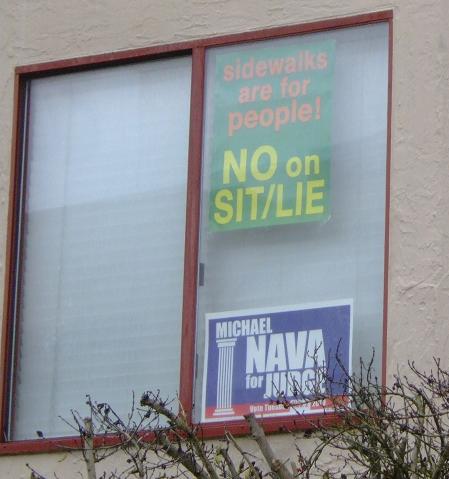
In September, shortly after Elliot Kamin placed two political signs in the window of the condo he rents near Ocean Beach in the Richmond District, he received a letter from his property manager saying, “The signs you have posted in your window are a clear violation of the rules and regulations of the association. Please remove the signs immediately.” But now, with help of the American Civil Liberties Union, the signs are back up and Kamin is no longer being threatened with fines.

Ironically, one of the restored signs reflected Kamin’s concern for civil liberties, urging voters to reject Prop. L, the proposed law that would criminalize sitting or lying on San Francisco sidewalks.

“It is a problem that a lot of condo associations don’t seem to be aware that free speech rights don’t stop at the condo gates,” ACLU attorney Linda Lye told the Guardian. She suggests that some condo residents might be willingly complying with requests to remove signs because they are unaware of the laws.

California Civil Code Section 1353.6 states that homeowners associations “may not prohibit posting or displaying of non commercial signs, posters, flags, or banners on or in property that belongs to a condo owner.”

Kamin called the property management company, which works with the homeowners association that set the rules, and he was told they wouldn’t recognize that legal right, which they said was trumped by their rules for the properties. So Kamin called the ACLU and together, they filed a suit against the Citiscape Property Management Group and the Ocean Beach Homeowners Association.

“If you really want to piss me off, tell me that someone has more rights because they own property,” Kamin said.

OBHA finally relented and entered into a settlement last week that allowed Kamin to put up his two signs, which opposed Prop. L, the proposed sit-lie ordinance and supported judicial candidate Michael Nava. A call to OBHA wasn’t answered and a message left at CPMG hasn’t yet been returned.

“What good are rights if they’re only on paper?” Kamin said.

UPDATE: I just got a call back from Kevin Wyley, president of CPMG, who said the incident began when an individual board member sent Kamin the letter telling him to take down the sign. Wyley didn’t become involved with the situation for about another week: “I was not aware that the board member had told the tenant he could not put up the signs,” he told us. “The board member had mistakenly told the tenant he couldn’t put up a sign.”

Once he was able to reach all the board members to get their assent, Wyley said he contacted Kamin and the ACLU to let them know the signs could remain, although they continue to disagree with the ACLU over whether tenants may have more than nine square feet of total signage.

Wyley said hsaid it took a few more days to get some traveling board members to weigh in on the issue, but once they

Al Franken’s Oatmeal

2

I can’t stand all the fundraising e-mail blasts that fill my In Box during election season, but this one I liked. Former author and Saturday Night Live writer Al Franken has been pretty low-key since taking his U.S. Senate seat earlier this year following a close and bitter race. Now that he’s getting used to the job, hopefully he’ll loosen up and write more missives like this one, whose subject line was simply titled “Oatmeal.”

Dear Friend:

Here are two thought experiments.  Indulge me, won’t you?

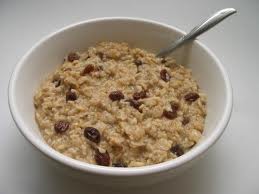
It’s the morning after Election Day.  8 a.m.  You stumble out of bed.  Make some oatmeal.  Turn on the TV to find out what happened in that Senate race, the one that was too close to call all night.  But you gave $5 to the DSCC by clicking on this link.  And, lo and behold, your favorite Democrat — maybe Russ Feingold or Patty Murray — pulled it out by a few votes.  Oatmeal never tasted so sweet. 

But there’s another way it could go.  8 a.m.  Oatmeal.  TV.  But in this example, you DIDN’T give to the DSCC.  And, by a few hundred votes, some Tea Party extremist is now a U.S. Senator-elect — and Republicans have captured the majority.  How’s that oatmeal taste now?

You still have time to decide which scenario will become reality.  But when I say “time,” I don’t mean days.  I mean minutes.  Don’t wait for tomorrow.  Don’t even wait to read the rest of this email.  Click here right now and make a contribution of $5 or more — it will be matched two to one, tripling its impact!

You’ve seen the polls — we’re neck and neck in race after race.  Moving the numbers just a little bit could mean the difference between victory and defeat — trust me, I’ve been there.

And nobody moves numbers like the DSCC.  Thanks to people like you clicking on links like this one, we’ve pulled ahead in California and Connecticut and tied it up in Colorado and Pennsylvania.

But with just hours to go until the polls close, every minute counts.  Your contribution won’t be funding some far-off future plan — it’ll be the money that goes out the door first thing tomorrow.  It could be your $5 that makes the difference for Barbara Boxer, keeps Sharron Angle or Rand Paul out of the Senate, or even saves our majority.

So make a contribution of $5 or more to the DSCC right now — it’ll be on the air in a battleground state or in the field as part of a get-out-the-vote program by tomorrow morning.  And, even better, it will be matched two-to-one, tripling its impact.

If you want to know why I’m standing with the DSCC in the final days of this election, here’s why: On November 3, I don’t want my oatmeal to taste like regret.  I want my oatmeal to taste like victory.

How about you?

Thanks,

Al Franken

SF vote-by-mail provides early political snapshot

6

San Francisco’s Department of Elections had received 41,620 vote-by-mail returns so far That’s a fifth of the 210,993 vote-by-mail forms that were requested this year.
And while we don’t know which districts these folks voted in, we do know how they were registered: Over half were Democrats (24,153 votes), a quarter were decline-to-state (10,563 votes), and a fifth were Republican (5,565 votes).

I was surprised to learn that there are more vote-by-mail requests from folks registered with the American Independent Party (573) than with the Green Party, but not surprised to see that 200 folks were registered as Libertarians and 81 as Peace and Freedom Party.

Unfortunately, we can’t compare SF’s vote-by-mail snapshot with the statewide picture.
According to folks at the California Secretary of State’s office, votes won’t be broken down into vote-by-mail categories until after the election is certified…