Election

Meister: Labor’s big election loss

0


The loss of a filibuster majority in the U.S. Senate is virtually certain to doom attempts to revive the barely functioning National Labor Relations Board

By Dick Meister

(Dick Meister, formerly labor editor of the SF Chronicle and KQED-TV Newsroom, has covered labor, politics and other matters for a half-century.)

The Senate Democrats loss of a filibuster-proof 60-vote majority seems almost certain to doom attempts to revive the barely functioning National Labor Relations Board, the country’s chief labor law administrator and enforcer.

That, along with its effects on health care reform, is certainly one of the most serious consequences stemming from the election of Massachusetts Republican Scott Brown to the seat formerly held by the late Ted Kennedy.

For more than two years, the five-seat NLRB has limped along with only two members, a Republican appointee of President George W. Bush and a Democratic appointee of President Bill Clinton. The other three seats had been held by Republicans, but were vacated when their five-year terms expired. Democrats, who by then controlled the Senate, refused to confirm the anti-labor Republicans that Bush nominated to replace them.

Solomon: Democrats boosting rightwing populism

0

The Democratic leadership on health care and bank bailouts has been so corporate that it has demobilized and demoralized the Democrat ic base and the Republicans have found it easy to play populist

By Norman Solomon

(Norman Solomon is national co-chair of the Healthcare NOT Warfare campaign, launched by Progressive Democrats of America. His books include “Made Love, Got War: Close Encounters with America’s Warfare State.”)

In his triumphant speech on election night, the next senator from Massachusetts should have thanked top Democrats in Washington for all they did to make his victory possible.

For a year now, leading Democrats have steadily embraced more corporate formulas for “healthcare reform.” In the name of political realism, they have demobilized and demoralized the Democratic base. In the process, they’ve fueled right-wing populism.

Best of the Bay 2008

0

“Best of the Bay? I’m anxiously awaiting the results, as our fair city appears to be on the decline. Please help rekindle my love for SF!” wrote Seamus of Sunnyside when we asked Guardian readers to tell us about their own bests of the Bay. OK, Seamus, here goes …

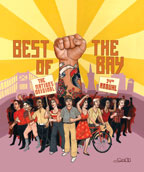
Welcome to the San Francisco Bay Guardian‘s Best of the Bay 2008! This is our 34th annual celebration of the people, places, and things that make living here awesome with a capital “yay,” a megastellar shout-out to everything Baylicious — from Best Vietnamese Sandwich to Best Quirky Specialty Store, to Best Burlesque Troupe and beyond.

As we worked on this year’s issue, we couldn’t help but notice a few things. Change is in the air. A major election is right around the corner. Freedom is on everyone’s lips — and people are making their voices heard. We’re finally having that malevolent weed in the Oval Office removed! Seriously, it was totally messing up our lawn. Gross.

In honor of this spirit of liberty and choice, we chose as our theme “A Celebration of Bay Area Independence.” Not just independents — all local businesses honored here are independently owned and operated. But also independence, as in get out there and vote. Speak out! It’s not too late to do something about the global situation, and the individuals and organizations you’ll read about inside are doing their best to turn this mess around and make the world a little lovelier.

We’ve also changed up a few things ourselves, like adding a bunch of new categories in our readers poll and placing your choices above the Editors Picks in each section for easier reference. Thanks to the more than 7,000 of you who voted in our Best of the Bay readers poll this year, there were several stunning upsets — change is in the air indeed! Due to popular demand, we’ve published the top two runners-up in the hotly contested Food and Drink, Shopping, and Nightlife and Entertainment categories online at www.bestofthebay.com. We wish everyone could win. We’re mushy like that.

More change: we asked you to tell us in your own words about what you love most about the Bay — and received a sparkling tsunami of responses. We’ve printed some of our favorites throughout. Our Editors Picks (Best Cerebral Workout, Best Floating Lap Dance, Best Monumental Urinal, etc.) attempt to shine a little light into the brilliant corners of the Bay experience. And as for Seamus’ fear of the Bay’s decline, well, we can only say that we found way too much evidence of mind-blowing vitality to include here.

In 1974 Esquire magazine asked us for ideas for its Best of the USA issue, and the Guardian responded by publishing the original Best of the Bay. Made by the people of the Bay Area for the people of the Bay Area, its our annual chance to celebrate the people and places that make this city great. We were the first weekly paper to print a regular “best of” issue. Thirty-four years on — and 42 years after we opened our doors — we’re still going strong.

Editing this year’s installment was something no one could possibly do alone. I had the extreme privilege of working with the frabjous Guardian staff and an amazing smorgasbord of local talent to get 2008’s Best of the Bay out the conceptual door.

I shower grateful smooches on them all, especially my right-hand cheese puff Molly Freedenberg, creative wizard Mirissa Neff, amazing illustrator Caitlin Kuhwald, our steadfast advertisers, and the ever-supportive Hunky Beau, my own personal Best of the Bay.

But most of all we thank you, dear reader, for pouring your unique pluck and zing into this great community, for keeping the doors of hope open, and for never giving up the fight. Peace.

BEST OF THE BAY STAFF

BEST OF THE BAY EDITOR

Marke B.

CREATIVE DIRECTOR

Mirissa Neff

ASSISTANT EDITOR

Molly Freedenberg

ASSOCIATE ART DIRECTOR

Ben Hopfer

LOCAL HEROES EDITOR

Tim Redmond

CONTRIBUTING DESIGNER

Jake Balakoohi

COVER AND ILLUSTRATIONS

Caitlin Kuhwald

CONTRIBUTING WRITERS

Jon Beckhardt, Bruce B. Brugmann, Kimberly Chun, Paula Connelly, Duncan Scott Davidson, Sam Devine, Cheryl Eddy, Deborah Giattina, Marcia Gagliardi, Nicole Gluckstern, Johnny Ray Huston, Chris Jasmin, Steven T. Jones, Justin Juul, Laurie Koh, Ella Lawrence, Erik Morse, Scott Owen, Sarah Phelan, Tim Redmond, Paul Reidinger, Julie Ross Godar, G.W. Schulz, Stephen Torres, Amanda Witherell


CONTRIBUTING PHOTOGRAPHERS

Brandon Joseph Baker, Samantha Berg, Pat Mazzera, Rory McNamara, Neil Motteram, Arlene Romana, Charles Russo

SENIOR COPY EDITOR

Diane Sussman

COPY EDITORS

Laura Neil, Lynn Rapaport, M.P. Klier

INTERNS

Dona Bridges, Vanessa Carr, Candice Chan, Philip Eil, Colleen McCaffery, Marianne Moore, Ailene Sankur

CELEBRATE WITH US!

The Guardian‘s annual Best of the Bay party is legendary — and this one’s gonna be a doozy. Jello Biafra MCs! 1015 Folsom hosts! It’s free! Shmooze with all the winners. Dig performances by Ahmad Raashan, Hot Tub, and many more. Plus a “Freedom to Undress” burlesque extravaganza. Thursday, Aug. 7, 8 p.m., 1015 Folsom, SF. www.sfbg.com/bobparty *

ABOUT THE ILLUSTRATOR

All illustrations in this issue were hand-painted by Oakland artist Caitlin Kuhwald, who honed her skill for depicting everyday people with humor and sweetness while earning her BA in illustration at California College of the Arts and her MFA at the Pennsylvania Academy of Fine Arts. She now teaches illustration at CCA and has published her work in a number of newspapers and magazines, including Rolling Stone, Spin, and Nylon. See more of Kuhwald’s paintings, drawings, and illustrations at www.caitlinkuhwald.com

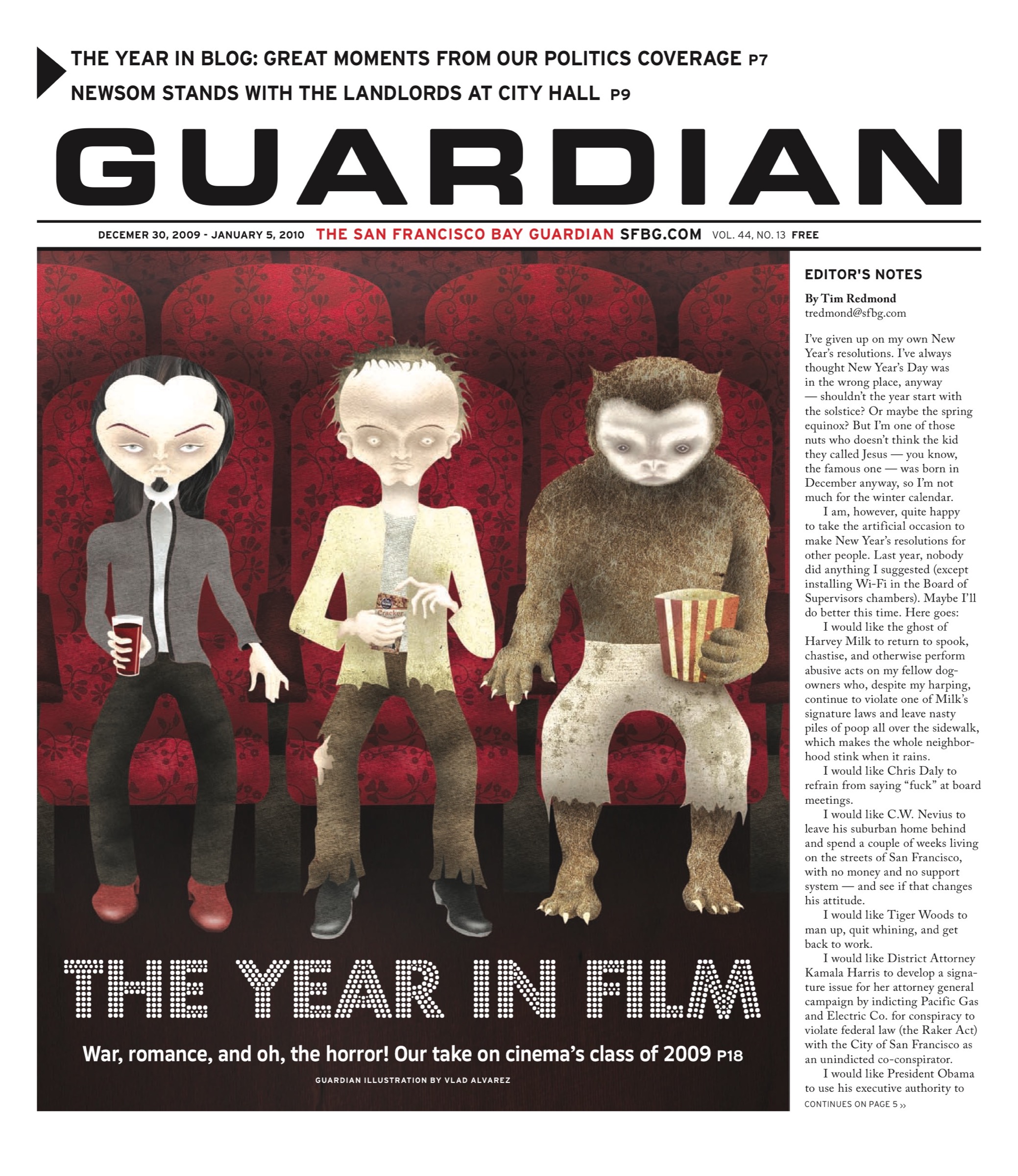
The year in blog

0

By Steven T. Jones
politics_banner-z.jpg
It’s been a big year on this blog, as I discuss in this week’s paper. To go along with that story, I’m including in this post a ridiculous number of links to issues and stories that we covered the most in 2009, as well as some to one-time or limited coverage stories that we liked. We hope you find this useful.

Fiscal issues
The year began with the Board of Supervisors calling for a special election on revenue measures to prevent deep cuts to city government, but that effort was thwarted by Mayor Gavin Newsom’s preference for hollow fiscal gimmicks and opposition to general tax increases. Similarly, on the state level, Republican opposition to revenue side solutions has all but destroyed the California Dream — including the state’s commitment to supporting quality, affordable higher education – prompting calls for a constitutional convention in the near future, as the political dysfunction leads to bad decisions about critical state resources.

Police oversight and crackdowns
The fatal shooting of Oscar Grant by a BART police officer a year ago led to a long saga of promised civilian oversight that still hasn’t been delivered. In the meantime, San Francisco got a new police chief who promised reforms, but has so far delivered only crackdowns, pushing the city closer to the Death of Fun as popular events and nightclubs face an ever more restrictive enforcement environment. Police also failed to own up to a bungled murder investigation.

City life

The face of San Francisco began to change in 2009, for better and worse. Lennar and PG&E continued to corrupt the local political system, compromise the promise of green power, break promises, and subvert popular will. But partially countering their corporate malevolence were grassroots efforts to reclaim the streets and promote alternative transportation options (despite a major defeat this year for those who want motorists to pay for more of their societal impacts), including the longawaited construction of bicycle projects after a three-year ban.

Editor’s Notes

0

A year ago, we were dancing in the streets celebrating Barack Obama’s election. Now we’re marching in the streets protesting his escalation of the war in Afghanistan — and a lot of us are calling for the defeat of his signature legislation. That’s a failure that goes well beyond a couple of bad policy decisions, and it threatens more than just the next few years of Obama’s presidency.

The late philosopher Herbert Marcuse used to say that the worst disaster of the Vietnam War was the division it created between the baby boomers and their parents, the generational distrust that would last well beyond the final artillery fire. And I fear that the worst legacy of Afghanistan and the mess that is health care reform will be another deep blow to whatever fragile faith remains among young Americans that a well-meaning president and his party can make a difference, the faith that government can accomplish something worthwhile — and that the public sector is worth the fight it takes to save it from a well-organized and lavishly funded effort to continue the privatization of the United States.

The fight over the public option in the health care bill wasn’t just about containing costs, or preventing tax hikes, or mandating fair competition. The insurance industry knew that from the start.

One of the reasons the radical right has always hated Social Security is that it’s a government program that helps people, one that tens of millions of citizens rely on and support. When the government sends you a check every month, you tend to think of the folks in Washington as something other than crooks, liars, and villains.

And if the government offered health insurance that cost less than the private companies, covered more, and was less of a hassle to use, then millions more American voters would begin to realize that the public sector can do some things very well — much better than private industry. And that would be a social transformation on the scale of the New Deal.

So that’s why the insurers and their toadies wouldn’t allow it to happen — and why, in the wake of the Afghanistan fiasco, Obama’s failure to force the issue is such a momentous disappointment.

Just look around the streets of San Francisco at any antiwar demonstration and you see the problem. We’re mad at the president, not at the insurance industry. Nobody’s marching in front of the headquarters of the handful of big companies that have — as a matter of course and intentional policy — destroyed the health care system in America. We figure: hey, they’re just big businesses, doing what they do.

So instead, we’re going to be pissed off for a long time at the man who — maybe for just a moment, one bright shining moment — had the ability to turn around about 50 years of cynicism and distrust that has poisoned American politics. And we should be pissed, because he let us down. He promised us hope. Now he’s giving up, without even putting up much of a fight.

Flares in the Political Dark

0

Norman Solomon is a nationally syndicated columnist on media and politics. He wrote the weekly “Media Beat” column from 1992 to 2009. His latest book is “Made Love, Got War: Close Encounters with America’s Warfare State” (2007). To read more from Solomon, visit www.normansolomon.com.

The winter solstice of 2009 arrived as a grim metaphor for the current politics of healthcare, war and a lot more. “In a dark time,” wrote the poet Theodore Roethke, “the eye begins to see.”

After a year of escalation in Afghanistan, solicitude toward Wall Street and the incredible shrinking healthcare reform, we ought to be able to see that the biggest problem among progressives has been undue deference to the Obama administration.

In recent months, the responses from the progressive base to the Obama presidency have often resembled stages of grief — with rotations of denial, bargaining, anger, depression and acceptance.

Mobilization of progressive movements to pressurize Obama in the White House and Democrats on Capitol Hill has always been essential. It hasn’t happened. Instead, among Democratic loyalists, reflexive support for the latest line from the administration has made it easier for Obama to move rightward.

In 2010, we should concentrate on generating the kind of public information, vigorous debate and grassroots organizing that could shift the center of political gravity in a progressive direction.

At every turn, progressives should be putting up a fight — not only in all kinds of venues outside the electoral system but also inside the Democratic Party. Winning elections will require doing the methodical and difficult work of running candidates in Democratic primaries, sometimes against entrenched incumbents.

For instance, that’s what stalwart anti-war progressive Marcy Winograd is doing in her challenge to Congresswoman Jane Harman in the Los Angeles area. Across the country, dozens of strong progressives are running for Congress with a real chance to win. They need our volunteer help and our financial support.

In some congressional districts with many progressive voters, blue dog Democrats are running for re-election without any declared primary opposition so far. That should change.

It’s time for progressives to get out there and fight the good fight in election campaigns. We should do what our conservative and centrist and mushy-liberal adversaries least want us to do. They don’t want more progressives to seriously engage in electoral battles.

During the last year, left to their own devices, the Democratic leaders on Capitol Hill and in the White House have managed to demobilize the progressive base that swept them into office. The latest nationwide polls are foreshadowing grim consequences; Republicans express far more eagerness to vote in 2010 than Democrats do.

In Washington, the conventional wisdom of top Democratic strategists has run amok, continually splitting the difference with Republicans. All year long we’ve seen Congress undermine basic progressive principles, whether for healthcare or peace or economic justice or environmental protection or civil liberties.

Despite the Democratic Party’s leadership, we have a huge stake in thwarting GOP ambitions and in replacing tepid Democrats with progressives. It might be more comfortable to just engage in the politics of denunciation — but we also need to change who is casting votes on Capitol Hill.

Among progressives, there’s a surplus of frustration, anger and despair. Let’s transform those downbeat energies into fuel for the imperative political work ahead.

The Candlestick farce

0

No one was really surprised when commissioners for the Redevelopment Agency and Planning Department voted last week to only give the public a Scrooge-like 15 days to review a six-volume, 4,400-page draft environmental impact report for Lennar Corp.’s massive 700-acre Candlestick Point redevelopment project.

Everybody knew that Michael Cohen, Mayor Gavin Newsom’s top economic advisor, wanted to jam this proposal through the certification process by early June in a last-ditch effort to win back the 49ers, even though the team has said it wants to go to Oakland if the City of Santa Clara doesn’t vote to build a new stadium.

The decision gives the public until Jan. 12th to submit written comments on the DEIR. A broad coalition of community and environmental justice groups asked for a 45-day extension.

And the entire process — including condescending remarks by commissioners, a fight, the forcible removal of several members of the audience, and statements from developer allies that were, at best, highly misleading — can only be described as a farce.

The rush to approve the document is entirely political. Santa Clara voters go to the ballot June 8 to decide if they want to build the 49ers a fancy facility near Great America. But June 8 is the same day, according to a spreadsheet maintained by city Shipyard/Candlestick planners, that the San Francisco Board of Supervisors is scheduled to approve the EIR for Lennar’s proposal.

The city’s DEIR envisions building a new 49ers stadium on the shipyard — a position that would allow thousands of luxury condos to be built on the site where the team currently plays, including a significant slice of Candlestick Point State Recreation Area.

To meet the increasingly artificial-looking June 8 EIR deadline, Cohen signaled he’d only be able to squeeze out 15 extra days for draft EIR review.

LENNAR’S PAID SUPPORTERS

With Cohen nowhere in sight at the DEIR hearings last week, his deputy, Tiffany Bohee, was left to kick off Redevelopment’s Dec. 15 and Planning’s Dec. 17 DEIR hearings.

“Time does matter for this project,” Bohee told commissioners, claiming that the project has been vetted exhaustively, including at least 177 public meetings — when the truth was that the public had never had an opportunity to review the complete draft EIR, a binding legal document, before its recent release.

“The consequence of delays is that it precludes the city’s ability to get ahead of the Santa Clara election in June,” Bohee said.

Bohee’s introduction was followed by a string of “no delay” and other off-point comments from representatives of the San Francisco Labor Council, the San Francisco Organizing Project, SF ACORN, and other groups that signed a community benefits agreement with Lennar in May 2008 that promised them millions of dollars in work and housing benefits — provided they show up at public meetings and support the development.

SF Labor Council vice president Connie Ford told commissioners that her organization “looks forward to the day when much-needed resources and support comes our way.”

A dozen residents of the Alice Griffith public housing project talked about their deplorable living conditions.

Asked by Redevelopment commissioner London Breed what the impact of a DEIR review extension would have on the planned rebuild of the Alice Griffith project, Bohee said, “It will jeopardize our ability to get any city decision on the project by June. As a result, delays to Alice Griffith could be indefinite.”

But that’s a stretch — at best. According to Lennar and the city’s own schedule, new Alice Griffith replacement units won’t be available before 2015 at the earliest. An additional 30 days of environmental review at this point will make no difference.

THE BOZO COMMISSIONERS

Compounding the city’s half-truths was the patronizing attitude of those commissioners who thought that their opinion of the DEIR should satisfy members of the public who hadn’t had enough time to review it.

“I think it’s an extremely well done document,” Planning commissioner Michael Antonini told a crowd that had sat through five hours of testimony and been warned by Planning Commission chair Ron Miguel that they’d been thrown out if they spoke during others’ testimony.

Bizarrely, planning commissioner Bill Lee tried to use the fact that the public wasn’t making many substantive comments on the DEIR as an argument against giving anyone more time to read it. Commissioner Gwyneth Borden made the equally odd argument that since people are almost certain to sue the city over the DEIR, there’s no reason to give an extension now.

And Miguel asked the public to put their faith in some vague meeting in the future rather than agreeing to what were asking for at the meeting. “I do believe that when all the comments are considered and answered and the final EIR comes before us and the Redevelopment Agency, that everything will come together,” Miguel said.

By that time, Arc Ecology’s director Saul Bloom, Jaron Browne of People Organized to Win Employment Rights, and POWER’s attorney Sue Hestor told the commissioners that they believe the project’s impacts on transportation, state park habitat, and the foraging requirements of the peregrine falcon had not been adequately analyzed. Eric Brooks of the Green Party expressed concern that sea level rise will be more pronounced than the DEIR projections.

Bloom also explained that a lack of adequate review time hindered his staff’s ability to prepare comments in time for a hearing that came only a month after the DEIR’s release.

Planning Commission vice president Christina Olague and commissioners Kathrin Moore and Hisashi Sugaya tried to extend the review period to February. As Olague pointed out, the commission recently granted a public DEIR review extension to a 15,959-square-foot parcel in Russian Hill, which is tiny compared to Lennar’s 708-acre proposal in the Bayview, where residents have the city’s lowest educational levels

But the Planning Commission’s 4-3 vote against a February extension revealed how mayoral appointees ignore common sense once they have their political marching orders.

COHEN’S FANTASY

“This appears to be all about Cohen’s fantasy of out-maneuvering Santa Clara to get the 49ers to move into a new Hunters Point stadium,” Hestor told the Guardian.

Hestor also pointed to a Dec. 18 San Francisco Business Times guest editorial titled “Business Leaders Can Save the Niners” that Planning Commissioner Michael Antonini had clearly written before Planning’s marathon Dec. 17 hearing.

“The editorial illuminates why, at the Planning Commission on Dec. 17, Antonini argued against any extension for public comment on the DEIR beyond Dec. 28,” Hestor said, noting that Dec. 28 was the absolute minimum DEIR review period required under the California Environmental Quality Act — a review period that straddled Thanksgiving, Hanukkah, Kwanza and Christmas (see Holiday Snowjob, 12/09/09).

Earlier this month, a coalition of environmental and community development groups, including Arc Ecology, the Sierra Club, the Potrero Hill Democratic Club, San Francisco Tomorrow, Literacy for Environmental Justice, Young Community Developers, the Neighborhood Parks Council, the South East Jobs Coalition, Walden House, Urban Strategies Council, India Basin Neighborhood Association, California Native Plants Society, Golden Gate Audubon Society, and the Bayview Resource Center, wrote to Mayor Gavin Newsom, requesting a 45-day DEIR review extension.

The request seemed further vindicated when it became apparent that most of the people who showed up at the DEIR hearings, including those opposed to extending the review period, admitted that they had not actually read the documents in question. And the commissioners’ failure to honor the extension request represents a new low in a process that threatens to become a classic lesson in the dangers of public-private partnerships.

Opponents of giving the public a decent chance to read the DEIR argue that there have already been hundreds of meetings on the proposed project. But as Bloom pointed out, the character and focus of EIR is different from any other document that has been produced for discussion. “If an issue is not raised during the EIR process, it cannot be raised subsequently,” Bloom said. “Releasing an EIR during the holiday season and providing the minimum amount of time allowable under the law for public review undermines the public’s ability to evaluate an EIR and disenfranchises people at one of the most critical points of the project approval process.”

Bloom also noted that a standard strategy for drastically limiting public input while appearing to be transparent is to spend time evaluating nonbinding documents while providing the minimum time required to evaluate the legally binding stuff.

“The Phase 2 Urban Design Plan released in October 2008 was in public discussion until it was approved in February 2009 — five months,” Bloom observed, noting that nothing in that document was legally binding. Neither was Lennar required to disclose negative effects of its plan. But an EIR is a legally binding document. “It’s a fiction that a 45-day DEIR public review extension would have cause a domino effect of indefinitely delaying the approval of the project,” Bloom added.

Editor’s Notes

0

A year ago, we were dancing in the streets celebrating Barack Obama’s election. Now we’re marching in the streets protesting his escalation of the war in Afghanistan — and a lot of us are calling for the defeat of his signature legislation. That’s a failure that goes well beyond a couple of bad policy decisions, and it threatens more than just the next few years of Obama’s presidency.

The late philosopher Herbert Marcuse used to say that the worst disaster of the Vietnam War was the division it created between the baby boomers and their parents, the generational distrust that would last well beyond the final artillery fire. And I fear that the worst legacy of Afghanistan and the mess that is health care reform will be another deep blow to whatever fragile faith remains among young Americans that a well-meaning president and his party can make a difference, the faith that government can accomplish something worthwhile — and that the public sector is worth the fight it takes to save it from a well-organized and lavishly funded effort to continue the privatization of the United States.

The fight over the public option in the health care bill wasn’t just about containing costs, or preventing tax hikes, or mandating fair competition. The insurance industry knew that from the start.

One of the reasons the radical right has always hated Social Security is that it’s a government program that helps people, one that tens of millions of citizens rely on and support. When the government sends you a check every month, you tend to think of the folks in Washington as something other than crooks, liars, and villains.

And if the government offered health insurance that cost less than the private companies, covered more, and was less of a hassle to use, then millions more American voters would begin to realize that the public sector can do some things very well — much better than private industry. And that would be a social transformation on the scale of the New Deal.

So that’s why the insurers and their toadies wouldn’t allow it to happen — and why, in the wake of the Afghanistan fiasco, Obama’s failure to force the issue is such a momentous disappointment.

Just look around the streets of San Francisco at any antiwar demonstration and you see the problem. We’re mad at the president, not at the insurance industry. Nobody’s marching in front of the headquarters of the handful of big companies that have — as a matter of course and intentional policy — destroyed the health care system in America. We figure: hey, they’re just big businesses, doing what they do.

So instead, we’re going to be pissed off for a long time at the man who — maybe for just a moment, one bright shining moment — had the ability to turn around about 50 years of cynicism and distrust that has poisoned American politics. And we should be pissed, because he let us down. He promised us hope. Now he’s giving up, without even putting up much of a fight.

FAIR: The 2009 P.U.-Litzer Awards

0

FAIR, the national media watch group, has been offering well-documented criticism of media bias and censorship since 1986.

The 2009 P.U.-Litzer Awards

For 17 years our colleagues Jeff Cohen and Norman Solomon have worked with FAIR to present the P.U.-Litzers, a year-end review of some of the stinkiest examples of corporate media malfeasance, spin and just plain outrageousness.

Starting this year, FAIR has the somewhat dubious honor of reviewing the nominees and selecting the winners. It’s a dirty job, but someone has to do it. So, without further ado, we present the 2009 P.U.-Litzers.

–The Remembering Reagan Award
WINNER: Joe Klein, Time

Time columnist Joe Klein (12/3/09), not altogether impressed by Obama’s announcement of a troop escalation in Afghanistan, wrote that a president “must lead the charge–passionately and, yes, with a touch of anger.”

He described the better way to do this:

Ronald Reagan would have done it differently. He would have told a story. It might not have been a true story, but it would have had resonance. He might have found, or created, a grieving spouse–a young investment banker whose wife had died in the World Trade Center–who enlisted immediately after the attacks…and then gave his life, heroically, defending a school for girls in Kandahar. Reagan would have inspired tears, outrage, passion, a rush to recruiting centers across the nation.

Ah, Reagan–now there was a president who could inspire people to fight and die based on lies.

–The Cheney 2012 Award
WINNER: Jon Meacham, Newsweek

Newsweek editor Jon Meacham declared (12/7/09) that Dick Cheney running for president in 2012 would be “good for the Republicans and good for the country.” He explained that “Cheney is a man of conviction, has a record on which he can be judged, and whatever the result, there could be no ambiguity about the will of the people…. A campaign would also give us an occasion that history denied us in 2008: an opportunity to adjudicate the George W. Bush years in a direct way.”

While the 2008 election might have seemed a sufficient judgment of the Bush years, it’s worth pointing out that at beginning of the year (1/19/09), Meacham was adamantly opposed to re-hashing Cheney’s record, calling it “the rough equivalent of pornography–briefly engaging, perhaps, but utterly predictable and finally repetitive.” The difference? That was in response to the idea that Cheney should be held accountable for lawbreaking. Apparently a few months later, the same record is grounds for a White House run.

–The Them Not Us Award
WINNER: Martin Fackler, New York Times

The New York Times (11/21/09) describes the severe problems with Japan’s elite media–a horror show where “reporters from major news media outlets are stationed inside government offices and enjoy close, constant access to officials. The system has long been criticized as antidemocratic by both foreign and Japanese analysts, who charge that it has produced a relatively spineless press that feels more accountable to its official sources than to the public. In their apparent reluctance to criticize the government, the critics say, the news media fail to serve as an effective check on authority.”

The mind reels.

–The Thin-Skinned Pundits Award
WINNER: Dana Milbank, Washington Post

Washington Post reporters Dana Milbank and Chris Cilizza got into trouble when, in an episode of their “Mouthpiece Theater” web video series, they suggested brands of beer that would be appropriate for various politicians. What would Hillary Clinton drink? Apparently something called “Mad Bitch.” The video, unsurprisingly, was roundly criticized, and was pulled from the Post site. So what lesson was learned? Milbank complained (8/6/09) that “it’s a brutal world out there in the blogosphere…. I’m often surprised by the ferocity out there, but I probably shouldn’t be.”

Yes, the problem with calling someone a “bitch” is the “ferocity” of your critics.

–The Sheer O’Reillyness Award
WINNER: Bill O’Reilly, Fox News Channel–TWICE!

1) Asked by a Canadian viewer, “Has anyone noticed that life expectancy in Canada under our health system is higher than the USA?,” Fox’s O’Reilly (7/27/09) responded: “Well, that’s to be expected, Peter, because we have 10 times as many people as you do. That translates to 10 times as many accidents, crimes, down the line.”

2) Drumming up fear of Democrats’ tax plans: “Nancy Pelosi and her far-left crew want to raise the top federal tax rate to 45 percent. That’s not capitalism. That’s Fidel Castro stuff, confiscating wages that people honestly earn.”

Perhaps Castro was president of the United States in 1982-86, when the top rate was 50 percent. Or maybe all of the 1970s, when it was 70 percent. Or from 1950-63, when it was 91 percent.

–The Less Talk, More Bombs Award
WINNER: David Broder, Washington Post

Post columnist Broder expressed the conventional wisdom on Barack Obama’s deliberations on the Afghanistan War, writing under the headline “Enough Afghan Debate” (11/15/09):

It is evident from the length of this deliberative process and from the flood of leaks that have emerged from Kabul and Washington that the perfect course of action does not exist. Given that reality, the urgent necessity is to make a decision–whether or not it is right.

–The Racism Is Dead Award
WINNER: Richard Cohen, Washington Post

Post columnist Richard Cohen wrote (5/5/09): “The justification for affirmative action gets weaker and weaker. Maybe once it was possible to argue that some innocent people had to suffer in the name of progress, but a glance at the White House strongly suggests that things have changed. For most Americans, race has become supremely irrelevant. Everyone knows this. Every poll shows this.”

For the record, “every poll” does not actually show this; the vast majority of Americans continues to recognize that racism is still a problem. Cohen went on to write months later–still presumably living in his racism-free world–that he did not believe Iran’s claims about its nuclear program, because “these Persians lie like a rug.”

–The When in Doubt, Talk to the Boss Award
WINNER: Matt Lauer, NBC News

Today show host Lauer announced a special guest on April 15: “If you really want to know how the economy is affecting the average American, he’s the guy to talk to.” Who was Lauer talking about? Wal-Mart CEO Mike Duke. The ensuing interview touched on the Employee Free Choice Act, which Lauer noted was supported by many unions but opposed by some large corporations–leading him to ask Duke, “What’s the truth?” Yes, look for “the truth” about a proposed pro-labor bill from the new CEO of an adamantly anti-labor corporation.

–The Socialist Menace Award
WINNER: Michael Freedman, Newsweek

Newsweek’s “We Are All Socialists Now” cover (2/16/09) certainly turned heads, but one of the stories inside explained in more detail the real threat. As senior editor Michael Freedman asked: “Have you noticed that Barack Obama sounds more like the president of France every day?”

The real problem, though, is what that’s going to do to us Americans, says Freedman: “If job numbers continue to look dismal, or get even worse, an ever-greater number of people will start looking to the government for support…. It’s very easy to imagine a chorus of former American individualists demanding cushy French-style pensions and free British-style healthcare if their private stock funds fail to recover and unemployment inches upward toward 10 percent and remains there.”

Pensions and healthcare for all–this is worse than we thought!

–The Iraq All Over Again Award
WINNER: Too Many to Name

After the invasion of Iraq, countless journalists who had treated allegations about Iraq’s weapons of mass destruction as facts were embarrassed when there were no such weapons to be found. So you’d think they’d be more careful about thinly sourced claims that Iran is seeking nuclear weapons. But in 2009, many journalists are still willing to treat such allegations as facts.

-NBC’s Chris Matthews (10/4/09): “As if Afghanistan were not enough, now there’s Iran’s move to get nuclear weapons.”

-NBC’s David Gregory (10/4/09). “Iran–will talks push that country to give up its nuclear weapons program?”

-Fox News Channel’s Bill O’Reilly (9/25/09): “All hell breaking loose as a new nuclear weapons facility is discovered in Iran, proving the mullahs have been lying for years…. Iran’s nuclear weapons program has now reached critical mass. And worldwide conflict is very possible. Friday, President Obama, British Prime Minister Brown and French President Sarkozy revealed a secret nuclear weapons facility located inside Iran.”

Some even went further, turning allegations of a nuclear weapons program into the discovery of actual nuclear weapons:

-ABC’s Good Morning America host Bill Weir (9/26/09): “President Obama and a united front of world leaders charge Iran with secretly building nuclear weapons.”

–The Talking Like a Terrorist Award
WINNER: Thomas Friedman, New York Times

In a January 14 column, New York Times superstar pundit Tom Friedman explained Israel’s war on Lebanon as an attempt to “educate” the enemy by killing civilians: The Israeli strategy was to “inflict substantial property damage and collateral casualties on Lebanon at large. It was not pretty, but it was logical.” Friedman added, “The only long-term source of deterrence was to exact enough pain on the civilians–the families and employers of the militants–to restrain Hezbollah in the future.” That strategy of targeting civilians to advance a political agenda is usually known as terrorism; Osama bin Laden couldn’t have explained it much better.

–The It Only Bothers Us Now Award
WINNER: Wall Street Journal editorial page

When Barack Obama only called on journalists from a list during a press conference, the Wall Street Journal did not like the new protocol (2/12/09):”We doubt that President Bush, who was notorious for being parsimonious with follow-ups, would have gotten away with prescreening his interlocutors.”

Actually, Bush was famous for calling only on reporters on an approved list; as he joked at a press conference on the eve of the Iraq War (3/6/03), “This is scripted.”

–The No Comment Award
WINNERS: MSNBC’s Mika Brzezinski and Rush Limbaugh

When asked by Politico (10/16/09) to name her favorite guest, MSNBC host Mika Brzezinski named arch-conservative Pat Buchanan “because he says what we are all thinking.”

Rush Limbaugh on Obama (Fox News Channel, 1/21/09): “We are being told that we have to hope he succeeds, that we have to bend over, grab the ankles…because his father was black.”

We’re all in this together

0

Text by Sarah Phelan

“The disaster is already in progress, but we have it in our power to end this injustice,”
Desmond Tutu, COP15

So begins the email that Green for All’s Phaedra Ellis-Lamkins sent from Copenhagen at 3 a.m–a message that sums up the climate change-driven disaster that everyone is facing, even if they haven’t admitted it, yet.

“This city is filled with people who face the consequences of global warming every day,” she continues. “Families who watched their homes fall into the water, farmers who can no longer harvest because of drought, and those whose peaceful countries are now preparing for unrest because they are losing their natural resources. These are the victims of global warming; debating whether the crisis is “real” denies their human experience, and that of millions of people like them around the world.”

“We elected Barack Obama, who promised a clean-energy economy that would restore our economic power and affirm our place as part of a global community,” she observes, as she urges folks to get off the fence and ask Obama to sign a strong climate agreement in Copenhagen.. “He left no doubt that global warming was real and was a threat to our existence, and he vowed to lead the charge to solve it.”

“A year later, we are again at a crossroads,” she concludes.” Last year’s election was not the end of the mission. We will reach the end only when we have translated our values and promise into action. Hope is not enough. It must become change.”

I like the sentiment–and it reminds me that I have to stop getting annoyed with the folks who want to blame Obama for everything, and start refocusing on doing whatever I can to make change happen. And the good news is…there is so much that I can do.

To see how climate change stands to impact the local community click here.

The problem with open primaries

0

OPINION California voters will see a ballot measure in June 2010 seeking approval for a "Top-two Open Primary" system. The measure would make it far more difficult for Californians to vote for any candidates other than incumbents and their best-funded challengers. It would also make it even easier for incumbents to get reelected.

Under the measure, all candidates for Congress and state office would run on a single primary ballot in June. Only the top two vote-getters would appear on the November ballot.

This system has been used in two other states, Louisiana and Washington. Louisiana used it for Congressional elections between 1978 and 2006. In all those years, only one incumbent was ever defeated for reelection (except that in 1992, two incumbents lost because they had to run against other incumbents, due to redistricting). Even Rep. William Jefferson (D-La.) was reelected under the top-two system in 2006, although the FBI had raided his Congressional office in May 2006 after $75,000 in bribe money had been found in his freezer.

But when Louisiana switched its Congressional elections to a system in which every qualified party had its own nominee, Jefferson was defeated by Joseph Cao, a Republican. That only happened because a vigorous Green Party nominee, Malik Rahim, polled 3 percent, "spoiling" Jefferson’s chances. Democrats will probably reclaim the seat in 2010 with a better nominee.

During the years Louisiana used top-two, no minor party ever placed first or second in the first round, except once in 2006, and then only because the minor party candidate was the incumbent’s only opposition. Thus, in all the more than 30 years Louisiana used the system, minor party candidates were nearly always missing from the final round.

Washington used top-two once, in 2008. Out of eight U.S. House seats, 8 statewide state races, and 123 legislative races, only one incumbent was defeated in the primary.

The only real change in Washington in 2008 was the elimination of minor party and independent candidates from the November election. For the first time since Washington has been a state, no minor party or independent candidate was on the November ballot for Congress or a statewide state race.

When minor party or independent candidates are kept off the November ballot, they can’t campaign in the summer and fall campaign season. The California proposal even eliminates write-ins in November.

And if the measure wasn’t harmful enough to minor parties, it also changes the rules for how a party retains its state recognition; parties would need approximately 100,000 registered members to survive. Currently the Peace and Freedom Party only has 58,000, so it would lose its place on the ballot. That’s ironic, since in 2008 Peace and Freedom had its best showing for president ever in California — 108,831 votes for Ralph Nader.

The real impetus behind the top-two open primary measure comes from Gov. Arnold Schwarzenegger, who has been pushing this idea since 2004.

Schwarzenegger has shown repeatedly that he doesn’t care about political minorities and voting rights. Twice he vetoed bills that would have made it easier for voters to have their write-in votes count. Twice he vetoed the bill for a compact among the states that would have guaranteed (if enough states passed the idea) that the person who got the most popular votes would win the presidency. He even vetoed a bill to delete some obsolete laws, declared unconstitutional in 1967 by the State Supreme Court, that barred members of the Communist Party from working in public school districts.

Now he wants an undemocratic primary system. The voters should reject it.

Richard Winger is the editor of Ballot Access News.

Sprinting toward Babylon

0

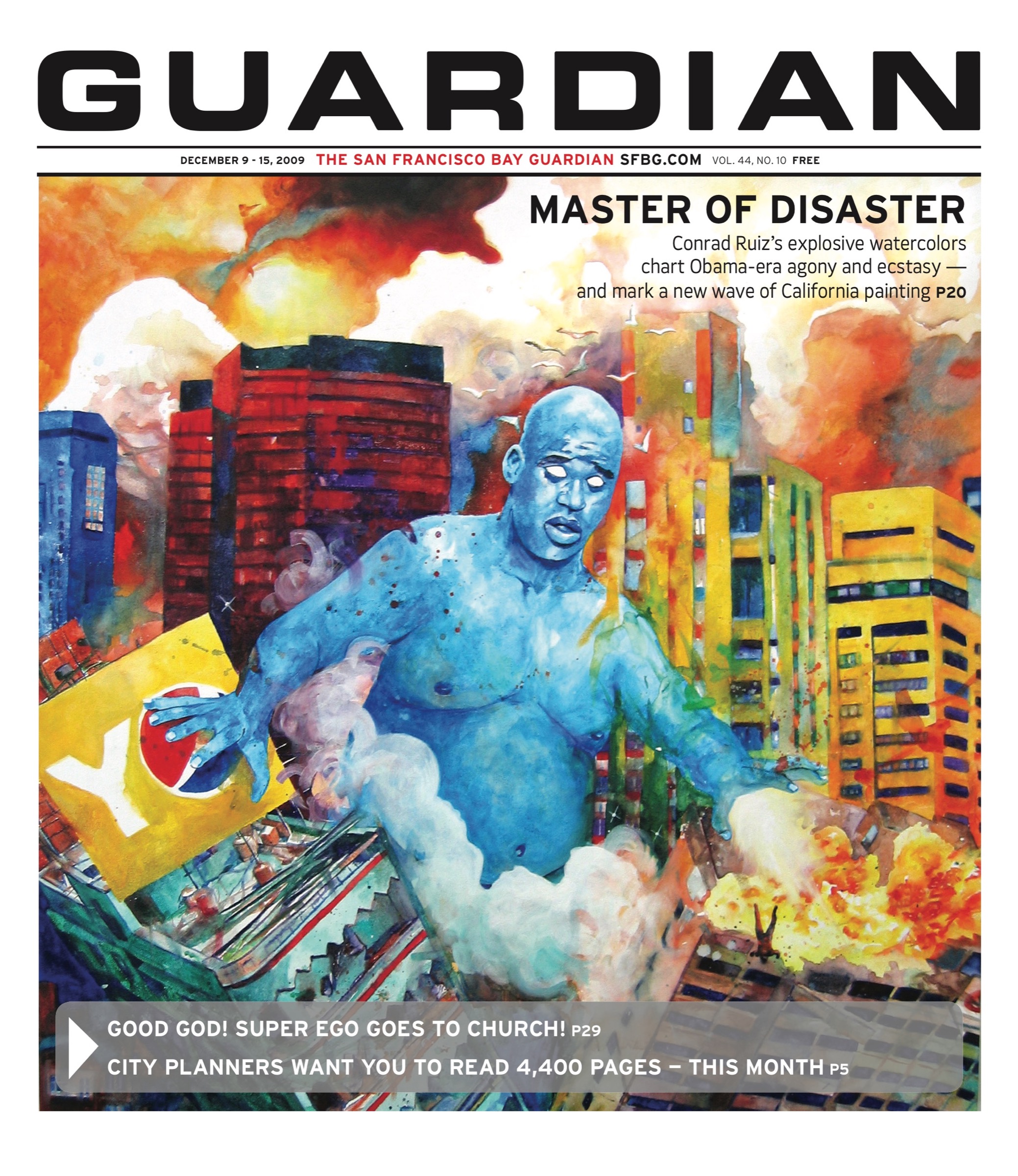
VISUAL ART I remember the first time I heard about Conrad Ruiz. I was standing by the fire on the patio of the Eagle, a spot that for me is a site of great tidings. A pair of talented San Francisco artists told me with enthusiasm about this young painter whose large-scale works depicted things like a man riding the nose of a killer whale as it burst forth from a pool, or a coach getting a golden shower of Gatorade from his triumphant team. According to their accounts, Ruiz magnified and entwined the absurdity and ecstasy of his subject matter. I had some cathartic laughs just imagining his paintings.

109-cover2.jpg
Detail from Overload. Challenger explosion not pictured.

When I first “saw” Ruiz’s art, online, it exceeded my expectations. In particular, I was blown away by Overload [2009], which among other things deserves consideration as the best piece of “Barack Obama art” to date. Panoramic and vibrant even when shrunk 25 times in size, Ruiz’s watercolor works on paper and canvas once again incited a convulsive reaction. I laughed my ass off upon seeing works such as New Fall Lineup [2009] for the first time. But the longer I looked, the more caught up in wonder I became about their myriad tiny details and teeming — at times disturbing subtextual currents.

What goes on in Ruiz’s imagination? On the eve of his first solo show, at San Francisco’s Silverman Gallery, I caught up with him as he navigated the social conflagration of Art Basel Miami, the megafair where at least one magazine tipped him as the leader of a “new generation of art stars.” Whatever one makes of that claim, Ruiz — who is also plotting some collective artistic efforts with friends — is the splashiest crest of an exciting new wave of young California painters.

SFBG How are you doing?
Conrad Ruiz I’m alright. I’m just sitting on South Beach. I wanted to find a place to gather my thoughts, and I’m watching this guy tan himself. I can’t believe he’s doing that. He’s got these great stomach muscles. [Curator and Berkeley Art Museum director] Larry Rinder and I were talking about doing sit-ups before we came here, but we both just got busy — we never did it.

Miami’s fun. I kind of wish I could take my shirt off everywhere, but I feel a little bit squishy.

SFBG It seems like your art would look good in Miami.
CR The colors are finding a home here. There are a lot of bright red and yellow bikinis around. This couple nearby are either arguing or also tanning themselves. They just sit and look at the sun, kinda like lizards.

SFBG What do you think of the Tiger Woods news frenzy right now? I wondered about your take on him. In a way, I thought he might not fit along with some of the athletic figures you depict, because golf isn’t so much about dynamism.
CR But you always hear comedians say, “Just leave it to a black American to dominate another sport.” Chris Rock essentially says, “Wait till we get on ice skates, man, we’re going to take over hockey.”

Tiger Woods has been developed into this brand, aligned with Nike. It’s a very intelligent campaign. It’s not Obama, but he’s been this person who can do no wrong. That’s the personality that has developed through whoever is handling his marketing. It’s more than his being an excellent golfer, he’s also been displayed as this great human. We don’t know that much about him, and then something like [the car accident and ensuing scandal] happens. It’s all we get, and it’s kind of sketchy, and it happened to fall on this awesome Thanksgiving weekend. I thought, “All must be right in the world if the only thing we have to talk about is Tiger Woods getting hit with a golf club by his wife.” If that’s what actually happened.

SFBG People are already Photoshopping and digitally animating visions of that.
CR That’s my job — to look up all that stuff.

109-cover1.jpg

SFBG Does 1970s cinema have any place in your mind’s eye? The Jaws [1975] shark in your painting Rough Riders [2008] and the disaster film or Towering Inferno-like [1974] quality of works like New Fall Lineup made me wonder. I could see that I might be wrong about the latter, since a flaming, exploding skyscraper has other obvious connotations.
CR My work really started with that time period and in painting advertising from that era. The colors were a lot more primary. When I was painting those advertisements, the work was more sarcastic. That beginning body of work was about developing this snarky character that evolved into what I’m making now.

It is about going back and catching some of the ridiculousness of what was so popular at one time. When you watch a disaster film now, you know the history of those celebrities. It’s hard for me to relate to that period of time, but it’s easy for me to relate to early 1990s movies like the Naked Gun franchise — O.J. Simpson was in those — and the Terminator flicks. Those are ridiculous and fun. I like them, and of course [lowers voice], that’s my Governor.

Everyone says “I hate that guy,” but even though I think [Schwarzenegger]’s doing a terrible job, I don’t want my politicians to be these people I don’t know — I’d rather have them be these celebrities I hate. If I’m going to hate who’s in office, I’d rather have it be Sylvester Stallone or somebody.

SFBG When you make work that has a contemporary element, there’s always a danger of it becoming instantly dated. But I think some of your work is both timely and ahead of its time. Overload, for example, just becomes more and more evocative.

The NASA element of the piece, with the Challenger exploding, is taking on new facets as Obama is increasingly identified with the military and space program. I saw a show at Altman Siegel Gallery by Matt Keegan earlier this year that utilized a New York Times front page photo of Obama boarding Air Force One for the first time. That’s a more direct example of what I’m talking about. Six months ago, that image had a different connotation.
CR I was really hoping Obama would get elected, because I started Overload before the election.

SFBG I have to ask about the Challenger’s presence in Overload. I was talking with the artist Colter Jacobsen recently about the fact that I’d like to put together a show of Challenger-related art. Within the art world, there are at least a dozen or so people who have incorporated the Challenger one way or another into work. That’s not even counting how it has manifested as band and album names and jokes in popular culture.
CR For me, it would be great to ask the artist about the original idea behind making a Challenger painting. Everyone has a different a point of view about what’s going on. I always feel like I’m casting with my paintings. There are these scenarios that have never happened, and since I get to decide what’s happening, I also decide who is the star —whether it’s someone from a B movie, an unsung celebrity, a friend who I’m giving a big break, or someone from a blockbuster, like Eddie Murphy and David Alan Grier.

109-cover3.jpg

Overload is a blockbuster sort of painting. I cast that [Challenger] explosion because I thought it was a very unique, amazing explosion. Once I began painting it, people began talking about its relevance, because it says something different when Obama is flying towards it, possibly causing it or stopping it.

To be very honest, I didn’t initially know it was the Challenger exploding. My Mom told me. She’s a teacher, so to her it was a terrible thing, and she asked me to really consider what I was doing. I told her, “That’s perfect.” Because to me the painting is about Obama coming to the rescue and shitting these energy projections — either he’s going to stop the war, or he causing some trouble of his own.

A few paintings later [in New Fall Lineup] I painted the Twin Towers exploding for a similar reason. I was casting this unique explosion and trying to create a different scenario with it.

SFBG I don’t often self-identify in generational terms, but when I was talking about the Challenger explosion with Colter [Jacobsen], he was saying that he had referred to it while teaching a class, and that it wasn’t even a memory for many students. Whereas for he and I, there was the teacher element, and also the fact that everyone was watching the Challenger at school that day. So as a disastrous event, it was similar to 9/11 in that the day just stopped.
CR The Challenger explosion has a lot to do with failed promise, doesn’t it? There was tremendous hope about what was about to happen, and it all fell apart in one second.

There’s an element of comedy that I’ve kind of borrowed from Richard Pryor. As I watch his stuff, it’s more like performance art. What he talked about wasn’t funny at all, it was actually horrible. He was an interesting character in that he talked about things that were definitely not right, but did so in a way that everyone would be laughing. Comedy is a way of passing serious information without being worried about the consequences. That makes it kind of a new territory. Dave Chappelle was able to say some unique and terrible things in this fun format.

SFBG It’s interesting that you bring up Chappelle, because after he hit his sort of Challenger moment on the pop culture stage and went away, Block Party [a.k.a. Dave Chappelle’s Block Party, 2006] came out.
CR That’s a beautiful movie.

SFBG It was released during the final stretch of all the jockeying for Academy Awards in Hollywood. All these talking heads were going on about which movies were important, and I remember thinking that Block Party was more important or vital and connected to the world than any of them.
CR/strong> His stuff is always about pointing out differences, and bringing together ideas of social class hierarchy. In a roundabout way, that’s what he did [in em>Block Party]. He brought together a lot of high-end artists and gave a free show. It was about giving to the people or the neighborhood. The idea of a barbecue, a barbecue block party, also has an ethnic connotation to it.

SFBG There is a lot of athletic imagery in your art, and I don’t want to reduce it to masculinity or sexuality, but I do want to ask about being drawn to those kinds of visuals, or wanting to render them.

Veronica De Jesus does some sports-oriented work that’s quite different from yours, but also has a terrific sense of humor. Sports are quite iconic — moments like an Olympic runner tumbling or Zidane’s headbutt become part of the collective consciousness. But beyond that, there’s an ecstatic, colorful, lively quality to your sports imagery.
CR Sports have always been a part of my life. My mom and dad were very athletic at one time, and they encouraged my brother and me to take part in sports. The alternative was for us to be on our own, and they knew we had a lot of Latino friends, so of course I was just going to get into trouble. So I was enrolled in soccer and taekwando. I was a sprinter in high school, and I was on the football team.

[The paintings] are a culmination of all the things you’re talking about. The outfits these athletes wear are designed to be eye-catching, with these primary colors. The Denver Broncos have that awesome dark blue with orange …

SFBG I love that combo. I just put together a sports cinema program with a film curator at Yerba Buena Center for the Arts, and when I’d introduce a movie from the 1970s, I’d always mention the athletic fashions.
CR Everything is designed to be the most freaking amazing thing possible, because these people are performing acts that no one else can do — they’re leaping through the air catching a ball thrown from very far away while wearing purple and yellow. The performance and exertion is incredible, and at the same time, what can make it even greater is being in a stadium where everyone is screaming their lungs out at the same time. Whether it’s an epic win or colossal failure, it’s still that climax. The climax doesn’t mean that it’s good — it’s a peak of performance.

When I’d meet with advisors at CCA [California College of the Arts], we’d really break it down, and they could easily talk me out of making my work. When you get down to it, what I’m doing is a little ineffective, and what would be more effective, to really get my idea across, would be to just play soccer with a group. I’d be performing, I’d be creating these intimate male relationships. I could actually be slapping some guy’s butt instead of painting around it. Joining a soccer team would be more efficient.

SFBG Maybe you and Luke [Butler, a fellow Silverman Gallery artist whose work engages with masculinity] should join a soccer team.
CR [Laughs] Yeah.

SFBG There is some commonality between your work, and also some major differences.
CR I think it’s because I’m the boy and Luke is the dashing man. I’m looking to be a man and trying to figure out what a man is, while Luke is a dashing man looking sideways.

CONRAD RUIZ: COLD, HARD AND WET
Fri/11 through Jan. 30, 2010
Silverman Gallery
804 Sutter, SF
(415) 255-9508
www.silverman-gallery.com


Time for serious budget reform

0

EDITORIAL Rahm Emanuel, President Obama’s chief of staff, likes to say that politicians should never let a crisis go to waste — but that’s what happened in San Francisco last summer, when the mayor and the supervisors approved a budget deal that didn’t involve any real structural reform, didn’t solve any long-term problems, and didn’t even last six months.

Now there’s a new crisis, one that, if anything, is worse. Cutting almost a half-billion dollars from the city budget last year was absolutely brutal. But cutting another half-billion, which is what the controller is now talking about, seems almost inconceivable.

It’s time to quit with the patches, quit with the one-time solutions and fee hikes. And with the mayor missing in action, the supervisors simply have to take the lead here and begin working on major systemic changes that shift the way the city is financed and the way money is spent.

The biggest problem with last summer’s deal was the lack of any serious attempt at bringing in new revenue. Newsom and his advisors all said that tax hikes weren’t looking good in the polls and probably wouldn’t get voter approval, but election results around the Bay suggest otherwise: In city after city, voters approved new taxes to fund essential public services.

And Newsom never gave the revenue side of the equation a fighting chance. He never made any personal effort to lobby the three supervisors he had appointed to the board, who were all reluctant to put emergency tax measures on the ballot. He just let the idea die.

And now the city is paying the price. Everyone with any sense knew last summer that the recession wasn’t going to magically end in time to make this budget work. It was clear that property tax and sales tax revenue would drop even further — and that the only way to avoid brutal midyear cuts was to look for new sources of money. Now the mayor and the board have to slice close to $50 million to keep the red ink at bay, and next year’s deficit is pegged at 10 times that much.

The other glaring problem with the mayor’s budget approach is that it sought to cut only from the front lines. But the highest-paid workers, the folks who make way more than $100,000 a year, the management ranks that have become very well staffed in recent years, were largely untouched. And frankly, there are a lot of people in that category who don’t do much of anything that’s essential to the functioning of the city.

During the dot-com boom, when Willie Brown was mayor and the city was awash in cash, the ranks of the politically appointed managers grew dramatically. Some of those folks are still around. Newsom has added his own. And the structure of management and organization in this city has never been a model of efficiency. So if the mayor wants another round of deep cuts — 20 percent from every department — he should start with a management audit of some of the biggest departments and take a hard look at exactly what all those senior employees do all day — and whether their work might be less important than, say, nurse aides who take care of the sick elderly.

As a simple show of good faith, Newsom shouldn’t replace Nate Ballard, the press secretary, or Kevin Ryan, his criminal justice advisor. There are still four other people in the mayor’s press office, more than any mayor in modern history has ever needed. And the city already has a police chief, police commission, district attorney, and sheriff. Why the mayor needs his own criminal justice office is a mystery to us.

There are other policy issues that need to be examined. The current budget shortfall memo from the city controller notes that some departments are already over budget — the Sheriff’s Office, for example, needs an additional $2.7 million dollars. The public defender and the courts need and additional $4.9 million. Why? Well, one reason is the new police chief’s crackdown on drug sales in the Tenderloin — which is packing the jails. "We’re defiantly looking at a lot of new drug cases," Sheriff Mike Hennessey, who has had to open three new housing units to fit all the prisoners, told us. The crackdown may be good public policy (or not) — but there was never any discussion of how much it would cost. And the mayor and the chief never asked the supervisors to authorize adequate spending for it.

So as a matter of policy, the mayor apparently thinks it’s worth $7 million to arrest drug dealers — but not worth $7 million to keep public-health workers who save lives every day on the job. That’s a policy decision that was made arbitrarily — and that kind of discussion needs to happen on a dozen or more fronts.

The mayor told his department heads Nov. 19 to expect 20 percent cuts — and to prepare for as much as 30 percent. But that’s not going to happen across the board. Unless the police stop arresting people, for example, the sheriff won’t be able to cut 20 percent of his budget without letting prisoners go. The mayor won’t take the political heat for cutting that much from cops and fire. So the burden will fall on public health, Muni, human services, recreation and parks, and other smaller departments. And the level of cuts will render those agencies unable to provide basic services.

So let’s be honest: there is simply no way to close a deficit this large without new taxes. That’s just reality, and anyone who denies it is refusing to face facts. San Francisco can’t survive with basic services — like police, fire, and public health — intact on the amount of money the controller projects the city will collect in the next year.

Newsom will be guilty of destroying the entire social service infrastructure in this city if he refuses to push tax hikes. And he’ll be damaging the local economy if he does it piecemeal.

We’ve been clamoring for years for an overhaul of the city’s tax structure, and now there’s a hurricane-force fiscal storm forcing the issue. If Newsom doesn’t announce plans to hold open, public discussions and draft a new tax policy for the city (and we doubt that will happen) then the supervisors must act, now. Board President David Chiu already had a broad-based committee work on tax reform. Now the board needs to begin drafting comprehensive legislation to change the way the city collects money — with the aim of putting a measure on the ballot as early as possible next year.

The goal should be not only to bring in another $250 million (at least) in new revenue, but to shift the tax burden away from small businesses and the poor and middle class and onto the wealthy. A big first step: get rid of the flat business tax and replace it with a progressive gross receipts tax that charges the biggest companies a higher percentage. Other cities have found numerous other ways to raise money — such parcel taxes, which aren’t quite as fair as ad valorem property taxes, but at least tax property owners, who in general are a wealthier class. A properly written utility users tax would hit big companies that use (and sometimes waste) a lot of power. And of course, a tax on income earned in the city — which would cover commuters who use city services but don’t pay city taxes — is among the most progressive ways to bring in new money.

Meanwhile, let’s remember: fee hikes (for Muni rides, for use of city pools and playing fields etc.) are just hidden taxes — on the poor and middle class.

State law makes it hard to raise taxes; any measure would have to go to the voters. But a major tax-reform overhaul that doesn’t just raise a few taxes on a targeted group but makes the entire system more fair for everyone, ought to be a ballot-box winner — particularly if the mayor is willing to raise money and lead the battle to pass it.


In a Nov. 18 interview with Hank Plante, the KCBS political editor, a testy and impatient Newsom ducked specific questions about how he was going to solve the budget shortfall. After saying that he doesn’t read the newspapers (which, frankly, is either a lie or utterly shameful for a big-city mayor, and leaves him looking as ill-informed as former President Ronald Reagan) he simply said the deficit would be "a lot of work."

That’s an understatement — and Newsom needs to do more than sit in his office and whine about the media. He needs to be out in public, addressing the budget crisis — and he needs to let reporters and residents and business people and the supervisors ask questions and get straight answers.

It’s fine to say that at this point, nobody knows how to solve the problem. It’s not okay to say: trust me, I’ll get back to you on that. This is a citywide crisis, and it’s essential that the public feels involved.

This is the biggest crisis since Gavin Newsom took office. It’s time he started acting like it.

The Examiner’s swipe at Jerry Brown

3

By Tim Redmond

Newspapers that subscribe to wire services like AP have the right to condense, edit, and pretty much use the material any way they want. The results can be telling.

Witness the AP story that ran today on Jerry Brown’s campaign for governor.

You can read what appears to be the full, unedtied version here.

Then there’s the version that ran in the print edition of the Examiner. You can find that by going here and paging through to p. 17.

I got an interesting email from h. brown on the two stories. His analysis:

What was cut:

“Obama [won] the biggest margin of victory in a
California presidential election since at least
WW II.”

Praise for Brown:

“opening government for women and minorities”

“Democratic party becoming increasingly diverse”

[The original story] said that Brown is: “famously independent”

The Examiner editors changed it to:

“famously erratic personality and propensity
for outlandish statements”

Again: Nothing out of the ordinary here at all, editors do this stuff every day. But it’s an interesting window into how media bias shows up in the most subtle little ways.

Meister: ‘Vetoes by silence’ hamper labor

0

Labor Hampered by ‘Vetoes of Silence’

By Dick Meister

Nothing is more basic to our democratic society than the principle of majority rule. But what if the eligible voters who fail to cast ballots were automatically recorded as voting “no”?

Ridiculous as it sounds, that’s exactly what the country’s airline and railroad workers face when they vote on whether they want union representation.

Imagine if every election had such a rule. President Obama wouldn’t be president, since less than half the eligible voters turned out for last year’s presidential election. Most, if not all, congressional candidates would also have lost last year — or in any other election year — since voter turnout for congressional elections has typically been less than 40 percent.

FAIR: The press fails the midterms

0

fair-header.jpg

Failing the Midterms: Press overplays election results

Republican candidates won gubernatorial races in New Jersey and Virginia on Tuesday; meanwhile, Democratic candidates won two special elections for the U.S. House of Representatives in New York and California. But it was very clear which set of elections corporate media wanted to portray as sending an important message about national politics–that voters were discontented with the White House and wanted Democrats to move to the right.

“By seizing gubernatorial seats in Virginia and New Jersey, Republicans on Tuesday dispelled any notion of President Obama’s electoral invincibility,” declared the Los Angeles Times (11/4/09)–as if Obama had previously been confused with Superman. On NPR, Mara Liasson reported (11/4/09): “There’s already a feisty argument going on about what the election results tell us, but there’s no argument about the score. The Democrats got a slap in the face. The Republicans a much-needed victory.”

The battle for District 6

0

tredmond@sfbg.com

The race to replace Chris Daly — the always progressive, sometimes hotheaded supervisor who has dominated District 6 politics for almost a decade — is becoming one of the most important battles of 2010, with the balance of power on the board potentially in play.

Through whatever accident of politics and geography, San Francisco’s even-numbered districts — five of which will be up for election next fall — haven’t tended to fall in the progressive column. Districts 2 (Marina-Pacific Heights) and 4 (Outer Sunset) are home to the city’s more conservative supervisors, Michela Alioto-Pier and Carmen Chu. District 8 (the Castro) has elected the moderate-centrist Bevan Dufty, and District 10 is represented by Sophie Maxwell, who sometimes sides with the progressives but isn’t considered a solid left vote.

District 6 is different. The South of Market area is among the most liberal-voting parts of San Francisco, and since 2000, Daly has made his mark as a stalwart of the board’s left flank. And while progressive are hoping for victories in districts 8 and 10 — and will be pouring considerable effort and organizing energy into those areas — Daly’s district (like District 5, the Haight/Western Addition; and District 9, Mission/Bernal Heights) ought to be almost a gimme.

But the prospect of three progressive candidates fighting each other for votes — along with the high-profile entry of Human Rights Commission director Theresa Sparks, who is more moderate politically — has a lot of observers scratching their heads.

Is it possible that the progressives, who have only minor disagreements on the major issues, will beat each other up and split the votes enough that one of the city’s more liberal districts could shift from the progressive to the moderate column?

A FORMIDABLE CANDIDATE


A few months ago, District 6 was Debra Walker’s to lose. The Building Inspection Commission member, who has lived in the district for 25 years, has a long history on anti-gentrification issues and strong support in the LGBT community.

Jim Meko, who also has more than a quarter century in the district and chaired the Western SOMA planning task force, was also a progressive candidate but lacked Walker’s name recognition and all-star list of endorsements.

Then rumors began to fly that school board member Jane Kim — who moved into the district a few months ago — was interested in running. Kim has been a leading progressive voice on the school board and has proven she can win a citywide race. She told me she’s thinking seriously about running, but hasn’t decided yet.

Having Kim in the race might not have been a huge issue — in District 9 last year, three strong progressives competed and it was clear that one would be the ultimate winner. But over the past two weeks, Theresa Sparks has emerged as a likely contender — and if she runs, which seems more than likely at this point, she will be a serious candidate.

Sparks picked up the kind of press most potential candidates would die for: a front-page story in SF Weekly and a long, flattering profile in San Francisco magazine, which called her "San Francisco’s most electrifying candidate since Harvey Milk." Sparks does have a compelling personal tale: a transgender woman who began her transition in middle age, survived appalling levels of discrimination, became a civil rights activist and now is seeking to be the first trans person elected to the San Francisco Board of Supervisors.

She has experience in business and politics, served on the Police Commission, and was named a Woman of the Year by the California State Assembly (thanks to her friend Sen. Mark Leno, who would likely support her if she runs).

"Anyone who knows Theresa knows that she is smart, a formidable candidate, can fundraise, and will run a strong race," Robert Haaland, a trans man and labor activist who supports Walker, wrote on a Web posting recently.

She’s also, by most accounts (including her own) a good bit more moderate than Walker, Meko, and Kim.

LAW AND ORDER


Sparks doesn’t define herself with the progressive camp: "I think it’s hard to label myself," she said. "I try to look at each issue independently." Her first major issue, she told me, would be public safety — and there she differs markedly from the progressive candidates. "I was adamantly against cuts to the police department," she said. "I didn’t think this was a good time to reduce our police force."

She said she supported Sup. David Campos’ legislation — which directs local law enforcement agents not to turn immigrant youth over to federal immigration authorities until they’re found guilty by a court — "in concept." But she told me she thinks the bill should have been tougher on "habitual offenders." She also said she supports Police Chief George Gascón’s crackdown on Tenderloin drug sales.

And she starts off with what some call a conflict of interest: Mayor Gavin Newsom just appointed her to the $160,000-a-year post as head of the HRC, and she doesn’t intend to step down or take a leave while she runs. She told me she doesn’t see any problem — she devoted more than 20 hours a week to Police Commission work while holding down another full-time job. "I don’t know why it would be an issue," she said, noting that Emily Murase ran for the school board while working as the director of the city’s Commission on the Status of Women.

But some see it differently. "It would be as if the school superintendent hired someone to a senior job just as that person decided to run for school board," Haaland said.

Sparks’ election would be a landmark victory for trans people. For a community that has been isolated, dismissed, and ignored, her candidacy (like Haaland’s 2004 run in District 5) will inspire and motivate thousands of people. And it’s a tough one for the left — opposing a candidate whose election would mean so much to so many members of one of the city’s most marginalized communities could be painful. "A lot of folks will say that the progressives will never support a transgender candidate," Haaland noted.

But in terms of the city’s geopolitics, it’s also true that electing Sparks would probably move District 6 out of the solidly progressive column.

"If we lose D6, it’s huge," Walker noted. "This is where most of the new development is happening, where law-and-order issues are playing out, where we can hope to save part of the city for a diverse population."

More than that, if progressives lose District 6 and don’t win District 8, it will be almost impossible to override mayoral vetoes and control the legislative agenda. And that’s huge. On issue like tenants rights, preventing evictions, controlling market-rate housing development, advancing a transit-first policy — and raising new revenue instead of cutting programs — the moderates on the board have been overwhelmingly on the wrong side.

Kim, for her part, doesn’t want to talk about the politics of the 2010 elections — except to say that she’s thinking about the race and will probably decide sometime in the next two months. But she agreed with my analysis of how any left candidate should view this election: if she’s going to enter, she needs to present a case that, on the issues that matter, she’d be a better supervisor than either of the two long-term district residents with strong progressive credentials already in the race.

"I don’t have an answer to that now," Kim told me. "And when I make my decision, I will."

Okay, the SF results are in

2

By Tim Redmond

Or at least, enough to call the election as far as I’m concerned. With about half the votes counted, nothing has changed from my last post : Prop. A wins, of course. But so does Prop. B — which may go down as the most significant outcome of the evening. It’s a vote of confidence in the Board of Supervisors, especially since there was no real Yes campaign and the No campaign played on the supposed mistrust in government, which apparently isn’t working in San Francisco.

Prop. C wins, of course. Prop. D loses, no surprise. Prop E was always a winner.

I honestly didn’t think Prop. B had a chance. Neither did a lot of its backers. So the district supes are more popular than the mayor or a lot of the established pundits think.

Our endorsements for the Nov. 3 election

0

CITY ATTORNEY
Dennis Herrera

TREASURER
Jose Cisneros

CONGRESS, 10th DISTRICT
John Garamendi

PROP A: YES

PROP B: YES

PROP C: NO

PROP D: NO

PROP E: YES

View our entire endorsement arguments here

Anti-doofus agenda

0

arts@sfbg.com

LIT/MUSIC With influences ranging from the Cuban Revolution and Malcolm X to musical orishas such as Ornette Coleman, John Coltrane, Thelonius Monk, and Sun Ra, Amiri Baraka is renowned as the founder of the Black Arts Movement in Harlem in the 1960s that became, though short-lived, the virtual blueprint for a new American theater aesthetic. The movement and his published work — such as 1963’s signature study on African American music Blues People and the same year’s play Dutchman — practically seeded "the cultural corollary to black nationalism" of that revolutionary American milieu.

Baraka lives in Newark, N.J., with his wife and author Amina Baraka; they have five children and head the word-music ensemble Blue Ark: The Word Ship and co-direct Kimako’s Blues People, an art space housed in their theater basement for some 15 years. I spoke with him on the eve of an upcoming visit.

SFBG What brings you to the Bay Area this time around?

AMIRI BARAKA We’re doing two sets at Yoshi’s with Howard Wiley. Those are the kinds of musical things we have a nice time doing. I hope to bring the poetry and music to Oakland, San Francisco, and Los Angeles. And I’m giving a talk at the library.

SFBG What will you be discussing?

AB Obama and his first 10 months, based on an essay I wrote a few months ago called "We’re Already in the Future." I support Obama and I think that the people who supported him initially should keep supporting him because they are forgetting the huge difficulty he faces. This society, they don’t want any kind of change. They do not want him, first of all. Only 43 percent of the white people even voted for him, and a lot those people resent the fact that white America is now mulatto. That election proved that it’s not white America, it’s multinational America, so they’ve set up this roadblock to almost anything he does.

Anytime you can, you see how doofus Americans are, to oppose their own quality of life improvement, their own health care. They’d rather mope along with little health care or none simply because the corporations have convinced them it’s bad for them — it shows you that we have a real education gap in America. Not to mention the racism, which is behind a lot of it, big time.

The people who support Obama need to stand together to fight the right wing. It’s the right wing that is the enemy. Those huge corporations including those mouthpieces they have. The media is just absurd, with [Sean] Hannity, [Bill] O’Reilly, [Glenn] Beck, Rush Limbaugh. These guys are just too much. If they’re not racist, there is no such thing as racism.

SFBG I know that you spent some time in SF. What are your impressions of our city?

AB I was a visiting professor at San Francisco State for about three or four months, that was the extent of my residency. I like San Francisco. I’m drawn to the vibe there. The last time I was in San Francisco, I was reading at Ferlinghetti’s bookstore [City Lights]. Most of my stuff is in Oakland, but whenever I’m in Oakland, I stop by San Francisco.

Seems to me that San Francisco is very expensive, like New York. I live in Newark, N.J., which is 12 miles outside of New York City — it’s got that Oakland-San Francisco relationship. When you’re dealing with New York, you have that high-rent district all the way around. San Francisco is a beautiful city, but going there and being there are two different things.

SFBG Happy birthday. I know you just turned 75. Any wisdom to impart from three-quarters of a century?

AB I’ve been 75 for about five days. I can say that you really need to take care of yourself. That’s the cliché: "If I knew I was going be this old, I would have taken better care of myself," but it’s some better wisdom than what you hear generally.

SFBG You coined the term "Afrosurreal Expressionism." Can you share your definition?

AB If you know the African tales or even African writers and African cultures, then you know they understand the concept of having relationships reversed, which exposes new concepts and dimensions. They understood the power of the conscious and unconscious mind to change the dimensions of the world. The various forces of nature that people developed, that people saw as gods, these elemental forces: the wind, the water, the sun, the moon. They understood how human beings interrelate to those forces. Henry Dumas’ work dealt with these changing dimensions, and people who do strange things in realistic situations. It was Surrealism that changed the relationship to things. Dumas influenced Toni Morrison, who was his editor at Random House. He was a strong writer and he went out of here in a tragic way, being murdered by the police. His stories and poems are Afrosurreal, with African psychology imposing these dimensions on reality.

SFBG What is the role of the artist in the current climate, and what are the tools we can use to bring about social change?

AB The way things work: cause and effect, action and reaction. The ’60s and the ’70s were a period of intense struggle. The Black Arts Movement and the antiimperialist movement laid the foundation to get Obama elected. But then you get a reaction, and it has been quite evident. Imperialist commerce has taken over the arts. Once we were struggling to get black movies made — now we see what kinds of movies are being made by black people, and they are very backward. Act, react. We have to struggle anew to do something about these backwards elements.

Black people have 27 cities: we need 27 theaters, 27 galleries, 27 periodicals. We need to have poets, rappers, painters, actors struggling to raise the consciousness of the people. That is the role of the artist. Black people still live in these ghettos and these ‘hoods. There may be more of a black middle-class, but they often are the ones helping to keep us duped and bamboozled. This is a struggle that has to be. This is reality — like they say, "Keep it real." This is a struggle that has to be.

AMIRI BARAKA WITH THE HOWARD WILEY TRIO

Nov. 9, 8 p.m., $16–$20

Yoshi’s San Francisco

1330 Fillmore, SF

www.yoshis.com

Poor turnout

0

news@sfbg.com

The Guinness World Record for the largest mobilization of human beings was recently broken when 173 million people demanded that their governments eradicate extreme poverty around the world. But U.S. media barely noted the call and San Francisco’s event had low attendance, suggesting an uphill struggle for the cause in the world’s richest nation.

Millions gathered at more than 3,000 Stand Up, Take Action events in 120 countries Oct. 16-18 in an attempt to put pressure on governments to achieve the United Nations Millennium Development Goals, but less than 30 people gathered on the steps of San Francisco City Hall to support the movement.

Sup. John Avalos was one of the speakers at the event, organized by a coalition of local activist groups and student volunteers. Admitting that he was "expecting it to be a little bigger," Avalos said the event was just the start of what needed to be a much larger movement by the American people.

"There is a strange phenomenon occurring at the moment. It’s as if people are a little bit asleep about the need to be active," Avalos told the Guardian. "Because we have an administration they view as being more supportive of human rights and economic and social justice, people are being lulled into thinking things will just get better."

Standing just a short walk away from the birth place of the United Nations, Avalos bought attention in his speech to the rich history San Francisco has in mobilizing social change. "We do the best to live up to it, but we have a long way to go. Around the world this is the time to uproot poverty — we try to provide a safety net, but it could be stronger."

The Stand Up, Take Action, End Poverty Now! campaign is in its fourth year and is organized by the UN Millennium Campaign in an attempt to raise awareness of the Millennium Development Goals (MDGs), a series of benchmarks designed to eradicate global poverty.

At the United Nations Millennium Development Summit in 2000, 189 world leaders promised to "end poverty by 2015." The eight goals include eliminating extreme poverty and hunger, achieving universal primary education, and combating HIV/AIDS, malaria, and other diseases.

Rep. Barbara Lee (D-Oakland) has authored or coauthored every major piece of legislation dealing with global HIV/AIDS issues since she was elected to Congress. She told the Guardian that MDGs must be placed in context with poverty in America. "Sometimes people argue that we must look after our own first, but my position is that if you look at the eight Millennium goals, they all apply to our own country too," Lee said. "Look at the plight of people who are disproportionately affected by HIV/AIDS in our country — especially in African American and Latino communities.

"With the economic downturn, poverty rates in America are soaring, putting more people into circumstances the MDGs focus on outside of America," she continued. "I think it really is important to make those connections."

Lee compared the foreclosure crisis and lack of regulation in the financial markets over the last eight to 10 years to the "wild West" and calls America’s 47 million uninsured a "moral disgrace."

"It is about priorities and political will, and this will be determined by the voices of people saying it must be done," she said. "People have to push for these changes and remember that it didn’t just stop with the election. We have to raise awareness while at the same time working on changing policy. Otherwise we can get stuck debating issues and not doing the work that has to be done to change these very deplorable conditions."

Sup. David Campos was the only other supervisor to speak at the Civic Center event. He said he is committed to the fight against global poverty and wants to see the government represent the values San Francisco was founded on.

"We need to shed light and bring attention to one of the largest issues facing the world today — severe poverty," Campos said. "I really believe that as a city, as a state, and as a country, we not only need to make sure we push the U.S. to follow the lead of other countries, but actually become a leader in making these Millennium goals a reality."

After the event, Campos told the Guardian: "It doesn’t surprise me that more people didn’t show up to the event. But part of the task is to spread the word. San Francisco has been a leader in a number of these issues in the past, and I think we should play a key role in this one."

Campos said that one solution might be to put forward a resolution before the Board of Supervisors to support MDGs and have the city take a formal position on it.

"It is definitely something we are talking about to demonstrate San Francisco’s commitment to the issue," he said. "A lot of people don’t know about the goals, or the fact that the U.S. hasn’t really made them a priority. We need to spread the word and let people know this kind of a movement is only going to be a success if people take it upon themselves to play a leadership role."

Brian Webster, a volunteer who organized the SF event, drew attention to the large number of supporters for the MDGs in California. More than 250,000 people have signed up for the One Campaign, a global NGO that partnered with the U.N. Millennium Campaign in the events.

"For campaigners, it is now a matter of trying to join together and identify vast strategies to communicate what needs to be done," Webster said. "We will continue to educate communities, politicians, and civic leaders in what can be done this month, in the next six months, and ultimately, in the next six years."

While the Bush administration rarely mentioned MDGs while in office, many activists believe President Barack Obama’s public recognition of the goals at a recent U.N. summit demonstrates a change in American policy.

"In other countries, there has been more education and awareness about the goals. But here in America, it is almost like we are starting eight years late," said Anita Sharma, the North American director for the U.N. Millennium Campaign. "President Obama has said that the MDGs are American goals and has even talked about his plans for achieving them."

Also, despite the low numbers at the San Francisco event, Sharma says more than 190,000 people from North America participated in last weekend’s campaign, an increase of more than 70,000 from last year’s attempt.

"It’s not like Americans don’t care about global poverty — in fact we give more in charitable contributions than any other country in the world," she said. "It just takes quite a lot to get Americans into the streets and mobilized. There needs to be more education out there, that’s all."

Ananya Roy, a UC Berkeley professor of city and regional planning and education director of the Blum Center for Developing Economies, says she doesn’t think MDGs can be achieved worldwide by 2015. Even so, she stressed the important role they played in the framework of development.

Speaking at UC Berkeley’s Stand Up and Take Action Event, she said: "The goals are important because they are seen as a new global social contract that makes issues of poverty and inequality quite urgent. They also come with measurements and targets, which is meant to create accountability."

Roy placed particular emphasis on the eighth goal: building a global partnership for development. She noted that that increased awareness can change the ways the U.S. and European governments operate in terms of aid and trade.

"This multilateral contract requires more than simply the action and leadership of the U.S. and Western Europe," she said. "We need to think about poverty and inequality that is immediately around us, understand how we are involved in the production of depravity, and then we must act in solidarity.

"We need to be thinking about poverty as it exits here in the U.S. and not just as an abstract problem that belongs to someplace else," she added. "It is also our problem."

According to a 2009 U.N. report, progress toward achieving the MDGs has been slow in some cases and certain achievements have been reversed by the economic downturn. The report estimates that there will be 55 million to 90 million more people living in extreme poverty than anticipated before the crisis.

For Chandler Smith, media coordinator for the One Campaign — which campaigns for better development policies and more effective aid and trade reform — the Guinness certification marks progress toward achieving the MDGs. "That this year is breaking another world record speaks to the power of people to organize around the world, shows that we are a global community, and that there is a sustainability in the movement," he said.

"As for the North American aspect, we are always trying to educate people more about these issues. Our results show that a lot of our work has been done — but that we also have more work to do."

The old Gov. Moonbeam shit

1

Okay, I’ve got a lot of problems with Jerry Brown. He was an awful mayor of Oakland, sided with the developers and the cops, and seemed to lose almost all of his progressive insticts. He’s against raising taxes on the rich. He won’t even support marijuana decriminalization.

There are good reasons to criticize the guy, and I’m right there at the front of the line.

But I fear that’s not what the press is going to do over the next year. It’s way too much fun to dredge up the old Gov. Moonbeam shit

Check out Carla Marinucci today:

now’s a good time to re-introduce you to author Jerry Brown, whose ’90s book “Dialogues” also contains a few memorable quotes that may end up in some 2010 gubernatorial campaign ads …. For Brown fans, the material illustrates the intellectual curiousity and independence that they say set him apart in the current pack of pols. For conservatives, it’s more proof he’s still that ultra-liberal, wacky “Moonbeam” character.

(btw, ultra-liberal is the Chron’s disparaging term for progressive. Although C.W. Nevius seems to like “militantly liberal.”)

So here are some of the examples of questions Brown asked in his interviews that the Chron thinks are utterly wacky:

*To author and philosopher Noam Chomsky:

*”How would you compare the propaganda system in the so-called free world to an authoritarian system? What are the differences?”

Umm, Chomsky is a brilliant linguist, an expert on the use of words. That’s a perfectly legit question to ask him. And it’s based on what anyone who follows the news media knows very well — that a lot of what is presented as unbiased news is actually slanted to promote a point of view. Why is that strange or wacky?

OR:

*To Judi Bari, late “Earth First!” enviromental activist:

*”None of us is an isolated monad with this bundle of private property rights outside the fabric of these larger obligations. So I very much believe that it’s time to take another step in the evolution of capitalism. Right now, I don’t think the federal government can make that happen…it can’t even operate what it owns, so that’s not the answer. But we’re on a track of real destruction socially and ecologically and we have to understand that as clearly as we can in order to come up with a better set of rules.”

*To Wolfgang Sachs, author and enviromental researcher:

*”As you observe modernizing projects in the world today that are operated by multinational corporations without much interference from national governments, do you see fascistic elements there? There are certainly enormous changes imposed without the consent of the governed.”

Again: Brown’s points are pretty basic, pretty clear — and almost indisputably correct.

The Sacramento Bee has had fun with some of Brown’s old lefty stuff on KPFA, but again, I have to ask: What did he say that was wrong?

He called capital punishment “state murder” and said U.S. Sens. Dianne Feinstein and Barbara Boxer, both Democrats, had “sold out” U.S. truck drivers by letting their Mexican counterparts drive uninspected vehicles into the United States.

In one of the most controversial excerpts, Brown called the prison system a racket that pumped profits out of the poor’s misfortunes and into the pockets of prison guards.

“The big lockup is about drugs,” Brown stated in an excerpt from late 1995. “Here’s the real scam. The drug war is one of the games to get more convictions and prisoners. There’s a lot of chemicals out there and when certain ones are made illegal, they become a huge profit opportunity and bring violence, crime and more people to imprison.”

Again: What, exactly, is wrong with anything he said? It’s all perfectly true.

More from the Bee:

Garry South, a top strategist for Democratic gubernatorial candidate Gavin Newsom, said the KPFA (94.1 FM) broadcasts would make Brown vulnerable if he reaches the general election.

Brown opened an exploratory committee for a gubernatorial run last month but has not officially announced his candidacy.

“California Democrats need to ponder very seriously the prospect of putting up a candidate for governor who comes with reams of radio-show rantings and ravings like Brown,” South wrote in an e-mail.

Rantings and ravings? Does Newsom support the death penalty? NAFTA? The drug war? If he does, that’s a bigger problem than Brown’s off-the-cuff radio remarks.

Does Newsom protest too much?

2

By Tim Redmond

Gavin Newsom is strongly denying the “swirling rumors” that he might drop out of the race for governor and settle for second fiddle. He kind of has to do that if he wants to keep raising money — although all these reports, some of which come from his own shop, aren’t going to help him. And the more vocally he insists he will never drop out of the governor’s race, the more embarrassing it will be if he gets to the point where he has no choice. I don’t think he’ll stay in the race to the bitter end if the polls and the money show him getting clobbered; nothing worse for a political career than a 20-point loss in a primary.

I agree that the polls at this point are pretty meaningless — it’s mostly about name ID and the few issues Newsom is known for, like same-sex marriage (which plays badly with older voters, who are the ones most likely to be contacted by pollsters. Newsom’s voters all use cell phones.) What’s more significant is that our mayor is having trouble raising money — and sadly, in California, it take tens of millions to reach voters who might not know much about you (and need to change their opinions pretty radically).

So I can understand why some Newsom allies think he should just cut a deal with Jerry Brown and run for lieutenant gov. It makes a certain amount of political sense: Newsom is young, and the Lt. job is perfect for him — it’s all about holding press conferences and cutting ribbons. Four years of that, plenty of time to make statewide connections, build a donor base and create the image he wants, and he’ll be ready to go for the top job — which might very well be open. Brown is 71; by the time he’d be up for re-election he’d be 76, and looking at serving in one of the toughest jobs in American into his 80s. One term might be all he’s up for.

And besides, not to be ghoulish or anything, but whenever you take the Number Two spot behind a septuagenarian office holder, the possibility that you’ll wind up Number One is always on your mind. Brown is pretty damn healthy; all that meditation and stuff is good for you. But you never know.

The problem is that someone else will want the LT job, and if he waits too long, it looks like he’s taking the consolation prize and doesn’t really care about it, and all these quotes will come back to haunt him. Imagine how much it would suck to agree to be the understudy — and then get beat for that job.