

The Department of Elections says there are about 34,500 ballots still to be counted — 27,000 election-day absentees and 7,500 provisionals. That would be about one sixth of the total votes. Not enough to make a huge difference, but if they break the way the election-day votes did, the mayor’s race will get tighter (although probably not enough to make a difference) and Ross Mirkarimi will pull further away in the sheriff’s race. The only other difference: Prop. H may wind up losing — not that it matters, since it’s only a policy statement anyway and the school board is not about to change a system it developed over two years of public hearings.
Election
Guardian editorial: End the death penalty in 2012
It’s time to end the death penalty in California. And November, 2012, may be the best chance.
A coalition led by the ACLU is launching a campaign for a ballot initiative to end executions in this state. All the pieces are in place: an outmoded, dysfunctional system that a growing number of law-enforcement veterans say is a waste of time an money. An emerging majority of California voters who no longer support the death penalty. And what’s shaping up to be a well-funded, well-organized campaign aiming for a vote in a presidential election year, when turnout will be relatively high.
The moral and human case against the death penalty is obvious — giving the state the power to kill people is wrong. The implementation of the system is, to say the least, arbitrary and capricious: Poor people and people of color are way more likely to face capital punishment than white people who have money. Many, if not most, of the people on death row have serious mental health issues, organic brain damage or were victims of abuse. No other civilized country in the developed world still allows executions.
But there’s also hard, cold, financial evidence that the current system isn’t working, evidence that appeals to conservatives. Simply put, the death penalty is a phenomenal waste of money. Since 1978, a recent Los Angeles Times study showed, California has spent $4 billion to execute a grand total of 13 people. That’s $308 million per killing.
It costs $184 million more a year to keep 714 people on death row than it would cost if they were serving life without parole. It costs millions more to prosecute and defend capital cases (a relatively low-cost death penalty prosecution still costs $1 million more than a high-priced LWOP case) and the state spends more than $300,000 per inmate for publicly subsidized defense.
Most of the death row inmates have no appeals lawyers; the cost of appeals is so high, and the work so difficult, that few private lawyers will take those cases, and the wait for a publicly funded attorney is more than 15 years. Victims get little closure from executions, since the process (properly, and by law) takes so long and is so drawn out. In fact, the most common cause of death on death row is old age.
Then there’s the fact that the drugs used in California executions are no longer made in the United States — and imported drugs may not meet U.S. quality standards. So the lethal-injection protocol now in place — which is, by itself, cruel and unusual punishment — may not survive legal challenges.
So it’s time. Local governments in San Francisco and the East Bay should endorse the effort and help promote the ballot measure. The coalition needs money and volunteers for signature gathering. Go to safecalifornia. org and sign up.
Analyzing the numbers
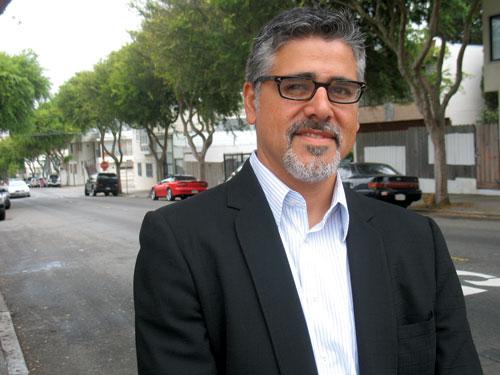
I keep looking at the election numbers, trying to make sense of it all, and the more I look and count and add, the more a couple of things become clear:
1. The absentee vote wasn’t just about Ed Lee. Clearly, the Lee forces got their troops out and did an absentee drive, but the total absentee votes for mayor (62,446) were about the same as the total votes for district attorney (63,354) and most of the propositions.So the people who voted early voted the entrie ballot.
2. The election-day votes were so dramatically different from the absentees that several factors had to be at work. One of them was the phenomenal campaign for John Avalos, which moblized thousands of people and demonstrated how much of a force progressives can be. Keep in mind — Avalos, who had no independent expenditure groups and less money than many of the other candidates — actually came in first on election day. His team worked hard and smart and pulled off a near miracle.
3. The drop-off in support for Lee between the absentees and election day suggests that his popularity was, indeed, declining fast in the past few weeks. The voter fraud scandals had something to do with it, but so did the attacks on Lee by the Herrera and Yee campaigns and by IE groups supporting those two candidates. If Lee hadn’t been so far out in front a month ago, he might not have won. As it is, if he holds on, it won’t be with the kind of mandate he would like to claim.
When the Department of Elections runs the first pass at ranked-choice voting, we’ll get a better idea of how much Lee’s support has fallen; RCV won’t be such a big deal with the absentees since Lee got so many of those first-place votes. The election-day votes will be more telling; when Adachi, Yee and Chiu are eliminated, where do those seconds go? How many will go to Lee — and how many will go anywhere but?
Ed Lee’s absentee coup
The most remarkable number in the election results was clear before a single election-day ballot was counted. The absentee ballots were released around 8:30 p.m., and they were stunning: Ed Lee has 26,621 votes. The nearest competitor, John Avalos, was at 7,080.
That’s right — Lee was almost 20,000 votes ahead before election day. And that turned out to be the margin of victory — Avalos actually got more votes than Lee from the people who voted Nov. 8.
The reason Lee is likely to be the next mayor is because — through a combination of traditonal hard work on identifying supporters and getting them to vote by mail and quite possibly some degree of illegal conduct — he had 26,000 votes in the bag long before the polls opened.
He was, of course, helped by the independent expenditure committees and by the fact that he had a natural base in Chinatown (and people on the ground there to get that base to vote). But none of the other campaigns managed to come close to that level of organizing. It’s something progressives have to keep in mind — elections in San Francisco are no longer won and lost on election day.
Ed Lee, Leland Yee and the progressive vote
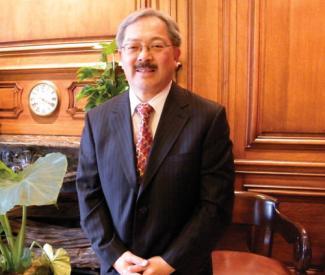
A couple of months ago, I got into an argument with Enrique Pearce, who runs Left Coast Communications, the firm that set up Run Ed Run and ran one of the independent expenditure committes for Ed Lee. I told him that his firm was misnamed, that Lee was not a “left” candidate; he told me that Lee was the best bet for progressives because he was the “only candidate who could stop Leland Yee.”
Now: We can all argue forever about Yee’s progressive credentials (I’ve done that in detail here). But if Pearce was telling the truth, he was wrong, so wrong, and the numbers show it. Leland Yee came in fourth. Lee didn’t prevent Yee from becoming mayor; he prevented John Avalos or Dennis Herrera from becoming mayor. Very different story, Mr. Pearce.
Willie Brown and his rich friends were all ecstatic at his party at the Palace Hotel, and why not? They’re back in the game, back in charge at City Hall. And if Brown — who, by the way, engineered this whole thing in one of the most brilliant political moves in San Francisco history — is that happy, there’s a reason for it. The wealthy and powerful interests in San Francisco think Lee is going to do what they want. That’s why they’re celebrating his election.
I’m not trying to be a downer here — it’s still possible that the ranked-choice voting system will put Avalos in first. But it’s not at all likely. The only way that could happen: If the “anybody but Ed” vote was so strong on election day that virtually all of the second-place votes from Bevan Dufty, Jeff Adachi, Yee, David Chiu and Dennis Herrera went to Avalos. Possible, but don’t be on it.
The reality is we’re probably facing four years of Mayor Ed Lee, and I hope he proves me wrong and shows that he’s willing to stand up to the people who put him in power. Possible, but don’t be on it.
Ross Mirkarimi is (cautiously) optimistic (VIDEO)
Spirits were high at Sup. Ross Mirkarimi’s election night party at Carnelian by the Bay Nov. 8, as polling numbers seemed to be trending in his favor in the race for San Francisco sheriff. Around 10:30 p.m., supporters were flooding into the main lounge, a spacious venue with low lighting and huge windows overlooking the Bay Bridge. Plastic deputy sheriff stars were being passed around as party favors.
“We’re winning,” Mirkarimi said as he greeted a supporter who had just walked through the door.
Cheers arose when a television news broadcast projected onto a big screen displayed Mirkarimi’s 10-point lead, and the candidate decided it was time to make an announcement. He thanked the people who worked on his campaign, but stressed that it wasn’t over yet. We captured the moment on film:
http://www.youtube.com/watch?v=OZP1MAjRRpA
Video by Rebecca Bowe
Onek supporters rally ’round
A small crowd of District Attorney Candidate David Onek’s most passionate supporters gravitated to the Pilsner Inn to celebrate the end of an energized campaign.
“The last four days of an election are complete chaos,” said one volunteer. “It’s exciting but I’m exhausted.”
San Francisco political icon Jane Morrison and school board candidate Sandra Fewer came to show their support as well as Onek’s father, Joe, who traveled from Washington D.C. to help with Onek’s campaign.
Onek stopped in briefly to thank his supporters and volunteers before returning to an undisclosed location to monitor the polls as they come in through the night.
“We’re looking forward to the next round of results, but I’m really just incredibly proud of all my supporters and every one else [from all] over the city who came by,” said David Onek after shaking hands with his supporters and expressing thanks to his campaign volunteers. “..We feel great and we’re about to head out and await the next results and we’ll go from there.”
With 100 percent (sort of) counted …
With 100 percent of the vote in — sort of — the election is shaping up this way:
Barring a real surprise, Ed Lee will win a four-year term.
Ross Mirkarimi is positioned 10 points ahead of Chris Cunnie, and ought to survive the RCV count to win the sheriff’s race.
George Gascon is too far ahead to catch.
The turnout was a miserable 31 percent.
That’s tonight, though — I’m getting reports that a lot of precincts had a lot of election-day absentees turned in. That could bump the turnout a few points — and since election-day absentees tend to break roughly the same as election-day votes, it will help Mirkarimi.
John Avalos really showed the strength of the progressive vote tonight and established himself as a leader in the movement. He and his campaign have a lot to be proud of; he lacked the big money and IE efforts that the other candidates had and he ran an impressive campaign. But without the type of early-voting effort that the Lee campaign had, it appears there was no way anyone could win this race.
That’s part of the lesson for progressives — the Avalos campaign surged in the last two weeks, but it was already too late. Those early votes can be decisive, and tonight, it appears they were.
93 percent of the votes are in
And it doesn’t look good for anyone except Ed Lee.
John Avalos has done really well — he’s in solid second place, almost 10,000 votes ahead of Dennis Herrera, who is in third. But he’s also 15,000 votes behind Lee — and that margin is entirely the absentee vote. Lee was 20,000 votes ahead in the absentees; if Avalos had been able to stay close in the early-vote race, he’d be very competitive right now. But it’s going to be hard for him, or anyone else, to make up the vote difference.
Too early to tell for sure — there could be a strong “anyone but Ed” vote that shows up in the second-place selections. But it would have to be far stronger than the polls have shown so far.
It looks tonight as if Lee has a commanding lead. He did what he had to do — he had an effective absentee effort that got his votes out and in the bank. If he wins in the RCV calculation and become the next mayor, that will be the deciding factor.
The sheriff’s race is a very different story. It’s going to be close — but Mirkarimi is looking very strong. He’s not only in first place — he’s getting almost 50 percent of the election-day vote.
The DA’s race is tighening a bit — but Gascon is still 20 points ahead at 42 percent and needs only a few seconds from the other three to make it over the top.
The latest numbers: The initiatives
Well, we can call the election on most of the initiatives.The two bond measures, A and B, are going to win handily. Prop. C and Prop. D are both going to win, but Prop. C is going to have more votes — and thus be the one that takes effect.
I think the sales tax (Prop. G) is going down; the election-day vote is almost even yes and no, and it needs two-thirds to win. Not going to happen.
The “neighborhood schools” measure is going to lose. So are Props. E and F.
Oh: George Gascon will be the district attorney for the next four years. Not even close.
New mumbers: Mirkarimi, Avalos surge
The next round of numbers are in, and the first clear trend is the Ross Mirkarimi is surging. Mirkarimi is 36 percent, to 28 percent for Miyamoto — but when you back out the absentee vote, he’s getting 45 percent of the election-day votes. Cunnie is going to finish second. If turnout is good, Mirkarimi’s in very good shape.
The mayor’s race is tightening up quite a bit, but Lee is still well ahead. He’s at 33 percent with Avalos at 16 percent — but here’s what’s interesting. In the election day (non absentee) votes, Avalos has gained 11,416 votes; Lee has gained 14,225. So in terms of the election day turnout, Avalos is only a few thousand votes behind.
Herrera, in third, has picked up 5,640 votes on election day.
So right now it looks like Lee first, Avalos second — and if Lee finishes with more than 30 percent, it’s going to be hard for anyone to catch him.
The word from Leland Yee
Leland Yee arrived at his campaign party defiantly hopeful despite being in fifth place. “The night is still young, and we continue to wait for the results,” he told reporters outside.
Then he went inside to a party packed with young volunteers and told them: “I’ve never had a better crew of individuals — and a younger crew of individuals — than in this election.” He said his campaign accomplished a lot: “No longer will San Francisco be run by machine politics. No longer will the power brokers run City Hall.”
We’re not sure how he arrived at that conclusion.
Numbers coming soon
Steve Jones tweets that the Department of Elections is planning to release the first (absentee) numbers at 8:45. Election-day numbers will come about 45 minutes later. Which means that by 10 p.m. we’ll have a good idea what’s happening.
Oh, and those election monitors
The state has sent election monitors to SF, which sounds nice, but I think it’s a bit too late. The damage is already done; if the accounts of voter fraud and campaign finance problems are accurate, the monitors were needed weeks ago, not today.
It’s all about turnout
Turnout in my Bernal Heights precinct tonight was pretty light, and that’s consistent with what I’ve been hearing all over town — except in Chinatown, where absentee turnout is high and the Ed Lee folks have done a great job of getting out the vote. This election may be a referendum on Ed Lee, it may be about whether any of the challengers can make a case for a change, it may be about how ranked-choice-voting works — but more than anything else, it’s going to be about who votes.
The flood of mailers was so overwhelming in the final days that I’m not sure how many people actually read them; the campaigns that put real resources into GOTV operations will probably fare better than the ones that relied on mail to reach the voters. And, of course, it’s likely that half the votes cast will be absentees.
So one of the numbers to watch tonight is total turnout. The lower that number, the better for Mayor Lee, who got a lot of votes in the bank early.
Another number to watch, and I’ll be running this for you as soon as I have data, is how the election-day votes contrast with the typically more conservative absentees. The absentees will be out soon, shortly after 8 p.m.; that will give us a sneak preview. But once the election-day votes come in about half an hour later, we’ll know where the trends are going.
The Department of Elections says the vote count will go quickly, since it’s a short ballot (only two cards).
End the death penalty in 2012
EDITORIAL It’s time to end the death penalty in California. And November 2012 may be the best chance.
A coalition led by the ACLU is launching a campaign for a ballot initiative to end executions in this state. All the pieces are in place: an outmoded, dysfunctional system that a growing number of law-enforcement veterans say is a waste of time an money. An emerging majority of California voters who no longer support the death penalty. And what’s shaping up to be a well-funded, well-organized campaign aiming for a vote in a presidential election year, when turnout will be relatively high.
The moral and human case against the death penalty is obvious — giving the state the power to kill people is wrong. The implementation of the system is, to say the least, arbitrary and capricious: Poor people and people of color are way more likely to face capital punishment than white people who have money. Many, if not most, of the people on death row have serious mental health issues, organic brain damage or were victims of abuse. No other civilized country in the developed world still allows executions.
But there’s also hard, cold, financial evidence that the current system isn’t working, evidence that appeals to conservatives. Simply put, the death penalty is a phenomenal waste of money. Since 1978, a recent Los Angeles Times study showed, California has spent $4 billion to execute a grand total of 13 people. That’s $308 million per killing.
It costs $184 million more a year to keep 714 people on death row than it would cost if they were serving life without parole. It costs millions more to prosecute and defend capital cases (a relatively low-cost death penalty prosecution still costs $1 million more than a high-priced LWOP case) and the state spends more than $300,000 per inmate for publicly subsidized defense.
Most of the death row inmates have no appeals lawyers; the cost of appeals is so high, and the work so difficult, that few private lawyers will take those cases, and the wait for a publicly funded attorney is more than 15 years. Victims get little closure from executions, since the process (properly, and by law) takes so long and is so drawn out. In fact, the most common cause of death on death row is old age.
Then there’s the fact that the drugs used in California executions are no longer made in the United States — and imported drugs may not meet U.S. quality standards. So the lethal-injection protocol now in place — which is, by itself, cruel and unusual punishment — may not survive legal challenges.
So it’s time. Local governments in San Francisco and the East Bay should endorse the effort and help promote the ballot measure. The coalition needs money and volunteers for signature gathering. Go to safecalifornia. org and sign up.
Follow us on Twitter for live election night coverage
We’ll be zooming across the city all evening, covering the thrill of victory, the agony of defeat. Check us out: www.twitter.com/sfbg
The Guardian–and the historic elections of 1966 and 2011
(Written on election day before the polls closed. Scroll down for our editorial positions of 1966 and 2011)
In the second edition of the Guardian, dated Nov. 7, 1966, we published our first set of editorial endorsements that were to become a trademark of our form of alternative journalism. (Our 1966 editorial in pdf form.)
We strongly endorsed then Gov. Pat Brown, going for his third term as a progressive governor, over Ronald Reagan, making his first run at elective office as the voice of the new Republican conservatism, in what we called “our historic election.” In reading the editorial over on the eve of our current “historic election,” it was remarkably prescient.
“For the repudiation of Brown and the election of Reagan,” we noted gloomily, “would mean that a generation of progressive legislation—in medicare, in education, in welfare, in conservation, in water resources, in bringing to account the dreadful problems of growth, population, and sprawl—would be in grave jeopardy.
“It isn’t difficult to imagine, for example, what will happen to the conservation movement at the hands of a man who talks loudly about selling off ‘unused park land.’ It is this sort of statement that shows Reagan’s naivete, his total lack of qualification for any responsible government job and his complete misunderstanding of what is happening in our state.”
We pointed out that Brown had continued the progressive policies of Govs.Warren and Knight but that this forward movement would end abruptly with Reagan as governor. Well, alas, we were right. Reaganomics was born and the Guardian and everybody else have ever since been fighting the doctrine of tax cuts, deregulation, privatization, and the economics of greed is good and greed is legal.
The result can be seen in today’s election in San Francisco and other California cities and counties.
The mayoral regimes of Brown, Newsom and Ed Lee have carried on the key elements of Reaganomics: endless budget cuts and a bushelbasket of higher fees, no new revenue initiatives, no moves to tax the Warren Hellmans and the Gordon Gettys on the same basis as the middle class, no moves to tax the big realtors and banks and big downtown companies on the same basis as small businesses, maintaining and facilitating the galloping inequalities of income, keeping the corrupting PG&E/Raker scandal intact at City Hall and thus allowing PG&E to operate as an illegal private utility in San Francisco. On and on.
The sad thing is that if Lee wins and the tide of sleaze keeps rising in his office, and the progressives lose even more power, things are likely to get much worse and fast. If Avalos or Herrera win, things are likely to get better but slowly if at all. If Mirkarimi wins, he will make an excellent sheriff in the Mike Hennessey tradition and will immediately be a candidate in waiting to run for mayor as a progressive sheriff and keep PG&E and the Chamber of Commerce gang on edge. (Our position as outlined by Executive Editor Tim Redmond in “The bad old days” in our 45th anniversary issue of Oct. 19, 2011.)
In any event, the Guardian will be here to “print the news and raise hell for good causes,” to update our masthead motto of 45 years. B3
Election night coverage and parties

As always, the Guardian will have a team of reporters in the field tonight covering the election parties and doing regular posts here on the Politics blog, where Executive Editor Tim Redmond will also be analyzing the results as they come in. But if you want to get out there mix and mingle with the campaigns yourself, here’s a list of the parties around San Francisco, most of which start around 8:30 and last until around 11.
John Avalos for Mayor, Roccapulco, 3140 Mission St.
Dennis Herrera for Mayor, Club Mighty, 119 Utah St.
Leland Yee for Mayor, Rasselas Jazz Club, 1534 Fillmore St.
Jeff Adachi for Mayor, Harbour Court Hotel 165 Steuart St.
David Chiu for Mayor, Rendezvous Tapas, 2080 Van Ness
Bevan Dufty for Mayor, Don Ramon’s Mexican Restaurant, 225 11th St.
Ed Lee for Mayor, Tres, 130 Townsend St.
Tony Hall for Mayor, Campaign HQ, 99 West Portal Avenue
Joanna Rees for Mayor, Eastside West, 3154 Fillmore
Michela Alioto-Pier for Mayor, The Brick Yard, 1787 Union St.
League of Pissed Off Voters, El Rio, 3158 Mission St. (mayoral candidate Terry Baum in attendance)
Yes on A, Mercury Lounge, 1582 Folsom St.
Yes on C/No on D, Slim’s, 333 11th St.
David Onek for DA, Pilsner Inn, 225 Church
Sharmin Bock for DA, Yoshi’s Jazz Club, 1330 Fillmore
Bill Fazio for DA, Tony Nik’s Cafe, 1534 Stockton
George Gascon for DA/Chris Cunnie for Sheriff, Delancey Street, 600 The Embarcadero
Ross Mirkarimi for Sheriff, Carnelian by the Bay, 1 Ferry Plaza
Paul Miyamoto for Sheriff, Pete’s Tavern, 128 King Street
Impertinent questions to Sup. Sean Elsbernd
At Tuesday’s Board of Supervisors meeting, Sup. Sean Elsbernd voted against a sensible resolution supporting regulated and safe patient access to medical cannabis in San Francisco.
He was on the losing end of an an 8-3 vote, with Sups. Carmen Chiu and Mark Farrell also voting against.
I was curious why, in San Francisco in November of 2011, he would vote against what I and many others considered a sensible but restrained resolution supporting local small businesses that are regulated and paying taxes and about the only business showing growth in the city.
So I emailed him some Impertinent Questions:
“Why do you continue to support a federal crackdown on medical marijuana? Why do you do this as a purported advocate of small business and bringing in more tax revenue to the city?”
I also asked Elbernd who he now supported for mayor, since the last time I heard from him he said he would support Mayor Ed Lee only if there were no other candidate who could beat State Sen. Leland Yee. He replied that had not endorsed a candidate for mayor, but if I contacted him after the election he would tell me who he voted for. “Rest assured,” he said, “the Bay Guardian endorsements will certainly influence my decision making process.”
On the marijuana issue, Elsbernd objected strenuously to my statement that he “supported the federal crackdown. Please send me the recording, clip, reporter’s notes, or any other documentation you have that demonstrates t hat I specifically said I supported the federal crackdown.”
Elsbernd asked if I was referring to his note vote on the resolution. (B3 answer: I was.)
“Are you erroneously extrapolating an opinion of mine based on my ‘no’ vote. Is that journalism or is that political spin? Would not a journalist simply ask the question like this, ‘Why did you vote no” on the resolution Making assumptions without any fact to back it up seems a bit irresponsible and lazy for a journalist. While you e-mail me under the guise of being a constituent, and your certainly live in District 7, we both know that this email discussion will be posted very soon on your Bay Guardian website (hello to all of who have time in your day to read Bruce’s blog) with additional edits and snide comments to which you will not me the opportunity to respond. (B3 comment: Elsbernd knows that I send him Impertinent Questions from time to time and that the Q and A will appear on my blog. And he knows he can answer in the blog comments or in a letter to the Guardian. To his credit, Elsbernd always answers me and I enjoy hearing from him. And I keep inviting him to talk things over at tapas night on Thursday night at the Que Syrah wine bar in West Portal in his district. I even offer to buy the first flight, but alas he never shows.)
Elsbernd then says he will answer my real question. “Why did I vote ‘no’ on the resolution?
Did you read the entire resolution? (B3 answer: yes.) Did you agree with every ‘whereas’ clause and every ‘resolved’ clause? (B3 answer: Yes.) Elsbern continued, “I do not. In particular, I strenuously object to the ‘whereas’ clause on page l, line 12-16, which implies that all licensed medical cannabis dispensaries in San Francisco are ‘clearly acting in good faith,’ and that they ‘take every measure possible to be safe and professional members of the community.’
Elsbernd then gets specific: “I suggest you talk to your neighbors on the other side of Portola/Junipero Serra who live near the dispensary on Ocean Avenue and ask them if ‘every measure’ has been taken to to be safe and professional members of their community. I suggest you read the police reports in and around the area over the last five years and compare those same reports o before the opening of the dispensaries and ask whether or not ‘every measure possible’ has indeed been taken. If you take the time and do that work, I think you’ll understand, why, as the representative of those neighborhoods, I voted against that resolution. (B3 answer: I am always take note when Elsbernd purports to represent his constituents in his district. But he could have amended the motion in committee (he was absent on the committee vote) or at the board. Instead, he used this single example to justify his opposition to a timely resolution putting the city squarely on record as being opposed to the ridiculous, expensive, job-killing, and tax-killing crackdown by the federal government on medical marijuana and its use in treating debilitating diseases and chronic pain in thousands of patients in San Francisco and throughout the state. The resolution also resolved that the supervisors “encourage the President and Congress of the United States to enact legislation requiring federal law enforcement to respect state medical cannabis laws.”)
Elsbernd also argued that the resolution called “for a massive tax reduction for all dispensaries in its resolved clause to support HR 1985, a bill by Rep.Stark granting a tax exemption for all such businesses? I know the Guardian typically opposes all business tax exemptions. Do you guys support this one.” (B3 answer: The Stark bill is not a a tax reduction bill. It is a bill aimed at reversing an IRS crackdown on many large dispensaries—including Harborside Health Center in Oakland, the largest in Northern California, that they cannot write off normal business expenses and must pay a 35 per cent levy on those claims going back for three years. Harborside’s Steve DeAngelo told the Guardian that this IRS attack would put Harborside—or any company with high overhead costs—out of business. http://www.sfbg.com/2011/10/11/feds-crack-down
Stark’s bill would reverse that IRS decision and allow dispensaries to deduct expenses according to state law just like all other businesses in California.
http://americansforsafeaccess.org/downloads/Stark_bill_2011.pdf
And so my original Impertinent Question remains: why is Elsbernd (and Chiu and Farrell) supporting in effect a federal crackdown aimed at killing off marijuana dispensaries and killing off a growing sector of small business and a valuable source of tax revenue? If he isn’t supporting the federal crackdown with this vote, what is his position on medical marijuana dispensaries? Wine and tapas, Sean? B3)
Correction: Prop. E isn’t retroactive
In the hustle-bustle of getting our last pre-election issue out the door, we made a significant error in describing Prop. E in the “Buying power” section of this story. The measure does not apply retroactively, but would allow the Board of Supervisors to change measures that voters approve after January 2012. Sorry for the mistake.
Dick Meister: Searching for Joe
By Dick Meister
Dick Meister, former labor editor of the SF Chronicle and KQED-TV Newsroom, has covered labor and politics for more than a half-century. Contact him through his website, www.dickmeister,com, which includes more than 300 of his columns.
San Francisco’s unions have been looking for another Joe Alioto ever since he left the mayor’s office in 1976 after eight years of being one of the best political friends organized labor ever had – anywhere.
Unions certainly have no chance of finding such a staunch supporter among the candidates for mayor in Tuesday’s election – not even in former Supervisor Michela Alioto-Pier, Alioto’s granddaughter. She reflects the conservative views of her former supervisorial district, which encompasses the upscale Pacific Heights and Marina neighborhoods.
Some of the other candidates claim to be labor-friendly, and some actually are. But none have gained anything approaching the all-out, almost unprecedented support that unions gave Alioto. Not surprisingly, unions have in turn been promised only relatively little post-election support by Tuesday’s candidates.
Alioto’s rewards to labor were based in part on the fact that, as he declared, “the controlling and decisive factor in my election was the support of organized labor.”
His administrations, he said, were “first of all sympathetic to labor.”
Alioto appointed union representatives to all of the city’s boards and commissions, some of which previously had little or no union representation, and helped unions in major strikes against recalcitrant employers, often stepping in to convince the employers to settle.
Probably the greatest benefits to union members came from the downtown building boom that Alioto launched, creating thousands of construction jobs.
So, with no Alioto-like union supporter in this year’s mayoral race, who are unions supporting? And how is labor likely to influence the outcome as well as the votes for ballot propositions, particularly Props C and D that involve the pensions and health care of public employees that have come to preoccupy municipal and state governments everywhere?
It seems clear that labor’s influence on the election outcome will turn out to be relatively slight, certainly considerably less than in Alioto’s time – less, in fact than in just about any other city election since the 1930s, when San Francisco was celebrated as one of the country’s premier “union towns.”
But no more. It’s sometimes hard to believe that San Francisco was ever a union town in the same league as New York, Chicago and Detroit.
The general public hardly hears from the city’s once vibrant and highly influential Labor Council and its leaders these days. Individual unions such as the Service Employees, Longshore and Warehouse Union, Nurses Association and Unite-Here, the hotel workers union, still have considerable clout, as do a few others. But that’s about it.
It’s partly the fault of the news media, but their scant coverage of organized labor reflects the failure of unions to take the leading position in politics as in economics that they once had, and must have if they are to prosper.
Unions are staging something of a comeback with the growth of public employee unions, which now dominate organized labor in numbers and influence – though locally unions probably do not yet have enough influence to play the role that once put them in a position to help elect politicians who considered them indispensable.
Public Defender and mayoral candidate Jeff Adachi and his conservative backers are trying hard to seriously weaken the growing strength of San Francisco’s public employee unions and their members, mainly through Proposition D. The apparent frontrunner in the mayor’s race, acting Mayor Ed Lee, is no particular friend of labor, either. Neither was Lee’s predecessor, Gavin Newsom.
Labor wasn’t helped by last year’s elections that gave the Board of Supervisors a strong minority of members on the political right who are at best indifferent to unions. Only five of the 11 supervisors can be legitimately considered pro-labor progressives.
It would help labor greatly to have a strong pro-union mayor, but none of the major candidates would play that role. The Labor Council endorsed Dennis Herrera and Leland Yee. The Building and Construction Trades Council went with Alioto-Pier and Yee.
But what about me? Glad you asked. I say it should be Herrera, who’s an excellent city attorney, has a broad base of supporters and, as a Hispanic, would give that underrepresented minority an important voice in City Hall. All the major candidates for sheriff and district attorney have solid credentials, and I’m sure any of them would do a good job.
Can’t see any reason not to vote for Prop A, a much needed school bond measure, and Prop B that would authorize bonds to pay for needed road and street repair. A big no on the foolish Prop E that would allow the Board of Supervisors to undo measures previously approved by voters.
No on F, another foolish and unnecessary measure. But Prop. G’s a good one. It raises the sales tax by half a percent to finance public safety programs and services to children and seniors.
Prop H is bad news. It would take away parental choice of schools and force students to attend only their neighborhood schools. Since many neighborhoods are still segregated by race or along socio-economic lines, it also would re-segregate schools citywide.
The main event includes, of course, Props C and D, and we should reject both measures. Don’t be confused by those who say, “I can’t vote no on C, because if D gets more votes, Adachi will win.” That ain’t necessarily so, for if neither measure gets at least 50 percent+one of the votes, then both would be defeated.
Make no mistake: Both propositions would be extremely harmful, because both would needlessly increase the financial burden of city employees by limiting the pensions of many new employees, while at the same time requiring them to make higher contributions to city pension funds. Both measures would also require some current employees to contribute more, although Prop D’s rates are somewhat higher, especially for higher income employees. Both C and D would also limit cost-of-living raises for current retirees.
Ever since voters in 2004 approved a badly needed reform of the City Health Service System that oversees the health care of employees and retirees, their elected representatives have had a genuine voice, with four members on the service’s seven-member governing board. The other three have been City Hall appointees.
Prop C would reverse the numbers, substituting another City Hall appointee for one of the elected members and otherwise limiting the voice of the elected members. Sponsors of Prop C would have you believe that the proposition is a “consensus” measure agreed to by all parties. But don’t you believe it.
Retirees, who make up a large part of those in the Health Service System, were not allowed to be part of the consensus negotiations, presided over by acting Mayor Lee.
It’s certain Joe Alioto would never have allowed that to happen.
Dick Meister, former labor editor of the SF Chronicle and KQED-TV Newsroom, has covered labor and politics for more than a half-century. Contact him through his website, www.dickmeister,com, which includes more than 300 of his columns.
Powerful, mostly peaceful Oakland action ends badly
After a long day of mostly peaceful demonstrations by thousands of protesters who joined OccupyOakland’s General Strike and Day of Action yesterday, it’s still unclear why the Oakland Police – which had stood down the entire day, leaving the movement to self-police – massed in riot gear around midnight and used tear gas and other projectiles to clear the streets and make a reported 80 arrests.
Spokespersons for the Oakland Police Department and Mayor Jean Quan haven’t returned Guardian phone calls, and reports in the Oakland Tribune and other media outlets don’t indicate exactly what prompted police to change tactics and aggressively confront the demonstration. Protesters had taken over a vacant building and erected barricades in the streets shortly before riot police showed up, and it appears from a Tribune video that a dumpster was set on fire after the police showed up.
Before the standoff between city officials and demonstrators in Oakland again took a violent turn, the day was notable for its lack of police presence around the occupied Oscar Grant Plaza and nearby 14th and Broadway epicenter. And despite a small number of masked agitators who broke bank windows and sprayed graffiti – much to the chagrin of most protesters who actively opposed such tactics – the movement was remarkably nonviolent and self-policing, particularly given a crowd of what seemed to be around 10,000 people at its peak. Protesters even handled traffic control, using a megaphone to help motorists through intersections congested with passing demonstrators.
“This is an extraordinarily peaceful collection of diverse people,” Sen. Loni Hancock (D-Oakland) told the Guardian just after 5 pm as a massive march left the encampment to shut down the Port of Oakland. “I feel like they’re doing what no elected person can do: they’re putting economic equity issues in front of the American people.”
“This is beautiful and powerful. This I love,” agreed Oakland City Council member Libby Schaaf, beaming as the peaceful march took off, although she told us that she was disappointed to see Oakland businesses vandalized, including her beloved Noah’s Bagels. “Fight greed, not bagels.”
Most of the crowd condemned the violence, and many openly worried that it would undercut the positive demonstration of people power and the airing of frustration with economic injustices in the country. But even Hancock said a few bad apples shouldn’t spoil people’s understanding of what an important day it was.
“I’m very grateful to them for calling attention to economic inequality. It is in the interests of cities that this issue take center stage,” Hancock told us. “There are so many things that have been talked about that are now on the stage and it’s a very important conversation to have.”
But many in the movement were disappointed nonetheless, despite the myriad successes in shutting down business nonviolently. Around 3 pm, a crowd of thousands marched past a Chase Bank at 20th and Berkeley streets where the front window had been shattered, as was the case with at least six other businesses. Taped to the windows were signs reading “We are better than this” and “This is not the 99%. Sorry, the 99%”.
As the huge crowd repeatedly chanted “peaceful protest,” Ryan, a 31-year-old Oakland resident, expressed his frustration over vandalism he blamed on out-of-town instigators. “People from Oakland would not damage their city like that,” he told me. “Last week was beautiful, we were dancing and singing in the streets,” he said, referring to the largely nonviolent response to police violence, “but this is bullshit.”
Large protests almost always have members who want to escalate the conflict and who see breaking windows as a legitimate tactic, and yesterday there were sometimes tense conflicts between protesters who disagreed on the issue. Another complex issue is how to now view Oakland Mayor Jean Quan, whose support for last week’s violent police crackdown prompted calls for her recall or resignation, although her subsequent apology, the re-encampment of Frank Ogawa Plaza, and yesterday’s police stand down caused some to rethink whether to actively oppose her.
“My goal for today is to spur the international movement forward and to show what we’re capable of,” said 23-year-old Iris Brilliant, who got more actively involved in OccupyOakland after the crackdown and said she was happy to see the police kept at bay. “It’s important to push this forward.”
But Tania Kappner, a 41-year-old teacher from Oakland, still hadn’t forgiven Quan or the police for the violent excesses in last week’s raid. She was camped out in Oscar Grant Plaza in a tent with the sign “Mayor Quan Must Go!”
“It’s good she’s not sending them in on us today, but she never should have done it in the first place,” Kappner told us. “We’re calling for her to go and the police who did it to be jailed.”
With the decision to again unleash the riot police and tear gas and arrest big numbers of people – which was the very thing that prompted such huge numbers of people to turn out yesterday, giving OccupyOakland the numbers and power to easily shut down the port and dozens of businesses – Oakland and the larger Occupy movement might again find itself back at square one.
The National Lawyer’s Guild, which had observers on hand to witness the late-night police crackdown, issued a statement today condemning the city’s actions and saying they violate a crowd control police the NLG helped the city write to settle lawsuits stemming from the OPD’s use of rubber bullets to clear anti-war protesters from the Port of Oakland back in 2003.
“Like we saw last Tuesday, the OPD actions in the late night hours violated numerous provisions of the Crowd Control Policy and the Constitutional rights of activists,” explained NLG’s San Francisco Bay Area chapter president Michael Flynn. “Our legal observers did not disobey any police orders and neither did many of the other arrestees.”
“The Crowd Control Policy clearly prohibits shooting munitions into a crowd,” added NLG attorney Rachel Lederman. “While the police are allowed to use tear gas, they are supposed to use a minimum amount and only where other crowd control tactics have failed. It is not at all clear that less violent and less provocative measures would not have sufficed to achieve any legitimate law enforcement objectives last night.”
Meanwhile, in San Francisco, Mayor Ed Lee has reportedly assured OccupySF that he won’t follow through on threats to raid the camp if tents aren’t removed, at least not anytime soon (many observers speculate that he’ll at least wait until after next week’s mayoral election). But Lee has been unwilling to make a clear public statement that raids are now off the table.
When we sought to clarify Lee’s position and get his reaction to a Board of Supervisors resolution calling for the city to allow a 24/7 encampment, his Press Secretary Christine Falvey wrote: “The mayor has not focused on the resolution, but has been focusing on meeting with clergy, labor, occupysf demonstrators and his department heads to make sure that the site is kept clean, safe and accessible for everyone. He remains concerned about overnight camping and the public health and safety issues that brings. That said, he has seen some good progress over the last few days because of his open communication with the group. DPW cleaned up the site over the weekend and the demonstrators helped facilitate the cleanup. Tents were moved off the Bocce Ball Court as well. The group is working with Fire and Public Health officials to make some improvements. The dialogue is ongoing.”
Photos by Steven T. Jones
The problem with the Lee investigations
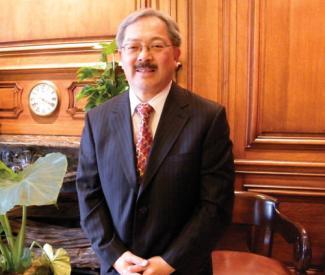
Six major mayoral candidates, including John Avalos, Dennis Herrera and Leland Yee, have once again called on the Fair Political Practices Commission to investigate the Ed Lee voter-fraud charges. That’s what needs to happen, of course. And the district attorney should do a thorough investigation and file criminal charges if warranted.
But there’s a basic problem here, and it goes to the heart of what’s wrong with the Lee campaign and with his whole approach to running for office. See, even if the FPPC finds a problem, what’s going to happen? The campaign will have to pay a fine (which, given all of the rich supporters of Lee, will be easy to pay). If the D.A. finds that laws have been broken, some low-level folks or people who solicited contributions improperly will face prosecution — and most likely cut a deal and pay a fine and get probation.
By then, of course, if all goes as predicted, Lee will have won the election. So as far as he and his key allies are concerned, none of this really matters.
Once he’s elected mayor, he figures (probably correctly) that this will all blow over. The FPPC investigation won’t be concluded for months. The D.A. clearly isn’t going to file charges against anyone before Election Day. Besides, according to the Department of Elections, 44,000 people had already voted by the time the latest stories broke Nov. 2. Many of them are Lee votes.
No matter how flawed the election, how much sleazy, inappropriate or criminal activity was involved, there’s no way the results will be thrown out. There’s no way the election of Ed Lee will be voided. If all of the tactics of Lee supporters work and he comes out on top, there will be no consequences for him. When it comes to San Francisco elections, cheating works — Willie Brown learned that long ago.
That’s why Ed Lee scares me: He’s allowing his supporters to use a corrupt playbook that assumes that the rules don’t matter, that winning at all costs is the only issue, that ethics and clean government can be dismissed as side issues. Once you start down that road, there’s no going back. Once you set that tone at City Hall, every half-assed crook and con artist will be convinced it’s open season. And I just don’t see Lee as strong enough to stop it.
UPDATE: Avalos just called and told me he wasn’t aware that the other candidates were calling on the FPPC to investigate and wasn’t at the press conference where that announcement was made. Sorry ’bout that, a miscommunication.