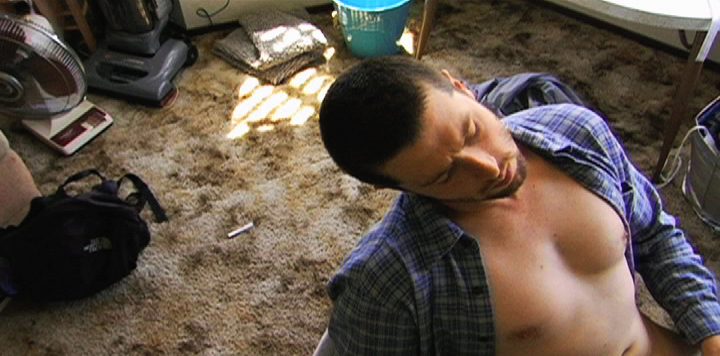
Drugs

Film listings

0

Film listings are edited by Cheryl Eddy. Reviewers are Kimberly Chun, Michelle Devereaux, Max Goldberg, Dennis Harvey, Johnny Ray Huston, Louis Peitzman, Lynn Rapoport, Ben Richardson, and Matt Sussman. For rep house showtimes, see Rep Clock. For first-run showtimes, see Movie Guide.

SAN FRANCISCO JEWISH FILM FESTIVAL

The 30th San Francisco Jewish Film Festival runs through Mon/9 at the Roda Theatre, 2025 Addison, Berk; Christopher B. Smith Rafael Film Center, 118 Fourth St, San Rafael; and the Jewish Community Center of San Francisco, 3200 California, SF. Tickets (most shows $11) are available by calling (415) 256-TIXX or visiting www.sfjff.org. For schedule, see www.sfjff.org.

OPENING

The Concert A former Bolshoi Orchestra conductor scrambles to reassemble his musician friends to play a last-minute concert. Mélanie Laurent (2009’s Inglourious Basterds) co-stars. (1:47) Embarcadero.

*The Disappearance of Alice Creed The reliably alarming Eddie Marsen (concurrently Life During Wartime‘s pederast) plays bullying Vic, one-half of a criminal duo — with puppyish Danny (Martin Compston) his younger subordinate — who abduct grown child of wealth Alice (Gemma Arterton) for ransom in a carefully-thought-out kidnapping. This simple setup, for the most part very simply set in the two abandoned-apartment-complex rooms where Alice is held captive, allows talented British writer-director J. Blakeson to spring a number of escalating narrative surprises. The whole endeavor is almost too chamber-scaled to justify being seen on the big screen (let alone being shot in widescreen format). But it does have some mighty satisfying tricks up its sleeve. (1:40) Sundance Kabuki. (Harvey)

Get Low Born from the true story of Felix Bush, an eccentric Tennessee hermit who invited the world to celebrate his funeral in advance of his own death, Get Low is a loose take on what might inspire a man to do a thing like that. It’s a small story, and unlikely to attract the attention of popcorn-addled viewers in the midst of the summer blockbuster season, but Get Low has a whopper of a character in Felix Bush. Robert Duvall becomes Bush, constructing a quiet man who sees it all and speaks only when he has something to say, and supporting roles from Sissy Spacek and Bill Murray are expectedly solid, but the real surprise is what a strong eye director Aaron Schnieder has. In allowing scenes to unfold on their own terms and in their own time, Schneider gives a real humanity to what could have been a Hallmark movie. (1:42) Albany, Embarcadero. (Peter Galvin)

*Life During Wartime See "The Kids Aren’t All Right." (1:37) Clay, Shattuck.

Making Plans for Lena Christophe Honoré’s latest presents an ensemble of difficult characters related to or entangled with a recently divorced mother of two. The titular Lena (Chiara Mastroianni) feels somewhat like a Noah Baumbach protagonist, a failing human being who is nonetheless pitiable and even relatable. At the core of this tense family drama are Lena’s relationships with her young son Anton (Donatien Suner), who is in many ways more mature than she is, and with her ex-husband Nigel (Jean-Marc Barr), whose name inspired the pun of the title, which refers to the XTC track "Making Plans for Nigel." In the film’s most intriguing sequence, bookworm Anton reads his mother a story, which is in turn reproduced onscreen, of a woman who kills many suitors by dancing them to death. Besides that fantastical interlude, which hardly lightens the movie’s fundamental sadness, the film’s naturalistic depiction of family life rings true if also worryingly dissonant. (1:47) Sundance Kabuki. (Sam Stander)

Middle Men George Gallo’s Middle Men, though far beyond the salvage of so-bad-it’s-good, makes for the ultimate airplane movie (re: mind-numbing). Nothing audible is ever interesting, there are visual gimmicks galore, and you can more or less doze off and avoid missing much. Purportedly the events that unfold, from the 80s onward, are based on actual ones — but that’s like the Coen Brothers claiming Fargo (1996) was a true story. Pish posh. Jack (Luke Wilson) is a Texan who cleans up people’s messes. He gets entangled with the biggest idiots of all time, played by Giovanni Ribisi and Gabriel Macht, and soon they launch what will become the bastion of Americana: Internet porn. Everything is tits-and-giggles until the Russian mob wants a cut. It’s downright apoplexing how shallow, flashy, and lazy this movie is. If you must go, bring a friend and play I Spy A Desperate Has-Been (James Caan, Kelsey Grammer, Kevin Pollak). And Luke Wilson, formerly known as Fire of My Loins? Definitely not cute anymore. (1:45) Presidio, Shattuck, Sundance Kabuki. (Ryan Lattanzio)

The Other Guys Another buddy-cop movie — though in this case, the buddies are the has-potential combo of Will Ferrell and Mark Wahlberg. (1:47) California, Presidio.

Step Up 3D It’s official: 3D has jumped the shark. And done the worm. (1:46)

The Wildest Dream: Conquest of Everest The Everest documentary has, by now, become a genre unto itself. It’s got its own tropes (sweeping shots of the mountain’s face, somber voice-over philosophizing about the human struggle with nature) and its own canon (topped, perhaps, by the harrowing 1998 IMAX hit Everest). The latest entry into this field is National Geographic Entertainment’s The Wildest Dream, which chronicles early-20th century explorer George Mallory’s lifelong — and ultimately life-ending — quest to reach Everest’s summit, and modern mountaineer Conrad Anker’s attempt to recreate his predecessor’s final climb. Director Anthony Geffen unfolds his tale in standard adventure-doc fashion. We get a lot of scratchy footage from Mallory’s climbs, a few risibly awkward dramatic re-creations, and quite a lot of portentous voiceover work. These are worn techniques, to be sure, but that doesn’t make the story told any less compelling. Mallory himself emerges as a particularly fascinating figure — a talented and charming scholar, a devoted husband, and an irresponsible, borderline suicidal obsessive. It’s a shame that we’re only able to observe him at a century’s distance. (1:33) Embarcadero. (Zach Ritter)

ONGOING

Agora There’s a good movie somewhere in Agora, but finding it would require severe editing. It’s not that the film is too long, though it does drag in stretches. The problem is that there are too many stories being told: Hypatia of Alexandria, the central figure, only emerges as the focus well into the film. Meanwhile, there’s Davus (Max Minghella), the slave boy in love with her; Orestes (Oscar Isaac), the student who tries to win her affection; Synesius (Rupert Evans), the devout Christian. We jump from character to character and plot to plot — the conflict between the pagans and the Christians, the conflict between the Christians and the Jews, and Hypatia’s studies in astronomy. Agora is so scattered that by the time it reaches its tragic conclusion — only a spoiler if you haven’t already Googled Hypatia — there’s little room to breathe, let alone grieve. While Hypatia herself is a fascinating subject, Agora is weighed down by all the stories it’s intent on cramming in. (2:06) Lumiere, Shattuck. (Peitzman)

*Alamar Pedro González-Rubio’s gorgeous Alamar ("to the sea") is set between landscapes (land and sea) and ways of telling (fiction and documentary). The bare frame of a plot places a young boy with his father and grandfather, Mayan fishermen working the Mexican Caribbean. The sweetness of this idyll is tempered by its provisional bounds: the boy will return to his mother in Rome at the end of his compressed experience of a father’s love. Every shot is earned: there are several in which the camera bucks with the boat, physically linked to the actors’ experience. The child is at an age of discovery, and González-Rubio channels this openness by fixing on the details of the fisher’s elegant way of life and the environmental contingencies of their home at sea. (1:13) Sundance Kabuki. (Goldberg)

*Anton Chekhov’s The Duel Conformity vs. freedom, small-town whispers vs. the heavy hand of the law — Georgian director Dover Kosashvili successfully teases out some of the tensions in the Anton Chekhov novella, encapsulating the provincial pressures brought to bear on deviants and nonconformists during a steamy summer in a seaside resort town in the Caucasus. Dissolute civil servant and would-be intellectual Laevsky (Andrew Scott) is in the bind, as he gripes to the town doctor Samoylenko (Niall Buggy). Laevsky has everything he wants: he’s coaxed the creamy, married Nadya (Fiona Glascott) into living with him openly, yet now that her husband has died, he desires nothing more than to be free of her. In the meantime upstanding zoologist Von Koren (Tobias Menzies) simmers in the background, gaging Laevsky’s social mores and practically oozing contempt. Matters come to a head as Laevsky begs a loan from Samoylenko to escape his ripening paramour, who is also beginning to feel the gracious perimeters of the town closing in around her. From the buttons-and-bows millinery details to the oppressive dark wood furnishings, Kosashvili even-handedly builds a compelling Victorian-era mise en scene that seems to perfectly evoke the Chekhov’s milieu — it’s only when the title entanglement comes to pass that we finally see which side he’s on. (1:35) Smith Rafael. (Chun)

Cats and Dogs: The Revenge of Kitty Galore (1:40) 1000 Van Ness, SF Center.

Charlie St. Cloud The best thing one can say about Charlie St. Cloud is that it isn’t quite as terrible as the trailers would have you believe. Yes, the story is Nicholas Sparks-level silly: the eponymous Charlie (Zac Efron) loses his brother Sam (Charlie Tahan) in a tragic drunk driving accident, then spends the rest of the film playing baseball with his ghost. Add to that a romantic subplot involving fellow sailor Tess (Amanda Crew). There’s nothing you don’t already know about Charlie St. Cloud: each scene is laid out far in advance. So while the film itself is reasonably competent, it never surprises or unnerves an audience well-versed in its tropes. Efron, star of Disney’s delightful High School Musical series, is predictably charming, but even a few wet t-shirt scenes — yes, really — don’t distract from the story. Not to mention the fact that Tahan’s Sam is seriously grating. You’re dead, it sucks: no need to whine about it. (1:40) 1000 Van Ness. (Peitzman)

Countdown to Zero "Every man woman and child lives under a nuclear Sword of Damocles, hanging by the slenderest of threads." So said John F. Kennedy when he addressed the UN in 1961. It’s a quote that’s oft repeated in Countdown to Zero, a fear-mongering horror film disguised as a documentary. Yes, nuclear war is a serious threat. Yes, the world would be a better place without any nuclear weapons. But exactly what is the point of a movie like Countdown to Zero, which serves only to remind us how fucked we truly are? There are no solutions offered, no real insight into how we got here. Instead, we get lots of facts and figures that underline how quickly and easily a country, a group of terrorists, or even a lone nut could end it all. At one point a series of disembodied voices describe — in endless detail — the result of a nuclear attack. And to what end? It’s unclear what Countdown to Zero realistically hopes to accomplish: worldwide disarmament is a lofty feat. Unsettling viewers, on the other hand — that’s cheap and easy. (1:30) Opera Plaza, Shattuck. (Peitzman)

Cyrus It’s tempting to label Mark and Jay Duplass’ Cyrus as "mumblecore goes mainstream." Yes, the mumblecore elements are all there: plentiful moments of awkward humiliation, characters fumbling verbally and sometimes physically in desperate attempts to establish emotional connections, and a meandering, character-driven plot, in the sense that the characters themselves possess precious little drive. The addition of bona fide indie movie stars John C. Reilly, Catherine Keener, and Marisa Tomei — not to mention Hollywood’s chubby-funny guy du jour, Jonah Hill — could lead some to believe that the DIY-loving Duplass brothers (2005’s The Puffy Chair, 2008’s Baghead) have gone from slacker disciples of John Cassavetes (informally known as "Slackavetes") to worshippers at the slickly profane (with a heart) altar of Judd Apatow. But despite the presence of Apatow protégé Hill (2007’s Superbad) in the title role, Cyrus steers clear of crowd-pleasing bombast, instead favoring small, relatively naturalistic moments. That is to say, not much actually happens. Mumblecore? More or less. Mainstream? Not exactly. Despite playing a character with some serious psychological issues, Hill comes off as likeable. Unfortunately the movie is neither as broadly comic nor as emotionally poignant as it needs to be — the two opposing forces seem to cancel each other out like acids and bases. (1:32) Shattuck, Sundance Kabuki. (Devereaux)

Despicable Me Judging from the adorable, booty-shaking, highly merchandisable charm of its sunny-yellow Percocet-like minions, Despicable Me‘s makers have more than a few fond memories of the California Raisins. That gives you an idea of the 30-second attention-span level at work here. Thanks to Pixar and company, our expectations for animated features are high, but despite the single lob at Lehman Brothers aimed toward the grown-ups, the humor here is pitched straight at the eight and younger crowd: from the mugging, child-like minions to the all-in-good-fun, slightly quease-inducing 3-D roller-coaster ride. Gru (Steve Carell) is Despicable‘s also-ran supervillain — a bit too old and too unoriginal for a game that’s been rigged in the favor of the youthful, annoyingly perky Vector (Jason Segel), who’s managed to swipe the Giza Pyramids and become the world’s number one bad dude. When Vector steals away the crucial shrink ray needed for Gru’s plot to thieve the moon, the latter pulls out the big guns: three adorable orphans who have managed to penetrate Vector’s defenses with their fund-raising cookie sales. It turns out kids have their own insidiously heart-warming way of wrecking havoc on one’s well-laid plans. Filmmakers Pierre Coffin and Chris Renaud do their best to exploit the 3-D medium, but Avatar (2009) this is not. Nor will many adults be able to withstand the onslaught of cute undertaken by all those raisins, I mean, minions. (1:35) 1000 Van Ness, SF Center. (Chun)

Dinner for Schmucks When he attracts favorable notice and a possible promotion from his corporate boss, Tim (Paul Rudd) is invited to an annual affair in which executives compete to see who can dig up the freakiest loser dweeb for everyone to snicker at. He literally runs into the perfect candidate: Barry (Steve Carrell), an IRS employee whose hobby is making elaborate tableaux with stuffed dead nice in tiny human clothes. He’s also the sort of person who, in trying to be helpful, inevitably wreaks havoc on the unlucky person being helped. Which means the 24 hours or so before the "Biggest Idiot" contest provide plenty of time for well-intentioned Barry to nearly destroy Tim’s relationship with a girlfriend (Stephanie Szostak), reunite him with Crazy Stalker Chick (Lucy Punch), and imperil his wooing of a multimillion-dollar account. Director Jay Roach (of the Austin Powers and Meet the Fockers series) has a full load of comedy talent on board here. So why are the results so tepid? This remake softens the bite of Francis Veber’s 1998 original French The Dinner Game by making Tim not a yuppie scumbag but a nice guy who just happens to have a jerk’s job (his company seizes ailing firms and liquidates them), and who doesn’t really want to expose hapless Barry to humiliation. But even with that satirical angle removed and a wider streak of sentimentality, it should cough up more laughs than it does. (1:50) Four Star, 1000 Van Ness, Presidio, SF Center. (Harvey)

Farewell (1:53) Embarcadero, Shattuck.

*The Girl Who Played With Fire Lisbeth Salander is cooler than you are. The heroine of Stieg Larsson’s bestselling book series is fierce, mysterious, and utterly captivating: in the movie adaptations, she’s perfectly realized by Noomi Rapace, who has the power to transform Lisbeth from literary hero to film icon. Rapace first impressed audiences in The Girl With the Dragon Tattoo (2009), a faithful adaptation of Larsson’s premiere novel, and she returns as Lisbeth in The Girl Who Played With Fire. The sequel, as is often the case, isn’t quite on par with the original, but it’s still a page-to-screen success. And while the first film spent equal time on journalist Mikael Blomkvist (Michael Nyqvist), The Girl Who Played With Fire is almost entirely Lisbeth’s story. Sure, there’s more to the movie than the hacker-turned-sleuth — and the actor who plays her — but she carries the film. Rapace is Lisbeth; Lisbeth is Rapace. I’d watch both in anything. (2:09) Albany, Embarcadero, Piedmont, Smith Rafael. (Peitzman)

*The Girl With the Dragon Tattoo By the time the first of Stieg Larsson’s so-called "Millennium" books had been published anywhere, the series already had an unhappy ending: he died (in 2004). The following year, The Girl With the Dragon Tattoo became a Swedish, then eventually international sensation, its sequels following suit. The books are addicting, to say the least; despite their essential crime-mystery-thriller nature, they don’t require putting your ear for writing of some literary value on sleep mode. Now the first of three adaptive features shot back-to-back has reached U.S. screens. (Sorry to say, yes, a Hollywood remake is already in the works — but let’s hope that’s years away.) Even at two-and-a-half hours, this Girl With the Dragon Tattoo by necessity must do some major truncating to pack in the essentials of a very long, very plotty novel. Still, all but the nitpickingest fans will be fairly satisfied, while virgins will have the benefit of not knowing what’s going to happen and getting scared accordingly. Soon facing jail after losing a libel suit brought against him by a shady corporate tycoon, leftie journalist Mikael Blomkvist (Michael Nyqvist) gets a curious private offer to probe the disappearance 40 years earlier of a teenage girl. This entangles him with an eccentric wealthy family and their many closet skeletons (including Nazi sympathies) — as well as dragon-tattooed Lisbeth Salander (Noomi Rapace), androgynous loner, 24-year-old court ward, investigative researcher, and skillful hacker. Director Niels Arden Oplev and his scenarists do a workmanlike job — one more organizational than interpretive, a faithful transcription without much style or personality all its own. Nonetheless, Larsson’s narrative engine kicks in early and hauls you right along to the depot. (2:32) Opera Plaza, Shattuck, Smith Rafael. (Harvey)

*I Am Love I Am Love opens in a chilly, Christmastime Milan and deliberately warms in tandem with its characters. Members of the blue-blood Recchi family are content hosting lavish parties and gossiping about one another, none more than the matriarch Emma (Tilda Swinton). But when prodigal son Edoardo befriends a local chef, Emma finds herself taken by both the chef’s food and his everyman personality, and is reminded of her poor Soviet upbringing. The courtship that follows is familiar on paper, but director Luca Guadagnino lenses with a strong style and small scenes acquire a distinct energy through careful editing and John Adams’ unpredictable score. Swinton portrays Emma’s unraveling with the same gritty gusto she brought to Julia (2008), and her commitment to the role recognizes few boundaries. You’ve probably seen this story before, but it has rarely been this powerful. (2:00) Opera Plaza, Shattuck. (Galvin)

Inception As my movie going companion pointed out, "Christopher Nolan must’ve shit a brick when he saw Shutter Island." In Nolan’s Inception, as in Shutter Island, Leonardo DiCaprio is a troubled soul trapped in a world of mind-fuckery, with a tragic-vengeful wife (here, Marion Cotillard) and even some long-lost kids looming in his thoughts at all times. But Inception, about a team of corporate spies who infiltrate dreams to steal information and implant ideas, owes just as much to The Matrix (1999), Eternal Sunshine of the Spotless Mind (2004), and probably a James Bond flick or two. Familiar though it may feel, at least Inception is based on a creative idea — how many movies, much less summer blockbusters, actually require viewer brain power? If its complex house-of-cards plot (dreams within dreams within dreams) can’t quite withstand nit-picking, its action sequences are confidently staged and expertly directed, including a standout sequence involving a zero-gravity fist fight and elevator ride. Though it’s hardly genius — and Leo-recycle aside — Inception is worth it, if you don’t mind your puzzle missing a few pieces. (2:30) Empire, Four Star, Marina, 1000 Van Ness, Sundance Kabuki. (Eddy)

*Joan Rivers: A Piece of Work Whether you’re a fan of its subject or not, Ricki Stern and Annie Sundberg’s documentary is an absorbing look at the business of entertainment, a demanding treadmill that fame doesn’t really make any easier. At 75, comedian Rivers has four decades in the spotlight behind her. Yet despite a high Q rating she finds it difficult to get the top-ranked gigs, no matter that as a workaholic who’ll take anything she could scarcely be more available. Funny onstage (and a lot ruder than on TV), she’s very, very focused off-, dismissive of being called a "trailblazer" when she’s still actively competing with those whose women comics trail she blazed for today’s hot TV guest spot or whatever. Anyone seeking a thorough career overview will have to look elsewhere; this vérité year-in-the-life portrait is, like the lady herself, entertainingly and quite fiercely focused on the here-and-now. (1:24) Opera Plaza, Smith Rafael. (Harvey)

*The Kids Are All Right In many ways, The Kids Are All Right is a straightforward family dramedy: it’s about parents trying to do what’s best for their children and struggling to keep their relationship together. But it’s also a film in which Jules (Julianne Moore) goes down on Nic (Annette Bening) while they’re watching gay porn. Director Lisa Cholodenko (1998’s High Art) co-wrote the script (with Stuart Blumberg), and the film’s blend between mainstream and queer is part of what makes Kids such an important — not to mention enjoyable — film. Despite presenting issues that might be contentious to large portions of the country, the movie maintains an approachability that’s often lacking in queer cinema. Of course, being in the gay mecca of the Bay Area skews things significantly — most locals wouldn’t bat an eye at Kids, which has Nic and Jules’ children inviting their biological father ("the sperm donor," played by Mark Ruffalo) into their lives. But for those outside the liberal bubble, the idea of a nontraditional family might be more eye-opening. It’s not a message movie, but Kids may still change minds. And even if it doesn’t, the film is a success that works chiefly because it isn’t heavy-handed. It refuses to take itself too seriously. At its best, Kids is laugh-out-loud funny, handling the heaviest of issues with grace and humor. (1:47) Bridge, California, 1000 Van Ness, Piedmont, SF Center. (Peitzman)

*Let It Rain Well-known feminist author Agathe Villanova (writer-director Agnès Jaoui) is taking a rare break from her busy Paris life, visiting her hometown to see family, vacation with boyfriend Antoine (Frédéric Pierrot), and do a little stumping for her nascent political career. But despite the ever-picturesque French countryside as background, all is not harmonious. Antoine complains Agathe’s workaholism (among other things) is killing their relationship, particularly once she agrees to be time-consumingly interviewed for film about "successful women" by shambling documentarian Michel (coscenarist Jean-Pierre Bacri) and local Karim (Jamel Debbouze). Her married-with-children sister Florence (Pascale Arbillot) is having a secret affair with Michel, but seems more focused on old resentments springing from Agathe being their late mother’s favorite. Karim — son of the family’s longtime housekeeper (Mimouna Hadji) — bears his own grudge against the clan and brusque, officious Agathe in particular. Being happily wed, he’s further bothered at his hotel day job by his attraction to co-worker Aurélie (Florence Loiret-Caille). These various conflicts simmer, then boil over as the documentary shooting goes from bumbling to disastrous. In 2004, Jaoui delivered a pretty near perfect Gallic ensemble seriocomedy in Look at Me. This isn’t quite that good. Still, her seemingly effortless skill at managing complex character dynamics, eliciting expert performances (including her own), and weaving it all together with insouciant panache makes this a real pleasure. The problem with Agnès Jaoui: she’s so good it chafes that (acting-only gigs aside) she’s made just three films in ten years. Pick it up, girl! (1:39) Smith Rafael. (Harvey)

Predators Anyone who claims to be disappointed by Predators has clearly never seen parts one and two in the series; all three are straight B-movie affairs (though 1990’s Predator 2 takes everything oh-so-slightly over the top. Gary Busey’ll do that). And if you’ve seen either of the recent Predator-versus-Alien flicks, Predators should feel like a masterpiece. Nimród Antal directs under the banner of Robert Rodriguez’s production company, which explains the presence of Danny "Machete" Trejo in the cast. Adrien Brody stashes his Oscar in a safe place to star as Royce, a well-armed mercenary who awakes to find himself in free fall, plummeting into a strange jungle along with other elite-forces types (including Brazilian Alice Braga, playing an Israeli soldier). It doesn’t take long before Royce realizes that "this is a game preserve, and we’re the game." I wish Predators had allowed itself to have a little more fun with its uniquely skilled characters (the yakuza guy does have a nice, if culturally-stereotyped, swordplay scene); there’s also an underdeveloped "plot twist" involving the presence of the decidedly un-badass Topher Grace among the human prey. But all is forgiven when Laurence Fishburne turns up as Crazy Old Dude Who’s Been Hiding Out With Predators a Little Too Long. Fishburne’s presence also adds to the heart-of-darkness vibe the movie seems vaguely interested in conveying. (1:51) 1000 Van Ness. (Eddy)

Ramona and Beezus (1:44) 1000 Van Ness.

*Restrepo Starting mid-’07, journalists-filmmakers Tim Hetherington and Sebastian Junger spent some 15 months off and on embedded with a U.S. Army platoon in Afghanistan’s Korengal Valley, a Taliban stronghold with steep, mountainous terrain that could hardly be more advantageous for snipers. Particularly once a second, even more isolated outpost is built, the soldiers’ days are fraught with tension, whether they’re ordered out into the open on a mission or staying put under frequent fire. Strictly vérité, with no political commentary overt or otherwise, the documentary could be (and has been) faulted for not having enough of a "narrative arc" — as if life often does, particularly under such extreme circumstances. But it’s harrowingly immediate (the filmmakers themselves often have to dive for cover) and revelatory as a glimpse not just of active warfare, but of the near-impossible challenges particular to foreign armed forces trying to make any kind of "progress" in Afghanistan. (1:33) Empire. (Harvey)

Salt Angelina Jolie channels the existential crisis of Jason Bourne and the DIY spirit of MacGyver in a film positing that America’s most pressing concern is extant Russian cold warriors, who are plotting to reestablish their country’s pre-glasnost glory via nuclear holocaust and a Dark Angel–style army of spy kids. Jolie plays CIA agent Evelyn Salt, a woman who can stymie the top-shelf surveillance system at work using her undergarments and fashion a shoulder-mounted rocket out of interrogation-room furniture and cleaning supplies. These talents surface after Salt is accused of being a Russian operative in league with the aforementioned disturbers of the new world order and takes flight, with her agency coworkers (Liev Schreiber and Chiwetel Ejiofor) in hot pursuit. What ensues is a vicious and confounding assault on the highest levels of the U.S. government, most known rules of logic, and the viewer’s patience and powers of suspending disbelief. Salt’s off-the-ranch maneuverings are moderately engaging, particularly in the first leg of the chase, but clunky expository flashbacks, B-movie-grade dialogue, and an absurd plotline slow the momentum considerably. (1:31) Empire, Four Star, Marina, 1000 Van Ness, Sundance Kabuki. (Rapoport)

The Sorcerer’s Apprentice Socially awkward science nerd Dave (Jay Baruchel) toils away on his suspiciously elaborate NYU physics project, unaware that he’s about to have a Harry Potter-style moment of awakening. Enter Balthazar (Nicolas Cage), a centuries-old, steampunky sorcerer who believes Dave to be "the Prime Merlinian" — i.e., the greatest conjurer since Merlin himself. (Literally) rising from ashes to provide conflict are fellow sorcerers Horvath (Alfred Molina) and Morgana (Alice Krige); signing on for romantic-interest purposes are Monica Bellucci and newcomer Teresa Palmer. The Sorcerer’s Apprentice spins off Disney classic Fantasia (1940) in only the loosest sense, though there is a scene of dancing brooms. The bland Baruchel’s rise to fame continues to mystify, but at least Cage and Molina seem to be having a blast exchanging insults and zapping each other around. (1:43) 1000 Van Ness, SF Center. (Eddy)

*Toy Story 3 You’ve got a friend in Pixar. We all do. The animation studio just can’t seem to make a bad movie — even at its relative worst, a Pixar film is still worlds better than most of what Hollywood churns out. Luckily, Toy Story 3 is far from the worst: it’s actually one of Pixar’s most enjoyable and poignant films yet. Waiting 11 years after the release of Toy Story 2 was, in fact, a stroke of genius, in that it amplifies the nostalgia that runs through so many of the studio’s releases. The kids who were raised on Toy Story and its first sequel have now grown up, gone to college, and, presumably, abandoned their toys. For these twentysomethings, myself included, Toy Story 3 is a uniquely satisfying and heartbreaking experience. While the film itself may not be the instant classic that WALL-E (2008) was, it’s near flawless regardless of a viewer’s age. Warm, funny, and emotionally devastating—it’s Pixar as it should be. (1:49) 1000 Van Ness, Piedmont, Shattuck, Sundance Kabuki. (Peitzman)

The Twilight Saga: Eclipse The only person more bored by the Twilight franchise than I am is Kristen Stewart. In Eclipse, the third installment of the film series, she mopes her way through further adventures with creepily obsessive vampire Edward (Robert Pattinson). Look, you’re either sold on this star-crossed love story or you’re not, and it’s clear which camp I fall into. Besides, Eclipse is at least better than New Moon, the dreadful Twilight film that preceded it last year. But the story is still ponderous and predictable — Eclipse sets up a conflict and then quickly resolves it, just so it can spend more time on the Bella-Edward-Jacob love triangle. (As if we don’t know how that ends.) Then there’s the unfortunate anti-sex subtext: carnal relations are cast as dirty, wrong, and soul-destroying. I’m not saying we should be encouraging all teenagers to have sex, but that doesn’t mean we should make them feel ashamed of their desires. And what parent would approve of Eclipse‘s conclusion? Marrying your first boyfriend at 18 — not always the best move. (2:04) 1000 Van Ness, Shattuck. (Peitzman)

Winnebago Man (1:15) Lumiere.

*Winter’s Bone Winter’s Bone has already won awards at the Berlin International Film Festival and the Sundance Film Festival, but it’s the kind of downbeat, low-key, quiet film that may elude larger audiences (and, as these things go, Oscar voters). Like Andrea Arnold’s recent Fish Tank, it tells the story of a teenage girl who draws on unlikely reserves of toughness to navigate an unstable family life amid less-than-ideal economic circumstances. And it’s also directed by a woman: Debra Granik, whose previous feature, 2004’s Down to the Bone, starred Vera Farmiga (2009’s Up in the Air) as a checkout clerk trying to balance two kids and a secret coke habit. Drugs also figure into the plot of the harrowing Winter’s Bone, though its protagonist, Ree Dolly (Jennifer Lawrence), is faced with a different set of circumstances: her meth head father has jumped bail, leaving the family’s humble mountain home as collateral; the two kids at stake are her younger siblings. With no resources other than her own tenacity, Ree strikes out into her rural Missouri community, seeking information from relatives who clearly know where her father is — but ain’t sayin’ a word. It’s a journey fraught with menace, shot with an eye for near-documentary realism and an appreciation for slow-burn suspense; Lawrence anchors a solid cast with her own powerful performance. Who says American independent film is dead? (1:40) Lumiere, Shattuck. (Eddy)

Film listings

0

Film listings are edited by Cheryl Eddy. Reviewers are Kimberly Chun, Michelle Devereaux, Max Goldberg, Dennis Harvey, Johnny Ray Huston, Erik Morse, Louis Peitzman, Lynn Rapoport, Ben Richardson, and Matt Sussman. For rep house showtimes, see Rep Clock. For first-run showtimes, see Movie Guide at www.sfbg.com. Due to early deadlines for this issue, theater information was incomplete at press time.

SAN FRANCISCO JEWISH FILM FESTIVAL

The 30th San Francisco Jewish Film Festival runs through Aug 9 at the Castro, 429 Castro, SF; Roda Theatre, 2025 Addison, Berk; CineArts@Palo Alto Square, 3000 El Camino Real Bldg Six, Palo Alto; and Christopher B. Smith Rafael Film Center, 118 Fourth St, San Rafael. Tickets (most shows $11) are available by calling (415) 256-TIXX or visiting www.sfjff.org. All times pm unless otherwise indicated.

WED/28

Castro Mrs. Moskowitz and the Cats 11:30am. Ingelore with "Surviving Hitler: A Love Story" 1:15. Budrus 4. Arab Labor: Season Two 6:30. Army of Crime 9.

THURS/29

Castro "Panel: Is Dialogue Possible? How Films Help Us Talk About Israel (…Or Not) 11:30am. Bugsy 1. Sayed Kashua: Forever Scared with Arab Labor: Season One, Episode 10 3:45. A Film Unfinished 8:45. The Klezmatics: On Holy Ground with "Seltzer Works" 8:45.

SAT/31

CineArts A Small Act noon. Jews and Baseball: An American Love Story 2. A Film Unfinished 4:15. Saviors in the Night 6:45. Father’s Footsteps 9.

Roda Bena noon. "Arab Labor: Season Two" 2. "Utopia in Four Movements" (live event) 4:30. The Klezmatics: On Holy Ground with "Seltzer Works" 7. Protektor 9:45.

SUN/1

CineArts My So Called Enemy noon. My Perestroika 2. The Worst Company in the World with "Baabaa the Sheep" 4. Anita 6:30. "Arab Labor: Season Two" 8:45.

Roda "Grace Paley: Collected Shorts" (shorts program) noon. Jews and Baseball: An American Love Story 2:15. A Film Unfinished 4:15. Budrus 6:45. Gruber’s Journey 9:15.

MON/2

CineArts Ahead of Time 2. Surrogate with "Guided Tour" 4. Te Extraño (I Miss You) with "Escape from Suburbia" 6:15. Bena 8:30.

Roda Long Distance with "You Can Dance" 2:15. Sayed Kashua: Forever Scared with "Arab Labor: Season One, Episode 10" 4. A Room and a Half 6. "Jews in Shorts: Focus on Israeli Narratives" (shorts program) 8:45.

TUES/3

CineArts Mrs. Moscowitz and the Cats 2. Long Distance with "You Can Dance" 4. The Wolberg Family with "Perfect Mother" 6. Jaffa with "The Orange" 8.

Roda 9 Years Later with "Perin’s Dual Identity" 2:30. Amos Oz: The Nature of Dreams 4:30. Anita 6:30. Illusiones Ópticas with "What About Me?" 8:45.

OPENING

*Alamar Pedro González-Rubio’s gorgeous Alamar ("to the sea") is set between landscapes (land and sea) and ways of telling (fiction and documentary). The bare frame of a plot places a young boy with his father and grandfather, Mayan fishermen working the Mexican Caribbean. The sweetness of this idyll is tempered by its provisional bounds: the boy will return to his mother in Rome at the end of his compressed experience of a father’s love. Every shot is earned: there are several in which the camera bucks with the boat, physically linked to the actors’ experience. The child is at an age of discovery, and González-Rubio channels this openness by fixing on the details of the fisher’s elegant way of life and the environmental contingencies of their home at sea. (1:13) Sundance Kabuki. (Goldberg)

Cats and Dogs: The Revenge of Kitty Galore Secret agent pets return, in 3-D. (1:40)

Charlie St. Cloud Zac Efron goes boating. (1:40)

Countdown to Zero This documentary takes on the nuclear arms race. (1:30) Embarcadero, Shattuck.

Dark House On a dare, a little girl enters the house "where the weird kids live," and finds a slew of children slaughtered, their murdering foster mother in suicidal death throes. Fourteen years later, Claire (Meghan Ory) is plagued by nightmares. Her therapist has the bright idea that she should "face the past" and unlock her repressed memories by visiting the house in question. Yeah, that’ll work. The arrival of high-tech spookhouse impresario Walston (Jeffrey Combs) provides a convenient plan of action, as he wants to hire her entire college acting class as live performers in a press preview of his latest creepy creation, a house of holographic horrors tastelessly located in the still-vacant site of that child massacre. Natch, before you can say "avenging evil spirit," the illusory frights turn into cast-winnowing real perils. This allows director-scenarist Darin Scott (who previously wrote 1995 horror omnibus Tales from the Hood) to toss in a bevy of genre familiars, from zombies to an axe-wielding scary clown. But Dark House isn’t meta-horror so much as a fairly ordinary slasher that’s more silly than it is self-aware (let alone scary). Meh. (1:26) Opera Plaza. (Harvey)

Dinner for Schmucks When he attracts favorable notice and a possible promotion from his corporate boss, Tim (Paul Rudd) is invited to an annual affair in which executives compete to see who can dig up the freakiest loser dweeb for everyone to snicker at. He literally runs into the perfect candidate: Barry (Steve Carrell), an IRS employee whose hobby is making elaborate tableaux with stuffed dead nice in tiny human clothes. He’s also the sort of person who, in trying to be helpful, inevitably wreaks havoc on the unlucky person being helped. Which means the 24 hours or so before the "Biggest Idiot" contest provide plenty of time for well-intentioned Barry to nearly destroy Tim’s relationship with a girlfriend (Stephanie Szostak), reunite him with Crazy Stalker Chick (Lucy Punch), and imperil his wooing of a multimillion-dollar account. Director Jay Roach (of the Austin Powers and Meet the Fockers series) has a full load of comedy talent on board here. So why are the results so tepid? This remake softens the bite of Francis Veber’s 1998 original French The Dinner Game by making Tim not a yuppie scumbag but a nice guy who just happens to have a jerk’s job (his company seizes ailing firms and liquidates them), and who doesn’t really want to expose hapless Barry to humiliation. But even with that satirical angle removed and a wider streak of sentimentality, it should cough up more laughs than it does. (1:50) (Harvey)

Farewell In Joyeux Noel (2005) director Christian Carion’s new drama, a KGB agent slips top-secret documents to a French businessman, hoping to bring about the end of the Cold War. Fun fact: Fred Ward plays Reagan. (1:53) Embarcadero, Shattuck, Smith Rafael.

*Kisses Sweet as a lingering caress or a smooch swiftly snatched, Kisses is besotted with the feel, lights, and ambiance of Dublin and the sensation of being young, free, and all too ready to plunge into the mysteries of adulthood. Next-door neighbors living on the outskirts of the big city, Kylie (Kelly O’Neill) and Dylan (Shane Curry) have a few things in common: they’re both children forced to grow up far faster than they like. When Dylan strikes back at his abusive father, the two flee, vowing never to return. Their goal is to find Dylan’s older brother, who ran from their father’s beatings long ago. And through their street-wise but still innocent eyes — and Kisses‘ gradual, graceful transition from black and white to color — Dublin takes on a subtle magic, one that darkens as the night and its dangers progress. To his credit, director and writer Lance Daly avoids striving for epic statements with Kisses. Rather, he keeps his unashamedly romantic focus tight on the moment and his two riveting leads, coaxing a wonderful performance in particular from O’Neill, whose angelic contenance, giving-as-good-as-it-gets lip, and bulldog feistiness stays with you long after Kisses‘ tender touch has faded. (1:15) (Chun)

*Orlando The director Sally Potter recently revealed during a panel discussion in New York that she was once told, "There’s only one golden rule: nobody should ever try to adapt Virginia Woolf!" Eighteen years later Potter’s fantastic Orlando (1992) stands as proof to the contrary. As whip smart and thick with history and allusion as Woolf’s 1928 "biography" of its titular time-traveling, gender-bending hero, Orlando feels less like an adaptation of its source material than a collaboration with it. While the sumptuous costumes and lush production design certainly do their part, Woolf’s sharp humor and nuanced observations about art, nature, gender, and, well, nearly everything else, truly come alive thanks to Tilda Swinton’s performance in the title role. With her androgynous features, dry delivery, and winking, direct addresses to the camera, Swinton carries Orlando‘s journey from male consort to Queen Elizabeth (Quentin Crisp, in a brilliant bit of casting that would be his last onscreen appearance), to the most desired woman in 18th century London, to modern day published author and mother, with the practiced ease of a prima ballerina. Orlando elevated the flame-haired actor from Derek Jarman-muse to full-blown art house star. Come and see why. (1:33) Lumiere, Shattuck. (Sussman)

Winnebago Man This documentary tells the strange story of Jack Rebney, a YouTube sensation (thanks to a cussin’-tastic RV commercial outtake) who has no idea of his viral fame. (1:15) Shattuck.

ONGOING

Agora There’s a good movie somewhere in Agora, but finding it would require severe editing. It’s not that the film is too long, though it does drag in stretches. The problem is that there are too many stories being told: Hypatia of Alexandria, the central figure, only emerges as the focus well into the film. Meanwhile, there’s Davus (Max Minghella), the slave boy in love with her; Orestes (Oscar Isaac), the student who tries to win her affection; Synesius (Rupert Evans), the devout Christian. We jump from character to character and plot to plot — the conflict between the pagans and the Christians, the conflict between the Christians and the Jews, and Hypatia’s studies in astronomy. Agora is so scattered that by the time it reaches its tragic conclusion — only a spoiler if you haven’t already Googled Hypatia — there’s little room to breathe, let alone grieve. While Hypatia herself is a fascinating subject, Agora is weighed down by all the stories it’s intent on cramming in. (2:06) (Peitzman)

*Anton Chekhov’s The Duel Conformity vs. freedom, small-town whispers vs. the heavy hand of the law — Georgian director Dover Kosashvili successfully teases out some of the tensions in the Anton Chekhov novella, encapsulating the provincial pressures brought to bear on deviants and nonconformists during a steamy summer in a seaside resort town in the Caucasus. Dissolute civil servant and would-be intellectual Laevsky (Andrew Scott) is in the bind, as he gripes to the town doctor Samoylenko (Niall Buggy). Laevsky has everything he wants: he’s coaxed the creamy, married Nadya (Fiona Glascott) into living with him openly, yet now that her husband has died, he desires nothing more than to be free of her. In the meantime upstanding zoologist Von Koren (Tobias Menzies) simmers in the background, gaging Laevsky’s social mores and practically oozing contempt. Matters come to a head as Laevsky begs a loan from Samoylenko to escape his ripening paramour, who is also beginning to feel the gracious perimeters of the town closing in around her. From the buttons-and-bows millinery details to the oppressive dark wood furnishings, Kosashvili even-handedly builds a compelling Victorian-era mise en scene that seems to perfectly evoke the Chekhov’s milieu — it’s only when the title entanglement comes to pass that we finally see which side he’s on. (1:35) Smith Rafael. (Chun)

Beetle Queen Conquers Tokyo Opening with the humid buzz of crickets and the probings of bug aficionados in the thick of a forest, first-time documentarian Jessica Oreck puts Japan’s fascination with insects under the microscope. Preferring to let the images and interview subjects speak for themselves, she turns a lens to young children who clamor to buy sleek, shiny, obsidian beetles, as well as the giant big city gatherings of insect collectors — events that likely are less than familiar to western audiences. Oreck’s intent is to get at the ineffable attraction behind such astonishing sales as that of a single beetle for $90,000 not so long ago, and to that end, she weaves in looks at insect literature and art, visits to Buddhist temples, and historical factoids about, for instance, the first cricket-selling business in the early 1800s. (1:30) (Chun)

Breathless (1:30)

*City Island The Rizzo family of City Island, N.Y. — a tiny atoll associated historically with fishing and jurisdictionally with the Bronx — have reached a state where their primary interactions consist of sniping, yelling, and storming out of rooms. These storm clouds operate as cover for the secrets they’re all busy keeping from one another. Correctional officer Vince (Andy Garcia) pretends he’s got frequent poker nights so he can skulk off to his true shameful indulgence: a Manhattan acting class. Perpetually fuming spouse Joyce (Julianna Margulies) assumes he’s having an affair. Daughter Vivian (Dominik García-Lorido) has dropped out of school to work at a strip joint, while the world class-sarcasms of teenager Vinnie (Ezra Miller) deflect attention from his own hidden life as an aspiring chubby chaser. All this (plus everyone’s sneaky cigarette habit) is nothing, however, compared to Vince’s really big secret: he conceived and abandoned a "love child" before marrying, and said guilty issue has just turned up as a 24-year-old car thief on his cell block. Writer-director Raymond De Felitta made a couple other features in the last 15 years, none widely seen; if this latest is typical, we need more of him, more often. Perfectly cast, City Island is farcical without being cartoonish, howl-inducing without lowering your brain-cell count. It’s arguably a better, less self-conscious slice of dysfunctional family absurdism than Little Miss Sunshine (2006) — complete with an Alan Arkin more inspired in his one big scene here than in all of that film’s Oscar-winning performance. (1:40) (Harvey)

Cyrus It’s tempting to label Mark and Jay Duplass’ Cyrus as "mumblecore goes mainstream." Yes, the mumblecore elements are all there: plentiful moments of awkward humiliation, characters fumbling verbally and sometimes physically in desperate attempts to establish emotional connections, and a meandering, character-driven plot, in the sense that the characters themselves possess precious little drive. The addition of bona fide indie movie stars John C. Reilly, Catherine Keener, and Marisa Tomei — not to mention Hollywood’s chubby-funny guy du jour, Jonah Hill — could lead some to believe that the DIY-loving Duplass brothers (2005’s The Puffy Chair, 2008’s Baghead) have gone from slacker disciples of John Cassavetes (informally known as "Slackavetes") to worshippers at the slickly profane (with a heart) altar of Judd Apatow. But despite the presence of Apatow protégé Hill (2007’s Superbad) in the title role, Cyrus steers clear of crowd-pleasing bombast, instead favoring small, relatively naturalistic moments. That is to say, not much actually happens. Mumblecore? More or less. Mainstream? Not exactly. Despite playing a character with some serious psychological issues, Hill comes off as likeable. Unfortunately the movie is neither as broadly comic nor as emotionally poignant as it needs to be — the two opposing forces seem to cancel each other out like acids and bases. (1:32) (Devereaux)

Despicable Me Judging from the adorable, booty-shaking, highly merchandisable charm of its sunny-yellow Percocet-like minions, Despicable Me‘s makers have more than a few fond memories of the California Raisins. That gives you an idea of the 30-second attention-span level at work here. Thanks to Pixar and company, our expectations for animated features are high, but despite the single lob at Lehman Brothers aimed toward the grown-ups, the humor here is pitched straight at the eight and younger crowd: from the mugging, child-like minions to the all-in-good-fun, slightly quease-inducing 3-D roller-coaster ride. Gru (Steve Carell) is Despicable‘s also-ran supervillain — a bit too old and too unoriginal for a game that’s been rigged in the favor of the youthful, annoyingly perky Vector (Jason Segel), who’s managed to swipe the Giza Pyramids and become the world’s number one bad dude. When Vector steals away the crucial shrink ray needed for Gru’s plot to thieve the moon, the latter pulls out the big guns: three adorable orphans who have managed to penetrate Vector’s defenses with their fund-raising cookie sales. It turns out kids have their own insidiously heart-warming way of wrecking havoc on one’s well-laid plans. Filmmakers Pierre Coffin and Chris Renaud do their best to exploit the 3-D medium, but Avatar (2009) this is not. Nor will many adults be able to withstand the onslaught of cute undertaken by all those raisins, I mean, minions. (1:35) (Chun)

*Exit Through the Gift Shop Exit Through the Gift Shop is not a film about the elusive graffiti-cum-conceptual artist and merry prankster known as Banksy, even though he takes up a good chunk of this sly and by-no-means impartial documentary and is listed as its director. Rather, as he informs us — voice electronically altered, face hidden in shadow — in the film’s opening minutes, the film’s real subject is one Thierry Guetta, a French expat living in LA whose hangdog eyes, squat stature, and propensity for mutton chops and polyester could pass him off as Ron Jeremy’s long lost twin. Unlike Jeremy, Guetta is not blessed with any prodigious natural talent to propel him to stardom, save for a compulsion to videotape every waking minute of his life (roughly 80 percent of the footage in Exit is Guetta’s) and a knack for being in the right place at the right time. When Guetta is introduced by his tagger cousin to a pre-Obamatized Shepard Fairey in 2007, he realizes his true calling: to make a documentary about the street art scene that was then only starting to get mainstream attention. Enter Banksy, who, at first, is Guetta’s ultimate quarry. Eventually, the two become chummy, with Guetta acting as lookout and documenter for the artist just as the art market starts clambering for its piece of, "the Scarlet Pimpernel of street art," as one headline dubs him. When, at about three quarters of the way in, Guetta, following Banksy’s casual suggestion, drops his camcorder and tries his hand at making street art, Exit becomes a very different beast. Guetta’s flashy debut as Mr. Brainwash is as obscenely successful as his "art" is terribly unimaginative — much to the chagrin of his former documentary subjects. But Guetta is no Eve Harrington and Banksy, who has the last laugh here, gives him plenty of rope with which to truss himself. Is Mr. Brainwash really the ridiculous and inevitable terminus of street art’s runaway mainstream success (which, it must be said, Banksy has handsomely profited from)? That question begs another: with friends like Banksy, who needs enemies? (1:27) Roxie. (Sussman)

Get Him to the Greek At this point movie execs can throw producer Judd Apatow’s name on the marquee of a film and it’s a guaranteed blockbuster. It’s hard to say whether this Forgetting Sarah Marshall (2008) spin-off benefits from the Apatow sign of approval or if it would be better off standing on its own, but it definitely doesn’t benefit from comparisons to its predecessor. Russell Brand returns as the British rock star Aldous Snow, and Jonah Hill, playing a different character this time, is given the task of chaperoning the uncooperative Snow from London to LA in 48 hours. Despite a great cast, including a surprisingly animated P. Diddy, the story is pretty bland and can’t match the blend of drama and comedy that Marshall achieved. Of course, none of that matters because the movie execs are right: if you like Apatow’s brand of humor, you’re going to have a good time anyway. (1:49) (Peter Galvin)

*The Girl Who Played With Fire Lisbeth Salander is cooler than you are. The heroine of Stieg Larsson’s bestselling book series is fierce, mysterious, and utterly captivating: in the movie adaptations, she’s perfectly realized by Noomi Rapace, who has the power to transform Lisbeth from literary hero to film icon. Rapace first impressed audiences in The Girl With the Dragon Tattoo (2009), a faithful adaptation of Larsson’s premiere novel, and she returns as Lisbeth in The Girl Who Played With Fire. The sequel, as is often the case, isn’t quite on par with the original, but it’s still a page-to-screen success. And while the first film spent equal time on journalist Mikael Blomkvist (Michael Nyqvist), The Girl Who Played With Fire is almost entirely Lisbeth’s story. Sure, there’s more to the movie than the hacker-turned-sleuth — and the actor who plays her — but she carries the film. Rapace is Lisbeth; Lisbeth is Rapace. I’d watch both in anything. (2:09) Smith Rafael. (Peitzman)

*The Girl With the Dragon Tattoo By the time the first of Stieg Larsson’s so-called "Millennium" books had been published anywhere, the series already had an unhappy ending: he died (in 2004). The following year, The Girl With the Dragon Tattoo became a Swedish, then eventually international sensation, its sequels following suit. The books are addicting, to say the least; despite their essential crime-mystery-thriller nature, they don’t require putting your ear for writing of some literary value on sleep mode. Now the first of three adaptive features shot back-to-back has reached U.S. screens. (Sorry to say, yes, a Hollywood remake is already in the works — but let’s hope that’s years away.) Even at two-and-a-half hours, this Girl With the Dragon Tattoo by necessity must do some major truncating to pack in the essentials of a very long, very plotty novel. Still, all but the nitpickingest fans will be fairly satisfied, while virgins will have the benefit of not knowing what’s going to happen and getting scared accordingly. Soon facing jail after losing a libel suit brought against him by a shady corporate tycoon, leftie journalist Mikael Blomkvist (Michael Nyqvist) gets a curious private offer to probe the disappearance 40 years earlier of a teenage girl. This entangles him with an eccentric wealthy family and their many closet skeletons (including Nazi sympathies) — as well as dragon-tattooed Lisbeth Salander (Noomi Rapace), androgynous loner, 24-year-old court ward, investigative researcher, and skillful hacker. Director Niels Arden Oplev and his scenarists do a workmanlike job — one more organizational than interpretive, a faithful transcription without much style or personality all its own. Nonetheless, Larsson’s narrative engine kicks in early and hauls you right along to the depot. (2:32) Smith Rafael. (Harvey)

*Great Directors Sussing taste in movies isn’t always as easy as perusing a shelf — not everyone necessarily cares to watch repeatedly even the films they esteem most. (Of course 1941’s Citizen Kane is brilliant, but do I own that? Nix. But 2000’s Dude, Where’s My Car? Yup.) Thus Angela Ismailos’ new documentary Great Directors is as interesting for what it reveals about the curator as for insights from "great" filmmakers themselves. Ismailos has tony taste: good if idiosyncratic, the kind you can respect yet argue with. She’s a real cineaste. And a narcissist, falling into that realm of filmmakers who make movies about other people yet incessantly insert themselves into the frame. Still, there have been far worse offenders in the realm of Gratuitous Me: The Documentary, and Ismailos chooses her subjects — plus filmic excerpts — with beguiling intelligence. The interviewees are very articulate. Are all "great"? Well, it’s hard to argue against Bernardo Bertolucci and David Lynch. Richard Linklater and Todd Haynes are inspired next-generation American choices. With John Sayles we enter the land of good intentions. Likewise Ken Loach and Stephen Frears. The jury’s still out on Catherine Breillat, while one truly odd choice is Liliana Cavani (1974’s S–M Nazi romance The Night Porter); offering contrast is Agnès Varda, whose puckish cinema is hobbit-like in its denial of sex. Several participants share tales of production travails, like Lynch claiming "It’s beautiful to have a great failure" (i.e., 1984’s Dune) since it freed him to make smaller, more personal projects like next-stop Blue Velvet (1986). Preening and adoring her idols in camera view, Ismailos flashes her good taste around. This would be more annoying if her taste wasn’t, in fact, pretty choice. (1:26) Opera Plaza, Shattuck. (Harvey)

Grown Ups In order of star power, Grown Ups casts Adam Sandler, Kevin James, Chris Rock, Rob Schneider, and David Spade as five fortysomething friends who reunite to attend the funeral of their high school basketball coach, and play catch-up over a long weekend together at a cabin by the lake. If you’re expecting five of America’s biggest comedy stars to form like Voltron and make the most hilarious movie of the year, you’ve got a sad day coming. Grown Ups is never the sum of its parts, it’s about on par with Sandler’s other producing/starring affairs, and probably features a lot of the same jokes. People fall in poop and little kids say cute things designed to make audiences awww, but history has shown that’s exactly what a popcorn viewer is looking for. By these standards, Grown Ups is a perfectly summer-y movie. (1:42) (Galvin)

*I Am Love I Am Love opens in a chilly, Christmastime Milan and deliberately warms in tandem with its characters. Members of the blue-blood Recchi family are content hosting lavish parties and gossiping about one another, none more than the matriarch Emma (Tilda Swinton). But when prodigal son Edoardo befriends a local chef, Emma finds herself taken by both the chef’s food and his everyman personality, and is reminded of her poor Soviet upbringing. The courtship that follows is familiar on paper, but director Luca Guadagnino lenses with a strong style and small scenes acquire a distinct energy through careful editing and John Adams’ unpredictable score. Swinton portrays Emma’s unraveling with the same gritty gusto she brought to Julia (2008), and her commitment to the role recognizes few boundaries. You’ve probably seen this story before, but it has rarely been this powerful. (2:00) (Galvin)

Inception As my movie going companion pointed out, "Christopher Nolan must’ve shit a brick when he saw Shutter Island." In Nolan’s Inception, as in Shutter Island, Leonardo DiCaprio is a troubled soul trapped in a world of mind-fuckery, with a tragic-vengeful wife (here, Marion Cotillard) and even some long-lost kids looming in his thoughts at all times. But Inception, about a team of corporate spies who infiltrate dreams to steal information and implant ideas, owes just as much to The Matrix (1999), Eternal Sunshine of the Spotless Mind (2004), and probably a James Bond flick or two. Familiar though it may feel, at least Inception is based on a creative idea — how many movies, much less summer blockbusters, actually require viewer brain power? If its complex house-of-cards plot (dreams within dreams within dreams) can’t quite withstand nit-picking, its action sequences are confidently staged and expertly directed, including a standout sequence involving a zero-gravity fist fight and elevator ride. Though it’s hardly genius — and Leo-recycle aside — Inception is worth it, if you don’t mind your puzzle missing a few pieces. (2:30) (Eddy)

*Joan Rivers: A Piece of Work Whether you’re a fan of its subject or not, Ricki Stern and Annie Sundberg’s documentary is an absorbing look at the business of entertainment, a demanding treadmill that fame doesn’t really make any easier. At 75, comedian Rivers has four decades in the spotlight behind her. Yet despite a high Q rating she finds it difficult to get the top-ranked gigs, no matter that as a workaholic who’ll take anything she could scarcely be more available. Funny onstage (and a lot ruder than on TV), she’s very, very focused off-, dismissive of being called a "trailblazer" when she’s still actively competing with those whose women comics trail she blazed for today’s hot TV guest spot or whatever. Anyone seeking a thorough career overview will have to look elsewhere; this vérité year-in-the-life portrait is, like the lady herself, entertainingly and quite fiercely focused on the here-and-now. (1:24) Smith Rafael. (Harvey)

John Rabe John Rabe (Ulrich Tukur) was the Oskar Schindler of Nanking: A man who, under discreetly opportunist pretenses, attempted to keep the Chinese in a safety zone from the Japanese in the late 30s. Steve Buscemi plays Robert Wilson, a surly American doctor. He’s to Tukur as Ben Kingsley was to Liam Neeson in 1993’s Schindler’s List, but without the nuance or iconic chemistry. Tukur is understated, bordering on uninteresting, and Buscemi is just over-the-top. Unlike Spielberg’s film, John Rabe grants us little access to the stories of civilians. The film is so preoccupied with people of power and those like Rabe, couched in a world of privilege, that the film lacks an emotional, human center. It’s impossible to feel much of anything because we’re never asked to feel, nor are we ever asked to endure any especially difficult scenes. Even the occasional rain of hellfire isn’t as wallop-packing as it ought to be. (2:14) (Ryan Lattanzio)

*The Kids Are All Right In many ways, The Kids Are All Right is a straightforward family dramedy: it’s about parents trying to do what’s best for their children and struggling to keep their relationship together. But it’s also a film in which Jules (Julianne Moore) goes down on Nic (Annette Bening) while they’re watching gay porn. Director Lisa Cholodenko (1998’s High Art) co-wrote the script (with Stuart Blumberg), and the film’s blend between mainstream and queer is part of what makes Kids such an important — not to mention enjoyable — film. Despite presenting issues that might be contentious to large portions of the country, the movie maintains an approachability that’s often lacking in queer cinema. Of course, being in the gay mecca of the Bay Area skews things significantly — most locals wouldn’t bat an eye at Kids, which has Nic and Jules’ children inviting their biological father ("the sperm donor," played by Mark Ruffalo) into their lives. But for those outside the liberal bubble, the idea of a nontraditional family might be more eye-opening. It’s not a message movie, but Kids may still change minds. And even if it doesn’t, the film is a success that works chiefly because it isn’t heavy-handed. It refuses to take itself too seriously. At its best, Kids is laugh-out-loud funny, handling the heaviest of issues with grace and humor. (1:47) (Peitzman)

*Knight and Day A Bourne-again Vanilla Sky (2001)? Considerably better than that embarrassingly silly stateside remake, though not quite as fulfilling as director James Mangold’s 3:10 to Yuma (2007) rework, this action caper played for yuks still isn’t the most original article in the cineplex. But coasting on the dazzling Cheshire grins of its stars, Tom Cruise and Cameron Diaz, reunited for the first time since Sky, you can just make out the birth of a beautiful new franchise. Everygirl June Havens (Diaz) is on her way to her sister’s wedding when she collides-cute at the airport with Roy Miller (Cruise). After killing the passengers and pilots on their plane, he literally sweeps her off her feet — thanks to some potent drugs. Picture a would-be Bond girl dragged against a spy-vs.-spy thriller semi-against-her-will — grappling with the subtextual anxiety rushing beneath all brief romantic encounters as well as some very justifiable survival fears. Can June overcome her trust issues? Is Roy the man of her dreams — or nightmares? Mangold and company miss a few opportunities to have more fun with those barely teased out ideas, and the polished, adult-yet-far-from-knowing charisma of the leads doesn’t quite live up to sophisticated interplay of Cary Grant and Grace Kelly, or even the down-home fun of Burt Reynolds and Sally Field, but it’s substantial enough for Knight and Day to coast on, for about 90 minutes tops. (2:10) (Chun)

The Last Airbender There must be some M. Night Shyamalan fans out there. How else does one explain the fact that he keeps making movies? And yet, most of his post-Sixth Sense (1999) work has ranged from forgettable to downright reviled. His latest disaster is sure to fall into the latter category: in The Last Airbender, he takes a much-loved Nickelodeon cartoon and transforms it into an awkwardly paced, poorly acted mess. Woefully miscast Noah Ringer stars as Aang, the avatar with the power to end the Fire Nation’s dominion. Along with his friends, siblings Sokka (Jackson Rathbone) and Katara (Nicola Peltz), Aang must — oh, just watch the damn show. For newcomers, the film is as confusing as Shyamalan’s equally self-indulgent Lady in the Water (2006). For fans of the TV show, The Last Airbender is nearly unbearable, condensing the entire first season into one film by removing the humor, the heart, and the complexity of the characters. There’s no twist here — we expect Shyamalan to disappoint, and he does. (1:34) (Peitzman)

*Let It Rain Well-known feminist author Agathe Villanova (writer-director Agnès Jaoui) is taking a rare break from her busy Paris life, visiting her hometown to see family, vacation with boyfriend Antoine (Frédéric Pierrot), and do a little stumping for her nascent political career. But despite the ever-picturesque French countryside as background, all is not harmonious. Antoine complains Agathe’s workaholism (among other things) is killing their relationship, particularly once she agrees to be time-consumingly interviewed for film about "successful women" by shambling documentarian Michel (coscenarist Jean-Pierre Bacri) and local Karim (Jamel Debbouze). Her married-with-children sister Florence (Pascale Arbillot) is having a secret affair with Michel, but seems more focused on old resentments springing from Agathe being their late mother’s favorite. Karim — son of the family’s longtime housekeeper (Mimouna Hadji) — bears his own grudge against the clan and brusque, officious Agathe in particular. Being happily wed, he’s further bothered at his hotel day job by his attraction to co-worker Aurélie (Florence Loiret-Caille). These various conflicts simmer, then boil over as the documentary shooting goes from bumbling to disastrous. In 2004, Jaoui delivered a pretty near perfect Gallic ensemble seriocomedy in Look at Me. This isn’t quite that good. Still, her seemingly effortless skill at managing complex character dynamics, eliciting expert performances (including her own), and weaving it all together with insouciant panache makes this a real pleasure. The problem with Agnès Jaoui: she’s so good it chafes that (acting-only gigs aside) she’s made just three films in ten years. Pick it up, girl! (1:39) Smith Rafael. (Harvey)

The Lottery (1:21) Roxie.

Micmacs An urge to baby-talk at the screen underlines what is wrong with Jean-Pierre Jeunet’s new film: it is like a precocious child all too aware how to work a room, reprising adorable past behaviors with pushy determination and no remaining spontaneity whatsoever. There will be cooing. There will be clucking. But there will also a few viewers rolling their eyes, thinking "This kid rides my last nerve." It’s easy to understand why Jeunet’s movies (including 2001’s Amélie) are so beloved, doubtless by many previously allergic to subtitles. (Of course, few filmmakers need dialogue less.) They are eye-candy, and brain-candy too: fantastical, hyper, exotic, appealing to the child within but with dark streaks, byzantine of plot yet requiring no close narrative attention at all. The artistry and craftsmanship are unmissable, no ingenious design or whimsical detail left unemphasized. In Micmacs, hero Bazil (Dany Boon) is a lovable misfit who lost his father to an Algerian landmine, then loses his own job and home when he’s brain-injured by a stray bullet. He falls in with a crazy coterie of lovable misfits who live underground, make wacky contraptions from junk, and each have their own special, not-quite-super "power." They help him wreak elaborate, fanciful revenge on the greedy arms manufacturers (André Dussollier, Nicolas Marié) behind his misfortunes, as well as various human rights-y global ones. So there’s a message here, couched in fun. But the effect is rather like a birthday clown begging funds for Darfur — or Robert Benigni’s dreaded Life is Beautiful (1997), good intentions coming off a bit hubristic, even distasteful. (1:44) (Harvey)

Predators Anyone who claims to be disappointed by Predators has clearly never seen parts one and two in the series; all three are straight B-movie affairs (though 1990’s Predator 2 takes everything oh-so-slightly over the top. Gary Busey’ll do that). And if you’ve seen either of the recent Predator-versus-Alien flicks, Predators should feel like a masterpiece. Nimród Antal directs under the banner of Robert Rodriguez’s production company, which explains the presence of Danny "Machete" Trejo in the cast. Adrien Brody stashes his Oscar in a safe place to star as Royce, a well-armed mercenary who awakes to find himself in free fall, plummeting into a strange jungle along with other elite-forces types (including Brazilian Alice Braga, playing an Israeli soldier). It doesn’t take long before Royce realizes that "this is a game preserve, and we’re the game." I wish Predators had allowed itself to have a little more fun with its uniquely skilled characters (the yakuza guy does have a nice, if culturally-stereotyped, swordplay scene); there’s also an underdeveloped "plot twist" involving the presence of the decidedly un-badass Topher Grace among the human prey. But all is forgiven when Laurence Fishburne turns up as Crazy Old Dude Who’s Been Hiding Out With Predators a Little Too Long. Fishburne’s presence also adds to the heart-of-darkness vibe the movie seems vaguely interested in conveying. (1:51) (Eddy)

Ramona and Beezus (1:44)

*Restrepo Starting mid-’07, journalists-filmmakers Tim Hetherington and Sebastian Junger spent some 15 months off and on embedded with a U.S. Army platoon in Afghanistan’s Korengal Valley, a Taliban stronghold with steep, mountainous terrain that could hardly be more advantageous for snipers. Particularly once a second, even more isolated outpost is built, the soldiers’ days are fraught with tension, whether they’re ordered out into the open on a mission or staying put under frequent fire. Strictly vérité, with no political commentary overt or otherwise, the documentary could be (and has been) faulted for not having enough of a "narrative arc" — as if life often does, particularly under such extreme circumstances. But it’s harrowingly immediate (the filmmakers themselves often have to dive for cover) and revelatory as a glimpse not just of active warfare, but of the near-impossible challenges particular to foreign armed forces trying to make any kind of "progress" in Afghanistan. (1:33) (Harvey)

Salt Angelina Jolie channels the existential crisis of Jason Bourne and the DIY spirit of MacGyver in a film positing that America’s most pressing concern is extant Russian cold warriors, who are plotting to reestablish their country’s pre-glasnost glory via nuclear holocaust and a Dark Angel–style army of spy kids. Jolie plays CIA agent Evelyn Salt, a woman who can stymie the top-shelf surveillance system at work using her undergarments and fashion a shoulder-mounted rocket out of interrogation-room furniture and cleaning supplies. These talents surface after Salt is accused of being a Russian operative in league with the aforementioned disturbers of the new world order and takes flight, with her agency coworkers (Liev Schreiber and Chiwetel Ejiofor) in hot pursuit. What ensues is a vicious and confounding assault on the highest levels of the U.S. government, most known rules of logic, and the viewer’s patience and powers of suspending disbelief. Salt’s off-the-ranch maneuverings are moderately engaging, particularly in the first leg of the chase, but clunky expository flashbacks, B-movie-grade dialogue, and an absurd plotline slow the momentum considerably. (1:31) (Rapoport)

The Secret in Their Eyes (2:07)

The Sorcerer’s Apprentice Socially awkward science nerd Dave (Jay Baruchel) toils away on his suspiciously elaborate NYU physics project, unaware that he’s about to have a Harry Potter-style moment of awakening. Enter Balthazar (Nicolas Cage), a centuries-old, steampunky sorcerer who believes Dave to be "the Prime Merlinian" — i.e., the greatest conjurer since Merlin himself. (Literally) rising from ashes to provide conflict are fellow sorcerers Horvath (Alfred Molina) and Morgana (Alice Krige); signing on for romantic-interest purposes are Monica Bellucci and newcomer Teresa Palmer. The Sorcerer’s Apprentice spins off Disney classic Fantasia (1940) in only the loosest sense, though there is a scene of dancing brooms. The bland Baruchel’s rise to fame continues to mystify, but at least Cage and Molina seem to be having a blast exchanging insults and zapping each other around. (1:43) (Eddy)

South of the Border After a prolific career of dramatic films steeped in political commentary, Oliver Stone drops the pretext. South of the Border is his Michael Moore moment, a chance for the filmmaker to make a direct and focused documentary in which his bias is readily apparent. Stone travels to South American nations and meets with their political leaders, men and women — including Hugo Chávez, Evo Morales, and Rafael Correa — who have long been considered enemies of the United States. His goal is to show that they are not ruthless dictators but rather democratically elected representatives of their country, cast in a negative light by a mainstream media with ulterior motives. Stone’s rapport with these politicians is intimate: at one point, he plays soccer with Morales. Even if you’re skeptical of his assertions, you can at least appreciate the unique perspective South of the Border offers. As a film, it’s somewhat slipshod, not nearly as glossy as a Moore production. But provided you’re willing to fill in the blanks, it’s a captivating and well-intentioned endeavor. (1:18) (Peitzman)

*Stonewall Uprising On the night of June 28, 1969, police embarked on what they thought would be a routine raid on a gay bar in New York’s Greenwich Village, the sleazy, Mafia-run Stonewall Inn. The ensuing three days of rioting — during which mostly young men and drag queens accustomed to being marginalized and hauled off to jail stood their ground and fought back — became what historian Lillian Faderman has called "the shot heard round the world" for LGBT activism: a spontaneous expression of street-level outrage that fueled the birth of a movement. Kate Davis and David Heilbroner’s solid documentary Stonewall Uprising takes a "just the facts, ma’am" approach to this historic flashpoint that makes for an information-packed, if at times dry, 80 minutes. Working around the paucity of photographic documentation of the actual riots (itself a testament to the marginalization of homosexuality in the late 1960s), Davis and Heilbroner make extensive use of period news footage and photography, reenactments, and most important, the first-person testimonies of who those who witnessed and participated in what one interviewee terms "our Rosa Parks moment." The filmmakers’ contextual groundwork is as impressive for its archival research as it is repetitive in its message: pre-Stonewall life was hell. The documentary becomes more nuanced as it zeros in on reconstructing the first night of rioting via eyewitness accounts. (1:22) (Sussman)

*Toy Story 3 You’ve got a friend in Pixar. We all do. The animation studio just can’t seem to make a bad movie — even at its relative worst, a Pixar film is still worlds better than most of what Hollywood churns out. Luckily, Toy Story 3 is far from the worst: it’s actually one of Pixar’s most enjoyable and poignant films yet. Waiting 11 years after the release of Toy Story 2 was, in fact, a stroke of genius, in that it amplifies the nostalgia that runs through so many of the studio’s releases. The kids who were raised on Toy Story and its first sequel have now grown up, gone to college, and, presumably, abandoned their toys. For these twentysomethings, myself included, Toy Story 3 is a uniquely satisfying and heartbreaking experience. While the film itself may not be the instant classic that WALL-E (2008) was, it’s near flawless regardless of a viewer’s age. Warm, funny, and emotionally devastating—it’s Pixar as it should be. (1:49) (Peitzman)

The Twilight Saga: Eclipse The only person more bored by the Twilight franchise than I am is Kristen Stewart. In Eclipse, the third installment of the film series, she mopes her way through further adventures with creepily obsessive vampire Edward (Robert Pattinson). Look, you’re either sold on this star-crossed love story or you’re not, and it’s clear which camp I fall into. Besides, Eclipse is at least better than New Moon, the dreadful Twilight film that preceded it last year. But the story is still ponderous and predictable — Eclipse sets up a conflict and then quickly resolves it, just so it can spend more time on the Bella-Edward-Jacob love triangle. (As if we don’t know how that ends.) Then there’s the unfortunate anti-sex subtext: carnal relations are cast as dirty, wrong, and soul-destroying. I’m not saying we should be encouraging all teenagers to have sex, but that doesn’t mean we should make them feel ashamed of their desires. And what parent would approve of Eclipse‘s conclusion? Marrying your first boyfriend at 18 — not always the best move. (2:04) (Peitzman)

*Winter’s Bone Winter’s Bone has already won awards at the Berlin International Film Festival and the Sundance Film Festival, but it’s the kind of downbeat, low-key, quiet film that may elude larger audiences (and, as these things go, Oscar voters). Like Andrea Arnold’s recent Fish Tank, it tells the story of a teenage girl who draws on unlikely reserves of toughness to navigate an unstable family life amid less-than-ideal economic circumstances. And it’s also directed by a woman: Debra Granik, whose previous feature, 2004’s Down to the Bone, starred Vera Farmiga (2009’s Up in the Air) as a checkout clerk trying to balance two kids and a secret coke habit.

Drugs also figure into the plot of the harrowing Winter’s Bone, though its protagonist, Ree Dolly (Jennifer Lawrence), is faced with a different set of circumstances: her meth head father has jumped bail, leaving the family’s humble mountain home as collateral; the two kids at stake are her younger siblings. With no resources other than her own tenacity, Ree strikes out into her rural Missouri community, seeking information from relatives who clearly know where her father is — but ain’t sayin’ a word. It’s a journey fraught with menace, shot with an eye for near-documentary realism and an appreciation for slow-burn suspense; Lawrence anchors a solid cast with her own powerful performance. Who says American independent film is dead? (1:40) (Eddy)

Public trance-portation

0

arts@sfbg.com

THEATER When caught riding Muni, one way to while away the time and ignore the lunatic seated next to you is to gaze out on the passing scene and its traffic, at the buildings and neighborhoods and detritus of the city, at all the lovers and loners, the shiny things people wear and drive and push and collect, as well as the tattered and forgotten stuff no one loves anymore.

It’s cheerier than remembering you’re stuck on a Muni bus, anyway. It’s a big ready-made rolling show and it’s only $2. True, Antenna Theater’s new ride, The Magic Bus, costs a little more, but then it comes with an added twist: time travel. I was stuck in traffic in 1968 last weekend. How many Muni riders can say that? Maybe only a dozen, tops.

Copresented with Teacher with the Bus (Jens-Peter Jungclaussen’s wheel-bound extracurricular excursion line), The Magic Bus is Antenna Theater’s latest experiential outing. Scooping up audience-passengers in Union Square, the bus — painted in somewhat low-key shades of psychedelia and hosted by a genial “hippie flight attendant” played by either Rana Kangas-Kent or Sarah David — goes tripping through the city and back in time to the 1960s, with all their hoary contradictions, antecedents, and legacies. These include but are by no means limited to monkeys in orbit; astronauts on the moon; wars overseas; civil rights struggles at home; communes off the grid; and sex, drugs, and rock ‘n’ roll seemingly everywhere.

The interior video and sound collage — expertly composed by a collaborative team of artists and Antenna’s artistic director Chris Hardman, who supplies the concept, script, sound design, and onboard 3-D artwork — makes the real-life scene outside the bus something like a palimpsest, only the past, rather than bleeding through to the surface, is cast over the present by video screens that automatically descend over the windows.

If there’s something a bit pat and predictable about such a project from the get-go, it would still be hard to reduce the overall effect of the ride to the admittedly too-familiar narrative it rehearses. That’s partly because you actually are moving, through a real city in real time, and stuff is happening outside those windows. The conversation between past and present is immediate and captivating.

Screens rise momentarily on the Financial District, for instance, where the Transamerica Pyramid building fills out the windows on one side of the bus and the odd pedestrian strolls by in front. Here, the voice-over introduces the pyramid structure, and the pyramid scheme it represents, amid the other soaring money towers that “reach so high as to block out the sun for most of the day.” Deceptively straightforward, the video narrative goes on to satirize, mock, and dissect the corporate ethos and the ideology of success American-style, as we hear Allen Ginsberg howling, “Molloch, whose blood is running money … “

Tried-and-true tropes, of course, and rather easy ones at that. But there’s no denying a certain willingness to embrace them, here at the edge of capitalism’s ever-expanding desert. Moreover, Magic Bus‘s narrative is lively and thoughtful even while limning well-traveled terrain. If “hobbit hippie” consciousness is with us still, in subtler but more widespread patterns of sustainable living, it’s now driven less by “a beautiful vision of the future,” notes the narrator, “than necessity.”

THE MAGIC BUS

Through August 8, $20–$25

Union Square, SF

(415) 332-8867

www.antenna-theater.org

Oy-urveda

0

Dear Readers:

This week’s letter of greatest interest, a well-composed rant against my supposed blind devotion to Western medicine, ignorance of same, and lack of understanding of the holistic approach to complaints such as hyposexual desire disorder, is really, really long. Here is one of the good parts:

I am an ayurvedic practitioner (traditional Indian medicine) and am obliged to look at things holistically (meaning from the perspective of the WHOLE person, not just their vaginas.) From this perspective, "HSDD" is just a name given to the complaint of low libido that could be caused by anything from poor diet to bad relationship to hormonal imbalance to stressful work-life and everywhere in between. Drugs don’t cure these things, they just give temporary "help" that you pay for in side-effects, cardiac risks, and possible worsening of the condition over time. Take away the drug, and you still have the problem. There is a cure for HSDD. It’s called education, lifestyle, diet and emotional healing, not your beloved Flibanserin.

If you want to empower women, don’t push drugs; push health, self-acceptance, and self-love.

OK, hang on there. We misunderstand each other. Keep in mind that Flibanserin doesn’t work, hence is not beloved by me or anyone else. But what’s really important to restate is this: Female desire turns out to be rather complicated and often dependant on prerequisite (feeling desired in return, fr’instance) that there just isn’t going to be a pill for. Ever.

My ayurvedic friend is completely correct when she says that many physical and emotional stressors can affect a woman’s libido, few if any of which can be addressed by a simple rearrangement of neurotransmitters. BUT. If you truly believe in a holistic approach to sexual health, you have to add those neurotransmitters to the equation — because if they are not skipping merrily across the synapses the way they are supposed to, no amount of yoga and yogurt is going to make sex happen. That’s where a drug like Flibanserin (if it worked) could be useful.

Western medicine may often overlook the importance of well-being, self-acceptance, love, and fresh vegetables in its pursuit of mechanistic fixes for poorly understood problems. Doesn’t mean it doesn’t work, although it surely does have its limits — Prozac isn’t going to "make" you happy if your life sucks. If you’re lucky, it may allow you to get out of your own way enough to begin to address some of the suckage.

I am more than happy to concede that a more holistic approach would vastly improve Western medicine. Let’s have one! And while we’re at it, let’s have an end to misogyny and sexual double standards and the "second shift."

I do not expect a one-size-fits-all drug to fit all. But I do think a brain-chemistry drug could have a salutary effect on brain chemistry. And while I would expect an approach like yours to be more effective than any Flibberwhatsis for complaints of the soul, I am taking my infected toe to Dr. Western, MD. Ayurveda may be ancient and time-tested, but so is gangrene.

Love,

Andrea
Got a question? Email Andrea at andrea@mail.altsexcolumn.com

Huffing Internet: an indifferent review

0

“Kelly, parents really need to listen up on this one,” says the somewhat stiff-jawed newscaster on News 9 Oklahoma City. Oh good, I hadn’t heard another blatant attempt to scare the bejeesus out of parents in a while. They’re talking about “I doser” videos, videos that cause Mountain Dew swilling adolescent nerds to approximate what they think drunk people do. But wait… free drugs? Can grownups play? Ever attentive to our readers’ needs, I have sifted through the rubble. Conclusions to follow.


Bad: Most of them are. Very bad, indeed. Apparently, the young childs largely equate hallucinogenic trips to Satan, terrible headaches, broken ear drums, and boredom. And strobe. Lots of strobe. I had to stop watching one because I was getting bad Power Ranger flashbacks. Go to hell in particular “Gates of Hades,” one of the most infamous of the free I doses, which felt a lot like tying my head to an amp experiencing persistent feedback problems. 


Good: Not much. But I found the “less I dosey” visual trips to a bit more entertaining, particularly when they involved dancing penguins. Actually, some super swirly clips made my eyes pleasantly wonky for a few seconds after. Giggles and compulsive link forwarding ensued.


Conclusion: Persuasive tools in keeping children away from actual drugs for all eternity. Buy your kid a Magic Eye book. They’ve got higher production values, and will distract them from huffing Internet for at least the length of a “Gossip Girl” episode. Of course, I didn’t shell out the big bucks for George Torrez’s mood-enhancing Binaural Beats. Any patrons out there?


Our Weekly Picks: July 14-20, 2010

0

WEDNESDAY 14

MUSIC

Sean Bonnette

Sean Bonnette is the guitar player for Andrew Jackson Jihad, the band that proved punk rock sounds better unplugged. He’s been with the group since its inception in 2004, and along with his comrade-in-arms Ben Gallaty, has spent the last six years writing hilariously irreverent lyrics, cutting a swath through the country’s basements, parks, and concert halls, and slowly pushing folk-punk into the mainstream consciousness. Bonnette’s solo show promises to be a showcase of the loveliest, messiest, raggedy-ist tunes this side of Neutral Milk Hotel and a reminder that, 924 Gilman’s financial woes notwithstanding, DIY’s not dead. (Zach Ritter)

With Kepi Ghoulie and Gnarboots

9 p.m., $8

Bottom of the Hill

1233 17th St., SF

(414) 621-4455

www.bottomofthehill.com


MUSIC

Bardot A Go Go

In America, Bastille Day is the only day of the year where Francophiles, if they’re not storming a prison, can revel in their obsession en masse. With drink specials and a night of decadence that would make Louis XIV’s wife blush, the Rickshaw Stop offers its very own discotheque. If Austin Powers and Marie Antoinette put their wits together and threw a party, Bardot A Go Go would be it. With swinging ’60s pop — Serge Gainsbourg, France Gall, and the titular femme fatale, to name a few — and its very own go-go girls, this long-standing shindig stares hipsters in the face and dares to ask the unaskable: Parlez-vous francais? So put down your Balzac, put on a beret, and get the hell down to Fell. (Ryan Lattanzio)

8 p.m., $7

Rickshaw Stop

155 Fell, SF

(415) 861-2011

www.rickshawstop.com


THURSDAY 15

VISUAL ART

Japanese Art Kite Show

What could be better than a Matt Furie painting? Well, maybe a Matt Furie painting on a kite. Furie is one of 21 artists contributing sky-ready works to “Japanese Art Kite Show,” a group exhibition co-curated by Shoko Toma and Yukako Ezoe that brings together kites by 21 artists from Japan and the Bay Area. Bay Area residents from the Hamamatsu City prefecture in Japan have taken part in the Berkeley Kite Festival for the past five years, while Hamamatsu kites — created with washi and rice glue — date back at least 450 years. The kites here vary in size and utilize hemp for string. On Naoki Onodera’s kite, stars evoke another historical marker: the Kanrun Maru’s journey across the Pacific from Japan to the U.S. 150 years ago. (Johnny Ray Huston)

Through July 29

5:30 p.m., free

Chandler Fine Art and Framing

170 Minna, SF

(415) 546-1113

www.chandlersf.com


COMEDY

Zane Lamprey

Do you like to go out drinking? Me too! Oh, and so does Zane Lamprey, host of Three Sheets, a TV show that’s survived the move to three different channels as Lamprey travels the world exploring fine libations, drinking games, and hangover cures. With the future of the show uncertain — again — Zane has taken to the streets with the “Drinking Made Easy Comedy Tour,” a celebration of all things alcoholic. No one can fault you for not knowing about Three Sheets, it’s had a hell of a time staying on air. But show me a San Franciscan who doesn’t look happier with a drink in their hand, and I’ll show you a liar. (Peter Galvin)

8 p.m., $29.50

Fillmore

1805 Geary, SF

www.livenation.com


MUSIC

Mary Gauthier

The story of Mary Gauthier’s rise in the ranks of musicians — a career she chose at the ripe age of 35 after stints as a teenage runaway, substance abuser, philosophy major, café manager, and restaurant owner — is full of lucky breaks and an almost charmed trajectory. Yet her first year of life, spent in the charity wards of St. Vincent De Paul, was far removed from the good fortunes of her eventual transformation to masterfully frank folk lyricist and guileless performer. In The Foundling, her sixth album, Gauthier chronicles her own history from birth date to birthright, searching for answers and finding only more questions. Her Café Du Nord appearance, however, answers our question: When’s Mary Gauthier going to come back around? (Nicole Gluckstern)

With Peter Bradley Adams

8:30 p.m., $20

Café Du Nord

2174 Market, SF

(415) 861-5016

www.cafedunord.com


MUSIC

Sextreme Ball

It’s been 15 years since the Lords of Acid-My Life with the Thrill Kill Kult Sextacy Ball Tour stomped across the continent. But since sex, drugs, and mass murder have never really gone out of style, this summer’s reprise is far from feeling dated. Maybe it’s just the humidity, but there’s an almost palpable electric charge in the air — could it be the promise of a) tissue-throbbing, groin-grinding beats b) the cheerfully lewd lyrics of classics such as “Mr. Machoman” or creepier implications of “Sex on Wheels” or c) the prospect of catching latest Lords of Acid chanteuse Lacey Conner in a leather-clad catfight? I’m going with d) all of the above. (Gluckstern)

9 p.m., $23

DNA Lounge

375 11th St, SF

(415) 626-1409

www.dnalounge.com


FRIDAY 16

DANCE

Run for Your Life! and Gadung Kasturi

Run for Your Life! … it’s a dance company! and Gadung Kasturi Balinese Dance and Music are unlikely bedfellows, but trust Dudley Brooks — he knows how to make a match. After all, he is “sleeping” with both of them. Run for Your Life! is his long-running comedy-dance theater company; Gadung Kasturi is a classical Balinese dance company whose music Brooks has performed for more than 20 years. How he keeps the two identities apart is anybody’s guess. Stylization is what keeps him going. His comedy, often with puppets, is smart, hilarious, and musical. Included in this program are the LOL-worthy Les Sillyphides, Cirque du So Little, and Roaring ’20s, Mafioso-inspired The Soldier’s Tale. Gadung, with eight-year old Chandra Ayu Davies — who blew everyone away at this year’s Ethnic Dance Festival — offers the new Nyapuh Jagat. Watch for Brooks, he’ll be hammering away in the gamelan orchestra. (Rita Felciano)

Through Sat/17

8 p.m., $18

Dance Mission Theater

3316 24th St., SF

(415) 273-4633

www.brownpapertickets.com


MUSIC

Antibalas

Afrobeat keeps growing and mutating, revitalizing club music and giving indie rock a much-needed groove. Twelve years into since their summertime birth, Brooklyn’s Antibalas can be seen and heard as true veterans of the sound, with ties to two generations of the Kuti legacy. At the same time, afrobeat is the base from which the group — who worked with producer Tortoise’s John McEntire on 2007’s Security — reach deep into other genres. Antibalas plays out often enough to have seen the world and then some, and one of its most recent songs, “Rat Race,” suits the current socioeconomic moment. Prepare to dance. (Huston) With Sway Machinery

9 p.m., $23

Great American Music Hall

859 O’Farrell, SF

1-888-233-0449

www.gamhtickets.com


DANCE

Post: Ballet

Choreographer and dancer Robert Dekkers is making himself known in the dance world for seamlessly merging contemporary and classical movement styles. The name of his new SF-based contemporary ballet company, Post: Ballet, says it all. Much like his stylistic sensibility, the words Post: Ballet imply an affiliation with and departure from the conventions of classical ballet. The company’s inaugural performance, Concert One, features classically-trained, versatile ballet dancers in a series of innovative and thought-provoking works. Dekkers’ fierce choreography — along with live music by SF composers Daniel Berkman and Jacob Wolkenhauer, as well as the engaging music of Grizzly Bear, Steve Reich, and Department of Eagles (to name a few) — will keep those who ordinarily fall asleep at the ballet wide awake. (Katie Gaydos)

Through Sat/17

8 p.m., $25

Cowell Theater

Fort Mason Center

Marina at Laguna, SF

www.postballet.org


VISUAL ART

David Byrne and Dave Eggers

Former Talking Head David Byrne and McSweeney’s founder Dave Eggers are no strangers to other disciplines of art. Both have dabbled in screenwriting and visual art outside their respective fields of popular music and prose fiction. Now SF’s Electric Works is hosting simultaneous galleries by the two Renaissance men. Byrne’s exhibition shares the name “Arboretum” with his 2006 book of branching diagrams. Eggers’ “It Is Right To Draw Their Fur” treats more animate subjects — animals, to be exact. As it happens, Eggers studied art before switching to writing novels, so these grease pencil drawings are hardly the work of a naïf. Judging from their past works and unconventional worldviews, Byrne and Eggers ought to complement each other well. (Sam Stander)

Through Aug. 21

6 p.m., free

Electric Works

130 Eighth St., SF

(415) 626-5496

www.sfelectricworks.com

SATURDAY 17

FILM

Little Shop of Horrors

Midnight movies are alive and well in San Francisco, and the Landmark Theatres are active participants in the historic cult tradition. For the next month, the Bridge plays host to a “Rocksploitation”-themed midnight program, featuring local cinephile band Citizen Midnight playing pre-show music for a variety of rock-inspired flicks. This week the series features Frank Oz’s incredibly campy 1986 musical remake of Little Shop of Horrors starring Rick Moranis and Steve Martin. Check back in the coming weeks for Brian De Palma’s gothic rock opera Phantom of the Paradise (1974) and an uncut version of David Lynch’s 1990, Palme d’Or-winning, Elvis-fueled Wild at Heart. (Stander)

Midnight, $10

Bridge Theatre

3010 Geary, SF

(415) 668-6384

www.landmarkafterdark.com


FILM/MUSIC

Psycho with the San Francisco Symphony

The symphony’s probably the last thing you’d associate with a shower scene. (Although if we’re talking porn here, maybe you missed Wet ‘n Wagner or Rusty Tromboners 2: Spit Valves Under Spray Heads.) It’s definitely the last place you’d expect to hear the stabbing “EE! EE! EE! EE!” of the shower scene from Hitchcock’s Psycho (1960) to pop up — unless you’ve an ear for esoteric snatches of Webern. But Bernard Herrmann’s fiendishly clever orchestral score for this mother of all classic slashers is catnip for the adventurous San Francisco Symphony, which will be performing it in full as the 50-year-old flick unfurls above them in all its chocolate-syrup-spattered glory. Expect expert deployment of sinister ostinato and hair-curling counterpoint throughout. Don’t forget to invite Mom. (Marke B.)

8 p.m., $30–$70

Davies Symphony Hall

201 Van Ness, SF

(415) 864-6000

www.sfsymphony.org


SUNDAY 18

MUSIC

New Pornographers

Have you been craving propulsive choruses? Hunting for hummable harmonies? Longing for a variety of vocalists? Seek no further — Canada’s foremost power pop supergroup, the New Pornographers, is now touring on behalf of its fifth album, Together. Their continued togetherness is a bit unexpected, since members Neko Case and Dan Bejar (of Destroyer) have full-blown careers of their own. But the New Porn engine keeps chugging along, a full-fledged entity rather than a side project. The latest record is perhaps their most bombastic yet, but they haven’t sacrificed the diversity of lyrical voices that makes them consistently worthwhile. They’re supported at Oakland’s Fox Theater by local concern the Dodos as well as sometime-Yeah Yeah Yeahs member Imaad Wasif. (Stander)

With Dodos and Imaad Wasif

7:30 p.m., $27.50

Fox Theater

1807 Telegraph, Oakl.

www.thefoxoakland.com

The Guardian listings deadline is two weeks prior to our Wednesday publication date. To submit an item for consideration, please include the title of the event, a brief description of the event, date and time, venue name, street address (listing cross streets only isn’t sufficient), city, telephone number readers can call for more information, telephone number for media, and admission costs. Send information to Listings, the Guardian Building, 135 Mississippi St., SF, CA 94107; fax to (415) 487-2506; or e-mail (paste press release into e-mail body — no text attachments, please) to listings@sfbg.com. We cannot guarantee the return of photos, but enclosing an SASE helps. Digital photos may be submitted in jpeg format; the image must be at least 240 dpi and four inches by six inches in size. We regret we cannot accept listings over the phone.

Film listings

0

Film listings are edited by Cheryl Eddy. Reviewers are Kimberly Chun, Michelle Devereaux, Max Goldberg, Dennis Harvey, Johnny Ray Huston, Erik Morse, Louis Peitzman, Lynn Rapoport, Ben Richardson, and Matt Sussman. For rep house showtimes, see Rep Clock. For first-run showtimes, see Movie Guide.

ANOTHER HOLE IN THE HEAD

The seventh Another Hole in the Head Film Festival runs July 8-29 at the Roxie, 3117 16th St, SF; and Viz Cinema, New People, 1746 Post, SF. For tickets (most shows $11) and schedule, visit www.sfindie.com.

OPENING

Inception Christopher Nolan takes a break from the Bat-Director’s Chair to helm this Leonardo DiCaprio thriller about futuristic mind crimes. (2:30) Marina, Presidio.

*Let It Rain Well-known feminist author Agathe Villanova (writer-director Agnès Jaoui) is taking a rare break from her busy Paris life, visiting her hometown to see family, vacation with boyfriend Antoine (Frédéric Pierrot), and do a little stumping for her nascent political career. But despite the ever-picturesque French countryside as background, all is not harmonious. Antoine complains Agathe’s workaholism (among other things) is killing their relationship, particularly once she agrees to be time-consumingly interviewed for film about "successful women" by shambling documentarian Michel (coscenarist Jean-Pierre Bacri) and local Karim (Jamel Debbouze). Her married-with-children sister Florence (Pascale Arbillot) is having a secret affair with Michel, but seems more focused on old resentments springing from Agathe being their late mother’s favorite. Karim — son of the family’s longtime housekeeper (Mimouna Hadji) — bears his own grudge against the clan and brusque, officious Agathe in particular. Being happily wed, he’s further bothered at his hotel day job by his attraction to co-worker Aurélie (Florence Loiret-Caille). These various conflicts simmer, then boil over as the documentary shooting goes from bumbling to disastrous. In 2004, Jaoui delivered a pretty near perfect Gallic ensemble seriocomedy in Look at Me. This isn’t quite that good. Still, her seemingly effortless skill at managing complex character dynamics, eliciting expert performances (including her own), and weaving it all together with insouciant panache makes this a real pleasure. The problem with Agnès Jaoui: she’s so good it chafes that (acting-only gigs aside) she’s made just three films in ten years. Pick it up, girl! (1:39) Opera Plaza. (Harvey)

*[Rec] 2 See "666-ZOMB." (1:24) Lumiere.

The Sorcerer’s Apprentice Socially awkward science nerd Dave (Jay Baruchel) toils away on his suspiciously elaborate NYU physics project, unaware that he’s about to have a Harry Potter-style moment of awakening. Enter Balthazar (Nicolas Cage), a centuries-old, steampunky sorcerer who believes Dave to be "the Prime Merlinian" — i.e., the greatest conjurer since Merlin himself. (Literally) rising from ashes to provide conflict are fellow sorcerers Horvath (Alfred Molina) and Morgana (Alice Krige); signing on for romantic-interest purposes are Monica Bellucci and newcomer Teresa Palmer. The Sorcerer’s Apprentice spins off Disney classic Fantasia (1940) in only the loosest sense, though there is a scene of dancing brooms. The bland Baruchel’s rise to fame continues to mystify, but at least Cage and Molina seem to be having a blast exchanging insults and zapping each other around. (1:43) (Eddy)

South of the Border After a prolific career of dramatic films steeped in political commentary, Oliver Stone drops the pretext. South of the Border is his Michael Moore moment, a chance for the filmmaker to make a direct and focused documentary in which his bias is readily apparent. Stone travels to South American nations and meets with their political leaders, men and women — including Hugo Chávez, Evo Morales, and Rafael Correa — who have long been considered enemies of the United States. His goal is to show that they are not ruthless dictators but rather democratically elected representatives of their country, cast in a negative light by a mainstream media with ulterior motives. Stone’s rapport with these politicians is intimate: at one point, he plays soccer with Morales. Even if you’re skeptical of his assertions, you can at least appreciate the unique perspective South of the Border offers. As a film, it’s somewhat slipshod, not nearly as glossy as a Moore production. But provided you’re willing to fill in the blanks, it’s a captivating and well-intentioned endeavor. (1:18) (Peitzman)

Spring Fever Shot surreptitiously and chock full of gay sex, Chinese director Lou Ye’s latest film isn’t likely to earn him any additional slack from Chinese government censors (his 2006 film, Summer Palace, got him banned from filmmaking for five years after he failed to preview it before it screened at Cannes). Using hand-held cameras, public settings, and natural lighting, Lou follows Wang Ping (Wu Wei), who’s been having a passionate, messy affair with travel agent Jiang Cheng (Qin Hao). Things get more complicated when the snoop Wang’s wife hires to follow her closeted husband winds up pursuing the two men in ways he never imagined. What Spring Fever lacks in continuity and psychological depth, it makes up for with sexual candor and a genuine frisson of risk, given the secretive conditions under which it was made. That thrill doesn’t quite last through the film’s duration, but as a document of defiance Spring Fever is commendable. (1:56) Four Star. (Sussman)

Standing Ovation Atlantic City teens form a song-and-dance troupe in this High School Musical-style family film. (1:48)

ONGOING

Beetle Queen Conquers Tokyo Opening with the humid buzz of crickets and the probings of bug aficionados in the thick of a forest, first-time documentarian Jessica Oreck puts Japan’s fascination with insects under the microscope. Preferring to let the images and interview subjects speak for themselves, she turns a lens to young children who clamor to buy sleek, shiny, obsidian beetles, as well as the giant big city gatherings of insect collectors — events that likely are less than familiar to western audiences. Oreck’s intent is to get at the ineffable attraction behind such astonishing sales as that of a single beetle for $90,000 not so long ago, and to that end, she weaves in looks at insect literature and art, visits to Buddhist temples, and historical factoids about, for instance, the first cricket-selling business in the early 1800s. (1:30) Sundance Kabuki. (Chun)

*City Island The Rizzo family of City Island, N.Y. — a tiny atoll associated historically with fishing and jurisdictionally with the Bronx — have reached a state where their primary interactions consist of sniping, yelling, and storming out of rooms. These storm clouds operate as cover for the secrets they’re all busy keeping from one another. Correctional officer Vince (Andy Garcia) pretends he’s got frequent poker nights so he can skulk off to his true shameful indulgence: a Manhattan acting class. Perpetually fuming spouse Joyce (Julianna Margulies) assumes he’s having an affair. Daughter Vivian (Dominik García-Lorido) has dropped out of school to work at a strip joint, while the world class-sarcasms of teenager Vinnie (Ezra Miller) deflect attention from his own hidden life as an aspiring chubby chaser. All this (plus everyone’s sneaky cigarette habit) is nothing, however, compared to Vince’s really big secret: he conceived and abandoned a "love child" before marrying, and said guilty issue has just turned up as a 24-year-old car thief on his cell block. Writer-director Raymond De Felitta made a couple other features in the last 15 years, none widely seen; if this latest is typical, we need more of him, more often. Perfectly cast, City Island is farcical without being cartoonish, howl-inducing without lowering your brain-cell count. It’s arguably a better, less self-conscious slice of dysfunctional family absurdism than Little Miss Sunshine (2006) — complete with an Alan Arkin more inspired in his one big scene here than in all of that film’s Oscar-winning performance. (1:40) Four Star. (Harvey)

Cyrus It’s tempting to label Mark and Jay Duplass’ Cyrus as "mumblecore goes mainstream." Yes, the mumblecore elements are all there: plentiful moments of awkward humiliation, characters fumbling verbally and sometimes physically in desperate attempts to establish emotional connections, and a meandering, character-driven plot, in the sense that the characters themselves possess precious little drive. The addition of bona fide indie movie stars John C. Reilly, Catherine Keener, and Marisa Tomei — not to mention Hollywood’s chubby-funny guy du jour, Jonah Hill — could lead some to believe that the DIY-loving Duplass brothers (2005’s The Puffy Chair, 2008’s Baghead) have gone from slacker disciples of John Cassavetes (informally known as "Slackavetes") to worshippers at the slickly profane (with a heart) altar of Judd Apatow. But despite the presence of Apatow protégé Hill (2007’s Superbad) in the title role, Cyrus steers clear of crowd-pleasing bombast, instead favoring small, relatively naturalistic moments. That is to say, not much actually happens. Mumblecore? More or less. Mainstream? Not exactly. Despite playing a character with some serious psychological issues, Hill comes off as likeable. Unfortunately the movie is neither as broadly comic nor as emotionally poignant as it needs to be — the two opposing forces seem to cancel each other out like acids and bases. (1:32) Empire, Sundance Kabuki. (Devereaux)

Despicable Me Judging from the adorable, booty-shaking, highly merchandisable charm of its sunny-yellow Percocet-like minions, Despicable Me‘s makers have more than a few fond memories of the California Raisins. That gives you an idea of the 30-second attention-span level at work here. Thanks to Pixar and company, our expectations for animated features are high, but despite the single lob at Lehman Brothers aimed toward the grown-ups, the humor here is pitched straight at the eight and younger crowd: from the mugging, child-like minions to the all-in-good-fun, slightly quease-inducing 3-D roller-coaster ride. Gru (Steve Carell) is Despicable‘s also-ran supervillain — a bit too old and too unoriginal for a game that’s been rigged in the favor of the youthful, annoyingly perky Vector (Jason Segel), who’s managed to swipe the Giza Pyramids and become the world’s number one bad dude. When Vector steals away the crucial shrink ray needed for Gru’s plot to thieve the moon, the latter pulls out the big guns: three adorable orphans who have managed to penetrate Vector’s defenses with their fund-raising cookie sales. It turns out kids have their own insidiously heart-warming way of wrecking havoc on one’s well-laid plans. Filmmakers Pierre Coffin and Chris Renaud do their best to exploit the 3-D medium, but Avatar (2009) this is not. Nor will many adults be able to withstand the onslaught of cute undertaken by all those raisins, I mean, minions. (1:35) 1000 Van Ness, Presidio, SF Center. (Chun)

*Exit Through the Gift Shop Exit Through the Gift Shop is not a film about the elusive graffiti-cum-conceptual artist and merry prankster known as Banksy, even though he takes up a good chunk of this sly and by-no-means impartial documentary and is listed as its director. Rather, as he informs us — voice electronically altered, face hidden in shadow — in the film’s opening minutes, the film’s real subject is one Thierry Guetta, a French expat living in LA whose hangdog eyes, squat stature, and propensity for mutton chops and polyester could pass him off as Ron Jeremy’s long lost twin. Unlike Jeremy, Guetta is not blessed with any prodigious natural talent to propel him to stardom, save for a compulsion to videotape every waking minute of his life (roughly 80 percent of the footage in Exit is Guetta’s) and a knack for being in the right place at the right time. When Guetta is introduced by his tagger cousin to a pre-Obamatized Shepard Fairey in 2007, he realizes his true calling: to make a documentary about the street art scene that was then only starting to get mainstream attention. Enter Banksy, who, at first, is Guetta’s ultimate quarry. Eventually, the two become chummy, with Guetta acting as lookout and documenter for the artist just as the art market starts clambering for its piece of, "the Scarlet Pimpernel of street art," as one headline dubs him. When, at about three quarters of the way in, Guetta, following Banksy’s casual suggestion, drops his camcorder and tries his hand at making street art, Exit becomes a very different beast. Guetta’s flashy debut as Mr. Brainwash is as obscenely successful as his "art" is terribly unimaginative — much to the chagrin of his former documentary subjects. But Guetta is no Eve Harrington and Banksy, who has the last laugh here, gives him plenty of rope with which to truss himself. Is Mr. Brainwash really the ridiculous and inevitable terminus of street art’s runaway mainstream success (which, it must be said, Banksy has handsomely profited from)? That question begs another: with friends like Banksy, who needs enemies? (1:27) Lumiere. (Sussman)

Get Him to the Greek At this point movie execs can throw producer Judd Apatow’s name on the marquee of a film and it’s a guaranteed blockbuster. It’s hard to say whether this Forgetting Sarah Marshall (2008) spin-off benefits from the Apatow sign of approval or if it would be better off standing on its own, but it definitely doesn’t benefit from comparisons to its predecessor. Russell Brand returns as the British rock star Aldous Snow, and Jonah Hill, playing a different character this time, is given the task of chaperoning the uncooperative Snow from London to LA in 48 hours. Despite a great cast, including a surprisingly animated P. Diddy, the story is pretty bland and can’t match the blend of drama and comedy that Marshall achieved. Of course, none of that matters because the movie execs are right: if you like Apatow’s brand of humor, you’re going to have a good time anyway. (1:49) Four Star, 1000 Van Ness, Presidio. (Peter Galvin)

*The Girl Who Played With Fire Lisbeth Salander is cooler than you are. The heroine of Stieg Larsson’s bestselling book series is fierce, mysterious, and utterly captivating: in the movie adaptations, she’s perfectly realized by Noomi Rapace, who has the power to transform Lisbeth from literary hero to film icon. Rapace first impressed audiences in The Girl With the Dragon Tattoo (2009), a faithful adaptation of Larsson’s premiere novel, and she returns as Lisbeth in The Girl Who Played With Fire. The sequel, as is often the case, isn’t quite on par with the original, but it’s still a page-to-screen success. And while the first film spent equal time on journalist Mikael Blomkvist (Michael Nyqvist), The Girl Who Played With Fire is almost entirely Lisbeth’s story. Sure, there’s more to the movie than the hacker-turned-sleuth — and the actor who plays her — but she carries the film. Rapace is Lisbeth; Lisbeth is Rapace. I’d watch both in anything. (2:09) Embarcadero, Smith Rafael. (Peitzman)

*The Girl With the Dragon Tattoo By the time the first of Stieg Larsson’s so-called "Millennium" books had been published anywhere, the series already had an unhappy ending: he died (in 2004). The following year, The Girl With the Dragon Tattoo became a Swedish, then eventually international sensation, its sequels following suit. The books are addicting, to say the least; despite their essential crime-mystery-thriller nature, they don’t require putting your ear for writing of some literary value on sleep mode. Now the first of three adaptive features shot back-to-back has reached U.S. screens. (Sorry to say, yes, a Hollywood remake is already in the works — but let’s hope that’s years away.) Even at two-and-a-half hours, this Girl With the Dragon Tattoo by necessity must do some major truncating to pack in the essentials of a very long, very plotty novel. Still, all but the nitpickingest fans will be fairly satisfied, while virgins will have the benefit of not knowing what’s going to happen and getting scared accordingly. Soon facing jail after losing a libel suit brought against him by a shady corporate tycoon, leftie journalist Mikael Blomkvist (Michael Nyqvist) gets a curious private offer to probe the disappearance 40 years earlier of a teenage girl. This entangles him with an eccentric wealthy family and their many closet skeletons (including Nazi sympathies) — as well as dragon-tattooed Lisbeth Salander (Noomi Rapace), androgynous loner, 24-year-old court ward, investigative researcher, and skillful hacker. Director Niels Arden Oplev and his scenarists do a workmanlike job — one more organizational than interpretive, a faithful transcription without much style or personality all its own. Nonetheless, Larsson’s narrative engine kicks in early and hauls you right along to the depot. (2:32) Four Star, Lumiere, Smith Rafael. (Harvey)

Grown Ups In order of star power, Grown Ups casts Adam Sandler, Kevin James, Chris Rock, Rob Schneider, and David Spade as five fortysomething friends who reunite to attend the funeral of their high school basketball coach, and play catch-up over a long weekend together at a cabin by the lake. If you’re expecting five of America’s biggest comedy stars to form like Voltron and make the most hilarious movie of the year, you’ve got a sad day coming. Grown Ups is never the sum of its parts, it’s about on par with Sandler’s other producing/starring affairs, and probably features a lot of the same jokes. People fall in poop and little kids say cute things designed to make audiences awww, but history has shown that’s exactly what a popcorn viewer is looking for. By these standards, Grown Ups is a perfectly summer-y movie. (1:42) 1000 Van Ness. (Galvin)

*I Am Love I Am Love opens in a chilly, Christmastime Milan and deliberately warms in tandem with its characters. Members of the blue-blood Recchi family are content hosting lavish parties and gossiping about one another, none more than the matriarch Emma (Tilda Swinton). But when prodigal son Edoardo befriends a local chef, Emma finds herself taken by both the chef’s food and his everyman personality, and is reminded of her poor Soviet upbringing. The courtship that follows is familiar on paper, but director Luca Guadagnino lenses with a strong style and small scenes acquire a distinct energy through careful editing and John Adams’ unpredictable score. Swinton portrays Emma’s unraveling with the same gritty gusto she brought to Julia (2008), and her commitment to the role recognizes few boundaries. You’ve probably seen this story before, but it has rarely been this powerful. (2:00) Embarcadero, Sundance Kabuki. (Galvin)

*Joan Rivers: A Piece of Work Whether you’re a fan of its subject or not, Ricki Stern and Annie Sundberg’s documentary is an absorbing look at the business of entertainment, a demanding treadmill that fame doesn’t really make any easier. At 75, comedian Rivers has four decades in the spotlight behind her. Yet despite a high Q rating she finds it difficult to get the top-ranked gigs, no matter that as a workaholic who’ll take anything she could scarcely be more available. Funny onstage (and a lot ruder than on TV), she’s very, very focused off-, dismissive of being called a "trailblazer" when she’s still actively competing with those whose women comics trail she blazed for today’s hot TV guest spot or whatever. Anyone seeking a thorough career overview will have to look elsewhere; this vérité year-in-the-life portrait is, like the lady herself, entertainingly and quite fiercely focused on the here-and-now. (1:24) Embarcadero. (Harvey)

John Rabe John Rabe (Ulrich Tukur) was the Oskar Schindler of Nanking: A man who, under discreetly opportunist pretenses, attempted to keep the Chinese in a safety zone from the Japanese in the late 30s. Steve Buscemi plays Robert Wilson, a surly American doctor. He’s to Tukur as Ben Kingsley was to Liam Neeson in 1993’s Schindler’s List, but without the nuance or iconic chemistry. Tukur is understated, bordering on uninteresting, and Buscemi is just over-the-top. Unlike Spielberg’s film, John Rabe grants us little access to the stories of civilians. The film is so preoccupied with people of power and those like Rabe, couched in a world of privilege, that the film lacks an emotional, human center. It’s impossible to feel much of anything because we’re never asked to feel, nor are we ever asked to endure any especially difficult scenes. Even the occasional rain of hellfire isn’t as wallop-packing as it ought to be. (2:14) Four Star, Presidio. (Ryan Lattanzio)

The Karate Kid The most baffling thing about The Karate Kid is its title: little Dre Parker (Jaden Smith) never actually learns karate. He practices kung-fu, an entirely different form of martial arts — you know, from a different country. There’s something obnoxious and absurd about the misnomer: the film seems to suggest that if you’ve seen one Asian culture, you’ve seen them all. That aside, it’s not a bad movie. Smith is mostly pretty likeable, and there’s a definite satisfaction to seeing him grow from bullied weakling to kung-fu star. And Jackie Chan gets to exercise his dramatic chops — he even gets a crying scene! But Karate Kid is a "reboot," the preferred term for the endless stream of unnecessary remakes Hollywood keeps churning out. You can’t help but think about the superior 1984 version. Jaden Smith is no Ralph Macchio, Jackie Chan is no Pat Morita, and kung-fu is no karate. Don’t even get me started on the "jacket on, jacket off" crap. Which, if you say it quickly, sounds a little adult for a PG movie. (2:20) 1000 Van Ness, SF Center. (Peitzman)

*The Kids Are All Right In many ways, The Kids Are All Right is a straightforward family dramedy: it’s about parents trying to do what’s best for their children and struggling to keep their relationship together. But it’s also a film in which Jules (Julianne Moore) goes down on Nic (Annette Bening) while they’re watching gay porn. Director Lisa Cholodenko (1998’s High Art) co-wrote the script (with Stuart Blumberg), and the film’s blend between mainstream and queer is part of what makes Kids such an important — not to mention enjoyable — film. Despite presenting issues that might be contentious to large portions of the country, the movie maintains an approachability that’s often lacking in queer cinema. Of course, being in the gay mecca of the Bay Area skews things significantly — most locals wouldn’t bat an eye at Kids, which has Nic and Jules’ children inviting their biological father ("the sperm donor," played by Mark Ruffalo) into their lives. But for those outside the liberal bubble, the idea of a nontraditional family might be more eye-opening. It’s not a message movie, but Kids may still change minds. And even if it doesn’t, the film is a success that works chiefly because it isn’t heavy-handed. It refuses to take itself too seriously. At its best, Kids is laugh-out-loud funny, handling the heaviest of issues with grace and humor. (1:47) Bridge, SF Center. (Peitzman)

*Knight and Day A Bourne-again Vanilla Sky (2001)? Considerably better than that embarrassingly silly stateside remake, though not quite as fulfilling as director James Mangold’s 3:10 to Yuma (2007) rework, this action caper played for yuks still isn’t the most original article in the cineplex. But coasting on the dazzling Cheshire grins of its stars, Tom Cruise and Cameron Diaz, reunited for the first time since Sky, you can just make out the birth of a beautiful new franchise. Everygirl June Havens (Diaz) is on her way to her sister’s wedding when she collides-cute at the airport with Roy Miller (Cruise). After killing the passengers and pilots on their plane, he literally sweeps her off her feet — thanks to some potent drugs. Picture a would-be Bond girl dragged against a spy-vs.-spy thriller semi-against-her-will — grappling with the subtextual anxiety rushing beneath all brief romantic encounters as well as some very justifiable survival fears. Can June overcome her trust issues? Is Roy the man of her dreams — or nightmares? Mangold and company miss a few opportunities to have more fun with those barely teased out ideas, and the polished, adult-yet-far-from-knowing charisma of the leads doesn’t quite live up to sophisticated interplay of Cary Grant and Grace Kelly, or even the down-home fun of Burt Reynolds and Sally Field, but it’s substantial enough for Knight and Day to coast on, for about 90 minutes tops. (2:10) 1000 Van Ness. (Chun)

The Last Airbender There must be some M. Night Shyamalan fans out there. How else does one explain the fact that he keeps making movies? And yet, most of his post-Sixth Sense (1999) work has ranged from forgettable to downright reviled. His latest disaster is sure to fall into the latter category: in The Last Airbender, he takes a much-loved Nickelodeon cartoon and transforms it into an awkwardly paced, poorly acted mess. Woefully miscast Noah Ringer stars as Aang, the avatar with the power to end the Fire Nation’s dominion. Along with his friends, siblings Sokka (Jackson Rathbone) and Katara (Nicola Peltz), Aang must — oh, just watch the damn show. For newcomers, the film is as confusing as Shyamalan’s equally self-indulgent Lady in the Water (2006). For fans of the TV show, The Last Airbender is nearly unbearable, condensing the entire first season into one film by removing the humor, the heart, and the complexity of the characters. There’s no twist here — we expect Shyamalan to disappoint, and he does. (1:34) 1000 Van Ness, SF Center, Sundance Kabuki. (Peitzman)

Micmacs An urge to baby-talk at the screen underlines what is wrong with Jean-Pierre Jeunet’s new film: it is like a precocious child all too aware how to work a room, reprising adorable past behaviors with pushy determination and no remaining spontaneity whatsoever. There will be cooing. There will be clucking. But there will also a few viewers rolling their eyes, thinking "This kid rides my last nerve." It’s easy to understand why Jeunet’s movies (including 2001’s Amélie) are so beloved, doubtless by many previously allergic to subtitles. (Of course, few filmmakers need dialogue less.) They are eye-candy, and brain-candy too: fantastical, hyper, exotic, appealing to the child within but with dark streaks, byzantine of plot yet requiring no close narrative attention at all. The artistry and craftsmanship are unmissable, no ingenious design or whimsical detail left unemphasized. In Micmacs, hero Bazil (Dany Boon) is a lovable misfit who lost his father to an Algerian landmine, then loses his own job and home when he’s brain-injured by a stray bullet. He falls in with a crazy coterie of lovable misfits who live underground, make wacky contraptions from junk, and each have their own special, not-quite-super "power." They help him wreak elaborate, fanciful revenge on the greedy arms manufacturers (André Dussollier, Nicolas Marié) behind his misfortunes, as well as various human rights-y global ones. So there’s a message here, couched in fun. But the effect is rather like a birthday clown begging funds for Darfur — or Robert Benigni’s dreaded Life is Beautiful (1997), good intentions coming off a bit hubristic, even distasteful. (1:44) Opera Plaza. (Harvey)

Predators Anyone who claims to be disappointed by Predators has clearly never seen parts one and two in the series; all three are straight B-movie affairs (though 1990’s Predator 2 takes everything oh-so-slightly over the top. Gary Busey’ll do that). And if you’ve seen either of the recent Predator-versus-Alien flicks, Predators should feel like a masterpiece. Nimród Antal directs under the banner of Robert Rodriguez’s production company, which explains the presence of Danny "Machete" Trejo in the cast. Adrien Brody stashes his Oscar in a safe place to star as Royce, a well-armed mercenary who awakes to find himself in free fall, plummeting into a strange jungle along with other elite-forces types (including Brazilian Alice Braga, playing an Israeli soldier). It doesn’t take long before Royce realizes that "this is a game preserve, and we’re the game." I wish Predators had allowed itself to have a little more fun with its uniquely skilled characters (the yakuza guy does have a nice, if culturally-stereotyped, swordplay scene); there’s also an underdeveloped "plot twist" involving the presence of the decidedly un-badass Topher Grace among the human prey. But all is forgiven when Laurence Fishburne turns up as Crazy Old Dude Who’s Been Hiding Out With Predators a Little Too Long. Fishburne’s presence also adds to the heart-of-darkness vibe the movie seems vaguely interested in conveying. (1:51) 1000 Van Ness. (Eddy)

*Restrepo Starting mid-’07, journalists-filmmakers Tim Hetherington and Sebastian Junger spent some 15 months off and on embedded with a U.S. Army platoon in Afghanistan’s Korengal Valley, a Taliban stronghold with steep, mountainous terrain that could hardly be more advantageous for snipers. Particularly once a second, even more isolated outpost is built, the soldiers’ days are fraught with tension, whether they’re ordered out into the open on a mission or staying put under frequent fire. Strictly vérité, with no political commentary overt or otherwise, the documentary could be (and has been) faulted for not having enough of a "narrative arc" — as if life often does, particularly under such extreme circumstances. But it’s harrowingly immediate (the filmmakers themselves often have to dive for cover) and revelatory as a glimpse not just of active warfare, but of the near-impossible challenges particular to foreign armed forces trying to make any kind of "progress" in Afghanistan. (1:33) Clay. (Harvey)

The Secret in Their Eyes (2:07) Opera Plaza, Red Vic.

*Stonewall Uprising On the night of June 28, 1969, police embarked on what they thought would be a routine raid on a gay bar in New York’s Greenwich Village, the sleazy, Mafia-run Stonewall Inn. The ensuing three days of rioting — during which mostly young men and drag queens accustomed to being marginalized and hauled off to jail stood their ground and fought back — became what historian Lillian Faderman has called "the shot heard round the world" for LGBT activism: a spontaneous expression of street-level outrage that fueled the birth of a movement. Kate Davis and David Heilbroner’s solid documentary Stonewall Uprising takes a "just the facts, ma’am" approach to this historic flashpoint that makes for an information-packed, if at times dry, 80 minutes. Working around the paucity of photographic documentation of the actual riots (itself a testament to the marginalization of homosexuality in the late 1960s), Davis and Heilbroner make extensive use of period news footage and photography, reenactments, and most important, the first-person testimonies of who those who witnessed and participated in what one interviewee terms "our Rosa Parks moment." The filmmakers’ contextual groundwork is as impressive for its archival research as it is repetitive in its message: pre-Stonewall life was hell. The documentary becomes more nuanced as it zeros in on reconstructing the first night of rioting via eyewitness accounts. (1:22) Lumiere. (Sussman)

Touching Home Hometown boys (Logan and Noah Miller) make good in this based-on-a-true-story tale of identical twins who must divide their time at home between training for major league baseball and looking after their alcoholic father. The brothers, who also wrote and directed the film, aim for David Gordon Green by way of Marin, but fall short of mastering that director’s knack for natural dialogue. Ed Harris is, unsurprisingly, compelling as the alcoholic father, but the actors in the film who are not named Ed Harris tend to contribute to the script’s distracting histrionics. Touching Home has some amazing NorCal cinematography, and I could see how family audiences might enjoy its "feel bad, then feel good" style of melodrama. But while it’s awkward to say that someone’s real-life experiences come off as trite, there are moments here that feel as clichéd as a Lifetime movie. (1:48) Smith Rafael. (Galvin)

*Toy Story 3 You’ve got a friend in Pixar. We all do. The animation studio just can’t seem to make a bad movie — even at its relative worst, a Pixar film is still worlds better than most of what Hollywood churns out. Luckily, Toy Story 3 is far from the worst: it’s actually one of Pixar’s most enjoyable and poignant films yet. Waiting 11 years after the release of Toy Story 2 was, in fact, a stroke of genius, in that it amplifies the nostalgia that runs through so many of the studio’s releases. The kids who were raised on Toy Story and its first sequel have now grown up, gone to college, and, presumably, abandoned their toys. For these twentysomethings, myself included, Toy Story 3 is a uniquely satisfying and heartbreaking experience. While the film itself may not be the instant classic that WALL-E (2008) was, it’s near flawless regardless of a viewer’s age. Warm, funny, and emotionally devastating—it’s Pixar as it should be. (1:49) Empire, Marina, 1000 Van Ness, Sundance Kabuki. (Peitzman)

The Twilight Saga: Eclipse The only person more bored by the Twilight franchise than I am is Kristen Stewart. In Eclipse, the third installment of the film series, she mopes her way through further adventures with creepily obsessive vampire Edward (Robert Pattinson). Look, you’re either sold on this star-crossed love story or you’re not, and it’s clear which camp I fall into. Besides, Eclipse is at least better than New Moon, the dreadful Twilight film that preceded it last year. But the story is still ponderous and predictable — Eclipse sets up a conflict and then quickly resolves it, just so it can spend more time on the Bella-Edward-Jacob love triangle. (As if we don’t know how that ends.) Then there’s the unfortunate anti-sex subtext: carnal relations are cast as dirty, wrong, and soul-destroying. I’m not saying we should be encouraging all teenagers to have sex, but that doesn’t mean we should make them feel ashamed of their desires. And what parent would approve of Eclipse‘s conclusion? Marrying your first boyfriend at 18 — not always the best move. (2:04) Empire, 1000 Van Ness, Sundance Kabuki. (Peitzman)

*Wild Grass The premise of Wild Grass, Alain Resnais’ loopy new film, could have come straight from Nancy Meyers: an older married man finds a single, middle-aged woman’s wallet. He returns it but can’t stop thinking about her. She, in turn, is intrigued by his attentions. Both are surprised by the connection they feel growing between them, one which they nevertheless have difficulty articulating. When they finally meet, sparks fly. That purloined wallet, along with the romcom set-up, aren’t the only MacGuffins in Resnais’ Wild ride, which uses Christian Gailly’s novel L’ Incindent as a rough guide for its careening tour of the irrational courses that desire can lead us down. The man and woman in question are Georges, an embittered writer with a possibly dark past, and flame-haired Marguerite, a dentist and part-time aviatrix, both played to neurotic perfection by longtime Resnais regulars André Dussollier and Sabine Azéma. Resnais’ attempt to translate what he has called the "musicality" of Gailly’s prose has resulted in a frenetic everything-but-the-kitchen-sink approach that tries to visually approximate Georges and Marguerites’ every internal monologue, fantasy, and increasingly risky instance of impulsive behavior, throwing in some knowing winks to classic Hollywood cinema for good measure. It’s a mess, to be sure (there are even two endings!). But like Mr. Magoo, the 87-year-old Resnais, as if by some unseen hand, steers clear of complete disaster. There hasn’t been a Gallic car crash this delightful to watch since Godard’s famous pile-up in 1967’s Week End. (1:44) Opera Plaza, Shattuck. (Sussman)

*Winter’s Bone Winter’s Bone has already won awards at the Berlin International Film Festival and the Sundance Film Festival, but it’s the kind of downbeat, low-key, quiet film that may elude larger audiences (and, as these things go, Oscar voters). Like Andrea Arnold’s recent Fish Tank, it tells the story of a teenage girl who draws on unlikely reserves of toughness to navigate an unstable family life amid less-than-ideal economic circumstances. And it’s also directed by a woman: Debra Granik, whose previous feature, 2004’s Down to the Bone, starred Vera Farmiga (2009’s Up in the Air) as a checkout clerk trying to balance two kids and a secret coke habit.

Drugs also figure into the plot of the harrowing Winter’s Bone, though its protagonist, Ree Dolly (Jennifer Lawrence), is faced with a different set of circumstances: her meth head father has jumped bail, leaving the family’s humble mountain home as collateral; the two kids at stake are her younger siblings. With no resources other than her own tenacity, Ree strikes out into her rural Missouri community, seeking information from relatives who clearly know where her father is — but ain’t sayin’ a word. It’s a journey fraught with menace, shot with an eye for near-documentary realism and an appreciation for slow-burn suspense; Lawrence anchors a solid cast with her own powerful performance. Who says American independent film is dead? (1:40) Embarcadero. (Eddy)

REP PICKS

*Beyond the Doors and Bigfoot This double bill in the middle of the Vortex Room’s conspiracy-focused schedule of Thursday screenings offers musings on some favorite 1970s subjects for paranoid speculation. "Our assignment: neutralize the three Pied Pipers of rock n’ roll music," recalls a government operative near the beginning of Larry Buchanan’s Beyond the Doors. Upset at Vietnam protests and drug culture, President Nixon hits on the logical solution: Jimi, Janis and Jim (Morrison) must die. Made in 1984, this late effort by Southern cheesebagger Buchanan followed three decades of such titles as Naughty Dallas (1964), Zontar: The Thing from Venus (1966), Mars Needs Women (1967), and The Loch Ness Horror (1981). Having achieved modest box-office success with his tabloid-tenored 1976 take on Marilyn Monroe, Goodbye Norma Jean, Buchanan applied the same delicate brushstrokes to this dramatized imagining of what really happened to acid rock’s martyred holy trinity. Actor "discoveries" Gregory Allen Chatman (Hendrix), Riba Meryl (Joplin), and Bryan Wolf (Morrison) were, not entirely surprisingly heard from again, though the various approximations of those musicians’ sounds could be worse. In the second half of the Vortex Room bill, John Carradine helps helps various bikers, rednecks, and cops investigate the abduction of underdressed white-meat babes which Bigfoot (or rather, several Bigfoots … or is that Bigfeet?) kidnaps to chain up in a cave so that they might squirm and scream in their bikini briefs. (The original ad line was "Breeds with anything.") Leading victim is 1950s starlet Joi Lansing, a Mormon-raised Monroe wannabe whose prior career highlights were a brief run on The Beverly Hillbillies, bits in studio features and leads in Z-grade films like the glorified ’67 country-music concert compendium Hillbillies in a Haunted House. This being a 1970 drive-in feature (by Robert F. Slatzer, who’d made the rather stupendously bad 1967 Hellcats), naturally a biker club rides to the eventual rescue, pitting one group of hairy primitives against another. Add Faster, Pussycat! Kill! Kill! (1965) star Haji, Elvis bodyguard Del "Sonny" West, some hoary Hollywood veterans, and lesser Mitchum family members, and you’ve got one weird time capsule. Thurs/15, 8 p.m., $5, Vortex Room, 1082 Howard, SF; www.myspace.com/thevortexroom. (Harvey)

alt.sex.column: Search that drug

0

Dear Readers:

Ah, flibanserin, we hardly knew ye.

The U.S. Food and Drug Administration’s Reproductive Health Drugs Advisory Committee voted 10 to 1 on June 18 that flibanserin, 100 mg (Girosa; Boehringer Ingelheim), was not significantly better than placebo for hypoactive sexual desire disorder (HSDD). They also voted unanimously that the benefits did not compensate for its adverse effects. (Medscape, June 21)

Bah.

Sometime last fall my friend Yvonne and I stood in front of a Sex Information class, systematically dismissing once-promising sex-enhancing drugs. This one works for men, but not for women;. this one doesn’t work at all; this one may work but causes vomiting and loss of consciousness. And there we left it, except for — what was that new one called again — flibanserin, a.k.a. Girosa! The next great hope for women suffering from hypoactive sexual desire disorder (HSSD). “We’ll be back with an update,” we promised. “Hell, if we can get our hands on some we’ll even try it for you.”

What was new and intriguing about this one was that it purported to affect the emotions, via our old neurotransmitter friends dopamine, norepinephrine and serotonin. Now that sounded promising.

To be fair, flibanserin did not in fact completely flunk the test, it just didn’t do well enough to impress a conservative (scientifically, not necessarily politically) voting panel at the FDA.

A clinical trial of flibanserin presented last year in 1,378 premenopausal women found that after 24 weeks, the frequency of satisfying sexual events increased significantly in women taking flibanserin 100 mg, from 2.8 at baseline to 4.5 at study end, compared with placebo, which was 2.7 at baseline and increased to 3.7 at the study end. Women taking flibanserin also demonstrated improved sexual desire vs. placebo as measured by a daily electronic diary and the Female Sexual Function Index desire domain.

I have to say, 4.5 vs. 3.7 “satisfying sexual events” per month for the placebo is not chopped liver. Then again, a well-marketed, completely physiologically inactive miracle sex pill, with plenty of anecdotal bolstering and a neat-o name and a very strong suggestion from a caring physician that this was the drug that would actually work better than anything out there and without any pesky vomiting and passing out even — it’s really most inconvenient that a campaign like that would be illegal as well as unethical. Not to mention short-lived — heads would roll when word got out.

I’m bummed, personally, to be denied another chance to offer myself up to science for your amusement and edification. Oh, and also that there’s still nothing out there for the millions of women who are, for whatever reason, just not feeling it.

Personally, I think those reasons include but go so far beyond biology and chemistry, into sociology, history, and politics … I hope you brought a magazine, it’s going to be a hell of a wait.

Love,

Andrea

P.S. Viagra can totally work for some women, you know, just not on the self-reported dysfunction-sufferers studied

Email your questions to: andrea@mail.altsexcolumn.com

Film listings

0

Film listings are edited by Cheryl Eddy. Reviewers are Kimberly Chun, Michelle Devereaux, Max Goldberg, Dennis Harvey, Johnny Ray Huston, Erik Morse, Louis Peitzman, Lynn Rapoport, Ben Richardson, and Matt Sussman. For rep house showtimes, see Rep Clock. For first-run showtimes, see Movie Guide. Due to the July 4 holiday, theater information was incomplete at presstime.

ANOTHER HOLE IN THE HEAD

The seventh Another Hole in the Head Film Festival runs July 8-29 at the Roxie, 3117 16th St, SF; and Viz Cinema, New People, 1746 Post, SF. For tickets (most shows $11), visit www.sfindie.com. For commentary, see Trash and http://www.sfbg.com/pixel_vision

THURS/8

Roxie Death Kappa 5. Mutant Girls Squad 7. A Serbian Film 9.

FRI/9

Roxie Samurai Princess 5. Symbol 7. RoboGeisha 9. Tucker and Dale vs. Evil 11.

SAT/10

Roxie Satan Hates You 5. A Serbian Film 7. Vampire Girl vs. Frankenstein Girl 9. The Exterminator 11.

SUN/11

Roxie Nightmares in Red, White, and Blue 5. The Violent Kind 7. Yatterman 9.

MON/12

Roxie Sexy Time Trip Ninjas 5. Samurai Princess 7. Nightmares in Red, White, and Blue 9.

TUES/13

Roxie Satan Hates You 5. Silent Night, Zombie Night 7. Yatterman 9.

OPENING

Beetle Queen Conquers Tokyo Opening with the humid buzz of crickets and the probings of bug aficionados in the thick of a forest, first-time documentarian Jessica Oreck puts Japan’s fascination with insects under the microscope. Preferring to let the images and interview subjects speak for themselves, she turns a lens to young children who clamor to buy sleek, shiny, obsidian beetles, as well as the giant big city gatherings of insect collectors — events that likely are less than familiar to western audiences. Oreck’s intent is to get at the ineffable attraction behind such astonishing sales as that of a single beetle for $90,000 not so long ago, and to that end, she weaves in looks at insect literature and art, visits to Buddhist temples, and historical factoids about, for instance, the first cricket-selling business in the early 1800s. (1:30) Elmwood, Sundance Kabuki. (Chun)

*Daddy Longlegs Purportedly based on their own growing-up experiences, Ben and Joshua Safdie’s feature does for the terminally immature Manhattan reluctant father what Roger Dodger (2002) did for the terminally predatory heterosexual Manhattan bachelor: provide gruesome shaky-cam dissection of a dad dreadful by any common moral standard, yet who is more pathetic and oddly ingratiating than loathsome. The two weeks Lenny (Ronald Bronstein) is charged with caring for his two unruly young sons (Sage Ranaldo, Frey Ranaldo) by a pointedly estranged, vacationing ex-spouse provide enough evidence for a hundred angry divorce proceedings. While a friend is behaving inappropriately with the kids, Lenny goes into the bathroom to smoke a doob; when he’s got a babysitting work conflict, he sedates them into a near-coma. Yet at the same time he’s also a really fun, loving dad — just one lacking all conventional instincts for appropriate behavior. On the one hand this is a parental horror film, on the other a touching and delicate portrait of someone who would very much like to be a good dad but is congenitally doomed as fuckup. Both hands say: this is rather wonderful, ultimately very poignant movie. (1:40) Roxie. (Harvey)

Despicable Me The ad campaign for this film is completely impenetrable, is it not? Apparently it’s a 3-D animated comedy about a guy plotting to steal the moon, with some sentimental stuff thrown as a bonus. (1:35)

*The Girl Who Played With Fire Lisbeth Salander is cooler than you are. The heroine of Stieg Larsson’s bestselling book series is fierce, mysterious, and utterly captivating: in the movie adaptations, she’s perfectly realized by Noomi Rapace, who has the power to transform Lisbeth from literary hero to film icon. Rapace first impressed audiences in The Girl With the Dragon Tattoo (2009), a faithful adaptation of Larsson’s premiere novel, and she returns as Lisbeth in The Girl Who Played With Fire. The sequel, as is often the case, isn’t quite on par with the original, but it’s still a page-to-screen success. And while the first film spent equal time on journalist Mikael Blomkvist (Michael Nyqvist), The Girl Who Played With Fire is almost entirely Lisbeth’s story. Sure, there’s more to the movie than the hacker-turned-sleuth — and the actor who plays her — but she carries the film. Rapace is Lisbeth; Lisbeth is Rapace. I’d watch both in anything. (2:09) Smith Rafael. (Peitzman)

Grease Sing-A-Long Snore. Where’s the sing-a-long love for Grease 2 (1982)? “Cool Rider” forever! (1:50)

John Rabe John Rabe (Ulrich Tukur) was the Oskar Schindler of Nanking: A man who, under discreetly opportunist pretenses, attempted to keep the Chinese in a safety zone from the Japanese in the late 30s. Steve Buscemi plays Robert Wilson, a surly American doctor. He’s to Tukur as Ben Kingsley was to Liam Neeson in 1993’s Schindler’s List, but without the nuance or iconic chemistry. Tukur is understated, bordering on uninteresting, and Buscemi is just over-the-top. Unlike Spielberg’s film, John Rabe grants us little access to the stories of civilians. The film is so preoccupied with people of power and those like Rabe, couched in a world of privilege, that the film lacks an emotional, human center. It’s impossible to feel much of anything because we’re never asked to feel, nor are we ever asked to endure any especially difficult scenes. Even the occasional rain of hellfire isn’t as wallop-packing as it ought to be. (2:14) Elmwood, Presidio. (Ryan Lattanzio)

*The Kids Are All Right See “We Are Family.” (1:47) SF Center.

Predators The hunt-happy creatures take a break from fighting the Aliens to terrorize a surprisingly highbrow cast, including Adrien Brody and Laurence Fishburne (but not, alas, Chris Hansen). (runtime not available)

*Stonewall Uprising See “Riot Awakening.” (1:22)

*Wild Grass The premise of Wild Grass, Alain Resnais’ loopy new film, could have come straight from Nancy Meyers: an older married man finds a single, middle-aged woman’s wallet. He returns it but can’t stop thinking about her. She, in turn, is intrigued by his attentions. Both are surprised by the connection they feel growing between them, one which they nevertheless have difficulty articulating. When they finally meet, sparks fly. That purloined wallet, along with the romcom set-up, aren’t the only MacGuffins in Resnais’ Wild ride, which uses Christian Gailly’s novel L’ Incindent as a rough guide for its careening tour of the irrational courses that desire can lead us down. The man and woman in question are Georges, an embittered writer with a possibly dark past, and flame-haired Marguerite, a dentist and part-time aviatrix, both played to neurotic perfection by longtime Resnais regulars André Dussollier and Sabine Azéma. Resnais’ attempt to translate what he has called the “musicality” of Gailly’s prose has resulted in a frenetic everything-but-the-kitchen-sink approach that tries to visually approximate Georges and Marguerites’ every internal monologue, fantasy, and increasingly risky instance of impulsive behavior, throwing in some knowing winks to classic Hollywood cinema for good measure. It’s a mess, to be sure (there are even two endings!). But like Mr. Magoo, the 87-year-old Resnais, as if by some unseen hand, steers clear of complete disaster. There hasn’t been a Gallic car crash this delightful to watch since Godard’s famous pile-up in 1967’s Week End. (1:44) Clay, Shattuck. (Sussman)

ONGOING

The A-Team Why was the original A-Team the most popular band of mercenaries on TV? The estimable chemistry and comedic skills of Mr. T; legit Breakfast at Tiffany‘s star George Peppard; conservative commentator Dwight Schultz; and Dirk Benedict, fresh from his role as the original Starbuck on Battlestar Galactica, played a major part, as did the quasi-anti-authoritarian, boyish, blow-’em-up-real-good tone, making it more of a cartoonishly violent kin to MASH than First Blood (1982). The cheeky humor and snappy writing were the real key to The A-Team‘s popularity — the reason impressionable protein units like yours truly tuned in. Director Joe Carnahan (2006’s Smokin’ Aces) and cast seem to have sussed out a bit of that magic, especially when the sun-roasted Bradley Cooper as Faceman and Sharlto Copley as Murdock roll with the what-the-hell non-sequiturs (less sure is the star of last year’s District 9‘s grip on exactly what accent he’s been charged with). But the cinematic version won’t be rehabbing the public’s view of guns-for-hire like Blackwater anytime soon. Liam Neeson lacks the cigar-chomping paternal bravado of Peppard, Quinton “Rampage” Jackson is tasked with the unenviable job of following T time, and the script, complete with the ludicrously elaborate plans and a spark-challenged romance between Cooper and Jessica Biel, is just a rough excuse to watch boys and their toys. (1:57) (Chun)

*Babies Thomas Balmes’ camera records the first year in the lives of four infants in vastly different circumstances. They’re respectively born to hip young couple in Tokyo’s high-tech clutter; familiar moderately alterna-types (the father is director Frazer Bradshaw of last year’s excellent indie drama Everything Strange and New) in SF’s Mission District; a yurt-dwelling family isolated in the vast Mongolian tundra; and a Namibian village so maternally focused that adult menfolk seem to have been banished. Yes, on one level this is the cutest li’l documentary you ever saw. But if you were planning to avoid thinking that is all (or most) of what Babies would be like, you will miss out big time. Void of explanatory titles, voice-over narration, or subtitle translations, this is a purely observatory piece that reveals just how fascinating the business of being a baby is. There’s very little predictable pooping, wailing, or coddling. Instead, Balmes’ wonderful eye captures absorbing moments of sussing things out, decision-making, and skill learning. While the First World tykes firstborns both — are hauled off to (way) pre-school classes, the much less day planned Third Worlders have more complex, unmediated dealings with community. Those range from fending off devilish older siblings to Mongol Bayarjargal’s startlingly casual consorting with large furry livestock. (Imagine the horror of parents you know were their baby found surrounded by massive cows — a situation that here causes no concern whatsoever for adults, children, or bovines.) So accustomed to the camera that it doesn’t influence their behavior, the subjects here are viewed with an intimacy that continually surprises. Babies is getting a wider-than-usual release for a documentary, one cannily timed to coincide with Mother’s Day. But don’t be fooled: this movie is actually very cool. (1:19) Smith Rafael. (Harvey)

*Coco Chanel and Igor Stravinsky Revered for the innovative fashion house that set the bar for style and was always knocked off but never cut prices for the real deal (and still sniffs at online clothing sales), Gabrielle “Coco” Chanel gets her second biopic, as an artist on par with composer Igor Stravinsky in this rhapsodically sensuous love letter to an unlikely romance. It opens with the designer and future branding legend (depicted with burning eyes and pantherine mystery by Anna Mouglalis) attending the controversial, riot-starting 1913 premiere of Stravinsky’s The Rite of Spring in Paris. Recognizing Stravinsky (a viral avant-garde stud-muffin in the hands of Mads Mikkelsen, last in deadlocks and warrior face in Clash of the Titans) as a simpatico radical spirit, Chanel lends her house to the composer. He comes with considerable baggage: a slew of children and a consumptive wife, Katarina (Elena Morozova). Morozova’s performance as the angel-faced earth mother scorned, so blatantly disrespected by the rad lovers madly getting down on the music-room carpet, almost steals the show, but then the house-porn fabulosity of the recreated Chanel villa in Garches — a symbol of their hermetic attraction and shot like a seductive, claustrophobic, black-and-white deco womb — takes over, and we’re back in the thick of CoGor’s somewhat inexplicable affair once again. (1:55) (Chun)

Cyrus It’s tempting to label Mark and Jay Duplass’ Cyrus as “mumblecore goes mainstream.” Yes, the mumblecore elements are all there: plentiful moments of awkward humiliation, characters fumbling verbally and sometimes physically in desperate attempts to establish emotional connections, and a meandering, character-driven plot, in the sense that the characters themselves possess precious little drive. The addition of bona fide indie movie stars John C. Reilly, Catherine Keener, and Marisa Tomei — not to mention Hollywood’s chubby-funny guy du jour, Jonah Hill — could lead some to believe that the DIY-loving Duplass brothers (2005’s The Puffy Chair, 2008’s Baghead) have gone from slacker disciples of John Cassavetes (informally known as “Slackavetes”) to worshippers at the slickly profane (with a heart) altar of Judd Apatow. But despite the presence of Apatow protégé Hill (2007’s Superbad) in the title role, Cyrus steers clear of crowd-pleasing bombast, instead favoring small, relatively naturalistic moments. That is to say, not much actually happens. Mumblecore? More or less. Mainstream? Not exactly. Despite playing a character with some serious psychological issues, Hill comes off as likeable. Unfortunately the movie is neither as broadly comic nor as emotionally poignant as it needs to be — the two opposing forces seem to cancel each other out like acids and bases. (1:32) (Devereaux)

8: The Mormon Proposition (1:30)

*Everyone Else Maren Ade’s Everyone Else is a distinctly modernist romantic comedy — one without air. Gitti (Birgit Minichmayr) and Chris (Lars Eidinger) are on vacation, and failing miserably at basic communication. Everyone Else figures holiday as a stage, in which the principles grasp for their roles in relationship to the other. They are a young, bourgeoisie German couple staying at his parents’ villa in Sardinia. He is a disappointed architect, she a music publicist. Already, though, this capsule betrays the film’s methodical mode of exposition, whereby facts like “his parents’ villa” and “in Sardinia” are realized in conversation, later than we expect. Before then, we’re privy to inner jokes, private nonsense, and gestural rapport. Rather than using such minutiae to ingratiate us into Chris and Gitti’s quirks, Ade is embedding us in the relationship’s interior. We realize how deeply during the course of two dinners with an architect acquaintance and his wife, the first at the new couple’s house and the second at the villa. The other pair stands in for the “everybody else” of the title, and, in their outsized performance as a couple, acts as a convenient cipher for Chris and Gitti’s bottomless insecurities. Chris and Gitti are not cold fish — their passion is intense, if swollen by doubt — but the fact that their relationship’s obstacles are self-imposed leads to a certain captive mentality, in which staying together means being marooned from the outside world. (1:59) (Goldberg)

*Exit Through the Gift Shop Exit Through the Gift Shop is not a film about the elusive graffiti-cum-conceptual artist and merry prankster known as Banksy, even though he takes up a good chunk of this sly and by-no-means impartial documentary and is listed as its director. Rather, as he informs us — voice electronically altered, face hidden in shadow — in the film’s opening minutes, the film’s real subject is one Thierry Guetta, a French expat living in LA whose hangdog eyes, squat stature, and propensity for mutton chops and polyester could pass him off as Ron Jeremy’s long lost twin. Unlike Jeremy, Guetta is not blessed with any prodigious natural talent to propel him to stardom, save for a compulsion to videotape every waking minute of his life (roughly 80 percent of the footage in Exit is Guetta’s) and a knack for being in the right place at the right time. When Guetta is introduced by his tagger cousin to a pre-Obamatized Shepard Fairey in 2007, he realizes his true calling: to make a documentary about the street art scene that was then only starting to get mainstream attention. Enter Banksy, who, at first, is Guetta’s ultimate quarry. Eventually, the two become chummy, with Guetta acting as lookout and documenter for the artist just as the art market starts clambering for its piece of, “the Scarlet Pimpernel of street art,” as one headline dubs him. When, at about three quarters of the way in, Guetta, following Banksy’s casual suggestion, drops his camcorder and tries his hand at making street art, Exit becomes a very different beast. Guetta’s flashy debut as Mr. Brainwash is as obscenely successful as his “art” is terribly unimaginative — much to the chagrin of his former documentary subjects. But Guetta is no Eve Harrington and Banksy, who has the last laugh here, gives him plenty of rope with which to truss himself. Is Mr. Brainwash really the ridiculous and inevitable terminus of street art’s runaway mainstream success (which, it must be said, Banksy has handsomely profited from)? That question begs another: with friends like Banksy, who needs enemies? (1:27) (Sussman)

Get Him to the Greek At this point movie execs can throw producer Judd Apatow’s name on the marquee of a film and it’s a guaranteed blockbuster. It’s hard to say whether this Forgetting Sarah Marshall (2008) spin-off benefits from the Apatow sign of approval or if it would be better off standing on its own, but it definitely doesn’t benefit from comparisons to its predecessor. Russell Brand returns as the British rock star Aldous Snow, and Jonah Hill, playing a different character this time, is given the task of chaperoning the uncooperative Snow from London to LA in 48 hours. Despite a great cast, including a surprisingly animated P. Diddy, the story is pretty bland and can’t match the blend of drama and comedy that Marshall achieved. Of course, none of that matters because the movie execs are right: if you like Apatow’s brand of humor, you’re going to have a good time anyway. (1:49) (Peter Galvin)

*The Girl With the Dragon Tattoo By the time the first of Stieg Larsson’s so-called “Millennium” books had been published anywhere, the series already had an unhappy ending: he died (in 2004). The following year, The Girl With the Dragon Tattoo became a Swedish, then eventually international sensation, its sequels following suit. The books are addicting, to say the least; despite their essential crime-mystery-thriller nature, they don’t require putting your ear for writing of some literary value on sleep mode. Now the first of three adaptive features shot back-to-back has reached U.S. screens. (Sorry to say, yes, a Hollywood remake is already in the works — but let’s hope that’s years away.) Even at two-and-a-half hours, this Girl With the Dragon Tattoo by necessity must do some major truncating to pack in the essentials of a very long, very plotty novel. Still, all but the nitpickingest fans will be fairly satisfied, while virgins will have the benefit of not knowing what’s going to happen and getting scared accordingly. Soon facing jail after losing a libel suit brought against him by a shady corporate tycoon, leftie journalist Mikael Blomkvist (Michael Nyqvist) gets a curious private offer to probe the disappearance 40 years earlier of a teenage girl. This entangles him with an eccentric wealthy family and their many closet skeletons (including Nazi sympathies) — as well as dragon-tattooed Lisbeth Salander (Noomi Rapace), androgynous loner, 24-year-old court ward, investigative researcher, and skillful hacker. Director Niels Arden Oplev and his scenarists do a workmanlike job — one more organizational than interpretive, a faithful transcription without much style or personality all its own. Nonetheless, Larsson’s narrative engine kicks in early and hauls you right along to the depot. (2:32) Smith Rafael. (Harvey)

Grown Ups In order of star power, Grown Ups casts Adam Sandler, Kevin James, Chris Rock, Rob Schneider, and David Spade as five fortysomething friends who reunite to attend the funeral of their high school basketball coach, and play catch-up over a long weekend together at a cabin by the lake. If you’re expecting five of America’s biggest comedy stars to form like Voltron and make the most hilarious movie of the year, you’ve got a sad day coming. Grown Ups is never the sum of its parts, it’s about on par with Sandler’s other producing/starring affairs, and probably features a lot of the same jokes. People fall in poop and little kids say cute things designed to make audiences awww, but history has shown that’s exactly what a popcorn viewer is looking for. By these standards, Grown Ups is a perfectly summer-y movie. (1:42) (Galvin)

*I Am Love I Am Love opens in a chilly, Christmastime Milan and deliberately warms in tandem with its characters. Members of the blue-blood Recchi family are content hosting lavish parties and gossiping about one another, none more than the matriarch Emma (Tilda Swinton). But when prodigal son Edoardo befriends a local chef, Emma finds herself taken by both the chef’s food and his everyman personality, and is reminded of her poor Soviet upbringing. The courtship that follows is familiar on paper, but director Luca Guadagnino lenses with a strong style and small scenes acquire a distinct energy through careful editing and John Adams’ unpredictable score. Swinton portrays Emma’s unraveling with the same gritty gusto she brought to Julia (2008), and her commitment to the role recognizes few boundaries. You’ve probably seen this story before, but it has rarely been this powerful. (2:00) (Galvin)

*Iron Man 2 Tony Stark (Robert Downey Jr.) returns, just as rich and self-involved as before, though his ego his inflated to unimaginable heights due to his superheroic fame. Pretty much, he’s put the whole “with great power comes great responsibility” thing on the back burner, exasperating everyone from Girl Friday Pepper Potts (Gwyneth Paltrow); to BFF military man Rhodey (Don Cheadle, replacing the first installment’s Terrence Howard); to certain mysterious Marvels played by Samuel L. Jackson and Scarlett Johansson; to a doofus-y rival defense contractor (Sam Rockwell); to a sanctimonius Senator (Garry Shandling). Frankly, the fact that a vengeful Russian scientist (Mickey Rourke) is plotting Tony’s imminent death is a secondary threat here — for much of the film, Tony’s biggest enemy is himself. Fortunately, this is conveyed with enjoyable action (props to director Jon Favreau, who also has a small role), a witty script (actor Justin Theroux — who knew? He also co-wrote 2008’s Tropic Thunder, by the way), and gusto-going performances by everyone, from Downey on down. Stay for the whole credits or miss out on the geek-gasm. (2:05) (Eddy)

Jonah Hex Based on DC’s dark western comics, Jonah Hex is a jumbled mess of mishandled superhero tropes and obligatory attempts at badass-ery. The title character, a grizzled gunfighter with a distinctive facial scar, could be an engaging outsider antihero, but as portrayed by Josh Brolin, he feels neither as cool nor as tortured as we’re clearly expected to believe. The film has a decidedly ’90s feel to it — think overbudgeted, underthought masterpieces like Wild Wild West (1999) — with its farcically fantastical take on post-Civil War supervillainy. Its ridiculous cast of character actors is almost completely squandered, including archvillain John Malkovich, Aidan Quinn as Ulysses S. Grant, and Will Arnett in an inexplicably serious role. Megan Fox is trying the hardest out of the whole cast, but in a rather sleazy move, her character always seems to appear in soft focus. Oh, and there are a few explosions. (1:81) (Sam Stander)

The Karate Kid The most baffling thing about The Karate Kid is its title: little Dre Parker (Jaden Smith) never actually learns karate. He practices kung-fu, an entirely different form of martial arts — you know, from a different country. There’s something obnoxious and absurd about the misnomer: the film seems to suggest that if you’ve seen one Asian culture, you’ve seen them all. That aside, it’s not a bad movie. Smith is mostly pretty likeable, and there’s a definite satisfaction to seeing him grow from bullied weakling to kung-fu star. And Jackie Chan gets to exercise his dramatic chops — he even gets a crying scene! But Karate Kid is a “reboot,” the preferred term for the endless stream of unnecessary remakes Hollywood keeps churning out. You can’t help but think about the superior 1984 version. Jaden Smith is no Ralph Macchio, Jackie Chan is no Pat Morita, and kung-fu is no karate. Don’t even get me started on the “jacket on, jacket off” crap. Which, if you say it quickly, sounds a little adult for a PG movie. (2:20) (Peitzman)

*The Killer Inside Me This January a Sundance controversy broke. The movie in question was eclectic English director Michael Winterbottom’s The Killer Inside Me, the latest screen version of a beloved and spectacularly nasty noir tale by literary pulp hero Jim Thompson. The protest was that the onscreen violence against women was viciously excessive. The accusation is true: in Winterbottom’s film, violence is horribly immediate, sadistic yet matter-of-fact, almost unendurable — everything movie violence almost never is. There’s nothing remotely comfortable about the highly personal, unnecessary cruelty our antihero wreaks. Sheriff Lou Ford (Casey Affleck), a good ol’ boy in his dusty, back-slappy west Texas hometown of the late 1950s, is a world-class sociopath who depends on lazy small-town gullibility and rote suspicion toward outsiders to literally get away with murder. Lou is shagging local Amy (Kate Hudson) — but gets distracted by Joyce (Jessica Alba), a probable prostitute he’s asked to bum rush outta town. Leading ladies Alba and Hudson are widely perceived as spoiled hotties of little talent — hence perfect battering-rams for pulp-machismo movie violence. What’s cool about Winterbottom’s Killer is that it refuses to let you enjoy the abuse they endure, which is viscerally unpleasant as a fist to the gut. It’s abrupt, grueling, and horrific. At once folksy-nostalgic and vicious, The Killer Inside Me is unabashedly about men who hate women. It successfully translates Thompson’s gambit of insinuating us into the seemingly pleasant, reasonable viewpoint of a protagonist we are then surprised to discover is psychotic and without a conscience. Offended Sundance attendees should’ve gotten a clue: deliberately misleading in its pulp-nostalgia trappings, this is one movie that upsets not gratuitously, but exactly as it should. (1:48) (Harvey)

Killers (1:40)

*Knight and Day A Bourne-again Vanilla Sky (2001)? Considerably better than that embarrassingly silly stateside remake, though not quite as fulfilling as director James Mangold’s 3:10 to Yuma (2007) rework, this action caper played for yuks still isn’t the most original article in the cineplex. But coasting on the dazzling Cheshire grins of its stars, Tom Cruise and Cameron Diaz, reunited for the first time since Sky, you can just make out the birth of a beautiful new franchise. Everygirl June Havens (Diaz) is on her way to her sister’s wedding when she collides-cute at the airport with Roy Miller (Cruise). After killing the passengers and pilots on their plane, he literally sweeps her off her feet — thanks to some potent drugs. Picture a would-be Bond girl dragged against a spy-vs.-spy thriller semi-against-her-will — grappling with the subtextual anxiety rushing beneath all brief romantic encounters as well as some very justifiable survival fears. Can June overcome her trust issues? Is Roy the man of her dreams — or nightmares? Mangold and company miss a few opportunities to have more fun with those barely teased out ideas, and the polished, adult-yet-far-from-knowing charisma of the leads doesn’t quite live up to sophisticated interplay of Cary Grant and Grace Kelly, or even the down-home fun of Burt Reynolds and Sally Field, but it’s substantial enough for Knight and Day to coast on, for about 90 minutes tops. (2:10) (Chun)

The Last Airbender There must be some M. Night Shyamalan fans out there. How else does one explain the fact that he keeps making movies? And yet, most of his post-Sixth Sense (1999) work has ranged from forgettable to downright reviled. His latest disaster is sure to fall into the latter category: in The Last Airbender, he takes a much-loved Nickelodeon cartoon and transforms it into an awkwardly paced, poorly acted mess. Woefully miscast Noah Ringer stars as Aang, the avatar with the power to end the Fire Nation’s dominion. Along with his friends, siblings Sokka (Jackson Rathbone) and Katara (Nicola Peltz), Aang must — oh, just watch the damn show. For newcomers, the film is as confusing as Shyamalan’s equally self-indulgent Lady in the Water (2006). For fans of the TV show, The Last Airbender is nearly unbearable, condensing the entire first season into one film by removing the humor, the heart, and the complexity of the characters. There’s no twist here — we expect Shyamalan to disappoint, and he does. (1:34) (Peitzman)

Love Ranch “Who do you think you are, the queen of fucking England?” That’s Joe Pesci to Helen Mirren in Love Ranch, a film that takes Mirren about as far as possible from her titular role in 2006’s The Queen. She stars as Grace Botempo, co-owner of Nevada’s first legal brothel alongside her husband, Pesci’s Charlie. The fact that the regal British dame is entirely convincing as an American madam speaks to her impressive versatility. While the movie as a whole is engaging — insofar as it’s a 1970s period piece about legalized prostitution — the plot is mostly predictable. Grace finds herself drawn to the Argentinean prize fighter her husband forces her to manage. In Bruza (Sergio Peris-Mencheta), she gets the attention and appreciation Charlie can no longer offer. In Grace, Bruza gets a woman who looks damn good at 64. Above all else, it’s enjoyable watching Mirren in this context; she gets ravaged by a much younger man, breaks up girl-on-girl fights, and says things like “I’ve got 25 psychotic whores to manage. That’s a full dance card.” Though it has its charmingly trashy moments, it’s doubtful Love Ranch would be worthwhile without her performance. (1:57) (Peitzman)

Micmacs An urge to baby-talk at the screen underlines what is wrong with Jean-Pierre Jeunet’s new film: it is like a precocious child all too aware how to work a room, reprising adorable past behaviors with pushy determination and no remaining spontaneity whatsoever. There will be cooing. There will be clucking. But there will also a few viewers rolling their eyes, thinking “This kid rides my last nerve.” It’s easy to understand why Jeunet’s movies (including 2001’s Amélie) are so beloved, doubtless by many previously allergic to subtitles. (Of course, few filmmakers need dialogue less.) They are eye-candy, and brain-candy too: fantastical, hyper, exotic, appealing to the child within but with dark streaks, byzantine of plot yet requiring no close narrative attention at all. The artistry and craftsmanship are unmissable, no ingenious design or whimsical detail left unemphasized. In Micmacs, hero Bazil (Dany Boon) is a lovable misfit who lost his father to an Algerian landmine, then loses his own job and home when he’s brain-injured by a stray bullet. He falls in with a crazy coterie of lovable misfits who live underground, make wacky contraptions from junk, and each have their own special, not-quite-super “power.” They help him wreak elaborate, fanciful revenge on the greedy arms manufacturers (André Dussollier, Nicolas Marié) behind his misfortunes, as well as various human rights-y global ones. So there’s a message here, couched in fun. But the effect is rather like a birthday clown begging funds for Darfur — or Robert Benigni’s dreaded Life is Beautiful (1997), good intentions coming off a bit hubristic, even distasteful. (1:44) Smith Rafael. (Harvey)

*Ondine You want to believe in mermaids, leprechauns, tooth fairies, and Father Christmas — and director Neil Jordan plays with those hopes, and fears, in this unabashedly romantic fable set in a Irish fishing village. Mullet-ed fisherman Syracuse (Colin Farrell), dubbed “Circus,” thanks to his days as a drinking fool, is the butt of everyone’s jokes till he happens to catch a mysterious girl (Alicja Bachleda) in his net. She calls herself Ondine, shies away from people, and sings in an unknown tongue to the sea, drawing salmon, lobster, and fortune to the fisherman otherwise down on his luck. His precocious daughter, Annie (Alison Barry), is in need of a kidney transplant — and a measure of hope — and she grows convinced that her father’s hidden-away water baby is a selkie, a mythical Celtic sea creature that can shed its seal skin, bond with humans, and make wishes come true. Unfortunately believing in magic doesn’t always make it so, though Ondine gracefully limns that space between belief and reality, squeezing small moments of pleasure and humor from its rough, albeit attractive, characters and absolutely stunning landscapes in scenes beautifully lensed by onetime Wong Kar Wai cinematographer Christopher Doyle. (1:43) (Chun)

*Please Give Manhattan couple Kate (Catherine Keener) and Alex (Oliver Platt) are the proprietors of an up-market vintage furniture store — they troll the apartments of the recently deceased, redistributing the contents at an astonishing markup — and they’ve purchased the entire apartment of their elderly next-door neighbor (Ann Guilbert). As they wait for her to expire so they can knock down a wall, they try not to loom in anticipation in front of her granddaughters, the softly melancholic Rebecca (Rebecca Hall) and the brittle pragmatist Mary (Amanda Peet). Filmmaker Nicole Holofcener has entered this territory before, examining the interpersonal pressures that a sizable income gap can exert in 2006’s Friends with Money. Here she turns to the pangs and blunderings of the liberal existence burdened with the discomforts of being comfortable and the desire to do some good in the world. The film capably explores the unexamined impulses of liberal guilt, though the conclusion it reaches is unsatisfying. Like Holofcener’s other work, Please Give is constructed from the episodic material of mundane, intimate encounters between characters whose complexity forces us to take them seriously, whether or not we like them. Here, though, it offers these private connections as the best one can hope for, a sort of domestic grace accrued by doing right, authentically, instinctively, by the people in your immediate orbit, leaving the larger world to muddle along on its axis as best it can. (1:30) (Rapoport)

*Restrepo Starting mid-’07, journalists-filmmakers Tim Hetherington and Sebastian Junger spent some 15 months off and on embedded with a U.S. Army platoon in Afghanistan’s Korengal Valley, a Taliban stronghold with steep, mountainous terrain that could hardly be more advantageous for snipers. Particularly once a second, even more isolated outpost is built, the soldiers’ days are fraught with tension, whether they’re ordered out into the open on a mission or staying put under frequent fire. Strictly vérité, with no political commentary overt or otherwise, the documentary could be (and has been) faulted for not having enough of a “narrative arc” — as if life often does, particularly under such extreme circumstances. But it’s harrowingly immediate (the filmmakers themselves often have to dive for cover) and revelatory as a glimpse not just of active warfare, but of the near-impossible challenges particular to foreign armed forces trying to make any kind of “progress” in Afghanistan. (1:33) (Harvey)

The Secret in Their Eyes (2:07)

Sex and the City 2 Sex and the City 2 couldn’t be anymore brazenly shameless, dizzyingly shallow, or patently offensive if it tried. This is aspiration porn, pure and simple, kitted out in the Orientalist trappings of a Vogue spread and with all the emotional intelligence of a 12 year-old brat. As the first SATC film nearly made short work of any shred of nuance or humanity that Carrie, Samantha, Charlotte, and Miranda carried over from their televised selves, SATC 2 fully embraces the bad pun-spewing, couture-clad clichés the girls have hardened into. Sure they have kids, husbands, career changes, and menopause to deal with, but who cares about those tired signposts of middle age when there is more shit to buy, more champagne to swill, private airlines to fly on, $22,000-a-night luxury suites to inhabit, Helen Reddy songs to butcher, and whole other peoples — specifically, the people of Abu Dhabi, who speak funny, dress funnier, and have craaazy notions about what it means to be “one of the girls” — to alternately boss around, offend, and pity? (Fun SATC2 fact: did you know that in the “new Middle East” women secretly wear designer duds underneath their abayas?) Oh, that one tiny pang of sympathy you feel during the tipsy confessional between Charlotte and Miranda in which they bond over how being a mother and giving up one’s life ambition is difficult? A mirage. Because really, the greater concern is flying back to JFK first class or bust. And let’s not even get into the few bones the film tosses to the homos, such as the opening set piece: a gay wedding only a straight man could’ve thought up, replete with a shopworn Liza Minnelli having her Gene Kelly-in-Xanadu moment. But seriously, Michael Patrick King, don’t get it twisted: Stanford may call it such, but it’s not “cheating” if you’re already in an open relationship. Then again, if being a foil for your straight BFF’s insecurities about the luxe confines of monogamy gets you a gift registry at Bergdorf’s, why not? The laughs are cheaper this time around, but SATC 2‘s fuckery is strictly price-upon-request. (2:24) (Sussman)

Solitary Man Consider this another chapter in a larger recession-era cinematic narrative: a kind of corollary to Up in the Air and another dispatch from the flip side of the American dream — namely, American failure. Wheeling, dealing, disgusting, and charming in turns, Michael Douglas manages the dubious achievement of making a hungry and lecherous BMW dealership honcho compelling, even as we roll our eyeballs in disgust. His Ben Kalmen was once at the top of the world, a fairy-tale self-made star whose luxury auto commercials were all over TV, a sharp-tongued wife (Susan Sarandon) and tenderly tolerant daughter (Jenna Fischer) by his side. After his career lands in the crapper, Ben begins a long climb up, trading favors with his girlfriend Jordan (Mary-Louise Parker) and taking her daughter Allyson (Imogen Poots) to his alma mater for her college interview. During this trip down memory lane he renews his ties with old pal Jimmy (Danny DeVito) and befriends budding schlub Daniel (Jesse Eisenberg), all while making some very bad, reflexively womanizing choices. If you can stomach its morally bereft, perpetually backsliding yet endearingly honest protagonist, you’ll be rewarded with on-point dialogue and a clear-eyed yet empathetic character study concerning the free fall of a self-sabotaging, old-enough-to-know-better prick, individualistic to the core and even more. Is Ben as worthy of a bailout, or a second chance, as the American auto industry? The answer remains up in the air. (1:30) (Chun)

*Splice “If we don’t use human DNA now, someone else will,” declares Elsa (Sarah Polley), the brash young genetic scientist bent on defying the orders of her benign corporate benefactors in Vincenzo Natali’s pseudo-cautionary hybrid love child, Splice. From that moment on, it’s pretty clear that any ethical conundrums the movie raises aren’t really worthy of debate: what Elsa wants to do in the name of scientific progress — splice human DNA into gooey muscle masses to provide said corporation with proteins for gene therapy — is, you know, deranged. Elsa bucks both corporate policy and sound moral judgment and does it anyway, much to the horror of her husband and fellow hotshot research scientist, Clive (Adrien Brody). Her genetic tinkering soon results in the dramatic birth of something akin to a homicidal fetal chick crossed with a skinned bunny. It grows at an alarming rate, and when human characteristics become apparent, Elsa clings to it with the instinctual vigor of a tigress protecting her cub. When Elsa and Clive are forced to hide their creation at Elsa’s abandoned family farmhouse to escape detection from prying corporate eyes, Splice evolves into another kind of hybrid: a genetically engineered Scenes from a Marriage (1973) crossed with the DNA of The Omen (1976) and grafted onto the most very special My So-Called Life episode ever. Not that there’s anything wrong with that. Splice may be a ludicrous, cut-rate exercise in Brood-era David Cronenberg — but it’s a damned entertaining one. (1:45) (Devereaux)

Touching Home Hometown boys (Logan and Noah Miller) make good in this based-on-a-true-story tale of identical twins who must divide their time at home between training for major league baseball and looking after their alcoholic father. The brothers, who also wrote and directed the film, aim for David Gordon Green by way of Marin, but fall short of mastering that director’s knack for natural dialogue. Ed Harris is, unsurprisingly, compelling as the alcoholic father, but the actors in the film who are not named Ed Harris tend to contribute to the script’s distracting histrionics. Touching Home has some amazing NorCal cinematography, and I could see how family audiences might enjoy its “feel bad, then feel good” style of melodrama. But while it’s awkward to say that someone’s real-life experiences come off as trite, there are moments here that feel as clichéd as a Lifetime movie. (1:48) Smith Rafael. (Galvin)

*Toy Story 3 You’ve got a friend in Pixar. We all do. The animation studio just can’t seem to make a bad movie — even at its relative worst, a Pixar film is still worlds better than most of what Hollywood churns out. Luckily, Toy Story 3 is far from the worst: it’s actually one of Pixar’s most enjoyable and poignant films yet. Waiting 11 years after the release of Toy Story 2 was, in fact, a stroke of genius, in that it amplifies the nostalgia that runs through so many of the studio’s releases. The kids who were raised on Toy Story and its first sequel have now grown up, gone to college, and, presumably, abandoned their toys. For these twentysomethings, myself included, Toy Story 3 is a uniquely satisfying and heartbreaking experience. While the film itself may not be the instant classic that WALL-E (2008) was, it’s near flawless regardless of a viewer’s age. Warm, funny, and emotionally devastating—it’s Pixar as it should be. (1:49) (Peitzman)

The Twilight Saga: Eclipse The only person more bored by the Twilight franchise than I am is Kristen Stewart. In Eclipse, the third installment of the film series, she mopes her way through further adventures with creepily obsessive vampire Edward (Robert Pattinson). Look, you’re either sold on this star-crossed love story or you’re not, and it’s clear which camp I fall into. Besides, Eclipse is at least better than New Moon, the dreadful Twilight film that preceded it last year. But the story is still ponderous and predictable — Eclipse sets up a conflict and then quickly resolves it, just so it can spend more time on the Bella-Edward-Jacob love triangle. (As if we don’t know how that ends.) Then there’s the unfortunate anti-sex subtext: carnal relations are cast as dirty, wrong, and soul-destroying. I’m not saying we should be encouraging all teenagers to have sex, but that doesn’t mean we should make them feel ashamed of their desires. And what parent would approve of Eclipse‘s conclusion? Marrying your first boyfriend at 18—not always the best move. (2:04) (Peitzman)

*Winter’s Bone Winter’s Bone has already won awards at the Berlin International Film Festival and the Sundance Film Festival, but it’s the kind of downbeat, low-key, quiet film that may elude larger audiences (and, as these things go, Oscar voters). Like Andrea Arnold’s recent Fish Tank, it tells the story of a teenage girl who draws on unlikely reserves of toughness to navigate an unstable family life amid less-than-ideal economic circumstances. And it’s also directed by a woman: Debra Granik, whose previous feature, 2004’s Down to the Bone, starred Vera Farmiga (2009’s Up in the Air) as a checkout clerk trying to balance two kids and a secret coke habit.

Drugs also figure into the plot of the harrowing Winter’s Bone, though its protagonist, Ree Dolly (Jennifer Lawrence), is faced with a different set of circumstances: her meth head father has jumped bail, leaving the family’s humble mountain home as collateral; the two kids at stake are her younger siblings. With no resources other than her own tenacity, Ree strikes out into her rural Missouri community, seeking information from relatives who clearly know where her father is — but ain’t sayin’ a word. It’s a journey fraught with menace, shot with an eye for near-documentary realism and an appreciation for slow-burn suspense; Lawrence anchors a solid cast with her own powerful performance. Who says American independent film is dead? (1:40) (Eddy)


The good old days in Rock Rapids, Iowa, the Fourth of July, 1940-1953

0

(Note: In July of 1972, when the Guardian was short a Fourth of July story, I sat down and cranked out this one for the front page on my trusty Royal Typewriter. I now reprint it each year on the Bruce blog, with some San Francisco updates and postscripts.)

Back where I come from, a small town beneath a tall standpipe in northwestern Iowa, the Fourth of July was the best day of a long, hot summer.

The Fourth came after YMCA camp and Scout camp and church camp, but before the older boys had to worry about getting into shape for football. It was welcome relief from the scalding, 100-degree heat in a town without a swimming pool and whose swimming holes at Scout Island were usually dried up by early July. But best of all, it had the kind of excitement that began building weeks in advance.

The calm of the summer dawn and the cooing of the mourning doves on the telephone wires would be broken early on July Fourth: The Creglow boys would be up by 7 a.m. and out on the lawn shooting off their arsenal of firecrackers. They were older and had somehow sent their agents by car across the state line and into South Dakota where, not far above the highway curves of Larchwood, you could legally buy fireworks at roadside stands.

Ted Fisch, Jim Ramsey, Wiener Winters, the Cook boys, Hermie Casjens, Jerry Prahl, and the rest of the neighborhood would race out of  their houses to catch the action. Some  had cajoled firecrackers from their parents or bartered from the older boys in the neighborhood: some torpedoes (the kind you smashed against the sidewalk); lots of 2 and 3-inchers, occasionally the granddaddy of them all, the cherry bomb (the really explosive firecracker, stubby, cherry red, with a wick sticking up menacingly from its middle; the kind of firecracker you’d gladly trade away your best set of Submariner comics for).

Ah, the cherry bomb. It was a microcosm of excitement and mischief and good fun. Bob Creglow, the most resourceful of the Creglow boys, would take a cherry bomb, set it beneath a tin can on a porch, light the fuse, then head for the lilac bushes behind the barn.

“The trick,” he would say, imparting wisdom of the highest order, “is to place the can on a wood porch with a wood roof. Then it will hit the top of the porch, bang, then the bottom of the porch, bang. That’s how you get the biggest clatter.”

So I trudged off to the Linkenheil house, the nearest front porch suitable for cherry bombing, to try my hand at small-town demolition. Bang went the firecracker. Bang went the can on the roof. Bang went the can on the floor. Bang went the screen door as Karl Linkenheil roared out in a sweat, and I lit out for the lilacs behind the barn with my dog, Oscar.

It was glorious stuff – not to be outdone for years, I found out later, until the Halloween eve in high school when Dave Dietz, Ted Fisch, Ken Roach, Bob Babl, and rest of the Hermie Casjens gang and I made the big time and twice pushed a boxcar loaded with lumber across Main Street and blocked it for hours. But that’s another story in my Halloween blog of last year.

Shooting off fireworks was, of course, illegal in Rock Rapids, but Chief of Police Del Woodburn and later Elmer “Shinny” Sheneberger used to lay low on the Fourth. I don’t recall ever seeing them about in our neighborhood and I don’t think they ever arrested anybody, although each year the Rock Rapids Reporter would carry vague warnings about everybody cooperating to have “a safe and sane Fourth of July.”

Perhaps it was just too dangerous for them to start making firecracker arrests on the Fourth – on the same principle, I guess, that it was dangerous to do too much about the swashbuckling on Halloween or start running down dogs without leashes (Mayor Earl Fisher used to run on the platform that, as long as he was in office, no dog in town would have to be leashed. The neighborhood consensus was that Fisher’s dog, a big, boisterous boxer, was one of the few that ought to be leashed).

We handled the cherry bombs and other fireworks in our possession with extreme care and cultivation; I can’t remember a single mishap. Yet, even then, the handwriting was on the wall. There was talk of cutting off the fireworks supply in South Dakota because it was dangerous for young boys. Pretty soon, they did cut off the cherry bomb traffic and about all that was left, when I came back from college and the Roger boys had replaced the Creglow boys next door, was little stuff appropriately called ladyfingers.

Fireworks are dangerous, our parents would say, and each year they would dust off the old chestnut about the drugstore in Spencer that had a big stock of fireworks and they caught fire one night and much of the downtown went up in a spectacular shower of roman candles and sparkling fountains.

The story was hard to pin down, and seemed to get more gruesome every year – but, we were told, this was why Iowa banned fireworks years before, why they were so dangerous and why little boys shouldn’t be setting them off. The story, of course, never made quite the intended impression; we just wished we’d been on the scene My grandfather was the town druggist (Brugmann’s Drugstore, “where drugs and gold are fairly sold, since 1902″) and he said he knew the Spencer druggist personally. Fireworks put him out of business and into the poorhouse, he’d say, and walk away shaking his head.

In any event, firecrackers weren’t much of an issue past noon – the Fourth celebration at the fairgrounds was getting underway and there was too much else to do. Appropriately, the celebration was sponsored by the Rex Strait post of the American Legion (Strait, so the story went, was the first boy from Rock Rapids to die on foreign soil during World War I); the legionnaires were a bunch of good guys from the cleaners and the feed store and the bank who sponsored the American Legion baseball team each summer.

There was always a big carnival, with a ferris wheel somewhere in the center for the kids, a bingo stand for the elders, a booth where the ladies from the Methodist Church sold homemade baked goods, sometimes a hootchy dancer or two, and a couple of dank watering holes beneath the grandstand where the VFW and the Legion sold Grainbelt and Hamms at 30¢ a bottle to anybody who looked of age.

Later on, when the farmboys came in from George and Alvord, there was lots of pushing and shoving, and a fist fight or two.

In front of the grandstand, out in the dust and the sun, would come a succession of shows that made the summer rounds of the little towns. One year it would be Joey Chitwood and his daredevil drivers. (The announcer always fascinated me: “Here he comes, folks, rounding the far turn…he is doing a great job out there tonight…let’s give him a big, big hand as he pulls up in front on the grandstand…”)

Another year it would be harness racing and Mr. Hardy, our local trainer from Doon, would be in his moment of glory. Another year it was tag team wrestling and a couple of barrel-chested goons from Omaha, playing the mean heavies and rabbit-punching their opponents from the back, would provoke roars of disgust from the grandstand. ( The biggest barrel-chest would lean back on the ropes, looking menacingly at the crowd and yell, “ Aw, you dumb farmers. What the hell do you know anyway?” And the grandstand would roar back in glee.)

One year, Cedric Adams, the Herb Caen of Minneapolis and the Star-Tribune, would tour the provinces as the emcee of a variety show. “It’s great to be in Rock Rapids,” he would say expansively, “because it’s always been known as the ‘Gateway to Magnolia.” (Magnolia, he didn’t need to say, was a little town just over the state line in Minnesota which was known throughout the territory for its liquor-by-the-drink roadhouses. It was also Cedric Adams’ hometown: his “Sackamenna.”) Adams kissed each girl (soundly) who came on the platform to perform and, at the end, hushed the crowd for his radio broadcast to the big city “direct from the stage of the Lyon County Fairgrounds in Rock Rapids, Iowa.”

For a couple of years, when Rock Rapids had a “town team,” and a couple of imported left-handed pitchers named Peewee Wenger and Karl Kletschke, we would have some rousing baseball games with the best semi-pro team around, Larchwood and its gang of Snyder brothers: Barney the eldest at shortstop, Jimmy the youngest at third base, John in center field, Paul in left field, another Snyder behind the plate and a couple on the bench. They were as tough as they came in Iowa baseball.

I can remember it as if it were yesterday at Candlestick, the 1948 game with the Snyders of Larchwood. Peewee Wenger, a gawky, 17-year-old kid right off a high school team, was pitching for Rock Rapids and holding down the Snyder artillery in splendid fashion. Inning after inning he went on, nursing a small lead, mastering one tough Larchwood batter after another, with a blistering fastball and a curve that sliced wickedly into the bat handles of the right-handed Larchwood line-up.

Then the cagey Barney Snyder laid a slow bunt down the third base line. Wenger stumbled, lurched, almost fell getting to the ball, then toppled off balance again, stood helplessly holding the ball. He couldn’t make the throw to first. Barney was safe, cocky and firing insults like machine gun bullets at Peewee from first base.

Peewee, visibly shaken, went back to the mound. He pitched, the next Larchwood batter bunted, this time down the first base line. Peewee lurched for the ball, but couldn’t come up with it. A couple more bunts, a shot through the pitcher’s mound, more bunts and Peewee was out. He could pitch, but, alas, he was too clumsy to field. In came Bill Jammer, now in his late 30’s, but in his day the man who beat the University of Iowa while pitching at a small college called Simpson.

Now he was pitching on guts and beer, a combination good enough for many teams and on good days even to take on the Snyders. Jammer did well for a couple of innings, then he let two men on base, then came a close call at the plate. Jammer got mad. Both teams were off the bench and onto the field and, as Fred Roach wrote in the Rock Rapids Reporter, “fisticuffs erupted at home plate.” When the dust cleared, Jammer has a broken jaw, and for the next two weeks had to drink his soup through a straw at the Joy Lunch. John Snyder, it was said later, came all the way in from center field to throw the punch, but nobody knew for sure and he stayed in the game. I can’t remember the score or who won the game, but I remember it as the best Fourth ever.

At dusk, the people moved out on their porches or put up folding chairs on the lawn. Those who didn’t have a good view drove out to the New Addition or parked out near Mark Curtis’ place or along the river roads that snaked out to the five-mile bridge and Virgil Hasche’s place.

A hush came over the town. Fireflies started flickering in the river bottom and, along about 8:30, the first puff of smoke rose above the fairgrounds and an aerial bomb whistled into the heavens. BOOM! And the town shook as if hit by a clap of thunder.

Then the three-tiered sky bombs – pink, yellow, white, puff, puff, puff. The Niagara Falls and a gush of white sparks.

Then, in sudden fury, a dazzling display of sizzling comets and aerial bombs and star clusters that arched high, hung for a full breath and descended in a cascade of sparks that floated harmlessly over the meadows and cornfields. At the end, the flag – red, white and blue – would burst forth on the ground as the All-American finale in the darkest of the dark summer nights. On cue, the cheers rolled out from the grandstand and the cars honked from the high ground and the people trundled up their lawn chairs and everybody headed for home.

Well, I live in San Francisco now, and I drive to Daly City with my son, Danny, to buy some anemic stuff in gaudy yellow and blue wrapping and I try unsuccessfully each year to get through the fog or the traffic to see the fireworks at Candlestick. But I feel better knowing that, back where I come from, everybody in town will be on their porches and on the backroads on the evening of the Fourth to watch the fireworks and that, somewhere in town, a little boy will put a big firecracker under a tin can on a wood porch, then light out for the lilacs behind the barn.

P.S. Our family moved in l965 from Daly City to a house in the West Portal area of San Francisco. There are, I assure you, few visible fireworks in that neighborhood. However, down where we work at the Guardian building at the bottom of Potrero Hill, the professional and amateur action is spectacular.

From the roof of the Guardian building at 135 Mississippi, and from any Potrero Hill height, you can see the fireworks in several directions: the waterfront fireworks in the city, fireworks on the Marin side of the Golden Gate bridge, fireworks at several points in the East Bay, fireworks along the Peninsula coast line.

And for the amateur action, parents with kids, kids of all ages, spectators in cars and on foot, congregate after dusk along Terry Francois Boulevard in San Francisco along the shoreline between the Giants ballpark and Kellys Mission Rock restaurant.

The action is informal but fiery and furious: cherry bombs, clusters, spinning wheels, high flying arcs, whizzers of all shapes and sizes. The cops are quite civilized and patrol the perimeter but don’t bother anybody. I go every year. I think it’s the best show in town. B3.

Film listings

0

Film listings are edited by Cheryl Eddy. Reviewers are Kimberly Chun, Michelle Devereaux, Max Goldberg, Dennis Harvey, Johnny Ray Huston, Erik Morse, Louis Peitzman, Lynn Rapoport, Ben Richardson, and Matt Sussman. For rep house showtimes, see Rep Clock. For first-run showtimes, see Movie Guide.

OPENING

*Everyone Else See "Nobody But You." (1:59) Lumiere, Shattuck.

The Last Airbender Millions of people out of work, and M. Night Shyamalan is still making movies. (1:34) Presidio.

Love Ranch See "Madam Majesty." (1:57) Embarcadero.

*Restrepo Starting mid-’07, journalists-filmmakers Tim Hetherington and Sebastian Junger spent some 15 months off and on embedded with a U.S. Army platoon in Afghanistan’s Korengal Valley, a Taliban stronghold with steep, mountainous terrain that could hardly be more advantageous for snipers. Particularly once a second, even more isolated outpost is built, the soldiers’ days are fraught with tension, whether they’re ordered out into the open on a mission or staying put under frequent fire. Strictly vérité, with no political commentary overt or otherwise, the documentary could be (and has been) faulted for not having enough of a "narrative arc" — as if life often does, particularly under such extreme circumstances. But it’s harrowingly immediate (the filmmakers themselves often have to dive for cover) and revelatory as a glimpse not just of active warfare, but of the near-impossible challenges particular to foreign armed forces trying to make any kind of "progress" in Afghanistan. (1:33) Bridge. (Harvey)

The Twilight Saga: Eclipse Another one already? Jeez. (2:04) California, Shattuck, Sundance Kabuki.

ONGOING

The A-Team Why was the original A-Team the most popular band of mercenaries on TV? The estimable chemistry and comedic skills of Mr. T; legit Breakfast at Tiffany‘s star George Peppard; conservative commentator Dwight Schultz; and Dirk Benedict, fresh from his role as the original Starbuck on Battlestar Galactica, played a major part, as did the quasi-anti-authoritarian, boyish, blow-’em-up-real-good tone, making it more of a cartoonishly violent kin to MASH than First Blood (1982). The cheeky humor and snappy writing were the real key to The A-Team‘s popularity — the reason impressionable protein units like yours truly tuned in. Director Joe Carnahan (2006’s Smokin’ Aces) and cast seem to have sussed out a bit of that magic, especially when the sun-roasted Bradley Cooper as Faceman and Sharlto Copley as Murdock roll with the what-the-hell non-sequiturs (less sure is the star of last year’s District 9‘s grip on exactly what accent he’s been charged with). But the cinematic version won’t be rehabbing the public’s view of guns-for-hire like Blackwater anytime soon. Liam Neeson lacks the cigar-chomping paternal bravado of Peppard, Quinton "Rampage" Jackson is tasked with the unenviable job of following T time, and the script, complete with the ludicrously elaborate plans and a spark-challenged romance between Cooper and Jessica Biel, is just a rough excuse to watch boys and their toys. (1:57) 1000 Van Ness, SF Center. (Chun)

*Babies Thomas Balmes’ camera records the first year in the lives of four infants in vastly different circumstances. They’re respectively born to hip young couple in Tokyo’s high-tech clutter; familiar moderately alterna-types (the father is director Frazer Bradshaw of last year’s excellent indie drama Everything Strange and New) in SF’s Mission District; a yurt-dwelling family isolated in the vast Mongolian tundra; and a Namibian village so maternally focused that adult menfolk seem to have been banished. Yes, on one level this is the cutest li’l documentary you ever saw. But if you were planning to avoid thinking that is all (or most) of what Babies would be like, you will miss out big time. Void of explanatory titles, voice-over narration, or subtitle translations, this is a purely observatory piece that reveals just how fascinating the business of being a baby is. There’s very little predictable pooping, wailing, or coddling. Instead, Balmes’ wonderful eye captures absorbing moments of sussing things out, decision-making, and skill learning. While the First World tykes firstborns both — are hauled off to (way) pre-school classes, the much less day planned Third Worlders have more complex, unmediated dealings with community. Those range from fending off devilish older siblings to Mongol Bayarjargal’s startlingly casual consorting with large furry livestock. (Imagine the horror of parents you know were their baby found surrounded by massive cows — a situation that here causes no concern whatsoever for adults, children, or bovines.) So accustomed to the camera that it doesn’t influence their behavior, the subjects here are viewed with an intimacy that continually surprises. Babies is getting a wider-than-usual release for a documentary, one cannily timed to coincide with Mother’s Day. But don’t be fooled: this movie is actually very cool. (1:19) Shattuck, Smith Rafael. (Harvey)

*Coco Chanel and Igor Stravinsky Revered for the innovative fashion house that set the bar for style and was always knocked off but never cut prices for the real deal (and still sniffs at online clothing sales), Gabrielle "Coco" Chanel gets her second biopic, as an artist on par with composer Igor Stravinsky in this rhapsodically sensuous love letter to an unlikely romance. It opens with the designer and future branding legend (depicted with burning eyes and pantherine mystery by Anna Mouglalis) attending the controversial, riot-starting 1913 premiere of Stravinsky’s The Rite of Spring in Paris. Recognizing Stravinsky (a viral avant-garde stud-muffin in the hands of Mads Mikkelsen, last in deadlocks and warrior face in Clash of the Titans) as a simpatico radical spirit, Chanel lends her house to the composer. He comes with considerable baggage: a slew of children and a consumptive wife, Katarina (Elena Morozova). Morozova’s performance as the angel-faced earth mother scorned, so blatantly disrespected by the rad lovers madly getting down on the music-room carpet, almost steals the show, but then the house-porn fabulosity of the recreated Chanel villa in Garches — a symbol of their hermetic attraction and shot like a seductive, claustrophobic, black-and-white deco womb — takes over, and we’re back in the thick of CoGor’s somewhat inexplicable affair once again. (1:55) Shattuck, Sundance Kabuki. (Chun)

Cyrus It’s tempting to label Mark and Jay Duplass’ Cyrus as "mumblecore goes mainstream." Yes, the mumblecore elements are all there: plentiful moments of awkward humiliation, characters fumbling verbally and sometimes physically in desperate attempts to establish emotional connections, and a meandering, character-driven plot, in the sense that the characters themselves possess precious little drive. The addition of bona fide indie movie stars John C. Reilly, Catherine Keener, and Marisa Tomei — not to mention Hollywood’s chubby-funny guy du jour, Jonah Hill — could lead some to believe that the DIY-loving Duplass brothers (2005’s The Puffy Chair, 2008’s Baghead) have gone from slacker disciples of John Cassavetes (informally known as "Slackavetes") to worshippers at the slickly profane (with a heart) altar of Judd Apatow. But despite the presence of Apatow protégé Hill (2007’s Superbad) in the title role, Cyrus steers clear of crowd-pleasing bombast, instead favoring small, relatively naturalistic moments. That is to say, not much actually happens. Mumblecore? More or less. Mainstream? Not exactly. Despite playing a character with some serious psychological issues, Hill comes off as likeable. Unfortunately the movie is neither as broadly comic nor as emotionally poignant as it needs to be — the two opposing forces seem to cancel each other out like acids and bases. (1:32) California, Metreon. (Devereaux)

8: The Mormon Proposition (1:30) Elmwood, Sundance Kabuki.

*Exit Through the Gift Shop Exit Through the Gift Shop is not a film about the elusive graffiti-cum-conceptual artist and merry prankster known as Banksy, even though he takes up a good chunk of this sly and by-no-means impartial documentary and is listed as its director. Rather, as he informs us — voice electronically altered, face hidden in shadow — in the film’s opening minutes, the film’s real subject is one Thierry Guetta, a French expat living in LA whose hangdog eyes, squat stature, and propensity for mutton chops and polyester could pass him off as Ron Jeremy’s long lost twin. Unlike Jeremy, Guetta is not blessed with any prodigious natural talent to propel him to stardom, save for a compulsion to videotape every waking minute of his life (roughly 80 percent of the footage in Exit is Guetta’s) and a knack for being in the right place at the right time. When Guetta is introduced by his tagger cousin to a pre-Obamatized Shepard Fairey in 2007, he realizes his true calling: to make a documentary about the street art scene that was then only starting to get mainstream attention. Enter Banksy, who, at first, is Guetta’s ultimate quarry. Eventually, the two become chummy, with Guetta acting as lookout and documenter for the artist just as the art market starts clambering for its piece of, "the Scarlet Pimpernel of street art," as one headline dubs him. When, at about three quarters of the way in, Guetta, following Banksy’s casual suggestion, drops his camcorder and tries his hand at making street art, Exit becomes a very different beast. Guetta’s flashy debut as Mr. Brainwash is as obscenely successful as his "art" is terribly unimaginative — much to the chagrin of his former documentary subjects. But Guetta is no Eve Harrington and Banksy, who has the last laugh here, gives him plenty of rope with which to truss himself. Is Mr. Brainwash really the ridiculous and inevitable terminus of street art’s runaway mainstream success (which, it must be said, Banksy has handsomely profited from)? That question begs another: with friends like Banksy, who needs enemies? (1:27) Lumiere. (Sussman)

Get Him to the Greek At this point movie execs can throw producer Judd Apatow’s name on the marquee of a film and it’s a guaranteed blockbuster. It’s hard to say whether this Forgetting Sarah Marshall (2008) spin-off benefits from the Apatow sign of approval or if it would be better off standing on its own, but it definitely doesn’t benefit from comparisons to its predecessor. Russell Brand returns as the British rock star Aldous Snow, and Jonah Hill, playing a different character this time, is given the task of chaperoning the uncooperative Snow from London to LA in 48 hours. Despite a great cast, including a surprisingly animated P. Diddy, the story is pretty bland and can’t match the blend of drama and comedy that Marshall achieved. Of course, none of that matters because the movie execs are right: if you like Apatow’s brand of humor, you’re going to have a good time anyway. (1:49) Empire, Four Star, 1000 Van Ness, Presidio, SF Center, Shattuck, Sundance Kabuki. (Peter Galvin)

*The Girl With the Dragon Tattoo By the time the first of Stieg Larsson’s so-called "Millennium" books had been published anywhere, the series already had an unhappy ending: he died (in 2004). The following year, The Girl With the Dragon Tattoo became a Swedish, then eventually international sensation, its sequels following suit. The books are addicting, to say the least; despite their essential crime-mystery-thriller nature, they don’t require putting your ear for writing of some literary value on sleep mode. Now the first of three adaptive features shot back-to-back has reached U.S. screens. (Sorry to say, yes, a Hollywood remake is already in the works — but let’s hope that’s years away.) Even at two-and-a-half hours, this Girl With the Dragon Tattoo by necessity must do some major truncating to pack in the essentials of a very long, very plotty novel. Still, all but the nitpickingest fans will be fairly satisfied, while virgins will have the benefit of not knowing what’s going to happen and getting scared accordingly. Soon facing jail after losing a libel suit brought against him by a shady corporate tycoon, leftie journalist Mikael Blomkvist (Michael Nyqvist) gets a curious private offer to probe the disappearance 40 years earlier of a teenage girl. This entangles him with an eccentric wealthy family and their many closet skeletons (including Nazi sympathies) — as well as dragon-tattooed Lisbeth Salander (Noomi Rapace), androgynous loner, 24-year-old court ward, investigative researcher, and skillful hacker. Director Niels Arden Oplev and his scenarists do a workmanlike job — one more organizational than interpretive, a faithful transcription without much style or personality all its own. Nonetheless, Larsson’s narrative engine kicks in early and hauls you right along to the depot. (2:32) Clay, Four Star, Piedmont, Shattuck, Smith Rafael. (Harvey)

Grown Ups In order of star power, Grown Ups casts Adam Sandler, Kevin James, Chris Rock, Rob Schneider, and David Spade as five fortysomething friends who reunite to attend the funeral of their high school basketball coach, and play catch-up over a long weekend together at a cabin by the lake. If you’re expecting five of America’s biggest comedy stars to form like Voltron and make the most hilarious movie of the year, you’ve got a sad day coming. Grown Ups is never the sum of its parts, it’s about on par with Sandler’s other producing/starring affairs, and probably features a lot of the same jokes. People fall in poop and little kids say cute things designed to make audiences awww, but history has shown that’s exactly what a popcorn viewer is looking for. By these standards, Grown Ups is a perfectly summer-y movie. (1:42) Empire, Marina, 1000 Van Ness, Shattuck. (Peter Galvin)

Have You Heard from Johannesburg? The best word to describe Connie Field’s Have You Heard From Johannesburg? is "impressive." At eight-and-a-half hours, the seven-part documentary series spans nearly five decades of the South African anti-apartheid movement. The individual films are well-researched and thought-provoking. The stories are compelling — that is, until you put them all together. The complete series is just too long for those without a strong, vested interest in South African history. It’s simply not approachable for the mainstream, and the approximately three-hour chunks it’s meant to be consumed in are daunting. These films are better suited to a televised series, where viewers could appreciate hearing about anti-apartheid pioneers like Oliver Tambo and Desmond Tutu in smaller, digestible bites. As it stands, Field’s documentary is not likely to find a wide audience — a real pity, given the 10 years of effort she put into it, and the importance of sharing the South African struggle for equality with the rest of the world. (8:30) Roxie, Smith Rafael. (Peitzman)

*I Am Love I Am Love opens in a chilly, Christmastime Milan and deliberately warms in tandem with its characters. Members of the blue-blood Recchi family are content hosting lavish parties and gossiping about one another, none more than the matriarch Emma (Tilda Swinton). But when prodigal son Edoardo befriends a local chef, Emma finds herself taken by both the chef’s food and his everyman personality, and is reminded of her poor Soviet upbringing. The courtship that follows is familiar on paper, but director Luca Guadagnino lenses with a strong style and small scenes acquire a distinct energy through careful editing and John Adams’ unpredictable score. Swinton portrays Emma’s unraveling with the same gritty gusto she brought to Julia (2008), and her commitment to the role recognizes few boundaries. You’ve probably seen this story before, but it has rarely been this powerful. (2:00) Albany, Embarcadero, Sundance Kabuki. (Galvin)

*Iron Man 2 Tony Stark (Robert Downey Jr.) returns, just as rich and self-involved as before, though his ego his inflated to unimaginable heights due to his superheroic fame. Pretty much, he’s put the whole "with great power comes great responsibility" thing on the back burner, exasperating everyone from Girl Friday Pepper Potts (Gwyneth Paltrow); to BFF military man Rhodey (Don Cheadle, replacing the first installment’s Terrence Howard); to certain mysterious Marvels played by Samuel L. Jackson and Scarlett Johansson; to a doofus-y rival defense contractor (Sam Rockwell); to a sanctimonius Senator (Garry Shandling). Frankly, the fact that a vengeful Russian scientist (Mickey Rourke) is plotting Tony’s imminent death is a secondary threat here — for much of the film, Tony’s biggest enemy is himself. Fortunately, this is conveyed with enjoyable action (props to director Jon Favreau, who also has a small role), a witty script (actor Justin Theroux — who knew? He also co-wrote 2008’s Tropic Thunder, by the way), and gusto-going performances by everyone, from Downey on down. Stay for the whole credits or miss out on the geek-gasm. (2:05) 1000 Van Ness. (Eddy)

*Joan Rivers: A Piece of Work Whether you’re a fan of its subject or not, Ricki Stern and Annie Sundberg’s documentary is an absorbing look at the business of entertainment, a demanding treadmill that fame doesn’t really make any easier. At 75, comedian Rivers has four decades in the spotlight behind her. Yet despite a high Q rating she finds it difficult to get the top-ranked gigs, no matter that as a workaholic who’ll take anything she could scarcely be more available. Funny onstage (and a lot ruder than on TV), she’s very, very focused off-, dismissive of being called a "trailblazer" when she’s still actively competing with those whose women comics trail she blazed for today’s hot TV guest spot or whatever. Anyone seeking a thorough career overview will have to look elsewhere; this vérité year-in-the-life portrait is, like the lady herself, entertainingly and quite fiercely focused on the here-and-now. (1:24) Embarcadero, Piedmont, Shattuck, Smith Rafael. (Harvey)

Jonah Hex Based on DC’s dark western comics, Jonah Hex is a jumbled mess of mishandled superhero tropes and obligatory attempts at badass-ery. The title character, a grizzled gunfighter with a distinctive facial scar, could be an engaging outsider antihero, but as portrayed by Josh Brolin, he feels neither as cool nor as tortured as we’re clearly expected to believe. The film has a decidedly ’90s feel to it — think overbudgeted, underthought masterpieces like Wild Wild West (1999) — with its farcically fantastical take on post-Civil War supervillainy. Its ridiculous cast of character actors is almost completely squandered, including archvillain John Malkovich, Aidan Quinn as Ulysses S. Grant, and Will Arnett in an inexplicably serious role. Megan Fox is trying the hardest out of the whole cast, but in a rather sleazy move, her character always seems to appear in soft focus. Oh, and there are a few explosions. (1:81) 1000 Van Ness. (Sam Stander)

The Karate Kid The most baffling thing about The Karate Kid is its title: little Dre Parker (Jaden Smith) never actually learns karate. He practices kung-fu, an entirely different form of martial arts — you know, from a different country. There’s something obnoxious and absurd about the misnomer: the film seems to suggest that if you’ve seen one Asian culture, you’ve seen them all. That aside, it’s not a bad movie. Smith is mostly pretty likeable, and there’s a definite satisfaction to seeing him grow from bullied weakling to kung-fu star. And Jackie Chan gets to exercise his dramatic chops — he even gets a crying scene! But Karate Kid is a "reboot," the preferred term for the endless stream of unnecessary remakes Hollywood keeps churning out. You can’t help but think about the superior 1984 version. Jaden Smith is no Ralph Macchio, Jackie Chan is no Pat Morita, and kung-fu is no karate. Don’t even get me started on the "jacket on, jacket off" crap. Which, if you say it quickly, sounds a little adult for a PG movie. (2:20) 1000 Van Ness, SF Center. (Peitzman)

*The Killer Inside Me This January a Sundance controversy broke. The movie in question was eclectic English director Michael Winterbottom’s The Killer Inside Me, the latest screen version of a beloved and spectacularly nasty noir tale by literary pulp hero Jim Thompson. The protest was that the onscreen violence against women was viciously excessive. The accusation is true: in Winterbottom’s film, violence is horribly immediate, sadistic yet matter-of-fact, almost unendurable — everything movie violence almost never is. There’s nothing remotely comfortable about the highly personal, unnecessary cruelty our antihero wreaks. Sheriff Lou Ford (Casey Affleck), a good ol’ boy in his dusty, back-slappy west Texas hometown of the late 1950s, is a world-class sociopath who depends on lazy small-town gullibility and rote suspicion toward outsiders to literally get away with murder. Lou is shagging local Amy (Kate Hudson) — but gets distracted by Joyce (Jessica Alba), a probable prostitute he’s asked to bum rush outta town. Leading ladies Alba and Hudson are widely perceived as spoiled hotties of little talent — hence perfect battering-rams for pulp-machismo movie violence. What’s cool about Winterbottom’s Killer is that it refuses to let you enjoy the abuse they endure, which is viscerally unpleasant as a fist to the gut. It’s abrupt, grueling, and horrific. At once folksy-nostalgic and vicious, The Killer Inside Me is unabashedly about men who hate women. It successfully translates Thompson’s gambit of insinuating us into the seemingly pleasant, reasonable viewpoint of a protagonist we are then surprised to discover is psychotic and without a conscience. Offended Sundance attendees should’ve gotten a clue: deliberately misleading in its pulp-nostalgia trappings, this is one movie that upsets not gratuitously, but exactly as it should. (1:48) Shattuck, Sundance Kabuki. (Harvey)

Killers (1:40) 1000 Van Ness.

*Knight and Day A Bourne-again Vanilla Sky (2001)? Considerably better than that embarrassingly silly stateside remake, though not quite as fulfilling as director James Mangold’s 3:10 to Yuma (2007) rework, this action caper played for yuks still isn’t the most original article in the cineplex. But coasting on the dazzling Cheshire grins of its stars, Tom Cruise and Cameron Diaz, reunited for the first time since Sky, you can just make out the birth of a beautiful new franchise. Everygirl June Havens (Diaz) is on her way to her sister’s wedding when she collides-cute at the airport with Roy Miller (Cruise). After killing the passengers and pilots on their plane, he literally sweeps her off her feet — thanks to some potent drugs. Picture a would-be Bond girl dragged against a spy-vs.-spy thriller semi-against-her-will — grappling with the subtextual anxiety rushing beneath all brief romantic encounters as well as some very justifiable survival fears. Can June overcome her trust issues? Is Roy the man of her dreams — or nightmares? Mangold and company miss a few opportunities to have more fun with those barely teased out ideas, and the polished, adult-yet-far-from-knowing charisma of the leads doesn’t quite live up to sophisticated interplay of Cary Grant and Grace Kelly, or even the down-home fun of Burt Reynolds and Sally Field, but it’s substantial enough for Knight and Day to coast on, for about 90 minutes tops. (2:10) Four Star, 1000 Van Ness, Presidio. (Chun)

Lovers of Hate Living out of his car after being dumped by Diana (Heather Kafka), perpetually dour Rudy (Chris Doubek) can hardly find a place to take a shower. In stark contrast to his desperate situation, Rudy’s brother Paul (Alex Karpovsky) is a successful children’s fantasy writer, holed up in a borrowed mansion in Utah to work on his next book. Rudy decides to pay his bro an unwelcome surprise visit, but he arrives just behind Diana, who has come to have a serious chat (and also some sex) with Paul. Still in love with Diana, Rudy skulks unnoticed through the tremendous house, playing vengeful voyeur to the new couple’s already rather weird relationship. Lovers of Hate‘s central trinity are not especially nice people, but neither are any of them evil; writer-director Bryan Poyser balances pity and disgust at their painfully human actions, without necessarily making a case for why we care. (1:33) Roxie. (Stander)

Micmacs An urge to baby-talk at the screen underlines what is wrong with Jean-Pierre Jeunet’s new film: it is like a precocious child all too aware how to work a room, reprising adorable past behaviors with pushy determination and no remaining spontaneity whatsoever. There will be cooing. There will be clucking. But there will also a few viewers rolling their eyes, thinking "This kid rides my last nerve." It’s easy to understand why Jeunet’s movies (including 2001’s Amélie) are so beloved, doubtless by many previously allergic to subtitles. (Of course, few filmmakers need dialogue less.) They are eye-candy, and brain-candy too: fantastical, hyper, exotic, appealing to the child within but with dark streaks, byzantine of plot yet requiring no close narrative attention at all. The artistry and craftsmanship are unmissable, no ingenious design or whimsical detail left unemphasized. In Micmacs, hero Bazil (Dany Boon) is a lovable misfit who lost his father to an Algerian landmine, then loses his own job and home when he’s brain-injured by a stray bullet. He falls in with a crazy coterie of lovable misfits who live underground, make wacky contraptions from junk, and each have their own special, not-quite-super "power." They help him wreak elaborate, fanciful revenge on the greedy arms manufacturers (André Dussollier, Nicolas Marié) behind his misfortunes, as well as various human rights-y global ones. So there’s a message here, couched in fun. But the effect is rather like a birthday clown begging funds for Darfur — or Robert Benigni’s dreaded Life is Beautiful (1997), good intentions coming off a bit hubristic, even distasteful. (1:44) Embarcadero, Shattuck, Smith Rafael. (Harvey)

La Mission A veteran S.F. vato turned responsible — if still muy macho — widower, father, and Muni driver, fortysomething Che (Benjamin Bratt) isn’t the type for mushy displays of sentiment. But it’s clear his pride and joy is son Jess (Jeremy Ray Valdez), a straight-A high school grad bound for UCLA. That filial bond, however, sustains some serious damage when Che discovers Jes has a secret life — with a boyfriend, in the Castro, just a few blocks away from their Mission walkup but might as well be light-years away as far as old-school dad is concerned. This Bratt family project (Benjamin’s brother Peter writes-directs, his wife Talisa Soto Bratt has a supporting role) has a bit of a predictable TV-movie feel, but its warm heart is very much in the right place. (1:57) Opera Plaza, Roxie. (Harvey)

*Ondine You want to believe in mermaids, leprechauns, tooth fairies, and Father Christmas — and director Neil Jordan plays with those hopes, and fears, in this unabashedly romantic fable set in a Irish fishing village. Mullet-ed fisherman Syracuse (Colin Farrell), dubbed "Circus," thanks to his days as a drinking fool, is the butt of everyone’s jokes till he happens to catch a mysterious girl (Alicja Bachleda) in his net. She calls herself Ondine, shies away from people, and sings in an unknown tongue to the sea, drawing salmon, lobster, and fortune to the fisherman otherwise down on his luck. His precocious daughter, Annie (Alison Barry), is in need of a kidney transplant — and a measure of hope — and she grows convinced that her father’s hidden-away water baby is a selkie, a mythical Celtic sea creature that can shed its seal skin, bond with humans, and make wishes come true. Unfortunately believing in magic doesn’t always make it so, though Ondine gracefully limns that space between belief and reality, squeezing small moments of pleasure and humor from its rough, albeit attractive, characters and absolutely stunning landscapes in scenes beautifully lensed by onetime Wong Kar Wai cinematographer Christopher Doyle. (1:43) Opera Plaza. (Chun)

*Please Give Manhattan couple Kate (Catherine Keener) and Alex (Oliver Platt) are the proprietors of an up-market vintage furniture store — they troll the apartments of the recently deceased, redistributing the contents at an astonishing markup — and they’ve purchased the entire apartment of their elderly next-door neighbor (Ann Guilbert). As they wait for her to expire so they can knock down a wall, they try not to loom in anticipation in front of her granddaughters, the softly melancholic Rebecca (Rebecca Hall) and the brittle pragmatist Mary (Amanda Peet). Filmmaker Nicole Holofcener has entered this territory before, examining the interpersonal pressures that a sizable income gap can exert in 2006’s Friends with Money. Here she turns to the pangs and blunderings of the liberal existence burdened with the discomforts of being comfortable and the desire to do some good in the world. The film capably explores the unexamined impulses of liberal guilt, though the conclusion it reaches is unsatisfying. Like Holofcener’s other work, Please Give is constructed from the episodic material of mundane, intimate encounters between characters whose complexity forces us to take them seriously, whether or not we like them. Here, though, it offers these private connections as the best one can hope for, a sort of domestic grace accrued by doing right, authentically, instinctively, by the people in your immediate orbit, leaving the larger world to muddle along on its axis as best it can. (1:30) Elmwood. (Rapoport)

The Secret in Their Eyes (2:07) Albany, Lumiere.

Sex and the City 2 Sex and the City 2 couldn’t be anymore brazenly shameless, dizzyingly shallow, or patently offensive if it tried. This is aspiration porn, pure and simple, kitted out in the Orientalist trappings of a Vogue spread and with all the emotional intelligence of a 12 year-old brat. As the first SATC film nearly made short work of any shred of nuance or humanity that Carrie, Samantha, Charlotte, and Miranda carried over from their televised selves, SATC 2 fully embraces the bad pun-spewing, couture-clad clichés the girls have hardened into. Sure they have kids, husbands, career changes, and menopause to deal with, but who cares about those tired signposts of middle age when there is more shit to buy, more champagne to swill, private airlines to fly on, $22,000-a-night luxury suites to inhabit, Helen Reddy songs to butcher, and whole other peoples — specifically, the people of Abu Dhabi, who speak funny, dress funnier, and have craaazy notions about what it means to be "one of the girls" — to alternately boss around, offend, and pity? (Fun SATC2 fact: did you know that in the "new Middle East" women secretly wear designer duds underneath their abayas?) Oh, that one tiny pang of sympathy you feel during the tipsy confessional between Charlotte and Miranda in which they bond over how being a mother and giving up one’s life ambition is difficult? A mirage. Because really, the greater concern is flying back to JFK first class or bust. And let’s not even get into the few bones the film tosses to the homos, such as the opening set piece: a gay wedding only a straight man could’ve thought up, replete with a shopworn Liza Minnelli having her Gene Kelly-in-Xanadu moment. But seriously, Michael Patrick King, don’t get it twisted: Stanford may call it such, but it’s not "cheating" if you’re already in an open relationship. Then again, if being a foil for your straight BFF’s insecurities about the luxe confines of monogamy gets you a gift registry at Bergdorf’s, why not? The laughs are cheaper this time around, but SATC 2‘s fuckery is strictly price-upon-request. (2:24) 1000 Van Ness, Presidio, SF Center. (Sussman)

Solitary Man Consider this another chapter in a larger recession-era cinematic narrative: a kind of corollary to Up in the Air and another dispatch from the flip side of the American dream — namely, American failure. Wheeling, dealing, disgusting, and charming in turns, Michael Douglas manages the dubious achievement of making a hungry and lecherous BMW dealership honcho compelling, even as we roll our eyeballs in disgust. His Ben Kalmen was once at the top of the world, a fairy-tale self-made star whose luxury auto commercials were all over TV, a sharp-tongued wife (Susan Sarandon) and tenderly tolerant daughter (Jenna Fischer) by his side. After his career lands in the crapper, Ben begins a long climb up, trading favors with his girlfriend Jordan (Mary-Louise Parker) and taking her daughter Allyson (Imogen Poots) to his alma mater for her college interview. During this trip down memory lane he renews his ties with old pal Jimmy (Danny DeVito) and befriends budding schlub Daniel (Jesse Eisenberg), all while making some very bad, reflexively womanizing choices. If you can stomach its morally bereft, perpetually backsliding yet endearingly honest protagonist, you’ll be rewarded with on-point dialogue and a clear-eyed yet empathetic character study concerning the free fall of a self-sabotaging, old-enough-to-know-better prick, individualistic to the core and even more. Is Ben as worthy of a bailout, or a second chance, as the American auto industry? The answer remains up in the air. (1:30) Elmwood, Opera Plaza, Piedmont. (Chun)

*Splice "If we don’t use human DNA now, someone else will," declares Elsa (Sarah Polley), the brash young genetic scientist bent on defying the orders of her benign corporate benefactors in Vincenzo Natali’s pseudo-cautionary hybrid love child, Splice. From that moment on, it’s pretty clear that any ethical conundrums the movie raises aren’t really worthy of debate: what Elsa wants to do in the name of scientific progress — splice human DNA into gooey muscle masses to provide said corporation with proteins for gene therapy — is, you know, deranged. Elsa bucks both corporate policy and sound moral judgment and does it anyway, much to the horror of her husband and fellow hotshot research scientist, Clive (Adrien Brody). Her genetic tinkering soon results in the dramatic birth of something akin to a homicidal fetal chick crossed with a skinned bunny. It grows at an alarming rate, and when human characteristics become apparent, Elsa clings to it with the instinctual vigor of a tigress protecting her cub. When Elsa and Clive are forced to hide their creation at Elsa’s abandoned family farmhouse to escape detection from prying corporate eyes, Splice evolves into another kind of hybrid: a genetically engineered Scenes from a Marriage (1973) crossed with the DNA of The Omen (1976) and grafted onto the most very special My So-Called Life episode ever. Not that there’s anything wrong with that. Splice may be a ludicrous, cut-rate exercise in Brood-era David Cronenberg — but it’s a damned entertaining one. (1:45) SF Center. (Devereaux)

Touching Home Hometown boys (Logan and Noah Miller) make good in this based-on-a-true-story tale of identical twins who must divide their time at home between training for major league baseball and looking after their alcoholic father. The brothers, who also wrote and directed the film, aim for David Gordon Green by way of Marin, but fall short of mastering that director’s knack for natural dialogue. Ed Harris is, unsurprisingly, compelling as the alcoholic father, but the actors in the film who are not named Ed Harris tend to contribute to the script’s distracting histrionics. Touching Home has some amazing NorCal cinematography, and I could see how family audiences might enjoy its "feel bad, then feel good" style of melodrama. But while it’s awkward to say that someone’s real-life experiences come off as trite, there are moments here that feel as clichéd as a Lifetime movie. (1:48) Smith Rafael. (Galvin)

*Toy Story 3 You’ve got a friend in Pixar. We all do. The animation studio just can’t seem to make a bad movie — even at its relative worst, a Pixar film is still worlds better than most of what Hollywood churns out. Luckily, Toy Story 3 is far from the worst: it’s actually one of Pixar’s most enjoyable and poignant films yet. Waiting 11 years after the release of Toy Story 2 was, in fact, a stroke of genius, in that it amplifies the nostalgia that runs through so many of the studio’s releases. The kids who were raised on Toy Story and its first sequel have now grown up, gone to college, and, presumably, abandoned their toys. For these twentysomethings, myself included, Toy Story 3 is a uniquely satisfying and heartbreaking experience. While the film itself may not be the instant classic that WALL-E (2008) was, it’s near flawless regardless of a viewer’s age. Warm, funny, and emotionally devastating—it’s Pixar as it should be. (1:49) Empire, Marina, 1000 Van Ness, Sundance Kabuki. (Peitzman)

*Winter’s Bone Winter’s Bone has already won awards at the Berlin International Film Festival and the Sundance Film Festival, but it’s the kind of downbeat, low-key, quiet film that may elude larger audiences (and, as these things go, Oscar voters). Like Andrea Arnold’s recent Fish Tank, it tells the story of a teenage girl who draws on unlikely reserves of toughness to navigate an unstable family life amid less-than-ideal economic circumstances. And it’s also directed by a woman: Debra Granik, whose previous feature, 2004’s Down to the Bone, starred Vera Farmiga (2009’s Up in the Air) as a checkout clerk trying to balance two kids and a secret coke habit.

Drugs also figure into the plot of the harrowing Winter’s Bone, though its protagonist, Ree Dolly (Jennifer Lawrence), is faced with a different set of circumstances: her meth head father has jumped bail, leaving the family’s humble mountain home as collateral; the two kids at stake are her younger siblings. With no resources other than her own tenacity, Ree strikes out into her rural Missouri community, seeking information from relatives who clearly know where her father is — but ain’t sayin’ a word. It’s a journey fraught with menace, shot with an eye for near-documentary realism and an appreciation for slow-burn suspense; Lawrence anchors a solid cast with her own powerful performance. Who says American independent film is dead? (1:40) Embarcadero, Shattuck. (Eddy)

Scraper bikes rock the block

0

There’s a truly inspiring movement going on in Oakland. Scraper bikes — brightly colored, their spokes woven with foil and often decorated with subverted corporate logos — are weaving through the streets.

Started by the young and motivated Tyrone Stevenson Jr., a.k.a. Baybe Champ, the Scraper Bike King, the Original Scraper Bike Team aims to, in Tyrone’s words, “make a change in young people’s lives, ’cause it’s getting them away from the negative things that Oakland has to offer: gangs, drugs, and violence. Youth that’s involved with the Scraper Bike Movement are dedicated and passionate about rebuilding our community by fixing and riding our bikes.”

Tyrone requires that Scraper Bike Team members maintain a 3.0 grade point average, reside in Oakland, and always ride single file. After videos of Tyrone’s work started popping up a couple years ago on YouTube, “more and more kids in my community wanted a Scraper Bike. I had all the kids come to my house and work on bikes,” he told us. He’s currently working toward starting up a shop. “We need a location in our neighborhood so we can come and fix on our bikes and build the Scraper Bike Team.”

Check out the Original Scraper Bike Movement at originalscraperbikes.blogspot.com.

All photos by Matthew Reamer.

Supreme Court rejects Healthy SF challenge

1

The U.S. Supreme Court has decided not to consider a challenge to the Healthy San Francisco program that provides low-cost health coverage to city residents, partially funded by employers who refuse to provide health insurance for their employees, a mandate that prompted a lawsuit from the Golden Gate Restaurant Association.

The decision was a big victory for low-wage workers in the city, as well as California Assembly member Tom Ammiano, who was the driving force behind the program as a member of the Board of Supervisors, taking abuse from the business community for almost a year and holding firm on the need for employers to take responsibility for their employees. Without that mandate, Ammiano successfully argued, businesses that didn’t offer health benefits would enjoy a competitive advantage and their employees’ health care costs would often end up be paid by city taxpayers.

“Today’s Supreme Court decision is an affirmation of San Francisco’s landmark efforts to provide affordable health care to the uninsured. With over 50,000 people receiving health care services and prescription drugs, Healthy San Francisco is a national model for what can be accomplished when the public and private sector work in partnership towards a common goal”, Ammiano said in a prepared statement.

Mayor Gavin Newsom was eventually persuaded to support the mandate and he worked with Ammiano in crafting the final program, which he has since trumpeted as his own while campaigning for governor and then lieutenant governor, for which he won the Democratic nomination.

“The Supreme Court’s rejection of the challenge to Healthy San Francisco is a victory for the 53,000 San Franciscans who have healthcare today through our groundbreaking universal healthcare program. Healthy San Francisco is a model for healthcare reform that works. The High Court’s decision today ensures we can continue providing health care coverage to thousands who would otherwise go without care,” Newsom said in a prepared statement.

Newsom is a former restauranteur and GGRA member, but he did little to dissuade the group from bringing the lawsuit or in urging them to drop it. Many restaurants in San Francisco have taken to adding surcharges on customers’ bills, explicitly citing the increased cost of offering health insurance. But no restaurants that I know of include explicit surcharges for the membership dues they pay to GGRA or the extra contributions some restaurants made to continue pushing this lawsuit after the Ninth Circuit Court of Appeals ruled in the city’s favor.

City Attorney Dennis Herrera, who personally lobbied the Obama Administration to change the federal government stance on whether employer mandates violate federal law, also released a statement thanking the relevant players and singling out businesses that opposed the GGRA lawsuit: “I applaud Assemblymember Tom Ammiano and Mayor Gavin Newsom for their leadership in crafting this policy.  We should be very thankful to the Ninth Circuit Court of Appeals, too, whose thorough decision powerfully affirmed our arguments that Healthy San Francisco’s spending provisions were reasonable, fair and legal.  I would finally express my gratitude to all those from the business community who voiced their support for this program — especially Zazie and Medjool Restaurants, and Nibbi Construction, which filed amicus briefs on our behalf.”

Film listings

0

Film listings are edited by Cheryl Eddy. Reviewers are Kimberly Chun, Michelle Devereaux, Max Goldberg, Dennis Harvey, Johnny Ray Huston, Erik Morse, Louis Peitzman, Lynn Rapoport, Ben Richardson, and Matt Sussman. For rep house showtimes, see Rep Clock. For first-run showtimes, see Movie Guide at www.sfbg.com.

FRAMELINE34

The 34th San Francisco International LGBT Film Festival runs through Sun/27 at the Castro, 429 Castro, SF; Roxie, 3117 16th St, SF; Victoria, 2961 16th St, SF; and Rialto Cinemas Elmwood, 2966 College, Berk. Tickets (most shows $8-15) can be purchased at www.frameline.org. All times pm unless otherwise noted.

WED/23

Castro Thy Will Be Done: A Transsexual Woman’s Journey Through Family and Faith 11am. Mädchen in Uniform 1:30. The Golden Pin 4. Beautiful Darling 7. Children of God 9:30.

Roxie The Stranger in Us 6:45. Tough Girls 9:30.

Victoria Bloomington 7. The Adults in the Room 9:30.

Elmwood We Have to Stop Now 7. Going South 9:30.

THURS/24

Castro "Deep Red" (shorts program) 11am. "Says Who? Gender Variant Representation in Media" (free panel discussion) 2. All Boys 4:30. The Sea Purple 6:45. Spring Fever 9:30.

Roxie Stonewall Uprising 7. The Motionless 9:30.

Victoria Plan B 6:30. "Transtastic!" (shorts program) 9:30.

Elmwood The Last Summer of La Boyita 7. The Man Who Loved Yngve 9:30.

FRI/25

Castro TBA 1 11am. Gay Days 1:30. "Worldly Affairs" (shorts program) 4. Elena Undone 6:45. Hideaway 9:30.

Roxie Out in the Silence 7. The Fish Child 9:30.

Victoria The String 7. We Have to Stop Now 9:30.

SAT/26

Castro Out of Annapolis 11am. FIT 1. "Dyke Delights" (shorts program) 3:45. From Beginning to End 6. BearCity 8:30.

Roxie Holding Hands 11am. The Sons of Tennessee Williams 1:30. Uncle Bob 4. Mother Earth 7. "The Experimentals" (shorts program) 9:30.

Victoria Heretics 11am. Other Nature 1:30. The Chorus/HIV Story Project 4:15. Lost in the Crowd 7. TBA 2 9:30.

SUN/27

Castro "Fun in Girls’ Shorts" (shorts program) 11:30. "Fun in Boys’ Shorts" 2. Going South 4:30. Howl 7:30.

OPENING

*Air Doll See "Inflated Meaning." (1:56) Lumiere.

Cyrus See "Sonny Dearest." (1:32)

Grown Ups Another man-child comedy? Is there a time-traveling hot tub in this one? (1:42) Marina, Shattuck.

Have You Heard from Johannesburg? The best word to describe Connie Field’s Have You Heard From Johannesburg? is "impressive." At eight-and-a-half hours, the seven-part documentary series spans nearly five decades of the South African anti-apartheid movement. The individual films are well-researched and thought-provoking. The stories are compelling — that is, until you put them all together. The complete series is just too long for those without a strong, vested interest in South African history. It’s simply not approachable for the mainstream, and the approximately three-hour chunks it’s meant to be consumed in are daunting. These films are better suited to a televised series, where viewers could appreciate hearing about anti-apartheid pioneers like Oliver Tambo and Desmond Tutu in smaller, digestible bites. As it stands, Field’s documentary is not likely to find a wide audience — a real pity, given the 10 years of effort she put into it, and the importance of sharing the South African struggle for equality with the rest of the world. (8:30) Roxie, Smith Rafael. (Peitzman)

*The Killer Inside Me See "Pulp Vicious." (1:48) Sundance Kabuki.

*I Am Love I Am Love opens in a chilly, Christmastime Milan and deliberately warms in tandem with its characters. Members of the blue-blood Recchi family are content hosting lavish parties and gossiping about one another, none more than the matriarch Emma (Tilda Swinton). But when prodigal son Edoardo befriends a local chef, Emma finds herself taken by both the chef’s food and his everyman personality, and is reminded of her poor Soviet upbringing. The courtship that follows is familiar on paper, but director Luca Guadagnino lenses with a strong style and small scenes acquire a distinct energy through careful editing and John Adams’ unpredictable score. Swinton portrays Emma’s unraveling with the same gritty gusto she brought to Julia (2008), and her commitment to the role recognizes few boundaries. You’ve probably seen this story before, but it has rarely been this powerful. (2:00) Albany, Embarcadero. (Peter Galvin)

*Knight and Day A Bourne-again Vanilla Sky (2001)? Considerably better than that embarrassingly silly stateside remake, though not quite as fulfilling as director James Mangold’s 3:10 to Yuma (2007) rework, this action caper played for yuks still isn’t the most original article in the cineplex. But coasting on the dazzling Cheshire grins of its stars, Tom Cruise and Cameron Diaz, reunited for the first time since Sky, you can just make out the birth of a beautiful new franchise. Everygirl June Havens (Diaz) is on her way to her sister’s wedding when she collides-cute at the airport with Roy Miller (Cruise). After killing the passengers and pilots on their plane, he literally sweeps her off her feet — thanks to some potent drugs. Picture a would-be Bond girl dragged against a spy-vs.-spy thriller semi-against-her-will — grappling with the subtextual anxiety rushing beneath all brief romantic encounters as well as some very justifiable survival fears. Can June overcome her trust issues? Is Roy the man of her dreams — or nightmares? Mangold and company miss a few opportunities to have more fun with those barely teased out ideas, and the polished, adult-yet-far-from-knowing charisma of the leads doesn’t quite live up to sophisticated interplay of Cary Grant and Grace Kelly, or even the down-home fun of Burt Reynolds and Sally Field, but it’s substantial enough for Knight and Day to coast on, for about 90 minutes tops. (2:10) Four Star, Presidio. (Chun)

The Message This period melodrama-meets-spy thriller is set in 1942 Nanjing. (1:57) Four Star.

ONGOING

The A-Team (1:57) 1000 Van Ness, Presidio, SF Center.

*Babies (1:19) Shattuck, Smith Rafael, Sundance Kabuki.

*City Island (1:40) Shattuck.

*Coco Chanel and Igor Stravinsky (1:55) Shattuck, Sundance Kabuki.

*Exit Through the Gift Shop (1:27) Lumiere, Shattuck, Sundance Kabuki.

Get Him to the Greek (1:49) Empire, Four Star, 1000 Van Ness, Presidio, SF Center, Shattuck, Sundance Kabuki.

*The Girl With the Dragon Tattoo (2:32) Clay, Piedmont, Red Vic, Shattuck, Smith Rafael.

*Iron Man 2 (2:05) 1000 Van Ness, Sundance Kabuki.

*Joan Rivers: A Piece of Work (1:24) Bridge, Embarcadero, Piedmont, Shattuck, Smith Rafael.

Jonah Hex Based on DC’s dark western comics, Jonah Hex is a jumbled mess of mishandled superhero tropes and obligatory attempts at badass-ery. The title character, a grizzled gunfighter with a distinctive facial scar, could be an engaging outsider antihero, but as portrayed by Josh Brolin, he feels neither as cool nor as tortured as we’re clearly expected to believe. The film has a decidedly ’90s feel to it — think overbudgeted, underthought masterpieces like Wild Wild West (1999) — with its farcically fantastical take on post-Civil War supervillainy. Its ridiculous cast of character actors is almost completely squandered, including archvillain John Malkovich, Aidan Quinn as Ulysses S. Grant, and Will Arnett in an inexplicably serious role. Megan Fox is trying the hardest out of the whole cast, but in a rather sleazy move, her character always seems to appear in soft focus. Oh, and there are a few explosions. (1:81) 1000 Van Ness. (Sam Stander)

The Karate Kid (2:20) 1000 Van Ness, SF Center, Sundance Kabuki.

Killers (1:40) 1000 Van Ness.

Letters to Juliet (1:46) SF Center.

Lovers of Hate (1:33) Roxie.

Micmacs (1:44) Embarcadero, Shattuck, Smith Rafael.

La Mission (1:57) Opera Plaza, Red Vic.

*Ondine (1:43) California, Opera Plaza.

*Please Give (1:30) Opera Plaza.

Prince of Persia: The Sands of Time (2:10) California, 1000 Van Ness.

The Secret in Their Eyes (2:07) Albany, Lumiere.

Sex and the City 2 (2:24) 1000 Van Ness, SF Center, Sundance Kabuki.

Solitary Man (1:30) Empire, Opera Plaza, Piedmont, Shattuck, Sundance Kabuki.

*Splice (1:45) 1000 Van Ness.

The Sun Behind the Clouds A delicate political subject that penetrates to the roots of a nation’s cultural identity, the Tibetan "issue" most recently re-entered the Western consciousness in 2008, preceding China’s hosting of the Olympics. Ritu Sarin and Tenzing Sonam’s informative documentary addresses the issue from many perspectives, including those of protest marchers, Tibetans dwelling around the world, Chinese anti-Tibetan-independence campaigners, cultural commentators, and the Dalai Lama himself. Thoughtful narration by Sonam elaborates on the difficult ramifications of the Dalai Lama’s pursuit over the past few decades of the "Middle Way Approach," which does not incorporate Tibetan independence from Chinese rule. The film is tinged with great sadness, which gives the proceedings a decidedly biased feel but also a sincere glow. The Chinese state’s continuing suspicion of the Dalai Lama’s intentions led to a breakdown in talks, but the documentary’s very title alludes to a protest song which predicts the inevitability of Tibetan freedom. (1:19) Opera Plaza. (Stander)

Touching Home (1:48) Smith Rafael.

*Toy Story 3 You’ve got a friend in Pixar. We all do. The animation studio just can’t seem to make a bad movie — even at its relative worst, a Pixar film is still worlds better than most of what Hollywood churns out. Luckily, Toy Story 3 is far from the worst: it’s actually one of Pixar’s most enjoyable and poignant films yet. Waiting 11 years after the release of Toy Story 2 was, in fact, a stroke of genius, in that it amplifies the nostalgia that runs through so many of the studio’s releases. The kids who were raised on Toy Story and its first sequel have now grown up, gone to college, and, presumably, abandoned their toys. For these twentysomethings, myself included, Toy Story 3 is a uniquely satisfying and heartbreaking experience. While the film itself may not be the instant classic that WALL-E (2008) was, it’s near flawless regardless of a viewer’s age. Warm, funny, and emotionally devastating—it’s Pixar as it should be. (1:49) Empire, Marina, 1000 Van Ness, Sundance Kabuki. (Peitzman)

*Winter’s Bone Winter’s Bone has already won awards at the Berlin International Film Festival and the Sundance Film Festival, but it’s the kind of downbeat, low-key, quiet film that may elude larger audiences (and, as these things go, Oscar voters). Like Andrea Arnold’s recent Fish Tank, it tells the story of a teenage girl who draws on unlikely reserves of toughness to navigate an unstable family life amid less-than-ideal economic circumstances. And it’s also directed by a woman: Debra Granik, whose previous feature, 2004’s Down to the Bone, starred Vera Farmiga (2009’s Up in the Air) as a checkout clerk trying to balance two kids and a secret coke habit.

Drugs also figure into the plot of the harrowing Winter’s Bone, though its protagonist, Ree Dolly (Jennifer Lawrence), is faced with a different set of circumstances: her meth head father has jumped bail, leaving the family’s humble mountain home as collateral; the two kids at stake are her younger siblings. With no resources other than her own tenacity, Ree strikes out into her rural Missouri community, seeking information from relatives who clearly know where her father is — but ain’t sayin’ a word. It’s a journey fraught with menace, shot with an eye for near-documentary realism and an appreciation for slow-burn suspense; Lawrence anchors a solid cast with her own powerful performance. Who says American independent film is dead? (1:40) California, Embarcadero. (Eddy)

Can the ban

3

superego@sfbg.com

SUPER EGO Don’t blame it on the rave. You may have heard about the tragic deaths of two men, ages 23 and 25, who overdosed on ecstasy during the humongous Etd.POP 2010 party at the Cow Palace over Memorial Day weekend. (Eight other people were hospitalized.) Now state Sen. Leland Yee and San Mateo County Supervisor Adrienne Tissier are calling for a ban on raves at the Cow Palace. Must this tired anti-rave misguidedness pop up again?

Here are the facts. The Etd.POP thing is an annual affair, drawing up to 16,000 people, ages 16-plus. Two people died at a similar party in 2003. According to CBS 5, 73 people, mostly from out of town, were arrested this year on drug-related charges. The promoters, Skills DJs, enforced a strict no-drug policy and even, somewhat creepily but understandably, welcomed undercover cops into the venue. They immediately made a sympathetic statement after the hospitalizations and are cooperating fully with authorities.

There’s no evidence that the adults who died took tainted drugs. According to the Chronicle, a spokesperson for SF General, where the injured were treated, said those affected “were suffering injuries consistent with someone taking drugs, dancing, and not getting enough water and of being in a hot, closed environment.” I’ve been to the Cow Palace during megaraves, and it gets hot as blazes. This year several people complained about the heat online, and even headline trance DJ Armin Van Buuren tweeted that it was “really warm.” As for water, it needed to be much more available. Skills sent me the venue map they handed out at the entrance, and it gives directions to two water fountains and two beverage vendors, all outside the main arena. Not enough, folks. The three most important words when throwing parties of any size: Free. Water. Everywhere. Yes, there’s also a danger of overhydration, but even the non-Eing can collapse in a “hot, closed environment.” If you can’t afford to give out water, then why are you flying some DJ in from Amsterdam?

Look, as a matter of personal musical taste, I’m all in favor of banning raves at the Cow Palace. And please bust dealers who target kids. But beyond that, hysterical rave-banning is bullpucky. Newsflash from 1968: some people take drugs at (more likely before) parties. These adults are responsible for their own choice. Force the Cow Palace to get better ventilation. Require promoters to hand out free water on the dance floor. But don’t deny the thousands of drug-free young kids getting together to dance — rather than, say, ethnically cleanse Uzbekistan — their opportunity to have some electronically fueled, and by now old-fashioned, fun. You can blame rave for a lot of things, but it doesn’t kill people.


THE LEAK

Tired of disco? Unphased by wave? At last, the backlash against our dance-floor obsession with the past has begun. The LOWSF crew is dedicating this monthly to recently released bangers and jams only. Get fresh at the weekend.

Fri/18, 10 p.m., $3. Showdown, 10 Sixth St., SF. www.lowsf.com


1994

OK, but here’s more of the past — in an irresistibly goofy vein. The delirious 1994 party returns, with revisionist fashion shows, questionable tunes, and tipsy sing-alongs aimed at a new generation of beer-goggled nostalgists. Slap bracelets!

Sat/19, 9 p.m., $10. Paradise Lounge, 1501 Folsom, SF. www.club1994.com


MEGA-TETRIS

How can you resist? Multimedia artist Bryan Von Reuter is turning the Lab into a giant game of Tetris, projecting that old-school video game — the key to the world, really — onto the walls and letting you play, mega-style. Tunes by DJ Middle D stack the blocks.

Sat/19, 8 p.m., $5–$15. The Lab, 2948 16th Street, SF. www.thelab.org


LARRY HEARD

It’s been a long time since Larry Heard, a.k.a. Mr. Fingers, helped invent the quintessential Chicago house sound — heck, he’s even based in Tennessee these days — but the soul shivers still rain down when he lets his decks do the walking.

Sat/19, 9 p.m.-4 a.m., $25. SOM, 2925 16th St., SF. www.som-bar.com

True grit

0

cheryl@sfbg.com

FILM Winter’s Bone has already won awards at the Berlin International Film Festival and the Sundance Film Festival, but it’s the kind of downbeat, low-key, quiet film that may elude larger audiences (and, as these things go, Oscar voters). Like Andrea Arnold’s recent Fish Tank, it tells the story of a teenage girl who draws on unlikely reserves of toughness to navigate an unstable family life amid less-than-ideal economic circumstances. And it’s also directed by a woman: Debra Granik, whose previous feature, 2004’s Down to the Bone, starred Vera Farmiga (2009’s Up in the Air) as a checkout clerk trying to balance two kids and a secret coke habit.

Drugs also figure into the plot of the harrowing Winter’s Bone, though its protagonist, Ree Dolly (Jennifer Lawrence), is faced with a different set of circumstances: her meth head father has jumped bail, leaving the family’s humble mountain home as collateral; the two kids at stake are her younger siblings. With no resources other than her own tenacity, Ree strikes out into her rural Missouri community, seeking information from relatives who clearly know where her father is — but ain’t sayin’ a word.

It’s a journey fraught with menace, shot with an eye for near-documentary realism and an appreciation for slow-burn suspense. Who says American independent film is dead? I spoke with Granik and Lawrence when they were in San Francisco before the local premiere of Winter’s Bone at the San Francisco International Film Festival.

SFBG How did you two come together?

Jennifer Lawrence I read the script, and it was the best female role I’d ever seen, and such a good movie. I basically wouldn’t let them not hire me. I was in L.A. — that’s where I auditioned — and then when I heard they were auditioning girls in New York, I flew to New York like a psycho.

Debra Granik She didn’t act like a psycho, but she did have one thing going for her: she came off a red-eye.

JL I did not look glamorous!

DG In my mind I was like, “That’s so right on.” In American filmmaking, the expectations of physical perfection can sometimes be almost a jail cell, if you will. And it can be the one thing that makes a character not believable. Everything about them is shouting, “This couldn’t be your life experience!” So it’s something actors really have to make a commitment to, and be open to that. And not everybody is.

SFBG Winter’s Bone depicts the Ozarks as an extremely closed-off world, even for a character who is born into it. How did you get access?

DG It took a lot of brick-building to get there, and a lot of repeat visits. It took having people read the novel [by Daniel Woodrell]. We had certain proposals: “This is what we’d like to do. Your property has these houses on it. It could really populate Ree’s world, but please read this book and know what it’s about.” Over time, and with the help of a man from the local community, that dialogue continued — we needed someone local, absolutely, to make the discussion meaningful and honest between everybody.

SFBG The supporting cast includes known faces like Deadwood‘s John Hawkes, who plays Ree’s unstable uncle, but also several amateur actors. How was it working with them?

JL I love it. They’re very natural. They’re not straining to think, “What should I say next?” I thought they were terrific. I thought they were better than I was.

SFBG Popular culture loves to portray backwoods folks as banjo-picking hicks, but Winter’s Bone avoids stereotypes. What was your approach?

DG The first thing that comes to mind — the overarching concept — is the word “and.” Ree Dolly can have a chemically dependent uncle who’s a big problem, and he has some very intense loyalties to the family in his own gnarly, difficult, convoluted, tragic way. [The film isn’t trying to] make an ethical or puritanical judgment on drug taking or anything. This has left her in a very raw and difficult position, and she’s got really intense family values of her own. She cares about her two siblings. So I think people recognize the and. That’s our hope — that audiences will vibe off the and of the whole thing.

WINTER’S BONE opens Fri/18 in Bay Area theaters.

Film listings

0

Film listings are edited by Cheryl Eddy. Reviewers are Kimberly Chun, Michelle Devereaux, Max Goldberg, Dennis Harvey, Johnny Ray Huston, Erik Morse, Louis Peitzman, Lynn Rapoport, Ben Richardson, and Matt Sussman. For rep house showtimes, see Rep Clock. For first-run showtimes, see Movie Guide.

FRAMELINE34

The 34th San Francisco International LGBT Film Festival runs June 17-27 at the Castro, 429 Castro, SF; Roxie, 3117 16th St, SF; Victoria, 2961 16th St, SF; and Rialto Cinemas Elmwood, 2966 College, Berk. Tickets (most shows $8-15) can be purchased at www.frameline.org. All times pm unless otherwise noted.

THURS/17

Castro The Secret Diaries of Miss Anne Lister 7. Off World 10.

FRI/18

Castro The Real Anne Lister noon. "Curious Thing" (shorts program) 1:45. Sasha 4:30. The Owls 7. Grown Up Movie Star 9:30.

Roxie "Hustlers and Exhibitionists: Andy Warhol Retrospective" 7. "Bi Request" (shorts program) 9:30.

Victoria 8: The Mormon Proposition 7. Open 9:30.

SAT/19

Castro "Fun in Boys’ Shorts" (shorts program) 11am. "Fun in Girls’ Shorts" (shorts program) 1:30. Elvis and Madona 4. I Killed My Mother 6:45. A Marine Story 9:30.

Roxie Mississippi Queen 11am. On These Shoulders We Stand 1:30. Postcard to Daddy 4. Hooters 6:30. "Sex, Leather Jackets, and Hustlers: Andy Warhol Retrospective" 9:30.

Victoria "Trans Francisco" (shorts program) 11am. The Adonis Factor 2. "Gay Aesthetics and Iconography in the Films of Andy Warhol" (illustrated talk) 4:15. Arias With a Twist 6:30. The Man Who Loved Yngve 9:30.

SUN/20

Castro "Dottie’s Magic Pockets Live!" 11am. We Were Here: Voices From the AIDS Years in San Francisco 1. The Topp Twins: Untouchable Girls 3:45. The Four Faced Liar 6:30. The Consul of Sodom 9:30.

Roxie Mountains That Take Wing 11am. "Skinnyfat" (shorts program) 1:45. "Generations: Youth and Elders Making Movies" (shorts program) 4:15. Bear Nation 6:45. Out of the Blue 9:30.

Victoria Beyond Gay: The Politics of Pride 11am. Paulista 1:30. "F**king Traditional Values: Queer Women of Color Shorts" (shorts program) 4:15. William S. Burroughs: The Man Within 7. The Queer X Show 9:30.

MON/21

Castro Dzi Croquettes 11am. Swimming with Lesbians 2. Off World 4. The Last Summer of La Boyita 7. Brotherhood 9:30.

Roxie New York Memories 7. "Are You Krazy?" (shorts program) 9:30.

Victoria Riot Acts: Flaunting Gender Deviance in Music Performance 7. My Normal 9:30.

Elmwood The Sea Purple 7. Plan B 9:30.

TUES/22

Castro The Motionless 11am. Sex in an Epidemic 1:15. Is It Just Me? 3:45. Undertow 7. Baby Jane? 9:45.

Roxie Gayby 7. One Night 9:30.

Victoria The Sisters 7. Eyes Wide Open 9:30.

Elmwood William S. Burroughs: The Man Within 7. The Fish Child 9:30.

OPENING

Bluebeard Writer-director Catherine Breillat returns to her 2001 Fat Girl‘s motifs of troubled sisterhood and the adolescent female imagination in this stealthy adaptation of Charles Perrault’s pathological fairy tale. Bluebeard‘s parable of murder coiled around marriage resonates rather obviously with Breillat’s own signature themes, but she avoids obviousness by serving the punishing logic of Perrault’s story chilled. That Breillat is concerned with how the fairy tale is experienced, and specifically the adolescent desires it awakens, is clear from the frame narrative in which two sisters (named autobiographically) ritualistically read "Bluebeard," both of them knowing it (and each other’s reactions) by heart. Their dualities mirror those of the sisters trapped inside the story, the younger of whom, prone to romantic fantasies of castles and marooned by her father’s death, joins Bluebeard in unholy matrimony. Marie-Catherine (Lola Créton) may be a sprite next to the titular ogre (Dominique Thomas), but never underestimate the appetite of a younger sibling. Breillat’s visual style is unassuming in its tableaus, but her mastery of point-of-view and restricted narration brings great insight to the mechanisms of the fairy tale. Créton conjures the younger girl’s familiar mix of confidence and innocence with something like joy, while Thomas plays Bluebeard as a tender foil. He appears nearly forlorn when he uncovers his young wife’s fateful act of disobedience and realizes he will now and forever carry out the terrible deed we expect of him. A sharp turn provides a different moral than we might expect, and while it’s not so self-consciously shocking an ending as Fat Girl‘s, it inscribes the birth of a storyteller named Catherine with far greater piquancy.(1:20) Yerba Buena Center for the Arts. (Goldberg)

*Coco Chanel and Igor Stravinsky Revered for the innovative fashion house that set the bar for style and was always knocked off but never cut prices for the real deal (and still sniffs at online clothing sales), Gabrielle "Coco" Chanel gets her second biopic, as an artist on par with composer Igor Stravinsky in this rhapsodically sensuous love letter to an unlikely romance. It opens with the designer and future branding legend (depicted with burning eyes and pantherine mystery by Anna Mouglalis) attending the controversial, riot-starting 1913 premiere of Stravinsky’s The Rite of Spring in Paris. Recognizing Stravinsky (a viral avant-garde stud-muffin in the hands of Mads Mikkelsen, last in deadlocks and warrior face in Clash of the Titans) as a simpatico radical spirit, Chanel lends her house to the composer. He comes with considerable baggage: a slew of children and a consumptive wife, Katarina (Elena Morozova). Morozova’s performance as the angel-faced earth mother scorned, so blatantly disrespected by the rad lovers madly getting down on the music-room carpet, almost steals the show, but then the house-porn fabulosity of the recreated Chanel villa in Garches — a symbol of their hermetic attraction and shot like a seductive, claustrophobic, black-and-white deco womb — takes over, and we’re back in the thick of CoGor’s somewhat inexplicable affair once again. (1:55) Shattuck. (Chun)

Gravity Was Everywhere Back Then Before it was torn down by a new landowner, multimedia artist Brent Green went to visit the house built by late Kentucky hardware store clerk Leonard Wood — a poor man’s Winchester Mystery House, endlessly elaborated with newly knocked-down walls and weird handmade detailing. This obsessive one-man construction effort was commenced as a hopeful "healing machine" for its other resident, his beloved wife Mary, and continued after her death from cancer. Green built his own backyard replica of the house for this experimental first feature, a sort of live-action stop motion movie whose characters like move like puppets in stuttering frame jumps, with animation, dubbed occasional dialogue, crude intertitles, and some gently fantastical imagery adding to its dreamlike aura. Mary (played by Donna K.) makes a curious living breeding and selling wild bird eggs; Leonard (Michael McGinley), among his other callings, composes and records droning minimalist "church music." They met, purportedly, in a car crash. Green’s strangle-voiced blank verse narration and filmic folk-art affectations can sometimes make Gravity just sit there — certainly it feels longer than its 75 minutes. But it also has an off-center lyricism that in the end serves honorably this story of profound love between two very odd people. The director (who currently has an installation across the street at the Berkeley Art Museum) will appear at this one-night Pacific Film Archive screening. (1:20) Pacific Film Archive. (Harvey)

Jonah Hex Josh Brolin and Megan Fox star in this Wild West-set graphic novel adaptation. (1:81) Elmwood.

Lovers of Hate Living out of his car after being dumped by Diana (Heather Kafka), perpetually dour Rudy (Chris Doubek) can hardly find a place to take a shower. In stark contrast to his desperate situation, Rudy’s brother Paul (Alex Karpovsky) is a successful children’s fantasy writer, holed up in a borrowed mansion in Utah to work on his next book. Rudy decides to pay his bro an unwelcome surprise visit, but he arrives just behind Diana, who has come to have a serious chat (and also some sex) with Paul. Still in love with Diana, Rudy skulks unnoticed through the tremendous house, playing vengeful voyeur to the new couple’s already rather weird relationship. Lovers of Hate‘s central trinity are not especially nice people, but neither are any of them evil; writer-director Bryan Poyser balances pity and disgust at their painfully human actions, without necessarily making a case for why we care. (1:33) Roxie. (Sam Stander)

*The Oath Laura Poitras’ disturbing documentary is a portrait of two men closely bound to al Qaeda, though only one is interviewed. That would be Abu Jandal, a husband, father, current Yemen taxi driver, erstwhile jihadist operating from Bosnia to Afghanistan, and former chief bodyguard to Osama bin Laden. The off-camera one is his brother-in-law Salim Hamdan, a Guantanamo Bay prisoner from late 2001 whom he’d recruited as bin Laden’s driver-mechanic. Was Salim merely a for-hire worker with no knowledge of the 9/11 conspiracy or other terrorist actions? Was his lengthy imprisonment an example of the War on Terror’s flaunting of legal conventions? (After Hamdan won a Supreme Court victory, Congress invented a whole new kind of charge — "material support to terrorism" — to keep him in custody.) These are questions more pondered than answered here. We do, however, get a big close-up dose of Jandal, who laments the harm he might have done his bro-in-law while still counseling young Muslim Yemenites and his own barely-past-toddler son in jihadist righteousness, not excluding justification of killing Western civilians. He comes off as dangerous and charming, a hustler and braggart. Offering further insight into what makes up (or sculpts) a terrorist mindset is a pre-9/11 clip of an elegant, prissy bin Laden — a salt pillar of airless judgment
sure he’s channeling the intentions of Allah. (1:36) Lumiere, Shattuck. (Harvey)

The Sun Behind the Clouds In this doc, the Dalai Lama comments on the 2008 Tibetan demonstrations against Chinese rule. (1:19) Opera Plaza, Shattuck.

Toy Story 3 Somehow, it’s terrifying that in this installment, the toy-owning kid is heading off to college. (1:49) Cerrito, Marina.

*Winter’s Bone See "True Grit." (1:40) California, Embarcadero.

ONGOING

The A-Team Why was the original A-Team the most popular band of mercenaries on TV? The estimable chemistry and comedic skills of Mr. T; legit Breakfast at Tiffany‘s star George Peppard; conservative commentator Dwight Schultz; and Dirk Benedict, fresh from his role as the original Starbuck on Battlestar Galactica, played a major part, as did the quasi-anti-authoritarian, boyish, blow-’em-up-real-good tone, making it more of a cartoonishly violent kin to MASH than First Blood (1982). The cheeky humor and snappy writing were the real key to The A-Team‘s popularity — the reason impressionable protein units like yours truly tuned in. Director Joe Carnahan (2006’s Smokin’ Aces) and cast seem to have sussed out a bit of that magic, especially when the sun-roasted Bradley Cooper as Faceman and Sharlto Copley as Murdock roll with the what-the-hell non-sequiturs (less sure is the star of last year’s District 9‘s grip on exactly what accent he’s been charged with). But the cinematic version won’t be rehabbing the public’s view of guns-for-hire like Blackwater anytime soon. Liam Neeson lacks the cigar-chomping paternal bravado of Peppard, Quinton "Rampage" Jackson is tasked with the unenviable job of following T time, and the script, complete with the ludicrously elaborate plans and a spark-challenged romance between Cooper and Jessica Biel, is just a rough excuse to watch boys and their toys. (1:57) Cerrito, 1000 Van Ness, Presidio, SF Center. (Chun)

*Babies Thomas Balmes’ camera records the first year in the lives of four infants in vastly different circumstances. They’re respectively born to hip young couple in Tokyo’s high-tech clutter; familiar moderately alterna-types (the father is director Frazer Bradshaw of last year’s excellent indie drama Everything Strange and New) in SF’s Mission District; a yurt-dwelling family isolated in the vast Mongolian tundra; and a Namibian village so maternally focused that adult menfolk seem to have been banished. Yes, on one level this is the cutest li’l documentary you ever saw. But if you were planning to avoid thinking that is all (or most) of what Babies would be like, you will miss out big time. Void of explanatory titles, voice-over narration, or subtitle translations, this is a purely observatory piece that reveals just how fascinating the business of being a baby is. There’s very little predictable pooping, wailing, or coddling. Instead, Balmes’ wonderful eye captures absorbing moments of sussing things out, decision-making, and skill learning. While the First World tykes firstborns both — are hauled off to (way) pre-school classes, the much less day planned Third Worlders have more complex, unmediated dealings with community. Those range from fending off devilish older siblings to Mongol Bayarjargal’s startlingly casual consorting with large furry livestock. (Imagine the horror of parents you know were their baby found surrounded by massive cows — a situation that here causes no concern whatsoever for adults, children, or bovines.) So accustomed to the camera that it doesn’t influence their behavior, the subjects here are viewed with an intimacy that continually surprises. Babies is getting a wider-than-usual release for a documentary, one cannily timed to coincide with Mother’s Day. But don’t be fooled: this movie is actually very cool. (1:19) Presidio, Shattuck, Smith Rafael, Sundance Kabuki. (Harvey)

*City Island The Rizzo family of City Island, N.Y. — a tiny atoll associated historically with fishing and jurisdictionally with the Bronx — have reached a state where their primary interactions consist of sniping, yelling, and storming out of rooms. These storm clouds operate as cover for the secrets they’re all busy keeping from one another. Correctional officer Vince (Andy Garcia) pretends he’s got frequent poker nights so he can skulk off to his true shameful indulgence: a Manhattan acting class. Perpetually fuming spouse Joyce (Julianna Margulies) assumes he’s having an affair. Daughter Vivian (Dominik García-Lorido) has dropped out of school to work at a strip joint, while the world class-sarcasms of teenager Vinnie (Ezra Miller) deflect attention from his own hidden life as an aspiring chubby chaser. All this (plus everyone’s sneaky cigarette habit) is nothing, however, compared to Vince’s really big secret: he conceived and abandoned a "love child" before marrying, and said guilty issue has just turned up as a 24-year-old car thief on his cell block. Writer-director Raymond De Felitta made a couple other features in the last 15 years, none widely seen; if this latest is typical, we need more of him, more often. Perfectly cast, City Island is farcical without being cartoonish, howl-inducing without lowering your brain-cell count. It’s arguably a better, less self-conscious slice of dysfunctional family absurdism than Little Miss Sunshine (2006) — complete with an Alan Arkin more inspired in his one big scene here than in all of that film’s Oscar-winning performance. (1:40) Shattuck. (Harvey)

*Exit Through the Gift Shop Exit Through the Gift Shop is not a film about the elusive graffiti-cum-conceptual artist and merry prankster known as Banksy, even though he takes up a good chunk of this sly and by-no-means impartial documentary and is listed as its director. Rather, as he informs us — voice electronically altered, face hidden in shadow — in the film’s opening minutes, the film’s real subject is one Thierry Guetta, a French expat living in LA whose hangdog eyes, squat stature, and propensity for mutton chops and polyester could pass him off as Ron Jeremy’s long lost twin. Unlike Jeremy, Guetta is not blessed with any prodigious natural talent to propel him to stardom, save for a compulsion to videotape every waking minute of his life (roughly 80 percent of the footage in Exit is Guetta’s) and a knack for being in the right place at the right time. When Guetta is introduced by his tagger cousin to a pre-Obamatized Shepard Fairey in 2007, he realizes his true calling: to make a documentary about the street art scene that was then only starting to get mainstream attention. Enter Banksy, who, at first, is Guetta’s ultimate quarry. Eventually, the two become chummy, with Guetta acting as lookout and documenter for the artist just as the art market starts clambering for its piece of, "the Scarlet Pimpernel of street art," as one headline dubs him. When, at about three quarters of the way in, Guetta, following Banksy’s casual suggestion, drops his camcorder and tries his hand at making street art, Exit becomes a very different beast. Guetta’s flashy debut as Mr. Brainwash is as obscenely successful as his "art" is terribly unimaginative — much to the chagrin of his former documentary subjects. But Guetta is no Eve Harrington and Banksy, who has the last laugh here, gives him plenty of rope with which to truss himself. Is Mr. Brainwash really the ridiculous and inevitable terminus of street art’s runaway mainstream success (which, it must be said, Banksy has handsomely profited from)? That question begs another: with friends like Banksy, who needs enemies? (1:27) Lumiere, Shattuck, Sundance Kabuki. (Sussman)

*The Father of My Children Grégoire Canvel (Louis-Do de Lencquesaing) is a perpetual motion machine: a Paris-based veteran film producer of complicated multinational whose every waking moment is spent pleading, finessing, reassuring, and generally putting out fires of the artistic, logistic, or financial kind. But lately the strain has begun to surpass even his Herculean coping abilities. Debtors are closing in; funding might collapse for a brilliant but uncommercial director’s already half-finished latest. After surviving any number of prior crises, Gregoire’s whole production company might finally dissolve into a puddle of red ink and lawsuits. He barely has time to enjoy his perfect family, with Italian wife Sylvia (Chiara Caselli) and three young daughters happily ensconced in a charming country house. Something’s got to give — and when it does, writer-director Mia Hansen-Love’s drama (very loosely based on the life of a late European film producer) drastically shifts its focus midway. Her film’s first half is so arresting — with its whirlwind glimpse at a job so few of us know much about, yet which couldn’t be more important in keeping cinema afloat — that the second half inevitably seems less interesting by comparison. Still, for about 55 minutes The Father of My Children offers something you haven’t quite seen before, an experience well worthwhile even if the subsequent 55 are less memorable. (1:50) Opera Plaza. (Harvey)

*The Full Picture The unusually high proportion of non-native San Franciscans not only underlines our living in a "destination" city, but also suggests that many of us were eager to leave something behind. Certainly it’s no accident The Full Picture’s fraternal protagonists both chose to live here. Yes, it’s a lovely place. It also happens to be 3,000 insulating miles from where they were raised, and where the dragon still dwells. Unfortunately, she can fly: sensible heels clacking militaristically across airport tarmac first clue us to the personality of monster-mother Gretchen Foster (Bettina Devin), who sweetly announces she’s off to visit "my boys" in SF, then breathes fire when that charm fails to secure a first class upgrade. Clearly it’s going to be a bumpy ride. Jon Bowden’s first feature is based on his original play, and this screen incarnation doesn’t entirely leave the whiff of stagecraft behind. It’s smart, fluid, funny, and biting, as well as a nice addition to the roster of movies that really do convey something about living here. (1:20) Roxie. (Harvey)

Get Him to the Greek At this point movie execs can throw producer Judd Apatow’s name on the marquee of a film and it’s a guaranteed blockbuster. It’s hard to say whether this Forgetting Sarah Marshall (2008) spin-off benefits from the Apatow sign of approval or if it would be better off standing on its own, but it definitely doesn’t benefit from comparisons to its predecessor. Russell Brand returns as the British rock star Aldous Snow, and Jonah Hill, playing a different character this time, is given the task of chaperoning the uncooperative Snow from London to LA in 48 hours. Despite a great cast, including a surprisingly animated P. Diddy, the story is pretty bland and can’t match the blend of drama and comedy that Marshall achieved. Of course, none of that matters because the movie execs are right: if you like Apatow’s brand of humor, you’re going to have a good time anyway. (1:49) Empire, Four Star, 1000 Van Ness, Presidio, SF Center, Shattuck, Sundance Kabuki. (Peter Galvin)

*The Girl With the Dragon Tattoo By the time the first of Stieg Larsson’s so-called "Millennium" books had been published anywhere, the series already had an unhappy ending: he died (in 2004). The following year, The Girl With the Dragon Tattoo became a Swedish, then eventually international sensation, its sequels following suit. The books are addicting, to say the least; despite their essential crime-mystery-thriller nature, they don’t require putting your ear for writing of some literary value on sleep mode. Now the first of three adaptive features shot back-to-back has reached U.S. screens. (Sorry to say, yes, a Hollywood remake is already in the works — but let’s hope that’s years away.) Even at two-and-a-half hours, this Girl With the Dragon Tattoo by necessity must do some major truncating to pack in the essentials of a very long, very plotty novel. Still, all but the nitpickingest fans will be fairly satisfied, while virgins will have the benefit of not knowing what’s going to happen and getting scared accordingly. Soon facing jail after losing a libel suit brought against him by a shady corporate tycoon, leftie journalist Mikael Blomkvist (Michael Nyqvist) gets a curious private offer to probe the disappearance 40 years earlier of a teenage girl. This entangles him with an eccentric wealthy family and their many closet skeletons (including Nazi sympathies) — as well as dragon-tattooed Lisbeth Salander (Noomi Rapace), androgynous loner, 24-year-old court ward, investigative researcher, and skillful hacker. Director Niels Arden Oplev and his scenarists do a workmanlike job — one more organizational than interpretive, a faithful transcription without much style or personality all its own. Nonetheless, Larsson’s narrative engine kicks in early and hauls you right along to the depot. (2:32) Clay, Piedmont, Shattuck, Smith Rafael. (Harvey)

Harry Brown Shades of Dirty Harry (1971) for the tea cozy and tweed set: elegantly rendered and very nicely played, Harry Brown might be the dark, late-in-the-day elder brother to 1971’s Get Carter, in the hands of eponymous lead Michael Caine. He’s a pensioner mourning the passing of his beloved wife, his mysterious life as a Marine stationed in Northern Ireland firmly behind him. Then his chess-playing pal Leonard (David Bradley) is terrorized and killed by the unsavory gang of heroin dealing hoodlums who lurk near their projects in a tunnel walkway like gun-toting, foul-mouthed, sociopathic trolls. Harry Brown is, er, forced to forsake a vow of peace and go commando on the culprits’ asses, triggering some moments of ultraviolence that are unsettling in their whole-hearted embrace of vigilante justice. Like predecessors similarly fixated on vengeance in their respective urban hells, a la Hardcore (1979) and Taxi Driver (1976) (Harry Brown echoes key moments in the latter, in particular — see, for instance, its keenly tense, eerily humorous gun shopping scene), Harry Brown is essentially an arch-conservative film, if good looking and even likable with Caine meting out the punishment. The overall denouement just might make some seniors feel very, very good about the coiled potential for hurt embedded in their aging frames. (1:42) Four Star. (Chun)

Holy Rollers Holy Rollers isn’t a movie — it’s a headline stretched out to 90 minutes. Yes, the set-up is worthy of adaptation: Hassidic Jewish kid begins importing ecstasy from Amsterdam. And it’s based on a true story! But the film is far too matter-of-fact, never delving into the important questions that might elevate it past a glorified reenactment. That’s not to say the performances aren’t good. Jesse Eisenberg continues to prove he can do well in leading roles, while supporting actors Justin Bartha and Ari Graynor are both charming, in their own ways. The problem is the material. What is Holy Rollers saying about the war on drugs, or organized religion, or the desire to live above one’s means? Nothing, really. The tone is equally problematic, as it repeatedly fails to find the right blend of comedy and drama. The movie’s major selling point is that it will make you want to visit Amsterdam — you know, if you didn’t already. (1:29) Lumiere, Shattuck. (Peitzman)

*Iron Man 2 Tony Stark (Robert Downey Jr.) returns, just as rich and self-involved as before, though his ego his inflated to unimaginable heights due to his superheroic fame. Pretty much, he’s put the whole "with great power comes great responsibility" thing on the back burner, exasperating everyone from Girl Friday Pepper Potts (Gwyneth Paltrow); to BFF military man Rhodey (Don Cheadle, replacing the first installment’s Terrence Howard); to certain mysterious Marvels played by Samuel L. Jackson and Scarlett Johansson; to a doofus-y rival defense contractor (Sam Rockwell); to a sanctimonius Senator (Garry Shandling). Frankly, the fact that a vengeful Russian scientist (Mickey Rourke) is plotting Tony’s imminent death is a secondary threat here — for much of the film, Tony’s biggest enemy is himself. Fortunately, this is conveyed with enjoyable action (props to director Jon Favreau, who also has a small role), a witty script (actor Justin Theroux — who knew? He also co-wrote 2008’s Tropic Thunder, by the way), and gusto-going performances by everyone, from Downey on down. Stay for the whole credits or miss out on the geek-gasm. (2:05) California, 1000 Van Ness, Sundance Kabuki. (Eddy)

*Joan Rivers: A Piece of Work Whether you’re a fan of its subject or not, Ricki Stern and Annie Sundberg’s documentary is an absorbing look at the business of entertainment, a demanding treadmill that fame doesn’t really make any easier. At 75, comedian Rivers has four decades in the spotlight behind her. Yet despite a high Q rating she finds it difficult to get the top-ranked gigs, no matter that as a workaholic who’ll take anything she could scarcely be more available. Funny onstage (and a lot ruder than on TV), she’s very, very focused off-, dismissive of being called a "trailblazer" when she’s still actively competing with those whose women comics trail she blazed for today’s hot TV guest spot or whatever. Anyone seeking a thorough career overview will have to look elsewhere; this vérité year-in-the-life portrait is, like the lady herself, entertainingly and quite fiercely focused on the here-and-now. (1:24) Bridge, Embarcadero. (Harvey)

The Karate Kid The most baffling thing about The Karate Kid is its title: little Dre Parker (Jaden Smith) never actually learns karate. He practices kung-fu, an entirely different form of martial arts — you know, from a different country. There’s something obnoxious and absurd about the misnomer: the film seems to suggest that if you’ve seen one Asian culture, you’ve seen them all. That aside, it’s not a bad movie. Smith is mostly pretty likeable, and there’s a definite satisfaction to seeing him grow from bullied weakling to kung-fu star. And Jackie Chan gets to exercise his dramatic chops — he even gets a crying scene! But Karate Kid is a "reboot," the preferred term for the endless stream of unnecessary remakes Hollywood keeps churning out. You can’t help but think about the superior 1984 version. Jaden Smith is no Ralph Macchio, Jackie Chan is no Pat Morita, and kung-fu is no karate. Don’t even get me started on the "jacket on, jacket off" crap. Which, if you say it quickly, sounds a little adult for a PG movie. (2:20) SF Center, Sundance Kabuki. (Peitzman)

Killers (1:40) 1000 Van Ness.

Letters to Juliet If you can stomach the inevitable Barbara Cartland/Harlequin-romance-style clichés — and believe that Amanda Seyfried as a New Yorker fact-checker — then Letters to Juliet might be the ideal Tuscan-sunlit valentine for you. Seyfried’s Sophie is on a pre-honeymoon trip to Verona with her preoccupied chef-restaurateur intended, Victor (Gael Garcia Bernal), who’s more interested in sampling cheese and purchasing vino than taking in the romantic attractions of Verona with his fiancée. Luckily she finds the perfect diversion for a wannabe scribe: a small clutch of diehard romantics enlisted by the city of Verona to answer the letters to Juliet posted by lovelorn ladies. They’re Juliet’s secretaries — never mind that Juliet never managed to maintain a successful or long-term relationship herself. When Sophie finds a lost, unanswered letter from the ’50s, she sets off sequence of unlikely events, as the letter’s English writer, Claire (Vanessa Redgrave), returns to Verona with her grandson Charlie (Christopher Egan), in search of her missed-connection, Lorenzo. Alas, Lorenzo’s long gone, and the fact-checker decides to help the warm-hearted, hopeful Claire find her lost lover. Unfortunately Sophie’s chemistry with both her matches isn’t as powerful as Redgrave’s with real-life husband Franco Nero — after all he was Lancelot to her Guenevere in 1967’s Camelot and the father of her son. Still, Redgrave’s power as an actress — and her relationship with Nero — adds a resonance that takes this otherwise by-the-numbers romance to another level. (1:46) SF Center. (Chun)

*Looking for Eric Eric Bishop (Steve Everts) is a single dad, frustrated at his inability to bond with his teenage sons and heartbroken over his failed marriage to Lily (Stephanie Bishop), the woman he walked out on 20 years ago but never managed to get over. Just when things are looking dire, Eric is delivered in surprising, magical fashion by hallucinatory visitations from Eric Cantona, his favorite soccer player, a philosophical Frenchman who was as renowned for his inscrutable press conferences as he was for his scintillating goals. Cantona plays himself, and passes pensive joints with Bishop as they slowly piece his shattered life back together. American viewers might be have trouble deciphering the intricacies of soccer culture or the molasses-thick Mancunian accents, but at its heart the movie (by Brit director Ken Loach) is an amusing, tautly crafted fable of middle-aged alienation giving way to hope and gumption. (1:57) Smith Rafael. (Richardson)

Marmaduke (1:27) 1000 Van Ness.

Micmacs An urge to baby-talk at the screen underlines what is wrong with Jean-Pierre Jeunet’s new film: it is like a precocious child all too aware how to work a room, reprising adorable past behaviors with pushy determination and no remaining spontaneity whatsoever. There will be cooing. There will be clucking. But there will also a few viewers rolling their eyes, thinking "This kid rides my last nerve." It’s easy to understand why Jeunet’s movies (including 2001’s Amélie) are so beloved, doubtless by many previously allergic to subtitles. (Of course, few filmmakers need dialogue less.) They are eye-candy, and brain-candy too: fantastical, hyper, exotic, appealing to the child within but with dark streaks, byzantine of plot yet requiring no close narrative attention at all. The artistry and craftsmanship are unmissable, no ingenious design or whimsical detail left unemphasized. In Micmacs, hero Bazil (Dany Boon) is a lovable misfit who lost his father to an Algerian landmine, then loses his own job and home when he’s brain-injured by a stray bullet. He falls in with a crazy coterie of lovable misfits who live underground, make wacky contraptions from junk, and each have their own special, not-quite-super "power." They help him wreak elaborate, fanciful revenge on the greedy arms manufacturers (André Dussollier, Nicolas Marié) behind his misfortunes, as well as various human rights-y global ones. So there’s a message here, couched in fun. But the effect is rather like a birthday clown begging funds for Darfur — or Robert Benigni’s dreaded Life is Beautiful (1997), good intentions coming off a bit hubristic, even distasteful. (1:44) Embarcadero, Shattuck, Smith Rafael. (Harvey)

La Mission A veteran S.F. vato turned responsible — if still muy macho — widower, father, and Muni driver, fortysomething Che (Benjamin Bratt) isn’t the type for mushy displays of sentiment. But it’s clear his pride and joy is son Jess (Jeremy Ray Valdez), a straight-A high school grad bound for UCLA. That filial bond, however, sustains some serious damage when Che discovers Jes has a secret life — with a boyfriend, in the Castro, just a few blocks away from their Mission walkup but might as well be light-years away as far as old-school dad is concerned. This Bratt family project (Benjamin’s brother Peter writes-directs, his wife Talisa Soto Bratt has a supporting role) has a bit of a predictable TV-movie feel, but its warm heart is very much in the right place. (1:57) Four Star, Opera Plaza. (Harvey)

*Ondine You want to believe in mermaids, leprechauns, tooth fairies, and Father Christmas — and director Neil Jordan plays with those hopes, and fears, in this unabashedly romantic fable set in a Irish fishing village. Mullet-ed fisherman Syracuse (Colin Farrell), dubbed "Circus," thanks to his days as a drinking fool, is the butt of everyone’s jokes till he happens to catch a mysterious girl (Alicja Bachleda) in his net. She calls herself Ondine, shies away from people, and sings in an unknown tongue to the sea, drawing salmon, lobster, and fortune to the fisherman otherwise down on his luck. His precocious daughter, Annie (Alison Barry), is in need of a kidney transplant — and a measure of hope — and she grows convinced that her father’s hidden-away water baby is a selkie, a mythical Celtic sea creature that can shed its seal skin, bond with humans, and make wishes come true. Unfortunately believing in magic doesn’t always make it so, though Ondine gracefully limns that space between belief and reality, squeezing small moments of pleasure and humor from its rough, albeit attractive, characters and absolutely stunning landscapes in scenes beautifully lensed by onetime Wong Kar Wai cinematographer Christopher Doyle. (1:43) Albany, Piedmont, Opera Plaza. (Chun)

*Please Give Manhattan couple Kate (Catherine Keener) and Alex (Oliver Platt) are the proprietors of an up-market vintage furniture store — they troll the apartments of the recently deceased, redistributing the contents at an astonishing markup — and they’ve purchased the entire apartment of their elderly next-door neighbor (Ann Guilbert). As they wait for her to expire so they can knock down a wall, they try not to loom in anticipation in front of her granddaughters, the softly melancholic Rebecca (Rebecca Hall) and the brittle pragmatist Mary (Amanda Peet). Filmmaker Nicole Holofcener has entered this territory before, examining the interpersonal pressures that a sizable income gap can exert in 2006’s Friends with Money. Here she turns to the pangs and blunderings of the liberal existence burdened with the discomforts of being comfortable and the desire to do some good in the world. The film capably explores the unexamined impulses of liberal guilt, though the conclusion it reaches is unsatisfying. Like Holofcener’s other work, Please Give is constructed from the episodic material of mundane, intimate encounters between characters whose complexity forces us to take them seriously, whether or not we like them. Here, though, it offers these private connections as the best one can hope for, a sort of domestic grace accrued by doing right, authentically, instinctively, by the people in your immediate orbit, leaving the larger world to muddle along on its axis as best it can. (1:30) Elmwood, Lumiere, Piedmont. (Rapoport)

Prince of Persia: The Sands of Time It takes serious effort to make a movie with a story dumber than the video game it’s based on. Director Mike Newell somehow accomplishes this feat with Prince of Persia: The Sands of Time, a Disneyfied flop that flails clumsily in the PG-13 demilitarized zone, delivering sanitized violence, chaste romance, and dreary drama. Jake Gyllenhaal plays Dastan, an urchin boy — one jump, ahead of the bread line — adopted by the king and raised to be the wise-cracking black sheep in a family of feuding princes. He’s got Middle East ninja skills — one swing, ahead of the sword — and his infiltration of a sacred city nets him the magical Dagger of Time, a gilded rewind button coveted by his evil uncle Nizam (Ben Kingsley), who wants to use it for, well, evil, and Princess Tamina (Gemma Arterton), who’s sworn to protect it. Pressing a button on the dagger’s hilt allows its wielder to undo past events. If you have the misfortune of seeing this movie, you’ll want one for yourself. (2:10) California, 1000 Van Ness, Sundance Kabuki. (Richardson)

Robin Hood Like it or not, we live in the age of the origin story. Ridley Scott’s Robin Hood introduces us to the outlaw while he’s still in France, wending his way back to Albion in the service of King Richard III. The Lionheart soon takes an arrow in the neck in order to demonstrate the film’s historical bona fides, and yeoman archer Robin Longstride (Russell Crowe) — surrounded by a nascent band of merry men — accidentally embroils himself in a conspiracy to wrest control of England. The complications of this intrigue hie Robin to Nottingham, where he is thrown together with Maid Marion (Cate Blanchett), a plucky rural aristocrat who likes getting her hands dirty almost as much as she likes a bit of smoldering Crowe seduction. A lot of hollow medieval verisimilitude ensues, along with a good bit of slow-mo swordplay, but the cumulative effect is tepid and rote. (2:20) 1000 Van Ness. (Richardson)

The Secret in Their Eyes (2:07) Albany, Embarcadero.

Sex and the City 2 Sex and the City 2 couldn’t be anymore brazenly shameless, dizzyingly shallow, or patently offensive if it tried. This is aspiration porn, pure and simple, kitted out in the Orientalist trappings of a Vogue spread and with all the emotional intelligence of a 12 year-old brat. As the first SATC film nearly made short work of any shred of nuance or humanity that Carrie, Samantha, Charlotte, and Miranda carried over from their televised selves, SATC 2 fully embraces the bad pun-spewing, couture-clad clichés the girls have hardened into. Sure they have kids, husbands, career changes, and menopause to deal with, but who cares about those tired signposts of middle age when there is more shit to buy, more champagne to swill, private airlines to fly on, $22,000-a-night luxury suites to inhabit, Helen Reddy songs to butcher, and whole other peoples — specifically, the people of Abu Dhabi, who speak funny, dress funnier, and have craaazy notions about what it means to be "one of the girls" — to alternately boss around, offend, and pity? (Fun SATC2 fact: did you know that in the "new Middle East" women secretly wear designer duds underneath their abayas?) Oh, that one tiny pang of sympathy you feel during the tipsy confessional between Charlotte and Miranda in which they bond over how being a mother and giving up one’s life ambition is difficult? A mirage. Because really, the greater concern is flying back to JFK first class or bust. And let’s not even get into the few bones the film tosses to the homos, such as the opening set piece: a gay wedding only a straight man could’ve thought up, replete with a shopworn Liza Minnelli having her Gene Kelly-in-Xanadu moment. But seriously, Michael Patrick King, don’t get it twisted: Stanford may call it such, but it’s not "cheating" if you’re already in an open relationship. Then again, if being a foil for your straight BFF’s insecurities about the luxe confines of monogamy gets you a gift registry at Bergdorf’s, why not? The laughs are cheaper this time around, but SATC 2‘s fuckery is strictly price-upon-request. (2:24) Castro, Empire, Marina, 1000 Van Ness, Presidio, SF Center, Shattuck, Sundance Kabuki. (Sussman)

Shrek Forever After 3D It’s easy to give Dreamworks a hard time for pumping out a fourth sequel to a film that never really needed a sequel in the first place. But Shrek Forever After isn’t all that bad — it’s mostly just irrelevant. The film does begin on an interesting note, with Shrek discovering the consequences of settling down with a wife and kids: serious ennui. It’s refreshing to see a fairy tale in which "happily ever after" is revealed to be rather mundane. But soon there are wacky magical hijinks that spawn an alternate universe, a cheap way to inject new life into tired old characters. (You like Puss in Boots? Well, he’s fat now.) Luckily, the voice actors are still game and the animation remains top-notch. The 3D effects are well used for once, fleshing out Shrek’s world rather than providing an unnecessary distraction. The end result is a mildly entertaining addition to the franchise, but like the alternate universe in which Shrek finds himself stranded, there’s no real reason it should exist. (1:33) 1000 Van Ness. (Peitzman)

Solitary Man Consider this another chapter in a larger recession-era cinematic narrative: a kind of corollary to Up in the Air and another dispatch from the flip side of the American dream — namely, American failure. Wheeling, dealing, disgusting, and charming in turns, Michael Douglas manages the dubious achievement of making a hungry and lecherous BMW dealership honcho compelling, even as we roll our eyeballs in disgust. His Ben Kalmen was once at the top of the world, a fairy-tale self-made star whose luxury auto commercials were all over TV, a sharp-tongued wife (Susan Sarandon) and tenderly tolerant daughter (Jenna Fischer) by his side. After his career lands in the crapper, Ben begins a long climb up, trading favors with his girlfriend Jordan (Mary-Louise Parker) and taking her daughter Allyson (Imogen Poots) to his alma mater for her college interview. During this trip down memory lane he renews his ties with old pal Jimmy (Danny DeVito) and befriends budding schlub Daniel (Jesse Eisenberg), all while making some very bad, reflexively womanizing choices. If you can stomach its morally bereft, perpetually backsliding yet endearingly honest protagonist, you’ll be rewarded with on-point dialogue and a clear-eyed yet empathetic character study concerning the free fall of a self-sabotaging, old-enough-to-know-better prick, individualistic to the core and even more. Is Ben as worthy of a bailout, or a second chance, as the American auto industry? The answer remains up in the air. (1:30) Empire, Piedmont, Shattuck, Sundance Kabuki. (Chun)

*Splice "If we don’t use human DNA now, someone else will," declares Elsa (Sarah Polley), the brash young genetic scientist bent on defying the orders of her benign corporate benefactors in Vincenzo Natali’s pseudo-cautionary hybrid love child, Splice. From that moment on, it’s pretty clear that any ethical conundrums the movie raises aren’t really worthy of debate: what Elsa wants to do in the name of scientific progress — splice human DNA into gooey muscle masses to provide said corporation with proteins for gene therapy — is, you know, deranged. Elsa bucks both corporate policy and sound moral judgment and does it anyway, much to the horror of her husband and fellow hotshot research scientist, Clive (Adrien Brody). Her genetic tinkering soon results in the dramatic birth of something akin to a homicidal fetal chick crossed with a skinned bunny. It grows at an alarming rate, and when human characteristics become apparent, Elsa clings to it with the instinctual vigor of a tigress protecting her cub. When Elsa and Clive are forced to hide their creation at Elsa’s abandoned family farmhouse to escape detection from prying corporate eyes, Splice evolves into another kind of hybrid: a genetically engineered Scenes from a Marriage (1973) crossed with the DNA of The Omen (1976) and grafted onto the most very special My So-Called Life episode ever. Not that there’s anything wrong with that. Splice may be a ludicrous, cut-rate exercise in Brood-era David Cronenberg — but it’s a damned entertaining one. (1:45) 1000 Van Ness, Sundance Kabuki. (Devereaux)

Touching Home Hometown boys (Logan and Noah Miller) make good in this based-on-a-true-story tale of identical twins who must divide their time at home between training for major league baseball and looking after their alcoholic father. The brothers, who also wrote and directed the film, aim for David Gordon Green by way of Marin, but fall short of mastering that director’s knack for natural dialogue. Ed Harris is, unsurprisingly, compelling as the alcoholic father, but the actors in the film who are not named Ed Harris tend to contribute to the script’s distracting histrionics. Touching Home has some amazing NorCal cinematography, and I could see how family audiences might enjoy its "feel bad, then feel good" style of melodrama. But while it’s awkward to say that someone’s real-life experiences come off as trite, there are moments here that feel as clichéd as a Lifetime movie. (1:48) Smith Rafael. (Galvin)

Women Without Men Potent imagery has always been at the forefront of photographer and installation artist Shirin Neshat’s explorations of gender in Islamic society, and her debut feature Women Without Men certainly has its share. Loosely based on Shahrnush Parsipur’s novel of the same name, the film follows four Iranian women (down from the novel’s original five) — Fakhri, an upper-class military wife who longs to reconnect with an old lover; Zarin, a traumatized prostitute who escapes captivity; Munis, a housebound young woman reborn as a political dissident; and her friend, Faezeh, who longs to marry Munis’ domineering brother — in the days leading up to the 1953 coup d’etat that overturned democracy and restored the Shah to power. From the suicidal leap — filmed so as to suggest flight as much as falling — which opens the film, to the mist-shrouded groves of a rural orchard that becomes a refuge for the women, each shot is as striking for its beauty as it is uneven in conveying the allegorical significance behind all the lushness. The casts’ largely stilted performances don’t help much in this regard either. "All that we wanted to was to find a new form, a new way," says Munis in voiceover. As a creative act of mourning for Iran’s short-lived experiment in democracy — a moment, Neshat acknowledges in the film’s postscript, that clearly resonated with last year’s Green revolution — Women Without Men ambitiously attempts, albeit with mixed success, to envision just that. (1:35) Elmwood. (Sussman)

Film listings

0

Film listings are edited by Cheryl Eddy. Reviewers are Kimberly Chun, Michelle Devereaux, Max Goldberg, Dennis Harvey, Johnny Ray Huston, Erik Morse, Louis Peitzman, Lynn Rapoport, Ben Richardson, and Matt Sussman. For rep house showtimes, see Rep Clock. For first-run showtimes, see Movie Guide.

OPENING

The A-Team Is nothing sacred? (1:57) Presidio.

The Full Picture See "Mama Drama." (1:20) Roxie.

Holy Rollers Holy Rollers isn’t a movie — it’s a headline stretched out to 90 minutes. Yes, the set-up is worthy of adaptation: Hassidic Jewish kid begins importing ecstasy from Amsterdam. And it’s based on a true story! But the film is far too matter-of-fact, never delving into the important questions that might elevate it past a glorified reenactment. That’s not to say the performances aren’t good. Jesse Eisenberg continues to prove he can do well in leading roles, while supporting actors Justin Bartha and Ari Graynor are both charming, in their own ways. The problem is the material. What is Holy Rollers saying about the war on drugs, or organized religion, or the desire to live above one’s means? Nothing, really. The tone is equally problematic, as it repeatedly fails to find the right blend of comedy and drama. The movie’s major selling point is that it will make you want to visit Amsterdam — you know, if you didn’t already. (1:29) Contemporary Jewish Museum, Lumiere, Shattuck. (Peitzman)

*Joan Rivers: A Piece of Work Whether you’re a fan of its subject or not, Ricki Stern and Annie Sundberg’s documentary is an absorbing look at the business of entertainment, a demanding treadmill that fame doesn’t really make any easier. At 75, comedian Rivers has four decades in the spotlight behind her. Yet despite a high Q rating she finds it difficult to get the top-ranked gigs, no matter that as a workaholic who’ll take anything she could scarcely be more available. Funny onstage (and a lot ruder than on TV), she’s very, very focused off-, dismissive of being called a "trailblazer" when she’s still actively competing with those whose women comics trail she blazed for today’s hot TV guest spot or whatever. Anyone seeking a thorough career overview will have to look elsewhere; this vérité year-in-the-life portrait is, like the lady herself, entertainingly and quite fiercely focused on the here-and-now. (1:24) Embarcadero. (Harvey)

The Karate Kid Is nothing sacred? (2:20)

Kinatay See Trash. (1:45) Yerba Buena Center for the Arts.

9500 Liberty 9500 Liberty spins off co-directors Eric Byler and Annabel Park’s YouTube series of "interactive documentary" footage surrounding a recent immigration policy struggle in Prince William County, Virginia. The Board of County Supervisors passed a resolution in 2007 mandating that police perform an immigration status check on any individual they had "probable cause" to believe was an illegal alien. The filmmakers emphasize the significance of new media in this local battle, as both sides mobilize through aggressive blogging. And you heard the part about how this movie is based on YouTube videos, right? The filmmakers’ sympathies are clear, as they reveal the hateful rhetoric of the anti-illegal immigration forces, but their emotional appeal hardly seems irresponsible — it serves to highlight the humanity often obscured by reductive xenophobia. The film apparently predates the recent Arizona immigration strife, but as the story unfolds, the parallels are both eerie and hopeful. (1:21) Lumiere. (Sam Stander)

*Ondine You want to believe in mermaids, leprechauns, tooth fairies, and Father Christmas — and director Neil Jordan plays with those hopes, and fears, in this unabashedly romantic fable set in a Irish fishing village. Mullet-ed fisherman Syracuse (Colin Farrell), dubbed "Circus," thanks to his days as a drinking fool, is the butt of everyone’s jokes till he happens to catch a mysterious girl (Alicja Bachleda) in his net. She calls herself Ondine, shies away from people, and sings in an unknown tongue to the sea, drawing salmon, lobster, and fortune to the fisherman otherwise down on his luck. His precocious daughter, Annie (Alison Barry), is in need of a kidney transplant — and a measure of hope — and she grows convinced that her father’s hidden-away water baby is a selkie, a mythical Celtic sea creature that can shed its seal skin, bond with humans, and make wishes come true. Unfortunately believing in magic doesn’t always make it so, though Ondine gracefully limns that space between belief and reality, squeezing small moments of pleasure and humor from its rough, albeit attractive, characters and absolutely stunning landscapes in scenes beautifully lensed by onetime Wong Kar Wai cinematographer Christopher Doyle. (1:43) Albany, Clay, Piedmont. (Chun)

*Perrier’s Bounty Not about sparkling water, director Ian Fitzgibbon and writer Mark O’Rowe’s giddy Irish crime tale is this year’s In Bruges (2008): a crass, self-consciously clever, amusingly characterful, and twisty take on Brit gangster tropes, with double-plus good actors and very scenic widescreen photography. Cillian Murphy — convincingly scruffy now that he’s aging out of excessive prettiness — plays a Dublin reprobate whose debt to some shady types is overdue. His attempts to neutralize that situation rapidly envelope the best-friend neighbor he’s secretly sweet on (Jodie Whittaker, Peter O’Toole’s protégée in 2006’s Venus) and the coke addict father (Jim Broadbent) he’s generally estranged from. Perrier’s Bounty
remains crafty and jaunty even as foretold "brutal and tragic events" unfold. Of course it’s contrived — but well contrived, with performances (including Brendan Gleeson as the titular crime boss) and piled-up incidents alike quite enjoyable. (1:28) Opera Plaza. (Harvey)

ONGOING

*Babies Thomas Balmes’ camera records the first year in the lives of four infants in vastly different circumstances. They’re respectively born to hip young couple in Tokyo’s high-tech clutter; familiar moderately alterna-types (the father is director Frazer Bradshaw of last year’s excellent indie drama Everything Strange and New) in SF’s Mission District; a yurt-dwelling family isolated in the vast Mongolian tundra; and a Namibian village so maternally focused that adult menfolk seem to have been banished. Yes, on one level this is the cutest li’l documentary you ever saw. But if you were planning to avoid thinking that is all (or most) of what Babies would be like, you will miss out big time. Void of explanatory titles, voice-over narration, or subtitle translations, this is a purely observatory piece that reveals just how fascinating the business of being a baby is. There’s very little predictable pooping, wailing, or coddling. Instead, Balmes’ wonderful eye captures absorbing moments of sussing things out, decision-making, and skill learning. While the First World tykes firstborns both — are hauled off to (way) pre-school classes, the much less day planned Third Worlders have more complex, unmediated dealings with community. Those range from fending off devilish older siblings to Mongol Bayarjargal’s startlingly casual consorting with large furry livestock. (Imagine the horror of parents you know were their baby found surrounded by massive cows — a situation that here causes no concern whatsoever for adults, children, or bovines.) So accustomed to the camera that it doesn’t influence their behavior, the subjects here are viewed with an intimacy that continually surprises. Babies is getting a wider-than-usual release for a documentary, one cannily timed to coincide with Mother’s Day. But don’t be fooled: this movie is actually very cool. (1:19) Piedmont, Presidio, Shattuck, Smith Rafael, Sundance Kabuki. (Harvey)

*City Island The Rizzo family of City Island, N.Y. — a tiny atoll associated historically with fishing and jurisdictionally with the Bronx — have reached a state where their primary interactions consist of sniping, yelling, and storming out of rooms. These storm clouds operate as cover for the secrets they’re all busy keeping from one another. Correctional officer Vince (Andy Garcia) pretends he’s got frequent poker nights so he can skulk off to his true shameful indulgence: a Manhattan acting class. Perpetually fuming spouse Joyce (Julianna Margulies) assumes he’s having an affair. Daughter Vivian (Dominik García-Lorido) has dropped out of school to work at a strip joint, while the world class-sarcasms of teenager Vinnie (Ezra Miller) deflect attention from his own hidden life as an aspiring chubby chaser. All this (plus everyone’s sneaky cigarette habit) is nothing, however, compared to Vince’s really big secret: he conceived and abandoned a "love child" before marrying, and said guilty issue has just turned up as a 24-year-old car thief on his cell block. Writer-director Raymond De Felitta made a couple other features in the last 15 years, none widely seen; if this latest is typical, we need more of him, more often. Perfectly cast, City Island is farcical without being cartoonish, howl-inducing without lowering your brain-cell count. It’s arguably a better, less self-conscious slice of dysfunctional family absurdism than Little Miss Sunshine (2006) — complete with an Alan Arkin more inspired in his one big scene here than in all of that film’s Oscar-winning performance. (1:40) Opera Plaza, Shattuck. (Harvey)

*Exit Through the Gift Shop Exit Through the Gift Shop is not a film about the elusive graffiti-cum-conceptual artist and merry prankster known as Banksy, even though he takes up a good chunk of this sly and by-no-means impartial documentary and is listed as its director. Rather, as he informs us — voice electronically altered, face hidden in shadow — in the film’s opening minutes, the film’s real subject is one Thierry Guetta, a French expat living in LA whose hangdog eyes, squat stature, and propensity for mutton chops and polyester could pass him off as Ron Jeremy’s long lost twin. Unlike Jeremy, Guetta is not blessed with any prodigious natural talent to propel him to stardom, save for a compulsion to videotape every waking minute of his life (roughly 80 percent of the footage in Exit is Guetta’s) and a knack for being in the right place at the right time. When Guetta is introduced by his tagger cousin to a pre-Obamatized Shepard Fairey in 2007, he realizes his true calling: to make a documentary about the street art scene that was then only starting to get mainstream attention. Enter Banksy, who, at first, is Guetta’s ultimate quarry. Eventually, the two become chummy, with Guetta acting as lookout and documenter for the artist just as the art market starts clambering for its piece of, "the Scarlet Pimpernel of street art," as one headline dubs him. When, at about three quarters of the way in, Guetta, following Banksy’s casual suggestion, drops his camcorder and tries his hand at making street art, Exit becomes a very different beast. Guetta’s flashy debut as Mr. Brainwash is as obscenely successful as his "art" is terribly unimaginative — much to the chagrin of his former documentary subjects. But Guetta is no Eve Harrington and Banksy, who has the last laugh here, gives him plenty of rope with which to truss himself. Is Mr. Brainwash really the ridiculous and inevitable terminus of street art’s runaway mainstream success (which, it must be said, Banksy has handsomely profited from)? That question begs another: with friends like Banksy, who needs enemies? (1:27) Embarcadero, Sundance Kabuki. (Sussman)

*The Father of My Children Grégoire Canvel (Louis-Do de Lencquesaing) is a perpetual motion machine: a Paris-based veteran film producer of complicated multinational whose every waking moment is spent pleading, finessing, reassuring, and generally putting out fires of the artistic, logistic, or financial kind. But lately the strain has begun to surpass even his Herculean coping abilities. Debtors are closing in; funding might collapse for a brilliant but uncommercial director’s already half-finished latest. After surviving any number of prior crises, Gregoire’s whole production company might finally dissolve into a puddle of red ink and lawsuits. He barely has time to enjoy his perfect family, with Italian wife Sylvia (Chiara Caselli) and three young daughters happily ensconced in a charming country house. Something’s got to give — and when it does, writer-director Mia Hansen-Love’s drama (very loosely based on the life of a late European film producer) drastically shifts its focus midway. Her film’s first half is so arresting — with its whirlwind glimpse at a job so few of us know much about, yet which couldn’t be more important in keeping cinema afloat — that the second half inevitably seems less interesting by comparison. Still, for about 55 minutes The Father of My Children offers something you haven’t quite seen before, an experience well worthwhile even if the subsequent 55 are less memorable. (1:50) Embarcadero. (Harvey)

Get Him to the Greek At this point movie execs can throw producer Judd Apatow’s name on the marquee of a film and it’s a guaranteed blockbuster. It’s hard to say whether this Forgetting Sarah Marshall (2008) spin-off benefits from the Apatow sign of approval or if it would be better off standing on its own, but it definitely doesn’t benefit from comparisons to its predecessor. Russell Brand returns as the British rock star Aldous Snow, and Jonah Hill, playing a different character this time, is given the task of chaperoning the uncooperative Snow from London to LA in 48 hours. Despite a great cast, including a surprisingly animated P. Diddy, the story is pretty bland and can’t match the blend of drama and comedy that Marshall achieved. Of course, none of that matters because the movie execs are right: if you like Apatow’s brand of humor, you’re going to have a good time anyway. (1:49) Empire, Four Star, 1000 Van Ness, Presidio, SF Center, Shattuck. (Peter Galvin)

*The Girl With the Dragon Tattoo By the time the first of Stieg Larsson’s so-called "Millennium" books had been published anywhere, the series already had an unhappy ending: he died (in 2004). The following year, The Girl With the Dragon Tattoo became a Swedish, then eventually international sensation, its sequels following suit. The books are addicting, to say the least; despite their essential crime-mystery-thriller nature, they don’t require putting your ear for writing of some literary value on sleep mode. Now the first of three adaptive features shot back-to-back has reached U.S. screens. (Sorry to say, yes, a Hollywood remake is already in the works — but let’s hope that’s years away.) Even at two-and-a-half hours, this Girl With the Dragon Tattoo by necessity must do some major truncating to pack in the essentials of a very long, very plotty novel. Still, all but the nitpickingest fans will be fairly satisfied, while virgins will have the benefit of not knowing what’s going to happen and getting scared accordingly. Soon facing jail after losing a libel suit brought against him by a shady corporate tycoon, leftie journalist Mikael Blomkvist (Michael Nyqvist) gets a curious private offer to probe the disappearance 40 years earlier of a teenage girl. This entangles him with an eccentric wealthy family and their many closet skeletons (including Nazi sympathies) — as well as dragon-tattooed Lisbeth Salander (Noomi Rapace), androgynous loner, 24-year-old court ward, investigative researcher, and skillful hacker. Director Niels Arden Oplev and his scenarists do a workmanlike job — one more organizational than interpretive, a faithful transcription without much style or personality all its own. Nonetheless, Larsson’s narrative engine kicks in early and hauls you right along to the depot. (2:32) Bridge, Piedmont, Shattuck, Smith Rafael. (Harvey)

Harry Brown Shades of Dirty Harry (1971) for the tea cozy and tweed set: elegantly rendered and very nicely played, Harry Brown might be the dark, late-in-the-day elder brother to 1971’s Get Carter, in the hands of eponymous lead Michael Caine. He’s a pensioner mourning the passing of his beloved wife, his mysterious life as a Marine stationed in Northern Ireland firmly behind him. Then his chess-playing pal Leonard (David Bradley) is terrorized and killed by the unsavory gang of heroin dealing hoodlums who lurk near their projects in a tunnel walkway like gun-toting, foul-mouthed, sociopathic trolls. Harry Brown is, er, forced to forsake a vow of peace and go commando on the culprits’ asses, triggering some moments of ultraviolence that are unsettling in their whole-hearted embrace of vigilante justice. Like predecessors similarly fixated on vengeance in their respective urban hells, a la Hardcore (1979) and Taxi Driver (1976) (Harry Brown echoes key moments in the latter, in particular — see, for instance, its keenly tense, eerily humorous gun shopping scene), Harry Brown is essentially an arch-conservative film, if good looking and even likable with Caine meting out the punishment. The overall denouement just might make some seniors feel very, very good about the coiled potential for hurt embedded in their aging frames. (1:42) Four Star. (Chun)

*Iron Man 2 Tony Stark (Robert Downey Jr.) returns, just as rich and self-involved as before, though his ego his inflated to unimaginable heights due to his superheroic fame. Pretty much, he’s put the whole "with great power comes great responsibility" thing on the back burner, exasperating everyone from Girl Friday Pepper Potts (Gwyneth Paltrow); to BFF military man Rhodey (Don Cheadle, replacing the first installment’s Terrence Howard); to certain mysterious Marvels played by Samuel L. Jackson and Scarlett Johansson; to a doofus-y rival defense contractor (Sam Rockwell); to a sanctimonius Senator (Garry Shandling). Frankly, the fact that a vengeful Russian scientist (Mickey Rourke) is plotting Tony’s imminent death is a secondary threat here — for much of the film, Tony’s biggest enemy is himself. Fortunately, this is conveyed with enjoyable action (props to director Jon Favreau, who also has a small role), a witty script (actor Justin Theroux — who knew? He also co-wrote 2008’s Tropic Thunder, by the way), and gusto-going performances by everyone, from Downey on down. Stay for the whole credits or miss out on the geek-gasm. (2:05) California, 1000 Van Ness, Sundance Kabuki. (Eddy)

Killers (1:40) Empire, Marina, 1000 Van Ness.

Letters to Juliet If you can stomach the inevitable Barbara Cartland/Harlequin-romance-style clichés — and believe that Amanda Seyfried as a New Yorker fact-checker — then Letters to Juliet might be the ideal Tuscan-sunlit valentine for you. Seyfried’s Sophie is on a pre-honeymoon trip to Verona with her preoccupied chef-restaurateur intended, Victor (Gael Garcia Bernal), who’s more interested in sampling cheese and purchasing vino than taking in the romantic attractions of Verona with his fiancée. Luckily she finds the perfect diversion for a wannabe scribe: a small clutch of diehard romantics enlisted by the city of Verona to answer the letters to Juliet posted by lovelorn ladies. They’re Juliet’s secretaries — never mind that Juliet never managed to maintain a successful or long-term relationship herself. When Sophie finds a lost, unanswered letter from the ’50s, she sets off sequence of unlikely events, as the letter’s English writer, Claire (Vanessa Redgrave), returns to Verona with her grandson Charlie (Christopher Egan), in search of her missed-connection, Lorenzo. Alas, Lorenzo’s long gone, and the fact-checker decides to help the warm-hearted, hopeful Claire find her lost lover. Unfortunately Sophie’s chemistry with both her matches isn’t as powerful as Redgrave’s with real-life husband Franco Nero — after all he was Lancelot to her Guenevere in 1967’s Camelot and the father of her son. Still, Redgrave’s power as an actress — and her relationship with Nero — adds a resonance that takes this otherwise by-the-numbers romance to another level. (1:46) SF Center. (Chun)

Living in Emergency Filmmakers follow four volunteers of Médecins Sans Frontiéres (MSF) in Liberia and the Congo, from the initial shock of a first-timer to the overwhelming exhaustion of a veteran. Morally ambiguous decisions have left many of them arrogant and bitter and it’s apparent that these people are not the inflated heroes that we might wish, but normal people who were drawn to test themselves in circumstances of little hope. Some fail. Living in Emergency is an interesting glimpse into a provocative world, and the morally icky stuff is sometimes worse than the blood and death on screen. But a glimpse is all it is. The filmmakers clearly have an agenda that doesn’t include time for exploring the lives of any of the doctors, patients or procedures, and they leave the audience wondering whether there might be more lurking beneath the surface. (1:33) Opera Plaza. (Galvin)

*Looking for Eric Eric Bishop (Steve Everts) is a single dad, frustrated at his inability to bond with his teenage sons and heartbroken over his failed marriage to Lily (Stephanie Bishop), the woman he walked out on 20 years ago but never managed to get over. Just when things are looking dire, Eric is delivered in surprising, magical fashion by hallucinatory visitations from Eric Cantona, his favorite soccer player, a philosophical Frenchman who was as renowned for his inscrutable press conferences as he was for his scintillating goals. Cantona plays himself, and passes pensive joints with Bishop as they slowly piece his shattered life back together. American viewers might be have trouble deciphering the intricacies of soccer culture or the molasses-thick Mancunian accents, but at its heart the movie (by Brit director Ken Loach) is an amusing, tautly crafted fable of middle-aged alienation giving way to hope and gumption. (1:57) Smith Rafael. (Richardson)

Marmaduke (1:27) 1000 Van Ness.

Micmacs An urge to baby-talk at the screen underlines what is wrong with Jean-Pierre Jeunet’s new film: it is like a precocious child all too aware how to work a room, reprising adorable past behaviors with pushy determination and no remaining spontaneity whatsoever. There will be cooing. There will be clucking. But there will also a few viewers rolling their eyes, thinking "This kid rides my last nerve." It’s easy to understand why Jeunet’s movies (including 2001’s Amélie) are so beloved, doubtless by many previously allergic to subtitles. (Of course, few filmmakers need dialogue less.) They are eye-candy, and brain-candy too: fantastical, hyper, exotic, appealing to the child within but with dark streaks, byzantine of plot yet requiring no close narrative attention at all. The artistry and craftsmanship are unmissable, no ingenious design or whimsical detail left unemphasized. In Micmacs, hero Bazil (Dany Boon) is a lovable misfit who lost his father to an Algerian landmine, then loses his own job and home when he’s brain-injured by a stray bullet. He falls in with a crazy coterie of lovable misfits who live underground, make wacky contraptions from junk, and each have their own special, not-quite-super "power." They help him wreak elaborate, fanciful revenge on the greedy arms manufacturers (André Dussollier, Nicolas Marié) behind his misfortunes, as well as various human rights-y global ones. So there’s a message here, couched in fun. But the effect is rather like a birthday clown begging funds for Darfur — or Robert Benigni’s dreaded Life is Beautiful (1997), good intentions coming off a bit hubristic, even distasteful. (1:44) Embarcadero, Shattuck, Smith Rafael. (Harvey)

La Mission A veteran S.F. vato turned responsible — if still muy macho — widower, father, and Muni driver, fortysomething Che (Benjamin Bratt) isn’t the type for mushy displays of sentiment. But it’s clear his pride and joy is son Jess (Jeremy Ray Valdez), a straight-A high school grad bound for UCLA. That filial bond, however, sustains some serious damage when Che discovers Jes has a secret life — with a boyfriend, in the Castro, just a few blocks away from their Mission walkup but might as well be light-years away as far as old-school dad is concerned. This Bratt family project (Benjamin’s brother Peter writes-directs, his wife Talisa Soto Bratt has a supporting role) has a bit of a predictable TV-movie feel, but its warm heart is very much in the right place. (1:57) Shattuck. (Harvey)

*Please Give Manhattan couple Kate (Catherine Keener) and Alex (Oliver Platt) are the proprietors of an up-market vintage furniture store — they troll the apartments of the recently deceased, redistributing the contents at an astonishing markup — and they’ve purchased the entire apartment of their elderly next-door neighbor (Ann Guilbert). As they wait for her to expire so they can knock down a wall, they try not to loom in anticipation in front of her granddaughters, the softly melancholic Rebecca (Rebecca Hall) and the brittle pragmatist Mary (Amanda Peet). Filmmaker Nicole Holofcener has entered this territory before, examining the interpersonal pressures that a sizable income gap can exert in 2006’s Friends with Money. Here she turns to the pangs and blunderings of the liberal existence burdened with the discomforts of being comfortable and the desire to do some good in the world. The film capably explores the unexamined impulses of liberal guilt, though the conclusion it reaches is unsatisfying. Like Holofcener’s other work, Please Give is constructed from the episodic material of mundane, intimate encounters between characters whose complexity forces us to take them seriously, whether or not we like them. Here, though, it offers these private connections as the best one can hope for, a sort of domestic grace accrued by doing right, authentically, instinctively, by the people in your immediate orbit, leaving the larger world to muddle along on its axis as best it can. (1:30) Lumiere, Piedmont, Shattuck. (Rapoport)

Prince of Persia: The Sands of Time It takes serious effort to make a movie with a story dumber than the video game it’s based on. Director Mike Newell somehow accomplishes this feat with Prince of Persia: The Sands of Time, a Disneyfied flop that flails clumsily in the PG-13 demilitarized zone, delivering sanitized violence, chaste romance, and dreary drama. Jake Gyllenhaal plays Dastan, an urchin boy — one jump, ahead of the bread line — adopted by the king and raised to be the wise-cracking black sheep in a family of feuding princes. He’s got Middle East ninja skills — one swing, ahead of the sword — and his infiltration of a sacred city nets him the magical Dagger of Time, a gilded rewind button coveted by his evil uncle Nizam (Ben Kingsley), who wants to use it for, well, evil, and Princess Tamina (Gemma Arterton), who’s sworn to protect it. Pressing a button on the dagger’s hilt allows its wielder to undo past events. If you have the misfortune of seeing this movie, you’ll want one for yourself. (2:10) California, 1000 Van Ness, Sundance Kabuki. (Richardson)

Robin Hood Like it or not, we live in the age of the origin story. Ridley Scott’s Robin Hood introduces us to the outlaw while he’s still in France, wending his way back to Albion in the service of King Richard III. The Lionheart soon takes an arrow in the neck in order to demonstrate the film’s historical bona fides, and yeoman archer Robin Longstride (Russell Crowe) — surrounded by a nascent band of merry men — accidentally embroils himself in a conspiracy to wrest control of England. The complications of this intrigue hie Robin to Nottingham, where he is thrown together with Maid Marion (Cate Blanchett), a plucky rural aristocrat who likes getting her hands dirty almost as much as she likes a bit of smoldering Crowe seduction. A lot of hollow medieval verisimilitude ensues, along with a good bit of slow-mo swordplay, but the cumulative effect is tepid and rote. (2:20) 1000 Van Ness. (Richardson)

The Secret in Their Eyes (2:07) Albany, Embarcadero.

Sex and the City 2 Sex and the City 2 couldn’t be anymore brazenly shameless, dizzyingly shallow, or patently offensive if it tried. This is aspiration porn, pure and simple, kitted out in the Orientalist trappings of a Vogue spread and with all the emotional intelligence of a 12 year-old brat. As the first SATC film nearly made short work of any shred of nuance or humanity that Carrie, Samantha, Charlotte, and Miranda carried over from their televised selves, SATC 2 fully embraces the bad pun-spewing, couture-clad clichés the girls have hardened into. Sure they have kids, husbands, career changes, and menopause to deal with, but who cares about those tired signposts of middle age when there is more shit to buy, more champagne to swill, private airlines to fly on, $22,000-a-night luxury suites to inhabit, Helen Reddy songs to butcher, and whole other peoples — specifically, the people of Abu Dhabi, who speak funny, dress funnier, and have craaazy notions about what it means to be "one of the girls" — to alternately boss around, offend, and pity? (Fun SATC2 fact: did you know that in the "new Middle East" women secretly wear designer duds underneath their abayas?) Oh, that one tiny pang of sympathy you feel during the tipsy confessional between Charlotte and Miranda in which they bond over how being a mother and giving up one’s life ambition is difficult? A mirage. Because really, the greater concern is flying back to JFK first class or bust. And let’s not even get into the few bones the film tosses to the homos, such as the opening set piece: a gay wedding only a straight man could’ve thought up, replete with a shopworn Liza Minnelli having her Gene Kelly-in-Xanadu moment. But seriously, Michael Patrick King, don’t get it twisted: Stanford may call it such, but it’s not "cheating" if you’re already in an open relationship. Then again, if being a foil for your straight BFF’s insecurities about the luxe confines of monogamy gets you a gift registry at Bergdorf’s, why not? The laughs are cheaper this time around, but SATC 2‘s fuckery is strictly price-upon-request. (2:24) Castro, Empire, Marina, 1000 Van Ness, Presidio, SF Center, Shattuck, Sundance Kabuki. (Sussman)

Shrek Forever After 3D It’s easy to give Dreamworks a hard time for pumping out a fourth sequel to a film that never really needed a sequel in the first place. But Shrek Forever After isn’t all that bad — it’s mostly just irrelevant. The film does begin on an interesting note, with Shrek discovering the consequences of settling down with a wife and kids: serious ennui. It’s refreshing to see a fairy tale in which "happily ever after" is revealed to be rather mundane. But soon there are wacky magical hijinks that spawn an alternate universe, a cheap way to inject new life into tired old characters. (You like Puss in Boots? Well, he’s fat now.) Luckily, the voice actors are still game and the animation remains top-notch. The 3D effects are well used for once, fleshing out Shrek’s world rather than providing an unnecessary distraction. The end result is a mildly entertaining addition to the franchise, but like the alternate universe in which Shrek finds himself stranded, there’s no real reason it should exist. (1:33) 1000 Van Ness, Sundance Kabuki. (Peitzman)

Solitary Man Consider this another chapter in a larger recession-era cinematic narrative: a kind of corollary to Up in the Air and another dispatch from the flip side of the American dream — namely, American failure. Wheeling, dealing, disgusting, and charming in turns, Michael Douglas manages the dubious achievement of making a hungry and lecherous BMW dealership honcho compelling, even as we roll our eyeballs in disgust. His Ben Kalmen was once at the top of the world, a fairy-tale self-made star whose luxury auto commercials were all over TV, a sharp-tongued wife (Susan Sarandon) and tenderly tolerant daughter (Jenna Fischer) by his side. After his career lands in the crapper, Ben begins a long climb up, trading favors with his girlfriend Jordan (Mary-Louise Parker) and taking her daughter Allyson (Imogen Poots) to his alma mater for her college interview. During this trip down memory lane he renews his ties with old pal Jimmy (Danny DeVito) and befriends budding schlub Daniel (Jesse Eisenberg), all while making some very bad, reflexively womanizing choices. If you can stomach its morally bereft, perpetually backsliding yet endearingly honest protagonist, you’ll be rewarded with on-point dialogue and a clear-eyed yet empathetic character study concerning the free fall of a self-sabotaging, old-enough-to-know-better prick, individualistic to the core and even more. Is Ben as worthy of a bailout, or a second chance, as the American auto industry? The answer remains up in the air. (1:30) Shattuck, Sundance Kabuki. (Chun)

*Splice "If we don’t use human DNA now, someone else will," declares Elsa (Sarah Polley), the brash young genetic scientist bent on defying the orders of her benign corporate benefactors in Vincenzo Natali’s pseudo-cautionary hybrid love child, Splice. From that moment on, it’s pretty clear that any ethical conundrums the movie raises aren’t really worthy of debate: what Elsa wants to do in the name of scientific progress — splice human DNA into gooey muscle masses to provide said corporation with proteins for gene therapy — is, you know, deranged. Elsa bucks both corporate policy and sound moral judgment and does it anyway, much to the horror of her husband and fellow hotshot research scientist, Clive (Adrien Brody). Her genetic tinkering soon results in the dramatic birth of something akin to a homicidal fetal chick crossed with a skinned bunny. It grows at an alarming rate, and when human characteristics become apparent, Elsa clings to it with the instinctual vigor of a tigress protecting her cub. When Elsa and Clive are forced to hide their creation at Elsa’s abandoned family farmhouse to escape detection from prying corporate eyes, Splice evolves into another kind of hybrid: a genetically engineered Scenes from a Marriage (1973) crossed with the DNA of The Omen (1976) and grafted onto the most very special My So-Called Life episode ever. Not that there’s anything wrong with that. Splice may be a ludicrous, cut-rate exercise in Brood-era David Cronenberg — but it’s a damned entertaining one. (1:45) California, 1000 Van Ness, Sundance Kabuki. (Devereaux)

Touching Home Hometown boys (Logan and Noah Miller) make good in this based-on-a-true-story tale of identical twins who must divide their time at home between training for major league baseball and looking after their alcoholic father. The brothers, who also wrote and directed the film, aim for David Gordon Green by way of Marin, but fall short of mastering that director’s knack for natural dialogue. Ed Harris is, unsurprisingly, compelling as the alcoholic father, but the actors in the film who are not named Ed Harris tend to contribute to the script’s distracting histrionics. Touching Home has some amazing NorCal cinematography, and I could see how family audiences might enjoy its "feel bad, then feel good" style of melodrama. But while it’s awkward to say that someone’s real-life experiences come off as trite, there are moments here that feel as clichéd as a Lifetime movie. (1:48) Smith Rafael. (Galvin)

Women Without Men Potent imagery has always been at the forefront of photographer and installation artist Shirin Neshat’s explorations of gender in Islamic society, and her debut feature Women Without Men certainly has its share. Loosely based on Shahrnush Parsipur’s novel of the same name, the film follows four Iranian women (down from the novel’s original five) — Fakhri, an upper-class military wife who longs to reconnect with an old lover; Zarin, a traumatized prostitute who escapes captivity; Munis, a housebound young woman reborn as a political dissident; and her friend, Faezeh, who longs to marry Munis’ domineering brother — in the days leading up to the 1953 coup d’etat that overturned democracy and restored the Shah to power. From the suicidal leap — filmed so as to suggest flight as much as falling — which opens the film, to the mist-shrouded groves of a rural orchard that becomes a refuge for the women, each shot is as striking for its beauty as it is uneven in conveying the allegorical significance behind all the lushness. The casts’ largely stilted performances don’t help much in this regard either. "All that we wanted to was to find a new form, a new way," says Munis in voiceover. As a creative act of mourning for Iran’s short-lived experiment in democracy — a moment, Neshat acknowledges in the film’s postscript, that clearly resonated with last year’s Green revolution — Women Without Men ambitiously attempts, albeit with mixed success, to envision just that. (1:35) Opera Plaza. (Sussman)<\!s>

Whirl trade center

0

arts@sfbg.com

VISUAL ART In 2005, then-struggling Atlanta artist Fahamu Pecou presented “Arts, Beats and Lyrics” at Atlanta’s High Museum of Art. The oversize paintings were blinged-out-mack-daddy-baller self-portraits showing the artist on the covers of well-known and respected magazines. Within two years, his work had been reviewed and featured in numerous publications, including Art In America, Harper’s, NY Arts, Mass Appeal, and The Fader. The sheer voodoo of this act makes Pecou a formidable creative force, and coupled with his knack for spectacle, his opening at Shooting Gallery this month is rumored to be the most vainglorious of the season. I caught up with him recently on the phone.

SFBG I’m amazed by your earlier work because it seems to me that you used sympathetic magic to approach fame. You placed yourself within the context of celebrity and became a celebrity. Was that your original intention?

Fahamu Pecou It’s funny. It was kind of like the law of attraction. You can write your own narrative by believing in the messages you put out. I started doing this marketing campaign because I was frustrated with the way my career was going at the time. I really just wanted to get my name out there. Just my name. I wanted to make sure that when my name came across the desk of curator or gallery owner, they’d say, “I’ve seen this name before, maybe I should learn more about this person.” It was really sort of a joke. As it started to grow and people began to talk about it, it took on a life of its own.

SFBG Did you anticipate that it would go beyond Atlanta and become international?

FP No. It was just a clever, catchy inside joke among me and my friends. The minute I started putting out stickers and posters that said “Fahamu Pecou Is The Shit,” it was a hit. People were jumping on it. It was good that it happened that way because it allowed me to grow with it. Whether I can directly relate it to a specific style, I’ll leave that for people to write about.

SFBG Why did you call your latest show “Whirl Trade”?

FP The theme came from the idea of cultural exchanges between Africans on the continent of Africa and the rest of the African diaspora around the world, and how a lot can be lost and misconstrued when taken out of the original cultural context. We look back and forth at each other, and we do what we think is our best impression of “the other.” It comes out a twisted up and strange simulation.

I was in South Africa for residency on the Eastern Cape and spent some time in Capetown. I had a friend from Detroit with me, and a few friends from Capetown. We were coming out a restaurant and this homeless guy heard me and my homeboy talking. He said, “You guys are from America? You guys are the real niggas.”

We were both like, “Naw man, we aren’t niggers, we’re brothers.” And he said, “No. No, you guys are niggas, and I want to be a nigga too.” He was going on and on about how being a nigga was a good thing, not like these guys who come in from Nigeria and other places thinking they’re real niggas. We were the real deal. And here we are, trying to explain to him how being a nigga is not a good thing. Nobody wants to be a nigga. My Capetown friends were telling me that being a nigga is not a bad thing anymore. I started wondering, where did this come from? That’s what “Whirl Trade” is about: the cultural export of hip-hop culture and the impact it has on the rest of the world. We have this great stage, this platform, where we have the ear of the world. What are we saying? A lot of what’s being said and heard is a lot of nothing, especially when taken out of cultural context.

The response has been great and has sparked a lot of conversation around how we view ourselves and each other. What kind of impression we are making of ourselves to other cultures and, deeper still, what kind of impression do I have about African culture through this same context and my own experience? I couldn’t ask one question without asking the other. I try to be cautious about this in my work. I’m not trying to accuse or ridicule any group so much as begin to ask questions and start a dialogue between groups who think they know each other but don’t.

SFBG You do performances at your gallery shows. Costumes and everything. How does fashion play into your work?

FP In the beginning, it was more about capturing fashion that reflected a whole lifestyle. I patterned it after 50 Cent, who was the catalyst for my whole campaign. I was watching how he was packaged and wondering why a visual artist was never marketed that way. My whole fashion was based on that and Puff Daddy. Then I added my own touches with ascots and blazers and stuff like that.

With “Whirl Trade,” I’m looking at contemporary African fashion. Right now, African street fashion is a mashup of textiles and patterns, colors that almost seem disparate but come together beautifully. That and photographs of Malik Sadibe inspired me to bring in many different patterns and contrasts. It wasn’t that I was trying to copy a style as much as capture the cultural exchange between what Africans think African Americans dress like, and what African Americans think Africans dress like.

SFBG Though you reference hip-hop, I don’t really see you as a hip-hop artist. I sense a cynicism in your approach. Are you disillusioned with hip-hop?

FP I just found myself not so connected to what was being presented in early 2000s. A lot of media-made hip-hop stars came out. It stopped being so much about talent as it was marketing. It became about who was willing to come out and say they sold these drugs or did this killing. At one point that was legitimate, rappers came from the street, but then came these media guys who just said that shit to be famous, just for credibility and that’s what started hurting the integrity of the form.

It stopped being how fresh, how clever or how innovative an artist could be. It became how violent, how misogynistic, how violent a person could be. Extremes of everything — people ended being blaxploitation characters.

I’m talking about that in my next work, called “Hard To Death” — about the evolution of black manhood, and how there’s a lack of visual representation of that evolution beyond a certain point. Most of the images we see are reflections of hip-hop culture, which captures the black male between the ages of 18-25, just when many young men are working things out. It has become one of the only representations of black masculinity, which is very frustrating. My next piece is devoted to accurately portraying the evolution of black men. I’m seeing more established artists like Common and Jay-Z who have grown beyond that dangerous time.

Since my son was born, I’ve been really driven to addressing these issues around black masculinity and black manhood. I feel a sense of responsibility there because my work crosses the lines between popular culture and hip-hop culture, and I see that there’s a lack of responsible voices. My voice can work as a catalyst to start a conversation. I started a blog (passageofright.wordpress.com) to begin talking about creating systems for some kinds of rites of passage for young black boys. I didn’t grow up with a father or a whole lot of role models, so most of what I’ve learned about being a man is from the school of hard knocks. I want to prevent the continuation of that kind of awakening.

WHIRL TRADE: NEW WORKS BY FAHAMU PECOU

Reception Sat/12, 7–11 p.m.;

Through July 3

Shooting Gallery

839 Larkin, SF

(415) 931-1500

www.shootinggallerysf.com

www.fahamupecouart.com

Film listings

0

Film listings are edited by Cheryl Eddy. Reviewers are Kimberly Chun, Michelle Devereaux, Max Goldberg, Dennis Harvey, Johnny Ray Huston, Erik Morse, Louis Peitzman, Lynn Rapoport, Ben Richardson, and Matt Sussman. For rep house showtimes, see Rep Clock. For first-run showtimes, see Movie Guide. Due to the Memorial Day holiday, theater information was incomplete at presstime.

OPENING

*Best Worst Movie See "Green is Good." (1:33)

Get Him to the Greek At this point movie execs can throw producer Judd Apatow’s name on the marquee of a film and it’s a guaranteed blockbuster. It’s hard to say whether this Forgetting Sarah Marshall (2008) spin-off benefits from the Apatow sign of approval or if it would be better off standing on its own, but it definitely doesn’t benefit from comparisons to its predecessor. Russell Brand returns as the British rock star Aldous Snow, and Jonah Hill, playing a different character this time, is given the task of chaperoning the uncooperative Snow from London to LA in 48 hours. Despite a great cast, including a surprisingly animated P. Diddy, the story is pretty bland and can’t match the blend of drama and comedy that Marshall achieved. Of course, none of that matters because the movie execs are right: if you like Apatow’s brand of humor, you’re going to have a good time anyway. (1:49) (Galvin)

Killers Katherine Heigl and Ashton Kutcher star in this comedy about marriage and hired assassins. (1:40)

Living in Emergency Filmmakers follow four volunteers of Médecins Sans Frontiéres (MSF) in Liberia and the Congo, from the initial shock of a first-timer to the overwhelming exhaustion of a veteran. Morally ambiguous decisions have left many of them arrogant and bitter and it’s apparent that these people are not the inflated heroes that we might wish, but normal people who were drawn to test themselves in circumstances of little hope. Some fail. Living in Emergency is an interesting glimpse into a provocative world, and the morally icky stuff is sometimes worse than the blood and death on screen. But a glimpse is all it is. The filmmakers clearly have an agenda that doesn’t include time for exploring the lives of any of the doctors, patients or procedures, and they leave the audience wondering whether there might be more lurking beneath the surface. (1:33) (Galvin)

Marmaduke Big. Talking. Dog. (1:27)

Micmacs See "Cute Is What He Aims For." (1:44) Smith Rafael.

*Ran Akira Kurosawa’s 1985 historical epic Ran brings the old adage that absolute power corrupts absolutely to life with such veracity and ambition, such magnificence and devastation, that its like has never been equaled since. Storyboarded by Kurosawa in paintings a decade prior to filming and equipped with the largest budget for a Japanese film up until that time, Ran is gorgeous to behold (in no small part to Emi Wada’s Oscar-winning costumes and thousands of extras) and harrowing to experience. Kurosawa fuses the premise of Shakespeare’s King Lear with historical accounts of Warring States-era general Mori Motonari to tell the tragedy of Lord Hidetora (Tatsuya Nakadai), the senile patriarch of the once powerful Ichimonji clan who erroneously decides to divide his kingdom among his three sons. Like his Shakespearean counterpart, Hidetora is certainly a fool, but unlike Lear, he’s also a merciless despot who learns firsthand, as his empire crumbles around him and he sinks further into dementia, that bloodshed can only be repaid with further bloodshed. Nakadai, his face made up to resemble the furrowed intensity of a Noh mask, turns out a performance as resplendent as it is terrifying, equaled only by Mieko Harada’s turn as the Lady MacBeth-like Lady Kaede, who welcomes Hidetora’s downfall with vengeful relish.Catch this 35mm restored print while you can, since no home entertainment system, no matter how pimped out, can truly do Kurosawa’s late masterpiece justice. (2:42) (Sussman)

Solitary Man Michael Douglas has a (post?) midlife crisis. (1:30)

*Splice See "In the Cut." (1:45)

*Trash Humpers What is Trash Humpers? Is it filmmaker Harmony Korine’s rage against his experiences making 2007’s Mister Lonely? Despite being characteristically bizarre, with tales of celebrity impersonators and flying nuns, Mister Lonely was Korine’s most technically polished (i.e., expensive-looking) film to date. By contrast, Trash Humpers, shot on the quick and mega-cheap, literally looks like "an old VHS tape that was in some attick [sic] or buried in some ditch," per the film’s charmingly lo-fi press kit. There’s also Trash Humpers’ rather, uh, subversive content. Basically, it’s 78 minutes of shenanigans, starring a trio of ne’er-do-wells who are either wearing elderly-burn-victim masks or are actually supposed to be elderly burn victims. The creepy crew and their pals cavort through an unidentified Nashville, smashing TVs, slipping razor blades into apples, guzzling booze, spanking hookers, setting off firecrackers, cracking racist and/or homophobic jokes, eating pancakes doused in dish soap, and humping trash cans. Lots of trash cans. Primitive video technology (the film was edited on two VCRs) makes everything look even worse, if that’s even possible. Now, if you or I submitted Trash Humpers, the programmers at the Toronto International Film Festival would chuckle condescendingly and fling it into the nearest (humpable) trash bin. But you have to consider the source: Salon recently dubbed Korine "the most hated man in art-house cinema," which if true is probably the director’s most cherished triumph. (1:18) Yerba Buena Center for the Arts. (Eddy)

Women Without Men Potent imagery has always been at the forefront of photographer and installation artist Shirin Neshat’s explorations of gender in Islamic society, and her debut feature Women Without Men certainly has its share. Loosely based on Shahrnush Parsipur’s novel of the same name, the film follows four Iranian women (down from the novel’s original five) — Fakhri, an upper-class military wife who longs to reconnect with an old lover; Zarin, a traumatized prostitute who escapes captivity; Munis, a housebound young woman reborn as a political dissident; and her friend, Faezeh, who longs to marry Munis’ domineering brother — in the days leading up to the 1953 coup d’etat that overturned democracy and restored the Shah to power. From the suicidal leap — filmed so as to suggest flight as much as falling — which opens the film, to the mist-shrouded groves of a rural orchard that becomes a refuge for the women, each shot is as striking for its beauty as it is uneven in conveying the allegorical significance behind all the lushness. The casts’ largely stilted performances don’t help much in this regard either. "All that we wanted to was to find a new form, a new way," says Munis in voiceover. As a creative act of mourning for Iran’s short-lived experiment in democracy — a moment, Neshat acknowledges in the film’s postscript, that clearly resonated with last year’s Green revolution — Women Without Men ambitiously attempts, albeit with mixed success, to envision just that. (1:35) (Sussman)

ONGOING

Alice in Wonderland Tim Burton’s take on the classic children’s tale met my mediocre expectations exactly, given its months of pre-release hype (in the film world, fashion magazines, and even Sephora, for the love of brightly-colored eye shadows). Most folks over a certain age will already know the story, and much of the dialogue, before the lights go down and the 3-D glasses go on; it’s up to Burton and his all-star cast (including numerous big-name actors providing voices for animated characters) to make the tale seem newly enthralling. The visuals are nearly as striking as the CG, with Helena Bonham Carter’s big-headed Red Queen a particularly marvelous human-computer creation. But Wonderland suffers from the style-over-substance dilemma that’s plagued Burton before; all that spooky-pretty whimsy can’t disguise the film’s fairly tepid script. Teenage Alice (Mia Wasikowska) displaying girl-power tendencies is a nice, if not surprising, touch, but Johnny Depp’s grating take on the Mad Hatter will please only those who were able to stomach his interpretation of Willy Wonka. (1:48) (Eddy)

*Babies Thomas Balmes’ camera records the first year in the lives of four infants in vastly different circumstances. They’re respectively born to hip young couple in Tokyo’s high-tech clutter; familiar moderately alterna-types (the father is director Frazer Bradshaw of last year’s excellent indie drama Everything Strange and New) in SF’s Mission District; a yurt-dwelling family isolated in the vast Mongolian tundra; and a Namibian village so maternally focused that adult menfolk seem to have been banished. Yes, on one level this is the cutest li’l documentary you ever saw. But if you were planning to avoid thinking that is all (or most) of what Babies would be like, you will miss out big time. Void of explanatory titles, voice-over narration, or subtitle translations, this is a purely observatory piece that reveals just how fascinating the business of being a baby is. There’s very little predictable pooping, wailing, or coddling. Instead, Balmes’ wonderful eye captures absorbing moments of sussing things out, decision-making, and skill learning. While the First World tykes firstborns both — are hauled off to (way) pre-school classes, the much less day planned Third Worlders have more complex, unmediated dealings with community. Those range from fending off devilish older siblings to Mongol Bayarjargal’s startlingly casual consorting with large furry livestock. (Imagine the horror of parents you know were their baby found surrounded by massive cows — a situation that here causes no concern whatsoever for adults, children, or bovines.) So accustomed to the camera that it doesn’t influence their behavior, the subjects here are viewed with an intimacy that continually surprises. Babies is getting a wider-than-usual release for a documentary, one cannily timed to coincide with Mother’s Day. But don’t be fooled: this movie is actually very cool. (1:19) Smith Rafael. (Harvey)

*Big River Man Some people are just larger than life. Martin Strel is 53-year-old overweight, alcoholic, endurance swimmer from Slovenia who has made it his calling to swim the world’s longest rivers. Borut Strel, his son and primary publicist, might say his father does it to increase awareness about pollution or, in the Amazon’s case, deforestation, but we quickly see that there is a deeper compulsion that goes into Martin’s swims. Big River Man chronicles Martin’s descent down the Amazon river, from Peru to Brazil, as he scoffs at piranhas and alligators, all while drinking two bottles of wine a day. Martin is definitely a funny guy and he helps make Big River Man a funny film, but most impressive is the subtle shift from quirky human interest documentary to Heart of Darkness-style thriller when too many days in the sun cause Martin to lose his grip on reality. (1:34) Roxie. (Peter Galvin)

*City Island The Rizzo family of City Island, N.Y. — a tiny atoll associated historically with fishing and jurisdictionally with the Bronx — have reached a state where their primary interactions consist of sniping, yelling, and storming out of rooms. These storm clouds operate as cover for the secrets they’re all busy keeping from one another. Correctional officer Vince (Andy Garcia) pretends he’s got frequent poker nights so he can skulk off to his true shameful indulgence: a Manhattan acting class. Perpetually fuming spouse Joyce (Julianna Margulies) assumes he’s having an affair. Daughter Vivian (Dominik García-Lorido) has dropped out of school to work at a strip joint, while the world class-sarcasms of teenager Vinnie (Ezra Miller) deflect attention from his own hidden life as an aspiring chubby chaser. All this (plus everyone’s sneaky cigarette habit) is nothing, however, compared to Vince’s really big secret: he conceived and abandoned a "love child" before marrying, and said guilty issue has just turned up as a 24-year-old car thief on his cell block. Writer-director Raymond De Felitta made a couple other features in the last 15 years, none widely seen; if this latest is typical, we need more of him, more often. Perfectly cast, City Island is farcical without being cartoonish, howl-inducing without lowering your brain-cell count. It’s arguably a better, less self-conscious slice of dysfunctional family absurdism than Little Miss Sunshine (2006) — complete with an Alan Arkin more inspired in his one big scene here than in all of that film’s Oscar-winning performance. (1:40) (Harvey)

The City of Your Final Destination In James Ivory’s latest literary adaptation, Omar (Omar Metwally), an Iranian American graduate student of Latin American literature, precipitously descends on a rural estate in Paraguay, hoping to petition the relatives of deceased writer Jules Gund for authorization to write his biography. Numbering among the somewhat complicated ménage are Gund’s widow, Caroline (Laura Linney), his mistress, Arden (Charlotte Gainsbourg), their child, Portia (Ambar Mallman), the author’s brother, Adam (Anthony Hopkins), and Adam’s lover, Pete (Hiroyuki Sanada), a household that the film depicts as caught in a sedative isolation obstructing any progress or flourishing or change. But where Gund’s violent suicide has failed to produce a cataclysmic shift, the somewhat hapless Omar manages to interrupt their idle routines and mobilize them, stirring up sentiment and ambition. The notion of redirected fate is telegraphed by the title, but what the film does best is show the calm before the storm (really more of a heavy downpour) — and showcase the fineness of Hopkins’s and Linney’s dramatic abilities. In the final act, we see the characters being moved about rather than moved, and the sound of screeching brakes applied as the film reaches its conclusion undoes much of the subtlety invested in their performances. (1:58) (Rapoport)

Clash of the Titans The minds behind Clash of the Titans decided their movie should be 3D at the last possible moment before release. Consequently, the 3D is pretty janky. I don’t know what the rest of the film’s excuse is. Clash of the Titans retreads the 1981 cult classic with reasonable faithfulness, though Ray Harryhausen’s stop-motion effects have been (of course) replaced with CG renderings of all the expected monsters, magic, gods, etc. Liam Neeson and Ralph Fiennes — as other reviews have pointed out: Schindler’s List (1993) reunion! — glow and glower as Zeus and Hades, while Sam Worthington (2009’s Avatar) once again fills the role of bland hero, this time as a snooze-worthy Perseus. You might have fun in the moment with Clash of the Titans, but it’s hardly memorable, and certainly nowhere near epic. (1:58) (Eddy)

*Exit Through the Gift Shop Exit Through the Gift Shop is not a film about the elusive graffiti-cum-conceptual artist and merry prankster known as Banksy, even though he takes up a good chunk of this sly and by-no-means impartial documentary and is listed as its director. Rather, as he informs us — voice electronically altered, face hidden in shadow — in the film’s opening minutes, the film’s real subject is one Thierry Guetta, a French expat living in LA whose hangdog eyes, squat stature, and propensity for mutton chops and polyester could pass him off as Ron Jeremy’s long lost twin. Unlike Jeremy, Guetta is not blessed with any prodigious natural talent to propel him to stardom, save for a compulsion to videotape every waking minute of his life (roughly 80 percent of the footage in Exit is Guetta’s) and a knack for being in the right place at the right time. When Guetta is introduced by his tagger cousin to a pre-Obamatized Shepard Fairey in 2007, he realizes his true calling: to make a documentary about the street art scene that was then only starting to get mainstream attention. Enter Banksy, who, at first, is Guetta’s ultimate quarry. Eventually, the two become chummy, with Guetta acting as lookout and documenter for the artist just as the art market starts clambering for its piece of, "the Scarlet Pimpernel of street art," as one headline dubs him. When, at about three quarters of the way in, Guetta, following Banksy’s casual suggestion, drops his camcorder and tries his hand at making street art, Exit becomes a very different beast. Guetta’s flashy debut as Mr. Brainwash is as obscenely successful as his "art" is terribly unimaginative — much to the chagrin of his former documentary subjects. But Guetta is no Eve Harrington and Banksy, who has the last laugh here, gives him plenty of rope with which to truss himself. Is Mr. Brainwash really the ridiculous and inevitable terminus of street art’s runaway mainstream success (which, it must be said, Banksy has handsomely profited from)? That question begs another: with friends like Banksy, who needs enemies? (1:27) (Sussman)

*The Father of My Children Grégoire Canvel (Louis-Do de Lencquesaing) is a perpetual motion machine: a Paris-based veteran film producer of complicated multinational whose every waking moment is spent pleading, finessing, reassuring, and generally putting out fires of the artistic, logistic, or financial kind. But lately the strain has begun to surpass even his Herculean coping abilities. Debtors are closing in; funding might collapse for a brilliant but uncommercial director’s already half-finished latest. After surviving any number of prior crises, Gregoire’s whole production company might finally dissolve into a puddle of red ink and lawsuits. He barely has time to enjoy his perfect family, with Italian wife Sylvia (Chiara Caselli) and three young daughters happily ensconced in a charming country house. Something’s got to give — and when it does, writer-director Mia Hansen-Love’s drama (very loosely based on the life of a late European film producer) drastically shifts its focus midway. Her film’s first half is so arresting — with its whirlwind glimpse at a job so few of us know much about, yet which couldn’t be more important in keeping cinema afloat — that the second half inevitably seems less interesting by comparison. Still, for about 55 minutes The Father of My Children offers something you haven’t quite seen before, an experience well worthwhile even if the subsequent 55 are less memorable. (1:50) (Harvey)

*The Ghost Writer Roman Polanski’s never-ending legal woes have inspired endless debates on the interwebs and elsewhere; they also can’t help but add subtext to the 76-year-old’s new film, which is chock full o’ anti-American vibes anyway. It’s also a pretty nifty political thriller about a disgraced former British Prime Minister (Pierce Brosnan) who’s hanging out in his Martha’s Vineyard mansion with his whip-smart, bitter wife (Olivia Williams) and Joan Holloway-as-ice-queen assistant (Kim Cattrall), plus an eager young biographer (Ewan McGregor) recently hired to ghost-write his memoirs. But as the writer quickly discovers, the politician’s past contains the kinds of secrets that cause strange cars with tinted windows to appear in one’s rearview mirror when driving along deserted country roads. Polanski’s long been an expert when it comes to escalating tension onscreen; he’s also so good at adding offbeat moments that only seem tossed-off (as when the PM’s groundskeeper attempts to rake leaves amid relentless sea breezes) and making the utmost of his top-notch actors (Tom Wilkinson and Eli Wallach have small, memorable roles). Though I found The Ghost Writer‘s ZOMG! third-act revelation to be a bit corny, I still didn’t think it detracted from the finely crafted film that led up to it. (1:49) (Eddy)

*The Girl With the Dragon Tattoo By the time the first of Stieg Larsson’s so-called "Millennium" books had been published anywhere, the series already had an unhappy ending: he died (in 2004). The following year, The Girl With the Dragon Tattoo became a Swedish, then eventually international sensation, its sequels following suit. The books are addicting, to say the least; despite their essential crime-mystery-thriller nature, they don’t require putting your ear for writing of some literary value on sleep mode. Now the first of three adaptive features shot back-to-back has reached U.S. screens. (Sorry to say, yes, a Hollywood remake is already in the works — but let’s hope that’s years away.) Even at two-and-a-half hours, this Girl With the Dragon Tattoo by necessity must do some major truncating to pack in the essentials of a very long, very plotty novel. Still, all but the nitpickingest fans will be fairly satisfied, while virgins will have the benefit of not knowing what’s going to happen and getting scared accordingly. Soon facing jail after losing a libel suit brought against him by a shady corporate tycoon, leftie journalist Mikael Blomkvist (Michael Nyqvist) gets a curious private offer to probe the disappearance 40 years earlier of a teenage girl. This entangles him with an eccentric wealthy family and their many closet skeletons (including Nazi sympathies) — as well as dragon-tattooed Lisbeth Salander (Noomi Rapace), androgynous loner, 24-year-old court ward, investigative researcher, and skillful hacker. Director Niels Arden Oplev and his scenarists do a workmanlike job — one more organizational than interpretive, a faithful transcription without much style or personality all its own. Nonetheless, Larsson’s narrative engine kicks in early and hauls you right along to the depot. (2:32) Smith Rafael. (Harvey)

Harry Brown Shades of Dirty Harry (1971) for the tea cozy and tweed set: elegantly rendered and very nicely played, Harry Brown might be the dark, late-in-the-day elder brother to 1971’s Get Carter, in the hands of eponymous lead Michael Caine. He’s a pensioner mourning the passing of his beloved wife, his mysterious life as a Marine stationed in Northern Ireland firmly behind him. Then his chess-playing pal Leonard (David Bradley) is terrorized and killed by the unsavory gang of heroin dealing hoodlums who lurk near their projects in a tunnel walkway like gun-toting, foul-mouthed, sociopathic trolls. Harry Brown is, er, forced to forsake a vow of peace and go commando on the culprits’ asses, triggering some moments of ultraviolence that are unsettling in their whole-hearted embrace of vigilante justice. Like predecessors similarly fixated on vengeance in their respective urban hells, a la Hardcore (1979) and Taxi Driver (1976) (Harry Brown echoes key moments in the latter, in particular — see, for instance, its keenly tense, eerily humorous gun shopping scene), Harry Brown is essentially an arch-conservative film, if good looking and even likable with Caine meting out the punishment. The overall denouement just might make some seniors feel very, very good about the coiled potential for hurt embedded in their aging frames. (1:42) (Chun)

How to Train Your Dragon (1:38)

The Human Centipede (First Sequence) Director Tom Six had a vision, a glorious dream of surgically connecting three human beings via their gastro-intestinal systems, or as Kevin Smith would say — "ass to mouth." When two girlfriends on a road trip across Europe get a flat tire, they stumble upon the home of a mad doctor (Dieter Laser) with a similar dream, who drugs them and ties them up in his basement laboratory. The Human Centipede is an entry into the torture porn arena, but it feels especially icky because you just know that the girls have zero chance of escaping the "100 percent medically accurate!" surgery. Once hooked up, there’s nowhere for the film to go and two out of three actors can’t talk because they are sewn to someone else’s anus. Still, as one-note as The Human Centipede is, I think we’d do well to encourage more films to be as batshit insane as this one. (1:30) (Galvin)

*Iron Man 2 Tony Stark (Robert Downey Jr.) returns, just as rich and self-involved as before, though his ego his inflated to unimaginable heights due to his superheroic fame. Pretty much, he’s put the whole "with great power comes great responsibility" thing on the back burner, exasperating everyone from Girl Friday Pepper Potts (Gwyneth Paltrow); to BFF military man Rhodey (Don Cheadle, replacing the first installment’s Terrence Howard); to certain mysterious Marvels played by Samuel L. Jackson and Scarlett Johansson; to a doofus-y rival defense contractor (Sam Rockwell); to a sanctimonius Senator (Garry Shandling). Frankly, the fact that a vengeful Russian scientist (Mickey Rourke) is plotting Tony’s imminent death is a secondary threat here — for much of the film, Tony’s biggest enemy is himself. Fortunately, this is conveyed with enjoyable action (props to director Jon Favreau, who also has a small role), a witty script (actor Justin Theroux — who knew? He also co-wrote 2008’s Tropic Thunder, by the way), and gusto-going performances by everyone, from Downey on down. Stay for the whole credits or miss out on the geek-gasm. (2:05) (Eddy)

Just Wright (1:51)

*Kick-Ass Based on a comic book series by Mark Millar, whose work was also the model for 2008’s Wanted, Kick Ass is a similarly over-the-top action flick that plays up its absurdity to even greater comedic effect. High school nerd Dave (Aaron Johnson) decides to become the world’s first real superhero. Donning a green wetsuit he bought on the internet and mustering some unlikely courage, he takes to the streets to avenge wrongdoing. Unsurprisingly, Dave is immediately beaten almost to death because he’s just a kid who has no idea what he’s doing, but Kick-Ass‘ greatest achievement is knowing exactly how to subvert audience expectations. Scenes that marry the film’s innocent story with enormously exaggerated violence enhance the otherwise Superbad-lite high-school comedy unfolding around them, and a parallel plot-line involving Nicolas Cage instructing his 12-year-old daughter to commit grievous murders will probably end up being the most gratifying aspect of the film. Though too much set-up and spinning gears mars the middle act, it’s hard to fault the film for competently setting up one of the most crowd-pleasing endings in recent memory. (1:58) (Galvin)

Kites As randomly exuberant, shamelessly cheesy, and as garishly OTT as an amalgam of Bollywood song-and-dance flash and ’80s Hollywood blockbuster can get, Kites is a lovable mutt through and through — ready for its stateside close-up with by way of a forthcoming Brett Ratner English-language "remix" treatment. But first the two-hour original: J (Hrithik Roshan) is a poor but studly, V-chested dance teacher who hits the jackpot in Vegas with Gina (Kangna), his besotted student and the daughter of a powerful and deadly casino owner. Their dance competition number — jumpily cut like a hybrid of Dancing With the Stars, Saturday Night Fever (1977), and Fame (1980) — lands J in the bosom of Gina’s family, where he meets her sadistic bro, Tony (Nick Brown), and his fiancée, Natasha (Barbara Mori), an illegal immigrant from Mexico. But J and Natasha have met briefly before, when she hired him to marry her for a green card. How can a connected, killer family possibly get in the way of true love — between two leads who resemble a youthful, performance-enhanced, manically happily Nicolas Cage and Megan Fox? Smoothly integrating the dance numbers into the predictable narrative, Kites has polished off any possible edge from its high-energy Bollywood riff on the movies of Michael Bay and Ridley Scott, but that doesn’t mean you can tear your eyes from the screen, or stop the music. (1:30) (Chun)

Letters to Juliet If you can stomach the inevitable Barbara Cartland/Harlequin-romance-style clichés — and believe that Amanda Seyfried as a New Yorker fact-checker — then Letters to Juliet might be the ideal Tuscan-sunlit valentine for you. Seyfried’s Sophie is on a pre-honeymoon trip to Verona with her preoccupied chef-restaurateur intended, Victor (Gael Garcia Bernal), who’s more interested in sampling cheese and purchasing vino than taking in the romantic attractions of Verona with his fiancée. Luckily she finds the perfect diversion for a wannabe scribe: a small clutch of diehard romantics enlisted by the city of Verona to answer the letters to Juliet posted by lovelorn ladies. They’re Juliet’s secretaries — never mind that Juliet never managed to maintain a successful or long-term relationship herself. When Sophie finds a lost, unanswered letter from the ’50s, she sets off sequence of unlikely events, as the letter’s English writer, Claire (Vanessa Redgrave), returns to Verona with her grandson Charlie (Christopher Egan), in search of her missed-connection, Lorenzo. Alas, Lorenzo’s long gone, and the fact-checker decides to help the warm-hearted, hopeful Claire find her lost lover. Unfortunately Sophie’s chemistry with both her matches isn’t as powerful as Redgrave’s with real-life husband Franco Nero — after all he was Lancelot to her Guenevere in 1967’s Camelot and the father of her son. Still, Redgrave’s power as an actress — and her relationship with Nero — adds a resonance that takes this otherwise by-the-numbers romance to another level. (1:46) (Chun)

*Looking for Eric Eric Bishop (Steve Everts) is a single dad, frustrated at his inability to bond with his teenage sons and heartbroken over his failed marriage to Lily (Stephanie Bishop), the woman he walked out on 20 years ago but never managed to get over. Just when things are looking dire, Eric is delivered in surprising, magical fashion by hallucinatory visitations from Eric Cantona, his favorite soccer player, a philosophical Frenchman who was as renowned for his inscrutable press conferences as he was for his scintillating goals. Cantona plays himself, and passes pensive joints with Bishop as they slowly piece his shattered life back together. American viewers might be have trouble deciphering the intricacies of soccer culture or the molasses-thick Mancunian accents, but at its heart the movie (by Brit director Ken Loach) is an amusing, tautly crafted fable of middle-aged alienation giving way to hope and gumption. (1:57) Smith Rafael. (Richardson)

MacGruber Mudflaps, moptops, box-office flippity-flops, such is the sad transition Saturday Night Live skits make to the big screen. Handicapped as such MacGruber also has a very specific demographic in mind: the Gen-Xers who popularized the use of MacGyver as a verb and harbor a picture-tube-deep ironic affection for the lousy ’80s TV action shows of their youth. Does anyone younger — or older — than that population get MacGruber‘s interest in Howard Stern-style transgressive humor, its "Cunth"/dick/poop/butt jokes, and its shameful identification with badly dated hair styles? That said, MacGruber isn’t half bad if one keeps expectations nice ‘n’ low, much like its hero’s brow, and one enjoys a comic antihero who uses his buds as human shields and can’t MacGyver a weapon out of a tennis ball and rubber-band to save his life. Laughs can be had — as long as your bad Gen-X self is still in touch with your inner 13-year-old. MacGruber won’t make the Bay Area-born-and-bred Will Forte a superstar, but at least it gives Kristen Wiig fans another, if somewhat inexplicable, chance to glimpse their heroine in action, with little to do — someone get this smart, likable actress into a Nicole Holofcener comedy ASAP. (1:39) (Chun)

*Mid-August Lunch Gianni Di Gregorio’s loose, engaging comedy is about an aging bachelor still living with his ancient mum in their Rome flat. When his landlord offers to forgive some debts in return for briefly taking in his own elderly ma, Gianni (played by the director himself) soon finds himself in cat-herding charge of no less than five old ladies who delight in one another’s company while running him ragged. Gomorrah (2008) screenwriter Di Gregorio used nonprofessionals to play those parts in this semi improvised miniature, which is as light and flavorful as a first course of prosciutto and mozzarella. It’s a solid addition to the canon of palate-pleasing culinary flicks such as Big Night (1996) and Babette’s Feast (1987), as opposed to the repulsive ones like Super Size Me (2004) or Monty Python’s The Meaning of Life (1983). (1:15) (Harvey)

La Mission A veteran S.F. vato turned responsible — if still muy macho — widower, father, and Muni driver, fortysomething Che (Benjamin Bratt) isn’t the type for mushy displays of sentiment. But it’s clear his pride and joy is son Jess (Jeremy Ray Valdez), a straight-A high school grad bound for UCLA. That filial bond, however, sustains some serious damage when Che discovers Jes has a secret life — with a boyfriend, in the Castro, just a few blocks away from their Mission walkup but might as well be light-years away as far as old-school dad is concerned. This Bratt family project (Benjamin’s brother Peter writes-directs, his wife Talisa Soto Bratt has a supporting role) has a bit of a predictable TV-movie feel, but its warm heart is very much in the right place. (1:57) Roxie. (Harvey)

Mother and Child Adoption advocates who railed against Orphan (2009) should turn their sights on Mother and Child, a ridiculous melodrama with a thoroughly vile message. I’d wager writer-director Rodrigo García didn’t set out to make an anti-adoption film: this is a movie about the relationship between mothers and daughters. But the undertones are impossible to miss. Annette Bening plays Karen, a miserable woman consumed by regret for putting her daughter up for adoption 37 years ago. That biological daughter is Elizabeth (Naomi Watts), who — despite having been adopted at birth — speaks dismissively of her "adoptive" parents as though they were never really hers. She’s cold and manipulative, sleeping with her boss and married neighbor because she can. Mother and Child offers no real explanation for why these women are so unpleasant, so we’re forced to conclude it’s the four decades-old adoption. Despite a stellar cast, which also includes Kerry Washington, Samuel L. Jackson, and S. Epatha Merkerson, the film’s misguided politics are too distracting to ignore. (2:06) (Peitzman)

*OSS 117: Lost in Rio The Cold War heated up a public appetite for spy adventures well before James Bond became a pop phenomenon. In fact, Ian Fleming hadn’t yet created 007 in 1949, when Jean Bruce commenced writing novels about Hubert Bonisseur de La Bath, a.k.a. Agent OSS 117. This French superspy was ready-made to join the ranks of umpteen 007 wannabes, appearing in somewhere between six and 11 films (it’s unclear whether all involved de La Bath, or were just Bruce-based) through 1970, played by at least four actors. The series remained well-known enough to get a new life in 2006 when director Michel Hazanavicius and top French comedy star Jean Dujardin sought to spoof 1960s espionage flicks a la Austin Powers: International Man of Mystery (1997). That was a big hit, so now we’ve got a sequel. OSS 117: Lost in Rio isn’t as fresh or funny as the preceding Cairo, Nest of Spies. But it’s still a whole lot fresher and funnier than Austin Powers Nos. two (1999) and three (2002). Dujardin’s de La Bath is the very model of jet-set masculinity, twisting the night away at a ski chalet with umpteen soon-to-be-machine gunned "Oriental" lovelies in the opening sequence. Of course such pleasure pursuits take place strictly between car chases, shootouts, and karate fights. Agreeably silly, Lost in Rio doesn’t go for Hollywood-style slapstick and gross out yuks. Instead, its biggest laughs are usually droll throwaways, as when 117 explains a shocking sudden costume change with the unlikely declaration "I sew," or during an LSD-dosed hippie orgy proves quite willing to go with the flow — even when that involves another guy’s groovy finger breaching security up the pride of French intelligence’s derriere. (1:37) (Harvey)

*Please Give Manhattan couple Kate (Catherine Keener) and Alex (Oliver Platt) are the proprietors of an up-market vintage furniture store — they troll the apartments of the recently deceased, redistributing the contents at an astonishing markup — and they’ve purchased the entire apartment of their elderly next-door neighbor (Ann Guilbert). As they wait for her to expire so they can knock down a wall, they try not to loom in anticipation in front of her granddaughters, the softly melancholic Rebecca (Rebecca Hall) and the brittle pragmatist Mary (Amanda Peet). Filmmaker Nicole Holofcener has entered this territory before, examining the interpersonal pressures that a sizable income gap can exert in 2006’s Friends with Money. Here she turns to the pangs and blunderings of the liberal existence burdened with the discomforts of being comfortable and the desire to do some good in the world. The film capably explores the unexamined impulses of liberal guilt, though the conclusion it reaches is unsatisfying. Like Holofcener’s other work, Please Give is constructed from the episodic material of mundane, intimate encounters between characters whose complexity forces us to take them seriously, whether or not we like them. Here, though, it offers these private connections as the best one can hope for, a sort of domestic grace accrued by doing right, authentically, instinctively, by the people in your immediate orbit, leaving the larger world to muddle along on its axis as best it can. (1:30) (Rapoport)

Prince of Persia: The Sands of Time It takes serious effort to make a movie with a story dumber than the video game it’s based on. Director Mike Newell somehow accomplishes this feat with Prince of Persia: The Sands of Time, a Disneyfied flop that flails clumsily in the PG-13 demilitarized zone, delivering sanitized violence, chaste romance, and dreary drama. Jake Gyllenhaal plays Dastan, an urchin boy — one jump, ahead of the bread line — adopted by the king and raised to be the wise-cracking black sheep in a family of feuding princes. He’s got Middle East ninja skills — one swing, ahead of the sword — and his infiltration of a sacred city nets him the magical Dagger of Time, a gilded rewind button coveted by his evil uncle Nizam (Ben Kingsley), who wants to use it for, well, evil, and Princess Tamina (Gemma Arterton), who’s sworn to protect it. Pressing a button on the dagger’s hilt allows its wielder to undo past events. If you have the misfortune of seeing this movie, you’ll want one for yourself. (2:10) (Richardson)

Princess Kaiulani Well-meaning and controversial (the independent’s first title, Barbarian Princess, and the tragic events it depicts has distressed some native Hawaiians) in its own inoffensive way, Princess Kaiulani is unfortunately overshadowed by star Q’orianka Kilcher’s first film, 2005’s The New World, in which she portrayed Pocahontas. The Hawaii-raised Kilcher appears to be getting typecast as a tragic, romanticized native royal. Still, if you can get past director Marc Forby’s weak attempts to match New World director Terrence Malick’s searingly poetic montages and the clunky History Channel-by-the-numbers screenplay, you might give a little credit to the makers for bringing to the screen the tale of Hawaii’s last intelligent, beautiful, and accomplished princess — a young woman determined to fight an overthrow of the Hawaiian monarchy and battle its annexation against the white land owners and descendents of missionaries who tried to block the voting rights of native Hawaiians. Kilcher possesses some of the noble charisma claimed by the real Kaiulani, but the obligatory romance superimposed on the narrative and the neglect of some of genuinely promising threads, such as Kaiulani’s friendship with Robert Louis Stevenson, make Princess Kaiulani feel as faux as those who pretended to Hawaii’s rule. (2:10) (Chun)

Robin Hood Like it or not, we live in the age of the origin story. Ridley Scott’s Robin Hood introduces us to the outlaw while he’s still in France, wending his way back to Albion in the service of King Richard III. The Lionheart soon takes an arrow in the neck in order to demonstrate the film’s historical bona fides, and yeoman archer Robin Longstride (Russell Crowe) — surrounded by a nascent band of merry men — accidentally embroils himself in a conspiracy to wrest control of England. The complications of this intrigue hie Robin to Nottingham, where he is thrown together with Maid Marion (Cate Blanchett), a plucky rural aristocrat who likes getting her hands dirty almost as much as she likes a bit of smoldering Crowe seduction. A lot of hollow medieval verisimilitude ensues, along with a good bit of slow-mo swordplay, but the cumulative effect is tepid and rote. (2:20) (Richardson)

The Secret in Their Eyes (2:07)

Sex and the City 2 Sex and the City 2 couldn’t be anymore brazenly shameless, dizzyingly shallow, or patently offensive if it tried. This is aspiration porn, pure and simple, kitted out in the Orientalist trappings of a Vogue spread and with all the emotional intelligence of a 12 year-old brat. As the first SATC film nearly made short work of any shred of nuance or humanity that Carrie, Samantha, Charlotte, and Miranda carried over from their televised selves, SATC 2 fully embraces the bad pun-spewing, couture-clad clichés the girls have hardened into. Sure they have kids, husbands, career changes, and menopause to deal with, but who cares about those tired signposts of middle age when there is more shit to buy, more champagne to swill, private airlines to fly on, $22,000-a-night luxury suites to inhabit, Helen Reddy songs to butcher, and whole other peoples — specifically, the people of Abu Dhabi, who speak funny, dress funnier, and have craaazy notions about what it means to be "one of the girls" — to alternately boss around, offend, and pity? (Fun SATC2 fact: did you know that in the "new Middle East" women secretly wear designer duds underneath their abayas?) Oh, that one tiny pang of sympathy you feel during the tipsy confessional between Charlotte and Miranda in which they bond over how being a mother and giving up one’s life ambition is difficult? A mirage. Because really, the greater concern is flying back to JFK first class or bust. And let’s not even get into the few bones the film tosses to the homos, such as the opening set piece: a gay wedding only a straight man could’ve thought up, replete with a shopworn Liza Minnelli having her Gene Kelly-in-Xanadu moment. But seriously, Michael Patrick King, don’t get it twisted: Stanford may call it such, but it’s not "cheating" if you’re already in an open relationship. Then again, if being a foil for your straight BFF’s insecurities about the luxe confines of monogamy gets you a gift registry at Bergdorf’s, why not? The laughs are cheaper this time around, but SATC 2‘s fuckery is strictly price-upon-request. (2:24) Castro. (Sussman)

Shrek Forever After 3D It’s easy to give Dreamworks a hard time for pumping out a fourth sequel to a film that never really needed a sequel in the first place. But Shrek Forever After isn’t all that bad — it’s mostly just irrelevant. The film does begin on an interesting note, with Shrek discovering the consequences of settling down with a wife and kids: serious ennui. It’s refreshing to see a fairy tale in which "happily ever after" is revealed to be rather mundane. But soon there are wacky magical hijinks that spawn an alternate universe, a cheap way to inject new life into tired old characters. (You like Puss in Boots? Well, he’s fat now.) Luckily, the voice actors are still game and the animation remains top-notch. The 3D effects are well used for once, fleshing out Shrek’s world rather than providing an unnecessary distraction. The end result is a mildly entertaining addition to the franchise, but like the alternate universe in which Shrek finds himself stranded, there’s no real reason it should exist. (1:33) (Peitzman)

Survival of the Dead George A. Romero’s 2007 Diary of the Dead was a surprise hit, and with an eye toward delivering similar results, Survival of the Dead spins off one of its predecessor’s minor characters. Amid a zombie attack that already seems like old news by movie’s start, a disaffected soldier (Alan Van Sprang) goes AWOL with a few comrades and a teenage drifter they meet along the way. A possible refuge from the undead presents itself in the form of Plum Island, which despite being in the United States is populated by two extremely Irish families with a long-standing hillbilly-style feud that simply won’t be mended, zombies be damned. Props to Romero for finding a way to make movies on his own terms; the horror legend is back to working with a small budget and enjoying the kind of creative control that shaped his earliest films. But Survival of the Dead is tonally uneven, and its Western-inspired story veers into the ridiculous (surprise twins?!) End result: there’s more human drama than zombie fun. (1:30) (Eddy)

Touching Home Hometown boys (Logan and Noah Miller) make good in this based-on-a-true-story tale of identical twins who must divide their time at home between training for major league baseball and looking after their alcoholic father. The brothers, who also wrote and directed the film, aim for David Gordon Green by way of Marin, but fall short of mastering that director’s knack for natural dialogue. Ed Harris is, unsurprisingly, compelling as the alcoholic father, but the actors in the film who are not named Ed Harris tend to contribute to the script’s distracting histrionics. Touching Home has some amazing NorCal cinematography, and I could see how family audiences might enjoy its "feel bad, then feel good" style of melodrama. But while it’s awkward to say that someone’s real-life experiences come off as trite, there are moments here that feel as clichéd as a Lifetime movie. (1:48) Smith Rafael. (Galvin)

More on the new cuddle porn: Jesse from “I Want Your Love”

1

A while back, I spoke to filmmaker Travis Mathews about his feature-length project, I Want Your Love. (While tha film is still in development, a demo clip is available for online viewing). In an effort to get another perspective on I Want Your Love, I spoke to Jesse, who appears in the film and in Travis’ other ongoing project, In Their Room. Jesse offered candid reflections and insight into pornography, sex in film, and staying hard throughout a shoot. Spoiler alert: “penis drugs.”

SF Bay Guardian: Before I Want Your Love, you worked with Travis on the intimate In Their Room project. How did you first get together?

Jesse: Travis asked me to do In Their Room, basically because we knew each other through a mutual friend. I remember he approached me and said he was looking for people who were just comfortable getting super expose about themselves in their own space. I’m a performance maker, anyway—it’s what I do. So I guess he just assumed that I would be comfortable with that.

SFBG: When he asked you to do I Want Your Love, were you at all apprehensive or was it something you wanted to do right away? It’s obviously a lot more explicit than In Their Room.

J: Well, it’s funny. It falls on two sides. On the one hand, I was not at all hesitant, because the project itself and the way it was pitched to me and the way Travis has been thinking about this project, is like a whole set of theories around the way sex operates in film that I’m super behind. Travis has this whole kind of sociosexual idea about their being a savvy and discerning audience that’s ready to see sex integrated naturally into the narratives that they see in film. You can see that more in European avant garde filmmaking, but not so much in the States for all sorts of systemic reasons. The reason why Travis set out to do this project was really interesting and fascinating to me, and I actually thought the story sounded really beautiful. The story of the feature is kind of this person who takes this big, intense, emotional inventory of his life in San Francisco because he’s forced to leave for any number of reasons. And that resonates with me. I’ve moved around a lot and I have a really sentimental connection to place. Place is a really big thing for me. So all that stuff was really great.

In terms of being hesitant about it being more explicit, the jury’s still out. I don’t think I really have a concept of what it means for me to be having sex on film. As a performing artist—I’m a choreographer in San Francisco, and my work is very curious about bodies and curious about bodily functions and responses and fatigue and posture and all these raw physical states. And so I work with nudity fairly frequently. So this to me is just one step further, in a sense. It’s just another exploration of the physical state. And I think I see it as that. But what I’m learning, especially with the release of the trailer for I Want Your Love, is that the way that I make something and that how it’s received by all these people who are seeing this are two very different things. And I think I might find reason to be worried in the future, but so far, I’m just kind of, deer in headlights. I don’t think I really have a concept of what it means for me to be doing this kind of work. I’ve never done it before.

Jesse from I Want Your Love

SFBG: You touched on a few things I wanted to talk about. But before we go into sex in film, I wanted to just focus on porn. What’s your take on the current state of pornography?

J: I have a lot of respect for an industry that employs as many people as it does and that, in a lot of ways, is transgressive and sex-positive. I think, especially in San Francisco, there are a lot of porn companies who are doing things that are not just about getting off, that are actually reshaping the way people think about sex. I mean, Kink.com has incredible politics. There are a lot of companies that have really great politics. But at the same time, I say I have a lot of respect for them because truthfully I don’t know a whole lot about the infrastructure of porn companies.

In terms of what I see when I’m watching porn and how it relates to Travis’ work, I don’t know if there’s a need for Travis’ work as pornography. I don’t know whether people want to keep their porn dirty and their films deep. I’m not really sure what people’s response to that will be. Apparently there’s been a response from a lot of people that I Want Your Love is like a very different and more full-bodied turn-on for them, because there’s something familiar and humble and flawed about the whole thing. But as it relates to contemporary porn, I don’t know. I’ve always just kind of seen porn as what it is, and it’s kind of like a fantasy place. I’ve never really wanted porn to be more realistic than it is for me, as a voyeur of porn. I guess it is what it is. I feel like my sexual relationships and my sexual partners and the world I’ve created there is very satisfying for me, in terms of reality. So I don’t really seek out reality. But there is a weird thing where people are projecting a lot of reality onto I Want Your Love. A lot of the comments on Butt are like, “Oh, it’s just so real. It’s like I know them. I’m in love with them.” It’s funny because, stylistically I understand that this is a little bit of a trick to make it seem more real. But there’s nothing more real about I Want Your Love than any other porn that you see, although I don’t know if we’re calling it porn.

Jesse and Brenden in I Want Your Love

SFBG: You talked about being new to this kind of exposure. What kind of response have you gotten? Between I Want Your Love and In Their Room, are you getting recognized by any strangers?

J: I mean, this probably touches on a lot of my personally psychology and insecurity, but I’ve had a really weird shadowy presence on both of these projects, which is very interesting to me. I was fascinated because on In Their Room, I received less attention or shout-outs or comments than almost anyone else in the film. I wouldn’t go so far as to say that’s a reflection of me being, like, a not attractive or not desirable figure in the movie, but there were a couple things I was curious about. One is that I had a much more sexually explicit scene than anyone else in the film. And I wondered if it was this kind of archaic idea of giving it up too soon, that I was damaged goods or something. Because it’s really interesting. I did receive notably less press or attention than almost anyone else in the film, which is funny.

And then the same goes for I Want Your Love. I mean, my scene partner in I Want Your Love, I think is a very cute, very prototypically attractive guy. For both of these films, I’ve actually been able to kind of—I don’t know if it’s a curse or a blessing. I don’t know if I should feel ugly, or how I’m supposed to feel. [laughs] But I have not actually been approached, talked about, blogged about really individually all that much. It’s always the other guys. I seem to be very neutral or unexciting. I don’t know. I just go into the studio and do what Travis asks me to do. But according to the discerning public, it’s always the others that are more interesting. [laughs]

SFBG: Let’s talk about your co-star a bit. Where do you begin building that rapport and chemistry when you’re filming an unsimulated sex scene with someone?

J: With Brenden, Brenden was someone that I was already having sex with. There was a really great, excited, very honeymoon-y chemistry between us. It was very distinctively sexually. We weren’t dating or anything like this. … Every time we would sit down and talk about new guys, it would be like, “Yeah, but honestly, I could fuck Brenden’s brains out right now and be thrilled about it.” There’s very raw, obvious chemistry. We already wanted to fuck—really, really badly.

SFBG: Well, do you think that adds to the realism people are talking about? Could they be picking up on the history between you guys?

J: Yeah, I guess so. Which makes me think about real porn and how they walk into a studio having never met their partner, and they have to just have it ready. Which then, brings up the idea of the penis drugs. Because Brenden and I, we totally have boners for each other, but then we took the penis drugs, because for a shoot, you have to do extraordinary things with your penis that you’ve never had to do in your entire life. And so, I wonder if it had been someone else, maybe I just could’ve taken a penis drug and I would have been fine.

SFBG: I wanted to touch back on the point you were making about sex in film and how that’s something you see more in European productions. Do you think American audiences are ready for this? Is it going to take more independent movies like Travis’ to push them in that direction?

J: I would say it’s difficult to comment on a question like that in the incubator that is San Francisco. We’re so colored by what the reality of the pervasive national idea is. That said, I think that we are moving toward being more ready for it. I think people need to see specific social cues of independent filmmaking in order to feel comfortable with this. I think if you hold their hand and show them things that make them feel like they’re watching—I can’t even think of an example right now. But if you give them little social cues in this work that remind them that they’re watching something that they would see at the Embarcadero Center or at YBCA—you know, people like to feel like they’re watching art. They like to feel like they’re there and they’re experiencing this thing, and they were a witness to this piece of art. So if you provide little ways for them to feel this way, I think they’ll swallow the medicine a little easier. A spoonful of sugar kind of thing.

Film Listings

0

Film listings are edited by Cheryl Eddy. Reviewers are Kimberly Chun, Michelle Devereaux, Max Goldberg, Dennis Harvey, Johnny Ray Huston, Erik Morse, Louis Peitzman, Lynn Rapoport, Ben Richardson, and Matt Sussman. For rep house showtimes, see Rep Clock. For first-run showtimes, see Movie Guide.

OPENING

*Big River Man Some people are just larger than life. Martin Strel is 53-year-old overweight, alcoholic, endurance swimmer from Slovenia who has made it his calling to swim the world’s longest rivers. Borut Strel, his son and primary publicist, might say his father does it to increase awareness about pollution or, in the Amazon’s case, deforestation, but we quickly see that there is a deeper compulsion that goes into Martin’s swims. Big River Man chronicles Martin’s descent down the Amazon river, from Peru to Brazil, as he scoffs at piranhas and alligators, all while drinking two bottles of wine a day. Martin is definitely a funny guy and he helps make Big River Man a funny film, but most impressive is the subtle shift from quirky human interest documentary to Heart of Darkness-style thriller when too many days in the sun cause Martin to lose his grip on reality. (1:34) Roxie. (Peter Galvin)

*The Father of My Children Grégoire Canvel (Louis-Do de Lencquesaing) is a perpetual motion machine: a Paris-based veteran film producer of complicated multinational whose every waking moment is spent pleading, finessing, reassuring, and generally putting out fires of the artistic, logistic, or financial kind. But lately the strain has begun to surpass even his Herculean coping abilities. Debtors are closing in; funding might collapse for a brilliant but uncommercial director’s already half-finished latest. After surviving any number of prior crises, Gregoire’s whole production company might finally dissolve into a puddle of red ink and lawsuits. He barely has time to enjoy his perfect family, with Italian wife Sylvia (Chiara Caselli) and three young daughters happily ensconced in a charming country house. Something’s got to give — and when it does, writer-director Mia Hansen-Love’s drama (very loosely based on the life of a late European film producer) drastically shifts its focus midway. Her film’s first half is so arresting — with its whirlwind glimpse at a job so few of us know much about, yet which couldn’t be more important in keeping cinema afloat — that the second half inevitably seems less interesting by comparison. Still, for about 55 minutes The Father of My Children offers something you haven’t quite seen before, an experience well worthwhile even if the subsequent 55 are less memorable. (1:50) Embarcadero. (Harvey)

*Looking for Eric Eric Bishop (Steve Everts) is a single dad, frustrated at his inability to bond with his teenage sons and heartbroken over his failed marriage to Lily (Stephanie Bishop), the woman he walked out on 20 years ago but never managed to get over. Just when things are looking dire, Eric is delivered in surprising, magical fashion by hallucinatory visitations from Eric Cantona, his favorite soccer player, a philosophical Frenchman who was as renowned for his inscrutable press conferences as he was for his scintillating goals. Cantona plays himself, and passes pensive joints with Bishop as they slowly piece his shattered life back together. American viewers might be have trouble deciphering the intricacies of soccer culture or the molasses-thick Mancunian accents, but at its heart the movie (by Brit director Ken Loach) is an amusing, tautly crafted fable of middle-aged alienation giving way to hope and gumption. (1:57) Opera Plaza, Smith Rafael. (Richardson)

Prince of Persia: The Sands of Time Jake Gyllenhaal stars as the titular hero this video game adaptation. (2:10) California, Presidio.

Sex and the City 2 Oh my god, (more) shoes. (2:24) Castro, Cerrito, Marina, Presidio, Shattuck.

Survival of the Dead See Trash. (1:30) Lumiere, Shattuck.

ONGOING

Alice in Wonderland Tim Burton’s take on the classic children’s tale met my mediocre expectations exactly, given its months of pre-release hype (in the film world, fashion magazines, and even Sephora, for the love of brightly-colored eye shadows). Most folks over a certain age will already know the story, and much of the dialogue, before the lights go down and the 3-D glasses go on; it’s up to Burton and his all-star cast (including numerous big-name actors providing voices for animated characters) to make the tale seem newly enthralling. The visuals are nearly as striking as the CG, with Helena Bonham Carter’s big-headed Red Queen a particularly marvelous human-computer creation. But Wonderland suffers from the style-over-substance dilemma that’s plagued Burton before; all that spooky-pretty whimsy can’t disguise the film’s fairly tepid script. Teenage Alice (Mia Wasikowska) displaying girl-power tendencies is a nice, if not surprising, touch, but Johnny Depp’s grating take on the Mad Hatter will please only those who were able to stomach his interpretation of Willy Wonka. (1:48) SF Center. (Eddy)

*Babies Thomas Balmes’ camera records the first year in the lives of four infants in vastly different circumstances. They’re respectively born to hip young couple in Tokyo’s high-tech clutter; familiar moderately alterna-types (the father is director Frazer Bradshaw of last year’s excellent indie drama Everything Strange and New) in SF’s Mission District; a yurt-dwelling family isolated in the vast Mongolian tundra; and a Namibian village so maternally focused that adult menfolk seem to have been banished. Yes, on one level this is the cutest li’l documentary you ever saw. But if you were planning to avoid thinking that is all (or most) of what Babies would be like, you will miss out big time. Void of explanatory titles, voice-over narration, or subtitle translations, this is a purely observatory piece that reveals just how fascinating the business of being a baby is. There’s very little predictable pooping, wailing, or coddling. Instead, Balmes’ wonderful eye captures absorbing moments of sussing things out, decision-making, and skill learning. While the First World tykes firstborns both — are hauled off to (way) pre-school classes, the much less day planned Third Worlders have more complex, unmediated dealings with community. Those range from fending off devilish older siblings to Mongol Bayarjargal’s startlingly casual consorting with large furry livestock. (Imagine the horror of parents you know were their baby found surrounded by massive cows — a situation that here causes no concern whatsoever for adults, children, or bovines.) So accustomed to the camera that it doesn’t influence their behavior, the subjects here are viewed with an intimacy that continually surprises. Babies is getting a wider-than-usual release for a documentary, one cannily timed to coincide with Mother’s Day. But don’t be fooled: this movie is actually very cool. (1:19) Albany, Empire, 1000 Van Ness, Piedmont, Smith Rafael, Sundance Kabuki. (Harvey)

*City Island The Rizzo family of City Island, N.Y. — a tiny atoll associated historically with fishing and jurisdictionally with the Bronx — have reached a state where their primary interactions consist of sniping, yelling, and storming out of rooms. These storm clouds operate as cover for the secrets they’re all busy keeping from one another. Correctional officer Vince (Andy Garcia) pretends he’s got frequent poker nights so he can skulk off to his true shameful indulgence: a Manhattan acting class. Perpetually fuming spouse Joyce (Julianna Margulies) assumes he’s having an affair. Daughter Vivian (Dominik García-Lorido) has dropped out of school to work at a strip joint, while the world class-sarcasms of teenager Vinnie (Ezra Miller) deflect attention from his own hidden life as an aspiring chubby chaser. All this (plus everyone’s sneaky cigarette habit) is nothing, however, compared to Vince’s really big secret: he conceived and abandoned a “love child” before marrying, and said guilty issue has just turned up as a 24-year-old car thief on his cell block. Writer-director Raymond De Felitta made a couple other features in the last 15 years, none widely seen; if this latest is typical, we need more of him, more often. Perfectly cast, City Island is farcical without being cartoonish, howl-inducing without lowering your brain-cell count. It’s arguably a better, less self-conscious slice of dysfunctional family absurdism than Little Miss Sunshine (2006) — complete with an Alan Arkin more inspired in his one big scene here than in all of that film’s Oscar-winning performance. (1:40) Lumiere, Shattuck. (Harvey)

The City of Your Final Destination In James Ivory’s latest literary adaptation, Omar (Omar Metwally), an Iranian American graduate student of Latin American literature, precipitously descends on a rural estate in Paraguay, hoping to petition the relatives of deceased writer Jules Gund for authorization to write his biography. Numbering among the somewhat complicated ménage are Gund’s widow, Caroline (Laura Linney), his mistress, Arden (Charlotte Gainsbourg), their child, Portia (Ambar Mallman), the author’s brother, Adam (Anthony Hopkins), and Adam’s lover, Pete (Hiroyuki Sanada), a household that the film depicts as caught in a sedative isolation obstructing any progress or flourishing or change. But where Gund’s violent suicide has failed to produce a cataclysmic shift, the somewhat hapless Omar manages to interrupt their idle routines and mobilize them, stirring up sentiment and ambition. The notion of redirected fate is telegraphed by the title, but what the film does best is show the calm before the storm (really more of a heavy downpour) — and showcase the fineness of Hopkins’s and Linney’s dramatic abilities. In the final act, we see the characters being moved about rather than moved, and the sound of screeching brakes applied as the film reaches its conclusion undoes much of the subtlety invested in their performances. (1:58) Embarcadero, Shattuck. (Rapoport)

Clash of the Titans The minds behind Clash of the Titans decided their movie should be 3D at the last possible moment before release. Consequently, the 3D is pretty janky. I don’t know what the rest of the film’s excuse is. Clash of the Titans retreads the 1981 cult classic with reasonable faithfulness, though Ray Harryhausen’s stop-motion effects have been (of course) replaced with CG renderings of all the expected monsters, magic, gods, etc. Liam Neeson and Ralph Fiennes — as other reviews have pointed out: Schindler’s List (1993) reunion! — glow and glower as Zeus and Hades, while Sam Worthington (2009’s Avatar) once again fills the role of bland hero, this time as a snooze-worthy Perseus. You might have fun in the moment with Clash of the Titans, but it’s hardly memorable, and certainly nowhere near epic. (1:58) SF Center. (Eddy)

*Dirty Hands The 1990s-ish iconoclastic, workaholic breed of Asian hipster is obsessively worked by David Choe in Dirty Hands. Exhaustively documenting the Los Angeles-born artist for eight years as he matures before our eyes, director Harry Kim charts the growth spurts: from mischievous tot to shoplifter and graf artist to porn illustrator to street-art superstar to spiritual penitent after a stint in a Tokyo jail. The filmmaker doesn’t seem to know quite when to stop, but then neither does his subject: an obviously intelligent, playful talent who specializes in compulsively analyzing himself and pushing himself to the limits of the law, his work, and his own (r)evolution as a human being. So driven in his pursuit of edge-skating experiences that he comes off as less hipster than haunted, Choe and his Bukowskian tendencies, Vice aesthetics, and “deep” thoughts rivet long after the bodily fluids and sensory overload murals congeal. (1:33) Roxie. (Chun)

*Exit Through the Gift Shop Exit Through the Gift Shop is not a film about the elusive graffiti-cum-conceptual artist and merry prankster known as Banksy, even though he takes up a good chunk of this sly and by-no-means impartial documentary and is listed as its director. Rather, as he informs us — voice electronically altered, face hidden in shadow — in the film’s opening minutes, the film’s real subject is one Thierry Guetta, a French expat living in LA whose hangdog eyes, squat stature, and propensity for mutton chops and polyester could pass him off as Ron Jeremy’s long lost twin. Unlike Jeremy, Guetta is not blessed with any prodigious natural talent to propel him to stardom, save for a compulsion to videotape every waking minute of his life (roughly 80 percent of the footage in Exit is Guetta’s) and a knack for being in the right place at the right time. When Guetta is introduced by his tagger cousin to a pre-Obamatized Shepard Fairey in 2007, he realizes his true calling: to make a documentary about the street art scene that was then only starting to get mainstream attention. Enter Banksy, who, at first, is Guetta’s ultimate quarry. Eventually, the two become chummy, with Guetta acting as lookout and documenter for the artist just as the art market starts clambering for its piece of, “the Scarlet Pimpernel of street art,” as one headline dubs him. When, at about three quarters of the way in, Guetta, following Banksy’s casual suggestion, drops his camcorder and tries his hand at making street art, Exit becomes a very different beast. Guetta’s flashy debut as Mr. Brainwash is as obscenely successful as his “art” is terribly unimaginative — much to the chagrin of his former documentary subjects. But Guetta is no Eve Harrington and Banksy, who has the last laugh here, gives him plenty of rope with which to truss himself. Is Mr. Brainwash really the ridiculous and inevitable terminus of street art’s runaway mainstream success (which, it must be said, Banksy has handsomely profited from)? That question begs another: with friends like Banksy, who needs enemies? (1:27) Embarcadero, Shattuck, Sundance Kabuki. (Sussman)

*The Ghost Writer Roman Polanski’s never-ending legal woes have inspired endless debates on the interwebs and elsewhere; they also can’t help but add subtext to the 76-year-old’s new film, which is chock full o’ anti-American vibes anyway. It’s also a pretty nifty political thriller about a disgraced former British Prime Minister (Pierce Brosnan) who’s hanging out in his Martha’s Vineyard mansion with his whip-smart, bitter wife (Olivia Williams) and Joan Holloway-as-ice-queen assistant (Kim Cattrall), plus an eager young biographer (Ewan McGregor) recently hired to ghost-write his memoirs. But as the writer quickly discovers, the politician’s past contains the kinds of secrets that cause strange cars with tinted windows to appear in one’s rearview mirror when driving along deserted country roads. Polanski’s long been an expert when it comes to escalating tension onscreen; he’s also so good at adding offbeat moments that only seem tossed-off (as when the PM’s groundskeeper attempts to rake leaves amid relentless sea breezes) and making the utmost of his top-notch actors (Tom Wilkinson and Eli Wallach have small, memorable roles). Though I found The Ghost Writer‘s ZOMG! third-act revelation to be a bit corny, I still didn’t think it detracted from the finely crafted film that led up to it. (1:49) Elmwood, Opera Plaza. (Eddy)

*The Girl With the Dragon Tattoo By the time the first of Stieg Larsson’s so-called “Millennium” books had been published anywhere, the series already had an unhappy ending: he died (in 2004). The following year, The Girl With the Dragon Tattoo became a Swedish, then eventually international sensation, its sequels following suit. The books are addicting, to say the least; despite their essential crime-mystery-thriller nature, they don’t require putting your ear for writing of some literary value on sleep mode. Now the first of three adaptive features shot back-to-back has reached U.S. screens. (Sorry to say, yes, a Hollywood remake is already in the works — but let’s hope that’s years away.) Even at two-and-a-half hours, this Girl With the Dragon Tattoo by necessity must do some major truncating to pack in the essentials of a very long, very plotty novel. Still, all but the nitpickingest fans will be fairly satisfied, while virgins will have the benefit of not knowing what’s going to happen and getting scared accordingly. Soon facing jail after losing a libel suit brought against him by a shady corporate tycoon, leftie journalist Mikael Blomkvist (Michael Nyqvist) gets a curious private offer to probe the disappearance 40 years earlier of a teenage girl. This entangles him with an eccentric wealthy family and their many closet skeletons (including Nazi sympathies) — as well as dragon-tattooed Lisbeth Salander (Noomi Rapace), androgynous loner, 24-year-old court ward, investigative researcher, and skillful hacker. Director Niels Arden Oplev and his scenarists do a workmanlike job — one more organizational than interpretive, a faithful transcription without much style or personality all its own. Nonetheless, Larsson’s narrative engine kicks in early and hauls you right along to the depot. (2:32) Bridge, Piedmont, Shattuck, Smith Rafael. (Harvey)

Harry Brown Shades of Dirty Harry (1971) for the tea cozy and tweed set: elegantly rendered and very nicely played, Harry Brown might be the dark, late-in-the-day elder brother to 1971’s Get Carter, in the hands of eponymous lead Michael Caine. He’s a pensioner mourning the passing of his beloved wife, his mysterious life as a Marine stationed in Northern Ireland firmly behind him. Then his chess-playing pal Leonard (David Bradley) is terrorized and killed by the unsavory gang of heroin dealing hoodlums who lurk near their projects in a tunnel walkway like gun-toting, foul-mouthed, sociopathic trolls. Harry Brown is, er, forced to forsake a vow of peace and go commando on the culprits’ asses, triggering some moments of ultraviolence that are unsettling in their whole-hearted embrace of vigilante justice. Like predecessors similarly fixated on vengeance in their respective urban hells, a la Hardcore (1979) and Taxi Driver (1976) (Harry Brown echoes key moments in the latter, in particular — see, for instance, its keenly tense, eerily humorous gun shopping scene), Harry Brown is essentially an arch-conservative film, if good looking and even likable with Caine meting out the punishment. The overall denouement just might make some seniors feel very, very good about the coiled potential for hurt embedded in their aging frames. (1:42) Embarcadero, Sundance Kabuki. (Chun)

How to Train Your Dragon (1:38) 1000 Van Ness.

The Human Centipede (First Sequence) Director Tom Six had a vision, a glorious dream of surgically connecting three human beings via their gastro-intestinal systems, or as Kevin Smith would say — “ass to mouth.” When two girlfriends on a road trip across Europe get a flat tire, they stumble upon the home of a mad doctor (Dieter Laser) with a similar dream, who drugs them and ties them up in his basement laboratory. The Human Centipede is an entry into the torture porn arena, but it feels especially icky because you just know that the girls have zero chance of escaping the “100 percent medically accurate!” surgery. Once hooked up, there’s nowhere for the film to go and two out of three actors can’t talk because they are sewn to someone else’s anus. Still, as one-note as The Human Centipede is, I think we’d do well to encourage more films to be as batshit insane as this one. (1:30) Lumiere. (Galvin)

*Iron Man 2 Tony Stark (Robert Downey Jr.) returns, just as rich and self-involved as before, though his ego his inflated to unimaginable heights due to his superheroic fame. Pretty much, he’s put the whole “with great power comes great responsibility” thing on the back burner, exasperating everyone from Girl Friday Pepper Potts (Gwyneth Paltrow); to BFF military man Rhodey (Don Cheadle, replacing the first installment’s Terrence Howard); to certain mysterious Marvels played by Samuel L. Jackson and Scarlett Johansson; to a doofus-y rival defense contractor (Sam Rockwell); to a sanctimonius Senator (Garry Shandling). Frankly, the fact that a vengeful Russian scientist (Mickey Rourke) is plotting Tony’s imminent death is a secondary threat here — for much of the film, Tony’s biggest enemy is himself. Fortunately, this is conveyed with enjoyable action (props to director Jon Favreau, who also has a small role), a witty script (actor Justin Theroux — who knew? He also co-wrote 2008’s Tropic Thunder, by the way), and gusto-going performances by everyone, from Downey on down. Stay for the whole credits or miss out on the geek-gasm. (2:05) California, Castro, Empire, Four Star, Marina, 1000 Van Ness, Presidio, Sundance Kabuki. (Eddy)

Just Wright (1:51) 1000 Van Ness.

*Kick-Ass Based on a comic book series by Mark Millar, whose work was also the model for 2008’s Wanted, Kick Ass is a similarly over-the-top action flick that plays up its absurdity to even greater comedic effect. High school nerd Dave (Aaron Johnson) decides to become the world’s first real superhero. Donning a green wetsuit he bought on the internet and mustering some unlikely courage, he takes to the streets to avenge wrongdoing. Unsurprisingly, Dave is immediately beaten almost to death because he’s just a kid who has no idea what he’s doing, but Kick-Ass‘ greatest achievement is knowing exactly how to subvert audience expectations. Scenes that marry the film’s innocent story with enormously exaggerated violence enhance the otherwise Superbad-lite high-school comedy unfolding around them, and a parallel plot-line involving Nicolas Cage instructing his 12-year-old daughter to commit grievous murders will probably end up being the most gratifying aspect of the film. Though too much set-up and spinning gears mars the middle act, it’s hard to fault the film for competently setting up one of the most crowd-pleasing endings in recent memory. (1:58) 1000 Van Ness. (Galvin)

Kites As randomly exuberant, shamelessly cheesy, and as garishly OTT as an amalgam of Bollywood song-and-dance flash and ’80s Hollywood blockbuster can get, Kites is a lovable mutt through and through — ready for its stateside close-up with by way of a forthcoming Brett Ratner English-language “remix” treatment. But first the two-hour original: J (Hrithik Roshan) is a poor but studly, V-chested dance teacher who hits the jackpot in Vegas with Gina (Kangna), his besotted student and the daughter of a powerful and deadly casino owner. Their dance competition number — jumpily cut like a hybrid of Dancing With the Stars, Saturday Night Fever (1977), and Fame (1980) — lands J in the bosom of Gina’s family, where he meets her sadistic bro, Tony (Nick Brown), and his fiancée, Natasha (Barbara Mori), an illegal immigrant from Mexico. But J and Natasha have met briefly before, when she hired him to marry her for a green card. How can a connected, killer family possibly get in the way of true love — between two leads who resemble a youthful, performance-enhanced, manically happily Nicolas Cage and Megan Fox? Smoothly integrating the dance numbers into the predictable narrative, Kites has polished off any possible edge from its high-energy Bollywood riff on the movies of Michael Bay and Ridley Scott, but that doesn’t mean you can tear your eyes from the screen, or stop the music. (1:30) SF Center. (Chun)

Letters to Juliet If you can stomach the inevitable Barbara Cartland/Harlequin-romance-style clichés — and believe that Amanda Seyfried as a New Yorker fact-checker — then Letters to Juliet might be the ideal Tuscan-sunlit valentine for you. Seyfried’s Sophie is on a pre-honeymoon trip to Verona with her preoccupied chef-restaurateur intended, Victor (Gael Garcia Bernal), who’s more interested in sampling cheese and purchasing vino than taking in the romantic attractions of Verona with his fiancée. Luckily she finds the perfect diversion for a wannabe scribe: a small clutch of diehard romantics enlisted by the city of Verona to answer the letters to Juliet posted by lovelorn ladies. They’re Juliet’s secretaries — never mind that Juliet never managed to maintain a successful or long-term relationship herself. When Sophie finds a lost, unanswered letter from the ’50s, she sets off sequence of unlikely events, as the letter’s English writer, Claire (Vanessa Redgrave), returns to Verona with her grandson Charlie (Christopher Egan), in search of her missed-connection, Lorenzo. Alas, Lorenzo’s long gone, and the fact-checker decides to help the warm-hearted, hopeful Claire find her lost lover. Unfortunately Sophie’s chemistry with both her matches isn’t as powerful as Redgrave’s with real-life husband Franco Nero — after all he was Lancelot to her Guenevere in 1967’s Camelot and the father of her son. Still, Redgrave’s power as an actress — and her relationship with Nero — adds a resonance that takes this otherwise by-the-numbers romance to another level. (1:46) Elmwood, 1000 Van Ness, Piedmont, SF Center, Sundance Kabuki. (Chun)

MacGruber Mudflaps, moptops, box-office flippity-flops, such is the sad transition Saturday Night Live skits make to the big screen. Handicapped as such MacGruber also has a very specific demographic in mind: the Gen-Xers who popularized the use of MacGyver as a verb and harbor a picture-tube-deep ironic affection for the lousy ’80s TV action shows of their youth. Does anyone younger — or older — than that population get MacGruber‘s interest in Howard Stern-style transgressive humor, its “Cunth”/dick/poop/butt jokes, and its shameful identification with badly dated hair styles? That said, MacGruber isn’t half bad if one keeps expectations nice ‘n’ low, much like its hero’s brow, and one enjoys a comic antihero who uses his buds as human shields and can’t MacGyver a weapon out of a tennis ball and rubber-band to save his life. Laughs can be had — as long as your bad Gen-X self is still in touch with your inner 13-year-old. MacGruber won’t make the Bay Area-born-and-bred Will Forte a superstar, but at least it gives Kristen Wiig fans another, if somewhat inexplicable, chance to glimpse their heroine in action, with little to do — someone get this smart, likable actress into a Nicole Holofcener comedy ASAP. (1:39) 1000 Van Ness, SF Center. (Chun)

*Mid-August Lunch Gianni Di Gregorio’s loose, engaging comedy is about an aging bachelor still living with his ancient mum in their Rome flat. When his landlord offers to forgive some debts in return for briefly taking in his own elderly ma, Gianni (played by the director himself) soon finds himself in cat-herding charge of no less than five old ladies who delight in one another’s company while running him ragged. Gomorrah (2008) screenwriter Di Gregorio used nonprofessionals to play those parts in this semi improvised miniature, which is as light and flavorful as a first course of prosciutto and mozzarella. It’s a solid addition to the canon of palate-pleasing culinary flicks such as Big Night (1996) and Babette’s Feast (1987), as opposed to the repulsive ones like Super Size Me (2004) or Monty Python’s The Meaning of Life (1983). (1:15) Opera Plaza. (Harvey)

La Mission A veteran S.F. vato turned responsible — if still muy macho — widower, father, and Muni driver, fortysomething Che (Benjamin Bratt) isn’t the type for mushy displays of sentiment. But it’s clear his pride and joy is son Jess (Jeremy Ray Valdez), a straight-A high school grad bound for UCLA. That filial bond, however, sustains some serious damage when Che discovers Jes has a secret life — with a boyfriend, in the Castro, just a few blocks away from their Mission walkup but might as well be light-years away as far as old-school dad is concerned. This Bratt family project (Benjamin’s brother Peter writes-directs, his wife Talisa Soto Bratt has a supporting role) has a bit of a predictable TV-movie feel, but its warm heart is very much in the right place. (1:57) Opera Plaza, Shattuck. (Harvey)

Mother and Child Adoption advocates who railed against Orphan (2009) should turn their sights on Mother and Child, a ridiculous melodrama with a thoroughly vile message. I’d wager writer-director Rodrigo García didn’t set out to make an anti-adoption film: this is a movie about the relationship between mothers and daughters. But the undertones are impossible to miss. Annette Bening plays Karen, a miserable woman consumed by regret for putting her daughter up for adoption 37 years ago. That biological daughter is Elizabeth (Naomi Watts), who — despite having been adopted at birth — speaks dismissively of her “adoptive” parents as though they were never really hers. She’s cold and manipulative, sleeping with her boss and married neighbor because she can. Mother and Child offers no real explanation for why these women are so unpleasant, so we’re forced to conclude it’s the four decades-old adoption. Despite a stellar cast, which also includes Kerry Washington, Samuel L. Jackson, and S. Epatha Merkerson, the film’s misguided politics are too distracting to ignore. (2:06) Sundance Kabuki. (Peitzman)

*OSS 117: Lost in Rio The Cold War heated up a public appetite for spy adventures well before James Bond became a pop phenomenon. In fact, Ian Fleming hadn’t yet created 007 in 1949, when Jean Bruce commenced writing novels about Hubert Bonisseur de La Bath, a.k.a. Agent OSS 117. This French superspy was ready-made to join the ranks of umpteen 007 wannabes, appearing in somewhere between six and 11 films (it’s unclear whether all involved de La Bath, or were just Bruce-based) through 1970, played by at least four actors. The series remained well-known enough to get a new life in 2006 when director Michel Hazanavicius and top French comedy star Jean Dujardin sought to spoof 1960s espionage flicks a la Austin Powers: International Man of Mystery (1997). That was a big hit, so now we’ve got a sequel. OSS 117: Lost in Rio isn’t as fresh or funny as the preceding Cairo, Nest of Spies. But it’s still a whole lot fresher and funnier than Austin Powers Nos. two (1999) and three (2002). Dujardin’s de La Bath is the very model of jet-set masculinity, twisting the night away at a ski chalet with umpteen soon-to-be-machine gunned “Oriental” lovelies in the opening sequence. Of course such pleasure pursuits take place strictly between car chases, shootouts, and karate fights. Agreeably silly, Lost in Rio doesn’t go for Hollywood-style slapstick and gross out yuks. Instead, its biggest laughs are usually droll throwaways, as when 117 explains a shocking sudden costume change with the unlikely declaration “I sew,” or during an LSD-dosed hippie orgy proves quite willing to go with the flow — even when that involves another guy’s groovy finger breaching security up the pride of French intelligence’s derriere. (1:37) Lumiere, Smith Rafael. (Harvey)

*Please Give Manhattan couple Kate (Catherine Keener) and Alex (Oliver Platt) are the proprietors of an up-market vintage furniture store — they troll the apartments of the recently deceased, redistributing the contents at an astonishing markup — and they’ve purchased the entire apartment of their elderly next-door neighbor (Ann Guilbert). As they wait for her to expire so they can knock down a wall, they try not to loom in anticipation in front of her granddaughters, the softly melancholic Rebecca (Rebecca Hall) and the brittle pragmatist Mary (Amanda Peet). Filmmaker Nicole Holofcener has entered this territory before, examining the interpersonal pressures that a sizable income gap can exert in 2006’s Friends with Money. Here she turns to the pangs and blunderings of the liberal existence burdened with the discomforts of being comfortable and the desire to do some good in the world. The film capably explores the unexamined impulses of liberal guilt, though the conclusion it reaches is unsatisfying. Like Holofcener’s other work, Please Give is constructed from the episodic material of mundane, intimate encounters between characters whose complexity forces us to take them seriously, whether or not we like them. Here, though, it offers these private connections as the best one can hope for, a sort of domestic grace accrued by doing right, authentically, instinctively, by the people in your immediate orbit, leaving the larger world to muddle along on its axis as best it can. (1:30) Clay, SF Center, Shattuck. (Rapoport)

Princess Kaiulani Well-meaning and controversial (the independent’s first title, Barbarian Princess, and the tragic events it depicts has distressed some native Hawaiians) in its own inoffensive way, Princess Kaiulani is unfortunately overshadowed by star Q’orianka Kilcher’s first film, 2005’s The New World, in which she portrayed Pocahontas. The Hawaii-raised Kilcher appears to be getting typecast as a tragic, romanticized native royal. Still, if you can get past director Marc Forby’s weak attempts to match New World director Terrence Malick’s searingly poetic montages and the clunky History Channel-by-the-numbers screenplay, you might give a little credit to the makers for bringing to the screen the tale of Hawaii’s last intelligent, beautiful, and accomplished princess — a young woman determined to fight an overthrow of the Hawaiian monarchy and battle its annexation against the white land owners and descendents of missionaries who tried to block the voting rights of native Hawaiians. Kilcher possesses some of the noble charisma claimed by the real Kaiulani, but the obligatory romance superimposed on the narrative and the neglect of some of genuinely promising threads, such as Kaiulani’s friendship with Robert Louis Stevenson, make Princess Kaiulani feel as faux as those who pretended to Hawaii’s rule. (2:10) Elmwood, Embarcadero. (Chun)

Robin Hood Like it or not, we live in the age of the origin story. Ridley Scott’s Robin Hood introduces us to the outlaw while he’s still in France, wending his way back to Albion in the service of King Richard III. The Lionheart soon takes an arrow in the neck in order to demonstrate the film’s historical bona fides, and yeoman archer Robin Longstride (Russell Crowe) — surrounded by a nascent band of merry men — accidentally embroils himself in a conspiracy to wrest control of England. The complications of this intrigue hie Robin to Nottingham, where he is thrown together with Maid Marion (Cate Blanchett), a plucky rural aristocrat who likes getting her hands dirty almost as much as she likes a bit of smoldering Crowe seduction. A lot of hollow medieval verisimilitude ensues, along with a good bit of slow-mo swordplay, but the cumulative effect is tepid and rote. (2:20) Cerrito, Empire, 1000 Van Ness, Sundance Kabuki. (Richardson)

The Secret in Their Eyes (2:07) Albany, Embarcadero.

Shrek Forever After 3D It’s easy to give Dreamworks a hard time for pumping out a fourth sequel to a film that never really needed a sequel in the first place. But Shrek Forever After isn’t all that bad — it’s mostly just irrelevant. The film does begin on an interesting note, with Shrek discovering the consequences of settling down with a wife and kids: serious ennui. It’s refreshing to see a fairy tale in which “happily ever after” is revealed to be rather mundane. But soon there are wacky magical hijinks that spawn an alternate universe, a cheap way to inject new life into tired old characters. (You like Puss in Boots? Well, he’s fat now.) Luckily, the voice actors are still game and the animation remains top-notch. The 3D effects are well used for once, fleshing out Shrek’s world rather than providing an unnecessary distraction. The end result is a mildly entertaining addition to the franchise, but like the alternate universe in which Shrek finds himself stranded, there’s no real reason it should exist. (1:33) Four Star, 1000 Van Ness, Presidio, Sundance Kabuki. (Peitzman)

Touching Home Hometown boys (Logan and Noah Miller) make good in this based-on-a-true-story tale of identical twins who must divide their time at home between training for major league baseball and looking after their alcoholic father. The brothers, who also wrote and directed the film, aim for David Gordon Green by way of Marin, but fall short of mastering that director’s knack for natural dialogue. Ed Harris is, unsurprisingly, compelling as the alcoholic father, but the actors in the film who are not named Ed Harris tend to contribute to the script’s distracting histrionics. Touching Home has some amazing NorCal cinematography, and I could see how family audiences might enjoy its “feel bad, then feel good” style of melodrama. But while it’s awkward to say that someone’s real-life experiences come off as trite, there are moments here that feel as clichéd as a Lifetime movie. (1:48) Smith Rafael. (Galvin)

Most Californians want legal weed

1

By Brady Welch

Puff, puff, pass on the good news. A new poll finds that a majority of California voters—51 percent—support the fall ballot measure to legalize, tax, and regulate marijuana for even strictly recreational uses (40 percent opposed it). And support rises a point when respondents are asked about its various benefits.

According to the poll by Oakland-based firm EMC, 69 percent agree that the initiative “will raise needed tax revenue,” arguably its largest selling point. Supporting this notion of turning green into more green, the state’s tax regulator, the Board of Equalization, issued a study last summer noting that taxing pot could bring in an estimated $1.4 billion to state and local governments’ starved coffers.

“We only need fifty plus one,” Dale Sky Clare, Executive Chancellor of Oaksterdam University, told us referring to the percentage needed to pass the initiative. “We’re excited. Even with conservative questions, the poll numbers still show support.”

Six in 10 voters believe the initiative “will save the state money.” This is in line with the nonpartisan Legislative Analyst’s office estimation of “savings of several tens of millions of dollars annually… on the costs of incarcerating and supervising certain marijuana offenders,” according to a report on its website. Even a number of state law enforcement figures have come out in support of the initiative, including Oakland City Attorney John Russo.

“Folks are becoming frustrated with the politics of pure symbols,” Russo told us, referring to the failed War on Drugs. “Marijuana is widespread among otherwise law-abiding people, and it’s viewed by people morally as no different from alcohol. We should stop pretending.”

Other polls have been floating around recently, some slightly higher in one direction or the other, but overall, the numbers suggest the political winds are moving in the right direction. More than three in four voters (77 percent) have heard of the initiative, according to EMC, and awareness is particularly high among newer voters, young folks, and independents—exactly the kind of people who voted for change in 2008, and exactly the kind of voters that will move California, and the country, into a greener (in more ways than one) and brighter future.