Coffee

FEAST: Distilled genius

1

It’s a thrilling time in Bay Area spirits. The same players who’ve made us proud in years past continue to reinvent themselves, while newcomers add flavor — literally — to the scene. In visits to four local distilleries, I came away inspired by their inventiveness and skill. And while none of the spirits I tasted use extracts or flavorings (like many of their big-brand counterparts), they do manage to fit in countless pounds of local, unexpected fruits, even natural herbs.

Even more exciting to the small batch booze enthusiast? Most of the following distilleries open their tasting rooms by schedule or appointment so the tippling public can discover for itself the motto emblazoned on the bottles of Old World Spirits: “Good stuff needs no special effects.”

ST. GEORGE’S SPIRITS

At the mighty St. George, inventiveness reigns, with a rock star attitude to boot. The distillery’s small staff experiments broadly and distillers Lance Winters and Dave Smith drive this license into genius. A behind-the-scenes journey through their labs unveiled nothing short of a wonderland apothecary: test tubes and bottles of spirits flavored with herbs, fruits, vegetables, foie gras — even beef jerky. You may (rightly) love their eaux de vie, absinthe, agave spirits, rum, vodkas, and whiskeys, but have you heard they’re toying with a carrot brandy? Clear and vegetal, it showcases the essence of the orange vegetable with a delicate hand. We can only pray they’ll bottle this one.

I also sampled St. George’s bourbon aging in charred American white oak that was a few years away from being officially bottled. Only five months young and made from the required minimum amount of corn (it needs at least 51 percent to qualify as bourbon) plus barley, crystal malt, wheat, and rye, it’s full of malty, rich promise. The same holds true of its white dog (clear-white whiskey) made from the same grains — one we could possibly see sooner on the shelves.

St. George’s next single malt whiskey, Lot 9, has been aging five to 12 years in barrels blended with 17 woods, including used American bourbon oak, sherry refills, port refills, and French oak. If you’re lucky, you soon may be able to purchase (in limited quantities) a single malt-single barrel selection that has been aged eight years in bourbon barrels then finished for four years in French oak apple brandy barrels. It is a wonder of complexity compared to their regular whiskey releases.

Only the brave attempt to down the scorching fire that is St. George’s in house habanero vodka. Grown men confessed of crying or throwing up just sipping it — only a handful of people have downed a legitimate amount and have been permitted to sign the distillery’s bottle of the burn. But my name is on that bottle — no tears, no throwing up, just a raging habanero sizzle.

2601 Monarch, Alameda. (510) 769-1601. www.stgeorgesspirits.com


CHARBAY

On a winding road above St. Helena and under peaceful Spring Mountain pines, there’s more going on than this distillery’s impeccable line of vodkas. Thirteen generations have gone into this family business, founded in 1983 and run by Miles and Susan Karakasevic, their son Marko, and his wife Jenni. The distillery’s lineage is evident to the discerning tippler who sips their port, rums, pastis, brandy, grappa, wines — even their herbaceous tequila. Charbay’s father-son distilling duo traveled to Mexico to painstakingly learn traditional tequila-making technique, which they expertly riff on to make their distinct blends.

Don’t even get me started on Release II of Charbay whiskey! 110 proof, aged six years with a pilsner beer base, it’s a stratospheric $325, but one of the most exceptional things I’ve ever tasted. From its astounding complexity, I caught everything from hops to echoes of the pine trees surrounding the distillery. I also sampled an unreleased 12-year version of Release II: higher proof, rich, a stunner.

But there’s no rest for the Karakasevics. Future whiskeys are already aging in French oak barrels — the one I’m most thirsty for, a stout whiskey, won’t be ready until 2012. If early tastes are any indication, it’s already brilliantly complex with coffee, spice, and dark chocolate notes. Made with neighboring Bear Republic’s stout in copper alembic stills, it’ll age for two years to reach 90 proof and is expected to retail around $90 — part of a younger, more affordable line of whiskeys compared with the divine but costly Release II. The bold explorer spirit that propels Charbay to Mexico to make a fine tequila shines in their future whiskeys.


TEMPUS FUGIT SPIRITS

These importers have already made waves with their Swiss-produced Gran Classico Bitter, which I hailed for reinventing classic cocktails like the Negroni. They also import some of the best French and Swiss absinthes in existence. Absinthe historians and spirits experts Peter Schaf and John Troia are the masterminds behind Tempus Fugit — and owners of one of the finest vintage absinthe poster collections in the world. It was a thrill to check out these rare pieces while tasting the history and forward-thinking vision in their bitters and liqueurs.

Tempus Fugit’s modus operandi is reinventing classic recipes and distilling them locally. Petaluma-produced Liqueur de Violettes is next up for the duo, a taste along the lines of Creme de Violette and other violet liqueurs yet somehow unlike any of them. Made with less sugar, the liqueur is a more appropriate cocktail ingredient — it’s less cloying, more purely floral and light. Each time I sample it, its bouquet blossoms like a layered wine: a sophisticated, botanical aperitif.

Tempus Fugit future project (a two-man team, after all, only has four hands) is Crème de Cacao-Chouva, a chocolate liqueur that will change chocolate cocktails the way St. George’s Firelit transformed coffee liqueur. It’s dark, lightly sweet, lush and earthy. Tasting it, I envision a resurgence of my guilty pleasure cocktail, the Grasshopper, refined and grown up with Crème de Cacao-Chouva and creme de menthe. It came alive with soda water — an elevated egg cream soda materialized in my cocktail windshield.

Keep an eye on these guys. They have more spirits and bitters as exciting as the ones I’ve listed in the works. Their dizzying knowledge of the history and intricacies of forgotten or neglected spirits, along with refined taste, suggests revelatory possibilities for the future pours of Tempus Fugit.

(707) 789-9660, www.tempusfugitspirits.com


OLD WORLD SPIRITS

Just north of San Carlos in a nondescript smattering of office buildings, is Old World Spirits, which has been in production since 2009. Davorin Kuchan, its third-generation distiller from Croatia, says family plays an irreplaceable part in the operation, as is evident from the photos lining the walls of the distillery. The whole clan is involved — Kuchan’s young daughter even drew the girl peeking out from foliage that graces Old World’s playful absinthe label. The output of both Davorin and business partner Joseph Karakas is astounding for a two-person operation, with two absinthes, a gin, a black walnut liqueur, three eaux de vie/brandies, and more liquors slotted for future release.

Old World uses custom-made German stills and local fruits like the Indian blood peach, which Davorin calls the “heirloom tomato” of stone fruit. As with the best natural fruits, the Indian blood has cracks and flaws, its lower sugar content imparting a lush understatement of taste. Though he grew the peaches himself in Croatia, in California Davorin orders in from Placerville’s Goldbud Farms. The clear blood peach eau de vie impresses with notes of ripe, juicy fruit flesh and spicy skin. I found Old World’s eaux de vies well-balanced, both the pear-inflected Poire Williams and the three- to seven-months oak-aged O’Henry Peach. I sipped a raspberry eau di vie it has yet to release: clear and lightly floral, free of the cloying sugar common in raspberry liqueurs.

Watch for Old World’s sold out dark black walnut liqueur — another batch is out in two years. Kuchan’s Blade Gin stocks the shelves of many a Bay Area bar, journeying down a nontraditional, California-inspired gin route with whispers of ginger, citrus, cilantro, lemon verbena, and black cardamom. Two kinds of absinthe, a green (verte) and clear blanche/white (referred to as Bleue, as in Switzerland), take cues from classic absinthes but resound with Davorin’s interpretation of 20 percent more herbs than what enlivens a traditional absinthe. Old World’s next release: a Cognac-style double barrel brandy aged in French and American oak and finished in Kentucky bourbon casks, which they hope to release soon. My early taste straight from the barrel yielded an already rich, spicy brandy.

Thirsty yet? Visit Davorin and Joseph during their monthly Friday Flight nights. Davorin will turn on some fine French pop tunes as both pour spirits, transforming the distillery into a warm familial party.

121 Industrial, Belmont. (650) 622-9222. www.oldworldspirits.com 

You can also find these spirits at Cask (17 Third St., SF), John Walker & Co. (175 Sutter, SF), and K&L Wine Merchants (638 Fourth St., SF).


The mad hatter

0


le.chicken.farmer@gmail.com

CHEAP EATS I had a coffee date after work in Alameda. He wasn’t feeling well and wondered about chicken soup. I knew exactly what to tell him, and he invited me to come along, but got it to go.

“Do you want a drink?” he said, while we were waiting.

I liked the guy alright, but don’t drink before dinner.

When his soup came, he walked me to my bike and gave me a hug.

“Let me know what you think of the soup,” I said. The place was La Piñata, but it said something else on it. It still said La Piñata, but it just also said I-forget-what. Some other name. So maybe it was La Piñata, and maybe not. But, hey, I get sick too, and what if my favorite bowl of chicken soup in Alameda is not what it used to be?

These were the thoughts I was thinking. Honestly, I knew I wasn’t going to see the guy again, datewise. I just wanted to know about the soup. In retrospect, of course I should have just ordered a bowl, to stay, and sent him packing.

I remember why I didn’t. I had to get to Deevee’s house in downtown Oakland to pick up/borrow my/her pink cowboy hat before she went to sleep. This was important because I was going camping the next day, and Deevee goes to sleep early. So no matter how hungry I was (very very), I had to suck it up, bike to BART, BART to downtown Oakland, bike to Deevee’s, and bike back toward BART on an empty stomach.

All for the sake of a pink cowboy hat. What can I say? I have a huge fucking head, and this is one of only two hats I have found in my life that fits it. It’s good to have a cowboy hat when you go camping. Keeps the sun off your ears, the rain out of your eyes, and the pine needles out of your hair — and if it’s pink it might even make you popular with park rangers.

Just a thought.

Thinking which, I forsook a bowl of sit-down soup to get to Deevee’s before bedtime (hers). Then, on my way back to BART, I thought I would duck into the first restaurant I saw for a quick little bite of something-or-other.

Binh Minh Quan. Vietnamese. Downtown Oakland just a couple blocks shy of BART on 12th Street. It was after 9 p.m. so the place was more than half-empty.

Me, I rarely want to eat in a hurry, but I do, on occasion, have low blood sugar meltdowns that — as many of my friends will attest — can get a little dicey. Usually I manage to keep the dice in my head. I just quietly go crazy, lose my sense of self and direction, then, glazed and psychotic, stagger to the nearest refrigerator and eat every single thing in it in 30 seconds or less. Blink, everything’s okay again, give or take a little heartburn.

I’ve learned to stave off these attacks by eating five meals a day and snacking in between. But sometimes when I’m at work, dating over coffee, or on an urgent hat-related mission — not to mention all three back-to-back — shit happens.

Wouldn’t you know it? The cute little staff of Binh Minh Quan, on this particular evening, was entirely overwhelmed by a party of seven. It took them almost 15 minutes to take my order, and another 20 or so to bring me my bun. Meanwhile, I tried to distract myself by talking local politics to my hat in a Cookie Monster voice, but under my breath.

Finally! The bun was of course great, but no way is this my New Favorite Restaurant. No. My New Favorite Restaurant is the guy at El Rio who makes fry bread, or Indian tacos, on Monday nights. His name is Rocky, he recently transplanted himself here from Arizona, and I think he might be Apache or else maybe I got that wrong.

Any case, I’ve run into him twice, once on the sidewalk and once on the El Rio patio, and both times he made my day. His savory fry bread, stacked with beans, cheese, and onions, transports me back to Delta’s Depression Dough, and breakfast.

And that’s a great place to start. 

ROCKY THE FRY BREAD GUY @ EL RIO

Mon. 8 p.m. until he runs out of dough

3158 Mission, SF

(415) 282-3325

Cash only

Full bar


Steve Moss: the big duck

68

WORKING DOGGEDLY TO PIN DOWN THE EDITOR OF THE POTRERO VIEW WHO IS ALSO A CANDIDATE FOR SUPERVISOR FROM DISTRICT 10

We’ve been trying to pin Steve Moss down on some key questions.  Over the weekend, I sent him some questions by email.  He responded, but ducked or ignored the real points and never gave us any straight answers.

Here’s our exchange, my questions and his answers — unedited,  followed by some comments from me as we doggedly try to make sense of where Steve Moss really stands on key issues in the district.


Dear Steve,

In your October, pre-election issue of the Potrero View, your signed column
compares the Guardian with Fox News and states that we are both  “advocacy groups disguised as news purveyors” who “whip mostly anonymous commentators on their websites to call political candidates ‘weasle, lying, doucebags’ and worse.” You also state that “these same outlets barely take the time to edit–much less fact check–their stories.”

As you know, our reporter Sarah Phelan has done factual reporting on you and your campaign (http://www.sfbg.com/2010/09/14/five-things-you-should-know-about-steve-moss) and she and I have both checked with you to respond to our points before publication.  We will continue our policy by submitting these email questions to you in advance of publication. Our deadline is 5 p.m. on Monday

l. What specific facts do you find inaccurate in our previous reporting on you and your campaign? (You mixed up a comment on a blog with Phelan’s actual story and reporting. Was this intentional?)

2. How much money have you and your various profit and nonprofit enterprises accepted from PG&E during this past year?

How much money have you accepted in total from PG&E during your many years of operating  your profit and nonprofit enterprises? Why did you change the pro-public power View of Ruth Passen to a PG&E-friendly View under your ownership?  (For example, Passen always supported public power but you as the new owner  refused to support the last public power initiative and said it was “too contentious.”)

3. Campaign finance records show that Thomas Coates, a Republican who spent $l million trying to overturn rent control in California in 2008, has just dumped
$45,000 into the so-called Alliance for Jobs and Sustainable Growth in support of your candidacy.  Public records also show that you served a cure or quit notice
to a tenant in your rent-controlled building in District 8. Would you comment on this? And would you state whether you support or oppose rent control?

4.  On the front page of the October View, your lead story reported on the troubles of the Neighborhood House under the headline, “NABE Reeling Under City Budget Cuts.” Your story noted that the Nabe had lost “nearly $400,000 in funding from the Department of Human Services (DHS) and the Department of Children, Youth and Their Families” and that individual donations had dropped by 75 per cent. The result, your story noted, was that the NABE “has been forced to eliminate teen-focused programming, reduce elementary school offerings by 25 per cent, lay-off staff and impose pay cuts.”

Each year, the NABE sponsors the Potrero Hill festival as a benefit to raise much-needed funds. This year the benefit was more critical than ever to reduce its  crippling deficit. Just as the View was going to press earlier this month,  I got a call at the Guardian from a representative of the festival with a startling bit of information. I was told that you, as the owner and editor-publisher of the View, and a candidate for supervisor from our district, were  refusing to run a full page ad for the festival, a key piece of the NABE’s promotion on the hill,if the ad contained the logo of the Guardian as a festival sponsor. 

The representative was concerned that, if you wouldn’t run the NABE ad, that the Guardian as a media sponsor wouldn’t run a NABE ad in the Guardian.
(I told him not to worry, do what he had to do to get the ad in the View, and that the Guardian would run the ad and double up on its promotion for the festival. The Guardian logo did not appear on the Nabe ad in the View but did appear on all other NABE promotions.)

Why did you make this threat to the NABE and its festival benefit? Were you serious?

5. You said in your endorsement interview at the Guardian that, if you were elected supervisor, you would give up the View. Do you still plan to do that, if elected? If so, how would you do that?

 
 Steve Moss responds:

1.  The entire way you’ve covered the District 10 election has been slanted towards the candidate you prefer, and against the candidates you dislike.  From this perspective the Guardian is not serving the role of a newspaper, but rather is acting as an independent expenditure committee on behalf of its chosen candidates and causes.  I’d be happy to select a panel of five independent journalists — you pick two, I’ll pick two, and the four can pick one — to render an opinion about how you’ve run the Guardian during this election cycle, and how I’ve run the View.

2.  In 2010 I believe SF Power has received less than $25,000 in payments related to the small business demand-response program it operates, as sanctioned by the California Public Utility Commission.  I’ve already provided you and your reporter with multiple responses to your requests about SF Power’s successfull advocacy related to CPUC orders requiring PG&E to fund programs focusing on working families and small businesses, all of which, as I’ve repeatedly pointed out, are a matter of public record.

The View has published several articles about community-based energy systems, and effective ways to achieve local control over the power grid, during my tenure as publisher. They are available on our website.

3.  I read about Coats’ contribution in Bay Citizen.  As you know, this donation was made to an independent expenditure committee over which I have no control and almost no knowledge.  I have stated throughout the campaign, and directly to the Tenants Union, that I believe current rent control policy should remain unmolested.

4.  I made no threat to the NABE.  In fact, the festival was featured on the front page of the November issue, with a story inside, and a full page ad.

5.  Yes.  A new editor will be found to run the View if I’m elected to office.


Okay, You aren’t responsive.   Let me try again, point by point:

l. I am not running for office. You are.  Please tell me where we are factually wrong in any of our reporting on you and your campaign.

As you know, we have contacted you in advance of publication for comment. And you have written us twice with generalities but no specifics on inaccurate reporting.

2. You defend your PG&E payments on the basis that it’s actually money from the California Public Utilities Commission that PG&E is required by law to put up for energy efficiency projects. However, Loretta Lynch, former president of the CPUC, told me that PG&E decides who gets the money and that fund recipients that “cross PG&E” are in danger of getting their funds cut off.

In other words, if  you  want to continue to fund your organization with upwards of more than $l million over three years, you must avoid angering the utility.  This may explain why the Potrero View under your ownership has switched from its historic position supporting public power under former owner Ruth Passen to going easy on PG&E and ducking a position on the most recent public power initiative (Proposition H).

The background: Your  non profit collected  $1,290,000 from the CPUC for energy efficiency projects over the past three years, according to SF Power’s annual revenues and estimated budgets from 2008 to 2010 as provided on its website.

The breakdown: $500,000 in 2008, $440,000 in 2009, $350,000 in 2010.

You  also got $150,000 from the San Francisco Public Utilities Commission in 2008 and $125,000 in 2009.  Your  non profit also got $50,000 chunks each year from the Richard and Rhoda Goldman fund, where his wife Debbie Findling works.   The Lisa and Douglas Goldman Fund kicked in $5,000 in 2008 and 2009.  The  Potrero View contributed $5,000 in 2008, $4,500 in 2009, and $5,000 in 2010.  A footnote stated that SF Power “is also informally negotiating with the California Air Resources Board, San Francisco’s Office of the Mayor, Mirant Corporation, and Pacific Gas and Electric Company, among others, for project funding support.”  Did you get any additional money from Mirant, PG&E,  the Mayor, or anybody else? Are you still negotiating? If not, when did you stop?

Lynch explained that “all energy efficiency programs in California are funded by ratepayer dollars that are collected by the utilities as part of each ratepayer’s utility bill.  Thus, California ratepayers, big and small, pay for all energy efficiency programs and each and every program is funded by ratepayers, not utilities.”

She said that the CPUC “sets broad parameters for each utility concerning the amount of overall energy efficiency savings to be achieved and in what customer classes (residential, small business, large business,etc.). But the utilities choose the program providers. The CPUC simply reviews the overall package provided by the utilities to check to see whether the energy efficiency savings targets are met.”

Thus, PG&E each year decides  the amount of money going to SF Community Power. Lynch noted that  some non profit people told her, when she was a commissioner, that “if you crossed PG&E, they would stop the funding.”
 
Lynch mentioned a meeting with you  that showed  PG&E’s influence on you, your non profit and the View. .
She said that, shortly after she was termed out as a CPUC  commissioner in 2009, you  asked her to meet with  him at Farleys coffee shop and asked her to serve on the board of his nonprofit. “I thanked him and said that he should consider my relationship with PG&E before making that offer if he was funded through PG&E, as PG&E and I have a very contentious relationship,  and that they would not be happy if I were on the board. He thanked me for telling him and agreed that I should not serve on the board.”  Lynch lives on Potrero Hill.

3. I followed up my rent control question:  “If state law were amended to allow it, would you support extending rent control to vacant apartments?”  No answer.

4. I got a call from Keith Goldstein, president of the Potrero Hill Association of Merchants and Businesses and co-chair of the festival. He had gotten an email from you  that read: “Please have the festival’s pr agent remove the Guardian’s logo from any complimentary ad the View is providing the festival in this month’s paper.” Why did you make  such an unprofessional move?   Would you have backed out of sponsoring this event if the Guardian logo had remained? Is that how you would behave as a supervisor?

5. If elected, do you plan to sell the View?  Will you continue to operate your non profit and take chunks of money from PG&E? If elected, would your income from PG&E disquality you from voting on PG&E and energy issues? At what point would you sever your relations, if at all,  with your non profit and PG&E?

6. If  you lose, will you (as your wife suggested in an email to friends) move back to your house on Liberty St in Distict 8?

We anxiously  await your response. B3

Kim chichi

0

le.chicken.farmer@gmail.com

CHEAP EATS It was the weekend and my kitten and me were dancing to the Ramones in our pajamas. Coffee sloshing all over the place. Kibble clattering. The phone rang and we let it ring. I already had lunch plans and dinner plans. Why answer the phone?

I answered the phone. Knowing me, it was either my lunch plan or my dinner plan, calling to cancel. So I stopped the music.

Stoplight kept dancing.

On the phone was one of my three-year-old pals. She was upset and wanted to talk, so we talked. Once she had collected herself and was breathing normally I asked, “How’s your mommy?”

“Good,” she said, in her normal little voice. “How’s Stoplight?”

“Good. We were dancing,” I said.

“Oh.”

“Ramones.”

If she had an opinion about them, she didn’t say. For the moment, her favorite bands are ABBA and Harry Belafonte — who isn’t, strictly speaking, a band. We made plans to get a burrito between lunch and dinner, and then she put her mom on. Coincidentally, we too made plans to get a burrito between lunch and dinner.

For lunch, I had a burrito. You will be relieved to learn that it was not the conventional kind. It was another one of those Korean-style kimchi burritos, such as had bewitched, bothered, and bewildered me a few months back at John’s Snack & Deli, downtown.

I haven’t slept well ever since. And I wanted to repay the kind then-stranger who ruined my circadian rhythm, if not life, by introducing me to the kimchi burrito. Interestingly, he’s never had one himself. Just saw the sign at John’s and thought I should know, bless him.

John’s is not in my opinion open on weekends. Nor is it open past six on weekdays, meaning most working stiffs who aren’t lucky enough to work in the Financial District will never know. A moment of silence, for them.

The good news is that the HRD Coffee House, South of Market, also has a kimchi burrito, and is open Saturdays. The bad news is it’s pork, not beef, and it ain’t even a third as juicy as John’s sleep disorder was, as I recall. By comparison, HRD’s kimchi burrito is underspicy and over-ricy. But, come to think of it, underpricey too. It’s only $5.50, and that’s good news all over again. Plus you don’t have to eat it on your bike (or at your desk, I guess) because HRD is an actual place. You know, with tables, chairs, counters, a very fluorescent back room, and college football on TV.

We sat at the window counter, me and my new friend Mr. Wong — not to be confused with Mr. Wrong (my old friend). And we talked about movies, food, and movies about food. He’s a film writer and, I gather, a collector. But he’s in over his head. He’s attended and collected so many movies that he hasn’t had time, in 51 years, to learn how to cook, not even pasta. Check it out, this cat owns copies of my two favorite movies — which are both very, very obscure, and, Jesus, pretty old — but he hasn’t seen either one!

Yet.

In exchange for teaching Mr. Wong how to cook, I think he’s going to share his collection with me. First thing I’m going to show him how to make: popcorn.

We will work our way up to kimchi, and then bulgogi, and then kimchi burritos because, sad to say, my Mr. Wong still hasn’t exactly had an exactly brilliant and/or life-altering one. As much as we both liked HRD, the place.

And the people.

He finished his. I gave the second half of mine to a homeless person on Market Street.

“It’s a burrito,” I said, “but, get this: it’s Korean!”

The dude, apparently not a foodie, was underplussed.

“So you know,” I said. “A Korean burrito.”

“I’ll think about that,” he said, “while I’m eating it.”

HRD COFFEE SHOP

Mon.–Fri. 7 a.m.–3 p.m.; Sat. 9 a.m.–3 a.m.

521 Third St.

(415) 543-2355

Cash only

No alcohol

Appetite: Del Maguey and the glories of mezcal

1

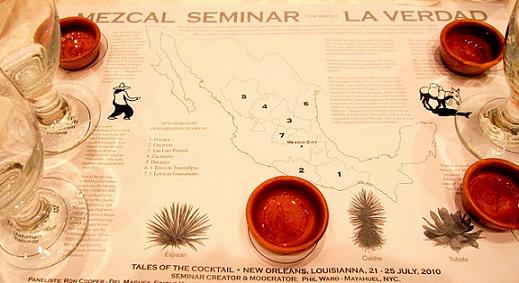
There’s mezcal and there’s Del Maguey. You may have heard me talk about Del Maguey mezcals and the line’s founder, Ron Cooper, in the past. A session with the gentle yet passionate Ron (like his mezcal seminar at 2010 Tales of the Cocktail) is an experience you’re not likely to soon forget. Even the way he describes fermentation stays with you: “wild creatures eating sugar, farting carbon dioxide, pissing alcohol!”

I’m leaving for Mexico next week, so sipping Del Maguey was getting me in the south of the border mood — even though I’m going to Tequila vs. Oaxaca, where most mezcal is produced. For the unfamiliar, mezcal is a spirit made from the heart (piña) of the maguey, an agave plant native to Mexico. Piñas are roasted underground, giving mezcal its distinctive smoky properties. Mezcal is the peaty scotch of tequila, which by definition is a mezcal made specifically from blue agave in Tequila, Mexico.

One thing I learned in Ron’s seminar is that traditionally, mezcal was rarely oak-aged for any length of time — more aged mezcals are being produced purely to gain in competing markets. Similar to tequila, mezcal styles include joven (literally “young,” and in this case referring to a silver liquor); blanco (white), which must be bottled within 2 months; reposado (rested), which ages 2-12 months in oak; anejo (mellow), aged a minimum of 1 year in oak; and the rare Pechuga (chicken breast), which can be triple-distilled with everything from fruits, nuts, white rice, to, yes, chicken.

Mezcal is usually drunk neat and you’ll find many in the Del Maguey line available by the shot at Nopalito. Places like Oakland’s Tamarindo Antojeria, with their new tequila bar, Miel, serve cocktails like the Mezcalito – ($12) with Del Maguey’s Creme de Mezcal, fresh orange and volcanic salt rim.

I’ve had the privilege of tasting most Del Maguey mezcals, each one a revelation. Here’s a few recommendations (available locally at Cask and K&L Wine Merchants):

Chichicapa, ($69.99) –  After multiple tastings, this may be my favorite for all-around balance. It marries the best elements of smooth smokiness with citrus. Despite a surprisingly light nose, there’s spice, chocolate, even mint on the finish. It reminds me of a fine coffee mole: succulent, spiced, earthy.

Crema de Mezcal ($39.99) – One of the more affordable in the line, this single village mezcal is made from unfermented agave syrup collected during roasting and exhibits a smoky, earthy sweetness with creamy texture. Works as a great introduction to mezcal for the uninitiated.

Mezcal Vida ($38.99) – Newer in the line, the Vida is another fine intro to mezcal: a pure, straightforward expression. Produced according to 400-year tradition with nothing but the agave heart and water, it’s bright with notes of fruit and sweet grass.

Tobala ($119.99) – Tobalá is a sophisticated level of mezcal, taking around eight Tobala piñas (hearts) to equal one piña from the most common maguey plants. Though fruity on the nose, the taste is elemental… smoke intermingles with tropical fruits and dusty cinnamon, with a long, smooth finish.

Minero ($69.99) – From the tiny village of Santa Catarina Minas, this mezcal is double-distilled, giving it greater smoothness with a floral essence tasting of warm honey and fig.

Santo Domingo Albarradas ($69.99) – Citrus and roasted pear combine with wood for a clean, dry mouth feel.

San Luis del Rio ($79.99) – Spice, fruit and ubiquitous smoke hit you on the nose, but there’s mineral citrus and volcanic earth inherent in this recent release produced two hours south of Oaxaca.

Pechuga ($200.00) – Pechuga starts with a double-distilled Minero base, to which 25 pounds of wild mountain apples, plums, red plantain bananas, pineapples, almonds and a few pounds of uncooked white rice are added to each 75 liters of mezcal for distillation round three. Though there is no taste of chicken, a whole chicken breast (minus the skin) has its excess oil removed while cleaned in water, then is hung over the still for a day while spirituous vapors condense into a clear liquid that drips from the bird into the mezcal. With intense citrus on the nose, this fruity spirit evokes earth but is a bright counterpart to the smoky, rocky soil of other mezcals. All that fruit imparts a robust fall glow by way of a gentle spring.

Subscribe to Virgina’s twice-monthly newsletter on SF’s hottest tastes and tipples, The Perfect Spot


Hold onto yer Wiggs, change comin’ to Western Addy

0

Morgan Fitzgibbons isn’t thinking small when it comes to goals for his Western Addition sustainability group, the Wigg Party. “We want to make our community a leader in the transformation in resilience,” he tells me during our coffee date to discuss the group’s upcoming anti-boycott “carrotmob” at Matching Half Cafe (Sat/23). 

It’s no coincidence that his language sounds a little new age-y. The basis for Fitzgibbons’ vision for the Wigglers seems grounded in the PhD of Philosopy, Cosmology, and Consciousness he received at California Institute for Integral Studies. “We’re these sacred beings,” he tells me earnestly of his San Francisco community. “This is a sacred movement – I want people to look back in a hundred years and see that.”

Woo-woo? Well yeah, but hold your jaded mutterings until you hear what the guy’s done with his convictions in “cosmological evolution,” as he puts it. Fitzgibbons has assembled a core group of Western Addition residents who operate in four different arenas of turning the area around SF’s “Wiggle” (the well-trafficked bike route through the Panhandle and between the hills in Lower Haight and Duboce Triangle) into a leader in scaled-back, neighborhood-focused living.

Bicycling barristers: Morgan Fitzgibbons and Wigger Dave Bryson on a city-wide urban farms bike tour. Photo by Jenny Sherman

Their areas of attack, you ask? There’s a sustainable business group, who works on incentives for local outfits that find ways of greening their ways. For example, this Saturday’s carrotmob (you can read more about the nationally recognized concept here) is a concentrated effort to storm Matching Half’s doors with business in support of their pledge to buy a bike trailer to transport farmer’s market-purchased goods, switch to organic milk, and chuck the plastic wrap for reusable food containers. 

There’s also a local food group who works with local markets to freecycle unpurchased produce at the neighborhood’s Hayes Valley Farm, a “rescaling” group focusing on ways to limit commercial consumption, and the Wiggle Transformers, who are collaborating with the SF Bike Coalition on the Wiggle portion of their Connecting the City Initiative, a comprehensive plan to improve bike passage throughout San Francisco.

Like I said, comprehensive. And most of the core group – which Fitzgibbons pegs at around 20 party members – are under 30 years old. Which is neat-o, and most likely made possible by the group’s party ethos when it comes to fighting for what they believe. I mean, I say fighting but I think I really mean loving, or something equally hippie. A bunch of them live in a place called the Sunshine Castle, for god’s sakes, where they throw “shenanigans” (according to Fitzgibbons) after-parties for their events, like the recent 10/10/10 day of action that saw the Wigglers conduct a 50-60 person bike tour of the city’s urban farms and a coordinated garden plant in collaboration with Kitchen Garden SF

In the works are plans for a Bernal Bucks-esque local currency, which the group hopes will inspire Western Addition residents to patronize more heavily the wealth of small businesses along the Divisadero Corridor and surrounding areas (holler, happy hour at Bean Bag). 

Fitzgibbons says the hyper-localism of the Wigg Party is perfectly suited for the history and relative youth of the Western Addition neighborhood.

The Wiggle itself provides a apt symbol for the group. The Wiggle Transformers’ work is making bike traffic better for everybody, but also a physical passage that Fitzgibbons hopes will say “you’re stepping into a different place now” to bikers entering the Western Addition.

“San Francisco has always been a seed of revolution,” he reflects. “Of the younger neighborhoods – the Mission and Western Addition – Western Addition is a lot less nihilistic. With University of San Francisco near the area, there’s always going to be a lot of young people living out here, and that’s who our message resonates with. It’s such a new community.”

This last comment raises a red flag in my mind. The parties, the bike tours, it all sounds grand, but given that all this is coming from a twenty-something guy with a complicated mullet and a hoody, how much does the Wigg Party truly represent the Western Addition, an area that’s been wracked by recurring waves of gentrification and is subject, like everywhere else in the city these days, to ever-increasing rent prices and displacement of long time residents? Despite the free food at Hayes Valley, are we being sustainable, or are we being hipster-sustainable? 

“To be a truly successful movement, we’ll have to organize everybody,” Fitzgibbons says, who himself has lived in the neighborhood for three years. Among those that regularly attend Wigg meetings, there is but one long-time resident, he tells me, who plays an active role advising on how to better integrate with the neighborhood’s ongoing goals and activities. Past that, “there’s tacit support among the long-term residents, and we get a lot of family participation in our Wiggle events,” Fitzgibbons tells me.

But I trust that he’s learning as he goes. After all, in explaining his philosophy on activism to me, Fitzgibbons appropriates that sustainability champion himself: Socrates. “The only thing I know is I don’t know everything,” he smiles. “We don’t have to have all the t’s crossed and i’s dotted, but we can whip up excitement and hopefully inspire people to do this in their communities. Create that showcase.” And if figuring it all out looks like a party in the streets, sayeth the Wigglers, so be it. 

Wigg Party Carrotmob

Matching Half Cafe

Sat/23 3-6 p.m., free

1799 McAllister, SF

www.wiggparty.org


Summer in the fall

0

arts@sfbg.com

MUSIC As I sit sipping some morning coffee, Elizabeth Morris of Allo Darlin’ is wrapping up an unseasonably sunny London afternoon. “I don’t know what’s happening, but it’s really warm weather,” she says over the phone. “The last week was really cold and miserable, and then the last two days have been absolutely beautiful.”

It seems fitting to be discussing Allo Darlin’s self-titled album with Morris on a day when the sun won’t be denied. You’d be hard-pressed to find a more perfect “summer” album released in October. Full of shimmery electric guitar, tambourine shakes, and bass lines that would sound at home on lost Motown cuts, the group’s music oozes charm, occupying some sort of space between Belle & Sebastian and a modern, garage-y spin on the Shangri-Las. Out at the forefront of it all is Morris with her ukulele and enchanting vocals.

Originally born and raised in Australia, Morris moved to London five years ago, shortly after finishing school in Brisbane, hoping to do something with the songs she’d begun writing. In Brisbane, Morris doubted her talents and ability to fit in, but London’s music scene proved to be a much more fertile ground for her. “Brisbane at the time was really grunge-y, noise rock, avant-garde kinda stuff — which is cool, but I felt really out of place and would never have felt confident playing little pop songs,” she explains. “I’d definitely written a bunch of songs, but I thought they were all pretty much rubbish. I didn’t feel like I’d written anything good until I moved to London.”

Once settled in London, Morris fronted the Darlings, a group made up of coworkers from the TV and film sound production facility she worked at. After that group dissolved, she began playing solo before winding up with a backing band made up of friends of friends, brothers of friends, and members of some of her favorite local bands. It all came together with a little help from the Boss.

“I was asked to do a Bruce Springsteen song for this tribute compilation and I knew Paul (Rains, Allo Darlin’ guitarist-keyboardist) was really into him. So I asked if he wanted to do this song with me, and that’s kinda how I got started playing with these guys. So we were brought together by Springsteen,” Morris says with a laugh.

In the interview, Morris talks excitedly about some of her musical loves: Jonathan Richman, Steve Martin’s banjo playing, the Go-Betweens, old reggae. She and her bandmates share an affection for Yo La Tengo and their parents’ old Beach Boys’ records. Her earnest and enthusiastic admiration mirrors the tone of her lyrics, which play a major role in making Allo Darlin’ fun. One minute she’s combining lines about love and chili, the next she’s breaking into a verse from Weezer’s “El Scorcho” or singing what’s gotta be the first pop song ever written about Ingmar Bergman’s Wild Strawberries (1957). Her lyrical style is clever and unique — by turns romantic, silly, pensive, or yearning.

“I kind of always write from emotion or feeling rather than anything else. I never really sit and write things in a notebook or compose words,” Morris says. “I’ve tried to write story-songs or songs about characters, but it just never really works. I’m not very poetic, I guess. I’m better at seeing things how they are, trying to put them into words with a nice melody and seeing what happens.”

Allo Darlin’s upcoming tour marks the group’s third trip to the U.S., but it’s their first time in California. Despite the impersonal nature of a phone conversation, Morris’ excitement is palpable. She’s even picking up some American slang. “All the bookers say ‘psyched’ — like ‘We’re psyched that you’re coming.’ It’s really cute,” she says, laughing.

“So yeah, we’re psyched to be doing the West Coast.”

ALLO DARLIN’

with Eux Autres, Terry Malts

Wed/27, 8 p.m.; $10

Rickshaw Stop

155 Fell, SF

(415) 861-2011

www.rickshawstop.com

How they’re sitting

182

caitlin@sfbg.com

I’ve been hanging out with the Haight Street kids. Over the course of a week or so, I smoked weed, drank malt liquor, witnessed nasty run-ins with police officers — all events that anyone who has walked down the sidewalks of that legendary street would expect. But I also met people who’d give away their last dollar to a friend, people who know a thing or two about community, and people who don’t see sidewalks only as thoroughfares to commerce.

Ironically, though the homeless kids on Haight are the explicit inspiration for Proposition L, the sit-lie measure on the Nov. 2 ballot, their voices have been significantly absent from the vitriolic debate on its merits and faults. Ironic because of all people, it’s these young men and women — and the citizens of San Francisco who interact humanely with them — who could teach us the most about what public space in San Francisco could be.

I didn’t just stand with a notebook, fire questions, and walk away. I took a seat and spent time with the kids, to see for myself whether its true that they’re harassing people, letting their dogs run amok, and generally ruining everyone’s lives as much as sit-lie supporters say they are. That it turned out to be uplifting was an added bonus. I got to see what many don’t on their way to shop for souvenir bongs, retro dresses, and designer skateboards — the reason young people from around the country come to the neighborhood.

It doesn’t have anything to do with fancy Victorians and boutiques, which may explain the disconnect between the street kids and their detractors. They come for the legacy of individuals brave enough to slough off social mores that Haight-Ashbury residents are so ostensibly proud of — not to mention the companionship of others who are comfortable with their rejection of and by society. They come to share stories and pipes and encouragement, and it was cool to watch a streetscape in San Francisco that wasn’t geared solely to commerce.

And while the young people I talked to told me how much they liked to travel, to live free of convention and without ties to the workday world, after a while most acknowledged that they had left behind families who couldn’t or didn’t care for them, home situations that were uncomfortable enough to make life on the streets seem like a better alternative.

Although violent incidents, uncivil behavior, and threatening dogs are well-documented by other news sources, I didn’t see any of that when I was hanging out on Haight. That doesn’t mean that these things don’t exist — but it might suggest that some of the strident supporters of Prop. L are seeing what they want to see.

SPANGING

Steven, who asked us not to use his full name, is 20 and homeless. He grew up in Stockton, became a welder after high school, then decided he “didn’t want the hassle” of staying put for a wage job. His fingernails play host to an ungodly amount of dirt, but his tight blonde curls, pretty golden eyes (“they look like a lion’s!” says one friend in amazement) and mellow, generous demeanor make him a popular hub among his homeless peers.

It doesn’t hurt that he sells weed, small amounts at a time to passing tourists and acquaintances. He silently passes a pipe around to his companions with the slightest provocation. Steven approached me on the street before he knew I was a journalist, a fact that seemed to make little difference to him.

He says he came to the Haight “for the people,” for the area’s reputation of open souls and unconventional artists that originated in the glory days of Janis Joplin and the Grateful Dead. Like most of the kids I talked to, he eschewed the often dangerous shelter scene to sleep in Golden Gate Park or nearby Buena Vista Park despite the police surveillance that could result in spendy fines for park camping.

Although Steven’s worldly possessions fit into the large camping backpack he carries with him 24 hours a day, and even though he’s been living on Haight less than nine months — broken by a jaunt to Eugene, Ore., where he found it “too rainy” to join the town’s expansive street kid community — he doesn’t plan on being homeless forever. It’s just that nothing about this economic climate inspires him to sell his freedom for a paycheck. He plans to go to a four-year college eventually. He sees an education as the only way to get a “real” job. “But until then, why not do this?” he asks. I’m not sure if he’s waiting for my answer.

“This” is sit on Haight Street and “spange,” the term used for “flying a sign” and asking shoppers and neighbors walking by for money, often in a creative way. Of the many crimes street kids are guilty of in the eyes of supporters, spanging is the only one Prop. L would effect.

If Francisco voters approve it, anyone who sits or reclines on the sidewalk (with exceptions for the handicapped and those with permits — but not for the tired, workers on breaks, or people waiting for buses) will be subject to a fine of $50 to $100 for the first offense and $300 to $500, or a maximum of 10 days in jail, for someone found guilty twice within 24 hours of unduly supporting his or her body on the sidewalk between 7 a.m. and 11 p.m. Similar laws can be found up and down the West Coast — although Portland’s was pulled from the books last year after being found unconstitutional because it targeted the homeless.

I ask street kid after street kid why they’ve chosen this lifestyle. Many wouldn’t have it any other way. “Why do people want us off the street?” says Oz, a 21 year old from upstate New York who deals alongside Steven. “Probably because they can’t do this themselves.”

Though I’m skeptical at first, after a while I see why the unconventional group of “travelers” on Haight choose to spend their time spanging. Conversations get struck up with the most unusual people — the old hippie who bought a new Mad Hatter cap for the weekend, the suburban woman who might or might not like to buy some weed (she can’t decide). When a few businesses ask us to move so they can sweep the sidewalk or clear a doorway, the street kids I’m watching relocate with little protest. Many who walk past Steven seemed to find humor in his sign, which that day reads “Are you one paycheck away from having this be your job too?” He says he likes to switch his message daily. “Keep it fresh.”

By hanging out with the spangers, I get to see a Haight Street with human interaction at its core. People walk by, often dropping off surprisingly generous gifts: a ex-Grateful Dead roadie with a massive beard who lives in Fairfax and stopped by the neighborhood for a quick lunch with his daughter parks in front of Steven’s group and approaches them. “You kids hungry? You look like you could use a pizza.”

He emerges a half-hour later with a large cheese pie and drives away after chatting for a few minutes about the old days, to the glee of the group (many of the street kids are Dead Heads). The kids eat their fill, then start handing out the remaining pizza to people walking by, a comic role reversal. “I like to support the community — they get back all the money they get sucked out of them,” Steven tells me.

“NARCOTIC FUELED, ANTISOCIAL THUGS”

The campaign to put a sit-lie ordinance into effect in San Francisco kicked into gear with a Saturday morning stroll. As San Francisco Chronicle columnist C.W. Nevius — who regularly publicizes complaints against the Haight street kid culture — reported Feb. 27, Mayor Gavin Newsom recently relocated to the neighborhood and saw evidence of drug use on the main stretch of Haight where he was walking with his infant daughter. “As God as my witness, there’s a guy on the sidewalk smoking crack,” Newsom reportedly said.

The mayor threw his support behind a sentiment already being voiced by the Haight Ashbury Improvement Association, a resident-merchant alliance in the area. HAIA sees the street kids as disruptive outsiders. “These are not the flower children of the 1960s. It’s narcotic fueled, antisocial thugs who act like a quasi-gang,” Ted Loewenberg, president of the association, was quoted as saying in Business Week.

Adds the Prop L website: ” … the Haight-Ashbury district — once synonymous with peace and love — this corridor is now a hot spot for street bullies, pit bulls, and drug abuse.” It’s a deft cultural lobotomy that dissociates drugs from the Summer of Love, and a devious one that implies that street kids weren’t major players in that social revolution.

As for the bullies, I didn’t see any violence from the street kids in the days and nights I spent out on Haight Street.

I couldn’t get cops to talk to me about it, either. There were two police officers on foot traversing Haight’s main strip and I introduced myself when they stood chatting with a coffee shop owner in the afternoon sunshine and asked them about the sort of neighborhood complaints they regularly received about the street kids.

“No comment,” Cop No. 1 told me. Okay, Cop No. 2, your thoughts? “I don’t speak English.”

To my requests that they share their view of crime on Haight, I could get one response: “It’s complicated.” Later, when I returned to write down their badge numbers, they were standing silently, staring at a lone young man sitting against a wall next to his skateboard. The kid was looking at the ground. Eventually they handcuffed him and put him in a police car while he pleaded meekly about it “only being a little bit of weed — and I was only skateboarding on the sidewalk.”

The most aggression I witnessed from any party took place while I was tapping my feet to a group of traveling bluegrass musicians performing around 10 p.m. on a Thursday. Their cover of Del Shannon’s “Runaway” had inspired an older homeless man to strike up a curiously graceful stomp dance on the sidewalk. He was so drunk and fully immersed in the music that the bottle of Jim Beam in his flailing hand didn’t even register when the police officer approached him and asked, “What do you think you’re doing?”

The musicians began to pack up. “I could have told you this would happen 20 minutes ago,” one tells me, nodding toward the old man. “Don’t say a word or I’ll fucking take you in,” said the cop, who poured out the half-full bottle and wrote a ticket for the older man, who had made a few feeble protests that ended abruptly with the cop’s obscenity.

The officer said he’d received a complaint about the music, a line I heard from each cop I came into contact with on Haight — including one officer who cautioned a family with a toddler to pack up the bracelets they were selling to pay the towing charges on their van. “People don’t like to see people with kids out here, you better move it along,” the cop said.

“I’ve seen aggression because people start shit,” Steven tells me when I ask him about his experience with street violence. A man has just walked by chanting “dirty, dirty” in Steven’s and his friends’ faces. “They don’t like to see people sit on the ground.”

“There are people who come down here just to make themselves look better,” chimes in Oz. “Like ‘ha ha ha, I have air conditioning.’ All kinds of people start shit”

I asked if they knew they were the focus of a massive political debate in San Francisco. “No, what debate?” asked Steven.

“You mean sit-lie?” Oz asks. “It probably has to do with tourism. I don’t see why else they would do that.”

Even the most well-known recent case of Haight Street violence — which was reported June 11 by New York Times reporter Scott James as having “inspired a grass roots movement” that propelled Prop. L, seems to be a question of mutual aggression on the two sides of the street kids issue.

The story goes that a man named Thomas was hosing down the sidewalk in front of his house — a practice that is growing more common in the Haight to make property inhospitable to the homeless. He found himself “surrounded and engaged in a heated confrontation,” as James reports. Thomas reportedly shouted “Do you want a piece of me?” and a scuffle erupted between him and Chad Potter, a 26-year old homeless man, culminating with Potter being arrested and set free the next day. Thomas says Potter and friends continued to harass him after the incident.

James Orr, 24, is busking with his flute when I meet him sitting by a store that sells flowing hippie skirts and bumper stickers that command future tailgaters to “Coexist.” He’s looking to trade his wind instrument for a banjo, which he plays in addition to guitar. A rolling stone, Orr is in town for the Hardly Strictly Bluegrass festival that weekend — he travels the country going to festivals, and even scored a job recently at upstate New York’s Mountain Jam for the event’s blog site, taking photos with a borrowed camera of performances by (ex-member of The Band) Levon Helm and Michael Franti.

Orr’s quite erudite and eager to “say something articulate” about the situation of the street kids and travelers on Haight. He tells me that yeah, he’s seen aggression go down here on occasion. But he resents those situations leading to laws against sitting on the street.

“It’s another example of the few that do mess up casting a bad light on everyone else. Most of us just want to make some money, put a smile on someone’s face.” As a busker, he finds it baffling that people who are against the presence of the homeless would want him to stop plying his trade by making sitting illegal. “You should point out also that it’s how we make money!” he exclaims.

THE PIT BULLS

Snarling ruffians on frayed rope leashes stalking the city streets! As evidenced by the Civil Sidewalks campaign, dogs — specifically pit bulls — are another source of controversy on the pavement. Last December, SFist identified a C.W. Nevius tirade against the breed as example of its ongoing feature “Pit Bull Hate Watch.” The paper has pointed out that the demonized dogs can make great members of society and are often the subject of a media smear campaign.

But for many homeless youth, their dogs aren’t the means of imposing chaos on the gentry. They keep them for the same reasons we do: friendship, protection, love — and during the days I spent on Haight, it was a pleasure to pat the doggies while interviewing their owners. Most were as gentle and laid back as the kids they sprawled next to, a reasonably expected result from the 24 hours a day of socialization with humans that the homeless lifestyle affords.

Smiley is an inveterate street kid unlikely to go indoors anytime soon. “I don’t know how to do anything else,” she tells me. Now in her early 20s with a shock of magenta, purple, and dirty blonde hair and fanciful purple ear plugs that pierce her lobes before spiraling nearly to her shoulders, she’s been traveling since she was 12 — “a Bohemian by blood,” as she puts it. Not only did her parents move their household regularly throughout her childhood, but their heritage is Romani, from the traveling tribes of Eastern Europe.

For Smiley, travel outside the bounds of business trips and weekend vacations is her life’s norm, and Haight Street’s legacy resounds in her nomadic soul. “Most of the people that travelers idolize were here,” she tells me.

Smiley has a year-old behemoth black mutt with droopy eyes. He obliges her as she leans into him holding her spanging sign, which tells the world the pup needs Benadryl for an upcoming van ride to Southern California. “He’s carsick,” she tells me sheepishly. She admits that the dog can limit her mobility on public transportation, but his benefits outweigh his cost. He keeps her warm at night — and, more important for a young woman who is often on her own, he protects her. For a moment breaking out of tough girl mode, she tell me, “oh yeah, I don’t have to worry about anything when he’s around.”

We talk about the perceived threat of dogs on Haight Street. “They want us to leash them, which I guess I understand — but look at that!” A well-dressed woman in her 40s has her Chihuahua off its leash and it has run into the busy street, with her in hot pursuit. “That dog’s out of control,” Smiley smiles.

PISS

Sitting against a mural on a wall where Haight meets Clayton, I watch Piss, an outgoing, gangly guy in his early 20s with a curly blonde mohawk in a growing-out stage. I ask him where he got his unusual moniker. “I like to get drunk and piss on things,” he says.

Well. Originally from Billings, Mont., Piss has been traveling since his mid-teens. “Let’s just say me and my family don’t get along,” he tells me.

His answers to my questions about why he’s on the streets follow a path I see with many of the younger homeless youth: they insist that the lure of the open road was too hard to ignore, but eventually reveal that their parents kicked them out or were unable to care for them at a young age. Many, like Juju, another small-time weed dealer I met, bounced from family member to family member until frictions with them and their significant others left no recourse but the street.

Piss says he’s been to every state in the country, plus Canada and Mexico. With so many years on the road, he is, as they say, letting his freak flag fly. Piss has a blue, vaguely tribal tattoo that curls around his right eye. He’s wearing white tube socks on the dirty pavement. At first glance, he could be crazy — and maybe he is. Whatever his motivation for travel, it’s not to blend in with the locals.

Piss is also actively spanging passersby in a manner that oscillates between off-putting and charming. “You got some money for some crack and ice cream?” he inquires of a passing trio of young women. They shake their head, but before they’re gone completely he continues “I’m just kidding! I don’t like ice cream! Hey miss, you have a nice ass … day!”

Over the course of the hour that I watch him a stand up routine emerges. Beneath the grime, he’s a charismatic kid with an enviable sense of comedic timing.

As he ranges up and down a 20-foot stretch of sidewalk, belly laughs are elicited from a few targets, dollars surfacing here and there. One man carrying an accordion and wearing an expensive-looking pair of leather Chaco sandals donates a handful of strawberries to Piss and to those of us acting as his entourage.

But Piss’ play is a little rough — like a big puppy — and he’s alienating the people who don’t crack up over crack. A couple of people walk away quickly from his petitions shaking their heads over one of the zingers, their suspicions confirmed about those rowdy Haight Street kids.

He’s not doing anything more than what young travelers do all over the world. Thousands of families bid see you later to young adults en route to Prague, Peru, and Perth each year, where they lug their dirty backpacks through the world’s most wondrous towns.

Of course, these kids aren’t sleeping in the public parks of Cuzco — but in countries with plenty of cheap travelers’ hostels, you don’t have to. And though international flights cost more than the van rides and freight train hops that brought in most of the Haight Street kids, backpackers abroad do the same things: take fewer showers and flaunt social norms — not because they want to cause a problem for the natives of the lands they pass through, but because they are young, and discovering themselves for the first time, and can’t see much past that. Piss isn’t being violent, but he has lost the language to deal with “normies” and he’s seen as unpredictable to the not-traveling, not-disenfranchised around him. Which to those who see public space as a place that should be predictable, mean he’s a threat.

The clash between the settled and transient in the Haight is not new. Indeed, it’s what made the neighborhood famous. As far back as the mid-1960s, officials have been simultaneously fighting and publicizing the Haight’s worldwide reputation as a traveler’s meeting place, a place with a culture of loosened societal moorings and enlightenment through free love, drugs, and art.

Businesses claim that the omnipresent homeless drive away paying customers from Haight Street. It a curious claim in an area where the vagrant hippie culture made the place the tourist attraction it is today, and one that is belied by the entry of Whole Foods, which plans to open a branch this year at a lot at Haight and Stanyan vacant since 2006. When contrasted with the Tenderloin — another neighborhood with a visible street community — and its chronic problems attracting a grocery store, the Haight street kids’ effect on local commerce doesn’t seem to be all that grave.

They certainly aren’t making the place any less desirable of a neighborhood to live in for the wealthy. Real estate website Trulia.com puts the median listing price for homes in the Haight-Ashbury neighborhood at $962,264.

The Haight Street kids I spoke could all too easily see what sit-lie would mean for San Francisco. When you control public space, you control who is in public space — and they have no illusions about whether or not they’re included in the perfect world of those who push the measure. If it’s enacted, the subculture that made Haight famous — part of which still survives today in a different form — would be gone, leaving it sterile and safe for the head shops and clothing boutiques, an even less authentic version of the ’60s love fest their patrons come to the street for. One wonders if a scrubbed-clean Haight is even what the residents and business owners who have thrown their lot behind sit-lie truly want, or if they’ve been duped into sit-lie’s efficacy by the same forces that on a national level have convinced us that curtailing civil liberties will lead to freedom for the real Americans. It comes down to this: What do we want Haight Street to be? Do we want to capitalize and benefit from the accepting, messy, wildly creative legacy the 20th century endowed our streets, or do we want a clean, friendly, outdoor mall? The powers of homogenization and gentrification can demonize the little heathens on Haight Street all they want, but they’ve miscalculated if they think that they don’t belong in San Francisco — after all, Haight created them, not the other way around.

Our 44th Anniversary Issue also includes stories by Sarah Phelan on SF’s disadvantaged youth, Rebecca Bowe’s look at ageing out of the foster care system, and Tim Redmond’s editorial on the issues facing our rising generation

Whiskeyfest 2010 highlights, part two

0

Earlier on sfbg.com, Virginia Miller turned WhiskyFest into Whisky Week, meeting with seven different distillers who’d come to attend the Fest from such far-flung booze berths as Kentucky and Scotland. Here’s part one of her scotch-heavy Whisky Week highlights. Read on for part two: conversations with bourbon and rye distillers.

10/8 COFFEE WITH JIMMY RUSSELL OF WILD TURKEY – The morning before WhiskyFest I learned about a company that’s been a Kentucky mainstay since 1855, and met with its master-distiller since 1954. Jimmy Russell comes from a family of distillers: grandad, dad — who worked for him at Wild Turkey in the early years — and now Russell is distilling with his son, Eddie. Jimmy could not be more charming. An older Southern gentleman, he’s soft-spoken, with an adorable sense of humor that I discovered as we chatted over coffee.

Russell makes Wild Turkey bourbons and ryes “the old-fashioned way” and says he doesn’t even tell his son all of his distilling secrets. They use barrels charred four times and made of white oak mainly from Missouri, Kentucky and the Ozarks of Arkansas. Their basic bourbons are a blend of six, eight and ten year-aged, with a lower proof than some bourbons, generally 108-110 proof. He explains lower proof is actually more costly as there is more water added to dilute higher proof bourbons. 

The distiller’s yarns about his town of Lawrenceburg, KY are fascinating, particularly because it’s in a mostly dry county where no drinks are allowed in restaurants and bars do not exist. “We’re not dry, we’re moist”, he says, as there are a few limited options to purchase drink in the area. It was only a couple years ago they secured a souvenir liquor license, one of many complicated hoops to jump through to in order to allow tastings in their actual distillery. Russell says he adheres to the Southern Baptist tradition that one only drinks hard liquor for medicinal purposes. He qualifies in a gentle, Southern drawl, “I keep a cough pretty much most of the time”.

10/7 SIPPIN’ WHEATED BOURBON WITH PARKER BEAM – Amidst the annoying happy hour din at Bloodhound last Thursday night, distilling legend Parker Beam was hanging out with the Heaven Hill crew and a few of their whiskeys. They pulled out a bottle of brand new Parker’s Heritage Wheated Bourbon, an earthy, wood-laced wheat beauty whose mix blends in corn and malted barley.

Parker raised a glass as we attempted to chat above the din. Hearing took some effort as the delightful Parker speaks in a slow, Southern drawl that lulls one into a real enjoyment of the moment. His passion for distilling shines in his calm demeanor. He’s distilled for decades, both with father, Earl and son, Craig. And yes, he’s related to “that” Beam. His grandfather and namesake, Park Beam’s, brother was the storied Jim Beam (aka James Beauregard Beam). Parker is part of a royal distilling heritage. I asked if his son had any children who might next enter the fray. “My son has five daughters, so no,” he surmised. “But who knows? Maybe we’ll have the first female bourbon distiller someday.” It wouldn’t be the first noteworthy accomplishment in the Beam family’s rich history.

10/10 BACON BRUNCH WITH KEITH KERKHOFF OF TEMPLETON RYE – Setting: Reza Esmaili’s Long Bar. Food: delectable spread from chef Erik Hopfinger. Heaping bacon piles of Eden Farms Berkshire Pork — And don’t forget the rye. Templeton Rye from Templeton, Iowa, to be exact. The brunch was in celebration of this delightful rye — previously restricted for sale to Illinois and Iowa — finally becoming available in San Francisco.

Templeton is so small batch that you won’t find it in any Bay Area shops outside of SF, where our usual suspects, like Cask, Jug Shop, and K&L all stock the brand. Assistant master-distiller Keith Kerkhoff (I wrote about a Whiskies of the World seminar with their president, Scott Bush earlier this year) and brand manager Michael Killmer hosted us for a relaxed, festive brunch where the coffees were spiked with the rye and topped with Fernet whipped cream. Welcome to SF, Templeton.

Waxing poetic with Maker’s Mark at The Alembic

10/10 DIPPING WAX WITH KEVIN SMITH OF MAKER’S MARK — At The Alembic, Kevin Smith, the master distiller of Maker’s Mark, spent a couple hours with a small group, tasting through various ages of the bourbon from white dog to pours that were years older than the finished Maker’s product, so that we could get an idea of when a spirit is ready. From a somewhat neutral base cut down to 90 proof, the bourbon gained most of its flavor from barrel aging, and we sampled a woody 12-year version that came off astringent and tannic, though not unpleasant. Smith used the two to highlight their choice of the smoother, rounder balance of the fully matured final product which is aged roughly years.

We finished with Maker’s 46, their first new product in 50 years. I’ve had it a few times and it makes sense Kevin said the inspiration was rye whiskey with advanced spicing, toasty oak and that “cinnamon bite.” It’s certainly my preferred Makers. Thanks to The Alembic for serving us a gorgeous, bright Maker’s 46 cocktail: sweet vermouth, absinthe, maraschino and a mint garnish. But the session wasn’t over until we had hand-dipped glasses in Maker’s signature red wax, a tradition established from the chemist wife of Bill Samuels, Sr. (Maker’s original owner). She loved brandy and wanted the bottle shape and wax to imbue Maker’s with a brandy elegance.

Interestingly, California just surpassed Kentucky as Maker’s number one-selling US market. Raise a glass, shall we, to the pioneers and tastemakers who brought love of spirits to share during this past whirlwind week of whisky.

Subscribe to Virgina’s twice monthly newsletter, The Perfect Spot

Appetite: WhiskyFest 2010 highlights, part one

0

“[Whisky] feels appropriately intellectual: a drink you can wrestle with, linger over, and appreciate with all its nooks and crannies.” – Victoria Moore, How to Drink

WhiskyFest turns into Whisky Week with many of the world’s great master distillers and brand ambassadors in town from the reaches of Scotland and Kentucky for a tasting event of nearly 300 whiskies. I had the privilege of meeting with seven different distillers – some met with me over coffee or lunch, others at intimate gatherings. Impressed by the wide range of approaches, styles and personalities, I could easily write an article about each one and their respective distilleries. I will share highlights, this time with Scotch master, Richard Paterson, from a Charbay whiskey dinner, and tastes from the event. Part two will be conversations with bourbon and rye distillers.

10/8 LUNCH WITH RICHARD PATERSONRichard Paterson, known as “the nose” for his impeccable nose and taste, has been Whyte & Mackay’s master blender for decades. He’s one of the world’s leading scotch experts, author of the book Goodness Nose (which I savored as “homework” all through Whisky Week). To be part of one his seminars (such as at WhiskyFest Friday night), is to be bombarded with dates, history, uproarious expertise, irreverence, drama, laughter. When one lucky member of the class samples Dalmore Sirius (which has sold at up to $60,000 a bottle!), Paterson sets off a mini-rocket filled with confetti. Fireworks. Revelation. Kind of like tasting it myself…

I had the privilege of an intimate three hour lunch over food and the Dalmore line with Paterson at Wayfare Tavern. We covered the range from 12 year to King Alexander III scotches (which I first had at Whiskies of the World). The chocolate, marzipan, tropical fruit of King Alexander III remains a Dalmore highlight for me. It’s the only single malt in the world finished in six different woods (Port, Bordeaux Cabernet Sauvignon, Marsala, Madeira, Matusalem sherry, small batch Knob Creek bourbon barrels). Dalmore’s Gran Reserva stood out more the second and third time I sampled it with spiced marmalade, crushed almonds, and sherry notes from the 60% Oloroso sherry casks it’s aged in.

Get Richard started on wood and he says, “The wood is, as far as I’m concerned, the be all, end all.” With a devotion to fine sherry casks (like Gonzales Byass), a key source of Dalmore’s elegant taste profile, they also use a generous amount of American white oak, bourbon casks from Heaven Hill and Jim Beam, which enriches the profile further.

A favorite, which I would happily sip on its own, isn’t bottled: the unaged distillate or, whisky base. It’s amazing how much you can tell of a spirit’s quality by its foundation. I was pleasantly assaulted with an array of tastes from spice and earth to lemongrass in the clear, strong distillate. I finished every drop.

Certainly a pinnacle is reached with the Sirius. The rare opportunity to sample highly aged spirits just a handful times (like two 1800s cognacs in New Orleans or Highland Park’s 40 and 42 year scotches) has opened doors of flavor I could not dream up – this scotch transported me to regions beyond. There are only 12 bottles of Sirius in existence, a ’51 vintage with a blend of Dalmore scotches from 1868, 1878, 1926, 1939. History courses through each drop, while Paterson’s expert blending skills are illuminated here. Rich chocolate earth gives way to licorice and a bonfire smokiness. I count myself lucky.

To drink with Paterson is to learn how to properly nose a glass, how to hold whisky in your mouth for maximum taste (from many seconds, up to 2-3 minutes). One learns how the dreaded phylloxera aphid (which wreaks havoc on vines) inadvertently aided whisky’s growth by making dominant cognac in short supply, creating demand for other drink (read chapter seven in Paterson’s book). But he doesn’t just talk aphids, he brings visuals: big, plastic bugs to illustrate whisky’s unexpected “friend”.

Quirky and colorful, whisky comes to life through Paterson’s interpretation. Intelligent and challenging though the whisky world can be, Paterson retains the intellect but makes it approachable, fun. A Paterson course in whisky education should be mandatory for all would-be and already-avid drinkers.

TASTES – As usual, VIP hour is the time for the rare, the old, the latest, though it was more packed than ever with a mad rush waiting at the door at opening time.  This meant less opportunity to chat with distillers and hear about what you were tasting. A lot can happen in a year and the number of whiskies I’ve had since the last WhiskyFest meant this year was a lot of re-tasting and confirming favorites. Of the whiskies I had not tried, there weren’t a slew of stand-outs.

One that jumped out was a special unlisted, under-the-table pour of George T. Stagg bourbon. Toasty, charred oak warms, rounded out by a raisin-vanilla sweetness. Out of many over-hyped whiskies in the 20-40 year range during VIP hour, Bowmore’s 25 year stood out with a robust profile of salty brine and baked pear sweetness. Glenfarclas 40 year made a statement with tobacco, elegant tannins, orange. But it was many of my usual favorites that remained at the top, including Highland Park’s 30 year, Pappy Van Winkle’s 20 and 23 year bourbons, Parker’s Heritage 27 year bourbon, and Charbay’s incomparable Release II 1999 Pilsner whiskey. It was good to see Wes and Lincoln Henderson (of Woodford Reserve fame) with their new, port barrel-finished Angel’s Envy bourbon – I sampled an early version from Wes way back in December. Also on the non-whisky tip, I was happy as ever to sip a couple Germain-Robin beauties, including their complex Varietal Grappa, and oaky Coast Road Reserve brandy.

10/6 CHARBAY SPIRITED DINNERWith a magnificent sunset from atop the Marriott’s View Lounge as our backdrop, Marko and Jenni Karakasevic of Charbay hold an intimate spirited dinner annually. With plenty of time to hang out with the Karakasevics and meet fervent food and drink lovers at the two tables, the highlight was, of course, drinking Charbay’s incomparable spirits. Starting off with refreshing Green Tea Aperitif paired with Kumamoto oysters on the half shell, we then moved to one of the stand-out white whiskeys in existence: Doubled & Twisted Light Whiskey.

We moved on to what qualifies as one of the best things I ever tasted in my life (now, and every time I taste it): Release II of Charbay Whiskey. This was the best food match of the night, paired with slow-smoked Berkshire Farms Pork Belly and a mini-tamale in Lagunitas chili mole. Surprise whiskey barrel tastings followed: the Release II, but aged 12 years instead of the 6 years of the current release. At a higher proof, it’s superb, complex, rich.

A Meyer Lemon Vodka  ice intermezzo was a refreshing palate cleanser over basil ice, imbuing tart lemon with almost absinthe-like notes. Dessert was paired with their Black Walnut liqueur. As with most Charbay spirits, it’s a stunning standard-setter in its genre.

-Subscribe to Virgina’s twice monthly newsletter, The Perfect Spot

Appetite: 3 recent food books pique our palates

0

These three books (one factual journey, one memoir, one cookbook) have two things in common: they’re all new this year and centered around food.

TWAIN’S FEAST by Andrew Beahrs — Andrew Beahrs, an East Bay local, displays his affection for the great Mark Twain in this thoroughly researched book. Twain’s Feast explores the history of foods Twain waxed eloquent about that are either gone entirely or slowly making their way back into the American landscape.  Experiencing food and coffee in his European travels “as tasteless as paper”, Twain found American cooking of his time “generous”, “genuine”, “real”. Of course, the prairie hens he grew up with, fresh possum and raccoon, New Orleans’ sheep-head and croakers, and the “heaven on the half shell” of San Francisco’s own oysters and mussels, are largely extinct or rare nowadays.

The book is, yes, a poignant ode to the pre-mass-produced, homogenized, dangerously grown American “food” we now know. It’s also a hopeful challenge to the reader, worded gently in the epilogue: “… choices about what we eat help to determine which American landscapes survive and thrive.”

There are many worthy stories here, both for the Twain aficionado and food historian. What I came away with, besides a reminder to support the craftswomen and men making food and growing animals with care (which we’re heavily blessed with in the Bay Area), was Twain’s insataible passion for robust flavor, a hunger to drink life to the dregs. I relate to the way he eats… and heartily writes about it.

As Beahrs says, “… Twain’s love for a dish was inseparable from his love of life.” Amen.

HUNGRY TOWN by Tom Fitzmorris — Make no bones about it, I have a mad love affair with New Orleans, a city you hear me go on about often enough. Naturally, I ate up (no pun intended) Tom Fitzmorris‘ new Hungry Town, a leading Nola restaurant reviewer both in print and on the radio for decades.

He knows the city’s food scene intimately: its history, key players, essential recipes (included in the book), and the post-Katrina struggle that has brought the culinary magic of the ultimate Southern city back to even greater heights (and more restaurants) than before the storm. His post-Katrina assessments are honest insights into just how torn apart families and businesses were, including his own. But he unabashedly claims: “Food Saves New Orleans”.

I value his commitment to Creole and Cajun as the “default” styles of cooking in New Orleans, essential to the city’s future. He states: “The genius of New Orleans cooking is not that we cook better than anyone else. It’s that nobody in the world cooks our local specialties – except when they consciously imitate us (usually badly, I’ve found). The day that our food fails to be flagrantly distinctive… is the day we become Anywhere, USA. That’s also the day I’m leaving town.”

THE SUNSET COOKBOOK — Cooks take note: 10/19 is the release date of the massive, 1000+ recipe tome that is the latest edition of the Sunset Cookbook. It’s a fine one. Not only are the clean, bright photos dangerous to peruse on an empty stomach, but the book manages to be both approachable and widely comprehensive, with sections on every aspect of a meal you can think of from bread to cocktails to preserves and pickles.

Sunset magazine‘s food editor, Margo True, is also the book’s editor and she maintains a cohesive standard of ‘farmers-market-fresh’ ingredients with regional Western foods. Yes, Sunset magazine is based in the Bay Area, so California ethos displays prominently with international influences married to a rich range of produce. But the styles of cooking cover the world, showcasing food of the West as what it truly is: global.

Many recipes tempt me here, including this snack and shake:

Avocado Fries
SERVES 6 | TIME 30 minutes

Canola oil for frying
1⁄4 cup flour
1⁄4 tsp. kosher salt, plus more to taste
2 eggs, beaten to blend
11⁄4 cups panko (Japanese-style bread crumbs)
2 firm-ripe medium Hass avocados, pitted, peeled, sliced into 1⁄2-in. wedges

1. Preheat oven to 200°. In a medium saucepan, heat 11⁄2 in. oil until it registers 375° on a deep-fry thermometer.

2. Meanwhile, mix flour with salt in a shallow plate. Put eggs and panko in separate shallow plates. Dip avocado wedges in flour, shaking off excess. Dip in egg, then panko to coat. Set on two plates in a single layer.

3. Fry a quarter of the avocado wedges at a time until deep golden, 30 to 60 seconds. Transfer wedges to a plate lined with paper towels. Keep warm in oven while cooking remainder. Sprinkle with salt to taste.

California Date Shake
One of the great foods of the Sunshine State, the date shake is exactly what you want to be slurping while visiting baking-hot date country near Palm Springs. Our favorite shake is the one at Shields Date Gardens, in Indio. Shields uses its own date “crystals”—dehydrated Deglet Noor and Blonde dates (the latter is one of its signature varieties). You can order these online or substitute fresh, as we’ve done here. This shake is sensational with a shot of rum stirred in.

Makes 1 shake (11⁄3 cups) | TIME 10 minutes

4 pitted Medjool dates (about 3 oz.), coarsely chopped
1⁄4 cup very cold milk
11⁄4 cups high-quality vanilla ice cream

In a blender, blend dates and milk until smooth and super-frothy. Add ice cream and pulse a few times, until just blended.

Subscribe to Virgina’s twice monthly newsletter, The Perfect Spot

City bid to bring vendors into Dolores Parks causes an uproar

12

Officials with the SF Recreation and Parks Department are attempting to quell the mounting frustrations of some Mission District merchants and residents who feel that the city shouldn’t allow private companies to operate in a public park, as the department is seeking to do. Even those who don’t necessarily have a problem with inviting more commerce into Dolores Park say the process should have been more open and transparent.

“I like pushcarts,” said Rachel Herbert, owner of Dolores Park Café. “I think they add flavor to San Francisco.” But Herbert is also allowing opponents of the department’s request for proposals (RFP) to set up shop in her store and gather signatures for a petition to “stop the commercialization of Dolores Park.” Herbert, who lives in the neighborhood, said she is helping the effort because “It’s about the process and Rec and Park not really thinking things through and doing whatever they want.”

Mike McConnell, the man behind the petition, holds a similar viewpoint. “I don’t feel that it was adequate outreach before this.” They’re not alone. McConnell currently has petitions in three stores – including his own store, Fayes Video – each with around 100 signatures, along with 700 online petition signatures.

While the controversy is recent, the RFP for the permits was issued in September last year. The proposal stated: “Before entering into permit agreement for the operation of a pushcart in any neighborhood park, the Department will conduct a community outreach process to determine the appropriateness of such a use in the park.”

It’s unclear how much outreach there was beyond a request for applicants posted in the July 31 issue of the San Francisco Chronicle. However, according to Mission Local, department spokesman Elton Pon sent them an email stating that the department mailed out “an announcement of the opportunity to more than 1,000 potential applicants.”

Regina Dick-Endrizzi, director of the SF Office of Small Business, said much of the demand for the permits has come from small time vendors. “Part of this has been an organic growing up of the vendors themselves,” Dick-Endrizzi said. “The mobile food folks have been coming and working and urging us to open up more space.”

Dick-Endrizzi helped vet the applicants in the panel that included members of department and the Mayor’s Office of Economic Development. “I can attest as being part of the committee that they were very careful in making their decision,” she said.

However one recipient of the permits, Oakland-based Blue Bottle Coffee, has received criticisms that it isn’t local enough – city policies encourage contracting with San Francisco small businesses. Blue Bottle is also backed by venture capital firm Kohlberg Ventures.

Its founder recently issued a public letter explaining his position: “I had assumed that since there were published articles in The Chronicle, the Examiner, and the SF Weekly in November of 2009, and January 2010, that the community around Dolores Park was well informed. So it pained me to hear that many of our (hopefully) future neighbors were upset that more outreach had not been done.”

This isn’t the first time a vendor has been allowed to operate in city parks. Nor are they the first merchant with questionable local status. Last August RPD commission voted 6-1 to replace long-time Stow Lake vendor with an out of state suitor. The Chronicle reported “the corporation, which has owned and operated the 1940s-era boathouse for 67 years, couldn’t compete with New Mexico-based Ortega Family Enterprises, which pledged to complete $233,000 worth of improvements to the well-worn building and buy a brand-new fleet of boats.”

Dolores has become a haven for unlicensed vendors selling items such as beer, hot dogs, ice cream, and even pot-laced brownies and truffles. What will become of them? “You pay thousands and thousands for your trailer and for permits and this guy comes around with his little cart and is selling coffee for 50 cents less, what are you going to do? You’re going to call the fucking cops and say get this scumbag out of here,” said local impresario Chicken John.

Dolores Park has traditionally been regarded with a kind of laissez faire attitude by many San Francisco residents. On a warm day it’s not uncommon to see hundreds of chic to cheap layabouts basking on its hills, beer and bowl in hand, without worry in mind. And many-a-cop has seen them too, but rarely do they intervene – and all was well. Maybe that’s another reason why there has been such uproar over the proposed introduction of pushcarts into the park.

Since the uproar, both Blue Bottle Coffee and the other potential vendor nonprofit Cocina have been put in limbo. La Cocina’s executive director, Caleb Zigas, told Mission Local that “he had expected to roll into the park this week and is disappointed by the delay. In the past four months he’s poured $28,000 in grant money into La Cocina’s food trailer, which is now sitting in storage.”

But how long will the pushcarts (they’re actually trailers powered by generators) gather dust in a garage? “For most types of appeals there is a 15-day window after the permit was issued,” said Cynthia Goldstein, executive director of the SF Board of Appeals. However it isn’t a concrete rule. “On rare instances the board will extend the window when there is evidence that the city did something wrong.” In addition, according to Goldstein, there is usually a 15-20 day window between when an appeal is filled and when it is reviewed by the Board. In short, the dilemma may not be quashed by the meeting this evening that the department is holding on the controversy.

The extension would bode well for any NIMBYs since Cocina’s and Blue Bottle’s permits were granted on April 15, 2010 and Sept 2, 2010, respectively.

RecPark was expecting a 12 percent cut on the pushcart profits and hoped to net around $70,000 annually. The pushcarts are just one of the many revenue generating ideas that are currently floating around. RecPark – under its new department head, Phil Ginsburg, who was previously chief of staff to Mayor Gavin Newsom – recently created a partnerships and revenue generating division with the purpose of capitalizing on many of the cities assets.

At the Jan 21, 2010 Recreation and Parks Commission meeting, pushcarts were discussed as a way to ostensibly keep city employees from getting laid off. Other ideas that were tossed out included hosting a production of Peter Pan, renting out parking places for car shares, and an adopt-a-park program; an adopt-a-gardener program was even suggested. The city was broke and was searching for a way to close huge General Fund deficits.

The idea of pushcarts was discussed again at the Feb 18 meeting. Nick Kinsey from the property division of RecPark, told the commission, “We received 18 responses to the RFP and we actually brought six of them in for interviews. As part of the interviews we met with the respondents, we evaluated their qualifications, evaluated their operation plans – in terms of where they wanted to be in each of the parks, in each of the proposed parks, how that would interact with residents and other park users use of the park space and if there would be any conflict there.”

Kinsey continued, “We’re also accepting application on a rolling basis right now. So if anyone is watching and interested in submitting an application for pushcarts, we are accepting pushcarts. Some of our location are maxed out we wouldn’t accept anyone else. But we have plenty of other park spaces where we think this is an appropriate use.”

The meeting of the issue is today (Thurs/7) at 4 p.m. in City Hall Room 416


NSFR(estaurant): My dinner with Dixie

0

All photos by Benjy Feen

I had a blind date with Dixie De La Tour, but I wasn’t nervous. If all else failed, at least she would bring stories to tell. And how – De La Tour is the founder and emcee of Bawdy Storytelling, a randy live series with two events next week (Wed/6 and Sat/9) that will bring writers, comedians, and normal folk-like to the stage to share corset-busting sexcapades with an audience of vicarious pervs.

“I don’t know how this got to be my life,” says Dixie, now installed across the restaurant table from me behind a glass of sweet tea, wearing a dashing fedora and magnetic waves of dyed red hair. Her blue eyes have the intent gaze in them that you can see on people that know how to hold the attention of the room. “I don’t have a degree in it like every other pervert in this town.”

It is true that De La Tour seems to have lucked out on the manner in which she makes her money. By day, she scouts scammers at Fling.com, a national dating site for casual hookups. Perhaps she’s a natural fraud-finder – the woman’s spent a life facilitating honest, fun sexual encounters. She’s also a contributor at She Loves Sex, a collection of blogs about all things sexual related to women, told in a knowledgeable women’s voice. For the site, De La Tour recently interviewed Rebecca, a soccer mom from Florida who has started a successful chain of swinger’s parties in between PTA meetings and classes towards her master’s in public relations. 

Bawdy Storytelling, started four years ago, runs through a different theme each month. Adderall Diaries writer Stephen Elliott and that webmaster savior of the perpetually broke gadabout, Johnny Funcheap will be spinning yarns at next week’s Litquake edition of Bawdy (Wed/6), which actually is not themed at all, but rather a collection of the all-star lineup’s “best true stories.”

Maybe she’s got no degree, but Dixie does have a history in the psychology of human sexual relations. Over her rum cake — and to the passing interest of our server — De La Tour tells me that she got the party started at the first Kinky Salon XXX edition. Well c’mon Dixie, story time. She obliges. 

Dixie De La Tour fires up the Bawdy crowd

Having transplanted from the Blue Ridge Mountains of Virginia and an unsatisfying heterosexual monogamous relationship with a bookie, De La Tour was in her element in late ’90s San Francisco. “You know that girl whose always down for the sex party? People would call me up and I’d be like, I’m there!” She became the doorperson for the original Kinky Salon parties at Mission Control, back in the days when the get-togethers were more “salon” and less “kinky” – there hadn’t been sex, at least as acknowledged by the party planners, for the first few Kinkys.

But one month, founders Polly and Scott decided to change the nature of their get-together. De La Tour recalls a woman arriving at the party who told her “I’m from New Hampshire and this is my first San Francisco sex party!” Well, by the time De La Tour had gotten off her shift and into the mix at Kinky, there was talking, there was certainly drinking, but at least explictly, no sex. 

“There was a bullhorn by the stage,” she remembers, fully in the swing of her tale. 

It is at this time that I should explain that Dixie has explained that she is herself, “not that big of an exhibitionist.” De La Tour is a facilitator, the person at the swinger’s party who loves nothing more to make introductions and get the fucking going… for others. That’s what she likes.

So back to the bullhorn. Having made the most of her time off door duty, she is a bit inebriated at this point. She takes the bullhorn and, having installed herself on stage in front of the party, booms to New Hampshire woman “Connecticut! Go have sex with that guy!” — or some such thing (having told me she is “much more interesting after two beers,” I am obliging her and my notes are a bit sparse from this point in the evening). She remembers them immediately going to have sex, although others from the night remember it differently. Good storytelling is all about the broad strokes.

But regardless, the rest is undisputed. Dixie soldiers on with the bullhorn, roaming about the club until she actually does encounter a couple copulating in the Pink Room and begins to shout very, very dirty things into the bullhorn at them. “Say my name, say you like my big dick” she shouts (“really, things that were not making very much sense,” she tells me, looking through that deadly scope of hindsight). Suddenly, couples rush into the Pink Room, and Dixie has officially started the orgy. Er, party. 

Later, she runs into the original fuckers in another room utilizing a fucking machine. She is stripped of her bullhorn, installed on said machine, and is chagrined (remember, not a big exhibitionist) when the tables are turned and the woman from this couple begins to yell her name into the bullhorn. “Yeah, you like my big dick, Dixie?” Partygoers rush into the room to see the performance, and aid in her enjoyment of machine. She is eventually brought to climax when a woman Eskimo kisses her. 

This is told with a smile, and by the end of it, we notice our server is frozen in her rounds of filling water glasses. “What on earth are you two talking about?” she says, giggling. But this is San Francisco, and as she is clearly intrigued, Dixie hands her a card that has all the Bawdy Storytelling events inscribed on its back. 

After our (professionally inclined) date, I feel as though I have met someone very special, someone who has the cojones to nurture a community that often stays behind closed doors. De La Tour tells me you can learn a lot from hearing a person talk for ten minutes, perhaps more than you can learn having a good time with them at a swinger’s party. 

And the connection is contagious. De La Tour started Bawdy Storytelling as a “coffee klatch for pervs,” where people would gather about the table and talk about how last night’s Kinky Salon went for them. Soon others wanted to sit in on the talks around the table, which led to Bawdy’s current public incarnation. And then everyone wanted to share a story, which led to Bawdy’s set program of four to six speakers a night, “so that people could see there was a set lineup and they weren’t on it,” De La Tour tells me. “Somebody’s always walking up to me and saying hey I got one for you!” This last line enunciated with a pointed finger and an intensification of that blue-eyed stare.

How nice to get sexuality out into the open. How nice to find meaning and simpatico in our sex. How nice to be Dixie De La Tour.


Bawdy Storytelling Graphic Confessions

Wed/6 8 p.m., $10

The Blue Macaw

2565 Mission, SF

www.bawdystorytelling.com

www.litquake.org


Lit Crawl: Bawdy in the Alley

Sat/9 8:30-9:30 p.m., free

Clarion Alley between 17th and 18th St., SF

www.bawdystorytelling.com

www.litquake.org


Appetite: Highlights of SF Cocktail Week, part 2

0

That fizzy, magical week during which cocktails take over our fair city has just washed over us. Here are more highlights — check out part 1 here.

9/26 – Cocktail Cookout on the Island  

 Though it’s a toss-up between the Cocktail Carnival and the St. George/Hangar One cookout for best event of the week, sheer fun and beauty was unrivaled on the stunning Sunday boat cruise to and from Alameda (entire boat for Cocktail Week attendees only). None other than Scott Beattie served cocktails for the scenic boat ride. It was a hot, over 80 degree day so Beattie’s creations topped with Thai coconut foam and apple chip or dotted with edible flowers cooled us off in the most gourmet of ways. Massive navy ships in Alameda’s port made for a dramatic unloading point.

At the ever festive St. George/Hangar One distillery, there was BBQ (pulled pork from Fatted Calf), East Bay bartenders shaking up ice-cold cocktails, umbrellas and wading pools in the massive lot with views of the city across the Bay. Claire of Claire’s Squares served seductively lush dark chocolate squares which she hand-filled with St. George brandy in a caramel sauce and topped with sea salt. Damn. Tours of the distillery, a DJ spinning reggae and hip hop and bright sun made for a cookout to trump all cookouts.

But nothing could top that ferry ride home… pristine horizons, a rosy orange sunset illuminating our fair San Francisco with a gentle glow, warm air and rounds of Firelit Coffee liqueur. Amidst much laughter with friends, I leaned over the side of the boat letting the spray of the waves caress my face as city lights begin to ignite before me. I knew, once again, the grateful wonder and privilege of living in a place so magically stunning. 

9/25 – The Return of Absinthe at Comstock 

 Absinthe distillers Peter Schaf of Vieux Pontarlier, Lance Winters of St. George, and Ted Breaux of Lucid, formed the panel for two hours of all things absinthe. Their expertise and knowledge is dizzying. It was a crucial intro for those who dabble in the green fairy, clarifying the difference between real absinthe distilled from herbs and the unnaturally colored and flavored “absinthes” that flood the market.  Absinthe’s history, art and paraphernalia, as well as “terroir” and sourcing of herbs, were all discussed… with occasionally rowdy laughter from comments such as the one about syphilis (don’t ask).Comstock Saloon was the perfect setting, serving us three impeccably-prepared (and in gorgeous classic glassware) absinthe cocktails, including a Sazerac and Brunelle, as well as savory snacks from their kitchen.

9/26 – I-talian I-ranian Spaghetti Feed

Negronis, Sangiovese, antipasti, spaghetti and meatballs (traditional Italian from Long Bar chef Erik Hopfinger, as well as Hoss Zaré of Zaré at Fly Trap‘s – famed Iranian meatballs), ending with tiramisu and grappa. This was Sunday night (plus red-checkered tablecloths) at Reza Esmaili’s Long Bar for the I-talian I-ranian American Spaghetti Feed. Some took the tip, wearing velour tracksuits or elastic-waisted trousers: trashy and tacky, ready to fill up after a long day in the sun at St. George. It was all delicious – a special kudos to Hoss’ decadent surprise meatball stuffing of foie gras, duck, fig and date.


Of Human Bondage

0

arts@sfbg.com

HAIRY EYEBALL Two life-size sculptures of human skulls sit side by side at Meridian Gallery. The first is cast in glass, tiny air bubbles filling its dome like frozen stars. The one to the right, the wall card indicates, is actually human, but you wouldn’t know it since it’s covered in black leather. The seamless second skin is pulled tight around the bone, as if shrink-wrapped. The effect is both helmet- and lifelike, making you immediately want to run your fingers across your head and face, feeling the tautness of your flesh, aware, at the same time, of what’s contained by such penetrable softness.

Bringing out the sentient in the inanimate is one function of certain forms of shamanism, but it could also serve as description of art making as well. It certainly applies to the practice of Toronto-based, African American artist Tim Whiten, whose work, by turns affecting and frustratingly opaque, is the subject of Meridian’s career-spanning overview, “Darker, Ever Darker; Deeper, Always Deeper: The Journey of Tim Whiten.” This is Whiten’s third show with the gallery, and his return is always something of personal one: his close friendship with exhibit curator and Meridian director Anne Trueblood Brodzky goes back decades.

With its use of natural, sometimes found materials — cotton, coffee, leather, wood, stone, bone, glass — and ritualistic air, Whiten’s art frequently gives off the impression of having been excavated rather than created in a studio, as if what fills Meridian’s three floors are the assembled artifacts from some now-vanished indigenous people. (This is an artist whose most well-known piece, Metamorphosis, involved him being sewn into — and then wriggling out from — a bear skin turned inside-out ). As Robert Farris Thompson’s essay in the accompanying catalog painstakingly details, Whiten’s work consciously takes inspiration from and evokes a network of traditions and objects (his “visual ancestry” in Thompson’s words) that stretches from the daily rituals of his late woodworker father to the bone yards of the American South to the totems of the Ejagham people of southwestern Camaroon.

Although such context is helpful, possessing it does not give a more overtly referential sculpture such as Magic Staffs (1970) — two wooden sticks wrapped in leather with dangling bits of animal bone and human hair — the same charge as Whiten’s far simpler leather encased stones from the same period. As with the leather-wrapped skull (Parsifal, 1986), Whiten’s covering of the stones serves to underscore the natural processes by which their shapes came to be while also reconstituting them as something more mammalian.

Two large canvases from the mid-to-late 1990s, Enigmata (no. 11) and Enigmata with Rose (no 4.), work in the reverse by displaying just the covering: in this case, hospital sheets, stained with coffee. Their chestnut brown wrinkles and creases suggest skin, as well as the bodies who once laid on and beneath them, leaving their marks in blood and sweat, giving birth to new life and passing on from this one. They are by far the most touchingly human pieces in “Darker.”


DARKER STILL

Darker still are the photos of Rudolph Schwarzkogler at Steven Wolf’s spacious new Mission District digs. “Castration Myth” documents the intense 1960s actions the late Vienna Aktionist carried out in front of a few spectators in his apartment. The indeterminacy of what’s happening in these photos (the exhibit takes its title from the apocryphal story that Schwarzkogler amputated his own penis in one performance) still causes unease, even if the Aktionists’ anti-aesthetic — in which the artist’s body is pushed to its limits, trussed up, battered, and defiled — has become metabolized into pop culture by way of punk rock and, more recently, the prurient sadism of the Saw films.

DARKER, EVEN DARKER; DEEPER, ALWAYS DEEPER: THE JOURNEY OF TIM WHITEN

Through Nov. 26

Meridian Gallery

535 Powell, SF

(415) 398-7229

www.meridiangallery.org

RUDOLPH SCHWARZKOGLER: CASTRATION MYTH

Through Oct. 9

Steven Wolf Fine Arts

2747 19th St., A, SF

(415) 263-3677

www.stevenwolffinearts.com

Carne, carnival

0

le.chicken.farmer@gmail.com

CHEAP EATS I fell in with some bad people. One was a clown. You don’t expect to even like clowns, let alone fall in with them, but this one was brilliant, in a Charlie Chaplinish way. Or early Woody Allen, meaning: all you have to do is look at him and you pee your pants.

And that’s when he’s out of character. In character, on stage, forget it! You’re going down. This actually funny clown works with a couple of other actually funny clowns, one of whom I talked to for a long time about food because she lives — like me — in San Francisco.

We were sitting around a campfire in front of the stage, after the show. Behind us, a lot of musicians were playing a lot of songs, but not me. I didn’t feel like jamming. I felt like making new friends. Fun, fucked up, and circus-y friends.

They call it a chautauqua, but in addition to the music, storytelling, and political humor, there were these clowns, a contortionist, a slack-rope walker, and a one-ball contact juggler — which, if you’ve never seen contact juggling, you should probably go see you some.

It’s beautiful.

My own role among this talented riff-raff was very, very background. I played bass in a three-piece band for a 25-minute micromusical about sea monkeys. Still, everyone hugged me backstage, or at least patted me on the back, and admired my hot water bottle.

The third night was more than sold out. More than a couple hundred people huddled together in the west-county, wine-country redwoods, oohing and ahhing and laughing our asses off, and afterward the resident pyro lit another careful bonfire. The musicians and nonmusicians among us jammed. I stayed until at least 1 a.m., talking mostly to the girlfriend of one of the sea monkeys. Or I guess technically she was the tank aerator. I hadn’t actually had the pleasure of seeing much of the play from the orchestra pit. Which wasn’t a pit so much as a platform or tree house.

Meat, was what me and the tank aerator’s girlfriend talked about. Her girlfriend, the tank aerator, was a vegan. A lot of the people were vegetarians. The two meals a day they made us in the Occidental Arts and Ecology Center kitchen were always delicious, but in a meatless, meatfree, where’s-the-meat kind of way. So we missed it, me and the tank aerator’s girlfriend, and we discussed this missing, our preference for meat over dessert in general, and where one might could find bacon cheeseburgers, for example, at 1 a.m., in Occidental.

"Rohnert Park," she said. She was thinking of an In-N-Out Burger, but that was 30 minutes away.

Which is, admittedly, closer than Brazil.

My own personal new favorite restaurant is in El Cerrito. Has anyone ever been to Rafael’s Shutter Café? You have to go way up San Pablo, past the Hotsy Totsy, past Albany Bowl, and then, I don’t know: keep going. It’s on your right.

They have live jazz on weekends, but when I was there, on something like a Wednesday, there was opera playing on the stereo. Which went perfectly with my sausage omelet, potatoes, toast, coffee, coffee, and more coffee.

I was sitting at the counter, waiting for the traffic outside to die down so I could cross the Richmond Bridge and go up and fall in with bad people, such as clowns and meat-eating girlfriends of tank aerators.

After I drank too much coffee there was nothing left to do but chat up the guy who runs the joint. "Where do you put your musicians?" I asked him.

He said I reminded him of his sister-in-law. He said, "Are you French or Spanish?"

"Italian," I said.

He said he was married to a French woman.

"Me, I’m waiting," I said. His phone rang. I said: "Traffic."

RAFAEL’S SHUTTER CAFE

Mon.–Thu. 9 a.m.–4 p.m.;

Fri.–Sat. 9 a.m.–9 p.m.; Sun. 10 a.m.–4 p.m.

10064 San Pablo Ave., El Cerrito

(510) 525-4227

MC,V

Beer and wine

The Other kind of SF comedy makes a comeback

0

“The stage used to be right here.” Bob Ayres, founding partner of the classic Haight-Ashbury stand up comedy club, The Other Café, is sitting in his old yuckster stomping grounds, now a neighborhood crepery. He’s gesturing to the corner of the restaurant, roughly where we’re sitting, and where his small stage used to host everyone from Robin Williams to Jerry Seinfeld. Now in its place it’s just me and Bob and a guy eating a sandwich two tables down. Could a desire for resurrection be driving Ayres’ Other Café reunion show this weekend (Sat/25)?

Ayres, fresh back from living in Nevada City (“I missed my peeps”) is now rocking an impressive Jew ‘fro and a distinctive pendant under a partially unbuttoned shirt.  Over a bottle of mineral water and a cup of coffee we chat about just what San Francisco misses about the scene at The Other, which he opened with partner Steve Zamek in 1977. It was initially a place for bluegrass shows as well as the comedy it eventually chose to specialize in. 

Located in a neighborhood known for its progressive values – “the Haight was ground zero for that,” Ayres tells me — the club gained a reputation for comedians that avoided berating their audience and using swear words or “take my wife” jokes as a cheap crutch for laughs. Eschewing liquor sales and smoking inside the club doors (perhaps the first venue in California to do so), the team cultivated an environment that was less a meat market, bar-like ambience, and more a place where people came to hear consistently good jokes. 

A generation of comedians with sitcoms built around their act would come up from L.A. to play the cafe, agents sent up their big name clients to practice their material for the Tonight Show in front of an audience that could appreciate clean jokes. When the club first opened, the glut of comedy now available on cable was merely a glimmer in the distance, long before the 1990 merger of the Ha! Channel and Comedy Central that brought stand up into living rooms from San Francisco to San Antonio. Clubs like these were where comedy lovers came to see everyone who was new and hot. “It became the hottest thing around for three to four years,” says Ayres.

A young Jay Leno holds the mic to his chin at the Other, circa 1980

With an official crowd capacity of 49, the Other would regularly squeeze in 180 comedy fans for local favorites like Dana Carvey, who pioneered his “Church Lady” character right where I’m sipping my cup of soy milk and medium roast. “Our doorman was always on the lookout for the fire marshall,” Ayres tells me. So you could squeeze everyone out the back door real quick if he came? “We didn’t have a back door. That was another problem,” he laughs.

A community of sorts formed around the Other, whose staff was dedicated to promoting unique, non-repetitive shows that they themselves would watch. Some employees were more passionate about punchlines than others – Paula Poundstone washed dishes in the Other Café’s kitchen before she made the leap to the stage, knowing the neighborhood well enough to even time comments about the perennially empty 10 p.m. #37 Corbett Muni bus, which would thunder past the club each evening when the headliner was onstage. 

One such night, Poundstone stopped her set, strode out the door and boarded the bus, leaving club staff to cover the mid-set interruption. Slightly uncomfortable for those left behind, yes, but indicative of a place where comedians felt comfortable experimenting with their act. “That was a time when it was more funny to tell the story later,” Ayres tells me. That said, he relished those moments when the stars would go off script into moments of improv. “That’s usually when they were the best.”

I ask him what makes good comedy, and he answers with a story about his “hero,” Steve Martin. Before shows, Ayres says, Martin would stuff baloney into his shoes “so if he didn’t get laughs he could always think of the baloney.” The point being that if you can make yourself laugh, you stand a good chance of making your audience laugh as well. “I think that plays out in every part of life,” Ayres counsels me.

So what does he miss most about the days of fire code violations and impromptu sets? “Knowing there’s a great comedian in your club that night, and inviting all your friends and family. After you see a good comedy show you are happy.” Ayres remembers standing at the front door on Cole and Carl after such a night’s performance, watching smiling faces leave the club. “Then you’re high. You’re, like, doing something good for the people.”

But when I ask Ayres what young comedians he recommends for a night on the town like the ones he’s reminiscing about, he demurs to name a single one, telling me that he’s not well enough acquainted with the scene today. Look for that coyness to change: Ayres is setting up young comedian showcases in Boston, Chicago, and New York over the next year. He says he’ll be checking out possible acts for upcoming shows he’ll be putting together in the Bay Area. 

“It’s clear to me that we have a following: an older crowd who wants a more focused, comfortable setting,” he tells me with an air of a man who knows that he knows what he knows. Look to his reunion show this weekend, then, not just for a look at once was, but possibly what will be for San Francisco comedy.

The Other Café reunion show

Sat/25 7:30 p.m., $70

Palace of Fine Arts

3601 Lyon, SF

(415) 563-6504

www.theothercafe.com


Spire

0

paulr@sfbg.com

DINE You can’t be stunned when a restaurant near the baseball park — and Spire is just steps away — has a big flat-panel TV showing Giants’ games. Spire has such a TV, so let’s grant a modicum of kudos for its public-spiritedness. Or at least its awareness of what its clientele is likely to find interesting. But the glowing oracle of sportsdom, while conspicuously slung from a wall just inside the entrance, isn’t the restaurant’s most distinctive design feature. That would be what I can only call the charcuterie bar — a gleaming slab of peach-colored granite that’s a little like the cured-meat equivalent of a sushi bar, except you can’t sit at it and order things. You can only watch, wondering if you’ve stumbled onto a secret Food Network set, and where are the klieg lights and cameras?

Despite the lack of seating, the presence of the bar does announce that food is serious business at Spire. This is no sports bar — although a word of warning — the place is noisy, a vibratorium. The building is a converted MJB coffee warehouse, and the exposed brick walls are braced by a line of triumphal arches. But whatever relief from impinging decibels the high ceiling might have provided is offset by the rock-hard flooring.

Naturally, chef Laird Boles’ kitchen turns out a charcuterie platter, and there’s also a selection of raw seafood, with crudo, ceviche, and oysters. (Boles once cooked at Waterbar.) But the menu, mostly, is farmers-markety. So a salad ($9) of stone fruit and Laura Chenel goat cheese wasn’t assembled atop any old lettuces but atop County Line 5 leaves; these were immaculate, and the stone fruit (cherry halves and wonderfully ripe nectarine) wasn’t too shabby either. And nothing says summer quite like stone fruit unless it’s corn, as in a sweet corn soup ($6) with the kernels puréed and food-milled to a bisque-like smoothness. “Sweet” wasn’t an idle modifier here, and I ended up having to ask for salt, more as matter of personal taste than in response to a miscue. Sweetness can be flat; salt deepens it and adds an extra dimension. Other extra dimensions included a dollop of sour cream in the soup itself and, alongside, a pair of puffy-crisp corn fritters riding the rails of piquillo-pepper coulis.

Chicken, we were advised some years ago by Anthony Bourdain, is the dish for people who can’t decide what they really want. This might sometimes be true, but it doesn’t do justice to the bird, which, if handled right, can be splendid. Spire’s half-chicken ($20), a Rocky the Range leg and breast, had the marvelous crisp skin and slightly pressed look I associate with the Italian technique known as al mattone, or under a brick. The chicken was presented with two pucks of savory bread pudding, a stack of sautéed mixed beans — haricots verts and wax (n.b. the menu said “haricots verts,” small proof of the larger principle that menu cards tend to be advisory rather than strictly honored) — a heap of sautéed baby shiitakes, and a fabulous reduced jus.

If you do know what you really want, you might very well want halibut ($24), and this is good, because halibut is just about the perfect fish in these parts. It’s taken from sustainable fisheries, it takes well to a variety of cooking techniques, and it tastes good. Here a thick filet was pan-roasted, then plated with lemon grits, tarragon leaves, and tomato quarters — a colorful, tasty ensemble redolent of the season.

It is rare now to have a disappointing dessert, but it’s probably just as rare to come across a dessert so rich you wonder if you can finish it. Spire’s chocolate almond layer cake ($8) looked unassuming enough: a modest, dark-brown disk with a comet’s tail of pitted cherry halves and streaks of caramel sauce, little embellishments that added visual texture while also implying that reinforcement was at hand should the star player be found wanting. But the cake itself was so engulfingly rich and moist, dessertdom’s answer to foie gras, as to obliterate any such need. I have never had a richer, moister cake. It was so satisfying as to be nearly fatal. But I did live to tell, and now I have told.

SPIRE

Lunch: Tues.–Fri., 11:30 a.m.–2 p.m.

Dinner: Tues.–Thurs., 5:30–10 p.m.; Fri.-Sat., 5:30–11 p.m.

Brunch: Sun., 11 a.m.–3 p.m.

685 Third St., SF

(415) 947-0000

www.spiresf.com

Full bar

AE/MC/V

Noisy

Wheelchair accessible

Alerts

0

alert@sfbg.com

WEDNESDAY, SEPT. 15

Solidarity Against Racism


If you’re angry at the revived campaign of racism being unleashed by the Tea Party and other right-wingers, fight back by attending this public forum. The discussion should be lively and serious and will focus on why racism still exists and what all we can do to combat it in the midst of a deepening economic crisis.

7 p.m., free

Red Stone Building

Luna Sea Room, second floor

2940 16th St., SF

www.norcalsocialism.org

FRIDAY, SEPT. 17

Park(ing) Day


Call attention to the need for more urban open space and help generate debate around how public space is created and allocated by transforming a metered parking space into a park-like space. Stay aware of local regulations and stay within the law . For more information on how to be arty and legal at the same time, go to www.parkingday.org.

All day, free

All around the Bay Area

www.parkingday.org

SATURDAY, SEPT. 18

Green Eye


Spend the weekend learning about climate change and how we got here at the series of films, talks, and workshops presented by 3rd i Films. Saturday, Ami and Amar Puri demonstrate the basics of bike maintenance, followed by a group bike ride through the city, ending at a fun food destination. On Sunday there will be screenings of Climate of Change, followed by the multimedia presentation Around the World Without Flying.

Bicycle Workshop


10 a.m., $20

The Bike Kitchen

650 H Florida, SF

Group Bike Ride


11:30 a.m., free

Meet at The Bike Kitchen

650 H Florida, SF

Film Screenings


3:30 p.m., $10

Artists Television Access

992 Valencia, SF

www.thirdi.org

Bike Church


Attend Manifesto Bicycles final bike church of the year, and event designed to bring the local community together and promote riding. Featuring live music by Winifred E. Eye, the Heated, and Anna Ash; half-price coffee from Subrosa; and gourmet brunch from Jon’s Street Eats.

11 a.m.–1 p.m., free

Manifesto Bicycles

421 40th St., SF

(510) 595-1155

Sunday Streets Western Addition

Take over some of the streets of the Western Addition with healthy and family friendly activities at this month’s Sunday Streets celebration. Open streets include Fillmore between Post and Golden Gate, Golden Gate between Laguna and Baker, Grove between Divisadero and Central, and more.

10 a.m.–3 p.m., free

Western Addition, SF

www.sundaystreetssf.com

TUESDAY, SEPT. 21

Oakland Peace Day

Celebrate an International Day of Peace at this free music festival happening at three different Oakland locations.

5 p.m., free

Preservation Park Bandstand

13th Street at Martin Luther King Jr., Oakl.

6 p.m., free

St. Paul’s Episcopal Church

114 Montecito, Oakl.

7 p.m., free

St. Augustine’s Church

400 Alcatraz, Oakl.

www.listenforlife.org

Mail items for Alerts to the Guardian Building, 135 Mississippi St., SF, CA 94107; fax to (415) 437-3658; or e-mail alert@sfbg.com. Please include a contact telephone number. Items must be received at least one week prior to the publication date.

Our Weekly Picks: September 1-7, 2010

0

WEDNESDAY 1

FILM

“Oskar Fischinger Classics”

That one of cinema’s greatest modernists should have worked in animation is perhaps not so surprising — it’s the mode of film production most easily bent by a singular vision, in which aesthetic achievement is inextricable from mechanical innovation. Still, there’s no accounting for a genius like Oskar Fischinger, who channeled his knowledge of engineering, architectural design, and organ-building into his dense visual symphonies. Like many intellectual émigrés who fled Nazi Germany for Southern California, Fischinger found L.A.’s bottom-line culture inhospitable to his working methods. But a career-spanning program at the Pacific Film Archive reveals a master artisan who devised countless fresh ways to impress the rigor of form with sheer delight. (Max Goldberg)

7:30 p.m., $5.50–$9.50

Pacific Film Archive

2575 Bancroft, Berk.

(510) 642-1412

www.bampfa.berkeley.edu


EVENT

Ending Mountaintop Removal: Appalachian Activists in San Francisco

Another talk on humankind’s crusade to beat our planet to a bloody pulp is coming to town. But be forewarned: this ain’t no Sierra Club meeting. To save the last remaining mountaintop in their home from removal by coal mining corporations, the Appalachian community in Coal River Valley, W.V., (the name alone implies environmental havoc) has gone rogue — tree sittings, road blockades, and protests, leading to more than 150 arrests and exorbitant bail fees. Key activists from their group Climate Ground Zero have taken to the road to share the underreported story of their struggle. Raise a nonviolent fist in solidarity. (Caitlin Donohue)

7–9 p.m., $5–$10 donation suggested

Station 40

3030B 16th St., SF

(415) 235-0596

www.indybay.org

www.climategroundzero.org


THURSDAY 2

MUSIC

“On Land Festival”

Noise-waffle diehards, aural experimentalists, and, yes, Mills College students, have a world of ear-tugging wonder in store when Jefre Cantu-Ledesma’s and Maxwell Croy’s Root Strata label throws its second annual On Land music festival. “What I felt most happy about was the fact that the musicians thought it was really great,” Cantu-Ledesma said. “Not ‘blah, blah, blah,’ but a good response that really made it worth doing it another year.” This time they unearth a veritable treasure trove of juicy, internationally recognized undergroundlings, including some past residents of the Bay like Charalambides’ Tom Carter, Grouper’s Liz Harris, and Yellow Swans’ Pete Swanson. Top it off with the first West Coast appearance by New York’ Citys Oneohtrix Point Never (which put out the stirring Returnal not long ago and performs with live video by local artist Nate Boyce) and Zelienople, and you have something you might dub “must-see sounds” for the serious follower of well-grounded, out-there sounds. (Kimberly Chun)

Through Sun/5

7:30 p.m. (Sun/5 show at 6:30 p.m.), $10–$20 (four-show pass, $45)

Café du Nord and Swedish American Hall

2170 Market, SF

(415) 861-5016

www.cafedunord.com


EVENT

Arts Market SF

The Tenderloin-Civic Center neighborhood takes its knocks, but its rough exterior belies an urban work of art. Even historically speaking: Miles Davis blew his horn at the Blackhawk nightclub at the corner of Turk and Hyde streets and the Grateful Dead recorded American Beauty here. Today it’s one of the last remaining places in the city a real boho can afford to hunker down and throw paint at a canvas. So it makes perfect sense the hood hosts the city’s newest arts bazaar. Participating locals include T-shirt company the loin (which screens its wares in a nearby basement), plus jewelry artists, painters, and printers. Go to grow the artist network in our city’s hard knocks hub. (Donohue) Noon–8 p.m., free

U.N. Plaza

Market and Seventh, SF

www.artsmarketsf.org


FRIDAY 3

MUSIC

Terry Riley

At 75, “In C” composer Terry Riley is still capable of guiding several thousand souls in devotional listening. His caterwauling piano figures are anything but immobile, so it’s a dream to be able to move around during one of his concerts. Circling the Berkeley Art Museum during his last performance there, I came upon several unexpected pockets of resonance; for his part, Riley seemed perfectly calm, as if playing in his own private den (or geodesic dome, as the case may be). He returns for an encore performance tonight, again accompanied by his son Gyan on guitar, and once again for a bargain price. (Goldberg)

8 p.m., $7

Berkeley Art Museum

2626 Bancroft, Berk.

(510) 642-0808

www.bampfa.berkeley.edu


MUSIC

Miami Horror

Australian producer Benjamin Plant started out just a few short years ago as a remix artist and DJ in Melbourne, Australia, creating dance music inspired by ’70s disco and electronic soundtracks. The name said it all, really — Miami Horror. Since then, his quickly rising profile has sent Plant branching out (natch) into pop and making the inspired decision to tour with a live band. Having added the pizzazz of on-stage guitar and drums to the shimmery synths, Miami Horror isn’t just referencing the past any longer, it’s challenging contemporary dance acts to pick up the pace. (Peter Galvin)

With Parallels, Pance Party, and Eli Glad

9 p.m., $15

Mezzanine

444 Jessie, SF

(415) 625-8880

www.mezzaninesf.com


SATURDAY 4

DANCE

RAWDance

Lots of people, apparently, like watching dance in an almost-hidden space spawned from a ballroom hooking up with a bowling alley. RAWdance’s biannual Concept series has been smash hit ever since the first one in 2007. The idea is to informally present in-progress or excerpts from recent works on a pay-as-you-can, free-popcorn-and-coffee-and-snacks basis. Unfortunately, the current lineup — Holly Johnston, Lisa Townsend, Kelly Kemp, RAWdance, Catherine Galasso, and Laura Bernasconi/Carlos Ventura — may be one of the last. The James Howell Studio is on the market. Any suggestions for a new home for this nicely curated, always intriguing, and ever-so-welcoming dance series? (Rita Felciano)

Through Sun/5

8 p.m. (also Sun/5, 3 p.m.), pay what you can

James Howell Studio

66 Sanchez, SF

(415) 686-0728

www.rawdance.org


SUNDAY 5

MUSIC

Abe Vigoda

Once you get over the initial disappointment that this is not the actor Abe Vigoda opening for Cold Cave, I think you’ll be pleased to find an L.A. punk crew that plays a distinctly Caribbean style of punk — a lot of steel drums and reverbed guitars — and sounds like fellow Smell bands No Age and HEALTH while maintaining a personality very much their own. Abe Vigoda also exhibits something slightly unusual in the punk industry: a willingness to grow. Each subsequent record release has introduced new ideas into the band’s sound, from changes in tempo to exploring electronic textures. With a seemingly bright future, it’s possible that someday the band might even overtake the actor in popularity. Tell Abe it was only business; I always liked him. (Galvin)

With Cold Cave

9 p.m., $16

Great American Music Hall

859 O’Farrell, SF

(415) 885-0750

www.gamh.com


MONDAY 6

MUSIC

Panda Bear

One of the many mysteries of the intentionally mysterious Animal Collective is how the group’s later albums manage to make indie music so danceable. The man behind that particular mystery is Panda Bear (a.k.a. Noah Lennox), co-singer and sampling man, who seems to draw as much inspiration from electronic music as the ’70s psychedelia that is the Collective’s bread and butter. In his solo incarnation, Lennox tones down the grandiosity of his day job, drawing inspiration from the Beach Boys, R&B, and the widely eulogized hip-hop producer extraordinaire J Dilla to create a slower and more laid back atmosphere. Currently residing in Lisbon, which Lennox calls “the European California,” Panda Bear’s music is a clear reflection of a sunnier, sweeter lifestyle than we normally see here in Fogland. (Galvin)

With Nite Jewel

8 p.m., $25

Fox Theatre

1807 Telegraph, Oakl.

1-800-745-3000

www.thefoxoakland.com


MUSIC

“Cowgirl Palooza”

Saddle up, buttercup. It’s Labor Day weekend, all your pals are on the Playa, and you don’t know what to do with your dog day afternoon but head out for some honky-tonkin’. And sugar, El Rio’s got you covered. At the eighth annual Cowgirl Palooza, you can drown your sorrows with one of its signature margaritas, eat your fill of free BBQ (while supplies last), and scoot your boots to the cheekily country-fried tunage of one of San Francisco’s finest, most underrated bar bands, 77 El Deora. When Jenn Courtney dominates the mic, demanding a bad boy to do her good, poison for her heartbreak, and someone to please change the record, which sucks because it reminds her of “you,” you’ll be glad you skipped that silly little party in the desert after all. What’s it called again? (Nicole Gluckstern)

With Wicked Mercies, Bootcuts, Evangenitals, and Los Train Wrecks

3 p.m., $10

El Rio

3158 Mission, SF

(415) 282-3325

www.elriosf.com


TUESDAY 7

MUSIC

Extreme Animals

The Extreme Animals are difficult to pin down. The band’s website describes its sound as “No Doubt + Linkin Park + New Red Hot Chili Peppers,” and Jacob Ciocci, TEA’s spasmodic, pepperoni-pizza-eating leader, tries to pinpoint it further with this recent tweet: “If anyone ever asks, ‘What is Extreme Animals the band?’ say ‘it’s like Lady Gaga — it’s music AND art!'” Far from some self-effacing ironic gesture, these descriptors are entirely genuine and accurate. If anything, they leave out a smorgasbord of equally embarrassing acts and kitsch culture destined to be forgotten if not for zealous karaoke bars and garage sales. In other words, TEA doesn’t shy from absorbing and acknowledging its influences; it binges on anything and everything the pop entertainment world dishes out, then it shits and pukes it out on stage in phantasmagoric pixelated form. (Spencer Young)

9 p.m., free

Southern Exposure

3030 20th St., SF

(415) 863-2141

www.soex.org


MUSIC

Hope Sandoval and the Warm Inventions

Hope Sandoval’s voice remains a seductive study in contrast, sounding at once near and far, with a hollowed core and warm edges, always lingering. The darks shadows of that voice flicker over a whole generation of younger singers — male and female — woozy bedroom-pop types, and psych-folk melancholy cases. Mazzy Star’s “Fade Into You” is still a classic slow-burn ballad, but she’s recorded several fine, less remarked-upon albums since. In any case, you don’t forget a voice like hers. Sandoval doesn’t play out much. Jim Jarmusch talked her into his All Tomorrow’s Parties dream bill in New York City, but that’s her only other show in the States on this “tour” — so expect the Great American to be packed to sway. (Goldberg)

8 p.m., $26

Great American Music Hall

859 O’Farrell, SF

(415) 885-0750

www.gamh.com 


The Guardian listings deadline is two weeks prior to our Wednesday publication date. To submit an item for consideration, please include the title of the event, a brief description of the event, date and time, venue name, street address (listing cross streets only isn’t sufficient), city, telephone number readers can call for more information, telephone number for media, and admission costs. Send information to Listings, the Guardian Building, 135 Mississippi St., SF, CA 94107; fax to (415) 487-2506; or e-mail (paste press release into e-mail body — no text attachments, please) to listings@sfbg.com. We cannot guarantee the return of photos, but enclosing an SASE helps. Digital photos may be submitted in jpeg format; the image must be at least 240 dpi and four inches by six inches in size. We regret we cannot accept listings over the phone.


Appetite: Wine Country’s new hot spots

0

SPOONBAR, Healdsburg – I could write a piece on the cocktails alone at brand new Spoonbar in the h2hotel off of Healdsburg’s town square. You’ve already heard me mention Scott Beattie over the years, who is truly one of our country’s great bartenders. His cocktail menu at Spoonbar is a revelation.

Yes, you’ll get waylaid by the initial cocktail list, but don’t let that stop you from asking for the additional one. It’s a glory of new creations, featuring edible flowers and the herbal, produce-driven beauties Beattie has perfected since his Cyrus days. But there’s the added bonus of classics done with a Beattie sensibility. I get giddy at the site of three versions each of Old-Fashioneds, Negronis, Manhattans, and Sazeracs, the holy foursome of cocktails. I sampled five, each exquisite. It feels right seeing Beattie behind the bar again.

I chose the Tempus Fugit Negroni ($8.50). How could I not? Made with Ransom‘s impeccable Old Tom Gin, Dolin Rouge Vermouth, orange zest and Tempus Fugit’s brilliant Gran Classico Bitter, it’s a musky, full revelation. As I mentioned in my last Appetite, I’m beginning to see a whole new possibility when it comes to Negronis, thanks to Gran Classico and bartenders willing to experiment with it.

On the classics front, Beattie’s Dark ‘n Stormy trumps all others. There’s a lovely Appleton Reserve version for $7.50 (or pitcher for five at $37.50). I’ll put my money on the version with Ron Zacapa Solera 23 (a rum I’ve long been a fan of already) for $9/$45. With fresh lime juice and Angostura bitters, Beattie adds drops of essential oil of ginger for a more pure, round taste. Locally grown sunflower leaves are a vivid garnish.

Going the creative Beattie route is equally thrilling. John Chapman ($10.5) is a taste of fall. When you take St. George Whiskey and Pear Eau de Vie, then mix it with lemon, apple, ginger and a Thai coconut foam, you get magic. Ditto, on the other side of the spectrum, for the Summery taste of  Siddartha ($9.5). I normally wouldn’t choose a vodka drink, but this one utilizes Hangar One Buddha’s Hand Citron with Beefeater Gin, St. Germain Elderflower, lemon, Thai coconut milk and lemon verbena. It’s silky, seductively bright and garden fresh.

But the joys at Spoonbar are many as the food and wine list are likewise robust, the space open and airy (playful with hints of mid-century modern), the price point a nice mid-range. In early opening weeks, this has automatically become my # 1 Healdsburg spot for drink or food (since I can only afford Cyrus for a special occasion), and one of my tops in all of Wine Country.

Where to start? There’s wines on tap, a trend I am happy to see growing from an environmental and casual accessibility standpoint. Let wine director Ross Hallett, choose and you’ll likely get a nice range of local and international wines. With dinner, he paired a dry 2000 Villa Claudia Gattinara and a full  ‘05 Savuto Odoardi that yielded spice notes when paired with the Spoonbar Burger. For dessert, he poured thoughtful choices like Rare Wine Co.’s New York Malmsey Special Reserve Madeira, rich with earthy, coffee notes, and Ratafia de Bourgogne, a sweet but balanced liqueur.

The food? With Moroccan and Mediterranean influences, Chef Rudy Mihal’s menu shines as fine bar food with cocktails or as multi-course dinner. Appetizers offer all kinds of goodness, like addictive little Fried Smelt Fish ($8) dipped in a caper aioli. Or how about skewers of plump, grilled Calamari ($12) in a preserved lemon vinaigrette? You’ll find me equally hyped over imported Burrata ($13), creamy heaven in a pool of fine olive oil with meltingly soft brioche and a finely diced beet tartare.

On the entree front, the lamb/beef mix is right in the Spoonbar Burger ($15), albeit small, on a house-sesame bun with a mini-bucket of fries. Kudos for a restrained but permeating burger topping of sweet tomato confit, cucumber chutney and spiced yogurt.

Though I am easily bored with chicken, their signature Moorish-style Brick Chicken ($24) is rife with flavor from herbs and spices, tender over grilled lemon couscous. Definitely a highlight.

Restaurant Manager, Darren Abel, runs a relaxed, festive restaurant that truly is the whole package. I’ll be plotting my next chance to get to Spoonbar when up that way – at the very least for cocktails and apps. If only this place was in the city…

MORIMOTO NAPA, Napa – Despite the celebrity chef status of the one and only Masaharu Morimoto (yes, I love the original Iron Chef), and the high price tag, the brand new Morimoto Napa restaurant is an experience and a welcome addition to Wine Country.

The space is huge, with a sea of greys enlivened by bright, yellow chairs. There’s patio waterfront seating and an ultra-cool touch of grape vines dramatically running the wall over the bar and in the lobby, as if to say, “Morimoto is now in Wine Country.”

As for the food, it adds up fast, but thankfully there’s beyond-the-norm presentations lending excitement to the expensive meal. Like me, you may have eaten a thousand tartares, but you haven’t had one quite like this: Toro Tartare ($25) comes on a little wood tray you scrape with a mini paddle, then dip in nori paste, wasabi, sour cream, chives, or a house dashi soy, smoky with a hint of bonito. Finish with a bright palate cleanser of Japanese plum.

Green Fig Tempura ($16) is a playful change of pace on the tempura front, but the real clincher is a creamy peanut butter foie gras sauce underneath, dotted with pomegranate reduction. Again, as a big beef tartare fan, I’ve had many a version. This one stands out. Beef Tartare ($18) Morimoto-style comes with asparagus flan hiding an egg in the center. As you slice through it, it oozes over the beef, asparagus slivers, lotus chips and teriyaki sauce. Morimoto Bone Marrow ($16) is an intriguing version: one giant bone loaded with gloppy, warm marrow, perked up with caramelized onions, teriyaki and spices on top.

Entrees continued in this creative vein, though Whole Roasted Lobster “Espice” ($35) had its flaws. It’s a generous portion but the lobster meat is lost in too much garam masala spice, coriander, peppercorn, and cayenne, even though that was what sold me on the dish initially. It was over-spiced but the saving grace was a divine, whipped lemon creme fraiche, contrasting the blackened spice aspect with airy tart.

Duck Duck Goose ($36) was my preferred entree – essentially duck in four parts, from a bowl of duck confit fried rice with frozen foie gras shavings topped with duck egg, to duck soup, duck confit leg, and slices of duck meat with gooseberries. Tofu Cheesecake ($12) in coffee maple syrup with maple ice cream is a signature dish for Morimoto, but though I liked the light texture of the tofu cheesecake, it was overwhelmed by thick maple syrup. A Raspberry Wasabi Sorbet was a better finish for me, hitting strong on both key ingredients.

Morimoto sat at the table next to us with friends, surveying the expansion of his growing restaurant empire. The GM stopped by our table to see how things were going and mentioned that Morimoto loved it so much here he was staying for a couple months. Even when the novelty of his first West Coast venture wears off (he’s opening in LA next – http://eater.com/archives/2010/07/23/morimoto-hits-la.php), my initial visit, merely a week after opening, suggests that this restaurant will long remain one of downtown Napa’s destinations.