Coffee

Our Weekly Picks: May 25-31, 2011

0

WEDNESDAY 25


MUSIC

Stiff Little Fingers

Led by founding member and singer Jake Burns for 34 years now, Belfast’s punk legends Stiff Little Fingers remain a stalwart musical force to be reckoned with. Fueled by the same energy and edgy political criticism that drove classic tracks like “Alternative Ulster” and “Suspect Device,” the band may have changed lineups over the years, but still delivers the goods live, and will likely showcase some songs from its forthcoming album, due out later this year. Be sure to catch SLF tonight in all its glory in a small club — later this weekend they co-headline the Punk Rock Bowling festival in Las Vegas. (Sean McCourt)

With Sharks

8 p.m., $20

Slim’s

333 11th St., SF

(415) 255-0333

www.slims-sf.com


MUSIC

Yeasayer

After listening to its self-described “Middle Eastern-psych-snap-gospel” music on its second studio album Odd Blood, you’ll only be yelling “yay!” to the stylings of Brooklyn-based trio (Chris Keating, Ira Wolf Tuton, and Anand Wilder), Yeasayer. Truth be told, the threesome admitted that Odd Blood was conceived because of a “massive” acid trip in New Zealand. Psychedelics or not, Yeasayer managed a more poppy feel to its much-acclaimed sophomore releases as opposed to its previous recordings. What’s more of a trip is that Peter Gabriel’s drummer, Jerry Marotta, assisted Yeasayer with its recording in an upstate New York studio. Trust me — you won’t be saying “nay” to Yeasayer.(Jen Verzosa)

 With Smith Westerns and Hush Hush

Wed/25-Thurs/26, $20

Fillmore

1805 Geary, SF

(415) 346-6000

www.livenation.com


THURSDAY 26


EVENT

“Muybridge in Three Movements”

It’s Eadweard Muybridge madness with performance, film, and conversation about the artist wrapped into one evening at SFMOMA. A pioneering spirit whose work led to early motion pictures, Muybridge began his artistic career in the 1860s in California. In conjunction with the retrospective exhibition “Helios: Eadweard Muybridge in a Time of Change,” SFMOMA presents excerpts from Catherine Galasso’s Bring On The Lumière!, a performance meditation on early cinema and the basic components of light and movement, key to Muybridge’s work. Also on the program: related short films selected by San Francisco Cinematheque’s Steve Polta and a conversation on cinematic space and time led by Infinite City: A San Francisco Atlas author Rebecca Solnit. (Julie Potter)

7 p.m., $10

Phyllis Wattis Theater

San Francisco Museum of Modern Art

151 Third St., SF

(415) 357-4000

www.sfmoma.org


MUSIC

Atomic Bomb Audition

The first time I heard the Atomic Bomb Audition, I wondered what film the band was scoring: desolate yet pretty, surreal but cohesive, complete with natural scene changes and visible textures. The Oakland band thus succeeds in its explicit compositional goal — to make music for films that don’t exist. Self-described “cinematic sci-fi metal” (Oh Lucifer, please not another heavy metal sub-sub-subgenre … ), ABA channels psychedelic black doom tainted with Mr. Bungle’s carnie creed and heartened by the fearlessness reminiscent of Pink Floyd’s Animals. The resulting soundtrack rings equally holy and dissonant; get your cinematic self to the show because this is the band’s last live one of the year. (Kat Renz)

With Listo, and Moe! Staiano

9 p.m., $8

Bottom of the Hill

1233 17th St., SF

(415) 621-4455

www.bottomofthehill.com


DANCE

“Post:Ballet Sneak Peek”

Rooted in ballet with an eye toward the future, Robert Dekkers’ Post:Ballet thrives on fresh, edgy collaborations with artists in other disciplines. “Sneak Peek” offers an interactive preview of Interference Pattern, a work in progress with film excerpts by Amir Jaffer, performances by the company, audience experiments, and discussion. In discovering how observations influence the subconscious, the exchange during the evening aims to draw a variety of responses from the dance-artists and the audience. Before starting Post: Ballet in 2009, Dekkers performed in the Bay Area with ODC/Dance and Company C Ballet. These days his gorgeous troupe breathes new movement and ideas into ballet. Go ahead, sneak a peek! (Potter)

7–9 p.m., $10

Public Works

161 Erie, SF

(415) 932-0955

www.postballet.org


FRIDAY 27


MUSIC

“Carnaval Fever”

Just can’t get enough SF Carnaval? Sparkly revelers: stray ye not far from the Mission this Memorial Day weekend. Go beyond the free parade and festival (more info on those events at www.sfcarnaval.com) and shake your feathers at the multi-venue after-party, “Carnaval Fever.” Brick and Mortar, newly opened in the old Coda space at Mission near Division, hosts a trio of live bands, starting with Latin American-Caribbean funksters B-Side Players (Fri/27) and followed by retro funksters Monophonics (Sat/28) and the not-purportedly-funky-but-no-doubt-will-make-you-dance-anyway Brazilian accordion slingers Forró Brazuca (Sun/29). For those who’d rather party in a club pounding with Latin beats, there’ll be DJ sets at Public Works (with headliner Marques Wyatt, Sat/28) and Som. (with Sabo, Sun/29). (Cheryl Eddy)

Fri/27–Sun/29, 9 p.m., $12–$15

Brick and Mortar

1710 Mission, SF

Sat/28, 9 p.m., $10

Public Works

161 Erie, SF

Sun/29, 9 p.m., $10

Som.

2925 16th St., SF

www.carnavalfever.com


SATURDAY 28


DANCE

“RAWdance Concept Series: 8”

I’m here to tell you: RAWdance’s Concept Series can become addictive. Few mixed programs of excerpted or in-progress works are as much fun as these occasional showings hidden in the Duboce Triangle (with parking as difficult as North Beach). Presided over — if such it can be called — by RAWdance’s Wendy Rein and Ryan Smith in a venue where, quite unceremoniously, you have to move your butt if the choreographer needs your space, the evenings offer glimpses of what these choreographers are up to. Rarely does it lack for something intriguing, even if it’s just a question the choreographer hasn’t found the answer to yet. This time AXIS’ Margaret Crowell, Amy Seiwert, and wild-woman Christine Bonansea join the hosts, along with the South Bay’s Nhan Ho. As always, coffee and popcorn are included. (Rita Felciano)

Sat/28–Sun/29, 8 p.m.;

Sun/29, 3 p.m., pay what you can

James Howell Studio

66 Sanchez, SF

(415) 686-0728

www.rawdance.org


SUNDAY 29


FILM

Saicomanía

If you haven’t heard of Los Saicos, you’re not alone — though Héctor M. Chávez’s new rockumentary, Saicomanía, aims to shed some long-deserved light on “the best-kept secret from the ’60s.” Formed in 1964 Peru, at the height of worldwide Beatlemania, the members of Los Saicos were anything but fresh-scrubbed mop tops (see: the band’s name, which recalls a certain 1960 Hitchcock movie). Amid (unfounded) rumors that its members were cannibals and played their instruments with hand tools, a raw, frenzied, jangly sound emerged, surging forth to influence countless other bands (including present-day darlings the Black Lips, who appear in the doc), but earning few props from music historians beyond connoisseurs of early garage rock. Saicomanía traces the band’s origins and catches up with its surviving members, still giving off mischievous punk-rock vibes after all these years. The film’s U.S. premiere is hosted by Colectivo Cinema Errante; the screening also features music videos by contemporary South American bands influenced by los abuelos of garage-punk. (Eddy)

7:30 p.m., $6

Artists’ Television Access

992 Valencia, SF

(415) 824-3890

www.atasite.org


TUESDAY 31


DANCE

Royal Danish Ballet

The 19th century Bournonville repertoire is what the Royal Danes — a.k.a. the Royal Danish Ballet, founded in 1748 — is best known for. With this company, forget about errant princes and lost princesses, sky-high extensions, and tornado like whirligigs. Instead, watch for ordinary folks in feathery footwork, rounded arms, suppleness, and ease. That’s what you’ll get with La Sylphide — the oldest extant Romantic ballet. But the Danes, no longer exclusively Danish, also are resolutely 21st-century dancers. That’s why the company is also bringing Nordic Modern, four hot-out-of-the-studio choreographies. Why won’t we see some of Bournonville’s fabled full-evening story ballets? Everyone else on this U.S. tour is getting them, but we don’t have an available theater that can accommodate the designs. What a pity. (Felciano)

Tues/31, June 1, and June 3–4,

8 p.m., $38–$100

Zellerbach Hall

Bancroft at Telegraph,

UC Berkeley, Berk.

(510) 642-9988

www.calperfs.berkeley.edu


MUSIC

Antlers

There are depressing albums, and then there is Antlers’ 2009 LP Hospice. Based on musician Peter Silberman’s intimate solo recordings, Hospice paints nightmares of hospitals, terminally ill children, death, and depression, all with such solemnity that it made this listener egregiously bummed. The band’s follow-up, Burst Apart, drops hospital drama for what might as well be a psychologist’s office — this time wrestling with universal themes of love, scary dreams, and putting the dog to sleep. It’s a far easier pill to swallow, and the newfound keyboard melodies provide a strong backbone for Silberman’s sing-along “ooh and ah” falsetto. It’s also the year’s first firmly melodramatic release to play equally well whether it’s late at night or a sunlit day. (Peter Galvin)

With Little Scream

8 p.m., $18

Great American Music Hall

859 O’Farrell, SF

(315) 885 0750

www.gamh.com 


The Guardian listings deadline is two weeks prior to our Wednesday publication date. To submit an item for consideration, please include the title of the event, a brief description of the event, date and time, venue name, street address (listing cross streets only isn’t sufficient), city, telephone number readers can call for more information, telephone number for media, and admission costs. Send information to Listings, the Guardian Building, 135 Mississippi St., SF, CA 94107; fax to (415) 487-2506; or e-mail (paste press release into e-mail body — no text attachments, please) to listings@sfbg.com. Digital photos may be submitted in jpeg format; the image must be at least 240 dpi and four inches by six inches in size. We regret we cannot accept listings over the phone.

Appetite: Napa’s affordable eats and surprising treats

10

After countless weekends in Napa over the years, I’m flush with recommendations for worthy restaurants and hotels. It’s not always the most affordable area, but my recent visits north have revealed a number of delightfully reasonable options within the bounds of Napa and Yountville, both new and established. 

They’ve also uncovered a few unexpected dishes – and in the case of one restaurant with a new chef, a whole range of them.

Napa Valley Marriott: Sleep… and a superior burger 

Breakfast, lunch, or dinner — don’t check your watch, just order the Knife and Fork burger at the Marriott

For those familiar with the hotel before its two years of multi-million dollar renovations, Napa Valley Marriott is a whole new ballgame. It now sports a warm, modern look with a soothing spa, an ultra-cool poolside patio with couches and firepits, and a new restaurant-bar. Though you may not be able to tell from the street outside, it’s really a dramatic revamp.

In the high season summer months, make a weekend of it with rooms in the low $200-300 range (or mid $200 range on weeknights). Rooms have also been completely redecorated with gentle colors and artwork, plasma screens, and comfy beds. The ones facing the courtyard are particularly tranquil. The only thing lacking? Free wi-fi. It’ll run you $4.95 a day.

Chef Brian Whitmer’s garden restaurant is a revelation. I’ve seen Napa restaurants with their own gardens, but nothing as lush as his. Spring peas are crispy and sweet right off the vine, and leafy greens make for abundant salads. Whether you stay in the hotel or not, it’s worth a detour to check out.

Cozy up in a chic booth, or a grab a stool at the curved bar and order the spicy Knife and Fork burger ($12) for breakfast, lunch, or dinner. It doesn’t matter when, just order it. This burger is made of Caggiano chorizo, which is savory and spicy, yet also delicate, melt-in-your-mouth, on a Model Bakery brioche. Layered with aged cheddar, watercress, the restaurant’s secret sauce, and a fried egg, it’s one of the better things I’ve eaten in Napa in awhile — an utterly unique burger. You won’t regret making a stop for this one.

3425 Solano, Napa. (707) 253-7433, www.napavalleymariott.com


Ubuntu: Vegetarian perfection

Chef Jeremy Fox brought nationwide fame to this eatery, often named among the best vegetarian restaurants in the country by publications like the New York Times. I’ve always enjoyed my previous visits.

But I’ll tell you now, with young chef Aaron London at the helm, it’s better than ever. The food has moved from winning vegetarian cuisine to work-of-art vegetarian cuisine. It’s gone from high quality to superb. As a non-vegetarian, I would say it has become possibly the best vegetarian restaurant I’ve been to anywhere and one of the best dining experiences in Napa.

What’s interesting about chef London is that he’s been at Ubuntu since the beginning, working as Fox’s sous chef. I hear he influenced a number of dishes in those lauded early days, though we did not hear much about him. Nominated for Rising Star Chef at this year’s James Beard Awards, we should be hearing a lot more about him.

He’s revamped the menu in such a way that each $10-19 dish is far more than the sum of its parts. You read of roasted and raw asparagus ($16) with burratta cheese coated in potato chip crumbs, but you really have no idea what you’re in for. A garden-fresh dish comes out, smeared with earthy potato skin puree, lavished with pine nut and currant soffrito, dotted with frisee, greens, and edible flowers. It’s an art piece that not only stuns visually but tantalizes the tongue with its range of flavors.

The two key words I’d use to describe London’s cooking outside of artistic? Texture and contrast. Every single dish of the six I recently had the pleasure of dining on were a study in layers and texture. Sweet complimented savory. Earthy and bright co-mingled. Crunchy partnered with creamy. Surprises came in every dish. Not a one was lackluster.

I could wax eloquent about the merits of each — some served on stone labs that kept them warm – but the menu changes frequently and this article would grow tedious. So I will simply say: go, and be prepared to be blown away.

1140 Main, Napa. (707) 251-5656, www.ubuntunapa.com


Bistro Sabor: Funky, fun Latin

Bistro Sabor‘s menu initially appears Mexican, but it’s really a mix of Latino cuisines in the new downtown Napa. The space is hip with brightly-painted, graffiti-bedecked walls, and the staff couldn’t be more helpful, particularly considering its order-at-the-counter casualness. 

On a Saturday night, tables were cleared for 10 p.m. salsa dancing, a hit with the local Latino community. Beer and wine keep it festive (wish they had a hard liquor license to serve tequila). The food? Fresh, satisfying, and all under $15. A two taco special of grilled sea bass ($11) is impeccably flaky, topped with scallion-cilantro slaw and a pineapple habanero salsa. Even accompanying rice and black beans are a notch above the rest. A rock crab quesadilla ($10) is less creative but still warm and cheesy, while pupusas, pozole, blood orange avocado salad, and lomo saltado exhibit a range from El Salvador to Peru. It’s playful Latin street food with quality ingredients. A win for Napa and cheap eats.

1126 First St., Napa. (707) 252-0555, www.bistrosabor.com


Dim Sum Charlie’s: Dim sum with a side of magic

I’ll tell you right now: you can get better, cheaper dim sum at dozens of places in SF. In fact, for the nearly $7 Dim Sum Charlie’s charges for a mere four dumplings, I can get at least twelve, and buns, at my favorite city spots. Why go? First off, there’s not much dim sum in Napa and Charlie’s is decent, though far from memorable. Warning: some have commented on menu listings that could be perceived as racist (“ten dolla make you holla”?).

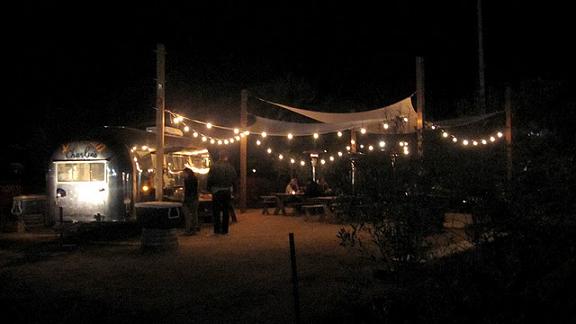
But the setting is still a reason to go. Dim sum and noodles are served out of a classic Airstream trailer. Sure I’ve seen it before, but lover of all things retro that I am, I still find it charming. And what’s different about this trailer setting is its canopy of lights and dirt lot strewn with picnic tables and a campfire. Rollicking tunes make it feel like a backyard party — a bit like camping in retro-kitsch style. With dim sum.

It doesn’t really matter what you order. Bring friends. Pull up to a picnic table or fireside with hot sauce and chopsticks, and sing along to the Beastie Boys as you slurp noodles and fill up on pork buns.

728 First St., Napa. (707) 815-2355, www.dimsumcharlies.com (look for the Airstream trailer)


Yountville Coffee Caboose: Coffee lovers

You’ll not go wrong with coffee and pastries at the original Bouchon Bakery across the street. But when that line is unbearable (or even if it isn’t), I’m delighted to hit up a locals coffee go-to: Yountville Coffee Caboose. Yes, it’s actually in a train caboose off Washington Street. It often features Bay Area coffees like Ritual, brewed strong, robust and with proper crema.

6523 Washington, Yountville


Grace’s Table: Local’s breakfast 

Grace’s Table has its minor missteps: its raved about skillet cornbread with lavender butter ($6) was dry and rather flavorless. And $10-18 entrees for breakfast pushes a little high for a casual neighborhood restaurant. But as an open air, corner space with sweet waitstaff and soothing decor, it’s a welcome brunch stop.

Quiche of the day ($12 with salad or soup – can also be had a la carte) was the stand-out, fluffy and light. The crust almost reminded me of Tartine in its buttery flakiness. Mini bagels with house-cured salmon and cream cheese ($10) are playful approach to morning food, though the bagels are not exceptional (but isn’t that ever the case outside of New York?) Grace’s is a pleasant place to start your day with coffee and a newspaper. 

1400 Second St., Napa. (707) 226-6200, www.gracestable.net


C Casa Taqueria: Breakfast to go 

C Casa, a worthy newer addition to Oxbow Public Market, works for a cheap breakfast. With grass-fed beef, free range chicken, sustainable fish, and local produce, it’s a forward-thinking taqueria, yet it maintains authenticity of flavor. A breakfast taco brimming with over-medium egg and chorizo ($4.50), is meaty and satisfying first thing in the morning. Also stuffed in there? Black beans, avocado, pico de gallo, garlic aioli, and cilantro.

Located within Oxbow Public Market, 610 First St., Napa. (707) 226-7700, www.myccasa.com


Ad Hoc: Ok, one splurge

Ad Hoc’s Liberty Farm duck breast: more than a mouthful

At $52 per person without anything to drink (its another $39 for wine pairings), Ad Hoc is quite expensive, even if it is the one and only Thomas Keller’s “casual” venture. Watch where you sit: I’d be annoyed eating inside where too many kids (at this price?) and a noisy din make make for a less than appealing ambiance. The few tables outside on the tiny patio, however, are idyllic. 

As is the food in the four-course dinner. One appetizer, a main, a cheese course, and dessert, all served family-style and impeccably prepared with ingredients from their cheery garden behind the restaurant. No substitutes — you eat whatever is on the daily menu. 

And that’s alright when you get a salad as a beautiful as a recent mix of lettuces, pickled haricots verts (green beans), toasted pine nuts, red radishes, and shaved asparagus. Dotted with green garlic buttermilk dressing and king trumpet mushrooms, it was far more gratifying than those ingredients may sound on paper. Ditto the added course of ivory salmon ($15 supplement) baked in phyllo pastry, drizzled with porcini cream, and accented with fresh, white corn. Liberty Farm duck breast was actually a little too much for two people, but deftly prepared and served with a bowl of chickpea stew gentle with curry. We finished with strawberry shortcake on biscuits, slathered in lemon curd.

At roughly $34 per person, the Sunday brunch is the way to do Ad Hoc from a slightly more affordable, angle.

6476 Washington, Yountville. (707) 944-2487, www.adhocrestaurant.com


— Subscribe to Virgina’s twice monthly newsletter, The Perfect Spot


Clean secrets revealed: the Lusty Ladies

0

Sex workers do all kinds of naughty (and very nice) things during work hours, but how these super-sexed individuals spend their down time seems like an alluring mystery. It’s fun to assume the sassy stripper wears high heels while vacuuming and doesn’t own sweatpants, but these are real people — and though they deal in dirty, it’s time for the Lusty Ladies to reveal their ‘clean’ secrets. 

The Lusty Lady is a unionized peep show establishment featuring a play pen packed with foxy bodies and a show that all sorts of loins love to watch from behind glass. The Lusties make it hard to think about anything other than sex, but for today, let’s leave the dancing, self-stroking, and teasing for the stage.

But these are well-rounded, independent women, replete with a full dancecard of squeaky-clean hobbies and pastimes. You want sexy? Try fresh brewed tea, or a cathartic yoga session. Rawr!


Bottoms’ up in the kitchen

sandy

Sandy Bottoms

Sandy Bottoms has been working at the Lusty for a year and a half and loves being surrounded by the cast of intelligent babes who prove that the sex industry can indeed provide legitimate work. She started off as the “surfer-California beach girl” but eventually found herself playing a younger role, complete with braces. 

SFBG: What’s your clean secret?

Sandy Bottoms: When I’m not dancing naked on stage I can usually be found in my apron baking. I’m so obsessed with cupcakes I’ve even wrangled a sweetie into making me a cupcake dress. 


SFBG: When do you most like to do it? 

SB: I like to make treats for my fellow Lusties, family, and friends whenever I can, really. Decadent boob-shaped cakes have made their way to birthday events, baby blue meringue cookies to transition parties, and indulgent vegan gluten-free cupcakes to Lusty PRIDE bake sales. 


SFBG: Where do like it? 

SB: My kitchen. 


SFBG: Why does it make you feel good? 

SB: I suppose in part baking fulfills a 1950s housewife fantasy that doesn’t integrate with or show through other parts of my character. I like to be productive when I’m relaxing and I never let the green grass grow under my high heels. 


Cinnamon’s late night creations

cinnamon

Cinnamon

It’s been nearly five years since Cinnamon debuted at the Lusty and she just completed her year-long term as Lead Madam in February. She likes stripping because it’s fun, different, and unionized — and her “pretty awesome juicy booty” demands attention. 

SFBG: What is your clean secret? 

C: I love to paint. I love to paint, sculpt, costume design (as seen above), sew, and get down and dirty with a good art project. Not that exciting, but it’s what I love. I even went to an art high school in Oakland.


SFBG: When do you most like to do it? 

C: In the morning, afternoon, evening. Sometimes even late at night, I wake up at 2 a.m. and want to paint or draw. 


SFBG: Why does it make you feel good?

C: Painting helps me sort my thoughts and I don’t feel so overwhelmed. I feel relaxed when I paint. I love getting really into a project and getting messy and covered in paint and other materials. I also don’t just stop with paint when I’m really into a project. I usually use anything I can get my hands on, from sand to coffee filters. 


SFBG: When do you feel most proud about it?

C: When I finally finish a project! Which is hardly ever. I also feel pretty happy when I start a really good new project with something I’ve never tried before. But more than anything I love it when someone comes over to visit and says “That picture is awesome, where’d you get it?”


Bijou shows off her flexibility

bijou

Bijou. Photo by craspadseries.com

A love of dancing and an appreciation of the Lusty community has kept Bijou on the stage for three years. She doesn’t pre-plan a routine per se, but she’s known to have cat moves, or at least a very feline-like presence. 

SFBG: What is your clean secret? 

B: I absolutely love and do A LOT of yoga.


SFBG: Why does it make you feel good? 

B: I can literally enter another space while I’m practicing, and my body always feels immediately energized after a class or home practice.


SFBG: Where did you learn such a thing? 

B: Studios all over the country and I informally trained every single day during a year in Bangkok, Thailand.


SFBG: When did you feel most proud of it? 

B: When I just let go and cry during my practice. It sounds funny but that usually means I’ve really, truly connected with my body.


Harlow Valentine brews it hot and wet

Harlow

Harlow Valentine

As a co-owner of the Lusty, Harlow Valentine loves exploring hot scenarios with lots of strangers and sharing the attention with intelligent and sexy women. She especially likes to show her “booty” to curious peepers. 

SFBG: What is your clean secret?

HV: I love to drink tea.


SFBG: Where do like it? 

HV: In the kitchen, at a cafe, in bed.


SFBG: Why does it make you feel good?

HV: It’s soothing, it’s warm, it’s delicious and sometimes has a fantastic color!


SFBG: When did you feel most proud of it?

HV: When I hear pleasing sighs escape from the lips of someone who’s just sipped my freshly brewed tea…though perhaps that’s because, in general, I enjoy hearing people sigh from pleasure!

Our Weekly Picks: May 18-24, 2011

0

WEDNESDAY 18

EVENT

Larry Flynt

To some, Larry Flynt is crass smut peddler. For many others, he is a champion for the First Amendment who has engaged in a variety of legal battles defending the freedom of speech since the 1970s, perhaps most infamously against the late Rev. Jerry Falwell. The legendary Hustler publisher comes to the city to discuss his new book, One Nation Under Sex, in which the now 68-year-old media mogul examines the world of politicians and sex scandals — and their impacts on American history. In addition to a book signing, Flynt’s coauthor, Columbia University professor David Eisenbach, will join him in conversation with the San Francisco Chronicle’s Phil Bronstein. (Sean McCourt)

6:30 p.m., $7–$45

Commonwealth Club

595 Market, SF

(415) 597-6700

www.commonwealthclub.org


THEATER

Tales of the City

Armistead Maupin’s San Francisco spirit gets a musical makeover courtesy of American Conservatory Theater in the new production Tales of the City, directed by Jason Moore, with libretto by Tony Award-winning writer Jeff Whitty, music and lyrics by John Garden and Jake Shears of the Scissor Sisters, and choreography by Larry Keigwin. Based on Maupin’s two novels set in 1970s San Francisco, Tales of the City and More Tales of the City, the author’s memorable characters navigate the foggy skies, disco clubs, and legendary 28 Barbary Lane. As A.C.T.’s biggest undertaking ever, the grand musical boasts a large cast and celebrates the glorious oddities of San Francisco. Previews start this week! (Julie Potter)

Through July 10

Check website for dates and times, $35–$98

American Conservatory Theater

405 Geary, SF

(415) 749-2228

www.act-sf.org


MUSIC

Light Asylum

Last year, James Murphy explained that by disbanding LCD Soundsystem, he would free more time to make coffee and produce for bands like Arcade Fire, the Flaming Lips and, er … Light Asylum? With a single EP recalling the goth side of New Wave, Light Asylum has made a strong impression. Bruno Coviello’s synths tend to come in first, playing tight loops that speed up the heart rate, priming it for the emotional impact of Shannon Funchess’ deep, brooding voice. (Drawing Grace Jones comparisons, if you imagine her covering Depeche Mode or Ian Curtis.) It’s ultimately captivating, accompanied by a fog machine and a dark dance floor. (Ryan Prendiville)

With Water Borders, Boyz IV Men, WhITCH, Nako, and Richie Panic

9 p.m., $10

Public Works

161 Erie, SF

(415) 932-0955

www.publicsf.com


THURSDAY 19

PERFORMANCE

Kunst-Stoff arts/fest

Join local dance artists Mary Carbonara, Jesse Hewit, Christy Funsch, Stephen Pelton, Julia Stiefel, Marina Fukushima, and Daiane Lopes da Silva for a robust installment of Kunst Stoff arts/fest, a multi-weekend festival of cross-disciplinary performances selected by Kunst-Stoff artistic director Yannis Adoniou. Recently relocated to Civic Center, the new Kunst-Stoff space offers an intimate venue for performance and continues to champion experimental voices in the field. Come back next week for additional programs by Kunst-Stoff, Rob Bailis, Laura Arrington, Abby Crain, and Margit Galante. Performances range from works in process and improvisations to full completed works, demonstrating a broad range of contemporary expressions. (Potter)

Thurs/19–Sat/21 and May 26–28, 8:30 p.m., $15

Kunst-Stoff Arts

1 Grove, SF

(415) 777-0172

www.kunst-stoff.org


EVENT

“Great Expectations: The Opulence of Alone”

Loneliness is a lot of things, but most folks wouldn’t say that it’s opulent. That’s why Bay Area artists Hannah “Daddy” Cairns, Kari “iamMom” Koller, Angela “MYSDIX” Dix, and Najva Sol are not like most folks. These boundary-bending queers and friends present an interactive gallery spectacle aimed at embracing Alone. Presented in conjunction with SF and New York City collective the Lowbrow Society for Arts (and part of the 100 Days of Spring series at local community space the Schoolhouse) this event promises encounters with life-size Victorian doll-people and wandering portrayals of Mrs. Havisham (that spinster chick from Great Expectations). Plus: video projections of bloody cow-heart romance, an uncanny photo booth, provocative poetics, a try-on costume chest, and overall enchantingly dark vibes that will make you want to go home and listen to Kate Bush alone in your bathrobe. (Hannah Tepper)

Thurs/19–Fri/20, 7 p.m., $3 suggested donation

Schoolhouse

1592 Market, SF

(240) 505-8665

www.lowbrowsociety.org


DANCE

“8x8x8”

Dancers are peripatetic, and not just on stage. Like the wandering minstrels of old, they travel to take their art to the people rather than sitting at home lamenting the absence of audiences. One of the more adventurous along those lines is Rande Paufve’s six-year-old “8x8x8,” which brings dancers, eight at time, to unusual performance venues (clubs, bars) with stages about eight-feet square. This year Paufve and her troupers are offering downtown dance — witty, urban, smart, small-scale — to patrons of Oakland’s Uptown, who will see choreography by Paufve as well as other locals Janet Das, Melecio Estrella and Andrew Ward, Abigail Hosein, Dandelion Dancetheater, Navarette x Kajiyama, Lisa Townsend, and (from Oregon) Gregg Bielemeier. And in the end they’ll be invited to join the dance — drink in hand. (Rita Felciano)

8:30 p.m., $8

Uptown

1928 Telegraph, Oakl.

www.paufvedance.org


EVENT

“San Francisco Cinematheque at 50”

Five decades and thousands of screenings later, San Francisco Cinematheque is having a party. The long itinerant experimental film series dates its anniversary back to the summer afternoon in 1961 when Bruce Baillie rigged a projection space in the East Bay redwoods. Canyon Cinema eventually came down from the hills and split into a distribution co-op and the Cinematheque. Neither is profitable; both are essential. Help pitch in at this festive benefit featuring films by Larry Jordan, Paul Clipson, and Kerry Laitala; live performances by garage rockers Primary Structures and longtime Beastie Boys collaborator Money Mark; and a silent art auction featuring artwork by several first-rate experimental filmmakers. (Max Goldberg)

8 p.m., $25–$45

111 Minna Gallery

111 Minna, SF

(415) 552-1990

www.sfcinematheque.org


DANCE

Oakland Ballet

The renewal of ballet in Oakland seems well on its way. In December the new Artistic Director Graham Lustig’s Nutcracker was a charmer of wit and sentiment. Now he is presenting his first season with choreography by two smart, talented dance-makers. Sonja Delwaide choreographed Mozart’s enchanting glass harmonica music; Amy Seiwert adapted and enlarged her splendid 2009 “Response to Change.” In addition to a new duet, Lustig presents the entirety of his reconstituted Oakland Ballet Company through his “VISTA” with music from the Lounge Lizards. The Laney Foyer is given over to four local artists’ visual responses to watching the dancers at work. Sounds good, all of it. (Felciano)

Thurs/19–Sat/21, 8 p.m. (also Sat/21, 3 p.m.), $15–$38

Laney College

900 Fallon, Oakl.

1-866-711-6037

www.oaklandballet.org


FRIDAY 20

EVENT

Endangered Species Day

Aside from cockroaches, humans are one of the least imperiled species, by sheer numbers at least, on the planet. Which — combined with our big brains, opposable thumbs, and raging self-consciousness — means we have the power and the intelligence to help those less fortunate, right? The Golden Gate National Recreation Area, stretching from Point Reyes to Pacifica, has more plants and animals in federally-listed dire straits than Yosemite, Yellowstone, Sequoia, and King’s Canyon National Parks combined. Join volunteer habitat restoration projects in the Presidio, Muir Beach, and San Mateo’s Milagra Ridge to honor the Senate-designated Endangered Species Day. Save the world? Save yourself? Is there a difference? You are the environment, sweet pea! (Kat Renz)

 Fri/20, 1–4 p.m.; Sat/21, 9 a.m.–1 p.m., free

Various locations

(415) 561-3077

www.parksconservancy.org


SATURDAY  21

EVENT

“World War II: Fighting the War With Ink and Paint”

When the United States was drawn into World War II in December, 1941, the Walt Disney studio began contributing to the war effort in a variety of ways — making training videos for soldiers, designing insignias and logos for different branches of the military, and of course, making cartoons, albeit this time to bolster public morale. Beloved characters such as Mickey, Donald, and Pluto all did their part to comfort and encourage Americans during that difficult time. Disney historian Paul F. Anderson will be on hand for “Fighting the War With Ink and Paint,” a multimedia presentation about that fascinating and important era in the Disney legacy. (McCourt)

3 p.m., $9–$12

Walt Disney Family Museum Theater

104 Montgomery, Presidio, SF

(415) 345-6800

www.waltdisney.org


SUNDAY 22

MUSIC

“Twang Sunday”

Want the most twang for your buck? Pedal or lap steel guitar, an electric or acoustic, or p’haps a banjo or piano? Git ’em all — the strings’ll be vibrating aplenty at Thee Parkside’s weekly dose of variations on the country music theme. The Careless Hearts are up from San Jose, weaving stories through harmonized drawls while blending rock ‘n’ roll, indie, folk, and of course, country, with dusty grace. Locals the GoldDiggers offer alt-country expertise, and Rick McCulley, with a throat of rocks reminiscent of a male Lucinda Williams, is power pop with an Americana edge. The music is free — and for just $5, you can get your tummy in sync with the tunes by chowing down on some pulled-pork barbecue. Yeehaw! (Renz)

4 p.m., free

Thee Parkside

1600 17th St., SF

(415) 252-1330

www.theeparkside.com


MONDAY 23

MUSIC

Bomba Estereo

A specific type of ignorant American, I can’t understand Spanish. But if I did, I probably still wouldn’t know what Liliana Saumet is saying on the mic. Hailing from Bogotá, Colombia, Bomba Estereo combines electro and cumbia to create a sublimely tropical psychedelia. But when singer Saumet really starts to rip, and the staccato drum beats seem to stand still behind her pace, a serious hip-hop element unavoidably shines through. One of the band’s last stops on their North American tour is at the extremely intimate New Parish. (Please: if the lyrics are the Colombian equivalent of the Black Eyed Peas’, don’t tell me.) (Prendiville)

8:30 p.m., $18

New Parish

579 18th St., Oakl.

www.thenewparish.com 


The Guardian listings deadline is two weeks prior to our Wednesday publication date. To submit an item for consideration, please include the title of the event, a brief description of the event, date and time, venue name, street address (listing cross streets only isn’t sufficient), city, telephone number readers can call for more information, telephone number for media, and admission costs. Send information to Listings, the Guardian Building, 135 Mississippi St., SF, CA 94107; fax to (415) 487-2506; or e-mail (paste press release into e-mail body — no text attachments, please) to listings@sfbg.com. Digital photos may be submitted in jpeg format; the image must be at least 240 dpi and four inches by six inches in size. We regret we cannot accept listings over the phone.


Appetite: Island bites, part four

0

I spent some brilliant days — and the first three of five installations in my Hawaiian series — exploring Oahu. But based on what every traveler I’d ever met had told me, I knew it could only get better with Kauai. This time around, let’s talk the restaurant scene on Kauai – next time, I’ll feature its hotels and drink. 

But first, the ugly: traffic jams are jarring shocks on the island’s east side near Lihue, particularly in Kapaa. One-lane roads at a dead stop along stetches of strip malls are downright irritating. I almost missed my flight home when it took one hour to go 10 miles from Kapaa to Lihue Airport (the day before the same route took 10 minutes).

But on the South and North shores there was little to no traffic. Even in Lihue, where the main airport is based, mountains and fields surround the tiny town. Kauai is imminently more laid back than the already relaxed Oahu — a distinction I savored, even if Honolulu is clearly the leader in food and dining.

A helicopter ride over the famed Napali Coast and around the entirety of Kauai is nothing short of magical. Though you will spend roughly $350 per person, it’s worth it. It cost $250 when we payed in cash at Inter-island Helicopters – whose friendly, fun staff and pilot gave us a wonderful, hour-long tour, just take note: those shiny, red copters on the website are not the ones we rode, ours was more like an old army helicopters, with open air, no doors — terrifying to take off in, but one quickly acclimates to the feeling.

You’ll need a helicopter ride to take in the Napali Coast, sans blisters

I can honestly say this was one of the best travel adventures of my life, and I’ve traveled to five continents. Views are breathtaking, yes, but getting up close and personal is the real thrill.

On a less windy day, our pilot flew close into craters and mountain niches, through the gorgeous Waimea Canyon, over blowholes and coffee plantations, and along the coastline. We covered the entire island, smelled rain from the highest peaks, and took in the pristine blue of the ocean.

Whatever you do on Kauai, do this. Next time I will try an ocean boat ride, the only other way to actually see the Napali Coast without hiking it (an arduous journey meant for the hardcore and even then, limited paths mean you can’t hike it in its entirety). I’m sure a boat ride can be full of thrills, but it can’t give the all-encompassing view of the entire island you can see via air.

But no matter how you see it, see Kauai at least once in your life. It’s incredible how a tiny island can enchant. Even for a big city girl like myself, Kauai had a way of wrapping my days up in its mellow spell.


CHEAP EATS

Mark’s Place, Lihue:

Mark’s Place musubi, for those who like their Hawaiian snacks authentic

My favorite plate lunch of the trip, Mark’s Place is a true local’s gem. It’s a clean hole-in-the-wall with creative daily specials and desserts and salads on top of traditional loco moco, beef stew, and chicken katsu.

Specials were not just ultra-fresh, they were gourmet. I loved a dish of blackened mahi mahi ($8.95) gently drizzled in a lilikoi (passion fruit) mustard sauce, served over quinoa and sauteed spinach. A green salad in papaya seed dressing accompanied the fish.

At that price, the dish was a steal, and you’d expect it to shine in any restaurant setting – only you order it as take-out in an industrial neighborhood frequented by blue collar workers, with whom you’ll be sharing one outdoor picnic table. Mark’s Place’s simple, fresh musubi ($2.25), particularly the teriyaki beef variety, makes a fine snack.


Kountry Kitchen, Kapaa: 

Kountry Kitchen was my top breakfast on Kauai. Packed with locals, my eyes widened at the sight of what must have been the most massive pancakes I’ve seen (and I’ve had some gigantic ones). Good thing I saw them before ordering two — it’s a mere $6-8 for two pancakes, which could feed a few tourist between them.

Macadamia nut pancakes are a popular pick at Kountry Kitchen, but I couldn’t resist the day’s special: Elvis pancakes. Yes, this means peanut butter and bananas, the King’s beloved combo. Accompanied with awesome housemade coconut syrup, they were perfection.


Shrimp Station, Waimea:

If you’re going to Waimea, don’t miss this classic shrimp window with outdoor picnic tables, reminiscent of the shrimp trucks and window fronts on Oahu’s North Shore. Shrimp Station serves killer coconut shrimp, plus beer-battered, garlic, or sweet chili garlic.

A basket of coconut shrimp was juicy and savory with ginger-papaya tartar sauce. Our pace was slow while we lingered at the picnic tables in this sleepy little town. Quintessential southern Kauai.


Koloa Fish Market, Koloa: 

An authentic, plate lunch take-out only shop, Koloa Fish Market is beloved in southern Kauai. It serves heaps of Kalua pork, lau lau (shredded pork wrapped in a taro leaf), and all kinds of poke, from raw ahi to octopus. Ordering food and taking it back to our Grand Hyatt porch with a bottle of wine was a pleasure.

Though cheap and plentiful, I found Koloa’s flavors not particularly impressive. I’m crazy about fish (raw, cooked, any which way), but this is no pristine poke experience. Fresh as it is, I find eating at similar hole-in-the-walls around Hawaii, authenticity seems to mean hunks of seafood drowning in oil — well-prepared but lacking that ultra-fresh, of-the-sea taste. I find plenty to love in local Hawaiian cooking, but personally find more flavor and finesse with raw fish in other culinary styles.

Salty, fall-apart pork (in lau lau or Kalua styles) was better than the seafood but not as satisfying for me as pulled pork barbecue from the South. 


Papalani Gelato, Koloa: 

It’s no Italian gelato or San Francisco ice cream (à la Humphry or Bi-Rite), but Papalani Gelato is organic, with straightforward island flavors like lilikoi, mango, papaya, and macadamia nut. It’s the go-to local ice cream shop (as opposed to sugary, lower quality cream at the shop a couple doors down – I tried both).


Mermaids Cafe, Kapaa:

Mermaids Cafe is about one thing: ahi nori wraps ($9.45). Basically a giant burrito made with a green tortilla with a layer of nori, or seawood, they come stuffed with seared ahi tuna tossed in wasabi cream, pickled ginger, and rice.

This hippie-spirited walk-up counter isn’t quite what I’d call gourmet – there is something slightly amateur about the food (are things cooked in burnt oil?) But the cafe does bring fresh, vegetarian-oriented food and hippie clientele to the island — and those factors hardly mask its Hawaiian spirit. Plus, you can fill up for $10.


MID-RANGE

22 North, Lihue: 

Maybe the best meal I had in Kauai, and certainly the most creative, 22 North is on the grounds of Kilohana Plantation. Kilohana, if you squint past the touristy jewelry shops and such, is among the last remaining glimpses of the sugar glory days of Hawaii. The 1930s spirit prevails, lazy breezes blowing through the original house (where a few rooms still showcase ’30s decor), while whiffs of whole pig roasting underground in expectation of a luau intoxicate.

Tourist trappings aside, I enjoyed an hour and a half ride on the plantation’s 1939 Whitcomb diesel engine train, taking in 50 varieties of fruits and vegetables growing alongside the tracks that ran through the working farm. The best part was stopping to feed bread to a herd of pigs.

Afterwards, I sat in the courtyard of the plantation house for a meal at 22 North. Farm fresh is no exaggeration here — many ingredients come straight from the surrounding fields. 

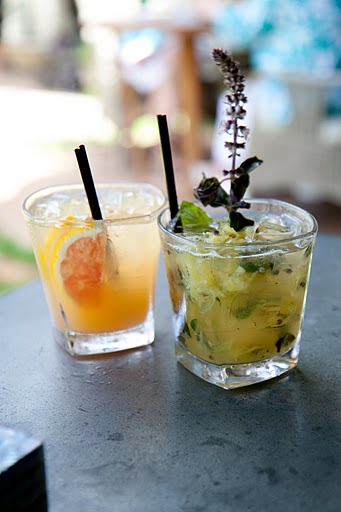
The playful, contemporary hand given to many a dish is reason enough to dine here. But 22 North’s cocktails were the best I had on Kauai. Intriguingly, one was unlike any other I’ve had before – a rare occurrence for me anywhere, much less in a region not known for cocktails. Blue Rhum ($8) impressed me with its light rum, home-grown Kilohana pineapple, lime, and a stunning frond of African blue basil – it was aromatic and sophisticated. 

The rest were a mixed bag. The Paloma Fresca ($8) was unable to find a harmony between its tequila and grapefruit, but it benefited from local citrus and Kiawe honey. Fried Green Tomatoes ($11) gave a nod to the Southern United States with tomatoes from the farm encrusted in cornmeal, served with a romaine salad in a Maui onion buttermilk chive dressing.

22 North’s burger ($11) was satisfyingly juicy, made with local meat (rotates between beef, lamb, and veal). The cubano sandwich ($9) was pulled pork and house-cured ham laden with homemade pickles and mustard. The restaurant serve gougères ($5) made with fennel honey butter, baccala fritters ($7) with macadamia nut romesco, and sesame-crusted tuna ($28) poached in carrot, ginger, and white wine with a “forbidden rice cake.”

Dessert (all $8) is another highlight here. Local fruit pie benefits from even more home-grown produce, served warm, enclosed in a surprisingly French pie crust that was flaky and buttery, and topped with a scoop of Kauai’s own Lappert’s vanilla ice cream.

22 North has four different “adult floats” ($12) all made with ice cream and beer or spirits — oddly delightful. Though I’ve had beer floats before, I’ve never had one with the refreshing tang of the coconut porter float made with Maui Brewing Co. coconut porter and toasted coconut.

All around, this meal was the most uniquely satisfying of my Kauai visit, and the one that best represents local bounty.


EXPENSIVE

Tidepools, Koloa:

Tidepools at the otherworldly Grand Hyatt captures the magic of its setting in a Disneyland-esque way. It almost feels fake: tiki torches light up a lagoon as you dine under open-air, thatched-roof huts listening to frogs croak. Idyllic.

Certainly the menu reads old school – and there is a dated air about the place, but there are culinary surprises that hold the spell of the setting. It’s $32-55 for entrees and a more reasonable $9-15 for appetizers. You’re right: in the scheme of fine restaurants, it’s not worth that high price tag. But you’re in Kauai and this is one of the best meals you’ll have there, in an environment that helps that cost go down more easily.

Salads (like $9 Manoa lettuce with a creamy Maui onion-garlic dressing and shaved manchego cheese) and sashimi starters (like $15 ahi with Hawaiian hearts of palm and shiso leaf) are fresh and pleasing. Brandt Farms organic prime NY strip steak ($48) is shockingly juicy when cooked medium-rare, and packed with flavor. The other surprise is the crowd-pleasing macadamia nut mahi mahi ($32): lightly encrusted in nuts over coconut jasmine rice in a tropical rum buerre blanc. It tastes of Hawaii: redolent of the sea, gently sweet, with a nutty goodness.


— Subscribe to Virgina’s twice monthly newsletter, The Perfect Spot


5 Things: May 3, 2011

0

>>BE STILL OUR WALLETS the Alameda Flea Market (ahem, Alameda Point Antiques Faire) was in full effect Sunday, a gently heaving behemoth of vans and makeshift shady areas packed with the finest in 20-plus-year-old posters, leather jackets, doilies, and more. Per usual though, our pulses raced for the clothes. 1960s hula wear, perfectly affordable granny boots, and darling handmade cardigans – all for very reasonable prices, for the Bay Area that is. If you’re going to the next one on June 5, we counsel stopping by St. George’s Spirits afterward for the $15 tasting menu, or at least a shot of the Firelit Coffee Liquer.

Shopping noms: a ric-rac peekaboo ’60s dress and zippy little weirdo bike at the Alameda Flea Market. Photos by Caitlin Donohue

>>FAIR FOOD Price, service, ingredients, taste – the myriad of factors that determine whether or not a restaurant will win your heart are well documented by a thousand SF guidebooks and websites. But one metric that has rarely been the day’s special is this: how well do our city’s eateries treat their employees? To the rescue is Young Workers United, a community group that released its second such guide at a release party yesterday at Daly’s Dive. Hit them up stat for a copy — because trust, a well-compensated server is much more likely to humor your request for one more basket of bread. 

>>HABLANDO DE CINCO DE MAYO…No matter if you’re checking out the lady lube wrestling at El Rio, outdoor ballet folklorico, Danville’s Cinco de Mustache Bike Ride, or just joining the calvalcade of gringos that – like, totally – have to get a burrito on Cinco De Mayo, no SF celebration can hold a candle to that of Fruitvale’s annual festivities. We were there on Sunday – and dancing horses in bar parking lots? You’re not going to see that in Mission, unless they’ve called the cavalry on us.

>>SO GOOD, SOBERT Do not listen to those that tell you that you’ll never be ready for that trip to Lake Del Valle (outside Livermore — kayaking!) if you eat another pint of icecream. Or if you must listen, stay classy and gently incline the label of your newfound friend, Garden Creamery sorbet, towards the hater in question. The sorbets contain no dairy or soy (coconut puree instead), no refined sugars (they’re sweetened with agave), are made right here in San Francisco by the sweet-faced ladies on the back label, and are available by the pint in flavors like Thai iced tea, coconut, and coffee at the reliably awesome Green Earth Natural Foods on Divisadero.

Believe. 

>>BLACK SUN SOUNDS While Slumberland labelmates Pains of Being Young at Heart chose to work with veteran producers to create a commercial second album, Crystal Stilts sticks closer to the sound of its debut, 2008’s Alight of Night, on this year’s In Love with Oblivion. The Brooklyn group still makes a dark cavernous sound, with an emphasis on reverb and treble, but any enhancements to its scope, or variations within lead singer’s Brad Hargett’s usually monotone delivery, only add to a musical atmosphere that is richerand more nuanced than most retro-leaning indie rock, and (unlike the efforts of many contemporaries) equal to the best recordings on labels such as K and 53rd and 3rd. Crystal Stilts shares a bill with San Francisco’s excellent Mantles at Rickshaw Stop this Sat/7. 

Crystal Stilts, “Invisible City,” (from In Love with Oblivion), coupled with Jean Michele Jarre video footage:

5 Things: April 28, 2011

0

>>POP-UP-TASTIC Oh pop-up phenomenon…why are you so enticing? Is it because our hype-heavy culture is so ADHD that the newest and coolest bar, gallery, restaurant, or what have you is “out” even before it’s torn down and replaced by the next “it” concept? The once failing Corner restaurant on 18th and Mission is now bustling thanks to the eatery’s new format of hosting a different recession-plagued talent with a menu to die for every night of the week. So, too, are venues supporting a great idea, but not necessarily one with enough gas to keep it going long-term, like the coffee shop-record store-music venue-rehearsal space-anarcho bookbindery of our adolescent dreams. Enter the People’s Gallery, host to the Big Things pop-up shop this Sat/30, which will feature everything from a bookbinding workshop to sidewalk sale-type treasures, handmade goodies, photo exhibitions, and food. Get there early, for it might poof into the ether before you even get a chance to check out the buzz.

>>ANOTHER WEDDING OF THE CENTURY! As the media breaks out its best British accents, the complete mayhem engulfing the royal wedding reaches its fevered pitch tomorrow with the event itself. For the truly die-hard, there is but one place to take in the beauty of clan-building: the British consulate, where the official viewing party kicks off at 9 a.m. with remarks by UK Counsel General Julian Evans. Call Renee at (415) 407-7424 to RSVP.

>>BEATS AMBASSADOR When the publicity ploy involves bad-ass Ghanian American hip-hop, count us as happily-enlisted marketing allies. Blitz the Ambassador plays La Peña Cultural Center tonight, and is offering up a free stream of his new album Native Sun so that you can learn the words before you shake ass. The album is a powerful barrage of traditional percussion, guitar licks, and fly verses – worth banging in your headphones even if you can’t make Berkeley tonight.

Blitz the Ambassador, Native Sun:

>>TRUCKING COMPANY Do you dream of owning a food truck but aren’t quite sure how to fund it? Stop squirreling away your Tooth Fairy money and learn how to apply for a loan — and get approved — from a panel of finance experts, fellow foodies, and food truck owners. Tonight, our friends at Renaissance Entrepeneurship Center are sponsoring this workshop for only 10 bucks, but the free publicity that comes with Chicken John threatening to vomit all over your new local economy-boosting venture is absolutely priceless.

>>BACK TO THE BEACH The last eighteen months have brought a bunch of repeat-listen recordings from bands that invoke the oceanside, including Beach House, Dirty Beaches, and Beach Fossils, who return to San Francisco a week from today, taking the stage at Slim’s to play songs from their 2010 debut album and the more recent EP What a Pleasure.


FEAST: 7 brunch cocktails

0

culture@sfbg.com

It’s noon on a Saturday — for you, we envision two possible scenarios. One: you’re covered in glitter, you smell like a wet poodle, and you’re on your way to brunch. Two: you’re well-rested after last night’s sobering yoga, feeling fly, and on your way to brunch. Hey booze breath, forget the three Advil, coffee, and a Xanax — you know there’s no better way to kick a hangover (or forge the path toward one) than to cocktail your way through the early afternoon. And Miss Fresh-As-A-Daisy? Have a drink already. Always helpful, never hurtful, here is our list of the tastiest brunch libations of the moment.


GINGER LEMON DROP AT CAFÉ FLORE

There is a stretch of Market Street that catches us unawares: one minute you’re surrounded by city, the next you’re in front of a magical garden filled with people downing bloody marys and eating eggs benedict. Ah, Café Flore, your lush patio makes us feel guilty for not drinking at breakfast. But we resolve not to live our life in shame. The ginger lemon drop, a Café Flore original, is the perfect way to kick off a day of leisure. Ginger liqueur and fresh lemon juice will have you feeling like you’re drinking pure, unadulterated sunshine, while the Ketel One vodka buzz reminds you that you’re actually just drunk.

2298 Market, SF. (415) 621-8579, www.cafeflore.com


MOJITO AT THE RAMP

You’re already on a mission to brunch, why not indulge in a meal amid the ocean breezes? Salty winds plus brunch treats and cocktails equals living large at The Ramp, which sits all the way at the end of Dogpatch’s Mariposa Street, perched on the pier of a boatyard. Grab a table inside the funky dining room or outside on the water and make sure to order one of the fresh mint mojitos. Two sips in, and you’ll be feeling like a brunch pirate. Day drunk ahoy!

855 Terry Francois, SF. (415) 621-2378, www.ramprestaurant.com


SPICED ALEXANDER AT AXIS CAFÉ AND GALLERY

The standard Alexander cocktail is made with gin, chocolate liqueur, and cream, a mature take on chocolate milk. The spiced Alexander at Axis Café, a lowkey but upscale café and art gallery at the base of Potrero Hill, is served hot and spiked with soju — great by itself or with one of the cafe’s whole wheat pancake and poached cranberry plates. A lesser-known brunch beverage, yes, but it pairs way better with waffles than a tequila shot. Like an old-fashioned hot cocoa, Axis’ is sweet, creamy, and warm — perfect for the seats by the joint’s roaring fireplace.

1201 Eighth St., SF. (415) 437-2947, www.axis-cafe.com


FOG CUTTER AT BAR AGRICOLE

This sleek SoMa restaurant is known in some circles as the Chez Panisse of cocktails, so it’s no wonder that its brunch offerings include libations worth writing home about, once you’ve sobered up. One standout is the fog cutter, a complex citrus drink made with pisco, rum, gin, sherry, citrus juice, and orgeat (almond syrup) served on the rocks and with a taste that’s similar to a mai tai. Planning on catching up with your correspondence later that day? We suggest you stick to one, for clarity’s sake.

355 11th St., SF. (415) 355-9400, www.baragricole.com


BLOODY MARY AT HOME

While it’s true that you can build your own bloody mary in the comfort of your own home, doing it at Market and Church Street’s comfiest brunch spot is much more exciting. Home puts the world at your fingertips: pickled veggies, olives, and over 15 kinds of hot sauce. This, friends, is the art of taking bloody mary by the horns.

2100 Market, SF. (415) 503-0333, www.home-sf.com


MICHELADA AT COCK-A-DOODLE CAFÉ

This downtown Oakland breakfast spot has the brunch drink for when you’re looking to kick off your free day with some heat. As all those who have ventured south of the border will recall, the michelada is a bloody mary gone Mexican, the dreaded red beers (lager and tomato juice) of your college days gone festive. Crisp Corona, lime, and Cock-A-Doodle’s house bloody mary mix await you, served in a huge salt-and-chile-rimmed glass that’s ready to baila contigo.

719 Washington, Oakl. (510) 465-5400 www.cockadoodlecafe.com


IRISH COFFEE AT THE BUENA VISTA

The Buena Vista’s Irish coffee story is frequently repeated by a certain faction of Bay Area folks. It is said, usually after the storyteller has downed a few, that this Fisherman’s Wharf bar was the first to perfect the drink on this side of the Atlantic. The Buena Vista’s Irish coffee is a proprietary mix of Irish whiskey, hot joe, and frothy cream — and although a friend of ours once wisely told us never to mix our uppers with our downers, to her we say: welcome to brunch drinks.

2765 Hyde, SF. (415) 474-5044 www.thebuenavista.com


FEAST: 10 contemporary kitchen essentials

0

By now, you (hopefully) know the basic building blocks of good eating: fresh, in-season vegetables and fruits, whole grains, and — for the carnivorous set — lean, unprocessed meat and fish. Awesome. But unless you’re an adherent of the new Paleo diet fad, which mimics the eating habits of our hunter-gatherer ancestors, it’s going to take a bit more to transform this no-frills foundation into something you’d want to sit down to. Here are a few kitchen essentials that can quickly shift your cooking from serviceable to superb. (Emily Appelbaum)


SESAME OIL

Ancient Assyrian legend holds that when the gods assembled to create the universe, their drink of choice was sesame seed wine. And when Ali Baba needed to unseal a magic cave stocked with treasure, it was Sesamum indicum, which bursts open at maturity, that he invoked with the famous phrase “Open, Sesame!” If you’re looking to introduce some similar magic into your cooking, sesame oil is a good place to start. The cold-pressed oil has a light flavor and high smoke point, making it ideal for fast, high-temperature stir fries and wok cooking. When toasted, the oil becomes rich, smoky, and deep. A few drops make salads and noodle dishes sinfully savory and create the perfect base for dipping sauces. For a decadent indulgence, try the following: spread hot toast with miso (fermented soybean paste), top with a slice of avocado, and a drizzle of toasted sesame oil, then close your eyes and float a bit.

Available at Ming Lee Trading Inc. 759 Jackson, SF. (415) 217-0088


TAHINI

Speaking of sesames, Bay Area veggies, vegans, and carnivores alike have been blending tahini, a paste made from hulled sesame seeds, into homemade hummus for years. When mixed with a little fresh garlic, lemon, and salt, tahini will make quick work of a can of garbanzos — but there are tons of other uses for this simple spread. Try branching out with bean dips. Include white cannellini beans, black beans, or even kidney beans, which are super-high in antioxidants. Ditch expensive bottled salad dressing in favor of tahini mixed with soy sauce, lemon juice, or cider vinegar, and any fresh herbs you like. Toss soba noodles with steamed veggies and tahini for a fast, healthy dish served hot or cold. Or, for a whole array of desserts, start by kneading tahini and honey into flour for a tender, pliable pastry.

Available at Semiramis Imports, 2990 Mission, SF. (415) 824-6555


QUINOA

If you haven’t tried this indigenous staple from the Andes, you’re missing out. Stocked with the full set of essential amino acids, these unassuming seeds may be the most complete protein source the plant kingdom can provide. Quinoa even made NASA’s short list for crops to be included in ecological life support systems for long-duration manned spaceflights. It cooks in minutes and — with its mild, nutty taste and light texture — it’s an ideal base for curries, stews, and cold salads mixed tabouleh-style. Unfortunately, the quinoa craze in wealthy countries has left the crop unaffordable in some traditional regions such as the Bolivian salt flats, where most cultivated quinoa is now grown for export. Be sure to look for quinoa from companies like La Yapa Organic that pay a fair price to farmers.

Available at Rainbow Grocery, 1745 Folsom, SF. (415) 863-0620, www.rainbow.coop


COCONUT MILK

If you’re the kind of good San Francisco citizen who duly visits the local farmers market every week, gets carried away by the textures and colors and aromas of nature’s bounty, and then balks at everything you’ve brought home when it comes time to stuff it in the fridge — fear not. Coconut milk is the thing for you. Nothing else can so quickly transform a mountain of disparate vegetables into a rich, harmonious meal. Nearly any food in any season (potatoes regular and sweet, carrots, sweet and spicy peppers, pineapple, green beans, onions, garlic, eggplant, zucchini, tomatoes, pumpkin, spinach, kale) can feel at home in a coconut milk bath, spiced with a pinch of curry powder or garam masala and perfumed with handful of fresh herbs.

Available at Khanh Phong Supermarket, 429 Ninth St., Oakl., (510) 839-9094


FRESH-GROUND BLACK PEPPER

My list of Things for Which There Is No Excuse is short, and most of the items on it — like tube tops and being mean — are negotiable under certain circumstances. But one entry that cannot be compromised on is the use of pre-ground black pepper. It is simply never, ever OK. The difference between the freshly cracked pepper and the plebian, tasteless grey powder that sifts from a can is like the difference between a jam band CD and a live show. Invest in a good-quality peppermill and you’ll end up putting pepper in all kinds of places you never imagined: after experiencing pepper’s pungency in soups and bisques, on roasted root vegetables, and over tomatoes served sliced and sprinkled with kosher salt, you’ll find yourself shaking it onto strawberries marinated in balsamic vinegar and pondering the possibilities of peppercorn ice-cream. A few turns of your grinder set to coarse can quite possibly make the world go ’round.

To browse more varieties of pepper than you crank a mill at, visit San Francisco Herb Co. 250 14th St., SF. (415) 861-3018, www.sfherb.com


FRESH-GROUND NUTMEG

Everything said on the subject of black pepper applies — with perhaps a smidge less fervor — to nutmeg. That sickly stuff stuck with humidity to the inside of a glass shaker at Starbucks does not even remotely resemble the delicately perfumed flakes that you scrape from a whole nutmeg seed, the hard, egg-shaped center of the nutmeg tree’s fruit). Once you stop shaking the horrid pre-ground granules over your coffee, you’re likely to realize the nutmeg is not just a sweet spice. It goes particularly well with cheese and cream sauces, enriches egg and pasta dishes, and enhances all types of savory cookery with that little something-something that makes diners go “hmmm.” But if you want to relegate it to the dessert realm, no one’s going to stop you from grating a little bit over your midnight dish of chocolate ice-cream.

Fremont-based organic spice company Spicely distributes to a bevy of Bay Area retailers, but their products are also available in bulk on its website, www.spicely.com


FRESH GINGER

Like nutmeg, the edible rhizome of Zingiber officinale is often relegated to the subsidiary role of sweet spice — at least in American cooking. But travel nearly anywhere else in the world, from Morocco to Malaysia, Venezuela to Vietnam, and ginger plays the snappy star in soups, roasts, stews, and salads. Grate fresh ginger and garlic into peanut oil as the base for a superlative stir-fry. Stir into soups for a revitalizing broth. For a crisp, peppery salad, shred cabbage, carrots, and green beans and toss with ginger, vinegar, or lime juice, and maybe a dollop of peanut butter (or use your newly purchased tahini). Pulse ginger, chiles, and garlic in your food processor for a quick crust to sear onto meats or tofu. Ginger is a versatile gal, so don’t be afraid to experiment.

Available at New May Wah Market, 707-719 Clement, SF. (415) 668-2583


FRESH LEMONS AND LIMES

Nothing wakes up heavy, sleepy flavors like a bright squeeze of acid, but don’t even bother with the bottled stuff here. Before you juice, take a second to zest the thin colored rind — which contains tons of essential oils — from the outside of the fruit, being careful to stay away from the white pith. Then cut in half through the equator and squeeze. Older fruits can be coaxed to spill their juice by rolling back and forth between the palm and the cutting board. Or zap in the microwave for just a few seconds. Lemons add zip to Italian and French dishes, limes to Asian, Indian and Latin. The brave and adventurous might even try whole lemons or limes — rind, pith, pulp, and all — chopped very finely in salsas; crusts for veggies, fish or tofu; and marinades. An old-timey recipe for something called Funeral Pie uses whole lemons, thrown in a blender with some sugar, eggs, and a little flour. The result is poured in a pie crust and “Viola!” A super-quick desert ready in a flash, in case of Great Aunt Millie’s untimely demise.

Bi-Rite Market stocks organic, biodynamic lemons and limes from Becks Grove whenever possible. 3639 18th St., SF. (415) 241-9760


BLACK BEAN SAUCE

Hot Chinese sriracha sauce might be manufactured right here in Northern California, but that’s no excuse for indiscriminately squirting that sticky red rooster bottle over everything — from eggs to escargot — that stands still long enough. If it’s spice you’re craving, aim for a subtler, deeper flavor. Chinese-style black bean sauces, garlic or chili, provide plenty of heat without the cloying, vinegary sweetness of sriracha. Instead, their fire is mellow and a bit smoky, and develops on the tongue. Try over steamed veggies such as asparagus, broccoli, or bok choy. Use to marinate tofu or chicken, and serve over everything from tempeh to tacos. If you like the taste, try going a step further and purchasing some fermented black beans — a salty, spicy condiment something like a cross between miso and Marmite.

Available at Pang Kee Bargain Market, 1308 Stockton, SF., (415) 982-1959


REAL MUSTARD

All mustards are essentially a combination of whole or ground mustard seeds suspended in vinegar and spices. But subtle variations in the type of grind and proportions of ingredients can make all the difference. If you inhabit the realm of ballpark-yellow, your culinary development has been sorely stunted. All mustards work as emulsifiers, making them ideal mix-ins for dressings, marinades, and notoriously finicky Hollandaise sauces. Whole grain mustards combined with miso, maple syrup, horseradish, or Parmesan cheese (not all at once!) make a crunchy coating for salmon, chicken, pork chops, or baked squash. Finely-ground mustards like German Hangstenberg are superhot and go well with preserved meats and blander veggies like cabbage. Some mustards are made with imported vinegars or champagnes, and are best paired with simple breads and cheeses so their unique flavors come through. And for something a little closer to home, try Mendocino Mustards, made in Fort Bragg.

Available at Canyon Market, 2815 Diamond, SF. (415) 586-9999


FEAST: 6 best breakfast bets

0

SF: a brunch town if ever there was one. The life of the alternative journalist is such that we’re rarely awake at sunrise, wondering from where the hell our next hangtown fry will materialize. But there are times when it behooves one to dine at 8 a.m. on a weekday (occasions that usually correspond to the appearance of a mother or father). Set that alarm, sweetie: here’s where you’ll find Guardian staff dragging to before a big day.


JUST FOR YOU

A menu peppered with delightful little zingers like “What’s grits? It’s that pasty white stuff … like you had in prison,” makes this my favorite sassy breakfast joint in Dogpatch. Just For You offers classic breakfast fare with a Southern twist — biscuits, cornbread, grilled catfish filets, or creole crab cakes to go along with your eggs and home fries. Breakfast is served all day, and if you’re an early bird, you can even score a deal-worthy plate of two pancakes with coffee for just $4.75 — but only if you get there between 7:30 and 8:30 a.m. weekdays. A strict schedule — just like you had in prison. (Rebecca Bowe)

732 22nd St., SF. (415) 647-3033, www.justforyoucafe.com


JOANN’S CAFE

Two good reasons to get up early in the morning. One: you are going on an exciting air voyage. Two: a nice meal is waiting for you. Or both — that’s generally the happy confluence that brings me to JoAnn’s, a cheery diner-like entity en route to the airport, where a display case full of homemade muffins greets early risers and a menu full of American classics and salsa-tinged breakfast items await to congratulate the new dawn. The tiny joint opens at 7:30 a.m. every day, and even if you are flying solo (my favorite), JoAnn’s counter seating provides the perfect perch to munch orange french toast and ponder whether you prefer the x-ray scan or the pat-down. (Caitlin Donohue)

1131 El Camino, South San Francisco. (650) 872-2810


JIM’S RESTAURANT

Jim’s is the ultimate greasy spoon, unpretentious, no-fuss diner food perfect for when you just want a simple breakfast and to avoid the scene. You won’t find brioche french toast or bottomless sherbet-colored sparkling drinks on the menu; instead, you’ll find classic breakfast options: eggs, pancakes, waffles — and beer, if that hangover’s knocking. Five bucks gets you eggs, hash browns, bacon, fruit, and toast; for $3 more, you can upgrade to hangtown fry. Speaking of relics, this joint is like the diner that time forgot. Wood-paneled walls and AM Gold on the stereo could keep you lingering till the afternoon. (Jackie Andrews)

2420 Mission, SF. (415) 285-6020


NEW POTRERO MARKET

I like to live outside the laws — of good nutrition, that is — and skip breakfast. But on those days when I’m extra-hungry or extra-rich, I’ll pick up a piece of fruit at New Potrero Market, right by the Guardian office. (Just go with whichever looks the most appealing — usually the bananas are pretty good, although they don’t always have them in stock. Apples are a good alternative. I don’t like oranges. Too much work, especially in the morning.) I don’t drink coffee, but I make up for it in Diet Cokes, which are also available at New Potrero Market. True convenience. (Cheryl Eddy)

301 18th St., SF. (415) 282-2225


BREAKFAST AT TIFFANY’S

When I want sheer comfort with a side of 1970s and Audrey Hepburn, I head to Breakfast at Tiffany’s. There, servers call you “hon” as the Beach Boys play on cassette tapes and you sip coffee, gazing at a faded Breakfast at Tiffany’s poster. But this dive provides a lot more to sink one’s teeth into than kitsch. I love Tiffany’s pancakes loaded with fresh blueberries, and they taste even better as you sit at the counter, watching them transform from batter to fluffy cakes on the griddle. For savory contrast (and if you have room), order giant hash brown “sandwiches” stuffed with ham, cheese, onions, and all-around goodness. (Virginia Miller)

2499 San Bruno, SF (415) 468-0977


CAFE LEILA

Don’t be thrown off by Cafe Leila’s flowery San Pablo facade or frilly name. Once you’re inside, it’s serious breakfast time whether you’re a morning person or a hungover owl. With a big dining room and sunny, cute patio, you’ll be sure to find a good amount of personal space to scarf down one of their many innovative breakfasts. Aside from a few everyday bagel options, Cafe Leila comes up with crazy omelet ideas that make me feel special, like the date omelet, a pile of farm eggs with dates and feta. And with three kinds of hot sauce, my condiment voice is always saying “Leilaaaaa.” (Hannah Tepper) 

1724 San Pablo, Berk. (510) 525.7544, www.cafeleila.com


This place

0

arts@sfbg.com

LIT Begun in part as a series of maps accompanying public lectures, Rebecca Solnit’s Infinite City: A San Francisco Atlas (University of California Press, 167 pages, $24.95) is a remarkable act of gathering, one that presents myriad versions and visions of San Francisco and its surrounding areas that can inform a reader’s experience.

Infinite City was recently selected by the Northern California Independent Booksellers as one of its 2011 winners. Duality is a fundamental aspect of the book’s breadth and depth and sense of sharply critical appreciation — structurally, Solnit pairs distinct maps with corresponding chapter-length essays. In keeping with that characteristic, and also with the book’s group spirit (though admittedly on a much smaller and less intensive scale), I asked different Guardian contributors to share appraisals of one, or in most cases two, of the 22 sections. The result provides just a hint of what can be found within Infinite City. (Johnny Ray Huston)

MAP 3. “Cinema City: Muybridge Inventing Movies, Hitchcock Making Vertigo

The map for this chapter tracks the San Francisco life of Eadweard (sic) Muybridge, alongside landmarks from Alfred Hitchcock’s Bay Area masterpiece Vertigo. In “The Eyes of the Gods,” Solnit, who won the National Book Critics Circle award for her 2003 Muybridge bio River of Shadows, writes of the 19th century artist’s breakthrough high-speed photography, “It was as though the ice of frozen photographic time had broken free into a river of images.”

Many such rivers flowed all over this fair city when Vertigo premiered at the Stage Door Theatre at 420 Mason St. on May 9, 1958. Alas, only 10 of the more than 60 single-screen venues extant that year, all demarcated on Shizue Seigel’s fine map, are still functioning. Solnit rightly describes the shift to watching films on various digital delivery mechanisms as leaving contemporary culture with a “curious imagistic poverty.” As she concisely describes watching Milk and Once Upon a Time in the West on the Castro Theatre’s giant screen, we’re reminded that there is no comparison between enjoying cinema in such a grand setting and staring at a laptop. The great 20th century memoirist and observer Quentin Crisp wrote, “We ought to visit a cinema as we would go to a church. Those of us who wait for films to be made available for television are as deeply suspicious as lost souls who claim to be religious but who boast that they never go to church.”

That applies to you too, Netflix subscribers! The Roxie, Castro, Red Vic, Clay, and a small number of other houses of worship are still in business, so what are you waiting for? (Ben Terrall)

MAP 4. “Right Wing of the Dove: The Bay Area as Conservative/Military Brain Trust”

In “The Sinews of War are Boundless Money and the Brains of War Are in the Bay Area,” Solnit argues that antiwar, green, and left Bay Area hotspots are well known and don’t need to be charted again — unlike military contractors and assorted other forces of reaction in the region.

Solnit notes that many military bases that used to operate in the Bay Area are closed, “but the research, development, and profiteering continue as a dense tangle of civilian and military work, technological innovation, economic muscle, and political maneuvering for both economic and ideological purposes.”

Among the hard-right compounds providing counterevidence for that demonstration chestnut “the people united will never be defeated”: Lawrence Livermore National Labs (birthplace of Star Wars — the Reagan era money pit, not the George Lucas movie); Lockheed Martin, world’s largest “defense” contractor; the Hoover Institution, Stanford’s reactionary think tank; and Northrop Grumman, missile component designer. It’s useful to have so many of them in one place, if queasy-making.

On the lower left of the map sits Sandow Birk’s beautifully warped code of arms, which features the Cicero quote (Nervi belli pecunia infinita) that Solnit cites in her chapter title, under a half eagle/half dove, a rifle-toting soldier, and a scythe-clutching skeleton. It should be on the door of every U.S. military recruiting center. (Terrall)

MAP 6. “Monarchs and Queens: Butterfly Habits and Queer Public Spaces”

“How thoroughly the lexical landscape of gay history is invested with [a] paradigm of emergence,” notes poet Aaron Shurin in “Full Spectrum,” the chapter accompanying Infinite City‘s sixth map. Like one of the dazzlingly-named butterfly species rendered by Mona Caron on the map, Shurin flits gracefully between memoir and historiography as he tracks San Francisco’s ongoing evolution as a locus for queer emergence.

From North Beach to Polk Gulch, from Folsom to Castro, LGBT folk — be they American painted ladies, Satyr angel wings, or Mission blues — have continually migrated to and within the city to shed their cocoons and show their true colors. Local faux-queen Fauxnique traced this metamorphosis at the 2003 Miss Trannyshack Pageant when she climatically emerged as a regal butterfly to Elton John’s “Someone Saved My Life Tonight” (apropos to Shurin’s royalty motif, she won the crown). So too did the late Age of Aquarius painter Chuck Arnett, who often nestled butterfly imagery into his portraits of SoMa’s leather demimonde, and whose murals once adorned some of the many now-extinct bars also denoted by Ben Pease’s cartography. Only more than half a dozen of these “wildlife sanctuaries,” in Shurin’s parlance, have survived, with the Eagle Tavern’s announced closure marking another loss of habitat. Queers, though, are if anything adaptive, and my hope is that the future fluttering tribes of San Francisco will keep alighting on new ground to unfurl their wings. (Matt Sussman)

MAP 7. “Poison/Palate: The Bay Area in Your Body”

“Food is part of the Bay Area you hear about nowadays, exquisite upscale food at famous restaurants and gourmet markets. But it’s so boring we couldn’t stay focused on it in this map.” These refreshing, if rarely uttered words come two-thirds of the way through the chapter that accompanies the “Poison/Palate” map, Rebecca Solnit’s “What Doesn’t Kill You Makes You Gourmet.”

The phony Tuscany of Napa and the once-orchard-filled, now-EPA-Superfund-site-speckled Silicon Valley are wisely singled out for derision, a convenient duality in both geography and culture and the perfect framework on which to hang a critique of the local culinary community’s smug, myopic self-indulgence, by raising the not-so-elite-specters in Bay Area food history (the It’s It, the Popsicle, the Hangtown Fry, the Rice-a-Roni), and reintroducing the politics of food into the conversation, in the form of the chemical tonnage used to produce wine grapes, food giveaways at community gardens, Diet for a Small Planet, and Black Panther breakfast programs for school-kids. The sprawling topic is almost given too short a shrift, threatening to leap its mutant-mermaid-bedecked map.

Better is the 18th chapter, “How to Get From Ethiopia to Ocean Beach.” Solnit begins by loosely charting the ingredients that go into your cuppa joe: the water from Hetch Hetchy, the milk from West Marin, the coffee that courses through the port of Oakland, and, impishly, the leavings that flow toward the Southeast Water Pollution Control Plant. All that’s missing from the equation is the sugar that I need to make the darkest, brandy-and-cherry-tinged brew palatable. SF’s cafe culture is also deservedly lionized — though some might want to hurl china due to the exclusions on the accompanying map: why, for instance, call out Blue Danube Coffee House and not the grungier, more Chinese-populated Java Source? (Kimberly Chun)

MAP 8. “Shipyards and Sounds: The Black Bay Area since World War II”

Though author Joshua Jelly-Schapiro opens this chapter, subtitled “High Tide, Low Ebb,” with an eloquent invocation of Otis Redding’s “(Sittin’ on) The Dock of the Bay” — penned in Sausalito, by the way — it was the slight mention of Lowell Fulson’s “San Francisco Blues” that most resonated with me. “Ohh, San Francisco,” the lyric goes, “Please make room for me.” The facts presented in “Shipyards and Sounds” record The City’s answer as a genteel and progressive “No nigger.”

Beginning at the start of WWII, when Southern blacks migrated to the Bay Area to build ships in Hunters Point, Jelly-Schapiro points out that the main areas of wartime shipbuilding (Richmond, Hunters Point, Marin City) are “places that today remain centers of black population and of black poverty.” Indicating, to me, that little has changed since the 1940s in some significant ways. Don’t get mad at me, I didn’t say it. Jelly-Schapiro did.

Jelly-Schapiro also shows how terms like “redevelopment” displaced black Fillmore District residents to housing projects they’d been banned from during the war and land-grab euphemisms like “urban renewal” decimated black neighborhoods such as West Oakland. Electoral laws mandating that the SF Board of Supervisors be elected by citywide contests and not by district allowed a city that desegregated its schools and transit system in the 1860s to remain progressive and very, very white.

Jelly-Schapiro’s conclusion contains a critique of Bay Area celebrations when “Negro president” Barack Obama was elected in 2008. What he won’t say is covered in Shizue Seigel’s map. A sidebar shows the dwindling soul of a city, while the headers cover the founding of the Black Panthers and Sylvester’s solo debut at Bimbo’s. (D. Scot Miller)

MAP 9. “Fillmore: Promenading the Boulevard of Gone”

After the damned disheartening facts presented in the previous chapter, it’s both merciful and hopeful that “Little Pieces of Many Wars” — though just as rage-inducing — establishes some kind of equilibrium.

Gent Sturgeon’s incredible Rorschach-inspired artwork opens a thoroughly-researched piece on Fillmore Street and its many incarnations. Mary Ellen Pleasant’s abolitionist work and her eucalyptus trees — which still stand on the corners of Bush and Octavia streets — are a starting point for a leisurely stroll with Solnit, who runs the voodoo down, “The war between the states left its traces here,” she says, “as did the Second World War, and the war on poverty, the war on drugs, the stale and ancient war of racism, and the various forms of freelance violence.”

She remembers San Francisco as an abolitionist headquarters, and Fillmore Street as the first place Allen Ginsberg read “Howl.” Recalling the Fillmore’s rich heritage of jazz, poetry, and art, Solnit takes it even further, adding, “The wealthy sometimes claim to bring civilization to rough neighborhoods, but the Upper Fillmore neighborhood that was so culturally rich when it was the property of poor people in the 1950s is smoothed over in significance now.”

The tragedy of Japanese internment, and the cross-cultural exchange that was demolished by it and redevelopment loom like white sheets over the city to this day. But Solnit closes with an optimistic sense of resurgence, even though Nickie’s has gone Irish.

Ben Pease’s cartography shows the cross-currents of culture of yesterday’s Fillmore Street, but not much else. That’s not a complaint, really. (Miller)

 MAP 13. “The Mission: North of Home, South of Safe”

Two 2009 shootings on 24th Street pop out, in blood red, on the map accompanying Adriana Camarena’s “The Geography of the Unseen,” in much the same way that the spate of shooting deaths the previous year marked my brief time spent living in the Mission. In ’08, I lived in a Victorian flat at Treat and 23rd, distinguished by the fact that it was a favorite hang for the teenaged homies — its steps were slightly tucked back off the street, ideal when it came to hiding out, smoking dope, and snacking out — until my landlords installed a fence, ostensibly to keep the steps free of spit.

We were on the same block as an appliance-loaded junkyard; the last stop of an ancient Mission industrial railroad; and the Parque Niños Unidos, with its swampy, grassy corner, so often cordoned off to keep the tots from wading in the mud, its circling ice cream carts and its de facto refreshment stand, El Gallo Giro taco truck; and the community garden, where the feral kittens tumbled and hid and fresh produce was given away free every Sunday afternoon.

The Parque likely was the last thing 18-year-old poet Jorge Hurtado saw when he was shot and killed on our corner at 1 a.m. that year. I remember waking up that night to what sounded like a cannon boom, only the first of a slew that sweltering, ominous summer — Mark Guardado, president of the SF chapter of the Hells Angels, was killed a little over a week later, down Treat, in front of Dirty Thieves. The tension was thick and gooey in the air — who was next? The beauty of Shizue Seigel’s Mission map lies in how intimate it is, how it’s threaded around the shaggy-dog snatches of yarns Camarena catches among the day laborers waiting at Cesar Chavez and Bayshore, from the long litany of splintered families, time spent in the refuge of gangs at 24th and Shotwell, and then, in Frank Pena’s case, lives cut sadly short farther up 24th at Potrero. The included stories, rarely straying beyond the tellers’ voices and the facts they choose to reveal, stay with you — even if her sources’ internal lives remain, as the chapter’s subtitle goes, “the Geography of the Unseen.” (Chun)


NORTHERN CALIFORNIA INDEPENDENT BOOKSELLERS 2011 BOOK OF THE YEAR AWARDS


FICTION


Gold Boy, Emerald Girl, stories, Yiyun Li (Random House, 240 pages, $25)

Nonfiction

Packing for Mars: The Curious Science of Life in the Void, Mary Roach (W.W. Norton and Company, 336 pages, $15.95)

Honorable Mention: Autobiography of Mark Twain, Vol. 1, (University of California, 760 pages, $34.95)


POETRY

Come On All You Ghosts, Matthew Zapruder (Copper Canyon, 96 pages, $16)

Food Writing

My Calabria: Rustic Family Cooking from Italy’s Undiscovered South, Rosetta Costantino, Janet Fletcher, and Shelley Lindgren (W.W. Norton and Company, 416 pages, $35)

Children’s Picture Book

The Quiet Book, Deborah Underwood and Renata Liwska (Houghton Mifflin Books for Children, 32 pages, $12.95)

Honorable mention: Zero, Kathryn Otoshi (KO Kids, 32 pages, $17.95)


TEEN LIT

The Sky is Everywhere, Jandy Nelson (Dial, 288 pages, $17.99)

Honorable mention: The Mockingbirds, Daisy Whitney (Little, Brown Books for Young Readers, 352 pages, $16.99)


REGIONAL TITLE

Infinite City: A San Francisco Atlas, Rebecca Solnit (University of California, 167 pages, $24.95)

Honorable mention: A State of Change: Forgotten Landscapes of California, Laura Cunningham (Heyday, 352 pages, $50)


In the gutter with King Baldwin: Bowling with Alexander Eccles and Gabe Turow

0

“It’s $40 for one game with shoes. Or, $38 for one hour and shoes,” says the Serra Bowl cashier with mild frustration while he Lysols a pair of freshly-worn bowling shoes at the counter. Gabe Turow, percussion, keys, and back-up vocals for the chamber pop-turned-funk duo King Baldwin, turns to me, perplexed. Which is the better deal? Off to the side, Alexander Eccles, lead vocalist of the San Francisco-based duo, sits comfortably in a plastic chair, wearing his brown “bowling hat” slightly askew. Turow and I deliberate. We opt for the hourly rate.

As I tie the frayed green laces of my black-and-red, slightly damp rented bowling shoes, I begin to wish that King Baldwin and I had chit-chatted about the self-released LP Music For Unsafe Sex over coffee.

It’s off to lane five. I’m the first to bowl. My pink eight-pound bowling ball ricochets off the lane’s side rail and knocks down one pin. Eccles is next up, so I turn to Turow to ask how King Baldwin got its moniker.

“Alex is King Baldwin. The persona is captured in many, many YouTube videos at this point. Some of them of which, I mean, he takes his shirt off in some of them,” says Turow, laughing. “Each track [on Music for Unsafe Sex] is written from a different person’s point of view, but it’s all clearly King Baldwin fantasizing about what it would be like to actually have a life.”

Music With Unsafe Sex begins with “Ron Jeremy,” named after the iconic porn star. On this track, Eccles sings, “When I come to town/ All the horses scream/ With envy/ I don’t care baby I just do/ I’m Ron Jeremy,” against a sleazy funk groove.

“Every song on the album is encouraging sex in some way or another. It’s either foreplay or, like, decent doing it,” Turow explains as he approaches the lane.

It’s the end of the second frame. The score: Jen, 14; Alex, 9; Gabe, 11.

Completely written, recorded, and produced by Turow and Eccles, Music For Unsafe Sex is a departure from King Baldwin’s five-song 2009 debut, and its six-song 2010 release, Castle of Love. In the group’s previous recordings, Eccles, a classically trained pianist, took more of a Talking Heads/David Bowie approach to the songs he composed. “Musically, there were a couple of things I had written that had come off as romantic or more feminine. Let’s just put it this way — not very cool in any kind of rock way. So [Turow] sort of helped get a sense of groove in there,” he says.

After five frames, the score is: Jen, 34; Alex, 24; Gabe, 24.

“[Music for Unsafe Sex] was the first time I’d ever revised lyrics and done so with anyone else,“ Eccles recalls, bending his knees as he readies himself to bowl.

“These songs are like narratives, which is nice, because before they were about nothing,” he adds with sarcasm.

As the ’80s hit “Forever Young” by one-hit-wonder Alphaville blares in the background, Eccles gets a running start while he approaches the lane. Turow and I notice he’s using his left hand. He assures us that he is ambidextrous. The ball travels down the lane at roughly 8 mph. Gutter ball.

Before Turow takes his turn, he talks about Music for Unsafe Sex’s funk influence. “There are a lot of grooves. When they are grooves, they put you in a certain place and then try to hold you there.” As is the case with “Secretary,” where Eccles sings, “You don’t need protection cuz the market’s up/ And we know what happens next/ Oh my secretary! Get away from it all/ I have a wife and family/ I also have my secretary.”

In between turns, Turow finds a magenta-colored ball with five finger holes, seemingly engineered for an alien species with seven digits.”There’s something wrong with this ball! There is something really wrong with this ball,” he blurts out.

By the ninth frame, none of us have broken 100.

Music for Unsafe Sex‘s last track, “Muse,” is a melancholic slow jam of disillusionment — far different from the preceding songs of male hypersexuality. “All of that masculinity and sexuality that we were sort of playing with in the first eight [songs] is basically tongue-in-cheek, and at the end of the day I am not the most masculine or sexy person. I’m just not,” Eccles says with seriousness. “Gabe and I both knew that, so we figured it’s sort of a reveal at the end.”

By the tenth frame, Eccles, who is a part-time golf coach, knocks down nine pins with one ball. “I know how to do it now. You stand there. You roll your arm back and forth like a golf swing, then you make the golf swing. No running. No running.” 

Speak easy of the theme bar

0

virginia@sfbg.com

THE DRINKING LIFE Born as it was into a speakeasy family, Bourbon & Branch’s newest younger sibling is characteristically confusing to locate. Trek to the same scruffy block of Jones Street that B&B calls home, find the barred window labeled “Wilson and Wilson Private Detective Agency.” (Hint: it’s next to a wooden door sporting a peep hole.) Do not enter here. Potential tipplers must detour through Bourbon & Branch be granted audience to The Wilson.

From here, any avid libation fan will know the drill. Yes, this bar is reservation-only. Yes, the host will whisk you through a secret back door after you reveal the password gleaned from your reservation. What’s different about The Wilson compared with its speakeasy kinfolk, you ask?

Compared with B&B, the new bar is even quieter, more mellow — despite being consistently busy — and not as dim due to that large, covered window you see from the sidewalk. And even as The Wilson’s black and white Prohibition-era decor are in keeping with its neighbor’s design scheme, its logo and retro office conceit give it a decidedly noir bent. The spirit of local legend Sam Spade resides here.

Early buzz was all about the $30, three-course cocktail menu, which includes an aperitif, main, and digestif of choice. That’s a lot of cocktail drinking. Ordering the three-course menu would make for a unique date night, particularly if the liquor isn’t enough to severely handicap your conversational abilities. Of course, you can always order à la carte from the inventive, well-crafted menu for $12 a drink.

In the month that the bar has been open, I have yet to be disappointed by a drink, although one stood out above the rest. I shock even myself by saying this winner was the sole vodka cocktail I ventured to order: the Charlie Chan, made from black tea-infused Karlsson’s (as good as vodka can get), heightened by ginger syrup, lemon juice, black pepper and clove tinctures, and coconut marmalade. Yes, coconut marmalade. The last three ingredients are made in-house, making this an atypical cocktail. What delights me about Charlie, besides his peppery-sweet layers, is that I’ve never had a drink like him — which believe me, doesn’t happen very often.

The Wilson’s Phantom is subtle compared to the bold punch of Charlie, but its layers reveal themselves as you sip: clove-infused cognac melding with Glenrothes Alba Reserve, the gentle bitter of Cocchi, plus lemon, cacao, and vanilla syrups, and orange bitters.

A tall, crushed iced Black Mask aperitif is deceptively light, made with Lillet Blanc, grapefruit juice, lime, ginger beer, vanilla angostura bitters, and a Ron Zacapa rum float. Watch out: this generously-portioned drink sneaks up on you. The Pinkerton is a digestif with a smoky bang, but not from scotch (the base spirit is Knob Creek), but from a house tobacco-bourbon tincture. Coffee syrup enriches the drink, and cranberry-infused Angostura orange bitters round it out.

Unlike at Bourbon & Branch, where bartenders are constantly slammed concocting labor-intensive cocktails for double rooms of guests, at The Wilson you get face time with the person making your drinks. Ask questions. The staff sincerely wants to tell you about housemade ingredients and to explain the menu, sharing recipe details as they make your drink. Each time I visited, my bartender was attitude-free, friendly, and eager to talk drink.

Though many claim to be weary of themed speakeasies, I can’t help but fall in love with a place this relaxed and transporting — and one that serves impeccable cocktails from friendly bartenders at that. I’ve found The Wilson to be all of the above, and I won’t be losing directions to its whereabouts anytime soon.

505 Jones, SF. www.thewilsonbar.com


Film Listings

0

Film listings are edited by Cheryl Eddy. Reviewers are Kimberly Chun, Michelle Devereaux, Peter Galvin, Max Goldberg, Dennis Harvey, Johnny Ray Huston, Louis Peitzman, Lynn Rapoport, Ben Richardson, and Matt Sussman. For rep house showtimes, see Rep Clock. For first-run showtimes, see Movie Guide.

SAN FRANCISCO INTERNATIONAL FILM FESTIVAL

The 54th annual San Francisco International Film Festival runs April 21–May 5. Venues are the Sundance Kabuki, 1881 Post, SF; Castro, 429 Castro, SF; New People, 1746 Post, SF; San Francisco Museum of Modern Art, 151 Third, SF; and Pacific Film Archive, 2575 Bancroft, SF. For tickets (most shows $13) and complete schedule visit www.sffs.org.

THURS/21

Castro Beginners 7.

FRI/22

Kabuki The Place In Between 2. “Irresistable Impulses” (shorts program) 3:15. The Good Life 3:45. Miss Representation 6. Hahaha 6:15. I’m Glad My Mother is Alive 6:45. Attenberg 7. Walking Too Fast 8:45. Meek’s Cutoff 9. Microphone 9:15. The City Below 9:30. Stake Land 11:30.

New People Hot Coffee 6:30. Nainsukh 9:15.

PFA Silent Souls 7. Jean Gentil 8:40.

SAT/23

Kabuki “Youth Media Mash-Up” noon. Mysteries of Lisbon 12:15. The Autobiography of Nicolae Ceausescu 12:45. The Colors of the Mountain 1. Year Without a Summer 3. Life, Above All 4. “Mind the Gap” (shorts program) 4:45. Better This World 6. The Future 6:15. Le Quattro Volte 6:45. The Light Thief 7:15. World on a Wire 8:45. Living On Love Alone 9:30. “Get With the Program” (shorts program) 9:45. The Troll Hunter 11:30.

New People Pink Saris 1. The Last Buffalo Hunt 3:20. The Pipe 6. Hospitalité 9.

SFMOMA The Mill and the Cross 12:30. !Women Art Revolution 3.

PFA Foreign Parts 2:15. The Green Wave 4. Autumn 6:15. The High Life 8:40.

SUN/24

Kabuki “Irresistable Impulses” (shorts program) noon. A Cat in Paris 12:30. Jean Gentil 1. Nainsukh 2:30. The Green Wave 2:45. Walking Too Fast 3. “Cupid With Fangs” (shorts program) 3:15. Silent Souls 4:45. Crime After Crime 6. At Ellen’s Age 6:15. The Colors of the Mountain 6:30. “The Deep End” (shorts program) 7. Asleep in the Sun 8:45. “State of Cinema: Christine Vachon” 9. The Stool Pigeon 9:15. “From A to Zellner” (shorts program) 9:45.

New People A Useful Life noon. Microphone 2. The Autobiography of Nicolae Ceausescu 5:15. The Future 9:15.

PFA Something Ventured 2. Children of the Princess of Cleves 4:15. Chantrapas 6:15. The Arbor 8:45.

MON/25

Kabuki Children of the Princess of Cleves 2. The City Below 4. Meek’s Cutoff 4:30. Hot Coffee 6:30. Autumn 6:45. Cave of Forgotten Dreams 7. She Monkeys 7:15. Salon: The Social Justice Documentary 8:30. Hahaha 9. The Light Thief 9:15. I’m Glad My Mother is Alive 9:30. Stake Land 9:45.

New People The Troll Hunter 6:15. Year Without a Summer 9:15.

PFA A Useful Life 7. !Women Art Revolution 8:40.

TUES/26

Kabuki Hot Coffee 2. Hahaha 3:30. Ulysses 4. Chantrapas 6. Jean Gentil 6. The Sleeping Beauty 6:15. Nostalgia for the Light 6:30. She Monkeys 8:45. New Skin For the Old Ceremony 9. The Whistleblower 9:15. Cave of Forgotten Dreams 9:30.

New People The Last Buffalo Hunt 6:30. “Cupid With Fangs” (shorts program) 9.

PFA Better This World 6:30. Position Among the Stars 8:50.

OPENING

African Cats This Earth Day release, narrated by Samuel L. Jackson, follows cheetah and lions on the African savanna. (1:40) Shattuck.

Ceremony It’s easy to dismiss Ceremony as derivative. The plot isn’t exactly original. But recycled material aside, it’s an entertaining indie diversion and a promising feature-length debut from writer-director Max Winkler. The underrated Michael Angarano stars as Sam Davis, a pretentious shit who owes a lot to Holden Caulfield by way of Rushmore‘s Max Fischer. Sam tricks his best friend Marshall (Reece Thompson) into accompanying him on a weekend getaway, with the real objective of winning back his lost love Zoe (Uma Thurman). But Zoe is all set to marry blowhard Whit Coutell (Lee Pace) and is not too keen on blowing off her wedding. None of the characters are all that likable — a quirky indie comedy must — and there are few surprises. But Winkler’s script is cute, and his cast is charming enough to carry the material along. The scenes between Angarano and Thompson are the film’s best. Here’s hoping they stand out enough to earn these young actors the recognition they deserve. (1:40) Lumiere. (Peitzman)

Pom Wonderful Presents: The Greatest Movie Ever Sold Don’t even think about shortening the title: Morgan Spurlock’s new documentary POM Wonderful Presents: The Greatest Story Ever Sold is ingenious, bitingly funny, and made possible by corporate sponsorship. POM paid good money to earn a spot about the title, so damned if I’m going to leave them out. Instead of keeping product placement subliminal — or at least trying — Spurlock shows exactly what goes into the popular marketing practice. His film isn’t so much critical as it is honest: he doesn’t fight product placement, but rather embraces it to his own advantage. It’s win-win. Spurlock gets to make his movie without losing any cash, and the audience gets a hilarious insider look into a mostly hidden facet of advertising. As he says, it’s about transparency, and no one can claim Spurlock is trying to go behind our backs. And what of the advertising that pops up throughout the film? I can only speak to my own experience, but yes, I’m drinking POM as I write this. (1:26) SF Center. (Peitzman)

Red, White and Blue Noah Taylor stars in this mystery punctuated by shocking twists. (1:42) Roxie.

Trust A teenager is victimized by an internet predator in this drama. Clive Owen and Catherine Keener play her horrified parents. (1:55) Opera Plaza.

Tyler Perry’s Madea’s Big Happy Family She’s baaack. (2:00) Shattuck.

Water for Elephants A young man (Robert Pattinson) joins a circus (populated by the likes of Reese Witherspoon and Christoph Waltz) in this drama based on the best-selling novel. (2:00) Balboa, Marina.

White Irish Drinkers What is 20-year TV veteran John Gray (of series The Ghost Whisperer) doing writing-directing yet another indie Mean Streets (1973) knockoff? That’s fresh-outta-film-school business. Why is anyone doing one of those so long after the expiration date for that second (or by now third) generation shit? This trip down some very familiar roads — 1997’s Good Will Hunting and 1977’s Saturday Night Fever being others — stars SF native Nick Thurston as a 1975 Brooklyn youth with a violent alcoholic father (Stephen Lang), long-suffering mother (Karen Allen), and an older brother drifting into criminality (Geoffrey Wigdor). As outside influences this talented closet artist has the requisite upscaling girl (Leslie Murphy) urging him to dream big, and a wistfully downtrodden employer (Peter Riegert) providing the plot gimmick as a failing movie-palace owner who hopes to turn around his fortunes with a one-night-stand by the Rolling Stones. Everything about White Irish Drinkers feels recycled from other movies. Though the performers work hard and the progress is entertaining enough, there’s way too much déjà vu here for one film to bear and still stand on its own punch-drunk legs. (1:49) Lumiere, Shattuck. (Harvey)

ONGOING

The Adjustment Bureau As far as sci-fi romantic thrillers go, The Adjustment Bureau is pretty standard. But since that’s not an altogether common genre mash-up, I guess the film deserves some points for creativity. Based on a short story by Philip K. Dick, The Adjustment Bureau takes place in a world where all of our fates are predetermined. Political hotshot David Norris (Matt Damon) is destined for greatness — but not if he lets a romantic dalliance with dancer Elise (Emily Blunt) take precedence. And in order to make sure he stays on track, the titular Adjustment Bureau (including Anthony Mackie and Mad Men‘s John Slattery) are there to push him in the right direction. While the film’s concept is intriguing, the execution is sloppy. The Adjustment Bureau suffers from flaws in internal logic, allowing the story to skip over crucial plot points with heavy exposition and a deus ex machina you’ve got to see to believe. Couldn’t the screenwriter have planned ahead? (1:39) Balboa, Shattuck. (Peitzman)

Arthur (1:45) Empire, 1000 Van Ness, SF Center.

Atlas Shrugged (1:57) Shattuck, SF Center.

*Bill Cunningham New York To say that Bill Cunningham, the 82-year old New York Times photographer, has made documenting how New Yorkers dress his life’s work would be an understatement. To be sure, Cunningham’s two decades-old Sunday Times columns — “On the Street,” which tracks street-fashion, and “Evening Hours,” which covers the charity gala circuit — are about the clothes. And, my, what clothes they are. But Cunningham is a sartorial anthropologist, and his pictures always tell the bigger story behind the changing hemlines, which socialite wore what designer, or the latest trend in footwear. Whether tracking the near-infinite variations of a particular hue, a sudden bumper-crop of cropped blazers, or the fanciful leaps of well-heeled pedestrians dodging February slush puddles, Cunningham’s talent lies in his ability to recognize fleeting moments of beauty, creativity, humor, and joy. That last quality courses through Bill Cunningham New York, Richard Press’ captivating and moving portrait of a man whose reticence and personal asceticism are proportional to his total devotion to documenting what Harold Koda, chief curator at the Costume Institute at the Metropolitan Museum of Art, describes in the film as “ordinary people going about their lives, dressed in fascinating ways.” (1:24) Embarcadero, Shattuck. (Sussman)

Certified Copy Abbas Kiarostami’s beguiling new feature signals “relationship movie” with every cobblestone step, but it’s manifestly a film of ideas — one in which disillusionment is as much a formal concern as a dramatic one. Typical of Kiarostami’s dialogic narratives, Certified Copy is both the name of the film and an entity within the film: a book written against the ideal of originality in art by James Miller (William Shimell), an English pedant fond of dissembling. After a lecture in Tuscany, he meets an apparent admirer (Juliette Binoche) in her antique shop. We watch them talk for several minutes in an unbroken two-shot. They gauge each other’s values using her sister as a test case — a woman who, according to the Binoche character, is the living embodiment of James’ book. Do their relative opinions of this off-screen cipher constitute characterization? Or are they themselves ciphers of the film’s recursive structure? Kiarostami makes us wonder. They begin to act as if they were married midway through the film, though the switch is not so out of the blue: Kiarostami’s narrative has already turned a few figure-eights. Several critics have already deemed Certified Copy derivative of many other elliptical romances; the strongest case for an “original” comes of Roberto Rossellini’s Voyage to Italy (1954). The real difference is that while Rossellini’s masterpiece realizes first-person feelings in a third-person approach, Kiarostami stays in the shadow of doubt to the end. (1:46) Opera Plaza, Smith Rafael. (Goldberg)

*Circo The old notion of “running away with the circus” seldom seemed appealing — conjuring images of following an elephant around with a shovel — and it grows even less so after watching Aaron Schock’s warm, touching documentary. The kids here might one day run away from the circus. They’re born into Grand Circo Mexico, one of four circuses run by the Ponce family, which has been in this business for generations; if they’re old enough to walk, they’re old enough to perform, and help with the endless setup and breakdown chores. (Presumably child labor laws are an innovation still waiting to happen here.) Touring Mexico’s small towns in trucks with a variety of exotic animals, it’s a life of labor, with on-the-job training in place of school — arguably not much of a life for child, as current company leader Tino’s wife Ivonne (who really did run away with the circus, or rather him, at age 15) increasingly insists. Other family members have split for a normal life, and Tino is caught between loyalty to his parents’ ever-struggling business and not wanting to lose the family he’s raised himself. This beautifully shot document, scored by Calexico and edited by Mark Becker (of 2005’s marvelous Romantico), is a disarming look at a lifestyle that feels almost 19th century, and is barely hobbling into the 21st one. (1:15) Lumiere, Shattuck. (Harvey)

The Conspirator It may not be your standard legal drama, but The Conspirator is a lot more enjoyable when you think of it as an extended episode of Law & Order. The film chronicles the trial of Mary Surratt (Robin Wright), the lone woman charged in the conspiracy to assassinate Abraham Lincoln. It’s a fascinating story, especially for those who don’t know much of the history past John Wilkes Booth. But while the subject matter is compelling, the execution is hit-or-miss. Wright is sympathetic as Surratt, but the usually great James McAvoy is somewhat forgettable in the pivotal role of Frederick Aiken, Surratt’s conflicted lawyer. It’s hard to say what it is that’s missing from The Conspirator: the cast — which also includes Evan Rachel Wood and Tom Wilkinson — is great, and this is a story that’s long overdue to be told. Still, something is lacking. Could it be the presence of everyone’s favorite detective, the late Lennie Briscoe? (2:02) Embarcadero, Empire, 1000 Van Ness, Piedmont, Presidio. (Peitzman)

*Hanna The title character of Hanna falls perfectly into the lately very popular Hit-Girl mold. Add a dash of The Boys from Brazil-style genetic engineering — Hanna has the unfair advantage, you see, when it comes to squashing other kids on the soccer field or maiming thugs with her bare hands — and you have an ethereal killing/survival machine, played with impassive confidence by Atonement (2007) shit-starter Saoirse Ronan. She’s been fine-tuned by her father, Erik (Eric Bana), a spy who went out into the cold and off the grid, disappearing into the wilds of Scandinavia where he home-schooled his charge with an encyclopedia and brutal self-defense and hunting tests. Atonement director Joe Wright plays with a snowy palette associated with innocence, purity, and death — this could be any time or place, though far from the touch of modern childhood stresses: that other Hannah (Montana), consumerism, suburban blight, and academic competition. The 16-year-old Hanna, however, isn’t immune from that desire to succeed. Her game mission: go from a feral, lonely existence into the modern world, run for her life, and avenge the death of her mother by killing Erik’s CIA handler, Marissa (Cate Blanchett). The nagging doubt: was she born free, or Bourne to be a killer? Much like the illustrated Brothers Grimm storybook that she studies, Hanna is caught in an evil death trap of fairytale allegories. One wonders if the super-soldier apple didn’t fall far from the tree, since evil stepmonster Marissa oversaw the program that produced Hanna — the older woman and the young girl have the same cold-blooded talent for destruction and the same steely determination. Yet there’s hope for the young ‘un. After learning that even her beloved father hid some basic truths from her, this natural-born killer seems less likely to go along with the predetermined ending, happy or no, further along in her storybook life. (1:51) Empire, Four Star, 1000 Van Ness, SF Center. (Chun)

Henry’s Crime Keanu Reeves is one of those actors who’s spectacularly franchise-wealthy — due to those Matrix movies wherein his usual baffled solemnity was ideal — yet whom the public otherwise feels scant evident loyalty toward, and producers don’t know what to do with. Now that he’s aging out of his looks, can he transform into a character actor? Maybe. Reeves played charming suitors in Something’s Gotta Give (2003) and The Private Lives of Pippa Lee (2009), both very much supporting roles. He seems increasingly interested in indie films, which he surely doesn’t need to pay the rent, and he’s certainly the best reason to see Henry’s Crime, a pleasant, middling, retro crime caper costarring frequently better actors at dimmer wattage than usual. The film is an old hat out of the Damon Runyon trunk, in which lovable crooks mix it up with hoity theatrical types and nobody gets hurt except (barely) the really bad guys. James Caan — who starred in similar enterprises during their post-The Sting heyday plays the veteran convict-conman who schools Reeves’ hapless Buffalo, N.Y., toll-taker Henry after our hero is slammer-thrown for an armed robbery he didn’t know he was embroiled in until it was over. Upon release, Henry discovers the targeted bank and nearby theater had a Prohibition-era secret tunnel between them. Having already done the time, he figures he might as well do the crime by finishing the aborted bank job for real. He enlists local stage diva Julie (Vera Farmiga) as well as Caan’s parole-coaxed Max. Resulting wacky hijinks render Max a theater “volunteer” and Henry as Julie’s Cherry Orchard costar, all so they can access the walled-up passageway to the bank vault. Much of this is ridiculous, of course, and not intentionally so. The climax is classic movies-getting-how-theater-works-wrong. But its contrivance functions to some extent because the lead actor convinces us it should. (1:48) Embarcadero. (Harvey)

Hop (1:30) 1000 Van Ness, Shattuck.

*In a Better World Winner of this year’s Best Foreign Language Film Oscar, this latest from Danish director Susanne Bier (2004’s Brothers, 2006’s After the Wedding) and her usual co-scenarist Anders Thomas Jensen (2005’s Adam’s Apples, 2003’s The Green Butchers) is a typically engrossing, complex drama that deals with the kind of rage for “personal justice” that can lead to school and workplace shootings, among other things (like terrorism). Shy, nervous ten-year-old Elias (Markus Rygaard) needs a confidence boost, but things are worrying both at home and elsewhere. His parents are estranged, and his doting father (Mikael Persbrandt) is mostly away as a field hospital in Kenya tending victims of local militias. At school, he’s an easy mark for bullies, a fact which gets the attention of charismatic, self-assured new kid Christian (William Jøhnk Nielsen), who appoints himself Elias’ new (and only) friend — then when his slightly awed pal is picked on again, intervenes with such alarming intensity that the police are called. Christian appears a little too prone to violence and harsh judgment in teaching “lessons” to those he considers in the wrong; his own domestic situation is another source of anger, as he simplistically blames his earnest, distracted executive father (Ulrich Thomsen) for his mother’s recent cancer death. Is Christian a budding little psychopath, or just a kid haplessly channeling his profound loss? Regardless, when an adult bully (Kim Bodnia as a loutish mechanic) humiliates Elias’ father in front of the two boys, Christian pulls his reluctant friend into a pursuit of vengeance that surely isn’t going to end well. With their nuanced yet head-on treatment of hot button social and ethical issues, Bier and Jensen’s work can sometimes border on overly-schematic melodrama, meting out its own secular-humanist justice a bit too handily, like 21st-century cinematic Dickenses. But like Dickens, they also have a true mastery of the creating striking characters and intricately propulsive plotlines that illustrate the points at hand in riveting, hugely satisfying fashion. This isn’t their best. But it’s still pretty excellent, and one of those universally accessible movies you can safely recommend even to people who think they don’t like foreign or art house films. (1:53) Embarcadero, Shattuck. (Harvey)

Insidious (1:42) 1000 Van Ness.

*Jane Eyre Do we really need another adaptation of Jane Eyre? As long as they’re all as good as Cary Fukunaga’s stirring take on the gothic romance, keep ’em coming. Mia Wasikowska stars in the titular role, with the dreamy Michael Fassbender stepping into the high pants of Edward Rochester. The cast is rounded out by familiar faces like Judi Dench, Jamie Bell, and Sally Hawkins — all of whom breathe new life into the material. It helps that Fukunaga’s sensibilities are perfectly suited to the story: he stays true to the novel while maintaining an aesthetic certain to appeal to a modern audience. Even if you know Jane Eyre’s story — Mr. Rochester’s dark secret, the fate of their romance, etc. — there are still surprises to be had. Everyone tells the classics differently, and this adaptation is a thoroughly unique experience. And here’s hoping it pushes the engaging Wasikowska further in her ascent to stardom. (2:00) Albany, Embarcadero, Piedmont, Presidio. (Peitzman)

Kill the Irishman If you enjoy 1970s-set Mafia movies featuring characters with luxurious facial hair zooming around in Cadillacs, flossing leather blazers, and outwitting cops and each other — you could do a lot worse than Kill the Irishman, which busts no genre boundaries but delivers enjoyable retro-gangsta cool nonetheless. Adapted from the acclaimed true crime book by a former Cleveland police lieutenant, the film details the rise and fall of Danny Greene, a colorful and notorious Irish-American mobster who both served and ran afoul of the big bosses in his Ohio hometown. During one particularly conflict-ridden period, the city weathered nearly 40 bombings — buildings, mailboxes, and mostly cars, to the point where the number of automobiles going sky-high is almost comical (you’d think these guys would’ve considered taking the bus). The director of the 2004 Punisher, Jonathan Hensleigh, teams up with the star of 2008’s Punisher: War Zone, Ray Stevenson, who turns in a magnetic performance as Greene; it’s easy to see how his combination of book- and street smarts (with a healthy dash of ruthlessness) buoyed him nearly to the top of the underworld. The rest of the cast is equally impressive, with Vincent D’Onofrio, Val Kilmer, Christopher Walken, and Linda Cardellini turning in supporting roles, plus a host of dudes who look freshly defrosted from post-Sopranos storage. (1:46) Opera Plaza. (Eddy)

The King’s Speech Films like The King’s Speech have filled a certain notion of “prestige” cinema since the 1910s: historical themes, fully-clothed romance, high dramatics, star turns, a little political intrigue, sumptuous dress, and a vicarious taste of how the fabulously rich, famous, and powerful once lived. At its best, this so-called Masterpiece Theatre moviemaking can transcend formula — at its less-than-best, however, these movies sell complacency, in both style and content. In The King’s Speech, Colin Firth plays King George VI, forced onto the throne his favored older brother Edward abandoned. This was especially traumatic because George’s severe stammer made public address tortuous. Enter matey Australian émigré Lionel Logue (Geoffrey Rush, mercifully controlled), a speech therapist whose unconventional methods include insisting his royal client treat him as an equal. This ultimately frees not only the king’s tongue, but his heart — you see, he’s never had anyone before to confide in that daddy (Michael Gambon as George V) didn’t love him enough. Aww. David Seidler’s conventionally inspirational script and BBC miniseries veteran Tom Hooper’s direction deliver the expected goods — dignity on wry, wee orgasms of aesthetic tastefulness, much stiff-upper-lippage — at a stately promenade pace. Firth, so good in the uneven A Single Man last year, is perfect in this rock-steadier vehicle. Yet he never surprises us; role, actor, and movie are on a leash tight enough to limit airflow. (1:58) Shattuck. (Harvey)

*Limitless An open letter to the makers of Limitless: please fire your marketing team because they are making your movie look terrible. The story of a deadbeat writer (Bradley Cooper) who acquires an unregulated drug that allows him to take advantage of 100 percent of his previously under-utilized brain, Limitless is silly, improbable and features a number of distracting comic-book-esque stylistic tics. But consumed with the comic book in mind, Limitless is also unpredictable, thrilling, and darkly funny. The aforementioned style, which includes many instances of the infinite regression effect that you get when you point two mirrors at each other, and a heavy blur to distort depth-of-field, only solidifies the film’s cartoonish intentions. Cooper learns foreign languages in hours, impresses women with his keen attention to detail, and sets his sights on Wall Street, a move that gets him noticed by businessman Carl Van Loon (Robert DeNiro in a glorified cameo) as well as some rather nasty drug dealers and hired guns looking to cash in on the drug. Limitless is regrettably titled and masquerades in TV spots as a Wall Street series spin-off, but in truth it sports the speedy pacing and tongue-in-cheek humor required of a good popcorn flick. (1:37) California, Four Star, 1000 Van Ness, SF Center. (Galvin)

*The Lincoln Lawyer Outfitted with gym’d-tanned-and-laundered manly blonde bombshells like Matthew McConaughey, Josh Lucas, and Ryan Phillippe, this adaptation of Michael Connelly’s LA crime novel almost cries out for an appearance by the Limitless Bradley Cooper — only then will our cabal of flaxen-haired bros-from-other-‘hos be complete. That said, Lincoln Lawyer‘s blast of morally challenged golden boys nearly detracts from the pleasingly gritty mise-en-scène and the snappy, almost-screwball dialogue that makes this movie a genre pleasure akin to a solid Elmore Leonard read. McConaughey’s criminal defense attorney Mickey Haller is accustomed to working all the angles — hence the title, a reference to a client who’s working off his debt by chauffeuring Haller around in his de-facto office: a Lincoln Town Car. Haller’s playa gets truly played when he becomes entangled with Louis Roulet (Phillippe), a pretty-boy old-money realtor accused of brutally attacking a call girl. Loved ones such as Haller’s ex Maggie (Marisa Tomei) and his investigator Frank (William H. Macy) are in jeopardy — and in danger of turning in some delightfully textured cameos — in this enjoyable walk on the sleazy side of the law, the contemporary courtroom counterpart to quick-witted potboilers like Sweet Smell of Success (1957). (1:59) Four Star, 1000 Van Ness. (Chun)

Miral (1:42) California.

*Of Gods and Men It’s the mid-1990s, and we’re in Tibhirine, a small Algerian village based around a Trappist monastery. There, eight French-born monks pray and work alongside their Muslim neighbors, tending to the sick and tilling the land. An emboldened Islamist rebel movement threatens this delicate peace, and the monks must decide whether to risk the danger of becoming pawns in the Algerian Civil War. On paper, Of Gods and Men sounds like the sort of high-minded exploitation picture the Academy swoons over: based on a true story, with high marks for timeliness and authenticity. What a pleasant surprise then that Xavier Beauvois’s Cannes Grand Prix winner turns out to be such a tightly focused moral drama. Significantly, the film is more concerned with the power vacuum left by colonialism than a “clash of civilizations.” When Brother Christian (Lambert Wilson) turns away an Islamist commander by appealing to their overlapping scriptures, it’s at the cost of the Algerian army’s suspicion. Etienne Comar’s perceptive script does not rush to assign meaning to the monks’ decision to stay in Tibhirine, but rather works to imagine the foundation and struggle for their eventual consensus. Beauvois occasionally lapses into telegraphing the monks’ grave dilemma — there are far too many shots of Christian looking up to the heavens — but at other points he’s brilliant in staging the living complexity of Tibrihine’s collective structure of responsibility. The actors do a fine job too: it’s primarily thanks to them that by the end of the film each of the monks seems a sharply defined conscience. (2:00) Albany, Opera Plaza. (Goldberg)

*Poetry Sixtysomething Mija (legendary South Korean actor Yun Jung-hee) impulsively crashes a poetry class, a welcome shake-up in a life shaped by unfulfilling routines. In order to write compelling verse, her instructor says, it is important to open up and really see the world. But Mija’s world holds little beauty beyond her cheerful outfits and beloved flowers; most pressingly, her teenage grandson, a mouth-breathing lump who lives with her, is completely remorseless about his participation in a hideous crime. In addition, she’s just been disgnosed with the early stages of Alzheimer’s, and the elderly stroke victim she housekeeps for has started making inappropriate advances. Somehow writer-director Lee Chang-dong (2007’s Secret Sunshine) manages not to deliver a totally depressing film with all this loaded material; it’s worth noting Poetry won the Best Screenplay Award at the 2010 Cannes Film Festival. Yun is unforgettable as a woman trying to find herself after a lifetime of obeying the wishes of everyone around her. Though Poetry is completely different in tone than 2009’s Mother, it shares certain elements — including the impression that South Korean filmmakers have recognized the considerable rewards of showcasing aging (yet still formidable) female performers. (2:19) Shattuck, Smith Rafael. (Eddy)

Potiche When we first meet Catherine Deneuve’s Suzanne — the titular trophy wife (or potiche) of Francois Ozon’s new airspun comedy — she is on her morning jog, barely breaking a sweat as she huffs and puffs in her maroon Adidas tracksuit, her hair still in curlers. It’s 1977 and Suzanne’s life as a bourgeois homemaker in a small provincial French town has played out as smoothly as one of her many poly-blend skirt suits: a devoted mother to two grown children and loving wife who turns a blind eye to the philandering of husband Robert (Fabrice Luchini), Suzanne is on the fast track to comfortable irrelevance. All that changes when the workers at Robert’s umbrella factory strike and take him hostage. Suzanne, with the help of union leader and old flame Babin (Gerard Depardieu, as big as a house), negotiates a peace, and soon turns around the company’s fortunes with her new-found confidence and business savvy. But when Robert wrests back control with the help of a duped Babin, Suzanne does an Elle Woods and takes them both on in a surprise run for political office. True to the film’s light théâtre de boulevard source material, Ozon keeps things brisk and cheeky (Suzanne sings with as much ease as she spouts off Women’s Lib boilerplate) to the point where his cast’s hammy performances start blending into the cheery production design. Satire needs an edge that Potiche, for all its charm, never provides. (1:43) Clay, Shattuck, Smith Rafael. (Sussman)

Rio (1:32) 1000 Van Ness, Presidio, SF Center.

Scre4m Back in 1996, Wes Craven’s Scream revitalized the slasher genre with a script (by Kevin Williamson) that poked fun at horror clichés while still delivering genuine scares. The sequels offered diminishing returns on this once-clever formula; Scream 4 arrives 11 years past Scream 3, presumably hoping to work that old self-referential yet gory magic on a new crop of filmgoers. But Craven and Williamson’s hall-of-mirrors creation (more self-satisfied than self-referential, scrambling to anticipate a cynical audience member’s every second-guess) is barely more than than a continuation of something that was already tired in 2000, albeit with iPhone and web cam gags pasted in for currency’s sake. Eternal Ghostface target Sidney Prescott (Neve Campbell) returns to her hometown to promote what’s apparently a woo-woo self-help book (Mad Men‘s Alison Brie, as Sidney’s bitchy-perky publicist, steals every scene she’s in); still haunting Woodsboro are Dewey (David Arquette), now the sheriff, and Gale (Courteney Cox), a crime author with writer’s block. When the Munch-faced one starts offing high school kids, local movie nerds (Rory Culkin, Hayden Panettiere) and nubile types (Emma Roberts, Hayden Panettiere) react by screening all seven Stab films, inspired by the “real-life” Woodsboro murders, and spouting off about the rules, or lack thereof in the 21st century, of horror sequels. If that sounds mega-meta exhausting, it is. And, truth be told, not very scary. (1:51) 1000 Van Ness. (Eddy)

Some Days Are Better Than Others First-time director Matt McCormick doesn’t break any new stylistic or thematic ground with his ensemble drama, but Some Days Are Better Than Others does boast an interesting bit of stunt casting. Indie rock fans will recognize the Shins’ James Mercer as mopey Eli, who drifts between temp jobs trying to earn enough money to go back to school because he hates working so much; fellow musician Carrie Brownstein appears as Katrina, a recently-dumped, reality TV-obsessed dog-shelter worker; her character is the kind of emo thrift-shopper that Portlandia would had no trouble poking fun at. Other points on this sad-sack square are a lonely woman ((Renee Roman Nose) who finds an erstwhile cremation urn, and an elderly man (David Wodehouse) obsessed with the kaleidoscope-like patterns he captures while filming soap bubbles. Moments of wry humor (Katrina checks messages at “mumblemail.net”) and some Ghost World-ish jabs at mainstream go-getters (including a moving-company douchebag who hires Eli to help clean out a recently-deceased woman’s house) keep Some Days from being a total downer, but be warned: this is one melancholy movie. Shins fans will enjoy the scene where Eli, alone in his room, rehearses for a yearned-for karaoke date with a Bonnie Tyler classic. (1:33) Roxie. (Eddy)

Soul Surfer (1:46) 1000 Van Ness, SF Center.

*Source Code A post-9/11 Groundhog Day (1993) with explosions, Inception (2010) with a heart, or Avatar (2009) taken down a notch or dozen in Chicago —whatever you choose to call it, Source Code manages to stand up on its own wobbly Philip K. Dick-inspired legs, damn the science, and take off on the wings of wish fulfillment. ‘Cause who hasn’t yearned for a do-over — and then a do-over of that do-over, etc. We could all be as lucky — or as cursed — as soldier Colter Stevens (Jake Gyllenhaal), who gets to tumble down that time-space rabbit hole again and again, his consciousness hitching a ride in another man’s body, while in search of the bomber of a Chicago commuter train. On the upside, he gets to meet the girl of his dreams (Michelle Monaghan) — and see her getting blown to smithereens again and again, all in the service of his country, his commander-cum-link to the outside world (Vera Farmiga), and the scientist masterminding this secret military project (Jeffrey Wright). On the downside, well, he gets to do it over and over again, like a good little test bunny in pinball purgatory. Fortunately, director Duncan Jones (2009’s Moon) makes compelling work out of the potentially ludicrous material, while his cast lends the tale a glossed yet likable humanity, the kind that was all too absent in Inception. (1:33) Balboa, Marina, 1000 Van Ness. (Chun)

*Win Win Is Tom McCarthy the most versatile guy in Hollywood? He’s a successful character actor (in big-budget movies like 2009’s 2012; smaller-scale pictures like 2005’s Good Night, and Good Luck; and the final season of The Wire). He’s an Oscar-nominated screenwriter (2009’s Up). And he’s the writer-director of two highly acclaimed indie dramas, The Station Agent (2003) and The Visitor (2007). Clearly, McCarthy must not sleep much. His latest, Win Win, is a comedy set in his hometown of New Providence, N.J. Paul Giamatti stars as Mike Flaherty, a lawyer who’s feeling the economic pinch. Betraying his own basic good-guy-ness, he takes advantage of a senile client, Leo (Burt Young), when he spots the opportunity to pull in some badly-needed extra cash. Matters complicate with the appearance of Leo’s grandson, Kyle (newcomer Alex Shaffer), a runaway from Ohio. Though Mike’s wife, Jackie (Amy Ryan), is suspicious of the taciturn teen, she allows Kyle to crash with the Flaherty family. As luck would have it, Kyle is a superstar wrestler — and Mike happens to coach the local high school team. Things are going well until Kyle’s greedy mother (Melanie Lynskey) turns up and starts sniffing around her father’s finances. Lessons are learned, sure, and there are no big plot twists beyond typical indie-comedy turf. But the script delivers more genuine laughs than you’d expect from a movie that’s essentially about the recession. (1:46) Bridge, California, Piedmont. (Eddy)

Your Highness One of the dangers of reviewing a film like Your Highness is that stoner comedies have a very specific intended audience. A particular altered state is recommended to maximize one’s enjoyment. I tend not to show up for professional gigs with Mary Jane as my plus-one, so I had to view the latest from Pineapple Express (2008) director David Gordon Green through un-bloodshot eyes. While Express was more explicitly ganja-themed, Your Highness is instead a comedy that approximates the experience of getting as high as possible, then going directly to Medieval Times. Never gut-bustingly funny, Your Highness still reaps chuckles from its hard-R dialogue and plenty of CG-assisted sight gags involving genetalia. James Franco and Danny McBride star as princes, one heroic and one ne’er-do-well, who quest to save a maiden kidnapped by an evil wizard (Justin Theroux). Natalie Portman turns up as a thong-wearing warrior, just ’cause it’s that kind of movie. Forget the box office; only time and the tastes of late-night movie watchers will dictate whether Your Highness is a success or a bust. Case in point: nobody thought much of Half Baked (1998) when it was released, but in certain circles, it’s become a bona fide classic. Say it with me now: “Fuck you, fuck you, fuck you, you’re cool, and fuck you. I’m out!” (1:42) 1000 Van Ness, SF Center. (Eddy) 

 

Appetite: 3 reasons why SF Jewish food has arrived

1

Head to the Mission where Wise Sons Deli takes over Jackie’s Café every Saturday. Rolling since January, the young guys behind this pop-up deli have a hit on their hands — lines form out the door for Evan Bloom and Leo Beckerman’s Jewish food with heart. The menu changes often, and they’re preparing a killer-sounding Passover menu next week to be enjoyed at Coffee Bar and for take-out.

The fact of the matter is, we don’t have enough Jewish food in this town. And these guys don’t just make Jewish nosh, they do it excellently. Case in point: I found that multiple menu items fell into my  must order category, rare enough at a restaurant, much less at a small pop-up with a limited menu.

We eagerly await the day they will have their own storefront. Until then, here are three items you’d do well to head to the Mission for from their delightful menu (given that you have a few spare moments on a Saturday, those lines can be killer!):

1. Bialy or bagel with smoked salmon

Whether the day’s menu is featuring a bagel or bialy (Polish kuchen similar to a bagel but baked, not boiled), be sure you snag one. For $8 (or $11 open-faced), bread is laden with house-smoked salmon, red onion, capers, and pickled veggies on the side. Homesick New Yorkers and bagel-lovers among us may have finally found a little something to assuage that bagel-shaped hole that appears whenever we’re away from NYC.

2. Babka

A sweet yeast cake with Eastern European roots, Wise Sons makes their babka sing with earthy swirls of Guittard dark chocolate weaving a pretty pattern through each slice. Whether you order this brioche-like bread by the slice ($3.50), half-loaf ($11), full loaf ($20), or as French toast with fluffy whipped cream ($6 for one; $9 for two), you know a craving has begun. Complicate things further with the chocolate caramel babka ($3.75), made with Clairesquares‘ divine caramel.

Da rueben. Photo by Virginia Miller

3. Pastrami or Corned Beef

Watch a massive side of beef being sliced on the sideboard and try not to order a plate. Or better yet, get a sandwich ($12) of either cut of beef on double-baked rye bread, or as a reuben ($13.50), the supreme queen of all beef sandwiches. Potato salad or coleslaw plus garlic dill pickles accompany, as do meaty dreams of home and all that is good in this world.


Wise Sons Deli

Every Saturday, 9 a.m.-2 p.m. 

Inside Jackie’s Café

105 Valencia Street

(415) 787-5534

www.wisesonsdeli.com 


–Subscribe to Virgina’s twice monthly newsletter, The Perfect Spot


Hot sexy events: April 13-19

1

Where better to talk dirty than on the techno-verse? Nowhere, that’s where. Our fave SF sex blogger – c’mon, besides ourselves — Fleur De Lis SF makes an appearance at this used-to-be (before it expanded it occasional East Bay nights) monthly storytelling event, as does Reid Mihalko, a sexpert who has made appearances on Tyra Banks’ TV show, in addition to other seemingly unlikely places for a perv like him. Hot tip: Fleur De Lis just wrote about how Mihalko ahem, enjoyed meeting her the other day at Monika Thomas’ Sex Geek Potluck – knowing these two, could a round two be far behind? 

Bawdy Storytelling: Taking Dirty and Technology

It’s shocking how often people use the Internet these days for things that don’t involve sex. Well, not these folks. This month’s Bawdy has assembled a top shelf lineup of pervs, including Allison Moon, creator of Burning Man’s home for queer women, Camp Beaverton, and as-of-recently author of a new lesbian werewolf novel. Everyone will be talking about how they’ve used technology to get super viral. Sexting during the event encouraged.  

Weds/13 8 p.m., $10

The Blue Macaw

2565 Mission, SF

www.bawdystorytelling.com


“Advanced CBT: Ready for the Ride?”

EMS/TENS-type electrical stimulation, cock and ball bondage, how to torture and tease your partner – who is ready for a walk on the wild side? Surely, that would be the attendees of this workshop, led by Gabriele Hoff, who has interviewed over 1200 couples and individuals for her research into the topic. 

Weds/13 6-8 p.m., $20-25

Good Vibrations

1620 Polk, SF

(415) 345-0500

www.goodvibes.com 


Eddie Dane memorial

Good night, sweet clown. Eddie Dane was a lot of things to a lot of people in the burlesque community, but a bummer to mourn – never! Help the tassel-twirlers say goodbye to one of the country’s great Burly Q troupe leaders at this free memorial burlesque revue, why don’t you?

Thurs/14 8 p.m., free

DNA Lounge

375 11th St., SF

(415) 626-1409

www.hubbahubbarevue.com


International Ms. Leather 25th Anniversary weekend

So very much for leatherwomen going on this weekend! The International Ms. Leather celebration hits town on Thursday, and if speed tricking, uniform parties, and of course, the yearly competitions for Ms. Leather and Ms. Bootblack are up your alley, you’d be best served by getting down that of this weekend-long celebration of women in hides. 

Thurs/14-Sun/17, $25-155

www.imsl.org


Kinky Salon: Prohibition

You know what wasn’t outlawed during Prohibition? That’s right, ukuleles. So dance I say, to the organic pluckings of Five Cent Coffee, just one of the live music and performances acts that will be going on at Kinky Salon – while a building full of new friends have sex all around you. Kazoo orgy? 

Sat/16 10 p.m.-late, $25-35 members only

Mission Control 

www.missioncontrolsf.org


“Let’s Talk About Sex”

Lee Harrington thinks you – yes you! – deserve to live the sex life of your dreams. To that end, he’s holding this frank discussion about what turns us all on when no one is looking. It’s all about airing your dirty laundry, and feeling good about it. Are you in?

Tues/19 7:30 p.m., $15-25 sliding scale

Center for Sex and Culture

1349 Mission, SF

(415) 552-7399

www.sexandculture.org


It’s not easy being green

0

culture@sfbg.com

A smattering of the phenomenal sustainability people and places you can plug into around the Bay.


Green your home

FISHPHONE

Yeah, yeah, you watched The Cove and try to keep up on the latest bycatch horror stories — but sometimes you’re out with friends and that petrale sole looks divine … eek, was it on the “good” list? Text 30644 with the word “FISH” and the name of the waterway inhabitant in question (or be fancy and use the iPhone app) and within minutes you’ll receive a text with its sustainability level — and the rationale behind it.

www.blueocean.org/fishphone


GHOST TOWN FARM

It has been said that the key to success is having good role models. And if your aim is growing your own meals inside city limits, you could do a lot worse than Novella Carpenter. Her book Urban Farmer gave a tantalizing primer on her life farming in West Oakland, and her blog provides inspiration, tips, and community farming news. Carpenter is currently sparring with Oakland city government over urban farming regulations, but we’re confident she’ll pull through in the end — and educate us all while doing so.

ghosttownfarm.wordpress.com


ALEMANY FARMERS MARKET

“Affordable” usually isn’t the first word that comes to mind when it comes to local, natural foods. The Alemany farmers market became the first to open in the Bay Area in 1943, and is affectionately referred to as “the people’s market.” It’s rumored to be one of the most affordable markets in the city, and is well-known for supporting small farmers.

Every Saturday, 8 a.m.-3 p.m. 100 Alemany, SF


ECOVIAN

Ever wonder if your favorite coffee shop or tapas bar is as green as you want it be? This website has user-generated sustainability ratings of hundreds of city eateries (not to mention helpful rankings of businesses from spas to furniture stores).

www.ecovian.com


Cleaner commutin’

POST-CAR PRESS

One of the hardest parts about being car-free are those days when you just want to get out of the city and into nature. Enter Post-Car Press, the website and guidebook assembled by East Bay couple Kelly Gregory and Justin Eichenlaub. The two give you the low-down on how to get to camp-hike spots in Marin County, Mount Diablo, even Big Sur without a motor vehicle.

www.postcarpress.org


BAY BRIDGE BICYCLE SHUTTLE

Biking and BART don’t always mix, especially at peak commute hours. That’s why Caltrans has this smart, cheap shuttle to get you and your bike across the Bay Bridge during morning and afternoon rush hours for only $1. It will pick up you and your steed and drop the two of you off at the MacArthur BART Station and SF Transbay Terminal.

www.dot.ca.gov/dist4/shuttle


PLANETTRAN TAXI SERVICES

These green taxis and shuttles will take you where you need to go without increasing your carbon you-know-what-print. With a fleet of exclusively ultra fuel-efficient vehicles in the country, it’s the first taxi service to put fuel efficiency in the front seat. PlanetTran’s primary business is in green rides to and from the San Francisco and Oakland airports.

www.planettran.com

SUSTAINABLE BIODIESEL RETAILERS ALLIANCE

An association of biodiesel companies committed to providing fuel to those who already use it — and assistance for those who want to lead their diesel engines to greener fields. Go to any of the alliance’s locations to fill up on biofuel or get help converting your vehicle to biodiesel. Biofuel Oasis in Berkeley, Dogpatch Biofuels, and People’s Fuel Cooperative located in Rainbow Grocery are all part of this groovy green oil alternative. www.autopiabiofuels.com


Green your home

SAN FRANCISCO COMMUNITY POWER

Partnering with the San Francisco Department of the Environment, SFCP is a nonprofit that helps small businesses and low-income residents save money and reduce environmental impact. SFCP recently launched a free Green Home Assessment Audit initiative available to all city residents that helps improve home safety, disaster-preparedness (how timely), efficiency, and ecofriendliness. It also distributes vouchers for home improvements.

www.sfpower.org


BAYVIEW GREENWASTE

This benevolent mulch-making company donated all the material needed for sheet-mulching the magnificent Hayes Valley Farm and has contributed, free, to dozens of other community projects. Even the small-time urban grower can pick up mulch, compost, or soil amendment from its SF or Redwood City sites. It also delivers (for a small fee), so go ahead and rip out those invasive, inedible weeds in front of your house. Your own patch of nature awaits.

www.bayviewgreenwaste.com


CALIFORNIA NATIVE PLANT SOCIETY

Speaking of patches of nature … visit this group’s website for gardening tips, links, and a list of local nurseries that sell native plants.

www.cnps.org


RECYCLED MATERIAL BUILDING SUPPLIES

Before you build, paint, remodel, or so much as hammer in a nail, it’s worth tripping to the Bay’s building resource centers — second-life sites for construction debris and used building supplies. The East Bay’s Urban Ore and The Reuse People host landscapes of pink toilets, claw foot tubs, and towering stacks of discontinued tile. Looking for some SF supplies? Try Building Resources in SF (www.buildingresources.org) or www.stopwaste.org.


Build your green community

SAN FRANCISCO GREEN FESTIVAL

Of course, being sustainable isn’t all heavy lifting and culinary vigilance — environmental friendliness can be a fertile way to meet your like-minded neighbors. This weekend, trek to the city’s largest green expo for more than 130 speakers, music, and exhibits featuring everything from Food Not Bombs to reclaimed redwood manufacturers.

Sat/9 10 a.m.–7 p.m.; Sun/10 11 a.m.–6 p.m., $5–$25. SF Concourse Exhibition Center, 635 Eighth St., SF. www.greenfestivals.org


SF GREEN MAP

A great online visual for people looking for the nearest community garden, recycling center, and so much more, this happy cartographic achievement documents our city by highlighting its bright green hubs of activity.

www.sfgreenmap.org


GARDEN FOR THE ENVIRONMENT

Gardening involves more than just a tub of dirt, seeds, and a healthy appetite. To really get your hands dirty, there is a body of knowledge you’d do well to tap into. At Garden for the Environment’s Inner Sunset one-acre farm, you can learn about leafy greens while meeting like-minded seed slaves. After all, it pays to have a buddy who can plant-sit.

www.gardenfortheenvironment.org


Tilt-A-Whirling

0

le.chicken.farmer@gmail.com

CHEAP EATS Coach worries. She wakes up thinking about her social calendar instead of Libya.

Personally, I don’t sleep with my cell phone under my head. By the time I wake up, Coach’s texts have accumulated like little pieces of folded white construction paper cut into snowflakes. We live in sunny California, but the drifts are downright Northeastern. School is cancelled.

Before I know that though, before I even find my phone, let alone look at it, let alone listen to the weather on my transistor radio, I need to use the bathroom.

As soon as I sit on the toilet, my cat Stoplight jumps in my lap. It’s the only time he loves me, or the only time I have time for him. Or both. To this point in my morning, I have not thought about Libya either, and I pee without thinking, as usual, anything.

Stoplight jumps from my legs to the bathtub as soon as I reach for the toilet paper and, as is our custom, while I look in the mirror at the way I look, he looks at me. The sense of judgment is intense, almost palpable, but I’m used to this.

My hair is mussy, so I muss it more. Then I bug my eyes, lean down over the tub into my poor cat’s face, and go, “Mwa-ha-ha-ha.”

“Meow,” says he.

Now I am ready to brush my teeth. Tragically, I drop the toothpaste cap and it bounces off the tile and under the tub. While I am brushing my teeth, I wonder where that little plastic cap might have gotten to, how I’m going to find it, and how — if I don’t find it — I am going to store this brand new, full tube of toothpaste without fear of it oozing out all day while I’m away, and taking over my apartment, speaking of snow days. Speaking of drifts.

I spit. I rinse. I get down on my hands and knees and look and feel under the tub, not thinking at all about Libya. I can’t find the toothpaste cap, so I stand the tube up in the glass where I keep my toothbrush, and I go about my business, which for the morning consists of not thinking about Libya, going to Java Supreme for coffee, and reading my many text messages from Coach. Maybe answering one or two.

1) You are not shallow or dumb, don’t worry; and

2) You have chosen your friends wisely.

Last night we went to this thing called Girl Talk and were inspired and informed. Tonight there is a poetry reading. Me! And Moonpie! Inspired, informed, and entertained. Tomorrow there’s a dance party, and the next day a game.

A week after that, I’ll be back in New Orleans with Li’l Edible and my other baby, eating fried things and just generally going to the zoo. Maybe when I come back I will make a date with my friend Coach, set aside a little time for thinking about Libya, for worrying about world affairs instead of worrying about not being worried.

Once the caffeine kicks in, I feel lucky to be alive, and impervious to personal injury and cardiac arrest. I should write a poem, but all I can think about is the hamburger I ate last night, before Girl Talk, with Coach, Papa and Papi, at that new circus-y place, Straw.

It was a bacon cheeseburger served on a glazed donut. And I am still amazed, alive and well.

But I’m only staying in New Orleans for two weeks this time. Here’s why: that donut burger, chicken and waffles, sweet potato tots with blackberry barbecue sauce, cinnamon sriracha buffalo wings, truffle-oil popcorn, and cotton candy. All the entrees around $10, the service is super-friendly, and if you feel like sitting close to like, your date, you can sit in the date seat, which is taken from a carnival ride, probably the Tilt-A-Whirl.

Great place. New favorite restaurant.

STRAW

Mon.–Fri. 5–10 p.m.;

Sat. 10 a.m.–10 p.m.; Sun. 10 a.m.–9 p.m.

203 Octavia, S.F.

(415) 431-3663

MC/V

No alcohol yet


Green days

0

news@sfbg.com

1892: The Sierra Club is established by John Muir and a group of professors from UC Berkeley and Stanford in San Francisco. In its first conservation campaign, the club leads efforts to defeat a proposed reduction in the boundaries of Yosemite National Park.

1902: After two years of intense lobbying and fundraising, the Sempervirens Club, the first land conservation organization on the west coast, is successful in establishing Big Basin Redwoods State Park — the first park established in California under the new state park system.

1910: The first municipally owned and operated street car service commences in San Francisco.

1918: Save the Redwoods League is established in San Francisco. A leader in proactive land conservation, SRL would go on to assist in the purchase of nearly 190,000 acres to protect redwoods and help develop more than 60 redwood parks and reserves that old these ancient trees in California.

1934: The East Bay Regional Park is established as the first regional park district in the nation. This radical Depression-era idea would much set the tone as the Bay Area land conservation vision expanded.

1934: The Marin Conservation League is founded by wealthy Republican women. Three years later, at the league’s behest, the Marin County Board of Supervisors adopts the first county zoning ordinance in the state in 1937. Over the next 10 years, the league helps create State Parks at Stinson Beach, Tomales Bay, Samuel P. Taylor, Angel Island, and expand Mt Tamalpais State Park.

1956: San Francisco activists, led in party by Sue Bierman, launch a campaign to stop a freeway that would have run through Golden Gate Park. It marks the first time city residents successfully block a freeway project and launches the urban environmental movement in America.

1958: Citizens for Regional Recreation and Parks is founded. It becomes People for Open Space in 1969 and morphs in 1987 into the Greenbelt Alliance. Their efforts lead to the creation of the Mid-Peninsula Open Space District in 1972 and Suisun Marsh in 1974.

1960: Sierra Club Executive Director David Brower launches a brand new organizing and educational concept, the exhibit format “coffee table” book series, with This Is the American Earth, featuring photos by Ansel Adams and Nancy Newhalland. These elegant coffee-table books introduced the Sierra Club to a wide audience. Fifty thousand copies are sold in the first four years, and by 1960 sales exceed $10 million. The environmental coffee table book emerged as part of a campaign to persuade Congress to enact the Wilderness Bill, legislation that would guarantee the permanence of the nation’s wild places.

1961: Save San Francisco Bay Association is founded by Sylvia McLaughlin, Kay Kerr and Ester Gulick to end unregulated filling of San Francisco Bay and to open up the Bay shoreline to public access.

1961: Pacific Gas and Electric Co. announces plans to build a nuclear power plant at Bodega Bay. Rancher Rose Gaffney, UC Berkeley professor Joe Neilands and others mount what will become the first citizen movement in the country to stop a nuclear plant. The Bodega Bay campaign marks the birth of the antinuclear movement.

1965: Responding to Bay Area citizens’ demands for protection of the bay’s natural environment, the California state legislature passes the McAteer-Petris Act, which establishes the San Francisco Bay Conservation and Development Commission (BCDC) and charges it with preparing a plan for the long-term use and protection of the Bay and with regulating development in and around it.

1965: Fred Rohe opens New Age Natural Foods on Stanyan Street in San Francisco. He goes on to open the first natural foods restaurant in 1967, Good Karma Cafe on Valencia Street. Rohe would go on to open the first natural foods distribution company in Northern California, New Age Distributing in San Jose in 1970 and found Organic Merchants (OM), the first natural foods retailer trade group.

1967: The Human Be-in is held Jan. 14 in Golden Gate Park (as a prelude to the Summer of Love) with as a major theme higher consciousness, ecological awareness, personal empowerment, cultural and political decentralization.

1967: Alan Chadwick comes to UC Santa Cruz and establishes the Student Garden Project and training program, which would train hundreds of today’s organic farmers.

1968: The Whole Earth Catalogue, published by the Point Foundation and edited by Stewart Brand out of Gate 5 Road in Sausalito is introduced, providing tools, philosophy, and reviews to the growing back-to-the-land movement, helping promote ecological living and culture alternative sustainable culture decades before those words became mainstream.

1969: Brower, after losing his job at the Sierra Club in part because of his opposition to the Diablo Canyon nuclear power plant, founds Friends of the Earth, the cutting edge activist group that would eventually have affiliates in 77 nations around the globe and become the world’s largest grassroots environmental network.

1970: Peninsula resident Neil Young writes and sings the lyrics “Look at Mother Nature on the Run in the 1970s.”

1970: Berkeley Ecology Center opens.

1971: Sierra Club Legal Defense Fund is established, marking the beginning of an explosion in environmental law.

1971: Alice Waters opens Chez Panisse, serving up California Cuisine and altering the Bay Area diet helping to create a market for local fresh organic fruits and vegetables. 1971: Berkeley resident Francis Moore Lappé publishes her best-selling book Diet for a Small Planet. Two million copies are sold and as the first book to expose the enormous waste built into U.S. grain-fed meat production, for her a symbol of a global food system creating hunger out of plenty; her effort alters millions of diets.

1971: San Francisco dressmaker Alvin Duskin launches a campaign to limit high-rise office development in San Francisco, creating new allies and a new coalition for urban environmentalism.

1972: The Trust for Public Land, a national, nonprofit land conservation organization that conserves land for people to enjoy as parks, gardens, historic sites, and rural lands, is founded by Huey Johnson, Doug Ferguson and Marty Rosen in San Francisco. TPL would go on to protect 2.8 million acres of land and is key in getting land trusts started in Napa, Sonoma, Marin, Big Sur, and around the state.

1972: The Don Edwards San Francisco Bay National Wildlife Refuge, first urban wildlife refuge in the United States, is established, encompassing 30,000 acres of open bay, salt pond, salt marsh, mudflat, upland and vernal pool habitats located in South Bay.

1972: The Save Our Shores campaign, developed in part by Bay Area residents, results in a state initiative, the Coastal Act of 1972, which is passed by the voters and establishes the first comprehensive coastal watershed policy in the nation.

1974: Berkeley Ecology Center starts the first curbside recycling approach in California, one of first such programs in the nation.

1974: The Farallones Institute in Berkeley begins building the first urban demonstration of an ecological living center with the Integral Urban House, a converted Victorian using solar and wind technologies, a composting toilet, extensive gardens, and energy and resource conservation features. It serves as an early model for the emerging Appropriate Technology Movement.

1975: Berkeley resident Ernest Callenbach self publishes Ecotopia after a round of rejections from New York publishers; it ultimately sells more than a million copies and becomes an environmental classic.

1975: San Francisco’s first community gardens are established at Fort Mason and elsewhere.

1975: The Marine Mammal Center, a nonprofit veterinary research hospital and educational center dedicated to the rescue and rehabilitation of ill and injured marine mammals, primarily elephant seals, harbor seals, and California sea lions, is established in the Marin Headlands.

1978: Raymond Dasmann and Peter Berg coin the term Bioregionalism in the publication of Reinhabiting a Separate Country, published by Berg’s Planet Drum Foundation in San Francisco. It represents a fresh, comprehensive way of defining and understanding the places where we live, and of living there sustainably and respectfully through ecological design.

1979 Greens Restaurant opens at Fort Mason in San Francisco and quickly establishes itself as a pioneer in promoting vegetarian cuisine in the United States.

1980: The Marin Agricultural Land Trust is established by Wetland Biologist Phyllis Faber and diary farmer Ellen Straus.

1980: Berkeley resident Richard Register coins the term “depave” — to undo the act of paving, to remove pavement so as to restore land to a more natural state. Depaving begins to spread to create many inner city urban gardening projects.

1981-82: Register and other activists, bring about the first urban day lighting of a creek in Berkeley’s Strawberry Creek Park where a 200-foot section of the creek is removed from a culvert beneath an empty lot and transformed into the centerpiece of a park.

1982: Earth First, a radical environmental group founded by Dave Foreman and Mike Roselle, sponsors the first demonstration against Burger King in San Francisco for using beef grown on land hacked out of rain forests. The demonstrations spread, turn in to a boycott, and after sales drop 12 percent, Burger King cancels $35 million worth of beef contracts in Central America and announces it will stop importing rainforest beef.

1983: Local residents Randy Hayes and Toby Mcleod release the documentary film The Four Corners, A National Sacrifice Area? , which conveys the cultural and ecological impacts of coal strip-mining, uranium mining, and oil shale development in Utah, Colorado, New Mexico, and Arizona — homeland of the Hopi and Navajo. The film wins an Academy Award and illustrates serious environmental justice issues 10 years before that term is coined.

1985: The Rainforest Action Network, established in San Francisco, emerges from the Burger King action.

1986: Fifteen years after Duskin’s first anti-high-rise initiative efforts, San Francisco finally passes Prop. M, the nation’s most important sustainable growth law.

1988: Register invents a stencil to be used next to street storm drains that says “don’t dump — drains to bay.” The wastewater pollution mitigation education concept spreads around the region and nation and then becomes an international volunteer effort to lessen pollution in urban runoff, which generally flows untreated into creeks and saltwater.

1989: Carl Anthony, Karl Linn, and Brower establish the Urban Habitat Program in San Francisco, one of the first environmental justice organizations in the country.

1989: Laurie Mott of the National Resource Defense Council’s SF office rattles the apple industry by engineering a suspension of the use of the pesticide Alar by the Environmental Protection Agency. A national debate ensues.

1992: Berkeley writer Theodore Roszak coins both the term and field of ecopsychology in his book The Voice of the Earth. The movement he helps found asks if the planetary and the personal are pointing the way forward to some new basis for a sustainable economic and emotional life.

1992: The first Critical Mass bike ride (initially called a “Commute Clot”) is held in San Francisco. Similar rides, typically held on the last Friday of every month, began to take place in more than in over 300 cities around the world.

1993: The U.S. Green Building Council is founded by David Gottfriend in Oakland. The council becomes the most important environmental trade organization in the world. In 1998, the council develops the LEED (Leadership in Energy and Environmental Design) Green Building Rating System, which provides a suite of standards for environmentally sustainable construction and design.

1995: The Edible Schoolyard is established by Chez Panisse Foundation at Martin Luther King Jr. Middle School in Berkeley. It serves as a model for similar programs in New Orleans and Brooklyn, and inspires garden programs at other schools across the country.

1999: The Green Resource Center starts as a joint project of the City of Berkeley, the Northern California Chapter of Architects, Designers and Planners for Social Responsibility (ADPSR), and the Sustainable Business Alliance.

2000: Wendy Kallins, working with the Marin Bicycle Coalition, begins a Safe Route to Schools program in Marin to encourage students to walk or bicycle to school. The program is so successful that Congress allocates more than $600 million for similar efforts across the country.

2001: The first Green Festival is held in San Francisco.

2001: Berkeley becomes first city in nation with curbside recycling trucks powered by recycled vegetable oil, thanks to a campaign by the Berkeley Ecology Center.

2002: San Francisco adopts a greenhouse gas reduction initiative that aims to reduce the city’s greenhouse gas emissions to 20 percent below 1990 levels by 2012.

2003: Bay Area Build It Green is formed by a number of local and regionally focused public agencies, building industry professionals, manufactures, and suppliers. Its activities are focused on increasing the supply of green homes, raising consumer awareness about the benefits of building green, and providing Bay Area consumers and residential building industry professionals a trusted source of information.

2005: San Francisco passes the Precautionary Principle Purchasing Ordinance, which requires the city to weigh the environmental and health costs of its $600 million in annual purchases — for everything from cleaning

supplies to computers.

2006: Bay Localize is launched in the East Bay with the aim to work to build a cooperative, inclusive movement toward regional self-reliance and increase community livability and local resilience for all while decreasing fossil fuel use.

2007: In an effort to meet the challenges of global warming, carbon pollution and job creation, East Bay activist Van Jones declares that the nation is going to have to weatherize millions of homes and install millions of solar panels. His best-selling book, The Green Collar Economy, stimulates a national movement and a new organization, Green For All.

2007: San Francisco begins collecting fats, oils and grease from residential and commercial kitchens, for free, to recycle into biofuel for the city’s municipal vehicles, the largest biofuel-powered municipal fleet in the United States.

2008: San Francisco becomes the first U.S. city to establish green building standards.

2010: The Green Building Opportunity Index names San Francisco and Oakland the top two cities in the nation for green buildings.

2010: San Francisco becomes home to the Sunset Reservoir Solar Project, the largest solar-powered municipal installation in California.


Wicked Grounds suspended in limbo

9

Coffee pots and spankings may soon cease to coexist at Wicked Grounds, San Francisco’s only kink café that announced plans to close last week due to crippling debt. Fans of the sexy space have since pleaded for a chance to help and offered up donations, but instead of accepting the cash with a hungry growl, owners have asked people to hold off and “think about it.”

No this isn’t a clever scheme to rake in even more moola with a big, slutty, pitty party — owners and husband and wife duo Ryan Galiotto and Rose White want their customers to contemplate other causes that need a boost. This from the Wicked Grounds website:

Please consider what is going on in our community, our country, our world: Bay Area’s Lyon Martin, who provide much needed health services to the queer community, is on the brink of closure; STI and HIV/Aids testing, prevention, and research is woefully underfunded; our community has yet to be awarded equal civil rights in so many areas; a series of natural disasters have made those that survived homeless and fighting for even the basics. Wicked Grounds might be an important part of our community, but so much money is needed in other places for even bare necessities.

Wicked Grounds isn’t quite refusing the money — by no means do they want to lock the doors. “We just want people’s emotions to calm down so they can think about it,” Galiotto says, noting how much they appreciate the community’s show of love. “We’re just trying to be responsible.”

wickedgrounds1

Galiotto getting his hands dirty

The shop has only been open since September 2009 but its honesty and openness has harnessed a whole lot of friends and connected a community of kinks that otherwise may not have mingled, teased and whipped. Over half the evenings in each month are reserved for special munches, themed play parties, and gatherings that welcome both veterans and newbies.

“At first I thought we would just be popular with the leather family,” Galiotto remembers. But their Folsom Street neighbors weren’t the only people who started showing up. Now customers bring in “littles” color pictures to post on the back refrigerator, a submissive group meets to chat and trade secrets; “ponies” stampede around the tables. All kinds of other fetish fans and even your average vanilla folks come in for sober conversation and the beverage of choice — coffee.

“When you come in here, you don’t have to worry about your neighboring table becoming upset over your topic of conversation. We’re not open for the ‘general’ public — just the public.”

And the patrons aren’t the only people having a good time. Steam milk, pull shot, get spanked — as witnessed on a Monday morning, baristas behind the counter at Wicked Grounds have lots of options for work-related benefits. Galiotto is even supportive of employee hook-ups. “Just sanitize as appropriate,” he laughs. “As long as everything is food safe. Like I always say, we’re all about team building.”

wickedgrounds2

Employees Xin Farrish and Zev Hoffman play at work

Manager Xin Farrish is broken-hearted about the possibility of closure and the elimination of a friendly third space for people to explore new ideas. Wicked Grounds has consistently been a space for education. Last week while Farrish was baking a batch of brownies she watched a visiting Norwegian couple get suspension bondage lessons. She casually comments that “it was cool.”

Farrish hopes to pull together a bake sale and is still brainstorming with the other employees and Grounds lovers for fundraising ideas. 

“It’s more of a safe space than a business. We’re not a dungeon, not a shop and not just coffee. And without this space, there will be a big hole in San Francisco.”

Galiotto is now battling a stress-induced cold and coming up with the $100k to save the place seems impossible — but so does the thought of saying goodbye. The money the couple put into the café could have bought a home and the means with which to start a family, but for him and Rose, a kink café seemed more important.  

wickedgrounds4

Galiotto taking a deserved break

“It would have been selfish for us to just build a cushy home. Yes, [Rose and I] could have made decisions that would have made our life easier,” he says with watery eyes. “But we built a home for a lot of other people.”

Galiotto and White will be making a decision on the future of their kinky love child by the end of the week. 

A third space to call their own

4

culture@sfbg.com

EAT HANG LOVE Every neighborhood has its ups and downs, but when it comes to Sixth and Market streets, many shop owners and residents will tell you all about the downs — street crime, homelessness, and substance abuse, to name a few. But despite warnings of stormy weather, one café and community art space has dropped anchor to serve this neighborhood. With affordable food, superior coffee, and accessible seating areas for creativity and connection, Rancho Parnassus provides a living room for neighborhood characters stuffed into cramped apartments and dirty streetscapes. But it hasn’t been easy — the good guys behind the endeavor worry that it may come down to sink or swim.

Weary of the nautical analogies yet? It’s hard not to make them after setting foot in the cafe, whose interior resembles the inside of a ship at sea. With big wooden furniture sets, photographs from group art shows hanging from ropes — not to mention the sailing equipment, bright blue walls, wooden barrels, plastic fish, and ship wheel décor — even the tiny kitchen is modeled after the galley of a ship.

Owner Andy Harris says the nautical motif is no coincidence. From behind the kitchen counter on a slow weekday morning he tells us that “the idea is that when you come in here, you’re going somewhere. You are on a ship, you’re on a journey. I don’t like static spaces — I’m trying to give people that come in here a feeling of motion.”

A lot of the lingo that Harris uses when he talks about the ideology behind Rancho Parnassus comes from the new urbanism movement. “It’s about revitalizing America’s cities rather than encouraging people to flee to the suburbs. The café and corner store are really important — they’re examples of third space, a space that is neither home nor work. That’s what this community was missing: a casual, affordably priced all-day, all-ages hangout.”

Harris refers to Rancho Parnassus mostly as a “creative hub,” and emphasizes that the food and coffee come second. But it’s hard to ignore the high quality and low prices of the coffee and food. Harris makes every cup of joe fresh using an aeropress, which is similar to a French press but with an even smaller microfilter, resulting in a brew that’s strong and tasty.

And when it comes to the menu, Harris depends on Tony Thomas, his chef and right-hand man. Thomas, a musician and performer who says he grew up cooking in his family’s now-defunct SF restaurant, was a regular at Rancho Parnassus before he got his current gig. He says he came in to play the piano one day when he spied Harris, frazzled to get through a morning rush. “He was sweatin’,” Thomas recalls. Eager to help, the cook jumped behind the counter and started frying eggs and toasting bread. He never looked back.

As Thomas tells us his story, a regular comes in to order a brioche bun stuffed with sausage, gorgonzola, spinach, and bacon, which shows up on Rancho’s menu as “The Bird in the Hand.” In keeping with the rest of the sustenance on offer, the sandwich is affordably priced — $2.50.

Although Harris and Thomas say that food costs are low, Sixth Street isn’t a big money-making location. They worry that this free art and performance space — the dining room is regularly rented out to creative types from around the city — and café might not be open much longer. It’s a frustrating reality for Harris, who knows he will “never get rich off of this space” and is more interested in his cafe’s social mission.

A typical Rancho afternoon is enough proof that the cafe means a lot to its regulars. Most days you’ll find the street artist who goes by the name of Big Face using the space as his personal studio, constructing collages at the café tables or on an easel. Around him other patrons work on their laptops or use the café’s public Apple computer, talking, eating, or just sitting quietly. “I don’t make a big fuss about anyone buying anything,” Harris says. “I want people to hang out, and we are certainly never going to push anyone out as long as they are polite and not disturbing the creative environment.”

The community members familiar with Rancho Parnassus vouch that the space makes them feel welcome. “I kind of wandered in by accident,” says Adrien, a 20-year resident of the neighborhood who lives two blocks away. Adrien comes in every day for breakfast and to do work in the morning. “There’s really no other place around here like this. There is a more relaxed vibe here between the décor, the music, and the people who work here. Other places are similar but they get too crowded and it’s more ‘get in, get out.’ “

Harris says it will be up to the community and the economy to keep Rancho Parnassus open. Although the café has a community agenda, it’s still a business, which means it won’t be receiving grants or funding from outside organizations. “There’s no grant for ‘really wonderful café — let’s get them to stay open,’ ” Harris says. When he talks about the struggle to stay afloat, you can tell he thinks the stakes are high. “It’s such a great thing for this neighborhood. So many depend on us to be here.” 

RANCHO PARNASSUS Mon.–Sat. 6 a.m.–7 p.m. 505 Minna, SF (415) 503-0700 www.ranchoparnassus.com


Appetite: Dark and lovely Weavers Coffee

0

Weaver’s Coffee: if you aren’t drinking it, you should be. Based in San Rafael, Weaver’s  has a chill, little shop serving and selling their coffee and teas. The shop fronts their roasting facility and offices, which I had the privilege of touring recently.

John Weaver, master roaster and founder, was Peet‘s master roaster for more than 20 years, working directly with the late Alfred Peet. He brings a masterful perfection to Weaver’s coffees and teas, with a refined eye and palate for sourcing the best beans internationally. He returns to his roots with Weaver’s (under his parent company, Wild Card Roasters), able to once again create small batch, individualized blends.

During my visit, I sifted through burlap bags of raw beans from many countries, witnessing the different look and feel of each. Watching the roasting process in a massive Probat machine, divine aromas encompass. Weaver and crew manually and continuously check the beans as they turn from light green/brown tones to a dark, chocolate-ly brown. Similar to craft distilling, they smell and examine beans through various stages to ascertain the exact moment when roasting is complete. It’s an art requiring expertise and timing.

There are many beans to recommend, from the rich, wine notes of Aged Mocha Java (also used in the current batch of St. George’s Firelit Liqueur, to the current special Astral Blend: smooth, sweet, earthy (bonus: purchasing this one supports breast cancer research).

I’ve been drinking Weaver’s since last Fall and it is the best new coffee I’ve had in awhile… as it begins to gain popularity, I’m proud to call it another local great.

**Purchase Weaver’s at Rainbow Grocery, to name just one local vendor. Here’s a full listing.

**Drink Weaver’s at Curbside Coffee‘s street cart, found at Off the Grid and parked weekdays in SoMa (they also specialize in Vietnamese coffee).

–Subscribe to Virgina’s twice monthly newsletter, The Perfect Spot

5 Things: March 11, 2011

0

>>SHE WANTS TO BE WHERE THE PEOPLE ARE For years Ariel Soto has been documenting her fashion finds found while hitting the streets of San Francisco on sfbg.com. She’s finally compiled her satorial spreads into a book, and will be giving sneak peaks of it to the lucky trendoids that find their way to her photo show at Density tomorrow, from 7-9 p.m. We’ll be in attendance to see if our off-shoulder velour onesie made it into her best-of pics – and of course, to check for Herald and Biko.

>>LEND A HAND Now that your East Coast relatives have been assured you’re not washed out to sea floating on nothing but your bedroom door and trusty, humanized volleyball, you can turn your thoughts to the next item of business re: the Japanese tsunami disaster. That being how to help the earthquake and ensuing waves’ survivors. Here’s a good place to get started.

>>WITHOUT APPS WE’D BE RUNNING AROUND NAKED The proliferation of completely uneccesary apps – well to be calling it a problem would be giving excess technology too much creedence, so let’s just saying it’s fucking irritating. But seriously, this one is growing on us: swackett, which has taken the head scratching out of our daily what-do-I-wear conundrum.

Seesaw: sleek and stain-resistant

>>LARGE COFFEE WITH ROOM FOR CHILDREN We’re tickled pink by some of the new cafes opening up around town (including Tell Tale Preserve Co.‘s pop-up pastry-and-coffee-stop in Big Daddy’s Antiques, Tell Tale Trunk Show). But then, we’re old enough to walk into any patisserie in town and no one’s gonna groan and roll their eyes. Not so for those under the age of eight! And so it for youngster’s rights that we welcome the arrival of Seesaw, a stark Hayes Valley joint recently opened by a child psychologist that incorporates an airy, engaging play space into the cafe’s floor plan. Parents (and those that don’t mind youngsters dashing about during laptop time) can order a tasty sandwich and a cuppa from the joint’s impressive tea menu and chill while their youngster attends one of Seesaw’s convivial “brunches,” which focus on developing social awareness, grace, and friendship-building skills.

>>SHAKE IT, DWIGHT This Yello song from 1980 has been following us around to a bunch of different clubs lately — from alternative hip-hop, to minimal techno, to soulful house, to new school vogue. Could it be the dance music version of “The Office,” embodying a weird nostalgia for a faceless manufacturing and processing sector in a recession and outsource culture that’s all but decimated it? Maybe, but it’s still a jam.