

Cloudy skies may have kept the crowds down at Saturday’s Moving Planet Day celebration in Civic Center Plaza, but the people that did show up could see light shining through. For being a climate change demonstration, the tone was pretty sunny. After marching from Justin Herman Plaza through downtown, a passel of environmental speakers, from 350.org founder Bill McKibbon to Richmond mayor Gayle McLaughlin, took the stage to talk about ongoing clean energy projects — and to exhort attendees to keep doing their part to reduce fossil fuel reliance. Click here to check out our interview from last week with one of the day’s organizers. Check back tomorrow, when we’ll run photos and talk to organizers from Moving Planet Days around the world.
Climate Change
Moving the planet: The beat quickens in Buenos Aires
In Day Two of our series on Moving Planet Day organizers and events around the world (check out yesterday’s chat with San Francisco MPD planner Morgan Fitzgibbons), we’re taking it south to Buenos Aires.
You might remember Matias Kalwill, founder of the bike-art website La vida en bici, from my article this summer on his city’s emerging bike culture. Since we last checked in, Kalwill has become the leading bike advocate in his city of nearly 13 million people. Over the last few months, Kalwill and his La vida en bici team have been painting a plaza not far from where he grew up. Their goal is to make Plaza Luna de Enfrente — which already includes a playground for the neighborhood kids — the first “bicifriendly” plaza in Buenos Aires. It’ll make a great backdrop for the day of political action and personal development that Kalwill and the Moving Planet Day organizers have planned.
Check out what Saturday will feel like in Argentina — we caught up with Kalwill via email last night in the middle of his pedal-powered preparations. Check in next week when we’ll hear about how the day went from an organizer in Austin, Tex. as well as other places around the globe.
SFBG: What is your role in your city’s Moving Planet Day events?
MK: I’m organizing the event. I invited Greenpeace Argentina, FARN, ITDP, and other NGO’s to participate. I’m also hosting a conference on “biking for sustainable development” and am the main author of the project proposal letter that will be handled to representatives of the National Congress on Saturday. I wrote the series “Moving Cities” for Treehugger Latin America, which had support from 350.org addressing urban mobility and the road to the MP events in Latin American cities.

Matias Kalwill and David Byrne on the musician and bike activist’s recent trip to Argentina.
SFBG: What inspired you to get involved?
MK: The chance to put on a high impact action connecting bikes and sustainability. The opportunity to share a common effort with people from all over the world. Bill Mckibben’s work, wich is amazing. Previous 350.org’s events in which I participated. The idea that we could share what’s happening in Buenos Aires with the rest of the country.

Buenos Aires’ Plaza Luna de Enfrente with it’s bici-friendly makeover — ready to go for Sat/24’s festivities.
SFBG: What does your city have planned for Saturday?
MK: We will be doing live art and music and conferences and personal workshops in the Plaza Luna de Enfrente, and then a ride to deliver a project proposal to representatives of the National Congress. The proposal aims to have urban cycling declared “of interest for the sustainable development of the country” by the Congress and can be read here. If eventually this project is aproved by the Congress, it will become a tool for local bike advocates, politicians, and activists all over Argentina. Awesome!
SFBG: How many people are expected to attend?
MK: I’m guessing 50 to 200.
SFBG: Why is this such a big deal?
MK: I feel it’s another step forward in the road to urban sustainable mobility. In this case, it’s a big one since there will be so many people doing similiar things at the same time. And because so much energy from all over the world will be focused on a few ideas it will be a strong push to get more people involved in the positive and urgent changes we are riding for.
SFBG: What do you hope that this day achieves?
MK: More visibility for these problems and more commitment to the solutions for sustainable mobility and climate change.
SFBG: How will you transport yourself to the festivities?
MK: With my dear bike of course!
SFBG: Complete this sentence: We can reverse the causes of man-made climate change if we…
MK: Come up with exciting and accessible ways to engage people in low-impact city life. Bikes are an excellent example of this: make it sexy and sustainable and available, and the hype is on!
Moving Planet Day Bay Area
Sat/24 10 a.m.-6 p.m., free
March starts at Justin Herman Plaza, SF
Afternoon activities at Civic Center Plaza, SF
Moving the planet: San Francisco speaks
As far as the planet is concerned, it’s probably a good thing that Morgan Fitzgibbons is adept at guilt trips. Consider the Huffington Post editorial the SF neighborhood activist and founder of Western Addition’s Wigg Party wrote earlier this year. You know our descendents? “They will either remember you as someone who fought for life against the greatest odds, or someone who simply neglected your most fundamental responsibility — to pass the world on to the next generation,” wrote Fitzgibbons.
In the same editorial he promised to “see you in the streets.” Well ready your street-walking shoes, because that day has come: Sat/24 is Moving Planet Day, which will see 2,000 events in more than 168 countries, promises to be one of the largest global manifestations for the environment to date. People across the Earth will be speaking out, massing up, and getting loud about the need to stop our fossil-fueled ways before it’s too late.

Morgan Fitzgibbons walks the walk at a tree planting in July. Photo via St. Cyprian’s Episcopal Church
And you should hear the voicemail we got from Fitzgibbons yesterday. Jesus, blistering. Invoking our duty as agents of change in the Bay Area, for chrissakes. So we decided to swing into action: today, tomorrow, and next week we’ll be profiling Moving Planet Day events across the planet. We’ll begin close to home with Fitzgibbons explaining what will be happening in our very own city. Tomorrow: an organizer from Buenos Aires tells us what’s in store down south.
San Francisco Bay Guardian: What is your role in your city’s Moving Planet Day events?
Morgan Fitzgibbons: As a leader of a neighborhood based resilient community organization, I am of course a long time fan of 350.org and know from previous experience that their annual days of action are the biggest events in the whole world of climate change, sustainability, etc. So I’ve been doing general volunteering since May to help produce the event – anything from finding a scissor lift to media outreach to hopefully being able to say a few words on stage on Saturday.
SFBG: What inspired you to get involved?
MF: I’ve known and worked with the 350.org folks for a number of years now, and so I know there is no bigger event on the scene. They have done an excellent job of galvanizing the whole world to stand together, and that’s really key – this is a global problem that requires a global solution.
SFBG: What does your city have planned for Saturday?
MF: Our event is going to bring together people from all over the Bay Area. People will meet in their regional cities and towns and then travel to San Francisco at 12 p.m. to march from Justin Herman Plaza down Market Street to Civic Center for a big rally featuring 350.org founder Bill McKibben and the Sierra Club’s executive director Mike Brune as well as a bunch of great music, including Ashel Seasunz!
SFBG: How many people are expected to attend?
MF: We won’t really know until Saturday, but we are anticipating somewhere in the 2,000-4,000 range.
SFBG: Why is this such a big deal?
MF: It’s a huge deal because climate change and the related planetary crises threaten the very foundations of our society. The world’s governments have obviously demonstrated that they are going to put short-term profits ahead of any long-term security and are effectively ignoring these issues. Saturday is the rare time when we can push the clueless governments out of the way and stand together as a concerned global population. Millions of people around the world are going to devote their day to standing up for this cause, because they know that the maintenance of a healthy planet is more important than anything else in the world.
SFBG: What do you hope that this day achieves?
MF: You know rallies are notoriously tricky because everyone shows up, everyone’s excited, and then at the end of the day you’re not always sure what came out of it. I think obviously a big takeaway is going to be knowing that millions of people around the world feel the same urgency that you do, which is extremely empowering. But what I personally hope people take away from the day is that this isn’t a problem that’s solved with a rally or voting for or against some bill at the ballot box. It’s something that is going to require us to get out in our neighborhoods every day to organize and build more resilient communities. That’s what I’ll be preaching if they hand me the mic.
SFBG: How will you transport yourself to the festivities?
MF: I’m going to be riding from Tour de Fat in the morning, so I’ll be taking my bicycle through the Wiggle. I wouldn’t have it any other way.
SFBG: Complete this sentence: We can reverse the causes of man-made climate change if we…
MF: …get out in our neighborhoods and organize. This must happen in every community big and small. There is no movement without this. We need no less than a cultural revolution. But as soon as people take this aspect of the work seriously… look out.
Moving Planet Day
Sat/24 10 a.m.-6 p.m., free
March starts at Justin Herman Plaza, SF
Afternoon activities at Civic Center, SF
Our Weekly Picks: September 21-27
WEDNESDAY 21
Veronica Falls CANCELLED
Apparently, this UK indie rock band found its relaxed retro pop sound right from the get-go. Singles “Found Love in a Graveyard” and “Beachy Head” combined jangly, propulsive rhythms with light, morbid lyrics for a result that could easily find an anachronistic home in the recent remake of Brighton Rock (and not just because every video for the band looks like it was ran through a Hipstamatic app.) Now with a self-titled debut album on Slumberland Records, Veronica Falls is scheduled to tour in support of the Drums and Dum Dum Girls next month. This will be their West Coast record release show. (Ryan Prendiville)
With The Mantles, Brilliant Colors
9 p.m., $13
Brick and Mortar Music Hall
1710 Mission, SF
(415) 800-8782
THURSDAY 22
Teengirl Fantasy at Icee Hot
They put something in the water over at Oberlin. Beach House, Blondes, Teengirl Fantasy. Now at work in the real world, which includes opening for Crystal Castles, Teengirl Fantasy has found a style that’s just as likely to draw from the pop charts as it is from their academic pedigree. A little Lil Jon on one track, a little Raymond Scott on the next. With cooled, slo-mo beats and hyped up MCs turned down, the result is an aural muscle relaxant, allowing you to focus on making bedroom eyes across the dance floor. Teengirl Fantasy comes our way to play monthly party Icee Hot. (Prendiville)
With Total Freedom, Magic Touch (Damon Palermo), Shawn Reynaldo, and Rollie Fingers
10 p.m., $5-10
Public Works
161 Erie, SF
(415) 932-0955
FRIDAY 23
Smuin Ballet
The late Michael Smuin was not one of my favorite choreographers. But he left behind a substantial inheritance that had gained him respectable audiences. Smuin choreographed one his most serious pieces, “Stabat Mater” — Dvorak’s response to the death of his infant daughter — in the aftermath of 9/11. He also loved to play with pop eroticism; “The Eternal Idol” — you can see its inspiration at the Legion of Honor — and “Tango Palace” showcase that propensity. Amy Seiwert premieres what she calls her “most “Smuinesque” piece yet — to Patsy Cline. Not the least of the company’s attractions these days is the quality of its dancers. Parking around the Palace — because of the Doyle Drive reconstruction — is somewhat restricted, so plan for extra time. Muni 43 goes there as well. (Rita Felciano)
9/23-Oct.1
$25-62
Palace of Fine Arts, San Francisco
(415) 556-5000
FRIDAY 23
“Hong Kong Cinema”
Though this is the San Francisco Film Society’s first-ever Hong Kong Cinema mini-fest, there’s no shortage of HK film fanatics in this town, what with the SF International Asian American Film Festival, the programming at Frank Lee’s Four Star Theatre, and even the occasional HK flick that arrives via Hollywood. If you dug Benny Chan’s now-at-the-Four-Star Shaolin, you won’t want to miss his City Under Siege, about bank-robbing, superpowered circus performers. Also on tap: another superhero action comedy, Vincent Kok’s (Pixar-inspired?) Mr. and Mrs. Incredible; Clement Chan and Yan Yan Mak’s multigenerational drama Merry-Go-Round; All About Love, from Ann Hui (her latest, A Simple Life, has been tearing up the international fest circuit); Law Wing-cheong’s kidnap thriller Punished (starring Anthony Wong, always full of win); Alex Law’s coming-of-age drama Echoes of the Rainbow; and rom-com Don’t Go Breaking My Heart, a genre departure for action man Johnnie To. (Cheryl Eddy)
Through Sun/25, $13–$20
San Francisco Film Society New People Cinema
1746 Post, SF
FRIDAY 23
SF Cocktail Week: Barbary Coast Bazaar
San Franciscans have long enjoyed a romance with alcohol — from the debauchery of the Barbary Coast era, to the modern renaissance of the artisan cocktail, the city knows how to knock ’em back. Celebrate this high-proof history with SF Cocktail Week, which features a variety of tastings, dinners, seminars, and parties, including “Barbary Coast Bazaar,” a huge fete inside the Old Mint. Expect a roaring 1920s themed party, with vintage circus acts such as stilt walkers, jugglers, contortionists, magicians, and carnival games, along with food, and of course, a wide variety of tasty cocktails. (Sean McCourt)
SF Cocktail Week events run through 9/25, pricing varies
Barbary Coast Bazaar, 9/23
8-11 p.m., $85–$95
The Old Mint
88 5th St., SF
SATURDAY 24
Moving Planet Worldwide Rally Day
You can make yourself sick thinking about it: what are you going to tell your kids (or — hey sexy single! — the neighbor’s kids) when they ask you what you did to stop climate change back when we still had a chance and the Bayview-Sunset commute didn’t call for a rowboat? Are we creeping you out? Then let us recommend Moving Planet Day. A worldwide rally for sustainability, it’s sponsored by 350.org and will include Sept. 24 actions from Buenos Aires to Nairobi. In SF, a march of self-propelled peoples on foot, bike, and skate will trek from Justin Herman Plaza to the Civic Center, where an afternoon of speakers, music, and other events awaits. (Caitlin Donohue)
10-a.m.-6 p.m., free
March starts at Justin Herman Plaza, SF
Afternoon activities at Civic Center Plaza, SF
Hank 3
The grandson of country music royalty, Hank Williams III, or as he’s now known, Hank 3, continues to hone his own brand of diverse music, releasing not one, but four brand new albums this month: Ghost to a Ghost/Guttertown, a double record in a country vein, Attention Deficient Domination, with more of a “hellbilly” feeling, and Cattle Callin, which is more on the metal side of things. The modern torch bearer of outlaw country is promising that this tour will touch on all of them, which he released through his own label, Hank 3 Records, and that fans can expect a two-and-a-half to thee-hour set at each barn burning show. (McCourt)
8:30 p.m., $26
The Regency Ballroom
1290 Sutter, SF
SATURDAY 24
Celsius 7
The superchill but often splendidly goofy Bay rapper, a former member of the Psychokinetics crew, hails from one of the golden ages of local hip-hop — that late ’90s-early ’00s period when earnest showmanship and a healthy dose of good humor trumped aggro attention-seeking, niche genre overload, and crass product placement. Cel’s kept himself busy through Bay rap’s recent twists and turns, though, traveling the world and dropping some ace tracks, all the while staying true to his roots. This release party for his poppin’ second solo album, Life Well Spent (which features a nice roster of collaborators including Dirt Nasty, iLL MEDiA, and Baby Jaymes) will showcase his grin-inducing verbal dexterity, be loaded with special guest appearances, and serve as a convention of true school heads. (Marke B.)
9 p.m., $10 (includes copy of album)
Shattuck Downlow
2284 Shattuck, Berk.
(415) 455-4735
SUNDAY 25
Chinatown Music Festival
The Yerba Buena Center for the Arts has an exhibit going on called “Daily Lives,” a group showing by local Asian American artists that takes prosaic trinkets and uses them to express the psychic winds that ruffle our insides. This weekend, “Daily Lives” is taking this exploration of the private, public. Put on your dark glasses and check out the sidewalk art exhibit in Chinatown — where your ambling will be soundtracked by a day of rad live music; traditional tunes from the SF Guzheng Society and pianist Jon Jang (who will be sharing his recently-penned homage to the Xinhai Revolution of 1911), plus more modern grooves by the grown-up local kids in Jest Jammin’ and the SF Latin Jazz Youth Ensemble. (Donohue)
1-7 p.m., free
Portsmouth Square Kearny between Clay and Washington, SF
SUNDAY 25
Ladytron
Given the harder direction that Ladytron has gone in over the last few albums — even touring with Nine Inch Nails — I was not expecting what I heard on Gravity the Seducer: ABBA. Whether or not they were invoking the Swedish gods of pop on purpose, the opener “White Elephant” sets a tone for a lighter album. Not simply a step backwards to the sounds of Ladytron’s early albums, it’s its most synthetically dreamy, spaced out record yet. Of course, harder and softer are relative terms with the band, which has generally stuck to a distinctive sound, becoming electronic pop mainstays and developing a cult following in the process. (Prendiville)
With SONOIO, Polaris at Noon, and DJ Omar
8 p.m., $25
The Regency Ballroom
1300 Van Ness, SF
(800) 745-3000
MONDAY 26
Dr Ruth
We all fondly recall Dr. Ruth Westheimer as the funny, entertaining, and educational “sexpert” that hit the mainstream media in the 1980s and 90s, but did you know her amazing background before she was a household name? Born in 1928 in Germany, she lost her parents in the Holocaust, and actually fought (and was wounded) as a sniper during Israel’s war of independence. The icon will be touching on all these subjects, along with her new book, Heavenly Sex: Sexuality in the Jewish Tradition, at tonight’s special event. (McCourt)
7 p.m., $20–$35
Jewish Community Center of San Francisco
3200 California St., SF
(415) 292-1200
TUESDAY 27
Tony Bennett Night
As San Francisco Giants fans know, whenever the team wins a game here at home, the crowd exits the ballpark to the sounds of the legendary crooner Tony Bennett’s signature song “I Left My Heart In San Francisco.” The 85-year-old icon performed the song live at last year’s World Series, and the team is honoring him with this special event where he will be celebrated in a pre-game ceremony. He also will perform a short set, and fans will receive a “Tony Bennett” bobblehead that has a sound chip that plays his beloved ode to our city by the bay. (McCourt)
Game starts at 7:15 p.m.; arrive early for pre-game events. Pricing varies; see website for current availability.
AT&T Park
24 Willie Mays Plaza, SF
(415) 972-2000
www.sfgiants.com/specialevents
TUESDAY 27
Nurses
If you listened to Nurses’ earliest album, you might not recognize the groovy melodic rock trio that stands before you today, presenting 2011’s Dracula (Dead Oceans). In the past five years, the harmonic freak-folk band — with a penchant for toy instruments and pianos — has gone through lineup changes, sound modifications, and location shifts. The two Nurses mainstays, singer-guitarist Aaron Chapman and singer-keyboardist John Bowers, have lived in the sweet sunshine of San Diego, close quarters during cold winters — the tour van in Chicago — and finally, settled in the dewy DIY spirit of Portland, Oreg., where they gained drummer James Mitchell, and further developed their technique. But that’s the test of a true musician, isn’t it? The ability to roll with the punches, to grow, to evolve. (Emily Savage)
With Dominant Legs
9 p.m., $12
Cafe Du Nord
2170 Market, SF
(415) 861-5016
The Guardian listings deadline is two weeks prior to our Wednesday publication date. To submit an item for consideration, please include the title of the event, a brief description of the event, date and time, venue name, street address (listing cross streets only isn’t sufficient), city, telephone number readers can call for more information, telephone number for media, and admission costs. Send information to Listings, the Guardian Building, 135 Mississippi St., SF, CA 94107; fax to (415) 487-2506; or e-mail (paste press release into e-mail body — no text attachments, please) to listings@sfbg.com. Digital photos may be submitted in jpeg format; the image must be at least 240 dpi and four inches by six inches in size. We regret we cannot accept listings over the phone.
A new progressive agenda

Over the past three months, the Guardian has been hosting a series of forums on progressive issues for the mayor’s race. We’ve brought together a broad base of people from different communities and issue-based organizations all over town in an effort to draft a platform that would include a comprehensive progressive agenda for the next mayor. All told, more than 100 people participated.
It was, as far as we know, the first time anyone tried to do this — to come up with a mayoral platform not with a few people in a room but with a series of open forums designed for community participation.
The platform we’ve drafted isn’t perfect, and there are no doubt things that are left out. But our goal was to create a document that the voters could use to determine which candidates really deserve the progressive vote.
That’s a critical question, since nearly all of the top contenders are using the word “progressive” on a regular basis. They’re fighting for votes from the neighborhoods, the activists, the independent-minded people who share a vision for San Francisco that isn’t driven by big-business interests.
But those of us on what is broadly defined as the city’s left are looking for more than lip service and catchy phrases. We want to hear specifics; we want to know that the next mayor is serious about changing the direction of city policy.
The groups who endorsed this effort and helped plan the forums that led to this platform were the Harvey Milk LGBT Club, SEIU Local 1021, the San Francisco Tenants Union, the Human Services Network, the Community Congress 2010, the Council of Community Housing Organizations, San Francisco Rising, Jobs with Justice, and the Center for Political Education.
The panelists who led the discussions were: Shaw-san Liu, Calvin Welch, Fernando Marti, Gabriel Haaland, Brenda Barros, Debbi Lerman, Jenny Friedenbach, Sarah Shortt, Ted Gullicksen, Nick Pagoulatos, Sue Hestor, Sherilyn Adams, Angela Chan, David Campos, Mario Yedidia, Pecolio Mangio, Antonio Diaz, Alicia Garza, Aaron Peskin, Saul Bloom, and Tim Redmond.
We held five events looking at five broad policy areas — economy and jobs; land use, housing and tenants; budget and social services; immigration, education and youth; and environment, energy and climate change. Panelists and audience participants offered great ideas and the debates were lively.
The results are below — an outline of what the progressives in San Francisco want to see from their next mayor.
ECONOMY AND JOBS
Background: In the first decade of this century, San Francisco lost some 51,000 jobs, overwhelmingly in the private sector. When Gavin Newsom was sworn in as mayor in January 2004, unemployment was at 6.4 percent; when he left, in January 2011, it was at 9.5 percent — a 63 percent increase.
Clearly, part of the problem was the collapse of the national economy. But the failed Newsom Model only made things worse. His approach was based on the mistaken notion that if the city provided direct subsidies to private developers, new workers would flock to San Francisco. In fact, the fastest-growing sector of the local economy is the public sector, especially education and health care. Five of the 10 largest employers in San Francisco are public agencies.
Local economic development policy, which has been characterized by the destruction of the blue-collar sector in light industry and maritime uses (ironically, overwhelmingly privately owned) to free up land for new industries in business services and high tech sectors that have never actually appeared — or have been devastated by quickly repeating boom and bust cycle.
Instead of concentrating on our existing workforce and its incredible human capital, recent San Francisco mayors have sought to attract a new workforce.
The Mayor’s Office has, as a matter of policy, been destroying blue-collar jobs to promote residential development for people who work outside of the city.
There’s a huge disconnect between what many people earn and what they need. The minimum wage in San Francisco is $9.92, when the actual cost of living is closer to $20. Wage theft is far too common.
There is a lack of leadership, oversight and accountability in a number of city departments. For example, there is no officiating body or commission overseeing the work of the Office of Economic and Workforce Development. Similarly the Arts Commission, the chartered entity for overseeing cultural affairs, is responsible for less than 25 percent of the budget reserved for this purpose
There’s no accountability in the city to protect the most vulnerable people.
The city’s main business tax is highly regressive — it’s a flat tax on payroll but has so many exceptions and loopholes that only 8,500 businesses actually pay it, and many of the largest and richest outfits pay no city tax at all.
Agenda items:
1. Reform the Mayor’s Office of Economic and Workforce Development to create a department with workforce development as a primary objective. Work with the San Francisco Unified School District, City College and San Francisco State to create sustainable paths to training and employment.
2. Create a municipal bank that offers credit for locally developed small businesses instead of relying on tax breaks. As a first step, mandate that all city short-term funds and payroll accounts go only to banks or credit unions that will agree to devote a reasonable percentage of their local loan portfolios for small business loans.
3. Reform procurement to prioritize local ownership.
4. Link economic development of healthcare facilities to the economic development of surrounding communities.
5. Link overall approval of projects to a larger economic development policy that takes as its centerpiece the employment of current San Francisco residents.
6. Enforce city labor laws and fund the agency that enforces the laws.
7. Establish the Board of Supervisors as the policy board of a re-organized Redevelopment Agency and create community-based project area oversight committees.
8. Dramatically expand Muni in the southeast portion of the city and reconfigure routes to link neighborhoods without having to go through downtown. Put special emphasis on direct Muni routes to City College and San Francisco State.
9. Reform the payroll tax so all businesses share the burden and the largest pay their fair share.
10. Consolidate the city’s various arts entities into a single Department of Arts & Culture that includes as part of its mandate a clear directive to achieve maximum economic development through leveraging the city’s existing cultural assets and creative strengths and re-imagining San Francisco’s competitive position as a regional, national and international hub of creative thinking. Sponsor and promote signature arts programs and opportunities to attract and retain visitors who will generate maximum economic activity in the local economy; restore San Francisco’s community-based cultural economy by re-enacting the successful Neighborhood Arts Program; and leverage the current 1-2 percent for art fees on various on-site building projects to be directed towards non-construction-site arts activity.
LAND USE, HOUSING AND TENANTS
Background: Since the office market tanked, the big land-use issue has become market-rate housing. San Francisco is building housing for people who don’t live here — in significant part, for either very wealthy people who want a short-term pied a terre in the city or for commuters who work in Silicon Valley. The city’s own General Plan calls for 60 percent of all new housing to be below-market-rate — but the vast majority of the new housing that’s been constructed or is in the planning pipeline is high-end condos.
There’s no connection between the housing needs of city residents and the local workforce and the type of housing that’s being constructed. Family housing is in short supply and rental housing is being destroyed faster than it’s being built — a total of 21,000 rental units have been lost to condos and tenancies in common.
Public housing is getting demolished and rebuilt with 2500 fewer units. “Hotelization” is growing as housing units become transitory housing.
Planning has become an appendage of the Mayor’s Office of Economic Development, which has no commission, no public hearings and no community oversight.
Projects are getting approved with no connection to schools, transit or affordable housing.
There’s no monitoring of Ellis Act evictions.
Transit-oriented development is a big scam that doesn’t include equity or the needs of people who live in the areas slated for more development. Cities have incentives to create dense housing with no affordability. Communities of concern are right in the path of this “smart growth” — and there are no protections for the people who live there now.
Agenda items:
1. Re emphasize that the Planning Department is the lead land-use approval agency and that the Mayor’s Office of Economic and Workforce Development should not be used to short-circuit public participation in the process.
2. Enact a freeze on condo conversions and a freeze on the demolition of existing affordable rental housing.
3. Ban evictions if the use or occupation of the property will be for less than 30 days.
4. Index market-rate to affordable housing; slow down one when the other is too far ahead.
5. Disclose what level of permanent affordability is offered at each project.
6. Stabilize existing communities with community benefits agreements before new development is approved.
BUDGET AND SOCIAL SERVICES
Background: There have been profound cuts in the social safety net in San Francisco over the past decade. One third of the city’s shelter beds have been lost; six homeless centers have closed. Homeless mental health and substance abuse services have lost $32 million, and the health system has lost $33 million.
None of the budget proposals coming from the Mayor’s Office have even begun to address restoring the past cuts.
There’s not enough access to primary care for people in Healthy San Francisco.
Nonprofit contracts with the city are flat-funded, so there’s no room for increases in the cost of doing business.
The mayor has all the staff and the supervisors don’t have enough. The supervisors have the ability to add back budget items — but the mayor can then make unilateral cuts.
The wealthy in San Francisco have done very well under the Bush tax cuts and more than 14 billionaires live in this city. The gap between the rich and the poor, which is destroying the national economy, exists in San Francisco, too. But while city officials are taking a national lead on issues like the environment and civil rights, there is virtually no discussion at the policy level of using city policy to bring in revenue from those who can afford it and to equalize the wealth disparities right here in town.
Agenda items:
1. Establish as policy that San Francisco will step in where the state and federal government have left people behind — and that local taxation policy should reflect progressive values.
2. Make budget set-asides a budget floor rather than a percentage of the budget.
3. Examine what top city executives are paid.
4. Promote public power, public broadband and public cable as a way to bring the city millions of dollars.
5. Support progressive taxes that will bring in at least $250 million a year in permanent new revenue.
6. Change the City Charter to eliminate unilateral mid-year cuts by the mayor.
8. Pass a Charter amendment that: (a) Requires the development of a comprehensive long-term plan that sets the policies and strategies to guide the implementation of health and human services for San Francisco’s vulnerable residents over the next 10 years, and (b) creates a planning body with the responsibility and authority to develop the plan, monitor and evaluate its implementation, coordinate between policy makers and departments, and ensure that annual budgets are consistent with the plan.
9. Collect existing money better.
10. Enact a foreclosure transfer tax.
YOUTH, IMMIGRATION, AND EDUCATION
Background: In the past 10 years, San Francisco has lost 24,000 people ages 12-24. Among current youth, 5,800 live in poverty; 6,000 have no high school degree; 7,000 are not working or attending school; 1,200 are on adult probation.
A full 50 percent of public school students are not qualified for college studies. Too often, the outcome is dictated by race; school-to-prison is far too common.
Trust between immigrants and the police is a low point, particularly since former Mayor Gavin Newsom gutted the sanctuary ordinance in 2008 after anti-immigrant stories in the San Francisco Chronicle.
Some 70 percent of students depend on Muni, but the price of a youth pass just went from $10 to $21.
Agenda items:
1. Recognize that there’s a separate role for probation and immigration, and keep local law enforcement from joining or working with immigration enforcement.
2. Improve public transportation for education and prioritize free Muni for youth.
3. Create family-friendly affordable housing.
4. Restore the recreation direction for the Recreation and Parks Department.
5. Implement police training to treat youth with respect.
6. Don’t cut off benefits for youth who commit crimes.
7. Shift state re-alignment money from jails to education.
ENERGY, ENVIRONMENT AND CLIMATE CHANGE
Background: When it comes to land use, the laws on the books are pretty good. The General Plan is a good document. But those laws aren’t enforced. Big projects get changed by the project sponsor after they’re approved.
Land use is really about who will live here and who will vote. But on a policy level, it’s clear that the city doesn’t value the people who currently live here.
Climate change is going to affect San Francisco — people who live near toxic materials are at risk in floods and earthquakes.
San Francisco has a separate but unequal transportation system. Muni is designed to get people downtown, not around town — despite the fact that job growth isn’t happening downtown.
San Francisco has a deepwater port and could be the Silicon Valley of green shipping.
San Francisco has a remarkable opportunity to promote renewable energy, but that will never happen unless the city owns the distribution system.
Agenda items:
1. Promote the rebirth of heavy industry by turning the port into a center for green-shipping retrofits.
2. Public land should be for public benefit, and agencies that own or control that land should work with community-based planning efforts.
3. Planning should be for the community, not developers.
4. Energy efficiency programs should be targeted to disadvantaged communities.
5. Pay attention to the urban food revolution, encourage resident owned farmers markets. Use unused public land for local food and community gardens.
6. Provide complete information on what parts of the city are fill, and stop allowing development in areas that are going to be inundated with sea level rise.
7. Prioritize local distributed generation of electricity and public ownership of the power grid.
8. Change Clean Energy San Francisco from a purchasing pool system to a generating system.
The Guardian Final Forum — featuring the candidates

A chance for candidates for mayor to review the progressive platform we’ve developed in community meetings over the summer and tell us where they stand
Wednesday, September 21st from 6:00 – 7:30 pm
LGBT Center 1800 Market Street (at Octavia), San Francisco, CA
(Limited street parking. MUNI METRO LINES J,K,L,M,N, the F STREETCAR, or MUNI BUS LINES 6,7,9, 10, 14, 21, 26, 47, 49, 66 and 71. BART to SF Civic Center, then transfer to Muni Metro or F lines.)
Previously Discussed Issues
Issue One: Economy, Jobs and the Progressive Agenda
Issue Two: Budget, Healthcare and Social Services
Issue Three: Tenants, Housing and Land Use
Issue Four: Immigration, Education and Youth
Issue Five: Environment, Energy and Climate Change
PLUS: The Guardian’s mayoral endorsement interviews are underway, and you can get full audio versions of all the discussions on the politics blog.
Guardian forum tonight: Energy and Environment
We’ve got a great lineup for tonight’s Guardian forum on Energy, Environment and Climate Change. I’ll be moderating. The panelists are Antonio Diaz for PODER, Alicia Garza from POWER, former Supervisor Aaron Peskin and Saul Bloom from Arc Ecology. We’ll be talking about energy policy, environmental racism, how climate change will impact the southeast neighborhoods, the privatization of public space, Treasure Island and a lot more.
It starts at 5:30 pm, in the Koret Auditorium at the main library in the Civic Center. Lots of time for audience participation. Hope to see you there.
Alerts
alerts@sfbg.com
THURSDAY 25
The Guardian Forum
This summer, the Bay Guardian — along with cosponsors that include SEIU 1021, the San Francisco Tenants Union, and the Harvey Milk LGBT Democratic Club — has held a series of public forums framing progressive issues for the mayor’s race and beyond. This fifth and final forum focuses on the Environment, Energy, and Climate Change and the panel is Guardian Executive Editor Tim Redmond, Antonio Diaz with People Organizing to Demand Environmental and Economic Rights, Alicia Garza with People Organized to Win Employment Right, former Supervisor Aaron Peskin, and Arc Ecology’s Saul Bloom.
5:30 p.m., free
Koret Auditorium, SF Main Library
100 Larkin, SF
FRIDAY 26
Torture and Yoo
The California Young Republican Federation hosts John Yoo as welcoming speaker for its first state convention. Yoo has had international complaints filed against him for his complicity in torture and other crimes against humanity at Abu Ghraib and Guantánamo Bay after writing legal memos justifying harsh interrogation techniques for the Bush White House. Yoo is a professor at UC Berkeley’s Boalt Hall School of Law. Anti-war protestors will gather at the doors to “welcome” convention attendees and protest Yoo.
6:30-8:00 p.m., free
Marine Memorial Club & Hotel
609 Sutter Street, SF
SATURDAY 27
Green Tea Party
The Tea Party Express national bus tour is kicking off in Napa, of all places. To counter the event, the Napa County Green Party is throwing a Green Tea Party with prominent progressive speakers, vegetarian cuisine, fun info booths, and iced green tea. The event will end with a march to the Napa Valley Expo Fairgrounds, where presidential candidates are expected to be speaking to Tea Party supporters. Participants are encouraged to wear green.
10:30 a.m., free
Veterans Memorial Park
Corner of Main and Third, Napa
napa@cagreens.org
(707) 257-7435
SUNDAY 28
Preserving the Harvest
The Ecology Center of San Francisco (ECOSF) is hosting a community workshop entitled “Preserving the Harvest: Canning and Drying,” along with a potluck and solar oven pizza making. Spend time with neighbors and friends while learning how to can fruits and tomatoes in the most energy efficient way. ECOSF’s mission is to promote cooperation, community, and respect for the environment, so bring a dish made from your garden to share.
11:00 a.m. – 5:00 p.m.
Near School of Arts athletic field
555 Portola, SF
Mail items for Alerts to the Guardian Building, 135 Mississippi St., SF, CA 94107; fax to (415) 437-3658; or e-mail alert@sfbg.com. Please include a contact telephone number. Items must be received at least one week prior to the publication date.
Ecological rewind
rebeccab@sfbg.com
Follow the trail from Yosemite National Park’s Rancheria Falls up along dusty switchbacks and down through a canopy of pines and madrones for roughly three miles, and you will reach Tiltill Valley.
Accessible only to hikers and horseback riders, the backwoods meadow hums with the chatter of birds, bees, and the distant rush of water spilling over rocks. Butterflies dart among wild orchids, lilies, yarrow, and other kinds of flowering plants that thrive there, and a lone sequoia stands along the perimeter. The valley floor is lush and boggy, with the forested hills of the High Sierra as its backdrop.
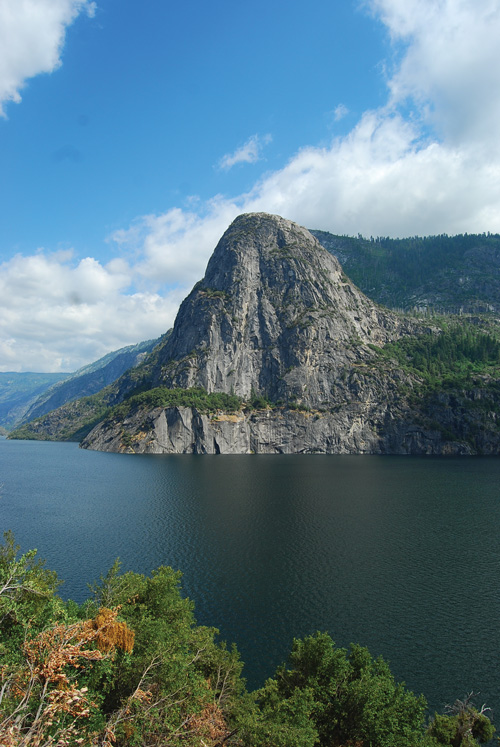
Tiltill Valley is a real-life example of what Yosemite’s Hetch Hetchy Valley might look like if the reservoir that holds San Francisco’s water supply were drained and the terrain allowed to return to its natural state, according to Mike Marshall, executive director of Restore Hetch Hetchy.
His nonprofit group has a singular mission, as the title suggests. The upbeat, 50-year-old former political consultant wants to place a charter amendment on the November 2012 ballot to ask San Francisco voters if Hetch Hetchy Reservoir should be drained so that the valley, which has been underwater since 1923, can be ecologically restored and turned into an attraction for park visitors.
Yet that simply stated goal belies an extraordinarily difficult and expensive task, one that would fundamentally alter San Francisco’s water delivery system and diminish a city-owned source of inexpensive, green energy.
“The destruction of Hetch Hetchy Valley in the 1920s was the worst environmental disaster to ever besiege the national park system,” Marshall says. “And today, it is completely out of whack with the values of the vast majority of people who live here.”
But most city officials think this idea is just plain crazy. Whether or not it was a good idea to build the dam originally, they say it’s unwise and unrealistic to spend scarce resources to destroy one of city’s most valuable assets.
“While it is an interesting idea, I don’t think that there is yet a credible plan to move forward and actually restore Hetch Hetchy that will ensure that within our budget, we’ll be able to get the water that 2.5 million Bay Area customers need, as well as do everything else that the current Hetch Hetchy system does,” Board President David Chiu told the Guardian.
Based in San Francisco, Restore Hetch Hetchy worked in tandem with the Environmental Defense Fund and a consulting firm to craft a technical analysis describing how the city could continue receiving reliable freshwater deliveries without the reservoir, although it would require filtration because of its lower quality and be less abundant in drought years.
While restoring the valley would be an ecological win in a perfect world, cost estimates range in the billions of dollars at a time when budgets are shrinking and economic turbulence rocks the public and private sectors.
Draining Hetch Hetchy Reservoir and replacing it with other water and power projects would punch holes in an already cash-strapped city budget, first with the high capital costs and then with higher long-term annual costs. The hydro-electric system provides carbon-free electricity to city agencies at basement rates and helps fund local renewable-energy projects, so relinquishing some of that generation capacity would be a step backward when it comes to addressing climate change.
“The loss of Hetch Hetchy Reservoir would fly in the face of every effort San Francisco has made to replace fossil-fuel power generation with renewable energy sources,” City Attorney Dennis Herrera wrote in a 2004 editorial in the Guardian. Losing hydropower from the dam, he wrote, “would force greater dependence on fossil-fuel electricity and impair low-cost hydropower with higher-cost renewables, making San Francisco’s efforts to create a sustainable energy future virtually impractical. And it would devastate our efforts to enact a public power system in San Francisco. Hetch Hetchy was built by people who envisioned a public power system to serve all of San Francisco. We should finish that system before we start tearing it down.”
But when a round of invitations went out to Bay Area journalists to join a three-day backpacking trip in Yosemite and learn about Restore Hetch Hetchy’s vision, I signed up to attend. After all, here was a chance to go backpacking in beautiful terrain and assess one of the most controversial and impactful proposals facing San Francisco.
WATER
Our first stop within park boundaries was a chocolate-colored chalet with a spacious deck overlooking the waterfront. Owned by the San Francisco Public Utilities Commission (SFPUC), it’s notorious in San Francisco politics as a weekend getaway for local elected officials, city commissioners, and favored staffers. Stories of the chalet abound, as it’s rumored to have been the site of private soirees for powerful players and a rendezvous for lovers in extramarital affairs.
The eight-mile long, 300-foot deep Hetch Hetchy Reservoir holds 360,000 acre-feet of water, and the dam itself is an impressive structure, although Marshall scoffs at the popular wisdom casting it as “a marvel of engineering,” and dryly quips, “so was the Titanic.”
Native American remains were buried underwater when it was built, Marshall told us as we peered out over the towering dam wall, and 67 lives were lost during construction. As we rounded the perimeter of the man-made water body, sweating in the summer heat and saddled with gear, he asked us to imagine peering down into a dramatic sloping valley instead of what it looks like in its current state, which is a lake.
“Don’t call it a lake,” he insisted. Restore Hetch Hetchy regards the reservoir as an unnatural blemish that should never have been imposed upon a scenic and biodiverse environment in a national park. According to Mark Cedorborg, an ecological restoration expert with Hanford ARC and a Restore Hetch Hetchy board member who joined the trip, it wouldn’t take long for the natural ecosystem to bounce back if the water were removed, recreating a rare wildlife habitat that would mirror Yosemite Valley.
Sierra Club founding president John Muir would have sided with them, of course. The famous ecologist wrote passionately about the valley and vehemently fought the effort to submerge it. At the time, a chorus of opposition arose against flooding Hetch Hetchy — and that was before modern science documenting the impacts dams have wrought on the environment.
A black-and-white image of Michael O’Shaughnessy, the civil engineer behind the project, is posted on an info kiosk beside the dam, his eyebrows arched in a wizard-like, calculating gaze as he uses a pointer to mark the spot on a map of San Francisco’s watershed.
As things stand today, Hetch Hetchy Reservoir is a crucial storage facility for drinking water. Freshwater flowing from the Tuolumne River through the glacial formation accounts for 85 percent of SFPUC deliveries to about 2.5 million customers in the city and on the peninsula.
Hetch Hetchy is unique in that it’s just one of a handful of water systems nationwide that uses chemical treatment and ultraviolet disinfection, but no filtration, to purify fresh water that is transported along a gravity-fed system down to the city.
SFPUC spokesperson Tyrone Jue said Hetch Hetchy water does not require filtration “because basically, it’s a giant granite basin there in the reservoir, so there’s no sedimentation.” He added that the water quality is exceptionally high. “It’s high up in the watershed. The higher up in the watershed, the better it is.”
Restore Hetch Hetchy has submitted a number of proposals to ensure that San Francisco could still receive adequate supplies without the reservoir, including constructing a new intertie at Don Pedro Reservoir, which lies downstream from Hetch Hetchy, to get drinking water supplies from there instead.
Under this scenario, the SFPUC would continue to get its water from the Tuolumne River — but it would have to build a new filtration system to treat it because the water quality would be worse and the city would lose its federal waiver.
That’s an expensive consideration, particularly at a time when city coffers are depleted, critical services for vulnerable populations have been gutted, and taxpayers are wary of authorizing costly new endeavors.
Marshall defends the cost by asserting that the current system is flawed; the lack of filtration makes San Francisco’s water more susceptible to contamination from nasty microorganisms like cryptosporidium and giardia, he says.
“San Francisco has a unique health demographic in that over 5 percent of the people that live in the city have compromised immune systems, if you just look at people who are HIV positive,” he said. “Ultimately, San Francisco is going to be forced to filter its water, so why are we kicking this can down the road?”
But filtering water at the residential level would be far cheaper than tearing down the dam. Jue pegs the cost of a new filtration system at somewhere between $3 billion and $10 billion, but Marshall rejects that estimate as “just crazy.”
So we called Xavier Irias, director of engineering at the East Bay Municipal Utility District. “Ten looks a little high, but the three sounds very credible,” Irias said, acknowledging that there were many complicating factors that could affect cost. Ultimately, he said, the cost range could be anywhere from half a billion to the single-digit billions of dollars.
“With the filtration costs, not only are you talking about building a facility to filter the water, you’re now talking about increased power consumption to basically power those filtration plants,” Jue noted. “You’d have to start pumping water, which would require additional energy. And then on top of that, there’s the long-term operation.”
What’s more is that the quantity of water that San Francisco now depends on wouldn’t be guaranteed every year. According to an analysis done in partnership with the Environmental Defense Fund, reconfiguring the system to tap Don Pedro would result in 19 percent less water delivered from the Tuolumne in critically dry years, and similar losses would result from alternative proposals like tapping Cherry Reservoir, another storage facility in the SFPUC system.
Restore Hetch Hetchy has suggested that the shortfall could be made up in part with new water-conservation measures, something that cities arguably ought to be practicing anyhow since climate change threatens to bring about drier conditions in California’s watershed. It could also place the city in the position of having to go to the open market to purchase water for customers — just as dwindling water supplies raise the temperature between cities and counties scrambling to secure reliable deliveries.
“The Hetch Hetchy water system is a fully owned public asset,” Jue notes. “At a time when state and federal governments are struggling with even being able to close our budget deficits, to even look at dismantling an environmentally sound, cost-efficient water system that delivers water to 2.5 million people is sort of outrageous.”
POWER
In addition to capturing the flow of pristine Tuolumne River water that eventually makes its way into the city’s plumbing network, O’Shaughnessy Dam is a key component of the SFPUC-owned hydro-electric system, which produced 1.7 billion kilowatt hours of power last year with no greenhouse gas emissions.
If efforts to advance the cause of a public power system resurfaced in San Francisco, having the full capacity of the Hetch Hetchy hydro-electric generation in place would be vital. Juice for city streetlights, Muni’s light rail cars, the chandeliers adorning the Board Chambers in City Hall, and countless other municipal uses are derived from this gravity-fed system, which provides roughly one-fifth of San Francisco’s overall energy needs.
City departments pay three or four cents per kilowatt-hour, less than what it costs to generate the power. If all the hydro-electric power were eliminated and substituted with PG&E power, the city would get pinned with $32 million in additional costs annually, and its carbon footprint would expand by more than 900 million pounds of greenhouse-gas emissions, according to the SFPUC. However, a technical report produced by the Environmental Defense Fund suggests the city would only suffer a 20 percent decline in the hydro-electric output, since operations at other SFPUC reservoirs would continue.
The hydro-electric system also generates revenue through the sale of excess power to Turlock and Modesto irrigation districts, but that would come to an end if the generation capacity fell by 20 percent. Restore Hetch Hetchy estimates this loss to be around $10 million annually.
“Whenever we sell the power to Modesto and Turlock, that revenue then goes to fund programs like GoSolarSF, and all of our energy-efficiency retrofits of municipal facilities,” Jue explains. If the city lost its ability to sell off this excess supply, “We would no longer be getting power revenue at all, which we’re using to help fund community choice aggregation.”
Fraught with problems as it is, the city’s effort to launch a community choice aggregation program offering residential customers an alternative to PG&E nevertheless holds promise as a powerful green shift for a major metropolitan hub. For all the ecological benefits to Yosemite, restoring Hetch Hetchy could wind up undercutting the fledgling green power initiative, and the upshot would be a boon for PG&E. Coupled with the fact that ceding control of the valley back to the National Park Service could strip the city of its mandate for public power, the utility giant would benefit tremendously from this plan.
All of this makes it somewhat surprising that District 5 Sup. Ross Mirkarimi, a longtime champion of the cause of public power, appointed Marshall to serve on the SFPUC Citizens Advisory Committee, a move that rankled SFPUC staff.
“I’ve known Mike many years and have found him to be whip smart when it comes to complicated policy issues,” Mirkarimi told the Guardian when asked about this. “He knows that I am an unwavering supporter for public power and that I’d hope his advocacy on the SFPUC continues to advance and innovate our locally-driven clean energy objectives.”
POLITICS
The concept of bringing back Hetch Hetchy Valley originated with the Sierra Club in 1999, and several mainstream environmental organizations have lent support for the cause although few have made it a high priority. Nevertheless, there’s plenty of financial backing and support from key political players to keep the vision alive.
Democratic County Central Committee Chair Aaron Peskin, a member of Restore Hetch Hetchy’s national advisory board, told me he’s been active with the group for at least a decade, making him a rare exception among the city’s political leaders.
“San Francisco is a remarkably sophisticated town that is technologically advanced and environmentally advanced, and this is an opportunity to right one of the most destructive environmental wrongs,” he said. “It’s time to start a local and national conversation.”
He acknowledged that there were a lot of technical issues to contend with, saying, “It should only be done in a way that makes sure San Francisco and communities that rely on the system are taken care of.”
Major funders backing Restore Hetch Hetchy include retired businesspeople from the financial sector, Patagonia founder Yvon Chouinard, council members of the Yosemite Conservancy, and Lance Olson, a Restore Hetch Hetchy board member and partner in Olson Hagel & Fishburn, LLP, a prominent Sacramento legal firm that represents the California Democratic Party and elected officials.
Other influential and politically connected individuals have joined the effort as well. Marshall assured me that “no one from PG&E has given us a dime.” Yet the project still faces some powerful opponents. “I have opposed removing the O’Shaughnessy Dam in Hetch Hetchy Valley for decades and I remain opposed,” U.S. Sen. Dianne Feinstein told the Guardian. “Draining the reservoir would endanger San Francisco’s water supply, further jeopardize California’s water infrastructure and impose a huge financial burden on the state.”
Enviro justice groups spar with SFPUC on power program
A Pew Research Center analysis based on the latest U.S. Census data has found that Latino and African American households weathered deeper blows in the economic recession, driving the wealth gap between whites and minorities to an historic high. As things stand under current economic conditions, the Washington Post reports, the median net worth of a white family is now 20 times that of a black family, and 18 times that of a Latino family — roughly twice the gap that existed before the recession, and the biggest gap ever since 1984.
Meanwhile, a report issued yesterday by the Natural Resources Defense Council hit on another alarming trend, outlining the water-related challenges coastal cities will face as climate change takes its toll. The report highlights sea level rise, land erosion, saltwater intrusion, flooding, impacts to fisheries, and more frequent and intense storm events. (That’s to say nothing of wildfires.)
In San Francisco, a small group of environmental justice advocates has been working for the better part of a decade to help craft a municipal energy program with the aim of turning the tide, at least on a small local scale, to promote greater economic equality and fend off the worst impacts of climate change. Advocates from groups such as Global Exchange, the Local Clean Energy Alliance, the Sierra Club, the Brightline Defense Project, the San Francisco Green Party, and others have long envisioned CleanPower SF as a way to bolster local job creation, particularly for people who reside in the city’s low-income neighborhoods. The twin goal of CleanPower SF, also known as community choice aggregation (CCA), is to launch a local response to climate change by offering San Franciscans the option of purchasing clean electricity generated from local, renewable energy sources such as wind and solar.
At a July 26 meeting of the San Francisco Public Utilities Commission (SFPUC) in City Hall, however, it became clear that this overarching vision for the program wasn’t gaining traction with the agency that is tasked with implementing it. As the program inches closer to a review by the Board of Supervisors, advocates have reached an impasse with SFPUC staff as to how the whole endeavor should proceed.
Grassroots advocates raised concerns that the latest proposal for CleanPower SF amounted to a setup for failure, unless there was a concerted effort to plan for robust development of local green-energy sources. While SFPUC staff indicated that the current proposal would result in new jobs at call centers, advocates said more needed to be done to plan for installing local energy-generating sources which could truly bolster local job creation.
Yet SFPUC General Manager Ed Harrington said that what the advocates were asking for wasn’t realistic. He dismissed the original vision for CCA, articulated in a 2007 board-approved ordinance, as “not a realistic goal.” And he spoke in a condescending tone about the grassroots stakeholders, saying, “People saw that they would like green power to be cheaper, and therefore they believed that it was.”
Under the proposal that the SFPUC described to commissioners July 26, monthly electricity rates under CleanPower SF would be at least $7 more than estimated PG&E rates. That’s a key difference from the original draft implementation plan, hammered out in 2007, to “meet or beat” rates offered by the investor-owned utility.
The new proposal has also been scaled down considerably since 2007. As planned, CleanPower SF would contract with Shell Energy North America to begin offering 30 megawatts of 100 percent green power to just 75,000 municipal customers by the spring of 2012. That’s assuming most of the 229,000 residential account holders who will initially be enrolled will opt out; and SFPUC media relations representative Charles Sheehan noted that the full customer base would eventually roll up to the original goal of 340,000 customers. Still, the target at the outset represents just a fraction of the 360 megawatts of power for 340,000 customers originally called for, with a 51 percent renewable energy mix. Under this new scheme, electricity would be purchased through Shell on the open market, with long-term plans to develop local sources but no solid short-term goals for achieving that end.
SFPUC Commissoner Francesca Vietor asserted that SFPUC staff should continue working closely with the grassroots stakeholders and find a way to seriously plan for building local renewable sources, which could ultimately serve to drive municipal rates down and make the program more viable and competitive. “I think local build-out is a really exciting and important opportunity, and a critical piece of the CCA program,” she said.
Commissioners continued the decision on whether to approve parameters for a term sheet and submit it to the full board, pushing the discussion back until September unless a special meeting is called. Several commissioners raised concerns about the financial risk to the city, since the program would have higher rates than PG&E and is designed in such a way that a bulk of power would have to be purchased up front before the agency can determine how many customers will opt out.
“I was actually glad to hear a lot of commissioners raise a lot of concerns, especially about the financials,” Eric Brooks, a long-time CCA advocate speaking on behalf of the Green Party and an organization called Our City, told commissioners. “The more of a local build-out … the lower your price, and the lower you can get in terms of the risks.”
June Brashares, green energy director at Global Exchange, echoed Brooks’ comments in a telephone interview with the Guardian. “The proposal they’re doing now is really vulnerable,” because the higher rates will make the alternative power program less competitive, she said. “The whole reason for CCA — yes, we want cleaner energy — but the real key is the building of local energy sources to create an economic boost, and local green careers. And that’s not at the core of what the SFPUC is doing.”
This article has been corrected from an earlier version.
(Summer!) Trash Lit: The Profession
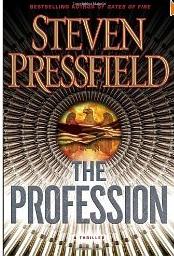
By Steven Pressfield. Crown, 320 pages, $25
Wow, they still drink Rolling Rock in 2032. And they still use military laptops and handhelds and complain about bad TV reception. The web doesn’t seem to have advanced much, and people still rely on the Al Jazeera video feed to see what’s going on in the Middle East.
There’s a lot that’s jarring in The Profession, a military thriller set in the Middle East 20 years in the future. For one thing, the future looks a lot like today, except that there’s been a dirty bomb attack on Long Beach and the Chinese are starting to cash in their U.S. debt, putting the world economy into turmoil. (It takes China 20 years to figure that out? Damn.)
So it’s pretty bad sci-fi. But it’s not a bad adaptation of the Heart of Darkness/Apaocalypse Now myth of the powerful general who goes rogue with his loyal troops and tries to take over part of the world.
In this case, it’s the Middle East, where (again, bad sci-fi) they’ve just found some more really rich oil fields. And much of the military work of the major nations is done by mercenaries.
One of them is General James Salter, who got cashiered out of the Marine Corps for defying the president’s orders, but who has a MacArthur-like following in both the military and the civilian worlds. He’s a private soldier now, and he’s got this plan to take control of much of the world’s oil, and then return in triumph to Washington, where he can become president (oh, and marry the widow of the prez who cashiered him, who is also involved in this plot.
Our hero, Gilbert Gentilhomme (and what kind of name is that for an action hero?) is one of Salter’s best friends and loyalists, one of the few who can get close to the great man. And he knows he can’t let the general get away with his plan.
Lots of desert battles. Random brutality. International intrigue, of sorts. A bleak and dusty vision of the future — but one where there’s no climate change or peak oil. No sex (and how come none of this summer’s thrillers have any sex?). But not bad for a quick beach read.
Alerts
ALERTS
By Jackie Andrews
THURSDAY, JUNE 23
Radical Women meeting
Attend this round-up of radical women and LGBTQ organizers who work hard to improve their communities to fight against racism, sexism, homophobia, and labor exploitation. Tonight there will be a light summer supper followed by a discussion and brainstorming session inspired by the “It Gets Better” campaign — a national group that provides hope for queer youth around the country. Collaborate with like-minded people who want to make change happen at home and help hammer out a plan to translate the mission of the “It Gets Better” campaign to our local queer community’s needs.
6:15 p.m., $7.50
New Valencia Hall
625 Larkin, SF
(415) 864-1278
Medicare for all
Many progressives around the country are less than enthusiastic with the current administration’s reform on health care, which they see as a sellout to corporate interests. The San Francisco chapter of the Progressive Democrats of America presents this public forum on the topic, where Don Bechler, a tireless organizer for single-payer healthcare since 1994, and clinical psychologist Stephen Berman will discuss just how close we are to having a truly universal healthcare.
7 p.m., free
Unitarian Universalist Center
Martin Luther King Room
1187 Franklin, SF
(415) 776-4580
SATURDAY, JUNE 25
People’s Movement assembly
Attend this community forum and planning session for next year’s East Bay Social Forum — inspired by the U.S. Social Forum in Detroit last June where more than 20,000 diverse people came together to build strong progressive movements for housing, health, justice, education, immigration, ecology, and peace.
9:30 a.m.–4:30 p.m., free
Lutheran Church of the Cross
1744 University, Berk.
(510) 848-1424
TUESDAY, JUNE 28
Clean Air Act
Find out how the Clean Air Act, signed into law by President Nixon in 1970, is the U.S.’s most important and successful law for controlling air pollution and why it is our best hope in curbing climate change. If used effectively, it could significantly reduce greenhouse gases to a level deemed safe by climatologists. Learn how the Clean Air Act works, what kinds of threats it faces from Congress, and how it can be used to protect the planet and our future.
7–10 p.m., free
Unitarian Universalists’ Hall
1744 University, Berk.
(510) 841-4824
Mail items for Alerts to the Guardian Building, 135 Mississippi St., SF, CA 94107; fax to (415) 437-3658; or e-mail alert@sfbg.com. Please include a contact telephone number. Items must be received at least one week prior to the publication date.
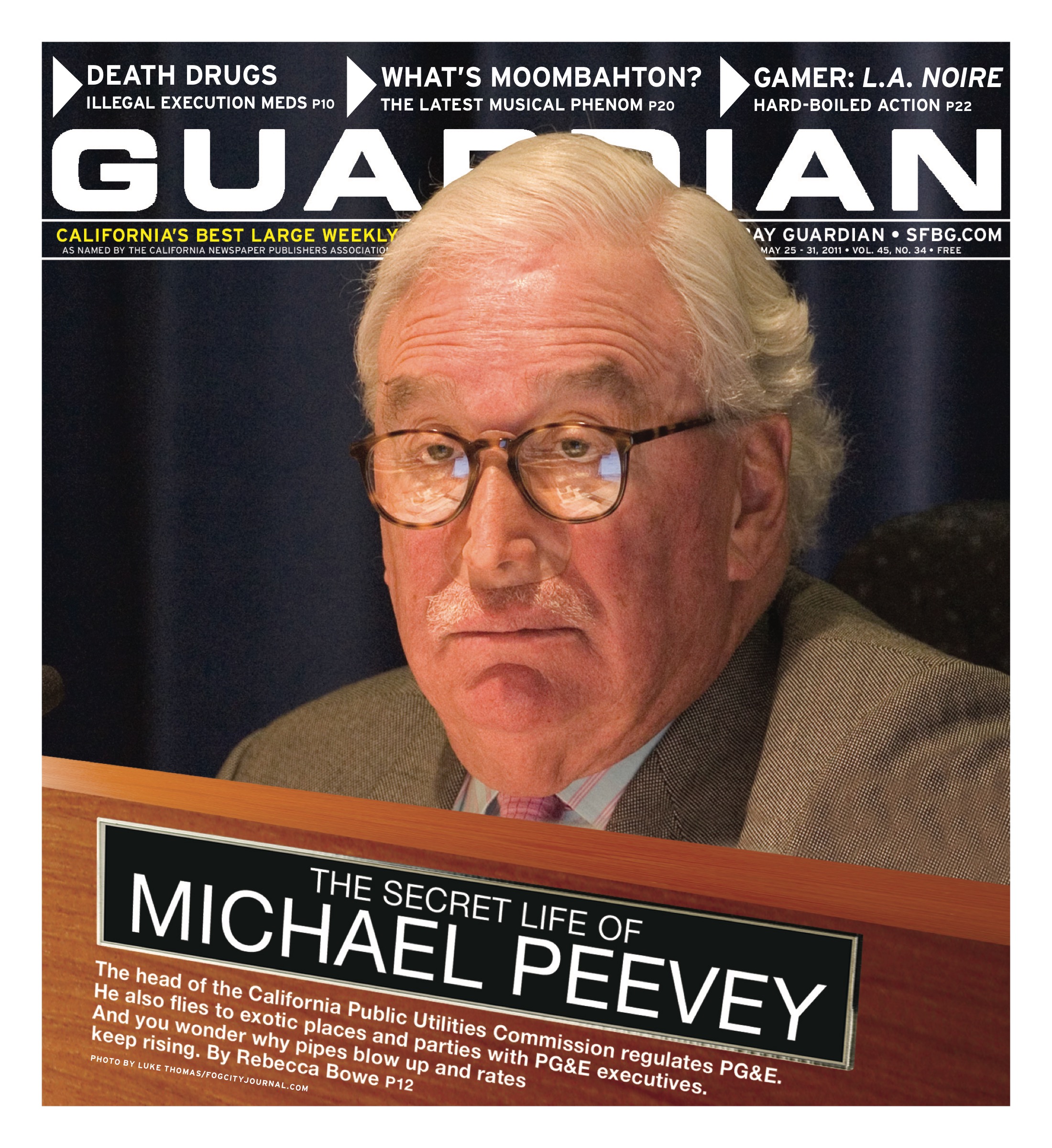
The secret life of Michael Peevey
rebeccab@sfbg.com
Inside a legislative hearing room at the state capitol, things were beginning to get uncomfortable. Roughly five weeks had passed since a Pacific Gas & Electric Co. pipeline explosion killed eight and leveled an entire San Bruno neighborhood, and this California Senate committee hearing was an early attempt to get answers.
San Bruno residents who lost loved ones in the deadly explosion huddled in the front row, their eyes fixed on company representatives and agency bureaucrats as they spoke. At the back of the room, a band of immaculately dressed PG&E executives and utility lawyers sat clustered together.
Richard Clark, director of the consumer protection and safety division of the California Public Utilities Commission (CPUC), fielded questions from visibly frustrated state legislators. Sen. Dean Florez (D-Shafter) wanted know why the CPUC hadn’t done anything when PG&E ignored an impaired section of the ruptured pipeline even after it was granted $5 million to fix it.
“Did the PUC do any accounting when you gave them $5 million?” Florez demanded. “Do we just give them money and cross our fingers and hope they fix it? Is that what we do? Until some terrible tragedy occurs?”
Sen. Mark Leno (D-San Francisco) said the CPUC needed to step it up and start practicing serious hands-on oversight. He recalled a tragedy that occurred in 2008 when a gas leak in Rancho Cordova triggered a pipeline explosion, killing one person and injuring several others. Although an investigation determined that PG&E was at fault, the CPUC hadn’t yet gotten around to fining the company.
“We’ve got a pattern here,” Leno said. “And we’re not doing anything differently.”
Less than three weeks after CPUC staff members were grilled in Sacramento, Michael Peevey — president of the CPUC and the top energy official in the state — boarded an airplane for Madrid. He was embarking on a 12-day travel-study excursion, with stops in Sevilla and Barcelona, sponsored by the California Foundation on the Environment and the Economy (CFEE).
Peevey’s wife, California Sen. Carol Liu (D-Glendale), was along for the trip. So were two other state senators, several members of the state Assembly, CPUC commissioner Nancy Ryan, and a host of representatives from the energy industry. The group included executives from Chevron, Mirant (now GenOn, the owner of the Potrero power plant), Covanta Energy Corporation, Shell Energy North America, and engineering giant AECOM. High-ranking executives of the state’s investor-owned utilities also participated, including Fong Wan, the senior vice president of energy procurement for PG&E.
Although strict rules normally govern commissioners’ interactions with parties that have a financial stake in the outcomes of commission rulings, there wasn’t anything especially unusual about Peevey traveling internationally with a group that included representatives from the same companies his regulatory commission oversees. CFEE trips happen every year. The nonprofit has footed the bill to fly groups of regulators, legislators, and utility executives to prime vacation destinations like Italy, Brazil, and South Africa in recent years, excursions organizers say are critical for educating top-level stakeholders about worldwide best practices for sustainable systems. However, groups such as The Utility Reform Network (TURN) have decried CFEE trips as “lobbying junkets.”
As PG&E and the CPUC both work to win back the public’s confidence after their latest deadly failure, it’s worth analyzing whether their relationship — shaped by vacations together at exotic locales — has grown too cozy.
THE BUDDY SYSTEM
CFEE isn’t the only nonprofit that regularly flies Peevey overseas for green travel tours with high-ranking utility executives, and the 12 days he spent in Spain wasn’t the only time he spent away from official duties and in the company of the corporations his commission regulates.
These controversial getaways are just a small part of Peevey’s involvement with private-sector interests. He also chairs the board of a nonprofit investment fund created as part of a $30 million settlement agreement with PG&E. Called the California Clean Energy Fund, it funnels money into private venture-capital funds that invest in green start-ups, plus a few companies in the fossil-fuel sector.
While legislators have voiced frustration that lax CPUC oversight of PG&E on pipeline-safety issues opened the door to disaster in San Bruno, inside observers are critical of the outright favors Peevey has granted utilities, such as guaranteeing an unprecedented, higher-than-ever profit margin for PG&E as part of the company’s 2004 bankruptcy settlement.
The CPUC is set up to perform as a watchdog agency, yet social and professional ties running deep within California’s insular energy community mean regulators sometimes run in the same circles as the executives who answer to them, making for cozier relationships than the general public might anticipate. It’s an old-fashioned insider game that one longtime observer wryly characterizes as “the buddy system.” But the buddy system can bring consequences.
As the public face of the CPUC, Peevey repeatedly has been thrust into the spotlight. He has absorbed advocates’ concerns about pipeline safety, rising electricity rates, SmartMeters, missed targets for energy efficiency, and municipalities’ David-vs.-Goliath battles with PG&E to implement community choice aggregation (CCA), to name a few. He’s a magnet for public scrutiny while occupying the center seat at commission meetings, but Peevey’s behind-the-scenes engagements with private-sector organizations bent on shaping statewide energy policy demonstrate how power is wielded in California’s energy world, a system in which regulators seem to be partnering with utilities rather than policing them.
Based at Pier 35 in San Francisco, CFEE’s board of directors is composed of a small group of officers, plus a long list of members who hail from some of the most prominent businesses nationwide. Shell, Chevron, J.P. Morgan, Goldman Sachs, AT&T, and PG&E all hold positions on CFEE’s membership board, and each entity chips in to fund the foundation’s activities and travel excursions.
The group also includes representatives from labor organizations like the International Brotherhood of Electrical Workers and mainstream environmental groups such as the Natural Resources Defense Council. Among the emeritus members of CFEE’s governing board are some high-ranking figures, such as CIA director-turned-Pentagon boss Leon Panetta. CFEE received $45,000 in donations from PG&E in 2009 (the most recent year available) and was granted similar amounts in prior years.
CFEE spokesperson P.J. Johnston, the son of former state senator and CFEE officer Patrick Johnston and the press secretary under former Mayor Willie Brown, described the trips as valuable opportunities for top-level stakeholders to gain insight on best practices and engage in noncombative dialogue on key issues.
“The idea for us was that it made sense to have someplace where it was nonconfrontational to engage in policy, work-type discussions,” Johnston explained. He added that the trips are “all about policy, on the 30,000-foot level,” and emphasized that discussions aren’t about specific decisions pending before the CPUC.
Loretta Lynch, a former president of the CPUC who brought a reformist spirit to the agency and was never shy about rebuking utilities, is skeptical of CFEE’s stated program goals. When she was first appointed to the commission, Lynch said, CFEE contacted her to ask where she wanted to travel. If the trips are arranged to fly regulators to destinations they’ve been itching to visit, she reasoned, must-see green innovations probably aren’t dictating the itineraries. “To me,” Lynch said, “they don’t have anything to study in mind.”
“PARTYING WITH THE JUDGE”
The CFEE trip to Spain included a briefing on developing wind energy from AES, a company working on wind and solar development in California that also operates polluting, gas-fired power plants in Huntington Beach, Long Beach, and Redondo Beach. There was a round table on solar energy featuring a presentation from the Independent Energy Producers Association, a trade group that regularly files petitions and comments on CPUC proceedings. The trip included a tour of a desalination plant, a talk from the president of the Madrid Chamber of Commerce, and discussions about California’s energy market. Scheduled activities ended by midafternoon on some days, and the itinerary left a Friday afternoon, Saturday, and Sunday in Sevilla wide open.
Asked to comment on concerns about inappropriate lobbying, Johnston said: “We’re not guarding against anyone’s potential behavior any more than we would be on the streets of Sacramento. We’re not setting ourselves up as the guardians. We’re not facilitating that, per se, either.” He added, “I realize there are critics of any kind of travel and any kind of commingling. But it is wise for us not to close our eyes to the rest of the world, and there’s not a great appetite for spending taxpayer money on these trips.”
Yet Lynch countered that there is an important distinction between the roles of Sacramento legislators and that of utility commissioners. “Regulators are not legislators,” Lynch said. “They’re more like judges. Their decisions have the power of a judge’s decision.” By inviting commissioners along on these lavish getaways, she said, “it’s as if you’re partying with the judge.”
Mindy Spatt, a spokesperson for TURN, echoed Lynch’s concerns. “These ostensibly educational trips are essentially lobbying junkets, where utilities … wine and dine legislators,” Spatt said. TURN raised the issue several years ago, she said, when Peevey joined a CFEE trip attended by a representative of Southern California Edison “just coincidentally at the exact same time that he was penning an alternate decision in Edison’s rate case.” She added: “In TURN’s perspective, the commissioners need to be more in touch with what actual utility customers are experiencing, rather than in touch with the top restaurants in Brazil.”
While Peevey is only one of a host of officials who attend CFEE trips, he has more than just a casual tie to the nonprofit. From 1973 to 1983, he served as president of the California Coalition for Environment and Economic Balance (CCEEB), an organization CFEE grew out of and whose membership shares some overlap with CFEE.
Based in San Francisco, CCEEB was founded by Edmund G. “Pat” Brown (Gov. Jerry Brown’s father) in 1973. CCEEB backed a late-1970s proposal to construct a series of nuclear power plants along the California coastline. More recently, the group honored BP with a 2009 award for environmental education — shortly before the company and lax federal regulators were responsible for the worst oil spill in U.S. history.
A YEAR IN THE LIFE
Spain wasn’t the only country Peevey jetted off to with complimentary airfare in 2010. According to a Form 700 filing with the Fair Political Practices Commission, he also traveled to Germany from Aug. 1–5 for a sustainable energy study tour organized by the Energy Coalition. Joining that trip were representatives from investor-owned utilities PG&E, Southern California Edison, and Sempra, plus various city officials and energy experts from the Swedish Energy Agency.
The group stayed at the Radisson Blu Berlin Hotel, which is famous for its AquaDom. “Standing at 25 meters high, it is the world’s largest cylindrical aquarium containing 1 million liters of saltwater,” according to the hotel website. All Radisson Blu Berlin guests have free access to “the hotel’s well-being area,” called Splash, which features a pool, sauna, steam bath, and fitness room.
Based in Irvine, the Energy Coalition’s Board of Directors is chaired by Warren Mitchell, a retired chair of the Southern California Gas Co. and San Diego Gas & Electric Co.. Another director is a utility lawyer who also sits on the board of directors of the Northeast Gas Association, a consortium of natural gas companies in the northeastern U.S.
Founded in the late 1970s by John Phillips to get large businesses to reduce energy consumption in partnership with utilities, the Energy Coalition has arranged excursions for years to bring energy regulators, city officials, and utility executives to Sweden (where Phillips’ wife was born) to exchange ideas on energy issues. The nonprofit organizes an annual summit called the Aspen Accord, “an energy policy forum where cities, utilities, regulators, and end-users collaborate to identify problems and propose solutions to our most pressing energy issues,” according to a 2009 tax filing. While it used to be held in Aspen, Colo., the most recent Aspen Accord was held at San Francisco’s Westin St. Francis. Peevey gave introductory remarks, and the conference featured talks from PG&E, among others.
Craig Perkins, executive director, told the Guardian that the Aspen Accord and study trips are designed to create a venue for major stakeholders to arrive at outside-the-box solutions. “What we try to do is get everybody out of their comfort zone, if you will — that’s the best way to support more creative thinking,” he said. Official regulatory proceedings are “so rigidly legalistic and bureaucratic that it almost prevents any creative thought from happening,” he added. “We’re not in San Francisco, we’re not in Sacramento, we’re not in corporate offices — let’s just talk about these really big issues, and really big challenges.”
The Germany tour included meetings with the Berlin Energy Agency, talks about climate policy, and a tour of an eco-community in Freiburg. Perkins said utility companies must to pay their own way on the trips, but costs are covered for governmental officials.
An Energy Coalition tax filing reveals that board members receive a monthly retainer of $1,000, quarterly meeting fees of $1,000, plus $500 for each board committee meeting. Teleconferences also result in $500 meeting fees.
Several years ago, the Energy Coalition partnered with PG&E to create the Business Energy Coalition, which paid businesses including Bank of America and the Westin St. Francis $50 per KW of energy savings for banding together to reduce energy during peak load hours. According to a tax filing, total annual Energy Coalition revenue dropped from $10.7 million in 2008 to $3.75 million in 2009 “due to large revenue receipts for participant incentives” for the Business Energy Coalition program, as “revenues were used for direct pass-through payments to program participants and contractors.” In 2006, according to a CPUC filing, PG&E paid the Energy Coalition $227,373 for unspecified consulting services.
In addition to the $8,880 trip to Spain (comped), and the $6,583 trip to Germany last year (comped), Peevey’s 2010 disclosure form shows that he also went to Australia May 14-19 to participate in a conference hosted by the Sydney-based Total Environment Center called “Smart Metering to Empower the Smart Grid” ($12,577, comped). And while it doesn’t show up on his FPPC filing, an agenda for CFEE’s Energy Roundtable Summit from Dec. 9-10 at the Carneros Inn in Napa lists Peevey as a participant. A glance through past filings suggests that 2010 was no anomaly; it’s a typical year in the life of a jet-setting utilities regulator.
GREEN CAPITALISM
Peevey once served as president of the Southern California Edison, an investor-owned utility, and was president of NewEnergy, Inc., an electricity company that later was sold to Williams Energy. Yet his professional image is that of a forward-thinker on climate change. According to a bio on the CPUC website, he’s received awards for achievements on green and sustainable energy from various organizations throughout California.
In 2005, speaking in Berkeley at an annual conference for the California Climate Action Registry, Peevey touted a list of his accomplishments on sustainable energy. “My final example of PUC actions on climate change is related to PG&E‘s bankruptcy,“ he said. “When they emerged from bankruptcy last year, one of many conditions of our support for their reorganization plan was that they create a $30 million Clean Energy Fund, devoted to investing in California businesses developing and producing clean technologies.“
What Peevey didn‘t mention is that he chairs the board of directors of that fund. As a “nonprofit venture capital fund,“ the obscure, San Francisco-based CalCEF sounds like an oxymoron. Based on the terms of the PG&E bankruptcy settlement, it‘s governed by a nine-member board consisting of three CPUC appointees, three PG&E appointees, and the rest selected jointly by the CPUC and PG&E appointees. Other board members include past PG&E executives, a former member of the California Energy Commission, and a former chair of the board of governors of the California Independent System Operator (Cal-ISO), the body that ensures statewide grid reliability and blocked the closure of the Mirant Potrero Power Plant for years.
The nonprofit’s stated mission is to catalyze clean energy investment to aid in the state’s transition away from fossil fuels. CalCEF president Dan Adler described it as a sort of seasoned guide for fledgling green companies that might otherwise fail to navigate the murky, complicated clean-energy sector. CalCEF is in a position to usher start-ups toward success with a combination of funding, networking, and insider wisdom on state energy policy.
Among the challenges that the clean-energy sector faces, Adler said, are the utilities themselves. “They are effectively monopoly, or oligopoly, controllers of the energy industry,” he said. “And they don’t like outside innovation coming and disrupting their work process or their relationship with their customers.”
CalCEF aims to guide the finance community “to be partners with what public policy is doing around clean tech and clean energy,” Adler went on. “There’s a tremendous amount of money to be made, but there’s also a lot of opportunity for money to be wasted. If you don’t have a private-sector investment community that understands these rules and can put their money alongside these rules in a collaborative framework, we’re very unlikely to achieve the really aggressive energy targets that California has set.”
Yet as one skeptical energy insider noted, “there are 15 to 20 other funds, with 10 times as much money, an hour south in the same field,” referring to the burgeoning clean-tech hub in Silicon Valley. It’s questionable whether the CPUC is actually fulfilling some dire need with CalCEF, this person said.
Lynch, not surprisingly, takes a dim view of CalCEF. The former CPUC president questions what business the CPUC has creating a private foundation to guide venture capital investment. “It is a fundamental distortion of the PUC’s authority,” she charged, “all in service of Peevey’s ambitions.”
Peevey’s economic disclosure showed that he holds more than $1 million in a private family trust, without disclosing whether private investments contributed to that fund.
Adler stressed that there is arms-length relationship between CalCEF board members and the companies that benefit from the fund’s investments. “Because we are a nonprofit, and because we have on our board members of the regulatory community, we recognized quickly that we can’t be making direct investments into companies,” said Adler, a former CPUC staff member who was highly regarded even by the critics of CalCEF. “So … we’ve picked the venture-capital funds that we wanted to partner with.”
CalCEF funnels its capital into three different for-profit investment firms, which in turn select the companies that will be included in CalCEF’s investment portfolio. Several directors of the partnering investment firms also sit on the boards of directors of the companies they invest in. The startups run the gamut, from carbon-offset outfits, to energy-efficient lighting manufacturers to solar and wind companies, to biofuels startups to various kinds of technology firms related to the smart grid.
But CalCEF has also poured money into companies that bolster the fossil-fuel industry. One of its first investments was CoalTek, a company developing technology for so-called “clean coal.” Asked to explain why, Adler told the Guardian, “We don’t have veto power on every deal that goes down.”
Adler said he personally believes that “there’s no such thing as clean coal,” but tempered this by adding, “there are some very smart people in our community who will tell you that there’s no future … without coal.”
Another CalCEF investment, DynaPump, is developing technology to make it more energy efficient to pump oil and gas. Asked about this decision, Adler responded: “I will say that when we were approached with this investment by the venture partner that ultimately undertook it, we had our misgivings. If you can save energy in the production of oil and gas, then you’re definitely making a contribution to overall energy efficiency.”
TAX-EXEMPT TESLA
There appear to be some closer-than-arms-length links between CalCEF board members and the investment fund’s beneficiaries. A bio for CalCEF director Nancy Pfund, for example, notes that in her capacity as manager of an outside investment fund, she had “worked closely” with Tesla Motors, a CalCEF investment. Tesla provided CalCEF’s first investment return earlier this year after Tesla went public. A principal of one of the investment firms that works with CalCEF, Stephen Jurvetson of Draper Fisher Jurvetson, holds Tesla shares in a personal trust, according to a filing with the U.S. Securities and Exchange Commission.
Tesla manufactures sleek, electric, zero-emission sports cars with prices in the six-figures, and it’s gearing up to roll out a model that will cost somewhere closer to $50,000. The company’s success was helped by a sales-and-use-tax exclusion granted by the state of California last year. Peevey had a hand in that, too. Few Californians may have heard of the California Alternative Energy and Advanced Transportation Financing Authority (CAEATFA), a state body within the Office of the Treasurer, which has the power to authorize sales-tax exclusions for companies that are developing alternative energy technologies. Peevey has a seat on it.
In October 2009, according to a CAEATFA document, Tesla was granted a sales tax exclusion from that financing authority. The sports car manufacturer had received a tax break of $3.3 million as of December 2010, and stands to gain a tax break as large as $29.1 million, depending on its property purchases. As a CAEATFA member, Peevey approved the deal by proxy.
A central question is whether the CalCEF dollars that benefited Tesla and other CalCEF portfolio investments were originally derived from PG&E shareholder profits or ratepayer funds. Adler was careful to note that the initial $30 million came from company shareholders, not PG&E customers. But Lynch pointed out that every dime in PG&E coffers originates with the millions of customers who pay utility bills.
Lynch noted another provision of the bankruptcy settlement agreement, which guarantees PG&E a minimum annual profit of 11.2 percent, catapulting it forever into a higher rate of return than the 8 percent to 11 percent profit traditionally granted by the CPUC in prior decades. “They’re manipulating how big this bucket is to siphon off funds into programs like CalCEF,” Lynch said. “It’s all to give Peevey and his friends access — and to greenwash what was a very stinky deal for the ratepayer.”
ELUSIVE CLEAN ENERGY FUTURE
In California, a national leader in addressing climate change, the stakes are high in the energy sector. The CPUC is tasked not only with shoring up transmission-pipeline safety to prevent another San Bruno disaster, but helping to chart a course away from reliance on fossil fuel-powered energy sources.
CFEE, the Energy Coalition, and CalCEF share a common thread — their missions relate to advancing the cause of a clean energy future in California. And while utility funding and partnership is evident in all three operations, the overarching goal is understood to be green.
But as Adler observed, the utilities themselves present one of the greatest obstacles to progress on a clean-energy transition. While California has increased renewable energy sources, it’s done a poor job at supplanting fossil fuel generation with green alternatives, in part because the CPUC has allowed for increasing fossil fuel power generation even as renewable energy expands. According to a listing on the California Energy Commission website, nine natural gas power plants have won approval statewide and are moving toward construction, while six new ones are under review.
The CalCEF approach to addressing climate change, rather than aggressively targeting polluting industries, is to encourage the fledgling green industry in hopes of facilitating success in partnership with the financial sector. In many cases, the backers of the clean-tech companies are the same players behind the big energy giants.
Environmental advocates are critical. “If anyone thinks the CPUC is set up to serve public interests, forget that,” says Al Weinrub, executive director of the Local Clean Energy Alliance, a group that organized against PG&E’s ill-fated Proposition 16 last year. “They never have and they never will.”
Weinrub said he viewed proponents of green energy as falling into two camps: Moneyed interests motivated by a growing new market sector, and activists motivated by environmental and social justice causes. Major green investment firms “want to de-carbonize capitalism,” he observed. “But everything else stays the same.”
Peevey is considered a major driver behind the state’s climate change legislation, and he’s highly regarded for his dedication to green energy. Yet as long as the interlocking dynamic between energy regulators and California’s largest utilities goes unchallenged, change will only come in a way that’s as comfortable, profitable, and manageable for the state’s top polluters as they wish. And in a state with an aging energy infrastructure that’s vulnerable to the impacts of climate change, that pace isn’t nearly quick enough.
Are you ready for the Rapture?

I’m ready for the Rapture. I hope Harold Camping and devotees to his Oakland-based Family Radio Worldwide are right that Judgment Day is this Saturday, May 21, both for their sake and that of the godless heathens like myself who will be left behind. We’re like a bitter married couple that needs a divorce, which will probably be hard, but it’s what’s best for our children and grandchildren.
They’re tired of hearing us fight about government, fiscal policy, abortion, sex, climate change, war, welfare, crime, capitalism, and, well, just about every major issue of our day. And I’m tired of fighting. I think it’s time that all the Christians had their kingdom – with God, clouds, harps, and eternal peace – and we had ours, with Satan, fire, guitars, and an eternal party. I think we’ll all be much happier that way.
Of course, not being a man of faith, I gotta say that I suspect the world is pretty much gonna look the same on May 22 and we’re still gonna be stuck here together in this loveless marriage that we call the United States of America. Believe me, I hope I’m wrong. Nobody is going to cheer louder than me when I we watch all the Christians ascend and we’re left to somehow make a go of things without them.
If I see Jesus I’ll give him a warm welcome back and freely admit that I’m not worthy a heaven restricted to Christian true believers, thanks but no thanks. Being a journalist, I’d love to ask him a few questions about what he thinks of the war-mongering, poor-stomping version of Christianity that seems to have replaced his original teachings, but I’ll be respectful because I know he’ll be a busy man, or spirit or whatever. But obviously this would be a big story and I’d like to get a few choice quotes.
So, Harold and company, I’m even going to say a little prayer for you and hope that helps bring on the Rapture. Good luck, safe travels, I hope you’re all very happy up there and you no longer feel compelled to smite us or encourage God to heap any more wrath on us. I’m sure this is all for the best. Amen.
The problem with the yellow pages

Editors note: We ran an opinion piece this week opposing Sup. David Chiu’s proposal to limit delivery of yellow pages phone books. It’s gotten a lot of comments. Chiu asked if his supporters could respond.
By Michelle Myers and Janet Pomeroy
Tired of getting stacks of yellow pages books delivered to your front steps every year when you didn’t ask for them? Most people are.
Phone companies distribute 1.6 million phone book directories in San Francisco every year, which is two for every man, woman and child – producing 3,600 tons of waste annually, and costing residents as much as $1 million dollars a year. There are approximately 350,000 residential units in San Francisco and 80,000 businesses. If we had a single phone book in every home and office we would only need a third of what is currently being produced. That doesn’t even take into account the fact that many individuals no longer use the yellow pages to get information, and non-English language speakers don’t use the English print directory.
Does anyone in San Francisco need two five-pound yellow pages phone books delivered every year? No. So why does the industry do this? According to the Green Chamber of Commerce and independent research, the companies do it to pump up ad sales, which are based on inflated circulation numbers.
San Francisco’s attempt to restrict the mass over distribution of yellow pages, and to force an honest look at the industry, marks some of the most important environmental legislation of the last several years.
Supervisor David Chiu’s Yellow Pages legislation is supported by the Sierra Club, Rain Forest Action Network, The Green Chamber of Commerce, the Product Stewardship
Institute, Californians Against Waste, Senior Action Network, numerous small businesses, the San Francisco Small Business Commission, homeowners, tenants, and landlords.
The San Francisco city economist did an independent economic impact analysis of the legislation and found that this pilot program was good for business, good for the environment and would create 111 jobs while pumping $12 million dollars back into the local economy. The legislation is considered a no-brainer by serious economists, climate change experts and environmentalists who have examined it.
If you oppose this simple legislation, you are inviting a major corporation to come in, dump garbage on our front steps, and then volunteer to pay for the clean up. The financial loss of cleaning up over produced yellow pages is passed down to the residents and businesses of the city. And since the yellow pages are not produced locally the majority of the economic benefit of this industry accrues elsewhere.
The legislation will create a three year pilot program to reduce the waste of unwanted yellow page phone books. Under this legislation, anyone who wants a yellow page book can get one — but those who don’t want one won’t be responsible for the disposal of the books. Because this innovative and historic legislation is being set up as a test pilot for the nation, if San Franciscans see any negative impact we can adjust the program or end it altogether.
The paper industry is a massive polluter. It is the single largest consumer of water, has a toxic by-product, destroys trees we need to absorb carbon, and is the fourth largest manufacturing source of carbon dioxide in the United States. If we only distributed half as many yellow pages in San Francisco – to the people who actually need and want them — we would save 6,180 metric tons of carbon dioxide emissions each year.
Rather than being a good steward of the environment, the yellow page industry is producing far beyond the demand for their product. The companies do this as a way of inflating the amount they charge to the businesses that advertise with them. Today, this business model is wasteful and unnecessary. It is time to demand that these paper directories are only distributed to the people that want and need them.
Michelle Myers is with the Sierra Club and Janet Pomeroy is with the Green Chamber of Commerce.
City’s local power program will be greener, but not so local, at first

The San Francisco Public Utilities Commission (SFPUC) is in negotiations with Shell Energy North America to purchase power for a new version the city’s community-choice aggregation (CCA) program that will be smaller — but greener — than what city officials had originally envisioned.
While the forward momentum and the prospect of offering 100 percent renewable energy seems to have ushered in a rare moment of harmony among the players in City Hall who are crafting the program, not all the grassroots advocates were fully sold on the idea, saying they were still waiting to see how committed the city was to moving ahead with a plan to build municipal green energy facilities which could ultimately bolster the local economy and create jobs.
The new plan for CleanPower SF was unveiled by the SFPUC at a May 6 meeting of the Local Agency Formation Commission (LAFCo), which has been working with the city’s utility commission for half a decade to implement CleanPower SF. Emerging after a false start last year, the new plan would target 75,000 electricity customers at the outset – far less than under the original idea of enrolling all of San Francisco’s Pacific Gas & Electric Co. customers while providing the chance to opt out.
The CCA would offer 100 percent renewable power right off the bat, instead of the 51 percent renewable target that was previously envisioned. That fully green product offering is possible because the city would hire a contractor, most likely Shell, to purchase the green energy on the open market. The energy mix could be derived from sources within California or out of state.
“We’re having productive discussions,” noted Mike Campbell, who directs the CCA program for the SFPUC, but noted that it would be awhile yet before all the terms of the deal were cemented. Shell also contracts with the Marin Energy Authority for its CCA program, which San Francisco is looking to as a model.
The new scheme abandons a prior goal of meeting or beating PG&E electricity rates, but the SFPUC justified this switch by pointing to market research suggesting that the higher price would not necessarily subvert the program’s success.
Campbell said the new model came to fruition after poll results identified a core segment of San Franciscans who would be willing to stick with the green power program even if the price was slightly higher. “There’s such a strong segment of folks who are eager to do something about global climate change,” he said.
Campbell added that estimated generation fees could climb from around 7 cents to 13.5 cents per kilowatt-hour, amounting to a roughly $10 monthly utility bill increase on average. Since PG&E is expected to increase rates for customers who use less energy, “it’s going to help make it more attractive,” Campbell noted.
The new plan seemed to sit well with Ross Mirkarimi, a longtime advocate for community choice who chairs the Local Agency Formation Commission, which is tasked with overseeing the SFPUC’s implementation of the program. “The new program has great potential and goes where PG&E can’t or won’t,” Mirkarimi told the Guardian. “Carving out a customer niche that delivers a true green load is strategically more beneficial to the longevity of CCA in San Francisco. Once we establish an economic foundation for CCA, we then are positioned to build a renewable energy infrastructure as originally envisioned.”
Mirkarimi noted that the forward momentum had changed the dynamic in a historically fractious process, since, after years of being at loggerheads, the SFPUC and LAFCo finally seemed to be on the same page.
Both Campbell and Mirkarimi acknowledged that they expected PG&E to put up a fight, as it did when Marin County rolled out its CCA using a similar model to the one San Fransico now plans to adopt. Since PG&E will still be in charge of customer billing, it could employ tactics such as artificial spikes as it did in Marin to try and scare off CCA customers. “We do expect PG&E to do everything it can think of to try and encourage customers not to participate,” Campbell said.
Meanwhile, organizers from the San Francisco Green Party and the Local Clean Energy Alliance, who have closely tracked the process and held meetings with the SFPUC, say they’re supportive of the general concept but are still waiting to see whether the city is fully dedicated to laying the groundwork for building city-owned energy generating facilities.
Over time, this aspect of the program — which has been part of the plan all along — could supply green energy locally, gradually replacing the energy supply that Shell would be purchasing from elsewhere. San Francisco Green Party organizer Eric Brooks also pointed out that over time, city-owned generating facilities and local energy-efficiency upgrades could enable the SFPUC to bring down the cost of the green power to make it competitive with PG&E.
Campbell noted that the city would move ahead with the build-out, but “it certainly won’t be in the first year.”
Unless the build-out aspect of CCA moves ahead with a strong level of commitment, said Al Weinrub of the Local Clean Energy Alliance, the social-justice goals of creating new jobs and bringing generation costs down to make green power accessible to everyone may not be realized.
“We have a commitment from staff that they will pursue studies” to move ahead with the build-out, noted Weinrub. “The problem … is that they’re really dragging their feet.” He added, “We’ll have a lot of trouble supporting CleanPower SF is there’s no local build-out.”
Organizers also voiced concerns that without moving forward with this second element, the CCA could end up catering exclusively to an upper-middle class, predominately white customer base.
At the LAFCo meeting, the SFPUC delivered a presentation explaining the results of the poll that had been conducted to determine who would purchase green electricity from CleanPower SF. A longer version of that presentation, delivered to grassroots advocates in a separate meeting and provided to the Guardian by Brooks, showed that on average, CleanPower SF customers were expected to have higher levels of education and higher income levels — individuals making more than $100,000 per year had the greatest enthusiasm for the program. Those results also showed that 67 percent of survey respondents representing African American, Asian / Pacific Islander, or other communities of color indicated that they would not be interested in enrolling in CCA when they were given information about the program and the estimated rates.
Weinrub said this demographic profile of the initial CCA customer base would be problematic if it represented the only customers who would ever subscribe, because the whole notion of CCA from the start had been to create an accessible, community-owned power source that benefited San Franciscans across the board and offered an alternative to PG&E. But he said he believed the program could have more widespread appeal and grow its customer base if there was a sound strategy to bring down rates over time by employing local energy generation and energy-efficiency projects. “Our whole pitch is, what about everybody else?” he said. “We feel pretty strongly that with a well designed build-out program, you can offer very competitive services.”
Draft Kucinich to run against Pelosi

Bay Area progressives are constantly searching for a solid candidate to run against Rep. Nancy Pelosi, an Establishment figure who has helped lead this country down a disastrously unsustainable path, but nobody has ever been able to mount a serious challenge to this powerful incumbent. So here’s an idea: how about recruiting Dennis Kucinich, the representative from Ohio whose principled politics have made him a hero to progressives.
As Kucinich himself confirmed today in an email blast to supporters, there’s an effort underway in Ohio right now to carve up his district through reapportionment and he is actively looking from a new base of operations should that come to pass. While he’s rumored to be considering a move to Washington state, which will get another seat in Congress, I can’t imagine a better ideological fit for Kucinich than San Francisco.
So what do you say, comrades, is it time to launch a campaign to lure Kucinich to the Bay Area?
His message — entitled “My next move?” — follows:
You may have heard some rumors over the past week, so I wanted to set the record straight with you: While I’m committed to representing the 10th District of Ohio, I will not rule out a run elsewhere should my district be eliminated or radically altered through redistricting.
From Afghanistan to workers rights, Libya to climate change, there’s simply too much at stake for our voice to be eliminated. We cannot let a group of downstate politicians silence me and our movement – they would like nothing more than to stop hearing our calls for peace over violence and the people’s interests over corporate handouts.
So, no, we’re not going to quietly fade away, and let the corporate interests and status quo have its way. Instead, we’re gearing up for a long and difficult campaign in 2012 – wherever that may be. I know it’s worth it, and I know we can prevail. But I’ll need your help. Can you donate $25, $50, or $100 dollars today?
I’ve been approached by supporters across the country – from Washington to Maine – to explore options outside Ohio should redistricting force me out of my current district. It has been truly humbling to see the support that has been expressed for me to continue my work in Congress. Right now, my efforts and focus remain on representing my constituents in the 10th District and fighting for peace and justice, but as we plan for our movement’s future, I will consider all of these ideas to keep our voice in Congress.
And I say the same to you right now. Do you have a comment or idea I should consider? Is there a option you would like me to explore? If so, let me know by clicking here: options@kucinich.us
Thanks for being with me.
With respect,
Dennis Kucinich
Alerts
ALERTS
By Jackie Andrews
alert@sfbg.com
WEDNESDAY, APRIL 27
Benefit for Afrikanation Artists Organization
Support the mission of this Hargeysa-based NGO, which is to restore and support Somali art and culture through education and community outreach, with a delicious Senegalese dinner. The restaurant will donate part of the proceeds for much-needed art supplies in Somalia.
6–10 p.m., cost of dinner
Bissap Baobab
2323 Mission, SF
(415) 826-9287
THURSDAY, APRIL 28
Book discussion
Jeffrey Webber presents his book, From Rebellion to Reform in Bolivia: Class Struggle, Indigenous Liberation, and the Politics of Evo Morales, and will bring you up to speed on contemporary social movements in Bolivia and across the planet.
7 p.m., free
The Green Arcade
1680 Market, SF
(415) 431-6800
FRIDAY, APRIL 29
Rally to restore Sharp Park
Protest wasteful spending and environmental destruction caused by the Sharp Park Golf Course in Pacifica, which is owned by San Francisco. The city drains Sharp Park year-round so people can play golf, but at the expense of the wildlife that lives there. Demand that the golf course be transformed to a public park that is open to all and restore the wetland and lagoon habitats that have been compromised.
12–1 p.m., free
Outside City Hall
1 Dr. Carlton B. Goodlett Place, SF
SATURDAY, APRIL 30
“Walk Against Rape”
Join San Francisco Women against Rape (SFWAR) in their annual Walk Against Rape and help raise awareness of sexual assault and violence toward women. This 5K walk culminates in a festival at Potrero del Sol Park with food, drink, and performances.
10 a.m., free
Meet at the Women’s Building
3543 18th St., SF
SUNDAY, MAY 1
May Day march
Honor the remarkable struggles and sacrifices of workers around the world by marching to Civic Center in support of collective bargaining, equal rights, and equal pay — at a time that couldn’t be more appropriate given the current assault on workers’ rights around the country.
11:30 a.m.–2:30 p.m., free
Meet at 24th St. BART
Mission and 24th St., SF
MONDAY, MAY 2
Climate action workshop
Put the gloom and doom of climate change aside and focus on how to reverse the problem by learning how to minimize your carbon footprint and maximize your sense of community at this informative workshop. The workshop is free, however there will be a $10 fee for the Low Carbon Diet workbook if you don’t already have one.
7–9 p.m., free
Ecology Center
2530 San Pablo, Berk.
TUESDAY, MAY 3
What your boss doesn’t want you to know
At this ongoing Free University course, students will learn about some of the basic protections afforded to California workers. Tonight’s topic covers your right to take time off from work, including family and medical leaves .
8–10 p.m., free
Free University of San Francisco
Five Points Arthouse
72 Tehama, SF
Mail items for Alerts to the Guardian Building, 135 Mississippi St., SF, CA 94107; fax to (415) 437-3658; or e-mail alert@sfbg.com. Please include a contact telephone number. Items must be received at least one week prior to the publication date.
Alerts
ALERTS
By Jackie Andrews
alert@sfbg.com
WEDNESDAY, APRIL 6
Considering death penalty
Join San Francisco for Democracy in a conversation about California’s death penalty and various upcoming legislation on the issue. Speakers include Darryl Stalworth of Death Penalty Focus, and others to be announced.
7–9 p.m., free
Northern District Police Station
1125 Fillmore, SF
THURSDAY, APRIL 7
Filming the diaspora
Enjoy a complimentary screening of Amreeka, a film about the Palestinian diaspora that chronicles the adventures of a single mother and her teenage son as they head to their new Promised Land, which happens to be a small town in Illinois.
7:30–9:30 p.m., $6 suggested donation
Artists’ Television Access
992 Valencia, SF
wsww.answersf.org
FRIDAY, APRIL 8
System change, not climate change
Join Chris Williams, author, environmental activist, and professor of physics and chemistry at Pace University, as he discusses nuclear energy in light of the devastating current events in Japan.
7–9 p.m., free
Modern Times Bookstore
888 Valencia, SF
www.norcalsocialism.org
SATURDAY, APRIL 9
Eyewitness Wisconsin
Attend this community forum and an eyewitness report back from Wisconsin, and hear about the fight against an ongoing national movement to strip workers of their rights. Panelists include union members from here and all across the country.
6 p.m., $5–$10 suggested donation
2969 Mission, SF
Eco-crisis dissected
Join the discussion about the current ecological crisis, as experts Anuradha Mittal and Chris Roberts talk about the dangers of fossil fuels, risky alternatives like nuclear power, and what real solutions can look like.
5–-6:30 p.m., free
Ecology Center
SUNDAY, APRIL 10
Antiwar rally
Sponsored by the United National Antiwar Committee and endorsed by hundreds of social justice organizations, the purpose of this peaceful assembly is to rally against the wars at home and abroad. Topics range from attacks on our liberties and other injustices here, the wars in Iraq and Afghanistan, and sanctions imposed on other countries.
11 a.m.–2 p.m., free
Dolores Park
18th St. and Valencia, CA
Walk against genocide
April is Genocide Awareness and Prevention Month, so take part in the first symbolic event of its kind in the Bay Area. Walk en masse to show support, hear community leaders and genocide survivors as they speak out against the atrocities of war, and learn how to be an effective community leader and advocate.
12–3 p.m., free
Lake Merritt
MacArthur and Grand, Oakland
ww.walkagainstgenocide.org
MONDAY, APRIL 11
Celebrate Breast Cancer heroes
Put on your Sunday best and attend this year’s annual gala and benefit for the Breast Cancer Fund. This inspiring evening celebrates the groundbreaking work being done to eliminate the environmental causes of breast cancer, as well as the many heroes who are working hard for more solutions. Following an award ceremony will be an organic buffet and an ecofriendly marketplace.
6–9:30 p.m., $200
Yerba Buena Center for the Arts
701 Mission, SF
Mail items for Alerts to the Guardian Building, 135 Mississippi St., SF, CA 94107; fax to (415) 437-3658; or e-mail alert@sfbg.com. Please include a contact telephone number. Items must be received at least one week prior to the publication date.
Remembering Peter L. Petrakis, the pioneering Guardian investigative reporter who exposed the biggest urban scandal in U.S. history
Peter L. “Pete” Petrakis was the Guardian investigative reporter who developed the stories in the mid-1970s that became known to Guardian readers as the PG&E/Raker Act scandal.
Pete died Feb. 28 in Everett, Washington.
In story after story, Pete laid out the scandal that the local media had buried for generations: how PG&E had in effect stolen San Francisco’s electrical power supply from the Hetch Hetchy dam in violation of the public power mandates of the federal Raker Act of 1913. The act allowed the city an unprecedented concession, to build a dam in a national park (Yosemite), on condition that the city have a public water and public power system. Pete detailed how PG&E used its corporate and political muscle to keep the cheap, green, hydro power from city residents and businesses and instead forced them to buy PG&E’s expensive private power, at a cost through the years of billions of dollars.
Pete learned of the scandal in the mid-1960s as a student of Prof. J. B. Neilands, a biochemistry professor and citizen activist at the University of California-Berkeley.
Joe Neilands had in the late 1950s started the campaign in his living room in the Berkeley Hills that ended up stopping PG&E from building a nuclear power plant upwind of San Francisco at Bodega Bay.
This was a truly historic victory of citizens fighting the local private utility, as recent events have demonstrated with the nuclear disaster in Japan.
In the process of researching the Bodega Bay story, Joe came upon an even bigger scandal: the PG&E/Raker Act scandal. After winning at Bodega Bay, Joe did the research into the scandal and then brought it to me shortly after the Guardian began publication in 1966.
This was a huge story and I remember saying, “Joe, why are you bringing a big story like this to me?” He replied, “Nobody else will print it, because of PG&E. You’re my only hope. If you don’t print the story, nobody will.”
I was happy to publish Joe’s story and it appeared in our March 27, 1969 edition, pretty much as Joe wrote it. The story was solid, and created ripples, but it was only a start because PG&E had successfully managed to bury the scandal over the years, and had used its political muscle to keep San Francisco’s City Hall as a virtual PG&E subsidiary. The story needed much more research and development on several levels.
A few weeks after Joe’s story appeared, Pete came to me at the Guardian with the big new angle. He had figured out that the city’s charter revision committee was about to gut quietly the provision in the 1932 charter that updated the Raker Act and mandated the city to “gradually acquire” and “ultimately own” its own power system. Pete swung into action with a three page story on Sept. 30, 1969, that detailed the capitulation to PG@E under the headline: “The Charter Board–afraid to enforce the Raker Act and bring cheap public power to San Francisco.”
He added a timeline: “How to Hetch Hetchy the city charter.” And he explained that “to Hetch Hetchy” meant to “confuse and confound the public by adroit acts and deceptive words in order to turn to private corporate profit a trust set up for the people” This was a quote used by U.S. Interior Secretary Harold Ickes in a speech to the Commonwealth Club in 1941 in support of a bond issue to buy out PG&E. PG&E Hetch Hetchyed the bond campaign to death and it lost.
In short, Pete dug into the scandal with gusto and research skill and wicked wit. He produced several major stories over a five year period with shocking new information on how PG&E was systematically screwing the city by stealing its Hetch Hetchy power. Each year, we would turn Pete’s stories over to the civil grand jury, with his documentation, and formally ask the grand jury to investigate the Hetch Hetchy scandal and make a report and recommendation.
Finally, in 1974, the grand jury to our great surprise came out with a report that corroborated Pete’s reporting. As our editorial put it in our Jan. 17, 1974 edition, “In short, the grand jury has corroborated almost everything the Guardian has been saying about the Hetch Hetchy scandal for the past five years…
What the grand jury did was to independently review the history of the Raker Act and the performance of the city in fulfilling its conditions. The jury retraced our steps, read documentation we have read and some we haven’t, never once quoted us or cited us and still came to the same conclusion–that San Francisco is forbidden to transfer Hetch Hetchy power to private utilities.but is nonetheless doing so, and that PG&E must be replaced in San Francisco by a municipal power and light department.”
As it had for years, City Hall and the local media promptly buried the story. And PG&E quietly put its surrogates into succeeding grand juries to bury the report and see that it would never again see the light of day.
As Pete noted wryly, “Are San Franciscans too dumb to run their own electricity system? As the grand jury pointed out in the relevant point of comparison, our water bills are lower today than they were 40 years ago before the city acquired the Spring Valley Water Company. How high are our utility bills after seven PG&E rate increases just this last year?”
Pete was an editor’s dream, using his science training to be thorough, accurate, fair, and on point. Not once did a story “bounce” and never did anyone catch him in a factual mistake. He put legs and muscle on the the PG&E/Raker Act story that helped inspire three public power campaigns and a strong public power movement in the city with a passion to enforce the Raker Act, kick PG&E out of City Hall, and bring our own Hetch Hetchy power to our citizens and businesses in San Francisco.
Pete was born on July 9, 1928, in Sioux Falls, South Dakota, the second son of first generation Greek immigrants. Pete served in the U.S. Air Force during the Korean War at the military hospital in Rantoul, Illinois. He received a Bachelor of Science degree in Zoology from the University of South Dakota, a Master of Science in Biochemistry from the University of Oklahoma, a PHD in Biochemistry from the University of California, San Francisco Medical Center, and an MPH from the UC Berkeley School of Public Health. He taught biochemistry at San Francisco State University.
Pete married Lorraine (Mardie) Tecklenberg in 1953. They moved to San Francisco in l959 where they raised two daughters.
Pete left the Guardian in the mid-1970s and went to Washington, D.C. to use his new journalistic skills to start a new career as a technical writer and editor.
He worked first as the editor of AMINCO (American Instrument Company) News and later as a writer-editor for many U.S. government agencies. He was an award-winning science writer for the National Institutes of Health. Pete met and married his second wife, Julia, in 1982, and the couple lived in Annapolis, Maryland, before relocating to Camano, Island, Washington where they lived for 20 years. Using online technology, Pete continued the editorial work of his one-man company, Life Sciences Editorial Services. Earlier, Pete had purchased one of the first home computers a VectoGraphic, taught himself programming and in the 1990s wrote and distributed commercially a DOS software program, TimeSet.
Pete was something of a renaissance man. His formal education was in the sciences, but he was an enthusiastic self-learner and student of American culture, politics, and history. Most recently, he was researching climate change. He enjoyed taking his family traveling and camping throughout the U.S., working to ensure his daughters had outdoor survival skills and and an appreciation of national parks. He loved jazz and bluegrass music. With no formal musical training, he taught himself to play banjo, guitar, fiddle and mandolin, and he designed and hand-crafted 5-string banjos.
He was also an avid astronomer and built several reflecting telescopes and enjoyed participating in neighborhood “star” parties. In 1973, he took his family to Africa to witness and record on film one of the longest total solar eclipses of modern times.
Pete is survived by his wife Julia of Camano Island; daughters Sonya Lee Petrakis and her husband Bruce Couch of Lake Oswego, Oregon; Tina Petrakis and her son, Lorenzo of Pacifica; brother Nicholas and his wife Patricia of San Francisco; step-daughter, Elizabeth Stam, her husband, Randy Kinnunen, and their two daughters, Julia and Caitlin, all of Camano Island; step-son, Allan Stam, his wife Eileen, and their three sons of Saline, Michigan.
At Pete’s request, a Celebration of Life service was held privately at the family home on March 13. Pete requested memorial contributions be made to the American Red Cross. Condolences can be sent to Julia Petrakis at petrakisjw@yahoo.com.
So long, Pete, you left the Guardian and San Francisco with one helluva story. B3
Early Peter Petrakis articles, from 1969 to 1973
The Charter Board–afraid to enforce the Raker Act and bring cheap public power to San Francisco
Sept. 30, 1969
SF power — in the great tradition of Abe Ruef and Candlestick
Feb. 28, 1970
PG&E keeps public power out of UC-Berkeley
April 17, 1970
PG&E, staunch defender of private enterprise, is the biggest welfare recipient
Oct. 26, 1970
The great 1965 James K. Carr public power disaster
Dec. 23, 1970
PG&E steals $40 million a year from San Francisco
June 7, 1971
If they ration our gas and our heat, why not ration PG&E and Standar Oil Profits?
Nov. 28, 1973
Alerts
alert@sfbg.com
WEDNESDAY, MARCH 23
Margaret Randall gets radical
Author, activist, and poet Margaret Randall talks with historian Roxanne Dunbar-Ortiz and reads from her book To Change the World: My Years in Cuba. Randall will discuss her life in Cuba during the 1970s and the relationship between women’s liberation and other revolutionary movements. No need to get a sitter for this event — childcare is provided by request.
7–9 p.m., $15
La Pena Cultural Center
3105 Shattuck, Berk.
THURSDAY, MARCH 24
An evening with Michael Pollan
Journalist Michael Pollan, best-selling author of The Omnivore’s Dilemma, explains how food policy is a cornerstone of the three major crises facing our society: energy, climate, and healthcare. He proposes a “Sun Food Agenda” that involves change at the level of the farm, marketplace, and culture to improve our health, reduce dependence on fossil fuels, and help redirect climate change. The event benefits Marin Organic.
7–8 p.m., $20–$75
Marin Center
10 Avenue of the Flags, San Rafael
(415) 499-6800
Government surveillance in a digital world
Explore law and technology of digital surveillance in the United States with the Electronic Frontier Foundation, whose representatives explain how digital technology is changing the way we communicate and interact, often resulting in the unprecedented exposure of our personal details.
7 p.m., $5–$10
Intersection 5M
925 Mission. SF
www.theintersection.org
www.surveillance.eventbrite.com
SUNDAY, MARCH 27
Benefit for Lyon Martin
Help raise money for Lyon Martin Health Services, the only community clinic in California that emphasizes queer women and transgender healthcare, at a fundraiser and party featuring an art auction, good music, friendly faces, and fun. Proceeds go straight to Lyon Martin.
1–3 p.m., $10–$100 donation
El Rio
3158 Mission, SF
SATURDAY, MARCH 26
Fundraiser for Peace and Justice Center
Help raise money for the Mount Diablo Peace and Justice Center at this live, silent auction for art, fine jewelry, weekend getaways, and more. Help the center continue to offer cultural programs to the Bay Area for a 43rd year.
11 a.m.–3 p.m., $5–$10 suggested donation
St. Paul’s Episcopal Church
1924 Trinity, Walnut Creek
www.mtdpc.org
TUESDAY, MARCH 29
Cesar Chavez celebration
Enjoy a day of performances, spoken word, and live music to celebrate the legacy of Cesar Chavez and the United Farm Workers. On the bill are Nina Serrano, Makru, Capoiera UCA, Cuahtli Mitotiani Mexica, and much more. BAHIA, Just Food, and others will also be on hand to provide information about green living.
3:30–7 p.m., free
Berkeley farmer’s market
Derby Street at Martin Luther King, Berk.
Mail items for Alerts to the Guardian Building, 135 Mississippi St., SF, CA 94107; fax to (415) 437-3658; or e-mail alert@sfbg.com. Please include a contact telephone number. Items must be received at least one week prior to the publication date.
In Wisconsin, it’s all about jobs–249,865 of them
By Jess Brownell
(Jess Brownell is a freelance writer in Milwaukee who keeps a sharp eye on job-creating events in Madison, Wisconsin.)
According to our new Governor, Scott Walker, his budget – which includes big tax breaks for the private sector and strips public employees and teachers of their collective bargaining rights – will engender a business climate that will soon produce 250,000 new jobs in Wisconsin. Right now the outcome remains uncertain. The battle is on, and after the battle the war will continue. Yet who can argue with the need for jobs? And what state couldn’t use 250,000 new ones? So in the interest of fairness, let us put aside our differences for a moment and peer into this rosy future . . .
(The Governor of Wisconsin and an aide are showing a prospective factory site to a manufacturer who is considering moving his production facility to Wisconsin.)
WisGov: I’m sure you’ll like it here. We are all very proud of our natural beauty. Why, not far from here Frank Lloyd Wright built his dazzling Taliesin. With no help from the state, I might add. And with my new budget and laws governing bargaining and employment we’re attracting attention all over the world. You could lose out on this prime location if you don’t move quickly.
Mfr: Very nice, the beauty and the Frank-What’s-His-Name and all that, but what about the nitty-gritty? What about taxes?
WisGov: No taxes.
Mfr: No taxes?
WisGov: None at all. We’ve eliminated all taxes on business. I would point out that even Alabama and Mississippi still collect some taxes, or try to. We’ve given that up. So there you go. Moving to Wisconsin just makes economic sense.
Mfr: It’s very tempting, I must admit. Could you tell me a little about the public school system?
WisGov: Don’t have one.
Mfr: No public schools?
WisGov: Nope. We used to have them, but after I gave the teachers the ass-kicking they had coming our damn test scores kept going down. So we closed the public schools and now we give every kid a voucher for a private school instead.
Mfr: And the test scores are better?
WisGov: That’s the beauty part. There’s no requirement for testing private school students. We are totally off the hook on education. Saves a ton of money.
Aide: We’re pretty sure that a lot of those kids can read and write.
WisGov: And do simple sums.
Mfr: Well, our jobs aren’t terribly demanding in that way. But it could cause some problems in assembling a competent work force.
WsGov: We’ve got that covered, too. Our new laws say that you don’t have to pay any employee until you are completely satisfied with his or her performance. It’s part of what we call the Wisconsin Idea.
Mfr: Wow. How long does that provision last?
WisGov: There’s no time limit. (Laughs.) Wink, wink, nudge, nudge.
Mfr: Got ya. I have to hand it to you folks in state government here. You really do have your people on the run. Talk about desperation!
WisGov: I said I was going to create a business-friendly climate, and with the help of the good Lord and a Republican majority, that’s what I’ve done.
Mfr: You’ve convinced me. I’m moving the business to Wisconsin. Uh, you wouldn’t throw in a sign, would you?
WisGov: You bet we would. Neon, if you want. I can see it now, right out on the highway. The H. Allen Smith Putty Knife Factory.
Mfr: Big letters?
WisGov: As big as you want. By the way, how many jobs are we talking about?
Mfr: Oh, 25, maybe 30.
Aide: That’s really great. (To WisGov, looking at his clipboard.) Only 249, 865 to go. Or 249,870, as the case may be. (To Mfr.) That’s counting the 105 new state workers we hired to run the Business Development Department, of course.
Mfr: (Glancing up at the sky.) What was that?
WisGov: That? Just a snowflake.
Mfr. You have snow?
Wisgov: It’s Wisconsin. You have to expect a little snow in the winter.
Mfr: There wasn’t anything in your brochure about snow. Or winter.
WisGov: We didn’t really think it was necessary.
Mfr: I’m not moving anyplace that’s got winter.
WisGov: You don’t have to live here, for God’s sake.
Mfr: Yeah, but what if I have to come here in the wintertime for a meeting or something. I could get snowed in. I could slip and fall on the ice and hurt myself.
WisGov: We’ve got snowplows. We’ve got salt.
Mfr: That’s just it. I don’t want anything to do with any place that needs snowplows and salt.
WisGov: Look, we’re burning coal and oil as fast as we can. We buy it at a discount from the Koch brothers. At least they assured me over the phone it was a discount. But climate change doesn’t happen overnight, you know.
Mfr: But you do expect a winter this year?
WisGov: Yes.
Mfr: And next year?
Wisgov: Probably.
Mfr: Sorry, but that’s a deal-breaker for me. I’m outa here. (Shivers, puts up his collar and hurriedly departs.)
Aide: Well, I guess we’re back to 249, 895.
WisGov: Goddamn wimp.
Aide: Don’t take it so hard, Governor. We’ve got that delegation coming in from Fiji tomorrow. They’re sure to love it here.
Okay, the above is admittedly fanciful. Given its current poisonous political climate, not even a putty knife manufacturer would consider moving to Wisconsin. Also, I know the reference to H. Allen Smith is pretty obscure. Anyone who recalls H. Allen Smith reveals a lot about both his age and his taste in literature, but I always thought that his Life in a Putty Knife Factory was one of the great American book titles. I never thought that as a concept it would be preferable to life in Wisconsin, though.
Obama can’t “win” the future
Most of the pundits in the center, like the New York Times, liked Obama’s State of the Union Speech. And for good reason: It was a centrist, cautious speech that promised lower corporate taxes, conservative education policy, lots of money for the military and cuts for everyone else. Two things, thought, that stood out for me:
1. Obama still believes in government. He made it very clear that he thinks the public sector has an important role to play, not just in regulation but in spurring and stimulating economic growth. He’s going about it all wrong, but he did remind people that government — the public sector — won the space race, gave birth to the internet, built the interstate highway system and in the process created tens of millions of jobs. The GOP is already going batshit about it; they got the message.
2. The crux of the speech, the “Sputnik Moment,” was this line: “To win the future, we’ll have to take on challenges that have been decades in the making.” Win the future. In fact, over and over, all night, we heard about “winning the future.”
But since when was the future a war, something to be fought with an enemy? To “win” the space race we had to “beat” the Soviets, which we did (ha ha, we got to the moon first). To “win” the future, do we have to beat someone else? The Russians aren’t up for winning much of anything these days, but Obama seems concerned about competing with China; do the Chinese have to “lose” the future for us to “win?”
It wasn’t a random choice of words. The White House speechwriters take this stuff very seriously. “Winning the future” is a catchphrase that the Obama administration wants to be attached to. And it’s a bad one.
The future of the planet can’t be about winning. When you look at the serious crisis facing the world — climate change that’s going to transform agriculture, put the homes of hundreds of millions of people under water and alter the way every single human being lives — beating China isn’t really relevant. Thomas Friedman says the world is flat, and he’s got a point — if Obama were able to articulate a message of cooperation, of seeking peace and working together with other nations, it would have been a remarkable speech.
Instead: Winning the future. What a loser.