Classes

On the Cheap Listings May 2-8, 2012

0

On the Cheap listings are compiled by Soojin Chang. Submit items for the listings at listings@sfbg.com. For further information on how to submit items for the listings, see Picks.

WEDNESDAY 2

Thee Oh Sees Public Works, 161 Erie, SF. (415) 932-0955, www.publicsf.com. 9pm, free with RSVP. The FADER and Captain Morgan are hosting a free show tonight featuring San Francisco’s most delightfully chaotic psych-rock band.

Photobooth film basics workshop Photobooth, 1193 Valencia, SF. (415) 824-1248, www.photoboosf.com. 7pm-9pm, free. Bring that seemingly useless analog camera you scavenged at the bottom of the sales bin at a thrift store and learn just how to put Instagram to shame. Classes fill up quickly so reserve your spot by sending an email to classes@photoboothsf.com.

THURSDAY 3

Guacamole Mash-Off NextSpace SF, 28 2nd St., SF. (415) 514-0456, www.nextspace.us. 6:30pm-8:30pm, $5 to attend; free if you compete. What does the perfect guacamole taste like? We are all more than happy to be the guinea pigs for this experiment. Bring an appetite and avocado expertise — NextSpace will supply the fresh ingredients and free beer.

FRIDAY 4

Amoeba Art show 2928 Telegraph, Oakl. (510) 549-1125, www.amoeba.com. 6pm-11pm, free. Amoebites not only know every record known to humankind in exquisite detail, but also make art themselves. Check out the creative works of the music store’s staff while noshing on vegan baked goods by Fat Bottom Bakery. Live DJs will be spinning all night, and if you need to step outside for some air, Oakland Art Murmur will be outside to greet you.

“The Dick Show” visual art exhibit of penises Center for Sex and Culture, 1349 Mission, SF. (415) 902-2071, www.sexandculture.org. 6pm-9pm, free. Which side is the penis’ best side? What makes a penis better than a dildo? What would life be like without penises? Participating artists have tackled such questions head on, and have expressed their enlightened answers in the form of a collective art show.

“First Friday Follies” burlesque and creepy puppet show Stork Club, 2330 Telegraph, Oakl. (510) 444-6174, sfburlesque.blogspot.com. 9pm, free. Sultry dancing accompanied by sinister dolls bring to mind the words “blissful terror.” Come see how sexy strange can be at Oakland Art Murmur’s most confusingly seductive after party. You won’t be able to peel your eyes away.

SATURDAY 5

Moonlight hike Sports Basement Presidio, 610 Old Mason, SF. (800) 869-6670, www.sportsbasement.com. 6:30pm-9:30pm, free. If you feel like you haven’t seen a clear night sky in a while or have started to unconsciously accept building lights as stars, it’s time to take a walk away from the city. Attendance is limited and is on a first-come, first-served basis.

Filmmaking open house and free margarita party Bay Area Video Coalition, 2727 Mariposa, SF. (415) 861-3282, www.bavc.org. 12:30pm-6pm, free. Take a workshop on DSLR cinematography, learn about the latest innovations in the world of Adobe, and talk with professionals about the nuances of the tech and film industries — all while working your way around the salt rim of your celebratory margarita.

Vagabond Indie Craft Fair Urban Bazaar, 1371 9th Ave, SF. (415) 664-4442, vagabondsf.wordpress.com. Through Sunday 6. Noon-7pm, free. Independent craftspeople are like vagabonds or gypsies in a sense, because they travel around selling their art and don’t rely on factory-made consumer culture. In Urban Bazaar’s backyard garden this weekend, you will find free sewing classes taught by local talent, bake sales benefiting high school art programs, and enough handmade gems to gift to friends for years.

Free Comic Book Day 2012 In various participating comic stores. Comic Experience, 305 Divisadero, SF; Neon Monster, 901 Castro, SF; Mission: Comics and Art, 3520 20th St., SF; Jeffrey’s Toys, 685 Market, SF; Fantastic Comics, 2026 Shattuck, Berk. www.freecomicbookday.com. All day, free. For one day a year only, participating stores give away comic books absolutely free of charge to whoever walks through their doors.

SUNDAY 6

Urban Air Market Octavia at Hayes, SF. www.urbanairmarket.com. 11am-6pm, free. Urban Air Market is a curated fashion festival featuring 150 independent designers — all of whom were carefully chosen based on their originality, quality, and method of sustainability in design. Live music will be playing all day as you mosey around the market’s impressive collection of handcrafted jewelry, one-of-a-kind clothing, and unique home décor.

MONDAY 7

SFMade Week Open Factories: Ritual Coffee Roasters Ritual Coffee, 1050 Howard, SF. (415) 641-1024, www.sfmadeweek.org.1pm-2pm, $10. SFMade Week is a weeklong touring extravaganza that celebrates San Francisco’s manufacturing sector. Learn about the crafty techniques and detailed science that precede every perfectly smooth cup of Ritual coffee from their roastery team in SOMA.

Beatles Karaoke Night Cafe Royale, 800 Post, SF. (415) 441-4099, www.caferoyale-sf.com. 8pm, free. Ditch the droning, flat audio and the creepy screen playing completely unrelated videos. It’s just you, the live pianist, and “Michelle” tonight.

TUESDAY 8

“Raise the Macallan” scotch tasting benefit event for Charity Water The Regency Ballroom, 1300 Van Ness, SF. (415) 673-5716, www.raisethemacallan.com. 8pm, $5. Drinking scotch to benefit a charity for water (www.charitywater.org) is a bit strange. But who cares? From time to time you have to revel in the beautiful contradictions that make up life — especially the ones that involve whisk

Fly Benzo sentenced to three years probation

16

Debray Carpenter, aka Fly Benzo, was sentenced in court April 27. He received three years of probation with a long list of conditions.

Benzo, student at City College, was arrested at an Oct. 18 rally in Mendell Plaza. During that incident, police officers John Norment and Joshua Fry of the Bayview precinct apparently unplugged a boombox that they said was not authorized in a street outlet. Then, when officers began videotaping Benzo, he took out his camera phone and began videotaping them as well. He was convicted of misdemeanor assault of a police officer and misdemeanor resisting arrest by Judge Jerome Benson on Feb 22.

April 27, in a courtroom with dozens of supporters, the judge announced that Benzo would serve six months each in county jail for three counts of which we was convicted, but as the six-month sentences for counts one and three could be served concurrently, the jail time would add up to a year total.

However, these sentences were suspended, and barring a change, Benzo will not serve that jail time.

The conditions include a ban on the possession of weapons, a requirement to submit to any search and seizure by police officers with or without a warrant, an order to complete anger management classes, a stay-away order from Third St. between Oakdale and Quesada, a requirement that he be enrolled full time in school and/or work, a requirement to obey all lawful orders by a police officer as well as remain arms-length away from all police officers, and about $1,000 in fees for expenses like booking and court assessment.  

The judge also ordered 30 days in country jail, although 11 days already served brought the sentence to 19. However, Benzo will likely serve those days through the sheriff’s work alternative program (SWAP)—that means 19 days sweeping up the sidewalks in an orange vest. 

Benzo served the 11 days before he was released on $95,000 bail.

Judge Benson also ordered that Benzo apologize to SFPD officers Norment and Fry, although the apology is not a condition of probation.

“A true apology comes from within, and it would not be a true apology if I order it,” said the judge, who came out of retirement to preside over Benzo’s case.

Benzo’s lawyer Severa Keith stated objections to two of the conditions: the requirement to submit to searches and the stay-away order. Keith objected to the search requirement on the grounds that neither contraband nor weapons plays no part in his case, and Benzo was not in the possession of either at the time of his arrest.

The area of the stay-away order includes Mendell Plaza.  An important public square in Bayview, the plaza’s meaning was given new weight when it was the site of the killing of Kenneth Harding, Jr

Harding, 19, was killed in August 2011. Harding was leaving a T train when police asked to see his transfer. Harding presumably panicked and ran away from the police. Officers shot at him as he ran, then, in a video that has circulated widely, stood around him as he bled to death.

Mendell Plaza is directly across the street from the Joseph P. Lee recreation center and the Bayview Opera House, some of the main neighborhood venues for entertainment and community gatherings. This street that divides the plaza from the opera house and rec center- Oakdale- is the cut-off for the stay-away order, so both Keith and Benzo asked Judge Benson to specify whether these locations were included in the stay-away. 

After studying a map of the area, Judge Benson concluded that the opera house and rec center are outside the bounds of the stay-away order. 

“We just did an event a few weekends ago where we fed over 100 people at that location,” said Benzo to the judge. “This order will prevent me from serving the community in the way that I do, as well as providing entertainment and education for the community.”

According to Benson, there’s a chance that the stay-away condition will revoked or altered when it is brought up again at Benzo’s SWAP hearing, scheduled for June 8. 

Keith said of the sentence, “It’s not bad. I was working for probation, not jail time.”

However, she still plans to appeal, in large part due to what she sees as crucial evidence that was excluded from the trial surrounding Benzo’s history with the officers Fry and Norment. 

According to Keith, the jury didn’t hear evidence about “racist and unprofessional things” that the officers said to Benzo on occasions leading up to the incident.

“They deliberated for a long time- four days. And what I heard from the jury was that they though police were baiting him, and didn’t condone the police behavior, but they thought Debray’s reaction was too much under the circumstances,” said Keith.

But Keith said those circumstances include a long history of police harassing Benzo.

“It wasn’t a one-time thing,” she said. “And we have witnesses ready to testify to that.”

As for Benzo, he’s relieved not to be serving jail time, but wary of many of the conditions. 

“They gave me a stay-away order, which they usually don’t give unless you’re caught dealing drugs,” Benzo told the Guardian.

“It will drastically affect my life. Now I can’t even organize in the community.”

Soul to solo

1

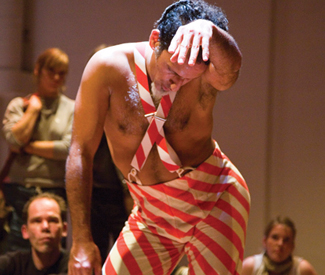
DANCE David Zambrano: never heard of him? That just means you’re not a member of the international dance community, where he is a superstar. Accolades, particularly about his teaching, flood the internet; phrases like “genius,” “not to be missed,” and “has changed my life” abound. The only complaint I could find was from a disgruntled student who said “the class was so full that I could barely see the teacher.”

So who is this Venezuelan-born, Amsterdam-based, globe-trotting dancer-choreographer-teacher who engenders such enthusiasm and yet is so little-known in this country? Starting this weekend, Zambrano (re)introduces himself with the West Coast premiere of Soul Project, a series of solos, each one based on an American blues song. They will be performed — in a sequence to be determined just before each show — to an audience seeking out the dancers.

Zambrano is best known for re-thinking improvisation as a tool to freshly connect dancers to the physics of their bodies — and its relationship to the environment. In the process, he developed a technique he calls “flying low,” which examines dance’s unavoidable partner, the floor, in order to find efficient ways for giving into and rebounding from the ground. Fundamental questions Zambrano asks revolve around essential concepts: how do two dancing bodies change the space on a stage? What is the relationship between intimacy and community? How can movement be best used as a means of transmitting information?

If these topics sound esoteric and theoretical to most of us, to dancers they embody the core of what they do. One admirer is San Francisco dancer-choreographer Keith Hennessy, himself no slouch in the thinking-about-the-fundamentals-of-performance department. He first took a workshop with Zambrano at Dancers’ Group in the mid-1990s and has watched his work ever since.

“I’m a huge fan of his teaching,” says Hennessy. “His classes are a kind of inspirational ritual. He teaches dancers to circulate energy with the earth and the other dancers, through their own bodies and then through space.”

He appreciates Zambrano as a performer “who loves dancing, moving, flying. He travels through space quickly, with the fastest of small precise steps — running and running, before diving or sliding into rolling on the floor, and always spiraling up and down and around.”

Hennessey, who has seen a fair amount of Zambrano’s work, including four improvised duets in 2010 which he describes as “truly joyful,” is looking forward to the upcoming performances because “I haven’t seen him do anything like this before.”

One who has already seen Soul Project is choreographer Ralph Lemon, who remembers Zambrano as a major force in New York’s Downtown improvisation scene until his move to Amsterdam in 2000.

“I hadn’t seen his work for years,” Lemon explains. “I saw Soul Project in 2008 at a summer dance festival outside Paris. I saw a lot of work at the time, yet this is the one that made me want to dance. I was so moved by the project because this is music I grew up with.”

He adds, “For me as a black American this was curious, particularly since there were no black Americans in the cast. There was only one American — and she was a white woman who had moved to Brussels.”

So when, in 2010, New York’s Dancespace asked Lemon to organize their first dance platform (i.e., artist-curated program), he immediately thought of Soul Project.

“It is such an American work,” he says, “and I knew that in terms of its cultural implications it was important that it come to the states. Audiences here will see it so differently from those in other places.”

So how was it? “It was fantastic, but also frustrating, because you want to dance. But David makes it clear that he knows that we want to dance, but we can’t because ‘the dancing is for us.’ It creates a very nice tension: you feel the dance internally but the dancing is happening with his performers.”

DAVID ZAMBRANO’S SOUL PROJECT

Fri/27-Sat/28, 8pm, $20

Yerba Buena Center for the Arts

701 Mission, SF

(415) 978-2787

www.ybca.org


May 3, noon, 6pm, 9pm (Stanford students only), free (advance reservations required)

Cantor Arts Center

328 Lomita, Stanford

(650) 725-2787

livelyarts.stanford.edu

Stage Listings

0

Stage listings are compiled by Guardian staff. Performance times may change; call venues to confirm. Reviewers are Robert Avila, Rita Felciano, and Nicole Gluckstern. Submit items for the listings at listings@sfbg.com. For further information on how to submit items for the listings, see Picks.

THEATER

OPENING

"Bay One Acts Festival" Boxcar Theatre, 505 Natoma, SF; www.bayoneacts.org. $25-45. Opens Sun/22, 3pm. Runs Wed-Sat, 8pm (also May 5 and 12, 3pm); Sun, 3 and 7pm. Through May 12. Ten bold and adventurous short plays by local playwrights, performed two full programs running in repertory.

Fwd: Life Gone Viral Marsh San Francisco, 1062 Valencia, SF; (415) 282-3055, www.themarsh.org. $20-50. Opens Thu/19, 8pm. Runs Thu, 8pm (no show April 26); Sat, 8:30pm; Sun, 7pm (no show May 6). Through June 10. The internet becomes comic fodder for creator-performers Charlie Varon and Jeri Lynn Cohen, and creator-director David Ford.

BAY AREA

A Hot Day in Ephesus Live Oak Theatre, 1301 Shattuck, Berk; info@aeofberkeley.org. $12-15. Opens Fri/20, 8pm. Runs Fri-Sat, 8pm; May 13, 2pm. Through May 19. Actors Ensemble performs the world premiere of a musical based on Shakespeare’s Comedy of Errors.

Lucky Duck Julia Morgan Theatre, 2640 College, Berk; www.berkeleyplayhouse.org. $17-35. Previews Sat/21, 2pm. Opens Sat/21, 7pm. Runs Thu and Sat, 7pm (also Sat, 2pm); Sun, noon and 5pm (additional performance May 11, 7pm). Through May 13. Berkeley Playhouse performs a musical inspired by the "Ugly Duckling" tale.

Oleanna Berkeley City Club, 2315 Durant, Berk; www.theatrefirst.com. $15-30. Previews Fri/20, 8pm. Opens Sat/21, 8pm. Runs Thu-Sat, 8pm; Sun, 5pm. Through May 13. TheatreFIRST performs David Mamet’s tense two-charater drama.

ONGOING

Act One, Scene Two Phoenix Arts Association Theatre, 414 Mason, Ste 601, SF; www.un-scripted.com. $10-20. Opens Thu/19, 8pm. Runs Thu-Sat, 8pm. Through May 12. Un-Scripted Theater Company performs the beginning of a new, unfinished play by a local author — and creates an ending on the spot once the script runs out.

*The Aliens SF Playhouse, 533 Sutter, SF; (415) 677-9596, www.sfplayhouse.org. $20-70. Tue-Thu, 7pm; Fri-Sat, 8pm; Sun, 3pm. Through May 5. On the heels of Aurora Theatre’s production of Body Awareness, SF Playhouse introduces local audiences to another of contemporary American playwright Annie Baker’s acclaimed plays, in a finely tailored West Coast premiere directed by Lila Neugebauer. The Aliens unfolds in the days just around July 4, at slacker pace, in the backyard of a Vermont café (lovingly realized to palpable perfection by scenic designer Bill English), daily haunt of scruffy, post-Beat dropouts and sometime band mates Jasper (a secretly brooding but determined Peter O’Connor) and KJ (a charmingly ingenuous yet mischievous Haynes Thigpen). New employee and high school student Evan (a winningly eager and reticent Brian Miskell) is at first desperate to get the interlopers out of the "staff only" backyard but is just lonely enough to be seduced into friendship and wary idolatry by the older males. What unfolds is a small, sweet and unexpected tale of connection and influence, amid today’s alienated dream-sucking American landscape — same as it ever was, if you ask Charles Bukowski or Henry Miller, both points of reference to Jasper and KJ, who borrow Bukowski’s poem The Aliens for one of their many band names. An appropriate name for the alienated, sure, but part of the charm of these characters is just how easy they are to recognize, or how much we can recognize ourselves in them. Delusions of grandeur reside in every coffee house across this wistful, restless land. It’s not just Jasper and KJ who may be going nowhere. A final gesture to the young and awkward but clearly capable Evan suggests, a little ambiguously to be sure, that there’s promise out there yet for some. But more than that: the transaction makes clear by then that there are no fuck-ups, really; not among people with generous and open hearts — never mind how fucked up the country at large. (Avila)

Any Given Day Magic Theatre, Fort Mason Center, Marina at Laguna, SF; www.magictheatre.org. $20-60. Wed/18-Sat/21, 8pm (also Sat/21, 2:30pm); Sun/22, 2:30pm. Magic Theatre performs Linda McLean’s Glasgow-set play about modern, urban life.

*The Caretaker Curran Theater, 445 Geary, SF; www.shnsf.com. $25-175. Wed/18-Sat/21, 8pm (also Wed/18 and Sat/21, 2pm); Sun/22, 2pm. Harold Pinter’s 1960 drama gets its first major revival since the death of the playwright in 2008 in this touring English production featuring Jonathan Pryce in the ambiguous title role. Set in a worn and cluttered attic apartment amid a triangular power play between its seemingly nonchalant tenant, Aston (the excellently vacant, vaguely creepy Alan Cox), an older homeless man he’s just rescued named Davies (a shifty, richly detailed Pryce), and the tenant’s younger brother and landlord Mick (a tightly coiled yet comically skittish Alex Hassell). The story is minimal, the tensions and pivoting interpersonal dynamics all. The spookier aspects of the play are toned down, meanwhile, though not necessarily to bad effect. While the opening scenes are played with somewhat unexpected levity, director Christopher Morahan ensures a subtle shift midway through into a more threatening and serious tone that is perhaps all the more palpable for being less foreseen — as Davies, egged on by the hyper Mick’s persuasive vision of remaking the dumpy room into an elegant penthouse, makes an ill-considered play for dominance over his seemingly gentle but inscrutable host. (Avila)

*Glengarry Glen Ross Actors Theatre of San Francisco, 855 Bush, SF; (415) 345-1287, www.brownpapertickets.com. $26-40. Wed-Sat, 8pm. Extended through April 28. Actors Theatre of San Francisco and director Keith Phillips offer a sharp, spirited production of the 1984 play by David Mamet in which four real estate agents (Mark Bird, Sean Hallinan, John Krause, and Christian Phillips) jockey and scheme for advantage in their Chicago office in a landscape of insecurity and fierce competition symbolized by the selective doling out of the best leads by manager and company man John (Frank Willey). Clients (like the gullible young husband played by Randy Blair), meanwhile, are just witless marks for the machinations of the predatory salesman, no more meaningfully human than the "muppets" targeted by Greg Smith’s Goldman Sachs. If the scenic design is a little shabby, the strong cast makes that hardly an impediment to a story that feels especially timely in its sharply etched, not to say angry portrait of the ruthless and corrosive business mentality to which egos, livelihoods, and lives — not to mention the culture at large — are enthralled. (Avila)

Goodfellas Live Dark Room Theater, 2263 Mission, SF; www.darkroomsf.com. $20. Fri-Sat, 8pm. Through April 26. The Dark Room offers a comedic take on Scorsese’s gangsters.

*Hot Greeks Hypnodrome Theatre, 575 10th St, SF; www.brownpapertickets.com. $30-35. Thu-Sat, 8pm. Through May 5. Cheap thrills don’t come much cheaper or more thrilling than at a Thrillpeddlers musical extravaganza, and their newly remounted run of Hot Greeks affords all the glitter-dusted eye-candy and labyrinthian plot points we’ve come to expect from their gleefully exhibitionist ranks. Structured as loosely as possible on Aristophanes’ Lysistrata, Greeks appropriately enough follows the trials and tribulations of a college sorority tired of "losing" their boyfriends to the big football match every year (Athens U vs. Sparta Tech). Pledging to withhold sex from the men unless they call off the game results in frustration for all, only partially alleviated by the discovery that sexual needs can be satisfied by "playing the other team," as it were. But like other Cockettes’ revivals presented by the Thrillpeddlers, the momentum of the show is carried forward not by the rather thinly-sketched narrative, but by the group song-and-dance numbers, extravagant costuming (and lack thereof), ribald wordplay, and overt gender-fuckery. In addition to many TP regulars, including a hot trio of Greek columns topped with "capital" headdresses who serve as the obligatory chorus (Steven Satyricon, Ste Fishell, Bobby Singer), exciting new additions to the Hypnodrome stage include a bewigged Rik Lopes as stalwart sister Lysistrata, angelically-voiced Maggie Tenenbaum as the not-so-angelic Sodoma, and multi-faceted cabaret talent Tom Orr as heartthrob hunk Pendulum Pulaski. (Gluckstern)

It Is What It Is and The Watchtower Exit Theater, 156 Eddy, SF; www.myadultland.com. $20. Thu/19-Sat/21 and April 27-28, 8pm; April 29, 3pm. Through April 29. Short plays by Diane Karagienakos and Christopher Barranti, presented on the same stage with a brief intermission.

It’s All the Rage Studio Theater, Marsh San Francisco, 1062 Valencia, SF; (415) 282-3055, www.themarsh.org. $15-50. Thu, 8pm; Sat, 8:30pm, Sun, 7pm. Extended through May 27. Longtime comedian and radio host Marilyn Pittman’s solo play wrestles with the legacy of her parents’ violent deaths in a 1997 murder-suicide initiated by her father. It’s disturbing material that Pittman, a stout middle-aged woman with a gregarious and bounding personality, approaches indirectly via a good deal of humor — including recounting the first time she did her growing-up-lesbian bit before her mother in a DC comedy club. But the pain and confusion trailing her for 13 years is never far behind, whether in accounts of her own battle with anger (and the broken relationships it has left in its wake) or in ominous memories of her too complacent mother or her charming but domineering father, whose controlling behavior extended to casually announcing murderous dreams while policing the boundaries of his marriage against family interference. A fine mimic, Pittman deploys a Southern lilt in playing each parent, on a stage decorated with a hint of their Southwestern furnishings and a framed set of parental photographs. In not exactly knowing where to lay blame for, or find meaning in, such a horrifying act, the play itself mimics in subtler form the emotional tumult left behind. There’s a too brief but eerie scene in which her veteran father makes reference to a murder among fellow soldiers en route to war, but while PTSD is mentioned (including as an unwanted patrimony), the 60-minute narrative crafted by Pittman and director David Ford wisely eschews any pat explanation. If transitions are occasionally awkward and the pace a bit loose, the play leaves one with an uncomfortable sense of the darker aspects of love, mingled with vague concentric histories of trauma and dislocation in a weird, sad tale of destruction and staying power. Note: review from the show’s 2009 run at the Marsh San Francisco. (Avila)

Maple and Vine American Conservatory Theater, 415 Geary, SF; (415) 749-2228, www.act-sf.org. $10-95. Wed/18-Sat/21, 8pm (also Wed/18 and Sat/21, 2pm); Sun/22, 2pm. American Conservatory Theater presents the West Coast premiere of Jordan Harrison’s thoughtful, mildly amusing, increasingly cluttered fantasy about an affluent but unsatisfied urban couple — Katha (Emily Donahoe) and Ryu (Nelson Lee) — who try to restart their lives and relationship by joining a cult-like community devoted to living in 1955 America in perpetuity. Directed swiftly but with a slightly shrill comic tone by Mark Rucker, it’s an intriguing premise that tries to be unexpected in its twists around modern modes of alienation and "simpler times." Community leaders (and Katha and Ryu’s new best friends) Dean (Jamison Jones) and Ellen (Julia Coffey) make it clear that they choose 1955 because 2012 is too easy, not too complicated: In the 1950s, technology has not yet completely subsumed human action, while the discrete spice of old-fashioned repression compensates for the sorry spectrum of salt and ketchup at the dinner table. When it becomes clear that the casual white superiority of Ryu’s new boss at the box factory (Danny Bernardy) masks his despair as a closeted homosexual, intrigue and power plays ensue. But the characters and situations have already started to become less and less credible, even for so whimsical a storyline, and the narrative more heavy-handed too as Katha begins to narrate a series of meaningful dreams conflating the characters and characteristics of their present-past and past-future. (Avila)

Thunder Above, Deeps Below Bindlestiff Studio, 185 Sixth St, SF; www.brownpapertickets.com. $20-25. Thu-Sat, 8pm. Through May 5. Bindlestiff presents A. Rey Pamatmat’s dramatic comedy about three homeless young adults.

The Waiting Period MainStage, Marsh San Francisco, 1062 Valencia, SF; (415) 282-3055, www.themarsh.org. $15-50. Fri, 8pm; Sat, 5pm. Extended through May 26. Brian Copeland (comedian, TV and radio personality, and creator-performer of the long-running solo play Not a Genuine Black Man) returns to the Marsh with a new solo, this one based on more recent and messier events in Copeland’s life. The play concerns an episode of severe depression in which he considered suicide, going so far as to purchase a handgun — the title coming from the legally mandatory 10-day period between purchasing and picking up the weapon, which leaves time for reflections and circumstances that ultimately prevent Copeland from pulling the trigger. A grim subject, but Copeland (with co-developer and director David Ford) ensures there’s plenty of humor as well as frank sentiment along the way. The actor peoples the opening scene in the gun store with a comically if somewhat stereotypically rugged representative of the Second Amendment, for instance, as well as an equally familiar "doood" dude at the service counter. Afterward, we follow Copeland, a just barely coping dad, home to the house recently abandoned by his wife, and through the ordinary routines that become unbearable to the clinically depressed. Copeland also recreates interviews he’s made with other survivors of suicidal depression. Telling someone about such things is vital to preventing their worst outcomes, says Copeland, and telling his own story is meant to encourage others. It’s a worthy aim but only a fitfully engaging piece, since as drama it remains thin, standing at perhaps too respectful a distance from the convoluted torment and alienation at its center. (Avila)

BAY AREA

Anatol Aurora Theatre, 2081 Addison, Berk; www.auroratheatre.org. $30-55. Tue and Sun, 7pm (also Sun, 2pm); Wed-Sat, 8pm. Through May 13. Aurora Theatre Company performs a world premiere translation of Arthur Schnitzler’s drama about the love life of an Viennese philanderer.

The Coast of Utopia: Voyage Ashby Stage, 1901 Ashby, Berk; www.shotgunplayers.org. $20-30. Wed-Thu, 7pm; Fri-Sat, 8pm; Sun, 5pm. Through April 29. Shotgun Players present Tom Stoppard’s riff on pre-revolutionary Russia.

Hairspray Fox Theatre, 2215 Broadway, Redwood City; www.broadwaybythebay.org. $20-48. Fri/20-Sat/21, 8pm (also Sat/21, 2pm); Sun/22, 2pm. Broadway By the Bay opens its 47th season with the John Waters-based, Tony-winning musical.

John Brown’s Truth La Peña Cultural Center, 3105 Shattuck, Berk; www.brownpapertickets.com. $10-15. Sun, 7:30pm. Through April 29. The story of abolitionist John Brown comes to life via William Crossman’s script-libretto, plus dance, spoken word, and a variety of improvised music styles.

*The Kipling Hotel: True Misadventures of the Electric Pink ’80s New venue: Marsh Berkeley, 2120 Allston, Berk; (415) 282-3055, www.themarsh.org. $20-50. Sat, 8:30pm; Sun, 7pm. Extended through May 6. This new autobiographical solo show by Don Reed, writer-performer of the fine and long-running East 14th, is another slice of the artist’s journey from 1970s Oakland ghetto to comedy-circuit respectability — here via a partial debate-scholarship to UCLA. The titular Los Angeles residency hotel was where Reed lived and worked for a time in the 1980s while attending university. It’s also a rich mine of memory and material for this physically protean and charismatic comic actor, who sails through two acts of often hilarious, sometimes touching vignettes loosely structured around his time on the hotel’s young wait staff, which catered to the needs of elderly patrons who might need conversation as much as breakfast. On opening night, the episodic narrative seemed to pass through several endings before settling on one whose tidy moral was delivered with too heavy a hand, but if the piece runs a little long, it’s only the last 20 minutes that noticeably meanders. And even with some awkward bumps along the way, it’s never a dull thing watching Reed work. (Avila)

Of Mice and Men TheatreWorks at Mountain View Center for the Performing Arts, 500 Castro, Mtn View; (650) 463-1960, www.theatreworks.org. $19-69. Tue-Wed, 7:30pm; Thu-Sat, 8pm (also Sat, 2pm); Sun, 2pm. Through April 29. TheatreWorks performs the Steinbeck classic.

Red Berkeley Repertory Theatre, Thrust Stage, 2025 Addison, Berk; (510) 647-2949, www.berkeleyrep.org. $14.50-83. Tue and Thu-Fri, 8pm (also April 26, 2pm; no show April 27); Wed, 7pm; Sat-Sun, 2pm (also Sat, 8pm; no 8pm show May 12; Sun, 7pm). Extended through May 12. Mark Rothko (David Chandler) isn’t the only one painting with a broad brush in this labored and ultimately superficial two-hander by John Logan, enjoying a competent but underwhelming production by outgoing Berkeley Rep associate artistic director Les Waters. Set inside the late-1950s New York studio of the legendary abstract expressionist at the height of his fame, the play introduces a blunt and brash young painter named Ken (John Brummer) as Rothko’s new hired hand, less a character than a crude dramatic device, there first as a sounding board for the pompous philosophizing that apparently comprises a good chunk of the artist’s process and finally as a kind of mirror held up to the old iconoclast in challenging proximity to a new generation that must ultimately transcend Rothko’s canvases in turn. The dialogue holds up signs announcing intellectual and aesthetic depths but these remain surface effects, reflecting only platitudes, while the posturing tends to reduce Rothko to caricature. Much of the self-consciously reluctant filial interaction here smacks of biographical sound bites or heavy-handed underscoring of theme, and tends toward the outright hokey when touching on the credulity-bending subject of Ken’s murdered parents — with the attendant shades this adds to Rothko’s and the play’s chosen color palette. (Avila)

The World’s Funniest Bubble Show Marsh Berkeley, TheaterStage, 2120 Allston, Berk; (415) 826-5750, www.themarsh.org. $8-50. Extended run: May 5-27 (Sat-Sun, 11am); June 3-July 15 (Sun, 11am). Louis "The Amazing Bubble Man" Pearl returns with this kid-friendly, bubble-tastic comedy.

PERFORMANCE/DANCE

Alonzo King LINES Ballet Yerba Buena Center for the Arts, Novellus Theater, 700 Howard, SF; (415) 978-2787, www.ybca.org. Wed/18-Thu/19, 7:30pm; Fri/20-Sat/21, 8pm; Sun/22, 5pm. $30-65. The company performs Scheherazade.

BATS Improv Bayfront Theater, Fort Mason Center, Marina and Laguna, SF; www.improv.org. Fri/20, 8pm: "BATS Improv vs. Stanford Improv," $20. Sat/21 and April 28, 8pm: "Improvised Hitchcock," $20. April 27, 8pm: "Theatresports Madness," $20.

"CockTales: Fathers and Sons" McKenna Theater, Creative Arts Bldg, San Francisco State University, 1600 Holloway, SF; creativearts.sfsu.edu. Fri/20, 7pm. $8-15. Investigations of masculinity via poetry, monologues, music, and more.

"Comedy SuperPAC: Promoting Good Comedy and Great Causes Since 2012!" Hemlock Tavern, 1131 Polk, SF; www.hemlocktavern.com. Mon, 7pm. Through May 7. $5. Nate Green and W. Kamau Bell present this ongoing comedy showcase; this week’s performers are Chris Garcia, Brendan McGowan, Jeff Kreisler, and Brandie Posey.

"CubaCaribe Dance Festival" This week: Dance Mission Theater, 3316 24th St, SF; www.cubacaribe.org. Fri/20-Sat/21, 8pm; Sun/22, 3 and 7pm. $10-24. Up first in this two-week festival (this year’s theme: "Poder Popular) is a mixed program featuring local artists (Grupo Experimental Nagó, Arenas Dance Company, and more), plus a Sunday matinee with youth performers.

"Dancers’ Group presents 2012 Bay Area Dance Week" Various locations; www.bayareadance.org. April 20, 29. Free. Over 600 free dance events at locations throughout San Francisco, the East Bay, and beyond.

"Elect to Laugh" Studio Theater, Marsh San Francisco, 1062 Valencia, SF; (415) 282-3055, www.themarsh.org. Tue, 8pm. Ongoing through Nov 6. $15-50. Will Durst and friends perform in this weekly political humor show that focuses on the upcoming presidential election.

"The Great Flood" Herbst Theatre, 401 Van Ness, SF; www.sfjazz.org. Sat/21, 8pm, $25-65. Guitarist Bill Frisell’s multimedia investigation into the 1927 Mississippi River flood.

"Gutterbunny in Chinatown" Dark Room Theater, 2263 Mission, SF; (415) 401-7987. Mon/23-Tues/24, 7 and 8pm. $10. Spy Emerson’s performance series is described as "theater of the absurdist vaudevillian furry-fetishists."

"Ironic/Not Ironic" Dark Room Theater, 2263 Mission, SF; (415) 401-7987. Sat/21, 10pm, $15. Comedian Harmon Leon performs.

Labayan Dance/SF ODC Theater, 3153 17th St, SF; www.odctheater.org. Fri/20-Sat/21, 8pm; Sun/22, 3pm. $25. The company performs its spring 2012 season, including the premieres of Kulang and Dasal and Rice Blues.

"Natya and Narration — Rebelution" CounterPULSE, 1310 Mission, SF; www.counterpulse.org. Fri/20-Sat/21, 8pm; Sun/22, 3pm. $20. Collaborative presentation of short stories, personal essays, and poems through narrative expression and dance.

"Qcomedy Showcase" Stage Werx, 446 Valencia, SF; www.qcomedy.com. Mon/23, 8pm. $8-20. With headliner Cookie Dough.

"RAWDance presents the Concept Series: 11" 66 Sanchez Studio, 66 Sanchez, SF; www.rawdance.org. Sat/21-Sun/22, 8pm (also Sun/22, 3pm). Pay what you can. RAWdance hosts EmSpace Dance, Christy Funsch, and other artists at this informal, intimate contemporary-dance salon.

"Round One Cabaret" Alcove Theater, 414 Mason, Ste 502, SF; www.thealcovetheater.com. Fri/20-Sat/21, 8pm; Sun/22, 4pm. $30. Not Quite Opera Productions presents this shocase of new musical-theater songs by Bay Area composers.

"The Standard Bearer" Royce Gallery, 2901 Mariposa, SF; www.brownpapertickets.com. Fri/2-Sat/21, 8pm. $25. Julian Sands directs Neil Dickson in this limited run of Stephen Wyatt’s play about a Shakespearean actor traveling through Africa.

"Subvert" Garage, 975 Howard, SF; www.eventbrite.com. Fri/20, 8pm. $15-25. Comedian Heather Gold performs.

"Tease-O-Rama" Bimbo’s 365 Club, 1025 Columbus, SF; www.teaseorama.com. Fri/20-Sat/21, 8pm. $40-150. Main showcase event in a weekend of burlesque-themed performances, classes, and more.


I get by with the help of my local DIY classes

0

What would the ultimate DIY day look like? There’s heaps of classes you can take in the Bay Area to make yourself more handy and sustainability-minded. Here’s a hypothetical 24 hours using the skills you can cull from those courses — scroll to the end of the article for details on where you can take each class concerned.

It’s Saturday! Wake up to the smell of coffee you roasted yourself (“Home Coffee Roasting”). Pour in your homemade almond milk for a nutty kick. (“Everyday Nut Milks and Cheeses”) For breakfast, you’re having toast with the jam you preserved (“Basics of Food Preservation and Jam-Making”) and fresh honey from your backyard beehive. (“Backyard Beekeeping”) Say hello to the chicken peeping outside, and thank your favorite hen as you enjoy that plate of scrambled eggs. (“Intro to Backyard Chickens”)

Mosey out to your freshly-landscaped garden, picking your way past the brand-new bank of sprightly succulents. (“Strategies in Urban Permaculture”) Admire your new water-saving irrigation system — she’s a real looker. (“Greywater, Rainwater Catchment, Earthworks”)

Time to primp for your day. Wash your body with the soap you made from scratch (“Cold Process Soap Making”) and afterwards, spritz yourself with handcrafted perfume. (“Making Natural Perfumes”) Head to your closet and pick out the fresh new frock you sewed (“Patternmaking and Design”), adorning yourself with those homemade earrings and pendant. (“Stitch DIY Class: Jewelry Making”)

After running a few errands around town, return to your garden to enjoy a cup of seasonal tea. It’s perfectly steeped — no need for artificial sweeteners. (“Tea and Food Pairing”) For lunch, you’re thinking crab ravioli with tomato cream sauce. (“Using Your Noodle”) Sprinkle fresh herbs gathered from your garden onto your plate for that extra kick. (“Starting an Herb Garden”)

Your out-of-town friends have been eating out every day of their trip, so you invite them over for a home-cooked meal. You remember hearing one of them saying that he craved sushi — sounds like the perfect night for nigiri and maki. (“We Be Sushi Workshop”) The handsome wooden table you built last weekend (“Wood and Metal”) makes the perfect centerpiece over which to catch up on each other’s lives.

The evening is going smoothly. Until, that is, one of your guests bumps into a burning candle on her way to the bathroom. The fire spreads quickly, but what do you know, those skills you copped from San Francisco’s firefighters save the day. (“Disaster Preparedness Training”)

Singe avoided, you and your friends get in the car to head to a mutual friend’s art show. Snap — the car sputters out! But you dodge an evening of tow trucks and mechanics’ waiting rooms. That auto repair class (“Essentials of Auto Maintenance”) taught you everything you need to save the day. Again.

You drift off to a deep sleep wrapped in a warm nest of your favorite knitted blankets. (“Knitting 101”) Sweet dreams, most capable person ever. 

“Home Coffee Roasting” May 3, 6pm-9pm, $30–$60. Modern Coffee, 411 13th St., Oakl. (510) 927-3252, www.iuhoakland.com

“Everyday Nut Milks and Cheeses” May 2, 6pm-8:30pm, $40-65. Instructor’s private home in Oakland, www.rawbayarea.com

“Basics of food preservation and jam-making” Fri/20, 6:30pm-8pm, $10. Pot and Pantry, 593 Guerrero, SF. (415) 206-1134, www.potandpantry.com

“Backyard beekeeping” Tue/24, 6pm-9pm, $35. Sticky Art Lab, 1682 University, Berk. (510) 655-5509, www.biofueloasis.com

“Intro to Backyard Chickens” Sun/15, 2pm, $35. Mill Valley Chickens, 106 Lomita, Mill Valley. (415) 389-8216, www.millvalleychickens.com

“Strategies in Urban Permaculture” Sun/15, noon-5pm, $25. Hayes Valley Farm, 450 Laguna, SF. (415) 753-7645, www.hayesvalleyfarm.com

“Greywater, Rainwater Catchment, Earthworks” basics of home irrigation Sun/29, 10am-1pm, $15. EcoHouse, 1305 Hopkins, Berk. (510) 548-2220, www.ecologycenter.org

“Cold Process Soap Making” Fri/20, 6pm-9pm, $65. Nova Studio, 24 West Richmond, Point Richmond. (510) 234-5700, www.thenovastudio.com

“Making Natural Perfumes” May 6, 10 am-5 p.m., $125. Nova Studio, 24 West Richmond, Point Richmond. (510) 234-5700, www.thenovastudio.com

“Patternmaking and Design” Four weekly classes, $175. Apparel Arts, 2325 Third St. Suite No. 406, SF. (415) 436-9738, www.apparel-arts.com

“Stitch DIY Class: Jewelry Making” Sat/14, 2:30pm-3:30pm, free. Indie Industries Castro Store, 2352 Market, SF. (415) 861-1150, 5titch.eventbrite.com

“Tea and Food Pairing” Tue/17, 7pm-8:30pm, $85. Tea Time Room, 542 Ramona, Palo Alto. (650) 328-2877, www.tea-time.com

“Using Your Noodle” 5/1, 6:30pm-9:30pm, $45-60. Marina Middle School,104A, 3500 Fillmore, SF. (415) 749-3495, www.ccsf.edu/continEd

“Starting an Herb Garden” May 5, 10:30am, $39. Common Ground Organic Garden Supply and Education Center, 559 College, Palo Alto. (650) 493-6072, www.commongroundinpaloalto.org

“We Be Sushi Workshop” Sat/14 and Sat/21, 10am-1pm, $65-80. We Be Sushi, 538 Valencia, SF. (415) 565-0749, www.ccsf.edu/continEd

“Wood and Metal” April 23 through July 2, Mon. 6pm-9pm, 10 sessions for $520. The Crucible, 1260 Seventh St., Oakl. (510) 444-0919, www.thecrucible.org

“Disaster preparedness training” Tues/17, 6:30pm-9:30pm, free. Valencia Gardens Community Room, 390 Valencia, SF. (415) 970-2024, www.sf-fire.org

“Essentials of Auto Maintenance” Sat/14, 11am, $60. Metric Motors, 1480 Howard, SF. (415) 295-4486, www.thedistilledman.com

“Knitting 101” Weekly instruction hours Mon. and Wed., 7 p.m.-9pm; Sat., 8:30am-10:30am, $66. Imagiknit, 3897 18th St., SF. (415) 621-6642, www.imagiknit.com


On the Cheap Listings

0

On the Cheap listings are compiled by Soojin Chang. Submit items for the listings at listings@sfbg.com. For further information on how to submit items for the listings, see Picks.

WEDNESDAY 11

“The End of the Line” film screening and topical food conversation 18 Reasons, 593 Guerrero, SF. (415) 568-2710, www.18reasons.org. 7pm-9pm, $8 for students; $10 for members; $12 general admission. Have a “halibut” time getting a wake-up call on how our self-fish tastes impact marine life. The film follows Charles Clover to the Straits of Gibraltar through the Tokyo fish market and exposes over-fishing as a global issue that we shouldn’t simply skate around. Mullet over in a discussion with sustainable seafood experts after the film screening.

THURSDAY 12

Lee Ranaldo of Sonic Youth Amoeba, 1855 Haight, SF. (415) 831-1200, www.amoeba.com. 6pm, free. Ranaldo’s newly released album Between the Times and The Tides is a blissful synthesis of saturated melodies and superstar cameos. Produced by longtime Sonic Youth producer John Agnello, the record is interwoven with the guitar strums of Wilco’s Nels Cline as well as nostalgic collabs with a number of the Sonic Youth alumna.

FRIDAY 13

West Portal Avenue’s sidewalk arts and crafts show 236 West Portal, SF. (415) 566-3500, www.pacificfinearts.com. Through Sun/15. 10 am- 5pm, free. Take a stroll through West Portal’s vibrant neighborhood as it becomes colorfully adorned with photography, paintings, ceramics, and jewelry for its three-day artwalk.

“Zen Monster” poetry, art, and political journal launch event San Francisco Zen Center, 300 Page, SF. (415) 863-3136, www.sfzc.org. 7:30 p.m., $5–<\d>$10 donation suggested. Tri-coastal community of poets, writers, artists, and activists inaugurate their third magazine issue. Edited by Buddhists but aesthetically liberated from any particular artistic ideology, “Zen Monster” is intellectually, artistically, and politically-engineered by thinkers committed to the working middle class.

“Rusted Souls” 1AM Gallery, 1000 Howard, SF. (415) 861-5089, www.1amsf.com. 6:30pm-9:30pm, free. Machine versus Man takes a visceral turn in 1AM Gallery’s newest conceptual art exhibit. The future illustrated in this tragic yet eerily beautiful exposition revolves around the concept of a life in which technology eliminates rather than benefits mankind. The Rusted Souls are the seven gifted artists who use their extrasensory powers to lead humanity back from this hypothetical darkness.

“Five Creative Energies: a Tribute to the Muse” a.Muse Gallery, 614 Alabama, SF. (415) 279-6281, www.yourmusegallery.com. Opening reception 6pm-9pm, free. Roman lyrical poet Horace claimed that the muses gave the Greeks their genius. As part of the spring Open Studios day in the Mission, five artists of Art, Wine, and Dine celebrate the people and ideas that spark inspiration and creativity in our contemporary world through an abstract and surrealistic group show.

SATURDAY 14

45th Annual Cherry Blossom Festival Japantown, Post at Buchanan, SF. (415) 563-2313, www.nccbf.org. Through Sun/15. 11am-5pm, free. Cherry blossoms are flourishing just in time for the double weekend extravaganza celebrating the works of local Asian American artists. The Japan Center and its adjacent blocks will be embellished with costumed performers, kendo experts, massive taiko drums, and community-sponsored food bazaars. Classes and demonstrations on flower arranging, ink painting, bonsai, origami, and doll-making are offered throughout.

“Taste 2012: Cultivar” Root Division, 3175 17th St., SF. (415) 863-7668, www.rootdivision.org. Through Sat/28. Gallery hours Wed.-Sat., 2pm-6pm, free. Cultivar is a multi-disciplinary project that incorporates visual, performance, and interactive pieces that communicate the importance of environment sustainability and social practice. Artists blur distinctions between art and life, and strive to expand the urban agricultural evolution through their creative work.

SUNDAY 15

Sunday Streets 2012 spring edition Great Highway route through Golden Gate Park, SF. www.sundaystreetssf.com. 11am-4pm, free. Have you ever walked through Golden Gate Park, mesmerized by its beauty, only to have the rapturous moment destroyed by the sight and sound of passing cars? To celebrate spring in all its natural glory, an extensive route through the park and along the coast to the zoo will be vacated of all automobile traffic.

“World’s Longest chain of Skaters” world record challenge Skatin’ Place, Sixth Ave., SF. (415) 412-9234, www.cora.org. 10am-3pm, $15 includes skate rental. The California Outdoor Rollersports Association cordially invites you to assist in breaking the Guinness World Record for the longest chain of roller skaters and/or the longest skating serpentine. With miles opened up for non-motor vehicles, this Sunday marks an opportune moment for all competition-addicts.

Vegan cooking demonstration Whole Foods Market, 230 Bay Place, Oakl. (510) 834-9800, www.oaklandveg.com. 12:30pm-1:30pm, free. Life without dairy is definitely a daunting notion for first-timers to grasp. Join Allison Rivers Samson of Allison’s Gourmet as she reinvents omnivorous meals and learn how normally and appetizingly life can resume sans gouda.

MONDAY 16

“Aging Gracefully” member-led forum Commonwealth Club Office, 595 Market, SF. (415) 597-6700, www.commonwealthclub.org. 5:15pm, free for members; $20 general admission; $7 for students. Liz Lemon harshly describes the dilemma of aging as having two roads: the youth-clinging lane of Madonna, or the poised, dignified path of Meryl Streep. The folks at Commonwealth Club believe that aging gracefully doesn’t have to involve such diabolically opposed decisions, and that the key is lifestyle changes that can help personally prepare you to keep enjoying life to the fullest.

TUESDAY 17

“Sky Train: Tibetan Women on the Edge of History” City College of San Francisco, Ocean Campus, 50 Phelan, SF. (415) 239-3000, www.canyonsam.com. Noon-1pm, free. Writer and activist Canyon Sam explores the history of Tibet through the lens of its women. The memoir encompasses 20 years of personal interactions with Tibetan families, life stories of the people she met on the Beijing-to-Lhasa train, and profound conversations of Tibet’s courage and resilience.

“Can Sex Save the Planet?” Good Vibrations, 1620 Polk, SF. (415) 648-3392, www.savenature.org. 5:30pm-7:30pm, free. We have always thought so, but now it’s definite that sex can save the world. Good Vibrations is partnering up with SaveNature.Org to teach the public about the allure of safe sex while simultaneously raising funds to help global wildlife.

If I could do it all over

2

If had to re-start your academic career today, what would you study? In this era of budget cuts to education and general economic miasma, some Bay Area academics would be reconsidering their options, some would stay their course — and some have important advice for today’s budding scholars. 

MELINDA STONE, UNIVERSITY OF SAN FRANCISCO ASSOCIATE PROFESSOR

FILM STUDIES

I would first take some time off from school, jump into the world, and try it out for a year or two. I would WWOOF (Willing Workers on Organic Farms) around the country and around the world. Once I had some out of school experience, I would be ready and willing to pursue a higher education — not just because my parents or society said it was the thing to do, but because I was excited and eager to learn more. I would study urban agriculture — funnily enough, my colleagues and I just created an urban agriculture program at USF. We need to be thinking and engaging critically and creatively to shape our urban spheres into sustainable systems. Programs like urban agriculture are doing just that.

JAMES MARTEL, SAN FRANCISCO STATE UNIVERSITY PROFESSOR

POLITICAL SCIENCE

I’d ideally do exactly what I am doing now: studying political theory. I really love my job and feel very grateful that I get paid to do this. However, I don’t think that I could have had the career I had if I was starting out today.

What I’d probably do is to bolster my study of political theory with more courses in continental philosophy and critical thinking, that way I could present myself to more kinds of jobs and broaden my reach. I also think it would help to focus on something concrete — an area study, a specific tradition, a specific thinker, because I think generalists don’t do so well these days. In graduate school I would concentrate more on publishing and going to conferences than I did when I was getting my own Ph.D.

When I was in grad school, the belief was that we lived in a meritocracy and good work would get good jobs; even then (the mid-’90s), the profession was changing, but I didn’t pay any attention and got lucky. Not that I had it that easy, I was a visiting professor at three universities before I got a tenure track job. Even so, I don’t think a newly minted Ph.D. can have the same luxury anymore. Today you can’t hide in your ivory tower. My younger peers are much less starry-eyed about academia than I was at their age. Maybe that is one small silver lining to the horrendous academic job market.

VINCENT BARLETTA, STANFORD UNIVERSITY ASSOCIATE PROFESSOR

IBERIAN AND LATIN AMERICAN CULTURES

At the end of Don Quijote, the eponymous main character emerges from his book-induced delirium, renounces chivalry, and dies. I’m not ready to die, so I’m reluctant to imagine a career course other than the wholly quixotic, book-filled one that I chose over two decades ago. The Quijote teaches us that all imagining has consequences. If I begin to imagine another less difficult life, what will become of me? Will this life begin to crack and splinter? While I’m not simple enough to believe that flirtations and daydreams can hasten death, why tempt fate?

If imagination is a lethal pin, history is a cushion. When I was a kid growing up in the East Bay, an aluminum bat under my bed and a stack of bootlegged Elvis Costello cassettes in a shoebox, I dreamed of being lots of things: a private eye in Honolulu, a blade runner, the president. I dreamed of a playing guitar like Marc Ribot. Of being rich. Does Barack Obama play guitar? If so, he’s realized all of my adolescent dreams, and I hope they make him happy. As for my life, Don Quijote was born only for me, and I for him.

DINA IBRAHIM, SAN FRANCISCO STATE UNIVERSITY ASSOCIATE PROFESSOR

BROADCAST AND ELECTRONIC COMMUNICATION ARTS

If I were starting my career all over again, I would still get a bachelor’s degree in journalism with a minor in international relations. I would also get a master’s degree in Middle East studies, followed by a Ph.D. in journalism. The only thing I would change is making up my mind a little faster. I was undeclared during my freshman year, with no clue what I wanted to study. I met a bunch of cool kids who were working at the college newspaper and as I began hanging out in the newsroom, suddenly it all made sense. I was naturally nosy, I love writing, and get a huge kick out of talking to strangers and telling stories. Journalism was the perfect career for me. I always had a fascination with global politics so I looked forward to attending every IR class. I’m glad I didn’t get a master’s in journalism, because I don’t think that would have advanced my career at all. But the Middle East studies degree gave me an in-depth understanding of the region’s history, societies, economies and political systems. It was an excuse to read a lot about subjects I was passionately interested in, and being required to read and write papers kept me in line and gave me the discipline I needed. I got the Ph.D. because I wanted to teach at the university level, and I enjoyed learning to do research. 

I tell my students all the time that it is really important to study what you love, but I know it isn’t easy to figure out what that is, and whether they can actually make a decent living out of it. I often begin advising sessions by asking my student “what’s your dream job?” and if they give me a specific answer, it makes it much easier to help them pick the right classes that they are paying a lot of money for. I knew I wouldn’t necessarily get rich as a journalist, but I knew it would be fun and rewarding. My parents are both medical doctors and wanted me to be a physician as well. I have no regrets whatsoever, because I know I would have made a great doctor, and definitely made more money than I do now, but I would have been miserable. A college degree is increasingly expensive, and it is crucial that a lot of thought and consideration goes into choosing a field of study that is a good investment. A good degree of study should train you to acquire actual skills that you can use to market yourself in today’s competitive job market.

San Francisco’s loss

116

news@sfbg.com

San Francisco is increasingly losing its working and creative classes to the East Bay and other jurisdictions — and with them, much of the city’s diversity — largely because of policy decisions that favor expensive, market-rate housing over the city’s own affordable housing goals.

“It’s definitely changing the character of the city,” said James Tracy, an activist with Community Housing Partnership. “It drains a big part of the creative energy of the city, which is why folks came here in the first place.”

>>Is Oakland cooler than San Francisco? Oaklanders respond.

Now, as San Francisco officials consider creating an affordable housing trust fund and other legislative changes, it’s fair to ask: Does City Hall have the political will to reverse the trend?

Census data tells a big part of the story. In 2000, the median owner-occupied home in San Francisco cost $369,400, and by 2010 it had more than doubled to $785,200. Census figures also show median rents have gone from $928 in 2000 up to $1,385 in 2010 — and even a cursory glance at apartment listings show that rents have been steadily rising since then.

Tracy and other affordable housing activists testified at an April 9 hearing before the Board of Supervisors Land Use and Economic Development Committee on a new study by the Budget and Legislative Analyst, commissioned last July by Sup. David Campos, entitled “Performance Audit of San Francisco’s Affordable Housing Policies and Programs.”

“There’s a hearing right now at City Hall about our housing stock and how it’s been skewing upward toward those with higher incomes,” Board President David Chiu told us, noting that it is sounding an alarm that, “Creative individuals that make this place so special are being driven out of the city.”

Oakland City Council member Rebecca Kaplan said that San Francisco’s loss has been a gain for Oakland and other East Bay cities, which are enjoying a new cultural vibrancy that has so far been largely free of the gentrifying impacts that can hurt a city’s diversity.

“You can add more people without getting rid of anybody if you do it right. Most of development is looking at places that are now completely empty like the Lake Merritt BART station parking lot, empty land around the Coliseum, and the West Oakland BART station,” Kaplan told us. “We have to commit to revitalization without displacement.”

Yet the fear among some San Franciscans is that we’ll have just the opposite: displacement that actually hinders the city’s attempts at economic revitalization. “What’s at stake is the economic recovery of the city,” Tracy said. “You can’t have such a large portion of the workforce commuting into the city.”

TOO MANY CONDOS

A big part of the problem is that San Francisco is building plenty of market-rate (read: really expensive) housing, but not nearly enough affordable housing. The report Campos commissioned looked at how well the city did at meeting various housing construction goals it set for itself from 1999 to 2006 in its state-mandated Housing Element, which requires cities to plan for the housing needs of its population and absorb a fair share of the state’s affordable housing needs.

The plan called for 7,363 market-rate units, or 36 percent of the total housing construction, with the balance being housing for those with moderate, low, or very low incomes. Developers built 11,293 market rate units during that time, 154 percent of what was needed and 65 percent of the total housing construction. There were only 725 units built for those with moderate incomes (just 13 percent the goal) and just over half the number of low-income units needed and 83 percent of the very low-income goal met.

“We have to do a better job of monitoring and evaluating each project,” Chiu said. “Every incremental decision we make determines whether this will be a city for just the wealthy.”

The situation for renters is even worse. From 2001-2011, the report showed there were only 1,351 rental units built for people in the low to moderate income range, people who make 50-120 percent of the area median income, which includes a sizable chunk of the working class living in a city where about two-thirds of residents rent.

“The Planning Commission does not receive a sufficiently comprehensive evaluation of the City’s achievement of its housing goals,” the report concluded, calling for the planners and policymakers to evaluate new housing proposals by the benchmark of what kind of housing the city actually needs. Likewise, it concluded that the Board of Supervisors isn’t being regularly given information it needs to correct the imbalance or meet affordable housing needs.

Policy changes made under former Mayor Gavin Newsom also made this bad situation even worse. Developers used to build affordable housing required by the city’s inclusionary housing law rather than pay in-lieu fees to the city by a 3-1 ratio, but since the formulas in that law changed in 2010, 55 percent of developers have opted to pay the fee rather than building housing.

Also in 2010, Newsom instituted a policy that allowed developers to defer payment of about 85 percent of their affordable housing fees, resulting in an additional year-long delay in building affordable housing, from 48 months after the market rate project got permitted to 60 months now.

Tracy and the affordable housing activists say the city needs to reverse these trends if it is to remain diverse. “It’s not even debatable that the majority housing built in the city needs to be affordable,” Tracy said.

Mayor Ed Lee has called for an affordable housing trust fund, the details of which are still being worked out as he prepares to submit it for the November ballot. Chiu said that would help: “I will require a lot of different public policies, but a lot of it will be an affordable housing trust fund.”

GROWTH AND DIVERSITY

San Francisco’s problems have been a boon for Oakland.

“With much love and affection to my dear SF friends, I must say that Oakland is more fun,” Kaplan told us. “Also I think a lot of people are choosing to live in Oakland now for a variety of reasons that aren’t just about price. We have a huge resurgent art scene, an interconnected food, restaurant, and club scene, a place where multicultural community of grassroots artists is thriving, best known from Art Murmur.”

There is fear that Oakland could devolve into the same situation plaguing San Francisco, with rising housing prices that displace its diverse current population, but so far that isn’t happening much. Oakland remains much more racially and economically diverse than San Francisco, particularly as it attracts San Francisco’s ethnically diverse residents.

“We’re not looking at a situation where the people moving into town are necessarily predominantly white,” Kaplan said. “We’re having large growth in quite a range of communities, including growing Ethiopian and Eritrean and Vietnamese populations…If you don’t want to live in a multicultural community, maybe Oakland’s not your cup of tea.”

According to the 2010 census, a language other than English is spoken at home in 40.2 percent of Oakland households, compared to 25.4 percent in San Francisco. “Almost every language in the world spoken in Oakland,” Kaplan said.

African Americans make up 28 percent of Oakland’s population, compared to only 6.1 percent in San Francisco, and 6.2 percent of the population of California. In San Francisco, the number of black-owned businesses is dismal at 2.7 percent, compared to 4 percent statewide and 13.7 percent in Oakland. The census also finds that 25.4 percent Oaklanders are people of Latino origin, compared to San Francisco at 15.1 percent and 37.6 percent statewide. San Francisco is 33.3 percent Asian, compared to Oakland at 16.8 percent and all of California at 13 percent.

Both cities are less white than California as a whole; the state’s white population is 57.6 percent, compared to 34 percent in Oakland and 48.5 percent in San Francisco.

Gentrification shows its face differently depending on the neighborhood. Some say Rockridge, a trendy Oakland neighborhood where prices have recently increased, has gone too far down the path.

“Rockridge has been ‘in’ for a long time, but the prices are staggering and it isn’t as interesting any more,” Barbara Hendrickson, an East Bay real estate agent, told us.

The nationwide foreclosure crisis didn’t spare Oakland and may have sped up its gentrification process. “The neighborhoods are being gentrified by people who buy foreclosures and turn them into sweet remolded homes,” observed Hendrickson.

Yet Kaplan said many of these houses simply remain vacant, driving down values for surrounding properties and destabilizing the community. “I think we need a policy where the county doesn’t process a foreclosure until the bank has proven that they own the note,” said Kaplan, who mentioned that the city has had some success using blight ordinances to hold banks accountable for the empty buildings.

And as if San Francisco didn’t have enough challenges, Kaplan also noted another undeniable advantage: the weather. “The weather is really quite something,” she said. “I have days with a meeting in San Francisco and I always have to remember to bring completely different clothing. Part of why I wanted to live in California was to be able to spend more time outdoors, be healthy, bicycle, things like that. So that’s pretty easy to do over here in Oakland.”

Oaksterdam University gets a Monday morning federal raid

31

Good morning cannabis patients. Hopefully you weren’t planning on attending horticulture classes at Oaksterdam University today. The cannabis school in the heart of downtown Oakland is being raided by IRS and the DEA with support from US Marshals right now. 

At this point, little is known about the motivations behind the raid. The Huffington Post reports that an IRS spokesperson could only say that the incursion was authorized by a federal search warrant. There are reports that Oaksterdam owner Richard Lee was also detained and then released early today. 

A throng of protesters have gathered around the taped-off entrance to Oaksterdam, holding signs, heckling official vehicles for lacking valid license plates. Andrew Deangelo, brother of founder of Harborside Health Center Steve Deangelo, pleaded with law enforcement guarding the doors to Oaksterdam to refuse similar assignments “to arrest sick and suffering people” in the future. The federal agents have so far removed documents, safes, and cannabis plants from Oaksterdam. 

Oaksterdam University was founded in 2007 by Richard Lee as a place where patients and caregivers could learn the necessary skills to grow quality cannabis. The syllabus now includes courses in cannabis politics, history, and the legal rights of patients. Lee was one of the primary forces behind the 2010 California ballot measure Proposition 19 that would have legalized marijuana for use across the board. One of the central figures in the cannabis community, this raid is a bold move in a creeping movement by the feds that is curtailing patient access of late. 

A call this morning to Anne Campbell Washington, Quan’s chief of staff, yielded little information regarding the city’s response. “We don’t have information on it yet, because it wasn’t our operation,” Washington said. 

The Guardian will have a reporter on the scene shortly, so check back here and in this week’s Herbwise print column for updates on the fate of the University. 

UPDATE: The LA Times has reported that Richard Lee’s house was also raided today. 

Nite Trax: Sisterz of the Underground re-fresh the Bay

0

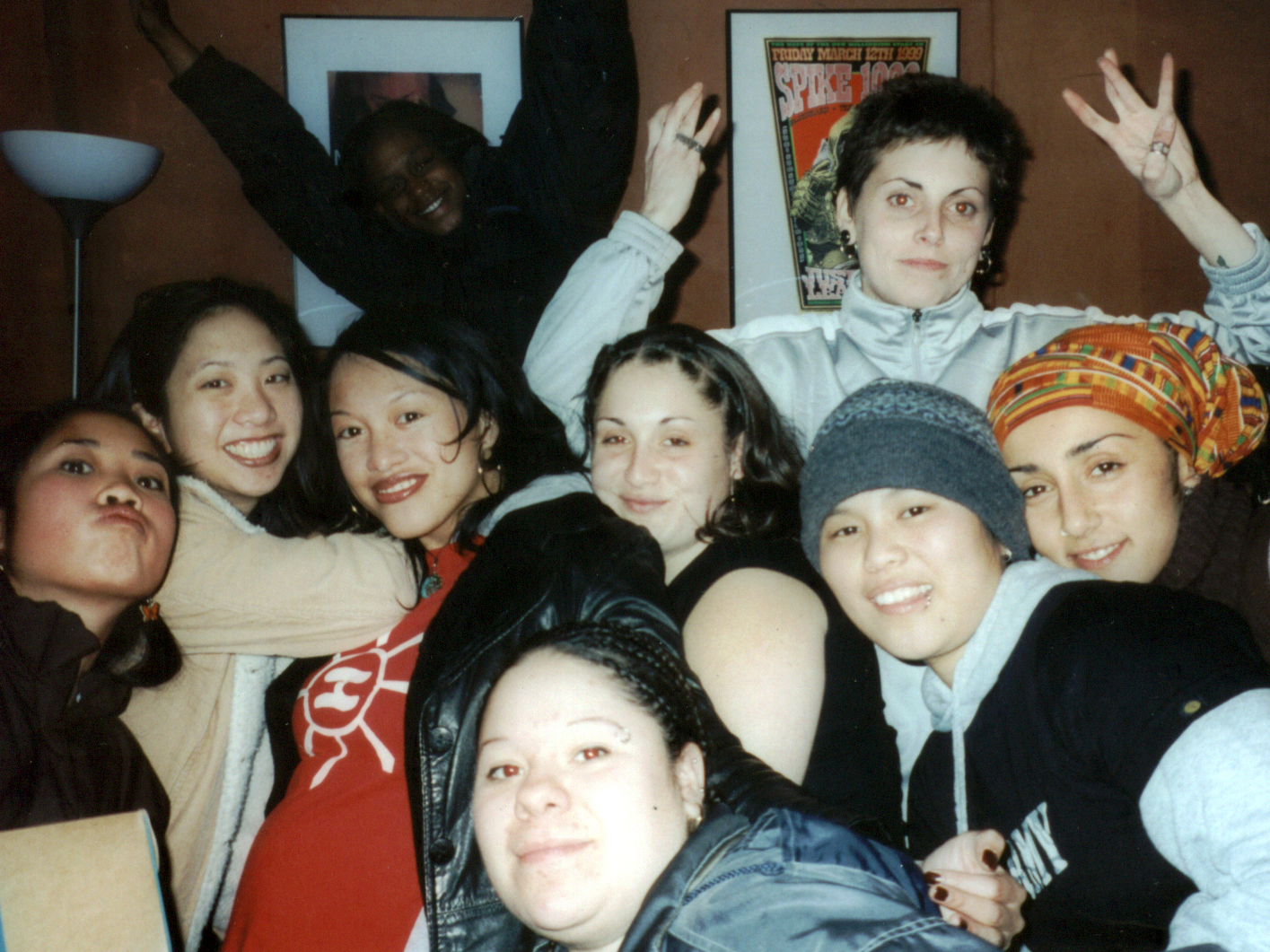
Sometimes being a nightlife writer feels like getting stranded on Techno Dude Island. Not always cuuute. So when I got wind that the classic Sisterz of the Underground hip-hop party crew was hitting the Bay for a huge 10-year anniversary celebration Sat/31 including a party at Public Works and a day of tech workshops and empowerment talks at CellSpace, I jumped on the chance for a breath of fresh female air and an indepth talk with folks who inspired me back in the day to try a few dance floor moves I probably shouldn’t have.

SOTU founder Sarah “Smalls” McCann, creative director Traci P, and organizer Crykit moved away from the Bay a little while ago (and the groundbreaking in-school hip-hop education program they started, Def Ed, is currently in hibernation mode), but the international Sisterz of the Underground network they helped establish is still thriving and inspiring women to discover and transmit the roots of hip-hop dance, art, music, creativity, and culture. The 10th anniversary party reflects that all-encompassing approach with live music from Kid Sister, DJ Shortee, Green B, Jeanine da Feen, and tons more, plus a 1-on-1 dance battle, art and vendor fair, live painting, nail booth… It’ll be a much-needed femme attack in this age of War on Women, hip-hop style acrimony, and the mainstreaming of street spirit. 

I communicated with the trio over email in anticipation of their return, and got not only the trademark Sisterz blend of energy, outspokenness, and positivity, but some juicy tidbits about Bay hip-hop history, the current state of rap and dance, and the ladies’ current doings as well. Check it.      

SISTERZ OF THE UNDERGROUND 10-YEAR ANNIVERSARY CELEBRATION

Sat/31 at Public Works and CellSpace

Details and tickets: sisterzunderground.eventbrite.com

Facebook Invite is here.


SFBG It’s been a minute since you’ve been on my radar. Can you introduce yourself and tell us what’s going on with y’all now?

TRACI P I moved to Las Vegas a little over a year and a half ago after an almost decade stint in San Francisco throwing events and creative directing the Sisterz of the Underground. Currently I am the managing partner of RAW Entertainment (www.raw-e.com) which is both a booking agency and event production company based here in Sin City. I book for a variety of artists, like BReal of Cypress Hill,  two-time DMC champ DJ SHIFTEE, and NYC club and fashion DJ Roxy Cottontail. Aside from artist bookings I continue to produce local events here in Vegas as well as a monthly in San Francisco called Femme Fatale at John Colins, every second Thursday — it features an all-female lineup and highlights music, fashion, and art. The next one is Thu., April 12, and will feature live painting, a guest performer and a dubstep DJ line-up including Lotus Drops, Sculltrain and Smashletooth. I also write music interviews for Thrasher Magazine, mostly about hip-hop and rap artists.

SARAH “SMALLS” MCCANN I’m the founder of SOTU and also a B-girl in the Extra Credit Kru. After years of being in the Bay and running SOTU and Def Ed, our hip-hop education program, I moved down to Los Angeles at the end of 2006. Since then, most of my experience has been selling events at various venues including House of Blues Hollywood and Jillian’s Universal. Currently, I’m the marketing sales manager at Pacific Park, the amusement park at the Santa Monica pier while also being a partner in Clique Events Society and a board member for the tour and travel marketing association of Southern California.

On the side of all of that, I also run an entertainment company with my husband, B-boy Machine, called Hit the Floor Productions (www.hitthefloorproductions.com), help direct our in-house dance company, West Bound, and manage Bboy Machine as an artist. When I’m not busy being the business guru that I am, I’m still just a hip-hop head and a die-hard B-girl with Extra Credit Kru! However at this present moment, I’m not breaking as i’m almost 8 months pregnant with my first child!

CRYKIT Hey hey! I’m Michelle, aka Crykit, aka Miss Crix 🙂 I grew up on a farm in Wisconsin, moved to the Bay Area in 2000, LA in 2010, and currently in Las Vegas since 2011. I started DJing, popping,  and breaking in 2002. The rave scene of 98-02 is really where it all began for me. For the last eight years B-girling has been my main focus. I’ve been a member of Extra Credit Kru since day one and with this crew of amazing talented inspiring ladies we’ve taught in schools and studios, entered hundreds of battles, performed at some pretty epic events, been featured in music videos and short films, traveled nationally and internationally

When I moved to LA I manifested what originally was an idea for a hip fashion line with the perfect balance of masculine and feminine HAPPY MEDIUM, into a dancy DJ duo that encompasses everything from dance to art to fashion to music. My partner in crime is a funky stylin’ B-girl I met back in the Bay: Faye aka 13 Moons. (She is DJing the 1-on-1 female dance battle at our Public Works party.)


SFBG You must have a lot of memories of SOTU — how did it all come together and what stands out for you most from the past decade?

TRACI P Sarah’s the founder, but I can tell you a bit about how I started with the collective. I moved to San Francisco when I was 19 after leaving UC Davis. Having decided to take an alternate educational path towards my ultimate goal of working in the music industry, I decided to intern at as many record companies and entertainment-oriented entities I could. This included Bomb Hip Hop, Look Records, Live Up Records, and Quannum Records. A boyfriend of mine at the time introduced me to Sarah. I loved the idea of women in the music industry and hip-hop, and felt an overwhelming sense of welcome and support in the collective. I pushed Sarah to let me do whatever she needed and learn more about how she produced events and operated. I started coming in everyday. I had such a respect for her vision, dedication, and the energy she put into making this collective so visible and tangible for women all around the globe. From then on she became a mentor to me. Both she and the Sisterz of the Underground changed my life forever.

SMALLS Well, this is always a long answer for me, as even though I’m pregnant with my first child, I always saw SOTU as my real first child. This all started back in 2000 when I was approached by the owner of the Justice League (now the Independent) about doing a hip-hop event at the venue. I was super inspired by two females in my life at that time: Arouz, a female graff artist, and Inchant, a female MC. i thought it would be super dope to produce an all-female hip-hop event that included all elements of hip-hop (MCing, breaking, graffiti, DJing, beatboxing, etc.). I spent about a month scouting talent from all over and found B-girls from UC Berkeley, Syndel from old dominion, and many more. I asked Medusa to be the headliner and threw a show on January 18, 2001 called Sisterz of the Underground.
The show had over 600 attendees and was a huge success! After the show, everyone was asking me who is Sisterz of the Underground… Well, I was in college at the time and didn’t really have any plans for who or what was SOTU. I decided to ask the girls involved if they were interested in forming a collective where women could comfortably express themselves, come together to share, and put on shows.

After a few more successful shows in the Bay, I decided to organize a group of us to teach at a young women’s conference. At this time, we really didn’t know what we were doing, but we knew we had something to share. From that conference, we were contacted by two all girl groups to come and teach at their center. Well, the year was filled with many shows and many workshops and soon we were voted “Best Hip-Hop Monthly of the Year” in the Guardian and we created a hip-hop education program called Def Ed. Def Ed became such a success and grew into a program that was eventually serving over 3,000 youth a year and existing in 6 counties of the Bay Area.

It’s hard to pinpoint my favorite point of SOTU, but I have to say that my life wouldn’t be the same without it and i would not be the woman that I am without all of my Sisterz that I have met along the way.

CRYKIT I first found out about SOTU at an all girl weekly dance practice at Dance Mission around 2002. There I felt supported in learning all about the culture and its elements. I would sketch in a black book, create stencils, DJ parties, pop, break, freestyle in the car on battle road trips, hahaha. It just sort of became a part of me, a lifestyle. I’m so grateful to have had a collective of such eclectic, empowering, talented women to grow as an artist with, to jump in a cypher with, to create a mix tape with… And most of these women are like super hero goddesses LOL.. Nurses, firefighters, neuroscientists, designers, massage therapists, business owners… the list goes on and on.

My favorite story I guess would be connecting with and building friendships with girls from other countries like Sweden, Germany, and India through SOTU! It’s so cool the network and community has spread globally.


SFBG The lineup for this party at Public Works is absolutely insane! It really brings together some true female talent. With female MCs like Nicki, Azealia Banks, and Iggy Azalea all over, do you have any thoughts about the state of females in hip-hop right now?

TRACI P
Thank you first off for the compliment, that’s endearing! As far as the state of females in hip-hop, I would like to start by saying that hip-hop in general is in a state of transition as is the music industry as a whole. As the landscape of popular music shifts more and more to being influenced by electronic music, I think that hip-hop as well is starting to play into this trend. Nicki Minaj is a great rapper but some of her songs are SO far from rap or even hip hop. “Starships,” enough said. Iggy Azalea has got a lot of style and I am interested to see where she goes but I am not so confident in her skills as a lyricist.

Then there are one hitters like Kreayshawn whose success can be attributed to the beat of ‘Gucci Gucci’ being along a electronic-dubstep style as well as her look being right for the time. There is less and less attention paid to substance and more to image and look. Half of these girls can’t even perform live and are in a sense disposable because they have no stage presence. Just a pretty face with flashly clothes and jewelry. Then you have these record labels and agencies making it worse because the industry is so in the toilet that the SECOND they smell a lick of talent, they come along, swoop them up, charge ridiculous amounts of money to promoters, the artist never fully develops before being fed to the sharks, and ultimately fails!

But then you have girls like KID SISTER and MIA who steady hold it down. They have their own style and do a good job of incorporating current trends as well as keeping true to themselves and having a voice instead of being a puppet. I’m forever a student, however, and am interested in what’s to come in the music industry.

And the female DJ should also not be forgotten. As is evident in our line-up we respect all elements of hip-hop and the DJ is no exception. I feel as though the past few years have given rise to a great window of opportunity for female DJs and we’ve seen more and more emerge and tear it up! Living in Vegas I see a lot of plastic behind the decks but there are truly real women who can throw it down and rock a party and/or battle just as good as men, La Femme Deadly Venom for one, Pam the Funkstress, Spinderella, we have our own Crykit in Vegas killing clubs with style. It makes me happy to see this.

SMALLS
To be honest, I think hip-hop overall is ever changing and growing with different niches and styles that come through. As for females in hip-hop, we’ve definitely come a long way and are continuing to get out there and do our thing. If you look at the different eras of hip-hop, you’ll see how many female MCs were legends in their own right: MC Lyte, Roxanne Shante, Lil Kim, Raw Digga, Bahamadia, Nicki Minaj, the list goes on and on. I also think that female DJs have come along way and are continuing to show that they can rock just as hard or even harder than some male DJs. The thing that’s always been an issue for us women, or at least for me as a B-girl, was not wanting to be viewed as “just dope for a girl.” We want to be viewed as dope overall for our skill and not having anything to do with the fact that we may be a different sex.

CRYKIT I would like to hear better lyrical content in hip hop overall right now. I’m not really moved by too many female MCs at the moment. Wishing Missy Elliot did more, I feel like she can be true to herself but also bring it in at a commercial level. One thing I love about her is she always had real dancers in her videos.. she understands hip-hop as a whole and a community with all elements on display. I’m excited to bring Kid Sister to Public Works, I love her versatility, she sounds fresh on electro house tracks as well as hip-hop.

http://www.youtube.com/watch?v=zOgLK4t-Rts

SFBG I feel like hip-hop in general in the Bay Area, while still lively, is slipping below the radar, on the down swing of a cycle — any thoughts about that?

TRACI P Hip-hop in the Bay is most def on a decline. It was once a mecca but is no longer a hub for new and exciting artists, unfortunately. I have a lot of friends in the rap and hip-hop industry here in the Bay Area whom I would NEVER discredit or whose music I would never put down but as a whole, but I haven’t seen much that’s exceptionally great coming from this sector of California as far as hip-hop is concerned. I would say that the RAP is still there but the hip hop is falling off. I would also like to take this time to say RIP to Special One of Conscious Daughters who hip-hop lost late last year.

SMALLS Unfortunately I don’t live up there anymore, but I have heard that the hip-hop scene has sort of died. Well, i can tell you that it’s not only in the Bay… it’s the same thing in LA. I remember places like the Justice League where you knew you were always going to find a sick hip-hop show whether it was Black Star or Wu-Tang and in LA going to Project Blowed every week. Now, you’re lucky if you can find a club that doesn’t have a dress code and won’t yell at the B-boys and B-girls for starting a cypher. I think this is one of the many reasons that we’ve tried to keep SOTU alive and always try to incorporate the true meaning of hip hop behind our events!

CRYKIT I would say the hip hop dance scene is still thriving in the Bay Area! There’s a lot of talented dancers from the Bay in videos, TV, movies. And currently there’s classes offered at studios like City Dance taught by dancers who have been in the scene for a long time and have learned from the OGs and originators. There are battles almost every weekend filled with high schoolers and up… So in that arena it is still thriving and is a genuine mecca for dancers.

http://www.youtube.com/watch?v=lBjcW9rnjoE

SFBG I love that you’re having workshops during the day at CellSpace that cover both female empowerment and technical skills. Can you tell me a bit about what inspired you to turn the reunion into a true community event?

TRACI P Community is very important to us and key to the idea of empowerment. Obviously the nighttime events are geared toward adults, but we recognize the importance the youth has in shaping the world as a whole — and it’s always been important for us to reach out to the youth through hip-hop. We also founded a hip-hop education program called Def Ed years back, it is unfortunately no longer active, but we taught at many sites around the Bay and still have strong access to many of the kids around the area, it’s important that we maintain that connection.

Also, there is a lot more to the culture of hip-hop than just what you see on a stage or in a music video, the aspects of art, dance, production, and fashion are equally important. At a time when everything seems so fabricated it’s essential that people be exposed to the roots of music and the culture. It is our mission to teach and empower in any way possible. By having females host these workshops, you never know who might be inspired, because it’s not every day women are so praised in such a male dominated arena such as hip hop.

SMALLS This is easy: SOTU has always been about community, education, growth, expression, and hip-hop. This event marks more than 10 years strong as a female hip-hop collective and tying in all of these aspects was truly important to us. There’s no point in just putting on an event to make money (at least for us)….we wanted to produce an event that included the youth and our amazing sisterz sharing their knowledge along with a night time event to remember. We figured having workshops, battles, showcases, vendors, art galleries and all of the various things we are including in this event would show was SOTU has always been about — true hip-hop expression in an open environment that welcomes anyone and everyone!

Crykit SOTU events have always been community-based, that’s where we all began. I love that a part of the celebration is at Cellspace because that’s where we established our breaking practice eight years ago actually, almost a decade we’ve been working with them. It’s a piece of Bay Area dance history, and our practice is the longest-running established regular practice in the city of San Francisco. It’s always important to include the youth. We love the spirit, freedom, and creativity they bring!

SFBG Can I get a current top 5 from each of you?

http://www.youtube.com/watch?v=lDo8Z-eoBiI

Traci P

MIA, “Bad Girls”

Slaughterhouse, “Hammer Dance”

Schoolboy Q, “Hands on the Wheel”

Joey Bada$$, “Survival Tactics”

J. Cole, “can’t get enough’’


Crykit

1. B.Bravo “Swing My Way” remix

2. Flying Lotus/ Thundercat “$200 TB”

3. Trina “Red Bottoms”

4. Mark Ronson “Animal” remix

5. Rye Rye & M.I.A “Sunshine”

Smalls

If I can twist this and get you my current top 5 reasons for still being a true hip hop head:
1. The feeling I get at a live show when everyone has their hands pumping in the air
2. The feeling I get jumping into a hot cypher where the DJ is killin’ it and everyone wants to get in
3. The feeling i get seeing the little girls of Extra Credit Kru enter a battle with us OGs
4. The feeling I get watching my hubby, B-boy machine, smoke someone on the dance floor
5. The feeling I get knowing that no matter how commercial hip-hop has become, that there’s still so many folks doing it right in the community


Making burrata cheese with the Milk Maid

0

As a little girl, I used to walk by a cheese shop in the neighborhood, flare my nostrils and exclaim “One day I want to work in a cheese shop.” That funky, musty fragrance has an intoxicating draw for me and always will. My one-month stint as a vegan in college failed only because I missed cheese too much. I still haven’t worked in a cheese shop, but when I heard about the cheese making classes with the Milk Maid, I just knew I had to go!


The Milk Maid, aka Louella Hill, is brimming with information and love for cheese. She has studied cheese making in Italy and across the East Coast and is currently working on a book about cheese making in her San Francisco home, which is jam-packed with all things moldy and milky.

The cheese class was held at an outdoor kitchen in the Ferry Building. We learned how to make burrata, a fresh, Italian-style cheese made of mozzarella and stuffed with a variety of creams, from thick cultured cream to sweet mascarpone. The process of making burrata involves melting fresh curd, forming a ball and then quickly stuffing it with cream. Sounds pretty simple, but it actually requires a lot of attention, speed, and probably years of practice. Luckily, everyone was just having too much fun to care about getting it perfect. When “mistakes” happened, they usually just ended up getting eaten. No great loss there.

After an hour of melting, pulling and stuffing, the Milk Maid sent us on a our way, but not without a slice of a gigantic moldy block of cheese that she was trying to get off her hands, and fixings to make more burrata in our own kitchens. On the very crowded bus ride home, I could smell the essence of gym-socks and super funk wafting up from my bag of goodies. I’m sure my commuter buddies were loving it. I sure was!

Spring fairs and festivals

1

culture@sfbg.com

MARCH

SF Flower and Garden Show, San Mateo Event Center, 495 S. Delaware, San Mateo. (415) 684-7278, www.sfgardenshow.com. March 21-25, 10am-6pm, $15–$65, free for 16 and under. This year’s theme is “Gardens for a Green Earth,” and features a display garden demonstrating conservation practices and green design. Plant yourself here for thriving leafy greens, food, and fun in the sun.

The Art of Aging Gracefully Resource Fair, Jewish Community Center of San Francisco, 3200 California, SF. (415) 292-1200, www.jccsf.org. March 22, 9:30am-2:45pm, free. Treat yourself kindly with presentations by UCSF Medical Center professionals on healthy living, sample classes, health screenings, massages, giveaways and raffles.

California’s Artisan Cheese Festival, Sheraton Sonoma County, 745 Sherwood, Petaluma. (707) 283-2888, www.artisancheesefestival.com. March 23-25, $20–$135. Finally, a weekend given over to the celebration of cultures: semi-soft, blue, goat, and cave-aged. More than a dozen award-winning cheesemakers will provide hors d’oeuvres and educational seminars.

15th Annual Rhone Rangers Grand Tasting, Fort Mason Festival Pavilion, Buchanan and Marina, SF. (800) 467-0163, www.rhonerangers.org. March 24-25, $45–$185. The largest American Rhone wine event in the country, with over 2,000 attendees tasting 500 of the best Rhones from its 100 US member wineries.

Whiskies of the World Expo, Hornblower Yacht, Pier 3, SF. (408) 225-0446, www.whiskiesoftheworld.com. March 31, 6pm-9pm, $120–$150. The expo attracts over 1400 guests intent on sampling spirits on a yacht and meeting important personages from this fine whiskey world of ours.

Bay Area Anarchist Book Fair, SF County Fair Building’s Hall of Flowers, Golden Gate Park, SF. (415) 431-8355, bayareaanarchistbookfair.wordpress.com. March 31-April 1, free. This political book fair brings together radical booksellers, distributors, independent presses, and political groups from around the world.

Monterey Jazz Festival’s Next Generation Festival Monterey Conference Center, One Portola Plaza, Monterey. (831) 373-3366, www.montereyjazzfestival.org. March 30-April 1, free. 1200 student-musicians from schools located everywhere from California to Japan compete for the chance to perform at the big-daddy Monterey Jazz Festival. Free to the public, come to cheer on the 47 California ensembles who will be playing, or pick an away team favorite.

APRIL

Argentine Tango Festival, San Francisco Airport Marriot Hotel, 1800 Old Bayshore Highway, Burlingame. www.argentinetangousa.com. April 5-8, $157–$357. Grip that rose tightly with your molars — it’s time to take the chance to dance in one of 28 workshops, with a live tango orchestra, and tango DJs. The USA Tango championship is also taking place here.

Salsa Festival, The Westin Market Street, 50 Third St., SF. (415) 974-6400. www.sfsalsafestival.com. April 5-7, $75–$125. Three nights of world-class performances, dancing, competition and workshops with top salsa instructors.

Union Street Spring Celebration and Easter Parade, Union between Gough and Fillmore, SF. (800) 310-6563, April 8, 10am-5pm, parade at 2pm, free. www.sresproductions.com/union_street_easter. A family festival with kids rides and games, a petting zoo, and music.

45th Annual Northern California Cherry Blossom Festival, Japan Center, Post and Buchanan, SF. (415) 567-4573, www.sfjapantown.org. April 14-15 and 21-22, parade April 22, free. Spotlighting the rich heritage and traditional customs of California’s Japanese-Americans. Costumed performers, taiko drums, martial arts, and koto music bring the East out West.

Bay One Acts Festival, Boxcar Theatre, 505 Natoma, SF. www.bayoneacts.org. April 22 — May 12, 2012, $25–$45 at the door or online. Showcasing the best of SF indie theater, with new works by Bay Area playwrights.

Earth Day, Civic Center Plaza, SF. (415) 571-9895, www.earthdaysf.org. April 22, free. A landmark day for the “Greenest City in North America,” featuring an eco-village, organic chef demos, a holistic health zone, and live music.

Wedding and Celebration Show, Parc 55 Wyndham, 55 Cyril Magnin, SF. (925) 594-2969, www.bayareaweddingfairs.com. April 28, 10:00am-5:00pm. Exhibitors in a “Boutique Mall” display every style of product and service a bride may need to help plan his or her wedding.

San Francisco International Beer Festival, Fort Mason Center, Festival Pavilion, SF. www.sfbeerfest.com. April 28, 7pm-10pm, $65. The price of admission gets you a bottomless taster mug for hundreds of craft beers, which you can pair with a side of food from local restaurants.

Pacific Coast Dream Machines Show, Half Moon Bay Airport, 9850 Cabrillo Highway North, Half Moon Bay. www.miramarevents.com/dreammachines. April 28-29, 9am-4pm, $20 for adults, kids under 10 free. The annual celebration of mechanical ingenuity, an outdoor museum featuring 2,000 driving, flying and working machines from the past 200 years.

May:

San Francisco International Arts Festival Various venues. (415) 399-9554, www.sfiaf.org. May 2-20, prices vary. Celebrate the arts, both local and international, at this multimedia extravaganza.

Cinco de Mayo Festival, Dolores Park, Dolores and 19th St, SF. www.sfcincodemayo.com. May 5, 10am-6pm, free. Enjoy live performances by San Francisco Bay Area artists, including mariachis, dancers, salsa ensembles, food and crafts booths. Big party.

A La Carte and Art, Castro St. between Church and Evelyn, Mountain View. May 5-6, 10am-6pm, free. With vendors selling handmade crafts, micro-brewed beers, fresh foods, a farmers market, and even a fun zone for kids, there’s little you won’t find at this all-in-one fun fair.

Young at Art Festival, De Young Museum, 50 Hagiwara Tea Garden Drive, SF. (415) 695-2441. www.youngatartsf.com. May 12-20, regular museum hours, $11. An eight-day celebration of student creativity in visual, literary, media, and performing arts.

Asian Heritage Street Celebration Larkin and McAllister, SF. www.asianfairsf.com. May 19, 11am-6pm, free. Featuring a Muay Thai kickboxing ring, DJs, and the latest in Asian pop culture, as well as great festival food.

Uncorked! San Francisco Wine Festival, Ghirardelli Square, 900 North Point, SF. (415) 775-5500, www.ghirardellisq.com. May 19, 1pm-6pm, $50 for tastings; proceeds benefit Save the Bay. A bit of Napa in the city, with tastings, cooking demonstrations, and a wine 101 class for the philistines among us.

Maker Fair, San Mateo Event Center, San Mateo. www.makerfaire.com. May 19-20, $8–$40. Make Magazine’s annual showcase of all things DIY is a tribute to human craftiness. This is where the making minds meet.

Castroville Artichoke Festival, Castroville. (831) 633-2465 www.artichoke-festival.com. May 19-20, 10am-5pm, $10. Pay homage to the only vegetable with a heart. This fest does just that, with music, parades, and camping.

Bay to Breakers, Begins at the Embarcadero, ends at Ocean Beach, SF. www.zazzlebaytobreakers.com. May 20, 7am-noon, free to watch, $57 to participate. This wacky San Francisco tradition is officially the largest footrace in the world, with a costume contest that awards $1,000 for first place. Just remember, Port-A-Potties are your friends.

Freestone Fermentation Festival Salmon Creek School, 1935 Bohemian Hwy, Sonoma. (707) 479-3557, www.freestonefermentationfestival.com. May 21, Noon-5pm, $12. Answer all the questions you were afraid to ask about kombucha, kefir, sauerkraut, yogurt, and beer. This funky fest is awash in hands-on demonstrations, tastings, and exhibits.

San Francisco Carnaval Harrison and 23rd St., SF. www.sfcarnaval.org. May 26-27, 10am-6pm, free. Parade on May 27, 9:30pm, starting from 24th St. and Bryant. The theme of this year’s showcase of Latin and Caribbean culture is “Spanning Borders: Bridging Cultures”. Fans of sequins, rejoice.

June:

Union Street Eco-Urban Festival Union Street between Gough and Steiner, SF. (800) 310-6563, www.unionstreetfestival.com. June 2-3, 10am-6pm, free. See arts and crafts created with recycled and sustainable materials and eco-friendly exhibits, along with two stages of live entertainment and bistro-style cafes.

Haight Ashbury Street Fair, Haight between Stanyan and Ashbury, SF. www.haightashburystreetfair.org. June Date TBD, 11am-5:30pm, free. Celebrating the cultural history and diversity of one of San Francisco’s most internationally celebrated neighborhoods, the annual street fair features arts and crafts, food booths, three musical stages, and a children’s zone.

San Mateo County Fair, San Mateo County Fairgrounds, 2495 S. Delaware, San Mateo. www.sanmateocountyfair.com. June 9-17, 11am-10pm, $6–$30. Competitive exhibits from farmers, foodies, and even technological developers, deep-fried snacks, games — but most importantly, there will be pig races.

Queer Women of Color Film Festival Yerba Buena Center for the Arts, 701 Mission, SF. (415) 752-0868, www.qwocmap.org. June 8-10 times vary, free. Three days of screenings from up-and-coming filmmakers with unique stories to tell.

Harmony Festival, Sonoma County Fairgrounds, 1350 Bennett Valley, Santa Rosa. www.harmonyfestival.com. Date TBA. One of the Bay Area’s best camping music festivals and a celebration of progressive lifestyle, with its usual strong and eclectic lineup of talent.

North Beach Festival, Washington Square Park, SF. (415) 989-2220, www.northbeachchamber.com. June 16-17, free. This year will feature over 150 art, crafts, and gourmet food booths, three stages, Italian street painting, beverage gardens and the blessing of the animals.

Marin Art Festival, Marin Civic Center, 3501 Civic Center Drive, San Rafael. (415) 388-0151, www.marinartfestival.com. June 16-17, 10am-6pm, $10, kids under 14 free. Over 250 fine artists in the spectacular Marin Civic Center, designed by Frank Lloyd Wright. Enjoy the Great Marin Oyster Feast while you’re there.

Sierra Nevada World Music Festival, Mendocino County Fairgrounds Booneville. (916) 777-5550, www.snwmf.com. June 22-24, $160. A reggae music Mecca, with Jimmy Cliff, Luciano, and Israel Vibration (among others) spreading a message of peace, love, and understanding.

Gay Pride Weekend Civic Center Plaza, SF; Parade starts at Market and Beale. (415) 864-FREE, www.sfpride.org. June 23-24, Parade starts at 10:30am, free. Everyone in San Francisco waits all year for this fierce celebration of diversity, love, and being fabulous.

Summer SAILstice, Encinal Yacht Club, 1251 Pacific Marina, Alameda. 415-412-6961, www.summersailstice.com. June 23-24, 8am-8pm, free. A global holiday celebrating sailing on the weekend closest to the summer solstice, these are the longest sailing days of the year. Celebrate it in the Bay Area with boat building, sailboat rides, sailing seminars and music.

Stern Grove Festival, Stern Grove, 19th Ave. and Sloat, SF. (415) 252-6252, www.sterngrove.org. June 24-August 26, free. This will be the 75th season of this admission-free music, dance, and theater performance series.

July:

4th of July on the Waterfront, Pier 39, Beach and Embarcadero, SF. www.pier39.com 12pm-9pm, free. Fireworks and festivities, live music — in other words fun for the whole, red-white-and-blue family.

High Sierra Music Festival, Plumas-Sierra Fairgrounds, Lee and Mill Creek, Quincy. www.highsierramusic.com. July 5-8, gates open 8am on the 5th, $185 for a four-day pass. Set in the pristine mountain town of Quincy, this year’s fest features Ben Harper, Built To Spill, Papodosio, and more.

Oakland A’s Beer Festival and BBQ Championship, (510) 563-2336, www.oakland.athletics.mlb.com. July 7, 7pm, game tickets $12–$200. A baseball-themed celebration of all that makes a good tailgate party: grilled meat and fermented hops.

Fillmore Street Jazz Festival, Fillmore between Jackson and Eddy, SF. (800) 310-6563, www.fillmorejazzfestival.com. July 7-8, 10am-6pm, free. The largest free jazz festival on the Left Coast, this celebration tends to draw enormous crowds to listen to innovative Latin and fusion performers on multiple stages.

Midsummer Mozart Festival, Herbst Theater, 401 Van Ness, SF (also other venues in the Bay Area). (415) 627-9141, www.midsummermozart.org. July 19-29, $50. A Bay Area institution since 1974, this remains the only music festival in North America dedicated exclusively to Mozart.

Renegade Craft Fair, Fort Mason Center, Buchanan and Marina, SF. (415) 561-4323, www.renegadecraft.com. July 21-22, free. Twee handmade dandies of all kinds will be for sale at this DIY and indie-crafting Mecca. Like Etsy in the flesh!

Connoisseur’s Marketplace, Santa Cruz and El Camino Real, Menlo Park. July 21-22, free. This huge outdoor event expects to see 65,000 people, who will come for the art, live food demos, an antique car show, and booths of every kind.

The San Francisco Shakespeare Festival, locations TBA, SF. (415) 558-0888, www.sfshakes.org. July 23-August 28, free. Shakespeare takes over San Francisco’s public parks in this annual highbrow event. Grab your gang and pack a picnic for fine, cultured fun.

Gilroy Garlic Festival, Christmas Hill Park, Miller and Uvas, Gilroy. (408) 842-1625, www.gilroygarlicfestival.com. July 27-29, $17 per day, children under six free. Known as the “Ultimate Summer Food Fair,” this tasty celebration of the potent bulb lasts all weekend.

27th Annual Berkeley Kite Festival & West Coast Kite Championship, Cesar E. Chavez Park at the Berkeley Marina, Berk. (510) 235-5483, www.highlinekites.com July 28-29, 10am-5pm, free. Fancy, elaborate kite-flying for grown-ups takes center stage at this celebration of aerial grace. Free kite-making and a candy drop for the kiddies, too.

Up Your Alley Fair, Dore between Howard and Folsom, SF. (415) 777-3247, www.folsomstreetfair.org. July 29, 11am-6pm, free with suggested donation of $7. A leather and fetish fair with vendors, dancing, and thousands of people decked out in their kinkiest regalia, this is the local’s version of the fall’s Folsom Street Fair mega-event.

On the Cheap Listings

0

Submit items for the listings at listings@sfbg.com. For further information on how to submit items for the listings, see Picks.

WEDNESDAY 21

“An Ancient Path in a Modern World” Dr. Paul R. Fleischman talks about Vipassana meditation Golden Gate Room, Fort Mason Center, SF. (415) 345-7500, www.mahavana.dhamma.org. 7 p.m., free. When spastically squeezing that stress ball isn’t cutting it for you anymore, it might be time to look for alternative forms of meditation. Join Dr. Paul R. Fleischman, psychiatrist and teacher of Vipassana, in his discussion of channeling an ancient approach to cope with 21st century issues. Breathe in, breathe out.

“Experience Your America” San Francisco Maritime National Historical Park open house General’s Residence, Fort Mason Center, Marina at Buchanan, SF. (415) 561-7049, www.nps.gov/safr. 4:30 p.m.-6:30 p.m., free. We are extremely lucky to live in a city full of parks, lagoons, beaches, and gardens. Meet the folks who work to keep our parks beautiful, and for a chance to ask how we can help too.

THURSDAY 22

The 16th Tournee of Animation series of original animated shorts McBean Theatre, Exploratorium, 3601 Lyon, SF. (415) 561-0360, www.exploratorium.edu. 7:30 p.m., free. This annual touring program went around the world from the 1970s to the late 1980s. The 16th Tournee returns (again) to the local animation community in San Francisco. The night promises 16 animated films from the 1980s, shown in pristine 16mm print.

FRIDAY 23

Wild Ride poetry readings and dancing San Francisco Motorcycle Club, 2194 Folsom, SF. (415) 863-1930, www.sf-mc.org. 7:30 p.m., free. Wild Ride pairs the intense velocity of motorcycles with the serenity of poetry. Writers from San Francisco State and San Bernardino State Universities come together to share their work at the second oldest motorcycle club in the country.

SATURDAY 24

SoMa flea market Tanil Artist Studio, 1108 Howard, SF. (415) 722-7847. 10 a.m.-7 p.m., free. Pop in to this monthly indoor market and get ready to reach your swapmeet nirvana. Local bands and DJs will be whistling some tunes, as backdrop to your life foretold by a psychic. Hopefully the clairvoyant advises to immediately head to the food stand.

Two Cats comic bookstore grand opening Two Cats Comic Book Store, 320 West Portal, SF. (415) 566-8190, www.twocatscomicbookstore.com. 1 p.m.-9 p.m., free. Comic lovers, pick up your weeklies and check out neat collectibles at San Francisco’s newest comic store. The grand opening boast an impressive lineup of creators and artists who will sign new issues and conduct drop-in art classes. The new shop has a knowledgeable staff and additional room reserved for events and yes, gaming.

Retirement Boot Camp Presidio Golf Club, Eight Presidio Terrace, SF. (415) 221-8833, www.presidiogolfclub.com. 8:30 a.m.-2 p.m., free. Whether you like it or not, everyone gets old. Be smart and take some to think about retirement plans so that you can live later with peace of mind. Experts will speak on income planning, how to best protect your assets, and long-term health and wellness issues.

Bonsai repotting party Bonsai Garden at Lake Merritt, 666 Bellevue, Oakl. (510) 763-8409, www.gsbf-bonsai.org. 10 a.m. for bonsai seminar; noon-4 p.m. for repotting, free. For the past two years, professional bonsai artist Ryan Neil has been styling a Rocky Mountain juniper tree, defoliating and pruning the miniature plant with utmost care. This little tree will have its grand debut this weekend with a repotting party, docent tours, and morning seminars on the traditional Japanese art form.

“Devil’s Tango: How I Learned the Fukushima Step by Step” author reading Downstairs Forum, 2550 Dana, Berk. (510) 981-1858, www.cecilepineda.com. 3 p.m., free. Published on the one-year anniversary of the nuclear disaster at Japan’s Fukushima Daiichi, Cecile Pineda’s memoir blends a mix of personal reflection with investigative journalism. The author not only exposes the nuclear catastrophe through daily reportage, but also communicates the utter terror of local inhabitants through deep song (canto hondo) and meditations.

SUNDAY 25

“Death Valley Photographer’s Guide” wildlife photography exhibition Sarber’s Cameras, 1958 Mountain, Oakl. (510) 339-8545, www.dansuzio.com. 1 p.m.-2 p.m., free. The endlessly beautiful geographic terrain of Death Valley makes it difficult when choosing which angle or light to capture the salt-coated valley floor with your camera. Wildlife photographer Dan Suzio will share his photos and talk about his new book, which lays down where and how to catch the valley’s best side.

“War, Sanctions, and Regime Change in the Middle East” teach-in featuring Ramsey Clark Unitarian Universalist Society, 1187 Franklin, SF. (415) 821-6545, www.answercoalition.com. 1 p.m., $5–$20 donation. It’s not much for a celebration, but March 2012 marks the ninth anniversary of the U.S. invasion of Iraq. The panel of activists, such as Ramsey Clark, former U.S. Attorney General, and Dr. Jess Ghannam of Al-Awda Palestine Right of Return Coalition, will share their first-hand knowledge of the conflict in the Middle East during this afternoon teach-in.

MONDAY 26

Conversation with Glee executive producer Dante Di Loreto and performance Jewish Community Center of San Francisco, 3200 California, SF. (415) 292-1200, www.jccsf.com. 7 p.m., $10 for students; $20 general admission. Gleeks, all your fervent questions will now be answered. After enjoying a mash up number from “Cabaret” performed by the Young People’s Teen Musical Theatre Company, flock to the stage to pick at the brain of the guy responsible for bringing musical theater to prime time television.

TUESDAY 27

EcoTuesday sustainable business networking event CompoClay Showroom, 60 Post, SF. (415) 877-4228, www.compoclay.com. 6:30 p.m.-9 p.m., $10 with online registration; $15 at door. EcoTuesday is a networking event that happens on the fourth Tuesday of every month. Mingle with sustainable business leaders and bounce that innovative green ball around.

“Mission Theatres and the Trolleys That Took Us There” historical presentation St. Philip’s Catholic Church, 725 Diamond, (415) 750-9986, www.sanfranciscohistory.org. 7:30 p.m., $5 general admission. It’s hard to believe that at one time, trolleys were not just a tourist-ridden fiasco but a popular means of transportation for locals. Jack Tillmany, S.F. transit and movie theatre historian, will take you down streetcar lines and to the surviving theatres of San Francisco.

The Performant: The mourning after

0

Explorations in the language of the living at SFAI and NOHspace

Long before I moved to San Francisco, there were already certain things I’d learned to associate as being quintessentially San Franciscan via some kind of cross-cultural osmosis: the Castro, the cable-cars, Critical Mass, and George Kuchar.

True, the prolific filmmaker was himself a transplant, but his influence was indelibly stamped on San Francisco’s filmic underground. And unlike some heroes, who live impossibly removed from their admirers, George was accessible to his as a teacher, a neighbor, a legend, and a friend. Six months after his passing, a thoughtfully-curated tribute to his legacy opened at the San Francisco Art Institute — where he  taught absurdly-monikered classes in filmmaking such as “Electro-graphic Sinema” for 40 years. 

Since the hallmark of a successful memorial is to celebrate in the company of the living, a string of heartfelt eulogies and screenings of clips took place in the SFAI lecture hall, presented by friends and family, elders and youth. United thusly in our pleasant memories of the man, we entered the Walter and McBean Galleries, which had been transformed into a monument to the myth — a gleeful hodgepodge of photographs, set dressing, racks of cheap costume pieces, sketchbooks, choose-your-own screenings of the over 200 films in George’s oeuvre, and playful, personal ephemera.

Down the hall, an interactive studio installation encouraged visitors to get dressed up in a costume and “star” in their own straight-to-video blockbuster. A veritable Rosetta Stone on the language and legacy of Kuchar’s no-budget filmmaking, the exhibit runs through April 21, and is free to the public: adoring fans and the unconverted alike.

Part memorial for the dead, and part fundraiser for the living, the nationwide, one-night only performance series Shinsai found San Francisco stage time at both NOHspace and ACT. Directed by Theatre of Yugen apprentice Nick Ishimaru, the NOHspace edition opened with a trilogy of monologues penned by Suzan-Lori Parks that begged the question “where were you on 3/11”? Similarly themed play-lettes followed, including an introspective monologue on grieving by Phillip Kan Gotanda. Mixing dance, classic noh, and a quixotic bit of performance art (Jose Navarrete’s “Found and Lost”) into the evening put a distinctive stamp on the event. 

What most tied the disparate disciplines together were the expressive nuances of the hands, mimicking in certain ways the purported intricacies of the language of fans, secretive yet overt. In the dances of Las Japonesas Flamencas, each finger held its own position, extending the arch of an elbow or the turn of a wrist, a gestural eloquence. In contrast, the extremities of Nick Ishimaru and Meg Theil in a comical excerpt from kabuki drama Vengeful Sword, remained actively poised yet perfectly still as they each portrayed Manno, a wily Madame. The event ended with Heather Law’s graceful Hula ’Auana, hands fluttering like startled birds and 1960’s Go-Go girls, hearkening to an era of popular dance “moves” like the hand jive with the subtle grace of her more refined art: an expressive, whole-body sign language which spoke of life. 

Occupying the Capitol

5

It’s an unseasonably hot day at UC Davis, and student activists are milling around a tent city, set up especially for 100 people arriving from a four-day March on Education. The school, one of the hubs of the Occupy movement, gained notoriety when public safety Officer John Pike casually pepper sprayed a line students during a sit-in back in November. Now, officers bike through the idyllic scene, smiling and chatting up occupiers.

Everyone is preparing for the next day, March 5, the statewide day to defend education that will bring thousands of students and teachers to Sacramento to demand an end to budget cuts and fee hikes at California’s schools, community colleges, and universities.

Those on the march hope to highlight the importance of this issue, marching 79 miles from the Bay Area. The first night, the march stayed in Richmond, and the next day Richmond’s Mayor Gayle McLaughlin came out to welcome them.

Students march annually on Sacramento, and say they won’t stop until education is affordable (or, as some would demand, free). A climate of worldwide protest over disparities in wealth and opportunity, including Occupy protests in the United States, helped fuel a larger than usual turnout this year.

More than 5,000 people converged in Sacramento March 5 and marched to the Capitol building, occupying the Rotunda all day. Many chanted “no cuts, no fees, education must be free.”

Community college student throughout the state are reeling from the cuts, and resulting fee hikes—course units, once free, were raised from $26 to $36 per unit last year, and will be increased another $10 this summer. These costs go towards closing the state budget deficit, and not toward a bigger course catalogue; classes continue to be slashed.

Frances Gotoh of San Bernardino Valley College is back at school after being laid off from her longtime job at Bank of America. She said she desperately needs the retraining; without it her job prospects look dim. She needs to support her family—her 20-year-old son is also a college student—but says she can’t afford the increasing fees. “Why is education being taken away?” asked Gotoh. “It belongs to the people.”

Josselyn Torres, a psychology major at Sonoma State University, felt similarly. “Every year, the fees are getting higher but the class size is getting bigger,” said Torres, who noted that many of her friends won’t be graduating with her because so many of the classes they needed were cut. “The politicians have all gone to college. If they keep cutting our education, how can we make it as far as them?”

When the march reached the Capitol, student and state government leaders spoke on the importance of education. Students demanded an end to fee hikes and budget cuts. Assembly Speaker John Perez (D-Los Angeles) and Senate President Pro Tem Darrell Steinberg (D-Sacramento) praised student activists and expounded on the necessity of accessibility to education. Almost all speakers decried the two-thirds majority needed to raise taxes, allowing just a few Republicans to block them.

Lt. Gov. Gavin Newsom also spoke, describing the need to support education in staunchly free-market terms: “You can’t have an economic development strategy without a workforce development strategy.”

Periodically, the crowd interrupted Newsom and other politicians in the midst of making promises with chants of “show us.” They also chanted this election year threat: “You’ll hear us out or we’ll vote you out!”

Around 12:30 p.m., the permitted rally ended and thousands dispersed. About 400 stayed to “Occupy the Capitol.” The group streamed into the building and into the rotunda. California Highway Patrol officers, responsible for policing the Capitol, blocked more than 150 from entering the central area. So, communicating via the Peoples Mic with several rounds of crowd repetition for every sentence spoken, the group participated in a statewide general assembly.

Some building employees showed support, but the only politician to sit down with the protesters was Newsom, who sits on the UC Board of Regents and CSU Board of Trustees. He chatted with students, some of whom requested that he ask police to stop blocking students from meeting in the same area; he didn’t do so, but was able to convince them to give protesters in the rotunda access to bathrooms.

The group managed to collectively decide on demands of the state: support the Millionaire’s Tax ballot initiative, repeal Prop. 13, cancel all student debt, fund all education through college, and democratize the Board of Regents. When building closed at 6 p.m., officers declared the assembly unlawful and arrested 70 who refused to disperse.

Meanwhile, another 400 or so attended a permitted rally on the Capitol lawn called by several Sacramento labor unions to support Occupy the Capitol.

Over the past five years, education funding in California has been cut drastically. Spending per K-12 student per year has gone down by almost $2,000 and higher education has seen program cuts and tuition hikes. Gov. Jerry Brown’s latest budget proposal includes still more cuts to California colleges and universities.

Several proposed ballot initiatives are designed to address this. An initiative sponsored by Brown would bring spending per student per year up by $1,000, stabilizing at $7,658 (it was $7,096 in 2011-12) and reversing a five-year slide. But it would still be less than 2007-08, according to a report from the California Budget Project (CBP).

That report shows K-12 education spending is the biggest piece of the state budget, although California ranks dismally low compared to other states for spending on K-12 education: 47th in the country.

The governor’s proposal would raise funds with a combination of a tax increase for those earning $250,000 and over per year and a sales tax increase. But critics say the increase in the sales tax, which is notoriously regressive, would hurt lower and middle income families.

The measure is up against other potential ballot initiatives that would raise revenue strictly from the wealthiest Californians. The so-called Millionaire’s Tax, for example, would raise funds for education by increasing taxes on those making $1 million or more per year. The Millionaire’s Tax also has the advantage of resulting in a permanent change in the law, while Brown’s measure would apply only for the next five years.

“California’s problems have also been exacerbated by tax cuts, one-time ‘solutions,’ overly optimistic assumptions, and the fact that the two-thirds vote requirement for the legislature to approve any tax measure has blocked adoption of a balanced approach towards bridging the budget gap,” according to the CBP report.

Teachers’ unions are divided over the best ballot measure. The California Teachers’ Association has endorsed Brown’s measure, emphasizing that it includes a plan to close the budget deficit.

“The governor’s initiative is the only initiative that provides additional revenues for our classrooms and closes the state budget deficit, and guarantees local communities will receive funds to pay for the realignment of local health and public safety services that the Legislature approved last year,” said Dean Vogel, CTA president, in a press release.

But the Millionaire’s Tax was sponsored by the California Federation of Teachers, and it has now been endorsed by this student general assembly. John Rizzo, president of the City College of San Francisco Board of Trustees, also endorsed the measure.

“We’ve got to tell the state of California that we cannot continue this. We cannot continue the cuts to our community colleges, to UCs, to the California State Universities,” said Rizzo, speaking at a March 1 rally in San Francisco.

According to a recent report, of five polls conducted throughout California, each initiative has majority support, but voter prefer the Millionaire’s Tax, with a recent Field Poll showing 63 percent support.

Legislators are also at work trying to increase education funding. Assembly Speaker Perez has introduced a bill that would slash tuition fees by two-thirds at CSU and UC schools for students of families making less than $150,000 per year. The bill would also allocate funding to city colleges throughout the state, for them to determine how to best use the money.

The cost of the plan, about $1 billion, would be paid by eliminating a corporate tax loophole that the Legislature approved in 2009, which would allow companies to choose the cheaper of two formulas for calculating their taxes. Critics have called the legislation bad for business, saying that removing tax incentives would hurt California companies.

“The California Middle Class Scholarship Act is very simple,” Perez told students at UC Davis when he unveiled the bill on Feb. 3. “Too many families are getting squeezed out of higher education. For students whose families make $150,000 a year or less, too much to qualify for our current financial aid system, but not enough to be able to write a check for the cost of education, without feeling that pinch, the Middle Class Scholarship Act reduces fees at the UC system and at the CSU system by two-thirds, giving tremendous assistance to those families to make college affordable again.”

Education advocates say California needs to do something to reverse the spiraling cost of higher education in California, which could do long-term damage to the state, affecting young people and businesses that need skilled workers and spiraling out from there. And these advocates say this short-sighted strategy is easily preventable if there is the political will to address it.

“There are a lot of sources of revenue that are not being taken advantage of,” Lisa Schiff, a member of Parents for Public Schools of San Francisco, told us.

Even if tuitions were lowered or—as the most ambitious of protesters demand—higher education was made free, most former students would still be saddled with massive debt. As costs have risen, debts of hundreds of thousands of dollars are commonplace. With the job market recovery slow and painful, graduates often feel helpless to pay back their debt.

Robert Meister, a professor of Political and Social Thought at UC Santa Cruz and president of the Council of UC Faculty Associations, has long argued that the state’s higher education systems ought to focus on keeping tuitions low and student debt in check (see “In the red,” 1/11/11).

Yet he told us that growing income inequality makes people even more desperate for a college education and willing to accept levels of student debt that limit their ability to become anything more than corporate cogs after graduation. “Their ability to raise tuition is a function of the growth of income inequality,” he told us.

In his speech at UC Davis, Perez cast the issue as one of a disinvestment in the state’s future: “California’s public colleges and universities has been one of our most prestigious institutions, and, unfortunately, because of the collapse of the economy, we’ve moved away from fully investing in those universities and colleges.”

A month later, the school again served as a backdrop for illustrating the problem and calling for reform. Dani Galietti, a MFA student at UC Davis who was setting up a performance art piece when I arrived, greets everyone cheerfully and is thrilled about the Occupy movement.

“I wanted to share myself and my work with the movement,” Galietti tells me while taping a “paper trail” to the sidewalk; she plans to walk on it with home-made stamps attached to the bottoms of her shoes.

But her mood darkens when I ask about her student debt. “I came out of five years of education $100,000 in debt,” says Galietti, “and I’m not the only one.”

She is a first generation college student, she explains, who helped pay for school with McNair scholarships.

“I grew up one of five, with a single mother,” Galietti explains. “We struggled my whole life, as a lot of people have, financially.”

“So many people are graduating with so much debt. There’s this looming fear, fear and hopelessness. The economy’s bad, the job market sucks. I’m so thankful that they’re out here. People are active, they’re making a difference.”

“We need education,” Galietti says. “I mean, knowledge is power.”


The losing bets

26

By Darwin BondGraham

news@sfbg.com

Wall Street’s massive taxpayer funded bailout, initiated by the Bush administration and carried forward under President Obama, never really ended — it just shifted from federal to local sources of funding. Even while local and state governments have been forced to cut back on crucial services, wealthy banks and investment firms are being padded with enormous cash flows sucked directly from the already strained budgets of cities, counties, and public agencies.

That’s the message a growing chorus of activists in the Bay Area are bringing before the boards, councils, and commissions that entered into complex financial deals with Wall Street banks, deals that turned toxic in the crash of 2008. Activists want elected officials and the banks to cancel the contracts and refund the public.

The Bay Area is the epicenter of this renewed movement for financial justice. Last week, teachers from Peralta College, organizers with the Alliance of Californians for Community Empowerment (ACCE), Oakland religious leaders, and Occupy Oakland activists organized four protests contesting what they say is bank predation on local communities.

At issue are arcane financial instruments called interest rate swaps. Sold by banks to virtually every sizable government and local agency in the US through the 2000s, rate swaps promised governments the ability to “swap” their potentially costly variable rate payments on bonds into a synthetic fixed rate. Seeking to protect local taxpayers during the volatile 2000s, when floating interest rates were rising, local leaders eagerly signed on.

But the economic meltdown turned those tools into golden handcuffs for local government agencies. Taxpayers are now forced to regularly pay millions to the banks simply because variable interest rates, at the urging of the Federal Reserve, have fallen far below the synthetic rates. These deals might seem numbingly complex, but the effects on local communities are clear and painful.

“The Metropolitan Transportation Commission is paying upwards of $53 million a year on rate swaps,” said Alia Phelps of ACCE at a protest on Feb. 21 outside of the former Bank of America building at 555 California Street. “This is money that isn’t going to keep routes in service, that isn’t paying drivers, nor going to repair buses, or to keep fares lower. We need these swaps renegotiated.”

That protest included visits to half a dozen banks. Activists demanded branch managers fax a letter to their corporate headquarters calling on the banks to voluntarily renegotiate swaps signed with the Metropolitan Transportation Commission (MTC), the Bay Area’s regional transportation authority, which has lost over $100 million on toxic swap deals.

In 2002 the Bay Area Toll Authority (BATA), a state-level agency operated by the MTC, issued more than $1 billion in bonds to pay for repairs and seismic upgrades of regional toll bridges. Three financial giants stepped forward promising to lower MTC’s long-term borrowing costs on these bonds by using interest rate swaps. Ambac, Solomon Smith Barney and Morgan Stanley signed deals with the MTC to cover $300 million in debt.

“With this transaction, we are getting the peace of mind of a fixed debt payment at a significant discount from traditional price levels,” MTC’s Chief Financial Officer Brian Mayhew said at the time of the deal.

Basically the swap agreement had the MTC paying a fixed interest rate of 4.1 percent to the banks, while the banks paid 65 percent of the London Interbank Offered Rate (LIBOR), a key benchmark used in global financial markets. Whichever party’s sum happened to be higher when payments came due would pay the difference. The advantage of the deal, in the eyes of the MTC’s managers, was that it would lock-in a low interest rate on MTC’s debt, potentially saving as much as $45 million.

“We think it’s a good time to lock in these low rates,” Mayhew said in 2002.

Fast forward to 2009. A year into the financial crisis, interest rates collapsed. LIBOR, which had been fluctuating around 5 percent and reached a peak of 5.8 percent in September of 2007, plummeted to virtually zero. The flow of payments became entirely one-sided, from MTC to banks that offered this deal. The advantage of the swap evaporated, and it became a toxic asset. While the Federal Treasury would offload similar toxic assets from the “too big to fail banks” using the TARP program, local governments were stuck with them.

As Ambac careened toward bankruptcy in 2010 due to its absurdly over-leveraged portfolio of credit default swaps, the MTC was forced to terminate its swap agreement with the company, paying the exorbitant sum of $104 million, after already having paid out $23 million in interest. All of this was essentially bridge toll money, surrendered by drivers crossing the seven state-owned bridges administered by BATA: the Bay, Antioch, Benicia-Martinez, Carquinez, Dumbarton, Richmond-San Rafael, and San Mateo bridges.

The drain on MTC funds indirectly affects all of its programs, including operational support for AC Transit, Muni, and other regional bus and train services. According to its most recent Comprehensive Annual Financial Report, MTC and its transit agency partners are on the hook for another $235 million in interest rate payments due on swaps with a rogue’s gallery of banks including Wells Fargo, Morgan Stanley, Citigroup, Bank of America, JP Morgan, Bank of New York, and Goldman Sachs. All of this money will be diverted from the MTC’s various transit infrastructure, planning, and operations accounts.

“The big picture is service cuts, pay cuts, work speed ups, fare hikes, route eliminations, and other things that harm working people who ride transit,” said retired Muni worker Ellen Murray.

The MTC’s quarter-billion dollar rate swap nightmare is only the most obvious part of a more systemic problem. Until at least 2030, given current conditions, San Francisco’s Airport Commission must make costly rate swap payments to numerous banks, including JP Morgan Chase, Goldman Sachs, Depfa, Bank of America, and Merrill Lynch, on agreements associated with more than a half-billion in debt. Much of this is linked to commercial paper issued to pay for infrastructure at the Airport (SFO).

Unlike the MTC, SFO’s financial managers were more prudent in entering swap agreements, and therefore secured better terms that have produced a net savings. “The Airport has saved about $92 million to date,” Assistant Deputy Airport Director Kevin Kone told us, referring mostly to gains made between 2005 and late 2007.

But since 2008, SFO’s swaps have been losing money. When Lehman Brothers collapsed, and Bear Stearns imploded and was absorbed into JP Morgan, SFO was forced to terminate swaps with both companies, costing $6.7 million. Last year SFO paid $6.65 million to terminate a rate swap agreement with Ireland’s Depfa Bank. In September, the Airport paid another $4.6 million to end yet another rate swap with JP Morgan. These specific swap agreements, Kone says, “were functioning as they should have early on, providing savings,” but now they’re draining public funds.

SFO’s seven remaining swaps have a negative value of $67 million, according to San Francisco’s 2011 Comprehensive Annual Financial Report. As with the MTC, SFO’s debts will ultimately be paid by passengers and taxpayers. Kone says nobody really knows how much these swaps could ultimately impact the airport, either in terms of cost or savings.

“If interest rates rise, they could have a positive cost savings impact on the airport,” he said.

Joe Keffer of the Service Employees International Union (SEIU) Local 1021 said at the Feb. 21 rally that Oakland has already paid Goldman Sachs $26 million on a swap that dates back to 1997, and that under current market conditions, the city will have to pay roughly another $25 million until the contract expires in 2021.

Oakland’s toxic deal with Goldman Sachs is now the subject of much scrutiny. The newly formed Coalition for Economic and Social Justice —made up of churches, labor unions, neighborhood groups, and Occupy Oakland activists— took up the issue with the City Council on Feb. 21, packing the chamber with one of the more diverse activist coalitions in recent memory.

“We’re here to implore you to get the City of Oakland out of this toxic relationship,” Rev. Daniel Buford of the Allen Temple Baptist Church told the council.

Members of the Oakland City Council are sympathetic to this message. In a letter sent last June, Council member Rebecca Kaplan implored Goldman Sachs CEO Lloyd Blankfein to spare Oakland’s taxpayers: “By bringing the contract to conclusion with no penalty fees, and negotiating a reasonable exit strategy, you would be demonstrating good faith to public taxpayers in the most substantial way.” At the conclusion of public comment Tuesday night, Oakland Council member Libby Schaaf promised the public action on the swap.

In a Valentine’s Day protest the previous week, 50 activists visited the Oakland offices of Morgan Stanley. Faculty and students from the Peralta Community College system went there demanding the bank renegotiate a rate swap that is estimated to have cost the college $1.6 million last year. The same day the college’s board of trustees discussed the need to cut $12 million more from the budget in 2012. Morgan Stanley CEO James Goreman’s pay for 2011 was $14 million, opponents of the swap point out.

Peralta student and Bay Area transit activist Adam Ross attempted to reach the 9th floor offices of Morgan Stanley in a small delegation to deliver a letter demanding the bank renegotiate the swap: “There were signs on the door saying the office was closed. They probably got tipped off and locked the doors.”

Afterward, Caesar Swaby of Riders for Transit Justice addressed the rally, connecting dots for the different constituencies present: “Morgan Stanley is taking money from Peralta College, causing classes to be cut. Morgan Stanley is also taking money from transit riders. Morgan Stanley has a $3 million rate swap with the MTC, causing cuts to bus and train services.”

A Morgan Stanley representative declined to comment for this report. Goldman Sachs did not return calls and emails. A spokesperson for the MTC was unable to be reached by deadline.

Buy local: yoga edition

1

YOGA Walking into Bay Area yoga studios can sometimes feel like being subsumed into a cult of Lululemon, Yogitoes, and Gaiam. Yoga means big bucks these days, and most everyone seems to be sporting the same few brands while getting their warrior on. Yogic ideology espouses non-materialism and self-acceptance, yet it’s hard not want to fit in. Fortunately, there are lots of options that can get you out of big brand conformity and into stylie yoga gear that supports local vendors and designers. Follow these tips and in no time flat your yoga-related footprint won’t extend much farther than the four corners of your mat!


BLUE CANOE

Inspired by a homemade canoe that once sat on the shores of Humboldt County’s Benbow Lake, Blue Canoe’s name highlights its dedication to homegrown, yet stylish organic clothing. All its clothes are made in San Francisco and most use organic cotton in comfy blends. The company has been in business for more that 16 years and is known for its decidedly “un-granola” pieces that make as much sense in a yoga class as they do on Valencia Street.  

Hot item: boot cut pant

www.bluecanoe.com


LEOM DESIGNS

Born of designer Margaret Leom’s own need for good yoga and dance wear, Leom Designs has been operating out of Santa Cruz for six years. The clothes have a uniquely organic feel to them, taking inspiration from the environment and employing a deliberative creative process. Though initially Leom just made clothes for herself, she was always asked where she got her outfits. So she jumped at the chance to create designs in her vision and hasn’t looked back.  

Hot item: elfarrow men’s yoga top

www.leomdesigns.com


SWIRL SPACE

Since 2000 Swirl Space has been producing movement friendly, hemp-based clothes in San Francisco. As a business that’s committed to fair local labor, sustainable business practices, and educating the public about the benefits of Hemp, Swirl Space’s lofty ideals are an integral part of its goods.

Hot item: hemp hottie short

www.swirlspace.com


ZOBHA

Headquartered in Mill Valley, Zobha produces dreamy, high-end yoga wear that rivals Lululemon in fit and durability — yet the two companies’ trajectories couldn’t be more different. While Vancouver-based Lululemon seems to court controversy at every turn, Zobha directly supports Bay Area community initiatives like Headstand, which teaches yoga to at-risk youth. Bottom line, Zobha makes your butt look good while hitting the sweet spot between transcendent and trendy.

Hot item: Paige tank

www.zobha.com


KLEAN KANTEEN

Hydration is key while practicing yoga, but not every water bottle is created equal. It goes without saying that conscious yogis should eschew disposable plastic bottles in favor of refillables, and since 2004 Chico-based Klean Kanteen has been preaching the benefits of BPA-free, stainless steel bottles.  

Hot item: Klean Kanteen Reflect

www.kleankanteen.com


YOGA PROPS

Operating out of a warehouse in the Mission District, Yoga Props has been in business for 32 years. It sells a very wide range of items including blocks fashioned in the Props woodshop and locally made bolsters. In addition to online orders, Yoga Props welcomes walk-in customers who call ahead to its Mission HQ.  

Hot item: cylindrical bolster

www.yogaprops.net


YOGA MATS

Yoga Mats is another SF-based prop purveyor that’s been in town for decades, nearly three to be exact. While it participates in occasional Dogpatch neighborhood trunk sales, the bulk of Yoga Mats’ business is done online.

Hot item: kapok-filled zafu crescent

www.yogamats.com


TADASANA FESTIVAL

No need to fly to remote spots like Tulum or Bali to get your OM on en masse. Taking place on the beach in Santa Monica, the Tadasana Festival will pair classes by master teachers like Seane Corne and Elena Brower with performances by global music luminaries like Karsh Kale, Cheb i Sabbah, and Vieux Farka Touré. No passport necessary, just gather your yogi posse and carpool to LaLa Land come late-April.  

Can’t miss: Mandala vinyasa with Shiva Rea and the Touré-Raichel Collective

www.tadasanafestival.com 


Heated debate

1

emily@sfbg.com

YOGA Open source is all the rage these days, from platforms to beverages to biotech. And when it comes to yoga, the East’s oldest standby for health and well-being, open source has been the way for thousands of years. But all changed when yoga won over the capitalistic West, and the West Coast became a hotbed for many of today’s popular yoga trends.

But for Bay Area yogis who can’t afford $92 pants to enhance their assets or $18 drop-in classes, there’s Yoga to the People (www.yogatothepeople.com): the East Coast invention of Greg Gumucio, which operates on a donation-based model.

Besides studios in New York and Seattle, YTTP has spaces on both sides of the Bay — in Berkeley and the Mission — and it has plans to open a hot studio in Berkeley as well. There, 90-minute classes will feature a familiar series of 26 poses in a sweltering 105-degree room.

But it’s not Bikram Yoga, the “hot yoga” that’s won its Indian founder a worldwide following.

Instead, it’s what YTTP calls “traditional hot yoga.” It’s already on the docket at four of the group’s five New York studios, and late last year, it landed them in hot water with Bikram Choudhury, who sued YTTP for infringing on his intellectual property.

While the class is similar to what Bikram-ites have come to expect when they walk into any one of the modern guru’s more than 900 studios worldwide, “traditional hot yoga” doesn’t rely on Bikram certified teachers or Bikram’s copyrighted class dialogue, and Bikram receives no money.

Which makes the whole issue a little sticky: if YTTP were billing the classes as Bikram Yoga, they’d have to play by Bikram’s rules: from teacher trainings and re-certifications to registering and paying studio dues — in fact, right down to the Bikram-required carpet on the floor.

But as Gumucio and his lawyers pointed out in an answer to Bikram’s suit, they’re not.

Furthermore, the response argues, copyright protection is limited to original works of authorship, from which the copyright statute expressly excludes “procedures, systems and methods of operation” — such as exercise systems.

In a December letter to YTTP’s lawyers, the copyright office concurred, writing that the selection and ordering of exercises in the public domain (which Bikram’s poses, having been taught by his teacher’s teachers for generations, clearly are) “do not constitute the subject matter that Congress intended to protect.”

Of course, there remains the slight problem of the office already having issued the copyright, a fact that Bikram’s lawers have not failed to notice.

After a slew of articles hit New York presses, Yoga to the People has decided that they will no longer comment on the case, but Gumucio is taking the letter as the decisive answer to the question he posed on his website, Yogatruth.org: “Can yoga be owned?”

“Copyright office makes it official,” he wrote in exuberant red print. “Yoga belongs to all people!”

It’s easy to see the saga as a David and Goliath story — Yoga to the People, proclaiming,” There will be no proper payment; there will be no right answers; no glorified teachers; no ego no script no pedestals,” versus the Rolls Royce-collecting, sequined Speedo-wearing, wealthy, and self-promoting Beverly Hills-based Choudhury, purveyor of what many call “McYoga.”

But Juicy Sanchez, who owns and teaches at the Bikram-certified studio Mission Yoga (www.missionyoga.com) with her husband Steve, points out that some of the hype surrounding Bikram’s larger-than-life personality and shady business practices are overblown.

For instance: claims that studios are required to pay monthly dues and franchising fees of more than $10,000, in addition to the cost of teacher trainings, which are required every three years.

“First, we’re not a franchise,” she says. “We’re a loose affiliation.”

“And it’s just like any profession — doctor, lawyer, massage therapist — you’re required to get re-certified periodically,” she says. As for as the franchising fee, she says that because she and her husband bought an existing studio, they were not required to pay anything beyond their teacher training to open their business.

Though that may soon change. In April, Bikram will require studios to pay $300 a monthy for the right to use his name, which has people “freaking out.”

“I suppose some people are always going to feel exploited,” she says, “But personally, I think it’s a bargain. How else do you buy into a brand?”

Of course, Bikram wasn’t always considered a brand. Sanchez explains that when he arrived in the U.S. in the 1970s, he slept on the floor of his studio. He taught for free until the actress Shirley MacLaine, a student of his, took him aside and told him that if he didn’t charge money, no one would value what he did.

But if yoga is truly about a practice, not a product, why continue to replicate this one man’s 26 poses?

Brian Monnier, of the California Yoga Company (www.calyogacompany.com), says of Gumucio, “I support his right to fight for this, but if your teacher doesn’t want you teaching what he taught, why not grow and change the practice?”

Monnier points to his teacher Tony Sanchez, who learned directly from Bikram, but wasn’t certified by Bikram’s Yoga College of India. Instead, Sanchez returned to Bikram’s own guru, Bishnu Gosh, in Calcutta. It was from him that Sanchez drew his practice, creating a new style of hot yoga altogether.

Even Bikram has said that the power should lie with the practitioner — not the teacher. The very idea for Yoga to the People came when Bikram asked Gumucio, then a student of his, to review another teacher. Gumucio gave a negative review, and Bikram chastised him, saying “You are your own teacher. You are responsible for your own experience.”

How that plays out in the Bay Area remains to be seen. Katite Gumucio, Greg’s sister and owner of Hot Yoga Ocean Ave., (www.hotyogaoceanave.com) believes that yoga isn’t so different from many other types of big business with the opportunity to change paths. “Yoga can segue into a new way of doing business. YTTP is clear that you’re the center of it all; you don’t need to realize through anyone else. People can lead us, they can grow and do great work, but when they reach the point where they can only lead by force, it’s time to redistribute the power instead of trying to hold on.”

Down Dog break down

29

culture@sfbg.com

YOGA For a sizeable sector of our population, yoga is as much a part of the culture as burritos and biking to work. With more than 50 studios in San Francisco’s 49 square miles alone — and even a brand-new yoga room in SFO, which claims to be an airport first — the Bay Area isn’t short on options for a Saturday morning sweat sesh or Sunday night candlelight.

But which teacher is best for you? For three exhaustive weeks I pretzeled it up from Berkeley to Bernal, sampling classes with some of our most famous and intriguing yogis. Below are my experiences with each, along with a one-to-five “sweat factor” intensity rating . Hopefully, this will help you choose the right teacher to help you lighten up, ground down, or just plain bliss out. (Perhaps you might be inspired to follow one of our dozens of other local yogis’ paths.)

Me? I’ll be soaking in a hot bath. Can you hand me that ice pack?


PETE GUINOSSO: GOOFY AND LOOSE

If you’re the kind of person who thinks the Black Eyed Peas and Beyoncé — let alone House of Pain — don’t belong in the yoga studio, then Pete’s Friday night Happy Hour Yoga at Yoga Tree on Valencia (www.yogatreesf.com) isn’t for you.

Guinosso breaks it down, both musically and with frequent stops to explain a new inversion or variation on an arm balance. With plenty of “play time” to work at your own pace, plus friendly gossip and occasionally flirty energy in the female-heavy room, the class can sometimes feel more like a very sweaty cocktail party. But it’s a great way to stay loose, learn new tricks, and cultivate what Pete calls the “inner teacher.” The smiley, Forrest-trained yogi also guides more traditional vinyasa and candlelight flow classes — no Top 40 here — but his liberating sense of humor remains.

Sweat Factor: 3 

The Takeaway: Fun and funky, but probably not best if verses from “Afternoon Delight” aren’t among your favored mantras.

www.petegyoga.com


LES LEVENTHAL: FRESH AND AFFIRMING

Imagine taking a rubber band ball and chucking it down some hard wooden stairs: that’s what Les was like, bouncing around during Saturday morning vinyasa while his students were still waking up.

But that’s all right. As my neighbor one mat over put it, Les is “really good at letting you know that where you are is fine, while at the same time pushing you to move forward.”

Leventhal’s quirky style, coupled with live beats by Sac-town sacred sound messenger Nate Spross (Les has also brought the likes of Buddha Bar’s Daniel Masson from Paris to spin), kept class sparkling; even when he got down among the mats to demonstrate a Foot-Behind-Head pose which morphed into a series of arm balances that had students’ eyes bulging, his sense of humor soothed the spirits of those of us who were in pain just watching — let alone trying to replicate the seamless flow.

“Why do we let our heads tell us what’s good enough?” he asked, putting a hand at neck level to show a separation between head and body. “Even if you’re in the simplest expression of this pose, it feels good from here down!”

Sweat Factor: 4 

The Takeaway: Down-to-earth, despite chanting in a reverberating baritone that brings me shuddering back to the rabbis of my Sunday school days.

www.yogawithles.com


JANET STONE: FAST AND UNFETTERED

With barely two inches between mats on a Saturday morning, it’s easy to see that Janet is a Bay Area favorite. She’s no slave to typical maneuvers like the Sun Salutation, though, and while her fast flows kept class interesting, all the unfamiliar iterations seemed a bit frantic — and made the class more about momentum (and not getting lost) than about muscle and alignment.

But of course, that’s the yoga. And though her students may love her because they come to learn her style, she might say the real work is in getting better at not knowing what’s next. Or, in Janet’s wording: “In this practice we pause and disarm our myriad of defenses, and experience the pure luminous light that is there.”

Sweat Factor: 3

The Takeaway: Good if you like spontaneous Hare Krishna-themed dance fevers and Lulu-clad students eager to show off their handstands — even when that means toppling onto others’ mats.

www.janetstoneyoga.com


RUSTY WELLS: DEVOTED AND UNDONE

Only a few years after beginning his journey as a yogi in early 1990s Atlanta, Rusty started to sense something missing.

“A teacher of mine told me after class one day, ‘it looks like you’re praying when you practice,'” Rusty says, “and my reply was, ‘What, am I not supposed to be?'”

Now he knows that something is bhakti, Sanskrit for “devotion to the wonder of life,” and it’s for sale (well, actually, for donation) at Rusty’s vinyasa-inspired studio near the Mission, Urban Flow (www.urbanflowyoga.com).

Taking class with Rusty is a bit like having your own personal cheerleader, albeit an extremely calm one, urging you to “undo a lifetime of doing.” His classes reflect the intention to be a beginner each time you return to the mat. But despite a slightly slower pace and emphasis on fundamentals, Bhakti Flow is by no means a soft option. In fact, everyone I saw there (including a smattering of other Bay Area teachers) was pretty much a hardbody.

Not that I should have noticed, my teacher told me.

“When I first started practicing,” Rusty said, “I used to look around and admire the people who were really strong, really stretchy.”

“After a while, I learned to look around and admire the people who were finding great joy in their practice. And a while after that,” the yogi concluded “I learned to just stop looking.”

Sweat Factor: 3

The Takeaway: Like Chicken Soup for the Ass(ana). Part workout, part therapy.

www.rustywells.com


STEPH SNYDER: COMFY AND UNASSUMING

I was a little intimidated, walking into the crowd assembled for Steph’s class on Super Bowl Sunday — my first with her, and her first upon returning to teaching after having a healthy baby boy. Excitement was as thick as the steam wafting through the air, streaking the windows with condensation. Friends squealed and greeted each other, mats moved over and over again to make more space, and shouts that had nothing to do with pigskin could be heard all around.

But once we started, it was like slipping into a favorite pair of old jeans. Her flows have great rhythm and plenty of variety. Plus something intuitive, as though my body knew what to do even before her cue. She’s humble, and you can tell that she honestly loves what she’s doing.

Part of her appeal is her belief in the practice, one she says has gotten her through dark times, and her commitment to making the same hold true for others.

“Whatever you need, the practice is there for you. If you need to be saved, it will literally save you,” she promises. Add to that a great workout, beautiful chanting, and some awesome harmonium playing (Steph says she accompanies herself every day) and you can’t go wrong.

Sweat Factor: 4

The Takeaway: Delicious in every way.

www.stephaniesnyder.com


PRADEEP TEOTI: SONGFUL AND BOLD

Born in a small village outside of New Delhi, Pradeep brings with him an international yoga certification in the Sivananda tradition, a deep personal practice that stretches way beyond asana, and an amazing unique voice that pitches and rolls all throughout class with nary an audible breath, making him sound something like a spiritual auctioneer trying to sell peace of mind and six-pack abs; the only pause in singsong accompaniment raising warrior ones to warrior twos is his distinctive intonation of exhaaayle, inhaaayle.

Pradeep’s classes, including this one at Oakland’s Flying Yoga Shala (www.flyingyogashala.com) are fast and packed with plenty of push-ups and core work, definitely best when you’re feeling bold. But his compassion is also undeniable.

“Yoga is not saying you put your leg behind your head,” he told me when I was feeling sick in class. “Yoga is just putting yourself in the moment, paying attention to right now. Maybe someone wants to come to my class and just do child pose for one whole hour. Then my job is to create that space for them.”

Sweat Factor: 5

The Takeaway:Though he said I taught him yoga that day, it’s better to leave the instruction up to Pradeep: he’s one of the best.

www.pradeepyoga.com


DARREN MAIN: SPIRITUAL AND SINCERE

Though he’s definitely made a student or two sweat, Darren truly shines when teaching restorative sessions — especially his donation-based Tuesday night practices in the cavernous Grace Cathedral, coupled with live music like Sam Jackson’s exquisite chorus of a dozen Tibetan singing bowls.

The temptation may be not to take Darren seriously: sometimes he slips into that same ethereal quality of voice he uses to introduce his “Inquire Within” podcasts, and the flowing blond hair and bright blue eyes staring out from the back of his most popular book, Yoga and the Path of the Urban Mystic, are a bit Cherub-cum-movie-star, come to that.

But his teachings — in the studio and as an author, essayist, and international speaker on spirituality — come from a sincere place: a struggle with issues of sexuality, religion, and identity. Who couldn’t use a teacher with that kind of experience on their quest for personal growth? Plus, his hair’s short now.

Sweat Factor: 1 

The Takeaway: Unique restorative classes with a dose of mysticism — and sometimes hot stones.

www.darrenmain.com


MARK MORFORD: CALM AND FOCUSED

Straight up: I have to respect a guy who starts class, no apologies, with core work. Mark is that guy. His classes are serious and to-the-point, but without the rush and ego I sometimes associate with other hardcore workout-focused yogis. Of course, he does teach, rather noticeably, with his shirt off. But we’ll give him the benefit of the doubt and chalk that up to inspiration. Perhaps because his classes don’t tend toward the super-crowded, they feel both peaceful and purposeful.

And — unlike his columns for the Chronicle, which are all over the place and over-the-top funny — his yoga, both the asana and the anecdotes, have a simple, quiet intensity and calm focus that make them rewarding and accessible for all levels.

Sweat Factor: 4 stars

The Takeaway: Strong, steady yoga with the occasional conversational foray.

www.markmorford.com


JANE AUSTIN: CANDID AND EARTHY

In classes filled with as much laughter and candid advice as yoga, Jane prepares new moms and moms-to-be for the best and worst of mothering. And she does it as much through understanding and open conversation as through asana (poses to strengthen the arms for holding a newborn, to rotate wee ones while they’re still inside, and to stretch, err, whatever might need stretching in preparation for delivery).

A midwife, doula, and mother of two, Jane is funny and warm, and able to come up with plenty for pregnant or healing women to do other than “go sit against the wall and squat.”

Plus, for ladies looking to speed things up, her classes have a history of hastening delivery — as in, right then and there. Pssst, the “water breaking spot” is just one mat to the right of the door at Yoga Tree on Valencia.

Sweat Factor: 2 

The Takeaway: Be prepared to discuss everything from the nipples on down. And imagine your cervix melting like butter.

www.janeaustinyoga.com

6 places to take a nude figure drawing class

3

Clothes are nothing but hindrances when it comes to drawing the human body. Strip down to the barest essentials in these nude figure drawing classes offered around the Bay Area. Most of these classes are uninstructed, so you will be on your own to explore the aesthetic beauty of the human form.

“Figure Drawing Without Instruction”

9:30-12:30 p.m. and 6:30-9:30 p.m.; Wednesdays 6:30-9:30 p.m., $16/class. 23rd Street Studio, 3747 23rd St., SF. (415) 824-3408, www.23rdstreetstudio.com 

“Uninstructed gesture poses with nude art model”

Tuesdays 6:30-9:30 p.m., $15/class. Frank Bette Center for the Arts, 1601 Paru, Alameda. (510) 523-6957, www.frankbettecenter.org

“Drawing from the Nude Model”

Tuesdays 7-10 p.m., $12/class. Lightning Coyote Studio, 2914 Linden, Oakl. (510) 836-0363, www.lightningcoyote.com

“Berkeley Nude Life Drawing Group”

Wednesdays 7 p.m., $13/class. Firehouse North Gallery, 1790 Shattuck, Berk. www.firehouseartcollective.blogspot.com

“Gay Men’s Sketch”

Tuesday 6:30 p.m., call for reservations. Mark I. Chester Studio, 1229 Folsom, SF. (415) 621-6294, www.markichester.com

“Figure Drawing: Gestural Poses”

Wednesdays 9:30-12:30 p.m, $55/four sessions. The Emerald Tablet, 80 Fresno, SF. (415) 500-2323, www.emtab.org


Bounce with me

0

Editor’s Note: Unfortunately this show has been cancelled due to Big Freedia’s health. We wish her well and hope to see her again soon! Please read this revealing interview with her multi-talented DJ and producer, Rusty Lazer.

arts@sfbg.com

NOISE POP Despite its continual popularity in New Orleans for the last 20 odd years, it’s been a while since the regional, uptempo, call and response driven style of dance music known as bounce has appeared on a national level. The Juvenile (featuring an adorably young Lil Wayne) track “Back That Azz Up” may be the most recognizable hit, but not the most representative of the genre, especially the rising queer-friendly subsection that Big Freedia rules as “Queen Diva.”

Appearing in her nationwide debut performance on Jimmy Kimmel Live! last month, Big Freedia, born Freddie Ross, possibly brought bounce back into the lives and sets of people outside of NOLA, but they may not have been getting the whole picture. “I get a lot dirtier when it’s a club performance, and I can really get raw,” Big Freedia said in a phone interview last week, “but that was for TV so it was a little more PG.” Freedia, who answers most questions with Southern politeness and a “Yes, sir,” is nothing but grateful for the experience in which her dancers worked with “one of Beyonce’s choreographers,” Frank Gatson, for the segment, but to an observer at all familiar with her reputation for wild live performances, it was pretty tame.

In part it was just a matter of skin. One of Big Freedia’s signature songs at this point is “Azz Everywhere” and it’s the scantily clad dancers in particular that bring the idea to life, making moves and taking positions not unlike a 2 Live Crew show (or the Kama Sutra). We’re talking booty bumping, full splits floor humping, upside down synchronized air thrusting, and other gyrations typically reserved for strip clubs near airports and really great office Christmas parties.

For Big Freedia, who comes with her own crew of male and female dancers, call and response isn’t just lyrical — meaning that when she yells “I got that gin in my system” you should probably retort “somebody gonna be my victim” — but also that people might get called out for not getting down on the dance floor. At her shows, “everyone is involved.” Big Freedia said. “Whoever wants to get onstage can get a chance to come on stage. I’m very connected with the audience so I try to make everyone involved.” This interaction with her audience was the other thing missing from the Jimmy Kimmel performance, where a crowd looked on more as spectators than participants. For her part, Freedia tries to meet people at her shows halfway, saying “I can’t put them all on stage so I have to put myself on the floor with them.”

Effort means a lot for Big Freedia, who has long been known for doing shows at least six nights a week in New Orleans and continues to run a successful decorating company. She considers it part of her message that one can “Make the impossible happen being gay. Working really hard at things you have dreams behind and succeeding no matter what color, creed, walk of life.” Idealistic as that is, it also explains in part her egalitarian approach to dancing. Unlike some artists (::cough:: Sir Mix-A-Lot ::cough) it’s not about a certain type of butt; everyone’s got one, you just have to know how to bounce it. And if you don’t know that, well, she also offers classes.


WITH HARD FRENCH DJS, VOGUE & TONE, DOUBLE DUCHESS

Feb. 25, 9 p.m., $16; Culture Club bounce session, 11:30 a.m., $10

Public Works

161 Erie, SF

2012.noisepop.com

A sad Valentine’s Day message: “Nathaniel died”

7

A sad Valentine’s Day message: “Nathaniel died”

The email came from Doug Giebel from his hometown of Big Sandy, Montana.

“Nathaniel died shortly after midnight. Valentine’s Day. Montana Time.

“His condition badly worsened yesterday. Was in much pain, so it is the kindest thing that could have happened.”

Nathaniel, as his friends and former students called him, was Nathaniel Blumberg, a great journalist and a great journalism professor who inspired six generations of students at the University of Nebraska in Lincoln as a professor and at the University of Montana in Missoula as the Dean of the School  of Journalism and wherever he taught and lectured.

He was my first journalism professor when I took his class my freshman year at Nebraska in the fall of 1953.  And he was the first person to make it clear to me that there were serious problems with the mainstream media and that a paper like the Guardian could and would be a viable alternative to the local daily monopoly. “Bruce,” he would say to me later, “think what you can do in San Francisco with a paper that is truly an alternative to the Examiner and Chronicle” His classes and his 1954 book, “One Party Press?”  a critical study of the 1952 presidential election and the first significant assessment of press performance during a presidential election,  foreshadowed the founding of the Guardian in 1966 and the flowering of the alternative press from then on in virtually every city in the country.

Nathaniel, who was retired and living on Flathead Lake, had a stroke last Wednesday.

He was about to step into the shower when it happened, according to Giebel. Ninety minutes later a friend found him and, after an argument, convinced him he needed to be hospitalized. He was helicoptered to the Kalispell Regional Medical Center. The word that Nathaniel was down shot around the state and beyond to all who knew him and the hospital was inundated with messages and people coming to see him.

I asked Giebel about the obituary and he said that Nathaniel’s two daughters and two of his former students, Printer Bowler and Wilbur Wood, would be working up a full obituary and send it to me for posting. Stay tuned.

Nathaniel always insisted on meeting  deadlines.  I think he would have liked making it to Valentine’s Day, 2012.

P.S. Late on Valentine’s Day,  Wood called me from his hometown in Roundup, Montana.   Nathaniel had sent Wood, a talented editor of the campus paper,  to San Francisco to work on the Guardian in 1967. He was our city editor and did some of our best reporting in the late 1960s.  Wood  was still on the  job four decades later  and informed me that Nathaniel had written his own obituary and that he would send it along.for posting. I will put it up  tomorrow (Wednesday, the day after  Valentine’s Day.) Nathaniel would have been pleased. He always urged his students to never forget their paper and to always contact the editor immediately whenever they had a good story. B3


b3

Sundance Diary, volume eight: the final countdown

0

In a series of posts, Midnites for Maniacs curator-host and Academy of Art film-history teacher Jesse Hawthorne Ficks reports on the 2012 Sundance Film Festival. Check out his first, second, third, fourth, fifth, sixth, and seventh entries.
 
No film at this year’s festival encountered as much controversy as Craig Zobel’s Compliance. At the first public screening, an all-out shouting match erupted, with an audience member yelling “Sundance can do better!” You can’t buy that kind of publicity. Every screening (public and press) that followed was jam-packed with people hoping to experience the most shocking film at Sundance, and the film does not disappoint. (Beware: every review I have happened upon has unnecessarily spoiled major plots in the film, which is based on true events.)

What is so impressive about Zobel’s film is how it builds up a sense of ever-impending terror. In fact, I would go as far as to say that the film steps into Psycho (1960) terrain, specifically in the final act of the film. Compliance aims to confront a society filled with people who are trained to follow rules without questioning them. Magnolia Pictures, which previously collaborated with Zobel on his debut film Great World of Sound (which premiered at Sundance in 2007), picked up the film for theatrical release; if you dare to check it out, prepare to be traumatized. You’ll be screaming about one of the most audacious movies of 2012 — and that’s exactly why the film is so brilliant.

Before moving on, the short film that screened before Compliance needs a special mention for being one of the best films at Sundance 2012. Nash Edgerton’s follow up to last year’s brilliantly dark short Spider is an 11-minute short entitled Bear. Not only did it catch me completely off guard every step of the way, it’s the kind of slick, quick fix that had me panting at the idea of him creating a feature-length film.

Back to horror now. Rodney Ascher’s first feature, Room 237, explores the dozens of theories that fans all over the world have regarding Stanley Kubrick’s The Shining (1980). Ascher, who debuted at Sundance with his masterful short The S from Hell (2010) — about how the 1964 Screen Gems logo gave people nightmares for years … no, really! — has brought the same sort of enthusiasm towards this cinephilia fantasy.

Investigating theories about Kubrick’s methods vs. his madness, Ascher’s film uncovers just as many details that will give you goosebumps all the way home as it reveals some of the most outlandish speculations you could ever eavesdrop on. Which is why the film is so damn addictive! Just by putting this much time and energy into deconstructing a film that many 1980 audiences felt was inessential art, you realize how important critical thought truly is. Not only should this film be taught in cinema studies classes in hopes to crack Kubrick’s specific codes in The Shining, it’s the concept behind Room 237 (don’t look in the bath tub!) that deserves to be celebrated.

Jesse Hawthorne Ficks’ Sundance 2012 Top Ten
1. Rick Alverson’s The Comedy (USA)
2. Craig Zobel’s Compliance (USA)
3. Katie Aselton’s Black Rock (USA)
4. Matthew Akers’s Marina Abramović: The Artist is Present (USA)
5. Benh Zeitlin’s Beasts of the Southern Wild (USA)
6. Gareth Evans’s The Raid (Indonesia)
7. Spike Lee’s Red Hook Summer (USA)
8. Rodney Ascher’s Room 237 (USA)
9. Nash Edgerton’s Bear (Austrailia)
10. Ben Lewin’s The Surrogate (USA)

The sex worker struggle

3

yael@sfbg.com

Google has come under fire in the past year for everything from privacy policies to censorship. But in December, some Bay Area residents were protesting the tech giant for a very different reason. The group that marched in front of the company’s San Francisco office was angry over the company’s donation to organizations fighting human trafficking.

The flyers declared, “Google: Please fund non-judgmental services for sex workers, NOT the morality crusaders that dehumanize us!”

Google had donated a whopping $11.5 million to organizations that “fight slavery” last December, including the anti-sex trafficking groups International Justice Mission, Polaris Project, and Not For Sale.

But the activists said that these are religious organizations that ignored the rights of consensual sex workers.

According to a press release from Sex Worker Activists, Allies, and You (SWAAY), “As frontline sex-worker support services struggle for funding to serve their communities, it is offensive to watch Google shower money upon a wealthy faith-based group like the International Justice Mission, which took in nearly $22 million in 2009 alone.”

“I appreciate what they’re trying to do, but I wish that they had done more research,” Kitty Stryker, a local performer, sex worker and activist, of Google’s choice to fund the organizations.

In a society where the term “sex worker” — coined to describe those who consensually engage in commercial sex and consider it legitimate labor — is still new to most people, this sex workers rights struggle can be an uphill battle. But it rages on, and San Francisco remains one of its most important front lines.


FREE SEX FOR HIRE

The heart of the struggle is, and or years has been, fighting the prohibition of prostitution, and the ultimate goal of the sex workers movement is the repeal of the laws that criminalize sex for hire. Decriminalization would be a vital safety measure for escorts, people working on the street, phone-sex operators, exotic dancers, porn actors, and other occupations that fall under the umbrella category of sex work.

Sex workers held worldwide conferences in the 1980s, meeting in Amsterdam and Brussels. Sex work was legalized and decriminalized in several countries around the world, including New Zealand, the Netherlands and Germany. The Sex Workers Outreach Project (SWOP) became one of the most important organizations fighting for the cause, with chapters around the world.

Here in San Francisco, the city remains a hub for sex-workers rights advocates, who raise awareness about issues ranging from STD prevention to consent in BDSM contexts. The Saint James Infirmary supports and treats sex workers when they need medical assistance, and the Center for Sex and Culture is a resource and community center that embraces all San Franciscan’s with their minds in the gutter, sex industry workers included.

San Francisco’s sex workers rights history includes two unions. Workers at the North Beach strip club the Lusty Lady formed the Exotic Dancers Union in 1997. The union became part of the Service Employees International Union, and the Lusty Lady remains the only collectively run, sex-worker-owned strip club in the United States.

Maxine Doogan founded the Erotic Service Providers Union (ESPU) in 2004 as an umbrella organization for sex workers in various industries. The ESPU has been active in opposing regulations of the massage industry and sponsoring Proposition K, a 2008 ballot measure that would have decriminalized sex work in San Francisco.

I spoke to a handful of Bay Area sex-workers rights activists to get a sense of the major issues and priorities for the next year.

NO VISAS

Activists are currently planning for the July, 2012 International AIDS Conference in Washington, D.C.

Many international sex workers rights advocates have been denied visas to get to the conference. The U.S. typically bars convicted felons — but there’s a special exception for people guilty of misdemeanor prostitution charges.

“SWOP has an idea of getting in touch with some of the people denied entrance and asking them what they were going to present on and to try and present their papers in their place, to make sure these organizers voices are heard,” said SWOP-Bay Area spokesperson Shannon Williams.

But that’s not where the government’s weird exclusion of sex workers from its efforts to fight AIDS ends.

The Presidents Emergency Plan for AIDS Relief (PEPFAR) fund allocates $48 billion to organizations around the world engaged in AIDS treatment and prevention. But thanks to the religious right, the law, approved in 2003, includes a stipulation that all recipient groups must make a pledge decrying prostitution. It’s known as the “anti-prostitution loyalty oath.”

A court ruling July 6, 2011 declared the oath a violation of the free-speech rights of organizations in the United States, but the U.S. still blocks PEPFAR funding for international organizations based on the “loyalty oath.”

“Sex worker activists are going to converge in D.C. for the AIDS conference and talk about the loyalty oath. The US is exporting its ideology through this funding requirement” said Carol Leigh, a longtime activist who curates the annual San Francisco Sex Worker Film and Art Festival.


EMPHASIZING CONSENT

Sex workers rights activists continue to be engaged in their complex, decades-long struggle with anti-sex trafficking organizations.

People who want safer working conditions say that decriminalization would make it easier for police to distinguish between coerced and consensual prostitution and encourage those with knowledge of crimes perpetuated against sex workers to come forward without risking prosecution for their own illegal work.

But many anti-trafficking advocates dismiss the distinction between forced and consensual prostitution in their efforts. According to a document called “Ten reasons for not legalizing prostitution,” on the website of the Coalition Against Trafficking in Women, “There is no doubt that a small number of women say they choose to be in prostitution, especially in public contexts orchestrated by the sex industry… In this situation, it is harm to the person, not the consent of the person that is the governing standard (emphasis theirs).”

It’s this refusal to acknowledge the importance of consent that really pisses off advocates —and has a powerful effect on the policy that governs them.

The federal definition of sex trafficking includes consensual prostitution, and defines coerced prostitution as “severe sex trafficking.” “Law enforcement agencies can use anti-trafficking funds to arrest sex workers in prostitution, on the grounds that the feds define all prostitution as trafficking, even though the government distinguishes between trafficking and severe trafficking,” said one sex workers rights activist.

According to Leigh, anti-trafficking organizations are not all bad; she named the Global Alliance Against Traffic in Women as an organization that “has been allied with sex workers rights movement and takes rights-based approach.”

But organizations that conflate consensual and coerced commercial sex are often big-time recipients of public and private funding.

Doogan is wary of any attempt to further regulate or criminalize sex work. She says that often, laws meant to deter prostitution trap people who may want to change occupations.  “Women have to continue working in the industry because no one else will take them for work when they have those convictions on their record,” said Doogan.

That may be the case with Lola, an occasional Erotic Service Providers Union volunteer who was arrested on prostitution-related charges outside California earlier this year. She moved to the Bay Area and is looking for a job, but after a promising interview last week, she’s nervous that a background check will reveal her arrest.

“I’m waiting to hear whether that’s going to be an issue or not. They could tell my landlord, and then I could lose my house too…all I’m trying to do is get a job,” Lola told the Guardian.


THE WORK GOES ON

For most sex-workers rights activists, the long-term goal remains decriminalization. For now education, creative projects, and protest in service of that goal continue.

Members of SWOP-Bay Area have a program called Whorespeak that does outreach at colleges, and “we’ve also been speaking in classes for therapists about how to work with current and former sex workers and not pathologize them,” said Williams.

According to Stryker, one of the most exciting projects happening now is Karma Pervs. The website, run by local queer porn star Jiz Lee, sells unique sex-positive porn and donates the proceeds to organizations like the Saint James Infirmary.

Then, of course, there’s the International Day to End Violence Against Sex Workers, when sex workers and allies gather to commemorate sex workers who have been assaulted and killed.

Sex workers often can’t go to police to report crimes for fear of being locked up themselves, society retains a huge stigma surrounding sex work, and there is an insidious cultural myth that “you can’t rape a prostitute.” These all add up to put sex workers at high risk for assault and murder; serial killers, such as the Green River Killer in Seattle and a murdered in Long Island-area this past summer, are disproportionately likely to target prostitutes.

That’s why, for Williams, “Our long-term goal is to decriminalize prostitution. But the real goal is to end violence against sex workers.”