City Hall

Alioto-Pier plays the school card

8

Former Supervisor Michela Alioto-Pier is barely registering in the mayoral polls and at this point has about zero chance of getting elected. So she’s thrown out a desperation pitch, trying to get votes from people who think kids should all go to neighborhood schools.

A mailer that I got yesterday shows two sad looking children in front of a Muni bus with the line: “Our ride to school is longer than our parents’ ride to work. Who will stand up and fight for us?”

There are shades of the old (sometimes racist) anti-busing stuff here — why should kids have to ride buses – buses — to go to a school that isn’t right in the neighborhood? There’s also very much a class issue — the public schools in rich neighborhoods have resources (that is, rich parents) that schools in poor neighborhoods don’t. So kids who grow up in (still segregated) poor neighborhoods won’t get a chance to have the same quality education as kids who had the skill and drive that it took to be born to wealthy parents.

Sure, we could “make every school a great school,” as the neighborhood schools crew likes to say — but that would take money. Tax money. Lots more tax money.  And I don’t hear Alioto-Pier talking about repealing Prop. 13.

Here’s the reality: In most public schools, parents have to raise money to supplement what the district can offer. You want smaller classes, or language options? Fine — come up with $50,000. Hold fundraisers, write grants, beg and plead — and some school communities are very good at it. Clarendon routinely raises $200,000 or more a year. My daughter’s school, McKinley, holds a car was and Dog Fest, and we got a corporate grant to rebuild the playground. Those things take (a) parents who have time and (b) parents with the skills to write grants and (c) parents who have money to contribute on their own.

You segregate school attendance by neighborhood and you’ll get some schools that have a lot of a, b, and c — and some that have almost none. Now, you could “tax” the good fundraisers — force, say, the Clarendon and McKinley parents to give 25 percent of everything they raise to other schools that don’t have the same parent resources. I’m not actually against that. But it’s almost impossible to administer and unlikely to happen.

Or you could say that parents all over town have the right to choose a school anywhere, including one of the ones in the wealthier parts of town. Then the parents who have resources wind up helping out kids who come from poorer families, because the schools are more socio-economically diverse.

There’s also the fact that San Francisco is a pretty small city; taking a bus from my neighborhood, Bernal Heights, to my son’s middle school, Aptos — in a different neighborhood in another part of town — isn’t that big a deal.

And there’s the indisputable fact that most parents don’t want to be limited to their neighborhood schools. They want choice. There are different types of programs for different kids — and you can’t have Mandarin, Spanish and Japanese immersion all offered at every single elementary school. 

And by the way: Most parents who want to send their kids to the nearby schools get their way already. The new assignment policy gives priorioty to neighborhood residents. And 80 percent of the parents who enter the lottery get one of their seven choices. (Enter the lottery and chose your neighborhood school and the odds are pretty good that you’ll get it. But a lot of people don’t do that — they want a different program or opportunity somewhere else. San Francisco very rarely forces kids to take long bus rides; those kids mostly go to schools that their parents chose for them.) It’s not a perfect system, but as a parent who’s been through it (twice), I can tell you it’s really not that bad.

Then there’s the fact that the mayor doesn’t actually get to decide any of this. The school assigment policy is set by the School Board. So even if Alioto-Pier got elected, there’s no way she could implement the “neighborhood school plan” that she’s talking about.

This is just outright pandering to a West Side crowd. And it’s probably a waste of paper and ink — Alioto-Pier’s not going back to City Hall.

Occupy SF marches on the banks again

5

Occupy San Francisco — the local manifestation of the Occupy Wall Street movement that is spreading across the country — took to the streets today with a rally numbering in the hundreds. Marching up Market Street and through the heart of the Financial District, protesters met supportive car horns as often as tight-lipped disapproval. Today’s protest followed a similar one last week when six activists were arrested, with no arrests reported this time.

“We are the 99 percent!” was the most resounding chant, one that prompted several onlookers to join in. “We are 99 cents,” replied one man, walking through the crowd as they strode through the Tenderloin. Signs ranged from the plain – “Stop this” – to the hard-hitting: “Greedy Bastards!”

“I saw them on my way to get her immunization record,” related one woman, gesturing at a sleeping toddler in a stroller. “And I had to join in.” Visibly swelling in size throughout the two-hour march and stretching as far as six blocks at a time, the rally stopped in front of Wells Fargo, Chase Bank, and City Hall before ending back at the Federal Reserve Building where it began and where protesters have been camped out.

“Whose streets?” yelled a megaphone-toting activist. “Our streets!” the crowd bellowed back, spilling off the sidewalks and into the roadway. As rain threatened the Financial District, the protesters’ chants and shouts were not dampened.

Photos by Lucy Schiller

Lee seeks to lessen political damage from his promised veto

3

Mayor Ed Lee says he will veto legislation that the Board of Supervisors approved yesterday that would have banned San Francisco businesses from keeping money they’re required to set aside for employee health care costs. But he seems to be worried about how that move will be seen by voters, touting his support for a “consensus strategy” that doesn’t yet exist and might not be possible given the fundamentally different way both sides see the issue.

The legislation by Sup. David Campos addresses the $50 million per year that businesses have been taking from their employees’ health savings accounts, which they set up to comply with city law requiring them to cover employee health care costs and which many restaurants subsidize by placing a 3-5 percent surcharge on their customers’ bills.

The San Francisco Chamber of Commerce and opponents of the Campos legislation defend the practice and cast efforts to reserve that money for employee health care as a job-killing loss to the business community, although some have finally come around to calling the practice a “loophole” that should be addressed with minor reforms. Yet labor groups and consumer advocates say businesses have no valid claim to that money, making it difficult to see where this elusive common ground might lie.

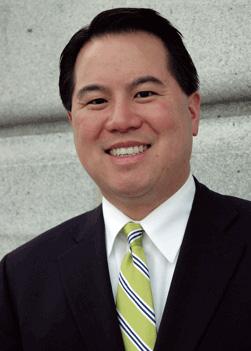
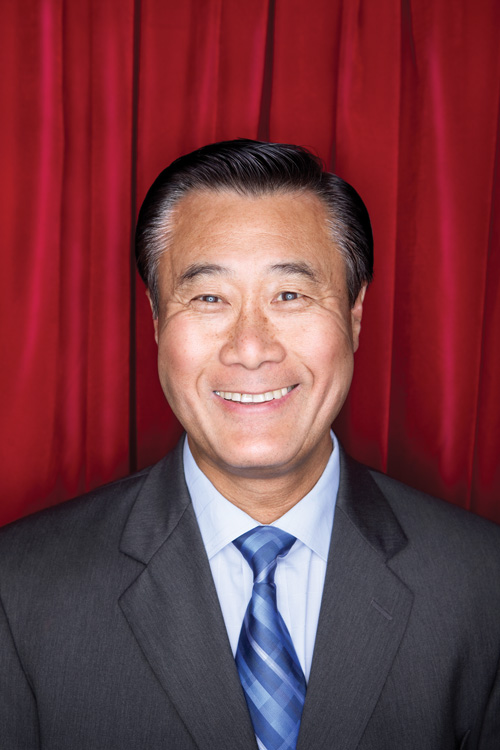
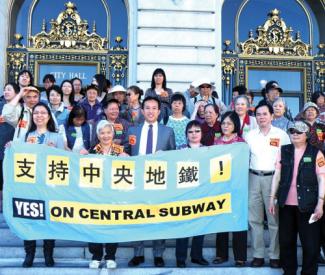
Supporters of the legislation – including mayoral candidates Leland Yee, Dennis Herrera, John Avalos, and Phil Ting, as well as Assemblymember Tom Ammiano, who authored the Health Care Security Ordinance as a supervisor – rallied on the steps of the City Hall today, calling for Lee to sign the legislation.

Shortly thereafter, the Mayor’s Office issued a press release with the headline “Mayor Lee Convenes Group to Improve Health Care Access & Protect Job,” announcing a “consensus building effort” that includes business groups and Campos and other supporters of the measure. Campos tells the Guardian that he did get a call from the Mayor’s Office today and he agreed to take part in the effort – just as he did in fruitless negotiations with Chamber officials – but he still has a fundamental disagreement with Lee and other Chamber allies over the issue.

“I talked to the Mayor’s Office about their proposal and I have indicated my concerns,” Campos said. He noted that both Lee’s proposal and another alternative by Board President David Chiu – who was quoted in Lee’s press release saying “I am committed to continuing the collaborative effort to ensure health care access to workers while protecting jobs.” – let businesses profit from money that’s supposed to be dedicated to employee health care

“So far, none of the proposals except for mine ensure that whatever consumers pay goes to health care,” Campos said, expressing confidence that public opinion is on his side. “It’s one of those issues that the more everyday San Franciscans hear what’s happening, the more outraged they are.”

But while Lee and Chiu each use the language of seeking compromise and trying to “close the loophole,” both rely on the basic Chamber paradigm that this money belongs to the businesses and setting it aside for employee health care as city law calls for would hurt “jobs.”

When Lee was asked about the issue by a group of reporters today, he said: “Next week, we’re forging a labor and management entities’ meeting with the Mayor’s Office and supervisors to try to forge changes to the Campos legislation. I cannot sign it the way it is now, because of two reasons. One, it does not focus on the healthcare needs of the employees; and two, it will force the employers to just keep millions of dollars lying around without any use and that will decrease the efforts to create more jobs. So both objectives have to be reflected in the ordinance, and I want to make the changes appropriate for that.”

The first reason seems to ignore the fact that the city is barred by federal ERISA law from telling businesses how to provide health coverage, which is why so many of them opted to create these health savings accounts – which are almost useless for people facing serious medical costs – rather than providing health insurance or paying into the city’s Healthy San Francisco program. And supporters of the legislation simply reject the validity of Lee’s second reason.

“That position is based on a false premise. This money belongs to the workers and it’s something that consumers are paying for,” Campos said. “We have a fundamental disagreement.”

City contractors plunk down for Lee

Representatives from Stellar Services, an IT infrastructure services provider that also does business as 4 U Services, contributed a total of $7,500 in support of Mayor Ed Lee’s bid for a full term, filings with the San Francisco Ethics Commission show. The New York-based company holds a contract with the San Francisco Public Utilities commission (SFPUC) and has been paid $91,737.80 to date for programming and coding services.

Lee also received a maximum $500 contribution from a senior vice president at AECOM, another city contractor. While the contributions may have squared with campaign finance law, significant support from companies doing business with the city nevertheless give the impression of businesses attempting to advance their own interests through political influence.

The majority of the contributions from Stellar came in the form of a $5,000 donation from 4 U Services to the Committee for Effective City Management, an independent expenditure committee created in support of Lee that recently hosted a Lee fundraiser in Millbrae honoring special guests Sup. Jane Kim and former Mayor Willie Brown.

4 U, according to its website, also does business as Stellar Services, a company based in New York that has an office in San Francisco. “Stellar is currently a sub-consultant that is working to develop our new online invoicing system called SOLIS,” SFPUC spokesperson Tyrone Jue told the Guardian. “The invoicing system centralizes and streamlines the invoicing process, makes invoicing transaction transparent to all users, increases reporting and transparency, and makes invoicing completely paperless.” Jue noted that the contract was signed in July 2009, and the SOLIS pilot program is underway.

The remainder of contributions from Stellar were made to Lee’s official mayoral campaign. Five individuals who listed Stellar Services or 4 U Services as their employer, including company founder and president Liang Chen, made maximum contributions of $500, according to a report filed with the San Francisco Ethics Commission.

Shaista Shaikh of the Ethics Commission noted that it is legal for city contractors to make contributions to independent expenditure committees formed in support of a candidate for public office. City contractors run afoul of ethics law if they make campaign contributions to an elected official who must approve the contract at any time during contract negotiations or until six months have passed from the date of contract approval, she explained. Since the contract with Stellar was approved in 2009, the contribution would have been made well past the six-month mark  — so it apparently squares with the campaign finance reform ordinance.

Reached by phone, Lee spokesperson Tony Winnicker told the Guardian that if the contract was approved in 2009, it would not be included in a database of city contractors maintained by the campaign, since “there’s no prohibition” against accepting campaign money after the six-month ban has passed. “So that should not be a concern to the Guardian,” he said.

On Sept. 17, Lee received a maximum $500 contribution from Joseph G. Moss, Jr., who listed his occupation as a senior vice president of AECOM in Atlanta, according to an Ethics filing. Lee received another $875 in contributions from AECOM employees, Ethics records show. According a press release on the AECOM website which seems to have been taken down since the Guardian highlighted it, an AECOM joint venture was awarded a $150 million contract for program management services for the SFPUC’s wastewater improvement program on Aug. 16. AECOM is also a partner in a joint venture working on construction of the controversial Central Subway project.   

Since the contractor contribution ban (Section 1.126 of the city’s campaign finance reform ordinance) sets a number of parameters for determining the legality of contributions, it wasn’t immediately clear whether the contributions from AECOM were in line with the ordinance.

Regardless of whether the campaign cash falls on the right side of the law, however, substantial support for Lee from city contractors is likely to raise eyebrows, especially in light of concerns progressives have raised that San Francisco is about to witness a resurgence of the pay-to-play politics that characterized City Hall under Brown.

Progressives battle downtown over economic and political reforms

63

Battles between progressive members of the Board of Supervisors and downtown power brokers such as the San Francisco Chamber of Commerce defined City Hall politics for much of the last decade, until the new politics of “civility” and compromise took hold this year, a dynamic that has favored downtown interests. But now, a pair of important, high-profile issues headed to the full board on Tuesday has revived the old dynamic. And in both cases, wealthy interests are putting enormous pressure on the board.

The first involves a proposal – put forward by Sups. Sean Elsbernd and Mark Farrell, the two most conservative supervisors – to gut the city’s system for publicly financing campaigns because downtown is threatening a lawsuit. They propose to end San Francisco’s program of giving publicly financed candidates more money when a privately funded candidate exceeds the spending cap because the Supreme Court recently struck down similar provisions in Arizona.

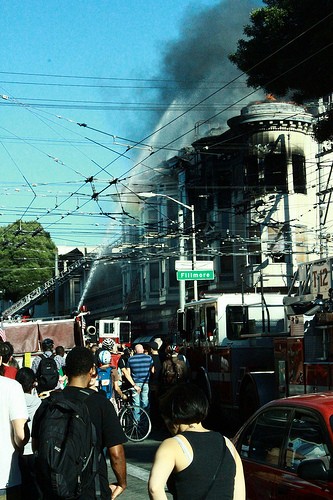
This week, after convening in closed session to discuss the threat of litigation by downtown groups, the board voted 7-3 – with Sups. David Campos, Jane Kim, and Eric Mar opposed, and Sup. Ross Mirkarimi absent because he rushed out to large structure fire in his district – for the Elsbernd/Farrell measure, one vote short of the supermajority needed to amend the current city law.

Campaign finance reform advocates such as Steven Hill argue that it’s unfair to modify the city program right in the middle of an election season in which Mayor Ed Lee and the wealthy independent expenditure groups supporting him are poised to spend millions of dollars to defeat a large field of mostly publicly funded mayoral candidates.

Hill and his allies are appealing to Mirkarimi – who told the Chronicle that he is leaning toward supporting the amendment when the measure returns to the board on Tuesday – not to support what they consider an overly broad capitulation to downtown’s threats. They’re also lobbying Sup. John Avalos to switch his vote, while downtown players are putting the screws to supervisors as well.

In an interview with the Guardian, Mirkarimi clarified his stance, noting that he was the sponsor of the original public financing law and his goal is to protect it, even if it needs to be modified to withstand a legal challenge. “I’m looking for alternatives to fortify San Francisco’s program,” he told us, noting that he missed some of this week’s discussion and he’s hoping something can be done to retain provisions that level the financial playing field with wealthy candidates.

Meanwhile, downtown forces are pulling out the stops to kill Sup. David Campos’ legislation that would prevent San Francisco businesses from pocketing money they set aside for their employees’ health care under a city mandate that they provide health coverage – totaling about $50 million last year – legislation that gets its first hearing tomorrow (Friday/30) at 10 am.

Board President David Chiu has put forward competing legislation that is more to the Chamber’s liking, letting businesses (mostly restaurants that are even placing surcharges of customers’ bills, ostensibly to subsidize their legal obligations) keep the money. But Campos and his labor allies believe they have the six votes they need to pass the legislation, thanks largely to moderate Sup. Malia Cohen’s pledge to support the measure.

While even some supporters have quibbled with the timing of this measure, Campos notes the urgency of keeping money intended for workers in their hands. “It’s an outrage and the longer we wait, the worse it gets,” Campos tells us, noting that the practice, “is what many of us consider fraud.”

Unfortunately, even if the board approves the measure this Tuesday, it will still need the signature of Mayor Lee to become law. While he hasn’t formally taken a position, given that his political base is the downtown crowd, he’s expected to veto the measure. But we’ll ask him about it tomorrow when he’s scheduled to meet with the Guardian for an endorsement interview at 2 pm.

Consequences of inaction

8

news@sfbg.com

The San Francisco Sunshine Ordinance, although it sounds bright and cheery, remains shrouded in a cloud of inaction. Meant to increase transparency in city government, it hasn’t emerged from the bureaucratic fog since its establishment in 1994. Cases wait years to be heard and even blatant violations go unpunished, due to infighting and power disputes between the commissions that are supposed to enforce government compliance.

The Sunshine Ordinance outlines citizen’s rights to request document and information. Citizens can take their complaints about request denials to the Sunshine Ordinance Task Force, an 11-member committee appointed by the Board of Supervisors to ensure government compliance. If the task force decides a violation has occurred the case is handed over to the Ethics Commission, a five-member appointed board that will supposedly enforce the rulings with fines or ordering documents to be made public.

George Wooding, reporter for the Westside Observer and president of the West of Twin Peaks Central Council, is the complainant in one of the task force’s most recent cases. This spring Wooding requested emails from the Recreation and Park Department multiple times but was told the documents did not exist. What RPD didn’t know was that Wooding had the emails all along.

The task force unanimously found RPD guilty of withholding emails. This is the third major sunshine violation by RPD in three years. Even more surprising, not one RPD employee has been fined, suspended, or faced any kind of punishment or corrective action.

The episode is a case study in the total eclipse of sunshine enforcement in the city, and how one embattled department — the RPD, which has come under heavy scrutiny for efforts to monetize park resources (see “Parks Inc.”, July 12) — used that dysfunction to stifle dissent.


DILUTING DISSENT

George Wooding v. RPD began when Wooding was asked to be a panelist at a Commonwealth Club event on May 11. The event, titled “Golden Gate Park Under Siege,” was to be a discussion about possible development projects in the park. Other panelists were representatives of environmental and anti-development groups who claimed they were not given time to voice their concerns in Board of Supervisors meetings, and wanted a forum to do so.

Wooding says that the Commonwealth Club was bombarded with phone calls and emails weeks before the discussion.

“They were saying our panel was one-sided, which is really unusual, and the Commonwealth Club told us they were getting a lot of heat for such a little panel discussion,” Wooding said. “It was not going to be a big deal, in all honesty.”

The emails that Wooding had and the department denied include correspondence from Sarah Ballard, RPD’s director of policy and public affairs, to Kerry Curtis, co-chair of the Commonwealth Club Environment & Natural Resources Forum, indicating she had phoned the club as well and asked that the discussion be canceled due to its “deeply biased panel that has no interest in discussing facts.”

There are also emails between Susan Hirsch, director of the City Fields Foundation, a private group that has been installing artificial turf in public parks, from her business email address to the panel moderator Jim Chappell’s private email, urging him to reconsider the event.

“You and I discussed this project years ago; the private sector is contributing far more than $20 million to provide safe, accessibly, and yes, environmentally sound fields for kids all across San Francisco to use. We have a unique private/public partnership with Rec and Park; it’s too bad the focus is on something negative, rather than the positive impact,” Hirsch wrote.

Mark Buell, president of the Recreation and Park Commission, also emailed Greg Dalton, Commonwealth Club’s COO, from his private email address: “I find the title inflammatory, the participants biased, and the fact that no one from the Rec and Park Department invited hard to understand. As president of the Commission I would like to urge the club to both alter the title of the event to ‘issues facing the park’ and have the club ask a representative of the department to be on the panel.”

Shortly thereafter, Buell was added to the panel and the event was renamed “Golden Gate Park Under Siege?”

Buell says the situation has been blown out of proportion. “I got on the panel because I’ve been active with the Commonwealth Club for years and all of a sudden I read a very slanted title about something tantamount to the ruination of Golden Gate Park, and a panel of people who are all critics,” Buell told us.

Wooding says the panel went smoothly, but he was unsettled by the last minute changes. He asked around for any information about what happened and got the emails through a knowledgeable source close to the RPD.

“[RPD] has pissed off a lot of people because they came in with a hammer when they didn’t need a sledge hammer. One of the people they pissed off was really upset and ended up giving me the correspondence,” Wooding told us.

As a journalist, Wooding said, “I was thinking, ‘this is a great story but wait, I can’t use any of this information,’ so I thought about how I could get the information legitimately?”

Wooding immediately emailed Olivia Gong, a RPD secretary, making clear that he was requesting the emails in accordance with the Sunshine Ordinance. Gong replied that the department did not have any documents matching the request.

“Imagine how amazed I was when they claimed they didn’t exist,” Wooding said.

After a second request turned up nothing, Wooding knew they were hiding the emails. He then asked Gong how she had determined the emails did not exist. Gong forwarded emails she had sent to department members who replied they did not have responsive documents.

Wooding then filed a complaint with the task force, which voted unanimously that RPD was in the wrong. Not only did it claim the emails did not exist, but when it became clear that they did, the department said that members deleted the emails because some were sent on private accounts and did not directly pertain to RPD affairs.

“I just delete everything,” Buell says. “It’s not that I did anything, it’s just that I didn’t know the rules that you’re supposed to keep everything.”

Task Force Chair Hope Johnson says she was shocked by this argument. The California Public Records Act, which is more lenient than the Sunshine Ordinance, clearly lists emails as a form of government document that must be handed over on request. The Sunshine Ordinance covers emails as well, and all officials who serve on city boards were required to undergo sunshine training last year, outlining what public documents are and noting that it’s illegal under state law to destroy them.

“Just switching over to another email address lends itself to the idea that this is something they knew was underhanded and would not be received positively by the public,” Johnson said.

She says this is becoming a problem throughout city government.

“There’s not a lot of specificity about keeping emails. They need a retention policy,” Johnson says. “Obviously I think that they prefer it to be as vague as possible.”


POSSIBLE PUNISHMENT?

Although the task force found RDP in violation, punishment is up to the Ethics Commission, a separate entity at City Hall.

Enter bureaucratic gloom and doom.

Since 1993 the task force has given the Ethics Commission 19 sunshine violation cases. Only one has even been heard. The other 18 were dismissed or are still “pending investigation.” Government officials are therefore under no serious threat if they disobey the law.

Richard Knee, former chair of the task force, says there is obvious animosity between the task force and commission staff. Rather than enforcing punishment, the Ethic Commission staff claim that cases can be dismissed on the grounds of insufficient evidence, or require additional investigation, which stalls the process indefinitely.

“I don’t think there’s any confusion, I think it’s merely resistance,” Knee said. “We are not asking the Ethics Commission to re-adjudicate something we have already adjudicated. When we refer a matter to the Ethics Commission we are asking them to tack some kind of enforcement action on a violation we have already found exists.”

In the one case Ethics did hear, it turned the punishment decision over to the mayor as the “appointing officer,” who did nothing. It has, therefore, never enforced a penalty on any government official that the task force found guilty.

A report released in August by the Civil Grand Jury, entitled “San Francisco’s Ethics Commission: The Sleeping Watchdog,” criticizes the body’s record of inaction on both sunshine and campaign finance complaints.

“Because of the Ethics Commission’s lack of enforcement, no city employee has been disciplined for failing to adhere to the Sunshine Ordinance. The Commission has allowed some city officials to ignore the rulings of the Sunshine Ordinance Task Force,” the report says.

Johnson says that since the report came out, her correspondence with the Ethics Commission has shifted slightly.

“They used to send us letters back saying they dismissed it, but recently we’ve sent over two cases and they agreed that there had been a violation,” Johnson said. “But they said they wouldn’t be able to do enforcements of any kind.”

She says that the Sunshine Ordinance won’t be taken seriously until the very people it is meant to monitor begin to enforce its stipulations.

“It’s difficult with the Ethics Commission because they keep all of their investigations secret,” Johnson says. “There is no external oversight, it is all the politicians, all of the people who appointed them, they are the only people who monitor what they’re doing.”

In response to the report, Johnson hopes the Ethics Commission will be urged to actually hear sunshine cases, and Wooding’s could be one of the first.

“The George Wooding case is a good example of how the Sunshine Ordinance can reveal oppression of a group of people who wanted to come together and have a constructive analysis,” Johnson said. “That should be something that’s allowed, and here’s the very entity that they want to have an analysis and discussion about shutting them down. And here are some documents that prove it.”

Wooding’s case will be heard once more by the task force on Sept. 27. It will almost certainly be sent to the Ethics Commission, but Wooding may be waiting awhile for any resolution.

“It’s probably going to take forever,” Wooding says. “Either I’ll just end up being another file in a cabinet somewhere, or this may even become an example, if it moves through, of how things should be done. There might be a lot more life in this than anyone ever imagined.”

Alerts

0

alert@sfbg.com

WEDNESDAY 21


Guardian Mayoral Forum

This Guardian-sponsored mayoral forum caps a series of five events this summer in which community members, policy experts, and progressive groups have created an agenda that serves all San Franciscans (see “A new progressive agenda, 9/13/11). All the major mayoral candidates have been asked to review that agenda and they’ll publicly weigh in with where they stand on the issues and solutions it addresses.

6 p.m., free

LGBT Center

1800 Market, SF

www.sfbg.com


Medicaid matters

Join the Independent Living Resource Center of San Francisco and other groups representing seniors, the disabled, and social justice advocates in a demonstration against the deep cuts to Medicaid that are now being discussed by Congress and the White House. Attendees will be asked to write their names and stories on a blank strip of paper that will be linked together in a long chain.

Noon, free

Civic Center Plaza

Polk and Grove, SF

www.ilrcsf.org/Rally/rally.htm


Rev. Billy at Revolution Books

Writers and performance artists Savitri D and Bill Talen will discuss their new book, The Reverend Billy Project: From Rehearsal Hall to Super Mall with the Church of Life After Shopping, which chronicles their creation of an effective and inspiring anti-consumerist group in New York City. Talen assumes his evangelical alter ego of Reverend Billy to preach against the evils of everything from corporate-controlled sweatshops and chain stores to mountain-top removal coal mining, delivering heavy message with a fun and engaging flair, backed by a large choir.

7 p.m., free

Revolution Books

2425 Channing, Berk.

www.revolutionbooks.org


FRIDAY 23

The ARTery Project

The San Francisco Arts Commission and various City Hall officials have been trying to enliven the Central Market area with series of arts initiatives they’ve dubbed the ARTery Project, ranging from the Art in Storefronts effort to the recent placement of artist Karen Cusolito’s Dandelion sculpture (originally created for Burning Man) in United Nations Plaza. The commission’s 2011 photography interns will display their work on the project during this reception.

5-7 p.m. Free

Sup. Jane Kim’s office

City Hall

1 Dr. Carlton B. Goodlett, SF

www.sfartscommission.org/artery


Mail items for Alerts to the Guardian Building, 135 Mississippi St., SF, CA 94107; fax to (415) 437-3658; or e-mail alert@sfbg.com. Please include a contact telephone number. Items must be received at least one week prior to the publication date.

Bike Coalition gives Avalos its top endorsement

13

Back in May, I noted how mayoral candidates John Avalos and David Chiu seemed to be the only candidates courting the votes of San Francisco bicyclists, noting that the 13,000-plus-member San Francisco Bicycle Coalition was one of the city’s largest grassroots political organizations. Since then, Ed Lee jumped into the race and also made a point of supporting and seeking support from the city’s bicycling community.

After weeks of online voting, the SFBC today announced its endorsements, and they seem to reflect both the efforts of these three politicians and SFBC members’ recognition of who’s been working in City Hall on their behalf. They endorsed Avalos as number one, Chiu in the second slot, and Lee number three.

“By endorsing three candidates, in ranked-choice format, we are recognizing the leaders who are most actively supporting a better city through bicycling,” SFBC Executive Director Leah Shahum wrote in a message to members announcing the endorsements, also noting that there is an “unprecedented number of bicycling-friendly candidates” in this year’s mayoral field.

Avalos and Chiu are both regular cyclists who have actively supported expanding the city’s bicycle network and increasing ridership, while Lee has shepherded several key bike projects through this year and even called for improvements to dangerous conditions on Fell and Oak streets during this year’s Bike-to-Work Day.

Central Subway: justice and jobs

0

OPINION The Central Subway is a result of years of grassroots environmental transit justice organizing that San Francisco should be proud of. But in recent weeks, politicos and the media have stirred up a string of unfounded criticisms of the Central Subway — an essential project that will upgrade transit for the long term, create thousands of jobs in the midst of a recession, and expand opportunity for tens of thousands of San Franciscans who need to get to work everyday. Politicians who supported the project for years are now reversing themselves and calling it a “subway to nowhere” and a “boondoggle.” And short staffed newspapers find it easy paint a cartoon picture of City Hall and Chinatown “powerbrokers” who conspired to sell the city on an expensive project it doesn’t need.

But San Franciscans should ignore the overheated rhetoric of the moment and see the future value and need for this critical project — particularly when the Republicans in Congress are attacking us from the right. We need to unite as one city and not squander what might be the last opportunity to access federal funding to make the economic center of the city more transit accessible for all San Franciscans. In this limited space, we offer some of the facts about the project that seem to be missing in the present reporting.

The number of recent critics and media attention about the subway makes it appear that the subway’s costs and design were new news. Planning for the project began more than 20 years ago, and the essential alignment and projected costs have been agreed to and consistent since 2008. There is no new news.

The claims about skyrocketing costs are misleading, comparing different project proposals. The Civil Grand Jury and others fail to do an apples-to-apples comparison. The project costs have increased primarily because, in response to public feedback, the final project is a different project. It has a new alignment, new stations, and more contingency funds built in. The core costs for the project have not changed since 2008, when it was approved with broad support, including some of its present critics.

The critics who claim that not building the project will save future Muni operating costs fail to address the costs of doing nothing. The environmental impact report showed that the no-project option would cost even more. The absence of a subway would require Muni to run and maintain more buses on streets that will be more crowded and more gridlocked. (Ten years from now, if the critics succeed in killing the project, when you are stuck in traffic and late for work you will know who to blame).

Beneath the unfounded criticism about costs is actually a disagreement over values. The grand jury report relied upon by critics makes a only brief and superficial criticism about costs. The report actually devotes more attention and criticism to the location of the Chinatown station. The grand jury prefers a subway that runs closer to the financial district. For critics, the present project is a “subway to nowhere.” But for the Asian, black, and working class neighborhoods that will be connected via the subway and the T-line, this is a subway to jobs and economic opportunity.

Finally, we need to be clear that this is probably the last chance in many of our lifetimes for San Francisco to grow its transit system. While critics talk about alternate uses for the $940 million dollars of federal funding, the reality is we cannot redirect those dollars. The funding process for the subway is nearing the finish line after an arduous ten-year competitive federal application process. Given the federal budget, re-starting that application process may not merely mean a multi-year delay, it will likely mean there will be no funding to apply for and the loss of 30,000 jobs over the life of the project.

We urge all the mayoral candidates and our media pundits to tone down the rhetoric around the subway. We should not let short-term thinking and the heat of political passion of this campaign season kill a project that has had broad support for 20 years and will provide new transit that we desperately need for our city’s future.

Ultimately the subway is an issue about justice and access to jobs. Justice for some of the most densely populated neighborhoods in San Francisco, where 80% of the residents don’t own cars and rely entirely on public transportation. And we’re talking about the potential loss of thousands of construction jobs and access to jobs for those who need the transit to their workplaces.

Stand firm, San Francisco, for jobs and justice.

Rev. Norman Fong is the incoming director of the Chinatown Community Development Center. Mike Casey is the head of UNITE HERE Local 2.


Mayor Lee likes Question Time just the way it is: scripted and boring

26

Mayor Ed Lee appeared before the Board of Supervisors today for his fifth monthly Question Time session, where he was asked by Sup. John Avalos – and subsequently by reporters – whether he would be willing to “change the format to make it a truly interactive, substantive, and dynamic exchange?”
But Lee disagreed with the widespread perception that the scripted nature of these exchanges – a condition that Lee’s office insisted on during negotiations with the board earlier this year, with questions submitted in writing a week before the meeting – is a contrived and dull departure from what San Francisco voters intended when they twice voted to establish Question Time.
“Supervisor Avalos, this is substance, and I think it’s exactly what the voters had in mind with Proposition C,” Lee said, reading from a prepared text. Later, he added, again reading from his script, “I think these are very substantial and dynamic exchanges.”
But apparently, that view isn’t widely shared, as the format has been criticized by a wide variety of media outlets in town, and it was the main topic that the pack of reporters who intercepted Lee in the hallway afterwards wanted to discuss. He was asked whether the session would still be as civil as they are if they were less scripted, and Lee responded that he thought they would still be civil.
“But I like a little more structure to it,” Lee said, adding that he likes to have prepared notes to address the questions that supervisors might ask. “If we don’t set boundaries, it could be a free-for-all.”
But a bit more of a free-for-all is certainly what former Sup. Chris Daly intended when he drafted the legislation, which voters approved as a binding measure last year after first approving it as an advisory measure two years early, only to have then-Mayor Gavin Newsom refuse to come.
For example, when Sup. Sean Elsbernd asked Lee for a status report on the Central Subway project, it’s possible that Lee’s recitation of the project’s benefits might have been followed up with questions asking him to address recent criticisms or the tripling of the project’s costs, which he didn’t mention.
Or perhaps Sup. Eric Mar might have asked a follow-up question when Lee answered the question “Are you willing to require that CPMC enter into a Community Benefits Agreement before their proposal is approved by the city?” by saying, “These community benefits will be incorporated into a Developer Agreement,” reminding the mayor of the premise of his question that many of the benefits that the community is seeking cannot legally be included in the Developer Agreement.
Similarly, Lee also avoided directly answering Sup. David Campos’ question about whether the mayor intends to support legislation by Campos and Sup. Mark Farrell that would require city departments to return to the board for approval of budget supplements when overtime costs are significantly exceeding those that the department budgeted for.
But there is some wiggle room in the exchanges for supervisors who want to freestyle, as long as they are within the narrow confines of civility being practiced at City Hall these days. Elsbernd embellished his approved Central Subway question, calling it an “opportunity to move beyond the clichés and one-liners of political campaigns.”
And when Lee closed his answer to Avalos by inviting him to take part in an upcoming benefit ping-pong match in Chinatown, Avalos asked the mayor, with a slight taunt in his voice, “How is your game?”
To which Lee – perhaps reaching new heights in conflict aversion – said his style of play is “diplomatic and friendship first.” To which Avalos responded, again with an air of challenge, “I used to work at the Boys and Girls Club and played everyday.”
And that, I suppose, is what passes for political conflict and debate at City Hall these days.

Ting wants instant public records

6

When Assessor and mayoral candidate Phil Ting came by for his endorsement interview, we talked about open government, and I mentioned an idea that sunshine advocate Kimo Crossman first proposed back in 2008: Why not make all city documents (with a few limited exceptions) public the moment they’re created?

Why not send a copy of every memo, every email, every contract, every check, everything anyone at City Hall produces, into a public server, where the rest of us can see what our elected officials and civil servants are doing? No more hassles with sunshine requests — the docs would already be there, in a searchable database.

Well, apparently Ting liked the idea — and it’s now part of his mayoral platform. In a release posted Sept. 13, Ting argues that “everything should be public.”

And I mean just about everything. I think that every email, every memo, every check, every contract, every phone message, every tweet, every cell phone call and every other single government document that is not part of an employee personnel decision, about an immediate public safety issue, protected by state law or part of a pending lawsuit should be made public at the time it is created. The reality is that technology has outstripped our city’s Sunshine laws. And it would be far less expensive – and far more productive – simply to have all digital public records (which is now nearly all public records) simply posted to a City Sunshine Site at the time they are created. This site should quickly include, and certainly be the basis of, an Application Programming Interface (API) that gives San Franciscans the tools and the data they need to help hold government accountable.

He explains:

So as mayor, if I send an email to my chief of staff on an issue – that should be made public when I send it. When I have a meeting at City Hall or anywhere else, that would be part of an online calendar, which should be made public. A direct message – a tweet from the mayoral account – just about anything that is created, said or discussed should be made public in real time.

Every document created by city government (with the noted exceptions) should be made available to the public at the time it is created. That should include every check written – and every dollar spent or promised. And every contract. And every subcontract. Everything.

There is simply no supportable reason for any work product created by a public employee to be hidden from the public – or perhaps even worse, to be put behind the barrier of a “sunshine” process that is now so complicated, time consuming and expensive that it promises public accountability without always being able to deliver it.

It makes perfect sense — the technology exists, and is relatively inexpensive (particularly compared to the time it takes city agencies to respond to public records requests). It would be easy to allow people creating confidential documents (legal strategy memos in the City Attorney’s Office, say, or personnel records) to add a tag to the file that would keep it out of the public database — and, of course, it would be easy for an agency (or the Sunshine Task Force) to search those tagged files later to see what should and shouldn’t have been kept secret.

I don’t think anyone else has ever done this; San Francisco could be the first city in the country to make sunshine a part of everyday life at city Hall. I hope this becomes part of the mayoral debates.

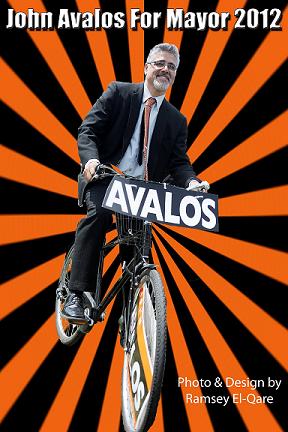
Team Avalos

63

When Supervisor John Avalos chaired the Budget & Finance Committee in 2009 and 2010, his office became a bustling place in the thick of the budget process. To gain insight on the real-life effects of the mayor’s proposed spending cuts, Avalos and his City Hall staff played host to neighborhood service providers, youth workers, homeless advocates, labor leaders, and other San Franciscans who stood to be directly impacted by the axe that would fall when the final budget was approved. They camped out in City Hall together for hours, puzzling over which items they could live without, and which required a steadfast demand for funding restoration.

“One year, we even brought them into the mayor’s office,” for an eleventh-hour negotiating session held in the wee morning hours, recounted Avalos’ legislative aide, Raquel Redondiez. That move came much to the dismay of Steve Kawa, mayoral chief of staff.

Avalos, the 47-year-old District 11 supervisor, exudes a down-to-earth vibe that’s rare in politicians, and tends to display a balanced temperament even in the heat of high-stakes political clashes. He travels to and from mayoral debates by bicycle. He quotes classic song lyrics during full board meetings, keeps a record player and vinyl collection in his office, and recently showed up at the Mission dive bar El Rio to judge a dance competition for the wildly popular Hard French dance party.

Yet casual observers may not be as familiar with the style Avalos brings to conducting day-to-day business at City Hall, an approach exemplified that summer night in 2010 when he showed up to the mayor’s office flanked by grassroots advocates bent on preserving key programs.

“My role is, I’m an insider, … but it’s really been about bringing in the outside to have a voice on the inside,” Avalos said in a recent interview. “People have always been camped out in my office. These are people who represent constituencies — seniors, recipients of mental health care, unions, people concerned about violence. It’s how we change things in City Hall. It’s making government more effective at promoting opportunities, justice, and greater livelihood.” Part of the thrust behind his candidacy, he added, is this: “We want to be able to have a campaign that’s about a movement.”

That makes Avalos different from the other candidates — but it also raises a crucial question. Some of the most important advances in progressive politics in San Francisco have come not just from electoral victories, but from losing campaigns that galvanized the left. Tom Ammiano in 1999 and Matt Gonzalez in 2003 played that role. Can Avalos mount both a winning campaign — and one that, win or lose, will have a lasting impact on the city?

Workers and families

No budget with such deep spending cuts could have left all stakeholders happy once the dust settled, but Avalos and other progressive supervisors did manage to siphon some funding away from the city’s robust police and fire departments in order to restore key programs in a highly controversial move.

“There’s a Johnny Cash song I really like, written by Tom Petty, called ‘I Won’t Back Down.’ I sang it during that time, because I didn’t back down,” Avalos said at an Aug. 30 mayoral forum hosted by the Potrero Hill Democratic Club. “We made … a symbolic cut, showing that there was a real inequity about how we were doing our budgets. Without impacting public safety services, we were able to get $6 million from the Fire Department. A lot of that went into Rec & Park, and health care programs, and to education programs, and we were able to … find more fat in the Police Department budget than anybody had ever found before, about $3 million.”

Last November, Avalos placed a successful measure on the ballot to increase the city’s real-estate transfer tax, which so far has amassed around $45 million in new revenue for city coffers, softening the blow to critical programs in the latest round of budget negotiations. “Without these measures that community groups, residents, and labor organizations worked for, Mayor Ed Lee would not have been able to balance the budget,” Avalos said.

More recently, he emerged as a champion of the city’s Local Hire Ordinance, designed as a tool for job creation that requires employers at new construction projects to select San Francisco residents for half their work crews, to be phased in over the next several years. That landmark legislation was a year in the making, Redondiez said, describing how union representatives, workers, contractors, unemployed residents of Chinatown and the Bayview, and others cycled through Avalos’ City Hall office to provide input.

His collaborative style stems in part from his background. Avalos formerly worked for Service Employees International Union Local 1877, where he organized janitors, and served as political director for Coleman Advocates for Children & Youth. He was also a legislative aide to former District 6 Sup. Chris Daly, who remains a lightning rod in the San Francisco political landscape.

Before wading into the fray of San Francisco politics, Avalos earned a masters degree in social work from San Francisco State University. But when he first arrived in the city in 1989, with few connections and barely any money to his name, he took a gig at a coffee cart. He was a Latino kid originally from Wilmington, Calif. whose dad was a longshoreman and whose mom was an office worker, and he’d endured a climate of discrimination throughout his teenage years at Andover High in Andover, Mass.

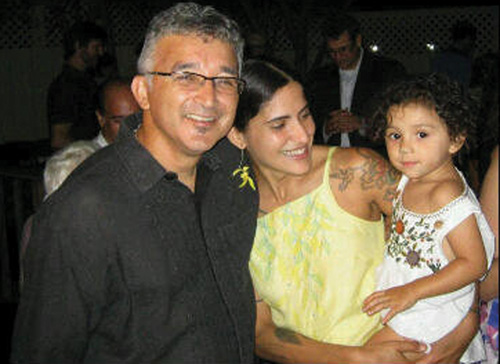
Roughly a decade ago, Avalos and a group of youth advocates were arrested in Oakland following a protest against Proposition 21, which increased criminal penalties for crimes committed by youth. Booked into custody along with him was his wife, Karen Zapata, whom he married around the same time. She is now a public school teacher in San Francisco and the mother of their two children, ages 6 and 9, both enrolled in public schools.

“John has consistently been a voice for disenfranchised populations in this city,” said Sharen Hewitt, who’s known Avalos for more than a decade and serves as executive director of The Community Leadership Academy & Emergency Response Project (CLAER), an organization formed to respond to a rash of homicides and alleviate violence. “He understands that San Francisco is at a major turning point in terms of its ability to keep families and low-income communities housed. With the local hiring ordinance, most of us who have been working around violence prevention agree — at the core of this horrible set of symptoms are root causes, stemming from economic disparity.”

Asked about his top priorities, Avalos will invariably express his desire to keep working families rooted in San Francisco. District 11, which spans the Excelsior, Ingleside, and other southeastern neighborhoods, encompasses multiracial neighborhoods made up of single-family homes — and many have been blunted with foreclosure since the onset of the economic crisis.

“Our motto for building housing in San Francisco is we build all this luxury housing — it’s a form of voodoo economics,” Avalos told a small group of supporters at a recent campaign stop in Bernal Heights. “I want to have a new model for how we build housing in San Francisco. How can we help [working-class homeowners] modify their loans to make if more flexible, so they can stay here?” He’s floated the idea of creating an affordable housing bond to aid in the construction of new affordable housing units as well as loan modifications to prevent foreclosures.

“That’s what is the biggest threat to San Francisco, is losing the working-class,” said community activist Giuliana Milanese, who previously worked with Avalos at Coleman Advocates for Youth and has volunteered for his campaign. “And he’s the best fighter. Basically, economic justice is his bottom line.”

Tenants Union director Ted Gullicksen gave Avalos his seal of approval when contacted by the Guardian, saying he has “a 100 percent voting record for tenants,” despite having fewer tenants in his district than some of his colleagues. “David Chiu, had he not voted for Parkmerced, could have been competitive with John,” Gullicksen said. “But the Parkmerced thing was huge, so now it’s very difficult to even have David in same ballpark. Dennis [Herrera] has always taken the right positions — but he’s never had to vote on anything,” he said. “After that, nobody comes close.”

Cash poor, community rich

There’s no question: The Avalos for Mayor campaign faces an uphill climb. Recent poll figures offering an early snapshot of the crowded field peg him at roughly 4 percent, trailing behind candidates with stronger citywide name recognition like City Attorney Dennis Herrera or the incumbent, Mayor Ed Lee, who hasn’t accepted public financing and stands to benefit from deep-pocketed backers with ties to big business.

Yet as Assembly Member Tom Ammiano phrased it, “he’s actually given progressives a place to roost. He doesn’t pussy-foot around on the issues that are important,” making him a natural choice for San Francisco voters who care more about stemming the tides of privatization and gentrification than, say, rolling out the red carpet for hi-tech companies.

One of Avalos’ greatest challenges is that he lacks a pile of campaign cash, having received less than $90,000 in contributions as of June 30, according to an Ethics Commission filing. “He can’t call in the big checks,” said Julian Davis, board president of Booker T. Washington Community Service Center, “because he hasn’t been doing the bidding of big business interests.” A roster of financial contributions filed with the Ethics Commission shows that his donor base is comprised mainly of teachers, nonprofit employees, health-care workers, tenant advocates, and other similar groups, with almost no representatives of real-estate development interests or major corporations.

Despite being strapped for cash, he’s collected endorsements ranging from the Democratic County Central Committee, to the Harvey Milk Democratic Club, to the city’s largest labor union, SEIU 1021; he’s also won the backing of quintessential San Francisco characters such as renowned author Rebecca Solnit; San Francisco’s radical bohemian poet laureate, Diane di Prima; and countercultural icon Diamond Dave.

While some of Avalos’ core supporters describe his campaign as “historic,” other longtime political observers have voiced a sort of disenchantment with his candidacy, saying it doesn’t measure up to the sweeping mobilizations that galvanized around Gonzalez or Ammiano. Ammiano has strongly endorsed Avalos, but Gonzalez — who now works for Public Defender (and mayoral candidate) Jeff Adachi — has remained tepid about his candidacy, stating publicly in an interview on Fog City Journal, “I like [Green Party candidate Terrie Baum] and John fine. I just don’t believe in them.”

Ironically, Sup. Sean Elsbernd, often Avalos’ political opposite on board votes, had kinder words for him. “John is intelligent, John is honest, and John has integrity,” Elsbernd told the Guardian. “I don’t think he knows the city well enough to serve as chief executive … but I’ve seen the good work he’s done in his district.”

Meanwhile, Avalos is still grappling with the fallout from the spending cut he initiated against the police and fire departments in 2009. Whereas those unions sent sound trucks rolling through his neighborhood clamoring for his recall from office during that budget fight, the San Francisco Police Officers Association (SFPOA), the San Francisco Fire Fighters union, and the plumbers’ union, Local 38, have teamed up now that Avalos is running for mayor to form an independent expenditure committee targeting him and Public Defender Jeff Adachi, a latecomer to the race.

“We’ll make sure we do everything we can to make sure he never sees Room 200,” SFPOA President Gary Delagnes told the Guardian. “I would spend as much money as I could possibly summon to make sure neither ever takes office.” Delagnes added that he believes the political makeup of San Francisco is shifting in a more moderate direction, to Avalos’ disadvantage. “People spend a lot of money to live here,” he said, “and they don’t want to be walking over 15 homeless people, or having people ask them for money.”

If it’s true that the flanks of the left in San Francisco have already been supplanted with wealthy residents whose primary concern is that they are annoyed by the sight of destitute people, then more has already been lost for the progressive movement than it stands to lose under the scenario of an Avalos defeat.

The great progressive hope?

Despite these looming challenges, the Avalos campaign has amassed a volunteer base that’s more than 1,000 strong, in many cases drawing from grassroots networks already engaged in efforts to defend tenant rights, advance workplace protections for non-union employees, create youth programs that aim to prevent violence in low-income communities, and advance opportunities for immigrants. According to some volunteers, linking these myriad grassroots efforts is part of the point. Aside from the obvious goal of electing Avalos for mayor, his supporters say they hope his campaign will be a force to re-energize and redefine progressive politics in San Francisco.

“All the candidates that are running are trying to appeal to the progressive base,” Avalos said. But what does it really mean? To him, being progressive “is a commitment to a cause that’s greater,” he offered. “It’s about how to alter the relationship of power in San Francisco. My vision of progressivism is more inclusive, and more accountable to real concerns.”

N’Tanya Lee, former executive director of Coleman Advocates, was among the people Avalos consulted when he was considering a run for mayor. “The real progressives in San Francisco are the folks on the ground every day, like the moms working for public schools … everyday families, individual people, often people of color, who are doing the work without fanfare. They are the unsung heroes … and the rising progressive leaders of our city,” she said. “John represents the best of what’s to come. It’s not just about race or class. It’s about people standing for solutions.”

When deciding whether to run, Avalos also turned to his wife, Zapata, who has held leadership positions in the San Francisco teacher’s union in the past. She suggested rounding up community leaders and talking it through. “The campaign needed to be a movement campaign,” Zapata told the Guardian. “John Avalos was not running because he thought John Avalos was the most important person in the world to do this job. Our question was, if John were to do this, how would it help people most affected by economic injustice?”

Hewitt, the executive director of CLAER, also weighed in. “My concern is that he has been painted as a leftist, rooted in some outdated ideology,” she said. “I think [that characterization] is one-dimensional, and I think he’s broader than that. My perception of John is that he’s a pragmatist — rooted in listening, and attempting to respond.”

Others echoed this characterization. “He doesn’t need to be the great progressive hope,” said Rafael Mandelman, an attorney who ran as a progressive in District 8 last year. “If people are looking for the next Matt Gonzalez, I’m not sure that’s what John is about. He’s about the communities he’s representing.”

As to whether or not he has a shot at victory, Mandelman said, “It’s a very wide field, and I think John is going to have a very strong base. I think he will get enough first-choice votes to be one of the top contenders. And with ranked choice voting, anything can happen.”


Our Weekly Picks: September 7-13

0

WEDNESDAY 7

MUSIC

The Jim Jones Revue

On its new album, Burning Your House Down, the Jim Jones Revue has seemingly perfected its rowdy mix of 1950s rock ‘n’ roll and MC5-esque blues-punk. The London five-piece debuted in 2004 with a ramshackle garage rock style and a series of blistering live sets that won over the likes of Liam Gallagher and Jim Sclavunos (Nick Cave & The Bad Seeds, Grinderman) — Sclavunos produced the group’s new LP. The band’s relentless Jerry Lee Lewis-style piano twinkling, punk rock guitars, and rockabilly drumming, coupled with Jones’ intense vocal delivery (an endearing mix of Little Richard yelps and Motorhead gravitas) has earned it a reputation as one of the UK’s can’t miss live acts. (Landon Moblad)

With the Sandwitches

8 p.m., $13–$15 The Independent

628 Divisadero, SF (415) 771-1421

www.theindependentsf.com


THURSDAY 8

MUSIC

SF Symphony Free 100th Birthday Celebration

Ghirardelli chocolate squares, an afternoon party outside City Hall, and Michael Tilson Thomas conducting the SF Symphony with superstar Chinese pianist Lang Lang — all free? Yep, it’s the centennial celebration of our own musical starship, with two can’t fail crowd-pleasers, Franz Liszt’s Piano Concerto No. 1 in E-flat major and Benjamin Britten’s The Young Person’s Guide to the Orchestra, on the menu. The engaging Lang Lang has a way with Liszt’s Concerto No. 1 — his twinkling flourishes on both its silent-movie villain and John-and-Mary romantic passages can call to mind another flashy Liszt lover, Liberace, but Lang Lang’s technical enthusiasm is all his own. (Marke B.)

11:30 a.m., free

San Francisco City Hall

1 Dr. Carlton B. Goodlett Place, SF

(415) 864-6000

www.sfsymphony.org


FRIDAY 9

MUSIC

Christian Marclay

The mad genius-artist-composer-filmmaker who recently unleashed The Clock, an astonishingly well made 24-hour-long film collage on Los Angeles, is one of the highlights of an already awesome San Francisco Electronic Music Festival this year. Marclay, who was actually born just outside of San Francisco in San Rafael, before emigrating to Switzerland as a child, is a master of mezmerization. The sonic tapestries he creates with records were the precursors to turntablism, albeit a more avant-garde version than what has been popularized by DJs in the past several decades, and continue to transgress the boundaries of music and performance. The collage of sounds rendered by Marclay may seem cacophonous, but a hypnotizing rhythm always lurks just below the surface, ready to suck you in if you only let it. (Cooper Berkmoyer)

With Shelley Hirsch, Zachary Watkins, and Jessica Rylan

8 p.m., $16

Brava Theater

2781 24th St., SF

(415) 641-7657

www.sfemf.org


MUSIC

Iris DeMent

Sweet is the voice of Iris DeMent, whose Pentecostal parents kept her singing gospel even after they moved from Arkansas to Orange County. DeMent rolled her complex feelings towards the old time religion into one of the finest opening shots of any debut album: “Let the Mystery Be,” a Marilynne Robinson novel in the shape of a country song. She’s only recorded three albums since that first Infamous Angel (1992), but her songs still radiate hard-won wisdom and calm in concert. She kept the Hardly Strictly Bluegrass hillside hushed a few years ago, and one imagines tonight’s show at the Great American will be far more intimate. (Max Goldberg)

With Kiyoshi Foster

8 p.m., $35

Great American Music Hall

859 O’Farrell, SF

(415) 885-0750

www.gamh.com


MUSIC

Down

When Hurricane Katrina hit New Orleans in 2005, the devastation was near total. In the wake of the storm, different people coped in different ways. Down used the harrowing experience as inspiration for its most recent album, III: Over the Under, soulful slab of stoner metal that helped excise some of the emotional pain. Drawing on the talents of NOLA metal stalwarts Kirk Weinstein, Phil Anselmo, Pepper Keenan, and Jimmy Bower, the super-group has stayed on tour, shouting out its heavy, Southern Rock-influenced sound in defiance of disaster. (Ben Richardson)

With In Solitude, Ponykiller

8 p.m., $25

The Regency Ballroom

1300 Van Ness, SF

www.theregencyballroom.com

(415) 673-5716


SATURDAY 10

EVENT

Ghirardelli Chocolate Festival

With a name that is among the most synonymous in the world for delicious chocolate, Ghirardelli has been making tasty treats in San Francisco since 1852 — a long standing tradition that has been joined in recent years by the annual Ghirardelli Square Chocolate Festival, a two-day fete where visitors can sample a wide variety of scrumptious confections from both the famous host company, along with more than 30 other vendors and producers. A variety of cooking demonstrations and live entertainment are also on tap for this sweet event that benefits Project Open Hand. (Sean McCourt)

Through Sun/11, noon-5 p.m., $20 for 15 tastings

Ghirardelli Square

900 North Point St., SF

(415) 775-5500

www.ghirardellisq.com


MUSIC

Rancid

Now twenty years into an impressively steady career, Rancid continues to make a uniquely identifiable version of punk rock that sounds entirely uninterested in modern spins on the genre. The East Bay-born group flirted with the mainstream with hits like “Ruby Soho” and “Time Bomb,” but its catalog goes far deeper than those pop-punk radio gems. From the early skate punk of Let’s Go, to the late period Clash-aping Life Won’t Wait, to the fiery hardcore influences of its self-titled release in 2000, Rancid has cemented itself over the years as one of the essential bands to emerge from the punk revival of the 1990s.(Landon Moblad)

With H20 and DJ J & Nicki Bonner

8 p.m., $24 The Warfield 982 Market, SF (415) 354-0900 www.thewarfieldtheatre.com


MUSIC

Balkans

The swallow-hard, pleading vocals of Balkans — which invoke the Strokes’ Julian Casablancas — occasionally sounds slurred, like perhaps the singer who owns those pipes knocked back a few. And who know, maybe he did. The band is after all said to be influenced by its Atlanta-hometown compatriots the Black Lips — known for destructive antics at live shows. And in a recent interview with video platform Noisey (curated by VICE), Balkans and fans did claim the band has set off fireworks, thrown raw meat, and bled on guitars during shows. Regardless of such stories, it doesn’t get in the way of the music. The fresh-faced 20-somethings, buddies since childhood, spin fuzzy ’60s pop-infused garage rock with jangly guitars — gaining comparisons to both the Walkmen and Television. Those equivalences alone are enough to want to grab a beer. (Emily Savage)

With PS I Love You

9:30 p.m., $10

Hemlock Tavern

1131 Polk, SF

(415) 923-0923

www.hemlocktavern.com


MUSIC

Totimoshi

Totimoshi has always defied categorization. The band, led by the baleful singing and scrabbling guitar of Antonio Aguilar, relies on a rock-solid rhythm section comprised by bassist Meg Castellanos and drummer Chris Fugitt to round out its idiosyncratic hard-rock sound. New album Avenger includes guest spots by Mastodon’s Brent Hinds, the Melvin’s Dale Crover, and Neurosis’ Scott Kelly, which should give you some idea of what’s in store. Catching them in El Rio’s intimate back room will be a great opportunity to see the band putting it’s best foot forward for a hometown crowd. (Richardson)

With Hot Fog, Belligerator

9 p.m., $8

El Rio

3158 Mission, SF

415-282-3325

www.elriosf.com


SUNDAY 11

MUSIC

Slim Cessna’s Auto Club

After a week-long, whiskey-fueled bender that leaves you half dead and nearly broke in a seedy motel room just outside of New Orleans, a sudden concern for your spiritual well being drives you into the dusky sunlight in search of salvation. Bleary eyed and still drunk, you stumble across a small Pentecostal church on an empty street populated by shuttered storefronts and a lone dog. A sign outside reads: “DIVINE HEALING. LIVE MUSIC. SNAKES.” Figuring you’ve got nothing to loose, really, you open the door. The healing is neat, you guess, and hey, who doesn’t love snakes, but the music is like nothing you’ve ever heard before. It’s like Johnny Cash performing an exorcism on Spencer Moody: Slim Cessna’s Auto Club (that’s who played, you later find out) put on one of the best damn shows you’ve ever seen and leaves you grinning . . . but still damned. (Berkmoyer)

With the Ferocious Few and Tiny Televisions

9 p.m., $12

Bottom of the Hill

1233 17th Street

San Francisco, CA

(415) 621-4455

www.bottomofthehill.com


TUESDAY 13

MUSIC

Teen Daze

Ambient pop can go one of two ways; this one goes the right way. True to its name, Teen Daze, sounds as if it he creates music under the lush and youthful haze of teenage emotion. Stretched out in bed, it’s music for you to toss and turn to, giant headphones attached to your head, wrapped in heady thoughts of loves gone by, slight trickles of keyboard optimism bursting over pillowy ambient clouds and pangs of sorrow. Presented by Epicsauce.com and Yours Truly, the show marks the release of the Vancouver, British Columbia-based synth musician’s newest record, A Silent Planet on Waaga Records. Throw on an oversized sweatshirt and let your thoughts get the better of you. (Savage)

With Yalls, Speculator

8 p.m. $6

Public Works

161 Erie, SF

(415) 932-0955

www.publicsf.com


MUSIC

The Vibrators

It’s the Vibrators! The 16-year-old with a safety pin though his cheek and Clorox in his hair that lives at the center of all that is still good in your heart demands that you go see them! Formed in London in 1976, the Vibrators was one of Britain’s first punk bands and 35 years later it’s also one of the longest lasting. Although numerous line-up changes have reduced the band to only one original member, drummer John ‘Eddie’ Edwards, the current three-piece line up can still tear through classics like “Baby, Baby” and “Whips and Furs” with the energy of the good ol’ days of punk and the precision that comes with three odd decades of practice. (Berkmoyer)

With the Meat Sluts, Sassy!!! and Elected Officials

9 p.m., $8

The Knockout

3223 Mission, SF

(415) 550-6994

www.theknockoutsf.com


The Guardian listings deadline is two weeks prior to our Wednesday publication date. To submit an item for consideration, please include the title of the event, a brief description of the event, date and time, venue name, street address (listing cross streets only isn’t sufficient), city, telephone number readers can call for more information, telephone number for media, and admission costs. Send information to Listings, the Guardian Building, 135 Mississippi St., SF, CA 94107; fax to (415) 487-2506; or e-mail (paste press release into e-mail body — no text attachments, please) to listings@sfbg.com. Digital photos may be submitted in jpeg format; the image must be at least 240 dpi and four inches by six inches in size. We regret we cannot accept listings over the phone.

Editorial: Mayor Ed Lee: Keeping City Hall safe for PG&E

15

Mayoral candidates Dennis Herrera, John Avalos and Leland Yee blast Lee’s pro-PG&E comments (in postscript)

Pacific Gas and Electric Company is the number one corporate criminal in San Francisco. The company’s malfeasance caused the deaths of eight people and destroyed an entire neighborhood in San Bruno last year. The National Transportation Safety Board, in a report issued August 30, denounced PG&E’s “integrity management program without integrity” and blasted the company’s efforts to “exploit weakness in a lax system of oversight.”

That doesn’t even address the fact that PG&E has been operating an illegal monopoly in San Francisco for more than 80 years, engaging in an ongoing criminal conspiracy to violate the federal Raker Act. Or the fact that the utility spent $50 million of ratepayer money on a ballot initiative aimed at eliminating consumer choice in the electricity market.

So why was Mayor Ed Lee out at a PG&E public relations event Sept. 1 praising the “great local corporation” as a “great company that gets it?”

Well, the mayor’s campaign press spokesperson, Tony Winnicker, says that PG&E was at the event to donate $250,000 to a program for at-risk youth, and that the mayor was only recognizing that, for all its flaws, the utility “also [does] something good for our public schools and low-income kids.”

That’s not enough, and that’s not acceptable — and the mayor should apologize to the residents of San Francisco, San Bruno and everyplace else in California where the giant corporation has done serious and lasting damage.

It’s nice that PG&E gave a contribution to a program that helps Soma kids learn to read and to play baseball. We support the RBI program and its goals. Never mind that the $250,000 is about 0.005 percent of the money that the utility spent trying to block public power in California. Never mind that PG&E pays such a low franchise fee that it robs of city of millions of annual tax dollars that could fund programs like this one. It still sounds like a large sum, and to the nonprofit program at Bessie Charmichael School, it is.

But there’s a reason PG&E gives money to community groups and programs like this all over town — it’s a way to buy support and respect. Corporate largess of this sort is a relatively cheap public relations strategy — and for the mayor not to see that is embarrassing.

It’s a particularly notable conflict of interest, too — Lee’s top patron and biggest political supporter, Willie Brown (who knows a bit about corruption himself) has been on PG&E’s payroll as a private attorney for the past several years, earning about $200,000 a year.

Most of the candidates for mayor have been taking a gentle approach to Lee, and that makes a certain amount of sense — in a ranked-choice voting environment, negative campaigning often backfires. But there’s nothing inappropriate about saying that the mayor of San Francisco has damaged his own reputation and the reputation of the city by allowing himself to be used at a PR tool by PG&E. Remember: He didn’t just show up and thank the utility for the money. He called PG&E a “great local corporation,” which is, quite simply, false. This ought to become an issue in the race, and Lee should be forced to explain his position on public power, his ties to Brown and PG&E, his positon on  community choice aggregation, his willingness to kick  the PG&E-friendly  commissioners off the PUC and appoint credible public power advocates  and to put aside decades  of  City Hall malfeasance in the name of a small contribution.

P.S. As the Sept. 2 Examiner put it neatly in its headline, “Mayor, PG&E engage in baseball diplomacy, Utility donates to youth program in wake of NTSB criticism.”
Amy Crawford’s excellent heads-up  story noted that Lee “also heaped praise on PG&E, which announced a $250,000 loan to RBI “

Then she quoted Lee as saying without gulping or blushing, “Isn’t  that a wonderful contribution from a great local corporation? They’re a great company that gets it.”

Crawford put the quote in the proper context: “PG&E”s generosity came just two days after the National Transportation Safety Board blamed it for a deadly San Bruno gas line explosion one year ago.  The blast and subsequent fire destroyed a neighborhood, killing eight.”

As usual, PG&E downplayed the tragedy by calling it all just a “coincidence.”  She quoted Joe Molica, the PG&E spokesman, as saying,  “We’re really here to talk about kids.” Crawford wrote that Molica declined to “discuss the damning criticism.”  Three mayoral candiates promptly blasted Lee for his telling remarks. Three candidates for mayor promptly blasted Lee’s pro-PG&E remarks.

City Attorney Dennis Herrera  said the next day  that  “Ed Lee’s lavish praise for PG&E as ‘a great corporation’ on the eve of the one-year anniversary of the San Bruno tragedy, just days after federal regulators blamed the utility for a ‘litany of failures’ that claimed eight lives, is unconscionable,” said Herrera. “It shows insensitivity to victims’ families, and poor judgment for allowing his office to be used as a corporate PR tool. No less troubling, it ignores the serious work my office and others have done to protect San Franciscans from PG&E’s negligence, to prevent further explosions like those in San Bruno last year and in Cupertino on Wednesday. The interim Mayor should reassess his laudatory view of PG&E, and apologize to San Bruno victims’ families.”. http://herreraformayor.com/2011/09/herrera-criticizes-ed-lees-lavish-praise-pge-eve-oneyear-anniversary-san-bruno-blast/

Sup. John Avalos also  said the next day  that  “Ed Lee called PG&E a “great corporation” yesterday–a great corporation who spent $50 million last year trying to pass a ballot measure that would ensure their monopoly in places like San Francisco instead of repairing and inspecting pipes like the one that caused this terrible destruction.  Now this “great” corporation wants its customers to foot the bills for its negligence and bad practices?  Ed Lee says that this corporation “gets it.”  PG&E seem to “get” that a symbolic donation to a charity at the height of their unpopularity might help their rate-payers forget the catastrophic results of their negligence and bad practices ”  http://avalosformayor.org/2011/09/breaking-ed-lee-praises-pge-for-being-great-avalos-responds/s

State Sen. Leland Yee later  said that  “Obviously Ed Lee doesn’t understand that words matter. Eight of my constituents died and dozens lost their homes a year ago, and that is why I passed legislation to help those affected families try rebuilding their lives and why I am now pushing legislation to hold PG&E accountable. Rather than praising PG&E, the interim mayor should be calling on the Governor to sign the numerous bills to force the private utility to do what they have failed to do for decades – proper technology, inspection, and safety.”

And so Mayor  Lee has publicly demonstrated that he doesn’t get it and that he is poised to wallow in the Willie Brown sleaze of keeping City Hall safe for PG&E and its allies. Let’s keep the pressure on.  B3


Eric Quezada. Presente.

2

By Roberto Lovato and Jason Ferreira

“I’d love to see a garden of flowers there,” whispered Eric Quezada a few days before his final breath on Earth. Looking like a Guatemalan Quixote, a lanky Eric pointed to the front of his Bernal Heights home with an index finger whittled down by a cancer he’d been fighting ferociously for seven years.

Days later, about 150 people brought pots packed with daisies, bougainvilleas, lavender, lots of red roses — and a bright bouquet of candles to bear witness to the life and friendship of a man who had planted his gentle way into our thoughts, our actions and—most especially—our hearts. To see the tearful and trembling faces of the diverse crowd — former Salvadoran revolutionaries, African American internationalists, soccer buddies made over a lifetime, immigrant rights advocates, Aztec dancers, Guatemalan family members, long time and recent Mission residents, queer leaders and the (Latino) Man Who Would Be Mayor — was heartbreaking. But at the same time we were all shining forth the beautiful Mission that Eric spent a lifetime steadfastly tending to with love.

A true revolutionary, our friend, our brother, who died Aug. 24 at 45, Eric Quezada, lived and died organizing his community, La Misión.

San Francisco and the wider community lost more than just a housing activist, a former candidate for supervisor, and an extraordinarily effective standard bearer of the left. We lost a husband-father-son-brother, a loyal friend and mentor, and a spiritual-political figure whose sources of beauty only became obvious after he gently touched you.

The son of Carlos and Clara Quezada, two Guatemalan immigrants known to many Mission residents as the dynamic duo that birthed two soccer stars (Eric and older brother Carlos) and owned CQ Bike shop on 24th Street, the very soft-spoken Eric lived to bridge the human and the political.

Traveling as a child between a San Francisco on the verge of the silicon revolution-based gentrification wave and wartime Guatemala, Eric developed early on a sense of the emotional and political circuits connecting movements and people on the insurgent continent of América. He grew up hearing stories of very involved and engaged family members like aunt, Ana Maria Quezada, who was arrested for protesting and organizing in Argentina during the 1978 World Cup, and his parents, who lived through the military coup that ousted democratically-elected Guatemalan President Jacobo Arbenz. “I remember hearing stories about Arbenz,” Eric once told us, adding, “—and how the U.S. sponsored the coup.”

Eric’s unique vision was also born out of the racism –and the resistance to it-back home in the Bay Area. Eric often talked of how his mother and he once witnessed two police officers harassing several young African American boys in the parking lot of a convenience store. Clara immediately took the officers to task for their racism, refusing to leave until they left the young boys alone. Eric never forgot his immigrant mother’s courage, her transcendent lesson: always stand alongside those who face injustice.

“Eric is a continuum,” fellow organizer and beloved compañera, Lorena Melgarejo, said. “His beliefs, his commitment didn’t stop in public. They are deep in how he thought about life. As a dad, as a friend, as a lover- that’s who he was,” said Lorena.

After Eric told her when they first met that he didn’t want to burden her with his cancer, Lorena responded: “You have no right to stop your life, you can’t close the door to life!” After that, they were never apart. Embracing life, one filled with no regrets, they fell in love immediately. A few years later, upon the arrival of their beautiful daughter Ixchel, Lorena reminded the larger-than-life, activist father that, “You can’t put your personal life on hold because there’ll always be an event, a meeting or some crisis in the world.”

As was obvious to anyone who really got to know him, one of Eric’s primary connectors to that wider, crisis-filled world of politics and culture was something seemingly apolitical: soccer.

“His politics were like his soccer playing,” explained Eric’s uncle, Edgar, who formed an important part of the Sagastume soccer dynasty in late 20th century San Francisco. “When Eric played, he was cool, but tenacious, hard working. He trained meticulously and never gave up. Eric was fond of saying how he “learned about the politics in different countries—Croatia, Greece, Mexico, El Salvador, England, all kinds—from playing in the San Francisco (soccer) leagues. You learned international relations and neighborhood politics at the same time.”

Such a schooling made Eric a ferocious ally of Central American revolutionary movements including the URNG in Guatemala, Sandinistas in Nicaragua, and the FMLN in El Salvador. These same commitments also served him well as a leader in the Venceremos Brigade to Cuba, where he met Fidel Castro, famously causing the Cuban leader to become nostalgic when asked about his memories of meeting Malcolm X in Harlem. Later, in 2002, he met with Hugo Chávez in Venezuela. They talked about everything from 21st century socialism to baseball. Beaming with the pride that only a lifelong—not fair weather—fan can display, Eric swore that Chávez was a huge fan of the San Francisco Giants.

The eclectic internationalism Eric envisioned and embodied was always two-way. He always strived towards reciprocity. Through Grassroots Global Justice and his work at the World Social Forum in Porto Alegre (Brazil), Eric sought to bring to the international stage the struggles of working class San Franciscans: day laborers, the homeless, people with HIV, and undocumented immigrants.

Eric’s journey reflected that of his mentor and dear friend, the legendary Bill Sorro (who himself died of cancer four years ago this very week). Both Bill and Eric were revolutionaries largely unsatisfied with the traditional rhetoric and disarming anger of the left. “We don’t struggle because we hate, we do so because we love. Yes, we may hate oppression but in the end we are fighting for something, we fight out of a place of love.” Eric never wavered in this.

Eric was a jazz man. A saxophone player, he believed in the art of improvisation and experimentation. At a time when the left was floundering, Eric brought a musical spirit to the necessary work of strengthening dialogue, analysis, and education in the community. He co-founded the Center for Political Education (San Francisco’s equivalent of the legendary Brecht Forum), which has served since 1998 as a catalyst for more effective organizing and as a space to build bridges.

Eric understood the centrality of compassionate bridge-building to political success. And like one of his heroes, Monseñor Oscar Romero, he will in his death rise again in his people. For Oscar Grande, a young community organizer with PODER, a Mission-based Latino environmental and economic justice organization, “Eric was instrumental in bringing radical politics and a visionary spirit to Mission politics,” said Grande.

Eric’s involvement in city politics was less about winning elections and electoral power than about the process of teaching the community how to deal with the powers that be. “He was about ‘let’s re-write the laws and get rid of the bums at City Hall so we can get the things our community needs: housing, open space and recreation opportunities at the material level,'” Grande said. But, according to Grande, who describes Eric as an “older bro/mentor,” Eric’s greatest contribution was spiritual.

“There are fewer and fewer schools of politics, places where you learn how to do politics,” said Grande. “Most of those that are still around in the Latino community are about deal-making, cozying up to the politicians. Eric offered an alternative. The spiritual and the political were always there. Those other fools started from the top-down. Eric started from the bottom up.” This was a key principle of the Mission Anti-displacement Coalition that Eric was instrumental in establishing.

During the last five years of his life, Eric’s bottom-up, interconnecting philosophy was realized at Dolores Street Community Services, a housing and community advocacy organization. For Wendy Phillips, longtime friend of Eric and DSCS Interim Executive Director, Eric was instrumental in securing real housing and other resources for different groups and in connecting DSCS and the Mission to immigrant rights, LGBT rights, and other struggles of our time.

“I think helping create MAC was a huge accomplishment of his because it stopped the massive wave of gentrifying capital entering the Mission. He and MAC mobilized hundreds of people to resist and show the board of supervisors and Mayor that the Mission wasn’t going to go down without a fight.” Their efforts resulted in a community rezoning process that has prioritized the creation of affordable housing in the Mission.

Phillips also noted that, while at DSCS, Eric also spearheaded the creation of the San Francisco Immigrant Legal and Education Network, a network of thirteen organizations that provide free legal services for immigrants, and, of course, advocacy. As if describing his soccer-inspired cosmopolitanism, she said, “Before it became obvious to most, Eric sensed that things were getting really bad on immigration and decided to create SFILEN, which unites Latino organizations, African organizations, Arab organizations, and Asian organizations in an effort to defend immigrants citywide.”

Eric’s defense of — and offensives in — La Mision continues to reverberate in and beyond his beloved neighborhood. “My campaign is really reigniting and reasserting the movement that Eric Quezada helped to build and grow,” said John Avalos, a serious contender in the upcoming Mayor’s race. Avalos, who has dedicated his campaign to Eric and his family, believes that Eric best symbolizes the continuation of the “movement of the people to build power against the downtown forces of gentrification and create livable neighborhoods where people can live with dignity.”

Eric Quezada spent his last days accompanied by loved ones. Along with Lorena, Ixchel and his mother, Eric was tended to and accompanied at his bedside by soccer buddies, family members, his closest personal and political friends, all of whom joined him in taking in the soothing sounds of his favorite music: guitarist friends playing boleros and bossa nova, CD’s of Los Lobos and Jorge Drexler, whose song “Todo Se Transforma,” (nothing is lost, everything is transformed) gave solace to Eric until his final breath. From the vantage point of our present heartbreak, it gives the rest of us hope.

In the lingo of the Latino and Latin American musical and political movements that informed Eric’s thought and action and his life in La Mision, “El Compañero Eric Quezada murio conspirando,” Comrade Eric Quezada died conspiring.

While in English the word “conspire” means to “make secret plans jointly to commit an unlawful or harmful act,” in political Spanish the word has an almost opposite meaning. Conspirar is closer to the Latin roots that combine con, meaning “together,” and spirare, the word for “breathing” and the origin of the word, “spirit.”

In this way, Eric conspired for a better world. After his last breath, he has left us a great spirit. We love you, carnal. Compañero Eric Quezada PRESENTE! La Lucha Continua!!!

(Note: The Community Celebration of Eric Quezada will take place on Sunday, September 25, 2011, 2-5 p.m. at Horace Mann Middle School, 3351 23rd Street

Those wishing to help Eric’s family can donate to the MAF — Ixchel Quezada Education Fund, http://missionassetfund.org/ixchel)

The real Leland Yee

53

tredmond@sfbg.com

It’s early January 2011, and the Four Seas restaurant at Grant and Clay is packed. Everyone who is anyone in Chinatown is there — and for good reason. In a few days, the Board of Supervisors is expected to appoint the city’s first Asian mayor.

The rally is billed as a statement of support for Ed Lee, the mild-mannered bureaucrat and reluctant mayoral hopeful. But that’s not the entire — or even, perhaps, the central — agenda.

Rose Pak, who describes herself as a consultant to the Chinese Chamber of Commerce but who is more widely known as a Chinatown powerbroker, is the host of the event. She stands in front of the room, takes the microphone, and, in Cantonese, delivers a remarkable political speech.

According to people in the audience, she says, in essence, that the community has come out to celebrate and support Ed Lee — but that’s just the start. She also urges them not just to promote their candidate — but to do everything possible to prevent Leland Yee from becoming mayor.

She continues on for several minutes, lambasting Yee, the state Senator who lived in Chinatown as a child, accusing him of about every possible political sin — and turning the Lee rally into an anti-Yee crusade. And nobody in the crowd seems terribly surprised.

Across Chinatown, from the liberal nonprofits to the conservative Chamber of Commerce, there’s a palpable fear and distrust of the man who for years has been among San Francisco’s most prominent Asian politicians — and who, had Lee not changed his mind and decided to run for a full term this fall, was the odds-on favorite to become the city’s first elected Chinese mayor.

The reasons for that fear are complex and say a lot about the changing politics of Asian San Francisco, the power structure of a city where an old political machine is making a bold bid to recover its lucrative clout — and about the career of Yee himself.

Senator Leland Yee is a political puzzle. He’s a Chinese immigrant who has built a political base almost entirely outside of the traditional Chinatown community. He’s a politician who once represented a deeply conservative district, opposed tenant protections, voted against transgender health benefits and sided with Pacific Gas and Electric Co. on key environmental issues — and now has the support of some of the most progressive organizations in the city. He’s taken large sums of campaign money from some of the worst polluters in California, but gets high marks from the Sierra Club.

His roots are as a fiscal conservative — yet he’s been the only Democrat in Sacramento to reject budget compromises on the grounds that they required too many spending cuts.

He’s grown, changed, and developed his positions over time. Or he’s become an expert at political pandering, telling every group exactly what it wants to hear. He’s the best chance progressives have of keeping the corrupt old political machine out of City Hall — or he’s a chameleon who will be a nightmare for progressive San Francisco.

Or maybe he’s a little bit of all of that.


Leland Yin Yee was born in Taishan, a city in China’s Guangdong province on the South China Sea. The year was 1948; Mao Zedong’s Communist Party of China had taken control of much of the countryside and was moving rapidly to take the major cities. The nationalist army of General Chiang Kai-Shek was falling apart, and Yee’s father, who owned a store, decided it was time for the family to leave.

The Yees made it to Hong Kong, and since Mee G. Yee had previously lived in the United States and served in the U.S. Army during World War II, he was ultimately able to move the family to San Francisco. In 1951, the three-year-old Leland Yee arrived in Chinatown.

For four years, Yee lived with his sister and mother in a one-room apartment with a shared bathroom while his father worked as a sailor in the merchant marine. It was, Yee recalled in a recent interview, a tight, closed, and largely self-sufficient community.

“The movie theater, the shoe store, the barber shop, food — everything you needed you could get in Chinatown,” Yee said. “You never had to leave.”

Of course, after a while, Yee and his mom started to venture out, down Stockton Street to Market, where they’d shop at the Emporium, the venerable department store. “It was like walking into a different country,” he said. “If you didn’t know English, they didn’t have time for you.”

Yee, like a lot of young Chinese immigrants of his era, put much of his time into his studies — in the San Francisco public schools and in a local Chinese school. “My mom spoke a village dialect, and we had to learn Cantonese,” he said. “Every little kid had to go to Chinese school. We hated it.”

When Yee was eight, his parents managed to buy a four-unit building on Dolores Street, and the family moved to the Mission, where he would spend not only the rest of his childhood but much of his early adult life. He graduated from Mission High School, enrolled in City College, studied psychology and after two years won admission to UC Berkeley.

Berkeley in 1968 was a very different world from Chinatown and even the relatively controlled environment he’d experienced at home in the Mission. “You didn’t protest in school. You’d have been sent home, and your mother would kill you,” he said.

At Berekely, all hell was breaking loose, with the antiwar protests, the People’s Park demonstrations, the campaign to create a Third World College (which led to the first Ethnic Studies Department), and a general attitude of mistrust for authority. “I developed a sense of activism,” Yee said. “I realized I could speak out.”

That spirit quickly vanished when Yee lost faith in some of his fellow activists. “People would work with us, then get into positions of power and use that against you,” he recalled. “A lot of my friends said ‘forget it.’ I left the scene.”

Yee once again devoted his energy to school, earning a masters at San Francisco State University and a Ph.D in child psychology from the University of Hawaii. Along the way, he met his wife, Maxine.

With his new degree, the Yees moved back to San Francisco — and back in with his parents at the Dolores property, where he, Maxine and a family that would grow to four kids would live for more than a decade.


Yee worked as a child psychologist for the San Francisco Department of Public Health, starting the city’s first high school mental-health clinic. He went on to become a child psychologist at the Oakland Unified School District, then joined a nonprofit mental health program in San Jose.

In 1986, Yee decided to get active in politics for the first time since college, and ran for the San Francisco School Board. He lost — and that would be the only election he would ever lose. In 1988, he won a seat, and established himself as an advocate for students of color, fighting school closures in minority neighborhoods. He also tried to get the district to modify its harsh disciplinary rules, arguing against mandatory expulsions.

On fiscal issues, though, Yee was a conservative. For his first term, despite the brutal cutbacks of the recession of the late 1980s and early 1990s, he insisted that the district make do with the money it had. His solution to the red ink: Cut waste. Only in 1992, when he was up for re-election, did he acknowledge that the district needed more cash; at that point, he supported a statewide initiative to tax the rich to bring money to the schools.

The sense of fiscal conservatism — of holding the line on taxes, but mandating open and fair contracting procedures and tight financial controls — was a hallmark of much of his political career. When the Guardian endorsed him for re-election to the board in 1992, we wrote that “there’s real value in his continuing vigilance against administrative fat and favoritism in contracts.”

Over the next four years, Yee worked with then-Superintendent Waldemar “Bill” Rojas, a deeply polarizing figure who pushed his own personal theory of “reconstitution” — firing all the staff at low-performing schools — and later was enmeshed in a scandal that led to prison time for a contractor he’d hired. Yee told me he was the only board member to vote against hiring Rojas, but people who were watching the board closely back then say he didn’t always stand up to the superintendent.

He also became what some say was a bit too close with Tim Tronson, a consultant hired by the district as a $1,000-a-day facilities consultant. Tronson wound up getting indicted on 22 counts of grand theft, embezzlement, and conspiracy in a scheme to steal $850,000 from the schools, and was sentenced to four years in state prison.

In 1998, when some school board members wanted to build housing for teachers on property that the district owned in the Sunset, Yee led the opposition — with Tronson’s help. At one meeting at Sunset Elementary School, Yee went so far as to say, according to people present, that “Tim Tronson is my man, and I rely on him for advice.”

Yee acknowledged that he worked closely with Tronson to defeat that housing project. “He was the facilities manager,” Yee explained, “and I said that I trusted his judgment.”


Yee has either a great sense of political timing or exceptional luck. He ran for the Board of Supervisors in 1996, facing one of the weakest fields in modern San Francisco history. He was the only Chinese candidate and one of just two Asians (the other, appointed incumbent Michael Yaki, barely squeaked to re-election). In an at at-large election with the top five winning seats, Yee came in third, with 103,000 votes.

He was never a progressive supervisor. In 2000, the Guardian ranked the good votes of what we referred to as Willie Brown’s Board, and Yee scored only 43 percent. He was against campaign finance reform. He supported the brutal gentrification and community displacement represented by the Bryant Square development. He voted to kill a public-power feasibility study and opposed the Municipal Utility District initiative. He opposed a moratorium on uncontrolled live-work development.

In 2002, Yee was one of only three supervisors to oppose Proposition D, a crucial public-power measure that would have broken up PG&E’s monopoly in the city. He stood with PG&E (and then-Sups. Tony Hall and Gavin Newsom) in opposition to the measure, then signed a pro-PG&E ballot argument packed with PG&E lies.

When I asked him about that stand, Yee at first didn’t recall opposing Prop. D, but then said he “stood with labor” on the issue. In fact, the progressive unions didn’t oppose Prop. D at all; the opposition was led by PG&E’s house union, IBEW Local 1245.

Yee was particularly bad on tenant issues. He not only voted to deny city funding for the Eviction Defense Collaborative, which helped low-income tenants fight evictions; he actually tried to get the city to put up money for a free legal fund to help landlords evict their tenants. He opposed a ballot measure limiting condo conversions. He opposed a measure to limit the ability of landlords to pass improvement costs on to their tenants.

In 2001, Yee voted to uphold a Willie Brown veto of legislation to limit tenancies in common, a backdoor way to get around the city’s condo conversion ordinance. Only Hall and Newsom, then the most conservative supervisors on the board, joined Yee. At one point, he started asking whether the city should consider repealing rent control.

He opposed an affordable housing bond in 2002, joining the big landlord groups in arguing that it would raise property taxes. Every tenant group in town supported the measure, Proposition B; every landlord group opposed it.

I asked Yee about his tenant record, and he told me that he now supports rent control. But he said that he was always on the side of homeowners and small landlords, and that property ownership was central to Chinese culture. “I was responding to the Chinese community and the West Side,” he said.

He wasn’t much of an environmentalist, either — at least not in today’s terms. He was one of the only city officials to support a “Critical Car” rally in 1999, aimed at promoting the rights of vehicle drivers (and by implication, criticizing Critical Mass and the bicycle movement).

His record on LGBT issues was mixed. While he supported a counseling program for queer youth when he was on the school board, he also supported JROTC, angering queer leaders who didn’t want a program in the public schools run by, and used as a recruiting tool for, the military, which at that point open discriminated against gay and lesbian people.


Yee was also one of only two supervisors who voted in 2001 against extending city health benefits to transgender employees.

That was a dramatic moment in local politics. Nine votes were needed to pass the measure, and while eight of the supervisors were in favor, Yee and Hall balked. At one point, Board President Tom Ammiano had to direct the Sheriff’s Office to go roust Sup. Gerardo Sandoval, who was ducking the issue in his office, to provide the crucial ninth vote.

Yee didn’t just vote against the bill. According to one reliable source who was there at the time, Yee spoke to a community meeting out on Ulloa Street in the Sunset and berated his colleagues, quipping that the city should have better things to do than “spend taxpayer money on sex-change operations.”

It was a bit shocking to trans people — Yee had, over the years, befriended some of the most marginalized members of what was already a marginalized community. “There was one person at the rail crying, saying ‘Leland, how could you do this to us,'” Ammiano recalled.

The LGBT community was furious with Yee. “I didn’t speak to him for at least a year,” Gabriel Haaland, one of the city’s most prominent transgender activists, told me.

Yee now says the vote was a mistake — but at the time, he told me, he was under immense pressure. When he voted for the queer youth program, he said, “the elders of the Chinese community ripped me apart. They called my mother’s friends back in the village [where he was born] and said her son was embarrassing the Chinese community.”

That must have been difficult — and he said that “if I had known the pain I had caused, I wouldn’t have voted that way.” But it was hard to miss that pain his vote caused.

On the other hand, people learn from their experiences, attitudes evolve, we all grow up and get smarter, and the way Yee describes it, that’s what happened to him.

In 2006, when he was running for state Senate, Yee met with a group of trans leaders and formally — many now say sincerely — apologized. It was an important gesture that made a lot of his critics feel better about him.

“He didn’t have to do that,” Haaland said. “People change, and he paid for his crime, and that’s genuine enough for me.”

As a former school board member, Yee kept an interest in the schools — but not always a healthy one. At one point, he actually proposed splitting SFUSD into two districts, one on the (poorer) east side of town and one on the (richer) west. “We strongly opposed that,” recalled Margaret Brodkin, who at the time ran Coleman Advocates for Children and Youth. “Eventually he dropped the idea.”

For all the problems, in his time on the Board of Supervisors, Yee developed a reputation for independence from the Brown Machine, which utterly dominated much of city politics in the late 1990s. His weak 43 percent rating on the Guardian scorecard was actually third-best among the supervisors, after Ammiano and the late Sue Bierman.

In 1998, he was one of the leaders in a battle to prevent the owners of Sutro Tower from defying the city’s zoning administrator and placing hundreds of new antennas on Sutro Tower. He, Bierman, and Ammiano were the only supervisors opposing Brown’s crackdown on homeless people in Union Square.

When he ran in the first district elections, in 2000, against two opponents who had Brown’s support and big downtown money, the Guardian endorsed him, noting that while he “can’t be counted on to support worthy legislation … He’s one of only two board members who regularly buck the mayor on the big issues.”

(He never liked district elections, and used to take any opportunity to denounce the system, at times forcing Ammiano to use his position as president to tell Yee to quit dissing the electoral process and get to the point of his speech.)


In 2002, the westside state Assembly district seat opened up, and both Yee and his former school board colleague Dan Kelly ran in the Democratic primary. Yee won, and went on to win the general election with only token opposition.

His legislative record in the Assembly wasn’t terribly distinguished. Yee never chaired a policy committee — although he did win a leadership post as speaker pro tem. And he cast some surprisingly bad votes.

In 2003, for example, then-Assemblymember Mark Leno introduced a bill that would have exempted single-room occupancy hotels from the Ellis Act, which allows landlords to evict tenants for no reason. Yee refused to vote for the bill. Leno was furious — he was one vote short of a majority and Yee’s position would have doomed the bill. At the last minute, a conservative Republican who had grown up in an SRO hotel voted in favor.

When he ran for re-election in 2004, we noted: “What’s Leland Yee doing up in Sacramento? We can’t figure it out — and neither, as far as we can tell, can his colleagues or constituents. He’s introduced almost no significant bills — compared, for example, to Assemblymember Mark Leno’s record, Yee’s is an embarrassment. The only high-profile thing he’s done in the past several years is introduce a bill to urge state and local governments to allow feng shui principles in building codes.”

In 2006, Yee decided to move up to the state Senate, and he won handily, beating a weak opponent (San Mateo County Supervisor and former San Francisco cop Mike Nevin) by almost 2-1. His productivity increased significantly in the upper chamber — and in some ways, he moved to the left. He’s begun to support taxes — particularly, an oil severance tax — and when I’ve questioned him, he somewhat grudgingly admits that Prop. 13 deserves review.

He’s done some awful stuff, like trying to sell off the Cow Palace land to private developers. But he has consistently been one of the best voices in the Legislature on open government, and that’s brought him some national attention.

Yee has been a harsh critic of spending practices and secrecy at the University of California, and when UC Stanislaus refused in 2010 to release the documents that would show how much the school was paying Sarah Palin to speak at a fundraiser, Leland flew into action. He not only blasted the university and introduced legislation to force university foundations to abide by sunshine laws; he worked with two Stanislaus students who had found the contract in a dumpster and made headlines all over the country.

He’s fought for student free speech rights and this year pushed a bill mandating that corporations that get tax breaks for job creation prove that they’ve actually created jobs — or pay the tax money back. He’s also won immense plaudits from youth advocates and criminal justice reformers for his bill that would end life-without-parole sentences for offenders under 18.

Along the way, he compiled a 100 percent voting record from the major labor unions, including the California Nurses Association and SEIU, and with the Sierra Club. All three organizations have endorsed him for mayor.

Yee told me that he thinks he’s become more progressive over the years. “My philosophy has shifted,” he said.

Yet when you talk to his colleagues in Sacramento, including Democrats, they aren’t always happy with him. Yee has a tendency to be a bit of a loner — he’s never chaired a policy committee and in some of the most bitter budget fights, he’s refused to go along with the Democratic majority. Yee insists that he’s taken principled stands, declining to vote for budget bills that include deep service cuts. But the reality in Sacramento is that budget bills have until this year required a two-thirds vote, meaning two or three Republicans have had to accept the deal — and losing a Democratic vote has its cost.

“You have to give up all sorts of things, make terrible compromises, to get even two Republicans,” one legislative insider told me. “When a Democrat goes south, you have to find another Republican, and give up even more.”

In other words: It’s easy to take a principled stand, and make a lot of liberal constituencies happy, when you aren’t really trying to make the state budget work.


I met Rose Pak on a July afternoon at the Chinatown Hilton. She brought along her own loose tea, in a paper package; the waitress, who clearly knew the drill, took it back to the kitchen to brew. Pak and I have not been on the greatest of terms; she’s called the Guardian all kinds of names, and I’ve had my share of critical things to say about her. But on this day, she was polite and even at times charming.

After we got the niceties out of the way (she told me I was unfair to her, and I told her I didn’t like the way she and Willie Brown played politics), we started talking about Yee. And Pak (unlike some people I interviewed for this story) was happy to speak on the record.

She told me Yee had “no moral character.” She told me she couldn’t trust him. She told me a lot of stories and made a lot of allegations that we both knew neither she nor I could ever prove.

Then we got to talking about the politics of Chinatown and Asians in San Francisco, and a lot of the animosity toward Yee became more clear.

For decades, Chinatown and the institutions and people who live and work there have been the political center of the Chinese community. Nonprofits like the Chinatown Community Development Center have trained several generations of community organizers and leaders. The Chinese Chamber of Commerce, the Six Companies, and other business groups have represented the interests of Chinese merchants. And while the various players don’t always get along, there’s a sense of shared political culture.

“In Chinatown,” Gordon Chin, CCDC’s director, likes to say, “it’s all about personal connections.”

There’s a lively infrastructure of community-service programs, some of which get city money. There’s also a sense that any mayor or supervisor who wants to work with the Chinese community needs to at least touch base with the Chinatown establishment.

Yee doesn’t do that. “He doesn’t give a shit about them,” David Looman, a political consultant who has worked with many Chinese candidates over the years, told me.

Yee’s Asian political base is outside of Chinatown; he told me he sees himself representing more of the Chinese population of the Sunset and Richmond and the growing Asian community in Visitacion Valley and Bayview.

Pak is connected closely to Brown, who Yee often clashed with. For Pak, Brown, and their allies, strong connections to City Hall mean lucrative lobbying deals and public attention to the needs of Chinatown businesses. Then there’s the nonprofit sector.

CCDC and other nonprofits do important, sometimes crucial work, building and maintaining affordable housing, taking care of seniors, fighting for workers rights, and protecting the community safety net. Yee, Pak said, “has never shown any interest in our local nonprofits. We all work together here, and he doesn’t seem to care what we do.” Yee told me he has no desire to see funding cut for any critical social services in any part of town. But he has also made no secret of the fact that he questions the current model of delivering city services through a large network of nonprofits, some of which get millions of taxpayer dollars. And the way Pak sees it, all of that — the nonprofits, the business benefits, the contracts — are all at risk. “If Leland Yee is elected mayor,” she told me, “we are all dead.”

I ran into an old San Francisco political figure the other day, a man who has been around since the 1970s, inside and outside of City Hall, who remains an astute observer of the players and the power relationships in the local scene. At the time we talked, he wasn’t supporting any of the mayoral candidates, but he had a thought for me. “This town,” he said, “is being taken over by a syndicate. Willie Brown is the CEO, and Rose Pak is the COO, and it’s all about money and influence.”

That’s not a pleasant thought — I’ve lived through the era of political machine dominance in this town, and it was awful. In the days when Brown ran San Francisco, politics was a tightly controlled operation; only a small number of people managed to get elected to office without the support of the machine. Developers made land-use policy; gentrification and displacement were rampant; corruption at City Hall turned a lot of San Franciscans off, not only to the political process but to the whole notion that government could be a positive force in society.

A few years ago, I thought those days were over — and to a certain extent, district elections will always make machine politics more difficult. But when I see signs of the syndicate popping up — and I see a candidate like Ed Lee, who’s close friends with Brown, leading the Mayor’s Race — it makes me nervous. And for all his obvious flaws, at least Leland Yee isn’t part of that particular operation. If there’s a better reason to vote for him, I don’t know what it is.

YEE HOME PURCHASE RAISES SUSPICIONS

Rose Pak has a question about Leland Yee. “How,” she asked me, “did the guy manage to buy a million-dollar house on a $30,000 City Hall salary?”

Pak isn’t the only one asking — numerous media reports over the years have examined how Yee raised a family of four and bought a house in the Sunset on very little visible income. And while I’m not usually that interested in the personal finances of political candidates, I decided that it was worth a look.

Here’s what I found: Public records show that in July 1999, Yee and his wife, Maxine, purchased a house on 24th Avenue for $875,000 (it’s now assessed at slightly more than $1 million). At the time, Yee was a San Francisco supervisor, earning a little more than $30,000 a year. (The salary of the supervisors was raised dramatically shortly after Yee left the board and went to the state Assembly.) His wife wasn’t working. And his economic interest statements for that period show no other outside earnings. So the disposable, after-tax income of the entire Yee family couldn’t have been much more than $25,000.

That, by any normal standard, shouldn’t have been enough to float a mortgage that, records show, totaled $516,000. In fact, the interest payments alone on that mortgage alone would total $3,600 a month — more than Yee’s gross income.

Documents in the Assessor’s Office show another paper trail, too. In 1989, Jung H. Lee, Yee’s mother, transferred the deed on a four-unit Dolores St. building where the family had been living to Maxine and Leland Yee — for no money. And a few months before the Yees bought the Sunset house, they took out a $320,000 home-equity loan on that property. That was the down payment on the Sunset property.

Still: At that point, the Yees would have been paying off two mortgages, with a total nut of about $5,000 a month — and supporting four kids, in San Francisco. In 2002, Yee’s economic interest statement’s show some modest income from teaching at Lincoln University — but nowhere near enough to pay that level of expenses.

What happened? Yee explains it this way: “For more than 10 years, we were living rent-free in my parents’ property,” he told me I an interview. “We were a close Chinese family, and my parents provided the food and helped pay for the children’s clothing. So we had almost no expenses and we lived very frugally.”

During that period, Yee was working for the San Francisco Department of Public Health, the Oakland Unified School District, and a San Jose nonprofit, earning, he said, between $50,000 and $90,000 a year. If he saved almost all of that money, he would have had more than a half-million dollars in the bank when he bought the Sunset house.

There’s nothing on any of his economic disclosure forms showing any ownership of stocks or other reportable financial interests during that period, so he wasn’t investing the money. In fact, he says, it was, and is, all in simple savings accounts. A bit unusual for that large a sum of money.

How did he get a mortgage? “Back then,” he said, “banks were willing to lend a lot more freely than they do today.”

Starting in 2003, Yee was in the state Assembly, making a higher salary — but still not much in excess of $100,000 a year. After taxes, he was probably taking home about $75,000 — and $60,000 was going to the two mortgages.

How did he do it? “We have been supplementing our income with our savings,” he said. “We don’t take vacations, we are very careful with our money.” And they clearly aren’t desperate for cash — Yee’s daughter occupies two of the four units in the Dolores St. building they own, but the other two units are vacant.

It’s possible. It’s plausible. But I don’t blame people for wondering how he managed to pull it off. (Tim Redmond, with research assistance by Oona Robertson) 


BIG CORPORATIONS HAVE BACKED YEE

Yee became a prodigious fundraiser in Sacramento — and a lot of the money came from big corporations that had business in the Legislature. And while he has perfect scores from the Sierra Club and the big labor unions, he’s taken tens of thousands of dollars from some of the biggest corporations, agribusiness interests, and polluters in the state. And at times, he’s voted their way.

Since 1993, for example, campaign finance records show Yee has taken more than $20,000 from Chevron, ExxonMobil, Valero, Conoco Phillips, and BP. He’s received another $22,450 from the chemical industry (and industry employees). Most of it came from Clorox, Dow Chemical, and Dupont.

And while the Sierra Club may not have considered it a priority, Sen. Mark Leno has worked hard to pass a bill limiting chemical fire retardants in furniture. In 2008, Yee voted against Leno’s AB 706.

That year he also refused to support a bill that would prohibit the use of the chemical diacetyl in workplaces. The industries that opposed AB 514 (including Bayer, Abbott Laboratories, Pfizer, and Johnson & Johnson) have given Yee a total of more than $60,000.

In 2003, Yee voted against a crucial tenant bill, one that would have prevented the owners of single room occupancy hotels from using the Ellis Act to evict tenants. He received a campaign check for $2,500 from the San Francisco Apartment Association the next day. Landlords in general have given Yee close to $40,000.

Then there’s agribusiness. Yee gets a lot of money from the farming industry, despite the fact that there obviously aren’t many farms in his district. Why, for example, would the California Poultry Association, the California Cattlemen’s Association, and the California Farm Bureau give him money? The Poultry Association’s Bill Mattos told us that Yee “has taken a keen interest in California’s poultry industry.”

Yee also took immense flak from the San Francisco Chronicle and other papers over a 2003 vote against a bill to limit emissions from farm vehicles. In an editorial, the paper wrote that he was “doing dirty work for the lobbyists.” In the end, under immense public pressure, he switched positions and voted for the bill. I asked Yee about all that money from all those bad operators, and he told me — as most politicians will — that campaign cash has never influenced any of his votes.

So why do all these groups give him money? “It’s about whether you will sit down and listen,” Yee said. “I will talk to all sides and at least consider the arguments as a thoughtful human being. Then I vote my conscience.” (Tim Redmond, with research by Oona Robertson) 

What the mayoral polls mean

25

We’ve seen a lot of polls on the mayor’s race, and they’re all pretty similar to the one the Examiner reported today: Ed Lee has about 30 percent of the vote, and everyone else is in a big, undifferentiated pack way back in the single digits. A couple of thoughts to put this in perspective:


One: All of these polls have a margin of error; a poll of 500 voters, like this one, has an MOE of at least +/- 5 percent. Which means that Lee has somewhere between about 25% and 35% of the vote. The rest of them? They’re all effectively tied. Yee and Herrera at 7 percent and Avalos at 5 percent is a statistical dead heat.


Two: What a poll like this shows, among other things, is that 70 percent of the voters are not supporting the incumbent right now. About as many are undecided as are supporting Lee. That’s not a whopping show of support for the front-runner.


Three: On the other hand, nobody else in the race is even close to Lee at this point, and he’s far enough ahead that he will be hard to catch — unless either (a) one of the other candidates catches fire, comes up with a campaign that really takes off and pulls away from the pack, or (b) the other candidates attack Lee enough, and the attacks are effective enough, to bring his numbers down significantly.


Four: There’s never been a ranked-choice vote for mayor, so nobody knows exactly how it will play out.


I don’t buy the line that Adachi is a “long shot” — not any more than anyone else. In fact, for better or for worse (and it cuts both ways) he’s better positioned than most of the candidates to get votes from both the right and the left. If I were running Adachi’s campaign, I’d be sending him out to the west side of town to tell everyone he was the only candidate tough enough to stand up to those damn city employee unions — then I’d be going to the east side of town and saying he was the only candidate who could stand up to the cops. Tell the conservatives that pension reform is about the greedy bureaucrats; tell the progressives that it’s about the greedy cops and firefighters. Wear a nice silk suit and look like a manager out west; take the tie off and talk about cops breaking into SRO rooms on the east. And with Ed Lee as an incumbent who supports a more modest pension reform plan, Adachi can run against City Hall wherever he goes.


I’m not saying he’s going to win, or even that he’s the number one challenger, but he did get 190,000 votes the last time he ran. And he can raise money. So he’s going to be a factor in the race.


What I’m waiting for is the breakout issue, the line that takes, say, John Avalos into striking range of Lee (at which point, he can start collecting “anyone but Ed” votes from the other candidates). Remember Harris Wofford, who was given absolutely zero chance of retaining his U.S. Senate seat in November, 1991? Wofford, who had been appointed that spring, was a virutal unknown (and something of a nerd) who was facing the slick and popular former Govenor Dick Thornburgh. Wofford’s campaign came up with a single-issue line that caught Thornburgh by surprise: “If every criminal has the right to a lawyer,” he asked in campaign ads, “then why doesn’t every sick person have the right to a doctor?” That  slogan, and that issue, brought him from about 30 points behind to a ten-point victory.


What’s going to catch the San Francisco public’s attention over the next two months? I don’t know. Here’s my suggestion:


“If San Francisco has 14 billionaires, why can’t we afford to buy pencils for the public schools?”


SF sued for approving AT&T’s sidewalk boxes without an EIR

19

A coalition of San Francisco citizens groups today sued the city over the 5-6 vote last month by the Board of Supervisors to allow AT&T to install 726 utility boxes on sidewalks throughout the city without studying the impact and alternatives with an environmental impact report.

The groups include San Francisco Beautiful (filing its first lawsuit against the city in its 64-year history), San Francisco Tomorrow, Dogpatch Neighborhood Association, Potrero Boosters, and the Duboce Triangle Neighborhood Association. Their appeal of AT&T’s permit was rejected by Sups. Sean Elsbernd, Mark Farrell, Malia Cohen, Carmen Chu, David Campos, and Scott Wiener, allowing the project to move forward.

“The city has refused to do what should be a routine environmental review,” Milo Hanke, a past president of San Francisco Beautiful, told us. He said the public should have been allowed to consider alternatives to the “unwanted and unwarranted degradation of the public sidewalks by a greedy corporation.”

While the project will allow AT&T to upgrade its Internet service and other capabilities, many in the technology community told us back in May that there are better options for improving the high-tech infrastructure in the city without the unsightly boxes that will block sidewalks and be magnets for graffiti.

But those groups, and the groups that filed this lawsuit, say they felt ignored by City Hall and AT&T. “We were shut out of the process,” Hanke said. Now, the plaintiffs will go to court to seek an injunction to stop the project as they wait for a ruling on the merits of the case.

Central Subway gravy train shows how City Hall works

69

Despite its skyrocketing cost, inefficient design, and a growing chorus of criticism – ranging from a Wall Street Journal editorial today to an op-ed in the SF Chronicle last week – the Central Subway project continues to move forward for one simple reason: rich and powerful people want it to happen, whether it makes sense or not, because it benefits them directly.

“The subway is a case study in government incompetence and wasted taxpayer money,” the Wall Street Journal wrote in a “Review & Outlook” piece today (full text below), but it was only partially correct. The Central Subway is actually a case study in how things get done at City Hall, and how connected contractors and their political patrons make off with that taxpayer money.

“San Francisco is embarking on a Big Dig of the West, and unless our local leadership applies the brakes soon, the damage to our transit systems will be all but guaranteed. I urge local and national leaders to recognize what is obvious and stop this train to nowhere,” former San Francisco Transportation Agency Chair Jake McGoldrick wrote in his Aug. 18 op-ed.

But that isn’t likely to happen, given the political dynamics that have taken root at City Hall this year. Remember, this project was the result of a mutually beneficial deal that then-Mayor Willie Brown cut with Chinatown power broker Rose Pak back in 2003 (when the project was estimated at $648 million, before it ballooned to its current price tag of $1.6 billion).

This was the same duo that engineered the appointment of Ed Lee as interim mayor earlier this year and then pushed him to break his word and run to retain control of Room 200, as well as pressuring David Chiu into being the swing vote to give Lee that job and secretly backing Jane Kim’s run for the Board of Supervisors. All are big supporters of the Central Subway project, despite all the experts calling it an wasteful boondoggle that will be the most expensive 1.7-mile piece of track ever built in this country.

But the opinion of fiscal and transportation policy experts matters little in a town that is once again being governed by shameless power brokers. Hell, Brown even uses his weekly column in the Chronicle to confirm his weekly breakfast date (every Monday at the St. Regis Hotel) with his “friend” and client Jack Baylis, a top executive at AECOM, the main contractor for the Central Subway, as well as the America’s Cup, Transbay Terminal, the rebuild of the city’s sewer system, and all the other most lucrative city contracts.

In turn, AECOM kicks down contracts and payouts to a network of political supporters that will ensure that the project gets built, such as Chinatown Community Development Center, which signed an $810,000 contract in December to support the Central Subway in unspecified ways right before CCDC and its director Gordon Chin provided crucial support for getting Lee into the Mayor’s Office, where he can ensure the Central Subway project remains on track.

Yes, it’s just that crass and obvious. And it isn’t even about politics. Hell, Baylis is a Republican from Los Angeles, despite his meddling in San Francisco’s political affairs by sponsoring the Alliance for Jobs and Sustainable Growth and other groups that will be doing independent expenditures on behalf of Lee this fall, trying to tell us that “it’s all about civility.”

No, it’s about money and it’s about power, straight up. The Central Subway is really more of a gravy train than a sensible transit project, but that’s just how business is being done at City Hall these days.

One of the people who has long criticized the project – noting how Chinatown would be served far better with surface transit options, at a fraction of the cost – is Tom Radulovich, executive director of Livable City and an elected BART board member. He was heartened to see so many more voices – from the editorials to a recent Civil Grand Jury report to internal audits in the San Francisco Municipal Transportation Agency, which will lose money operating the new system – echoing his concerns.

“There are more people who seem to be sharing my thoughts,” Radulovich said. “It would be good to have a civic debate on this.”

But he’s not confident that will happen, despite the fresh wave of concerns. “There’s a lot of stuff that looks like planning that has gone into justifying this,” he said. “When the political culture of City Hall and the planning culture come together, this is what you get.”


Full text of WSJ article:

Off the San Francisco Rails

Tony Bennett may have left his heart in San Francisco, but the politicians who contrived the city’s Chinatown subway project must have left their brains somewhere else. The subway is a case study in government incompetence and wasted taxpayer money.

P.S. The Obama Administration is all for it.

Former Mayor Willie Brown sold a half-cent sales tax hike to voters in 2003 to pay for the 1.7-mile line on the pretext that the subway would ease congestion on Chinatown’s crowded buses, but he was more interested in obtaining the political support of Chinatown’s power brokers. In 2003, the city estimated the line would cost $647 million, but the latest prediction is $1.6 billion, or nearly $100 million for each tenth of a mile.

Transportation experts say the subway’s design is seriously flawed and that improving the existing bus and light-rail service would make more sense. The subway misses connections with 25 of the 30 light-rail and bus lines that it crosses, and there’s no direct connection to the 104-mile Bay Area Rapid Transit line or to the ferry.

Commuters will have to travel eight stories underground to catch the train and walk nearly a quarter of a mile to connect to the Market Street light-rail lines—after riding the subway for only a half mile. Tom Rubin, the former treasurer-controller of Southern California Rapid Transit District, calculates that taking the bus would be five to 10 minutes faster along every segment.

The city’s metro system, which is already running $150 million operating deficits, isn’t likely to have the money to keep the subway running in any case. Last month the San Francisco Civil Grand Jury, a watchdog group, warned that the subway’s costs “could stretch the existing maintenance environment [of the metro system] to the breaking point” and will defer the purchase of a new communications system.

Alas, San Francisco will likely drag national taxpayer money into the bay too. The city has applied for a multiyear $942 million “full funding grant agreement” from the Federal Transit Administration (FTA) to cover 60% of its capital costs. In 1964 Congress created a back-door earmark program called “New Starts” to subsidize local transportation projects. The FTA rates and recommends projects for grants, and Congress usually rubber-stamps its recommendations.

In January 2010, Transportation Secretary Ray LaHood modified the grant criteria by adding environmental and communal benefits and minimizing cost-effectiveness. The change effectively means that any project can get federal funding as long as its sponsors claim they’re moving cars off the road.

“Measuring only cost and how fast a project can move the most people the greatest distance simply misses the boat,” Mr. LaHood wrote in January 2010 on his Fast Lane blog. “Look, everywhere I go, people tell me they want better transportation in their communities. They want the opportunity to leave their cars behind . . . And to enjoy clean, green neighborhoods. The old way of doing things just doesn’t value what people want.” We’re told Mr. LaHood is smarter than he sounds.

The FTA has given the Chinatown subway one of its highest project ratings, which virtually assures a full funding grant agreement. Once the city receives such an agreement, the feds are obligated to provide whatever funds they promise. The FTA won’t approve the agreements until the fall, so there’s still hope that someone wises up and nixes the project. Oh, and if Congress is looking for discretionary programs to cut, New Starts would be a good start.

Chiu and Kim are making a quick trip to Burning Man

18

Board of Supervisors President David Chiu will take a day off from his busy mayoral campaign next week to attend Burning Man, which he’ll fly into on a small private airplane along with Sup. Jane Kim and spend less than 24 hours on the ground.

“For several years, I’ve wanted to visit the Black Rock Desert to learn about how Burning Man is building 21st Century community, creating art, and fostering sustainability,” Chiu told the Guardian after we learned about the trip from several sources.

Black Rock City LLC, the company that stages Burning Man – an arts and cultural extravaganza that began in 1986 on San Francisco’s Baker Beach and now takes place in Nevada’s Black Rock Desert – has long sought to woo influential city officials to the event, offering free tickets to elected officials and some board aides. With this year’s move into a new Mid-Market headquarters space and creation of the new Burning Man Project nonprofit, both the LLC and City Hall have more reason than ever to seek stronger ties.

Sup. Eric Mar, who attended his first Burning Man last year, will be returning this year on his own to spent most of the week on the playa. By contrast, Chiu and Kim will fly into an airport set up at the event on the morning of Sept. 1 – accompanied by activists Sunny Angulo and Dan Nguyen-Tan, who will essentially staff them during their visit – stay in accommodations set up by supporters and the LLC, and fly out the next morning.

“It’ll be a super quick trip,” Chiu said, but he says that he’s excited to experience the event because, “Burning Man is an extension of our San Francisco community.”

Neither Kim nor Angulo returned calls for comment. Sources who helped set up the trip say they are trying to keep the value of the contributions to each supervisor under California’s $420 limit on gifts to public officials, and that if the value of the tickets, flight, and accommodations exceed that, Kim and Chiu will pay for the difference.

Organizers of the trip were also trying to woo another mayoral candidate, Sup. John Avalos, who considered it but ultimately decided against it. “Can’t pull away, what with being from a working family and with the kids and campaign and all,” he told us.

Tickets to Burning Man, which runs from Aug. 29-Sept. 5, sold out for the first time in its history this year, setting off a mad scramble for tickets that belied the event’s focus on a decommodified gift economy. To deal with that escalating demand, the event is expected to grow from a population of around 52,000 this year up to 70,000 within five years.

To learn more about the event and the culture is has spawned, check out our recent guide; read my book, The Tribes of Burning Man: How an Experimental City in the Desert is Shaping the New American Counterculture; or listen to the podcast of KQED’s Forum that I was on last week with event founder Larry Harvey and celebrated artist Karen Cusolito.

San Franciscans want higher taxes

94

At least, I assume they do. That would seem to be the what the evidence shows. Because in 23 polls taken over the past nine months, Americans say they support higher taxes  as a part of the budget solution — by an average margin of 65-30. And by almost every measure, San Franciscans are more liberal than Americans as a whole. So it’s likely that if those polls collected data just from this city, we’d see closer to 75 percent of the voters saying they support higher taxes, particularly on the rich and big corporations.


And since San Francisco is so far out on the cutting edge on so many other issues, I have to wonder: Why is everyone at City Hall so afraid of taxes? Why is progressive taxation (and not pension reform) the central issue in the mayor’s race?


Gavin Newsom build his political career on a plan to cut welfare payments for homeless people. Jeff Adachi is trying to get elected mayor by campaigning to cut city employee pensions. Dennis Herrera is talking about his efforts to legalize same-sex marriage. But there’s not a single politician in town who has made fair taxation the centerpiece of a citywide campaign. Although it’s likely that three-quarters of city residents would support at least the concept of higher local taxes on the local rich, this isn’t a signature issue for anyone running for anything. 


Doesn’t that seem a little odd?