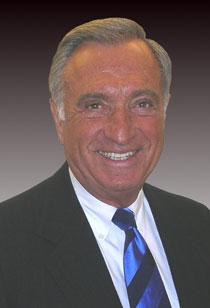
City Attorney Dennis Herrera

The mayoral roulette

23

At the San Francisco Tomorrow holiday party Dec. 8th, David Chiu, Dennis Herrera, John Rizzo, Jake McGoldrick and a host of others who I’ve seen at these events for at least the past few years were doing their usual schmoozing — when Ross Mirkarimi, a former SFT board member, showed up with …. Art Agnos. I haven’t seen the former mayor at an SFT event since … I don’t know. Since a long long time ago.


Agnos made a short speech and talked about all of the rising stars in the San Francisco progressive movement — Mirkarimi, Chiu, Rizzo, David Campos, Eric Mar, John Avalos … and it was all very nice and low key. But there was a message in his appearance, in his connection with Mirkarimi, and even in the overall tone of his remarks, which amounts to this:


If the supervisors have trouble finding a progressive who can get six votes — and if they want an old hand, someone who has been through a brutal recession as mayor of San Francisco and dealt with awful budgets and nasty politics, someone who will serve for a year and then walk away — Agnos is open to being asked.


Well, maybe a little more than open to being asked. I wouldn’t say he’s actively, publicly campaiging for the job, but he has met with most of the supervisors, and dropped them all a 13-page memo listing all of his accomplishments, and his supporters (maybe his emissaries) are making the rounds and making the case for Agnos. Which amounts to this:


None of the progressives now more-or-less openly in the mix (Campos, Chiu, Mirkarimi, even Aaron Peskin) can realistically take on all the sacred cows (esp. police and fire), make a bunch of other cuts, and push for all sorts of revenue increases — and at the same time try to run for re-election in November (when the tax hikes would be on the ballot). The only way to do “what needs to be done” is to put in a progressive caretaker who can then take the political heat for the tough decisions — and help set up a campaign for another progressive in November.


I’m not sure I entirely agree — the right person, with the right leadership and agenda, could set up a five-year plan for fiscal stability, launch year one immediately and tell the public that he/she needs a full term to finish the job. But it’s true that it will be tough — and it’s also true that none of the obvious alternatives have ever run citywide.


If Tom Ammiano were interested, we wouldn’t be having this discussion. Tom has run citywide numerous times (for School Board, pre-district elections supervisor and mayor), has been elected by half the city (to the Assembly), and has the credibility to deal with the budget crisis and still win in November. But he’s not, and we have to respect that.


Right now, the progressives can’t seem to unite on a candidate. None of the current board members has six votes today. And Campos, Chiu, Mirkarimi and everyone else in the game knows full well how hard it will be to win in November, particularly against State Sen. Leland Yee, who will be a formidable candidate, and possibly City Attorney Dennis Herrera (who has won citywide), State Sen. Mark Leno (who is popular all over town) and others.


So if a couple rounds pass and there’s no winner, the “progressive caretaker” concept will be in play. It’s possible Mirkarimi would give up his seat two years early and take that job; it’s likely Peskin would agree to serve one year and then step down. But it’s also possible that neither scenario works out — at which point Sheriff Mike Hennessey and Agnos will be in play.


(I hear through the grapevine that Willie Brown is nosing around, too — and let’s remember that he became Assembly speaker by cutting a deal with the Republicans.)


Hennessey’s got a strong progressive record, but has never had to deal with anything remotely as awful as what the next mayor will face. So Agnos backers will make the case that their guy has the experience and gravitas to pull it off.


Given all of that, let me say a couple of things about Agnos, since I was around and watching City Hall when he was mayor (and some of the people who will be voting on this weren’t.)


Art’s a mixture. He was a great progressive member of the state Assembly. When he ran for mayor, we backed him strongly; he seemed to be the great progressive hope. Then his long list of wonderful promises ran into the buzz saw of a deep recession — and made things much worse with his arrogant, imperious style. His first major act in office was to sign a set of contracts that gave away the store to PG&E. He never lifted a finger for public power. And it quickly became clear that he wasn’t a fan of open government or public process. We were all supposed to “Trust in Art” and shut up if we didn’t like it.


That’s why — despite what was at the time and is in retrospect a pretty darn progressive record, a lot of solid accomplishments and absolutly no hint of corruption or scandal — the progressives just weren’t all that excited about his re-election. So he lost to Frank Jordan, who was way worse.


The thing is, Agnos these days is a lot more mellow. He’s 72, knows he’s not going anywhere else in politics, and has essentially admitted to me that he made a lot of mistakes, and his arrogance and closed-door attitude were top on the list. A reformed Agnos — willing to serve with a degree of humility and an acceptance that progressive politics in this town demands inclusiveness, and that even though he’s a former mayor, he’s not by definition the most important person in any room he walks into — would present an interesting option.


Of course, we still don’t know exactly where he would be on the issues, since, like Chiu, he hasn’t even publicly called himself a candidate for the job. I still think anyone who is a serious contender ought to be willing to appear before the supervisors and answer questions.


We all know where to start: What’s your plan for raising a quarter billion dollars in new revenue in 2011?    

Class of 2010: Malia Cohen

4

sarah@sfbg.com

It took two weeks and 19 updates of San Francisco’s ranked-choice voting system before Malia Cohen, a former Mayor Gavin Newsom staffer and partner in a firm that helps businesses and nonprofits create public policy, was declared the winner of the hotly contested race to represent District 10, which includes Bayview, Hunters Point and Ingleside. The nail-biting time lag was a byproduct of complex calculations that involved 22 candidates, no clear front-runners, and a slew of absentee and provisional ballots.

But when the RCV dust settled, the results proved that the D10 vote continues to break down along class, race, and gender lines. These RCV patterns personally benefited Cohen’s success in picking up second- and third-place votes.

But they also helped D10’s African American community, now smaller than its growing Asian community but still larger that the black community in any other distinct in the city, send an African American supervisor back to City Hall. And it avoided a run-off between Lynette Sweet and Tony Kelly, who won most first-place votes.

Some chalk up Cohen’s victory to her polished appearance, the middle-of-the road positions she took on the campaign trail, and an impressive list of endorsements that include the San Francisco Democratic Party, the Labor Council, the Building and Construction Trades Council, state Sen. Leland Yee (D-SF), Assembly Speaker Pro Tempore Fiona Ma (D-SF), Board of Supervisors President David Chiu, SF Democratic Party Chair Aaron Peskin, and BART Board President James Fang.

But Cohen told us she thinks coalition building was the key. “Endorsements only account for a quarter of the reasons why you win,” she said. “It’s all about building an organization, a net that goes deep and wide.”

Some progressives were alarmed by a Dec. 1 fundraiser to help settle Cohen’s campaign debt whose guest list included Newsom, former Mayor Willie Brown, Sup. Sean Elsbernd, Ma, Building Owners and Managers Association director Ken Cleaveland, Kevin Westlye of the Golden Gate Restaurant Association, and Janan New of San Francisco Apartment Association.

Cohen dismissed concerns over this conservative showing of après-campaign support. “Fear not,” she said. “It is a fundraiser event. And now that I’m a newly elected supervisor, I look forward to meeting everyone. And I will do a great job representing everyone.

So what should we expect from Cohen, who ran as a fourth-generation “daughter of the district from a labor family” on a platform of health, safety, and employment — and will soon represent the diverse southeast sector, which has the highest unemployment, crime, recidivism, foreclosure and African American out-migration rates citywide and is ground zero for Lennar Corp.’s plan to build thousands of condos at Candlestick and the shipyard?

“I’m a bridge-builder,” said Cohen, who attributes her surprisingly tough but open-minded edge to being the oldest of five sisters.

So far, she’s not going out on a progressive limb. She told us she favors a caretaker mayor: “I’d like someone to maintain the business of the city, someone who has zero political ambition,” she said. “That way it creates an even playing field for the mayoral race.”

Cohen says she is determined to address quality of life concerns, including filling potholes, re-striping crosswalks and introducing traffic calming measures, and taking on critical criminal justice issues, including City Attorney Dennis Herrera’s gang injunction in the Sunnydale public housing project in Visitacion Valley. She opposes Herrera’s strategy but notes: “If not gang injunctions, then what? I can’t dispute that they get short-term results, but what about the long-term impacts? We need long-term solutions.”

Cohen supports Sup. John Avalos’ efforts to pass mandatory local hire legislation but is open to “creative solutions” to help get it over the finishing line. “People who live here should be working here,” Cohen said. “But is 50 percent the magic mandatory hire number? I don’t know.”

Cohen, who just survived a foreclosure attempt, has promised to be a “fierce advocate” for constituents facing similar challenges, including those who met predatory loan brokers at church.

But asked how she would cut spending or raise revenue to address the city’s massive budget deficit, she had no specific answer.

Yet Cohen disagrees with detractors who say she lacks experience. “I may look cute, but don’t be misled. I have a public policy background and fire in my belly. I’m a union candidate, I’m smart, I’m talented, and above all, I love the people in D10 and the rest of San Francisco. I want everyone to prosper and receive benefits. So give me a shot.”

The process begins

0

steve@sfbg.com

The Board of Supervisors has unanimously adopted a set of procedures for choosing a new mayor to replace Gavin Newsom when he becomes California’s lieutenant governor on Jan. 3. The board is scheduled to formally begin the mayoral selection process Dec. 7 with a discussion of what people want in a new mayor and perhaps even the first votes on nominees for the office.

If the process of approving a process was any indicator, choosing a new mayor won’t be easy. Just sorting out how supervisors will vote on nominees, which the board spent hours doing Nov. 23, illustrated the complex political dynamics and potential for parliamentary gamesmanship at play on a body with a deep ideological divide.

Progressives are on the dominant side of that divide, with Sups. John Avalos, David Campos, David Chiu, Chris Daly, Eric Mar, and Ross Mirkarimi sticking together on a pair of 6-5 procedural votes that sought to dilute their voting power, an effort led by Sup. Sean Elsbernd and supported by his moderate colleagues.

Both sides accused the other of playing games with this all-important process, but the greatest complicating factor seems to be the California Political Reform Act and related conflict-of-interests case law. Because the mayor is paid more than supervisors, board members are barred from doing anything to influence the process to become the new mayor.

That means they can’t publicly voice a desire to become mayor or lobby colleagues for votes. And once supervisors have been nominated to be mayor and they accept that nomination, they must immediately leave the room and be sequestered incommunicado until they decide to withdraw their nominations and participate in the process, after which they may not be renominated.

But the newly adopted details of exactly how that process plays out — including when the vote is called on each nominee, how it is taken, and in what order — will determine if any nominees can get the six votes they need to serve as mayor for the final year of Newsom’s term.

If the current board can’t do it, then the newly elected board — which has an ideological breakdown similar to the current board, but with slightly different personal relationships and alliances — will take up the matter when it is sworn in on Jan. 11. And that board’s challenge won’t be any easier.

Board of Supervisors Clerk Angela Calvillo and the Santa Clara County Counsel’s Office (legal counsel in the matter after our own City Attorney’s Office recused itself, largely because City Attorney Dennis Herrera wants to be mayor) proposed procedures whereby all nominees leave the room while the remaining supervisors vote.

But as Daly noted, clearing several supervisors from the room would make it unlikely that those remaining could come up with six votes for anyone. He also said the system would deny too many San Franciscans of a representative in this important decision and allow sabotage by just a few moderate supervisors, who could vote with a majority of supervisors present to adjourn the meeting in order to push the decision back to the next board.

“The process before us is flawed,” Daly said.

So Daly sought to have the board vote on every nomination as it comes up, but Elsbernd argued that under Robert’s Rules of Order, nominations don’t automatically close like that and to modify a board rule that contradicts Robert’s Rules requires a supermajority of eight votes. Calvillo, who serves as the parliamentarian, agreed with that interpretation and Chiu (who serves as chair and is the final word on such questions) ruled that a supermajority was required.

Although some of his progressive colleagues privately grumbled about a ruling that ultimately hurt the progressives’ preferred system, Chiu later told the Guardian, “I gotta play umpire as I see the rules … We need to ensure the process and how we arrive at a process is fair and transparent.”

Nonetheless, Chiu voted with the progressives on the rule change, which failed on a 6-5 vote. But Daly noted that supervisors may still refuse nominations and remain voting until they are ready to be considered themselves, which could practically have the same effect as the rejected rule change. “If we think that’s a better way to do it, we can do it. But we don’t need to fall into the trap and subterfuge of our opponents,” Daly told his colleagues.

Elsbernd then moved to approve the process as developed by Calvillo, but Daly instead made a motion to amend the process by incorporating some elements on his plan that don’t require a supermajority. After a short recess to clarify the motion, the next battleground was over the question of how nominees would be voted on.

Calvillo and Elsbernd preferred a system whereby supervisors would vote on the group of nominees all at once, but Daly argued that would dilute the vote and make it difficult to discern which of the nominees could get to six votes (and conversely, which nominees couldn’t and could thereby withdraw their nominations and participate in the process).

“It is not the only way to put together a process that relies on Robert’s Rules and board rules,” Daly noted, a point that was also confirmed at the meeting by Assistant Santa Clara County Counsel Orry Korb under questioning from Campos. “There are different ways to configure the nomination process,” Korb said. “Legally, there is no prohibition against taking single nominations at a time.”

So Daly made a motion to have each nominee in turn voted up or down by the voting board members, which required only a majority vote because it doesn’t contradict Robert’s Rules of Order. That motion was approved by the progressive supervisors on a 6-5 vote.

After the divisive procedural votes played out, Chiu stepped down from the podium and appealed for unity around the final set of procedures. He said that San Franciscans need to have confidence that the process is fair and accepted by all. So, he said, “It would be great if we have more than a 6-5 vote on this.”

As the role call was taken, Sup. Carmen Chu was the first moderate to vote yes, and her colleagues followed suit on a 11-0 vote to approve the process.

That unity isn’t likely to last long as supervisors fill an office that wields far more power than any other in city government. But both sides voiced an appreciation for what a monumental task they’re undertaking. “This is without a question the most important vote that any of us will take as a member of the Board of Supervisors and one that everyone is watching,” Elsbernd said of choosing a new mayor.

Daly called for supervisors to open the Dec. 7 meeting with a discussion about what qualities they all want to see in a mayor. “We owe it to the public, we owe it to the city, to discuss it and have it out in the open,” he said, going on to criticize the idea of a nonpolitical “caretaker mayor” and say, “I would like to see a mayor that works with the Board of Supervisors.”

But as the parliamentary jousting between Daly and Elsbernd en route to a bare-bones set of procedures shows, such high-minded ideals are likely to be mixed with some tough political brawls, back room deals, and power plays using arcane rules that guide the deliberations of legislative bodies.

In fact, when Korb was asked whether the adopted process precludes new amendments or procedural gambits, he noted that the Nov. 23 vote was probably just the beginning “given the parliamentary skills of this board.”


Emergency forum Tues. / 30 on HANC recycling center eviction

8

An emergency community forum will be held tonight, Nov. 30, about the Recreation and Parks Department’s plan to evict the Haight Ashbury Neighborhood Council (HANC) Recycling Center from a parking lot in Golden Gate Park. If Mayor Gavin Newsom and his former chief of staff, Rec & Park General Manager Phil Ginsburg, succeed in their plan to evict the 36-year old recycling center, they’ll kill 10 green jobs, eliminate a rare source of income for poor people, and put an end to a community resource that costs San Francisco taxpayers nothing.

HANC believes the recycling center is being targeted by Newsom’s administration as a form of political payback, since the progressive organization opposed Proposition L, the sit / lie ordinance, which Newsom supported.

Ginsburg wants to evict the recycling center, which pays rent to the city, and replace it with a community gardening center that would cost $250,000. The shaded lot doesn’t seem like an ideal site for growing produce.

A memo issued Nov. 29 from Ginsburg to Rec & Park Commissioners notes that it is legal for the department to move forward with the eviction without commission approval. Apparently, Newsom’s administration intends to send 10 people to the unemployment line and kick a 36-year-old green resource to the curb without any public input, despite receiving 400 postcards from San Francisco residents opposing the eviction. The Rec & Park Commission will take up the issue of the new community garden center at its Thurs., Dec. 2 meeting.

Tonight’s emergency forum, organized by Keep Arboretum Free, is an attempt to open up a space for public dialogue.

A stakeholder meeting took place this afternoon with Ginsburg, District 5 Sup. Ross Mirkarimi, Department of the Environment Director Melanie Nutter, representatives from the San Francisco Police Department, represenatives from the offices of Assembly Member Tom Ammiano and City Attorney Dennis Herrera, HANC, and area residents.

Jim Rhoads of the HANC Recycling Center told the Guardian just after the meeting, “They’re going to evict us by the end of December. That’s their goal. The mayor has it in for us and he wants to get us out before he leaves.”

The recycling center, located at Frederick and Arguello streets, operates a buyback program for recyclable materials as well as a San Francisco native plant nursery. Residents from the Inner Sunset Park Neighbors have voiced complaints about “quality-of-life issues” that they link with some of the center’s patrons. During buyback hours, held from 10 a.m. to 3 p.m., people arrive with shopping carts filled of cans and bottles to exchange for small amounts of cash. Some of them are homeless.

Representatives from HANC, Rec & Park, and the Inner Sunset Park Neighbors have been invited to speak at tonight’s forum. “There are strongly felt opinions on both sides,” a flier for the event notes. “In the interest of a broad discussion, a number of long time local residents organized this forum for a full public airing of the issues prior to the Dec. 2 Commission meeting.”

The forum will be held tonight, Tuesday, Nov. 30, from 7 to 9 p.m. at St. John of God, 5th Avenue at Irving St.

To voice your opinion about Rec & Park’s plan to evict HANC, call Phil Ginsburg at 415-831-2701 or email him at Philip.Ginsburg@sfgov.org.

Why selling state buildings is so dumb

18

To stem the massive hemorrhaging in the budget, the state of California has authorized the sale of 24 state-owned office buildings across the state to private investors. The state would then rent back the office space.


It’s a classic case of short-term thinking: In the end, the state will end up paying more money in rent than it will gain from the sales. The nonpartisan Legislative Analyst’s Office reported in April that over the next 30 years, the lease payments will likely cost $5  billion more than if the property had stayed in the state’s possession.


But it would provide an immediate injection of $1.2 billion into the state’s general fund.


But there’s an interesting twist that hasn’t been reported on: The state buildings are currently exempt from local property taxes. Once they’re in private hands, county assessors can put them on the tax rolls.


And the way the deal is structured, the state — that is, the taxpayers — will be subsidizing the private owners to cover the local property tax bills. In effect, the deal means that the state will be shifting more money from its general fund to local government — a good thing for counties, but not a terribly good deal for Sacramento.


According to Eric Lamoureux, spokesperson for the Department of General Services, if the local cities decide to tax the new owners, the rent state agencies pay would increase to make up the difference. The private owners would pay nothing.
“The [cost of the tax] is built into lease terms. Ultimately, the state would be paying that.” Lamoureux said.


And while San Francisco City Attorney’s office is still unsure of the exact terms of the sale-lease back agreement, they plan on looking out for the city’s best interests.


 “The city attorney is going to be extremely diligent with the recorder-assessor to collect all the taxes that are owed,” Matt Dorsey, press spokesperson for City Attorney Dennis Herrera, told us. And by collecting property tax, the local city governments would get a nice boost in revenue.


The sale to California First LLC, a partnership between Hines Interests and Antarctica Capital, has already been met with opposition including a lawsuit and an injunction trying to prevent the deal.

Processing the mayoral transition

5

The question of who will be the next mayor of San Francisco wasn’t any clearer by the end of the Nov. 16 Board of Supervisors meeting, but many expressed a desire for an open and transparent process with accountability to the public. The board approved a motion by Board President David Chiu to have the Clerk of the Board propose an process for selecting a successor mayor, which will come under consideration at the next meeting. But with only a handful of board meetings left before the new board is sworn in on Jan. 8, there is a high level of anticipation.

Clerk of the Board Angela Calvillo confirmed that her office is drafting a proposed process for mayoral selection. Calvillo said the proposal would be submitted for consideration at next week’s meeting, and it will be available to the public on the city website by Friday, Nov. 19.

Essentially, the board could choose from a number of options at its next meeting on how to appoint a successor mayor once Mayor Gavin Newsom vacates office. Whatever the Board decides prior to Jan. 3, when Newsom is sworn in as Lt. Governor, will not have the force of law, since there won’t yet be a vacancy. So a second vote will have to be taken Jan. 4 to make the official appointment. Newsom has said he is “99 percent sure” that he will vacate the Office of the Mayor on Jan. 3.

According to Santa Clara County attorneys — who are filling in for City Attorney Dennis Herrera since he has a conflict-of-interest as a mayoral candidate — neither the Charter nor the Municipal Code dictates a specific process for the Board to use in selecting a successor mayor. So, the board could either follow the regular appointments procedure under the current Board Rules, or it could devise its own process.

The Clerk of Board is now hammering out that unique process, as directed by the board, and the board may vote to modify and adopt that process next week — but since a vote to adopt it would constitute an amendment to the board rules, it would require a super-majority of eight votes.

If there aren’t eight votes, then the board may still opt to set forth an appointment process under the current board rules. “I strongly believe that we do have the ability to effectuate an appointment without amending the board rules,” Sup. Chris Daly said. Daly told the Guardian that he has submitted a motion to take nominations and appoint a successor mayor, which will appear on the adoption without committee reference calendar at next Tuesday’s Board meeting. However, a similar motion put forth by Sup. John Avalos wasn’t able to gain the needed support.

If the board went through the normal appointments process, it would require sending nominees through the Rules Committee for consideration – but since it wouldn’t be practical to have just three members of the board recommend a mayoral appointment to the full board, all 11 supervisors could sit as a Committee of the Whole instead.

The timing is important because if supervisors cannot agree upon a process, or gain enough support for a single nominee, then the task will fall to the new Board of Supervisors, who will be sworn in Jan. 8. If the current board doesn’t reach a decision by Jan. 4, Board President David Chiu will automatically become acting mayor. Once the new board is sworn in, it can continue whatever appointment process has been set in motion or decide to initiate a new process for appointing a successor mayor. If the current board appoints a successor mayor, however, the new board cannot revoke or otherwise affect that appointment.

There are a slew of questions still at play. For example, under conflict-of-interest laws, when some one is nominated as successor mayor, he or she must leave the room and is barred from influencing the process in any way. The idea was bandied about at the Nov. 16 Board meeting to require nominees to respond to questions from the board as part of a public forum, but it’s unclear how a supervisor who has been nominated could respond to questions from his or her colleagues while being sequestered and prohibited from influencing the process.

Although word went out that interested members of the public should show up at City Hall around 4 p.m. Nov. 16 to weigh in on the discussion about appointing a successor mayor, the conversation didn’t get underway till much later.

Sup. John Avalos had submitted a motion to vote on an interim mayor and then vote a second time to ratify that appointment once Mayor Gavin Newsom had vacated office. However, his motion was amended to simply take public input and discuss the process of appointing a successor mayor.

Members of the public waited patiently, and when it was time, they lined up behind the speakers podium wearing neon sunburst stickers that read, “Let the Sun Shine In!” Local writer, artist, and activist Tommi Avicolli Mecca even sang the refrain of the song by that name, before imploring the Supes to “Get this done now, and give us a good, progressive interim mayor.”

Labor activist Gabriel Haaland urged the current board to agree upon an appointment instead of handing the responsibility over to the next board. “People who’ve never held an office hour in their life should not be making this decision,” Haaland said.

Christopher Cook highlighted the challenges that the new mayor would face. “We’re talking about a less-than-average amount of time to prepare for an absolute maelstrom,” with regard to the city budget, Cook noted.

“Let the sun shine in” seemed to be the catchphrase of the evening. Before the public weighed in, Sup. Chris Daly called for an open, transparent process for the appointment of the new mayor. “Conversations about mayoral transition have been happening behind closed doors, not in public session, for the better part of this past year,” Daly charged. “It’s time to hear from the public.”

But just how, exactly, the appointment process will work is anything but clear and sunny – at least for the time being.

Meanwhile, Judge Quentin Kopp, who was a member of the Board of Supervisors when a successor mayor was appointed on Dec. 4, 1978 — one week after the assassinations of Mayor George Moscone and Sup. Harvey Milk — said the process of choosing a new mayor was simpler back then.

In that case, then-Sup. Dianne Feinstein was the only nominee. She was appointed with six votes. Two, including Kopp, voted no, and there were two absences (Harvey Milk had been assassinated one week prior, and Dan White was in jail). Feinstein, who was made to leave the room during the vote, abstained. However, before the vote was called, Feinstein was able to vote against a motion for a continuance — a power she likely would not have had if current political-reform laws were in place.

“It’s simple,” Kopp said. “Why are they complicating it?”

He scoffed at the circuitous discussion happening now, and said some one else had called him with the same inquiry earlier that same day. “Once again, our overpaid supervisors are making work for themselves,” he said. “It’s called busywork.”

And that might be the most insightful statement yet – after all, while the process points are debated over and over again, there is more time for supervisors to determine just who might be able to collect the six votes needed to be elected mayor of San Francisco.

The next mayor

108

tredmond@sfbg.com

By the time a beaming Mayor Gavin Newsom took the stage at Tres Agaves, the chic SoMa restaurant, on election night, enough results were in to leave no doubt: the top two places on the California ballot would go to the Democrats. Jerry Brown would defeat Meg Whitman in the most expensive gubernatorial race in American history — and Newsom, who once challenged Brown in the primary and dismissed the office of lieutenant governor, would be Brown’s No. 2.

It might not be a powerful job, but Newsom wasn’t taking it lightly anymore. “We can’t afford to continue to play in the margins,” he proclaimed proudly, advancing a vague but ambitious agenda. “There is absolutely nothing wrong with California that can’t be fixed with what’s right with California.”

But around the city, as results trickled in for the local races, the talk wasn’t about Newsom’s role in the Brown administration, or the change the Democrats might bring to Sacramento. It was about the profound change that could take place in his hometown as he vacates the office of mayor a year early — and opens the door for the progressives who control the Board of Supervisors to appoint a chief executive who agrees with, and is willing to work with, the majority of the district-elected board.

At a time when the Republican takeover of Congress threatens to create gridlock in Washington, there’s a real chance that San Francisco’s government — often paralyzed by friction between Newsom and the board — could take on an entirely new direction. It’s possible that the progressives, long denied the top spot at City Hall, could put a mayor in office who shares their agenda.

This could be a turning point in San Francisco, a chance to put the interests of the neighborhoods, the working class, small businesses, the environmental movement, and economic justice ahead of the demands of downtown and the rich. All the pieces are in place — except one.

To make a progressive vision happen, the fractious (and in some cases, overly ambitious) elected leaders of the progressive movement will have to recognize, just for a little while, that it’s not about any individual. It’s not about David Chiu, or Ross Mirkarimi, or Chris Daly, or John Avalos, or Eric Mar, or David Campos, or Jane Kim, or Aaron Peskin. It’s not about any one person’s career or personal power.

It’s about a progressive movement and the issues and causes that movement represents. And if the folks with the egos and personal gripes and career designs can’t set them aside and do what’s best for the movement as a whole, then the opportunity of a generation will be wasted.

Folks: this is a hard thing for politicians to recognize. But right now it’s not about you. It’s about all of us.

It’s an odd time in San Francisco, fraught with political hazards. And it’s so confusing that no one — not the elected officials, not the pundits, not the lobbyists, not the insiders — has any clear idea who will occupy Room 200 in January.

Here’s the basic scenario, as described by past opinions of the city attorney’s office:

Under the state Constitution, Newsom will take office as lieutenant governor Jan. 3, 2011. The City Charter provides that a vacancy in the Mayor’s Office is filled by the president of the Board of Supervisors until the board can choose someone to fill the job until the end of the term — in this case, for 11 more months.

So if all goes according to the rules (and Newsom doesn’t try to play some legal game and delay his swearing-in), David Chiu will become acting mayor on Jan.3. He’ll also retain his job as board president.

On Jan. 4, the current members of the Board of Supervisors will hold a regularly scheduled Tuesday meeting — and the election of a new mayor will be on the agenda. If six of the current supervisors can agree on a name (and sitting supervisors can’t vote for themselves) then that person will immediately take office and finish Newsom’s term.

If nobody gets six votes — that is, if the board is gridlocked — Chiu remains in both offices until the next regular meeting of the board — a week later, when the newly elected supervisors are sworn in.

The new board will then elect a board president — who will also instantly become acting mayor — and then go about trying to find someone who can get six votes to take the top job. If that doesn’t work — that is, if the new board is also gridlocked — then the new board president remains acting mayor until January 2012.

There are at least three basic approaches being bandied about. Some people, including Newsom and some of the more conservative members of the board, want to see a “caretaker” mayor, someone with no personal ambition for the job, fill out Newsom’s term, allowing the voters to choose the next mayor in November, 2011. That has problems. As Campos told us, “The city has serious budget and policy issues and it’s unlikely a caretaker could handle them effectively.” In other words, a short-termer will have no real power and will just punt hard decisions for another year.

Then there’s the concept of putting in a sacrificial progressive — someone who will push through the tax increases and service cuts necessary to close a $400 million budget gap, approve a series of bills that stalled under Newsom, take the hits from the San Francisco Chronicle, and step out of the way to let someone else run in November.

The downside of that approach? It’s almost impossible for a true progressive to raise the money needed to beat a downtown candidate in a citywide mayor’s race. And it seems foolish to give up the opportunity to someone in the mayor’s office who can run for reelection as an incumbent.

Which is, of course, the third — and most intriguing — scenario.

The press, the pundits, and the mayor have for the past few months been pushing former Sup. Peskin as the foil, trying to spin the situation to suggest that the current chair of the local Democratic Party is angling for a job he wouldn’t win in a normal election. But right now, Peskin is no more a front-runner than anyone else. And although he’s made no secret in the past of wanting the job, he’s been talking of late more about the need for a progressive than about his own ambitions.

“If the board chose [state Assemblymember] Tom Ammiano, I would be thrilled to play a role, however small, in that administration,” Peskin told us.

In fact, Peskin said, the supervisors need to stop thinking about personalities and start looking at the larger picture. “If we as a movement can’t pull this off, then shame on us.”

Or as Sup. Campos put it: “We have to come together here and do what’s right for the progressive movement.”

Two years ago, the San Francisco left was — to the extent that it’s possible — a united electoral movement. In June, an undisputed left slate won a majority on the Democratic County Central Committee. In November 2008, Districts 1, 3, 5, and 11 saw consensus left candidates running against downtown-backed opponents — and won. In D9, three progressives ran a remarkably civil campaign with little or no intramural attacks.

The results were impressive. As labor activist Gabriel Haaland put it, “we ran the table.”

But that unity fell apart quickly, as a faction led by Daly sought to ensure that Sup. Ross Mirkarimi couldn’t get elected board president. Instead that job went to Chiu — the least experienced of the supervisors elected in that class, and a politician who is, by his own account, the most centrist member of the liberal majority.

This fall, the campaign to replace Daly in D6 turned nasty as both Debra Walker and Jane Kim openly attacked each other. Walker sent out anti-Kim mailers, and Kim’s supporters charged that Walker was part of a political machine — a damaging (if silly) allegation that created a completely unnecessary rift on the left.

And let’s face it: those fights were all about personality and ego, not issues or progressive strategy. Mirkarimi and Daly have never had any substantive policy disagreements, and neither did Walker and Kim.

In the wake of that, progressives need to come together if they want to take advantage of the opportunity to change the direction of the city. It’s not going to be easy.

“We’re good at losing,” Daly said. “I’m afraid we’re doing everything we can to blow it.”

The cold political calculus is that none of the current board members can count on six votes, and neither can Peskin or any of the other commonly mentioned candidates. The only person who would almost certainly get six votes today is Ammiano — and so far, he’s not interested.

“I know you never say never in politics, but I’m happy here in Sacramento. Eighty-six percent of the voters sent me back for another term, and I think that says something,” he told us.

It’s hardly surprising that someone like Ammiano, who has a secure job he likes and soaring approval ratings, would demur on taking on what by any account will be a short-term nightmare. The city is still effectively broke, and next year’s budget shortfall is projected at roughly $400 million. There’s no easy way to raise revenue, and after four years of brutal cuts, there’s not much left to pare. The next mayor will be delivering bad news to the voters, making unpleasant and unpopular decisions, infuriating powerful interest groups of one sort or another — and then, should he or she want the job any longer, asking for a vote of confidence in November.

Yet he power of incumbency in San Francisco is significant. The past two mayors, Newsom and Willie Brown, were reelected easily, despite some serious problems. And an incumbent has the ability to raise money that most progressives won’t have on their own.

Chiu thus far is being cautious. He told us his main concern right now is ensuring that the process for choosing the next mayor is open, honest, and legally sound. He won’t even say if he’s officially interested in the job (although board observers say he’s already making the rounds and counting potential votes).

And no matter what happens, he will be acting mayor for at least a day, which gives him an advantage over anyone else in the contest.

But some of the board progressives are unhappy about how Chiu negotiated the last two budget deals with Newsom and don’t see him as a strong leader on the left.

Ross Mirkarimi is the longest-serving progressive (other than Daly, who isn’t remotely a candidate), and he’s made no secret of his political ambitions. Then there’s Campos, an effective and even-tempered supervisor who has friendly relationships with the board’s left flank and with centrists like Bevan Dufty. But even if Dufty (who I suspect would love to be part of electing the first openly gay mayor of San Francisco) does support Campos, he’d still need every other progressive supervisor. Campos also would need Chiu’s vote to go over the top. Which means Chiu — who needs progressive support for whatever his political future holds — would have to set aside his own designs on the job to put a progressive in office.

In other words, some people who want to be mayor are going to have to give that up and support the strongest progressive. “If there’s someone other than me who can get six votes, then I’m going to support that person,” Campos noted.

Then there are the outsiders. City Attorney Dennis Herrera has already announced he plans to run in the fall. If the board’s looking for a respected candidate who can appeal to moderates as well as progressives, his name will come up. So will state Sen. Mark Leno, who has the political gravitas and experience and would be formidable in a re-election campaign in November. Leno doesn’t always side with the left on local races; he supported Supervisor-elect Scott Wiener, and losing D6 candidate Theresa Sparks. But he has always sought to remain on good terms with progressives.

All that assumes that the current board will make the choice — and even that is a matter of strategic and political dispute. If the lame duck supervisors choose a mayor — particularly a strong progressive — you can count on the San Francisco Chronicle, Newsom, and the downtown establishment to call it a “power grab” and cast doubt on the legitimacy of the winner.

“But choosing a mayor is the legal responsibility of this board and they ought to do their jobs,” Peskin said.

The exact makeup of the next board was still unclear at press time. Jane Kim is the likely winner in D6 and has always been a progressive on the School Board. She’s also close to Chiu, who strongly supported her. If Malia Cohen or Lynette Sweet wins D10, it’s unlikely either of them will vote for a progressive mayor.

Newsom also might try to screw things up with a last-minute power play. He could, for example, simply refuse to take the oath of office as lieutenant governor until after the new board is seated.

Chiu’s allies say it makes sense for the progressives to choose a mayor who’s not identified so closely with the left wing of the board, who can appeal to the more moderate voters. That’s a powerful argument, and Herrera and Leno can also make the case. The progressive agenda — and the city — would be far better off with a more moderate mayor who is willing to work with the board than it has been with the arrogant, recalcitrant, and distant Newsom. And if the progressives got 75 percent of what they wanted from the mayor (as opposed to about 10 percent under Newsom), that would be cause to celebrate.

But to accept that as a political approach requires a gigantic assumption. It requires San Franciscans to give up on the idea that this is still, at heart, a progressive city, that the majority of the people who live here still believe in economic and social justice. It means giving up the dream that San Francisco can be a very different place, a city that’s not afraid to defy national trends and conventional wisdom, a place where socioeconomic diversity is a primary goal and the residents are more important than the big companies that try to make money off them. It means accepting that even here, in San Francisco, politics have to be driven by an ever-more conservative “center.”

It may be that a progressive can’t line up six votes, that a more moderate candidate winds up in the Mayor’s Office. But a lot of us aren’t ready yet to give up hope.

Additional reporting by Noah Arroyo.

On the margins

3

Sarah@sfbg.com

Franklin is a 20-something computer programmer who shares an apartment with 10 other people around his age, an arrangement that helps him and his housemates come up with $3,500 each month for rent in the Mission, a rapidly gentrifying part of town.

“Everyone is pretty much working, but they are in and out at different times so the house isn’t ever really empty. But there’s usually only three or four of us at a time, ” Franklin told the Guardian, speaking on his cell phone as he rode his bike to work.

But how does an apartment that officially has only one bedroom sleep 10 people? Franklin said there are other rooms in the house — including a dining room and a double parlor that splits into two with sliding doors — and that each of these spaces has a couple sleeping in it. “And there is one person sleeping in a closet and another sleeping in a space atop the bathroom.”

While overcrowding has been a problem in immigrant communities in San Francisco, it’s reaching a new area: young people who have for generations flocked to the city to escape uncomfortable home lives, find a supportive community, and make a new start in life.

Ted Gullicksen, director of the San Francisco Tenants Union, said at least 1,250 housing units annually were lost to condominium and tenancy-in-common conversions in the dot.com and housing bubble years, a loss rate that has slowed only slightly since then.

“Right now, it’s about 1,000 units a year,” he said.

It’s become more common for young people to struggle to pay rent in a town where well-paying jobs are scarce and educational programs have been cut — a triple whammy that means youth with additional challenges are at risk of becoming homeless and getting trapped in vicious cycle of abuse and incarceration.

COMPOUNDING THE PROBLEM

Sherilyn Adams, executive director of Larkin Street Youth Services, which provides housing, medical, social, and educational services to at-risk homeless and runaway youth, says all young people in San Francisco face the same basic challenges.

“And if, in addition, these youth are part of a group like LGBTQ youth, or are youth of color, or immigrant youth, documented or not, then the circumstances and barriers are much more exacerbated,” she said.

Adams said San Francisco has done a lot to add resources for transitional age youth, a group that traditionally has been defined as ages 12 to 24. “But there is still a significant gap in resources, especially for the more disenfranchised groups, because the longer you’ve been on the street, the more complex your issues in terms of substance abuse and mental health.”

Civic leaders, including California Assembly member Tom Ammiano, recently held a rally and candlelight march to raise awareness of the tragic rise in homelessness and suicides among LGBTQ youth. Shortly after, Adams told us, “Youth who came here escaping homophobia in their family or city then face the harsh reality of San Francisco.”

Adams understands that some people see Proposition L, legislation on the November ballot to criminalize sitting or lying on city sidewalks, as a way to address disruptive and aggressive behavior on the streets. “But it becomes part of the larger divide, because youth who come here and are on the street are mostly there because they have no other place. So penalizing them in the absence of services, housing, and education is ineffective at best and really harmful at worst,” Adams said.

Many young people on the brink of homelessness are “somewhat invisible,” and therefore at high risk, she said. “Youth will double, triple up. They will couch surf as a way to be off the streets. And we hear the stories where youth are faced with a Sophie’s choice: Do you sleep on the street, or do you barter with what you have available so as to get shelter? And LGBTQ youth are at particular risk because the more disenfranchised and disconnected you are, the more you have to make impossible choices to survive.”

Jodi Schwartz, executive director at Lyric, an SF nonprofit that focuses on building community and inspiring change in LGBTQ youth, said the group serves 500 youth and reaches out to 800 to 1,000 more each year. “We go into classrooms and talk about hate speech, putting it in the context of racism and other forms of oppression,” she said.

“There’s a misconception that because we live in San Francisco and have a lot more dialogue and interaction with the LGBTQ community, that young people’s experience here is so much better. It may be different, but I wouldn’t say it’s better,” Schwartz said, noting that harassment levels, especially for transgendered youth in local schools, are very high.

HELPING THOSE IN NEED

Young women are another at-risk group, especially if they are pregnant, have kids, or are in the foster or juvenile justice system.

As executive director of the Center for Young Women’s Development in San Francisco’s gritty SoMa district, Marlene Sanchez tries to stabilize at-risk young women, then engage them in policy work so they can advocate for other young people they know.

“We work with young women who are involved in the underground street economies, doing prostitution, drug sales, and selling stolen goods like clothes,” Sanchez said. “We try to reach them on the streets and inside Juvenile Hall, so we take an inside-outside approach.”

Leajay Harper, who coordinates CYWD’s Young Mothers United program, works with young pregnant women inside Juvenile Hall.

“We have all experienced poverty, parents on drugs, and having to take care of younger siblings,” Harper said. “When young moms get incarcerated, they are at risk of having their children taken away at much higher rates. So we started parenting classes that are age and culturally relevant.”

City records show that while only about 12 percent of Juvenile Hall detainees are female, they are twice as likely as their male counterparts to land back in custody for probation violations.

“There are lots of young women with felonies struggling to pay their bills and feed their kids who look out the window and see they can sell drugs. And that often seems like the only option,” Sanchez explained.

City statistics also show that of the overwhelmingly male population at Juvenile Hall, almost half is African American, and that many are inside for what appear to be gang-related offenses.

Easop Winston, a 35-year-old local musician, church pastor, and member of the Visitacion Valley Peacekeepers, regularly visits young men inside Juvenile Hall, where gangs are a topic of discussion every week.

“The same guys that they have been fighting with, they are now incarcerated with,” Winston observed. “So one of the approaches I try to take is rehabilitating how they think about their neighbor. You are killing/fighting with someone who lives one block over. It’s plain genocide”

He credits the juvenile justice system for doing its best, but worries that it fails to rehabilitate youthful offenders with jobs skills, education, and counseling before sending them back into society.

He blames the churches for not doing a better job of making youth feel welcome. “Churches are part of the fabric of our community,” he said. “They need to do more outreach and not have so many rules. They need to accept youth as they are, with their tattoos, piercings, and styles of clothing.”

Winston believes politicians need to do a better job of making sure community-based organizations deliver on their promises to help working class communities of color. At the same time, as he acknowledges, “We can’t cure the world in one day.”

“Over the last five to 10 years, the African American population in SF has shrunk,” he observed. “Everybody is moving to Antioch and Fairfield because people can’t afford to live here. People are losing their jobs. And San Francisco has almost become impossible to live in unless you have a college degree. A lot of what I hear from youth is about economics. They want jobs. They want to be trained.”

PUSHING THEM OUT

Political disputes over the city’s sanctuary city policies on undocumented immigrants — which have left in limbo the question of whether arrested immigrants will get their days in court before being turned over to the federal government for possible deportation — have also been a source of instability for immigrant teens, many of whom are homeless and/or LGBTQ.

Police Commissioner Angela Chan, a staff attorney with the Asian Law Caucus, decried Mayor Gavin Newsom for refusing to implement Sup. David Campos’ due process legislation, which the board approved in November 2009.

“It’s been a little bit upsetting for the many groups that took the democratic process seriously. But these groups are still very committed to these kids,” Chan said. “We are hoping to work with the new U.S. Attorney Melinda Haag to clarify this issue and explain that the top priority of the Obama administration is not to deport undocumented youth.”

Other so-called tough-on-crime initiatives also threaten local at-risk young people. In September, City Attorney Dennis Herrera secured an injunction against 41 alleged gang members in Visitacion Valley, a strategy that progressives fear will accelerate the ongoing displacement of the African American community.

Court documents show that 66 percent of the men named in the injunction are 18 to 25 years old and that many have children in public housing, where lease holders are predominantly women of color.

San Francisco City College Trustee Chris Jackson, 27, is running for the District 10 seat on the Board of Supervisors. Noting that the southeast SF district has some of the highest numbers of poor people and children citywide, Jackson said that youth issues are similar to challenges that other voters face.

“But the context is different,” said Jackson, who previously served on the San Francisco Youth Commission. “Young people care about safe streets because it’s us or our friends who are on them. We care about schools because we are in them and want to go to college. And we are concerned about the future of employment because how do you tell folks to go to school if there are no jobs?”

Jackson notes that in the Bayview-Hunters Point, home to the city’s largest remaining African American community, kids don’t come back if they leave for college. “We see a brain drain. It’s really difficult to retain young people, so it’s important to first make sure that youth’s housing needs are met. And they also need access to careers so that when they graduate, they know there is a job in the city. But right now, youth can’t even find a summer job because of the recession.”

He called for city policies that are based on the needs of current city residents rather than developers’ profits or the desires of well-off outsiders to move here.

“San Francisco is more of an opportunity for Silicon Valley residents than for youth who were born and raised here. And part of the problem is city policies, ineffective programs, and a failure to provide job opportunities for youth,” he said. “Everything for youth has been gutted.”

And those evaporating opportunities are compounded by punitive policies like Prop. L, Jackson said, further alienating young people. “It comes down to how much money you have,” Jackson observes. “If you are rich, you can enjoy the parks, the clubs, the transit. But if you are low-income, especially low-income youth of color, it’s very hard to take advantage of everything the city has to offer.”

Noting that both City College and the San Francisco Unified School District canceled their summer school program, Jackson said, “it doesn’t look like youth are prioritized.”

Jackson was recently at Double Rock (a.k.a. the Alice Griffith Public Housing Project) and he saw four kids under 10 who were at home while their parents were at work. “Why aren’t they in school or in child care? And don’t give me the line that these are hard to serve communities. We have to serve them.”

N’tanya Lee, executive director of Coleman Advocates, agrees that while all young people are struggling in the city, African American children and youth are having one of the worst times.

“We don’t need 5,000 different strategies and initiatives when 90 percent of these kids live in extreme poverty, mostly concentrated in public housing, and you could fit the city’s entire black high school student population into one auditorium,” Lee said.

She wants the city to create a database of these youth and develop specific strategies to help this population before it’s too late.

“No one in city government feels accountable for the outcomes for black children and youth,” she said. “Instead you have one group who are about young people and another who are about economic development — and they have nothing to do with each other. Meanwhile, we’ve lost half of all black families with children in this city in the past 20 years.”

Our 44th Anniversary Issue also includes stories by Rebecca Bowe on ageing out of the foster care system, Caitlin Donohue’s account of the Haight street kids, and Tim Redmond’s editorial on the issues facing our rising generation

Life and death in Sunnydale

7

Photographs by Sarah Phelan

On the first Friday afternoon in September, as most folks were trying to get an early start on their Labor Day weekend, C.L.A.E.R. director Sharen Hewitt and her advisory board member Carrie Manuel welcomed friends, family, neighbors—and a handful of D10 candidates—to a basketball hoop dedication ceremony outside C.L.A.E.R.’s office on Brookdale Ave at the heart of the  violence-racked Sunnydale housing project in Visitacion Valley.

By afternoon”s end, Hewitt had managed to get D 10 candidates Malia Cohen, Kristine Enea, Chris Jackson, Tony Kelly and Marlene Tran shooting hoops with a dozen African American youngsters who live in Sunnydale, the city’s largest public housing project, and talking about what they have learned about life and death in this deceptively pleasant-looking sun-and-fog bathed spot that overlooks the Bay, backs onto McLaren Park and the neighboring Gleneagles Golf course–little knowing that within two hours, yet another young black man would be fatally shot one block away from C.L.A.E.R.’s office.

Sunnydale’s appealing geographical location has made it the target of redevelopment plans that seek to rebuild 785 low income unit and add 925 market rate units into the mix—plans that have Hewitt concerned that Sunnydale’s current residents could end up being displaced through a combination of factors, including the San Francisco Housing Authority’s  announcement that many of these residents owe thousands in back rent, and City Attorney Dennis Herrera’s announcement that he is seeking a gang injunction against 41 alleged members of the Down Below Gangsters and the Towerside Gang, who have been engaged in a violent turf war in the Suinnydale for the past three years.

Many of these alleged gang members don’t actually live in Sunnydale, but their friends, families and their own children still do. Currently, seventy-five percent of lease holders in Sunnydale are single female heads of household. And while African Americansaccount for only six percent of San Francisco’s population citywide, black males represent 60 percent of the county jail’s population and feature in disproportionately high numbers in the city’s homicide statistics.

An unfortunate case in point occurred just hours after C.L.A.E.R.’s basketball hoop dedication, when 38 year old Asa Roberts was fatally shot on the first block of Brookdale Avenue, which is a stone’s throw from Hewitt’s office. Found after police responded to a report of gunshots at 8:20 p.m. at the Sunnydale projects, Roberts was pronounced dead at San Francisco General Hospital on what was his 38th birthday, making him the city’s 35th homicide this year.

And at the C.L.A.E.R. ceremony, held at 5:30 p.m. that day, the majority of kids in attendance raised their hands when asked if they knew someone who had been murdered—a shocking illustration of the traumatic stress that these children live with, even as they reside in one of the richest cities in the world

“This is more than just a basketball dedication ceremony and this is hardly just any basketball hoop, this hoop represents a small step toward safety and security for the residents of Sunnydale public housing,” Hewitt told the crowd, just hours before she would find herself rushing around the projects, trying to determine if families and kids in Sunnydale were safe, in the wake of Roberts’ shooting.

“In remembrance of Labor Day, one mother’s labor of love will unite a community under siege,” Hewitt said at C.L.A.E.R.’s 5:30 p.m. hoop dedication, recalling how she had seen Carrie Manuel’s four boys playing basketball against the wall of a public housing unit that was home to an old gas line with pipes that were in dire need of repair. Shocked, Hewitt called upon city partners and C.L.A.E.R. donors in an effort to get these boys a real hoop and thus minimize safety concerns.

“Because the little things change a community, “ Hewitt said.

Hewitt recalled how Sup. Bevan Dufty put her in touch with the Department of Recreation and Parks and the San Francisco Parks Trust, when he heard about the basketball hoop situation, and that these departments helped heed her call to action.

Hewitt also tipped her hat to the five D 10 candidates who attended the hoop dedication: Kristine Enea for being the first to respond to this particular crisis, Malia Cohen for her ongoing support of CLAER’s Brookdale Center, Tony Kelly for his general support of the community, Chris Jackson for connecting Sunnydale residents, including four named in Herrera’s gang injunction, to the Gateway to College program, and Marlene Tran for her work on public safety.

After the dedication, Hewitt paired each D10 candidate with one of the bright-eyed small boys that were eagerly waiting to play ball, as Manuel looked on.

“She’s a woman under siege,” Hewitt said of Manuel, recalling how this woman and her kids witnessed a homicide outside their window, and how Manuel’s 16-year-old son was murdered before his child—her first grandson—was born. “This family has been besieged by no less than three murders, but they don’t even have space to run up and down,” Hewitt observed.

“Look at what we do with nothing,” Hewitt said, pointing to the basketball hoop outside C.L.A.E.R.’s office. “We are not a service provider in a box.”

“Look at this beautiful property,” Hewitt said, pointing to the Bay that sparkled in the distance below and the fingers of  fog that tumbled across the sun-baked hills behind Viz Valley. “But this has not been such a beautiful place. This has been a forgotten district, a forgotten neighborhood, but not in our name.”

“This mother,” Hewitt continued, pointing to Manuel, “must be embraced by all of you. And we must give these boys more options than a cage or a coffin.”

Hewitt was referring to the disproportionately high number of young black males that end up jailed or dead in San Francisco, with many of those arrests and fatalities occurring in and around Sunnydale. But while the City Attorney’s office has responded to this pattern of crime and violence by issuing gang injunctions, Hewitt believes this strategy is a waste of money and resources, given that local non-profits which seek to provide education and restorative justice, have just had their budgets decimated.

Last month, City Attorney Dennis Herrera filed an injunction naming 41 alleged members of the Down Below Gangsters and the Towerside Gang, claiming that the two groups were engaged in turf wars that had terrorized the residents of the Sunnydale housing projects for the last three years. And on Thursday, September 30, Herrera will go to court to try to get a judge to support his injunction request.

But Hewitt fears that Herrera’s injunction will further stress an already fragile community.

“Gang injunctions are plaguing this neighborhood and their families, but we don’t have gangs, we have families,” Hewitt said, as local residents Larry C. Jones of TURF and the Marsha Kyer Foundation, and Robert Cowan, watched the kids and candidates play ball.

After the basket ball game, Hewitt asked the five D10 candidates what they had learned from the C.L.A.E.R-sponsored event

“I’m struck by how strong the entrepreneurial spirit is,” Marlene Tran said, surveying a greeting card business that Sunnydale youth Tyree Vaughan started, under the auspices of C.L.A.E.R. “For 35 years, I was with kids every day,” Tran continued, referring to her career as a teacher. “And when I was 9 years old in Hong Kong, I helped my mother with work, and at 16, I had my own import/export business. So, we should recognize youth, all the positive things they do.”


Kristine Enea also praised the entrepreneurial spirit that was evident on the ground in Sunnydale.”Entrepreneurship is a powerful drug,” Enea observed. “Every child should know the joy of holding in your hands a product that started as an idea in your head,”


“This neighborhood is getting ready to be demolished,” Hewitt interjected. “What do we have to do with Project Hope?”

Tony Kelly admitted that he had never been to C.L.A.E.R.’s office before.
“But I’ve been involved with Hope SF on Potrero Hill,” Kelly said. “With Hope SF, there’s this weird thing of competition between public housing sites, this, ‘Oh, we can only get one project taken care of,’ and ‘Oh, we can’t get services’  attitude. But this is the largest public housing project in the city. We need complete neighborhoods where we live.”

Chris Jackson complimented C.L.A.E.R. on doing so much with so little.
“When I look at how many millions we spend on community services, but not something as simple as a basketball hoop, which gives a dozen black youth access to exercise, team work and figuring out how to work together, I see that you are doing with $300 what Goodwill and JHS failed to do with millions,” Jackson said.” You have brought the community together.”

Hewitt, who likes to call herself Mini Mouse and isn’t afraid to challenge her biggest supporters, responded by urging the candidates to get more hands on.

“The rhetoric doesn’t bode well for the community,” Hewitt said. “You can’t only come here every six months.”

Malia Cohen, who is on C.L.A.E.R.’s board, expressed her belief that the community needs to do more in terms of giving back.
“This is a partnership, I brought resources here, but people who live here ought to respect the resources, and say, this is our home and we are going to sweep up,” Cohen said, pointing to untended pathways and a couple of wilted potted plants that had died for lack of watering outside C.L.A.E.R.’s office.

“You did this because you are a board member,” Hewitt retorted, giving Cohen, who she supports politically, a predictably hard time.“But where are we collectively in terms of challenging ourselves to respond?”

 “I see great opportunities here, but because of budget cuts, you haven’t had resources,” Cohen continued. “The Department of Children, Youth and Families has been funneling funds to mega-organizations, and not the grassroots.”

“One opportunity is with City College,” Jackson, who counts Hewitt as a mentor, interjected. “And we can give deeper. I believe 20 percent of our participants are from Viz Valley, and we can do a better job of reaching out to the 41 young men listed on gang injunction. It’s something the City Attorney should have talked about before he put in for the gang injunction. A week later, he declares he’s running for mayor, while those of us on the ground are left to clean up.”

“785 units will come back as low-income and there is a zero vacancy rate here, so the one-to-one replacement of the units is not so much the issue as the replacement of the people,” Hewitt told me, as she locked up her office and the rest of the city prepared to enjoy a Labor Day weekend in a world that is not scarred by memories of fblack and brown brothers dying in a hail of bullets in the street.

And as I drove away, towards the bonfire of vanities that is downtown San Francisco, I couldn’t shake the twin images of those young black boys raising their hands when asked if they knew someone who has been murdered, and of Hewitt, fearlessly grilling the D10 candidates, even as she tries to hold together this fragile community of color on a prayer and an increasingly frayed shoelace budget.

PG&E’s secret pipeline map

9

news@sfbg.com

>>CLICK HERE TO VIEW THE FULL-SIZE PG&E SECRET PIPELINE MAP (PDF)

It’s been nearly two weeks since the pipeline in San Bruno exploded and killed four people, injuring many more and destroying 37 homes. And it’s left a lot of people in San Francisco wondering: could it happen here?

Of course it could. PG&E has more than 200 miles of major gas pipelines under the city streets that are scheduled to be replaced — and that means they’re reaching the end of their useful life. Just like the pipe that blew up in San Bruno.

Are any running under your home or business? PG&E isn’t going to tell you.

That’s bad. “The public has a right to this information,” City Attorney Dennis Herrera told us. And Sup. Ross Mirkarimi has introduced a resolution calling on PG&E to make the locations of its pipelines, electric lines, and other potentially parts of the company’s infrastructure public.

But here’s what worse: even the city’s public safety departments — the ones that would have to respond to a catastrophic event involving a gas main break — don’t know where those lines are.

“I’m still looking for that map myself,” said Lt. Mindy Talmadge, a spokesperson for the Fire Department.

The city’s Public Utilities Commission, which, among other things, digs its own trenches to install and repair water pipes, doesn’t have the PG&E map. Neither does the the California PUC, which regulates PG&E.

It might also make sense for the City Planning Department to have the map; after all, zoning an area for the future development of dense housing that sits on top of an explosive gas main might be an issue. “People need to start holding PG&E accountable,” Planning Commission member Christina Olague told us. “Why shouldn’t PG&E release [the map] given the recent tragedy?”

PG&E insists that the exact location of the gas mains should remain secret because someone might want to use the information for a terrorist attack. But if the San Francisco Fire Department and Department of Emergency Services can’t get the map of the pipelines, something is very wrong. Even Sup. Sean Elsbernd, who has been allied with PG&E against public power issues, agreed that “the public safety agencies should certainly have that information.”

The Mirkarimi resolution urges PG&E “to cooperate with the city’s request for infrastructure information.” Mayor Gavin Newsom has already appointed the fire chief and city administrator to conduct a utility infrastructure safety review that would evaluate the location, age, and maintenance history of every pipeline underneath city streets.

Not every state allows utilities to keep this information secret. In both Washington and Texas, maps of underground pipelines are easily accessible, said Carl Weimer, executive director of the Bellingham, Washington-based nonprofit Pipeline Safety Trust. Texas even has an online system, he said.

But in California, PG&E keeps even essential safety agencies in the dark. If a fire came near where a PG&E pipeline was buried — or if an earthquake fractured some of the lines and gas started to leak — Talmadge said the San Francisco Fire Department wouldn’t be able to do anything about the explosive gas except call PG&E. Only the private utility can shut off the gas, which is under high pressure in the main lines.

“We radio to our dispatch center and request PG&E to respond … They would contact PG&E and have them respond,” she explained.

The department doesn’t prepare specifically for that sort of event. “We do not have a specific gas leak training … it would be more of a hazardous material training,” Talmadge said.

The remarkable thing is that much of the data the city doesn’t have — and PG&E won’t give up — can be pulled together from publicly accessible data. The major news media, particularly The Bay Citizen, have been pursuing the story and have run pieces of the map. Several newspapers and websites have published rough maps outlining where the major underground pipes are.

But as far as we know, nobody’s done a full-scale look at what the existing public records show.

Using information that the U.S. Department of Transportation has put on the Web, we’ve managed to put together a pretty good approximation of the secret map PG&E doesn’t want you to see.

We took a map from the DOT’s Pipeline and Hazardous Materials Safety Administration and layered it over a map of San Francisco. The maps of the southeast part of the city are more accurate; the information on gas mains going through the north and west side of town are sketchier. But the lines appear to run parallel to major streets, and we’ve put together a guide that at the very least can tell you if there’s a potentially explosive gas line in your neighborhood — and maybe even under your street.

Obviously, every house or business that has natural gas service — and that’s most of San Francisco — is hooked up to a gas pipe, and those feeder pipes run under almost every street. But the gas in those lines is under much lower pressure than the gas in the 30-inch main lines shown on this map, where pressure can reach 200 pounds per square inch. It was a main pipe that blew up under San Bruno.

It’s not surprising that the southeast — traditionally the dumping ground for dangerous and toxic materials — would have the most gas mains, and the most running through residential areas. One line, for example, snakes up Ray Street and jogs over to Delta Street on the edge of McLaren Park and near a playground. It continues under Hamilton and Felton streets, under the Highway 280 and onto Thornton Street before heading into the more industrial areas near Evans Avenue.

Another main line goes under the south side of Bernal Heights, running below Banks Street, around the park, then down Alabama Street to Precita Street, where it connects with 25th Street. That line then heads to Potrero Hill, where it follows Rhode Island Street to 20th Street.

Research assistance by Nichole Dial.


Subpoena PG&E’s maps

0

EDITORIAL If you’re worried about the safety of the natural gas mains running below San Francisco — and you should be — you might take a look at a city on the Peninsula, one about 22 miles south of the site of the gas explosion in San Bruno. Since 1927, the city of Palo Alto has been running its own gas and electric utility — and instead of worrying about pipelines blowing up, the city recently won an award for safety.

Palo Alto workers inspected every inch of every gas pipe in 2009, and the steel pipes are replaced every 37 years — well ahead of the rated lifetime of the material. Oh, and by the way: gas and electricity are way cheaper in Palo Alto.

Pacific Gas and Electric Co., the private utility that operates most of the pipelines underneath northern California, has a different approach. In the past, the company has been nailed for diverting ratepayer money from public safety and maintenance into executive salaries and profits. And the backlog of deferred pipeline maintenance (despite the fact that the company has been given rate hikes to pay for replacing old pipes) suggests that the pattern may be continuing.

That’s yet another in the long line of reasons why San Francisco needs to replace the incompetent, bloated private company with a public utility system.

It’s also the reason the city needs to be moving on every front to find out exactly where all of PG&E’s hazardous infrastructure is.

PG&E, as we report in this issue, doesn’t want anyone to know where the dangerous, aging gas mains run. Even the San Francisco Fire Department doesn’t have the map. So if a fire breaks out a few feet away from a gas line that could explode at any minute, the first responders have no way to know. That’s just crazy.

We’ve managed to piece together, from existing public records, a pretty good approximation of the secret PG&E map (see page 12), and it shows that some of the gas mains run right below densely populated urban neighborhoods. The company acknowledges that more than 200 miles of pipes in the city are due for replacement — but won’t release the maintenance schedule or any information about when the various pipes are in line for upgrades.

That’s an issue of basic public safety — and city officials shouldn’t tolerate it for another moment.

PG&E says it’s concerned about threats to the pipelines — but the real threat is to the public. If the residents of San Bruno who had been smelling gas — and San Bruno police and firefighters — knew that there was a 50-year-old pipeline carrying gas at 200 pounds per square inch underneath the residential area, they might have ordered an evacuation. That would have saved lives.

The California Public Utilities Commission can probably order PG&E to release its maps of all of its gas mains in the state, but the CPUC has never been terrribly good at regulating the utility and can’t be counted on here. So the San Francisco mayor, Board of Supervisors, and city attorney need to act.

The board should, of course, pass Sup. Ross Mirkarimi’s resolution calling on PG&E to cooperate with city officials on timely disclosure of the information. But the supervisors should be prepared to go further. They have the legal right to issue subpoenas, and if PG&E doesn’t at least give the relevant maps to the Fire Department, the board should demand that PG&E’s chief executive, Peter Darbee, show up at a public hearing and produce it. City Attorney Dennis Herrera also has the power, under limited circumstances, to issue subpoenas — and this certainly seems to qualify.

Meanwhile, the board should begin to hold hearings on the larger issue — could San Francisco run its own electric utility and a natural gas system too? Or should we just trust our safety to a company that can’t seem to find a gas leak that blew up an entire neighborhood?

Subpoena PG&E’s maps

1

EDITORIAL If you’re worried about the safety of the natural gas mains running below San Francisco — and you should be — you might take a look at a city on the Peninsula, one about 22 miles south of the site of the gas explosion in San Bruno. Since 1927, the city of Palo Alto has been running its own gas and electric utility — and instead of worrying about pipelines blowing up, the city recently won an award for safety.

Palo Alto workers inspected every inch of every gas pipe in 2009, and the steel pipes are replaced every 37 years — well ahead of the rated lifetime of the material. Oh, and by the way: gas and electricity are way cheaper in Palo Alto.

Pacific Gas and Electric Co., the private utility that operates most of the pipelines underneath northern California, has a different approach. In the past, the company has been nailed for diverting ratepayer money from public safety and maintenance into executive salaries and profits. And the backlog of deferred pipeline maintenance (despite the fact that the company has been given rate hikes to pay for replacing old pipes) suggests that the pattern may be continuing.

That’s yet another in the long line of reasons why San Francisco needs to replace the incompetent, bloated private company with a public utility system.

It’s also the reason the city needs to be moving on every front to find out exactly where all of PG&E’s hazardous infrastructure is.

PG&E, as we report in this issue, doesn’t want anyone to know where the dangerous, aging gas mains run. Even the San Francisco Fire Department doesn’t have the map. So if a fire breaks out a few feet away from a gas line that could explode at any minute, the first responders have no way to know. That’s just crazy.

We’ve managed to piece together, from existing public records, a pretty good approximation of the secret PG&E map (see here), and it shows that some of the gas mains run right below densely populated urban neighborhoods. The company acknowledges that more than 200 miles of pipes in the city are due for replacement — but won’t release the maintenance schedule or any information about when the various pipes are in line for upgrades.

That’s an issue of basic public safety — and city officials shouldn’t tolerate it for another moment.

PG&E says it’s concerned about threats to the pipelines — but the real threat is to the public. If the residents of San Bruno who had been smelling gas — and San Bruno police and firefighters — knew that there was a 50-year-old pipeline carrying gas at 200 pounds per square inch underneath the residential area, they might have ordered an evacuation. That would have saved lives.

The California Public Utilities Commission can probably order PG&E to release its maps of all of its gas mains in the state, but the CPUC has never been terrribly good at regulating the utility and can’t be counted on here. So the San Francisco mayor, Board of Supervisors, and city attorney need to act.

The board should, of course, pass Sup. Ross Mirkarimi’s resolution calling on PG&E to cooperate with city officials on timely disclosure of the information. But the supervisors should be prepared to go further. They have the legal right to issue subpoenas, and if PG&E doesn’t at least give the relevant maps to the Fire Department, the board should demand that PG&E’s chief executive, Peter Darbee, show up at a public hearing and produce it. City Attorney Dennis Herrera also has the power, under limited circumstances, to issue subpoenas — and this certainly seems to qualify.

Meanwhile, the board should begin to hold hearings on the larger issue — could San Francisco run its own electric utility and a natural gas system too? Or should we just trust our safety to a company that can’t seem to find a gas leak that blew up an entire neighborhood?

PG&E’s history of blowups

4

By Noah Arroyo

We don’t yet know if the San Bruno fire is a horrific accident or an equally horrific mistake. But Pacific Gas and Electric Company, which owns and operates the gas line that ruptured, has a history of incidents that look a lot like this one. Some of these incidents have caused power outages. Others have blown things up, or injured people.

The company also has a history taking money that ought to go to maintenance and diverting it into fat corporate profits.

In December of 2003, a cable fire at the Mission Substation of the Golden Gate Control Center caused a more than 100,000 people to lose power. The California Public Utilities Commission inspected the incident and found that PG&E suffered from general procedural laziness, and that “PG&E failed to follow three recommendations made in its 1996 Root Cause Analysis Report following [a] 1996 fire.”


At the time, San Francisco City Attorney Dennis Herrera noted: “The evidence is clear that PG&E knew about problems that endangered public safety and threatened to cost San Francisco businesses millions—and yet did nothing to fix them.”

Then, in August 2005, something exploded underground the intersection of Kearny and Post. A manhole cover shot into the air and the escaping fire severely burned a passer by. The event’s catalyst was a failed transformer, owned and operated by PG&E.

In June last year, a fire peeked and then roared from a manhole with enough force to resemble an explosion to onlookers. The electrical fire, at O’Farrell and Polk, was coming from a PG&E vault. The impact? 8,600 customers lost power. This, like Thursday’s fire at San Bruno, was a fire bigger and more resilient than what emergency responders at first assumed. At least in 2009, nobody died.

Another difference: In 2009, leading up to the explosion, PG&E didn’t know about the problem beforehand.

Why hadn’t PG&E replaced this natural gas pipe (the San Bruno fire’s origin) since its installation in 1948? Was the problem one of cost? If so, would replacing such a pipe cost more than the $46 million the company spent trying to push Proposition 16 in June’s election?

Or could this be a replay of the Rough and Ready fire of 1994?

That year, an inferno raged through the small Nevada County town, destroying a dozen homes and causing $2 million in damage. The cause of the fire? Tree limbs that PG&E was supposed to trim brushing against the company’s power lines.

The local district attorney sued, and during the trial, evidence came to light that PG&E had taken $80 million from ratepayers — money that was supposed to be used for tree trimming — and diverted it to executive salaries and to pad the bottom line.

The company was found guilty of criminal negligence and fined $2 million.

So if PG&E in fact failed to maintain its facilities, at great cost to the public, it wouldn’t be the first time.


No smart meters in SF

0

EDITORIAL Smart meters are a dumb idea. That’s what The Utility Reform Network says, noting that the high tech devices are expensive (California utilities, including Pacific Gas and Electric Co., will be charging consumers $5.4 billion to install the meters), don’t save energy or money, and can lead to privacy risks. PG&E bills have soared unexpectedly in places where the meters have been installed in the past year, forcing an investigation by the California Public Utilities Commission, which concluded on Sept. 2 that the meters are okay, but PG&E’s customer service isn’t. Still, TURN and other experts say the report is inconclusive, and state Sen. Dean Florez (D-Shafter) wants legislative hearings before any more meters are installed.

San Francisco hasn’t faced the smart meter problem yet since the utility hasn’t been installing them here — but that will start soon enough, now that the CPUC (never known as a harsh critic of PG&E) has given the green light. TURN is urging customers to boycott the meters, so the San Francisco supervisors should tell PG&E that the city doesn’t want this flawed technology.

Smart meters are supposed to make it easier to save energy. The idea is that the devices will not only track how much electricity a customer is using, but give that customer the ability to monitor usage at different points in the day and cut back during peak periods.

But to take advantage of the gadgets, a customer would have to buy a bunch of expensive gear on the side — communications devices, thermostats, computer chips for energy-intensive appliances, etc. PG&E isn’t going to pay for that stuff.

Meanwhile, the "smart" part of the meter sends information about your energy usage through a wireless signal. Privacy advocates worry about that (as do people concerned with having yet another device in the house emitting low-frequency radiation).

And while PG&E denies that there are any problems with the accuracy of the meters, huge numbers of people in areas where they’ve been installed have reported huge — and otherwise inexplicable — hikes in their monthly bills.

So for most residents and small businesses, smart meters are just going to be a pain in the ass — a questionably accurate, potentially dangerous, and otherwise worthless device that PG&E is making money from by installing.

TURN has advice on its website (turn.org) for people who want to boycott the meters: to tell PG&E to leave the existing meters in place. If you put a sign on your meter saying you don’t want it changed — and if you tell the person coming to replace it that you don’t want a smart meter — you may stave off the new product for a while.

But San Francisco is in the process of creating a community choice aggregation (CCA) system that will put the city for the first time in the business of delivering retail electric power. That ought to give the city some authority over how local meters are going to operate — and at the very least, the city should tell PG&E to back off until CCA is in place and the city can do its own independent study.

The supervisors should ask City Attorney Dennis Herrera to investigate what authority the city has to block PG&E from installing smart meters, and to look at how the new CCA might avoid including the cost of the devices in the rates local customers pay for power. At the very least, the board can endorse the boycott and urge the CPUC to keep smart meters out of the city. Candidates for local office should oppose the smart meters. And if PG&E wants to force the issue, city officials just need to remind the utility that its local monopoly is illegal, that San Francisco has a federal mandate for public power, and that just three months ago, 68 percent of the city’s voters said they wanted to preserve a public power option.

No smart meters in SF

4

TURN is urging customers to boycott the meters

EDITORIAL Smart meters are a dumb idea. That’s what The Utility Reform Network says, noting that the high tech devices are expensive (California utilities, including Pacific Gas and Electric Co., will be charging consumers $5.4 billion to install the meters), don’t save energy or money, and can lead to privacy risks. PG&E bills have soared unexpectedly in places where the meters have been installed in the past year, forcing an investigation by the California Public Utilities Commission, which concluded on Sept. 2 that the meters are okay, but PG&E’s customer service isn’t. Still, TURN and other experts say the report is inconclusive, and state Sen. Dean Florez (D-Shafter) wants legislative hearings before any more meters are installed.

San Francisco hasn’t faced the smart meter problem yet since the utility hasn’t been installing them here — but that will start soon enough, now that the CPUC (never known as a harsh critic of PG&E) has given the green light. TURN is urging customers to boycott the meters, so the San Francisco supervisors should tell PG&E that the city doesn’t want this flawed technology.

Smart meters are supposed to make it easier to save energy. The idea is that the devices will not only track how much electricity a customer is using, but give that customer the ability to monitor usage at different points in the day and cut back during peak periods.

But to take advantage of the gadgets, a customer would have to buy a bunch of expensive gear on the side — communications devices, thermostats, computer chips for energy-intensive appliances, etc. PG&E isn’t going to pay for that stuff.

Meanwhile, the “smart” part of the meter sends information about your energy usage through a wireless signal. Privacy advocates worry about that (as do people concerned with having yet another device in the house emitting low-frequency radiation).

And while PG&E denies that there are any problems with the accuracy of the meters, huge numbers of people in areas where they’ve been installed have reported huge — and otherwise inexplicable — hikes in their monthly bills.

So for most residents and small businesses, smart meters are just going to be a pain in the ass — a questionably accurate, potentially dangerous, and otherwise worthless device that PG&E is making money from by installing.

TURN has advice on its website (turn.org) for people who want to boycott the meters: to tell PG&E to leave the existing meters in place. If you put a sign on your meter saying you don’t want it changed — and if you tell the person coming to replace it that you don’t want a smart meter — you may stave off the new product for a while.

But San Francisco is in the process of creating a community choice aggregation (CCA) system that will put the city for the first time in the business of delivering retail electric power. That ought to give the city some authority over how local meters are going to operate — and at the very least, the city should tell PG&E to back off until CCA is in place and the city can do its own independent study.

The supervisors should ask City Attorney Dennis Herrera to investigate what authority the city has to block PG&E from installing smart meters, and to look at how the new CCA might avoid including the cost of the devices in the rates local customers pay for power. At the very least, the board can endorse the boycott and urge the CPUC to keep smart meters out of the city. Candidates for local office should oppose the smart meters. And if PG&E wants to force the issue, city officials just need to remind the utility that its local monopoly is illegal, that San Francisco has a federal mandate for public power, and that just three months ago, 68 percent of the city’s voters said they wanted to preserve a public power option.

Herrera’s gang injunction becomes part of D. 10 dialogue

0

As stated in this week’s article about City Attorney Dennis Herrera’s Viz Valley gang injunction, Herrera’s move gives D. 10 candidates an opportunity to show they are tracking all the issues in a district that is home to the city’s largest public housing site.

As C.L.A.E.R. Project director Sharen Hewitt put it at a debriefing session about the injunction, “D. 10 has been reduced to the Lennar issue, and that’s what’s criminal.”

And the injunction is becoming part of the dialogue in the D. 10 race, with eleven candidates in that race sounding off on the injunction, many of them critiquing Dennis Herrera’s approach and/or advocating for legal representation for those named in the suit, and more services in this historically neglected district.

Candidates Isaac Bowers, Kristine Enea, Chris Jackson, Nyese Joshua, Steve Moss and Marlene Tran attended Hewitt’s August 12 gang injunction debriefing.

And by meeting’s end, Bowers and Enea said they would help community members get legal representation.
“A lot of people being served, don’t know what an injunction is, or don’t show up at the hearing and then they become subject to the injunction,”  Bowers said.

Enea said she was glad that City Attorney Yvonne Mere clarified at the debriefing that the 41 young men named in Herrera’s filing could not be included in the actual injunction until they have been served.

“It was important to clarify the notice process,” Enea said.

Jackson said he’s committed to helping these men access job and education opportunities.
“If you i.d. folks as low-income gang members, there is a lot more you can do than simply hand over their names to law enforcement,” Jackson said.
“Before the City Attorney puts in a gang injunction, that office should talk about it with the community.” Jackson continued. “Ultimately this is about land use.”

“For the City Attorney to have a top down approach to gang injunctions is unfortunate,” Jackson said, noting that Herrera’s injunctions have been in predominantly
African American and Latino neighborhoods.

“And in terms of taking away people’s civil rights, it’s unacceptable, “ Jackson added, noting that the City Attorney’s list of targeted individuals is public information.

Reached by phone, Moss says he’d like to see a time limit imposed on gang injunctions. Currently, injunctions are indefinite, once they have been granted.

“I haven’t studied the precise details,” Moss said, noting that he went to Hewitt’s debriefing and has leaved through materials the City Attorney’s Office provided.
“Generally, no one likes gang injunctions because they potentially threaten civil liberties and sometimes the city gets it wrong,” Moss said, referring to cases where folks have been wrongly named in previous injunctions. “But in places where injunctions have been brought, they do seem to have reduced the violence and calmed down the district. I’d like there to be a time limit, a sunset clause.”

D. 10 candidate Marlene Tran said she thinks the injunction could help reduce violence in the neighborhood.
“I was trying to listen to the different input at the debriefing session,” Tran said. “But on TV, I heard that when Herrera talked to the Chinese press, he cited some 200 incidents in the proposed safety zone. About 100 of those incidents involved guns, and there have been ten homicides in three years. Those are really glaring statistics. And this morning I read that there is another injunction in Oakland, and they talked about success with gang injunctions in Salinas, where the homicide rate dropped from 50 to 5, compared to 2008/2009.”

Tran, who sits on the Community Advisory Board for the Police Department’s Ingleside Station, said she heard from Ingleside Captain Louis Cassenego that he wants to serve all 41 respondents named in the injunction peacefully.
“If this is done without any casualties to the district and the community, and if it prevents any further violence, then this is the way to go,” Tran said.

Tran expressed some due process concerns.
“If they spend that much personnel and time [on putting the injunction together], it should be done with due process,” Tran said.

But she feels the current level of violence in Viz Valley is unacceptable.
“I’ve lived here for twenty something years, and if you talk to residents and children, who wants to hear gun fire,” Tran said. “So I think we have to work for a peaceful community to prevent these problems. That’s why we call ourselves the emergent district.”

D. 10 candidate Ed Donaldson believes the injunctions are a product of neglect.
“It comes back to a question of overall neglect in the district,” Donaldson explained.  When you have that level of social and economic neglect, gang injunctions become “necessary’. But when you look at the resources coming into the district through local non-profits, which comes, I believe to $110 million a year, 80 percent of which is city money, paid mostly to non-profits that may not be based in the district, you have to ask, Are we getting what we paid for? And do these non-profits have enough integrity to make sure there is a level of impact to transform people’s lives? “

Donaldson says that, given the overall level of neglect in public housing, it’s not surprising the district has challenges.

“So, are we willing to invest in the neighborhood in a very transformative way, or are we going to continue to give money to police and prisons?” Donaldson asked.
He notes that every year, 1,600 men and women return to the southeast side of San Francisco, and there is a 71 percent recidivism rate among these folks.

“Why is this rate so high in a progressive city like San Francisco?” Donaldson said. “Part of the answer lies with our public housing policy: if you can’t get public housing, you can’t apply for a job, you can’t go to school to better yourself.”

Donaldson says there is a direct connection between the district’s homicide rate and the people getting out of prison, returning to the district and re-offending.
“So, what’s so hard about getting our arms around 1,600 people a year and stabilizing them? Because then a lot of stuff about public safety will go away.”

D. 10 candidate Tony Kelly believes that if there were gangs in Viz Valley, then Herrera’s injunction would be valid.
 “There is gang-like activity, but it’s small scale turf wars, shootings and retaliations, and it’s not organized,” Kelly said. “ Instead, you’ve got unorganized young black men with no other options, doing whatever it takes to get ahead. But instead of doing something constructive, the City Attorney calls them gangs.”

Kelly notes that the City Attorney claims that most of the individuals named in the Viz Valley injunction don’t live in the proposed safety zone.
“But according to what I’m hearing on the ground, a bunch of them do live here and/or grew up here,” Kelly said. “So, we want their families to get involved. They need safe havens. But combined with last year’s budget cuts, all this does is criminalize young people and pushes the problem around. As long as we have 40-50 percent unemployment, we are not going to solve our crime problem.”

DeWitt Lacy, also a D. 10 candidate, said he is concerned that gang injunctions are circumventing people’s due process rights.
“In a criminal case, you have the right to an attorney, but that’s not so in a civil action,” Lacy said.

Lacy worries that gang injunctions lend themselves to racial profiling.
“Folks have to stay in their house or quickly go to and fro because they can’t hang out in the neighborhood,” Lacy said. “A smarter approach would be to do community policy that Sup. Ross Mirkarimi introduced in the Western Addition. It’s been shown to have a positive impact on criminal activity. We should have officers walking around in troubled areas. The more we change a foot patrol pilot into citywide policy, the more we actually address serious issues and problems. Everyone understands the value that police bring and everyone wants to be able to rely on them. When we only use police to bring a punitive action it reinforces the notion that they are evil enforcers.”

D. 10 candidate Malia Cohen said she was concerned by Herrera’s approach.
“I think we need a more comprehensive approach, otherwise, we’ll simply be moving crime two blocks over,” Cohen said. “We need long-term, not short-term solutions.”

Cohen noted that there are Chinese and Russian gangs in town, as well as African American ones, and Latino gangs like the Nortenos and Sudenos.
“But the style of how each gang manifests is different, which makes African Americans an easy target. We need to have a uniform approach to how we deal with this.”

The 41 men identified in Herrera’s latest injunction all appear to be African American, and many have family ties and roots in Sunnydale, meaning the injunction impacts a much larger circle of folks than those simply named in Herrera’s filings.
“The impact on families caught up in this can’t be overstated,” Cohen said.  “Either they’ll have to take bus down to court, or drag down and pay hella money for parking, and for food, and even take a day off from work if they are employed. And then there’s the emotional effect. We could be using our resources in a more productive way. I understand that Dennis Herrera is ambitious, but this is playing on people’s racism. It’s tantamount to ethnic cleansing. Maybe Herrera wants to be seen as tough on crime, but ut how about being seen as big on compassion? Or big on fair? This is not going to help people get jobs and housing. And it prevents American citizens from being able to travel.”

Eric Smith, also a D. 10 candidate, says it’s right to question the injunctions.
“David Campos and Eric Quezada both expressed concerns about Herrera’s injunction against the Nortenos, when they were running in the 2008 race for D. 9,” Smith observed.
“They talked about the unintended consequences of that injunction in terms of deporting folks who then train the next generation in the ways of gangs.”

Smith questions how effective gang injunctions are in the long-term.
“They are a band-aid,” Smith said. “This is like putting a finger in the dike, or using a hammer to kill a flea. Because the root causes are not addressed. If you don’t deal with young people’s lack of education and joblessness, their hopelessness, their choicelessness, the gang becomes their family. So, if the city did community policing and had great youth programs, it would help.”

Smith, who is a professional jazz musician, wants to see more music, poetry and spoken word programs and activities in the neighborhood.
“There’s a lot of untapped talent,” he said. “When you have arts, music and theater, those are life-saving opportunities.”

Also a bio-diesel advocate, Smith wants to see people who are returning to the community after a stint inside, being able to access green jobs, instead of doing more of the same stuff, only better, than the activities that landed them inside in the first place.

“I care about everyone in the district, but most of all about those who have been kicked to the curb and end up in gangs, on drugs, or dead.”

And D. 10 candidate Diane Wesley Smith believes there are better solutions than gang injunctions

“African American culture is almost opposite in terms of physical mannerisms and gestures and tone of voice, and that can be scary to someone who is used to being conservative,” Wesley Smith said, speaking to the rising tensions between some black and Asian residents in the district.

“I believe these things could be solved with town hall meetings, where there is food and translators so folks could talk things out, “ she said. “It’s never going to be worked out through the police. Only law enforcement benefits from these kinds of proceedings. We need to reach out and touch each other, so that the Chinese community knows that the black community has the same goals as they do, which are employment, housing and safety.”

“When we talk about violating people’s civil rights, posting people’s pictures on websites, preying on people’s fears, well, that’s how we got into the war,” Wesley-Smith said. “Unemployment. Lack of access to opportunity. Lack of education. No money for our schools, but an increase in spending on our jails. These all send the same message: You are not wanted.”

Wesley Smith is concerned that the gang injunctions will accelerate the mass exodus of blacks and people of color from San Francisco.
“We all want a safe San Francisco,” she observed. “The solution is more jobs, not war. People are just going to go more underground in face of these injunctions. Meanwhile, the kids in my district don’t have toilet paper or computer paper in their schools.”

“I understand that Dennis Herrera is a career politician, and time will tell what his true aspirations are, but this is not legislation we propose in a caring society,” Wesley-Smith concluded. “We’re not showing any of these kids any love. All we need to do is partner with business and government and work this out. Te thought that four men standing on a corner drinking an energy drink could be considered gang members is shocking. That’s how they perpetuated slavery, and that’s why blacks have problems today. All my nephews dress similarly. So, are we going to consider them gang members? The good and the bad kids dress the same. We need people and parents to understand that none of us can be safe, until we take care of those who have the least in our community. I’d venture that everyone who is a safety concern has not pursued their education, has not been assisted in pursuing education, and has not been assisted in pursuing employment.”

D. 10 candidate Lynette Sweet promised to call me back to talk about the gang injunction, and if and when she does, I’ll be sure to include her comments here. The same goes for Nyese Joshua, Geoffrea Morris and Steve Weber  who had not returned my calls as of blog time, and for any other D. 10 candidates that I was unable to reach for this article. So, stay tuned…

Alioto-Pier vows to take D. 2 re-election bid to California Supreme Court

4

Sup. Michela Alioto-Pier announced today that she will file an appeal with the California Supreme Court by the end of tomorrow (August 25), following today’s California Court of Appeal ruling that found she was ineligible to seek another term.

Alioto-Pier’s announcement came shortly after City Attorney Dennis Herrera issued a press release, announcing that today’s California Court of Appeals’ decision “strongly vindicates” his office.

Herrera’s office advised Alioto-Pier in a February 2008 legal opinion that she was ineligible to seek another term on the Board due to the city charter’s term limits provisions.

“More than two years later, Alioto-Pier sued to force Elections Department officials to place her name on the ballot,” Herrera’s office stated, noting that a San Francisco Superior Court judge granted Alioto-Pier’s petition on July 22, holding that voters had implicitly rendered the 20-year-old term limits rule “ineffective” with subsequent charter amendments. 

“Today’s appellate court ruling restores the legal effect of the voter-approved ‘rounding-up rule,’ which provides that if an appointed incumbent serves more than two years of a term, it counts as a full four-year term for purposes of term limits,” Herrera’s office said.  “In so doing, the decision affirms Herrera’s original conclusion that Alioto-Pier is ineligible to seek another term on the Board.”

Herrera included a personal statement in his office’s press release, indicating that he does not want this decision to be seen as a personal attack on Alioto-Pier.

“I am grateful to the Court of Appeal for recognizing the obvious intent of San Francisco voters, and for affirming the clear meaning of the law,” Herrera stated. “This case has always been about the principle of upholding voters’ will, and I regret that some political pundits focused instead on personalities.  I’ve consistently defended Sup. Alioto-Pier’s right to pursue this dispute in the courts, and I wish her and her family every success in their future endeavors.  I know I join the vast majority of San Franciscans in expressing gratitude for her record of public service to the City we share.”

But Alioto-Pier isn’t about to give up on her bid just because of an appeal court ruling.

“Clearly, we disagree with that ruling,” Tom Pier, Alioto-Pier’s husband, told me. “We feel that the panel failed to look at the clear language of the charter in which voters expressed their clear intent that no supervisor should serve no more than two consecutive four-year terms.”

Pier noted that the City Attorney’s Office applied this same argument when it allowed now Assembly member Tom Ammiano to serve on the Board for 14 years, a decision Pier believes was rendered in 1998.

One difference between these two cases is that Ammiano was elected to serve all those years, while Alioto-Pier was initially appointed by Gavin Newsom to fill his D. 2 seat in January 2004, when he became  mayor. Alioto-Pier was then elected to the Board in November 2004. As a result, Alioto-Pier will have served on the Board for seven years, when her term expires in January 2011.

Rumor has it that Elections has had to print two versions of the ballot, one with Alioto-Pier’s name on it, and one without, in face of uncertainty about her appeal.
And now the question becomes if and when the California Supreme Court will agree to hear her appeal in time, given that the election is less than 10 weeks away.

 “The exact date by which they need to render an opinion is yet to be determined,” Pier said.

Democrats divided

25

Update:This online article contains a correction concerning the DCCC’s vote on Sup. Sean Elsbernd’s Muni pay guarantees (Prop. G). In the print version of this article, the Guardian reported that the DCCC had voted “to recommend a no vote” on Prop. G. This is incorrect. The DCCC voted “not to endorse” Prop. G. As Elsbernd points out, “This is a key distinction.”

Sarah@sfbg.com

With fewer than 10 weeks to go until a pivotal November election, the San Francisco Democratic County Central Committee (DCCC) approved a package of endorsements at its Aug. 11 meeting, giving the nod to mostly progressive candidates and rejecting Mayor Gavin Newsom’s most divisive ballot measures.

This crucial election could alter the balance of power on a Board of Supervisors that is currently dominated by progressives, and that new board would be seated just as it potentially gets the chance to appoint an interim mayor.

That’s what will happen if Newsom wins his race for lieutenant governor. The latest campaign finance reports show that Newsom has raised twice as much money as the Republican incumbent, former state Sen. Abel Maldonado. But the two candidates are still neck-and-neck in the polls.

Although the DCCC supports Newsom in the race, it is resisting his agenda for San Francisco, voting to oppose his polarizing sit-lie legislation (Prop. L), a hotel tax loophole closure (Prop. K) that would invalidate the hotel tax increase that labor unions placed on the ballot, and his hypocritical ban on local elected officials serving on the DCCC (Prop. H).

Shortly after the vote, the San Francisco Chronicle reported that Newsom called an emergency closed-door meeting with some of his downtown allies to discuss the upcoming election. “We just wanted to get on the same page on what’s going on locally, what’s going with the ballot initiatives, where people are on the candidates for supervisor,” Newsom told the newspaper.

DCCC Chair Aaron Peskin, who regularly battled with Newsom during his tenure as president of the Board of Supervisors, voted with the progressive bloc against Newsom’s three controversial measures. But he told us that he was glad to see the mayor finally engage in the local political process.

Sup. David Campos kicked off the DCCC meeting by rebuffing newly elected DCCC member Carole Migden’s unsuccessful attempt to rescind the body’s endorsement of Michael Nava for Superior Court Judge, part of a push by the legal community to rally behind Richard Ulmer and other sitting judges.

Things got even messier when the DCCC endorsed the candidates for supervisor. In District 2, the DCCC gave the nod to Janet Reilly, snubbing incumbent Sup. Michela Alioto-Pier, who is running now that Superior Court Judge Peter Busch has ruled that she is not termed out (a ruling on City Attorney Dennis Herrera’s appeal of Busch’s ruling is expected soon).

In District 6, where candidates include DCCC member Debra Walker, School Board President Jane Kim, Human Rights Commission Executive Director Theresa Sparks, neighborhood activist Jim Meko, and drag queen Glendon Hyde (a.k.a. Anna Conda), the club endorsed only Walker, denying Kim the second-place endorsement she was lobbying for.

But in District 8, where candidates include progressive DCCC member Rafael Mandelman, moderate DCCC member Scott Wiener, and moderate Rebecca Prozan, the politics got really squirrelly. As expected, Mandelman got the first-place nod with 18 votes: the progressive’s bare 17-vote majority on the 33-member body plus Assembly Member Leland Yee.

Yet because Yee supports Prozan and David Chiu, the Board of Supervisors president who was also part of the DCCC progressive slate, had offered less than his full support for Mandelman, a deal was cut to give Prozan a second-place endorsement.

That move caused some public and private grumbling from Jane Kim’s supporters, who noted that Kim is way more progressive than Prozan and said she should have been given the second-place slot in D6.

A proxy for John Avalos even tried to get the DCCC to give Walker and Kim a dual first-place endorsement, but Peskin ruled that such a move was not permitted by the group’s bylaws. Then DCCC members Eric Mar and Eric Quezada argued that Kim should get the club’s second-choice endorsement.

But Walker’s supporters argued that Kim only recently moved into the district and changed her party affiliation from the Green Party to the Democratic Party, and Kim’s supporters failed to find the 17 votes they needed.

“District 6 has an amazing wealth of candidates and I look forward to supporting many of them in future races,” Gabriel Haaland told his DCCC colleagues. “I will just not be supporting them tonight.”

Wiener told the group he would not seek its endorsement for anything below the top slot. “I’m running for first place and I intend to win,” Wiener said, shortly before Prozan secured the club’s second-choice endorsement.

In District 4, the DCCC endorsed incumbent Carmen Chu, who is running virtually unopposed. The DCCC also endorsed Bert Hill’s run for the BART Board of Directors, where he hopes to unseat James Fang, San Francisco’s only elected Republican.

The body had already decided to delay its school board endorsements until September and ended up pushing its District 10 supervisorial endorsement back until then as well because nobody had secured majority support.

“I think it’s because they want to give members of the DCCC a chance to learn more about some of the candidates,” District 10 candidate Dewitt Lacy told the Guardian. “I don’t think folks have spent enough time to make an informed decision.”

D10 candidate Chris Jackson agreed, adding, “The progressives in this race have brought our issues to the forefront.”

“I think it’s appropriate,” concurred D10 candidate Isaac Bowers. “D10 is a complicated district. It’s wise to wait and see how it settles out.”

The main thing that needs to be resolved is which candidate in the crowded field will emerge as the progressive alternative to Lynette Sweet, who has the support of downtown groups and mega-developer Lennar Corp.

After the meeting, Walker said different races require different political strategies. “I think it’s hard in the progressive community, where so many of us know each other and even our supporters know the other candidates and are their supporters in other scenarios,” Walker said.

“But the Democratic Party makes decisions not just based on politics,” she continued. “So the endorsement is about being viable and successfully involved in Democratic issues. And even though I want to encourage everyone to run, and we have that ability with ranked choice voting and public financing, when it comes to straight-on politics, the goal is winning.”

Walker said the vote on D8 reflected the reality that Mandelman was having trouble getting the necessary number of votes. “I know Rebecca and I know Rafael, and Rafael was my clear first choice,” Walker said.” Rafael asked me to consider voting for Rebecca—and I voted for her as my second choice.”

Walker predicts she’ll have union support behind her campaign, while Kim, who leads in fundraising, will have independent expenditure committees that will support her campaign.

“My consultant says it’s a $250,000 race, and unfortunately the viability is based on that reality, the funds, the money,” Walker observed.

On the fall ballot measures, the DCCC voted to recommend a no vote on Public Defender Jeff Adachi’s measure to make city employees pay more for the pension and healthcare costs (Prop. B), Sup. Sean Elsbernd’s Health Service Board Elections (Prop. F,) and Newsom’s three controversial measures. And they voted “no endorsement” on Elsbernd’s measure to remove from the charter Muni pay guarantees (Prop. G). 

But the DCCC did vote to endorse a local vehicle registration fee surcharge (Prop. AA), Newsom’s earthquake retrofit bond (Prop. A), Sup. Chris Daly’s proposed legislation to require mayoral appearances at board meetings (Prop. C), Chiu’s measure to allow noncitizen voting in school board elections (Prop. D), Sup. Ross Mirkarimi’s Election Day voter registration (Prop. E), former Newsom campaign manager Alex Tourk’s Saturday voting proposal (Prop. I) Labor’s hotel tax (Prop. J ), Mirkarimi’s foot patrols measure (Prop. M) and Avalos’ real estate transfer tax (Prop. N).

With just about everybody opposed to Adachi’s measure going after public employee unions, Walker observed that Adachi probably wishes he had done it differently now. But looking into the future, Walker sees opportunities for the party to come back together.

“There’s an opportunity to start a dialogue because everyone is hurting,” Walker said. “The more we don’t have a proactive solution, the more we get caught at the bottom.”

And in a feel-good vote for the frequently divided body, the DCCC also voted overwhelmingly to endorse the statewide initiative to legalize and tax marijuana (Prop. 19). Normally local party committees don’t take a position on state initiatives, but because the California Democratic Party took no position on Prop. 19, the DCCC had permission to weigh in.

As Peskin put it before the enthusiastic marijuana vote, “Raise your hands — high.”

New approach for the new U.S. attorney

0

EDITORIAL Joseph Russoniello, the U.S. attorney who terrorized immigrants, city employees, and medical marijuana growers, is finally out of office, replaced Aug. 13 by an Obama nominee screened by Sen. Barbara Boxer. Melinda Haag is the second female U.S. attorney in California history and the first since the 1920s. She’s taking over an office that pushed all the wrong priorities and served as an outpost of Bush administration values in Democratic Northern California, and she needs to turn that around, quickly and visibly.

President Obama has made it clear that he doesn’t want his Justice Department wasting valuable resources busting people who grow, sell, and use pot for medicine. And while the president has been slow and far too cautious on immigration reform, he has resisted the nativist movement and harsh attacks on undocumented immigrants. But a U.S. attorney has a tremendous amount of discretion on law enforcement priorities, and Haag could easily slide along, refusing to break with the policies of her predecessor.

That would be a serious mistake, one that would reflect poorly not only on the Obama administration but on Boxer, who under the traditions of Senatorial courtesy played a central role in choosing Haag.

The new U.S. attorney should:

Disband the grand jury that’s been investigating whether city employees violated federal law by failing to turn suspected illegal immigrants over to immigration authorities. The grand jury started sending subpoenas to city agencies two years ago and raised the specter that some local juvenile justice workers might face charges. The move set off policy changes by Mayor Gavin Newsom that have led to more than 100 young people being torn from their families and sent to federal immigration detention centers.

The grand jury operates at the U.S. attorney’s discretion, and while its activities are secret, Haag could and should announce that the investigation is closed and no charges are pending.

Inform City Attorney Dennis Herrera that no city employee will face federal criminal charges for complying with the city’s Sanctuary Ordinance. The threat of criminal charges has given Newsom cover for refusing to implement a sanctuary law that the supervisors passed over his veto. The law, sponsored by Sup. David Campos, directs city workers not to turn juveniles over to Immigration Control and Enforcement until they’ve been convicted of a felony. Herrera asked Russoniello for assurance that city employees could implement the law without fear of federal indictment, and the Republican appointee refused. Haag should give Herrera, and all city employees, written assurance that she won’t press charges over the sanctuary policy.

Stop the pot busts — and don’t try to undermine Prop. 19. Even after U.S. Attorney General Eric Holder made clear that he isn’t interested in harassing medical cannabis operations, local growers and outlets remain fearful of federal prosecution. And if the state’s voters legalize pot this fall, as appears likely, the weed will still be illegal under federal law. Haag needs to let the FBI and Drug Enforcement Administration know that she’s not going to take any cases involving legitimate medical marijuana operations — and that she won’t use her office to undermine state law if Prop. 19 passes.

Of course, if the U.S. attorney’s office stops wasting time and money cracking down on pot growers and immigrants, the lawyers who work under Haag may have time to do some more relevant and worthwhile law enforcement. They could, for example, start looking into enforcing a federal law called the Raker Act, which requires San Francisco to operate a public power system.

PG&E CEO paints a rosy picture for CPUC

2

Pacific Gas & Electric CEO Peter Darbee’s address to the California Public Utilities Commission yesterday focused on his company’s national reputation as a corporate advocate for addressing climate change, largely ignoring PG&E’s $46 million waste of ratepayer money supporting June’s failed Proposition 16, which was designed to expand the utility’s monopoly in California and thwart local renewable power projects.

CPUC President Michael Peevey warmly introduced Darbee to the crowd, calling the CEO an upfront thought leader on climate change — a very different message from the same man who harshly criticized PG&E’s spearheading of Proposition 16 before its defeat in June.

“There is something fundamentally wrong with the idea that one company, spending $35 million can, by majority vote of the electorate, seek and obtain a two-thirds vote protection in our State Constitution,” Peevey wrote in an opinion published in the San Jose Mercury News in May. “The purpose of the Constitution is to protect our sacred rights as citizens. It is not to protect the narrow private interests of a particular utility company.”

Darbee’s only comment on Proposition 16 came near the end of his speech, when he attempted to justify PG&E’s spending on failed campaign that some have said should have cost Darbee his job. Referring to the company’s regular opposition to public power campaigns, he said, “$45 million versus $15 million a year – financially it made sense.” But it wasn’t news to anyone that PG&E had an economic interest in essentially killing public power start-ups.

Instead, the CEO chose to focus PG&E efforts in Washington D.C. to nationally address climate change and his company’s support of AB 32, a 2006 law that requires California to reduce its greenhouse gas emissions to 1990 levels by 2020, and PG&E’s opposition to Proposition 23, a November ballot initiative that would freeze AB 32 until California’s unemployment levels drop below 5.5 percent and stay there for at least one year – a rare occurrence in modern economies.

Local environmental activists call PG&E’s purported concern over climate change greenwashing and hypocrisy. “That’s complete crap,” San Francisco Green Party Sustainability Chair Eric Brooks told the Guardian. “For them to claim that they’re a green company is a joke. They do the same thing that tobacco companies used to do; they spread a little money around supporting renewables that aren’t even part of their energy portfolio.”

Brooks said that AB 32’s mandates were flexible enough not to really harm PG&E’s profit margins, so the company can oppose Proposition 23 without impacting its bottom line. Steven Maviglio, spokesman for No on 23 — Stop the Dirty Energy Proposition told the Guardian PG&E had reported no contributions opposing Proposition 23, a far cry from the more than $46 million the company spent championing Proposition 16 in June.

“Thing about Prop. 23 is [that] AB 32 doesn’t really box them in,” Brooks told us. “If we switch to localized, renewable energy, that puts PG&E out of business. Prop 16 would have been much more effective at eliminating green energy in California than anything else like Prop 23.”

Yet the main controversy aired at the CPUC meeting wasn’t about greenwashing or Prop. 16, but smart meters. About a dozen protesters gathered at the steps of the California Public Utilities Commission before Darbee started speaking. The group is concerned about PG&E’s construction of a “smart grid” of wirelessly transmitting electronic meters critics say can cause cancer due to electromagnetic radiation as well as immediate discomfort for those who are electrically sensitive.

Joshua Hart of Scotts Valley Neighbors Against Smart Meters interrupted Darbee near the beginning of his speech. “Mr. Darbee, your smart meter program is a false solution to climate change,” Hart shouted as he presented Darbee with a “dumb meter,” a cardboard box with photos of smart meters pasted to it in which the word “smart” was replaced with the word “dumb,” Hart told the Guardian.

Hart was escorted out by a CHP officer, but he was not arrested or cited. Darbee finished his opening remarks before addressing first concerns about false billing information that had been transmitted by a small percentage of the more than 6 million smart meters already installed in California, then radiation generated by the devices.

Darbee said residents of Bakersfield were confused about rate tiers in July 2009, which had more days with temperatures exceeding 100 degrees than the year before, but he insisted the meters were not to blame for high energy bills.

However, PG&E has acknowledged that some of its new smart meters malfunctioned and were broadcasting energy usage reports that resulted in higher bills for consumers. But the company insists that less than 1 percent of installed smart meters have malfunctioned.

San Francisco City Attorney Dennis Herrera petitioned the CPUC in June to immediately halt installation of smart meters until state regulators conclude an investigation into whether the meters are accurate. The CPUC has not stopped PG&E from installing the devices.

“This is Peevey’s legacy,” Hart told the Guardian referring to CPUC President Michael Peevey, “a ‘smart grid’ in California.”

Darbee next addressed the electromagnetic radiation generated by the smart meters’ wireless transmissions by describing a comparison PG&E did between the new meters and cell phones.

“Let’s be conservative,” he told the crowd. “Let’s assume the smart meter is 10 feet away, and there are no walls between you and the smart meter, which of course there are. And let’s assume the person is only on the cell phone 10 minutes per day … If you live in a home with a smart meter, you have to live in that home for 13,000 years before it compares to your use of a cell phone for one year.”

But Hart rejected PG&E’s study and said he didn’t believe the Federal Communication Commission’s limits on electromagnetic radiation were actually safe. “The FCC regulations on EMF [electromagnetic field] safety were written by the telecommunications industry,” Hart told the Guardian. “If the smart meters were being installed in Russia, they would be illegal.”

Sebastopol resident Janhavi Hubert attended the protest and speech as a representative of people who are “electronically sensitive.” “When they put a smart meter on my neighbor’s house 25 feet away, I didn’t expect to feel anything,” Hubert told the Guardian. “I had heart palpitations, which I’ve never had before, heart arrhythmia, and headaches, and when I go away from the house, it goes away.”

Rebecca Bowe contributed to this report.

What DCCC questionnaires reveal about Adachi reform, sit-lie and marijuana

20

The DCCC makes its endorsements for the November election on August 11. And in preparation for that crucial endorsement, candidates filled out questionnaires that are posted online, providing fodder for those interested in Jeff Adachi’s pension reform, Mayor Gavin Newsom’s sit-lie ordinance, and the legalization of marijuana, amongst other measures.

But before we get to those issues, I have to admit I was a bit surprised to see that D. 10 candidate Malia Cohen, who has already secured the endorsements of Sally Lieber, Fiona Ma and Aaron Peskin, says on her DCCC questionnaire that she supports the death penalty.

Now, to be fair, advocating for or against the death penalty isn’t the duty of the Board of Supervisors. And I haven’t yet caught up with Cohen yet to clarify why she holds this stance, (or whether it was one big typo, though I somehow doubt it). So, I’ll be sure to update this post, once I have a chance to talk to Cohen, who was busy at yet another candidate forum, when I was writing this entry. UPDATE: Cohen says she does not support the death penalty, and that she inadvertently misanswered the question. (Thanks for clearing up the mystery, Malia, and being gracious about it in the process.)

I should mention that Peskin also endorsed D. 10 candidate Tony Kelly.

And I should also note that while D. 10 candidate Lynette Sweet’s questionnaire says she supports Jeff Adachi’s pension and healthcare reform, Sweet’s campaign says that’s not the case, pointing to how Sweet said at the Potrero Hill Democratic Club’s August 2 D. 10 forum that what Adachi did wasn’t a bad thing, but the way he went about it was.

I quoted Sweet saying those very words in a previous post, and Sweet’s campaign manager Shane Mayer told me that he forwarded what I wrote about that meeting to the DCCC to clarify Sweet’s position. But Mayer got testy when I asked him about the rent, or rather the lack of rent, that Sweet, who Mayor Gavin Newsom has already endorsed, appears to be paying for her campaign headquarters at 25 Division Street (at Rhode Island).

As Beyond Chron tells it, the deal looks more than a bit fishy, and appears to be bankrolled by the Visovichs, a family with Republican leanings that supported Mayors Willie Brown and Newsom in past election campaigns.

 Mayer tried to dismiss the Beyond Chron article as a “hit piece”.

“The article focuses on only one candidate,” Mayer said. “We’re paying fair market rate, and using only a small portion of a warehouse. When we moved in, we didn’t have lights.”

But Sweet isn’t the only D. 10 candidate to come under Beyond Chron’s fire in recent days: fellow D. 10 candidate Steve Moss also took flak for receiving $500 from Andrew Zacks, the landlord attorney famous for doing Ellis Act evictions.

While on the phone with Moss recently, I asked what he thought about Newsom’s sit-lie ordinance, Moss said he hadn’t made up his mind yet.

And in his DCCC questionnaire, Moss also waxes ambiguous on sit-lie. “There’s clearly a lack of civility in certain areas of the city,” Moss wrote. “And in Bayview-Hunters Point, youth loitering can create conditions that create violence. However, it’s not clear to me that sit-lie is an appropriate response to this issue, and that it won’t result in unintended consequences. For example, sidewalks in Bayview-Hunters Point are also often used for peaceful gathering of neighbors, which is community-building and non-threatening.”

Makes me wonder what Moss and the rest of the candidates think about City Attorney Dennis Herrera’s recent gang injunction in Viz Valley…

UPDATE: I should add here that termed-out D.6 Sup. Chris Daly has just endorsed legislative aide and D.6 candidate James Keys, whose DCCC answers I’ve included in my round up of some of the candidate responses to this year’s DCCC questionnaire. UPDATE: And for all the Glen “Anna Conda” Hyde supporters, my humble apologies for omitting your candidate’s positions in my first post on this issue:

Chiu’s non-citizen voting in School Board elections
Supportive of non-citizen voting:  Adachi, Sup. Michela Alioto-Pier and D. 2 challenger Janet Reilly, D. 6 candidates Glen “Anna Conda” Hyde, James Keys, Jane Kim, Jim Meko, Debra Walker and Theresa Sparks. D. 8 candidates Rafael Mandelman, Rebecca Prozan and Scott Wiener. D. 10 candidates Isaac Bowers, Cohen, Chris Jackson, Tony Kelly, Dewitt Lacy and Eric Smith.
Opposed: D.2 candidates Farrell and Berwick, D. 4 incumbent Carmen Chu, and D. 10 candidates Kristine Enea and Lynette Sweet.

Newsom’s ban on dual office holding

Supportive: Berwick, Farrell, Glen “Anna Conda” Hyde, Meko, Enea.

“Yes. Better distribution of power,” Anna Conda said.

Opposed: Adachi, Alioto-Pier, Reilly, Keys, Kim, Walker, Sparks, Mandelman, Sweet, Lacy, Kelly, Cohen, Wiener, Jackson, Smith and Prozan.
“This measure is the result of petty politics between the mayor and the Board,” Prozan, who contributed S100 to Newsom’s Lt. Governor campaign, famously wrote on her DCCC questionnaire.

Newsom’s Sit-Lie Ordinance
Supportive: Farrell, Alioto-Pier, Reilly, Chu, Sparks, Wiener and Sweet.
Opposed: Adachi, Berwick, Glen “Anna Conda” Hyde, Keys, Kim, and Walker. Mandelman and Prozan. Cohen, Jackson, Kelly, Lacy and Smith.

Adachi’s Pension Reform
Supportive: Adachi, Berwick, Meko, and Sweet
Opposed: Chu, Farrell and Reilly. Glen “Anna Conda” Hyde, Keys, Kim, Walker and Sparks. Mandelman, Prozan and Wiener. Cohen, Jackson, Kelly, Lacy and Smith.
No position, yet: Alioto-Pier.

Legalization of pot (Prop. 19)
Supportive: Adachi, Berwick. Glen “Anna Conda” Hyde, Keys, Kim, Meko, Sparks, and Walker. Mandelman, Prozan and Wiener. Cohen, Jackson, Kelly, Lacy, Smith and Sweet.
Opposed: Chu and Farrell

No position, yet: Alioto-Pier, Janet Reilly.

Hard to tell: Moss.

“I philosophically support this measure but am concerned that its economic and social implications haven’t been carefully considered, nor its interaction with federal law,” Moss wrote on his DCCC questionnaire.

Sparks for her part just clarified that she mistakenly answered “No” on two DCCC questionnaire items: “Do you opposeprivatization of essential government services,” and “Will you oppose anti-worker initiatives that seek to undermine the ability of union leaders to carry out will of members and engage in political activities.”

“I meant to answer yes, as I explained at my DCCC interview,” Sparks said. “I was confused by the double negatives.”

While she was on the phone, Sparks also admitted that the pace on the campaign trail is getting intense with forums and meetings every night.

“David Campos, who has been a good friend since we were both on the Police Commission, recently told me, ‘win or lose, you need to schedule a few weeks off in November when the election is over,’” Sparks said.

Campos is right. To all the candidates on the campaign trial, here’s wishing you lots of energy and calm in the weeks to come. And see you at the DCCC forum.

<!–[endif]–>

Chiu left out of Gascon’s Community Ambassadors loop

2

SFPD Chief George Gascon kicked off today’s press conference about a Community Ambassadors program on the Third Street corridor by saying that it’s a grassroots pilot.

“This is not a police program, it’s a community program,” Gascon said, as he introduced Adrienne Pon from the Mayor’s Office to speak about what is being framed as a trailblazing effort to address violence on public transit at a time when money is tight all around.

Board President David Chiu, Sups. Carmen Chu, Sophie Maxwell and Eric Mar, and Chinese Chamber of Commerce consultant Rose Pak were also in attendance and everyone was all smiles and put on an apparent show of solidarity for what appears to be a desperately needed program

But Chiu did not know that the press conference was happening, when I called him last night for details. I’d assumed that he would be in the loop as the Board President and the most visible of the city’s top Asian American political leaders. But as Chiu confirmed today, he only was briefed a few hours before it took place.

Asked what was going on, Chiu waxed diplomatic.
“As you know, I didn’t know about it yesterday when you called,” Chiu said. “So, when I heard about it, I called the Chief and he sent the information. I’m happy this is happening.”

Oddly, when I called the SFPD this morning to confirm that today’s press conference was happening, I was asked who had told me about it. By then, I also knew that D. 10 candidate Marlene Tran was going to be speaking at the press conference. And while it’s great that Tran is an advocate for public safety programs, it’s weird that a candidate on the November ballot was in Gascon’s press conference loop, when Board President Chiu was not.

“We are in a neighborhood with serious public safety concerns,” Chiu told reporters today. “The issues that come from one of our ethnic communities are of concern for us all.

“We are working with the Mayor’s Office and the Chief,” Chiu continued, noting that the Board has been working hard to restore funding for violence prevention programs and to ensure there is funding for a new program for translation services.

“A multi-ethnic program is the type of program we need to move the healing process forward,” Chiu said, thanking the SFPD and the District Attorney’s Office for working to help victims of violence get help and translation services.

Sup. Maxwell talked about how the Ambassadors Program will be good for seniors, young people and very very young people.
“We need to make sure we continue these kinds of programs,” Maxwell said.

Sup. Eric Mar thanked AT& T for providing cell phones to the 12 outreach workers who have been trained as Community Ambassadors.
And Pon of the Mayor’s Office promised that this would be the first of many efforts to address public safety concerns.
‘There is no place for violence in the community,” Pon said. “Any time anyone gets hurt, it rips a hole in the fabric of society. It’s not just the recent acts of physical violence and threats against some of our residents. No one should have to contend with being spit upon and name-calling and threats.”

Thanking Sharen Hewitt, Rose Pak and “the courageous community members who came forward,” Pon said the pilot program will last until mid-September and will focus on the Number 9-San Bruno bus and the T-Third line. Funding is coming from the city’s general fund and federal job stimulus funds.

“Unfortunately, those funds are going to end in September, so we’re looking for funding from the corporate community,” Pon said, referring to AT&T.

She described the Community Ambassadors program as a “non-law enforcement presence.”
“People can get along regardless of their cultural and linguistic differences,” Pon said.

AT& T California President Ken McNeely talked about his company’s “long and storied history”, noting that the first transcontinental call happened over 100 years ago and involved a call from San Francisco’s Chinatown to New York City.

“We’re in the business of really connecting people,” McNeely said.

Sup. Carmen Chu said the pilot program is the beginning of efforts to build community across ethnic lines.
“It starts to sends a message about what we want to accomplish,” Chu said.
“Crime is not something we want to see tolerated,” Chu continued.

On August 3, the Board considered legislation that Chu authored to implement higher penalties for crimes on and around Muni. Like the Community Ambassadors program, Chu’s legislation came in response to recent attacks on Asian Americans by African-American teens. In one case, a group beat a 57-year-old woman then pushed her onto the tracks. In another, an 83-year-old man died in the hospital after he was assaulted.

If passed, Chu’s legislation would increase the penalties for aggressive pursuit and loitering while carrying a concealed weapon to $1,000 if the crime occurred on or around MUNI (as opposed to $500 for the same crime committed elsewhere.) The Board also recommended that juveniles convicted of these crimes be given community service or in-home sentences instead of probation or juvenile hall.

Police Commission President Dr. Joe Marshall was also on hand today to voice his enthusiasm for the Community Ambassadors pilot.
“This is pretty cool,” Marshall said. “We got a model. I don’t know if any other cities are doing this, but they should be. I commend the ambassadors for being involved.”

And D. 10 candidate Marlene Tran said the program represented an opportunity to work “for peace and harmony.”
“This is an auspicious occasion,” Tran said, noting that there would be “double happiness” in the Asian American community over two community hubs, one in Viz Valley, the other in the Bayview.
“We encourage more collaboration amongst our community,” she said.

Rose Pak, consultant to the Chinese Chamber of Commerce, hinted that she would be squeezing more money out of AT&T.
“I knew we had a problem, and I knew who to go to,” Pak said, noting that she wasn’t not going to let AT&T “get away with pilot support.”
“I expect them to write a big check,” she said.

Pon told reporters that the Community Ambassadors speak a total of seven languages: English, Cantonese, Mandarin, Vietnamese, Spanish, Samoan and Hawaiian.

But when reporters asked how City Attorney Dennis Herrera’s newly announced gang injunction against two warring street gangs, the Down Below Gangsters and Towerside Gang, in Viz Valley, might be compromised by the Community Ambassadors program, Gascon stepped forward.
“If thoughtfully implemented, gang injunctions can be a powerful tool,” Gascon said, noting he believes the Community Ambassadors will be a model that “we’d like to take to other neighborhoods.”

But how can 12 people armed solely with AT&T cell phones and fluorescent yellow jackets tackle what seems primarily to be youth violence against Asians? And what will happen in six weeks when the pilot program’s funding dries up?
“For the past two weeks, and continuously until mid-September, they are going through training at the SFPD and the MTA,” Pon said, noting that some of this training involved cultural and linguistic competency training.

“We’re building a pilot,” Pon continued. “The phones are preprogrammed to speed dial the SFPD, and we recruited these 12 ambassadors from over a hundred candidates in the Jobs Now program’s census outreach team. So, they are used to working in public and are comfortable with working with individuals of diverse backgrounds and ethnicities.

Pon acknowledged that the pilot has a shoestring budget.
“We are seeking private and foundation funding, so I’ll be doing lots of grant writing,” Pon continued, noting that a permanent program would need “at least half a million dollar budget.”

Asked if the Mayor’s Office was kept in the loop about today’s event more than Chiu, Pon smiled.

“SFPD called the conference and we are all making sure that we are working together,” Pon said.

But AT&T’s Ken McNeely was happy to talk about his company’s efforts to provide cell phones for connecting with first responders.
“Public-private partnerships are critically important,” McNeely told the Guardian.
“We’ve made education one of our key pillars for giving back,” he said. “ For us all to do well, it’s going to take public private partnerships.”

Judge rules that says same-sex marriage ban is unconstitutional

0

Judge Vaughn Walker’s ruling that California’s Prop. 8 is unconstitutional got Assemblymember Tom Ammiano, Mayor Gavin Newsom and City Attorney Dennis Herrera issuing praise-filled statements today. And Herrera’s statement included comments that reaffirmed the pivotal role that the City Attorney’s Office played in this landmark case.

“U.S. District Court Judge Vaughn Walker has issued a powerful, thoughtful, and well-reasoned decision,” Ammiano said. “In overturning Proposition 8, this court fulfilled its legacy as a champion for equality.  The court recognized that it is unconstitutional to put a minority’s rights up for a popular vote.  Today’s decision reaffirmed our U.S. Constitution’s promise of equality for all.”

Newsom, who stuck out his neck in 2004 when he decided to issue marriage licenses to same-sex couples, said Walker’s decision, “is a victory for the fundamental American idea enshrined in our Constitution that separate is not equal and that all people deserve equal rights and treatment under the law. It is a victory for the thousands of California couples, their families and friends whose lives and loving, committed relationships have once again been affirmed in the eyes of the law.

“As Judge Walker states in his ruling,” Newsom continued, “Proposition 8 fails to advance any rational basis in singling out gay men and lesbians for denial of a marriage license. Indeed, the evidence shows Proposition 8 does nothing more than enshrine in the California Constitution the notion that opposite-sex couples are superior to same-sex couples. Because California has no interest in discriminating against gay men and lesbians, and because Proposition 8 prevents California from fulfilling its constitutional obligation to provide marriages on an equal basis, the court concludes that Proposition 8 is unconstitutional.’

“In the words of Dr. King, ‘the arc of history is long, but it bends towards justice.’” Newsom commented. “Today in California, history took another great step for all Americans towards fully realizing the principals of equality and fairness on the long march to justice. I salute the team of Ted Olsen, David Boies and City Attorney Dennis Herrera for so clearly and eloquently presenting the case against Prop 8. We will look to their commitment and wisdom again as the fight for marriage equality moves through appeal and, one day, to the Supreme Court of the United States.”

Herrera, for his part, said the ruling, “strikes a resonant chord against discrimination that should not only withstand appeal, but change hearts and minds.”

“I’m extremely grateful to Judge Walker for a thorough and well reasoned decision that powerfully affirms the U.S. Constitution’s promise of equal protection,” Herrera said. He noted that today’s federal court decision relied on key arguments and evidence presented by his office about the adverse governmental consequences of Prop. 8, the 2008 ballot measure, which eliminated fundamental marriage rights for same-sex partners in California. 

Nearly a year ago, Walker granted Herrera’s motion to intervene in the case, which the American Foundation for Equal Rights orginally filed on behalf of two California couples. Today, Herrera noted that San Francisco was the first government in U.S. history to sue to strike down marriage laws that discriminate against same-sex partners.

“And the San Francisco City Attorney’s Office is the only party to have played a role in virtually every iteration of the legal battle for marriage equality in California,” Herrera continued, noting that his office entered the fight for equal marriage rights in defense of Newsom’s decision to issue marriage licenses to same-sex couples in 2004. 

“Later, the office sued to strike down the anti-same sex marriage exclusion in state courts, a legal endeavor that ultimately succeeded with the California Supreme Court’s landmark ruling in 2008,” Herrera continued.  “Later that year, after California voters narrowly passed Proposition 8, the City was among the co-plaintiffs to challenge the amendment in the California Supreme Court; that effort was unsuccessful.” 

But while today’s news is a hopeful sign, same-sex couples are urged not to rush to get a license from City Hall, at least not just yet: Shortly after issuing the ruling, Judge Walker issued a temporary stay, and an appeal is expected.