Cars

Free at last?

0

arts@sfbg.com

MUSIC Deep in East Oakland, in the 80s blocks of MacArthur Boulevard, I arrive at the locked door of a hole-in-the-wall barbershop. A handwritten sign says “closed for a private appointment,” but I knock anyway and gain admittance. Inside, Mistah FAB, a.k.a. the Prince of the Bay, lounges in the chair, getting a mural of a crown and the Bay Bridge shaved onto the back of his head. It’s a very hip-hop ‘do, befitting his present mood. For the occasion of our interview, in part, is his new release, an Internet mixtape of all-original music called I Found My Backpack. As the title suggests, it’s a return to his roots, FAB’s most straight-up hip-hop project since his pre-hyphy debut, Nig-Latin (Straight Hits, 2003).

“I wanted to start off this year with that vibe,” FAB says, over the low buzz of the clippers. “I went into the music I made before I had any success, music that made me happy.”

To be sure, 2010 was a difficult year for FAB. Not only did he have his first child, a daughter, but his mother (“my best friend,” he calls her) died of cancer, leaving him with no parents just as he became one. (His father, as chronicled on his breakthrough album, Son of a Pimp [Thizz, 2005], died of AIDS when FAB was 12.) FAB’s closest cousin also passed away, while his older brother — after a lifetime in and out of institutions — was sentenced to life in prison.

“A party song — that can’t express my pain,” FAB says. “I’m not going to ignore it because when you ignore it, it only grows more. I want to allow people to see the stresses and the pain that I go through.”

For someone who emerged during the Bay’s hedonistic hyphy era, FAB has had more than his share of stress. For the past three-and-a-half years, he’s been signed to Atlantic Records, which never released his projected album, Da Yellow Bus Ryder. Meanwhile, thanks to a dispute with KMEL’s former managing director, Big Von Johnson, FAB got no local radio play from the station since 2006, even when he was on Snoop Dogg’s 2008 hit “Life of Da Party,” which reached No. 14 on Billboard’s rap charts. Finally, as its most conspicuous proponent, FAB was hit hard by the backlash against hyphy that flared up in 2007.

Any of the above qualify as a career-killer, but FAB has refused to surrender, and his persistence is paying off. He’s finally negotiated an end to his contract with Atlantic, and plans to sign with L.A. Laker Ron Artest’s Tru Warrior label to release a full-blown album, Liberty Forever, later this year. His versatility has allowed him to reinvent himself even as he defiantly claims hyphy on Backpack‘s Droop-E-produced opener, “Blame Me.”

“People treated hyphy like it was witchcraft,” FAB laughs. “Like when the townspeople came to hunt for everybody who’d been involved, and everybody was like, ‘No! I did nothing hyphy! I never wore stunna shades!’ But I’m not ashamed of anything we done then. I had to get it off my chest because I wanted people to realize how fake they were being.”

Most significantly, FAB is being broadcast again by KMEL. Backpack‘s hip-hop vibe aside, he hasn’t renounced his commercial ambitions. A new single, “She Don’t Belong to Me,” featuring Universal Records R&B crooner London, has recently begun getting spins, following a regime change at the station; program director Stacy Cunningham was fired last year, while Johnson, though still a DJ, is no longer manager, replaced by assistant program director Kenard Karter.

“If you go around the country and hear Rick Ross, T-Pain, Lupe Fiasco shout out Mistah FAB, then it’s odd that you’re not playing him on the radio station you control,” FAB points out. “But [Karter] is about change and giving artists such as myself a fair shot. He reached out to me a few weeks ago, and they’ve been playing my new record here and there, which is better than never there.”

This development potentially goes beyond FAB to the entire Bay, whose artists are seldom represented on Clear Channel-owned KMEL. But is Karter really about change? In an e-mail interview two weeks ago, he acknowledged that he hopes to increase airplay for local artists. But when asked what’s preventing it, he was inconclusive at best. “Its all about the music,” he wrote. “Quality, mass appeal music that garners passion is the standard for KMEL.”

This is the same line KMEL has pushed for years, implying that Bay Area artists are at fault for not making quality music. For a concrete example of an artist meeting his criteria, I asked about J-Stalin. Stalin has one of the most passionate followings in Oakland; I hear his music slappin’ in passing cars, on BART, even in the elevator in my apartment building. Yet KMEL put nothing in rotation from last year’s The Prenuptial Agreement (SMC, 2010), which debuted at No. 1 on Rasputin’s rap chart.

“I can’t comment,” Karter wrote, regarding Stalin. “I don’t know much about him.”

When I asked about FAB, Karter stopped replying, refusing to confirm even meeting with him. I can’t say for sure why, though I imagine his reluctance to discuss FAB stems from not wanting to acknowledge the ban in the first place.

I don’t want to criticize Karter. I’m thrilled he’s playing FAB, and he deserves some time to show and prove. But the Bay needs the radio. Radio made FAB a star back in 2005 when KMEL was banging “Super Sic Wid It,” while his later lack of airplay gave Atlantic cold feet about releasing his album. With his current single, FAB is merely testing the waters; he has an arsenal of bigger singles to release — if the radio will play them. “I have crazy records people would be amazed by,” FAB says. “Records with T-Pain, Snoop Dogg, Talib Kweli, one with Rick Ross and Jadakiss over a Justus League beat — you know, just playing the power names, like, look what I been doing over the years. So if they give this a run, they gonna love what I have in store for them.”

5 things you didn’t know about cable cars

6

Get it out of the way now: roll those eyes. The cable cars are something no native San Franciscan would ever bring up in polite (that is, local) company, let alone write about in a blog post. But fact is, there’s a reason why these things are iconic. Those cars have as speckled and quirky a history as the City by the Bay. 

San Franciscans steeped in facts and figures about the tourist-movers probably know that ours is the last operating cable car system in the world and that its design hasn’t changed much since Andrew Hallidie devised it upon seeing an overloaded horse-car slip down a hill in the rain. Perhaps you’ve heard that the four remaining lines each rely on a continuous loop of cable running under your feet at a constant 9.5 miles per hour, powered by electrical motors and a system of pulleys and huge wheels. If you’ve ever visited the Cable Car Museum (c’mon folks, it’s free) you’ve seen the sheaves pulling the cable along, and you’ve learned that the cars operate by grabbing the cable with giant pliers that reach through the floor and into a slot in the street where the cable runs. 

Bored yet? Stifle that yawn, we’re just getting started. Read on for five things you haven’t heard about those postcard pretties.


I know why the caged bird . . . rings?

The famous author, poet, and social activist Maya Angelou dropped out of Mission High School at 15 to work the cable cars. “The thought of sailing up and down the hills of San Francisco in a dark-blue uniform, with a money changer at my belt, caught my fancy,” she later recalled in 1969’s I Know Why the Caged Bird Sings. Angelou won the job as San Francisco’s first African American (and female) cable car conductor by heckling reluctant company managers until they caved and she was hired to ring the cars’ bells and swing “on the back of the rackety trolley, smiling sweetly and persuading [her] charges to ‘step forward in the car, please.’”

Smokin’ tracks

Ever noticed a certain funk riding in a cable car? It wasn’t the guy next to you. It’s caused by two materials that play a critical role in starting and stopping the car: the pine resin that greases the cable and the wooden brake shoes, made from Douglas fir, that press against the tracks to stop the car. Friction causes the wooden brakes to smoke, meaning they must be replaced every three days with new ones milled locally at a shop on 22nd Street and Indiana. Friction from the pliers-like grip grabbing the cable likewise melts and then vaporizes the pine tar. This results in a smooth, lubricated start-up, but is also responsible for the burning and odor. (And if that sounds a bit too familiar, perhaps you should call your doctor…) Like the wooden brakes, the grip that grabs the cable must be replaced every three days for wear.

The cable car: the Imelda Marcos of public transportation. (Stack of brake shoes at the Cable Car Museum). Photo by Emily Appelbaum

Move over, men

Working as a grip operator requires incredible dexterity and also the nuanced ability to feel the cable, picking it up slowly to ease the car to full speed. Though well over half of trainees drop from the teaching program each year, the required combination of subtlety and strength make gripping the perfect job for powerful women like Fannie Mae Barnes, who became the city’s first female grip in 1997. 

“A lot of guys will try to muscle the grip, but it’s really more a finesse thing – you have to leverage it with your body weight,” Barnes told the Guardian in an interview last fall. Barnes retired in 2007, but when San Francisco’s second female grip, Willa Johnson, took the post last April, Barnes presented her with a pair of custom-made pink leather grip gloves, emblazoned with her name.

Beyond the bells

The Slot Blades, named for the cars’ emergency braking system, is a band composed entirely of SF Muni workers who conduct and grip the city’s cable cars. Their moniker is a tongue of metal that, when deployed, wedges itself so tightly against the tracks it must be removed with a torch. The cable-proud band gets together for practices and jam sessions in addition to playing at Muni and cable car-related events like the annual Cable Car Bell Ringing Contest – now in its 49th year.

Falling cars and free love

Forget stranded cables and smashed cars: San Francisco’s most infamous cable car victim may be Gloria Sykes, who claimed that a 1964 accident left her with a black eye, bruises, and an unquenchable sex drive.

When a mechanical failure caused the car she was riding to slide backwards down a hill, Sykes – later dubbed the “cable car nymphomaniac” by the daily newspapers — sued the City of San Francisco for a half million dollars. Her lawyers argued that the sexual abuse she suffered as a child combined with the stress of the accident caused her to seek the company of up to 50 sexual partners a week. After listening to 44 taped transcripts of an electrically hypnotized Sykes, the jury awarded the insatiable (ha) plaintiff $50,000 in damages. Sykes’ case is cited as one of the earliest court-recognized examples of post-traumatic stress disorder.


San Francisco Cable Car Wheelhouse from Emily Appelbaum on Vimeo.

Check out the inner wheelings and dealings of the SF Cable Car Museum. Here, the whirling electric motors that power the cars. Video by Emily Appelbaum


Don’t nobody still give a damn?

33

For the second day in a row, Aboriginal Blackmen United (ABU), a community organization that represents unemployed construction workers from Bayview Hunters Point, embarassed University of California officials by blocking the front gate of UC’s $1.7 billion Mission Bay hospital project.


ABU members claim UCSF is refusing to hire workers from local neighborhoods and they say they are prepared to go to jail if their demands aren’t met.

“At 6: 30 this morning, we were full of energy,” ABU President James Richards said on the first day of the protest. And ABU members recalled that they saw ” nothing but skunks”  when they arrived outside the construction site at 6 a.m.


“They’d locked up everything and guarded back fence, so we stopped everyone from coming in this front entrance, including management and cars,” Richards said, as he stood outside UC’s 16th Street and Fourth Street construction site, while ABU members chanted, “If we don’t work, nobody works.”


Richards said the police told employees to go around to the site’s back entrance, as they made calls, trying to figure out what was going on.

“We’ve been out here every day for almost a year and nothing has changed except the paperwork,” Richards continued. “We have qualified union workers standing outside the job site that are ready, willing, and able to work and if the community doesn’t work, no one works.”

But UC officials say they want the Mission Bay Hospitals project to be a model for the nation of how to put people to work, even though, as a state agency, they cannot mandate local hire requirements or give preference to any particular domicile.

“UC is very committed to maximizing local hire where we can,” Cindy Lima, executive director of the Mission Bay Hospitals project, said. “It’s unfortunate that there is a protest because it gives the sense that we haven’t been working with the community, when in fact we have been working with the Mayor’s Office, CityBuild and every stakeholder interested in this project, including ABU.”

Richards said ABU decided to mount their protest this week for two main reasons: to challenge UC’s claims that it has been hiring more local residents at the site, and to register anger over the distribution of a  flier that encouraged local residents interested in working at the UC site and other construction projects in town to sign up with a group called the San Francisco Workforce Collaborative.


The flier, which fueled suspicions that UC is trying to divide the city’s disadvantaged communities, named Dr. Arelious Walker as President of BayView Hope Community Development Corporation.


“We at the San Francisco Workforce Collaborative partnered with BayView Hope CDC are currently doing sign-ups in ALL trades to afford you the opportunity to work on these projects,” the flier stated.


Richards was particularly outraged that Walker was calling his group “the San Francisco Workforce Collaborative,” since this was the name UC used to describe its community outreach efforts last year.


“We guys were with Walker when he was fighting the Nation of Islam’s attempt to stop development at the shipyard, so it hurts so bad to see this,” he said, pointing to a copy of Walker’s flier, which listed Jan. 25 and Jan. 27 as sign-up dates at Walker’s Gilman Avenue building.

“All I know is that ABU is here for the long run and we’re prepared to go to jail,” Richards said. “Never again will we stand by and let people come into the southeast community and take our jobs. We’re going to fight until the end.”


“When Dwayne Jones was with the City, DPR [which is UC’s construction contractor] was trying to notify him about requirements for job hire, and Jones was supposed to notify ABU for job placements, but now we find out that they have brought in another consultant,” Richards said, noting that Jones has left the city and now works for Platinum Advisors. “And now all of a sudden, UC hires this company and is giving this list to DPR?” Richards continued, noting that UC has hired a consultant called Marinus Lamprecht to handle job submissions at its hospital site, but no one from ABU had been hired, despite the fact that Richards submitted five names to UC, months ago.


“We’ve been demonstrating at this site and marching down the street, and UC was telling us at that time, we’re gonna put some of your folks to work,” Richards said. ” All I know is that ABU is working diligently to try and get our people hired. We want to be the first organization, not the only organization to have people work here. After demonstrating and protesting for over a year, we feel that the people who brought UC to the table and supported the city’s new local hire legislation have the right to work first. But it always seems that the powers-that-be go outside our community to cause division amongst the community.”

“We’ve been here since 6 a.m. today and this is the community,” Richards continued. “No so-called community leaders have joined forces with us, including pastors and political leaders. And that’s why we say, don’t nobody give a damn about us, but us.”

Reached by phone, UCSF’s news director Amy Pyle clarified that in recent weeks UC has committed to voluntary hiring goals at the site. The goals start at 20 percent, and increase 5 percent each year until the completion of the project in 2014, Pyle said.

This means UCSF’s voluntary local hiring plan was put together shortly after the Board of Supervisors approved Sup. John Avalos’ mandatory local hire legislation for city-funded projects. Former Mayor Gavin Newsom refused to sign Avalos’ legislation, leaving Mayor Ed Lee to figure out how to implement Avalos’ legislation, which mandates 20 percent local hire this year, increasing 5 percent each year until mandatory 50 percent goals are reached. And UCSF officials stress that, as a state agency, UC can’t have quotas and isn’t subject to the city’s local hire mandates, since its hospital project is not city-funded. But they note that the university has set voluntary local hiring goals, held monthly meetings with stakeholders, and is currently working on carving out financial incentives to encourage contractors to achieve these voluntary goals.

“Our voluntary goals are not a result of their protest,” UCSF news director Pyle said. “We have been aware of the local hire concerns since before they were protesting. So, I don’t think people should expect there to be a quid pro quo.”

And Lima observed that UC has tried to maximize local hire on construction sites, since 1993. “It’s ranged from 7 to 24 percent, so the average has been about 12 percent,” she said, stressing that a lot has changed in recent years, regarding UCSF, local hire, and the overall economy.

“For a start, this project is six times larger than anything we’ve done,” Lima said. “There’s been a shift in capacity of community groups. The city has centralized its actions, concerning local hire efforts. And now it’s advancing its local hire goals, and then there’s the economy.”

Lima said that it’s because of this changed landscape that UCSF is ramping up its efforts to hire local residents.

“While we cannot mandate that our contractors hire locally, we are holding monthly meetings that are open to all community stakeholders,” she said. “We are doing extensive outreach to offer any stakeholders to submit names. We are keeping a list so as jobs become available. We are able to provide those names to unions for job call opportunities. And we have tried to carve out part of our payment to contractors to put it into an incentive program if they hit those goals.”

Lima said the final details of the incentive plan haven’t been worked out.
“But they are substantial,” she said.

She insisted that ABU did not succeed in completely shutting down UC Mission Bay Hospitals’ construction site in the last two days, and she claimed that if the goals of UCSF’s voluntary local hire program are reached, UC will double its historical local hire average, eventually.

Lima pointed to UC Mission Bay’s website where minutes of a Jan. 13 meeting between UCSF and representatives for the local workforce are posted.

Those minutes show that UCSF has agreed to work with its Mission Bay construction contractor DPR “to ensure that qualified San Francisco residents have access to jobs, Lima said, and that names can be submitted to consultant Marinus Lamprecht, using submission forms available here.

UCSF also intends to prepare trade-by-trade name call opportunities and has promised to report on actual local hiring progress at monthly community workforce meetings to be held the second Thursday of each month, she said.


UCSF’s news director Amy Pyle clarified that under UC’s voluntary local hire program,  “local residents mean people who live in San Francisco generally.”


“Of course we are looking to be good neighbors and hire people from an area we know has been hard hit,” Pyle said.

Meanwhile, Lima said UC has not entered into any contract with BayView Hope CDC and requested a copy of Walker’s flier to see if his group “overstepped.”
“For many years, UC did have a memorandum of understanding with the community and was working with a group called the San Francisco Workforce Collaborative,” Lima clarified. “The name has lasted, but the organization has changed. It was very successful historically, and there’s been an effort in the community to resurrect that group and make it stronger, but the landscape has changed, so we decided to open the doors to everybody.”

According to Lima, any interested party can now submit names to UC’s sign-up list.

“I carry that list around with me,” Lima said, promising folks will be hired in the order their names are received, if they match available opportunities.

“The contractors talk to the subcontractors who give them their best monthly estimates,” Lima said, noting that the subcontractors arrive with a core crew and then call the unions to fill their remaining needs.


Lima said part of the current uproar over local hire at UC Mission Bay’s hospital site stems from the misperception that there are lots of jobs available now.


“Job opportunities should ramp up in May, but right now, they are installing 1,052 structural piles,” she said. “So if there is an opportunity for a carpenter or a laborer to get decks built, we call the union.”

Lima added that folks are welcome to review data that UC’s compliance officer gathers.
‘It’s in our and the community’s best interest to put people to work,” she said.

But so far UCSF’s stance has continued to angered ABU members. They note that the university’s local hiring rates hovered at less than 10 percent until a series of ABU-led community protests in late 2010 forced UCSF and its contractor DPR  to request voluntary reporting of worker residency. 

And while UCSF claims that local employment is on the rise at the site, ABU questions the reliability of the university’s self-reported performance at the site. As a result, ABU imembers continued to protest at the site Jan. 26, even as efforts appeared to be underway to address their concerns.

“Dr. Walker called us, he was apologetic,” ABU’s Ashley Rhodes told the Guardian Jan. 26, referring to BayView Hope CDC’s flier. “And the Mayor’s Office just called, saying they wanted to talk with James [Richards, ABU’s leader]. So, that’s where he is right now. But tomorrow we may go to jail.”

Rhodes noted that on Jan. 26, DPR hired one carpenter from ABU’s list.  “And a female receptionist is being interviewed, but we still have three out of five names we submitted last year to bring in,” he said.

Outside UC’s Mission Bay construction site , Michelle Carrington, a 58-year-old Hunters Point resident, continued her protest for a second day straight.

“I’ve been out of work for ten years,” Carrington said, noting that she has over a decade of construction experience as a flagger and an operating engineer.
“I graduated from YCD in 1999,” she said, referring to Young Community Developers. “Dwayne Jones trained me. He just left the Mayor’s Office and now he is working to help us get jobs.”

Derailment

0

le.chicken.farmer@gmail.com

CHEAP EATS The last thing I did before I left San Francisco, I promised Earl Butter that this time I would not kiss any gangsters on the train. I didn’t say anything about self-proclaimed hillbillies who burp a lot and don’t have front teeth — or luggage — so you wonder if they just escaped from prison or are only on parole.

This one, he flirted with me all the way from Emeryville to Chicago. That’s a long way to not kiss someone!

He was going on to Detroit and had less of a layover than me, but helped nevertheless with my luggage, which was considerable. He wanted to help more, but when he went outside to smoke, I stuffed my stuff in a locker, stepped out into the Windy City, and promptly got my nails done. Which was one of the best decisions I ever made.

One of the worst was early next morning when I stepped off the train into a frozen shit town not unlike, or far from, the frozen shit town where I was born. Did you hear me scream? Henceforth, when East Coast people in California say that they miss the seasons, I will put lettuce in their ears and flick them on the forehead.

Probably, to the residents of Erie, Penn., this snow was a non-event. But to an overtired, underdressed California girl without boots, it was the Big One, blizzardwise. To his credit, the snot-nosed station master did ask, before locking me out of the station, if I needed a ride.

“My friend is coming,” I said.

“Can I drop you somewhere?” he said. “Where are you going?”

“New York.”

He laughed at my apparent joke, pointed to where the Post Office was, in case I needed it, and left. In retrospect, I would have licked that booger off his upper lip for a ride to New York. Instead, I stood in the blowing snow and freezing cold, stomping my feet and, yeah, screaming, until the Post Office opened. Then I stood in there.

Probably I should have stayed on the train. I could have stayed on the train. It was going very close to where I wanted to get, but I’d thought I would keep my old ex-bandmate and good friend Rube Roy company on his way there and eat in diners for a day, instead of dining cars.

Rube Roy was two hours late and partially blind in one eye, but did buy me breakfast. On our way out of town we found a diner called Somebody’s “Dinor,” where, over eggs and potatoes and sausage and coffee and such, we talked about the old times, and the new times, and even some of the upcoming times.

There is so much time. So much time to think, in a car spinning around and around on a snowy interstate highway in Pennsylvania, bouncing between guardrails like a complicated bank shot off the cue of someone named Chuck or Lefty.

One of the things I thought about, boom, spin, was how I didn’t think I was going to die, but you never know, bang, spin. I never did like merry-go-rounds, or whirligigs, but the bumper cars I guess were all right. Now, I get motion sickness facing backward on BART. I didn’t think we were going to die, but when our car came to rest finally, facing traffic in the passing lane, I don’t know. I wondered.

Before I go, I would like to spell Papi’s name right, at least once, in the paper. They didn’t exact any promises from me, but Papi, Papa, and Coach did want one last dinner together before I left. So I said, “Brothers! Korean barbecue!”

And, like magic, that was where we went. For meat and meat for me and Papa, and some other kinds of things for the vegetarians. Ah, you know, it was all pretty good and everything, but not as probably good as the last time I went. Does it matter?

Not here.

“Rube Roy?” I said, as a semitruck whizzed by in the right lane. “Can I drive now?”

He flashed his headlights at the next one and said, “No.”

I write to you from New York City. Hi. Next time, I promise you, dear reader, dear gangsters, dear hillbilly, I will stay on the train. 

BROTHERS RESTAURANT

Daily 11 a.m.–midnight

4128 Geary, SF

(415) 387-7991

AE/D/MC/V

Beer and wine

Ting’s “knee-jerk car populism”

31

By Asaf Shalev

Assessor-Recorder Phil Ting’s campaign for mayor is trying to rile up San Francisco’s car drivers with a new petition called “San Francisco Parking Ticket Overload,” but it seems to be misrepresenting the situation to score election season points.

In the recent email launching the petition, Ting provoked drivers to help “tear up the unfair ticket plan” in order to prevent “turning the whole city into a ‘parking trap.’” Ting said he opposes the MTA’s plan to jack up the enforcement of parking restriction by dolling out more tickets, which was reported in C.W. Nevius’s column. But Ting’s email also made it sound as if parking fines were going up and the MTA was launching a new initiative targeting drivers.

MTA spokesperson Kristin Holland told us that it isn’t true the agency has any intention to increase the cost of parking fines. In response, Ting spokesperson Eric Jaye (who ran Gavin Newsom’s two mayoral campaign) told us, “We are taking [the MTA] at their word and we are very happy to hear that,” insisting the campaign honestly thought that rates were going up.

Tom Radulovich, a transportation policy expert who founded Livable City, called Ting’s messaging and the stance behind it “knee-jerk car populism” and a “saber-rattling election stunt.” He said Ting’s campaign is playing to the fears of drivers who are the more privileged commuters of the city, with most studies showing motorists don’t pay the full costs of their impact to society.

“Even if [Ting’s claim] was true, the premise that motorists have an undue burden is untrue,” Radulovich said. Even with increased enforcement, drivers can still avoid fines by obeying the laws whereas all Muni passengers have had to bear the brunt of higher fares, which doubled under Newsom’s tenure. “I’d like to see someone saying how transit passengers have an unfair deal,” Radulovich said.

Jaye takes a different tone than some of the campaign missives. According to Jaye, what Ting opposes is that the increase in tickets is not the result of policy or enforcement considerations but specifically meant to increase revenue for the city. “We are just trying to pursue a revenue generating policy that is a little more progressive,” Jaye said. Guardian Executive Editor Tim Redmond also recently made the point that parking tickets were meant primarily to keep cars flowing in urban areas and not as a revenue source, but he also noted that motorists don’t pay for their impacts and should pay far higher car taxes.

But Radulovich’s question is left unanswered: “Are any of the candidates going to talk about the plight of transit passengers?”

The problem with parking tickets

63

Naturally, C.W. Nevius is outraged that the poor drivers in San Francisco are going to get hit with more parking tickets since the Municipal Transportation Agency has a budget shortfall. We’re going to hear the usual whining form the cars-have-rights-too crowd; why is everybody always picking on the owners of internal combustion vehicles? I mean, they pollute the air and are destroying the planet, but paying for the right to drive in a city is such a horrible oppresive burden. 


But here’s the thing: In this case, I don’t thing Nevius and the gang are entirely wrong.


Parking tickets were never meant to be primarily a revenue source. If you ask any rational urban planner or transporation expert, they’ll tell you that parking meter rates should be designed to encourage turnover of spaces and fines should be used to discourage illegal parking. In a perfect urban setting, the parking fines would be adequate to keep everyone following the rules, and there would be no revenue from tickets at all.


You start depending on illegal behavior as a source of revenue and you get into trouble fast. You get to the point where the city wants you to break the law so there will be enough money to pay for Muni service. Which makes no sense.


The system is also utterly unfair. Some people will never get parking tickets in San Francisco — because they have garages where they live (and garages seriously jack up the cost of housing) and garages where they work (and subsidized parking is an untaxed benefit for the few that harms society as a whole) and large parking lots where they shop (which encourages people to use big chain stores instead of neighborhood merchants.) Those people who never get tickets do just as much damage to the environment — and pay nothing for it.


In the end, parking fines are a somewhat regressive source of revenue. The very rich either don’t pay them or don’t care (in which case the deterrent is missing). Companies that do a lot of deliveries in congested parts of the city just factor the tickets into the cost of doing business — which means the drivers have no reason not to double-park. The average person who is five minutes late to pick the kids at child care (and is getting a $1 a minute penalty for being late; that’s standard in this city) and in desperation sticks the damn car in a yellow zone for just a couple of seconds and gets caught — that person is paying the cost of everyone else’s bad behavior.


But there’s no question that cars have serious negative impacts on the city, and San Franciscans shouldn’t be subsidizing their use. In fact, car users should be subsidizing Muni, big time. It just ought to be fair.


So for once, I’m with Nevius: Let’s use parking fines to discourage illegal parking, free up spaces and stop the damn double-parkers, who screw up everything, particularly Muni service (ever watch a trolley coach try to pull around a double-parked delivery truck downtown?). But when it comes to MTA revenue, we should try to go for a single, annual, progressive car tax. And it should be based on the value of the car.


You own and operate a $50,000 car in San Francisco? Costs you $500 a year in city taxes. Your car’s a 15-year-old beater worth $5,000? Pay $50. Yes, some people will cheat and pretend to live in Berkeley (although once we make this work, every other Bay Area city’s going to join us). Some people always cheat. If they get caught, their car gets towed and impounded. Most people will pay the tax.


Oh, and the neighborhood parking stickers need to be fixed. It costs, what, $300 a month to rent a garage these days — and for $70 A YEAR, you get the equivalent of a city-owned parking space on the street, all yours, all the time. That should be at least doubled. Then in exchange we can cut back on the street sweeping in neighborhoods.


I’ve always suspected that the city’s street-cleaning program was largely a post-Prop.13 way of raising revenue by taxing the people who are well enough off to own a car but not rich enought to have a garage. Sure, the city needs to clean Mission Street three times a week, but where I work, in Potrero Hill, the streets would be fine with a monthly sweeping. Save the city some money, too.


Owning a car in the city should be expensive. But the taxes ought to be fair. That’s all I’m saying.


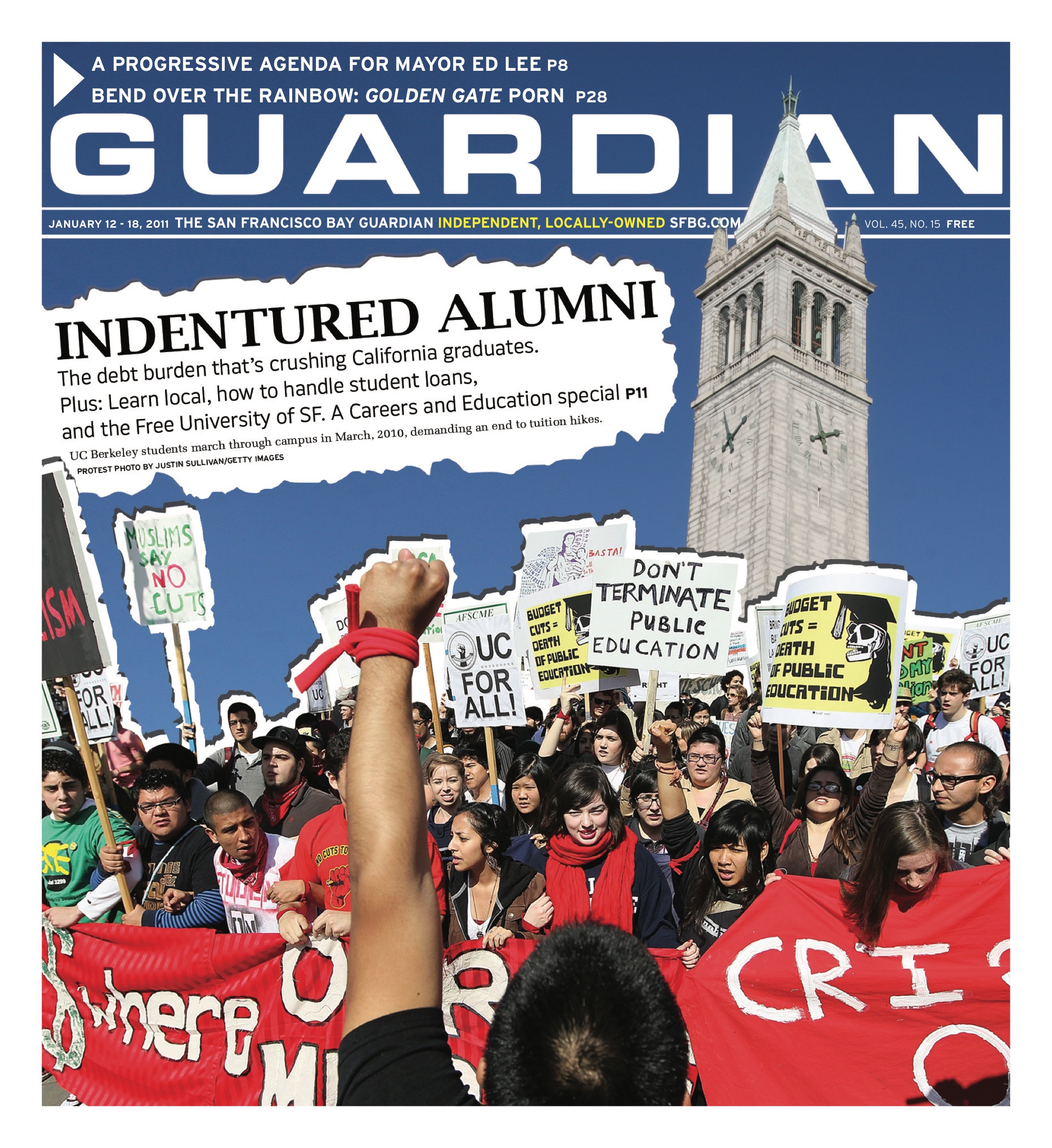
The agenda for Mayor Lee

0

EDITORIAL San Francisco has its first Chinese American mayor, and that’s a major, historic milestone. Let’s remember: Chinese immigrants were among the most abused and marginalized communities in the early days of San Francisco. In 1870, the city passed a series of laws limiting the rights of Chinese people to work and live in large parts of the city. Chinese workers built much of the Transcontinental Railroad — at slave wages and in desperately unsafe conditions that led to a large number of deaths. The United States didn’t even repeal the Chinese Exclusion Act (an anti-immigration law) until 1943, and for years, Chinatown was one of the poorest and most neglected city neighborhoods.

So there’s good reason for Asians to celebrate that the last door in San Francisco political power is now open. And Mayor Ed Lee comes from a civil rights background; he got his start in politics working as a poverty lawyer and tenant organizer.

Unfortunately, his path to Room 200 was badly marred by some ugly backroom dealing involving Willie Brown, the most corrupt mayor in modern San Francisco history. Even Lee’s supporters agree the process was a mess and that it undermines Lee’s credibility. So it’s important for Mayor Lee to immediately establish that he’s independent of Brown and his cronies, that his administration will not just be a Gavin Newsom rerun, and that progressives can and should support him.

He has a tough job ahead. We urge him to make a clean break with the past and set the city in a new direction. Here are a few ways to get started.

Clear out the Newsom operatives and bring some new people with progressive credentials into the senior ranks. Newsom’s chief of staff, Steve Kawa, has been a shadow mayor for the past year while Newsom was on the campaign trail, and is the architect of much of what the outgoing administration has done to sow political division and cripple city government. Lee needs his own chief advisor.

Show up for question time and work with the district-elected supervisors. Newsom was openly dismissive of the board and refused to take the supervisors seriously as partners in city government. Lee should appear once a month to answer questions from the board in public, should meet regularly with all the supervisors and appoint a liaison that the board can work with and trust. He needs to make his administration as transparent and open as possible and ensure that everyone at City Hall follows the letter and spirit of the Sunshine Ordinance.

Make it clear that the next city budget includes substantial new revenue. Newsom offered nothing but Republican politics when it came to city finance; his only solutions to the massive structural deficit involved service cuts.

The deficit will be even worse than projected this year, since Gov. Jerry Brown wants to transfer much of the state’s responsibility for public safety and public health back to local government — and there won’t be enough state money attached to handle the new burden. Lee needs to publicly call on Brown and the Legislature to give cities more ability to raise taxes on the local levee. Then he should start planning for a June ballot package that will raise as much as $250 million in new revenue for the city.

A substantially higher vehicle license fee on expensive cars, a congestion management fee, a significant annual transit impact fee on downtown offices, a restructured business tax, and a progressive tax on income of more than $50,000 a year would more than eliminate the structural deficit.

There are plenty of other revenue ideas out there; not all can or would pass on a single ballot. But Lee needs to make it clear that revenue will be part of the solution — and that he will use all the political capital he can muster to convince the voters to go along.

<\!s> Get serious about community choice aggregation. Newsom loved to talk about his environmental agenda, but when it came to challenging the hegemony of Pacific Gas and Electric Co. and its dirty power portfolio, he ran for cover. His hand-picked Public Utilities Commission director, Ed Harrington, has been an obstacle to implementing the city’s CCA plan. Lee needs to get rid of Harrington or direct him to cooperate with the supervisors and get San Francisco on the path to clean public power.

<\!s> Establish a real affordable housing program. The city plans to build housing for as many as 60,000 new residents in the southeast neighborhoods — but only a fraction of them will be affordable. This city is already well on its way to becoming a high-end bedroom community for Silicon Valley; only a clear policy that limits new market-rate condos until there’s a plan for adequate affordable housing will turn things around.

<\!s> Support Sanctuary City and quit helping federal immigration authorities break up families. Newsom was just awful on this issue; Lee needs to work with Sup. David Campos to implement more humane laws.

<\!s> End the demonization of homeless people and public employees. Newsom came to power attacking the homeless (with Care Not Cash) and went out attacking the homeless (with the sit-lie law). Lee ought to tell the Police Department not to aggressively enforce the ordinance.

<\!s> Take on the sacred cows of the Police and Fire departments. The biggest salary and pension problems in the city are in the two public safety departments. The Fire Department budget has been bloated for years. If everyone else is taking cuts, so should the highest-paid cops and the overstaffed fire stations.

Some of Lee’s supporters insist he’s a solid progressive and that we shouldn’t hold the details of his selection — or the fact that he was chosen by people who are openly hostile to the progressive agenda — against him. We’re open to that — but the progressive community will judge him on his record. And he has to start right away.

EDITORIAL: The Agenda for Mayor Lee

6

San Francisco has its first Chinese American mayor, and that’s a major, historic milestone. Let’s remember: Chinese immigrants were among the most abused and marginalized communities in the early days of San Francisco. In 1870, the city passed a series of laws limiting the rights of Chinese people to work and live in large parts of the city. Chinese workers built much of the Transcontinental Railroad at slave wages and in desperately unsafe conditions that led to a large number of deaths. The United States didn’t even repeal the Chinese Exclusion Act (an anti-immigration law) until 1943, and for years, Chinatown was one of the poorest and most neglected city neighborhoods.

So there’s good reason for Asians to celebrate that the last door in San Francisco political power is now open. And Mayor Ed Lee comes from a civil rights background; he got his start in politics working as a poverty lawyer and tenant organizer.

Unfortunately, his path to Room 200 was badly marred by some ugly backroom dealing involving Willie Brown, the most corrupt mayor in modern San Francisco history. Even Lee’s supporters agree the process was a mess and that it undermines Lee’s credibility. So it’s important for Mayor Lee to immediately establish that he’s independent of Brown and his cronies, that his administration will not just be a Gavin Newsom rerun, and that progressives can and should support him.

He has a tough job ahead. We urge him to make a clean break with the past and set the city in a new direction. Here are a few ways to get started.

Clear out the Newsom operatives and bring some new people with progressive credentials into the senior ranks. Newsom’s chief of staff, Steve Kawa, has been a shadow mayor for the past year while Newsom was on the campaign trail, and is the architect of much of what the outgoing administration has done to sow political division and cripple city government. Lee needs his own chief advisor.

Show up for question time and work with the district-elected supervisors. Newsom was openly dismissive of the board and refused to take the supervisors seriously as partners in city government. Lee should appear once a month to answer questions from the board in public, should meet regularly with all the supervisors and appoint a liaison that the board can work with and trust. He needs to make his administration as transparent and open as possible and ensure that everyone at City Hall follows the letter and spirit of the Sunshine Ordinance.

Make it clear that the next city budget includes substantial new revenue. Newsom offered nothing but Republican politics when it came to city finance; his only solutions to the massive structural deficit involved service cuts.

The deficit will be even worse than projected this year, since Gov. Jerry Brown wants to transfer much of the state’s responsibility for public safety and public health back to local government and there won’t be enough state money attached to handle the new burden. Lee needs to publicly call on Brown and the Legislature to give cities more ability to raise taxes on the local levee. Then he should start planning for a June ballot package that will raise as much as $250 million in new revenue for the city.

A substantially higher vehicle license fee on expensive cars, a congestion management fee, a significant annual transit impact fee on downtown offices, a restructured business tax, and a progressive tax on income of more than $50,000 a year would more than eliminate the structural deficit.

There are plenty of other revenue ideas out there; not all can or would pass on a single ballot. But Lee needs to make it clear that revenue will be part of the solution and that he will use all the political capital he can muster to convince the voters to go along.

Get serious about community choice aggregation. Newsom loved to talk about his environmental agenda, but when it came to challenging the hegemony of Pacific Gas and Electric Co. and its dirty power portfolio, he ran for cover. His hand-picked Public Utilities Commission director, Ed Harrington, has been an obstacle to implementing the city’s CCA plan. Lee needs to get rid of Harrington or direct him to cooperate with the supervisors and get San Francisco on the path to clean public power.

Establish a real affordable housing program. The city plans to build housing for as many as 60,000 new residents in the southeast neighborhoods but only a fraction of them will be affordable. This city is already well on its way to becoming a high-end bedroom community for Silicon Valley; only a clear policy that limits new market-rate condos until there’s a plan for adequate affordable housing will turn things around.

Support Sanctuary City and quit helping federal immigration authorities break up families. Newsom was just awful on this issue; Lee needs to work with Sup. David Campos to implement more humane laws.

End the demonization of homeless people and public employees. Newsom came to power attacking the homeless (with Care Not Cash) and went out attacking the homeless (with the sit-lie law). Lee ought to tell the Police Department not to aggressively enforce the ordinance.

Take on the sacred cows of the Police and Fire departments. The biggest salary and pension problems in the city are in the two public safety departments. The Fire Department budget has been bloated for years. If everyone else is taking cuts, so should the highest-paid cops and the overstaffed fire stations.

Some of Lee’s supporters insist he’s a solid progressive and that we shouldn’t hold the details of his selection or the fact that he was chosen by people who are openly hostile to the progressive agenda against him. We’re open to that but the progressive community will judge him on his record. And he has to start right away.

Funk phenomenon

0

One of the most influential, and underreported, trends of San Francisco nightlife in the past few years has been the feisty reinvigoration of the jazz scene. Yoshi’s Fillmore, which opened in 2007, finally seemed to settle into its giant digs in that historic district — and, despite fears to the contrary, didn’t crowd out the stellar, more established jazz joints around it like Rasselas and Sheba Lounge. It also helped expand the traditional jazz palate into famously funkier territory — this month at Yoshi’s boasts the Ohio Players, The Family Stone, War, George Clinton and Parliament Funkadelic, and Public Enemy with a live band. (What, no full orchestra? Flava Flav needs some glockenspiel.)

Also recently, San Francisco sent its huge and hip Jazz Mafia collective around the country performing uptempo “hip-hop symphony” Brass, Bows, and Beats. Unfortunately the Mafia’s homebase, Coda, closed on the first of this year — along with another beloved club, Triple Crown — citing the economic climate, but the supper club valiantly kept true to its live jazz mission to the end and shimmied with packed aficionados. Club Verde’s spunky Tuesday Night Jump! (Tuesdays, 9 p.m., $12. 2424 Mariposa, SF. www.oldtimey.net/tuesdays) with live band Stompy Jones revived that classic SF rockabilly swing vibe. Meanwhile, over at Martuni’s piano bar (4 Valencia, SF. 415-241-0205) near the Castro, a new generation seemed to discover its inner Sondheim, tipsily belting a few out ’round the gleaming ebonies and ivories. Send in those damn clowns already, Jesus.

That jazzy hometown spirit of expanding definitions and embracing the musical past as a living thing, not just some retro curiosity frozen into easily marketed poses, has graced other scenes as well. Even as you’re funking hard on the floor to some old school disco cuts or electronic productions, it’s hard not to hear echoes of jazz’s open-minded complexity working somewhere in the background.

And one of the parties I’ve funked hardest at lately has been Loose Joints (Fridays, 10 p.m., $5. MakeOut Room, 3225 22nd St., SF. www.makeoutroom.com). Let me be clear: Loose Joints isn’t a jazz club — although on a recent visit, DJ Tom Thump expertly melted London all-horn ensemble Brassroots’ 2010 New Orleans-leaning version of Inner City’s 1988 Detroit techno classic “Good Life” into Bill Withers’ Hammond-driven soul stomper “Harlem” from 1971. (At that point along my night’s journey, I needed a new pair of hotpants.) It’s more of an improvisational, all-vinyl DJ jam session that uses classic funk as its departure point. Hitting a tuneful sweet spot neither too familiar nor too abstract, Loose Joints has one of the best brain-to-feet ratios in the city: music nerds will dance their tight glasses off, straight-up partiers will discover where all those groovy samples come from.

The core trio of DJs at the heart of Loose Joints is a wild combination, rotating rapidly behind the tables. Founder Tom Thump digs deep into the wide-ranging, rarity-seeking global funk scene that brings to mind great DJs like Greg Wilson and Gilles Peterson (especially Peterson’s Brownswood Recordings project). Damon Bell reps Oakland’s fantastic, proudly abstract Deepblak techno scene, with a soulful Afro-Cuban twist. (Don’t sleep on his “multiple mind-space” Kush Musik series on Deepblak Recordings, www.deepblakmusic.com.) And DJ Centipede, who helps put on the headiest club going right now, Change the Beat (Tuesdays, 9 p.m., free. SOM, 2925 16th St., SF. www.som-bar.com), brings a future bass and experimental low-end background to the proceedings. Somehow they average out into a completely accessible and danceable entity.

“We are a strange triumvirate,” Thump told me. “I planned that, it was by design. I’ve known Centipede for years, when he used come into [Haight Street record store] Groove Merchant. So talented and unique. And I saw Damon play at [now-closed Panhandle club] Poleng one night a few years ago and was blown away by his soulful tunes. We are just one of my serendipitous flights of fancy.”

“Loose Joints” itself is a sly wink toward the experimental-made-accessible, a name cribbed by Damon from left-field dance music hero Arthur Russell’s popular side project, which put out the 1980 hit “Is It All Over My Face.” It also refers to the loose style the trio applies to mixing their vinyl cuts. (They leave other, more elevating interpretations to the imagination.)

The party is put on well from a practical standpoint, although the MakeOut Room’s layout is a bit strangulating near the door and it could use another person or two behind the bar. Because the MakeOut hosts live acts earlier in the evening, you’ll encounter a thrilling grab-bag of leftover patrons. The crowd is comfortable and open, dancing itself into frenzy. (When I dropped by last month, there was a gaggle of super-hot boys and girls grappling each other woozily to the floor, which was just fine. But watch where you step.) The strip of 22nd Street between Shotwell and Valencia has really taken on a European plaza air of late, with several bars and cafes spilling over with exuberant sophisticates. We need to ban cars there. And there’s also a healthy dose of newbie tech types — including the one in front of me in line who couldn’t believe the door guy wouldn’t take Visa for the $5 cover.

“San Francisco is so fucking beautifully diverse, that’s why the party goes so hard,” Centipede told me. “All types of life dancing to the same bassline.” Thump said: “There are a lot of people into funky sounds right now — from 1960s girl groups and Latin disco to post-punk and newer Afro-electro. We’re here to give all those a push. A sexy push.”

LOOSE JOINTS TOP TUNES

Mim Sulieman (with Maurice Fulton), “Mingi”

Suzy Q, “Can’t Give You Love (Persnickety All Stars Edit)”

The Fatback Band, “Wicky Wacky”

Bohannon, “Me And The Gang”

Rate irate

0

arts@sfbg.com

YEAR IN FILM “Bloody bugger to you, you … beastly bastard. Shit. Shit shit shit shit shit shit shit shit. F-fornication. Fuck. Fuck fuck fuck fuck and fuck. Fuck, fuck, and bugger. Bugger, bugger, buggety buggety buggety fuck. Fuck ass. Balls! Balls! Fuckety shit. Shit, fuck and willy. Willy, shit and fuck, and … tits.”

The above is, in toto, the reason why The King’s Speech — a movie that might very well turn out Oscar’s idea of this year’s Best Picture next February — is rated R. This childish explosion of potty-mouth is coaxed from England’s future king (Colin Firth) by his speech therapist (Geoffrey Rush) to demonstrate that the former’s crippling stammer flies away whenever he’s unself-consciousness enough to cuss a bit. It’s a comic moment (one of few, and perhaps the film’s highlight in general) that, by reducing the words to sniggering playground naughtiness — this king is, after all, in a state of arrested development — robs them of any genuine scatology or shock value. They’re just words.

But those words (give or take a few fucks and shits — only the MPAA can or would bother to count every rapid-fire cuss) were still enough to get this otherwise very chaste, polite Masterpiece Theatre exercise classified with Saw 3D and The Human Centipede as viewable by minors only with parental accompaniment. Not that many teens are likely to be lining up for The King’s Speech — certainly far fewer than saw Saw 3D with or without adult chaperoning. But really, this is what they need protecting from?

This was a year in which the usual grousing undercurrent about arbitrary ratings-board standards started to seep overground. There were small hubbubs about two excellent documentaries, The Tillman Story and A Film Unfinished, getting R’s due to cursing on one hand and nudity (among Nazi concentration camp inmates) on the other. In both cases prudishness means these searing indictments of historical wrongs probably can’t be used for classroom educational purposes.

A larger controversy surrounded Blue Valentine, the acclaimed indie feature slapped with an NC-17 for a sex scene so subversive that no one who saw the film at Sundance could recall it; the MPAA rating mystified many. Turns out the scene in question is a happy flashback in this slow-agonizing-death-of-a marriage portrait, with Michelle Williams’ thrusty body language expressing clear enjoyment of Ryan Gosling’s mouthy activities downtown. Nonetheless, there’s nothing more explicit displayed than the outside of her thighs — as one colleague put it, “I’ve seen more of Britney Spears on the Internet.” The drama’s sobriety and its awards momentum finally won a rare MPAA reversal on appeal, reducing its rating to R.

But the case still underlines the injustice of our current system. As Kirby Dick’s This Film Is Not Yet Rated pointed out in 2006, as a tool of the Hollywood mainstream the MPAA routinely judges independent films more harshly than major studio releases. It also exercises double standards when it comes to gender nudity and gender-preference sexuality, and most crucially continues to heighten the American morality gap between depictions of sex and violence.

These complaints have prompted some vague hints of change afoot, albeit more toward hitting torture-porn horror harder than lightening up on the birds ‘n’ bees. In any case, it’s difficult to be very hopeful: for every progressive cultural step forward these days, there seem to be two Tea Party dance-steps back. It was announced earlier this month that Christian pastor and cable honcho Robert H. Schuller had contracted to broadcast G-rated versions of movies like the original Alien (1979) and Predator (1987). OK, so they’ll have bad language and explicit violence removed; but even these eviscerated edits will still offer entertainment predicated on the horrific (if now nongraphically suggested) murders of humans by icky monsters. Giving kids nightmares is more godly (and provides a more “positive message,” per the Rev. Schuller) than showing them (God forbid) a nipple.

Such hypocrisies run rampant in U.S. entertainment and society in general. Media outlets generally refuse to advertise NC-17 films, giving them and their modicum of sexual explicitness the commercial kiss of death while most kids freely access porn online. Screen violence grows ever more desensitizing; explosions of cars, buildings, entire cities, or planets are viewed as harmless while anything truly unpleasant enough to act as a deterrent sparks outrage. (By now the escapist Saw and Hostel movies get shrugged at, whereas the recent Killer Inside Me remake offended many because its protracted scenes of domestic violence were realistically painful to watch.)

Penises are now OK in small doses, albeit only in the clownish contexts of Forgetting Sarah Marshall (2008), Observe and Report (2009), etc. Ironically, any time sex is taken seriously, sans juvenile humor or lurid “erotic-thriller” type judgment, it becomes unfit for allegedly innocent eyes. Blue Valentine‘s good sex, and subsequent bad breakup sex, disturbs the MPAA because it is all too real-world relatable in both its pleasure and fallibility, something you won’t often find in porn, either.

The logic gap grows ever more ridiculous even as our culture wars’ battle lines harden. Imagine a Palin White House two years hence, presiding over a land in which sex education is nonexistent, abstinence clubs are the new Honor Society, and teenage pregnancy rates skyrocket. When in doubt as to the nation’s course, say grace, then settle down to dinner with the kids as you watch a “clean” tube edit of something like 1995’s Braveheart, its medieval spears through the chest trimmed but that humorous throwing of a prince’s homosexual BFF from the castle tower left intact. Then drift off to slumberland, family values affirmed.

Page street

0

Rebecca Solnit’s Infinite City: A San Francisco Atlas (University of California Press, 158 pages, $24.95) is one of the best ideas a writer has come up with in a long time. By combining private and public support, Solnit was able to give away portions of the atlas in full-color, full-spread map handouts. (My favorite tracked both famous/infamous queer public spaces and the migration of butterflies throughout the city.). In the process, she also gave lectures in public spaces, providing a public service in the name of history and inclusion before dropping this tome on the book-buying masses. Gent Sturgeon’s version of a city-fied Rorschach alone is worth the price of the ticket. From insect habitats to serial killers, Zen Buddhist centers to the culture wars of the Fillmore and South of Market that some call redevelopment; Solnit and her cadre of artists, writers, cartographers, and researchers — Chris Carlsson, Guillermo Gómez-Peña, and Mona Caron among them — give us the infinite depths and limitless potential that can be found in 49 square miles. (D. Scot Miller)

A lot of good and even great books came from the Bay Area this year, but one stands out: a book of poetry, Cedar Sigo’s Stranger in Town (City Lights, 100 pages, $13.95). He is a young writer who improves dramatically each time I hear him read, and his poetry and critical writing are among the wonders of our age. And of the age before, since through him speak the dead poets David Rattray, John Wieners, Robert Creeley, Denton Welch, Philip Whalen, Salvador Dali, Jean Cocteau, Eartha Kitt, Raymond Roussel, Lorine Niedecker, and Cole Porter. When new writers come to San Francisco, they ask me if I’ve met Cedar Sigo. If they don’t know Sigo’s work, then I hand them a copy of the new collection. Don’t have to say much, I just step back a little to avoid the stars and diamonds and apples popping out of their eyes like toast from a toaster, because this crazy work is that crazy good. (Kevin Killian)

Compared with the prosaic grind of the inner city, the Sunset can seem like a — albeit foggy — vacation. Wide streets, surf breaks, dunes fit to get lost in: the neighborhood is just right for an offbeat bohemian getaway. But maybe those are just the reverberations of the past, which western neighborhood historian Woody LaBounty has dug up in Carville-by-the-Sea (Outside Lands Media, 144 pages, $35). This coffee table book illustrates the lives of the Sunset’s first modern-day inhabitants, who constructed a seaside village of retired street cars to inhabit back in the days before the N-Judah. Colorized at times for an Oz-like effect, the photos LaBounty digs up to illustrate “Cartown” reveal a community of artists, families, and enthusiasts — even a women’s cycling club — amid an untamed, oscillating sandscape. Those converted SoMa warehouse apartments suddenly don’t seem quite so rugged, do they now? (Caitlin Donohue)

In a city that boasts literally hundreds of theatrical world premieres per year, it’s astounding how few make it to the printed page. Bravo, then, to EXIT Press, new publishing arm of the venerable EXIT Theatre, for helping to ensure that at least some of our local play-writing talents will be preserved for posterity. And who better to inaugurate the series than Mark Jackson, whose professional development has been closely tied to the EXIT, and to the San Francisco Fringe Festival, which it produces? Far from being merely a collection of “Fringe-y” experimentation, Ten Plays (EXIT Press, 492 pages, $19.95) is a testament to the tenacity of vision. From reimagined Shakespearean classics (R&J, I Am Hamlet) to Jackson’s breakout hit The Death of Meyerhold, the bleakly comedic American $uicide, and the stirring Kurosawa-esque epic The Forest War, what these plays have in common is an audacious commitment to the illimitable possibilities of live theater. Of which, giving these works an opportunity to reach a wider audience is but one. (Nicole Gluckstern)

By any good political standard, John Lescroart’s Damage (Dutton, 416 pages, $26.95) is awful. It’s all about how a criminal uses the technicalities of law to get released (damn liberal judges) and how his family — newspaper publishers with ties to the (damn liberal) political establishment — protects him even as he continues to rape young women. Reminds me of that atrocious movie Pacific Heights, which is supposed to convince you that eviction protection and tenants rights are unfair to the poor landlords. But Lescroart writes about San Francisco, and does a pretty good job describing the city, and his characters are so real and well-crafted that I’m able to set aside the politics. In this case, Ro Curtlee, the rapist, is such an evil, evil bad guy — but a plausible, privileged evil bad guy — that he comes to life in a way that makes you want to kill him yourself. And makes you understand why a cop might feel the same way. And in the world of crime fiction, making you feel pain is half the game. It’ll be out in paper this spring. (Tim Redmond)

What Carl Rakosi was to Objectivism — a significant poet who dropped out of sight only to reemerge an old master — Richard O. Moore is to the SF Renaissance. The 90-year-old Moore was active in Kenneth Rexroth’s libertarian-anarchist circle in the 1940s, but abandoned poetry publishing for the more efficacious mass media of radio and TV, cofounding both KPFA and KQED in the process (and shooting the only footage of Frank O’Hara to boot). But Moore never stopped writing, and his debut volume Writing the Silences (University of California Press, $19.95) offers a brief but tantalizing introduction to more than 60 years of poetic activity. Moore’s diction is spare but memorable; a hawk’s wings, for example, “balance on the blind/ push of air.” Yet his low-key tones are wedded to an experimental sensibility; witness 1960’s “Ten Philosophical Asides,” which might be the first poem in English riffing on Wittgenstein, more than a decade before language poetry. Writing the Silences is thus belated yet ahead of its time. (Garrett Caples)

I commissioned three of the works in Veronica De Jesus’s Here Now From Everywhere (Allone Co. Editions, 130 pages, $26). Her portraits of Michael Jackson and Jay Reatard ran in the Guardian, while I paid out of pocket for her to render a tribute to the poet John Wieners for my boyfriend. Along with just-announced SECA Award winner Colter Jacobsen, who published this book, De Jesus is my favorite creator of drawings in the Bay Area. Like Jacobsen, she delves into memory — her memorial portraits can be seen for free on the windows of Dog Eared Books, where this book is for sale. The charm and value of Here Now From Everywhere is immediate, but the book reveals more of its multfaceted personality with each return visit. De Jesus’ illustrated dictionary of inspirational icons ranges from superstars to half-forgotten pop heroes, from cultural figures to obscure female athletes. It’s a gift. (Johnny Ray Huston)

“I told Micah last night that my new book would be a haunted house.” Berkeley-based poet Julian Poirier’s El Golpe Chileño (Ugly Duckling Presse, 128 pages, $15) is filled with the ghosts of past and present. Essentially a bildungsroman, it tracks Poirier’s protagonist’s growth from youthful journeyman into adulthood though a kind of mixed-genre Theatre of the Absurd. Vaudeville, comics, memoir, film pitch, epistolary, failed novel, poetry, the carnival, and travelogue are all wielded brilliantly in the hands of Poirier, making for a phantasmagoric reading experience where the whole emerges defiantly greater than the sum of its parts. Poirier writes, “I turned my whole brain into a city and wrote down everything I saw happening there.” And indeed it certainly feels that way — the book is ripe with the names of places, of friends living and dead; with lists of dates and years; and with drawings and photographs, making up what Poirier somewhat obliquely labels “The Stolen Universe.” El Golpe Chileño is truly a success of form and content, of the high and low, of pop and elegy. (John Sakkis)

Hiring at home

1

sarah@sfbg.com

The lame duck Board of Supervisors made history Dec. 7 when it voted 8-3 to approve mandatory local hire legislation for city-funded construction projects. The measure ends a decade-long effort to reach 50 percent local hiring goals through good-faith efforts.

“That’s a sea change in our local hiring discussion,” said Sup. John Avalos, who launched the legislation in October as part of the LOCAL-SF (Local Opportunities for Communities and Labor) campaign, which seeks to strengthen local hiring, address high unemployment rates, and boost the local economy.

The veto-proof passage of Avalos’ measure comes in the wake of a city-commissioned study indicating that San Francisco has failed to meet good-faith local hiring goals for public works projects even as unemployment levels rise in the local construction industry and several local neighborhoods face concentrated poverty.

Although Cleveland also has a local-hire law, the Avalos measure will be the strongest in the nation. Avalos’ legislative aide Raquel Redondiez told the Guardian that Cleveland’s 2003 legislation requires 20 percent local hire.

“This legislation doesn’t just have a mandated 50 percent goal,” Avalos explained, noting that San Francisco will require that each trade achieve a mandated rate and that 50 percent of apprentices be residents.

“This will ensure that our tax dollars get recycled back into the local economy, and that San Franciscans who are ready to work are provided the opportunity to do so,” Avalos said.

Avalos’ groundbreaking legislation phases in mandatory requirements that a portion of San Francisco public works jobs go to city residents and includes additional targets for hiring disadvantaged workers.


WHO GETS $25 BILLION?

The legislation replaces the city’s First Source program, under which contractors were required only to make good faith efforts to hire 50 percent local residents on publicly-funded projects. But the measure begins slowly by mandating levels some contractors are already reaching. According to a study commissioned by the city’s Office of Employment and Workforce Development and released in October, 20 percent of work hours on publicly-funded construction projects are going to San Francisco residents.

Avalos’ legislation, which is supported by a broad coalition of labor and community groups including PODER, the Filipino Community Center, Southeast Jobs Coalition, Kwan Wo Ironworks Inc., Rubecon, and Chinese for Affirmative Action, comes at a critical moment for the recession-battered construction industry.

Under the city’s capital plan, more than $25 billion will be spent on public works and other construction projects in the next decade — and two-thirds of this money will be spent over the next five years.

The measure has environmental benefits too. Transportation still accounts for more greenhouse gas emissions generated in the Bay Area than any other source, and San Francisco residents are more likely to take transit, walk, or bike to work than residents of other Bay Area counties. “When local citizens are able to work locally, there are fewer cars on the road and less air pollution,” Avalos said.

Sup. Ross Mirkarimi said that Avalos’ legislation is “just a start.”

“People have talked a good game about local hiring,” observed Mirkarimi, whose district includes the high unemployment-affected Western Addition.

“We are going to have to go beyond construction and start thinking about delving into the private sector,” Mirkarimi continued, pointing to the need to build 100,000 housing units over the next 25 years if the city is to keep up with a projected population increase. “Who is going to build that housing?” he asked.

Sup. Eric Mar noted that “the Sierra Club endorsed the measure early on because of the environmental benefits of having people work close to where they live.”

Sup. David Campos, whose district includes the Mission, said the measure was one of the most significant pieces of legislation to emerge from the board in recent years. “In the past, a lot of obstacles got in the way, including some legal challenges,” said Campos, who credited Avalos for navigating a complicated legal structure. “At the end of the day, I think this is going to benefit everyone.”

Mike Theriault, secretary-treasurer for the San Francisco Building Trades Council, told the Guardian he remains opposed to the legislation because the union presers to allocate jobs based on seniority, not residency. But he said the amendments make the measure “less harmful and more survivable in the short-term.”


THE ECONOMIC GAP

Termed-out Sup. Sophie Maxwell, who represents the city’s economically distressed southeast sector, has often noted that the construction industry provides a path to the middle class for people without advanced degrees or facing barriers to employment. She thanked Avalos for pushing legislation that promises to provides opportunities for “growing the middle class instead of importing it.”

“This industry closes the economic gap,” she said.

Board President David Chiu and termed-out Sups. Chris Daly and Bevan Dufty also supported Avalos legislation. But Dufty, who is running in the 2011 mayoral race, cast the eighth vote, which gave the measure a veto-proof majority.

The board’s Dec. 7 vote came a few hours after Bayview-based Aboriginal Blacks United founder James Richards and a score of unemployed local residents rallied at City Hall in the hopes of securing Dufty’s vote.

ABU has recently been protesting at UCSF’s Mission Bay hospital buildings site on 16th and Third streets. Its members also triggered a shut down at the Sunset Reservoir last month after a court ruled that locals promised jobs installing solar panels at the plant be replaced by higher-skilled engineers,

“It’s been too long that we have been protesting and fighting this good faith effort,” Richards told the Guardian. “We need a mandatory policy.”

Dufty is also hoping the Avalos measure could spread to other cities and benefit workers nationwide. “At a certain point I looked at labor and said, ‘Yes, I’m going for this legislation. But not just for San Francisco — you want to take this concept to other cities,’ ” Dufty said, as he made good on his promise to Richards to vote to support Avalos’ law.

Dufty seemed hopeful that Mayor Gavin Newsom would get behind the legislation. “But I respect that there may be a little bit of coming together between now and the second reading.”

Newsom spokesman Tony Winniker told the Guardian that the mayor has 10 days to review Avalos’ legislation after its Dec. 14 second reading. “He supports stronger local hire requirements but does want to review the many amendments that were added before deciding,” Winnicker said.

But will Newsom, who is scheduled to be sworn in as California’s next lieutenant governor Jan. 3, issue a veto on or before Christmas Eve on legislation that has been amended to address the stated concerns of the building trades?

That would be ironic since the amended legislation appears to match recommendations that the Mayor’s Taskforce on African American Outmigration published in 2009. The California Department of Finance projected that San Francisco’s black population would continue to decline from 6.5 percent (according to 2005 census data) to 4.6 percent of the city’s total population by 2050 — in part because of a lack of good jobs.


WILL NEWSOM VETO?

Avalos originally proposed to start at 30 percent and reach 50 percent over three years. But after the building trades complained that these levels were unworkable, Avalos amended the legislation to require an initial mandatory participation level of 20 percent of all project work-hours within each trade performed by local residents, with no less than 10 percent of all project work-hours within each trade to be performed by disadvantaged workers.

He also amended his legislation to require that this mandatory level be increased annually over seven years in 5 percent increments up to 50 percent, with no less than 25 percent within each trade to be performed by disadvantaged workers in the legislation’s sixth year.

A Dec. 1 report from city economist Ted Egan estimated that the local hire legislation would create 350 jobs and cost the city $9 million annually. But Egan clarified for the Guardian that this cost equals only 1 percent of the city’s spending on public works in any given year.

Vincent Pan of Chinese Affirmative Action, which supports Avalos’ local hiring policy, suggested that the mayor “check the temperature.”

“It would be leadership on the part of the mayor not to veto legislation that’s about San Francisco,” Pan said.

And Mindy Kener, an organizing member of the Southeast Jobs Coalition breathed a deep sigh of relief when Dufty’s vote made the law veto-proof. “It’s gonna go across the country,” Kener said. “We just made history.”

Local hiring — and purchasing

1

EDITORIAL The local hire ordinance that the Board of Supervisors approved last week once again puts the city on the cutting edge of progressive policy. San Francisco’s law, sponsored by Sup. John Avalos, is the strongest in the country, and ultimately will mandate that 50 percent of all the people hired on public works projects live in the city.

The politics of the bill were tricky; the local building trades unions opposed it on the grounds that many of their members live out of town and that hiring decisions should be based on seniority, not on residence. But eight supervisors recognized that a local hire law not only benefits the large numbers of unemployed San Franciscans; it’s also good economic policy for the city.

Numerous studies have shown that money paid out to local residents gets spent in town, and circulates in town, and creates more economic activity. That translates into fewer social and economic costs for the city and increased tax revenue.

There are costs to the law. Someone has to monitor compliance, and that requires additional city spending. Training local workers for union jobs may raise the price of some projects. But in the end, the studies all show that keeping money in the community is worth the price.

Avalos deserves tremendous credit for negotiating with labor and other interested parties, accepting compromises that don’t damage the impact of the measure and lining up eight votes to pass it, so even if Mayor Gavin Newsom vetoes it, the board can override the veto.

Now the board ought to apply the same principle to a local purchase law.

One of the major complaints small businesses have in San Francisco is their inability to get city contracts. The qualifying process is complicated and expensive — and when big out of town corporations with plenty of resources to put together bids can also offer lower prices, locals get left out.

The city spends vast sums of money, hundreds of millions of dollars a year, buying goods and services. Every dollar that leaves town translates into far more than a dollar lost to the local economy.

In fact, a 2007 study by Civic Economics showed that 38 percent of the money spent on locally based retailers in Phoenix, Ariz., remained in town and recirculated in the local economy; only 11 percent of the money spent at chain stores stayed in town.

That’s a huge difference, and would translate into many millions of dollars for the San Francisco economy. (Over time, the impact of local hire and local purchasing laws would be much greater than the one-time burst of income expected from the America’s Cup race.)

There are complications with any local purchase law. Not everything the city needs can be bought locally. Nobody in San Francisco, for example, makes train cars or fire engines. But on everything from office supplies and cars to uniforms and consulting contracts, there are (or could be) local companies handling the city’s business.

As with the Avalos law, there would be costs. Some small local suppliers would be unable to match the price that big chains offer. But the overall economic benefits to the city would greatly exceed those price differentials.

San Francisco currently gives a modest preference in bidding to local firms. But if the supervisors applied the Avalos principle and mandated that, within five years, a certain percentage of everything the city buys would have to go to local firms, city officials would be forced to do what they ought to do anyway: look local first.

Every year during the holiday season, the mayor and business leaders urge residents to shop locally. When the new Board of Supervisors takes over in January, the members should start looking beyond rhetoric and start working on legislation that would keep the city’s money in the city.

EDITORIAL: Local hiring, and purchasing

1

Tomorrow’s Guardian editorial:

The local hire ordinance that the Board of Supervisors approved last week once again puts the city on the cutting edge of progressive policy. San Francisco’s law, sponsored by Sup. John Avalos, is the strongest in the country, and ultimately will mandate that 50 percent of all the people hired on public works projects live in the city.

The politics of the bill were tricky; the local building trades unions opposed it on the grounds that many of their members live out of town and that hiring decisions should be based on seniority, not on residence. But eight supervisors recognized that a local hire law not only benefits the large numbers of unemployed San Franciscans; it’s also good economic policy for the city.

Numerous studies have shown that money paid out to local residents gets spent in town, and circulates in town, and creates more economic activity. That translates into fewer social and economic costs for the city and increased tax revenue.

There are costs to the law. Someone has to monitor compliance, and that requires additional city spending. Training local workers for union jobs may raise the price of some projects. But in the end, the studies all show that keeping money in the community is worth the price.

Avalos deserves tremendous credit for negotiating with labor and other interested parties, accepting compromises that don’t damage the impact of the measure and lining up eight votes to pass it, so even if Mayor Gavin Newsom vetoes it, the board can override the veto.

Now the board ought to apply the same principle to a local purchase law.

One of the major complaints small businesses have in San Francisco is their inability to get city contracts. The qualifying process is complicated and expensive — and when big out of town corporations with plenty of resources to put together bids can also offer lower prices, locals get left out.

The city spends vast sums of money, hundreds of millions of dollars a year, buying goods and services. Every dollar that leaves town translates into far more than a dollar lost to the local economy.

In fact, a 2007 study by Civic Economics showed that 38 percent of the money spent on locally based retailers in Phoenix, Ariz., remained in town and recirculated in the local economy; only 11 percent of the money spent at chain stores stayed in town.

That’s a huge difference, and would translate into many millions of dollars for the San Francisco economy. (Over time, the impact of local hire and local purchasing laws would be much greater than the one-time burst of income expected from the America’s Cup race.)

There are complications with any local purchase law. Not everything the city needs can be bought locally. Nobody in San Francisco, for example, makes train cars or fire engines. But on everything from office supplies and cars to uniforms and consulting contracts, there are (or could be) local companies handling the city’s business.

As with the Avalos law, there would be costs. Some small local suppliers would be unable to match the price that big chains offer. But the overall economic benefits to the city would greatly exceed those price differentials.

San Francisco currently gives a modest preference in bidding to local firms. But if the supervisors applied the Avalos principle and mandated that, within five years, a certain percentage of everything the city buys would have to go to local firms, city officials would be forced to do what they ought to do anyway: look local first.

Every year during the holiday season, the mayor and business leaders urge residents to shop locally. When the new Board of Supervisors takes over in January, the members should start looking beyond rhetoric and start working on legislation that would keep the city’s money in the city.

Ammiano wants to change bike laws

29

Assemblymember Tom Ammiano wants to change the way bicycles and cars are treated under state traffic laws.


He’s responding in part to the furor over the bike crackdowns in Berkeley, but it’s nothing new for Ammiano — he also tried to get bicycle traffic legislation through last year. This time, though, he told me, “I think we’re going to be able to pass something.” And incoming Gov. Jerry Brown ought to be willing to sign it.


Matt Bunch, an Ammiano staffer, told me that the bill isn’t final, but will certainly address the penalty for cars hitting bicycles. “A lot of these are preventable, but they’re treated as accidents,” he said. “They aren’t punished adequately.”


The measure could also address the wide disparity in traffic fines that bicyclists face in different cities and take on the Berkelely problem. “The fine you get depends on what they charge you with, and it’s all over the map,” Bunch said.


Bunch also suggested that Ammiano might be looking at the way some police officers in some jurisdictions charge bicyclists with vehicle-code violations that were written to apply to cars. “The vehicle code isn’t specific to bikes,” he said. “There’s a clear deficiency in law, and we’re going to look at it.”


One of the things they ought to be checking out: Why is it okay to make a biker get a point on his or her drivers license when he or she isn’t driving a motor vehicle?


Go, Tom. I’ll keep you posted when the bill is introduced.


Bikes are not cars

39

Okay, first of all, this is ridiculous. California cities are supposed to be encouraging people to ride bikes instead of cars. And bikes aren’t 3,000-pound metal devices propelled forward with internal combustion engines; yes, a bike can hit a pedestrian, but the likelihood of fatal injuries isn’t that high. Certainly not compared to cars.


Besides, and here’s the thing that really gets me: This kid gets a ticket for running a stop sign on his bicycle and “now he has to go to traffic school to keep a moving violation off his driver’s license.”


How is that possible? You don’t need a license to ride a bike. A bike isn’t a car; the skills are entirely different. The risks are entirely different. You can ride a bike before you turn 16. You can ride without proof of citizenship. You don’t have to give up a fingerprint or fill out forms or take a test to ride a bike.


So why should you face a violation on your license to drive a car when you’re not driving a car? Should I get a point on my driver’s license if I sit on the sidewalk, or walk against the light, or block traffic in a political protest? Those things aren’t remotely related to driving a motor vehicle.


I got stopped once by a cop for (allegedly) running a stop sign, and he asked to see my driver’s license, and I (politely) said: Why? I’m not driving a car. I’m happy to provide ID, but I don’t need to present a document from the California Department of MOTOR vehicles when I’m not operating a MOTOR vehicle. Especially when I’m making the world a cleaner, better place with my transportation choice.


Oddly enough, he agreed. We had a pleasant talk about bicycle safety and he let me go. You’d think the UC cops would have better things to do.

Sync up, time’s come for Zion I’s Atomic Clock

0

Bay Area hip-hop heads are grateful that Zion I walks these mean streets. Emcee Zumbi and DJ Amp Live have been expanding the boundaries of what dope beats and lifted lyrics can be ever since they fled the industry culture of Atlanta and hit the Oakland scene with 1997’s underground hit Enter the Woods. Their vibe’s stayed positive while resisting major label affliation and a lot of the turf warring that plagues hip-hop in a weird, stereotype-enhancing way around some of the Bay’s venues.

We spoke with Morehouse College grad Zumbi over the phone on the cusp of the duo’s weekend-long Slim’s celebration (Sat/20 and Sun/21) in honor of new album Atomic Clock, and the gig will be the duo’s last before hitting the road on tour. Clock is a bangin’, lifted affair studded with gems like “Always” and “Girlz” featuring Martin Luther’s sweet hook — but all the same, we still found ourselves talking politics. Sheesh.

San Francisco Bay Guardian: What’s your definition of a conscious emcee? I hear a lot of people call themselves “backpack rappers” and then come out with a song telling girls to shake faster, make that money. How can you tell who the conscious rappers are? 

Zumbi: For one, I don’t think consciousness is dictated by sexuality. For instance Common is a cat who’s a pretty consistently conscious person. But then he comes out talking about getting head — I think in most of his music there’s an awareness. For me, Jacka has conscious music because he reflects on spirituality and Allah. Even though he’s got the gangster stuff he’s analyzing society and spirituality, mixing it together. It’s about the dominant sense you get from the music. I feel you though, there are people that say they’re a conscious rapper and then their album just doesn’t feel that way. For me, consciousness doesn’t make you dope necessarily, even though most of the people I respect have it. 


SFBG: I’ve read in past interviews that your parents attended the March on Washington and that you were at the Million Man March yourself. Can you tell me what your political beliefs are? 

Z: I don’t really think of myself as a political person. I don’t totally believe in Democrats and Republicans and voting. I’m not sold on those things. I think there’s manipulation involved in all of that, and I don’t consider myself political, because I don’t think the political system is just. I just think people should be able to get what they need, that they should be able to have a full life. That’s why I’ve chosen music: it’s a little more direct. People have to jump through hoops with politics, I see it as kind of fraternity. 

Zion I’s latest, Atomic Clock, tells the time

SFBG: But you have musical talent you can use as a forum to express your beliefs – how do people make a difference who don’t have that platform?

Z: By being present and really standing for what you believe – just show up. I don’t call myself political, but take something like Oscar Grant, I was down there at the BART station, I was at City Hall the second time, I was taking pictures and trying to get footage. I think it’s more about that: standing up and making your voice known. Your clothes, your fashion sense, riding a bike instead of driving cars. There’s a disconnect between what people want and how people live their lives. You don’t want to be a slave to the system, so why do you put on clothes you don’t want to wear and go do something that someone tells you that you don’t want to do every day of your life? That’s what life is about, what you choose to do. Living in the United States, we can pretty much say what we want to say. It’s not a country that’s overly oppressive on the intellectual level. Physically it is, but you can pretty much say what you want. Just get out there and be it instead of complaining about everything, be the change you want to see in the world.


SFBG: Tell me your take on Obama’s presidency so far.

Z: It’s very interesting. You couldn’t write this stuff, this is a movie in action. When he got elected there was this passion, everyone was so over George Bush. It was like we were ushering in this whole level of politics in the US. And then, because things didn’t change… for me, I voted for Obama, but I don’t think the president makes all the decisions. He’s just the face man for the government. It’s not like this guy was going to change all evils in the world! But now reality is setting in. And because he is Black, it’s encouraged this other thing, the Tea Party? That’s just ridiculous, it’s engendered this backlash, there’s this ideal that there is no racism but in reality there’s more racism than before. Michael Vick — whose dog killed a man on his property — he served two years. Obama to me is a symbol of something – I’m not sure what it is yet, some kind of transformation hopefully, but people are pushing back against what change could be because they’re frustrated, there’s no jobs – they’re looking for a way out. It’s a strange story, it’s like a movie I’m watching. 


SFBG: I’ve heard that in Zion I, one of you studied to be a doctor and another, a psychologist. Which is which? How’d you chose that course of study?

Z: (laughs) I might again, you never know, I was just looking at grad schools online. The fact that it had to do with the mind in general. In college I was undeclared for the first two years and then I was getting to that point, so I was like psychology. I like the power of the mind, what the new age thing-movement is all about now, meditation, clearing your mind, intuition,


SFBG: Atomic Clock has been described as “moody and emotional.” Are you guys getting moody these days?

Z: Yeah a bit. The record, we did it really quickly in two and a half, three weeks. We proposed it to the label, hoping that they’d pass on it initially but they optioned it. It was a quick sprint all of a sudden, it went from this cool idea to something we had to rush to finish it. Because of that we had a moody attitude to it, the timing added this urgent feeling. Also, like the thing about Obama, it’s where things are, everything is in this transitional period, everyone’s stressed. 


SFBG: What do you think of the influx of dance beats in hip hop these days?

Z: I think its cool. I n the beginning, hip hop was always dance music. Sugar Hill Gang was the first quote-unquote rap record. For cats to be doing [dance beats], it’s a natural thing. That’s a part of hip hop. In the late ’90s, early ’00s hip hop kind of left the club, and then the South brought us back into the club. This music is about celebrating, having a good time. 


Zion I Atomic Clock CD release parties

Sat/20: featuring Locksmith, Hold Up, Bayliens, DJ Kevvy Kev

8:30 p.m., $20-23

Sun/21: featuring Eligh w/ Scarub, Bang Data, Hold Up, Oakland Faders

8 p.m., $20-23

Slim’s

333 11th St., SF

(415) 255-0333

www.slims-sf.com


Delta death

5

By Patrick Porgans and Lloyd Carter

news@sfbg.com

While Californians were held captive waiting for Gov. Arnold Schwarzenegger and the Legislature to agree on spending cuts and adopt a budget, state officials were throwing hundreds of millions of dollars down the drain and compounding California’s water crisis.

Water officials have wasted more than $10 billion and 35 years in extended delays in their failed attempt to carry out their legal mandates to protect the waters of the state and restore the San Francisco Bay-Delta Estuary. The result: water quality in the estuary is rapidly declining; fisheries are in crisis; and the proposed solution, an $11 billion bond act set for the ballot in 2012, will only make things worse.

The primary source of the water-quality crisis is a toxic mix of salt and chemicals discharged from lands irrigated by subsidized water delivered by the federal Central Valley Project to contractors farming on the arid west side of the San Joaquin Valley.

The salt comes from several sources. Irrigation water — particularly from the delta, where the water is somewhat brackish — contains salt. There also is salt and traces of much more toxic selenium in the soil. Industrial fertilizers add more dangerous chemicals to the mix. And since crops grown in the Central Valley don’t absorb much salt and the constant flushing with irrigation water leaches the selenium out of the soil, a nasty stew starts to build up.

This U.S. Geological Survey map shows a plan by federal and state regulators to divert toxic water more directly into the Sacramento Delta. All these diversion plans ignore the fact that poorly drained land isn’t suitable for farming.

If the irrigation water isn’t drained off, the salt buildup in the groundwater renders the land unusable to farming. In essence, farmers have been dumping the runoff water — laden with salt and selenium, along with mercury and boron — into the San Joaquin River, which carries it back into the delta and the bay.

All this is being done as the government declares its intent to save the San Francisco Bay-Delta Estuary.

How much salt are we talking about? According to a 2006 U.S. Geological Survey report, it amounts to about 17 railroad cars a day, each capable of carrying 100 tons of salt, as well as selenium and mercury. That’s 3.4 million pounds of salt a day being dumped in the lower San Joaquin River.

Of course, the river is a freshwater habitat, so all that salt damages plant and fish life.

Some experts say that part of the toxic stew is ultimately flushed out to sea, and the rest perhaps enters the aquatic food chain or at least degrades cleaner delta water.

As far back as the 1998, the state Water Board staff reported that salt loads in the valley were doubling every five years. Toxic salt-loading is not only taking its toll on the river and Bay-Delta Estuary, it’s draining the state treasury since myriad publicly funded programs for drainage, water quality improvement, fisheries restoration, and others continue to be financed with borrowed money from the deficit-ridden General Fund.

The water quality problem was identified as a potential crisis in the 1950s and has contributed to the pollution of a significant length of the 330-mile San Joaquin River. According to the U.S. Environmental Protection Agency, 215.4 miles of the river are on the list of waterways so polluted they’re unfit to swim in. And some species of fish from the river aren’t safe to eat.

On a 1999 EPA map, the valley is the single largest “more serious water quality problem — high vulnerability” area in the nation.

Water officials, drainers, and the major environmental groups forged a deal in 1995 to permit the toxic drainage to continue until October 2010, at which time the discharges were to end. But that hasn’t happened; the water boards have approved a new target date for compliance (2019) and sanctioned continued dumping of toxic drainage. The train wreck in the making will be allowed to continue dumping and pumping toxic salts every day into the waters of the state for the rest of this decade.

The tons of toxics salts being discharged into the waters of the state are only the tip of the iceberg. An unfathomable amount of toxic salts are also being stored in the soil underground, contaminating groundwater basins throughout the valley.

State and federal officials have put a lot of faith in a federal Bureau of Reclamation project known as the Grasslands Bypass, which is designed to send contaminated agricultural water through a part of the old San Luis Drain (that once led to the contamination of the Kesterson Wildlife Refuge) into a San Joaquin tributary known as Mud Slough.

The Grasslands Bypass Project, begun in 1995, is operated by the Department of the Interior’s Bureau of Reclamation. It reroutes subsurface agricultural drainage water around wetlands on its way eastward to the San Joaquin River.

Originally the agricultural runoff traveled through Salt Slough (a San Joaquin River tributary), which passed through wetlands on the way to the river. The Grasslands Bypass Project uses the San Luis Drain to reroute that runoff around approximately 100,000 acres of land between Firebaugh and Los Banos and into Mud Slough (another tributary of the San Joaquin River).

Carolee Krieger, president of the California Water Impact Network (C-WIN), says the Grasslands Bypass Project misses the point. The best solution, she said, is to stop farming altogether on the poorly-draining western valley along the San Joaquin River.

The project protects the wetlands but hurts the river itself. Dennis Lemly, research professor of biology at Wake Forest University in Winston/Salem, N.C., confirmed in December 2009 that the continuation of the Grasslands Bypass Project will cause a 50 percent mortality among juvenile Chinook salmon and Central Valley Steelhead in the San Joaquin River. Furthermore, the state water board lists both the Carquinez Strait and Suisun Bay, both downstream from the San Joaquin River, as “impaired” for their excessive selenium content.

At best, the bypass project can only slightly mitigate the damage. The only real way to resolve the discharge of the tons of toxic salts is to stop irrigating land that has known drainage problems.

In the early 1980s, the discharge of the toxic salts into the now-closed Kesterson National Wildlife Refuge, located in the San Joaquin Valley, was the site of one of the worst government-induced wildlife crises in American history. Several studies have since been conducted and numerous Band-Aid-type fixes have been implemented, costing taxpayers hundreds of millions of dollars. So far officials have failed to identify a viable cost-effective solution to the toxic agricultural drainage crisis and estimate a pilot program will cost at least $2 billion.

Meanwhile, the Legislative Analyst reported in 2008 that the state and federal government have spent $5 billion on projects to improve the Delta.

This is one of the ways your tax dollars fund the destruction of the San Francisco Bay-Delta ecosystem.

Patrick Porgans is a Sacramento-based water-policy consultant. Lloyd Carter, a former UPI and Fresno Bee reporter, has covered water issues in California for more than 30 years. For more information, go to www.lloydgcarter.com and www.planetarysolutions.org. Additional research was done by Noah Arroyo.

War on drugs rages on

0

By Pamela A. MacLean

news@sfbg.com

The two Norton brothers thought someone was breaking into their Oakland apartment to kill them one pre-dawn day in October 2007. Instead, a couple dozen well-armed and screaming federal drug agents stormed the place, rousted the pair, and dragged them around the apartment before arresting them.

Winslow and Abraham Norton operated one of the most successful medical marijuana dispensaries in the Bay Area, the Compassionate Patients’ Cooperative of California, in Hayward. In just the first six months of 2007, the operation grossed $26 million.

But if they thought facing a federal indictment on charges of conspiracy to possess and distribute more than 1,000 kilos of marijuana and money laundering was their worst nightmare, the Norton brothers just weren’t dreaming big enough.

The pair — with all-American good looks, close-cropped beards, and infectious smiles — finish each other’s sentences when they describe their run-in with the federal justice system.

“We were 11 and 14 when medical marijuana was legalized, and we grew up in Berkeley,” Abraham said “It may be naïve, but we didn’t understand the legality. Now we know federal law a lot better.”

Abraham, 26, and Winslow, 29, played by the rules in California’s fledgling medical marijuana law. In 2005 they got an Alameda County permit to operate from the former Sheriff Charles Plummer, a seller’s permit from the state, paid taxes, and had random inspections by local police.

They even hired security guards to patrol the place to make sure patients felt safe. After abandoning a couple of security companies as “no good,” they hired a tough bunch that had former Navy SEALS, Marines, and cops in their ranks, SEAL-Mar Security. They rotated a crew of 44 different guards who patrolled outside and carried Glocks, Smith & Wessons, Sig Sauers, and Rugers to make sure no one caused trouble.

“We are very proud we were squeaky clean and examined under a microscope,” Winslow said. “We never did a deal out the back door,” Abraham insisted. They sold so much marijuana to legitimate patients “it never made sense and it would have hurt the company” to do any illegal side deals, Winslow said.

But selling marijuana is still a federal crime, and in negotiations the prosecutor insisted the brothers accept five-year minimum prison terms. They refused, offering to plead guilty to conspiracy and let U.S. District Judge D. Lowell Jensen set the sentence. Assistant U.S. Attorney Steve Corrigan balked. Then, according to the Nortons and their lawyers, Corrigan upped the ante, threatening to indict their mother, who helped out in the co-op by opening up for the early shift.

“We had to tell her over a Thanksgiving,” Winslow said. “It was pretty miserable. We didn’t know what to do.”

Then, in February 2009, the government indicted their father instead, along with a coworker, and added a far more serious charge: aiding in the carrying of a firearm to further a drug crime. That charge alone carries up to life in prison, but no less than five years.

The Nortons had no guns. It was the gun-toting security team that was “aiding” in a drug conspiracy.

“It is plain and simple coercion, nothing less than that,” said Harold Rosenthal, Abraham’s attorney.

“When we heard the charge, we said ‘you must be kidding,'” says Doron Weinberg, the high-profile defense lawyer who defended record producer Phil Spector in his 2007 murder trial. “I have never before heard of a person charged with violation of a gun law because they hired a security guard.”

Although there is a new U.S. attorney, Melinda Haag, she isn’t talking. “It is an ongoing case so we have no comment,” said her spokesman Jack Gillund.

Sheriff Plummer, who retired in 2007 after 50 years in law enforcement, said of the weapons charges: “It’s bullshit.”

“While I don’t favor their type of business, it was legal. I wanted to make damn sure they were protected, people were protected, and the building was protected. I told them to hire a security crew,” he said.

Abraham says Plummer assured them during a county Board of Supervisors meeting that if they did everything he required, the feds would leave them alone. “I could have said that,” Plummer said when asked about that assurance.

Although the new charge is “aiding” use of weapons, the security crew was not charged with a crime. It had no effect on the guards or the company, according to Tom Turner, one of SEAL-Mar’s owners.

The indictment of their father, Michael, was no accident. Michael is a patient of the dispensary, but the brothers and his lawyer, Bill Osterhoudt, say Michael had no ownership interest in the co-op.

What Michael Norton does have is a criminal record. In the 1980s, he went to prison for two years in what was known as the Kona coffee caper. He bought low-cost Guatemalan coffee beans and sold them as pricey Hawaiian Kona coffee.

Piled on to the Norton brothers’ legal problems is a tax bill that went unpaid when the federal agents raided their apartment and the business. When the federal agents swept in three years ago, they seized the brothers’ two cars, a house they just bought, more than 300 pounds of marijuana, and an electronic deposit of nearly $340,000 in sales tax sent to the state Board of Equalization, according to Winslow.

“We thought the wire transfer cleared. We had confirmation, but the government still seized it,” Abraham said. “They stole the money,” Winslow said. That debt, with penalties and interest, is now close to $1 million, according to Abraham.

“The feds snatched the sales tax money and left the Nortons liable for it, and now they have liens against them for the money,” Rosenthal said.

The irony for the brothers is that they believe they were the first dispensary to voluntarily pay sales taxes. “We collected them for six months and took a check for $1 million to the BOE,” Abraham said. “They didn’t want to take money from medical marijuana sales and told us to call it something else,” Winslow said. “We refused. They wanted us to lie and say the bags cost $300 and the contents were free. But that would have screwed up our accounting.”

After accepting the initial payment, within a week the board issued letters to all the dispensaries in the state asking for sales tax, according to the brothers.

Judge Jensen rejected defense efforts to get the gun charges thrown out in September. But Jensen, a Republican former prosecutor, signaled he is not happy and ordered both sides to sit down Dec. 9 for formal talks before a magistrate to see if they can resolve the case.

“It’s not enough to say we want the case dropped,” Abraham said. “Our credit is destroyed. We can’t work.”

“Three years later we are still fighting it,” Winslow said. “We’ve been fighting this almost as long as the dispensary existed.”

As for the brothers’ chances to negotiate a resolution with the feds, Rosenthal said, “I’m somehow hoping the clouds are going to part and sanity is going to set in.”