Cars

Film Listings

0

OPENING

Amigo John Sayles’ career is a fascinating one too varied to fully examine here; suffice it to say, the man’s first big gig was writing 1978’s Piranha before he became the indie auteur behind such notables as 1984’s The Brother from Another Planet, 1987’s Matewan, 1988’s Eight Men Out, and 1996’s Lone Star. He favors large ensemble casts, socially-conscious themes, and an unhurried pace that allows the exploration of various plot threads. Amigo is possibly most similar to 1997’s Men With Guns, in that it’s largely subtitled, is set in a foreign country (here, the Philippines), and plays out against a backdrop of political and military unrest. The film takes place during the Philippine-American War, circa 1900, as U.S. troops (led by Sayles favorite Chris Cooper) roam the just-freed-from-Spain jungles searching for rebels who threaten America’s claim to the land. Also in the mix are town leader Rafael (Filipino superstar Joel Torre), his guerilla brother (Ronnie Lazaro), and a crooked priest (Yul Vázquez) fond of incorrectly translating between sides. Amigo‘s an important film simply because it educates about a little-known conflict — frankly, America’s conduct as occupiers is so cruel that it’s no surprise the history books gloss over it — but it’s slow-moving and heavy-handed, with a tone that pitches uneasily between humor and tragedy. (2:08) Stonestown. (Eddy)

*The Arbor An audaciously conceived and genuinely haunting chronicle of a family, The Arbor reinvents two of the most debased forms of nonfiction film: the venerating portrait of an artist who died young and the voyeuristic confession of abuse. The locus here is the short, bottle-strewn life of Andrea Dunbar, a brilliant playwright whose work distilled the manners and speech of the West Yorkshire housing projects. The Arbor effectively stages some of this work in a park near the same apartments, but the project’s focus is Dunbar’s shambling private life and its devastating effect on friends, lovers, and daughters. Our emotions are strained by their collective fury and grief, but never cheated. Curiously, Clio Barnard accomplishes this by being up front in her manipulations. After collecting interviews with the key players, she cast actors to lip sync the answers — that is, the voices are documentary while the images are staged, an uncanny effect that becomes even more so when Barnard stitches together responses to narrate a single event. The technique is eerie and literally disembodying. In the same way that one affected by trauma may experience a separation from his or her self, so the image of the actor speaking comes unglued from the “real” voice — and so too is there a crucial hesitation in our assigning authenticity to a single, undivided subject. There are shades of Greek tragedy in The Arbor‘s patient, distanced unfolding of its characters’ fates. The speakers are imagined as a chorus, and though the drama is offscreen, long since buried, the pain still lives. (1:34) Roxie. (Goldberg)

*Bellflower Picture Two Lane Blacktop (1971) drifters armed with “dude”-centric vocabulary and an obsession with The Road Warrior (1981) and its apocalypse-wow survivalist chic. There are so many pleasures in this janky, so-very-DIY, heavy-on-the-sunblasted-atmosphere indie that you’re almost willing to overlook the clichés, the dead zones, and the annoying characters. Seeming every-dudes Woodrow (director-writer-producer Evan Glodell) and Aiden (Tyler Dawson) are far too obsessed with tricking out their cars and building a flamethrower for their own good — the misfits must force themselves out of the metal shop of the mind to meet women. So when Woodrow goes up against Milly (Jessie Wiseman) in a cricket-eating contest at a bar, it’s love at first bite. Their meet-gross morphs into a road trip and eventually a relationship, while the flamethrower nags, unexplained, in the background, like an unfired gun — or an unconsummated, not-funny bromance. These manifestations of male fantasy — muscle cars, weapons, and tough chicks — are cast in a dreamy, saturated, and burnt-at-the-edges light, as Glodell and company weave together barely articulated reveries and bad-new-west imagery with a kind of fuck-all intelligence, culminating in a finale that will either haunt you with its scattershot machismo-romanticism or leave you scratching your noggin wondering what just happened. (1:46) (Chun)

Conan the Barbarian Jason Momoa (Game of Thrones), Rose McGowan, and Ron Perlman star (in 3D) in this latest take on the Robert E. Howard hero. (1:42)

*The Future See “Fear and Longing.” (1:31)

Fright Night Don’t let the spooky trailer fool you: the Fright Night remake is almost as silly as the original. In fact, it follows the 1985 film closely, as young Charley Brewster (Anton Yelchin) comes to realize that his neighbor Jerry (Colin Farrell) is a vampire. The biggest change is a smart one — this Fright Night transforms late-night TV host Peter Vincent into Criss Angel-type illusionist Peter Vincent (David Tennant). The casting is spot on all-around, and frankly, Farrell is a lot more believable than Chris Sarandon as the seductive bad boy. The only real problem with the new Fright Night — other than the unnecessary 3D — is that it never fully commits to camp the way the original did. There’s a bit too much back-and-forth between serious scares and goofy blood splatters. Luckily, it’s still an entertaining remake that doesn’t crap all over a classic. It’s also a great reminder that vampires don’t have to be moody — remember, they used to be fun. (2:00) (Peitzman)

Griff the Invisible See “Fortress of Meh.” (1:33) Shattuck.

Gun Hill Road See “Once Upon a Time in the Bronx.” (1:28) Sundance Kabuki.

*One Day See “Deep in the Heart.” (1:48) Balboa.

*Senna When Ayrton Senna died in 1994 at the age of 34, he had already secured his legacy as one of the greatest and most beloved Formula One racers of all time. The three-time world champion was a hero in his native Brazil and a respected and feared opponent on the track. This eponymous documentary by director Asif Kapadia is nearly as dynamic as the man himself, with more than enough revving engines and last minute passes to satisfy your lust for speed and a decent helping Ayrton’s famous personality as well. Senna was a champion, driven to win even as the sometimes-backhanded politics of the racing world stood in his way. A tragic figure, maybe, but a legend nonetheless. You don’t have to be an F1 fan to appreciate this film, but you may wind up one by the time the credits roll. (1:44) Embarcadero, Smith Rafael. (Cooper Berkmoyer)

Sholem Aleichem: Laughing in the Darkness This documentary cuts to the chase right at the beginning: yeah, Sholem Aleichem was the guy who wrote the Tevye stories that inspired Fiddler on the Roof. But filmmaker Joseph Dorman isn’t trying to make Fiddler: Behind the Musical. Instead, he takes an in-depth look at the life, writing career, and cultural significance of “one of the great modern Jewish writers — and our greatest Yiddish writer,” per the film’s press notes. Fans of Jewish lit will be particularly engaged by Sholem Aleichem’s tale; raised in a shtetl in what’s now the Ukraine, he moved around Europe and to the United States pursuing various careers, but always writing the popular stories that addressed not just Jewish life, but broader issues facing turn-of-the-last-century Jews, including the cross-generational conflicts that make up much of Fiddler‘s plot and humor. That said, this film does rely an awful lot on PBS-style slow pans over black-and-white photos and intellectual talking heads; one suspects the subject himself (so devoted was he to entertaining the regular folk who gobbled up his tales) would’ve preferred his life story to unfold in a livelier fashion. (1:33) Opera Plaza. (Eddy)

Spy Kids: All the Time in the World Robert Rodriguez just can’t stop making these. (1:29)

ONGOING

Another Earth After serving a prison sentence for a youthful drunk-driving incident that killed two passengers in another car, Rhoda (Brit Marling) emerges no longer a blithe party girl but a haunted loner who prefers working as a high school janitor. Obsessed by her crime, she starts spying on the man it had left widowed and childless, a onetime composer (William Mapother) who like her has retreated into a solitary shell of depression. She finds a way to integrate herself (without revealing her identity) into his threadbare current existence, the two of them bonding over fascination with a newly discovered planet that appears the exact duplicate of Earth — complete with the possibility of our doubles living a parallel existence there. You can take Mike Cahill’s modestly scaled U.S. indie feature (cowritten with actor Marling) as a familiar drama about grief and repentance with a novel gloss of sci-fi, or as a sci-fi story with unusual attention to character emotions and almost no need of fantasy FX. Either way, it’s earnest, well-acted and interesting if not quite memorable; as has been noted elsewhere, the material could have fit just as effectively into a half-hour Twilight Zone episode. (1:32) Opera Plaza, Shattuck. (Harvey)

*Attack the Block The Goonies go to a South London projects, with more gore, guts, and gumption? With good reason, writer, director, and Edgar Wright/Simon Pegg cohort Joe Cornish’s own project, Attack the Block, has been getting raves at fests for its effortless, energetic originality, discernible through its thick, glottal stop-chomping, Jafaican-draped local brogue. The question posed, ever so entertainingly: what happens when you pit the toughest kids on the block against a ferocious pack of outer-space critters — not quite out to serve man but rather sever him limb from limb? We start out seeing this gang of at-risk, risk-taking youth through the peepers of a vulnerable female mugging victim and neighbor, Sam (Jodie Whittaker) — they seem as scary as any alien invader and she wants to bring down the full force of the law on them. But the pack, led by Moses (John Boyega, who charismatically scowls like a young 50 Cent), has more pressing matters at hand: a mysterious creature has come crashing down from out of the sky, and naturally, being nasty terrors, they kill it, bringing down a intergalactic shit storm of trouble. Their favorite refuge: the top-floor weed room overseen by Ron (Pegg sidekick Nick Frost), where they attempt to suss out why they’ve become the prime prey for wolfish aliens out for blood. Throw in chills, bike chases, a resourceful use of elevators and dumpsters, and an epic, eerie dubstep theme by Basement Jaxx, and you have a very fun horror-thriller that declines to preach but manages to bring home a message reminiscent of Night of the Living Dead (1968). Consider this a whole-hearted, double-fisted antidote to the fearful vigilantism of films like 2009’s Harry Brown. (1:28) Metreon. (Chun)

Beats, Rhymes & Life Actor Michael Rapaport probably didn’t set out to make a hip-hop Metallica: Some Kind of Monster (2004), but that’s pretty much where his portrait of A Tribe Called Quest ends up. The first half of Beats, Rhymes & Life: The Travels of A Tribe Called Quest is predictably worshipful, slathering on low angles and slow motion to cover mediocre live shows. More effectively, Rapaport traces the Queens group’s brief incubation period and subsequent breakthroughs in what would later be called alternative or, more obnoxiously, conscious hip-hop. A slew of notable followers and contemporaries toast Tribe’s first three albums, but by the time Rapaport catches up to the group’s 2008 reunion even their longtime friends De La Soul are wishing they’d call the whole thing off. The documentary slides into the Monster zone of hurt feelings and passive aggressive behavior in accounting for the group’s split after their inappropriately named 1998 album, The Love Movement. Phife Dawg and Q-Tip are the warring egos, though perennially slighted Phife is really no match for the imperially cool Tip. DJ Ali Shaheed Muhammad is the Kirk Hammett of the outfit, looking on helplessly as the two bigger personalities make a mess of things. There’s still novelty in a story about aging in hip-hop, but Rapaport’s portrait is utterly conventional. He also doesn’t pursue more interesting questions of race and politics that naturally follow the band’s crossover appeal. (1:38) Shattuck. (Goldberg)

*Beginners There is nothing conventional about Beginners, a film that starts off with the funeral arrangements for one of its central characters. That man is Hal (Christopher Plummer), who came out to his son Oliver (Ewan McGregor) at the ripe age of 75. Through flashbacks, we see the relationship play out — Oliver’s inability to commit tempered by his father’s tremendous late-stage passion for life. Hal himself is a rare character: an elderly gay man, secure in his sexuality and, by his own admission, horny. He even has a much younger boyfriend, played by the handsome Goran Visnjic. While the father-son bond is the heart of Beginners, we also see the charming development of a relationship between Oliver and French actor Anna (Mélanie Laurent). It all comes together beautifully in a film that is bittersweet but ultimately satisfying. Beginners deserves praise not only for telling a story too often left untold, but for doing so with grace and a refreshing sense of whimsy. (1:44) Lumiere. (Peitzman)

Bride Flight Who doesn’t love a sweeping Dutch period piece? Ben Sombogaart’s Bride Flight is pure melodrama soup, enough to give even the most devout arthouse-goer the bloats. Emigrating from post-World War II Holland to New Zealand with two gal pals, the sweetly staid Ada (Karina Smulders) falls for smarm-ball Frank (Waldemar Torenstra, the Dutchman’s James Franco) and kind of joins the mile high club to the behest of her conscience. The women arrive with emotional baggage and carry-ons of the uterine kind. As the harem adjusts to the country mores of the Highlands, Frank tries a poke at all of them in a series of sex scenes more moldy than smoldery. This Flight, set to a plodding score and stuffy mise-en-scene, never quite leaves the runway. Not to mention the whole picture, pale as a corpse, resembles one of those old-timey photographs of your great grandma’s wedding. These kinds of pastoral romances ought to be put out to, well, pasture. (2:10) Opera Plaza. (Ryan Lattanzio)

*Bridesmaids For anyone burned out on bad romantic comedies, Bridesmaids can teach you how to love again. This film is an answer to those who have lamented the lack of strong female roles in comedy, of good vehicles for Saturday Night Live cast members, of an appropriate showcase for Melissa McCarthy. The hilarious but grounded Kristen Wiig stars as Annie, whose best friend Lillian (Maya Rudolph) is getting hitched. Financially and romantically unstable, Annie tries to throw herself into her maid of honor duties — all while competing with the far more refined Helen (Rose Byrne). Bridesmaids is one of the best comedies in recent memory, treating its relatable female characters with sympathy. It’s also damn funny from start to finish, which is more than can be said for most of the comedies Hollywood continues to churn out. Here’s your choice: let Bridesmaids work its charm on you, or never allow yourself to complain about an Adam Sandler flick again. (2:04) Shattuck. (Peitzman)

Buck This documentary paints a portrait of horse trainer Buck Brannaman as a sort of modern-day sage, a sentimental cowboy who helps “horses with people problems.” Brannaman has transcended a background of hardship and abuse to become a happy family man who makes a difference for horses and their owners all over the country with his unconventional, humane colt-starting clinics. Though he doesn’t actually whisper to horses, he served as an advisor and inspiration for Robert Redford’s The Horse Whisperer (1998). Director Cindy Meehl focuses generously on her saintly subject’s bits of wisdom in and out of a horse-training setting — e.g. “Everything you do with a horse is a dance” — as well as heartfelt commentary from friends and colleagues. In the harrowing final act of the film, Brannaman deals with a particularly unruly horse and his troubled owner, highlighting the dire and disturbing consequences of improper horse rearing. (1:28) Opera Plaza, Shattuck. (Sam Stander)

Captain America: The First Avenger OK, Marvel. I could get behind 2008’s Iron Man (last year’s Iron Man 2, not so much), but after Thor and now Captain America, I’m starting to get cynical about this multi-year build-up to the full-on Avengers movie, due in May 2012. Can even a superhero-stuffed movie directed by Joss Whedon live up to all this hype? There’s plenty of time to ponder, and maybe worry a little, with Captain America’s backstory-explaining picture now in theaters. Chris Evans stars as the 90-pound weakling who morphs into a supersoldier, thanks to the World War II-era tinkerings of a scientist (Stanley Tucci) and an inventor (Dominic Cooper as Howard Stark, a.k.a. Iron Man’s dad). The original plan for the musclebound shield-bearer (fighting Nazis, natch) gets waylaid a bit when the newly famous Captain America becomes a PR prop for the U.S. government; it’s abandoned entirely when a worse-than-Hitler foe, in the guise of power-obsessed Red Skull (Hugo Weaving), threatens the world. Directed by Spielberg cohort Joe Johnston, Captain America is gee-whiz enjoyable enough, but it’s very nearly the same movie as Thor, which no amount of Tommy Lee Jones (as a sarcastic army colonel) wisecracks can conceal. And here’s an anti-spoiler: there’s no post-credits surprise in this one, so you can bolt as soon as they start to roll. (2:09) SF Center, Shattuck, Sundance Kabuki. (Eddy)

The Change-Up This brom-com just might go down as the one where Ryan Reynolds proves his acting chops by playing a creepy Peter Pan and an upstanding family man with Jason Bateman’s physical tics. And it’s almost good enough to wipe out those terrible memories of Reynolds’ dances with CGI in Green Lantern. Yet 2011 summer movies’ MVP Bateman still manages to steal all the best scenes as both the straight man and the kidult-in-a-grown-up’s-body: namely those R-pushing moments he’s changing diapers and taking a face full of baby poo, coming on like a pink-Polo’d jackass at a big-money meeting, and watching the woman of his dreams saunter into the can to cope with backfiring Thai grub. It’s the stuff of fantasy — as well as some clever writing and considerable buddy-buddy chemistry — when career-climbing, do-right lawyer Dave (Bateman) and perpetual playa Mitch (Reynolds) voice envy for each other’s lives while pissing into a magical fountain. The old switcheroo inexplicably occurs the next morning when each chum find himself in the other’s body. Fortunately the Freaky Friday (1976) kookiness that ensues rises a bit above the safe norm by plunging headlong into all the cringey discomfort that comes with watching babies toy with cleavers and electrical outlets. The Change-Up is completely ludicrous, fo’ sho’, and never really strays from the reassuring confines of its story arc, but the laughs accompanying its morning-afters will satisfy more than any new Hangover. (1:52) Four Star, Marina, 1000 Van Ness, Shattuck. (Chun)

Cowboys and Aliens Here ’tis in a nutshell: the movie’s called Cowboys and Aliens — and that’s exactly, entirely what you’ll get. Director Jon Favreau may never best 2008’s Iron Man (actor Jon Favreau will prob never top 1996’s Swingers, but that’s a debate for another time), but that doesn’t mean he won’t have a good time trying. Cowboys is a genre mash-up in the most literal sense; as the title suggests, it pits Wild West gunslingers (Harrison Ford as a crabby cattleman, Daniel Craig as an amnesiac outlaw) against gold-seeking space invaders who also delight in kidnapping and torturing humans. As stupidly entertaining as it is, this is a textbook example of a pretty OK movie that could have been so much better … if only. If only the alien characters had a little bit more District 9-style personality. If only the story had a shred of suspense — look ye not here for “spooky” and “mysterious;” this shit is 100 percent full-on explosions. If only Craig’s comically fine-tooled physique didn’t outshine his wooden acting. And so forth. (1:58) 1000 Van Ness, Presidio, SF Center. (Eddy)

Crazy, Stupid, Love Keep the poster’s allusion to 1967’s The Graduate to one side: there aren’t many revelations about midlife crises in this cleverly penned yet strangely flat ensemble rom-com, awkwardly pitched at almost every demographic at the cineplex. There’s the middle-aged romance that’s withered at the vine: nice but boring family man Cal (Steve Carell) finds himself at a hopeless loss when wife and onetime teenage sweetheart Emily (Julianne Moore) tells him she wants a divorce and she’s slept with a coworker (Kevin Bacon). He ends up waxing pathetic at a slick nightclub where he catches the eye of the well-dressed, spray-tanned smoothie Jacob (Ryan Gosling), who appears to have taken his ladies man stance from the Clooney playbook. It’s manly makeover time: GQ meets Pretty Woman (1990)! Cut to Cal and Emily’s babysitter Jessica (Analeigh Tipton), who is crushing out on Cal, while the separated couple’s tween Robbie (Jonah Bobo) hankers for Jessica. Somehow Josh Groban worms his way into the mix as the dullard suitor of Hannah (Emma Stone) in a hanging chad of a storyline that must somehow be resolved in this mad, mad, mad, mad — actually, the problem with Crazy, Stupid, Love is that it isn’t really that crazy. It tries far too hard to please everybody in the theater to its detriment, reminding the viewer of a tidy, episodic TV series (albeit a quality effort) like Modern Family more than an actual film. Likewise I yearned for a way to fast-forward through the too-cute Jessica-Robbie scenes in order to get back to the sleazy-smart, punchy complexity of Gosling, playing adeptly off both Carrell and Stone. (1:58) Marina, 1000 Van Ness, SF Center, Shattuck, Sundance Kabuki. (Chun)

*Crime After Crime In 1983, Deborah Peagler was sentenced to 25 years to life for first-degree murder in the death of her former boyfriend Oliver Wilson, whom two local L.A. gang members had strangled — supposedly at her behest. Encouraged to plead guilty to avoid the death penalty, Peagler had a juryless trial and was quickly shunted off to prison. There she was repeatedly turned down for parole despite spending the years of her incarceration as a church leader, mentor, and tutor to other inmates; a highly skilled electronics-assembly supervisor; earning two degrees; and sustaining good long-distance relationships with her two daughters. Even most of the victim’s surviving relatives had come to believe she should have been released years earlier. For her part, Peagler always claimed she intended Wilson to be beaten, but had not asked for or condoned his murder. What was missing (or suppressed) from the original trial were the myriad reasons she’d wanted to frighten him away from herself and her family, including the fact that he’d frequently beaten her. Walnut Creek attorneys Nadia Costa and Joshua Safran agreed to take on Peagler’s case pro bono, and they launched what turned into years of effort during which her cause becomes a public cause célèbre, and indications emerge of some very ugly misconduct by the District Attorney’s office. This battle is chronicled in Bay Area filmmaker Yoav Potash’s documentary Crime After Crime. It’s a story with plenty of lurid and tragic revelations, ranging from child sexual abuse to terminal illness to hidden evidence of perjury. The film won’t exactly stoke your faith in the justice system, but this thoroughly engrossing document does affirm that there is hope good people can and will fight the system. (1:33) Smith Rafael. (Harvey)

The Devil’s Double Say hello to my little friend, again— and rest assured, it’s not a dream and you’re seeing double. New Zealand filmmaker Lee Tamahori gets back to his potboiler roots with this campy, claustrophobic look back at the House of Saddam Hussein, based on a true story and designed to win over fans of Scarface (1983) with its portrait of mad excess and deca-dancey ’80s-ish soundtrack. The craziest poseur of all is Hussein’s son Uday (Dominic Cooper), a petty dictator-in-the-making — and, according to this film, a full-fledged murderous pedophile — who chomps cigars and wraps his jaws around schoolgirls while Cooper happily chews scenery. Uday needs a double to sidestep all those troublesome assassination attempts, so he enlists look-alike childhood friend Latif (also Cooper) to get the surgery, pop in the overbite, bray like a madman, make appearances in his stead, and function as a kind of pet human. Never mind Ludivine Sagnier, glassy-eyed and absurd in the role of Uday’s favorite sex kitten Sarrab — Double is completely Cooper’s, who seizes the moment, investing the morally upstanding Latif with a serious sincerity with just his eyes and body language and infusing evil odd job Uday with a dangerous, comic-book unpredictability. To his credit, Cooper imbues such cult-ready, blow-the-doors-off lines as “I love cunt! I love cunt more than god!” with, erm, believability, even as the denouement rings somewhat false. (1:48) California, SF Center, Sundance Kabuki. (Chun)

*Final Destination 5 The thing about my undying love for the Final Destination series is that it’s completely legitimate and 100 percent sincere. You know exactly what you’re getting with each new movie, and these films never try to tell you otherwise. Yes, everyone will die. Yes, the deaths will be creative and disgusting. Yes, the quality of acting will be sacrificed for some of the more expensive splatter effects. For those of us who understand what the series is all about, Final Destination 5 is a triumph. It’s gory, wickedly funny, and a notable improvement on previous sequels. Not to mention the fact that Tony “Candyman” Todd gets a beefed-up role. For once, the 3D is actually a big help, with some of the best in-your-face effects I’ve seen. As for non-fans, I can’t say Final Destination 5 has much to offer. You have to embrace the absurdity and the mission statement before you can fully appreciate death by laser eye surgery. (1:32) 1000 Van Ness. (Peitzman)

*Friends With Benefits If you see only one romantic comedy this summer about a sex-sans-pair-bonding pact between a girl and a guy saddled with intimacy issues — well, chances are, if you tend to see movies with premises like this, you probably already saw No Strings Attached. In which case, poor unlucky Friends with Benefits may be filed away in your brain as that other movie about fuckbuddies, the one in which Ashton Kutcher is played by Justin Timberlake and Natalie Portman (in a slightly eerie cosmic echo of last year’s Black Swan) is played by Mila Kunis. But if you see two such movies this summer, and admit it, you probably might, you’ll likely agree that FWB kicks NSA‘s booty call, particularly in the areas of scriptwriting ingenuity, pacing, and the casting subcategory of basic chemistry between romantic leads, with points possibly taken off for shark-jumping use of flash mobs and the fact that the maddeningly sticky song “Closing Time” will now be with you from closing credits ’til doomsday. This is not a searing, psychologically nuanced portrayal of two young people’s struggles to grapple with modern-day sexual mores and their own crippling pathologies — rather, the pair’s emotional baggage mostly seems to be stuffed with packing peanuts, and scenes in which they catalog their sexual proclivities in a humorously businesslike, gently raunchy fashion reveal them to be hearteningly adept at the art of communication. But such moments keep us entertained as the film, salted with light jabs at the genre’s worn-down touchstones yet utterly complicit, depicts the inevitable stages of a non-relationship relationship. (1:44) Sundance Kabuki. (Rapoport)

*The Future Dreams and drawings, cats and fantasies, ambition and aimlessness, and the mild-mannered yet mortifying games people play, all wind their way into Miranda July’s The Future. The future’s a scary place, as many of us fully realize, even if you hide from it well into your 30s, losing yourself in the everyday. But you can’t duck July’s collection of moments, objects, and small gestures transformed into something strangely slanted and enchanted, both weird and terrifying, when viewed through July’s looking glass. Care and commitment — to oneself and others — are two vivid threads running through The Future. Cute couple Sophie (July) and Jason (Hamish Linklater) — unsettling look-alikes with their curly crops — appear at first to be sailing contently, aimlessly toward an undemanding unknown: Jason works from home as a customer-service operator, and Sophie attempts to herd kiddies as a children’s dance instructor. But enormous, frightening demands beckon — namely the oncoming adoption of a special-needs feline named Paw-Paw (voiced by July as if it’s a traumatized, innocent child). Lickety-splitsville, they must be all they can be before Paw-Paw’s arrival. The weirdness of the familiar, and the kindness of strangers, become ways into fantasy and escape when the couple bumps up against the limits of their imagination. This ultra-low-key horror movie of the banal is obviously remote territory for July (2005’s Me and You and Everyone We Know). The Future is her best film to date and finds her tumbling into a kind of magical realism or plastic fantastic, embodied by a talking cat that becomes the conscience of the movie. (1:31) Shattuck. (Chun)

Glee: The 3D Concert Movie (1:30) 1000 Van Ness.

The Guard Irish police sergeant Gerry Boyle (Brendan Gleeson) is used to running his small town on his own terms — not in a completely Bad Lieutenant (1992) kind of way, though he’s not afraid to sample drugs and hang with hookers. More like, he’s been running the show for years, and would prefer that big-city cops stay the hell out of his village. Alas, a gang of drug smugglers is doing business in the area, so an officious group of investigators from Dublin (horrors!) and America (in the form of an FBI agent played by Don Cheadle) soon descend. His mother’s dying, his brand-new partner’s missing, and between all the interlopers on both sides of the law, Boyle’s having a hard time having a pint in peace. Good thing he’s not as simple-minded as all who surround him think he is. Writer-director John Michael McDonagh (brother of playwright Martin, who directed 2008’s In Bruges — also starring Gleeson) puts an affable Irish spin on what’s essentially a pretty typical indie comedy, with some pretty typical crime-drama elements layered atop. Boyle’s character is memorably clever, but the film that contains him never quite elevates to his level. (1:36) Embarcadero, Shattuck, Sundance Kabuki. (Eddy)

*Harry Potter and the Deathly Hallows Part 2 Chances are you aren’t going to jump into the Harry Potter series with Harry Potter and the Deathly Hallows Part 2. So while the movie is probably the best Harry Potter film yet, it’s more a fitting conclusion than a standalone film. For fans of the books, there are no real surprises — this is a close adaptation. And for those Harry Potter movie fans who haven’t read the books, shame on you, and kudos if you managed to not get spoiled. It’s hard for me to offer a serious critical analysis of Part 2, because it represents the end of a long and very emotional journey. (Everyone in that audience was crying. Everyone.) I will say that, as was the case in the book, there are a few overdone, schmaltzy moments that aren’t really necessary. But in the context of the series, they’re forgivable — this may not be the great cinematic event of our generation, but Harry Potter as a whole is sure to be one of our most enduring cultural icons. (2:10) Empire, 1000 Van Ness, Sundance Kabuki. (Peitzman)

The Help It’s tough to stitch ‘n’ bitch ‘n’ moan in the face of such heart-felt female bonding, even after you brush away the tears away and wonder why the so-called help’s stories needed to be cobbled with those of the creamy-skinned daughters of privilege that employed them. The Help purports to be the tale of the 1960s African American maids hired by a bourgie segment of Southern womanhood — resourceful hard-workers like Aibileen (Viola Davis) and Minny (Octavia Spencer) raise their employers’ daughters, filling them with pride and strength if they do their job well, while missing out on their own kids’ childhood. Then those daughters turn around and hurt their caretakers, often treating them little better than the slaves their families once owned. Hinging on a self-hatred that devalues the nurturing, housekeeping skills that were considered women’s birthright, this unending ugly, heartbreaking story of the everyday injustices spells separate-and-unequal bathrooms for the family and their help when it comes to certain sniping queen bees like Hilly (Bryce Dallas Howard). But the times they are a-changing, and the help get an assist from ugly duckling of a writer Skeeter (Emma Stone, playing against type, sort of, with fizzy hair), who risks social ostracism to get the housekeepers’ experiences down on paper, amid the Junior League gossip girls and the seismic shifts coming in the civil rights-era South. Based on the best-seller by Kathryn Stockett, The Help hitches the fortunes of two forces together — the African American women who are trying to survive and find respect, and the white women who have to define themselves as more than dependent breeders — under the banner of a feel-good weepie, though not without its guilty shadings, from the way the pale-faced ladies already have a jump, in so many ways, on their African American sisters to the Keane-eyed meekness of Davis’ Aibileen to The Help‘s most memorable performances, which are also tellingly throwback (Howard’s stinging hornet of a Southern belle and Jessica Chastain’s white-trash bimbo-with-a-heart of-gold). (2:17) Balboa, California, Empire, 1000 Van Ness, Presidio, SF Center, Sundance Kabuki. (Chun)

Horrible Bosses Lead by a clearly talented ensemble of comic actors, Horrible Bosses is yet another example of a big-budget summer comedy with a promising conceit (see Bad Teacher) that fails to deliver anything but crude alms to the lowest common denominator. Seth Gordon directs Jason Bateman, Jason Sudeikis, and Charlie Day as three pals fed up with their evil employers (Kevin Spacey, Colin Farrell and Jennifer Aniston, respectively) so they hatch a plan to have them killed. Because the answer to their problem obviously lies in a dive bar in the “bad part of town,” Jamie Foxx plays Motherfucker Jones, their murder consultant and the film’s most likable character-stereotype. In the tradition of The Hangover (2009) and its ilk of beer-guzzling, frat-boy cousins, Horrible Bosses is a disastrous pile-up of idiocy that’s more vapid than vulgar despite a few amusing performances. See it for no other reason than Michael Bluth and Charlie Kelly on coke. (1:33) 1000 Van Ness. (Lattanzio)

*Magic Trip How to bottle the lysergic thrills and chills of a monumental road trip that marked the close of the Beat Generation era and the dawn of the hippie years? Remarkably, Ken Kesey and his Merry Pranksters did just that — and with the help of directors-writers Alison Ellwood and Alex Gibney, their efforts have been retrieved from the swamps of yesterday. You don’t have to be a Summer of Love easy rider, Kesey reader, Deadhead, or acid gobbler to appreciate the freewheeling energy and epoch-making antics of Magic Trip, which arrives well-outfitted in much invaluable, real-deal-y footage and audio of Kesey, driver Neal Cassady, and the proto-Merry Pranksters, shot during their 1964 trip from La Honda to the World’s Fair in NYC, off, on, and hovering 10 miles above the paint-strewn school bus named Further. Already viewed through the lens of Tom Wolfe’s The Electric Kool-Aid Acid Test, the trip unfolds in all its truly weird, silly, LSD-laden, improvised, awkward, flailing, freeing glory, as the filmmakers gracefully sidestep the audio sync problems that drove Kesey to give up on assembling the film himself. Instead Ellwood and Gibney contextualize the hijinks with voice-over interviews from Pranksters prepped to look back on the journey’s consciousness-expanding trips, both good and bad, and imaginatively animate memorable asides, including a tape recording of Kesey’s first LSD experiments as a Stanford student. “What long, strange trip,” indeed — and this affectionate document viscerally, wonderfully conveys why it changed lives as well. (1:47) Lumiere. (Chun)

Midnight in Paris Owen Wilson plays Gil, a self-confessed “Hollywood hack” visiting the City of Light with his conservative future in-laws and crassly materialistic fiancée Inez (Rachel McAdams). A romantic obviously at odds with their selfish pragmatism (somehow he hasn’t realized that yet), he’s in love with Paris and particularly its fabled artistic past. Walking back to his hotel alone one night, he’s beckoned into an antique vehicle and finds himself transported to the 1920s, at every turn meeting the Fitzgeralds, Gertrude Stein (Kathy Bates), Dali (Adrien Brody), etc. He also meets Adriana (Marion Cotillard), a woman alluring enough to be fought over by Hemingway (Corey Stoll) and Picasso (Marcial di Fonzo Bo) — though she fancies aspiring literary novelist Gil. Woody Allen’s latest is a pleasant trifle, no more, no less. Its toying with a form of magical escapism from the dreary present recalls The Purple Rose of Cairo (1985), albeit without that film’s greater structural ingeniousness and considerable heart. None of the actors are at their best, though Cotillard is indeed beguiling and Wilson dithers charmingly as usual. Still — it’s pleasant. (1:34) Albany, Embarcadero, 1000 Van Ness, Piedmont, Sundance Kabuki. (Harvey)

*My Perestroika Robin Hessman’s very engaging documentary takes one very relatable look at how changes since glasnost have affected some average Russians. The subjects here are five thirtysomethings who, growing up in Moscow in the 70s and 80s, were the last generation to experience full-on Communist Party indoctrination. But just as they reached adulthood, the whole system dissolved, confusing long-held beliefs and variably impacting their futures. Andrei has ridden the capitalist choo-choo to considerable enrichment as the proprietor of luxury Western menswear shops. But single mother Olga, unlucky in love, just scrapes by, while married schoolteachers Lyuba and Boris are lucky to have inherited an apartment (cramped as it is) they could otherwise ill afford. Meanwhile Ruslan, once member of a famous punk band (which he abandoned on principal because it was getting “too commercial”), both disdains and resents the new order just as he did the old one. Home movies and old footage of pageantry celebrating Soviet socialist glory make a whole ‘nother era come to life in this intimate, unexpectedly charming portrait of its long-term aftermath. (1:27) Balboa. (Harvey)

*The Names of Love Arthur (Jacques Gamblin) is a 40-ish scientist being interviewed about the threat of a bird flu epidemic when his radio broadcast is interrupted by 20-something Baya (Sara Forestier), who denounces him on-air as a “fascist” for frightening the public. But then, Baya tends to use that label rather indiscriminately, applying it to anyone who might conceivably have views to the right of the dial — and Arthur is in fact a solid liberal, which means she can bed him for love. As opposed to the many, many other men she beds as a self-described “political whore,” seeking out conservative types in order to seduce them and hopefully induce an idealogical shift by whispering sweet nothings (“Not all Arabs are thieves,” etc.) as they orgasm. Raised by parents whose emotions are so tightly wound his mother won’t acknowledge her parents were Jews killed at Auschwitz, Arthur has a hard time adjusting to a relationship with a lover who is faithful emotionally but sees promiscuity as her propagandic gift to the world. Meanwhile Baya’s largely Algerian family treats garrulous political argument as the very air they breathe. This odd-couple story written by Baya Kasmi and director Michel Leclerc deals with serious issues in both humorous and respectful fashion, making for one of the more novel, delightful and depthed French romantic comedies in a long time. Added plus: lots of antic gratuitous nudity. (1:42) Clay, Piedmont, Shattuck, Smith Rafael. (Harvey)

*Point Blank Not for nothing did Hollywood remake French filmmaker Fred Cavaye’s last film, Anything for Her (2008) as The Next Three Days (2010) — Cavaye’s latest, tauter-than-taut thriller almost screams out for a similar rework, with its Bourne-like handheld camera work, high-impact immediacy, and noirish narrative economy. Point Blank — not to be confused with the 1967 Lee Marvin vehicle —kicks off with a literal slam: a mystery man (Roschdy Zem) crashing into a metal barrier, on the run from two menacing figures until he is cornered and then taken out of the action by fate. His mind mainly on the welfare of his very pregnant wife Nadia (Elena Anaya), nursing assistant Samuel (Gilles Lellouche) has the bad luck to stumble on a faux doctor attempting to make sure that the injured man never rises from his hospital bed. As police wrangle over whose case this exactly is — the murder of an industrialist seems to have expanded the powers of the stony-faced, monolithic Commandant Werner (Gerard Lanvin) — Samuel gets sucked into the mystery man’s lot, a conspiracy that allows them to trust no one, and seemingly impossibly odds against getting out of the mess alive. Cavaye never quite stops applying the pressure in this clever, unrelenting cat-and-mouse and mouse-and-his-spouse game, topping it with a nerve-jangling search through a messily chaotic police station. (1:24) Embarcadero. (Chun)

*Rise of the Planet of the Apes “You gotta love a movie where the animals beat up on the humans,” declared my Rise of the Planet of the Apes companion. Indeed, ape must not kill ape, and this Planet of the Apes prequel-cum-remake of Conquest of the Planet of the Apes (1972) takes the long view, back to the days when ape-human relations were still high-minded enough to forbid smart apes from killing those well-armed, not-so-bright humanoids. I was a fan of the original series, but honestly, I approached Rise with trepidation: I dreaded the inevitable scenes of human cruelty meted out to exploited primates — the current wave of chimp-driven films seems focused on holding a scary, shaming mirror up to the two-legged mammalian violence toward their closest living genetic relatives. It’s a contrast to the original series, which provided prisms with which to peer at race relations and generational conflict. But I needn’t have feared this PG-13 “reboot.” There’s little CGI-driven gore, apart from the visceral opening and the showdown, though the heartbreak remains. Scientist Will (James Franco, brow perpetually furrowed with worry) is working to find a medicine designed to supercharge the brain in the wake of Alzheimer’s — a disease that has struck down his father (John Lithgow). When the experimental chimp that responds to his serum becomes violently aggressive, the project is shut down, although the primate leaves behind a surprise: a baby chimp that Will and his father name Caesar and raise like a beloved child in their idyllic Bay Area Victorian. Growing in intelligence as he matures, Caesar finds himself torn by an existential dilemma: is he a pet or a mammal with rights that must be respected? Rise becomes Caesar’s story, rendered in heart-wrenching, exhilarating ways — to director Rupert Wyatt and his team’s credit you don’t miss the performance finesse of Roddy McDowell and Kim Hunter in groundbreaking prosthetic ape face in the original movies — while resolving at least one question about why humans gave up the globe to the primates. One can only imagine the next edition will take care of the lingering question about how even the cleverest of apes will feed themselves in Muir Woods. (1:50) Empire, 1000 Van Ness, Presidio, SF Center, Sundance Kabuki. (Chun)

*Salvation Boulevard The ridiculous and ill-reputed worlds of ex-Deadheads and evangelical mega-churches collide in director George Ratliff’s Salvation Boulevard, based on Larry Beinhart’s novel of the same name. When proselytizing pastor Dan Day (Pierce Brosnan) accidentally murders an atheist professor (Ed Harris), churchgoer Carl (Greg Kinnear) tries to forget what he saw. He soon finds himself embroiled in plots involving a kidnapping in Mexico and the fundamentalist takeover of his town. Carl’s god-fearin’, brainwashed wife (Jennifer Connelly) isn’t the least bit understanding, and instead takes to painting demons to exorcise her grief. Though the film often struggles to find a consistent tone, its lampoon of spiritual hogwash (i.e. purity balls) and the sheer inanity of the situational comedy makes for pleasantly amusing satire. The real saint of the film — and no surprise here — is Marisa Tomei as a pothead security guard named Honey. (1:35) Opera Plaza, Shattuck. (Lattanzio)

Sarah’s Key (1:42) Albany, Embarcadero, Piedmont.

Sex and Zen: Extreme Ecstasy (2:09) Four Star.

30 Minutes or Less In some ways, 30 Minutes or Less is reminiscent of 2008’s Pineapple Express: both are stoner action comedies about normal people shoved into high-stakes criminal activity. But while Pineapple Express was an exciting addition to the genre, 30 Minutes or Less is a flimsy 80-minute diversion that still feels like a waste of time. Jesse Eisenberg plays Nick, a pizza delivery boy who is forced to rob a bank after two would-be criminals strap a bomb to his chest. Strangely, Eisenberg was more charming as Mark Zuckerberg in The Social Network (2010) — and his buddy Chet (Aziz Ansari) doesn’t exactly up the likability factor. There’s actually the potential for an interesting story here: something darker seems appropriate, given that 30 Minutes or Less was inspired by a true story with a very unhappy ending. But the film completely fumbles, delivering an action comedy that’s neither tense nor funny. That means the pizza’s free, right? (1:29) 1000 Van Ness, Presidio, SF Center, Shattuck. (Peitzman)

The Tree of Life Mainstream American films are so rarely adventuresome that overreactive gratitude frequently greets those rare, self-conscious, usually Oscar-baiting stabs at profundity. Terrence Malick has made those gestures so sparingly over four decades that his scarcity is widely taken for genius. Now there’s The Tree of Life, at once astonishingly ambitious — insofar as general addressing the origin/meaning of life goes — and a small domestic narrative artificially inflated to a maximally pretentious pressure-point. The thesis here is a conflict between “nature” (the way of striving, dissatisfied, angry humanity) and “grace” (the way of love, femininity, and God). After a while Tree settles into a fairly conventional narrative groove, dissecting — albeit in meandering fashion — the travails of a middle-class Texas household whose patriarch (a solid Brad Pitt) is sternly demanding of his three young sons. As a modern-day survivor of that household, Malick’s career-reviving ally Sean Penn has little to do but look angst-ridden while wandering about various alien landscapes. Set in Waco but also shot in Rome, at Versailles, and in Saturn’s orbit (trust me), The Tree of Life is so astonishingly self-important while so undernourished on some basic levels that it would be easy to dismiss as lofty bullshit. Its Cannes premiere audience booed and cheered — both factions right, to an extent. (2:18) California, Lumiere. (Harvey)

*The Trip Eclectic British director Michael Winterbottom rebounds from sexually humiliating Jessica Alba in last year’s flop The Killer Inside Me to humiliating Steve Coogan in all number of ways (this time to positive effect) in this largely improvised comic romp through England’s Lake District. Well, romp might be the wrong descriptive — dubbed a “foodie Sideways” but more plaintive and less formulaic than that sun-dappled California affair, this TV-to-film adaptation displays a characteristic English glumness to surprisingly keen emotional effect. Playing himself, Coogan displays all the carefree joie de vivre of a colonoscopy patient with hemorrhoids as he sloshes through the gray northern landscape trying to get cell reception when not dining on haute cuisine or being wracked with self-doubt over his stalled movie career and love life. Throw in a happily married, happy-go-lucky frenemy (comic actor Rob Brydon) and Coogan (TV’s I’m Alan Partridge), can’t help but seem like a pathetic middle-aged prick in a puffy coat. Somehow, though, his confused narcissism is a perverse panacea. Come for the dueling Michael Caine impressions and snot martinis, stay for the scallops and Brydon’s “small man in a box” routine. (1:52) Bridge, Shattuck. (Devereaux)

*Vigilante Vigilante Eschewing any pretense of objectivity and adopting a civic-journalism approach, Bay Area director Max Good and producer Nathan Wollman exhaustively explore the issues at stake in the current graffiti and street art scene by focusing on some unexpected, once-hidden antagonists: the so-called buffers, graffiti abatement advocates, and self-styled vigilantes who obsessively paint over graffiti in cities like Los Angeles (Joe Connolly) and New Orleans (Fred Radtke). Good wraps his interviews with well-known street artists like Shepard Fairey, cultural critics such as Stefano Bloch, and graf advocates a la SF author Steve Rotman around his central pursuit: he’s trying to uncover the identity of the Silver Buff, the mysterious figure who has splashed silver over artwork and tags in Berkeley for more than a decade. After capturing the Buff on camera in the wee hours of the morn, the documentarian get his story — it’s Jim Sharp, a stubborn preservationist intent on “beautifying” the blight, tearing down street posters, picking up trash, and covering over what he sees as vandalism, even if he has to damage the property he claims to be cleaning up. In a witty twist on if-you-can’t-beat-’em-join-’em, Good and Wollman ratchet their tale up a notch when they follow Sharp with colorful paint of their own, brilliantly driving home an appeal for freedom of expression and a reclamation of public space. (1:26) Roxie. (Chun)

The Whistleblower (1:58) Embarcadero, Shattuck, Smith Rafael.


Film listings are edited by Cheryl Eddy. Reviewers are Kimberly Chun, Michelle Devereaux, Max Goldberg, Dennis Harvey, Louis Peitzman, Lynn Rapoport, Ben Richardson, and Matt Sussman. For rep house showtimes, see Rep Clock.
The post-labor world

8

The engineers at Intel are thinking about the future, and they’ve hired sci-fi writers to help them imagine what the next few generations of chips will need to do. We’re talking about cars that drive themselves and space stations with AI — and, of course, about a future where robots do most of the work:


In one of the stories in “The Tomorrow Project,” a couple dash from Paris to the south coast of France to provide an injured relative with a blood transfusion. They travel in a car that navigates and drives itself. Medical information is wirelessly beamed to the vehicle’s dashboard and into mobile-phone-like ear studs. In another story, robotic automation has rendered jobs a thing of the past, and one human ponders what to do with his free time.


What to do with your free time. Imagine that.


Got me thinking about Player Piano, the first Vonnegut novel (and the first one I read, back in high school). In Vonnegut’s world, there are rich, educated people who control the machines — and then there’s everyone else, poor and frustrated and marginalized because there’s no meaningful work to do.


Seem familiar? Sound a little tiny bit like our jobless recovery?


Let me suggest something radical, something that a few futuristic writers have discussed but that’s no longer part of our national political consciousness. We may soon be heading for an economic system that involves massive structural unemployment. There may not be a need for as many human beings to do as much labor, particularly manual labor, as there has been in all of the history of civilization. That’s not necessarily a bad thing — but it will require us as a society to be willing, at a certain level, to divorce labor from income.


In other words, we’ll have to accept that the productive wealth of society will have to be distributed in part on the basis of need, not just on work. I know that sounds awful Marxist, but it’s also the only way a post-labor world can actually work. It’s that or massive starvation and global warfare.


This stuff wasn’t all that crazy a generation ago. In 1973, with Nixon in the White House, Daniel Patrick Moynihan wrote “The Politics of a Guaranteed National Income,” and he wasn’t remotely a commie. But with the “end of welfare as we know it” and the Reagan-Bush II tax cuts and the worship of wealth that passes for civil discourse in the United States today, it seems hard to imagine how anyone can talk seriously about giving people money — for the long term, for life — even if they aren’t employed in compensated labor as we know it today.


The dystopian novels like “Player Piano” assume that there’s some inherent value in labor — that people who can’t find meaningful work that requires skill and pride and offers the rewards of craftsmanship — will become morose and depressed. That’s only true if you assume that work and pay are connected in a 2011-style model. There’s plenty of good work to do in the world; shit, I could put 200 people to work today, researching and writing articles and reports that would add to the base of civic knowledge and do at least some good for the world. I just can’t afford to pay them. There’s so much else that the world needs — work that can only be done by humans and that will enrich us all, but that has no “value” in the modern economic paradigm. That is, it’s good work — and nobody will pay anyone to do it.


I’ll give you a good example: San Francisco alone could probably use 500 full-time people to take care of seniors. I don’t mean people with medical training; I mean people who can cook and clean — and, more important, sit around and talk to lonely single seniors, give them company, make their lives more full. There’s absolutely no economic model for that work right now — the seniors who need it can’t afford to pay for it, there’s nowhere near enough government money (thank you, tax cuts) and no conceivable private-sector role. Good, meaningful work that needs to be done. Lots of qualified people around with no jobs. No functional way to pair them.


Now, you ask me, we raise taxes profoundly on the wealthy and big business and create government jobs to do all the work that needs to be done. Redistribute enough wealth and create enough public-sector employment and we’ll be able to keep modern capitalism going for a while longer.


But we also need to start thinking about the post-labor world, about whether we want people to “ponder what to do with their free time” (which isn’t such an awful thing) and then think about good uses for that free time (acknowleging that there will always be some freeloaders who get money and don’t do jack shit for anyone) — or whether we want large number of people to starve in the streets because there’s no paying work.


When robots do the labor, who gets the paycheck? If it’s the small class of people who own all the robots, we’re looking at a pretty damn ugly future.

Outside Lands, day three

0

Ah, Golden Gate Park on a crisp, sunny Sunday morning. Well, afternoon. There’s nothing else like it. When I finally made my way out to Outside Lands, the highly recognizable vocal stylings of tUnE-yArDs were piping through the brush and bramble. Sweaty, shirtless men – fried to a near-crisp –  rain danced far back from the Sutro Stage. And those free-jazzing saxophonists that I mentioned in the pre-festival rundown were indeed beside Merrill Garbus.

Next up, I high-tailed it to foodlands, where I shared gourmet tator tots from Q and later, a falafel snow cone – not as odd as it sounds – from Straw. As we munched, I caught a few songs by the legendary Mavis Staples, but apparently missed it when Arcade Fire singer Winn Butler came out to join Staples in a cover of “The Weight.”

I then hit the Twin Peaks stage for !!!, a dance-punk band I’ve had ongoing mixed feelings about, but I have to say: they put on a good live show yesterday. Nic Offer, wearing teensy jean shorts, sprang across stage, arms open wide, shaking his hips and calling on the crowd to get moving. On route to the set, I overheard a girl yell, “Is that how you say that? ‘Chick, chick, chick’?!”

I’m glad I ran out of !!! during the last couple of songs, so I could be front and center for local garage rocker Ty Segall, working it in the unrelenting (read: not that hot) San Francisco sun. Segall opened with a new song then headbanged his way through older favorites. It was a small stage, but Segall’s show was highly attended. He asked if the crowd would circle pit, then took it back and recommended they just pogo. A few crowd-surfed, at least one lost a shoe.

Major Lazer was a whole otherworldly affair. While dapper Diplo and Switch stood behind a table of mixed electronics and laptops, a hypeman hopped around stage whipping a towel while a woman in a bright tropical onesie and neon pink slotted shades ran back and forth, bending into contortionist-yoga poses.

I watched a few John Fogerty songs –  all CCR – and thought how proud my father would be if he knew my proximity to Mr. Fortunate Son. I wanted to get prime viewing distance to Beirut so I made my way back to the Sutro Stage. With a mighty three-horn brass section (when Zach Condon wasn’t playing his ukulele) and a particularly lovely accordion, Beirut played songs off 2006’s Gulag Orkestar and 2007’s the Flying Club Cup, along with at least one track off upcoming release the Ripe Tide.

The exhilaration was palpable for Arcade Fire over at the Polo Fields/Lands End main stage. Thunderous screams rang out as each musician appeared on stage. Behind the band there was a marquee movie screen showing fuzzy, nostalgic images of tree-lined streets, warm sunsets, and cars on open roads – fitting in nicely with themes of its most recent album, the Suburbs. I’ll admit it, I got a little choked up. In the other direction, there was a sea of people, shrouded in the purple-blue lights of the stage, with lit-up booths lined up past them, and the dark tops of trees out in the park beyond those.
 

Ecological rewind

25

rebeccab@sfbg.com

Follow the trail from Yosemite National Park’s Rancheria Falls up along dusty switchbacks and down through a canopy of pines and madrones for roughly three miles, and you will reach Tiltill Valley.

Accessible only to hikers and horseback riders, the backwoods meadow hums with the chatter of birds, bees, and the distant rush of water spilling over rocks. Butterflies dart among wild orchids, lilies, yarrow, and other kinds of flowering plants that thrive there, and a lone sequoia stands along the perimeter. The valley floor is lush and boggy, with the forested hills of the High Sierra as its backdrop.

Tiltill Valley is a real-life example of what Yosemite’s Hetch Hetchy Valley might look like if the reservoir that holds San Francisco’s water supply were drained and the terrain allowed to return to its natural state, according to Mike Marshall, executive director of Restore Hetch Hetchy.

His nonprofit group has a singular mission, as the title suggests. The upbeat, 50-year-old former political consultant wants to place a charter amendment on the November 2012 ballot to ask San Francisco voters if Hetch Hetchy Reservoir should be drained so that the valley, which has been underwater since 1923, can be ecologically restored and turned into an attraction for park visitors.

Yet that simply stated goal belies an extraordinarily difficult and expensive task, one that would fundamentally alter San Francisco’s water delivery system and diminish a city-owned source of inexpensive, green energy.

“The destruction of Hetch Hetchy Valley in the 1920s was the worst environmental disaster to ever besiege the national park system,” Marshall says. “And today, it is completely out of whack with the values of the vast majority of people who live here.”

But most city officials think this idea is just plain crazy. Whether or not it was a good idea to build the dam originally, they say it’s unwise and unrealistic to spend scarce resources to destroy one of city’s most valuable assets.

“While it is an interesting idea, I don’t think that there is yet a credible plan to move forward and actually restore Hetch Hetchy that will ensure that within our budget, we’ll be able to get the water that 2.5 million Bay Area customers need, as well as do everything else that the current Hetch Hetchy system does,” Board President David Chiu told the Guardian.

Based in San Francisco, Restore Hetch Hetchy worked in tandem with the Environmental Defense Fund and a consulting firm to craft a technical analysis describing how the city could continue receiving reliable freshwater deliveries without the reservoir, although it would require filtration because of its lower quality and be less abundant in drought years.

While restoring the valley would be an ecological win in a perfect world, cost estimates range in the billions of dollars at a time when budgets are shrinking and economic turbulence rocks the public and private sectors.

Draining Hetch Hetchy Reservoir and replacing it with other water and power projects would punch holes in an already cash-strapped city budget, first with the high capital costs and then with higher long-term annual costs. The hydro-electric system provides carbon-free electricity to city agencies at basement rates and helps fund local renewable-energy projects, so relinquishing some of that generation capacity would be a step backward when it comes to addressing climate change.

“The loss of Hetch Hetchy Reservoir would fly in the face of every effort San Francisco has made to replace fossil-fuel power generation with renewable energy sources,” City Attorney Dennis Herrera wrote in a 2004 editorial in the Guardian. Losing hydropower from the dam, he wrote, “would force greater dependence on fossil-fuel electricity and impair low-cost hydropower with higher-cost renewables, making San Francisco’s efforts to create a sustainable energy future virtually impractical. And it would devastate our efforts to enact a public power system in San Francisco. Hetch Hetchy was built by people who envisioned a public power system to serve all of San Francisco. We should finish that system before we start tearing it down.”

But when a round of invitations went out to Bay Area journalists to join a three-day backpacking trip in Yosemite and learn about Restore Hetch Hetchy’s vision, I signed up to attend. After all, here was a chance to go backpacking in beautiful terrain and assess one of the most controversial and impactful proposals facing San Francisco.


WATER

Our first stop within park boundaries was a chocolate-colored chalet with a spacious deck overlooking the waterfront. Owned by the San Francisco Public Utilities Commission (SFPUC), it’s notorious in San Francisco politics as a weekend getaway for local elected officials, city commissioners, and favored staffers. Stories of the chalet abound, as it’s rumored to have been the site of private soirees for powerful players and a rendezvous for lovers in extramarital affairs.

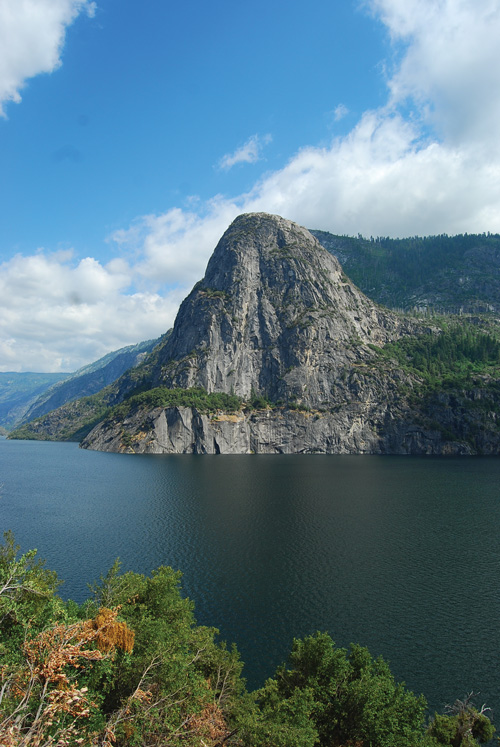
The eight-mile long, 300-foot deep Hetch Hetchy Reservoir holds 360,000 acre-feet of water, and the dam itself is an impressive structure, although Marshall scoffs at the popular wisdom casting it as “a marvel of engineering,” and dryly quips, “so was the Titanic.”

Native American remains were buried underwater when it was built, Marshall told us as we peered out over the towering dam wall, and 67 lives were lost during construction. As we rounded the perimeter of the man-made water body, sweating in the summer heat and saddled with gear, he asked us to imagine peering down into a dramatic sloping valley instead of what it looks like in its current state, which is a lake.

“Don’t call it a lake,” he insisted. Restore Hetch Hetchy regards the reservoir as an unnatural blemish that should never have been imposed upon a scenic and biodiverse environment in a national park. According to Mark Cedorborg, an ecological restoration expert with Hanford ARC and a Restore Hetch Hetchy board member who joined the trip, it wouldn’t take long for the natural ecosystem to bounce back if the water were removed, recreating a rare wildlife habitat that would mirror Yosemite Valley.

Sierra Club founding president John Muir would have sided with them, of course. The famous ecologist wrote passionately about the valley and vehemently fought the effort to submerge it. At the time, a chorus of opposition arose against flooding Hetch Hetchy — and that was before modern science documenting the impacts dams have wrought on the environment.

A black-and-white image of Michael O’Shaughnessy, the civil engineer behind the project, is posted on an info kiosk beside the dam, his eyebrows arched in a wizard-like, calculating gaze as he uses a pointer to mark the spot on a map of San Francisco’s watershed.

As things stand today, Hetch Hetchy Reservoir is a crucial storage facility for drinking water. Freshwater flowing from the Tuolumne River through the glacial formation accounts for 85 percent of SFPUC deliveries to about 2.5 million customers in the city and on the peninsula.

Hetch Hetchy is unique in that it’s just one of a handful of water systems nationwide that uses chemical treatment and ultraviolet disinfection, but no filtration, to purify fresh water that is transported along a gravity-fed system down to the city.

SFPUC spokesperson Tyrone Jue said Hetch Hetchy water does not require filtration “because basically, it’s a giant granite basin there in the reservoir, so there’s no sedimentation.” He added that the water quality is exceptionally high. “It’s high up in the watershed. The higher up in the watershed, the better it is.”

Restore Hetch Hetchy has submitted a number of proposals to ensure that San Francisco could still receive adequate supplies without the reservoir, including constructing a new intertie at Don Pedro Reservoir, which lies downstream from Hetch Hetchy, to get drinking water supplies from there instead.

Under this scenario, the SFPUC would continue to get its water from the Tuolumne River — but it would have to build a new filtration system to treat it because the water quality would be worse and the city would lose its federal waiver.

That’s an expensive consideration, particularly at a time when city coffers are depleted, critical services for vulnerable populations have been gutted, and taxpayers are wary of authorizing costly new endeavors.

Marshall defends the cost by asserting that the current system is flawed; the lack of filtration makes San Francisco’s water more susceptible to contamination from nasty microorganisms like cryptosporidium and giardia, he says.

“San Francisco has a unique health demographic in that over 5 percent of the people that live in the city have compromised immune systems, if you just look at people who are HIV positive,” he said. “Ultimately, San Francisco is going to be forced to filter its water, so why are we kicking this can down the road?”

But filtering water at the residential level would be far cheaper than tearing down the dam. Jue pegs the cost of a new filtration system at somewhere between $3 billion and $10 billion, but Marshall rejects that estimate as “just crazy.”

So we called Xavier Irias, director of engineering at the East Bay Municipal Utility District. “Ten looks a little high, but the three sounds very credible,” Irias said, acknowledging that there were many complicating factors that could affect cost. Ultimately, he said, the cost range could be anywhere from half a billion to the single-digit billions of dollars.

“With the filtration costs, not only are you talking about building a facility to filter the water, you’re now talking about increased power consumption to basically power those filtration plants,” Jue noted. “You’d have to start pumping water, which would require additional energy. And then on top of that, there’s the long-term operation.”

What’s more is that the quantity of water that San Francisco now depends on wouldn’t be guaranteed every year. According to an analysis done in partnership with the Environmental Defense Fund, reconfiguring the system to tap Don Pedro would result in 19 percent less water delivered from the Tuolumne in critically dry years, and similar losses would result from alternative proposals like tapping Cherry Reservoir, another storage facility in the SFPUC system.

Restore Hetch Hetchy has suggested that the shortfall could be made up in part with new water-conservation measures, something that cities arguably ought to be practicing anyhow since climate change threatens to bring about drier conditions in California’s watershed. It could also place the city in the position of having to go to the open market to purchase water for customers — just as dwindling water supplies raise the temperature between cities and counties scrambling to secure reliable deliveries.

“The Hetch Hetchy water system is a fully owned public asset,” Jue notes. “At a time when state and federal governments are struggling with even being able to close our budget deficits, to even look at dismantling an environmentally sound, cost-efficient water system that delivers water to 2.5 million people is sort of outrageous.”


POWER

In addition to capturing the flow of pristine Tuolumne River water that eventually makes its way into the city’s plumbing network, O’Shaughnessy Dam is a key component of the SFPUC-owned hydro-electric system, which produced 1.7 billion kilowatt hours of power last year with no greenhouse gas emissions.

If efforts to advance the cause of a public power system resurfaced in San Francisco, having the full capacity of the Hetch Hetchy hydro-electric generation in place would be vital. Juice for city streetlights, Muni’s light rail cars, the chandeliers adorning the Board Chambers in City Hall, and countless other municipal uses are derived from this gravity-fed system, which provides roughly one-fifth of San Francisco’s overall energy needs.

City departments pay three or four cents per kilowatt-hour, less than what it costs to generate the power. If all the hydro-electric power were eliminated and substituted with PG&E power, the city would get pinned with $32 million in additional costs annually, and its carbon footprint would expand by more than 900 million pounds of greenhouse-gas emissions, according to the SFPUC. However, a technical report produced by the Environmental Defense Fund suggests the city would only suffer a 20 percent decline in the hydro-electric output, since operations at other SFPUC reservoirs would continue.

The hydro-electric system also generates revenue through the sale of excess power to Turlock and Modesto irrigation districts, but that would come to an end if the generation capacity fell by 20 percent. Restore Hetch Hetchy estimates this loss to be around $10 million annually.

“Whenever we sell the power to Modesto and Turlock, that revenue then goes to fund programs like GoSolarSF, and all of our energy-efficiency retrofits of municipal facilities,” Jue explains. If the city lost its ability to sell off this excess supply, “We would no longer be getting power revenue at all, which we’re using to help fund community choice aggregation.”

Fraught with problems as it is, the city’s effort to launch a community choice aggregation program offering residential customers an alternative to PG&E nevertheless holds promise as a powerful green shift for a major metropolitan hub. For all the ecological benefits to Yosemite, restoring Hetch Hetchy could wind up undercutting the fledgling green power initiative, and the upshot would be a boon for PG&E. Coupled with the fact that ceding control of the valley back to the National Park Service could strip the city of its mandate for public power, the utility giant would benefit tremendously from this plan.

All of this makes it somewhat surprising that District 5 Sup. Ross Mirkarimi, a longtime champion of the cause of public power, appointed Marshall to serve on the SFPUC Citizens Advisory Committee, a move that rankled SFPUC staff.

“I’ve known Mike many years and have found him to be whip smart when it comes to complicated policy issues,” Mirkarimi told the Guardian when asked about this. “He knows that I am an unwavering supporter for public power and that I’d hope his advocacy on the SFPUC continues to advance and innovate our locally-driven clean energy objectives.”


POLITICS

The concept of bringing back Hetch Hetchy Valley originated with the Sierra Club in 1999, and several mainstream environmental organizations have lent support for the cause although few have made it a high priority. Nevertheless, there’s plenty of financial backing and support from key political players to keep the vision alive.

Democratic County Central Committee Chair Aaron Peskin, a member of Restore Hetch Hetchy’s national advisory board, told me he’s been active with the group for at least a decade, making him a rare exception among the city’s political leaders.

“San Francisco is a remarkably sophisticated town that is technologically advanced and environmentally advanced, and this is an opportunity to right one of the most destructive environmental wrongs,” he said. “It’s time to start a local and national conversation.”

He acknowledged that there were a lot of technical issues to contend with, saying, “It should only be done in a way that makes sure San Francisco and communities that rely on the system are taken care of.”

Major funders backing Restore Hetch Hetchy include retired businesspeople from the financial sector, Patagonia founder Yvon Chouinard, council members of the Yosemite Conservancy, and Lance Olson, a Restore Hetch Hetchy board member and partner in Olson Hagel & Fishburn, LLP, a prominent Sacramento legal firm that represents the California Democratic Party and elected officials.

Other influential and politically connected individuals have joined the effort as well. Marshall assured me that “no one from PG&E has given us a dime.” Yet the project still faces some powerful opponents. “I have opposed removing the O’Shaughnessy Dam in Hetch Hetchy Valley for decades and I remain opposed,” U.S. Sen. Dianne Feinstein told the Guardian. “Draining the reservoir would endanger San Francisco’s water supply, further jeopardize California’s water infrastructure and impose a huge financial burden on the state.”

Scribe’s Guide to Playa Prep

32

steve@sfbg.com

PLAYA PREP This is a crazy time of year for burners, when they begin to realize just how overly ambitious their art projects actually are, when the August calendar seems to shrink as to-do lists grow, and when procrastination morphs into panic — all of it laced with a giddy, distracting excitement about the dusty adventures to come.

Don’t worry, fellow burners, Scribe is here to help. I’m way too busy right now to actually come help weld your art car or hot glue your costume (unless you’ve got stuff or skills that I may need, in which case we can maybe work something out) but after years of deep immersion in this culture, I do have a few tips and resources for you.


ATTITUDE

The most important thing to bring to the playa with you is the right attitude. It’s right up there with your ticket at the very top of the list. As I worked on this guide, I posed the question “What’s the most important thing you bring to the playa?” to online burner hives, and most of the answers I got back had something to do with attitude.

Whether you’re a nervous newbie or salty veteran, it’s important to leave your expectations at home and just be open to whatever experiences await you. Intention is everything out there, and if you try to always maintain an open mind, a loving heart, and a sense of humor, everything you need will just flow your way.

It isn’t always easy. When your project breaks, or the dust won’t stop blowing, or your lover squashes your heart, or some yahoo behaves in a way that strikes you as somehow un-Burning Man, it’s natural to let your anxieties creep up. But you’ve got to let it go, because it’s all going to be OK, it really is. When all else fails, just breathe.

It is the breaking through those difficult moments and coming out the other side — enduring through things that feel like they may break you — that makes Burning Man feel so transformative. It is a cauldron, and you may not come out in the same form you went it, but that’s part of why you go.


GETTING AROUND

You’ll need a motorized vehicle to get to Burning Man — and art cars can be a fun way to get around when you’re there, a sort of surreal public transit system — but if you don’t have a good bicycle then you’re at a decided disadvantage in fully experiencing Black Rock City, the most bike-friendly city on the planet while it exists. And that’s never been more true than this year, when early reports indicate that the wet winter has left the playa packed solid and perfect for pedaling.

Form and function are equally important when it comes to your bike. It needs to be in good mechanical condition (and with enough tools and patch kits to keep it that way) and correctly sized to your body, ideally with a comfortable, upright position and basket for your stuff. And you also need to decorate it and make it unique, both because making art is the essence of Burning Man and so you can easily find it amid a sea of bikes. Form and function, they’re like two wheels rolling together.

Although the Borg, a.k.a. Black Rock City LLC, recommends that you bring a bike lock, I’ve personally never used one and never had a problem. Sure, bike thefts happen, but I believe they’re almost always crimes of opportunity or drunken mistakes involving nondescript bikes, not unique rides like mine that I could spot 100 yards away.

I’m convinced that half the people who think their bikes got stolen actually just lost them. The playa can be a very disorienting place, with art cars and other visible markers moving around — and even one’s own brain conspiring against locating one’s bike. So illuminate your bike well, ideally with something that sticks up high the air, and leave your lights on as you explore on foot.

Speaking of which: wear good, comfy shoes. Most costumes should stop at the ankle at Burning Man, particularly if you’re prowling the playa


SNEAKING IN

In honor of the mad scramble for tickets after Burning Man sold out more than a month before the event for the first time in its 25-year history, I’m offering some thoughts on sneaking into the event. Given how many people could find themselves stuck with counterfeit tickets or otherwise unable to get in this year, it seems like something that any thorough guide should cover.

Now, before everyone jumps all over me, telling me that I’m endangering lives and undermining the spirit and the stability of the event, let me make clear the spirit in which I’m offering this advice. Just think of it like a hacker publicizing the security vulnerabilities of a beloved institution — hopefully the Borg will read this too and do what it can to either plug the holes or somehow take pity on the desperate souls stuck outside the city’s gates.

First of all, you gotta know what you’re getting yourself into. Gate crew takes this shit very seriously, thoroughly searching every car and trailer, and looking into hiding spots that you probably haven’t even thought of. Many of them take real pride in this, some thoroughly stomping on rolls of carpet that might contain a stowaway, potentially adding injury to your insult.

Here’s the worst part: It is official Burning Man policy that when stowaways are found, everyone in that vehicle gets his or her tickets torn up. And burner brass says it will beef up security this year, including more people at the gate and more people scanning the open playa with night-vision goggles and fast interceptor cars.

Every year, they catch about 30 people trying to sneak it. “We’re very confident that we catch all the stowaways,” Borg member Marian Goodell tells us. But we all know that can’t possibly be true, right? There are playa legends of a contortionist who puts herself in a packing bin and gets in every year, and I’ve met people who claim to have snuck in both at the gate and over the open playa.

So, if you gotta do it, my best advice is to find a confederate on the inside, such as someone on Gate crew who owes you or will take pity on you or a bribe from you. That’s how many coyotes do it at the US-Mexico border, and it could work here too. There aren’t any wristbands at Burning Man, so once you can weasel your way in amid the confusion at the gate, you’re in.

Skydivers also have a pretty good shot at getting in, even though they’re likely to be greeted on the ground by someone asking for their tickets. But, it’s a big city, and if you’ve got some skydiving expertise and you’re able to rapidly change directions during the final phase of your descent, you might just make it.

There are also ways to take advantage of human oversights, particularly during the early arrival period before the event begins. There are often openings in the gate briefly left unguarded in the early days, as we discovered last year after a trip to the reservoir. Or sometimes, after thoroughly searching the car, the person at the gate will forget to tear your ticket. And believe it or not, sometimes people on the inside end up with spare tickets for friends who couldn’t make it. Any untorn tickets can be spirited out by people making runs into nearby Gerlach for supplies.

But in closing, let me just reiterate that buying a ticket is part of the “radical self-reliance” principle that is central to the burner ethos, so do yourself and your community a favor and find a ticket, or accept that you may just have to sit this year out. Don’t worry, we’ll make more.


FOOD AND SHELTER

In preparing for Burning Man, it’s always helpful to remember Maslow’s Hierarchy of Needs, which instructs us that we need to see to our basic needs at the bottom of the pyramid before we can even think about approaching the enlightenment at its pinnacle. And that begins with food and shelter.

Contrary to common misconceptions, you don’t need an RV or trailer on the playa — and it’s too late to get one at this point anyway. Frankly, you’ll be fine in a cheap pup tent as long as you place it under a sturdy shade structure, such as the 10-by-20-foot steel carports that are ubiquitous on the playa, or a cheaper shade structure with poles reinforced by PVC or something to help it from being flattened.

You may need to make adjustments during the course of the week, but jerry-rigging your shit is just part of the fun. Or if that’s not your cup of tea, more and more burners in recent years have been building their own yurts or turning to custom-made designs like the Playa Dome Shelters from Shelter Systems (www.shelter-systems.com/playadomes.html).

For food, just try to keep it simple, nutritious, and free of unnecessary waste. That means lots of simple snacks and easy meals, such as those you make ahead of time and reheat. There are also some good entrepreneurs out there that have perfected this approach, such as Gastronaut SF (www.gastronautsf.com/playa-provisions), which makes meals that you boil in the bag, which even allows you to reuse that water.

And don’t forget to take your vitamins because playa life can really take it out of you. Dr. Cory’s Playa Packs (www.drcory.com) are one of many good companies that understand what nutrients you’ll need and try to provide them.


SHOPPING

Let’s face it, for all the talk about decommodification and intentional communities and all that hippie crap, you’re going to need stuff at Burning Man. Lots and lots of stuff. Luckily, San Francisco is a great place to get it, and here are some of my personal favorite spots to shop for my playa gear.

Mendels This art supply store has everything you need for your costumes and other Burning Man projects, and many things you didn’t know you needed. For example, when I was looking for a cool covering for my bike years ago, I found tubes of thick acrylic paint that dries hard (now known as 3-D Paint), which has lasted for years and drawn compliments the whole time.

1556 Haight, SF. (415) 621-1287, www.mendels.com

Fabric Outlet Fake fun fur has become a staple item for Burning Man costumes and art projects, particularly as the styles and varieties of it have gotten better. And this place has the coolest fake furs in town, as well as a huge selection of other fabrics, patterns, and sewing kits.

2109 Mission, SF. (415) 552-4525, www.fabricoutletsf.com

Multikulti This is the best place in town to find a great selection of groovy sunglasses for just $6 each — and you’ll want a good selection of shades out there to go with your costumes — as well as a variety of other accessories and costumey geegaws to accent your Burning Man ensemble.

539 Valencia, SF. (415) 437-1718

Five and Diamond If there is a store that grew directly out of the feather-and-leather fashion aesthetic that has come to take center stage on the playa, this is it. From groovy utility belts (important when your costumes lack pockets) to elaborate leather outer wear to some of the coolest custom goggles that I’ve found (mine has a built-in light and both clear and shaded lenses), this place has great — if slightly pricey — stuff.

510 Valencia, SF. (415) 255-9747, www.fiveanddiamond.com

Held Over My favorite second-hand clothing store creates special racks of Burning Man clothes this time of year, but I always prefer to assemble my own outfits from their great selection of unique vintage and specialty clothes, including an entire room of tuxedos and other retro formal wear.

1543 Haight, SF. (415) 864-0818

Distractions The oldest walk-up Burning Man ticket outlet, Distractions knows just what burners need, offering a wide variety of playa-oriented clothing and accessories that you’ll need, from goggles to EL wire strips to pipes and other smoking paraphernalia.

1552 Haight, SF. (415) 252-8751

Cool Neon This Oakland-based company specializes in electro luminescent wire, the staple item for illumination on the playa (and whether you’re walking or on a bike, you will need to be lit-up out there). Cool Neon makes the rounds at many of the fairs and trunk shows, but you can also place orders for shipment or arrange pickups at its office at 1433 Mandela Parkway in Oakland.

www.coolneon.com

Discount Builders Supply Rather than spending your hard-earned money at Home Depot or some other chain store in the burbs, this locally owned business has everything you need to construct and decorate your project, or see to your sundry personal needs. They’re also used to burners with strange requests, so they give good advice.

1695 Mission, SF. (415) 621-8511, www.discoutbuilderssupplysf.com


WORKSPACES

The project. It is the essence of Burning Man, whether it’s the fun fur and EL wire you’re putting on your bike, the bar or showers your camp is building, or some ridiculously ambitious artwork that you’re creating with a crew of hundreds. Black Rock City is a series of thousands of these individual projects, all of which are coming together right now. And if you’re looking for some help finishing (or starting) yours, here are some resources you can tap.

The Crucible The Crucible is a venerable nonprofit institution that offers a wide variety of arts and crafts classes and resources in a state-of-the-art facility in West Oakland, with many burners among its staff and clients. As the longtime host of the Fire Arts Festival, this place knows its stuff.

1270 17th St., Oakl. www.thecrucible.org

CELLspace The Flaming Lotus Girls and many other key burner art collectives were born here, and his facility continues to provide the expertise and tools to bring Burning Man to life, year after year.

2050 Bryant, SF. www.cellspace.org

Techshop The new kid on the block, but one of the most technologically advanced, Techshop is a DIY workshop with amazing tools and experts on staff. Join its Aug. 15 EL wire workshop or other upcoming classes catering to burners.

926 Howard, SF. www.techshop.ws

American Steel Also known as Big Art Studios, this massive warehouse houses many of these biggest projects now bound for Burning Man. It may not have the structural support of places like the Crucible, but if you’re looking for knowledgeable burners to work through some problem, American Steel is brimming over with them.

1960 Mandela Parkway, Oakl. www.americansteelstudios.com

Burning Man costume creations If it’s sewing or other costuming help that you need, there are lots of local designers who might lend a hand (see “What not to M.O.O.P.” in this guide). Or you can stop by these Aug. 11 or Aug. 25 sewing circle meetups listed at www.meetup.com/Burning-Man-Costume-Creations


ART

Here are a few of the major installation artworks with Bay Area connections that I’m excited to see on the playa this year:

Charon by Peter Hudson Peter Hudson and his large volunteer crews have created some of the most dynamic art pieces in Burning Man history, zoetropes that use motion and strobe lights to animate the characters they create: the swimmers of Sisyphish, the divers of Deeper, the snake and monkeys of Homouroboros, and the man reaching for the golden apple of Tantalus. This year, Charon the boatman crosses the river Styx into Hades and, well, you just really gotta see what could be his best piece yet. As the artist says, “Charon asks them to reflect on their own mortality and ponder how to give and get the most from their brief time here on earth.”

Tympani Lambada by the Flaming Lotus Girls Combining fire, steel, light, and sound on the massive scale that we’ve come to expect from the Flaming Lotus Girls, Tympani Lambada simulates the structure of our inner ears, which control not just hearing but balance and perception. As always with this crew, this project promises to be space as occupy and interact with (usually with an unbelievable sense of awe) rather just a structure to see. And as they’ve been doing for many years (see “Angels of the Apocalypse,” 8/20/05), the dynamic crew built this creation right out at the Box Shop on Hunters Point (with an assist for American Steel, where some of its longest sections are being built).

Truth and Beauty by Marco Cochrane Following up last year’s amazing Blissdance, which is now on display on Treasure Island, this crew hoped to make an even larger female nude sculpture of the same model (55 feet this time), but their fundraising fell a little short so they couldn’t complete it. But even in the abbreviated form they’re bringing to the playa this year — just the torso from knee to shoulder, but well-anchored that it’s climbable — it should still be something to see.

Temple of Transition, by International Art Megacrew The Temple is always a special place at Burning Man (see “Burners in flux,” 8/31/10), and this year promises to be as spectacular as it is spiritual. The project is headed by a pair of builders known by their nationalities, Kiwi and Irish, and built mostly in Reno by a crew of committed volunteers from more than 20 countries. It’s centerpiece tower, Gratitude, is a towering 120-feet tall, surrounded by and connected to five smaller towers: Birth, Growth, Union, Death, and Decay.

Otic Oasis Lightning (Burning Man’s attorney) and friends (including named artists Gregg Fleishman and Melissa Barron) wanted the quietest spot on the playa for this 35-foot wooden pyramid of comfy lounging compartments, a remote spot where even the music from art cars couldn’t reach. Their answer: at the very back of the walk-in camping area, a spot only reachable on foot by people intending to go there. Finally, a quiet spot to chill out.


PLAYA EVENTS

OK, I know that many of these events are music-related, and there are an untold number of quirky, weird things to do on the playa besides just rocking out to a DJ. But exploring what the hundreds of theme camps offer each year is part of the fun, and it’s too Herculean a task to sort through the voluminous information and offer you sound predictions.

But every year the music lovers among us compile their recommendations of the stops to hit that will be going off and filled with dancing fools, so I know those lists are valuable. And mine does include some other stuff as well, so just deal with it.

The future of Burning Man The 17 board members of The Burning Man Project, the new nonprofit entity being created to take over operations of Burning Man in coming years (see “State of the burn” in this guide), will be available to discuss the future of this culture. This is your chance to weigh in on what’s important to you and how the event should be governed into the future.

Everyday, 1 p.m.-2:30 p.m. at Everywhere Lane (near Center Camp)

Lee Coombs This British-born DJ has long been a great supporter of Burning Man art projects — and he always plays fun sets — so come check him as the playa’s best daytime dance party camp starts to work it out.

Tuesday, 5 p.m.-6 p.m., Distrikt (9&F)

Unicorn Stampede

The perverts from Kinky Salon love getting horny on the playa, and this time they’re getting literal as they dress as unicorns and stampede across the playa, spreading their joy and juices onto unsuspecting burners and ending up at the Walkout Woods art piece. What does all that mean? Bring a horn, leave your inhibitions, and come find out.

Wednesday, 7-9:30 p.m., gather at The Man

Shpongle OT’s regular Wednesday night White Party — which has included many epic performances over the years, and this year include big draws EOTO, Infected Mushroom (both doing live sets on two stages OT is setting up for live music this year) and Christopher Lawrence, at midnight, 1:30 am and 3 am respectively — welcomes the dawn with pysbient music innovators Shpongle, which is already generating lots of excitement.

Thursday, 5:45 am (sunrise set), Opulent Temple (10&B)

Deep End reunion It’s like family day at Distrikt as the core San Francisco-based DJs that helped launch the original Deep End day parties play successive one-hour sets, with Syd Gris followed by Tamo, Kramer, and then Clarkie. Buckle up, everyone, because this could get ugly.

Thursday, 2-6 p.m., Distrikt (9&F)

Cuddle Ocean Upping the ante on the stereotype of ravers heaped into cuddle puddles at Burning Man, some instigators from last year’s Temple of Flux crew are seeking to create a Cuddle Ocean of thousands of burners heaped all over each other in the deep playa. Come feel the love.

Thursday, 6-8 p.m., between the Man and the Temple

Bootie BRC Adrian, Mysterious D, and the rest of the popular Bootie SF music mashup crew will be throwing a dance party specially mixed for your on-playa pleasure — with actual words!

Thusday, 8 pm-???, Fandango (Esplanade&4)

Circle of Regional Effigies burn Regional events have become an important part of the Burning Man culture, and this year 23 of them will build wooden effigies in circle around The Man. And then, as tends to happen to our effigies, they will all burn — simultaneously!

Thursday, 9 p.m., around The Man

Critical Tits This women-only topless bike ride has been a playa tradition for many years, so cruise by to cheer them on and offer your encouragement for what is a very freeing experience for many of the participants. Besides, who doesn’t like tits?

Friday, 4-5 p.m., The Man

Space Cowboys Hoedown Legendary SF-based sound collective the Space Cowboys has a tradition of driving its mobile music vehicle the Unimog out to the “biggest, baddest art piece” on the playa for a big dance party every year, which art cars with speakers and radio receivers can also relay, create a fun circle of sound. And this year, the winner is…The Flaming Lotus Girls’ Tympani Lambada.

Friday night at Tympani Lambada

Distrikt Come ride the daytime dance party train to the end of the line with DJ Kramer spinning until someone drags him off the stage to get ready for the burn.

Saturday, 4-??? at Distrikt Camp (9&F)

Scumfrog Dutch-born DJ Scumfrog has been rocking the playa every year since he first camped with us at Opulent Temple in 2004, and as readers of my book know, he’s a Burning Man true believer who just loves this culture, so he always brings his A-game. This is the place to be as the sun rises on final full day of Black Rock City.

Sunday, 4 am-sunrise, Disorient (2&Esplanade)

Tribes of Burning Man signing Yours truly, Scribe, will be on stage leading a discussion of issues raised in my book, The Tribes of Burning Man: How an Experimental City in the Desert is Shaping the New American Counterculture. Study up by ordering a signed copy now from www.steventjones.com and join in the debate, or just come heckle me for this shameless plug.

Sunday 4 p.m., Center Camp Stage

Steven T. Jones, a.k.a. Scribe, is the Guardian’s city editor and the author of The Tribes of Burning Man: How an Experimental City in the Desert is Shaping the New American Counterculture, which grew out of a series of stories in the Guardian that ran from 2004 through 2010.


Replacing the Concourse

4

news@sfbg.com

In one of the few remaining San Francisco neighborhoods untouched by gentrification, there is a proposal to demolish the Concourse Exhibition Center and replace the quintessential Showplace Square building with a market-rate residential project, which the developer says will be rental apartments.

This is the first major project in the new Eastern Neighborhoods Plan that will change the light industrial neighborhood where brick and mortar meet interior design, raising questions about whether the development would be sustainable, transit-oriented, and family-friendly.

Home to annual events like the Green Festival and the KPFA Craft Fair, the Concourse is where mom and pop vendors share their wares in an affordable venue — one of the few remaining in the city.

“Since ’96,” recounted Alan Van De Kamp, director of sales for the Green Festival, “they’ve been trying to sell it, to tear it down. You never know from year to year … You imagine at some point, somebody’s gonna say it’s time.”

Though nothing has been approved, the current proposal by developer and Concourse owner Bay West Development, first introduced in 2000, has come the farthest yet. The project will be considered for approval by the Planning Commission once the environmental review process is complete, which could take up to six months. Public comments on the project will be accepted until August 8.

The proposed project contains two sites, one at 801 Brannan Street and one at 1 Henry Adams Street, which would result in a total development of up to 674 residential units, 43,037 square feet of retail space, and 673 parking spaces. Under the city’s inclusionary housing laws, 221 of those units would be affordable (71 to be built on site and 150 dedicated to the city for development). Of the total parking spaces, 166 spaces would replace existing parking spots at the site.

Bay West, developer of the San Francisco Design Center, has owned the Concourse building for 30 years and wants to demolish and rebuild as part of the Eastern Neighborhoods Rezoning and Area Plans, the blueprint for development in a part of the city dominated by working class residents.

That controversial plan was in development for years, during which there was a moratorium on approval of large projects, and it was finally adopted in 2008. It was created to redevelop The Mission, Showplace Square/Potrero Hill, East SoMa, and the Central Waterfront — 7 percent of the city’s 47 square miles — over 20 years.

“It’s our feeling that the building itself is beyond its use as an exhibit hall and we’re replacing it with housing units,” said Sean Murphy, a partner at Bay West.

The Planning Commission heard the draft Environmental Impact Report for the proposal on July 28. At the hearing, the commissioners expressed interest in seeing the progression of the development, but not all were convinced.

“There is a certain amount of vagueness,” said Commissioner Kathrin Moore. “This EIR is ultimately tempered by the strong policy issues that underlie building in the Eastern Neighborhoods and at this moment I don’t quite see that.”

The proposal has left some questions unanswered, such as, where will the small vendors go to sell their wares? Bay West has suggested exhibition halls like the Cow Palace or Moscone Center, but Green Festival organizers say that isn’t realistic for everyone. “We would lose some of our vendors if we went to Moscone,” said Van De Kamp. “There’s some people that can’t come. A lot of the green economy is about mom and pops. They can’t afford it.”

Sue Hestor, a land-use attorney who opposes the development, asked vendors who use the Concourse how important leaving the center would be. “For a lot of people,” she said, “it meant the difference for them being viable or not.”

It would be a major challenge to move, said Robbie Kowal, the co-director of Sea of Dreams, a huge party and concert that will hold its seventh annual celebration this New Years Eve at the Concourse. “There’s the Cow Palace, and the Design Center, but it’s not that big, not a place where you can put a proper concert on one side and a multitude of different kinds of spaces [on the other]. The Sea of Dreams’ success is attributable to the proper use of the Concourse.”

With 125,000 square feet of space that can be split into its west and east halls and a mezzanine, the Concourse building has catered to annual festivals and events for more than 20 years, holding as many as 6,800 people at once.

“There’s room for so many different communities in there. We love our home,” said Kowal. “It’s a really unique and wonderful space.”

The redwood frame of the Concourse, accented by glass fronts that allow for natural lighting, used to be a furniture mart and then a fashion and jewelry mart before it was an event center. The project proposal’s architect, David Baker and Partners, has already designed many of the new buildings in Showplace Square.

Bay West isn’t worried about where the Concourse shows will go. “Most of our shows use less than 20,000 square feet,” said Murphy. “The larger shows would go to the 100,000 square foot San Mateo County Event Center.”

Tony Kelly of the Potrero Boosters Neighborhood Association says the intention of the plan is to reduce the light industrial area by zoning more of it for residential uses, protecting only about half of it and converting the remainder.

“This is an area where we don’t have enough parks, or transit. The project would double the population, and we don’t have enough new infrastructure to handle it,” he said. “It’s essentially a ticking time bomb that the city’s going to have to get a handle on at some point, or these residents are going to be miserable.”

Though the project would create at least an acre of publicly accessible open space, some residents wonder if it’s enough, and the concern about insufficient transit remains.

“It seems to me that once again there is too much parking near a freeway entrance, inadequate transit that is not likely to improve significantly once the Transit Effectiveness Project [a city plan for improving Muni service] is implemented,” said activist Sue Vaughan, who rides her bike at least part way during her commute from the Richmond District to REI at 840 Brannan Street for work.

“This is exactly the kind of place that attracts (commuters),” said Hestor. “There’s too much parking. There’s crappy transit. It totally undermines any idea of sustainable development.”

But at the commission hearing, Commissioner Hisashi Sugaya didn’t think Hestor’s argument had merit. “Parking is not an environmental impact as far as the city is concerned,” he said.

Vaughan says that Muni managers have been absent from several development meetings in the Eastern Neighborhoods area. “No one from Muni was represented on this panel discussion about the Sustainable Communities Strategy,” she said, referring to a July 6 meeting convened by the Planning Department to discuss the importance of building housing next to accessible transit.

The Concourse is scarcely accessible by bus lines 10 and 19, but with a growing population in Showplace Square, it wouldn’t be enough, says Vaughan. “We’re moving forward with all these projects with lots of parking near freeway entrances, which makes it seems like SF is becoming a bedroom community for Silicon Valley. You have an impact on Muni when that happens. With more cars, there’s more congestion for buses.”

Bay West argues that the apartments it plans to build at the Concourse site would be “workforce housing” with less than 1:1 parking (actual parking would work out to .79:1 at the 801 Brannan site and .64:1 at the One Henry Adams site). More than 40 percent of the units would be larger two-bedroom units intended for families.

Yet Kelly says that that by offering the apartments at market rates, none are appropriate for new families. “For all the talk about keeping families here, then how come we’re not building family housing?”

It’s a max-out project, says San Francisco architect Dick Millet, of the Potrero Boosters Neighborhood Association. “In the end, under their breath, they’re all going to say, I wouldn’t live there myself.”

Film Listings

0

Film listings are edited by Cheryl Eddy. Reviewers are Kimberly Chun, Michelle Devereaux, Max Goldberg, Dennis Harvey, Louis Peitzman, Lynn Rapoport, Ben Richardson, and Matt Sussman. For rep house showtimes, see Rep Clock.
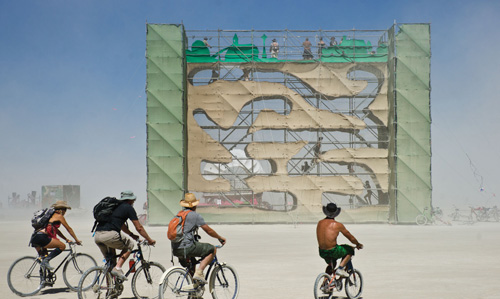
SAN FRANCISCO JEWISH FILM FESTIVAL

The 31st San Francisco Jewish Film Festival runs through August 8 at the Christopher B. Smith Rafael Film Center, 1119 Fourth St., San Rafael; Oshman Jewish Community Center, 3921 Fabian Way, Palo Alto; and Roda Theatre at Berkeley Rep, 2025 Addison, Berk. For tickets (most shows $12) and a full schedule, visit www.sfjff.org.

OPENING

*Between Two Worlds See “Whose Voice?” (1:10) Roxie.

The Change-Up This brom-com just might go down as the one where Ryan Reynolds proves his acting chops by playing a creepy Peter Pan and an upstanding family man with Jason Bateman’s physical tics. And it’s almost good enough to wipe out those terrible memories of Reynolds’ dances with CGI in Green Lantern. Yet 2011 summer movies’ MVP Bateman still manages to steal all the best scenes as both the straight man and the kidult-in-a-grown-up’s-body: namely those R-pushing moments he’s changing diapers and taking a face full of baby poo, coming on like a pink-Polo’d jackass at a big-money meeting, and watching the woman of his dreams saunter into the can to cope with backfiring Thai grub. It’s the stuff of fantasy — as well as some clever writing and considerable buddy-buddy chemistry — when career-climbing, do-right lawyer Dave (Bateman) and perpetual playa Mitch (Reynolds) voice envy for each other’s lives while pissing into a magical fountain. The old switcheroo inexplicably occurs the next morning when each chum find himself in the other’s body. Fortunately the Freaky Friday (1976) kookiness that ensues rises a bit above the safe norm by plunging headlong into all the cringey discomfort that comes with watching babies toy with cleavers and electrical outlets. The Change-Up is completely ludicrous, fo’ sho’, and never really strays from the reassuring confines of its story arc, but the laughs accompanying its morning-afters will satisfy more than any new Hangover. (1:52) (Chun)

*Crime After Crime See “Time Served.” (1:33) Elmwood, Roxie, Smith Rafael.

The Devil’s Double Lee Tamahori directs Dominic Cooper in this 80s-set drama about Saddam Hussein’s sinister son Uday and his reluctant body double. (1:48)

The Guard Irish police sergeant Gerry Boyle (Brendan Gleeson) is used to running his small town on his own terms — not in a completely Bad Lieutenant (1992) kind of way, though he’s not afraid to sample drugs and hang with hookers. More like, he’s been running the show for years, and would prefer that big-city cops stay the hell out of his village. Alas, a gang of drug smugglers is doing business in the area, so an officious group of investigators from Dublin (horrors!) and America (in the form of an FBI agent played by Don Cheadle) soon descend. His mother’s dying, his brand-new partner’s missing, and between all the interlopers on both sides of the law, Boyle’s having a hard time having a pint in peace. Good thing he’s not as simple-minded as all who surround him think he is. Writer-director John Michael McDonagh (brother of playwright Martin, who directed 2008’s In Bruges — also starring Gleeson) puts an affable Irish spin on what’s essentially a pretty typical indie comedy, with some pretty typical crime-drama elements layered atop. Boyle’s character is memorably clever, but the film that contains him never quite elevates to his level. (1:36) Embarcadero. (Eddy)

*Magic Trip How to bottle the lysergic thrills and chills of a monumental road trip that marked the close of the Beat Generation era and the dawn of the hippie years? Remarkably, Ken Kesey and his Merry Pranksters did just that — and with the help of directors-writers Alison Ellwood and Alex Gibney, their efforts have been retrieved from the swamps of yesterday. You don’t have to be a Summer of Love easy rider, Kesey reader, Deadhead, or acid gobbler to appreciate the freewheeling energy and epoch-making antics of Magic Trip, which arrives well-outfitted in much invaluable, real-deal-y footage and audio of Kesey, driver Neal Cassady, and the proto-Merry Pranksters, shot during their 1964 trip from La Honda to the World’s Fair in NYC, off, on, and hovering 10 miles above the paint-strewn school bus named Further. Already viewed through the lens of Tom Wolfe’s The Electric Kool-Aid Acid Test, the trip unfolds in all its truly weird, silly, LSD-laden, improvised, awkward, flailing, freeing glory, as the filmmakers gracefully sidestep the audio sync problems that drove Kesey to give up on assembling the film himself. Instead Ellwood and Gibney contextualize the hijinks with voice-over interviews from Pranksters prepped to look back on the journey’s consciousness-expanding trips, both good and bad, and imaginatively animate memorable asides, including a tape recording of Kesey’s first LSD experiments as a Stanford student. “What long, strange trip,” indeed — and this affectionate document viscerally, wonderfully conveys why it changed lives as well. (1:47) Embarcadero. (Chun)

*Pianomania You think your job is detail-oriented, your bosses fussy? Walk a mile in the shoes of Stefan Knupfer, a Steinway technician — i.e. “piano tuner” — who must attend every minute aspect of each instrument’s inner workings, surrounding physical spaces, and their temperature fluctuations, idiosyncratically demanding players, etc. when preparing for either a live performance or studio session. “When I see the kind of life pianists have, I am very happy I can get off the stage when the public comes,” Knupfer explains. Nonetheless, he’s so dedicated to his job he has regular nightmares about strings breaking. His good-humored expertise and ingenuity make for engaging company on a multi-city itinerary, during which we meet a roll call of world-class virtuosi. Following this affable, unflappable protagonist over a year’s course, with an important Bach recording project at its end, this beautifully assembled documentary (a rare one these days shot on 35mm) by Lilian Franck and Robert Cibis should fascinate even those not especially attuned to classical music. (1:33) Opera Plaza. (Harvey)

Rise of the Planet of the Apes Fun fact: according to this origin story starring James Franco, the first supersmart apes were bred right here in San Francisco. (1:50)

Sarah’s Key Kristen Scott Thomas stars as a journalist in France who becomes deeply involved in a story she’s researching about the Jewish family forced by Nazis to vacate the home she now lives in. (1:42) Embarcadero.

ONGOING

Another Earth After serving a prison sentence for a youthful drunk-driving incident that killed two passengers in another car, Rhoda (Brit Marling) emerges no longer a blithe party girl but a haunted loner who prefers working as a high school janitor. Obsessed by her crime, she starts spying on the man it had left widowed and childless, a onetime composer (William Mapother) who like her has retreated into a solitary shell of depression. She finds a way to integrate herself (without revealing her identity) into his threadbare current existence, the two of them bonding over fascination with a newly discovered planet that appears the exact duplicate of Earth — complete with the possibility of our doubles living a parallel existence there. You can take Mike Cahill’s modestly scaled U.S. indie feature (cowritten with actor Marling) as a familiar drama about grief and repentance with a novel gloss of sci-fi, or as a sci-fi story with unusual attention to character emotions and almost no need of fantasy FX. Either way, it’s earnest, well-acted and interesting if not quite memorable; as has been noted elsewhere, the material could have fit just as effectively into a half-hour Twilight Zone episode. (1:32) Embarcadero, Sundance Kabuki. (Harvey)

*Attack the Block The Goonies go to a South London projects, with more gore, guts, and gumption? With good reason, writer, director, and Edgar Wright/Simon Pegg cohort Joe Cornish’s own project, Attack the Block, has been getting raves at fests for its effortless, energetic originality, discernible through its thick, glottal stop-chomping, Jafaican-draped local brogue. The question posed, ever so entertainingly: what happens when you pit the toughest kids on the block against a ferocious pack of outer-space critters — not quite out to serve man but rather sever him limb from limb? We start out seeing this gang of at-risk, risk-taking youth through the peepers of a vulnerable female mugging victim and neighbor, Sam (Jodie Whittaker)—they seem as scary as any alien invader and she wants to bring down the full force of the law on them. But the pack, led by Moses (John Boyega, who charismatically scowls like a young 50 Cent), has more pressing matters at hand: a mysterious creature has come crashing down from out of the sky, and naturally, being nasty terrors, they kill it, bringing down a intergalactic shit storm of trouble. Their favorite refuge: the top-floor weed room overseen by Ron (Pegg sidekick Nick Frost), where they attempt to suss out why they’ve become the prime prey for wolfish aliens out for blood. Throw in chills, bike chases, a resourceful use of elevators and dumpsters, and an epic, eerie dubstep theme by Basement Jaxx, and you have a very fun horror-thriller that declines to preach but manages to bring home a message reminiscent of Night of the Living Dead (1968). Consider this a whole-hearted, double-fisted antidote to the fearful vigilantism of films like 2009’s Harry Brown. (1:28) Metreon. (Chun)

*Beginners There is nothing conventional about Beginners, a film that starts off with the funeral arrangements for one of its central characters. That man is Hal (Christopher Plummer), who came out to his son Oliver (Ewan McGregor) at the ripe age of 75. Through flashbacks, we see the relationship play out — Oliver’s inability to commit tempered by his father’s tremendous late-stage passion for life. Hal himself is a rare character: an elderly gay man, secure in his sexuality and, by his own admission, horny. He even has a much younger boyfriend, played by the handsome Goran Visnjic. While the father-son bond is the heart of Beginners, we also see the charming development of a relationship between Oliver and French actor Anna (Mélanie Laurent). It all comes together beautifully in a film that is bittersweet but ultimately satisfying. Beginners deserves praise not only for telling a story too often left untold, but for doing so with grace and a refreshing sense of whimsy. (1:44) Elmwood, Lumiere. (Peitzman)

Bride Flight Who doesn’t love a sweeping Dutch period piece? Ben Sombogaart’s Bride Flight is pure melodrama soup, enough to give even the most devout arthouse-goer the bloats. Emigrating from post-World War II Holland to New Zealand with two gal pals, the sweetly staid Ada (Karina Smulders) falls for smarm-ball Frank (Waldemar Torenstra, the Dutchman’s James Franco) and kind of joins the mile high club to the behest of her conscience. The women arrive with emotional baggage and carry-ons of the uterine kind. As the harem adjusts to the country mores of the Highlands, Frank tries a poke at all of them in a series of sex scenes more moldy than smoldery. This Flight, set to a plodding score and stuffy mise-en-scene, never quite leaves the runway. Not to mention the whole picture, pale as a corpse, resembles one of those old-timey photographs of your great grandma’s wedding. These kinds of pastoral romances ought to be put out to, well, pasture. (2:10) Opera Plaza. (Ryan Lattanzio)

Buck This documentary paints a portrait of horse trainer Buck Brannaman as a sort of modern-day sage, a sentimental cowboy who helps “horses with people problems.” Brannaman has transcended a background of hardship and abuse to become a happy family man who makes a difference for horses and their owners all over the country with his unconventional, humane colt-starting clinics. Though he doesn’t actually whisper to horses, he served as an advisor and inspiration for Robert Redford’s The Horse Whisperer (1998). Director Cindy Meehl focuses generously on her saintly subject’s bits of wisdom in and out of a horse-training setting — e.g. “Everything you do with a horse is a dance” — as well as heartfelt commentary from friends and colleagues. In the harrowing final act of the film, Brannaman deals with a particularly unruly horse and his troubled owner, highlighting the dire and disturbing consequences of improper horse rearing. (1:28) Opera Plaza. (Sam Stander)

*Cameraman: The Life and Work of Jack Cardiff Cameraman: The Life and Work of Jack Cardiff is to a large extent exactly what is sounds like: a well-made documentary on one of cinema’s most prolific and well-regarded cinematographers. Featuring interviews with the elderly Cardiff himself as well as with Martin Scorsese, Kirk Douglas, Lauren Bacall, and others, Cameraman examines Cardiff’s career, from his beginnings in 1918 as a child actor through his early innovations with color film, his mastery of lighting, and his brief transition into directing. As much as this is a film about Cardiff, though, it’s also about the collaborative process of filmmaking and the artistry of cinematography. With big-name directors and actors soaking up the headlines, it’s easy to forget the talent behind the camerawork. Cardiff, who passed away in 2009 at the age of 94, was a true artist, as at ease with a lens as with a paintbrush. (1:30) Balboa, Smith Rafael. (Cooper Berkmoyer)

Captain America: The First Avenger OK, Marvel. I could get behind 2008’s Iron Man (last year’s Iron Man 2, not so much), but after Thor and now Captain America, I’m starting to get cynical about this multi-year build-up to the full-on Avengers movie, due in May 2012. Can even a superhero-stuffed movie directed by Joss Whedon live up to all this hype? There’s plenty of time to ponder, and maybe worry a little, with Captain America’s backstory-explaining picture now in theaters. Chris Evans stars as the 90-pound weakling who morphs into a supersoldier, thanks to the World War II-era tinkerings of a scientist (Stanley Tucci) and an inventor (Dominic Cooper as Howard Stark, a.k.a. Iron Man’s dad). The original plan for the musclebound shield-bearer (fighting Nazis, natch) gets waylaid a bit when the newly famous Captain America becomes a PR prop for the U.S. government; it’s abandoned entirely when a worse-than-Hitler foe, in the guise of power-obsessed Red Skull (Hugo Weaving), threatens the world. Directed by Spielberg cohort Joe Johnston, Captain America is gee-whiz enjoyable enough, but it’s very nearly the same movie as Thor, which no amount of Tommy Lee Jones (as a sarcastic army colonel) wisecracks can conceal. And here’s an anti-spoiler: there’s no post-credits surprise in this one, so you can bolt as soon as they start to roll. (2:09) Cerrito, Empire, 1000 Van Ness, SF Center, Sundance Kabuki. (Eddy)

Cars 2 You pretty much can’t say a bad thing about a Pixar film. Cars 2 is by no means Ratatouille (2007) or Wall-E (2008), but the sequel to the 2006 hit Cars offers plenty of sleek visuals and one-note gags under its hollow hood. If nothing else, Pixar seems to have overcome the dingy, dark glaze that plagues 3-D films. Directors John Lasseter and Joe Ranft return to beloved autos Lightning McQueen (Owen Wilson) and the “extremely American” Mater (Larry the Cable Guy). This time around, secret agents Finn McMissile (Michael Caine) and Holley Shiftwell (Emily Mortimer) come along for the ride while working to expose sabotage in the alternative fuel industry. Compelling chase sequences, explosions and more than a few jabs at cultural stereotypes follow suit. This is the lightest, silliest Pixar film to date, but you probably don’t have any business seeing it unless you’ve got a kid in tow. (1:52) SF Center. (Lattanzio)

Cowboys and Aliens Here ’tis in a nutshell: the movie’s called Cowboys and Aliens — and that’s exactly, entirely what you’ll get. Director Jon Favreau may never best 2008’s Iron Man (actor Jon Favreau will prob never top 1996’s Swingers, but that’s a debate for another time), but that doesn’t mean he won’t have a good time trying. Cowboys is a genre mash-up in the most literal sense; as the title suggests, it pits Wild West gunslingers (Harrison Ford as a crabby cattleman, Daniel Craig as an amnesiac outlaw) against gold-seeking space invaders who also delight in kidnapping and torturing humans. As stupidly entertaining as it is, this is a textbook example of a pretty OK movie that could have been so much better … if only. If only the alien characters had a little bit more District 9-style personality. If only the story had a shred of suspense — look ye not here for “spooky” and “mysterious;” this shit is 100 percent full-on explosions. If only Craig’s comically fine-tooled physique didn’t outshine his wooden acting. And so forth. (1:58) Balboa, 1000 Van Ness, SF Center. (Eddy)

Crazy, Stupid, Love Keep the poster’s allusion to 1967’s The Graduate to one side: there aren’t many revelations about midlife crises in this cleverly penned yet strangely flat ensemble rom-com, awkwardly pitched at almost every demographic at the cineplex. There’s the middle-aged romance that’s withered at the vine: nice but boring family man Cal (Steve Carell) finds himself at a hopeless loss when wife and onetime teenage sweetheart Emily (Julianne Moore) tells him she wants a divorce and she’s slept with a coworker (Kevin Bacon). He ends up waxing pathetic at a slick nightclub where he catches the eye of the well-dressed, spray-tanned smoothie Jacob (Ryan Gosling), who appears to have taken his ladies man stance from the Clooney playbook. It’s manly makeover time: GQ meets Pretty Woman (1990)! Cut to Cal and Emily’s babysitter Jessica (Analeigh Tipton), who is crushing out on Cal, while the separated couple’s tween Robbie (Jonah Bobo) hankers for Jessica. Somehow Josh Groban worms his way into the mix as the dullard suitor of Hannah (Emma Stone) in a hanging chad of a storyline that must somehow be resolved in this mad, mad, mad, mad — actually, the problem with Crazy, Stupid, Love is that it isn’t really that mad or crazy. It tries far too hard to please everybody in the theater to its detriment, reminding the viewer of a tidy, episodic TV series (albeit a quality effort) like Modern Family more than an actual film. Likewise I yearned for a way to fast-forward through the too-cute Jessica-Robbie scenes in order to get back to the sleazy-smart, punchy complexity of Gosling, playing adeptly off both Carrell and Stone. (1:58) 1000 Van Ness, SF Center, Sundance Kabuki. (Chun)

*Friends With Benefits If you see only one romantic comedy this summer about a sex-sans-pair-bonding pact between a girl and a guy saddled with intimacy issues — well, chances are, if you tend to see movies with premises like this, you probably already saw No Strings Attached. In which case, poor unlucky Friends with Benefits may be filed away in your brain as that other movie about fuckbuddies, the one in which Ashton Kutcher is played by Justin Timberlake and Natalie Portman (in a slightly eerie cosmic echo of last year’s Black Swan) is played by Mila Kunis. But if you see two such movies this summer, and admit it, you probably might, you’ll likely agree that FWB kicks NSA‘s booty call, particularly in the areas of scriptwriting ingenuity, pacing, and the casting subcategory of basic chemistry between romantic leads, with points possibly taken off for shark-jumping use of flash mobs and the fact that the maddeningly sticky song “Closing Time” will now be with you from closing credits ’til doomsday. This is not a searing, psychologically nuanced portrayal of two young people’s struggles to grapple with modern-day sexual mores and their own crippling pathologies — rather, the pair’s emotional baggage mostly seems to be stuffed with packing peanuts, and scenes in which they catalog their sexual proclivities in a humorously businesslike, gently raunchy fashion reveal them to be hearteningly adept at the art of communication. But such moments keep us entertained as the film, salted with light jabs at the genre’s worn-down touchstones yet utterly complicit, depicts the inevitable stages of a non-relationship relationship. (1:44) 1000 Van Ness, Sundance Kabuki. (Rapoport)

*Harry Potter and the Deathly Hallows Part 2 Chances are you aren’t going to jump into the Harry Potter series with Harry Potter and the Deathly Hallows Part 2. So while the movie is probably the best Harry Potter film yet, it’s more a fitting conclusion than a standalone film. For fans of the books, there are no real surprises — this is a close adaptation. And for those Harry Potter movie fans who haven’t read the books, shame on you, and kudos if you managed to not get spoiled. It’s hard for me to offer a serious critical analysis of Part 2, because it represents the end of a long and very emotional journey. (Everyone in that audience was crying. Everyone.) I will say that, as was the case in the book, there are a few overdone, schmaltzy moments that aren’t really necessary. But in the context of the series, they’re forgivable — this may not be the great cinematic event of our generation, but Harry Potter as a whole is sure to be one of our most enduring cultural icons. (2:10) Cerrito, Empire, 1000 Van Ness, Sundance Kabuki. (Peitzman)

Horrible Bosses Lead by a clearly talented ensemble of comic actors, Horrible Bosses is yet another example of a big-budget summer comedy with a promising conceit (see: Bad Teacher) that fails to deliver anything but crude alms to the lowest common denominator. Seth Gordon directs Jason Bateman, Jason Sudeikis, and Charlie Day as three pals fed up with their evil employers (Kevin Spacey, Colin Farrell and Jennifer Aniston, respectively) so they hatch a plan to have them killed. Because the answer to their problem obviously lies in a dive bar in the “bad part of town,” Jamie Foxx plays Motherfucker Jones, their murder consultant and the film’s most likable character-stereotype. In the tradition of The Hangover (2009) and its ilk of beer-guzzling, frat-boy cousins, Horrible Bosses is a disastrous pile-up of idiocy that’s more vapid than vulgar despite a few amusing performances. See it for no other reason than Michael Bluth and Charlie Kelly on coke. (1:33) Elmwood, 1000 Van Ness, Sundance Kabuki. (Lattanzio)

Life, Above All It’s tough enough to simply grow up, let alone care for a parent with AIDS and deal with the suspicions and fears of the no-nothing adults all around you. Rising above easy preaching and hand-wringing didacticism, Life, Above All takes as its blueprint the 2004 best-seller by Allan Stratton, Chandra’s Secrets, and makes compelling work of the story of 12-year-old Chandra (Khomotso Manyaka) and her unfortunate family, unable to get effective help amid the thicket of ignorance regarding AIDS in Africa. After her newborn sister dies, Chandra finds her loyalty torn between her bright-eyed best friend Esther (Keaobaka Makanyane), who’s rumored to hooking among the truck drivers in their dusty, sun-scorched rural South African hometown, and her mother (Lerato Mvelase), who listens far too closely to her bourgie friend Mrs. Tafa (an OTT Harriet Manamela), for her own good. Cape Town native director Oliver Schmitz sticks close to the action playing across his actors’ faces, and he’s rewarded, particularly by the graceful Manyaka, in this life-affirmer about little girls forced to shoulder heart-breaking responsibility far too soon. (1:46) Sundance Kabuki. (Chun)

Life in a Day (1:30) Balboa.

Midnight in Paris Owen Wilson plays Gil, a self-confessed “Hollywood hack” visiting the City of Light with his conservative future in-laws and crassly materialistic fiancée Inez (Rachel McAdams). A romantic obviously at odds with their selfish pragmatism (somehow he hasn’t realized that yet), he’s in love with Paris and particularly its fabled artistic past. Walking back to his hotel alone one night, he’s beckoned into an antique vehicle and finds himself transported to the 1920s, at every turn meeting the Fitzgeralds, Gertrude Stein (Kathy Bates), Dali (Adrien Brody), etc. He also meets Adriana (Marion Cotillard), a woman alluring enough to be fought over by Hemingway (Corey Stoll) and Picasso (Marcial di Fonzo Bo) — though she fancies aspiring literary novelist Gil. Woody Allen’s latest is a pleasant trifle, no more, no less. Its toying with a form of magical escapism from the dreary present recalls The Purple Rose of Cairo (1985), albeit without that film’s greater structural ingeniousness and considerable heart. None of the actors are at their best, though Cotillard is indeed beguiling and Wilson dithers charmingly as usual. Still — it’s pleasant. (1:34) Embarcadero, 1000 Van Ness, Sundance Kabuki. (Harvey)

*The Names of Love Arthur (Jacques Gamblin) is a 40-ish scientist being interviewed about the threat of a bird flu epidemic when his radio broadcast is interrupted by 20-something Baya (Sara Forestier), who denounces him on-air as a “fascist” for frightening the public. But then, Baya tends to use that label rather indiscriminately, applying it to anyone who might conceivably have views to the right of the dial — and Arthur is in fact a solid liberal, which means she can bed him for love. As opposed to the many, many other men she beds as a self-described “political whore,” seeking out conservative types in order to seduce them and hopefully induce an idealogical shift by whispering sweet nothings (“Not all Arabs are thieves,” etc.) as they orgasm. Raised by parents whose emotions are so tightly wound his mother won’t acknowledge her parents were Jews killed at Auschwitz, Arthur has a hard time adjusting to a relationship with a lover who is faithful emotionally but sees promiscuity as her propagandic gift to the world. Meanwhile Baya’s largely Algerian family treats garrulous political argument as the very air they breathe. This odd-couple story written by Baya Kasmi and director Michel Leclerc deals with serious issues in both humorous and respectful fashion, making for one of the more novel, delightful and depthed French romantic comedies in a long time. Added plus: lots of antic gratuitous nudity. (1:42) Clay, Smith Rafael. (Harvey)

*NEDs There is bleak, and there is Scottish bleak. Weighed down by class and roundly ignored by apathetic institutions, the non-educated delinquent is the star of writer-director Peter Mullan’s wrenching but delightful NEDS (2010), a dark and curiously fanciful tale of youth in the housing estates of 1970s Glasgow. John McGill (Conor McCarron) is a bright and talented student with high hopes for a future at university until abuse by peers and teachers alike leads him down the well worn path of drinking, fighting, and gang life with the Young Car-Ds, his older brother Benny’s (Joe Szula) crew. The quiet John can’t escape the tide of history that society has set him upon and soon he’s joined the fray, abandoning his academic promise for a life of Doc Martens and concealed blades. As J. McGill so eloquently explains: “Youse want a NED? I’ll gie youse a fucking NED!” (2:03) Balboa. (Berkmoyer)

*Page One: Inside the New York Times When Andrew Rossi’s documentary premiered at Sundance this January, word of mouth on it was respectable but qualified, with nearly everyone opining that it was good … just not what they’d been led to expect. What they expected was (in line with the original subtitle A Year Inside the New York Times) a top-to-bottom overview of how the nation’s most respected — and in some circles resented — arbiter of news, “style,” and culture is created on a day-to-day as well as longer term basis. That’s something that would doubtless fascinate anyone still interested in print media, or even that realm of web media not catering to the ADD nation. But that big picture and the wealth of minute cogs within isn’t Page One‘s subject. Instead, Rossi focuses on the Gray Lady’s wrestling with admittedly fast-changing times in which newspapers and any other information source on paper seem to constitute an endangered species. This particular Times, however, is such a special case that that crisis might better have been explored by training a camera on a less fabled publication, perhaps one of the many that have succumbed to a once unthinkable, market-shrunk mortality in recent years. The film finds its colorful protagonist in David Carr, an ex-crack addict turned media columnist who retains his cranky, nonconformist edge even as he defends the Times itself from the same out-with-the-old cheerleaders who 15 years ago were inflating the dot-com boom till it burst. Facing one particularly smug champion of the blogosphere at a forum, Carr notes that without a few remaining outlets — like the Times — doing the hard work of serious research and reportage, the web would have nothing to purloin or offer but its own unending trivia and gossip. Page One does what it does entertainingly well, but if you’re looking for insight toward this not-dead-yet U.S. institution as a whole, you’d be better off simply picking up this week’s Sunday edition and reading every last word. (1:28) Opera Plaza. (Harvey)

The Smurfs in 3D (1:43) 1000 Van Ness.

*Tabloid Taking a break from loftier subjects, Errol Morris’ latest documentary simply finds a whopper of a story and lets the principal participant tell her side of it — one we gradually realize may be very far from the real truth. In 1978 former Miss Wyoming Joyce McKinney flew to England, where the Mormon boy she’d grown infatuated with had been posted for missionary work by his church. What ensued became a U.K. tabloid sensation, as the glamorous, not at all publicity-shy Yankee attracted accusations of kidnapping, imprisonment, attempted rape and more. Her victim of love, one Kirk Anderson, is not heard from here — presumably he’s been trying to live down an embarrassing life chapter ever since. But we do hear from others who shed considerable light on the now middle-aged McKinney’s continued protestations that it was all just one big misunderstanding. Most importantly, we hear from the lady herself — and she is colorful, unflappable, unapologetic, and quite possibly stone-cold nuts. (1:28) Lumiere. (Harvey)

Transformers: Dark of the Moon I’ll never understand the wisdom behind epic-length children’s movies. What child — or adult, for that matter — wants to sit through 154 minutes of assaultive popcorn entertainment? It’s an especially confounding decision for this third installment in the Transformers franchise because there’s a fantastic 90-minute movie in there, undone at every turn by some of the worst jokes, most pointless characters, and most hateful cultural politics you’re likely to see this summer. But when I say a fantastic movie, I mean a fantastic movie. It took two very expensive earlier attempts before director Michael Bay figured out that big things require a big canvas. Every shot of Dark of the Moon‘s predecessors seemed designed to hide their effects by crowding the screen. Finally we get the full view — the scale is now rightly calibrated to operatic and ridiculous. The marquee set pieces are inspired and terrifying, eliciting a sense of vertigo that’s earned for once, not imposed by the editing. The human hijinks are less consistent but ingratiatingly batshit, and without resorting to preening self-awareness and elaborately contrived mea culpas. But unfortunately Bay is too unapologetic even to walk back the ethnic buffoonery that not only upsets hippies like me but also seems defiantly disharmonious with the movie he’s trying to make. Bay is like that guy at the party who thinks amping up the racism will prove he’s not a racist. It’s that kind of garbage (plus, I guess, some universal primal hatred of Shia LaBeouf that I don’t really get) that makes people dismiss these movies wholesale. This time it’s just not deserved. I wouldn’t want to meet the asshole who made this thing, but credit where credit is due. It’s a visual marvel with perfectly integrated, utterly tactile, brilliantly choreographed CG robotics — a point that’ll no doubt be conceded in passing as if it’s not the very reason the movie exists. As if it’s not a feat of mastery to make a megaton changeling truck look graceful. (2:34) 1000 Van Ness. (Jason Shamai)

The Tree of Life Mainstream American films are so rarely adventuresome that overreactive gratitude frequently greets those rare, self-conscious, usually Oscar-baiting stabs at profundity. Terrence Malick has made those gestures so sparingly over four decades that his scarcity is widely taken for genius. Now there’s The Tree of Life, at once astonishingly ambitious — insofar as general addressing the origin/meaning of life goes — and a small domestic narrative artificially inflated to a maximally pretentious pressure-point. The thesis here is a conflict between “nature” (the way of striving, dissatisfied, angry humanity) and “grace” (the way of love, femininity, and God). After a while Tree settles into a fairly conventional narrative groove, dissecting — albeit in meandering fashion — the travails of a middle-class Texas household whose patriarch (a solid Brad Pitt) is sternly demanding of his three young sons. As a modern-day survivor of that household, Malick’s career-reviving ally Sean Penn has little to do but look angst-ridden while wandering about various alien landscapes. Set in Waco but also shot in Rome, at Versailles, and in Saturn’s orbit (trust me), The Tree of Life is so astonishingly self-important while so undernourished on some basic levels that it would be easy to dismiss as lofty bullshit. Its Cannes premiere audience booed and cheered — both factions right, to an extent. (2:18) Empire, Lumiere. (Harvey)

*The Trip Eclectic British director Michael Winterbottom rebounds from sexually humiliating Jessica Alba in last year’s flop The Killer Inside Me to humiliating Steve Coogan in all number of ways (this time to positive effect) in this largely improvised comic romp through England’s Lake District. Well, romp might be the wrong descriptive — dubbed a “foodie Sideways” but more plaintive and less formulaic than that sun-dappled California affair, this TV-to-film adaptation displays a characteristic English glumness to surprisingly keen emotional effect. Playing himself, Coogan displays all the carefree joie de vivre of a colonoscopy patient with hemorrhoids as he sloshes through the gray northern landscape trying to get cell reception when not dining on haute cuisine or being wracked with self-doubt over his stalled movie career and love life. Throw in a happily married, happy-go-lucky frenemy (comic actor Rob Brydon) and Coogan (TV’s I’m Alan Partridge), can’t help but seem like a pathetic middle-aged prick in a puffy coat. Somehow, though, his confused narcissism is a perverse panacea. Come for the dueling Michael Caine impressions and snot martinis, stay for the scallops and Brydon’s “small man in a box” routine. (1:52) Bridge. (Devereaux)

Winnie the Pooh (1:09) Elmwood, 1000 Van Ness.

*World on a Wire The words “Rainer Werner Fasbinder” and “science fiction film” are enough to get certain film buffs salivating, but the Euro-trashy interior décor is almost reason enough to see this restored print of the New German Cinema master’s cyber thriller. Originally a two-part TV miniseries, World on a Wire is set in an alternate present (then 1973) in which everything seems to be made of concrete, mirror, Lucite, or orange plastic. When the inventor of a supercomputer responsible for generating an artificial world mysteriously disappears, his handsome predecessor must fight against his corporate bosses to find out what really happened, and in the process, stumbles upon a far more shattering secret about the nature of reality itself. Riffing off the understated cool of Godard’s Alphaville (1965) while beating 1999’s The Matrix to the punch by some 25 years, World on a Wire is a stylistically singular entry in Fassbinder’s prolific filmography. (3:32) Roxie. (Sussman)


Straightening out planking

0

The newest international pastime involves lying face down on the ground with the ultimate goal of remaining as stiff as possible. I’d lump it in with parkour, mosh pits, and the car and phone booth stuffing competitions from the late 1950s and early ‘60s on account of its baffling physical appeal. For those of you unaware of this global craze and perhaps had no clue as to why Rosario Dawson was lying on a table on Jimmy Kimmel Live… they call it planking.

Although planking’s popularity has taken off this summer in the U.S, the trend goes back as far as 1994. It stayed under the radar as an underground hobby in Australia and Europe forever before its newfound seismic popularity.  

A written description of planking sounds neither amusing nor enticing. The goal of the practice is to find the most complex, unorthodox structure around and “plank” atop it, making sure to assume proper planking position — stiff as a board, arms at your sides. Planking is driven by a particular kind of oneupsmanship. Anything from fences to basketball hoops, forklifts to flagpoles, (yes flagpoles) plankers manage to find a way to remain as stiff as possible while their buddies quickly snap a photo of their latest feat. The higher the physical risk the better. 

But are bragging rights worth your life? 

On May 13, a man was arrested in Queensland, Australia for allegedly planking on top of an Australian police car. And sadly on May 15, a 20-year old Australian man made worldwide headlines after his failed attempt to plank on  a building’s balcony seven stories high resulted in the trend’s first casualty.

But for many, planking is nothing but clean harmless fun. Ryland Webb, an 18-year old from San Francisco, not only likes planking’s fun times — he also uses it as an opportunity to make a statement. 

Webb says he first started planking out of curiosity. “The first time I planked was with some friends on a long afternoon. We didn’t really know what to do so we gave [planking] a shot.”

While in Portland, Maine, Webb says that he used planking as a way of interaction. “We were in a different city and we viewed planking as an alternative way to interact with the natives. You really don’t know a place until you pretend you’re a board on its horizontal surfaces.”

“As times progressed we started to view the activity as our own innocent way of fucking shit up,” Webb says. “Planks began to be fashioned either to provoke reactions from bystanders, or symbolize some abstract form of youth rebellion.” He and his friends planked bike racks, benches, cars, newspaper stands, and fences.

And it’s not a trend if famous people aren’t doing it. Basketball players like Dwight Howard and former Golden State Warrior Gilbert Arenas, as well as mainstream artists like Katy Perry, Chris Brown, and Usher have all taken a plank now and then. 

But since planking’s breakout, there has been a growing amount of critics wary of the game’s origins and intentions. Some believe it to be an insulting representation of the horrific stacking of slaves atop wooden planks which took place during the Middle Passage. The idea of planking has sparked outrage from many; including Alvin Nathaniel Joiner IV, better known as rapper Xzibit, who tweeted “Planking is THE dumbest shit ever. #Planking was a way to transport slaves on ships during the slave trade, it’s not funny. Educate.”

It’s hard to say what the true intentions of planking really are. The game which has taken on many various monikers in the past, including “the lying down game”, “playing dead”, “extreme lying down,” and “facedowns.” 

But it does appear that the trend is sticking around, for the moment at least. Don’t be surprised if — on your next coffee run or hamster walk — you see someone lying face down atop of a bike rack or a public mail box. Planking may just be one of those things we’ll have to take lying down.


Appetite: Plans of attack for SF Chefs

0

SF Chefs year three starts this Monday, an event that has become San Francisco’s biggest food and drink showcase – our “food and wine classic”, if you will — utilizing much of the Bay Area’s best talent. (You can check out my coverage of the event from last year here).  

The event takes over Union Square for a week with events, classes, grand tastings, and nightly parties. There’s something magical about a tented Union Square, especially with the cable cars gliding by and tourists casually wondering what kind of fun is going on. After hours of tastings and music, one can walk to afterparties atop the Westin or other nearby locales, taking in the city lights until the wee hours with dancing and yes, more impeccable food and drink.

But with a week full of events, how does one begin to choose what to attend? I have covered a lot of ground every year I’ve attended and have some specific advice on what to make sure you don’t miss, depending on your preferences. Oh, and don’t forget to allow your stomach some recovery time.

If you’re a cocktail hound or celebrity chef follower

Don’t miss Friday night’s opening celebration and grand tasting (6:30-10 p.m.). Sure, the chef line-up is impressive. Everyone from Michael Mina to Tyler Florence will be there serving creative tastes of their food. There will be more food than you’ll ever be able to fit in one stomach, especially if you attempt to sample from the over 35 chefs who’ll be there.

On the cocktail front, you’ll work double-time to keep up with the amazing bartenders and bars represented as they shake up special event cocktails. There’s fine bartenders at many SF Chefs events, but Friday night particularly showcases a larger number of our city’s best bars in one place.

There’s also plenty of wine, beer, and spirits. You won’t suffer from choices. Chef Joey Altman and the Soul Peppers provide the live blues backdrop. Oh, did I mention that all tastes are unlimited with price of admission? That way you can keep going back for your favorites, if you do happen to pack stomach No. 2. 


If you want all this — and dancing too

Saturday night is another big shindig in “Union Square: Decadence After Dark” (7-10:30pm), again with over 35 chefs plus spirits, wine, beer, cocktails. Again, all unlimited. There will be dancing (if you’re still mobile) along with eats from chefs like David Bazirgan of Fifth Floor and Thomas McNaughton of flour + water.

Save room for the after parties. Friday night’s mayhem happens 10 p.m.-1 a.m. in private rooms at the City Club. With sponsors like Cigar Aficionado and Wente Vineyards, there’s cigars given out and Wente wines flowing along with cocktails, beer, chocolates, coffee, caviar, oysters, and desserts from Pastry Chef Leena Hung (The Restaurant at Wente Vineyards). Best of all, Hubert Keller will be stationed at the turntable. That man does everything.  

Saturday night offers a second afterparty option, this one hosted by Top Chef All-Stars winner Richard Blais and SF-based Skyy Spirits, the latter of whose portfolio includes beloved classics Campari and Wild Turkey, as well as the delightful Espolon Tequila. Chef Blais heads up a team of former Top Chef contestants (Fabio Viviani, Jen Biesty, Marisa Churchill, Mattin Noblia, Ryan Scott) for bites to go with cocktail creations by the Bon Vivants. There’s even more food from Dennis Lee (Namu) and Ryan Farr (4505 Meats) and music from Hot Pocket – a quintet comprised of members of the Best of the Bay winning group Bayonics – and DJ Dojah so you can dance it all off.


If you want demos, classes, and unlimited tastings 

There’s individual classes during the week, but for a full feast included, hit up the grand tasting tent all afternoon Saturday or Sunday. Both days feature food from over 30 big-name chefs like Hubert Keller and Elizabeth Faulkner. But there’s also ongoing demos from chefs like Martin Yan, NY’s Cesare Casella, Fabio Viviani, and Gary Danko, while cocktail experts such as H. Joseph Ehrmann and Charlotte Voisey school you on spirits and cocktails. Watch for a Negroni cart where top bartenders will mix you a classic negroni, a sbagliato (basically a sparkling negroni… with prosecco), or a negroni variation of your choice (even better, Campari is donating $200 per hour the cart is in operation to support USBG’s Bartenders Relief Fund).


If you want to get up close and personal

Choose from an array of classes, demos and meals taking place in the Westin for a more intimate focus than you’ll get in bustling Union Square during the Grand Tasting Tent and evening parties. You could watch Chris Cosentino (Incanto) and Elizabeth Falkner (Citizen Cake & Orson) take on Dominique Crenn (Atelier Crenn) and Russell Jackson (Lafitte) in a chef’s challenge. Maybe you want to attend a demo with Tyler Florence, a bartender’s cocktail breakfast, a Wine Spectator pinot noir panel, “Secrets of the Sommeliers” with Rajat Parr and Jordan Mackay, or a family cooking demo led by chefs Michael Mina, Craig Stoll (Delfina), Gerald Hirigoyen (Piperade), and their kids.

Another winning night last year was Thursday’s ‘Sugar and Spice” party. Smaller than Union Square events, tastes cover palate extremes, while cocktails from key bartenders and local wineries are featured. The line-up is strong (including Hoss Zaré of Zaré at Flytrap and Mourad Lahlou of Aziza), but it’s manageable and memorable in the stunning mezzanine ballroom of the Westin.


SF Chefs

Mon/1-Sun/7, $25-150

Various SF venues

www.sfchefs2011.com


— Subscribe to Virgina’s twice monthly newsletter, The Perfect Spot


Those crazy San Franciscans

63

Joe Eskenazi has an SF Weekly piece that pretty much repeats what he’s been saying for years: That San Francisco has too much government. This time he goes after all the boards, task forces and commissions — and yeah, there are a lot of them, and yeah, some of them might not be necessary. I could also argue, though, that San Francisco is one of the most politically active cities in the world, and that having a whole lot of ways for residents to plug in to what’s going on in their city isn’t a bad thing at all.


Whatever. Here’s the stuff that drives me nuts:


Last month, the volunteer body appointed by the Board of Supervisors advocated curtailing all pet sales in the city — including guppies, goldfish, and live rodents meant as snake food. Coming on the heels of a proposed criminalization of circumcision, San Francisco was, once again, reduced to an international punchline — many were left to wonder whether a ban on circumcising goldfish is our logical next step. Disbelieving articles poured in from around the globe. Perhaps none was as caustic as a piece in London‘s Telegraph titled “San Francisco goldfish ban exposes the pathology of America’s bourgeois liberal nutjobs.”


Ah, yes, Joe: Those crazy San Francisco liberals and their madcap ideas.


I’m not for banning pet sales (although I think banning puppy mills — also a wacky idea that came out of the Animal Control and Welfare Commission — is a fine thing). And I’m not for the circumcision ban (although, geez, it has lead to some interesting commentary that gives new meaning to the term “dick face.”)


But every time I hear somebody talk about how San Franciscans should stop it with the nutty ideas, I think about a few I’ve followed over the years — and how they’ve changed the way the entire nation thinks. Let me suggest a few for Eskanazi to look at:


“Those crazy San Franciscans don’t want to build freeways.” Yep — in the late 1950s and early 1960s, while the rest of the country (and in particular, California) was rushing to build freeways as fast as possible, people in this city decided to say No. The freeway revolt and the movement that grew out of it changed the way Americans view cities. Wacky shit.


“Those crazy San Franciscans think homosexuals should have the same rights as married people.” Yep, back in the 1970s San Franciscans started talking not only about nondiscrimination — they actually said that gay people who live together should have health insurance benefits. Imagine that.


“Those crazy San Franciscans think that women should make the same amount of money as men.” When then- Sup Nancy Walker introduced legislation in 1985 making “comparable worth” (the notion that men and women who do jobs that require comparable skills should be paid the same) it made headlines all over the country — and was universally derided by the same set that now complain about “liberal nutjobs.” It cost the city a lot of extra money (money that the Eskinazi crew of the day said was too much for a broke city) and led to all sorts of comments about social engineering. San Francisco was the first to push the issue, and it’s now considered mainstream employment policy.


“Those crazy San Franciscans think we ought to give bicycles the same rights as cars.” All the way back in the mid-1980s, bicycle advocates were talking about bike lanes, bike maps, bike racks and alternatives to the automobile. What were they drinking?


“Those crazy San Franciscans think that transgender people ought to get health benefits.” This was as recent as 1993 — and if you think circumcision and pets put SF in the right-wing-talk-show and late-night-comedy targets, imagine when the city decided “to use taxpayer dollars to fund sex-change operations,” as the detractors insisted. Guess what? It turned out to be a major step forward for transgender rights.


“Those crazy San Franciscans think gay people should be allowed to get married.” We did. We do. We were first. The rest of the country is following.


“Those crazy San Franciscans want to ban plastic bags.” We did. For good reason. So did L.A. In another few years, it will be national policy.


“Those crazy San Franciscans want to ban happy meals.” Guess what — McDonald’s got the message. 


I could list plenty more.


Yeah, we’re ahead of the curve. Yeah, sometimes our shit seems crazy. But it’s the crazy shit that makes the world change — and over time, the world catches up to San Francisco. And if we weren’t doing it, the world would get better just a little more slowly.


Film Listings

0

Film listings are edited by Cheryl Eddy. Reviewers are Kimberly Chun, Michelle Devereaux, Peter Galvin, Max Goldberg, Dennis Harvey, Johnny Ray Huston, Louis Peitzman, Lynn Rapoport, Ben Richardson, and Matt Sussman. For rep house showtimes, see Rep Clock. Due to early Best of the Bay issue deadlines, theater information was incomplete at presstime.

SAN FRANCISCO JEWISH FILM FESTIVAL

The 31st San Francisco Jewish Film Festival runs through August 8 at the Castro, 429 Castro, SF; Christopher B. Smith Rafael Film Center, 1119 Fourth St., San Rafael; Jewish Community Center of San Francisco, 3200 California, SF; Oshman Jewish Community Center, 3921 Fabian Way, Palo Alto; and Roda Theatre at Berkeley Rep, 2025 Addison, Berk. For tickets (most shows $12) and a full schedule, visit www.sfjff.org.

OPENING

Another Earth After serving a prison sentence for a youthful drunk-driving incident that killed two passengers in another car, Rhoda (Brit Marling) emerges no longer a blithe party girl but a haunted loner who prefers working as a high school janitor. Obsessed by her crime, she starts spying on the man it had left widowed and childless, a onetime composer (William Mapother) who like her has retreated into a solitary shell of depression. She finds a way to integrate herself (without revealing her identity) into his threadbare current existence, the two of them bonding over fascination with a newly discovered planet that appears the exact duplicate of Earth — complete with the possibility of our doubles living a parallel existence there. You can take Mike Cahill’s modestly scaled U.S. indie feature (cowritten with actor Marling) as a familiar drama about grief and repentance with a novel gloss of sci-fi, or as a sci-fi story with unusual attention to character emotions and almost no need of fantasy FX. Either way, it’s earnest, well-acted and interesting if not quite memorable; as has been noted elsewhere, the material could have fit just as effectively into a half-hour Twilight Zone episode. (1:32) (Harvey)

*Attack the Block The Goonies go to a South London projects, with more gore, guts, and gumption? With good reason, writer, director, and Edgar Wright/Simon Pegg cohort Joe Cornish’s own project, Attack the Block, has been getting raves at fests for its effortless, energetic originality, discernible through its thick, glottal stop-chomping, Jafaican-draped local brogue. The question posed, ever so entertainingly: what happens when you pit the toughest kids on the block against a ferocious pack of outer-space critters — not quite out to serve man but rather sever him limb from limb? We start out seeing this gang of at-risk, risk-taking youth through the peepers of a vulnerable female mugging victim and neighbor, Sam (Jodie Whittaker)—they seem as scary as any alien invader and she wants to bring down the full force of the law on them. But the pack, led by Moses (John Boyega, who charismatically scowls like a young 50 Cent), has more pressing matters at hand: a mysterious creature has come crashing down from out of the sky, and naturally, being nasty terrors, they kill it, bringing down a intergalactic shit storm of trouble. Their favorite refuge: the top-floor weed room overseen by Ron (Pegg sidekick Nick Frost), where they attempt to suss out why they’ve become the prime prey for wolfish aliens out for blood. Throw in chills, bike chases, a resourceful use of elevators and dumpsters, and an epic, eerie dubstep theme by Basement Jaxx, and you have a very fun horror-thriller that declines to preach but manages to bring home a message reminiscent of Night of the Living Dead (1968). Consider this a whole-hearted, double-fisted antidote to the fearful vigilantism of films like 2009’s Harry Brown. (1:28) (Chun)

Cameraman: The Life and Work of Jack Cardiff See review at www.sfbg.com. (1:30) Balboa.

Cowboys and Aliens Daniel Craig and Harrison Ford star in Jon Favreau’s sci-fi Western. (runtime not available)

Crazy, Stupid, Love Keep the poster’s allusion to 1967’s The Graduate to one side: there aren’t many revelations about midlife crises in this cleverly penned yet strangely flat ensemble rom-com, awkwardly pitched at almost every demographic at the cineplex. There’s the middle-aged romance that’s withered at the vine: nice but boring family man Cal (Steve Carell) finds himself at a hopeless loss when wife and onetime teenage sweetheart Emily (Julianne Moore) tells him she wants a divorce and she’s slept with a coworker (Kevin Bacon). He ends up waxing pathetic at a slick nightclub where he catches the eye of the well-dressed, spray-tanned smoothie Jacob (Ryan Gosling), who appears to have taken his ladies man stance from the Clooney playbook. It’s manly makeover time: GQ meets Pretty Woman (1990)! Cut to Cal and Emily’s babysitter Jessica (Analeigh Tipton), who is crushing out on Cal, while the separated couple’s tween Robbie (Jonah Bobo) hankers for Jessica. Somehow Josh Groban worms his way into the mix as the dullard suitor of Hannah (Emma Stone) in a hanging chad of a storyline that must somehow be resolved in this mad, mad, mad, mad — actually, the problem with Crazy Stupid Love is that it isn’t really that mad or crazy. It tries far too hard to please everybody in the theater to its detriment, reminding the viewer of a tidy, episodic TV series (albeit a quality effort) like Modern Family more than an actual film. Likewise I yearned for a way to fast-forward through the too-cute Jessica-Robbie scenes in order to get back to the sleazy-smart, punchy complexity of Gosling, playing adeptly off both Carrell and Stone. (1:58) (Chun)

Gunless Action comedy about an American cowboy flummoxed by the ways of the Canadian frontier. (1:29)

A Little Help Jenna Fischer stars as a frazzled single mom in this indie comedy. (1:48)

*The Names of Love Arthur (Jacques Gamblin) is a 40-ish scientist being interviewed about the threat of a bird flu epidemic when his radio broadcast is interrupted by 20-something Baya (Sara Forestier), who denounces him on-air as a “fascist” for frightening the public. But then, Baya tends to use that label rather indiscriminately, applying it to anyone who might conceivably have views to the right of the dial — and Arthur is in fact a solid liberal, which means she can bed him for love. As opposed to the many, many other men she beds as a self-described “political whore,” seeking out conservative types in order to seduce them and hopefully induce an idealogical shift by whispering sweet nothings (“Not all Arabs are thieves,” etc.) as they orgasm. Raised by parents whose emotions are so tightly wound his mother won’t acknowledge her parents were Jews killed at Auschwitz, Arthur has a hard time adjusting to a relationship with a lover who is faithful emotionally but sees promiscuity as her propagandic gift to the world. Meanwhile Baya’s largely Algerian family treats garrulous political argument as the very air they breathe. This odd-couple story written by Baya Kasmi and director Michel Leclerc deals with serious issues in both humorous and respectful fashion, making for one of the more novel, delightful and depthed French romantic comedies in a long time. Added plus: lots of antic gratuitous nudity. (1:42) Smith Rafael. (Harvey)

*NEDs There is bleak, and there is Scottish bleak. Weighed down by class and roundly ignored by apathetic institutions, the non-educated delinquent is the star of writer-director Peter Mullan’s wrenching but delightful NEDS (2010), a dark and curiously fanciful tale of youth in the housing estates of 1970s Glasgow. John McGill (Conor McCarron) is a bright and talented student with high hopes for a future at university until abuse by peers and teachers alike leads him down the well worn path of drinking, fighting, and gang life with the Young Car-Ds, his older brother Benny’s (Joe Szula) crew. The quiet John can’t escape the tide of history that society has set him upon and soon he’s joined the fray, abandoning his academic promise for a life of Doc Martens and concealed blades. As J. McGill so eloquently explains: “Youse want a NED? I’ll gie youse a fucking NED!” (2:03) Balboa. (Cooper Berkmoyer)

The Smurfs in 3D You’re welcome, world! Love, America. (1:43)

The Tree A dead man talks to his bereaved family through a fig tree in French director Julie Bertuccelli’s The Tree. In spite of this heavy-handed premise, the film never does what you expect it to. Amid the stark, savage countryside of Australia, Dawn (Charlotte Gainsbourg) and her four kids try to live life without their husband and father. But this proves an especially thorny endeavor since the tree in question seems to be a stubborn, invasive version of him. As in Lars von Trier’s Antichrist (2009), Gainsbourg embodies the role of grieving woman in another overflowingly open performance. Thankfully for us, this time she stays away from the scissors. The sweeping cinematography by Nigel Bluck is lovely to look at, and the young Morgana Davies is inspiring as Dawn’s 8-year-old daughter, Simone. Unlike that other magical realist Tree movie this summer, Bertuccelli’s film can at least be credited for being entirely unpretentious and kind of sweet. (1:40) (Ryan Lattanzio)

*World on a Wire The words “Rainer Werner Fasbinder” and “science fiction film” are enough to get certain film buffs salivating, but the Euro-trashy interior décor is almost reason enough to see this restored print of the New German Cinema master’s cyber thriller. Originally a two-part TV miniseries, World on a Wire is set in an alternate present (then 1973) in which everything seems to be made of concrete, mirror, Lucite, or orange plastic. When the inventor of a supercomputer responsible for generating an artificial world mysteriously disappears, his handsome predecessor must fight against his corporate bosses to find out what really happened, and in the process, stumbles upon a far more shattering secret about the nature of reality itself. Riffing off the understated cool of Godard’s Alphaville (1965) while beating 1999’s The Matrix to the punch by some 25 years, World on a Wire is a stylistically singular entry in Fassbinder’s prolific filmography. (3:32) Roxie. (Sussman)

ONGOING

Bad Teacher Jake Kasdan, the once-talented director of a few Freaks and Geeks episodes and 2002’s underrated Orange County, seems hell-bent on humiliating everyone in the cast of Bad Teacher. Cameron Diaz is Elizabeth, the title’s criminally bad pedagogue who prefers the Jack Daniels method to the Socratic. Her impetus for pounding Harper Lee into her middle school students’ bug-eyed little heads is to cash in on a bonus check to fund her breast-y ambitions and woo Justin Timberlake and his baby voice. The only likable onscreen presence is Jason Segal as a sad sack gym teacher in love with Elizabeth. But he could do so much better. There’s no shortage of racist jokes and potty humor in this R-rated comedy pandering to those 17 and below. When asked if she wants to go out with her coworkers, Elizabeth ripostes, “I’d rather get shot in the face!” That scenario is likely a better alternative than suffering this steaming pile of cash cow carcass. (1:29) (Lattanzio)

Beats, Rhymes & Life Actor Michael Rapaport probably didn’t set out to make a hip-hop Metallica: Some Kind of Monster (2004), but that’s pretty much where his portrait of A Tribe Called Quest ends up. The first half of Beats, Rhymes & Life: The Travels of A Tribe Called Quest is predictably worshipful, slathering on low angles and slow motion to cover mediocre live shows. More effectively, Rapaport traces the Queens group’s brief incubation period and subsequent breakthroughs in what would later be called alternative or, more obnoxiously, conscious hip-hop. A slew of notable followers and contemporaries toast Tribe’s first three albums, but by the time Rapaport catches up to the group’s 2008 reunion even their longtime friends De La Soul are wishing they’d call the whole thing off. The documentary slides into the Monster zone of hurt feelings and passive aggressive behavior in accounting for the group’s split after their inappropriately named 1998 album, The Love Movement. Phife Dawg and Q-Tip are the warring egos, though perennially slighted Phife is really no match for the imperially cool Tip. DJ Ali Shaheed Muhammad is the Kirk Hammett of the outfit, looking on helplessly as the two bigger personalities make a mess of things. There’s still novelty in a story about aging in hip-hop, but Rapaport’s portrait is utterly conventional. He also doesn’t pursue more interesting questions of race and politics that naturally follow the band’s crossover appeal. (1:38) (Goldberg)

*Beginners There is nothing conventional about Beginners, a film that starts off with the funeral arrangements for one of its central characters. That man is Hal (Christopher Plummer), who came out to his son Oliver (Ewan McGregor) at the ripe age of 75. Through flashbacks, we see the relationship play out — Oliver’s inability to commit tempered by his father’s tremendous late-stage passion for life. Hal himself is a rare character: an elderly gay man, secure in his sexuality and, by his own admission, horny. He even has a much younger boyfriend, played by the handsome Goran Visnjic. While the father-son bond is the heart of Beginners, we also see the charming development of a relationship between Oliver and French actor Anna (Mélanie Laurent). It all comes together beautifully in a film that is bittersweet but ultimately satisfying. Beginners deserves praise not only for telling a story too often left untold, but for doing so with grace and a refreshing sense of whimsy. (1:44) (Peitzman)

A Better Life (1:38)

*Bill Cunningham New York To say that Bill Cunningham, the 82-year old New York Times photographer, has made documenting how New Yorkers dress his life’s work would be an understatement. To be sure, Cunningham’s two decades-old Sunday Times columns — “On the Street,” which tracks street-fashion, and “Evening Hours,” which covers the charity gala circuit — are about the clothes. And, my, what clothes they are. But Cunningham is a sartorial anthropologist, and his pictures always tell the bigger story behind the changing hemlines, which socialite wore what designer, or the latest trend in footwear. Whether tracking the near-infinite variations of a particular hue, a sudden bumper-crop of cropped blazers, or the fanciful leaps of well-heeled pedestrians dodging February slush puddles, Cunningham’s talent lies in his ability to recognize fleeting moments of beauty, creativity, humor, and joy. That last quality courses through Bill Cunningham New York, Richard Press’ captivating and moving portrait of a man whose reticence and personal asceticism are proportional to his total devotion to documenting what Harold Koda, chief curator at the Costume Institute at the Metropolitan Museum of Art, describes in the film as “ordinary people going about their lives, dressed in fascinating ways.” (1:24) (Sussman)

Bride Flight Who doesn’t love a sweeping Dutch period piece? Ben Sombogaart’s Bride Flight is pure melodrama soup, enough to give even the most devout arthouse-goer the bloats. Emigrating from post-World War II Holland to New Zealand with two gal pals, the sweetly staid Ada (Karina Smulders) falls for smarm-ball Frank (Waldemar Torenstra, the Dutchman’s James Franco) and kind of joins the mile high club to the behest of her conscience. The women arrive with emotional baggage and carry-ons of the uterine kind. As the harem adjusts to the country mores of the Highlands, Frank tries a poke at all of them in a series of sex scenes more moldy than smoldery. This Flight, set to a plodding score and stuffy mise-en-scene, never quite leaves the runway. Not to mention the whole picture, pale as a corpse, resembles one of those old-timey photographs of your great grandma’s wedding. These kinds of pastoral romances ought to be put out to, well, pasture. (2:10) (Lattanzio)

*Bridesmaids For anyone burned out on bad romantic comedies, Bridesmaids can teach you how to love again. This film is an answer to those who have lamented the lack of strong female roles in comedy, of good vehicles for Saturday Night Live cast members, of an appropriate showcase for Melissa McCarthy. The hilarious but grounded Kristen Wiig stars as Annie, whose best friend Lillian (Maya Rudolph) is getting hitched. Financially and romantically unstable, Annie tries to throw herself into her maid of honor duties — all while competing with the far more refined Helen (Rose Byrne). Bridesmaids is one of the best comedies in recent memory, treating its relatable female characters with sympathy. It’s also damn funny from start to finish, which is more than can be said for most of the comedies Hollywood continues to churn out. Here’s your choice: let Bridesmaids work its charm on you, or never allow yourself to complain about an Adam Sandler flick again. (2:04) (Peitzman)

Buck This documentary paints a portrait of horse trainer Buck Brannaman as a sort of modern-day sage, a sentimental cowboy who helps “horses with people problems.” Brannaman has transcended a background of hardship and abuse to become a happy family man who makes a difference for horses and their owners all over the country with his unconventional, humane colt-starting clinics. Though he doesn’t actually whisper to horses, he served as an advisor and inspiration for Robert Redford’s The Horse Whisperer (1998). Director Cindy Meehl focuses generously on her saintly subject’s bits of wisdom in and out of a horse-training setting — e.g. “Everything you do with a horse is a dance” — as well as heartfelt commentary from friends and colleagues. In the harrowing final act of the film, Brannaman deals with a particularly unruly horse and his troubled owner, highlighting the dire and disturbing consequences of improper horse rearing. (1:28) Smith Rafael. (Sam Stander)

Captain America: The First Avenger OK, Marvel. I could get behind 2008’s Iron Man (last year’s Iron Man 2, not so much), but after Thor and now Captain America, I’m starting to get cynical about this multi-year build-up to the full-on Avengers movie, due in May 2012. Can even a superhero-stuffed movie directed by Joss Whedon live up to all this hype? There’s plenty of time to ponder, and maybe worry a little, with Captain America’s backstory-explaining picture now in theaters. Chris Evans stars as the 90-pound weakling who morphs into a supersoldier, thanks to the World War II-era tinkerings of a scientist (Stanley Tucci) and an inventor (Dominic Cooper as Howard Stark, a.k.a. Iron Man’s dad). The original plan for the musclebound shield-bearer (fighting Nazis, natch) gets waylaid a bit when the newly famous Captain America becomes a PR prop for the U.S. government; it’s abandoned entirely when a worse-than-Hitler foe, in the guise of power-obsessed Red Skull (Hugo Weaving), threatens the world. Directed by Spielberg cohort Joe Johnston, Captain America is gee-whiz enjoyable enough, but it’s very nearly the same movie as Thor, which no amount of Tommy Lee Jones (as a sarcastic army colonel) wisecracks can conceal. And here’s an anti-spoiler: there’s no post-credits surprise in this one, so you can bolt as soon as they start to roll. (2:09) (Eddy)

Cars 2 You pretty much can’t say a bad thing about a Pixar film. Cars 2 is by no means Ratatouille (2007) or Wall-E (2008), but the sequel to the 2006 hit Cars offers plenty of sleek visuals and one-note gags under its hollow hood. If nothing else, Pixar seems to have overcome the dingy, dark glaze that plagues 3-D films. Directors John Lasseter and Joe Ranft return to beloved autos Lightning McQueen (Owen Wilson) and the “extremely American” Mater (Larry the Cable Guy). This time around, secret agents Finn McMissile (Michael Caine) and Holley Shiftwell (Emily Mortimer) come along for the ride while working to expose sabotage in the alternative fuel industry. Compelling chase sequences, explosions and more than a few jabs at cultural stereotypes follow suit. This is the lightest, silliest Pixar film to date, but you probably don’t have any business seeing it unless you’ve got a kid in tow. (1:52) (Lattanzio)

*Cave of Forgotten Dreams The latest documentary from Werner Herzog once again goes where no filmmaker — or many human beings, for that matter — has gone before: the Chauvet-Pont-d’Arc Cave, a heavily-guarded cavern in Southern France containing the oldest prehistoric artwork on record. Access is highly restricted, but Herzog’s 3D study is surely the next best thing to an in-person visit. The eerie beauty of the works leads to a typically Herzog-ian quest to learn more about the primitive culture that produced the paintings; as usual, Herzog’s experts have their own quirks (like a circus performer-turned-scientist), and the director’s own wry narration is peppered with random pop culture references and existential ponderings. It’s all interwoven with footage of crude yet beautiful renderings of horses and rhinos, calcified cave-bear skulls, and other time-capsule peeks at life tens of thousands of years ago. The end result is awe-inspiring. (1:35) (Eddy)

Empire of Silver Love, not money, is at the core of Empire of Silver — that’s the M.O. of a Shanxi banking family’s libertine third son, or “Third Master” (Aaron Kwok) in this epic tug-of-war between Confucian duty and free will. The Third Master pines for his true love, his stepmother (Hao Lei), yet change is going off all around the star-crossed couple in China at the end of the 19th century and the start of the 20th, and the youthful scion ends up pouring his passion into the family business, attempting to tread his own path, apart from his Machiavellian father (Tielin Zhang). Much like her protagonist, however, director (and Stanford alum) Christina Yao seems more besotted with romance than finance, bathing those scenes with the love light and sensual hues reminiscent of Zhang Yimou’s early movies. Though Yao handles the widescreen crowd scenes with aplomb, her chosen focus on money, rather than honey, leaches the action of its emotional charge. It doesn’t help that, on the heels of the Great Recession, it’s unlikely that anyone buys the idea of a financial industry with ironclad integrity — or gives a flying yuan about the lives of bankers. (1:52) (Chun)

*Friends With Benefits If you see only one romantic comedy this summer about a sex-sans-pair-bonding pact between a girl and a guy saddled with intimacy issues — well, chances are, if you tend to see movies with premises like this, you probably already saw No Strings Attached. In which case, poor unlucky Friends with Benefits may be filed away in your brain as that other movie about fuckbuddies, the one in which Ashton Kutcher is played by Justin Timberlake and Natalie Portman (in a slightly eerie cosmic echo of last year’s Black Swan) is played by Mila Kunis. But if you see two such movies this summer, and admit it, you probably might, you’ll likely agree that FWB kicks NSA‘s booty call, particularly in the areas of scriptwriting ingenuity, pacing, and the casting subcategory of basic chemistry between romantic leads, with points possibly taken off for shark-jumping use of flash mobs and the fact that the maddeningly sticky song “Closing Time” will now be with you from closing credits ’til doomsday. This is not a searing, psychologically nuanced portrayal of two young people’s struggles to grapple with modern-day sexual mores and their own crippling pathologies — rather, the pair’s emotional baggage mostly seems to be stuffed with packing peanuts, and scenes in which they catalog their sexual proclivities in a humorously businesslike, gently raunchy fashion reveal them to be hearteningly adept at the art of communication. But such moments keep us entertained as the film, salted with light jabs at the genre’s worn-down touchstones yet utterly complicit, depicts the inevitable stages of a non-relationship relationship. (1:44) (Rapoport)

The Hangover Part II What do you do with a problematic mess like Hangover Part II? I was a fan of The Hangover (2009), as well as director-cowriter Todd Phillips’ 1994 GG Allin doc, Hated, so I was rooting for II, this time set in the East’s Sin City of Bangkok, while simultaneously dreading the inevitable Asian/”ching-chang-chong” jokes. Would this would-be hit sequel be funnier if they packed in more of those? Doubtful. The problem is that most of II‘s so-called humor, Asian or no, falls completely flat — and any gross-out yuks regarding wicked, wicked Bangkok are fairly old hat at this point, long after Shocking Asia (1976) and innumerable episodes of No Reservations and other extreme travel offerings. This Hangover around, mild-ish dentist Stu (Ed Helms) is heading to the altar with Lauren (The Real World: San Diego‘s Jamie Chung), with buds Phil (Bradley Cooper) and Doug (Justin Bartha) in tow. Alan (Zach Galifianakis) has completely broken with reality — he’s the pity invite who somehow ropes in the gangster wild-card Mr. Chow (Ken Jeong). Blackouts, natch, and not-very-funny high jinks ensue, with Jeong, surprisingly, pulling small sections of II out of the crapper. Phillips obviously specializes in men-behaving-badly, but II‘s most recent character tweaks, turning Phil into an arrogant, delusional creep and Alan into an arrogant, delusional kook, seem beside the point. Because almost none of the jokes work, and that includes the tired jabs at tranny strippers because we all know how supposedly straight white guys get hella grossed out by brown chicks with dicks. Lame. (1:42) (Chun)

*Harry Potter and the Deathly Hallows Part 2 Chances are you aren’t going to jump into the Harry Potter series with Harry Potter and the Deathly Hallows Part 2. So while the movie is probably the best Harry Potter film yet, it’s more a fitting conclusion than a standalone film. For fans of the books, there are no real surprises — this is a close adaptation. And for those Harry Potter movie fans who haven’t read the books, shame on you, and kudos if you managed to not get spoiled. It’s hard for me to offer a serious critical analysis of Part 2, because it represents the end of a long and very emotional journey. (Everyone in that audience was crying. Everyone.) I will say that, as was the case in the book, there are a few overdone, schmaltzy moments that aren’t really necessary. But in the context of the series, they’re forgivable — this may not be the great cinematic event of our generation, but Harry Potter as a whole is sure to be one of our most enduring cultural icons. (2:10) (Peitzman)

Horrible Bosses Lead by a clearly talented ensemble of comic actors, Horrible Bosses is yet another example of a big-budget summer comedy with a promising conceit (see Bad Teacher) that fails to deliver anything but crude alms to the lowest common denominator. Seth Gordon directs Jason Bateman, Jason Sudeikis, and Charlie Day as three pals fed up with their evil employers (Kevin Spacey, Colin Farrell and Jennifer Aniston, respectively) so they hatch a plan to have them killed. Because the answer to their problem obviously lies in a dive bar in the “bad part of town,” Jamie Foxx plays Motherfucker Jones, their murder consultant and the film’s most likable character-stereotype. In the tradition of The Hangover (2009) and its ilk of beer-guzzling, frat-boy cousins, Horrible Bosses is a disastrous pile-up of idiocy that’s more vapid than vulgar despite a few amusing performances. See it for no other reason than Michael Bluth and Charlie Kelly on coke. (1:33) (Lattanzio)

Larry Crowne While Transformers: Dark of the Moon may be getting all the attention for being the most terrible summer movie, I’d like to propose Larry Crowne as the bigger offender. No, it doesn’t have the abrasive effects of a Michael Bay blockbuster, but it’s surely just as incompetent. And coming from an actor as talented as Tom Hanks — who co-wrote, directed, produced, and stars in the film —Larry Crowne is insulting. The plot, insofar as there is one, centers around the titular Larry (Hanks), a man who goes to community college, joins a scooter gang led by Wilmer Valderrama, and ends up falling for his cranky, alcoholic teacher Mercedes (Julia Roberts). The scenes are thrown together hapharzadly, with no real sense of character development or continuity. Larry Crowne doesn’t even feel like a romantic comedy until a drunk Mercedes begins kissing and dry humping her student. But hey, who can resist a shot of Larry’s middle-aged bottom as he tries to wriggle into jeans that are just too small? (1:39) (Peitzman)

Life, Above All It’s tough enough to simply grow up, let alone care for a parent with AIDS and deal with the suspicions and fears of the no-nothing adults all around you. Rising above easy preaching and hand-wringing didacticism, Life, Above All takes as its blueprint the 2004 best-seller by Allan Stratton, Chandra’s Secrets, and makes compelling work of the story of 12-year-old Chandra (Khomotso Manyaka) and her unfortunate family, unable to get effective help amid the thicket of ignorance regarding AIDS in Africa. After her newborn sister dies, Chandra finds her loyalty torn between her bright-eyed best friend Esther (Keaobaka Makanyane), who’s rumored to hooking among the truck drivers in their dusty, sun-scorched rural South African hometown, and her mother (Lerato Mvelase), who listens far too closely to her bourgie friend Mrs. Tafa (an OTT Harriet Manamela), for her own good. Cape Town native director Oliver Schmitz sticks close to the action playing across his actors’ faces, and he’s rewarded, particularly by the graceful Manyaka, in this life-affirmer about little girls forced to shoulder heart-breaking responsibility far too soon. (1:46) (Chun)

Midnight in Paris Owen Wilson plays Gil, a self-confessed “Hollywood hack” visiting the City of Light with his conservative future in-laws and crassly materialistic fiancée Inez (Rachel McAdams). A romantic obviously at odds with their selfish pragmatism (somehow he hasn’t realized that yet), he’s in love with Paris and particularly its fabled artistic past. Walking back to his hotel alone one night, he’s beckoned into an antique vehicle and finds himself transported to the 1920s, at every turn meeting the Fitzgeralds, Gertrude Stein (Kathy Bates), Dali (Adrien Brody), etc. He also meets Adriana (Marion Cotillard), a woman alluring enough to be fought over by Hemingway (Corey Stoll) and Picasso (Marcial di Fonzo Bo) — though she fancies aspiring literary novelist Gil. Woody Allen’s latest is a pleasant trifle, no more, no less. Its toying with a form of magical escapism from the dreary present recalls The Purple Rose of Cairo (1985), albeit without that film’s greater structural ingeniousness and considerable heart. None of the actors are at their best, though Cotillard is indeed beguiling and Wilson dithers charmingly as usual. Still — it’s pleasant. (1:34) (Harvey)

*Page One: Inside the New York Times When Andrew Rossi’s documentary premiered at Sundance this January, word of mouth on it was respectable but qualified, with nearly everyone opining that it was good … just not what they’d been led to expect. What they expected was (in line with the original subtitle A Year Inside the New York Times) a top-to-bottom overview of how the nation’s most respected — and in some circles resented — arbiter of news, “style,” and culture is created on a day-to-day as well as longer term basis. That’s something that would doubtless fascinate anyone still interested in print media, or even that realm of web media not catering to the ADD nation. But that big picture and the wealth of minute cogs within isn’t Page One‘s subject. Instead, Rossi focuses on the Gray Lady’s wrestling with admittedly fast-changing times in which newspapers and any other information source on paper seem to constitute an endangered species. This particular Times, however, is such a special case that that crisis might better have been explored by training a camera on a less fabled publication, perhaps one of the many that have succumbed to a once unthinkable, market-shrunk mortality in recent years. The film finds its colorful protagonist in David Carr, an ex-crack addict turned media columnist who retains his cranky, nonconformist edge even as he defends the Times itself from the same out-with-the-old cheerleaders who 15 years ago were inflating the dot-com boom till it burst. Facing one particularly smug champion of the blogosphere at a forum, Carr notes that without a few remaining outlets — like the Times — doing the hard work of serious research and reportage, the web would have nothing to purloin or offer but its own unending trivia and gossip. Page One does what it does entertainingly well, but if you’re looking for insight toward this not-dead-yet U.S. institution as a whole, you’d be better off simply picking up this week’s Sunday edition and reading every last word. (1:28) Smith Rafael. (Harvey)

Pirates of the Caribbean: On Stranger Tides The last time we saw rascally Captain Jack Sparrow (Johnny Depp), he was fighting his most formidable enemy yet: the potentially franchise-ending Pirates of the Caribbean: At World’s End (2007). The first Pirates movie (2003) was a surprise critical success, earning Depp his first-ever Oscar nomination; subsequent entries, though no less moneymaking, suffered from a detectable case of sequel-itis. Overseeing this reboot of sorts is director Rob Marshall (2002’s Chicago), who keeps the World’s End notion of sending Jack to find the Fountain of Youth, but adds in a raft of new faces, including Deadwood‘s Ian McShane (as Blackbeard) and lady pirate Penélope Cruz. The story is predictably over-the-top, with the expected supernatural elements mingling with sparring both sword-driven and verbal — as well as an underlying theme about faith that’s nowhere near as fun as the film’s lesser motifs (revenge, for one). It’s basically a big swirl of silly swashbuckling, nothing more or less. And speaking of Depp, the fact that the oft-ridiculous Sparrow is still an amusing character can only be chalked up to the actor’s own brand of untouchable cool. If it was anyone else, Sparrow’d be in Austin Powers territory by now. (2:05) (Eddy)

*Project Nim This is the story of an individual plucked from their native culture even before birth, separated from parents shortly after, handed over to a chaotic if loving urban foster family, yanked from them to a lavish, isolated country estate, then shipped off to a medical experimentation lab, “rescued” only to be placed in prison like solitary confinement, and … well, things finally get a little better, but isn’t this enough abuse for several lifetimes? Before you call Child Services or the ACLU, be informed that this is not the saga of a human being, but one Nim Chimpsky, a chimpanzee born in U.S. captivity, then set on a highly unusual life course as the subject of a study in animal language acquisition by Columbia University linguist Herbert S. Terrace. Nim did indeed prove remarkably adept at learning sign language to communicate with his teachers/minders — even if Terrace finally belittled that as no more than imitation performed to beg food and other favor. Nim was a prodigy, and for a while a media sensation. He was also a temperamental, physically powerful wild beast who could (and sometimes did) cause considerable harm to those around him. Regardless, both his adaptation to human habitats and animal instincts should have been deal with a great deal more care and consistency — there was no overall plan for his well-being beyond serving (or being abandoned by) whoever his keepers were at any given moment. This latest documentary by James Marsh (2008’s Man on Wire, 1999’s Wisconsin Death Trip) is an involving story whose latter-day interviewees — tumbling rather easily into hero and villain categories, with Prof. Terrance not in the first camp — annotate an enormous amount of archival footage shot throughout Nim’s life. (1:33) (Harvey)

*Rapt Colder than cool — and pokerfaced in its perusal of all the angles — this hostage thriller takes as its starting point the real-life 1978 kidnapping of Belgian aristo Baron Edouard-Jean Empain. Slick industrialist Stanislas Graff (Yvan Attal) is smoothly going through the motions of life — preparing for a sojourn to China alongside heads of state, swinging through his gambling den, indulging in an afternoon tryst with a mistress, then heading home to make fatherly noises for the family. Graff’s seamless, impressively precise kidnapping effectively cock-blocks the routine. Fifty million euros is the ransom, and the kidnappers quickly, brutally demonstrate that they mean bidness. Filmmaker Lucas Belvaux tests the tension at home, in the boardroom, among law enforcement, while the ugly details of Graff’s day-to-day life are laid bare by the French tabloids, much like dismembered body parts — and giving off a whiff of the hypocrisies surrounding ex-IMF chief Dominique Strauss-Kahn. More often behind the camera than before it, Attal offers what might be his best performance as the entitled scion reduced to a cowering bag of bones and scar tissue. He’s well-matched by Anne Consigny as his shell-shocked spouse and Alex Descas as his lawyer, as Belvaux efficiently delivers his core query with almost zero melodrama: who’s the more brutal player in this high-stakes game — the so-called terrorists or the cutthroat captains of industry? (2:05) (Chun)

*Road to Nowhere “Legendary” is a term often applied to artists distinguished by either ubiquity or scarcity. Monte Hellman (1971’s Two-Lane Blacktop) definitely falls in the second camp — nearly 80, he’s just made his first feature in 22 years, causing a flurry of interest in the sparse 10 he made during the prior three decades he was, relatively speaking, active — movies hardly anyone saw when they came out since none were more than a blip on the commercial radar. Hellman’s career has largely been off the map — as a director and editor for hire, often fixing problems (like directors who die mid-production) without screen credit. Whether Road to Nowhere qualifies as summary statement or aberration has already divided viewers since its Venice premiere last fall. It’s a hall of mirrors in which a hotshot filmmaker (Tygh Runyan) making a movie about a woman’s apparent real-life murder casts an alluring non-actress (Shannyn Sossamon) whom an insurance investigator (Waylon Payne) and reporter (Dominique Swain) come to suspect might be playing herself — having faked her own death and adopted a new identity. The mix of noir, reality-illusion puzzle, industry in-jokes, film history name-dropping (as well as archival clips), uneven performances, sometimes stilted dialogue, brief startling violence, and handsome compositions (shot without permits on a hand-held digital camera) can be taken as two hours of delicious gamesmanship or exasperating self-indulgence. But no one can argue that by now Hellman hasn’t earned his right to be difficult. (2:02) Roxie, Smith Rafael. (Harvey)

*Snow Flower and the Secret Fan Working with Lisa See’s novel, director Wayne Wang returns to the crowd-pleasing territory of his wildly popular Joy Luck Club (1993) — fortunately it’s also material that feels intensely personal, even transposed in 21st century China (one of those modern Chinese women, Rupert Murdoch’s wife Wendi bought the rights to the book and provides a financial boost here). Modern-day Nina (Bingbing Li) is about to leave her native Shanghai for NYC and certain success in the banking world when she learns that her best friend, her laotong or sworn sister, Sophia (Gianna Jun), is in a coma. She must piece together the mystery of her friend’s life since they last parted, studying the book written about her 19th century forbearer Snow Flower (also Jun) and her own laotong Lily (Li). An uncredited turn by Hugh Jackman as a caddish boyfriend is beside the point here; Wang’s take on the bond of friendship that ties two women together, beyond the pain of foot-binding, marriage, class, and adversity is tremulously sentimental, in way that will have many would-be Joy Luck Club-ers happily identifying with these sisters from other mothers — and leave everyone else sobbing in the darkness. (1:40) (Chun)

*Super 8 The latest from J.J. Abrams is very conspicuously produced by Steven Spielberg; it evokes 1982’s E.T.: The Extra-Terrestrial as well as 1985’s The Goonies and 1982’s Poltergeist (so Spielbergian in nature you’d be forgiven for assuming he directed, rather than simply produced, the pair). But having Grandpa Stevie blessing your flick is surely a good thing, especially when you’re already as capable as Abrams. Super 8 is set in 1979, high time for its titular medium, used by a group of horror movie-loving kids to film their backyard zombie epic; later in the film, old-school celluloid reveals the mystery behind exactly what escaped following a spectacular train wreck on the edge of their small Ohio town. The PG-13 Super 8 aims to frighten, albeit gently; there’s a lot of nostalgia afoot, and things do veer into sappiness at the end (that, plus the band of kids at its center, evoke the trademarks of another Grandpa Stevie: Stephen King). But the kid actors (especially the much-vaunted Elle Fanning) are great, and there’s palpable imagination and atmosphere afoot, rare qualities in blockbusters today. Super 8 tries, and mostly succeeds, in progressing the fears and themes addressed by E.T. (divorce, loneliness, growing up) into century 21, making the unknowns darker and the consequences more dire. (1:52) (Eddy)

*Tabloid Taking a break from loftier subjects, Errol Morris’ latest documentary simply finds a whopper of a story and lets the principal participant tell her side of it — one we gradually realize may be very far from the real truth. In 1978 former Miss Wyoming Joyce McKinney flew to England, where the Mormon boy she’d grown infatuated with had been posted for missionary work by his church. What ensued became a U.K. tabloid sensation, as the glamorous, not at all publicity-shy Yankee attracted accusations of kidnapping, imprisonment, attempted rape and more. Her victim of love, one Kirk Anderson, is not heard from here — presumably he’s been trying to live down an embarrassing life chapter ever since. But we do hear from others who shed considerable light on the now middle-aged McKinney’s continued protestations that it was all just one big misunderstanding. Most importantly, we hear from the lady herself — and she is colorful, unflappable, unapologetic, and quite possibly stone-cold nuts. (1:28) (Harvey)

*Terri What happens when the camera stops on the quiet, shy and heavy 15-year-old in the corner of the classroom? Terri might be his story — if he cut class regularly to avoid being teased about his man-breasts, wore PJs to school, and befriended an affable, straight-talking Shrek of a teacher. Painfully awkward Terri (Jacob Wysocki) is ignored or mocked by most, left to feed the mice he catches in traps to passing raptors, care for his ailing uncle, and avoid the school bullies as best he can. But assistant principal Mr. Fitzgerald (John C. Reilly), who has a habit of nurturing the school’s misfits, recognizes Terri’s tender heart and takes him under his wing. It’s catching, apparently, as Terri first befriends the hair-pulling Chad (Bridger Zadina) and then Heather, the girl who allows herself be fingered in home ec (Olivia Crocicchia). What transpires among these school outcasts, shaped by director-writer Azazel Jacobs, subtly subverts your conventional teen identity story arc —Terri isn’t the only one here that’s good-hearted. (1:45) (Chun)

*13 Assassins 13 Assassins is clearly destined to be prolific director Takashi Miike’s greatest success outside Japan yet. It’s another departure for the multi-genre-conquering Miike, doubtless one of the most conventional movies he’s made in theme and execution. That’s key to its appeal — rigorously traditional, taking its sweet time getting to samurai action that is pointedly not heightened by wire work or CGI, it arrives at the kind of slam-dunk prolonged battle climax that only a measured buildup can let you properly appreciate. In the 1840s, samurai are in decline but feudalism is still hale. It’s a time of peace, though not for the unfortunates who live under regional tyrant Lord Naritsugu (Goro Inagaki), a li’l Nippon Caligula who taxes and oppresses his people to the point of starvation. Alas, the current Shogun is his sibling, and plans to make little bro his chief adviser — so a concerned Shogun official secretly hires veteran samurai Shinzaemon (Koji Yakusho) to assassinate the Lord. Fully an hour is spent on our hero doing “assembling the team” stuff, recruiting other unemployed, retired, or wannabe samurai. When the protagonists finally commence their mission, their target is already aware he’s being pursued, and he’s surrounded by some 200 soldiers by the time Miike arrives at the film’s sustained, spectacular climax: a small village which Shinzaemon and co. have turned into a giant boobytrap so that 13 men can divide and destroy an ogre-guarding army. A major reason why mainstream Hollywood fantasy and straight action movies have gotten so depressingly interchangeable is that digital FX and stunt work can (and does) visualize any stupid idea — heroes who get thrown 200 feet into walls by monsters then getting up to fight some more, etc. 13 Assassins is thrilling because its action, while sporting against-the-odds ingeniousness and sheer luck by our heroes as in any trad genre film, is still vividly, bloodily, credibly physical. (2:06) (Harvey)

Transformers: Dark of the Moon I’ll never understand the wisdom behind epic-length children’s movies. What child — or adult, for that matter — wants to sit through 154 minutes of assaultive popcorn entertainment? It’s an especially confounding decision for this third installment in the Transformers franchise because there’s a fantastic 90-minute movie in there, undone at every turn by some of the worst jokes, most pointless characters, and most hateful cultural politics you’re likely to see this summer. But when I say a fantastic movie, I mean a fantastic movie. It took two very expensive earlier attempts before director Michael Bay figured out that big things require a big canvas. Every shot of Dark of the Moon‘s predecessors seemed designed to hide their effects by crowding the screen. Finally we get the full view — the scale is now rightly calibrated to operatic and ridiculous. The marquee set pieces are inspired and terrifying, eliciting a sense of vertigo that’s earned for once, not imposed by the editing. The human hijinks are less consistent but ingratiatingly batshit, and without resorting to preening self-awareness and elaborately contrived mea culpas. But unfortunately Bay is too unapologetic even to walk back the ethnic buffoonery that not only upsets hippies like me but also seems defiantly disharmonious with the movie he’s trying to make. Bay is like that guy at the party who thinks amping up the racism will prove he’s not a racist. It’s that kind of garbage (plus, I guess, some universal primal hatred of Shia LaBeouf that I don’t really get) that makes people dismiss these movies wholesale. This time it’s just not deserved. I wouldn’t want to meet the asshole who made this thing, but credit where credit is due. It’s a visual marvel with perfectly integrated, utterly tactile, brilliantly choreographed CG robotics — a point that’ll no doubt be conceded in passing as if it’s not the very reason the movie exists. As if it’s not a feat of mastery to make a megaton changeling truck look graceful. (2:34) (Jason Shamai)

The Tree of Life Mainstream American films are so rarely adventuresome that overreactive gratitude frequently greets those rare, self-conscious, usually Oscar-baiting stabs at profundity. Terrence Malick has made those gestures so sparingly over four decades that his scarcity is widely taken for genius. Now there’s The Tree of Life, at once astonishingly ambitious — insofar as general addressing the origin/meaning of life goes — and a small domestic narrative artificially inflated to a maximally pretentious pressure-point. The thesis here is a conflict between “nature” (the way of striving, dissatisfied, angry humanity) and “grace” (the way of love, femininity, and God). After a while Tree settles into a fairly conventional narrative groove, dissecting — albeit in meandering fashion — the travails of a middle-class Texas household whose patriarch (a solid Brad Pitt) is sternly demanding of his three young sons. As a modern-day survivor of that household, Malick’s career-reviving ally Sean Penn has little to do but look angst-ridden while wandering about various alien landscapes. Set in Waco but also shot in Rome, at Versailles, and in Saturn’s orbit (trust me), The Tree of Life is so astonishingly self-important while so undernourished on some basic levels that it would be easy to dismiss as lofty bullshit. Its Cannes premiere audience booed and cheered — both factions right, to an extent. (2:18) Smith Rafael (Harvey)

*The Trip Eclectic British director Michael Winterbottom rebounds from sexually humiliating Jessica Alba in last year’s flop The Killer Inside Me to humiliating Steve Coogan in all number of ways (this time to positive effect) in this largely improvised comic romp through England’s Lake District. Well, romp might be the wrong descriptive — dubbed a “foodie Sideways” but more plaintive and less formulaic than that sun-dappled California affair, this TV-to-film adaptation displays a characteristic English glumness to surprisingly keen emotional effect. Playing himself, Coogan displays all the carefree joie de vivre of a colonoscopy patient with hemorrhoids as he sloshes through the gray northern landscape trying to get cell reception when not dining on haute cuisine or being wracked with self-doubt over his stalled movie career and love life. Throw in a happily married, happy-go-lucky frenemy (comic actor Rob Brydon) and Coogan (TV’s I’m Alan Partridge), can’t help but seem like a pathetic middle-aged prick in a puffy coat. Somehow, though, his confused narcissism is a perverse panacea. Come for the dueling Michael Caine impressions and snot martinis, stay for the scallops and Brydon’s “small man in a box” routine. (1:52) Smith Rafael. (Devereaux)

Winnie the Pooh (1:09)<\!s>2


Best of the Bay 2011: BEST MAKE-SHIFT TO DIY CULTURE

0

From sand tapestries to cupcake cars, soap-making to 70-foot sculptures of spinning stone and steel, Make Magazine’s Maker Faire proves that people can make some cra-zay shit when they’re given the proper encouragement and place to show it off (and warehouse space). The event has gained a reputation for being like Burning Man — only with less dust and fun fur. This year, it featured the work of more than 600 makers, rendering the San Mateo County Event Center into a hand-woven, hydraulic-powered, homegrown healthy bacteria-sprouting maze of maker magic. The fair was also celebrating its fifth year in action (the East Bay edition of the fair takes place Oct. 16 in Oakland), having already turned on thousands to the joys of tinkering.

www.makerfaire.com

Best of the Bay 2011: BEST WAKE ‘N’ SHAKE

0

The only bad thing about Rudy’s Can’t Fail Café in Emeryville is the parking — and that’s because everything else is so damn good. (A new second location in uptown Oakland may bring drivers better luck.) From breakfast-all-day omelets and tofu scrambles to straight-up burgers and fries, the time-honored diner fare is good enough to keep cars circling the block for a spot. But if you’re eco-conscious, you’ll consider fueling yourself, rather than your car, to start your day off Rudy’s-right. For that, there’s nothing better than the Rudy’s Can’t Fail Shakin’ Jesse — an inspired blend of Guinness stout, chocolate ice cream, and homebrewed espresso. All the essentials in one malty mug, ready to whisk away the previous night’s hangover and power a morning of full-throttle accomplishment.

481 Hollis, Emeryville. (510) 594-1221 and 1805 Telegraph, Oakl. (510) 251-9400, www.iamrudy.com

North Garberville Beach

0

Rating: C

Just five miles from Garberville, there’s a beach on the south fork of the Eel River that’s so secluded some visitors even camp nude there.  Its existence was kept secret by users for years, but it’s not unknown anymore — we unveiled directions to it last year.  The naked enclave, which is just off Highway 101, continues to get rave views.

“The beach is excellent for tents,” says reader Dave.  “It’s really private and fun.”

Legal status:

Believed to be public property.  Says Dave:  “I have called the Humboldt County Sheriff’s substation in Garberville.  They even called me back to clarify that you can camp … as long as you don’t plan on staying a week or more.”

How to find it:

Go north on Highway 101 about five miles north of Garberville to the Phillipsville exit.  Take the exit (also called Exit 645), turn left, and go a half mile to a service road.  Turn left onto the service road.  Or from the north, take Highway 101 south to Exit 645.  Take the exit to Hooker Creek Road and continue straight for about 100 feet, where you will see the service road.  You can only go one way onto the service road.  Follow it less than a half mile south along the river.  Then park where you see cars pulled over along the street.  Look for a path there marked by a rainbow streamer and follow it as it curves to the right and takes you about 100 yards to the beach.  Local nudies and campers tend to stay on the far right end of the beach.

The beach:

Adorned with some nice shade trees, the beach can’t be seen from the road, so it’s not only nice and sandy but fairly private.  “It’s shielded from view,” says reader Dave.  “It’s really great.”  Some visitors bring tubes or other floaties with them.  “It has about 30 yards of both shallow and deep swimming areas,” adds Dave.  

The crowd:  

Used by local visitors for years, the beach usually attracts only a few people.  But, says Dave, “the word is getting out,” so there’s been a gradual increase in visitation.  He’s seen clothing-optional use by others at the site on both weekdays and weekends.

Problems:

Cold water; rocks in river (wear flip flops or old tennis shoes to protect your feet in the water.)

Soberanes Creek

0

Rating: C

One of the least known skinny-dipping holes in our guide is — amazingly — just off Soberanes Canyon Trail, one of Monterey County’s most popular paths.Most hikers walk right by the side trail to the hidden riverbank, which is located between Point Lobos and Garrapata Beach. To find the main trailhead, look for cars pulled over on the inland side of Highway 1, near Garrapata.You can’t see a marker from the highway, but if no cars are there, the best landmark is a large pullout under a row of cypresses next to the highway.

Legal status:

Part of Garrapata State Park.

How to find it:

Take Highway 1 south. Just before the big Garrapata State Park sign, across from cars parked on the west side of the highway, keep your eyes open for a small pullout or vehicles parked on the east (inland) side of the road.At the trailhead is a gated dirt road.”Two trails begin there,” says a senior citizen who’s been swimming in the hole nude with his wife since they were youths. “Instead of taking the Rocky Ridge Trail to the left, follow the Soberanes Canyon Trail to the right.” Stay on the path approximately one-and-a-half miles until it ends. Then look for a path that leads off to the side, down to the creek.

The beach:

“It’s a little nude swimming hole in the creek,” says a reader.

The crowd:

Probably just you or a few local residents.

Problems:

Pull-off and trailhead area easy to miss; nudity discouraged in the state park.

The (unsafe) UCSF shuttles

9

No question: The shuttles used by UCSF (which, is, forgodsake, a health-care organization) ought to have seat belts. So should school buses (actually, full-body restraints in school buses might not be such a bad idea. I want them in my car, too. Shut up and sit down, you little bastards — we’re driving here.) And the UCSF drivers should be more careful.


There are also other safety issues around those shuttles, though. Particularly when they pick up and drop off passengers on city streets.


The UCSF campuses have their own shuttle stops; the ones at Mission Bay are the same as any normal bus stops. But the shuttles don’t just stop on the campuses. They stop, among other places, at 16th and Mission — and typically they use the Muni stop.


Or sort of. Travel west on 16th St. any afternoon, and you’ll see this scene: A UCSF shuttle is halfway in and halfway out of the Muni stop. A Muni bus is stopped behind, unable to pull in. Cars are pulling around the bus and can’t see the (smaller) shuttle as it starts to pull out of the stop (and the bus starts to pull in). Traffic is all backed up waiting for this mess to clear — except for the drivers in a rush, who pull around (sometimes inching into the opposing lane of traffic), typically missing the shuttle bus by inches as it slides back onto the street.


And there are a lot of bicycle riders in the mix. It’s pretty much a bloody accident waiting to happen.


If UCSF gets to use Muni stops (nobody else can — nobody. Not the On Lok shuttle, not the private Genentech buses, not commercial tourist vehicles) then the university ought to pay the city a fee to make the stops big enough, then the drivers ought to be trained to pull forward all the way into the stop to let the Muni bus in behind (and so other cars can see them). And the Muni drivers and everyone else should be trained to treat the shuttles as part of the local transit system.


I get the need for the UCSF shuttles. Without them, all those doctors and medical students might be driving all over town between the campuses (although again: health-care organization. Bicycles are very healthy). But either they’re part of the city system and can use city facilities (properly) — or they aren’t, and they shouldn’t stop in the Muni zones.


Pet peeve of the week.   

Mayor Lee meets with Bayview community leaders about officer-involved shooting

Mayor Ed Lee and officials from the San Francisco Police Department met with Bayview community leaders in City Hall July 19 to discuss the police investigation surrounding a July 16 officer-involved shooting that has prompted intense community anger and protests. While city officials indicated that the meeting was called to provide information and updates for the community, frustrated community members emerging from the City Hall conference room dismissed it as “more of a lecture,” saying city officials weren’t open to hearing broader community concerns that have intensified in the wake of this tragic event.

Reporters were not allowed in the room while the meeting was held because “it’s more of a community meeting,” according to mayoral communications staff member Francis Tsang. Attendees included Bayview community leaders Chris Jackson, Geoffrea Morris, Mike Brown, Charlie Walker, Ed Donaldson, and the Rev. Amos Brown. District 10 Sup. Malia Cohen also issued invitations to the meeting, which was scheduled at the same time as the full Board of Supervisors meeting, and sent a representative.


The shooting victim was Kenneth Harding Jr., 19, from Washington. Police say he fired one round at officers before police fired nine rounds, killing him. However, some witnesses initially reported that they did not see Harding fire a gun, and a firearm wasn’t immediately recovered from the scene. Police initially tried to detain Harding on the station platform of the Oakdale / Palou stop on the T-Third line on suspected fare evasion. After Harding was killed, it came to light that he had a criminal history and had been named as a person of interest in the fatal shooting of a 19-year-old pregnant woman from Washington. The incident, which occurred in broad daylight and was captured on film and witnessed by people who were out on the street, proved to be a traumatizing event for a low-income, predominantly African American community where tensions already run high between police and residents.

Lee indicated to the Guardian that the July 19 meeting had been called primarily to clear up misinformation. “There have been a lot of stories spreading about what did and didn’t occur, and we felt it was necessary to get the community updated as quickly as possible,” Lee said. “Any time there is a death in any community we’re very concerned … this one in particular has been represented in many different ways, and a lot of it has been very inflammatory in terms of what people have said occurred. We’ve heard points like there was no gun, when in fact now we’ve found a gun through police investigation. That there was no shot made at officers when … the officers have at least some evidence through the ShotSpotter program that there was an initial shot made by the suspect.”

Lee added that MUNI staff had reported people relaying “all kinds of stories” while riding the buses. “These are very hard, hard feelings,” he said. “So I felt it necessary that we confront this head on with community leaders. We met with some yesterday, we’re meeting with some today, [Police Chief Greg Suhr] is hosting a town-hall meeting in the Bayview tomorrow to yet again find every opportunity to fully explain what they have uncovered as the evidence, and to make sure people base their views on the facts.” A larger community meeting is scheduled for July 20 at 6 p.m. at the Bayview Opera House.

Meanwhile, Bayview community leaders Chris Jackson and Geoffrea Morris were not pleased when they emerged from the conference room. “The mayor left without hearing one public comment,” Morris said. “It was just a lecture. It wasn’t addressing the police, and how they deal with fare evasion, and harass people along the T train. It was not that. It was just, the mayor said his little thing, did not say goodbye, and ran out.”

Morris went on, “We don’t have grief counselors out there. We don’t have the police saying that they’ll stay off the T-Train platform until the investigation is done. We thought this meeting was going to be for them to go, ‘where do we go from here?’ And the thing that people are missing … whatever demon that boy had, that was a human life.” Concerns are still swirling about how long it took for an ambulance to arrive after the shooting, Morris said, and about how police arrived at the scene with high-powered weapons which they kept drawn even as Harding writhed in a pool of blood on the sidewalk.

Morris and Jackson said that during the meeting, officials showed a Channel 7 TV news broadcast clip and played an audio of gunshots being fired to demonstrate that the suspect had fired an initial shot before police opened fire. “We all have Internet, smart phones, and all the footage as well,” Morris said. “I was there on the site.”

Shortly after the meeting, the San Francisco Police Department issued a statement to announce that gunshot residue had been detected on Harding’s right hand during an investigation. “The presence of gunshot residue on Harding’s right hand supports statements from witnesses that Harding held the gun in his right hand as he fired at the police officers,” the press release stated. It went on to note that the presence of gunshot residue on an individual’s hand could indicate that the individual fired a gun, or was in close proximity to a gun when it was fired, or touched something that was coated with gunshot residue.

Morris and Jackson also voiced concerns that went beyond the details of this particular case. “The response really needs to be a policy shift,” Jackson said. “We need a better approach in terms of violence prevention. We cannot address this with more cops on the T line.”

Jackson, who ran for District 10 supervisor in 2010, also questioned why police officers had been tasked with fare evasion enforcement on the T-Third line in the first place. MUNI also employs fare inspectors, he pointed out, and the city has a specialized program, called the ambassadors program, which was created last year in the wake of violence along the T-Third line directed at members of the Asian community. “Where was the public conversation about putting cops on MUNI trains?” Jackson wanted to know. “Who came up with that idea?”

Asked about this, Lee told the Guardian that he had specifically requested a higher police presence in areas where higher levels of crime were anticipated – and the July 16 shooting occurred in just such an area.

“I actually asked the chief to pay more attention to areas that had a history of gun violence and shootings and other kinds of violence … and it just so happens that this particular area, Third and Palou, is a place where there’s a lot of violence,” Lee said. “So we had more uniformed officers on that specifically at not only my request, but with the understanding of the police chief, too. He’s trying to do his best to keep everybody safe. And that in the summer, with all of the evidence that we have about where the shootings are and where they’re occurring, we naturally focus on areas where we think there’s going to be more violence to have more presence. So circumstances occurred where an individual was stopped because of a fare evasion, and I believe police were there to begin to detain him, and ask him to provide some evidence of who he is and why he did what he did, and that turned out to be a chase. A chase is one thing, but a chase with an opening of a firearm is a completely different thing.”

Meanwhile, Bayview community residents who ride the T-Third line experienced delays in recent days because MUNI operations staff decided to stop running light rail trains into the Bayview, instead dropping people off partway through the route and then directing them to wait for shuttle buses.

On July 18, a little before dark, a T-Third driver stopped at the Marin Street stop and announced that all passengers would have to wait for a shuttle bus. When passengers demanded to know why, she responded, “They’re acting up on Third Street, and our bosses don’t want us in the middle of it.”

According to SFMTA spokesperson Kristen Holland, operations staff began receiving reports around 6:30 or 7 p.m. July 18 that “there were upwards of 50 people walking on the right-of-way for the trains. As a safety precaution, our operations folks deployed buses for that portion of the line. We were told that they started at the southern terminus, and were walking north.”

This Guardian reporter hopped onto a shuttle bus with a notebook in hand after hearing that people were “acting up,” but by the time the bus made its way into the heart of the Bayview, the streets were calm. A MUNI employee who asked not to be named said he’d heard that someone had kicked in a window on one of the T-Third cars, and that was why the trains weren’t going through.

Meanwhile, the unexpected transfer left passengers weary, since for many waiting for the shuttle marked a second or third transfer on public transportation to get home. “People’s kind of frustrated. You go a few blocks, and they say it’s the end of the line. You go a couple blocks and they tell you the same thing,” said Darwin Green.

Another passenger, a youth who was with a friend and seemed concerned about the unfamiliar route the shuttle bus was taking, said, “I think it’s bullshit that they’re issuing citations. And there’s no need to shoot somebody because they didn’t have change for the bus fare.”
 
Another passenger was also disgruntled about the delays. Asked what he thought about everything that had been going on in recent days, he said, “It seems like they spend an awful lot of money in wages chasing down $2 fares.”

Shuttle wars at SFO

1

news@sfbg.com

It’s a misty morning at San Francisco International Airport, with the fog breaking into a slight drizzle. At the ground transportation area, travelers were repeatedly running in to each other in their head-down dash across packed taxi lanes.

The biggest bottleneck wasn’t the cars, though; it was the confused populace staring up at multicolored, multiarrowed transportation-related signs. Taxi? No. Shuttle? Yes, but which shuttle — reserved, hotel, or shared-ride?

I watch the collective confusion from the shared-ride zone, itself a tricolor ménage. A small sign shows that the red, yellow, and blue zones each correspond to a set of shuttle companies, but it takes some time to figure out which is which. Someone (official or not, I can’t tell) has crossed out and reassigned companies with a permanent marker. Good thing I don’t actually need a ride.

I ask a curb coordinator on duty, Carlos Marenco, about the colored zones. He explains that there are eight small shuttle companies that share the yellow zone — they rotate every five minutes. Two companies use the red zone and rotate every seven minutes. And one company, SuperShuttle, has its own blue zone. Why are the zones distributed like this, I ask?

“SuperShuttle and Lorrie’s (a red zone company) are bigger. More people know them, so they need more space,” Marenco said.

Just then a bewildered couple approached the shared-ride zone. They began talking to the driver of a small yellow zone company who is about to finish his allotted five minutes.

“No,” a coordinator shouts as he comes bustling toward passengers. “You need to go down to the blue zone.”

“Why?” the man asks.

“It is not this driver’s turn. You need to go to the blue zone,”

The coordinator takes their bags from the driver and begins wheeling them to the blue zone.

“They want to ride with me!” he shouts.

The couple is already down the sidewalk though, guiltily following their bags to a waiting SuperShuttle — and the next yellow zone driver idles nearby waiting for their spot at the curb. The driver curses, slams his door, and drives off empty.


AT THE CURB

Curb space at SFO is prime real estate, and a battle is underway between the giant SuperShuttle — owned by a French conglomerate — and a group of small, locally owned airport shuttle companies that say that they’re being pushed aside.

It gets heated out at the curb — when I talked to him after the unlucky driver left without his potential passengers, Marenco explained that the coordinators are often yelled at by enraged drivers.

“They think we cheat them, but we do not,” Marenco said. He says his job is to make sure drivers do not solicit passengers and that each zone gets an equal number of walk-up customers. He has come up with his own system — three large rectangular red, yellow, and blue magnets he puts on a pole at the front of the line to show drivers who gets the next passenger.

But Aaron Chan, owner of Advance Airporter, a small company stuck in the yellow zone, said that “the drivers are always telling me that the curb coordinators give many more passengers to SuperShuttle, even when it is not their turn.” And some small companies say that the big outfit pays the coordinators for more favorable treatment.

Marenco insists he never took money (which you can call tips or bribes, depending on your attitude). But Matt Curwood, San Francisco SuperShuttle general manager, acknowledged that “there have been a number of situations where our drivers are forced into circumstances where coordinators will only escort passengers to their shuttle if they are provided with payment of some form.”

There are no shining angels here. Both parties blame the other side; both deny bribery themselves (but claim the others do it), and the coordinators deny it happens at all.

And the whole mess is getting dropped in the lap of the Airport Commission, which in the past has been very friendly to SuperShuttle.


GET RID OF THE LITTLE GUYS

When the new Terminal 2 opened in April, airport staff asked each shuttle company to submit a letter discussing how zoning should be organized at the new curb. SuperShuttle responded — and took the opportunity to push a topic it has been trying to get SFO officials to adopt since the early 1990s: limiting the number of shuttle companies allowed to serve SFO to no more than two or three.

Curwood says that of the airports SuperShuttle operates in, SFO is the most difficult for customers to navigate. In the letter, he proposed the solution of “a competitive RFP process [that] enables competition and improves the quality of service the customer currently experiences. The essence of the problem SFO faces is that it is trying to accommodate too many substandard operators at the jeopardy of the public’s experience and safety.”

Gil Sharabi, general manager of Airport Express, a yellow zone company his father started in 1979, told me that his company has a perfect safety record and is just as qualified to serve the public as SuperShuttle. Sharabi says that SuperShuttle is really aiming to eliminate local business competition.

SuperShuttle’s corporate offices are in Illinois, and it serves 36 airports in the United States.

Curwood says it’s unfair to make this about the big company versus the little guy. “When you see one of those SuperShuttles on the road, that’s its own business. That’s its own franchise. I want that to be clear because we talk about small companies, and in fact what we are is a franchise for over 100 small companies.”

SuperShuttle may be made up of franchises, but the company itself is owned by Veolia Transportation, part of French multinational company Veolia Environment. Veolia is a Fortune 200 company with four divisions — water, energy, environmental services, and transport — and is the 34th-largest employer in the world. Its website boasts that it is the leading private water service provider in the world and the “No. 1 private transportation operator in Europe and North America.” So much for the little guy.

Sharabi says that aside from monopolization threats, the real problem is the special treatment SuperShuttle is given by airport staff.

The current tricolor system began in 1993 when the airport tried to terminate space in the yellow zone. The issue went to the Board of Supervisors, which directed the airport to give yellow zone companies their space back.

Since then, the companies in the yellow zone have been forced to share their space eight ways, which means fewer customers for them. If each colored zone gets one-third of walk-up customers, a company in the yellow zone — if it’s lucky — one out of every 24. SuperShuttle, on the other hand, gets all blue zone customers and can wait to pile in passengers, saving on gas and time. Furthermore, the eight yellow zone companies pay more of the third-party curb coordinator’s salaries than SuperShuttle.


A FREE BILLBOARD

Ray Sloan-Zayotti of the local lobbying firm Public Policy Advocates, which has represented the eight yellow zone companies since 1993, said that by not making SuperShuttle rotate, “they essentially have a free billboard right outside the terminal — and they don’t have to pay the fees the others pay to loop through the airport.”

Sharabi said the situation at SFO is unusual. “There are even more shuttles at Oakland Airport, but no one complains there,” Sharabi said. “It’s because everyone over there is treated fairly — and that’s all we’re asking for.”

Indeed, Sharabi said, one of the most aggravating parts of this debate is that the day after airport staff received SuperShuttle’s letter, it led to a long discussion at the Airport Commission. He said his and other yellow zone companies have been trying for years to get the commission and staff to listen to their complaints of unequal treatment.

“They don’t want to listen to us,” Sharabi said. “They have decided that they want SuperShuttle here, and not us. And they haven’t given us a reason why.

“We’ve been sending letters and doing proposals and lots of work for years,” he added. “And they have not only never cared for us, they have never forwarded anything to the commission,” Sharabi said.

In exasperation, the eight yellow zone companies sent a response letter directly to the Airport Commission outlining their position. “For nearly two decades a majority of companies — many that have been around much longer than SuperShuttle — have sent letters to SFO and the commission that have been received with little or no interest,” it stated. The letter went on to ask the commission to consider giving all 11 companies equal time at the curb.


A MATTER OF SURVIVAL

Sharabi and Sloan-Zayotti both point out that SuperShuttle hired Platinum Advisors, a well-known local lobbying firm. Curwood confirmed that SuperShuttle has hired the company, adding that it’s common for businesses dealing with the city to hire lobbyists. (Indeed, yellow zone companies have a lobbyist of their own.) He said SuperShuttle’s proposal will benefit passengers, but that it is ultimately up to the commissioners and airport staff.

“The system is right now catering to the small companies to ensure their survival rather than catering to the public,” Curwood said. “[The letter is] not saying ‘I want to kick everyone out of business,’ it’s saying that these are serious issues our customers say they face and proposing a way to put standards in place that will change it.”

“In all honesty, we understand what SuperShuttle is doing — and that’s reducing the competition for them,” Sharabi said. “It’s business, right? But what’s not right is that unelected officials get to make decisions that affect small business owners like us without having to answer to the public. That right there is the problem.”

“I do not know where that’s coming from,” said Michael McCarron, director of the SFO Bureau of Community Affairs. “We listen to everyone. We can’t make everyone happy, but we try to listen to everyone and work out the best possible arrangements for all the operators.”

Sharabi disagreed. “Everybody drops the line ‘You know we support the local people.’ But it couldn’t be further from the truth.”


Film Listings

0

SAN FRANCISCO JEWISH FILM FESTIVAL

The 31st San Francisco Jewish Film Festival runs July 21-Aug 8 at the Castro, 429 Castro, SF; Christopher B. Smith Rafael Film Center, 1119 Fourth St., San Rafael; Jewish Community Center of San Francisco, 3200 California, SF; Oshman Jewish Community Center, 3921 Fabian Way, Palo Alto; and Roda Theatre at Berkeley Rep, 2025 Addison, Berk. For tickets (most shows $12) and a full schedule, visit www.sfjff.org.

OPENING

Captain America: The First Avenger Chris Evans trades in his Human Torch togs to play the patriotic Marvel superhero. (2:09) Marina, Shattuck.

*Enforcing the Silence With a taut running time of 59 minutes, Tony Nguyen’s debut doc delves into the mysterious 1981 murder of Lam Duong, a Vietnamese journalist and social activist who lived and worked in the Tenderloin. He’d come to Oberlin, Ohio in the early 1970s as part of a high school exchange program, and ended up staying for college and beyond as war raged in his homeland. Though the program Duong founded after moving to San Francisco, the Vietnamese Youth Development Center, was an asset to the community (providing a place for kids to hang out after school, assisting non-English speakers with complicated social-services forms, etc.), his political views made him a polarizing figure, and may have cost him his life. Was being seen as pro-communist (and speaking out about it, per his first amendment rights) the motive for Duong’s murder? What about the other Vietnamese American journalists also killed in the early 80s? The crimes remain unsolved, but as Nguyen’s film finds through interviews with investigators and people who knew Duong during his short life, the controversy lingers. Enforcing the Silence has its local debut Thurs/21 at 7 p.m., the 30th anniversary of Duong’s murder; half of the proceeds (tickets $5-25) will go to the VYDC. (:59) Roxie. (Eddy)

Friends With Benefits Mila Kunis and Justin Timberlake star in an apparent remake of the Natalie Portman-Ashton Kutcher rom-com No Strings Attached. (1:44) Four Star, Presidio.

Life, Above All It’s tough enough to simply grow up, let alone care for a parent with AIDS and deal with the suspicions and fears of the no-nothing adults all around you. Rising above easy preaching and hand-wringing didacticism, Life, Above All takes as its blueprint the 2004 best-seller by Allan Stratton, Chandra’s Secrets, and makes compelling work of the story of 12-year-old Chandra (Khomotso Manyaka) and her unfortunate family, unable to get effective help amid the thicket of ignorance regarding AIDS in Africa. After her newborn sister dies, Chandra finds her loyalty torn between her bright-eyed best friend Esther (Keaobaka Makanyane), who’s rumored to hooking among the truck drivers in their dusty, sun-scorched rural South African hometown, and her mother (Lerato Mvelase), who listens far too closely to her bourgie friend Mrs. Tafa (an OTT Harriet Manamela), for her own good. Cape Town native director Oliver Schmitz sticks close to the action playing across his actors’ faces, and he’s rewarded, particularly by the graceful Manyaka, in this life-affirmer about little girls forced to shoulder heart-breaking responsibility far too soon. (1:46) Embarcadero. (Chun)

*Rapt Colder than cool — and pokerfaced in its perusal of all the angles — this hostage thriller takes as its starting point the real-life 1978 kidnapping of Belgian aristo Baron Edouard-Jean Empain. Slick industrialist Stanislas Graff (Yvan Attal) is smoothly going through the motions of life — preparing for a sojourn to China alongside heads of state, swinging through his gambling den, indulging in an afternoon tryst with a mistress, then heading home to make fatherly noises for the family. Graff’s seamless, impressively precise kidnapping effectively cock-blocks the routine. Fifty million euros is the ransom, and the kidnappers quickly, brutally demonstrate that they mean bidness. Filmmaker Lucas Belvaux tests the tension at home, in the boardroom, among law enforcement, while the ugly details of Graff’s day-to-day life are laid bare by the French tabloids, much like dismembered body parts — and giving off a whiff of the hypocrisies surrounding ex-IMF chief Dominique Strauss-Kahn. More often behind the camera than before it, Attal offers what might be his best performance as the entitled scion reduced to a cowering bag of bones and scar tissue. He’s well-matched by Anne Consigny as his shell-shocked spouse and Alex Descas as his lawyer, as Belvaux efficiently delivers his core query with almost zero melodrama: who’s the more brutal player in this high-stakes game — the so-called terrorists or the cutthroat captains of industry? (2:05) Lumiere, Shattuck. (Chun)

*Road to Nowhere See “To Hellman and Back.” (2:02) Roxie, Smith Rafael.

ONGOING

Bad Teacher Jake Kasdan, the once-talented director of a few Freaks and Geeks episodes and 2002’s underrated Orange County, seems hell-bent on humiliating everyone in the cast of Bad Teacher. Cameron Diaz is Elizabeth, the title’s criminally bad pedagogue who prefers the Jack Daniels method to the Socratic. Her impetus for pounding Harper Lee into her middle school students’ bug-eyed little heads is to cash in on a bonus check to fund her breast-y ambitions and woo Justin Timberlake and his baby voice. The only likable onscreen presence is Jason Segal as a sad sack gym teacher in love with Elizabeth. But he could do so much better. There’s no shortage of racist jokes and potty humor in this R-rated comedy pandering to those 17 and below. When asked if she wants to go out with her coworkers, Elizabeth ripostes, “I’d rather get shot in the face!” That scenario is likely a better alternative than suffering this steaming pile of cash cow carcass. (1:29) SF Center, Shattuck. (Lattanzio)

Beats, Rhymes & Life Actor Michael Rapaport probably didn’t set out to make a hip-hop Metallica: Some Kind of Monster (2004), but that’s pretty much where his portrait of A Tribe Called Quest ends up. The first half of Beats, Rhymes & Life: The Travels of A Tribe Called Quest is predictably worshipful, slathering on low angles and slow motion to cover mediocre live shows. More effectively, Rapaport traces the Queens group’s brief incubation period and subsequent breakthroughs in what would later be called alternative or, more obnoxiously, conscious hip-hop. A slew of notable followers and contemporaries toast Tribe’s first three albums, but by the time Rapaport catches up to the group’s 2008 reunion even their longtime friends De La Soul are wishing they’d call the whole thing off. The documentary slides into the Monster zone of hurt feelings and passive aggressive behavior in accounting for the group’s split after their inappropriately named 1998 album, The Love Movement. Phife Dawg and Q-Tip are the warring egos, though perennially slighted Phife is really no match for the imperially cool Tip. DJ Ali Shaheed Muhammad is the Kirk Hammett of the outfit, looking on helplessly as the two bigger personalities make a mess of things. There’s still novelty in a story about aging in hip-hop, but Rapaport’s portrait is utterly conventional. He also doesn’t pursue more interesting questions of race and politics that naturally follow the band’s crossover appeal. (1:38) Shattuck, Sundance Kabuki. (Goldberg)

*Beginners There is nothing conventional about Beginners, a film that starts off with the funeral arrangements for one of its central characters. That man is Hal (Christopher Plummer), who came out to his son Oliver (Ewan McGregor) at the ripe age of 75. Through flashbacks, we see the relationship play out — Oliver’s inability to commit tempered by his father’s tremendous late-stage passion for life. Hal himself is a rare character: an elderly gay man, secure in his sexuality and, by his own admission, horny. He even has a much younger boyfriend, played by the handsome Goran Visnjic. While the father-son bond is the heart of Beginners, we also see the charming development of a relationship between Oliver and French actor Anna (Mélanie Laurent). It all comes together beautifully in a film that is bittersweet but ultimately satisfying. Beginners deserves praise not only for telling a story too often left untold, but for doing so with grace and a refreshing sense of whimsy. (1:44) Embarcadero, Piedmont. (Peitzman)

A Better Life (1:38) Opera Plaza, Shattuck.

*Bill Cunningham New York To say that Bill Cunningham, the 82-year old New York Times photographer, has made documenting how New Yorkers dress his life’s work would be an understatement. To be sure, Cunningham’s two decades-old Sunday Times columns — “On the Street,” which tracks street-fashion, and “Evening Hours,” which covers the charity gala circuit — are about the clothes. And, my, what clothes they are. But Cunningham is a sartorial anthropologist, and his pictures always tell the bigger story behind the changing hemlines, which socialite wore what designer, or the latest trend in footwear. Whether tracking the near-infinite variations of a particular hue, a sudden bumper-crop of cropped blazers, or the fanciful leaps of well-heeled pedestrians dodging February slush puddles, Cunningham’s talent lies in his ability to recognize fleeting moments of beauty, creativity, humor, and joy. That last quality courses through Bill Cunningham New York, Richard Press’ captivating and moving portrait of a man whose reticence and personal asceticism are proportional to his total devotion to documenting what Harold Koda, chief curator at the Costume Institute at the Metropolitan Museum of Art, describes in the film as “ordinary people going about their lives, dressed in fascinating ways.” (1:24) Opera Plaza. (Sussman)

Bride Flight Who doesn’t love a sweeping Dutch period piece? Ben Sombogaart’s Bride Flight is pure melodrama soup, enough to give even the most devout arthouse-goer the bloats. Emigrating from post-World War II Holland to New Zealand with two gal pals, the sweetly staid Ada (Karina Smulders) falls for smarm-ball Frank (Waldemar Torenstra, the Dutchman’s James Franco) and kind of joins the mile high club to the behest of her conscience. The women arrive with emotional baggage and carry-ons of the uterine kind. As the harem adjusts to the country mores of the Highlands, Frank tries a poke at all of them in a series of sex scenes more moldy than smoldery. This Flight, set to a plodding score and stuffy mise-en-scene, never quite leaves the runway. Not to mention the whole picture, pale as a corpse, resembles one of those old-timey photographs of your great grandma’s wedding. These kinds of pastoral romances ought to be put out to, well, pasture. (2:10) Opera Plaza. (Lattanzio)

*Bridesmaids For anyone burned out on bad romantic comedies, Bridesmaids can teach you how to love again. This film is an answer to those who have lamented the lack of strong female roles in comedy, of good vehicles for Saturday Night Live cast members, of an appropriate showcase for Melissa McCarthy. The hilarious but grounded Kristen Wiig stars as Annie, whose best friend Lillian (Maya Rudolph) is getting hitched. Financially and romantically unstable, Annie tries to throw herself into her maid of honor duties — all while competing with the far more refined Helen (Rose Byrne). Bridesmaids is one of the best comedies in recent memory, treating its relatable female characters with sympathy. It’s also damn funny from start to finish, which is more than can be said for most of the comedies Hollywood continues to churn out. Here’s your choice: let Bridesmaids work its charm on you, or never allow yourself to complain about an Adam Sandler flick again. (2:04) 1000 Van Ness, Presidio, Shattuck, Sundance Kabuki. (Peitzman)

Buck This documentary paints a portrait of horse trainer Buck Brannaman as a sort of modern-day sage, a sentimental cowboy who helps “horses with people problems.” Brannaman has transcended a background of hardship and abuse to become a happy family man who makes a difference for horses and their owners all over the country with his unconventional, humane colt-starting clinics. Though he doesn’t actually whisper to horses, he served as an advisor and inspiration for Robert Redford’s The Horse Whisperer (1998). Director Cindy Meehl focuses generously on her saintly subject’s bits of wisdom in and out of a horse-training setting — e.g. “Everything you do with a horse is a dance” — as well as heartfelt commentary from friends and colleagues. In the harrowing final act of the film, Brannaman deals with a particularly unruly horse and his troubled owner, highlighting the dire and disturbing consequences of improper horse rearing. (1:28) Lumiere, Shattuck, Smith Rafael. (Sam Stander)

Cars 2 You pretty much can’t say a bad thing about a Pixar film. Cars 2 is by no means Ratatouille (2007) or Wall-E (2008), but the sequel to the 2006 hit Cars offers plenty of sleek visuals and one-note gags under its hollow hood. If nothing else, Pixar seems to have overcome the dingy, dark glaze that plagues 3-D films. Directors John Lasseter and Joe Ranft return to beloved autos Lightning McQueen (Owen Wilson) and the “extremely American” Mater (Larry the Cable Guy). This time around, secret agents Finn McMissile (Michael Caine) and Holley Shiftwell (Emily Mortimer) come along for the ride while working to expose sabotage in the alternative fuel industry. Compelling chase sequences, explosions and more than a few jabs at cultural stereotypes follow suit. This is the lightest, silliest Pixar film to date, but you probably don’t have any business seeing it unless you’ve got a kid in tow. (1:52) 1000 Van Ness, SF Center, Shattuck. (Lattanzio)

*Cave of Forgotten Dreams The latest documentary from Werner Herzog once again goes where no filmmaker — or many human beings, for that matter — has gone before: the Chauvet-Pont-d’Arc Cave, a heavily-guarded cavern in Southern France containing the oldest prehistoric artwork on record. Access is highly restricted, but Herzog’s 3D study is surely the next best thing to an in-person visit. The eerie beauty of the works leads to a typically Herzog-ian quest to learn more about the primitive culture that produced the paintings; as usual, Herzog’s experts have their own quirks (like a circus performer-turned-scientist), and the director’s own wry narration is peppered with random pop culture references and existential ponderings. It’s all interwoven with footage of crude yet beautiful renderings of horses and rhinos, calcified cave-bear skulls, and other time-capsule peeks at life tens of thousands of years ago. The end result is awe-inspiring. (1:35) SF Center, Shattuck. (Eddy)

Empire of Silver Love, not money, is at the core of Empire of Silver — that’s the M.O. of a Shanxi banking family’s libertine third son, or “Third Master” (Aaron Kwok) in this epic tug-of-war between Confucian duty and free will. The Third Master pines for his true love, his stepmother (Hao Lei), yet change is going off all around the star-crossed couple in China at the end of the 19th century and the start of the 20th, and the youthful scion ends up pouring his passion into the family business, attempting to tread his own path, apart from his Machiavellian father (Tielin Zhang). Much like her protagonist, however, director (and Stanford alum) Christina Yao seems more besotted with romance than finance, bathing those scenes with the love light and sensual hues reminiscent of Zhang Yimou’s early movies. Though Yao handles the widescreen crowd scenes with aplomb, her chosen focus on money, rather than honey, leaches the action of its emotional charge. It doesn’t help that, on the heels of the Great Recession, it’s unlikely that anyone buys the idea of a financial industry with ironclad integrity — or gives a flying yuan about the lives of bankers. (1:52) Four Star. (Chun)

The Hangover Part II What do you do with a problematic mess like Hangover Part II? I was a fan of The Hangover (2009), as well as director-cowriter Todd Phillips’ 1994 GG Allin doc, Hated, so I was rooting for II, this time set in the East’s Sin City of Bangkok, while simultaneously dreading the inevitable Asian/”ching-chang-chong” jokes. Would this would-be hit sequel be funnier if they packed in more of those? Doubtful. The problem is that most of II‘s so-called humor, Asian or no, falls completely flat — and any gross-out yuks regarding wicked, wicked Bangkok are fairly old hat at this point, long after Shocking Asia (1976) and innumerable episodes of No Reservations and other extreme travel offerings. This Hangover around, mild-ish dentist Stu (Ed Helms) is heading to the altar with Lauren (The Real World: San Diego‘s Jamie Chung), with buds Phil (Bradley Cooper) and Doug (Justin Bartha) in tow. Alan (Zach Galifianakis) has completely broken with reality — he’s the pity invite who somehow ropes in the gangster wild-card Mr. Chow (Ken Jeong). Blackouts, natch, and not-very-funny high jinks ensue, with Jeong, surprisingly, pulling small sections of II out of the crapper. Phillips obviously specializes in men-behaving-badly, but II‘s most recent character tweaks, turning Phil into an arrogant, delusional creep and Alan into an arrogant, delusional kook, seem beside the point. Because almost none of the jokes work, and that includes the tired jabs at tranny strippers because we all know how supposedly straight white guys get hella grossed out by brown chicks with dicks. Lame. (1:42) SF Center. (Chun)

*Harry Potter and the Deathly Hallows Part 2 Chances are you aren’t going to jump into the Harry Potter series with Harry Potter and the Deathly Hallows Part 2. So while the movie is probably the best Harry Potter film yet, it’s more a fitting conclusion than a standalone film. For fans of the books, there are no real surprises — this is a close adaptation. And for those Harry Potter movie fans who haven’t read the books, shame on you, and kudos if you managed to not get spoiled. It’s hard for me to offer a serious critical analysis of Part 2, because it represents the end of a long and very emotional journey. (Everyone in that audience was crying. Everyone.) I will say that, as was the case in the book, there are a few overdone, schmaltzy moments that aren’t really necessary. But in the context of the series, they’re forgivable — this may not be the great cinematic event of our generation, but Harry Potter as a whole is sure to be one of our most enduring cultural icons. (2:10) Empire, 1000 Van Ness, Presidio, Sundance Kabuki. (Peitzman)

Horrible Bosses Lead by a clearly talented ensemble of comic actors, Horrible Bosses is yet another example of a big-budget summer comedy with a promising conceit (see Bad Teacher) that fails to deliver anything but crude alms to the lowest common denominator. Seth Gordon directs Jason Bateman, Jason Sudeikis, and Charlie Day as three pals fed up with their evil employers (Kevin Spacey, Colin Farrell and Jennifer Aniston, respectively) so they hatch a plan to have them killed. Because the answer to their problem obviously lies in a dive bar in the “bad part of town,” Jamie Foxx plays Motherfucker Jones, their murder consultant and the film’s most likable character-stereotype. In the tradition of The Hangover (2009) and its ilk of beer-guzzling, frat-boy cousins, Horrible Bosses is a disastrous pile-up of idiocy that’s more vapid than vulgar despite a few amusing performances. See it for no other reason than Michael Bluth and Charlie Kelly on coke. (1:33) Four Star, Marina, 1000 Van Ness, Sundance Kabuki. (Lattanzio)

Larry Crowne While Transformers: Dark of the Moon may be getting all the attention for being the most terrible summer movie, I’d like to propose Larry Crowne as the bigger offender. No, it doesn’t have the abrasive effects of a Michael Bay blockbuster, but it’s surely just as incompetent. And coming from an actor as talented as Tom Hanks — who co-wrote, directed, produced, and stars in the film —Larry Crowne is insulting. The plot, insofar as there is one, centers around the titular Larry (Hanks), a man who goes to community college, joins a scooter gang led by Wilmer Valderrama, and ends up falling for his cranky, alcoholic teacher Mercedes (Julia Roberts). The scenes are thrown together hapharzadly, with no real sense of character development or continuity. Larry Crowne doesn’t even feel like a romantic comedy until a drunk Mercedes begins kissing and dry humping her student. But hey, who can resist a shot of Larry’s middle-aged bottom as he tries to wriggle into jeans that are just too small? (1:39) Presidio, SF Center. (Peitzman)

Midnight in Paris Owen Wilson plays Gil, a self-confessed “Hollywood hack” visiting the City of Light with his conservative future in-laws and crassly materialistic fiancée Inez (Rachel McAdams). A romantic obviously at odds with their selfish pragmatism (somehow he hasn’t realized that yet), he’s in love with Paris and particularly its fabled artistic past. Walking back to his hotel alone one night, he’s beckoned into an antique vehicle and finds himself transported to the 1920s, at every turn meeting the Fitzgeralds, Gertrude Stein (Kathy Bates), Dali (Adrien Brody), etc. He also meets Adriana (Marion Cotillard), a woman alluring enough to be fought over by Hemingway (Corey Stoll) and Picasso (Marcial di Fonzo Bo) — though she fancies aspiring literary novelist Gil. Woody Allen’s latest is a pleasant trifle, no more, no less. Its toying with a form of magical escapism from the dreary present recalls The Purple Rose of Cairo (1985), albeit without that film’s greater structural ingeniousness and considerable heart. None of the actors are at their best, though Cotillard is indeed beguiling and Wilson dithers charmingly as usual. Still — it’s pleasant. (1:34) Albany, Embarcadero, 1000 Van Ness, Piedmont, Sundance Kabuki. (Harvey)

*Page One: Inside the New York Times When Andrew Rossi’s documentary premiered at Sundance this January, word of mouth on it was respectable but qualified, with nearly everyone opining that it was good … just not what they’d been led to expect. What they expected was (in line with the original subtitle A Year Inside the New York Times) a top-to-bottom overview of how the nation’s most respected — and in some circles resented — arbiter of news, “style,” and culture is created on a day-to-day as well as longer term basis. That’s something that would doubtless fascinate anyone still interested in print media, or even that realm of web media not catering to the ADD nation. But that big picture and the wealth of minute cogs within isn’t Page One‘s subject. Instead, Rossi focuses on the Gray Lady’s wrestling with admittedly fast-changing times in which newspapers and any other information source on paper seem to constitute an endangered species. This particular Times, however, is such a special case that that crisis might better have been explored by training a camera on a less fabled publication, perhaps one of the many that have succumbed to a once unthinkable, market-shrunk mortality in recent years. The film finds its colorful protagonist in David Carr, an ex-crack addict turned media columnist who retains his cranky, nonconformist edge even as he defends the Times itself from the same out-with-the-old cheerleaders who 15 years ago were inflating the dot-com boom till it burst. Facing one particularly smug champion of the blogosphere at a forum, Carr notes that without a few remaining outlets — like the Times — doing the hard work of serious research and reportage, the web would have nothing to purloin or offer but its own unending trivia and gossip. Page One does what it does entertainingly well, but if you’re looking for insight toward this not-dead-yet U.S. institution as a whole, you’d be better off simply picking up this week’s Sunday edition and reading every last word. (1:28) Lumiere, Smith Rafael. (Harvey)

Pirates of the Caribbean: On Stranger Tides The last time we saw rascally Captain Jack Sparrow (Johnny Depp), he was fighting his most formidable enemy yet: the potentially franchise-ending Pirates of the Caribbean: At World’s End (2007). The first Pirates movie (2003) was a surprise critical success, earning Depp his first-ever Oscar nomination; subsequent entries, though no less moneymaking, suffered from a detectable case of sequel-itis. Overseeing this reboot of sorts is director Rob Marshall (2002’s Chicago), who keeps the World’s End notion of sending Jack to find the Fountain of Youth, but adds in a raft of new faces, including Deadwood‘s Ian McShane (as Blackbeard) and lady pirate Penélope Cruz. The story is predictably over-the-top, with the expected supernatural elements mingling with sparring both sword-driven and verbal — as well as an underlying theme about faith that’s nowhere near as fun as the film’s lesser motifs (revenge, for one). It’s basically a big swirl of silly swashbuckling, nothing more or less. And speaking of Depp, the fact that the oft-ridiculous Sparrow is still an amusing character can only be chalked up to the actor’s own brand of untouchable cool. If it was anyone else, Sparrow’d be in Austin Powers territory by now. (2:05) SF Center. (Eddy)

*Project Nim This is the story of an individual plucked from their native culture even before birth, separated from parents shortly after, handed over to a chaotic if loving urban foster family, yanked from them to a lavish, isolated country estate, then shipped off to a medical experimentation lab, “rescued” only to be placed in prison like solitary confinement, and … well, things finally get a little better, but isn’t this enough abuse for several lifetimes? Before you call Child Services or the ACLU, be informed that this is not the saga of a human being, but one Nim Chimpsky, a chimpanzee born in U.S. captivity, then set on a highly unusual life course as the subject of a study in animal language acquisition by Columbia University linguist Herbert S. Terrace. Nim did indeed prove remarkably adept at learning sign language to communicate with his teachers/minders — even if Terrace finally belittled that as no more than imitation performed to beg food and other favor. Nim was a prodigy, and for a while a media sensation. He was also a temperamental, physically powerful wild beast who could (and sometimes did) cause considerable harm to those around him. Regardless, both his adaptation to human habitats and animal instincts should have been deal with a great deal more care and consistency — there was no overall plan for his well-being beyond serving (or being abandoned by) whoever his keepers were at any given moment. This latest documentary by James Marsh (2008’s Man on Wire, 1999’s Wisconsin Death Trip) is an involving story whose latter-day interviewees — tumbling rather easily into hero and villain categories, with Prof. Terrance not in the first camp — annotate an enormous amount of archival footage shot throughout Nim’s life. (1:33) SF Center. (Harvey)

*Snow Flower and the Secret Fan Working with Lisa See’s novel, director Wayne Wang returns to the crowd-pleasing territory of his wildly popular Joy Luck Club (1993) — fortunately it’s also material that feels intensely personal, even transposed in 21st century China (one of those modern Chinese women, Rupert Murdoch’s wife Wendi bought the rights to the book and provides a financial boost here). Modern-day Nina (Bingbing Li) is about to leave her native Shanghai for NYC and certain success in the banking world when she learns that her best friend, her laotong or sworn sister, Sophia (Gianna Jun), is in a coma. She must piece together the mystery of her friend’s life since they last parted, studying the book written about her 19th century forbearer Snow Flower (also Jun) and her own laotong Lily (Li). An uncredited turn by Hugh Jackman as a caddish boyfriend is beside the point here; Wang’s take on the bond of friendship that ties two women together, beyond the pain of foot-binding, marriage, class, and adversity is tremulously sentimental, in way that will have many would-be Joy Luck Club-ers happily identifying with these sisters from other mothers — and leave everyone else sobbing in the darkness. (1:40) Albany, Piedmont, SF Center, Sundance Kabuki. (Chun)

*Super 8 The latest from J.J. Abrams is very conspicuously produced by Steven Spielberg; it evokes 1982’s E.T.: The Extra-Terrestrial as well as 1985’s The Goonies and 1982’s Poltergeist (so Spielbergian in nature you’d be forgiven for assuming he directed, rather than simply produced, the pair). But having Grandpa Stevie blessing your flick is surely a good thing, especially when you’re already as capable as Abrams. Super 8 is set in 1979, high time for its titular medium, used by a group of horror movie-loving kids to film their backyard zombie epic; later in the film, old-school celluloid reveals the mystery behind exactly what escaped following a spectacular train wreck on the edge of their small Ohio town. The PG-13 Super 8 aims to frighten, albeit gently; there’s a lot of nostalgia afoot, and things do veer into sappiness at the end (that, plus the band of kids at its center, evoke the trademarks of another Grandpa Stevie: Stephen King). But the kid actors (especially the much-vaunted Elle Fanning) are great, and there’s palpable imagination and atmosphere afoot, rare qualities in blockbusters today. Super 8 tries, and mostly succeeds, in progressing the fears and themes addressed by E.T. (divorce, loneliness, growing up) into century 21, making the unknowns darker and the consequences more dire. (1:52) Empire, 1000 Van Ness, Shattuck. (Eddy)

*Tabloid Taking a break from loftier subjects, Errol Morris’ latest documentary simply finds a whopper of a story and lets the principal participant tell her side of it — one we gradually realize may be very far from the real truth. In 1978 former Miss Wyoming Joyce McKinney flew to England, where the Mormon boy she’d grown infatuated with had been posted for missionary work by his church. What ensued became a U.K. tabloid sensation, as the glamorous, not at all publicity-shy Yankee attracted accusations of kidnapping, imprisonment, attempted rape and more. Her victim of love, one Kirk Anderson, is not heard from here — presumably he’s been trying to live down an embarrassing life chapter ever since. But we do hear from others who shed considerable light on the now middle-aged McKinney’s continued protestations that it was all just one big misunderstanding. Most importantly, we hear from the lady herself — and she is colorful, unflappable, unapologetic, and quite possibly stone-cold nuts. (1:28) California, Embarcadero. (Harvey)

*Terri What happens when the camera stops on the quiet, shy and heavy 15-year-old in the corner of the classroom? Terri might be his story — if he cut class regularly to avoid being teased about his man-breasts, wore PJs to school, and befriended an affable, straight-talking Shrek of a teacher. Painfully awkward Terri (Jacob Wysocki) is ignored or mocked by most, left to feed the mice he catches in traps to passing raptors, care for his ailing uncle, and avoid the school bullies as best he can. But assistant principal Mr. Fitzgerald (John C. Reilly), who has a habit of nurturing the school’s misfits, recognizes Terri’s tender heart and takes him under his wing. It’s catching, apparently, as Terri first befriends the hair-pulling Chad (Bridger Zadina) and then Heather, the girl who allows herself be fingered in home ec (Olivia Crocicchia). What transpires among these school outcasts, shaped by director-writer Azazel Jacobs, subtly subverts your conventional teen identity story arc —Terri isn’t the only one here that’s good-hearted. (1:45) Bridge, California. (Chun)

*13 Assassins 13 Assassins is clearly destined to be prolific director Takashi Miike’s greatest success outside Japan yet. It’s another departure for the multi-genre-conquering Miike, doubtless one of the most conventional movies he’s made in theme and execution. That’s key to its appeal — rigorously traditional, taking its sweet time getting to samurai action that is pointedly not heightened by wire work or CGI, it arrives at the kind of slam-dunk prolonged battle climax that only a measured buildup can let you properly appreciate. In the 1840s, samurai are in decline but feudalism is still hale. It’s a time of peace, though not for the unfortunates who live under regional tyrant Lord Naritsugu (Goro Inagaki), a li’l Nippon Caligula who taxes and oppresses his people to the point of starvation. Alas, the current Shogun is his sibling, and plans to make little bro his chief adviser — so a concerned Shogun official secretly hires veteran samurai Shinzaemon (Koji Yakusho) to assassinate the Lord. Fully an hour is spent on our hero doing “assembling the team” stuff, recruiting other unemployed, retired, or wannabe samurai. When the protagonists finally commence their mission, their target is already aware he’s being pursued, and he’s surrounded by some 200 soldiers by the time Miike arrives at the film’s sustained, spectacular climax: a small village which Shinzaemon and co. have turned into a giant boobytrap so that 13 men can divide and destroy an ogre-guarding army. A major reason why mainstream Hollywood fantasy and straight action movies have gotten so depressingly interchangeable is that digital FX and stunt work can (and does) visualize any stupid idea — heroes who get thrown 200 feet into walls by monsters then getting up to fight some more, etc. 13 Assassins is thrilling because its action, while sporting against-the-odds ingeniousness and sheer luck by our heroes as in any trad genre film, is still vividly, bloodily, credibly physical. (2:06) Four Star, Opera Plaza. (Harvey)

Transformers: Dark of the Moon I’ll never understand the wisdom behind epic-length children’s movies. What child — or adult, for that matter — wants to sit through 154 minutes of assaultive popcorn entertainment? It’s an especially confounding decision for this third installment in the Transformers franchise because there’s a fantastic 90-minute movie in there, undone at every turn by some of the worst jokes, most pointless characters, and most hateful cultural politics you’re likely to see this summer. But when I say a fantastic movie, I mean a fantastic movie. It took two very expensive earlier attempts before director Michael Bay figured out that big things require a big canvas. Every shot of Dark of the Moon‘s predecessors seemed designed to hide their effects by crowding the screen. Finally we get the full view — the scale is now rightly calibrated to operatic and ridiculous. The marquee set pieces are inspired and terrifying, eliciting a sense of vertigo that’s earned for once, not imposed by the editing. The human hijinks are less consistent but ingratiatingly batshit, and without resorting to preening self-awareness and elaborately contrived mea culpas. But unfortunately Bay is too unapologetic even to walk back the ethnic buffoonery that not only upsets hippies like me but also seems defiantly disharmonious with the movie he’s trying to make. Bay is like that guy at the party who thinks amping up the racism will prove he’s not a racist. It’s that kind of garbage (plus, I guess, some universal primal hatred of Shia LaBeouf that I don’t really get) that makes people dismiss these movies wholesale. This time it’s just not deserved. I wouldn’t want to meet the asshole who made this thing, but credit where credit is due. It’s a visual marvel with perfectly integrated, utterly tactile, brilliantly choreographed CG robotics — a point that’ll no doubt be conceded in passing as if it’s not the very reason the movie exists. As if it’s not a feat of mastery to make a megaton changeling truck look graceful. (2:34) 1000 Van Ness, Sundance Kabuki. (Jason Shamai)

The Tree of Life Mainstream American films are so rarely adventuresome that overreactive gratitude frequently greets those rare, self-conscious, usually Oscar-baiting stabs at profundity. Terrence Malick has made those gestures so sparingly over four decades that his scarcity is widely taken for genius. Now there’s The Tree of Life, at once astonishingly ambitious — insofar as general addressing the origin/meaning of life goes — and a small domestic narrative artificially inflated to a maximally pretentious pressure-point. The thesis here is a conflict between “nature” (the way of striving, dissatisfied, angry humanity) and “grace” (the way of love, femininity, and God). After a while Tree settles into a fairly conventional narrative groove, dissecting — albeit in meandering fashion — the travails of a middle-class Texas household whose patriarch (a solid Brad Pitt) is sternly demanding of his three young sons. As a modern-day survivor of that household, Malick’s career-reviving ally Sean Penn has little to do but look angst-ridden while wandering about various alien landscapes. Set in Waco but also shot in Rome, at Versailles, and in Saturn’s orbit (trust me), The Tree of Life is so astonishingly self-important while so undernourished on some basic levels that it would be easy to dismiss as lofty bullshit. Its Cannes premiere audience booed and cheered — both factions right, to an extent. (2:18) California, Embarcadero, Empire, Smith Rafael, Sundance Kabuki. (Harvey)

*The Trip Eclectic British director Michael Winterbottom rebounds from sexually humiliating Jessica Alba in last year’s flop The Killer Inside Me to humiliating Steve Coogan in all number of ways (this time to positive effect) in this largely improvised comic romp through England’s Lake District. Well, romp might be the wrong descriptive — dubbed a “foodie Sideways” but more plaintive and less formulaic than that sun-dappled California affair, this TV-to-film adaptation displays a characteristic English glumness to surprisingly keen emotional effect. Playing himself, Coogan displays all the carefree joie de vivre of a colonoscopy patient with hemorrhoids as he sloshes through the gray northern landscape trying to get cell reception when not dining on haute cuisine or being wracked with self-doubt over his stalled movie career and love life. Throw in a happily married, happy-go-lucky frenemy (comic actor Rob Brydon) and Coogan (TV’s I’m Alan Partridge), can’t help but seem like a pathetic middle-aged prick in a puffy coat. Somehow, though, his confused narcissism is a perverse panacea. Come for the dueling Michael Caine impressions and snot martinis, stay for the scallops and Brydon’s “small man in a box” routine. (1:52) Clay, Shattuck, Smith Rafael. (Devereaux)

Winnie the Pooh (1:09) 1000 Van Ness, Presidio.

Zookeeper (1:42) 1000 Van Ness.


Film listings are edited by Cheryl Eddy. Reviewers are Kimberly Chun, Michelle Devereaux, Peter Galvin, Max Goldberg, Dennis Harvey, Johnny Ray Huston, Louis Peitzman, Lynn Rapoport, Ben Richardson, and Matt Sussman. For rep house showtimes, see Rep Clock.
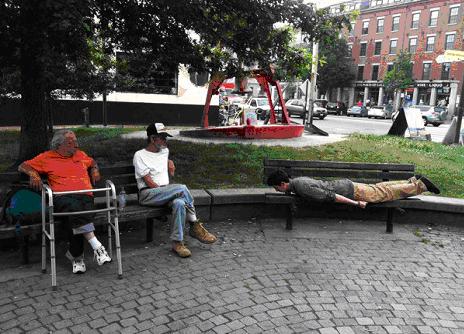
Film Listings

0

Film listings are edited by Cheryl Eddy. Reviewers are Kimberly Chun, Michelle Devereaux, Peter Galvin, Max Goldberg, Dennis Harvey, Johnny Ray Huston, Louis Peitzman, Lynn Rapoport, Ben Richardson, and Matt Sussman. For rep house showtimes, see Rep Clock. For complete film listings, see www.sfbg.com.

SAN FRANCISCO JEWISH FILM FESTIVAL

The 31st San Francisco Jewish Film Festival runs July 21-Aug 8 at the Castro, 429 Castro, SF; Christopher B. Smith Rafael Film Center, 1119 Fourth St., San Rafael; Jewish Community Center of San Francisco, 3200 California, SF; Oshman Jewish Community Center, 3921 Fabian Way, Palo Alto; and Roda Theatre at Berkeley Rep, 2025 Addison, Berk. For tickets (most shows $12) and a full schedule, visit www.sfjff.org.

OPENING

Captain America: The First Avenger Chris Evans trades in his Human Torch togs to play the patriotic Marvel superhero. (2:09) Marina, Shattuck.

*Enforcing the Silence With a taut running time of 59 minutes, Tony Nguyen’s debut doc delves into the mysterious 1981 murder of Lam Duong, a Vietnamese journalist and social activist who lived and worked in the Tenderloin. He’d come to Oberlin, Ohio in the early 1970s as part of a high school exchange program, and ended up staying for college and beyond as war raged in his homeland. Though the program Duong founded after moving to San Francisco, the Vietnamese Youth Development Center, was an asset to the community (providing a place for kids to hang out after school, assisting non-English speakers with complicated social-services forms, etc.), his political views made him a polarizing figure, and may have cost him his life. Was being seen as pro-communist (and speaking out about it, per his first amendment rights) the motive for Duong’s murder? What about the other Vietnamese American journalists also killed in the early 80s? The crimes remain unsolved, but as Nguyen’s film finds through interviews with investigators and people who knew Duong during his short life, the controversy lingers. Enforcing the Silence has its local debut Thurs/21 at 7 p.m., the 30th anniversary of Duong’s murder; half of the proceeds (tickets $5-25) will go to the VYDC. (:59) Roxie. (Eddy)

Friends With Benefits Mila Kunis and Justin Timberlake star in an apparent remake of the Natalie Portman-Ashton Kutcher rom-com No Strings Attached. (1:44) Four Star, Presidio.

Life, Above All It’s tough enough to simply grow up, let alone care for a parent with AIDS and deal with the suspicions and fears of the no-nothing adults all around you. Rising above easy preaching and hand-wringing didacticism, Life, Above All takes as its blueprint the 2004 best-seller by Allan Stratton, Chandra’s Secrets, and makes compelling work of the story of 12-year-old Chandra (Khomotso Manyaka) and her unfortunate family, unable to get effective help amid the thicket of ignorance regarding AIDS in Africa. After her newborn sister dies, Chandra finds her loyalty torn between her bright-eyed best friend Esther (Keaobaka Makanyane), who’s rumored to hooking among the truck drivers in their dusty, sun-scorched rural South African hometown, and her mother (Lerato Mvelase), who listens far too closely to her bourgie friend Mrs. Tafa (an OTT Harriet Manamela), for her own good. Cape Town native director Oliver Schmitz sticks close to the action playing across his actors’ faces, and he’s rewarded, particularly by the graceful Manyaka, in this life-affirmer about little girls forced to shoulder heart-breaking responsibility far too soon. (1:46) Embarcadero. (Chun)

*Rapt Colder than cool — and pokerfaced in its perusal of all the angles — this hostage thriller takes as its starting point the real-life 1978 kidnapping of Belgian aristo Baron Edouard-Jean Empain. Slick industrialist Stanislas Graff (Yvan Attal) is smoothly going through the motions of life — preparing for a sojourn to China alongside heads of state, swinging through his gambling den, indulging in an afternoon tryst with a mistress, then heading home to make fatherly noises for the family. Graff’s seamless, impressively precise kidnapping effectively cock-blocks the routine. Fifty million euros is the ransom, and the kidnappers quickly, brutally demonstrate that they mean bidness. Filmmaker Lucas Belvaux tests the tension at home, in the boardroom, among law enforcement, while the ugly details of Graff’s day-to-day life are laid bare by the French tabloids, much like dismembered body parts — and giving off a whiff of the hypocrisies surrounding ex-IMF chief Dominique Strauss-Kahn. More often behind the camera than before it, Attal offers what might be his best performance as the entitled scion reduced to a cowering bag of bones and scar tissue. He’s well-matched by Anne Consigny as his shell-shocked spouse and Alex Descas as his lawyer, as Belvaux efficiently delivers his core query with almost zero melodrama: who’s the more brutal player in this high-stakes game — the so-called terrorists or the cutthroat captains of industry? (2:05) Lumiere, Shattuck. (Chun)

*Road to Nowhere See “To Hellman and Back.” (2:02) Roxie, Smith Rafael.

ONGOING

Bad Teacher (1:29) SF Center, Shattuck.

Beats, Rhymes & Life Actor Michael Rapaport probably didn’t set out to make a hip-hop Metallica: Some Kind of Monster (2004), but that’s pretty much where his portrait of A Tribe Called Quest ends up. The first half of Beats, Rhymes & Life: The Travels of A Tribe Called Quest is predictably worshipful, slathering on low angles and slow motion to cover mediocre live shows. More effectively, Rapaport traces the Queens group’s brief incubation period and subsequent breakthroughs in what would later be called alternative or, more obnoxiously, conscious hip-hop. A slew of notable followers and contemporaries toast Tribe’s first three albums, but by the time Rapaport catches up to the group’s 2008 reunion even their longtime friends De La Soul are wishing they’d call the whole thing off. The documentary slides into the Monster zone of hurt feelings and passive aggressive behavior in accounting for the group’s split after their inappropriately named 1998 album, The Love Movement. Phife Dawg and Q-Tip are the warring egos, though perennially slighted Phife is really no match for the imperially cool Tip. DJ Ali Shaheed Muhammad is the Kirk Hammett of the outfit, looking on helplessly as the two bigger personalities make a mess of things. There’s still novelty in a story about aging in hip-hop, but Rapaport’s portrait is utterly conventional. He also doesn’t pursue more interesting questions of race and politics that naturally follow the band’s crossover appeal. (1:38) Shattuck, Sundance Kabuki. (Goldberg)

*Beginners (1:44) Embarcadero, Piedmont.

A Better Life (1:38) Opera Plaza, Shattuck.

*Bill Cunningham New York (1:24) Opera Plaza.

Bride Flight (2:10) Opera Plaza.

*Bridesmaids (2:04) 1000 Van Ness, Presidio, Shattuck, Sundance Kabuki.

Buck (1:28) Lumiere, Shattuck, Smith Rafael.

Cars 2 (1:52) 1000 Van Ness, SF Center, Shattuck.

*Cave of Forgotten Dreams (1:35) SF Center, Shattuck.

Empire of Silver (1:52) Four Star.

The Hangover Part II (1:42) SF Center.

*Harry Potter and the Deathly Hallows Part 2 Chances are you aren’t going to jump into the Harry Potter series with Harry Potter and the Deathly Hallows Part 2. So while the movie is probably the best Harry Potter film yet, it’s more a fitting conclusion than a standalone film. For fans of the books, there are no real surprises — this is a close adaptation. And for those Harry Potter movie fans who haven’t read the books, shame on you, and kudos if you managed to not get spoiled. It’s hard for me to offer a serious critical analysis of Part 2, because it represents the end of a long and very emotional journey. (Everyone in that audience was crying. Everyone.) I will say that, as was the case in the book, there are a few overdone, schmaltzy moments that aren’t really necessary. But in the context of the series, they’re forgivable — this may not be the great cinematic event of our generation, but Harry Potter as a whole is sure to be one of our most enduring cultural icons. (2:10) Empire, 1000 Van Ness, Presidio, Sundance Kabuki. (Peitzman)

Horrible Bosses (1:33) Four Star, Marina, 1000 Van Ness, Sundance Kabuki.

Larry Crowne (1:39) Presidio, SF Center.

Midnight in Paris (1:34) Albany, Embarcadero, 1000 Van Ness, Piedmont, Sundance Kabuki.

*Page One: Inside the New York Times (1:28) Lumiere, Smith Rafael.

Pirates of the Caribbean: On Stranger Tides (2:05) SF Center.

*Project Nim This is the story of an individual plucked from their native culture even before birth, separated from parents shortly after, handed over to a chaotic if loving urban foster family, yanked from them to a lavish, isolated country estate, then shipped off to a medical experimentation lab, “rescued” only to be placed in prison like solitary confinement, and … well, things finally get a little better, but isn’t this enough abuse for several lifetimes? Before you call Child Services or the ACLU, be informed that this is not the saga of a human being, but one Nim Chimpsky, a chimpanzee born in U.S. captivity, then set on a highly unusual life course as the subject of a study in animal language acquisition by Columbia University linguist Herbert S. Terrace. Nim did indeed prove remarkably adept at learning sign language to communicate with his teachers/minders — even if Terrace finally belittled that as no more than imitation performed to beg food and other favor. Nim was a prodigy, and for a while a media sensation. He was also a temperamental, physically powerful wild beast who could (and sometimes did) cause considerable harm to those around him. Regardless, both his adaptation to human habitats and animal instincts should have been deal with a great deal more care and consistency — there was no overall plan for his well-being beyond serving (or being abandoned by) whoever his keepers were at any given moment. This latest documentary by James Marsh (2008’s Man on Wire, 1999’s Wisconsin Death Trip) is an involving story whose latter-day interviewees — tumbling rather easily into hero and villain categories, with Prof. Terrance not in the first camp — annotate an enormous amount of archival footage shot throughout Nim’s life. (1:33) SF Center. (Harvey)

*Snow Flower and the Secret Fan (1:40) Albany, Piedmont, SF Center, Sundance Kabuki.

*Super 8 (1:52) Empire, 1000 Van Ness, Shattuck.

*Tabloid Taking a break from loftier subjects, Errol Morris’ latest documentary simply finds a whopper of a story and lets the principal participant tell her side of it — one we gradually realize may be very far from the real truth. In 1978 former Miss Wyoming Joyce McKinney flew to England, where the Mormon boy she’d grown infatuated with had been posted for missionary work by his church. What ensued became a U.K. tabloid sensation, as the glamorous, not at all publicity-shy Yankee attracted accusations of kidnapping, imprisonment, attempted rape and more. Her victim of love, one Kirk Anderson, is not heard from here — presumably he’s been trying to live down an embarrassing life chapter ever since. But we do hear from others who shed considerable light on the now middle-aged McKinney’s continued protestations that it was all just one big misunderstanding. Most importantly, we hear from the lady herself — and she is colorful, unflappable, unapologetic, and quite possibly stone-cold nuts. (1:28) California, Embarcadero. (Harvey)

*Terri (1:45) Bridge, California.

*13 Assassins (2:06) Four Star, Opera Plaza.

Transformers: Dark of the Moon (2:34) 1000 Van Ness, Sundance Kabuki.

The Tree of Life (2:18) California, Embarcadero, Empire, Smith Rafael, Sundance Kabuki.

*The Trip (1:52) Clay, Shattuck, Smith Rafael.

Winnie the Pooh (1:09) 1000 Van Ness, Presidio.

Zookeeper (1:42) 1000 Van Ness.


Los Yaquis

0

paulr@sfbg.com

DINE Los Yaquis is easy to find: It’s just steps from los Audis, those gleaming iron horses sitting in their well-lighted lots at the corner of 14th and South Van Ness streets, waiting for people with sacksful of cash to come along and buy them. Window-shopping for cars that cost $40,000 used — and up, plus tax — does make one hungry and slightly value sensitive. In this sense, Los Yaquis couldn’t be better-situated. The restaurant serves quite a few Salvadoran dishes (it was a Salvadoran spot before changing hands two years ago), but its name refers (paradoxically, I thought) to an ancient Indian tribe of the Sonora desert in northern Mexico. The owners, the brothers Sammy and Chava Aguirre, are from Jalisco, in southwest Mexico, and the restaurant’s name turns out to be a family reference to their father.

As a reminder that this part of the city has not always been absolutely fabulous, the windows are lined with iron bars, which give a certain jailhouse cast if you happen to glance toward the street. I haven’t seen fortifications of this sort since I was last at Pauline’s Pizza, a few blocks west on 14th. But that was years ago, along a Valencia Street that has ceased to exist several times over. These days Valencia seems increasingly done over with plate glass. I wonder if this trend will migrate east.

Inside, the ruddy good cheer of a beer hall obtains. And speaking of that: the restaurant offers Corona beer brewed in and imported from Mexico, which is different from the brewed-under-license stuff you typically find around here. The bottle is of brown glass, opaque and etched, and is available in a near-liter size ($12) that looks like a piece of ordnance ready to be loaded into the magazine of a warship. Beer is not usually presented in shareable form, but in this case, sharing should be given careful consideration — if you actually reached bottom, you would want to hand off the Audi keys to someone else.

In homey little spots, one looks for the unusual amid a raft of familiar faces. I had never before come across loroco, for instance, an edible flower that figures in Salvadoran cooking. When I think of edible flowers, I think first of nasturtiums, which are really more edible colors than flavors, or of perfumy lavender. Loroco resembles neither of these; even worked into an expansive pupusa ($2) with cheese, it revealed a peppery, slightly acidic bite. It also wasn’t much to look at — a muddy green, like okra. The spinach-filled pupusa ($2) also had a theme of green, but it was a more luxurious, creamy, liquid sort. And for no green at all, how about good old beans and cheese ($2)? The pupusas are made from white masa and are about as big around as a hamburger bun. Two or three would make a real meal.

The kitchen is also proud of its fried tacos ($7), which come bundled in groups of five, like a litter of puppies. They’re filled with shredded beef, topped with shredded green cabbage, sour cream, and your choice of delicacies, among them head cheese, pig skin, pig’s ears, cactus, and carrot. Quail’s eggs were an elegant thumbnail size, and a kind of ivory white stippled with blue; they looked like bits that had dropped from an example of gorgonzola statuary. To me they tasted like hard-boiled eggs, with the advantage that, because they were bite-sized, they were gone quickly. It was like doing egg shots. A couple of the other finishers, white cheese and avocado, were testament to the limits of adventurousness, but there is a reason these foods are perennially popular.

One of the most striking dishes on the menu is the fish soup ($12.95). Fish definitely means fish in this instance; we turned up a dorsal fin and a tail, each still sheathed in glossy black skin, along with several steaks — i.e. pieces of the creature cut crosswise. There was, thankfully, no head. The flesh had the look and texture of halibut, but the skin was wrong. According to our voluble server, it was catfish, which in my experience tends to turn up as filets, like its farmed river-fish relation, tilapia.

The broth was intense (and housemade), and floating in it, amid the dramatic piscine debris, were bits of tomato and carrot and, for extra color, shreds of spinach. The soup was presented with fresh-made tortillas, still warm in their little plastic flying saucer. Of course they were sublime, but also useless with respect to soup. We dunked, with unimpressive results. A bowl of rice — Spanish rice, plain rice — would have had a better sop factor. As for the tortillas: they would have been better with butter. What isn’t?

LOS YAQUIS

Mon.–Thurs., 9 a.m.–8 p.m.; Fri., 8 a.m.–9 p.m.;

Sat.–Sun., 7 a.m.–9 p.m.

324 South Van Ness, SF

(415) 252-8204

www.los-yaquis.com

Beer and wine

MC/V

Somewhat noisy

Wheelchair accessible