California

Art/S Global Tapas

1

paulr@sfbg.com

DINE You walk into a restaurant that offers “global tapas,” and you see a sushi chef standing behind a sushi bar, like an extra player who’s been thrown into some mammoth baseball trade to sweeten the deal, a utility infielder or the fabled “player to be named later.” Apart from this apparent anomaly, the restaurant is good-looking, with a long screen of dark wooden louvers to separate the bar from the dining room, halogen lamps like dangling stars, and plenty of green paint. The place is called Art/S, and the worst criticism that can be made of the physical layout is that the large front windows are filled with Lombard Street traffic.

A few years ago, an excellent restaurant called Sangha, in the Glen Park Village, offered a menu that mingled nuevo Latino and Japanese elements with surprising success (although it didn’t save it from closing late last spring). Still, the Sangha run suggested that Japanese cuisine was not necessarily insular and could sometimes be mixed and matched with other cuisines.

At Art/S, the riff is match, not mix. There is no overt cross-cultural pollination; the two-sided menu card offers a California hodgepodge, with Iberian and Mexican touches, on its front face, while the Japanese items are to be found on the other side. The twain do not meet. Over the head of the sushi chef is a long chalkboard — a kind of scoreboard for the food-involved — listing delicacies such as paella negra (made with squid-ink rice), but he can’t see it.

Paella is one of the few full-sized plates. Most of the dishes are smaller, though large enough to be shareable, and they range in tone from classic bar food to exercises in sophistication that would play well in the temples of haute cuisine downtown. We were especially impressed, in the latter vein, by the yellowtail crudo ($9), which arranged flaps of fish in the shallow wells of a long, narrow porcelain tray, thatched them with shredded radish and slices of jalapeño pepper, and gently doused them with a tart truffle ponzu sauce.

The bar-food angle is well-served by such shamelessly fatty crowd-pleasers as cheese croquette ($9), a blend of white cheddar and mozzarella cheeses like molten lava in a crust of fried breading and served with a ramekin of balsamic vinaigrette, as dark and viscous as used motor oil and quite tasty, though superfluous. Another small plate with similar visceral appeal is the Cali chili-fried potato ($5), spears of Yukon Gold sprinkled with chili flakes and presented with an addictive caesar aioli.

The Iberian-tinged dishes, interestingly, caused some division of opinion. The pintxos chorizo ($7) sounded Spanish, even Basque (“pintxos” is the Basque equivalent of “tapas”), but the chorizo lengths in question were Mexican, made from fresh pork, with plenty of garlic and chile. (Spanish chorizo is air-cured, like prosciutto, and typically seasoned with smoked paprika.) Atop each sausage cylinder, a tab of sweet potato had been fastened with a toothpick, and I wasn’t sure why. The tabs were as pale as Monterey Jack cheese and didn’t add much flavor or texture — not that Mexican chorizo needs help in the flavor department.

The Galicia octopus ($9), an earthenware crock filled with octopus and potato chunks in a spicy dark tomato-based sauce, also left a hung jury. The sauce had the faintly bitter bite of smoked paprika, which perhaps is an acquired taste, and I long ago acquired it; I thought it made a handsome contrast with the faint sweetness of the octopus. Others disagreed. Further objections were raised (rather spuriously, I thought) against the potatoes. They weren’t exactly necessary, but they did add some ballast to the dish. On the other hand, everyone like the spiced chicken tacos ($6 for two), which were made with proper corn tortillas and enlivened with blue cheese.

Fish: several varieties are offered as “sizzling” plates, among them an excellent mahi-mahi filet ($10), dense, meaty, and juicy atop a jumble of bean sprouts, green peas, yellow zucchini, goji berries, and Meyer lemon in a garlic sauce. For unsizzling, flip the menu card and find an extensive list of nigiri, sashimi, and rolls, including spicy tuna — the “ultimate” ($7.50) — and Cancun ($9), with smoked albacore, roasted jalapeño peppers, avocado, and spicy radish. The Cancun struck me as a Californication (a quite nice one, though), while the former strongly appealed to a member of our party who’d never eaten a sushi-style dish before: an already small world growing a little smaller.

ART/S GLOBAL TAPAS

Dinner: Sun.–Wed., 5:30-10 p.m.; Thurs.–Sat., 5:30–11 p.m.

2353 Lombard, SF

(415) 931-7900

www.artsglobaltapas.com

Full bar

AE/DS/MC/V

Moderately noisy

Wheelchair accessible

Just “Duck”-y

1

CULT FILM STAR Although the mainstream Hollywood press and audiences at large may not have flocked to theaters in support of the initial release of Howard the Duck in 1986, a core group of devoted fans and successive generations of viewers have elevated the film to cult classic status, resulting in a long-awaited special edition DVD release last year.

Ed Gale, the actor who stepped inside the Howard costume and helped bring the character to life, will be appearing at this weekend’s WonderCon, the largest comic book and pop culture convention in Northern California, to meet fans and sign autographs (look for him at booth M19 in the Autograph Area, room 105).

In what was his first Hollywood role (it was actually the first movie he even auditioned for), Gale used highly energetic body language to convey the emotions of the diminutive yet daring duck. That high level of energy expenditure took a physical toll on the actor — and the restrictions presented by the full-body costume made even simple things, such as eating, very difficult.

“When it became apparent I was losing too much weight too fast — I lost 11 pounds in 30 days — they had to give me straws with protein shakes, or they’d drop M&M’s down my beak,” Gale remembered, speaking over the phone from Los Angeles.

Filmed largely in the Bay Area (the characters visit the California Academy of Sciences, take taxis in the Sunset District, and fly over the rooftops of downtown Petaluma), Howard the Duck had the backing of George Lucas as executive producer — which is one reason Gale suspects the movie was treated so harshly by critics when it appeared to be a financial failure.

“We as a society love to build people up and then tear them down, apparently they felt it was time to tear George Lucas down. But the power of the people has proved them wrong.”

Gale, who has also appeared in films like Child’s Play (1988) and Spaceballs (1987), along with more recent roles in television including My Name is Earl and Bones, says Howard is still the most popular character he has played. He’s looking forward to returning to San Francisco.

“The adage that my manager told me was, ‘If you’re going to be good, be the best. If you’re going to be bad, be the worst, and you’ll never be forgotten.’ And with Howard the Duck and all the great fans, that has never been more true,” he said. “I definitely want to meet a whole new bunch of friends in the city where it all began.” (Sean McCourt)

WONDERCON 2010

Fri/2, noon–-7 p.m.; Sat/3, 10 a.m.–7 p.m.;

Sun/4, 11 a.m.–-5 p.m., $5-$40

Moscone Center South

747 Howard, SF

www.comic-con.org/wc/

www.edgale.com

The state budget isn’t growing

11

I heard a great show on NPR the other day about the new rules on compensation for executives whose banks got federal bailout money. The feds have cracked down (a bit), and some of those massive salaries have been cut and top bankers are now accepting much less pay, and stock that can’t be sold for three years.


And guess what: More than 80 percent of these people are still hard at work at their desks, including almost all of the most senior folks. Very few have left. It puts the lie to this notion that extreme salaries are needed to attract and retail the top talent; even after those salaries have been cut by more than half, the “talent” doesn’t flee.


There’s a new study by the California Budget Project (PDF) that says makes the same kinds of points. Jean Ross, the director of the nonprofit, nonpartisan group, says that urban legends die hard, so she’s chosen the top ten myths about the state budget and demonstrated how utterly inaccurate they are.


For example, the anti-tax folks love to crow about the massive growth in state spending and how the budget is “out of control.” Truth:


Current year spending is $16.9 billion below 2007-2008 levels and proposed 2010-2011 spending is $20.1 billion below  2007-2008 levels.


2009-2010 spending is $21.5 billion below the baseline levels projected by the Legislative Analysts Office in 2004.


As a share of the state’s economy, state spending is at its lowest levels since the early 1970s.


And it’s not just the recession:


State spending as a share of personal income has declined significantly in recent years.


And guess what: taxes aren’t driving businesses out of the state — or hampering personal wealth creation.


The number of millionaire taxpayers has increased more rapidly than the number of taxpayers as a whole since the passage of Prop. 63, which imposed an additional tax on high-income individuals.


And guess what, you bureaucracy bashers:


California ranks 41s [among the 50 states] with respect to the number of state and local government employees per 10,000 population.


So no, California doesn’t have a spending problem. The state has a revenue problem.

Events listings

0

Events listings are compiled by Paula Connelly. Submit items for the listings at listings@sfbg.com. For further information on how to submit items for the listings, see Picks.

THURSDAY 1

Last Gasp Anniversary Show 111 Minna Gallery, 111 Minna, SF; (415) 974-1719. 6pm, free. Celebrate the 40th anniversary of Last Gasp, publisher of underground books and comics, at this party and art show featuring art by Gary Baseman, Tim Biskup, Glenn Barr, Robert Crumb, and many more, and readings by local writers, including San Francisco Poet Laureate Diane di Prima.

St. Stupid’s Day Begins at Justin Herman Plaza, Embarcadero at Market, SF; www.saintstupid.com. Noon, free. Help bring color, music, and satire to the financial district’s "temples of the Free Market" at this parade featuring a "dead lottery ticket" offering at the Federal Reserve Bank headquarters, a penny toss at the "banker’s heart," a "sock exchange" at the old Pacific Stock Exchange building, and more. Brought to you by the First Church of the Last Laugh.

BAY AREA

"Book Smart" Oakland Public Library, Temescal Branch, 5205 Telegraph, Oak.; (510) 597-5049. Through April 30, free. Peruse the library while taking in a unique art exhibit of mixed-media paintings by Nancy Mizuno Elliott that will be scattered throughout the library to surprise people as they browse the stacks, exploring the interconnectedness of solitude and stimulation.

FRIDAY 2

Al-Mutanabbi Street San Francisco Zen Center, 300 Page, SF; (415) 255-6524. 7:30pm, free. Attend the first U.S. exhibition of the al-Mutanabbi Street Broadside Project, a collection of poetry and art commemorating the 2007 car bombing of Baghdad’s historic book-selling al-Mutanabbi Street, featuring a poetry reading by contributing authors. Donations will be accepted for Doctors Without Borders.

La Mesa Red Poppy Art House, 2698 Folsom, SF; (415) 826-2402. 8pm, free. Take part in this peer-to-peer salon featuring traditional musicians, dancers, and artists from the Alliance for California Traditional Arts (ACTA) Roundtable Series, which aims to strengthen Bay Area intercultural traditional arts networks and leadership.

SATURDAY 3

Big Idea Night Yerba Buena Center for the Arts, 701 Mission, SF; (415) 978-2787. 9pm, free. RSVP recommended: www.ybcafree.org. Celebrate the role we all play in the underground arts community at this event put together by the Oakland based art collective The People featuring DJs, dance demonstrations, live painting, participatory art, live dance videography, a local Caribbean food vendor, extended hours for current exhibits, and more.

"Consumed" Femina Potens Art Gallery, 2199 Market, SF; (415) 864-1558. 7:30pm, free. Sate your artistic hunger at the opening of a month long exhibit titled, "Consumed – Affairs with the edible," featuring artwork by Maria Kretschmann, Malia Schlaefer, Liz Maher, and Francesca Berrini that address women’s complex relationship with food. Meet the artists, rub elbows with fellow foodies, and enjoy refreshments and snacks.

Exploratorium Film Collection Exploratorium, McBean Theater, 3601 Lyon, SF; (415) 561-0360. 2pm; included in the price of admission, $15. Watch contemporary film works alongside classic experimental, documentary, and science films from the Exploratorium’s 16 mm collection as part if their 40th anniversary Cinema Arts Program.

Healthy Saturdays Golden Gate Park, JFK Drive between Tea Garden and Transverse, SF; www.sfbike.org/?ggp. All day every Saturday from April thru September, free. Enjoy the kick off of the season of car-free Saturdays in Golden Gate park weather you’re a skater, bicyclist, pedestrian, or onlooker.

Skate this Art Gallery 28, 1228 Grant, SF; (415) 563-6965. 6pm, free. Learn more about the art of skateboarding at the opening of this annual exhibit while helping to raise money for the North Beach Citizens (NBC) center, an outreach program for the disabled and homeless of North Beach. Reception to feature skateboard art auction, raffles, film screenings, poetry readings, and more.

Starchild on Sit Lie Magnet, 4122 18th St., SF; (415) 581-1600. 7pm, free. Hear Starchild, a bisexual, libertarian, activist, sex worker, and supervisorial candidate, discuss the proposed Sit/Lie law with Jon Sugar. The law proposes to ban sitting and lying on sidewalks in SF and will soon be voted on by the Board of Supervisors. Live music to follow.

West Coast Live San Francisco Ferry Building, Port Commission Room, second floor, 101 Embarcadero, SF; (415) 433-9500. 10am, $18. Attend a live broadcast of West Coast Live hosted by Sedge Thomson with special guests Anchee Min, Walter Mosley, and Olympia Dukakis, and featuring music by Dana Cooper and the Exceptional Mike Greensill. West Coast Live broadcasts from locations that convey the culture and sounds of the West to listeners.

SUNDAY 4

Spring Celebration and Easter Parade Union Street, Gough to Fillmore, SF; www.unionstreetsf.com. 10am-5pm, free. Catch the 2pm Easter parade, enjoy outdoor dining at temporary sidewalk bistros, listen to live music, compete in the Easter bonnet contest, and take part in some of the family oriented activities being offered at this local celebration of Spring.

MONDAY 5

Film Arts Forum Mezzanine, 444 Jessie, SF; (415) 625-8880. 7pm, $8. Join the San Francisco Film Society (SFFS) for an arts forum titled, "Tales from Terror," an appreciation, dissection, and dismantling of the misunderstood horror genre and its ties to the Bay Area.

Alerts

0

alert@sfbg.com

WEDNESDAY, MARCH 31

Ecology Emerges


Join panelists Sam Schuchat (California Coastal Conservancy), Kristen Schwind (Bay Localize), and Harold Gilliam (SF Chronicle, SF Examiner) to discuss Bay Area-based experiments that shaped national and international ecological movements. The forum is part of the Ecology Emerges lecture series, a discussion series focusing on the history of Bay Area ecological activism.

6 p.m., free

San Francisco Main Library

Koret Auditorium

100 Larkin, SF

www.shapingsf.org

THURSDAY, APRIL 1

CounterPULSE Artists in Residence


See new works from CounterPULSE’s Winter 2010 artists in residence. Kendra Kimbrough Barnes examines the effects of incarceration on families in a dance piece and Jose Navarrete and Violeta Luna address the ill effects of water privatization in a production that includes dance, performance art, music, installation, and video.

8 p.m., $15–$20

CounterPULSE

1310 Mission, SF

(415) 626-2060

FRIDAY, APRIL 2

Women in Black vigil


Join this weekly vigil to protest Israel’s occupation of Palestine and continued U.S. funding of the Israeli Army. Make a statement that Jerusalem should be a shared capitol for all people of Israel and Palestine by calling or faxing the Consul General at the Israeli Consulate at (415) 844-7501 or fax (415) 844-7555.

Noon, free

Bancroft at Telegraph, Berk.

(510) 548-6310

SATURDAY, APRIL 3

Pacific Center community meeting


Attend an informational meeting about the future of the Pacific Center, the third-oldest LGBTQ Community Center in the U.S. as its supporters consider options for relocating in July when their landlord plans to sell the building they’ve occupied since 1973. Protesters of the center will be present to demand that the Pacific Center offer more services to homeless people in the queer community.

11 a.m., free

Pacific Center

2712 Telegraph, Berk.

(510) 548-8283

Plant your activism


Attend this roundtable discussion about the use of plants and chemicals from around the world, prohibited or not, and how they have influenced cultures past and present.

1:30 p.m., free

Long Haul

3124 Shattuck, Berk.

(510) 540-0751

SUNDAY, APRIL 4

Homes Not Jails rally


Make a statement that people’s rights should come before property rights at this rally and march to a building takeover site in support of seizing vacant houses for people living on the streets.

Noon rally, march to follow; free

Rally at 24th St. at Mission, SF

www.homesnotjailssf.org

TUESDAY, APRIL 6

Save Emeryville Child Development Center


Attend this Emeryville city council meeting where members will vote on the proposed plan to outsource ECDC’s services and fire all of ECDC’s teachers. ECDC has been providing children four months old to pre-K with a state-subsidized neighborhood program for 31 years.

6 p.m., free

Emeryville City Hall

1333 Park, Emeryville

Contact members at (510) 596-4376 2

Mail items for Alerts to the Guardian Building, 135 Mississippi St., SF, CA 94107; fax to (415) 255-8762; or e-mail alert@sfbg.com. Please include a contact telephone number. Items must be received at least one week prior to the publication date.

Editor’s Notes

4

Tredmond@sfbg.com

The pot initiative’s going to pass in November. California’s going to legalize personal use and small sales. I think that’s clear from the polls, and from the fact that the pot supporters are raising a fair amount of money, and the fact that there won’t be much effective opposition.

The state Legislature might not like it — ballot measures are impossible to amend, and with debate and discussion the measure might be a little different. But Assembly Member Tom Ammiano has tried, again and again, to get his colleagues to see the light: this is going to happen, and if the folks in Sacramento are afraid of it, then they’re not going to have any influence over the final product.

And it’s amazing to me how many people are afraid of this issue.

All three major candidates for governor, including Jerry Brown, who must have smoked pot at some point in his life (would Linda Ronstadt have gone out with a guy who never smoked weed?), are publicly opposing the measure. Ammiano can’t get a majority of the Assembly to vote yes on his legalization bill — and Democrats control things. You wonder when these people are going to understand that the voters, most of them, really don’t care if pot becomes legal. It doesn’t frighten anybody anymore — except elected officials.

Humboldt County is already preparing for this; business leaders are talking about the economic impact on the region and how the North Coast can become the Napa Valley of green bud. The Obama administration needs to get ready too — ready to tell the federal drug agents to leave California alone. And a few years from now, life will go on, and everyone will take legal pot for granted — and I wonder how silly Jerry Brown’s going to feel. *

Yee’s two-fer: Bashing Palin while promoting sunshine

5

Sen. Leland Yee scored a two-fer yesterday when he blasted a California State University organization for hiding how much it’s playing Sarah Palin for a speaking gig, raising an important sunshine issue and knocking Palin’s populism-for-pay schtick in the process. And at the heart of the issue is how public education institutions increasingly use foundations to avoid accountability.

That issue was recently raised in San Francisco, when City College Foundation sought to keep its financial dealings secret. The Guardian sounded the alarm last month, and City College Trustee John Rizzo, who led the fight for more sunshine, negotiated a more open arrangement that the Board of Trustees unanimously approved last week.

“We got most of what we wanted,” Rizzo told us. “Most of the things are open and they have to give us a quarterly report on donations.”

Yee – who the Society of Professional Journalist-NorCal recently honored with a James Madison Award for his struggles to promote greater government transparency and protections for journalists – has long been fighting for more sunshine in the CSU and UC systems, which is particularly important as they make deep cuts to higher education spending. For example, Yee’s Senate Bill 330 would explicitly require those systems to adhere to the California Public Records Act.    

“These are public institutions that should embrace transparency and accountability,” Yee said yesterday in a press release announcing his request that CSU-Stanislaus’s foundation disclose how much it is paying Palin for a $500 per head speech on June 25. The press release triggered a front-page story in today’s San Francisco Chronicle, with CSU and foundation officials rebuffing Yee’s request.

So now, Yee gets to bash Palin and make an important stand for sunshine, both of which will likely help his nascent campaign to be elected mayor of San Francisco next year.

As Yee wrote in a letter to campus President Hamid Shirvani, who also serves as the chair of the foundation: “The sensational nature of former Governor Palin’s political commentary, coupled with an ongoing book tour, has allowed her to charge top dollar for speaking engagements. As was reported in the media, her speaking appearances typically command $100,000 per event. To that end, I request the foundation to respond to the following issues: 1. Is the former governor being compensated by the CSUS Foundation in any form for her participation in the event on June 25th?  If so, please describe the amount and nature of the compensation being awarded to the former governor.  2. Please disclose any contracts between the former governor and the CSUS Foundation involving the June 25 speaking engagement.”

Later in the press release, he added: “The CSU should immediately disclose how much money is being diverted from students to pay Sarah Palin’s exorbitant speaking fees. At a time when students are struggling to afford an education at CSU, I would hope that spending potentially hundreds of thousands of dollars on a guest speaker for a black-tie gala would be low on the priority list.  Money that is spent on bringing an out-of-touch former politician to campus could be spent on scholarships and other financial assistance during these challenging budget times.”

Win or lose, this is the right fight for Yee, both morally and politically. Go git ‘er!

Study: Cuts to health programs a bad plan for state economy

It doesn’t take a Ph.D. to understand that people who earn less shell out a greater percentage of their income from month to month than those occupying more elite ranks. Anyone fortunate enough to be holding down even a low-paying gig in a state where unemployment stands at 12.5 percent knows that basic living expenses can quickly consume a paycheck in San Francisco.

A study released by the Center for Labor and Research Education at the University of California at Berkeley has found that cutting relatively low-paying jobs in the state’s health and human services sector would deal a harsher blow to California’s financial health than alternative budget-balancing measures, like raising taxes on the wealthiest residents. Gov. Arnold Schwarzenegger has proposed cutting $6.4 billion from California’s health and human services budget, part of his solution for closing a roughly $20 billion budget gap.

“The budget proposals that the governor is making would … significantly worsen the economic crisis in the state, rather than pull us out,” said Ken Jacobs, chair of the Labor Center at UC Berkeley.

The report highlights “multiplier” effects of hypothetical cuts to statewide health and human services programs. The study examined the impacts of cutting $1 billion each from Medi-Cal, Healthy Families, and CalWORKS – state programs that assist low-income families – and found that the resulting losses would total 98,600 jobs for all three combined. The worst impacts from cuts to those programs would come from indirect consequences, according to Jacobs. Since those programs are funded in part from federal dollars, a loss in federal funding matched for every dollar the state invests also takes a toll.

A $1 billion cut to state funding for In-Home Supportive Services (IHSS), which aids disabled and elderly people who want to remain in their homes, would result in a statewide loss of 215,900 jobs, the report found.

Meanwhile, generating that same $1 billion through taxes from households in the highest income bracket in California would result in a comparatively lower job loss of 6,400, the research group estimated.

Health Access, a nonprofit consumer advocacy group, used the study’s findings in its own report to predict ramifications of the actual proposals in Schwarzenegger’s budget. According to Health Access, a minimum of 42,384 jobs would be lost as a result of proposed health cuts to Healthy Families and Medi-Cal, with more than $2.7 billion lost in business activity. It predicted 370,000 jobs would be wiped out if IHSS were eliminated altogether.

In a tumultuous economic downturn like the one facing California right now, “the best stimulus is funds in the pockets of low-income families,” according to Jacobs. Cutting these health and human service programs, which employ low-income workers and serve residents living near the poverty line, would do just the opposite.

Speaking of multipliers, Jacobs noted that corporate tax cuts produce the absolute worst bang for the buck out of any other schemes to fix the economy.

Appetite: It’s Passover — so come on over

0

As Passover begins tonight through next Monday, here’s a few places where you know you can eat quite well and stay quite kosher:

4/5 – SLOW FOOD Seder at Mission Beach Cafe
Heeb magazine teams up with one of my favorite neighborhood restaurants, Mission Beach Café for a Slow Food Seder. Yes, that’s slow food principles, modern cooking sensibilities, traditional Jewish dishes. In fact, with each course, you have the choice of traditional or California-style dishes, each made with local ingredients. Will it be smoked black cod with potato kugel or matzo flatbread with haroset, balsamic reduction, basil scallion pesto and messo seco cheese?

Braised Prather Ranch lamb shank with butter beans, oyster mushrooms, baby carrots and red pearl onions or roasted duck with Israeli couscous, Jerusalem artichokes, pea shoots and orange sabayon? Thankfully, Mission Beach’s wonderful pastry chef, Alan Carter, has dessert in hand.
$55 for four courses, excluding tax and tip
Monday, April 5
5:30-10:30pm
Mission Beach Café
198 Guerrero Street
415-861-0198
www.missionbeachcafesf.com


Firefly’s Eight Days of Passover menu
Right by my former home in Noe Valley, beloved Firefly does an “Eight Days of Passover” menu all week long, a bevy of Jewish greats made with Firefly’s usual homey, gourmet flair: chopped chicken livers, Grandma Rose’s matzo ball soup, owner, Brad’s housemade gefilte fish, vegetable matzo kugel, grilled lamb sirloin and beef brisket (or vegan brisket, if you so desire).
March 29–April 5
a la carte menu during regular hours
4288 24th Street, SF.
415-821-7652
www.fireflyrestaurant.com


TAKE-OUT at Sweet Jo’s
Jo and her best-there-is biscuits  are always available at Sweet Jo’s in the Jewish Community Center, but she also knows Passover foods and has plenty for you to take home to suppliment or be your complete Passover meal. Maybe braised Kobe beef brisket, felfite fish, potato kugel, mashed potatoes, rosemary broccoli, and a side of horseradish cream?
Available for pick-up a la carte or to eat in the cafe through Passover
Sweet Jo’s, inside the Jewish Community Center
3200 California, SF.
415-345-0090
www.sweetjoscafe.com

Bay Area Sistah Sound celebrate two years of femme beats

0

The ladies of Bay Area Sistah Sound know their place — and it’s in the beat kitchen. The all female DJ crew (which includes DJ Zita, the legendary Pam the Funkstress and newest addition to the cast, DJ Similak Chyld) is celebrating its second anniversary at 111 Minna on Fri/2. It seemed like a good time to reflect with the women on their past two years.

A lot has changed around these parts since DJ Zita moved back to the Bay area after living for a spell in Hawaii. Upon her return to San Francisco, she found the famously inclusive city lacking on the female pride front. “I noticed the fact that the [hip hop DJ] scene was male dominated. There were a lot of women, but they were all doing their own thing. There was no solidarity.” Zita, a founding member of Sisters in Sound, the first all woman group of DJs on the islands, decided to change all that.

It’s still true that when you go into a lot of the larger hip hop/R & B clubs in town these days, you’ll still encounter a dude heavy clientele. But the number of women-run groups and women-featured nights — and no, we’re not talking about the Lusty Lady — is on the rise. You’ve got Coo-yah Wednesdays at Paradise Lounge, with resident reggae spinners Daneekah and Green B, RRS Feed, Peaches at Skylark on Thursday nights, a funky — a funky, souly, hip hop affair orchestrated by promoter Masaye Waugh, who formerly slung drinks at Everlasting B.A.S.S. when the party was at club 330 Ritch.

“I really love the B.A.S.S. party,” says Waugh. “That was right around when I was learning about what it means to be a female DJ in the business.” Later, Masaye texts me “I was so excited and inspired by [Everlasting B.A.S.S.] and it made me understand/appreciate more what I had gotten into. Have you seen Pam scratch with her boob? That’s a party!”

Waugh understands why more and more women are choosing to work together, B.A.S.S. style. “It’s that communal feeling of working with other women,” she says. That sentiment of solidarity was what led DJ Zita to round up Pam the Funkstress and DJ Neta, who has since left to pursue family life and a PhD, to form a mainland female DJ crew. “Pam [of activist hip hop duo The Coup] and Neta were veterans,” Zita tells me. “They’d been holding down for a minute.”

Zita started inviting female singers and B-girls to perform with them each month, and found they were able to spin their own kind of nightlife. “There’s more of a vibe of respect for women at our parties,” says Zita, whose B.A.S.S. crowds tend to be majority female.

The DJ is excited to see B.A.S.S.’s contribution to women run nightlife in the city. “We’re inspiring other female DJs to come out,” says Zita, who had to upgrade from last year’s anniversary space to two room 111 Minna in order to accommodate B.A.S.S.’s growing fan base and lineup (eighteen woman DJs will be featured on Friday).

So what does year three hold for the ladies of B.A.S.S.? The addition of DJ Similak Chyld, for one. Similak, whose also scratched with Future Primitive Sound, had never been in an all female project before, and initially had some hesitations. But after having done some shows with the crew, she’s noticed some upsides to a gender specific crowd. “There’s no dudes that are there just to gawk,” the diminutive DJ says. “If there’s so many women, they tend to just shut the fuck up.” Plus, it’s a chance to spin with some women she’s looked up to for awhile. “Zita called me [to ask me to be a part of B.A.S.S.]- who calls people anymore? I remember being humbled and blown away. I mean, I saw Pam’s shows over ten years ago!”

Zita says future plans include the continued expansion of B.A.S.S.’s lineup, as well as global takeover. “We’d like to start touring beyond the Bay- down to Southern California, across the country, or… world tour! It’s going to be exciting to see what 2010 brings.”

Everlasting B.A.S.S. Two Year Anniversary

Fri/2 9 p.m., $5-20

111 Minna

111 Minna, SF

www.bassladydjs.com

A good, stubborn Irishman

0

He was one of the last of the old-line labor leaders who once had great influence in many cities. He was Irish-Catholic, of course, a resident of the city’s principal working class district, and from one of the blue-collar trades.

 His name was Joseph Michael O’Sullivan. He had been president of the San Francisco Building and Construction Trades Council and for four decades head of its main carpenters union local.
 
Those who would truly understand the history of San Francisco and in  particular the key role organized labor has played in the city’s development, as in that of so many other cities, must pay attention to the memory of Joe O’Sullivan.

 He was a very good man. He also was a very stubborn man. I remember, for instance, that time in 1976 when he insisted on going to jail.

 O’Sullivan and three other construction union officials had been sentenced to jail for having led a strike by municipal craftsmen — who, as public employees, supposedly did not have the legal right to strike. O’Sullivan — then aged 74 and ailing — didn’t have to go to jail, since union lawyers were certain they could overturn the sentences, as they ultimately did.

The other union officials were content to have the lawyers handle the matter through court appeals, but O’Sullivan refused to be “a damned labor bureaucrat.” He preferred to be a labor activist, and so turned himself over to the San Francisco County sheriff for a five-day stay behind bars.

 O’Sullivan thought that was a small price to pay for the badly needed opportunity it would give the city’s unions to bounce back from the severe beating they had suffered in the craftsmen’s strike. Surely, he thought, the unions would mount a major campaign to protest the jailing of one of their best known and most respected leaders over one of the most fundamental of labor rights.

 That would draw maximum attention to the injustice of a court ruling which had denied that fundamental right to thousands of working people. It would show that the unions still were capable of the militancy that had earned San Francisco a reputation as one of the country’s premier “union towns.”

And it would be an ideal way for the unions to seek the support essential to restoring their former influence — the support of public employees and others in the heavily non-union white collar occupations that had come to dominate the city’s economy and that of so many other cities as unionized blue collar occupations once did.

 But the unions allowed Joe O’Sullivan to enter jail, and to leave jail, quietly and alone.  There were no protest rallies. no demonstrations, no marches, no angry speeches, no picketing, no sympathy strikes, none of the militant actions that had marked labor’s rise to economic, political and social prominence.
 There was only grumbling, among most of the city’s other labor leaders, that O’Sullivan was “grandstanding” in trying to get them top rely on more than just largely unpublicized courtroom arguments.

 But the arguments won the unions very little. About all they got was a narrow court ruling that, although indeed overturning the decision which had ordered the strike leaders to jail, did so on purely technical grounds. The ruling did not upset the previous finding that city employees could not legally strike.

Union strategists argue to this day whether activist tactics would have countered that anti-unionism of the 1970s, as they argue whether such tactics would be the best way to counter the anti-unionism that has plagued the labor movement of San Francisco and other cities ever since.
 
Such questions rarely even occurred to O’Sullivan. Activism was virtually the only tactic he knew. He learned it very early in life, as an 11-year-old telegraph messenger working with the Irish Republican Army in 1913, against the British forces occupying his native village of Tralle, County Kerry.

 Young O’Sullivan, entrusted by the British authorities to deliver messages to the occupying British troops, showed the messages first to local IRA leaders — despite the leaders’ warnings “that if I was caught, it would be the finish for me.”
 
 So why did he do it? “The messages were very important, they wanted them, and I felt that whatever I could do for Ireland … well, I would do it.”
 
 O’Sullivan left the messenger’s job to work with his father, a master carpenter and secretary of the carpenters union in Tralle, but continued his IRA activities.
 
“Whenever they were going to ambush a British lorry,” he recalled, “the IRA had to know when it was leaving to come out in the country. So I would put out a gas lamp, then another boy a mile away would see that and he would put out another one.  That would be the signal. The IRA would did a trench in the road and the lorry would fall into it. Our guys would call on them to surrender. We’d take the rifles and ammunition, and their shoes, and then make them walk back into town. . .
 “We never went to kill them — though people were killed, that was for sure . . . But there was more caskets going back to England than were being lowered in the ground in Ireland.”

 O’Sullivan’s IRA activities ended abruptly one night when two British soldiers burst into the cottage where he lived and dragged him away at gun point after O’Sullivan’s mother, certain he was to be killed, “started throwing holy water on me.”  Once outside the cottage, O’Sullivan knocked away the rifle of one of the soldiers and ran. Although wounded by the other soldier, he escaped, eventually making his way to the United States.

 O’Sullivan arrived in San Francisco in 1925, seeking work through the carpenters union local he eventually would head. At the time, the local was leading a major strike aimed at forcing contractors to bargain with construction unions on pay and working conditions.  Contractors had brought in more than 1,000 non-union strikebreakers from Southern California to replace the strikers, and they became the striking union’s main targets.

 “We formed ‘wrecking crews’ — ‘thugs,’ they used to call us in the newspapers — and got $1.50 a day from the union to get into a job, roust the scabs, break their tools,” O’Sullivan remembered. “When we shut a job down, nobody worked — they got out fast. We just used our hands, but we worked the scabs over good …. Maybe it was the right thing to do, maybe it was wrong — but that’s the way it got done.”

 At one point, O’Sullivan and the six other members of his “wrecking crew” were arrested for the murder of a strikebreaker. They were held three weeks, until two other men confessed to the killing.

 The construction unions lost the strike after a year of fierce struggle and O’Sullivan, blacklisted by employers, had to move to the  city of Vallejo across San Francisco Bay to find work. But he later returned to San Francisco and, in 1935, was elected to head Carpenters Local No. 22.  O’Sullivan held that job until 1977, helping lead carpenters and other building tradesmen in the struggles that finally won them the right to effective union representation.

 The relatively high pay and benefits and decent working conditions of the tradesmen today are taken for granted. But the workers wouldn’t have them if it wasn’t for their unions, which had to fight hard to get employers to grant even the simplest amenities.  O’Sullivan’s nephew James vividly recalled his uncle’s great pride in getting “fresh water and toilets on the job for the carpenters and a pension plan to take care of them when they grew old.”

O’Sullivan was stubborn to the end. He left union office only because of the adoption, over the strong objections of O’Sullivan and many of his local’s members, of an amendment to the carpenters’ national constitution that prohibited anyone over 70 — O’Sullivan included — from seeking union office.

But he was no grim advocate, despite his stubbornness, dedication and determination. I recall watching him turn on his considerable Gaelic charm in Israel, where he had gone with a delegation of touring labor leaders in 1973. The most important day of the tour was March 17, when the leaders were to confer with David Ben-Gurion.

As the senior member of the delegation, O’Sullivan greeted the legendary former prime minister, who stood before the visitors with an air of immense and almost forbidding dignity.  Joseph Michael O’Sullivan, looking and sounding only as someone who had been baptized in Ireland with such a name could look and sound, quickly broke the ice.

 “Mr. Ben-Gurion,” he said, “let me be the first to wish you a happy St. Patrick’s Day.”

Dick Meister, formerly labor editor of the SF Chronicle and KQED-TV Newsroom, has covered labor and politics fror a half-century. Contact him through his website, www.dickmeister.com, which includes more than 250 of his recent columns.

The pot initiative’s going to win

9

It seems pretty clear to me that, with polls showing widespread support and money pouring in for the campaign, the initiative to legalize pot in California is going to pass. So why are all of the candidates for governor, even Jerry Brown (who may have smoked a joint or two in his time) coming out so strongly against it?


Jerry knows that legal pot isn’t going to create new law-enforcement problems; quite the contrary. It’s going to save huge amounts of money that the state and local governments now waste enforcing a silly law that nobody respects, will cut down on the jail population and discourage the environmentally damaging (and sometimes violent) gangs of rogue growers who plant on public land.


And he ought to know that this kind of a stand isn’t going to help him get elected. Once you take the hard-core Republicans who would never vote for Brown anyway out of the equation and look at the universe of potential Brown voters, legalizing pot probably gets more than 60 percent approval.


If you asked me back in 1978 whether I could imagine a day when Jerry Brown would oppose a marijuana legalization measure that was polling at 60 percent, I would have said: Whoa, man, no way. But then, I inhaled.

Lawsuit could expose SFPD-ABC collaboration

43

Imminent legal actions against San Francisco, its Police Department, and the California Department of Alcohol Beverage Control could reveal whether a pair of undercover agents went rogue in harassing nightclubs and aggressively busting parties or whether they were acting at the direction of top officials.

Attorney Mark Webb – whose work on a racketeering lawsuit against the policing agencies was the subject of cover stories in the Guardian and the SF Weekly – told us that on Monday, he plans to file that racketeering claim against the city (which will then become a lawsuit if the city rejects it, as it routinely does) and a related lawsuit in Superior Court involving the rough, unnecessary arrest of bartender Javier Magallon and harassment of Mike Quan, owner of The Room, Playbar, and Mist. Narrated surveillance video associated with the case was posted on YouTube yesterday.

Central figures in the lawsuit are SFPD Officer Larry Bertrand and ABC agent Michelle Ott, plain-clothes partners in an aggressive crackdown on nightlife over the last year. Webb said he plans to immediately seek police records and communications and to depose Bertrand and Ott to try to determine who ordered the crackdown, why, and when higher-ups became aware of their aggressive tactics.

“I would like to know if Bertrand is being sent places or if he’s just a lone wolf, and the CADs will show that,” Webb said, referring to computer-assisted dispatch reports that track activities and communications involving individual officers. Those and other records that Webb can access through the court-ordered discovery process could finally shed light on what’s behind the crackdown.

Webb had sought to have Mayor Gavin Newsom mediate this dispute before the cases were filed, saying the racketeering lawsuit will be expensive and divisive, and all the nightlife community really wants is an end to the harassment and assurance that it wouldn’t restart once the media attention passes. And Webb did have conversations with top Newsom aide Mike Farrah and with Nicolas King, Newsom’s liaison to the SFPD, but neither indicated that Newsom was willing to get personally involved. Newsom spokesperson Tony Winnicker also told us Newsom preferred to let Police Chief George Gascon handle the matter.

So Webb said he now plans to move forward with litigation. “If they’re not answering the call at City Hall, let’s get into the arena,” Webb told us.

Webb is an experienced litigator who has won multi-million judgments and who started his career in New York City helping prosecute Racketeer Influenced and Corrupt Organizations (RICO) Act cases against the mob, and now he plans to use RICO laws against what he says is a city-state enterprise to interfere with lawful nightlife activities in San Francisco.

“Webb gets it. It’s a weird mentality, the really good trial attorneys, and Webb is that,” said attorney Mark Rennie, who has spent decades working with the city’s entertainment industry and has helped advise Webb on the case.

Among the parties involved in the RICO claim are those involved in Webb’s other lawsuit against the city, as well as Club Caliente, its owner Maurice Salinas, Azul, its owner John Bauer, New York nightclub owners Phillipe Rieser and David Brinkley, Vessel, and Siobhan Hefferman, who was arrested by Bertrand and Ott at a private party. Others may be added soon.

Great American Music Hall, Slims, and DNA Lounge also claim to have been harassed by the ABC and have been involved in several meetings that led up to Webb’s lawsuit, but they’re not taking part in the lawsuit yet, partially because they fear retribution from the ABC.

“I probably would have jumped in, but I don’t want to walk into a hearing suing the ABC,” Slims and GAMH general manager Dawn Holliday told us, referring to Slims’ April 1 appeals hearing stemming from noise complaint citations triggered by one particularly cranky neighbor.

DNA Lounge, which has regularly documented the harassment campaign on its blog, decided to wait with the other two clubs before joining the suit. “We thought it was important to stand as a community and there were too many venues that were worried about retribution from the police or ABC if they joined the suit,” DNA general manager Barry Synoground told us. 

But Synoground said he’s anxious to see what Webb’s suit unearths, noting that Bertrand and Ott haven’t been visible in recent weeks as complaints against them went public, and saying he thinks Commander James Dudley and other top SFPD brass are really driving this crackdown: “We may have taken one of his tools off the street, but he’ll find another.”

Synoground said most SFPD officers are very professional and they have no problem working with them, but Bertrand and Ott have unnecessarily and aggressively interfered with their business. Holliday goes even further in praising the SFPD, saying she has a good relationship with Bertrand and everyone in Southern Station, blaming her clubs’ troubles on the ABC and the unwillingness of top city officials to stand up for them.

So the internal SFPD communications, and those between the city and the ABC, could prove revealing. “On April 17, I can send out subpoenas to the cops and I can take Bertrand’s deposition 30 days from Monday,” Webb said, citing statutory response periods.  

Webb expressed confidence in his case and said the police shakedowns and harassment fit well with the RICO statute, which has been used against a wide variety of enterprises over the years, including government agencies.

In fact, an American Bar Association book, “Civil RICO: A definitive guide,” by Gregory P. Joseph, seems to support Webb’s confidence. “Any person injured in his business or property by reason of a violation of Section 1962 of this chapter may sue therefore in any appropriate United States district court and shall recover threefold the damages he sustains and the costs of the suit, including reasonable attorney fees.’ This simple sentence has generated an avalanche of litigation,” the book begins.

It makes clear the intent of Congress that RICO laws “shall be liberally construed to effectuate the remedial purposes” of targeted individual seeking protection from harassment. A 1981 U.S. Supreme Court ruling (U.S. vs. Turkette) made clear even legitimate enterprises such as government agencies could be sued, and a 1994 ruling (NOW vs. Scheidler) settled a long dispute over whether the racketeering needed to be economically motivated, finding that it doesn’t.

Racketeering was defined by Congress as simply committing any of a long list of “predicate acts,” which include violence or the threat of violence, kidnapping (including false arrest), extortion, physical interference with business, malicious prosecution, and abuse of authority, all of which Webb says apply in his case. He is also reviewing the Guardian’s Death of Fun coverage from the last four years to find more examples of predicate acts involving the SFPD.

The hardest part of proving his case could be to show that it interfered with interstate commerce, although Webb said that’s met by efforts by Bertrand and Ott to prevent Rieser and Brinkley from transferring a liquor license from New York. But “Civil RICO” also said caselaw has established that “RICO requires no more than a slight effect upon interstate commerce,” citing the 1989 case U.S. vs. Doherty.

Like many who have had run-ins with Bertrand and Ott, Webb said he’s anxious to see what he finds in discovery: “What’s fascinating about this is you can uncover the whole system.”

Obama nominates Melinda Haag

0

President Obama has nominated veteran attorney Melinda Haag to serve as the U.S. Attorney for the Northern District of California, which stretches from the Monterey Coast to California’s northern border with Oregon and from the Pacific Ocean nearly to Sacramento, an area that more than 7.3 million people call home. Obama also nominated Jerry E. Martin as U.S Attorney for the Middle District of Tennessee, and James A. Lewis as U.S. Attorney for Central District of Illinois.

“I am so pleased the President has nominated veteran attorney Melinda Haag to serve as the top federal prosecutor in San Francisco,” said U.S. Sen. Barbara Boxer, who recommended Haag for the post. “She is well respected in the California legal community and will bring more than two decades of experience handling white collar crime cases to the U.S. Attorney’s Office.”

Boxer likely isn’t the only one pleased by this nomination: San Francisco’s embattled immigrant community has been hoping that Obama would replace the current top federal prosecutor Joseph Russoniello, an ardent opponent of sanctuary legislation.

According to a press release issued by Boxer’s office, Haag has been a partner since 2003 at San Francisco-based Orrick, Herrington & Sutcliffe in the white collar criminal defense and corporate investigations group, which handles cases involving fraud, antitrust violations, environmental crimes, health care fraud and other corporate matters. 

Before that, former U.S. Attorney and current FBI Director Robert Mueller recruited Haag to serve in the San Francisco U.S. Attorney’s Office, where she headed the White Collar Crime Unit and was the deputy chief of the General Crimes Unit. Haag also has experience as a prosecutor in the Los Angeles U.S. Attorney’s Office.

Haag received her bachelor’s degree from the University of California San Diego and she earned her law degree at UC Berkeley.

Bay Bridge’s new S-bend gets fence. Finally.

1

Ever since the driver of a truck laden with Asian pears flew off the Bay Bridge’s new S-curve and plummeted to his death last November, the California Highway Patrol has been policing the speed limit and Caltrans has added striping, signs, rumble strips and other features. Those efforts have helped reduce the curve’s initially high accident rate.

And yesterday, I noticed that Caltrans has installed a fence (visible in this clip that I posted, at risk of the usual snipes about my radio-listening and car- driving choices, though I work at the bike-hugging Guardian) along that fatal section.

I’m not sure the fence is intended to stop vehicles that have gone airborne. But it sure helps alert folks to the fact that there is nothing between them and the deep blue sea, if they have the misfortune to plunge over this concrete edge.  (And that’s before we even get to the possibility that Yerba Island, where the pear truck landed, is haunted by the spirits of native people whose graves were disturbed.) But I can’t help wondering why it took until March to install this fence.

When do we get to vote on PG&E’s latest rate hike?

The Chronicle’s David Baker reported today that Pacific Gas & Electric Co. has proposed a new fee structure that would raise the average residential customer bill by $10.73 more each month, bringing it to a total of $88.13.

This new rate-hike proposal comes as the utility prepares to spend $35 million on Proposition 16, a ballot initiative that would essentially lock in its monopoly against competition by requiring a two-thirds vote before local governments could set up alternative power providers. John Geesman, former executive director of the California Energy Commission, called PG&E’s current rates “excessive” when he blasted Prop 16 before a joint hearing of the California Legislature. Geesman commented that the California Public Utilities Commission (CPUC) doesn’t set rates “at a level calculated to provide a $35 million slush fund for sole-sponsored political adventurism.”

“PG&E says it will spend up to $35 million, and insists all of that money will come from its shareholders,” he noted. “You and I know that every nickel that passes through PG&E’s books comes from its captive customers — its regulated utility is the only business PG&E has!  It ought to be illegal to take ratepayer money and use it politically against ratepayer interests.  If PG&E’s making an excessive return, it ought to give the money back.”

PG&E has sent out mailers claiming that San Francisco’s own community choice aggregation effort would drive up the cost of monthly utility bills. Yet the track record for existing municipal utilities shows that historically, PG&E rates have been higher.

Dan Berman, an energy expert who has worked as an analyst for the CPUC, highlighted this point when speaking before the CPUC March 17. In 2008, PG&E charged an average of 13.6 cents per kilowatt-hour, while the Sacramento Municipal Utility District (SMUD) charged 10.7 cents, he noted. “That means PG&E charged 27.3 percent more than SMUD, the largest publicly owned utility in Northern California,” Berman said.

On March 20, the San Jose Mercury News published an editorial shooting down Prop 16. Here’s an excerpt:

“If [PG&E CEO Peter Darbee] is looking for a cheaper way to hold onto his customers, here’s a suggestion: Instead of spending tens of millions of ratepayer dollars on political campaigns, PG&E could use that money to lower rates and find more sources of renewable energy — the main reasons cities consider breaking away in the first place.

“But don’t hold your breath. And don’t miss the opportunity to send PG&E an unequivocal message by ignoring the barrage of misleading advertising and voting no on Proposition 16. The constitution of the state of California should not be for sale.”

Hank Plante’s exit interview

2

Hank Plante ends a three-decade run as a political journalist with tonight’s (March 24) broadcast of the CBS 5 Eyewitness News, where he has worked since 1986 after starting his career with newspapers in Washington DC. So we took the occasion to talk politics with him, learning that his loyalties lie downtown.

Plante agreed that politics has become ugly these days. “It’s just so much more acrimonious, that’s one thing that’s changed. The other is just the money that’s involved,” Plante told us, marveling at Meg Whitman’s plans to spend $40 million of her own money to run for governor and the $1 million per day that corporations spent lobbying against the health reform bill signed by President Obama.

But the changes haven’t gotten Plante down, as they have many political junkies, who decry the crippling of government’s ability to combat corporate power and address real social and economic problems. “I’ve never become a cynic, and I think that’s one thing that sets me apart from many political journalists,” he said, adding, “I still think politicians can make a difference.”

Yet like many political journalists, when I ask who his favorite politicians have been, he rates them based on whether they’ve made good stories, not whether they good for the people. For journalists, bad is often good, whether it be natural disasters or disgraceful politicians.

“Arnold is a great story. Willie Brown was a great story. Gray Davis was a dull story until he got recalled, then he was a good story,” Plante said.

What about Mayor Gavin Newsom, who has often given Plante exclusive access (including Newsom’s first extended interview after his 2007 sex scandal), but who has also angrily walked out in the middle of an interview with Plante. 

“Personally, I like the mayor. But I have to ask him tough questions, so he can be mercurial. Right now, he’s running for office again, so he’s charming,” Plante said.

In fact, for a journalist, Plante makes clear his preference for Newsom over the progressive majority on the Board of Supervisors, joking, “If I had a month to live, I’d spend it with the Board of Supervisors because it would seem like five years.”

Plante also said that he opposes district elections — which he said have prevented the emergence of big-stature political figures like Dianne Feinstein and Quintin Kopp — and Plante said he doesn’t see the value of district elections in counteracting the political power of downtown corporations. “I’m a capitalist and I have no problem with people making money,” he said.

Yet Plante acknowledges the divide between downtown and progressives is San Francisco’s dominant political dynamic, noting, “You see how afraid downtown is of the Board of Supervisors appointing the new mayor.”

While Plante said he believes in the importance of politics, he does decry how political science and public relations have been manipulated in recent years.

“They’re taken a page out of the Karl Rove playbook to talk over the journalists right at the public,” Plante said, noting how many politicians no longer feel the need to be accessible to journalists or honestly and directly answer their questions. “They really want to control the message, so the accessibility is diminished.”

Nonetheless, Plante said he regularly emphasizes the importance of political engagement: “In a place like the Bay Area, where people are inundated with lots of information sources, you have to keep saying it over and over again.” 

Plante, 63, is retiring and moving to his home in Palm Springs with his partner, Roger. Among the many awards and accolades he earned during his career are several Emmys and a prestigious Peabody Award. His station sent out a press release praising Plante, including this comment by anchor Dana King: “There is an entire population of politicians breathing a sigh of relief at the news of Hank’s retirement. Hank was the consummate professional, never combative but he did his homework and asked tough, pointed questions. Politicians, love him or hate him, respected and answered them, every single time. Our newsroom will suffer a huge intellectual void when he leaves.”

John Ross: The damaged spine of America

2


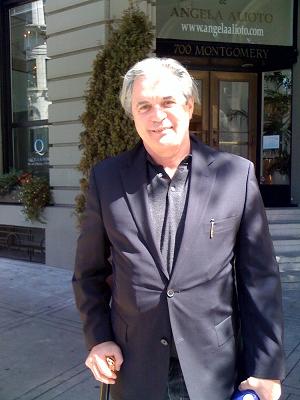
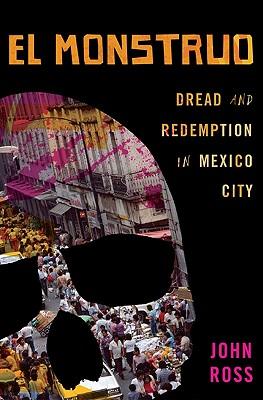
I am on a low-rent book tour with my new cult classic El Monstruo – Dread & Redemption In Mexico City.  For the next three months, I will stumble across this land from sea to stinking sea probing the underbelly of Obama’s America.  The findings will be posted on these pages.


LAS CRUCES N.M. — The snow was already dusting the Organ Mountains fringing this high desert town, promising a hard winter further up the spine of Obama’s America. I ride the Mexican bus (officially doing business as the El Paso-L.A, Limousine Express) when I ply the back roads of the southwest. Greyhound, with its stern rules and regulations and surly drivers who threaten their cargos with summary expulsion for minor infractions, doesn’t much inspire me these days.  


With notable exceptions, Greyhound passengers are a harried and haunted bunch, riding the Big Dog from trouble to trouble, often with all their possessions stuffed into plastic garbage bags. In the cruelest of gestures, the Greyhound management has recently banned garbage bags as an instrument of luggage.  Zombie passengers on the Big Dog stare out at the distant horizon submerged in their worries or stab music into their ears to sever all human communication. No one talks to their fellow travelers anymore.

By way of contrast, the Mexican bus bubbles with chatter.  “Platicame!” (“Talk to me!”) my seatmates insist. The chitchat often gravitates towards work — where they have recently toiled, the job towards which they are headed. Wistful nostalgia for their families and pueblos down in Mexico are common ground. Rancheros belch from the speakers and the taste of tamales flavors the ride. It feels like going home.

Bus rides are an opportunity to reinvent oneself. I am usually the only gabacho on these long hauls through the rugged mountains and barren deserts of the southwest, but I speak colloquial, unaccented Mexican and who I really am excites curiosities. These days, my kuffiyah wrapped around my scrawny neck, I pass myself as an Arab from Mexico City hawking books from tank town to tank town, a plausible story — back home, Arabs are often stereotyped as itinerant peddlers.

North of Las Cruces, the Mexican bus is pulled into a Migra shed and the conversation modulates real quick. A blonde woman agent jumps on board and demands to see everyone’s documents. She studies the passports and green cards under the glare of her flashlight and then shines it into the eyes of the passengers to see who will blink first. One young man — he looks like a university student – is pulled off the bus and is never seen again. When the Mexican bus slides out of the shed, the chatter resumes — but with one less voice in the mix.

Clayton, a young Wobbly who used to run a bookshop down by the rail yards in Albuquerque that was mostly frequented by hobos looking for a little warmth in a cold winter world, is now teaching at a troubled middle school. Patrol cars are often parked out front and half the kids – 99.99% of who are “Hispanics” (read Mexicans) – have juvenile police records. Clayton asks me in to talk to the students, who have never seen a real author in the flesh.  

We hunker down in the library and I step into my Grandpa persona and tell tales of the Mexican revolution while Clayton projects portraits of the Great Zapata and Pancho Villa on the audio-visual screen. I recount how the two men met in a rural schoolhouse in Xochimilco, now a borough of Mexico City, in December 1914. For an hour the two sat in frozen silence until Zapata, unable to contain his bitterness, declares that Carranza, their rival, is “un hijo de puta!” The kids fall off their little library chairs in gales of Mexican mirth. Clayton frets for his job but the librarian apparently doesn’t understand Spanish.  

I show the kids my books. Helen, a boisterous tweener, grabs “Iraqigirl” from Clayton’s hand and announces she is taking it home. The next day, she returns it with a review: “this is the best book I have ever read.” Two boys sit at the round reading table with copies of “El Monstruo — Dread & Redemption In Mexico City” and “Murdered by Capitalism — 150 Years of Life & Death on the American Left” spread before them. They pour over the subversive pages all through the lunch hour. When we prompt them that we have to leave, they hide the books under their hoodies.

 “I don’t have it — check me out!” Salvador (not his real name) challenges. The librarian rushes over and promises the boys that she has just ordered the books on line for them. They will be here Monday morning.  “But this is only Thursday,” protests Manuel (not his real name.)  

Garfield middle school is the best stop so far on this monstrous book tour.

Attendance at public events in Albuquerque is sparse. A vegan spread at the Catholic Worker House drums up a dozen hungry souls, a presentation of “Iraqigirl” at the Peace & Justice Center eight, including an Iraqi woman who leaves early. I show “Corazon del Tiempo” (“Heart of Time”), the new Zapatista movie (it was previewed at Sundance) in a small room at the university – Weather veterano Mark Rudd and the remarkable investigator Nelson Valdez and a handful of starry-eyed students (“Corazon” is a love story) show up.  


I sorely miss my old pal Tilda Sosaya who fought doggedly for prisoners’ rights in the nearly wholly privatized New Mexico prison system for decades after her son was imprisoned for ten years for some dumb teenage caper. Last March, I wrote Tilda that I had been diagnosed with liver cancer and she wrote back that she had it too. The cancer took her quickly and now she is gone and her son is back in prison. We fight for justice but life in this lane is not very just.

I catch the day train up to Santa Fe to visit with the writer Chellis Glendinning. Chellis has lived for the past 18 years on a tiny plot in Chimayo, the land of miraculous dirt and a key distribution point for black tar heroin from Sinaloa and Nayarit — see her “Chiva – How One New Mexican Town Took On The Global Heroin Trade.” Now she is pulling up stakes and throwing in with Evo Morales. Her jeep flies a Bolivian flag and she is rushing to be in Cochabamba for the tenth anniversary of the landmark struggle against the privatization of that city’s water supply by the Bechtel Corporation. Adios companera — la lucha sigue y sigue y sigue!

I am back on the Mexican bus heading towards Denver. The riders get off at whistlestops like Las Vegas and Durango and Colorado Springs where they will do the dirty work of this country — walloping pots, washing cars, cleaning motel rooms, milking cows, shoveling their manure, keeping Obama’s America spic and span for the next paying customer at minimum wages if indeed they are not cheated out of them by unscrupulous contractors.  

When the guy across the aisle gets curious, I revive my new identity as an Arab peddler. “Donde esta tu mujer?” he asks (“Where is your wife?”) and I lie that she is in Iraq taking care of her people. “The Yanquis invaded her country and bombed her neighborhood…”  “Pobre gente,” he sympathizes.  Santiago (is that his real name?) is from Hidalgo de Parral, Chihuahua and says he is on his way to work the Colorado ski resorts where so many Mexicans slave for Senor Charlie these days. He knows all about exile.  

I am invited to deliver a pair of lectures at Denver University, Condoleezza Rice’s alma mater (her father was provost.)  Doug Vaughn, also a DU grad who went left at an early age, notices that I will be speaking at the same time as Cindy Courville, Condi’s roommate who followed her to the National Security Council and then became U.S. emissary to the African Union.

My talks are programmed for the Josef Korbel Center for International Studies. Josef Korbel was Madeline Albright’s father, to give you some assessment of my chances of winning converts here. Indeed, the students are polite and well-groomed, models of future CIA assets — in tracking down the announcement of Courville’s talk on a Korbel Center bulletin board, Doug encounters a CIA recruitment leaflet. The grad students have been forewarned they will be visited by a representative of the lunatic fringe and busy themselves with their e-mail under the pretext of taking notes.  

Academic acrimony flourishes in the Denver- Boulder axis.  Everywhere else in this land where my father croaked, the trials and tribulations of Ward Churchill and his ill-timed assault on the “little Eichmans” deconstructed in the Twin Towers conflagration went out with the fish wrap the next morning — but here in mile-high city, mention of Ward and Colorado AIM can still start a prairie fire. Although such Churchill accusers as the governor and the Colorado U president have long since resigned due, in fact, to other scandals after successfully silencing Ward, his detractors’ thirst for blood remains unsatiated.

Infused with the venom of the dearly departed Bellencourts (who Churchill once dissed as “Nebraska wigmakers”), Ernesto B. Vigil, author of an action-packed bio of Corky Gonzalez, the Denver-based Xicano founder of the Nation of Aztlan, is still brandishing the long knives. Ward Churchill is a fake Indian, Ernesto obsesses, a white guy whose claim to indigenousness is backed up by white people because white people only listen to white people.  White people think they know everything, he scoffs in a heated e-mail in which he disparages my whiteness a dozen times in as many lines.

Actually, I don’t give a rat’s ass if Ward Churchill is one/sixteenth Cherokee or not (the tribal government recently expelled all its black members) — Churchill remains the most lucid writer on American genocide in this benighted country.

Boulder is said to be the most over-regulated city in North America although white liberal enclaves like Madison Wisconsin and Arcata California could give Boulder a run for its money.  I accompany Joe Richey, a local alternative radio sleuth, to the Boulder dog pound to bail out his black lab “Yanqui” (as in “Yanqui! Go home!) “Yanqui” has been adjudged guilty of illicit dog-like behavior i.e. nuzzling a neighborhood garbage can.  

After Joe pays off the authorities and the mutt is released to his custody and properly admonished, we drive past a local dog park.  In a paroxysm of charitable intent, the Boulder City Council permits the homeless to encamp at night amidst the dog turds but they must be gone by daybreak when the pooches of the city’s housed residents take possession or risk a $100 fine. How the homeless, forced to bed down in dog shit nightly, can afford this astronomical sum is unclear. Such is what passes for compassion on the underbelly of Obama’s Amerikkka.


On my final day in Denver, Hank Lamport, a local schoolteacher who favorably reviewed “El Monstruo” for the Post, today the only daily in this formerly two-newspaper town, drives me out to the Rocky Mountain Arsenal National Wildlife Rehabilitation Area. Until a few years ago, the Rocky Mountain Arsenal manufactured and stored deadly nerve gas, chiefly Serin — an occasional lost canister still spooks the wildlife.  The displays at the Visitors’ Center feature photos of workers filling “Honest John” missiles with the stuff. Napalm was also cooked up here. I study the glazed eyes of taxidermied foxes and coyotes and bald eagles and hastily bid adieu.

On the way out of town, we stop to worship the victuals in an Aurora, Colorado taco shop. Hank laments that when he first became a devotee of “Tacos y Salsas,” the clientele, uniformly Mexicanos, would greet him with a “buen provecho” (“good appetite” — a universal courtesy in the Spanish-speaking world) but now the customers have become so gringo-ized that the salutation is a lost art. Nonetheless, when we polish off our orders and head for the door, two working stiffs at the next table wish us each “buen provecho.”
  
It warms the cockles of my contused heart to know that such cultural resistance still percolates out here on the damaged spine of Obamalandia.

Next stop: the frozen, melancholy flatlands of the Great Midwest.  

John Ross and “El Monstruo – Dread & Redemption in Mexico City” (“gritty and pulsating” – NY Post) will be visiting Traverse City and Grand Rapids Michigan in the final week of March. You can catch them at the Headland Café in Chicago’s Rogers Park March 31st, Toronto’s Hoggtown April 1st-4th, and St. Louis Mo. April 7th.  


Our Weekly Picks

0

>>WEDNESDAY 24

MUSIC

Mi Ami

I’m thankful for Mi Ami. Without the SF band that is two thirds ex-Black Eyes members, I’d be more wistful about that band’s untimely collapse. Listening to Mi Ami is like visiting an old friend; it’s even the next logical step in the evolution of that unmistakable Black Eyes sound. Sure, there are lots of drums and rhythmic bass, and the squealing vocals of Daniel Martin-McCormick are one-of-a-kind, but Mi Ami’s songs are longer, more about repetition and atmosphere. With a sophomore LP due this spring, Mi Ami’s abrasive sound isn’t ever going to snag an MTV spot — but they’ll always have a reliably loyal following of listeners to show for it. (Peter Galvin)

With High Places and Protect Me

8:00 p.m., $10

Rickshaw Stop

155 Fell, SF

(415) 861 2011

www.rickshawstop.com


EVENT

“Luna Negra: A Night of Performance for and by Women”

It’s only right that during Women’s History Month, we sit down and listen to writers like Roxanne Dunbar-Ortiz. Born to a landless father/farmer and Native American mother in Oklahoma, Dunbar-Ortiz built a life around supporting the struggle of the disenfranchised. She protested the Vietnam War and played major roles in the Native American civil rights movement and publicizing U.S. treachery against the Sandinistas during the contra war. She’ll be joined onstage by other spoken word voices, Afro-Caribbean music, dancers, an Ecuadorian curandera, and not one Y chromosome. (Caitlin Donohue)

7 p.m. , $5–$7

Mission Cultural Center for Latino Arts

2868 Mission, SF

(415) 643-5001

www.missionculturalcenter.org


>>THURSDAY 25

EVENT/MUSIC

Healing Haiti: An Evening of Arts and Culture

The Haiti benefits of recent weeks often bring together more talented artists than you’d normally find on a single bill. This one is no exception. The Berkeley label Wide Hive (celebrating its 10th anniversary) and the music workshop Own the Mic are uniting with the Element Lounge to put on a show that includes everything from belly dancing to new Bay Area R&B, with gift baskets and raffles thrown in. Tribal Mystics will bring the belly dance, while the music lineup includes DJing by Matt Cali and vocal turns by new voices Alexis Rose, Charito Soriano, Yvette Plant, and Guardian writer Lilan Kane. Radio mainstay Jamillions is one headliner — all proceeds go to Yele Haiti. (Johnny Ray Huston)

9 p.m., $5–$7

Element Lounge

1028 Geary, SF

(415) 440-1125

www.ownthemic.org/healing-haiti


DINE/EVENT

Querido Viejo Tequila Tasting Event

At some point, everyone has a bad run-in with tequila. It could be downing too many margaritas at your coworkers’ wedding or putting back shots because your friends thought you “weren’t quite drunk enough.” We all know this stuff is strong and not to be messed with. Fortunately, Querido Viejo Tequila is offering a tasting where you can actually enjoy the flavors and aromas and not feel pressured to pound one right after the other. This local distiller has been fermenting pure agave for years and is sharing its new line of hooch. The Terrace Room’s 180-degree view overlooks Lake Merritt, so be sure to bring a camera and enjoy the sunset. But remember: pace yourself. (Elise-Marie Brown)

6 p.m.; $2 tequila, $5 appetizer

Terrace Room

1800 Madison, Oakl.

(510) 903-3771

www.theterraceroom.com


MUSIC

Ana Tijoux

As one of Chile’s most respected lady MCs, Ana Tijoux is different from the summery South American songstresses who often breeze through town. Born into exile, Tijoux began life in France, where her Chilean father and French mother fled during Pinochet’s cruel regime. As a teenager, she returned to her father’s homeland and quickly found a home in Santiago’s burgeoning hip-hop scene. It was there that she earned her cred as a conscious “rapera.” Her upcoming solo release 1977 (Nacional Records) drops lyrics that reflect on the year of her birth, and that unique moment in Chile’s turbulent history that heavily influenced her own. (Mirissa Neff)

With Funky C and Joya; DJ set by Juan Data

8 p.m., $12–$15

La Peña Cultural Center

3105 Shattuck, Berk.

(510) 849-2568

www.lapena.org


>>FRIDAY 26

MUSIC

Nite Jewel

She pops in a blank 8-track cassette and takes a deep breath before pressing the ‘Record’ button. Romona Gonzalez, the L.A. lady behind Nite Jewel, insists on making and mixing her sound with old gadgets. She hits play on another deck, letting the beats of early ’90s hip-hop and R&B reverberate on the speakers, while her fingers plunk out lace-lined synth-sounds. Nite Jewel is absolutely ideal for a hazy discotheque or any smoky bedroom with glowing stars on the ceiling. Gonzalez sings and the ghostly melodies bounce and swirl, pulling listeners into a desirable, hypnotic state. She is Debbie Deb, Bronx pop, and alternative disco all at once, layering sounds and personalities that pulse and push, yet still manage to relax and soar. (Amber Schadewald)

With Neon Indian, DJ set by Jonas Reinhart

9 p.m., $15

Mezzanine

444 Jessie, SF

(415) 625-8880

www.mezzaninesf.com


DANCE

Ballet Folclorico de Mexico de Amalia Hernandez

Ballet Folclorico de Mexico de Amalia Hernandez is one of the best in the grand tradition of researching indigenous dances and adapting them to the proscenium theater. It’s also a legendary family-run institution led by the daughter of anthropologist/dancer Amalia Hernandez, who founded the company in 1951. The dances still encompass a wide spectrum of the Mexican experience: an initial quasi-mystical encounter between Aztec gods and humans, the struggle for independence; and the carnivals associated with religious festivals. But they also include choreographies inspired by such mundane activities as games, hunting and wedding rituals. (Rita Felciano)

8 p.m., $25–$65

Marin Veterans Memorial Auditorium

10 Avenue of the Flags, San Rafael

(415) 499-6800

www.marincenter.org


FILM/SEX

Too Much Pussy! Feminist Sluts in The Queer X Show

What do you get when you put seven ladies — musicians, artists, activists, sex workers, and porn stars — in a van and send them around Europe with the duty to discover the line between art and pornography? You get Too Much Pussy, a sex-positive road movie by Emilie Jouvet. The camera follows the group of radical women in and out of nightclubs in Paris, Berlin and Stockholm during the summer of 2009. They span sexual (dis)orientations and gender expressions and the experiences they gather are just as diverse: political, inspiring, sexy and frustrating. Chat up two of the stars, Madison Young and Sadie Lune, after the film for even more dirty secrets. (Schadewald)

8 p.m., $10–$15

Femina Potens

2199 Market, SF

(415) 864-1558

www.feminapotens.org


>>SATURDAY 27

MUSIC

Audio Alchemy: Kid Koala

Who doesn’t love Dan the Automator? From Dr. Octagon to Handsome Boy Modeling School, Loveage, and Deltron 3030, this guy is one of our favorite DJs. Fess up. He is. And here’s another reason to love: he’s presenting Kid Koala in Audio Alchemy, a bimonthly mixing of live music with top DJs at Yoshi’s. Yoshi’s has been been on some other for a minute now. Last year’s sessions with 9th Wonder, Black Quarterback and Manicato in the front room; Alan Marshall, De La Soul, Gil Scot Heron, and Amiri Baraka in the auditorium; swank mixers thrown by the dandies at Brooklyn Circus — they’ve got a tight off-hours scene. One that seems to be fusing together some tastier elements of our desolate culture. (D. Scot Miller)

With DJ Shortkut and the Jazz Mafia All-Stars

10:30 p.m., $20

Yoshi’s SF

1330 Fillmore, SF

(415) 655-5600

www.yoshis.com


DANCE

ODC Pilot 56: “My Young Nostalgic Life”

ODC’s Pilot program showcases are a deal for audiences who like the thrill of discovery. They’re also a break for young choreographers, who get 11 weeks in a supportive environment to create work even as they learn ancillary skills such as marketing, program design, and production and box office management. Since the first Pilot in 1990, close to 300 choreographers have gone through this gentle boot camp. Pilot 56 features six women who collectively decided that “My Young Nostalgic Life” best describes ideas they want to explore through dance. (Felciano)

8 p.m. (also Sun/28, 5 and 8 p.m.), $12

ODC Commons

351 Shotwell, SF

(415) 863-9834

www.brownpapertickets.com


MUSIC

Soweto Gospel Choir

Times are tough in Soweto. Fault me for stating the obvious to provide context for the Soweto Gospel Choir. Are they joyful? Yes. Are they melodious? Uh-huh. Do their voices meld from ululatory to raspy to soaring to proud to a blend of gospel noise and traditional African rhythm? Do audiences come away clapping and laughing and smiling fit to beat the band? Sing it! Part of the group’s elation may have to do with the runaway success of their mission — providing shelter and hope to AIDS orphans in their home communities. So far they’ve toured the world performing for some pretty receptive big dogs — Nelson Mandela, Oprah and Archbishop Desmond Tutu, to name a few. (Donohue)

8 p.m., $25–$65

Paramount Theatre

2025 Broadway, Oakl.

(415) 575-6100

www.ciis.edu


EVENT

Pearls Over Shanghai Kabuki Makeup Class

If the only knowledge you have of Kabuki makeup comes from Memoirs of a Geisha, don’t droop your head in embarrassment — instead, take a class on the traditional Japanese art form. RetroFit Vintage is offering a chance to educated the misinformed or the curious on what it takes to create the perfect Noh heroine. Kegel Kater will apply the makeup for her role as a whore, angel, and lotus dancer in Thrillpeddlers’ Pearls Over Shanghai. (Brown)

3–5 p.m., free

RetroFit Vintage

910 Valencia, SF

(415) 550-1530

www.retrofityourworld.com


EVENT

Muchas Voces Una Vision/Many Voices One Vision”

What is the function of a poet laureate, exactly? I’m fairly certain I’ve never seen one designing fanciful special boards for the neighborhood diner, or doing anyone’s English homework. How can we put these decorated people of the pen to work? Happily, the dilemma is being resolved in fine fashion this weekend, when SF’s official bards past and present join forces and rattle off original lines to benefit the people of Haiti. Catch readings by poet laureate Diane di Prima and her predecessors Devorah Major and Jack Hirschman. They’ll be joined by more than 30 other artists. (Donohue)

7 p.m. , $10 (suggested donation)

La Peña Cultural Center

3105 Shattuck, Berk.

(415) 849-2568

www.lapena.org


>>MONDAY 29

MUSIC

Nellie McKay

You probably didn’t see it coming, but now that Nellie McKay’s As Normal as Blueberry Pie: A Tribute to Doris Day (Verve) is out, it’d be tough to come up with a more suitable pairing. Musician, comedienne, actress — if there’s one thing McKay isn’t, it’s predictable. But who knew she’d pay genuine homage to one of the swinginest singers of the 1950s? Setting aside her often self-depreciating wit, McKay reintroduces Day to a new generation of fans with irresistible exuberance and charm. To make it a truly classy affair, the Great American is going for the sit-down experience. (Galvin)

With Howard Fishman

8:00 p.m., $21

Great American Music Hall

859 O’Farrell, SF

(415) 885-0750

www.gamh.com


MUSIC

Taylor Texas Corrugators

As founder and leader of legendary Southern California punk rockers Black Flag — he started the band and its record label, SST — Greg Ginn has earned his place in the DIY underground pantheon. The famously hard-working artist has never been complacent, and he comes to the city tonight with his new project, the Taylor Texas Corrugators. The Corrugators finds the guitarist leaning in a more Western swing direction, but, as always, with a host of other musical influences thrown in to keep things evolving. (Sean McCourt)

With Guella and Barney Caldron

8 p.m., $10

Red Devil Lounge

1695 Polk, SF

(415) 447-4730 www.reddevillounge.com


* The Guardian listings deadline is two weeks prior to our Wednesday publication date. To submit an item for consideration, please include the title of the event, a brief description of the event, date and time, venue name, street address (listing cross streets only isn’t sufficient), city, telephone number readers can call for more information, telephone number for media, and admission costs. Send information to Listings, the Guardian Building, 135 Mississippi St., SF, CA 94107; fax to (415) 487-2506; or e-mail (paste press release into e-mail body — no text attachments, please) to listings@sfbg.com. We cannot guarantee the return of photos, but enclosing an SASE helps. Digital photos may be submitted in jpeg format; the image must be at least 240 dpi and four inches by six inches in size. We regret we cannot accept listings over the phone.

Nihon Whisky Lounge

0

paulr@sfbg.com

DINE Among the stand-tall, manly-man libations, none stands taller than whiskey, or (for Caledonophiles) whisky. Caledonia was the Roman name for Scotland, of course, and in Scotland the manly men drink whisky. And wear kilts. What is the implication of all this for us fey, pampered, urban Americans? At the edge of our very own Mission District, a five-year-old restaurant called Nihon styles itself a “whisky lounge” and serves the small plates known to the Japanese as izakaya. So: take Japanese food, present it in a gorgeous, moody setting, sprinkle far and wide with Scotch whisky (including 400 varieties of single malt) as if watering your Chia Pet, and and lo! you get hipsters. Hipsters don’t wear kilts — yet — but they do like to wear their tight-fitting shirts untucked. Why?

Nihon’s whisky installation is impressive: a soaring architecture of bottles behind the bar. The bottle battlement dominates the main floor (which you enter through a set of huge, frosted-glass doors trimmed with wrought iron) and rises nearly as high as the mezzanine, the place to go if you seek some coziness. On your way up, note the porthole and, at the rear of the second floor, a semi-private lounge set with comfy chairs and a sofa under exposed roof joists. The only fly in this rich design ointment is the view: the windows gaze onto the unromantic intersection of Folsom and 14th streets and the immense, neon-glare parking lot of Foods Co. No wonder the panes are hung with screens of fine steel mesh.

Izakaya-style food reminds us that Japanese cuisine includes cooked as well as uncooked items, although it’s probably a stretch to call Nihon’s cooking Japanese in any purist sense. Evidence of California whimsy is laced throughout the menu, perhaps nowhere so plainly as in the rolls, which bear clever names and, like the fancier sorts of burritos, emphasize variety and plenitude. The thunderbird roll ($16) is a cornucopia of tempura soft-shell crab, gobo, and daikon sprouts, topped by a roof of eel, avocado, tobiko, and a glaze of tsume — a sweetish sauce made from boiled eel. A bit too sweet, I thought, like over-honeyed barbecue sauce. Better was the quite spicy samurai roll ($13) with spicy tuna, rounds of pickled jalapeño pepper the color of black olives, daikon spicy sesame sauce, and habañero tobiko. The chili heat here was measured but intense and sustained. The kamikaze roll ($15) resembled the thunderbird more than the kamikaze, with the chief difference being salmon instead of tuna. Salads abound. A familiar wakame edition ($5) mixed the blackish threads of seaweed with baby greens for a nice textural contrast; the salad looked like a small wig someone had plugged into an electric socket. We did find the dressing too salty. The Nihon salad ($8), by contrast, a tangle of somen noodles and cucumber slices within a ring of thin-sliced, nori-wrapped rice coins, benefited from a white miso dressing that, like ponzu sauce, found a balance among salt, sweetness, and acid.

You can go spicy or not. On the mild end of the scale, we found that a plate of broccoli and cauliflower florets ($5) had been roasted just enough to give them a hint of give and char while (as with a proper stir-fry) leaving them with plenty of snap. Not much else was done to them beyond a splash or two of ginger-soy sauce; they were left to speak for themselves. At the far end: Dr. Octopus ($10), a row of broiled octopus flaps seated on cucumber coins and squirted with some sort of fiery red chili paste. Red chili paste can be a doomsday weapon, obliterating every flavor around it — and that was pretty much the case here, although (also as here) such obliteration can be exhilarating. Notable was the tenderness of the octopus, which can toughen so quickly when cooked. If it’s beautifully tender, who cares about some chili overload?

Green tea might offer many health benefits, but it’s problematic as a dessert player, with a tendency to be pale and bitter at the same time. Green tea ice cream? Wake me up when it’s over. So when our attentive, smiling server mentioned green tea cheesecake, I saw a set of lips across the table crinkle with distaste. But the cheesecake ($4 for a slender slice) turned out to be sublime, with the tea’s edge wrapped in creaminess and sweetness, like a chef’s knife in a handsome leather sheath. Across the way, those skeptical lips smacked with pleasure.

NIHON WHISKY LOUNGE

Dinner: Tues.–Sat., 5:30 p.m.–2 a.m.

1779 Folsom, SF

(415) 552-4400

www.nihon-sf.com

Full bar

AE/MC/V

Noisy

Wheelchair accessible


The new War on Fun

46

news@sfbg.com

For several years, the Guardian has been running regular stories chronicling what we’ve dubbed the Death of Fun, a trend of official crackdowns and shakedowns on people who throw parties and festivals in San Francisco. In the last year, that trend has started to morph into an often brutal War on Fun, with a growing list of atrocities and casualties associated with this overzealous new approach to killing the city’s entertainment industry.

Why this is happening is baffling to those most affected: nightclub owners and workers, party promoters, DJs and VJs, fundraising activists, and people just out to have a good time without being harassed by a cop. But in recent months, we’ve learned much more about what’s happening and who the main perpetrators are.

Two undercover enforcers have been at the center of just about every recent case of nightclubs or private parties being raided without warrants and aggressively shut down, their patrons roughed up (see “Fun under siege,” 4/21/09) and their money, booze, and equipment punitively seized “as evidence” (see “Police seize DJs laptops,” 11/24/09) even though few of these raids result in charges being filed in court.

Officer Larry Bertrand of the San Francisco Police Department’s Southern Station and Michelle Ott, an agent with the California Department of Alcoholic Beverage Control, are plainclothes partners who spend their weekends undercover, crashing parties, harassing disfavored nightclubs, brutalizing party-goers, and trying to send the unmistakable message that they’re in charge of San Francisco nightlife. Neither responded to our interview requests.

Isolated incidents of intolerant cops and NIMBY citizens who repeatedly complain about certain clubs or festivals has been a problem for years (see “Death of fun,” 5/24/06 and “Death of fun, the sequel,” 4/24/07). Top city officials have opted to cancel events such as Halloween in the Castro District rather than try to manage them better, and the nightlife community has tried to organize in defense of its interests (see “Fighting for the right to party,” 7/1/08) with mixed results.

But the personal War of Fun by Bertrand and Ott seems to have galvanized and united the nightlife and festival community like never before, leading to the creation of a new California Music and Culture Association and prompting threats of a federal lawsuit alleging the ABC-SFPD collaboration is a racketeering scheme designed to harass, disrupt, and extort people engaged in otherwise lawful activity.

The myriad horror stories associated with Bertrand and Ott have also finally begun to draw attention from the Mayor’s Office, which has quietly pushed the SFPD to rein in Bertrand and change its policies on raiding parties and seizing property. State Sen. Mark Leno also has gotten involved, brokering a March 12 meeting between club owners and Steve Hardy, director of ABC (which, in addition to cracking down on nightclubs — see “Busting bars,” 6/23/09 — has recently announced a campaign against fruit-infused liquor).

“They were going to see how they could unwind this a bit,” Leno told us, adding that he was “infuriated” by stories of abusive treatment of the public. “The fear that it spreads through the community is unacceptable.”

The question now is what Hardy, Mayor Gavin Newsom, and Police Chief George Gascón — who has ordered some crackdowns and wants greater authority to discipline problem officers — is going to do about it.


CHAOS AT A STUDENT PARTY

It was after midnight on Jan. 31 when Krystal Peak, a journalist with San Francisco State University’s Golden Gate Xpress, received a call from her managing editor. There was a commotion and a swarm of police cars outside a student party at Seventh and Minna streets near her home, and she was asked to investigate.

She came upon the aftermath of a melee between police and partygoers that had taken place after a fundraising event at a SoMa warehouse art space was upended. The benefit was organized to raise legal funds for students who staged a building occupation at the University of California at Berkeley, in defiance of budget cuts.

The event was clearly chaotic, and it’s hard to sort out exactly what happened and when. City officials say the partiers were throwing bottles and firecrackers at the police; people at the event say the cops started it all.

But the tales partygoers tell about the behavior of Bertrand and Ott, the undercover enforcers, are similar to a series of other stories involving the pair, stories published in the Guardian and elsewhere.

There had been multiple arrests by the time Peak arrived on the scene. Numerous witnesses asserted that things were going along without incident until a fire marshal arrived in response to a complaint, and in short order, two officers who’d been there in plainclothes for hours — Bertrand and Ott — began shouting, tackling people, and kicking in doors.

Police Chief George Gascón acknowledged that the department has been targeting underground parties. “We get a lot of resident complaints about it,” he said in a recent Guardian interview. “We’re talking about a lot of the underground parties, or the parties where the promoters are exceeding their authorities to a number of people.”

Several hundred attended this particular party. Of the 11 people arrested, eight were either detained or cited and released. None faced underage drinking or drug charges. At least five were charged with resisting arrest. One individual was charged with vandalism, two were charged with battery on an officer, and two detained for being drunk in public.

Peak began photographing the scene: busted-up chairs, uniformed officers guarding the entrance, police cars everywhere. She zoomed her lens to capture the wreckage inside. None of the uniformed officers seemed to have a problem with her — but when she spotted the undercover officers with exposed badges, that changed.

The cops broke through the door, yelling. “They said, ‘This is an investigation, you’re not allowed to be here.'<0x2009> she said. “We told them we were with the press.” They threatened to arrest her.

Shortly after, the plainclothes officers crossed in front of her to an unmarked car. She took another picture. Bertrand, a tall guy with a shaved head, allegedly turned and grabbed her arm, and both officers shouted at her. “[Ott] said to me, ‘Your flash has impeded my investigation,'” Peak recounted. She was cuffed and arrested on the spot, and her camera was confiscated.

She was cited for obstruction of justice, but the charges were dropped. And she got her camera back — but says the SD memory card, where all the photos were stored — was missing.

“I flipped [the camera] open … and found the SD card was missing,” she said. She asked Bertrand where it was. “He said, ‘I don’t know what you’re talking about,'” Peak recalled. Bertrand, she recalled, then looked around at a group of officers watching the exchange, and announced, “This woman is refusing to leave. I’m going to have to re-arrest her.” Ott appeared, according to Peak, and insisted that there was no evidence the memory card had been in the camera in the first place.

“My camera will not ignite a flash unless there’s a memory card in there,” Peak explained. In the end, she left empty-handed — without photos of the undercover officers.


BUSTING DOORS

Earlier, when the party was in full swing, a 24-year-old California State University, Fullerton student visiting from Los Angeles says when the fire marshal entered, Bertrand flashed his badge, yelling at everybody to get out. “It was really aggressive from the get-go,” said the Fullerton student, who spoke on condition of anonymity because he had a pending legal case. “It’s very hard for me to describe the intensity to which this guy was busting down doors.”

Later, the young man from L.A. said, he was following people who left in a rush, and ran to catch up. “Shortly after, I felt a blow to the back right of my head,” he said. “My glasses flew off, and I was tackled to the ground. My forehead was being pushed straight into the ground and they were holding my hair. I kept repeating … please, I can’t see — I’m legally blind. I thought three or four officers were on top of me, and they were saying, ‘Fuck you, you little anarchist punk.'<0x2009>”

That’s when he said he felt a sensation like “a bunch of really intense bee stings on my left side, just above my hipbone.” He thought he was Tasered — and photos he showed us depict a skin burn. SFPD officers are not authorized to carry Tasers.

“It sounds like a stun gun, not a Taser gun,” Ken Cooper, a firearms and Taser instructor based in New York, noted when the incident was described to him.

When we shared the photos with SFPD’s media relations department, Lt. Lyn Tomioka noted, “I can tell you that we do not have any tool that would produce the type of wounds shown in the picture that you attached, or produce a stinging sensation.”

The L.A. visitor said he was delivered this explanation from an officer while in the holding cell: “One of your anarchist buddies must’ve had a Taser, ran over to you trying to get one of our officers, got you instead, and ran away.”

Cooper Brislain, a Web developer from Santa Cruz, told us his iMac was destroyed that night. A friend of the owners of the art space, he was there doing video mixing for the party, he explained. After the trouble started, he began carrying his computer and mixing equipment toward the door. “The uniformed officers were going to let me go. I told them, ‘I just came here to perform.’ They seemed OK,” he said. Then he encountered Bertrand.

He … grabbed me by the collar, led me over toward the wall, and sat me down,” Brislain told us. He says Bertrand and Ott seized his computer. Brislain says no charges were filed against him.

The morning after, he found that his computer had been smashed up. His friends found it in pieces at the bottom of the stairs. To this day, he says he has not been able to retrieve his ID, which was seized that night. “I tried calling [Bertrand] on his extension to leave a message and never heard back,” he says. “They told me he probably wouldn’t return voicemails.” The District Attorney’s Office has a different perspective. D.A. spokesperson Brian Buckelew said the partygoers were drunk and “going nuts on police.” People were throwing firecrackers, he said. “It obviously got out of hand, and people were throwing bottles at police,” he said.

The student from L.A. allegedly shoved a female officer, Buckelew said. According to the report, he said, police officers were taking someone into custody, and he tried to pull them free.

Nevertheless, even Chief Gascón agrees that it’s not okay to destroy someone’s personal property. “If in fact the allegations were proven to be the case that an officer took somebody’s laptop and threw it down the stairs,” Gascón told us, “that would be inappropriate, and that officer would be sanctioned accordingly.” He noted that he met with an attorney from the Electronic Frontier Foundation about a recurring trend of officers — Bertrand in particular — seizing DJ laptops at underground parties. “We’ve met with them and we’ve agreed to actually tighten up the protocols in how this would be handled,” Gascón noted.


A RICO SUIT

The list of local nightclub clubs that have been recently targeted by Bertrand and Ott or subjected to ABC sanctions is long. It includes Great American Music Hall, Slim’s, DNA Lounge, Mist, Whisper, the Room, Vessel, Azul, Butter, and Club Caliente (which closed down after its mostly Latino customers were scared away by repeated raids).

“Using the now familiar pattern and ruse of ABC authority, these raids have been without warrant and without probable cause, under the pretext of finding liquor violations,” attorney Mark Webb wrote in a claim against the city, describing the harassment of Caliente owner Maurice Salinas and later adding, “Despite numerous raids, the invading officers [Bertrand and Ott] managed to ‘uncover’ a single infraction: one customer used his brother’s ID card, claiming he was over 21 to gain entry. For this reason, Mr. Salinas was cited and fined, bullied, intimidated, and yelled at on the spot.”

Webb said such behavior isn’t legitimate police work, but unlawful harassment. In fact, this experienced litigator said it’s far closer to the shakedowns and extortion rackets familiar to him from the start of his legal career in the late 1970s prosecuting organized crime cases in New York City.

That’s why he’s threatening to bring a novel lawsuit against the city and ABC under federal Racketeer Influenced and Corrupt Organization (RICO) Act, a law designed go after the mob, but which has since been adapted to target entities ranging from the tobacco industry to the Los Angeles Police Department.

Webb told us that interference with legitimate business operations, such as running a nightclub, is the essence of RICO suits. As part of the case, Webb plans to submit a surveillance video that shows Bertrand kneeling on the neck of bartender Javier Magallon from The Room and twisting his arm. Webb gave us a copy of the video.

Another element of making a RICO case is the use of intimidation and retaliation against those who complain — which was central to a March 17 SF Weekly story about promoter Arash Ghanadan being inappropriately singled out for arrest by Bertrand as retaliation for filing a complaint against the officer with the Office of Citizen Complaints.

Webb says he has a strong case that he intends to file soon, but that most of his clients just want the SFPD to rein in Bertrand and stop facilitating ABC actions. “I want to have a sit-down with Gavin Newsom,” Webb said. “I am calling on Mayor Newsom to come in and mediate what would be an expensive, divisive fight that will generate national interest … I think this thing can go way quickly without litigation.”

Newsom press secretary Tony Winnicker, who said Newsom has brought concerns about Bertrand to the chief’s attention, didn’t immediately embrace Webb’s offer. “The mayor would rather leave it to the chief,” Winnicker said.

So the question for Gascón is whether he’s willing to take on the cowboy cops within the SFPD’s ranks. After all, Bertrand is also on the San Francisco Police Officers Association Board of Directors.

The nightlife community is organized like never before and plotting its next move in fighting a war it didn’t initiate and barely understands. Whether that war continues now seems to be a question for the party crashers and their supervisors.

Poll: 73 percent in favor of simple majority vote for budget legislation

By Nima Maghame

A new poll by David Binder of DB-Research, conducted on behalf of Californians For Democracy, shows that 73 percent of California voters support a simple majority vote for revenue and budget legislation. Voters were asked to weigh this proposal: “All legislation on revenue and budget must be determined by a majority vote. Would you vote for it?” In response, 73 percent said yes, and 22 percent said no.

The findings are being hailed as a ringing endorsement for the California Democracy Act, a November 2010 ballot initiative authored by UC Berkeley Professor George Lakoff that would change the California Constitution from requiring a two-thirds vote of the Legislature to approve budget and tax proposals to a simple majority rule. Californians for Democracy is in the process of gathering signatures for the initiative.

800 respondents were questioned for the poll. When respondents were asked, “In a democracy, a majority of legislators should be able to pass everyday legislation,” 71 percent said yes, they agreed. When asked, “In a democracy, a minority of legislators should be able to block everyday legislation,” 68 percent said no, they disagreed. Tax worries were addressed as well – 62 percent of respondents agreed they would support a proposal “solving the budget crisis by closing tax loopholes on corporations and charging oil companies an extraction fee without raising taxes on the lower and middle income Californians.”

Since a large amount of state legislation is required to be part of the budget, the initiative could have a far-reaching impact. Californians For Democracy has stated that a 37 percent minority blocks a 63 percent majority on everyday legislation.

“We made sure to ask the right-wing questions and our questions,” Lakoff told the Guardian, noting that most polls only present one side. “Republican questions get Republican answers,” he said. “We finally asked the question on both sides, and the answer is clear.”

Film listings

0

Film listings are edited by Cheryl Eddy. Reviewers are Kimberly Chun, Michelle Devereaux, Max Goldberg, Dennis Harvey, Johnny Ray Huston, Erik Morse, Louis Peitzman, Lynn Rapoport, Ben Richardson, and Matt Sussman. The film intern is Peter Galvin. For rep house showtimes, see Rep Clock. For first-run showtimes, see Movie Guide.

OPENING

Chloe See "Moore and Less." (1:36) Elmwood, SF Center, Sundance Kabuki.

Greenberg Roger Greenberg (Ben Stiller) is 40, and you might think he’s going through a midlife crisis — if he hadn’t been in pretty much this same crisis for 15 years or more. Still very edgy and fragile after a nervous breakdown-sparked institutional stay, he’s holing up at the comfortable Hollywood home of a big-deal brother while the latter and family are on vacation in Vietnam. (The implication being that Roger is most welcome here when no one else actually has to endure his prickly, high maintenance company.) While in residence he reconnects with old friends including the ex-girlfriend (Jennifer Jason Leigh) he dumped yet never quite got over — though clearly she did — and the ex-bandmate (Rhys Ifans) he burned by wrecking their one shot at a major-label deal. He also gets involved, kinda-sorta, with big bro’s personal assistant Florence (mumblecore regular Greta Gerwig), whose passivity and low self-esteem make her the rare person who might consider a relationship with someone this impossible. Like all Noah Baumbach films, especially the slightly overrated Squid and the Whale (2005) and vastly underrated Margot at the Wedding (2007), his latest pivots around a pathologically self-absorbed and insensitive protagonist who exasperates anyone unlucky or blind enough to fall into his or her orbit. Working from a story co-conceived by spouse Leigh, Baumbach’s script sports his usual sharp dialogue, penetrating individual scenes, and narrative surprises. But it also gets stuck in dislikable Roger’s rut, finding conflict easily but stubbornly resisting even the smallest useful change. For all its amusing and uncomfortable moments, Greenberg emerges a dual character slice with no real point. Neither Roger or Beth reward long scrutiny (least of all as a hapless potential couple), while the few screen minutes Ifans and Leigh get make you wish their roles had hijacked the focus instead. (1:40) Piedmont, Shattuck. (Harvey)

Hot Tub Time Machine At last, Crispin Glover returns to his time-travel movie roots! (1:55) California.

How to Train Your Dragon Yet another 3D cartoon for the kiddies. At least this one is about Vikings. (1:38)

*The Sun It may have taken five years for Alexander Sokurov’s The Sun (2005) to reach local theaters, but then the Russian master’s contemplation of Emperor Hirohito’s last days as Godhead is decidedly out of time. Painterly and slow like all Sokurov’s work, the film specifically follows his estranged reconstructions of Hitler’s retreat with Eva Braun (1999’s Moloch) and Lenin’s demise (2000’s Taurus). In August 1945, Hirohito broke with tradition by making a direct appeal to the Japanese people to end military operations; soon thereafter he renounced his divine rights. The Sun‘s elliptical narration intuits the emperor’s paled existence, and Issey Ogata’s lead performance, centering on a fish-out-of-water puckering of the lips, amply conveys the shuttered hours of a man who, in experience if not in fact, is not quite human. The muted use of available light and a disquieting sound design (faraway air-raid sirens yield to the barest brush of a finger) eschew historiography’s harsh glare, instead returning primal scenes of power to a dreamlike state of unknowing. Sokurov’s most hallucinatory effects are reserved for ashen views of firebombed Tokyo which float free from perspective or clear boundary; a brief fantasy in which fish-like warplanes spew apocalyptic destruction suggests the emperor’s childlike imagination and set the stage for his historical date with General MacArthur, realized by Sokurov less as a diplomatic breakthrough than a leaden twilight. (1:50) Shattuck. (Goldberg)

Waking Sleeping Beauty Hollywood history is full of epic rivalries, juicy scandals, multi-million-dollar mistakes, and triumphant comebacks. Sometimes, all of the above and more can be contained within a single studio, or even a single studio division, or even a single studio division during a finite number of years, as illustrated by this insidery peek at Disney’s animation division. The doc gives a bit of background, but focuses its attentions on 1984-1994, a ten-year span that saw the floundering department struggle through post-Walt, identity-crisis blues before blossoming into a rejuvenated powerhouse. Waking Sleeping Beauty director Don Hahn was a producer on the Oscar-nominated Beauty and the Beast (1991), so he’s uniquely positioned to tell the story as it unfolded, using home movies and countless interviews. High points include a glimpse of late composer Howard Ashman introducing his demo for the iconic Little Mermaid (1989) tune "Under the Sea" (it was Ashman’s idea to give the crab character a Jamaican accent), and plenty of dish on the legendary Jeffrey Katzenberg-Michael Eisner feud. (1:26) Embarcadero. (Eddy)

ONGOING

Ajami You may recognize the title of Yaron Shoni and Scandar Copti’s debut collaboration as one of five films nominated for a 2010 Academy Award in the Foreign Category. Though it didn’t bring home the grand prize, Ajami remains a complex and affecting story about desperation and its consequences in a religiously-mixed town in Israel. As we follow the lives of four of Ajami’s residents the narrative shifts perspective almost maddeningly, switching characters seemingly at the height of each story’s action. But once all of the stories fully intersect, the final product has the distinction of feeling both meticulously calculated and completely natural. I was most impressed to learn that Shani and Copti prepared their actors with improvised role-playing rather than scripts. By withholding what was going to happen in a scene before shooting, we are treated to looks of surprise and emotion on actor’s faces that never feel unnatural. Attaining such a level of realism may be Ajami‘s crowning achievement; it can’t have been easy to make a foreign world feel so familiar. (2:00) Shattuck. (Galvin)

Alice in Wonderland Tim Burton’s take on the classic children’s tale met my mediocre expectations exactly, given its months of pre-release hype (in the film world, fashion magazines, and even Sephora, for the love of brightly-colored eyeshadows). Most folks over a certain age will already know the story, and much of the dialogue, before the lights go down and the 3-D glasses go on; it’s up to Burton and his all-star cast (including numerous big-name actors providing voices for animated characters) to make the tale seem newly enthralling. The visuals are nearly as striking as the CG, with Helena Bonham Carter’s big-headed Red Queen a particularly marvelous human-computer creation. But Wonderland suffers from the style-over-substance dilemma that’s plagued Burton before; all that spooky-pretty whimsy can’t disguise the film’s fairly tepid script. Teenage Alice (Mia Wasikowska) displaying girl-power tendencies is a nice, if not surprising, touch, but Johnny Depp’s grating take on the Mad Hatter will please only those who were able to stomach his interpretation of Willy Wonka. (1:48) Castro, Empire, 1000 Van Ness, SF Center, Sundance Kabuki. (Eddy)

*The Art of the Steal How do you put a price on something that’s literally priceless? The Art of the Steal takes an absorbing look at the Barnes Collection, a privately-amassed array of Post-Impressionist paintings (including 181 Renoirs) worth billions — and the many people and corporate interests who schemed to control it. Founder Albert C. Barnes was an singular character who took pride in his outsider status; he housed his art in a specially-constructed gallery far from downtown Philadelphia’s museum scene, and he emphasized education and art appreciation first and foremost. But he had no heirs, and after his death in 1951, opportunists began circling his massive collection; the slippery political and legal dealings that have unfolded since then are nearly as jaw-dropping as Barnes’ prize paintings. Philly documentarian Don Argott has a doozy of a subject here, and his skillful, even suspenseful film does it justice. (1:41) Smith Rafael. (Eddy)

The Blind Side When the New York Times Magazine published Michael Lewis’ article "The Ballad of Big Mike" — which he expanded into the 2006 book The Blind Side: Evolution of a Game — nobody could have predicated the cultural windfall it would spawn. Lewis told the incredible story of Michael Oher — a 6’4, 350-pound 16-year-old, who grew up functionally parentless, splitting time between friends’ couches and the streets of one of Memphis’ poorest neighborhoods. As a sophomore with a 0.4 GPA, Oher serendipitously hitched a ride with a friend’s father to a ritzy private school across town and embarked on an unbelievable journey that led him into a upper-class, white family; the Dean’s List at Ole Miss; and, finally, the NFL. The film itself effectively focuses on Oher’s indomitable spirit and big heart, and the fearless devotion of Leigh Anne Tuohy, the matriarch of the family who adopted him (masterfully played by Sandra Bullock). While the movie will delight and touch moviegoers, its greatest success is that it will likely spur its viewers on to read Lewis’ brilliant book. (2:06) Oaks. (Daniel Alvarez)

Brooklyn’s Finest "Really? I mean, really?" asked the moviegoer beside me as the final freeze-frame of Brooklyn’s Finest slapped our eyeballs. Yes, that’s the sound of letdown, despite the fact that Brooklyn’s Finest initially resembled a promisingly gritty juggling act in the mode of The Wire and Cop Land (1997), Taxi Driver (1976) and Training Day (2001). Bitter irony flows from the title — and from the lives, loves, bad habits, pressure-cooker stress, and unavoidable moral dilemmas of three would-be everyday cops, all occupying several different rungs on a food chain where right and wrong have an unpleasant way of switching sides. Eddie (Richard Gere) is the veteran officer just biding his time till he gets his pension, all while comforting himself with the meager sensuous attentions of hooker Chantel (Shannon Kane). Sal (Ethan Hawke) is the bad detective, stealing from the dealers to fund a dream home for his growing family with Angela (Lili Taylor). Tango (Don Cheadle) is the undercover detective who has cultivated friendships with dealers like Caz (Wesley Snipes) and sacrificed his marriage for a long-promised promotion from his lieutenant (Will Patton) and his superior (Ellen Barkin, in likely the most misogynist portrayal of a lady with a badge to date). You spend most of Brooklyn’s Finest waiting for these cops to collide in the most unfortunate, messiest way possible, but instead the denouement leaves will leave one wondering about unresolved threads and feeling vaguely unsatisfied. In any case, director Antoine Fuqua and company seem to pride themselves on their tough-minded if at times cartoonish take on law enforcement, with Hawke in particular turning in a memorably OTT and anguished performance. (2:13) 1000 Van Ness. (Chun)

The Bounty Hunter There’s a real feeling of impotence in reviewing a movie whose ad was pasted on the side of the bus you took to the screening. This thing is determined to be seen, and that’s a true shame. Those who heed the call of the ubiquitous marketing campaign will have to sit through a dull parade of contrivances concerning a bounty hunter (Gerard Butler) whose latest catch is his court-skipping ex-wife (Jennifer Aniston). She’s a hotshot city journalist who’s forced to continue her investigation of a police cover-up while handcuffed to a car door and bickering with her old flame. The trajectory of the plot is obvious enough, but there’s so little chemistry between the two actors that the inevitable reconciliation practically constitutes a twist ending. Aniston saw fit not to whine her way through this role, which is something, but nothing nearly as complimentary can be said about Butler. He emotes in lurches, with the presence of a guy who’s not sure acting is the right direction for his life but still really wants to give it a go. If "This. Is. Sparta!" weren’t burned into my brain I would swear the man had never been in front of a camera before. (1:50) 1000 Van Ness, SF Center, Sundance Kabuki. (Jason Shamai)

The Crazies Disease and anti-government paranoia dovetail in this competent yet overwhelmingly non-essential remake of one of George A. Romero’s second-tier spook shows. In a small Iowa hamlet overseen by a benevolent sheriff (Timothy Olyphant) and his pregnant wife (Radha Mitchell), who’s also the town doctor, a few odd incidents snowball into all-out chaos when a mysterious, unmarked plane crashes into the local water supply. Before long, the few residents who aren’t acting like homicidal maniacs are rounded up by an uber-aggressive military invasion. Though our heroes convey frantic panic as they try to figure out what the hell is going on, The Crazies never achieves full terror mode. It’s certainly watchable, and even enjoyable at times. But memorable? Not in the slightest. (1:41) 1000 Van Ness. (Eddy)

Crazy Heart "Oh, I love Jeff Bridges!" is the usual response when his name comes up every few years for Best Actor consideration, usually via some underdog movie no one saw, and the realization occurs that he’s never won an Oscar. The oversight is painful because it could be argued that no leading American actor has been more versatile, consistently good, and true to that elusive concept "artistic integrity" than Bridges over the last 40 years. It’s rumored Crazy Heart was slotted for cable or DVD premiere, then thrust into late-year theater release in hopes of attracting Best Actor momentum within a crowded field. Lucky for us, this performance shouldn’t be overlooked. Bridges plays "Bad" Blake, a veteran country star reduced to playing bars with local pickup bands. His slide from grace hasn’t been helped by lingering tastes for smoke and drink, let alone five defunct marriages. He meets Jean (Maggie Gyllenhaal), freelance journalist, fan, and single mother. They spark; though burnt by prior relationships, she’s reluctant to take seriously a famous drunk twice her age. Can Bad handle even this much responsibility? Meanwhile, he gets his "comeback" break in the semi-humiliating form of opening for Tommy Sweet (Colin Farrell) — a contemporary country superstar who was once Bad’s backup boy. Tommy offers a belated shot at commercial redemption; Jean offers redemption of the strictly personal kind. There’s nothing too surprising about the ways in which Crazy Heart both follows and finesses formula. You’ve seen this preordained road from wreckage to redemption before. But actor turned first-time director Scott Cooper’s screenplay honors the flies in the windshield inherited from Thomas Cobb’s novel — as does Bridges, needless to say. (1:51) Piedmont, 1000 Van Ness, Shattuck, Sundance Kabuki. (Harvey)

Diary of a Wimpy Kid Spoiler alert: nothing happens in Diary of a Wimpy Kid. That was OK when it was just a book—author Jeff Kinney’s illustrated novel works due in large part to his whimsical drawings and tongue-in-cheek humor. It’s a kids’ book, but it’s fun for adults, too. The same can’t be said for the film adaptation: Diary of a Wimpy Kid sticks close to its source material without the creativity necessary to make it work on the big screen. As in the book, Greg Heffley (Zachary Gordon) navigates the treacherous terrain of middle school, struggling to cope with an awkward best friend, a brutal older brother, and parents who just don’t understand. All the actors turn in solid performances — Gordon is a particularly good find. But there’s so little here to work with. The best that can be said about Diary of a Wimpy Kid is that it’s cute and mostly harmless: a pleasant diversion for young’uns, and a tolerable bore for the parents they drag along. (2:00) 1000 Van Ness. (Peitzman)

*An Education The pursuit of knowledge — both carnal and cultural — are at the tender core of this end-of-innocence valentine by Danish filmmaker Lone Scherfig (who first made her well-tempered voice heard with her 2000 Dogme entry, Italian for Beginners), based on journalist Lynn Barber’s memoir. Screenwriter Nick Hornby breaks further with his Peter Pan protagonists with this adaptation: no man-boy mopers or misfits here. Rather, 16-year-old schoolgirl Jenny (Carey Mulligan) is a good girl and ace student. It’s 1961, and England is only starting to stir from its somber, all-too-sober post-war slumber. The carefully cloistered Jenny is on track for Oxford, though swinging London and its high-style freedoms beckon just around the corner. Ushering in those freedoms — a new, more class-free world disorder — is the charming David (Peter Sarsgaard), stopping to give Jenny and her cello a ride in the rain and soon proffering concerts and late-night suppers in the city. He’s a sweet-faced, feline outsider: cultured, Jewish, and given to playing fast and loose in the margins of society. David can see Jenny for the gem she is and appreciate her innocence with the knowing pleasure of a decadent playing all the angles. The stakes are believably high, thanks to An Education‘s careful attention to time and place and its gently glamored performances. Scherfig revels in the smart, easy-on-eye curb appeal of David and his friends while giving a nod to the college-educated empowerment Jenny risks by skipping class to jet to Paris. And Mulligan lends it all credence by letting all those seduced, abandoned, conflicted, rebellious feelings flicker unbridled across her face. (1:35) Oaks, Smith Rafael. (Chun)

*The Ghost Writer Roman Polanski’s never-ending legal woes have inspired endless debates on the interwebs and elsewhere; they also can’t help but add subtext to the 76-year-old’s new film, which is chock full o’ anti-American vibes anyway. It’s also a pretty nifty political thriller about a disgraced former British Prime Minister (Pierce Brosnan) who’s hanging out in his Martha’s Vineyard mansion with his whip-smart, bitter wife (Olivia Williams) and Joan Holloway-as-ice-queen assistant (Kim Cattrall), plus an eager young biographer (Ewan McGregor) recently hired to ghost-write his memoirs. But as the writer quickly discovers, the politician’s past contains the kinds of secrets that cause strange cars with tinted windows to appear in one’s rearview mirror when driving along deserted country roads. Polanski’s long been an expert when it comes to escalating tension onscreen; he’s also so good at adding offbeat moments that only seem tossed-off (as when the PM’s groundskeeper attempts to rake leaves amid relentless sea breezes) and making the utmost of his top-notch actors (Tom Wilkinson and Eli Wallach have small, memorable roles). Though I found The Ghost Writer‘s ZOMG! third-act revelation to be a bit corny, I still didn’t think it detracted from the finely crafted film that led up to it. (1:49) California, Piedmont, Sundance Kabuki. (Eddy)

*The Girl With the Dragon Tattoo By the time the first of Stieg Larsson’s so-called "Millennium" books had been published anywhere, the series already had an unhappy ending: he died (in 2004). The following year, The Girl With the Dragon Tattoo became a Swedish, then eventually international sensation, its sequels following suit. The books are addicting, to say the least; despite their essential crime-mystery-thriller nature, they don’t require putting your ear for writing of some literary value on sleep mode. Now the first of three adaptive features shot back-to-back has reached U.S. screens. (Sorry to say, yes, a Hollywood remake is already in the works — but let’s hope that’s years away.) Even at two-and-a-half hours, this Girl With the Dragon Tattoo by necessity must do some major truncating to pack in the essentials of a very long, very plotty novel. Still, all but the nitpickingest fans will be fairly satisfied, while virgins will have the benefit of not knowing what’s going to happen and getting scared accordingly. Soon facing jail after losing a libel suit brought against him by a shady corporate tycoon, leftie journalist Mikael Blomkvist (Michael Nyqvist) gets a curious private offer to probe the disappearance 40 years earlier of a teenage girl. This entangles him with an eccentric wealthy family and their many closet skeletons (including Nazi sympathies) — as well as dragon-tattooed Lisbeth Salander (Noomi Rapace), androgynous loner, 24-year-old court ward, investigative researcher, and skillful hacker. Director Niels Arden Oplev and his scenarists do a workmanlike job — one more organizational than interpretive, a faithful transcription without much style or personality all its own. Nonetheless, Larsson’s narrative engine kicks in early and hauls you right along to the depot. (2:32) Albany. (Harvey)

Green Zone Titled for the heavily-guarded headquarters of international occupation in Baghdad, Green Zone reunites director Paul "Shaky-Cam" Greengrass with star Matt Damon, the two having previously collaborated on the last two Bourne films. Instead of a super-soldier, this time around Damon just plays a supremely insubordinate one as he attempts to uncover the reason why his military unit can’t find any of Saddam’s WMDs. With the aid of the CIA, a Wall Street Journal reporter and a friendly Iraqi, Damon goes rogue in order to suss out the source of the misinformation. The Iraq War action is decent if scarce, but an overindulgence in (you guessed it) shaky-cam and political jargon cannot hide the fact that Green Zone‘s plot is simplistic and probably light on actual facts. Damon makes a fine cowboy-cum-hero, but the effectiveness of the mix of patriotism and Pentagon paranoia will vary based on your penchant for such things. Still, Green Zone moves fast enough that it remains worth a matinee for conspiracy thriller aficionados. (1:55) Empire, 1000 Van Ness, Sundance Kabuki. (Galvin)

The Hurt Locker When the leader of a close-knit U.S. Army Explosive Ordnance Disposal squad is killed in action, his subordinates have barely recovered from the shock when they’re introduced to his replacement. In contrast to his predecessor, Sgt. James (Jeremy Renner) is no standard-procedure-following team player, but a cocky adrenaline junkie who puts himself and others at risk making gonzo gut-instinct decisions in the face of live bombs and insurgent gunfire. This is particularly galling to next-in-command Sanborn (Anthony Mackie). An apolitical war-in-Iraq movie that’s won considerable praise for accuracy so far from vets (scenarist Mark Boal was "embedded" with an EOD unit there for several 2004 weeks), Kathryn Bigelow’s film is arguably you-are-there purist to a fault. While we eventually get to know in the principals, The Hurt Locker is so dominated by its seven lengthy squad-mission setpieces that there’s almost no time or attention left for building character development or a narrative arc. The result is often viscerally intense, yet less impactful than it would have been if we were more emotionally invested. Assured as her technique remains, don’t expect familiar stylistic dazzle from action cult figure Bigelow (1987’s Near Dark, 1989’s Blue Steel, 1991’s Point Break) — this vidcam-era war movie very much hews to the favored current genre approach of pseudo-documentary grainy handheld shaky-cam imagery. (2:11) Shattuck. (Harvey)

*The Last Station Most of the buzz around The Last Station has focused on Helen Mirren, who takes the lead as the Countess Sofya, wife of Leo Tolstoy (Christopher Plummer). Mirren is indeed impressive — when is she not? — but there’s more to the film than Sofya’s Oscar-worthy outbursts. The Last Station follows Valentin Bulgakov (James McAvoy), hired as Tolstoy’s personal secretary at the end of the writer’s life. Valentin struggles to reconcile his faith in the anarchist Christian Tolstoyan movement with his sympathy for Sofya and his budding feelings for fellow Tolstoyan Masha (Kerry Condon). For the first hour, The Last Station is charming and very funny. Once Tolstoy and Sofya’s relationship reaches its most volatile, however, the tone shifts toward the serious — a trend that continues as Tolstoy falls ill. After all the lighthearted levity, it’s a bit jarring, but the solid script and accomplished cast pull The Last Station together. Paul Giamatti is especially good as Vladimir Chertkov, who battles against Sofya for control of Tolstoy’s will. You’ll never feel guiltier for putting off War and Peace. (1:52) Albany. (Peitzman)

*The Most Dangerous Man in America: Daniel Ellsberg and the Pentagon Papers For many, Daniel Ellsberg is a hero — a savior of American First Amendment rights and one of the most outspoken opponents of the Vietnam war. But as this documentary (recently nominated for an Academy Award) shows, it’s never an an easy decision to take on the U.S. government. Ellsberg himself narrates the film and details his sleepless nights leading up to the leak of the Pentagon Papers — the top secret government study on the Vietnam war — to the public. Though there are few new developments in understanding the particulars of the war or the impact the release of the Papers had on ending the conflict, the film allows audiences to experience the famous case from Ellsberg’s point of view, adding a fresh and poignantly human element to the events; it’s a political documentary that plays more like a character drama. Whether you were there when it happened or new to the story, there is something to be appreciated from this tale of a man who fell out of love with his country and decided to do something about it. (1:34) Shattuck, Smith Rafael. (Galvin)

*Mother You can guarantee that a movie titled Mother is not gonna be a love fest, ever. And through the lens of The Host (2006) director-writer Bong Joon-ho, motherly love becomes downright monstrous — though altogether human. Much credit goes to the wonderful lead actress Kim Hye-ja as the titular materfamilias, who’s frantically self-sacrificing, insanely tenacious, quaintly charming, wolfishly fearsome, and wildly guilt-ridden, by turns. On the surface, she’s a sweetly innocuous herbalist and closet acupuncturist — happily, and a wee bit too tightly, tethered to her beloved son Yoon Do-joon (Won Bin). He’s a slow-witted, forgetful, and easily confused mop-top who flies into deadly rages when taunted or called a "’tard." When Do-joon is quickly arrested and charged with the murder of schoolgirl Moon Ah-jung (Mun-hee Na), Mom snaps into action with a panic-stricken, primal ferocity and goes in search of the killer to free her boy. But there’s more to Do-joon, his studly pal Jin-tae (Ku Jin), and Moon Ah-jung than meets the eye, and Mother discovers just how much she’s defined, and twisted, herself in relation to her son. Bong gives this potentially flat and cliched noirish material genuine lyricism, embedding his anti-heroine in a rural South Korean landscape like a penitent wandering in an existential desert, gently echoing filmmakers such as Ingmar Bergman and Abbas Kiarostami and beautifully transcending genre. (2:09) Shattuck. (Chun)

Our Family Wedding America Ferrera and Lance Gross play a couple of lovebirds who must jump through some serious family hoops before they get married in the mostly serviceable Our Family Wedding. What begins as a dual Guess Who’s Coming to Dinner, with the differences in each family’s traditions forcing complications and compromises, soon loses sight of its matrimonial plot as the focus steers towards a childish rivalry between the fathers. While it’s being marketed as a goofy comedy, the final product seeks a relatively sentimental tone, which makes the few slapstick moments — like a goat trying to rape Academy Award-winning actor Forest Whitaker — seem pretty inappropriate. Still, for some audiences the well-tread plot will act as comfort food: they fight, they make up, and it all ends in a big wedding where we watch the characters dance for damn near ten minutes. (1:41) 1000 Van Ness. (Galvin)

*A Prophet Filmmaker Jacques Audiard has described his new film, A Prophet, as "the anti-Scarface." Yet much like Scarface (1983), A Prophet bottles the heady euphoria that chases the empowerment of the powerless and the rise of the long-shot loner on the margins. In its almost-Dickensian attention to detail, devotion to its own narrative complexity, and passion for cinematic poetry, A Prophet rises above the ordinary and, through the prism of genre, finds its own power. The supremely opportunistic, pragmatically Machiavellian intellectual and spiritual education of a felon is the chief concern of here. Played by Tahar Rahim with guileless, open-faced charisma, Malik is half-Arab and half-Corsican — and distrusted or despised by both camps in the pen. When he lands in jail for his six-year sentence, he’s 19, illiterate, friendless, and vulnerable. His deal with the devil — and means of survival — arrives with Reyeb (Hichem Yacoubi), temporarily locked up before his testifies against the mob. Corsican boss Cesar Luciani (Niels Arestrup) wants him dead, and Malik is tagged to penetrate Reyeb’s cell with a blade hidden in mouth. After Malik’s gory rebirth, it turns out that the teenager’s a seer in more ways than one. From his low-dog position, he can eyeball the connections linking the drugs entering the prison to those circulating outside, as well as the machinations intertwining the Arab and Corsican syndicates. It’s no shock that when Cesar finds his power eroding and arranges prison leaves for his multilingual crossover star that Malik serves not only his Corsican master, but also his own interests, and begins to build a drug empire rivaling his teacher’s. Throughout his pupil’s progress, Audiard demonstrates a way with Henri Cartier-Bresson’s decisive moment, and when Malik finally breaks with his Falstaffian patriarch, it makes your heart skip a beat in a move akin to the title of the director’s last film. This Eurozone/Obama-age prophet is all about the profit — but he’s imbued with grace, even while gaming for ill-gotten gain. (2:29) Shattuck, Smith Rafael. (Chun)

Remember Me Ominously set in New York City during the summer of 2001, Remember Me, starring Robert Pattinson (of the Twilight series) and Emilie de Ravin (of TV’s Lost), pretty much answers the question of whether it’s still too soon to make the events of September 11 the subject of a date movie. Or rather, not the subject so much as the specter waiting just off-camera for its walk-on while brooding 21-year-old Tyler Hawkins (Pattinson) quotes Gandhi, gets into brawls, gets drunk, writes letters to his dead brother, and otherwise channels despondency and rage into various salubrious outlets. One of these is romancing (under circumstances severely testing the viewer’s credulity) de Ravin’s Ally Craig, grappling somewhat more constructively with her own familial tragedy. Ally is the sort of self-possessed, strong-willed young woman whose instincts, shortly after she’s been backhanded by her drunk father (Chris Cooper), tell her to placate and have sex with her drunk boyfriend when he comes home enraged after battling his own father (Pierce Brosnan). She is there to teach Tyler, through quirky habits like eating dessert first, what director Allen Coulter (2006’s Hollywoodland) wishes to teach us: that time is short and one must fill one’s life with meaningful actions — like throwing a fire extinguisher through a window to convince a classroom of tweens to stop bullying one’s little sister. The film is seeded with allusions to an impending catastrophe that feels less integrated than exploited. And it’s uncomfortable seeing the fall of the towers used to make the ground shake under a sweet, fairly depthless depiction of love and grief. (2:08) Empire, 1000 Van Ness, Sundance Kabuki. (Rapoport)

Repo Men If you are considering going to see Repo Men you’ll need to go ahead and turn off your brain first — the guy who wrote it sure did. The script is jam-packed with contrivances and tonal inconsistencies, which is a shame because the plot had potential. In a near future when mechanical replacement organs are a reality, Jude Law plays Remy, an ex-soldier hired by the Union to find recipients that cannot afford their bills and repossess their artificial organs to return to the manufacturer. After a freak accident, Remy needs a replacement organ himself and when he can’t pay, the Union sends his childhood friend and ex-partner Jake (Forest Whitaker) to retrieve it. Repo Men is at its best when it embraces its cartoonishness, when the film is so stupid that it transcends the hodge-podge story and glows with goofy grotesque action. If you can, stick around ’til the climax that includes an Old Boy (2003) homage (rip-off) and one of the more laugh-out-loud ridiculous endings I’ve seen in a long time. But high-art, this ain’t. (1:53) 1000 Van Ness, Shattuck, Sundance Kabuki. (Galvin)

The Runaways In Floria Sigismondi’s tale of the rise and fall of a 1970s all-girl band, LA producer Kim Fowley (Michael Shannon) proclaims that the Runaways are going to save rock and roll. It’s hard to gauge the sincerity of this pronouncement, but you can certainly hear, in songs like "Cherry Bomb" and "Queens of Noise," how the band must have brightened a landscape overrun by kings of prog rock. Unfortunately, a handful of teenagers micromanaged by a sleazy, abusive nutcase proved not quite up to the task, though the band did launch the careers of metal guitarist Lita Ford (Scout Taylor-Compton) and, more famously, Joan Jett (Kristen Stewart). Sigismondi’s film entertainingly sketches the Runaways’ beginnings in glam rock fandom and gradual attainment of their own rabid fan base. We get Currie lip-synching Bowie to catcalls at the high school assembly, Jett composing "Cherry Bomb" with Fowley, glamtastic hair-and-wardrobe eye candy, pills-and-Stooges-fueled intra-band fooling around, and five teenage girls sent off sans chaperone on an international tour with substantial quantities of hard drugs in their carry-on luggage. What follows is less pretty: a capsule version of the band’s disintegration after the departure of bottoming-out 16-year-old lead singer Cherie Currie (Dakota Fanning). In a film darkened by Currie’s trajectory, Jett’s subsequent success is a feel-good coda, but it’s awkwardly attached and emblematizes one of The Runaways‘ main problems. When the band begins to fall apart, the film doesn’t know which way to turn and ends up telling no one’s story well. (1:42) 1000 Van Ness, SF Center. (Rapoport)

She’s Out of My League From the co-writers of the abysmal Sex Drive (2008), She’s Out of My League could be another 90-minute assemblage of gross-out humor, dick jokes, and unabashed homophobia. As it turns out, the latest offering from Sean Anders and John Morris is legitimately funny — far better than the trailer (and that half-assed title) would have you believe. The adorkable Jay Baruchel stars as Kirk, a hapless loser who finds himself dating bonafide hottie Molly (Alice Eve). Once you get past the film’s silly conceit — Kirk’s only "movie ugly," and personality goes a long way — you’re left with a surprisingly charming comedy. The characters are amusing and the wit is sharp. Not to mention the fact that She’s Out of My League offers a downright heartfelt message. There’s a sincerity here that feels genuine instead of just tacked-on: yeah, yeah, it’s about what’s inside that counts, but there’s more to it than that. Ignore the dreadful "jizz in my pants" scene, and the movie’s almost an old-fashioned romcom. (1:44) 1000 Van Ness, SF Center. (Peitzman)

Shutter Island Director Martin Scorsese and muse du jour Leonardo DiCaprio draw from oft-filmed novelist Dennis Lehane (2003’s Mystic River, 2007’s Gone Baby Gone) for this B-movie thriller that, sadly, offers few thrills. DiCaprio’s a 1950s U.S. marshal summoned to a misty island that houses a hospital for the criminally insane, overseen by a doctor (Ben Kingsley) who believes in humane, if experimental, therapy techniques. From the get-go we suspect something’s not right with the G-man’s own mind; as he investigates the case of a missing patient, he experiences frequent flashbacks to his World War II service (during which he helped liberate a concentration camp), and has recurring visions of his spooky dead wife (Michelle Williams). Whether or not you fall for Shutter Island‘s twisty game depends on the gullibility of your own mind. Despite high-quality performances and an effective, if overwrought, tone of certain doom, Shutter Island stumbles into a third act that exposes its inherently flawed and frustrating storytelling structure. If only David Lynch had directed Shutter Island — it could’ve been a classic of mindfuckery run amok. Instead, Scorsese’s psychological drama is sapped of any mystery whatsoever by its stubbornly literal conclusion. (2:18) California, 1000 Van Ness, Sundance Kabuki. (Eddy)