California

Democratizing the streets

steve@sbg.com

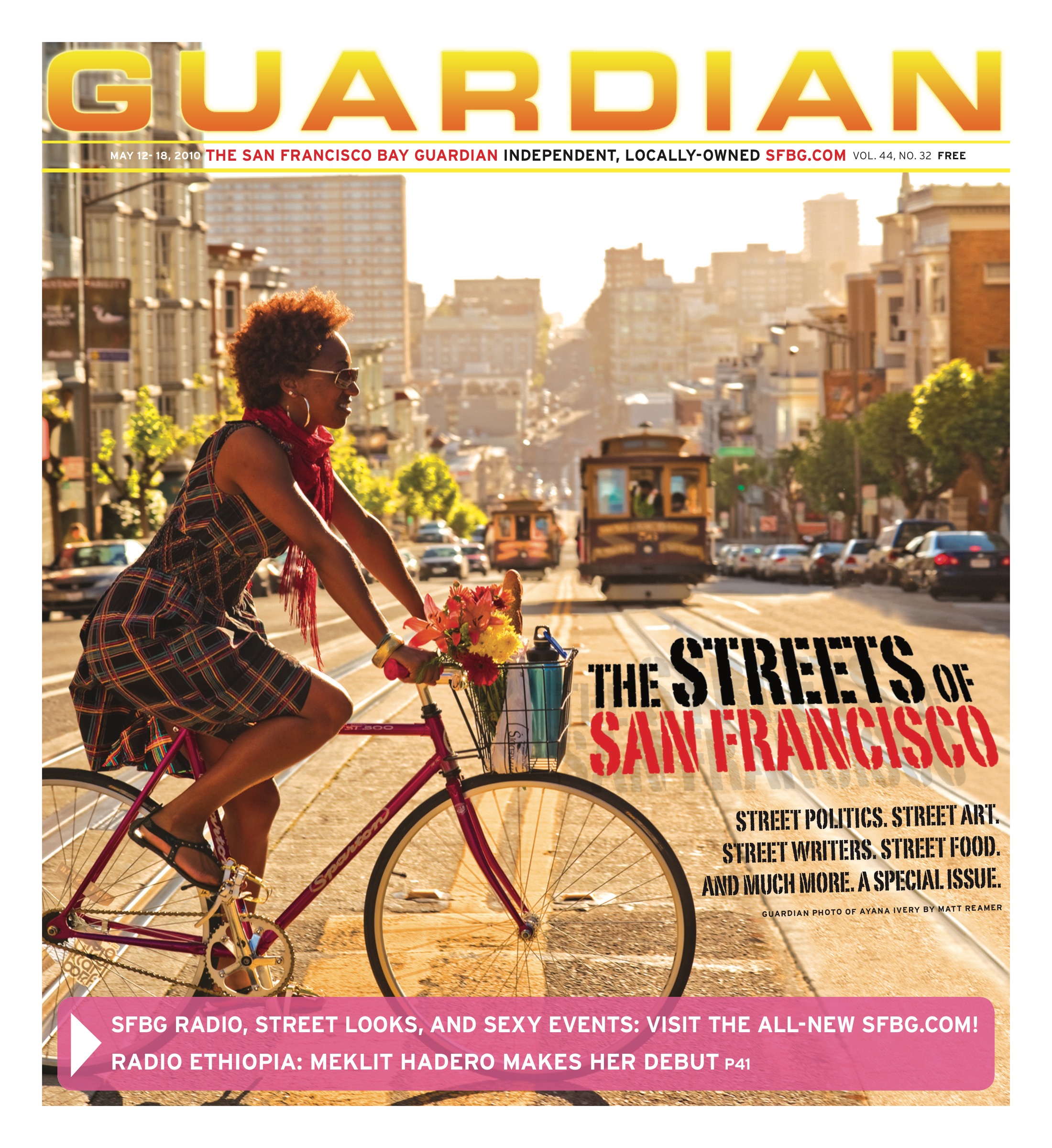
It’s hard to keep up with all the changes occurring on the streets of San Francisco, where an evolving view of who and what roadways are for cuts across ideological lines. The car is no longer king, dethroned by buses, bikes, pedestrians, and a movement to reclaim the streets as essential public spaces.

Sure, there are still divisive battles now underway over street space and funding, many centered around the San Francisco Municipal Transportation Agency, which has more control over the streets than any other local agency, particularly after the passage of Proposition A in 2007 placed all transportation modes under its purview.

Transit riders, environmentalists, and progressive members of the Board of Supervisors are frustrated that Mayor Gavin Newsom and his appointed SFMTA board members have raised Muni fares and slashed service rather than tapping downtown corporations, property owners, and/or car drivers for more revenue.

Board President David Chiu is leading the effort to reject the latest SFMTA budget and its 10 percent Muni service cut, and he and fellow progressive Sups. David Campos, Eric Mar, and Ross Mirkarimi have been working on SFMTA reform measures for the fall ballot, which need to be introduced by May 18.

But as nasty as those fights might get in the coming weeks, they mask a surprising amount of consensus around a new view of streets. “The mayor has made democratizing the streets one of his major initiatives,” Newsom Press Secretary Tony Winnicker told the Guardian.

And it’s true. Newsom has promoted removing cars from the streets for a few hours at a time through Sunday Streets and his “parklets” in parking spaces, for a few weeks or months at a time through Pavement to Parks, and permanently through Market Street traffic diversions and many projects in the city’s Bicycle Plan, which could finally be removed from a four-year court injunction after a hearing next month.

Even after this long ban on new bike projects, San Francisco has seen the number of regular bicycle commuters double in recent years. Bike to Work Day, this year held on May 13, has become like a civic holiday as almost every elected official pedals to work and traffic surveys from the last two years show bikes outnumbering cars on Market Street during the morning commute.

If it wasn’t for the fiscal crisis gripping this and other California cities, this could be a real kumbaya moment for the streets of San Francisco. Instead, it’s something closer to a moment of truth — when we’ll have to decide whether to put our money and political will into “democratizing the streets.”


RECONSIDERING ROADWAYS

After some early clashes between Newsom and progressives on the Board of Supervisors and in the alternative transportation community over a proposal to ban cars from a portion of John F. Kennedy Drive in Golden Gate Park — a polarizing debate that ended in compromise after almost two acrimonious years — there’s been a remarkable harmony over once-controversial changes to the streets.

In fact, the changes have come so fast and furious in the last couple of years that it’s tough to keep track of all the parking spaces turned into miniparks or extended sidewalks, replacement of once-banished benches on Market and other streets, car-free street closures and festivals, and healthy competition with other U.S. cities to offer bike-sharing or other green innovations.

So much is happening in the streets that SF Streetsblog has quickly become a popular, go-to clearinghouse for stories about and discussions of our evolving streets, a role that the San Francisco Bicycle Coalition — itself the largest grassroots group in the city, with more than 11,000 paid members — recently recognized with its Golden Wheel award.

“I think we are at a tipping point. All these little things have been percolating,” said San Francisco Planning Urban Research Association director Gabriel Metcalf, listing examples such as the creative reuse of San Francisco street space by Rebar and other groups (see “Seizing space,” 11/18/09), experiments in New York and other cities to convert traffic lanes to bicycle and pedestrian spaces, a new generation of more forward-thinking traffic engineers and planning professionals working in government, and more aggressive advocacy work by the SFBC, SPUR, and other groups.

“I think it’s all starting to coalesce,” Metcalf said. “Go to 17th and Valencia [streets] and feel what it’s like to have a sidewalk that’s wide enough to be comfortable. Or go ride in the physically separated bike lane on Market Street. Or take your kids to the playground at Hayes Green that used to be a freeway ramp.”

Politically, this is a rare area of almost universal agreement. “This is an issue where this mayor and this board have been very aligned,” Metcalf said. Winnicker, Newsom’s spokesperson, agreed: “The mayor and the board do see this issue very similarly.”

Mirkarimi, a progressive who chairs the Transportation Authority, also agreed that this new way of looking at the streets has been a bright spot in board-mayoral relations. “It is evolving and developing, and that’s a very good thing,” Mirkarimi said.

Both Winnicker and Mirkarimi separately singled out the improvements on Divisidero Street — where the median and sidewalks have been planted with trees and vegetation and some street parking spaces have been turned into designated bicycle parking and outdoor seating — as an example of the new approach.

“It really is a microcosm of an evolving consciousness,” Mirkarimi said of the strip.

Sunday Streets, a series of events when the streets are closed to cars and blossom with life, is an initiative proposed by SFBC and Livable City that has been championed by Newsom and supported by the board as it overcame initial opposition from the business community and some car drivers.

“There is a growing synergy toward connecting the movements that deal with repurposing space that has been used primarily for automobiles,” Sunday Streets coordinator Susan King told us.

Newsom has cast the greening initiatives as simply common sense uses of space and low-cost ways of improving the city. “A lot of what the mayor and the board have disagreements on, some of that is ideological,” Winnicker said. “But streets, parks, medians, and green spaces, they are not ideological.”

Maybe not, but where the rubber is starting to meet the road is on how to fund this shift, particularly when it comes to transit services that aren’t cheap — and to Newsom’s seemingly ideological aversion to new taxes or charges on motorists.

“We’re completely aligned when it comes to the Bike Plan and testing different things as far as our streets, but that all changes with the MTA budget,” said board President David Chiu, who is leading the charge to reject the budget because of its deep Muni service cuts. “Progressives are focused on the plight of everyday people who can’t afford to drive and park a car and have to rely on Muni. So it’s a question of on whose back will you balance the MTA budget.”


WHOSE STREETS?

The MTA governs San Francisco’s streets, from deciding how their space is allocated to who pays for their upkeep. The agency runs Muni, sets and administers parking policies, regulates taxis, approves bicycle-related improvements, and tries to protect pedestrians.

So when the mayoral-appointed MTA Board of Directors last month approved a budget that cuts Muni service by 10 percent without sharing the pain with motorists or pursuing significant new revenue sources — in defiance of pleas by the public and progressive supervisors over the last 18 months — it triggered a real street fight.

The Budget and Finance Committee will begin taking up the MTA budget May 12. And progressive supervisors, frustrated at having to replay this fight for a second year in a row, are pursuing a variety of MTA reforms for the November ballot, which must be submitted by May 18.

“We’re going to have a very serious discussion about MTA reform,” Chiu said, adding, “I expect there to be a very robust discussion about the MTA and balancing that budget on the backs of transit riders.”

Among the reforms being discussed are shared appointments between the mayor and board, greater ability for the board to reject individual initiatives rather than just the whole budget, changes to Muni work rules and compensation, and revenue measures like a local surcharge on vehicle license fees or a downtown transit assessment district.

Last week Chiu met with Newsom on the MTA budget issue and didn’t come away hopeful that there will be a collaborative solution such as last year’s compromise. But Chiu said he and other supervisors were committed to holding the line on Muni service cuts.

“I think the MTA needs to get more creative. We have to make sure the MTA isn’t being used as an ATM with these work orders,” Chiu said, referring to the $65 million the MTA pays to the Police Department and other agencies every year, a figure that steeply increased after 2007. “My hope is that the MTA board does the right thing and rolls back some of these service reductions.”

Transit riders have been universal in condemning the MTA budget. “The budget is irresponsible and dishonest,” said San Francisco Transit Riders Union project director Dave Snyder. “It reveals the hypocrisy in the mayor’s stated environmental commitments. This action will cut public transit permanently and that’s irresponsible.”

But the Mayor’s Office blames declining state funding and says the MTA had no choice. “It’s an economic reality. None of us want service reductions, but show us the money,” Winnicker said.

That’s precisely what the progressive supervisors are trying to do by exploring several revenue measures for the November ballot. But they say Newsom’s lack of leadership on the issue has made that difficult, particularly given the two-third vote requirement.

“There’s been a real failure of leadership by Gavin Newsom,” Mirkarimi said.

Newsom addressed the issue in December as he, Mirkarimi, and other city officials and bicycle advocates helped create the city’s first green “bike box” and honor the partial lifting of the bike injunction, sounding a message of unity on the issue.

“I can say this is the best relationship we’ve had for years with the advocacy community, with the Bicycle Coalition. We’ve begun to strike a nice balance where this is not about cars versus bikes. This is about cars and bikes and pedestrians cohabitating in a different mindset,” Newsom said.

Yet afterward, during an impromptu press conference, Newsom spoke with disdain about those who argued that improving the streets and maintaining Muni service during hard economic times requires money, and Newsom has been the biggest impediment to finding new revenue sources.

“Everyone is just so aggressive on trying to raise revenue. We’ve been increasing the cost of going on Muni the last few years. I think people need to consider that,” Newsom said. “We’ve increased the cost of parking tickets, increased the cost of using a parking meter, and we’ve raised the fares. It’s important to remind people of that. The first answer to every question shouldn’t be, OK, we’re going to tax people more or increase their costs.

“You have to be careful about that,” he continued. “So my answer to your question is two-fold. We’re going to look at revenue, but not necessarily tax increases. We’re going to look at revenue, but not necessarily fine increases. We’re going to look at revenue, but not necessarily parking meter increases. We’re going to look at new strategies.”

Yet that was six months ago, and with the exception of grudgingly agreeing to allow a small pilot program in a few commercial corridors to eliminate free parking in metered spots on Sunday, Newsom still hasn’t proposed any new revenue options.

“The voters aren’t receptive to new taxes now,” Winnicker said last week. Mirkarimi doesn’t necessarily agree, citing polling data showing that voters in San Francisco may be open to the VLF surcharge, if we can muster the same kind of political will we’re applying to other street questions.

“It polls well, even in a climate when taxation scares people,” Mirkarimi said.


BIKING IS BACK

It was almost four years ago that a judge stuck down the San Francisco Bicycle Plan, ruling that it should have been subjected to a full-blown environmental impact report (EIR) and ordering an injunction against any projects in the plan.

That EIR was completed and certified by the city last year, but the same anti-bike duo who originally sued to stop the plan again challenged it as inadequate. The case will finally be heard June 22, with a ruling on lifting the injunction expected within a month.

“The San Francisco Bicycle Plan project eliminates 56 traffic lanes and more than 2,000 parking spaces on city streets,” attorney Mary Miles wrote in her April 23 brief challenging the plan. “According to City’s EIR, the project will cause ‘significant unavoidable impacts’ on traffic, transit, and loading; degrade level of service to unacceptable levels at many major intersections; and cause delays of more than six minutes per street segment to many bus lines. The EIR admits that the “near-term” parts of the project alone will have 89 significant impacts of traffic, transit, and loading but fails to mitigate or offer feasible alternatives to each of these impacts.”

Yet for all that, elected officials in San Francisco are nearly unanimous in their support for the plan, signaling how far San Francisco has come in viewing the streets as more than just conduits for cars.

City officials deny that the bike plan is legally inadequate and they may quibble with a few of the details Miles cites, but they basically agree with her main point. The plan will take away parking spaces and it will slow traffic in some areas. But they also say those are acceptable trade-offs for facilitating safe urban bicycling.

The city’s main overriding consideration is that we must do more to get people out of their cars, for reasons ranging from traffic congestion to global warming. City Attorney’s Office spokesperson Matt Dorsey said that it’s absurd that the state’s main environmental law has been used to hinder progress toward the most environmentally beneficial and efficient transportation option.

“We have to stop solving for cars, and that’s an objective shared by the Board of Supervisors, and other cities, and the mayor as well,” Dorsey said.

Even anti-bike activist Rob Anderson, who brought the lawsuit challenging the bike plan, admits the City Hall has united around this plan to facilitate bicycling even if it means taking space from automobiles, although he believes that it’s a misguided effort.

“It’s a leap of faith they’re making here that this will be good for the city,” Anderson told us. “This is a complicated legal argument, and I don’t think the city has made the case.”

A judge will decide that question following the June 22 hearing. But whatever way that legal case is decided, it’s clear that San Francisco has already changed its view of its streets and other once-marginalized transportation choices like the bicycle.

Even the local business community has benefited from this new sensibility, with bicycle shops thriving around San Francisco and local bike messenger bag companies Timbuk2 and Rickshaw Bags experiencing rapid growth thanks to a doubling of the number of regular bicyclists in recent years.

“That’s who we’re aiming at, people who bike every day and make bikes a central part of their lives,” said Mike Waffenfels, CEO of Timbuk2, which in February moved into a larger location to handle it’s growth. “It’s about a lifestyle.”

For urban planners and advocates, it’s about making the streets of San Francisco work for everyone. As Metcalf said, “People need to be able to get where they’re going without a car.”

Event Listings

0

Event Listings are compiled by Paula Connelly. Submit items for the listings at listings@sfbg.com.

WEDNESDAY 12

Bike-In Movie Parking lot across from the Good Hotel, SF; www.disposablefilmfest.com. Good Hotel, 112 7th St, SF; (415) 621-7001. 4pm, free. Celebrate SF Bike Week starting at 4pm with Forage SF’s Underground Market, followed by a raffle at 7pm for cool bike gear, stays at the Good Hotel, and more, culminating in a screening of the Disposable Film Festival 2010 competitive shorts at 8pm. Valet bike parking available from the SFBC.

Write/Walk Meet at Mission High School, 3750 18th St., SF; (415) 252-4655. 6pm, free. Reading at Modern Times Bookstore, 888 Valencia, SF. 7pm, free. Enjoy a walking tour of poems by young poets from WritersCorps workshops at Mission High School that will be displayed in Mission storefronts for the month of May. Participating merchants include Candy Store Collective, Adobe Book Shop, Bombay Ice Cream, Borderlands Books, Dog Eared Bookstore, 826 Valencia, and more. Maps available at participating merchants.

Zhang Huan Sculpture Joseph L. Alioto Performing Arts Piazza, Civic Center Plaza, Larkin between the Main Library and the Asian Art Museum, SF; www.sfartscommission.org. 10am, free. Attend the dedication of internationally-acclaimed Chinese artist Zhang Huan’s Three Heads Six Arms copper sculpture that will be located in Civic Center Plaza through 2011.

THURSDAY 13

Bike Away From Work Party Rickshaw Stop, 155 Fell, SF; www.sfbike.org/btwd. 6pm; free for SFBC members, $10 for non-members. Get the skinny [jeans] on cycling fashion and style at this runway show and Bike to Work Day after party featuring tips on functional finery, complimentary bike valet, DJs, and raffle prizes.

Radical Women on Asian American Heritage New Valencia Hall, Suite 202, 625 Larkin, SF; (415) 864-1278. 7pm, free. Asian vegetarian buffet available at 6:15pm, $7.50. Hear artists Mia Nakano, Lenore Chinn and Nellie Wong discuss turning art into a collective voice for social change and the importance of the visibility of Asian American queers and women to the movements.

Rock the Bike California Academy of Sciences, 55 Music Concourse Dr., SF; www.calacademy.org. 7pm, $12. Celebrate one of San Francisco’s favorite method of transportation at this cycling themed NightLife featuring fun sustainable displays, including a bike-powered blender, a bike-powered DJ stage where you can take a turn pedaling, a performance by “the bike rapper” Fossil Fuel, bike-powered and inspired art, and more.

FRIDAY 14

BAY AREA

Ferment Change Humanist Hall, 390 27th St., Oak.; www.fermentchange.org. 7pm, $10-30 sliding scale. Support a more equitable food system at this fermented foods, culture, and urban agriculture series event where you can taste over a hundred different homemade fermented foods and beverages. Proceeds to benefit for urban agriculture heroes, City Slicker Farms. Bring your own fermented food to share and be entered in a raffle.

SATURDAY 15

Asian Heritage Street Celebration Larkin between Ellis and Grove, SF; www.asianfairsf.com. 11am-6pm, free. Celebrate Asian heritage at this street fair featuring two stages with over 100 music, dance, and other performance acts, an Anime area, a mah jong court, food and drink vendors, a cultural procession, an 8-foot high replica of a human colon, and much more.

Dawn Festival 2010 California Academy of Sciences, 55 Music Concourse Dr., Golden Gate Park, SF; www.dawnfestival.org. 7:30pm, $20. Reboot and Tablet Magazine host this celebration of the Jewish holiday of Shavuot, with Sandra Bernhard, Daniel Handler (aka Lemony Snicket), and more.

Inner Sunset Street Fair Irving at 10th Ave., SF; www.sfpix.com. 10am-8:30pm, free. Celebrate the Inner Sunset at this inaugural street fair set to feature sidewalk sales throughout the neighborhood, live music performances, dance lessons, art, crafts, food, yoga and tai chi lessons, and more.

MASS Good Vibrations Polk Street Gallery, 1620 Polk, SF; (415) 345-0400. 7pm, free. Enjoy this multimedia exhibit by poet and musician Kevin Simmonds called MASS (Making All Saints Sebastian), where he uses photographs, music, and poetry to recast male sexuality by having a diverse range of men pose as St. Sebastian.

SUNDAY 16

Alameda Backyard Chicken Coop Bicycling Tour Meet at 488 Lincoln, Alameda. 1pm, free. Take a self-guided bike tour of the many chicken coops of Alameda and check out a wide range of chicken coops while learning about urban chicken farming, ecological issues, and slow food on this 4.5 mile route. Maps will be provided at the start location and refreshment will be available along the route.

Bay to Breakers Start lines on Mission between Beale and Steuart, SF; (415) 359-2800, www.ingbaytobreakers.com. 8am; registration $48, group discounts available, free to be a spectator. Enjoy this authentic San Francisco marathon, complete with competitive runners and Mardi Gras style revelers, who follow athletes through the city in themed costumes and floats. Call or visit their website for rules and restrictions on alcohol consumption. Don’t forget to dispose of your own trash.


Alerts

0

alert@sfbg.com

WEDNESDAY, MAY 12

Fix California’s budget


Ever wonder if you could do a better job balancing the California budget than the professionals? Now’s your chance to take part in a simulated Budget Challenge that mirrors the decisions the Legislature will make in the next few weeks, accounting for all revenue and expenditures, the governor’s cuts, and more. Share your responses with the Legislature.

6 p.m., free

Richmond City Hall

450 Civic Center Plaza, Richmond

(510) 286-1400

THURSDAY, MAY 13

Ride ’em, city slickers


Join thousands of SF commuters in cycling solidarity at this year’s Bike to Work Day. Slip into the commuter convoy, which provides cool company and the safety of riding in a group; stop by an energizer station, where you can fuel up with free coffee, snacks, and goodies; and use the complimentary downtown bike parking station located at Market and Battery streets.

All day, free

Everywhere SF

www.sfbike.org/btwd

FRIDAY, MAY 14

Berkeley Critical Mass


Live in the carfree world you dream of for an evening at this monthly critical mass ride promoting self-powered commuting and community. Fill the streets with human interaction and DIY transportation!

6 p.m., free

Meet at Berkeley BART Station

Center and Shattuck, Berk.

www.berkeleycriticalmass.org

SATURDAY, MAY 15

Mourning Mothers’ March


Help raise awareness for ongoing homicide violence in Oakland and the impact it has on victims, survivors of victims, and the community at large. Mourn the senseless loss of life and spread hope for the future at this march around Lake Merritt.

Noon, free

Meet at Lake Merritt bandstand

Grand and Bellevue, Oak.

(510) 581-0100

Peace Flag-raising Ceremony


Celebrate International Conscientious Objector’s Day at this raising of a second Peace flag with war resisters from World War II, the Korean War, the Vietnam War, the Gulf War, and the Iraq and Afghanistan wars.

11 a.m., free

Civic Center Park, flagpole

2180 Milvia, Berk.

www.couragetoresist.org

Stop the Tea Party


Attend "Tea Party: Corporate and Racist Politics in Disguise," a public forum on how to fight back against extremist Tea Party politics. The event features Marsha Feinland from the Peace and Freedom Party, Don Belcher from Single-Payer Now, and Mark Ostapiak from Socialist Action.

7 p.m., $3–$5 donation

Center for Political Education

522 Valencia, SF

(415) 401-7471

TUESDAY, MAY 18

"Oakland’s Health Disparities in Black and White"


According to a report produced by the Alameda County Public Health Department, "compared to a white child in the Oakland Hills, African American children born in West Oakland can expect to die almost 15 years earlier." Hear Dr. Muntu Davis, one of the authors of the report, and representatives from the African People’s Education and Defense Fund (APEDF) discuss how the African American community can control of health care as part of the solution to the current community health crisis in Oakland.

7 p.m., free

Humanist Hall

390 27th St., Oakl.

(510) 763-3342 2

Mail items for Alerts to the Guardian Building, 135 Mississippi St., SF, CA 94107; fax to (415) 255-8762; or e-mail alert@sfbg.com. Please include a contact telephone number. Items must be received at least one week prior to the publication date.

The Daily Blurgh: Globish With Attitude

0

Curiosities, quirks, oddites, and items from around the Bay and beyond

Don’t worry, San Franciscans: Your Internet friends don’t hate you and you will be followed once again

******

Speaking of friends, whatever happened to N.W.A..’s posse?

******

Me talk pretty one day, indeed. Do you speak Globish? You probably have. And so does the rest of the world.

******

RIP Ms. Horne

*****

Newsflash! Oversharing online can come back to bite you in the ass: “While participation in social networks is still strong, a survey released last month by the University of California, Berkeley, found that more than half the young adults questioned had become more concerned about privacy than they were five years ago — mirroring the number of people their parent’s age or older with that worry.”

*******

This brave, local blogger waited four and a half hours for a bowl of fancy “test ramen” so you wouldn’t have to.

******

Today in corporate sponsorships: Wynnona Judd to shill for Cracker Barrel. I want a pair of the sunglasses. “I love the rocking chairs and I feel really good when I go to Cracker Barrel,” she says. Sparkle Winnie! Sparkle!

SFBG Radio: Johnny and Tim on immigration politics

0

Today, the always calm, moderate and soft-spoken Johnny Angel Wendell talks to Tim Redmond about how the insanity of immigration politics in Arizona is going to impact the races for governor and senate in California. You can listen after the jump.

sfbg radio 5/11/2010 by SFBG

ICE says it will automatically vet juvenile immigrants fingerprints

25

In what appears to be another fatal blow for San Francisco’s sanctuary laws–and due process in general— officials for U.S. Immigration and Customs Enforcement (ICE) say the fingerprints of juvenile immigrants charged with serious offenses will also be automatically forwarded to ICE

“My colleagues in SF advise that the fingerprints of juveniles arrested for criminal offenses will also be vetted through Secure Communities,” Virginia Kice, ICE’s Western Regional Communications Director, told the Guardian.

“If that’s the case, that’s pretty significant,” said Sup. David Campos, who was under the impression that the Secure Communities initiative would not touch juveniles. The thinking, Campos said, was that juveniles’ fingerprints were handled through a separate database and therefore would be exempt from the new federal initiative.

Sheriff Mike Hennessey, who does not handle juvenile detainees, told the Guardian,  “If I had to guess, I would say that Ms. Kice is correct, but it’s possible that the computer could be bifurcated.”

Calls to Mayor Gavin Newsom, San Francisco Juvenile Probation Department Chief William Siffermann and California Attorney General Jerry Brown (whose office maintains fingerprinting databases) remained unanswered, as of blog posting time.

SF nightclubs fight back with new organization

8

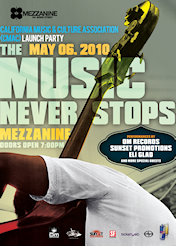
In the ongoing War on Fun in San Francisco, a new combatant officially entered the battlefield last night with the launch of the California Music And Culture Association (which strangely goes by the acronym CMAC rather than CMCA). It aims to be a political advocacy organization and to provide members with services such as neighbor relations advice, group insurance, and discounted legal services.

“We’re here to celebrate a new era of nightlife and entertainment in San Francisco,” CMAC President Sean Manchester, owner of Mighty and Wish, told a crowd at Mezzanine that included club owners, lawyers, promoters, performers, and politicians ranging from supervisorial candidates Scott Wiener from D8 to Debra Walker in D6. California Sen. Mark Leno also sent a formal resolution of support for CMAC.

A video prepared for the event included an even wider array of local figures extolling the importance of nightlife to San Francisco, including SF Convention & Visitors Bureau chief Joe D’Alessandro and San Francisco Planning and Urban Research Association (SPUR) director Gabriel Metcalf, who said, “I think it’s great that the nightlife industry is getting organized.”

That organization was prompted by threats and harassment from the San Francisco Police Department, the California Department of Alcoholic Beverage Control, neighbors of some clubs, and Mayor Gavin Newsom and others who have been on a campaign to demonize the industry and its regulation by the Entertainment Commission.

It’s a trend that the Guardian has been writing about for years, and one that I’ll be discussing this Tuesday as part of a panel assembled by SPUR that includes representatives from the SFPD and Entertainment Commission, as well as Sup. Bevan Dufty, who spearheaded the cancellation of Halloween in the Castro.

The Daily Blurgh: What should I do next, Edith Wharton?

Curiosities, quirks, oddites, and items from around the Bay and beyond

Today in fashion: Oakland lifts century-old ban on cross-dressing, Parisian women can now legally wear pants, and persons of any gender can express their displeasure at the state of Arizona with a t-shirt (American flag shirts, however, can get you into hot water).

*****
 
You’re never too young to violate California labor laws.

*****

Oil-sucking “brooms” made from stray pet hair help save the environment, resemble rotting salami.


*****

Is this MTV original series not child porn-by-proxy because someday its nerdy and extraordinarily hung protagonist will grow up to be a character in a Judd Apatow film? (Thanks WoW Report and Slog)

*****

This is why “No Substitutions” is totally fair game in a restaurant.

*****

Edith Wharton meets Choose Your Own Adventure

*****

Boob tube still bringing folks together, one couch potato at a time: “Like all social activities, television-watching demands compromise. People may have strong ideas about what they want to watch, but what they really want to do is watch together.”

*****
Scopitone Week continues! Click here to learn more about Scopitones. Continuing with our survey of the ladies of Scopitone, today’s clip returns us to France. Here’s the boysih Stella, with “Le Vampire,” one of her send-ups of the ye-ye style popularized by such other Scopitone cuties as France Gall. You know MJ totally bit this for the Thriller video. (Just like he bit another French classic.)

http://www.youtube.com/watch?v=E5in8MdBTgI

Is ICE planning to destroy sanctuary city?

10

Virginia Kice, spokesperson for the Department of Homeland Security’s Immigration and Customs Enforcement (ICE), sounded hopping mad at the way that ICE’s Secure Communities initiative is being represented as undermining San Francisco’s sanctuary policy and possibly creating an even worse federal immigration system.

“It’s just an information sharing system,” Kice told the Guardian. “Any time someone is electronically booked by local or state law enforcement agencies, their fingerprints will be compared up against biometrics in U.S. Department of Justice, the F.B.I. and the Department of Homeland Security (DHS) databases. “


If a match is found, then ICE will do the follow-up investigation, Kice said.

“Not everyone in the system has violated the law,” Kice explained. “They may have applied for an immigration benefit or they could already be naturalized [have become a U.S. citizen]. It just means that they have had an encounter with DHS.”

Alluding to the ongoing debate about immigration law and racial profiling, Kice stressed that this new system doesn’t selectively finger print.

“It finger prints everybody, and because this system uses biometrics, it’s going to be accurate in terms of i.d.ing people who have had prior encounters with D.H.S,” she said.
“Some people use multiple aliases and give misinformation about their history. We know people have escaped deportation this way in the past, but fingerprints don’t lie.”

Local law enforcement officials are concerned that though the new policy is supposed to target folks charged with serious crimes, including murder, rape, sex crimes, serious assault, and resisting arrest, it will also sweep up folks charged with minor infractions, such as being drunk in public, who could now fall into ICE’s hands for deportation, especially if they resist arrest at the time, which happens to be defined as a serious crime.

“Not everybody who is in the country illegally has ever been encountered by D.H.S. and because we don’t have their biometrics, the system would not detect a match,” Kice continued. “But that does not mean they won’t be referred for a follow-up investigation. And it ensures that we get their information shortly after an encounter occurs.”

But despite Kice’s rosy assessment of the federal government’s Secure Communities program which she says has already been set up in 15 other California communities, 20 states and about 160 municipalities nationwide, the San Francisco Sheriff’s Office continued to express unease at how the new program will shift the local landscape.

 “The ground rules in the jails have changed, but not due to any decision on our part,” Eileen Hirst, spokesperson for the San Francisco Sheriff’s Department told the Guardian.

The interlinking automated database will remove the firewall that used to protect folks booked with low-level crimes from being referred to federal immigration authorities.

“The firewall was the discretion of local law enforcement,” Hirst explained.

In San Francisco, the Sheriff’s Department developed laws that were consistent with federal laws, as well as San Francisco’s sanctuary ordinance, which was enacted in 1989.

Under San Francisco’s current “City of Refuge” ordinance, local law enforcement officials refer individuals who are booked on felony charges, or have a history of felony charges, and are foreign born and have previous deportation orders or ICE holds.

But now everyone who gets arrested will be fingerprinted and referred to ICE, not through human intervention, but through a fingerprint database that connects to similar databases in Canada, Mexico and within Interpol.

“DHS, of which ICE is part, has interoperability agreements with California’s Department of Justice, which maintains a fingerprint database for state,” Hirst said.” ICE now has complete access to the DOJ databases and vice versa.”

This fundamental change in policy means that any time anyone is booked in San Francisco, they will be fingerprinted and automatically reported, including folks charged with misdemeanors, such as minor drug possession, low level financial crimes and misdemeanor battery.

“What happens next will depend on DOJ’s response,” Hirst said. “We are putting the word out because it was clear that the immediate community did not know about this.”

Local law enforcement officials say they were verbally informed of the new initiative at a recent meeting at ICE’ office at 630 Sansome Street in San Francisco. Asked if the system will go into effect June, Kice said the agency doesn’t typically inform communities when the program will be deployed, but promised to get back to us.

David Venturella, who has been involved with ICE for years and is currently the head of ICE’s Secure Communities initiative was not available for comment, but Kice sent a fact sheet, which claims the program “is leading ICE’s efforts to modernize and transform its criminal alien enforcement model, through technology, integration and information sharing.”

“This is the first time that the Federal government has used biometric identification technology to enforce immigration laws at the state and local law enforcement level,” the fact sheet states. “This enables ICE to accurately identify dangerous criminal aliens much more efficiently, and in significantly greater numbers. This also helps local law enforcement officials get dangerous criminals off their streets, at little or no additional cost. If an individual’s fingerprints match those of a person in DHS’s biometric system, the new automated process will notify ICE and the participating agency submitting the fingerprints. ICE will evaluate each case to determine the individual’s immigration status and take appropriate enforcement action. Top priority will be given to offenders who pose a threat to the public safety, such as aliens with prior convictions for major drug offenses, murder, rape, robbery, and kidnapping.”

The ICE fact sheet notes that, “Deployment of this interoperable technology across the nation is now underway as is expected to be complete by 2012.”

“Congress has allocated $350 million for Secure Communities in FY 2008 and FY 2009,” the fact sheet continues.  “As of March 2009, Secure Communities has been deployed to 48 sites in seven states – Arizona, Florida, Massachusetts, North Carolina, Pennsylvania, Texas, and Virginia.”

And clearly, it’s already expanded beyond those boundaries and is about to kick in, right here in San Francisco and other Bay Area municipalities.

More fun with political ads

1

You don’t have to look far to find creative parodies of the famous Carly Fiorina demon sheep ad. But now the Democratic Party — finally stepping up — has released it’s own weirdo ad, called Demon Sheep II. It attacks both Fiorina and Tom Campbell, and has a toss-off at the end about Chuck DeVore, but it’s clearly aimed first and foremost at Carly — which suggests, no surprise, that the Dems (that is, the Democratic Senatorial Campaign Committee) is getting out of the box, now, with attacks on Barbara Boxer’s likely November foe. Carla Marinucci calls the ad “hysterical,” and while I wasn’t laughing that hard, you have to admit: The goofiness level of big-time California campaign ads is on the rise.


The ad hints at what Boxer’s camp is going to focus on this fall — and it’s similar to what Jerry Brown needs to do to defeat Meg Whitman. The ad is all about Carly Fiorini, rich business excutive who owns two yachts, flew around in corporate jets and moved 28,000 jobs offshore — then got fired. That works pretty well for Boxer, who can contrast her progressive stands on economic issues to the GOP’s pro-rich agenda. Now Brown needs to start taking a more populist stand (on Prop. 13 reform, for example) if he wants to make his attacks on Whitman stick.


Check out Demon Sheep II:


Benefits: May 5-May 11

0

Ways to have fun while giving back this week

Thursday, May 6

Art Changes Lives 2010: Celebrating Color
Attend this benefit auction for Creativity Explored programs, that positively impact the lives of artists with developmental disabilities and the community that is connected to them. Featuring mistress of ceremonies Peaches Christ, cuisine by Foreign Cinema, cocktails, live music, and more. Auction features original art by Creativity Explored artists. Guests are encouraged to wear chromatic attire.
6:30 p.m., $125
Foreign Cinema
2534 Mission, SF
www.creativityexplored.org

Hysteria
Attend this benefit for the Women’s Community Clinic, a non-profit health care provider for women in San Francisco, featuring a silent auction and a comedy performance by Maria Bamford.
6 p.m., $100
Jewish Community Center
3200 California, SF
hysteria.womenscommunityclinic.org

Kestral Sound Review
Enjoy this benefit project from a local collaborative of music lovers, where curators will showcase up and coming talent through a series of mini festivals they call “Volumes.” Proceeds from the first installment will go to help fight breast cancer. The festival to feature live performances by Bye Bye Blackbirds, Grand Lake, Misirlou, and more, art by Ted Folstand and KC Skinner, photography by Christine Zona, and more.
8 p.m., $5 donation
The Tempest
431 Natoma, SF
www.kestral.org

SF AIDS Foundation Leadership Recognition Dinner
Join other community members and allies in commending vanguards in the community’s efforts to end HIV and AIDS by honoring Dr. Grant Colfax, Director of the HIV Prevention and Research Section in the SF Department of Public Health AIDS Office, Lonnie Payne-Clark, California AIDS Hotline volunteer, fundraiser, and former board member of San Francisco AIDS Foundation and Pangaea Global AIDS Foundation, and Sports Basement, a sponsor and community partner of AIDS/LifeCycle and the Greater Than One training program.
6 p.m., $200
InterContinental Hotel
Grand Ballroom, 888 Howard, SF
(415) 487-3013

Friday, May 7

First Graduate
Attend this Cap and Gown celebration and help support First Graduate, an organization that helps local youth finish high school and become the first in their families to graduate from college. Featuring live jazz, food, dancing, and dessert.
6 p.m., $175
San Francisco City Hall
1 Dr. Carlton B. Goodlett Place, SF
www.firstgraduate.org

Saturday, May 8

National Kidney Walk
Take part in this fundraising walk to help provide resources and raise awareness for the 20 million people with kidney disease in the U.S.
9 a.m.; free to walk, walkers encouraged to raise $200
One Maritime Plaza
300 Clay, SF
www.kidneywalk.org

Peralta Elementary School Community Festival
Help support Peralta Elementary, an Oakland public school for kindergarten through fifth grades, at this spring festival featuring carnival games, sing a song and pot a plant, climbing wall, music, and edible carnival treats.
Noon – 4 p.m., free
Peralta Elementary School
460 63rd St., Oak.
(510) 658-8161

Sunday, May 9

Space Odyssey
Attend Southern Exposure’s annual fundraiser and art auction featuring live and silent art auction, creative projects, food and drink, and music. Proceeds help SoEx continue to be an independent local hub for the Bay Area visual arts community.
7:30 p.m., $35-$65
Southern Exposure
3030 20th St., SF
www.soex.org

Walk to Empower
Join over 1, 000 walkers participating in this Mother’s Day Breast Cancer Walk with a goal of raising $190,000 for those affected by breast cancer.
9 a.m., minimum group purchase of $50.00
Justin Herman Plaza
Market at Embarcadero, SF
www.networkofstrength.org

The Daily Blurgh: MUNI Party! (And punk-rock sad)

Curiosities, quirks, oddites, and items (plus a lot about kitties) from around the Bay and beyond

“Scientists have discovered one of the smallest free-living life forms ever, with a genome that looks like a pamphlet compared to a human’s encyclopedia, living in a poison-soaked mine in Northern California.” Uh oh. Hasn’t anyone remembered the lessons of The Boogens? There will be blood.

*****

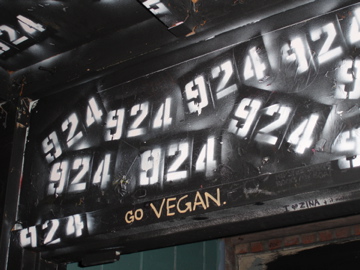
Brother can you spare a dime (or a couple thousand) for legendary punk club 924 Gilman?

*****

Deport New Jersey? (OMFG this Congressional candidate from Florida is for real)

http://www.youtube.com/watch?v=FgdALsV6AmI

*****

“Among the many contradictions and ironies of Mexican-U.S. relations is the curious case of Cinco de Mayo. It is a holiday in Mexico, yes, but not nearly as important to the national identity as say, Independence Day (Sept. 16). Yet Cinco de Mayo remains a stubbornly prevalent excuse to party in the U.S., perhaps, some argue, because it is more culturally “safe” than honoring Mexico’s independence. The phenomenon is similar to the affection Americans have for St. Patrick’s Day, where just about everyone is invited to don green and get in touch with their inner Irish.” Still, it’s as good an excuse as any to repost this bad-ass trailer-for-a-movie-inspired-by-a-trailer-for-a-movie-that-never-existed.

*****

MUNI, give this driver who threw a party for her unsuspecting passengers, simply out of the kindness of her heart, a raise because a) she is awesome and b) this is the sort of press you should be getting on a more regular basis.

*****

The other Guardian handicaps this year’s Turner Prize shortlist.

*****

Scopitone Week continues! Click here to learn more about Scopitones. Today we begin our focus on the true stars of Scopitones: the ladies. Today’s chanteuse is Kay Starr, who sings her 1952 hit “Wheel of Fortune” in this Scopitone from the early to mid ’60s. Even though this mature diva takes center stage, she has some fierce competition from all the scantily-clad back-up dancers attached to roulette wheels:


http://www.youtube.com/watch?v=V_XFqjWjADY

Will Arizona trigger even worse federal immigration laws?

5

During interviews with civil and immigrant rights advocates about the complicated dynamics around immigration, several expressed concern that Arizona won’t be the ultimate game changer. Instead, they worried that it could result in the creation of an even worse federal immigration system.  And President Barack Obama, who has been accused of not doing enough to push ahead with federal immigration reform since he came into office, came under renewed fire last week, when he told reporters that “may not be an appetite” in Congress to deal with immigration, after a tough legislative year.

At the time, Obama had already denounced the Arizona bill as “misguided” and outlined a series of steps that he believes needs to happen to bring millions of undocumented residents out of the shadows.

“We are a nation of immigrants,” Obama said. “But we are also a nation of laws. The truth is that 11 or 12 million folks, we’re gonna have to make them take responsibility for what they did. And the way to do that is to make them register, make them pay a fine, make them learn English, make them take responsibility for the fact that they broke the law.”

But when the president praised as “an important first step” an April 29 framework for reform that Sen. Charles Schumer and a handful of other Democratic senators put together within a week of SB 1070’s passage, civil rights advocates voiced concerns.

The Democratic senators proposal includes efforts to enhance border security and create fraud-resistant social security cards. But some immigrant advocates fear such steps will lead to a less democratic society, without addressing the underpinning causes of undocumented immigration such as international trade agreements and the appetite of U.S. employers for cheap, but legally unprotected and easily disposable, migrant workers.

Latino advocate Robert Lovato, who co-founded presente.org and led the successful “Basta Dobbs!” campaign, isn’t convinced that SB 1070 will be the ultimate game changer.

“SB 1070 gives a national platform to the kind of sinister policies that extremist hate groups like FAIR and the Minute Men have been pushing for some time in Arizona,” he warned. “Those policies that have been in effect at the border are now going statewide and perhaps nationally.”

“The Obama administration has expressed brief and tepid concerns but has not done anything to demolish the legal foundation on which these racist policies are built,” Lovato continued.

Lovato points to the Bush administration’s flawed Section 287(g) program, which authorizes local and state law enforcement officials to be enforcers of federal immigration law, and has led to serious civil rights abuses and public safety concerns.

‘Now Obama and the Democrats are going to try and pin the tail of failure for federal immigration reform on the Republicans, ” Lovato claimed, criticizing, amongst other things, the Democrats’ national I.D. card program proposal.

Lovato believes the immigrant rights community and Latinos will rise to the occasion and face “unprecedented sinister hate.”
But he is less confident in spineless Democratic officials.
‘Immigration is a thorny issue, especially for spineless Democrats,” Lovato said. “That Mayor Gavin Newsom would waffle and water down boycott attempts is no surprise.”

Lovato recalled how national Latino organizations begged and pleaded with Newsom not to require local probation officers to refer youth to U.S. Immigration and Customs Enforcement (ICE) before they had their day in court, a policy Newsom ordered in July 2008, when he was running for governor.
Lovato said Newsom’s subsequent failure to respond to the community and their concerns “reflects an utter lack of leadership.”

Meanwhile, the American Civil Liberties Union is urging senators to press Department of Homeland Security secretary Janet Napolitano to terminate the 287(g) programs, and to make sure that lawmakers don’t acquiesce on civil liberties and privacy concerns in their rush to respond to demands for comprehensive immigration reform.

ACLU legislative counsel Joanne Lin told the Guardian that while Northern California does not have any official 287(g) agreements in place, Newsom’s flawed juvenile immigrant policy is part of a bigger and equally worrisome trend.

“The city’s sanctuary ordinance collapses criminal justice and the law enforcement system into one process,” Lin said. “And if we look at the federal Secure Communities Initiative that is now in over 100 jails, primarily those in southwest border districts, everyone is fingerprinted and run through a DHS and FBI database. It’s basically a way for DHS to i.d. everyone who is booked, whether they are here lawfully or their charges as are subsequently dropped or dismissed, and to fast track deportation.”

“Chronic” 2010

1

arts@sfbg.com

LIT/NCIBA Because poetic subjectivity is by and large an exclusive undertaking

in which the poet attempts to impress upon the reader, via the use of poetic conventions, his fundamentally unknowable immanence, it often results in complete discursive failure. Those who’ve ever experienced a poetry workshop surely recall the gentle "make it more concrete" euphemisms directed at those well-meaning but misdirected poets brave enough to tackle personal catastrophe with verse — the results of which are usually a mire of intimations, associations, and abstractions that in no way resemble poetry or even, on a basic level, communication.

"If it were that easy, we’d all be doing it" is, in this case, true. Few poets can convey complex interiority with such deftness, originality, and precision as D. A. Powell. He can rework what would otherwise be affective sentiment into a lucid and devastating articulation.

With his latest and fourth collection, Chronic (Graywolf Press, 64 pages, $20), Powell offers his best work to date, the winner of the Northern California Independent Booksellers Award in poetry. Its cavalcade of lyricism keeps tempo with phonic and syntactical playfulness (Powell is often compared to Gerard Manley Hopkins. Framing the poems in the collection is Powell’s epigraph, taken from Virgil’s Ecologues (itself a reworking of Theocritus’ Bucolica): Time robs us all, even of memory: of as a boy I recall/That with song I would lay the long summer days to rest./Now I have forgotten all my songs.

The result is a brilliant use of Virgilian source material as a formal element that provides a frame of reference for Powell’s own subjective experience. Among the book’s best pieces is a "redux" of Virgil’s second Ecologue, which tells of love and erotic longing between two male shepherds:

what was his name? I’d ask myself, that guy with the sideburns

and charming smile

the one I hoped that, as from a sip of hemlock, I’d expire with him

on my tongue

silly poet, silly man: thought I could master nature like a misguided

preacher

as if banishing love is a fix. as if the stars go out when we shut our

sleepy eyes

("corydon & alexis redux")

Even readers unaware of the fact that Powell is gay and living with HIV will not miss the dark subtext of the hemlock reference. The same themes, deeply personal to the author, are present in the book’s title poem. In "Chronic," Powell’s idiosyncratic verse structure — its syntactical breaks, lilting and elliptical sounds, lines that are unpunctuated yet entirely expressive — are employed to great effect in a lengthy, but quickly moving, rumination on ecological devastation:

and so the delicate, unfixed condition of love, the treacherous body
the unsettling state of creation and how we have damaged—
isn’t one a suitable lens through which to see another:
filter the body, filter the mind, filter the resilient land

and by resilient I mean which holds
which tolerates the inconstant lover, the pitiful treatment
the experiment, the untried & untrue, the last stab at wellness

("chronic")

No matter the overarching topic, each poem in Chronic is watermarked with Powell’s distinctive voice, one that his previous books Tea, Lunch, and Cocktails (things that, along with chronic, make for a satisfying afternoon) helped establish. The homoeroticism, pop culture references, adroitly inserted colloquialisms that lent charm and personality to past works are all present, but the scope has become more expansive and more complex. I am greatly looking forward to the next stopping points on Powell’s poetic horizons.


THE 2010 NORTHERN CALIFORNIA INDEPENDENT BOOKSELLER ASSOCIATION (NCIBA) BOOK OF THE YEAR WINNERS


FICTION

Cutting For Stone by Abraham Verghese (Knopf)


NONFICTION

Zeitoun by Dave Eggers (McSweeney’s)


POETRY

Chronic by D.A. Powell (Graywolf Press)


FOOD WRITING

Farm City: The Education of an Urban Farmer by Novella Carpenter (Penguin)


CHILDREN’S ILLUSTRATED (award to illustrator)

Zero is the Leaves on the Tree illustrated by Shino Arihara (Tricycle)


CHILDREN’S LITERATURE
Al Capone Shines My Shoes by Gennifer Choldenko (Penguin Young Readers)

TEEN LIT
Andromeda Klein by Frank Portman (Delacorte Young Readers)

REGIONAL
Tamalpais Walking by Tom Killion and Gary Snyder (Heyday Books) *

Pigs in Oakland

0

arts@sfbg.com

LIT/NCIBA One gets the sense that Novella Carpenter can do anything. A girl from rural Idaho, she knows how to hack it in "scruffy, loud, and unkempt" Oakland, the murder capital of the United States, amid the drug deals, gun fights, and open prostitution on the urban fringe. She also maintains a healthy, active relationship with her auto mechanic boyfriend (described as "a love sponge"), her many friends, and her local community.

On top of these already impressive competencies, she probably knows as much as Laura Ingalls Wilder about farming: she can grow more types of vegetables than most of us have eaten or even heard of; harvest rainwater; keep bee colonies; make honey; and raise and slaughter chickens, geese, ducks, turkeys, rabbits, goats, and — Jesus Christ!pigs. You learn all this and more in Carpenter’s urban farming memoir, Farm City: The Education of an Urban Farmer (Penguin, 288 pages, $16), winner in the Food Writing category of this year’s Northern California Independent Bookseller Awards. Unlike many others who’ve published books on their stellar accomplishments, Carpenter is bitingly funny, an immensely gifted storyteller, and likeable throughout.

Carpenter always knew that farming made her happy. But recalling the solitude she felt as a child growing up on a farm in Idaho, "a place of isolation, full of beauty — maybe — but mostly loneliness," she "chose to live in the city." At first she couldn’t decide which city she wanted to live in, despite the dearth of progressive cities to choose from. Portland was out of the question for being "too perfect." Austin was "too in the middle of Texas," and in Brooklyn there was "too little recycling." San Francisco was "filled with successful, polished people." So she chose to move to Oakland, which was "just right." In Farm City, Carpenter points to Oakland’s "down-and-out qualities" — the music scene, the scruffy citizenry "who drove cars as old and beat-up as ours" — that made it feel most like home.

Moving to Oakland was the first leg of Carpenter’s journey. The next was to turn her small part of the city into a "modified, farm animal-populated version." Indeed, it is Carpenter’s relationship with her fellow animals that provides the biggest, most startling revelations in Farm City. If you’re an animal lover at heart, as Carpenter is, it seems nothing short of barbaric to raise your own animals, grow to love them, and then stoically kill them one day. But Carpenter thinks the matter through in philosopher’s terms, describing animal husbandry as "a dialogue with life." Raising her animals to be eaten is not a matter Carpenter takes lightly — she recalls the many hours spent Dumpster diving for enough food to feed her ravenous pigs — and, part and parcel, she assumes their slaughter as her responsibility. To render the experience is one of her duties as a writer.

But turning her Oakland habitat into a farm was not an easy process. Farm City, which begins with a cheeky nod to Isak Dinesen’s Out of Africa ("I have a farm on a dead-end street in the ghetto"), chronicles the obstacles, frustrations, fumbles, and profound satisfactions of achieving a major accomplishment through innumerable and successive trials and errors. Carpenter may have a clucking henhouse today, but at one point she had to use Q-Tips and, when they failed, her own fingers to remove backed-up fecal matter from the "blocked buttholes" of her baby chicks (when you have them shipped, they tend to develop digestion problems). In her learning process, Carpenter leaves no stone unturned and no detail — not even baby chicken butts — unexamined.

Secrecy and criminality in the SFPD

15

Today’s Chronicle unveils more problems at the scandal-plagued San Francisco Police Department, as well as the District Attorney’s Office, raising new questions about their commitment to public accountability and protecting civil liberties at a time when the SFPD is seeking more authority and asking for the public’s trust.

At issue are police officers with criminal histories and disciplinary records serious enough to warrant disclosure to the criminal defendants that they testify against in court, which the story indicates is more than 80 officers. Such disclosures have been a standard requirement for almost 40 years, but neither police nor prosecutors in San Francisco have been making them, a revelation that could overturn hundreds of felony convictions because of this official misconduct, the Chron reports.

That bombshell comes in the wake the SFPD’s crime lab scandal, in which lab technician Deborah Madden – herself a court witness with a criminal history that should have been disclosed to defense attorneys – is suspected of regularly stealing from the seized narcotics that she tested.

The SFPD and its undercover party-busting cop Larry Bertrand are also accused of harassing nightclub owners and patrons, busting private parties using excessive force and warrantless raids, and illegally seizing computers and other personal items – all while publicly seeking to discredit the Entertainment Commission and seize its power to shut down nightlife in the city, as well as seeking greater authority to roust and threaten vagrants by proposing a law to ban sitting or lying on city sidewalks.

SFPD officials have repeatedly claimed the agency can be trusted not to abuse these new authorities, but the latest revelations about criminal cops highlights how difficult it is for the public or the press to keep tabs on the agency.

The Guardian today sent the SFPD a Sunshine Ordinance request for the names and violations of the officers in question, but if the past is a predicator, it’s likely to be denied with the claim that such records are exempt under the Peace Officers Bill of Rights, a state law with strict privacy protections for cops.

Even defense attorneys who have well-established rights to examine an arresting officer’s criminal and disciplinary histories through what’s known at Pitchess motions are routinely stonewalled by the SFPD, say defense attorneys. For example, attorneys for Arash Ghandan, an alleged victim of Bertrand’s brutality and retaliation, are now having a hard time getting information on the officer’s history. “We are in a battle for Bertrand’s personnel file,” Ghanadan’s attorney, Steve Sommers, told the Guardian. “The city of San Francisco just does not hand over documents without a fight.”

In 2006, former SDPD attorney Reno Rapagnani and his wife, former SFPD Sgt. Leanna Dawydiak, raised the issue of SFPD secrecy, its pattern of routinely shielding problem officers from discipline and public scrutiny, and retaliating against whistleblowers – and were then subjected to a witch hunt that forced them out of the department.

More recently, SFPD and its powerful Police Officers Association succeeded in watering down an early warning system for violence-prone officers, removing a number of triggers – such as resisting arrest and assault on a police officer charges that often accompany cases of abusive police conduct – that had been recommended by a police practices expert and which are currently used in San Jose and other cities. 

Meanwhile, District Attorney Kamala Harris, a candidate for California Attorney General, is also being criticized for the latest scandal. Under the Penal Code, she bears the responsibility for ensuring that her prosecutors are doing background checks on all witnesses and sharing that information with defense attorneys.

“Ultimately, the district attorney has to answer for this. It is the prosecution’s duty to check the criminal backgrounds of officers called to testify. That never happened, and as a result, people have been denied fair trials,” Public Defender Jeff Adachi said in a press conference on the issue this morning.

The tough-on-crime era of the 1990s — when politicians, police, and prosecutors did all they could to create new laws and enforcement powers – is over, and we have a severely overcrowded prison system to show for its short-sightedness. But that mentality continues to guide the SFPD.

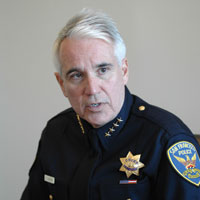
Since the arrival of Police Chief George Gascon from Arizona last August, SFPD has undertaken a series of crackdowns, including hundreds of drug arrests in the Tenderloin, raids on marijuana-growing operations in the Sunset and parties in SoMa, citing Dolores Park-goers for drinking, and, on Friday, giving at least two Critical Mass bicyclists tickets for amplified music. He’s also said he wants more power to discipline problem officers, but he has yet to show that’s anything more than just talk.

Perhaps now it’s time for the pendulum to swing back in favor of restoring damaged civil rights and raising our expectations of the agencies that have such power over our daily lives and freedom. The SFPD should adequately police itself before it looks for new ways to police the rest of us.   

Our 2010 Small Business Awards

culture@sfbg.com

The mallification of America continues apace, with faceless conglomerates training new generations of shoppers to look for the cheapest deals at bland big box outlets, regardless of what “cheap” might actually mean in terms of pollution, transportation, labor, and the local economy. (For starters, out of every $100 dollars spent at a big box, only $43 remains in the local economy, compared to $68 if you buy local.) But in San Francisco at least, the little guys keep on swinging, maintaining unique shops and service companies with a vibrant local feel and contributing to the patchwork of optimism, individuality, and community effort that make the city great. Each year, we honor several of them for sticking to their guns and pursuing their visions.


WOMEN IN BUSINESS AWARD

DEENA DAVENPORT, GLAMA-RAMA SALON

“The higher the hair, the closer to God,” a wise Southern drag queen once said. Here in San Francisco, one of our own heavenly salons, Glama-Rama, is about to get a whole lot more divine, expanding from its homey kitsch digs in SoMa to a new 2500 square foot space on Valencia Corridor, creating 16 new jobs. The driving force behind that expansion is owner Deena Davenport, who combined her hairdressing talent, natural business acumen, and deep connection to the local arts scene into a formula for sheer success when she opened Glama-Rama 11 years ago.

“My dream was not to have a business, but a community space,” Davenport told me. “I wanted a place for all my gifted friends to express themselves. Not just our excellent stylists, but artists, designers, musicians, event producers — we all came together to make this happen. I think that’s the key to our success. We work with all kinds of styles and we don’t price ourselves out of the nonprofit sector. That allows a great mix of clientele, and an element of comfort for everyone.”

Davenport, a creative blur, plans to kickstart a Valencia Corridor merchants association once she gets settled in, and dreams of a future in politics. (She currently hosts a show on Pirate Cat Radio and appears onstage in local productions.) “I’m fortunate to have always had great friends and great landlords — and to be in a business the Internet can’t compete with,” she says.

“By the way, the new space will be two shades of cream with gold accents,” Davenport adds, ever the stylish professional. “We’re taking off our Doc Martens and putting on some heels.” (Marke B.)

GLAMA-RAMA

304 Valencia, SF

415-861-4526

www.glamarama.com


GOLDEN SURVIVOR AWARD

CAFÉ DU NORD

It’s no secret that nightlife in San Francisco has taken a big hit lately. A combination of economic woes and persistent crackdowns by the Department of Alcoholic Beverage Control and local police, a.k.a. the War on Fun, has taken its toll — even on 100-year-old live-venue mainstays like Café Du Nord.

“It’s been tough for us and for everyone out there,” says Guy Carson, who took over the space with Kerry LaBelle in 2003. “They don’t call it ‘hard times’ for nothing. But we love what we do, and we know how to run a quality business. I’ve been promoting live shows since I was nine years old, so you know it’s what I love. You have to be willing to weather the storms.”

The intimate basement space retains its speakeasy vibe and velvet-curtained, cabaret-like setting, while playing host to mighty big names and burgeoning local upstarts. As a “venue with a menu” that serves food and puts on all ages and 18+ shows, Café Du Nord has been specifically targeted by the city and ABC for what Carson calls “differing interpretations of the law.” He looks forward to the upcoming launch of the new California Music and Culture Association, which will bring together several local venues and nightlife activists to fight the tide of local nightlife repression. “When we all work together, we can return the city’s nightlife to its former glory,” Carson says. (Marke B.)

CAFÉ DU NORD

3174 Market, SF

(415) 861-5016

www.cafedunord.com


GOOD NEIGHBOR AWARD

OPPORTUNITY FUND

Eric Weaver put his first nonprofit loan package together in 1995. His small startup, called Opportunity Fund, helped brothers who wanted to expand their pet shop borrow $17,000 for aquariums and fish. The deal worked out well; the pet store prospered, the money got repaid, and Opportunity Fund was on its way to becoming one of the most successful microlending outfits in California.

Weaver, a Stanford MBA and the fund’s CEO, now oversees a staff of 35 that makes loans to small businesses, most of them minority owned, that might have trouble getting financing from a traditional bank. And the nonprofit continues to grow by helping entrepreneurs in the Bay Area get the financing they need to create jobs and build community businesses. “We just made our 1,000th loan,” he told me. “We’re on target to make 200 loans this year, more than ever.”

Unlike most banks, Opportunity Fund sees its clients almost as partners. The staff takes time to help borrowers work up a successful business plan and learn how to manage their finances. “We do one-on-one business counseling with almost all of our clients,” Weaver said.

The group also helps finance affordable housing developments and offers individual development accounts (IDAs)— special savings accounts that come with financial training and grants — for everything from education to home purchases to putting aside the cash it now takes to become a U.S. citizen.

A recent study showed that Opportunity Fund has created or retained 1,200 in the Bay Area. “With a median loan size of $7,000, and a focus on making loans to people who have historically been underserved by banks, Opportunity Fund has been a particularly valuable resource for women, minority, and low-income entrepreneurs,” Weaver noted. He added that 73 percent of Opportunity Fund borrowers are members of an ethnic minority, and 90 percent of borrowers have incomes at or below 80 percent of area median income.

Imagine a traditional bank making a statement like that. (Tim Redmond)

OPPORTUNITY FUND

785 Market Street, Suite 1700, SF

408-297-0204

opportuityfund.org


CHAIN ALTERNATIVE AWARD

NORTHERN CALIFORNIA INDEPENDENT BOOKSELLERS ASSOCIATION

Independent booksellers are a wonder. Up against giant chains like Wal-Mart, facing technological changes like Kindle and online behemoths like Amazon.com (which doesn’t even have to pay state sales taxes), it’s hard to believe they can even survive. Yet they do — in fact, the Northern California Independent Booksellers Association keeps growing.

“The mainstream press wants to write about bookstores closing,” Calvin Crosby, NCIBA’s vice president, told me. “But actually, stores are opening. We have two new members this year.”

The booksellers group keeps the small, community-based stores in the public eye, with promotions, events like the annual NCIBA awards (see page 28) and political lobbying (NCIBA is a big supporter of a bill by Assembly Member Nancy Skinner, D-Berkeley, that would force Amazon to pay sales tax).

One of the group’s biggest tasks is education — reminding the public that local bookstores serve a critical function. “I was at a book-signing recently with a major author, and a bunch of people showed up with books they bought on Amazon and they wanted to trade them for signed copies,” Crosby, who is community relations director at Books Inc., recalled. “I had to explain to all of them that Amazon doesn’t pay taxes and hurts the locals.”

And with 300 bookseller members, NCIBA is helping preserve the notion that buying a book from someone who actually cares about books is an idea whose time will never pass. (Redmond)

NCIBA

1007 General Kennedy, SF.

415-561-7686

www.nciba.com


SMALL BUSINESS ADVOCATE AWARD

KEITH GOLDSTEIN

“Money spent in a small business — far, far more of it stays here in the neighborhood than with a chain store,” says Keith Goldstein, president of the Potrero Hill Association of Merchants and Businesses. A Potrero Hill resident since 1974, and owner of Everest Waterproofing and Restoration, Inc., Goldstein has spent the last six years with the merchant’s association promoting a sense of community in the inclined blocks of Potrero.

He’s overseen the growth of the Potrero Hill Festival from what he calls “a small affair” to a yearly event that’s “great for residents and businesses,” and also serves on the Eastern Neighborhood Advisory Committee, where he works on issues, like new transit plans, that affect local businesses.

Somehow he has found the time to start SEEDS (www.nepalseeds.org), a group that provides infrastructure and health support to underserved Tibetan villages, and is involved in Food Runners (www.foodrunners.org), an organization that links homeless shelters to food sources.

The superlative community member incorporates the ‘buy local’ mentality into every aspect of his life, even placing the administration of the health care plan for his 50 employees into the hands of a fellow Potrero Hill Merchant’s Association member. “It’s all richly rewarding,” Goldstein says of his hands-on role in his neighborhood’s economic viability. “I like to walk around the hill and be able to chat with my neighbors about quality of life issues.” (Caitlin Donohue)

KEITH GOLDSTEIN

Potrero Hill Association of Merchants and Businesses

1459 18th St., SF.

(415) 341-8949

www.potrerohill.biz


EMPLOYEE-OWNED BUSINESS AWARD

RED VIC MOVIE HOUSE

“Once it got going, it was like a perpetual-motion machine. And I have to say, I think it was the collective nature of the thing that’s kept the Red Vic going this long,” says Jack Rix, long time worker and cofounder of the Red Vic Movie House, which celebrates its 30th anniversary this year.

The Red Vic’s employees put a lot into the neighborhood theater’s showings of unique and classic flicks. Each worker-owner does a little of everything, from sweeping the lobby floor to washing dishes. “We’re all utility players here, this is very much a labor of love,” Rix says. Launched in 1980 by community organizers, the theater’s focus has not only been on providing great movies but doing it sustainably, installing solar paneling on the roof and eschewing paper products. “Back then I don’t think the phrase ‘green’ existed,” Rix recalls. “We were trying to be ‘green’ and we didn’t even know it!”

The Red Vic’s workers aren’t the only ones with a certain affection for the theater’s bench seating, environmentally friendly ceramic coffee mugs, and wooden popcorn bowls. Rix says some Upper Haight residents will wait for blockbusters to make their way out of “corporate” movie cinemas to the Red Vic’s second-run screen. “We’re very much a community theater,” he says proudly. (Donohue)

RED VIC MOVIE HOUSE

1727 Haight, SF

(415) 668-3994

www.redvicmoviehouse.com


CHAIN ALTERNATIVE AWARD

OTHER AVENUES

Nestled in a part of the city best known for its tiny pastel homes and bracing sea breezes, Ocean Beach’s Other Avenues is everything you could desire in a neighborhood grocery store: Warm atmosphere, vast swaths of bulk food bins, and a well-edited health food selection, including vitamins, medicines, and cheery shelves of produce. Plus health insurance for all its knowledgeable employees.

Trader who? No need for big box stores near Other Avenues, which has earned a loyal clientele in the 36 years since it first opened its doors. “Since we’re a co-op, I like to think of us as a giant organism,” says Other Avenues worker Ryan Bieber. “Occasionally we lose parts and regrow them. A lot of customers have been coming here for 10, 20 years.” Their loyalty might be in response to Other Avenues’ commitment to keeping its beachside clientele healthy and well. “The aim is to make sure that people have access to things like this,” says Bieber.

Asked what he thinks would happen if one of the chain grocery behemoths encroaches on the shop’s territory, Bieber is unconcerned. “I think people will come here regardless. [We] have been doing this forever and we take pretty good care of ourselves. I think our customers really respond to that. We wouldn’t want a world where there was only Whole Foods — that’d be too boring!” (Donohue)

OTHER AVENUES

3930 Judah, SF

(415) 661-7475

www.otheravenues.coop


ARTHUR JACKSON DIVERSITY IN SMALL BUSINESS AWARD

RAYMOND OW-YANG

Raymond Ow-Yang tends to downplay the impact he’s had on the North Beach-Chinatown artistic landscape. The owner of New Sun Hong Kong restaurant, Ow-Yang put up the funds to have the iconic Jazz Mural painted on the Columbus and Broadway walls of his Chinese restaurant. The artist Bill Weber approached him in 1988 — securing an approximately $70,000 aesthetic gift to the community that Ow-Yang has never sought public recognition for.

“Back then you’re young, you have no brain. I thought, this is nice — it’s something you do because you feel like it,” Ow-Yang recalls dismissively.

“Nice”is an understatement. The mural, which depicts famous San Francisco figures and scenes, has become one of the neighborhood’s visual joys, stopping tourists in their photo-snapping tracks. The gift reflects Ow-Yang’s commitment to the streets he grew up on

He immigrated to Chinatown from Canton in 1962, at age 13. A lifelong entrepreneur, Ow-Yang owned a photo studio, a floral shop, and a restaurant in Oakland’s Chinatown (the original Sun Hong Kong) before opening at 606 Broadway in 1989. The restaurant is open until 3 a.m. every day — a timetable residents can appreciate for more reasons than just Ow-Yang’s post-bar won ton soup. “Before, people were afraid to walk through this area,” says the businessman. “Now there’s a lot more foot traffic — the city even put up traffic lights. With the bright lights [from New Sun Hong Kong], it’s a lot safer in this area.” (Donohue)

RAYMOND OW-YANG

New Sun Hong Kong

606 Broadway, SF

(415) 956-3338


Dude, where’s my car share?

2

By Brady Welch


news@sfbg.com

GREEN CITY Owning and storing a car in San Francisco is neither cheap nor efficient, so car-sharing companies have become increasingly popular in recent years. So why can’t individual car owners share or rent their vehicles? Right now, insurance law makes that difficult, but new legislation could make it easier for people to share their cars.

California Assembly Member Dave Jones (D-Sacramento), a candidate for Insurance Commissioner, unveiled the legislation during an April 28 press conference in San Francisco. Flanked by City CarShare CEO Rick Hutchinson and Sunil Paul, chief of a car-sharing start-up called Spride, Jones outlined legislation that would allow car owners to rent their vehicles to car-sharing organizations without risk of losing their individual auto insurance. Think of the idea as a more decentralized — but not quite DIY, at least not yet — version of other successful car-sharing organizations.

Hutchinson said there would likely be little difference between current City CarShare members’ experience and these new ventures. The change would be most significant in less dense areas where economic and logistical conditions prevent companies like City CarShare from expanding. By contracting with individual car owners, Spride is proposing to cut out much of the financial and logistical overhead, bringing the benefits of car sharing to a wider array of people. Folks would still reserve vehicles online or over the phone, and the cars would be maintained and tracked using City CarShare’s technology.

Vehicle owners could potentially earn "hundreds of dollars" per month through Spride, Paul said. Although owners wouldn’t be able to set their own rates under Spride’s pilot program, Paul did mention the possibility of pricing "flexibility" if the model proves successful. Owners would set the hours for the vehicle’s availability.

California law is unclear about the insurance ramifications of individual car sharing. The snags concern commercial use of the vehicle and insurance liability. Currently, if you charge people to borrow your car, insurance companies can technically revoke your insurance. This, in turn, leads to the issue of whose insurance policy covers the person who is driving at any given time.

Jones’ bill would clarify that. "Participating in car sharing is something we want to encourage," he said. The legislation would specifically define personal vehicle sharing in car sharing organizations as noncommercial usage. This is significant because commercial insurance is more expensive than personal insurance. By "expanding what City CarShare has pioneered" with the company’s technology and network of members, Jones said that California can "take it to the next level" by promoting and expanding the practice to new markets and individuals.

Even so, the bill still doesn’t address the ramifications of person-to-person car sharing, so don’t rush off to Craigslist in hopes of renting out your Pinto for some extra scratch. It’s still legal to lend your car to friends and family for free, but if donations are offered, you might want to keep that secret from your insurer.

The Association of California Insurance Companies opposes Jones’ legislation. But according to ACIC vice president Mark Sektnan, amending it could bring the group’s members on board. "We want to make sure that people who put their cars into these operations are protected. And we want to make sure the car sharing organization fixes" the vehicle if it’s involved in a crash. As currently written, the bill only provides the car owner with liability insurance. Sektnan wants something more comprehensive. "The car sharing club has to provide appropriate insurance to the people who lend the cars," he said.

Sarah Moussa, a field representative in Jones’ office, said it’s an issue Jones is working on. "The bill only addresses liability, but they want to see more comprehensive coverage," she said. "Right now, we’re working closely with the insurance industry to make sure those amendments are addressed."

Jones noted that the legislation would play a big role in promoting clean air and mitigating traffic congestion. If this change passes and works well, it could be the first step toward getting the most efficiency out of the least green transportation option.

The voice of fun

0

steve@sfbg.com

In the midst of a crackdown on San Francisco nightlife, club operators, promoters, entertainers, and supporters of a vibrant urban scene have formed a new lobbying group that seeks to offer a united voice in favor of fun.

The California Music And Culture Association (CMAC), a nonprofit advocacy and education group, launches its first chapter in San Francisco this week.

Discussions about the need to organize have been going on for years among the owners of local nightclubs such as Bottom of the Hill, Mighty, DNA Lounge, and Café Du Nord. They were initially triggered by arbitrary enforcement actions by the California Alcoholic Beverage Control (ABC) and persistent noise complaints by a handful of NIMBY neighbors (see “Death of fun,” 5/24/06 and “Death of fun, the sequel,” 4/24/07).

But in recent months, conflicts between the culture-creators and enforcement agencies have come to head, driven by an aggressive crackdown on parties and clubs led by ABC agent Michelle Ott and San Francisco cop Larry Bertrand (see “The new war on fun,” March 23) and efforts by Mayor Gavin Newsom and other officials to blame youth violence on the entertainment industry.

“This is certainly as bad as it’s ever been,” said Guy Carson, owner of Café Du Nord and a CMAC board member who has run San Francisco nightclubs for 26 years. “We needed an organization that can speak for us.”

So dozens of nightlife advocates have pooled their resources to create CMAC. The organization is supported by membership dues and aims to follow a model similar to the San Francisco Bicycle Coalition, which has more than 11,000 members and has been effective at advocating for their interests.

What’s at stake, Carson said, is San Francisco’s reputation as a vibrant, world-class city that nurtures its artists and welcomes those who come into town for parties and events.

“Do we want to look like Walnut Creek?” Carson asked rhetorically. “I came here because I like a vibrant arts scene, and that requires an infrastructure. It doesn’t happen in a void.”

He said City Hall and the enforcement agencies have lost sight of the important role nightlife plays in creating the city’s culture, and how aggressive enforcement efforts can push club owners — many who are “struggling to survive,” Carson said — over the edge.

“There is a void in the political and public perception of nightlife,” said Frieda Edgette, an employee of the politically connected firm Barbary Coast Consulting, which helped launch CMAC. Edgette added that the group’s goal is “to empower and provide a voice for a constituency that hasn’t had a voice.”

Beyond advocating for the interests of members at city and state levels, CMAC will serve as an information clearinghouse on best practices for maintaining good neighborhood relations and research into the importance of the industry to the economy.

“I’m not sure club owners do all they can to foster good relationship with their neighbors,” said Tim Benetti, owner of Bottom of the Hill, a former deputy city attorney, and current CMAC board member. “So we can play a big role in educating our members.”

Yet he said that a far bigger problem has been the polarization between the nightlife community and entities that try to demonize and scapegoat it for problems ranging from noise to drugs to violence. “There is an antagonism that has developed between nightclubs and enforcement agencies, and we want to end that antagonism,” Benetti said. “Right now, there’s no dialogue.”

Or as Edgette said, “We want to bring all the parties to the table to have a holistic discussion about nightlife.”

So far, efforts to open up that dialogue have gone nowhere. Attorney Mark Webb, who represents some of the victims of harassment and brutality by Bertrand and Ott, publicly called on Newsom to mediate the dispute in March. But he was rebuffed, so last month he filed a racketeering case against the city, arguing that police shakedowns of legal activities amount to a criminal enterprise.

“I was quite disappointed at the reaction to this case,” Webb said. “It’s fallen on deaf ears in terms of trying to get Newsom or others in power to deal with it. Now it’s just in the pile of lawsuits.”

Last week the City Attorney’s Office had the case bumped up to federal court, and Webb said he has subpoenaed police records and sought depositions from Bertrand and his supervisors. Another lawsuit, brought by promoter Arash Ghanadan after he was arrested and, he charges, brutalized by Bertrand in retaliation for filing an earlier complaint, is also being contested by the city.

“We are in a battle for Bertrand’s personnel file,” said Ghanadan’s attorney, Steve Sommers, who is also seeking to depose Police Chief George Gascón about the matter.

State Sen. Mark Leno has helped to mediate the disputes and has been in touch with ABC chief Steve Hardy. “I think we’re going to see some improvement,” Leno said. “I don’t know how aware he was of the activities at the local level.”

Those activities include citing nightclubs for not serving enough food, repeatedly harassing customers at certain disfavored clubs, pursuing noise complaints on behalf of particularly sensitive neighbors, and announcing a crackdown on bars serving infused liquors.

Leno welcomed the creation of CMAC and said that it will be an important voice for a vital and under-appreciated industry, both in San Francisco and in Sacramento, where Leno unsuccessfully pushed legislation to extend the operating hours of nightclubs a few years ago.

“I applaud this effort,” Leno said of CMAC. “There is great wisdom to advocating for this on a statewide basis.” 

CMAC LAUNCH PARTY

With DJs J Boogie, Motion Potion, and more

Thu/May 6

7–11 p.m., $10

Mezzanine

444 Jessie, SF

Event Listings

0

Event Listings are compiled by Paula Connelly. Submit items for the listings at listings@sfbg.com.

WEDNESDAY 5

California Nights: Cinco de Mayo California Historical Society and Museum, 678 Mission, SF; (415) 357-1848. 6pm, free. Celebrate Mexico’s victory over invading French troops in 1862 and the continuous changes and developments in Latino communities throughout California since that time. Featuring complimentary Cinco de Mayo refreshments, DJ music, and admission to the museum’s Think California exhibit.

BAY AREA

Arctic Images David Brower Center, 2150 Allston, Berk.; (510) 550-6700. 6pm; free, RSVP at www.earthjustice.org/arctic. See the beauty of the Arctic along with the impending threats to this iconic region at this photo presentation with acclaimed wildlife photographer Florian Schulz.

THURSDAY 6

Fair Trade Wine Night Participating bars around the city, SF; www.fairtradewinenight.com. 7pm, free admission. Drink wine that tastes good and does good, where $1 from every glass you order will go to TransFair USA, a non profit dedicated to ensuring fair wages, safe working conditions, education for workers’ kids, and health care access for all workers.

Letters from the Other Side ATA, 992 Valencia, SF; (415) 821-6545. 7:30 p.m., $6 suggested donation. Watch this film that documents the realities of immigration and the families left behind through video letters carried across the U.S.-Mexico border, putting a human context onto the immigration debate. Sponsored by the A.N.S.W.E.R. Coalition.

FRIDAY 7

BAY AREA

Oakland Art Murmur Centered around 23rd St. and Telegraph, Oak.; oaklandartmurmur.com. 7pm, free. Wander between 19 Oakland galleries enjoying local art, free wine and snacks, occasional outdoor movies and other surprises. Participating galleries include Front Gallery, Mercury 20, Chandra Cerrito, Rock Paper Scissors Collective, and more. For a full list of participating galleries and for a map visit, oaklandartmurmur.com/map.

SATURDAY 8

Aorta Magazine Million Fishes Arts Collective, 2501 Bryant, SF; www.aortamagazine.com. 8pm, $5-10 sliding scale. Enjoy radical readings of poetry and prose, visuals, live music, and a dance party with DJ Puppet at the release party for the new issue of Aorta Magazine, Cardiac Unrest. Aorta is a self-produced, collectively-created publication that features emerging and established female, queer and transgender artists.

Art, Om, and Fortune Cookies Meet at sculpture on Patricia’s Green, Octavia at Hayes, SF; www.sfbike.org. 11am, $5 donation. Join local artists Erin Augustine and Colleen Mauer for a biking tour of the best outdoor sculptures in SF, followed by a mini-tour of the Golden Gate Fortune Cookie Factory and some light yoga. Bring a sketch book, camera, and thermos of tea.

Bacon Camp Chez Poulet, 3359 Cesar Chavez, SF; baconcamp.org. Noon, free. Share and learn about bacon in an event filled with discussions, demos and participant interaction centered around the uniting theme…bacon. Everyone is encouraged to participate by presenting food, art, demonstrations, judging contests, or volunteering.

Family Art Workshop The Imagine Bus Project, 342 9th St., SF; (415) 252-9125. 1pm, free. Explore an art exhibition from students who participate in the Imagine Bus Project’s after school programs, join in an art workshop led by Marcela Florez, and help create a short illustrated story about "The River of Things I Dream About," that will be included with the exhibit for its duration.

Meet the Animals Randall Museum, 199 Museum Way, SF; (415) 554-9600. 11am, free. Meet a variety of interesting creatures, from rodents to reptiles to birds of prey, that the Randall Museum provides a home to because they can no longer survive in the wild, and learn about California’s diverse and disappearing wildlife. This event is happening every Saturday in May.

BAY AREA

Pagan Festival Martin Luther King Jr. Civic Center Park, Berk.; thepaganalliance.org. 10am, free. Noon parade through Berkeley. Enjoy a procession, interfaith ritual, traditional dance, music, poetry, crafts, authors circle, vendors, food, altars, and more. This year’s theme is "Spiral of Life," which focuses on the turning of the wheel through the seasons and the stages of our lives.

Sweet and Savory Festival Jack London Square, 20th St. at Webster, Oak.; www.sweetshoppefests.com. Sat. 11am-10pm, Sun. 11am -6pm; $12. Celebrate all that is sweet at this two-day confectionary festival featuring goodies from SF Bay Area pastry chefs, confectioners, cupcake fairies, local restaurants, cheese makers, and more including a Champagne Bubble Bar.

SUNDAY 9

How Weird Street Faire Centered at Howard and 2nd St, 37° 47′ 12.4? N x 122° 23′ 53.7? W
San Francisco, Earth; howweird.org. Noon – 8pm; $10 suggested donation, $5 in costume. Enjoy ten blocks of art and celebration, and ten stages of music playing electronica, downtempo, dubstep, breaks, drum and bass, and more. Also featuring performances, colorful costumes, vendors, food and drinks, and a chance to take part in the setting of a new world record at 7:40pm, when all the stages broadcast a special peace song and revelers are invited to join in on the World’s Largest Bollywood Dance.

Walk the Tenderloin Meet at Powell, Eddy, and Market Streets, SF; www.sfcityguides.org. 9am, free. Explore the Tenderloin that evolved from an isolated rural village to it’s crucial role in the start of the California movie industry. Learn about famous madams, see where Billie Holiday was busted for opium, and discover the neighborhood poker clubs.

MONDAY 10

"Leaders at the Lab" Margaret Jenkins Dance Lab, Suite 200, 301 8th St., SF; (415) 861-3940. 7pm, free. Choreographers, dancers, dance-makers, and enthusiast are invited to take part in an intimate conversation with choreographer Simone Forti, where she will discuss the innovative career choices she made in order to flourish in the ever-changing climate of dance-making.

Music listings

0

Music listings are compiled by Paula Connelly and Cheryl Eddy. Since club life is unpredictable, it’s a good idea to call ahead to confirm bookings and hours. Prices are listed when provided to us. Submit items at listings@sfbg.com.

WEDNESDAY 5

ROCK/BLUES/HIP-HOP

Bane, Alpha and Omega, Wolves and Thieves, Streetwalkers Thee Parkside. 8pm, $12.

*Cannibal Corpse, 1349, Skeletonwitch, Lecherous Nocturne Slim’s. 7:30pm, $28.

Coheed and Cambria, Circa Survive, Torche Warfield. 7pm, $32.

Ferocious Few, Mississipi Man, Sermon, DJ Ted Café du Nord. 9:30pm, $5.

Flobots, Trouble Andrew, Champagne Champagne Bottom of the Hill. 8pm, $15.

Guella, Soda Pop Junkies, DudeHouse Hotel Utah. 8pm, $6.

Lambs, Splinters, Honey Knockout. 9pm, $5.

Michael McIntosh Rite Spot, 2099 Folsom, SF; www.myspace.com/ritespot. 9pm, free.

Ronaldo Morales Biscuits and Blues. 8 and 10pm, $15.

Owen Pallett, Snowblink Independent. 8pm, $16.

Street Pyramids, Watchdawg, Purrs, Symbolick Jews Kimo’s. 9pm.

FOLK/WORLD/COUNTRY

Bluegrass Country Jam Plough and Stars. 9pm.

Nathan Hamilton McTeague’s Saloon, 1237 Polk, SF; (415) 776-1237. 9pm.

La Colectiva featuring Toqueson Elbo Room. 9pm, $8. With DJs Soniada Diablo, Laonzo, and Rabeat.

Sang Matiz, Trio Paz, Gema de los Deseos El Rio. 8pm, $7.

DANCE CLUBS

Afreaka! Attic, 3336 24th St, SF; (415) 643-3376. 10pm, free. Psychedelic beats from Brazil, Turkey, India, Africa, and across the globe with DJs MAKossa and Om.

Booty Call Q-Bar, 456 Castro, SF; www.bootycallwednesdays.com. 9pm. Juanita Moore hosts this dance party, featuring DJ Robot Hustle.

Hands Down! Bar on Church. 9pm, free. With DJs Claksaarb, Mykill, and guests spinning indie, electro, house, and bangers.

Machine Sloane, 1525 Mission, SF; (415) 621-7007. 10pm, free. Warm beats for happy feet with DJs Sergio, Conor, and André Lucero.

Mary-Go-Round Lookout, 3600 16th St, SF; (415) 431-0306. 10pm, $5. A weekly drag show with hosts Cookie Dough, Pollo Del Mar, and Suppositori Spelling.

Q-Burns Abstract Message Triple Crown. 11:30pm, $5. Spinning house.

RedWine Social Dalva. 9pm-2am, free. DJ TophOne and guests spin outernational funk and get drunk.

Respect Wednesdays End Up. 10pm, $5. Rotating DJs Daddy Rolo, Young Fyah, Irie Dole, I-Vier, Sake One, Serg, and more spinning reggae, dancehall, roots, lovers rock, and mash ups.

Slump Night Coda. 10pm, free. Hip-hop with L.I. Aspect and DJ Centipede.

Synchronize Il Pirata, 2007 16th St, SF; (415) 626-2626. 10pm, free. Psychedelic dance music with DJs Helios, Gatto Matto, Psy Lotus, Intergalactoid, and guests.

Yoruba Dance Sessions Bacano! Som., 2925 16th St, SF; (415) 558-8521. 9pm, free. With resident DJ Carlos Mena and guests spinning afro-deep-global-soulful-broken-techhouse.

THURSDAY 6

ROCK/BLUES/HIP-HOP

Josh Clarke, Naysayers Knockout. 9:30pm, $6.

Dosh, White Hinterland, Baths Bottom of the Hill. 9pm, $12.

Hold Steady Fillmore. 8pm, $25.

Denise Perrier Biscuits and Blues. 8 and 10pm, $20.

Paulie Rhyme Rock-It Room. 8pm, $5.

Reckless Kelly, Brothers Comatose Slim’s. 9pm, $16.

Reuben Rye Rite Spot, 2099 Folsom, SF; www.myspace.com/ritespot. 9pm, free.

Shondes, Ex-Boyfriends, Excuses for Skipping, Bruises Café du Nord. 9pm, $10.

Mariee Sioux, Dead Western, Aaron Ross Hemlock Tavern. 9pm, $8.

Tussle, Javelin, Bronze Rickshaw Stop. 8pm, $12.

Yung Mars, Mugpush, Karmo, Double Take Coda. 9pm, $10.

FOLK/WORLD/COUNTRY

Heather Combs, Elliott Randall, Alden Schell, Jeff Campbell Hotel Utah. 8pm, $8.

Savannah Blu Atlas Café. 8pm, free.

Shannon Céilí Band Plough and Stars. 9pm.

DANCE CLUBS

Afrolicious Elbo Room. 9:30pm, $8-10. DJs Pleasuremaker and Señor Oz spin Afro-tropical, samba, and funk.

Caribbean Connection Little Baobab, 3388 19th St, SF; (415) 643-3558. 10pm, $3. DJ Stevie B and guests spin reggae, soca, zouk, reggaetón, and more.

Club Jammies Edinburgh Castle. 10pm, free. DJs EBERrad and White Mice spinning reggae, punk, dub, and post punk.

Drop the Pressure Underground SF. 6-10pm, free. Electro, house, and datafunk highlight this weekly happy hour.

Electric Feel Lookout, 3600 16th St, SF; (415) 431-0306. 9pm, $2. With DJs subOctave and Blondie K spinning indie music videos.

Good Foot Yoruba Dance Sessions Bacano! Som., 2925 16th St, SF; (415) 558-8521. 9pm, free. A James Brown tribute with resident DJs Haylow, A-Ron, and Prince Aries spinning R&B, Hip hop, funk, and soul.

Holy Thursday Underground SF. 10pm, $5. Bay Area electronic hip hop producers showcase their cutting edge styles monthly.

Koko Puffs Koko Cocktails, 1060 Geary, SF; (415) 885-4788. 10pm, free. Dubby roots reggae and Jamaican funk from rotating DJs.

Lacquer Beauty Bar. 10pm-2am, free. DJs Mario Muse and Miss Margo bring the electro.

Mestiza Bollywood Café, 3376 19th St, SF; (415) 970-0362. 10pm, free. Showcasing progressive Latin and global beats with DJ Juan Data.

Peaches Skylark, 10pm, free. With an all female DJ line up featuring Deeandroid, Lady Fingaz, That Girl, and Umami spinning hip hop.

Popscene 330 Rich. 10pm, $10. Rotating DJs spinning indie, Britpop, electro, new wave, and post-punk.

Rock Candy Stud. 9pm-2am, $5. Luscious Lucy Lipps hosts this electro-punk-pop party with music by ReXick.

Solid Thursdays Club Six. 9pm, free. With DJs Daddy Rolo and Tesfa spinning roots, reggae, dancehall, soca, and mashups.

Studio SF Triple Crown. 9pm, $5. Keeping the Disco vibe alive with authentic 70’s, 80’s, and current disco with DJs White Girl Lust, Ken Vulsion, and Sergio.

FRIDAY 7

ROCK/BLUES/HIP-HOP

"Battle of the Bands" DNA Lounge. 5:30pm, $12. With High Volume Dealer, Baysic Wonder, Apothesary, and more.

Trevor Childs and the Beholders, American Professionals, Headslide Hotel Utah. 9pm, $8.

Los Campesinos!, Signals Regency Ballroom. 9pm, $22.

"Devil-Ettes a Go Go" Rickshaw Stop. 8:30pm, $10. Dance troupe with live music by the Royal Deuces, Ron Silva and the Monarchs, and Riff Ditties Orchestra.

Fast Times Maggie McGarry’s, 1353 Grant, SF; (415) 399-9020. 9pm, free.

Here Come the Saviours, Victory and Associates, Control-R Hemlock Tavern. 9:30pm, $6.

Mark Hummel and Rusty Zinn 8 and 10pm, $20.

Impalers, Inciters, Titan-Ups, Revival Sound System Café du Nord. 9:30pm, $10.

J-Billion, Odd Future Wolf Gang, DJs Mally Jesus and Roost Uno Thee Parkside. 9pm, $5.

Menew, Lilofee, Frail Mezzanine. 9pm, $7.

Kally Price Revolution Café, 3248 22nd St, SF; (415) 642-0474. 8:45pm, free.

Red Sparowes, Fang Island, Oxbow Great American Music Hall. 9pm, $14. Acoustic show.

Martin Sexton Fillmore. 9pm, $26.50.

Wallpaper, Oona, DJ Morale Independent. 9pm, $15.

JAZZ/NEW MUSIC

Audium 9 1616 Bush, SF; (415) 771-1616. 8:30pm, $15.

Black Market Jazz Orchestra Top of the Mark. 9pm, $10.

Conscious Contact Rite Spot, 2099 Folsom, SF; www.myspace.com/ritespot. 9pm, free.

Eric Kurtzrock Trio Ana Mandara, Ghirardelli Square, 891 Beach, SF; (415) 771-6800. 8pm, free.

Rachelle Ferrell Yoshi’s San Francisco. 8 and 10pm, $25-32.

Shotgun Wedding Symphony Coda. 10pm, $10.

George Winston Grace Cathedral, 1100 California, SF; www.gracecathedral.org. 8pm, $36.

FOLK/WORLD/COUNTRY

JimBo Trout and the Fishpeople Plough and Stars. 9pm.

Left Coast Special Socha Café, 3235 Mission, SF; (415) 643-6848. 8:30pm, free.

DANCE CLUBS

Activate! Lookout, 3600 16th St, SF; (415) 431-0306. 9pm, $3. Face your demigods and demons at this Red Bull-fueled party.

Braza! Som., 2925 16th St., SF; (415) 558-8521.10pm, $10.

Deeper 222 Hyde, 222 Hyde, SF; (415) 345-8222. 9pm, $10. With rotating DJs spinning dubstep and techno.

Dirty Rotten Dance Party Madrone Art Bar. 9pm, $5. With DJs Morale, Kap10 Harris, and Shane King spinning electro, bootybass, crunk, swampy breaks, hyphy, rap, and party classics.

Exhale, Fridays Project One Gallery, 251 Rhode Island, SF; (415) 465-2129. 5pm, $5. Happy hour with art, fine food, and music with Vin Sol, King Most, DJ Centipede, and Shane King.

Fat Stack Fridays Koko Cocktails, 1060 Geary, SF; (415) 885-4788. 10pm, free. With rotating DJs Romanowski, B-Love, Tomas, Toph One, and Vinnie Esparza.

Freqo de Mayo Mighty. 10pm, $25. With DJs Tipper, Motion Potion, Absurge, Mycho Cocoa, Victor Vega, Tim Dietz, Big$Bill, and Digital Rust.

Gay Asian Paradise Club Eight, 1151 Folsom, SF; www.eightsf.com. 9pm, $8. Featuring two dance floors playing dance and hip hop, smoking patio, and 2 for 1 drinks before 10pm.

Good Life Fridays Apartment 24, 440 Broadway, SF; (415) 989-3434. 10pm, $10. With DJ Brian spinning hip hop, mashups, and top 40.

Hot Chocolate Milk. 9pm, $5. With DJs Big Fat Frog, Chardmo, DuseRock, and more spinning old and new school funk.

Look Out Weekend Bambuddha Lounge. 4pm, free. Drink specials, food menu and resident DJs White Girl Lust, Swayzee, Philie Ocean, and more.

M4M Fridays Underground SF. 10pm-2am. Joshua J and Frankie Sharp host this man-tastic party.

Mochipet vs. Polish Ambassador and Deceptikon Elbo Room. 10pm, $10-12. Electro.

Rockabilly Fridays Jay N Bee Club, 2736 20th St, SF; (415) 824-4190. 9pm, free. With DJs Rockin’ Raul, Oakie Oran, Sergio Iglesias, and Tanoa "Samoa Boy" spinning 50s and 60s Doo Wop, Rockabilly, Bop, Jive, and more.

Strangelove: Vinyl Night Cat Club, 1190 Folsom, SF; (415) 703-8965. 9:30pm, $6. With DJs Tomas Diablo, Mitch, Lowlife, Andy T, and more spinning goth and industrial.

SATURDAY 8

ROCK/BLUES/HIP-HOP

Damn Near Dead Ireland’s 32. 9pm, free.

Aram Danesh and the Superhuman Crew Coda. 10pm, $10.

Drive By Truckers Fillmore. 9pm, $25.

Flakes, Tropical Sleep, Only Sons Hemlock Tavern. 9:30pm, $6.

Hurricane Bells Hotel Utah. 9pm, $10.

Illness, No Captains, Wasteland Saints Kimo’s. 9pm, $7.

*Ludicra, Kowloon Walled City, Fell Voices Café du Nord. 9pm, $12.

Mono, Twilight Sad Slim’s. 9pm, $16.

Kate Nash Amoeba, 1855 Haight, SF; www.amoeba.com. 2pm, free.

Old and In the Way, Ten Mile Tide Great American Music Hall. 9pm, $18.

Ash Reiter, Dead Westerns, Ian Fays Thee Parkside. 9pm, $6.

Eric Sardinas Biscuits and Blues. 8 and 10pm, $20.

Sioux City Kid and the Revolutionary Rambler, Fool Proof Four, High Winds Red Devil Lounge. 8pm, $10.

Stanton Moore Trio, Good Band Independent. 9pm, $18.

Tied to the Branches, Aan, Upward House of Shields. 9pm, $6.

Young Offenders, La Urss, N/N, Ruleta Rusa Bender’s, 806 S. Van Ness, SF; www.bendersbar.com. 10pm, $5.

JAZZ/NEW MUSIC

Aca Revolution Café, 3248 22nd St, SF; (415) 642-0474. 8:45pm, free.

Emily Anne Rite Spot, 2099 Folsom, SF; www.myspace.com/ritespot. 9pm, free.

Audium 9 1616 Bush, SF; (415) 771-1616. 8:30pm, $15.

Beth Custer Ensemble Noe Valley Ministry, 1021 Sanchez, SF; (415) 454-5238. 8:15pm, $18.

Eric Kurtzrock Trio Ana Mandara, Ghirardelli Square, 891 Beach, SF; (415) 771-6800. 8pm, free.

Rachelle Ferrell Yoshi’s San Francisco. 8 and 10pm, $32.

FOLK/WORLD/COUNTRY

Celina Reyes Socha Café, 3235 Mission, SF; (415) 643-6848. 8:30pm, free.

Mars Arizona, Ken Will Morton Plough and Stars. 9pm.

DANCE CLUBS

Bar on Church 9pm. Rotating DJs Foxxee, Joseph Lee, Zhaldee, Mark Andrus, and Niuxx.

Bootie DNA Lounge. 9pm, $6-12. Mash-ups with Loo and Placido.

Cockblock Rickshaw Stop. 10pm, $7. DJ Nuxx and guests spin for queers and their friends.

Dead After Dark Knockout. 6-9pm, free. With DJ Touchy Feely.

Electricity Knockout. 10pm, $4. Eighties jams with DJs Omar, Deadbeat, Yule B. Sorry, and guest Aidan.

Frolic Stud. 9pm, $3-7. DJs Dragn’Fly, NeonBunny, and Ikkuma spin at this celebration of anthropomorphic costume and dance. Animal outfits encouraged.

HYP Club Eight, 1151 Folsom, SF; www.eightsf.com. 10pm, free. Gay and lesbian hip hop party, featuring DJs spinning the newest in the top 40s hip hop and hyphy.

Mini Non-Stop Bhangra Rickshaw Stop. Noon-3pm, $5-10. Family-friendly dance party.

Same Sex Salsa and Swing Magnet, 4122 18th St, SF; (415) 305-8242. 7pm, free.

Social Club Lookout, 3600 16th St, SF; (415) 431-0306. 9pm. Shake your money maker with DJs Lee Decker and Luke Fry.

Spirit Fingers Sessions 330 Ritch. 9pm, free. With DJ Morse Code and live guest performances.

Spotlight Siberia, 314 11th St, SF; (415) 552-2100. 10pm. With DJs Slowpoke, Double Impact, and Moe1.

Tormenta Tropical Elbo Room. 10pm, $4-10. Electro cumbia with DJs Orion, Disco Shawn, and Oro 11.

SUNDAY 9

ROCK/BLUES/HIP-HOP

Analog Rebellion, Mansions, Poema Café du Nord. 8pm, $12.

Cloud Archive, Atomic Bomb Audition, Sleepy Eyes of Death Hemlock Tavern. 9pm, $6.

Karina Denike Rite Spot, 2099 Folsom, SF; www.myspace.com/ritespot. 9pm, free.

Fucked Up Rickshaw Stop. 7:30pm, $14.

Lloyd Gregory Biscuits and Blues. 7:30 and 9:30pm, $15.

Sara Haze Hotel Utah. 9pm, $10.

Tallest Man on Earth, Nurses Independent. 8pm, $14.

JAZZ/NEW MUSIC

Rachelle Ferrell Yoshi’s San Francisco. 5 and 7pm, $5-32.

FOLK/WORLD/COUNTRY

Jack Gilder, Kevin Bemhagen, Richard Mandel and friends Plough and Stars. 9pm.

Kat Parra and the Sephardic Experience Coda. 8pm, $10.

Pa Sevilla Bollyhood Café. 7pm, $15. With DJ Sandrella spinning flamenco rock, rumba, and salsa.

DANCE CLUBS

Autobahn Koko Cocktails, 1060 Geary, SF; (415) 885-4788. 9pm, free.

DiscoFunk Mashups Cat Club. 10pm, free. House and 70’s music.

Dub Mission Elbo Room. 9pm, $6. Dub, roots, and classic dancehall with Maneesh the Twister and Vinnie Esparza.

Gloss Sundays Trigger, 2344 Market, SF; (415) 551-CLUB. 7pm. With DJ Hawthorne spinning house, funk, soul, retro, and disco.

Honey Soundsystem Paradise Lounge. 8pm-2am. "Dance floor for dancers – sound system for lovers." Got that?

Jock! Lookout, 3600 16th St, SF; (415) 431-0306. 3pm, $2. This high-energy party raises money for LGBT sports teams.

Kick It Bar on Church. 9pm. Hip-hop with DJ Zax.

Lonely Teardrops Rock n’ Roll Night Knockout. 9pm, $4. Doo-wop, R&B, jivers, and more with DJs dX the Funky Granpaw and Sergio Iglesias.

Religion Bar on Church. 3pm. With DJ Nikita.

Stag AsiaSF. 6pm, $5. Gay bachelor parties are the target demo of this weekly erotic tea dance.

MONDAY 10

ROCK/BLUES/HIP-HOP

Alexisonfire, Trash Talk, Therefore I Am, La Dispute Slim’s. 7:30pm, $16.

Besnard Lakes, Happy Hollows, New Slave Independent. 8pm, $14.

"Felonious Presents Live City Revue" Coda. 9pm, $7.

Ed Jones Rite Spot, 2099 Folsom, SF; www.myspace.com/ritespot. 9pm, free.

Rattlesnakes, Cellar Doors, Atom Age Elbo Room. 9pm, $5.

*Red Fang, Hot Fog, Hazzard’s Cure Bottom of the Hill. 9pm, $10.

DANCE CLUBS

Bacano! Som., 2925 16th St, SF; (415) 558-8521. 9pm, free. With resident DJs El Kool Kyle and Santero spinning Latin music.

Black Gold Koko Cocktails, 1060 Geary, SF; (415) 885-4788. 10pm-2am, free. Senator Soul spins Detroit soul, Motown, New Orleans R&B, and more — all on 45!

Death Guild DNA Lounge. 9:30pm, $3-5. Gothic, industrial, and synthpop with DJs Joe Radio, Decay, and Melting Girl.

M.O.M. Madrone Art Bar. 6pm, free. With DJ Gordo Cabeza and guests playing all Motown every Monday.

Manic Mondays Bar on Church. 9pm. Drink 80-cent cosmos with Djs Mark Andrus and Dangerous Dan.

Monster Show Underground SF. 10pm, $5. Cookie Dough and DJ MC2 make Mondays worth dancing about, with a killer drag show at 11pm.

Network Mondays Azul Lounge, One Tillman Pl, SF; www.inhousetalent.com. 9pm, $5. Hip-hop, R&B, and spoken word open mic, plus featured performers.

Skylarking Skylark. 10pm, free. With resident DJs I & I Vibration, Beatnok, and Mr. Lucky and weekly guest DJs.

TUESDAY 11

ROCK/BLUES/HIP-HOP

*Embers, Ninth Moon Black, Blackwaves, Nero Order Thee Parkside. 8:30pm, $8.

Fromagique featuring Bombshell Betty Elbo Room. 9pm, $8. Live music and burlesque.

Tom Goss, Dudley Saunders, Daniel Owens, Jeremiah Clark Metropolitan Community Church, 110 Gough, SF; www.tomgossmusic.com/tickets. 7:30pm, $15.

Hamilton Loomis Biscuits and Blues. 8 and 10pm, $15.

MC Meathook and the Vital Organs, Hammer Horror Classics, Trashkannon Knockout. 9:30pm, free.

Midnite Independent. 9pm, $28.

Minks, Bang, She’s Bottom of the Hill. 9pm, $8.

Phantom Kicks, Skeletal Systems, Sunbeam Road Hemlock Tavern. 9pm, $6.
*Wiz Khalifa, Fashawn, Jasmine Solano Slim’s. 9pm, $15.
FOLK/WORLD/COUNTRY
Barry O’Connell, Vinnie Cronin and friends Plough and Stars. 9pm.
DANCE CLUBS
Alcoholocaust Presents Argus Lounge. 9pm, free. With DJ What’s His Fuck, H-Bomb, and Big Dwayne.
Eclectic Company Skylark, 9pm, free. DJs Tones and Jaybee spin old school hip hop, bass, dub, glitch, and electro.
La Escuelita Pisco Lounge, 1817 Market, SF; (415) 874-9951. 7pm, free. DJ Juan Data spinning gay-friendly, Latino sing-alongs but no salsa or reggaeton.
Rock Out Karaoke! Amnesia. 7:30pm. With Glenny Kravitz.
Share the Love Trigger, 2344 Market, SF; (415) 551-CLUB. 5pm, free. With DJ Pam Hubbuck spinning house.
Womanizer Bar on Church. 9pm. With DJ Nuxx.