Budget

Chiu talks MTA reform as agency fails to support Muni

3

With the San Francisco Municipal Transportation Agency Board of Directors poised to approve a truly terrible two-year budget today (4/20) – one that locks in Muni service cuts, subsidizes the police and other city departments, and fails to seek new revenue sources – there is talk about reforming an agency run exclusively by appointees of Mayor Gavin Newsom.

The most significant figure sounding that call is Board of Supervisors President David Chiu, who told the Guardian that he plans to hold hearings this year on the MTA board failures to support transit service, with the goal of placing reform measures on the November ballot. Helping that effort will be his newest board aide, Judson True, who comes from a fire-tested stint as the MTA’s spokesperson and before that was a board aide to then-Sup. Gerardo Sandoval.

“We’re going to have a very serious discussion about MTA reform,” Chiu told the Guardian. “I’ve got some real questions and for the next six months, that will be front and center…I expect there to be a very robust discussion about the MTA and balancing that budget on the backs of transit riders.”

Those discussions will be wrapped into city budget season, a realm in which Chiu is also adding firepower right now by hiring Cat Rauschuber as his other new board aide. Rauschuber has her masters in public policy from Harvard’s Kennedy School of Government, most recently worked for city Budget Analyst Harvey Rose, and earlier worked in the city’s Legislative Analyst’s Office.

“It’s important that we hire folks who have experience in city government, particularly solid policy experience,” Chiu said, adding that his third board aide, Victor Lim, came from the Asian Law Caucus and has experience in immigration reform, another valuable asset given the ongoing standoff between the board and Newsom over sanctuary city policies. 

True and Rauschuber are also master networkers with strong and extensive connections in the progressive community, as well as more mainstream arts, culture, and political communities (Full disclosure: They’re also friends of mine). Those connections and social skills could help unite the varied critics of the current MTA budget, which range from the downtown-oriented SPUR to the new San Francisco Transit Riders Union (SFTRU) to the radical ANSWER Coalition, all of whom have areas of policy disagreement over the best way forward.

All are expected to weigh in today (4/20) at 2 p.m. when the SFMTA convenes in City Hall Room 400 to discuss and vote on the agency’s two-year budget. And while the groups may differ over partial solutions like extended parking meter hours, they all agree this a truly terrible budget that disproportionately punishes low-income people who rely on Muni.

“The budget is irresponsible and dishonest,” SFTRU project director Dave Snyder. “It reveals the hypocrisy in the mayor’s stated environmental commitments. This action will cut public transit permanently and that’s irresponsible.”

Mayoral press secretary Tony Winnicker has not yet responded to the accusations or to Chiu’s calls for MTA reform, but I’ll post his response in the comments section if I hear back.

Sit/lie debate takes a strange new turn

Emails are rocketing around San Francisco political circles in anticipation of an April 21 meeting of the Democratic County Central Committee (DCCC), the policy-making body for the Democratic Party in San Francisco. Committee members are slated to discuss the city’s proposed sit/lie ordinance, a controversial measure backed by Mayor Gavin Newsom and Police Chief George Gascon meant to afford police more powers for dealing with hostile youth occupying sidewalk space.

Labor activist Gabriel Haaland, a DCCC committee member, touched off a small firestorm early this week when he submitted a resolution against the sit/lie ordinance. Haaland, who has lived in the Haight for around 15 years, said wayward youth have been flocking to that neighborhood and hurling occasional barbs at passersby (including himself) since he can remember, and recent interest in the issue does not make it a new problem. “What would actually solve the problem?” Haaland asked, and offered that sit/lie is not the answer. According to a post on Fog City Journal, his resolution for the Democratic Party to oppose sit/lie was co-sponsored by Assemblymember Tom Ammiano, Supervisor David Campos, Supervisor Chris Daly, Supervisor Eric Mar, Aaron Peskin, Hene Kelly, Rafael Mandelman, Michael Goldstein, Joe Julian, Jane Morrison, Jake McGoldrick, Michael Bornstein, and Debra Walker.

While some might look at a grungy street kid and see a menace to smooth business functioning or an unruly vagrant not being properly dealt with because the laws are too weak, Haaland said he perceives a kid from a broken home who already feels alienated from society. Incarceration for a nonviolent crime such as lying on the sidewalk would only further alienate these youths, he argued, possibly nudging them toward criminal behavior instead.

“This legislation will not solve longstanding, complex problems,” Haaland’s resolution reads. “City Hall has openly and repeatedly admitted in the press that the criminal justice system is failing to deal with similar issues in the Tenderloin, and has created an alternative known as the Community Justice Court (CJC) that is founded on principles of Restorative Justice.”

Restorative Justice is an alternative approach to dealing with crime that involves bringing together those who are directly affected to understand and address the harm that has been done, with emphasis on personal accountability and transformation. Some models also seek to change the conditions in which harmful actions occurred.

Haaland’s resolution urges the Board of Supervisors and the Mayor to oppose sit/lie, and to explore successful alternatives to incarceration.

The proposal sparked a second resolution, this one from committee member Scott Wiener, who is a candidate for the District 8 seat on the Board of Supervisors. Wiener submitted that the Democratic Party should officially get behind the CJC, and should acknowledge its error in opposing the court, a Newsom pet project, in 2008. “When I saw Gabriel’s resolution … I noticed it contained a positive reference to the [CJC],” Wiener told the Guardian. “I was pleasantly surprised.”

Furthermore, his resolution “encourages the Mayor and Board of Supervisors, budget permitting and based on careful analysis, to consider future expansion of the CJC’s geographic boundaries to include the Haight-Ashbury.”

Wiener is fully behind the sit/lie ordinance. “Right now, the police do not have enough enforcement tools to deal with some of the behavior on the streets,” he said. The measure has been an issue in the District 8 race, since progressive candidate Rafael Mandelman opposes the ordinance.

The resolution contest wasn’t over yet. In response to resolution No. 2, Haaland submitted yet another resolution — along with a personal note that appeared to extend an olive branch — revising Wiener’s proposal by urging support for “the restorative justice model as an alternative to incarceration.” (Haaland wrote an in-depth piece about restorative justice in a recent Guardian editorial.)

“I appreciated him doing that,” Wiener said when asked what he thought about resolution No. 3. “But I’m not convinced that that’s the way to go. That’s why I did not agree to it.”

Perhaps there won’t be any kum-ba-ya moments after all.

Along other email-blast circuits, Haaland’s initial proposal prompted David Villa-Lobos, a strong sit/lie advocate and District-6 contender, to sound his own alarm by urging SFPD officers to attend the April 21 meeting and defend the sit/lie ordinance.

The city Planning Commission recently voted 6-1 against the measure, and a grassroots group that brought opponents of the rule onto city sidewalks last month will hold another Stand Against Sit Lie citywide protest on April 24. The measure is expected to go before the Board of Supervisors near the end of the month.

The DCCC meeting will be held on Wednesday, April 21, at 6 p.m. in the basement auditorium of the California State Building, 455 Golden Gate Ave.

Josh Wolf in the eye of the storm (again)

Josh Wolf has landed in hot water again — this time in connection with his reporting from inside the student occupation at Wheeler Hall on the University of California Berkeley campus to protest budget cuts.

The blogger and videographer was jailed in 2006 after resisting a subpoena to testify before a Federal grand jury because he had taken footage at a 2005 San Francisco protest against the G8 summit. His case was widely reported on, in part because he set a record for jail time served — 226 days — for refusing to give up newsgathering materials. Police believed Wolf possessed footage that could be used to press charges for vandalism of a police car and an assault on an officer. He didn’t.

Now the 27-year-old filmmaker, a student at the Graduate School of Journalism at UC Berkeley, faces a possible seven-month suspension in the wake of a student occupation of Wheeler Hall last November 20. Wolf was one of two reporters whose footage from inside Wheeler Hall was included in a Democracy Now! broadcast about the occupation — but he was the only UC Berkeley student who has said he was there documenting the event as a member of the press.

Wolf says he wore a police-issued press badge around his neck during the Wheeler Hall occupation. Press passes can serve to flag journalists as being in a separate category from civilians in situations involving law enforcement, but displaying one does not always provide a reporter immunity from arrest. The video he shot was integrated into a report produced with independent journalist Brandon Jourdan, who was also inside the building. Wolf and Jourdan were both arrested — but their footage was widely viewed on Democracy Now!, a national alternative news outlet.

In an “informal resolution” issued April 9, UC Berkeley’s Center for Student Conduct found that Wolf “participated in a disturbance of the peace,” charging him with multiple violations of the student conduct code. Wolf’s role as a journalist is not discussed in the list of charges, making it seem as if he’s being lumped in with the student protesters, despite being there as a reporter.

But the fact that he wears another hat as a journalist clearly hasn’t escaped the campus enforcers of the student conduct code. As part of the disciplinary measure, Wolf was also directed to write a 10-page essay reflecting on a list of questions, including: “How do you consider and reconcile the roles of being a student and being a journalist? At what points does either role become more important to you and why? What are your limits as a journalist? Where and how do you draw lines for yourself in terms of things you will or will not do to pursue professional goals?”

Wolf is being given the option of writing the paper and taking the seven-month suspension (a plea bargain of sorts), or moving on to a formal adjudication process that would entail going before a five-member hearing panel, like a court trial. His plan is to try and get an extension for the informal resolution process as a means of getting the charges dropped altogether.

Berkeley Associate Dean of Students Christina Gonzales, whose office oversees the Center of Student Conduct, was unable to discuss Wolf’s particular case because of a federal law prohibiting public disclosure on such matters. Nonetheless, she offered some general comments. “In the big picture, whenever you’re dealing with conduct, you do take into consideration circumstances,” Gonzales said. “If some one reported, ‘I have special credentials’ or whatever, then [the Center for Student Conduct] will go back as part of their research on any of the cases and try to find out as much information they can to determine if that was a known fact, whatever it is that the student’s telling us.” She stressed that the informal resolution was only a first step in the disciplinary process, and that no formal decision has been made at this point in time.

 “There’s always information that comes from others that’s taken into consideration with the whole picture,” Gonzales added.

Wolf says that when he asked Laura Bennett, Assistant Director at the Center for Student Conduct, whether it would impact the outcome of his case if he submitted a letter from Jourdan confirming that he was there as a reporter, he didn’t get a straightforward response. “Her response was, well, that kind of a letter would simply lead me to have more questions, such as, ‘how did you get into the building, who did what, what happened inside the building,’ a whole bunch of stuff that I’m not inclined to help with for any number of reasons,” Wolf said. “Some of this was given on a privileged basis. … And admittedly it’s like, wait, I went down this rabbit hole before, with the grand jury, and I’m not about to deviate from that path.”

Jourdan, who has contributed to the Huffington Post, Reuters, and the New York Times, among other outlets, told the Guardian that he wrote a letter supporting Wolf in this case. “To the best of his ability, he was there to capture a moment in history,” Jourdan said. Wolf is holding off on submitting the letter for now.

“I think what’s happening in the UC system is there’s a sort of crackdown,” added Jourdan, who faces his own charges after reporting on a March 4 demonstration against budget cuts to education that broke onto a West Oakland freeway. “When journalists are charged with criminal offenses … it’s impeding the work. The information is not free flowing. It’s imperative that journalists be given access to cover something … that in time will be seen as an historic movement.”

Pick up next week’s issue or visit us online for a more detailed report.

Dogfest 2010 raises its leg on school budget cuts

0

Gosh, you think. Charles Barkley just looks so dapper in his doggie vest/pocket watch/monocle ensemble. I wish more people could share in the joy his beauty brings me!

First of all, thanks for considering the rest of us. Secondly, Mr. Barkley’s time to shine has come. Just bring him down to Duboce Park this Sat/17 for Dogfest 2010, McKinley elementary school’s fundraiser excellent. The Fest offers a chance to, once and for all, determine that his bark is better, his coat is shinier, and y’all are two more identical peas in a pod than that Boston terrier and her owner down the street, those bitches.

“Last year’s event raised $25,000 — more than our school had ever raised in a single year, much less fundraising event,” says Dogfest organizer and McKinley parent, Katy Wilcoxen. In this era of deep cuts to our kiddie’s educations, Wilcoxen says that McKinley found it “couldn’t tap our own families to make up the funding gap.”

Enter Dogfest, which, unlike traditional school fundraising events, involves even members of the neighborhood who are childless — or if you will, those that don‘t have any two legged children. “The success of this was that we put it in Duboce Park to touch the Duboce Triangle/Castro community,” Wilcoxen tells SFBG. The area, which is one of the most dog frequented in the city, has responded with bright eyes and wagging tails.

So what can you expect from this year’s Dogfest? Last year brought over 100 canines to such contests as Best Trick, Best Dog-Guardian Look Alike and Best Bark — a category that Wilcoxen says has been dominated by a mixed breed named Grover for the past two years.

Sounds like a challenge to me, crazy dog people! But, if you’re furry friend free, bring your human children down for bouncy castles, face painting, and craft tables. No child? You poor darling! Sit in on a performance by the Busy Bee Dogs (the cast of which includes lots of puppies and a 225 pound pony named Benji), grub on the food vendors, bid in the silent auction, and hang on the sweeping Duboce Park lawn.

See? It’s good for you and Mr. Barkley to take a break from your standard Doobie Dolores Saturdays. Especially with the holiday coming. Woof!


Sat/17 11 a.m.- 4 p.m., free

Duboce Park

Noe & Duboce, SF

(415) 710-7387

www.mckinleyschool.org


Quick Lit: April 14-April 20

0

Literary readings, book tours, and talks this week — including Alice Walker, Men and Dogs, Marin Poetry Festival, “Adapting to Climate Change,” and more

Wednesday, April 14

Louann Brizendine

Hear Neuropsychiatrist, author, and media commentator Dr. Louann Brizendine discuss her theories on the relationship dynamics that result from the neurobiology of the male and female brains, as outlined by her bestselling books, The Male Brain, and The Female Brain.

8 p.m., $20

Herbst Theater

401 Van Ness, SF

www.cityboxoffice.com


“Let Our Words Be Heard”

Attend this queer writing workshop and open mic that will take on the empowering, interactive process of discovering the use of words for healing, sharing histories, and celebrating community. Part of CUAV’s Safetyfest.

6 p.m., free

Modern Times Bookstore

888 Valencia, SF

www.mtbs.com


The Long Man

Best known for his work on DC Comics’ Detective Comics series in the 1970’s that produced many memorable Batman stories, Steve Englehart discusses his writing career and his new novel, The Long Man, a follow up to his first novel, The Point Man.

7 p.m., $5 suggested donation

Cartoon Art Museum

655 Mission, SF

(415) CAR-TOON


Men and Dogs

Hear San Francisco resident and author Katie Crouch discuss her new book about a girl who’s father went missing on a fishing trip in Charleston and how the mystery of his disappearance tests the whole family’s concept of loyalty and faith years later.

7:30 p.m., free

The Booksmith

1644 Haight, SF

(415) 863-8688


The Montefeltro Conspiracy

Join a humanities forum to discuss Marcello Simonetta’s The Montefeltro Conspiracy, a Renaissance mystery uncovering a nefarious plot, a murder, and a coded letter. In conjuction with the upcoming Humanities West 25th anniversary program, The Florence of the Medici: Commerce, Power, and Art in Renaissance Italy, starting April 30.

5:30 p.m., free

Commonwealth Club

595 Market, 2nd floor, SF

www.humanitieswest.org  


Thursday, April 15

If You Can Read This: The philosophy of bumper stickers

At this reading of his new book, Jack Bowen explores the philosophical ideals reflected in the most popular bumper stickers and claims that every bumper sticker holds at least a kernel of truth.

7:30 p.m., free

The Booksmith

1644 Haight, SF

(415) 863-8688


Noe Valley Celebrates the Book

Celebrate the 25th anniversary of Phoenix Books, an independent bookstore in Noe Valley, at this reading by local authors Allison Hoover Bartlett, Tony DuShane, Clare Willis, Lisa Gluskin Stonestreet and with music by Ted Savarese.

6 p.m., free

Phoenix Books

3957 24th St., SF

(415) 821-3477


Friday, April 16

Offbeat Bride

Hear Ariel Meadow Stallings discuss her new book, Offbeat Bride: Creative Alternatives for Independent Brides, where she offers inspiration, encouragement, and advice for brides on a budget.

7:30 p.m., free

The Booksmith

1644 Haight, SF

(415) 863-8688


Saturday, April 17

Adapting to Climate Change”

Attend this daylong “BioForum” about the challenges of climate change and prospective actions California could take to make a difference. Experts from UC Davis, NOAA, PG&E, and the California Academy of Sciences will be on hand to talk about impacts on local agriculture, fisheries, and energy policies. You might want to ask the PG&E representative why their company is trying to kill progressive, local Community Choice Aggregation efforts for the sake of preserving profits. 

9 a.m.; $25, lunch and coffee included

Pacific Energy Center

851 Howard, SF

1-800-794-7576


Melissa Broder

Hear Broder read from her first collection of poems, When You Say One Thing But Mean Your Mother.

6 p.m., free

Elbo Room

647 Valencia, SF

(415) 552-7788


Poetry at Pegasus

Celebrate National Poetry Month at this reading with poets Stephen Ratcliffe, Erica Lewis, and Benjamin Perez.

7:30 p.m., free

Pegasus Books Downtown

2349 Shattuck, Berk.

(510) 649-1320


“The Revolution Starts at Home”

Attend this workshop on practicing community accountability in real life with Leah Lakshmi Piepzna-Samarasinha discussing partner abuse within queer, politicized communities. Part of CUAV’s Safetyfest.

2 p.m., free

Modern Times Bookstore

888 Valencia, SF

www.mtbs.com


2048: Humanity’s Agreement to Live Together

Hear about author Kirk Boyd’s plant to draft an enforceable international agreement that could allow the people of the world to create a social order based on human rights.

7:30 p.m., free

The Booksmith

1644 Haight, SF

(415) 863-8688


Sunday, April 18

Marin Poetry Festival

Enjoy a free afternoon of poetry and music featuring Avotcja and Pedro Rosales, Dancing Bear, C.J. Sage, Adam David Miller, Michelle Baynes, and more.

2 p.m., free

Old Mill Park Amphitheater

300 Throckmorton, Mill Valley

Later in the evening, attend readings featuring San Francisco Poet Laureate Diane di Prima, winner of the 2006 National Book Award in poetry Nathaniel Mackey, and award winning poet Branda Hillman.

7 p.m., $20

Dominican University Campus

Angelico Hall

50 Acacia, San Rafael

marinpoetryfestival.com


“Writing and Publishing the Novel”

Attend this adult writers’ seminar lead by author Jason Roberts with panelists Vendela Vida, Daniel Alarcón, Rabih Alameddine, Andrew Foster Altschul, and Danielle Svetcov discussing the writing process, and issues relating to publishing, agents, and publishing houses.

6:30 p.m., $75

826 Valencia, SF

www.826valencia.org


Monday, April 19

Get Lit!

Bring your own literary contributions or those of your favorite authors to share at this candle lit, wine bar literary salon.

7 p.m., free

1550 Hyde Café and Wine Bar

1550 Hyde, SF

(415) 775-1550


Poetry at Pegasus

Celebrate National Poetry Month at this reading with poets Cheryl Dumesnil, Judy Halebsky, and Tiffany Higgins.

7:30 p.m., free

Pegasus Books Downtown

2349 Shattuck, Berk.

(510) 649-1320


Tuesday, April 20

Diane di Prima

Hear San Francisco Poet Laureate Diane di Prima discuss her career as an activist in the 1960’s, a writer of the Beat movement, author of 43 books of poetry and prose, and many more accomplishments in conversation with Alan Kaufman.

6 p.m., $12

Mechanics Institute

57 Post, SF

(415) 393-0100


For you Mom, Finally

In her latest book, food magazine editor, restaurant critic, and memoirist Ruth Reichl examines her mother’s life, giving voice to the painful truth that many women of our mothers’ generation had to sacrifice their dreams.

11 a.m., $10-18

Jewish Community Center of San Francisco

Kanbar Hall

3200 California, SF

(415) 292-1233


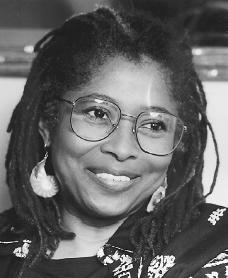
Alice Walker

Essayist, poet, fiction writer, and ardent social activist Alice Walker will discuss her upcoming book, Overcoming Speechlessness: A Poet Encounters “the horror” in Rwanda, Eastern Congo, and Palestine/Israel, about her travels to each of those three regions, charting the aftermath of violent conflict and political upheaval. In conversation with Michael Krasny.

8 p.m., $20

Herbst Theater

401 Van Ness, SF

www.cityboxoffice.com


Editor’s Notes

0

tredmond@sfbg.com

We’ve been talking to people who want to be judges, seven of them. One is already a judge and wants to keep his job; two are challenging him; and four are competing for an open seat. They all talk about their impressive legal backgrounds, life experience, desire to be fair and impartial, and to make the system of justice work for all.

The two who emerge as the winners will take their seats on the bench, and the presiding judge of the San Francisco Superior Court will decide what happens to them next — whether they handle felony murder trials, or juvenile hearings, or family court, or complex civil litigation, or small claims court. The P. J. oversees the court budget and things like the indigent defendant fund. So I asked them all: how does the presiding judge get chosen, anyway?

And all of them, including the sitting judge, said: Dunno.

Now, how can it be that six of the top attorneys in the city and one incumbent jurist don’t know how the person who runs the local courts gets that job? Well, maybe nobody cares — or maybe the whole process is so secretive nobody gets to learn about it.

See, the courts aren’t covered by the Brown Act, which mandates public meetings. So when the judges get together and meet (bimonthly in San Francisco), there’s no meeting notice and no press or public allowed.

I’m told by reliable sources that the P.J. is typically elected by acclamation when there’s only one candidate, and by secret written ballot when there’s competition. The ballots are tallied by the outgoing P.J., then discarded. Nobody knows who voted for whom.

Years ago, when the state Legislature (led by SF senators John Burton and Quentin Kopp) was updating the Brown Act, Ralph Grace, the publisher of a Los Angeles legal paper the Metropolitan News, went to Sacramento to argue that the courts, like any public agency, should operate openly. He got nowhere. "When you’re talking about running a public institution, you should do it in public," Grace told me this week.

There’s no law saying the P.J. has to be elected privately. The California Rules of Court say that local courts can set their own policies and procedures. So it appears that the San Francisco Superior Court could — if the judges wanted — open the doors.
They could. If they wanted to.

Marin County’s water grab

31

By Joan Bennett

OPINION In August 2009, the Marin Municipal Water District’s elected board of directors conducted a public hearing to hear and discuss comments on a proposed $432.8 million desalination plant that would be built near the Richmond-San Rafael Bridge. Despite overwhelming public opposition, the board unanimously approved the proposal. The stated reason: the dire need for a reliable water supply.

There is no truth to MMWD’s rationale.

This is not just a Marin County issue. The plant would have major impacts on the bay.

The Pacific Institute’s yearlong study, "Desalination, With a Grain of Salt," concluded that "most of the state’s seawater desalination proposals are premature … [such plants] fail to adequately address economic realities, environmental concerns, or potential social impacts."

James Fryer, the former head of MMWD’s water conservation from 1992 to 1999 and a water management and conservationist expert with 20 years of experience in the field, concluded in a separate report that desalination should be pursued only as a last resort.

In response, MMWD paraded before the public the inevitable hackneyed specter of a drought. But MMWD’s arguments are contradicted by the facts:

MMWD operates seven reservoirs with more than 79,000 acre feet of water. Annual ratepayer consumption is roughly 28,000 acre feet or less. Last year, consumers used 26,000 acre feet.

Two of those the reservoirs, Phoenix Lake and Soulajoule, have remained untapped for 17 to 20 years.

Since the 1976-77 drought, MMWD’s reservoirs were expanded by 26,000 acre feet, nearly a 50 percent increase.

Marin tree-ring studies demonstrate that a severe drought occurs once every 400 years.

As Paul Helliker, MMWD general manager, recently noted: "This year we won’t have any rationing because we are above our thresholds … there is no reason to because there is no problem with water supply."

If these facts alone are insufficient to convince even the most dubious, there are more.

The water source for desalination is the polluted San Francisco Bay. MMWD insists that expensive filters and reverse osmosis membranes will block dangerous contaminants such as pharmaceuticals, pesticides, chemicals, heavy metals, and Central Marin Sanitary Agency’s 11 million gallons of treated sewage (not to mention untreated spills) dumped daily into the bay near the intended desalination intake pipe.

A desalination plant is an energy glutton. MMWD is already the largest energy user in Marin. The plant would increase MMWD’s energy use from 40 percent to as high as 300 percent depending on the facility’s size and operation.

For decades the water district has urged its customers to conserve, and its customers have complied. As a reward, in February, to erase revenue shortfalls from conservation efforts, MMWD ordered a 10 percent rate hike and simultaneously halved its conservation budget on the disingenuous grounds that "conservation doesn’t work." This raises a conundrum: if rates were raised because of shrinking water use, then does MMWD even need a desalination plant? *

Joan Bennett is a lawyer in Marin. The Coalition for the Public’s Right to Vote About Desalination (CPR-VAD) is circulating an initiative for the November ballot to compel MMWD to obtain voter approval for the plant. For more information, see www.marinwatercoalition.com and www.foodandwaterwatch.org/water/california/marin.

No time for a trade war

1

By Joseph E. Stiglitz

Here is our monthly installment of Joseph E. Stiglitz’s Unconventional Economic Wisdom column from the Project Syndicate news series. Stiglitz is University Professor at Columbia University, the winner of the 2001 Nobel Prize in economics and has a recently published book, Freefall .

NEW YORK – The battle with the United States over China’s exchange rate continues. When the Great Recession began, many worried that protectionism would rear its ugly head. True, G-20 leaders promised that they had learned the lessons of the Great Depression. But 17 of the G-20’s members introduced protectionist measures just months after the first summit in November 2008. The “Buy America” provision in the United States’ stimulus bill got the most attention. Still, protectionism was contained, partly due to the World Trade Organization.

Continuing economic weakness in the advanced economies risks a new round of protectionism. In America, for example, more than one in six workers who would like a full-time job can’t find one.

These were among the risks associated with America’s insufficient stimulus, which was designed to placate members of Congress as much as it was to revive the economy. With soaring deficits, a second stimulus appears unlikely, and, with monetary policy at its limits and inflation hawks being barely kept at bay, there is little hope of help from that department, either. So protectionism is taking pride of place.

The US Treasury has been charged by Congress to assess whether China is a “currency manipulator.” Although President Obama has now delayed for some months when Treasury Secretary Timothy Geithner must issue his report, the very concept of “currency manipulation” itself is flawed: all governments take actions that directly or indirectly affect the exchange rate. Reckless budget deficits can lead to a weak currency; so can low interest rates. Until the recent crisis in Greece, the US benefited from a weak dollar/euro exchange rate. Should Europeans have accused the US of “manipulating” the exchange rate to expand exports at its expense?

Although US politicians focus on the bilateral trade deficit with China – which is persistently large – what matters is the multilateral balance. When demands for China to adjust its exchange rate began during George W. Bush’s administration, its multilateral trade surplus was small. More recently, however, China has been running a large multilateral surplus as well.

Saudi Arabia also has a bilateral and multilateral surplus: Americans want its oil, and Saudis want fewer US products. Even in absolute value, Saudi Arabia’s multilateral merchandise surplus of $212 billion in 2008 dwarfs China’s $175 billion surplus; as a percentage of GDP, Saudi Arabia’s current-account surplus, at 11.5% of GDP, is more than twice that of China. Saudi Arabia’s surplus would be far higher were it not for US armaments exports.

In a global economy with deficient aggregate demand, current-account surpluses are a problem. But China’s current-account surplus is actually less than the combined figure for Japan and Germany; as a percentage of GDP, it is 5%, compared to Germany’s 5.2%.

Many factors other than exchange rates affect a country’s trade balance.  A key determinant is national savings. America’s multilateral trade deficit will not be significantly narrowed until America saves significantly more; while the Great Recession induced higher household savings (which were near zero), this has been more than offset by the increased government deficits.

Adjustment in the exchange rate is likely simply to shift to where America buys its textiles and apparel – from Bangladesh or Sri Lanka, rather than China. Meanwhile, an increase in the exchange rate is likely to contribute to inequality in China, as its poor farmers face increasing competition from America’s highly subsidized farms. This is the real trade distortion in the global economy – one in which millions of poor people in developing countries are hurt as America helps some of the world’s richest farmers.

During the 1997-1998 Asian financial crisis, the renminbi’s stability played an important role in stabilizing the region. So, too, the renminbi’s stability has helped the region maintain strong growth, from which the world as a whole benefits.

Some argue that China needs to adjust its exchange rate to prevent inflation or bubbles. Inflation remains contained, but, more to the point, China’s government has an arsenal of other weapons (from taxes on capital inflows and capital-gains taxes to a variety of monetary instruments) at its disposal.

But exchange rates do affect the pattern of growth, and it is in China’s own interest to restructure and move away from high dependence on export-led growth. China recognizes that its currency needs to appreciate over the long run, and politicizing the speed at which it does so has been counterproductive. (Since it began revaluing its exchange rate in July 2005, the adjustment has been half or more of what most experts think is required.) Moreover, starting a bilateral confrontation is unwise.

Since China’s multilateral surplus is the economic issue and many countries are concerned about it, the US should seek a multilateral, rules-based solution. Imposing unilateral duties after unilaterally labeling China a “currency manipulator” would undermine the multilateral system, with little payoff. China might respond by imposing duties on those American products effectively directly or indirectly subsidized by America’s massive bailouts of its banks and car companies.

No one wins from a trade war. So America should be wary of igniting one in the midst of an uncertain global recovery – as popular as it might be with politicians whose constituents are justly concerned about high unemployment, and as easy as it is to look for blame elsewhere. Unfortunately, this global crisis was made in America, and America must look inward, not only to revive its economy, but also to prevent a recurrence.

Joseph E. Stiglitz is a professor of economics at Columbia University and winner of the 2001 Nobel Memorial Prize in Economics. His most recent book, Freefall: Free Markets and the Sinking of the World Economy, is now available in French, German, and Japanese, and will be shortly available in Spanish, Italian, and Chinese.

Copyright: Project Syndicate, 2010.
www.project-syndicate.org

Where’s teacher?

4

By Brady Welch

news@sfbg.com

Horace Mann Middle School principal Mark Sanchez sounded exhausted when we reached him on March 26. It wasn’t because Horace Mann is such a tough school, although the Mission District campus does have a disproportionate number of at-risk students. And it wasn’t because it was the Friday before spring break, although that might have had something to do with it.

All week Sanchez had been reeling from news that a whopping 10 out of his 20 full-time teachers had been issued pink slips by the San Francisco Unified School District. Including counselors, a vice principal, and other staff, the budget cuts essentially lopped off 24.6 percent of the school’s workforce, an unprecedented blow that speaks volumes about the state of California public education.

“A lot of the kids were wondering if the school was getting shut down,” Sanchez said. And although Horace Mann isn’t closing, with so many axed teachers, it might seem like a new school to many students come August. “If a significant number [of teachers] are moved, we don’t know what we’re in for.”

There is a legend that you will meet the person who will seal your fate long before the final event happens. And in an interesting turn of events, it was Sanchez who, as president of the Board of Education in 2007, hired current SFUSD Superintendent Carlos Garcia. Attempting to close a staggering $113 million budget gap over the next two years, it fell to Garcia on Feb. 23 to send out 645 layoff notices across the district in a list that included 163 administrators, 239 elementary school teachers, 124 high school teachers, and 104 middles school positions. Horace Mann was hit particularly hard because so many of its staff lacked seniority. Final decisions on layoffs will be made next month by the school board.

The first indications of this massive fiscal blood-letting came Jan. 20, when Garcia sent a letter to the entire district on learning of Gov. Arnold Schwarzenegger’s budget. The document was a glaring reminder of how bad things had gotten in Sacramento, and the superintendent wrote candidly of what he saw and what it meant for the district. “These numbers are large, and they will be devastating.”

Aside from the extraordinary blow to personnel, the proposed SFUSD budget will increase class sizes, freeze salaries, cancel summer school except for those who need credits to graduate, and reduce the number of days of classroom instruction to 175 annually, putting the district in conflict with a state law mandating at least 180 days. Given its deep cuts, Sacramento probably won’t enforce the statute.

“The state itself is in such a budget crisis,” Sanchez told us. “And [it’s] refusing to raise taxes. The fix has to be at the state level.”

But that’s been difficult since the passage of Proposition 13, the 1978 measure that limits property tax increases and gives control of whatever revenue is generated directly to the state. Because all state budgets must pass the Legislature with a two-thirds super-majority vote, a disciplined minority of virulently antitax Republicans block budgets that adequately fund education nearly every time.

Yet now, the bill for that political stalemate is coming due at schools like Horace Mann.

Beyond the numbers and politics, the Guardian wanted to get a closer look at how this regular cycle of cuts and layoffs is affecting teachers and students, so we spoke to a couple of eighth grade English teachers at Horace Mann who described it as dismal.

“I try to put it at the back of my mind, to be honest,” said Matt Borowsk, one of the 10 teachers at Horace Mann who received a pink slip. Borowsk reiterated a common sentiment that all teachers — potentially laid off or not — just want to do their jobs and focus on their classes. “I want to be able to stay and do my work and make improvements. And I want to do what I can for the school community and work with students,” he said. “I’m still in it, and I’m in it for the long run, despite what issues the district has about keeping their teachers.”

Gail Eigl, a teacher at Horace Mann for eight years who is tenured and therefore not at risk of a layoff, concurred. “No one I know who got a pink slip has changed their attitude. People are trying to stay focused on the present and teach.”

It’s an admirable response, and one Eigl understands well. She was laid off after her first year there in 2001. “Six of us got pink slips,” she recalled. “It was terrible.” She went looking for a job in South San Francisco, but in a strange turn of events, SFUSD called and offered her a job at Argonne Elementary in the Richmond District. A year later, she was back where she started at Horace Mann, and until now, she hadn’t really looked back.

“It’s like the school keeps having problems,” she said, an opinion that also hints at SFUSD’s skewed notion of teaching as a stable career path.

Borowski offers a similar story. This year’s pink slip is his second. Last year he received one after teaching only a year in Burlingame, which is how he ended up in San Francisco. Such rampant doling out of pink slips has nothing to do with Borowski’s performance. Rather, it has everything to do with seniority. And because the state is in such a crunch, it’s hard to stay in any school long enough before the budget’s grim reaper comes to collect.

“People who are able to stick through the first five years, they genuinely want to be a good teacher, make seniority, and not have to worry about it,” he said. And “because Horace Mann is a school where new teachers go, because it’s a tough school, then they’re the most vulnerable to layoffs. Which starts this vicious cycle.”

It’s classic Catch-22. Facing such a budget shortfall, how does SFUSD keep teachers who have little or no seniority teaching in the very schools whose litany of needs put those teachers there in the first place? In many ways, these are the most committed and passionate teachers the district has, and they represent for their classes a level of discipline and stability absent in many of their students’ home lives.

Many of Eigl’s students are low-income, speak English as a second language, or both. Some of their parents are deceased, others are undocumented immigrants, and a few are in jail.

“I honor tenure,” she told us. “I know there’s a reason for it. But right now, it doesn’t seem to be working for us.” Eigl brings up the case of a new parent liaison the school received this year, a critically important position that takes time building solid relationships with students’ families. “She got a pink slip too,” Eigl told us, the exasperation evident in her voice.

“I think people are really defeated inside. It’s so frustrating,” she continued. When asked what she meant by that, Eigl became heated. “It’s California! We’re supposed to be the richest economy. We should have money for schools. Why are other states doing so much more? We’re at the bottom. Where’s the money?” She suggested that Horace Mann should be granted special status because of its high-needs student body.

“It’s almost predictable that students who have a lot of unpredictability in their lives will suffer for this,” Sanchez told us. “It will be destabilizing for them. Teachers will get disrupted as well. A lot of what you do in schools has so much to do with outside the classroom, and it takes a lot of time to get acclimated.” At a tough school like Horace Mann, he says, “there’s been a lot of professional development and new programs.”

Borowski stresses the sentiment forcefully. “It’ll be devastating if the pink slips go through. It’ll be a huge mess.”

Both teachers participated in the massive statewide protests against the cuts on March 4. But other than letting Sacramento know how public educators feel, nothing concrete has come out of it. Sanchez suggested that it might be possible to sue the state for violating its statute on the minimum number of school days. Even SFUSD, at the last Board of Education meeting on March 23, didn’t rule out the possibility of suing the state for lack of adequate funding.

Negotiations are ongoing between the district and the United Educators of San Francisco teachers union about final layoffs. Those will be finalized May 15. Meanwhile, teachers at Horace Mann and across the district will continue to do their jobs despite how grim the outlook may be. As Eigl puts it, “It’s like out of a book from a bad future.”

Access denied

3

rebeccab@sfbg.com

If tuition goes up to $40 per course unit at the community college where Dielly Diaz is working toward her associate of arts degree, she’s not sure she’ll be able to afford it. But Diaz isn’t just worried about her own shot at an education. She also wonders what’s in store for her 19-year-old daughter, a student at Laney Community College in Oakland. For parents scrambling in the face of the economic downturn even as their kids prepare for the future, she said, “it’s like we’re getting hit both ways.”

Diaz, who is 39 and originally from Venezuela, says she decided to enter Berkeley City College’s adult education program to earn her degree because the recession threw her into a precarious position, shaking the stability of her job as a mortgage loan officer. When she started just a year ago, tuition was $20 per course unit. It has since gone up to $26, and now the California Legislative Analyst’s Office is recommending ratcheting it up to $40.

Even as students are being asked to shell out more, California’s community colleges are reeling from the impacts of budget cuts: faculty layoffs, swelling class sizes, fewer available courses, and reductions in student services. For students hoping to transfer to other public institutions in the California State University (CSU) or University of California (UC) systems — or even for those seeking to develop a skill set that can garner a living wage — maneuvering the shredded educational framework can be frustrating. This past year, roughly 250,000 students statewide were denied access to community colleges due to a lack of course availability, according to education advocacy group Against Cuts.

“When you see all that, it’s like OK, I feel like I really need to do something,” Diaz said. “It’s not like we can just sit and wait, letting the cuts happen. I think we can really get organized.”

Between school, work, and being a mom, Diaz started pitching in on community outreach for Against Cuts, a grassroots effort that took shape last fall in the wake of devastating education cutbacks. It was one of hundreds of organizations that collectively launched mass demonstrations decrying funding slashes to education on March 4. The newly energized education movement plans to propel another mass rally to descend on Sacramento in the fall, Diaz noted, in the meantime focusing on awareness-raising efforts like an April 17 teach-in at Berkeley City College.

California’s community colleges are unique among the state’s higher education institutions in that they represent a gateway for nontraditional students to get a foothold for career advancement or a fresh start for people trying to improve their lives. They also offer an affordable option to complete lower-division coursework before transferring, a path that’s starting to become a bottleneck since courses needed to meet transfer requirements have been affected by cuts.

Yet even as fees climb and class sizes balloon, more people are opting to go the community college route, and demand for enrollment is only expected to increase. Some are college-age students whose families have been priced out of other institutions.

“We’re having this flood of people from the CSUs and UCs now trying to do their freshmen and sophomore year with us and then transfer,” notes Berkeley City College faculty member Joan Berezin. Others are individuals who can’t find work in an economic climate marked by 12.5 percent unemployment. “When we get hog-tied and cut and restricted, we close off possibilities to everyone,” Berezin says. “People who’ve just lost their jobs, people whose parents have lost their jobs, they’re all coming to us.”

Of the nearly 3 million students attending community college statewide, women and people of color are in the majority, and 80 percent work while attending school. It’s still a relative bargain for education, but fees are keeping pace with the rising costs of housing, transportation, childcare, and food.

“I have students who are homeless, who are living in their cars,” Berezin notes. “So we can say, oh, $40 a unit, that’s not a big deal. But if you’re taking 12 units and you have no income — and you don’t qualify for financial aid ’cause you don’t have an address … that’s a huge amount of money.”

Financial aid is available, but with narrow eligibility requirements — and even some of that funding may be headed for sacrifice on the budgetary chopping block. Gov. Arnold Schwarzenegger’s budget for the 2010-11 fiscal year proposes suspending new awards for the Competitive Cal Grant Program, for a savings of $45.5 million. About 70 percent of Cal Grant award recipients attend community colleges.

“This award is dispersed according to income and GPA,” explained Theresa Tena, director of fiscal policy at the Community College League of California. “Many of our students have a high GPA and a low income.” Some 22,500 students receiving this financial help would be affected by the proposal — and Tena says more than 150,000 eligible students already compete for the award packages.

Research increasingly shows that students from working-class families are being priced out of college — even community college — and that it’s harder to pay their own way without taking on serious amounts of debt. A California Postsecondary Education Commission (CPEC) report found that in 1975, a community college student would have earned well over the amount needed for a year of school, including housing and other expenses, by working a summer job in retail. Today that same student would only be able to scrape together about two-thirds of the needed amount — and that’s assuming every single penny was saved.

“In the old days, going to community college was a break-even proposition,” notes Adrian Griffin, assistant director of research and policy development for the CPEC. “With stagnating wages at the low end of the job market, it doesn’t work this way anymore.”

The blow to community colleges caused by a loss in state revenue and consequential budget cuts mirrors the damage done to the entire public education system. While the recession has triggered especially hard times, this low point follows a long-term trend of diminishing state funding for education. In 1965, the state general fund provided $15 for every $1 paid in fees by UC or CSU students, according to the CPEC. By 2009–10, that state contribution had declined to $1.40 for every dollar paid in fees. “We’ve gone from a taxpayer-supported system to a semi-privatized system,” Griffin observed.

This point hasn’t been lost on the education advocates at Against Cuts, who are pushing for reform in tax policy as a solution for restoring public education in California. An information packet created by the group highlights a nearly 50 percent decline in the share of corporate income paid in taxes since 1981, even as corporate profits have shot up.

“There is no reason for education to be cut in California, the world’s eighth-largest economy,” Diaz said. “We can’t just continue to accept and accept and accept. Having a population that does not have access to education is dangerous.”

Original synth

33

marke@sfbg.com

MUSIC “In a time when people are becoming more and more isolated every day by the Internet, alone at their computers and staring at the tiny, sad glowing screens in their cellular hands, it only makes sense to me that we are all feeling a slight sense of loneliness and (hopefully) the desire for connection with others … Whereas 1980s groups responded to implicit cold, colorless alienation of the repressive regimes of Reagan-Thatcher-era politics and culture, today’s groups I think express a similar frustration responding to what I call ‘the culture of isolation.'”

That’s Pieter Schoolwerth, founder of Wierd Records, a New York City label dedicated to releasing records by contemporary acts that eerily mimic the sounds of obscure electronic new wave, in a recent interview with Austrian music journal Skug. Oddly in the context of connection, he’s talking about some of the most deliberately cold, enigmatic, bleak yet beguiling music ever produced — “lost” underground European and American music that came out roughly between 1979 and 1986 (if it came out at all), was inspired by goth, industrial, and synthpop giants like Throbbing Gristle, Joy Division, Bauhaus, the Cure, and Depeche Mode, and is only being rediscovered now.

It’s igniting fierce interest, with musicological fanatics digging up spooky swaths of unknown angular gems and a slew of current bands channeling the sound. Originally made in decaying urban centers with then-newly-affordable analog synthesizers and drum machines by dozens of often untraceable musical mavericks — Ausgang Verboten, Esplendor Geometrico, Das Kabinette, Eleven Pond, Nine Circles, Zwischenfall, Gerry and the Holograms — these unearthed and unearthly tunes from decades ago are beginning to seep into the Bay Area scene via a handful of excellent compilations, club nights, and musical visionaries. Can something be retro if hardly anyone heard it the first time? That’s just one of the intriguing questions that springs to mind. Meanwhile, humans are dancing. Here’s a mix of some of the originals:

ANGULAR COLDWAVE LAUNCH MIX by Angular Recording Co

COLD CONNECTION, CHAIN REACTION

This bracingly unfamiliar music (or rather, slightly familiar — you think you’re hearing some bizarre 1981 B-side by Soft Cell or Visage but it turns out to be a crazy one-off from Columbus, Ohio from that same year) was usually grouped at the time into three fuzzy genres that overlapped at many points, sharing among them a DIY spirit, a dystopian view of the future, an urge to map the melodramatic onto the automatic, erotic astringency, and pretension without pretentiousness. Yes, much of it veers into “Sprockets” territory, but that’s actually part of the appeal.

Dark wave was an umbrella term for goth rock, early industrial, and darker synthpop. It grafted lamentation and cavernous basslines over post-punk’s angular angst and icebox oddity, and was popularized by groups like Fad Gadget, Front 242, and Chris and Cosey and at clubs like London’s seminal Batcave. Cold wave was the French version of dark wave that skewed toward more Pong-like synth figures, fizzling chords, studied malaise, and gnomic haiku. (“Business man/Yet you kill the boss/Computer programs/Shadows in the night,” Lyonnaise duo Deux disaffectedly intone on 1983’s unshakeable “Game and Performance.”) Synth wave, or minimal synth, was a kind of prickly disco: chromatic, sparsely produced, brooding and moody, yet often quite catchy and dance floor-oriented.

All three genres are now generally lumped together as “wave” (or sometimes “retrograde”), which can include a vast array of other period sounds, from John Zorn-like no-wave jazz explosions to Dead Can Dance spooky-tribal incantations. Basically, if it feels like you’re listening to a late-night college radio program somewhere in the Midwest in 1984, one possibly called “Flash Frequencies” or “Shadow Talk,” you’ve caught the uncanny wave gist. If you imagine yourself a fishnet-gloved extra in the movie Liquid Sky who pronounces “paradise” as “pah-rahd-eyes,” then you definitely have.

Dark wavers Brynna and Domini at Club Shutter. Photo by Sadie Mellerio

But just because the sound aimed for frigidity doesn’t mean it didn’t build community. Wave acts may have been what some would call “unbranded,” but they operated within close-knit networks: cassettes were passed hand-to-hand, recording studios were shared in warehouse-based artists’ communes, fans around the world braved dangerous parts of town to attend wave-centric club nights. The music itself attempted to humanize the arctic pitch of analog synths by infusing it with longing, restlessness, ennui, and gloom.

Vice Angular “This is Cold Wave” Mix

Today, that naive sincerity, refreshing lack of self-conscious irony, and marketplace virginity translate into authenticity, appealing to retro aficionados who vomit a tad at goth’s Hot Topicality, the macho posturing that torpedoed industrial, or the Polly Estherization of new wave. (Like techno, soul, and disco before it, new wave retro is finally purging itself of excess baggage and mainstream complications by going minimal and original.) Dusted-off waveforms and hyperactive web forums attract a network of virtual seekers and posters who salivate at each discovery. Schoolwerth may be right about wave’s cry against a culture of Internet isolation — and the turn toward analog is a specific rejection of the digital — but like an anxious clan gathered around a silicon-chip fire, its current fans watch anxiously online for freshly exhumed and re-chilled visions to appear. Then they go play them at clubs. Here is something old that seems truly new.

FOREVER EXHUMED, FOREVER ORANGE EYES

Wierd Records’ contemporary roster of disquieted simulators, including the almost paranormally attuned Xeno and Oaklander and Led er Est, has been gaining global club-play traction — something many of the original artists, who drifted off into other, often fascinatingly mundane lives, could only have hoped for. (One example: Lidia the Rose, one half of Dutch act Nine Circles, abandoned musicmaking in the early ’80s to raise “a half dozen” children in a commune-like setting. It was only after one of her sons Googled her name that she realized there were fans of her extremely limited, cassette-only output. She has since started making music again.) And wave affectations have garnered larger attention from the breakthrough of experimental synthpop band Cold Cave, which draws on the sound’s pallid idiosyncrasies. “Hear sounds about yesterday’s pain today,” the band’s MySpace deadpans.

Notable contemporary Bay Area wave acts include the excellently jerky Muscle Drum, founded by long-term wave-proponent Rob Spector of the group Bronze, fog-shrouded darkwave duo Sleeping Desiress, cinematic dirgers After Dark, and exquisitely anguished quintet Veil Veil Vanish. The East Bay’s Katabatik Sound System has been producing lurching experimental-industrial music and events for a while, and V. Vale’s Re/Search crew has been exhuming rare tunes forever. A particular favorite around the Bay Guardian office lately is the Soft Moon, a melancholic, pitch-perfectly crepuscular project of punk veteran and graphic designer Luis Vasquez.

The Soft Moon

“Honestly, being associated with the wave phenomenon was a little surprising to me at first,” Vasquez told me, balking, like many retro-contemporizers I talked to, at being associated with any kind of scene. “But I think I understand why. My instrumental formula is similar because of the use of drum machines, synthesizers, rhythmic bass lines, and somber melodies. It could also just be the overall feeling my music has. I’m still not quite sure.”

http://www.youtube.com/watch?v=Ufcfo9K1yfI

On the classic side of things, two just-released, high profile compilations — The Minimal Wave Tapes (Minimal Wave/Stones Throw) and Wierd-curated Cold Waves and Minimal Electronics Volume 1 (Angular) — along with recent German comp Genotypes (Genetic Records) have made underground synth rarities more accessible to potential wavers.

“I was exposed to new wave at a young age via my older brother’s small collection of cassettes,” NYC’s Veronica Vasicka of the Minimal Wave label wrote in an e-mail. “Later I’d sneak out of my parents’ apartment at night to go dancing in the East Village. I really associate those teenage days of first discovering record shops and old VHS tapes of bands like Throbbing Gristle with the inspiration that led me to launch the Minimal Wave label.”

Vasicka coined the term minimal wave to encompass her fascination with both cold wave and minimal synth sounds. Her long-running Sunday night East Village Radio show has served as a beacon for American synth fans, and the incredible response to her extensive Web site (www.minimal-wave.org) has established her as the point-person for the movement. She has her own theory about why the sound seems right:

“On one hand, I am surprised that minimal wave has been so easily welcomed in this day and age. But on the other, and when looking at things from an economic standpoint, there’s a distinct parallel between what was happening during the late 1970s and early ’80s and now. The weak economy that led to the recession peak in 1983 is similar to what has been happening during the past several years. And it seems that cultural and artistic output tend to be affected by economic and social struggle. So perhaps this context has provided the openness necessary to embrace minimal, DIY synthesizer music.”

PASSING FIRES, STRANGE DESIRES

I’ve just entered Sub Mission Gallery for underground queer punk party Sissy Fit. The energy is edgy. Clouds of smoke drift in from outside. Patrons in black sway on the dance floor and eye each other from the benches lining the bare walls. DJ Pickle Surprise, whose style ranges from hardcore blasts to camp classics, puts on a throbbing track by early ’80s Marseille synthers Martin Dupont and I’m instantly transported back to my shadowy youth, spent skulking around the checkerboard dance floors of downtown Detroit clubs Bookie’s, Todd’s, and Liedernacht. I whip an imaginary cigarette holder to my pursed lips, checking to make sure my phantom pillbox hat is properly tilted. He follows that up with a selection of wave tracks old and new, including Storüng, Oppenheimer Analysis, and 2VM, that transforms the joint into an electro-sepulchral time portal. The added twist to this nostalgia trip is mystery — the music ventures beyond the “‘remember the 80s party” canon and into some uncanny partial-recall state.

DJ Pickle Surprise

“I find I’m playing this sound more and more,” Pickle Surprise, a.k.a. Joe Krebs, told me. He got into wave after attending one of the parties Wierd has been throwing in Brooklyn since 2003. “It can call up visions of lasers and line-dancing robots, but after getting to know it more, there’s something less cold or android about it, more of a human touch. It’s analog. There’s something supernatural as well. Like Videodrome, where you’re up in the middle of the night and get pulled into something on television. Something haunting that recalibrates you.”

“Did the passions of the artists shape the way the technology was used, or did the technology shape the people using it? NERD!” DJ Nary Guman, a.k.a. Joe Polastri, teased over e-mail. Along with DJ Inquilab, a.k.a. Nihar Bhatt, he puts on the monthly wave-friendly Warm Leatherette. They started their own party early last year because they found their tastes didn’t quite fit in anywhere. “Once I started digging I found out just how vast the field was,” Bhatt added. “It’s exciting to have something that can be danceable, experimental, popular, and punk at the same time.”

Other San Francisco parties that have embraced the sound include the monthly Shutter (www.myspace.com/clubshutter) at Elbo Room, which packs in the kohled and the beautiful with hits from Sisters of Mercy and Fields of the Nephilim among rarer tracks. Local band Jonas Reinhardt’s Synth City, every last Thursday of the month at the Attic (www.jonasreinhardt.com) mixes a wave feel into atmospheric krautrock and new age rambles. And the Radioactivity happy hour at 222 Hyde (www.222hyde.com) celebrates “low-budget synths and Cold War dance parties.”

LE DECADENCE ELECTRONIQUE

The party most faithful to the retrograde spirit, however, is the energetically opaque Nachtmusik, put on by DJs Josh Cheon, Justin, and Omar. Chilly green lasers strobe live performers, wave-o-philes gather in corners to trade track knowledge, and open-minded dancers try out new-old moves to alien beats. (Surprisingly, this insular music sounds really good loud in a crowd.)

Josh Cheon of Dark Entries Records. Photo by Jon Rivera

If anyone’s the heart of the Bay wave scene, it’s Cheon. One of our most important amateur musicologists, he was integral to the disco revival of the ’00s, tracking down and conducting in-depth interviews with gay bathhouse-era survivors and then moving on to international wave. For him, the music summons youthful memories of dancing at NYC’s the Bank to Clan of Xymox, Q Lazzarus, Cetu Javu, Wolfshiem, Beborn Beton, and VNV Nation. “From the first notes of Ministry’s With Sympathy and Depeche Mode’s Speak and Spell, I’ve been a sucker for synths,” he told me, laughing.


Death Domain by darkentriesrecords

In 2009, Cheon started Dark Entries Records (www.darkentriesrecords.com) to release some of his finds, including Second Decay, Zwischenfall, Those Attractive Magnets, and upstate New York’s Eleven Pond, whose “Watching Trees” has become a wave anthem of sorts. (He found Eleven Pond through a comment one of the members posted on SF synth collector Goutroy’s A Viable Commercial blog, goutroy.blogspot.com.)

Staying true to the “DIY vinyl retrograde” spirit, Dark Entries releases come in hand-numbered batches of 500, and for the most part the digital rights are kept by the artists themselves. There are no CDs.

He shrugs off the possibility that there’s little left to discover. “It’s like gold mine after gold mine,” Cheon told me. “There’s just so much out there — even the artists themselves are surprised to be reminded of this time in their lives that they’d mostly forgotten. It’s actually really touching when they find out there’s an intense interest in what they did in their youth. They’re just amazed.”

Later this year he’ll be releasing a Bay Area Retrograde (BART) compilation, highlighting our own historical wave purveyors. “What many people forget is San Francisco’s rich synthpop and new wave history, with bands like Voice Farm, Tuxedomoon, the Units, and the Club Foot scene for starters. [Factrix, Minimal Man, and Los Microwaves are some others.] But that’s just scratching the surface. I mean, who knows what great tracks are waiting to be heard? And what amazing stories behind them.”

NACHTMUSIK

Wed/14 and second Wednesdays, 10 p.m., $3

The Knockout

3223 Mission, SF

www.theknockoutsf.com

WARM LEATHERETTE

Fri/16 and third Fridays, 9 p.m., free

Space Gallery

1141 Polk, SF

www.myspace.com/warmleatherettesf

THE SOFT MOON

Tue/20, 8 p.m., pay what you can

21 Grand

416 25th St., Oakl.

www.myspace.com/thesoftmoon


Revenue for all

2

OPINION Cut, cut, cut, cut, cut: this is the sound of your government — parks, schools, playgrounds, hospitals, clinics, public transportation, programs for youth and seniors, arts, social services, the whole fabric that makes San Francisco what it is — fading away as state and local politicians refuse to raise revenue to revitalize our economy.

Mayor Gavin Newsom and big business groups have promoted a defeatist politics of low expectations, cutting spending, laying off city workers by the thousands, and offering tax breaks to businesses and developers rather than tapping San Francisco’s deep pockets of wealth to generate economic opportunities citywide.

It’s time for a new path: a fiscal politics of optimism, opportunity, and addition rather than subtraction. It’s time for an unapologetic progressive taxation movement for this November’s ballot and beyond, to make the city’s great wealth — individual and corporate, often badly undertaxed — work for all San Franciscans.

As California crumbles, local revenue movements could fuel a statewide campaign of towns, cities, and counties to overturn Proposition 13. San Francisco can take the lead with progressive taxation to create jobs, promote small neighborhood businesses, expand affordable housing and public transit, save public health, and more.

A citywide campaign for progressive taxes is building, including leaders from community-based nonprofits, grassroots organizing and neighborhood groups, labor unions, and some corners of City Hall. There are many promising ideas; with the right political will and organizing, the city could, for instance, tax large-scale real estate and levy profits from large firms. Progressive taxes could, at minimum, bring in close to $100 million and help save critical city services.

To win this campaign, a strong coalition must educate and mobilize the public about the vital importance — and citywide benefit — of raising revenue through targeted taxes on large firms and wealthy individuals. The city’s political leaders will need prodding, pressure, and support to get this done.

Progressive taxation will benefit all of San Francisco, not just some — working-class people of color and immigrants who endure the cuts’ harshest effects, everyone from youths to seniors, and vitally needed city employees like social workers, nurses, librarians, park workers, and firefighters.

The politics of austerity poses false choices between public safety and public health — as if health isn’t a safety issue. San Franciscans of all stripes must reject the pitting of services and "constituencies" against each other, reject the wedge politics that pit labor against nonprofits (both of which work to uplift working-class and poor residents), and unify around progressive revenue.

Nobody likes taxes, least of all the middle class, working class, and poor (the vast majority of us) who shoulder the bulk of the burden. But wealthy individuals and corporations can and must pay their fair share. According to a 2007 World Wealth Report produced by Merrill Lynch, 123,621 households in the Bay Area — many of them in San Francisco — "had $1 million or more in financial assets in 2007, up 10.8 percent from the year before," the San Francisco Chronicle reported.

At a Feb. 14, 2007 Town Hall on Poverty in Bayview-Hunters Point, Newsom asserted, "we haven’t addressed the wealth divide; we haven’t addressed the health divide; we haven’t addressed the economic divide … why in a city like San Francisco has income inequality grown like it has?"

Yet Newsom and others continue to avoid progressive taxation — despite polls suggesting such measures can win. Tell Mayor Newsom, and your district supervisor, to make San Francisco’s wealth work for everyone. Now. *

Christopher Cook, an award-winning journalist and former Bay Guardian city editor, is communications director for the Revenue for All campaign of Budget Justice, a coalition of members from dozens of community organizations, labor unions and their allies working to raise revenue and protect the most vulnerable San Franciscans from budget cuts.

Alerts

0

alert@sfbg.com

WEDNESDAY, APRIL 7

The Human Cost of Food


Join the Green Café Network, Mission Pie, and local farmers for a discussion about the different models of farm labor structure and how individual consumers, cafes, and restaurants can integrate this knowledge into their sourcing decisions and methods. It’s an idea whose time has come: fooders and foodies working together to balance social and economic justice goals with economic demands.

6:30 p.m., $5–$10 suggested donation

Kitchen at Mission Pie

2901 Mission, SF

(415) 282-1500

greencafenetwork.org

FRIDAY, APRIL 9

Berkeley Critical Mass


Join this "spring renewal ride" to celebrate Berkeley Critical Mass’ 17th year of protests on wheels. Bring noise-makers, bike decorations, food to share, and bike lights.

6 p.m., free

Berkeley BART

Center at Shattuck, Berk.

www.berkeleycriticalmass.org

SATURDAY, APRIL 10

Forum for Choice 2010


Hear candidates for governor, attorney general, and insurance commissioner take part in an in-depth discussion on a woman’s right to choose and the government’s role in making reproductive health decisions that affect all of us. Confirmed participants are Jerry Brown, Hector De La Torre, Rocky Delgadillo, Kamala Harris, Dave Jones, Chris Kelly, Ted Lieu, Pedro Nava, and Alberto Torrico.

8:30 a.m.; $50, $15 for students

Nob Hill Masonic Center

1111 California, SF

forumforchoice.com

Hilltop Park Beautification Day


Join AmeriCorps members of Habitat for Humanity as they maintain and beautify Hilltop Park, an under-utilized public outdoor space in the Bayview neighborhood that has fallen into disrepair due to budget cuts at SF’s Recreation and Park Department.

9 a.m., free

Across from 52 Whitney Young Circle construction site, SF

www.habitatgsf.org

San Francisco Green Festival


Volunteer or attend the Spring 2010 San Francisco Green Festival, a sustainability event featuring talks by authors, educators, and leaders; exhibits from ecofriendly businesses; workshops, films, activities, vegetarian food, and more.

Sat. 10 a.m.–7 p.m., Sunday 11 a.m.– 6 p.m.

$15 weekend, $10 one-day; $5 seniors, bike, and public transit riders;

free for volunteers, students, and youth.

SF Concourse Exhibition Center

635 Eighth St., SF

www.greenfestivals.org

SUNDAY, APRIL 11

Cuba and U.S.


Attend this afternoon of presentations and discussions about Cuba, the U.S. blockade, how to visit, how to get involved advocating for Cuba, and how you can get involved with freeing the Cuban Five.

3 p.m., $5

La Pena Cultural Center

3105 Shattuck, Berk.

(510) 849-2568 or email cucaravan@igc.org

Mail items for Alerts to the Guardian Building, 135 Mississippi St., SF, CA 94107; fax to (415) 255-8762; or e-mail alert@sfbg.com. Please include a contact telephone number. Items must be received at least one week prior to the publication date.

Building better buses

3

By Adam Lesser

news@sfbg.com

GREEN CITY To hear Jaimie Levin talk is to understand that his cause is larger than just promoting alternative fuels for public transportation. “We either pay the tax ourselves or we pay the tax of sending money to the Middle East,” he said as we walked through the noisy AC Transit bus yard in East Oakland. “There’s a human cost of lives lost in a foreign war.”

AC Transit uses 6.5 million gallons of diesel per year. As the agency’s director of alternative fuels policy, it’s Levin’s job to lower that number. He has experimented with biodiesel and gas-electric hybrid buses. But the passion that consumes him these days is hydrogen. He has spent the last 10 years testing and deploying three hydrogen fuel cell buses for AC Transit, and he’s ready for more.

The first of 12 new hydrogen fuel cell buses begin arriving from Belgium at the end of April, doubling the number of fuel cell buses operating in the United States. They will run on multiple lines, including the 57, 18, and the NL transbay route, which runs between San Francisco and Oakland.

Levin promotes a mix of energy sources, but he argues that hydrogen is the best way to go, even if there’s a big near-term problem: the price of a hydrogen fuel cell bus. The new buses cost $2.5 million each compared to a standard diesel bus, which runs $400,000. Levin describes the buses as research vehicles and works with the National Renewable Energy Laboratory to monitor their performance.

“It’s not cheap. We understand that. These are still hand-made. We’re talking about making less than 20 vehicles,” he says. Levin is hopeful that if orders for hydrogen fuel cell buses could reach even 200, the cost of the fuel cells would come down by 45 percent. Levin has secured 16 different grants from federal, state, and regional agencies, ranging from the Federal Transportation Administration to the California Air Resources Board, to cover the $57 million program. The use of outside funds has been critical at a time when AC Transit is cutting service to deal with its budget shortfall.

The cost of the hydrogen fuel itself has caused some to ask if it’s a viable alternative to gasoline. A kilogram of hydrogen, which is equivalent to a gallon of gas in terms of energy content, typically costs $7-$8. But hydrogen fuel cells are twice as energy efficient as internal combustion engines.

AC Transit currently gets its hydrogen fuel from its own production facility that it built with Chevron, which is regularly criticized by environmental and human rights groups for everything from pollution to obscene profits to support for despotic regimes. “Chevron Hydrogen” billboards plaster the bus yard, and the logos are yellow and baby blue, a noticeable difference compared to the traditional blue and red Chevron insignia. There’s an ecofriendly, sunny quality to the branding.

But come September, Chevron will exit its collaboration with AC Transit, which will begin purchasing its hydrogen from a Linde plant in Southern California. Part of the reason is that the Chevron-designed system does not have the capacity to produce hydrogen for 12 buses. Industry watchers note that oil companies have scaled back initial forays into hydrogen, perhaps not wanting to facilitate the transition from fossil fuels.

“The big issue is the infrastructure side. What’s cooling it off right now is how far the oil companies have backed off,” said Tim Lipman, codirector of the UC Berkeley Transportation Sustainability Research Center. “If you’re an oil company, you’ve got to figure you’re going to lose money for a while — and you’re making tons of money in your existing business. It’s not broken right now. They don’t see an advantage of being the first to market. We’re not running out of oil.”

Maybe not yet, but between the global warming impacts of oil and the increased cost of extracting oil after the most readily available supplies peak, there is a pressing need to develop alternatives to fossil fuels.

“The oil companies were getting all sorts of pressure to get off oil and carbon so they go out looking for an alternative that looks good and takes the longest to implement. Hydrogen is perfect,” said David Redstone, editor of Hydrogen and Fuel Cell Investor, who has covered hydrogen for more than 10 years.

After studying hydrogen for so many years, Redstone has become skeptical about its real potential. “I was a believer when I started,” he told us. “I learned a lot. I knew a lot less when I started. I knew a lot less about the engineering and cost issues involved.”

For example, fuel cells require platinum, which acts as a catalyst to help burn hydrogen fuel. There is ongoing research to reduce the amount of platinum needed in a fuel cell, and exploratory work with less expensive catalysts like nickel. But for now and in the foreseeable future, hydrogen is still a very expensive technology. “They’ve been demonstrating these fuel cell buses for 20 years. It’s like the mentality at the companies involved is that it’s perfectly normal to be a demonstration technology forever,” added Redstone.

He believes that the realistic solutions to the overuse of fossil fuels lie in a mix of behavioral changes and economic incentives, not technological silver bullets. Stop suburban sprawl, get people to live closer to work, and start taxing carbon. Or in Redstone’s simpler terms, you’ve got to put an end to “assholes commuting 75 miles to work in a Hummer.”

The International Panel on Climate Change estimates that surface temperatures will rise 2 degrees to 11.5 degrees Farenheit in the 21st century. Greenhouse gas emissions are a major contributor to global warming.

The promise of hydrogen fuel is that its only emission is water. The major criticism of the move toward battery electric plug-in vehicles has been that the power to charge batteries comes from a power grid that is frequently a heavy greenhouse gas emitter. Half of the electricity generation in the U.S. comes from coal, the dirtiest of the fossil fuels.

But the hitch with hydrogen fuel is how to make it. You can’t drill for hydrogen, you have to create it in a process that requires energy. The predominant source for hydrogen fuel is natural gas, which emits less carbon than gasoline but is still a fossil fuel.

The holy grail of alternative energy is an efficient method for making hydrogen fuel from water instead of natural gas. The problem has been the significant amount of energy required to electrolyze water, to split apart H2O to make hydrogen fuel.

Levin believes he has the beginning of an answer. Before the end of 2010, AC Transit will complete its installation of a solar-powered proton electrolyzer in Emeryville. Solar panels will be built atop the roof of the hydrogen fueling station and the solar energy trapped will power the electrolyzer, in turn producing hydrogen fuel from water, hopefully about 60 kilograms per day, enough to power two buses. Levin received $6.4 million from the American Recovery and Reinvestment Act for the project. The remaining 10 hydrogen fuel cell buses will rely on hydrogen fuel made from natural gas.

As important as the production of hydrogen fuel are the pump stations to deliver it. Gov. Arnold Schwarzenegger’s promised “hydrogen highway” hasn’t happened. The initial plans called for 50 to 100 stations by the end of 2010, and a station every 50 miles, but there are now just 21 stations clustered in urban areas. And with oil companies withdrawing their support and government agencies hurting for resources, the hydrogen highway remains as far off as ever.

“I see the power of corporations growing and the power of politicians actually waning,” Lipman said. “Who is really going to benefit the most? It’s society and consumers, but they’re not going to lobby for it.”

When it comes to lobbying, few can outgun the power of the Western States Petroleum Association. WSPA is consistently among the top few lobbyists in California, spending $10.5 million to influence the Legislature in 2007-08. Even with the push for alternative energy options, it’s oil that really governs the debate. Relatively inexpensive and easily storable, oil is still king even as gasoline prices hover at $80 a barrel.

“We will never run out of oil, but the question is, can we afford it?” said WSPA spokesperson Tupper Hull. Rising oil prices have helped proponents of alternative energy because the cost spread between gasoline and other energy options has narrowed. But they worry that momentum will be lost if the recession lingers and oil drops in price.

Proponents of the “peak oil” theory say we are approaching a point at which global oil production will start declining, necessitating a rapid and potentially painful transition to new fuels. But identifying the peak is difficult, complicated by events such as the 2007 discovery of more than 5 billion barrels of oil off the coast of Brazil. The oil field was found under 7,060 feet of water, 10,000 feet of sand, and another 6,600 feet of salt. What the oil industry is ultimately worried about is whether we will hit a point where extracting oil gets so expensive that the cost of oil starts to cripple the global economy. Drilling four miles under the sea isn’t cheap.

In an e-mail exchange about Chevron’s AC transit hydrogen fueling station, Chevron spokesperson Brent Tippen wrote, “Hydrogen has potential as a transportation fuel in the long term, but significant technical and economic obstacles prevent it from being a widespread commercial fuel option right now.”

Levin is cautiously optimistic that it could be the gas companies like Linde and Praxair, and not the oil companies, that carry the hydrogen torch forward.

After a brief ride in a hydrogen fuel cell bus, Levin noted how quiet they are. At one point, he bought Tibetan bells and had them welded to the bus so it would be audible as it moved, but there wasn’t enough vibration to make them ring.

Therein lies Levin’s dream: a quiet, nonemitting vehicle for public transportation. And maybe even someday an entire society running on a clean, renewable, domestic fuel source. But for now he’ll start with what he’s got: a $2.5 million bus that emits water from the tailpipe and doesn’t make any noise.

The state budget isn’t growing

11

I heard a great show on NPR the other day about the new rules on compensation for executives whose banks got federal bailout money. The feds have cracked down (a bit), and some of those massive salaries have been cut and top bankers are now accepting much less pay, and stock that can’t be sold for three years.


And guess what: More than 80 percent of these people are still hard at work at their desks, including almost all of the most senior folks. Very few have left. It puts the lie to this notion that extreme salaries are needed to attract and retail the top talent; even after those salaries have been cut by more than half, the “talent” doesn’t flee.


There’s a new study by the California Budget Project (PDF) that says makes the same kinds of points. Jean Ross, the director of the nonprofit, nonpartisan group, says that urban legends die hard, so she’s chosen the top ten myths about the state budget and demonstrated how utterly inaccurate they are.


For example, the anti-tax folks love to crow about the massive growth in state spending and how the budget is “out of control.” Truth:


Current year spending is $16.9 billion below 2007-2008 levels and proposed 2010-2011 spending is $20.1 billion below  2007-2008 levels.


2009-2010 spending is $21.5 billion below the baseline levels projected by the Legislative Analysts Office in 2004.


As a share of the state’s economy, state spending is at its lowest levels since the early 1970s.


And it’s not just the recession:


State spending as a share of personal income has declined significantly in recent years.


And guess what: taxes aren’t driving businesses out of the state — or hampering personal wealth creation.


The number of millionaire taxpayers has increased more rapidly than the number of taxpayers as a whole since the passage of Prop. 63, which imposed an additional tax on high-income individuals.


And guess what, you bureaucracy bashers:


California ranks 41s [among the 50 states] with respect to the number of state and local government employees per 10,000 population.


So no, California doesn’t have a spending problem. The state has a revenue problem.

Yee’s two-fer: Bashing Palin while promoting sunshine

5

Sen. Leland Yee scored a two-fer yesterday when he blasted a California State University organization for hiding how much it’s playing Sarah Palin for a speaking gig, raising an important sunshine issue and knocking Palin’s populism-for-pay schtick in the process. And at the heart of the issue is how public education institutions increasingly use foundations to avoid accountability.

That issue was recently raised in San Francisco, when City College Foundation sought to keep its financial dealings secret. The Guardian sounded the alarm last month, and City College Trustee John Rizzo, who led the fight for more sunshine, negotiated a more open arrangement that the Board of Trustees unanimously approved last week.

“We got most of what we wanted,” Rizzo told us. “Most of the things are open and they have to give us a quarterly report on donations.”

Yee – who the Society of Professional Journalist-NorCal recently honored with a James Madison Award for his struggles to promote greater government transparency and protections for journalists – has long been fighting for more sunshine in the CSU and UC systems, which is particularly important as they make deep cuts to higher education spending. For example, Yee’s Senate Bill 330 would explicitly require those systems to adhere to the California Public Records Act.    

“These are public institutions that should embrace transparency and accountability,” Yee said yesterday in a press release announcing his request that CSU-Stanislaus’s foundation disclose how much it is paying Palin for a $500 per head speech on June 25. The press release triggered a front-page story in today’s San Francisco Chronicle, with CSU and foundation officials rebuffing Yee’s request.

So now, Yee gets to bash Palin and make an important stand for sunshine, both of which will likely help his nascent campaign to be elected mayor of San Francisco next year.

As Yee wrote in a letter to campus President Hamid Shirvani, who also serves as the chair of the foundation: “The sensational nature of former Governor Palin’s political commentary, coupled with an ongoing book tour, has allowed her to charge top dollar for speaking engagements. As was reported in the media, her speaking appearances typically command $100,000 per event. To that end, I request the foundation to respond to the following issues: 1. Is the former governor being compensated by the CSUS Foundation in any form for her participation in the event on June 25th?  If so, please describe the amount and nature of the compensation being awarded to the former governor.  2. Please disclose any contracts between the former governor and the CSUS Foundation involving the June 25 speaking engagement.”

Later in the press release, he added: “The CSU should immediately disclose how much money is being diverted from students to pay Sarah Palin’s exorbitant speaking fees. At a time when students are struggling to afford an education at CSU, I would hope that spending potentially hundreds of thousands of dollars on a guest speaker for a black-tie gala would be low on the priority list.  Money that is spent on bringing an out-of-touch former politician to campus could be spent on scholarships and other financial assistance during these challenging budget times.”

Win or lose, this is the right fight for Yee, both morally and politically. Go git ‘er!

Study: Cuts to health programs a bad plan for state economy

It doesn’t take a Ph.D. to understand that people who earn less shell out a greater percentage of their income from month to month than those occupying more elite ranks. Anyone fortunate enough to be holding down even a low-paying gig in a state where unemployment stands at 12.5 percent knows that basic living expenses can quickly consume a paycheck in San Francisco.

A study released by the Center for Labor and Research Education at the University of California at Berkeley has found that cutting relatively low-paying jobs in the state’s health and human services sector would deal a harsher blow to California’s financial health than alternative budget-balancing measures, like raising taxes on the wealthiest residents. Gov. Arnold Schwarzenegger has proposed cutting $6.4 billion from California’s health and human services budget, part of his solution for closing a roughly $20 billion budget gap.

“The budget proposals that the governor is making would … significantly worsen the economic crisis in the state, rather than pull us out,” said Ken Jacobs, chair of the Labor Center at UC Berkeley.

The report highlights “multiplier” effects of hypothetical cuts to statewide health and human services programs. The study examined the impacts of cutting $1 billion each from Medi-Cal, Healthy Families, and CalWORKS – state programs that assist low-income families – and found that the resulting losses would total 98,600 jobs for all three combined. The worst impacts from cuts to those programs would come from indirect consequences, according to Jacobs. Since those programs are funded in part from federal dollars, a loss in federal funding matched for every dollar the state invests also takes a toll.

A $1 billion cut to state funding for In-Home Supportive Services (IHSS), which aids disabled and elderly people who want to remain in their homes, would result in a statewide loss of 215,900 jobs, the report found.

Meanwhile, generating that same $1 billion through taxes from households in the highest income bracket in California would result in a comparatively lower job loss of 6,400, the research group estimated.

Health Access, a nonprofit consumer advocacy group, used the study’s findings in its own report to predict ramifications of the actual proposals in Schwarzenegger’s budget. According to Health Access, a minimum of 42,384 jobs would be lost as a result of proposed health cuts to Healthy Families and Medi-Cal, with more than $2.7 billion lost in business activity. It predicted 370,000 jobs would be wiped out if IHSS were eliminated altogether.

In a tumultuous economic downturn like the one facing California right now, “the best stimulus is funds in the pockets of low-income families,” according to Jacobs. Cutting these health and human service programs, which employ low-income workers and serve residents living near the poverty line, would do just the opposite.

Speaking of multipliers, Jacobs noted that corporate tax cuts produce the absolute worst bang for the buck out of any other schemes to fix the economy.

Workers rally against Newsom’s layoff scheme

8

By Jobert Poblete

Dozens of workers at San Francisco General Hospital rallied March 25 to protest layoffs there and throughout the city as ordered by Mayor Gavin Newsom. More than 17,000 city workers received layoff notices in the last few weeks, including hundreds at the hospital. The protest was organized by SEIU Local 1021, which represents around 12,000 city employees, 9,000 of whom have received pink slips. 

Many of these workers are expected to be re-hired as part-time employees, working 37.5 hours a week or less. The move is expected to shave $50 million from a more than $500 million budget deficit. The Mayor’s Office is calling this a “reorganization” that will minimize the impact on services and maintain employment. But the plan, which was proposed by Newsom last month without first consulting with the city’s unions, has met fierce resistance from employees and their labor representatives and is now the subject of negotiations between the mayor and 41 city employee unions.

SEIU acknowledged the city’s fiscal troubles but is upset about what it calls a unilateral change in its members’ wages and benefits. “Essentially what they’re doing is unilaterally cutting wages and benefits without negotiating it,” SEIU organizer Gabriel Haaland told us. “It’s not a question of whether we’re willing to sacrifice, but that choice has been taken away.”

Hospital workers, carrying signs that read “Patient Care is Not Part Time,” also raised concerns about the layoff-rehire scheme’s potential effects on the quality of services at the hospital. “It can’t work in the emergency room and it can’t work in the rest of the hospital,” said Ed Kinchley, a social worker who works in the hospital’s emergency room.

Shari Zinn, an X-ray technician in the hospital, said her department already runs below minimum staffing levels, forcing patients to wait two to four hours for X-rays. Since X-ray technicians are hard to retain, she is not being laid off, but clerks and aids in her department are. “If there isn’t a clerk or aid,” Zinn said, “then an X-ray tech has to stop what they’re doing. Fewer patients can be served.”

Hospital officials would not comment on the layoffs.

At the rally, speakers called on the city to come up with revenue measures and other ways to balance the budget. “The city has really pushed us too far,” Sin Yee Poon, SEIU’s chief elected officer, told the assembled workers. “They’re balancing they’re budget on us, just us.”

The new War on Fun

46

news@sfbg.com

For several years, the Guardian has been running regular stories chronicling what we’ve dubbed the Death of Fun, a trend of official crackdowns and shakedowns on people who throw parties and festivals in San Francisco. In the last year, that trend has started to morph into an often brutal War on Fun, with a growing list of atrocities and casualties associated with this overzealous new approach to killing the city’s entertainment industry.

Why this is happening is baffling to those most affected: nightclub owners and workers, party promoters, DJs and VJs, fundraising activists, and people just out to have a good time without being harassed by a cop. But in recent months, we’ve learned much more about what’s happening and who the main perpetrators are.

Two undercover enforcers have been at the center of just about every recent case of nightclubs or private parties being raided without warrants and aggressively shut down, their patrons roughed up (see “Fun under siege,” 4/21/09) and their money, booze, and equipment punitively seized “as evidence” (see “Police seize DJs laptops,” 11/24/09) even though few of these raids result in charges being filed in court.

Officer Larry Bertrand of the San Francisco Police Department’s Southern Station and Michelle Ott, an agent with the California Department of Alcoholic Beverage Control, are plainclothes partners who spend their weekends undercover, crashing parties, harassing disfavored nightclubs, brutalizing party-goers, and trying to send the unmistakable message that they’re in charge of San Francisco nightlife. Neither responded to our interview requests.

Isolated incidents of intolerant cops and NIMBY citizens who repeatedly complain about certain clubs or festivals has been a problem for years (see “Death of fun,” 5/24/06 and “Death of fun, the sequel,” 4/24/07). Top city officials have opted to cancel events such as Halloween in the Castro District rather than try to manage them better, and the nightlife community has tried to organize in defense of its interests (see “Fighting for the right to party,” 7/1/08) with mixed results.

But the personal War of Fun by Bertrand and Ott seems to have galvanized and united the nightlife and festival community like never before, leading to the creation of a new California Music and Culture Association and prompting threats of a federal lawsuit alleging the ABC-SFPD collaboration is a racketeering scheme designed to harass, disrupt, and extort people engaged in otherwise lawful activity.

The myriad horror stories associated with Bertrand and Ott have also finally begun to draw attention from the Mayor’s Office, which has quietly pushed the SFPD to rein in Bertrand and change its policies on raiding parties and seizing property. State Sen. Mark Leno also has gotten involved, brokering a March 12 meeting between club owners and Steve Hardy, director of ABC (which, in addition to cracking down on nightclubs — see “Busting bars,” 6/23/09 — has recently announced a campaign against fruit-infused liquor).

“They were going to see how they could unwind this a bit,” Leno told us, adding that he was “infuriated” by stories of abusive treatment of the public. “The fear that it spreads through the community is unacceptable.”

The question now is what Hardy, Mayor Gavin Newsom, and Police Chief George Gascón — who has ordered some crackdowns and wants greater authority to discipline problem officers — is going to do about it.


CHAOS AT A STUDENT PARTY

It was after midnight on Jan. 31 when Krystal Peak, a journalist with San Francisco State University’s Golden Gate Xpress, received a call from her managing editor. There was a commotion and a swarm of police cars outside a student party at Seventh and Minna streets near her home, and she was asked to investigate.

She came upon the aftermath of a melee between police and partygoers that had taken place after a fundraising event at a SoMa warehouse art space was upended. The benefit was organized to raise legal funds for students who staged a building occupation at the University of California at Berkeley, in defiance of budget cuts.

The event was clearly chaotic, and it’s hard to sort out exactly what happened and when. City officials say the partiers were throwing bottles and firecrackers at the police; people at the event say the cops started it all.

But the tales partygoers tell about the behavior of Bertrand and Ott, the undercover enforcers, are similar to a series of other stories involving the pair, stories published in the Guardian and elsewhere.

There had been multiple arrests by the time Peak arrived on the scene. Numerous witnesses asserted that things were going along without incident until a fire marshal arrived in response to a complaint, and in short order, two officers who’d been there in plainclothes for hours — Bertrand and Ott — began shouting, tackling people, and kicking in doors.

Police Chief George Gascón acknowledged that the department has been targeting underground parties. “We get a lot of resident complaints about it,” he said in a recent Guardian interview. “We’re talking about a lot of the underground parties, or the parties where the promoters are exceeding their authorities to a number of people.”

Several hundred attended this particular party. Of the 11 people arrested, eight were either detained or cited and released. None faced underage drinking or drug charges. At least five were charged with resisting arrest. One individual was charged with vandalism, two were charged with battery on an officer, and two detained for being drunk in public.

Peak began photographing the scene: busted-up chairs, uniformed officers guarding the entrance, police cars everywhere. She zoomed her lens to capture the wreckage inside. None of the uniformed officers seemed to have a problem with her — but when she spotted the undercover officers with exposed badges, that changed.

The cops broke through the door, yelling. “They said, ‘This is an investigation, you’re not allowed to be here.'<0x2009> she said. “We told them we were with the press.” They threatened to arrest her.

Shortly after, the plainclothes officers crossed in front of her to an unmarked car. She took another picture. Bertrand, a tall guy with a shaved head, allegedly turned and grabbed her arm, and both officers shouted at her. “[Ott] said to me, ‘Your flash has impeded my investigation,'” Peak recounted. She was cuffed and arrested on the spot, and her camera was confiscated.

She was cited for obstruction of justice, but the charges were dropped. And she got her camera back — but says the SD memory card, where all the photos were stored — was missing.

“I flipped [the camera] open … and found the SD card was missing,” she said. She asked Bertrand where it was. “He said, ‘I don’t know what you’re talking about,'” Peak recalled. Bertrand, she recalled, then looked around at a group of officers watching the exchange, and announced, “This woman is refusing to leave. I’m going to have to re-arrest her.” Ott appeared, according to Peak, and insisted that there was no evidence the memory card had been in the camera in the first place.

“My camera will not ignite a flash unless there’s a memory card in there,” Peak explained. In the end, she left empty-handed — without photos of the undercover officers.


BUSTING DOORS

Earlier, when the party was in full swing, a 24-year-old California State University, Fullerton student visiting from Los Angeles says when the fire marshal entered, Bertrand flashed his badge, yelling at everybody to get out. “It was really aggressive from the get-go,” said the Fullerton student, who spoke on condition of anonymity because he had a pending legal case. “It’s very hard for me to describe the intensity to which this guy was busting down doors.”

Later, the young man from L.A. said, he was following people who left in a rush, and ran to catch up. “Shortly after, I felt a blow to the back right of my head,” he said. “My glasses flew off, and I was tackled to the ground. My forehead was being pushed straight into the ground and they were holding my hair. I kept repeating … please, I can’t see — I’m legally blind. I thought three or four officers were on top of me, and they were saying, ‘Fuck you, you little anarchist punk.'<0x2009>”

That’s when he said he felt a sensation like “a bunch of really intense bee stings on my left side, just above my hipbone.” He thought he was Tasered — and photos he showed us depict a skin burn. SFPD officers are not authorized to carry Tasers.

“It sounds like a stun gun, not a Taser gun,” Ken Cooper, a firearms and Taser instructor based in New York, noted when the incident was described to him.

When we shared the photos with SFPD’s media relations department, Lt. Lyn Tomioka noted, “I can tell you that we do not have any tool that would produce the type of wounds shown in the picture that you attached, or produce a stinging sensation.”

The L.A. visitor said he was delivered this explanation from an officer while in the holding cell: “One of your anarchist buddies must’ve had a Taser, ran over to you trying to get one of our officers, got you instead, and ran away.”

Cooper Brislain, a Web developer from Santa Cruz, told us his iMac was destroyed that night. A friend of the owners of the art space, he was there doing video mixing for the party, he explained. After the trouble started, he began carrying his computer and mixing equipment toward the door. “The uniformed officers were going to let me go. I told them, ‘I just came here to perform.’ They seemed OK,” he said. Then he encountered Bertrand.

He … grabbed me by the collar, led me over toward the wall, and sat me down,” Brislain told us. He says Bertrand and Ott seized his computer. Brislain says no charges were filed against him.

The morning after, he found that his computer had been smashed up. His friends found it in pieces at the bottom of the stairs. To this day, he says he has not been able to retrieve his ID, which was seized that night. “I tried calling [Bertrand] on his extension to leave a message and never heard back,” he says. “They told me he probably wouldn’t return voicemails.” The District Attorney’s Office has a different perspective. D.A. spokesperson Brian Buckelew said the partygoers were drunk and “going nuts on police.” People were throwing firecrackers, he said. “It obviously got out of hand, and people were throwing bottles at police,” he said.

The student from L.A. allegedly shoved a female officer, Buckelew said. According to the report, he said, police officers were taking someone into custody, and he tried to pull them free.

Nevertheless, even Chief Gascón agrees that it’s not okay to destroy someone’s personal property. “If in fact the allegations were proven to be the case that an officer took somebody’s laptop and threw it down the stairs,” Gascón told us, “that would be inappropriate, and that officer would be sanctioned accordingly.” He noted that he met with an attorney from the Electronic Frontier Foundation about a recurring trend of officers — Bertrand in particular — seizing DJ laptops at underground parties. “We’ve met with them and we’ve agreed to actually tighten up the protocols in how this would be handled,” Gascón noted.


A RICO SUIT

The list of local nightclub clubs that have been recently targeted by Bertrand and Ott or subjected to ABC sanctions is long. It includes Great American Music Hall, Slim’s, DNA Lounge, Mist, Whisper, the Room, Vessel, Azul, Butter, and Club Caliente (which closed down after its mostly Latino customers were scared away by repeated raids).

“Using the now familiar pattern and ruse of ABC authority, these raids have been without warrant and without probable cause, under the pretext of finding liquor violations,” attorney Mark Webb wrote in a claim against the city, describing the harassment of Caliente owner Maurice Salinas and later adding, “Despite numerous raids, the invading officers [Bertrand and Ott] managed to ‘uncover’ a single infraction: one customer used his brother’s ID card, claiming he was over 21 to gain entry. For this reason, Mr. Salinas was cited and fined, bullied, intimidated, and yelled at on the spot.”

Webb said such behavior isn’t legitimate police work, but unlawful harassment. In fact, this experienced litigator said it’s far closer to the shakedowns and extortion rackets familiar to him from the start of his legal career in the late 1970s prosecuting organized crime cases in New York City.

That’s why he’s threatening to bring a novel lawsuit against the city and ABC under federal Racketeer Influenced and Corrupt Organization (RICO) Act, a law designed go after the mob, but which has since been adapted to target entities ranging from the tobacco industry to the Los Angeles Police Department.

Webb told us that interference with legitimate business operations, such as running a nightclub, is the essence of RICO suits. As part of the case, Webb plans to submit a surveillance video that shows Bertrand kneeling on the neck of bartender Javier Magallon from The Room and twisting his arm. Webb gave us a copy of the video.

Another element of making a RICO case is the use of intimidation and retaliation against those who complain — which was central to a March 17 SF Weekly story about promoter Arash Ghanadan being inappropriately singled out for arrest by Bertrand as retaliation for filing a complaint against the officer with the Office of Citizen Complaints.

Webb says he has a strong case that he intends to file soon, but that most of his clients just want the SFPD to rein in Bertrand and stop facilitating ABC actions. “I want to have a sit-down with Gavin Newsom,” Webb said. “I am calling on Mayor Newsom to come in and mediate what would be an expensive, divisive fight that will generate national interest … I think this thing can go way quickly without litigation.”

Newsom press secretary Tony Winnicker, who said Newsom has brought concerns about Bertrand to the chief’s attention, didn’t immediately embrace Webb’s offer. “The mayor would rather leave it to the chief,” Winnicker said.

So the question for Gascón is whether he’s willing to take on the cowboy cops within the SFPD’s ranks. After all, Bertrand is also on the San Francisco Police Officers Association Board of Directors.

The nightlife community is organized like never before and plotting its next move in fighting a war it didn’t initiate and barely understands. Whether that war continues now seems to be a question for the party crashers and their supervisors.

Poll: 73 percent in favor of simple majority vote for budget legislation

By Nima Maghame

A new poll by David Binder of DB-Research, conducted on behalf of Californians For Democracy, shows that 73 percent of California voters support a simple majority vote for revenue and budget legislation. Voters were asked to weigh this proposal: “All legislation on revenue and budget must be determined by a majority vote. Would you vote for it?” In response, 73 percent said yes, and 22 percent said no.

The findings are being hailed as a ringing endorsement for the California Democracy Act, a November 2010 ballot initiative authored by UC Berkeley Professor George Lakoff that would change the California Constitution from requiring a two-thirds vote of the Legislature to approve budget and tax proposals to a simple majority rule. Californians for Democracy is in the process of gathering signatures for the initiative.

800 respondents were questioned for the poll. When respondents were asked, “In a democracy, a majority of legislators should be able to pass everyday legislation,” 71 percent said yes, they agreed. When asked, “In a democracy, a minority of legislators should be able to block everyday legislation,” 68 percent said no, they disagreed. Tax worries were addressed as well – 62 percent of respondents agreed they would support a proposal “solving the budget crisis by closing tax loopholes on corporations and charging oil companies an extraction fee without raising taxes on the lower and middle income Californians.”

Since a large amount of state legislation is required to be part of the budget, the initiative could have a far-reaching impact. Californians For Democracy has stated that a 37 percent minority blocks a 63 percent majority on everyday legislation.

“We made sure to ask the right-wing questions and our questions,” Lakoff told the Guardian, noting that most polls only present one side. “Republican questions get Republican answers,” he said. “We finally asked the question on both sides, and the answer is clear.”

Cut administration, not schools

30

I received an interesting opinion piece this week from a group of teachers and parents working on sfbudgetblog.com, which looks at the San Francisco School District budget. They make some valid points:


By T.R. Amsler
Just when you think you’ve reached bottom, California schools find another shovel. Next year, San Francisco school children face even deeper cuts as many lose summer school, face increased class sizes and witness the dismissal of beloved teachers.


In identifying Sacramento as the crux of the problem, San Francisco schools superintendent Carlos Garcia has advocated a lawsuit against the state of California for failing to provide adequate funding to educate all children.
While we wait for a lawsuit that has not been filed, his proposed a 2010-11 budget slashes funding to classrooms while protecting central office jobs.


We wholeheartedly support Garcia’s effort to hold California accountable for the shameful under-funding of our schools. But change at the state level will take time—and in the meantime, we are baffled as to why, on a local level, he is not demonstrating the kind of ethical leadership we know he believes in.


Because of the state cuts, San Francisco must reduce its schools budget by $113 million over the next two years. The superintendent proposes making over 50% of those cuts from schools and classrooms. Over $8 million of the cuts are achieved by increasing K-3 class size—impacting our youngest and most vulnerable children. Over $8 million is slashed from Targeted Instructional Improvement Block Grant funds for the city’s lowest performing schools. Another $4.5 million comes from summer school programs for our struggling high school students. Garcia saves over $3 million by eliminating supplemental counseling funds for high schools supporting college readiness. Another $9 million is saved through furlough days, cutting instructional time for all students when we need to be expanding it.


Some say these draconian cuts are the only option. Some say we cannot find cuts in the central office because it is already lean. Yet the facts suggest otherwise: Compared to four similar-sized school districts (Elk Grove, Santa Ana, San Bernadino, and Capistrano), San Francisco spends significantly more on administration ($462 per student in SF compared to an average of $387) and less on instruction ($4,763 per student in SF compared to an average of $5,685).
Where does San Francisco spend its money instead of schools? This year, the district spent $340 million in centrally-budgeted services, as compared to $257 million in school-based funding. A portion of the central funds flows to schools in the form of centrally-funded staff, but the majority does not. There are many talented people working in the central departments, and many of the central services are helpful. But in a crisis, we must ask: do non-classroom-based expenditures better support student achievement than direct support of classrooms?


If San Francisco were to cut 20% from these central office budgets, we could save $68 million a year and close the budget gap without touching a penny of school-based funding. This would mean radically rethinking how the central office works—but if the alternative is radically slashing our schools, that’s some rethinking we cannot afford to put off.
Garcia’s proposal is to drastically defund school sites, fundamentally changing the experience of students and families. The radical shift however needs to happen not to families, but to the central office.


A group called the Children’s Allocation Team has created an alternative set of central office cuts that demonstrate the real possibility of protecting our schools and classrooms during this budget crisis. We need district staff to engage in this kind of creative thinking too.


In the San Francisco Chronicle on January 27, Superintendent Garcia wrote, “I recognize that we are in the midst of extraordinarily difficult economic times, but to place that burden on our children is morally unethical.” We agree.
Now we need our superintendent to make the morally ethical budget cuts he calls for. It is time to radically re-think the central office, not to fundamentally defund classrooms. We can, and we must, close the budget gap without touching classrooms and students.


T.R. Amsler has been a high school teacher and journalism teacher for ten years. SFbudgetblog.com is a collection of teachers, parents and administrators losing sleep to represent their investigations and analysis of the SFUSD local budget. Read, consider and contribute at www.sfbudgetblog.com


In the wake of March 4, education battles continue

Two weeks after protests against cuts to education filled Bay Area streets (and one freeway) on March 4, employees in the public-education sector are still engaged in a fight against budgetary rollbacks. But it’s an uphill battle, as was made clear at a briefing organized by United Educators of San Francisco at City College of San Francisco March 18.

At El Dorado Elementary School in the Bayview, 11 of 15 teachers were issued pink slips, according to elementary school teacher Megan Caluza (featured in the video above). While this doesn’t mean all 11 teachers are on their way out the door, it does mean that none of them knows for sure whether there’s a guaranteed job in the school district in the coming year. Since the budget cuts hit, Caluza says she’s been spending just as much time “fighting to teach” as she has in the actual classroom.

Elementary schools aren’t the only places being hit hard. Statewide, more than 23,000 layoff notices were sent to K-12 teachers recently, with no one knowing for sure which recipients will stay or face job losses.

“What is more important to you, corporate tax loopholes, or teachers in your daughter’s classroom?” asked Dennis Kelly, president of United Educators of San Francisco. “A college education for your son to get ahead, or tax breaks for the wealthiest Californians?”

Meanwhile, community colleges throughout the state face fee hikes even as classes are being cancelled, summer programs are being scaled back or eliminated altogether, and staff faces layoffs and furloughs. According to AgainstCuts.org, a group that was instrumental in organizing March 4 activities, the student population at California community colleges is comprised of more than 50 percent women and people of color, with around 80 percent of students working while taking classes. Blows to this educational system impedes opportunities for career advancement for the nearly 3 million community college students, which is bad news not just for students with lifelong dreams and high hopes, but California’s economy as a whole.

On Monday, March 22, more than 3,000 students, faculty members and others from City College of San Francisco plan to hold a march and rally in Sacramento to highlight the impact of cuts to community colleges. Around 62 buses will be leaving SF early in the morning to arrive in Sacramento for a 10 a.m. rally on the steps of the State Capitol Building.

Joining students and teachers at CCSF yesterday was a representative from Californians for Democracy, an organization that is pushing a November ballot initiative, authored by University of California Berkeley Professor George Lakoff, that would change the two-thirds majority vote requirement for the state Legislature to pass a budget or raise taxes to a simple majority vote. While the initiative is still circulating petitions to gather signatures, it seems to have found allies in the growing movement against cuts to education.  

March 4 represented “the first time we’ve ever done an all-education action,” Joan Berezin, a faculty member at Berkeley City College for 20 years, told the Guardian. “We’re trying to build the broadest coalition possible.”

Anti-war movement seeks allies

7

By Jobert Poblete

This Saturday (March 20) will mark the seventh anniversary of the Iraq war and local groups are mobilizing for another round of protests to oppose the occupation of Iraq and the expansion of the war into Afghanistan. But this year’s program will also highlight local struggles as well, with speakers delving into the fight for more public education funding and the march passing by two hotels where union workers are in strained negotiations for a new contract.

The protest is being organized by ANSWER – Act Now to Stop War and End Racism – a coalition notorious for its everything-but-the-kitchen-sink approach to protest. Besides its plugs for Iraq, Afghanistan, public education, and local labor struggles, flyers promoting Saturday’s protest include demands around jobs, Palestine, Latin America, and Haiti. ANSWER organizer Chris Banks told us that these seemingly disparate issues are connected.

“There is a finite amount of resources in our society,” Banks said. “And if those resources are used on wars and to bail out banks, then we can’t use them for schools, health care, and public transit. The wall between foreign policy and domestic policy is a fictitious wall.”

This year’s protest will focus on the economic crisis and on “bailing out people instead of banks.” Students who helped organize the recent March 4 Day of Action are part of the coalition mobilizing for the Saturday protest and students and teachers will be among the speakers at the rally at Civic Center. Protest endorsers include the United Educators of San Francisco, a union that represents more than 6,000 public school employees. Dennis Kelly, president of UESF, told us that the protest “ties directly in with our concerns about the California state budget, that the priorities being set are the wrong priorities.”

The rally will be followed by a march that will pass by the Hilton and the Four Seasons, two hotels where members of Unite Here Local 2 are without a contract because of a negotiating impasse with management. The biggest point of contention between the hotels and union is over health care. (Union members currently pay $10 a month for family coverage but the hotels want to increase that to $200 a month.)

Israel Alvaran, a community organizer at Local 2, said that the health care issue provides a connective thread between the anti-war movement and his union’s struggles. “We believe in stopping the wars in the Middle East,” Alvaran said. “They’re driving the war economy that’s preventing people at home from getting affordable health care, public education, programs for creating jobs and building the economy.”

Alvaran hopes the March 20 protest will help raise the visibility of hotel workers and show the hotel corporations that the union has broad community support. He also said that including workers’ struggles in the protest is important because it exposes young activists joining the anti-war movement to labor and union issues.

Banks echoed this desire to raise public consciousness about local issues. “As much as possible, we want people to make the connection between local struggles and imperialist wars,” Banks said. “People go into political motion for different reasons. We want them to come out on March 20 and they’ll have opportunities to hear speakers representing different movements.”

Saturday’s protest will begin with a rally at Civic Center Plaza at 11 a.m. At noon, protesters will march through downtown San Francisco before returning to Civic Center.