Budget

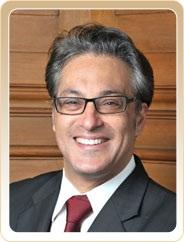
Editorial: Gascón’s essential conflict

0


The latest video of a police arrest in a Tenderloin hotel room — this one apparently showing police officers entering a room without a warrant, attacking an unarmed bystander, and stealing a resident’s duffle bag — has set off a wide range of investigations. But what’s really disturbing is that the video is all too typical of what seems to be business as usual among undercover narcotics detectives. In fact, a series of recent security videos show San Francisco cops doing one thing — and reporting something else.

“We’ve yet to run across a single video that matches up with what the police swear to in their report,” noted Chief Public Defender Attorney Matt Gonzalez.

We’re not talking about one police station, one crew, or one rogue cop. This is, to all available evidence, a pattern of rotten behavior in the department. It’s impossible to believe that these are just a few isolated incidents — or that the problems are concentrated in the lower ranks. If command-level officers didn’t know what was going on, then they’re incompetent. If they knew — which is far more likely — then they were covering up.

That’s nothing new in the old boy’s club that is the San Francisco Police Department. While the criminal cases against senior cops in the Fajitagate scandal went nowhere, the evidence strongly suggested that a cover-up had been ordered and executed at all levels.

In that case, Terence Hallinan, the district attorney, took the lead in trying to hold the cops accountable. But now the person running the D.A.’s Office — former Police Chief George Gascón — is politically paralyzed. Gascón can’t investigate systemic corruption in a department that until recently he was running. He can’t, at this point, even seem to figure out which cases he can take and which he can’t. He hasn’t adopted and made public a conflict of interest policy for himself and his office. And any honest policy would make it impossible for him to get involved in any action involving his former employees.

This is, to put it mildly, the exact reason why police chiefs don’t become district attorneys, why Gavin Newsom’s parting shot to the city has badly damaged the credibility of local law enforcement. It’s also the strongest argument possible for the election of a new district attorney.

David Onek, one of the candidates challenging Gascón, has called for a conflict of interest policy saying, “The people of San Francisco deserve and demand a district attorney who will avoid clear conflicts of interest as a matter of policy — rather than personal whim.” That’s a no-brainer. But the problem goes deeper. As Sharmin Bock, a veteran Alameda County prosecutor who is also running for Gascón’s job, noted, there’s no policy that can address this problem. If Gascón punts all investigations of the SFPD to the FBI or the state attorney general, he’s not only giving up local jurisdiction, he’s vastly increasingly the likelihood that nothing will ever happen. The FBI has limited jurisdiction; the Attorney General’s Office isn’t set up to do this kind of work.

“The only answer,” she said, “is a different D.A.”

Gascón needs to deal with this situation immediately, publicly, and credibly. Perhaps the city needs an independent special prosecutor, someone outside Gascón’s office but with full authority to seek indictments (paid for out of Gascón’s budget, since he created this mess.) Because if he can’t find a solution, he’s going to have a hard time convincing anyone he deserves to stay on the job.<0x00A0><cs:5>2<c


Film Listings

0

Film listings are edited by Cheryl Eddy. Reviewers are Kimberly Chun, Michelle Devereaux, Peter Galvin, Max Goldberg, Dennis Harvey, Johnny Ray Huston, Louis Peitzman, Lynn Rapoport, Ben Richardson, and Matt Sussman. For rep house showtimes, see Rep Clock. For first-run showtimes, see Movie Guide.

OPENING

American: The Bill Hicks Story The late comedian gets his due in this documentary about his life and career. (1:41) Sundance Kabuki.

*L’Amour Fou See “The Long Goodbye.” (1:43) Embarcadero.

The First Grader After a government announcement offering free elementary school educations to all Kenyans, an elderly man, Maruge (Oliver Litondo), shuffles to the nearest rural classroom in search of reading lessons. Though school officials (and parents, miffed that the man would take a child’s place in the already overcrowded system) protest, open-minded head teacher Jane (Naomie Harris) allows him to stay and study. Maruge’s freedom-fighter past, which cost him his family at the brutal hands of the British, is an important part of this true story, which otherwise would’ve felt a bit too heavy on the heartwarming tip. (His classmates, actual students at the school used for filming, are pretty unavoidably adorable.) As directed by Justin Chadwick (2008’s The Other Boleyn Girl ), Harris and Litondo turn in passionate performances, but the film unfolds like a heavy-handed TV movie. The facts of this story are inspiring enough — the film shouldn’t have to try so hard. (1:43) Embarcadero. (Eddy)

Pirates of the Caribbean: On Stranger Tides Jack’s back. (2:05) Balboa, Presidio.

*13 Assassins See “Bastard Samurai.” (2:06) Embarcadero.

The Topp Twins: Untouchable Girls It’s hard to name an American equivalent of New Zealand’s Topp Twins — a folk-singing, comedy-slinging, cross-dressing duo who’re the biggest Kiwi stars you’ve never heard of (but may be just as beloved as, say, Peter Jackson in their homeland). Recent inductees in the New Zealand Music Hall of Fame, the fiftysomething Jools and Lynda, both lesbians, sing country-tinged tunes that slide easily from broad and goofy (with an array of costumed personas) to extremely political, sounding off on LGBT and Maori rights, among other topics. Even if you’re not a fan of their musical style, it’s undeniable that their identical voices make for some stirring harmonies, and their optimism, even when a serious illness strikes, is inspiring. This doc — which combines interviews, home movies, and performance footage — will surely earn them scores of new stateside fans. (1:24) Lumiere. (Eddy)

ONGOING

The Beaver It’s been more than 15 years since Jodie Foster sat in the director’s chair; she’s back with The Beaver, which tells the unique story of Walter Black (Mel Gibson), a clinically depressed man who struggles through his suicidal desires with the help of a beaver puppet. Walter uses the puppet — which he also voices — as a way of connecting with his family and the outside world. The film examines both the comedic aspects and the devastating reality of mental illness, and the script walks the line between dark and light — it’s the first feature from Kyle Killen, who created the critically adored but short-lived TV series Lone Star. The Beaver gets points for ambition, but it’s ultimately too all over the place to come together in the end. The moments of humanity are undercut by scenes of Walter and his wife Meredith (Foster) having sex with the puppet in the bed — intentionally funny, but jarring nonetheless. Still, Foster’s direction is solid and, for all its faults, The Beaver is a great reminder of Gibson’s legitimate talent. (1:31) SF Center, Sundance Kabuki. (Peitzman)

*Bill Cunningham New York To say that Bill Cunningham, the 82-year old New York Times photographer, has made documenting how New Yorkers dress his life’s work would be an understatement. To be sure, Cunningham’s two decades-old Sunday Times columns — “On the Street,” which tracks street-fashion, and “Evening Hours,” which covers the charity gala circuit — are about the clothes. And, my, what clothes they are. But Cunningham is a sartorial anthropologist, and his pictures always tell the bigger story behind the changing hemlines, which socialite wore what designer, or the latest trend in footwear. Whether tracking the near-infinite variations of a particular hue, a sudden bumper-crop of cropped blazers, or the fanciful leaps of well-heeled pedestrians dodging February slush puddles, Cunningham’s talent lies in his ability to recognize fleeting moments of beauty, creativity, humor, and joy. That last quality courses through Bill Cunningham New York, Richard Press’ captivating and moving portrait of a man whose reticence and personal asceticism are proportional to his total devotion to documenting what Harold Koda, chief curator at the Costume Institute at the Metropolitan Museum of Art, describes in the film as “ordinary people going about their lives, dressed in fascinating ways.” (1:24) Embarcadero. (Sussman)

*Bridesmaids For anyone burned out on bad romantic comedies, Bridesmaids can teach you how to love again. This film is an answer to those who have lamented the lack of strong female roles in comedy, of good vehicles for Saturday Night Live cast members, of an appropriate showcase for Melissa McCarthy. The hilarious but grounded Kristen Wiig stars as Annie, whose best friend Lillian (Maya Rudolph) is getting hitched. Financially and romantically unstable, Annie tries to throw herself into her maid of honor duties — all while competing with the far more refined Helen (Rose Byrne). Bridesmaids is one of the best comedies in recent memory, treating its relatable female characters with sympathy. It’s also damn funny from start to finish, which is more than can be said for most of the comedies Hollywood continues to churn out. Here’s your choice: let Bridesmaids work its charm on you, or never allow yourself to complain about an Adam Sandler flick again. (2:04) Balboa, Empire, Four Star, 1000 Van Ness, Sundance Kabuki. (Peitzman)

*Cave of Forgotten Dreams The latest documentary from Werner Herzog once again goes where no filmmaker — or many human beings, for that matter — has gone before: the Chauvet-Pont-d’Arc Cave, a heavily-guarded cavern in Southern France containing the oldest prehistoric artwork on record. Access is highly restricted, but Herzog’s 3D study is surely the next best thing to an in-person visit. The eerie beauty of the works leads to a typically Herzog-ian quest to learn more about the primitive culture that produced the paintings; as usual, Herzog’s experts have their own quirks (like a circus performer-turned-scientist), and the director’s own wry narration is peppered with random pop culture references and existential ponderings. It’s all interwoven with footage of crude yet beautiful renderings of horses and rhinos, calcified cave-bear skulls, and other time-capsule peeks at life tens of thousands of years ago. The end result is awe-inspiring. (1:35) SF Center, Sundance Kabuki. (Eddy)

The Conspirator It may not be your standard legal drama, but The Conspirator is a lot more enjoyable when you think of it as an extended episode of Law & Order. The film chronicles the trial of Mary Surratt (Robin Wright), the lone woman charged in the conspiracy to assassinate Abraham Lincoln. It’s a fascinating story, especially for those who don’t know much of the history past John Wilkes Booth. But while the subject matter is compelling, the execution is hit-or-miss. Wright is sympathetic as Surratt, but the usually great James McAvoy is somewhat forgettable in the pivotal role of Frederick Aiken, Surratt’s conflicted lawyer. It’s hard to say what it is that’s missing from The Conspirator: the cast — which also includes Evan Rachel Wood and Tom Wilkinson — is great, and this is a story that’s long overdue to be told. Still, something is lacking. Could it be the presence of everyone’s favorite detective, the late Lennie Briscoe? (2:02) Four Star, Opera Plaza. (Peitzman)

*The Double Hour Slovenian hotel maid Sonia (Ksenia Rappoport) and security guard Guido (Filippo Timi) are two lonely people in the Italian city of Turin. They find one another (via a speed-dating service) and things are seriously looking up for the fledgling couple when calamity strikes. This first feature by music video director Giuseppe Capotondi takes a spare, somber approach to a screenplay (by Alessandro Fabbri, Ludovica Rampoldi, and Stefano Sardo) that strikingly keeps raising, then resisting genre categorization. Suffice it to say their story goes from lonely-hearts romance to violent thriller, ghost story, criminal intrigue, and yet more. It doesn’t all work seamlessly, but such narrative unpredictability is so rare at the movies these days that The Double Hour is worth seeing simply for the satisfying feeling of never being sure where it’s headed. (1:35) Clay, Smith Rafael. (Harvey)

*Everything Must Go Just skirting the edge of sentimentality and banality, Everything Must Go aims to do justice by its source material: Raymond Carver’s rueful, characteristically spare short story, “Why Don’t You Dance?,” from the 1988 collection Where I’m Calling From. And it mostly succeeds with some restraint from its director-writer Dan Rush, who mainly helmed commercials in the past. Everything Must Go gropes toward a cinematic search for meaning for the Willy Lomans on both sides of the camera — it’s been a while since Will Ferrell attempted to stretch beyond selling a joke, albeit often extended ones about masculinity, and go further as an actor than 2006’s Stranger Than Fiction. The focus here turns to the despairing, voyeuristic whiskey drinker of Carver’s highly-charged short story, fills in the blanks that the writer always carefully threaded into his work, and essentially pushes him down a crevasse into the worst day of his life: Ferrell’s Nick has been fired and his wife has left him, changing the locks, putting a hold on all his bank accounts, and depositing his worldly possessions on the lawn of their house. Nick’s car has been reclaimed, his neighbors are miffed that he’s sleeping on his lawn, the cops are doing drive-bys, and he’s fallen off the wagon. His only reprieve, says his sponsor Frank (Michael Pena), is to pretend to hold a yard sale; his only help, a neighborhood boy Kenny who’s searching for a father figure (Christopher Jordan Wallace, who played his dad Notorious B.I.G. as a child in 2009’s Notorious) and the new neighbor across the street (Rebecca Hall). Though Rush expands the characters way beyond the narrow, brilliant scope of Carver’s original narrative, the urge to stay with those fallible people — as well as the details of their life and the way suburban detritus defines them, even as those possessions are forcibly stripped away — remains. It makes for an interesting animal of a dramedy, though in Everything Must Go‘s search for bright spots and moments of hope, it’s nowhere near as raw, uncompromising, and tautly loaded as Carver’s work can be. (1:36) Sundance Kabuki. (Chun)

Fast Five There are plenty of laugh-out-loud moments in Fast Five, in addition to a much demolition derby-style crunch — instances that stretch credulity and simultaneously trigger a chuckle at the OTT fantasy of the entire enterprise. Two unarmed men chained to the ceiling kick their way out of a torture cell, jump favela rooftops to freedom with nary a bullet wound in sight, and, in the movie’s smash-’em-up tour de force, use a bank vault as a hulking pair of not-so-fuzzy dice to pulverize an unsuspecting Rio de Janeiro. Not for nothing is rapper Ludacris attached to this franchise — his name says it all (why not go further than his simple closing track, director Justin Lin, now designated the keeper of Fast flame, and have him providing the rap-eratic score/running commentary throughout?) In this installment, shady hero Dominic (Vin Diesel) needs busting out of jail — check, thanks to undercover-cop-turned-pal Brian (Paul Walker) and Dominic’s sis Mia (Jordana Brewster). Time to go on the lam in Brazil and to bring bossa nova culture down to level of thieving L.A. gearheads, as the gearhead threesome assemble their dream team of thieves to undertake a last big heist that will set ’em up for life. Still, despite the predictable pseudo-twists — can’t we all see the bromance-bonding between testosteroni boys Diesel and Dwayne Johnson coming from miles of blacktop away? — there’s enough genre fun, stunt driving marvels, and action choreography here (Lin, who made his name in ambitious indies like 2002’s Better Luck Tomorrow, has developed a knack for harnessing/shooting the seeming chaos) — to please fans looking for a bigger, louder kick. (1:41) 1000 Van Ness. (Chun)

Forks Over Knives Lee Fulkerson steps up as the latest filmmaker-turned-guinea-pig to appear in his own documentary about nutrition. As he makes progress on his 12-week plan to adopt a “whole foods, plant-based diet” (and curb his Red Bull addiction), he meets with other former junk food junkies, as well as health professionals who’ve made it their mission to prevent or even reverse diseases strictly through dietary changes. Along the way, Forks Over Knives dishes out scientific factoids both enlightening and alarming about the way people (mostly us fatty Americans, though the film investigates a groundbreaking cancer study in China) have steadily gotten unhealthier as a direct result of what they are (or in some cases, are not) eating. Fulkerson isn’t as entertaining as Morgan Spurlock (and it’s unlikely his movie will have the mainstream appeal of 2004’s Super Size Me), but the staunchly pro-vegan Forks Over Knives certainly offers some interesting, ahem, food for thought. (1:36) Bridge. (Eddy)

*Hanna The title character of Hanna falls perfectly into the lately very popular Hit-Girl mold. Add a dash of The Boys from Brazil-style genetic engineering — Hanna has the unfair advantage, you see, when it comes to squashing other kids on the soccer field or maiming thugs with her bare hands — and you have an ethereal killing/survival machine, played with impassive confidence by Atonement (2007) shit-starter Saoirse Ronan. She’s been fine-tuned by her father, Erik (Eric Bana), a spy who went out into the cold and off the grid, disappearing into the wilds of Scandinavia where he home-schooled his charge with an encyclopedia and brutal self-defense and hunting tests. Atonement director Joe Wright plays with a snowy palette associated with innocence, purity, and death — this could be any time or place, though far from the touch of modern childhood stresses: that other Hannah (Montana), consumerism, suburban blight, and academic competition. The 16-year-old Hanna, however, isn’t immune from that desire to succeed. Her game mission: go from a feral, lonely existence into the modern world, run for her life, and avenge the death of her mother by killing Erik’s CIA handler, Marissa (Cate Blanchett). The nagging doubt: was she born free, or Bourne to be a killer? Much like the illustrated Brothers Grimm storybook that she studies, Hanna is caught in an evil death trap of fairytale allegories. One wonders if the super-soldier apple didn’t fall far from the tree, since evil stepmonster Marissa oversaw the program that produced Hanna — the older woman and the young girl have the same cold-blooded talent for destruction and the same steely determination. Yet there’s hope for the young ‘un. After learning that even her beloved father hid some basic truths from her, this natural-born killer seems less likely to go along with the predetermined ending, happy or no, further along in her storybook life. (1:51) 1000 Van Ness, SF Center. (Chun)

*Hesher Young teen TJ (Devin Brochu) has lost his mom, and her shockingly sudden passing has sent his entire family into a tailspin. His father (Rainn Wilson) can barely rouse himself from his heavily medicated stupor, while his lonely grandmother (Piper Laurie) is left to care for the wrecked men folk as best she can. All TJ can do is to try to desperately hang onto the smashed car that has been sold to the used car salesman and then the junkyard. So it almost seems like a dream when he catches the attention of an aloof, threatening metalhead named Hesher (a typecast-squashing, perfectly on-point Joseph Gordon-Levitt), squatting in an empty suburban model home. Hesher threatens to kill him, then moves in, becoming his so-called “friend” and brand-new, unwanted shadow. What’s a grieving family lost in its own tragic inertia supposed to do with a home invasion staged by an angry, malevolent spirit? Coming to terms with Hesher’s presence becomes a lot like going through Kubler-Ross’s five stages of grief: there’s the denial that he’s taken over the living-room TV and rejiggered the cable to get a free porn channel, the anger that he’s set fire to your enemy’s hot rod and left you at the scene of the crime, and lastly the acceptance that there’s no good, right, or unmessy way to say goodbye. Director Spencer Susser (with co-writer David Michod of 2010’s Animal Kingdom) modeled the character of Hesher after late Metallica bassist Cliff Burton, and that fact, along with the film’s independent-minded spirit, is probably one of the reasons why Metallica allowed more than one of their songs to be used in the film. Hesher itself also likely had something to do with it: if the intrigue with heavy-metal-parking-lot culture doesn’t do donuts in your cul-de-sac, then the sobering story might. (1:45) Embarcadero. (Chun)

*Incendies When tightly wound émigré Nawal (Luba Azabal) dies, she leaves behind adult twins Jeanne (Mélissa Désormeaux-Poulin) and Simon (Maxim Gaudette) — and leaves them documents that only compound their feelings of grief and anger, suggesting that what little they thought they knew about their background might have been a lie. While resentful Simon at first stays home in Montreal, Jeanne travels to fictive “Fuad” (a stand-in for source-material playwright Wajdi Mouawad’s native Lebanon), playing detective to piece together decades later the truth of why their mother fled her homeland at the height of its long, brutal civil war. Alternating between present-day and flashback sequences, this latest by Canadian director Denis Villeneuve (2000’s Maelstrom) achieves an urgent sweep punctuated by moments of shocking violence. Resembling The Kite Runner in some respects as a portrait of the civilian victimization excused by war, it also resembles that work in arguably piling on more traumatic incidences and revelations than one story can bear — though so much here has great impact that a sense of over-contrivance toward the very end only slightly mars the whole. (2:10) Lumiere. (Harvey)

Jumping the Broom (1:48) 1000 Van Ness.

Last Night Married for three years and together “since college,” New York City yuppies Michael (Sam Worthington) and Joanna (Keira Knightley) have a comfortable, loving relationship, though it’s unclear how much passion remains. Still, it doesn’t take much for Joanna to bristle jealously when she meets Michael’s co-worker and frequent business-trip companion, Laura (Eva Mendes). As Michael and Laura flirt their way to an overnight meeting in Philly, Joanna runs into an old flame (Guillaume Canet); before long, it becomes a cross-cutting race to see who’ll cheat first. Writer-director Massy Tadjedin isn’t spinning a new story here — and though the film offers a sleek look at contemporary marriage, Last Night takes itself a tad too seriously, purporting to showcase realistic problems and emotions amid a cast beamed directly from Planet Gorgeous Movie Star. Beautiful people: they’re just like us? (1:30) Sundance Kabuki. (Eddy)

*Limitless An open letter to the makers of Limitless: please fire your marketing team because they are making your movie look terrible. The story of a deadbeat writer (Bradley Cooper) who acquires an unregulated drug that allows him to take advantage of 100 percent of his previously under-utilized brain, Limitless is silly, improbable and features a number of distracting comic-book-esque stylistic tics. But consumed with the comic book in mind, Limitless is also unpredictable, thrilling, and darkly funny. The aforementioned style, which includes many instances of the infinite regression effect that you get when you point two mirrors at each other, and a heavy blur to distort depth-of-field, only solidifies the film’s cartoonish intentions. Cooper learns foreign languages in hours, impresses women with his keen attention to detail, and sets his sights on Wall Street, a move that gets him noticed by businessman Carl Van Loon (Robert DeNiro in a glorified cameo) as well as some rather nasty drug dealers and hired guns looking to cash in on the drug. Limitless is regrettably titled and masquerades in TV spots as a Wall Street series spin-off, but in truth it sports the speedy pacing and tongue-in-cheek humor required of a good popcorn flick. (1:37) 1000 Van Ness. (Galvin)

*My Perestroika Robin Hessman’s very engaging documentary takes one very relatable look at how changes since glasnost have affected some average Russians. The subjects here are five thirtysomethings who, growing up in Moscow in the 70s and 80s, were the last generation to experience full-on Communist Party indoctrination. But just as they reached adulthood, the whole system dissolved, confusing long-held beliefs and variably impacting their futures. Andrei has ridden the capitalist choo-choo to considerable enrichment as the proprietor of luxury Western menswear shops. But single mother Olga, unlucky in love, just scrapes by, while married schoolteachers Lyuba and Boris are lucky to have inherited an apartment (cramped as it is) they could otherwise ill afford. Meanwhile Ruslan, once member of a famous punk band (which he abandoned on principal because it was getting “too commercial”), both disdains and resents the new order just as he did the old one. Home movies and old footage of pageantry celebrating Soviet socialist glory make a whole ‘nother era come to life in this intimate, unexpectedly charming portrait of its long-term aftermath. (1:27) Balboa. (Harvey)

*Nostalgia for the Light Chile’s Atacama Desert, the setting for Patricio Guzmán’s lyrically haunting and meditative documentary, is supposedly the driest place on earth. As a result, it’s also the most ideal place to study the stars. Here, in this most Mars-like of earthly landscapes, astronomers look to the heavens in an attempt to decode the origins of the universe. Guzmán superimposes images from the world’s most powerful telescopes — effluent, gaseous nebulas, clusters of constellations rendered in 3-D brilliance — over the night sky of Atacama for an even more otherworldly effect, but it’s the film’s terrestrial preoccupations that resonate most. For decades, a small, ever dwindling group of women have scoured the cracked clay of Atacama searching for loved ones who disappeared early in Augusto Pinochet’s regime. They take their tiny, toy-like spades and sift through the dirt, finding a partial jawbone here, an entire mummified corpse there. Guzmán’s attempt through voice-over to make these “architects of memory,” both astronomers and excavators alike, a metaphor for Chile’s reluctance to deal with its past atrocities is only marginally successful. Here, it’s the images that do all the talking — if “memory has a gravitational force,” their emotional weight is as inescapable as a black hole. (1:30) Lumiere. (Devereaux)

Priest (1:27) 1000 Van Ness, SF Center.

*The Princess of Montpensier Marie (Mélanie Thierry), the titular figure in French director Bertrand Tavernier’s latest, is a young 16th century noblewoman married off to a Prince (Grégoire Leprince-Ringuet) of great wealth and property. But they’ve barely met when he’s called off to war — leaving her alone on his enormous estate, vulnerable to myriad suitors who seem to be forever throwing themselves at her nubile, neglected body. Lambert Wilson (2010’s Of Gods and Men) is touching as the older soldier appointed her protector; he comes to love her, yet is the one man upstanding enough to resist compromising her. If you’ve been jonesing for the kind of lush arthouse period epic that feels like a big fat classic novel, this engrossing saga from a 70-year-old Gallic cinema veteran in top form will scratch that itch for nearly two and a half satisfyingly tragic-romantic hours. (2:19) Smith Rafael. (Harvey)

Potiche When we first meet Catherine Deneuve’s Suzanne — the titular trophy wife (or potiche) of Francois Ozon’s new airspun comedy — she is on her morning jog, barely breaking a sweat as she huffs and puffs in her maroon Adidas tracksuit, her hair still in curlers. It’s 1977 and Suzanne’s life as a bourgeois homemaker in a small provincial French town has played out as smoothly as one of her many poly-blend skirt suits: a devoted mother to two grown children and loving wife who turns a blind eye to the philandering of husband Robert (Fabrice Luchini), Suzanne is on the fast track to comfortable irrelevance. All that changes when the workers at Robert’s umbrella factory strike and take him hostage. Suzanne, with the help of union leader and old flame Babin (Gerard Depardieu, as big as a house), negotiates a peace, and soon turns around the company’s fortunes with her new-found confidence and business savvy. But when Robert wrests back control with the help of a duped Babin, Suzanne does an Elle Woods and takes them both on in a surprise run for political office. True to the film’s light théâtre de boulevard source material, Ozon keeps things brisk and cheeky (Suzanne sings with as much ease as she spouts off Women’s Lib boilerplate) to the point where his cast’s hammy performances start blending into the cheery production design. Satire needs an edge that Potiche, for all its charm, never provides. (1:43) Opera Plaza, Smith Rafael. (Sussman)

Queen to Play From first-time feature director Caroline Bottaro comes this drama about … chess. Wait! Before your eyes glaze over, here are a few more fast facts: it’s set in idyllic Corsica and features, as an American expat, Kevin Kline in his first French-speaking role. (Side note: is there a Kline comeback afoot? First No Strings Attached, then The Conspirator, and now Queen to Play. All within a few short months.) Lovely French superstar Sandrine Bonnaire plays Héléne, a hotel maid who has more or less accepted her unremarkable life — until she happens to catch a couple (one half of which is played by Jennifer Beals, cast because Bottaro is a longtime fan of 1983’s Flashdance!) playing chess. An unlikely obsession soon follows, and she asks Kline’s character, a reclusive doctor who’s on her freelance house-cleaning route, to help her up her game. None too pleased with this new friendship are Héléne’s husband and nosy neighbors, who are both suspicious of the doctor and unsure of how to treat the formerly complacent Héléne’s newfound, chess-inspired confidence. Queen to Play can get a little corny (we’re reminded over and over that the queen is “the most powerful piece”), and chess is by nature not very cinematic (slightly more fascinating than watching someone type, say). But Bonnaire’s quietly powerful performance is worth sticking around for, even when the novelty of whiskery, cardigan-wearing, French-spouting Kline wears off. (1:36) Smith Rafael. (Eddy)

Rio (1:32) 1000 Van Ness, SF Center.

Something Borrowed (1:53) 1000 Van Ness, Presidio.

*Source Code A post-9/11 Groundhog Day (1993) with explosions, Inception (2010) with a heart, or Avatar (2009) taken down a notch or dozen in Chicago —whatever you choose to call it, Source Code manages to stand up on its own wobbly Philip K. Dick-inspired legs, damn the science, and take off on the wings of wish fulfillment. ‘Cause who hasn’t yearned for a do-over — and then a do-over of that do-over, etc. We could all be as lucky — or as cursed — as soldier Colter Stevens (Jake Gyllenhaal), who gets to tumble down that time-space rabbit hole again and again, his consciousness hitching a ride in another man’s body, while in search of the bomber of a Chicago commuter train. On the upside, he gets to meet the girl of his dreams (Michelle Monaghan) — and see her getting blown to smithereens again and again, all in the service of his country, his commander-cum-link to the outside world (Vera Farmiga), and the scientist masterminding this secret military project (Jeffrey Wright). On the downside, well, he gets to do it over and over again, like a good little test bunny in pinball purgatory. Fortunately, director Duncan Jones (2009’s Moon) makes compelling work out of the potentially ludicrous material, while his cast lends the tale a glossed yet likable humanity, the kind that was all too absent in 2010’s Inception. (1:33) 1000 Van Ness. (Chun)

There Be Dragons (2:00) SF Center.

These Amazing Shadows If you love movies, it’ll be hard to resist These Amazing Shadows (subtitled “A story about the National Film Registry and the power of the movies”) — it’s chock full o’ clips from films that’ve been deemed worthy of inclusion in the National Film Registry’s elite ranks. This includes, of course, the likes of 1942’s Casablanca and 1939’s Gone With the Wind, but also more recent cultural touchstones like 1985’s Back to the Future and a number of experimental, short, and silent works, and even a few cult films too. Along the way film scholars and makers (including locals Barry Jenkins, Rick Prelinger, and Mick LaSalle) chime in on their favorite films and stress why preserving film is important. There’s a healthy dose of film history, as well, with mentions of groundbreaking director Lois Weber (one of early cinema’s most prolific artists, despite her gender) and a discussion of why racially questionable films like 1915’s The Birth of a Nation — a film that Boyz n the Hood (1991) director John Singleton recommended for Registry inclusion — are historically important despite their content. Dedicated film buffs won’t discover any surprises, and there’s not much discussion of queer film (unless John Waters talking about 1939’s The Wizard of Oz counts?), nor any mention of the current shift from film to digital formats (of course preserving old films is important, but will the Registry also start considering digital-only films for inclusion?) But perhaps these are topics for another film, not this nostalgia-heavy warm fuzzy that’ll affect anyone who remembers the magic of seeing a personally significant film — join the mob if it’s 1977’s Star Wars — for the first time. (1:28) Sundance Kabuki. (Eddy)

*Thor When it comes to superhero movies, I’m not easily impressed. Couple that with my complete disinterest in the character of Thor, and I didn’t go into his big-screen debut with any level of excitement. Turns out Kenneth Branagh’s Thor is a genre standout — the best I’ve seen since 2008’s Iron Man. For those who don’t know the mythology, the film follows Thor (Chris Hemsworth) as he’s exiled from the realm of Asgard to Earth. Once there, he must reclaim his mighty hammer — along with his powers — in order to save the world and win the heart of astrophysicist Jane Foster (Natalie Portman). Hemsworth is perfectly cast as the titular hero: he’s adept at bringing charm to a larger-than-life god. The script is a huge help, striking the ideal balance between action, drama, and humor. That’s right, Thor is seriously funny. On top of that, the effects are sensational. Sure, the 3D is once again unnecessary, but it’s admittedly kind of fun when you’re zooming through space. (2:03) Empire, Four Star, 1000 Van Ness, Presidio, Sundance Kabuki. (Peitzman)

True Legend Just because True Legend is as canned and derivative as a Five Venom Fist sucker punch or a lousy Kung Fu episode, doesn’t mean there are moments of enjoyment to be culled from the spectacle in this, the first Chinese martial arts flick on 3-D. In fact, it’s easy to read True Legend as Matrix series action choreographer Yuen Woo Ping ripping himself off by returning to the tipsy territory of one of his early films (the influential 1978 Jackie Chan comedy Drunken Master), calling in favors, and updating it with the international crowd-pleasing elements pulled from the many movies he’s worked on, from Iron Monkey (1993) to Crouching Tiger, Hidden Dragon (2000) to the Kill Bill flicks (2003 and 2004). Our hero, Su Can (Vincent Zhao/Man Cheuk Chiu), is the good-hearted Qing dynasty general who just wants to settle down humbly and peacefully with wife Ying (Xuan Zhou of 2000’s Suzhou River) and open his own wushu school. He hands off a power position to his foster brother (and his wife’s blood sibling), Yuan (Andy On), and retreats to the country. Alas, bro comes calling with vengeance on his mind and destroys Su Can’s happy family, sending Ying into the winemaking biz and transforming the injured Su Can into a long-haired madman (picture a more innocuous Chinese Charles Manson intent on bashing the gods of wushu). This sets us up for some majestic Crouching Tiger-like nature scenes, a climactic bout with foreign fighters in line with nationalistic sentiments of recent Chinese martial arts offerings a la 2010’s Ip Man 2, and and some rather poorly explicated yet humorous scenes of a dreadlocked, now alcoholic and homeless Su Can discovering a new martial art — Zui Quan (the Drunken Fist) — while resembling a shaggy, ragged, breakdancing B-boy. The latter just might inspire the sooty-faced crust punk in each of us to take up MMA. While kicking considerable old-school cred — along with brief guest turns by Michelle Yeoh, Jay Chou, Gordon Liu, and David Carradine — True Legend is about as messy, shambolic, and up for entertaining action as a urine-soaked panhandler with a soiled yet solid iron fist. (1:56) Opera Plaza. (Chun)

Water for Elephants A young man named Jacob Jankowski (Robert Pattinson) turns his back on catastrophe and runs off to join the circus. It sounds like a fantasy, but this was never Jacob’s dream, and the circus world of Water for Elephants isn’t all death-defying feats and pretty women on horses. Or rather, the pretty woman also rides an elephant named Rosie and the casualties tend to occur outside the big top, after the rubes have gone home. Stumbling onto a train and into this world by chance, Jacob manages to charm the sadistic sociopath who runs the show, August (Christophe Waltz), and is charmed in turn by August’s wife, Marlena (Reese Witherspoon), a star performer and the object of August’s abusive, obsessive affections. Director Francis Lawrence’s film, an adaptation of Sarah Gruen’s 2006 novel, depicts a harsh Depression-era landscape in which troupes founder in small towns across America, waiting to be scavenged for parts — performers and animals — by other circuses passing through. Waltz’s August is a frightening man who defines a layoff as throwing workers off a moving train, and the anxiety of anticipating his moods and moves supplies most of the movie’s dramatic tension; Jacob and Marlena’s pallid love story feeds off it rather than adding its own. The film also suffers from a frame tale that feels awkward and forced, though Hal Holbrook makes heroic efforts as the elderly Jacob, surfacing on the grounds of — what else? — a modern-day circus to recount his tale of tragedy and romance. (2:00) Empire, Marina, 1000 Van Ness, SF Center, Sundance Kabuki. (Rapoport)

*Win Win Is Tom McCarthy the most versatile guy in Hollywood? He’s a successful character actor (in big-budget movies like 2009’s 2012; smaller-scale pictures like 2005’s Good Night, and Good Luck; and the final season of The Wire). He’s an Oscar-nominated screenwriter (2009’s Up). And he’s the writer-director of two highly acclaimed indie dramas, The Station Agent (2003) and The Visitor (2007). Clearly, McCarthy must not sleep much. His latest, Win Win, is a comedy set in his hometown of New Providence, N.J. Paul Giamatti stars as Mike Flaherty, a lawyer who’s feeling the economic pinch. Betraying his own basic good-guy-ness, he takes advantage of a senile client, Leo (Burt Young), when he spots the opportunity to pull in some badly-needed extra cash. Matters complicate with the appearance of Leo’s grandson, Kyle (newcomer Alex Shaffer), a runaway from Ohio. Though Mike’s wife, Jackie (Amy Ryan), is suspicious of the taciturn teen, she allows Kyle to crash with the Flaherty family. As luck would have it, Kyle is a superstar wrestler — and Mike happens to coach the local high school team. Things are going well until Kyle’s greedy mother (Melanie Lynskey) turns up and starts sniffing around her father’s finances. Lessons are learned, sure, and there are no big plot twists beyond typical indie-comedy turf. But the script delivers more genuine laughs than you’d expect from a movie that’s essentially about the recession. (1:46) Four Star, Opera Plaza, Presidio. (Eddy)


The case for local taxes

8

When state Sen. Darrell Steinberg introduced SB 653, a bill that would allow cities to impose an income tax, a car tax and excise taxes, I called his press office and asked if the senator was serious. Me, I thought this was one of the best ideas I’d ever heard of out of Sacramento, but I couldn’t believe Steinberg was actually going to push it.


After all, Steinberg has been in heated discussions with the Republicans over the state budget, and they’ve been refusing to bend, even an inch, on new revenue. And the Democrats can’t pass a budget alone; the two-thirds requirement for new taxes means at least four members of the recalictrant GOP have to go along.


But if Steinberg could threaten the jerks with a bill that requires only a majority vote but would open the door to all kinds of new taxes up and down the state, maybe they’d start to come around. That seemed like the theory.


But his staff told me that he was entirely serious — and to my astonishment (and perhaps his) the bill is moving forward. We did an editorial endorsing it two weeks ago, and all of a sudden, it’s getting a lot of attention. And it’s exposed a fascinating political debate in the state and raised a lot of questions that ought to be part of the political conversation.


Jerry Brown’s been talking for months about “realignment” — sending more state services back to local government. It’s part of the populist side of the guv, and it flies in the face of 50 years of liberal thought. The federal government used to be our friend — the feds enforced civil rights laws in the racist South. The feds put money into inner cities. The state of California enforced equality, too — the famous Serrano v. Priest decision, in state court, guaranteed that public schools in all areas, not just rich ones, had the resources to provide a quality education to all. “State’s rights” was the cry of segregationists; rich people in conservative communities wanted school funding to be a local decision.


But things are different now, and the political stars are realigned. The most important civil rights moves are coming from cities (see: San Francisco, same-sex marriage) and progressive communities are defying the feds on issues from immigration to medical pot. (The flip side is also happening, see: Arizona and SB 1070).


Right now, today, the single most important issue in the United States (with the possible exception of stupid foreign wars) is the wealth gap and taxation. So much flows from that — the collapse of social services, the cost of health care, unemployment, the crisis in state budgets, the decline in public education … name an issue, and it has at least some roots in the way the nation handles money. And two things have happened in the last 15 years or so, at least at the national level:


1. The Republican Party has been taken over by the far right.


2. The Democratic Party has been taken over by Wall Street.


So nothing good’s going to happen in Washington. And in California, thanks to our two-thirds rule, nothing good’s going to happen in Sacramento as long as a tiny minority of really bad Republicans can hold the state hostage.


Which means that the only hope for progressive economic policy is going to come from local government — and the best thing the Democrats can do in the state Legislature is to stand back and allow it to happen. Which is exactly what the Steinberg bill would do.


Now, the San Francisco Chronicle has come out against the Steinberg bill, saying it would


mark a regrettable retreat from the notion that Californians of many lifestyles and cultures – city dwellers, beach-goers, farmers, ranchers, techies, loggers, entrepreneurs – share a common bond. The delegation of a greater tax burden and government duties to 58 counties and hundreds of cities would only compound the disparities that make this state nirvana for some and Appalachia for others.


The problem is, that notion — that romantic vision of One California — is already gone. California isn’t one state any more; it’s too big to be a state, and it ought to be at least three states. The Democrats control both houses of the Legislature and the governor’s office — and it’s almost impossible even to pass a state budget. There’s nothing resembling a political consensus in California, and we might as well admit it.

I understand the problem of economic disparity — but you can’t address it under the current system. There are, indeed, a few counties that have very little tax base, and that will need substantial state aid; I’m good with that. I’m happy to have my tax money go to the poorest counties. But I’m not seeing the Steinberg bill as a reason to cut state spending; I think we ought to increase state spending. I just think that what comes out of Sacramento should be a floor, not a ceiling. If people in San Francisco want to spend more on their public schools — and do it in a progressive way — what’s wrong with that?

The problem with local taxes is that the most progressive, fair revenue solutions aren’t available to cities. Income taxes are far better than sales taxes; ad valorem property taxes are better than parcel taxes. But cities can’t impose traditional income taxes, and are hobbled by Prop. 13 on property taxes. So when cities DO try to impose their own taxes, the results aren’t fair — the poor pay more than the rich.

Interestingly, Dan Walters of the SacBee, who is by no means considered a liberal, likes the Steinberg bill:

California’s experiment in centralized budgeting, the unintended consequence of Propostition 13’s approval in 1978, has been an abject failure. California is simply too diverse for one-size-fits-all decision making from Sacramento, especially when the Capitol can’t even decide what that size should be.

And City Attorney Dennis Herrera, who is running for mayor, likes the idea, too:


California communities that view government as a needless intrusion into people’s lives are morally entitled to limit their local government, and to pay less for fewer services.   Conversely, California communities that see government’s potential to improve the lives of their residents deserve to fully realize the benefits of the public services they’re paying for.


But the notion that we must bind the fate of 37 million Californians to the governance of lowest common denominator is absurd. 


Steinberg’s bill isn’t perfect — it doesn’t include corporate income taxes. But it’s a lot better than what we have now.

I realize that we’re in tricky territory here — should counties where 80 percent of the voters want mandatory prayer in schools and a curriculum that says God doesn’t like homosexuality have the right to overrule state and federal law and ignore the Constitution in the name of local control? Of course not.

But I think you can argue that local government, after meeting the basic federal and state requirements, has the right to go a step further in the pursuit of civil and Constitutional rights. Just as cities, after receiving their minimum allotment of stae money, have the right to raise more. And do it in a fair way.

At the very least, the bill creates a discussion that we all ought to be having. Cuz the way we’re running the state right now isn’t working.

Supervisors and activists decry businesses that deny wages to low-income workers

13

For one of this country’s first government hearings regarding wage theft yesterday (Thurs/12), San Francisco activists, public employees, and politicians alike were determined to find ways to address issues surrounding low-income workers who are paid below minimum wage or otherwise deprived of money they’re entitled to.

Wage theft may involve a number of different violations including payment below the minimum wage, obligation to work off the clock, and denial of overtime and sick pay. Low-income jobs such as construction work, hospitality and domestic care are the most cited types of employment for wage theft and wage theft disproportionately affects communities of color and those with language barriers.

“We are not going to allow any worker in San Francisco to be exploited,” said Sup. David Campos said on the steps of City Hall, later presiding over the Government Audit and Oversight Committee hearing on the issue. “Wage theft affects the lowest wage workers and their ability to make a living and survive in these tough economic times.”

The pre-hearing protest and the meeting was comprised of workers with emotional stories of poverty and injustice. Other speakers included Donna Levitt, the director of the Office of Labor Standards Enforcement, the agency in charge of overseeing claims of employers withholding wages, and Rajiv Bhatia, the director of Occupational and Environmental Health at the San Francisco Department of Public Health.

Levitt said that 500 claims of wage theft have been addressed by the OLSE since the minimum wage law’s inception in 2003. Dan Goncher of Harvey M. Rose Associates, which does budget analysis for the city, cited data showing that the OLSE takes significantly longer to go through the hearing process for back wages than other agencies. However, Levitt mentioned that 97 percent of cases are settled and never go to the City Attorney’s Office for a hearing.

“Very little thought from our policymakers was made on how this was going to be enforced,” Levitt said of the current minimum wage law.

The coalition of community organizations including Young Workers United, Filipino Community Center, Chinese Progressive Association, San Francisco Tenants Association, Unite Here Local 2, Mujeres Unidas y Activas, and others joined together for the protest in order to raise awareness of some proposed amendments to the current minimum wage enforcement law.

Co-sponsored by Campos and Sup. Eric Mar, the amendments would add additional penalties such as raising the fine for employers from $500 to $1,000 for retaliating against workers exercising rights under the current law, the ability to interview employees and inspect payroll records at places of business, the requirement of notifying employees when an employer is being investigated, and to posting of a public notice when an employer fails to comply with a settlement agreement.

“We want to see the city taking a stronger commitment to addressing the issue of wage theft,” said lead organizer of the Chinese Progressive Association Shaw San Liu. “We don’t want this to be a one-day publicity stunt.”

One of the workers, who spoke about his experience of wage theft, recalled working long hours without the assurance of payment. “We would wait for hours for them to come back pay us but they never came,” Jose Cruz, a day laborer and client of La Raza Centro Legal, said about one of his jobs.

Bhatia explained to the supervisors and crowded audience in the committee hearing room that in the last week, 26 percent of the nation’s low wage workers were paid less than minimum wage. He also outlined different steps such as tracking chronic violators and training health inspectors to make referrals to local enforcement agencies in cases of non-compliance, so the SFDPH could support the community efforts in decreasing wage theft.

In addition, both Campos and Board President David Chiu made a point of speaking about how wage theft also detrimentally affects businesses.

“Most businesses play by the rules and those businesses are at a disadvantage when we allow businesses to not follow the rules,” said Campos.

“This is not about workers versus businesses,” Chiu said. “The issue of wage theft effects workers and workers’ families across the city.”

How bad are Sacto Republicans?

5

Pretty darn bad. They’ve gone so far over the edge that they don’t even listen to the people who they claim they want to support — business leaders who are worried about keeping California competitive.


That’s right — the big business types are practically begging the GOP legislators to get off their asses and pass a budget that includes temporary tax extensions. They’re also in favor of pension reform and a bunch of other things that Democrats don’t love — but Jerry Brown and the Dems have already agreed to put all those things on the table. The sticking point is this no-tax pledge — and for once, the big business community thinks that’s ridiculous.


Does it even matter? Do the Republicans even listen to the Chamber of Commerce any more? Or do they only care about the Grover Norquist types and a couple of L.A. talk show hosts?


Into the Vortex, part one

0

arts@sfbg.com

For some the ’60s and ’70s never stopped swinging — even (or especially) if they were barely out of womb when all that decadence crashed into the anti-counterculture, pro-coke Reagan era.

For many years, one of SF’s greatest connoisseurs of retro sexual revolution kitsch and coolness has been Scott Moffett. For all we know, even as you read this he’s reclining on a fun fur rug, drinking Martini & Rossi on the rocks, reeking of Hai Karate, sandwiched by Barbarella and Pussy Galore.

In 1994 he and Jacques Boyreau cofounded the Werepad, a waaaaaay-south o’ Market psychedelic lounge that hosted parties and screened rare, frequently scratchy 16mm prints of movies with titles like Maryjane (1968), Island of the Bloody Plantation (1983), and William Shatner’s Mysteries of the Gods (1977). He also created the Cosmic Hex Archive (whose website lets you can download everything from 1966’s Dr. Goldfoot and the Girl Bombs and 1976’s Shriek of the Mutilated to 1972’s Santa and the Ice Cream Bunny for a modest fee) to protect and show just such “forgotten works.” He’s collaborated on movies, books, and traveling exhibits, all reflecting the same groovy aesthetic.

The Werepad is now gone (as is Boyreau, to Portland, Ore.), but Moffett now runs its more compact successor not-so-far south of Market, the Vortex Room, and with Joe Niem programs its Thursday Film Cult nights.

The theme to the Vortex’s May schedule — sorry if you missed last week’s bill of Roger Corman’s 1959 beatnik parody Bucket of Blood and the astonishing 1969 Japanese portrait-of-a-crazed-artist erotic horror Blind Beast — is “Art, Obsession, and Film Cult.” The series unites a widely disparate slate dealing with art-making in one form or another, as inspired, manipulated, or rendered homicidal by sexuality and violence.

Thursday, May 12 there’s a double bill whose first half unusually (for the Vortex) reaches back to mainstream Hollywood’s “golden” era. German Expressionist master Fritz Lang (Metropolis, 1927; M., 1931), followed up 1944’s The Woman in the Window by regathering its stars on a new suspense melodrama: 1945’s Scarlet Street. The latter is crasser, pulpier, and driven by demure 1930s ingénue (and future Dark Shadows matron) Joan Bennett’s inspired vulgarity as Kitty “Lazy Legs” March, whose yea lazier boyfriend (Dan Duryea) proposes that she seduce an accountant and amateur painter (Edward G. Robinson) whom they both mistake for a wealthy artist. This lurid saga ends on an unusually bitter, ironic, haunted note for its time.

A greater discovery is Scarlet Street‘s Vortex cofeature. Scream Baby Scream (1969) is vintage psychedelic horror at its trippiest. This low-budget but pretty dang groovy artifact goes out of its way to be with-it: the cast wears ultra-mod fashions, the interiors are crammed with objets d’Op Art, the score is cool jazz-rock (dig those flute solos), and the dialogue is chock-full of Now Generation philosophizing (some rather grammatically-challenged, such as “I feel so strange — like a nightmare that I don’t want to think about”).

All of which doubles the fun in watching an otherwise (slightly better made) imitation of movies like Herschell Gordon Lewis’ 1965 Color Me Blood Red. Written by future genre hero Larry Cohen, its young protagonists are four art-school students; hero Jason is practically cohabiting with girlfriend Janet, but she’s acting like maybe she Needs Some Space. (Of course, he’s also acting like a jealous jerk — it’s unclear whether the film is aware how clearly it reflects the none-too-feminist gender dynamics of mainstream hippiedom.)

Janet takes her art very seriously, attracting attention from a creepy established artist (Larry Swanson) famous for oil portraits of hideously distorted faces. Meanwhile, models, art students, and miscellaneous youth-on-the-beach keep “disappearing.”

You can guess what happens. But among Scream Baby Scream‘s many surprises are a long LSD trip sequence (protagonists go motorcycling on the highway! Feed baby elephants at the zoo! Imagine themselves as monkeys in a cage! Interpretive dance!), scenes at a psychedelic coffeehouse, a party setpiece with groovy band the Odyssey (plus go-go dancers and liquid light projections), and zombie ghouls on the loose.

There’s also nudity, pot smoking, and a lot of relationship arguments. The last half hour takes a weird left turn into Vincent Price terrain, complete with a gloomy old mansion, a mad-doctor flashback, and so forth. The movie was clearly intended for drive-ins at best, but it’s colorful, fast-paced, and ever so delightfully wrong. Directed by little remembered B-pic toiler Joseph Adler, it was an early big-screen writing credit for Cohen, showing signs of the perversity that would later result in 1973’s Black Caesar, 1974’s It’s Alive, 1976’s God Told Me To, and 1988’s Maniac Cop, to name a few.

Trash will spotlight the rest of the Vortex’s May schedule next week. A $5 donation gets you into these Thursday screenings. For that dough, you could buy half a ticket to Bridesmaids. Please don’t tell me that’s a tough decision. (Dennis Harvey)

ART, OBSESSION, AND FILM CULT

Scarlet Street, Thurs/12, 9 p.m.;

Scream Baby Scream, Thurs/12, 11 p.m., $5

Vortex Room

1082 Howard, SF

www.myspace.com/thevortexroom


Soul sounds

0

arts@sfbg.com

Aaliyah has been an ephemeral touchstone for a number of different musical acts in recent years, with Gang Gang Dance citing her as an influence, James Blake sampling her voice, and The xx and Forest Swords covering “Hot Like Fire” and “If Your Girl Only Knew,” respectively, from her 1996 album One in a Million. In the last year, small fragments of her song “Rock the Boat” have also figured in albums by a pair of acts — Hype Williams and The Weeknd — that reshape elements of commercial R&B.

On “rescue dawn II (I am wiger toods),” from Find Out What Happens When People Stop Being Polite and Start Gettin Reel (De Stijl), the London-to-Berlin duo Hype Williams isolate the “Rock the Boat” line “Feel like I’m on dope,” slowing down Aaliyah’s voice in a manner similar to DJ Screw, and placing it next to off-key keyboards and video game sounds. The invocation of “Rock the Boat” in relation to Hype Williams’ name, which echoes that of the big-budget music video and movie director, creates or conjures subtext in a manner that’s both similar and markedly different from the inspirational way in which James Brown or Meters samples figured in early hip-hop.

Throughout Find Out What Happens, “Roy Blunt” and “Inga Copland” of Hype Williams borrow from disparate vocal elements, such as Pokémon rap and either a mutation or karaoke or obscure interpretation of Sade’s “The Sweetest Taboo.” While there’s a comedic quality to the album’s use of such sources, it mingles with a sense of time being altered. Whereas ’80s electronic musicians such as Harald Grasskopf or Scott Ryser of the Units have written about the difficulty of getting analog instruments such as Minimoogs to stay in sync while recording on tape, Hype Williams’ digital sound is riddled with moments in which melodies and rhythms deliberately fall out of step. Structurally, the duo’s new album One Nation (Hippos in Tanks) mingles randomness and more obviously constructed facets. Somber and meditative in comparison to the De Stijl collection, with free jazz atmospherics and beats to the fore, One Nation sometimes sounds like DJ Shadow, creating filigree at midnight in an imperfect world.

Bombast is not a part of Hype Williams’ sound, but it is present in The Weeknd’s self-released House of Balloons, a comparatively more polished recording that’s garnering roughly ten times the amount of attention on YouTube, a number that’s likely to increase. The Aaliyah loop on House of Balloons occurs seconds into the album’s second song, as a “hold you close” and a few other blurred words from “Rock the Boat” lead into a yearning dubstep-influenced ballad that works to differentiate between wants and needs, using echo effects to emphasize one while repeating the other like a mantra.

While Hype Williams generally sounds blunted or sleepy from syrup, speedier drug elements are laced throughout The Weeknd’s sound and the lyrics of House of Balloons. “House of Balloons / Glass Table Girls” begins with vocal and instrumental elements and a hook interpolated from Siouxsie and the Banshees’ “Happy House” before changing scenes halfway through, abandoning melodic, romantic, dramatic singing for a rap track set at an after-hours party gone awry. The next track, “The Morning,” begins with a blues lick and brings a sense of underlying anguish what is at least partly an account of a stripper’s jet-set lifestyle. “The Party & The After Party” is a seductive slow jam that uses Beach House’s “Master of None” (also present in Miranda July’s new movie The Future) as its musical bed.

As with the likely duo known as Hype Williams, the identity of the Weeknd, whether defined as Canadian singer-songwriter named Abel Tesfaye or a group of artists, has also been a matter of speculation. On blogs, websites, and in some publications, House of Balloons‘ comparative merit or weakness in relation to The-Dream, Drake, and other R&B contemporaries is a source of current debate. To dismiss any one of them outright in relation to the other is a simplistic response. In fact, R. Kelly is just as viable a comparison, and another way of returning to Aaliyah’s presence and the ways it can signify or suggest absence. 


Garbage shuffle

1

sarah@sfbg.com

The Department of Public Health has scheduled a May 13 hearing to review allegations that Recology subsidiary Sunset Scavenger overbilled for trash collection at a condominium building for years, resulting in $84,544 in excess charges, erroneously charged the building commercial rates, and is refusing to make a full refund. Recology counters that the building’s managers oversubscribed, and the company gave a three-month refund as a show of good faith, but considers additional refunds punitive.

The hearing should interest the 21 percent of San Francisco residents who own units in condominium buildings. According to the Assessor-Recorder’s Office, 42,478 of the city’s 200,409 recorded parcels are now condominiums, with 3,192 registered as live/work, 38,300 as market rate, 980 as below-market rate, and 958 as commercial condo parcels as of fall 2010.

This struggle between ratepayers and Recology, which controls almost all aspects of the city’s $275 million-a-year waste stream, seems emblematic of the problems that can arise when a monopoly is only partially regulated by local officials (the city does not have oversight of commercial collection rates) and then only in a labyrinthine process.

DPH’s May 13 hearing comes three weeks after the Board’s Budget and Finance Committee voted to wait until July before deciding whether to award the city’s next landfill disposal contract to Recology. And it hits 18 months after the Department of the Environment, which derives half its budget from Recology’s rates, first tentatively awarded the city’s landfill contract to the San Francisco based garbage giant.

Since then critics have questioned how Recology got its monopoly, whether the arrangement benefits rate payers, and whether it makes environmental sense to haul the city’s trash all the way to Yuba County, as Recology is proposing.

In February, the budget and legislative analyst recommended that the city replace existing trash collection and disposal laws with legislation that would require competitive bidding on all aspects of the city’s waste collection, consolidation, and recycling system.

The analyst also recommended requiring that refuse collection rates for residential and commercial services be subject to board approval, noting that competitive bidding could result in reduced refuse collection rates (see “Garbage curveball,” 02/8/11).

“The latest report says that the current system has been in existence since 1932 and let’s put it out to competitive bid,” said budget and legislative analyst Harvey Rose.

A 2002 report by Rose noted that the city has no regulatory authority over commercial refuse rates. “Instead, commercial rates are subject to agreements between the permitted and licensed refuse collectors and individual commercial producers of refuse, commercial tenants and building owners,)” the report stated.

Rose’s report also found that commercial building owners often pay commercial refuse fees to Recology, so tenants don’t know how much they are paying. “Normally, if tenants occupy such buildings for commercial purposes, the commercial refuse fees are passed on to the tenants as part of the overall rent and operating costs. As a result, it is likely that many commercial tenants do not know how much they are actually paying for commercial refuse collection,” the report found.

It also noted that when the analysts attempted to complain about commercial refuse collection and commercial refuse rates (“for audit procedure purposes”) and to inquire how to lodge a complaints with the city, there was “nobody to call.”

Fast-forward nine years, and Golan Yona, who sits on the board of the Alamo Square Board Homeowners Association, which represents 200 residents in a 63-unit building on Fulton Street, claims the city gave him the run-around when he complained that, over a four-year period, Recology subsidiary Sunset Scavenger billed his building to pick up two, two-yard compactor containers three times a week but only picked up one. “Each time one of the bins is being put out for collection, the second bin is connected to the trash chute,” and thus not in service for pickup, Yona said.

But Recology claims that HSM Management, the company the homeowners association hired to manage its building, “oversubscribed” for waste collection. Recology also notes that the commercial rate the association paid resulted in the building being charged a lower monthly cost, but that Sunset recognized this as an “internal error” and therefore is not pursuing collection of the undercharged amounts.

Recology spokesperson Adam Alberti characterized the disagreement as “a pretty simple billing dispute,” even as he claimed that HSM sometimes put two bins curbside.

“Recology has been providing a level of service that was not fully utilized,” Alberti said. “They had two bins and were only setting out one, though there were numerous times throughout the year when they set out two bins.”

Alberti said the responsibility lies with the condo group, which opted for that level of bin service. “At some point they called to discuss ways to reduce their bill, at which point Recology suggested they reduce their service to one bin. At that point, the homeowners association sought compensation,” he said.

“No, this is based on actual consumption,” Yona told the Guardian, claiming that Sunset has no problem charging extra if buildings put out extra bins.

Alberti claims it’s “far more common” for buildings to oversubscribe. “They plan for peak times,” he said. “As a good faith gesture, the company sought to come to terms with the customer — but they weren’t able to do so.”

DPH’s Scott Nakamura confirmed that rate hearings are rare in his department. “This is the first time in 30 years that I have heard of a dispute like this going to the DPH — and I’ve been working here more years than I’d like to admit,” he said.

Based on his experience and Rose’s 2002 report, Yona suspects that the reason for this lack of hearings lies with a lack of process — not a lack of complaints.

Yona held up a flow chart that depicts 17 contacts he had with City Hall in a five-week period as he tried to find out how collection rates are set, how homeowners can determine what their building should be paying, and how they can register complaints.

These included calls to the City Attorney’s Office, Department of Public Works, Department of Public Health, and the DPH’s offices of Environmental Health and Solid Waste.

As a result of his persistence, Yona discovered that the city’s refuse collection and disposal ordinance, adopted Nov. 8, 1932, stipulates that DPH’s director can revoke the license of any refuse collector “for failure in the part of the refuse collector to properly collect refuse, or for overcharging for the collection of same, or for insolence toward persons whose refuse he is collecting.”

In a complaint submitted to DPH director Barbara Garcia on behalf of Alamo Square Board HOA, Yona wrote: “We would like to note that our attempts to talk to the right authority in City Hall have met so far with difficulty. The seriousness of the matter requires intervention of the highest authority in City Hall.” 

Film Listings

0

Film listings are edited by Cheryl Eddy. Reviewers are Kimberly Chun, Michelle Devereaux, Peter Galvin, Max Goldberg, Dennis Harvey, Johnny Ray Huston, Louis Peitzman, Lynn Rapoport, Ben Richardson, and Matt Sussman. For rep house showtimes, see Rep Clock. For first-run showtimes, see Movie Guide.

OPENING

*Bridesmaids For anyone burned out on bad romantic comedies, Bridesmaids can teach you how to love again. This film is an answer to those who have lamented the lack of strong female roles in comedy, of good vehicles for Saturday Night Live cast members, of an appropriate showcase for Melissa McCarthy. The hilarious but grounded Kristen Wiig stars as Annie, whose best friend Lillian (Maya Rudolph) is getting hitched. Financially and romantically unstable, Annie tries to throw herself into her maid of honor duties — all while competing with the far more refined Helen (Rose Byrne). Bridesmaids is one of the best comedies in recent memory, treating its relatable female characters with sympathy. It’s also damn funny from start to finish, which is more than can be said for most of the comedies Hollywood continues to churn out. Here’s your choice: let Bridesmaids work its charm on you, or never allow yourself to complain about an Adam Sandler flick again. (2:04) Balboa. (Peitzman)

*The Double Hour Slovenian hotel maid Sonia (Ksenia Rappoport) and security guard Guido (Filippo Timi) are two lonely people in the Italian city of Turin. They find one another (via a speed-dating service) and things are seriously looking up for the fledgling couple when calamity strikes. This first feature by music video director Giuseppe Capotondi takes a spare, somber approach to a screenplay (by Alessandro Fabbri, Ludovica Rampoldi, and Stefano Sardo) that strikingly keeps raising, then resisting genre categorization. Suffice it to say their story goes from lonely-hearts romance to violent thriller, ghost story, criminal intrigue, and yet more. It doesn’t all work seamlessly, but such narrative unpredictability is so rare at the movies these days that The Double Hour is worth seeing simply for the satisfying feeling of never being sure where it’s headed. (1:35) Clay, Smith Rafael. (Harvey)

*Everything Must Go Just skirting the edge of sentimentality and banality, Everything Must Go aims to do justice by its source material: Raymond Carver’s rueful, characteristically spare short story, “Why Don’t You Dance?,” from the 1988 collection Where I’m Calling From. And it mostly succeeds with some restraint from its director-writer Dan Rush, who mainly helmed commercials in the past. Everything Must Go gropes toward a cinematic search for meaning for the Willy Lomans on both sides of the camera — it’s been a while since Will Ferrell attempted to stretch beyond selling a joke, albeit often extended ones about masculinity, and go further as an actor than 2006’s Stranger Than Fiction. The focus here turns to the despairing, voyeuristic whiskey drinker of Carver’s highly-charged short story, fills in the blanks that the writer always carefully threaded into his work, and essentially pushes him down a crevasse into the worst day of his life: Ferrell’s Nick has been fired and his wife has left him, changing the locks, putting a hold on all his bank accounts, and depositing his worldly possessions on the lawn of their house. Nick’s car has been reclaimed, his neighbors are miffed that he’s sleeping on his lawn, the cops are doing drive-bys, and he’s fallen off the wagon. His only reprieve, says his sponsor Frank (Michael Pena), is to pretend to hold a yard sale; his only help, a neighborhood boy Kenny who’s searching for a father figure (Christopher Jordan Wallace, who played his dad Notorious B.I.G. as a child in 2009’s Notorious) and the new neighbor across the street (Rebecca Hall). Though Rush expands the characters way beyond the narrow, brilliant scope of Carver’s original narrative, the urge to stay with those fallible people — as well as the details of their life and the way suburban detritus defines them, even as those possessions are forcibly stripped away — remains. It makes for an interesting animal of a dramedy, though in Everything Must Go‘s search for bright spots and moments of hope, it’s nowhere near as raw, uncompromising, and tautly loaded as Carver’s work can be. (1:36) (Chun)

Forks Over Knives Lee Fulkerson steps up as the latest filmmaker-turned-guinea-pig to appear in his own documentary about nutrition. As he makes progress on his 12-week plan to adopt a “whole foods, plant-based diet” (and curb his Red Bull addiction), he meets with other former junk food junkies, as well as health professionals who’ve made it their mission to prevent or even reverse diseases strictly through dietary changes. Along the way, Forks Over Knives dishes out scientific factoids both enlightening and alarming about the way people (mostly us fatty Americans, though the film investigates a groundbreaking cancer study in China) have steadily gotten unhealthier as a direct result of what they are (or in some cases, are not) eating. Fulkerson isn’t as entertaining as Morgan Spurlock (and it’s unlikely his movie will have the mainstream appeal of 2004’s Super Size Me), but the staunchly pro-vegan Forks Over Knives certainly offers some interesting, ahem, food for thought. (1:36) Bridge. (Eddy)

*Hesher See “Ride the Lightning.” (1:45) Embarcadero.

*Nostalgia for the Light Chile’s Atacama Desert, the setting for Patricio Guzmán’s lyrically haunting and meditative documentary, is supposedly the driest place on earth. As a result, it’s also the most ideal place to study the stars. Here, in this most Mars-like of earthly landscapes, astronomers look to the heavens in an attempt to decode the origins of the universe. Guzmán superimposes images from the world’s most powerful telescopes — effluent, gaseous nebulas, clusters of constellations rendered in 3-D brilliance — over the night sky of Atacama for an even more otherworldly effect, but it’s the film’s terrestrial preoccupations that resonate most. For decades, a small, ever dwindling group of women have scoured the cracked clay of Atacama searching for loved ones who disappeared early in Augusto Pinochet’s regime. They take their tiny, toy-like spades and sift through the dirt, finding a partial jawbone here, an entire mummified corpse there. Guzmán’s attempt through voice-over to make these “architects of memory,” both astronomers and excavators alike, a metaphor for Chile’s reluctance to deal with its past atrocities is only marginally successful. Here, it’s the images that do all the talking — if “memory has a gravitational force,” their emotional weight is as inescapable as a black hole. (1:30) Lumiere. (Devereaux)

Priest Paul Bettany stars as the titular vampire-fighter in this graphic novel adaptation. (1:27)

True Legend “Directed by Yuen Woo Ping” = high-flying martial arts galore. (1:56) Lumiere.

ONGOING

The Beaver It’s been more than 15 years since Jodie Foster sat in the director’s chair; she’s back with The Beaver, which tells the unique story of Walter Black (Mel Gibson), a clinically depressed man who struggles through his suicidal desires with the help of a beaver puppet. Walter uses the puppet — which he also voices — as a way of connecting with his family and the outside world. The film examines both the comedic aspects and the devastating reality of mental illness, and the script walks the line between dark and light — it’s the first feature from Kyle Killen, who created the critically adored but short-lived TV series Lone Star. The Beaver gets points for ambition, but it’s ultimately too all over the place to come together in the end. The moments of humanity are undercut by scenes of Walter and his wife Meredith (Foster) having sex with the puppet in the bed — intentionally funny, but jarring nonetheless. Still, Foster’s direction is solid and, for all its faults, The Beaver is a great reminder of Gibson’s legitimate talent. (1:31) SF Center, Sundance Kabuki. (Peitzman)

*Bill Cunningham New York To say that Bill Cunningham, the 82-year old New York Times photographer, has made documenting how New Yorkers dress his life’s work would be an understatement. To be sure, Cunningham’s two decades-old Sunday Times columns — “On the Street,” which tracks street-fashion, and “Evening Hours,” which covers the charity gala circuit — are about the clothes. And, my, what clothes they are. But Cunningham is a sartorial anthropologist, and his pictures always tell the bigger story behind the changing hemlines, which socialite wore what designer, or the latest trend in footwear. Whether tracking the near-infinite variations of a particular hue, a sudden bumper-crop of cropped blazers, or the fanciful leaps of well-heeled pedestrians dodging February slush puddles, Cunningham’s talent lies in his ability to recognize fleeting moments of beauty, creativity, humor, and joy. That last quality courses through Bill Cunningham New York, Richard Press’ captivating and moving portrait of a man whose reticence and personal asceticism are proportional to his total devotion to documenting what Harold Koda, chief curator at the Costume Institute at the Metropolitan Museum of Art, describes in the film as “ordinary people going about their lives, dressed in fascinating ways.” (1:24) Embarcadero. (Sussman)

*Cave of Forgotten Dreams The latest documentary from Werner Herzog once again goes where no filmmaker — or many human beings, for that matter — has gone before: the Chauvet-Pont-d’Arc Cave, a heavily-guarded cavern in Southern France containing the oldest prehistoric artwork on record. Access is highly restricted, but Herzog’s 3D study is surely the next best thing to an in-person visit. The eerie beauty of the works leads to a typically Herzog-ian quest to learn more about the primitive culture that produced the paintings; as usual, Herzog’s experts have their own quirks (like a circus performer-turned-scientist), and the director’s own wry narration is peppered with random pop culture references and existential ponderings. It’s all interwoven with footage of crude yet beautiful renderings of horses and rhinos, calcified cave-bear skulls, and other time-capsule peeks at life tens of thousands of years ago. The end result is awe-inspiring. (1:35) SF Center, Sundance Kabuki. (Eddy)

The Conspirator It may not be your standard legal drama, but The Conspirator is a lot more enjoyable when you think of it as an extended episode of Law & Order. The film chronicles the trial of Mary Surratt (Robin Wright), the lone woman charged in the conspiracy to assassinate Abraham Lincoln. It’s a fascinating story, especially for those who don’t know much of the history past John Wilkes Booth. But while the subject matter is compelling, the execution is hit-or-miss. Wright is sympathetic as Surratt, but the usually great James McAvoy is somewhat forgettable in the pivotal role of Frederick Aiken, Surratt’s conflicted lawyer. It’s hard to say what it is that’s missing from The Conspirator: the cast — which also includes Evan Rachel Wood and Tom Wilkinson — is great, and this is a story that’s long overdue to be told. Still, something is lacking. Could it be the presence of everyone’s favorite detective, the late Lennie Briscoe? (2:02) Embarcadero. (Peitzman)

Fast Five There are plenty of laugh-out-loud moments in Fast Five, in addition to a much demolition derby-style crunch — instances that stretch credulity and simultaneously trigger a chuckle at the OTT fantasy of the entire enterprise. Two unarmed men chained to the ceiling kick their way out of a torture cell, jump favela rooftops to freedom with nary a bullet wound in sight, and, in the movie’s smash-’em-up tour de force, use a bank vault as a hulking pair of not-so-fuzzy dice to pulverize an unsuspecting Rio de Janeiro. Not for nothing is rapper Ludacris attached to this franchise — his name says it all (why not go further than his simple closing track, director Justin Lin, now designated the keeper of Fast flame, and have him providing the rap-eratic score/running commentary throughout?) In this installment, shady hero Dominic (Vin Diesel) needs busting out of jail — check, thanks to undercover-cop-turned-pal Brian (Paul Walker) and Dominic’s sis Mia (Jordana Brewster). Time to go on the lam in Brazil and to bring bossa nova culture down to level of thieving L.A. gearheads, as the gearhead threesome assemble their dream team of thieves to undertake a last big heist that will set ’em up for life. Still, despite the predictable pseudo-twists — can’t we all see the bromance-bonding between testosteroni boys Diesel and Dwayne Johnson coming from miles of blacktop away? — there’s enough genre fun, stunt driving marvels, and action choreography here (Lin, who made his name in ambitious indies like 2002’s Better Luck Tomorrow, has developed a knack for harnessing/shooting the seeming chaos) — to please fans looking for a bigger, louder kick. (1:41) Empire, 1000 Van Ness. (Chun)

*Hanna The title character of Hanna falls perfectly into the lately very popular Hit-Girl mold. Add a dash of The Boys from Brazil-style genetic engineering — Hanna has the unfair advantage, you see, when it comes to squashing other kids on the soccer field or maiming thugs with her bare hands — and you have an ethereal killing/survival machine, played with impassive confidence by Atonement (2007) shit-starter Saoirse Ronan. She’s been fine-tuned by her father, Erik (Eric Bana), a spy who went out into the cold and off the grid, disappearing into the wilds of Scandinavia where he home-schooled his charge with an encyclopedia and brutal self-defense and hunting tests. Atonement director Joe Wright plays with a snowy palette associated with innocence, purity, and death — this could be any time or place, though far from the touch of modern childhood stresses: that other Hannah (Montana), consumerism, suburban blight, and academic competition. The 16-year-old Hanna, however, isn’t immune from that desire to succeed. Her game mission: go from a feral, lonely existence into the modern world, run for her life, and avenge the death of her mother by killing Erik’s CIA handler, Marissa (Cate Blanchett). The nagging doubt: was she born free, or Bourne to be a killer? Much like the illustrated Brothers Grimm storybook that she studies, Hanna is caught in an evil death trap of fairytale allegories. One wonders if the super-soldier apple didn’t fall far from the tree, since evil stepmonster Marissa oversaw the program that produced Hanna — the older woman and the young girl have the same cold-blooded talent for destruction and the same steely determination. Yet there’s hope for the young ‘un. After learning that even her beloved father hid some basic truths from her, this natural-born killer seems less likely to go along with the predetermined ending, happy or no, further along in her storybook life. (1:51) 1000 Van Ness, SF Center. (Chun)

Hoodwinked Too! Hood vs. Evil (1:25) 1000 Van Ness.

*Incendies When tightly wound émigré Nawal (Luba Azabal) dies, she leaves behind adult twins Jeanne (Mélissa Désormeaux-Poulin) and Simon (Maxim Gaudette) — and leaves them documents that only compound their feelings of grief and anger, suggesting that what little they thought they knew about their background might have been a lie. While resentful Simon at first stays home in Montreal, Jeanne travels to fictive “Fuad” (a stand-in for source-material playwright Wajdi Mouawad’s native Lebanon), playing detective to piece together decades later the truth of why their mother fled her homeland at the height of its long, brutal civil war. Alternating between present-day and flashback sequences, this latest by Canadian director Denis Villeneuve (2000’s Maelstrom) achieves an urgent sweep punctuated by moments of shocking violence. Resembling The Kite Runner in some respects as a portrait of the civilian victimization excused by war, it also resembles that work in arguably piling on more traumatic incidences and revelations than one story can bear — though so much here has great impact that a sense of over-contrivance toward the very end only slightly mars the whole. (2:10) Embarcadero. (Harvey)

*Jane Eyre Do we really need another adaptation of Jane Eyre? As long as they’re all as good as Cary Fukunaga’s stirring take on the gothic romance, keep ’em coming. Mia Wasikowska stars in the titular role, with the dreamy Michael Fassbender stepping into the high pants of Edward Rochester. The cast is rounded out by familiar faces like Judi Dench, Jamie Bell, and Sally Hawkins — all of whom breathe new life into the material. It helps that Fukunaga’s sensibilities are perfectly suited to the story: he stays true to the novel while maintaining an aesthetic certain to appeal to a modern audience. Even if you know Jane Eyre’s story — Mr. Rochester’s dark secret, the fate of their romance, etc. — there are still surprises to be had. Everyone tells the classics differently, and this adaptation is a thoroughly unique experience. And here’s hoping it pushes the engaging Wasikowska further in her ascent to stardom. (2:00) Opera Plaza. (Peitzman)

Jumping the Broom (1:48) 1000 Van Ness, Shattuck.

Last Night Married for three years and together “since college,” New York City yuppies Michael (Sam Worthington) and Joanna (Keira Knightley) have a comfortable, loving relationship, though it’s unclear how much passion remains. Still, it doesn’t take much for Joanna to bristle jealously when she meets Michael’s co-worker and frequent business-trip companion, Laura (Eva Mendes). As Michael and Laura flirt their way to an overnight meeting in Philly, Joanna runs into an old flame (Guillaume Canet); before long, it becomes a cross-cutting race to see who’ll cheat first. Writer-director Massy Tadjedin isn’t spinning a new story here — and though the film offers a sleek look at contemporary marriage, Last Night takes itself a tad too seriously, purporting to showcase realistic problems and emotions amid a cast beamed directly from Planet Gorgeous Movie Star. Beautiful people: they’re just like us? (1:30) Sundance Kabuki. (Eddy)

*Limitless An open letter to the makers of Limitless: please fire your marketing team because they are making your movie look terrible. The story of a deadbeat writer (Bradley Cooper) who acquires an unregulated drug that allows him to take advantage of 100 percent of his previously under-utilized brain, Limitless is silly, improbable and features a number of distracting comic-book-esque stylistic tics. But consumed with the comic book in mind, Limitless is also unpredictable, thrilling, and darkly funny. The aforementioned style, which includes many instances of the infinite regression effect that you get when you point two mirrors at each other, and a heavy blur to distort depth-of-field, only solidifies the film’s cartoonish intentions. Cooper learns foreign languages in hours, impresses women with his keen attention to detail, and sets his sights on Wall Street, a move that gets him noticed by businessman Carl Van Loon (Robert DeNiro in a glorified cameo) as well as some rather nasty drug dealers and hired guns looking to cash in on the drug. Limitless is regrettably titled and masquerades in TV spots as a Wall Street series spin-off, but in truth it sports the speedy pacing and tongue-in-cheek humor required of a good popcorn flick. (1:37) 1000 Van Ness. (Galvin)

*Meek’s Cutoff After three broke down road movies (1994’s River of Grass, 2006’s Old Joy, 2008’s Wendy and Lucy), Kelly Reichardt’s new frontier story tilts decisively towards socially-minded existentialism. It’s 1845 on the choked plains of Oregon, miles from the fertile valley where a wagon train of three families is headed. They’ve hired the rogue guide Meek to show them the way, but he’s got them lost and low on water. When the group captures a Cayeuse Indian, Solomon proposes they keep him on as a compass; Meek thinks it better to hang him and be done with it. The periodic shots of the men deliberating are filmed from a distance — the earshot range of the three women (Michelle Williams, Zoe Kazan, and Shirley Henderson) who set up camp each night. It’s through subtle moves like these that Meek’s Cutoff gives a vivid taste of being subject to fate and, worse still, the likes of Meek. Reichardt winnows away the close-ups, small talk, and music that provided the simple gifts of her earlier work, and the overall effect is suitably austere. (1:44) Opera Plaza. (Goldberg)

*My Perestroika Robin Hessman’s very engaging documentary takes one very relatable look at how changes since glasnost have affected some average Russians. The subjects here are five thirtysomethings who, growing up in Moscow in the 70s and 80s, were the last generation to experience full-on Communist Party indoctrination. But just as they reached adulthood, the whole system dissolved, confusing long-held beliefs and variably impacting their futures. Andrei has ridden the capitalist choo-choo to considerable enrichment as the proprietor of luxury Western menswear shops. But single mother Olga, unlucky in love, just scrapes by, while married schoolteachers Lyuba and Boris are lucky to have inherited an apartment (cramped as it is) they could otherwise ill afford. Meanwhile Ruslan, once member of a famous punk band (which he abandoned on principal because it was getting “too commercial”), both disdains and resents the new order just as he did the old one. Home movies and old footage of pageantry celebrating Soviet socialist glory make a whole ‘nother era come to life in this intimate, unexpectedly charming portrait of its long-term aftermath. (1:27) Balboa. (Harvey)

*The Princess of Montpensier Marie (Mélanie Thierry), the titular figure in French director Bertrand Tavernier’s latest, is a young 16th century noblewoman married off to a Prince (Grégoire Leprince-Ringuet) of great wealth and property. But they’ve barely met when he’s called off to war — leaving her alone on his enormous estate, vulnerable to myriad suitors who seem to be forever throwing themselves at her nubile, neglected body. Lambert Wilson (2010’s Of Gods and Men) is touching as the older soldier appointed her protector; he comes to love her, yet is the one man upstanding enough to resist compromising her. If you’ve been jonesing for the kind of lush arthouse period epic that feels like a big fat classic novel, this engrossing saga from a 70-year-old Gallic cinema veteran in top form will scratch that itch for nearly two and a half satisfyingly tragic-romantic hours. (2:19) Opera Plaza, Smith Rafael. (Harvey)

Potiche When we first meet Catherine Deneuve’s Suzanne — the titular trophy wife (or potiche) of Francois Ozon’s new airspun comedy — she is on her morning jog, barely breaking a sweat as she huffs and puffs in her maroon Adidas tracksuit, her hair still in curlers. It’s 1977 and Suzanne’s life as a bourgeois homemaker in a small provincial French town has played out as smoothly as one of her many poly-blend skirt suits: a devoted mother to two grown children and loving wife who turns a blind eye to the philandering of husband Robert (Fabrice Luchini), Suzanne is on the fast track to comfortable irrelevance. All that changes when the workers at Robert’s umbrella factory strike and take him hostage. Suzanne, with the help of union leader and old flame Babin (Gerard Depardieu, as big as a house), negotiates a peace, and soon turns around the company’s fortunes with her new-found confidence and business savvy. But when Robert wrests back control with the help of a duped Babin, Suzanne does an Elle Woods and takes them both on in a surprise run for political office. True to the film’s light théâtre de boulevard source material, Ozon keeps things brisk and cheeky (Suzanne sings with as much ease as she spouts off Women’s Lib boilerplate) to the point where his cast’s hammy performances start blending into the cheery production design. Satire needs an edge that Potiche, for all its charm, never provides. (1:43) Embarcadero, Smith Rafael. (Sussman)

Prom (1:44) 1000 Van Ness.

Queen to Play From first-time feature director Caroline Bottaro comes this drama about … chess. Wait! Before your eyes glaze over, here are a few more fast facts: it’s set in idyllic Corsica and features, as an American expat, Kevin Kline in his first French-speaking role. (Side note: is there a Kline comeback afoot? First No Strings Attached, then The Conspirator, and now Queen to Play. All within a few short months.) Lovely French superstar Sandrine Bonnaire plays Héléne, a hotel maid who has more or less accepted her unremarkable life — until she happens to catch a couple (one half of which is played by Jennifer Beals, cast because Bottaro is a longtime fan of 1983’s Flashdance!) playing chess. An unlikely obsession soon follows, and she asks Kline’s character, a reclusive doctor who’s on her freelance house-cleaning route, to help her up her game. None too pleased with this new friendship are Héléne’s husband and nosy neighbors, who are both suspicious of the doctor and unsure of how to treat the formerly complacent Héléne’s newfound, chess-inspired confidence. Queen to Play can get a little corny (we’re reminded over and over that the queen is “the most powerful piece”), and chess is by nature not very cinematic (slightly more fascinating than watching someone type, say). But Bonnaire’s quietly powerful performance is worth sticking around for, even when the novelty of whiskery, cardigan-wearing, French-spouting Kline wears off. (1:36) Opera Plaza, Smith Rafael. (Eddy)

Rio (1:32) 1000 Van Ness, SF Center.

Scre4m Back in 1996, Wes Craven’s Scream revitalized the slasher genre with a script (by Kevin Williamson) that poked fun at horror clichés while still delivering genuine scares. The sequels offered diminishing returns on this once-clever formula; Scream 4 arrives 11 years past Scream 3, presumably hoping to work that old self-referential yet gory magic on a new crop of filmgoers. But Craven and Williamson’s hall-of-mirrors creation (more self-satisfied than self-referential, scrambling to anticipate a cynical audience member’s every second-guess) is barely more than than a continuation of something that was already tired in 2000, albeit with iPhone and web cam gags pasted in for currency’s sake. Eternal Ghostface target Sidney Prescott (Neve Campbell) returns to her hometown to promote what’s apparently a woo-woo self-help book (Mad Men‘s Alison Brie, as Sidney’s bitchy-perky publicist, steals every scene she’s in); still haunting Woodsboro are Dewey (David Arquette), now the sheriff, and Gale (Courteney Cox), a crime author with writer’s block. When the Munch-faced one starts offing high school kids, local movie nerds (Rory Culkin, Hayden Panettiere) and nubile types (Emma Roberts, Hayden Panettiere) react by screening all seven Stab films, inspired by the “real-life” Woodsboro murders, and spouting off about the rules, or lack thereof in the 21st century, of horror sequels. If that sounds mega-meta exhausting, it is. And, truth be told, not very scary. (1:51) 1000 Van Ness. (Eddy)

Something Borrowed (1:53) 1000 Van Ness.

*Source Code A post-9/11 Groundhog Day (1993) with explosions, Inception (2010) with a heart, or Avatar (2009) taken down a notch or dozen in Chicago —whatever you choose to call it, Source Code manages to stand up on its own wobbly Philip K. Dick-inspired legs, damn the science, and take off on the wings of wish fulfillment. ‘Cause who hasn’t yearned for a do-over — and then a do-over of that do-over, etc. We could all be as lucky — or as cursed — as soldier Colter Stevens (Jake Gyllenhaal), who gets to tumble down that time-space rabbit hole again and again, his consciousness hitching a ride in another man’s body, while in search of the bomber of a Chicago commuter train. On the upside, he gets to meet the girl of his dreams (Michelle Monaghan) — and see her getting blown to smithereens again and again, all in the service of his country, his commander-cum-link to the outside world (Vera Farmiga), and the scientist masterminding this secret military project (Jeffrey Wright). On the downside, well, he gets to do it over and over again, like a good little test bunny in pinball purgatory. Fortunately, director Duncan Jones (2009’s Moon) makes compelling work out of the potentially ludicrous material, while his cast lends the tale a glossed yet likable humanity, the kind that was all too absent in 2010’s Inception. (1:33) 1000 Van Ness, Sundance Kabuki. (Chun)

Stake Land Not gonna lie — the reason I wanted to review this one was because of the film still in the San Francisco International Film Festival catalogue. Rotten-faced vampire with a stake through its neck? Yes, please! But while Jim Mickle’s apocalyptic road movie does offer plenty of gore, it’s more introspective than one might expect, following an orphaned teenage boy, Martin (Connor Paolo, Serena’s little bro on Gossip Girl), and his gruff mentor, Mister (Snake Plissken-ish Nick Damici), on their travels through a ravaged America. As books, films, and comics have taught us, whenever a big chunk of the human race is wiped out (thanks to zombies, vampires, an unknown cataclysm, etc.), the remaining population will either be good (heroic, like Mister and Martin, or helpless, like the stragglers they rescue, including a nun played by Kelly McGillis), or evil — cannibals, rapists, religious nuts, militant survivalists, etc. Stake Land doesn’t throw many curveballs into its end-times narrative, but it’s beautifully shot and doesn’t hold back on the brutality. Larry Fessenden (director of 2006’s The Last Winter) produced and has a brief cameo as a helpful bartender. (1:38) Roxie. (Eddy)

There Be Dragons (2:00) SF Center, Sundance Kabuki.

These Amazing Shadows If you love movies, it’ll be hard to resist These Amazing Shadows (subtitled “A story about the National Film Registry and the power of the movies”) — it’s chock full o’ clips from films that’ve been deemed worthy of inclusion in the National Film Registry’s elite ranks. This includes, of course, the likes of 1942’s Casablanca and 1939’s Gone With the Wind, but also more recent cultural touchstones like 1985’s Back to the Future and a number of experimental, short, and silent works, and even a few cult films too. Along the way film scholars and makers (including locals Barry Jenkins, Rick Prelinger, and Mick LaSalle) chime in on their favorite films and stress why preserving film is important. There’s a healthy dose of film history, as well, with mentions of groundbreaking director Lois Weber (one of early cinema’s most prolific artists, despite her gender) and a discussion of why racially questionable films like 1915’s The Birth of a Nation — a film that Boyz n the Hood (1991) director John Singleton recommended for Registry inclusion — are historically important despite their content. Dedicated film buffs won’t discover any surprises, and there’s not much discussion of queer film (unless John Waters talking about 1939’s The Wizard of Oz counts?), nor any mention of the current shift from film to digital formats (of course preserving old films is important, but will the Registry also start considering digital-only films for inclusion?) But perhaps these are topics for another film, not this nostalgia-heavy warm fuzzy that’ll affect anyone who remembers the magic of seeing a personally significant film — join the mob if it’s 1977’s Star Wars — for the first time. (1:28) Sundance Kabuki. (Eddy)

*Thor When it comes to superhero movies, I’m not easily impressed. Couple that with my complete disinterest in the character of Thor, and I didn’t go into his big-screen debut with any level of excitement. Turns out Kenneth Branagh’s Thor is a genre standout — the best I’ve seen since 2008’s Iron Man. For those who don’t know the mythology, the film follows Thor (Chris Hemsworth) as he’s exiled from the realm of Asgard to Earth. Once there, he must reclaim his mighty hammer — along with his powers — in order to save the world and win the heart of astrophysicist Jane Foster (Natalie Portman). Hemsworth is perfectly cast as the titular hero: he’s adept at bringing charm to a larger-than-life god. The script is a huge help, striking the ideal balance between action, drama, and humor. That’s right, Thor is seriously funny. On top of that, the effects are sensational. Sure, the 3D is once again unnecessary, but it’s admittedly kind of fun when you’re zooming through space. (2:03) Empire, 1000 Van Ness, Sundance Kabuki. (Peitzman)

Tyler Perry’s Madea’s Big Happy Family (2:00) 1000 Van Ness.

Water for Elephants A young man named Jacob Jankowski (Robert Pattinson) turns his back on catastrophe and runs off to join the circus. It sounds like a fantasy, but this was never Jacob’s dream, and the circus world of Water for Elephants isn’t all death-defying feats and pretty women on horses. Or rather, the pretty woman also rides an elephant named Rosie and the casualties tend to occur outside the big top, after the rubes have gone home. Stumbling onto a train and into this world by chance, Jacob manages to charm the sadistic sociopath who runs the show, August (Christophe Waltz), and is charmed in turn by August’s wife, Marlena (Reese Witherspoon), a star performer and the object of August’s abusive, obsessive affections. Director Francis Lawrence’s film, an adaptation of Sarah Gruen’s 2006 novel, depicts a harsh Depression-era landscape in which troupes founder in small towns across America, waiting to be scavenged for parts — performers and animals — by other circuses passing through. Waltz’s August is a frightening man who defines a layoff as throwing workers off a moving train, and the anxiety of anticipating his moods and moves supplies most of the movie’s dramatic tension; Jacob and Marlena’s pallid love story feeds off it rather than adding its own. The film also suffers from a frame tale that feels awkward and forced, though Hal Holbrook makes heroic efforts as the elderly Jacob, surfacing on the grounds of — what else? — a modern-day circus to recount his tale of tragedy and romance. (2:00) Empire, 1000 Van Ness, SF Center. (Rapoport)

*Win Win Is Tom McCarthy the most versatile guy in Hollywood? He’s a successful character actor (in big-budget movies like 2009’s 2012; smaller-scale pictures like 2005’s Good Night, and Good Luck; and the final season of The Wire). He’s an Oscar-nominated screenwriter (2009’s Up). And he’s the writer-director of two highly acclaimed indie dramas, The Station Agent (2003) and The Visitor (2007). Clearly, McCarthy must not sleep much. His latest, Win Win, is a comedy set in his hometown of New Providence, N.J. Paul Giamatti stars as Mike Flaherty, a lawyer who’s feeling the economic pinch. Betraying his own basic good-guy-ness, he takes advantage of a senile client, Leo (Burt Young), when he spots the opportunity to pull in some badly-needed extra cash. Matters complicate with the appearance of Leo’s grandson, Kyle (newcomer Alex Shaffer), a runaway from Ohio. Though Mike’s wife, Jackie (Amy Ryan), is suspicious of the taciturn teen, she allows Kyle to crash with the Flaherty family. As luck would have it, Kyle is a superstar wrestler — and Mike happens to coach the local high school team. Things are going well until Kyle’s greedy mother (Melanie Lynskey) turns up and starts sniffing around her father’s finances. Lessons are learned, sure, and there are no big plot twists beyond typical indie-comedy turf. But the script delivers more genuine laughs than you’d expect from a movie that’s essentially about the recession. (1:46) Lumiere. (Eddy)


Republican budget revolutionizes education

0

Ask anybody about education, and anybody will tell you that nothing is more important than education if our nation hopes to succeed in the highly competitive economic universe of the 21st century.  But is America keeping up?  Many might say no, but they are just behind the times.  There are places where progress is already being made, methods are being devised that will give our children the mental and emotional tools they will need to face tomorrow’s realities.  So don’t despair.  Today it is our good fortune to have at hand a representative transcription of a recent elementary school class:

     All right, students, pay attention now. As you know, we are on the cutting edge of reform in this school, and today we’re going to try something brand new that our principal informs me is bound to revolutionize primary education. Instead of more of that tiresome reading and writing, we are going to play a learning game called the Republican Budget. It was developed by some people known as the Heritage Foundation and is marketed by a sales representative named Paul Ryan.

     I know you kids are too young to care about that last part but the School Board tells me if I don’t mention them by name they’ll charge us more for the game.

     Anyway, it takes a really big class to play this game and luckily because of the cuts in government money for education we have a really big class.

     That doesn’t mean I can’t see you back there. Just be still.

     Now, the first thing we have to do is divide you into three groups. You see this big jar of marbles? The marbles represent wealth, and in order to start playing we have to have some people who own most of the wealth. That would be you, Tarquin and Bootsie.

     No, just Tarquin and Bootsie. They get to sit in the front of the room and guard their wealth.

     Next we have what they call the Middle Class. We’ll start with you, Lance, and then take the rest of the row. That should be enough.

     Don’t even think about it, Jesus. That goes for you, too, Consuelo. Stay right where you are.

     The Middle Class gets this much smaller jar of marbles, and they sit here, between Tarquin and Bootsie and the rest of you.

     The rest of you now represent Everybody Else. If you want to, for fun you can dress up as farmers and nurses and even teachers, but it really doesn’t matter to the game. You’re still just Everybody Else. Everybody Else gets one marble each.

     Everybody Else can now scatter around the room.

     You have a question, DeShawn? Oh, you want to stay with Tashika.

     That’s fine. You don’t have to, there’s no rule about it, but you can if you like. It will make it easier to find you.

     Why would we want to find you? Never mind.

     Now to start the game, the members of the Middle Class roll some of their marbles down the floor towards Everybody Else, and you children down at that end try to catch some of those marbles without losing the one you already have.

     (The sound of rolling marbles.)

     The good part is that anybody who accumulates five marbles gets to move into the Middle Class.

     (The sound of rolling marbles and the excited cries of children.)

     Oh, isn’t this cute? Michael and Myra have organized a little group to help one another accumulate marbles. Sorry, kids, but that’s a big no-no. No organizing.

     (A muttered protest, and the sound of rolling marbles.)

     The bad part, for some of you, is that whenever a member of Everybody Else moves into the Middle Class, anybody who only has one marble has to give that marble to Tarquin and Bootsie and start over with nothing.

     Sorry, that’s how it works. I don’t make the rules, I just administer them.

    (The sound of rolling marbles and the anguished cries of children.)

     What’s that, Joanie? You don’t think this is any fun and don’t see why you should bother to catch any marbles at all? I’ll tell you why you want to catch marbles. Because if you don’t have any marbles you won’t get a snack when break-time comes. And if you don’t have any marbles and you have an owie, you won’t get a Bandaid.

     Nobody’s going to kiss it and make it well, either. That went out with pensions.

     (The sound of rolling marbles and weeping children.)

     One thing, though. I’ve read these rules very carefully and I have to give the inventors of this game credit. They have been very scrupulous about preserving your Second Amendment rights. The Second Amendment is very important to them and their supporters.

     What’s the Second Amendment? Let’s just say that because of the Second Amendment all you kids who are Everybody Else can add a new element to the game tomorrow.

     What’s that?

     Bring slingshots.

Jess Brownell is a freelance writer living in Milwaukee.


Ross for boss (of the sheriff’s department)

3

City Hall’s steps were awash in multi-lingual black and yellow “Ross Mirkarimi for Sherrif” signs at noon today, as Mirkarimi supporters watched Sheriff Mike Hennessey, who is stepping down after 31 years of service and eight elections, endorse Sup. Mirkarimi as the next sheriff.  “New Leadership for a Safe San Francisco” was printed on the English version of the signs that Mirkarimi’s supporters carried. They included former Mayor Art Agnos, Sups. David Campos and Eric Mar, Tim Paulson of the Labor Council, Debra Walker, Linda Richardson, Sharen Hewitt, Terry Anders, and Mirkarimi’s partner Eliana Lopez and their almost two-year old son Theo. And everyone had plenty of great things to say about outgoing sheriff Hennessey and sheriff candidate Mirkarimi. And Hennessey even pinned a shiny toy sheriff’s badge onto the T-shirt of Mirkarimi’s son Theo, making him the happiest kid in town. At least for the day.

Campos kicked off the event by honoring Hennessey as the “most progressive and most effective sheriff in the country.”
“Mike Hennessey is also my neighbor in District 9. I see him taking out the trash so I know he’s a good neighbor,” Campos joked, as he listed the many achievements in Hennessey’s long career as an elected official in San Francisco. These achievements included Hennessey’s pioneering innovations in criminal justice and culminated in his decision to blow the whistle in 2010 on the federal government’s plan to activate its controversial Secure Communities program in San Francisco—without telling the public.
“He’s not afraid to stand up for what’s right,” Campos said.

‘This is the time for me to move on,” Hennessey announced, as he laid out his reasons for endorsing Mirkarimi as Sheriff, over other candidates in the field.
Hennessey described the Sheriff’s Department as a “large enterprise” that has over 1,000 employees, a $150 million budget and whose jail houses an average population of 2,000 folks in custody, on a daily basis.
“It’s not something that can be handled lightly,” Hennessey said. “That’s why I’m here to endorse Ross Mirkarimi as the next sheriff.”

Hennessey listed the many endeavors that he and Mirkarimi have worked closely on, including a number of criminal justice issues, and he cited Mirkarimi’s extensive law enforcement background, his significant legislative accomplishments in the areas of criminal justice and public safety, and his ability to find innovative solutions and overcome obstacles to progress, as reasons to support Mirkarimi.

Hennessey observed that criminal justice is “one of the thornier issues” that members of the Board of Supervisors are often asked to get involved in, but often duck.”But Ross has not shied away from working on them,” Hennessey said, citing Mirkarimi’s involvement in shaping the “No Violence Alliance Project” and his leadership in creating the Safe Communities Re-entry Council.

Hennessey also noted that in face of AB 109, the Governor’s plan to transfer state inmates to county jails, “it’s vitally important to have person in charge of sheriff’s office that understands these alliances and can make them work more effectively.”

Hennessey concluded by observing that the Sherrif’s Department has to deal with a lot of bureaucracy, so it’s important to understand how the Board, the budget process and other city departments, including the District Attorney’s office and the police, work.
‘And that’s why I’m endorsing Ross as Sheriff,” Hennessey said

Then it was the turn of Mirkarimi, who graduated from the San Francisco Police Academy, did Naval Reserve training and worked for more than 8 years as an investigator for the District Attorney’s office, to speak.

“I have never been at a loss for words,” Mirkarimi acknowledged, as he launched into a speech that began by thanking everyone for showing up at short notice “for one of the most important occasions of my political career.”

Mirkarimi did a great job of giving Hennessey the praise he deserves.
“He is a living legend,” Mirkarimi said. “It’s completely impossible to fill his shoes.”
Citing Hennessey’s integrity and his ability to innovate, Mirkarimi warned that, “Maybe it’s come to the point where we have taken him for granted. He’s the longest serving elected official in the history of San Francisco, and he’s probably the most understated.”

“And the most important endorsement in this race is that of Mike Hennessey,” Mirkarimi added, as he gave Hennessey his commitment “to build upon your legacy as effectively as possible.”

Mirkarimi cited some of the most immediate and serious challenges that face the next sheriff. These include AB 109, which Gov. Jerry Brown just signed, which. Mirkarimi said, threatens to increase the reentry prisoner level by 30 percent in California. “It will take creative ingenuity and resources to make sure we are effective in taking care of this population,” he said.

Mirkarimi also touched on the rising number of veterans that are ending up in the prison system, talked more about the No Violence Alliance Project, and suggested that certified deputy sheriffs could help serve warrants, transfer prisoners, and patrol Muni, “when the police department finds itself understaffed” so as to ensure that San Francisco is safe.

“For every four people arrested and jailed in San Francisco, three out of four are repeat offenders in a three-year period,” Mirkarimi warned, by way of explaining why he wants to advance a more collaborative spirit between SPPD and the Sheriff’s department.

Mirkarimi also noted that one out of every 15 African American males are in jail, at any time in the year, compared to I out of 300 males who are not black or brown. “So, we must step up our game in dealing with poverty,” he said, as he recommended increased access to job training and good jobs, “so work doesn’t become a seasonal hope but a permanent job.” He also made the connections between a lack of good housing, childcare, and schools and a rise in poverty, crime and recidivism.

Mirkarimi concluded by crediting Hennessey for “walking that fine pirouette” between upholding the principles of public safety and understanding the power of redemption at the same time.

I asked Sheriff Mike Hennessey what he considers to be the biggest challenges of running for sheriff/
“Letting people know what you are going to do, and what your issues are,” Hennessey said, noting that San Francisco has an intelligent, issues-driven electorate.

And Mirkarimi’s supporters weren’t shy about letting folks know the issues that the current D5 Supervisor has helped them with, over the years.

“Ross, as a supervisor and me, as someone who comes from a community of color, we know the habits that ex-offenders can bring with them, if there are no safety nets,” said Terry Anders who sits with Mirkarimi on the Safe Communities Reentry Council. “And I believe in what Ross stands for and the integrity of his person. He’s one of the first people to show up when there are crimes and victims, and he attends basketball games and boxing matches.”

Paulette Brown, whose son Aubrey Abraska Jr, was murdered in August 2006, but whose killers have still not been brought to justice.
“We shouldn’t have to run and leave our families, we should be protected,” Brown said. “Ross is my district supervisor and if he can get in, and do something about crime and solve unsolved homicides, then I’m for him. Maybe if he gets in, he’ll have more pull to do something about these unresolved cases.”

And then it was back to work, which for Mirkarimi now includes the somewhat daunting task of trying to raise money in an election year that also includes a mayor’s race, but does not include the help of public financing, at least not for the sherrif’s race….

Editorial: Let counties raise taxes

3

The president of the state Senate, Darrell Steinberg (D-Sacramento), has a bill that could profoundly change that way California pays for government. At lot of insiders think it’s just a ploy, a way to force Republicans to come to the table and accept some tax measures, but Steinberg appears serious. He’s presenting the bill to the Governance and Finance Committee May 4, and a simple party-line majority vote could get it to the governor’s desk.

The bill, SB653, would allow counties and school districts to approve taxes — a wide range of taxes, the type that are now entirely under the control of the state. Local governments could impose an income tax, a transactions and use tax, an oil severance tax, a vehicle license fee, or a tax on alcohol, cigarettes, or marijuana. It’s part of what Gov. Jerry Brown calls “realignment” — returning more authority to local government, which is complicated and has advantages and disadvantages. But on its own, the tax measure makes perfect sense: if the residents of San Francisco want to pay a higher car tax, or income tax, or tax on booze, and use the money for better schools and public services, why shouldn’t they be allowed to do it?

San Franciscans pay far more in state taxes than the city gets in state money. That’s one of the great ironies of California finance: the more liberal counties, where the voters support adequate public services, wind up subsidizing the more conservative areas that demand tax cuts. A certain amount of that is inevitable, and even laudable: richer areas should be helping pay for schools, police, and roads in poorer areas. It’s certainly true in the arena of public education, where the courts have, properly, ruled that that state has to make sure every school district gets adequate funding so that kids in Marin County don’t get better educational opportunities than the kids in Tulare County.

And there’s always the risk that realignment will push the state back to the days when geographic inequality was even more dramatic, that California will wind up being, as Sen. Mark Leno (D-SF) once put it: “Hollywood next to Mississippi.”

But Steinberg’s bill doesn’t cut state funding at all; in fact, he’s among the Democrats working to avoid more budget cuts. SB653, properly administered, wouldn’t mean less money for any local agency. It would just remove the ceiling.

California is becoming too big to govern effectively with the current rules — and under the state Constitution, written in a very different era with a smaller, more homogeneous population, even a tiny number of Republicans can hold the budget process hostage. That means, for better or worse, that cities like San Francisco, where residents want decent services and a credible social safety net, are on their own. And if Brown’s proposals to put more of the service burden on the counties (for example, by shifting thousands of state prisoners into county jails) move forward, local governments are going to need the ability to raise their own resources.

Unfortunately, many of the taxes that state law currently allows local government to impose (sales taxes, for example) are regressive. Taxes on income and motor vehicles are far more fair and progressive, and ought to at least be available to cities and counties.

The Democrats in Sacramento need to take this seriously and work for its passage. It’s not the entire solution to the budget crisis and to economic inequality — but it’s an excellent start.

Mirkarimi running for sheriff

27

OPINION Serving as San Francisco Sheriff is a huge civic responsibility. The sheriff has 1,000 employees, more than 2,000 pretrial and sentenced prisoners daily, and management responsibility for a budget of more than $150 million. And, like all department heads, the sheriff’s involved in a lot of politics.

I believe Sup. Ross Mirkarimi is the person best prepared to serve as San Francisco’s next sheriff.

Mirkarimi has the law enforcement experience of graduating from the San Francisco Police Academy (as class president) and more than eight years of on-the-job experience as an investigator for the San Francisco District Attorney. He was the lead investigator in one of the city’s all-time biggest white collar crime cases, against Old Republic National Title Insurance Company.

As a union labor representative in the D.A.’s office, he picked up some significant experience negotiating contracts for public safety personnel under the CALPERS retirement system.

He’s no stranger to the training and discipline of a paramilitary institution, having been certified in advanced environmental crime forensics from the Federal Law Enforcement Training Center in Glynco, Ga., as well as earning an honorable discharge from the U.S. Navy for serving in the reserves.

Equally important, Mirkarimi has demonstrated the progressive values required to maintain and expand San Francisco’s outstanding track record of diversity in hiring, innovation in criminal justice, and commitment to rehabilitation San Francisco deserves in our next sheriff.

Elected supervisor in 2004, and reelected in 2008 with 77 percent of the vote, Mirkarimi has been a very effective advocate for his district and for San Francisco — especially on public safety issues.

As a member of the Budget Committee for five years and twice chair of the Public Safety Committee, he is intimately familiar with the complicated issues confronting all partners in San Francisco’s criminal justice system, whose combined budgets account for well over $1 billion.

Mirkairmi and I have worked together on many criminal justice issues, including the creation of San Francisco’s Reentry Council and an innovative community-based program that provides case management services to ex-offenders who have a history of violence. That program — the No Violence Alliance — has significantly reduced recidivism among the program’s participants. It was a risky venture to take on violent offenders as a case management study, but both Mirkarimi and I felt that it was time San Francisco expanded its approach toward effective reentry.

It is this type of thoughtful, yet courageous approach to our criminal justice challenges that leads me to endorse Ross Mirkarimi to be my successor.

The San Francisco Sheriff’s Department has many difficult challenges ahead: a diminishing budget; the governor’s “prison realignment,” which will put many state prisoners in the county jail; preserving the jail’s rehabilitation programs; and finding cost-effective ways of managing the 40,000 individuals who come through San Francisco’s jails each year.

I believe Ross Mirkarimi brings the right combination of law enforcement training, legislative experience, and political acumen to meet these challenges. I am proud to support him in his bid to become our next sheriff.

Mike Hennessey is sheriff of San Francisco.

Let counties raise taxes

2

EDITORIAL The president of the state Senate, Darrell Steinberg (D-Sacramento), has a bill that could profoundly change that way California pays for government. At lot of insiders think it’s just a ploy, a way to force Republicans to come to the table and accept some tax measures, but Steinberg appears serious. He’s presenting the bill to the Governance and Finance Committee May 4, and a simple party-line majority vote could get it to the governor’s desk.

The bill, SB653, would allow counties and school districts to approve taxes — a wide range of taxes, the type that are now entirely under the control of the state. Local governments could impose an income tax, a transactions and use tax, an oil severance tax, a vehicle license fee, or a tax on alcohol, cigarettes, or marijuana. It’s part of what Gov. Jerry Brown calls “realignment” — returning more authority to local government, which is complicated and has advantages and disadvantages. But on its own, the tax measure makes perfect sense: if the residents of San Francisco want to pay a higher car tax, or income tax, or tax on booze, and use the money for better schools and public services, why shouldn’t they be allowed to do it?

San Franciscans pay far more in state taxes than the city gets in state money. That’s one of the great ironies of California finance: the more liberal counties, where the voters support adequate public services, wind up subsidizing the more conservative areas that demand tax cuts. A certain amount of that is inevitable, and even laudable: richer areas should be helping pay for schools, police, and roads in poorer areas. It’s certainly true in the arena of public education, where the courts have, properly, ruled that that state has to make sure every school district gets adequate funding so that kids in Marin County don’t get better educational opportunities than the kids in Tulare County.

And there’s always the risk that realignment will push the state back to the days when geographic inequality was even more dramatic, that California will wind up being, as Sen. Mark Leno (D-SF) once put it: “Hollywood next to Mississippi.”

But Steinberg’s bill doesn’t cut state funding at all; in fact, he’s among the Democrats working to avoid more budget cuts. SB653, properly administered, wouldn’t mean less money for any local agency. It would just remove the ceiling.

California is becoming too big to govern effectively with the current rules — and under the state Constitution, written in a very different era with a smaller, more homogeneous population, even a tiny number of Republicans can hold the budget process hostage. That means, for better or worse, that cities like San Francisco, where residents want decent services and a credible social safety net, are on their own. And if Brown’s proposals to put more of the service burden on the counties (for example, by shifting thousands of state prisoners into county jails) move forward, local governments are going to need the ability to raise their own resources.

Unfortunately, many of the taxes that state law currently allows local government to impose (sales taxes, for example) are regressive. Taxes on income and motor vehicles are far more fair and progressive, and ought to at least be available to cities and counties.

The Democrats in Sacramento need to take this seriously and work for its passage. It’s not the entire solution to the budget crisis and to economic inequality — but it’s an excellent start.


Editor’s notes

0

tredmond@sfbg.com

I heard a retired Army officer, a veteran of Iraq and Afghanistan, on the radio May 2 talking about the death of Osama bin Laden. Great news, he said, with all sincerity; now we can end the wars in Iraq and Afghanistan, stop wasting all this money, and bring the troops home.

That would nice, wouldn’t it?

But don’t start counting on an end to the wars, an end to the deaths of U.S. troops, or an end to an $881 billion defense budget (up from $300 billion in 1980 and $311 billion in 2000) or a significant change in our national priorities.

The truth is, Osama bin Laden wasn’t a factor in the invasion of Iraq. He wasn’t there; Saddam Hussein didn’t like him anyway. He was probably in Afghanistan for a while, but by the time we got mired in that quagmire, he’d moved on to Pakistan, which is supposedly our ally in the war on terror. That’s where he was running his operations, and that’s where he died.

The invasion of Iraq had nothing to do with terrorism. The war in Afghanistan might at some point have been related, but it’s not any more. The U.S. did the exact worst thing you can do in a military adventure: sent in troops with no way out.

Maybe Obama will now find the courage to say what he should have said the day he took office: we no longer have any strategic or national security interest in occupying Iraq and Afghanistan. Time to cut our losses, bring the troops home, put some of that money into the civilian economy, and deal with the real threat to American democracy — the horribly uneven distribution of wealth and power in this country.

Maybe the Democrats in Washington will show some backbone and start cutting the defense budget. Let the Republicans justify a continued war that their guy, Bush the Younger, insisted was about al Qaeda. Let them explain why we have to keep troops on the ground now that the head of al Qaeda’s gone. Let them explain why that’s more important than Medicare and Social Security.

But I’m not placing any bets.

I was a strong supporter of Obama. But when I saw hundreds of people partying and dancing in the middle of Valencia Street on election night, I had a bad feeling that this was going to end with an ugly hangover.

So I’m not dancing in the streets about the death of Osama bin Laden. I’ll save that for the day when the last American soldiers leave Iraq and Afghanistan and the military budget comes back to earth.

Film Listings

0

Film listings are edited by Cheryl Eddy. Reviewers are Kimberly Chun, Michelle Devereaux, Peter Galvin, Max Goldberg, Dennis Harvey, Johnny Ray Huston, Louis Peitzman, Lynn Rapoport, Ben Richardson, and Matt Sussman. For rep house showtimes, see Rep Clock. For first-run showtimes, see Movie Guide.

SAN FRANCISCO INTERNATIONAL FILM FESTIVAL

The 54th annual San Francisco International Film Festival runs through Thurs/5. Venues are the Sundance Kabuki, 1881 Post, SF; Castro, 429 Castro, SF; New People, 1746 Post, SF; San Francisco Museum of Modern Art, 151 Third, SF; and Pacific Film Archive, 2575 Bancroft, SF. For tickets (most shows $13) and complete schedule visit www.sffs.org.

OPENING

The Beaver See “The Darkness Underneath.” (1:31)

*Cave of Forgotten Dreams The latest documentary from Werner Herzog once again goes where no filmmaker — or many human beings, for that matter — has gone before: the Chauvet-Pont-d’Arc Cave, a heavily-guarded cavern in Southern France containing the oldest prehistoric artwork on record. Access is highly restricted, but Herzog’s 3D study is surely the next best thing to an in-person visit. The eerie beauty of the works leads to a typically Herzog-ian quest to learn more about the primitive culture that produced the paintings; as usual, Herzog’s experts have their own quirks (like a circus performer-turned-scientist), and the director’s own wry narration is peppered with random pop culture references and existential ponderings. It’s all interwoven with footage of crude yet beautiful renderings of horses and rhinos, calcified cave-bear skulls, and other time-capsule peeks at life tens of thousands of years ago. The end result is awe-inspiring. (1:35) (Eddy)

*Incendies When tightly wound émigré Nawal (Luba Azabal) dies, she leaves behind adult twins Jeanne (Mélissa Désormeaux-Poulin) and Simon (Maxim Gaudette) — and leaves them documents that only compound their feelings of grief and anger, suggesting that what little they thought they knew about their background might have been a lie. While resentful Simon at first stays home in Montreal, Jeanne travels to fictive “Fuad” (a stand-in for source-material playwright Wajdi Mouawad’s native Lebanon), playing detective to piece together decades later the truth of why their mother fled her homeland at the height of its long, brutal civil war. Alternating between present-day and flashback sequences, this latest by Canadian director Denis Villeneuve (2000’s Maelstrom) achieves an urgent sweep punctuated by moments of shocking violence. Resembling The Kite Runner in some respects as a portrait of the civilian victimization excused by war, it also resembles that work in arguably piling on more traumatic incidences and revelations than one story can bear — though so much here has great impact that a sense of over-contrivance toward the very end only slightly mars the whole. (2:10) Embarcadero. (Harvey)

Jumping the Broom It’s wedding (movie) season! Angela Bassett and Paula Patton star in this one. (1:48) Shattuck.

Last Night Married for three years and together “since college,” New York City yuppies Michael (Sam Worthington) and Joanna (Keira Knightley) have a comfortable, loving relationship, though it’s unclear how much passion remains. Still, it doesn’t take much for Joanna to bristle jealously when she meets Michael’s co-worker and frequent business-trip companion, Laura (Eva Mendes). As Michael and Laura flirt their way to an overnight meeting in Philly, Joanna runs into an old flame (Guillaume Canet); before long, it becomes a cross-cutting race to see who’ll cheat first. Writer-director Massy Tadjedin isn’t spinning a new story here — and though the film offers a sleek look at contemporary marriage, Last Night takes itself a tad too seriously, purporting to showcase realistic problems and emotions amid a cast beamed directly from Planet Gorgeous Movie Star. Beautiful people: they’re just like us? (1:30) (Eddy)

*Meek’s Cutoff See “Nothing Was Delivered.” (1:44) Albany, Embarcadero.

Queen to Play From first-time feature director Caroline Bottaro comes this drama about … chess. Wait! Before your eyes glaze over, here are a few more fast facts: it’s set in idyllic Corsica and features, as an American expat, Kevin Kline in his first French-speaking role. (Side note: is there a Kline comeback afoot? First No Strings Attached, then The Conspirator, and now Queen to Play. All within a few short months.) Lovely French superstar Sandrine Bonnaire plays Héléne, a hotel maid who has more or less accepted her unremarkable life — until she happens to catch a couple (one half of which is played by Jennifer Beals, cast because Bottaro is a longtime fan of 1983’s Flashdance!) playing chess. An unlikely obsession soon follows, and she asks Kline’s character, a reclusive doctor who’s on her freelance house-cleaning route, to help her up her game. None too pleased with this new friendship are Héléne’s husband and nosy neighbors, who are both suspicious of the doctor and unsure of how to treat the formerly complacent Héléne’s newfound, chess-inspired confidence. Queen to Play can get a little corny (we’re reminded over and over that the queen is “the most powerful piece”), and chess is by nature not very cinematic (slightly more fascinating than watching someone type, say). But Bonnaire’s quietly powerful performance is worth sticking around for, even when the novelty of whiskery, cardigan-wearing, French-spouting Kline wears off. (1:36) Embarcadero, Shattuck, Smith Rafael. (Eddy)

Something Borrowed Kate Hudson and Ginnifer Goodwin play frenemies of the highest order in this rom-com adapted from the best-selling novel. (1:53) Shattuck.

There Be Dragons Dougray Scott and Wes Bentley star in this drama set against the backdrop of the Spanish Civil War. (2:00)

*These Amazing Shadows If you love movies, it’ll be hard to resist These Amazing Shadows (subtitled “A story about the National Film Registry and the power of the movies”) — it’s chock full o’ clips from films that’ve been deemed worthy of inclusion in the National Film Registry’s elite ranks. This includes, of course, the likes of 1942’s Casablanca and 1939’s Gone With the Wind, but also more recent cultural touchstones like 1985’s Back to the Future and a number of experimental, short, and silent works, and even a few cult films too. Along the way film scholars and makers (including locals Barry Jenkins, Rick Prelinger, and Mick LaSalle) chime in on their favorite films and stress why preserving film is important. There’s a healthy dose of film history, as well, with mentions of groundbreaking director Lois Weber (one of early cinema’s most prolific artists, despite her gender) and a discussion of why racially questionable films like 1915’s The Birth of a Nation — a film that Boyz n the Hood (1991) director John Singleton recommended for Registry inclusion — are historically important despite their content. Dedicated film buffs won’t discover any surprises, and there’s not much discussion of queer film (unless John Waters talking about 1939’s The Wizard of Oz counts?), nor any mention of the current shift from film to digital formats (of course preserving old films is important, but will the Registry also start considering digital-only films for inclusion?) But perhaps these are topics for another film, not this nostalgia-heavy warm fuzzy that’ll affect anyone who remembers the magic of seeing a personally significant film — join the mob if it’s 1977’s Star Wars — for the first time. (1:28) Sundance Kabuki. (Eddy)

*Thor When it comes to superhero movies, I’m not easily impressed. Couple that with my complete disinterest in the character of Thor, and I didn’t go into his big-screen debut with any level of excitement. Turns out Kenneth Branagh’s Thor is a genre standout — the best I’ve seen since 2008’s Iron Man. For those who don’t know the mythology, the film follows Thor (Chris Hemsworth) as he’s exiled from the realm of Asgard to Earth. Once there, he must reclaim his mighty hammer — along with his powers — in order to save the world and win the heart of astrophysicist Jane Foster (Natalie Portman). Hemsworth is perfectly cast as the titular hero: he’s adept at bringing charm to a larger-than-life god. The script is a huge help, striking the ideal balance between action, drama, and humor. That’s right, Thor is seriously funny. On top of that, the effects are sensational. Sure, the 3D is once again unnecessary, but it’s admittedly kind of fun when you’re zooming through space. (2:03) (Peitzman)

ONGOING

The Adjustment Bureau As far as sci-fi romantic thrillers go, The Adjustment Bureau is pretty standard. But since that’s not an altogether common genre mash-up, I guess the film deserves some points for creativity. Based on a short story by Philip K. Dick, The Adjustment Bureau takes place in a world where all of our fates are predetermined. Political hotshot David Norris (Matt Damon) is destined for greatness — but not if he lets a romantic dalliance with dancer Elise (Emily Blunt) take precedence. And in order to make sure he stays on track, the titular Adjustment Bureau (including Anthony Mackie and Mad Men‘s John Slattery) are there to push him in the right direction. While the film’s concept is intriguing, the execution is sloppy. The Adjustment Bureau suffers from flaws in internal logic, allowing the story to skip over crucial plot points with heavy exposition and a deus ex machina you’ve got to see to believe. Couldn’t the screenwriter have planned ahead? (1:39) Shattuck. (Peitzman)

African Cats (1:40) 1000 Van Ness, Shattuck.

*Bill Cunningham New York To say that Bill Cunningham, the 82-year old New York Times photographer, has made documenting how New Yorkers dress his life’s work would be an understatement. To be sure, Cunningham’s two decades-old Sunday Times columns — “On the Street,” which tracks street-fashion, and “Evening Hours,” which covers the charity gala circuit — are about the clothes. And, my, what clothes they are. But Cunningham is a sartorial anthropologist, and his pictures always tell the bigger story behind the changing hemlines, which socialite wore what designer, or the latest trend in footwear. Whether tracking the near-infinite variations of a particular hue, a sudden bumper-crop of cropped blazers, or the fanciful leaps of well-heeled pedestrians dodging February slush puddles, Cunningham’s talent lies in his ability to recognize fleeting moments of beauty, creativity, humor, and joy. That last quality courses through Bill Cunningham New York, Richard Press’ captivating and moving portrait of a man whose reticence and personal asceticism are proportional to his total devotion to documenting what Harold Koda, chief curator at the Costume Institute at the Metropolitan Museum of Art, describes in the film as “ordinary people going about their lives, dressed in fascinating ways.” (1:24) Embarcadero, Shattuck. (Sussman)

Certified Copy Abbas Kiarostami’s beguiling new feature signals “relationship movie” with every cobblestone step, but it’s manifestly a film of ideas — one in which disillusionment is as much a formal concern as a dramatic one. Typical of Kiarostami’s dialogic narratives, Certified Copy is both the name of the film and an entity within the film: a book written against the ideal of originality in art by James Miller (William Shimell), an English pedant fond of dissembling. After a lecture in Tuscany, he meets an apparent admirer (Juliette Binoche) in her antique shop. We watch them talk for several minutes in an unbroken two-shot. They gauge each other’s values using her sister as a test case — a woman who, according to the Binoche character, is the living embodiment of James’ book. Do their relative opinions of this off-screen cipher constitute characterization? Or are they themselves ciphers of the film’s recursive structure? Kiarostami makes us wonder. They begin to act as if they were married midway through the film, though the switch is not so out of the blue: Kiarostami’s narrative has already turned a few figure-eights. Several critics have already deemed Certified Copy derivative of many other elliptical romances; the strongest case for an “original” comes of Roberto Rossellini’s Voyage to Italy (1954). The real difference is that while Rossellini’s masterpiece realizes first-person feelings in a third-person approach, Kiarostami stays in the shadow of doubt to the end. (1:46) Opera Plaza, Smith Rafael. (Goldberg)

The Conspirator It may not be your standard legal drama, but The Conspirator is a lot more enjoyable when you think of it as an extended episode of Law & Order. The film chronicles the trial of Mary Surratt (Robin Wright), the lone woman charged in the conspiracy to assassinate Abraham Lincoln. It’s a fascinating story, especially for those who don’t know much of the history past John Wilkes Booth. But while the subject matter is compelling, the execution is hit-or-miss. Wright is sympathetic as Surratt, but the usually great James McAvoy is somewhat forgettable in the pivotal role of Frederick Aiken, Surratt’s conflicted lawyer. It’s hard to say what it is that’s missing from The Conspirator: the cast — which also includes Evan Rachel Wood and Tom Wilkinson — is great, and this is a story that’s long overdue to be told. Still, something is lacking. Could it be the presence of everyone’s favorite detective, the late Lennie Briscoe? (2:02) Embarcadero, Empire, 1000 Van Ness, Piedmont. (Peitzman)

Dylan Dog: Dead of Night (1:47) SF Center.

Fast Five There are plenty of laugh-out-loud moments in Fast Five, in addition to a much demolition derby-style crunch — instances that stretch credulity and simultaneously trigger a chuckle at the OTT fantasy of the entire enterprise. Two unarmed men chained to the ceiling kick their way out of a torture cell, jump favela rooftops to freedom with nary a bullet wound in sight, and, in the movie’s smash-’em-up tour de force, use a bank vault as a hulking pair of not-so-fuzzy dice to pulverize an unsuspecting Rio de Janeiro. Not for nothing is rapper Ludacris attached to this franchise — his name says it all (why not go further than his simple closing track, director Justin Lin, now designated the keeper of Fast flame, and have him providing the rap-eratic score/running commentary throughout?) In this installment, shady hero Dominic (Vin Diesel) needs busting out of jail — check, thanks to undercover-cop-turned-pal Brian (Paul Walker) and Dominic’s sis Mia (Jordana Brewster). Time to go on the lam in Brazil and to bring bossa nova culture down to level of thieving L.A. gearheads, as the gearhead threesome assemble their dream team of thieves to undertake a last big heist that will set ’em up for life. Still, despite the predictable pseudo-twists — can’t we all see the bromance-bonding between testosteroni boys Diesel and Dwayne Johnson coming from miles of blacktop away? — there’s enough genre fun, stunt driving marvels, and action choreography here (Lin, who made his name in ambitious indies like 2002’s Better Luck Tomorrow, has developed a knack for harnessing/shooting the seeming chaos) — to please fans looking for a bigger, louder kick. (1:41) Empire, 1000 Van Ness. (Chun)

*Hanna The title character of Hanna falls perfectly into the lately very popular Hit-Girl mold. Add a dash of The Boys from Brazil-style genetic engineering — Hanna has the unfair advantage, you see, when it comes to squashing other kids on the soccer field or maiming thugs with her bare hands — and you have an ethereal killing/survival machine, played with impassive confidence by Atonement (2007) shit-starter Saoirse Ronan. She’s been fine-tuned by her father, Erik (Eric Bana), a spy who went out into the cold and off the grid, disappearing into the wilds of Scandinavia where he home-schooled his charge with an encyclopedia and brutal self-defense and hunting tests. Atonement director Joe Wright plays with a snowy palette associated with innocence, purity, and death — this could be any time or place, though far from the touch of modern childhood stresses: that other Hannah (Montana), consumerism, suburban blight, and academic competition. The 16-year-old Hanna, however, isn’t immune from that desire to succeed. Her game mission: go from a feral, lonely existence into the modern world, run for her life, and avenge the death of her mother by killing Erik’s CIA handler, Marissa (Cate Blanchett). The nagging doubt: was she born free, or Bourne to be a killer? Much like the illustrated Brothers Grimm storybook that she studies, Hanna is caught in an evil death trap of fairytale allegories. One wonders if the super-soldier apple didn’t fall far from the tree, since evil stepmonster Marissa oversaw the program that produced Hanna — the older woman and the young girl have the same cold-blooded talent for destruction and the same steely determination. Yet there’s hope for the young ‘un. After learning that even her beloved father hid some basic truths from her, this natural-born killer seems less likely to go along with the predetermined ending, happy or no, further along in her storybook life. (1:51) 1000 Van Ness, SF Center. (Chun)

Hoodwinked Too! Hood vs. Evil (1:25) 1000 Van Ness.

*In a Better World Winner of this year’s Best Foreign Language Film Oscar, this latest from Danish director Susanne Bier (2004’s Brothers, 2006’s After the Wedding) and her usual co-scenarist Anders Thomas Jensen (2005’s Adam’s Apples, 2003’s The Green Butchers) is a typically engrossing, complex drama that deals with the kind of rage for “personal justice” that can lead to school and workplace shootings, among other things (like terrorism). Shy, nervous ten-year-old Elias (Markus Rygaard) needs a confidence boost, but things are worrying both at home and elsewhere. His parents are estranged, and his doting father (Mikael Persbrandt) is mostly away as a field hospital in Kenya tending victims of local militias. At school, he’s an easy mark for bullies, a fact which gets the attention of charismatic, self-assured new kid Christian (William Jøhnk Nielsen), who appoints himself Elias’ new (and only) friend — then when his slightly awed pal is picked on again, intervenes with such alarming intensity that the police are called. Christian appears a little too prone to violence and harsh judgment in teaching “lessons” to those he considers in the wrong; his own domestic situation is another source of anger, as he simplistically blames his earnest, distracted executive father (Ulrich Thomsen) for his mother’s recent cancer death. Is Christian a budding little psychopath, or just a kid haplessly channeling his profound loss? Regardless, when an adult bully (Kim Bodnia as a loutish mechanic) humiliates Elias’ father in front of the two boys, Christian pulls his reluctant friend into a pursuit of vengeance that surely isn’t going to end well. With their nuanced yet head-on treatment of hot button social and ethical issues, Bier and Jensen’s work can sometimes border on overly-schematic melodrama, meting out its own secular-humanist justice a bit too handily, like 21st-century cinematic Dickenses. But like Dickens, they also have a true mastery of the creating striking characters and intricately propulsive plotlines that illustrate the points at hand in riveting, hugely satisfying fashion. This isn’t their best. But it’s still pretty excellent, and one of those universally accessible movies you can safely recommend even to people who think they don’t like foreign or art house films. (1:53) Lumiere. (Harvey)

Insidious (1:42) California.

*Jane Eyre Do we really need another adaptation of Jane Eyre? As long as they’re all as good as Cary Fukunaga’s stirring take on the gothic romance, keep ’em coming. Mia Wasikowska stars in the titular role, with the dreamy Michael Fassbender stepping into the high pants of Edward Rochester. The cast is rounded out by familiar faces like Judi Dench, Jamie Bell, and Sally Hawkins — all of whom breathe new life into the material. It helps that Fukunaga’s sensibilities are perfectly suited to the story: he stays true to the novel while maintaining an aesthetic certain to appeal to a modern audience. Even if you know Jane Eyre’s story — Mr. Rochester’s dark secret, the fate of their romance, etc. — there are still surprises to be had. Everyone tells the classics differently, and this adaptation is a thoroughly unique experience. And here’s hoping it pushes the engaging Wasikowska further in her ascent to stardom. (2:00) Albany, Lumiere, Piedmont. (Peitzman)

Kill the Irishman If you enjoy 1970s-set Mafia movies featuring characters with luxurious facial hair zooming around in Cadillacs, flossing leather blazers, and outwitting cops and each other — you could do a lot worse than Kill the Irishman, which busts no genre boundaries but delivers enjoyable retro-gangsta cool nonetheless. Adapted from the acclaimed true crime book by a former Cleveland police lieutenant, the film details the rise and fall of Danny Greene, a colorful and notorious Irish-American mobster who both served and ran afoul of the big bosses in his Ohio hometown. During one particularly conflict-ridden period, the city weathered nearly 40 bombings — buildings, mailboxes, and mostly cars, to the point where the number of automobiles going sky-high is almost comical (you’d think these guys would’ve considered taking the bus). The director of the 2004 Punisher, Jonathan Hensleigh, teams up with the star of 2008’s Punisher: War Zone, Ray Stevenson, who turns in a magnetic performance as Greene; it’s easy to see how his combination of book- and street smarts (with a healthy dash of ruthlessness) buoyed him nearly to the top of the underworld. The rest of the cast is equally impressive, with Vincent D’Onofrio, Val Kilmer, Christopher Walken, and Linda Cardellini turning in supporting roles, plus a host of dudes who look freshly defrosted from post-Sopranos storage. (1:46) Opera Plaza. (Eddy)

Legend of the Fist: The Return of Chen Zhen (1:46) Four Star.

*Limitless An open letter to the makers of Limitless: please fire your marketing team because they are making your movie look terrible. The story of a deadbeat writer (Bradley Cooper) who acquires an unregulated drug that allows him to take advantage of 100 percent of his previously under-utilized brain, Limitless is silly, improbable and features a number of distracting comic-book-esque stylistic tics. But consumed with the comic book in mind, Limitless is also unpredictable, thrilling, and darkly funny. The aforementioned style, which includes many instances of the infinite regression effect that you get when you point two mirrors at each other, and a heavy blur to distort depth-of-field, only solidifies the film’s cartoonish intentions. Cooper learns foreign languages in hours, impresses women with his keen attention to detail, and sets his sights on Wall Street, a move that gets him noticed by businessman Carl Van Loon (Robert DeNiro in a glorified cameo) as well as some rather nasty drug dealers and hired guns looking to cash in on the drug. Limitless is regrettably titled and masquerades in TV spots as a Wall Street series spin-off, but in truth it sports the speedy pacing and tongue-in-cheek humor required of a good popcorn flick. (1:37) 1000 Van Ness, SF Center. (Galvin)

*The Lincoln Lawyer Outfitted with gym’d-tanned-and-laundered manly blonde bombshells like Matthew McConaughey, Josh Lucas, and Ryan Phillippe, this adaptation of Michael Connelly’s LA crime novel almost cries out for an appearance by the Limitless Bradley Cooper — only then will our cabal of flaxen-haired bros-from-other-‘hos be complete. That said, Lincoln Lawyer‘s blast of morally challenged golden boys nearly detracts from the pleasingly gritty mise-en-scène and the snappy, almost-screwball dialogue that makes this movie a genre pleasure akin to a solid Elmore Leonard read. McConaughey’s criminal defense attorney Mickey Haller is accustomed to working all the angles — hence the title, a reference to a client who’s working off his debt by chauffeuring Haller around in his de-facto office: a Lincoln Town Car. Haller’s playa gets truly played when he becomes entangled with Louis Roulet (Phillippe), a pretty-boy old-money realtor accused of brutally attacking a call girl. Loved ones such as Haller’s ex Maggie (Marisa Tomei) and his investigator Frank (William H. Macy) are in jeopardy — and in danger of turning in some delightfully textured cameos — in this enjoyable walk on the sleazy side of the law, the contemporary courtroom counterpart to quick-witted potboilers like Sweet Smell of Success (1957). (1:59) 1000 Van Ness. (Chun)

*My Perestroika Robin Hessman’s very engaging documentary takes one very relatable look at how changes since glasnost have affected some average Russians. The subjects here are five thirtysomethings who, growing up in Moscow in the 70s and 80s, were the last generation to experience full-on Communist Party indoctrination. But just as they reached adulthood, the whole system dissolved, confusing long-held beliefs and variably impacting their futures. Andrei has ridden the capitalist choo-choo to considerable enrichment as the proprietor of luxury Western menswear shops. But single mother Olga, unlucky in love, just scrapes by, while married schoolteachers Lyuba and Boris are lucky to have inherited an apartment (cramped as it is) they could otherwise ill afford. Meanwhile Ruslan, once member of a famous punk band (which he abandoned on principal because it was getting “too commercial”), both disdains and resents the new order just as he did the old one. Home movies and old footage of pageantry celebrating Soviet socialist glory make a whole ‘nother era come to life in this intimate, unexpectedly charming portrait of its long-term aftermath. (1:27) Balboa. (Harvey)

*The Princess of Montpensier Marie (Mélanie Thierry), the titular figure in French director Bertrand Tavernier’s latest, is a young 16th century noblewoman married off to a Prince (Grégoire Leprince-Ringuet) of great wealth and property. But they’ve barely met when he’s called off to war — leaving her alone on his enormous estate, vulnerable to myriad suitors who seem to be forever throwing themselves at her nubile, neglected body. Lambert Wilson (2010’s Of Gods and Men) is touching as the older soldier appointed her protector; he comes to love her, yet is the one man upstanding enough to resist compromising her. If you’ve been jonesing for the kind of lush arthouse period epic that feels like a big fat classic novel, this engrossing saga from a 70-year-old Gallic cinema veteran in top form will scratch that itch for nearly two and a half satisfyingly tragic-romantic hours. (2:19) Opera Plaza, Smith Rafael. (Harvey)

*Of Gods and Men It’s the mid-1990s, and we’re in Tibhirine, a small Algerian village based around a Trappist monastery. There, eight French-born monks pray and work alongside their Muslim neighbors, tending to the sick and tilling the land. An emboldened Islamist rebel movement threatens this delicate peace, and the monks must decide whether to risk the danger of becoming pawns in the Algerian Civil War. On paper, Of Gods and Men sounds like the sort of high-minded exploitation picture the Academy swoons over: based on a true story, with high marks for timeliness and authenticity. What a pleasant surprise then that Xavier Beauvois’s Cannes Grand Prix winner turns out to be such a tightly focused moral drama. Significantly, the film is more concerned with the power vacuum left by colonialism than a “clash of civilizations.” When Brother Christian (Lambert Wilson) turns away an Islamist commander by appealing to their overlapping scriptures, it’s at the cost of the Algerian army’s suspicion. Etienne Comar’s perceptive script does not rush to assign meaning to the monks’ decision to stay in Tibhirine, but rather works to imagine the foundation and struggle for their eventual consensus. Beauvois occasionally lapses into telegraphing the monks’ grave dilemma — there are far too many shots of Christian looking up to the heavens — but at other points he’s brilliant in staging the living complexity of Tibrihine’s collective structure of responsibility. The actors do a fine job too: it’s primarily thanks to them that by the end of the film each of the monks seems a sharply defined conscience. (2:00) California, Opera Plaza. (Goldberg)

*Poetry Sixtysomething Mija (legendary South Korean actor Yun Jung-hee) impulsively crashes a poetry class, a welcome shake-up in a life shaped by unfulfilling routines. In order to write compelling verse, her instructor says, it is important to open up and really see the world. But Mija’s world holds little beauty beyond her cheerful outfits and beloved flowers; most pressingly, her teenage grandson, a mouth-breathing lump who lives with her, is completely remorseless about his participation in a hideous crime. In addition, she’s just been disgnosed with the early stages of Alzheimer’s, and the elderly stroke victim she housekeeps for has started making inappropriate advances. Somehow writer-director Lee Chang-dong (2007’s Secret Sunshine) manages not to deliver a totally depressing film with all this loaded material; it’s worth noting Poetry won the Best Screenplay Award at the 2010 Cannes Film Festival. Yun is unforgettable as a woman trying to find herself after a lifetime of obeying the wishes of everyone around her. Though Poetry is completely different in tone than 2009’s Mother, it shares certain elements — including the impression that South Korean filmmakers have recognized the considerable rewards of showcasing aging (yet still formidable) female performers. (2:19) Smith Rafael. (Eddy)

Pom Wonderful Presents: The Greatest Movie Ever Sold Don’t even think about shortening the title: Morgan Spurlock’s new documentary POM Wonderful Presents: The Greatest Story Ever Sold is ingenious, bitingly funny, and made possible by corporate sponsorship. POM paid good money to earn a spot about the title, so damned if I’m going to leave them out. Instead of keeping product placement subliminal — or at least trying — Spurlock shows exactly what goes into the popular marketing practice. His film isn’t so much critical as it is honest: he doesn’t fight product placement, but rather embraces it to his own advantage. It’s win-win. Spurlock gets to make his movie without losing any cash, and the audience gets a hilarious insider look into a mostly hidden facet of advertising. As he says, it’s about transparency, and no one can claim Spurlock is trying to go behind our backs. And what of the advertising that pops up throughout the film? I can only speak to my own experience, but yes, I’m drinking POM as I write this. (1:26) SF Center, Shattuck. (Peitzman)

Potiche When we first meet Catherine Deneuve’s Suzanne — the titular trophy wife (or potiche) of Francois Ozon’s new airspun comedy — she is on her morning jog, barely breaking a sweat as she huffs and puffs in her maroon Adidas tracksuit, her hair still in curlers. It’s 1977 and Suzanne’s life as a bourgeois homemaker in a small provincial French town has played out as smoothly as one of her many poly-blend skirt suits: a devoted mother to two grown children and loving wife who turns a blind eye to the philandering of husband Robert (Fabrice Luchini), Suzanne is on the fast track to comfortable irrelevance. All that changes when the workers at Robert’s umbrella factory strike and take him hostage. Suzanne, with the help of union leader and old flame Babin (Gerard Depardieu, as big as a house), negotiates a peace, and soon turns around the company’s fortunes with her new-found confidence and business savvy. But when Robert wrests back control with the help of a duped Babin, Suzanne does an Elle Woods and takes them both on in a surprise run for political office. True to the film’s light théâtre de boulevard source material, Ozon keeps things brisk and cheeky (Suzanne sings with as much ease as she spouts off Women’s Lib boilerplate) to the point where his cast’s hammy performances start blending into the cheery production design. Satire needs an edge that Potiche, for all its charm, never provides. (1:43) Clay, Shattuck, Smith Rafael. (Sussman)

Prom (1:44) 1000 Van Ness.

Rio (1:32) 1000 Van Ness, SF Center.

The Robber (1:37) Lumiere, Shattuck.

Scre4m Back in 1996, Wes Craven’s Scream revitalized the slasher genre with a script (by Kevin Williamson) that poked fun at horror clichés while still delivering genuine scares. The sequels offered diminishing returns on this once-clever formula; Scream 4 arrives 11 years past Scream 3, presumably hoping to work that old self-referential yet gory magic on a new crop of filmgoers. But Craven and Williamson’s hall-of-mirrors creation (more self-satisfied than self-referential, scrambling to anticipate a cynical audience member’s every second-guess) is barely more than than a continuation of something that was already tired in 2000, albeit with iPhone and web cam gags pasted in for currency’s sake. Eternal Ghostface target Sidney Prescott (Neve Campbell) returns to her hometown to promote what’s apparently a woo-woo self-help book (Mad Men‘s Alison Brie, as Sidney’s bitchy-perky publicist, steals every scene she’s in); still haunting Woodsboro are Dewey (David Arquette), now the sheriff, and Gale (Courteney Cox), a crime author with writer’s block. When the Munch-faced one starts offing high school kids, local movie nerds (Rory Culkin, Hayden Panettiere) and nubile types (Emma Roberts, Hayden Panettiere) react by screening all seven Stab films, inspired by the “real-life” Woodsboro murders, and spouting off about the rules, or lack thereof in the 21st century, of horror sequels. If that sounds mega-meta exhausting, it is. And, truth be told, not very scary. (1:51) 1000 Van Ness. (Eddy)

I Am File in the dusty back drawer of An Inconvenient Truth (2006) wannabes. The cringe-inducing, pretentious title is a giveaway — though the good intentions are in full effect — in this documentary by and about director Tom Shadyac’s search for answers to life’s big questions. After a catastrophic bike accident, the filmmaker finds his lavish lifestyle as a successful Hollywood director of such opuses as Bruce Almighty (2003) somewhat wanting. Thinkers and spiritual leaders such as Desmond Tutu, Howard Zinn, UC Berkeley psychology professor Dacher Keltner, and scientist David Suzuki provide some thought-provoking answers, although Shadyac’s thinking behind seeking out this specific collection of academics, writers, and activists remains somewhat unclear. I Am‘s shambling structure and perpetual return to its true subject — Shadyac, who resembles a wide-eyed Weird Al Yankovic — doesn’t help matters, leaving a viewer with mixed feelings, less about whether one man can work out his quest for meaning on film, than whether Shadyac complements his subjects and their ideas by framing them in such a random, if well-meaning, manner. And sorry, this film doesn’t make up for Ace Ventura: Pet Detective (1994). (1:16) Shattuck. (Chun)

*Source Code A post-9/11 Groundhog Day (1993) with explosions, Inception (2010) with a heart, or Avatar (2009) taken down a notch or dozen in Chicago —whatever you choose to call it, Source Code manages to stand up on its own wobbly Philip K. Dick-inspired legs, damn the science, and take off on the wings of wish fulfillment. ‘Cause who hasn’t yearned for a do-over — and then a do-over of that do-over, etc. We could all be as lucky — or as cursed — as soldier Colter Stevens (Jake Gyllenhaal), who gets to tumble down that time-space rabbit hole again and again, his consciousness hitching a ride in another man’s body, while in search of the bomber of a Chicago commuter train. On the upside, he gets to meet the girl of his dreams (Michelle Monaghan) — and see her getting blown to smithereens again and again, all in the service of his country, his commander-cum-link to the outside world (Vera Farmiga), and the scientist masterminding this secret military project (Jeffrey Wright). On the downside, well, he gets to do it over and over again, like a good little test bunny in pinball purgatory. Fortunately, director Duncan Jones (2009’s Moon) makes compelling work out of the potentially ludicrous material, while his cast lends the tale a glossed yet likable humanity, the kind that was all too absent in Inception. (1:33) 1000 Van Ness. (Chun)

Stake Land Not gonna lie — the reason I wanted to review this one was because of the film still in the San Francisco International Film Festival catalogue. Rotten-faced vampire with a stake through its neck? Yes, please! But while Jim Mickle’s apocalyptic road movie does offer plenty of gore, it’s more introspective than one might expect, following an orphaned teenage boy, Martin (Connor Paolo, Serena’s little bro on Gossip Girl), and his gruff mentor, Mister (Snake Plissken-ish Nick Damici), on their travels through a ravaged America. As books, films, and comics have taught us, whenever a big chunk of the human race is wiped out (thanks to zombies, vampires, an unknown cataclysm, etc.), the remaining population will either be good (heroic, like Mister and Martin, or helpless, like the stragglers they rescue, including a nun played by Kelly McGillis), or evil — cannibals, rapists, religious nuts, militant survivalists, etc. Stake Land doesn’t throw many curveballs into its end-times narrative, but it’s beautifully shot and doesn’t hold back on the brutality. Larry Fessenden (director of 2006’s The Last Winter) produced and has a brief cameo as a helpful bartender. (1:38) Roxie. (Eddy)

Tyler Perry’s Madea’s Big Happy Family (2:00) 1000 Van Ness, Shattuck.

Water for Elephants A young man named Jacob Jankowski (Robert Pattinson) turns his back on catastrophe and runs off to join the circus. It sounds like a fantasy, but this was never Jacob’s dream, and the circus world of Water for Elephants isn’t all death-defying feats and pretty women on horses. Or rather, the pretty woman also rides an elephant named Rosie and the casualties tend to occur outside the big top, after the rubes have gone home. Stumbling onto a train and into this world by chance, Jacob manages to charm the sadistic sociopath who runs the show, August (Christophe Waltz), and is charmed in turn by August’s wife, Marlena (Reese Witherspoon), a star performer and the object of August’s abusive, obsessive affections. Director Francis Lawrence’s film, an adaptation of Sarah Gruen’s 2006 novel, depicts a harsh Depression-era landscape in which troupes founder in small towns across America, waiting to be scavenged for parts — performers and animals — by other circuses passing through. Waltz’s August is a frightening man who defines a layoff as throwing workers off a moving train, and the anxiety of anticipating his moods and moves supplies most of the movie’s dramatic tension; Jacob and Marlena’s pallid love story feeds off it rather than adding its own. The film also suffers from a frame tale that feels awkward and forced, though Hal Holbrook makes heroic efforts as the elderly Jacob, surfacing on the grounds of — what else? — a modern-day circus to recount his tale of tragedy and romance. (2:00) Empire, 1000 Van Ness, SF Center. (Rapoport)

*Win Win Is Tom McCarthy the most versatile guy in Hollywood? He’s a successful character actor (in big-budget movies like 2009’s 2012; smaller-scale pictures like 2005’s Good Night, and Good Luck; and the final season of The Wire). He’s an Oscar-nominated screenwriter (2009’s Up). And he’s the writer-director of two highly acclaimed indie dramas, The Station Agent (2003) and The Visitor (2007). Clearly, McCarthy must not sleep much. His latest, Win Win, is a comedy set in his hometown of New Providence, N.J. Paul Giamatti stars as Mike Flaherty, a lawyer who’s feeling the economic pinch. Betraying his own basic good-guy-ness, he takes advantage of a senile client, Leo (Burt Young), when he spots the opportunity to pull in some badly-needed extra cash. Matters complicate with the appearance of Leo’s grandson, Kyle (newcomer Alex Shaffer), a runaway from Ohio. Though Mike’s wife, Jackie (Amy Ryan), is suspicious of the taciturn teen, she allows Kyle to crash with the Flaherty family. As luck would have it, Kyle is a superstar wrestler — and Mike happens to coach the local high school team. Things are going well until Kyle’s greedy mother (Melanie Lynskey) turns up and starts sniffing around her father’s finances. Lessons are learned, sure, and there are no big plot twists beyond typical indie-comedy turf. But the script delivers more genuine laughs than you’d expect from a movie that’s essentially about the recession. (1:46) Bridge, California, Piedmont. (Eddy)

REP PICKS

*A Place in the Sun A poor relation to wealthy manufacturers, George Eastman (31-year-old Montgomery Clift) accepts his uncle’s offer of a job, starting at the bottom but proving a quick study. As he rises up the ladder, he acquires an altatross — an atypically demure Shelley Winters as factory girl Alice — that becomes a serious liability as his stature rises enough to attract socialite goddess Angela (17 year-old Elizabeth Taylor). This kickoff to the Mechanics Institute’s month-long Taylor tribute was a sensation in 1951. Taylor had been a juvenile star (1944’s National Velvet), then a teenage ingenue, but this film established her as the most beautiful movie star of her generation — matched with dreamily vague Clift, a newcomer who’d created a sensation himself in 1948’s Red River and 1949s The Heiress. George Stevens — smack amidst his journey from being a lively iconoclast (Astaire and Rogers, Tracy and Hepburn, 1939’s Gunga Din) to the decreasingly prolific maker of solemn Oscar-bait epics — filmed the two of them in swooning, gigantic close ups that were the most star-makingly heated since Garbo met John Gilbert. In 1951, nobody read Clift’s aching sensitivity as gay; women wanted to clutch his bony, Brylcreemed body to their bosoms. Despite the actor’s tragic history — guarantee of his continued mythologizing — he’s a remote screen presence, as opposed to Taylor’s superficial ease. (She became an interesting actress later, when permitted to play harpies and hysterics.) But he’s very poignant in a monologue where George confesses all — well, nearly all — his vulnerable points to a potential future father-in-law. This adaptation of Theodore Dreiser’s 1925 An American Tragedy — an actual Great American Novel, published the same year as yea greater The Great Gatsby — is fairly frank for its era about unwedded pregnancies, the inaccessibility of abortion, and unbridgeable class divides. But it’s also aged unevenly, with awkward use of back-projection and a crucial softening of the novel’s most intense narrative turning point. The climatic courtroom drama is graceless; later progress more Christian-inspirational than Dreiser envisioned; nor does the fabled romance chemistry register as it once did. Still, this is a moment in film history: not one of Elizabeth Taylor’s best performances, but the one that secured her status as upmarket bombshell for a generation. Plus it won six Oscars, including Best Director. (2:02) Mechanics’ Institute. (Harvey)


 

Are you really middle class?

A fascinating article appeared in the New York Times a couple days ago about the bias people tend to have when it comes to beliefs about their own economic standing in relation to the rest of society. It seems a trio of researchers found that Argentinians tend to view their personal economic classifications in much the same way people in the United States do: Everyone believes they are middle class.

The bias works differently depending on one’s income bracket, apparently: “Poor people consistently overestimated their rank, and rich people consistently underestimated their rank.”

According to the article, “Respondents were eventually informed about whether their own rankings estimates were too high or too low. This news changed people’s policy attitudes. People who thought they were relatively richer than they actually were started to demand higher levels of income redistribution when told they were actually relatively poor. After all, learning that they were poorer than they had believed also meant they’d be more likely to benefit from redistributive policies than they originally believed.”

This got me wondering what income distribution actually looks like in the San Francisco Bay Area, and how people view themselves within that spectrum. I went to the U.S. Bureau of Labor Statistics (BLS) to find the most recently available data for earners in this designated metropolitan area, which includes San Francisco, Oakland, and Fremont.

The data was from May of 2009. Taking into account all occupations and nearly 2 million earners, the mean annual wage was $58,250. That’s the number in the exact middle, but most earners were in employment categories which made less than that on average.

To better understand how it breaks down, I scrolled through the various employment categories. The data showed that around 6.8 percent of all earners worked in management — the bosses of all stripes — making an average of $126,260 per year. People working in the computer and mathematical science sector, such as programmers or database administrators, made an average of $91,440 a year, representing about 4.3 percent of all earners. The accountants, budget analysts, and others in business and financial occupations accounted for about 6.8 percent, earning an average of $84,330 per year.

Meanwhile, around 59 percent worked in employment categories with average earnings of less than $58,250. That’s not to say every single one of those earners made less than that — police officers, for example, registered at an average of $79,080 annually, while their “protective services” employment category had an annual average of $52,260. But it does suggest that at the end of the day, quite a few people fell below that middle income line.

The greatest areas of employment by far were office and administrative support services (around 16 percent of all earners; bringing in an average of $41,670 annually), sales (nearly 10 percent; earning an average of $45,860 annually), and food service (around 8.4 percent; earning an average of $23,740 annually).

People working in education, a category that includes teachers and instructors as well as librarians and curators, had median incomes that very closely reflected the exact middle — $58,880. That category made up around 6 percent of all earners.

Of course, there are flaws in any data set, it can only really reveal so much, and even this one was titled “wage estimates.” A study of San Francisco by itself would likely portray a different picture, with a higher mean annual wage. There are outliers, like Pacific Gas & Electric Co. CEO Peter Darbee, who made more than $10 million in 2009. And all of this should be considered in the context of an official 9 percent unemployment rate for San Francisco (actual unemployment rates tend to be higher than official estimates).

On a broader scale, we also know that 1 percent of the nation’s population takes nearly a quarter of the wealth.

The research cited in the NYT article offered this theory about why people are tend to be biased about where they stand: “If you’re mostly exposed to people earning about as much as you, you’re likely to think your earnings are average.”

Puke and privatization in Dolores Park

44

Editors note: the vow by Chicken John Rinaldi to vomit in Dolores Park has gotten a lot of media attention — but there’s a real story behind it that the press has missed. Chicken sent us this opinion piece presenting his side of the story.

By Chicken John Rinaldi

It happened pretty quickly, when privatization came to Doritos Park. Sorry; Dolores Park. I keep forgetting they haven’t sold the name yet.

It didn’t come like a wraith with icy fingers or an immense monster with an army of lawyers. Privatization came to Dolores Park in the form of a nonprofit incubator for immigrant women entrepreneurs called La Coucina. For a progressive city like San Francisco, you can’t get much more cuddly than that.

I hear the Trojan horse was adorable, too. It had a cute mane and soft eyes and was made of really high quality lumber. You’d be a fool to criticize that kind of craftsmanship. But it was privatization of a park, even so. Selling space on public land without the public’s consent.

And there was resistance, of course. But the resistance was met with the oddest enemy. The resistance didn’t find itself fighting against people who believed that the park should be privatized. The resistance debated with people who did not know what privatization was. The resistance debated with people who did not know it was coming. The resistance debated with people who knew what it was, but refused to recognize it.

“Yummy tacos!” they chirped, as though that actually was an answer. Enron served tacos, too. Every Tuesday. The problem wasn’t the tacos: it was Enron.

“It’s just a food truck!” they said. “For immigrant ladies! No one who gives work to immigrant ladies could ever be involved in something bad!” This kind of thinking, that anything is okay as long as it also raises money for a good cause, is what will sink our own City of Art and Innovation: San Francisco.

The people who resisted asked questions: Why can’t they park the taco truck on the curb, where cars belong? Why drive a truck on the grass? Why not rent a parking space for the truck? Ummmmmm….. “Yummy tacos!!!” They said, looking around the room for approval.

The people who resisted pointed out that the public outreach that was supposed to be done before this kind of thing is authorized was never done. They told us at the first meeting that it was too late to stop. They did that thing where they create the illusion of inevitability.

Some things are almost impossible to undo once they’ve happened. Sacking the city of Troy, for instance. Or detonating a neutron bomb. Or kissing your best friend. Or doing all the cocaine in the cab before you get back to the party. Privatization is like that. Once a government starts getting easy revenue from a public trust, it doesn’t want to go back. Then it starts taking everything else with it: once one park has a food concession, every park that doesn’t have a food concession starts to look like a drain on the budget. Once one park gets a gift shop, every park needs a gift shop. Pretty soon you end up with a city full of park-themed malls. Well, in the rich neighborhoods anyway. The poor neighborhoods will have fences around the parks. Because they can’t carry their weight.

This is what a class war looks like. Straight up. RPD (mainly the general manager, Philip Ginsburg) has declared class war on San Francisco.

We’ve seen where this leads before: like in the news industry. Back in 1967, network news was almost … almost … a public trust. There was tight regulation. There was no consolidated corporate ownership. The people who owned the stations had zero influence on what was broadcast. Most importantly, no one expected network news to turn a profit. It was something the networks did, for the public good, as a condition of getting access to the public airwaves. It wasn’t perfect, but it tended to be solid news about factual issues that were relevant to the times.

That began to change in 1968, when CBS started a show called “60 Minutes,” and for the first time in network history a news show made a profit. Suddenly all news had to make a profit. And then it had to make a bigger profit, and then a bigger profit. It was a slippery slope. By the 2000 election we had FOX news.

As part of this trend, facts got replaced with opinions – because opinions are cheap and profitable. You want to make more money? Cut your foreign reporters, replace them with a pundit who once visited France. Need to make more money? Cut your congressional reporters and replace them with a couple of hacks arguing about congress.

As a result of the rush to make a profit, news coverage has become completely tabloidized … which is why some idiot with a cause needs to throw a “Puke-In” to get attention to a relevant issue like the privatization of parks. And it worked.

A cleverly worded publicity stunt that claimed I was going to “Fill Dolores park with vomit and watch the trailer of privatization float away on a river of puke” got attention. News organizations that never would have run a headline like “parks department fails to consult with residents” were tripping over themselves to be the first to run headlines like “Incensed man vows to puke on immigrants” and “park activist to puke on vendors.” All told, 57 stories appeared online and in the papers.

 Eventually, most of them mentioned that the park was going to get privatized. It was ugly, but it was a win – and with the media the way it is, everything’s ugly.

After it had been going on for two weeks, I had to explain to people that my cheap and obvious publicity stunt was a cheap and obvious publicity stunt. This lead to more headlines. But come on – “puke in?” That’s funny! But for the record, no, I’m not going to throw up on immigrants. I do have $750 worth of novelty vomit, but all I’m really doing is collecting signatures for my petition: Did anyone really think I could puke on another human being … someone who I didn’t know … just because we had different opinions on the location of a taco truck? After I ran for mayor for second place? After Porneokie? After a career in San Francisco spent producing benefits and rallies and meetings and art incubators and pot luck dinners and bus trips to amazing places?

Well, actually… yes. People thought I was going to go assault someone. Welcome to San Fransandiego. Whatever. The point is: the Recreation and Parks department is trying to rent out public parks to make money, and they’re not consulting the neighborhoods. And while they’ve found the nicest, sweetest, bestest cause they could find to rent the first plot of your land too, the next time it might be FOX news. It might be Exxon. It might be Goldman Sachs. They don’t care: they’re just in it for the money.

Privatization came to Doritos Park. Shit, I did it again. Sorry. Privatization came to Dolores Park. And the progressive left of the Mission showed up. We showed up and we showed that we have a gag reflex. We let Mr. Ginsburg know that privatization makes us nauseous. If they’ve got budget problems, close a few golf courses, they’re horrible for our ecology anyway. Endangered species; frogs and what have you. Lowering kids services 30% and then raising your payroll 670% is not gonna work. Duh. You can’t fire all the kids’ teachers that were making $35K a year, close the clubhouses and then hire thirteen $120K a year bureaucrats and not start a class war. There should be 50 neighborhood groups at your door with torches and pitchforks!

If the Recreation and Parks Department needs more money, they should show good faith and manage what they have better first, before selling our future with privatization. And if they need more money from the General Fund, then lets find it! Lets partner with them to seek solutions or restructure how the financial system works so they get the money they need without ruining our city.

As for us eating each other alive over this issue? I think it’s worth our time to talk this out, argue it out. Work it out. It’s definitely worth poking taco truck sized holes in this moral justification for selfishness. Which is what I think we have here. I think fighting that is worth signing a petition, and worth protesting. And it’s worth a cheap publicity stunt. I bet I can think of another one, too.

Chicken John is a San Francisco showman. Here is the petition:

You, too, can run the Rec-Park department

1

At least, this Craigslist ad suggests you can. It doesn’t sound like Mayor Ed Lee wrote it himself:


For the past several years the Department of Recreation and Parks has been recognized as leader in the development of innovative programs to prevent the public from enjoying either recreation or parks. However, in a time of increasing budget shortfalls and political uncertainty, new directions must be found to preserve our civic treasures from our civic body.

Several recent initiatives, including privatization of parks, closing recreation centers, and placing advertising on every available public surface, have failed to keep people from going outdoors for free. We need bold ideas.

The qualified candidate will:

· Own a stun gun
· Possess strong ties to the business community
· Exhibit rudimentary math skills


And I can’t imagine who would have posted an ad like that. Certainly not some guy who threatened to barf in Dolores Park.


And the next chief is…yes, Suhr!

3

Mayor Ed Lee appointed a deeply emotional Captain Greg Suhr as Chief of the San Francisco Police Department during a swearing-in ceremony where the majority of folks were either elected officials, running for election, running each other’s electoral campaigns—or wearing SFPD uniforms.

And in the end it seemed that the choice may have been influenced by pressure from the powerful San Francisco Police Officers Association, judging from the comment Lee jokingly directed at SFPOA leader Gary Delagnes, saying, “Gary, it’s time to get quiet and go to work.”

Lee told a standing-room only crowd that when he returned from Hong Kong to San Francisco four months ago finding a new police chief was his top priority. And that initially it was suggested (Lee did not say by whom) that he leave the SFPD situation alone and allow an elected mayor to appoint the next Chief.

‘While I am an interim mayor, this is not an interim decision,” Lee told the crowd, signaling that while he may be out of office in January, Suhr may be here to stay as the city’s top cop.

“Today, I’ve chosen the best candidate,” Lee continued, thanking Acting Chief Jeff Godown for his work leading the SFPD since former Mayor Gavin Newsom made the shocking decision to appoint former Chief George Gascón as District Attorney.

But while Newsom’s move may have upset the apple cart in the D.A.’s race, it sure seems to be working out well for Suhr.

Describing Suhr as “a police and people’s Chief: and “a reformer from the inside out,” Lee ran through a long list of the new Chief’s contributions to the SFPD. These included Suhr’s 30 years of service, his climb through the ranks to become Captain of the Mission station, his gig as Captain of the San Francisco Public Utilities Commission in a Homeland Security capacity, and, since 2009, as Captain of the Bayview station.

Suhr began by saying he was “speechless.” Donning glasses to read a speech that he had prepared the night before, Suhr choked up when he talked of being “fourth-generation, born and raised in San Francisco.” Recovering his composure, Suhr smoothly changed gears, as he joked how his appointment therefore makes him “a local hire,”—an insider reference to Sup. John Avalos’ recently approved local hire legislation that Mayor Lee is helping enact citywide.

Suhr recalled how he started out as a rookie on the midnight shift in the Tenderloin in 1981. He thanked his family, his friends and his girlfriend Wendy. And then he asked for a moment of silence “ to honor the memory of all the brave officers who have given their lives in the line of duty.”

Lee reclaimed the podium long enough to jokingly ask Suhr  “to investigate the whereabouts of my birth certificate” as his first assignment as the new chief.

Then it was Board President David Chiu’s turn. Chiu described Suhr as someone, ”who knows our streets, walked the walk, and knows the beats, someone who we all feel confident will be able to bring the SFPD the reform that former Chief Godown, Chief Gascón and Chief Heather Fong initiated. “

San Francisco Superior Court Judge Katherine Feinstein, who is the daughter of Sen. Dianne Feinstein and the presiding judge of the Superior Court, recalled how she has known Suhr since the mid 1980s. “I have watched him as each of our careers have moved forward,” Feinstein said, noting how there were some “steps forward and some steps backward” and how, “there were those who thought this day would never come.” (Feinstein’s words were the only reference to some of the less sunny moments in Suhr’s long and distinguished career. These included his 2003 indictment as part of Fajitagate, an incident that involved off-duty officers, a bag of take-out food, a beer bottle and injuries sustained by two local residents. Suhr was cleared of wrongdoing the next year, but was reassigned by then Chief Heather Fong to the PUC position after an incident in 2005, in which a police officer was seriously injured at an anarchist protest, and videographer Josh Wolf was held in federal prison for 226 days after he refused to release unedited footage of the protest.)

Next up was D.A Gascón and his rooster-like shock of silver hair. Gascón noted that when he first came to San Francisco, in the summer of 2009, he had no allegiances to, and no prior knowledge of, people inside the SFPD.

“I looked at Greg Suhr and one of the things that impressed me is how he worked with and related to people,” Gascón said, explaining why he appointed Suhr as Bayview Captain “Not only has he exceeded all expectations he did an incredible job,” he said.

 Police Commission President Thomas Mazzucco said that in the 100 days since the Commission announced it was looking for a new chief, it became clear that Suhr has the support of SFPD’s rank-and-file.

Mazzuco noted that he met Suhr in high school. “I knew he could hold a ball,” Mazzuco added, noting that he subsequently became Suhr’s football coach, even though he is younger than Suhr. “What the Police Commission has brought to us is not only a native son but also a cop’s cop. It’s an honor to have him as his chief.”

And after the swearing-in, the sentiment among officers in blue appeared to be strongly in Suhr’s favor. Lt. Ken Lee of Central Station recalled how he and Suhr went through the police academy together about 30 years ago.

“We went to different assignments but we’ve maintained a friendship,” Lee said. “The moment I met him I liked him. He was a very stand-up person, and as a native San Franciscan like myself, you could tell he had strong ties to the city. He’s a hard worker, he’s very dedicated to what he does.”

Lt. Mario Delgadillo, also of Central Station, said Suhr hasn’t lost his connection to the street. “That also means a lot, when you have a boss who’s walking with you,” Delgadillo said.

Suhr takes over the SFPD as it’s grappling with the fallout from a recent spate of scandals, including videos that Public Defender Jeff Adachi released that appear to show police misconduct at residential hotels and that forced DA Gascón to hand over his investigation of this alleged police misconduct to the FBI. Asked during a media roundtable what his appointment means for Acting Chief Godown, Suhr said Godown has returned to being Assistant Chief of Operations, which was the post he held before Gascón, who recruited Godown from LAPD, was appointed DA.

In response to a question about his top priorities as police chief, Suhr noted, “When I sit down with the mayor this afternoon, the mayor’s going to tell me what his priorities are. My first priority will be blocking the door open on the 5th floor so that if you wanna come see me you can, like it used to be. Then I have to meet with the command staff and captains and get their take on where they think we are, where they think we’re moving forward best, and match that up against how I’ve seen from a position of Bayview, how that matches up. And then see if I can’t meet with different community groups, the different police employee groups and the command staff.”

He didn’t mince words when it came to indicating that SFPD officers are going to be asked to give back during upcoming budget negotiations
“I’m sure that there’s going to have to be adjustments and I look forward to working with a collaborative effort with the mayor and the board and the unions and the rank and file,” Suhr said. “When the economy’s been good we’ve benefited by it, and now that the economy has … gone the other way, to some extent I think that the officers are willing to give back to do whatever needs to be done to keep the city safe.”

So, how does Suhr think he differs from former Chief Gascón? 

”He has a gorgeous head of hair,” Suhr joked. “To put it in a sports analogy, he’s a quarterback shortstop guy, and I’m more of a catcher, lineman, linebacker kind of guy. But I admire him, I think he moved a lot of issues forward for the police department, and I look forward to continuing those initiatives and giving a few of them a shot in the arm that I think were beginning to wane a bit.”

Suhr also talked about how he has always wanted to become a police officer (a comment that suggests he’s not planning to use the Chief’s post as a stepping stone to the District Attorney’s Office).

”When I went into the police department. on Silver Avenue which is now Willie Brown Academy — that was the police academy back in 1991 when I came in — man, we looked at just the regular uniformed police officers with just stars in our eyes, because they were just the sharpest, classiest folks that we were aspiring to be,” Suhr said.

And he indicated that as Chief, he won’t tolerate dishonesty in the face of ongoing investigations into alleged police misconduct. ”The character of a police officer must be above reproach,” Suhr said. “And I think that the investigation will show what it ends up showing, but I don’t think that there’s a police officer in San Francisco that would want to have a dishonest cop and I’d be at the top of that list. So I want all my officers to be of character that is above reproach.

Asked if he welcome clarification around the duties of SFPD officers assigned to the FBI’s Joint Terrorism Taskforce, Suhr said he believed an examination of the wording of the FBI’s most recent memorandum of understanding (MOU) with the department was already under way.

“I believe that the MOU is being revisited,” Suhr said. “I have not been a part of that, but again I think we have a real good policy with regard to our intelligence gathering and that does supercede any ask of any other agency. The officers are bound by policies and procedures. And that policy was well thought out with tremendous community and group input years and years ago, from situations that have not since repeated themselves. I think a lot of people back then couldn’t believe they happened in the first place, but I think measures were well thought out and put in place to make sure we don’t have a problem again.”

And at the end of the day, Suhr expressed the hope that his tenure as Chief would endure long after the interim mayor is replaced by an elected mayor.

”I’m a native San Franciscan, and this is a dream come true,” he said. “It’s my first day. However this story ends, with a little bit of luck (raps on the wood tabletop) it’s not going to end today.”

Land of the undead

0

VAMPIRE APOCALYPSE There are no sparkly torsos in Jim Mickle’s Stake Land, a movie that depicts a vampire snacking on a human infant within its first five minutes. After that bold declaration that this is not a film to be fucked with, Stake Land shifts its focus to a ragtag pair of travelers who’ve taken to rural America’s back roads, trying to annihilate as many vamps as possible: teenage Martin (Gossip Girl‘s Connor Paolo), and his gruff mentor, Mister (Nick Damici, who co-wrote the script with Mickle).

As books, films, and comics have taught us, whenever a big chunk of the human race is wiped out (thanks to zombies, an unknown cataclysm, etc.), the remaining population will either be good (heroic, like Mister and Martin, or helpless, like the stragglers they rescue, played by Kelly McGillis and Danielle Harris, among others), or evil — cannibals, rapists, religious nuts, militant survivalists, etc. Stake Land doesn’t throw many curveballs into its end-times narrative, but it’s beautifully shot and doesn’t hold back on the brutality. The film opens at the Roxie on the heels of its local debut at the San Francisco International Film Festival. I recently chatted with up-and-comer Mickle about horror, the Internet, and … well, what else is there, really?

SFBG Stake Land feels very much like a zombie apocalypse film, except for the choice of monster. Why vampires?

Jim Mickle [Co-writer Damici and I] had just done zombies — we had rat zombies in [2006’s] Mulberry Street — but I think we both felt we didn’t get to do everything that we wanted to do there. Yet, also, we didn’t want to do the Romero thing and just do one zombie movie after another. I think we were looking for another monster, and we both liked vampires. They’re human-based, so I think you can treat them like characters and not just monsters, and be able to have them stand in for a lot of different things socially — but also have a lot of fun with them.

SFBG A lot of vampire stories depict the vampires as living secretly among the human race, but in Stake Land, they’ve basically taken over.

JM Originally, we [planned the film as a Web series], and that was how it started. The first 10 pages were always the same, and from there it went to different webisodes, where, for example [the characters] stopped off in New York City and had to fight a hopping vampire in Chinatown. It was all about, “When are people gonna wake up and realize they are surrounded by vampires?” But we were gonna do it very low-budget, and the question was always, like, “Holy shit. How are we gonna pull this off?” When the idea became to make a feature out of it and to sort of merge all these stories together, it just felt like that — a bunch of stories strung together and very chapterized. We wanted to hang onto that, but also give it a backbone and an overriding theme.

SFBG Do you have plans to follow through on the Web series?

JM We did try to keep it going — we have these prequels that have come out [on the iTunes Movie Trailers page at trailers.apple.com]. There are seven total — each character has their own short film, basically, sort of right before we meet them in the movie. We wanted to keep the idea of the serial going. We liked the idea that there are these new ways to release movies, and the online presence really matters for movies now. I still have yet to see a really successful Web series, so we tried to find a way to do that and mix that in [with the prequels]. But we still have all those scripts, you know, and when people talk about sequels and stuff — we still have that material there, and it’ll be interesting to see where it goes.

STAKE LAND opens Fri/29 at the Roxie.

Beautifull

0

paulr@sfbg.com

DINE In my whizzings past Laurel Village over the years, I did notice that Miz Brown’s Feed Bag, so conspicuous and inviting at the far northeastern corner of the complex that I never went there, vanished at some point. (In 2004, to be precise.) It became Cafe Lo Cubano, which I also never got to — you can’t go home again, said Thomas Wolfe, and you also can’t go to every place, though some do try — and then that too vanished. For the past two years the space has been occupied by Beautifull, a venture in tasty-healthy food that is, in its way, a feed bag for our time. (There’s a second location in the inner Sunset, with a third opening soon in the Castro.)

The transition from Lo Cubano to Beautifull seems to have been a good deal less eventful. The space is shiny and modern, with handsome chairs that combine brushed steel and butterscotchy, Scandinavian-looking wood. We are a long way from Miz Brown’s famous orange vinyl, and the question is, Who is going to pay for all these splendid aesthetics?

Beautifull assumes (as does Whole Foods) that modern urban people are interested in flavorful, healthful, and varied food that can be got in a hurry and either taken away or eaten in non-kitschy surroundings, and that they are willing to pay for these benefits. This is not the place to be pining for your Jumbo Jack with curly fries for $3.99. For that kind of money, you’ll have to settle for the polenta fries, which are better for you anyway. They’re $4.99, with chipotle ketchup.

The food takes cues from a variety of the world’s cuisines — quinoa, spaghetti and meat balls, chocolate-chip cookies, a Moroccan chicken bowl — but the heart of the menu is Asian. There is a selection of Vietnamese-style bowls, a variety of curries, and salads of Thai, Chinese, and Vietnamese provenance, along with a good old caesar. What was more heartening, to me, was the clever use of turkey. Turkey is a true native American food whose greatest misfortune was to be typecast as Thanksgiving dinner. People have a hard time seeing around that, just as they had a hard time seeing William Shatner as anything but Captain Kirk, at least until he started doing those Priceline spots.

Turkey is flexible and wonderful. It’s used in a turkey burger, in the meatballs for the spaghetti and meatballs, and — rather unexpectedly — in a mild but solid red curry ($11.99/lb.) The great issue with the flesh, particularly from the breast, is its tendency to dry out, but when it was bathed in a luxurious coconut-milk broth (and cut into small pieces for faster cooking), it was fine.

We thought it was better than the slightly pricier beef red curry ($12.99). The beef was tougher, and its flavor fought more against the curry. Beef needs little to no help in the matter of flavor and isn’t always gracious about accepting such help. Neither red curry looked especially red, incidentally; the color was more ochre, almost yellow, and indeed these could have been passed off as yellow curries.

Roast chicken ($11.99 including two sides) was wonderful, with nicely crisped skin and juicy flesh. But we ended up with a single piece, a whole leg, which might have counted as two pieces if the thigh and drumstick had been separated, but they would have been small. The black quinoa salad on the side was striking to look at, with a gloss reminiscent of beluga lentils, and the “zesty” citrus vinaigrette was serviceable. Mildness rules the day here. You could serve the zesty salad dressing to your grandmother, and the curries are tame enough to feed to a baby. This is fine. But if, like me, you like food with a measurable flame factor, you should adjust your expectations accordingly.

The mac ‘n’ cheese was served cold, though it was still creamy and hadn’t congealed. It’s the kind of thing you’d eat with a deep sense of gratitude if, brutally hung over, you found it in the refrigerator one Sunday morning. You’d thank the Almighty for remembering you at all, and you wouldn’t quibble about a small matter like temperature. Still, it would be better warm. The pasta is whole-grain: a plus.

Ordering is complex, with a murk of choices, options, and pricing plans. It’s like struggling at the podium of a budget airline — check this, carry that, headphones? By the time you’re done, you need a glass of sauvignon blanc ($5), to settle down. It wasn’t Sancerre but it wasn’t bad, either. Getting anything here for $5 is beautiful. But that’s our brave new world.

BEAUTIFULL

Daily: 10 a.m.–8:30 p.m.

3401 California, SF

(415) 728-9080

www.beautifull.com

Wine and beer

MC/V

Somewhat noisy

Wheelchair accessible