Board of Supervisors

Unregistered lobbyist

0

tredmond@sfbg.com

In 2007 and 2008, Pacific Gas and Electric Co. paid former Mayor Willie Brown a total of $480,000 for consulting work. Since Brown has never been utility lawyer, it’s almost certain that money has bought political advice and access.

Brown is also working for the owners of the Fairmont Hotel, which wants to tear down one of its towers and build as many as 180 luxury condos.

His public affairs institute shares office space with one of the most powerful lobbying firms in town. He meets with or talks regularly with the mayor and members of the Board of Supervisors.

Yet unlike dozens of others who seek to influence public policy for hire, Brown is not registered as a lobbyist at City Hall.

On the surface, it’s a fairly modest issue — all Brown would have to do to comply with the letter and spirit of the city’s law is to fill out a form, list his clients, and reveal which officials he’s been talking to. It would take him 10 minutes.

But the fact that someone who is widely acknowledged to be among the most influential power brokers in San Francisco refuses to disclose whom he’s working for leaves city officials and the public in the dark — and raises a long list of questions about the effectiveness of the city’s ethics laws.

There’s a reason city law requires people who seek to influence city officials for money to disclose what they’re up to. When elected officials, commissioners, or department heads meet with advocates, they need to know who’s paying the bills. If, for example, Sup. Jane Kim has breakfast with Brown (which Brown himself reported on in a recent column in the San Francisco Chronicle), she needs to know: Does he have a client with an agenda? If he asks her to meet with someone, is he just looking out for the interests of the city — or is he pushing a paid special interest?

When Brown has dinner with Mayor Ed Lee (as he did several weeks ago) the voters need to know: Is this dinner companion pushing the mayor to make policy decisions that might help a private interest?


THE RULES

The definition of “lobbyist” in city law is designed to avoid putting special requirements on advocates who push issues on their own or for purely political reasons. A neighborhood activist pushing for a stop sign or better police patrols doesn’t have to register. Neither does a restaurant owner looking for a permit to put tables on the street. The only people who have to register are those who represent a client who pays them more than $3,000 in any given three-month period.

Lawyers are exempt if they’re contacting city officials purely about specific pending litigation or claims. Labor leaders are exempt if they’re talking about wages or benefits for their union members.

The requirements aren’t onerous. Lobbyists simply disclose their clients, the issues they’re working on, the city officials they have contacted, and any campaign contributions they’ve made.

There’s no doubt Brown meets the financial threshold in at least one instance. Documents on file with the state Public Utilities Commission show that PG&E paid him $280,000 in 2007 and almost $200,000 in 2008. And although Brown is a lawyer, there’s no indication that he is representing PG&E in any litigation against the city.

On the other hand, PG&E is fighting hard to derail the city’s community choice aggregation program. Is Brown part of that effort? There’s no way to know.

It’s clear he talks to local officials regularly. Most members of the Board of Supervisors we contacted said they had talked to Brown at some point in the past year. “He called me to ask how he could help with the local hire legislation,” Sup. John Avalos told us. “I told him he could call (then-Sup.) Bevan Dufty. He said he would, but I don’t know if it ever happened.” Sup. Sean Elsbernd told us he speaks to Brown about “the state of local political dynamics,” but said he can’t remember being lobbied on any particular issue.

Insiders say that’s typical — Brown rarely lets anyone know exactly what his interests are. “The talent of Willie is his ability to create plausible deniability,” one city official, who asked not to be named, told us.

But when Brown is involved, things have a funny way of happening. Take the Fairmont Hotel.


FRONT OF THE LINE

The Fairmont’s owners, who include the Saudi royal family and a group of American investors, want to tear down one of the hotel’s towers, eliminate several hundred hotel rooms, and replace them with high-end condominiums. That requires a city permit — legislation by former Sup. Aaron Peskin limits the number of hotel rooms that can be converted to condos and requires applicants to submit to a lottery for the right to convert.

The Fairmont applied for a permit in 2009, and won tentative approval. But in October 2010, the Planning Commission refused to certify the project’s environmental impact report. With no valid EIR, the permits expired, meaning the hotel would have to go back and reenter the lottery, with no guarantee of success.

So the Fairmont owners are seeking special legislation that would allow them to submit a new EIR without going to the back of the line — in essence, an exemption from the lottery. So far there’s no champion on the Board of Supervisors, and the hotel workers union has been dubious about the project, fearing it will cost union jobs in the long run.

But early in March, Mayor Lee quietly submitted his own legislation to the board, offering the Fairmont everything the owners want.

Who’s working for the owners? Willie Brown.

Bill Oberndorf, part of the local ownership group, told us Brown was an “advisor” to the project. “Nobody in the city has more knowledge about how to get things done than Mayor Brown,” he said.

So did Brown talk to Lee before the mayor introduced his Fairmont bill? And isn’t that a valid question? At press time, Lee’s office hadn’t responded to my questions. But if Brown was a registered lobbyist, he’d have to report that information.

Who else are Brown’s clients? Since he doesn’t register, there’s no list. But there are some clues.

For example, the headquarters of the Willie Brown Institute is situated at One Market Plaza, Suite 2250. That’s the same address as Platinum Advisors, the high-powered lobbying firm founded by Darius Anderson. Among the firm’s clients: AECOM, the engineering and construction giant, which has a $147 million contract on the Chinatown subway project; PG&E; and Sutter Health, which wants to build a $1 billion hospital on Van Ness Avenue.

Others who lobby regularly at City Hall don’t always register. Rob Black, who works for the Chamber of Commerce, is a constant presence.

Black told us the chamber used to be considered a “registered lobby entity” that was required to report all contacts with public officials and the issue involved. But the Board of Supervisors changed that law last year, requiring lobbyist registration only from individuals who are paid at least $3,000 per quarter for lobbying. Furthermore, the definition of lobbying doesn’t include attending or speaking at public hearings or writing letters. So while the SF Chamber’s Black, Steve Falk, and Jim Lazarus all lobby city officials, Black said, none have exceeded that threshold. “If we hit the monetary threshold, we’ll start filing individually,” he said.

The fact that Brown is a lawyer doesn’t excuse him from registering, said Ethics Commission director John St. Croix “If someone is paid specifically to lobby government, they should register,” St. Croix said.

Sup. Ross Mirkarimi told us that the city needs to take a look at the lobbyist registration law to make sure that everyone who has private interests is properly registered.

Elsbernd said that others — particularly labor leaders and union staffers — also regularly lobby but don’t register. And while the law may allow them to skate underneath (like Black), there’s a huge difference between, say, Labor Council Executive Director Tim Paulson appearing at City Hall and Brown meeting with city officials.

When Paulson appears, there’s no doubt in anyone’s mind whom he represents. The same could be said of Black. Although the chamber has many members, it’s clear that he’s pushing the interests of the big-business community.

On the other hand, Ken Cleaveland, public affairs director of the Building Owners and Managers Association, is duly registered with the Ethics Commission.

Brown — as is his typical practice — didn’t return my calls seeking comment. But by flouting the rules, he’s able to operate completely behind the scenes, influencing policy decisions in secrecy, with no accountability whatsoever. That’s a violation of the exact reason the lobbyist registration laws exist.

Rec & Park begins HANC eviction before Board vote

Just as the Board of Supervisors was gearing up to vote at its Mar. 8 meeting on a resolution defending the Haight Ashbury Neighborhood Council (HANC) Recycling Center against eviction from Golden Gate Park, Sup. Ross Mirkarimi noted that the Recreation & Parks Department had already filed an unlawful detainer against HANC, the first legal move in an eviction process. “I think that only escalates the matter, in what I believe is an unprincipled way,” Mirkarimi said.

“It’s very unfortunate that we did have this unlawful detainer action being filed,” Sup. David Campos noted. “I am hopeful that the city reconsiders that action.”

Mirkarimi had originally drafted the resolution to urge Rec & Park to “rescind the eviction of the HANC Recycling Center from Golden Gate Park.”
Board President David Chiu made a move to amend Mirkarimi’s resolution, replacing the part about rescinding the eviction with some language calling for Rec & Park to “negotiate in good faith.” Mirkarimi’s resolution also requested the Rec & Park and the Department of the Environment to establish a “comprehensive Parks recycling program utilizing the expertise, volunteer base, and facilities of the HANC Recycling Center in Golden Gate Park.”

Mirkarimi stressed the need for the city to assist HANC in finding a new location, and questioned how the loss of the recycling service offered by HANC could possibly be replaced by vending machines in nearby grocery stores. “We’re going to have a people-traffic problem … I guarantee that that problem’s going to escalate exponentially,” Mirkarimi said.

Mirkarimi’s resolution passed 6-5, with Sups. Scott Wiener, Carmen Chu, Malia Cohen, Sean Elsbernd, and Mark Farrell dissenting. However, the District 5 supervisor acknowledged in his comments that Rec & Park is not accountable to the board, so the resolution may not have any effect on the outcome. “Let’s keep in mind, decisions by Rec & Park — it’s one of two commissions citywide whose decisions are not appealable by the Board of Supervisors,” Mirkarimi said. “They work as a parallel government.” As things stand, Rec & Park commissioners are appointed by the mayor. Alluding to a charter amendment that would have changed that governance to include Board of Supervisors’ appointees, Mirkarimi said, “I’m sure soon that that’s going to come back.”

Reached by phone, Rec & Park Policy and Public Affairs Director Sarah Ballard did not directly answer a question about why Rec & Park went ahead with the legal filings for HANC’s eviction before the Board had a chance to vote on Mirkarimi’s resolution. “We have plans to build a community garden at that site,” Ballard said. “And we’d like to get started.”

Eric Brooks, speaking on behalf of Our City, did not mince words during public comment. “This is an agency that is out of control, totally full of itself, and belligerent to the Board of Supervisors and toward the public when it comes to these issues,” Brooks said. “I think it’s really time for the Board of Supervisors to take strong action to democratize Rec & Park, to change the way that the Rec & Park Commission is constructed so that the Board has a majority of those selected — until this agency can show that it’s not a rogue agency.”

Editor’s Notes

1

Tredmond@sfbg.com

Back in the early 1990s, when the city was hurting for money even more than usual, Sue Hestor, the environmental lawyer who is always full of good ideas, called me up and suggested that the city start charging banks a fee for every storefront ATM. "They have turned the public sidewalks into their bank lobbies," she said. ATMs can lead to congestion and are magnets for crime; why shouldn’t the banks (which made a lot of money replacing human tellers with machines and costly private space with public property) help pay for some of those impacts? After all, banks escaped most local business taxes.

I ran that one up the old flagpole, and got nowhere. Back then, the city attorney was Louise Renne, who wasn’t known for aggressive approaches to revenue generation; she immediately told me it wasn’t legal. Back then, at least nine of the 11 supervisors were guaranteed to vote against anything that would offend big business.

A few years later, Tom Ammiano, who had become the only supervisor serious about brining in new money for San Francisco, suggested that the city put a tiny tax on transactions at the Pacific Stock Exchange. A similar tax in New York City had brought in millions. The exchange quickly marched up to Sacramento and got the state to outlaw the idea.

Down in Los Angeles, they’re trying to put a severance tax on oil production. Great idea. Too bad (not really) we have no oil wells here.

Lots of good ideas. It’s time for some more.

Things in San Francisco are really, really dire, and the district-elected supervisors are far more open to progressive approaches to the budget crisis. And if you’re willing to stipulate — as I am — that San Francisco has a revenue problem as much as a spending problem, and that the rich and big businesses are radically undertaxed, then its time for a comprehensive look at the ways this city might bring in some more money.

There are some nice concepts floating around. David Chiu, the Board of Supervisors president, is talking about reforming the city’s business tax. Sup. John Avalos tried to put a nickel-a-drink impact fee on alcohol wholesalers. Sup. David Campos thinks downtown should help pay for Muni service. I still like the notion of a city income tax.

But what we need is a long list of options — a complete guide to how a charter city and county in California in 2011 is legally allowed to raise money.

Dennis Herrera, the city attorney, is a smart guy; he’s figured out all kinds of ways to use his office to go after polluters, scam artists, and crooks. I suspect that with a bit of a nudge, he could help develop a few dozen legally sound ways to tax the wealthy individuals and institutions. That ought to be priority one for the Budget Committee.

I’m not sure what would work best, and nobody else is either. But we ought to have all the options.

Waste not

0

sarah@sfbg.com

The San Francisco Board of Supervisors has delayed consideration of a city waste disposal contract while officials investigate a broad range of questions ranging from logistical considerations to whether to break up Recology’s current garbage collection monopoly.

Is it feasible to move the city’s entire infrastructure for waste and recycling to the Port of San Francisco? Would it be more sustainable to barge or rail the city’s trash directly from the port rather than drive it across the Bay Bridge to Oakland every day? Considering that recyclables get shipped from Oakland to Asia anyway, why not send them by barge rather than truck? Or is that idea just an empty gesture since recycles, mostly paper products, consitute only 10 percent of the waste stream?

Some of these questions are being studied as part of a survey the San Francisco Local Agency Formation Commission (LAFCO) is trying to complete by April, others as part of a longer-term investigation by the Department of Environment (DoE). At LAFCO’s Feb. 28 meeting, commissioners requested a survey of how other jurisdictions in the Bay Area procure trash collection, hauling, and disposal contracts.

Although the studies differ in scope and duration, both were triggered by a Feb. 3 Budget and Legislative Analyst (BLA) report that revealed that the annual cost to ratepayers of San Francisco’s waste system is $206 million. Yet only the $11 million landfill contract is being put out to competitive bid (see “Garbage Curveball,” 02/08/11).

The BLA report revealed that a 1932 ordinance intended to address territorial disputes around trash collection and transportation in San Francisco ultimately gave Recology (formerly NorCal Waste) a monopoly on all post-collection recycling, consolidation, composting, long-distance transport to landfills, and waste disposal contracts. The report triggered a political firestorm by recommending that the city replace existing trash collection and disposal laws with legislation that would require competitive bidding on all waste contracts and that rates for residential and commercial trash collection become subject to Board of Supervisors approval.

Faced with these recommendations, the Board of Supervisors Budget and Finance Committee asked Feb. 9 for a two-month delay on DoE’s proposal to award Recology a 10-year contract to dispose of San Francisco’s municipal solid waste at Recology’s Ostrom Road landfill Yuba County when its contract at Waste Management’s Altamont landfill expires.

DoE officials predict the WM contract will expire in 2015. But company representatives estimate the contract will last much longer, based on reduced volumes that San Francisco has been trucking to Altamont.

Sup. John Avalos, a LAFCO commissioner, requested that the LAFCO study include a map to give folks “a visual” of landfill locations throughout the greater Bay Area. “And there’s been an interesting discussion about the use of barging,” Avalos said, pointing to the flotilla of barges involved in building the Bay Bridge, which could be repurposed when that jobs ends. “A new maritime use could help the port raise revenue and reinvigorate other maritime uses on its property.”

At that point in the hearing, Sup. Ross Mirkarimi, the vice chairman of LAFCO, floated his “alternative barge plan,” under which only recyclables would get sent across the Bay to Oakland. Noting that he has met with Port Director Monique Moyer and Office of Economic and Workforce Development staff, Mirkarimi said that “the port is not equipped to deal with solid waste. But it is equipped to deal with recyclables, so this is something we should pursue.”

But Sup. David Campos, the chairman of LAFCO, clarified that the survey should still include a study of barging all trash. “Barging is complicated, but this is about providing basic information,” he said.

Records show the port reached out to DoE in 2009 with a letter that identified rail (but not barging) as an environmentally sustainable mode for moving waste from the city to its next landfill site.

In a June 23, 2009 letter to the DoE, Moyer and David Gavrich, president and CEO of the SF Bay Railroad (SFBR), stated that “rail directly from the port can not only minimize environmental impacts, it can provide an anchor of rail business for the port and a key economic development engine for the Bayview-Hunters Point community and the city as a whole.”

Recology’s trucks currently collect and haul about half the city’s waste to its recycling center, which sits on port-owned land at Pier 96. After the recyclables are offloaded for processing, the trucks haul the rest of the garbage through the Bayview and back onto the freeway to Brisbane, where it is loaded onto bigger trucks that haul the trash over the Bay Bridge each night to WM’s Altamont landfill near Livermore.

“It would seem most efficient to not double- or triple-handle the waste but to put it directly onto rail at the port instead,” Moyer and Gavrich wrote in 2009. “Collection vehicles could then go directly back out onto their routes, reducing time, fuel, emissions, and traffic impacts.”

The pair noted that SFBR and its affiliate Waste Solutions Group have used rail to haul more than 2 million tons of waste directly from the port in the past 15 years, using gondolas and 12-foot high municipal solid waste (MSW) containers on flat cars. They included an aerial photo showing Recology’s central recycling facility at Pier 96 and the extensive rail infrastructure and barge options that surround the facility.

But DoE never got back to them, Gavrich recalled last week as he fired up a SFBR locomotive and rode the rail tracks that crisscross the 20-acre port-owned facility that lies between SFBR’s outfit, Recology’s Pier 96 recycling facility, and the bay that is currently home to idle barges and rail cars that sit rusting a stone’s throw from the economically depressed Bayview.

“All that’s needed is two to four acres for an excellent transfer station,” Gavrich said. “Barge and rail access could not be better. It’s just waiting to be developed.”

In February, DoE officials told the Budget & Finance Committee that they had looked into and rejected barging as an option. But it turns out they did not conduct an official study. “There hasn’t been a study to date,” DoE’s Assmann said March 7, when the Guardian requested DoE’s barging report. “We had a discussion about it, but no formal policy.”

Assmann noted that DoE asked waste management companies that bid on the city’s landfill disposal contract to include a barging option. “But nobody did,” Assmann said, referring to Recology and Waste Management, the two finalists in the city’s landfill disposal contract bid process.

Assmann said DoE is currently doing a long-term study into three transportation and facilities options for waste using port facilities: the first option would involve moving the entire infrastructure for waste and recycling to the port. The second would be to use the port as a transfer facility for garbage, and truck, barge, or rail haul garbage from the port. The third would involve barging recyclables only from Pier 96.

Assmann notes that the majority of infrastructure for the city’s waste system is at Recology’s Tunnel Road facility on the San Francisco-Brisbane border, a situation he claims would make it impossible to design, permit, finance, and build new facilities at the port before 2015.

But Barry Skolnick, WM’s vice president for Bay Area operations, told the Guardian that 2016 is a more realistic estimate of the landfill expiration date. “At the current disposal rate, we do not believe San Francisco will exhaust its disposal volumes under the existing Altamont landfill contract until 2016 at the earliest,” Skolnick said. “There is plenty of time for the Board of Supervisors and LAFCO to explore best practices and options for its collection, recycling, composting, transferring, and residual waste disposal services.”

Skolnick noted that WM discussed extending the Altamont contract at the Budget & Finance Committee hearing and the LAFCO hearing, and is proposing to extend the city’s current contract by several years.

“We are preparing a proposed three-year extension of the disposal agreement for San Francisco’s review this week,” Skolnick said. “The extension would involve a price increase for disposal but less than the disposal rate offered under the proposed Recology rail haul to Ostrom Road in Yuba County. The three-year extension would provide disposal at the Altamont until 2019 or 2020.”

But Assmann noted that Recology, which currently pays the port $1 million a year to lease Pier 96, wants to expand its Brisbane facility on Recology-owned land. “We have offered to analyze [the Brisbane expansion] option,” Assmann said, estimating that a new transfer facility would cost $40 to $60 million, while a new integrated facility would cost $200 to $450 million.

“If the infrastructure moved to the port, that would have big positive implications for the port,” Assmann said, acknowledging that the port would lose money if Recology relocates entirely to Brisbane. Plus, Brisbane might demand fees from a new facility, he noted. “But consolidation would save ratepayers money in the long run because the operation would become more efficient.”

Unlike the LAFCO study, DoE won’t have its report ready by April, when the city needs to decide on the landfill contract.

“Our proposal is to look at the bigger picture,” Assmann said. “If the board approves Recology’s landfill contract, we’ll still go ahead and do it. The board can always delay its landfill decision. But this looks at infrastructure the landfill agreement won’t impact.”

DoE recommends working with Recology to implement a pilot program to barge recyclables from Pier 96 to the Port of Oakland as it studies long term infrastructure options including locating infrastructure at the port, Assmann said. DoE also recommends that the proposed plan to award Recology the landfill contract and facilitation agreement remain the same “since our analysis shows (and the port concurs) that all options for utilizing the port for any kind of landfill transportation would require a permitting process that would last a minimum of five years and a total timeline of at least seven to nine years.”

So far, the landfill contract has not come before the full board because of delays and continuations at the Budget & Finance Committee. As Judson True, legislative aide to Board President David Chiu, recently observed, the process over the last few months has raised more questions than answers, including unexpected angles such as how the port can be better utilized and the implications of the 1932 refuse collection and disposal ordinance. “We need to get these answers before we can move forward,” True said. “We all have a lot of work to do before we can figure out what’s best for the city and pick a path.”

But Gavrich hopes history doesn’t repeat itself and that Chiu shows some leadership on the garbage contract hornet’s nest. “There are so many compelling reasons and benefits for the city — but that hasn’t stopped the city from doing the wrong thing in the past,” Gavrich said. Gavrich pointed to 2007, when all members of the board except Sup. Chris Daly voted to give the sewage sludge contract to Recology even though its bid was $3 million higher than the competitor, S&S Trucking.

A Dec. 14 2007 San Francisco Chronicle article by Robert Selna quoted Mirkarimi as saying that a key reason for awarding the contract to Recology was that it was a union company. “That’s the elephant in the room,” Mirkarimi said, framing the board’s decision to go with Recology as being about “the devil we know.” Selna recently left the Chronicle to work as Mirkarimi’s legislative aide.

Mirkarimi’s recent suggestion that LAFCO explore barging recyclables as a pilot program has Gavrich worried. “Saying let’s explore simply barging recyclables makes no sense. It’s a fraction of what makes barge/rail haul economically viable.” Gavrich said. “It would put a greater burden on the ratepayer than the economic and environmentally inefficient system they have in place at Pier 96. The port should get the deal. It would be a cash cow.”

The fight for KUSF

8

By Irwin Swirnoff

OPINION For almost 34 years, KUSF (90.3 FM), has provided unique and varied local programming that truly is the audio representation of the qualities that make San Francisco such a special place. A place where diversity is honored and given a voice. A place where art, culture, and music are given a platform to tell stories, evoke emotions, and unite a wide range of people.

With shows in more than a dozen languages and every imaginable musical genre, era, and region represented on its airwaves, KUSF stood as one of the most respected college and noncommercial radio stations in the country.

Beyond its wide scope of music programming, KUSF provided crucial cultural and public service programming that served so many communities and cultures in our city that are all too often marginalized. Chinese Star Radio was the only radio program in Cantonese for the large and vibrant Chinese community in San Francisco. Disability and Senior News Report provided in-depth reporting on pressing issues facing these often overlooked and neglected parts of our community.

On Jan. 18, at 10 a.m., all those voices, all those communities, and all those services were silenced and squashed. In a secret deal behind the back of the community, the University of San Francisco sold KUSF’s transmitter to the University of Southern California in a deal that also involves the large media conglomerate Entercom.

It went down like a hostile corporate takeover. The DJ on air wasn’t allowed to sign off. Armed security entered the station as every lock in the studio was being changed. As stewards of a scarce public resource, USF has an obligation to the community. It’s time for the university to take a step back from this deal and allow for a mutually beneficial solution that will keep community radio alive in San Francisco.

It’s become clear that USF had no idea what an irreplaceable public resource it was killing when it entered this sneaky deal that would afford USC with its sixth territorial radio station as it aims to create a monopoly on the left side of the dial and extend its fundraising capacities deep into the Bay Area.

It’s obvious that this is a bad deal for the city of San Francisco. The San Francisco Board of Supervisors, the San Francisco Democratic Party, and the USF Faculty Association have passed resolutions condemning the deal. Outspoken support has come from a wide range of city and state leaders, including state Sen. Leland Yee.

No one is arguing USF’s right to liquidate an asset. All we are asking is that the community be involved in this decision and be given the first opportunity to purchase the transmitter.

This is not a done deal. Our petition to deny the transfer has been filed at the Federal Communications Commission. Serious questions about the legality of this deal are being addressed, and the next several weeks and months will allow us time for negotiations to help save community radio in San Francisco.

This is not about a format change. It’s about a community being robbed of its voice. We are committed to this fight and need everyone in San Francisco to join us in saving this crucial community asset. Now is the time to speak truth to power.

Guardian contributor Irwin Swirnoff has been the musical director at KUSF. 

For safety’s sake

6

rebeccab@sfbg.com

A federal investigative hearing on the deadly Sept. 9, 2010 San Bruno explosion triggered by the rupture of a high-pressure Pacific Gas & Electric Co. pipeline was all about getting answers — but it has also sparked new questions.

For instance, why didn’t the San Bruno Fire Department have maps of the 30-inch gas line running beneath the neighborhood where the blast destroyed 37 homes and killed eight people? Why did PG&E’s records list that section of pipe as seamless when the federal investigation revealed that it actually consisted of shorter pieces of pipe, called pups, welded together? Why has PG&E been unable to produce records of close to 30 percent of its pipeline infrastructure, proving that the lines are in decent shape? And does the paperwork it has produced contain reliable information?

These shortcomings speak to a broader issue gaining attention as more fatal pipeline ruptures grab headlines. On a national scale, at least 59 percent of onshore gas transmission pipelines were installed before 1970, according to a report issued by the U.S. Department of Transportation’s Office of Pipeline Safety, making most of the infrastructure a minimum of four decades old.

Pipelines everywhere are getting older, and in some cases, weaker. Yet there tends to be a lack of awareness about the risks associated with the subsurface transport of hazardous materials, and as the San Bruno disaster demonstrated, there is often a lack of communication between utilities, local governments, and property owners about minimizing the risks.

These gaps are especially apparent in the process of approving new development projects. Tried-and-true systems are in place for indicating to contractors where they should and shouldn’t dig to avoid making direct contact with underground infrastructure, but that information seldom takes into account what condition a pipeline is in. The general assumption is that the pipeline operator (in this case, PG&E) is keeping up with maintenance, and that it’s safe to dig. Yet with the gaping questions surrounding PG&E’s infrastructure in the wake of the San Bruno blast, there’s a new level of uncertainty.

Pipeline safety isn’t just a problem for utilities and pipeline regulators to worry about, according to a report issued by Pipelines and Informed Planning Alliance (PIPA), an initiative led by the U.S. Department of Transportation’s Pipeline and Hazardous Materials Safety Administration (PHMSA), which brought together more than 100 experts in the field. It should also be on local governments’ radar when they’re making decisions about land use. Yet in San Francisco, this level of awareness seems to be absent.

According to PIPA, “Changes in land use and new developments near transmission pipelines can create risks to communities and to the pipelines.” The hefty report contains an exhaustive set of best practices for planning near pipelines, many specifically targeting local governments. Priority No. 1 for local planning departments should be to “obtain mapping data for all transmission pipelines within their areas of jurisdiction … and show these pipelines on maps used for development planning.” The report also suggests taking special precautions in areas spanning 660 feet on either side of a gas-transmission pipeline; creating systems of communication so information can be readily shared between local governments, utilities, and landowners; and identifying emergency contacts who can halt dangerous excavation activities in case something goes wrong.

The Guardian sent e-mail queries to the Planning Department and Department of Building Inspection (DBI) to find out if the city was adhering to any of the practices recommended by PIPA as the best ways to ensure safe planning near pipelines. Reached by phone, a spokesperson from Planning told the Guardian, “DBI is where you need to call.”

But DBI spokesperson Bill Strawn said, “Those questions you were asking really don’t fall into the Department of Building Inspection’s jurisdiction.”

Strawn added that the issue of underground infrastructure is not really taken into account when building permits are issued. “We don’t go to the [Public Utilities Commission] or [Department of Public Works] or PG&E” for that kind of information, Strawn said. “That would be the responsibility of the property owner, and the plans they submit to us don’t include that kind of utility information.”

PG&E is scrambling to meet a March 15 deadline imposed by the California Public Utilities Commission to turn over records proving its lines are intact. Until it can prove the integrity of its system either on paper or through costly, high-pressure water testing, the condition of some lines is unknown. PG&E did not return calls for comment.

In San Francisco, a densely populated urban hub on an earthquake-prone peninsula where major development projects are being permitted all the time, these issues are particularly pressing. Charley Marsteller, former chair of San Francisco Common Cause, certainly thinks so.

Last December, Marsteller penned a letter to a well-respected geotechnical engineer, raising a question about pipeline safety in light of California Pacific Medical Center’s plans to construct a massive hospital at its Cathedral Hill site on Franklin Street. According to a map of underground gas lines published by the Guardian (See “PG&E’s Secret Pipeline Map,” 9/21/10) using several sources of data, a PG&E gas main appears to run beneath Franklin.

Marsteller was worried about whether excavation for CPMC — or other projects requiring excavation, or even simple contractor digging — could cause vibrations that could affect that pipe.

“As CPMC digs its 100-foot hole, and due to the massive construction vibrations, is there not a risk that the PG&E gas pipeline is at risk of rupture?” he wanted to know.

The engineer, who preferred not to have his name published, responded in an informal letter that “it is indeed possible that soil movement generated by excavation and/or foundation construction could rupture a deteriorated gas main.” He added that while he wasn’t familiar with the details of CPMC’s or other excavation projects on Franklin Street, he did know that the area in question “consists of relatively weak soil” underlain at depth by a geologic feature called the Franciscan Formation, made of sandstone and fine-grained, sedimentary rock.

Yet no one seems to be giving this question any kind of professional attention or study. Eerily, Marsteller seems to be the only person in San Francisco who’s asking what happens if a major excavation project is permitted nearby a corroded pipeline — and he says he hasn’t received much of a response from the “rather blistering memos” he’s fired off to planning commissioners and members of the Board of Supervisors to ask about it. “I’m very concerned that we’re not suspending contractor digging proximate to a pipeline,” Marsteller said, until PG&E can offer proof that the lines nearby excavation projects are in good shape. Whether these issues will ever be considered as part of the local planning process, Marsteller predicted: “The answer is, no one ever thinks about this.”

Excavation damage accounts for nearly one-quarter of pipeline “incidents” nationwide, according to the federal Office of Pipeline Safety report. Yet safeguards are in place to prevent these things from happening.

When the Guardian initially phoned the Planning Department to ask about digging near pipelines, the phone call was returned by the Department of Public Works. Anytime a street excavation project is planned, DPW’s Gloria Chan explained, a notice of intent is issued 120 days beforehand to PG&E, AT&T, the Public Utilities Commission, and any other stakeholders that might have something running underground. Projects are then designed to integrate existing lines. “Sometimes the information we get may be 40 years old,” Chan said. Through a mandated process called USA Service Alert, people go out to physically mark where the underground infrastructure begins and ends on the project site before a contractor starts breaking ground.

That same process occurs with private development projects, explained Alan Kropp, a geotechnical engineer with the firm Alan Kropp & Associates. Kropp said it’s left up to a private contractor to work out the technical details for digging, which are governed by a set of regulations. “If you’re one foot away or three feet away, most pipes don’t care,” Kropp said, but he acknowledged that if a pipe is deteriorated, there could be instances where digging a normally safe distance away could still pose a problem.

“Almost all the time, the system works well,” Kropp said. As for the condition of the pipe, Kropp said, that information generally doesn’t guide project decisions. “It’s really up to the owner of the pipeline,” he said. “They would be the ones in control of that information.”

Not for sale: An insider’s look at the battle to save KUSF

0

MUSIC/CULTURE Normally, Irwin Swirnoff’s demeanor is upbeat, and I’d consider him to be one of the friendliest people I know. But from the expression on his face, I thought someone had died. Even before walking into the room, I felt there was a weird vibe. “What’s wrong?” I asked.

“We just got sold and were taken off the air,” he replied.

Immediately and instinctively, without even really processing his words, I fired back, “Well, what are we gonna do about it?” Within minutes we worked ourselves into a frenzy, sending e-mails, texts, tweets, and phone calls to let everyone know that the nonprofit station where we volunteered, KUSF, had unfairly been ripped from us without any fair warning.

That morning, Jan. 18, was a blur of bad news. My parents were staying with me, and I had the day off. I needed a brief escape and turned to my volunteer work. It doesn’t really feel like work. I consider it more of a hobby, but calling it that would be selling it short. It’s like you can’t even have a hobby anymore without someone taking it away, selling it for $3.75 million and making it corporate. That’s exactly what the University of San Francisco did by attempting to sell out KUSF and the community in a veiled deal involving Entercom, America’s fifth-largest radio conglomerate; the University of Southern California; and Classical Public Radio Network (CPRN). We now know some of the details and overall shady manner in which these events transpired.

When I step back to think about our battle to save KUSF, one thing I find interesting is the current micro- and macro- momentum of power-to-the-people movements and how they can become contagious. It’s been said that tragedy brings communities together in astounding ways. Maybe the attempt to dismantle KUSF was the wake-up call some of us needed to pay attention to the behind-the-scenes politics of how, in radio, conglomerates are swallowing the little guys. This isn’t the first time this has happened — and it won’t be the last. But so many people were moved, inspired, and outraged enough to incite action, myself included. Maybe this is what we needed to get organized.

There was something really satisfying, in an old-school way, about a large group of people coming together to chant, clap, and scream “Shame!” in unison and really mean it. That’s how it went down Jan. 19 during the ill-conceived Q&A-style meeting staged by USF and its president, Father Stephen A. Privett. There was real energy in the air that night; it was sad, inspiring, and exciting all at once. It felt like I was going to a rumble, and I even dressed for the occasion, donning my leather biker jacket. When I got to the scene of the rally, I wasn’t disappointed by what I saw: sheer numbers, picket signs, “Save KUSF” hats and T-shirts, all materializing within hours. Most important, we had supporters willing to get vocal, with the passion to stand up and fight those who had wronged us.

At the end of February, the very community that USF and Privett sold out had raised more than $15,000, which is partly going to legal fees for what could be a precedent-setting denial of the station’s sale by the FCC. I think a lot of us were high on adrenaline in those first days after the station’s sale, especially because of the way it happened. Our cause has since garnered support from San Francisco’s Board of Supervisors. The majority of our supervisors seem to understand what the station meant to the community. You can’t just sell 33 years of independent radio, culture, and rock ‘n’ roll history. It never should have been for sale.

Board to approve highly staged mayoral question time

8

When San Franciscans voted on two occasions to require the mayor to meet publicly with the Board of Supervisors to answer questions – most recently in November when voters approved a binding measure after Gavin Newsom ignored the preview measure – I don’t think they had in mind the sterile, staged process that the board is poised to approve today.

Sponsored by Sups. David Chiu and Eric Mar (an early endorser of Chiu for mayor) and rubber-stamped by the Chiu-stacked Rules Committee, the procedures are a far cry from England’s raucous question time, which supporters and critics have always compared the proposal to. And it seems to let board-appointed Mayor Ed Lee and his successor off very easy.

The rules call for the mayor to appear on the second regular board meeting of each month (meaning Lee’s first session will be five months after voters approved it) and for only supervisors from odd-numbered districts to be allowed to ask questions one month, followed by even-numbered supes the next.

Supervisors are then required to submit their questions in writing almost a week in advance – and even then a supermajority of eight supervisors can vote the question down, meaning the mayor won’t have to answer. Conversely, a supermajority can also approve questions after the deadline when they arise about pressing business.

That’s quite a neat and tidy little democratic exercise that the new powers-that-be at City Hall are trying to create.

UPDATE: Chris Daly, who authored the question time measure as a supervisor, told us that neither of its sponsors nor any Rules Committee members who asked him about the legislative intent of the measure or the language he wrote in it, which Daly said the board and the mayor are violating.

“The intent of the charter amendment was to increase the dialogue and discourse, but the rules seem to dampen the ability of that discourse to take the city somewhere,” Daly told us. He also said that the measure calls for the mayor to appear monthly before the board and it contained no provision suspending that requirement while the board and mayor spend months coming up with ground rules, so “the mayor has been in violation of the charter since then.”

Board to vote on resolution opposing HANC eviction

Last week, Mayor Ed Lee met for around 45 minutes with Ed Dunn and Jim Rhoads of the Haight Ashbury Neighborhood Council (HANC) Recycling Center, Melanie Nutter of the Department of the Environment, and some others who have been in discussions over HANC’s pending eviction from Golden Gate Park.

“The mayor wanted us to consider alternatives to the site we’re in,” Rhoads told the Guardian after the meeting. He noted that ideas had been floated about relocating HANC to a parcel owned by the Port of San Francisco in District 10, or creating a mobile recycling unit.

“He clearly had been lobbied hard by his own staff,” Rhoads said of Lee, referring to Rec & Park General Manager Phil Ginsburg and others in that department who recommended HANC’s removal from Golden Gate Park.

But HANC doesn’t want to relocate, and the organization has the support of several members of the Board of Supervisors. At today’s March 8 Board of Supervisors meeting, the board will vote on a resolution “requesting the Recreation and Parks Department to rescind the eviction of the HANC Recycling Center from Golden Gate Park,” sponsored by Sups. Ross Mirkarimi, John Avalos, Eric Mar, and David Campos. While the Board cannot compel the Recreation & Park department to reverse its decision, Lee does have that authority.

Meanwhile, HANC’s attorney, Robert DeVries, believes that the notice of termination issued by Rec & Park was improper under state tenant laws, and he issued a letter to the city last week stating as much. March 4, the date Rec & Park named as the termination of HANC’s lease, came and went without incident, and HANC is likely to file a lawsuit if the city moves to carry out an eviction.

Until that happens, “We’re just going to continue to operate,” Rhoads said, “for what period of time, I don’t know.”

The future of the San Francisco left

72

That, at least, was the title of the Milk Club forum March 1. Quite a panel, too: Sups. Avalos, Campos, Chiu, Kim and Mar. Tim Paulson from the Labor Council. Former Milk Club Prez Jef Sheehy. Tiny from Poor Magazine. And me.


I told the assembled that it was worth reminding ourselves how far we’ve come — when I started in this business, in 1982, Dianne Feinstein was mayor, there was exactly one reliable progressive on the Board of Supervisors (Harry Britt) and it was impossible for grassroots types without big gobs of money to get elected to high office. I’ve lived through Feinstein, Agnos, Jordan and Brown, all (until the end of the Brown Era) with at-large boards. It was awful trying to get anything good done; all we could do was fight to prevent the truly horrible from happening. Under Brown, as Sheehy noted, San Francisco politics was locked down, tight; the machine ruled, the Democratic Party was not a force for progressive issues and only a few exceptional leaders, like Tom Ammiano, kept the spirit alive.


Today, the very fact that five supervisors showed up at a Milk Club event to talk about progressive politics shows how district elections has transformed the city and how far we’ve come.


That said, we’ve still failed to make much progress on the most important issue of the day — the gap between the rich and the poor, the fact that this city has great povery and great wealth and the utterly unsustainable economic and tax system that has made us the most socially unequal society in the industrialized world.


Sheehy talked about the schools (both he and are are parents of kids in the public schools). Good schools, he said, are one of the most important socialequalizers; with a good education, poor kids have a chance. But while our local billionaires enjoy nice tax breaks, we’re starving the schools.


Kim talked abou the need for summer school and longer school years (I would add longer school days). These are things San Francisco can do — if we’re willing. “We’re talking about taxes,” Sheehy said, and he’s right.


In the past five years, I think we’ve cut about a billion dollars out of the General Fund, labor has given back more than $300 million — and we’ve raised $90 million in new taxes. Not good enough, not even close.


Yes, the bad economy is to blame for our fiscal problems, but so is the fact that we have a tax structure that systematically underfunds the public sector. (And yes, my conservative friends, cops shouldn’t retire with $250,000 a year pensions. Got it.)


Tiny made a strong statement about the essential problem facing the city when she asked, “who isn’t here?” She didn’t just mean that there were too many white people in the room (althought that was true); she meant that there were were too many working-class and poor people who can no longer live in San Francisco.


Sheehy was even more blunt: “In five years,” he said, looking out at the room, “none of us are going to be here.”
And my essential message to the crowd (and the elected officials on the panel) was: We don’t have to accept that. These are problmes we can address, right here in San Francisco. If we want to, we can shift the burden of paying the costs of society at least a little bit off the backs of the poor and middle class and onto the rich.


Nobody directly disagreed with me. In fact, Chiu announced that “income inequality is something all of us care about.”
How agressively he and others try to turn that concern into legislation will tell us something.


Two other interesting moments:


1. Every single person on the panel talked about how important Tom Ammiano was to the modern progressive movement. One by one, every panelists described the 1999 Ammiano for Mayor campaign as a defining moment in their lives and in the emergence of today’s progressive politics. Good to see the guy get the recognition he so richly deserves.


2. Campos, who was sitting next to Chiu, made a point of saying that there’s no longer a progressive majority on the board, and he pointed to the committee assignments that gave conservatives control of some key panels. Chiu responded: “At the end of the day, we have a progressive majority on the board that will serve as a backstop” to anything bad that comes out of committees.


It was curious; it sounded almost as if Chiu was disappointed in his own assignments. Why would you need a “backstop” if the committees were good in the first place?


So I called him the next day and asked him about it. First he said he thought the commitees were balanced and it was all going to be fine. But when I asked him directly — why not appoint progressive majorities on the key committees? — he responded:


“I wish the board presidency vote hadn’t turned out the way it did.”


In other words: If the progressives had all voted for Chiu, he wouldn’t have appointed conservatives to key posts of power. Instead, some progressives voted for Avalos, and Chiu won with the votes of Carmen Chu, Scott Wiener, Sean Elsbernd and Mark Farrell (along with Kim and Mar). The payback, the deal, the whatever you want to call it, means that bad decisions will be made at Land Use and Rules and maybe in the Budget Committee, and Chiu as much as admitted that the progressive majority will have to go to unusual lengths to undo them.


I know how politics works; I know you have to dance with the ones that brung you and all that. But it would be nice if every now and then someone would do something just because it was the right thing to do, and to hell with the political consequences.


I suppose that’s too much to ask.


Redevelopment debate full of bum choices

3

At the Potrero Hill Democratic Club’s debate about Gov. Jerry Brown’s proposal to ax local redevelopment agencies to balance the state’s $26 billion deficit, folks attempted to evaluate if redevelopment agencies are essential for job creation and community revitalization, if reform, not total destruction, is possible, and if bum choices are all we have to look forward to.

The Chronicle’s Marisa Lagos, who moderated the debate, noted that redevelopment agencies were created over 60 years ago to create economic development opportunities by borrowing against future tax increases that agencies think they can create.

 “That’s a fancy way to say ‘borrow against future taxes,’” Lagos joked, pointing to the Candlestick Point/Hunters Point Shipyard project as an example of an ongoing project, and the Yerba Buena project as an example of a completed success.

 “The Governor is arguing that when the state is cutting schools and other essential services, this is not the best use of tax dollars,” Lagos stated.

 Panelist Olson Lee, deputy executive director of San Francisco’s Redevelopment Agency, pointed to affordable housing as evidence of the agency’s positive impact.

 “I think Redevelopment is important because of the good things it has done,” Lee said, pointing to 11,000 units of affordable housing that the agency helped build in the city.

 Panelist Carroll Wills, the communications director for the California Professional Firefighters, said “many wonderful projects” have occurred under Redevelopment. But he pointed to what he called “a decade of tricks and games,” on the part of Redevelopment agencies as one reason why the state is in a fiscal crisis that threatens firefighters’ jobs.

 “Concrete does not trump core services,” Wills said, arguing that it’s not clear that many affordable housing projects would not have been built without redevelopment aid

Arc Ecology’s Saul Bloom accused Gov. Brown of “short-circuiting” what could have been an important statewide discussion about redevelopment reform, with his bombshell suggestion in January to eliminate redevelopment agencies entirely

 “I’m sympathetic to the argument that Redevelopment takes money away from core services,” Bloom said. “But what do we do to replace it? And is economic development versus core services a false choice?”

Lee pointed to Mission Bay as further evidence of Redevelopment’s success.

“It was considered a brown field, and through development, it’s much different,” Lee said, noting that 20 percent of tax increment financing goes to the General Fund to pay for redevelopment infrastructure. “Clearly the university would not have been there. It was an opportunity to place UC there and generate economic opportunities.”

 Wills argued that Redevelopment Agencies are a luxury we can no longer afford, even as he acknowledged being unfamiliar with local redevelopment projects.

“At best, redevelopment moves around the pieces,” Wills said. “It doesn’t increase economic development and it doesn’t necessarily pay for itself.”

Bloom noted that developments like Mission Bay are dependent on large institutions, like the University of California, which can’t be forced to implement city laws like local hire.

And he said he found it “disappointing” that there wasn’t much more of a dialogue around the plans to redevelop Candlestick Point and the Shipyard, despite the fact that the city held hundreds of meetings over the past decade.

“It was more a case of, Here’s our idea, tell us what you think of it,’” Bloom said. “Perhaps if we had invited the nation’s largest industrial developer, instead of the nation’s second largest home developer, we would have had a different dialogue.”

 Lee replied that the Shipyard has been under discussion for 15 years.

“It’s a very large project, the largest in the Western United States,” Lee said. “It’s a brownfield, though I know Espanola will say it’s a Superfund site,” he continued, as Bayview elder Espanola Jackson bristled under her hat, and the audience wondered if Lee meant that the US E.P.A. somehow got it all wrong.

Lee further shocked audience members by saying Treasure Island was not a redevelopment project (leading Bloom to clarify that Treasure Island is under the jurisdiction of the local Treasure Island Development Authority, if not the SF Agency).

“People felt they wanted economic development at the shipyard,” Lee continued, noting that the neighborhood suffered after the Navy withdrew from the shipyard in the 1970s. But he did not mention that major bones of contention around the redevelopment proposal, centered on plans to build 10,000 mostly market-rate condos, a bridge over an environmentally sensitive slough, the taking of a chunk of the community’s only major park, and no proof that thousands of promised jobs will materialize.

Wills noted that most local redevelopment commissions are peopled by the members of each municipality’s city council, a situation he believes leads to a lack of accountability. But members of the audience, including this reporter, noted that San Francisco’s Redevelopment Agency consists entirely of mayoral appointees, who, unlike elected officials, can’t easily be voted off the proverbial island.

It was at this point that panelist Calvin Welch, a longtime housing activist, showed up at the debate, apologizing for being late, but blaming his tardiness on being on a phone call with Sen. Mark Leno to discuss Brown’s redevelopment proposal.

And from there, the conversation veered towards discussions of what could happen to existing redevelopment projects if Brown goes through with his elimination threat.

 Lee noted that if projects simply had a disposition and development Aagreement (DDA), but Redevelopment was no longer there, there would be no project financing. “The devil’s in the details,” Lee said. “Because if you don’t have bonds, what’s the point of having an agreement.”

 Wills opined that Gov. Brown’s proposal has “a vehicle to roll back the bum’s rush” of projects that local municipalities have been trying to push across the finish line, ever since Brown dropped his Redevelopment elimination bomb in January.

 Welch went off on a historical riff about how the San Francisco Redevelopment Agency (SFRA) was met with controversy and outrage until 1988, when Art Agnos was elected mayor, and brokered a deal under which SFRA could do tax increment financing, provided the majority of funds were used for affordable housing.

“It became a finance agency to build infrastructure and affordable housing,” Welch said, noting that attempts to build out Mission Bay around commercial offices and high rises failed, until the Agency used tif to redevelop the site.

 “But mark my words, Lennar is going to come out of this just fine,” Welch added, reminding me of a recent comment that former Lennar executive Emile Haddad reportedly made that suggests Haddad believes the California housing market is poised for a rebound.

(The article outlined how Haddad sold 12,000 acres in California for a $277 million profit at the housing market’s peak four years ago, reacquired it at half the price in 2009, and is now saying it’s time to build in his new role as CEO of FivePoint Communities Inc., which is developing four new master-planned communities with a combined 45,000 residences at Newhall Ranch north of L.A., the El Toro Marine Corps Air Station in Orange County, the Candlestick Point/Hunters Point shipyard and Treasure Island  in San Francisco, with investors including Lennar, Michael S. Dell’s MSD Capital LP, Ross Perot Jr.’s Hillwood Development Co. and Rockpoint Group LLC. “I don’t want the party to show up and I’m not dressed,” Haddad, 52, reportedly said in a recent interview. “When the market says ‘I’m here,’ we’ll be one of the few that can deliver inventory.” 

(The Haddad article, which appears to be a non-bylined reprint from Bloomberg News, also claimed that Hunters Point sales are set to begin by late 2012 with prices starting at $525,000, as the Navy continues its cleanup of the 700-acre site. And that the plan now calls for as many as 12,000 homes, 3 million square feet (of commercial space and a new stadium for the 49ers. And that 7,000 homes may eventually be built on Treasure Island and adjoining Yerba Buena Island, under terms of a final development agreement that may go before the San Francisco Board of Supervisors for approval in May, with units averaging  $800,000 and reaching up to $2 million, according to Lennar V.P Kofi Bonner.)

And during the Potrero Hill Dems debate, Bloom noted that the Treasure Island plan is being “sped up” and that the Board is expected to vote on the plan as soon as possible. “But since these plans were not bonded before January [when Gov. Brown took office], what’s the point of speeding up the process?” Bloom asked.

“We’re basically seeing a brick wall,” Welch interjected. “There are virtually no funds for permanent affordable housing in San Francisco.But Jerry Brown is not going to commit financial hari kari. Every major developer of market rate housing will come out just fine, because of state actions, not because of a local vote. Deals are going to be made. It’s the question of affordable housing that’s our challenge. You’re gonna be stuck with public housing, as it is, unless there’s affordable housing financing.”

 Wills claimed that Prop. 22, which voters approved last November, “created a mechanism so rigid,” that the state’s only option was to eliminate redevelopment. “Basic services are dying on the vine,” he said. “We can’t afford to give developers subsidies.”

 Lee noted that SFRA built thousands of affordable units over the years that saved the city thousands in terms of core services it would otherwise have to provide. “Affordable housing is so basic, you can’t do things we take for granted if you are living under a freeway,” he said.

 Bloom suggested Redevelopment could do a better job of economic development, including the creation of permanent and sustainable jobs, like his proposal to create maritime uses at the Shipyard—something not entertained under the city’s Shipyard plan.

 Welch connected the dots between the taxpayer revolt that led to Prop. 13’s passage and the current fiscal woes of municipalities unable to raise taxes on commercial development. “That’s a killer,” he said, noting that housing costs more to build and maintain than it generates property taxes, especially if it’s family housing. ‘It’s those damn kids,” he joked.

Welch noted that Gov. Brown used redevelopment money to enable market rate development in downtown Oakland when he was mayor of Oakland—and claimed that Brown equated affordable housing with crime, at the time.

“We love Brown better than Meg Whitman, but it’s 2011 and we face bum choices.”

Community advocate Sharen Hewitt, who heads the C.L.A.E.R. project, asked if the panel thought San Francisco could be a “demonstration model” for using Redevelopment funds to build 50 percent affordable housing.

Welch said conversations have “already happened” between Mayor Ed Lee and Gov. Jerry Brown that have led him to believe that, “all of San Francisco’s redevelopment projects will be made whole, affordable housing will be protected and Brown will be committed to a San Francisco model.”

“It’s like the film Casablanca, when people are shocked to find out that gambling is going on in a casino,” Welch said. “People are shocked to find out that capital talks in a capitalist system.”

 Espanola Jackson asked Welch what will happen to the shipyard development, in face of a lawsuit that POWER brought that’s due to be heard March 24.

“The shipyard plan has a political function,” Welch said, noting that it was the result of a citywide vote in 2008. ‘We opposed it, but we lost. The structure of that deal flows from the vote.”

 City College Board member Chris Jackson expressed frustration that the Redevelopment conversation had devolved into a housing conversation.

“Mission Bay is all about biotech, but who works at UCSF?” Jackson said, noting that Redevelopment, as a state-funded agency, does not have to agree to the city’s newly approved local hire law.

Welch acknowledged that there has never been a study to determine the tipping point required to lift the Bayview out of poverty.

Lee admitted that Redevelopment’s focus has been housing, “because San Francisco is such an unaffordable city.” But he claimed that SFRA had a “much more aggressive program on local hire than the city, for many years.” Noting that SFRA has tried to attract restaurants and food establishments to Third Street, over the years, Lee said, “It hasn’t been something we’ve been particularly successful at.”

Welch opined that the “skills and abilities of the San Francisco community are far greater at stopping projects and protecting neighborhood character, but we can’t figure out how community-based organizations can employ their own people.”

 And then it was time to go back out into the cold March wind and try to wrap our minds about the true meaning of “bum choices” in 2011.

Should Lyon-Martin be saved?

0

OPINION Last month, when the startling news broke that Lyon-Martin Health Services, a community health clinic that serves primarily queer women and transgender people, was about to close its doors forever, the community rose up even before the official announcement was made.

Within hours of first hearing the news, more than 150 clients, former clients, and members of the community gathered at an emergency town hall meeting to fight to save the clinic. People testified about what Lyon-Martin had meant to their health. Many expressed fears it would close and anger that they hadn’t known the clinic was in trouble.

To their credit, two members of the board of directors and interim Executive Director Dr. Dawn Stacy Harbatkin came to the meeting to answer questions from the community. This powerful meeting transformed and dramatically altered the outcome. In response to the opposition, the board backed off closing the center for at least a month and promised the community that there would be at least a month to find ways to save the clinic.

However, the board members also explained that the clinic was in serious trouble and needed to raise more than $500,000 to stay open. By the end of the meeting, a "Save Lyon Martin" coalition was born.

Within a week, more than 700 community members came to a fundraiser that raised more than $60,000, and within a month, more than $300,000 had been raised.

But at the same time, some have asked: should we save Lyon-Martin?

It’s a legitimate question. Over the past two years Lyon-Martin expanded its services, almost doubling its staff and patient load. However, the management failed to build the infrastructure to accommodate these changes. One of the known factors that led to the current situation was Lyon-Martin’s inability to stay current with its Medi-Cal billing, and there was a significant loss in revenue as a result. A substantial amount of debt is owed to the IRS and a long-term bank loan. Given the financial problems, some say, we should close the clinic; other community health clinics could simply incorporate the 3,500 patients served by Lyon-Martin.

While it’s true that the financial issues are troubling, and that hard questions need to be answered, dumping 3,500 patients into a public health system that has been cut to the bone over the last few years would be a disaster in San Francisco. The clinics that serve queer and transgender people are already stretched to the limit. No other place in the city has the capacity and culturally competency to serve this population.

Lyon-Martin has taken on the mission of caring for a group of low-income, mostly uninsured patients who have rarely, if ever, gotten culturally competent care. Almost 90 percent of Lyon-Martin patients are uninsured; 87 percent have incomes below 200 percent of the federal poverty line; 17 percent are homeless; 33 percent are people of color.

As a transgender person who has received poor and even hostile treatment by a health care provider, it doesn’t surprise me that in a recent survey more than 50 percent of transgender individuals reported that they have had to teach their health care providers about transgender health care. More than half of lesbians, bisexual, or transgender people report that they avoid health care for fear of discrimination.

In this context, closing Lyon-Martin is simply not an option.

We have many questions about how Lyon-Martin got into this situation and what needs to be done to avoid it happening again. We want the community to have stronger oversight over this important resource. We want people held accountable. But most of all, we want to ensure that we continue to have access to the excellent care that Lyon-Martin has provided to so many of us.

On March 2 at 4 p.m. at the Budget Committee of the Board of Supervisors, Sup. Ross Mirkarimi will be holding a hearing addressing these questions. We hope you can join us.

Gabriel Haaland is a member of the Save Lyon-Martin Health Coalition, and a former transgender client of Lyon-Martin.

Chiu announces run for mayor

64

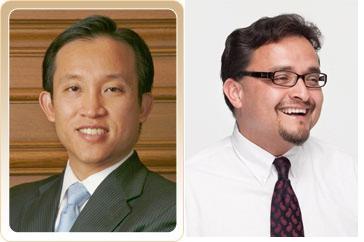
Board of Supervisors President David Chiu announced his candidacy for mayor today, becoming the eighth major candidate in a field that will likely continue shaking out in the coming months.

Chiu has been considering the move since at least the start of this year, when he played kingmaker as the swing vote to name Ed Lee as interim mayor, parting from his progressive colleagues to do so. With no strong progressive candidate yet in the mayor’s race, the question now is whether Chiu will try to win over the left and if he can be successful in doing so after making several more moderate moves in recent years.

Chiu’s initial political base will be allies of Chinatown Chamber of Commerce boss Rose Pak, who has pledged to block Sen. Leland Yee from becoming mayor, is close to Chiu, and has been courting someone to run. There have even been widespread rumors recently that Pak and ally Willie Brown have been trying to convince Lee to run, a possibility that those in Chiu’s camp dismiss.

Chiu will made his announcement at 11 am on the steps of City Hall. Sources say Chiu has spent weeks lining up support for his run, so it could be telling to see who shares the stage with Chiu beyond Sup. Jane Kim and others from his immediate political circle. Chiu and Kim are sponsoring the mid-Market tax break that the Mayor’s Office crafted to keep Twitter from leaving town, the most controversial legislation of the year, a proposal that has drawn opposition from many progressives. Some other mayoral campaigns have privately started to grumble about the deal, so it could become a mayoral campaign issue, particularly if the Office of Economic Analysis concludes it will be a drain on city coffers when that report is issued by week’s end.

For more on the implications of Chiu’s leap into the race, read this week’s Guardian.

Local hire victory party a political who’s who

2

The atmosphere at the local hiring victory party that Laborers Local 261 held at its Union Hall this week  was positively elated. Beer, wine and yummy pupusas flowed, commendations were made, and live drumming gave the event a playful edge. And it didn’t hurt that the place was crammed with political candidates, past, present and future, as San Francisco gears up for a a mayor, D.A. and sheriff’s race, this fall.

Sup. David Campos, who hasn’t thrown his hat in the mayor’s race, at least not yet, described the mood as “exciting.” “Who would have thought a year ago that we’d be having this victory,” Campos said, crediting fellow progressive Sup. John Avalos and the community for “great legislative work.”

Sup. John Avalos, who isn’t showing signs of running in the mayor’s race despite his legislative victories, saw implementation and resistant building trades as the biggest hurdles, moving forward. But he felt city departments will lead the way in showing how to implement the new law, when it kicks in March 25. “The San Francisco PUC has shown that local hire can be successful,” he said. “The new PUC building is at 48 percent local hire across all trades.”

Avalos hoped the building trades will come to see local hire in a more positive light. “They need to understand that it’s good for this city, their unions and union membership,” he said.

Avalos noted that he recently met with members of the San Mateo Board of Supervisors to address concerns that SF’s local hire would lead to job losses in San Mateo.Just before Christmas, the San Mateo supes voted unanimously to urge Newsom to veto Avalos’ local hire policy, but it turns out they had been misled around the law’s impacts. ”I met with [County Sups.] Carole Groom and Adrienne Tissier and said, ‘We have a huge misunderstanding,” Avalos said, noting that Jerry Hill’s recent grandstanding against local hire appears to be going nowhere.

Mayor Ed Lee, who insists he’s not planning to run for mayor in November, urged folks to focus on implementation of Avalos’ legislation.
“We are not just here to celebrate a legislative victory but the first jobs we create,” Lee said. “The world does not just turn by signing legislation.”

Board President David Chiu, who dropped by towards the end of the party with Sup. Jane Kim,Board President David Chiu, said he is “still thinking” about running for mayor, and acknowledged that the road to implementing local hire could be challenging. “But during this Great Recession, we have to do everything we can to make sure San Francisco residents get put to work, and local hire is an important part of that.”

Sup. Ross Mirkarimi, who has just announced that he is running for sheriff, linked high recidivism rates in San Francisco to the need to do a better job of hiring local residents. “We have a 70 percent repeat offender rate,” Mirkarimi said. “That’s 3 out of 4 folks.” Noting that there are 1800 parolees in San Francisco daily, Mirkarimi observed that if folks can’t get a job when they come out of the criminal justice system, they are way more likely to re-offend.

Bayview resident Deanna Rice, who got out of a federal penitentiary a year ago, and is still looking for work, said unemployment is another barrier in the way of her trying to regain custody of her kids, who are 9 and 10 years old.

Laborers Local 261 Business Manager Ramon Hernandez acknowledged that more work needs to be done to make local hire a go.
“We will try to do the best we can to get everyone on the same page,” he said

Local 261 Secretary-Treasurer David De La Torre said their membership is struggling and hurting, existing members and residents are not working
“Local hire is not about a sense of entitlement,” he said. “We gotta put people to work and build the local economy. It’s not about race. It’s about community, a disadvantaged community.”

Greg Doxey of the Osiris Coalition pointed to the economic benefits of local hire.
“If you hire local, people are going to shop two, three blocks from home, the economy will get stronger, they’ll be more tax revenue, and folks could even qualify to buy homes

CityBuild’s Guillermo Rodriguez praised the Board, department heads and Mayor Ed Lee “for getting together with labor” to pass Avalos local hire legislation.

But despite the happy vibes at the party, I left wondering if there is going to be adequate investment in workforce development side come budget time, if folks will try to game the system by using the address of locally-based subcontractors to establish local residency, and whether local efforts to sabotage the legislation are going to escalate now that the San Mateo Board no longer seems opposed to the law. But I also left knowing that folks like James Richards, President of Aboriginal Blacks United, have made it clear that if local hire doesn’t get  implemented, they’ll keep protesting until it does. So, stay tuned….


Behind the Twitter tax break deal

36

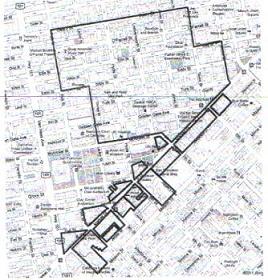
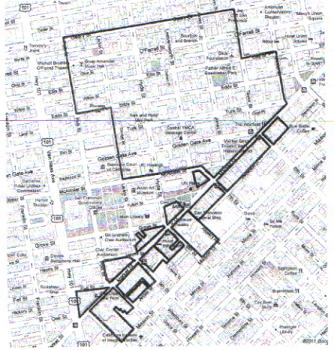
There’s much political intrigue and anticipation swirling around the Central Market Payroll Tax Exclusion, aka the Twitter Tax Break, which the Board of Supervisors will consider next month. This has all the elements of a great story: backroom deals between political and corporate power brokers, the strange argument that Republican-style tax cuts will cure Mid-Market blight, the fact that Twitter executives have uttered nary a tweet about shaking down SF taxpayers, and the role that a pair of supposedly progressive supervisors have played in brokering the deal.

Following up on my Feb. 10 post about how the deal would help Twitter meet the high asking price of politically connected landlord Alvin Dworman for a new mid-Market headquarters, the Bay Citizen yesterday had a great story showing how Dworman gave then-Mayor Gavin Newsom discounted office space for his lieutenant governor bid just as Newsom proposed the tax break that would benefit Dworman and Twitter. The story also includes a nice tick-tock about how this unseemly deal unfolded.

We at the Guardian are currently awaiting a big package of documents from City Hall that we requested on the deal, and sources tell us they’re likely to include some interesting insights and tidbits. For example, are Twitter and Dworman the main beneficiaries of this legislation or are there other corporations (and the politicians they support) who were pushing this plan? Everyone is also waiting to see how the city’s Office of Economic Analysis rates the proposal, and Economic Ted Egan tells us that report should be out by the end of next week or beginning of the following week.

At this point, we have more questions than answers, but that should start changing by next week. Maybe we’ll gain a better understanding of why Sup. Jane Kim is pushing this deal (much to the consternation of some of her former top supporters) or why Randy Shaw, the taxpayer-subsidized blogger and Tenderloin don, strongly backed Kim’s candidacy and attacked her critics with such perplexing ferocity. Will Willie Brown’s name continue popping up? Perhaps we’ll be able to determine whether the Newsom-Dworman pact actually broke campaign finance laws. And we’ll certainly gain some insights into how the Mayor’s Office of Economic and Workforce Development trades away taxpayer money to successful corporations that wield whines and threats of relocation.

If nothing else, we’ll get a peek into modern crony capitalism, San Francisco-style, dressed up in the guise of “saving” the Tenderloin. So, from a strictly journalistic perspective, this should be fun.

Who’s next?

39

steve@sfbg.com and tredmond@sfbg.com

The seven serious candidates who have announced plans to run for mayor extends from moderate to conservative at this point, but it’s an unusual field for San Francisco: there is no clear progressive standard-bearer, and no clear downtown candidate.

But it probably won’t stay that way. Sources say others are likely to join the lackluster race in the coming months, and there’s a strong likelihood that some progressive candidate will decide to the take plunge.

Also unlike the last few mayor’s races, there appears to be no clear frontrunner — either in fundraising or in having a clear constituency base — a new dynamic that creates an unpredictability that will be exacerbated because this is the first contested mayor’s race using the ranked-choice voting system and public financing of candidates.

There was a weak field of challengers to Gavin Newsom in 2007 and no one qualified for public financing or presented a strong threat. But this time City Attorney Dennis Herrera and former Sup. Bevan Dufty already have indicated they will take public financing, and others are expected to follow suit.

In addition to Herrera and Dufty, the field includes Sen. Leland Yee, Assessor-Recorder Phil Ting, venture capitalist Joanna Rees, and former Sups. Tony Hall and Michela Alioto-Pier. Those close to Board President David Chiu also say he is “seriously considering” jumping into the race and talking to friends and supporters about that possibility now.

But so far none come from the progressive political community that has controlled the Board of Supervisors for the past decade. Although Chiu is the only candidate in the field to self-identify as a progressive, he has adopted a more moderate governing style that has frustrated many progressive activists and supervisors. So that leaves voters on the left without a candidate right now.

“If a credible progressive candidate doesn’t get into the race, then we’ll see the top-tier candidates — which so far Leland Yee and Dennis Herrera — try to make friends with progressive San Francisco. And it would appear they have a lot of work to do,” Aaron Peskin, the former board president who chairs the San Francisco Democratic Party, told us.

Both Yee and Herrera have taken some progressive positions, and Yee has consistently endorsed more progressive candidates than anyone else in the mayoral field, but they have also taken many positions that have alienated them from progressives. And both have been taking in lots of campaign cash from interests hostile to the progressive base of renters, environmentalists, and advocates for social and economic justice.

“Nobody who has put their hats in the ring is really exciting anyone, so there is plenty of room for new entrants,” Peskin said, noting the progressives are actively discussing who should run. Peskin wouldn’t identify whom they’re courting, but some of the names being dropped are Sups. John Avalos, Ross Mirkarimi, and David Campos, as well as former Sup. Chris Daly and Peskin.

But Mirkarimi shifted some of that talk this week when he announced that he intends to run to replace the retiring Mike Hennessey as sheriff.

Political consultant Jim Stearns, who is representing Yee, also expects others to get into the race. “I don’t think the field is complete yet. Historically, the strong self-identified progressive candidate has come in late or surged late, like [Tom] Ammiano and [Matt] Gonzalez,” Stearns said.

Ammiano launched his write-in mayoral bid in September 1999 and Gonzalez jumped into the race just before the filing deadline in August 2003, so there’s plenty of time for progressive candidates to get in. “It’s never too late in San Francisco,” Stearns said. And unlike those two races when the upstarts were seriously outspent by the well-heeled frontrunners, Stearns said this year’s field will likely be on a fairly even financial footing.

“It’s likely every candidate will have $1.5 million to $2 million to spend,” he said. That means the keys to the race are likely to be name ID with voters and “which campaign can do the most with the least dollars,” Stearns said.

Already, some of the candidates who will be running to the center are looking for progressive support. Yee, for example, has given substantial amounts of money to progressive groups and candidates and has endorsed progressives for office.

Yee told us he’s positioning himself as “the candidate of the regular folks of San Francisco — the people who are trying to raise their families and live in this city.” He added: “To the extent that the progressive agenda fits that, we’ll be part of it.”

But he already has the endorsement of the Building Trades Council, which has often been at war with progressives, particularly over development issues.

Yee said he hasn’t yet weighed in on the local budget, but he agreed that new revenue “shouldn’t be off the table.” He said he thinks the current pension reform discussions at City Hall, involving Mayor Ed Lee, Sup. Sean Elsbernd, financier Warren Hellman, and union representatives are “the right way to go.”

Herrera said he’s going to run on his record — which includes a long list of progressive legal actions (along with his gang injunctions, which a lot of progressives question). He also told us that he’s involved in the pension reform discussions but thinks that new revenue absolutely ought to be a part of the budget debate.

Meet the new boss

3

news@sfbg.com

The Guardian hasn’t been invited into City Hall’s Room 200 for a long time. Former Mayor Gavin Newsom, who frequently criticized this newspaper in his public statements, had a tendency to freeze out his critics, adopting a supercilious and vinegary attitude toward any members of the press who questioned his policy decisions. So it was almost surreal when a smiling Mayor Ed Lee cordially welcomed two Guardian reporters into his stately office Feb. 15.

Lee says he plans to open his office to a broader cross-section of the community, a move he described as a way of including those who previously felt left out. Other changes have come, too. He’s replaced Newsom’s press secretary, Tony Winnicker, with Christine Falvey, former communications director at the Department of Public Works (DPW). He’s filled the Mayor’s Office with greenery, including giant tropical plants that exude a calming green aura, in stark contrast to Newsom — whose own Room 200 was sterile and self-aggrandizing, including a portrait of Robert Kennedy, in whose footsteps Newsom repeatedly claimed to walk.

When it comes to policy issues, however, some expect to see little more than business-as-usual in the Mayor’s Office. Democratic Party chair Aaron Peskin, a progressive stalwart, said he sees no substantive changes between the new mayor and his predecessor. “It seems to me that the new administration is carrying forward the policies of the former administration,” Peskin said. “I see no demonstrable change. And that makes sense. Lee was Willie Brown and former Mayor Gavin Newsom’s handpicked successor. So he’s dancing with the guys that brought him in.”

Sup. David Campos, viewed as part of the city’s progressive camp along with Peskin, took a more diplomatic tack. “So far I’ve been very pleased with what I’ve seen,” Campos noted. “I really appreciate that he’s reached out to the community-based organizations and come out to my district and done merchant walks. I think we have to wait to see what he does on specific policy issues.”

But while Lee has already garnered a reputation for being stylistically worlds apart from Newsom, he still hews close to his predecessor’s policies in some key areas. In our interview, Lee expressed an unwillingness to consider tax-revenue measures for now, but said he was willing to take condo conversions into consideration as a way to bring in cash. He was unenthusiastic about community choice aggregation and dismissive of replacing Pacific Gas & Electric Co. with a public-power system. He hasn’t committed to overturning the pending eviction of the Haight Ashbury Neighborhood Council’s recycling center, and he continued to argue for expanding Recology’s monopoly on the city’s $206 million annual trash stream, despite a recent Budget and Legislative Analyst’ report that recommended putting the issue to the voters.

Public Defender Jeff Adachi, who met Lee in 1980 through the Asian Law Caucus, said Lee would be facing steep challenges. “It’s a fascinating political karmic outcome that he is now our appointed mayor. He didn’t seek it out, as he says, but the opportunity he has now is to focus his efforts on fixing some of the problems that have gone unaddressed for decades, pension reform being one of them. I think he realizes he has a limited time to achieve things of value. The question I and others have is, can he do it?”


THE RELUCTANT MAYOR

Lee identified as a non-politician, patently rejecting the notion that he would enter the race for mayor. In meetings with members of the Board of Supervisors at the end of 2010, he said he didn’t want the job.

Yet while vacationing in Hong Kong, Lee became the subject of a full-court press. “When the lobbying and phone calls started … clearly they meant a lot to me,” Lee told us, adding that the choice “was very heavy on my mind.” He finally relented, accepting the city’s top post.

Although rumors had been circulating that Lee might seek a full term, he told the Guardian he’s serious about serving as a caretaker mayor. “If I’m going to thrust all my energy into this, I don’t need to have to deal with … a campaign to run for mayor.”

Adachi offered an interesting take on Lee as caretaker: “Somewhere along the way, [Lee] became known as the go-to guy in government who could take care of problems,” Adachi said, “like the Wolf in Pulp Fiction.”

Sounding rather unlike Harvey Keitel’s tough-talking character, Lee noted, “One of my goals is to rebuild the trust between the Mayor’s Office and the Board of Supervisors. I think I can do that by being consistent with the promises I make.”

Lee’s vows to keep his promises, mend rifts with the board, and stay focused on the job could be interpreted as statements intended to set him apart from Newsom, who was frequently criticized for being disengaged during his runs for higher office, provoking skirmishes with the board, and going back on his word.

The new mayor also said he’d be willing to share his working calendar with the public, something Newsom resisted for years. Kimo Crossman, a sunshine advocate who was part of a group that began submitting requests for Newsom’s calendar in 2006, greeted this news with a wait-and-see attitude. “I’ve already put in a request,” Crossman said. “Politicians are always in support of sunshine — until they have to comply with it.”


THE ELEPHANT IN THE ROOM

Pointing to the tropical elephant-ear plants adorning his office, Lee noted that elephants are considered lucky in Chinese culture. With the monstrous issues of pension reform and a gaping budget deficit hitting his mayoral term like twin tornadoes, it might not hurt to have some extra luck.

Pension reform is emerging as the issue du jour in City Hall. A round of talks on how to turn the tide on rising pension costs has brought labor representatives, Sup. Sean Elsbernd, billionaire Warren Hellman, City Attorney Dennis Herrera, labor leaders, and others to the table as part of a working group.

Gabriel Haaland, who works for SEIU Local 1021, sounded a positive note on Lee. “He’s an extraordinarily knowledgeable guy about government. He seems to have a very collaborative working style and approach to problem-solving, and he is respectful of differing opinions,” Haaland said. “Where is it going to take us? I don’t know yet.”

Lee emphasized his desire to bring many stakeholders together to facilitate agreement. “We’re talking about everything from limiting pensionable salaries, to fixing loopholes, to dealing with what kinds of plans we can afford in the health care arena,” he noted. Lee said the group had hashed out 15 proposals so far, which will be vetted by the Controller’s Office.

A central focus, Lee said, has been “whether we’ve come to a time to recognize that we have to cap pensions.” That could mean capping a pension itself, he said, or limiting how much of an employee’s salary can be counted toward his or her pension.

Since Lee plans to resume his post as city administrator once his mayoral term has ended, he added a personal note: “I want to go back to my old job, do that for five years, and have a pension that is respectable,” he said. “At the same time, I feel others who’ve worked with me deserve a pension. I don’t want it threatened by the instability we’re headed toward and the insolvency we’re headed toward.”


BRACING FOR THE BUDGET

If pension reform is shaping up to be the No. 1 challenge of Lee’s administration, tackling the city budget is a close second. When Newsom left office, he passed Lee a budget memo containing instructions for a 2.5 percent reduction in most city departments, part of an overarching plan to shave 10 percent from all departments plus another 10 percent in contingency cuts, making for a bruising 20 percent.

Lee said his budget strategy is to try to avert what Sup. David Chiu once characterized as “the typical Kabuki-style budget process” that has pitted progressives against the mayor in years past. That means sitting down with stakeholders early.

“I have opened the door of this office to a number of community groups that had expressed a lot of historical frustration in not being able to express to the mayor what they feel the priorities of their communities are,” Lee said. “I’ve done that in conjunction with members of the Board of Supervisors, who also felt that they weren’t involved from the beginning.”

Affordable-housing advocate Calvin Welch said Lee’s style is a dramatic change. “I think he’s probably equaled the total number of people he’s met in six weeks with the number that Newsom met in his seven years as mayor,” Welch said.

Sup. Carmen Chu, recently installed as chair of the Budget & Finance Committee, predicted that the budget will still be hard to balance. “We are still grappling with a $380 million deficit,” Chu told us, noting that there are some positive economic signs ahead, but no reason to expect a dramatic improvement. “We’re been told that there is $14 million in better news. But we still have the state budget to contend with, and who knows what that will look like.”

Sup. John Avalos, the former chair of the Board’s powerful Budget Committee, said he thinks the rubber hasn’t hit the road yet on painful budget decisions that seem inevitable this year — and the outcome, he said, could spell a crashing halt to Ed Lee’s current honeymoon as mayor.

“We are facing incredible challenges,” Avalos said, noting that he heard that labor does not intend to open up its contracts, which were approved in 2010 for a two-year period. And federal stimulus money has run out.


DID SOMEONE SAY “CONDO CONVERSIONS”?

Asked whether he supported new revenue measures as a way to fill the budget gap, Lee initially gave an answer that seemed to echo Newsom’s inflexible no-new-taxes stance. “I’m not ready to look at taxes yet,” he said.

He also invoked an idea that Newsom proposed during the last budget cycle, which progressives bitterly opposed. In a conversation with community-based organizations about “unpopular revenue-generating ideas,” Lee cautioned attendees that “within the category of unpopular revenue-generating ideas are also some that would be very unpopular to you as well.”

Asked to explain, Lee answered: “Could be condo conversion. Could be taxes. I’m not isolating any one of them, but they are in the category of very unpopular revenue-generating ideas, and they have to be carefully thought out before we determine that they would be that seriously weighed.”

Ted Gullicksen, who runs the San Francisco Tenants Union, said tenant advocates have scheduled a meeting with Lee to talk about condo conversions. Thanks to Prop. 26’s passage in November 2010, he said, any such proposal would have to be approved by two-thirds of the board or the voters. “It’s pretty clear that any such measure would not move forward without support from all sides,” Gullicksen said. “If anyone opposes it, it’s going to go nowhere.”

Gullicksen said he’d heard that Lee is willing to look at the possibility of significant concessions to renter groups in an effort to broker a condo conversion deal, such as a moratorium on future condo conversions. “If, for example, 1,000 TICs [tenants-in-common] became condos under the proposal, then we’d need a moratorium for five years to minimize and mitigate the damages,” Gullicksen explained.

More important, some structural reform of TIC conversions may be on the table, Gullicksen said. “And that would be more important than keeping existing TICs from becoming condos.”

Gullicksen acknowledged that Lee has the decency to talk to all the stakeholders. “Newsom never attempted to talk to tenants advocates,” he said.


GREEN, WITHIN LIMITS

Lee’s two children are in their early 20s, and the mayor said he takes seriously the goal of being proactive on environmental issues in order to leave them with a more sustainable San Francisco. He trumpeted the city’s green achievements, saying, “We’re now on the cutting edge of environmental goals for the city.”

Leading bicycle activist Leah Shahum of the San Francisco Bicycle Coalition had praise for Lee on bike issues. “I’m really encouraged by his very public support of the new green separate bikeways on Market Street and his interest and commitment to creating more,” she said. “I believe Mayor Lee sees the value of connecting the city with cross town bicycle lanes, which serve a wide range of folks, including business people and families.”

Yet some proponents of green causes are feeling uncertain about whether their projects will advance under Lee’s watch.

On the issue of community choice aggregation (CCA), the ambitious green-energy program that would transfer Pacific Gas & Electric Co. customers to a city-run program with a cleaner energy mix, Lee — who helped determine rates as city administrator — seemed lukewarm. “I know Mr. [Ed] Harrington and his staff just want to make sure it’s done right,” he said, referring to the general manager of the city’s Public Utilities Commission, whose tepid attitude toward the program has frequently driven him to lock horns with the city’s chief CCA proponent, Sup. Ross Mirkarimi.

Lee noted that CCA program goals were recently scaled back. He also said pretty directly that he opposes public power: “We’re not in any day getting rid of PG&E at all. I don’t think that is the right approach.”

The controversial issue of the Haight Ashbury Neighborhood Council Recycling Center’s pending eviction from Golden Gate Park still hangs in the balance. The Recreation and Park Commission, at Newsom’s behest, approved the eviction despite overwhelming community opposition.

Lee said he hadn’t looked at the issue closely. “I do know that there’s a lot of strong debate around the viability, what that operation attracts and doesn’t attract,” he said. “I had the owner of HANC here along with a good friend, Calvin Welch, who made a plea that I think about it a bit. I agreed that I would sit down and talk with what I believe to be the two experts involved in that decision: Melanie Nutter at the Department of the Environment and then Phil Ginsburg at the Rec and Park.” Nutter and Ginsburg supported HANC’s eviction.

Welch, who is on the board of HANC, noted that Lee could be swayed by his staff. “The bunch around Newsom had old and bad habits, and old and bad policies. In dealing with mayors over the years, I know how dependent they are on their staff. They’re in a bubble, and the only way out is through a good staff. Otherwise, Lee will come to the same conclusions as Newsom.”

HANC’s Jim Rhoads told the Guardian he isn’t feeling reassured. “He said he would keep asking people about it. Unfortunately, if he asked his own staff, it would be a problem because they’re leftovers from Newsom.”

Speaking of leftovers, Lee also weighed in on the debate about the city’s waste-management contract — and threw his support behind the existing private garbage monopoly. Campos is challenging a perpetual waste-hauling contract that Recology has had with the city since 1932, calling instead for a competitive-bidding process. When the Department of the Environment recommended awarding the city’s landfill disposal contract to Recology last year, it effectively endorsed a monopoly for the company over managing the city’s entire waste stream, at an estimated value of $206 million per year.

The final decision to award the contract was delayed for two months at a February Budget & Finance Committee hearing. Campos is contemplating putting the issue to the voters this fall, provided he can find six votes on the Board.

“I know that Sup. Campos had given his policy argument for why he wants that revisited,” Lee said. “I have let him know that the Recology company in its various forms has been our very dependable garbage-hauling company for many, many decades. … I feel that the company has justified its privilege to be the permit holder in San Francisco because of the things that it has been willing to do with us. Whether or not we want to use our time today to revisit the 1932 ordinance, for me that wouldn’t be a high priority.”


UNFINISHED BUSINESS

In the last week of 2010, Avalos pushed through groundbreaking local-hire legislation, without the support of then Mayor Gavin Newsom or his chief of staff, Steve Kawa, who wanted Avalos to back off and let Newsom takeover the task.

With Lee now in Room 200, things appear to be moving forward on local hire, in face of misleading attacks from Assemblymember Jerry Hill (D-San Mateo), who wants to make sure no state money is used on local-hire projects, presumably because the building trades are upset by it. And Kawa, whom Lee has retained as chief of staff, doesn’t really support the legislation. Indeed, Kawa’s presence in the Mayor’s Office has his detractors believing that the new boss in Room 200 is really the same as the old boss.

“I feel like things are moving forward in the right direction around local hire, though a little more quietly than I’d like,” Avalos told the Guardian. Avalos noted that he is going to hold a hearing in March on implementing the legislation that should kick in March 25.

Welch said he believes that if Lee starts replacing staff wholesale, it could indicate two things: he’s a savvy guy who understands the difficulties of relying on Newsom’s chief of staff Steve Kawa for a budget, and he’s not ruling out a run for mayor.

“If I was in his position, the first thing out of my mouth would be, ‘I’m not running.’ I think he’s very focused in the budget. And it’s going to make or break him. But if he starts overriding Kawa and picks staff who represent him … well, then I’d revisit the question of whether he’s contemplating a run for mayor, say, around June.”