Board of Supervisors

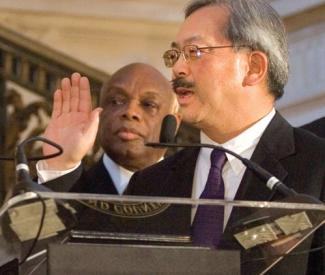
Ethics Commission opens the long and complex case against Mirkarimi

26

Tonight’s first Ethics Commission hearing on the procedures and standards that will govern the official misconduct proceedings against suspended Sheriff Ross Mirkarimi showed just how complex, contentious, and drawn out this unprecedented process will be.

The commission made no decisions other than setting a schedule for both sides to submit a series of legal briefs and responses over the next five weeks, on which the five-member appointed body will begin making procedural decisions during a hearing set for May 29.

Deputy City Attorney Peter Keith, who is representing Mayor Ed Lee and leading the city’s prosecution, took an aggressive tack in criticizing Mirkarimi for refusing to be deposed by him and announcing Lee’s intention to add that unwillingness to cooperate to the formal charges against Mirkarimi.

But Mirkarimi’s attorney Shepherd Kopp called that threat “beyond the pale. We have a legitimate legal question we need straightened out and we won’t be bullied.” That issue involves what rights and obligations Mirkarimi has in this process, which the commission has yet to establish. 

Kopp complained that the mayor and City Attorney’s Office are usurping the commission’s charter-mandated role as the investigative body in official misconduct cases by issuing subpoenas for evidence and witnesses before the rules for the hearings have even been set or Mirkarimi has been presented with the evidence against him.

“Until we understand what the mayor’s evidence is, we have no way of preparing a defense,” Kopp said, adding that, “The charges were brought before the evidence was in the mayor’s possession.”

He called for the commission to take control of the investigation and establish discovery rules rather than letting the Mayor’s Office act on its own. “We feel like we have one hand tied behind our backs,” he said. “Whatever the rules are, they ought to apply to both sides.”

There’s very little that Kopp and Keith agree on at this point. Kopp wants the Ethics Commission vote to be unanimous if it recommends removal, as with juries on criminal cases, but Keith argues that a simple majority will do. The Board of Supervisors will make the final decision, with nine of 11 supervisors required to remove an official. Kopp says the standard of guilt should be “beyond a reasonable doubt,” but the city will likely argue for a lower standard, such as preponderance of evidence.

Kopp wants the commission to establish the standard that official misconduct must be related to the sheriff’s official duties and have occurred while he is in office, but Keith indicated that the events of Jan. 4, when the police began to investigate the domestic violence incident and before Mirkarimi was sworn in as sheriff, are an important part of their case.  

Keith noted that Mirkarimi could demand a closed door hearing, as the courts have agreed that law enforcement officers are entitled to, but Kopp told the commission, “We do not intend to insist these hearings should be private. We want them to be public.”

There were even internal differences within the city. Ethics Commission Executive Director John St. Croix last week wrote a memo recommending that testimony from witnesses be in written form, but the City Attorney’s Office today wrote a last-minute memo arguing the need for live testimony and cross-examination of witnesses.

“A live hearing is going to better serve the goals of the commission,” Keith argued, calling for it to be “something of a mini-trial.” Kopp agreed with that characterization, calling it “akin to a criminal proceeding,” and with the need to allow live testimony: “I think it will be unavoidable for at least a couple witnesses.”

Commission members asked a number of questions to both sides, but with such a broad range of issues still to be decided, they seemed to be only tentatively scratching the surface and unsure how to proceed. But there were a couple questions from Chair Benedict Hur that were illuminating.

“Does the mayor dispute that he has the burden of proof here?” Hur asked Keith, who replied, “No.”

Keith cited Mirkarimi and his wife, Eliana Lopez, as two witnesses who will likely be the subject of live testimony and vigorous cross-examination. But when Hur asked Kopp whether he would object to the commission compelling testimony from Lopez, he said that’s connected to a variety of outstanding procedural issues and he wouldn’t be able to answer “for quite some time.”

Indeed, both sides have indicated that they would need at least 30 days to prepare their cases once all the procedural and evidentiary issues are resolved, pushing the hearing back until at least July, although all sides say they want the matter resolved as quickly as possible.

“The longer this drags out, the person being most prejudiced is the sheriff,” said Commissioner Paul Renne, who was appointed by District Attorney George Gascon in February and who opened the hearing by admitting having given a $100 campaign donation to Chris Cunnie, who ran against Mirkarimi. Ironically, it was Renne who seemed most taken aback by Keith’s threat to add Mirkarimi’s refusal to cooperate with the city’s prosecution to the charges against him.

But Kopp said Mirkarimi will be happy to offer his testimony and comply with requests for documents once the commission establishes the rules and procedures and exerts its authority over the proceedings: “If you think he’s got to cooperate and turn it over, we’ll do it.”

The first city brief is due April 30, but the most illuminating deadline will likely be May 7 when the Mayor’s Office must submit its proposed list of witnesses and a summary of their expected testimony, which should be an early indicator of the strength of their case against Mirkarimi.

Judge denies Mirkarimi motions; city process begins Monday

35

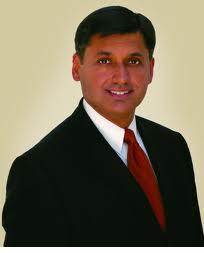
Superior Court Judge Harold Kahn today denied all motions by Sheriff Ross Mirkarimi’s legal team challenging his suspension without pay, city procedures, and the constitutionality of the city’s official misconduct charter language, saying it’s premature to conclude Mirkarimi isn’t being treated fairly.

“But the courthouse door remains open,” Kahn concluded, inviting Mirkarimi to return after the Ethics Commission establishes rules of procedure and evidence, which it will begin doing on Monday. Today’s rulings, and another yesterday, in which Kahn ruled against a motion to disqualify the City Attorney’s Office from overseeing the proceedings, clears the way for the Ethics Commission to consider recommending to the Board of Supervisors that Mirkarimi be removed from office.

Kahn also seemed to agree with Mirkarimi’s team that Mayor Ed Lee didn’t give him a fair hearing before suspending him or that he made an argument for suspending him without pay. But Kahn sided with the city on the legal question of whether Mirkarimi has a “property interest” in his salary, which would have triggered the right to a hearing before being suspended, making such procedural questions moot.

“If there was a property right, what the mayor stated would not be adequate due process,” Kahn said, referring to Lee’s affidavit describing their March 19 meeting, where Lee told Mirkarimi to resign or be suspended. Lee claims he gave Mirkarimi the opportunity to tell his side of the story, which Mirkarimi denies, saying the mayor had made up his mind and wasn’t interested in the real story. On the salary question, Deputy City Attorney Sherri Kaiser said Mirkarimi would be entitled to full back pay from his suspension period if the supervisors vote to keep him in office, arguing that he isn’t being harmed.

Mirkarimi was suspended based on language in the city charter that was adopted in 1996 – banning “conduct that falls below the standard of decency, good faith and right action impliedly required of all public officers” – that has never been reviewed by the courts and which Mirkarimi attorney David Waggoner contends is unconstitutionally vague.

But Kahn didn’t agree, saying, “The charter is not so clearly outside the bounds of California law that I should preempt the processes.”

Waggoner complained that the city procedures didn’t set rules of evidence or procedure or standards of guilt, making it difficult to prepare a defense, a point to which Kahn seemed sympathetic, noting the variety of legal standards for different types of cases, from “beyond reasonable doubt” to “a preponderance of evidence.”

“We don’t know which of any of those is going to apply here. Is that a problem?” Kahn asked Kaiser.

She said no, that Mirkarimi and his legal team could return to court for help “if the commissioners really mess up” in the work they’ll begin on Monday. “That summarizes my view. It is hypothetical to say the procedures are going to be unfair,” Kahn agreed. 

Addressing reporters after the hearing, Kaiser praised the judge’s rulings and offered a small window into what will likely transpire in the coming months: “Certainly, the sheriff is going to have to testify under oath and not just to the media.” (Waggoner told reporters “no comment” when asked whether Mirkarimi will indeed testify under oath).

Kaiser’s apparent dig at the various media interviews that Mirkarimi has just started to grant this week echoes statements that have come from District Attorney George Gascón, who has criticized Mirkarimi’s characterization of his guilty plea and the behaviors that constituted false imprisonment, calling the media accounts “disturbing and telling.”

But Mirkarimi shot back at Gascón today, noting that the two men “have had some very high-profile disagreements” when Gascón was police chief and Mirkarimi chaired the Board of Supervisors Public Safety Committee. They had high-profile clashes over requiring police to do foot patrols, the crime lab controversy, budget issues (including Mirkarimi’s unsuccessful efforts to find out how much Mayor Gavin Newsom’s police security detail was costing the city as he ran for governor), and Gascón’s controversial public statement equating people of Middle Eastern descent (such as Mirkarimi, who is Persian) with terrorists.

“It sometimes bubbles up in the course of these proceedings,” Mirkarimi said of Gascón’s alleged personal or political animosity toward him.

Asked for a response, District Attorney’s Office spokeperson Stephanie Ong Stillman wrote, ““It is the duty of the San Francisco District Attorney to uphold the law,
regardless of who violates it and without political motivation.  Ross Mirkarimi was afforded the same rights as any defendant. We treated his case no differently than any of the 776 domestic violence cases our office charged and reviewed last year.”

Where would Jesus park?

31

The Examiner’s big front-page head, “Pay to Pray,” reflects the opposition of some religious folk, including the Rev. Amos Brown, who was one of the worst supervisors in San Francisco history, to Sunday afternoon meter enforcement. OMG! People won’t be able to go to church because they’ll have to feed the meter! It’s sexist, too, since: Women go to church! And, apparently, none of the Rev. Brown’s parishoners walk or take the bus.

But let’s put a little reality into this. First of all, the meters are good for four hours, and if you’re listening to Rev. Brown preach for that long, you need to take a break to feed the meter anyway. But in all seriousness, we know exactly what’s going to happen here: The cops and meter-readers who patrol the areas around the churches aren’t going to issue tickets while services are going on. They never do. Anywhere. 

Drive along Valencia some Sunday morning — the church-goers just park in the middle of the street. It’s fine — no tickets. It annoys the hell out of me, since you can’t go to, say, yoga on Sunday and park in the middle of the street without getting a ticket, maybe because Jesus never did yoga or something, but the reality is, nobody in any of these churches is going to have to pay anything.

At least, the ones who drive won’t. The poor souls who take the bus to church don’t get free passes on Sunday. They have to fork over the full fare like the rest of us.

And shouldn’t all these people of the cloth be encouraging their flocks to be good Christian citizens and avoid driving when they don’t need to? Aren’t all the bishops and stuff denoucing global warming? Isn’t God an environmentalist?

Pay to pray. As they say at the churches back where I came from, Yougoddabefuckinkiddin.

In city workers’ shoes

6

We both work under City Hall’s iconic dome as civil servants. While I often work late into the evening hours as a supervisor, Robert’s back-breaking work as a janitor is often done past the midnight hour, five nights a week.

I had the opportunity to meet Robert last week, as part of the “Walk A Day In Our Shoes” program of Service Employees International Union, Local 1021.

Robert is 52 years old. He’s worked for the city since 1999. Before that, he worked for San Francisco Unified School District. He sweeps and mops the floors and stairs of the famous rotunda and cleans 150 cubicles.

Last week, Robert had me take off my jacket and tie, roll up my sleeves and do his job for a while. I swept the marble floors, which are truly unending. I mopped the grand marble staircase behind happy couples exchanging wedding vows. He let me attempt to push a gigantic whirring machine that felt more like a Zamboni than a vacuum.

When I was younger, I had a summer job as a janitor at a public high school, so I know how truly strenuous Robert’s job is.

Robert injured his spine as a result of pushing that heavy vacuum for years. When he was in the hospital treating his spinal injury, the doctors discovered cancer. While in chemotherapy, he didn’t miss a day of work. He lives cancer-free today.

Robert is also a green pioneer at City Hall — he started a recycling program here before it was popular to do so. After that, the rest of the city caught on. He has photos of himself and the past four mayors in his home. He offers directions to visitors. He has a son, and they both live in his sister’s home. He speaks lovingly of his wife, who he lost to diabetes several years ago.

As our economy evolves, we can’t leave people like Robert — those who support our world-class city —behind. While we court businesses who create new jobs in our city, we also need to reinvest in the people who do the important work that often goes unnoticed.

Hospital workers are up at 4am, preparing meals for patients. Library technicians provide bilingual translation for our children. Others, like Robert, are up until 1am, making sure we have a clean and safe environment to work every day.

After years of concessions to balance deep budget deficits, city workers experienced ongoing cuts to their wages and benefits. In current contract negotiations, they are being asked to give hundreds more each month in healthcare costs to insure their children.

We appreciate all they have done to help our city in times of need. As our city recovers economically, it’s time to thank them, to ask others to help shoulder the costs for affordable housing, parks and recreation facilities and schools, and to reform our local business tax — which is paid by only 10% of our city’s companies.

Last week, I got to know a fellow civil servant whose work we need to remember to value. Which is why I will stand alongside Robert, labor unions, nonprofits, community members and neighbors on Wednesday, April 18, in front of City Hall from 4pm to 7pm. Please join us in supporting the workforce that supports us all, 24 hours a day. 

David Chiu is president of the Board of Supervisors.Thousands of community allies, elected officials, and SEIU 1021 members will rally on Wednesday, April 18 to close tax loopholes on mega banks and corporations from 4pm to 7pm at City Hall.

Pushing back

0

Dexter Cato has no right to be here.

He’s standing on the corner outside the house he bought in 1990. His four kids, still teenagers, grew up here. He was living here when his wife, Christina, passed away following a car accident in 2009. Next door is the house he grew up in, having spent all his life on Quesada Avenue, in the wide streets and residential friendliness of the Bayview.

Still, the bank says Cato doesn’t belong here anymore, evicting him when his home went into foreclosure in August 2010. Yet Cato and his community not only fought back and reoccupied the home last month, they have turned it into a community center and base of operations from which to fight other foreclosures in the area.

The house, at the corner of Quesada and Jenning, is draped with banners, such as “Banks: no foreclosures!” and “keep families in our homes!” In the rain on March 16, when they were unfurled on the property that has remained vacant for nearly two years, surrounded by neighbors and friends, Cato moved back in. It was a gamble and an act of civil disobedience. Now they feel festive; it’s been a month, and no one has shown up to tell Cato he has to leave.

It has become a home base for a who’s who list of “foreclosure fighters,” the name taken on by Cato and others who have, in recent months, gone to extreme means to prevent banks from foreclosing on their homes. There’s Vivian Richardson, who got her foreclosure rescinded after 1,400 emails to her loan servicer. There’s Alberto Del Rio, who was ignored and told that his paperwork was lost during a Kafka-esque two-year loan modification attempt, only to win a meeting with top Wells Fargo executives last month after Occupy Bernal got behind his cause. There’s Carolyn Gage, who took a cue from protesters downtown and occupied her Bayview home in November.

Those taking on the foreclosure crisis certainly have a big task ahead of them. Since the market collapsed in 2008, there have been 12,410 foreclosures in San Francisco, according to data from RealtyTrac as compiled by the Alliance of Californians for Community Empowerment (ACCE). The neighborhoods with the most foreclosures are Ingleside-Excelsior/Crocker Amazon, Visitacion Valley/Sunnydale, and Bayview-Hunters Point, with more than 1,000 in each neighborhood. But the number of home foreclosures are in the hundreds in every neighborhood in San Francisco.

Despite the pandemic, many San Francisco residents say they felt distinctly alone in the events surrounding receiving notice of default.

“I’ve lived in Noe Valley since 1972,” said Kathy Galvess, an activist we spoke to Cato’s basement. “I didn’t know anybody who had been foreclosed on.”

When she got her eviction notice and, hooking up with ACCE and Occupy Bernal, faced her situation and the extent of the crisis, she wondered if her neighbors knew something she didn’t.

“I asked around the neighborhood, no one had any idea,” she said. “That’s how the banks get away with it. We suffer in silence.”

Carolyn Gage echoed that sentiment. “A while ago, foreclosure was shameful. But now it shouldn’t be. It’s happening in a systemic way, so people are getting over that shame,” she told me and several neighbors March 24 during a barbecue at Cato’s house.

This shame came in part from the illusion that the onslaught of seemingly affordable home loans from the housing bubble’s height were, in fact, affordable.

“The easy money fueled the ability for people to refinance every one or two years. A lot of people did that and just lived on it. Certain people used it, some abused it, others got caught up in it,” said CJ Holmes, a real estate broker in Santa Rosa who became interested in understanding the meanings of the crisis when the value of property she owned plummeted in 2008.

While President Bush signed on to Troubled Asset Relief Program (TARP) in 2008, and bailouts to Fannie Mae and Freddie Mac continued to roll out well into the Obama presidency, foreclosures were steadily clearing San Francisco of longtime residents, not to mention property tax and home values on foreclosure-stricken blocks.

There were advocates working on the behalf of those getting evicted. The Alliance of Californians for Community Empowerment looked into cases and worked to discern the complex chain of entitlement, talk to the right people, and try to get loans modified. HUD-certified organizations like the Mission Economic Development Agency (MEDA) and the San Francisco Housing Development Corporation (SFHDC) counseled homeowners and waded through paperwork.

“The modification process takes an average of 12 months to complete,” said Jose Luis Rodriguez, a foreclosure counselor with MEDA, in an email. The loan modification process can make or break a homeowners chances of keeping their home, leaving them in what he called “purgatory.”

Assessor-Recorder Phil Ting later concluded that in 84 percent of foreclosure cases, there was some kind of faulty paperwork.

“We’d fax documents to banks and they would habitually lose documents. We’d have to fax them sometimes up to 10 times,” said Jonathan Segarra, director of communications for MEDA.

Alberto Del Rio had the same issue. During his loan modification struggle, “we kept having to sign up for a new case,” Del Rio told me. “About every three months. Generally because they lost paperwork, or paperwork wasn’t properly transmitted.”

“There was no callback on their part,” he said. “We would have to call to get updates and they would say: oh, it’s closed, you have to start over with the paperwork now.”

But this lost paperwork epidemic, an emblem of the carelessness that ran rampant through the mad expansion of the subprime mortgage industry, has more than one face. It is likely due to lost paperwork, for example, that Cato has been living in the home that is, technically, no longer his.

No one seems to have the title.

At the time of sale, it was owned by Wells Fargo. According to transaction records, the foreclosure is being serviced by American Home Mortgage Servicers; they get a portion of the money, but do not own it. According to Wells Fargo representatives, that bank is now the trustee of the mortgage, also known as the beneficiary.

ACCE has claimed that Wells Fargo “sold the house back to itself,” and that American Home Mortgage Services, the company currently servicing the loan, is a subsidiary of Wells Fargo. Ruben Pulido, a Wells Fargo spokesperson, denies this.

“That’s incorrect. American Home mortgage services is completely different and separate from Wells Fargo,” Pulido told us.

But Martinez believes that “they’re different entities in that they work separately, but they’re the main servicer for Wells Fargo, they only service for Wells Fargo.”

Calls and emails to American Home Mortgage Services went unanswered.

Last fall, as an angry mass suddenly emerged from the American public, cries of “banks got bailed out, we got sold out” rang through the streets. Occupy Bernal and ACCE have had success in the city government, gaining support from Sups David Campos and John Avalos, who represent some of the hardest hit districts, helping facilitate meetings between Wells Fargo representatives and homeowners with foreclosure horror stories, with some success.

Activists also went for more civil disobedience-style tactics. These were on display Feb. 22, when dozens of supporters showed up at Monica Kenney’s Excelsior home. Kenney was in the midst of dealing with a foreclosure that didn’t seem right. She had received a forbearance agreement and made the first payment on it June 27, then was surprised to learn that, June 28, her house had been sold at auction.

“At this point I wrote Wells Fargo and I said, I have this paperwork, and I want you to honor it and rescind the foreclosure,” Kenney explained when she came to speak with us at the Guardian offices. She gave us copies of the forbearance agreement.

“Their response was, we did nothing wrong and the foreclosure will stand,” she said. “So at that point I decided I would fight to retain my home.”

After dishing out most of her savings in a lawsuit and eviction stays, the fight looked grim, and her house was slated for eviction. The plan — the last line of defense — was to simply bring as many people as possible to Kenney’s home and hope they could fend off eviction. Kenney remembers her nerves, huddled up that cold morning with veteran foreclosure fighter Vivian Richardson, worried that no one would show up.

“Then, at six in the morning, I had foreclosure fighters, neighbors, friends, Occupy Bernal, Occupy folks period, they just started showing up at the house, and just sat down, hunkered down with me and said, we’ll do whatever we can to at least dissuade the sheriff,” she recalls

It worked. And it hasn’t stopped working. Many people who have joined with Occupy Bernal and ACCE are still in their homes thanks to everything from lobbying politicians to civil disobedience. Some were evicted despite the protest movement’s best efforts but, thanks to newfound community, they avoided homelessness.

Kathy Galvess wasn’t able to keep her home, but her experience was made much more pleasant by Occupy Bernal. “Stardust got the moving truck and helped me move, out of the goodness of his heart,” she told me. “And if it wasn’t for Vivian, me and my sister would be wandering the streets in these storms we’ve been having.”

It’s that community, it’s that tireless work, it’s that victory in the midst of a sea of ongoing challenges that was celebrated at the barbecue at Cato’s house. It’s hard to know the future of the occupied home. The goal of the coalition supporting it was to keep it until April 24, the day of a Wells Fargo shareholders meeting that a large coalition of advocates are determined to shut down.

But for now, the place has become a community center and a symbol of hope and defiance. Politicians have certainly taken note. The Board of Supervisors passed a resolution last week urging banks to suspend foreclosures in San Francisco.

“It’s great,” Cato said. “That’s what the house is useful for right now. Everyone’s coming in and asking, how can we be a part of this, how can we help.”

Activists hope to turn resolution into real foreclosure suspension

3

On April 10, the Board of Supervisors unanimously passed a resolution calling for a temporaray suspension on foreclosures in San Francisco.

The resolution “urges city contractors and all mortgage and banking institutions to suspend foreclosure activities and related auctions and evictions until State and Federal measures to protect homeowners from unfair and unlawful practices and provisions for principle reductions are in place.”

This comes after a report from Assessor-Recorder Phil Ting found that 84 percent of foreclosures in San Francisco in the past three years involved faulty paperwork and, likely, fraud.  

The resolution does not require anything, but instead urges the city to work on behalf of constituents swept up in the foreclosure crisis. 

It urges all city departments, “including but not limited to, the offices of the Mayor, the Assessor-Recorder, the City Attorney, the District Attorney, and the Sheriff, to take proactive steps and measures to ensure that the City and County of San Francisco prevents and protects its resident form illegal foreclosures, auctions, and evictions.”

“The controller is supposed to audit every case beyond what was in Phil Ting’s report. Based on that information the glaring illegal activity for the banks, the district attorney and city attorny should sue the banks and file an injunction to stop foreclosures. I think those are some of the steps we could take,” said Julien Ball, an anti-foreclosure activist with Occupy Bernal

The resolution also “urges the Mayor to direct…our city lobbyists in the California State Capital to prioritize support for California Homeowners Bill of Rights state bills.”

This series of bills, proposed by state attorney general Kamala Harris, would include efforts to stop dual tracking- when homeowners still in the process of a loan modification are simultaneously tracked for foreclosures. The package also includes a ban on robosigning and other practices that can constitute fraud in foreclosure proceedings. 

Sups. Avalos and Campos sponsored the resolution, and Kim, Mar, Olague and Cohen co-sponsored. 

Occupy Bernal’s goal remains a city-wide moratorium on foreclosure, and towards that end, the resolution represents an important step.  It puts San Francisco on record as being against unfair foreclosures and related evictions,” said Ball, “and its something we can use to put pressure on the banks and public officials to act.”

“That involves exposing and shaming banks through public protests, blasting them with phone calls, calling out their board members, its necessary if we have to stand in front of somebody’s home to stop them from being evicted we’ll do that to,” said Ball.

They plan to escalate these tactics April 24, when a coalition of groups has declared that it will “shut down” an April 24 Wells Fargo shareholders meeting in San Francisco.

Lee veto protects the SFPD’s ability to spy on you

15

Mayor Ed Lee yesterday vetoed legislation that would have banned San Francisco Police Department officers working with the FBI from conducting covert surveillance on law-abiding citizens. Not terrorists, not criminals, not foreign spies, but people like you (well, people like you who are Muslim, protesters, visitors to certain websites, or people who otherwise have caught the attention of the FBI) who are not even suspected of criminal activity.

While Lee says he will support a so-called “consensus ordinance” introduced yesterday by Sup. Jane Kim, the sponsor of the vetoed measure, his veto letter makes clear that he wants San Francisco to reserve the right to spy on whoever the FBI wants to, echoing post-9/11 fear-mongering and right-wing bait-and-switch tactics while still trying to placate civil libertarians with his rhetoric.

“This ordinance intends to amend the Administrative code to require the San Francisco Police Department to either terminate a counterterrorism Memorandum of Understanding with the Federal Bureau of Investigation or materially restrict the interaction between the two law enforcement bodies,” his veto letter begins.

That MOU with the FBI is the one that the SFPD secretly entered into back in 2007 (which was exposed last year by the American Civil Liberties Union after a long public records court battle) that placed SFPD officers under FBI control without recognizing state and local privacy and civil rights restrictions. The resulting scandal caused the SFPD to apologize and work with the Police Commission on a general order clarifying that local officers must obey those restrictions, which Lee, Police Chief Greg Suhr, and some supervisors have maintained is good enough.

But six members of the Board of Supervisors didn’t agree with this “trust us” approach, noting that future chiefs and Police Commissioners can change the policy at any time, and saying protecting the privacy and civil rights of city residents and visitors is an important enough issue to be formally codified in local law.

John Crew, the police practices expert for the ACLU, has said that the only reason to oppose the ordinance is if officials want to reserve the right to spy on law-abiding citizens, and Lee seemed to signal as much by writing “the restrictions it places on our Police Department overly constrain their ability to protect our City from very real threats.” And he enumerated those “threats” by equating those being spied on for their political beliefs or because of their ethnicity with terrorists who want to blow us up.

“Recently, the United States Department of Homeland Security raised San Francisco’s risk rating – we are now considered the fourth-highest terrorism target risk in the nation along with cities like New York and Washington, DC. Protecting San Franciscans is the most important responsibility I have as Mayor. This goal, however, does not justify a trampling of constitutionally protected principles, and we have a government structure in place to ensure this dichotomy never materializes,” Lee wrote.

See what he did there? There was nothing in this measure that limited the FBI or SFPD’s ability to monitor suspected terrorists, which they’re already free to broadly define, particularly since 9/11 and the USA Patriot Act and other police state changes, including the very creation of the Orwellian-named Department of Homeland Security. But civil libertarians have been trying to hold the line and prevent the FBI – which has a long and sordid history of spying on law-abiding citizens and using that intel for political sabotage – from going after anyone who looks different or criticizes this country’s leaders or policies.

It’s great that Lee, who was a civil rights attorney decades ago, gives lip service to that concern and says he’s willing to work with the Coalition for a Safe San Francisco on legislation that would allow a hearing by the Police Commission of any future JOAs with the FBI after it’s been signed. But Kim’s statement that, “It’s a compromise that essentially will accomplish the same thing” just isn’t true, as the activists who pushed this tell us. The vetoed measure was already a compromise, with Kim making many amendments at the request of Suhr and repeatedly delaying final consideration of the measure so any other concerns could be addressed.

The JOA should have been suspended and rewritten, as the city of Portland, Oregon did when these same concerns were raised there, with no detriment to its relationship with the FBI. But even that request to suspend our JOA had already been removed from the watered down ordinance that Lee vetoed. “When we work together to create solutions that represent our shared values, we make San Francisco a safer, better City together,” Lee piously wrote, glossing over his unwillingness to work with the coalition before vetoing the measure. “He won’t even meet with civil rights groups on this,” Crew told me last week, as the Coalition was trying to talk with Lee to head off a veto.

Activists like Shahid Buttar, executive director of Bill of Rights Defense Committee and a member of the Coalition, are trying to look on the bright side and they say they’re happy that Lee now wants to work with activists on the issue. But the compromise and consensus are what’s been happening over the last several months – now, it’s simply Lee bowing to the SFPD rather than trying to regulate it and trying to save face on a bad veto.

As Buttar told us, “It’s disappointing that Mayor Lee would choose to overrule the voice of residents of the city and their representatives on the Board of Supervisors.”

San Francisco’s loss

116

news@sfbg.com

San Francisco is increasingly losing its working and creative classes to the East Bay and other jurisdictions — and with them, much of the city’s diversity — largely because of policy decisions that favor expensive, market-rate housing over the city’s own affordable housing goals.

“It’s definitely changing the character of the city,” said James Tracy, an activist with Community Housing Partnership. “It drains a big part of the creative energy of the city, which is why folks came here in the first place.”

>>Is Oakland cooler than San Francisco? Oaklanders respond.

Now, as San Francisco officials consider creating an affordable housing trust fund and other legislative changes, it’s fair to ask: Does City Hall have the political will to reverse the trend?

Census data tells a big part of the story. In 2000, the median owner-occupied home in San Francisco cost $369,400, and by 2010 it had more than doubled to $785,200. Census figures also show median rents have gone from $928 in 2000 up to $1,385 in 2010 — and even a cursory glance at apartment listings show that rents have been steadily rising since then.

Tracy and other affordable housing activists testified at an April 9 hearing before the Board of Supervisors Land Use and Economic Development Committee on a new study by the Budget and Legislative Analyst, commissioned last July by Sup. David Campos, entitled “Performance Audit of San Francisco’s Affordable Housing Policies and Programs.”

“There’s a hearing right now at City Hall about our housing stock and how it’s been skewing upward toward those with higher incomes,” Board President David Chiu told us, noting that it is sounding an alarm that, “Creative individuals that make this place so special are being driven out of the city.”

Oakland City Council member Rebecca Kaplan said that San Francisco’s loss has been a gain for Oakland and other East Bay cities, which are enjoying a new cultural vibrancy that has so far been largely free of the gentrifying impacts that can hurt a city’s diversity.

“You can add more people without getting rid of anybody if you do it right. Most of development is looking at places that are now completely empty like the Lake Merritt BART station parking lot, empty land around the Coliseum, and the West Oakland BART station,” Kaplan told us. “We have to commit to revitalization without displacement.”

Yet the fear among some San Franciscans is that we’ll have just the opposite: displacement that actually hinders the city’s attempts at economic revitalization. “What’s at stake is the economic recovery of the city,” Tracy said. “You can’t have such a large portion of the workforce commuting into the city.”

TOO MANY CONDOS

A big part of the problem is that San Francisco is building plenty of market-rate (read: really expensive) housing, but not nearly enough affordable housing. The report Campos commissioned looked at how well the city did at meeting various housing construction goals it set for itself from 1999 to 2006 in its state-mandated Housing Element, which requires cities to plan for the housing needs of its population and absorb a fair share of the state’s affordable housing needs.

The plan called for 7,363 market-rate units, or 36 percent of the total housing construction, with the balance being housing for those with moderate, low, or very low incomes. Developers built 11,293 market rate units during that time, 154 percent of what was needed and 65 percent of the total housing construction. There were only 725 units built for those with moderate incomes (just 13 percent the goal) and just over half the number of low-income units needed and 83 percent of the very low-income goal met.

“We have to do a better job of monitoring and evaluating each project,” Chiu said. “Every incremental decision we make determines whether this will be a city for just the wealthy.”

The situation for renters is even worse. From 2001-2011, the report showed there were only 1,351 rental units built for people in the low to moderate income range, people who make 50-120 percent of the area median income, which includes a sizable chunk of the working class living in a city where about two-thirds of residents rent.

“The Planning Commission does not receive a sufficiently comprehensive evaluation of the City’s achievement of its housing goals,” the report concluded, calling for the planners and policymakers to evaluate new housing proposals by the benchmark of what kind of housing the city actually needs. Likewise, it concluded that the Board of Supervisors isn’t being regularly given information it needs to correct the imbalance or meet affordable housing needs.

Policy changes made under former Mayor Gavin Newsom also made this bad situation even worse. Developers used to build affordable housing required by the city’s inclusionary housing law rather than pay in-lieu fees to the city by a 3-1 ratio, but since the formulas in that law changed in 2010, 55 percent of developers have opted to pay the fee rather than building housing.

Also in 2010, Newsom instituted a policy that allowed developers to defer payment of about 85 percent of their affordable housing fees, resulting in an additional year-long delay in building affordable housing, from 48 months after the market rate project got permitted to 60 months now.

Tracy and the affordable housing activists say the city needs to reverse these trends if it is to remain diverse. “It’s not even debatable that the majority housing built in the city needs to be affordable,” Tracy said.

Mayor Ed Lee has called for an affordable housing trust fund, the details of which are still being worked out as he prepares to submit it for the November ballot. Chiu said that would help: “I will require a lot of different public policies, but a lot of it will be an affordable housing trust fund.”

GROWTH AND DIVERSITY

San Francisco’s problems have been a boon for Oakland.

“With much love and affection to my dear SF friends, I must say that Oakland is more fun,” Kaplan told us. “Also I think a lot of people are choosing to live in Oakland now for a variety of reasons that aren’t just about price. We have a huge resurgent art scene, an interconnected food, restaurant, and club scene, a place where multicultural community of grassroots artists is thriving, best known from Art Murmur.”

There is fear that Oakland could devolve into the same situation plaguing San Francisco, with rising housing prices that displace its diverse current population, but so far that isn’t happening much. Oakland remains much more racially and economically diverse than San Francisco, particularly as it attracts San Francisco’s ethnically diverse residents.

“We’re not looking at a situation where the people moving into town are necessarily predominantly white,” Kaplan said. “We’re having large growth in quite a range of communities, including growing Ethiopian and Eritrean and Vietnamese populations…If you don’t want to live in a multicultural community, maybe Oakland’s not your cup of tea.”

According to the 2010 census, a language other than English is spoken at home in 40.2 percent of Oakland households, compared to 25.4 percent in San Francisco. “Almost every language in the world spoken in Oakland,” Kaplan said.

African Americans make up 28 percent of Oakland’s population, compared to only 6.1 percent in San Francisco, and 6.2 percent of the population of California. In San Francisco, the number of black-owned businesses is dismal at 2.7 percent, compared to 4 percent statewide and 13.7 percent in Oakland. The census also finds that 25.4 percent Oaklanders are people of Latino origin, compared to San Francisco at 15.1 percent and 37.6 percent statewide. San Francisco is 33.3 percent Asian, compared to Oakland at 16.8 percent and all of California at 13 percent.

Both cities are less white than California as a whole; the state’s white population is 57.6 percent, compared to 34 percent in Oakland and 48.5 percent in San Francisco.

Gentrification shows its face differently depending on the neighborhood. Some say Rockridge, a trendy Oakland neighborhood where prices have recently increased, has gone too far down the path.

“Rockridge has been ‘in’ for a long time, but the prices are staggering and it isn’t as interesting any more,” Barbara Hendrickson, an East Bay real estate agent, told us.

The nationwide foreclosure crisis didn’t spare Oakland and may have sped up its gentrification process. “The neighborhoods are being gentrified by people who buy foreclosures and turn them into sweet remolded homes,” observed Hendrickson.

Yet Kaplan said many of these houses simply remain vacant, driving down values for surrounding properties and destabilizing the community. “I think we need a policy where the county doesn’t process a foreclosure until the bank has proven that they own the note,” said Kaplan, who mentioned that the city has had some success using blight ordinances to hold banks accountable for the empty buildings.

And as if San Francisco didn’t have enough challenges, Kaplan also noted another undeniable advantage: the weather. “The weather is really quite something,” she said. “I have days with a meeting in San Francisco and I always have to remember to bring completely different clothing. Part of why I wanted to live in California was to be able to spend more time outdoors, be healthy, bicycle, things like that. So that’s pretty easy to do over here in Oakland.”

Heading East: The flight from San Francisco

13

EDITORIAL There is no simple free-market solution to gentrification and displacement. There’s no way a crowded city like San Francisco can simply rely on the forces of supply and demand to protect vulnerable populations. And there’s no way the city’s flawed housing policy can prevent the loss of thousands of San Franciscans — particularly young, creative people who help keep a city lively — from fleeing to a town where they can actually afford the rent.

Richard Florida, the famous social and economic theorist who coined the term “creative class” argues that artists and writers and geeks and musicians are the forces that drive modern economies. His pioneering 2002 essay in the Washington Monthly was titled “Why cities without gays and rock bands are losing the economic development race.”

Florida’s something of an elitist and he ignores the contributions that tens of thousands of others (including retired people, union members and nonprofit workers) make a community. He idolizes tech culture and often ignores issues like class and race.

But he’s got a point: Nobody who’s doing anything cool wants to live in a city where everyone is rich and everything is clean and boring. And that’s the danger San Francisco faces.

Just go over to Oakland for a few days and talk to all the people who were once part of this city’s cultural scene. They’ll tell you what anyone with any sense knows: You don’t attract creative people to a city by giving out tax breaks for corporations and building fancy office space. The rock bands that Florida talks about aren’t going to stay in a city because it has high-end jobs for people with advanced degrees. Artists need a place where they can afford the rent.

San Francisco is still a great urban center, by any possible standard, and has all the qualities of diversity, openness, energy, politics and fun that have made generations of immigrants from all over the world want to make it their home. But at a certain point, housing becomes more important than all of the other development issues that local government can address.

Take Andy Duvall, a musician we interviewed who was part of San Francisco for 15 years before he was literally priced out of town. For half of what he was paying in the Mission, Duvall has more than twice the space in Oakland — and the situation is just getting worse. While most of the country is still mired in a deep housing slump (and parts of San Francisco are facing a foreclosure crisis), rents in this town are soaring, beyond the affordability of almost anyone who currently lives here. According to the city’s own statistics, only about 10 percent of San Franciscans can afford the rent on a median market-rate apartment. That means if they’re evicted or lose their homes, they have to leave town.

The supervisors held a hearing April 9 on affordable housing, and the message was profound: “Affordable housing preserves the neighborhood in more ways than one; residents are the foundation on which the economy is built. From any angle, if we can’t afford to live here, there is no city,” observed Val Sinckler, a Western Addition resident.

But while the mayor is working to attract companies that will pay high-end salaries to people who can afford to pay far more rent than the average San Franciscan, he’s a long way from coming up with the money to even begin to mitigate the problem.

An effective policy to preserve San Francisco requires strict regulation (to prevent evictions and displacement), a mandate that commercial developers build housing for their workforce and that residential developers meet the needs of low- and moderate-income residents — and a large investment of public money in affordable housing. If Lee isn’t willing to talk serious about those three crucial elements, then he’s presiding over the decline of one of the world’s coolest cities.

Editorial: The flight from San Francisco

23

EDITORIAL There is no simple free-market solution to gentrification and displacement. There’s no way a crowded city like San Francisco can simply rely on the forces of supply and demand to protect vulnerable populations. And there’s no way the city’s flawed housing policy can prevent the loss of thousands of San Franciscans — particularly young, creative people who help keep a city lively — from fleeing to a town where they can actually afford the rent.

Richard Florida, the famous social and economic theorist who coined the term “creative class” argues that artists and writers and geeks and musicians are the forces that drive modern economies. His pioneering 2002 essay in the Washington Monthly was titled “Why cities without gays and rock bands are losing the economic development race.”

Florida’s something of an elitist and he ignores the contributions that tens of thousands of others (including retired people, union members and nonprofit workers) make a community. He idolizes tech culture and often ignores issues like class and race.

But he’s got a point: Nobody who’s doing anything cool wants to live in a city where everyone is rich and everything is clean and boring. And that’s the danger San Francisco faces.

Just go over to Oakland for a few days and talk to all the people who were once part of this city’s cultural scene. They’ll tell you what anyone with any sense knows: You don’t attract creative people to a city by giving out tax breaks for corporations and building fancy office space. The rock bands that Florida talks about aren’t going to stay in a city because it has high-end jobs for people with advanced degrees. Artists need a place where they can afford the rent.

San Francisco is still a great urban center, by any possible standard, and has all the qualities of diversity, openness, energy, politics and fun that have made generations of immigrants from all over the world want to make it their home. But at a certain point, housing becomes more important than all of the other development issues that local government can address.

Take Andy Duvall, a musician we interviewed who was part of San Francisco for 15 years before he was literally priced out of town. For half of what he was paying in the Mission, Duvall has more than twice the space in Oakland — and the situation is just getting worse. While most of the country is still mired in a deep housing slump (and parts of San Francisco are facing a foreclosure crisis), rents in this town are soaring, beyond the affordability of almost anyone who currently lives here. According to the city’s own statistics, only about 10 percent of San Franciscans can afford the rent on a median market-rate apartment. That means if they’re evicted or lose their homes, they have to leave town.

The supervisors held a hearing April 9 on affordable housing, and the message was profound: “Affordable housing preserves the neighborhood in more ways than one; residents are the foundation on which the economy is built. From any angle, if we can’t afford to live here, there is no city,” observed Val Sinckler, a Western Addition resident.

But while the mayor is working to attract companies that will pay high-end salaries to people who can afford to pay far more rent than the average San Franciscan, he’s a long way from coming up with the money to even begin to mitigate the problem.

An effective policy to preserve San Francisco requires strict regulation (to prevent evictions and displacement), a mandate that commercial developers build housing for their workforce and that residential developers meet the needs of low- and moderate-income residents — and a large investment of public money in affordable housing. If Lee isn’t willing to talk serious about those three crucial elements, then he’s presiding over the decline of one of the world’s coolest cities.


CPMC strike linked to new hospital

13

I stopped by the picket line outside Davies hospital and chatted with the members of Operating Engineers Local 39, who have been working without a contract since October, 2010 — and I heard a story that ought to be part of the discussion over CPMC’s plans to build a shiny new hospital on Cathedral Hill.

The striking engineers (who operate and maintain machinery and equipment at the hospitals) say the only remaining issue in the dispute is pay scale — and the last, best offer that CPMC, a Sutter Health affiliate, has put on the table is lower than what Sutter pays members of the same union at other Bay Area hospitals. Why? According to Joseph Klein, Local 39 business rep, the CPMC negotiators were pretty specific:

“They told us they need the money to build their new hospital.”

The CPMC negotiators, he said, “don’t even question whether they can afford to pay us comparable salaries. They just say they want to spend the money on that project.”

Wow — that’s the first time I’ve heard anything so detailed and specific about CPMC essentially using lower wages to help fund the Cathedral Hill medical palace. So I called Kathie Graham, spokesperson for CPMC, and asked her about it.

“The primary reason for our offer was that the wage we proposed was comparable to the raises that our other hospital workers got,” she said.

Okay, but was the cost of the new hospital a factor? Actually, yes.

“The primary issue is equity,” she said. “But do we have a billion-dollar rebuild that we have to fund? Yes. Because of the whole way health care is going — and because we need to rebuild — we have to be very careful stewards of our nonprofit dollars.”

Both sides want to go back to the bargaining table, and I know labor talks are always complicated, and I hope it gets resolved quickly. But I think it’s fair to say that all CMPC workers need to take a lesson here: It’s going to be hard bargaining for quite some time to come.

And I hope the supervisors who are reviewing this consider where the construction money is coming from.


Guest opinion: It’s not about Mirkarimi, it’s about us

70

Virtually unmentioned in the torrent of words that have flowed over the Ross Mirkarimi false imprisonment, suspension and pending vote to determine his removal by the Board of Supervisors is any reference to what should now be the most important issue to be considered as the sad saga unfolds: the fact that Mirkarimi was, just four months before his removal, elected by a majority vote and his removal from office would simply set aside that vote, diminishing all of our cherished beliefs about “majority rule.”

Mirkarimi didn’t just win, he won big. He beat the second place candidate by nearly 19,000 votes, winning outright without the need for the magic of instant run-off. Mirkarimi got more first place votes than did Ed Lee (70,204 vs. 59,663). Moreover, Mirkarimi’s election was without controversy, complaint or charge of illegality, unlike Ed Lee’s, which resulted in a total of 25 misdemeanor convictions for illegal campaign contributions by a city contractor with a pending contact before a commission appointed by the mayor.

Since the 5-4 vote of the Supreme Court to give George Bush the election in 2000 after Al Gore won a majority of the popular vote, there has been a distressingly frequent willingness by the media to accept executive and judicial actions that set aside popular votes. The conservative governor of Michigan has simply taken over local governments that he deems financially “irresponsible” setting aside the votes of local residents. In California, a tiny minority of Republican legislators, elected by a comparative handful of voters, yearly stymie the overwhelmingly majority elected legislators, forcing deeply unpopular budget cuts — and the media simply goes along.

Majority rule, the very bedrock of representative democracy, seems unnervingly easy to set aside now days. Majority rule is our bedrock because it’s the only way in which our system has to define the political will of the people. Let’s be clear, the very City Charter that is being used to remove Mirkarimi from office rests on the power given by “the people of the City and County of San Francisco,” (Preamble to the Charter) and was itself adopted by a majority vote. Setting aside majority votes is a dangerous business for us all; it risks substituting the will of a few insiders for the will of the people.

The political riskiness of the move has been entirely incorrectly cast by the San Francisco Chronicle, the main voice to overturn the expressed will of the people. The Chronicle asserts the political risks as now falling on the supervisors who most vote to sustain the mayor’s action with nine votes. Indeed, the ace vote counter at the “Comical,” former Mayor Willie Brown, who went zero-for-ever in the last four years of his term in votes at the board, confidently predicts that the vote will be 11-zip to sustain the mayor because of the fear of voter retribution.

But facts indicate that “fear” will play the other way. Last November Mirkarimi won in six of the 11 supervisorial districts (D3, D5, D6, D8, D9 and D10) . In two of them (D8 and D10), he won more first-place votes than the current supervisor. In these same six districts he outpolled Ed Lee by some 18,000 votes. By what measure, other than the huffing and puffing of ex-Mayor Willie, C(onsistenly) W(rong) Nevius, and the two stooges, Matier and Ross, does any political risk fall on these supervisors to vote with their constituents?

Chances are nine votes will NOT be there and that Mirkarimi will remain sheriff, where the people put him.We will have gone through a divisive fight addressing none of our deep problems, Mayor Lee will squander the good will of the supervisors and voters for nothing and we will be exactly where we are now.

We have a way to remove Mirkarimi from office that is far better for our democracy. It’s one of the great inventions of the Progressive Era. It’s called recall, and it puts the matter where it should be: before the people. It’s really not about Mirkarimi anymore. Its about us, the meaning of our votes, and the responsibility of supervisors to understand in whose name they govern. All power to the people!

Calvin Welch lives, works and plays in San Francisco.

Reject the CPMC deal

0

EDITORIAL For most of the past year, Mayor Ed Lee had been taking a tough line with California Pacific Medical Center, the health-care giant that wants to build a state-of-the-art 555-bed hospital on Cathedral Hill. The mayor had been telling a stunningly recalcitrant CMPC management that the outfit would have to put upwards of $70 million into affordable housing and spent millions more on transit, neighborhood and charity-care programs to mitigate the impacts of the massive project.

But late in March, something happened. Under immense pressure from the Chamber of Commerce and other big business groups, the mayor buckled and agreed to a deal with woefully inadequate mitigation measures. The supervisors should reject the plan and force CPMC to do better.

The biggest problem with a project this size is the mix of jobs and housing. Lee is properly concerned about creating jobs in a city where unemployment in some neighborhoods is stubbornly high. But the proposed deal only guarantees a tiny fraction of the 1,500 permanent new jobs for San Francisco residents.

That means a city that has almost zero vacancy in affordable housing is going to have to absorb a workforce much of which won’t be able to buy or rent anything at current market rates. That means more competition for scarcer housing and higher rents and home costs for everyone.

By any basic planning logic, CPMC should be on the hook for providing enough affordable housing for at least some reasonable percentage of its workforce. Instead, the hospital chain is offering about $33 million, only $3 million of which will be paid up front. That won’t even address half of the housing impact. Besides, the jobs will be there when construction starts, and more when the hospital opens; the limited affordable housing money will come much later. The highest-paid doctors and administrators may be able to afford the pricey new market-rate condos the city is madly approving — but where, exactly, are the nurses, orderlies, clerks, janitors and other health-care workers going to live?

CPMC has agreed to provide charity care at the same level is currently does — which is abysmally low, among the lowest of all nonprofit hospital chains in California. So that’s not an advantage.

And it has promised to keep open St. Luke’s Hospital in the Mission — the only full-service hospital other than SF General in the southeast part of town. But the proposal calls for cutting the number of beds by nearly two-thirds, from 229 to 80. And it allows for the closure of that hospital if CPMC’s system-wide operating margin falls below 1 percent (something that will be hard for the city to challenge, since CPMC handles the books).

It’s cynical how CPMC is using this critical medical facility in an underserved area as a bargaining chip. Already, hospital lobbyists are warning that St. Luke’s will be shut down if they don’t get what they want on Cathedral Hill.

Meanwhile, CPMC has labor trouble and is refusing to guarantee that existing employees at facilities that will be demolished will be able to keep their jobs and seniority at the new hospital.

We realize that CPMC needs to build a new facility to replace aging and seismically unsafe structures elsewhere in town. But the hospital chain also has a responsibility to address the impacts this project will have on San Francisco. And right now, it’s not a good deal.

End the health-care scam

15

OPINION Last year, after receiving data from San Francisco, the Wall Street Journal reported on an investigation into the use of health reimbursement accounts by several local restaurants. It showed a group of employers evading the city’s health care law while charging their customers a “Healthy San Francisco” surcharge that is never actually spent on employees’ health care.

Rather than providing health coverage to their workers, as customers are led to believe, the restaurants are allocating funds for HRAs — and taking back the funds before they can be used.

The numbers speak for themselves: Of the $62 million that was set aside for health care accounts in 2010, more than $50 million was kept by employers.

>>WHO’S GAMING THE SYSTEM? CLICK HERE FOR OUR COMPLETE GUIDE TO RESTAURANTS WITH SURCHARGES — AND WHERE THE MONEY GOES

Workers spoke about never being notified about the accounts; being forced to jump through numerous, often onerous hoops to receive reimbursements or never receiving reimbursements; facing severe restrictions on use of the funds; and fearing retaliation for seeking to access the funds. It was clear that as long as employers can take back unspent funds they have a large incentive to restrict workers’ access.

In response, Supervisor Campos drafted an amendment to the Health Care Security Ordinance (known as Healthy San Francisco) that would have closed this loophole, which was being exploited by a small number of employers. The Chamber of Commerce, accompanied by the San Francisco Chronicle, made hysterical claims about impending job loss and business closures, and after the Board of Supervisors approved the legislation on a 6-5 vote, Mayor Ed Lee vetoed it.

Supervisors Malia Cohen and David Chiu then authored “compromise” legislation that actually didn’t address the problem. Their version merely allowed employers to take back workers’ health care dollars after two years instead of one. This cosmetic change did, however, provide enough window dressing to please the Chamber, so the supervisors approved it and Mayor Lee signed it into law.

Now, just a few months later, an article in the Public Press showed exactly why we opposed the Cohen/Chiu amendment in the first place: It doesn’t really close the loophole. Employers can still take money back from the HRAs. This creates a clear incentive to choose HRAs over insurance — the worst option for workers. Furthermore, the loophole leaves responsible businesses that provide health coverage to employees through insurance or HSF competing against employers that exploit it by paying less into HRAs.

We find it unconscionable that there are businesses charging customers a health-care surcharge and then keeping the money for profit. What is more unconscionable is that City Hall passed an amendment that continues to let it happen.

The Department of Labor Standards Enforcement compliance data for 2011 will be available next month — and if that continues to show abuse of the HRA provision, then it’s time for the Board of Supervisors to end the charade and truly close the loophole once and for all. Healthy San Francisco is about providing health care for workers — not creating additional profit for businesses.

Assemblymember Tom Ammiano represents the 13th District. Supervisor David Campos represents District 9.

Editorial: Reject the CPMC deal!

17

EDITORIAL For most of the past year, Mayor Ed Lee had been taking a tough line with California Pacific Medical Center, the health-care giant that wants to build a state-of-the-art 555-bed hospital on Cathedral Hill. The mayor had been telling a stunningly recalcitrant CMPC management that the outfit would have to put upwards of $70 million into affordable housing and spent millions more on transit, neighborhood and charity-care programs to mitigate the impacts of the massive project.

But late in March, something happened. Under immense pressure from the Chamber of Commerce and other big business groups, the mayor buckled and agreed to a deal with woefully inadequate mitigation measures. The supervisors should reject the plan and force CPMC to do better.

The biggest problem with a project this size is the mix of jobs and housing. Lee is properly concerned about creating jobs in a city where unemployment in some neighborhoods is stubbornly high. But the proposed deal only guarantees a tiny fraction of the 1,500 permanent new jobs for San Francisco residents.

That means a city that has almost zero vacancy in affordable housing is going to have to absorb a workforce much of which won’t be able to buy or rent anything at current market rates. That means more competition for scarcer housing and higher rents and home costs for everyone.

By any basic planning logic, CPMC should be on the hook for providing enough affordable housing for at least some reasonable percentage of its workforce. Instead, the hospital chain is offering about $33 million, only $3 million of which will be paid up front. That won’t even address half of the housing impact. Besides, the jobs will be there when construction starts, and more when the hospital opens; the limited affordable housing money will come much later. The highest-paid doctors and administrators may be able to afford the pricey new market-rate condos the city is madly approving — but where, exactly, are the nurses, orderlies, clerks, janitors and other health-care workers going to live?

CPMC has agreed to provide charity care at the same level is currently does — which is abysmally low, among the lowest of all nonprofit hospital chains in California. So that’s not an advantage.

And it has promised to keep open St. Luke’s Hospital in the Mission — the only full-service hospital other than SF General in the southeast part of town. But the proposal calls for cutting the number of beds by nearly two-thirds, from 229 to 80. And it allows for the closure of that hospital if CPMC’s system-wide operating margin falls below 1 percent (something that will be hard for the city to challenge, since CPMC handles the books).

It’s cynical how CPMC is using this critical medical facility in an underserved area as a bargaining chip. Already, hospital lobbyists are warning that St. Luke’s will be shut down if they don’t get what they want on Cathedral Hill.

Meanwhile, CPMC has labor trouble and is refusing to guarantee that existing employees at facilities that will be demolished will be able to keep their jobs and seniority at the new hospital.

We realize that CPMC needs to build a new facility to replace aging and seismically unsafe structures elsewhere in town. But the hospital chain also has a responsibility to address the impacts this project will have on San Francisco. And right now, it’s not a good deal.


Brown says Lee shouldn’t have taken Mirkarimi’s pay away

53

As Mayor Ed Lee continues to duck questions about why he suspended Sheriff Ross Mirkarimi without pay or due process, even former Mayor Willie Brown – who helped elevate Lee into Room 200 – is second-guessing the decision and its legality.

In his Willie’s World column in Sunday’s San Francisco Chronicle, entitled “Ross Mirkarimi needs cash in struggle to keep his job,” Brown wrote, “And on the salary point, I agree with Mirkarimi: He should not be suspended without pay. He should continue to get paid unless and until he ultimately is found guilty of misconduct by the Board of Supervisors.”

The issue isn’t just one of fairness or of Lee trying to coerce Mirkarimi into resigning to avoid city hearings that will determine whether grabbing his wife’s arm during a New Year’s Eve conflict constitutes official misconduct, as Lee charges. It’s also a specific legal issue, particularly to lawyers like Brown.

Mirkarimi’s attorney, David Waggoner, said it’s not surprising to see Brown publicly undercutting the mayor on this issue. “He’s simply stating what the applicable law is on the subject,” Waggoner told us. In this case, it was the Supreme Court, hearing the case Skelly v. State Personnel Board in 1975, that said an executive can’t just unilaterally take away someone’s livelihood.

“If you’re going to fire public employees, you have to give them notice, you have to let them respond, you need to observe due process,” Waggoner said.

That’s one of three causes of action that Superior Court Judge Harold Kahn will consider in a hearing set for April 18 at 9:30 am, where Mirkarimi is asking the courts to reinstate him and restore his salary pending hearings before the Ethics Commission and Board of Supervisors that could take months.

Given the pressure being applied by anti-domestic violence groups and many mainstream media voices, Lee may have felt like he had to remove Mirkarimi and that he could just blame supervisors or the process if it didn’t work. But if the courts find Lee acted illegally while attempting to put supervisors in such an untenable position, it could be a serious blow to Lee’s reputation and governing authority.

UPDATE 5 PM: I also placed a call on the issue to former Mayor Art Agnos, who just back to me and he agreed that Lee acted in a way that was unfair and probably illegal. “I think it’s heavy-handed,” said Agnos, who has been supporting Mirkarimi through the ordeal.

Agnos noted that former Sheriff Richard Hongisto served several days in jail for contempt of court for refusing to carry out the evictions of International Hotel tenants, and he never had his pay docked or faced official misconduct charges. “And here, we see the sheriff being charged with something that occurred before he even took office, and it’s a low-grade misdemeanor that he accepted a plea deal on.”

According to Agnos, Mirkarimi told him that during his brief conversation with the mayor, he offered to tell his side of the story and have Lee talk to his wife, Eliana Lopez, as well, but the mayor wasn’t interested. “When you’re the mayor, you like to hear both sides before making a decision,” Agnos said. “But Lee wasn’t interested.”

Does Malia Cohen want to dump Potrero Hill?

27

Since the dawn of district elections in the 1970s, Potrero Hill and Bayview have been part of the same district. Of the four supervisors elected to represent that district — Bob Gonzalez and Doris Ward the first time around, Sophie Maxwell and Malia Cohen after the return of district elections — three have come from Potrero Hill. All three also won substantial votes from Bayview Hunters Point.

But now Sup. Cohen apparently wants to kick Potrero Hill out of District 10.

At the Redistricting Task Force meeting March 29, Cohen appeared in person, and during public comment said that she wanted to see the Portola district added to D10. That’s a huge change — under most of the proposals floating around, Portola would go into D9. Cohen did not directly address the obvious, inevitable impact of her suggestion, but it’s clear that if Portola goes into D10, Potrero Hill will have to go somewhere else. That’s simple math.

The immediate political impact would be to make D10 more conservative — and stick more of the progressive Potrero voters into either D6 (which would then have to sluff off what — more of the Mission into D9? The Tenderloin into D3? What a mess.)

The folks on Potrero Hill don’t seem happy about this at all. Tony Kelly, a longtime hill activist (who ran against Cohen for supe last year) sent out the following:

With her comments last night, Supervisor Cohen took the side of the real estate industry, and against her constituents on Potrero Hill. The real estate industry has demanded this exact exchange of Portola for Potrero at every Task Force meeting since early January, as part of their plan to re-shape the Board of Supervisors. Neighborhood residents and organizations from Potrero Hill, Bayview, Portola, and elsewhere have been speaking against it at the same meetings.

The real-estate industry wants, of course, to force as many progressives as possible into as few districts as possible, to try to make it easier to elect conservatives from D10, D11 and D1, to go with the moderate/conservative bloc already in D2, D4, and D8 — and guess what? Six vote majority.

I’ve been trying all day to reach Cohen in her office and by cell. So far no response. I’ll let you know if she calls me.

American Idol: This Country is Stupid Edition

12

The voters are stupid. They elected George W. Bush (sort of) and now they’ve dissed the Best American Idol Perfomer Ever, wno also happens to be the only Korean to make it anywhere near this point in the show and (I think) the only Asian male.

Heejun Han is funny, has a sense of perspective, and as we saw when he made a last-ditch attempt to save his spot, can really, really sing.

But he’s not a  nice white boy who talks about God and sings about small white towns in the midwest, and he’s not a nice white girl who sings pop songs, and he’s not deferential to Bill Fucking Joel, so  he gets voted off.

Viv and I are boycotting. Actually, I’m boycotting and she’s girl-cotting. We’re never watching again, at least until next week. Heejun was, I think, the only boy she ever liked on AI, and now a bunch of lame-ass losers who sound like everyone else are heading for the final.

Okay, not Joshua, who is the best true singer in the lot, and not Elise, who kicked ass with “Whole Lotta Love” (NOBODY can sing Led Zeppelin, and somehow she did). Oh, and Jessica. Viv likes Jessica.

But the rest of them? Blech.

Let’s have Heejun Han day in San Francisco; he sings better than most of the folks who croon at the Board of Supervisors. And he’s a lot more funny.


End the healthcare scam

7

OPINION Last year, after receiving data from San Francisco, the Wall Street Journal reported on an investigation into the use of health reimbursement accounts by several local restaurants. It showed a group of employers evading the city’s health care law while charging their customers a “Healthy San Francisco” surcharge that is never actually spent on employees’ health care.

Rather than providing health coverage to their workers, as customers are led to believe, the restaurants are allocating funds for HRAs — and taking back the funds before they can be used.

The numbers speak for themselves: Of the $62 million that was set aside for health care accounts in 2010, more than $50 million was kept by employers.

Workers spoke about never being notified about the accounts; being forced to jump through numerous, often onerous hoops to receive reimbursements or never receiving reimbursements; facing severe restrictions on use of the funds; and fearing retaliation for seeking to access the funds. It was clear that as long as employers can take back unspent funds they have a large incentive to restrict workers’ access.

In response, Supervisor Campos drafted an amendment to the Health Care Security Ordinance (known as Healthy San Francisco) that would have closed this loophole, which was being exploited by a small number of employers. The Chamber of Commerce, accompanied by the San Francisco Chronicle, made hysterical claims about impending job loss and business closures, and after the Board of Supervisors approved the legislation on a 6-5 vote, Mayor Ed Lee vetoed it.

Supervisors Malia Cohen and David Chiu then authored “compromise” legislation that actually didn’t address the problem. Their version merely allowed employers to take back workers’ health care dollars after two years instead of one. This cosmetic change did, however, provide enough window dressing to please the Chamber, so the supervisors approved it and Mayor Lee signed it into law.

Now, just a few months later, an article in the Public Press showed exactly why we opposed the Cohen/Chiu amendment in the first place: It doesn’t really close the loophole. Employers can still take money back from the HRAs. This creates a clear incentive to choose HRAs over insurance — the worst option for workers. Furthermore, the loophole leaves responsible businesses that provide health coverage to employees through insurance or HSF competing against employers that exploit it by paying less into HRAs.

When the landmark Healthy San Francisco legislation passed five years ago, it never occurred to us that some businesses would be so obvious in their attempts to game the system. We find it unconscionable that there are businesses charging customers a healthcare surcharge and then keeping the money for profit. What is more unconscionable is that City Hall passed an amendment that continues to let it happen.

The Department of Labor Standards Enforcement compliance data for 2011 will be available next month — and if that continues to show abuse of the HRA provision, then it’s time for the Board of Supervisors to end the charade and truly close the loophole once and for all. Healthy San Francisco is about providing healthcare for workers — not creating additional profit for businesses.

Assemblymember Tom Ammiano represents the 13th District. Supervisor David Campos represents District 9.

Sorting through scandal

22

news@sfbg.com

>>Read the Guardian Op-Ed by Eliana Lopez’s friend Myrna Melgar here.

On March 20, Mayor Ed Lee announced his decision to suspend and seek the removal of Sheriff Ross Mirkarimi, taking the city into complex and uncharted legal and political territory. He did so with little explanation in a statement lasting two minutes. Then he went and hid.

Over the past week, the mayor has refused to expound on the reasoning behind his decision, won’t answer questions from reporters, and has held no public events where he might face the news media.

But he’s set off the political equivalent of a nuclear bomb, forcing the supervisors to take on a no-win situation in an election year and leaving the City Attorney’s Office, the Ethics Commission, and Mirkarimi’s lawyers scrambling to figure out how this will all play out.

At issue is whether Mirkarimi’s guilty plea to a misdemeanor false imprisonment charge — and his actions since the New Year’s Eve conflict with his wife, Eliana Lopez, that led to the three domestic violence charges that he originally faced — warrant his immediate removal from office without pay pending hearings that could take months. Mirkarimi, the mayor alleges, violated official misconduct standards written into the City Charter with little discussion in 1995, broad language that has yet to be interpreted by a court.

Mirkarimi and his new attorney, David Waggoner, responded March 27 by filing a court petition challenging that language — “conduct that falls below the standard of decency, good faith and right action impliedly required of all public officers” — as unconstitutionally vague and arguing Lee abused his mayoral discretion in suspending Mirkarimi and violated his due process rights by taking away his livelihood without a hearing. They are asking the court to order Mirkarimi’s reinstatement, or at least the restoration of his salary, until the long city process determines his fate.

“It makes it more difficult for the sheriff to fight these charges when he’s suspended without pay,” Waggoner told us.

To those who have been calling for Mirkarimi’s removal for the last few months, the case seems simple: Mirkarimi grabbed Lopez’s arm with enough force to leave a bruise, police and prosecutors got a video the neighbor made of the wife tearfully telling the story, and Mirkarimi tried to quell the controversy by calling it a “private matter” — infuriating anti-domestic-violence advocates who have spent decades trying to explain that DV is a crime, not a family issue. The sheriff ended up pleading guilty to a related charge.

That, many say, is plenty of reason to remove him from office: How can a top law-enforcement official do his job when he’s been convicted of a crime for which advocates say there should be zero tolerance? How can a man who runs the jails have any credibility when he’s pled guilty to false imprisonment?

“He has chosen not to resign and now I must act,” Lee said at a press conference he held shortly after the 24-hour deadline he gave Mirkarimi to resign or be removed.

But like everything in this politically fractured and passionate city, it’s a lot more complicated.

WHAT REALLY HAPPENED

Lopez and her attorneys have consistently maintained that Mirkarimi was not abusive, that the video was created solely in case their deteriorating marriage devolved into a child custody battle, and that it was not an accurate description of what happened that day, suggesting the former Venezuelan soap opera star was telling a particular kind of story.

The Guardian and the San Francisco Chronicle (“Mirkarimi’s argument with wife detailed,” March 25) have pieced together some of what happened. Sources say the couple argued in the car on the way to lunch at Delfina Pizzeria about whether Lopez would take their nearly three-year-old son, who was sitting in the backseat, with her to Venezuela.

The couple had been having marital problems and Mirkarimi, worried that she might not return or that their son could be kidnapped for ransom, got angry. As the argument escalated, Mirkarimi decided to take the family home. On the way, Mirkarimi told her that he had spoken to a lawyer and learned that she needed written permission from him to take their son out of the country and that he wouldn’t do so.

That made Lopez angry and she got out of the car and tried to unfasten their son to leave when Mirkarimi grabbed her right arm, leaving a bruise that was clear in the videotape but which wasn’t visible a week later when she wore a sleeveless dress to Mirkarimi’s swearing in ceremony for sheriff.

That’s the couple’s version of events, anyway. There are no witnesses who can verify or dispute it.

Lee never called Lopez or her attorney to hear this story before deciding to remove him from office. But in the official charges he filed against Mirkarimi, Lee alleges “acts of verbal and physical abuse against his wife” and that he “restrained Ms. Lopez and violated her personal liberty,” plus unproven allegations that he was never charged with, including encouraging neighbors to destroy evidence, and of hurting morale in the Sheriff’s Department (based on a newspaper quote from a political opponent).

You don’t have to defend Mirkarimi’s conduct or belittle the serious crime of domestic violence — in fact, you don’t have to believe anything the sheriff or his wife have said — to ask a few basic questions. Is this extraordinary executive power warranted in this case? What harm would come from waiting for a recall election, the usual method of removing elected officials after a scandal? Why did Lee give Mirkarimi 24 hours to resign and did he offer anything as incentive (sources tell us he offered another city job)? Will he release the City Attorney’s Office advice memo, and if not, why?

The Guardian submitted those and many other questions to Mayoral Press Secretary Christine Falvey, who said she would answer them by March 23, but then sent us this message at the end of that day before going on vacation: “After looking at your questions, it seems Mayor Lee addressed much of this in his comments on Tuesday. After Sheriff Mirkarimi pleaded guilty to a crime of false imprisonment, Mayor Lee made a thorough review of the facts, reviewed his duties under the Charter and gave the Sheriff an opportunity to resign. When that did not happen, he moved to suspend the Sheriff.”

Very few progressives have stood up publicly and taken Mirkarimi’s side. One of them is Debra Walker, a longtime activist and city commissioner.

“This is about McCarthyism at this point, and not domestic violence,” Walker told us. “Instead of helping [Lopez], they have succeeded in breaking this family apart. It’s just bullying. It was always aimed at Ross stepping down and removing him as sheriff.”

THE LEGAL MESS

So what happens next? It is, to say the least, unclear.

The last time a public official was charged with misconduct was in the 1970s, when Joe Mazzola, an official with the Plumbers Union, was removed from the Airport Commission because he refused to order striking plumbers back to work. The state Court of Appeal later overturned that decision, ruling that “official misconduct” had to be narrowly construed to be conduct directly related to the performance of official duties (a case Waggoner relies on in his petition).

But the City Charter has changed since then, and now allows removal for the vague charge of “conduct that falls below the standard of decency and good faith and right action impliedly required by all public officers.” That phrase gives extraordinary power to the mayor — and, given some of the conduct we’ve seen at City Hall over the years, could have been used to remove a long list of city officials.

The Charter states that Mirkarimi, as the accused, will get a hearing before the Ethics Commission, and that he can be represented by counsel. It’s silent on the question of what form that hearing will take, what the rules of evidence will be, what witnesses will be allowed, and what rights the defendant will have.

Four of the five Ethics Commission members are practicing attorneys, and before they can call a hearing, they’ll have to hold a meeting to discuss the rules.

In the case of former Sup. Ed Jew, who was accused of falsifying his address, Ethics was prepared to take only written testimony (Jew resigned before any hearing, partially to deal with more serious federal charges of shaking down constituents for bribes). But that’s not a hard and fast rule — this time, the panel could decide to allow both sides to present witnesses.

If the commission decides to allow evidence, someone will have to rule on what evidence can be presented and what can’t. Will that be the commission chair, Benjamin Hur, or the commission as a whole?

The answer is: Nobody knows for sure. Hur told us he couldn’t comment on anything related to the case; the City Attorney’s Office won’t comment, either, since the office is representing both the mayor (on the prosecution side) and the supervisors and the Ethics Commission, and the board and the commission haven’t made any decisions on rules yet.

Then it gets even trickier. The Board of Supervisors has to vote on whether to remove the sheriff, and it takes nine votes to do that. So if three supervisors vote no, Mirkarimi is automatically back in office.

There are no rules in the Charter for how the board will proceed; in theory, the supervisors could simply accept the recommendation of the Ethics Commission and vote without any further hearings. They could rely on the record of the Ethics proceedings — or they could hold the equivalent of a second trial, with their own witnesses and procedures.

To add another layer of confusion, Mirkarimi, as sheriff, is classified under state law as a peace officer — and the Peace Officers’ Bill of Rights sets entirely different standards for administrative and disciplinary hearings. Among other things, Mirkarimi could assert the right to have the Ethics Commission hearing closed to the public and the records sealed.

State law also mandates that a peace officer facing suspension without pay has the right to a hearing and adjudication within 90 days. That’s not in the City Charter; under the Charter, the city can wait as long as it wants to decide the issue.

Nobody knows for sure whether the Peace Officers Bill of Rights trumps the City Charter.

It’s clear that Mirkarimi, like anyone accused of a crime or facing an administrative hearing, has the right to due process — but not necessarily the same rights as he would have in a court proceeding. It’s also clear that the supervisors will be sitting in a quasi-judicial role — and thus can’t take into account anything that isn’t part of the official record of the case.

They probably can’t, for example, hold a public hearing on the issue — and judges in a case are theoretically supposed to ignore the hundreds of calls and emails that are now flooding in to the board offices on all sides.

The political implications are equally complex. Lee would have been in a dangerous situation if he declined to file charges — if Mirkarimi ever did anything else this disturbing, some would say it was Lee’s fault for leaving him in office.

It’s a safe bet that none of the supervisors are happy about having to vote on Mirkarimi’s job, but it’s particularly tough for the progressives. Anyone on the left who votes against removal will be subject to a barrage of attack ads — and since the balance of power on the board will be decided in November, when David Chiu, John Avalos, Eric Mar, David Campos, and Christina Olague, all more or less part of the progressive bloc, will all be up for re-election, the pressure on them will be immense.

That, in and of itself, ought to be reason for the sheriff to step down, some progressives say: Is preserving Mirkarimi in the Sheriff’s Office worth potentially destroying the progressive majority on the board? It’s a good question — and one that Lee’s advisors were well aware of, too.

Lost at sea

3

cheryl@sfbg.com

AMERICA’S CUP Clear your mind, if you can, of brawls over San Francisco piers and other obscenely expensive parcels of waterfront real estate. Focus solely on the inevitability of the 34th annual America’s Cup.

Summer 2013, it’ll rip into town, offering self-described “adrenaline sailing at its best” to jet-setting yachting enthusiasts. In 2010, the 33rd contest was won in Spanish waters by Oracle Racing, headed up by billionaire Larry Ellison. In 2013, Ellison plans to defend his trophy as the competition (ironically, dealing with its own financial struggles; the San Francisco Business Times reported March 23 that America’s Cup officials laid off half their staff) makes its San Francisco Bay debut.

Of course, average San Franciscans — often found ransacking their couch cushions to scare up burrito funds — couldn’t give a rat’s ass about an event blatantly catering to the one percent. But they should, and here’s why: unless we want to see all those Top-Siders stride directly to wine country after each day of racing concludes, we need to give the visitors (estimates vary on the numbers: 10,000? 200,000?) a reason to hang out in SF, visit its neighborhoods, and spend money locally.

One idea: organize an arts festival with programming complementary to the America’s Cup races. Such an event would potentially offer a huge boost to the local arts scene.

The most passionate supporter of an America’s Cup arts festival has got to be Andrew Wood, executive director of the San Francisco International Arts Festival. Last fall, he announced the 2013 SFIAF would shift its dates from May, when it usually takes place, to July through September. That way, SFIAF could coincide with the race — and be a component in what he envisions as a much larger, citywide event.

“We first contacted the America’s Cup about including an arts component before they even confirmed San Francisco as the venue,” Wood remembers. “They’ve never really had a strong arts component to the America’s Cup before, but they’ve never tried to do anything like they’re trying to do here.”

He’s referring to this particular race’s unique appeal for “a land-based audience.” Geographically speaking, some America’s Cup races are viewable only to television audiences and anyone who happens to have a boat hanging out within sight of the course; the San Francisco Bay obviously offers far more viewing opportunities for landlubbers.

“If you do either of the two largest sporting events in the world — the Olympics and the World Cup — an arts festival is mandatory. You can’t even bid on the Olympics unless you have a festival that’s going to run alongside it,” Wood explains. “[The event will then] appeal to more people. People will stay in the locale longer and spend more money — [especially important for] the America’s Cup, where there’s only racing for an hour a day.”

Money is always a factor when planning for an arts festival of any size, particularly something large enough to entertain 200,000-ish people.

“We can raise a lot of our own money, but what we need is some type of agreement that says we can go out and raise it as the name ‘America’s Cup’,” Wood says, noting that he’s already broached the subject of fundraising with some of the consulates representing countries with boats entered in the race. He’d like to bring artists from all of the participating countries (so far: Italy, Spain, France, South Korea, New Zealand, China, and Sweden) to San Francisco to perform alongside Bay Area arts groups. His grand vision includes theme weeks for each country revolving around the various holidays that happen to fall within the race dates — for example, France’s Bastille Day, July 14.


AN IMPOSSIBLE DREAM?

Wood was optimistic after his first meeting with Mark Bullingham, then the America’s Cup director of marketing, in April 2011.

“Then I jumped into SFIAF in May,” Wood remembers. “When I came back in June or July, he’d resigned. We were never able to get traction with the America’s Cup after that.”

As time for fundraising grows short — and the America’s Cup deal shrinks and evolves as development plans are tinkered with; the latest incarnation was presented to the San Francisco Board of Supervisors March 27 — Wood holds out hope that an arts festival will be included in the deal. A little bit of hope.

“If they let the deal be signed without including an arts component — or even just mentioning ‘Well, we’ll have a future conversation around this’ — then Larry Ellison can do what he wants. Oracle can have some entertainment if they wish, or they can cut the entertainment if they wish,” he says. “The way the actual America’s Cup legislation is written at the moment, the city is going to let the America’s Cup Event Authority escape without having to commit to any type of arts program whatsoever.”

From the city’s point of view, that’s not entirely true. San Francisco’s Office of Economic and Workforce Development acknowledged the importance of having an arts component in a memo titled “America’s Cup Neighborhood Engagement Strategy” presented to the Board of Supervisors February 22, 2012 — though so far, that’s been the only official word on the subject.

“We’re still trying to get our approvals here so we haven’t really moved much beyond [what’s in the memo],” says the OEWD’s Jane Sullivan, Communications Director for the America’s Cup project. “I think what we in the mayor’s office are concentrating on is trying to make sure the economic benefits spread across the city, and probably using the neighborhoods as a focus of how to do that. But certainly that would include the arts component in the neighborhoods and maybe beyond.”

One promising idea outlined in the memo is to use a smart phone app to help alert visitors to neighborhood activities, including arts events.

“There’s an app that exists right now called Sfarts.org that is a project between the [San Francisco] Arts Commission and Grants for the Arts,” Sullivan explains, noting that working with the San Francisco Travel Association would be a way to market the app to visitors.

Though discussions are “ongoing,” Sullivan says the city is focused on “coordination and promotion, and then helping to develop or further develop a robust technology platform to support that.”

When asked if she thinks an official, large-scale arts festival would make its way into the America’s Cup deal, she’s straightforward: “I do not think that’s going to happen.”


X GAMES 2.0

Tony Kelly — facilities manager at Bindlestiff Studio, and a longtime participant in San Francisco’s arts and political scenes — believes that arts events are “the only way to save the America’s Cup” in terms of reaping any of the event’s promised neighborhood economic impact.

“It’s not just having arts events, it’s putting them in places to draw people to the neighborhoods,” he says. “If people go to the races in the afternoon, then you draw them out into the neighborhoods for arts events in the evening, then they actually stay in the city longer. They go to restaurants, bars, hotels, and merchants.”

However, he cautions, “If you think this many people are showing up, you better have things for them to do. If you don’t think this many people are showing up, you better create things so that people do show up. Either way.”

He’s concerned about the city’s strategy of promoting existing arts events without offering additional support to arts groups.

“If the city pretends that we have this ongoing international arts festival any weekend of the year, and therefore we’ll just promote what we already have, and that’ll be our festival during the America’s Cup, that essentially works as a budget cut,” Kelly says. “There’s a certain amount of funding that dribbles down to the arts right now. It is what it is. And then they’re like, ‘We’re gonna add this whole other thing, and we hope you guys can add capacity to handle this stuff, because here come all these people. But no, we’re not going to support it at all.’ That’s a classic unfunded mandate. ‘Oh, you can take this on too.'”

Kelly, Wood, and other members of the arts community have brainstormed a hypothetical list of festival events: an America’s Cup-themed parade, allowing Sunday Streets on Market Street throughout the weeks of racing, outdoor musical performances, an art walk along the Embarcadero, and more, tapping into publicly-owned venues around the city. A sample budget was also drafted.

“It is definitely an example of what could be done fairly quickly and efficiently in this year’s budget, if anyone at City Hall chose to do so,” Kelly says.

Unsurprisingly, Wood shares Kelly’s frustration with the city’s let’s-promote-what’s-in-place plan. “San Francisco has this enormous arts infrastructure that it isn’t using properly,” he says. “Why not hotwire the system to create a program of events that would also complement [arts events which are] already going on? There’s been no real effort to try and corral what’s going on and figure out how it fits together, so that’s what we’ve been trying to do.”

Kelly remains skeptical that the America’s Cup will even draw the promised crowds; he suspects its actual impact on the city will more resemble the X Games — which San Francisco hosted in 1999 and 2000 — than an event “as big as multiple Super Bowls.”

He also views the city’s reluctance to support an arts festival as part of a larger, long-standing problem.

“San Francisco is this great, hip, fun, creative city — why is that? It’s because of the artists. But housing prices keep going up, so more artists have to leave,” he says. “However, when there’s an event that’s counting on us to actually deliver this stuff to the neighborhoods, there’s no support for it. Push is coming to shove and has for a number of years now, and this is just one more obvious, obvious example of it.”