Beer

Film Listings and Reviews

0

Film listings are edited by Cheryl Eddy. Reviewers are Kimberly Chun, Dennis Harvey, Lynn Rapoport, and Sara Vizcarrondo. For rep house showtimes, see Rep Clock.

OPENING

Back to 1942 Multiple storylines wend through Feng Xiaogang’s historical epic about a devastating drought that brought famine to China’s Henan province. Abandoned by their government, millions of refugees would eventually die in a situation compounded by corrupt officials, the Chinese army’s demands on the region’s nonexistent grain stores, and looming Japanese troops. The scenes from the road are grim, on both small (a desperate family tries to trade their child for grain) and larger (Japanese bombing raids, cannibalism) scales — though there are moments of hope, as when rival families put aside their differences to help a pregnant daughter. (Hope doesn’t last, though: when the baby is born, the half-dead mother mutters, “Kill it.”) Meanwhile, an American journalist (Adrien Brody) chases the story with the help of a priest (Tim Robbins, working a distracting accent); after witnessing horrors in Henan, his reporting helps nudge the government into action, however slightly. It would take an exceptionally even hand to prevent this heavily tragic material from sliding face first into melodrama, something Back to 1942 doesn’t even attempt to do. Whether you feel moved or manipulated is up to you. (2:26) Presidio. (Eddy)

The Collection A young woman is kidnapped by a torture-happy killer. (1:23)

Dragon Donnie Yen and Takeshi Kaneshiro star in this detective-meets-wuxia film set in 1917 China. (1:51)

Just 45 Minutes From Broadway Henry Jaglom’s latest is about a struggling actor who heads to upstate New York for a her eclectic family’s Passover Seder. (1:59) Roxie.

Killing Them Softly Lowest-level criminal fuckwits Frankie (Scoot McNairy) and Russell (Ben Mendelsohn) are hired to rob a mob gambling den, a task which miraculously they fail to blow. Nevertheless, the repercussions are swift and harsh, as a middleman suit (Richard Jenkins) to the unseen bosses brings in one hitman (Brad Pitt), who brings in another (James Gandolfini) to figure out who the thieves are and administer extreme justice. Based on a 1970s novel by George V. Higgins, this latest collaboration by Pitt and director-scenarist Andrew Dominik would appear superficially to be a surer commercial bet after the box-office failure of their last, 2007’s The Assassination of Jesse James By the Coward Robert Ford — one of the great films of the last decade. But if you’re looking for action thrills or even Guy Ritchie-style swaggering mantalk (though there is some of that), you’ll be disappointed to find Killing more in the abstracted crime drama arena of Drive (2011) or The American (2010), landing somewhere between the riveting former and the arid latter. This meticulously crafted tale is never less than compelling in imaginative direction and expert performance, but it still carries a certain unshakable air of so-what. Some may be turned off by just how vividly unpleasant Mendelsohn’s junkie and Gandolfini’s alchie are. Others will shrug at the wisdom of re-setting this story in the fall of 2008, with financial-infrastructure collapse and the hollow promise of President-elect Obama’s “Change” providing ironical background noise. It’s all a little too little, too soon. (1:37) Four Star, Marina. (Harvey)

Starlet Fresh off the bus from Florida, Jane (Dree Hemingway, daughter of the perennially undervalued Mariel) is living an indolent existence in the San Fernando Valley — it takes a while for us to realize she even has a job, albeit a pretty irregular and undemanding one. (Hint: What movie industry is largely based in the Valley? Second hint: It’s not the non-porn one.) Most of the time she just hangs about with her equally immature, similarly employed housemates, tanning and playing with her little dog. When a chance find at a yard sale yields a stash of hidden cash, Jane goes on a brief spending spree, then guiltily tries to return the remaining cash to Sadie (Besedka Johnson). The latter is an extra-cranky elderly woman who has no idea she’s missing any money and slams the door in Jane’s face before she can explain. Undaunted, perhaps needing some semblance of family in her vapid new life, Jane basically forces her friendship on the old lady, with eventual success albeit a few speed bumps. Sean Baker’s film is often an uncomfortable watch, because the dynamic between lead characters is so frequently awkward and discordant. (And also because the other major figures, Jane’s housemates played by Stella Maeve and James Ransome, are so completely obnoxious.) But its resistance to easy odd-couple sentimentality ultimately works to Starlet‘s favor, making the low key (like everything else here) close unexpectedly poignant. Real-life adult entertainment stars Manuel Ferrara and Asa Akira appear as themselves. (1:59) Opera Plaza, Shattuck. (Harvey)

ONGOING

Anna Karenina Joe Wright broke out of British TV with the 9,000th filmed Pride and Prejudice (2005), unnecessary but quite good. Too bad it immediately went to his head. His increasing showiness as director enlivened the silly teenage-superspy avenger fantasy Hanna (2011), but it started to get in the way of Atonement (2007), a fine book didn’t need camera gymnastics to make a great movie. Now it’s completely sunk a certified literary masterpiece still waiting for a worthy film adaptation. Keira Knightley plays the titular 19th century St. Petersburg aristocrat whose staid, happy-enough existence as a doting mother and dutiful wife (to deglammed Jude Law’s honorable but neglectful Karenin) is upended when she enters a mutually passionate affair with dashing military officer Count Vronsky (Aaron Taylor-Johnson, miscast). Scandal and tragedy ensue. There’s nothing wrong with the screenplay, by Tom Stoppard no less. What’s wrong is Wright’s bright idea of staging the whole shebang as if it were indeed staged — a theatrical production in which nearly everything (even a crucial horse race) takes place on a proscenium stage, in the auditorium, or “backstage” among riggings. Whenever we move into a “real” location, the director makes sure that transition draws attention to its own cleverness as possible. What, you might ask, is the point? That the public social mores and society Anna lives in are a sort of “acting”? Like wow. Add to that another brittle, mannered performance by Wright’s muse Knightley, and there’s no hope of involvement here, let alone empathy — in love with its empty (but very prettily designed) layers of artifice, this movie ends up suffocating all emotion in gilded horseshit. The reversed-fortune romance between Levin (Domhall Gleeson) and Kitty (Alicia Vikander) does work quite well — though since Tolstoy called his novel Anna Karenina, it’s a pretty bad sign when the subsidiary storyline ends up vastly more engaging than hers. (2:10) Albany, Metreon, Piedmont, Sundance Kabuki. (Harvey)

Argo If you didn’t know the particulars of the 1979 Iranian Revolution, you won’t be an expert after Argo, but the film does a good job of capturing America’s fearful reaction to the events that followed it — particularly the hostage crisis at the US embassy in Tehran. Argo zeroes in on the fate of six embassy staffers who managed to escape the building and flee to the home of the sympathetic Canadian ambassador (Victor Garber). Back in Washington, short-tempered CIA agents (including a top-notch Bryan Cranston) cast about for ways to rescue them. Enter Tony Mendez (Ben Affleck, who also directs), exfil specialist and father to a youngster wrapped up in the era’s sci-fi craze. While watching 1973’s Battle for the Planet of the Apes, Tony comes up with what Cranston’s character calls “the best bad idea we have:” the CIA will fund a phony Canadian movie production (corny, intergalactic, and titled Argo) and pretend the six are part of the crew, visiting Iran for a few days on a location shoot. Tony will sneak in, deliver the necessary fake-ID documents, and escort them out. Neither his superiors, nor the six in hiding, have much faith in the idea. (“Is this the part where we say, ‘It’s so crazy it just might work?'” someone asks, beating the cliché to the punch.) Argo never lets you forget that lives are at stake; every painstakingly forged form, every bluff past a checkpoint official increases the anxiety (to the point of being laid on a bit thick by the end). But though Affleck builds the needed suspense with gusto, Argo comes alive in its Hollywood scenes. As the show-biz veterans who mull over Tony’s plan with a mix of Tinseltown cynicism and patiotic duty, John Goodman and Alan Arkin practically burst with in-joke brio. I could have watched an entire movie just about those two. (2:00) 1000 Van Ness, SF Center, Sundance Kabuki. (Eddy)

The Big Picture Trading places, especially under sinister circumstances, seems unnervingly easy to do — if you’re the talented Mr. Ripley or The Big Picture‘s adorably scruffy bourgeois-on-the-run Paul (Romain Duris of 2005’s The Beat That My Heart Skipped). Coming from wealth and amiably going through the motions of upper-middle-class lawyerly life with his wife (Marina Fois) and kids, Paul is accustomed to relegating his love of photography to the sidelines as a hobby. So when photojournalist neighbor Gregoire (Eric Ruf) has a freakish accident, Paul throws himself down the rabbit hole of another man’s identity. Is it possible to completely start over — and is there a kind of freedom in death? Working from Douglas Kennedy’s novel, director and co-writer Eric Lartigau keeps his camera firmly fixed on his camera-wielding, metamorphosing lead, sidestepping the meta and going for the clearly Hitchcockian (though Hitch would probably reject the occasional cheesy slow-motion effect and reach for something more visually or technically audacious). To his credit, Lartigau keeps the audience guessing even beyond the credits, making this noir something of an artist’s parable, while Duris makes you root for his haunted, puppy-dog-ish Paul as he falls, finds his métier, and tumbles once more. (1:50) Embarcadero. (Chun)

Chasing Ice Even wild-eyed neocons might reconsider their declarations that global warming is a hoax after seeing the work of photographer James Balog, whose images of shrinking glaciers offer startling proof that our planet is indeed being ravaged by climate change (and it’s getting exponentially worse). Jeff Orlowski’s doc follows Balog and his Extreme Ice Survey team as they brave cruel elements in Iceland, Greenland, and Alaska, using time-lapse cameras to record glacier activity, some of it quite dramatic, over months and years. Balog is an affable subject, doggedly pursuing his work even after multiple knee surgeries make him a less-than-agile hiker, but it’s the photographs — as hauntingly beautiful as they are alarming — that make Chasing Ice so powerful. Could’ve done without Scarlett Johansson crooning over the end credits, though. (1:15) California, Embarcadero. (Eddy)

Cloud Atlas Cramming the six busy storylines of David Mitchell’s wildly ambitious novel into just three hours — the average reader might have thought at least 12 would be required — this impressive adaptation directed (in separate parts) by Tom Twyker (1998’s Run Lola Run) and Matrix siblings Lana and Andy Wachowski has a whole lot of narrative to get through, stretching around the globe and over centuries. In the mid 19th century, Jim Sturgess’ sickly American notory endures a long sea voyage as reluctant protector of a runaway-slave stowaway from the Chatham Islands (David Gyasi). In 1931 Belgium, a talented but criminally minded British musician (Ben Whishaw) wheedles his way into the household of a famous but long-inactive composer (Jim Broadbent). A chance encounter sets 1970s San Francisco journalist Luisa (Halle Berry) on the path of a massive cover-up conspiracy, swiftly putting her life in danger. Circa now, a reprobate London publisher’s (Broadbent) huge windfall turns into bad luck that gets even worse when he seeks help from his brother (Hugh Grant). In the not-so-distant future, a disposable “fabricant” server to the “consumer” classes (Doona Bae) finds herself plucked from her cog-like life for a rebellious higher purpose. Finally, in an indeterminately distant future after “the Fall,” an island tribesman (Tom Hanks) forms a highly ambivalent relationship toward a visitor (Berry) from a more advanced but dying civilization. Mitchell’s book was divided into huge novella-sized blocks, with each thread split in two; the film wastes very little time establishing its individual stories before beginning to rapidly intercut between them. That may result in a sense of information (and eventually action) overload, particularly for non-readers, even as it clarifies the connective tissues running throughout. Compression robs some episodes of the cumulative impact they had on the page; the starry multicasting (which in addition to the above mentioned finds many uses for Hugo Weaving, Keith David, James D’Arcy, and Susan Sarandon) can be a distraction; and there’s too much uplift forced on the six tales’ summation. Simply put, not everything here works; like the very different Watchmen, this is a rather brilliant “impossible adaptation” screenplay (by the directors) than nonetheless can’t help but be a bit too much. But so much does work — in alternating currents of satire, melodrama, pulp thriller, dystopian sci-fi, adventure, and so on — that Cloud Atlas must be forgiven for being imperfect. If it were perfect, it couldn’t possibly sprawl as imaginatively and challengingly as it does, and as mainstream movies very seldom do. (2:52) California, 1000 Van Ness, SF Center. (Harvey)

The Comedy Though it stars Adult Swim personalities Tim Heidecker and Eric Wareheim, and has a seemingly obvious title, The Comedy is not what you think it is. Prepare to cringe, be outraged, or (worst of all) be bored, as Heidecker’s character — a 35-year-old hipster whose schlubby appearance belies the fact that he’s swimming in inherited wealth — drifts around New York, provoking unsuspecting victims with his awkward, obnoxious behavior. He’s sarcastic, entitled, and appears to have no actual emotions. It’s possible that The Comedy (directed by Rick Alverson, who’s also credited as a co-writer, though I’d guess some of the film is improvised) is aiming to make a larger statement (generational malaise?), but the film is most notable for its sustained mood of who-gives-a-fuck-ness. Tight close-ups further underscore how self-centered the characters are, a choice designed to heighten the audience’s discomfort. You can’t engage with anyone in The Comedy, but neither can you look away. (1:34) Roxie. (Eddy)

The Flat Arnon Goldfinger’s The Flat begins as the filmmaker’s family descends upon the Tel Aviv apartment of his recently-deceased grandmother, “a bit of a hoarder” who lived to 95 and seemingly never got rid of anything. This includes, as Goldfinger discovers, copies of the Joseph Goebbels-founded newspaper Der Angriff, containing articles about “the Nazi who visited Palestine.” The Nazi was Leopold von Mildenstein, an SS officer with an interest in Zionism. Turns out he made the journey in 1933 with his wife and a Jewish couple named Kurt and Gerda Tuchler — Goldfinger’s grandparents. Understandably intrigued and more than a little baffled, Goldfinger investigates, finding letters and diary entries that reveal the unlikely traveling companions were close friends, even after World War II. His mother, the Tuchler’s daughter, prefers to “keep the past out,” but curiosity (and the pursuit of a good documentary) presses Goldfinger forward; he visits von Mildenstein’s elderly daughter in Germany, digs through German archives, and unearths even more suprises about his family tree. Broader themes about guilt and denial emerge — post-traumatic coping mechanisms that echo through generations.

(1:37) Opera Plaza. (Eddy)

Flight To twist the words of one troubled balladeer, he believes he can fly, he believes he can touch the sky. Unfortunately for Denzel Washington’s Whip Whitaker, another less savory connotation applies: his semi-sketchy airline captain is sailing on the overconfidence that comes with billowing clouds of blow. Beware the quickie TV spot — and Washington’s heroic stance in the poster — that plays this as a quasi-action flick: Flight is really about a man’s efforts to escape responsibility and his flight from facing his own addiction. It also sees Washington once again doing what he does so well: wrestling with the demons of a charismatic yet deeply flawed protagonist. We come upon Whip as he’s rousing himself from yet another bender, balancing himself out with a couple lines with a gorgeous, enabling flight attendant by his side. It’s a checks-and-balances routine we’re led to believe is business as usual, as he slides confidently into the cockpit, gives the passengers a good scare by charging through turbulence, and proceeds to doze off. The plane, however, goes into fail mode and forces the pilot to improvise brilliantly and kick into hero mode, though he can’t fly from his cover, which is slowly blown despite the ministrations of kindred addict Nicole (Kelly Reilly) and dealer Harling (John Goodman at his most ebullient) and the defensive moves of his pilots union cohort (Bruce Greenwood) and the airline’s lawyer (Don Cheadle). How can Whip fly out of the particular jam called his life? Working with what he’s given, Washington summons reserves of humanity, though he’s ultimately failed by John Gatins’ sanctimonious, recovery-by-the-numbers script and the tendency of seasoned director Robert Zemeckis to blithely skip over the personal history and background details that would have more completely filled out our picture of Whip. We’re left grasping for the highs, waiting for the instances that Harling sails into view and Whip tumbles off the wagon. (2:18) 1000 Van Ness, SF Center, Sundance Kabuki. (Chun)

Hitchcock On the heels of last year’s My Week With Marilyn comes another biopic about an instantly recognizable celebrity viewed through the lens of a specific film shoot. Here, we have Anthony Hopkins (padded and prosthetic’d) playing the Master of Suspense, mulling over which project to pursue after the success of 1959’s North by Northwest. Even if you’re not a Hitch buff, it’s clear from the first scene that Psycho, based on Robert Bloch’s true crime-inspired pulpy thriller, is looming. We open on “Ed Gein’s Farmhouse, 1944;” Gein (Michael Wincott) is seen in his yard, his various heinous crimes — murder, grave-robbing, body-part hoarding, human-skin-mask crafting, etc. — as yet undiscovered. Hitchcock, portrayed by the guy who also played the Gein-inspired Hannibal Lecter, steps into the frame with that familiar droll greeting: “Guhhd eevvveeeening.” And we’re off, following the veteran director as he muses “What if somebody really good made a horror picture?” Though his wife and collaborator, Alma (Helen Mirren), cautions him against doing something simply because everyone tells him not to, he plows ahead; the filmmaking scenes are peppered with behind-the-scenes moments detailed in Stephen Rebello’s Alfred Hitchcock and the Making of Psycho, the source material for John J. McLaughlin’s script. But as the film’s tagline — “Behind every Psycho is a great woman” — suggests, the relationship between Alma and Hitch is, stubbornly, Hitchcock‘s main focus. While Mirren is effective (and I’m all for seeing a lady who works hard behind the scenes get recognition), the Hitch-at-home subplot exists only to shoehorn more conflict into a tale that’s got plenty already. Elsewhere, however, Hitchcock director Sacha Gervasi — making his narrative debut after hit 2008 doc Anvil: The Story of Anvil — shows stylistic flair, working Hitchcock references into the mise-en-scène. (1:32) California, Metreon, Sundance Kabuki. (Eddy)

Holy Motors Holy moly. Offbeat auteur Leos Carax (1999’s Pola X) and frequent star Denis Lavant (1991’s Lovers on the Bridge) collaborate on one of the most bizarrely wonderful films of the year, or any year. Oscar (Lavant) spends every day riding around Paris in a white limo driven by Céline (Edith Scob, whose eerie role in 1960’s Eyes Without a Face is freely referenced here). After making use of the car’s full complement of wigs, theatrical make-up, and costumes, he emerges for “appointments” with unseen “clients,” who apparently observe each vignette as it happens. And don’t even try to predict what’s coming next, or decipher what it all means, beyond an investigation of identity so original you won’t believe your eyes. This wickedly humorous trip through motion-capture suits, graveyard photo shoots, teen angst, back-alley gangsters, old age, and more (yep, that’s the theme from 1954’s Godzilla you hear; oh, and yep, that’s pop star Kylie Minogue) is equal parts disturbing and delightful. Movies don’t get more original or memorable than this. (1:56) Embarcadero. (Eddy)

A Late Quartet Philip Seymour Hoffman is fed up playing second fiddle — literally. He stars in this grown-up soap opera about the internal dramas of a world-class string quartet. While the group is preparing for its 25th season, the eldest member (Christopher Walken) is diagnosed with early stage Parkinson’s. As he’s the base note in the quartet, his retirement challenges the group’s future, not just his own. Hoffman’s second violinist sees the transition as an opportunity to challenge the first violin (Mark Ivanir) for an occasional Alpha role. When his wife, the quartet’s viola player (Catherine Keener), disagrees, it’s a slight (“You think I’m not good enough?”) and a betrayal because prior to their marriage, viola and first violin would “duet” if you get my meaning. This becomes a grody aside when Hoffman and Keener’s violin prodigy daughter (Imogen Poots) falls for her mother’s old beau and Hoffman challenges their marriage with a flamenco dancer. These quiet people finds ways to use some loud instruments (a flamenco dancer, really?) and the music as well as the views of Manhattan create a deeply settled feeling of comfort in the cold —insulation can be a dangerous thing. When we see (real world) cellist Nina Lee play, and her full body interacts with a drama as big as vaudeville, we see what tension was left out of the playing and forced into the incestuous “family” conflicts. In A Late Quartet, pleasures are great and atmosphere, heavy. You couldn’t find a better advertisement for this symphonic season; I wanted to buy tickets immediately. And also vowed to stay away from musicians. (1:45) Albany, Opera Plaza, Smith Rafael. (Vizcarrondo)

Life of Pi Several filmmakers including Alfonso Cuarón, Jean-Pierre Jeunet, and M. Night Shyamalan had a crack at Yann Martel’s “unfilmable” novel over the last decade, without success. That turns out to have been a very good thing, since Ang Lee and scenarist David Magee have made probably the best movie possible from the material — arguably even an improvement on it. Framed as the adult protagonist’s (Irrfan Khan) lengthy reminiscence to an interested writer (Rafe Spall) it chronicles his youthful experience accompanying his family and animals from their just shuttered zoo on a cargo ship voyage from India to Canada. But a storm capsizes the vessel, stranding teenaged Pi (Suraj Sharma) on a lifeboat with a mini menagerie — albeit one swiftly reduced by the food chain in action to one Richard Parker, a whimsically named Bengal tiger. This uneasy forced cohabitation between Hindu vegetarian and instinctual carnivore is an object lesson in survival as well as a fable about the existence of God, among other things. Shot in 3D, the movie has plenty of enchanted, original imagery, though its outstanding technical accomplishment may lie more in the application of CGI (rather than stereoscopic photography) to something reasonably intelligent for a change. First-time actor Sharma is a natural, while his costar gives the most remarkable performance by a wild animal this side of Joaquin Phoenix in The Master. It’s not a perfect film, but it’s a charmed, lovely experience. (2:00) Balboa, Metreon, 1000 Van Ness, Presidio, Sundance Kabuki. (Harvey)

Lincoln Distinguished subject matter and an A+ production team (Steven Spielberg directing, Daniel Day-Lewis starring, Tony Kushner adapting Doris Kearns Goodwin, John Williams scoring every emotion juuust so) mean Lincoln delivers about what you’d expect: a compelling (if verbose), emotionally resonant (and somehow suspenseful) dramatization of President Lincoln’s push to get the 13th amendment passed before the start of his second term. America’s neck-deep in the Civil War, and Congress, though now without Southern representation, is profoundly divided on the issue of abolition. Spielberg recreates 1865 Washington as a vibrant, exciting place, albeit one filled with so many recognizable stars it’s almost distracting wondering who’ll pop up in the next scene: Jared Harris as Ulysses S. Grant! Joseph Gordon-Levitt as Robert Lincoln! Lena Dunham’s shirtless boyfriend on Girls (Adam Driver) as a soldier! Most notable among the huge cast are John Hawkes, Tim Blake Nelson, and a daffy James Spader as a trio of lobbyists; Sally Field as the troubled First Lady; and likely Oscar contenders Tommy Lee Jones (as winningly cranky Rep. Thaddeus Stevens) and Day-Lewis, who does a reliably great job of disappearing into his iconic role. (2:30) 1000 Van Ness, Presidio, SF Center, Shattuck, Sundance Kabuki. (Eddy)

The Other Son The plot of ABC Family’s Switched at Birth gets a politically-minded makeover in Lorraine Lévy’s The Other Son, in which the mixed-up teens represent both sides of the Israel-Palestine conflict. When mop-topped wannabe rocker Joseph (Jules Sitruk) dutifully signs up for Israeli military duty, the required blood test reveals he’s not the biological son of his parents. Understandably freaked out, his French-Israeli mother (Emmanuelle Devos) finds out that a hospital error during a Gulf War-era evacuation meant she and husband Alon (Pascal Elbé) went home with the wrong infant — and their child, aspiring doctor Yacine (Medhi Dehbi), was raised instead by a Palestinian couple (Areen Omari, Khalifia Natour). It’s a highly-charged situation on many levels (“Am I still Jewish?”, a tearful Joseph asks; “Have fun with the occupying forces?”, Yacine’s bitter brother inquires after his family visits Joseph in Tel Aviv), and potential for melodrama is sky-high. Fortunately, director and co-writer Levy handles the subject with admirable sensitivity, and the film is further buoyed by strong performances. (1:53) Smith Rafael. (Eddy)

The Perks of Being a Wallflower Move over, Diary of a Wimpy Kid series — there’s a new shrinking-violet social outcast in town. These days, life might not suck quite so hard for 90-pound weaklings in every age category, what with so many films and TV shows exposing, and sometimes even celebrating, the many miseries of childhood and adolescence for all to see. In this case, Perks author Stephen Chbosky takes on the directorial duties — both a good and bad thing, much like the teen years. Smart, shy Charlie is starting high school with a host of issues: he’s painfully awkward and very alone in the brutal throng, his only friend just committed suicide, and his only simpatico family member was killed in a car accident. Charlie’s English teacher Mr. Andersen (Paul Rudd) appears to be his only connection, until the freshman strikes up a conversation with feline, charismatic, shop-class jester Patrick (Ezra Miller) and his magnetic, music- and fun-loving stepsister Sam (Emma Watson). Who needs the popular kids? The witty duo head up their gang of coolly uncool outcasts their own, the Wallflowers (not to be confused with the deeply uncool Jakob Dylan combo), and with them, Charlie appears to have found his tribe. Only a few small secrets put a damper on matters: Patrick happens to be gay and involved with football player Brad (Johnny Simmons), who’s saddled with a violently conservative father, and Charlie is in love with the already-hooked-up Sam and is frightened that his fragile equilibrium will be destroyed when his new besties graduate and slip out of his life. Displaying empathy and a devotion to emotional truth, Chbosky takes good care of his characters, preserving the complexity and ungainly quirks of their not-so-cartoonish suburbia, though his limitations as a director come to the fore in the murkiness and choppily handled climax that reveals how damaged Charlie truly is. (1:43) Bridge, Embarcadero, Shattuck. (Chun)

Pitch Perfect As an all-female college a cappella group known as the Barden Bellas launches into Ace of Base’s “The Sign” during the prologue of Pitch Perfect, you can hear the Glee-meets-Bring It On elevator pitch. Which is fine, since Bring It On-meets-anything is clearly worth a shot. In this attempt, Anna Kendrick stars as withdrawn and disaffected college freshman Beca, who dreams of producing music in L.A. but is begrudgingly getting a free ride at Barden University via her comp lit professor father. Clearly his goal is not making sure she receives a liberal arts education, as Barden’s academic jungle extends to the edges of the campus’s competitive a cappella scene, and the closest thing to an intellectual challenge occurs during a “riff-off” between a cappella gangs at the bottom of a mysteriously drained swimming pool. When Beca reluctantly joins the Bellas, she finds herself caring enough about the group’s fate to push for an Ace of Base moratorium and radical steps like performing mashups. Much as 2000’s Bring It On coined terms like “cheerocracy” and “having cheer-sex,” Pitch Perfect gives us the infinitely applicable prefix “a ca-” and descriptives like “getting Treble-boned,” a reference to forbidden sexual relations with the Bellas’ cocky rivals, the Treblemakers. The gags get funnier, dirtier, and weirder, arguably reaching their climax in projectile-vomit snow angels, with Elizabeth Banks and John Michael Higgins as grin-panning competition commentators offering a string of loopily inappropriate observations. (1:52) Metreon. (Rapoport)

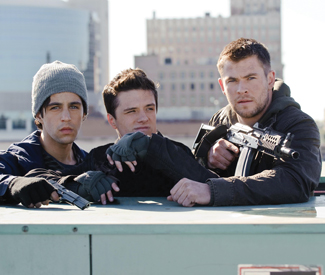
Red Dawn A remake of a 1984 movie that seemed a pretty nutty ideological throwback even during the Reagan Era’s revived Cold War air conditioning, Red Dawn should have come out a couple years ago, having been shot late 2009. But in the meantime MGM was undergoing yet another seismic financial rupture, and as the film sat around for lack of the means needed for distribution and marketing, it occurred that perhaps it already had a fatal, internal flaw. You see, this update re-cast our invaders from Russkies to People’s Republicans, tapping into the modern fear of China as debtor and international bully. But: China is also a huge fledgling market for Hollywood product. So a tortured makeover of the remake ensued; scenes were added, re-shot, and digitally altered to impose a drastic narrative change. The new villain is absurd it gets acknowledged as such by dialogue: “North Korea? It doesn’t make any sense!” Yup, in the new Red Dawn a coastal Washington state burg is the first attack point in a wholesale invasion of the U.S. (pop. 315 million) by the Democratic People’s Republic (pop. 25 million). It’s football season, so a Spokane suburb’s team — Wolverines!! — lends its name as battle cry and its revved up healthy young flesh as guerilla martyrs to the fight for, ohm yeah, freedom. Do they drink beer? Do they rescue cheerleader girlfriends from concentration camps? Do they kick North Korean ass? Do you really need to ask? (1:34) Metreon, 1000 Van Ness. (Harvey)

Rise of the Guardians There’s nothing so camp as “Heat Miser” from The Year Without a Santa Claus (1974) in Rise of the Guardians,, but there’s plenty here to charm all ages. The mystery at its center: we open on Jack Frost (voiced by Chris Pine) being born, pulled from the depths of a frozen pond by the Man on the Moon and destined to spread ice and cold everywhere he goes, invisible to all living creatures. It’s an individualistic yet lonely lot for Jack, who’s styled as an impish snowboarder in a hoodie and armed with an icy scepter, until the Guardians — spirits like North/Santa Claus (Alec Baldwin), the Tooth Fairy (Isla Fisher), and the Easter Bunny (Hugh Jackman) — call on him to join them. Pitch the Boogeyman (Jude Law) is threatening to snuff out all children’s hopes and dreams with fears and nightmares, and it’s up to the Guardians must keep belief in magic alive. But what’s in it for Jack, except the most important thing: namely who is he and what is his origin story? Director Peter Ramsey keeps those fragile dreams aloft with scenes awash with motion and animation that evokes the chubby figures and cozy warm tones of ’70s European storybooks. And though Pine verges on blandness with his vocal performance, Baldwin, Jackman, and Fisher winningly deliver the jokes. (1:38) Balboa, Metreon, 1000 Van Ness. (Chun)

A Royal Affair At age 15 in 1766, British princess Caroline (Alicia Vikander) travels abroad to a new life — as queen to the new ruler of Denmark, her cousin. Attractive and accomplished, she is judged a great success by everyone but her husband. King Christian (Mikkel Boe Følsgaard) is just a teenager himself, albeit one whose mental illness makes him behave alternately like a debauched libertine, a rude two year-old, a sulky-rebellious adolescent, and a plain old abusive spouse. Once her principal official duty is fulfilled — bearing a male heir — the two do their best to avoid each other. But on a tour of Europe Christian meets German doctor Johann Friedrich Struenesse (Mads Mikkelsen), a true man of the Enlightenment who not only has advanced notions about calming the monarch’s “eccentricities,” but proves a tolerant and agreeable royal companion. Lured back to Denmark as the King’s personal physician, he soon infects the cultured Queen with the fervor of his progressive ideas, while the two find themselves mutually attracted on less intellectual levels as well. When they start manipulating their unstable but malleable ruler to push much-needed public reforms through in the still basically feudal nation, they begin acquiring powerful enemies. This very handsome-looking history lesson highlights a chapter relatively little-known here, and finds in it an interesting juncture in the eternal battle between masters and servants, the piously self-interested and the secular humanists. At the same time, Nikolaj Arcel’s impressively mounted and acted film is also somewhat pedestrian and overlong. It’s a quality costume drama, but not a great one. (2:17) Clay, Smith Rafael. (Harvey)

Searching for Sugar Man The tale of the lost, and increasingly found, artist known as Rodriguez seems to have it all: the mystery and drama of myth, beginning with the singer-songwriter’s stunning 1970 debut, Cold Fact, a neglected folk rock-psychedelic masterwork. (The record never sold in the states, but somehow became a beloved, canonical LP in South Africa.) The story goes on to parse the cold, hard facts of vanished hopes and unpaid royalties, all too familiar in pop tragedies. In Searching for Sugar Man, Swedish documentarian Malik Bendjelloul lays out the ballad of Rodriguez as a rock’n’roll detective story, with two South African music lovers in hot pursuit of the elusive musician — long-rumored to have died onstage by either self-immolation or gunshot, and whose music spoke to a generation of white activists struggling to overturn apartheid. By the time Rodriguez himself enters the narrative, the film has taken on a fairy-tale trajectory; the end result speaks volumes about the power and longevity of great songwriting. (1:25) Opera Plaza. (Chun)

The Sessions Polio has long since paralyzed the body of Berkeley poet Mark O’Brien (John Hawkes) from the neck down. Of course his mind is free to roam — but it often roams south of the personal equator, where he hasn’t had the same opportunities as able-bodied people. Thus he enlists the services of Cheryl (Helen Hunt), a professional sex surrogate, to lose his virginity at last. Based on the real-life figures’ experiences, this drama by Australian polio survivor Ben Lewin was a big hit at Sundance this year (then titled The Surrogate), and it’s not hard to see why: this is one of those rare inspirational feel-good stories that doesn’t pander and earns its tears with honest emotional toil. Hawkes is always arresting, but Hunt hasn’t been this good in a long time, and William H. Macy is pure pleasure as a sympathetic priest put in numerous awkward positions with the Lord by Mark’s very down-to-earth questions and confessions. (1:35) Embarcadero, Piedmont, Shattuck. (Harvey)

Seven Psychopaths Those nostalgic for 1990s-style chatty assassins will find much to love in the broadly sketched Seven Psychopaths. Director-writer Martin McDonough already dipped a pen into Tarantino’s blood-splattered ink well with his 2008 debut feature, In Bruges, and Seven Psychopaths reads as larkier and more off-the-cuff, as the award-winning Irish playwright continues to try to find his own discomfiting, teasing balance between goofy Grand Guignol yuks and meta-minded storytelling. Structured, sort of, with the certified lucidity of a thrill killer, Seven Psychopaths opens on Boardwalk Empire heavies Michael Pitt and Michael Stuhlbarg bantering about the terrors of getting shot in the eyeball, while waiting to “kill a chick.” The talky twosome don’t seem capable of harming a fat hen, in the face of the Jack of Spades serial killer, who happens to be Psychopath No. One and a serial destroyer of hired guns. The key to the rest of the psychopathic gang is locked in the noggin of screenwriter Marty (Colin Farrell), who’s grappling with a major block and attempting the seeming impossible task of creating a peace-loving, Buddhist killer. Looking on are his girlfriend Kaya (Abbie Cornish) and actor best friend Billy (Sam Rockwell), who has a lucrative side gig as a dog kidnapper — and reward snatcher — with the dapper Hans (Christopher Walken). A teensy bit too enthusiastic about Marty’s screenplay, Billy displays a talent for stumbling over psychos, reeling in Zachariah (Tom Waits) and, on his doggie-grabbing adventures, Shih Tzu-loving gangster Charlie (Woody Harrelson). Unrest assured, leitmotifs from McDonough plays — like a preoccupation with fiction-making (The Pillowman) and the coupling of pet-loving sentimentality and primal violence (The Lieutenant of Inishmore) — crop up in Seven Psychopaths, though in rougher, less refined form, and sprinkled with a nervous, bromantic anxiety that barely skirts homophobia. Best to bask in the cute, dumb pleasures of a saucer-eyed lap dog and the considerably more mental joys of this cast, headed up by dear dog hunter Walken, who can still stir terror with just a withering gaze and a voice that can peel the finish off a watch. (1:45) Metreon. (Chun)

Silver Linings Playbook After guiding two actors to Best Supporting Oscars in 2010’s The Fighter, director David O. Russell returns (adapting his script from Matthew Quick’s novel) with another darkly comedic film about a complicated family that will probably earn some gold of its own. Though he’s obviously not ready to face the outside world, Pat (Bradley Cooper) checks out of the state institution he’s been court-ordered to spend eight months in after displaying some serious anger-management issues. He moves home with his football-obsessed father (Robert De Niro) and worrywart mother (Jacki Weaver of 2010’s Animal Kingdom), where he plunges into a plan to win back his estranged wife. Cooper plays Pat as a man vibrating with troubled energy — always in danger of flying into a rage, even as he pursues his forced-upbeat “silver linings” philosophy. But the movie belongs to Jennifer Lawrence, who proves the chops she showcased (pre-Hunger Games megafame) in 2010’s Winter’s Bone were no fluke. As the damaged-but-determined Tiffany, she’s the left-field element that jolts Pat out of his crazytown funk; she’s also the only reason Playbook‘s dance-competition subplot doesn’t feel eye-rollingly clichéd. The film’s not perfect, but Lawrence’s layered performance — emotional, demanding, bitchy, tough-yet-secretly-tender — damn near is. (2:01) Piedmont, SF Center, Shattuck. (Eddy)

Skyfall Top marks to Adele, who delivers a magnificent title song to cap off Skyfall‘s thrilling pre-credits chase scene. Unfortunate, then, that the film that follows squanders its initial promise. After a bomb attack on MI6, the clock is running out for Bond (Daniel Craig) and M (Judi Dench), accused of Cold War irrelevancy in a 21st century full of malevolent, stateless computer hackers. The audience, too, will yearn for a return to simpler times; dialogue about “firewalls” and “obfuscated code” never fails to sound faintly ridiculous, despite the efforts Ben Whishaw as the youthful new head of Q branch. Javier Bardem is creative and creepy as keyboard-tapping villain Raoul Silva, but would have done better with a megalomaniac scheme to take over the world. Instead, a small-potatoes revenge plot limps to a dull conclusion in the middle of nowhere. Skyfall never decides whether it prefers action, bons mots, and in-jokes to ponderous mythologizing and ripped-from-the-headlines speechifying — the result is a unsatisfying, uneven mixture. (2:23) Four Star, Marina, Metreon, 1000 Van Ness, Shattuck, Sundance Kabuki, Vogue. (Ben Richardson)

Taken 2 Surprise hit Taken (2008) was a soap opera produced by French action master Luc Besson and designed for export. The divorced-dad-saves-daughter-from-sex-slavery plot may have nagged at some universal parenting anxieties, but it was a Movie of the Week melodrama made on a major movie budget. Taken 2 begins immediately after the last, with sweet teen Kim (Maggie Grace) talking about normalizing after she was drugged and bought for booty. Papa Neeson sees Kim’s mom (Famke Janssen) losing her grip on husband number two and invites them both to holiday in Istanbul following one of his high-stakes security gigs. When the assistant with the money slinks him a fat envelope, Neeson chuckles at his haul. This is the point when women in the audience choose which Neeson they’re watching: the understated super-provider or the warrior-dad whose sense of duty can meet no match. For family men, this is the breeziest bit of vicarious living available; Neeson’s character is a tireless daddy duelist, a man as diligent as he is organized. (This is guy who screams “Victory loves preparation!”) As head-splitting, disorienting, and generally exhausting as the action direction is, Neeson saves his ex-wife and the show in a stream of unclear shootouts. Taken 2 is best suited for the small screen, but whatever the size, no one can stop an international slave trade (or wolves, or Batman) like 21st century Liam. Swoon. (1:31) Metreon. (Vizcarrondo)

The Twilight Saga: Breaking Dawn – Part 2 The final installment of the Twilight franchise picks up shortly after the medical-emergency vampirization of last year’s Breaking Dawn – Part 1, giving newly undead Bella Swan (Kristen Stewart) just enough time to freshen up after nearly being torn asunder during labor by her hybrid spawn, Renesmee. In a just world, Bella and soul mate Edward Cullen (Robert Pattinson) would get more of a honeymoon period, given how badly Part 1‘s actual honeymoon turned out. Alas, there’s just enough time for some soft-focus vampire-on-vampire action (a letdown after all the talk of rowdy undead sex), some catamount hunting, some werewolf posturing, a reunion with Jacob (Taylor Lautner), and a few seconds of Cullen family bonding, and then those creepy Volturi are back, convinced that the Cullens have committed a vampire capital crime and ready to exact penance. Director Bill Condon (1998’s Gods and Monsters, 2004’s Kinsey) knows what the Twi-hards want and methodically doles it out, but the overall effect is less sweeping action and shivery romance and more “I have bugs crawling on me — and yet I’m bored.” Some of that isn’t his fault — he bears no responsibility for naming Renesmee, for instance, to say nothing of a January-May subplot that we’re asked to wrap our brains around. But the film maintains such a loose emotional grip, shifting clumsily and robotically from comic interludes to unintentionally comic interludes to soaring-music love scenes to attempted pathos to a snowy battlefield where the only moment of any dramatic value occurs. Weighed down by the responsibility of bringing The Twilight Saga to a close, it limps weakly to its anticlimax, leaving one almost — but not quite — wishing for one more installment, a chance for a more stirring farewell. (1:55) Metreon, 1000 Van Ness, Presidio, Sundance Kabuki. (Rapoport)

Wreck-It Ralph Wreck-It Ralph cribs directly from the Toy Story series: when the lights go off in the arcade, video game characters gather to eat, drink, and endure existential crises. John C. Reilly is likable and idiosyncratic as Ralph, the hulking, ham-fisted villain of a game called Fix-It-Felix. Fed up with being the bad guy, Ralph sneaks into gritty combat sim Hero’s Duty under the nose of Sergeant Calhoun (Jane Lynch), a blond space marine who mixes Mass Effect‘s Commander Shepard with a PG-rated R. Lee Ermey. Things go quickly awry, and soon Ralph is marooned in cart-racing candyland Sugar Rush, helping Vanellope Von Schweetz (a manic Sarah Silverman), with Calhoun and opposite number Felix (Jack McBrayer) hot on his heels. Though often aggressively childish, the humor will amuse kids, parents, and occasionally gamers, and the Disney-approved message about acceptance is moving without being maudlin. The animation, limber enough to portray 30 years of changing video game graphics, deserves special praise. (1:34) Metreon, 1000 Van Ness, Shattuck. (Ben Richardson)
Our Weekly Picks: November 28-December 4

0

WEDNESDAY 28

World Party

While The Cure and R.E.M. were soaking up all the mainstream recognition, British singer-songwriter Karl Wallinger quietly churned out some of the most infectiously jangly pop of the 1980s and ’90s under the World Party moniker. Since the release of his magnum opus, Goodbye Jumbo (1990), Wallinger has gone on hiatus numerous times, coming out of the woodwork with a new set of songs, and a fresh cast of supporting musicians, whenever inspiration strikes. It’s been 12 years since his last LP, but with a new career-spanning box set on the way, and a rare US tour to support it, we’ll take whatever we can get. (Taylor Kaplan)

With Martin Harley 8pm, $26 Great American Music Hall 859 O’Farrell, SF (415) 885-0750 www.slimspresents.com


GOLDIES after-party

You read all about the 24th annual Goldie winners — that’s Guardian Outstanding Local Discovery awards! — in the Nov. 14 issue of the paper. Now’s your chance to come celebrate with us and the winners (musicians the Mallard, 5kinandbone5, and WATERS; theater company PianoFight; performers Mica Sigourney and Anna Ishida; filmmaker Jamie Meltzer; visual artist Brett Amory; dance winners Joe Landini and the Garage; and lifetime achievement winners Frank Shawl and Victor Anderson of Berkeley’s veteran Shawl-Anderson Dance Studio. The free party features performers Mad Noise, Kat Marie Yoas, and Dr. Zebrovski, plus tunes by Goldie alumni DJ Bus Station John. Gold attire encouraged! (Cheryl Eddy)

9pm, free

111 Minna Gallery

111 Minna, SF

www.111minnagallery.com


THURSDAY 29

Houses

If the 2010 album All Night from Chicago’s Houses seems sunnier and warmer than what you’d expect, given a cliched notion of the windy city, it may be because the album originated while the band was on a sort of idyllic, post-layoff stay in Hawaii. Seemingly lost in a year that was flooded with too many DOA “chillwave” bands, the album — with an air of IDM and standout track “Reds” — deserves a second listen, mainly for the vocal intimacy engendered by Dexter Tortoriello and Megan Messina, partners on and off record who have an immediately apparent rapport that suggests a hybrid sound of Mazzy Star and the xx, with feet on the dancefloor. (Ryan Prendiville)

With D33J, Yalls, Elephant and Castle

8pm, $8–$12

Public Works

161 Erie St., SF

(415) 932-0955

www.publicsf.com


Instrument

It’s one of those contradictions that I guess those of us who love live performances are also aware that the minute it happens, it dies. Gone, finished, never to return. It’s what Monique Jenkinson is exploring in her new Instrument, a solo performance piece to which she invited choreographers Miguel Gutierrez, Chris Black and Amy Seiwert — talk about diversity! — to set movement on her, which she then adapted to her own purposes. Somewhere, the late Rudolph Nureyev also entered into the equation. Jenkinson, who lives and breathes live performance, has made the slithery ground of identity a major theme of her dance/theater-making. She is a superb artist and entertainer, with immaculate craft and a fabulous perspective on what it means to be alive today whether as drag queen, fashion maven, opera diva or, perhaps, ballet super star. (Rita Felciano)

Also Nov. 30, Dec. 1-2, Dec. 6-9, 8pm, $20–$30

CounterPULSE

1310 Mission St. SF

$20-30.

www.counterpulse.org


FRIDAY 30


Rah Rah

“Rah Rah,” is accurately named — even its slower songs have a go-get-em, anthemic feel. At times this comes off as mildly ironic with some nonplussed singing paired with invigorating chord progressions. Our generation does love its irony. Mostly though, Rah Rah is full of wonder and cheer. The Canadian sextet makes good on the team spirit promise with a collaborative effort in which all the band members chip in for songwriting. With everybody switching instruments, singing, and maybe even tossing around balloons (or confetti), the band members bring the mirth wherever they go. (Molly Champlin)

With Travis Hayes

9pm, $10

Thee Parkside

1600 17th, SF

(415) 252-1330

www.theeparkside.com


Moodymann

Hailed for his massive influence on the Detroit techno scene he’s contributed to ever since the early ’90s, enigmatic producer Moodymann is that rare EDM artist who milks the album format for all it’s worth. Unlike the majority of his peers, content to churn out standalone tracks for the dancefloor, Moodymann stuffs his propulsive beats with funk and soul flourishes, samples from blaxploitation films, and impossibly lush, glossy synth tones, assembling cohesive LPs that conjure up a seductive, luminous sound-world all their own. Finding common ground between ravers and headphone geeks can be a challenge, but this master makes it look easy. (Kaplan)

With Galen, J-Bird, Solar, Deron

9:30pm, $20

Public Works

161 Erie, SF

(415) 932-0955

www.publicsf.com


SATURDAY 1

Come Out and Play Festival Weekend

The SOMArts gallery and grounds will transform into a playground with games that are as fun as they are artistic in the finale to its month-long “Come Out and Play” exhibit. There will be plenty for the kids, such as the parkour-inspired Sloth Chase, which will force the young ones to get creative in navigating everyday spaces. This is all-ages, so keep an eye out for adult games too, including the mind-bending experiment, Out of Body Labyrinth. It includes video goggles that give the player a third person perspective on his or her movements as they navigate a labyrinth. And then there’s Propinquity, which uses neon lights to measure scores in an experience that is equal parts club and Capoeira. Be sure to register in advance to skip the lines. (Champlin)

Also Dec. 2, 11am–5pm, free

SOMArts

934 Brannan, SF

(415) 863-1414

somarts.org/playsf


Bay Brewed Rock and Roll Beer Festival

What pairs better with rock and roll bands than beer? And I’m not talking about half-watching the (admittedly, enticing) dad rock band in the back corner of a pub while nursing a warm Pabst. This second annual Bay Brewed event, again hosted by the Bay Bridged blog, will feature performances by bands you actually want to see live: Bear in Haven, Sonny and the Sunsets, Born Gold, Blasted Canyons, James and Evander, and Trails and Ways. Plus, tickets include endless tasting of the frosty, locally-brewed stuff by 13 SF Brewers Guild breweries, including 21st Amendment and Social Kitchen and Brewery. Added bonus: Seoul on Wheels and Adam’s Grub Truck will be standing by to help you soak up your indulgences. (Emily Savage)

12:30-6pm, $60

Public Works

161 Eerie, SF

(415) 932-0955

www.publicsf.com


Opal Dust Opening

Casey Watson works graphite and colored pencil like paint to create rich, intricate floral patterns. This isn’t your typical flower power art though, her pieces combine to create abstract forms evocative of microscopic organic life or macrocosmic activity. The process is poetically described as the “sharp-edged task of portraying a soft exterior.” The exhibit will be on display at Johansson Projects, the fine art gallery with the DIY spirit people always remember from Oakland’s Art Murmur. Also showing will be Rachel Kaye, whose abstract work explores the relationship between fashion and fine art through geometric color fields. If you can’t make it to the reception on Saturday, you can always check out the exhibit at the First Fridays event, Dec. 7 this month. (Champlin)

3pm, free

Johansson Projects

2300 Telegraph, Oakl.

(510) 444-9140

www.johanssonprojects.com


Wovenhand  (canceled)

Wovenhand might be one of the only folk-rock bands around whose songs can evoke both the cool grandeur of a cathedral arch and the sweaty tent of a traveling preacher man set up beneath a wide-open prairie sky. Even if the band’s lyrics weren’t deeply rooted in the Christian faith of frontperson David Eugene Edwards, its intense, pounding rhythms, tightly-knit instrumentation and otherworldly vocals would be enough to drive even the most committed atheist to their knees. With The Laughing Stalk, Edwards eschews the occasional diversions of earthly delights and goes straight for the marrow, a nine-song cycle of tormented devotion using the Old Testament (and bone-shaking guitar riffs) as points of departure. Known particularly for the ferocity of their live shows, you will not want to miss these passionate Denverites at Bottom of the Hill — or anywhere else, really. (Nicole Gluckstern)

With Yassou Benedict and Yir

10pm, $12–$14

Bottom of the Hill

1233 17th St., SF

www.bottomofthehill.com


MONDAY 3

Death Grips

The easiest explanation for the attention and acclaim this band has garnered — including a hot-off-the-presses of SPIN award for Artist of the Year — would be controversy. We are talking about a group that canceled a tour, leaked its second album of the year onto the Internet (complete with the title, No Love Deep Web, scrawled across one member’s turgid member on the cover) and subsequently got dropped from Epic Records. (Epic Records still exists?) But to get past the ceaseless debate surrounding Death Grips and its currently incomparable hybrid of growling, punk infused rap, just see the band live, like some did last year at 103 Harriet, when barking singer Stefan Burnett and frenetic drummer Zach Hill delivered a memorable, aggressive, and beyond sweaty performance. (Prendiville)

With Cities Aviv

8pm, $20

Slim’s

333 11th St., SF

(415) 255-0333

www.slimspresents.com


TUESDAY 4

“The News”

Have you heard the good “News”? Freshly minted Goldie winner Mica Sigourney (as his unforgettable alter ego, VivvyAnne ForeverMORE!) is guest-curating SOMArts’ popular monthly showcase of queer, experimental debut and in-progress works. With Ms. ForeverMORE! at the helm, the event will be a blend of performance art and nightlight, featuring costume designer, accordionist, and queer-identity explorer DavEnd; interdisciplinary performer Cara Rode DeFabio; drag performers Elliot “Christina Christopher Damnit” Orona and Nathan “Nikki Sixx Mile” Rapport; and more. Space is limited, so get your tickets (a steal at just $5!) in advance. (Eddy)

7:30pm, $5

SOMArts Cultural Center

934 Brannan, SF

thenewsperformance.eventbrite.com


The Guardian listings deadline is two weeks prior to our Wednesday publication date. To submit an item for consideration, please include the title of the event, a brief description of the event, date and time, venue name, street address (listing cross streets only isn’t sufficient), city, telephone number readers can call for more information, telephone number for media, and admission costs. Send information to Listings, the Guardian, 225 Bush, 17th Flr., SF, CA 94105; or e-mail (paste press release into e-mail body — no attachments, please) to listings@sfbg.com. Digital photos may be submitted in jpeg format; the image must be at least 240 dpi and four inches by six inches in size. We regret we cannot accept listings over the phone.

On the Cheap Listings

0

Submit items for the listings at listings@sfbg.com. For further information on how to submit items for the listings, see Picks.

WEDNESDAY 21

Pre-Thanksgiving Farmers Market Ferry Plaza, SF. www.cuesa.org. 10am-2pm, free. If you want to really impress your incoming family members with a fine and sustainable T-Day spread, then you must head to town’s most swank farmers market to take care of last-minute shopping. Watch for the free recipe booklets staff will be handing out if you need ideas for what to actually do with all those veggies.

THURSDAY 24

Vegetarian/vegan Thanksgiving potluck The Loughborough Center, 1184 Broderick, SF. RSVP at (415) 498-0385. 3pm, $1 donation with food contribution, $10 without contribution. East Bay: Unitarian Universalist Fellowship Church, 1606 Bonita, Berk. RSVP at howarddy@gmail.com or (510) 562-9934. 4pm, $2 donation with food contribution, $12 without contribution. Intentional community is the name of the game at these two animal-free potlucks, sponsored by the venerable SF Vegetarian Society. Cook for your fellow veg-heads this year. Vegan dishes are preferred. Bring utensils and plates to minimize landfill impact. Give thanks for healthy food, and an aware community.

FRIDAY 23

Pizzichillo and Gordon glass art Pizzichillo and Gordon Studio, 2680 Union, Oakl. (510) 832-8380, www.quepasaglass.com. Through Dec/15. Opening reception: 10am-4pm, free. Bruce Pizzichillo and Dari Gordon have been making vibrant and unique pieces of glass artwork since 1980, and are inviting you to peruse this assemblage of their masterpieces, featuring vases, bowls, pitchers, and jewelry. Take note, those of you looking to buy arty gifts for friends, relatives, and anyone you hold dear in your life — this is a great place for local browsing.

Language of Cloth winter pop-up sale The Language of Cloth, 650A Guerrero, SF. (415) 431-7761, www.thelanguageofcloth.com. Open every Friday, Saturday, and Sunday through Dec.30. 10am-6pm, free. If you’re looking for gifts that possess color and personality, look no further than this temporary story in a Mission garage. The man behind the sale is Daniel Gundlach, who is so committed to providing San Francisco with quality textiles he goes on yearly excursions to countries like Thailand and Laos, sometimes spending half the year in Indonesia.

Food Social The New Parish, 579 18th St., Oakl. (510) 409-0651, www.food-social.org. 5-9pm, $5. An event on the opposite of the stress spectrum from Black Friday shopping, FuncheapSF would like you to come by and relax in Oakland’s Uptown neighborhood. A $5 ticket gets you a complimentary beer and a raffle ticket to win prizes such as an iPad Mini. Good food, good music, good vibes, why would you ever hit the mall?

SATURDAY 24

Craftswomen Celebration Herbst Pavilion, Fort Mason, SF. (650) 615-6838, www.celebrationofcraftswomen.org. Sat/24-Sun/25 and Dec. 1-2, 10am-5pm, free. Over 150 female artists display their fine arts and crafts at the 34th year of this fair. Come by to shop, to eat, to listen to live music, and place a bet in the silent auction.

SUNDAY 25

Treasure Island Flea Market Great Lawn, Ave of the Palms, Treasure Island, SF. www.treasureislandflea.com. 10am-4pm, $3. Treasure Island isn’t just some place that hosts a kick ass festival once a year every October, other things happen there too. One of the non-Treasure Island Music Festival happenings is the Treasure Island Flea Market where there’ll be various designers, outdoor exhibits, scavenger hunts, and food trucks present.

Womyn of Color Arts and Crafts Show La Peña Cultural Center, 3105 Shattuck, Berk. (510) 849-2568, www.lapena.org. 10:30am-4:30pm, free. This East Bay center of song, dance, art, and community hosts a gift fair showcasing women of color, for the 18th year in a row.

MONDAY 26

Marbles: Mania, Depression, Michelangelo, and Me The Booksmith, 1644 Haight, SF. (415) 863-8688, www.booksmith.com. 7:30pm, free. Storytelling is a much a part of Ellen Forney as fog is a part of SF weather. Diagnosed with bipolar disorder before her 30th birthday, Forney turned what most people saw as an obstacle into inspiration for her new book and memoir Marbles: Mania, Depression, Michelangelo, and Me. Come hear her talk about her struggles and triumphs with bipolar disorder.

TUESDAY 27

"Native Plants of San Francisco" St. Philip’s Catholic Church, 725 Diamond, SF. (415) 750-9986, www.sanfranciscohistory.com. 7pm, $5. Despite being the second densest big city in the country, San Francisco is blessed with stunning native flora. Native San Franciscan and natural world devotee Greg Gaar would like to inform you on the evolution of our fair city’s beaches, coastal prairies, trees, creeks, lakes, and marshes at his presentation at the St. Philip’s Church, sponsored by the SF History Association.

Nerd Nite The Stork Club, 2330 Telegraph, Oakl. (510) 444-6174, www.eastbay.nerdnite.com. 7pm, $8. Calling all nerds! Calling all nerds! Last month’s East Bay Nerd Nite was so well-received, organizers are presenting an encore of the geekalicious event. At this installment, there’ll be talks by a UC Berkeley low-temperature physicist and a presentation by a chemist on all things luminescent.

A hello to arms

0

arts@sfbg.com

FILM The results of the wee election that happened a couple weeks ago were generally a good thing, needless to say, but just as light also causes shadow, so the light bulb that went off for a majority of voters cast into deeper darkness a certain minority. Oh, you’ve heard the wailings and lamentations: the death of “traditional” America (read: white people, “they” are coming to take your women and steal your home entertainment center), brutal new taxations designed to funnel your hard-earned money to whole communities of professional freeloaders, the national anthem to be translated into Communist (it’s a language, like speaking in demonic tongues), etc.

Some patriots, no longer loving it, are leaving it — mostly to inexpensive warmer retirement magnets whose natives aren’t too uppity yet to avoid calling you “Sir” or “Boss.” Others are planning to secede, one state at a time. (Yes, definitely including the ones you were already hoping would somehow cut ties. Can they take Fox News with them?) Mentally and politically, they seceded a while ago. But now it is on — Elvis is leaving the building, because he didn’t get his way so fuck y’all.

What’s bad about this is that, as with any psychotic break, bystanders may suffer for not sharing or getting in the way of the sufferer’s particular symptoms — in this case likely to primarily consist of depression, violent outbursts, substance abuse, weapons stockpiling, paranoid delusions, paranoid delusions, and reckless home schooling. How many basement man caves have been fertilizing plans for what we might term “assassination,” “domestic terrorism” or “going postal” since November 6, imaging personal heroism and national salvation their eventual reward? It’s like a significant section of the populace has turned into our crazy uncle, off his meds, muttering apocalyptically in the corner and sure to remember where we live sooner or later.

So it is with mixed emotions, to say the least, that one greets the alarmingly timely arrival of Red Dawn. A remake of a 1984 movie that seemed a pretty nutty ideological throwback even during the Reagan Era’s revived Cold War air conditioning (and even alongside such crazy Satan-is-Soviet competition as 1985’s Rambo: First Blood Part II and Rocky IV), it is a movie that should have come out a couple years ago, having been shot late 2009. But in the meantime MGM was undergoing yet another seismic financial rupture, and as the film sat around for lack of the means needed for distribution and marketing, it occurred that perhaps it already had a fatal, internal flaw. You see, this update re-cast our invaders from Russkies to People’s Republicans, tapping into the modern fear of China as debtor and international bully. But: China is also a huge fledgling market for Hollywood product, despite censorship, import quotas, and whatnot. China heard about Red Dawn and was not happy, endangering the foreign profit margins for future MGM product.

So a tortured makeover of the remake ensued; scenes were added, re-shot, and digitally altered to impose a drastic narrative change. China now goes unmentioned, replaced as villain by the country which is nobody’s film market, even if that choice is so absurd it gets acknowledged as such by dialogue: “North Korea? It doesn’t make any sense!” someone says here. It’s a query that goes unanswered.

Yup, in the new Red Dawn a coastal Washington state burg — mom, apple pie and flag figuring large in the opening montage — is the first attack point in a wholesale invasion of the U.S. (pop. 315 million) by the Democratic People’s Republic (pop. 25 million). It’s football season, so a Spokane suburb’s team — Wolverines!! — lends its name as battle cry and its revved up healthy young flesh as guerilla martyrs to the fight for, ohm yeah, freedom. Do they drink beer? Do they rescue cheerleader girlfriends from concentration camps? Do they kick North Korean ass? Do you really need to ask?

Of course this Red Dawn is ridiculous, though as a pulp action fantasy it’s actually fairly entertainingly well-crafted by veteran stunt coordinator-second unit director Dan Bradley. The actors maintain straight faces with variable degrees of success — on the upside pre-Thor Chris Hemsworth, (whose other 2009-shot MGM film The Cabin in the Woods also got released this year) as ex-Marine alpha male, on the downside an irksome Josh Peck as his little bro and an inexplicable Connor Cruise as a teammate. The adopted son of a certain really famous Scientologist, the latter surely got this role on merit alone; otherwise we’d be forced to believe he made up in nepotism what he amply lacks in looks, voice, and presence.

So what does this silly movie have to do with the election, you ask? Just this: its production travails mean this rah-rah, just-credibly-gritty-enough (but still mostly video-game-like) tale of fighting the power has arrived just in time to become a training manual (or at least recruitment video) for revolutionist reactionary rednecks. It’s ready-made for an audience so deprived of air, irony, and other key elements to reality that they’re probably in a hundred or more basements right now, plotting the overthrow of our Socialist Islamophilic oligarchy. 

RED DAWN opens Wed/21 in Bay Area theaters.

Sea change

1

virgina@sfbayguardian.com

APPETITE Two unrelated seafood restaurants have quietly undergone chef and menu changes in the last year. I was less than impressed with both when they debuted; now they’ve taken a turn for the better. There’s a low-key Mission seafood outpost with vegan accents, Weird Fish (renamed Dante’s Weird Fish), and a Financial District restaurant catering to the FiDi set, Georges, with upscale-casual seafood.

Tiny Weird Fish (2193 Mission, SF. www.weirdfishsf.com) has been around a few years, pleasing vegans and hipsters alike with grilled fish and seitan tacos. Owner Tim Holt left in 2011 to focus on Roshambo Farms (www.roshambofarms.com) in Healdsburg, which still supplies the restaurant with much of its produce. Holt opened Weird Fish with Peter Hood, who is back as owner alongside Ryan Simas, returning to roots of fish and vegan options, infused with new life. Simas knows seafood as chef de cuisine at Farallon, where he’s worked for nine years, now simultaneously co-owner at Dante’s and its neighbor, The Perch, eventually supposed to open next door.

Dante’s all day hours and a playful, affordable menu (discounted during lunch hours) are its selling points. Portions are small, but it’s rare to see enticing fish entrees under $10 — think of it as piecing together a meal. I can’t say the hit-and-miss aspects of the former Weird Fish has entirely changed, but I notice greater consistency and higher “high points” than before. “Pete’s famous clam chowder” ($4.75 cup, $6.75 bowl) is one surprise. Unlike the bland tortilla soup, the creamy chowder is flavor-rich with spanking-fresh clams. Fish and chips ($11 for two pieces, $14 for three), filling all on its own, features fresh fish of the day, flaky and light in Speakeasy’s Big Daddy IPA beer batter. A mix of sweet potato and regular potato fries falls flat, but fried fish dissolves comfortingly.

The vegetarian Waco Taco ($5) is one of their best bites. Though I’m a fish taco fanatic, a tilapia fish taco tasted over-salted and lifeless under mango salsa compared to this lively Waco Taco, packed with mashed yams, spinach, pepitas (pumpkin seeds), and guacamole. Fried calamari ($9.50) is perked up by fried lemon and sage leaves, dipped in lemon aioli and oh! chipotle sauce. Among fish entrees, I’ve fared best with Dijon-almond encrusted rainbow trout ($9.50) alongside buttery mashed yams ($4.75) laced with coconut milk and curry.

Dante’s casual, rock-and-roll (sometimes blaring a bit loud in the small space) attitude is a bright spot on Mission Street, uncommon if not “weird,” amid a sea of taquerias and 99 cent stores. In its Dante’s incarnation since March, Weird Fish captures the quirk of former days with greater focus on the food.

Georges (415 Sansome, SF. www.georgessf.com) took over the Financial District’s classic London Wine Bar in 2010 (which lacked an impressive wine list but boasted dated charm), completely revamping the space from dim, old school to white and airy. I dined during opening weeks — but was immediately turned off by overcooked fish at high prices. I didn’t return until a couple months ago, having heard good things about Chef Michael Bilger who came on in early 2011 from Wayfare Tavern, and now defunct Moose’s and Vivande Porta Via. Bilger’s cooking is a marked improvement since my 2010 visit.

Serving sustainably-sourced seafood per Monterey Bay Aquarium Seafood Watch (www.montereybayaquarium.org) standards, Georges’ focuses on being environmentally responsible in numerous aspects, like crushing raw bar shells into fertilizer for the local farmers who provide its produce.

Lunch is a bustling, convivial time to dine. As with lobster rolls, a Dungeness crab roll is expensive ($21), but a real beauty. Lush white crab is packed between bread with basil, piquillo pepper, and pleasing Southern touches of fried green tomatoes and remoulade, and the whole thing is accompanied by housemade BBQ potato chips. A silky crudo ($15) of albacore tuna cleanses the palate alongside a crisp white wine. Six cuts of tuna rest on hearts of palm, reasonably doused in garum (a fermented fish sauce I’m seeing on many menus lately), McEvoy Ranch olive oil, and vivid Meyer lemon.

Mussels and frites ($16 for mussels, $20 with fries) comfort on a chilly day, particularly with beer. Bilger steams plump mussels in Ommegang Witte beer, the broth exhibiting notes of fall from Rubinstar apples, savory with smoked bacon and leeks. One seafood misstep on a follow-up visit, however, was an overcooked, dry albacore tuna confit in bucatini pasta, tossed with zucchini, Calabrian chilis, Castelvetrano olives, and dose of bread crumbs ($16 lunch, $19 dinner). An affogato, a robust shot of espresso drowning lush vanilla gelato, the glass covered with a waffle cone crisp, is an ideal finish and caffeine boost before returning to work.

Georges is pricey but not out of line with the FiDi or the quality of ingredients. It’s not the same restaurant I dined at when it opened… and for this the entire staff deserves kudos.

Subscribe to Virgina’s twice-monthly newsletter, The Perfect Spot, www.theperfectspotsf.com

Breaking news: How to watch today’s Nebraska vs. Minnesota game

1

And so the former Jean Dibble and I, graduates of the University of Nebraska at Lincoln, will soon be heading for the Final Final sports bar in San Francisco to watch today’s Nebraska football  game against Minnesota at Lincoln, starting at 12:30 p.m.

As attentive readers of the almost famous Bruce blog know, Jean and I were perplexed a few games back to find that we couldn’t watch the Idaho State game on national television and we were desperately trying to figure out how to watch the game. The answer, courtesy of Richard Boyce, an addicted Nebraska (and Iowa)  football fan, was to go to the Final Final bar, at 2990 Baker St., near the Presidio.

The bar has been owned for 35 years by Arnie Prien, a Nebraska native from Lyons and a 1984 NU graduate who loyally runs all Nebraska games on his big screen. He has 11 other screens for other games and will put up customers’ choices.   Just ask. Final Final got its nifty name from the days when it was the final stop for the soldiers at the Presidio coming back to the barracks from a night on the town. The local Nebraska ex-pats and fans gather every Saturday at the bar to watch the games and enjoy the free pop corn, inexpensive beer, and unique NU  camaraderie.

Our daughter Katrina Perez of Santa Barbara turned us on to a website called Huskerbud.com that provides, as the site proclaims, “just the important stuff about the Nebraska Cornhuskers.” The idea for Huskerbud, according to the site, “came about when I was visiting friends in Los Angeles and couldn’t easily find information on how to watch or listen to a game. Huskerbud is the simple solution to this small but nerve-racking problem. Enjoy!” In the tradition of Nebraska modesty, the writer and creator of the site did not provide a byline, or hometown, or NU connection, or otherwise identify him or herself.

Full disclosure: Katrina’s son, Nicholas, is a freshman in mechanical engineering at Nebraska. And so our entire family is now fully addicted to watching all the games.

I checked on Huskerbud this morning and it showed that Nebraska is 8-2 for the year and is ranked 16 in the nation on the Associated Press poll and 14 on the BCS poll. It also gave provded a list of radio stations carrying the game (mostly in Nebraska) and how to listen and watch the game on Sirius and on a computer. It also provided information on the last four Husker seasons.  A handy resource known mainly by the Nebraska faithful.

Parking tip for Final Final. Parking on the street is difficult so try parking in the Presidio and walking a few blocks to the bar. Popcorn tip: As a popcorn addict, I can attest that the popcorn is excellent and freshly popped throughout the afternoon in an old-fashioned pop corn popper in a corner of the bar. Nice Nebraska touch.

There is no place like Nebraska. Especially in San Francisco. Go Big Red.  B3


Final Final

2990 Baker St.

San Francisco 94123

 415-931-7800 

P,.S. The Nebraska alumni site lists three other “watch sites” in the Bay Area.  Jack’s Brewing Company in Fremont.  Legends and Heroes in Concord.  And Knuckles Sports Bar in Monterey,

Watch the Huskers on these four Bay Area Watch sites: http://bayareahuskers.org/


Howard Wallace, LGBT icon, dies at 76

6

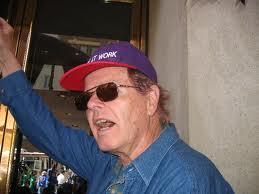
Howard Wallace, a longtime organizer who played a key role in bringing the LGBT movement and labor together in San Francisco, died Nov. 14. He was 76 and had been struggling with Alzhiemer’s disease.

Wallace grew up in Denver, and according to a biography by Andrej Koymasky, was forced to drop out of college when his father saw some United World Federalist literatature he’d brought home and told him to drop of of “commie” politics:

“He put a couple of checks on the dining-room table – the checks for next year’s tuition – and said, ‘Get out [of activism] and you can have those checks.’ I tore them up in his face, and that was the end of my college education.” 

Instead, he began a series of blue-collar jobs that brought him into labor organizing.

By the early 1970s he was in San Francisco, part of a generation of activists that included the late Hank Wilson and Assemblymember Tom Ammiano, who together helped form a group called Bay Area Gay Liberation.

“He made bridges,” Ammiano told me. “He came to BAGL and told us we had to support Cesar Chavez, and some of us were reluctant — you know, it was the Catholic Church, homophobia, all of that. But he convinced us to go on that march, and we were all glad we did.”

Wallace was a founder of the Lesbian-Gay Labor Alliance and later Pride at Work, and he was instrumental in bringing LGBT workers into the labor movement — and also bringing labor support to LGBT causes.

In 1974, Wallace worked with members of the Teamsters Union — not a group always known in those days known for enlightened attitudes towards gay people — on a boycott of Coors beer.  The teamsters were fighting bad labor practices at Coors, including a mandate that all employees take a lie-detector test that incuded the question “are you a homosexual?”

Working with both sides, Wallace got the LGBT community to sign on to the boycott, got Coors out of many of the bars in the Castro — and made lasting connections between local labor leaders and the LGBT community.

“He’s the one who brought Harvey Milk into the Coors boycott,” Ammiano recalled. “And he was never afraid to call out labor leaders when they were being homophobic.”

Like all great organizers, he could be persistent to the point where he was sometimes infuriating — but always, always pure of heart. “He was a character,” Ammiano said. “I never knew what color his hair would be, but I always knew what color his politics would be.”

Tommi Avicolli Mecca, a longtime activist and writer on LGBT history, said Wallace was “a giant among us. He was always there, for the rights of union members, the poor and working class, antiwar activists … you could always count on Howard to be there.”

Mecca noted that Wallace “saw the connections between the LBGT movement and disenfranchised people everywhere. He saw the queer struggle as part of a larger struggle for social and economic justice.”

He will be sorely missed, but as Mecca said, “we will always have his legacy; future generations can look back and understand what our movement was about.”

Said Ammiano: “I hope he and Hank Wilson are up there tipping a few back and talking about Lenin vs. Trotsky.”
 
A memorial is pending, and I’ll keep you posted as updates are available.

UPDATE NUMBER 1: State Sen. Mark Leno told me that Wallace “was not only a dear friend but a teacher. His values were strongly intact.” Leno recalled chairing the fundraising drive for the LGBT Center, a huge undertaking, and accepting a check from Coors for $5,000. “I though I had done due diligence, I knew the boycott was over, but Howard came to our board meeting and convinced us that the LGBT Center had to be above reproach.” 

(I’m sure Howard Wallace didn’t use those exact words).

“It was after that that we became good friends,” Leno said.

UPDATE NUMBER 2: From Gabriel Haaland, Pride at Work co-vice-president (SEIU< SF): I don’t know if most progressives know how much Howard gave to us all. I know there are so many who considered him a mentor and an inspiration. For those of you who don’t know him, Howard had a way of connecting the dots across so many issues. A legend and a hero for sure. A fearless warrior for justice, Howard was both passionate and gentle in his own way… He gave so much of himself and taught me so much in the rashness of my younger years. Even in death, he continues to inspire me to be better than I was before, more in integrity. I honor those who took such good care of him in the last year, like Kathy Lipscomb, Carl Finamore, Tab Buckner, Eileen Hansen, and Susan
Englander. I will miss him.

Live Shots: La Sera at the Chapel

0

It was nice to see that “Kickball” Katy Goodman hasn’t grown up too much since leaving the Vivian Girls. Her big smile, bubbling stage banter, and virginal attire—a lacy white dress to match her white Fender bass guitar — added a saccharine candy coating to the dark, jangly pop of La Sera, her Los Angeles-based solo project.

Swaying and hopping across the Chapel stage last Saturday night in all black Converse All Stars, Goodman whipped her all-male backing band through a surprisingly short set, clocking in at just around 45 minutes.

La Sera was within the first ten bands to grace the stage at the Chapel, San Francisco’s newest music venue at 18th and Valencia in the Mission; the venue celebrated its opening in conjunction with this year’s Hardly Strictly Bluegrass Festival last month. The Chapel is a stripped down, well, chapel — complete with stained glass windows and an arching, pitched ceiling with beautiful dark wood rafters.

As an added bonus, in contrast with everything I know and understand about music venues, the Chapel is astonishingly clean. For now, it smells of wood stain instead of stale beer. The 500 capacity venue also offers a small dinner menu and seating spread around the room at simple, wooden tables that match the hardwood floors.

The audience during La Sera was extremely engaged, if mellow, watching with quiet attentiveness and occasionally chuckling at guitarist Tod Wisenbaker’s bad jokes (“He writes his own material,” quipped Goodman. “It’s pretty impressive.”)

La Sera’s newly released sophomore effort Sees the Light picks right up where the last left off, sounding a bit like a co-ed Dum Dum Girls or, as you might expect, Vivian Girls. The live show, like the new album, offered few surprises. Goodman, despite being a veteran of the stage, was surprisingly tame and uncharismatic for a frontperson. For the last song, however, she jumped off the stage and sang directly to some excited audience members, giving a stronger finish to an otherwise good, but unremarkable show.
 
The real highlight of the night was the opener, San Francisco’s own the She’s, a beach-tinged girl band with a slightly doo-wop vibe and a seriously good groove. So good, apparently, that La Sera’s drummer bought a the She’s shirt between sets to wear for his own performance. If the She’s next album is as good as the material they played Saturday night, they could definitely be a band to watch out for.

Scoop: There is no place like Nebraska!

1

And so my grandson, Nicholas Perez, a mechanical engineering freshman at the Umiversity of Nebraska at Lincoln, sent me an email pumping the importance of the Nebraska vs. Penn State game today (Saturday) at Lincoln.  Nebraska, he reported, was now being touted as a potential Rose Bowl candidate and needed to beat Penn State.

This was indeed big news, back where the Cornhusker football team rules the state. I emailed him back and pointed out that the last time Nebraska went to the Rose Bowl was in 1941.

In fact, I noted that that the 1941 game was still big news when the former Jean Dibble and I were students at the university in the 1950s.  It wasn’t until later that we learned  that Nebraska actually lost the game to Stanford and its famous quarterback, Frankie Albert.

The game will be broadcast nationally at l2:30 p.m. Saturday on ABC television  (7).  And it will be shown on the big screen at Final Final, the nifty neighborhood  sports bar near the Presidio in San Francisco.

The bar has been owned for 35 years by Arnie Prien,  a native Nebraskan from Lyons, Nebraska, and a graduate from the university.  He loyally shows the Nebraska games every Saturday. The game attracts a host of NU faithful who come for the Husker camaraderie and the free popcorn, inexpensive beer and friendly  ambience.  Final Final got its name from the days when it was known as the final destination where the soldiers at the Presidio could get  their final  drink after a night on the town. Parking Tip: on street parking is difficult in this area, so park in the Presidio and walk to the bar.

There is no place like Nebraska, as the song says. Even in San Francisco. Go Big Red! B3

P,.S. The Nebraska alumni site lists three other “watch sites” in the Bay Area.  Jack’s Brewing Company in Fremont.  Legends and Heroes in Concord.  And Knuckles Sports Bar in Monterey,

Watch the Huskers on these four Bay Area Watch sites: http://bayareahuskers.org/


Lots going on

0

le.chicken.farmer@gmail.com

CHEAP EATS Oh the horror!

Oh the hilarity!

Oh the black bean and chicken chili, spaghetti and meatballs!

No, it wouldn’t look good, journalismically, for me to review Hedgehog’s second li’l movie myself, being after all her ever-loving domestie. Not to mention my three (3) credits, for catering, co-production, and co-score. So, for once I have decided to do the right thing: ask my dad to review it for me.

CHEAP FILM

by Peaches Leone

Having lived 78 years and weathered numerous careers (gas station attendant, softball pitcher, ditch digger, guard rail painter, mail sorter, school teacher, cartoonist, imaginary basketball star, stay-at-home dad, composer, composter, memoirist, country music performer, poet, etc.) I thought I’d try my hand at film reviewing.

Since I’m new at this, I’ll start with a critique of a nine-minute film, “The Chain,” written and directed by Hedgehog (of “Treme” fame), starring the wonderful character actor Earl Butter, the Maze, and Long Tall Philip, with music by Bikkets and Chicken Farmer, Bullet LaVolta, and Daniel Voigt. It begins with Bob (Butter), sitting before his TV waiting for the big game to begin. Soon his friend Jeff, played perfectly by the Maze, arrives with a stash of beer and his cell phone.

I won’t give away the final eight minutes (no spoiler alert here), but it’s scary and surprising. And the music is probably very good.

Cheap Eats continued

Speaking of big games, I of course couldn’t keep my nose out of the World Serious brouhaha. First I hurried home from Lost Weekend for socks and my winter coat, then I went back out into the mayhem, looking as clueless as possible, and asking as many revelers as would meet my eye, “Excuse me, do you know who won?” And other such dada doozies — none of which achieved their desired effect.

Worse, at the bonfire at Mission and 22nd, I must have brushed up against some fresh graffiti, because my favorite white winter coat woke up ruined.

Oh well. Destruction is how we say “yay.” No?

As usual, when the bottles started to fly, I headed home and tried to sleep, beep beep.


CHEAP SPORTS

by Hedgehog

The Giants won the World Series! I’m sure you already noticed that since you were in San Francisco at the time and buses were on fire outside your house and shit. Me? I was (and still am) in Los Angeles.

My beloved Chicken Farmer needs a new pair of shoes — and now, it turns out, a new winter coat, to boot. Since she’s on strike, that means it’s time for me to look for a real job which, in my line of work, means going to Los Angeles.

Or Skywalker — but I’ve yet to learn their secret handshake so… Traffic wasn’t bad, thanks for asking. I listened to the first four innings in the car on the way in to town. And by the time things really got heated up (the 8th), I had put in enough face time with Kristy Kreme, my Valley bestie, and my hosts (Groovy and Julie of the Julies), that it seemed appropriate to turn on their huge plasma TV and ignore them for a while.

They have 3D! It makes everyone look like colorforms when the programming isn’t 3D though, so I watched Sergio Romo strike out Miguel Cabrera in only two dimensions, like most of the rest of yous.

Here is LA’s reaction to SF’s win: Kristy said “Fuck yeah.” Julie declared she was in awe. Groovy grilled steaks.

If you work at Skywalker/Disney, please rescue me from this warm, sunshiney place with wide lanes and ample parking. I’m homesick and you’re my only hope.

Cheap Eats continued

Here! Here! No matter how you spell it, it’s better than there there.

New favorite restaurant? …

Don’t have one, deal with it.

THE CHAIN

www.vimeo.com/52043639


Our Weekly Picks: November 7-13

0

WEDNESDAY 7

Twin Sister

At times romantic and sultry but also plenty psychedelic, Twin Sister will bring its energetic, upbeat dream-pop back to San Francisco this week. Singer, Andrea Estella, an artist who also works in water color and sculpture, is decidedly nymph-like with her hypnotic voice and pixie features. And if that’s not entrancing enough, she’s backed by a collaboration of Brooklyn musicians who handle their instruments (keyboards, synths, and melodica to name a few) with thoughtful precision. If you’re lucky, they may throw in some acoustic versions, but you’ll have to come and find out for yourself. (Molly Champlin)

With Melted Toys, Some Ember, and Yalls (DJ set)

8pm, $10

Rickshaw Stop

115 Fell, SF

(415) 861-2011

www.rickshawstop.com


THURSDAY 8

San Francisco Transgender Film Festival

With Cloud Atlas co-director Lana Wachowski (and her fab pink hair) all over pop culture media these days, trans filmmakers have never enjoyed a higher profile. But the artists who’ve participated in the San Francisco Transgender Film Festival, now in its 11th year, don’t need Hollywood to assure them of their talent. The 2012 fest is the biggest ever, with three nights of globally-sourced short films (“enticing tales of defiance, bullying, relationships, sex, humor, enchantment, romance, and zombies”), plus a performance spectacular (with Sean Dorsey Dance, Eli Conley and the Transcendence Gospel Choir, and more). Previous fests have sold out lickety-split, so buy your tickets ASAP. (Cheryl Eddy)

Thu-Sat, 8pm; Sun, 7pm, $12–$15

CounterPulse

1310 Mission, SF

www.sftff.org


Wet Paint

Contrary to popular belief, the Beats were not just an old boys’ club. Bay Area painter Jay DeFeo stands as a contradiction to the flat female characters you’ll encounter in a Kerouac novel. She pushes boundaries alongside all persuasions of painters. Her work lays the paint thick, looking at light, nature, and the body to find the abstract in the real and vice versa. In conjunction with her retrospective at SFMOMA will be a performance of Wet Paint by Kevin Killian (maybe you know him as a poet, editor, and award-winning author of gay erotic fiction). The play about DeFeo’s life will be performed by the Poets’ Theater and should be a great way to learn the background of her art and ties with the beat movement. (Champlin)

7pm, $10

San Francisco Museum of Modern Art

151 Third St., SF

(415) 357-4000

www.sfmoma.org


Maya Jane Coles

If London producer and DJ Maya Jane Coles has made a statement in her so far short and rapid ascension in the dance music world, it was with the title of her 2011 EP, Don’t Put Me in Your Box. Whether under her own name, dubstep alias Nocturnal Sunshine, or as part of dub duo She Is Danger, Coles has resisted the contrived hooks and familiar samples that promise EDM success, instead forging a path through deep house, delivering independent productions with her personal stamp on everything from vocals to visual design. Noted in the press for being both a breakthrough artist and still quite young, Coles is worth paying attention to as she prepares her eagerly awaited full-length album. (Ryan Prendiville)

With Moniker, Brian Bejarano

9pm, $20

Monarch

101 Sixth St., SF

(415) 284-9774

www.monarchsf.com


FRIDAY 9

“Flamenco en Movimiento”

The emphatic swirl of voluminous skirts, the pounding of heels against the floorboards, the mesmerizing stop-start rhythms, the rose gripped in the teeth, the ache of tight pants … Spanish flamenco dancing and music, bursting with full-throated emotion and thrilling restraint, can be addictive. The Bay Area certainly loves it: flamenco has been eliciting hearty “olé!”s in a new wave of wine bars, beer halls, and Spanish restaurants over the last few years. We’re also home to some incredible flamenco troupes, especially Theatre Flamenco of San Francisco, led by brilliant director Carolyn Zertuche and celebrating its 46th year. Her company’s annual show (this year called “Flamenco in Motion” in English) blew me away last year: the passion, technique, and gorgeous live music emanating from the stage were spellbinding. And I’m no drama queen! If you need a shot of strings-free emotional beauty in these trying times, here’s your best bet. (Marke B.)

8pm (also Sat/10 at 8pm and Sun/11 at 2pm), $20–$40

Cowell Theater, Fort Mason

Marina Blvd, SF.

(415) 826-1305

www.theatreflamenco.org


Christopher Owens

It was only in July that with a few tweets Christopher Owens announced the break up of his breezy, garage rock infused pop band Girls. Owens cited personal reasons — as if there were any other kind — but promised that he would continue to make music in some other form. Just as quickly as that news came, the songwriter has turned around and scheduled a solo date, premiering an entirely new road-trip themed album called Lysandre, at an intimate performance above the Regency Ballroom. A special peek at the album due for release in January, this show will also be filmed for a music video. (Prendiville)

9pm, $20

The Lodge at the Regency Ballroom

1300 Van Ness, SF

(800) 745-3000

www.theregencyballroom.com


“Forever Natalie Wood”

Natalie Wood was a child star (1947’s Miracle on 34th Street) turned teenage Oscar nominee (1955’s Rebel Without a Cause) turned Hollywood legend (1961’s West Side Story; 1961’s Splendor in the Grass) turned celebrity tragedy (after her mysterious 1981 drowning death at age 43). Marc Huestis curates a special tribute to the gone-but-never-forgotten icon with three days of films (all of the above save Miracle, plus 1966’s This Property is Condemned; 1962’s Gypsy; 1963’s Love With the Proper Stranger; 1969’s Bob & Carol & Ted & Alice; and 1965’s Inside Daisy Clover), including an appearance by Natalie’s sister (and Bond girl) Lana Wood before the Saturday night centerpiece screening of Splendor. (Eddy)

Through Sun/11

Castro Theatre

429 Castro, SF

www.castrotheatre.com


SATURDAY 10

Jon Spencer Blues Explosion

Jon Spencer has been pushing the boundaries of modern rock for nearly 30 years now, first with Pussy Galore, which brought new meaning to the union of the words noise and art, and he has continued to light up stages with his electric live presence with several other projects, notably Boss Hog, Heavy Trash, and the Jon Spencer Blues Explosion. With its first new record in eight years, Meat and Bone, dropping earlier this year, Blues Explosion — which also features Judah Bauer and Russell Simins — is hitting the road once again to testify to the power of rock’n’roll. (Sean McCourt)

With Quasi.

9pm $21–$23

Great American Music Hall

859 O’Farrell St., SF

(415) 885-0750

www.slimspresents.com


La Sera

These jangly, melancholic pop songs might sound a bit familiar to you. Brooklyn singer-songwriter Katy Goodman, the woman behind La Sera, is also “Kickball Katy,” one third of the indie rock band Vivian Girls. This year’s Sees the Light is Goodman’s second solo release under the La Sera moniker. It’s a rollicking break-up album that leaves you, after many powerfully emotional highs and lows, feeling not downtrodden, but empowered. Layers of distorted sound create a dreamy, escapist pop landscape, at times blurring the lines between pop and punk rock. La Sera is one of the first indie artists to perform at the Chapel, the Mission’s brand new music venue. (Haley Zaremba)

9:30pm, $10

Preservation Hall West at the Chapel

777 Valencia, SF

www.thechapelsf.com


SUNDAY 11

“Animating Dark Dreams: The Films of Jan Svankmajer”

Some of the creatures by Czech animator and puppeteer, Jan Svankmajer, seem like they were plucked out of David Bowie’s Labyrinth. If you were into the flying gremlins in Magic Dance and Escher-world ending, this double feature should be a no-brainer. Svankmajer’s films are a bit more gruesome than stealing someone’s baby, though, and are deepened with inspiration from classic stories. Lunacy (2000), based on several shorts by Edgar Allen Poe, goes for the philosophical horror while Little Otik (2005), based on a Czech folktale, shockingly captures the gore of child-rearing. A few things to look forward to: dancing slabs of meat, hair eating, and a devious tree-stump baby. (Champlin)

2pm, 4:30 p.m., $10 each

Yerba Buena Center for the Arts

701 Mission, SF

(415) 978-2787

www.ybca.org


MONDAY 12

Titus Andronicus

Titus Andronicus stunned everyone in 2010 when The Monitor, a ridiculously ambitious civil war-themed concept album, turned out not to be meandering celebration of its own complexity, but a powerful, masterfully written opus. Now, with 2012’s Local Business, Titus Andronicus is eschewing high-brow theatrics and multi-instrumental recordings for a simple, down-and-dirty rock album, intended as a marriage of its recorded work and its remarkably energetic, guitar-heavy live sound. In Local Business singer and driving force Patrick Stickles howls about stigmatized subjects relevant to his own life, like deteriorating mental health, and male eating disorders. 2012’s Titus Andronicus may not be grandiose, but it’s definitely badass. (Zaremba)

With Ceremony

8pm, $19

Great American Music Hall

859 O’Farrell, SF

(415) 885-0750

www.slimspresents.com


Napalm Death

Hailing from Birmingham, England — the same industrial city that gave birth to Black Sabbath — British grindcore pioneer Napalm Death has been pummeling listeners since the mid 1980s. Though the band has gone through a multitude of lineup changes over the years, key members, including Shane Embury and Mark Greenway, continue to lead the group to success. Returning to the US in support of its new album, Utilitarian, its 15th release, the quartet joins local rockers Municipal Waste, Exumed, Attitude Adjustment, and Impaled at what is guaranteed to be a most brutal night of extreme music.(McCourt)

7pm, $12–$16

Oakland Metro

630 Third St., Oakl.

www.oaklandmetro.org

The Guardian listings deadline is two weeks prior to our Wednesday publication date. To submit an item for consideration, please include the title of the event, a brief description of the event, date and time, venue name, street address (listing cross streets only isn’t sufficient), city, telephone number readers can call for more information, telephone number for media, and admission costs. Send information to Listings, the Guardian, 225 Bush, 17th Flr., SF, CA 94105; or e-mail (paste press release into e-mail body — no attachments, please) to listings@sfbg.com. Digital photos may be submitted in jpeg format; the image must be at least 240 dpi and four inches by six inches in size. We regret we cannot accept listings over the phone.

Appetite: Latest in New Orleans dining

7

Returning to my beloved New Orleans, a city I’ve explored extensively via a path laden with jazz, Dixieland, Zydeco, Ramos Gin Fizzes, Sazeracs, Cajun and Creole food, there were ever more finds, both new and classic. The sweltering humid heat of July during Tales of the Cocktail is not ideal weather to fill up on po boys and boudin, but I managed, and in so doing, savored more of the soul of this most soulful of places.

Though I returned to modern day favorites like Cochon (rabbit and dumplings, boudin and fried alligator, thank you) or ordered appetizers and drinks at the bar at brand new Criollo in the Hotel Monteleone, following are restaurants I’d add to my already long, Nola neighborhood lists – and only one real disappointment.


Best New Restaurant: Maurepas Foods

Visiting six new hot openings this trip, Maurepas Foods, open since the beginning of the year, was easily the best. I approached the restaurant in the midst of a warm, sultry downpour of summer rain in the mellow, ruggedly hip Bywater neighborhood. Maurepas offers high value (everything is $3-17) in gourmet, quality food prepared with care – of the caliber I’m used to at home in SF. It’s also more playful and forward-thinking than higher priced restaurants around town. Salvaged chandeliers, reclaimed woods, the rustic look of a former printing house, all fit in the neighborhood, while the space is colorful, bright with windows, peaceful during late afternoon. Cocktails shine, artisan but affordable – more on that next issue when I cover the latest in Nola cocktails.

Chef-owner Michael Doyle (formerly of Uptown’s Dante’s Kitchen), keeps the food as funky and fun as the artwork lining the walls with his already beloved goat tacos ($8) accompanied by pickled green tomatoes and cilantro harissa on housemade tortillas. I get good goat tacos at home in Cali. and these are winners. A special of the day, lightly fried soft shell crab, feels nearly decadent in creamy curry, while Summer is glorified in peaches and peppers ($8) tossed in lemon balm with mint and coriander. A green onion sausage ($8) from Mid-City deli favorite Terranova is grilled, served alongside arancini (fried Italian rice balls) and figs with black pepper mustard.

I left Maurepas aglow from the hospitable service, confident I’d eaten at what is not just the Crescent City’s best new restaurant, but one of Nola’s best overall, downhome as it is refreshingly current.

Best Po Boy: Parkway Bakery and Tavern

Like any great regional dish, few agree on who makes it best. Which is why, when it comes to po boy sandwiches in New Orleans, I have to a try a few each visit, checking off the long list of those commonly deemed “best” (past favorites include Domilise’s). This trip, I learned from a local while riding the St. Charles streetcar that longtime Parasol’s owners had moved nearby to Tracey’s Irish Restaurant due to a rent hike, the local said. I rerouted there for a hearty (if a bit dry, despite being “dressed”) beef po boy. Nearby, I also visited the adorable Grocery (not to be confused with legendary Central Grocery in the Quarter) known for their “pressed po boys”, or basically panini. Though I loved the friendly sandwich shop, I couldn’t help but wish for a real Cubano when trying their Cuban sandwich.

But the top po boy thus far – of any of my New Orleans visits – may be obvious: I finally made it to Mid-City’s Parkway Bakery & Tavern. A classic since 1911, po boys have been served here since 1929. Lines are long (and slow) with plenty of menu items. But it’s the Parkway Surf & Turf ($8.10/11.30), slow cooked roast beef and fried shrimp in gravy, that’s a game changer. A local tipped me off to this one, rightly affirming there’s no reason to choose beef or shrimp po boys when you can have both. Adding remoulade and horseradish from the condiments table, I avoided the dryness that seems to plague many a beloved po boy. I could not stop sighing in ecstatic glee with each meaty, shrimp-y bite.

Church Brunch: Redemption

Setting outshines the food, at least at Sunday brunch, but sweet service and friendly locals who chatted with me as I dined solo with a book, a bourbon milk punch and chicory coffee, made my meal at the new Redemption in Mid-City a rewarding excursion via streetcar.

The striking, converted church setting is certainly the main attraction. High ceilings, wood rafters, and a stained glass glow imparted a lasting impression, although alligator sausage on waffles ($9 starter) could be amazing if perfected. Pricier dinner entrees ($22-$33) run the seafood to steak gamut with New Orleans influence.

Classic Ice Cream Parlor: Angelo Brocato

If you’re hitting up Parkway Tavern or Redemption in Mid-City, classic ice cream parlor, Angelo Brocato, is not a far trek from either.

Though I find flavors more interesting at La Divinia Gelateria, Creole Creamery or Sucre, I love Angelo Brocato’s history as a family-run, Sicilian sweets outpost since 1906. Refreshing mint ice cream soothes on an oppressive Summer day.

Best New French Quarter Watering Hole: SoBou

Even if the name SoBou (refering to South of Bourbon Street) feels forced, this newcomer (opened in July just a couple weeks before I twice visited) from New Orleans’ restaurant legends (Commander’s Palace Family of Restaurants) shows promise of succeeding on numerous fronts. Though the place can get obnoxiously loud, it’s multi-roomed, casual, festive, whether at individual or communal tables. A friendly bar staff, run by bar chef Abigail Gullo from NYC, beer taps actually at individual tables in the front room (dangerous!), and a menu from executive chef/partner Tory McPhail and Juan Carols Gonzalez are all reasons to go.

I’ll highlight cocktails next issue, but on the food front, playfulness reigns with blessedly local touches, like a Cajun queso ($5), essentially a pimento cheese fondue with pork cracklins’ to dip, and crispy oyster tacos ($7), a delight of fried oysters, compressed pineapple ceviche, mirliton (aka chayote or pear squash, the poster child of Southern vegetables), and Cajun ghost pepper caviar. The best bite of all?  Butternut duck “debris” beignets in chicory coffee ganache with foie gras fondue. Ridiculous.

My initial take is SoBou works best as a bar hangout (cocktails or beer) with crowd-pleasing bites and with its convenient locale and all day hours it’s just what the Quarter needed.

Sustainable Louisiana Seafood: Borgne

Obviously all of John Besh’s restaurants can’t be August http://www.theperfectspotsf.com/wp02/2010/09/15/wandering-traveler-34/… nor would I want them to be. The great New Orleans’ chef‘s latest is Borgne, with Executive Chef Brian Landry in the kitchen. It’s a bustling, almost cafeteria-like ode to Louisiana seafood, sustainable whenever possible. While the place feels short of greatness and a couple dishes disappointed, it’s a fine lunch outpost for a beer or a solid cocktail and the likes of three deviled blue crabs ($20), hollowed out and stuffed with their own meat, or skewered duck (misleadingly called poppers – $9), wrapped in jalapeno and bacon.

After-Hours Hangout: Delachaise

For late night goose fat fries ($6) with satay peanut sauce for dipping, smoked salmon johnny cakes ($13), and flank steak bruschetta ($10), alongside a bar-length chalkboard marked with an array of beer, wine and spirits (Campari-based aperitifs are a good way to go here, like a Negroni or Americano), Delachaise, with its magical, white light-draped front patio, is a couple steps above a dive and an ideal nighttime hangout with friends in the Garden District.

Business District Coffee Break: Merchant

Though I must be honest and say dry, bland crepes were a letdown, the clean, white design of 2011 newcomer Merchant in the CBD (Central Business District) makes for an inviting breakfast hangout. Serving Illy coffee, the space feels half chic Rome cafe, half Bay Area, as the design was, in fact, inspired by Apple in Silicon Valley.

Though Illy would be far from the most respected bean choice where I come from (more classic Italian chain than modern day coffee haven), what makes Merchant special as a coffee stop is that there’s nothing else around like it. Third Wave coffee hasn’t really hit New Orleans and though there is something strong to be said for a New Orleans iced coffee laced with chicory even from chains like PJs and Community Coffee, there’s a massive gap when it comes to sources for hardcore coffee aficionados. At least Merchant is trying to narrow the gap on the Italian side with a custom-build XP1 espresso machine and appropriately robust coffee.

Subscribe to Virgina’s twice-monthly newsletter, The Perfect Spot, www.theperfectspotsf.com 

Halloween 1951: Fast times in Rock Rapids, Iowa

1

The tale of what really happened on Halloween Eve in 1951 in Rock Rapids, Iowa.  (Reprinted by popular demand.)

As I was preparing to update my annual Halloween blog, I checked Tuesday’s San Francisco Chronicle to see what the action looked like for Halloween on Wednesday.

The Giants had just swept the World Series and Kevin Fagan’s front page story caught the spirit of  Wednesday’s parade and celebration, “We’re No. 1, let’s party, Celebration likely to bring a million to downtown SF.”  There was no mention of Halloween in his story and the only reference to mischief on Halloween was a dire warning from Police Chief Gregg Suhr.  “If you’re coming (to San Francisco) to do mischief, don’t come.”
Well, back where I come from in the Halloweens of my youth, we didn’t have parades on Halloween and the cops never issued any public warnings about mischief. But we did have some fast times and created some almost famous smalltown  legends on Halloween. This was in my hometown of Rock Rapids, a small farming community nestled along the Rock River in northwest Iowa. I can speak for a generation or two back in the early 1950s when Halloween was the one night of the year when we could raise a little hell and and hope to stay one step ahead of the cops.

Or, in the case of Rock Rapids, the one and only cop, who happened to be Elmer “Shinny” Sheneberger. Shinny had the unenviable job of trying to keep some semblance of law and order during an evening when the Hermie Casjens gang was on the loose. Somehow through the years, nobody remembered exactly when, the tradition was born that the little kids would go house to house trick and treating but the older boys could roam the town looking to make trouble and pull off some pranks.

It was all quite civilized.

The Casjens gang would gather (no girls allowed) and set out about our evening’s business, being careful to stay away from the houses of watchful parents and Shinny on patrol. Dave Dietz and I specialized in finding cars with keys in the ignition and driving them to the other end of town and just leaving them. We tipped over an outhouse or two, the small town cliche, but one time we thought there was someone inside. We never hung around to find out. There was some mischief with fences and shrubs and lawn sprinklers and potted plants on porches.

After an evening of such lusty adventures, we would go home about 11 p.m. and tell our parents what we had been up to and how we evaded Shinny the whole evening and they would (generally) be relieved. Shinny would just drive around in his patrol car and shine his lights here and there and do some honking. But somehow he never caught anybody or made any serious followup investigation. And the targets of our pranks never seemed to make police complaints. I once asked Paul Smith, the editor of the celebrated Lyon County Reporter, why he never wrote up this bit of zesty small town lore. “Bruce,” he said, “I don’t want things to get out of hand.” During my era, they never did. As a Rock Rapids reporter on special assignment, I feel an obligation to retell this story on Halloween and bring some Rock Rapids values to San Francisco.

Nonetheless, the city elders decided to keep Halloween devastation to a minimum and scheduled a dance in the Community Building, with the misbegotten idea the pranksters would give up their errant ways and come to the dance. The Casjens Gang would have none of this. In fact it was the year of the dance diversion that we made our most culturally significant contribution to Halloween lore in Rock Rapids. We happened upon a boxcar, loaded with coal, parked on a siding a block or so from Main Street, which also served as a busy main arterial highway for cars coming across northwest Iowa.

It is not clear to this day who came up with the idea of rolling the boxcar across Main Street and blocking all traffic coming from both directions. We massed behind the car and pushed and pushed but it wouldn’t budge. Then Bob Babl came up with a brilliant idea:  to use a special lever his dad used to move boxcars full of lumber for his nearby lumberyard. Bob slipped through a fence behind the yard and somehow managed to find the lever in the dark.

We massed again, now some 20 or so strong, behind the car and waited for the signal to push. Willie Ver Meer climbed to the top of the car and wrenched the wheel that loosened the brakes. We heaved in unison and the car moved slowly on the tracks until it reached the middle of Main Street. Willie gave a mighty heave and ground the car to a dead stop, bang, square in the middle of the street. Almost immediately, the cars started lining up on both sides of the car, honking away. Grace under pressure. An historic event. Man, were we proud.

We slipped away and from a safe distance watched the fruits of our labor unfold. Shinny, the ever resourceful police chief, soon came upon the scene. He strode into the dance in the nearby Community Building and commandeered enough of the dancers to come out and help him move the car back onto its siding. We bided our time and then went back and pushed the car once again into the middle of the street. Jerry Prahl added a nice touch by rolling out a batch of Firestone tires onto the street from his Dad’s nearby store. Suddenly, Main Street was a boxcar- blocked, tire-ridden mess. Again, the cars started lining up, honking away. Then we fled, figuring we were now wanted pranksters and needed to be on the lam.

The Casjens gang and groupies have retold the story through the years at our regular get togethers at the Sportsmen Club bar at Heritage Days in Rock Rapids and at our all-Rock Rapids Cocktail Party and Beer Kegger held for years in a Long Beach park and then in the back lawn of the Mary Rose Babl Hindt house in Cupertino. We would jokingly say that the statute of limitations never runs out in Rock Rapids and so we needed to be careful what we said and ought not to disclose fully the involvement of Dave Dietz, Hermie Casjens, Ted Fisch, Ken Roach, Jerry Prahl, Bob Babl, Romain Hahn, Willie Ver Meer, and lots of others, some who were there working in peril, others who declared they were there safely after the fact.

A few years ago, just before Halloween, I was invited back to Rock Rapids to speak to a fund-raising event for the local high school. It was a a crisp clear night just like the night of Halloween in l95l and a perfect setting to tell the story publicly in town for the first time. The event was at the new community building, on Main Street, just a block or so from the old Community Building, and a block or so from the siding where we found the boxcar. I told the audience that Shinny had assured me the statute of limitations had run out in Rock Rapids and that I could now,  five decades later, tell the boxcar- across -Main -Street caper with no fear of prosecution. And so I did, with relish.

Chuck Telford was in the audience and I recalled that he had driven up to us that night, as part of a civilian patrol, and inquired as to what we were doing. When he could see what we were doing, he just quietly drove off. “Very civilized behavior,” I told the audience.  Afterward, I told Chuck I would back him for mayor, on the basis of that incident alone. Craig Vinson, then the highway patrolman for the area, came up to me and said he remembered the incident vividly because he was on duty that night and came upon the boxcar blocking the highway with long lines of honking cars. “I got ahold of Shinny that night and told him it was his job to move the boxcar and get it off the highway,” he said. Others in attendance said they had gotten a whiff of the story but were never able to pin it down and were glad to get the real story.  The high school principal and superintendent didn’t say much and, I suspect, were worried my tale might lead to the Rock Rapids version of the movie “Ferris Buhler Takes A Day Off.”

For years, I said in my talk, I didn’t think that Shinny ever knew exactly what happened or who was involved in the caper or how we pulled it off, twice, almost before his very eyes. Shinny retired in Rock Rapids and I saw him twice a year when I came back to visit my parents. But I never said anything and he never said anything but I finally found the right moment and cautiously filled him in. He chuckled and said, “Let’s drink to it.”  And we did,  for years.

At the 55th reunion of the famous Dream Class of l953, I invited Shinny to sit in with us. He was still going strong at 89. He assured us once again that the statute of limitations had run out and we could speak openly about the Halloween caper in his presence and in front of witnesses. So Dave Dietz and I retold the story with expansiveness and gusto. Shinny supplied some key missing details. For example, he said that he didn’t get his troops out of the dance but out of the nearby movie theater with the threat that he would arrest them if they didn’t help him move the boxcar. However, Dave and I didn’t pin down some key details, such as how Shinny got someone nimble and brave enough to undo the work of Willie Ver Meer, climb to the top of the boxcar, twice, and wrench loose the brake. The boxcar would not budge until that brake was undone. That would have required some  expertise with boxcars, plus some physical skills, and would have been quite a feat to do at night with a gallery of a crowd and honking cars. Thus, there are some tantalizing questions that may never get answered.

So there we were, five decades later, working to make the fast times even faster on Halloween in Rock Rapids. Did Shinny  ever arrest anybody on Halloween? “No,” he said. “I would just shine my car lights and honk my horn and everybody would run.” Any hard feelings? Shinny chuckled. “Naw,” he replied. “Let’s drink to Halloween in the good old days.”

And so we did. Shinny often called me at my office in San Francisco and he always told  the receptionist, “Tell Bruce, it’s Shinny. I’m his parole officer in Rock Rapids.”  I”m glad that we were able to confess properly to the top cop of Rock Rapids in l951 and to hear Shinny’s side of the story.  We plan to go over the story again at our 60th class reunion, coming up next June at the country club in Rock Rapids. Alas, Shinny has died, but his fame as an enlightened, humane, non-arresting peace officer continues on and we will remember him and toast him properly.

Those were the days, my friends. The days of fast times and safe Halloweens in Rock Rapids, Iowa. Let’s hope they never end.  B3

P.S.: Ted Fisch, a key conspirator, and I talk regularly about Rock Rapids. He was the center and I was the left-handed quarterback on our 195l football  team. He became a colonel in the Air Force and loved to say that he was the only field grade officer he knew of who was a solid Democrat. He lives in Redondo Beach and we talk often on the phone and I visit him and and the rest of the Casjens gang now living in Southern California. We discuss Obama’s prospects and the campaign in detail and the eternal question why there are so few Democrats in Rock Rapids. In  one conversation, he said, Bruce, a friend of mine googled my name the other day and found that I was mentioned in your Halloween story. How could that be? Does that mean I am up there forever? Does that mean the boxcar story will be up there forever? Somehow, the news made me feel good.

P.S.1 I love smalltown lore and from time to time lay out the life and fast times and wild adventures of my hometown, the best little town in the territory. I invite others to do the same. B3

Rum tales

3

virginia@sfbg.com

FEAST Rum has had a rough and tumble history. It was the Royal Navy’s spirit of choice, and on a grim note, benefited from association with the slave trade. Consider the story of Admiral Horatio Nelson, whose body was preserved in a cask of rum after his death in the Battle of Trafalgar en route back to England. Upon arrival, the cask was empty of liquid, the rumor being his crew drank it in hopes of ingesting Nelson’s courageous spirit. From this comes one of rum’s many nicknames, “Nelson’s blood.” The act of imbibing it is often dubbed “tapping the admiral.”

Despite its dark days, rum thrives as the spirit of the Caribbean where, along with Latin America, the majority of the world’s supply is produced. The liquor is associated with island breezes, relaxation, the good life. From airy white rum to the sweet, spiced variety, there’s more complex rum variances than one might initially suspect.

Though no hard and fast rules apply to all rum, here’s a quick rundown of categories:

Light/silver/white rums are often smooth, sometimes sweet, mixable rums ideal for cocktails, made from both sugarcane and molasses. Typically aged briefly, they maintain a colorless look from being aged in stainless steel or neutral oak, or from having their color filtered out.

Gold/amber rums are typically medium-bodied, generally aged in wood barrels. They are the halfway point between light and dark rums.

Dark rums are molasses-based, aged in charred barrels. They are at times quite sweet and silky, at other times complex, best for mixing or sipping.

And there is a wealth of other categories. Spiced rums have, yes, spices and even caramel added. Flavored rums are infused with a wide range of tastes. Overproof rums are high proof spirits that exceed the standard 40 percent ABV. Premium rums are essentially a more refined category of sipping rums. Cachaça is, more or less, a Brazilian rum made solely from sugarcane juice.

In addition to styles, regions determine rum characteristics. The Spanish-speaking Caribbean (namely Cuba, the Dominican Republic, Puerto Rico) and South and Central America are most highly regarded for their smooth añejo style. English-speaking islands (like Barbados, Belize, Jamaica, Saint Kitts, Trinidad) are best known for full, dark rums, including demerara rums made from natural, unrefined demerara sugar. French-speaking Caribbean islands (including Haiti, Guadeloupe, Saint Martin, Martinique) are famed for agricultural rums (rhum agricole), produced solely from sugar cane juice, which are refined, complex, even grassy and funky.

RUM BARS

Where to find good rum in the Bay Area? One of the greatest selections available anywhere, the standard-setting menu at Smuggler’s Cove offers over 200 rums, with flights and pours grouped by style and region. The bar even has a Rumbustion Society encouraging (and rewarding) exploration. Smuggler’s honors the roots of tiki (Don the Beachcomber and Trader Vic’s paraphernalia abound) in its intimate, three-level layout. The cocktail menu is extensive, with sections on Cuban cocktail favorites from Havana’s glory days to modern interpretations of tiki drinks.

650 Gough, SF. (415) 869-1900, www.smugglerscovesf.com

Newly-opened Tradition offers booths (called “snugs”) with themes like New Orleans, Pre-Prohibition, and Scotland, each boasting vintage ads, signs, and barware in keeping with the motif. An artistic menu is likewise themed around each category. One theme is exotic/tiki, that page bearing mostly rum-based cocktails. For a unique rum experience, there’s an extensive house-blended and barrel-aged spirits program, including all manner of spirits finished in house barrels, like Flor de Caña rum in pinot noir or sweet vermouth barrels, imparting unexpected wine notes to the rum.

441 Jones, SF. (415) 474-2284, www.tradbar.com.

Though not a rum bar per se, Bar Agricole, with its impressive modern design and a bar flanked with dramatic photography, is named after French Caribbean rums and boasts a strong rum selection. Agricole perfects classic rum drinks — chat with bartenders about which version of the classic daiquiri you might want to try, they’re well-versed on each. Imbibe lesser-seen classics like a Martinique Crusta from Charles Baker’s Gentleman’s Companion, this particular recipe dating back to 1840 of agricole, lemon, bitters, and Maraska, a Croatian maraschino liqueur.

355 11th St., SF. (415) 355-9400, www.baragricole.com.

For dive bar rum and cheap rum punch, try Hobson’s Choice in Haight-Ashbury (www.hobsonschoice.com). Other notable tiki bars include the transporting East Bay classics, Forbidden Island (www.forbiddenislandalameda.com) and Oakland’s Conga Lounge (www.congolounge.com), not to mention out-of-the-way Tiki Haven (www.tikihavensf.com) in SF’s Outer Sunset.

BEST RUM COCKTAILS THIS YEAR

Brand new to the bar’s fall menu is frothy, light beer and rum beauty, Jasper’s Rum Shaker (a cheeky reference to the 1990s rap song, “Rump Shaker”): Bacardi 8 Rum, Shipyard Pumpkin Ale, lime, pumpkin syrup, cream, egg white, and orange flower water recall a classic Ramos Gin Fizz. Also new to the menu is bartender Taylor White’s Haymaker, which allows Appleton Reserve Rum to shine in a fabulously musty, spiced way with Combier orange liqueur, chai tea infused Punt Mes vermouth, Angostura, and orange bitters.

401 Taylor, SF. (415) 775-7979, www.jasperscornertap.com

An after dinner sipper this summer was AQ’s Senegal at Dusk ($10), a mixture of Lemon Hart rum, coffee and a blissful cardamom banana cream. At Tradition, Kona Kope stands out from an entire book of cocktails. Sweet Diplomatico Reserva Exclusiva rum and barrel-aged spiced rums intermingle with coffee syrup and a touch of coconut cream, evoking lively coffee-tinged tropical breezes. For a milky rum stunner, try Smuggler’s Cove’s Jamaican Milk Punch, reminiscent of traditional Brandy Milk Punch, smooth, frothy, spiced.

1085 Mission, SF. (415) 341-9000, www.aq-sf.com

The Lower Haight joint might not be a rum bar, but Maven’s Nauti’ Mermaid is a winner, mixing Jamaican rum, lime, orange, coconut, and housemade hazelnut orgeat, substituting orgeat’s typical almond base for hazelnuts.

598 Haight, SF. (415) 829-7982, www.maven-sf.com

In downtown Berkeley, Comal’s Black Daiquiri is a refreshingly unique expression, mixing Pampero Aniversario rum, Averna, lime, sugar, and Chiapan coffee tincture for a tart, bitter, sweet, and robust imbibement. Coffee notes don’t dominate, but add a hint of earth and body.

2020 Shattuck, Berk. (510) 926-6300, www.comalberkeley.com

RECOMMENDED RUMS

One of my all-around favorite rums is Brugal 1888 ($54.99), from five generations of family distillers in the Dominican Republic. First aged in American white oak barrels, then finished in Spanish oak, it’s a blend of rums aged five to 14 years that hits the nose with spice, coffee, dried fruits. Tasting it yields notes of bourbon-like caramel, wood, spice, a hint of earth, a complex finish. An affordable sipping rum is Appleton Estate Reserve 12 year ($34.99) from Jamaica, blended by female master blender Joy Spence. It’s bright and bold, but also nutty and buttery. If you can get your hands on Appleton 21 year, it’s a beauty. Fascinating grassy notes, nuts, orange blossom, molasses.

Ron Zacapa 23 year ($37) is a Guatemalan classic, smooth with toffee and spice and crafted by a female master blender Lorena Vasquez. Diplomatico Reserva Exclusiva ($35) is lushly sweet with caramelized brown sugar, a spice-redolent Venezuelan dark rum. Botran Solera 1893 Gran Reserva ($24), a Guatemalan añejo rum, is an affordable, different side of the sweet coin. A blend of five to 14 year old rums, is balanced, not cloying. It tastes of caramelized banana and coconut.

Shellback is a new release of two affordable ($17 per bottle) Barbados-blended rums, ideal for cocktails. The silver is clean, with vanilla smoothness and whispers of tropical fruit, while the spiced is medium-bodied with cinnamon bark, ginger and clove oils, nutmeg, cassia.

Possibly my top white rum, Banks Five Island ($25.99) is rife with character, funk, and elegance — a blend of rums from five islands (hence the name), it’s reminiscent of the Asian-Indonesian sugarcane spirit Batavia Arrack. Banks recently released Banks 7 Golden Age Blend ($30), 23 rums sourced from seven places. It’s a complex as that would imply, dry, nutty, tropical, and rich.

Rhum agricole is my favorite style of rum — it’s often funky, grassy, complex, elegant. I adore the floral, fresh spirit of Clement Martinique Rhum Blanc ($30) and its VSOP ($35), which exhibits spice, coconut, apple, earth. I’m already a fan of the brand’s elegant rhum agricoles from Martinique, and they just released a fresh, smoky six year old ($56), not to mention a cinnamon, wood, and vanilla-inflected 10 year ($73). For a splurge, I adore the unique, cask strength (though still reasonably under 100 proof) 10 year Rhum J.M. Millesime 1997 ($130), which unfolds with toasted nut, lemon, sage, cinnamon.

FURTHER EDUCATION

Started by rum expert and all-around great guy Ed Hamilton, Ministry of Rum is a key resource for all things rum. Find reviews and discussions on just about every rum in existence, plus glossaries, rum basics, and rum events worldwide, including the annual Ministry of Rum tasting held in the Bay Area.

www.ministryofrum.com.

Rum For All is a project started by F. Paul Pacult (publisher-editor of Spirits Journal) and industry expert Sean Ludford. Their website is an online resource of rum primers, select producer profiles, and cocktail recipes. I recently went to their touring seminar when it was in SF, which offered an impressive range of rums to sample side-by-side — which is, of course, the best way to get educated.

www.rumforall.com.

Subscribe to Virgina’s twice-monthly newsletter, The Perfect Spot, www.theperfectspotsf.com

Points of no return

2

cheryl@sfbg.com

FILM Wake in Fright opens with a slow 360 degree pan across a dry, barren, isolated landscape. There are railroad tracks and two small structures, but the rest is filled with a whole lot of nothing.

This is Tiboonda, the tiny Australian town where Ted Kotcheff’s 1971 thriller begins. The descriptor “thriller” and the film’s title — not to mention its arrival in theaters under the genre-friendly Drafthouse Films banner — suggests that Wake in Fright is a horror movie, but if it’s Aussie Outback thrill-killing you seek, look elsewhere (starting with 2005’s Wolf Creek). Wake in Fright is more of a psychological thriller, of the escalating-dread-building-to-a-gut-ripping-climax variety. Not for nothing did chatty ol’ Martin Scorsese, a champion of the film since its 1971 Cannes debut, admit “It left me speechless.”

Pity poor teacher John Grant (Gary Bond), assigned to teach in Tiboonda’s one-room schoolhouse by the government he owes money to in return for his own education. Or don’t: Grant, primly dressed in coat and tie despite the scorching weather, can barely disguise his disgust over being plopped into such a backwater. When the six-week Christmas break rolls around, he’s on the first train out of town, heading for an overnight stop in mining town Bundanyabba before flying to Sydney, where cool waters and his sophisticated girlfriend await.

Of course, the best laid plans of desperate, sweaty men always go astray. Kotcheff — who is actually Canadian and whose best-known film is probably the first Rambo movie, 1982’s First Blood (or 1989’s Weekend at Bernie’s) — sets the tone early with that lonely 360 degree shot, but Grant’s misplacement becomes even more obvious once he starts encountering locals in “the Yabba.” Everyone, except for the odd woman working the front desk at his hotel (has anyone ever come so close to making out with an electric fan?), emits a strange combination of menacing and friendly.

First, there’s the cop (Chips Rafferty) who, five seconds after meeting him in the town’s raucous meeting hall, simply insists that Grant chug multiple beers with him. Boozing leads to a back-room gambling game — where, again, everybody acts like it’s no big deal that there’s an outsider, “the guy in the jacket,” in their midst. “One mere spin and you’re out of it,” reflects an oily man (Donald Pleasence) Grant meets in the chaos. Prescient words: when an unlucky coin toss means Grant’s lost all his money, he’s not only out of the game — he’s out of his Sydney trip, out of any other options, and on his way to going out of his mind.

But he doesn’t get there alone, and Wake in Fright amps up as Grant’s downward spiral begins. There’s beer — gallons and gallons of the stuff — off-roading at breakneck speeds, fistfights, further strange encounters with Pleasence’s character (who turns out to be the unabashedly alcoholic town doctor), and a grim-faced beauty (Sylvia Kay, married to Kotcheff at the time) who is not as out of place in the sticks as Grant first assumes. The film’s most brutal sequence involves kangaroo hunting — it’s so disturbing that it warrants a disclaimer as the end credits roll. But really, all of Wake in Fright is a nasty, grimy, hopeless misadventure, an exposing of the dark heart Grant didn’t realize he had, or was even capable of having. “I got involved,” is all he can say of the experience, though the audience might lean more toward “Uh, what the fuck just happened?”

Wake in Fright‘s return to theaters (and first-ever uncut appearance on US screens) after 41 years is the result of a negative-saved-at-the-last-minute miracle — the sort of tale that makes cinephiles both happy and nervous, wondering about all those films that didn’t get rescued before they went into the shredder. Anyway, be glad Wake in Fright is still with us; it competed at Cannes in 1971, and played there again in 2009 as a “Cannes Classic.” If you didn’t catch it at the 2010 San Francisco International Film Festival, here’s your chance to be freaked out by this newly-available classic.

ALL OUT OF BUBBLEGUM

Horror fans will recognize the name of Wake in Fright star Donald Pleasence from John Carpenter’s 1978 Halloween — ’tis the season, after all, and that film happens to be screening at the Balboa Theatre Oct. 30-31. But the Carpenter movie du jour is 1988’s dystopian-future drama/true story They Live, which comes out on Blu-ray Nov. 6 — never before has Rowdy Piper’s mullet looked so crisply feathered, nor Meg Foster’s eyes so eerily seafoam, nor the black-and-white matte paintings depicting Los Angeles’ subliminally-enhanced landscape (“MARRY AND REPRODUCE”) so stark and startling.

There are some recycled extras, including Carpenter and Piper’s audio commentary, trailers, and a vintage press-kit reel featuring wrestling superstar Piper reflecting on his leading-man debut (“Ain’t a lot of difference between John Nada and Roddy Piper”). But there’s new stuff, too: separate interviews with Foster, Carpenter (who scoffs when he’s asked if he was tempted to edit down the film’s epic, legendary fight scene: “Fuck no!”), and co-star Keith David, who hilariously reminisces how he had to un-learn stage diction when he was hired for his first Carpenter film, 1982’s The Thing — and devotees of that film will want to rewind multiple times, just to hear David jokingly enunciate “You believe any of this voodoo bullshit, Blair?” in near-Shakespearean tones.

For behind-the-scenes junkies, there’s a featurette on the film’s “sights and sounds,” highlighted by an interview with veteran stunt coordinator Jeff Imada, who breaks down that iconic fight scene and reveals he played most of the aliens in the film (including the “What’s wrong, baby?” guy at the end). Just about the only thing missing from this Blu-ray package (kudos for the ridiculous cover art, Shout! Factory)? A pair of sunglasses. 

Wake in Fright opens Fri/26 in Bay Area theaters. Halloween screening info at www.cinemasf.com. They Live Blu-ray info at www.shoutfactory.com


Wedge issues

0

caitlin@sfbg.com

FEAST 2012 It is a trip ill-suited for vegans and anyone with a phobia of fossil fuel. But no one said that the Sonoma Marin Cheese Trail was an endeavor for everyone. Certainly not the faint of belly — even our truncated voyage of five cheesemakers and 61 miles in a day is a lot, lactophilia notwithstanding.

To navigate the trail, we cut off a slice off the map of 27 cheeseries put together by kindly Marin and Sonoma curdmakers. (Check out www.cheesetrail.org for a SMCT map of your own.) Cheese trailing is the perfect excuse to traverse the backroads up north of the Bay Area. And with many producers within forty five minutes of the Golden Gate Bridge, it wasn’t long until we were filling our bellies with goat, sheep, cow, even water buffalo-made wheels.

Cheaply, too! Most producers on the map do tastings, and buying directly from the farm means you cut out the middle man price (Monterey) jack.

Tips before you begin: split samples with your co-pilots. Yes, that generous slice of pesto jack will look sensible when the day is young, but by the road’s end you won’t be able to countenance another slab — devastating.

Truck along a cooler for the ride. We will never forget the 80-degree day that saw us refusing Marin French Cheese Company’s two pounds of brie for $5 deal, for fear of curdle-skunk wafting from our Zipcar’s trunk.

And please: multiple cheeseheads told us that trail pioneers have the tendency to be free food hounds. Settle children, and ask nicely to be fed if samples aren’t forthcoming.

You may well arrive on a foggy morning at this easy-to-miss, munch-sized tasting room in the rolling hills of Marin County. All the better — Nicasio Valley Cheese Company (5300 Nicasio Valley Road, Nicasio. (415) 662-6200, www.nicasiocheese.com) earns rave reviews for its the spreadable, fresh Foggy Morning cheese. It is blessed with versatility (suggested serving methodologies include balsamic-dressed salads, sandwiches, even a baking pan full of pasta shells) and tang. The Swiss family’s cheeses are made from the organic milk of its organic Holsteins, whose herd it has been cultivating for 30 years.

The side yard at Marin French Cheese Company (7500 Red Hill Road, Petaluma. (707) 762-6001, www.marinfrenchcheese.com) is archetypal picnic territory. In the middle of yellowed fields of Marin farmland, its patch of green oasis has a lake, a lush lawn dotted with wooden tables, squawking Canadian geese.

Luckily, inside MFCC’s charming country store you have all the makings of a ur-nosh. Of course, there’s cheese — triple cream bries made on premise (although tours were paused for renovations when we visited, we could still peep hairnetted workers stacking and packing wheels through glass windows at the back of the store.) There are pre-made sandwiches, breads, and a wall of preserves from pineapple to jalapeño and back again. It is here we first learned of the magic of quark, or fresh, soft cheese made from curds that this shop stocks in flavors like strawberry

After sampling a pungent schloss cheese (made on-site since 1901), we were intrigued by the air-pocketed breakfast cheese, one of the first quesos to make its way to the City By the Bay. Marin French’s small wine cellar provides another glimpse into history, its glass case filled with sexy cheesemaker photos from the company’s 147-years.

Drive to Spring Hill Cheese (711 Western, Petaluma. (707) 762-9038, www.springhillcheese.com) and you will see lots of cows. This is a given on the cheese trail — between every sentence in this article there should be one that says “and then we saw cows,” for accuracy’s sake. The road also stocks a glimpse of downtown Petaluma, one of the Main Street-type towns that dot Sonoma County, and is blessed with big, tall trees lining quiet residential streets.

Spring Hill caters to wholesome tastes — in addition to a block of its veggie or pesto jack cheeses or a bag of the spicy Mike’s Firehouse curd, you can grab a slice of Spring Hill-topped pizza, or an icecream cone. We went for a vanilla blend studded with pink Mother’s animal cookies, which we’ve had as a fixin’ before, but mixed in the icecream itself? Revolutionary! And cheap. Our kid’s cup and a bottle of water ran a cool $2.50.

We sat outside the creamery contemplating Spring Hill’s grim-looking mascot cow suspended over its factory across the street, before making a quick stop at Alphabet Shop Thrift Store (217 Western, Petaluma) on our way out of town.

Don’t get to used to Americana simplicity on the trail, because after Petaluma — we go past more cows and a little bit of prefab homeland and — arrive in the town of Sonoma, upper class wine country hub anchored by historic barracks and Spanish mission on a graceful, green center square. Sonoma’s also home to a bakery that caters exclusively to dogs (www.threedog.com).

Here, Vella Cheese (315 Second St. East, Sonoma. (707) 938-3232, www.vellacheese.com) sits in a stone building, tucked away on a block that also hosts familial Sonoma houses and a dashing pair of Clydesdale horses. The edifice was built in 1904 to house a brewery that was unable to withstand Prohibition, for all its sturdy design. Gaetano “Tom” Vella moved in circa 1931. Today, Vella Cheese will sample you a flight of progressively-aged jack cheeses, proof that Gaetano’s cheesemaking spirit still infuses the place.

We flipped for Vella’s mezzo secco jack, pocketing a triangle while visions of red wine in the Sonoma heat traipsed through our dairy-crazed minds. Special kudos to the wink-cute design of the California Daisy cheddar for having the most adorable cheese packaging, ever.

Vella no longer offers tours of the cheesemaking floor, but cheery store staff will instruct you to spy on factory workers through the screen door off the parking lot.

We walked through Sonoma’s shady plaza park to our last stop on the cheese trail: Epicurean Connection (122 West Napa, Sonoma. (707) 935-7960, www.sheanadavis.com). Proprietor Sheana Davis has created a general store worthy of her gourmand town, with cheesemaking classes on second Saturdays and Saturday morning bacon waffle breakfasts. Though the walls are lined with (mostly) locally-made foodstuffs like Rancho Gordo beans, you’ll gravitate towards the refrigerator cases full of cheese and microbrews.

Davis herself makes a soft Delice de la Vallee spread made of goat’s milk and triple cream cow milk. She also coordinated a stellar beer-cheese pairing dinner we attended at this year’s SF Beer Week, so it came as no surprise that the suds offerings at her shop were superb.

What is also superlative is the lunchy dine-in menu at EC. To beat the heat, we made a perfect meal of a watermelon tomato gazpacho (served in a cute lil’ jar) and a tomato-greens salad with a burrata cheese that made us crazy. In a good way.

Bonus points for the doorside stack of Culture magazines (“the word on cheese”) we were able to browse as we ate, contemplating the end of the day’s trail — and the ample dinner options that lay in every direction from Epicurean Connection’s front door.

Japanese within reach

0

virginia@sfbg.com

APPETITE The nuances and clean lines of Japanese cuisine have long intrigued me. I grew up on the East Coast with my lifelong best friend, who is of Japanese descent, discovering authentic cuisine in her home and around New York City. I fondly recall the first time I had sushi, okonomiyaki, sake, and shabu-shabu. San Francisco boasts one of few Japantowns in the US — the oldest and largest Japantown in the country, in fact — one of the reasons to love living here. Sushi is one of my greatest cravings, and the izakaya pub-bar food wave seems to hit SF every few years, with a slew of openings.

Outside of these two dominant categories, we’re blessed with Kappou Gomi’s memorable small plates (buttered scallops, tempura crusted in macadamias and almonds), Kare-Ken and Muracci’s Japanese curry, intimate Minako for organic, unusual dishes, Macha Cafe and YakiniQ Cafe for matcha tea and sweet potato lattes, Kitchen Kura for an okonomiyaki menu, Delica for Japanese deli goods… the list goes on. These three younger Japanese restaurants offer comforting food at a reasonable cost.

CAMP BBQ

Opened this summer, Camp BBQ’s Japanese grilling takes its cues from Korea. The long space is lined in rustic Japanese woods, roomy tables surrounding individual grills. Like Korean BBQ, mini-bowls of dipping sauces such as house miso arrive, then platters of vegetables, including a “rainbow mix” ($6) of carrots, bok choy, onions, and garlic cloves wrapped in foil, ready for the grill. Scallops soak in garlic butter ($7), tender and buttery in foil. When it comes to meats, there are many options, sliced thin, generally tender — only the pork cheek, though juicy, was a little tough to bite. Kobe-style Kalbi chuck short rib ($13 for 3.5 ounces) and ox tongue ($8) are two worthy beef options, though I find the cheaper, savory qualities of spicy pork ($4) and pork cheek ($5) even more appealing. Portions are small enough to mix-and-match while sipping sake, Japanese beer, even pineapple or watermelon slushies. Moving away from the grill, cheese pockets ($5), essentially wontons supposedly filled with cream cheese and shrimp, are disappointingly empty. The setting is mellow with families and friends grilling and singing along to somehow appropriate dance pop tunes as backdrop.

4014 Geary, SF. (415) 387-1378, www.campbbqsf.com

SHABUWAY

Hot pot stylings of shabu-shabu are the basis for Shabuway, the first SF location of a local Bay Area chain that began in 2004 in San Mateo, growing to locations in Mountain View, San Jose, Union City, Santa Clara. Eiichi Mochizuki launched Shabuway using meats from animals fed on an all-vegetarian diet: Angus Prime, American Kobe, Niman Ranch lamb, Kurobuta Berkshire pork. The result translates into a fresher-than-average shabu experience. In keeping with the meaning of shabu-shabu (“swish-swish”), one selects thinly-sliced meat of choice, chooses spicy miso or seaweed broths, then swishes raw meats in boiling broth until done. Vegetables (cabbage, carrots, enoki mushrooms, etc.) and mini-bowls of soy and crave-inducing gomadare (an almost creamy sesame sauce) arrive, filled when running low, with add-ons like udon or ramen noodles a mere $1–$1.75. When you’re finished cooking the meats and veggies, flavor-rich broth is poured over rice, eaten soup-like as a finish. There is little besides shabu-shabu on the menu, an appreciated focus — but a special I’d recommend if you see it is takoyaki ($4.50), octopus dumpling balls topped in benito flakes, essentially okonomiyaki (the fantastic Japanese “pancake”) in bread-y ball form, dotted with customary mayo and savory-sweet okonomiyaki sauce.

5120 Geary, SF. (415) 668-6080, www.shabuway.com

KIRIMACHI RAMEN

Ramen is akin to pho in Vietnamese food or other filling soups in Asian cuisine. Maybe it’s my craving for bold, pronounced flavors that have made me not so much averse to basic broth soups as just bored by them. I typically prefer udon or soba noodles when it comes to Japanese soups for more texture and emphasis on the noodles and may never be obsessed with ramen, pho, or the like. But Kirimachi Ramen, a month’s old spot tucked away in North Beach with 1950s diner chairs and laid back vibe, does well by the genre. All bowls are hefty at $10, with veggie, pork, or chicken as a base. The staff told me they haven’t found a reliable organic pork source yet, but use Marin Sun Farms chicken, focusing on fresh ingredients. I took to Sapporo-style miso ramen with chopped pork, Chinese chives, bean sprouts, corn, with additional toppings ($1) including kikurage mushroom, fish cake, and soft-boiled egg.

450 Broadway St., 415-335-5865, www.kirimachi.com

Subscribe to Virgina’s twice-monthly newsletter, The Perfect Spot, www.theperfectspotsf.com

Appetite: Portland cocktailing

5

More than 50 places in one week…  I may not have covered all of Portland this May, but I certainly made a dent. So much so that my Portland reviews are broken up in a four part series. Soaking wet half the week, I biked out to neighborhoods East, West, and North with my usual (if grumpy, cold, and irritable) tenacity to dig in and taste the soul and breadth of a place rather than its veneer. Join me as I drink, and eat, my way through the rainy town up north.

As cocktail bars are required to serve food in Portland, cocktails and food are intertwined – and strong – at many a locale. Though I separate out cocktails and restaurants, there are numerous places where both are worth making your way to so you’ll see some restaurants listed here and in next issue’s Portland restaurant article.

Brendan Wise of Beaker & Flask filled me in on a couple cocktail projects launching just after my visit: Corazon from Chris Israel (chef-owner at Gruner, which I review next issue), and the Beaker & Flask team created a drink menu for popular PIX Patisserie http://www.pixpatisserie.com/ featuring cocktails and sherries to go with their sweets.

RIFFLE NW

Visiting Riffle NW in its opening week, I was struck immediately with fresh seafood, friendly service and some of the best drinks of my Portland week. It was opened by Dave Shenaut (former president of the Oregon Bartender’s Guild) with bartenders Emily Baker (formerly of Rum Club), and Ricky Gomez (formerly of Teardrop Lounge) – SF bartender Brandon Josie of Bloodhound recently moved to Portland to take over as bar manager for Gomez who is moving on to a new project. Riffle’s spare, modern decor displays seafaring inspiration in wood ceiling panels made of reclaimed shipping docks, while the name refers to a rocky shoal or sandbar below the surface of a waterway.

I came for the drinks but was not disappointed in the food. Black bass tartare ($10) is punctuated with dill, squid Carbonara ($17) is meaty with guanciale, while an overflowing, fresh crab roll ($21), and a huge cut of rare Copper River sockeye salmon ($32) is grilled, its salty skin subtly sweet with a bourbon maple glaze.

Emily Baker offered the best service of my entire time in Portland. After I was there a couple hours, we began talking industry connections and drink, but long before she knew I was a writer, she went out of her way to ascertain our taste preferences and make sure we were comfortable at the bar.

On the menu, a Riffle Collins ($11), made of gin, lemon, lime, celery, absinthe, salt, is the perfect starter, garden bright, light and appropriately savory with celery and salt. Room D ($9) delighted with rye whiskey, the spice of Becherovka, while quinine and citrus imparted punch.

Off menu, Baker suggested and created just what I was craving: Art of Choke (a Violet Hour creation by Kyle Davidson), mixing Cynar, mint, Bacardi white rum, and Green Chartreuse. Herbaceous, bitter, and vibrant, it hit all the right notes. Similarly, a Self Starter (a Jamie Boudreau drink) balanced Lillet with Old Tom gin, absinthe and Orchard apricot. Not too musky but crisp, sweet, boozy. All around, hand cut ice perfects each drink.

It was a treat sampling Jack Rudy Tonic from Charleston, a bottle I noticed on ice behind the bar and had to inquire about. A small batch syrup (available in SF at Bi-Rite Market), it makes a lovely tonic, set apart with lemongrass and orange peel.

CLYDE COMMON

So much has been said about Clyde Common and Jeffrey Morgenthaler since opening that it’s almost needless to point it out as a Portland “best”. In fact, for one who almost never repeats places in the same trip (ever with an aggressive agenda), I returned to Clyde Common three times in one week. Morgenthaler was only there one of three stops, offering cheeky, impeccable service. But service was warm and accommodating both evenings I dropped in – only during a weekday visit did I experience lackluster, abrupt service from one bartender.

Cocktails are a reasonable $7-9. Morgenthaler’s famed barrel aged cocktails ($10)  – his Negroni and one of my all time favorite cocktails, an Old Pal – rotate but were completely out all three visits. What pleased most were his bottled and carbonated cocktails ($8).

Though I’ve seen a lot of these the past year  – one was a basic Americano (Campari, Dolin Sweet vermouth, water and orange oil) – the Broken Bike was possibly my top drink on the menu, fizzy and vivaciously bitter with Cynar, white wine, water, lemon oil. Both were well balanced, refreshing and more importantly, fun.

Elsewhere on the menu, a Kingston Club exhibited subtle balance of fruit and herbaceous notes with Drambuie, pineapple, lime, Fernet, Angostura, and orange peel. The Nasturtium cocktail was unexpectedly too sweet for me, Domaine de Canton ginger liqueur hitting heavier than the Dolin Blanc vermouth and Bonal. A Spiced Dark & Stormy is a brilliant idea – and went down all too easy. Rum (Gosling’s dark, in this case) infused with Chinese five-spice, a spicy, house-brewed ginger beer, finished with lime, made for another winning drink.

Clyde Common was the Portland bar that for me most upheld its reputation: centrally located, serving understated drinks, strong on precision.

BEAKER & FLASK

It goes without saying that Beaker & Flask, opened by Kevin Ludwig of Park Kitchen, has been one of Portland’s hottest cocktail bars since debuting in 2009. Despite large groups in the spacious restaurant, bar seats free up often, even on a weekend, and we were able to chat, unhurried, with the bartenders, lingering over drinks.

Menu cocktails ($9) like a soft, woody Walk in the Woods (Old Tom Gin, Stone Pine liqueur, lemon, sage syrup, egg white) and elegant Cricket Club (Pimm’s, rose port, Bonal, amargo bitters, cucumber soda) please but going off menu in the hands of talented Chicago transplant Brandon Wise (now President of Oregon Bartenders Guild) and Neil Kopplin, who also makes Imbue Vermouth, is where the real action is.

Wise mixed a Rose Americano cocktail, bright with Martin Miller’s Westbourne Gin and grapefruit, earthy-sweet with Amontillado sherry. Kopplin goes with a recipe from neighboring Rum Club, the Begonia, utilizing his Imbue vermouth, aged Novo Fogo cachaca, Benedictine and velvet falernum. Sweet, spiced apple notes hit first, with a beautifully subtle bitter on the finish.

Seek out Neil’s new product, Petal & Thorn, a gorgeous gentian liqueur using homegrown beets for Campari color, cinnamon, menthol, and other intriguing elements.

RUM CLUB

Depending on which direction you’re approaching, enter Rum Club either on the front or back side of Beaker & Flask. The cozy bar is roughly one year old, conceived by Beaker & Flask’s Kevin Ludwig and Michael Shea of Doug Fir. Affordable $5-10 cocktails, chic wallpaper, low wood ceiling, the bar in the center, and a small patio you can smoke in if you’re nowhere near the door, make it an appealing place to gather with friends until the wee hours.

Though packed and noisy, I was won over by well-crafted drinks like the Hi-Lo Split ($8), vivid with Old Grand-Dad Bonded whiskey, Cynar, lemon, passion fruit syrup, grapefruit bitters – a stunner, actually. Also by Road to Ruin ($8), with a rye whiskey base, dry vermouth and bitters, set apart by cardamom notes from Cardamaro Amaro and texture from lemon oil.

TEARDROP LOUNGE

Despite the widespread respect garnered for this chic, centrally located bar in downtown Portland, Teardrop Lounge was the one disappointment of my bar excursions. It’s long hyped as being one of PDX’s best, and depending on the bartender, I’m sure it could be. The space centers around a dramatic round bar, open air windows ushering in a gentle breeze on a nice day. Even with well-prepared drinks, I found touristy clientele and disinterested bartenders during my visit soured the experience.

The menu reads well, including a glossary of terms educating non-cocktail geeks on terms like oleo-saccharum (a traditional punch base of lemon peels macerated in sugar to extract oils) and Batavia Arrack (an early 16th century, palm sugar-distilled spirit tasting of spice, citrus, anise – often used in punches).

There’s sections of House Cocktails, Classics (like Sky Rocket from 1919 or a Morning Glory Fizz – from the Savoy Cocktail Book, 1933), and one called Friends highlighting bartenders’ drinks from other cities, including SF locals: Kevin Diedrich’s Whiskey Wallbanger and Ryan Fitzgerald’s Rodriguez).

Though intriguing, a Wanderlust ($12), made of Banks white rum, a house sherry blend, Marolo chamomile grappa, medjool date bitters, orange bitters, and flamed absinthe was musky sweet without the hoped-for layers jumping out. However, Of Praise for Tulips ($9), was a brightly elegant aperitif, floral with Clear Creek pear brandy, dry and bitter with Cocchi Americano, Dolin Dry vermouth, Barenjager, Boston bitters and Pacifique absinthe.

THE DRIFTWOOD ROOM

They had me at ’70s wood-paneled walls, cocktails ($9-12) named after classic actors (e.g. Sydney Poitier, Elizabeth Taylor), and old school, Rat Pack bar vibe. When asking bartenders at “mixology” havens around Portland where they liked to drink off hours, more than one of them said The Driftwood Room. Granted, it’s in Hotel deLuxe (opened in 1912 – the bar opened in the ‘50s) and forget catching a cab from the hotel any time after 11:30pm when the train isn’t running (apparently, neither are cabs), but for a mellow, retro vibe with boozy-but-crafted drinks, Driftwood is a welcome respite.

Both Bittersweet Symphony ($10 – Temperance bourbon, Punt e Mes vermouth, Pelinkovac http://www.wineglobe.com/13047.html, Peychaud’s and Angostura bitters) and Old Tom Cocktail ($11 – Ransom gin, Agwa de Bolivia coca leaf liqueur, Krogstad Aquavit, lime juice, barrel aged bitters) pack a punch while maintaining balance.

CIRCA 33

Another bartender off-hours favorite is Circa 33 in Southeast Portland. For me, flat screens and sports interfered with a vaguely retro, laid back vibe. A library-like wall of American whiskey and bottles line the back wall with wood ladder for easy access. Easy-going bartenders can create cocktail classics, even if they don’t know them. I requested a simple but perfectly classic Old Pal, executed solidly per instruction. It’s the hidden back bar that draws industry folk, an intimate space ideal for conversation.

KASK

Though not overwhelmed with creative vision at Kask, the newer sister bar to neighboring Austrian restaurant Gruner, I enjoyed the corner casual chic in a small space with welcoming bartenders. Here can linger with friends, actually hear each other, and savor solid cocktails ($9-12).

Though my favorite drink was an off menu Del Maguey mezcal/citrus creation, I tasted the gamut, from Rabo de Galo, utilizing Novo Fogo’s barrel aged cachaca (a spirit popping up often on Portland menus), Gran Classico, Carpano Antica sweet vermouth, and Brazilian coffee bitters. The Black Lodge covered the whiskey/vermouth/bitter side with Wild Turkey Rye, Punt E Mes sweet vermouth, Combier Rouge, Cynar, Regan’s orange bitters, while another off menu creation, Leather Canary (a Chevy Chase reference), mixed up that profile with tart/sour: Combier Pamplemousse  – a grapefruit liqueur, rye whiskey, Gran Classico, Punt E Mes vermouth.

Kask’s service and relaxed vibe make it one of the better hangouts for cocktailians in my downtown Portland explorations.

Subscribe to Virgina’s twice-monthly newsletter, The Perfect Spot

Crucial sounds

0

MUSIC Can the declining sales from physical albums ever be replaced by digital music apps and services? Can an independent artist make a decent living from services such as Pandora radio, BAMM.TV, or SoundCloud? Will the starving musician finally get a good meal?

These questions may be answerless for now, but they maintained a heavy presence at the SF Musictech Summit hosted by the Hotel Kabuki — a semiannual conference dedicated to establishing a network among entrepreneurs, developers, record industry figures, and musicians in order to promote digital music business and find solutions for the issues plaguing the modern music industry.

Last week’s installment of the summit featured five talks — in panels with labels like “How Technology Destroyed the Music Industry” and “Artist Revenue Streams.”

It also brought some star power. Actor-musician Jared Leto’s interest with this budding industry brought him to the summit too. And despite the formal nature of the occasion, the 30 Seconds to Mars front person was besieged by attendees eager to get his take on the event, and his autograph. He told me that he’s “curious as to what solutions are being presented.”

But as the summit carried on, it became very became apparent that there are perhaps too many of these solutions being offered. In one of the early morning talks entitled “Artist Tools” moderator Hisham Dahud from Hypebot and Fame House kicked off the conversation by mentioning many of the new ways bands can distribute and promote their music and interact with their fans but also opined that “with new tools comes new responsibilities.”

http://www.youtube.com/watch?v=f7EaMxpKZZU

These new tools were well represented by David Dufresne of Bandzoogle, which designs web pages for bands, Matt Mason of file distributor BitTorrent, and David Haynes of the online audio platform SoundCloud. CEO of Global Digital Impact Taynah Reis and music industry veteran and Incubus manager Steve Rennie rounded out the panel.

During the discussion, Rennie’s stance was welcoming of the technological development, but later, when I asked him if the new digital music business could provide substantial income for the artist, he said, “I sure hope so. The fact is that more people are listening to music than ever but they are doing it different ways, including listening without buying…as people move to other formats like digital downloads and streaming services, we need more people to get comfortable with the idea that music has value and is worth paying for…We need to convince people that their favorite music is worth buying just as much as the beer they’ll spend $10 on at a concert or sporting event.”

The motivation and excitement to transform nearly every aspect of the music business was palpable at the summit. Elevator pitches were as ubiquitous as iPhones and Macbooks. However the fresh idealism was notably absent at the “Artist Revenue Streams” talk where musician Erin McKeown took center stage detailing the sobering situation independent musicians face, explaining that some obvious solutions aren’t so great

“Everyone keeps telling me to tour but the reality is that live performance revenue gets mostly eaten up by the costs and not to mention it’s also extremely taxing on my health”

But more importantly, McKeown emphatically addressed the one crucial issue that was sorely lacking attention throughout the conference: how are musicians suppose to keep up with and derive income from the rapidly evolving environment of music technology? Others on the panel brought up the fact that a lot of artists are unaware of nonprofits such as SoundExchange — an organization with the main goal of compensating artists for their royalties.

The Internet has been lauded as the great democratizer of this generation, and the adage was especially poignant for this specific realm of the digital world. Cellist and composer Zoë Keating, who spoke at the “Artists, Entrepreneurs & Technology,” panel expressed that digital music business caused her to be optimistic and it’s a more level playing field that’s “better for indie artists.” Keating has posted her 2011 income streams on her Tumblr to give her fans a glimpse of the financial situation her and other independent artists are grappling with.

No one seemed more interested in seeing the old music business vanquished than TuneCore founder (and former CEO) Jeff Price, who emphatically declared, “Artists never made any fucking money! What fucking world are you living in?!…The music industry is not collapsing, the traditional music industry is collapsing!” *


Appetite: Tasting spirits

0

An array of new liquor tastes, and a Whiskyfest recap

NAVY STRENGTH GIN REACHES US SHORES

Unforgettable: my journey to the south of England town of Plymouth and its legendary distillery with Master Distiller Sean Harrison. Possibly the most beautiful distillery I’ve yet visited. I relished drinking Plymouth Navy Strength ($34.99) while in the UK, a bracing version of their classic gin at 57% ABV/114 proof, the preferred gin of the British Royal Navy.

Though still smooth like Plymouth gin, Navy Strength packs a greater botanical punch, enlivening cocktails. The good news is it finally arrived to the US merely weeks ago in September so drink up.

It’s radiant in a classic Pink Gin (2 parts Plymouth Navy Strength, 3-4 dashes of Angostura bitters, lemon twist to garnish), which I enjoyed in the hills above Plymouth made by Harrison using fresh drops of reservoir water from the reservoir we enjoyed tea alongside.

www.plymouthgin.com

RECAPPING WHISKYFEST 2012

This year’s WhiskyFest was another memorable one. The hilarious Martin Daraz of Highland Park and the uber cool Beer Chicks, Christina Perozzi and Hallie Beaune (their book, The Naked Brewer, just released), killed it with their laughter-packed seminar. There wasn’t enough room for all who wanted to attend their tasting pairing Highland Park whiskies, all the way up to the glorious 30 year, with well-chosen craft beers selected by the Beer Chicks – a number of pairings went shockingly well together. This seminar should definitely return next year, giving all those who missed it a chance to partake of the joys.

Digging further into the independent distillery line of BenRiach whiskies with international Brand Ambassador Stewart Buchanan was a highlight, whether the affordable steal of 10 year Curiositas, a robust, elegant 1995 Pedro Ximenez Cask #7165 (at cask strength, 52.3%) or the otherworldly, perfectly balanced 25 yr. The BenRiach line is a nuanced alternative to an Islay Scotch. Though peaty, these whiskies corner balance, letting the peat shine alongside other layers.

On the American side, the standout was St. George’s 30th Anniversary XXX Single Malt Blend, a layered blend of whiskies from three generations of St. George distillers, Jörg Rupf, Lance Winters, Dave Smith. This new release (only 715 bottles) is a rare blend of whiskies: Winters’ first single malt distillation, his 1999 single malt aged in Rupf’s pear brandy barrels, a small portion of Lot 12 whiskey, and a whiskey distilled in 2007, aged in a port cask made of French oak. Pear notes shine in this bright whiskey as does ginger, butter, banana, hazelnut and orange peel.

Another Scotch standout was Classic Malts’ Glen Spey 21 year, a limited edition whisky maintaining a lively profile in spite of age from bourbon casks with notes of coconut, caramel, toffee.

THE FIRST SF CRAFT SPIRITS CARNIVAL

Held this past weekend in the massive Fort Mason, the first SF Craft Spirits Carnival was yet another opportunity for the consumer and industry to sample a wide range of international spirits. Though burlesque felt off in the middle of the vast space, acrobatics were more in line as we explored a US craft spirits-heavy selection with a good mix of Scotch, tequila, rum and the like from around the globe surrounded by gorgeous Bay and Golden Gate Bridge views.

While a number of my usual favorites were there (Highland Park, St. George, Old World Spirits, Charbay, Rhum Clement), there were quite a few new releases to taste. Charbay started importing beloved Tapatio tequila earlier this year, one of the best values out there for quality tequila, and at the Carnival, poured Tapatio’s just-imported Reposado and Anejo tequilas. Finally in the States, both are green, bright beauties thankfully allowing the agave to dominate over barrel wood.

Local distiller Don Pilar just released a refined Extra Anejo (aged a minimum of three years). Though I am typically not a big Extra Anejo – or sometimes even Anejo – fan when it masks agave properties with too much oak, Don Pilar manages complexity with agave liveliness.

Greenbar Collective’s http://www.greenbar.biz/ (aka Modern Spirits) spiced rum ($30) from downtown Los Angeles could have been too sweet – as their fruit liqueurs were for me – but the spiced rum is subtle, nearly dry, aromatic with allspice, clove, cinnamon, vanilla, and orange zest, redolent of fall.

Michter’s from Kentucky (I’ve long appreciated their 10 year bourbon and their rye) poured their two brand new releases out this month, a decent Sour Mash (86.6%) aged over 4 years, mixable more than sippable, and a robust, cask strength (114.2%) 20 year single barrel bourbon, aged over 20 years with a definite rye spice, although they can’t disclose any information whatsoever on the grain make-up or distilling location.

The tasting highlight of the weekend belonged to Rhum Clément. Already a fan of their elegant rhum agricoles from Martinique, I was pleased to see they just released a fresh, smoky 6 year old ($56), and a cinnamon, wood, vanilla-inflected 10 year old ($73), both aged in virgin and re-charred oak.

In addition, Rhum Cément Cuvee Homere is aged in French Limousin barriques and re-charred bourbon barrels, smooth with tastes of biscuits, almond butter, hazelnut, chocolate, black pepper, while the stately, pricey Clément XO Rhum, is a Cognac-reminiscent treat blending rhums from highly regarded vintages, like 1952, 1970, 1976, complex with fruitcake, toffee, tobacco, leather. My favorite ended up being a cask strength (though still reasonable under 100 proof) 10 year old Rhum J.M. Millesime 1997, unfolding with toasted nut, lemon, sage, passion fruit, white pepper, cinnamon.

Subscribe to Virgina’s twice-monthly newsletter, The Perfect Spot, www.theperfectspotsf.com

Boozy shakes

1

virginia@sfbg.com

APPETITE A wave of old fashioned soda fountains serving alcoholic and non-alcoholic treats alongside quality food is hitting various parts of the country, with two notables in San Francisco.

I’ve already written about the incredible, one-of-a-kind Ice Cream Bar (815 Cole, SF. 415-742-4932, www.theicecreambarsf.com). Reviving the lactart, phosphate, and traditional sassafras root beer, it reaches past the 1950s all the way back to the 1890s. Recent changes at the family friendly shop include the launch of a food menu of comfortable diner fare and the gain of a beer and wine license.

An egg salad sandwich — made with slices of thick, house-baked brioche and served with a pickle and roasted vegetable salad or house-made sweet potato chips, as with all sandwiches here — is soft and lively, with chives, arugula, and the clincher: pimento cheese. My favorite, the tuna melt, evokes childhood, elevated by Gruyere cheese, organic tomatoes, and arugula.

There’s one “must” on the new alcoholic section of the soda fountain menu: a classic Angostura phosphate. Fizzy with acid phosphate, gum foam and soda, a heavy pour of Angostura Bitters makes for a spiced beauty, conjuring fall and winter simultaneously. Can’t Stop is a notable dessert of butterscotch syrup, whole egg and cream, effervescent with Drakes Bay Hefeweizen (adding notes of grain and hay), topped with a musky Carpano Antica vermouth float.

Joining Ice Cream Bar in the fountain revival is the new Corner Store (5 Masonic Ave., 415-359-1800, www.thecornerstore-sf.com), in the old Hukilau space, from 330 Ritch business partners Miles Palliser and Ezra Berman. Old-fashioned in ethos, contemporary in style, this all-day restaurant and fountain serves sodas, candy, beer, wine, and gourmet food. The airy space and outdoor sidewalk patio nod to an era gone by. The menu seems straightforward, but dishes become more intriguing at second glance.

Chef Nick Adams (Salt House, Town Hall) elevates the umpteenth roasted beets plate ($8) with Greek yogurt, candied almonds, purslane, and radicchio in honey vinaigrette: it’s sweet, nutty, earthy, and creamy. Likewise, house smoked salmon ($10) goes well beyond the usual piece of salmon with potato pancake. An herb-laden egg salad flanks a crisp potato pancake, multiple slices of silky, fresh salmon, and mound of lettuce.

Whether a burger ($12) laden with aged cheddar, pickled red onions, pickles and bacon jam, or a fried green tomato sandwich ($9) with burrata and avocado at lunch, items between bread are done right here. Thoughtful $16 entrees are a steal compared to similar dishes at greater cost elsewhere in town, like Snake River pork loin ($16), co-mingling with fennel, marble potatoes, and pancetta, invigorated with shishito peppers and a zippy nectarine mostarda. A side of house brioche dinner rolls ($3) with honey butter and sea salt makes it homey.

Hans Hinrichs (25 Lusk, Foreign Cinema) helms a soda fountain menu of cocktails ($10), boozy shakes ($10), and sodas ($8), using local or American craft spirits whenever possible. Though not the journey through soda fountain history you’ll find at Ice Cream Bar, Hinrichs creates drinks that make you feel like a kid again… with booze.

The Muir Trail is a tribute to local nature, both in name and the use of St. George Terroir Gin, the Bay Area’s native gin. Hinrichs allows the gin to shine alongside tart huckleberry puree (huckleberry juice is infused with a sachet of spices, thinning it out with port wine reduction), dry vermouth, lemon, and bitters. Sans alcohol, Lone Mountain Egg Cream is dulce de leche and sea salt, creamy with milk, perky with seltzer, plus a number of bottled classic sodas like Cheerwine and Dang! Butterscotch Beer ($4).

Spirits-laden shakes induce cravings. 50/50 — spiced rum, orange marmalade, vanilla ice cream — is textured and rich with rum and marmalade, accented by strips of candied orange peel. My youthful favorite, a Grasshopper, is a minty dream with Tempus Fugit’s unparalleled Creme de Menthe and Creme de Cacao, vanilla ice cream, and a hint La Sorciere absinthe to perk up the mint.

Probably my favorite of all three boozy shakes is the Manhattan. Tasting like a real Manhattan, punchy with bourbon, sweet vermouth, cherry syrup, creamy with vanilla ice cream, bourbon shines though Hinrichs uses no more than one ounce of base spirit plus half-to-one ounce of any other liqueur in any given shake. It’s a perfect combination.