Art

Hot sexy events: March 23-29

0

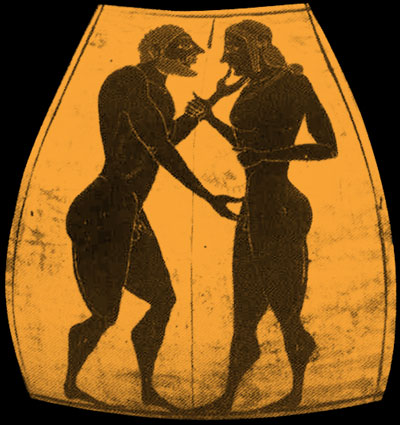
Though the SF Jacks, the gay jerk-off club now well into its third decade of existence in San Francisco, was started in the anxiety and agony of the AIDS epidemic, it shouldn’t be readily categorized as a safe sex for swingers party. No, these are guys that just really like to get themselves off in the company of like-minded individuals. Unlike some of the cruiser bars and clubs around town, Jacks’ weekly meetups take place in a well-lit room with minimal distractions from the show at hand – making it somewhat of a spiritual experience for some of its enthusiastic adherents. The peckerplay is moving operations to the Center for Sex and Culture this week, so the time, we think, is ripe for a look back at the group’s long line of love.

In? Just check out the group’s regular newsletters dating from the early ’80s to early ’90s — neatly preserved on its website — a fetching collage of Talmudic quotes, earnestly rendered dick art, and tantalizing record of theme nights past, including an appliance night, a Platonic love night (at which the Greek and the broad-shouldered were tempted with discounts on admission), and a flower-powered Hippiedick night. Now for the rest of the sex event explosion this week in the city. 


The League

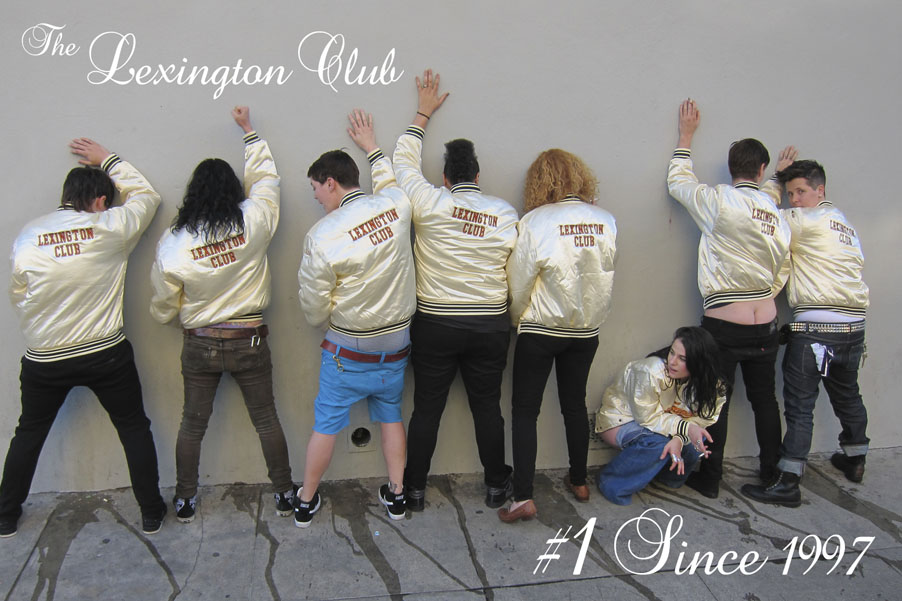
Time to get classy, all you fluidly-gendered folk. This night, part of Femina Potens‘ series of events at Mission Control, invites you to dress up dandy (top hat and spats), va-va-voom (backless gowns and vintage lingerie), or some mixture of the two (all of the above) and pose nattily while you are entertained by a talented evening cabaret. 

Weds/28 8 p.m.-midnight, $10 for members of Mission Control, free for Femina Potens members

Mission Control 

www.missioncontrolsf.org 


“How to Have Sex With a Transguy”

Pondering the matter yourself? Put your faith in Dr. Liam “Captain” Snowdon, who is teaching this class about ways to pleasure your transman. Roles in bed, the role of surgeries in sexual feeling, and more will all be touched on. All genders and orientations welcome!

Weds/23 6-8 p.m., $20-25

Good Vibrations

1620 Polk, SF

(415) 345-0500

www.goodvibes.com 


Hot Draw!

Calling all gay male artists – Mark I. Chester has a regular drawing session with quite a cast of characters assembled as models – so sharpen your pencils and get the sneer on that leather daddy just right or perfect your rendering of the shiny metal ring clamped about the life drawing model’s balls… attached to a rope… attached to the ceiling. At any rate, do your part to render the art of fetish into whatever medium most fluffs your creativity.

Thurs/17 6:30-9:30 p.m., suggested donation

Mark I. Chester studio

1229 Folsom, SF

www.markichester.com


Shibari Relief

“Come join us. We know what it’s like to live on a faultline.” Such is the pitch from Shibari Relief, a kinky fundraiser set up to aide our buddies affected by the Japanese earthquake/tsunami/nuclear threat/kitchen sink. The group will be setting up shop with an auction of kinky art and two tickets to this year’s Shibaricon in Chicago, among other kinky goodies. Come down off your ropes, kinky community, and do something good for our neighbors across the Pacific.

Sun/27 2-5 p.m., $20 suggested donation

Wicked Grounds

289 Eighth St., SF

(415) 503-0405

www.shibarirelief.org


SF Jacks

In need of a release, or maybe a good buddy? SF Jacks has both for the distinguishing homo – a room full of menfolk bonding over hot jerk-off action. Check your clothes at the door and get to wanking… 

Mon/28 7:30 p.m., $7 donation suggested

Center for Sex and Culture

1349 Mission, SF

(415) 267-6999

www.sexandculture.org


Alerts

0

alert@sfbg.com

WEDNESDAY, MARCH 23


Margaret Randall gets radical

Author, activist, and poet Margaret Randall talks with historian Roxanne Dunbar-Ortiz and reads from her book To Change the World: My Years in Cuba. Randall will discuss her life in Cuba during the 1970s and the relationship between women’s liberation and other revolutionary movements. No need to get a sitter for this event — childcare is provided by request.

7–9 p.m., $15

La Pena Cultural Center

3105 Shattuck, Berk.

www.lapena.org

THURSDAY, MARCH 24


An evening with Michael Pollan

Journalist Michael Pollan, best-selling author of The Omnivore’s Dilemma, explains how food policy is a cornerstone of the three major crises facing our society: energy, climate, and healthcare. He proposes a “Sun Food Agenda” that involves change at the level of the farm, marketplace, and culture to improve our health, reduce dependence on fossil fuels, and help redirect climate change. The event benefits Marin Organic.

7–8 p.m., $20–$75

Marin Center

10 Avenue of the Flags, San Rafael

www.marincenter.org

(415) 499-6800


Government surveillance in a digital world

Explore law and technology of digital surveillance in the United States with the Electronic Frontier Foundation, whose representatives explain how digital technology is changing the way we communicate and interact, often resulting in the unprecedented exposure of our personal details.

7 p.m., $5–$10

Intersection 5M

925 Mission. SF

www.theintersection.org

www.surveillance.eventbrite.com

SUNDAY, MARCH 27


Benefit for Lyon Martin

Help raise money for Lyon Martin Health Services, the only community clinic in California that emphasizes queer women and transgender healthcare, at a fundraiser and party featuring an art auction, good music, friendly faces, and fun. Proceeds go straight to Lyon Martin.

1–3 p.m., $10–$100 donation

El Rio

3158 Mission, SF

www.lyon-martin.org

SATURDAY, MARCH 26


Fundraiser for Peace and Justice Center

Help raise money for the Mount Diablo Peace and Justice Center at this live, silent auction for art, fine jewelry, weekend getaways, and more. Help the center continue to offer cultural programs to the Bay Area for a 43rd year.

11 a.m.–3 p.m., $5–$10 suggested donation

St. Paul’s Episcopal Church

1924 Trinity, Walnut Creek

www.mtdpc.org

TUESDAY, MARCH 29


Cesar Chavez celebration

Enjoy a day of performances, spoken word, and live music to celebrate the legacy of Cesar Chavez and the United Farm Workers. On the bill are Nina Serrano, Makru, Capoiera UCA, Cuahtli Mitotiani Mexica, and much more. BAHIA, Just Food, and others will also be on hand to provide information about green living.

3:30–7 p.m., free

Berkeley farmer’s market

Derby Street at Martin Luther King, Berk.

www.ecologycenter.org 2

Mail items for Alerts to the Guardian Building, 135 Mississippi St., SF, CA 94107; fax to (415) 437-3658; or e-mail alert@sfbg.com. Please include a contact telephone number. Items must be received at least one week prior to the publication date.

Dinner with the Clams

1

arts@sfbg.com

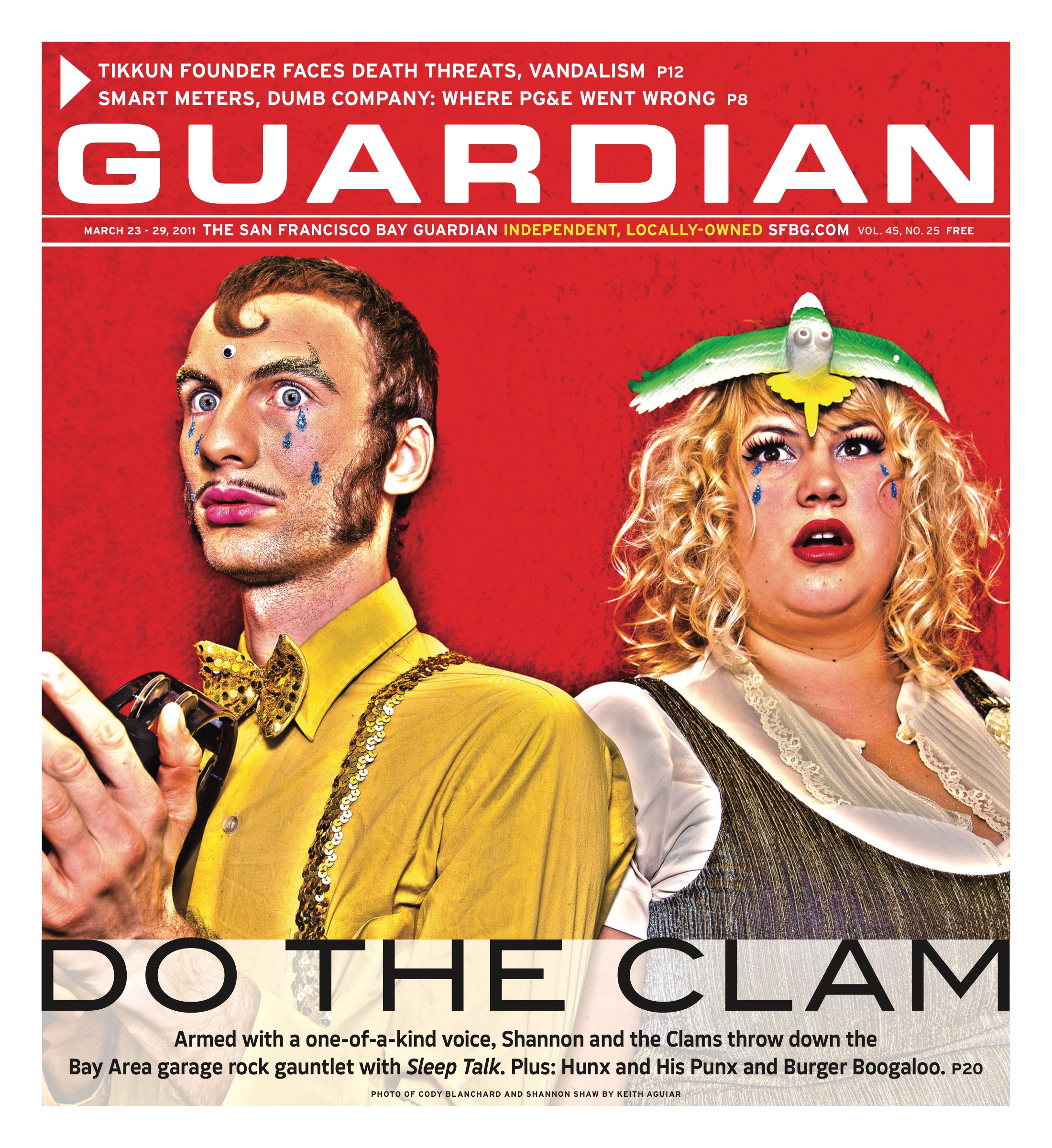
MUSIC “This is where the heartbeat is. Does that sound cocky?” Shannon Shaw, bold-voiced singer and bassist from Oakland’s Shannon and the Clams, is cautious how she answers my question. She’s in a booth, finishing up her fries at Grubstake, just off of Polk Street. The eatery is my suggestion for a pre-performance chat about the band’s new album, Sleep Talk (1-2-3-4 Go! Records), slated for release April 5.

Amid the bustling dinner-time sounds of the restaurant, Cody Blanchard, the guitarist, eats something vegetarian, while Ian Amberson, the group’s drummer, opts for the more traditional caldo verde soup. In a few hours Shannon and the Clams is playing a show at the nearby Hemlock Tavern, along with openers Guantanamo Baywatch — a Portland, Ore., band they admire — and Uzi Rash.

The heartbeat Shaw refers to is the Bay Area and its seemingly tight-knit music scene. I’d asked if the group’s members if they thought their success could have been achieved anywhere, or if it’s something particular to their Oakland stomping grounds.

“The Bay Area is defined by its history of fun punk — stuff like the Mummies, the Trashwomen, and the Bobbyteens,” Cody says, in acknowledgment of our locale’s rich garage rock history. But as much as they’re influenced by the “weird and wild people” they consider like-minded allies, and the strange beauty of Oakland’s abandoned neighborhoods, Shannon and the Clams’ inspiration also comes from a place in the past, no less strange, sort of dark, yet innocent. Their music is the sound of teenage despair.


NOT QUITE QUEERCORE

I first encountered Shannon and the Clams live at Oakland’s Stork Club in early 2009. I’d seen their ridiculous name around before, but didn’t know what to expect. They’d been categorized as everything from queercore to surf punk to the downright nauseating term retro-billy. “I think the people feel a kinship with us,” Cody says, discussing the group’s fan base. “People become really comfortable letting their freak flag fly.”

Still, Cody doesn’t think some of the labels assigned to the band were the best fit. “I’d rather musical genres have more to do with sounds instead of politics, gender, and sexuality,” he explains, while acknowledging that it isn’t how things often work.

On that night two years ago, Shannon and the Clams turned out a solid performance that incorporated oldies elements such as late-1950s, early-1960s vocal styles and instrumental sounds. The group even covered Del Shannon’s “Runaway,” which was the moment of confirmation for me. I knew I was hooked and wanted more.

The group’s version of “Runaway” is a keeper, but Shannon and the Clams isn’t just recycling rock ‘n’ roll hits from a repressive American era when feelings were bottled up, not talked about. The group’s songs and sound possess an individual spirit and personality that ranges from playful to feral, calm (a clam anagram) to cuckoo. Both shine through on Sleep Talk, the follow-up to 2009’s I Wanna Go Home, also on 1-2-3-4 Go! Records. The new collection of songs was written and recorded in three weeks.

The Bay Area’s most recent wave of psych and garage bands draws from the acid-soaked late-1960s, with results that often come out drone-y, druggy, and dreamlike. But the Clams obviously take note of the less-altered dawn of that same decade, before psilocybin and its closely associated synthetic cousin became the remedy reaction of youth and counterculture. Melodramatic songs of angst and lost love were common.

Shannon, a self-described square-but-morbid kid, admits to loving Roy Orbison’s “Crying.” “Any teenager death ballad, I was all over,” she says. A tragic mood is conjured on Sleep Talk‘s “Half Rat,” where the incessantly repetitive lyric longs for a soul mate’s return. It’s almost like when a loved one dies and you dream about them being alive, only to be disappointed when you wake up to the heartbreaking reality that nothing will ever bring them back. It’s no wonder that without a release other than singing, so many of the voices from the past were compelled to do some amazing things.


THAT VOICE

Raspy and powerful, Shannon’s voice has become a signature trademark. She shreds words, wails, and lets loose with an extended growl on “Done With You.” Her vocal delivery is raw, real, and out of control — one of a kind. Her vocals are one reason that it’s misleading to tag Shannon and the Clams as simply retro — it’s hard to imagine a June Cleaver-type belting out songs in this fashion, though maybe someone like Wanda Jackson would be up for the task.

“I think it’s out-of-body,” Shannon, says when asked about singing. “I just sometimes feel kind of possessed on stage, or like I’m excreting odd toxins or something.” She notes that other dynamic vocalists like Tina Turner, James Brown, and Irma Thomas bring a similarly unique intensity to live performance.

Wanda Jackson is a queen of rock ‘n’ roll, but it was another Jackson who inspired Shannon to get up on stage sing in public for the first time, at a karaoke bar during her “lowest of lows.” She performed a ballad famously delivered by a little boy who, sadly, was adult ahead of his time. “I didn’t sing publicly at all till I started playing [music] around three years ago, and I just knew I really needed to sing “Ben” [by Michael Jackson], and I needed to sing it right away,” she explains. “I didn’t care about being self-conscious.” After being accepted by her “grizzled karaoke comrades,” she found the strength and confidence to perform her own songs.

Cody, the Clams’ co-songwriter, is also no slouch behind the mic. On Sleep Talk‘s “Old Man Winter,” he sounds brilliant doing his rockabilly best, exaggerating the whooping, keening sounds Buddy Holly could make with his voice. He’s pretty keen on the originality of vocalists Hasil Adkins, Joey Ramone, and Marc Bolan, preferring sound over lyrical content.

“Amazing singing is something that feels to the singer like a compulsion or a nervous tick, as if that singer can’t do anything to keep themselves from crying out,” he says. “They must do it or they’ll go nuts, and they just invent these bizarre sounds.”


WE JUST WANNA BE WEIRD

On the subject of songwriting, Cody uses vivid imagery to describe a T-Rex- that “kidnaps” him and takes him away to a “glittery, horny, spaced-out fantasy world.” I guess Clam nation can’t all be doom and gloom. Indeed, a typical Shannon and the Clams show finds the band in colorful costume, making inventive use of capes, fast-food outfits, and other assorted disguises. This past Halloween they even dressed as Devo for a night of cover songs.

Shannon and the Clams’ affinity for cartoons, jingles, and campy commercialism is apparent. On Sleep Talk‘s cover art, photographed by Keith Aguiar, Shannon and Cody are buried in what looks like a landfill of stuffed animal nostalgia and familiar characters. The imagery is indicative of their bubblegum side and love of Jim Henson’s Muppets. Cody points out that the people behind those Muppet tunes were pretty solid songwriters. On “The Cult Song,” listeners might even detect a vocal tribute to the Cookie Monster, if not Keith Moon circa “Boris the Spider.”

The name Joe Meek pops up more than once in conversation. “I love how Meek’s records sound, so inventive and strange,” Cody says, regarding the innovative Space Race-era producer behind “Telstar,” an instrumental No. 1 hit by the Tornados. “And he seemed totally nuts.”

Shannon and the Clams haven’t yet rocketed to the moon, but a trip to South by Southwest and a tour with Hunx and His Punx are part of their immediate travel plans. I ask what comes after that. “I feel like something [currently] brewing in Oakland is much weirder caveman-type music,” Shannon says, in anticipation of the scene’s next wave of creativity. “Can we just be weirdo, other rock ‘n’ roll?”

Cody is convinced that the dedication of the Bay Area music scene is unique and undying. “I can’t think of any other cities that are so enthusiastic about [music],” he says. “It just keeps coming. Waves of all kinds come and go.” If you think Shannon and the Clams are riding the wave for teenage kicks and landing in tragic territory, you’re partly right — and it’s working. Right now, with Sleep Talk, you’ve got a second dose.

Lucky charms, safe journeys

0

arts@sfbg.com

VISUAL ART A sense of play — more street-smart than sentimental; international, but also attuned to a universal understanding of nature — is central to Yukako Ezoe’s art. Ezoe’s vividly colorful paintings and collages and vibrant jewelry work are informed by her experiences as a student and teacher, and often directly connected with everyday necessities and pleasures. Ezoe has curated and contributed to a show of kite art and made a revealing single-edition photo-interview book about the myriad barbershops in the Mission. She and her husband, the artist and DJ Naoko Onodera, often show work under the name Bahama Kangaroo, and she’s used that moniker for her first solo show, at Kokoro Studio. Ezoe has upcoming shows at Ritual Cafe and Edo Salon, and this week she’s taking part in “Rise Japan,” a fundraiser for earthquake and tsunami relief in Japan. We sat down together recently for a midafternoon talk.

SFBG How did the name Bahama Kangaroo come about?

Yukako Ezoe Naoki [Onodera] has an album titled Bahama Kangaroo. It’s beachy ’70s disco. Jonh Blanco and I were working on an event for Indie Mart and trying to figure out what the name of our craft team, and I asked Jonh to listen to the record. He said, “Our team should be Bahama Kangaroo!” Then Naoki and I ran with it.

SFBG The badminton dreamcatchers you’ve made have a number of facets: the spider’s web-like stringing and also the MP3s you place in the badminton racquets’ handles to record dreams or ideas. What was the inspiration behind them?

YE Futurefarmers had asked me to contribute to a show in which the theme was “What’s your learning journey?” While I went to school, I learned and got ideas while I was hanging out with friends and playing. So the voice recorder in the badminton dreamcatchers is like a memo or school tool.

The gold badminton dreamcatchers were part of a badminton show that Hana Lee, Leslie Kulesh, and I did at the Diego Rivera Gallery at San Francisco Art Institute. We turned the whole gallery into a gym.

SFBG Is there a creative interplay between your teaching and art making?

YE I think so. I get ideas from students. Seven-year-olds will draw something monstrous and I’ll be influenced by it.

The homeless kids I work with [at Larkin Street Youth Center] are super-ambitious and straightforward. They’ll crush something to make it fit within a work. The kids at Lark Inn are in survival mode. If I’m trying make a dreamcatcher, they don’t want to do it. If I do sewing or make wallets or notebooks, they’re into it.

SFBG Two artists mentioned in the writing connected to your current show at Kokoro Studio are John Audubon and Yokoo Tadonori. They make for a great, unexpected combination.

YE I love Yokoo Tadonori’s use of composition and his juxtapositions. One of his pieces has a salaryman hanging right in the middle of it. I don’t like it, but it’s brutal and cruel — and true.

SFBG Your compositions are often symmetrical. Why’s that?

YE I used to do monoprinting, and I was obsessed with the geometric [aspects of] library catalogs, airplane tickets, and blueprints. That’s stuck with me. I’m also OCD-ish, too, I have a whole bunch of drawers filled with weird things.

SFBG Kokoro Studio’s writing for “Bahama Kangaroo” also mentions self-portraiture, which might not be obvious when you look at the work. I went in wondering if there were going to be paintings of you.

YE No way! [laughs] A solo show is sort of about you — artist ego [laughs]. But the pieces are portraits of my thoughts and ideas. In one, I’m like an owl, spacing out and thinking. The two lions in some pieces are like me and Naoki doing a high five. Another piece, Too Many Bats, has to do with how hard and competitive it is to be an artist. I’ll think of people and turn them into characters.

SFBG Framing is present as an element within some of your recent paintings and collages. How did that come about?

YE I’ve been influenced by Afghan trucks. There’s a book of photos of them [Afghan Trucks, by Jean-Charles Blanc]. They’re a bit like trucks with murals on the side. Back in the day, travelers would decorate their camels with lucky charms so they’d have safe journeys, and nowadays they do it with trucks.

SFBG What are you working on at the moment?

YE Right now I’m making jewelry, altering clothing, and cleaning my room. I go back and forth [between different activities and forms].

I used to work for a bridal jewelry store that was really bling-y. I want my jewelry to be more sculptural, and to have a clustered quality that’s similar to the collages I make. *

BAHAMA KANGAROO: ART BY YUKAKO EZOE

Through Thurs/24

Kokoro Studio

682 Geary, SF

(415) 400-4110

www.kokorostudio.us

RISE JAPAN: JAPAN EARTHQUAKE AND TSUNAMI RELIEF FUNDRAISER

Kokoro Studio

also: Gallery Heist

679 Geary, SF

(415) 563-1708

www.galleryheist.com

Motion pictures

0

arts@sfbg.com

DANCE Dance and the camera have a long-lasting love/hate relationship. Films that honor the art, such as 1948’s The Red Shoes or 1951’s An American in Paris with its extraordinary dream sequence, are rare. Although dancers like that their performances acquire an afterlife, they also hate giving up three-dimensionality for two-dimensional space. Nor are they fond of editing practices that alter continuity, control a viewer’s focus, and favor smiles over feet. Nonetheless, a recently discovered snippet of film that showed Diaghilev’s Ballets Russes in a blurry clip of Les Sylphides, apparently the only extant film of the legendary company, sent dance historians into a tizzy.

Now in its second annual incarnation, the San Francisco Dance Film Festival concerns itself with more contemporary dance films. The advent of inexpensive, lightweight cameras has made possible a new genre, “screendance,” which features choreography designed for the camera. Los Angeles and New York City have long had had festivals honoring these creations. Now the Bay Area, after previously unsuccessful attempts by presenters like Cynthia Pepper and Charlotte Shoemaker, is getting its own look at what’s floating out there. “We received 110 submissions from 25 countries,” producer Greta Schoenberg says of this year’s selection process.

Schoenberg has assembled a program in which shorts are bookended by longer films such as Victoria Marks’ ground-breaking 1993 Outside In and the San Francisco premiere of Finite and Infinite by RJ Muna, who is best known for his spectacularly airborne dance photography. Historian/critic Joanna Harris will also show rare films of Bay Area dance pioneers and work by avant-garde filmmaker Maya Deren.

In the Bay Area, a small but growing group of dancers is intrigued by the specific requirements of dancing for the camera. Among them are Private Freeman, Nol Simonse, and Maria Kotchekova, who in 2009 won the solo gold medal on the TV show Superstars of Dance. Schoenberg cast her film noir Nightingale, which receives its world premiere at the sold-out opening night gala, with local dancers. Freeman is one of them.

“I like the idea that film can focus a viewer as long as it wants,” Freeman says. “I also like that you have a 360-degree sense of space. You are working with different concepts of continuity and detail. At the same time, when you have several takes, you need to remember how exactly you had positioned your leg.”

Brevity, with most works typically lasting between three and 10 minutes, characterizes most “screendances” Even the experienced Mitchell Rose, who recently moved to the Bay Area to teach Dance on Camera at Mills College, stuck to this YouTube-friendly time frame when making his wondrous Modern Daydreams: Part One (2001).

The 18 selections in this year’s San Francisco Dance Film Festival stick to the norms. Marta Renzi’s Texas Plate (2007), a romance to music by singer-songwriter Patti Scialfa, is two minutes. A journey onto a wooded mountain, Stronger (2010), by the U.K.’s Wilkie Branson, takes four minutes. Dutch director Carmen Rozestraten’s trip into a Catalan woman’s dream world in After the Water the Clouds (2009) requires nine.

Neither Schoenberg nor documentary and experimental filmmaker Ben Pierce — a former San Francisco Ballet principal dancer who showed work in last year’s festival — can explain the logic behind the short format. Perhaps, they suggest, it’s what audiences want to see, and what festivals like theirs prefer to program. The time frames of YouTube, where a lot of these works end up, is a definite reason. Lack of financing for bigger projects may be another. It’s also possible that the creators of these collaborative ventures haven’t developed the necessary technical chops to master longer works yet.

One festival juror intrigued by the buzz around dance on screen is ODC associate director and choreographer KT Nelson. She finds herself fascinated by the idea of honing in very closely to the body (“Let’s say to the crook of an elbow”) or to create a work in a completely different setting (“Water, for instance”). She hasn’t jumped in yet — but there’s always next year.

SAN FRANCISCO DANCE FILM FESTIVAL

Thurs/24 through Sun/27, $10–$25 ($75–$125 for workshops)

See website for venues

www.sfdancefilmfest.org

Fruits of labor

0

arts@sfbg.com

FILM One of the first things cinema learned to say was “you are there.” The Lumières sent their lightweight cameras around the world and were soon able to transport their Parisian audience to remote settings — a fine flexing of industrial capitalism. If Werner Herzog used to have the market on art-cinema primitivism cornered, the recent films making up the “First Person Rural” series at the Pacific Film Archive take a different tack, disavowing outlandish narratives of madness and expedition for reality-hungry visions of work and rough beauty. As a group, they privilege phenomenal experience to exposition; affective texture to intelligibility; nonverbal utterance to patent explication. They often seem more in line with epic poetry than documentary realism.

Argentine director Lisandro Alonso’s stoic debut La Libertad (2001) led the way to many of the decade’s shorn agricultural narratives. To begin, we watch a young man work a tree into lumber and eat and nap in a lean-to a few shades rougher than Thoreau’s Walden. In the film’s second half, the man turns his labor into capital, transporting, selling, and spending before returning to camp to eat a freshly caught armadillo as lightning flashes in the distance. The slow time of the man’s routines defines the temporality of the film, and Alonso’s bold compositions in turn monumentalize the man’s tasks. What to make of this aesthetic surplus of the man’s labor remains an open question.

The issue of poetic license is even more pressing in Agrarian Utopia (2009), a work of social (hyper) realism focused on a family of Thai subsistence farmers. In contrast to their crushing penury is the rich HD cinematography: every grain of rice and droplet of water makes its stunning mark. Hitching scripted social drama to a loose documentary style joining scenes, director Urophong Raksasad proposes three possible utopic frameworks for the farming family: urban demonstrations calling for political reform, a hippie neighbor’s sustainable farming practices, and the ecstatic vision of the camera itself. The limitations of the first two should give us pause over the third; this is the rare film about poverty that doesn’t imagine its lyricism as a redemptive force.

There’s no question of any kind of utopia in Eugenio Polgovsky’s Tropic of Cancer (2004), a video report from the Mexican desert that’s bruising and cunning in equal measure. Polgovsky shows us the hard lives of peasants who scour the arid landscape for (unfriendly) critters they can sell alongside a godforsaken highway. Their middle-class customers seem primarily concerned with animals’ living conditions — one of many bitter ironies registered in Polgovsky’s sharply assertive montage.

Strong as it is, Tropic of Cancer doesn’t cry out for repeat viewings — not the case with Sweetgrass (2010) and Alamar (2009), both among the finest films of recent years. With Sweetgrass especially, it’s only after you’ve surrendered to its sensory richness as a recording (the multichannel sound mix combines with the physical camerawork for a nearly Whitmanesque extension of perception) that you can begin to digest its cross-purposed contemplation of the final sheep drive across a mountainous western-mythic landscape.

Writing about Jean-François Millet’s peasant subjects, the critic John Berger observed that the French painter’s personal nostalgia extended to history: “Most of what he knew about peasants was that they were reduced to a brutal existence, especially the men. He sensed, it seems to me, two things which, at the time, few others foresaw: that the poverty of the city and its suburbs; and that the market created by industrialization, to which the peasantry was being sacrificed, might one day entail the loss of all sense of history.” The “First Person Rural” films mark this loss with immersion, and in so doing leave us with the lingering sense that it is we and not the films’ subjects who are “out of time.”

“FIRST PERSON RURAL: THE NEW NONFICTION”

March 26–April 27, $5.50–$9.50

Pacific Film Archive

2575 Bancroft, Berk.

(510) 642-5249

www.bampfa.berkeley.edu

Teenage ghosts

0

MUSIC Hold a séance on a wet afternoon or rainy evening. Party down and commiserate with the ghosts and dancing skeletons of wrecked love past as they float from your stereo. Put on Dirty Beaches’ Badlands (Zoo Music) and Hunx and His Punx’s Too Young to Be in Love (Hardly Art) and invite the dead boyfriends and lonesome girlfriends of ’60s teenage rock and pop to shimmy with your ex- memories in the living room. Meet 2011 with them, alone.

The motor at the center of Dirty Beaches’ “A Hundred Highways” is the melody of “I Will Follow Him,” an emphatic-to-the-point-of-crazed declaration of affection made popular in 1963 by a four-foot nine-inch 14-year-old named Little Peggy March. A man-band from Vancouver, B.C., Alex Zhang Hungtai transforms the vocal of March’s hit into a brittle, rusty bassline that’s like a piston from the title vehicle of John Carpenter’s 1983 film Christine, and then douses it with corrosive flames of distorted guitar, brooding into his mic all the while.

The sinister allure of “A Hundred Highways” is enhanced by a cultural connotation that flickers outside of the song itself, namely Kenneth Anger’s use of March’s version of “I Will Follow Him” (as well as her pathos-ridden 1963 ballad “Wind-Up Doll”) in the 1964 film Scorpio Rising. In Anger’s movie, March’s song strikes a comic note, accompanying Hollywood footage of Jesus, but the malevolent spell characteristic of Anger’s overall work is what carries over to the sound of Dirty Beaches, as much as the anguished yelps and cries and sonic minimalism of Suicide, the group always referenced in writing about Hungtai’s music.

History, personal and societal, has a way of adding dark undercurrents to songs that might seem innocent at first. David Lynch and Martin Scorsese learned this from Anger, and the documentary filmmaker Adam Curtis mines this to revelatory effect in the 2009 movie It Felt Like A Kiss, which uses songs produced and recorded by convicted murderer Phil Spector — most potently, the Crystals’ 1962 “He Hit Me (And It Felt Like a Kiss” and Tina Turner’s 1966 “River Deep, Mountain High” — to score an account of the 1960s that’s as attuned to all-too-human triumphs and failures as it is to the insidious undercurrents and machinations of governmental forces. Good times go bad.

Hunx of Hunx and His Punx is familiar with a different kind of Badlands than the war zones zeroed in on by Curtis, or the Jesus and Mary Chain-esque one invoked by Dirty Beaches’ album title. The songs on Too Young to Be in Love are overtly gay, in the sense that he’s singing about boys and men, but to pigeonhole them as gay music would be not just blinkered, but blind to the innovative aspect of the group’s dynamic, which refashions and outright recasts old rock and pop sounds of female and male desire and emotion in new ways.

The traditional if not downright hoary emblem-bearer of “gay music” is the dancefloor diva, ever ready to express the need for everlasting love or tonight’s trick via a sampled or studio-processed wail. Hunx and His Punx create a different dynamic, with Hunx (a.k.a. Seth Bogart) and bandmate Shannon Shaw trading vocals in a manner that counters unbridled true romance with an irony gleaned from experience.

Too Young to Be in Love‘s opening track “Lovers Lane” sounds as classically ’50s-’60s retro as its title, yet Shaw’s untamed, hair-raising voice haunts the deathly boy-loses-boy scenario that Bogart stars in and narrates, arch and sincere in turn. We all want to go to lovers’ lane, but do we want to stay there, in the dark?

At other ingenious times, Hunx’s band is a girl-gang warning bashers and bullies to back off from his romance (“My Boyfriend’s Coming Back”). They harmonize with Hunx as he traipses faux-innocently away from heartbreak (Too Young to Be in Love‘s sublime title track) and with Bogart as he stares down the legacy of his father’s suicide (the closer, “Blow Me Away”). On the classic “The Curse of Being Young,” Hunx does his best Mary Weiss while his bandmates supply the sophisticated boom boom, adding a little more yearning with each chorus, until the listener is left alone with Shaw’s feral, fateful incantation. Games of keep away have lasting impact. Bad boys navigate badlands and sometimes wind up bad men. Maybe you’re never too old to be too young to be in love.

Harmonic canons

0

THEATER A gorgeous clutter of instruments fills the stage at Z Space/Theater Artaud this week, and audiences, after an eye- and earful of Schick Machine, are invited to go up and play them, too. A musical background is unnecessary: Nothing on stage likely resembles anything you grew up practicing, and anyway all that’s called for is a little rhythm. The show itself gives you a healthy dose, amid a wonderfully designed, gently madcap, almost cosmological musing on the nature and origins of rhythm as well as our yearning embrace of it (and vice versa).

The Paul Dresher Ensemble’s Schick Machine — a collaboration with, among others, writer/director Rinde Eckert — gives the stage over to master percussionist and contemporary music veteran Steven Schick. In the character of musical inventor Laszlo Klangfarben, Schick wanders around a garden playground laboratory of ingeniously crafted percussive and stringed instruments (composer Dresher’s fanciful yet practicable inventions), against a video backdrop evocative of everything from superstrings to abstract expressionist painting to architectural blueprints and scientific scribblings. The instruments of wood and steel form elegant ridges, playful spirals, majestic fans, Ferris wheel–like magic circles, and sonic tulip patches — a kind of Eden for a lone but rarely lonesome madman. Schick’s balding head and glasses compliment the mad scientist look, though his outfit — a high blue apron over white shirt and thin tie — calls to mind an old fashioned small-town grocer.

The thinly-sketched narrative is an excuse for a quiet and contemplative piece of theater, though great explosions of rhythm are mixed in with the goofy humor and crisp, enrapturing visual aesthetic. At the center of it all, the piece suggests, is a single heartbeat.


LADY GREY AND OTHERS

Will Eno’s plays (or at least the half-dozen I’ve seen and/or read) tend toward being tongue-in-cheek questions about the relevance of theater, whether as an art form, a social undertaking, or a compliment to dining out. Self-consciousness is both a conceit and strategy here, the basis for playing with inherited forms and conventions as well as an unevenly successful but sometimes rich brand of humor. The best plays not only win laughs but some pang of recognition, through a deft balancing of the profound and the banal. The less successful plays devolve into pretentiousness and sentimentality. In any case, the idea that the traditional theatrical stage is being overturned can only be indulged if you consider a pretty small section of it.

In Cutting Ball Theater’s presentation of Will Eno’s Lady Grey (in ever lower light) and other plays it’s those inconspicuous “other plays” that are most worth seeing. Lady Grey, like the title suggests, is a shadow of former glory, to wit, Eno’s 2004 breakthrough play, Thom Pain (based on nothing), whose structure — up to and including the title itself — provides the template for this play. Cutting Ball had deserved success with Thom Pain, thanks to actor Jonathan Bock, playing no small part but a big and lonely one: the angry, tortured, sarcastic young man who single-handedly holds the audience hostage for an hour or so, assailing it with words, suspect memories, and bold staring contests.

Lady Grey calls for a similar fearlessness and fierceness, depositing onstage something like a female version of Thom Pain to accost and cajole the “audience” (here too much a written idea of one to avoid those scare quotes) across the fourth wall. In the title and only role, Danielle O’Hare, as directed by Cutting Ball’s Rob Melrose, was inconsistent if occasionally beguiling, rarely seeming to step out from behind the text, or rather to completely own its conceit of not being a text. But Melrose and O’Hare, who have done memorable work together in the past, are also essaying a less inspired play. Grey adds up to a hit-and-miss series of one-liners, not a very compelling total.

The other two short plays that make up the fairly brisk evening prove more rewarding. Intermission, which opens directly after one, is an amusing and almost wise desultory conversation between an older couple (Gwyneth Richards and David Sinaiko), and a younger one (Galen Murphy-Hoffman and O’Hare), during the intermission of a seemingly tedious play about life and death. Melrose gets superbly dry performances from his cast, doing full justice to this light but cunning little play riffing on theater’s capacity for channeling yearning, regret, and blank obliviousness.

Cutting Ball regular Sinaiko then returns for the archly histrionic monologue Mr. Theatre Comes Home Different, a piece that the actor — playing an actor reveling in a state of decidedly Eno-esque self-consciousness — rocks with utter conviction. It’s a high note to end on and, for all the seeming ambivalence and sentiment in this slice of Eno’s oeuvre, went perfectly well with dinner.

SCHICK MACHINE

Through Sun/27, $10–$20

Z Space

450 Florida, SF

(800) 838-3006

www.brownpapertickets.com

LADY GREY (IN EVER LOWER LIGHT)

Through April 10, $15–$50

EXIT on Taylor

277 Taylor, SF

(800) 838-3006

www.brownpapertickets.com

Music Listings

0

Music listings are compiled by Cheryl Eddy. Since club life is unpredictable, it’s a good idea to call ahead to confirm bookings and hours. Prices are listed when provided to us. Submit items for the listings at listings@sfbg.com. For further information on how to submit items for the listings, see Picks.

WEDNESDAY 23

ROCK/BLUES/HIP-HOP

Antonionian, Doseone, Jel Rickshaw Stop. 8pm, $10.

Burmese, Vaz, Rabbits Knockout. 9pm, $6.

Esben and the Witch, Julianna Barwick, Hungry Kids of Hungary Bottom of the Hill. 9pm, $10.

Otis Heat, Diamond Light, Caldecott Hotel Utah. 9pm, $8.

Theophilus London, Alexander Spit, The 87 Stick Up Kids, C Plus and Duckworth 330 Ritch. 9pm, $17.

Tecumseh, Derek Moneypenny, Opera Mort, Caldera Lakes Hemlock Tavern. 9pm, $7.

Wakey! Wakey!, All Smiles Café Du Nord. 8:30pm, $12.

JAZZ/NEW MUSIC

Alfredo Rodriguez Trio Yoshi’s San Francisco. 8 and 10pm, $10-18.

Cat’s Corner with Christine and Nathan Savanna Jazz. 9pm, $10.

Cosmo Alleycats Le Colonial, 20 Cosmo, SF; www.lecolonialsf.com. 7pm.

Dink Dink Dink, Gaucho, Michael Abraham Amnesia. 7pm, free.

Ben Marcato and the Mondo Combo Top of the Mark. 7:30pm, $10.

FOLK/WORLD/COUNTRY

Green, Through the Roots, Thrive Great American Music Hall. 9pm, $13.

Matt Turk Revolution Café, 3248 22nd St, SF; (415) 642-0474. 8:30pm, free.

DANCE CLUBS

Booty Call Q-Bar, 456 Castro, SF; www.bootycallwednesdays.com. 9pm. Juanita Moore hosts this dance party, featuring DJ Robot Hustle.

Buena Onda Little Baobab, 3388 19th St., SF; (415) 643-3558. 10pm, $3. Soul, funk, swing, and rare grooves with residents Dr. Musco, DJB.

Cannonball Beauty Bar. 10pm, free. Rock, indie, and nu-disco with DJ White Mike.

Club Shutter Elbo Room. 9pm, $5. Goth with DJs Nako, Omar, and Justin.

Jam Fresh Wednesdays Vessel, 85 Campton, SF; (415) 433-8585. 9:30pm, free. With DJs Slick D, Chris Clouse, Rich Era, Don Lynch, and more spinning top40, mashups, hip hop, and remixes.

Mary-Go-Round Lookout, 3600 16th St, SF; (415) 431-0306. 10pm, $5. A weekly drag show with hosts Cookie Dough, Pollo Del Mar, and Suppositori Spelling.

No Room For Squares Som., 2925 16th St, SF; (415) 558-8521. 6-10pm, free. DJ Afrodite Shake spins jazz for happy hour.

Respect Wednesdays End Up. 10pm, $5. Rotating DJs Daddy Rolo, Young Fyah, Irie Dole, I-Vier, Sake One, Serg, and more spinning reggae, dancehall, roots, lovers rock, and mash ups.

Synchronize Il Pirata, 2007 16th St, SF; (415) 626-2626. 10pm, free. Psychedelic dance music with DJs Helios, Gatto Matto, Psy Lotus, Intergalactoid, and guests.

THURSDAY 24

ROCK/BLUES/HIP-HOP

Acid Mothers Temple & The Melting Paraiso U.F.O., Shilpa Ray & Her Happy Hookers Bottom of the Hill. 9:30pm, $12.

Blind Willies Blue Macaw, 2565 Mission, SF; (415) 920-0577. 8pm.

Curious Mystery, Greg Ashley, Zoobombs Knockout. 9:30pm, $6.

Quinn Deveaux Amnesia. 9pm, $5.

Dispirit, Atriarch, Alaric El Rio. 8pm, $8.

Shane Dwight Biscuits and Blues. 8 and 10pm, $15.

Liam Finn, Luyas Independent. 8pm, $15.

Flexx Bronco, Spittin’ Cobras, Hewhocannotbenamed, Crawler Thee Parkside. 9pm, $8.

Kids of 88, Art vs. Science Rickshaw Stop. 9pm, $10-20.

Music for Animals, Foreign Resort, Matinees Hemlock Tavern. 9pm, $7.

Naughty By Nature Yoshi’s San Francisco. 8pm, $38.

Sky Parade, Grand Atlantic, Parties, Modern Day Sunshine Hotel Utah. 8pm, $8.

Soul Man Revolution Café, 3248 22nd St, SF; (415) 642-0474. 8:30pm, free.

Toro Y Moi, Braids, Cloud Nothings Great American Music Hall. 7:30pm, $15.

JAZZ/NEW MUSIC

Derek Smith Latin Jazz Band and director Dee Spencer SFSU Jazz Bands Savanna Jazz. 7:30pm, $10.

Jane Monheit SF Conservatory of Music, 50 Oak, SF; www.sfjazz.org. 7:30pm, $30-50.

Organsm featuring Jim Gunderson and “Tender” Tim Shea Bollyhood Café. 6:30-9pm, free.

Paul Drescher Ensemble 25th Anniversary Z Space, 450 Florida, SF; www.brownpapertickets.org. 7pm, $20.

Stompy Jones Top of the Mark. 7:30pm, $10.

FOLK/WORLD/COUNTRY

Kris Delmhorst Café Du Nord. 8pm, $18.

JimBo Trout and the Fishpeople Atlas Café. 8-10pm, free.

“Twang! Honky Tonk” Fiddler’s Green, 1330 Columbus, SF; www.twanghonkytonk.com. 5pm.

DANCE CLUBS

Afrolicious Elbo Room. 9:30pm, $5. DJs Pleasuremaker and Señor Oz spin Afrobeat, tropicália, electro, samba, and funk.

Caribbean Connection Little Baobab, 3388 19th St, SF; (415) 643-3558. 10pm, $3. DJ Stevie B and guests spin reggae, soca, zouk, reggaetón, and more.

Drop the Pressure Underground SF. 6-10pm, free. Electro, house, and datafunk highlight this weekly happy hour.

80s Night Cat Club. 9pm, $6 (free before 9:30pm). Two dance floors bumpin’ with the best of 80s mainstream and underground with Dangerous Dan, Skip, Low Life, and guests.

Gigantic Beauty Bar. 9pm, free. With DJs Eli Glad, Greg J, and White Mike spinning indie, rock, disco, and soul.

Guilty Pleasures Gestalt, 3159 16th St, SF; (415) 560-0137. 9:30pm, free. DJ TophZilla, Rob Metal, DJ Stef, and Disco-D spin punk, metal, electro-funk, and 80s.

Jivin’ Dirty Disco Butter, 354 11th St., SF; (415) 863-5964. 8pm, free. With DJs spinning disco, funk, and classics.

Mestiza Bollywood Café, 3376 19th St, SF; (415) 970-0362. 10pm, free. Showcasing progressive Latin and global beats with DJ Juan Data.

1984 Mighty. 9pm, $2. The long-running New Wave and 80s party has a new venue, featuring video DJs Mark Andrus, Don Lynch, and celebrity guests.

Peaches Skylark, 10pm, free. With an all female DJ line up featuring Deeandroid, Lady Fingaz, That Girl, and Umami spinning hip hop.

Thursday Special Tralala Revolution Café, 3248 22nd St, SF; (415) 642-0474. 5pm, free. Downtempo, hip-hop, and freestyle beats by Dr. Musco and Unbroken Circle MCs.

FRIDAY 25

ROCK/BLUES/HIP-HOP

Beats Antique Fillmore. 9pm, $20.

Bruises, Hold Me Luke Allen, Eighteen Individual Eyes El Rio. 9pm, $5.

Elle Nino, Club Crasherz, Double Duchess Hotel Utah. 9pm, $8.

Good Charlotte, This Century Regency Ballroom. 8pm, $28.

Hot Panda, Twinks, Watch It Sparkle Hemlock Tavern. 9:30pm, $7.

Candye Kane Biscuits and Blues. 8 and 10pm, $20.

King Tuff, Personal and the Pizzas, Rantouls, Wrong Words, King Lollipop Thee Parkside. 9pm, $10.

Ed Kowalczyk Yoshi’s San Francisco. 8pm, $30.

James Lanman and the Good Hurt, Mark Sexton Band, Dylan Cannon Café Du Nord. 9pm, $10.

Men, Lady Tragik, Katastrophe Rickshaw Stop. 8:30pm, $12.

Saw Doctors, AM Taxi Slim’s. 8pm, $24.

Smoking Popes, New Trust, Hot Toddies Great American Music Hall. 9pm, $15.

Taj Mahal, Lady Bianca Independent. 9pm, $40.

Wye Oak, Callers, Sands Bottom of the Hill. 10pm, $12.

JAZZ/NEW MUSIC

Black Market Jazz Orchestra Top of the Mark. 9pm, $10.

Lacemaking: Katy Stephan with the Nice Guy Trio Red Poppy Art House. 8pm, $12-20.

Paul Drescher Ensemble 25th Anniversary Z Space, 450 Florida, SF; www.brownpapertickets.org. 8pm, $20.

Marlina Teich Savanna Jazz. 7:30pm, $8.

Adam Theis and the Jazz Mafia String Quartet Swedish American Hall (upstairs from Café Du Nord). 8pm, $25.

Tin Cup Serenade Revolution Café, 3248 22nd St, SF; (415) 642-0474. 9pm, free.

FOLK/WORLD/COUNTRY

Albino!, Mark Edwards, DJ Spincycle Elbo Roon. 10pm, $10.

Baxtalo Drom Amnesia. 9pm, $7-10.

DANCE CLUBS

Afro Bao Little Baobab, 3388 19th St, SF; (415) 643-3558. 10pm, $5. Afro and world music with rotating DJs including Stepwise, Steve, Claude, Santero, and Elembe.

Cityfox Showcase Public Works, 161 Erie, SF; www.cityfox.eventbrite.com. 9pm. With Digitaline, Lee Jones, James What?, and more spinning deep house and techno.

Debaser 111 Minna. 9pm, $5. The 90s party celebrates its third anniversary with a Fugazi cover band and DJs Jamie Jams, Emdee, and Stab Master Arson.

Duniya Dancehall Blue Macaw, 2565 Mission, SF; (415) 920-0577. 10pm, $10. With live performances by Duniya Drum and Dance Co. and DJs dub Snakr and Juan Data spinning bhangra, bollywood, dancehall, African, and more.

Exhale, Fridays Project One Gallery, 251 Rhode Island, SF; (415) 465-2129. 5pm, $5. Happy hour with art, fine food, and music with Vin Sol, King Most, DJ Centipede, and Shane King.

Fubar Fridays Butter, 354 11th St., SF; (415) 863-5964. 6pm, $5. With DJs spinning retro mashup remixes.

Good Life Fridays Apartment 24, 440 Broadway, SF; (415) 989-3434. 10pm, $10. With DJ Brian spinning hip hop, mashups, and top 40.

Hot Chocolate Milk. 9pm, $5. With DJs Big Fat Frog, Chardmo, DuseRock, and more spinning old and new school funk.

Hubba Hubba Revue: The 90s Show DNA Lounge. 9pm, $10-15. Burlesque plus DJs spinning 90s jams.

Psychedelic Radio Club Six. 9pm, $7. With DJs Kial, Tom No Thing, Megalodon, and Zapruderpedro spinning dubstep, reggae, and electro.

Rockabilly Fridays Jay N Bee Club, 2736 20th St, SF; (415) 824-4190. 9pm, free. With DJs Rockin’ Raul, Oakie Oran, Sergio Iglesias, and Tanoa “Samoa Boy” spinning 50s and 60s Doo Wop, Rockabilly, Bop, Jive, and more.

Some Thing Stud. 10pm, $7. VivvyAnne Forevermore, Glamamore, and DJ Down-E give you fierce drag shows and afterhours dancing.

Soul Rebel Koko Cocktails, 1060 Geary, SF; www.kokococktails.com. 10pm, free.

Spindig Happy Hour Knockout. 6-9pm, free. With Ryan Poulsen, Joe Bank$, and Stef playing rap, punk, and everything in between.

Teenage Dance Craze: The Number One Twisting Party in the Universe Knockout. 10pm, $4. Surf, garage, soul, and more with Russell Quan and dX the Funky Granpaw.

Vintage Orson, 508 Fourth St, SF; (415) 777-1508. 5:30-11pm, free. DJ TophOne and guest spin jazzy beats for cocktalians.

SATURDAY 26

ROCK/BLUES/HIP-HOP

Appleseed Cast, Muscle Worship Great American Music Hall. 9pm, $15.

Beautiful Losers Café Royale, 800 Post, SF; (415) 641-6033. 8pm, free.

Blue Roan Filly, Pie Crust Promises, Steel Hotcakes El Rio. 9pm, $7.

Davila 666, Mean Jeans, Biters, Booze Thee Parkside. 9pm, $10.

Ha Ha Tonka, Hoots and Hellmouth, Devil’s Own Hotel Utah. 9pm, $10.

“Jason Becker’s Not Dead Yet Festival” Slim’s. 9pm, $25. With Joe Satriani, Richie Kotzen, Steve Lukather, Kehoe Nation, Flametal, Vinnie Moore, and Michael Lee Firkins.

Lost Coves, Bambi Killers, Chapter 24 Hemlock Tavern. 5pm, $6.

Narooma, Aimless Never Miss, We Be the Echo, Form and Fate Submission, 2183 Mission, SF; www.sf-submission.com. 7:30pm, $6.

O’Death, Arann Harris and the Farm Band, Helado Negro Independent. 9pm, $12.

Parson Red Heads, Jean Marie, Laguna Hemlock Tavern. 9:30pm, $8.

Say Hi!, Yellow Ostrich, Blair Bottom of the Hill. 10pm, $14.

Sheila E. Yoshi’s San Francisco. 8 and 10pm, $35.

Earl Thomas Biscuits and Blues. 8 and 10pm, $22.

Totally Enormous Extinct Dinosaurs, Beni Rickshaw Stop. 9pm, $12.50.

Traditional Fools, Audacity, Culture Kids, Underground Railroad to Candyland, Skumby and the Disney Dads, Shrouds Thee Parkside. 2pm, $10.

Voodoo Fix, Sara Payah, Con Brio Amnesia. 8pm, $7-10.

JAZZ/NEW MUSIC

Gina Harris and Torbie Phillips Savanna Jazz. 7:30pm, $8.

Paul Drescher Ensemble 25th Anniversary Z Space, 450 Florida, SF; www.brownpapertickets.org. 2 and 8pm, $20.

Alex Pinto Revolution Café, 3248 22nd St, SF; (415) 642-0474. 9pm, free.

Jake Shimabukuro Herbst Theatre, 401 Van Ness, SF; www.sfjazz.org. 7 and 9pm, $30-75.

Lavay Smith and Her Red Hot Skillet Lickers Red Poppy Art House. 7:30 and 9pm, $12-20.

FOLK/WORLD/COUNTRY

Mijo de la Palma Mission Cultural Center Theater, 2868 Mission, SF; www.missionculturalcenter.org. 7:30pm, $12-15.

Mucho Axé 50 Mason Social House, 50 Mason, SF; www.50masonsocialhouse.com. 9:30pm.

Nada Brahma Music Ensemble Om Shan Tea, 233 14th St., SF; 1-888-747-8327. 7pm, $10-20.

Corey Allen Porter, Seth Augustus, Handlebars and Kindle Make-Out Room. 7:30pm, $7.

Craig Ventresco and Meredith Axelrod Atlas Café. 4pm, free.

DANCE CLUBS

Afro Bao Little Baobab, 3388 19th St, SF; (415) 643-3558. 10pm, $5. Afro and world music with rotating DJs including Stepwise, Steve, Claude, Santero, and Elembe.

Bootie SF: Titus Jones DNA Lounge. 9pm, $8-15. Mash-ups.

4OneFunktion Elbo Room. 10pm, $8-10. Hip-hop and funk with DJ Numark, F.A.M.E., and DJs Platurn, J. Boogie, and B. Cause.

Go Bang! Deco Lounge, 510 Larkin, SF; www.gobangsf.com. 9pm, $5. Atomic dancefloor disco action with special guest Tim Zawada, plus residents Steve Fabus, Stanley Frank, Tres Lingerie, and Sergio.

HYP Club Eight, 1151 Folsom, SF; www.eightsf.com. 10pm, free. Gay and lesbian hip-hop party, featuring DJs spinning the newest in the top 40s hip hop and hyphy.

Lonely Teardrops Knockout. 10pm. Rockabilly with Daniel and dX theFunky Gran Paw.

Open Forum Madrone Art Bar. 9pm, $5. Pam the Funkstress and DJ BackSide spin 80s, 90s, hip-hop, funk, and more.

Reggae Gold Club Six. 9pm, $15. With DJs Daddy Rolo, Polo Mo’qz, Tesfa, Serg, and Fuze spinning dancehall and reggae.

Rock City Butter, 354 11th St., SF; (415) 863-5964. 6pm, $5 after 10pm. With DJs spinning party rock.

Temptation Cat Club. 9:30pm, $7. Video dance explosion with DJs Dangerous Dan, Skip, Ryan B spinning 80s and new wave, and guests Blondie K and subOctave spinning indie.

SUNDAY 27

ROCK/BLUES/HIP-HOP

“AP Tour” Regency Ballroom. 5:30pm, $18. With Black Veil Brides, Destroy Rebuild Until God Shows, I See Stars, VersaEmerge, and Conditions.

David Dondero, Franz Nicolay, Boats Hemlock Tavern. 9pm, $8.

Lloyd Gregory Biscuits and Blues. 8 and 10pm, $15.

Jeff Jones Band Boom Boom Room. 9:30pm, free.

Miniature Tigers, Pepper Rabbit, Cannons and Clouds Rickshaw Stop. 8pm, $10.

Mo’Some Tonebender, Lolita No. 18, Zukunashi, Hystoic Vein, Josy Independent. 8pm, $15.

Jay Nash, Joey Ryan and Kenneth Pattengale Café Du Nord. 8pm, $10.

Nobunny, Apache, Wild Thing, Midnite Snaxxx, Egg Tooth Thee Parkside. 8pm, $10.

Ready Set, Allstar Weekend, Downtown Fiction, We Are the In Slim’s. 6:30pm, $16.

Rotting Christ, Melechesh, Hate, Abigail Williams, Lecherous Nocture DNA Lounge. 7:30pm, $25.

She Rides, Bully, Dcoi Submission, 2183 Mission, SF; www.sf-submission.com. 7:30pm, $5.

Sharon Van Etten, Little Scream, Colossal Yes Bottom of the Hill. 9pm, $12.

Erica Von Vokyrie vs. Honey Mahogany Martuni’s, 4 Valencia, SF; www.dragatmartunis.com. 7pm, $5.

JAZZ/NEW MUSIC

Frank Jackson, Larry Vuckovich, Al Obidinski Bliss Bar, 4026 24th St., SF; www.blissbarsf.com. 4:30pm, $10.

Little Brown Brother Band Savanna Jazz. 7:30pm, $5.

Paul Drescher Ensemble 25th Anniversary Z Space, 450 Florida, SF; www.brownpapertickets.org. 2 and 7pm, $20.

Swing-out Sundays Milk Bar. 9pm, $3-15. With beginner swing lessons.

Irma Thomas Palace of Fine Arts, 3301 Lyon, SF; www.sfjazz.org. 7pm, $25-60.

Tom Lander Duo Medjool, 2522 Mission, SF; www.medjoolsf.com. 6-9pm, free.

FOLK/WORLD/COUNTRY

Beyond the Pale, Orkestar Sali Amnesia. 9pm, $10.

Family Folk Explosion Revolution Café, 3248 22nd St, SF; (415) 642-0474. 8pm, free.

Ray Martinez and Salsa Jazz Project El Rio. 4-8pm, $8.

Old Man Markley, Filthy Thieving Bastards, Cooper McBean Thee Parkside. 3pm, $10.

Abigail Washburn Yoshi’s San Francisco. 7pm, $18.

DANCE CLUBS

Batcave Cat Club. 10pm, $5. Death rock, goth, and post-punk with Steeplerot Necromos and c_death.

Dub Mission Elbo Room. 9pm, $6. Dub, roots, and classic dancehall with DJ Sep, Vinnie Esparza, and guest DJG.

45 Club: 100 Years of Funky Soul Records Knockout. 10pm, free. With English Steve and dX the Funky Gran Paw.

Gloss Sundays Trigger, 2344 Market, SF; (415) 551-CLUB. 7pm. With DJ Hawthorne spinning house, funk, soul, retro, and disco.

Honey Soundsystem Paradise Lounge. 8pm-2am. “Dance floor for dancers – sound system for lovers.” Got that?

La Pachanga Blue Macaw, 2565 Mission, SF; www.thebluemacawsf.com. 6pm, $10. Salsa dance party with live Afro-Cuban salsa bands.

MONDAY 28

ROCK/BLUES/HIP-HOP

B and Not B, She’s, I Hate You Just Kidding Knockout. 9pm, $7.

Crosby and Nash Warfield. 8pm, $43.50-60.50.

Endroit, Mahgeetah, Add Moss Elbo Room. 9pm, $5.

Le Mutant, Tank Attack, Arms N Legs, Black Stool El Rio. 7pm, $5.

Royskopp, Jon Hopkins Regency Ballroom. 8pm, $32.

She Wants Revenge, Californian Independent. 8pm, $25.

“Under Raps” Showdown, 10 Sixth St., SF; www.bposmusic.us. 9pm. Hip-hop open mic hosted by Mantis One and Big Shawn.

JAZZ/NEW MUSIC

“Earplay: Sound Tangents” Herbst Theater, 401 Van Ness, SF; (415) 392-4400. 7:30pm, $10-20. Works by John Cage, Elliott Carter, and more.

Lisa Mezzacappa’s Bait and Switch Yoshi’s San Francisco. 8pm, $15.

Lavay Smith Orbit Room, 1900 Market, SF; (415) 252-9525. 7-10pm, free.

DANCE CLUBS

Death Guild DNA Lounge. 9:30pm, $3-5. Gothic, industrial, and synthpop with Joe Radio, Decay, and Melting Girl.

Krazy Mondays Beauty Bar. 10pm, free. With DJs Ant-1, $ir-Tipp, Ruby Red I, Lo, and Gelo spinning hip hop.

M.O.M. Madrone Art Bar. 6pm, free. With DJ Gordo Cabeza and guests playing all Motown every Monday.

Network Mondays Azul Lounge, One Tillman Pl, SF; www.inhousetalent.com. 9pm, $5. Hip-hop, R&B, and spoken word open mic, plus featured performers.

Sausage Party Rosamunde Sausage Grill, 2832 Mission, SF; (415) 970-9015. 6:30-9:30pm, free. DJ Dandy Dixon spins vintage rock, R&B, global beats, funk, and disco at this happy hour sausage-shack gig.

Skylarking Skylark. 10pm, free. With resident DJs I & I Vibration, Beatnok, and Mr. Lucky and weekly guest DJs.

TUESDAY 29

ROCK/BLUES/HIP-HOP

Endemics, Uzi Rash, American Splits, Broken Water Knockout. 9pm, $5.

Greenflash El Rio. 7pm, free.

Guitar vs. Gravity, Control-R, Cleve-Land, DJ Culture Shizzam Elbo Room. 9pm, free.

Katchafire, Tomorrows Bad Seeds Independent. 8:30pm, $20.

Mallard, Sugar Sugar Sugar, Will Ivy Hemlock Tavern. 9pm, $6.

Parlotones, Imagine Dragons, Ivan and Alyosha Bottom of the Hill. 9pm, $10.

Rebecca Roudman Café Royale, 800 Post, SF; (415) 641-6033. 8pm, free.

Uh Huh Her, Diamonds Under Fire Great American Music Hall. 8pm, $21.

Mary Wilson Yoshi’s San Francisco. 8pm, $35.

DANCE CLUBS

Boomtown Little Baobab, 3388 19th St, SF; (415) 643-3558. 9pm, free. DJ Mundi spins roots, ragga, dancehall, and more.

Eclectic Company Skylark, 9pm, free. DJs Tones and Jaybee spin old school hip hop, bass, dub, glitch, and electro.

Share the Love Trigger, 2344 Market, SF; (415) 551-CLUB. 5pm, free. With DJ Pam Hubbuck spinning house.<\! * *


 

Film Listings

0

Film listings are edited by Cheryl Eddy. Reviewers are Kimberly Chun, Michelle Devereaux, Peter Galvin, Max Goldberg, Dennis Harvey, Johnny Ray Huston, Louis Peitzman, Lynn Rapoport, Ben Richardson, and Matt Sussman. For rep house showtimes, see Rep Clock. For first-run showtimes, see Movie Guide.

OPENING

The Beaver Jodie Foster directs and co-stars in this film about a man (Mel Gibson) who communicates using a hand puppet. No word if said hand puppet calls anyone “sugar tits.” (1:30)

*Carancho What Psycho (1960) did for showers this equally masterful, if far more bloody, neo-noir is bound to do for crossing the street at night. Argentine director Pablo Trapero has spun his country’s grim traffic statistics (the film’s opening text informs us that more than 8,000 people die every year in road accidents at a daily average of 22) into a Jim Thompson-worthy drama of human ugliness and squandered chances. Sosa (Ricardo Darín of 2009’s The Secret in Their Eyes) is the titular “carancho,” or buzzard, a disbarred lawyer-turned-ambulance chaser who swoops down on those injured in road accidents on behalf of a shady foundation that fixes personal injury lawsuits. It’s only a matter of time before he crosses paths with and falls for Lujan (a wonderful Martina Gusman, also of Trapero’s 2008 Lion’s Den), a young ambulance medic battling her own demons and a grueling work schedule. A May-December affair begins to percolate until Sosa botches a job and incurs the wrath of the foundation, kicking off a chain reaction that only leads to further tragedy for him and his newfound love. Trapero keeps a steady hand at the wheel throughout, deftly guiding his film through intimate scenes that lay bare Lujan’s quiet desperation and Sosa’s moral ambivalence as well as genuinely shocking moments of violence. The Academy passed over Carancho as one of this year’s nominees for Best Foreign Language Film, but Hollywood would do well to learn from talent like Trapero’s. (1:47) Lumiere, Shattuck. (Sussman)

Desert Flower Based on the best-selling “model memoir,” Desert Flower spins the remarkable tale of Waris Dirie, who fled across the Somalian desert as a young teen to escape an arranged marriage. The marriage was not the most cruel tradition to be imposed on the girl, however — as a toddler, she’d been circumcised, and the crude operation (designed to keep her “pure” until marriage) caused her pain for years after. Waris (played as an adult by Ethiopian supermodel Liya Kebede) eventually makes her way to London, where she’s discovered by a top photographer (Timothy Spall) while mopping floors at a fast-food restaurant. Part culture-clash drama, part girl-power success story (Waris befriends a spunky Topshop clerk, played by Sally Hawkins), Desert Flower is directed (by Sherry Hormann) with the heavy-handedness of a TV movie. But the film does a powerful job drawing attention to a subject not often discussed — despite the efforts of activists like the real-life Dirie, female circumcision still affects some 6,000 girls a day — and for that it cannot be faulted. (2:00) (Eddy)

Diary of a Wimpy Kid: Rodrick Rules Sequel to last year’s hit comedy based on the best-selling YA books by Jeff Kinney. (1:36)

Kill the Irishman If you enjoy 1970s-set Mafia movies featuring characters with luxurious facial hair zooming around in Cadillacs, flossing leather blazers, and outwitting cops and each other — you could do a lot worse than Kill the Irishman, which busts no genre boundaries but delivers enjoyable retro-gangsta cool nonetheless. Adapted from the acclaimed true crime book by a former Cleveland police lieutenant, the film details the rise and fall of Danny Greene, a colorful and notorious Irish-American mobster who both served and ran afoul of the big bosses in his Ohio hometown. During one particularly conflict-ridden period, the city weathered nearly 40 bombings — buildings, mailboxes, and mostly cars, to the point where the number of automobiles going sky-high is almost comical (you’d think these guys would’ve considered taking the bus). The director of the 2004 Punisher, Jonathan Hensleigh, teams up with the star of 2008’s Punisher: War Zone, Ray Stevenson, who turns in a magnetic performance as Greene; it’s easy to see how his combination of book- and street smarts (with a healthy dash of ruthlessness) buoyed him nearly to the top of the underworld. The rest of the cast is equally impressive, with Vincent D’Onofrio, Val Kilmer, Christopher Walken, and Linda Cardellini turning in supporting roles, plus a host of dudes who look freshly defrosted from post-Sopranos storage. (1:46) (Eddy)

*Queen of the Sun: What Are the Bees Telling Us? There are plenty of docs out there detailing the slow decline of the human race — self-inflicted decline, that is, thanks to our disregard for long-term environmental damage caused by our greedy, polluting ways. But unlike the recent Carbon Nation (2010), for example, which took a broad look at renewable energy, Queen of the Sun studies a far more specific issue. A tiny one, in fact: the size of a honeybee. Of course, as the movie points out, this honeybee-sized disaster is actually a global disaster in the making. The latest from Taggart Siegel, director of 2005’s The Real Dirt on Farmer John, investigates the global bee crisis, talking to numerous beekeepers and scientists to discover why bees are disappearing, how their mass-vanishing act affects the food chain, and what (if anything) can be done before it’s too late. Creative animation and quite a few characters (including a shirtless French guy who tickles his hive with his graying mustache) keep Queen of the Bees from feeling too much like a lecture; in fact, it’s quite an eye-opener. You’ll think twice before ever swatting another bee. (1:23) Roxie. (Eddy)

Sucker Punch From what I can tell, Sucker Punch is Zach Snyder’s remake of his 300 (2006), except with jailbait instead of Spartans. (2:00) Presidio.

*Win Win See “#Winning.” (1:46) Bridge.

Winter in Wartime A 13-year-old boy joins the resistance movement in 1945 Nazi-occupied Holland. (1:43) Embarcadero, Shattuck, Smith Rafael.

ONGOING

The Adjustment Bureau As far as sci-fi romantic thrillers go, The Adjustment Bureau is pretty standard. But since that’s not an altogether common genre mash-up, I guess the film deserves some points for creativity. Based on a short story by Philip K. Dick, The Adjustment Bureau takes place in a world where all of our fates are predetermined. Political hotshot David Norris (Matt Damon) is destined for greatness — but not if he lets a romantic dalliance with dancer Elise (Emily Blunt) take precedence. And in order to make sure he stays on track, the titular Adjustment Bureau (including Anthony Mackie and Mad Men‘s John Slattery) are there to push him in the right direction. While the film’s concept is intriguing, the execution is sloppy. The Adjustment Bureau suffers from flaws in internal logic, allowing the story to skip over crucial plot points with heavy exposition and a deus ex machina you’ve got to see to believe. Couldn’t the screenwriter have planned ahead? (1:39) Marina, 1000 Van Ness, Piedmont, SF Center, Shattuck, Sundance Kabuki. (Peitzman)

*Battle: Los Angeles Michael Bay is likely writhing with envy over Battle: Los Angeles; his Transformers flicks take a more, erm, nuanced view of alien-on-human violence. But they’re not all such bad guys after all; these days, as District 9 (2009) demonstrated, alien invasions are more hazardous to the brothers and sisters from another planet than those trigger-happy humanoids ready to defend terra firma. So Battle arrives like an anomaly — a war-is-good action movie aimed at faceless space invaders who resemble the Alien (1979) mother more than the wide-eyed lost souls of District 9. Still reeling from his last tour of duty, Staff Sergeant Nantz (Aaron Eckhart) is ready to retire, until he’s pulled back in by a world invasion, staged by thirsty aliens. In approximating D-Day off the beach of Santa Monica, director Jonathan Liebesman manages to combine the visceral force of Saving Private Ryan (1998) with the what-the-fuck hand-held verite rush of Cloverfield (2008) while crafting tiny portraits of all his Marines, including Michelle Rodriguez, Ne-Yo, and True Blood‘s Jim Parrack. A few moments of requisite flag-waving are your only distractions from the almost nonstop white-knuckle tension fueling Battle: Los Angeles. (1:57) California. (Chun)

Biutiful Uxbal (Javier Bardem) has problems. To name but a few: he is raising two young children alone in a poor, crime-beset Barcelona hood. He is making occasional attempts to rope back in their bipolar, substance-abusive mother (Maricel Álvarez), a mission without much hope. He is trying to stay afloat by various not-quite legal means while hopefully doing the right thing by the illegals — African street drug dealers and Chinese sweatshop workers — he acts as middleman to, standing between them and much less sympathetically-inclined bossmen. He’s got a ne’er-do-well brother (Eduard Fernandez) to cope with. Needless to say, with all this going on (and more), he isn’t getting much rest. But when he wearily checks in with a doc, the proverbial last straw is stacked on his camelback: surprise, you have terminal cancer. With umpteen odds already stacked against him in everyday life, Uxbal must now put all affairs in order before he is no longer part of the equation. This is Alejandro González Iñárritu’s first feature since an acrimonious creative split with scenarist Guillermo Arriaga. Their films together (2006’s Babel, 2003’s 21 Grams, 2000’s Amores Perros) have been criticized for arbitrarily slamming together separate baleful storylines in an attempt at universal profundity. But they worked better than Biutiful, which takes the opposite tact of trying to fit several stand-alone stories’ worth of hardship into one continuous narrative — worse, onto the bowed shoulders of one character. Bardem is excellent as usual, but for all their assured craftsmanship and intense moments, these two and a half hours collapse from the weight of so much contrived suffering. Rather than making a universal statement about humanity in crisis, Iñárritu has made a high-end soap opera teetering on the verge of empathy porn. (2:18) Shattuck. (Harvey)

*Black Swan “Lose yourself,” ballet company head Thomas (Vincent Cassel) whispers to his leading lady, Nina (Natalie Portman), moments before she takes the stage. But Nina is already consumed with trying to find herself, and rarely has a journey of self-discovery been so unsettling. Set in New York City’s catty, competitive ballet world, Black Swan samples from earlier dance films (notably 1948’s The Red Shoes, but also 1977’s Suspiria, with a smidgen of 1995’s Showgirls), though director Darren Aronofsky is nothing if not his own visionary. Black Swan resembles his 2008 The Wrestler somewhat thematically, with its focus on the anguish of an athlete under ten tons of pressure, but it’s a stylistic 180. Gone is the gritty, stripped-down aesthetic used to depict a sad-sack strongman. Like Dario Argento’s 1977 horror fantasy, the gory, elegantly choreographed Black Swan is set in a hyper-constructed world, with stabbingly obvious color palettes (literally, white = good; black = evil) and dozens of mirrors emphasizing (over and over again) the film’s doppelgänger obsession. As Nina, Portman gives her most dynamic performance to date. In addition to the thespian fireworks required while playing a goin’-batshit character, she also nails the role’s considerable athletic demands. (1:50) Shattuck. (Eddy)

*Cedar Rapids What if The 40 Year Old Virgin (2005) got so Parks and Rec‘d at The Office party that he ended up with a killer Hangover (2009)? Just maybe the morning-after baby would be Cedar Rapids. Director Miguel Arteta (2009’s Youth in Revolt) wrings sweet-natured chuckles from his banal, intensely beige wall-to-wall convention center biosphere, spurring such ponderings as, should John C. Reilly snatch comedy’s real-guy MVP tiara away from Seth Rogen? Consider Tim Lippe (Ed Helms of The Hangover), the polar opposite of George Clooney’s ultracompetent, complacent ax-wielder in Up in the Air (2009). He’s the naive manchild-cum-corporate wannabe who never quite graduated from Timmyville into adulthood. But it’s up to Lippe to hold onto his firm’s coveted two-star rating at an annual convention in Cedar Rapids. Life conspires against him, however, and despite his heartfelt belief in insurance as a heroic profession, Lippe immediately gets sucked into the oh-so-distracting drama, stirred up by the dangerously subversive “Deanzie” Ziegler (John C. Reilly), whom our naif is warned against as a no-good poacher. Temptations lie around every PowerPoint and potato skin; as Deanzie warns Lippe’s Candide, “I’ve got tiger scratches all over my back. If you want to survive in this business, you gotta daaance with the tiger.” How do you do that? Cue lewd, boozy undulations — a potbelly lightly bouncing in the air-conditioned breeze. “You’ve got to show him a little teat.” Fortunately Arteta shows us plenty of that, equipped with a script by Wisconsin native Phil Johnston, written for Helms — and the latter does not disappoint. (1:26) California, Empire, Sundance Kabuki. (Chun)

Certified Copy Abbas Kiarostami’s beguiling new feature signals “relationship movie” with every cobblestone step, but it’s manifestly a film of ideas — one in which disillusionment is as much a formal concern as a dramatic one. Typical of Kiarostami’s dialogic narratives, Certified Copy is both the name of the film and an entity within the film: a book written against the ideal of originality in art by James Miller (William Shimell), an English pedant fond of dissembling. After a lecture in Tuscany, he meets an apparent admirer (Juliette Binoche) in her antique shop. We watch them talk for several minutes in an unbroken two-shot. They gauge each other’s values using her sister as a test case — a woman who, according to the Binoche character, is the living embodiment of James’ book. Do their relative opinions of this off-screen cipher constitute characterization? Or are they themselves ciphers of the film’s recursive structure? Kiarostami makes us wonder. They begin to act as if they were married midway through the film, though the switch is not so out of the blue: Kiarostami’s narrative has already turned a few figure-eights. Several critics have already deemed Certified Copy derivative of many other elliptical romances; the strongest case for an “original” comes of Roberto Rossellini’s Voyage to Italy (1954). The real difference is that while Rossellini’s masterpiece realizes first-person feelings in a third-person approach, Kiarostami stays in the shadow of doubt to the end. (1:46) Clay, Shattuck, Smith Rafael. (Goldberg)

Even the Rain It feels wrong to criticize an “issues movie” — particularly when the issues addressed are long overdue for discussion. Even the Rain takes on the privatization of water in Bolivia, but it does so in such an obvious, artless way that the ultimate message is muddled. The film follows a crew shooting an on-location movie about Christopher Columbus. The film-within-a-film is a less-than-flattering portrait of the explorer: if you’ve guessed that the exploitation of the native people will play a role in both narratives, you’d be right. The problem here is that Even the Rain rests on our collective outrage, doing little to explain the situation or even develop the characters. Case in point: Sebastian (Gael García Bernal), who shifts allegiances at will throughout the film. There’s an interesting link to be made between the time of Columbus and current injustice, but it’s not properly drawn here, and in the end, the few poignant moments get lost in the shuffle. (1:44) Opera Plaza, Shattuck. (Peitzman)

*Heartbeats Twenty-one-year-old French Canadian Xavier Dolan — who wrote, directed, and starred in 2009’s I Killed My Mother — returns with the romantic farce Heartbeats, a film peppered with homages to the films, art, and literature that inspired it. While the story is simple — friends Francis (Dolan) and Marie (Monia Chokri) both fall for stunning stranger Nicolas (Niels Schneider) — Dolan’s visual references give his film weight. As with his first movie, he draws from his own life, though Heartbeats is more an amalgamation of stories than Dolan’s singular experience. (1:35) Lumiere. (Peitzman)

*The Human Resources Manager What happens when a nameless, faceless “human resource” begin to resolve into a palpably real being with hopes, fears, loved ones, a hometown, a past? The harried Human Resources Manager of a big Jerusalem bakery finds out when one of his employer’s foreign workers is killed in a suicide bombing. After her body remains unclaimed in a city morgue, his employer is tagged with callous indifference, and it’s up to the beleaguered HR Manager (Mark Ivanir) — already suffering from something of an existential crisis — to undertake damage control. That task turns out to be absurdly above and beyond the ordinary when he retraces his late charge’s footsteps and tracks down her family in Romania, dogged by a meddling reporter (Guri Alfi). Back in the bleak old country, “neither east nor west,” as he’s constantly reminded, the HR Manager encounters a suitably salty, strange array of characters — the earthy Consul (Rozina Cambos) and the deceased’s divorced husband (Reymond Amsalem) and her feral son (Noah Silver) — though who can actually claim the lady’s remains? The troublesome chore turns into a journey about reconnecting with the people the HR Manager stopped seeing as full-fledged, complicated beings. Working from A.B. Yehoshua’s 2006 novel, A Woman in Jerusalem, director Eran Riklis deigns to give his characters names, apart from the dead, and instead focuses on crafting a carefully balanced, altogether enjoyable and accessible black comedy, rendering it all with a delicate touch that Anton Chekhov might have approved of. (1:43) Opera Plaza. (Chun)

I Am File in the dusty back drawer of An Inconvenient Truth (2006) wannabes. The cringe-inducing, pretentious title is a giveaway — though the good intentions are in full effect — in this documentary by and about director Tom Shadyac’s search for answers to life’s big questions. After a catastrophic bike accident, the filmmaker finds his lavish lifestyle as a successful Hollywood director of such opuses as Bruce Almighty (2003) somewhat wanting. Thinkers and spiritual leaders such as Desmond Tutu, Howard Zinn, UC Berkeley psychology professor Dacher Keltner, and scientist David Suzuki provide some thought-provoking answers, although Shadyac’s thinking behind seeking out this specific collection of academics, writers, and activists remains somewhat unclear. I Am‘s shambling structure and perpetual return to its true subject — Shadyac, who resembles a wide-eyed Weird Al Yankovic — doesn’t help matters, leaving a viewer with mixed feelings, less about whether one man can work out his quest for meaning on film, than whether Shadyac complements his subjects and their ideas by framing them in such a random, if well-meaning, manner. And sorry, this film doesn’t make up for Ace Ventura: Pet Detective (1994). (1:16) Shattuck. (Chun)

*The Illusionist Now you see Jacques Tati and now you don’t. With The Illusionist, aficionados yearning for another gem from Tati will get a sweet, satisfying taste of the maestro’s sensibility, inextricably blended with the distinctively hand-drawn animation of Sylvain Chomet (2004’s The Triplets of Belleville). Tati wrote the script between 1956 and 1959 — a loving sendoff from a father to a daughter heading toward selfhood — and after reading it in 2003 Chomet decided to adapt it, bringing the essentially silent film to life with 2D animation that’s as old school as Tati’s ambivalent longing for bygone days. The title character should be familiar to fans of Monsieur Hulot: the illusionist is a bemused artifact of another age, soon to be phased out with the rise of rock ‘n’ rollers. He drags his ornery rabbit and worn bag of tricks from one ragged hall to another, each more far-flung than the last, until he meets a little cleaning girl on a remote Scottish island. Enthralled by his tricks and grateful for his kindness, she follows him to Edinburgh and keeps house while the magician works the local theater and takes on odd jobs in an attempt to keep her in pretty clothes, until she discovers life beyond their small circle of fading vaudevillians. Chomet hews closely to bittersweet tone of Tati’s films — and though some controversy has dogged the production (Tati’s illegitimate, estranged daughter Helga Marie-Jeanne Schiel claimed to be the true inspiration for The Illusionist, rather than daughter and cinematic collaborator Sophie Tatischeff) and Chomet neglects to fully detail a few plot turns, the dialogue-free script does add an intriguing ambiguity to the illusionist and his charge’s relationship — are they playing at being father and daughter or husband and wife? — and an otherwise straightforward, albeit poignant tale. (1:20) Opera Plaza. (Chun)

Inside Job Inside Job is director Charles Ferguson’s second investigative documentary after his 2007 analysis of the Iraq War, No End in Sight, but it feels more like the follow-up to Alex Gibney’s Enron: The Smartest Guys in the Room (2005). Keeping with the law of sequels, more shit blows up the second time around. As with No End in Sight, Ferguson adeptly packages a broad overview of complex events in two hours, respecting the audience’s intelligence while making sure to explain securities exchanges, derivatives, and leveraging laws in clear English (doubly important when so many Wall Street executives hide behind the intricacy of markets). The revolving door between banks, government, and academia is the key to Inside Job‘s account of financial deregulation. At times borrowing heist-film conventions (it is called Inside Job, after all), Ferguson keeps the primary players in view throughout his history so that the eventual meltdown seems anything but an accident. The filmmaker’s relentless focus on the insiders isn’t foolproof; tarring Ben Bernanke, Henry Paulson, and Timothy Geithner as “made” guys, for example, isn’t a substitute for evaluating their varied performances over the last two years. Inside Job makes it seem that the entire crisis was caused by the financial sector’s bad behavior, and this too is reductive. Furthermore, Ferguson does not come to terms with the politicized nature of the economic fallout. In Inside Job, there are only two kinds of people: those who get it and those who refuse to. The political reality is considerably more contentious. (2:00) Lumiere. (Goldberg)

*Jane Eyre Do we really need another adaptation of Jane Eyre? As long as they’re all as good as Cary Fukunaga’s stirring take on the gothic romance, keep ’em coming. Mia Wasikowska stars in the titular role, with the dreamy Michael Fassbender stepping into the high pants of Edward Rochester. The cast is rounded out by familiar faces like Judi Dench, Jamie Bell, and Sally Hawkins — all of whom breathe new life into the material. It helps that Fukunaga’s sensibilities are perfectly suited to the story: he stays true to the novel while maintaining an aesthetic certain to appeal to a modern audience. Even if you know Jane Eyre’s story — Mr. Rochester’s dark secret, the fate of their romance, etc. — there are still surprises to be had. Everyone tells the classics differently, and this adaptation is a thoroughly unique experience. And here’s hoping it pushes the engaging Wasikowska further in her ascent to stardom. (2:00) Albany, Embarcadero, Piedmont, Sundance Kabuki. (Peitzman)

The King’s Speech Films like The King’s Speech have filled a certain notion of “prestige” cinema since the 1910s: historical themes, fully-clothed romance, high dramatics, star turns, a little political intrigue, sumptuous dress, and a vicarious taste of how the fabulously rich, famous, and powerful once lived. At its best, this so-called Masterpiece Theatre moviemaking can transcend formula — at its less-than-best, however, these movies sell complacency, in both style and content. In The King’s Speech, Colin Firth plays King George VI, forced onto the throne his favored older brother Edward abandoned. This was especially traumatic because George’s severe stammer made public address tortuous. Enter matey Australian émigré Lionel Logue (Geoffrey Rush, mercifully controlled), a speech therapist whose unconventional methods include insisting his royal client treat him as an equal. This ultimately frees not only the king’s tongue, but his heart — you see, he’s never had anyone before to confide in that daddy (Michael Gambon as George V) didn’t love him enough. Aww. David Seidler’s conventionally inspirational script and BBC miniseries veteran Tom Hooper’s direction deliver the expected goods — dignity on wry, wee orgasms of aesthetic tastefulness, much stiff-upper-lippage — at a stately promenade pace. Firth, so good in the uneven A Single Man last year, is perfect in this rock-steadier vehicle. Yet he never surprises us; role, actor, and movie are on a leash tight enough to limit airflow. (1:58) Embarcadero, Empire, 1000 Van Ness, Piedmont, Shattuck, Sundance Kabuki. (Harvey)

*Last Lions It’s hard being a single mom. Particularly when you are a lioness in the Botswana wetlands, your territory invaded and mate killed by an invading pride forced out of their own by encroaching humanity. Add buffalo herds (tasty yes, but with sharp horns they’re not afraid to use) and crocodiles (no upside there), and our heroine is hard-pressed to keep herself alive, let alone her three small cubs. Derek Joubert’s spectacular nature documentary, narrated by Jeremy Irons (in plummiest Lion King vocal form) manages a mind-boggling intimacy observing all these predators. Shot over several years, while seeming to depict just a few weeks or months’ events, it no doubt fudges facts a bit to achieve a stronger narrative, but you’ll be too gripped to care. Warning: those kitties sure are cute, but this sometimes harsh depiction of life (and death) in the wild is not suitable for younger children. (1:28) Opera Plaza, Shattuck. (Harvey)

*Limitless An open letter to the makers of Limitless: please fire your marketing team because they are making your movie look terrible. The story of a deadbeat writer (Bradley Cooper) who acquires an unregulated drug that allows him to take advantage of 100 percent of his previously under-utilized brain, Limitless is silly, improbable and features a number of distracting comic-book-esque stylistic tics. But consumed with the comic book in mind, Limitless is also unpredictable, thrilling, and darkly funny. The aforementioned style, which includes many instances of the infinite regression effect that you get when you point two mirrors at each other, and a heavy blur to distort depth-of-field, only solidifies the film’s cartoonish intentions. Cooper learns foreign languages in hours, impresses women with his keen attention to detail, and sets his sights on Wall Street, a move that gets him noticed by businessman Carl Van Loon (Robert DeNiro in a glorified cameo) as well as some rather nasty drug dealers and hired guns looking to cash in on the drug. Limitless is regrettably titled and masquerades in TV spots as a Wall Street series spin-off, but in truth it sports the speedy pacing and tongue-in-cheek humor required of a good popcorn flick. (1:37) 1000 Van Ness, Presidio, SF Center. (Galvin)

*The Lincoln Lawyer Outfitted with gym’d-tanned-and-laundered manly blonde bombshells like Matthew McConaughey, Josh Lucas, and Ryan Phillippe, this adaptation of Michael Connelly’s LA crime novel almost cries out for an appearance by the Limitless Bradley Cooper — only then will our cabal of flaxen-haired bros-from-other-‘hos be complete. That said, Lincoln Lawyer‘s blast of morally challenged golden boys nearly detracts from the pleasingly gritty mise-en-scène and the snappy, almost-screwball dialogue that makes this movie a genre pleasure akin to a solid Elmore Leonard read. McConaughey’s criminal defense attorney Mickey Haller is accustomed to working all the angles — hence the title, a reference to a client who’s working off his debt by chauffeuring Haller around in his de-facto office: a Lincoln Town Car. Haller’s playa gets truly played when he becomes entangled with Louis Roulet (Phillippe), a pretty-boy old-money realtor accused of brutally attacking a call girl. Loved ones such as Haller’s ex Maggie (Marisa Tomei) and his investigator Frank (William H. Macy) are in jeopardy — and in danger of turning in some delightfully textured cameos — in this enjoyable walk on the sleazy side of the law, the contemporary courtroom counterpart to quick-witted potboilers like Sweet Smell of Success (1957). (1:59) Marina, 1000 Van Ness, SF Center, Sundance Kabuki. (Chun)

Mars Needs Moms (1:28) 1000 Van Ness, SF Center.

The Music Never Stopped Based on a Dr. Oliver Sacks case history, this neurological wild-ride focuses on the generation gap in extremis: after a ’60s teenage son rebels against his parents, staying incommunicado in the interim, he resurfaces over two decades later as a disoriented, possibly homeless patient they’re called to identify at a hospital. He’s had a benign brain tumor removed — yet it had grown so large before surgery that it damaged gray-matter areas including those handling recent memory. As a result, Gabriel (Lou Taylor Pucci) relates to Mr. (J.K. Simmons) and Mrs. Sawyer (a terrific but underutilized Cara Seymour) as if they were still his upstate NY domestic keepers. A radiant Julia Ormond plays the music therapist who convinces them Gabe might respond to music, which had helped serially glue and sever the father-son bond decades earlier. This is an inherently fascinating psychological study. But director Jim Kohlberg and his scenarists render it placidly inspirational, with too little character nuance, scant period atmosphere (somewhat due to budgetary limitations), and weak homage to the Grateful Dead (ditto) rendering an unusual narrative oddly formulaic. (1:45) Shattuck, Sundance Kabuki. (Harvey)

*Of Gods and Men It’s the mid-1990s, and we’re in Tibhirine, a small Algerian village based around a Trappist monastery. There, eight French-born monks pray and work alongside their Muslim neighbors, tending to the sick and tilling the land. An emboldened Islamist rebel movement threatens this delicate peace, and the monks must decide whether to risk the danger of becoming pawns in the Algerian Civil War. On paper, Of Gods and Men sounds like the sort of high-minded exploitation picture the Academy swoons over: based on a true story, with high marks for timeliness and authenticity. What a pleasant surprise then that Xavier Beauvois’s Cannes Grand Prix winner turns out to be such a tightly focused moral drama. Significantly, the film is more concerned with the power vacuum left by colonialism than a “clash of civilizations.” When Brother Christian (Lambert Wilson) turns away an Islamist commander by appealing to their overlapping scriptures, it’s at the cost of the Algerian army’s suspicion. Etienne Comar’s perceptive script does not rush to assign meaning to the monks’ decision to stay in Tibhirine, but rather works to imagine the foundation and struggle for their eventual consensus. Beauvois occasionally lapses into telegraphing the monks’ grave dilemma — there are far too many shots of Christian looking up to the heavens — but at other points he’s brilliant in staging the living complexity of Tibrihine’s collective structure of responsibility. The actors do a fine job too: it’s primarily thanks to them that by the end of the film each of the monks seems a sharply defined conscience. (2:00) Albany, Embarcadero. (Goldberg)

Paul Across the aisle from the alien-shoot-em-up Battle: Los Angeles is its amiable, nerdy opposite: Paul, with its sweet geeks Graeme (Simon Pegg) and Clive (Nick Frost), off on a post-Comic-Con pilgrimage to all the US sites of alien visitation. Naturally the buddies get a close encounter of their very own, with a very down-to-earth every-dude of a schwa named Paul (voiced by Seth Rogen), given to scratching his balls, spreading galactic wisdom, utilizing Christ-like healing powers, and cracking wise when the situation calls for it (as when fear of anal probes escalates). Despite a Pegg-and-Frost-penned script riddled with allusions to Hollywood’s biggest extraterrestrial flicks and much 12-year-old-level humor concerning testicles and farts, the humor onslaught usually attached to the two lead actors — considered Lewis and Martin for pop-smart Anglophiles — seems to have lost some of its steam, and teeth, with the absence of former director and co-writer Edgar Wright (who took last year’s Scott Pilgrim vs. the World to the next level instead). Call it a “soft R” for language and an alien sans pants. (1:44) California, Four Star, 1000 Van Ness, Presidio. (Chun)

*Phil Ochs: There But For Fortune When Phil Ochs was at his peak, he was one of the finest polemical folksingers to come out of the ’60s, and when he tumbled from those heights, the fall was terrible: he lost more than friends and fame — he appeared to completely lose himself, to substance abuse and mental illness. Director Kenneth Bowser does the singer-songwriter justice with this documentary, threading to-the-ramparts tunes like “Hazard, Kentucky,” questioning numbers a la “Love Me, I’m a Liberal,” and achingly beautiful songs such as “Jim Dean of Indiana” throughout political events of the day, scenes from a protest movement that were inextricably entangled with Ochs’ oeuvre. Along with the many clips of Ochs in performance are interviews with the artist’s many friends, cohorts, and fans including Van Dyke Parks (who is becoming a Thurston Moore-like go-to for a generation’s damaged voices), brother (and music archivist) Michael Ochs, Joan Baez, Tom Hayden, Peter Yarrow, Billy Bragg, daughter Meegan Ochs, and Ed Sanders. Expect an education in Ochs’ art, but also, perhaps more importantly (to the singer-songwriter), a glimpse into a time and place that both fed, fueled and bestowed meaning on his songs. Bowser succeeds in paints the portrait of a performer that was both idealistic and careerist, driven to fight injustice yet also propelled to explore new creative avenues (like recording with local musicians in Africa). Did Ochs fall — by way of drink, drugs, and mental illness — or was he pushed, as the artist claimed when he accused CIA thugs of destroying his vocal chords? The filmmaker steps back respectfully, allowing us to draw our own conclusion about this life lived fully. (1:38) Smith Rafael. (Chun)

Rango (1:47) Empire, Presidio, 1000 Van Ness, Sundance Kabuki.

Red Riding Hood In order to appreciate a movie like Red Riding Hood, you have to be familiar with the teen supernatural romance genre. Catherine Hardwicke’s sexy reinterpretation of the fairy tale is not high art: the script is often laughable, the acting flat, and the werewolf CGI embarrassing. But there’s something undeniably enjoyable about Red Riding Hood, especially in the wake of the duller, more sexually repressed Twilight series. Amanda Seyfried stars as Valerie, a young woman living in a village of werewolf cannon fodder. She’s torn between love and duty — or, more accurately, Peter (Shiloh Fernandez) and Henry (Max Irons). Meanwhile, a vicious werewolf hunter (Gary Oldman) has arrived to overact his way into killing the beast. It’s a silly story with plenty of hamfisted references to the original fairy tale, but if you can embrace the camp factor and the striking visuals, Red Riding Hood is actually quite fun. Though, to be fair, it might help if you suffer through Beastly first. (1:38) 1000 Van Ness, Shattuck, SF Center. (Peitzman)

*True Grit Jeff Bridges fans, resist the urge to see your Dude in computer-trippy 3D and make True Grit your holiday movie of choice. Directors Ethan and Joel Coen revisit (with characteristic oddball touches) the 1968 Charles Portis novel that already spawned a now-classic 1969 film, which earned John Wayne an Oscar for his turn as gruff U.S. Marshall Rooster Cogburn. (The all-star cast also included Dennis Hopper, Glen Campbell, Robert Duvall, and Strother Martin.) Into Wayne’s ten-gallon shoes steps an exceptionally crusty Bridges, whose banter with rival bounty hunter La Boeuf (a spot-on Matt Damon) and relationship with young Mattie Ross (poised newcomer Hailee Steinfeld) — who hires him to find the man who killed her father — likely won’t win the recently Oscar’d actor another statuette, but that doesn’t mean True Grit isn’t thoroughly entertaining. Josh Brolin and a barely-recognizable Barry Pepper round out a cast that’s fully committed to honoring two timeless American genres: Western and Coen. (1:50) Shattuck. (Eddy)

Unknown Everything is blue skies as Dr. Martin Harris (Liam Neeson) flies to Germany for a biotech conference, accompanied by lovely wife Elizabeth (January Jones in full Betty Draper mode). Landing in Berlin things quickly become grey, as he’s separated from his wife and ends up in a coma. Waking in a hospital room, Harris experiences memory loss, but like Harrison Ford he’s getting frantic with an urgent need to find his wife. Luckily she’s at the hotel. Unluckily, so is another man, who she and everyone else claims is the real Dr. Harris. What follows is a by-the-numbers thriller, with car chases and fist fights, that manages to entertain as long as the existential question is unanswered. Once it’s revealed to be a knock-off of a successful franchise, the details of Unknown‘s dated Cold War plot don’t quite make sense. On the heels of 2008’s Taken, Neeson again proves capable in action-star mode. Bruno Ganz amuses briefly as an ex-Stasi detective, but the vacant parsing by bad actress Jones, appropriate for her role on Mad Men, only frustrates here. (1:49) 1000 Van Ness, SF Center. (Ryan Prendiville)

You Won’t Miss Me Look at this fucking hipster: dour, aimless Shelly (Stella Schnabel, daughter of Julian) has her own New York City apartment (plus access to a country home, the ability to travel to Atlantic City on a whim, etc.) despite having no apparent source of income. Shelly drifts, going on auditions to further her as-yet unsuccessful acting career; leaving monotone voice mails for her mother; visiting her therapist; hooking up with assorted unwashed dudes; and hanging out with her insipid friends, one of whom helps our hapless 21st century protagonist set up her very first email account. That Shelly is depressed is a given; why anyone would choose to watch this drag of a film is a mystery. Director Ry Russo-Young aims to break up the angst by deploying an array of formats — from Super 8 to Flip — but no amount of artsy quirks (or cameos recognizable only to mumblecore enthusiasts) can make up for You Won’t Miss Me‘s uninvolving plot and unsympathetic characters. For a less painful (though by no means pain-free) experience, seek out last year’s similar Tiny Furniture instead. (1:21) Roxie. (Eddy)

REP PICKS

Dimension 5 and ESPY The Vortex Room March series of vintage espionage obscurities continues with this double bill of two particularly off-radar relics. First up is a 1966 U.S. B-flick that was one of a gazillion cheap James Bond imitations flooding the market at the time. It stars Jeffrey Hunter — a fading late 50s movie star who this same year made the mistake of surrendering Star Trek‘s Kirk role to William Shatner. He’s Justin Power, a big swingin’ dick type who works for “Espionage, Inc.,” surrounded by a bevy of pantingly available female assistants. He discovers a “fantastic Red plot” to “destroy Los Angeles unless all Allied forces are withdrawn from Southeast Asia” being executed by Bond villain Harold “Oddjob” Sakata, who shows off his wrestling physique in a wheelchair and barks things (obviously dubbed by another actor) like “You?! Attack me?! Your superior?!?!” Our hero is thrown a “horizontal curve” by the “curious cat” Kitty (France Nguyen of 1958’s South Pacific and 1993’s Joy Luck Club), an ally with her own hidden agenda. The cheesy big gimmick is Power’s use of a “time travel belt,” but the main attraction today is the film’s occasionally jaw-dropping sexist and racist condescensions. More overtly fantasy-oriented is 1974’s Japanese ESPY from director Jun Fukuda, a veteran of Toho Godzilla epics. Gifted with telekinetic powers, racecar driver Miki (handsome ex-model Masao Kusakari, still active in movies and TV) is drafted into a organization of similar extra-normal abilities to avert international crisis — unknown forces are assassinating world leaders attempting to negotiate peace in various trouble spots. Turns out “superhumans” living among us want to winnow the “weak” human race. It’s good mutants vs. these bad mutants in a globe-trotting adventure that anticipates elements of X-Men (2000), The Fury (1978), Scanners (1981), and even Team America: World Police (2004) while hovering on the borders of spy, kung fu, disaster flick, and (briefly but memorably) sexploitation … with a very groovy 70s soundtrack to boot. Vortex Room. (Harvey)<\!s>2


Rep Clock

0

Schedules are for Wed/23–Tues/29 except where noted. Director and year are given when available. Double and triple features are marked with a •. All times are p.m. unless otherwise specified.

ARTISTS’ TELEVISION ACCESS 992 Valencia, SF; www.atasite.org. $6. Sweet Crude (Cioffi), Wed, 7:30. With special guest Emem Okon, a women’s rights activist and advocate from Nigeria. “Free Form Film Series: TransCosmic Geometry,” Thurs, 8. “Re-Imagining Gaza: Screenings of Short Films,” Fri, 8. “Other Cinema:” Rachel (Bitton, 2009), plus more films about Israel and Palestine, Sat, 8:30.

CASTRO 429 Castro, SF; (415) 621-6120, www.castrotheatre.com. $7.50-10. •Kuroneko (Shindo, 1968), Wed, 3:10, 7, and House (Obayashi, 1977), Wed, 5:05, 9. “Disposable Film Festival,” short films made on cell phones and other “everyday devices,” Thurs, 8. This event, $12; advance tickets at www.brownpapertickets.com. “Sing-a-long:” The Wizard of Oz (Fleming, 1939), March 25-31, 7 (also Sat and Wed, 2).

CHRISTOPHER B. SMITH RAFAEL FILM CENTER 1118 Fourth St, San Rafael; (415) 454-1222, www.cafilm.org. $6.50-15. Certified Copy (Kiarostami, 2010), Wed-Thurs, call for times. Phil Ochs: There But For Fortune (Bowser, 2010) Wed-Thurs, call for times. Winter in Wartime (Koolhoven, 2009), March 25-31, call for times.

DELANCEY SCREENING ROOM 600 Embarcadero, SF; www.thackarystime.com. Free (seating limited; please RSVP to bstrebel@sbcglobal.net). Thackary’s Time (Klausner and Strebel), Wed, 7.

HUMANIST HALL 390 27th St, Oakl; www.humanisthall.org. $5. Overdose: The Next Financial Crisis (Borgs, 2010), Wed, 7:30.

MECHANICS’ INSTITUTE 57 Post, SF; (415) 393-0100, rsvp@milibrary.org. $10. “CinemaLit Film Series: Heros and Misfits: The Films of Stephen Frears:” Dirty Pretty Things (2002), Fri, 6.

NINTH STREET INDEPENDENT FILM CENTER 145 Ninth St, SF; www.sfdancefilmfest.org. $15. “San Francisco Dance Film Festival,” dance films from around the globe, Fri-Sat, 6pm.

PACIFIC FILM ARCHIVE 2575 Bancroft, Berk; (510) 642-5249, www.bampfa.berkeley.edu. $5.50-9.50. “Under the Skin: The Films of Claire Denis:” Nénette and Boni (Denis, 1996), Fri, 7; Beau travail (Denis, 1999), Fri, 9; Down By Law (Jarmusch, 1986), Sat, 8:30. “First Person Rural: The New Nonfiction:” La libertad (Alonso, 2001), Sat, 6:30; Agrarian Utopia (Raksasad, 2009), Sun, 3; The Sky Turns (Álvarez, 2004), Sat, 5:30.

RED VIC 1727 Haight, SF; (415) 668-3994; www.redvicmoviehouse.com. $6-10. Rushmore (Anderson, 1998), Wed, 2, 7:15, 9:15. “Regurgitated: A Multimedia Comedy Show About Food,” performance by Michael Capozzola, Thurs, 7:30, 9. Poison (Haynes, 1991), Fri-Sat, 7:15, 9:15 (also Sat, 2, 4). Somewhere (Coppola, 2010), Sun-Mon, 7:15, 9:20 (also Sun, 2, 4:15). The Mystery of Kaspar Hauser (Herzog, 1974), March 29-30, 7, 9:20 (also March 30, 2).

ROXIE 3117 and 3125 16th St, SF; (415) 863-1087, www.roxie.com. $5-9.75. You Won’t Miss Me (Russo-Young, 2009), Wed-Thurs, 7, 8:50. Queen of the Sun: What Are the Bees Telling Us? (Siegel, 2010), Fri-Mon, 7, 9 (also Sat-Sun, 1:45, 3:30, and 5:15); March 29-31, 7, 8:45.

VORTEX ROOM 1082 Howard, SF; www.myspace.com/thevortexroom. $5 donation. “Thursday Film Cult:” •Dimension 5 (Adreon, 1966), Thurs, 9, and ESPY (Komatsu, 1974), Thurs, 11. YERBA BUENA CENTER FOR THE ARTS 701 Mission, SF; (415) 978-2787, www.ybca.org. $6-8. “Volume 14: Middle East,” nine videos focusing on the Middle East compiled by ASPECT: The Chronicle of New Media Art, Thurs-Sat, noon-8; Sun, noon-6. “Human Rights Watch Film Festival:” Last Best Chance (Camerini and Robertson, 2010), Thurs, 7:30. “Iran Beyond Censorship:” Close-Up (Kiarostami), Fri-Sat, 7:30; Crimson Gold (Panahi, 2003), Sun, 2; White Meadows (Rasoulof, 2009), Sun, 4.

The Performant: Life is a BOA

0

Bay One Acts festival turns 10

“Life is like a Boa,” the random stranger at the bus station (Nicole Hammersla) announces to the sweetly bemused young man (Ray Hobbs) she has marked as her test subject. Cleverly referencing both the reptile and the Bay One Acts festival — through March 26 at Boxcar Theater — in which she is performing, Hammersla goes on to demonstrate the action of being constricted by a giant snake, first on herself, and then on Hobbs. It’s a reference that perhaps doesn’t stand up to close examination, but for a moment at least you go with it. Life is like a snake sometimes, and sometimes a play. Sometimes coiled around you, smothering, dangerous, and sometimes unfolding swiftly before you, like a message pulled from an unexpected bottle washed to shore. 

At the Bay One Acts festival, now in its tenth year, there’s plenty of the unexpected tucked inside the eleven shorts plays by local playwrights, running in repertory through March 26. Sunday I saw a lineup of six (“Program two”) as wildly divergent in tone and intention as a group of strangers in the bus station thrown together by chance—the shared goal is to survive the ride. In Daniel Heath’s  “Twice as Bright,” Nicole Hammersla’s bus station character, Jen, announces to Hobb her intention to have a fifteen-minute love affair with him before her bus comes. “All I want from life is an abundance of wonderful things,” she explains as she slinks around him with calculated insouciance, trying to avoid the afterburn of a relationship gone wrong by fanning the brief, bright flame of a new one.

Far removed from the slightly sordid staging ground of the bus station, Megan Cohen’s “A Three Little Dumplings Adventure” is set in the claustrophobic confines of a home in the ‘burbs, where three manic little dumplings dressed identically in baby pink and powder blue, blaze a trail of wreckage in search of the hidden world they know only as their mommy’s room. Unlike a lot of “updated” fairy tales that seek to show how it would be really literally possible to live in a shoe or a pumpkin, and suck the blood out of the scary bits, “Three little Dumplings” replaces blood with gleeful venom and madrigals with choreographed electropop numbers. Murderous, foul-mouthed, impossibly cute, whatever truth the dumplings are poised to reveal is sublimated by the hurricane force of their spontaneous safari, their inability to grow up the not-so-stealthy weapon of their appeal.

Yet another completely different chord is struck by the 11th Hour Ensemble’s newest movement-based work, “Cloud Flower”. Eerily apropos for this particular moment, much of the piece is set in and inspired by the bombing of Hiroshima, and includes a tableau of corpses, fires, a rescue, a song perched on the edge of a dream. Streaks of ash-black paint trickling down the faces and hands of ensemble members, recalling the effects of devastation. Especially in light of the looming possibility of a present-day nuclear crisis in Japan, the heart of the piece is almost too tender, too overwrought to bear, but in terms of life and art imitating each other, there may be no better time to see it than right now.

Through March 26
Boxcar Playhouse
505 Natoma, SF
$20-$32
www.bayoneacts.org

5 Things: March 22, 2011

2

>>1. MIGHTY BIG HEAD Definitely check out the new Olmec: Colossal Masterworks of Ancient Mexico exhibit at the de Young — the museum’s permanent Oceania collection is jutifiably famous (and controversial), and the level of expertise at showcasing indigenous culture and art bleeds perfectly into the realm of ancient Veracruzians as well … 

>>2. TEENAGE KICKS OFF Here’s a teaser and blog for Teenage, the new film by Matt Wolf, director of the beautiful Arthur Russell doc Wild Combination. Wolf’s new movie is based on a book by Jon Savage, and grew out of Wolf’s experience as a pubescent, zine-producing Smiths fan in the 1990s.

>>3. FALLOUT FREE (SO FAR) The Guardian’s systems administrator, Adam, fashioned a Geiger counter over the weekend, and today used it to measure the radioactivity on the dust collected in his car filter during his commute from the East Bay (apparently this is a good thing to measure.) The verdict? All is normal! Average count is 21 counts per minute.


>>4. ANCHOR GETS HEAVY Brit liquor mogul Keith Greggor is settling into his place at the helm of Anchor Brewery and now the 115 year old SF craft brewery looks to make waves in the future of the city’s booze tourism. The company’s looking to expand its distilling operations (currently occupying a forklift-guarded section behind the brewery’s bottle line) into a building across the street. More accesible, plus more room for making 125 proof 18th century-style whiskies.Below, a pic of the Anchor staff in 1978.

>>5. STEAM IT OUT OK the world seems crazy right now? If you have an extra $25 to spare (we don’t usually, either, but we scraped it up), a trip to the Kabuki Springs and Spa in Japantown for a couple hours of steaming, sauna, soaking, and meditation really does help.

Appetite: Dark and lovely Weavers Coffee

0

Weaver’s Coffee: if you aren’t drinking it, you should be. Based in San Rafael, Weaver’s  has a chill, little shop serving and selling their coffee and teas. The shop fronts their roasting facility and offices, which I had the privilege of touring recently.

John Weaver, master roaster and founder, was Peet‘s master roaster for more than 20 years, working directly with the late Alfred Peet. He brings a masterful perfection to Weaver’s coffees and teas, with a refined eye and palate for sourcing the best beans internationally. He returns to his roots with Weaver’s (under his parent company, Wild Card Roasters), able to once again create small batch, individualized blends.

During my visit, I sifted through burlap bags of raw beans from many countries, witnessing the different look and feel of each. Watching the roasting process in a massive Probat machine, divine aromas encompass. Weaver and crew manually and continuously check the beans as they turn from light green/brown tones to a dark, chocolate-ly brown. Similar to craft distilling, they smell and examine beans through various stages to ascertain the exact moment when roasting is complete. It’s an art requiring expertise and timing.

There are many beans to recommend, from the rich, wine notes of Aged Mocha Java (also used in the current batch of St. George’s Firelit Liqueur, to the current special Astral Blend: smooth, sweet, earthy (bonus: purchasing this one supports breast cancer research).

I’ve been drinking Weaver’s since last Fall and it is the best new coffee I’ve had in awhile… as it begins to gain popularity, I’m proud to call it another local great.

**Purchase Weaver’s at Rainbow Grocery, to name just one local vendor. Here’s a full listing.

**Drink Weaver’s at Curbside Coffee‘s street cart, found at Off the Grid and parked weekdays in SoMa (they also specialize in Vietnamese coffee).

–Subscribe to Virgina’s twice monthly newsletter, The Perfect Spot

Step-step-shamrock-step: Swing Goth takes a Paddy’s turn

0

Pretty much the only problem with mixing swing dancing and post-punk music – and Swing Goth founder Brian Gardner agrees – is knowing what kind of shoes to wear. Saturday night’s Steam Punktrick’s Day at 50 Mason Social House, a newcomer to the TL bar scene, saw all kinds: the heavy, thick-soled studded boots that are a staple for SF’s Goth crowd, the cute button-up Victorian high heels that are the trappings of steam punk-ettes, and the flat kicks that swing dancers wear to get a good mix of slide, support, and traction.

There were even a few tennis shoes looking like they wandered off the street to get some schoolin’: nearly all Swing Goth events include a quick guide for beginners before the dancing starts in earnest, and Saturday’s event was no different. Just a short session in the art of step-step-rock-step and newbies were off and running. One of the great things about social dancing (that’s social as in “partner dancing,” not as in “getting your grind on with the cutie in the corner”) is that swingers, even those who have their chops, all dance with everyone, including beginners. In addition to meeting new people, switching it up is the best way to swap slick moves.

That being said, Saturday’s crowd was all too happy to retreat to the sidelines when it came time for the real stars of the show. Sharing some sensuous maneuvers and showing a little skin were the lovely ladies of Standfire Collective. Heavy Sugar provided dulcet tunes laced with less-than-sweet undertones, and rockin’ out with some wild electric mandolin, to say nothing of the fiddle, was Nathaniel Johnstone of Abney Park

If you missed Steam Punktrick’s Day, worry not. Swing Goth has a whole slew of upcoming shows and events, including first, third and fifth Tuesday nights at El Rio.


Party Radar: Happy birthday, sexy Lexy

0

Gosh and begorrah, I know you’re hungovah — from all that St. Paddy’s Day grog or whatever. Don’t worry, you’ll feel better by Saturday, just in time to celebrate the Lexington Club‘s 14th anniversary, huzzah! Unfamiliar with this rowdy party dyke landmark? Hot chicks, get hip real quick at this blowout, featuring DJs Jenna Riot and Miss Pop, sexy-sexy dancers, no cover, and of course stiff drinks.

After the jump, a Super Ego clubs column from 2007 devoted to the Lex’s 10th anniversary (which was the perfect antidote to the L Word phenomenon of the time), giving you a wee bit o’ lesbian history.

LEXINGTON CLUB 14TH ANNIVERSARY Sat/19, 9 p.m., free. Lexington Club, 3464 19th St., SF. www.lexingtonclub.com

(originally published 4/10/07):

HOT LEX

10 years of hot dykes and cold beer at the Lexington Club

SUPER EGO Lesbians: is there nothing they can’t do? They can run a contemporary art gallery in thigh-baring Versace, tossing back their Paul Labrecqued locks as they leap from their roofless 330Ci. They can go from homeless crack addict to nude Hugo Boss model without gaining a single ounce. They can be a smokin’-hot Latina named Papi, a sassy, brassy canoodler who just happens — surprise! — to be a whiz at hoops. Astonishing lesbians!

Oh, wait. That’s The L Word — about as far from the real world of gloriously rambunctious, wild San Francisco dykes as you can get without scarfing down a gift sack of MAC Pervette lip frost, doing Pilates to Ashlee Simpson (“I am me!”), and microwaving Cheeto, your stump-tailed calico cat. Yes, yes, I know the writhing isle of televised lesbos that L makes LA out to be is one big, fat, easy, anorexic target. Don’t get your Mary Green panties in a bunch, Caitlyn. Just lie back, relax, and think of Joan Jett and Carmen Electra. It’s OK. But just as Chuck D. once bemoaned the fact that most of his heroes don’t appear on no stamps, so my homo heroes don’t appear on no Showtime.

Case in point: Lila Thirkield, the superhumanly vivacious owner of SF sapphic outpost the Lexington Club. When I first moved here in the early ’90s, I almost turned straight or something. The San Francisco my naive dreams envisioned was full of hot, scruffy, tattooed boys into hip-hop and punk, all of them on goofy, gleaming bicycles, occasionally in drag. What I got were mostly overgymed proto–circuit queens in pink spandex thongs and cracked-out twinks you could practically see through. Great if I needed to floss, but … And while all the cute ex–ACT UPers were somewhere adrift — busy shearing sleeves off flannels, maybe — it was the rough-and-tumble sistas who really dotted the t’s on my fanboy résumé. Dykes ruled it.

That was back when wallet chains were radical and FTMs were the new It girls. I’m dating myself, but who wouldn’t, hello? Alas, despite all those Sister Sledge–soundtracked strides up the rainbow of equal signs, women could still get kicked out of bars for making out. Wha? It was a gay man, man, man’s world, and the few lesbian watering holes hewed strictly to the old-school standards: alternadykes, calm down.

Thirkield, a spiky-souled kid at the time, stepped up and opened the Lexington in 1997 to give dykes of a different stripe a dive of their own. Like all bars clever enough to fill a cultural gap, the Lex galvanized its community and reinforced the new, boisterous lesbo aesthetic that combined street activism, machismo appropriation, punk rock attitude, and a winking yen for girly pop culture. And hot sex, of course.

“It seemed so important to have a space where we could be creative, where artists, street kids, and young people could hook up and express themselves,” Thirkield says. “It was my first time running a bar, but it was like the whole community was running it with me.”

Over the past decade the Lex has persevered in the same spirit. “The economics of the city have really changed,” Thirkield says. “Our crowd has a really hard time living here now — that’s why we never charge a cover and we always support other things going on. But really, we’re doing better than ever.”

The young drinking dyke crowd has also expanded, finding homes over the years in such spaces as the Phone Booth and Pop’s, as well as legendary joints such as Sadie’s Flying Elephant and the Wild Side West. New bar Stray is catering to a mostly female clientele, and, although lesbian spaces Cherry and the old Transfer have succumbed, a slew of roving dyke dance parties have taken root.

“The dyke scene has changed in the past 10 years too,” Thirkield says. “It’s more diverse. Certain aspects of it are more visible in the media — some people expect different things. We get a lot more complaints from people coming in for the first time, saying things like ‘It’s such a dive!’ Well, yes, that’s exactly what it is. I mean, it’s great that lipstick types exist. I hope they find a place that makes them happy. But if you want to flick your lighter and sing along to old Journey songs with a roomful of babes from around the world — like during Pride last year — this is the place.”

And what about that pesky L Word? “We get a big crowd to watch it on Sunday nights — mostly because they can’t afford cable. Then they stay for an hour afterward, drinking and bitching about it. So it’s great for business!”

5 Things: March 18, 2011

0

>>ANTIQUING IN THE DAMP This rainy weekend may be the perfect time to check out Hayes Valley’s new curiousity shop, Reliquary, holding it’s grand opening party at 5 p.m. today. Toddle past after work (with your cutest brolly in tow, of course) to check out the shop’s handmade Afghani dresses and antique Zippo lighters. Bonus: the shop’s Tumblr tipped us off to amazing afterlife art: a photo series of the turquoise, pink, and cardinal mineral deposits that have grown off tins of cremated ashes found in the Oregon asylum where One Flew Over the Cuckoo’s Nest was filmed.

>>BIG ASS MOON Just when we finally found out what the back of that big pizza pie in the sky looked like, here it comes again to hit our eyes with it’s closest and biggest showing in two decades — this weekend’s full moon is set to be a huge stunner

Hate to see you go, love to watch you leave

>>THE WEIRDEST SHOW IN TOWN Afrikaaner hip-hop freakouts Die Antwoord star in this short film in which they play animal-suited, wheelchair-bound, societally belittled, balloon-loving murderers. Of course. 

Wheelchairs: the new fixies?

>>o-O It had to happen sooner or later — an entire drag show devoted to Oprah. AND it’s actually a full comedy-drama, with music, lighting, ironic spiritual uplift, and probably some BBQ to boot. Suppositori Spelling and her merry band of sketchy queens has relocated their Sunday night dragstravaganza, Cocktailgate, from butch bar Truck to new big dance club Rebel. In honor of the move, they present OPRAH: THE DRAGSICAL, a one-time-only bonanza of something. Hie thee to 1760 Market at 10pm on Sun/19 and bring a tissue (or win a trip to Australia?).

>>PAWS ON DECK We were at City Hall for some politickin’ the other dusk, but were momentarily derailed by this magnificent skateboarding bulldog in Civic Center Plaza. Sorry for the hootin’ and hollerin’ towards the end of the clip – completely unavoidable.

Yes, we started Youtube account just to post this.

Looking glass love

0

FILM Abbas Kiarostami’s beguiling new feature signals “relationship movie” with every cobblestone step, but it’s manifestly a film of ideas — one in which disillusionment is as much a formal concern as a dramatic one. Typical of Kiarostami’s dialogic narratives, Certified Copy is both the name of the film and an entity within the film: a book written against the ideal of originality in art by James Miller (William Shimell), an English pedant fond of dissembling. After a lecture in Tuscany, he meets an apparent admirer (Juliette Binoche) in her antique shop. She remains nameless (and is referred to in the credits as “She”) even as she steers them toward their day in the country, though he doesn’t seem to notice.

Their dialogues really begin in the car (a prominent setting in many of Kiarostami’s films). We watch them talk for several minutes in an unbroken two-shot, amiably distracted by the windshield’s scrolling reflection of the street. They gauge each other’s values using her sister as a test case — a woman who, according to the Binoche character, is the living embodiment of James’ book. Do their relative opinions of this off-screen cipher constitute characterization? Or are they themselves ciphers of the film’s recursive structure? Kiarostami makes us wonder.

They begin to act as if they were married midway through the film, though the switch is not so out of the blue: Kiarostami’s narrative has already turned a few figure-eights, and the role-playing initially comes of a café matron’s unremarkable misunderstanding. What’s strange — and pointedly wearying — is how little this shift alters their quarrelsome dynamic. Experience bears this much out: in intimate conversation, hypothetical premises are no safeguard from genuine emotions; to the contrary, we often invent them precisely to uncap recrimination. If Certified Copy‘s game resembles an acting exercise, that makes sense too given that actors like Binoche are garlanded for channeling authentic-seeming emotions in contrived scenarios. The mismatched casting of Shimell (an opera singer, blocky as an actor) and Binoche (overreaching) underlines this reflective aspect of the film, as does Kiarostami’s deliberate compositional strategies (marked especially by recessional staging and doublings within the frame).

We’re not exempt from the character’s misconceptions, starting with the fact that Kiarostami plainly wants us to mistake Certified Copy for another kind of movie. Tellingly, two rare POV shots in the film turn on misperception and illusion. In the first, James watches a couple in a piazza. The husband appears to be shouting at his wife, but when he turns the cell phone is revealed. (After a brief introduction, the stranger, played by Buñuel regular Jean-Claude Carrière, tells James in confidence he thinks that all She really needs is a tender gesture — succinctly expressing our own desires as an audience). Later, She looks out the window of an empty trattoria on an idyllic wedding scene. Kiarostami cuts back to her brightened face, giving a little object lesson in romantic projection. (Earlier the café matron warns her, “It’d be stupid of us to ruin our lives for an ideal.”)

Taking Kiarostami’s bait, several critics have already deemed Certified Copy derivative of many other elliptical romances. The strongest case for an “original” comes of Roberto Rossellini’s Voyage to Italy (1954). Rossellini also makes use of his leads’ contrasting nationalities and acting styles; the car enclosure is similarly emphasized in both films; and Kiarostami cleverly plays on Ingrid Bergman’s emotionally resonant walks through museums and ruins throughout Certified Copy. Of course Voyage to Italy‘s premise is reversed — a married couple acts as if strangers — but the real difference is that while Rossellini’s masterpiece realizes first-person feelings in a third-person approach, Kiarostami stays in the shadow of doubt to the end.

CERTIFIED COPY opens Fri/18 in Bay Area theaters.


5 Things: March 17, 2011

0

>>THREE VEILS TO THE WIND You’re probably already green around your St. Patrick’s Day gills — maybe it’s the perfect time to rustle up a bridal gown, and a wee bit more liver to damage, for this Saturday’s Brides of March dash around the city. The raucous, open-to-all annual event is the Santarchy of hetero privilege, so let’s get sloppy-ironic and “WOOOOO” like a bachelorette.

And if you’re feeling extra classy, may we suggest a stop by North Beach’s fabulous Glamour Closet which traffics in scrumptious, perfectly Daddy’s Little Girly recycled designer wedding gowns?     

Wooooo!

>>AND SUDDENLY, TSA SHIRTS ARE ALL THE RAGE AT THE LOOKOUT If only Castro street club flyers looked like this.

>>FAKE THAT FLOW ON SIXTH STREET You got no dough, but still wanna impress your crew? At TL cafe-third space Rancho Parnassus on Sixth and Minna you can rent out the dining room (complete with nautical trappings and the occasional fly art show on the walls) for FREE any day after 7 p.m. as long as you bring at least 15 friends in tow. It’s a win-win situation for the affordably-priced cafe — they need the business, and you — you and your buds get your pick of its Mendocino wine list, North Coast beer and full menu.

Rancho’s riches can be yours for free. Photo by Hannah Tepper

>>EVER WONDERED WHAT EL FAROLITO LOOKED LIKE IN 1951? The main library’s galleries in the basement (Jewett) and on the sixth floor (Skylight) are hosting “San Francisco EATS,” a smorgasbord of SF restaurant paraphernalia and photos from all time, but only on display through Sunday, March 20. Included in the bounty: hilarious food porn (flauta plate for $2.50? Ohhhh, 1951), racist menus from not long-enough-ago, peeks into culinary luxury from various eras, and brief historical rundowns of the city’s four most famous food districts. 

>>THOSE SOUTHERN BOYS… Carolina-bred band Fist Fam has relocated to the Bay, and in honor of the move they set their “SF Bay” spit to the chase scene from a seventies SF flick — which would make it worth watching even if the Fam’s laid-back Southern twang didn’t already have us stoked for the group’s April 8 show at Rasselas.

http://www.youtube.com/watch?v=SL00ezneBc4


Lit: A Slow Death: 83 Days of Radiation Sickness

3

This review originally appeared in the Jan. 7-13, 2009 issue of the Bay Guardian:

John Gall’s art for A Slow Death: 83 Days of Radiation Sickness (Vertical 160 pages $19.95) is unique in a gaze-snatching fashion. It combines hues of yellow and green, block patterns, and a news photo backdrop into an attractive, enigmatic, and faintly disturbing image that makes a browser wonder, “What exactly is inside this book?”

The answer is an account of a nuclear plant worker’s gradual demise after he was accidentally exposed to 20,000 times the maximum tolerable amount of neutron beam radiation. As some alleged environmentalists (including figureheads such as Al Gore) have begun touting the benefits of “non-carbon sources” of energy — an evasive way of saying “atomic power” — Hisashi Ouchi’s death comes across as an extreme cautionary tale.

Credited to NHK-TV “Tokaimura Criticality Accident Crew” and constructed from a television documentary about the nuclear accident, A Slow Death bluntly but compassionately renders Ouchi’s physical symptoms, which included massive skin loss, and the emotional impact his plight had on the doctors and nurses who treated him. The last extraordinary aspect of Ouchi’s story involves his heart, which persevered and remained relatively healthy while the rest of him demonstrated the impact of radiation. As the book puts it, “it continued living amidst the destruction of virtually every other cell in his body.” 

Hot sexy events: March 16-22

1

Although it’s not often that the Wall Street Journal alerts us to convincing arguments for the existence of prostitution, that seems to be the case today. The Journal published findings from a Duke University paper done on sex workers in Kenya that concluded that many prostitutes found relief in hard times from their clients. Illnesses in the family, unexpected handicaps, and staggering funeral bills were all cited as instances in which sex workers fell back on the largesse of their regular clients for financial support. 

Respectful relationships between sex workers and johns – yet another nail in the coffin for those that would ban the industry on the basis of worker exploitation.


The Art of 8 Limbs

Leave your bag of tools at home this time, kinky community. Disciple, local expert in kinky grappling and cell popping, will be teaching this class in utilizing one’s own body as an implement in body impact play and striking. And just to make sure you’re not inflicting pain on unsuspecting parties, part of the night will be devoted to stretching exercises you can perform before you put the techniques into play.

Thurs/17 8-10 p.m., $20

SF Citadel

1277 Mission, SF

(415) 626-2746

www.sfcitadel.org 


Exiles Mini Un-Conference

What’s an un-conference? Well, it’s unplanned, unpredictable, and undone when The Exiles, women’s BDSM group are running it. Come with something to teach and you can sign up on a schedule grid. Come with something to learn and you’ll do just that. After the impromptu workshops, the group is holding its officer elections, so a return to order is inevitable. Women-identifying folks only, please. 

Fri/18 7:30-10:30 p.m., free

Women’s Building 

3543 18th St., SF

www.theexiles.org


Kinky Salon Mardi Gras

This pansexual swinger’s party will probably be the easiest place in town to give away your beads. Get frisky while Bombshell Betty, Fromagique, Dangerous Delilah, and more take turns onstage to burlesque and brass band your inhibitions away.

Sat/19 10 p.m.-late, $25-35 members only

Mission Control

www.missioncontrolsf.org


Chaps Closing Party

You may have heard Chaps is closing. To send you leather lusties into the next few weeks without a cruise bar at 1225 Folsom, the bar is holding this sayonara party. Chuck Slaton and Ron Morrison, owners of the original Chaps, will be on hand, so take that shot, bend over, and wave – it’s been a heady three years. 

Sat/19 9 p.m.-late, free

Chaps 

1225 Folsom, SF

(415) 255-2427

www.chapsbarsanfrancisco.com


“Ask Me, I’ll Tell You: Men and Women Talk Out Loud About Sex and Aging”

How does down and dirty change when gravity comes to roost and you’re staring down retirement? Good question, one that even those approaching that age don’t rightly know how to answer. Joan Price gives this lecture on spicing up senior sex, lessons that you can also cull from her books,  Better Than I Ever Expected: Straight Talk about Sex After Sixty and Naked at Our Age: Talking Out Loud about Senior Sex.

Tues/22 6-8 p.m., $25-30

Good Vibrations

1620 Polk, SF

(415) 345-0500

www.goodvibes.com 


Sex Work Shop Talk

Take a load off those stilettos for a chat with your peers – that’s the mission of these semi (check the sexworkshoptalk.com website for the next date) weekly meet-ups for members of the sex trade just for industry types to connect on work-related topics. This week the get-together will also feature makeup tips for all genders, and a clothing/toy/makeup swap. Oh, and chocolate. There will be chocolate.

Tues/22 6:30 p.m., $3-10 suggested donation

Center for Sex and Culture

1349 Mission, SF

(415) 552-7399

www.sexandculture.org


Fantastic fantasy

0

GAMER When they first announced a new game called Dragon Age: Origins, the prizewinning developers at BioWare were enjoying the success of Mass Effect, their wildly popular space opera, which had just introduced the public to the intergalactic potential of the studio’s imagination by creating an entire sci-fi universe from scratch. If Mass Effect was all about the future of role-playing games, Origins was all about their past. Almost defiantly traditional, even down to its title, the game embraced shopworn role-playing game tropes like dwarfs, elves, rogues, and locked chests with the tender respect of a closet-cleaning teenager encountering a childhood toy.

Set in a world of high fantasy that simultaneously revered and reinvented the genre’s many archetypes, the series also resurrected the company’s most popular play style: players control one hero and three companions, switching between them at will. The fighting can be paused at any time to better coordinate your party’s actions.

Despite having many virtues, Origins was marred by its imperfections. Its art directors woefully misinterpreted their retro mandate (the loading screen featured what was effectively a giant, rotating tribal tattoo). The scope of the game world, along with the geographic and interspecies conflicts that underpinned it, was unevenly developed. An overabundance of meaningless dialogue meant that the urgency of the plot was often lost amid the ramblings of boring NPCs. Most damningly, the combat felt strangely weightless — allies and adversaries seemed to stand there swinging mightily at each other until someone fell down.

Dragon Age II is as elaborately polished and stage-managed as its predecessor was rough-hewn and idiosyncratic. The game’s opening sequence drops you right onto the battlefield, showing off a redesigned game engine that makes combat at once visceral, gory, and kinetic. Even while playing as a mage, zapping enemies at range with your staff, you feel as if your avatar is breaking a sweat. The characters’ special abilities look legitimately powerful, sending foes flying or julienning them into a shower of immaculately rendered giblets.

The story follows a family of refugees called the Hawkes, whose flight from their homeland of Ferelden parallels the events of the first game. Arriving in the city of Kirkwall, they are quickly confronted with the game’s major theme: dystopia. Founded centuries ago by an unpleasant-sounding empire of slave-owning magicians, Kirkwall is marked by strife, xenophobia, and violence.

Much of the conflict centers around BioWare’s carefully crafted axes of enmity. The city’s human residents resent the influx of Fereldean refugees. The local elves are considered second-class citizens, and summarily abused. The series’ treatment of magic is particularly fascinating, pitting a self-righteous order of Templars (who think that the magic-adept are dangerous and should be controlled by force) against the mages themselves (who bridle at the Templar’s pious enthrallment).

Players will experience Kirkwall’s vicissitudes both through their own story and through their relationships with a fascinating cast of characters. Rich or poor, straight or gay, insouciant she-pirate or revenge-hungry ex-slave, the city’s inhabitants spring to vibrant life from the pen of BioWare’s inimitable writing team. The entire narrative is even structured around an ingenious frame story.

Try too hard to scratch beneath the game’s admittedly pretty surface, however, and you’ll be dealt a stinging rebuke. Though its appearance is universally stunning, Dragon Age II compensates for Origins’ excessive ambition by limiting itself to a narrow range of environments, enemy types, and mission structures. In 12 hours with the game, a player will clear out the same identical cave five or six times. Though the cut scene and conversation dialogue is excellent, game play is too often comprised of “travel here, travel there,” with the occasional ambush thrown in just to whet your appetite, your sword, and, thanks to the series’ distinctive blood-spatter graphical effect, pretty much everything else you have on.

If you can ignore some repetition (you want me to save another wayward, magic-addled youth?) and concentrate on the game’s positive qualities (there are many), Dragon Age II will provide some 40 hours of enjoyment. BioWare has taken an old role-playing dog and taught it a number of impressive number of new tricks. Unfortunately, “roll over” and “shake” are often overshadowed by “fetch,” and sometimes, “play dead.”

Dragon Age II

Bioware/Electronic Arts

(PC, Xbox 360, Playstation 3)