2012

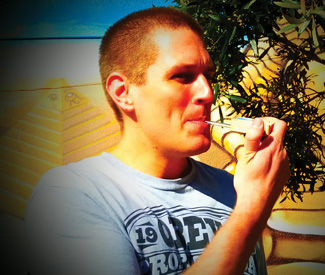
Localized Appreesh: Bhi Bhiman

1

Localized Appreesh is our weekly thank-you column to the musicians that make the Bay. To be considered, contact emilysavage@sfbg.com.

Bhi Bhiman manages a joke when he coolly plucks bluesy guitar while singing about kimchi on “Kimchee Line” off his new album Bhiman (“it’s cabbage time”). It’s just not the food you’d expect to hear name-checked in a folky 1920s blues-style standard. (Though on another track, “Ballerina,” he does mention beans.) Despite this wry wink, his songs have an inherent sadness to them, which only makes more intriguing that irreverent style of telling socially conscious stories with lyrics you just wouldn’t quite imagine there in another time period. It’s the contemporary take on the classic style.

He has been referred to as the “Sri Lankan Woody Guthrie,” but that sort of makes me cringe, for a number of reasons. Though it’s true they both sing stories of the downtrodden (check “Guttersnipe” below). But Bhiman is a musician who needn’t be reduced to borderline comparisons based partially on ancestry. He’s got a style his own, and was born in St. Louis. This week, the SF-based musician celebrates the release of Bhiman with a show Sat/18 at Bottom of the Hill.

http://www.youtube.com/watch?v=ALAYYMwQMWQ

Year and location of origin: Born 1982, St. Louis, USA, Earth.

Motto: Badabing Badaboom.

Description of sound in 10 words or less: Socially aware country blues and soul.

Instrumentation: Acoustic guitar, vocals.

Most recent release: BHIMAN (BooCoo) – released Jan. 24, 2012.

Best part about life as a Bay Area musician: Diversity of culture

Worst part about life as a Bay Area musician: Cost of living

First album ever purchased: Michael Jackson’s Dangerous.

Most recent album purchased/borrowed from the Web: Booker T Jones, The Road From Memphis.

Favorite local eatery and dish: There’s a new Korean place called Manna that is really good and reasonably priced (incredibly important). I get the soft tofu soup with pork.

http://www.youtube.com/watch?v=NUxknehMG6E

Bhi Bhiman
With Vandella and Misisipi Mike & Cree Rider opening
Sat/18, 8:30pm, $12
Bottom of the Hill
1233 17th St., SF
www.bottomofthehill.com

A sad Valentine’s Day message: “Nathaniel died”

7

A sad Valentine’s Day message: “Nathaniel died”

The email came from Doug Giebel from his hometown of Big Sandy, Montana.

“Nathaniel died shortly after midnight. Valentine’s Day. Montana Time.

“His condition badly worsened yesterday. Was in much pain, so it is the kindest thing that could have happened.”

Nathaniel, as his friends and former students called him, was Nathaniel Blumberg, a great journalist and a great journalism professor who inspired six generations of students at the University of Nebraska in Lincoln as a professor and at the University of Montana in Missoula as the Dean of the School  of Journalism and wherever he taught and lectured.

He was my first journalism professor when I took his class my freshman year at Nebraska in the fall of 1953.  And he was the first person to make it clear to me that there were serious problems with the mainstream media and that a paper like the Guardian could and would be a viable alternative to the local daily monopoly. “Bruce,” he would say to me later, “think what you can do in San Francisco with a paper that is truly an alternative to the Examiner and Chronicle” His classes and his 1954 book, “One Party Press?”  a critical study of the 1952 presidential election and the first significant assessment of press performance during a presidential election,  foreshadowed the founding of the Guardian in 1966 and the flowering of the alternative press from then on in virtually every city in the country.

Nathaniel, who was retired and living on Flathead Lake, had a stroke last Wednesday.

He was about to step into the shower when it happened, according to Giebel. Ninety minutes later a friend found him and, after an argument, convinced him he needed to be hospitalized. He was helicoptered to the Kalispell Regional Medical Center. The word that Nathaniel was down shot around the state and beyond to all who knew him and the hospital was inundated with messages and people coming to see him.

I asked Giebel about the obituary and he said that Nathaniel’s two daughters and two of his former students, Printer Bowler and Wilbur Wood, would be working up a full obituary and send it to me for posting. Stay tuned.

Nathaniel always insisted on meeting  deadlines.  I think he would have liked making it to Valentine’s Day, 2012.

P.S. Late on Valentine’s Day,  Wood called me from his hometown in Roundup, Montana.   Nathaniel had sent Wood, a talented editor of the campus paper,  to San Francisco to work on the Guardian in 1967. He was our city editor and did some of our best reporting in the late 1960s.  Wood  was still on the  job four decades later  and informed me that Nathaniel had written his own obituary and that he would send it along.for posting. I will put it up  tomorrow (Wednesday, the day after  Valentine’s Day.) Nathaniel would have been pleased. He always urged his students to never forget their paper and to always contact the editor immediately whenever they had a good story. B3


b3

Unstuff that fluffy at the Great Valentine’s Day Pillow Fight 2012

0

SAY YES — among all the other heart-shaped madness taking place tonight, the annual feathers-flyin’ Valentine’s Day tradition at Justin Herman Plaza is back. Beat the stuffing out of each other lovingly, please.  Video h/t: kevinsyoza

Calvin Trillin: Adelson, Adelson

0

ADELSON

(Sung by Newt Gingrich supporters, to the tune of “Edelweiss,” from the Sound of Music)

Adelson, Adelson,

Your donations do cheer him.

We who root

For our Newt

Smile whenever you schmeer him.

Absent your vow

That you should endow

Newt’s campaign with plenty,

Adelson, Adelson,

He’d be dead as Pawlenty.

Calvin Trillin: Deadline Poet: The Nation 2/20/2012)

Calvin Trillin: Explaining the resurrection of Newt Gingrich

0


Two attempts to explain the resurrection of Newt Gingrich

1

Yes, Newt appeared  dead at least twice. 

If Mitt’s guys were playing it smart,

They would have made certain of that

By driving a stake through his heart.

II

But Newt might have said if they had,

Proceed, Mitt. You’ll see I won’t mind it.

You’re free to drive stakes through my heart,

Except that you’ll first have to find it.

Calvin Trillin, The Nation, 2/13/2012


Sundance Diary, volume eight: the final countdown

0

In a series of posts, Midnites for Maniacs curator-host and Academy of Art film-history teacher Jesse Hawthorne Ficks reports on the 2012 Sundance Film Festival. Check out his first, second, third, fourth, fifth, sixth, and seventh entries.
 
No film at this year’s festival encountered as much controversy as Craig Zobel’s Compliance. At the first public screening, an all-out shouting match erupted, with an audience member yelling “Sundance can do better!” You can’t buy that kind of publicity. Every screening (public and press) that followed was jam-packed with people hoping to experience the most shocking film at Sundance, and the film does not disappoint. (Beware: every review I have happened upon has unnecessarily spoiled major plots in the film, which is based on true events.)

What is so impressive about Zobel’s film is how it builds up a sense of ever-impending terror. In fact, I would go as far as to say that the film steps into Psycho (1960) terrain, specifically in the final act of the film. Compliance aims to confront a society filled with people who are trained to follow rules without questioning them. Magnolia Pictures, which previously collaborated with Zobel on his debut film Great World of Sound (which premiered at Sundance in 2007), picked up the film for theatrical release; if you dare to check it out, prepare to be traumatized. You’ll be screaming about one of the most audacious movies of 2012 — and that’s exactly why the film is so brilliant.

Before moving on, the short film that screened before Compliance needs a special mention for being one of the best films at Sundance 2012. Nash Edgerton’s follow up to last year’s brilliantly dark short Spider is an 11-minute short entitled Bear. Not only did it catch me completely off guard every step of the way, it’s the kind of slick, quick fix that had me panting at the idea of him creating a feature-length film.

Back to horror now. Rodney Ascher’s first feature, Room 237, explores the dozens of theories that fans all over the world have regarding Stanley Kubrick’s The Shining (1980). Ascher, who debuted at Sundance with his masterful short The S from Hell (2010) — about how the 1964 Screen Gems logo gave people nightmares for years … no, really! — has brought the same sort of enthusiasm towards this cinephilia fantasy.

Investigating theories about Kubrick’s methods vs. his madness, Ascher’s film uncovers just as many details that will give you goosebumps all the way home as it reveals some of the most outlandish speculations you could ever eavesdrop on. Which is why the film is so damn addictive! Just by putting this much time and energy into deconstructing a film that many 1980 audiences felt was inessential art, you realize how important critical thought truly is. Not only should this film be taught in cinema studies classes in hopes to crack Kubrick’s specific codes in The Shining, it’s the concept behind Room 237 (don’t look in the bath tub!) that deserves to be celebrated.

Jesse Hawthorne Ficks’ Sundance 2012 Top Ten
1. Rick Alverson’s The Comedy (USA)
2. Craig Zobel’s Compliance (USA)
3. Katie Aselton’s Black Rock (USA)
4. Matthew Akers’s Marina Abramović: The Artist is Present (USA)
5. Benh Zeitlin’s Beasts of the Southern Wild (USA)
6. Gareth Evans’s The Raid (Indonesia)
7. Spike Lee’s Red Hook Summer (USA)
8. Rodney Ascher’s Room 237 (USA)
9. Nash Edgerton’s Bear (Austrailia)
10. Ben Lewin’s The Surrogate (USA)

The sex worker struggle

3

yael@sfbg.com

Google has come under fire in the past year for everything from privacy policies to censorship. But in December, some Bay Area residents were protesting the tech giant for a very different reason. The group that marched in front of the company’s San Francisco office was angry over the company’s donation to organizations fighting human trafficking.

The flyers declared, “Google: Please fund non-judgmental services for sex workers, NOT the morality crusaders that dehumanize us!”

Google had donated a whopping $11.5 million to organizations that “fight slavery” last December, including the anti-sex trafficking groups International Justice Mission, Polaris Project, and Not For Sale.

But the activists said that these are religious organizations that ignored the rights of consensual sex workers.

According to a press release from Sex Worker Activists, Allies, and You (SWAAY), “As frontline sex-worker support services struggle for funding to serve their communities, it is offensive to watch Google shower money upon a wealthy faith-based group like the International Justice Mission, which took in nearly $22 million in 2009 alone.”

“I appreciate what they’re trying to do, but I wish that they had done more research,” Kitty Stryker, a local performer, sex worker and activist, of Google’s choice to fund the organizations.

In a society where the term “sex worker” — coined to describe those who consensually engage in commercial sex and consider it legitimate labor — is still new to most people, this sex workers rights struggle can be an uphill battle. But it rages on, and San Francisco remains one of its most important front lines.


FREE SEX FOR HIRE

The heart of the struggle is, and or years has been, fighting the prohibition of prostitution, and the ultimate goal of the sex workers movement is the repeal of the laws that criminalize sex for hire. Decriminalization would be a vital safety measure for escorts, people working on the street, phone-sex operators, exotic dancers, porn actors, and other occupations that fall under the umbrella category of sex work.

Sex workers held worldwide conferences in the 1980s, meeting in Amsterdam and Brussels. Sex work was legalized and decriminalized in several countries around the world, including New Zealand, the Netherlands and Germany. The Sex Workers Outreach Project (SWOP) became one of the most important organizations fighting for the cause, with chapters around the world.

Here in San Francisco, the city remains a hub for sex-workers rights advocates, who raise awareness about issues ranging from STD prevention to consent in BDSM contexts. The Saint James Infirmary supports and treats sex workers when they need medical assistance, and the Center for Sex and Culture is a resource and community center that embraces all San Franciscan’s with their minds in the gutter, sex industry workers included.

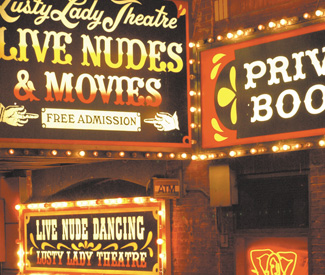
San Francisco’s sex workers rights history includes two unions. Workers at the North Beach strip club the Lusty Lady formed the Exotic Dancers Union in 1997. The union became part of the Service Employees International Union, and the Lusty Lady remains the only collectively run, sex-worker-owned strip club in the United States.

Maxine Doogan founded the Erotic Service Providers Union (ESPU) in 2004 as an umbrella organization for sex workers in various industries. The ESPU has been active in opposing regulations of the massage industry and sponsoring Proposition K, a 2008 ballot measure that would have decriminalized sex work in San Francisco.

I spoke to a handful of Bay Area sex-workers rights activists to get a sense of the major issues and priorities for the next year.

NO VISAS

Activists are currently planning for the July, 2012 International AIDS Conference in Washington, D.C.

Many international sex workers rights advocates have been denied visas to get to the conference. The U.S. typically bars convicted felons — but there’s a special exception for people guilty of misdemeanor prostitution charges.

“SWOP has an idea of getting in touch with some of the people denied entrance and asking them what they were going to present on and to try and present their papers in their place, to make sure these organizers voices are heard,” said SWOP-Bay Area spokesperson Shannon Williams.

But that’s not where the government’s weird exclusion of sex workers from its efforts to fight AIDS ends.

The Presidents Emergency Plan for AIDS Relief (PEPFAR) fund allocates $48 billion to organizations around the world engaged in AIDS treatment and prevention. But thanks to the religious right, the law, approved in 2003, includes a stipulation that all recipient groups must make a pledge decrying prostitution. It’s known as the “anti-prostitution loyalty oath.”

A court ruling July 6, 2011 declared the oath a violation of the free-speech rights of organizations in the United States, but the U.S. still blocks PEPFAR funding for international organizations based on the “loyalty oath.”

“Sex worker activists are going to converge in D.C. for the AIDS conference and talk about the loyalty oath. The US is exporting its ideology through this funding requirement” said Carol Leigh, a longtime activist who curates the annual San Francisco Sex Worker Film and Art Festival.


EMPHASIZING CONSENT

Sex workers rights activists continue to be engaged in their complex, decades-long struggle with anti-sex trafficking organizations.

People who want safer working conditions say that decriminalization would make it easier for police to distinguish between coerced and consensual prostitution and encourage those with knowledge of crimes perpetuated against sex workers to come forward without risking prosecution for their own illegal work.

But many anti-trafficking advocates dismiss the distinction between forced and consensual prostitution in their efforts. According to a document called “Ten reasons for not legalizing prostitution,” on the website of the Coalition Against Trafficking in Women, “There is no doubt that a small number of women say they choose to be in prostitution, especially in public contexts orchestrated by the sex industry… In this situation, it is harm to the person, not the consent of the person that is the governing standard (emphasis theirs).”

It’s this refusal to acknowledge the importance of consent that really pisses off advocates —and has a powerful effect on the policy that governs them.

The federal definition of sex trafficking includes consensual prostitution, and defines coerced prostitution as “severe sex trafficking.” “Law enforcement agencies can use anti-trafficking funds to arrest sex workers in prostitution, on the grounds that the feds define all prostitution as trafficking, even though the government distinguishes between trafficking and severe trafficking,” said one sex workers rights activist.

According to Leigh, anti-trafficking organizations are not all bad; she named the Global Alliance Against Traffic in Women as an organization that “has been allied with sex workers rights movement and takes rights-based approach.”

But organizations that conflate consensual and coerced commercial sex are often big-time recipients of public and private funding.

Doogan is wary of any attempt to further regulate or criminalize sex work. She says that often, laws meant to deter prostitution trap people who may want to change occupations.  “Women have to continue working in the industry because no one else will take them for work when they have those convictions on their record,” said Doogan.

That may be the case with Lola, an occasional Erotic Service Providers Union volunteer who was arrested on prostitution-related charges outside California earlier this year. She moved to the Bay Area and is looking for a job, but after a promising interview last week, she’s nervous that a background check will reveal her arrest.

“I’m waiting to hear whether that’s going to be an issue or not. They could tell my landlord, and then I could lose my house too…all I’m trying to do is get a job,” Lola told the Guardian.


THE WORK GOES ON

For most sex-workers rights activists, the long-term goal remains decriminalization. For now education, creative projects, and protest in service of that goal continue.

Members of SWOP-Bay Area have a program called Whorespeak that does outreach at colleges, and “we’ve also been speaking in classes for therapists about how to work with current and former sex workers and not pathologize them,” said Williams.

According to Stryker, one of the most exciting projects happening now is Karma Pervs. The website, run by local queer porn star Jiz Lee, sells unique sex-positive porn and donates the proceeds to organizations like the Saint James Infirmary.

Then, of course, there’s the International Day to End Violence Against Sex Workers, when sex workers and allies gather to commemorate sex workers who have been assaulted and killed.

Sex workers often can’t go to police to report crimes for fear of being locked up themselves, society retains a huge stigma surrounding sex work, and there is an insidious cultural myth that “you can’t rape a prostitute.” These all add up to put sex workers at high risk for assault and murder; serial killers, such as the Green River Killer in Seattle and a murdered in Long Island-area this past summer, are disproportionately likely to target prostitutes.

That’s why, for Williams, “Our long-term goal is to decriminalize prostitution. But the real goal is to end violence against sex workers.”

Twisted misters

1

cheryl@sfbg.com

FILM This year’s San Francisco Independent Film Festival kicks off with a film that knows exactly what time it is: 4:44 Last Day on Earth.

Abel Ferrara’s latest imagines what the end of the world might be like for a volatile Lower East Side couple — he’s an ex-junkie (Ferrara favorite Willem Dafoe), she’s a young painter (Shanyn Leigh, Ferrara’s real-life companion). The film’s title refers to the predicted instant that an environmental catastrophe will completely dissolve the ozone layer, but 4:44 is mostly set indoors, specifically within the headspace of Dafoe’s character. It’s a gritty film that veers between self-indulgence and stuff that honestly seems pretty practical (sure, there’s a lot of Skyping, but if the world were ending, wouldn’t you?); as far as inward-looking disaster movies go, anyone planning an apocalypse film festival could double-bill 4:44 nicely with 2011’s Melancholia.

IndieFest is not an apocalypse film festival, per se. You could choose to have a jolly old time; there’s a power ballad sing-along, and even a flick called I Like You. But the selections for sick puppies are truly, truly outstanding this year. Personally, I recommend going as dark as you can possibly stand.

Start your journey with Michael R. Roskam’s Bullhead, a Belgian import that just scored a Best Foreign Language Film Oscar nomination. The five-second description of this film, which is about a cattle farmer who injects both his livestock and his own body with illegal hormones, doesn’t do it justice. Who knew there was such a thing, for instance, as a “hormone mafia underworld”? While some of Bullhead‘s nuances, which occasionally pivot on culture-clash moments specific to its Belgium setting, will inevitably be lost on American viewers, the most important parts of the movie come through loud and clear, and you won’t soon forget them.

http://www.youtube.com/watch?v=5fvLVNlMvus

Also memorable is Snowtown, another standout Australian crime film on the heels of Animal Kingdom (2010). While Snowtown — whose vérité shooting style recalls Andrea Arnold’s films about desperate living amid Britain’s council estates — isn’t quite as exportable as Animal Kingdom, it is just as uncomfortably tense, and features a teenage protagonist struggling to survive amid close-to-home evil. It’s based on the real-life case of Australia’s worst serial killer, and follows the gruesome facts quite closely. The film has a lot of characters that come and go without much explanation or introduction, which starts to seem deliberate after awhile. Fortunately, the core cast is magnetic. Remember 2005’s Wolf Creek? Snowtown is just as intense.

Still have a lust for blood? Of course you do. British director Ben Wheatley made a splash with 2009 gangster drama Down Terrace; he’s back with much buzz surrounding Kill List, with a review in the IndieFest catalog citing it as “the number one horror film of the year.” I’d hate to hand out that accolade so early in 2012, but this hired-killer-down-the-rabbit-hole tale is indeed worth considering.

Of course, there’s more to horror than guts and torture; if you need a reminder as to why, check out the festival’s pair of home-is-where-the-creepy-is films from Austria, Beside My Brother and Still Life. Beside My Brother‘s set-up — an emotionally disturbed father pretends his twin sons are the same person, and forces them to live as such, a practice they maintain into adulthood — is more promising than its payoff. Remember how in Dead Ringers (1988), the doppelganger bros were gynecologists? Here, they’re painters, and pretty bland ones at that. Far more harrowing is Still Life, about the irrevocable damage wrought by a father’s single, horrible revelation. First-time feature director Sebastian Meise manages to distill the complete crumbling of a seemingly normal-ish family into a slender, wrenching 77 minutes.

Speaking of harrowing, there’s nothing scarier in all of IndieFest than the early scenes of documentary Last Days Here, made by Don Argott and Demian Fenton (directors of 2009’s excellent The Art of the Steal). The film alights upon Bobby Liebling, dubbed the “godfather of doom” for his forty-plus year stint fronting legendary band Pentagram, as a fiftysomething crack addict living in his parents’ basement. Last Days Here is both heartfelt and gloves-off; it’s also blessed with having one of the most unbelievable comeback stories at its core (not a spoiler if you keep abreast of Bay Area concerts; Pentagram’s played here several times in recent years). It, like many of the films discussed here, has a distributor and will be coming around after IndieFest, but I implore you not to sleep on this one — even if you don’t love heavy metal, but especially if you do.

Less successful but no less intriguing is Atlanta oddity Snow On Tha Bluff, which is somewhere between an old-school ethnographic film — like, Robert Flaherty old — and self-aware product of the YouTube generation. The opening and closing scenes are obviously staged, as a drug dealer named Curtis Snow steals a video camera and decides he’ll make an autobiographical movie from the footage he collects. What’s between those bookends is what appears to be an authentic record of life in Snow’s crime-infested neighborhood, complete with drive-by shootings, home invasions, run-ins with the police, copious drug use, etc. Why any of the involved would allow their faces to be shown on camera while, say, firing a non-street legal weapon into a rival’s home is the film’s biggest mystery; its biggest accomplishment is obscuring the obvious lines of demarcation between what’s real and what’s not.

To end your IndieFest experience on a slightly uplifted note, you will have to die — or at least be cool with hanging out with the ghosts in Finisterrae, the first feature from Catalan artist Sergio Caballaro.

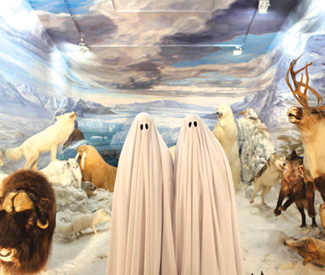
Expressing themselves via droll, post-production “dialogue” (in Russian, subtitled in English), the newly-deceased, sheet-wearing duo decides they would like to live again. A-journeying they go, following the wind and encountering an array of strange characters, including enough taxidermied animals to make Chuck Testa‘s head spin. Finisterrae starts slow but builds to glorious, gorgeously filmed and supremely weird heights. Hippies beware.

SAN FRANCISCO INDEPENDENT FILM FESTIVAL

Feb. 9-23, most films $11

Roxie Theater

3117 16th St., SF

www.sfindie.com


Rep Clock

0

Schedules are for Wed/8-Tues/14 except where noted. Director and year are given when available. Double and triple features are marked with a •. All times p.m. unless otherwise specified.

ARTISTS’ TELEVISION ACCESS 992 Valencia, SF; www.atasite.org. $6-10. Dirty Looks presents: City of Lost Souls, Fri, 8. “Mindscapes,” short films, Sat, 8.

CALIFORNIA COLLEGE OF THE ARTS 1118 Eighth St, SF; www.dirtylooksnyc.org. Free. Dirty Looks presents: “Queer Conversations on Culture in the Arts,” with selections from the “Female Trouble” experimental shorts program and a conversation with Margaret Tedesco, Thurs, 7.

CASTRO 429 Castro, SF; (415) 621-6120, www.castrotheatre.com. $7.50-10. •Pickpocket (Bresson, 1959), Wed, 3:30, 7:15, and American Gigolo (Schrader, 1979), Wed, 4:55, 8:45. •Beauty and the Beast (Cocteau, 1946), Thurs, 3:05, 7, and No Such Thing (Hartley, 2001), Thurs, 4:55, 8:50. “Midnites for Maniacs: I’m Black and I’m Proud:” •I’m Gonna Git You Sucka (Wayans, 1988), Fri, 7:30; Pootie Tang (Louis CK, 2001), Fri, 9:30; CB4 (Davis, 1993), Fri, 11:30. French American International School presents: “I-Speak: Celebrating 50 Years of International Education,” Sat, 6:30. This event, $5-10; tickets at www.internationalsf.org. •Do The Right Thing (Lee, 1989), Sun, 2, 8, and Malcolm X (Lee, 1992), Sun, 4:15. “Love: Ali MacGraw:” Love Story (Hiller, 1970), Tues, 8. With pre-show gala performance and MacGraw in person; for tickets ($25-45), visit www.ticketfly.com.

ELMWOOD 10070 San Pablo, El Cerrito; www.rialtocinemas.com. Free. “Community Cinema:” More Than a Month: One Man’s Journey to End Black History Month (Tilghman, 2012), Wed, 7.

CHRISTOPHER B. SMITH RAFAEL FILM CENTER 1118 Fourth St, San Rafael; (415) 454-1222, www.cafilm.org. $6.75-10.25. “Rafael Film Club:” “Jan Wahl,” Thurs, 1. Pina (Wenders, 2011), call for dates and times. “Mostly British Film Festival:” Route Irish (Loach, 2010), Wed, 7; Albatross (MacCormick, 2011), Thurs, 7. “2012 Oscar Nominated Short Films,” narrative and documentary (separate admission), Feb 3-9, call for times.

LAMORINDA THEATRES Four Orinda Theatre Square, Orinda; www.caiff.org. $12-15. “California Independent Film Festival,” 11 features, plus docs, shorts, and educational seminars, Feb 10-16.

MECHANICS’ INSTITUTE 57 Post, SF; (415) 393-0100, rsvp@milibrary.org. $10. “CinemaLit Film Series: Hollywood Dames: Beauty and Brains:” Intermezzo (Ratoff, 1939), Fri, 6.

PACIFIC FILM ARCHIVE 2575 Bancroft, Berk; (510) 642-5249, bampfa.berkeley.edu. $5.50-9.50. “Documentary Voices:” The Green Wave (Ahadi, 2010), Wed, 7. “Seconds of Eternity: The Films of Gregory J. Markopoulos:” “Markopoulos: The Early Films (1940-49)” Thurs, 7; “Eros and Myth (1950-63),” Sat, 6:30. “Austere Perfectionism: The Films of Robert Bresson:” The Trial of Joan of Arc (1962), Fri, 7; Les dames du Bois du Boulogne (1945), Fri, 8:25; Lancelot of the Lake (1974), Sat, 8:30. “Screenagers: 14th Annual Bay Area High School Film and Video Festival,” Sat, 3. “Howard Hawks: The Measure of Man:” The Criminal Code (1931), Sun, 4:30; Bringing Up Baby (1938), Tues, 7. “African Film Festival 2012:” Viva Riva! (Munga, 2010), Sun, 6:30.

ROXIE 3117 and 3125 16th St, SF; (415) 863-1087, www.roxie.com. $6.50-10. Come Back, Africa (Rogosin, 1959/2012), Wed-Thurs, 6:45, 8:30. Drive (Winding Refn, 2011), Wed, 8:45. Into the Abyss (Herzog, 2011), Wed, 6:45. SF IndieFest, Feb 9-23. Visit www.sfindie.com for complete schedule.

SFFS | NEW PEOPLE CINEMA 1746 Post, SF; www.sffs.org. $10-11. Domain (Chiha, 2010), Wed-Thurs, 2, 4:30, 7, 9:30. Once Upon a Time in Anatolia (Ceylan, 2011), Feb 10-16, 2, 5:30, 8:30.

TWINSPACE CONTINUUM 2111 Mission, Third Flr, Ste 3, SF; www.blockreportradio.com. $15. “Human Rights and Hip-Hop Film Festival,” documentaries and shorts, Fri, 5; Sat, 6:30.

VOGUE 3290 Sacramento, SF; www.mostlybritish.org. $12.50. “Mostly British Film Festival:” Black Butterflies (van der Oest, 2011), Wed, 5; London Boulevard (Monahan, 2010), Wed, 7:15; The Great White Silence (Ponting, 1924), Wed, 9:30; A Passionate Woman (2010), Thurs, 5; Route Irish (Loach, 2010), Thurs, 7:30.

VORTEX ROOM 1082 Howard, SF; www.myspace.com/thevortexroom. $7 donation. “The Second Coming of the Vortex Room:” The Second Coming of Suzanne (Barry, 1974), and Marjoe (Kernochan and Smith, 1972), Thurs, 8.

YERBA BUENA CENTER FOR THE ARTS 701 Mission, SF; (415) 978-2787, www.ybca.org. $6-8. “Bros Before Hos:” The Killing of a Chinese Bookie (Cassavetes, 1976), Thurs, 7:30; “Female Trouble,” experimental shorts program presented by Dirty Looks curator Bradford Nordeen, Sun, 2.

Stage Listings

0

Stage listings are compiled by Guardian staff. Performance times may change; call venues to confirm. Reviewers are Robert Avila, Rita Felciano, and Nicole Gluckstern. Submit items for the listings at listings@sfbg.com. For further information on how to submit items for the listings, see Picks.

THEATER

OPENING

Blue/Orange Lorraine Hansberry Theatre, 450 Post, SF; (415) 474-8800, www.lhtsf.org. $43-53. Previews Wed/8-Fri/10, 8pm. Opens Sat/11, 8pm. Runs Thurs-Sat, 8pm (also Sat, 2pm). Through March 18. Lorraine Hansberry Theatre performs Joe Penhall’s comedic drama about a hospital patient who claims to be the son of an African dictator.

52 Man Pick Up Brava Theater, 2781 24th St, SF; (415) 647-2822, www.brava.org. $10-25. Opens Tues/14, 8pm. Runs Thurs-Sat, Feb 15, and Feb 27, 8pm. Through March 3. Desiree Butch performs her solo show about a deck of cards’ worth of sexual encounters.

Geezer Marsh San Francisco, MainStage, 1062 Valencia, SF; (415) 282-3055, www.themarsh.org. $25-100. Opens Thurs/9, 8pm. Runs Thurs and Sat, 8pm; Sun, 5pm. Through March 18. Geoff Hoyle’s hit solo show returns.

BAY AREA

A Doctor in Spire of Himself Berkeley Repertory Theatre, Roda Theatre, 2015 Addison, Berk; (510) 647-2949, www.berkeleyrep.org. $14.50-73. Previews Fri/10-Sat/11 and Tues/14, 8pm; Sun/12, 7pm. Opens Feb 15, 8pm. Runs Tues and Thurs-Sat, 8pm (also Thurs and Sat, 2pm; no matinees Feb 16, Feb 25, March 1, 8, and 15; no show March 23); Wed and Sun, 7pm (also Sun, 2pm). Through March 25. Berkeley Rep performs a contemporary update of the Molière comedy.

ONGOING

Cabaret Young Performers Theatre, Fort Mason Center, Bldc C, Room 300, Marina at Laguna, SF; (415) 381-1638, cabaretsf.wordpress.com. $25-45. Thurs-Sat, 8pm; Sun, 7pm. Through Feb 19. Shakespeare at Stinson and Independent Cabaret Productions perform the Kander and Ebb classic in an intimate setting.

Glengarry Glen Ross Actors Theatre of San Francisco, 855 Bush, SF; (415) 345-1287, www.brownpapertickets.com. $26-40. Fri-Sat, 8pm. Through March 24. David Mamet’s cutthroat comedy, courtesy of the Actors Theatre of San Francisco.

Higher Theater at Children’s Creativity Museum, 221 Howard, SF; (415) 749-2228, www.act-sf.org. $10-65. Tues-Sat, 8pm (also Wed, Sat-Sun, 2pm; no matinee Wed/8). Through Feb 19. American Conservatory Theatre presents Carey Perloff’s smart and sexy world premiere.

Jesus in India Magic Theatre, Fort Mason Center, Marina at Laguna, SF; www.magictheatre.org. $20-55. Tues, 7pm; Wed-Sat, 8pm (also Feb 18, 2:30pm); Sun, 2:30pm. Through Feb 19. Lloyd Suh’s American Hwangap is still one of Magic’s strongest premieres in recent years, an intriguingly funny and affecting cross-cultural tale of an absent Korean father’s return to the family he abandoned in West Texas 15 years earlier. Suh’s latest makes a disappointing contrast. There’s again an absent father (or two) and a sense of dislocation, but Suh’s “Jesus in India” does little or nothing with them. Director Daniella Topol assembles a bright cast headed by musically adept charmer Damon Daunno — on Michael Locher’s colorful, all-encompassing street mosaic set (comprised of floor-to-wall stickers, spray-paint, and mandalas around a central thicket of abandoned bicycle wheels) — but it all serves an insipid chronicle of the deity’s wayward teen years, which are spent getting high and playing in a punk band in India. Pure irreverence might have been worthwhile, but the “dude, fuckin’ &ldots; dude” humor here — one-note and rarely that funny — comes yoked to a fourth-quarter theme (basically a Henry IV thing, the sowing of wild oats ahead of the taking on of a “king’s” responsibilities) that proves even sketchier, not to mention out-of-step with these deliberately leaderless times. (Avila)

*Little Brother Gough Street Playhouse, 1620 Gough, SF; www.custommade.org. $25-32. Thurs-Sat, 8pm; Sun, 7pm. Through Feb 25. Custom Made Theatre Co. performs Josh Costello’s adaptation of Cory Doctorow’s San Francisco-set thriller.

Not Getting Any Younger Marsh San Francisco, Studio Theater, 1062 Valencia, SF; (415) 826-5750, www.themarsh.org. $15-50. Fri, 8pm; Sat, 5 and 8:30pm. Extended through Feb 25. Marga Gomez is back at the Marsh, a couple of too-brief decades after inaugurating the theater’s new stage with her first solo show — an apt setting, in other words, for the writer-performer’s latest monologue, a reflection on the inevitable process of aging for a Latina lesbian comedian and artist who still hangs at Starbucks and can’t be trusted with the details of her own Wikipedia entry. If the thought of someone as perennially irreverent, insouciant, and appealingly immature as Gomez makes you depressed, the show is, strangely enough, the best antidote. (Avila)

Olivia’s Kitchen Exit Theatre, 156 Eddy, SF; www.generationtheatre.com. $20-40. Fri-Sat, 8pm; Sun, 3pm. Through Feb 19. GenerationTheatre offers this “remix” of Shakespeare’s Twelfth Night.

Private Parts SF Playhouse, Stage 2, 533 Sutter, SF; www.sfplayhouse.org. $20. Thurs, 7pm; Fri-Sat, 8pm. Through Feb 25. Graham Gremore performs his autobiographical solo comedy.

*True West Boxcar Studios, 125A Hyde, SF; (415) 967-2227, www.boxcartheatre.org. $25. Thurs-Sat, 8pm. Through April 7. The first installment of Boxcar Theatre’s four-play Sam Shepard repertory project, True West ushers in the ambitious run with a bang. This tale of two brothers who gradually assume the role of the other is one of Shepard’s most enduring plays, rich with humorous interludes, veering sharply into dangerous terrain at the drop of a toaster. In time-honored, True West tradition, the lead roles of Austin, the unassuming younger brother, and Lee, his violent older sibling, are being alternated between Nick A. Olivero and Brian Trybom, and in a new twist, the role of the mother is being played by two different actresses as well (Adrienne Krug and Katya Rivera). The evening I saw it, Olivero was playing Austin, a writer banging away at his first screenplay, and Trybom was Lee, a troubled, alcoholic drifter who usurps his brother’s Hollywood shot, and trashes their mother’s home while trying to honor his as yet unwritten “contract”. The chemistry between the two actors was a perfect blend of menace and fraternity, and the extreme wreckage they make of both the set (designed by both actors), and their ever-tenuous relationship, was truly inspired. (Gluckstern)

*Vice Palace: The Last Cockettes Musical Thrillpeddlers’ Hypnodrome, 575 10th St, SF; (415) 377-4202, www.thrillpeddlers.com. $30-35. Fri-Sat, 8pm. Through March 3. Hot on the high heels of a 22-month run of Pearls Over Shanghai, the Thrillpeddlers are continuing their Theatre of the Ridiculous revival with a tits-up, balls-out production of the Cockettes’ last musical, Vice Palace. Loosely based on the terrifyingly grim “Masque of the Red Death” by Edgar Allan Poe, part of the thrill of Palace is the way that it weds the campy drag-glamour of Pearls Over Shanghai with the Thrillpeddlers’ signature Grand Guignol aesthetic. From an opening number set on a plague-stricken street (“There’s Blood on Your Face”) to a charming little cabaret about Caligula, staged with live assassinations, an undercurrent of darkness runs like blood beneath the shameless slapstick of the thinly-plotted revue. As plague-obsessed hostess Divina (Leigh Crow) and her right-hand “gal” Bella (Eric Tyson Wertz) try to distract a group of stir-crazy socialites from the dangers outside the villa walls, the entertainments range from silly to salacious: a suggestively-sung song about camel’s humps, the wistful ballad “Just a Lonely Little Turd,” a truly unexpected Rite of Spring-style dance number entitled “Flesh Ballet.” Sumptuously costumed by Kara Emry, cleverly lit by Nicholas Torre, accompanied by songwriter/lyricist (and original Cockette) Scrumbly Koldewyn, and anchored by a core of Thrillpeddler regulars, Palace is one nice vice. (Gluckstern)

*Vigilance Phoenix Theatre, 414 Mason, SF; (415) 335-6087, secondwind.8m.com. $20-25. Thurs-Sat, 8pm; Sun, 2pm. Through Feb 25. Ian Walker (The Tender King) directs a sharp revival of his own lucid, involving 2000 domestic drama about three households brought to the brink by the arrival of a menacing working-class loner. Seamlessly staged in a single pair of rooms (designed by Fred Sharkey) representing all three suburban middle-class homes — as well as downstage on the street where dream-home lottery winner Duncan (an imposing Steven Westdahl) throws his beer cans and leers at the wives and children — Vigilance begins with three friends meeting under the pretext of a poker game. Host Virgil (played with gruff charm by a commanding Mike Newman) is a 30-something husband, father, and guy’s guy whose Montana-grown libertarian machismo compensates for the agro of a stormy marriage and rocky finances. He talks the suggestible, nebbishy Bert (a slyly humorous Ben Ortega) and the equally nerdy but independent-minded Dick (a nicely layered Stephen Muterspaugh) into forming a “committee” to deal with the troublesome Duncan. Walker’s well-honed dialogue brings out the false notes in the supposed pre-Duncan harmony right away, especially in the volatile arguments between Virgil and wife Marla (a sure Natalie Palan Walker) and the passive but more troubled confrontations between Dick and his distant, frustrated wife Cathy (a subtly fraught Kim Stephenson). While the insular, repressed lives of the moderately well off come across well, Duncan’s final monologue is a compressed, if dramatically necessary, attempt at voicing the other side. Vigilance strikes best at the buried politics of marriage and friendship, the latter further invoked in the concerned intervention of cop and childhood friend Frank (a sympathetic Leon Goertzen). (Avila)

Waiting for Godot Royce Gallery, 2901 Mariposa, SF; (415) 336-3522, www.tidestheatre.org. $20-38. Thurs-Sat, 8pm. Through Feb 18. The fuchsia papier-mâché tree and swirling grey-on-white floor pattern (courtesy of scenic designer Richard Colman) lend a psychedelic accent to the famously barren landscape inhabited by Vladimir (Keith Burkland) and Estragon (Jack Halton) in this production of the Samuel Beckett play by newcomers Tides Theatre. Director (and Tides’ producing artistic director) Jennifer Welch layers the avant-garde classic with some audio accents as well (although Jon Bernson’s minimalist industrial soundscape is a bit low in the mix to be very effective). More compelling is the gentle, sad humor and couched intelligence captured expertly by Halton in the circular but deliberate rhythms of his hapless tramp. Burkland as pal Vladimir exudes a palpable presence as well, though lacks the same focus. Timing is all in vaudeville — the parallel universe from whence these tangible modernist archetypes hail — as well as in a play whose plot goes intentionally nowhere, or rather loops back on itself in an implied dance with eternity. The halting aspect to Tides’ staging gets compounded with the arrival of brash whip-cracker Pozzo (a suitably stentorian but inconsistent Duane Lawrence) and his pitiful slave Lucky (a haunted, generally sharp Renzo Ampuero, made up to look like a goth doll à la some Tim Burton movie). That said, the best moments here broadcast the brooding beauty of the play, with its purposely vague but readily familiar world of viciousness, servility, trauma, want, fear, grudging compassion, and the daring, fragile humor that can look it all squarely in the eye. (Avila)

The Waiting Period MainStage, Marsh San Francisco, 1062 Valencia, SF; (415) 282-3055, www.themarsh.org. $15-50. Fri, 8pm; Sat, 5pm. Through March 24. Brian Copeland returns with a new solo show about his struggles with depression.

BAY AREA

Arms and the Man Lesher Center for the Arts, Margaret Lesher Theater, 1601 Civic, Walnut Creek; (925) 943-7469, www.centerrep.org. $38-43. Wed, 7:30pm; Thurs-Sat, 8pm; Sun, 2:30pm. Through Feb 25. Center REPertory Company presents George Bernard Shaw’s classic romantic comedy.

Body Awareness Aurora Theatre, 2081 Addison, Berk; (510) 843-4822, www.auroratheatre.org. $34-55. Tues, 7pm; Wed-Sat, 8pm; Sun, 2 and 7pm. Through March 4. Aurora Theatre performs Annie Baker’s comedy.

Counter Attack! Ashby Stage, 1901 Ashby, Berk; (510) 444-4755, ext. 114, www.stagebridge.org. $18-25. Wed-Thurs, 7:30pm; Fri-Sat, 8pm (also Sat, 2pm); Sun, 2pm. Through March 4. Stagebridge presents the world premiere of Joan Holden’s waitress-centric play.

Ghost Light Berkeley Repertory Theatre, Thrust Stage, 2025 Addison, Berk; (510) 647-2949, www.berkeleyrep.org. $14.50-73. Tues, Thurs-Sat, 8pm (also Sat and Feb 16, 2pm); Wed and Sun, 7pm (also Sun, 2pm). Through Feb 19. Berkeley Rep performs Tony Taccone’s world-premiere play about George Moscone’s assassination, directed by the late San Francisco mayor’s son, Jonathan Moscone.

*The Kipling Hotel: True Misadventures of the Electric Pink ’80s New venue: Marsh Berkeley, 2120 Allston, Berk; (415) 282-3055, www.themarsh.org. $20-50. Sat, 8:30pm; Sun, 7pm. Extended through March 25. This new autobiographical solo show by Don Reed, writer-performer of the fine and long-running East 14th, is another slice of the artist’s journey from 1970s Oakland ghetto to comedy-circuit respectability — here via a partial debate-scholarship to UCLA. The titular Los Angeles residency hotel was where Reed lived and worked for a time in the 1980s while attending university. It’s also a rich mine of memory and material for this physically protean and charismatic comic actor, who sails through two acts of often hilarious, sometimes touching vignettes loosely structured around his time on the hotel’s young wait staff, which catered to the needs of elderly patrons who might need conversation as much as breakfast. On opening night, the episodic narrative seemed to pass through several endings before settling on one whose tidy moral was delivered with too heavy a hand, but if the piece runs a little long, it’s only the last 20 minutes that noticeably meanders. And even with some awkward bumps along the way, it’s never a dull thing watching Reed work. (Avila)

The Pitman Painters TheatreWorks at Mountain View Center for the Arts, 500 Castro, SF; (650) 463-1960, www.theatreworks.org. $19-69. Wed/8, 7:30pm; Thurs/9-Sat/11, 8pm (also Sat/11, 2pm); Sun/12, 2 and 7pm. TheatreWorks performs a new comedy from the author of Billy Elliot about a group of British miners who become art world sensations.

A Steady Rain Marin Theatre Company, 397 Miller, SF; (415) 388-5208, www.marintheatre.org. $34-55. Tues and Thurs-Sat, 8pm (also Sat/11 and Feb 25, 2pm; Feb 16, 1pm); Wed, 7:30pm; Sun, 2 and 7pm. Through Feb 26. Marin Theatre Company performs Keith Huff’s neo-noir drama.

The World’s Funniest Bubble Show Marsh Berkeley, TheaterStage, 2120 Allston, Berk; (415) 826-5750, www.themarsh.org. $8-50. Extended run: Sun/12, Feb 19, 26, March 11, and 18, 11am. Louis “The Amazing Bubble Man” Pearl returns with this kid-friendly, bubble-tastic comedy.

PERFORMANCE/DANCE

“Elect to Laugh” Studio Theater, Marsh San Francisco, 1062 Valencia, SF; (415) 282-3055, www.themarsh.org. Tues, 8pm. Ongoing through Nov 6. $15-50. Will Durst and friends perform in this weekly political humor show that focuses on the upcoming presidential election.

“Epic Romance” Bayfront Theater, B350 Fort Mason Center, Marina at Laguna, SF; (415) 474-6776, www.improv.org. Tues/14, 8pm. $25. BATS Improv taps its collective quick-wit talents to conjure a romantic play on the spot.

“The Eric Show” Milk Bar, 1840 Haight, SF; www.milksf.com. Tues, 8pm (ongoing). $5. Local comedians perform with host Eric Barry.

“How We First Met” Marines’ Memorial Theatre, 609 Sutter, SF; www.howwefirstmet.com. Tues/14, 8pm. $40-75. Jill Bourque’s long-running holiday tradition is inspired by audience members’ real-life tales of romance.

“The I Hate Valentine’s Day Show” Dark Room, 2263 Mission, SF; www.crackpotcrones.com. Tues/14, 8pm; Feb 19, 5pm. $20. “Sketch comedy and improv as a public service for the romantically challenged” with Crackpot Crones Terry Baum and Carolyn Myers.

“It’s Got to Be Love” Eureka Theatre, 215 Jackson, SF; (415) 392-4400, www.cityboxoffice.com. Mon/13-Tues/14, 8pm. $20. Craig Jessup sings Rodgers, Hart, Gershwin, and Sondheim to benefit the San Francisco Arts Education Project.

“Love Bites — and So Did the ’80s” Mission Cultural Center, 2868 Mission, SF; www.lgcsf.org. Fri/10-Sat/11, 8pm. $15-30. The Lesbian/Gay Chorus of San Francisco celebrates the neon decade with this cabaret and musical extravaganza.

“Mortified! Doomed Valentine’s Show” DNA Lounge, 375 11th St, SF; www.getmortified.com. Fri/10, 7:30pm. $21. Also Sat/11, 8pm, $20, Shattuck Down Low, 2184 Shattuck, Berk. The awkward storytelling series returns with a romance-gone-awry theme.

“Our Feet Speak the Rhythms of Our Hearts” Cowell Theater, Fort Mason Center, Marina at Laguna, SF; (415) 345-7575, www.fortmason.org. Sat/11, 8pm; Sun/12, 3pm. $15-25. Tango and More Argentine Dance and World Arts West present this event featuring six ethnic dance companies, including La Tania, Ensembles Ballet Folklórico de San Francisco, Valverde Dance, Barbary Coast Cloggers, and Ballet Pampa Argentina.

“Through the Night” Brava Theatre, 2781 24th St, SF; www.communityworkswest.org. Sat/11, 7pm. $40-100. Daniel Beaty performs at this evening honoring author Nell Bernstein and activist Sujatha Baliga; proceeds benefit Community Works’ programs for Bay Area children, families, and communities impacted by incarceration.

“The Weight Game” NOHspace Theater, 2840 Mariposa, SF; www.brownpapertickets.com. Fri/10-Sat/11 and Feb 17-18, 8pm. $15. Sarah Abbey performs her semi-autobiographical solo show about diets and self-esteem.

BAY AREA

“Black Choreographers Festival: Here and Now 2012” Laney College Theater, 900 Fallon, Oakl; www.bcfhereandnow.com. Fri/10-Sat/11, 8pm; Sun/12, 4pm. Also Feb 17-18 and Feb 24-25, 8pm; Feb 19, 4pm; Feb 26, 7pm, Dance Mission Theater, 3316 24th St, SF. $10-25. Celebrate African and African American dance and culture at this multi-part festival, with works by Marc Bamuthi Joseph, Kendra Kimbrough Barnes, and more.


Brews you can use

0

caitlin@sfbg.com

BEER Even if your hankering for a beer paunch pales in comparison, say, to your desire to fit into your Valentine’s Day party dress, you have a responsibility to indulge during SF Beer Week. It’s not just a gustatory pleasure — consider yourself stumping for a burgeoning local industry. From Feb. 10-19, the fest will stage everything from urban beer hikes to beer-and-chocolate pairing events, beer-and-cheese couplings to a showcase of the finest in local bitter ales. Recently, the Guardian had the pleasure of a one-on-one (via email) with David McLean, the mastermind behind the superlative suds at Magnolia Brewery. He is also a member of the SF Brewer’s Guild, the organizing entity behind Beer Week. McLean shared with us his can’t-miss picks for hobnobbing and hops during this year’s festival. And yes, they include an stout made with Hog Island oysters.

SFBG: How has the beer scene changed over the past year in the Bay Area? Has there been a profound expansion? 

DM: Here and everywhere. We started in 2011 with about 1,700 breweries in the country. We are creeping up on 2,000 a year later and there are something like 800 or so known to be in planning. It’s safe to say craft beer is exploding right now. In the Bay Area, some notable highlights are Southern Pacific, Elevation 66, Dying Vines, Pacific Brewing Laboratories, and Heretic Brewing. There are plenty more on the way in 2012.

SFBG: Anyone new on the scene whose brews you’re excited to sample? 

DM: After many delays (all par for the course) it is super-exciting to have Southern Pacific Brewing Company open just in time for Beer Week. As the first new brewery built in San Francisco in many years — close to 10 — that one leads the pack in terms of excitement level. Another SF company just getting off the ground is Pacific Brewing Laboratories, which is starting to get its Squid Ink IPA and a couple of other beers into bars and restaurants. Almanac’s latest seasonal release, Winter Wit, should be hitting the streets just in time for Beer Week too, and it’s worth hunting down.

SFBG: A food-beer pairing event you think is a can’t-miss?

DM: Some pairings are just so perfect as to be timeless. They’re less about being creative and more about flavors that need no help fitting together. A personal favorite is oysters and beer, particularly oysters and certain kinds of stout, especially dry stouts. We go a step further at Magnolia with an oyster stout we make using Hog Island Sweetwater oysters in the beer. The effect is subtle, and maybe it is gilding the lily, but a few freshly-shucked Sweetwaters and a glass of that beer, Oysterhead Stout, is about as good as it gets. We’ll be spending all day on Valentine’s Day shucking a variety of oysters and serving them with that stout and some other good oyster-pairing beers until the oysters run out. If I were free on Mon/13, you might find me at the “Butcher and the Beer at the Beast and the Hare” — it’s a dinner with [4505 Meats butcher] Ryan Farr and Almanac Beer.

SFBG: Your tip for making it through Beer Week — how do you survive such a strenuous schedule?

DM: The well-timed vacation waiting on the other side of Beer Week helps maintain my sanity during Beer Week. With multiple events to work everyday, it’s a definitely a marathon and not a sprint. But it is also one of the premier celebrations of craft beer in the country and the sense of enthusiasm, camaraderie, and support from the beer community is more than enough to help us all get through the week. It’s energizing, actually. But don’t forget to hydrate.

SF BEER WEEK OPENING CELEBRATION

Fri/10 6-10 p.m., $65

Concourse Exhibition Center

635 Eighth St., SF

www.sfbeerweek.org


Making black herstory, every day

8

news@sfbg.com

Deconstructing the roots of

The black n gray suits

with hands in the Loot

That has buried the truth

About our black, brown and disabled youth

— excerpt from KKKourt by Tiny

OPINION On the first day of Black Herstory Minute (I mean, Month), I practiced black herstory, and walked through activism and breathed organizing and lived resistance by putting my body in the benches belonging to the criminal injustice system (a.k.a. the plantation) at 850 Bryant. I was there to support a struggle against injustice in the case of a young African warrior for truth, Fly Benzo, a.k.a. Debray Carpenter — student, son, media producer, organizer, and hip-hop artist who is facing a felony charge, jail sentence and $95,000 fine for nothing more than exercising his First Amendment right to free speech.

How many among you, overwhelmed with multiple Face-crack postings and a cacophony of tweets, might have missed the story of Fly, who spoke the truth about racism, police brutality and the unjust death of Kenneth Harding Jr. to a cop in a poor-people-of-color neighborhood, Bayview, which is under seize from the occupying army known as the police (or po’lice as we call them at POOR Magazine)?

As a woman criminalized and incarcerated for the sole act of being poor and houseless, the melanin-challenged daughter of a poor black single mother who spent all of her life in poverty and in struggle, I have witnessed first hand unequal justice against people of color and poor people. It’s a fact that remains, in 2012, still a very dire reality.

“They arrested me for exercising my Constitutional right to free speech,” said Benzo, 22.

Benzo’s revolution began when he was born to conscious African-descendant parents who, like many African descendant people in San Francisco, have been under the constant threat of removal, displacement, redlining, and ongoing police harassment for decades. He has been speaking out about injustices since he was a teen, starting with the fact that hardly any Bayview residents were hired to construct the multi-million-dollar T-Train that runs from downtown to Third Street — and the dramatic rise in the violent policing of the T-Train and the Muni bus lines that run through the poor communities of color in S.F.

But the beginning of Benzo’s current battle with the criminal injustice system began when he began to speak up about Harding, murdered by San Francisco police officers for not having a $2 dollar bus transfer. The judge might not admit the video that was taken at the scene of Benzo’s arrest, making his case all the more difficult to fight, and the truth all the more difficult to hear and see, which is where community support comes in.

A lot of people and organizers and politricksters talk about stopping the violence and how to “deal” with the inequities of racism and classism and violence on our youth of color. And yet when this brother spoke out, used his voice for nothing but truth and resistance about injustices he personally experiences everyday, who comes out to support him?

Practicing revolutionaries at POOR Magazine, the Idriss Stelly Foundation, The BayView Newspaper, Education not Incarceration, and United Playaz have been there, as well as his hard-working attorney, Severa Keith, and a few more. But we all need to be there, fighting for a very alive, very revolutionary, young truth-teller who is making black history, every day.

Tiny, a.k.a. Lisa Gray-Garcia, is an editor at POOR Magazine. Opening statements in the trial of Debray Carpenter are expected to begin Feb. 8 in Dept. 27.

The marriage decision, for better and for worse

7

The Ninth Circuit Court of Appeals judges cited both Groucho Marx (“marriage is a great institution, but who wants to live in an institution?”) and Marilyn Monroe (what if the movie was called “Who Wants to Enter Into a Domestic Partnership With a Millionaire?”) in discussing the importance of the word “marriage.” Justice Stephen Reinhardt’s ruling made clear that the only purpose of Proposition 8 was to “lessen the status and dignity of gays and lesbians in California.” The decision makes clear that the law against same-sex marriage is by its nature discriminatory.

But in the end, the ruling was very narrow. If you read the entire decision, it’s not a sweeping affirmation of the legal rights of Americans to marry the person of their choice. The court basically concluded that California voters had no legal right to take away marriage rights that had previously existed. Since the state Supreme Court had granted marriage equality, and 18,000 people got married before Prop. 8 passed, the ballot measure was in fact a reduction in rights, which, the court said, requires a different level of scrutiny and analysis.

The Chronicle calls it a “wise decision,” but in political terms, it’s a bit wimpy: It stops far short of where Judge Vaughn Walker went in his original ruling on this case, which essentially said that marriage is a fundamental right for all.

The good news: If the ruling stands up, same-sex marraige will be legal in the state of California. The bad news: If the ruling stands up, it’s likely that it will apply only to California.

But that could be good news in a sense, too. Here’s why.

The proponents of Prop. 8 are going to appeal to the U.S. Supreme Court. Everyone knows that. And if the 9th Circuit had come out with a sweeping ruling stating that the right of gays and lesbians to marry is fundamental and can’t be abridged under any circumstances, it’s almost certain the the Supreme Court would hear the case. That might be wonderful; the Supremes could come down with a decision like Brown v. Board of Education  that forever changes the civil rights landscape and ensures full equality for the LGBT community in every aspect of society.

On the other hand, I worry that if this current Supreme Court heard Brown, five members might have sided with the Board of Education.

In other words, there are four very conservative justices who could easily proclaim the sanctity of heterosexual marriage in a ruling that would set us back years — and depending on how Justice Anthony Kennedy was feeling that day, he could go either way. So giving the current Supreme Court a chance to rule on the larger issue was, and is, risky. Now, Justice Reinhardt’s decision repeatedly cited a case that Kennedy had personally written, the 1996 Romer v. Evans, which would have made it harder for the swing judge to reverse the 9th Circuit — but you never know.

As it is, there’s a good chance now that the High Court will just take a duck. That would mean that same-sex marriage was restored to legal status in California (and there’s no way that another Prop. 8 will ever pass in this state, ain’t happening, don’t waste your money, bigots — this train is only going in one direction, and the population has already changed enough that same-sex marriage would easily win at the polls). And it will be legal in eight other states and D.C., and the movement will continue and in a few years, it will be legal everywhere, without the U.S. Supreme Court making the final call. (Or Kennedy will retire and Obama will be re-elected and it won’t matter because the Supreme Court will no longer have a troglodyte majority.)

And even if the court takes the case, it’s possible that Kennedy would go along with the narrow ruling (Reinhardt has been around a long time and he’s no fool — he knows who his audience is on a final appeal, and it’s one Supreme Court justice). It’s possible Kennedy might agree that you can’t take away existing rights, which would be good news for California and not terrible news for the rest of the country.

That’s the cautious approach. I’m the sort who usually wants to push issues as far as we can (wouldn’t a showdown over the defining LGBT issue of the day at the Supreme Court be exciting? Wouldn’t it be amazing to see Justice Scalia try to argue, in 2012, that it’s okay to deny marriage rights to lesbians and gay people?) And I believe that both the legal and political ground is shifting fast on this issue and we might get a grounbreaking Supreme Court decision the way we did in Lawrence v. Texas. But the downside is potentially huge.

So while I was disappointed in the rather limited scope of the decision, I suspect a lot of the lawyers who support marriage equality are quietly pleased. This is a big victory, and it might actually last.


Live Shots: Golden Glass 2012 slow food and wine festival

0

Wine was flowing freely at 11 a.m. on Sat/4 for the pre-show press tasting. We had prepped ourselves by carb-loading on whole wheat oatmeal pancakes before heading to Fort Mason for the Eighth Annual Golden Glass festival (which raised awareness and funds for slow food programs) preparing ourselves to indulge in a smorgasbord of carefully vetted, sustainably produced wines.

(Oddly, I liked the first wine we sampled, a moscato d’asti by La Caliera, all sweet and bubbly, the best. Maybe it had something to do with the fact that it was the first wine to hit our tongues that morning, but I really believe it was just that great. You should try it.)

The wines came from all over Italy and California, along with a sampling of delectable edibles, including hot-from-the-oven bread by Danny Gabriner of Sour Flour and a large, golden roasted pig from the Butcher Brothers. Also at the Slow Food “Ark of Taste” table were some quirky culinary finds, like the Bodega Red potato. Once the staple tater of the gold miners, over time, it disappeared and was thought to have been completely lost until it was recently found. It is now being grown in Marin County, in hopes of reviving this long-lost tuber.

We skedaddled before the show opened to the public, since the event was totally sold out and we had a feeling that wine aficionados were going to take the place by storm, or rather, sips and gulps. But we felt lucky to have tasted such a wide and delicious variety of libations, before we teetered off to find some lunch.

Localized Appreesh: The Yellow Dress

0

Localized Appreesh is our weekly thank-you column to the musicians that make the Bay. To be considered, contact emilysavage@sfbg.com.

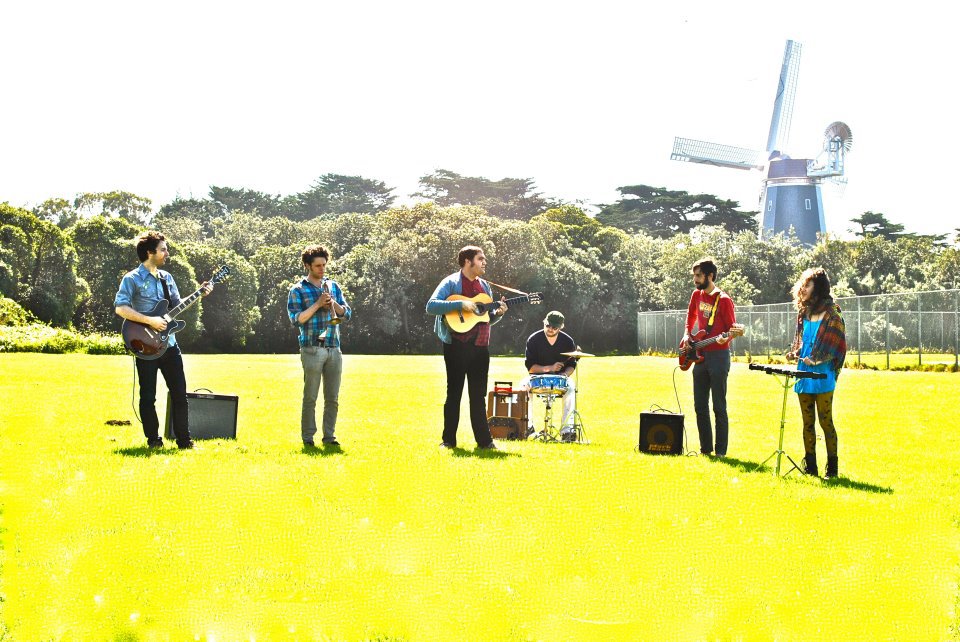
Dogs, ghosts, kids, hand-clapping, whistling on a sunny park day – it’s all in the video for the Yellow Dress’s “This Could Be Anything.” The song itself is already a treat, kicking off with the aforementioned clapping and whistling and a solitary guitar, in pipes mariachi trumpet and swallow-you-whole powerful vocal pipes à la orchestral pop master Beirut. (It also has garnered comparisons to Magnetic Fields and a drug-less Velvet Underground.)

The Yellow Dress closed out 2011 with a metaphoric group hug, thanks to the video and a well-received second album, Humblebees. This year, it’s already off to a run through the park, pull your dress up and get mud on your ankles, start. In the next seven days, the San Francisco band will play three local shows, all at interesting venues, perhaps a bit off the beaten path. Do it up big and catch a trio of Yellow Dress performances.

Year and location of origin: 2007, San Francisco (the corner of Haight and Fillmore to be exact)

Band name origin: We used to be called Mr Stopmotion and the Yellow Dress after a particularly dapper couple I saw walking through Golden Gate Park, back then we were just a two-piece, and the name was pretty unweildy. For about a day we were Mr Stopmotion, which sounds like a Devo/XTC cover band. We decided on The Yellow Dress, which immediately led to a dramatic (and affirming!) number of yellow dresses in both (me and original bandmember Jon) of our lives. For a not very interesting story that sure took a lot of time to write.

Band motto: I’m sorry.

Description of sound in 10 words or less: Earnest-indie-twee-folk-pop.

Instrumentation: Acoustic and electric guitar, bass, drums, glockenspiel, male/female vocals, trumpet, organs, whistles, hand claps, if anyone reading this plays the cello and love dinosaurs please call me.

Most recent release: Humblebees.

Best part about life as a Bay Area band: With so many artistic people around it’s easy to find like minded folks to play with, slowly envelop in your ever growing line-up.

Worst part about life as a Bay Area band: With so many artistic people around you are rarely the only game in town any given night.

First record/cassette tape/or CD ever purchased: The Top Gun soundtrack. It was great.

Most recent record/cassette tape/CD/or Mp3 purchased/borrowed from the Web: West Indies Funk Volume 3 (2012 is the year of the steel drum).

Favorite local eatery and dish: I miss Mission Burger so much, you have no idea. The Yellow Dress is however willing to give a full endorsement to the chicken millanesa torta at La Torta Gorda.

The Yellow Dress
With Adam Balbo, the Slaves
Thurs/9
Alley Cat Books
3036 24th St., SF


With Matt Dorrien, Fox and Woman
Fri/10, 8 p.m., $8
924 Gilman, Berk.
www.924gilman.com


Valentine’s Day Monthly Rumpus: Sugar’s Coming Out Party
With Pocket Full of Rye, Janine Brito
Feb. 14, 7 p.m., $10
Verdi Club
2424 Mariposa, SF
www.therumpus.net


Sundance Diary, volume seven: up all night!

0

In a series of posts, Midnites for Maniacs curator-host and Academy of Art film-history teacher Jesse Hawthorne Ficks reports on the 2012 Sundance Film Festival. Check out his first, second, third, fourth, fifth, and sixth entries.

Park City at Midnight is what excites me most about each Sundance Film Festival. Yet, many other films screen at midnight that aren’t technically part of the actual category, which brings up the dilemma of what type of film warrants the designation of “Midnight Movie.” Late-night audiences range from the inebriated to the intellectual (and often both combined). This year’s crop of midnight films, in and out of the Park City at Midnight category, was genuinely one of the most eclectic and enjoyable group of films presented in years.

Quentin Dupieux’s Wrong — his follow-up to 2010’s unstoppable cult hit Rubber — is an absurdist journey where everything and nothing can happen, as long as it’s what you’d least expect from a narrative. The reactionary rules of this wandering wonder (don’t read any spoilers about it!) seem to have expanded David Lynch’s quietest, most awkward moments into a web of surrealist silliness that I immediately wanted to watch again as soon as it was over. As audiences were exiting at two in the morning, half of them were bleary-eyed from laughing hysterically, while the other half were in groggy, drunken stupors. For me, this confirms that Dupieux has achieved exactly what he wanted (to make the obvious joke, something so Wrong it’s right).

First-time filmmaker Richard Bates Jr.’s Excision snuck up on the audience, earning mad respect from the sold-out crowd as his film transformed from bloody fun to gory darkness, concluding with one hell of a jaw-dropping finale. While 90210 star AnnaLynne McCord truly went Method to exquisitely explore a disturbed high-schooler, Traci Lords’ passionate and complex performance as her perplexed mother should also be noted — she truly reached shades of Piper Laurie in Carrie (1976).

Jon Wright’s Grabbers had the buzz of being Bong Joon-ho’s The Host (2006) by way of Edgar Wright. The very enjoyable Irish film (which sports a hilarious drunken performance by newcomer Ruth Bradley) quite nicely fills a void for fans of tongue-in-cheek monster movies, and would best be experienced in a theater filled with boisterous bellows from fellow Anglophiles.

http://www.youtube.com/watch?v=uWlmhMSnVdM

In previous Sundance Diary installments, I discussed Tim and Eric’s Billion Dollar Movie and Katie Aselton’s triumphant Black Rock. Now, it’s time talk about Gareth Huw Evans’s unruly, uncompromising, and unbelievable Indonesian action film The Raid. Not since Sundance 1992 (John Woo’s Hard Boiled and Tsui Hark’s Dragon Inn) have I experienced the type of nonstop excitement as The Raid. This movie contains inventive fight sequences and hypnotic violence so insane and intense that you have to scream at the top of your lungs while simultaneously assuming a few of the stunt people had to have died during the film! (Jot down the name Iko Uwais, for this man will be taking over the world shortly, especially if he can shine in his U.S. debut, a remake of Mortal Combat coming in 2013). The Raid offers proof positive that a martial arts extravaganza can be as profoundly affecting as any essential art film.

Up next: Jesse Hawthorne Ficks’ eighth and final Sundance Diary, with his top ten from the festival!

Sundance Diary, volume six: dramarama

0

In a series of posts, Midnites for Maniacs curator-host and Academy of Art film-history teacher Jesse Hawthorne Ficks reports on the 2012 Sundance Film Festival. Check out his first, second, third, fourth, and fifth entries.

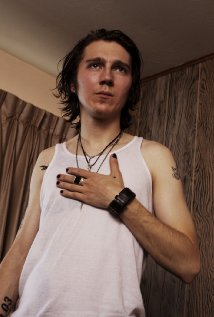
So Yong Kim’s character study For Ellen is only 93 minutes long, but the experience of watching it felt like it took an eternity. But — even though the film did not win awards at this year’s festival — it resonated; it was filled with many memorable, quiet moments. Paul Dano (never before so vulnerable) takes the reigns as a struggling musician who, while taking a break from touring to sign the papers for his long-overdue divorce, is forced to confront his own selfish tendencies when his custody rights start slipping through his fingers.

Writer-director Kim (2008’s Treeless Mountain) uses long, handheld takes that often prevent the viewer from seeing the actual feelings of our anti-hero. This subtle slice-of-life portrait never wavers from its sullen tone, which might explain why many critics seemed underwhelmed after its screening. For Ellen doesn’t give its flawed protagonist an easy way out, in a way that’s reminiscent of Darren Aranofsky’s The Wrestler (2008). 

Ira Sachs (2005’s Forty Shades of Blue) delivered his most personal film to date with Keep the Lights On; oddly enough, it might be a little too personal for its own good. Chronicling an extremely passionate and self-destructive relationship from the late 90s to the present, Sachs transparently exposes the very modern Chelsea neighborhood life of daily phone sex, random hook-ups, and casual usage of hard drugs — all wrapped up in a self-absorbed universe that I am sure more people in this generation can relate to than would actually like to admit. The indie auteur’s latest beautifully-shot effort goes overboard with its honesty (especially toward the end) and I was left in an emotional limbo, wanting to care but feeling like I had read too much of someone’s personal diary.

Barely recognized as mumblecore’s first female director, Ry Russo-Young seems to have graduated to full-fledged indie director with Nobody Walks, which won a Special Jury Prize for Excellence in Independent Film Producing. Most audience members were at the screening thanks to star John Krasinski (The Office), who delivers his usual charm. But truly stealing the show was Olivia Thirlby, whose irresponsible yet utterly motivated 23-year-old artist is so wonderfully performed that you forget about some of the major cues the film has taken from Lisa Cholodenko’s Laurel Canyon (2002) and Tom Kapinos’s Californication. Lena Dunham, who made 2011’s monumental Tiny Furniture, co-wrote the film, and her unromanticized take on strong female voices shines quite brightly here.      

But nothing in this year’s Dramatic Competition could compare to Ben Lewin’s The Surrogate, which won both the U.S. Dramatic Audience Award and a Special Jury Prize for Ensemble Acting. Truly delivering hands-down next year’s best actor performance, John Hawkes (2010’s Winter’s Bone) portrays Berkeley, Calif. journalist Mark O’Brien, whose poetry, autobiographical writings, and physical limitations gave writer/director Ben Lewin more than you could ever ask for. O’Brien’s real-life story was already told in Jessica Yu’s 1995 Academy Award-winning documentary Breathing Lessons: The Life and Work of Mark O’Brien, which hauntingly showcased O’Brien’s inspired and difficult life. For his narrative take, Lewin has pinpointed a very specific part of the story, creating a timeless romance and life-altering drama that ranks alongside Dalton Trumbo’s Johnny Got His Gun (1938) and David Lynch’s The Elephant Man (1980).

http://www.youtube.com/watch?v=SnUuVxL0UJ4

But it’s the acting that makes this film so unforgettable. Hawkes conveys complicated emotions and captures O’Brien’s soft-spoken syntax without ever slipping into pretension. William H. Macy throws in some very needed humor as an understanding, catch-22’d priest, and Helen Hunt gives the film that certain extra sense of surprise and understanding. It’s a cliché to say so, but it’s true: the film left nary a dry eye in the house. The Surrogate will be “the little film that could” for 2012 and for years after.

Up next: night owl Jesse Hawthorne Ficks tackles more Park City at Midnight movies.

Sundance Diary, volume five: it’s Mark Duplass’ world, we just live in it

1

In a series of posts, Midnites for Maniacs curator-host and Academy of Art film-history teacher Jesse Hawthorne Ficks reports on the 2012 Sundance Film Festival. Check out his first, second, third, and fourth entries.

Colin Trevorrow’s quasi-romantic quirkfest Safety Not Guaranteed, which won the Waldo Salt Screenwriting Award, also achieved a near-miracle by coaxing smiles out of some of Sundance’s grumpiest audiences. Speaking of wonderfully grumpy, this movie stars Parks and Recreation fave Aubrey Plaza and Jake M. Johnson of The New Girl; their priceless personas are in big-screen effect as their characters hunt down a man who posted a classified ad in search of a time-travel companion.

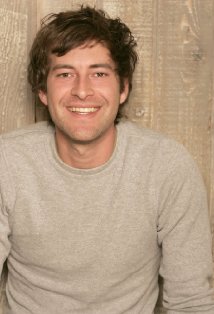
What makes this film truly work is the sheer sincerity of Mark Duplass (as the would-be time traveller). His performance not only hilariously channels Michael J. Fox in 1985’s Back to the Future, but he genuinely achieves a level of poignancy that perfectly fits the film’s motif of loneliness. Safety Not Guaranteed looks to have the same mainstream crossover appeal that Miguel Arteta tapped into last year with Cedar Rapids.

The busy Duplass was part of two other films at this year’s festival, including Lynn Shelton’s pitch-perfect indie flick Your Sister’s Sister, the follow-up to her genre-defining bromance Humpday (2009). Depressed and confused 30-something Jack (Duplass, who is truly a master of casual awkwardness) heads off to a remote island to figure out where his life is headed. The only trouble: his best friend (a mesmerizing Emily Blunt) also has a lesbian sister (Rosemarie DeWitt) who is already on the island doing her own soul searching. With this contemplative, honest, and hilarious film, Shelton proves herself to be quite a splendid voice for our current generation of progressive pitfallers. Once again, Duplass brings a sensitivity to his modern-male roles that generations to come will still be deconstructing.

Duplass also wrote the screenplay for Black Rock, directed by (and starring) his wife, Katie Aselton (2010’s improvised marriage drama The Freebie). Easily the best entry in this year’s Park City at Midnight category, Black Rock is about three BFFs (Aselton, Kate Bosworth, and Lake Bell) whose weekend reunion on a remote island goes awry when they run into some … threatening situations. This tense, brilliantly revisionist genre flick manages to pave new roads for a genuine, even primal feminism long overdue in the horror genre. Let me be the first to put this on the same level as Neil Marshall’s The Descent (2005).

On Monday: Jesse Hawthorne Ficks takes on Sundance’s Dramatic Competition films. Oh, the drama!

Appetite: Alchemical delights at Science of Cocktails 2012

2

Although the Science of Cocktails event may be on hiatus next year due to the Exploratorium‘s big move to the Embarcadero, this year’s party is worth highlighting. Attending since the inaugural event three years ago (check out my previous review here), I enjoy Science of Cocktails more each year.

I’m not sure if the new VIP area added much other than a bird’s-eye view from above with a few additional (but minimal) bites and drinks, the bulk of food being downstairs. Options were more enticing than ever in the ideal museum space, where one can interact with exhibits, kid-free, cocktails in hand. The cavernous space easily holds hundreds of people without feeling packed.

Drinks were poured by some of the Bay’s best bartenders and distillers, sporting white lab-coats, delivering concoctions from test tubes, beakers and hand-crafted contraptions. Cocktails were served in pre-bottled, liquid nitrogen, jello, even powdered forms. (Let us not forget the shiny, porcelain toilet spouting Speakeasy beer).

The biggest treat of the night was a special barrel from distiller Dave Smith at St. George Spirits in collaboration with bartenders Darren Crawford (Bourbon and Branch) and Russell Davis (Rickhouse). The three of them call the endeavor the Manhattan Project, a tribute to Frank Oppenheimer, founder of the Exploratorium — whose brother Robert was scientific director of the Manhattan Project that produced the first atomic bomb.

No bombs here. however. Only fine whiskey. Using St. George’s new Breaking and Entering Bourbon (B&E), the dynamic trio aged Manhattan cocktails with their own precise blend of vermouths (Punt E Mes, Dolin Rouge, Carpano Antica), serving a balanced, aged Manhattan. The unexpected came when they followed that up with a pour of B&E bourbon finished in the barrel used to age the Manhattan.

The first whiskey aged in a cocktail barrel, whispers of spice and bitters from the Manhattan up the B&E experience. This beauty won’t be for sale but you might just see the like of it at special drink events such as this.

My favorite cocktail of the night was Christina Cabrera’s (Michael Mina) Roses Foxtrot. Made with Four Roses bourbon, Calvados apple brandy, Gran Classico, Benedictine, Angostura bitters, and her own cardamom pear syrup and coffee tincture, the pièce de résistance was a thick absinthe foam and gently fried sage leaf Cabrera topped the drink with. Lush and light, the absinthe foam endowed a creamy crown and anise spirit to the cocktail. I could eat the foam and softly sugared sage leaves all on their own (and did). As a whole, the drink melded into a textural, breezy pleasure.

Other highlights included Jennifer Colliau’s (Slanted Door) mocktails using her own unmatched Small Hand Foods http://smallhandfoods.com/ line of gum syrups, grenadine and the like. Leave it to skilled hands to make some of the best drinks of a cocktail event sans alcohol (I was in love with her coconut water/orgeat drink).

It’s a long wait until 2014, but here’s to many more years of Science of Cocktails in the new Exploratorium.

Subscribe to Virgina’s twice-monthly newsletter, The Perfect Spot, www.theperfectspotsf.com

Sundance Diary, volume four: more docs!

0

In a series of posts, Midnites for Maniacs curator-host and Academy of Art film-history teacher Jesse Hawthorne Ficks reports on the 2012 Sundance Film Festival. Check out his first, second, and third entries.

Winner of both the World Documentary Audience Award and the Special Jury Prize for its celebration of the artistic spirit is every musicologist’s dream film: Malik Bendjelloul’s Searching for Sugar Man. This larger-than-life tale is about obscure Detroit singer-songwriter Rodriguez, who created two brilliant albums, Cold Fact (1969) and Coming from Reality (1971), which some have compared to Bob Dylan’s greatest works. Yet virtually no one bought either of the records … except South Africans. The film reveals a fan base of millions, comprised of multiple generations who have viewed Rodriguez’s songs as political anthems for 40 years. And that’s just the first 15 minutes of the film!

Rodriguez’s lyrics and lifestyle celebrated a working-class hero mentality that seems to be as precious as the songs themselves, and Benjelloul’s film about his impact on a seemingly far-removed audience is a standout. But here’s a warning: be careful while reading any reviews of this film before you see it! Every single critic I’ve read has spoiled major dramatic points in the film, so try your best to catch it before you come into contact with any spoilers.

A few more for your doc queue:

The makers of 2006’s Jesus Camp, Heidi Ewing and Rachel Grady, picked up the U.S. Documentary Editing Award for their latest, Detropia. It poetically unearths a hopeless, dying city using beautifully dramatic storytelling, though the film itself feels a bit unfinished towards the final act. Kristi Jacobson and Lori Silverbush’s Finding North takes on hunger in America; many left the film wondering how they could take action to help ease the epidemic. David France’s superb How to Survive a Plague, about AIDS activists in the late 80s, left me and quite a few other critics totally devastated. France’s film is truly an emotional equivalent to last year’s U.S. Documentary Grand Jury Award winner about assisted suicide, How to Die in Oregon. This year’s World Cinema Documentary Editing Award went to Lisanne Pajot and James Swirsky’s Indie Game: The Movie, which follows a group of independent video game designers pouring a psychotic amount of hard work into their creation, Super Meat Boy.

But the most memorable among this year’s crop of socially-aware docs was Lauren Greenfield’s Queen of Versailles, which won the U.S. Directing Award for Best Documentary. The film follows an uber-rich U.S. family whose lavish lifestyle is slowly being toppled by the current recession. The inverted journey invites audiences to begin by scapegoating the couple (as it happens, the paterfamilias, David Siegel, is suing Sundance and the filmmakers for defamation). But as things onscreen turn sour, director Greenfield masterfully brings things back around, holding up a culture-of-entitlement mirror to the audience. This film stuck with me for days after the screening.  

Coming up next: Jesse Hawthorne Ficks on Sundance’s midnight movies (duh), and more!

The key is patients

14

HERBWISE “Never in a million years would I have chosen to do this,” wrote Randy Thompson’s mother in the September 1997 issue of Good Housekeeping. The title of Karen Thompson’s article was “I Broke the Law to Save My Son.” Her choice? To allow Randy to use marijuana to mitigate the gastrointestinal irritation, nausea, vomiting, and lack of appetite he suffered chronically from his Crohn’s Disease.

Two months after Karen’s article appeared, the magazine published letters it had received in response under the header “A Controversial Choice.” One respondent, a Crohn’s sufferer who opted to have her small bowels re-sectioned to mitigate her symptoms, claimed to be “disgusted” with the Thompsons: “It was the best decision I ever made. How foolish of Simon’s parents to not exhaust all medical possibilities before allowing him to smoke pot.”

Today Randy, undeterred by such suggestions, helps other cannabis users to find healthy ways to smoke. He is the sole proprietor of a San Jose vaporizer distribution company, Puff It Up (www.puffitup.com). Medical studies have suggested that using vaporizers dramatically cuts down the amount of tar ingested compared to smoking joints.

Johnson’s company is entirely staffed by patients — he has had his card since before Proposition 215 passed — and tries to stock the “little guys” of the vaporizer world, like San Diego’s Magic-Flight company. Surprisingly, Puff It Up doesn’t sell Volcano vaporizers, the most popular “vape” brand whose products you’ve probably seen filling massive plastic bags with smoke on a dorm room coffee table somewhere.

Randy says Volcanoes, which begin at $539 for a starter package, just aren’t practical. “Simplicity, that’s what we’re going for,” he says. Thompson’s favorite vaporizers — which he proceeded to pull out of his backpack by the handful at his Guardian interview on a sunny day on the Zeitgeist patio — are the kind of affordable, easy-to-use, portable tools you would expect people to use for self-administering medicine. Many of the models he brought go for under $200.

“We’re non-evil,” he says of Puff It Up’s small box approach. “We don’t like to think of ourselves as profit-driven, we’re just trying to get the word out that there’s a better way to smoke.”

Randy is still dealing with blowback from his decision to be involved with marijuana. Like many greater Bay Area dispensaries, Puff It Up received a letter from the Department of Justice a few months ago threatening punitive action if it did not stop selling vaporizers, which exist in a legal netherworld.

In the 1997 article, the Thompsons went by aliases. But in 2012, Randy is done with hiding. He thinks it’s important to stick his neck out for the medicine that he says has made his life better so that other people might have the same option.

In the struggle to make cannabis accessible to everyone who needs it, he thinks patients have a big role to play. Says Randy: “People need to stand up and say ‘I’m human too.'” 

Next week in Herbwise: We test out Randy Thompson’s favorite vaporizer — does the Magic Flight live up to its name?


Sundance Diary, volume three: docs!

0

In a series of posts, Midnites for Maniacs curator-host and Academy of Art film-history teacher Jesse Hawthorne Ficks reports on the 2012 Sundance Film Festival. Check out his first and second entries.

Jeff Orlowski’s Chasing Ice, which won this year’s Excellence in Cinematography Award for a U.S. Documentary, manages to sidestep the frivolous argument between liberals and conservatives as to whether or not the polar ice caps are melting. In fact, this beautiful documentary is so jaw-droppingly visual, you end up interacting with and understanding the planet’s ice structures as if they were your own grandparents. Trekking out to the furthest spots in the Northern Hemisphere, National Geographic photographer James Balog, his hard working-crew, and director Jeff Orlowski have created a document that will force the world to actually see what is happening as opposed to arguing assumptions. What I found even more unnerving is how beautiful I found crumbling ice caps to be. Am I part of the problem?
 
Doc fans will recognize the name Kirby Dick; his previous works include This Film is Not Yet Rated (2006), which exposed the MPAA (the highly-secretive, surprisingly small group which has been censoring cinema since 1968), and his controversial 2009 film Outrage, which aggressively outed closeted gay politicians who have and continue to vote against gay rights.

http://www.youtube.com/watch?v=1ifc_ongQFQ

At this year’s fest, Dick picked up the U.S. Documentary Audience Award for his latest disturbing documentary, The Invisible War. The film launches a massive exploration into the epidemic of rape in the US military, and the unbelievable actions taken within the system’s hierarchy to cover it up. It is utterly awful to realize that there are thousands of women and men who have been violated, humiliated, and robbed of justice, all while serving their country. You will leave this film a changed person.

Movies about artists always have the possibility of turning into an extended commercial — which isn’t necessarily a bad thing; it’s just important to not lose sight of that. Two documentaries from last year’s festival, Richard Press’s Bill Cunningham New York and Ricki Stern and Anne Sundberg’s Joan Rivers: A Piece of Work, highlighted not just the artist but managed to achieve something much deeper and more profound. This year, Matthew Akers’s Marina Abramović: The Artist is Present was similarly able to uncover something extremely haunting and even beguiling about its subject.

Abramović, one of the godmothers of performance art, is brilliantly shown to be audacious, committed, and finally successful, yet totally alone. This beautifully-constructed piece knows that what we are really dealing with is a person who wants to connect with every single other person on the planet. Abramović’s art is her life, and Akers’ film practices what its subject preaches by exporting her message to moviegoers, enabling her to touch even the people that she doesn’t come into direct contact with. Easily the best documentary of the Sundance Film Festival, it’s also an early contender for best doc of 2012. 

Up next: Jesse Hawthorne Ficks reports on even more docs!

3 recipes for a (booze-filled) vegan Super Bowl

3

Leaving aside the fact that the Niners will not be playing in it, Super Bowl 2012 is shaping up to be a helluva game. For one, you’ll be able to get your play-by-play commentary from polar bears, corporate trickery though it may be. Two, the Bay Area will not be subjected to dead fetus ads at half-time. Three, Madonna’s probably bringing M.I.A. and Nikki Minaj to whatever color of glitter explosion halftime will be. Four, you will undoubtedly have the opportunity to gorge yourself on salty snacks, cold beers, and hearty stew, all of the above because we live in Amurrca and that’s how it works. 

Yes vegans, even you! John Schlimm, author of the Tipsy Vegan (Da Capo, 176pp, $17)— which we reviewed in this winter’s Guardian Books Issue — was good enough to share with us some recipes for a nice little lineup of vegan Big Game treats, including whiskey-specked hot-to-trot peanuts, aforementioned hearty veggie-and-beer stew, and a prescription for guacamole that necessitates tequila. See that? Each of Sclimm’s dishes are not only animal product-free, but also embued with that lifeblood of all vegans, alcohol. Sure, not all vegans booze, but don’t tell that to the denizens of the monthly SF Vegan Drinks because those kids get some serious networking done over happy hour. Are you ready for some cow, pig, chicken, and fish-free football?!?!!? 

(all recipe descriptions are Schlimm’s)

Flaming Hot Peanuts

For those who like it hot, you’ve come to the right place. Have a fire extinguisher (or, in tipsy vegan speak, a cool cocktail) on standby and open your hatch for these blazing little dazzlers, which have been paired with a few swigs of whiskey. But, if you must, you can control the heat in this zippy snack by selecting bottled sauces with less flame. Though I plead with you to have a heart — this recipe is really intended for adventure seekers who like their kissers ignited with flavor.

2 pounds dry-roasted, salted peanuts

1⁄8 cup Tabasco sauce

1⁄8 cup peanut oil

Juice of 1 lime

1 teaspoon sugar, or 2 teaspoons prepared sweet red pepper relish

1/4 cup bottled crushed jalapeños, drained

3 tablespoons whiskey

8 droplets of liquid smoke (optional)

Other hot sauces of your choice to make 1 cup of liquid (or mild sauces for a little less kick)

Pour the peanuts into a large, resealable plastic bag. In a 1-cup glass measure, blend the remaining ingredients.

Stir the mixture thoroughly and pour over the peanuts, seal the bag, and squeeze it to mix thoroughly.

Marinate the peanuts overnight in the refrigerator, turning the bag a few times.

Preheat the oven to 250°F. Line a baking sheet or jelly roll pan with parchment paper. Spread the peanut mixture evenly over the sheet. Roast slowly for 2 to 21/2 hours, stirring every half hour.

Turn the oven off, and let the peanuts rest in the closed oven overnight to dry out.

Store in airtight container(s) lined with paper towels.

Yield: 2 pounds hot peanuts

Note: begin the recipe two days before you want to serve the peanuts.


Tequila Seduces Guacamole

What would guacamole be without a tequila chaser? ¡Ay caramba! Luckily for us, with this recipe we’ll never again have to ponder that terrifying question. Share the love and mix a few tablespoons of the lively spirit directly into this classic south-of-the-border dip. Just beware the fire hazard: when adding the jalapeños, carefully taste a slice to determine the sizzle factor, which can vary wildly. as for the limes, usually the smoother the skin, the juicier the lime.

3 ripe Hass avocados

1/4 cup fresh cilantro leaves, nicely chopped

1/2 medium red onion, diced

1 to 3 jalapeños (depending on your heat preferences), stemmed, seeded, and finely diced

Juice of 1 lime, about 3 tablespoons

2 to 3 tablespoons good tequila

1 teaspoon salt

1/2 teaspoon pepper

lightly warmed tortilla chips, for serving

Halve the avocados and remove the pits by whacking them with a knife blade and twisting them out. Use a spoon to scrape the avocado flesh into a large mixing bowl and mash with a fork just until chunky. Add the cilantro, red onion, jalapeños, lime juice, tequila, salt, and pepper and combine with the fork. If the mixture seems too thick, add a bit more tequila. Serve at room temperature with plenty of warm tortilla chips.

Yield: About 2 cups


Bottom’s Up VegeBean Stew

Served warm on a snowy Sunday or chilled on a hot summer afternoon, a good basic golden lager or dark beer of choice tops off this festival of vegetables and beans, infusing the ingredients with the hearty twist and twang of earthy hops. also, feel free to roll out a barrel of your own homebrew or favorite fresh ingredients, making this dish a true original every time.

1 (14 1/2-ounce) can cut green beans

1 (15-ounce) can black beans

1 (15 1/4-ounce) can corn

1 (15-ounce) can light red kidney beans

1 (15 1/2-ounce) can pinto beans

1 (15-ounce) can green and white lima beans

1 (14 1/2-ounce) can green and shelled beans

1 quart (14-ounces) regular V-8 juice

1 (7-ounce) can peeled and chopped green chiles

2 (16-ounce) bags frozen stir-fry vegetables (thawed)

1 small head cabbage, chopped

1/4 to 1/2 cup chopped fresh chives

2 to 4 (or to taste) tablespoons barley

3 tablespoons (or to taste) minced garlic

Season salt (to taste)

Garlic salt (to taste)

1 (12-ounce) bottle lager or dark beer (preferred) of choice

In a large pot, combine all the ingredients, except the beer. Cook, covered, over medium heat for 21/2 to 3 hours, until the vegetables are soft. Slowly pour the beer into the pot about 45 minutes before serving. Simmer until ready to serve.

This is a very versatile dish. Feel free to experiment by adding other beans, vegetables, or seasonings (i.e., crushed red pepper flakes, vegan Worcestershire sauce, hot sauce) of choice. There is even a variety of V-8 juices, including a “Spicy Hot” version, that could each add a really unique kick to the stew.

Yield: 12 to 15 servings.