

Today’s Look: Kelly, Divisadero and California
Tell us about your look: “I like clothes that are accessible and that I can move and work in.”

Today’s Look: Kelly, Divisadero and California
Tell us about your look: “I like clothes that are accessible and that I can move and work in.”
Ariel Soto takes an indepth look at the energetic and festive dancers and organizers behind Cuba Caribe, one of the Bay’s liveliest dance festivals, beginning Wed/15.
By Chhavi Nanda
The majority of mankind is under the misconception that an apocalypse is primarily associated with the end of the world – some sort of eschatological final battle. Perhaps it’s the slew of movies such as 2012 or The Road influencing our mind to veer into that territory. But an apocalypse doesn’t necessarily mean an ending — even adherents of the Book of Revelations know there’s a next chapter. An apocalypse is defined as “the lifting of a veil or a revelation.” Late last month, a fashionable veil was lifted: a new collective Web site of vintage fashion, entitled American Apocalypse, was exposed to the world.
I attended the first editorial shoot for American Apocalypse. The motif of the shoot was “Clown, Chola”. Although Urban Dictionary defines chola as “the girls my brother gets pregnant,” there’s much more to a chola than that, obviously. The chola aesthetic includes thick eyeliner, thin drawn on eyebrows, lip liner, gelled hair, high pony tails, gold chains, piercings, tattoos, flannel shirts, Converse or Nikes. And of course she has to be a ruthless gangbanger. You know, like that Lean Like a Chola song says “lean like a chola way up high, thick eye liner in my eye, cruise all day, drink all night, got four kids with three guys.”
I walked down Geary Street at around 11:30am; the models were standing outside of Harput’s Union smoking their cigarettes in anticipation for the shoot to start. None of them had their makeup on yet and their hair wasn’t done either. I didn’t feel as guilty walking into the shoot hung over from the Friday night before. The owner of the store, Gus, greeted me kindly. Then the models, photographers, clothing stylist, make up artist, and the rest of the crew scurried down to the gritty basement of Harputs, where the shoot took place.
There were boxes, bags, and racks full of beautiful clothes and accessories. I was overwhelmed, and for a brief second wanted to jeopardize everything to run away with all these clothes, hoping no one would notice, but in my better judgment, I just stuck around for the shoot. The hairsprays, gels, doorknocker earrings, and – yes! — the paisley bandanas came out. As hair and make-up was being done, a nice mix of Spice Girls, Gucci Mane, and indubitably Bone Thugs and Harmony played in the background, to get the girls in a “Thug Life” mood.
Witnessing all the make-up and hair getting done I could finally see the vision coming in clearly. Envision this scenario with me: Bozo the Clown meets Frida Kahlo, if Frida Kahlo lived in this day in age and was a little more badass. After hours and hours (and several eyeliners), the girls were ready. They modeled both in the basement and on the busy streets around Union Square. People in traffic and pedestrians watched curiously.
The shoot included some of San Francisco most exclusive models; Fernanda Toledo, Alexis Hutt, Alexandra Kammen, Annalise Lundeen, and Ali Lovell. The mastermind that painted their faces so they were ready to perform in the Chola Circus was Matt Wanaraksa. The hair was a collective effort from the models and stylists.
The creative minds behind the shoot were Sam Banks along with Brooke Candy, also assisting on the set was Rachel Esterline. Esterline has been a stylist for the last six years and has generously opened up not only her own wardrobe, but also several of her clients’ to give a helping hand while American Apocalypse builds up its stock. Her clients include some of San Francisco most elite and fashion-conscious women that strut down Maiden Lane after their weekly yoga and meditation classes. Although Rachel is a prominent stylist, Brooke Candy and Sam Banks were the visionaries behind this shoot. Sam and Brooke, coordinated, conducted creative direction, and styled the models head to toe, while Rachel directed and did the photography for the shoot.
At some point in this decade, the word vintage was added to the fashion bible. Vintage used to be a word that was applied to wines or some grandfather’s Bentley. But somehow between drinking vintage wine and driving vintage cars, a woman walking in to a room with a vintage dress suddenly gained the right to have a holier-than-thou persona. If you admire my dress, I would retort with a smirk, “I know you want it, but too fucking bad, it’s vintage. You can’t have it. “ There is just something about rummaging through an obscure thrift shop or junk yard, or the closet of a underground fashionista that gives one a thrill of being an individual. American Apocalypse gives us the opportunity to have those pieces in our closet that we know no one else out there has, while still remaining fashionable. It isn’t the end of the world, just a fashion revelation.
AMERICAN APOCALYPSE
Maybe we’re a little too old to go searching for chocolate eggs and ginormas white bunnies in grassy fields, but last weekend there was an alternative Easter scavenger hunt for grown-ups, thanks to SFMAPP, the San Francisco Mission Arts & Performance Project. This bi-monthly art event brings together artists, musicians and poets and scatters them among cafes, backyards, and galleries for a diverse evening of music and art in sometimes the most unexpected places.
With my buddy Clairebear, we headed out into the cold April night. First we stopped at Red Poppy Art House where we listened to Benn Bacot sing some classy jazz tunes, while we mused over our recently acquired treasure map. After consulting our map we both agreed that our next stop must be the Secret Garden. I mean how cool is that — we were off to a Secret Garden and, yes, we got lost on the way. It was that secret.
After a few wrong turns, we finally walked down a sweet smelling path to the garden and found a small crowd of people (or should we call them garden elves?) listening to Jonathan Stephen and his friend Josh play a lovely cover of a well-known mandolin piece by Chris Thile. The stage was perfectly centered under a canopy of trees draped in twinkling lights, which created a truly magical ambiance.
Back en-route, we headed to Area 2881, where we were greeted with a sign that read “Rotating Amusement Devices by Carl Pisaturo.” Sweet. What the heck does that mean? When we got inside the gallery, we encountered metallic sculptures whirling and twirling at varying velocities that were incredibly entertaining to look at. With added spacey music and pink and purple light filling the room, it was a totally awesome experience.
Back to the mapp! Trotting along, we stopped at Galeria de la Raza for a movie overload in a piece called “Hollywoodpedia” by Mexican artist Artemio, that collaged together clips from thousands of popular films, based on themes like Love, Failure, and War. The project took years to make and millions of hours of movie-watching to complete, but was definitely worth the oh-so-clever final product.
By that time, Clairebear and I were hungry, but luckily there was a foodie stop on the mapp, so we headed to La Victoria Bakery for live music and snacks from “Sweet Corazon De La Mission” that included delightful edibles by local food cart vendors. We ended the evening at Precita Eyes, to gaze over the colorful mural-style art pieces filling their gallery. Clairebear and I both agreed, it was best scavenger hunt we’d even been on, despite the lack of chocolate bunnies.
Since writing my article in this week’s Guardian on the state of street art in San Francisco, the definition of the term has been… not rankling me, but sitting in my head like things that can’t be resolved tend to do. But a recent conversation I had with the owner of White Walls and Shooting galleries, Justin Giarla gave me a good look at why street artists go indoors. He took me through his current exhibition of works by the legendary stencilist Blek Le Rat, Hush, and Above — “street” artists all, who are finding brave new worlds through work on canvas.
“Once these guys get older, they don’t want to be going to jail anymore,” the proprietor of the Tenderloin gallery told me. Giarla has long been interested in the artwork of graffiti artists, and has been putting shows on like this one since White Walls opened in 2005. “Plus, you need to make money to do bigger and better things.”

…and this one outside the gallery?
We’re standing beneath a forest of arrows suspended in mid air. They’re the work of Above, who at 27 years old has been placing them in improbable urban junctures for the past eight years. “He’d put them in places where you’d think, ‘how the hell did he do that?’” Giarla tells me. “Over the intersection of Market and Geary, places like that.” Before us is a canvas rendering of one of Above’s life size stencils, a young girl blowing expanding heart bubbles to a boy who rises with them into the air. The original of “First Love,” as the work is titled, was an unauthorized piece on the wall of an elementary school in So Cal. Above threw it up in the middle of the night to escape notice from the authorities. This one is retailing for more money than I’ve spent on art, like, ever. That’s a big change in the art’s intent, isn’t it?
“Once you take it out of the street, it’s no longer “street” art, it’s fine art,” Giarla says. “That’s not to say what’s in the street isn’t fine art — it’s more like the difference between free art and fine art.” Street artists find a whole different set of artistic challenges, he tells me, when they start showing in galleries. Giarla notes that for artists like Above, whose White Walls exhibition is his first gallery show, “it changes the art visually. All of a sudden, all these limitations get put on it. Sometimes street art doesn‘t translate visually when it‘s altered to fit gallery format.”

“First Love” by Above — the indoor one.
And Giarla is the first to admit that the audience of the art is altered by the change. “What art is, is dictated by the people who see it. The neighborhood you put it up in determines who sees it.”
Giarla was drawn to this kind of interaction with the world of public art because of a respect for the form. He says he finds street art “the most free expression of art, meant for everyone, not elitist,” and in a way, he’s furthering the capabilities of artists like Above and Hush (whose geisha murals and paintings decorate the room next to Above’s arrows) to do more, travel more, and create more public works by providing them a forum to sell to big money art collectors. Which is cool.
And I guess it answers some of my questions about why street art wants to hang with the denizens of fine art. It helps though, when they keep their original audience of public passers-by in mind.
An eloquent nod to this kind of access splashes across the back entrance of White Walls. Giarla had Hush paint one of his shy geishas on the gallery’s doorway in the slightly seedy TL alley. Nearly identical copies of her hang on the walls inside, but this geisha can still enjoy an audience not overly given to wine and cheese receptions.
Blek Le Rat “Faces in the Mirror,” Hush “Passing Through,” and Above “Transitions”
Through June 5
White Walls/Shooting Gallery
839 Larkin, SF
(415) 577-1275
Didja hear? There’s a mini-girl-band revolution going on. Embracing the rawest of rawk, the lowest of fi, the Splinters haven’t been lumped into the current wavelet of female-centric Bay Area ensembles ala Brilliant Colors and Grass Widow. And perhaps rightfully so. Gender aside, the bands are coming from way different places sonically. On its 12-track debut, Kick (Double Negative), the Splinters hew to the sweet harmonies of yesterday’s girl-group gangs, with nary a Phil Spector nor Calvin Johnson in earshot — though the spare arrangements and muy-primitivo grrrl-punk of “Mysterious” and “Dark Shades” seem more indebted to the K Kamp than any fortress built with Walls of Sound.
As an engineer, Maus Haus frontperson Jason Kick does a bang-up job of clearing the clutter, foregrounding the prettily droning harmonies of “Electricity,” and making the acoustic guitars glitter above a soulful bassline on “Sea Salt Skin.” Still, the pared-down aesthetic — not to mention the four UC Berkeley alums’ unpretentiously thoughtful preoccupations with such topics as girl-on-girl malice (“Oranges”) and the act of posturing beneath the heat of a gaze (“Cool”) — sounds like its all coming very organically from the Splinters themselves. Too few are fearless enough to write an on-the-verge-of-breakup song as bare-throated yet brutally honest, vulnerable, and unadorned as the guitar-and-tambourine-tinted “Sorry” — more power to the Splinters.
THE SPLINTERS
With Psychedelic Horseshit and Outlaw
April 14, 9 p.m.
Ghosttown Gallery
2519 San Pablo, Oakl.
www.myspace.com/ghosttowngallery

We’re interviewing all the candidates for Superior Court judge in San Francisco. Here’s Linda Colfax:
By Christopher D. Cook
In a mixed ruling this morning (April 9), a nine-member U.S. District Court jury awarded $1.5 million to the Service Employees International Union in its ongoing campaign to stymie a rival union created by former SEIU staffers, in a mixed ruling that’s unlikely to resolve the unions’ protracted battle over members and leadership in the labor movement.
Coming after a tense and bruising two-week trial and several days of jury deliberations, the verdict includes a $724,000 penalty against the insurgent National Union of Healthcare Workers, led by Sal Rosselli, former long-time president of SEIU’s United Healthcare Workers West (UHW). Rosselli and 15 of his NUHW colleagues were also hit with smaller penalties ranging from $30,000 to $74,000.
The SEIU lawsuit originally sought $25 million in damages for an array of allegations that its former staffers, who launched NUHW a day after the local was put in trusteeship, had stolen union funds and used SEIU resources and staff time to build their rival organization.
In the process of litigating the case, SEIU deployed four law firms at an expense of $5 million, according to SEIU-UHW communications director Steve Trossman (NUHW’s attorneys estimate the figure at closer to $10 million)—so if the award is upheld, SEIU stands to lose at least $3.5 million on the case.
“It’s absolutely worth it,” said Michelle Ringuette, SEIU’s strategic affairs director. “There’s no price tag on justice.” She called the verdict “an enormous slam-dunk victory for SEIU members, who wanted to hold [NUHW] accountable…they are exhilarated today.”
But in an interview a few hours after the verdict, Rosselli said he and NUHW are undaunted by the ruling. “Their goal was to destroy NUHW, and they failed,” he said. “They wanted us to walk away from NUHW, that’s what this is all about…This will go on for more than a year before they can try to see a dime” of NUHW money, Rosselli added, noting NUHW’s attorneys will ask Judge William Alsup to set aside the verdict, and if he doesn’t they’ll press on to the U.S. Court of Appeals.
According to Rosselli, SEIU “said I was in jail, they said that I stole $3 million, and it hasn’t resonated…This has the potential to backfire on them—what we got dinged for is fighting the trusteeship, fighting for democracy, and fighting for a voice.”
Meanwhile, on the ground, where the two unions are locked in a tough fight for members, a different verdict is playing out. In nine hospital elections over the past year, NUHW has won seven, mostly by resounding margins. The new union has won elections for more than 3,000 workers so far, while more than 100,000 have signed petitions requesting NUHW representation. The biggest organizing prize is Kaiser, where 50,000 workers will decide which union they want in an election this June. “Once we win the Kaiser election, it’s going to be all over for SEIU healthcare,” Roselli said.
Rosselli said there are 100 union elections pending, and SEIU has moved to block all but 30 elections at nursing homes where staff turnover has been nearly 100 percent in the past year. “The only reason they’re blocking is because they think they’re going to lose,” he said.
As the ruling came down, prominent California leaders such as United Farm Workers co-founder Dolores Huerta and former California State Senate pro tem John Burton issued statements supporting NUHW. “Tens of thousands of healthcare workers are organizing with NUHW for a real voice at work and a democratic voice in their union, and that will continue in spite of this verdict,” Huerta said. “These reformers stood up for workers’ right to vote when SEIU tried to take it away, and that’s the only thing they’re guilty of.”
Calvin Trillin: Deadline Poet
A guide to discussing the news for responsible and serious-minded citizens
Our healthcare’s finally getting well
But houses still are hard to sell.
Employment programs still won’t gel.
And ice caps melt away pell-mell.
One shouldn’t dwell upon Rielle.
But, still…
The Nation 4/12/2010
Curiosities, quirks, oddites, and items from around the Bay and beyond
For the love of God, iPad, or printed matter, please read former Guardian culture editor, and current lead editor of science and sci-fi wonderblog io9, Annalee Newitz’s eye-opening summary of the 5 ways the Google Book settlement will change the future of reading (one plus: “pulp science fiction will make a comeback in ways you might not expect”).
“It hurt the way your tongue hurts after you accidentally staple it to the wall.”
Early master of photography actually insane cuckold killer: “This commission took [Edweard Muybridge] out of San Francisco at a convenient moment: He’d recently murdered his young wife’s lover, but squeaked by with an acquittal in court — one part of his defense had been that only someone already unbalanced would take the risks that Muybridge did in Yosemite, just to get a picture.”
Meanwhile, still-living photo-snapper The Tens got a peek inside the bowels of Kink.com (h/t Mission Mission)
The Awl preaches bros before trolls: “Instead of shaking your Internetty fist at all that angers you though, what if you ignored it and discussed things that do work, things that are wonderful, and encouraged others to do the same?”
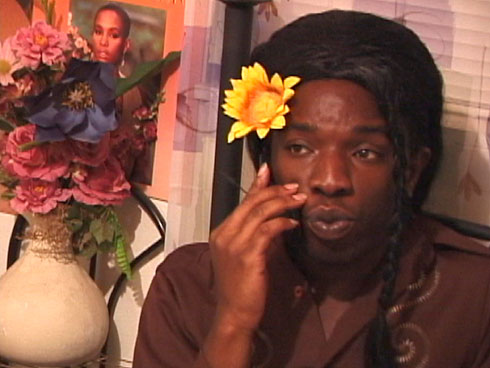
These gorgeous creatures – children of video artist and endless font of inspiration Kalup Linzy — are hitting Berkeley Art Museum tonight with support from DJ Bus Station John, starting at 6pm. Get it!
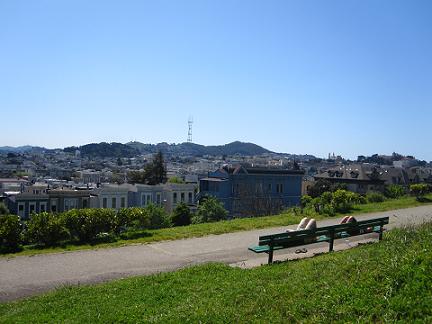
The other day, sharing the scrap of blanket space I was able to hustle between 1,000 of my Vitamin D deprived brethren, I spotted:
1. A green parrot. On a man’s shoulder.
2. A green python. Ditto, shoulders.
3. An LED light filled, fixed gear frame.
All in a ten foot radius. Freaky! Unique! Not very relaxing! Conclusion: I need a break from Dolo.
Luckily, I made a serendipitous discovery: there are other parks in San Francisco! Many, in fact. Here are some green spaces that are sunny, green, and relatively free of studied self imagery:
Alamo Square
Okay, so perhaps this won’t provide much respite from those hip cats and their big snakes — on a sunny day, Alamo is almost as flush with BBQs and irony as it’s neighbor in the Mission down South. But Alamo’s got the most iconic view in the city (if your icons, as mine, are based on early ‘90s sitcoms) and a really cool shoe garden by the public bathrooms.
Walk in at: Steiner & Hayes
Lafayette Square
One of the most intelligent ideas our city planners had was to put a park on nearly every peak in our city. Head up to Lafayette Square, deep in the heart of tony Pac Heights, and you can see their brillance manifested for yourself — a panoramic view of urban valleys, green hills. This park is where all the little old rich ladies go with their little old rich dogs, and its pristine lawns is aching for a little more infiltration by the prols.
Walk in at: Sacramento & Laguna, SF
Alta Plaza
One hill over, Alta Plaza is Lafayette’s only slightly less ritzy cousin. Most of the lawn space is on a terraced slant, perfect for when the sun is in the southern end of the sky. And should you get the yen to rise up and do something, Alta’s got superb tennis and basketball courts that are rarely occupied on weekdays.
Walk in at: Clay & Steiner, SF
Ocean Beach
Did you know that the western side of the city is lined by the Pacific Ocean? It’s true! And while Ocean Beach no longer features the amusement parks and boho repurposed streetcar villages, it’s still one of the coolest things about living here. Pick a sunny day (or a tempestuous one if you dig watching storm action in a solid coating of Gore-Tex) and post up between a couple dunes, where you chill in a little wind sheltered, clothing optional cove of your own. [note: nudity not really legal]
Walk in at: Judah & Great Highway, SF
Misson Creek Park
With all the UCSF construction in the neighborhood to the south, who knows how long it’ll stay this way, but for now, Mission Creek Park reminds me the river we used to escape to when I was in high school; a spot where we could swim that was still close enough to the city to be doable on a half day off. Don’t swim in Mission Creek (actually, do it! That’d be hilarious!). But you get what I mean, here’s a place to hang, eat, read, smoke that J — next to a river. Bliss.
Walk in at: Channel & 4th St.
Fillmore Center
Am I really blowing up the spot on this little oasis? Dang, I’m taking this whole journalism thing seriously. Consider yourself in on the greenest little patch of lawn in Western Addition — enter in through the snazzy plaza, and head straight past all the old people on benches to the wall of cascading water in back, which has a tranquil little pool and all the empty lawn space you need. All this solitude does come at a price though: BYO tamales and ganja treats.
Walk in at: Fillmore & O’Farrell
We’ve been interviewing candidates for the two contested judicial races in San Francisco, and posting the sound files. The most recent candidate is Harry Dorfman; you can listen to his comments here
By Adam Lesser
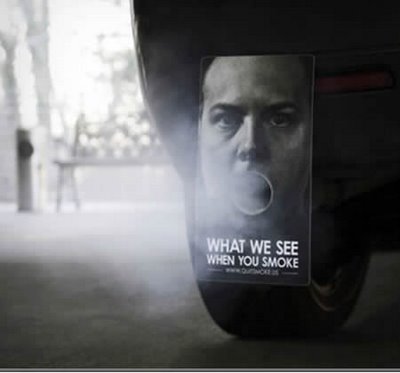
San Francisco smokers will be hit with the latest in a long lines of restrictions starting April 25, when they’ll be kicked to the curb, out by the cars whose tailpipes are at least as dangerous as secondhand smoke.
But drivers haven’t been as easy to demonize as smokers. Light up within 15 feet of a building entrance and you’ll be breaking the law. Other spots where smokers will be barred include outdoor areas at cafes and restaurants, farmer’s markets, and charity bingo games (grandma can take her wheelchair to the curb if she needs a puff).
But pot smokers need not fear. The new law maintains a provision allowing you to light up in licensed dispensaries. Smoking patios at bars are still okay, though smokers probably shouldn’t get too comfortable.
The San Francisco Department of Public Health frames the smoking debate in terms of the impacts of secondhand smoke. And there’s some good data there. People tend to think lungs and cancer when they think smoking, but the real problem with second hand smoke is heart attacks. A 2005 estimate from the California EPA put the number of heart attack deaths from second hand smoke at 3,600 annually. Second hand smoke contains a host of toxins from benzene to arsenic.
But it’s hard to know the incremental benefits of moving smokers to the curb. Almost all of the positive data on public health improvements from smoking bans has come from measures the city has already taken. But Mele Lau-Smith of DPH gave me a preview of the potential next battleground: third hand smoke.
“The new science that’s coming out on third hand smoke is interesting. Third hand smoke is everything that clings to furniture and hair and takes longer to dissipate. They’re smaller particles that get deeper into the lungs,” she says. The term was coined last year in the journal Pediatrics and a 2010 paper showed that nicotine reacts with nitrous acid to form carcinogenic molecules that hang around long after a smoker has left the room.
So the news gets worse for smokers, and the anti-smoking crusade to completely eliminate smoking gains an inch. The smoking prevalence rate in California is among the lowest in the country at 14.3 percent. Most states are in the 18-20 percent range.
And while it’s all well and good, one wonders if there are other problems in the air besides second hand smoke. Choosing to live in an urban area like San Francisco lowers one’s life expectancy by two years, and one of the major reasons for that is auto exhaust and illnesses related to poorer air quality.
Mark Jacobson, Professor of Civil and Environmental Engineering at Stanford University, believes the government should keep regulating until smoking is eliminated. But when comparing deaths from automobile emissions versus second hand smoke, he added, “If you look at the mass of the automobile exhaust, then you’re looking at a much bigger figure than second hand smoke. Vehicle exhaust is still way under regulated for addressing health concerns.” Over 2 million people die globally from air pollution each year. About 500,000 die from second hand smoke.
In the end, Jacobson says it comes down to combustion. When you start burning, you release toxins that eventually hurt or kill people. It doesn’t matter if it’s diesel fuel, gasoline, or tobacco. Combustible products harm public health, and in the case of oil, the environment.
Smokers have proven ideal targets for taxes. San Francisco smokers pay $2.08 in taxes on every pack of cigarettes. When you’re in the minority and the government needs cash, it’s a political no brainer. A 20 cent cigarette tax was tacked on by the Board of Supervisors last October, done under the argument that the money was needed to clean up cigarette butts. Recent proposals to add a local 10 cent tax on gasoline in order to help various cash strapped public transit agencies haven’t found much traction.
So smokers, enjoy the summer. It’ll be the last summer you can light up after an outdoor sunset meal. The smoking ban at restaurants won’t be implemented for another six months.
But come November you’ll be enjoying that smoke out by the curb, where you’ll also be treated to some car exhaust. But, hey, at this point you’re probably all in anyways.

It’s no secret that Park Merced, the sorta-suburban mega-housing complex in the southwest corner of the city, wants to expand. New mid-rise towers would house some 7,000 apartments, with space for maybe 12,000 new residents — which is fine if you like the idea of more rental housing in the city (although much of it not affordable). But it also means a huge amount of new traffic in the area, particularly on 19th Avenue, which is pretty crowded as it is.
Now, the developer and the city talk about adding new transit to the area — an underground Muni rail station at Park Merced, more buses, all that good stuff. Sup. Sean Elsebernd, who represents the district, is (properly) demanding it.
But here’s the hitch: Never once in the history of this city has a major new development paid enough fees or brought enough money into the city to pay for the infrastructure required to serve it. And that’s going to get even worse if the mayor gets his way and defers development fees.
The cost of the level of transit necessary to serve the new residents of Park Merced, along with the expanded number of students at San Francisco State, and the expansion of the Stonestown shopping center, is gong to be massive. Park Merced may pay to build a new station — but the developer won’t pay for the cost of buying new buses and trains, hiring operators, and paying them. The increased property tax revenue from the project won’t cover that, either — particularly since it also has to cover water and sewer expansion, police and fire expansion, new schools and parks, and all the other expensive things that 7,000 new residents will want.
I don’t think the city’s even come close to figuring out the total bill for all the infrastructure improvements this project will require. Let’s add that up first — before the city issues any permits — and present the developer with the bill. Then we can decide if this project is a good idea.

Today’s Look: Annie, Van Ness and Jackson
Tell us about your look: “I gotta catch my bus!”
The answer is yes, yes it will be. And how did the madness begin? “I was in the neighborhood and I saw this wall. And me being me, I got really excited and wanted to paint it.” And so it started, Brian Barneclo’s latest SOMA mural project, whose launch will be celebrated alongside “Systematics,” his solo (indoor art) show at fabric8 on Sat/10.
See a wall, paint it; It’s a common enough story in SF — until you look at one small variable; Barneclo’s wall is 600 feet long and 40 feet tall. And he intends to cover the whole thing. That’s 24,000 square feet, making Barneclo’s “Systems” the largest mural yet in a town filled with them. “That was recently pointed out to me,” he told me in a recent interview. “It’s an interesting thing because, yeah, its going to be helpful [for fundraising], people like to hear that stuff, ‘it’s the loudest, it’s the biggest.’ But it really has no… [the size] is such a byproduct.”
Barneclo’s known for his ambitious projects. The artist — in whose aesthetic fabric8 gallery owner and long time associate, Olivia Ongpin, detects traces of both the Mission school and the Bay area figurative movement from the ’50s and ’60s — has installed large scale pieces all over town, from Nopa, to the inner Mission, even on the side of our humble Guardian building. His most well known works are urban cultural/architectural jumbles, representational maps of the iconic streetlamps, restaurants, and skylines that we call our city. “Systems” will be a reflection of Barneclo’s recent meditations on interconnectivity; in our society, our city, and in our own bodies.

A mock up of “Systems,” slated to be completed by June
It’s easy to see why this particular wall caught the muralist’s eye. The 7th St. and Townsend building, owned by Crescent Cove Apartments, plays a visible role in the neighborhood. Barncelo’s wall can be seen from both I-80 commuters and Caltrain passengers, the train tracks passing at the wall’s base. Barneclo thinks it’s high time such a prominent canvass was utilized for art. “I think when we’re done, people will be like, ‘I can’t imagine that without a mural.”
But the mural’s not done yet. There’s the matter of funding, though Barneclo has already secured a $10,000 grant from Adobe and thinks “people are inclined to get behind the project once they see some action happening.” Barneclo has already put in nearly two years of permission getting and permit securing into the project, along with partner Christi Azevedo. And of course, there’s still a whole lot of wall to be painted.
But that will be the easy part. Barneclo completed “Food Chain,” his 200 by 25 foot mural on Shotwell between 14th and 15th Street in ten days, with only one helper. His goal is to maintain that same pace for “Systems,” completing the mega mural in one month with a team of three helpers. Barneclo doesn’t sound too stressed about the task ahead. “I’ll sleep when I’m dead. If I have a chance to take a month and paint one big mural, what more can I ask for? I mean, my girlfriend probably won’t like it, it’s probably going to be all I’m talking about and thinking about.”
Will he make it? Ongpin thinks so. “This might seem like a daunting prospect,” she said. “But if you look at the scope, and amount of murals he’s done around the city for the past six or seven years, I’m sure he can do it and do it well.”
So get ready, San Francisco, because “Systems” is set to be one of the first things some commuters see when they hit SOMA. “It’s almost a welcome to SF to people who are riding the train,” Barneclo imagines. “Or a farewell. Its like a port. Treat it like a “Boom! Welcome to San Francisco.”
Brian Barneclo‘s “Systems” Mural launch party/ “Systemics” exhibition
Sat/10 5-9 p.m., free
Fabric8 Gallery
3318 22nd St., SF
(415) 647-5888

My penis envy hit hard when I saw these delicious little eggs on the sex store shelf this week. Delicately soft with squishy insides and intriguing texture choices, I couldn’t imagine how much fun it would be to stick it into Tenga’s Egg Masturbation sleeves. Whether or not you like to blow in the direction of a uterus or not, guys everywhere can fertilize a cute egg of their own without the threat of baby-daddy duties.
Tenga’s egg-shaped friends come in a six-pack carton for under $10 bucks and are great for a pleasurable self-rub in the morning or a late night cock ‘n’ egg breakfast. Peel off the outer shell like you would a hard-boiled egg and crack ‘er open to reveal the “ona-cup.” The Japanese-made sleeve comes in a variety of fun textures, offering all kinds of satisfying options: web patterns, vertical grooves notched out semi-cirlces and protruding spheres. As Good Vibrations advertises, “Different strokes from different yolks!”
The eggs are made as a kind of one-night-stand: cheap, easy, quick, and disposable. They’re intended as a single-session product, but to those who scramble lightly, you may get a couple of dates before their delicate shape distorts.

Stimulate your head or stretch the translucent bob down your shaft. The egg’s got a nice hole and even comes with a dab of lube for smooth fun. Reviews of the product are pretty positive, with notes that the first glimpse of your penis wearing an egg-hat are slightly humorous and also kinda hot. I’d give it a shot, but I don’t think I’d quite get the same effect via dildo.
Check them out for yourself at www.goodvibes.com

By Joseph E. Stiglitz
Here is our monthly installment of Joseph E. Stiglitz’s Unconventional Economic Wisdom column from the Project Syndicate news series. Stiglitz is University Professor at Columbia University, the winner of the 2001 Nobel Prize in economics and has a recently published book, Freefall .
NEW YORK – The battle with the United States over China’s exchange rate continues. When the Great Recession began, many worried that protectionism would rear its ugly head. True, G-20 leaders promised that they had learned the lessons of the Great Depression. But 17 of the G-20’s members introduced protectionist measures just months after the first summit in November 2008. The “Buy America” provision in the United States’ stimulus bill got the most attention. Still, protectionism was contained, partly due to the World Trade Organization.
Continuing economic weakness in the advanced economies risks a new round of protectionism. In America, for example, more than one in six workers who would like a full-time job can’t find one.
These were among the risks associated with America’s insufficient stimulus, which was designed to placate members of Congress as much as it was to revive the economy. With soaring deficits, a second stimulus appears unlikely, and, with monetary policy at its limits and inflation hawks being barely kept at bay, there is little hope of help from that department, either. So protectionism is taking pride of place.
The US Treasury has been charged by Congress to assess whether China is a “currency manipulator.” Although President Obama has now delayed for some months when Treasury Secretary Timothy Geithner must issue his report, the very concept of “currency manipulation” itself is flawed: all governments take actions that directly or indirectly affect the exchange rate. Reckless budget deficits can lead to a weak currency; so can low interest rates. Until the recent crisis in Greece, the US benefited from a weak dollar/euro exchange rate. Should Europeans have accused the US of “manipulating” the exchange rate to expand exports at its expense?
Although US politicians focus on the bilateral trade deficit with China – which is persistently large – what matters is the multilateral balance. When demands for China to adjust its exchange rate began during George W. Bush’s administration, its multilateral trade surplus was small. More recently, however, China has been running a large multilateral surplus as well.
Saudi Arabia also has a bilateral and multilateral surplus: Americans want its oil, and Saudis want fewer US products. Even in absolute value, Saudi Arabia’s multilateral merchandise surplus of $212 billion in 2008 dwarfs China’s $175 billion surplus; as a percentage of GDP, Saudi Arabia’s current-account surplus, at 11.5% of GDP, is more than twice that of China. Saudi Arabia’s surplus would be far higher were it not for US armaments exports.
In a global economy with deficient aggregate demand, current-account surpluses are a problem. But China’s current-account surplus is actually less than the combined figure for Japan and Germany; as a percentage of GDP, it is 5%, compared to Germany’s 5.2%.
Many factors other than exchange rates affect a country’s trade balance. A key determinant is national savings. America’s multilateral trade deficit will not be significantly narrowed until America saves significantly more; while the Great Recession induced higher household savings (which were near zero), this has been more than offset by the increased government deficits.
Adjustment in the exchange rate is likely simply to shift to where America buys its textiles and apparel – from Bangladesh or Sri Lanka, rather than China. Meanwhile, an increase in the exchange rate is likely to contribute to inequality in China, as its poor farmers face increasing competition from America’s highly subsidized farms. This is the real trade distortion in the global economy – one in which millions of poor people in developing countries are hurt as America helps some of the world’s richest farmers.
During the 1997-1998 Asian financial crisis, the renminbi’s stability played an important role in stabilizing the region. So, too, the renminbi’s stability has helped the region maintain strong growth, from which the world as a whole benefits.
Some argue that China needs to adjust its exchange rate to prevent inflation or bubbles. Inflation remains contained, but, more to the point, China’s government has an arsenal of other weapons (from taxes on capital inflows and capital-gains taxes to a variety of monetary instruments) at its disposal.
But exchange rates do affect the pattern of growth, and it is in China’s own interest to restructure and move away from high dependence on export-led growth. China recognizes that its currency needs to appreciate over the long run, and politicizing the speed at which it does so has been counterproductive. (Since it began revaluing its exchange rate in July 2005, the adjustment has been half or more of what most experts think is required.) Moreover, starting a bilateral confrontation is unwise.
Since China’s multilateral surplus is the economic issue and many countries are concerned about it, the US should seek a multilateral, rules-based solution. Imposing unilateral duties after unilaterally labeling China a “currency manipulator” would undermine the multilateral system, with little payoff. China might respond by imposing duties on those American products effectively directly or indirectly subsidized by America’s massive bailouts of its banks and car companies.
No one wins from a trade war. So America should be wary of igniting one in the midst of an uncertain global recovery – as popular as it might be with politicians whose constituents are justly concerned about high unemployment, and as easy as it is to look for blame elsewhere. Unfortunately, this global crisis was made in America, and America must look inward, not only to revive its economy, but also to prevent a recurrence.
Joseph E. Stiglitz is a professor of economics at Columbia University and winner of the 2001 Nobel Memorial Prize in Economics. His most recent book, Freefall: Free Markets and the Sinking of the World Economy, is now available in French, German, and Japanese, and will be shortly available in Spanish, Italian, and Chinese.
Copyright: Project Syndicate, 2010.
www.project-syndicate.org

American political discourse is being poisoned by some truly scary rhetoric from the right-wing, which is increasingly resorting to threats and condoning of violence, a trend that has played out in recent weeks right here on the Guardian’s Politics blog. Now is the time to recognize and stop it, just as a new coalition is calling for.
San Francisco resident Greg Lee Giusti was arraigned in federal court this morning for making threatening phone calls to House Speaker Nancy Pelosi, one day after the arrest of Charles Alan Wilson for threatening to kill Sen. Patty Murray (D-Wash.). In both cases, the subject was the recent health care reform bill, the anger of the suspects stoked by misinformation and inflammatory rhetoric from top conservative politicians and media figures, as well as the Tea Party movement.
But these cases – along with the recent domestic terrorism plot by Christian fundamentalists and other incidents of overt and implied threats of violence – aren’t isolated examples; they are closer to the norm of rhetoric emanating from the right-wing these days, a trend not seen in this country since the months that led up to the bombing of the Oklahoma City federal building by right-wing radical Timothy McVeigh, the biggest act of domestic terrorism before 9/11.
Consider Giusti, who also wrote a scary letter to me and the Guardian in the midst of his threats against Pelosi, taking issue with our recent cover story that was critical of police crackdowns on SF nightlife. In additional to praising police violence and encouraging cops to “crack a few skulls open,” just like his NYPD cop uncle, who “knows how to inflect [sic] excruciating Paine [sic] on someone without leaving any signs of what happened.”
But Giusti was far from alone in promoting violence over the issues we’ve raised. SFPD Southern Station Capt. Daniel McDonough praised the sometimes-violent tactics of the two undercover cops who bust parties and nightclubs, strongly implying those tactics were justified to counter the unspecified threats of violence that nightclubs represent. “Because of their diligence and professionalism the amount of violence and disorder has been reduced,” McDonough wrote, echoing a troubling strain of right-wing political thought that condones violence to prevent even speculative threats of violence, a perspective that led us to invade Iraq.
And when I wrote about McDonough’s response yesterday, a commenter wrote that aggressive police tactics are justified because, “The unprecedented ascendancy of nightclubs and violation of the Constitutional rights of residents to peaceful use of their property calls for drastic measures.”
In a similar vein, our blog post this week on a newly released video of American soldiers in a helicopter opening fire on a crowd in Baghdad that included journalists and children while making disturbing comments that seemed to relish the opportunity to kill people also provoked some equally disturbing comments.
“So a couple of journalists embedded with terrorists killing Americans got wiped out…congrats to the shooters! A couple of terrorists in training got shot up in a terrorist rescue attempt…congrats to the shooters! Everyone on scene who died got what was coming to them,” one wrote, while another warned, “Raise a weapon against America or Americans and prepare to experience the worst day in the rest of your life. Hoowa!”
Even though the helicopter was miles away and the video showed no credible threats toward it or anyone else, supporters of the war seemed to think that quickly resorting to violence is acceptable. “This is the price we pay for are [sic] freedom. put yourself in that chopper and then put yourself on the ground they all no [sic] what can and will happen. It will happen at home again 911 just give it time. We will do are [sic] best to defend are [sic] country. GOD BLESS USA.”
And I will do my best to defend this country from right-wing extremists. That effort starts with challenging Sarah Palin’s winking exhortation for her followers to “lock and load,” and with letting commentators like Glenn Beck and Bill O’Reilly, on a nightly basis, cast liberals as enemies of the state to their well-armed listeners.
This is simply not OK, a point that’s being made by the prosecutors of Giusti and Wilson, as well as the new Stop Domestic Terrorism campaign by a coalition of organization concerns about the increasing violent rhetoric of the rights.
“Law abiding Americans do not advocate violence against fellow Americans,” campaign spokesperson Brad Friedman said in a public statement. “As Americans, we all need to engage in a vigorous debate of the issues based on facts and reason rather than fear and prejudice.”
But even in San Francisco, it’s common for conservatives and so-called “moderates” to condone violence against the homeless, drug users, petty criminals, ravers, Critical Mass bicyclists, “illegal immigrants,” or others that they dismiss as “getting what’s coming to them” for daring to violate laws or social mores. I’ve personally had violence wished on me more times than I can count, in letters, phone messages, and to my face.
As a full-time newspaper journalist for almost 20 years, I’ve dealt with right-wing crazies for a long time, but there are times when you can sense their indignation getting ratcheted up to dangerous levels. In 1994, I wrote stories for the Auburn Journal and Sacramento News & Review about right-wing “patriots” and “constitutionalists” that were part of the militia movement in Placer County.
They warned me that then-President Bill Clinton was an agent of the “New World Order” who was plotting a socialist takeover of the “real Americans,” and that violent resistance was necessary. They spun elaborate fantasies about the impending civil war, which they said the federal government had already started with their raids in Ruby Ridge and Waco.
“You won’t be able to write an article like this anymore because the government will come and kick in your door and murder you and your children,” one militia member told me after my first article came out.
On April 19 of the next year, while I was working for the Santa Maria Times, I remember vividly when the federal building in Oklahoma City was bombed, killing 168 people. For the first 24 hours, most media outlets speculated that it was an attack by terrorists from the Middle East, but as soon as I heard it was the anniversary of the Waco incident, I knew exactly who was really responsible: the dangerous right wing extremism that pushed militia member Timothy McVeigh to attack his own country.
And now, it’s happening again. Overheated rhetoric on the right is casting Pelosi and fellow Democrats not just as political opponents, but as dangerous enemies of the “real Americans” that Palin claims to champion. They have, like Wilson said of Murray, “ a target on her back.”
When Sen. Leland Yee tried to find out how much Palin was being paid to speak at California State University-Stanislaus, he was aggressively attacked by her acolytes for trying to “take away her constitutional right to free speech,” according to an anonymous message left on his answering message yesterday, which his office shared with the Guardian. “Maybe we ought to have a homosexual with a long enough dick so he can stick it up his ass and fuck himself while he’s on stage giving a speech.”
Such crass, semi-literate, weirdly homophobic comments might be funny if they weren’t part of a larger, more dangerous trend in this country. Once again, a Democratic president is being actively accused of treasonous hostility to “real Americans” by major conservative figures with huge audiences, and once again, the lunatic fringe is being worked up into a frenzy.
The recently uncovered plot by Michigan militia members to murder police officers in the hopes of starting a holy war with the enemies of Christianity is just one indication for what this kind of rhetoric is leading to in isolated pockets around the country. Now is the time to put a stop to condoning violence in any of its forms, whether it’s cops cracking the skulls of clubbers or street denizens, soldiers firing on crowds of people, or citizens threatening our elected representatives.
“Force is the weapon of the weak,” said the radical pacifist-anarchist Ammon Hennacy, a quote that was often repeated by folk singer and progressive writer Utah Phillips, who I had the honor of covering at the same time I was covering the militia movement. It’s true, and at this difficult moment in our country’s history, let’s all try to stay strong.
Curiosities, quirks, oddites, and items from around the Bay and beyond
So what if the Fader posted this last week? Vallejo royalty E-40’s new Bjork-sampling track, the Droop-E produced, “Spend the Night” is too fabulous not to share (and it looks like the NY Times likes it too). The icing on the cake is that Bjork cleared the samples, taken from “Oceanea” off of her, IMHO severely underrated, acapella album Medulla. And as Fader commenter bollocks noted, this isn’t the first time Queen B has appeared on a local hip-hop track. The timpani-heavy riff from “Human Behavior” was used back in 2003, “by Bay Area legends Hieroglyphics, for ‘Let It Roll,’ off their classic album Full Circle.” Thanks for the knowledge.
I bet I can guess what you’re doing on your coffee break. Wheee!
Slog nicely sums up the cases of Gregory Lee Giusti, who was arrested yesterday for allegedly threatening House Speaker Nancy Pelosi over her support of the health care reform bill (he threatened us too), and Charles Alan Wilson, who allegedly threatened to kill Washington Senator Patty Murray over her support of the health care reform bill, best: “Powerful Women, and the Men Who Threaten Them.”

“Let’s just say that if Malcolm breathes, it’s too much for me to stomach.” Johnny Rotten on the Sex Pistols’ former manager Malcom McLaren. RIP, Madame Butterfly Buffalo Gal Duck Rock. (Watch all three simultaneously for our version of heaven?)
Researchers at UCSF School of Pharmacy want you to know that the bacteria in that tainted burger patty could become the next Monet.
Tonight, SFMOMA presents “Streets of San Francisco: Filmic Journeys,” a program of over 50 years of footage of SF’s streets as filmed by the many wonderful experimental filmmakers – including Martha Rosler, Hollis Frampton, Lawrence Jordan, and more – who have called this city home and muse. 50 footage!
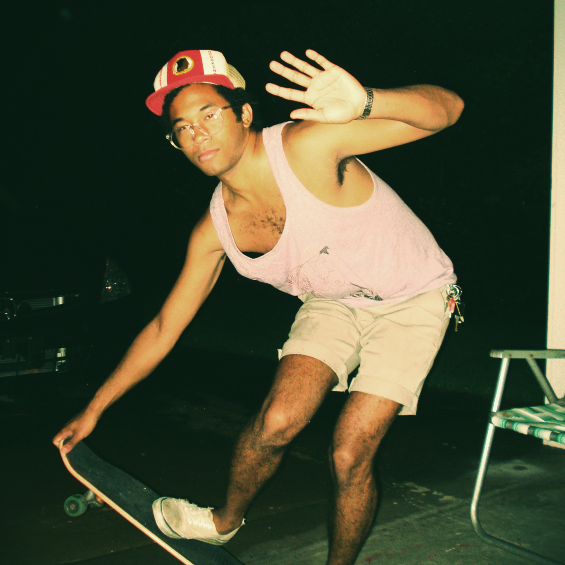
When you come out of the womb and your mama names you Chaz, life is going to be pretty cool. Mr. Chazwick Bundick is a child of the south, who from the sound of his uber laid-back synth melodies, must have grown up poolside, full pitcher of sweet tea attached at the hip. The electro-musician goes by the moniker Toro y Moi— playing Mon/12 at Bottom of the Hill– and fully embodies the chillwave scene at its core, with layer upon layer of ambient wonder. And of course, Chaz is way chill.
Growing up in Columbia, South Carolina, Bundick layed low and created music in his bedroom as a young guy, taking inspiration from his parent’s luscious vinyl collection. Electronic and experimental elements of late ’70s new wave combined with his favorite artists, Animal Collective, Sonic Youth, J Dilla, Flying Lotus, and Daft Punk, for an antiqued space sound.He likes to think of himself as a composer, as opposed to a songwriter, producing complex layers of buried bass, fairytale melodies, surf guitars, and bewitching vocals.
His latest LP, Causers of This [Carpark, 2010] was released in February and is a total treasure box; a more electronic take on the usual beach soundtrack. Toro y Moi’s whimsical songs sound like they’re floating 10,000 leagues under the sea; cool, calm, and unaffected by gravity. Funny, because I soon find out that the guy doesn’t like water.
Talking to Bundick over the phone was interesting– his mellow, musical stylings are a definite reflection of the 23-year-old’s unhurried, aloof temperament. Setting up the stage for a Philadelphia performance that evening, Bundick causally answered a few questions about life as a Southern Chaz and avoiding the sharks that loom.
SFBG: I read in a previous interview that if you could be any animal, it would be a dog or a shark. So, what kind of canine?
Bundick: I like French Bulldogs, black Pugs, mutts, Jack Russell Terriers and wieners.
SFBG: And what about sharks– I hear they freak you out.
Bundick: Well, I’m not a fan of jumping in the ocean. The water has to be clear, with light sand. I grew up going to a beach that had unclear water and I didn’t like going in– I like to see what’s in the water. I’m also afraid of sting rays. My friend stepped on one. And jellyfish.
SFBG: Funny, because your sound is so easily compared to ocean-characteristcs. Yet you’re not an ocean fan.
Bundick: If I had to choose between living in the mountains or the beach, I’d definitely choose the mountains.
SFBG: So what’s your music-writing process like? Do you dream of wooded slopes, crystal-clear streams and mountain lions?
Bundick: When I write songs I literally lock myself in my room. I won’t go out or talk to anyone. I go into songwriting mode.
SFBG: For how long? Like a day? A week?
Bundick: Weeks or months. I think the longest was two months of not talking to anyone– OK, well, not in a crazy person way. That would make for a cool story, but basically, people ask me to hang out and I say, no sorry. I mean, I see my parents and stuff.
SFBG: So what have you been listening to while on tour?
Bundick: Let me grab my iPod and see…lots of soul and funk. Some weird house music. Riz Ortolani, an Italian composer from the ’70s who wrote the music to the movie Cannibal Holocaust. They show animals being killed– it’s bad. It was banned in a lot of places. Oh, and no, I didn’t watch it. My friend did. He told me. I wouldn’t watch it.
SFBG: What have you been doing in between shows?
Bundick: Working on interviews. Drawing in my sketchbook.
SFBG: What do you like to draw?
Bundick: Numbers.
SFBG: Uh, what? That sounds boring. Explain.
Bundick: I like to draw numbers. Particularly the number two and the number five. Sometimes the number three. I’m not obsessed…I went to school for design, so I like the work with the shape and counter space, their arms and feet and different fonts.
SFBG: Wow, that actually makes sense. So what now?
Bundick: I feel kinda weird. I feel like I might be kinda sick. And so I drank a bunch of orange juice and now I’ve got that gross, too much orange juice feeling.
I didn’t have any orange juice today, but I think I understand the feeling. Maybe he should’ve added a little vodka?
Toro y Moi w/The Ruby Suns and dreamdate
Mon/12, 8:30pm, $10
Bottom of the Hill
1233 17th Street, SF
Director Patrick Jean’s pixellated destruction of NYC may be a bit “too soon” for some folks — but for us primitive video game addicts it takes us back to quarter-dropping bliss on a Transformers scale. (The more San Franciscan version of this, of course, has been done before)

Critics of San Francisco’s plan to award Recology the city’s trash disposal contract just alerted me to the curious fact that if you watch this video link (scroll down through the video clips to “Garbage 2”), you’ll hear Recology COO George McGrath say that rail haul in California isn’t economically viable.
The link features three excerpts of a August 2009 hearing in Humboldt County regarding rail hauling of Bay Area waste to Winnemucca, Nevada–a plan that got blocked this week.
And as critics of San Francisco’s plan note, that’s a curious thing for McGrath to say in Nevada given that Recology is proposing to haul San Francisco’s trash by rail to the Ostrom Road landfill in Yuba County, which is a 238-mile round trip.
Recology spokesperson Adam Alberti told me that while he hasn’t viewed the video in question, he believes folks are taking McGrath’s comments out of context, since McGrath wasn’t talking about the San Francisco proposal.
“In this particular case,” Alberti said, referring to the San Francisco contract, “rail works fine. Clearly pricing on rail was superior and allowed us the recommendation based on that grading criteria.”
“At the end of the day,” Alberti said, turning the focus back on Waste Management, Recology’s main competition for the San Francisco landfill disposal contract, “we are looking at a very monied competitor who wants the business. Our proposal is recommended by the City and County of San Francisco as the best cost alternative and, we believe, the most environmentally sustainable.”
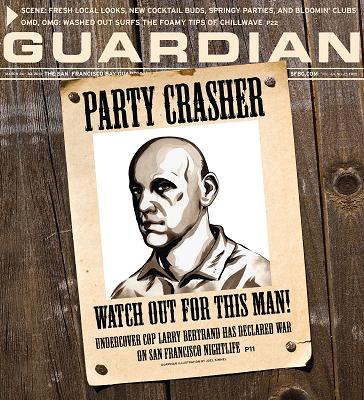
The San Francisco Police Department has steadfastly tried to ignore back-to-back cover stories in the Bay Guardian and SF Weekly that detailed the campaign of harassment and brutality against nightclubs and parties in SoMa by a pair of undercover cops.
The fact that those two cops – SFPC Officer Larry Bertrand and state agent Michelle Ott – have reportedly been absent from the scene in recent weeks might indicate that the department has heeded the outcry and put a leash on them. But now, in the “Captain’s Comments” in today’s Southern Station Newsletter, Capt. Daniel McDonough – who, along with Commander James Dudley, is believed by nightlife advocates to be behind the crackdown – has issued a full-throated defense of the pair’s actions.
Despite the fact that those actions (including repeated and selective harassment of certain clubs, illegal property seizures, threats and retaliation against complainants, and unnecessary force) have resulted in multiple legal actions against the city, McDonough claims they have somehow prevented unspecified “problems” and “violence and disorder.”
That negative claim is impossible to prove or disprove, but it’s certainly true that it was the arrival of aggressive cops at a January party that we wrote about that precipitated the “violence and disorder” that night.
McDonough writes, in full:
There has been a recent deluge of articles about Nightlife in the Southern District. The articles particularly focused on two fine individuals, Officer Bertrand of Southern Station and Agent Ott of the Alcoholic Beverage Commission. (ABC)
One thing the articles didn’t have to focus on was the amount of violence occurring in the District at the late night venues. This I believe has been directly related to the good work of these dedicated Officers. In conjunction with the members of Southern Station, Officer Bertrand and Agent Ott would regularly inspect nightclubs and bars to ensure compliance with laws and codes that have been enacted to have an orderly establishment and to also stop the rampant amount of unpermitted parties that would arguably cause problems. Because of their diligence and professionalism the amount of violence and disorder has been reduced. Establishments that routinely would have numerous calls for services started to take responsibility to handle the influx of people and establish security procedures. The benefits reaped by the citizens of San Francisco by the actions of Officer Bertrand and Agent Ott are measured in the lack of homicides shootings and knifings that haven’t occurred because of their good work. They are to be commended. I would also like to thank all of those establishment owners who communicate to me their positive relationships with those two officers.
Community Meeting
Wednesday April 21 2010 6pm
Community Room
South Beach Harbor Pier 40